Lawmakers Say Newsom Staff ‘Inflated’ Cost of Failed Health Care Bills
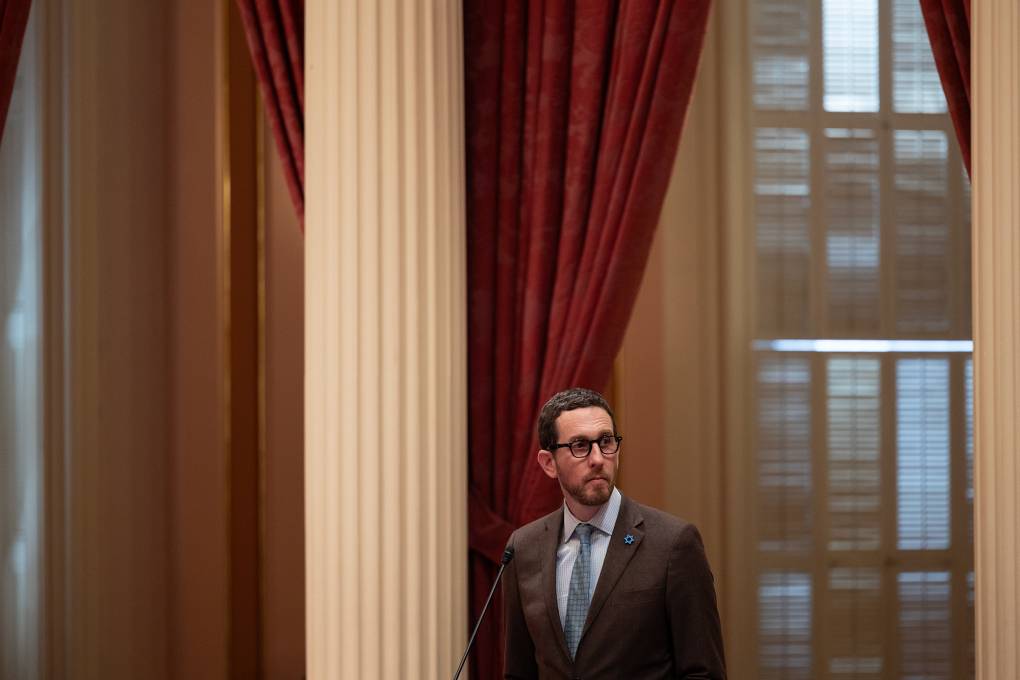
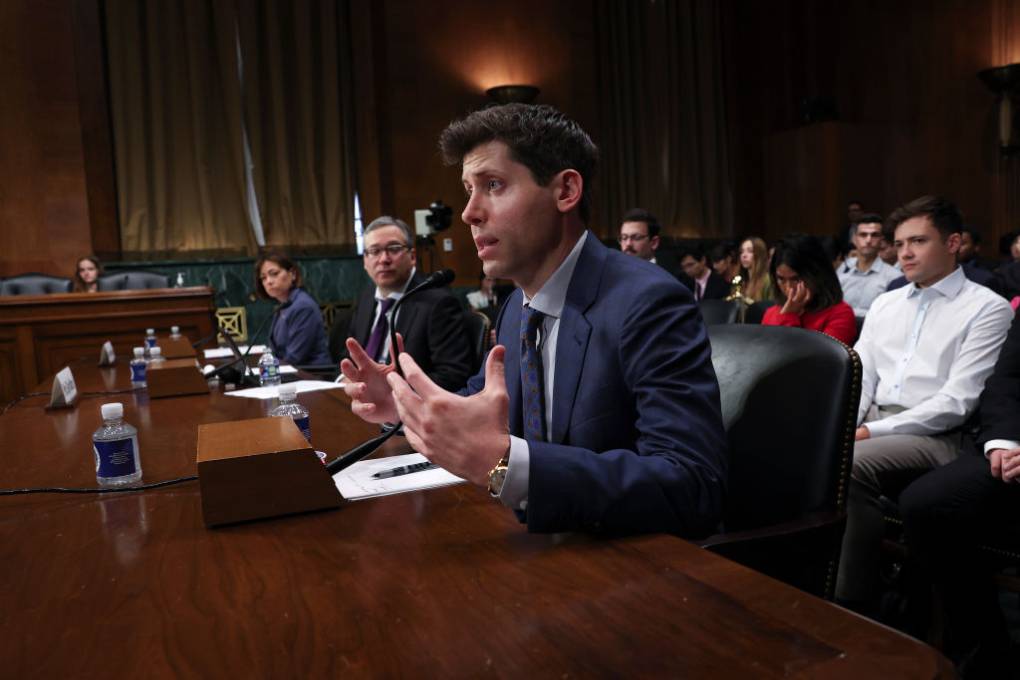
California Lawmakers Take On AI Regulation With a Host of Bills
Bill to Raise Bay Area Bridge Tolls to Help Transit Put on Hold Amid Local Opposition
In First-in-Nation Milestone, 10% of California Legislature Identifies as LGBTQ
Sponsored
Player sponsored by
window.__IS_SSR__=true
window.__INITIAL_STATE__={
"attachmentsReducer": {
"audio_0": {
"type": "attachments",
"id": "audio_0",
"imgSizes": {
"kqedFullSize": {
"file": "https://ww2.kqed.org/news/wp-content/themes/KQED-unified/img/audio_bgs/background0.jpg"
}
}
},
"audio_1": {
"type": "attachments",
"id": "audio_1",
"imgSizes": {
"kqedFullSize": {
"file": "https://ww2.kqed.org/news/wp-content/themes/KQED-unified/img/audio_bgs/background1.jpg"
}
}
},
"audio_2": {
"type": "attachments",
"id": "audio_2",
"imgSizes": {
"kqedFullSize": {
"file": "https://ww2.kqed.org/news/wp-content/themes/KQED-unified/img/audio_bgs/background2.jpg"
}
}
},
"audio_3": {
"type": "attachments",
"id": "audio_3",
"imgSizes": {
"kqedFullSize": {
"file": "https://ww2.kqed.org/news/wp-content/themes/KQED-unified/img/audio_bgs/background3.jpg"
}
}
},
"audio_4": {
"type": "attachments",
"id": "audio_4",
"imgSizes": {
"kqedFullSize": {
"file": "https://ww2.kqed.org/news/wp-content/themes/KQED-unified/img/audio_bgs/background4.jpg"
}
}
},
"placeholder": {
"type": "attachments",
"id": "placeholder",
"imgSizes": {
"thumbnail": {
"file": "https://cdn.kqed.org/wp-content/uploads/2024/12/KQED-Default-Image-816638274-2000x1333-1-160x107.jpg",
"width": 160,
"height": 107,
"mimeType": "image/jpeg"
},
"medium": {
"file": "https://cdn.kqed.org/wp-content/uploads/2024/12/KQED-Default-Image-816638274-2000x1333-1-800x533.jpg",
"width": 800,
"height": 533,
"mimeType": "image/jpeg"
},
"medium_large": {
"file": "https://cdn.kqed.org/wp-content/uploads/2024/12/KQED-Default-Image-816638274-2000x1333-1-768x512.jpg",
"width": 768,
"height": 512,
"mimeType": "image/jpeg"
},
"large": {
"file": "https://cdn.kqed.org/wp-content/uploads/2024/12/KQED-Default-Image-816638274-2000x1333-1-1020x680.jpg",
"width": 1020,
"height": 680,
"mimeType": "image/jpeg"
},
"1536x1536": {
"file": "https://cdn.kqed.org/wp-content/uploads/2024/12/KQED-Default-Image-816638274-2000x1333-1-1536x1024.jpg",
"width": 1536,
"height": 1024,
"mimeType": "image/jpeg"
},
"fd-lrg": {
"file": "https://cdn.kqed.org/wp-content/uploads/2024/12/KQED-Default-Image-816638274-2000x1333-1-1536x1024.jpg",
"width": 1536,
"height": 1024,
"mimeType": "image/jpeg"
},
"fd-med": {
"file": "https://cdn.kqed.org/wp-content/uploads/2024/12/KQED-Default-Image-816638274-2000x1333-1-1020x680.jpg",
"width": 1020,
"height": 680,
"mimeType": "image/jpeg"
},
"fd-sm": {
"file": "https://cdn.kqed.org/wp-content/uploads/2024/12/KQED-Default-Image-816638274-2000x1333-1-800x533.jpg",
"width": 800,
"height": 533,
"mimeType": "image/jpeg"
},
"post-thumbnail": {
"file": "https://cdn.kqed.org/wp-content/uploads/2024/12/KQED-Default-Image-816638274-2000x1333-1-672x372.jpg",
"width": 672,
"height": 372,
"mimeType": "image/jpeg"
},
"twentyfourteen-full-width": {
"file": "https://cdn.kqed.org/wp-content/uploads/2024/12/KQED-Default-Image-816638274-2000x1333-1-1038x576.jpg",
"width": 1038,
"height": 576,
"mimeType": "image/jpeg"
},
"xxsmall": {
"file": "https://cdn.kqed.org/wp-content/uploads/2024/12/KQED-Default-Image-816638274-2000x1333-1-160x107.jpg",
"width": 160,
"height": 107,
"mimeType": "image/jpeg"
},
"xsmall": {
"file": "https://cdn.kqed.org/wp-content/uploads/2024/12/KQED-Default-Image-816638274-2000x1333-1-672x372.jpg",
"width": 672,
"height": 372,
"mimeType": "image/jpeg"
},
"small": {
"file": "https://cdn.kqed.org/wp-content/uploads/2024/12/KQED-Default-Image-816638274-2000x1333-1-672x372.jpg",
"width": 672,
"height": 372,
"mimeType": "image/jpeg"
},
"xlarge": {
"file": "https://cdn.kqed.org/wp-content/uploads/2024/12/KQED-Default-Image-816638274-2000x1333-1-1020x680.jpg",
"width": 1020,
"height": 680,
"mimeType": "image/jpeg"
},
"full-width": {
"file": "https://cdn.kqed.org/wp-content/uploads/2024/12/KQED-Default-Image-816638274-2000x1333-1-1920x1280.jpg",
"width": 1920,
"height": 1280,
"mimeType": "image/jpeg"
},
"guest-author-32": {
"file": "https://cdn.kqed.org/wp-content/uploads/2025/01/KQED-Default-Image-816638274-1333x1333-1-160x160.jpg",
"width": 32,
"height": 32,
"mimeType": "image/jpeg"
},
"guest-author-50": {
"file": "https://cdn.kqed.org/wp-content/uploads/2025/01/KQED-Default-Image-816638274-1333x1333-1-160x160.jpg",
"width": 50,
"height": 50,
"mimeType": "image/jpeg"
},
"guest-author-64": {
"file": "https://cdn.kqed.org/wp-content/uploads/2025/01/KQED-Default-Image-816638274-1333x1333-1-160x160.jpg",
"width": 64,
"height": 64,
"mimeType": "image/jpeg"
},
"guest-author-96": {
"file": "https://cdn.kqed.org/wp-content/uploads/2025/01/KQED-Default-Image-816638274-1333x1333-1-160x160.jpg",
"width": 96,
"height": 96,
"mimeType": "image/jpeg"
},
"guest-author-128": {
"file": "https://cdn.kqed.org/wp-content/uploads/2025/01/KQED-Default-Image-816638274-1333x1333-1-160x160.jpg",
"width": 128,
"height": 128,
"mimeType": "image/jpeg"
},
"detail": {
"file": "https://cdn.kqed.org/wp-content/uploads/2025/01/KQED-Default-Image-816638274-1333x1333-1-160x160.jpg",
"width": 160,
"height": 160,
"mimeType": "image/jpeg"
},
"kqedFullSize": {
"file": "https://cdn.kqed.org/wp-content/uploads/2024/12/KQED-Default-Image-816638274-2000x1333-1.jpg",
"width": 2000,
"height": 1333
}
}
},
"news_12002023": {
"type": "attachments",
"id": "news_12002023",
"meta": {
"index": "attachments_1716263798",
"site": "news",
"id": "12002023",
"found": true
},
"title": "042924_State-Capitol-Session-MG_CM_25",
"publishDate": 1724779391,
"status": "inherit",
"parent": 12002006,
"modified": 1724779474,
"caption": "State Sen. Scott Wiener on the Senate Floor at the state Capitol in Sacramento on April 29, 2024. ",
"credit": "Miguel Gutierrez Jr. / CalMatters",
"altTag": "A white man wearing glasses and a business suit stands by a microphone inside a building.",
"description": null,
"imgSizes": {
"medium": {
"file": "https://cdn.kqed.org/wp-content/uploads/sites/10/2024/08/042924_State-Capitol-Session-MG_CM_25-800x533.jpg",
"width": 800,
"height": 533,
"mimeType": "image/jpeg"
},
"large": {
"file": "https://cdn.kqed.org/wp-content/uploads/sites/10/2024/08/042924_State-Capitol-Session-MG_CM_25-1020x680.jpg",
"width": 1020,
"height": 680,
"mimeType": "image/jpeg"
},
"thumbnail": {
"file": "https://cdn.kqed.org/wp-content/uploads/sites/10/2024/08/042924_State-Capitol-Session-MG_CM_25-160x107.jpg",
"width": 160,
"height": 107,
"mimeType": "image/jpeg"
},
"1536x1536": {
"file": "https://cdn.kqed.org/wp-content/uploads/sites/10/2024/08/042924_State-Capitol-Session-MG_CM_25-1536x1024.jpg",
"width": 1536,
"height": 1024,
"mimeType": "image/jpeg"
},
"post-thumbnail": {
"file": "https://cdn.kqed.org/wp-content/uploads/sites/10/2024/08/042924_State-Capitol-Session-MG_CM_25-672x372.jpg",
"width": 672,
"height": 372,
"mimeType": "image/jpeg"
},
"twentyfourteen-full-width": {
"file": "https://cdn.kqed.org/wp-content/uploads/sites/10/2024/08/042924_State-Capitol-Session-MG_CM_25-1038x576.jpg",
"width": 1038,
"height": 576,
"mimeType": "image/jpeg"
},
"full-width": {
"file": "https://cdn.kqed.org/wp-content/uploads/sites/10/2024/08/042924_State-Capitol-Session-MG_CM_25-1920x1280.jpg",
"width": 1920,
"height": 1280,
"mimeType": "image/jpeg"
},
"kqedFullSize": {
"file": "https://cdn.kqed.org/wp-content/uploads/sites/10/2024/08/042924_State-Capitol-Session-MG_CM_25.jpg",
"width": 2000,
"height": 1333
}
},
"fetchFailed": false,
"isLoading": false
},
"news_11976118": {
"type": "attachments",
"id": "news_11976118",
"meta": {
"index": "attachments_1716263798",
"site": "news",
"id": "11976118",
"found": true
},
"title": "OpenAI CEO Samuel Altman Testifies To Senate Committee On Rules For Artificial Intelligence",
"publishDate": 1708040236,
"status": "inherit",
"parent": 11976097,
"modified": 1761950561,
"caption": "Sam Altman, CEO of OpenAI, testifies before the Senate Judiciary Subcommittee on Privacy, Technology, and the Law on May 16, 2023, in Washington, D.C. The committee held an oversight hearing to examine AI, focusing on rules for artificial intelligence. ",
"credit": "Win McNamee/Getty Images",
"altTag": "A white man in a blue suit and tie gestures as he speaks in a congressional room surrounded by people.",
"description": "A white man in a blue suit and tie gestures as he speaks in a congressional room surrounded by people.",
"imgSizes": {
"medium": {
"file": "https://cdn.kqed.org/wp-content/uploads/sites/10/2024/02/GettyImages-1490690177-800x534.jpg",
"width": 800,
"height": 534,
"mimeType": "image/jpeg"
},
"large": {
"file": "https://cdn.kqed.org/wp-content/uploads/sites/10/2024/02/GettyImages-1490690177-1020x680.jpg",
"width": 1020,
"height": 680,
"mimeType": "image/jpeg"
},
"thumbnail": {
"file": "https://cdn.kqed.org/wp-content/uploads/sites/10/2024/02/GettyImages-1490690177-160x107.jpg",
"width": 160,
"height": 107,
"mimeType": "image/jpeg"
},
"post-thumbnail": {
"file": "https://cdn.kqed.org/wp-content/uploads/sites/10/2024/02/GettyImages-1490690177-672x372.jpg",
"width": 672,
"height": 372,
"mimeType": "image/jpeg"
},
"twentyfourteen-full-width": {
"file": "https://cdn.kqed.org/wp-content/uploads/sites/10/2024/02/GettyImages-1490690177-1024x576.jpg",
"width": 1024,
"height": 576,
"mimeType": "image/jpeg"
},
"kqedFullSize": {
"file": "https://cdn.kqed.org/wp-content/uploads/sites/10/2024/02/GettyImages-1490690177.jpg",
"width": 1024,
"height": 683
}
},
"fetchFailed": false,
"isLoading": false
},
"news_11958608": {
"type": "attachments",
"id": "news_11958608",
"meta": {
"index": "attachments_1716263798",
"site": "news",
"id": "11958608",
"found": true
},
"parent": 11958604,
"imgSizes": {
"twentyfourteen-full-width": {
"file": "https://ww2.kqed.org/app/uploads/sites/10/2023/08/GettyImages-1528848239-1038x576.jpg",
"width": 1038,
"mimeType": "image/jpeg",
"height": 576
},
"thumbnail": {
"file": "https://ww2.kqed.org/app/uploads/sites/10/2023/08/GettyImages-1528848239-160x102.jpg",
"width": 160,
"mimeType": "image/jpeg",
"height": 102
},
"post-thumbnail": {
"file": "https://ww2.kqed.org/app/uploads/sites/10/2023/08/GettyImages-1528848239-672x372.jpg",
"width": 672,
"mimeType": "image/jpeg",
"height": 372
},
"kqedFullSize": {
"file": "https://ww2.kqed.org/app/uploads/sites/10/2023/08/GettyImages-1528848239-scaled.jpg",
"width": 2560,
"height": 1634
},
"2048x2048": {
"file": "https://ww2.kqed.org/app/uploads/sites/10/2023/08/GettyImages-1528848239-2048x1307.jpg",
"width": 2048,
"mimeType": "image/jpeg",
"height": 1307
},
"large": {
"file": "https://ww2.kqed.org/app/uploads/sites/10/2023/08/GettyImages-1528848239-1020x651.jpg",
"width": 1020,
"mimeType": "image/jpeg",
"height": 651
},
"1536x1536": {
"file": "https://ww2.kqed.org/app/uploads/sites/10/2023/08/GettyImages-1528848239-1536x980.jpg",
"width": 1536,
"mimeType": "image/jpeg",
"height": 980
},
"full-width": {
"file": "https://ww2.kqed.org/app/uploads/sites/10/2023/08/GettyImages-1528848239-1920x1225.jpg",
"width": 1920,
"mimeType": "image/jpeg",
"height": 1225
},
"medium": {
"file": "https://ww2.kqed.org/app/uploads/sites/10/2023/08/GettyImages-1528848239-800x511.jpg",
"width": 800,
"mimeType": "image/jpeg",
"height": 511
}
},
"publishDate": 1692403651,
"modified": 1692403765,
"caption": "Vehicles cross the toll plaza on the Bay Bridge during the afternoon commute in Oakland on June 26, 2023.",
"description": null,
"title": "Bay Bridge Toll Plaza",
"credit": "Jane Tyska/Digital First Media/East Bay Times via Getty Images",
"status": "inherit",
"altTag": "Aerial shot of cars at a series of toll booths on a bridge, with a $7 toll fee in a digital sign above the booths.",
"fetchFailed": false,
"isLoading": false
},
"news_11613002": {
"type": "attachments",
"id": "news_11613002",
"meta": {
"index": "attachments_1716263798",
"site": "news",
"id": "11613002",
"found": true
},
"parent": 11612802,
"imgSizes": {
"small": {
"file": "https://ww2.kqed.org/app/uploads/sites/10/2017/08/RS25468_20170515_StateCapitol_Sen_ScottWeiner_credit_BertJohnson-2-qut-520x347.jpg",
"width": 520,
"mimeType": "image/jpeg",
"height": 347
},
"twentyfourteen-full-width": {
"file": "https://ww2.kqed.org/app/uploads/sites/10/2017/08/RS25468_20170515_StateCapitol_Sen_ScottWeiner_credit_BertJohnson-2-qut-1038x576.jpg",
"width": 1038,
"mimeType": "image/jpeg",
"height": 576
},
"thumbnail": {
"file": "https://ww2.kqed.org/app/uploads/sites/10/2017/08/RS25468_20170515_StateCapitol_Sen_ScottWeiner_credit_BertJohnson-2-qut-160x107.jpg",
"width": 160,
"mimeType": "image/jpeg",
"height": 107
},
"fd-sm": {
"file": "https://ww2.kqed.org/app/uploads/sites/10/2017/08/RS25468_20170515_StateCapitol_Sen_ScottWeiner_credit_BertJohnson-2-qut-960x640.jpg",
"width": 960,
"mimeType": "image/jpeg",
"height": 640
},
"post-thumbnail": {
"file": "https://ww2.kqed.org/app/uploads/sites/10/2017/08/RS25468_20170515_StateCapitol_Sen_ScottWeiner_credit_BertJohnson-2-qut-672x372.jpg",
"width": 672,
"mimeType": "image/jpeg",
"height": 372
},
"xsmall": {
"file": "https://ww2.kqed.org/app/uploads/sites/10/2017/08/RS25468_20170515_StateCapitol_Sen_ScottWeiner_credit_BertJohnson-2-qut-375x250.jpg",
"width": 375,
"mimeType": "image/jpeg",
"height": 250
},
"kqedFullSize": {
"file": "https://ww2.kqed.org/app/uploads/sites/10/2017/08/RS25468_20170515_StateCapitol_Sen_ScottWeiner_credit_BertJohnson-2-qut.jpg",
"width": 1920,
"height": 1280
},
"large": {
"file": "https://ww2.kqed.org/app/uploads/sites/10/2017/08/RS25468_20170515_StateCapitol_Sen_ScottWeiner_credit_BertJohnson-2-qut-1020x680.jpg",
"width": 1020,
"mimeType": "image/jpeg",
"height": 680
},
"xlarge": {
"file": "https://ww2.kqed.org/app/uploads/sites/10/2017/08/RS25468_20170515_StateCapitol_Sen_ScottWeiner_credit_BertJohnson-2-qut-1180x787.jpg",
"width": 1180,
"mimeType": "image/jpeg",
"height": 787
},
"guest-author-50": {
"file": "https://ww2.kqed.org/app/uploads/sites/10/2017/08/RS25468_20170515_StateCapitol_Sen_ScottWeiner_credit_BertJohnson-2-qut-50x50.jpg",
"width": 50,
"mimeType": "image/jpeg",
"height": 50
},
"guest-author-96": {
"file": "https://ww2.kqed.org/app/uploads/sites/10/2017/08/RS25468_20170515_StateCapitol_Sen_ScottWeiner_credit_BertJohnson-2-qut-96x96.jpg",
"width": 96,
"mimeType": "image/jpeg",
"height": 96
},
"medium": {
"file": "https://ww2.kqed.org/app/uploads/sites/10/2017/08/RS25468_20170515_StateCapitol_Sen_ScottWeiner_credit_BertJohnson-2-qut-800x533.jpg",
"width": 800,
"mimeType": "image/jpeg",
"height": 533
},
"guest-author-64": {
"file": "https://ww2.kqed.org/app/uploads/sites/10/2017/08/RS25468_20170515_StateCapitol_Sen_ScottWeiner_credit_BertJohnson-2-qut-64x64.jpg",
"width": 64,
"mimeType": "image/jpeg",
"height": 64
},
"guest-author-32": {
"file": "https://ww2.kqed.org/app/uploads/sites/10/2017/08/RS25468_20170515_StateCapitol_Sen_ScottWeiner_credit_BertJohnson-2-qut-32x32.jpg",
"width": 32,
"mimeType": "image/jpeg",
"height": 32
},
"fd-lrg": {
"file": "https://ww2.kqed.org/app/uploads/sites/10/2017/08/RS25468_20170515_StateCapitol_Sen_ScottWeiner_credit_BertJohnson-2-qut-1920x1280.jpg",
"width": 1920,
"mimeType": "image/jpeg",
"height": 1280
},
"fd-med": {
"file": "https://ww2.kqed.org/app/uploads/sites/10/2017/08/RS25468_20170515_StateCapitol_Sen_ScottWeiner_credit_BertJohnson-2-qut-1180x787.jpg",
"width": 1180,
"mimeType": "image/jpeg",
"height": 787
},
"full-width": {
"file": "https://ww2.kqed.org/app/uploads/sites/10/2017/08/RS25468_20170515_StateCapitol_Sen_ScottWeiner_credit_BertJohnson-2-qut-1920x1280.jpg",
"width": 1920,
"mimeType": "image/jpeg",
"height": 1280
},
"detail": {
"file": "https://ww2.kqed.org/app/uploads/sites/10/2017/08/RS25468_20170515_StateCapitol_Sen_ScottWeiner_credit_BertJohnson-2-qut-150x150.jpg",
"width": 150,
"mimeType": "image/jpeg",
"height": 150
},
"guest-author-128": {
"file": "https://ww2.kqed.org/app/uploads/sites/10/2017/08/RS25468_20170515_StateCapitol_Sen_ScottWeiner_credit_BertJohnson-2-qut-128x128.jpg",
"width": 128,
"mimeType": "image/jpeg",
"height": 128
},
"xxsmall": {
"file": "https://ww2.kqed.org/app/uploads/sites/10/2017/08/RS25468_20170515_StateCapitol_Sen_ScottWeiner_credit_BertJohnson-2-qut-240x160.jpg",
"width": 240,
"mimeType": "image/jpeg",
"height": 160
}
},
"publishDate": 1503095687,
"modified": 1669152460,
"caption": "State Senator Scott Wiener (D-San Francisco).",
"description": "Author of Senate Bill 35",
"title": "RS25468_20170515_StateCapitol_Sen_ScottWeiner_credit_BertJohnson-2-qut",
"credit": "Bert Johnson/KQED",
"status": "inherit",
"altTag": "A man wearing a business suit and holding a piece of paper stands in a room with a microphone in front of him.",
"fetchFailed": false,
"isLoading": false
}
},
"audioPlayerReducer": {
"postId": "stream_live",
"isPaused": true,
"isPlaying": false,
"pfsActive": false,
"pledgeModalIsOpen": true,
"playerDrawerIsOpen": false
},
"authorsReducer": {
"byline_news_12002006": {
"type": "authors",
"id": "byline_news_12002006",
"meta": {
"override": true
},
"slug": "byline_news_12002006",
"name": "\u003ca href=\"https://calmatters.org/author/ryan-sabalow\">Ryan Sabalow\u003c/a> and \u003ca href=\"https://calmatters.org/author/jocelyn-wiener\">Jocelyn Wiener, \u003c/a>CalMatters",
"isLoading": false
},
"byline_news_11933025": {
"type": "authors",
"id": "byline_news_11933025",
"meta": {
"override": true
},
"slug": "byline_news_11933025",
"name": "Don Thompson\u003cbr>The Associated Press",
"isLoading": false
},
"danbrekke": {
"type": "authors",
"id": "222",
"meta": {
"index": "authors_1716337520",
"id": "222",
"found": true
},
"name": "Dan Brekke",
"firstName": "Dan",
"lastName": "Brekke",
"slug": "danbrekke",
"email": "dbrekke@kqed.org",
"display_author_email": true,
"staff_mastheads": [
"news",
"science"
],
"title": "KQED Editor and Reporter",
"bio": "Dan Brekke is a reporter and editor for KQED News, responsible for coverage of topics ranging from California water issues to the Bay Area's transportation challenges. In a newsroom career that began in Chicago in 1972, Dan has worked for \u003cem>The San Francisco Examiner,\u003c/em> Wired and TechTV and has been published in The New York Times, The New York Times Magazine, Business 2.0, Salon and elsewhere.\r\n\r\nSince joining KQED in 2007, Dan has reported, edited and produced both radio and online features and breaking news pieces. He has shared as both editor and reporter in four Society of Professional Journalists Norcal Excellence in Journalism awards and one Edward R. Murrow regional award. He was chosen for a spring 2017 residency at the Mesa Refuge to advance his research on California salmon.\r\n\r\nEmail Dan at: \u003ca href=\"mailto:dbrekke@kqed.org\">dbrekke@kqed.org\u003c/a>\r\n\r\n\u003cstrong>Twitter:\u003c/strong> \u003ca href=\"https://twitter.com/danbrekke\" rel=\"noopener noreferrer\">twitter.com/danbrekke\u003c/a>\r\n\u003cstrong>Facebook:\u003c/strong> \u003ca href=\"https://www.facebook.com/danbrekke\" rel=\"noopener noreferrer\">www.facebook.com/danbrekke\u003c/a>\r\n\u003cstrong>LinkedIn:\u003c/strong> \u003ca href=\"https://www.linkedin.com/in/danbrekke\" rel=\"noopener noreferrer\">www.linkedin.com/in/danbrekke\u003c/a>",
"avatar": "https://secure.gravatar.com/avatar/c8126230345efca3f7aa89b1a402be45?s=600&d=mm&r=g",
"twitter": "danbrekke",
"facebook": null,
"instagram": "https://www.instagram.com/dan.brekke/",
"linkedin": "https://www.linkedin.com/in/danbrekke/",
"sites": [
{
"site": "news",
"roles": [
"administrator",
"create_posts"
]
},
{
"site": "stateofhealth",
"roles": [
"editor"
]
},
{
"site": "science",
"roles": [
"editor"
]
},
{
"site": "quest",
"roles": [
"contributor"
]
},
{
"site": "food",
"roles": [
"contributor"
]
},
{
"site": "forum",
"roles": [
"contributor"
]
},
{
"site": "liveblog",
"roles": [
"editor"
]
}
],
"headData": {
"title": "Dan Brekke | KQED",
"description": "KQED Editor and Reporter",
"ogImgSrc": "https://secure.gravatar.com/avatar/c8126230345efca3f7aa89b1a402be45?s=600&d=mm&r=g",
"twImgSrc": "https://secure.gravatar.com/avatar/c8126230345efca3f7aa89b1a402be45?s=600&d=mm&r=g"
},
"isLoading": false,
"link": "/author/danbrekke"
},
"rachael-myrow": {
"type": "authors",
"id": "251",
"meta": {
"index": "authors_1716337520",
"id": "251",
"found": true
},
"name": "Rachael Myrow",
"firstName": "Rachael",
"lastName": "Myrow",
"slug": "rachael-myrow",
"email": "rmyrow@kqed.org",
"display_author_email": false,
"staff_mastheads": [
"news"
],
"title": "Senior Editor of KQED's Silicon Valley News Desk",
"bio": "Rachael Myrow is Senior Editor of KQED's Silicon Valley News Desk, reporting on topics like \u003ca href=\"https://www.kqed.org/news/12023367/what-big-tech-sees-in-donald-trump\">what Big Tech sees in President Trump\u003c/a>, \u003ca href=\"https://www.kqed.org/news/12020857/california-lawmaker-ready-revive-fight-regulating-ai\">California's many, many AI bills\u003c/a>, and the \u003ca href=\"https://www.kqed.org/news/12017713/lost-sounds-of-san-francisco\">lost sounds of San Francisco\u003c/a>. You can hear her work on \u003ca href=\"https://www.npr.org/search?query=Rachael%20Myrow&page=1\">NPR\u003c/a>, \u003ca href=\"https://theworld.org/people/rachael-myrow\">The World\u003c/a>, WBUR's \u003ca href=\"https://www.wbur.org/search?q=Rachael%20Myrow\">\u003ci>Here & Now\u003c/i>\u003c/a> and the BBC. \u003c/i>She also guest hosts for KQED's \u003ci>\u003ca href=\"https://www.kqed.org/forum/tag/rachael-myrow\">Forum\u003c/a>\u003c/i>. Over the years, she's talked with Kamau Bell, David Byrne, Kamala Harris, Tony Kushner, Armistead Maupin, Van Dyke Parks, Arnold Schwarzenegger and Tommie Smith, among others.\r\n\r\nBefore all this, she hosted \u003cem>The California Report\u003c/em> for 7+ years.\r\n\r\nAwards? Sure: Peabody, Edward R. Murrow, Regional Edward R. Murrow, RTNDA, Northern California RTNDA, SPJ Northern California Chapter, LA Press Club, Golden Mic. Prior to joining KQED, Rachael worked in Los Angeles at KPCC and Marketplace. She holds degrees in English and journalism from UC Berkeley (where she got her start in public radio on KALX-FM).\r\n\r\nOutside of the studio, you'll find Rachael hiking Bay Area trails and whipping up Instagram-ready meals in her kitchen. More recently, she's taken up native-forward gardening.",
"avatar": "https://secure.gravatar.com/avatar/87bf8cb5874e045cdff430523a6d48b1?s=600&d=blank&r=g",
"twitter": "rachaelmyrow",
"facebook": null,
"instagram": null,
"linkedin": "https://www.linkedin.com/in/rachaelmyrow/",
"sites": [
{
"site": "arts",
"roles": [
"administrator"
]
},
{
"site": "news",
"roles": [
"edit_others_posts",
"editor"
]
},
{
"site": "futureofyou",
"roles": [
"editor"
]
},
{
"site": "bayareabites",
"roles": [
"editor"
]
},
{
"site": "stateofhealth",
"roles": [
"editor"
]
},
{
"site": "science",
"roles": [
"editor"
]
},
{
"site": "food",
"roles": [
"editor"
]
},
{
"site": "forum",
"roles": [
"editor"
]
},
{
"site": "liveblog",
"roles": [
"author"
]
}
],
"headData": {
"title": "Rachael Myrow | KQED",
"description": "Senior Editor of KQED's Silicon Valley News Desk",
"ogImgSrc": "https://secure.gravatar.com/avatar/87bf8cb5874e045cdff430523a6d48b1?s=600&d=blank&r=g",
"twImgSrc": "https://secure.gravatar.com/avatar/87bf8cb5874e045cdff430523a6d48b1?s=600&d=blank&r=g"
},
"isLoading": false,
"link": "/author/rachael-myrow"
}
},
"breakingNewsReducer": {},
"pagesReducer": {},
"postsReducer": {
"stream_live": {
"type": "live",
"id": "stream_live",
"audioUrl": "https://streams.kqed.org/kqedradio",
"title": "Live Stream",
"excerpt": "Live Stream information currently unavailable.",
"link": "/radio",
"featImg": "",
"label": {
"name": "KQED Live",
"link": "/"
}
},
"stream_kqedNewscast": {
"type": "posts",
"id": "stream_kqedNewscast",
"audioUrl": "https://www.kqed.org/.stream/anon/radio/RDnews/newscast.mp3?_=1",
"title": "KQED Newscast",
"featImg": "",
"label": {
"name": "88.5 FM",
"link": "/"
}
},
"news_12002006": {
"type": "posts",
"id": "news_12002006",
"meta": {
"index": "posts_1716263798",
"site": "news",
"id": "12002006",
"score": null,
"sort": [
1724792455000
]
},
"guestAuthors": [],
"slug": "lawmakers-say-newsom-staff-inflated-cost-of-failed-health-care-bills",
"title": "Lawmakers Say Newsom Staff ‘Inflated’ Cost of Failed Health Care Bills",
"publishDate": 1724792455,
"format": "standard",
"headTitle": "Lawmakers Say Newsom Staff ‘Inflated’ Cost of Failed Health Care Bills | KQED",
"labelTerm": {
"term": 18481,
"site": "news"
},
"content": "\u003cp>Lawmakers and advocates say Gov. Gavin Newsom’s administration is making inflated estimates about the cost of legislation, with some suggesting his subordinates have been trying to kill the bills without making the governor politically accountable for the outcome.\u003c/p>\n\u003cp>“While people are dying on the streets from a lack of access to behavioral health care treatment, state agencies continue to fabricate exorbitant cost estimates,” Sen. \u003ca href=\"https://digitaldemocracy.calmatters.org/legislators/dave-cortese-164699\">Dave Cortese\u003c/a>, a Democrat from Campbell, told CalMatters after one of his mental health proposals died recently in the Assembly Appropriations Committee.\u003c/p>\n\u003cp>Sen. \u003ca href=\"https://digitaldemocracy.calmatters.org/legislators/scott-wiener-100936\">Scott Wiener\u003c/a>, a Democrat from San Francisco who authored another mental health bill that died recently, \u003ca href=\"https://digitaldemocracy.calmatters.org/hearings/258192?t=295&f=a2f15a64e9e6ef40221b60296d414495\">said in a public hearing last month\u003c/a> that the administration’s cost estimate of his bill was “extreme and outrageous.”\u003c/p>\n\u003cp>The pointed accusations from Democratic lawmakers and health care advocates who tend to be friendly with the Democratic governor are extraordinary because such criticism is rarely made in public. The examples also stand out because they challenge the administration’s response to one of the governor’s top priorities, \u003ca href=\"https://calmatters.org/tag/mental-health/\">mental health\u003c/a>.\u003c/p>\n\u003cp>The administration did not accept an interview request with CalMatters and would not provide more detail — to CalMatters or to lawmakers — to explain the cost estimates. By email, however, a spokesperson insisted the costs were accurate and rejected the idea that they were intentionally inflated.\u003c/p>\n\u003cp>[ad fullwidth]\u003c/p>\n\u003cp>“It’s outrageous and inaccurate for anyone to suggest these numbers are fabricated or artificially inflated,” Rodger Butler, a spokesperson for Newsom’s Health and Human Services Agency, said in an email. “Legislative fiscal analyses from state government departments are informed by real-world, on-the-ground experience implementing legislative mandates.”\u003c/p>\n\u003cp>Whatever the motivations, four health care bills with controversial cost estimates died quietly earlier this month in the Senate and Assembly Appropriations committees even after each had advanced without a single “no” vote from a Democratic legislator.\u003c/p>\n\u003cfigure id=\"attachment_12002025\" class=\"wp-caption aligncenter\" style=\"max-width: 2000px\">\u003ca href=\"https://cdn.kqed.org/wp-content/uploads/sites/10/2024/08/081524-Suspense-File-FG-CM-04.jpg\">\u003cimg loading=\"lazy\" decoding=\"async\" class=\"size-full wp-image-12002025\" src=\"https://cdn.kqed.org/wp-content/uploads/sites/10/2024/08/081524-Suspense-File-FG-CM-04.jpg\" alt=\"Three women dressed in orange, pink and green jackets and a man wearing a dark business suit sit in green chairs with the United States and California flags behind them.\" width=\"2000\" height=\"1333\" srcset=\"https://cdn.kqed.org/wp-content/uploads/sites/10/2024/08/081524-Suspense-File-FG-CM-04.jpg 2000w, https://cdn.kqed.org/wp-content/uploads/sites/10/2024/08/081524-Suspense-File-FG-CM-04-800x533.jpg 800w, https://cdn.kqed.org/wp-content/uploads/sites/10/2024/08/081524-Suspense-File-FG-CM-04-1020x680.jpg 1020w, https://cdn.kqed.org/wp-content/uploads/sites/10/2024/08/081524-Suspense-File-FG-CM-04-160x107.jpg 160w, https://cdn.kqed.org/wp-content/uploads/sites/10/2024/08/081524-Suspense-File-FG-CM-04-1536x1024.jpg 1536w, https://cdn.kqed.org/wp-content/uploads/sites/10/2024/08/081524-Suspense-File-FG-CM-04-1920x1280.jpg 1920w\" sizes=\"auto, (max-width: 2000px) 100vw, 2000px\">\u003c/a>\u003cfigcaption class=\"wp-caption-text\">Assembly lawmakers meet during a Suspense File hearing at the Capitol Annex Swing Space on O Street in Sacramento on Aug. 15, 2024. \u003ccite>(Fred Greaves / CalMatters)\u003c/cite>\u003c/figcaption>\u003c/figure>\n\u003cp>The Appropriations Committees are focused on the cost of legislation, especially in a year when the state is struggling with a \u003ca href=\"https://calmatters.org/tag/california-budget/\">budget deficit\u003c/a>. The four bills were moved to the committees’ “suspense files,” \u003ca href=\"https://calmatters.org/politics/capitol/2024/08/california-laws-legislature-suspense-file/\">along with 263 other controversial or costly bills\u003c/a>. Each committee then killed the bills in their respective suspense file with a single vote.\u003c/p>\n\u003cp>Mike Gatto, a former Democratic lawmaker from Los Angeles who chaired the Assembly Appropriations Committee, said inflated cost estimates from a governor’s administration are nothing new.\u003c/p>\n\u003cp>When an executive branch agency provides “a significantly exaggerated cost” on a piece of legislation, “it’s generally a big flashing light that the administration dislikes the bill and that the governor would likely veto it,” he said.\u003c/p>\n\u003cp>It can be advantageous for the governor when legislators quietly kill those bills, he said.\u003c/p>\n\u003cp>“Having the appropriations committee there to kill it and to take the arrows (of criticism), that is a tremendous benefit politically for any governor,” Gatto said.\u003c/p>\n\u003cp>Gatto has a hand-written note framed on his wall that former Gov. Jerry Brown gave him expressing Brown’s appreciation for keeping bills from reaching the governor’s desk.\u003c/p>\n\u003cp>In a corner of the note are two words: “Keep holding.”\u003c/p>\n\u003cp>But Thad Kousser, a former legislative staffer who’s now a professor of political science at UC San Diego, said the integrity of the legislative process is jeopardized if cost estimates are not accurate.\u003c/p>\n\u003cp>“You’ve got to have reasonable and realistic estimates that are not part of a political strategy in order for everyone to make informed decisions,” he said.\u003c/p>\n\u003cp>This year alone, \u003ca href=\"https://digitaldemocracy.calmatters.org/\">according to the Digital Democracy database\u003c/a>, lawmakers considered 2,522 bills, many of them with large potential costs to taxpayers.\u003c/p>\n\u003ch2>Democrat calls costs ‘extreme and outrageous’\u003c/h2>\n\u003cp>Sen. Wiener’s legislation, \u003ca href=\"https://digitaldemocracy.calmatters.org/bills/ca_202320240sb294?slug=CA_202320240SB294\">Senate Bill 294\u003c/a>, would have required an automatic review of cases in which commercial health plans denied children and young people mental health treatment.\u003c/p>\n\u003cp>Wiener, the chair of the Senate’s mental health caucus, said in the public hearing last month that the measure “does nothing more than require health plans to provide the coverage that they’re required to provide and stop denying covered behavioral health care treatment to children.”\u003c/p>\n\u003cp>So he said it was “outrageous” when the \u003ca href=\"https://s3.documentcloud.org/documents/25074843/sb-294-2024.pdf\">Department of Managed Health Care estimated\u003c/a> that the bill would cost $87.6 million per year by 2028 and would require 340 new employees. That’s a 55% increase over the\u003ca href=\"https://ebudget.ca.gov/reference/2024-PositionVacancyReport.pdf\"> 610 positions in the department’s budget for the 2022–23 fiscal year.\u003c/a> A separate state office, the Department of Insurance, also said the bill would require it to hire an additional five positions by 2026 for $1.2 million. There is no description in the cost estimate about how the departments arrived at the estimate or what jobs the new positions would perform.\u003c/p>\n\u003cp>\u003c!-- iframe plugin v.4.3 wordpress.org/plugins/iframe/ -->\u003cbr>\n\u003ciframe loading=\"lazy\" src=\"https://datawrapper.dwcdn.net/FM6KA/9/\" width=\"800\" height=\"500\" scrolling=\"yes\" class=\"iframe-class\" frameborder=\"0\">\u003c/iframe>\u003c/p>\n\u003cp>The estimate also was a surprise to supporters of Wiener’s bill. In June, they sent a three-page memo to the chair of the Assembly Appropriations Committee, Democrat \u003ca href=\"https://digitaldemocracy.calmatters.org/legislators/buffy-wicks-165044\">Buffy Wicks\u003c/a> from Oakland, saying that a similar bill that failed last year had a significantly lower cost estimate. They also noted that the pending bill was more narrow in scope.\u003c/p>\n\u003cp>Lishaun Francis, director of behavioral health for the advocacy group Children Now, told CalMatters the Department of Managed Health Care, which is intended to protect consumers, inflated the cost of Wiener’s bill, presumably to try to kill it.\u003c/p>\n\u003cp>“This is not an analysis in good faith,” she said. “The unfortunate thing here is that DMHC has fallen into a trap where they are trying to be here for consumers while also inflating costs to make sure bills don’t get to the governor when there is a tight budget year.”\u003c/p>\n\u003cp>Before the bill died, it passed the Senate and an Assembly committee without any Democrats voting against it, according to the Digital Democracy database.\u003c/p>\n\u003ch2>Are there ‘multiple layers of fiscal review?’\u003c/h2>\n\u003cp>The Department of Managed Health Care, which issued the cost estimates, is part of the state’s \u003ca href=\"https://www.chhs.ca.gov/wp-content/uploads/2024/08/CalHHS-Organizational-Chart_AUG24.pdf\">Health and Human Services Agency\u003c/a>. Secretary Dr. Mark Ghaly, a Newsom appointee, oversees the agency.\u003c/p>\n\u003cp>CalMatters requested an interview with Ghaly or another top official to talk about the cost estimates, but the administration would not talk beyond providing the emailed statement from Butler at the Health and Human Services Agency.\u003c/p>\n\u003cp>“It’s important to note there are multiple layers of fiscal review throughout the process,” he said, citing the policy and appropriations committees in the Legislature and the governor’s Department of Finance.\u003c/p>\n\u003cp>However, Department of Finance spokesman H.D. Palmer told CalMatters, “We rely principally on (agencies and departments) to provide us with the personnel and fiscal estimates.”\u003c/p>\n\u003cfigure id=\"attachment_12002024\" class=\"wp-caption aligncenter\" style=\"max-width: 2000px\">\u003ca href=\"https://cdn.kqed.org/wp-content/uploads/sites/10/2024/08/051024_Newsom-Budget_FG_CM_33.jpg\">\u003cimg loading=\"lazy\" decoding=\"async\" class=\"size-full wp-image-12002024\" src=\"https://cdn.kqed.org/wp-content/uploads/sites/10/2024/08/051024_Newsom-Budget_FG_CM_33.jpg\" alt=\"Two men wearing dark business suits stand behind two flags. The man on the left stands in front of a podium with a microphone and gestures with his right hand.\" width=\"2000\" height=\"1333\" srcset=\"https://cdn.kqed.org/wp-content/uploads/sites/10/2024/08/051024_Newsom-Budget_FG_CM_33.jpg 2000w, https://cdn.kqed.org/wp-content/uploads/sites/10/2024/08/051024_Newsom-Budget_FG_CM_33-800x533.jpg 800w, https://cdn.kqed.org/wp-content/uploads/sites/10/2024/08/051024_Newsom-Budget_FG_CM_33-1020x680.jpg 1020w, https://cdn.kqed.org/wp-content/uploads/sites/10/2024/08/051024_Newsom-Budget_FG_CM_33-160x107.jpg 160w, https://cdn.kqed.org/wp-content/uploads/sites/10/2024/08/051024_Newsom-Budget_FG_CM_33-1536x1024.jpg 1536w, https://cdn.kqed.org/wp-content/uploads/sites/10/2024/08/051024_Newsom-Budget_FG_CM_33-1920x1280.jpg 1920w\" sizes=\"auto, (max-width: 2000px) 100vw, 2000px\">\u003c/a>\u003cfigcaption class=\"wp-caption-text\">Gov. Gavin Newsom, left, listens as Joe Stephenshaw, director of the Department of Finance, speaks during a press conference unveiling Newsom’s revised 2024–25 budget proposal at the Capitol Annex Swing Space in Sacramento on May 10, 2024. \u003ccite>(Fred Greaves / CalMatters)\u003c/cite>\u003c/figcaption>\u003c/figure>\n\u003cp>Policy committees, meanwhile, don’t evaluate the costs of bills.\u003c/p>\n\u003cp>“To say that policy committees vetted the finances of a bill is almost uniformly incorrect,” said Gatto, the former Assembly Appropriations chair. “Policy committees don’t do that.”\u003c/p>\n\u003cp>That independent fiscal review is supposed to happen at the Assembly and Senate Appropriations Committees, whose staffers are widely regarded as some of the smartest people in the Capitol. Their job is to independently vet the administration estimate and provide their own cost estimates for bills, Kousser and Gatto said.\u003c/p>\n\u003cp>“These people are professionals,” Kousser said. “They’re trying to get it right.”\u003c/p>\n\u003cp>Yet when it came to these four disputed bills, the analysis written by the staffs of the Appropriations Committees described the administration cost estimates and nothing more. Each of the four analysis included \u003ca href=\"https://digitaldemocracy.calmatters.org/bills/ca_202320240sb999?slug=CA_202320240SB999\">language similar to SB 999\u003c/a>, which said only: “The Department of Managed Health Care (DMHC) reports the total costs of this bill as follows:”\u003c/p>\n\u003cp>Luis Quinonez, chief of staff for Sen. \u003ca href=\"https://digitaldemocracy.calmatters.org/legislators/anna-caballero-101330\">Anna Caballero\u003c/a> of Merced, who chairs the Senate’s Appropriations Committee, declined to discuss specific bills other than to say the committee’s consultants perform their own analyses.\u003c/p>\n\u003cp>Representatives for Assemblymember Wicks, who chairs the Assembly Appropriations Committee, did not return messages.\u003c/p>\n\u003ch2>Another Democrat calls costs ‘exorbitant’\u003c/h2>\n\u003cp>Regarding his mental health bill, Sen. Cortese said in an email he has “serious concerns about how the health care agencies are coming up with these cost projections.” \u003ca href=\"https://digitaldemocracy.calmatters.org/bills/ca_202320240sb999?slug=CA_202320240SB999\">Senate Bill 999 \u003c/a>would have required health insurers to make sure they have mental health and addiction experts review claims for treatment, something advocates say is already required under state law.\u003c/p>\n\u003cp>This was the second time Cortese introduced the bill. A previous version made it through the Legislature in 2022 before Newsom \u003ca href=\"https://www.gov.ca.gov/wp-content/uploads/2022/09/SB-999-VETO.pdf\">vetoed it\u003c/a>, saying the issue could be addressed by new regulations that would be issued soon.\u003c/p>\n\u003cp>After he felt draft regulations last year were inadequate, Cortese introduced a pared-down version of the 2022 bill. \u003cspan style=\"margin: 0px;padding: 0px\">However, advocates were surprised to see the \u003ca href=\"https://s3.documentcloud.org/documents/25074841/sb-999-2024-analysis.pdf\" target=\"_blank\" rel=\"noopener\">department’s cost estimate \u003c/a>increase significantly to $18 million over five years and about $4 million annually after 2028 to pay for 13 permanent positions.\u003c/span> The estimate does not explain how the department determined the number of positions needed or what jobs they would perform.\u003c/p>\n\u003cp>\u003cspan style=\"margin: 0px;padding: 0px\">Advocacy groups supporting the bill noted that, in recent years, budget allocations, the Department of Managed Health Care already received \u003ca href=\"https://bcp.dof.ca.gov/2122/FY2122_ORG4150_BCP4308.pdf\" target=\"_blank\" rel=\"noopener\">millions of\u003c/a> \u003ca href=\"https://bcp.dof.ca.gov/2223/FY2223_ORG4150_BCP5107.pdf\" target=\"_blank\" rel=\"noopener\">dollars \u003c/a>to cover some of the costs of implementing the proposed rules, so it didn’t make sense that the costs would be so high.\u003c/span>\u003c/p>\n\u003cp>“It’s sad to see some of these good faith efforts by advocates to try to bring accountability to the system kind of fall under the weight of a cost estimate that we don’t have a lot of insight into from the department,” said Lauren Finke, policy director for The Kennedy Forum, one of the bill’s sponsors.\u003c/p>\n\u003cfigure id=\"attachment_12002026\" class=\"wp-caption aligncenter\" style=\"max-width: 2000px\">\u003ca href=\"https://cdn.kqed.org/wp-content/uploads/sites/10/2024/08/01192023_Assembly-Chamber_RL_CM_03.jpg\">\u003cimg loading=\"lazy\" decoding=\"async\" class=\"size-full wp-image-12002026\" src=\"https://cdn.kqed.org/wp-content/uploads/sites/10/2024/08/01192023_Assembly-Chamber_RL_CM_03.jpg\" alt=\"A white woman wearing a black jacket and grey shirt looks at a woman wearing a red jacket that has her back turned to the camera.\" width=\"2000\" height=\"1333\" srcset=\"https://cdn.kqed.org/wp-content/uploads/sites/10/2024/08/01192023_Assembly-Chamber_RL_CM_03.jpg 2000w, https://cdn.kqed.org/wp-content/uploads/sites/10/2024/08/01192023_Assembly-Chamber_RL_CM_03-800x533.jpg 800w, https://cdn.kqed.org/wp-content/uploads/sites/10/2024/08/01192023_Assembly-Chamber_RL_CM_03-1020x680.jpg 1020w, https://cdn.kqed.org/wp-content/uploads/sites/10/2024/08/01192023_Assembly-Chamber_RL_CM_03-160x107.jpg 160w, https://cdn.kqed.org/wp-content/uploads/sites/10/2024/08/01192023_Assembly-Chamber_RL_CM_03-1536x1024.jpg 1536w, https://cdn.kqed.org/wp-content/uploads/sites/10/2024/08/01192023_Assembly-Chamber_RL_CM_03-1920x1280.jpg 1920w\" sizes=\"auto, (max-width: 2000px) 100vw, 2000px\">\u003c/a>\u003cfigcaption class=\"wp-caption-text\">Assemblymember Gail Pellerin, a Santa Cruz Democrat, convenes with legislators during a session at the state Capitol in Sacramento on Jan. 19, 2023. \u003ccite>(Rahul Lal / CalMatters)\u003c/cite>\u003c/figcaption>\u003c/figure>\n\u003cp>Santa Cruz Democratic Assemblymember \u003ca href=\"https://digitaldemocracy.calmatters.org/legislators/gail-pellerin-149519\">Gail Pellerin\u003c/a> similarly couldn’t understand why there was such a high cost associated with her \u003ca href=\"https://digitaldemocracy.calmatters.org/bills/ca_202320240ab3260?slug=CA_202320240AB3260\">Assembly Bill 3260\u003c/a>, which would have required health insurers to expedite reviews of mental health claims that doctors deem urgent.\u003c/p>\n\u003cp>The \u003ca href=\"https://s3.documentcloud.org/documents/25074842/ab-3260-analysis.pdf\">Department of Managed Health Care estimated\u003c/a> the bill would cost nearly $140 million in the first five years and $32 million annually after 2029 to pay 144 new positions — a 23% increase in staff size, Pellerin said in an interview. The estimate, which also includes an additional $238,000 annually for the Department of Insurance, does not provide any further description of the need for the positions.\u003c/p>\n\u003cp>Sal Rosselli, president emeritus of the National Union of Healthcare Workers, which supported the bill, said in an email that his organization reached out to agency officials to ask for an explanation of the cost analysis, “but they declined to engage with us.”\u003c/p>\n\u003cp>Eleven other states, plus Washington, D.C., have already adopted similar laws, he said, with no evidence that those laws resulted in a major increase in workload.\u003c/p>\n\u003cp>Pellerin said she and her staff also couldn’t get an answer from the department about how it came up with what she called “inflated” numbers.\u003c/p>\n\u003cp>“Is this taxpayer-funded state department doing the job it is required to do?” she asked.\u003c/p>\n\u003cp>For Pellerin, the issue is personal. She knows firsthand how an urgent mental health crisis can spiral out of control. Her husband died by suicide in 2018.\u003c/p>\n\u003cp>“My family, we’ve experienced this kind of situation,” she told CalMatters.\u003c/p>\n\u003ch2>Are agencies not showing their work?\u003c/h2>\n\u003cp>Advocates for Health Access California also were frustrated by the cost estimates associated with \u003ca href=\"https://digitaldemocracy.calmatters.org/bills/ca_202320240ab236?_gl=1*ip5o3s*_gcl_au*MTQyNDUxODAyMS4xNzIzNTY4MzM1*_ga*OTk2OTcyMDkyLjE2OTk5MTE3MzA.*_ga_5TKXNLE5NK*MTcyNDM2MDMwNi43MjEuMS4xNzI0MzYwNDYwLjU3LjAuMA..*_ga_DX0K9PCWYH*MTcyNDM2MDMwNi4xNjUuMS4xNzI0MzYwNDU3LjAuMC4w*_ga_GNY4L81DZE*MTcyNDM2MDQ1Ny41OTguMC4xNzI0MzYwNDU3LjAuMC4w\">Assembly Bill 236\u003c/a> by Pasadena Democratic Assemblymember \u003ca href=\"https://digitaldemocracy.calmatters.org/legislators/chris-holden-78\">Chris Holden\u003c/a>. The bill \u003ca href=\"https://calmatters.org/health/2024/07/ghost-network-doctor-referrals/\">would have given state regulators\u003c/a> the authority to fine health insurers if their publicly available lists of in-network doctors and specialists aren’t accurate.\u003c/p>\n\u003cp>In testimony supporting the bill’s promises to crack down on so-called “ghost networks,” \u003ca href=\"https://digitaldemocracy.calmatters.org/hearings/258106?t=469&f=723bb83d8559a8dceb9316c055b8b3b2&_gl=1*6kjdh0*_gcl_au*MTQyNDUxODAyMS4xNzIzNTY4MzM1*_ga*OTk2OTcyMDkyLjE2OTk5MTE3MzA.*_ga_5TKXNLE5NK*MTcyNDM1NTkxNS43MjAuMS4xNzI0MzU2NDQ2LjU5LjAuMA..*_ga_DX0K9PCWYH*MTcyNDM1NTkxNS4xNjQuMS4xNzI0MzU2NDQ1LjAuMC4w*_ga_GNY4L81DZE*MTcyNDM1NjQ0NS41OTcuMC4xNzI0MzU2NDQ1LjAuMC4w\">a therapist described\u003c/a> having a patient end up in the emergency room from a suicide attempt after she called through a list of 50 mental health providers and couldn’t find one who’d see her.\u003c/p>\n\u003cp>The bill would have added teeth to a law that insurers and doctors are already supposed to follow and that state regulators are supposed to monitor.[aside postID=\"news_11981977,news_11999996,news_12000706\" label=\"Related Stories\"]\u003c/p>\n\u003cp>The Department of Managed Health Care \u003ca href=\"https://s3.documentcloud.org/documents/25074840/ab-236-2024.pdf\">estimated its cost\u003c/a> to be $3.5 million annually after 2029 for 14 new positions. In its one-sentence description, the Department of Health Care Services said its cost for the bill would be “approximately” $24 million. In an email, the department told CalMatters the bill would lead to “increased costs in the Medi-Cal managed care and behavioral health delivery systems and staffing requirements.”\u003c/p>\n\u003cp>“This $24 million is just mind-blowing,” said Rachel Linn Gish, a spokesperson for Health Access. “We do not understand how they came up with this number.”\u003c/p>\n\u003cp>Michael Genest spent four years as Gov. Arnold Schwarzenegger’s director of the Department of Finance. At CalMatters’ request, he reviewed the cost estimates of the four bills.\u003c/p>\n\u003cp>He said he could expect high costs for Wiener’s and Pellerin’s bills, but he said it wasn’t possible for him to independently evaluate the figures without more detail.\u003c/p>\n\u003cp>However, he said the other two estimates definitely seemed out of line based on the information the administration and the committees provided.\u003c/p>\n\u003cp>He said it wouldn’t surprise him if the agencies were inflating the projected costs of the bills to try to get more money to backfill their budgets — or if top officials in Newsom’s administration had told departments to oppose bills that weren’t the governor’s priorities.\u003c/p>\n\u003cp>Either way, he said the agencies should do a better job of explaining their cost projections.\u003c/p>\n\u003cp>“It’s poor practice,” he said. “It’s not a good thing that they’re not showing the detail.”\u003c/p>\n\u003cp>Genest worked in the Capitol when Willie Brown was Assembly speaker and when John Burton was president of the Senate. He said those leaders, known for their aggressive leadership styles, would never let the governor’s administration get away with blowing off lawmakers’ concerns. Back then, he said, lawmakers would have threatened to cut the departments’ budgets if they felt they were getting the runaround.\u003c/p>\n\u003cp>[ad floatright]\u003c/p>\n\u003cp>“If a member was disrespected to that extent by a member of the bureaucracy,” he said, “there would be consequences.”\u003c/p>\n\n",
"blocks": [],
"excerpt": "A trio of California Democratic lawmakers says they’re frustrated by high-cost estimates that helped kill their health care legislation. Did the Newsom administration inflate the numbers to quietly kill the bills?",
"status": "publish",
"parent": 0,
"modified": 1738186126,
"stats": {
"hasAudio": false,
"hasVideo": false,
"hasChartOrMap": true,
"iframeSrcs": [
"https://datawrapper.dwcdn.net/FM6KA/9/"
],
"hasGoogleForm": false,
"hasGallery": false,
"hasHearkenModule": false,
"hasPolis": false,
"paragraphCount": 64,
"wordCount": 2568
},
"headData": {
"title": "Lawmakers Say Newsom Staff ‘Inflated’ Cost of Failed Health Care Bills | KQED",
"description": "A trio of California Democratic lawmakers says they’re frustrated by high-cost estimates that helped kill their health care legislation. Did the Newsom administration inflate the numbers to quietly kill the bills?",
"ogTitle": "",
"ogDescription": "",
"ogImgId": "",
"twTitle": "",
"twDescription": "",
"twImgId": "",
"schema": {
"@context": "https://schema.org",
"@type": "NewsArticle",
"headline": "Lawmakers Say Newsom Staff ‘Inflated’ Cost of Failed Health Care Bills",
"datePublished": "2024-08-27T14:00:55-07:00",
"dateModified": "2025-01-29T13:28:46-08:00",
"image": "https://cdn.kqed.org/wp-content/uploads/2020/02/KQED-OG-Image@1x.png",
"isAccessibleForFree": "True",
"publisher": {
"@type": "NewsMediaOrganization",
"@id": "https://www.kqed.org/#organization",
"name": "KQED",
"logo": "https://cdn.kqed.org/wp-content/uploads/2020/02/KQED-OG-Image@1x.png",
"url": "https://www.kqed.org",
"sameAs": [
"https://www.facebook.com/KQED",
"https://twitter.com/KQED",
"https://www.instagram.com/kqed/",
"https://www.tiktok.com/@kqedofficial",
"https://www.linkedin.com/company/kqed",
"https://www.youtube.com/channel/UCeC0IOo7i1P_61zVUWbJ4nw"
]
}
}
},
"sticky": false,
"nprByline": "\u003ca href=\"https://calmatters.org/author/ryan-sabalow\">Ryan Sabalow\u003c/a> and \u003ca href=\"https://calmatters.org/author/jocelyn-wiener\">Jocelyn Wiener, \u003c/a>CalMatters",
"excludeFromSiteSearch": "Include",
"showOnAuthorArchivePages": "No",
"articleAge": "0",
"path": "/news/12002006/lawmakers-say-newsom-staff-inflated-cost-of-failed-health-care-bills",
"audioTrackLength": null,
"parsedContent": [
{
"type": "contentString",
"content": "\u003cdiv class=\"post-body\">\u003cp>\u003cp>Lawmakers and advocates say Gov. Gavin Newsom’s administration is making inflated estimates about the cost of legislation, with some suggesting his subordinates have been trying to kill the bills without making the governor politically accountable for the outcome.\u003c/p>\n\u003cp>“While people are dying on the streets from a lack of access to behavioral health care treatment, state agencies continue to fabricate exorbitant cost estimates,” Sen. \u003ca href=\"https://digitaldemocracy.calmatters.org/legislators/dave-cortese-164699\">Dave Cortese\u003c/a>, a Democrat from Campbell, told CalMatters after one of his mental health proposals died recently in the Assembly Appropriations Committee.\u003c/p>\n\u003cp>Sen. \u003ca href=\"https://digitaldemocracy.calmatters.org/legislators/scott-wiener-100936\">Scott Wiener\u003c/a>, a Democrat from San Francisco who authored another mental health bill that died recently, \u003ca href=\"https://digitaldemocracy.calmatters.org/hearings/258192?t=295&f=a2f15a64e9e6ef40221b60296d414495\">said in a public hearing last month\u003c/a> that the administration’s cost estimate of his bill was “extreme and outrageous.”\u003c/p>\n\u003cp>The pointed accusations from Democratic lawmakers and health care advocates who tend to be friendly with the Democratic governor are extraordinary because such criticism is rarely made in public. The examples also stand out because they challenge the administration’s response to one of the governor’s top priorities, \u003ca href=\"https://calmatters.org/tag/mental-health/\">mental health\u003c/a>.\u003c/p>\n\u003cp>The administration did not accept an interview request with CalMatters and would not provide more detail — to CalMatters or to lawmakers — to explain the cost estimates. By email, however, a spokesperson insisted the costs were accurate and rejected the idea that they were intentionally inflated.\u003c/p>\n\u003cp>\u003c/p>\u003c/div>",
"attributes": {
"named": {},
"numeric": []
}
},
{
"type": "component",
"content": "",
"name": "ad",
"attributes": {
"named": {
"label": "fullwidth"
},
"numeric": [
"fullwidth"
]
}
},
{
"type": "contentString",
"content": "\u003cdiv class=\"post-body\">\u003cp>\u003c/p>\n\u003cp>“It’s outrageous and inaccurate for anyone to suggest these numbers are fabricated or artificially inflated,” Rodger Butler, a spokesperson for Newsom’s Health and Human Services Agency, said in an email. “Legislative fiscal analyses from state government departments are informed by real-world, on-the-ground experience implementing legislative mandates.”\u003c/p>\n\u003cp>Whatever the motivations, four health care bills with controversial cost estimates died quietly earlier this month in the Senate and Assembly Appropriations committees even after each had advanced without a single “no” vote from a Democratic legislator.\u003c/p>\n\u003cfigure id=\"attachment_12002025\" class=\"wp-caption aligncenter\" style=\"max-width: 2000px\">\u003ca href=\"https://cdn.kqed.org/wp-content/uploads/sites/10/2024/08/081524-Suspense-File-FG-CM-04.jpg\">\u003cimg loading=\"lazy\" decoding=\"async\" class=\"size-full wp-image-12002025\" src=\"https://cdn.kqed.org/wp-content/uploads/sites/10/2024/08/081524-Suspense-File-FG-CM-04.jpg\" alt=\"Three women dressed in orange, pink and green jackets and a man wearing a dark business suit sit in green chairs with the United States and California flags behind them.\" width=\"2000\" height=\"1333\" srcset=\"https://cdn.kqed.org/wp-content/uploads/sites/10/2024/08/081524-Suspense-File-FG-CM-04.jpg 2000w, https://cdn.kqed.org/wp-content/uploads/sites/10/2024/08/081524-Suspense-File-FG-CM-04-800x533.jpg 800w, https://cdn.kqed.org/wp-content/uploads/sites/10/2024/08/081524-Suspense-File-FG-CM-04-1020x680.jpg 1020w, https://cdn.kqed.org/wp-content/uploads/sites/10/2024/08/081524-Suspense-File-FG-CM-04-160x107.jpg 160w, https://cdn.kqed.org/wp-content/uploads/sites/10/2024/08/081524-Suspense-File-FG-CM-04-1536x1024.jpg 1536w, https://cdn.kqed.org/wp-content/uploads/sites/10/2024/08/081524-Suspense-File-FG-CM-04-1920x1280.jpg 1920w\" sizes=\"auto, (max-width: 2000px) 100vw, 2000px\">\u003c/a>\u003cfigcaption class=\"wp-caption-text\">Assembly lawmakers meet during a Suspense File hearing at the Capitol Annex Swing Space on O Street in Sacramento on Aug. 15, 2024. \u003ccite>(Fred Greaves / CalMatters)\u003c/cite>\u003c/figcaption>\u003c/figure>\n\u003cp>The Appropriations Committees are focused on the cost of legislation, especially in a year when the state is struggling with a \u003ca href=\"https://calmatters.org/tag/california-budget/\">budget deficit\u003c/a>. The four bills were moved to the committees’ “suspense files,” \u003ca href=\"https://calmatters.org/politics/capitol/2024/08/california-laws-legislature-suspense-file/\">along with 263 other controversial or costly bills\u003c/a>. Each committee then killed the bills in their respective suspense file with a single vote.\u003c/p>\n\u003cp>Mike Gatto, a former Democratic lawmaker from Los Angeles who chaired the Assembly Appropriations Committee, said inflated cost estimates from a governor’s administration are nothing new.\u003c/p>\n\u003cp>When an executive branch agency provides “a significantly exaggerated cost” on a piece of legislation, “it’s generally a big flashing light that the administration dislikes the bill and that the governor would likely veto it,” he said.\u003c/p>\n\u003cp>It can be advantageous for the governor when legislators quietly kill those bills, he said.\u003c/p>\n\u003cp>“Having the appropriations committee there to kill it and to take the arrows (of criticism), that is a tremendous benefit politically for any governor,” Gatto said.\u003c/p>\n\u003cp>Gatto has a hand-written note framed on his wall that former Gov. Jerry Brown gave him expressing Brown’s appreciation for keeping bills from reaching the governor’s desk.\u003c/p>\n\u003cp>In a corner of the note are two words: “Keep holding.”\u003c/p>\n\u003cp>But Thad Kousser, a former legislative staffer who’s now a professor of political science at UC San Diego, said the integrity of the legislative process is jeopardized if cost estimates are not accurate.\u003c/p>\n\u003cp>“You’ve got to have reasonable and realistic estimates that are not part of a political strategy in order for everyone to make informed decisions,” he said.\u003c/p>\n\u003cp>This year alone, \u003ca href=\"https://digitaldemocracy.calmatters.org/\">according to the Digital Democracy database\u003c/a>, lawmakers considered 2,522 bills, many of them with large potential costs to taxpayers.\u003c/p>\n\u003ch2>Democrat calls costs ‘extreme and outrageous’\u003c/h2>\n\u003cp>Sen. Wiener’s legislation, \u003ca href=\"https://digitaldemocracy.calmatters.org/bills/ca_202320240sb294?slug=CA_202320240SB294\">Senate Bill 294\u003c/a>, would have required an automatic review of cases in which commercial health plans denied children and young people mental health treatment.\u003c/p>\n\u003cp>Wiener, the chair of the Senate’s mental health caucus, said in the public hearing last month that the measure “does nothing more than require health plans to provide the coverage that they’re required to provide and stop denying covered behavioral health care treatment to children.”\u003c/p>\n\u003cp>So he said it was “outrageous” when the \u003ca href=\"https://s3.documentcloud.org/documents/25074843/sb-294-2024.pdf\">Department of Managed Health Care estimated\u003c/a> that the bill would cost $87.6 million per year by 2028 and would require 340 new employees. That’s a 55% increase over the\u003ca href=\"https://ebudget.ca.gov/reference/2024-PositionVacancyReport.pdf\"> 610 positions in the department’s budget for the 2022–23 fiscal year.\u003c/a> A separate state office, the Department of Insurance, also said the bill would require it to hire an additional five positions by 2026 for $1.2 million. There is no description in the cost estimate about how the departments arrived at the estimate or what jobs the new positions would perform.\u003c/p>\n\u003cp>\u003c!-- iframe plugin v.4.3 wordpress.org/plugins/iframe/ -->\u003cbr>\n\u003ciframe loading=\"lazy\" src=\"https://datawrapper.dwcdn.net/FM6KA/9/\" width=\"800\" height=\"500\" scrolling=\"yes\" class=\"iframe-class\" frameborder=\"0\">\u003c/iframe>\u003c/p>\n\u003cp>The estimate also was a surprise to supporters of Wiener’s bill. In June, they sent a three-page memo to the chair of the Assembly Appropriations Committee, Democrat \u003ca href=\"https://digitaldemocracy.calmatters.org/legislators/buffy-wicks-165044\">Buffy Wicks\u003c/a> from Oakland, saying that a similar bill that failed last year had a significantly lower cost estimate. They also noted that the pending bill was more narrow in scope.\u003c/p>\n\u003cp>Lishaun Francis, director of behavioral health for the advocacy group Children Now, told CalMatters the Department of Managed Health Care, which is intended to protect consumers, inflated the cost of Wiener’s bill, presumably to try to kill it.\u003c/p>\n\u003cp>“This is not an analysis in good faith,” she said. “The unfortunate thing here is that DMHC has fallen into a trap where they are trying to be here for consumers while also inflating costs to make sure bills don’t get to the governor when there is a tight budget year.”\u003c/p>\n\u003cp>Before the bill died, it passed the Senate and an Assembly committee without any Democrats voting against it, according to the Digital Democracy database.\u003c/p>\n\u003ch2>Are there ‘multiple layers of fiscal review?’\u003c/h2>\n\u003cp>The Department of Managed Health Care, which issued the cost estimates, is part of the state’s \u003ca href=\"https://www.chhs.ca.gov/wp-content/uploads/2024/08/CalHHS-Organizational-Chart_AUG24.pdf\">Health and Human Services Agency\u003c/a>. Secretary Dr. Mark Ghaly, a Newsom appointee, oversees the agency.\u003c/p>\n\u003cp>CalMatters requested an interview with Ghaly or another top official to talk about the cost estimates, but the administration would not talk beyond providing the emailed statement from Butler at the Health and Human Services Agency.\u003c/p>\n\u003cp>“It’s important to note there are multiple layers of fiscal review throughout the process,” he said, citing the policy and appropriations committees in the Legislature and the governor’s Department of Finance.\u003c/p>\n\u003cp>However, Department of Finance spokesman H.D. Palmer told CalMatters, “We rely principally on (agencies and departments) to provide us with the personnel and fiscal estimates.”\u003c/p>\n\u003cfigure id=\"attachment_12002024\" class=\"wp-caption aligncenter\" style=\"max-width: 2000px\">\u003ca href=\"https://cdn.kqed.org/wp-content/uploads/sites/10/2024/08/051024_Newsom-Budget_FG_CM_33.jpg\">\u003cimg loading=\"lazy\" decoding=\"async\" class=\"size-full wp-image-12002024\" src=\"https://cdn.kqed.org/wp-content/uploads/sites/10/2024/08/051024_Newsom-Budget_FG_CM_33.jpg\" alt=\"Two men wearing dark business suits stand behind two flags. The man on the left stands in front of a podium with a microphone and gestures with his right hand.\" width=\"2000\" height=\"1333\" srcset=\"https://cdn.kqed.org/wp-content/uploads/sites/10/2024/08/051024_Newsom-Budget_FG_CM_33.jpg 2000w, https://cdn.kqed.org/wp-content/uploads/sites/10/2024/08/051024_Newsom-Budget_FG_CM_33-800x533.jpg 800w, https://cdn.kqed.org/wp-content/uploads/sites/10/2024/08/051024_Newsom-Budget_FG_CM_33-1020x680.jpg 1020w, https://cdn.kqed.org/wp-content/uploads/sites/10/2024/08/051024_Newsom-Budget_FG_CM_33-160x107.jpg 160w, https://cdn.kqed.org/wp-content/uploads/sites/10/2024/08/051024_Newsom-Budget_FG_CM_33-1536x1024.jpg 1536w, https://cdn.kqed.org/wp-content/uploads/sites/10/2024/08/051024_Newsom-Budget_FG_CM_33-1920x1280.jpg 1920w\" sizes=\"auto, (max-width: 2000px) 100vw, 2000px\">\u003c/a>\u003cfigcaption class=\"wp-caption-text\">Gov. Gavin Newsom, left, listens as Joe Stephenshaw, director of the Department of Finance, speaks during a press conference unveiling Newsom’s revised 2024–25 budget proposal at the Capitol Annex Swing Space in Sacramento on May 10, 2024. \u003ccite>(Fred Greaves / CalMatters)\u003c/cite>\u003c/figcaption>\u003c/figure>\n\u003cp>Policy committees, meanwhile, don’t evaluate the costs of bills.\u003c/p>\n\u003cp>“To say that policy committees vetted the finances of a bill is almost uniformly incorrect,” said Gatto, the former Assembly Appropriations chair. “Policy committees don’t do that.”\u003c/p>\n\u003cp>That independent fiscal review is supposed to happen at the Assembly and Senate Appropriations Committees, whose staffers are widely regarded as some of the smartest people in the Capitol. Their job is to independently vet the administration estimate and provide their own cost estimates for bills, Kousser and Gatto said.\u003c/p>\n\u003cp>“These people are professionals,” Kousser said. “They’re trying to get it right.”\u003c/p>\n\u003cp>Yet when it came to these four disputed bills, the analysis written by the staffs of the Appropriations Committees described the administration cost estimates and nothing more. Each of the four analysis included \u003ca href=\"https://digitaldemocracy.calmatters.org/bills/ca_202320240sb999?slug=CA_202320240SB999\">language similar to SB 999\u003c/a>, which said only: “The Department of Managed Health Care (DMHC) reports the total costs of this bill as follows:”\u003c/p>\n\u003cp>Luis Quinonez, chief of staff for Sen. \u003ca href=\"https://digitaldemocracy.calmatters.org/legislators/anna-caballero-101330\">Anna Caballero\u003c/a> of Merced, who chairs the Senate’s Appropriations Committee, declined to discuss specific bills other than to say the committee’s consultants perform their own analyses.\u003c/p>\n\u003cp>Representatives for Assemblymember Wicks, who chairs the Assembly Appropriations Committee, did not return messages.\u003c/p>\n\u003ch2>Another Democrat calls costs ‘exorbitant’\u003c/h2>\n\u003cp>Regarding his mental health bill, Sen. Cortese said in an email he has “serious concerns about how the health care agencies are coming up with these cost projections.” \u003ca href=\"https://digitaldemocracy.calmatters.org/bills/ca_202320240sb999?slug=CA_202320240SB999\">Senate Bill 999 \u003c/a>would have required health insurers to make sure they have mental health and addiction experts review claims for treatment, something advocates say is already required under state law.\u003c/p>\n\u003cp>This was the second time Cortese introduced the bill. A previous version made it through the Legislature in 2022 before Newsom \u003ca href=\"https://www.gov.ca.gov/wp-content/uploads/2022/09/SB-999-VETO.pdf\">vetoed it\u003c/a>, saying the issue could be addressed by new regulations that would be issued soon.\u003c/p>\n\u003cp>After he felt draft regulations last year were inadequate, Cortese introduced a pared-down version of the 2022 bill. \u003cspan style=\"margin: 0px;padding: 0px\">However, advocates were surprised to see the \u003ca href=\"https://s3.documentcloud.org/documents/25074841/sb-999-2024-analysis.pdf\" target=\"_blank\" rel=\"noopener\">department’s cost estimate \u003c/a>increase significantly to $18 million over five years and about $4 million annually after 2028 to pay for 13 permanent positions.\u003c/span> The estimate does not explain how the department determined the number of positions needed or what jobs they would perform.\u003c/p>\n\u003cp>\u003cspan style=\"margin: 0px;padding: 0px\">Advocacy groups supporting the bill noted that, in recent years, budget allocations, the Department of Managed Health Care already received \u003ca href=\"https://bcp.dof.ca.gov/2122/FY2122_ORG4150_BCP4308.pdf\" target=\"_blank\" rel=\"noopener\">millions of\u003c/a> \u003ca href=\"https://bcp.dof.ca.gov/2223/FY2223_ORG4150_BCP5107.pdf\" target=\"_blank\" rel=\"noopener\">dollars \u003c/a>to cover some of the costs of implementing the proposed rules, so it didn’t make sense that the costs would be so high.\u003c/span>\u003c/p>\n\u003cp>“It’s sad to see some of these good faith efforts by advocates to try to bring accountability to the system kind of fall under the weight of a cost estimate that we don’t have a lot of insight into from the department,” said Lauren Finke, policy director for The Kennedy Forum, one of the bill’s sponsors.\u003c/p>\n\u003cfigure id=\"attachment_12002026\" class=\"wp-caption aligncenter\" style=\"max-width: 2000px\">\u003ca href=\"https://cdn.kqed.org/wp-content/uploads/sites/10/2024/08/01192023_Assembly-Chamber_RL_CM_03.jpg\">\u003cimg loading=\"lazy\" decoding=\"async\" class=\"size-full wp-image-12002026\" src=\"https://cdn.kqed.org/wp-content/uploads/sites/10/2024/08/01192023_Assembly-Chamber_RL_CM_03.jpg\" alt=\"A white woman wearing a black jacket and grey shirt looks at a woman wearing a red jacket that has her back turned to the camera.\" width=\"2000\" height=\"1333\" srcset=\"https://cdn.kqed.org/wp-content/uploads/sites/10/2024/08/01192023_Assembly-Chamber_RL_CM_03.jpg 2000w, https://cdn.kqed.org/wp-content/uploads/sites/10/2024/08/01192023_Assembly-Chamber_RL_CM_03-800x533.jpg 800w, https://cdn.kqed.org/wp-content/uploads/sites/10/2024/08/01192023_Assembly-Chamber_RL_CM_03-1020x680.jpg 1020w, https://cdn.kqed.org/wp-content/uploads/sites/10/2024/08/01192023_Assembly-Chamber_RL_CM_03-160x107.jpg 160w, https://cdn.kqed.org/wp-content/uploads/sites/10/2024/08/01192023_Assembly-Chamber_RL_CM_03-1536x1024.jpg 1536w, https://cdn.kqed.org/wp-content/uploads/sites/10/2024/08/01192023_Assembly-Chamber_RL_CM_03-1920x1280.jpg 1920w\" sizes=\"auto, (max-width: 2000px) 100vw, 2000px\">\u003c/a>\u003cfigcaption class=\"wp-caption-text\">Assemblymember Gail Pellerin, a Santa Cruz Democrat, convenes with legislators during a session at the state Capitol in Sacramento on Jan. 19, 2023. \u003ccite>(Rahul Lal / CalMatters)\u003c/cite>\u003c/figcaption>\u003c/figure>\n\u003cp>Santa Cruz Democratic Assemblymember \u003ca href=\"https://digitaldemocracy.calmatters.org/legislators/gail-pellerin-149519\">Gail Pellerin\u003c/a> similarly couldn’t understand why there was such a high cost associated with her \u003ca href=\"https://digitaldemocracy.calmatters.org/bills/ca_202320240ab3260?slug=CA_202320240AB3260\">Assembly Bill 3260\u003c/a>, which would have required health insurers to expedite reviews of mental health claims that doctors deem urgent.\u003c/p>\n\u003cp>The \u003ca href=\"https://s3.documentcloud.org/documents/25074842/ab-3260-analysis.pdf\">Department of Managed Health Care estimated\u003c/a> the bill would cost nearly $140 million in the first five years and $32 million annually after 2029 to pay 144 new positions — a 23% increase in staff size, Pellerin said in an interview. The estimate, which also includes an additional $238,000 annually for the Department of Insurance, does not provide any further description of the need for the positions.\u003c/p>\n\u003cp>Sal Rosselli, president emeritus of the National Union of Healthcare Workers, which supported the bill, said in an email that his organization reached out to agency officials to ask for an explanation of the cost analysis, “but they declined to engage with us.”\u003c/p>\n\u003cp>Eleven other states, plus Washington, D.C., have already adopted similar laws, he said, with no evidence that those laws resulted in a major increase in workload.\u003c/p>\n\u003cp>Pellerin said she and her staff also couldn’t get an answer from the department about how it came up with what she called “inflated” numbers.\u003c/p>\n\u003cp>“Is this taxpayer-funded state department doing the job it is required to do?” she asked.\u003c/p>\n\u003cp>For Pellerin, the issue is personal. She knows firsthand how an urgent mental health crisis can spiral out of control. Her husband died by suicide in 2018.\u003c/p>\n\u003cp>“My family, we’ve experienced this kind of situation,” she told CalMatters.\u003c/p>\n\u003ch2>Are agencies not showing their work?\u003c/h2>\n\u003cp>Advocates for Health Access California also were frustrated by the cost estimates associated with \u003ca href=\"https://digitaldemocracy.calmatters.org/bills/ca_202320240ab236?_gl=1*ip5o3s*_gcl_au*MTQyNDUxODAyMS4xNzIzNTY4MzM1*_ga*OTk2OTcyMDkyLjE2OTk5MTE3MzA.*_ga_5TKXNLE5NK*MTcyNDM2MDMwNi43MjEuMS4xNzI0MzYwNDYwLjU3LjAuMA..*_ga_DX0K9PCWYH*MTcyNDM2MDMwNi4xNjUuMS4xNzI0MzYwNDU3LjAuMC4w*_ga_GNY4L81DZE*MTcyNDM2MDQ1Ny41OTguMC4xNzI0MzYwNDU3LjAuMC4w\">Assembly Bill 236\u003c/a> by Pasadena Democratic Assemblymember \u003ca href=\"https://digitaldemocracy.calmatters.org/legislators/chris-holden-78\">Chris Holden\u003c/a>. The bill \u003ca href=\"https://calmatters.org/health/2024/07/ghost-network-doctor-referrals/\">would have given state regulators\u003c/a> the authority to fine health insurers if their publicly available lists of in-network doctors and specialists aren’t accurate.\u003c/p>\n\u003cp>In testimony supporting the bill’s promises to crack down on so-called “ghost networks,” \u003ca href=\"https://digitaldemocracy.calmatters.org/hearings/258106?t=469&f=723bb83d8559a8dceb9316c055b8b3b2&_gl=1*6kjdh0*_gcl_au*MTQyNDUxODAyMS4xNzIzNTY4MzM1*_ga*OTk2OTcyMDkyLjE2OTk5MTE3MzA.*_ga_5TKXNLE5NK*MTcyNDM1NTkxNS43MjAuMS4xNzI0MzU2NDQ2LjU5LjAuMA..*_ga_DX0K9PCWYH*MTcyNDM1NTkxNS4xNjQuMS4xNzI0MzU2NDQ1LjAuMC4w*_ga_GNY4L81DZE*MTcyNDM1NjQ0NS41OTcuMC4xNzI0MzU2NDQ1LjAuMC4w\">a therapist described\u003c/a> having a patient end up in the emergency room from a suicide attempt after she called through a list of 50 mental health providers and couldn’t find one who’d see her.\u003c/p>\n\u003cp>The bill would have added teeth to a law that insurers and doctors are already supposed to follow and that state regulators are supposed to monitor.\u003c/p>\u003c/div>",
"attributes": {
"named": {},
"numeric": []
}
},
{
"type": "component",
"content": "",
"name": "aside",
"attributes": {
"named": {
"postid": "news_11981977,news_11999996,news_12000706",
"label": "Related Stories "
},
"numeric": []
}
},
{
"type": "contentString",
"content": "\u003cdiv class=\"post-body\">\u003cp>\u003c/p>\n\u003cp>The Department of Managed Health Care \u003ca href=\"https://s3.documentcloud.org/documents/25074840/ab-236-2024.pdf\">estimated its cost\u003c/a> to be $3.5 million annually after 2029 for 14 new positions. In its one-sentence description, the Department of Health Care Services said its cost for the bill would be “approximately” $24 million. In an email, the department told CalMatters the bill would lead to “increased costs in the Medi-Cal managed care and behavioral health delivery systems and staffing requirements.”\u003c/p>\n\u003cp>“This $24 million is just mind-blowing,” said Rachel Linn Gish, a spokesperson for Health Access. “We do not understand how they came up with this number.”\u003c/p>\n\u003cp>Michael Genest spent four years as Gov. Arnold Schwarzenegger’s director of the Department of Finance. At CalMatters’ request, he reviewed the cost estimates of the four bills.\u003c/p>\n\u003cp>He said he could expect high costs for Wiener’s and Pellerin’s bills, but he said it wasn’t possible for him to independently evaluate the figures without more detail.\u003c/p>\n\u003cp>However, he said the other two estimates definitely seemed out of line based on the information the administration and the committees provided.\u003c/p>\n\u003cp>He said it wouldn’t surprise him if the agencies were inflating the projected costs of the bills to try to get more money to backfill their budgets — or if top officials in Newsom’s administration had told departments to oppose bills that weren’t the governor’s priorities.\u003c/p>\n\u003cp>Either way, he said the agencies should do a better job of explaining their cost projections.\u003c/p>\n\u003cp>“It’s poor practice,” he said. “It’s not a good thing that they’re not showing the detail.”\u003c/p>\n\u003cp>Genest worked in the Capitol when Willie Brown was Assembly speaker and when John Burton was president of the Senate. He said those leaders, known for their aggressive leadership styles, would never let the governor’s administration get away with blowing off lawmakers’ concerns. Back then, he said, lawmakers would have threatened to cut the departments’ budgets if they felt they were getting the runaround.\u003c/p>\n\u003cp>\u003c/p>\u003c/div>",
"attributes": {
"named": {},
"numeric": []
}
},
{
"type": "component",
"content": "",
"name": "ad",
"attributes": {
"named": {
"label": "floatright"
},
"numeric": [
"floatright"
]
}
},
{
"type": "contentString",
"content": "\u003cdiv class=\"post-body\">\u003cp>\u003c/p>\n\u003cp>“If a member was disrespected to that extent by a member of the bureaucracy,” he said, “there would be consequences.”\u003c/p>\n\n\u003c/div>\u003c/p>",
"attributes": {
"named": {},
"numeric": []
}
}
],
"link": "/news/12002006/lawmakers-say-newsom-staff-inflated-cost-of-failed-health-care-bills",
"authors": [
"byline_news_12002006"
],
"categories": [
"news_8"
],
"tags": [
"news_34186",
"news_16",
"news_18543",
"news_2960",
"news_32029"
],
"affiliates": [
"news_18481"
],
"featImg": "news_12002023",
"label": "news_18481"
},
"news_11976097": {
"type": "posts",
"id": "news_11976097",
"meta": {
"index": "posts_1716263798",
"site": "news",
"id": "11976097",
"score": null,
"sort": [
1708097417000
]
},
"guestAuthors": [],
"slug": "california-lawmakers-take-on-ai-regulation-with-a-host-of-bills",
"title": "California Lawmakers Take On AI Regulation With a Host of Bills",
"publishDate": 1708097417,
"format": "standard",
"headTitle": "California Lawmakers Take On AI Regulation With a Host of Bills | KQED",
"labelTerm": {
"site": "news"
},
"content": "\u003cp>It’s been eight months since Sam Altman, CEO of OpenAI, the outfit that gave us ChatGPT, urged U.S. senators to \u003cem>please\u003c/em>\u003ca href=\"https://www.youtube.com/watch?v=TO0J2Yw7usM\"> pass new laws\u003c/a> to force accountability from the big players, like OpenAI investor Microsoft, as well as Amazon, Google and Meta. “The number of companies is going to be small, just because of the resources required, and so I think there needs to be incredible scrutiny on us and our competitors,” Altman said in May of 2023.\u003c/p>\n\u003cp>Yeah, no. That’s not what has happened.\u003c/p>\n\u003cp>[pullquote align=\"right\" size=\"medium\" citation=\"State Sen. Scott Wiener (D-San Francisco)\"]‘I would love to have one unified, federal law that effectively addresses AI safety. Congress has not passed such a law. Congress has not even come close to passing such a law.’[/pullquote]“I would love to have one unified, federal law that effectively addresses AI safety. Congress has \u003ca href=\"https://techpost.bsa.org/2024/02/06/bsa-member-roundtable-what-do-we-expect-from-congress-on-tech-policy-in-2024/\">not passed such a law\u003c/a>. Congress has not even come close to passing such a law,” said Democratic State Senator Scott Wiener of San Francisco, one of a growing number of California lawmakers rolling out legislation that could provide a model for other states to follow, if not the federal government. Wiener argues his \u003ca href=\"https://leginfo.legislature.ca.gov/faces/billTextClient.xhtml?bill_id=202320240SB1047\">Senate Bill 1047\u003c/a> is the most ambitious proposal so far in the country, and given that he was just named Senate Budget chair, he is arguably the best positioned at the state capitol to pass aggressive legislation that is also well-funded.\u003c/p>\n\u003cp>SB 1047 would require companies building the largest and most powerful AI models — not the wee startups — to test for safety before releasing those models to the public. What does that mean? Here’s some language from the legislation as currently written:\u003c/p>\n\u003cblockquote>\u003cp>“If not properly subject to human controls, future development in artificial intelligence may also have the potential to be used to create novel threats to public safety and security, including by enabling the creation and the proliferation of weapons of mass destruction, such as biological, chemical, and nuclear weapons, as well as weapons with cyber-offensive capabilities.”\u003c/p>\u003c/blockquote>\n\u003cp>AI companies would have to tell the state about testing protocols and guardrails, and if the tech causes “critical harm,” California’s attorney general can sue. Wiener says his legislation draws heavily on the Biden administration’s 2023 \u003ca href=\"https://www.whitehouse.gov/briefing-room/presidential-actions/2023/10/30/executive-order-on-the-safe-secure-and-trustworthy-development-and-use-of-artificial-intelligence/\">executive order on AI\u003c/a>.\u003c/p>\n\u003cp>\u003cstrong>Catch up fast: \u003c/strong>By software industry alliance BSA’s count, there are more than 400 AI-related bills pending across 44 states, but California’s size and sophistication make the roughly 30 bills pending in Sacramento most likely to be seen as legal landmarks, should they pass. Also, many of the largest companies working on generative AI models are based in the San Francisco Bay Area. OpenAI is based in San Francisco; so are Anthropic, Databricks and Scale AI. Meta is based in Menlo Park. Google is based in Mountain View. Seattle-based Microsoft and Amazon have offices in the San Francisco Bay Area. According to the think tank Brookings, more than 60% of generative AI jobs posted in the year ending in July 2023 were clustered in just 10 metro areas in the U.S.,\u003ca href=\"https://www.brookings.edu/articles/new-data-shows-that-without-intervention-generative-ai-jobs-will-continue-to-cluster-in-the-same-big-tech-hubs/\"> led far and away by the Bay Area\u003c/a>.\u003c/p>\n\u003cp>\u003cstrong>The context: \u003c/strong>The FTC and other regulators are exploring how to use \u003ca href=\"https://www.ftc.gov/news-events/news/press-releases/2024/02/ftc-proposes-new-protections-combat-ai-impersonation-individuals?utm_source=govdelivery\">existing laws\u003c/a> to rein in AI developers and nefarious individuals and organizations using AI to break the law, but many experts say that’s not going to be enough. Lina Khan, who heads the Federal Trade Commission, raised this question during an FTC\u003ca href=\"https://www.ftc.gov/news-events/events/2024/01/ftc-tech-summit\"> summit on AI\u003c/a> last month: “Will a handful of dominant firms concentrate control over these key tools, locking us into a future of their choosing?”\u003c/p>\n\u003cp>[ad fullwidth]\u003c/p>\n\u003cp>\u003cstrong>The big picture: \u003c/strong>By now, you’ve probably gotten the memo: Large AI models are everywhere and doing everything — developing \u003ca href=\"https://news.mit.edu/2020/artificial-intelligence-identifies-new-antibiotic-0220\">new antibiotics\u003c/a> and helping humans \u003ca href=\"https://www.wired.com/story/use-ai-talk-to-whales-save-life-on-earth/\">communicate with whales\u003c/a>, but also turbocharging \u003ca href=\"https://www.npr.org/2024/02/08/1229641751/ai-deepfakes-election-risks-lawmakers-tech-companies-artificial-intelligence\">election-season fraud\u003c/a> and \u003ca href=\"https://www.npr.org/2023/01/31/1152652093/ai-artificial-intelligence-bot-hiring-eeoc-discrimination\">automating hiring discrimination\u003c/a>. In 2023, many world-leading experts signed a \u003ca href=\"https://www.safe.ai/statement-on-ai-risk\">statement on AI Risks\u003c/a> — “Mitigating the risk of extinction from AI should be a global priority alongside other societal-scale risks such as pandemics and nuclear war,” it reads.\u003c/p>\n\u003cp>\u003cstrong>What we are watching: \u003c/strong>There are at least 29 bills pending in Sacramento alone in the 2023–2024 legislative year focused on some aspect of artificial intelligence, according to \u003ca href=\"https://www.axios.com/2024/02/14/ai-bills-state-legislatures-deepfakes-bias-discrimination\">Axios\u003c/a>. More are expected to roll out in the near future, which is why the following list is a partial one.\u003c/p>\n\u003cp>\u003cimg loading=\"lazy\" decoding=\"async\" class=\"alignnone size-full wp-image-11976121\" src=\"https://cdn.kqed.org/wp-content/uploads/sites/10/2024/02/Screenshot-2024-02-15-at-3.40.49%E2%80%AFPM-e1708041434811.png\" alt=\"\" width=\"2398\" height=\"863\" srcset=\"https://cdn.kqed.org/wp-content/uploads/sites/10/2024/02/Screenshot-2024-02-15-at-3.40.49 PM-e1708041434811.png 2398w, https://cdn.kqed.org/wp-content/uploads/sites/10/2024/02/Screenshot-2024-02-15-at-3.40.49 PM-e1708041434811-800x288.png 800w, https://cdn.kqed.org/wp-content/uploads/sites/10/2024/02/Screenshot-2024-02-15-at-3.40.49 PM-e1708041434811-1020x367.png 1020w, https://cdn.kqed.org/wp-content/uploads/sites/10/2024/02/Screenshot-2024-02-15-at-3.40.49 PM-e1708041434811-160x58.png 160w, https://cdn.kqed.org/wp-content/uploads/sites/10/2024/02/Screenshot-2024-02-15-at-3.40.49 PM-e1708041434811-1536x553.png 1536w, https://cdn.kqed.org/wp-content/uploads/sites/10/2024/02/Screenshot-2024-02-15-at-3.40.49 PM-e1708041434811-2048x737.png 2048w, https://cdn.kqed.org/wp-content/uploads/sites/10/2024/02/Screenshot-2024-02-15-at-3.40.49 PM-e1708041434811-1920x691.png 1920w\" sizes=\"(max-width: 2398px) 100vw, 2398px\">\u003c/p>\n\u003cp>\u003cstrong>The opposing view: \u003c/strong>“While I think that these types of regulatory guidelines are good, I’m not sure how effective they will be,” said Hany Farid, a UC Berkeley School of Information professor specializing in digital forensics, misinformation, and human perception.\u003c/p>\n\u003cp>\u003cstrong>The bottom line:\u003c/strong> Farid added, “I don’t think it makes sense for individual states to try to regulate in this space, but if any state is going to do it, it should be California. The upside of state regulation is that it puts more pressure on the federal government to act so that we don’t end up with a chaotic state-by-state regulation of tech.”\u003c/p>\n\u003cp>“We can’t have a patchwork of state laws,” agrees Grace Gedye, an AI Policy Analyst at Consumer Reports. But, she added, “We definitely can’t hold our breath [for Congress to act] because we could be waiting 10 or 20 years.”\u003c/p>\n\u003cp>\u003c/p>\n",
"blocks": [],
"excerpt": "In the absence of Congressional action, California often takes the lead with new legislation to reign in tech. This was true for privacy and social media, and now it looks to be playing out the same way for generative AI.",
"status": "publish",
"parent": 0,
"modified": 1729027274,
"stats": {
"hasAudio": false,
"hasVideo": false,
"hasChartOrMap": false,
"iframeSrcs": [],
"hasGoogleForm": false,
"hasGallery": false,
"hasHearkenModule": false,
"hasPolis": false,
"paragraphCount": 16,
"wordCount": 931
},
"headData": {
"title": "California Lawmakers Take On AI Regulation With a Host of Bills | KQED",
"description": "In the absence of Congressional action, California often takes the lead with new legislation to reign in tech. This was true for privacy and social media, and now it looks to be playing out the same way for generative AI.",
"ogTitle": "",
"ogDescription": "",
"ogImgId": "",
"twTitle": "",
"twDescription": "",
"twImgId": "",
"schema": {
"@context": "https://schema.org",
"@type": "NewsArticle",
"headline": "California Lawmakers Take On AI Regulation With a Host of Bills",
"datePublished": "2024-02-16T07:30:17-08:00",
"dateModified": "2024-10-15T14:21:14-07:00",
"image": "https://cdn.kqed.org/wp-content/uploads/2020/02/KQED-OG-Image@1x.png",
"isAccessibleForFree": "True",
"publisher": {
"@type": "NewsMediaOrganization",
"@id": "https://www.kqed.org/#organization",
"name": "KQED",
"logo": "https://cdn.kqed.org/wp-content/uploads/2020/02/KQED-OG-Image@1x.png",
"url": "https://www.kqed.org",
"sameAs": [
"https://www.facebook.com/KQED",
"https://twitter.com/KQED",
"https://www.instagram.com/kqed/",
"https://www.tiktok.com/@kqedofficial",
"https://www.linkedin.com/company/kqed",
"https://www.youtube.com/channel/UCeC0IOo7i1P_61zVUWbJ4nw"
]
}
}
},
"audioUrl": "https://traffic.omny.fm/d/clips/0af137ef-751e-4b19-a055-aaef00d2d578/ffca7e9f-6831-4[…]f-aaef00f5a073/01e312da-4048-4d9b-beff-b1170111f3b4/audio.mp3",
"sticky": false,
"excludeFromSiteSearch": "Include",
"articleAge": "0",
"path": "/news/11976097/california-lawmakers-take-on-ai-regulation-with-a-host-of-bills",
"audioTrackLength": null,
"parsedContent": [
{
"type": "contentString",
"content": "\u003cdiv class=\"post-body\">\u003cp>\u003cp>It’s been eight months since Sam Altman, CEO of OpenAI, the outfit that gave us ChatGPT, urged U.S. senators to \u003cem>please\u003c/em>\u003ca href=\"https://www.youtube.com/watch?v=TO0J2Yw7usM\"> pass new laws\u003c/a> to force accountability from the big players, like OpenAI investor Microsoft, as well as Amazon, Google and Meta. “The number of companies is going to be small, just because of the resources required, and so I think there needs to be incredible scrutiny on us and our competitors,” Altman said in May of 2023.\u003c/p>\n\u003cp>Yeah, no. That’s not what has happened.\u003c/p>\n\u003cp>\u003c/p>\u003c/div>",
"attributes": {
"named": {},
"numeric": []
}
},
{
"type": "component",
"content": "‘I would love to have one unified, federal law that effectively addresses AI safety. Congress has not passed such a law. Congress has not even come close to passing such a law.’",
"name": "pullquote",
"attributes": {
"named": {
"align": "right",
"size": "medium",
"citation": "State Sen. Scott Wiener (D-San Francisco)",
"label": ""
},
"numeric": []
}
},
{
"type": "contentString",
"content": "\u003cdiv class=\"post-body\">\u003cp>“I would love to have one unified, federal law that effectively addresses AI safety. Congress has \u003ca href=\"https://techpost.bsa.org/2024/02/06/bsa-member-roundtable-what-do-we-expect-from-congress-on-tech-policy-in-2024/\">not passed such a law\u003c/a>. Congress has not even come close to passing such a law,” said Democratic State Senator Scott Wiener of San Francisco, one of a growing number of California lawmakers rolling out legislation that could provide a model for other states to follow, if not the federal government. Wiener argues his \u003ca href=\"https://leginfo.legislature.ca.gov/faces/billTextClient.xhtml?bill_id=202320240SB1047\">Senate Bill 1047\u003c/a> is the most ambitious proposal so far in the country, and given that he was just named Senate Budget chair, he is arguably the best positioned at the state capitol to pass aggressive legislation that is also well-funded.\u003c/p>\n\u003cp>SB 1047 would require companies building the largest and most powerful AI models — not the wee startups — to test for safety before releasing those models to the public. What does that mean? Here’s some language from the legislation as currently written:\u003c/p>\n\u003cblockquote>\u003cp>“If not properly subject to human controls, future development in artificial intelligence may also have the potential to be used to create novel threats to public safety and security, including by enabling the creation and the proliferation of weapons of mass destruction, such as biological, chemical, and nuclear weapons, as well as weapons with cyber-offensive capabilities.”\u003c/p>\u003c/blockquote>\n\u003cp>AI companies would have to tell the state about testing protocols and guardrails, and if the tech causes “critical harm,” California’s attorney general can sue. Wiener says his legislation draws heavily on the Biden administration’s 2023 \u003ca href=\"https://www.whitehouse.gov/briefing-room/presidential-actions/2023/10/30/executive-order-on-the-safe-secure-and-trustworthy-development-and-use-of-artificial-intelligence/\">executive order on AI\u003c/a>.\u003c/p>\n\u003cp>\u003cstrong>Catch up fast: \u003c/strong>By software industry alliance BSA’s count, there are more than 400 AI-related bills pending across 44 states, but California’s size and sophistication make the roughly 30 bills pending in Sacramento most likely to be seen as legal landmarks, should they pass. Also, many of the largest companies working on generative AI models are based in the San Francisco Bay Area. OpenAI is based in San Francisco; so are Anthropic, Databricks and Scale AI. Meta is based in Menlo Park. Google is based in Mountain View. Seattle-based Microsoft and Amazon have offices in the San Francisco Bay Area. According to the think tank Brookings, more than 60% of generative AI jobs posted in the year ending in July 2023 were clustered in just 10 metro areas in the U.S.,\u003ca href=\"https://www.brookings.edu/articles/new-data-shows-that-without-intervention-generative-ai-jobs-will-continue-to-cluster-in-the-same-big-tech-hubs/\"> led far and away by the Bay Area\u003c/a>.\u003c/p>\n\u003cp>\u003cstrong>The context: \u003c/strong>The FTC and other regulators are exploring how to use \u003ca href=\"https://www.ftc.gov/news-events/news/press-releases/2024/02/ftc-proposes-new-protections-combat-ai-impersonation-individuals?utm_source=govdelivery\">existing laws\u003c/a> to rein in AI developers and nefarious individuals and organizations using AI to break the law, but many experts say that’s not going to be enough. Lina Khan, who heads the Federal Trade Commission, raised this question during an FTC\u003ca href=\"https://www.ftc.gov/news-events/events/2024/01/ftc-tech-summit\"> summit on AI\u003c/a> last month: “Will a handful of dominant firms concentrate control over these key tools, locking us into a future of their choosing?”\u003c/p>\n\u003cp>\u003c/p>\u003c/div>",
"attributes": {
"named": {},
"numeric": []
}
},
{
"type": "component",
"content": "",
"name": "ad",
"attributes": {
"named": {
"label": "fullwidth"
},
"numeric": [
"fullwidth"
]
}
},
{
"type": "contentString",
"content": "\u003cdiv class=\"post-body\">\u003cp>\u003c/p>\n\u003cp>\u003cstrong>The big picture: \u003c/strong>By now, you’ve probably gotten the memo: Large AI models are everywhere and doing everything — developing \u003ca href=\"https://news.mit.edu/2020/artificial-intelligence-identifies-new-antibiotic-0220\">new antibiotics\u003c/a> and helping humans \u003ca href=\"https://www.wired.com/story/use-ai-talk-to-whales-save-life-on-earth/\">communicate with whales\u003c/a>, but also turbocharging \u003ca href=\"https://www.npr.org/2024/02/08/1229641751/ai-deepfakes-election-risks-lawmakers-tech-companies-artificial-intelligence\">election-season fraud\u003c/a> and \u003ca href=\"https://www.npr.org/2023/01/31/1152652093/ai-artificial-intelligence-bot-hiring-eeoc-discrimination\">automating hiring discrimination\u003c/a>. In 2023, many world-leading experts signed a \u003ca href=\"https://www.safe.ai/statement-on-ai-risk\">statement on AI Risks\u003c/a> — “Mitigating the risk of extinction from AI should be a global priority alongside other societal-scale risks such as pandemics and nuclear war,” it reads.\u003c/p>\n\u003cp>\u003cstrong>What we are watching: \u003c/strong>There are at least 29 bills pending in Sacramento alone in the 2023–2024 legislative year focused on some aspect of artificial intelligence, according to \u003ca href=\"https://www.axios.com/2024/02/14/ai-bills-state-legislatures-deepfakes-bias-discrimination\">Axios\u003c/a>. More are expected to roll out in the near future, which is why the following list is a partial one.\u003c/p>\n\u003cp>\u003cimg loading=\"lazy\" decoding=\"async\" class=\"alignnone size-full wp-image-11976121\" src=\"https://cdn.kqed.org/wp-content/uploads/sites/10/2024/02/Screenshot-2024-02-15-at-3.40.49%E2%80%AFPM-e1708041434811.png\" alt=\"\" width=\"2398\" height=\"863\" srcset=\"https://cdn.kqed.org/wp-content/uploads/sites/10/2024/02/Screenshot-2024-02-15-at-3.40.49 PM-e1708041434811.png 2398w, https://cdn.kqed.org/wp-content/uploads/sites/10/2024/02/Screenshot-2024-02-15-at-3.40.49 PM-e1708041434811-800x288.png 800w, https://cdn.kqed.org/wp-content/uploads/sites/10/2024/02/Screenshot-2024-02-15-at-3.40.49 PM-e1708041434811-1020x367.png 1020w, https://cdn.kqed.org/wp-content/uploads/sites/10/2024/02/Screenshot-2024-02-15-at-3.40.49 PM-e1708041434811-160x58.png 160w, https://cdn.kqed.org/wp-content/uploads/sites/10/2024/02/Screenshot-2024-02-15-at-3.40.49 PM-e1708041434811-1536x553.png 1536w, https://cdn.kqed.org/wp-content/uploads/sites/10/2024/02/Screenshot-2024-02-15-at-3.40.49 PM-e1708041434811-2048x737.png 2048w, https://cdn.kqed.org/wp-content/uploads/sites/10/2024/02/Screenshot-2024-02-15-at-3.40.49 PM-e1708041434811-1920x691.png 1920w\" sizes=\"(max-width: 2398px) 100vw, 2398px\">\u003c/p>\n\u003cp>\u003cstrong>The opposing view: \u003c/strong>“While I think that these types of regulatory guidelines are good, I’m not sure how effective they will be,” said Hany Farid, a UC Berkeley School of Information professor specializing in digital forensics, misinformation, and human perception.\u003c/p>\n\u003cp>\u003cstrong>The bottom line:\u003c/strong> Farid added, “I don’t think it makes sense for individual states to try to regulate in this space, but if any state is going to do it, it should be California. The upside of state regulation is that it puts more pressure on the federal government to act so that we don’t end up with a chaotic state-by-state regulation of tech.”\u003c/p>\n\u003cp>“We can’t have a patchwork of state laws,” agrees Grace Gedye, an AI Policy Analyst at Consumer Reports. But, she added, “We definitely can’t hold our breath [for Congress to act] because we could be waiting 10 or 20 years.”\u003c/p>\n\u003cp>\u003c/p>\n\u003c/div>\u003c/p>",
"attributes": {
"named": {},
"numeric": []
}
}
],
"link": "/news/11976097/california-lawmakers-take-on-ai-regulation-with-a-host-of-bills",
"authors": [
"251"
],
"categories": [
"news_8",
"news_248"
],
"tags": [
"news_25184",
"news_32668",
"news_27626",
"news_33542",
"news_33543",
"news_32029",
"news_1631"
],
"featImg": "news_11976118",
"label": "news"
},
"news_11958604": {
"type": "posts",
"id": "news_11958604",
"meta": {
"index": "posts_1716263798",
"site": "news",
"id": "11958604",
"score": null,
"sort": [
1692640857000
]
},
"guestAuthors": [],
"slug": "bridge-toll-increase-would-help-transit-how-much-will-it-hurt-commuters",
"title": "Bill to Raise Bay Area Bridge Tolls to Help Transit Put on Hold Amid Local Opposition",
"publishDate": 1692640857,
"format": "standard",
"headTitle": "Bill to Raise Bay Area Bridge Tolls to Help Transit Put on Hold Amid Local Opposition | KQED",
"labelTerm": {
"site": "news"
},
"content": "\u003cp>\u003cstrong>Update, Monday, Aug. 21: \u003c/strong>State Sen. Scott Wiener (D-San Francisco) announced early Monday he’s “pausing” \u003ca href=\"https://leginfo.legislature.ca.gov/faces/billNavClient.xhtml?bill_id=202320240SB532\">SB 532\u003c/a>, a proposal to impose a $1.50 bridge toll increase to support Bay Area transit agencies facing a fiscal crisis because of pandemic-related ridership losses.\u003c/p>\n\u003cp>The bill, which would have required a two-thirds majority to pass both houses of the state Legislature, caused a split in the Bay Area’s Assembly and Senate delegations. Seven members joined Wiener as co-authors while half a dozen lawmakers from the region said they opposed the toll increase.\u003c/p>\n\u003cp>“We’ve been trying to build more consensus within our Bay Area legislative delegation, and it became apparent last week that we did not have enough time to do the consensus building that we needed to do for this bill to be able to pass before the end of session,” Wiener told KQED in an interview Monday.\u003c/p>\n\u003cp>Wiener said he’ll work with Assemblymember Lori Wilson (D-Suisun City), one of the bill’s opponents, to consider new transit-funding proposals to help Bay Area transit agencies avoid service cuts.\u003c/p>\n\u003cp>“Assemblymember Wilson and I have committed to each other that we will co-facilitate a process over the fall recess to try to come up with a solution,” Wiener said. “And the fact that I’m the author of this bill and she was a skeptic of the bill, that’s a powerful combination and she’s a very constructive partner. And I’m optimistic we’ll be able to get something done.”\u003c/p>\n\u003cp>Wilson said in a Monday interview that she recognizes the magnitude of the fiscal crisis facing transit agencies. But she said she opposed the toll increase because of its impact on drivers in her district — which includes Solano County and far eastern Contra Costa County — and because it would deliver little direct benefit to transit agencies there.\u003c/p>\n\u003cp>Typically, she said, a portion of tolls collected from drivers in a given county is reinvested in that county to support its public transit and other transportation needs. But that wouldn’t have been the case with SB 532.\u003c/p>\n\u003cp>“With this particular toll, it is need-based, and so it is going to those [transit agencies] that have the highest need currently,” Wilson said. “That’s BART, Muni and AC Transit.”\u003c/p>\n\u003cp>She said that would mean that residents who currently drive because there are few robust public transit options in their communities would be put in the position of subsidizing agencies to which they have little access.\u003c/p>\n\u003cp>“So I struggled with that quite a deal,” Wilson said, especially when tolls are already scheduled to increase from $7 to $8 per crossing in January 2025. The toll to help transit would have raised the fee to $9.50 through the end of 2028.\u003c/p>\n\u003cp>In a statement, Muni spokesperson Erica Kato said the withdrawal of SB 532 was “very disappointing, and it’s a blow to our efforts to maintain Muni service after federal pandemic relief funds run out next year. But we’re going to keep fighting for the hundreds of thousands of people who rely on Muni every single day.”\u003c/p>\n\u003cp>BART, whose elected board voted to support SB 532 in June, said it anticipates being involved in further discussions with Sen. Wiener and other legislators on funding ideas. Many who opposed the proposed toll increase were critical of the measure because it did not come along with formal guarantees that BART would improve its performance on public safety, cleanliness and fiscal accountability.\u003c/p>\n\u003cp>“BART will continue to work with legislators on accountability measures in the future,” a BART spokesperson said in an email. “BART staff will continue to offer our assistance to the Senator and other lawmakers as they work to find a consensus solution to this regional issue.”\u003c/p>\n\u003cp>BART board member Debora Allen, who represents central Contra Costa County, had voted against supporting SB 532. She said the agency and the Legislature need to focus on long-term measures that address not only revenue needs but also deficits that will exceed $300 million a year after 2025.\u003c/p>\n\u003cp>“I think SB 532 was the wrong approach for funding BART, and I am glad to see it being placed on hold because I think the Legislature and BART need to come together with a comprehensive plan for both funding and reducing spending,” she said.\u003c/p>\n\u003cp>The Bay Area Council, which has called on BART to make urgent improvements to passenger safety and overall customer experience, also applauded Wiener’s suspension of SB 532.\u003c/p>\n\u003cp>“We need our transit operators to make the necessary structural changes to bring their operations and budgets in line with both today’s fiscal realities and the tectonic changes that decimated ridership and have kept riders away from our transit systems, including addressing crime, safety and cleanliness,” Jim Wunderman, the council’s president and CEO, said in a statement. “We can’t continue to fund unsustainable transit operations that aren’t meeting the needs of riders for a safe, convenient and seamless commute.”\u003c/p>\n\u003cp>\u003cstrong>Original story, Saturday, Aug. 19: \u003c/strong>\u003cstrong>Bridge Toll Increase Would Help Transit. How Much Would It Hurt Drivers?\u003c/strong>\u003c/p>\n\u003cp>A bill that would impose a $1.50 toll increase on Bay Area bridges to provide emergency funding for BART, Muni and other transit operators has sparked a debate over whether the added charge will fall disproportionately on lower-income commuters already struggling with the region’s high cost of living.\u003c/p>\n\u003cp>That issue was at the top of a list of concerns raised in \u003ca href=\"https://s3.documentcloud.org/documents/23919424/congressional-letter-on-sb-532-bridge-toll-increase.pdf\">a letter last month from seven Bay Area members of Congress (PDF)\u003c/a>, led by Rep. Mark De Saulnier (D-Walnut Creek), that urged Gov. Gavin Newsom and state legislative leaders to oppose the bill. The Bay Area Council, a group counting 300 businesses and institutions as members, has also \u003ca href=\"https://www.bayareacouncil.org/transportation/seven-bay-area-congressional-representatives-decry-bridge-toll-increase-as-not-in-best-interests-of-residents/\">expressed similar displeasure \u003c/a>with the toll increase bill, \u003ca href=\"https://leginfo.legislature.ca.gov/faces/billTextClient.xhtml?bill_id=202320240SB532\">SB 532\u003c/a>, by state Sen. Scott Wiener (D-San Francisco).\u003c/p>\n\u003cp>“Many employees now have the advantage to do their work from home,” the letter concluded. “There are others, the working people of the Bay Area, that don’t share this advantage, and the proposed toll hike comes straight out of their wallets.”\u003c/p>\n\u003cp>[ad fullwidth]\u003c/p>\n\u003cp>But \u003ca href=\"https://www.spur.org/news/2023-08-16/who-will-be-helped-and-harmed-proposed-toll-increase-bay-area-bridges\">a new analysis from SPUR\u003c/a>, a regional planning and public policy think tank, challenges some of the assumptions behind that argument.\u003c/p>\n\u003cp>In \u003ca href=\"https://s3.documentcloud.org/documents/23919428/spur-analysis-who-will-be-helped-and-harmed-by-a-proposed-toll-increase-for-bay-area-bridges.pdf\">a report (PDF)\u003c/a> released this week, SPUR said a study of traffic patterns on the region’s seven state-owned bridges shows that two-thirds of drivers make just one toll crossing a week. That finding would mean those drivers’ weekly exposure to higher tolls would be limited to a single $1.50 charge.\u003c/p>\n\u003cp>The analysis also found just a small fraction of bridge users — 8% — cross more than one bridge per trip.\u003c/p>\n\u003cp>And finally, SPUR said a side-by-side comparison of bridge users and BART passengers shows that, in general, those driving over the bridges have significantly higher incomes than people taking the train. At the same time, BART customers are more likely to be traveling to work than those crossing the toll bridges.\u003c/p>\n\u003cp>Taken as a whole, SPUR says the analysis shows that those who drive across the bridges are more likely to be able to absorb the cost of the higher bridge tolls while lower-income transit users, like those who use BART, would lose out if a lack of funding forces agencies to slash service.\u003c/p>\n\u003cp>The analysis is based on modeling by Replica, a big-data firm with offices in Oakland that used census, toll payment, cell phone, credit card and other public and private information to create a “synthetic representation” of travel patterns.[pullquote align=\"right\" size=\"medium\" citation=\"Sebastian Petty, transportation policy manager, SPUR\"]‘When you’re looking at the bridge and the people driving across it, a lot of those folks are not engaged in their day-to-day commute … It’s people making regional trips, people making occasional work trips, people going to the airport, people visiting, shopping.’[/pullquote]Sebastian Petty, transportation policy manager at SPUR, said in an interview he was surprised at the high number of drivers who make a toll crossing just once a week.\u003c/p>\n\u003cp>“When you’re looking at the bridge and the people driving across it, a lot of those folks are not engaged in their day-to-day commute,” he said. “Certainly many of them are, but it’s not as though, you know, 80 out of 100 cars are doing their day-to-day commute trip. It’s people making regional trips, people making occasional work trips, people going to the airport, people visiting, shopping.”\u003c/p>\n\u003cp>Petty said the data in the report suggest a number of ways SB 532 could be amended to reduce the impact on lower-income drivers who make more frequent trips across the toll bridges. One way to do that, he said, was to cap the number of weekly toll crossings for which individual drivers would be charged the extra $1.50.\u003c/p>\n\u003cp>“If you wanted to make sure that you weren’t over cost-burdening lower-income folks who are working an in-person job and need to show up five days a week, you could still capture a significant majority of the bridge traffic if you were to cap the toll at something like a maximum of three crossings per week,” Petty said.\u003c/p>\n\u003cp>Similarly, drivers who must use two or more bridges could be given a “long-distance discount” and only charged for one toll crossing per trip.\u003c/p>\n\u003cp>SB 532 would hike tolls by $1.50 for five years starting next Jan. 1. Sen. Wiener says the increase would raise as much as $900 million for Bay Area transit operators who face major deficits beginning in 2025.\u003c/p>\n\u003cp>Supporters include BART, AC Transit, public transportation advocacy groups, environmental activists, nine YIMBY chapters and the cities of San Francisco, Oakland and Berkeley. Seven state lawmakers from the region have signed on to the bill as co-authors.\u003c/p>\n\u003cp>Wiener has acknowledged the equity issue posed by the proposed toll increases and has amended his bill to direct the Metropolitan Transportation Commission to devise a program over the next two years to reduce the hike’s impact on lower-income drivers.\u003c/p>\n\u003cp>But that amendment has done little to soften the opposition from some elected officials. In addition to the seven House members who raised objections to the bill, several state lawmakers, mostly from outlying parts of the Bay Area, have also said \u003ca href=\"https://www.sfchronicle.com/bayarea/article/bay-area-lawmakers-oppose-raising-bridge-tolls-18176112.php\">they’re against the toll increase\u003c/a>.\u003c/p>\n\u003cp>One of the chief concerns is that the $1.50 toll increase will come on top of a series of other increases \u003ca href=\"https://www.kqed.org/news/11672904/bay-area-bridge-toll-increase-appears-headed-for-passage\">approved by Bay Area voters in 2018\u003c/a>. Regional Measure 3 has raised tolls on the Antioch, Benicia, Carquinez, Richmond-San Rafael, Bay, San Mateo and Dumbarton bridges to $7 over the last several years. If SB 532 passes, the rate will go up to $8.50 in January. And the next toll increase under RM3 will add a dollar to that on New Year’s Day 2025.[aside label=\"Related Stories\" postID=\"news_11952821,news_11942359,news_11954314\"]With the bill needing a two-thirds majority in both the state Assembly and Senate to pass, the split in the regional delegation raises questions about prospects for the bill’s success.\u003c/p>\n\u003cp>The Bay Area Council has been the leading voice in opposing the measure. Besides expressing concerns about the higher tolls’ impact on lower-income drivers, the group has insisted that public transit agencies must improve performance on a range of issues — including public safety, cleanliness, reliability and offering more “seamless” service for passengers — before new public funding is approved.\u003c/p>\n\u003cp>Much of the council’s attention has been focused on BART, with the group issuing several calls in recent months for the agency to toughen enforcement of passenger conduct rules and to speed up installation of a new generation of fare gates to deter those who enter the system without paying.\u003c/p>\n\u003cp>BART has responded by approving a 22% pay increase for its police force, a step meant to retain officers and help fill nearly 30 vacant positions in its Police Department.\u003c/p>\n\u003cp>And ahead of a crucial Assembly Appropriations Committee vote on SB 532 this week, BART General Manager Robert Powers will host a ride-along with Sen. Wiener to show off the agency’s recent “safety, cleanliness and reliability improvements.”\u003c/p>\n\u003cp>The ride-along will begin at 4:30 p.m. Tuesday, Aug. 22, at Civic Center station and visit West Oakland station and the BART police “integrated security response center,” a facility that handles police dispatch calls and includes monitors for the system’s 4,000 surveillance cameras.\u003c/p>\n\u003cp>[ad floatright]\u003c/p>\n",
"blocks": [],
"excerpt": "The bill, which author Sen. Scott Wiener has 'paused' in the face of opposition, would have raised tolls on bridges by $1.50. A new analysis argued the impact on lower-income drivers would be limited.",
"status": "publish",
"parent": 0,
"modified": 1721149917,
"stats": {
"hasAudio": false,
"hasVideo": false,
"hasChartOrMap": false,
"iframeSrcs": [],
"hasGoogleForm": false,
"hasGallery": false,
"hasHearkenModule": false,
"hasPolis": false,
"paragraphCount": 43,
"wordCount": 2199
},
"headData": {
"title": "Bill to Raise Bay Area Bridge Tolls to Help Transit Put on Hold Amid Local Opposition | KQED",
"description": "The bill, which author Sen. Scott Wiener has 'paused' in the face of opposition, would have raised tolls on bridges by $1.50. A new analysis argued the impact on lower-income drivers would be limited.",
"ogTitle": "",
"ogDescription": "",
"ogImgId": "",
"twTitle": "",
"twDescription": "",
"twImgId": "",
"schema": {
"@context": "https://schema.org",
"@type": "NewsArticle",
"headline": "Bill to Raise Bay Area Bridge Tolls to Help Transit Put on Hold Amid Local Opposition",
"datePublished": "2023-08-21T11:00:57-07:00",
"dateModified": "2024-07-16T10:11:57-07:00",
"image": "https://cdn.kqed.org/wp-content/uploads/2020/02/KQED-OG-Image@1x.png",
"isAccessibleForFree": "True",
"publisher": {
"@type": "NewsMediaOrganization",
"@id": "https://www.kqed.org/#organization",
"name": "KQED",
"logo": "https://cdn.kqed.org/wp-content/uploads/2020/02/KQED-OG-Image@1x.png",
"url": "https://www.kqed.org",
"sameAs": [
"https://www.facebook.com/KQED",
"https://twitter.com/KQED",
"https://www.instagram.com/kqed/",
"https://www.tiktok.com/@kqedofficial",
"https://www.linkedin.com/company/kqed",
"https://www.youtube.com/channel/UCeC0IOo7i1P_61zVUWbJ4nw"
]
}
}
},
"sticky": false,
"excludeFromSiteSearch": "Include",
"articleAge": "0",
"path": "/news/11958604/bridge-toll-increase-would-help-transit-how-much-will-it-hurt-commuters",
"audioTrackLength": null,
"parsedContent": [
{
"type": "contentString",
"content": "\u003cdiv class=\"post-body\">\u003cp>\u003cp>\u003cstrong>Update, Monday, Aug. 21: \u003c/strong>State Sen. Scott Wiener (D-San Francisco) announced early Monday he’s “pausing” \u003ca href=\"https://leginfo.legislature.ca.gov/faces/billNavClient.xhtml?bill_id=202320240SB532\">SB 532\u003c/a>, a proposal to impose a $1.50 bridge toll increase to support Bay Area transit agencies facing a fiscal crisis because of pandemic-related ridership losses.\u003c/p>\n\u003cp>The bill, which would have required a two-thirds majority to pass both houses of the state Legislature, caused a split in the Bay Area’s Assembly and Senate delegations. Seven members joined Wiener as co-authors while half a dozen lawmakers from the region said they opposed the toll increase.\u003c/p>\n\u003cp>“We’ve been trying to build more consensus within our Bay Area legislative delegation, and it became apparent last week that we did not have enough time to do the consensus building that we needed to do for this bill to be able to pass before the end of session,” Wiener told KQED in an interview Monday.\u003c/p>\n\u003cp>Wiener said he’ll work with Assemblymember Lori Wilson (D-Suisun City), one of the bill’s opponents, to consider new transit-funding proposals to help Bay Area transit agencies avoid service cuts.\u003c/p>\n\u003cp>“Assemblymember Wilson and I have committed to each other that we will co-facilitate a process over the fall recess to try to come up with a solution,” Wiener said. “And the fact that I’m the author of this bill and she was a skeptic of the bill, that’s a powerful combination and she’s a very constructive partner. And I’m optimistic we’ll be able to get something done.”\u003c/p>\n\u003cp>Wilson said in a Monday interview that she recognizes the magnitude of the fiscal crisis facing transit agencies. But she said she opposed the toll increase because of its impact on drivers in her district — which includes Solano County and far eastern Contra Costa County — and because it would deliver little direct benefit to transit agencies there.\u003c/p>\n\u003cp>Typically, she said, a portion of tolls collected from drivers in a given county is reinvested in that county to support its public transit and other transportation needs. But that wouldn’t have been the case with SB 532.\u003c/p>\n\u003cp>“With this particular toll, it is need-based, and so it is going to those [transit agencies] that have the highest need currently,” Wilson said. “That’s BART, Muni and AC Transit.”\u003c/p>\n\u003cp>She said that would mean that residents who currently drive because there are few robust public transit options in their communities would be put in the position of subsidizing agencies to which they have little access.\u003c/p>\n\u003cp>“So I struggled with that quite a deal,” Wilson said, especially when tolls are already scheduled to increase from $7 to $8 per crossing in January 2025. The toll to help transit would have raised the fee to $9.50 through the end of 2028.\u003c/p>\n\u003cp>In a statement, Muni spokesperson Erica Kato said the withdrawal of SB 532 was “very disappointing, and it’s a blow to our efforts to maintain Muni service after federal pandemic relief funds run out next year. But we’re going to keep fighting for the hundreds of thousands of people who rely on Muni every single day.”\u003c/p>\n\u003cp>BART, whose elected board voted to support SB 532 in June, said it anticipates being involved in further discussions with Sen. Wiener and other legislators on funding ideas. Many who opposed the proposed toll increase were critical of the measure because it did not come along with formal guarantees that BART would improve its performance on public safety, cleanliness and fiscal accountability.\u003c/p>\n\u003cp>“BART will continue to work with legislators on accountability measures in the future,” a BART spokesperson said in an email. “BART staff will continue to offer our assistance to the Senator and other lawmakers as they work to find a consensus solution to this regional issue.”\u003c/p>\n\u003cp>BART board member Debora Allen, who represents central Contra Costa County, had voted against supporting SB 532. She said the agency and the Legislature need to focus on long-term measures that address not only revenue needs but also deficits that will exceed $300 million a year after 2025.\u003c/p>\n\u003cp>“I think SB 532 was the wrong approach for funding BART, and I am glad to see it being placed on hold because I think the Legislature and BART need to come together with a comprehensive plan for both funding and reducing spending,” she said.\u003c/p>\n\u003cp>The Bay Area Council, which has called on BART to make urgent improvements to passenger safety and overall customer experience, also applauded Wiener’s suspension of SB 532.\u003c/p>\n\u003cp>“We need our transit operators to make the necessary structural changes to bring their operations and budgets in line with both today’s fiscal realities and the tectonic changes that decimated ridership and have kept riders away from our transit systems, including addressing crime, safety and cleanliness,” Jim Wunderman, the council’s president and CEO, said in a statement. “We can’t continue to fund unsustainable transit operations that aren’t meeting the needs of riders for a safe, convenient and seamless commute.”\u003c/p>\n\u003cp>\u003cstrong>Original story, Saturday, Aug. 19: \u003c/strong>\u003cstrong>Bridge Toll Increase Would Help Transit. How Much Would It Hurt Drivers?\u003c/strong>\u003c/p>\n\u003cp>A bill that would impose a $1.50 toll increase on Bay Area bridges to provide emergency funding for BART, Muni and other transit operators has sparked a debate over whether the added charge will fall disproportionately on lower-income commuters already struggling with the region’s high cost of living.\u003c/p>\n\u003cp>That issue was at the top of a list of concerns raised in \u003ca href=\"https://s3.documentcloud.org/documents/23919424/congressional-letter-on-sb-532-bridge-toll-increase.pdf\">a letter last month from seven Bay Area members of Congress (PDF)\u003c/a>, led by Rep. Mark De Saulnier (D-Walnut Creek), that urged Gov. Gavin Newsom and state legislative leaders to oppose the bill. The Bay Area Council, a group counting 300 businesses and institutions as members, has also \u003ca href=\"https://www.bayareacouncil.org/transportation/seven-bay-area-congressional-representatives-decry-bridge-toll-increase-as-not-in-best-interests-of-residents/\">expressed similar displeasure \u003c/a>with the toll increase bill, \u003ca href=\"https://leginfo.legislature.ca.gov/faces/billTextClient.xhtml?bill_id=202320240SB532\">SB 532\u003c/a>, by state Sen. Scott Wiener (D-San Francisco).\u003c/p>\n\u003cp>“Many employees now have the advantage to do their work from home,” the letter concluded. “There are others, the working people of the Bay Area, that don’t share this advantage, and the proposed toll hike comes straight out of their wallets.”\u003c/p>\n\u003cp>\u003c/p>\u003c/div>",
"attributes": {
"named": {},
"numeric": []
}
},
{
"type": "component",
"content": "",
"name": "ad",
"attributes": {
"named": {
"label": "fullwidth"
},
"numeric": [
"fullwidth"
]
}
},
{
"type": "contentString",
"content": "\u003cdiv class=\"post-body\">\u003cp>\u003c/p>\n\u003cp>But \u003ca href=\"https://www.spur.org/news/2023-08-16/who-will-be-helped-and-harmed-proposed-toll-increase-bay-area-bridges\">a new analysis from SPUR\u003c/a>, a regional planning and public policy think tank, challenges some of the assumptions behind that argument.\u003c/p>\n\u003cp>In \u003ca href=\"https://s3.documentcloud.org/documents/23919428/spur-analysis-who-will-be-helped-and-harmed-by-a-proposed-toll-increase-for-bay-area-bridges.pdf\">a report (PDF)\u003c/a> released this week, SPUR said a study of traffic patterns on the region’s seven state-owned bridges shows that two-thirds of drivers make just one toll crossing a week. That finding would mean those drivers’ weekly exposure to higher tolls would be limited to a single $1.50 charge.\u003c/p>\n\u003cp>The analysis also found just a small fraction of bridge users — 8% — cross more than one bridge per trip.\u003c/p>\n\u003cp>And finally, SPUR said a side-by-side comparison of bridge users and BART passengers shows that, in general, those driving over the bridges have significantly higher incomes than people taking the train. At the same time, BART customers are more likely to be traveling to work than those crossing the toll bridges.\u003c/p>\n\u003cp>Taken as a whole, SPUR says the analysis shows that those who drive across the bridges are more likely to be able to absorb the cost of the higher bridge tolls while lower-income transit users, like those who use BART, would lose out if a lack of funding forces agencies to slash service.\u003c/p>\n\u003cp>The analysis is based on modeling by Replica, a big-data firm with offices in Oakland that used census, toll payment, cell phone, credit card and other public and private information to create a “synthetic representation” of travel patterns.\u003c/p>\u003c/div>",
"attributes": {
"named": {},
"numeric": []
}
},
{
"type": "component",
"content": "‘When you’re looking at the bridge and the people driving across it, a lot of those folks are not engaged in their day-to-day commute … It’s people making regional trips, people making occasional work trips, people going to the airport, people visiting, shopping.’",
"name": "pullquote",
"attributes": {
"named": {
"align": "right",
"size": "medium",
"citation": "Sebastian Petty, transportation policy manager, SPUR",
"label": ""
},
"numeric": []
}
},
{
"type": "contentString",
"content": "\u003cdiv class=\"post-body\">\u003cp>Sebastian Petty, transportation policy manager at SPUR, said in an interview he was surprised at the high number of drivers who make a toll crossing just once a week.\u003c/p>\n\u003cp>“When you’re looking at the bridge and the people driving across it, a lot of those folks are not engaged in their day-to-day commute,” he said. “Certainly many of them are, but it’s not as though, you know, 80 out of 100 cars are doing their day-to-day commute trip. It’s people making regional trips, people making occasional work trips, people going to the airport, people visiting, shopping.”\u003c/p>\n\u003cp>Petty said the data in the report suggest a number of ways SB 532 could be amended to reduce the impact on lower-income drivers who make more frequent trips across the toll bridges. One way to do that, he said, was to cap the number of weekly toll crossings for which individual drivers would be charged the extra $1.50.\u003c/p>\n\u003cp>“If you wanted to make sure that you weren’t over cost-burdening lower-income folks who are working an in-person job and need to show up five days a week, you could still capture a significant majority of the bridge traffic if you were to cap the toll at something like a maximum of three crossings per week,” Petty said.\u003c/p>\n\u003cp>Similarly, drivers who must use two or more bridges could be given a “long-distance discount” and only charged for one toll crossing per trip.\u003c/p>\n\u003cp>SB 532 would hike tolls by $1.50 for five years starting next Jan. 1. Sen. Wiener says the increase would raise as much as $900 million for Bay Area transit operators who face major deficits beginning in 2025.\u003c/p>\n\u003cp>Supporters include BART, AC Transit, public transportation advocacy groups, environmental activists, nine YIMBY chapters and the cities of San Francisco, Oakland and Berkeley. Seven state lawmakers from the region have signed on to the bill as co-authors.\u003c/p>\n\u003cp>Wiener has acknowledged the equity issue posed by the proposed toll increases and has amended his bill to direct the Metropolitan Transportation Commission to devise a program over the next two years to reduce the hike’s impact on lower-income drivers.\u003c/p>\n\u003cp>But that amendment has done little to soften the opposition from some elected officials. In addition to the seven House members who raised objections to the bill, several state lawmakers, mostly from outlying parts of the Bay Area, have also said \u003ca href=\"https://www.sfchronicle.com/bayarea/article/bay-area-lawmakers-oppose-raising-bridge-tolls-18176112.php\">they’re against the toll increase\u003c/a>.\u003c/p>\n\u003cp>One of the chief concerns is that the $1.50 toll increase will come on top of a series of other increases \u003ca href=\"https://www.kqed.org/news/11672904/bay-area-bridge-toll-increase-appears-headed-for-passage\">approved by Bay Area voters in 2018\u003c/a>. Regional Measure 3 has raised tolls on the Antioch, Benicia, Carquinez, Richmond-San Rafael, Bay, San Mateo and Dumbarton bridges to $7 over the last several years. If SB 532 passes, the rate will go up to $8.50 in January. And the next toll increase under RM3 will add a dollar to that on New Year’s Day 2025.\u003c/p>\u003c/div>",
"attributes": {
"named": {},
"numeric": []
}
},
{
"type": "component",
"content": "",
"name": "aside",
"attributes": {
"named": {
"label": "Related Stories ",
"postid": "news_11952821,news_11942359,news_11954314"
},
"numeric": []
}
},
{
"type": "contentString",
"content": "\u003cdiv class=\"post-body\">\u003cp>With the bill needing a two-thirds majority in both the state Assembly and Senate to pass, the split in the regional delegation raises questions about prospects for the bill’s success.\u003c/p>\n\u003cp>The Bay Area Council has been the leading voice in opposing the measure. Besides expressing concerns about the higher tolls’ impact on lower-income drivers, the group has insisted that public transit agencies must improve performance on a range of issues — including public safety, cleanliness, reliability and offering more “seamless” service for passengers — before new public funding is approved.\u003c/p>\n\u003cp>Much of the council’s attention has been focused on BART, with the group issuing several calls in recent months for the agency to toughen enforcement of passenger conduct rules and to speed up installation of a new generation of fare gates to deter those who enter the system without paying.\u003c/p>\n\u003cp>BART has responded by approving a 22% pay increase for its police force, a step meant to retain officers and help fill nearly 30 vacant positions in its Police Department.\u003c/p>\n\u003cp>And ahead of a crucial Assembly Appropriations Committee vote on SB 532 this week, BART General Manager Robert Powers will host a ride-along with Sen. Wiener to show off the agency’s recent “safety, cleanliness and reliability improvements.”\u003c/p>\n\u003cp>The ride-along will begin at 4:30 p.m. Tuesday, Aug. 22, at Civic Center station and visit West Oakland station and the BART police “integrated security response center,” a facility that handles police dispatch calls and includes monitors for the system’s 4,000 surveillance cameras.\u003c/p>\n\u003cp>\u003c/p>\u003c/div>",
"attributes": {
"named": {},
"numeric": []
}
},
{
"type": "component",
"content": "",
"name": "ad",
"attributes": {
"named": {
"label": "floatright"
},
"numeric": [
"floatright"
]
}
},
{
"type": "contentString",
"content": "\u003cdiv class=\"post-body\">\u003cp>\u003c/p>\n\u003c/div>\u003c/p>",
"attributes": {
"named": {},
"numeric": []
}
}
],
"link": "/news/11958604/bridge-toll-increase-would-help-transit-how-much-will-it-hurt-commuters",
"authors": [
"222"
],
"categories": [
"news_8",
"news_1397"
],
"tags": [
"news_269",
"news_23368",
"news_320",
"news_32029"
],
"featImg": "news_11958608",
"label": "news"
},
"news_11933025": {
"type": "posts",
"id": "news_11933025",
"meta": {
"index": "posts_1716263798",
"site": "news",
"id": "11933025",
"score": null,
"sort": [
1669153886000
]
},
"guestAuthors": [],
"slug": "in-first-in-nation-milestone-10-of-california-legislature-identifies-as-lgbtq",
"title": "In First-in-Nation Milestone, 10% of California Legislature Identifies as LGBTQ",
"publishDate": 1669153886,
"format": "standard",
"headTitle": "In First-in-Nation Milestone, 10% of California Legislature Identifies as LGBTQ | KQED",
"labelTerm": {
"site": "news"
},
"content": "\u003cp>While LGBTQ candidates and their supporters celebrated several \u003ca href=\"https://apnews.com/article/historic-firsts-2022-midterm-elections-24caafac13fe0ba2fbcca9905b56f457\">milestone victories\u003c/a> around the nation in this year’s midterm elections, California quietly reached its own: At least 10% of its state lawmakers identify publicly as LGBTQ, believed to be a first for any U.S. legislature.\u003c/p>\n\u003cp>The California legislators, all Democrats, are proud of their success but say it underscores the \u003ca href=\"https://apnews.com/article/2022-midterm-elections-gay-rights-vermont-19b121acf6691670152abd8fcdca4ef9\">hard work that remains\u003c/a> in their own state and elsewhere, such as handling the fallout from measures such as Florida’s “Don’t Say Gay” law, which bans some lessons on sexual orientation and gender identity, or laws in other states limiting transgender students’ participation in sports or blocking \u003ca href=\"https://apnews.com/article/science-health-mental-ce8f5a9ee53768af03c3c65d5331045b\">gender-affirming medical care\u003c/a> for youths.[pullquote size=\"medium\" align=\"right\" citation=\"State Sen. Scott Wiener\"]‘When it comes to LGBTQ people, we’re on two tracks: One track is that societally, we’re winning. People by and large are totally fine with LGBTQ people, they support us, they are accepting and willing to vote for LGBTQ candidates.’[/pullquote]\u003c/p>\n\u003cp>The milestone was further shrouded by the Saturday night \u003ca href=\"https://apnews.com/article/shootings-colorado-gun-politics-springs-7f079c7feebc32cc8ad46f2724844c18?utm_source=homepage&utm_medium=TopNews&utm_campaign=position_01\">shooting at a gay nightclub\u003c/a> in Colorado, which killed five people and wounded many others. The suspect was charged with murder and hate crimes. Colorado Gov. Jared Polis, who just won a second term, was the first openly gay man elected as a state’s governor when he won in 2018.\u003c/p>\n\u003cp>On Monday, California state Sen. Scott Wiener, a member of the LGBTQ Caucus, said, “When it comes to LGBTQ people, we’re on two tracks: One track is that societally, we’re winning. People by and large are totally fine with LGBTQ people, they support us, they are accepting and willing to vote for LGBTQ candidates.”\u003c/p>\n\u003cp>Yet, he said, “despite the fact that we are winning the battle in society at large, you have a very vocal, dangerous minority of extremists who are consistently attacking and demonizing our community.”[aside postID=\"news_11932221\" label=\"Related Post\"]At least 519 out LGBTQ candidates won elected office this year, in positions ranging from school board to Congress and governor, said LGBTQ Victory Fund press secretary Albert Fujii. That’s a record, well up from 2020, when 336 LGBTQ candidates won, according to the group, which along with Equality California calculated that California is the first state to pass the 10% threshold.\u003c/p>\n\u003cp>Of the 12 current or soon-to-be members of the California Legislature, eight were already part of its LGBTQ Caucus, including the leader of the Senate and three other senators whose terms run until 2024. Four current Assembly members won reelection Nov. 8, with two new Assembly members and two new senators joining them, increasing the caucus’s ranks by 50%. The AP has not yet called one remaining race that could add an additional LGBTQ lawmaker.\u003c/p>\n\u003cp>The lawmakers will be sworn in for their new terms Dec. 5. Between both chambers, there are 120 total legislators.\u003c/p>\n\u003cp>The U.S. census has found that 9.1% of Californians identified as LGBT — compared with 7.9% for the nation overall — so the Legislature will have roughly reached parity in sexual orientation and gender identity. Meanwhile, \u003ca href=\"https://public.tableau.com/app/profile/california.research.bureau/viz/LegislativeDemographics2021-22/MainView\">the Legislature has not yet reached parity in gender or in race and ethnicity\u003c/a>, according to statistics from the California State Library.\u003c/p>\n\u003cp>New Hampshire and Vermont have each had more LGBTQ legislators, according to the institute, but their legislatures are bigger than California’s and so have not reached the 10% threshold.\u003c/p>\n\u003cp>The 2022 elections are a landscape of firsts for LGBTQ people, including Corey Jackson, the California Legislature’s first gay Black man, who noted that African Americans — particularly Black trans people — are especially marginalized.\u003c/p>\n\u003cp>“I think this is an opportunity just to say that, No. 1, we are here, we do have something to contribute and we can lead and represent with the best of them,” said Jackson, a school board member from Riverside County.\u003c/p>\n\u003cp>Alaska and South Dakota elected their first out LGBTQ legislators, and Montana and Minnesota elected their first transgender legislators, according to the Human Rights Campaign. In New Hampshire, Democrat James Roesener, 26, became the first trans man elected to any U.S. state legislature.\u003c/p>\n\u003cp>He said he was motivated to run after a state bill that would have required schools to notify parents of developments in their children’s gender identity and expression failed only narrowly. Opponents of such requirements say they invade children’s privacy and can put them at risk of abuse at home.\u003c/p>\n\u003cp>Leigh Finke, who was elected in Minnesota, also was driven by growing anti-transgender rhetoric.\u003c/p>\n\u003cp>Finke hopes to ban so-called conversion therapy in Minnesota and, \u003ca href=\"https://apnews.com/article/california-gender-identity-sacramento-gavin-newsom-1bef273ba60e61a17960eaf8107f37f6\">like California\u003c/a>, make the state a sanctuary for children, and their parents, who can’t access gender-affirming health care elsewhere.\u003c/p>\n\u003cp>“I just thought, ‘This can’t stand.’ We have to have trans people in these rooms. If we are going to lose our rights, at least they have to look us in the eye when they do it,” she said.\u003c/p>\n\u003cp>\u003ca href=\"https://apnews.com/article/2022-midterm-elections-abortion-charlie-baker-donald-trump-eed9407d66e03dd87051e46321a36f6f\">Massachusetts\u003c/a> and \u003ca href=\"https://apnews.com/article/2022-midterm-elections-united-states-portland-oregon-government-and-politics-f44da06cdc42ce0f4686615083ed339a\">Oregon\u003c/a> elected the nation’s first out lesbian governors.\u003c/p>\n\u003cp>Charlotte Perri, a 23-year-old voting organizer in Portland, Ore., said she got emotional hearing Gov.-elect Tina Kotek talk at a campaign event about young people thanking her for running.\u003c/p>\n\u003cp>“It’s hard to feel optimistic as a young queer person with everything that’s going on,” Perri said.\u003c/p>\n\u003cp>Though the newly elected LGBTQ officials are overwhelmingly Democrats, at least one gay Republican — George Santos, a supporter of former President Donald Trump — \u003ca href=\"https://apnews.com/article/2022-midterm-elections-abortion-new-york-city-df3404331dd5f2cc438524e7cafee523\">won a U.S. House seat\u003c/a> in New York by defeating another gay man, a Democrat.\u003c/p>\n\u003cp>The increase in LGBTQ lawmakers contrasts with \u003ca href=\"https://apnews.com/article/sports-texas-pennsylvania-campaigns-elections-5bb0f7fb8c162d9f4da5c935271bc255\">efforts in some states\u003c/a> led by members of Santos’ party to limit the influence, visibility and rights of LGBTQ people.\u003c/p>\n\u003cp>In Tennessee, leaders of the state’s Republican legislative supermajority said the first bill of the 2023 session will seek to ban gender-affirming care for minors. Tennessee has one LGBTQ lawmaker, Democratic Rep. Torrey Harris.\u003c/p>\n\u003cp>The state already has banned transgender athletes from participating in girls’ middle and high school sports and restricted which bathrooms transgender students and employees can use.\u003c/p>\n\u003cp>The Human Rights Campaign tracked what it identified as anti-LGBTQ bills introduced in 23 states this year and said they became law in 13: Alabama, Arizona, Florida, Georgia, Iowa, Indiana, Kentucky, Oklahoma, South Carolina, South Dakota, Tennessee, Utah and Louisiana.\u003c/p>\n\u003cp>By contrast, “as California’s Legislative \u003ca href=\"https://lgbtqcaucus.legislature.ca.gov/members\">LGBTQ Caucus\u003c/a> has grown, the state has led the nation in passing groundbreaking legislation protecting LGBTQ+ civil rights,” said Equality California spokesperson Samuel Garrett-Pate.\u003c/p>\n\u003cp>Wiener carried California’s sanctuary bill for transgender youths, which has been \u003ca href=\"https://apnews.com/article/lifestyle-texas-california-foster-care-scott-wiener-b17a53196d54c7929d3c340b1bf3410c\">copied by Democratic lawmakers in other states\u003c/a>. He and a fellow Assembly member teamed up in 2019 to expand access to HIV prevention medication. Other laws pushed by LGBTQ legislators over the years gave foster children rights to gender-affirming care and allowed nonbinary gender markers on state identification.\u003c/p>\n\u003cp>It’s too soon to have a solid plan for new legislation, California caucus members said, but Wiener noted that realms to consider include employment resources for transgender people; homelessness and crime among at-risk LGBTQ youth; and sexual health services.\u003c/p>\n\u003cp>Jackson said he found hope in the election returns not only in California, but also nationwide.\u003c/p>\n\u003cp>“We have U.S. senators now, we have governors now, we actually have trans legislators now in this country,” Jackson said. “So in the midst of stories of hatred and stories of demonization, you still see rainbows of hope throughout our nation.”\u003c/p>\n\u003cp>\u003cem>Associated Press writers Kathy McCormack in Concord, N.H., Amy Forliti in Minneapolis, Claire Rush in Portland, Ore., and Kimberlee Kruesi in Nashville, Tenn., contributed to this report.\u003c/em>\u003c/p>\n\u003cp>[ad fullwidth]\u003c/p>\n\u003cp>[ad floatright]\u003c/p>\n",
"blocks": [],
"excerpt": "Once all the legislators assume office, California will be the first state where it's believed more than 10% identify publicly as LGBTQ.",
"status": "publish",
"parent": 0,
"modified": 1721129421,
"stats": {
"hasAudio": false,
"hasVideo": false,
"hasChartOrMap": false,
"iframeSrcs": [],
"hasGoogleForm": false,
"hasGallery": false,
"hasHearkenModule": false,
"hasPolis": false,
"paragraphCount": 32,
"wordCount": 1339
},
"headData": {
"title": "In First-in-Nation Milestone, 10% of California Legislature Identifies as LGBTQ | KQED",
"description": "Once all the legislators assume office, California will be the first state where it's believed more than 10% identify publicly as LGBTQ.",
"ogTitle": "",
"ogDescription": "",
"ogImgId": "",
"twTitle": "",
"twDescription": "",
"twImgId": "",
"schema": {
"@context": "https://schema.org",
"@type": "NewsArticle",
"headline": "In First-in-Nation Milestone, 10% of California Legislature Identifies as LGBTQ",
"datePublished": "2022-11-22T13:51:26-08:00",
"dateModified": "2024-07-16T04:30:21-07:00",
"image": "https://cdn.kqed.org/wp-content/uploads/2020/02/KQED-OG-Image@1x.png",
"isAccessibleForFree": "True",
"publisher": {
"@type": "NewsMediaOrganization",
"@id": "https://www.kqed.org/#organization",
"name": "KQED",
"logo": "https://cdn.kqed.org/wp-content/uploads/2020/02/KQED-OG-Image@1x.png",
"url": "https://www.kqed.org",
"sameAs": [
"https://www.facebook.com/KQED",
"https://twitter.com/KQED",
"https://www.instagram.com/kqed/",
"https://www.tiktok.com/@kqedofficial",
"https://www.linkedin.com/company/kqed",
"https://www.youtube.com/channel/UCeC0IOo7i1P_61zVUWbJ4nw"
]
}
}
},
"sticky": false,
"nprByline": "Don Thompson\u003cbr>The Associated Press",
"excludeFromSiteSearch": "Include",
"showOnAuthorArchivePages": "No",
"path": "/news/11933025/in-first-in-nation-milestone-10-of-california-legislature-identifies-as-lgbtq",
"audioTrackLength": null,
"parsedContent": [
{
"type": "contentString",
"content": "\u003cdiv class=\"post-body\">\u003cp>\u003cp>While LGBTQ candidates and their supporters celebrated several \u003ca href=\"https://apnews.com/article/historic-firsts-2022-midterm-elections-24caafac13fe0ba2fbcca9905b56f457\">milestone victories\u003c/a> around the nation in this year’s midterm elections, California quietly reached its own: At least 10% of its state lawmakers identify publicly as LGBTQ, believed to be a first for any U.S. legislature.\u003c/p>\n\u003cp>The California legislators, all Democrats, are proud of their success but say it underscores the \u003ca href=\"https://apnews.com/article/2022-midterm-elections-gay-rights-vermont-19b121acf6691670152abd8fcdca4ef9\">hard work that remains\u003c/a> in their own state and elsewhere, such as handling the fallout from measures such as Florida’s “Don’t Say Gay” law, which bans some lessons on sexual orientation and gender identity, or laws in other states limiting transgender students’ participation in sports or blocking \u003ca href=\"https://apnews.com/article/science-health-mental-ce8f5a9ee53768af03c3c65d5331045b\">gender-affirming medical care\u003c/a> for youths.\u003c/p>\u003c/div>",
"attributes": {
"named": {},
"numeric": []
}
},
{
"type": "component",
"content": "‘When it comes to LGBTQ people, we’re on two tracks: One track is that societally, we’re winning. People by and large are totally fine with LGBTQ people, they support us, they are accepting and willing to vote for LGBTQ candidates.’",
"name": "pullquote",
"attributes": {
"named": {
"size": "medium",
"align": "right",
"citation": "State Sen. Scott Wiener",
"label": ""
},
"numeric": []
}
},
{
"type": "contentString",
"content": "\u003cdiv class=\"post-body\">\u003cp>\u003c/p>\n\u003cp>The milestone was further shrouded by the Saturday night \u003ca href=\"https://apnews.com/article/shootings-colorado-gun-politics-springs-7f079c7feebc32cc8ad46f2724844c18?utm_source=homepage&utm_medium=TopNews&utm_campaign=position_01\">shooting at a gay nightclub\u003c/a> in Colorado, which killed five people and wounded many others. The suspect was charged with murder and hate crimes. Colorado Gov. Jared Polis, who just won a second term, was the first openly gay man elected as a state’s governor when he won in 2018.\u003c/p>\n\u003cp>On Monday, California state Sen. Scott Wiener, a member of the LGBTQ Caucus, said, “When it comes to LGBTQ people, we’re on two tracks: One track is that societally, we’re winning. People by and large are totally fine with LGBTQ people, they support us, they are accepting and willing to vote for LGBTQ candidates.”\u003c/p>\n\u003cp>Yet, he said, “despite the fact that we are winning the battle in society at large, you have a very vocal, dangerous minority of extremists who are consistently attacking and demonizing our community.”\u003c/p>\u003c/div>",
"attributes": {
"named": {},
"numeric": []
}
},
{
"type": "component",
"content": "",
"name": "aside",
"attributes": {
"named": {
"postid": "news_11932221",
"label": "Related Post "
},
"numeric": []
}
},
{
"type": "contentString",
"content": "\u003cdiv class=\"post-body\">\u003cp>At least 519 out LGBTQ candidates won elected office this year, in positions ranging from school board to Congress and governor, said LGBTQ Victory Fund press secretary Albert Fujii. That’s a record, well up from 2020, when 336 LGBTQ candidates won, according to the group, which along with Equality California calculated that California is the first state to pass the 10% threshold.\u003c/p>\n\u003cp>Of the 12 current or soon-to-be members of the California Legislature, eight were already part of its LGBTQ Caucus, including the leader of the Senate and three other senators whose terms run until 2024. Four current Assembly members won reelection Nov. 8, with two new Assembly members and two new senators joining them, increasing the caucus’s ranks by 50%. The AP has not yet called one remaining race that could add an additional LGBTQ lawmaker.\u003c/p>\n\u003cp>The lawmakers will be sworn in for their new terms Dec. 5. Between both chambers, there are 120 total legislators.\u003c/p>\n\u003cp>The U.S. census has found that 9.1% of Californians identified as LGBT — compared with 7.9% for the nation overall — so the Legislature will have roughly reached parity in sexual orientation and gender identity. Meanwhile, \u003ca href=\"https://public.tableau.com/app/profile/california.research.bureau/viz/LegislativeDemographics2021-22/MainView\">the Legislature has not yet reached parity in gender or in race and ethnicity\u003c/a>, according to statistics from the California State Library.\u003c/p>\n\u003cp>New Hampshire and Vermont have each had more LGBTQ legislators, according to the institute, but their legislatures are bigger than California’s and so have not reached the 10% threshold.\u003c/p>\n\u003cp>The 2022 elections are a landscape of firsts for LGBTQ people, including Corey Jackson, the California Legislature’s first gay Black man, who noted that African Americans — particularly Black trans people — are especially marginalized.\u003c/p>\n\u003cp>“I think this is an opportunity just to say that, No. 1, we are here, we do have something to contribute and we can lead and represent with the best of them,” said Jackson, a school board member from Riverside County.\u003c/p>\n\u003cp>Alaska and South Dakota elected their first out LGBTQ legislators, and Montana and Minnesota elected their first transgender legislators, according to the Human Rights Campaign. In New Hampshire, Democrat James Roesener, 26, became the first trans man elected to any U.S. state legislature.\u003c/p>\n\u003cp>He said he was motivated to run after a state bill that would have required schools to notify parents of developments in their children’s gender identity and expression failed only narrowly. Opponents of such requirements say they invade children’s privacy and can put them at risk of abuse at home.\u003c/p>\n\u003cp>Leigh Finke, who was elected in Minnesota, also was driven by growing anti-transgender rhetoric.\u003c/p>\n\u003cp>Finke hopes to ban so-called conversion therapy in Minnesota and, \u003ca href=\"https://apnews.com/article/california-gender-identity-sacramento-gavin-newsom-1bef273ba60e61a17960eaf8107f37f6\">like California\u003c/a>, make the state a sanctuary for children, and their parents, who can’t access gender-affirming health care elsewhere.\u003c/p>\n\u003cp>“I just thought, ‘This can’t stand.’ We have to have trans people in these rooms. If we are going to lose our rights, at least they have to look us in the eye when they do it,” she said.\u003c/p>\n\u003cp>\u003ca href=\"https://apnews.com/article/2022-midterm-elections-abortion-charlie-baker-donald-trump-eed9407d66e03dd87051e46321a36f6f\">Massachusetts\u003c/a> and \u003ca href=\"https://apnews.com/article/2022-midterm-elections-united-states-portland-oregon-government-and-politics-f44da06cdc42ce0f4686615083ed339a\">Oregon\u003c/a> elected the nation’s first out lesbian governors.\u003c/p>\n\u003cp>Charlotte Perri, a 23-year-old voting organizer in Portland, Ore., said she got emotional hearing Gov.-elect Tina Kotek talk at a campaign event about young people thanking her for running.\u003c/p>\n\u003cp>“It’s hard to feel optimistic as a young queer person with everything that’s going on,” Perri said.\u003c/p>\n\u003cp>Though the newly elected LGBTQ officials are overwhelmingly Democrats, at least one gay Republican — George Santos, a supporter of former President Donald Trump — \u003ca href=\"https://apnews.com/article/2022-midterm-elections-abortion-new-york-city-df3404331dd5f2cc438524e7cafee523\">won a U.S. House seat\u003c/a> in New York by defeating another gay man, a Democrat.\u003c/p>\n\u003cp>The increase in LGBTQ lawmakers contrasts with \u003ca href=\"https://apnews.com/article/sports-texas-pennsylvania-campaigns-elections-5bb0f7fb8c162d9f4da5c935271bc255\">efforts in some states\u003c/a> led by members of Santos’ party to limit the influence, visibility and rights of LGBTQ people.\u003c/p>\n\u003cp>In Tennessee, leaders of the state’s Republican legislative supermajority said the first bill of the 2023 session will seek to ban gender-affirming care for minors. Tennessee has one LGBTQ lawmaker, Democratic Rep. Torrey Harris.\u003c/p>\n\u003cp>The state already has banned transgender athletes from participating in girls’ middle and high school sports and restricted which bathrooms transgender students and employees can use.\u003c/p>\n\u003cp>The Human Rights Campaign tracked what it identified as anti-LGBTQ bills introduced in 23 states this year and said they became law in 13: Alabama, Arizona, Florida, Georgia, Iowa, Indiana, Kentucky, Oklahoma, South Carolina, South Dakota, Tennessee, Utah and Louisiana.\u003c/p>\n\u003cp>By contrast, “as California’s Legislative \u003ca href=\"https://lgbtqcaucus.legislature.ca.gov/members\">LGBTQ Caucus\u003c/a> has grown, the state has led the nation in passing groundbreaking legislation protecting LGBTQ+ civil rights,” said Equality California spokesperson Samuel Garrett-Pate.\u003c/p>\n\u003cp>Wiener carried California’s sanctuary bill for transgender youths, which has been \u003ca href=\"https://apnews.com/article/lifestyle-texas-california-foster-care-scott-wiener-b17a53196d54c7929d3c340b1bf3410c\">copied by Democratic lawmakers in other states\u003c/a>. He and a fellow Assembly member teamed up in 2019 to expand access to HIV prevention medication. Other laws pushed by LGBTQ legislators over the years gave foster children rights to gender-affirming care and allowed nonbinary gender markers on state identification.\u003c/p>\n\u003cp>It’s too soon to have a solid plan for new legislation, California caucus members said, but Wiener noted that realms to consider include employment resources for transgender people; homelessness and crime among at-risk LGBTQ youth; and sexual health services.\u003c/p>\n\u003cp>Jackson said he found hope in the election returns not only in California, but also nationwide.\u003c/p>\n\u003cp>“We have U.S. senators now, we have governors now, we actually have trans legislators now in this country,” Jackson said. “So in the midst of stories of hatred and stories of demonization, you still see rainbows of hope throughout our nation.”\u003c/p>\n\u003cp>\u003cem>Associated Press writers Kathy McCormack in Concord, N.H., Amy Forliti in Minneapolis, Claire Rush in Portland, Ore., and Kimberlee Kruesi in Nashville, Tenn., contributed to this report.\u003c/em>\u003c/p>\n\u003cp>\u003c/p>\u003c/div>",
"attributes": {
"named": {},
"numeric": []
}
},
{
"type": "component",
"content": "",
"name": "ad",
"attributes": {
"named": {
"label": "fullwidth"
},
"numeric": [
"fullwidth"
]
}
},
{
"type": "contentString",
"content": "\u003cdiv class=\"post-body\">\u003cp>\u003c/p>\n\u003cp>\u003c/p>\u003c/div>",
"attributes": {
"named": {},
"numeric": []
}
},
{
"type": "component",
"content": "",
"name": "ad",
"attributes": {
"named": {
"label": "floatright"
},
"numeric": [
"floatright"
]
}
},
{
"type": "contentString",
"content": "\u003cdiv class=\"post-body\">\u003cp>\u003c/p>\n\u003c/div>\u003c/p>",
"attributes": {
"named": {},
"numeric": []
}
}
],
"link": "/news/11933025/in-first-in-nation-milestone-10-of-california-legislature-identifies-as-lgbtq",
"authors": [
"byline_news_11933025"
],
"categories": [
"news_8"
],
"tags": [
"news_17968",
"news_32029"
],
"featImg": "news_11613002",
"label": "news"
}
},
"programsReducer": {
"all-things-considered": {
"id": "all-things-considered",
"title": "All Things Considered",
"info": "Every weekday, \u003cem>All Things Considered\u003c/em> hosts Robert Siegel, Audie Cornish, Ari Shapiro, and Kelly McEvers present the program's trademark mix of news, interviews, commentaries, reviews, and offbeat features. Michel Martin hosts on the weekends.",
"airtime": "MON-FRI 1pm-2pm, 4:30pm-6:30pm\u003cbr />SAT-SUN 5pm-6pm",
"imageSrc": "https://cdn.kqed.org/wp-content/uploads/2024/04/All-Things-Considered-Podcast-Tile-360x360-1.jpg",
"officialWebsiteLink": "https://www.npr.org/programs/all-things-considered/",
"meta": {
"site": "news",
"source": "npr"
},
"link": "/radio/program/all-things-considered"
},
"american-suburb-podcast": {
"id": "american-suburb-podcast",
"title": "American Suburb: The Podcast",
"tagline": "The flip side of gentrification, told through one town",
"info": "Gentrification is changing cities across America, forcing people from neighborhoods they have long called home. Call them the displaced. Now those priced out of the Bay Area are looking for a better life in an unlikely place. American Suburb follows this migration to one California town along the Delta, 45 miles from San Francisco. But is this once sleepy suburb ready for them?",
"imageSrc": "https://cdn.kqed.org/wp-content/uploads/2024/04/American-Suburb-Podcast-Tile-703x703-1.jpg",
"officialWebsiteLink": "/news/series/american-suburb-podcast",
"meta": {
"site": "news",
"source": "kqed",
"order": 19
},
"link": "/news/series/american-suburb-podcast/",
"subscribe": {
"npr": "https://rpb3r.app.goo.gl/RBrW",
"apple": "https://itunes.apple.com/WebObjects/MZStore.woa/wa/viewPodcast?mt=2&id=1287748328",
"tuneIn": "https://tunein.com/radio/American-Suburb-p1086805/",
"rss": "https://ww2.kqed.org/news/series/american-suburb-podcast/feed/podcast",
"google": "https://podcasts.google.com/feed/aHR0cHM6Ly9mZWVkcy5tZWdhcGhvbmUuZm0vS1FJTkMzMDExODgxNjA5"
}
},
"baycurious": {
"id": "baycurious",
"title": "Bay Curious",
"tagline": "Exploring the Bay Area, one question at a time",
"info": "KQED’s new podcast, Bay Curious, gets to the bottom of the mysteries — both profound and peculiar — that give the Bay Area its unique identity. And we’ll do it with your help! You ask the questions. You decide what Bay Curious investigates. And you join us on the journey to find the answers.",
"imageSrc": "https://cdn.kqed.org/wp-content/uploads/2024/04/Bay-Curious-Podcast-Tile-703x703-1.jpg",
"imageAlt": "\"KQED Bay Curious",
"officialWebsiteLink": "/news/series/baycurious",
"meta": {
"site": "news",
"source": "kqed",
"order": 3
},
"link": "/podcasts/baycurious",
"subscribe": {
"apple": "https://podcasts.apple.com/us/podcast/bay-curious/id1172473406",
"npr": "https://www.npr.org/podcasts/500557090/bay-curious",
"rss": "https://ww2.kqed.org/news/category/bay-curious-podcast/feed/podcast",
"google": "https://podcasts.google.com/feed/aHR0cHM6Ly93dzIua3FlZC5vcmcvbmV3cy9jYXRlZ29yeS9iYXktY3VyaW91cy1wb2RjYXN0L2ZlZWQvcG9kY2FzdA",
"stitcher": "https://www.stitcher.com/podcast/kqed/bay-curious",
"spotify": "https://open.spotify.com/show/6O76IdmhixfijmhTZLIJ8k"
}
},
"bbc-world-service": {
"id": "bbc-world-service",
"title": "BBC World Service",
"info": "The day's top stories from BBC News compiled twice daily in the week, once at weekends.",
"airtime": "MON-FRI 9pm-10pm, TUE-FRI 1am-2am",
"imageSrc": "https://cdn.kqed.org/wp-content/uploads/2024/04/BBC-World-Service-Podcast-Tile-360x360-1.jpg",
"officialWebsiteLink": "https://www.bbc.co.uk/sounds/play/live:bbc_world_service",
"meta": {
"site": "news",
"source": "BBC World Service"
},
"link": "/radio/program/bbc-world-service",
"subscribe": {
"apple": "https://itunes.apple.com/us/podcast/global-news-podcast/id135067274?mt=2",
"tuneIn": "https://tunein.com/radio/BBC-World-Service-p455581/",
"rss": "https://podcasts.files.bbci.co.uk/p02nq0gn.rss"
}
},
"californiareport": {
"id": "californiareport",
"title": "The California Report",
"tagline": "California, day by day",
"info": "KQED’s statewide radio news program providing daily coverage of issues, trends and public policy decisions.",
"imageSrc": "https://cdn.kqed.org/wp-content/uploads/2024/04/The-California-Report-Podcast-Tile-703x703-1.jpg",
"imageAlt": "KQED The California Report",
"officialWebsiteLink": "/californiareport",
"meta": {
"site": "news",
"source": "kqed",
"order": 8
},
"link": "/californiareport",
"subscribe": {
"apple": "https://podcasts.apple.com/us/podcast/kqeds-the-california-report/id79681292",
"google": "https://podcasts.google.com/feed/aHR0cHM6Ly9mZWVkcy5tZWdhcGhvbmUuZm0vS1FJTkM1MDAyODE4NTgz",
"npr": "https://www.npr.org/podcasts/432285393/the-california-report",
"stitcher": "https://www.stitcher.com/podcast/kqedfm-kqeds-the-california-report-podcast-8838",
"rss": "https://ww2.kqed.org/news/tag/tcram/feed/podcast"
}
},
"californiareportmagazine": {
"id": "californiareportmagazine",
"title": "The California Report Magazine",
"tagline": "Your state, your stories",
"info": "Every week, The California Report Magazine takes you on a road trip for the ears: to visit the places and meet the people who make California unique. The in-depth storytelling podcast from the California Report.",
"airtime": "FRI 4:30pm-5pm, 6:30pm-7pm, 11pm-11:30pm",
"imageSrc": "https://cdn.kqed.org/wp-content/uploads/2024/04/The-California-Report-Magazine-Podcast-Tile-703x703-1.jpg",
"imageAlt": "KQED The California Report Magazine",
"officialWebsiteLink": "/californiareportmagazine",
"meta": {
"site": "news",
"source": "kqed",
"order": 10
},
"link": "/californiareportmagazine",
"subscribe": {
"apple": "https://podcasts.apple.com/us/podcast/the-california-report-magazine/id1314750545",
"google": "https://podcasts.google.com/feed/aHR0cHM6Ly9mZWVkcy5tZWdhcGhvbmUuZm0vS1FJTkM3NjkwNjk1OTAz",
"npr": "https://www.npr.org/podcasts/564733126/the-california-report-magazine",
"stitcher": "https://www.stitcher.com/podcast/kqed/the-california-report-magazine",
"rss": "https://ww2.kqed.org/news/tag/tcrmag/feed/podcast"
}
},
"city-arts": {
"id": "city-arts",
"title": "City Arts & Lectures",
"info": "A one-hour radio program to hear celebrated writers, artists and thinkers address contemporary ideas and values, often discussing the creative process. Please note: tapes or transcripts are not available",
"imageSrc": "https://ww2.kqed.org/radio/wp-content/uploads/sites/50/2018/05/cityartsandlecture-300x300.jpg",
"officialWebsiteLink": "https://www.cityarts.net/",
"airtime": "SUN 1pm-2pm, TUE 10pm, WED 1am",
"meta": {
"site": "news",
"source": "City Arts & Lectures"
},
"link": "https://www.cityarts.net",
"subscribe": {
"tuneIn": "https://tunein.com/radio/City-Arts-and-Lectures-p692/",
"rss": "https://www.cityarts.net/feed/"
}
},
"closealltabs": {
"id": "closealltabs",
"title": "Close All Tabs",
"tagline": "Your irreverent guide to the trends redefining our world",
"info": "Close All Tabs breaks down how digital culture shapes our world through thoughtful insights and irreverent humor.",
"imageSrc": "https://cdn.kqed.org/wp-content/uploads/2025/02/CAT_2_Tile-scaled.jpg",
"imageAlt": "\"KQED Close All Tabs",
"officialWebsiteLink": "/podcasts/closealltabs",
"meta": {
"site": "news",
"source": "kqed",
"order": 1
},
"link": "/podcasts/closealltabs",
"subscribe": {
"apple": "https://podcasts.apple.com/us/podcast/close-all-tabs/id214663465",
"rss": "https://feeds.megaphone.fm/KQINC6993880386",
"amazon": "https://music.amazon.com/podcasts/92d9d4ac-67a3-4eed-b10a-fb45d45b1ef2/close-all-tabs",
"spotify": "https://open.spotify.com/show/6LAJFHnGK1pYXYzv6SIol6?si=deb0cae19813417c"
}
},
"code-switch-life-kit": {
"id": "code-switch-life-kit",
"title": "Code Switch / Life Kit",
"info": "\u003cem>Code Switch\u003c/em>, which listeners will hear in the first part of the hour, has fearless and much-needed conversations about race. Hosted by journalists of color, the show tackles the subject of race head-on, exploring how it impacts every part of society — from politics and pop culture to history, sports and more.\u003cbr />\u003cbr />\u003cem>Life Kit\u003c/em>, which will be in the second part of the hour, guides you through spaces and feelings no one prepares you for — from finances to mental health, from workplace microaggressions to imposter syndrome, from relationships to parenting. The show features experts with real world experience and shares their knowledge. Because everyone needs a little help being human.\u003cbr />\u003cbr />\u003ca href=\"https://www.npr.org/podcasts/510312/codeswitch\">\u003cem>Code Switch\u003c/em> offical site and podcast\u003c/a>\u003cbr />\u003ca href=\"https://www.npr.org/lifekit\">\u003cem>Life Kit\u003c/em> offical site and podcast\u003c/a>\u003cbr />",
"airtime": "SUN 9pm-10pm",
"imageSrc": "https://cdn.kqed.org/wp-content/uploads/2024/04/Code-Switch-Life-Kit-Podcast-Tile-360x360-1.jpg",
"meta": {
"site": "radio",
"source": "npr"
},
"link": "/radio/program/code-switch-life-kit",
"subscribe": {
"apple": "https://podcasts.apple.com/podcast/1112190608?mt=2&at=11l79Y&ct=nprdirectory",
"google": "https://podcasts.google.com/feed/aHR0cHM6Ly93d3cubnByLm9yZy9yc3MvcG9kY2FzdC5waHA_aWQ9NTEwMzEy",
"spotify": "https://open.spotify.com/show/3bExJ9JQpkwNhoHvaIIuyV",
"rss": "https://feeds.npr.org/510312/podcast.xml"
}
},
"commonwealth-club": {
"id": "commonwealth-club",
"title": "Commonwealth Club of California Podcast",
"info": "The Commonwealth Club of California is the nation's oldest and largest public affairs forum. As a non-partisan forum, The Club brings to the public airwaves diverse viewpoints on important topics. The Club's weekly radio broadcast - the oldest in the U.S., dating back to 1924 - is carried across the nation on public radio stations and is now podcasting. Our website archive features audio of our recent programs, as well as selected speeches from our long and distinguished history. This podcast feed is usually updated twice a week and is always un-edited.",
"airtime": "THU 10pm, FRI 1am",
"imageSrc": "https://cdn.kqed.org/wp-content/uploads/2024/04/Commonwealth-Club-Podcast-Tile-360x360-1.jpg",
"officialWebsiteLink": "https://www.commonwealthclub.org/podcasts",
"meta": {
"site": "news",
"source": "Commonwealth Club of California"
},
"link": "/radio/program/commonwealth-club",
"subscribe": {
"apple": "https://itunes.apple.com/us/podcast/commonwealth-club-of-california-podcast/id976334034?mt=2",
"google": "https://podcasts.google.com/feed/aHR0cDovL3d3dy5jb21tb253ZWFsdGhjbHViLm9yZy9hdWRpby9wb2RjYXN0L3dlZWtseS54bWw",
"tuneIn": "https://tunein.com/radio/Commonwealth-Club-of-California-p1060/"
}
},
"forum": {
"id": "forum",
"title": "Forum",
"tagline": "The conversation starts here",
"info": "KQED’s live call-in program discussing local, state, national and international issues, as well as in-depth interviews.",
"airtime": "MON-FRI 9am-11am, 10pm-11pm",
"imageSrc": "https://cdn.kqed.org/wp-content/uploads/2024/04/Forum-Podcast-Tile-703x703-1.jpg",
"imageAlt": "KQED Forum with Mina Kim and Alexis Madrigal",
"officialWebsiteLink": "/forum",
"meta": {
"site": "news",
"source": "kqed",
"order": 9
},
"link": "/forum",
"subscribe": {
"apple": "https://podcasts.apple.com/us/podcast/kqeds-forum/id73329719",
"google": "https://podcasts.google.com/feed/aHR0cHM6Ly9mZWVkcy5tZWdhcGhvbmUuZm0vS1FJTkM5NTU3MzgxNjMz",
"npr": "https://www.npr.org/podcasts/432307980/forum",
"stitcher": "https://www.stitcher.com/podcast/kqedfm-kqeds-forum-podcast",
"rss": "https://feeds.megaphone.fm/KQINC9557381633"
}
},
"freakonomics-radio": {
"id": "freakonomics-radio",
"title": "Freakonomics Radio",
"info": "Freakonomics Radio is a one-hour award-winning podcast and public-radio project hosted by Stephen Dubner, with co-author Steve Levitt as a regular guest. It is produced in partnership with WNYC.",
"imageSrc": "https://ww2.kqed.org/news/wp-content/uploads/sites/10/2018/05/freakonomicsRadio.png",
"officialWebsiteLink": "http://freakonomics.com/",
"airtime": "SUN 1am-2am, SAT 3pm-4pm",
"meta": {
"site": "radio",
"source": "WNYC"
},
"link": "/radio/program/freakonomics-radio",
"subscribe": {
"npr": "https://rpb3r.app.goo.gl/4s8b",
"apple": "https://itunes.apple.com/us/podcast/freakonomics-radio/id354668519",
"tuneIn": "https://tunein.com/podcasts/WNYC-Podcasts/Freakonomics-Radio-p272293/",
"rss": "https://feeds.feedburner.com/freakonomicsradio"
}
},
"fresh-air": {
"id": "fresh-air",
"title": "Fresh Air",
"info": "Hosted by Terry Gross, \u003cem>Fresh Air from WHYY\u003c/em> is the Peabody Award-winning weekday magazine of contemporary arts and issues. One of public radio's most popular programs, Fresh Air features intimate conversations with today's biggest luminaries.",
"airtime": "MON-FRI 7pm-8pm",
"imageSrc": "https://cdn.kqed.org/wp-content/uploads/2024/04/Fresh-Air-Podcast-Tile-360x360-1.jpg",
"officialWebsiteLink": "https://www.npr.org/programs/fresh-air/",
"meta": {
"site": "radio",
"source": "npr"
},
"link": "/radio/program/fresh-air",
"subscribe": {
"npr": "https://rpb3r.app.goo.gl/4s8b",
"apple": "https://itunes.apple.com/WebObjects/MZStore.woa/wa/viewPodcast?s=143441&mt=2&id=214089682&at=11l79Y&ct=nprdirectory",
"tuneIn": "https://tunein.com/radio/Fresh-Air-p17/",
"rss": "https://feeds.npr.org/381444908/podcast.xml"
}
},
"here-and-now": {
"id": "here-and-now",
"title": "Here & Now",
"info": "A live production of NPR and WBUR Boston, in collaboration with stations across the country, Here & Now reflects the fluid world of news as it's happening in the middle of the day, with timely, in-depth news, interviews and conversation. Hosted by Robin Young, Jeremy Hobson and Tonya Mosley.",
"airtime": "MON-THU 11am-12pm",
"imageSrc": "https://cdn.kqed.org/wp-content/uploads/2024/04/Here-And-Now-Podcast-Tile-360x360-1.jpg",
"officialWebsiteLink": "http://www.wbur.org/hereandnow",
"meta": {
"site": "news",
"source": "npr"
},
"link": "/radio/program/here-and-now",
"subsdcribe": {
"apple": "https://itunes.apple.com/WebObjects/MZStore.woa/wa/viewPodcast?mt=2&id=426698661",
"tuneIn": "https://tunein.com/radio/Here--Now-p211/",
"rss": "https://feeds.npr.org/510051/podcast.xml"
}
},
"hidden-brain": {
"id": "hidden-brain",
"title": "Hidden Brain",
"info": "Shankar Vedantam uses science and storytelling to reveal the unconscious patterns that drive human behavior, shape our choices and direct our relationships.",
"imageSrc": "https://ww2.kqed.org/radio/wp-content/uploads/sites/50/2018/05/hiddenbrain.jpg",
"officialWebsiteLink": "https://www.npr.org/series/423302056/hidden-brain",
"airtime": "SUN 7pm-8pm",
"meta": {
"site": "news",
"source": "NPR"
},
"link": "/radio/program/hidden-brain",
"subscribe": {
"apple": "https://itunes.apple.com/us/podcast/hidden-brain/id1028908750?mt=2",
"tuneIn": "https://tunein.com/podcasts/Science-Podcasts/Hidden-Brain-p787503/",
"rss": "https://feeds.npr.org/510308/podcast.xml"
}
},
"how-i-built-this": {
"id": "how-i-built-this",
"title": "How I Built This with Guy Raz",
"info": "Guy Raz dives into the stories behind some of the world's best known companies. How I Built This weaves a narrative journey about innovators, entrepreneurs and idealists—and the movements they built.",
"imageSrc": "https://ww2.kqed.org/news/wp-content/uploads/sites/10/2018/05/howIBuiltThis.png",
"officialWebsiteLink": "https://www.npr.org/podcasts/510313/how-i-built-this",
"airtime": "SUN 7:30pm-8pm",
"meta": {
"site": "news",
"source": "npr"
},
"link": "/radio/program/how-i-built-this",
"subscribe": {
"npr": "https://rpb3r.app.goo.gl/3zxy",
"apple": "https://itunes.apple.com/us/podcast/how-i-built-this-with-guy-raz/id1150510297?mt=2",
"tuneIn": "https://tunein.com/podcasts/Arts--Culture-Podcasts/How-I-Built-This-p910896/",
"rss": "https://feeds.npr.org/510313/podcast.xml"
}
},
"hyphenacion": {
"id": "hyphenacion",
"title": "Hyphenación",
"tagline": "Where conversation and cultura meet",
"info": "What kind of no sabo word is Hyphenación? For us, it’s about living within a hyphenation. Like being a third-gen Mexican-American from the Texas border now living that Bay Area Chicano life. Like Xorje! Each week we bring together a couple of hyphenated Latinos to talk all about personal life choices: family, careers, relationships, belonging … everything is on the table. ",
"imageSrc": "https://cdn.kqed.org/wp-content/uploads/2025/03/Hyphenacion_FinalAssets_PodcastTile.png",
"imageAlt": "KQED Hyphenación",
"officialWebsiteLink": "/podcasts/hyphenacion",
"meta": {
"site": "news",
"source": "kqed",
"order": 15
},
"link": "/podcasts/hyphenacion",
"subscribe": {
"apple": "https://podcasts.apple.com/us/podcast/hyphenaci%C3%B3n/id1191591838",
"spotify": "https://open.spotify.com/show/2p3Fifq96nw9BPcmFdIq0o?si=39209f7b25774f38",
"youtube": "https://www.youtube.com/c/kqedarts",
"amazon": "https://music.amazon.com/podcasts/6c3dd23c-93fb-4aab-97ba-1725fa6315f1/hyphenaci%C3%B3n",
"rss": "https://feeds.megaphone.fm/KQINC2275451163"
}
},
"jerrybrown": {
"id": "jerrybrown",
"title": "The Political Mind of Jerry Brown",
"tagline": "Lessons from a lifetime in politics",
"info": "The Political Mind of Jerry Brown brings listeners the wisdom of the former Governor, Mayor, and presidential candidate. Scott Shafer interviewed Brown for more than 40 hours, covering the former governor's life and half-century in the political game – and Brown has some lessons he'd like to share. ",
"imageSrc": "https://cdn.kqed.org/wp-content/uploads/2024/04/The-Political-Mind-of-Jerry-Brown-Podcast-Tile-703x703-1.jpg",
"imageAlt": "KQED The Political Mind of Jerry Brown",
"officialWebsiteLink": "/podcasts/jerrybrown",
"meta": {
"site": "news",
"source": "kqed",
"order": 18
},
"link": "/podcasts/jerrybrown",
"subscribe": {
"npr": "https://www.npr.org/podcasts/790253322/the-political-mind-of-jerry-brown",
"apple": "https://itunes.apple.com/us/podcast/id1492194549",
"rss": "https://ww2.kqed.org/news/series/jerrybrown/feed/podcast/",
"tuneIn": "http://tun.in/pjGcK",
"stitcher": "https://www.stitcher.com/podcast/kqed/the-political-mind-of-jerry-brown",
"spotify": "https://open.spotify.com/show/54C1dmuyFyKMFttY6X2j6r?si=K8SgRCoISNK6ZbjpXrX5-w",
"google": "https://podcasts.google.com/feed/aHR0cHM6Ly93dzIua3FlZC5vcmcvbmV3cy9zZXJpZXMvamVycnlicm93bi9mZWVkL3BvZGNhc3Qv"
}
},
"latino-usa": {
"id": "latino-usa",
"title": "Latino USA",
"airtime": "MON 1am-2am, SUN 6pm-7pm",
"info": "Latino USA, the radio journal of news and culture, is the only national, English-language radio program produced from a Latino perspective.",
"imageSrc": "https://ww2.kqed.org/radio/wp-content/uploads/sites/50/2018/04/latinoUsa.jpg",
"officialWebsiteLink": "http://latinousa.org/",
"meta": {
"site": "news",
"source": "npr"
},
"link": "/radio/program/latino-usa",
"subscribe": {
"npr": "https://rpb3r.app.goo.gl/xtTd",
"apple": "https://itunes.apple.com/WebObjects/MZStore.woa/wa/viewPodcast?s=143441&mt=2&id=79681317&at=11l79Y&ct=nprdirectory",
"tuneIn": "https://tunein.com/radio/Latino-USA-p621/",
"rss": "https://feeds.npr.org/510016/podcast.xml"
}
},
"marketplace": {
"id": "marketplace",
"title": "Marketplace",
"info": "Our flagship program, helmed by Kai Ryssdal, examines what the day in money delivered, through stories, conversations, newsworthy numbers and more. Updated Monday through Friday at about 3:30 p.m. PT.",
"airtime": "MON-FRI 4pm-4:30pm, MON-WED 6:30pm-7pm",
"imageSrc": "https://cdn.kqed.org/wp-content/uploads/2024/04/Marketplace-Podcast-Tile-360x360-1.jpg",
"officialWebsiteLink": "https://www.marketplace.org/",
"meta": {
"site": "news",
"source": "American Public Media"
},
"link": "/radio/program/marketplace",
"subscribe": {
"apple": "https://itunes.apple.com/WebObjects/MZStore.woa/wa/viewPodcast?s=143441&mt=2&id=201853034&at=11l79Y&ct=nprdirectory",
"tuneIn": "https://tunein.com/radio/APM-Marketplace-p88/",
"rss": "https://feeds.publicradio.org/public_feeds/marketplace-pm/rss/rss"
}
},
"masters-of-scale": {
"id": "masters-of-scale",
"title": "Masters of Scale",
"info": "Masters of Scale is an original podcast in which LinkedIn co-founder and Greylock Partner Reid Hoffman sets out to describe and prove theories that explain how great entrepreneurs take their companies from zero to a gazillion in ingenious fashion.",
"airtime": "Every other Wednesday June 12 through October 16 at 8pm (repeats Thursdays at 2am)",
"imageSrc": "https://cdn.kqed.org/wp-content/uploads/2024/04/Masters-of-Scale-Podcast-Tile-360x360-1.jpg",
"officialWebsiteLink": "https://mastersofscale.com/",
"meta": {
"site": "radio",
"source": "WaitWhat"
},
"link": "/radio/program/masters-of-scale",
"subscribe": {
"apple": "http://mastersofscale.app.link/",
"rss": "https://rss.art19.com/masters-of-scale"
}
},
"mindshift": {
"id": "mindshift",
"title": "MindShift",
"tagline": "A podcast about the future of learning and how we raise our kids",
"info": "The MindShift podcast explores the innovations in education that are shaping how kids learn. Hosts Ki Sung and Katrina Schwartz introduce listeners to educators, researchers, parents and students who are developing effective ways to improve how kids learn. We cover topics like how fed-up administrators are developing surprising tactics to deal with classroom disruptions; how listening to podcasts are helping kids develop reading skills; the consequences of overparenting; and why interdisciplinary learning can engage students on all ends of the traditional achievement spectrum. This podcast is part of the MindShift education site, a division of KQED News. KQED is an NPR/PBS member station based in San Francisco. You can also visit the MindShift website for episodes and supplemental blog posts or tweet us \u003ca href=\"https://twitter.com/MindShiftKQED\">@MindShiftKQED\u003c/a> or visit us at \u003ca href=\"/mindshift\">MindShift.KQED.org\u003c/a>",
"imageSrc": "https://cdn.kqed.org/wp-content/uploads/2024/04/Mindshift-Podcast-Tile-703x703-1.jpg",
"imageAlt": "KQED MindShift: How We Will Learn",
"officialWebsiteLink": "/mindshift/",
"meta": {
"site": "news",
"source": "kqed",
"order": 12
},
"link": "/podcasts/mindshift",
"subscribe": {
"apple": "https://podcasts.apple.com/us/podcast/mindshift-podcast/id1078765985",
"google": "https://podcasts.google.com/feed/aHR0cHM6Ly9mZWVkcy5tZWdhcGhvbmUuZm0vS1FJTkM1NzY0NjAwNDI5",
"npr": "https://www.npr.org/podcasts/464615685/mind-shift-podcast",
"stitcher": "https://www.stitcher.com/podcast/kqed/stories-teachers-share",
"spotify": "https://open.spotify.com/show/0MxSpNYZKNprFLCl7eEtyx"
}
},
"morning-edition": {
"id": "morning-edition",
"title": "Morning Edition",
"info": "\u003cem>Morning Edition\u003c/em> takes listeners around the country and the world with multi-faceted stories and commentaries every weekday. Hosts Steve Inskeep, David Greene and Rachel Martin bring you the latest breaking news and features to prepare you for the day.",
"airtime": "MON-FRI 3am-9am",
"imageSrc": "https://cdn.kqed.org/wp-content/uploads/2024/04/Morning-Edition-Podcast-Tile-360x360-1.jpg",
"officialWebsiteLink": "https://www.npr.org/programs/morning-edition/",
"meta": {
"site": "news",
"source": "npr"
},
"link": "/radio/program/morning-edition"
},
"onourwatch": {
"id": "onourwatch",
"title": "On Our Watch",
"tagline": "Deeply-reported investigative journalism",
"info": "For decades, the process for how police police themselves has been inconsistent – if not opaque. In some states, like California, these proceedings were completely hidden. After a new police transparency law unsealed scores of internal affairs files, our reporters set out to examine these cases and the shadow world of police discipline. On Our Watch brings listeners into the rooms where officers are questioned and witnesses are interrogated to find out who this system is really protecting. Is it the officers, or the public they've sworn to serve?",
"imageSrc": "https://cdn.kqed.org/wp-content/uploads/2024/04/On-Our-Watch-Podcast-Tile-703x703-1.jpg",
"imageAlt": "On Our Watch from NPR and KQED",
"officialWebsiteLink": "/podcasts/onourwatch",
"meta": {
"site": "news",
"source": "kqed",
"order": 11
},
"link": "/podcasts/onourwatch",
"subscribe": {
"apple": "https://podcasts.apple.com/podcast/id1567098962",
"google": "https://podcasts.google.com/feed/aHR0cHM6Ly9mZWVkcy5ucHIub3JnLzUxMDM2MC9wb2RjYXN0LnhtbD9zYz1nb29nbGVwb2RjYXN0cw",
"npr": "https://rpb3r.app.goo.gl/onourwatch",
"spotify": "https://open.spotify.com/show/0OLWoyizopu6tY1XiuX70x",
"tuneIn": "https://tunein.com/radio/On-Our-Watch-p1436229/",
"stitcher": "https://www.stitcher.com/show/on-our-watch",
"rss": "https://feeds.npr.org/510360/podcast.xml"
}
},
"on-the-media": {
"id": "on-the-media",
"title": "On The Media",
"info": "Our weekly podcast explores how the media 'sausage' is made, casts an incisive eye on fluctuations in the marketplace of ideas, and examines threats to the freedom of information and expression in America and abroad. For one hour a week, the show tries to lift the veil from the process of \"making media,\" especially news media, because it's through that lens that we see the world and the world sees us",
"airtime": "SUN 2pm-3pm, MON 12am-1am",
"imageSrc": "https://ww2.kqed.org/radio/wp-content/uploads/sites/50/2018/04/onTheMedia.png",
"officialWebsiteLink": "https://www.wnycstudios.org/shows/otm",
"meta": {
"site": "news",
"source": "wnyc"
},
"link": "/radio/program/on-the-media",
"subscribe": {
"apple": "https://itunes.apple.com/us/podcast/on-the-media/id73330715?mt=2",
"tuneIn": "https://tunein.com/radio/On-the-Media-p69/",
"rss": "http://feeds.wnyc.org/onthemedia"
}
},
"pbs-newshour": {
"id": "pbs-newshour",
"title": "PBS NewsHour",
"info": "Analysis, background reports and updates from the PBS NewsHour putting today's news in context.",
"airtime": "MON-FRI 3pm-4pm",
"imageSrc": "https://cdn.kqed.org/wp-content/uploads/2024/04/PBS-News-Hour-Podcast-Tile-360x360-1.jpg",
"officialWebsiteLink": "https://www.pbs.org/newshour/",
"meta": {
"site": "news",
"source": "pbs"
},
"link": "/radio/program/pbs-newshour",
"subscribe": {
"apple": "https://itunes.apple.com/us/podcast/pbs-newshour-full-show/id394432287?mt=2",
"tuneIn": "https://tunein.com/radio/PBS-NewsHour---Full-Show-p425698/",
"rss": "https://www.pbs.org/newshour/feeds/rss/podcasts/show"
}
},
"perspectives": {
"id": "perspectives",
"title": "Perspectives",
"tagline": "KQED's series of daily listener commentaries since 1991",
"info": "KQED's series of daily listener commentaries since 1991.",
"imageSrc": "https://cdn.kqed.org/wp-content/uploads/2025/01/Perspectives_Tile_Final.jpg",
"officialWebsiteLink": "/perspectives/",
"meta": {
"site": "radio",
"source": "kqed",
"order": 14
},
"link": "/perspectives",
"subscribe": {
"apple": "https://podcasts.apple.com/us/podcast/id73801135",
"npr": "https://www.npr.org/podcasts/432309616/perspectives",
"rss": "https://ww2.kqed.org/perspectives/category/perspectives/feed/",
"google": "https://podcasts.google.com/feed/aHR0cHM6Ly93dzIua3FlZC5vcmcvcGVyc3BlY3RpdmVzL2NhdGVnb3J5L3BlcnNwZWN0aXZlcy9mZWVkLw"
}
},
"planet-money": {
"id": "planet-money",
"title": "Planet Money",
"info": "The economy explained. Imagine you could call up a friend and say, Meet me at the bar and tell me what's going on with the economy. Now imagine that's actually a fun evening.",
"airtime": "SUN 3pm-4pm",
"imageSrc": "https://ww2.kqed.org/radio/wp-content/uploads/sites/50/2018/04/planetmoney.jpg",
"officialWebsiteLink": "https://www.npr.org/sections/money/",
"meta": {
"site": "news",
"source": "npr"
},
"link": "/radio/program/planet-money",
"subscribe": {
"npr": "https://rpb3r.app.goo.gl/M4f5",
"apple": "https://itunes.apple.com/us/podcast/planet-money/id290783428?mt=2",
"tuneIn": "https://tunein.com/podcasts/Business--Economics-Podcasts/Planet-Money-p164680/",
"rss": "https://feeds.npr.org/510289/podcast.xml"
}
},
"politicalbreakdown": {
"id": "politicalbreakdown",
"title": "Political Breakdown",
"tagline": "Politics from a personal perspective",
"info": "Political Breakdown is a new series that explores the political intersection of California and the nation. Each week hosts Scott Shafer and Marisa Lagos are joined with a new special guest to unpack politics -- with personality — and offer an insider’s glimpse at how politics happens.",
"airtime": "THU 6:30pm-7pm",
"imageSrc": "https://cdn.kqed.org/wp-content/uploads/2024/04/Political-Breakdown-2024-Podcast-Tile-703x703-1.jpg",
"imageAlt": "KQED Political Breakdown",
"officialWebsiteLink": "/podcasts/politicalbreakdown",
"meta": {
"site": "radio",
"source": "kqed",
"order": 5
},
"link": "/podcasts/politicalbreakdown",
"subscribe": {
"apple": "https://podcasts.apple.com/us/podcast/political-breakdown/id1327641087",
"google": "https://podcasts.google.com/feed/aHR0cHM6Ly9mZWVkcy5tZWdhcGhvbmUuZm0vS1FJTkM5Nzk2MzI2MTEx",
"npr": "https://www.npr.org/podcasts/572155894/political-breakdown",
"stitcher": "https://www.stitcher.com/podcast/kqed/political-breakdown",
"spotify": "https://open.spotify.com/show/07RVyIjIdk2WDuVehvBMoN",
"rss": "https://ww2.kqed.org/news/tag/political-breakdown/feed/podcast"
}
},
"possible": {
"id": "possible",
"title": "Possible",
"info": "Possible is hosted by entrepreneur Reid Hoffman and writer Aria Finger. Together in Possible, Hoffman and Finger lead enlightening discussions about building a brighter collective future. The show features interviews with visionary guests like Trevor Noah, Sam Altman and Janette Sadik-Khan. Possible paints an optimistic portrait of the world we can create through science, policy, business, art and our shared humanity. It asks: What if everything goes right for once? How can we get there? Each episode also includes a short fiction story generated by advanced AI GPT-4, serving as a thought-provoking springboard to speculate how humanity could leverage technology for good.",
"airtime": "SUN 2pm",
"imageSrc": "https://cdn.kqed.org/wp-content/uploads/2024/04/Possible-Podcast-Tile-360x360-1.jpg",
"officialWebsiteLink": "https://www.possible.fm/",
"meta": {
"site": "news",
"source": "Possible"
},
"link": "/radio/program/possible",
"subscribe": {
"apple": "https://podcasts.apple.com/us/podcast/possible/id1677184070",
"spotify": "https://open.spotify.com/show/730YpdUSNlMyPQwNnyjp4k"
}
},
"pri-the-world": {
"id": "pri-the-world",
"title": "PRI's The World: Latest Edition",
"info": "Each weekday, host Marco Werman and his team of producers bring you the world's most interesting stories in an hour of radio that reminds us just how small our planet really is.",
"airtime": "MON-FRI 2pm-3pm",
"imageSrc": "https://cdn.kqed.org/wp-content/uploads/2024/04/The-World-Podcast-Tile-360x360-1.jpg",
"officialWebsiteLink": "https://www.pri.org/programs/the-world",
"meta": {
"site": "news",
"source": "PRI"
},
"link": "/radio/program/pri-the-world",
"subscribe": {
"apple": "https://itunes.apple.com/us/podcast/pris-the-world-latest-edition/id278196007?mt=2",
"tuneIn": "https://tunein.com/podcasts/News--Politics-Podcasts/PRIs-The-World-p24/",
"rss": "http://feeds.feedburner.com/pri/theworld"
}
},
"radiolab": {
"id": "radiolab",
"title": "Radiolab",
"info": "A two-time Peabody Award-winner, Radiolab is an investigation told through sounds and stories, and centered around one big idea. In the Radiolab world, information sounds like music and science and culture collide. Hosted by Jad Abumrad and Robert Krulwich, the show is designed for listeners who demand skepticism, but appreciate wonder. WNYC Studios is the producer of other leading podcasts including Freakonomics Radio, Death, Sex & Money, On the Media and many more.",
"airtime": "SUN 12am-1am, SAT 2pm-3pm",
"imageSrc": "https://ww2.kqed.org/radio/wp-content/uploads/sites/50/2018/04/radiolab1400.png",
"officialWebsiteLink": "https://www.wnycstudios.org/shows/radiolab/",
"meta": {
"site": "science",
"source": "WNYC"
},
"link": "/radio/program/radiolab",
"subscribe": {
"apple": "https://itunes.apple.com/us/podcast/radiolab/id152249110?mt=2",
"tuneIn": "https://tunein.com/radio/RadioLab-p68032/",
"rss": "https://feeds.wnyc.org/radiolab"
}
},
"reveal": {
"id": "reveal",
"title": "Reveal",
"info": "Created by The Center for Investigative Reporting and PRX, Reveal is public radios first one-hour weekly radio show and podcast dedicated to investigative reporting. Credible, fact based and without a partisan agenda, Reveal combines the power and artistry of driveway moment storytelling with data-rich reporting on critically important issues. The result is stories that inform and inspire, arming our listeners with information to right injustices, hold the powerful accountable and improve lives.Reveal is hosted by Al Letson and showcases the award-winning work of CIR and newsrooms large and small across the nation. In a radio and podcast market crowded with choices, Reveal focuses on important and often surprising stories that illuminate the world for our listeners.",
"airtime": "SAT 4pm-5pm",
"imageSrc": "https://ww2.kqed.org/radio/wp-content/uploads/sites/50/2018/04/reveal300px.png",
"officialWebsiteLink": "https://www.revealnews.org/episodes/",
"meta": {
"site": "news",
"source": "npr"
},
"link": "/radio/program/reveal",
"subscribe": {
"apple": "https://itunes.apple.com/us/podcast/reveal/id886009669",
"tuneIn": "https://tunein.com/radio/Reveal-p679597/",
"rss": "http://feeds.revealradio.org/revealpodcast"
}
},
"rightnowish": {
"id": "rightnowish",
"title": "Rightnowish",
"tagline": "Art is where you find it",
"info": "Rightnowish digs into life in the Bay Area right now… ish. Journalist Pendarvis Harshaw takes us to galleries painted on the sides of liquor stores in West Oakland. We'll dance in warehouses in the Bayview, make smoothies with kids in South Berkeley, and listen to classical music in a 1984 Cutlass Supreme in Richmond. Every week, Pen talks to movers and shakers about how the Bay Area shapes what they create, and how they shape the place we call home.",
"imageSrc": "https://cdn.kqed.org/wp-content/uploads/2024/04/Rightnowish-Podcast-Tile-500x500-1.jpg",
"imageAlt": "KQED Rightnowish with Pendarvis Harshaw",
"officialWebsiteLink": "/podcasts/rightnowish",
"meta": {
"site": "arts",
"source": "kqed",
"order": 16
},
"link": "/podcasts/rightnowish",
"subscribe": {
"npr": "https://www.npr.org/podcasts/721590300/rightnowish",
"rss": "https://ww2.kqed.org/arts/programs/rightnowish/feed/podcast",
"apple": "https://podcasts.apple.com/us/podcast/rightnowish/id1482187648",
"stitcher": "https://www.stitcher.com/podcast/kqed/rightnowish",
"google": "https://podcasts.google.com/feed/aHR0cHM6Ly9mZWVkcy5tZWdhcGhvbmUuZm0vS1FJTkMxMjU5MTY3NDc4",
"spotify": "https://open.spotify.com/show/7kEJuafTzTVan7B78ttz1I"
}
},
"science-friday": {
"id": "science-friday",
"title": "Science Friday",
"info": "Science Friday is a weekly science talk show, broadcast live over public radio stations nationwide. Each week, the show focuses on science topics that are in the news and tries to bring an educated, balanced discussion to bear on the scientific issues at hand. Panels of expert guests join host Ira Flatow, a veteran science journalist, to discuss science and to take questions from listeners during the call-in portion of the program.",
"airtime": "FRI 11am-1pm",
"imageSrc": "https://cdn.kqed.org/wp-content/uploads/2024/04/Science-Friday-Podcast-Tile-360x360-1.jpg",
"officialWebsiteLink": "https://www.wnycstudios.org/shows/science-friday",
"meta": {
"site": "news",
"source": "npr"
},
"link": "/radio/program/science-friday",
"subscribe": {
"apple": "https://itunes.apple.com/WebObjects/MZStore.woa/wa/viewPodcast?s=143441&mt=2&id=73329284&at=11l79Y&ct=nprdirectory",
"tuneIn": "https://tunein.com/radio/Science-Friday-p394/",
"rss": "http://feeds.wnyc.org/science-friday"
}
},
"snap-judgment": {
"id": "snap-judgment",
"title": "Snap Judgment",
"tagline": "Real stories with killer beats",
"info": "The Snap Judgment radio show and podcast mixes real stories with killer beats to produce cinematic, dramatic radio. Snap's musical brand of storytelling dares listeners to see the world through the eyes of another. This is storytelling... with a BEAT!! Snap first aired on public radio stations nationwide in July 2010. Today, Snap Judgment airs on over 450 public radio stations and is brought to the airwaves by KQED & PRX.",
"airtime": "SAT 1pm-2pm, 9pm-10pm",
"imageSrc": "https://cdn.kqed.org/wp-content/uploads/2024/05/Snap-Judgment-Podcast-Tile-703x703-1.jpg",
"officialWebsiteLink": "https://snapjudgment.org",
"meta": {
"site": "arts",
"source": "kqed",
"order": 4
},
"link": "https://snapjudgment.org",
"subscribe": {
"apple": "https://podcasts.apple.com/us/podcast/snap-judgment/id283657561",
"npr": "https://www.npr.org/podcasts/449018144/snap-judgment",
"stitcher": "https://www.pandora.com/podcast/snap-judgment/PC:241?source=stitcher-sunset",
"spotify": "https://open.spotify.com/show/3Cct7ZWmxHNAtLgBTqjC5v",
"rss": "https://snap.feed.snapjudgment.org/"
}
},
"soldout": {
"id": "soldout",
"title": "SOLD OUT: Rethinking Housing in America",
"tagline": "A new future for housing",
"info": "Sold Out: Rethinking Housing in America",
"imageSrc": "https://cdn.kqed.org/wp-content/uploads/2024/04/Sold-Out-Podcast-Tile-703x703-1.jpg",
"imageAlt": "KQED Sold Out: Rethinking Housing in America",
"officialWebsiteLink": "/podcasts/soldout",
"meta": {
"site": "news",
"source": "kqed",
"order": 13
},
"link": "/podcasts/soldout",
"subscribe": {
"npr": "https://www.npr.org/podcasts/911586047/s-o-l-d-o-u-t-a-new-future-for-housing",
"apple": "https://podcasts.apple.com/us/podcast/introducing-sold-out-rethinking-housing-in-america/id1531354937",
"rss": "https://feeds.megaphone.fm/soldout",
"spotify": "https://open.spotify.com/show/38dTBSk2ISFoPiyYNoKn1X",
"stitcher": "https://www.stitcher.com/podcast/kqed/sold-out-rethinking-housing-in-america",
"tunein": "https://tunein.com/radio/SOLD-OUT-Rethinking-Housing-in-America-p1365871/",
"google": "https://podcasts.google.com/feed/aHR0cHM6Ly9mZWVkcy5tZWdhcGhvbmUuZm0vc29sZG91dA"
}
},
"spooked": {
"id": "spooked",
"title": "Spooked",
"tagline": "True-life supernatural stories",
"info": "",
"imageSrc": "https://cdn.kqed.org/wp-content/uploads/2024/10/Spooked-Podcast-Tile-703x703-1.jpg",
"imageAlt": "",
"officialWebsiteLink": "https://spookedpodcast.org/",
"meta": {
"site": "news",
"source": "kqed",
"order": 7
},
"link": "https://spookedpodcast.org/",
"subscribe": {
"apple": "https://podcasts.apple.com/us/podcast/spooked/id1279361017",
"npr": "https://www.npr.org/podcasts/549547848/snap-judgment-presents-spooked",
"spotify": "https://open.spotify.com/show/76571Rfl3m7PLJQZKQIGCT",
"rss": "https://feeds.simplecast.com/TBotaapn"
}
},
"tech-nation": {
"id": "tech-nation",
"title": "Tech Nation Radio Podcast",
"info": "Tech Nation is a weekly public radio program, hosted by Dr. Moira Gunn. Founded in 1993, it has grown from a simple interview show to a multi-faceted production, featuring conversations with noted technology and science leaders, and a weekly science and technology-related commentary.",
"airtime": "FRI 10pm",
"imageSrc": "https://cdn.kqed.org/wp-content/uploads/2024/04/Tech-Nation-Radio-Podcast-Tile-360x360-1.jpg",
"officialWebsiteLink": "http://technation.podomatic.com/",
"meta": {
"site": "science",
"source": "Tech Nation Media"
},
"link": "/radio/program/tech-nation",
"subscribe": {
"rss": "https://technation.podomatic.com/rss2.xml"
}
},
"ted-radio-hour": {
"id": "ted-radio-hour",
"title": "TED Radio Hour",
"info": "The TED Radio Hour is a journey through fascinating ideas, astonishing inventions, fresh approaches to old problems, and new ways to think and create.",
"airtime": "SUN 3pm-4pm, SAT 10pm-11pm",
"imageSrc": "https://ww2.kqed.org/radio/wp-content/uploads/sites/50/2018/04/tedRadioHour.jpg",
"officialWebsiteLink": "https://www.npr.org/programs/ted-radio-hour/?showDate=2018-06-22",
"meta": {
"site": "news",
"source": "npr"
},
"link": "/radio/program/ted-radio-hour",
"subscribe": {
"npr": "https://rpb3r.app.goo.gl/8vsS",
"apple": "https://itunes.apple.com/WebObjects/MZStore.woa/wa/viewPodcast?s=143441&mt=2&id=523121474&at=11l79Y&ct=nprdirectory",
"tuneIn": "https://tunein.com/radio/TED-Radio-Hour-p418021/",
"rss": "https://feeds.npr.org/510298/podcast.xml"
}
},
"thebay": {
"id": "thebay",
"title": "The Bay",
"tagline": "Local news to keep you rooted",
"info": "Host Devin Katayama walks you through the biggest story of the day with reporters and newsmakers.",
"imageSrc": "https://cdn.kqed.org/wp-content/uploads/2024/04/The-Bay-Podcast-Tile-703x703-1.jpg",
"imageAlt": "KQED The Bay",
"officialWebsiteLink": "/podcasts/thebay",
"meta": {
"site": "radio",
"source": "kqed",
"order": 2
},
"link": "/podcasts/thebay",
"subscribe": {
"apple": "https://podcasts.apple.com/us/podcast/the-bay/id1350043452",
"google": "https://podcasts.google.com/feed/aHR0cHM6Ly9mZWVkcy5tZWdhcGhvbmUuZm0vS1FJTkM4MjU5Nzg2MzI3",
"npr": "https://www.npr.org/podcasts/586725995/the-bay",
"stitcher": "https://www.stitcher.com/podcast/kqed/the-bay",
"spotify": "https://open.spotify.com/show/4BIKBKIujizLHlIlBNaAqQ",
"rss": "https://feeds.megaphone.fm/KQINC8259786327"
}
},
"thelatest": {
"id": "thelatest",
"title": "The Latest",
"tagline": "Trusted local news in real time",
"info": "",
"imageSrc": "https://cdn.kqed.org/wp-content/uploads/2025/05/The-Latest-2025-Podcast-Tile-703x703-1.jpg",
"imageAlt": "KQED The Latest",
"officialWebsiteLink": "/thelatest",
"meta": {
"site": "news",
"source": "kqed",
"order": 6
},
"link": "/thelatest",
"subscribe": {
"apple": "https://podcasts.apple.com/us/podcast/the-latest-from-kqed/id1197721799",
"npr": "https://www.npr.org/podcasts/1257949365/the-latest-from-k-q-e-d",
"spotify": "https://open.spotify.com/show/5KIIXMgM9GTi5AepwOYvIZ?si=bd3053fec7244dba",
"rss": "https://feeds.megaphone.fm/KQINC9137121918"
}
},
"theleap": {
"id": "theleap",
"title": "The Leap",
"tagline": "What if you closed your eyes, and jumped?",
"info": "Stories about people making dramatic, risky changes, told by award-winning public radio reporter Judy Campbell.",
"imageSrc": "https://cdn.kqed.org/wp-content/uploads/2024/04/The-Leap-Podcast-Tile-703x703-1.jpg",
"imageAlt": "KQED The Leap",
"officialWebsiteLink": "/podcasts/theleap",
"meta": {
"site": "news",
"source": "kqed",
"order": 17
},
"link": "/podcasts/theleap",
"subscribe": {
"apple": "https://podcasts.apple.com/us/podcast/the-leap/id1046668171",
"google": "https://podcasts.google.com/feed/aHR0cHM6Ly9mZWVkcy5tZWdhcGhvbmUuZm0vS1FJTkM0NTcwODQ2MjY2",
"npr": "https://www.npr.org/podcasts/447248267/the-leap",
"stitcher": "https://www.stitcher.com/podcast/kqed/the-leap",
"spotify": "https://open.spotify.com/show/3sSlVHHzU0ytLwuGs1SD1U",
"rss": "https://ww2.kqed.org/news/programs/the-leap/feed/podcast"
}
},
"the-moth-radio-hour": {
"id": "the-moth-radio-hour",
"title": "The Moth Radio Hour",
"info": "Since its launch in 1997, The Moth has presented thousands of true stories, told live and without notes, to standing-room-only crowds worldwide. Moth storytellers stand alone, under a spotlight, with only a microphone and a roomful of strangers. The storyteller and the audience embark on a high-wire act of shared experience which is both terrifying and exhilarating. Since 2008, The Moth podcast has featured many of our favorite stories told live on Moth stages around the country. For information on all of our programs and live events, visit themoth.org.",
"airtime": "SAT 8pm-9pm and SUN 11am-12pm",
"imageSrc": "https://ww2.kqed.org/radio/wp-content/uploads/sites/50/2018/04/theMoth.jpg",
"officialWebsiteLink": "https://themoth.org/",
"meta": {
"site": "arts",
"source": "prx"
},
"link": "/radio/program/the-moth-radio-hour",
"subscribe": {
"apple": "https://itunes.apple.com/us/podcast/the-moth-podcast/id275699983?mt=2",
"tuneIn": "https://tunein.com/radio/The-Moth-p273888/",
"rss": "http://feeds.themoth.org/themothpodcast"
}
},
"the-new-yorker-radio-hour": {
"id": "the-new-yorker-radio-hour",
"title": "The New Yorker Radio Hour",
"info": "The New Yorker Radio Hour is a weekly program presented by the magazine's editor, David Remnick, and produced by WNYC Studios and The New Yorker. Each episode features a diverse mix of interviews, profiles, storytelling, and an occasional burst of humor inspired by the magazine, and shaped by its writers, artists, and editors. This isn't a radio version of a magazine, but something all its own, reflecting the rich possibilities of audio storytelling and conversation. Theme music for the show was composed and performed by Merrill Garbus of tUnE-YArDs.",
"airtime": "SAT 10am-11am",
"imageSrc": "https://cdn.kqed.org/wp-content/uploads/2024/04/The-New-Yorker-Podcast-Tile-360x360-1.jpg",
"officialWebsiteLink": "https://www.wnycstudios.org/shows/tnyradiohour",
"meta": {
"site": "arts",
"source": "WNYC"
},
"link": "/radio/program/the-new-yorker-radio-hour",
"subscribe": {
"apple": "https://itunes.apple.com/us/podcast/id1050430296",
"tuneIn": "https://tunein.com/podcasts/WNYC-Podcasts/New-Yorker-Radio-Hour-p803804/",
"rss": "https://feeds.feedburner.com/newyorkerradiohour"
}
},
"the-sam-sanders-show": {
"id": "the-sam-sanders-show",
"title": "The Sam Sanders Show",
"info": "One of public radio's most dynamic voices, Sam Sanders helped launch The NPR Politics Podcast and hosted NPR's hit show It's Been A Minute. Now, the award-winning host returns with something brand new, The Sam Sanders Show. Every week, Sam Sanders and friends dig into the culture that shapes our lives: what's driving the biggest trends, how artists really think, and even the memes you can't stop scrolling past. Sam is beloved for his way of unpacking the world and bringing you up close to fresh currents and engaging conversations. The Sam Sanders Show is smart, funny and always a good time.",
"airtime": "FRI 12-1pm AND SAT 11am-12pm",
"imageSrc": "https://cdn.kqed.org/wp-content/uploads/2025/11/The-Sam-Sanders-Show-Podcast-Tile-400x400-1.jpg",
"officialWebsiteLink": "https://www.kcrw.com/shows/the-sam-sanders-show/latest",
"meta": {
"site": "arts",
"source": "KCRW"
},
"link": "https://www.kcrw.com/shows/the-sam-sanders-show/latest",
"subscribe": {
"rss": "https://feed.cdnstream1.com/zjb/feed/download/ac/28/59/ac28594c-e1d0-4231-8728-61865cdc80e8.xml"
}
},
"the-splendid-table": {
"id": "the-splendid-table",
"title": "The Splendid Table",
"info": "\u003cem>The Splendid Table\u003c/em> hosts our nation's conversations about cooking, sustainability and food culture.",
"imageSrc": "https://cdn.kqed.org/wp-content/uploads/2024/04/The-Splendid-Table-Podcast-Tile-360x360-1.jpg",
"officialWebsiteLink": "https://www.splendidtable.org/",
"airtime": "SUN 10-11 pm",
"meta": {
"site": "radio",
"source": "npr"
},
"link": "/radio/program/the-splendid-table"
},
"this-american-life": {
"id": "this-american-life",
"title": "This American Life",
"info": "This American Life is a weekly public radio show, heard by 2.2 million people on more than 500 stations. Another 2.5 million people download the weekly podcast. It is hosted by Ira Glass, produced in collaboration with Chicago Public Media, delivered to stations by PRX The Public Radio Exchange, and has won all of the major broadcasting awards.",
"airtime": "SAT 12pm-1pm, 7pm-8pm",
"imageSrc": "https://ww2.kqed.org/radio/wp-content/uploads/sites/50/2018/04/thisAmericanLife.png",
"officialWebsiteLink": "https://www.thisamericanlife.org/",
"meta": {
"site": "news",
"source": "wbez"
},
"link": "/radio/program/this-american-life",
"subscribe": {
"apple": "https://itunes.apple.com/WebObjects/MZStore.woa/wa/viewPodcast?s=143441&mt=2&id=201671138&at=11l79Y&ct=nprdirectory",
"rss": "https://www.thisamericanlife.org/podcast/rss.xml"
}
},
"tinydeskradio": {
"id": "tinydeskradio",
"title": "Tiny Desk Radio",
"info": "We're bringing the best of Tiny Desk to the airwaves, only on public radio.",
"airtime": "SUN 8pm and SAT 9pm",
"imageSrc": "https://cdn.kqed.org/wp-content/uploads/2025/04/300x300-For-Member-Station-Logo-Tiny-Desk-Radio-@2x.png",
"officialWebsiteLink": "https://www.npr.org/series/g-s1-52030/tiny-desk-radio",
"meta": {
"site": "news",
"source": "npr"
},
"link": "/radio/program/tinydeskradio",
"subscribe": {
"rss": "https://feeds.npr.org/g-s1-52030/rss.xml"
}
},
"wait-wait-dont-tell-me": {
"id": "wait-wait-dont-tell-me",
"title": "Wait Wait... Don't Tell Me!",
"info": "Peter Sagal and Bill Kurtis host the weekly NPR News quiz show alongside some of the best and brightest news and entertainment personalities.",
"airtime": "SUN 10am-11am, SAT 11am-12pm, SAT 6pm-7pm",
"imageSrc": "https://cdn.kqed.org/wp-content/uploads/2024/04/Wait-Wait-Podcast-Tile-300x300-1.jpg",
"officialWebsiteLink": "https://www.npr.org/programs/wait-wait-dont-tell-me/",
"meta": {
"site": "news",
"source": "npr"
},
"link": "/radio/program/wait-wait-dont-tell-me",
"subscribe": {
"npr": "https://rpb3r.app.goo.gl/Xogv",
"apple": "https://itunes.apple.com/WebObjects/MZStore.woa/wa/viewPodcast?s=143441&mt=2&id=121493804&at=11l79Y&ct=nprdirectory",
"tuneIn": "https://tunein.com/radio/Wait-Wait-Dont-Tell-Me-p46/",
"rss": "https://feeds.npr.org/344098539/podcast.xml"
}
},
"weekend-edition-saturday": {
"id": "weekend-edition-saturday",
"title": "Weekend Edition Saturday",
"info": "Weekend Edition Saturday wraps up the week's news and offers a mix of analysis and features on a wide range of topics, including arts, sports, entertainment, and human interest stories. The two-hour program is hosted by NPR's Peabody Award-winning Scott Simon.",
"airtime": "SAT 5am-10am",
"imageSrc": "https://cdn.kqed.org/wp-content/uploads/2024/04/Weekend-Edition-Podcast-Tile-360x360-1.jpg",
"officialWebsiteLink": "https://www.npr.org/programs/weekend-edition-saturday/",
"meta": {
"site": "news",
"source": "npr"
},
"link": "/radio/program/weekend-edition-saturday"
},
"weekend-edition-sunday": {
"id": "weekend-edition-sunday",
"title": "Weekend Edition Sunday",
"info": "Weekend Edition Sunday features interviews with newsmakers, artists, scientists, politicians, musicians, writers, theologians and historians. The program has covered news events from Nelson Mandela's 1990 release from a South African prison to the capture of Saddam Hussein.",
"airtime": "SUN 5am-10am",
"imageSrc": "https://cdn.kqed.org/wp-content/uploads/2024/04/Weekend-Edition-Podcast-Tile-360x360-1.jpg",
"officialWebsiteLink": "https://www.npr.org/programs/weekend-edition-sunday/",
"meta": {
"site": "news",
"source": "npr"
},
"link": "/radio/program/weekend-edition-sunday"
}
},
"racesReducer": {},
"racesGenElectionReducer": {},
"radioSchedulesReducer": {},
"listsReducer": {
"posts/news?tag=state-sen-scott-wiener": {
"isFetching": false,
"latestQuery": {
"from": 0,
"postsToRender": 9
},
"tag": null,
"vitalsOnly": true,
"totalRequested": 4,
"isLoading": false,
"isLoadingMore": true,
"total": {
"value": 4,
"relation": "eq"
},
"items": [
"news_12002006",
"news_11976097",
"news_11958604",
"news_11933025"
]
}
},
"recallGuideReducer": {
"intros": {},
"policy": {},
"candidates": {}
},
"savedArticleReducer": {
"articles": [],
"status": {}
},
"pfsSessionReducer": {},
"subscriptionsReducer": {},
"termsReducer": {
"about": {
"name": "About",
"type": "terms",
"id": "about",
"slug": "about",
"link": "/about",
"taxonomy": "site"
},
"arts": {
"name": "Arts & Culture",
"grouping": [
"arts",
"pop",
"trulyca"
],
"description": "KQED Arts provides daily in-depth coverage of the Bay Area's music, art, film, performing arts, literature and arts news, as well as cultural commentary and criticism.",
"type": "terms",
"id": "arts",
"slug": "arts",
"link": "/arts",
"taxonomy": "site"
},
"artschool": {
"name": "Art School",
"parent": "arts",
"type": "terms",
"id": "artschool",
"slug": "artschool",
"link": "/artschool",
"taxonomy": "site"
},
"bayareabites": {
"name": "KQED food",
"grouping": [
"food",
"bayareabites",
"checkplease"
],
"parent": "food",
"type": "terms",
"id": "bayareabites",
"slug": "bayareabites",
"link": "/food",
"taxonomy": "site"
},
"bayareahiphop": {
"name": "Bay Area Hiphop",
"type": "terms",
"id": "bayareahiphop",
"slug": "bayareahiphop",
"link": "/bayareahiphop",
"taxonomy": "site"
},
"campaign21": {
"name": "Campaign 21",
"type": "terms",
"id": "campaign21",
"slug": "campaign21",
"link": "/campaign21",
"taxonomy": "site"
},
"checkplease": {
"name": "KQED food",
"grouping": [
"food",
"bayareabites",
"checkplease"
],
"parent": "food",
"type": "terms",
"id": "checkplease",
"slug": "checkplease",
"link": "/food",
"taxonomy": "site"
},
"education": {
"name": "Education",
"grouping": [
"education"
],
"type": "terms",
"id": "education",
"slug": "education",
"link": "/education",
"taxonomy": "site"
},
"elections": {
"name": "Elections",
"type": "terms",
"id": "elections",
"slug": "elections",
"link": "/elections",
"taxonomy": "site"
},
"events": {
"name": "Events",
"type": "terms",
"id": "events",
"slug": "events",
"link": "/events",
"taxonomy": "site"
},
"event": {
"name": "Event",
"alias": "events",
"type": "terms",
"id": "event",
"slug": "event",
"link": "/event",
"taxonomy": "site"
},
"filmschoolshorts": {
"name": "Film School Shorts",
"type": "terms",
"id": "filmschoolshorts",
"slug": "filmschoolshorts",
"link": "/filmschoolshorts",
"taxonomy": "site"
},
"food": {
"name": "KQED food",
"grouping": [
"food",
"bayareabites",
"checkplease"
],
"type": "terms",
"id": "food",
"slug": "food",
"link": "/food",
"taxonomy": "site"
},
"forum": {
"name": "Forum",
"relatedContentQuery": "posts/forum?",
"parent": "news",
"type": "terms",
"id": "forum",
"slug": "forum",
"link": "/forum",
"taxonomy": "site"
},
"futureofyou": {
"name": "Future of You",
"grouping": [
"science",
"futureofyou"
],
"parent": "science",
"type": "terms",
"id": "futureofyou",
"slug": "futureofyou",
"link": "/futureofyou",
"taxonomy": "site"
},
"jpepinheart": {
"name": "KQED food",
"relatedContentQuery": "posts/food,bayareabites,checkplease",
"parent": "food",
"type": "terms",
"id": "jpepinheart",
"slug": "jpepinheart",
"link": "/food",
"taxonomy": "site"
},
"liveblog": {
"name": "Live Blog",
"type": "terms",
"id": "liveblog",
"slug": "liveblog",
"link": "/liveblog",
"taxonomy": "site"
},
"livetv": {
"name": "Live TV",
"parent": "tv",
"type": "terms",
"id": "livetv",
"slug": "livetv",
"link": "/livetv",
"taxonomy": "site"
},
"lowdown": {
"name": "The Lowdown",
"relatedContentQuery": "posts/lowdown?",
"parent": "news",
"type": "terms",
"id": "lowdown",
"slug": "lowdown",
"link": "/lowdown",
"taxonomy": "site"
},
"mindshift": {
"name": "Mindshift",
"parent": "news",
"description": "MindShift explores the future of education by highlighting the innovative – and sometimes counterintuitive – ways educators and parents are helping all children succeed.",
"type": "terms",
"id": "mindshift",
"slug": "mindshift",
"link": "/mindshift",
"taxonomy": "site"
},
"news": {
"name": "News",
"grouping": [
"news",
"forum"
],
"type": "terms",
"id": "news",
"slug": "news",
"link": "/news",
"taxonomy": "site"
},
"perspectives": {
"name": "Perspectives",
"parent": "radio",
"type": "terms",
"id": "perspectives",
"slug": "perspectives",
"link": "/perspectives",
"taxonomy": "site"
},
"podcasts": {
"name": "Podcasts",
"type": "terms",
"id": "podcasts",
"slug": "podcasts",
"link": "/podcasts",
"taxonomy": "site"
},
"pop": {
"name": "Pop",
"parent": "arts",
"type": "terms",
"id": "pop",
"slug": "pop",
"link": "/pop",
"taxonomy": "site"
},
"pressroom": {
"name": "Pressroom",
"type": "terms",
"id": "pressroom",
"slug": "pressroom",
"link": "/pressroom",
"taxonomy": "site"
},
"quest": {
"name": "Quest",
"parent": "science",
"type": "terms",
"id": "quest",
"slug": "quest",
"link": "/quest",
"taxonomy": "site"
},
"radio": {
"name": "Radio",
"grouping": [
"forum",
"perspectives"
],
"description": "Listen to KQED Public Radio – home of Forum and The California Report – on 88.5 FM in San Francisco, 89.3 FM in Sacramento, 88.3 FM in Santa Rosa and 88.1 FM in Martinez.",
"type": "terms",
"id": "radio",
"slug": "radio",
"link": "/radio",
"taxonomy": "site"
},
"root": {
"name": "KQED",
"image": "https://ww2.kqed.org/app/uploads/2020/02/KQED-OG-Image@1x.png",
"imageWidth": 1200,
"imageHeight": 630,
"headData": {
"title": "KQED | News, Radio, Podcasts, TV | Public Media for Northern California",
"description": "KQED provides public radio, television, and independent reporting on issues that matter to the Bay Area. We’re the NPR and PBS member station for Northern California."
},
"type": "terms",
"id": "root",
"slug": "root",
"link": "/root",
"taxonomy": "site"
},
"science": {
"name": "Science",
"grouping": [
"science",
"futureofyou"
],
"description": "KQED Science brings you award-winning science and environment coverage from the Bay Area and beyond.",
"type": "terms",
"id": "science",
"slug": "science",
"link": "/science",
"taxonomy": "site"
},
"stateofhealth": {
"name": "State of Health",
"parent": "science",
"type": "terms",
"id": "stateofhealth",
"slug": "stateofhealth",
"link": "/stateofhealth",
"taxonomy": "site"
},
"support": {
"name": "Support",
"type": "terms",
"id": "support",
"slug": "support",
"link": "/support",
"taxonomy": "site"
},
"thedolist": {
"name": "The Do List",
"parent": "arts",
"type": "terms",
"id": "thedolist",
"slug": "thedolist",
"link": "/thedolist",
"taxonomy": "site"
},
"trulyca": {
"name": "Truly CA",
"grouping": [
"arts",
"pop",
"trulyca"
],
"parent": "arts",
"type": "terms",
"id": "trulyca",
"slug": "trulyca",
"link": "/trulyca",
"taxonomy": "site"
},
"tv": {
"name": "TV",
"type": "terms",
"id": "tv",
"slug": "tv",
"link": "/tv",
"taxonomy": "site"
},
"voterguide": {
"name": "Voter Guide",
"parent": "elections",
"alias": "elections",
"type": "terms",
"id": "voterguide",
"slug": "voterguide",
"link": "/voterguide",
"taxonomy": "site"
},
"guiaelectoral": {
"name": "Guia Electoral",
"parent": "elections",
"alias": "elections",
"type": "terms",
"id": "guiaelectoral",
"slug": "guiaelectoral",
"link": "/guiaelectoral",
"taxonomy": "site"
},
"news_32029": {
"type": "terms",
"id": "news_32029",
"meta": {
"index": "terms_1716263798",
"site": "news",
"id": "32029",
"found": true
},
"relationships": {},
"name": "state Sen. Scott Wiener",
"slug": "state-sen-scott-wiener",
"taxonomy": "tag",
"description": null,
"featImg": null,
"headData": {
"title": "state Sen. Scott Wiener | KQED News",
"description": null,
"ogTitle": null,
"ogDescription": null,
"ogImgId": null,
"twTitle": null,
"twDescription": null,
"twImgId": null,
"metaRobotsNoIndex": "noindex",
"imageData": {
"ogImageSize": {
"file": "https://cdn.kqed.org/wp-content/uploads/2020/02/KQED-OG-Image@1x.png",
"width": 1200,
"height": 630
},
"twImageSize": {
"file": "https://cdn.kqed.org/wp-content/uploads/2020/02/KQED-OG-Image@1x.png"
},
"twitterCard": "summary_large_image"
}
},
"ttid": 32046,
"isLoading": false,
"link": "/news/tag/state-sen-scott-wiener"
},
"news_8": {
"type": "terms",
"id": "news_8",
"meta": {
"index": "terms_1716263798",
"site": "news",
"id": "8",
"found": true
},
"relationships": {},
"featImg": null,
"name": "News",
"description": null,
"taxonomy": "category",
"headData": {
"twImgId": null,
"twTitle": null,
"ogTitle": null,
"ogImgId": null,
"twDescription": null,
"description": null,
"title": "News Archives | KQED News",
"ogDescription": null
},
"ttid": 8,
"slug": "news",
"isLoading": false,
"link": "/news/category/news"
},
"news_34186": {
"type": "terms",
"id": "news_34186",
"meta": {
"index": "terms_1716263798",
"site": "news",
"id": "34186",
"found": true
},
"relationships": {},
"name": "budget deficit",
"slug": "budget-deficit",
"taxonomy": "tag",
"description": null,
"featImg": null,
"headData": {
"title": "budget deficit Archives | KQED News",
"description": null,
"ogTitle": null,
"ogDescription": null,
"ogImgId": null,
"twTitle": null,
"twDescription": null,
"twImgId": null
},
"ttid": 34203,
"isLoading": false,
"link": "/news/tag/budget-deficit"
},
"news_16": {
"type": "terms",
"id": "news_16",
"meta": {
"index": "terms_1716263798",
"site": "news",
"id": "16",
"found": true
},
"relationships": {},
"featImg": null,
"name": "Gavin Newsom",
"description": null,
"taxonomy": "tag",
"headData": {
"twImgId": null,
"twTitle": null,
"ogTitle": null,
"ogImgId": null,
"twDescription": null,
"description": null,
"title": "Gavin Newsom Archives | KQED News",
"ogDescription": null
},
"ttid": 16,
"slug": "gavin-newsom",
"isLoading": false,
"link": "/news/tag/gavin-newsom"
},
"news_18543": {
"type": "terms",
"id": "news_18543",
"meta": {
"index": "terms_1716263798",
"site": "news",
"id": "18543",
"found": true
},
"relationships": {},
"featImg": null,
"name": "Health",
"description": null,
"taxonomy": "tag",
"headData": {
"twImgId": null,
"twTitle": null,
"ogTitle": null,
"ogImgId": null,
"twDescription": null,
"description": null,
"title": "Health Archives | KQED News",
"ogDescription": null
},
"ttid": 466,
"slug": "health",
"isLoading": false,
"link": "/news/tag/health"
},
"news_2960": {
"type": "terms",
"id": "news_2960",
"meta": {
"index": "terms_1716263798",
"site": "news",
"id": "2960",
"found": true
},
"relationships": {},
"featImg": null,
"name": "legislation",
"description": null,
"taxonomy": "tag",
"headData": {
"twImgId": null,
"twTitle": null,
"ogTitle": null,
"ogImgId": null,
"twDescription": null,
"description": null,
"title": "legislation Archives | KQED News",
"ogDescription": null
},
"ttid": 2978,
"slug": "legislation",
"isLoading": false,
"link": "/news/tag/legislation"
},
"news_18481": {
"type": "terms",
"id": "news_18481",
"meta": {
"index": "terms_1716263798",
"site": "news",
"id": "18481",
"found": true
},
"relationships": {},
"featImg": null,
"name": "CALmatters",
"description": null,
"taxonomy": "affiliate",
"headData": {
"twImgId": null,
"twTitle": null,
"ogTitle": null,
"ogImgId": null,
"twDescription": null,
"description": null,
"title": "CALmatters Archives | KQED Arts",
"ogDescription": null
},
"ttid": 18515,
"slug": "calmatters",
"isLoading": false,
"link": "/news/affiliate/calmatters"
},
"news_33738": {
"type": "terms",
"id": "news_33738",
"meta": {
"index": "terms_1716263798",
"site": "news",
"id": "33738",
"found": true
},
"relationships": {},
"featImg": null,
"name": "California",
"description": null,
"taxonomy": "interest",
"headData": {
"twImgId": null,
"twTitle": null,
"ogTitle": null,
"ogImgId": null,
"twDescription": null,
"description": null,
"title": "California Archives | KQED News",
"ogDescription": null
},
"ttid": 33755,
"slug": "california",
"isLoading": false,
"link": "/news/interest/california"
},
"news_33747": {
"type": "terms",
"id": "news_33747",
"meta": {
"index": "terms_1716263798",
"site": "news",
"id": "33747",
"found": true
},
"relationships": {},
"featImg": null,
"name": "Health",
"description": null,
"taxonomy": "interest",
"headData": {
"twImgId": null,
"twTitle": null,
"ogTitle": null,
"ogImgId": null,
"twDescription": null,
"description": null,
"title": "Health Archives | KQED News",
"ogDescription": null
},
"ttid": 33764,
"slug": "health",
"isLoading": false,
"link": "/news/interest/health"
},
"news_248": {
"type": "terms",
"id": "news_248",
"meta": {
"index": "terms_1716263798",
"site": "news",
"id": "248",
"found": true
},
"relationships": {},
"featImg": null,
"name": "Technology",
"description": null,
"taxonomy": "category",
"headData": {
"twImgId": null,
"twTitle": null,
"ogTitle": null,
"ogImgId": null,
"twDescription": null,
"description": null,
"title": "Technology Archives | KQED News",
"ogDescription": null
},
"ttid": 256,
"slug": "technology",
"isLoading": false,
"link": "/news/category/technology"
},
"news_25184": {
"type": "terms",
"id": "news_25184",
"meta": {
"index": "terms_1716263798",
"site": "news",
"id": "25184",
"found": true
},
"relationships": {},
"featImg": null,
"name": "AI",
"description": null,
"taxonomy": "tag",
"headData": {
"twImgId": null,
"twTitle": null,
"ogTitle": null,
"ogImgId": null,
"twDescription": null,
"description": null,
"title": "AI Archives | KQED News",
"ogDescription": null
},
"ttid": 25201,
"slug": "ai",
"isLoading": false,
"link": "/news/tag/ai"
},
"news_32668": {
"type": "terms",
"id": "news_32668",
"meta": {
"index": "terms_1716263798",
"site": "news",
"id": "32668",
"found": true
},
"relationships": {},
"featImg": null,
"name": "ChatGPT",
"description": null,
"taxonomy": "tag",
"headData": {
"twImgId": null,
"twTitle": null,
"ogTitle": null,
"ogImgId": null,
"twDescription": null,
"description": null,
"title": "ChatGPT Archives | KQED News",
"ogDescription": null
},
"ttid": 32685,
"slug": "chatgpt",
"isLoading": false,
"link": "/news/tag/chatgpt"
},
"news_27626": {
"type": "terms",
"id": "news_27626",
"meta": {
"index": "terms_1716263798",
"site": "news",
"id": "27626",
"found": true
},
"relationships": {},
"featImg": null,
"name": "featured-news",
"description": null,
"taxonomy": "tag",
"headData": {
"twImgId": null,
"twTitle": null,
"ogTitle": null,
"ogImgId": null,
"twDescription": null,
"description": null,
"title": "featured-news Archives | KQED News",
"ogDescription": null
},
"ttid": 27643,
"slug": "featured-news",
"isLoading": false,
"link": "/news/tag/featured-news"
},
"news_33542": {
"type": "terms",
"id": "news_33542",
"meta": {
"index": "terms_1716263798",
"site": "news",
"id": "33542",
"found": true
},
"relationships": {},
"featImg": null,
"name": "OpenAI",
"description": null,
"taxonomy": "tag",
"headData": {
"twImgId": null,
"twTitle": null,
"ogTitle": null,
"ogImgId": null,
"twDescription": null,
"description": null,
"title": "OpenAI Archives | KQED News",
"ogDescription": null
},
"ttid": 33559,
"slug": "openai",
"isLoading": false,
"link": "/news/tag/openai"
},
"news_33543": {
"type": "terms",
"id": "news_33543",
"meta": {
"index": "terms_1716263798",
"site": "news",
"id": "33543",
"found": true
},
"relationships": {},
"name": "Sam Altman",
"slug": "sam-altman",
"taxonomy": "tag",
"description": null,
"featImg": null,
"headData": {
"title": "Sam Altman | KQED News",
"description": null,
"ogTitle": null,
"ogDescription": null,
"ogImgId": null,
"twTitle": null,
"twDescription": null,
"twImgId": null,
"metaRobotsNoIndex": "noindex"
},
"ttid": 33560,
"isLoading": false,
"link": "/news/tag/sam-altman"
},
"news_1631": {
"type": "terms",
"id": "news_1631",
"meta": {
"index": "terms_1716263798",
"site": "news",
"id": "1631",
"found": true
},
"relationships": {},
"name": "Technology",
"slug": "technology",
"taxonomy": "tag",
"description": null,
"featImg": null,
"headData": {
"title": "Technology | KQED News",
"description": null,
"ogTitle": null,
"ogDescription": null,
"ogImgId": null,
"twTitle": null,
"twDescription": null,
"twImgId": null
},
"ttid": 1643,
"isLoading": false,
"link": "/news/tag/technology"
},
"news_1397": {
"type": "terms",
"id": "news_1397",
"meta": {
"index": "terms_1716263798",
"site": "news",
"id": "1397",
"found": true
},
"relationships": {},
"featImg": null,
"name": "Transportation",
"description": null,
"taxonomy": "category",
"headData": {
"twImgId": null,
"twTitle": null,
"ogTitle": null,
"ogImgId": null,
"twDescription": null,
"description": null,
"title": "Transportation Archives | KQED News",
"ogDescription": null
},
"ttid": 1409,
"slug": "transportation",
"isLoading": false,
"link": "/news/category/transportation"
},
"news_269": {
"type": "terms",
"id": "news_269",
"meta": {
"index": "terms_1716263798",
"site": "news",
"id": "269",
"found": true
},
"relationships": {},
"featImg": null,
"name": "BART",
"description": null,
"taxonomy": "tag",
"headData": {
"twImgId": null,
"twTitle": null,
"ogTitle": null,
"ogImgId": null,
"twDescription": null,
"description": null,
"title": "BART Archives | KQED News",
"ogDescription": null
},
"ttid": 277,
"slug": "bart",
"isLoading": false,
"link": "/news/tag/bart"
},
"news_23368": {
"type": "terms",
"id": "news_23368",
"meta": {
"index": "terms_1716263798",
"site": "news",
"id": "23368",
"found": true
},
"relationships": {},
"featImg": null,
"name": "bridge tolls",
"description": null,
"taxonomy": "tag",
"headData": {
"twImgId": null,
"twTitle": null,
"ogTitle": null,
"ogImgId": null,
"twDescription": null,
"description": null,
"title": "bridge tolls Archives | KQED News",
"ogDescription": null
},
"ttid": 23385,
"slug": "bridge-tolls",
"isLoading": false,
"link": "/news/tag/bridge-tolls"
},
"news_320": {
"type": "terms",
"id": "news_320",
"meta": {
"index": "terms_1716263798",
"site": "news",
"id": "320",
"found": true
},
"relationships": {},
"featImg": null,
"name": "Muni",
"description": null,
"taxonomy": "tag",
"headData": {
"twImgId": null,
"twTitle": null,
"ogTitle": null,
"ogImgId": null,
"twDescription": null,
"description": null,
"title": "Muni Archives | KQED News",
"ogDescription": null
},
"ttid": 328,
"slug": "muni",
"isLoading": false,
"link": "/news/tag/muni"
},
"news_17968": {
"type": "terms",
"id": "news_17968",
"meta": {
"index": "terms_1716263798",
"site": "news",
"id": "17968",
"found": true
},
"relationships": {},
"name": "Politics",
"slug": "politics",
"taxonomy": "tag",
"description": null,
"featImg": null,
"headData": {
"title": "Politics | KQED News",
"description": null,
"ogTitle": null,
"ogDescription": null,
"ogImgId": null,
"twTitle": null,
"twDescription": null,
"twImgId": null
},
"ttid": 18002,
"isLoading": false,
"link": "/news/tag/politics"
}
},
"userAgentReducer": {
"userAgent": "Mozilla/5.0 AppleWebKit/537.36 (KHTML, like Gecko; compatible; ClaudeBot/1.0; +claudebot@anthropic.com)",
"isBot": true
},
"userPermissionsReducer": {
"wpLoggedIn": false
},
"localStorageReducer": {},
"browserHistoryReducer": [],
"eventsReducer": {},
"fssReducer": {},
"tvDailyScheduleReducer": {},
"tvWeeklyScheduleReducer": {},
"tvPrimetimeScheduleReducer": {},
"tvMonthlyScheduleReducer": {},
"userAccountReducer": {
"user": {
"email": null,
"emailStatus": "EMAIL_UNVALIDATED",
"loggedStatus": "LOGGED_OUT",
"loggingChecked": false,
"articles": [],
"firstName": null,
"lastName": null,
"phoneNumber": null,
"fetchingMembership": false,
"membershipError": false,
"memberships": [
{
"id": null,
"startDate": null,
"firstName": null,
"lastName": null,
"familyNumber": null,
"memberNumber": null,
"memberSince": null,
"expirationDate": null,
"pfsEligible": false,
"isSustaining": false,
"membershipLevel": "Prospect",
"membershipStatus": "Non Member",
"lastGiftDate": null,
"renewalDate": null,
"lastDonationAmount": null
}
]
},
"authModal": {
"isOpen": false,
"view": "LANDING_VIEW"
},
"error": null
},
"youthMediaReducer": {},
"checkPleaseReducer": {
"filterData": {},
"restaurantData": []
},
"location": {
"pathname": "/news/tag/state-sen-scott-wiener",
"previousPathname": "/"
}
}