window.__IS_SSR__=true
window.__INITIAL_STATE__={
"attachmentsReducer": {
"audio_0": {
"type": "attachments",
"id": "audio_0",
"imgSizes": {
"kqedFullSize": {
"file": "https://ww2.kqed.org/news/wp-content/themes/KQED-unified/img/audio_bgs/background0.jpg"
}
}
},
"audio_1": {
"type": "attachments",
"id": "audio_1",
"imgSizes": {
"kqedFullSize": {
"file": "https://ww2.kqed.org/news/wp-content/themes/KQED-unified/img/audio_bgs/background1.jpg"
}
}
},
"audio_2": {
"type": "attachments",
"id": "audio_2",
"imgSizes": {
"kqedFullSize": {
"file": "https://ww2.kqed.org/news/wp-content/themes/KQED-unified/img/audio_bgs/background2.jpg"
}
}
},
"audio_3": {
"type": "attachments",
"id": "audio_3",
"imgSizes": {
"kqedFullSize": {
"file": "https://ww2.kqed.org/news/wp-content/themes/KQED-unified/img/audio_bgs/background3.jpg"
}
}
},
"audio_4": {
"type": "attachments",
"id": "audio_4",
"imgSizes": {
"kqedFullSize": {
"file": "https://ww2.kqed.org/news/wp-content/themes/KQED-unified/img/audio_bgs/background4.jpg"
}
}
},
"placeholder": {
"type": "attachments",
"id": "placeholder",
"imgSizes": {
"thumbnail": {
"file": "https://cdn.kqed.org/wp-content/uploads/2024/12/KQED-Default-Image-816638274-2000x1333-1-160x107.jpg",
"width": 160,
"height": 107,
"mimeType": "image/jpeg"
},
"medium": {
"file": "https://cdn.kqed.org/wp-content/uploads/2024/12/KQED-Default-Image-816638274-2000x1333-1-800x533.jpg",
"width": 800,
"height": 533,
"mimeType": "image/jpeg"
},
"medium_large": {
"file": "https://cdn.kqed.org/wp-content/uploads/2024/12/KQED-Default-Image-816638274-2000x1333-1-768x512.jpg",
"width": 768,
"height": 512,
"mimeType": "image/jpeg"
},
"large": {
"file": "https://cdn.kqed.org/wp-content/uploads/2024/12/KQED-Default-Image-816638274-2000x1333-1-1020x680.jpg",
"width": 1020,
"height": 680,
"mimeType": "image/jpeg"
},
"1536x1536": {
"file": "https://cdn.kqed.org/wp-content/uploads/2024/12/KQED-Default-Image-816638274-2000x1333-1-1536x1024.jpg",
"width": 1536,
"height": 1024,
"mimeType": "image/jpeg"
},
"fd-lrg": {
"file": "https://cdn.kqed.org/wp-content/uploads/2024/12/KQED-Default-Image-816638274-2000x1333-1-1536x1024.jpg",
"width": 1536,
"height": 1024,
"mimeType": "image/jpeg"
},
"fd-med": {
"file": "https://cdn.kqed.org/wp-content/uploads/2024/12/KQED-Default-Image-816638274-2000x1333-1-1020x680.jpg",
"width": 1020,
"height": 680,
"mimeType": "image/jpeg"
},
"fd-sm": {
"file": "https://cdn.kqed.org/wp-content/uploads/2024/12/KQED-Default-Image-816638274-2000x1333-1-800x533.jpg",
"width": 800,
"height": 533,
"mimeType": "image/jpeg"
},
"post-thumbnail": {
"file": "https://cdn.kqed.org/wp-content/uploads/2024/12/KQED-Default-Image-816638274-2000x1333-1-672x372.jpg",
"width": 672,
"height": 372,
"mimeType": "image/jpeg"
},
"twentyfourteen-full-width": {
"file": "https://cdn.kqed.org/wp-content/uploads/2024/12/KQED-Default-Image-816638274-2000x1333-1-1038x576.jpg",
"width": 1038,
"height": 576,
"mimeType": "image/jpeg"
},
"xxsmall": {
"file": "https://cdn.kqed.org/wp-content/uploads/2024/12/KQED-Default-Image-816638274-2000x1333-1-160x107.jpg",
"width": 160,
"height": 107,
"mimeType": "image/jpeg"
},
"xsmall": {
"file": "https://cdn.kqed.org/wp-content/uploads/2024/12/KQED-Default-Image-816638274-2000x1333-1-672x372.jpg",
"width": 672,
"height": 372,
"mimeType": "image/jpeg"
},
"small": {
"file": "https://cdn.kqed.org/wp-content/uploads/2024/12/KQED-Default-Image-816638274-2000x1333-1-672x372.jpg",
"width": 672,
"height": 372,
"mimeType": "image/jpeg"
},
"xlarge": {
"file": "https://cdn.kqed.org/wp-content/uploads/2024/12/KQED-Default-Image-816638274-2000x1333-1-1020x680.jpg",
"width": 1020,
"height": 680,
"mimeType": "image/jpeg"
},
"full-width": {
"file": "https://cdn.kqed.org/wp-content/uploads/2024/12/KQED-Default-Image-816638274-2000x1333-1-1920x1280.jpg",
"width": 1920,
"height": 1280,
"mimeType": "image/jpeg"
},
"guest-author-32": {
"file": "https://cdn.kqed.org/wp-content/uploads/2025/01/KQED-Default-Image-816638274-1333x1333-1-160x160.jpg",
"width": 32,
"height": 32,
"mimeType": "image/jpeg"
},
"guest-author-50": {
"file": "https://cdn.kqed.org/wp-content/uploads/2025/01/KQED-Default-Image-816638274-1333x1333-1-160x160.jpg",
"width": 50,
"height": 50,
"mimeType": "image/jpeg"
},
"guest-author-64": {
"file": "https://cdn.kqed.org/wp-content/uploads/2025/01/KQED-Default-Image-816638274-1333x1333-1-160x160.jpg",
"width": 64,
"height": 64,
"mimeType": "image/jpeg"
},
"guest-author-96": {
"file": "https://cdn.kqed.org/wp-content/uploads/2025/01/KQED-Default-Image-816638274-1333x1333-1-160x160.jpg",
"width": 96,
"height": 96,
"mimeType": "image/jpeg"
},
"guest-author-128": {
"file": "https://cdn.kqed.org/wp-content/uploads/2025/01/KQED-Default-Image-816638274-1333x1333-1-160x160.jpg",
"width": 128,
"height": 128,
"mimeType": "image/jpeg"
},
"detail": {
"file": "https://cdn.kqed.org/wp-content/uploads/2025/01/KQED-Default-Image-816638274-1333x1333-1-160x160.jpg",
"width": 160,
"height": 160,
"mimeType": "image/jpeg"
},
"kqedFullSize": {
"file": "https://cdn.kqed.org/wp-content/uploads/2024/12/KQED-Default-Image-816638274-2000x1333-1.jpg",
"width": 2000,
"height": 1333
}
}
},
"news_12072191": {
"type": "attachments",
"id": "news_12072191",
"meta": {
"index": "attachments_1716263798",
"site": "news",
"id": "12072191",
"found": true
},
"title": "260127-SUPERBOWLHOMELESSNESS-13-BL-KQED",
"publishDate": 1770167251,
"status": "inherit",
"parent": 12089118,
"modified": 1782511691,
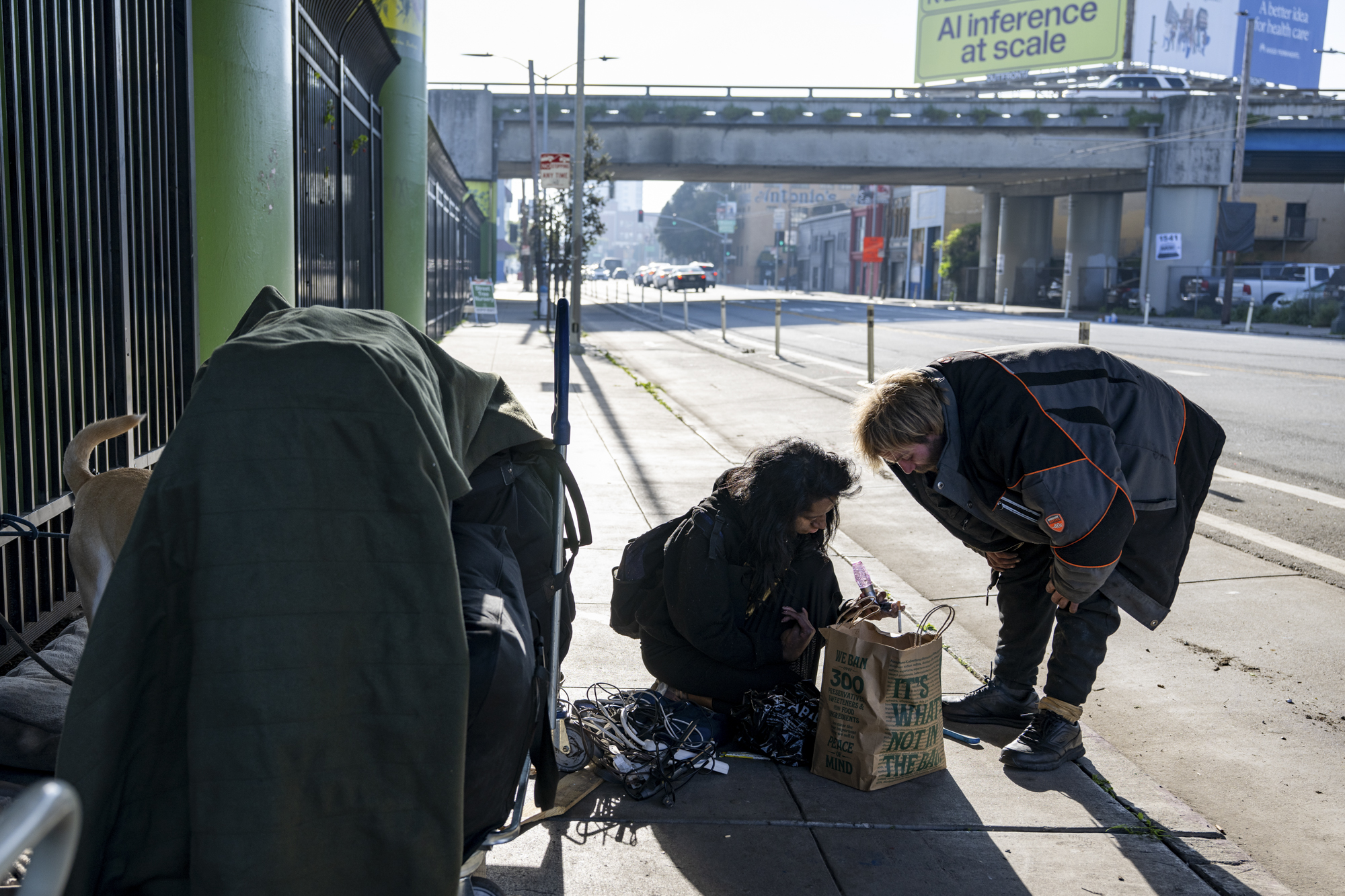
"caption": "Teesha Baldree (left) and Jacob Miles go through their belongings after moving from Merlin Street to nearby Fifth Street in San Francisco on Jan. 27, 2026, following a scheduled encampment sweep. The counties of Alameda, Solano and San Francisco saw homelessness decline in an annual count, but Contra Costa, San Mateo and Napa counties recorded increases. ",
"credit": "Beth LaBerge/KQED",
"altTag": null,
"description": null,
"imgSizes": {
"thumbnail": {
"file": "https://cdn.kqed.org/wp-content/uploads/sites/10/2026/02/260127-SUPERBOWLHOMELESSNESS-13-BL-KQED-160x107.jpg",
"width": 160,
"height": 107,
"mimeType": "image/jpeg"
},
"1536x1536": {
"file": "https://cdn.kqed.org/wp-content/uploads/sites/10/2026/02/260127-SUPERBOWLHOMELESSNESS-13-BL-KQED-1536x1024.jpg",
"width": 1536,
"height": 1024,
"mimeType": "image/jpeg"
},
"post-thumbnail": {
"file": "https://cdn.kqed.org/wp-content/uploads/sites/10/2026/02/260127-SUPERBOWLHOMELESSNESS-13-BL-KQED-672x372.jpg",
"width": 672,
"height": 372,
"mimeType": "image/jpeg"
},
"twentyfourteen-full-width": {
"file": "https://cdn.kqed.org/wp-content/uploads/sites/10/2026/02/260127-SUPERBOWLHOMELESSNESS-13-BL-KQED-1038x576.jpg",
"width": 1038,
"height": 576,
"mimeType": "image/jpeg"
},
"npr-cds-wide": {
"file": "https://cdn.kqed.org/wp-content/uploads/sites/10/2026/02/260127-SUPERBOWLHOMELESSNESS-13-BL-KQED-1200x675.jpg",
"width": 1200,
"height": 675,
"mimeType": "image/jpeg"
},
"kqedFullSize": {
"file": "https://cdn.kqed.org/wp-content/uploads/sites/10/2026/02/260127-SUPERBOWLHOMELESSNESS-13-BL-KQED.jpg",
"width": 2000,
"height": 1333
}
},
"isLoading": false,
"fetchFailed": false
},
"news_12052355": {
"type": "attachments",
"id": "news_12052355",
"meta": {
"index": "attachments_1716263798",
"site": "news",
"id": "12052355",
"found": true
},
"title": "250804-CALIFORNIAFOREVERSUISUNCITY-55-KQED",
"publishDate": 1755277849,
"status": "inherit",
"parent": 0,
"modified": 1755277955,
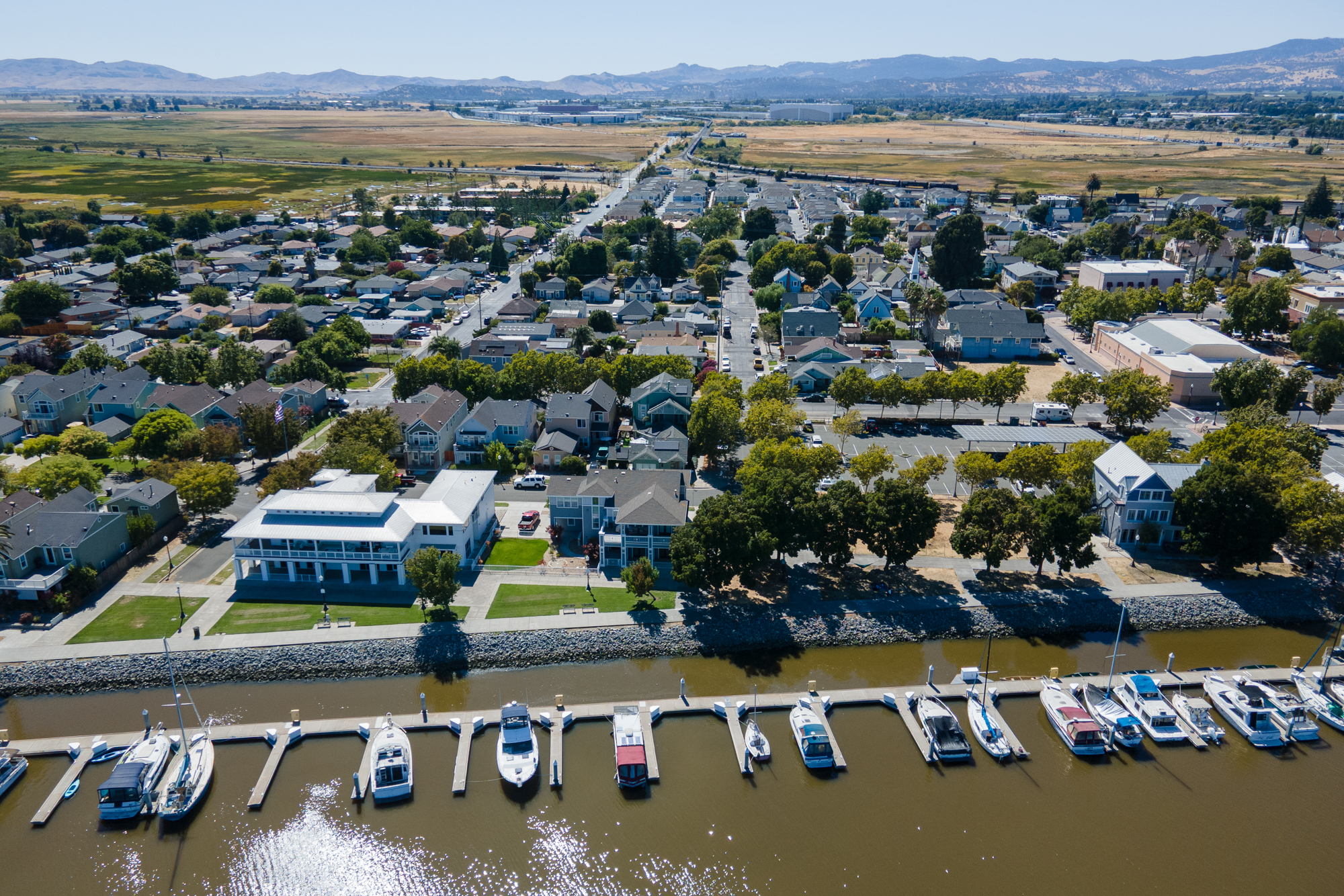
"caption": "An aerial view of the Suisun Slough in Suisun City, Solano County, on Aug. 4, 2025.",
"credit": "Beth LaBerge/KQED",
"altTag": null,
"description": null,
"imgSizes": {
"thumbnail": {
"file": "https://cdn.kqed.org/wp-content/uploads/sites/10/2025/08/250804-CALIFORNIAFOREVERSUISUNCITY-55-KQED-160x107.jpg",
"width": 160,
"height": 107,
"mimeType": "image/jpeg"
},
"1536x1536": {
"file": "https://cdn.kqed.org/wp-content/uploads/sites/10/2025/08/250804-CALIFORNIAFOREVERSUISUNCITY-55-KQED-1536x1025.jpg",
"width": 1536,
"height": 1025,
"mimeType": "image/jpeg"
},
"post-thumbnail": {
"file": "https://cdn.kqed.org/wp-content/uploads/sites/10/2025/08/250804-CALIFORNIAFOREVERSUISUNCITY-55-KQED-672x372.jpg",
"width": 672,
"height": 372,
"mimeType": "image/jpeg"
},
"twentyfourteen-full-width": {
"file": "https://cdn.kqed.org/wp-content/uploads/sites/10/2025/08/250804-CALIFORNIAFOREVERSUISUNCITY-55-KQED-1038x576.jpg",
"width": 1038,
"height": 576,
"mimeType": "image/jpeg"
},
"kqedFullSize": {
"file": "https://cdn.kqed.org/wp-content/uploads/sites/10/2025/08/250804-CALIFORNIAFOREVERSUISUNCITY-55-KQED.jpg",
"width": 2000,
"height": 1334
}
},
"isLoading": false,
"fetchFailed": false
},
"news_11992341": {
"type": "attachments",
"id": "news_11992341",
"meta": {
"index": "attachments_1716263798",
"site": "news",
"id": "11992341",
"found": true
},
"title": "006_KQED_NEWFOLSOMPRISONSACRAMENTO_04132023-KQED",
"publishDate": 1719530043,
"status": "inherit",
"parent": 12088386,
"modified": 1782161688,
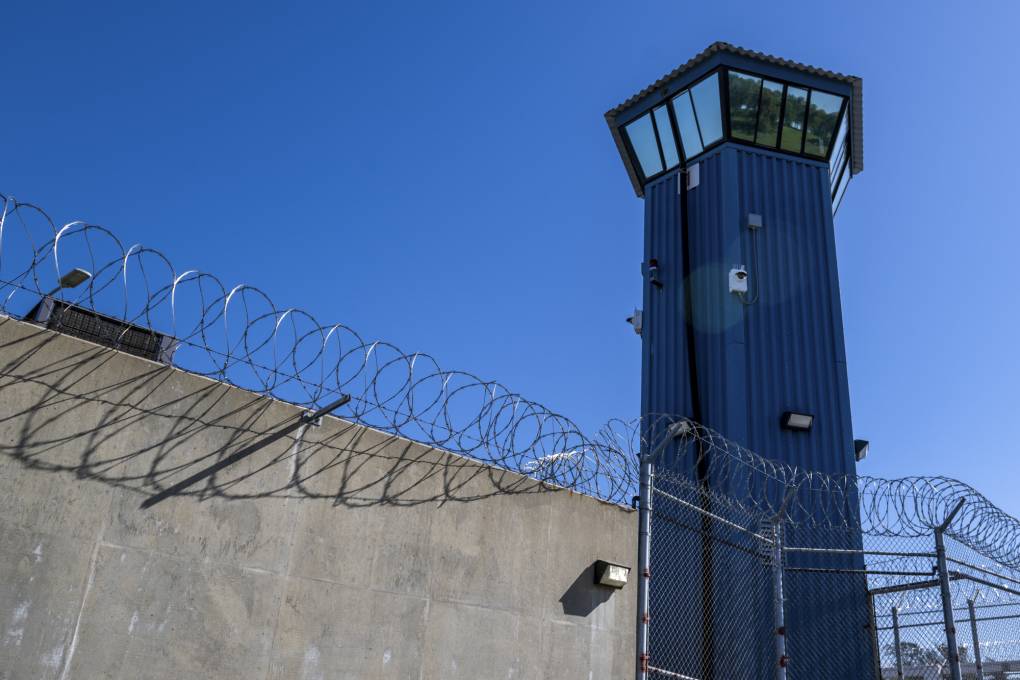
"caption": "A watch tower at California State Prison, Sacramento, on April 13, 2023.",
"credit": "Beth LaBerge/KQED",
"altTag": "A watchtower at a prison, with prison walls and barbed wire in the foreground.",
"description": null,
"imgSizes": {
"medium": {
"file": "https://cdn.kqed.org/wp-content/uploads/sites/10/2024/06/006_KQED_NEWFOLSOMPRISONSACRAMENTO_04132023-KQED-800x533.jpg",
"width": 800,
"height": 533,
"mimeType": "image/jpeg"
},
"large": {
"file": "https://cdn.kqed.org/wp-content/uploads/sites/10/2024/06/006_KQED_NEWFOLSOMPRISONSACRAMENTO_04132023-KQED-1020x680.jpg",
"width": 1020,
"height": 680,
"mimeType": "image/jpeg"
},
"thumbnail": {
"file": "https://cdn.kqed.org/wp-content/uploads/sites/10/2024/06/006_KQED_NEWFOLSOMPRISONSACRAMENTO_04132023-KQED-160x107.jpg",
"width": 160,
"height": 107,
"mimeType": "image/jpeg"
},
"1536x1536": {
"file": "https://cdn.kqed.org/wp-content/uploads/sites/10/2024/06/006_KQED_NEWFOLSOMPRISONSACRAMENTO_04132023-KQED-1536x1024.jpg",
"width": 1536,
"height": 1024,
"mimeType": "image/jpeg"
},
"post-thumbnail": {
"file": "https://cdn.kqed.org/wp-content/uploads/sites/10/2024/06/006_KQED_NEWFOLSOMPRISONSACRAMENTO_04132023-KQED-672x372.jpg",
"width": 672,
"height": 372,
"mimeType": "image/jpeg"
},
"twentyfourteen-full-width": {
"file": "https://cdn.kqed.org/wp-content/uploads/sites/10/2024/06/006_KQED_NEWFOLSOMPRISONSACRAMENTO_04132023-KQED-1038x576.jpg",
"width": 1038,
"height": 576,
"mimeType": "image/jpeg"
},
"full-width": {
"file": "https://cdn.kqed.org/wp-content/uploads/sites/10/2024/06/006_KQED_NEWFOLSOMPRISONSACRAMENTO_04132023-KQED-1920x1280.jpg",
"width": 1920,
"height": 1280,
"mimeType": "image/jpeg"
},
"kqedFullSize": {
"file": "https://cdn.kqed.org/wp-content/uploads/sites/10/2024/06/006_KQED_NEWFOLSOMPRISONSACRAMENTO_04132023-KQED.jpg",
"width": 2000,
"height": 1333
}
},
"isLoading": false,
"fetchFailed": false
},
"news_12091511": {
"type": "attachments",
"id": "news_12091511",
"meta": {
"index": "attachments_1716263798",
"site": "news",
"id": "12091511",
"found": true
},
"title": "The Rio Vista Bridge in Rio Vista on May 2, 2024.",
"publishDate": 1784243739,
"status": "inherit",
"parent": 12091366,
"modified": 1784243771,
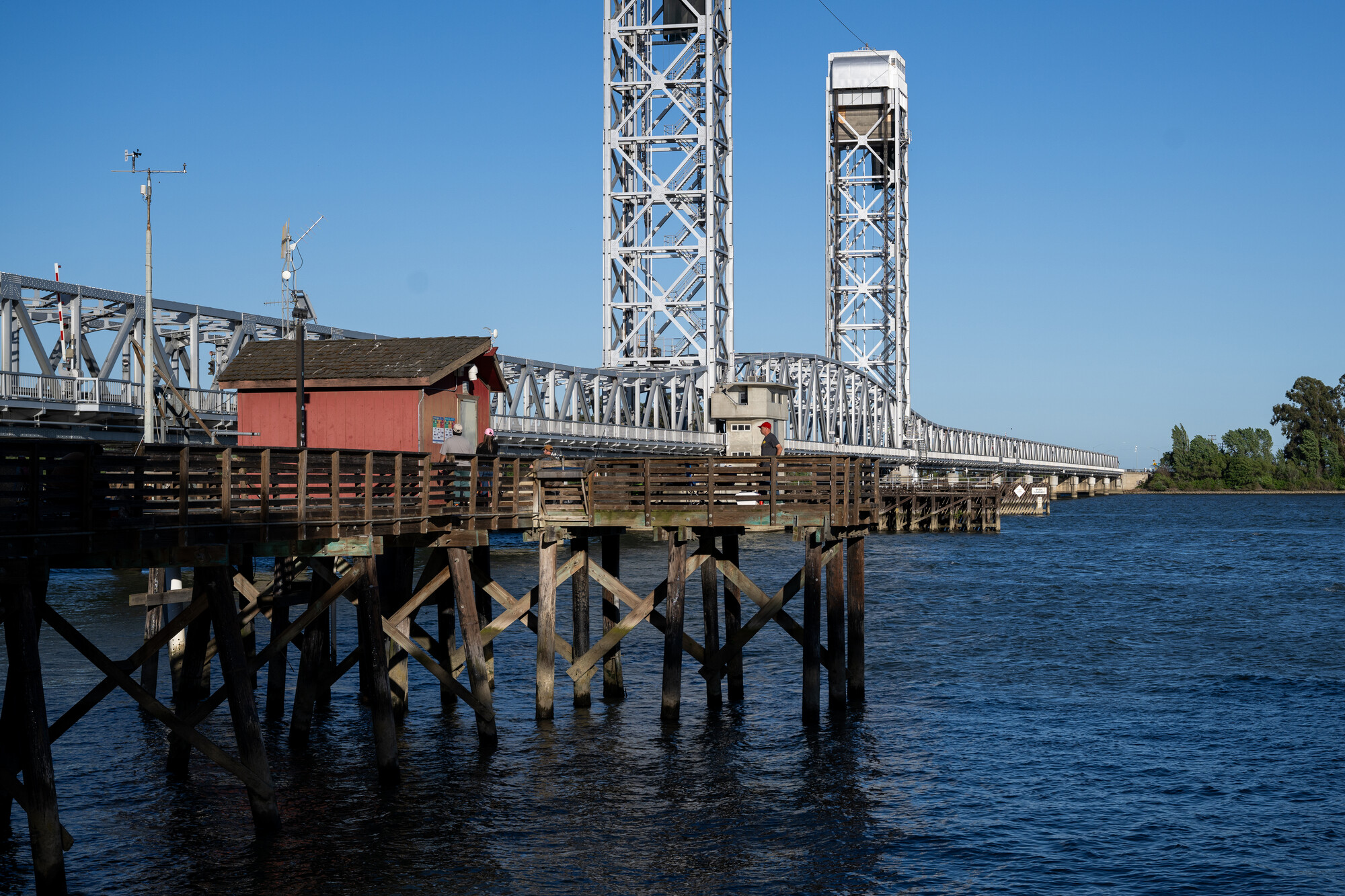
"caption": "The Rio Vista Bridge in Rio Vista on May 2, 2024.",
"credit": "Beth LaBerge/KQED",
"altTag": null,
"description": null,
"imgSizes": {
"thumbnail": {
"file": "https://cdn.kqed.org/wp-content/uploads/sites/10/2026/07/240502-CaliforniaForever-98-BL_qed-160x107.jpg",
"width": 160,
"height": 107,
"mimeType": "image/jpeg"
},
"1536x1536": {
"file": "https://cdn.kqed.org/wp-content/uploads/sites/10/2026/07/240502-CaliforniaForever-98-BL_qed-1536x1024.jpg",
"width": 1536,
"height": 1024,
"mimeType": "image/jpeg"
},
"post-thumbnail": {
"file": "https://cdn.kqed.org/wp-content/uploads/sites/10/2026/07/240502-CaliforniaForever-98-BL_qed-672x372.jpg",
"width": 672,
"height": 372,
"mimeType": "image/jpeg"
},
"twentyfourteen-full-width": {
"file": "https://cdn.kqed.org/wp-content/uploads/sites/10/2026/07/240502-CaliforniaForever-98-BL_qed-1038x576.jpg",
"width": 1038,
"height": 576,
"mimeType": "image/jpeg"
},
"npr-cds-wide": {
"file": "https://cdn.kqed.org/wp-content/uploads/sites/10/2026/07/240502-CaliforniaForever-98-BL_qed-1200x675.jpg",
"width": 1200,
"height": 675,
"mimeType": "image/jpeg"
},
"npr-cds-square": {
"file": "https://cdn.kqed.org/wp-content/uploads/sites/10/2026/07/240502-CaliforniaForever-98-BL_qed-600x600.jpg",
"width": 600,
"height": 600,
"mimeType": "image/jpeg"
},
"kqedFullSize": {
"file": "https://cdn.kqed.org/wp-content/uploads/sites/10/2026/07/240502-CaliforniaForever-98-BL_qed.jpg",
"width": 2000,
"height": 1333
}
},
"isLoading": false,
"fetchFailed": false
},
"news_12089500": {
"type": "attachments",
"id": "news_12089500",
"meta": {
"index": "attachments_1716263798",
"site": "news",
"id": "12089500",
"found": true
},
"title": "Downtown Rio Vista on May 2, 2024.",
"publishDate": 1782925336,
"status": "inherit",
"parent": 12089233,
"modified": 1782925354,
"caption": "Downtown Rio Vista on May 2, 2024.",
"credit": "Beth LaBerge/KQED",
"altTag": null,
"description": null,
"imgSizes": {
"thumbnail": {
"file": "https://cdn.kqed.org/wp-content/uploads/sites/10/2026/07/240502-CaliforniaForever-58-BL_qed-1-160x107.jpg",
"width": 160,
"height": 107,
"mimeType": "image/jpeg"
},
"1536x1536": {
"file": "https://cdn.kqed.org/wp-content/uploads/sites/10/2026/07/240502-CaliforniaForever-58-BL_qed-1-1536x1024.jpg",
"width": 1536,
"height": 1024,
"mimeType": "image/jpeg"
},
"post-thumbnail": {
"file": "https://cdn.kqed.org/wp-content/uploads/sites/10/2026/07/240502-CaliforniaForever-58-BL_qed-1-672x372.jpg",
"width": 672,
"height": 372,
"mimeType": "image/jpeg"
},
"twentyfourteen-full-width": {
"file": "https://cdn.kqed.org/wp-content/uploads/sites/10/2026/07/240502-CaliforniaForever-58-BL_qed-1-1038x576.jpg",
"width": 1038,
"height": 576,
"mimeType": "image/jpeg"
},
"npr-cds-wide": {
"file": "https://cdn.kqed.org/wp-content/uploads/sites/10/2026/07/240502-CaliforniaForever-58-BL_qed-1-1200x675.jpg",
"width": 1200,
"height": 675,
"mimeType": "image/jpeg"
},
"npr-cds-square": {
"file": "https://cdn.kqed.org/wp-content/uploads/sites/10/2026/07/240502-CaliforniaForever-58-BL_qed-1-600x600.jpg",
"width": 600,
"height": 600,
"mimeType": "image/jpeg"
},
"kqedFullSize": {
"file": "https://cdn.kqed.org/wp-content/uploads/sites/10/2026/07/240502-CaliforniaForever-58-BL_qed-1.jpg",
"width": 2000,
"height": 1333
}
},
"isLoading": false,
"fetchFailed": false
},
"news_12052353": {
"type": "attachments",
"id": "news_12052353",
"meta": {
"index": "attachments_1716263798",
"site": "news",
"id": "12052353",
"found": true
},
"title": "250804-CALIFORNIAFOREVERSUISUNCITY-44-KQED",
"publishDate": 1755277841,
"status": "inherit",
"parent": 12052340,
"modified": 1755291080,
"caption": "An aerial view of the Suisun Slough in Suisun City, Solano County, on Aug. 4, 2025.",
"credit": "Beth LaBerge/KQED",
"altTag": null,
"description": null,
"imgSizes": {
"thumbnail": {
"file": "https://cdn.kqed.org/wp-content/uploads/sites/10/2025/08/250804-CALIFORNIAFOREVERSUISUNCITY-44-KQED-160x107.jpg",
"width": 160,
"height": 107,
"mimeType": "image/jpeg"
},
"1536x1536": {
"file": "https://cdn.kqed.org/wp-content/uploads/sites/10/2025/08/250804-CALIFORNIAFOREVERSUISUNCITY-44-KQED-1536x1025.jpg",
"width": 1536,
"height": 1025,
"mimeType": "image/jpeg"
},
"post-thumbnail": {
"file": "https://cdn.kqed.org/wp-content/uploads/sites/10/2025/08/250804-CALIFORNIAFOREVERSUISUNCITY-44-KQED-672x372.jpg",
"width": 672,
"height": 372,
"mimeType": "image/jpeg"
},
"twentyfourteen-full-width": {
"file": "https://cdn.kqed.org/wp-content/uploads/sites/10/2025/08/250804-CALIFORNIAFOREVERSUISUNCITY-44-KQED-1038x576.jpg",
"width": 1038,
"height": 576,
"mimeType": "image/jpeg"
},
"kqedFullSize": {
"file": "https://cdn.kqed.org/wp-content/uploads/sites/10/2025/08/250804-CALIFORNIAFOREVERSUISUNCITY-44-KQED.jpg",
"width": 2000,
"height": 1334
}
},
"isLoading": false,
"fetchFailed": false
},
"news_12085366": {
"type": "attachments",
"id": "news_12085366",
"meta": {
"index": "attachments_1716263798",
"site": "news",
"id": "12085366",
"found": true
},
"title": "260528-Dog Search-02-KQED",
"publishDate": 1779986785,
"status": "inherit",
"parent": 0,
"modified": 1779986881,
"caption": "The vandalized front entrance to Miranda’s Rescue Thrift Store in Fortuna, California. Many Bay Area animal shelters have severed ties with the Humboldt County rescue amid an investigation into allegations that dogs transferred there were improperly killed.",
"credit": "Sukey Lewis/KQED",
"altTag": null,
"description": null,
"imgSizes": {
"thumbnail": {
"file": "https://cdn.kqed.org/wp-content/uploads/sites/10/2026/05/260528-Dog-Search-02-KQED-160x120.jpg",
"width": 160,
"height": 120,
"mimeType": "image/jpeg"
},
"1536x1536": {
"file": "https://cdn.kqed.org/wp-content/uploads/sites/10/2026/05/260528-Dog-Search-02-KQED-1536x1152.jpg",
"width": 1536,
"height": 1152,
"mimeType": "image/jpeg"
},
"post-thumbnail": {
"file": "https://cdn.kqed.org/wp-content/uploads/sites/10/2026/05/260528-Dog-Search-02-KQED-672x372.jpg",
"width": 672,
"height": 372,
"mimeType": "image/jpeg"
},
"twentyfourteen-full-width": {
"file": "https://cdn.kqed.org/wp-content/uploads/sites/10/2026/05/260528-Dog-Search-02-KQED-1038x576.jpg",
"width": 1038,
"height": 576,
"mimeType": "image/jpeg"
},
"npr-cds-wide": {
"file": "https://cdn.kqed.org/wp-content/uploads/sites/10/2026/05/260528-Dog-Search-02-KQED-1200x675.jpg",
"width": 1200,
"height": 675,
"mimeType": "image/jpeg"
},
"npr-cds-square": {
"file": "https://cdn.kqed.org/wp-content/uploads/sites/10/2026/05/260528-Dog-Search-02-KQED-600x600.jpg",
"width": 600,
"height": 600,
"mimeType": "image/jpeg"
},
"kqedFullSize": {
"file": "https://cdn.kqed.org/wp-content/uploads/sites/10/2026/05/260528-Dog-Search-02-KQED.jpg",
"width": 2000,
"height": 1500
}
},
"isLoading": false,
"fetchFailed": false
},
"news_12039779": {
"type": "attachments",
"id": "news_12039779",
"meta": {
"index": "attachments_1716263798",
"site": "news",
"id": "12039779",
"found": true
},
"title": "A mural depicts downtown Benicia in the city on May 8, 2025.",
"publishDate": 1747078191,
"status": "inherit",
"parent": 12039505,
"modified": 1747078201,
"caption": "A mural depicts downtown Benicia in the city on May 8, 2025.",
"credit": "Beth LaBerge/KQED",
"altTag": null,
"description": null,
"imgSizes": {
"medium": {
"file": "https://cdn.kqed.org/wp-content/uploads/sites/10/2025/05/250509-BeniciaRefinery-60-BL_qed-800x533.jpg",
"width": 800,
"height": 533,
"mimeType": "image/jpeg"
},
"large": {
"file": "https://cdn.kqed.org/wp-content/uploads/sites/10/2025/05/250509-BeniciaRefinery-60-BL_qed-1020x680.jpg",
"width": 1020,
"height": 680,
"mimeType": "image/jpeg"
},
"thumbnail": {
"file": "https://cdn.kqed.org/wp-content/uploads/sites/10/2025/05/250509-BeniciaRefinery-60-BL_qed-160x107.jpg",
"width": 160,
"height": 107,
"mimeType": "image/jpeg"
},
"1536x1536": {
"file": "https://cdn.kqed.org/wp-content/uploads/sites/10/2025/05/250509-BeniciaRefinery-60-BL_qed-1536x1024.jpg",
"width": 1536,
"height": 1024,
"mimeType": "image/jpeg"
},
"post-thumbnail": {
"file": "https://cdn.kqed.org/wp-content/uploads/sites/10/2025/05/250509-BeniciaRefinery-60-BL_qed-672x372.jpg",
"width": 672,
"height": 372,
"mimeType": "image/jpeg"
},
"twentyfourteen-full-width": {
"file": "https://cdn.kqed.org/wp-content/uploads/sites/10/2025/05/250509-BeniciaRefinery-60-BL_qed-1038x576.jpg",
"width": 1038,
"height": 576,
"mimeType": "image/jpeg"
},
"full-width": {
"file": "https://cdn.kqed.org/wp-content/uploads/sites/10/2025/05/250509-BeniciaRefinery-60-BL_qed-1920x1280.jpg",
"width": 1920,
"height": 1280,
"mimeType": "image/jpeg"
},
"kqedFullSize": {
"file": "https://cdn.kqed.org/wp-content/uploads/sites/10/2025/05/250509-BeniciaRefinery-60-BL_qed.jpg",
"width": 2000,
"height": 1333
}
},
"isLoading": false,
"fetchFailed": false
},
"news_12037936": {
"type": "attachments",
"id": "news_12037936",
"meta": {
"index": "attachments_1716263798",
"site": "news",
"id": "12037936",
"found": true
},
"title": "A KC-10 Extender is parked on the ramp as a C-5M Super Galaxy takes off at Travis Air Force Base, Calif., March 16, 2017.",
"publishDate": 1745868668,
"status": "inherit",
"parent": 12037889,
"modified": 1765567012,
"caption": "A KC-10 Extender is parked on the ramp as a C-5M Super Galaxy takes off at Travis Air Force Base, California, on March 16, 2017.",
"credit": "Hum Images/Universal Images Group via Getty Images",
"altTag": null,
"description": null,
"imgSizes": {
"medium": {
"file": "https://cdn.kqed.org/wp-content/uploads/sites/10/2025/04/TravisAirForceBaseGetty2-800x534.jpg",
"width": 800,
"height": 534,
"mimeType": "image/jpeg"
},
"large": {
"file": "https://cdn.kqed.org/wp-content/uploads/sites/10/2025/04/TravisAirForceBaseGetty2-1020x680.jpg",
"width": 1020,
"height": 680,
"mimeType": "image/jpeg"
},
"thumbnail": {
"file": "https://cdn.kqed.org/wp-content/uploads/sites/10/2025/04/TravisAirForceBaseGetty2-160x107.jpg",
"width": 160,
"height": 107,
"mimeType": "image/jpeg"
},
"1536x1536": {
"file": "https://cdn.kqed.org/wp-content/uploads/sites/10/2025/04/TravisAirForceBaseGetty2-1536x1025.jpg",
"width": 1536,
"height": 1025,
"mimeType": "image/jpeg"
},
"post-thumbnail": {
"file": "https://cdn.kqed.org/wp-content/uploads/sites/10/2025/04/TravisAirForceBaseGetty2-672x372.jpg",
"width": 672,
"height": 372,
"mimeType": "image/jpeg"
},
"twentyfourteen-full-width": {
"file": "https://cdn.kqed.org/wp-content/uploads/sites/10/2025/04/TravisAirForceBaseGetty2-1038x576.jpg",
"width": 1038,
"height": 576,
"mimeType": "image/jpeg"
},
"full-width": {
"file": "https://cdn.kqed.org/wp-content/uploads/sites/10/2025/04/TravisAirForceBaseGetty2-1920x1281.jpg",
"width": 1920,
"height": 1281,
"mimeType": "image/jpeg"
},
"kqedFullSize": {
"file": "https://cdn.kqed.org/wp-content/uploads/sites/10/2025/04/TravisAirForceBaseGetty2.jpg",
"width": 2000,
"height": 1334
}
},
"isLoading": false,
"fetchFailed": false
},
"news_12069962": {
"type": "attachments",
"id": "news_12069962",
"meta": {
"index": "attachments_1716263798",
"site": "news",
"id": "12069962",
"found": true
},
"title": "20250114_Mare-Island_DMB_00333_qed",
"publishDate": 1768498657,
"status": "inherit",
"parent": 12069959,
"modified": 1768498693,
"caption": "A kayaker floats down the Napa River past the Navy Yard of Mare Island in the city of Vallejo on Jan. 14, 2025.",
"credit": "David M. Barreda/KQED",
"altTag": null,
"description": null,
"imgSizes": {
"thumbnail": {
"file": "https://cdn.kqed.org/wp-content/uploads/sites/10/2026/01/20250114_Mare-Island_DMB_00333_qed-160x107.jpg",
"width": 160,
"height": 107,
"mimeType": "image/jpeg"
},
"1536x1536": {
"file": "https://cdn.kqed.org/wp-content/uploads/sites/10/2026/01/20250114_Mare-Island_DMB_00333_qed-1536x1024.jpg",
"width": 1536,
"height": 1024,
"mimeType": "image/jpeg"
},
"post-thumbnail": {
"file": "https://cdn.kqed.org/wp-content/uploads/sites/10/2026/01/20250114_Mare-Island_DMB_00333_qed-672x372.jpg",
"width": 672,
"height": 372,
"mimeType": "image/jpeg"
},
"twentyfourteen-full-width": {
"file": "https://cdn.kqed.org/wp-content/uploads/sites/10/2026/01/20250114_Mare-Island_DMB_00333_qed-1038x576.jpg",
"width": 1038,
"height": 576,
"mimeType": "image/jpeg"
},
"npr-cds-wide": {
"file": "https://cdn.kqed.org/wp-content/uploads/sites/10/2026/01/20250114_Mare-Island_DMB_00333_qed-1200x675.jpg",
"width": 1200,
"height": 675,
"mimeType": "image/jpeg"
},
"kqedFullSize": {
"file": "https://cdn.kqed.org/wp-content/uploads/sites/10/2026/01/20250114_Mare-Island_DMB_00333_qed.jpg",
"width": 2000,
"height": 1333
}
},
"isLoading": false,
"fetchFailed": false
},
"news_12069603": {
"type": "attachments",
"id": "news_12069603",
"meta": {
"index": "attachments_1716263798",
"site": "news",
"id": "12069603",
"found": true
},
"title": "011326_SOLANO COUNTY STRIKE _GH_022-KQED",
"publishDate": 1768343678,
"status": "inherit",
"parent": 0,
"modified": 1768343697,
"caption": "Demonstrators move through downtown Fairfield as Solano County workers continued a countywide strike over stalled contract negotiations on Jan. 13, 2026.",
"credit": "Gustavo Hernandez/KQED",
"altTag": null,
"description": null,
"imgSizes": {
"thumbnail": {
"file": "https://cdn.kqed.org/wp-content/uploads/sites/10/2026/01/011326_SOLANO-COUNTY-STRIKE-_GH_022-KQED-160x107.jpg",
"width": 160,
"height": 107,
"mimeType": "image/jpeg"
},
"1536x1536": {
"file": "https://cdn.kqed.org/wp-content/uploads/sites/10/2026/01/011326_SOLANO-COUNTY-STRIKE-_GH_022-KQED-1536x1024.jpg",
"width": 1536,
"height": 1024,
"mimeType": "image/jpeg"
},
"post-thumbnail": {
"file": "https://cdn.kqed.org/wp-content/uploads/sites/10/2026/01/011326_SOLANO-COUNTY-STRIKE-_GH_022-KQED-672x372.jpg",
"width": 672,
"height": 372,
"mimeType": "image/jpeg"
},
"twentyfourteen-full-width": {
"file": "https://cdn.kqed.org/wp-content/uploads/sites/10/2026/01/011326_SOLANO-COUNTY-STRIKE-_GH_022-KQED-1038x576.jpg",
"width": 1038,
"height": 576,
"mimeType": "image/jpeg"
},
"npr-cds-wide": {
"file": "https://cdn.kqed.org/wp-content/uploads/sites/10/2026/01/011326_SOLANO-COUNTY-STRIKE-_GH_022-KQED-1200x675.jpg",
"width": 1200,
"height": 675,
"mimeType": "image/jpeg"
},
"kqedFullSize": {
"file": "https://cdn.kqed.org/wp-content/uploads/sites/10/2026/01/011326_SOLANO-COUNTY-STRIKE-_GH_022-KQED.jpg",
"width": 2000,
"height": 1333
}
},
"isLoading": false,
"fetchFailed": false
},
"news_12063437": {
"type": "attachments",
"id": "news_12063437",
"meta": {
"index": "attachments_1716263798",
"site": "news",
"id": "12063437",
"found": true
},
"title": "250724_Visit to Esmeralda,_ 0009_GH_qed",
"publishDate": 1762544620,
"status": "inherit",
"parent": 12059557,
"modified": 1762544628,
"caption": "A slide titled “Our ‘Software’: Community‑Oriented Events” displays attendance figures for Edge Esmeralda as Devon Zuegel speaks at the Cloverdale Museum of History on July 24, 2025.",
"credit": "Gustavo Hernandez/KQED",
"altTag": null,
"description": null,
"imgSizes": {
"thumbnail": {
"file": "https://cdn.kqed.org/wp-content/uploads/sites/10/2025/11/250724_Visit-to-Esmeralda_-0009_GH_qed-160x107.jpg",
"width": 160,
"height": 107,
"mimeType": "image/jpeg"
},
"1536x1536": {
"file": "https://cdn.kqed.org/wp-content/uploads/sites/10/2025/11/250724_Visit-to-Esmeralda_-0009_GH_qed-1536x1024.jpg",
"width": 1536,
"height": 1024,
"mimeType": "image/jpeg"
},
"post-thumbnail": {
"file": "https://cdn.kqed.org/wp-content/uploads/sites/10/2025/11/250724_Visit-to-Esmeralda_-0009_GH_qed-672x372.jpg",
"width": 672,
"height": 372,
"mimeType": "image/jpeg"
},
"twentyfourteen-full-width": {
"file": "https://cdn.kqed.org/wp-content/uploads/sites/10/2025/11/250724_Visit-to-Esmeralda_-0009_GH_qed-1038x576.jpg",
"width": 1038,
"height": 576,
"mimeType": "image/jpeg"
},
"npr-cds-wide": {
"file": "https://cdn.kqed.org/wp-content/uploads/sites/10/2025/11/250724_Visit-to-Esmeralda_-0009_GH_qed-1200x675.jpg",
"width": 1200,
"height": 675,
"mimeType": "image/jpeg"
},
"kqedFullSize": {
"file": "https://cdn.kqed.org/wp-content/uploads/sites/10/2025/11/250724_Visit-to-Esmeralda_-0009_GH_qed.jpg",
"width": 2000,
"height": 1333
}
},
"isLoading": false,
"fetchFailed": false
}
},
"audioPlayerReducer": {
"postId": "stream_live",
"isPaused": true,
"isPlaying": false,
"pfsActive": false,
"pledgeModalIsOpen": true,
"playerDrawerIsOpen": false,
"liveAudioPlayStartedAt": 0,
"liveAudioPlayContext": ""
},
"authorsReducer": {
"byline_news_12096431": {
"type": "authors",
"id": "byline_news_12096431",
"meta": {
"override": true
},
"slug": "byline_news_12096431",
"name": "Marisa Kendall, CalMatters",
"isLoading": false
},
"byline_news_12092691": {
"type": "authors",
"id": "byline_news_12092691",
"meta": {
"override": true
},
"slug": "byline_news_12092691",
"name": "Cayla Mihalovich, CalMatters",
"isLoading": false
},
"byline_news_12089111": {
"type": "authors",
"id": "byline_news_12089111",
"meta": {
"override": true
},
"slug": "byline_news_12089111",
"name": "Kate Wolffe and Yue Stella Yu, CalMatters",
"isLoading": false
},
"byline_news_12085374": {
"type": "authors",
"id": "byline_news_12085374",
"meta": {
"override": true
},
"slug": "byline_news_12085374",
"name": "Zoë Ferrigno ",
"isLoading": false
},
"jsmall": {
"type": "authors",
"id": "6625",
"meta": {
"index": "authors_1716337520",
"id": "6625",
"found": true
},
"name": "Julie Small",
"firstName": "Julie",
"lastName": "Small",
"slug": "jsmall",
"email": "jsmall@kqed.org",
"display_author_email": true,
"staff_mastheads": [
"news"
],
"title": "KQED Contributor",
"bio": "Julie Small reports on criminal justice and immigration.\r\n\r\nShe was part of a team at KQED awarded a regional 2019 Edward R. Murrow award for continuing coverage of the Trump Administration's family separation policy.\r\n\r\nThe Society for Professional Journalists recognized Julie's 2018 \u003ca href=\"https://www.kqed.org/news/11636262/the-officer-tased-him-31-times-the-sheriff-called-his-death-an-accident\">reporting\u003c/a> on the San Joaquin County Sheriff's \u003ca href=\"https://www.kqed.org/news/11634689/autopsy-doctors-sheriff-overrode-death-findings-to-protect-law-enforcement\">interference\u003c/a> in death investigations with an Excellence in Journalism Award for Ongoing Coverage.\r\n\r\nJulie's\u003ca href=\"https://www.kqed.org/news/11039666/two-mentally-ill-inmates-died-one-month-in-santa-clara\"> reporting\u003c/a> with Lisa Pickoff-White on the treatment of mentally ill offenders in California jails earned a 2017 regional Edward R. Murrow Award for news reporting and an investigative reporting award from the SPJ of Northern California.\r\n\r\nBefore joining KQED, Julie covered government and politics in Sacramento for Southern California Public Radio (SCPR). Her 2010 \u003ca href=\"https://www.scpr.org/specials/prisonmedical/\">series\u003c/a> on lapses in California’s prison medical care also won a regional Edward R. Murrow Award for investigative reporting and a Golden Mic Award from the RTNDA of Southern California.\r\n\r\nJulie began her career in journalism in 2000 as the deputy foreign editor for public radio's \u003cem>Marketplace, \u003c/em>while earning her master's degree in journalism from USC’s Annenberg School of Communication.",
"avatar": "https://secure.gravatar.com/avatar/4baedf201468df97be97c2a9dd7585d0?s=600&d=blank&r=g",
"twitter": "@SmallRadio2",
"facebook": null,
"instagram": null,
"linkedin": null,
"sites": [
{
"site": "news",
"roles": [
"editor"
]
},
{
"site": "stateofhealth",
"roles": [
"author"
]
},
{
"site": "science",
"roles": [
"author"
]
}
],
"headData": {
"title": "Julie Small | KQED",
"description": "KQED Contributor",
"ogImgSrc": "https://secure.gravatar.com/avatar/4baedf201468df97be97c2a9dd7585d0?s=600&d=blank&r=g",
"twImgSrc": "https://secure.gravatar.com/avatar/4baedf201468df97be97c2a9dd7585d0?s=600&d=blank&r=g"
},
"isLoading": false,
"link": "/author/jsmall"
},
"ecruzguevarra": {
"type": "authors",
"id": "8654",
"meta": {
"index": "authors_1716337520",
"id": "8654",
"found": true
},
"name": "Ericka Cruz Guevarra",
"firstName": "Ericka",
"lastName": "Cruz Guevarra",
"slug": "ecruzguevarra",
"email": "ecruzguevarra@kqed.org",
"display_author_email": true,
"staff_mastheads": [
"news"
],
"title": "Producer, The Bay Podcast",
"bio": "Ericka Cruz Guevarra is host of \u003ca href=\"https://www.kqed.org/podcasts/thebay\">\u003cem>The Bay\u003c/em>\u003c/a> podcast at KQED. Before host, she was the show’s producer. Her work in that capacity includes a three-part reported series on policing in Vallejo, which won a 2020 excellence in journalism award from the Society of Professional Journalists. Ericka has worked as a breaking news reporter at Oregon Public Broadcasting, helped produce the Code Switch podcast, and was KQED’s inaugural Raul Ramirez Diversity Fund intern. She’s also an alumna of NPR’s Next Generation Radio program. Send her an email if you have strong feelings about whether Fairfield and Suisun City are the Bay. Ericka is represented by SAG-AFTRA.",
"avatar": "https://secure.gravatar.com/avatar/accefc1de4bafc7e234b69bcb9b6f6536c130fd84709bc3069ef11a78787e1bb?s=600&d=blank&r=g",
"twitter": "NotoriousECG",
"bluesky": null,
"facebook": null,
"instagram": null,
"linkedin": null,
"sites": [
{
"site": "arts",
"roles": [
"subscriber"
]
},
{
"site": "news",
"roles": [
"editor",
"manage_categories"
]
},
{
"site": "futureofyou",
"roles": [
"subscriber"
]
},
{
"site": "stateofhealth",
"roles": [
"subscriber"
]
},
{
"site": "science",
"roles": [
"editor"
]
},
{
"site": "forum",
"roles": [
"subscriber"
]
}
],
"headData": {
"title": "Ericka Cruz Guevarra | KQED",
"description": "Producer, The Bay Podcast",
"ogImgSrc": "https://secure.gravatar.com/avatar/accefc1de4bafc7e234b69bcb9b6f6536c130fd84709bc3069ef11a78787e1bb?s=600&d=blank&r=g",
"twImgSrc": "https://secure.gravatar.com/avatar/accefc1de4bafc7e234b69bcb9b6f6536c130fd84709bc3069ef11a78787e1bb?s=600&d=blank&r=g"
},
"isLoading": false,
"link": "/author/ecruzguevarra"
},
"amontecillo": {
"type": "authors",
"id": "11649",
"meta": {
"index": "authors_1716337520",
"id": "11649",
"found": true
},
"name": "Alan Montecillo",
"firstName": "Alan",
"lastName": "Montecillo",
"slug": "amontecillo",
"email": "amontecillo@kqed.org",
"display_author_email": false,
"staff_mastheads": [
"news"
],
"title": "KQED Contributor",
"bio": "Alan Montecillo is the senior editor of \u003cem>\u003ca href=\"http://kqed.org/thebay\">The Bay\u003c/a>, \u003c/em> KQED's local news podcast. Before moving to the Bay Area, he worked as a senior talk show producer for WILL in Champaign-Urbana, Illinois and at Oregon Public Broadcasting in Portland, Oregon. He has won journalism awards from the Society of Professional Journalists Northern California, the Public Media Journalists Association, The Signal Awards, and has also received a regional Edward R. Murrow award. Alan is a Filipino American from Hong Kong and a graduate of Reed College.",
"avatar": "https://secure.gravatar.com/avatar/268f53a2066899ea9efdd8a5900218b17c822d9862cbc9326cccec53ef41d349?s=600&d=blank&r=g",
"twitter": "alanmontecillo",
"bluesky": null,
"facebook": null,
"instagram": null,
"linkedin": null,
"sites": [
{
"site": "",
"roles": [
"editor"
]
},
{
"site": "news",
"roles": [
"editor",
"manage_categories"
]
}
],
"headData": {
"title": "Alan Montecillo | KQED",
"description": "KQED Contributor",
"ogImgSrc": "https://secure.gravatar.com/avatar/268f53a2066899ea9efdd8a5900218b17c822d9862cbc9326cccec53ef41d349?s=600&d=blank&r=g",
"twImgSrc": "https://secure.gravatar.com/avatar/268f53a2066899ea9efdd8a5900218b17c822d9862cbc9326cccec53ef41d349?s=600&d=blank&r=g"
},
"isLoading": false,
"link": "/author/amontecillo"
},
"abandlamudi": {
"type": "authors",
"id": "11672",
"meta": {
"index": "authors_1716337520",
"id": "11672",
"found": true
},
"name": "Adhiti Bandlamudi",
"firstName": "Adhiti",
"lastName": "Bandlamudi",
"slug": "abandlamudi",
"email": "abandlamudi@kqed.org",
"display_author_email": false,
"staff_mastheads": [
"news"
],
"title": "KQED Housing Reporter",
"bio": "Adhiti Bandlamudi reports for KQED's Housing desk. She focuses on how housing gets built across the Bay Area. Before joining KQED in 2020, she reported for WUNC in Durham, North Carolina, WABE in Atlanta, Georgia and Capital Public Radio in Sacramento. In 2017, she was awarded a Kroc Fellowship at NPR where she reported on everything from sprinkles to the Golden State Killer's arrest. When she's not reporting, she's baking new recipes in her kitchen or watching movies with friends and family. She's originally from Georgia and has strong opinions about Great British Bake Off.",
"avatar": "https://secure.gravatar.com/avatar/868129c8b257bb99a3500e2c86a65400?s=600&d=mm&r=g",
"twitter": "oddity_adhiti",
"facebook": null,
"instagram": null,
"linkedin": null,
"sites": [
{
"site": "arts",
"roles": [
"author"
]
},
{
"site": "news",
"roles": [
"editor"
]
},
{
"site": "liveblog",
"roles": [
"author"
]
}
],
"headData": {
"title": "Adhiti Bandlamudi | KQED",
"description": "KQED Housing Reporter",
"ogImgSrc": "https://secure.gravatar.com/avatar/868129c8b257bb99a3500e2c86a65400?s=600&d=mm&r=g",
"twImgSrc": "https://secure.gravatar.com/avatar/868129c8b257bb99a3500e2c86a65400?s=600&d=mm&r=g"
},
"isLoading": false,
"link": "/author/abandlamudi"
},
"jessicakariisa": {
"type": "authors",
"id": "11831",
"meta": {
"index": "authors_1716337520",
"id": "11831",
"found": true
},
"name": "Jessica Kariisa",
"firstName": "Jessica",
"lastName": "Kariisa",
"slug": "jessicakariisa",
"email": "jkariisa@kqed.org",
"display_author_email": false,
"staff_mastheads": [],
"title": "Producer, The Bay",
"bio": "Jessica Kariisa is the producer of The Bay. She first joined KQED as an intern for The California Report Magazine, after which she became an on-call producer. She reported a Bay Curious episode on the use of rap lyrics in criminal trials which won a Society of Professional Journalists award in 2023 for Excellence in Features Journalism and the 2023 Signal Award for Best Conversation Starter. She’s worked on podcasts for Snap Judgment and American Public Media. Before embarking on her audio career, she was a music journalist.\r\n\r\nJessica Kariisa is represented by SAG-AFTRA.",
"avatar": "https://secure.gravatar.com/avatar/522e97b28ac0b3d411621c0fde8f3419c7b71ea2c5c262c57c4bb600963f328c?s=600&d=blank&r=g",
"twitter": null,
"bluesky": null,
"facebook": null,
"instagram": null,
"linkedin": null,
"sites": [
{
"site": "arts",
"roles": [
"author"
]
},
{
"site": "news",
"roles": [
"editor",
"manage_categories"
]
}
],
"headData": {
"title": "Jessica Kariisa | KQED",
"description": "Producer, The Bay",
"ogImgSrc": "https://secure.gravatar.com/avatar/522e97b28ac0b3d411621c0fde8f3419c7b71ea2c5c262c57c4bb600963f328c?s=600&d=blank&r=g",
"twImgSrc": "https://secure.gravatar.com/avatar/522e97b28ac0b3d411621c0fde8f3419c7b71ea2c5c262c57c4bb600963f328c?s=600&d=blank&r=g"
},
"isLoading": false,
"link": "/author/jessicakariisa"
},
"kdebenedetti": {
"type": "authors",
"id": "11913",
"meta": {
"index": "authors_1716337520",
"id": "11913",
"found": true
},
"name": "Katie DeBenedetti",
"firstName": "Katie",
"lastName": "DeBenedetti",
"slug": "kdebenedetti",
"email": "kdebenedetti@kqed.org",
"display_author_email": false,
"staff_mastheads": [
"news",
"science"
],
"title": "KQED Contributor",
"bio": "Katie DeBenedetti is a digital reporter covering daily news for the Express Desk. Prior to joining KQED as a culture reporting intern in January 2024, she covered education and city government for the Napa Valley Register.",
"avatar": "https://secure.gravatar.com/avatar/6e31073cb8f7e4214ab03f42771d0f45?s=600&d=blank&r=g",
"twitter": null,
"facebook": null,
"instagram": null,
"linkedin": null,
"sites": [
{
"site": "news",
"roles": [
"author"
]
},
{
"site": "science",
"roles": [
"author"
]
},
{
"site": "liveblog",
"roles": [
"author"
]
}
],
"headData": {
"title": "Katie DeBenedetti | KQED",
"description": "KQED Contributor",
"ogImgSrc": "https://secure.gravatar.com/avatar/6e31073cb8f7e4214ab03f42771d0f45?s=600&d=blank&r=g",
"twImgSrc": "https://secure.gravatar.com/avatar/6e31073cb8f7e4214ab03f42771d0f45?s=600&d=blank&r=g"
},
"isLoading": false,
"link": "/author/kdebenedetti"
},
"skennedy": {
"type": "authors",
"id": "11935",
"meta": {
"index": "authors_1716337520",
"id": "11935",
"found": true
},
"name": "Samantha Kennedy",
"firstName": "Samantha",
"lastName": "Kennedy",
"slug": "skennedy",
"email": "SKennedy@kqed.org",
"display_author_email": false,
"staff_mastheads": [],
"title": "KQED Contributor",
"bio": null,
"avatar": "https://secure.gravatar.com/avatar/adc7b14bf1e801793202a156ecc864d4ad505b0fd63162a2f3da0e5ba57222d0?s=600&d=blank&r=g",
"twitter": null,
"bluesky": null,
"facebook": null,
"instagram": null,
"linkedin": null,
"sites": [
{
"site": "arts",
"roles": [
"author"
]
},
{
"site": "news",
"roles": [
"editor"
]
},
{
"site": "science",
"roles": [
"editor"
]
}
],
"headData": {
"title": "Samantha Kennedy | KQED",
"description": "KQED Contributor",
"ogImgSrc": "https://secure.gravatar.com/avatar/adc7b14bf1e801793202a156ecc864d4ad505b0fd63162a2f3da0e5ba57222d0?s=600&d=blank&r=g",
"twImgSrc": "https://secure.gravatar.com/avatar/adc7b14bf1e801793202a156ecc864d4ad505b0fd63162a2f3da0e5ba57222d0?s=600&d=blank&r=g"
},
"isLoading": false,
"link": "/author/skennedy"
}
},
"pagesReducer": {
"news_tag_solano-county": {
"type": "terms",
"id": "news_23938",
"meta": {
"index": "terms_1716263798",
"site": "news",
"id": "23938",
"score": 9.55733
},
"featImg": null,
"name": "Solano County",
"description": null,
"taxonomy": "tag",
"headData": {
"twImgId": null,
"twTitle": null,
"ogTitle": null,
"ogImgId": null,
"twDescription": null,
"description": null,
"title": "Solano County Archives | KQED News",
"ogDescription": null
},
"ttid": 23955,
"slug": "solano-county",
"isLoading": false,
"title": "Solano County",
"pageMeta": {
"site": "news",
"WpPageTemplate": "page-topic-editorial",
"currentPage": 1
},
"blocks": [
{
"blockName": "kqed/post-list",
"attrs": {
"layout": "cardArticle2",
"query": "posts/news?tag=solano-county",
"seeMore": false,
"paginated": true,
"page": 1
}
},
{
"blockName": "kqed/ad"
}
]
}
},
"pfsSessionReducer": {},
"postsReducer": {
"stream_live": {
"type": "live",
"id": "stream_live",
"audioUrl": "https://streams.kqed.org/kqedradio",
"title": "Live Stream",
"excerpt": "Live Stream information currently unavailable.",
"link": "/radio",
"featImg": "",
"label": {
"name": "KQED Live",
"link": "/"
}
},
"stream_kqedNewscast": {
"type": "posts",
"id": "stream_kqedNewscast",
"audioUrl": "https://www.kqed.org/.stream/anon/radio/RDnews/newscast.mp3?_=1",
"title": "KQED Newscast",
"featImg": "",
"label": {
"name": "88.5 FM",
"link": "/"
}
},
"news_12096431": {
"type": "posts",
"id": "news_12096431",
"meta": {
"index": "posts_1716263798",
"site": "news",
"id": "12096431",
"score": null,
"sort": [
1787482815000
]
},
"guestAuthors": [],
"slug": "homeless-counts-dropped-in-alameda-san-francisco-counties-this-year",
"title": "Homeless Counts Dropped in Alameda, San Francisco Counties This Year",
"publishDate": 1787482815,
"format": "standard",
"headTitle": "Homeless Counts Dropped in Alameda, San Francisco Counties This Year | KQED",
"labelTerm": {
"term": 18481,
"site": "news"
},
"content": "\u003cp>\u003c!-- Creative Commons Attribution-NonCommercial-NoDerivatives https://creativecommons.org/licenses/by-nc-nd/4.0/ -->\u003c/p>\n\u003cp>\u003cem>This story was originally published by \u003ca href=\"https://calmatters.org/\">CalMatters\u003c/a>. \u003ca href=\"https://calmatters.org/subscribe-to-calmatters/\">Sign up\u003c/a> for their newsletters.\u003c/em>\u003c/p>\n\u003cp>\u003ca href=\"http://kqed.org/news/tag/california\">California\u003c/a> reduced its official homeless count in 2025 after years of increases. Now, preliminary data for 2026 shows many places in the state are continuing to make progress.\u003c/p>\n\u003cp>Counties up and down the state are reporting that their homeless populations dropped this year, citing early results of the point-in-time count conducted in January. Some of the drops were significant. San Joaquin County cut its total unhoused population by nearly a third compared to 2024 and nearly halved the number of people sleeping on the street without shelter. Others were more modest, such as \u003ca href=\"https://www.kqed.org/news/12083310/fewer-people-are-sleeping-on-san-francisco-streets-but-family-homelessness-is-up\">San Francisco’s 4% drop\u003c/a>.\u003c/p>\n\u003cp>Of the 28 counties or continuums of care (which group smaller counties together into single counts) that released 2026 data, more than half reported a decline in homelessness. Eight others did not conduct a point-in-time count this year, while seven had not publicly released their results.\u003c/p>\n\u003cp>[ad fullwidth]\u003c/p>\n\u003cp>Officials in counties where the homeless count dropped credit their progress to creating more shelter beds and low-income housing, which they say was made possible by new state funds released over the past several years.\u003c/p>\n\u003cp>At the same time, some activists are questioning whether the numbers really are as rosy as they seem. Cities have ramped up enforcement against unhoused people in recent years – clearing encampments and citing people for illegal camping more frequently – which causes people to scatter and become harder to count. Just because someone is missing from an official count doesn’t mean they moved off the street and into housing.\u003c/p>\n\u003cp>Even in counties celebrating wins this year, officials wonder whether they can maintain those gains in the face of recent \u003ca href=\"https://calmatters.org/health/2026/08/medi-cal-the-cut-healthcare-threatened/\">federal cuts to Medi-Cal\u003c/a> and social services.\u003c/p>\n\u003cp>“We’ve made progress,” said Jonathan Russell, director of Alameda County Health Housing and Homelessness Services, which reported \u003ca href=\"https://www.kqed.org/news/12084262/homelessness-is-down-in-alameda-county-can-it-maintain-that-progress\">a 13% drop in homelessness compared to 2024\u003c/a>. “And there are real threats, real peril.”\u003c/p>\n\u003ch2>What the 2026 point-in-time counts show\u003c/h2>\n\u003cp>The federal government requires every county to conduct a point-in-time census of its homeless population at least every other year, though some do it every year. Typically, volunteers join city, county and nonprofit staffers on a single night in January to tally every unhoused person they see. The results are generally considered an undercount, as it’s easy to overlook people tucked away behind bushes or hunkered down in parked cars. But despite the count’s flaws, it’s the only standardized way the state (and the rest of the country) has to measure fluctuations in its homeless populations.\u003c/p>\n\u003cp>There were 181,934 homeless Californians counted last year – a \u003ca href=\"https://calmatters.org/housing/homelessness/2026/05/point-in-time-homelessness-report/\">nearly 3% drop\u003c/a> from 2024. The U.S. Department of Housing and Urban Development, which compiles the data from each county, won’t release the official statewide or nationwide 2026 count for many months. But most counties that did a 2026 count have published the preliminary results on their own.\u003c/p>\n\u003cdiv id=\"datawrapper-vis-6oAWh\" style=\"min-height: 931px\">\u003cimg decoding=\"async\" src=\"https://datawrapper.dwcdn.net/6oAWh/full.png\" alt=\"A bar chart showing the change in total homeless counts, expressed as a percent change, between either 2024 or 2025 and 2026. The largest decline was in Fresno and Madera counties, with a 34% drop. The largest increase was in Amador, Calveras, Mariposa and Tuolumne which saw a more than doubling —130%.\">\u003c/div>\n\u003cp>In some counties, the results were disappointing. Los Angeles County, after two years of declines, reported a 1% increase in homelessness this year. Homelessness increased 13% throughout Sacramento County from 2024, though it was down within the city of Sacramento.\u003c/p>\n\u003cp>\u003ca href=\"https://www.kqed.org/news/tag/contra-costa-county\">Contra Costa County\u003c/a>, after a significant decrease between 2024 and 2025, saw homelessness creep up 7% this year.\u003c/p>\n\u003cp>In addition, there were several reminders this year that the point-in-time counts are not perfect. \u003ca href=\"https://www.latimes.com/california/story/2026-08-11/accounting-glitch-caused-nearly-half-of-l-a-s-increase-in-homeless-count\">The Los Angeles Times\u003c/a> uncovered an accounting glitch that inflated the city’s homeless count by more than 600 people.\u003c/p>\n\u003cfigure id=\"attachment_11678220\" class=\"wp-caption aligncenter\" style=\"max-width: 1920px\">\u003cimg loading=\"lazy\" decoding=\"async\" class=\"wp-image-11678220 size-full\" src=\"https://cdn.kqed.org/wp-content/uploads/sites/10/2018/06/RS23880_20170126_CC_county_homeless_count_215-e1530300027897.jpg\" alt=\"The homeless camp of Jarrett Keesling and Kelli Lengele, whom are among the hundreds of homeless the Contra Costa Health Services (CCHS) interacted with as it conducts its annual count of homeless county residents Thursday, Jan. 26, 2017.\" width=\"1920\" height=\"1280\">\u003cfigcaption class=\"wp-caption-text\">A homeless encampment near an overpass in Contra Costa County, on Jan. 26, 2017. The county recorded an almost 7% increase in homelessness this year since 2025. \u003ccite>(Eric Kayne/KQED)\u003c/cite>\u003c/figcaption>\u003c/figure>\n\u003cp>In Central California, Fresno and Madera counties, which combined reported a 34% drop in homelessness compared to last year, appeared to have the largest reduction in the state. But the counties \u003ca href=\"https://static1.squarespace.com/static/5cc7bc02e8ba44aa938ccd4f/t/6a234bea54fe294ede543e7c/1780698092853/2026+PIT+Preliminary+Summary.pdf\">changed\u003c/a> the way they counted this year, potentially skewing the numbers. Instead of tallying everyone who was visible on the street as they did in 2025, this year, volunteers counted only people who confirmed they are homeless and agreed to participate in a survey. That change makes this year’s count difficult to compare to 2025 data, \u003ca href=\"https://www.fresnobee.com/article316062827.html\">officials admitted\u003c/a>.\u003c/p>\n\u003cp>Some counties touted wins in moving people off the street and into shelters – a feat that’s considered progress even though those people are still considered homeless. In Alameda County, the percentage of unhoused people living in shelters \u003ca href=\"https://weblink.alamedacountyca.gov/ACHHS/DocView.aspx?id=2336&dbid=0&repo=ACH-DocumentLibrary&cr=1\">increased\u003c/a> from 21% in 2019 to 37% this year.[aside postID=news_12084262 hero='https://cdn.kqed.org/wp-content/uploads/sites/10/2024/05/GettyImages-1247572601-scaled-e1760372488675.jpg']Alameda County reached another significant milestone last year: for the first time since the county began tracking in 2021, slightly more people left homelessness and moved into housing than became newly homeless.\u003c/p>\n\u003cp>Russell credits a major influx of state homelessness dollars that appeared in the county’s coffers about four years ago, including investments in \u003ca href=\"https://calmatters.org/housing/2026/05/newsom-homekey-records/\">Homekey\u003c/a> (the state program that helps cities and counties buy hotels to turn into homeless housing) and the state’s Homeless Housing, Assistance and Prevention fund. The state also awarded additional housing funds for homeless Californians with mental illness and substance use disorder in 2023 and 2024.\u003c/p>\n\u003cp>San Joaquin County, which boasted one of the biggest drops in overall homelessness and unsheltered homelessness in California, added more than 100 shelter beds and more than 1,000 permanent housing units between 2024 and 2026. That allowed the county to increase the number of people living in permanent housing by 86%.\u003c/p>\n\u003cp>“There just wasn’t money available 10 years ago like there is now,” said Dawn McLeish, deputy director of the county’s human services department. “It just took a couple years for those investments to get all the way off the ground.”\u003c/p>\n\u003cdiv id=\"datawrapper-vis-7JDyb\" style=\"min-height: 826px\">\u003cimg decoding=\"async\" src=\"https://datawrapper.dwcdn.net/7JDyb/full.png\" alt=\"A bar chart showing the change in total homeless counts, expressed as a percent change, between either 2024 or 2025 and 2026. The largest decline was in Fresno and Madera counties, with a 34% drop. The largest increase was in Amador, Calveras, Mariposa and Tuolumne which saw a more than doubling —130%.\">\u003c/div>\n\u003cp>Niki Jones, executive director of the Sacramento Regional Coalition to End Homelessness, views downward-trending numbers across the state with suspicion.\u003c/p>\n\u003cp>“They can call it progress if they want to,” she said. “I call baloney.”\u003c/p>\n\u003cp>After the U.S. Supreme Court in 2024 \u003ca href=\"https://calmatters.org/housing/2024/06/california-homeless-camps-grants-pass-ruling/\">gave cities more leeway\u003c/a> to crack down on homeless encampments, cities have \u003ca href=\"https://calmatters.org/housing/homelessness/2024/09/camping-ban-ordinances/\">passed new ordinances\u003c/a> banning camps, police are giving out \u003ca href=\"https://calmatters.org/housing/homelessness/2025/06/homelessness-enforcement-data/\">more citations\u003c/a> for camping-related offenses and activists are reporting more frequent encampment clearings. When people are forced to disperse from their camps, they become more difficult to spot during point-in-time counts.\u003c/p>\n\u003cp>“It’s a lot harder to find one person with a blanket somewhere than it is to see a camp,” Jones said.\u003c/p>\n\u003cp>A \u003ca href=\"https://www.rand.org/pubs/research_reports/RRA4903-1.html\">recent study\u003c/a> looking at the Skid Row, Hollywood and Venice neighborhoods in Los Angeles found the overall level of unsheltered homelessness didn’t change between December 2024 and January 2026. But the number of people living in tents dropped 23%, while the number of people “sleeping rough” (without a tent, tarp or other shelter) increased 20%, according to data from the nonprofit research organization RAND.\u003c/p>\n\u003cfigure id=\"attachment_12077679\" class=\"wp-caption aligncenter\" style=\"max-width: 1200px\">\u003cimg loading=\"lazy\" decoding=\"async\" class=\"size-full wp-image-12077679\" src=\"https://cdn.kqed.org/wp-content/uploads/sites/10/2026/03/050422-SAN-JOSE-HOMELESS-SJM-DS-CM.jpg\" alt=\"\" width=\"1200\" height=\"800\" srcset=\"https://cdn.kqed.org/wp-content/uploads/sites/10/2026/03/050422-SAN-JOSE-HOMELESS-SJM-DS-CM.jpg 1200w, https://cdn.kqed.org/wp-content/uploads/sites/10/2026/03/050422-SAN-JOSE-HOMELESS-SJM-DS-CM-160x107.jpg 160w\" sizes=\"auto, (max-width: 1200px) 100vw, 1200px\">\u003cfigcaption class=\"wp-caption-text\">A man walks at the homeless encampment located along Coleman Avenue between West Hedding Street and Asbury Street in San Jose on June 22, 2021. \u003ccite>(Dai Sugano/Bay Area News Group)\u003c/cite>\u003c/figcaption>\u003c/figure>\n\u003cp>That shift away from camps could pose a challenge in getting people into housing, as Los Angeles Mayor Karen Bass’ main intervention – the Inside Safe program – specifically targets people living in tent encampments and moves them into hotels. In addition, rough sleepers generally have a harder time holding onto their personal documents and phones, making it harder for them to navigate the process of getting into housing, according to the study.\u003c/p>\n\u003cp>Increased enforcement could lead to people going uncounted, but it’s hard to tell how much that is really affecting point-in-time count results, said Roxanne Wilson, homeless services director for Monterey County. She does know that she’s seeing more people in her community move into housing.\u003c/p>\n\u003cp>Monterey County saw a 15% decrease in overall homelessness compared to 2024, while the number of people living outdoors dropped by nearly a quarter. Wilson attributes that largely to state funds. Monterey County won three state Encampment Resolution Grants that helped it move more than 150 people out of encampments along the Pajaro River levee, in Soledad and in King City. The money went toward opening a new shelter for the Pajaro River residents in Santa Cruz County, tiny homes in Soledad and hotel rooms in King City, Wilson said. People moved from the camps into those temporary accommodations, where they could then focus on securing permanent housing.\u003c/p>\n\u003cp>Wilson called that a “huge accomplishment.” But state homelessness funding comes in the form of one-time grants, meaning counties never know for sure how much money they’ll get next year – or if they’ll get anything at all. That makes it hard to plan ahead and invest in long-term strategies.\u003c/p>\n\u003cp>“The reality is that it’s going to be hard to hold this line,” Wilson said, “if we don’t start having more stable funding sources.”\u003c/p>\n\u003cp>\u003cem>An earlier version of this story reflected an incorrect number of new shelter beds in San Joaquin County. The correct number is 100.\u003c/em>\u003c/p>\n\u003cp>\u003cem>This article was \u003ca href=\"https://calmatters.org/housing/homelessness/2026/08/pit-counts-2026/\">originally published on CalMatters\u003c/a> and was republished under the \u003ca href=\"https://creativecommons.org/licenses/by-nc-nd/4.0/\">Creative Commons Attribution-NonCommercial-NoDerivatives\u003c/a> license.\u003c/em>\u003c/p>\n\u003cp>[ad floatright]\u003c/p>\n",
"blocks": [],
"excerpt": "California reduced its official homeless count in 2025 after years of increases. Now, preliminary data for 2026 shows many places in the state, including some Bay Area counties, are continuing to make progress.",
"status": "publish",
"parent": 0,
"modified": 1787431831,
"stats": {
"hasAudio": false,
"hasVideo": false,
"hasChartOrMap": false,
"iframeSrcs": [],
"hasGoogleForm": false,
"hasGallery": false,
"hasHearkenModule": false,
"hasPolis": false,
"paragraphCount": 33,
"wordCount": 1594
},
"headData": {
"title": "Homeless Counts Dropped in Alameda, San Francisco Counties This Year | KQED",
"description": "California reduced its official homeless count in 2025 after years of increases. Now, preliminary data for 2026 shows many places in the state, including some Bay Area counties, are continuing to make progress.",
"ogTitle": "",
"ogDescription": "",
"ogImgId": "",
"twTitle": "",
"twDescription": "",
"twImgId": "",
"schema": {
"@context": "https://schema.org",
"@type": "NewsArticle",
"headline": "Homeless Counts Dropped in Alameda, San Francisco Counties This Year",
"datePublished": "2026-08-23T04:00:15-07:00",
"dateModified": "2026-08-22T13:50:31-07:00",
"image": "https://cdn.kqed.org/wp-content/uploads/2020/02/KQED-OG-Image@1x.png",
"isAccessibleForFree": "True",
"publisher": {
"@type": "NewsMediaOrganization",
"@id": "https://www.kqed.org/#organization",
"name": "KQED",
"logo": "https://cdn.kqed.org/wp-content/uploads/2020/02/KQED-OG-Image@1x.png",
"url": "https://www.kqed.org",
"sameAs": [
"https://www.facebook.com/KQED",
"https://twitter.com/KQED",
"https://www.instagram.com/kqed/",
"https://www.tiktok.com/@kqedofficial",
"https://www.linkedin.com/company/kqed",
"https://www.youtube.com/channel/UCeC0IOo7i1P_61zVUWbJ4nw"
]
}
}
},
"primaryCategory": {
"termId": 6266,
"slug": "housing",
"name": "Housing"
},
"sticky": false,
"nprByline": "Marisa Kendall, CalMatters",
"templateType": "standard",
"featuredImageType": "standard",
"excludeFromSiteSearch": "Include",
"showOnAuthorArchivePages": "No",
"articleAge": "0",
"path": "/news/12096431/homeless-counts-dropped-in-alameda-san-francisco-counties-this-year",
"audioTrackLength": null,
"parsedContent": [
{
"type": "contentString",
"content": "\u003cdiv class=\"post-body\">\u003cp>\u003cp>\u003c!-- Creative Commons Attribution-NonCommercial-NoDerivatives https://creativecommons.org/licenses/by-nc-nd/4.0/ -->\u003c/p>\n\u003cp>\u003cem>This story was originally published by \u003ca href=\"https://calmatters.org/\">CalMatters\u003c/a>. \u003ca href=\"https://calmatters.org/subscribe-to-calmatters/\">Sign up\u003c/a> for their newsletters.\u003c/em>\u003c/p>\n\u003cp>\u003ca href=\"http://kqed.org/news/tag/california\">California\u003c/a> reduced its official homeless count in 2025 after years of increases. Now, preliminary data for 2026 shows many places in the state are continuing to make progress.\u003c/p>\n\u003cp>Counties up and down the state are reporting that their homeless populations dropped this year, citing early results of the point-in-time count conducted in January. Some of the drops were significant. San Joaquin County cut its total unhoused population by nearly a third compared to 2024 and nearly halved the number of people sleeping on the street without shelter. Others were more modest, such as \u003ca href=\"https://www.kqed.org/news/12083310/fewer-people-are-sleeping-on-san-francisco-streets-but-family-homelessness-is-up\">San Francisco’s 4% drop\u003c/a>.\u003c/p>\n\u003cp>Of the 28 counties or continuums of care (which group smaller counties together into single counts) that released 2026 data, more than half reported a decline in homelessness. Eight others did not conduct a point-in-time count this year, while seven had not publicly released their results.\u003c/p>\n\u003cp>\u003c/p>\u003c/div>",
"attributes": {
"named": {},
"numeric": []
}
},
{
"type": "component",
"content": "",
"name": "ad",
"attributes": {
"named": {
"label": "fullwidth"
},
"numeric": [
"fullwidth"
]
}
},
{
"type": "contentString",
"content": "\u003cdiv class=\"post-body\">\u003cp>\u003c/p>\n\u003cp>Officials in counties where the homeless count dropped credit their progress to creating more shelter beds and low-income housing, which they say was made possible by new state funds released over the past several years.\u003c/p>\n\u003cp>At the same time, some activists are questioning whether the numbers really are as rosy as they seem. Cities have ramped up enforcement against unhoused people in recent years – clearing encampments and citing people for illegal camping more frequently – which causes people to scatter and become harder to count. Just because someone is missing from an official count doesn’t mean they moved off the street and into housing.\u003c/p>\n\u003cp>Even in counties celebrating wins this year, officials wonder whether they can maintain those gains in the face of recent \u003ca href=\"https://calmatters.org/health/2026/08/medi-cal-the-cut-healthcare-threatened/\">federal cuts to Medi-Cal\u003c/a> and social services.\u003c/p>\n\u003cp>“We’ve made progress,” said Jonathan Russell, director of Alameda County Health Housing and Homelessness Services, which reported \u003ca href=\"https://www.kqed.org/news/12084262/homelessness-is-down-in-alameda-county-can-it-maintain-that-progress\">a 13% drop in homelessness compared to 2024\u003c/a>. “And there are real threats, real peril.”\u003c/p>\n\u003ch2>What the 2026 point-in-time counts show\u003c/h2>\n\u003cp>The federal government requires every county to conduct a point-in-time census of its homeless population at least every other year, though some do it every year. Typically, volunteers join city, county and nonprofit staffers on a single night in January to tally every unhoused person they see. The results are generally considered an undercount, as it’s easy to overlook people tucked away behind bushes or hunkered down in parked cars. But despite the count’s flaws, it’s the only standardized way the state (and the rest of the country) has to measure fluctuations in its homeless populations.\u003c/p>\n\u003cp>There were 181,934 homeless Californians counted last year – a \u003ca href=\"https://calmatters.org/housing/homelessness/2026/05/point-in-time-homelessness-report/\">nearly 3% drop\u003c/a> from 2024. The U.S. Department of Housing and Urban Development, which compiles the data from each county, won’t release the official statewide or nationwide 2026 count for many months. But most counties that did a 2026 count have published the preliminary results on their own.\u003c/p>\n\u003cdiv id=\"datawrapper-vis-6oAWh\" style=\"min-height: 931px\">\u003cimg decoding=\"async\" src=\"https://datawrapper.dwcdn.net/6oAWh/full.png\" alt=\"A bar chart showing the change in total homeless counts, expressed as a percent change, between either 2024 or 2025 and 2026. The largest decline was in Fresno and Madera counties, with a 34% drop. The largest increase was in Amador, Calveras, Mariposa and Tuolumne which saw a more than doubling —130%.\">\u003c/div>\n\u003cp>In some counties, the results were disappointing. Los Angeles County, after two years of declines, reported a 1% increase in homelessness this year. Homelessness increased 13% throughout Sacramento County from 2024, though it was down within the city of Sacramento.\u003c/p>\n\u003cp>\u003ca href=\"https://www.kqed.org/news/tag/contra-costa-county\">Contra Costa County\u003c/a>, after a significant decrease between 2024 and 2025, saw homelessness creep up 7% this year.\u003c/p>\n\u003cp>In addition, there were several reminders this year that the point-in-time counts are not perfect. \u003ca href=\"https://www.latimes.com/california/story/2026-08-11/accounting-glitch-caused-nearly-half-of-l-a-s-increase-in-homeless-count\">The Los Angeles Times\u003c/a> uncovered an accounting glitch that inflated the city’s homeless count by more than 600 people.\u003c/p>\n\u003cfigure id=\"attachment_11678220\" class=\"wp-caption aligncenter\" style=\"max-width: 1920px\">\u003cimg loading=\"lazy\" decoding=\"async\" class=\"wp-image-11678220 size-full\" src=\"https://cdn.kqed.org/wp-content/uploads/sites/10/2018/06/RS23880_20170126_CC_county_homeless_count_215-e1530300027897.jpg\" alt=\"The homeless camp of Jarrett Keesling and Kelli Lengele, whom are among the hundreds of homeless the Contra Costa Health Services (CCHS) interacted with as it conducts its annual count of homeless county residents Thursday, Jan. 26, 2017.\" width=\"1920\" height=\"1280\">\u003cfigcaption class=\"wp-caption-text\">A homeless encampment near an overpass in Contra Costa County, on Jan. 26, 2017. The county recorded an almost 7% increase in homelessness this year since 2025. \u003ccite>(Eric Kayne/KQED)\u003c/cite>\u003c/figcaption>\u003c/figure>\n\u003cp>In Central California, Fresno and Madera counties, which combined reported a 34% drop in homelessness compared to last year, appeared to have the largest reduction in the state. But the counties \u003ca href=\"https://static1.squarespace.com/static/5cc7bc02e8ba44aa938ccd4f/t/6a234bea54fe294ede543e7c/1780698092853/2026+PIT+Preliminary+Summary.pdf\">changed\u003c/a> the way they counted this year, potentially skewing the numbers. Instead of tallying everyone who was visible on the street as they did in 2025, this year, volunteers counted only people who confirmed they are homeless and agreed to participate in a survey. That change makes this year’s count difficult to compare to 2025 data, \u003ca href=\"https://www.fresnobee.com/article316062827.html\">officials admitted\u003c/a>.\u003c/p>\n\u003cp>Some counties touted wins in moving people off the street and into shelters – a feat that’s considered progress even though those people are still considered homeless. In Alameda County, the percentage of unhoused people living in shelters \u003ca href=\"https://weblink.alamedacountyca.gov/ACHHS/DocView.aspx?id=2336&dbid=0&repo=ACH-DocumentLibrary&cr=1\">increased\u003c/a> from 21% in 2019 to 37% this year.\u003c/p>\u003c/div>",
"attributes": {
"named": {},
"numeric": []
}
},
{
"type": "component",
"content": "",
"name": "aside",
"attributes": {
"named": {
"postid": "news_12084262",
"hero": "https://cdn.kqed.org/wp-content/uploads/sites/10/2024/05/GettyImages-1247572601-scaled-e1760372488675.jpg",
"label": ""
},
"numeric": []
}
},
{
"type": "contentString",
"content": "\u003cdiv class=\"post-body\">\u003cp>Alameda County reached another significant milestone last year: for the first time since the county began tracking in 2021, slightly more people left homelessness and moved into housing than became newly homeless.\u003c/p>\n\u003cp>Russell credits a major influx of state homelessness dollars that appeared in the county’s coffers about four years ago, including investments in \u003ca href=\"https://calmatters.org/housing/2026/05/newsom-homekey-records/\">Homekey\u003c/a> (the state program that helps cities and counties buy hotels to turn into homeless housing) and the state’s Homeless Housing, Assistance and Prevention fund. The state also awarded additional housing funds for homeless Californians with mental illness and substance use disorder in 2023 and 2024.\u003c/p>\n\u003cp>San Joaquin County, which boasted one of the biggest drops in overall homelessness and unsheltered homelessness in California, added more than 100 shelter beds and more than 1,000 permanent housing units between 2024 and 2026. That allowed the county to increase the number of people living in permanent housing by 86%.\u003c/p>\n\u003cp>“There just wasn’t money available 10 years ago like there is now,” said Dawn McLeish, deputy director of the county’s human services department. “It just took a couple years for those investments to get all the way off the ground.”\u003c/p>\n\u003cdiv id=\"datawrapper-vis-7JDyb\" style=\"min-height: 826px\">\u003cimg decoding=\"async\" src=\"https://datawrapper.dwcdn.net/7JDyb/full.png\" alt=\"A bar chart showing the change in total homeless counts, expressed as a percent change, between either 2024 or 2025 and 2026. The largest decline was in Fresno and Madera counties, with a 34% drop. The largest increase was in Amador, Calveras, Mariposa and Tuolumne which saw a more than doubling —130%.\">\u003c/div>\n\u003cp>Niki Jones, executive director of the Sacramento Regional Coalition to End Homelessness, views downward-trending numbers across the state with suspicion.\u003c/p>\n\u003cp>“They can call it progress if they want to,” she said. “I call baloney.”\u003c/p>\n\u003cp>After the U.S. Supreme Court in 2024 \u003ca href=\"https://calmatters.org/housing/2024/06/california-homeless-camps-grants-pass-ruling/\">gave cities more leeway\u003c/a> to crack down on homeless encampments, cities have \u003ca href=\"https://calmatters.org/housing/homelessness/2024/09/camping-ban-ordinances/\">passed new ordinances\u003c/a> banning camps, police are giving out \u003ca href=\"https://calmatters.org/housing/homelessness/2025/06/homelessness-enforcement-data/\">more citations\u003c/a> for camping-related offenses and activists are reporting more frequent encampment clearings. When people are forced to disperse from their camps, they become more difficult to spot during point-in-time counts.\u003c/p>\n\u003cp>“It’s a lot harder to find one person with a blanket somewhere than it is to see a camp,” Jones said.\u003c/p>\n\u003cp>A \u003ca href=\"https://www.rand.org/pubs/research_reports/RRA4903-1.html\">recent study\u003c/a> looking at the Skid Row, Hollywood and Venice neighborhoods in Los Angeles found the overall level of unsheltered homelessness didn’t change between December 2024 and January 2026. But the number of people living in tents dropped 23%, while the number of people “sleeping rough” (without a tent, tarp or other shelter) increased 20%, according to data from the nonprofit research organization RAND.\u003c/p>\n\u003cfigure id=\"attachment_12077679\" class=\"wp-caption aligncenter\" style=\"max-width: 1200px\">\u003cimg loading=\"lazy\" decoding=\"async\" class=\"size-full wp-image-12077679\" src=\"https://cdn.kqed.org/wp-content/uploads/sites/10/2026/03/050422-SAN-JOSE-HOMELESS-SJM-DS-CM.jpg\" alt=\"\" width=\"1200\" height=\"800\" srcset=\"https://cdn.kqed.org/wp-content/uploads/sites/10/2026/03/050422-SAN-JOSE-HOMELESS-SJM-DS-CM.jpg 1200w, https://cdn.kqed.org/wp-content/uploads/sites/10/2026/03/050422-SAN-JOSE-HOMELESS-SJM-DS-CM-160x107.jpg 160w\" sizes=\"auto, (max-width: 1200px) 100vw, 1200px\">\u003cfigcaption class=\"wp-caption-text\">A man walks at the homeless encampment located along Coleman Avenue between West Hedding Street and Asbury Street in San Jose on June 22, 2021. \u003ccite>(Dai Sugano/Bay Area News Group)\u003c/cite>\u003c/figcaption>\u003c/figure>\n\u003cp>That shift away from camps could pose a challenge in getting people into housing, as Los Angeles Mayor Karen Bass’ main intervention – the Inside Safe program – specifically targets people living in tent encampments and moves them into hotels. In addition, rough sleepers generally have a harder time holding onto their personal documents and phones, making it harder for them to navigate the process of getting into housing, according to the study.\u003c/p>\n\u003cp>Increased enforcement could lead to people going uncounted, but it’s hard to tell how much that is really affecting point-in-time count results, said Roxanne Wilson, homeless services director for Monterey County. She does know that she’s seeing more people in her community move into housing.\u003c/p>\n\u003cp>Monterey County saw a 15% decrease in overall homelessness compared to 2024, while the number of people living outdoors dropped by nearly a quarter. Wilson attributes that largely to state funds. Monterey County won three state Encampment Resolution Grants that helped it move more than 150 people out of encampments along the Pajaro River levee, in Soledad and in King City. The money went toward opening a new shelter for the Pajaro River residents in Santa Cruz County, tiny homes in Soledad and hotel rooms in King City, Wilson said. People moved from the camps into those temporary accommodations, where they could then focus on securing permanent housing.\u003c/p>\n\u003cp>Wilson called that a “huge accomplishment.” But state homelessness funding comes in the form of one-time grants, meaning counties never know for sure how much money they’ll get next year – or if they’ll get anything at all. That makes it hard to plan ahead and invest in long-term strategies.\u003c/p>\n\u003cp>“The reality is that it’s going to be hard to hold this line,” Wilson said, “if we don’t start having more stable funding sources.”\u003c/p>\n\u003cp>\u003cem>An earlier version of this story reflected an incorrect number of new shelter beds in San Joaquin County. The correct number is 100.\u003c/em>\u003c/p>\n\u003cp>\u003cem>This article was \u003ca href=\"https://calmatters.org/housing/homelessness/2026/08/pit-counts-2026/\">originally published on CalMatters\u003c/a> and was republished under the \u003ca href=\"https://creativecommons.org/licenses/by-nc-nd/4.0/\">Creative Commons Attribution-NonCommercial-NoDerivatives\u003c/a> license.\u003c/em>\u003c/p>\n\u003cp>\u003c/p>\u003c/div>",
"attributes": {
"named": {},
"numeric": []
}
},
{
"type": "component",
"content": "",
"name": "ad",
"attributes": {
"named": {
"label": "floatright"
},
"numeric": [
"floatright"
]
}
},
{
"type": "contentString",
"content": "\u003cdiv class=\"post-body\">\u003cp>\u003c/p>\n\u003c/div>\u003c/p>",
"attributes": {
"named": {},
"numeric": []
}
}
],
"link": "/news/12096431/homeless-counts-dropped-in-alameda-san-francisco-counties-this-year",
"authors": [
"byline_news_12096431"
],
"categories": [
"news_31795",
"news_6266",
"news_8"
],
"tags": [
"news_18848",
"news_1467",
"news_4020",
"news_1775",
"news_829",
"news_6565",
"news_38",
"news_551",
"news_20527",
"news_23938"
],
"affiliates": [
"news_18481"
],
"featImg": "news_12072191",
"label": "news_18481"
},
"news_12094482": {
"type": "posts",
"id": "news_12094482",
"meta": {
"index": "posts_1716263798",
"site": "news",
"id": "12094482",
"score": null,
"sort": [
1786297218000
]
},
"guestAuthors": [],
"slug": "suisun-city-declares-state-of-emergency-after-cyberattack",
"title": "Suisun City Declares State of Emergency After Cyberattack",
"publishDate": 1786297218,
"format": "standard",
"headTitle": "Suisun City Declares State of Emergency After Cyberattack | KQED",
"labelTerm": {
"site": "news"
},
"content": "\u003cp>\u003ca href=\"https://www.kqed.org/news/tag/suisun-city\">Suisun City \u003c/a>has shut down its computer network and declared a state of emergency after a cybersecurity attack impacted services like police and fire dispatch in the community.\u003c/p>\n\n\n\n\u003cp>The city said “malicious software” infected information technology systems around 5:45 a.m. on Friday. \u003c/p>\n\n\n\n\u003cp>The attack “hit critical public safety operations, including 911 routing, police and fire dispatch, records and City services,” according to \u003ca href=\"https://www.suisun.com/Community/20260807Cybersecurity-Incident-Updates\">a statement on the city’s website\u003c/a>. Suisun City Police dispatchers began taking calls through the Solano County dispatch center, and officials activated its emergency operations center.\u003c/p>\n\n\n\n\u003cp>“From a public safety standpoint, there’s no threat to the public at this time,” said Michael Elm with the Suisun City Public Information Office. “For a resident experiencing daily life in Suisun City, there really isn’t anything going to be any impact to them other than maybe not being able to pay their water bill or process permits at the moment.” \u003c/p>\n\n\n\n\u003cfigure class=\"wp-block-image size-full\">\u003cimg loading=\"lazy\" decoding=\"async\" width=\"2000\" height=\"1333\" src=\"https://cdn.kqed.org/wp-content/uploads/sites/10/2025/08/250804-CALIFORNIAFOREVERSUISUNCITY-26-KQED.jpg\" alt=\"\" class=\"wp-image-12052350\" srcset=\"https://cdn.kqed.org/wp-content/uploads/sites/10/2025/08/250804-CALIFORNIAFOREVERSUISUNCITY-26-KQED.jpg 2000w, https://cdn.kqed.org/wp-content/uploads/sites/10/2025/08/250804-CALIFORNIAFOREVERSUISUNCITY-26-KQED-160x107.jpg 160w, https://cdn.kqed.org/wp-content/uploads/sites/10/2025/08/250804-CALIFORNIAFOREVERSUISUNCITY-26-KQED-1536x1024.jpg 1536w\" sizes=\"auto, (max-width: 2000px) 100vw, 2000px\">\u003cfigcaption class=\"wp-element-caption\">A view of the Suisun Slough along a path used for Flood Walks in Suisun City on Aug. 4, 2025. The guided walks educate residents about local flood risks, climate resilience, and the city’s natural waterways. (Beth LaBerge/KQED)\u003c/figcaption>\u003c/figure>\n\n\n\n\u003cp>The city said it shut down its entire IT network to save evidence for a federal investigation. Suisun City’s IT system is set up to automatically shut down when it detects an intruder, according to Elm. \u003c/p>\n\n\n\n\u003cp>[ad fullwidth]\u003c/p>\n\u003cp>Elm said that there was no interruption to emergency services or to dispatchers being able to answer 911 calls; however, some software became unusable because of the network shutdown.\u003c/p>\n\n\n\n\u003cp>On Saturday morning, City Council members held a special meeting to declare a state of emergency, which the city said allows it to “quickly access emergency support services and to recoup costs.” \u003c/p>\n\n\n\n\u003cp>Elm said “a lot of the investigation” will be starting tomorrow when private and government cybersecurity experts come to the city. The entire system will remain shut down while the city clears each function to bring operations back online. \u003c/p>\n\n\n\n\n\n\u003cp>They’re only the latest local government in the region to be hit by a cyberattack, and cybersecurity experts who spoke with KQED say these attacks are common.\u003c/p>\n\n\n\n\u003cp>Earlier this year, Foster City and Pittsburg experienced other cyberattacks that impacted services in their own jurisdictions. Foster City declared a state of emergency after a March ransomware incident that shut down many services for more than a week. Pittsburg \u003ca href=\"https://www.pittsburgca.gov/Home/Components/News/News/3714/426\">lost almost $1 million \u003c/a>to a February phishing scam, though over half of it was recovered.\u003c/p>\n\n\n\n\u003cp>Chris Hoofnagle, faculty director at the UC Berkeley Center for Law & Technology, said that cyberattacks against cities are often on general services. He pointed to Oakland’s ransomware attack in 2023, which, among other things, disabled the city’s ability to charge for parking.\u003c/p>\n\n\n\n\u003cp>“If you can prevent a city from collecting taxes — business taxes, local taxes and so on — it’s quite coercive that cities might end up paying a ransom to unlock their systems,” Hoofnagle said.\u003c/p>\n\n\n\n\u003cp>David Wagner, a professor at UC Berkeley’s Department of Electrical Engineering and Computer Sciences, said that the goal of cyberattacks is typically to get the city to pay a ransom.\u003c/p>\n\n\n\n\u003cp>“Cybersecurity attacks on small cities are common,” Wagner said. “Criminals see them as easy prey.”\u003c/p>\n\n\n\n\u003cp>Suisun City is working with the FBI, the Department of Homeland Security and the California Office of Emergency Services to restore systems.\u003c/p>\n\n\n\n\u003cp>The city does not have an estimate for when its services may come back online.\u003c/p>\n\n\n\n\u003cp>\u003c/p>\n\u003cp>\u003cem>KQED’s \u003c/em>\u003ca href=\"https://www.kqed.org/author/calam\">\u003cem>Christopher Alam\u003c/em>\u003c/a>\u003cem> contributed to this report. \u003c/em>\u003cbr>\u003c/p>\n\n",
"blocks": [
{
"blockName": "core/paragraph",
"attrs": [],
"innerHTML": "\n\u003cp>\u003ca href=\"https://www.kqed.org/news/tag/suisun-city\">Suisun City \u003c/a>has shut down its computer network and declared a state of emergency after a cybersecurity attack impacted services like police and fire dispatch in the community.\u003c/p>\n",
"innerContent": [
"\n\u003cp>\u003ca href=\"https://www.kqed.org/news/tag/suisun-city\">Suisun City \u003c/a>has shut down its computer network and declared a state of emergency after a cybersecurity attack impacted services like police and fire dispatch in the community.\u003c/p>\n"
],
"innerBlocks": []
},
{
"blockName": "core/paragraph",
"attrs": [],
"innerHTML": "\n\u003cp>The city said “malicious software” infected information technology systems around 5:45 a.m. on Friday. \u003c/p>\n",
"innerContent": [
"\n\u003cp>The city said “malicious software” infected information technology systems around 5:45 a.m. on Friday. \u003c/p>\n"
],
"innerBlocks": []
},
{
"blockName": "core/paragraph",
"attrs": [],
"innerHTML": "\n\u003cp>The attack “hit critical public safety operations, including 911 routing, police and fire dispatch, records and City services,” according to \u003ca href=\"https://www.suisun.com/Community/20260807Cybersecurity-Incident-Updates\">a statement on the city’s website\u003c/a>. Suisun City Police dispatchers began taking calls through the Solano County dispatch center, and officials activated its emergency operations center.\u003c/p>\n",
"innerContent": [
"\n\u003cp>The attack “hit critical public safety operations, including 911 routing, police and fire dispatch, records and City services,” according to \u003ca href=\"https://www.suisun.com/Community/20260807Cybersecurity-Incident-Updates\">a statement on the city’s website\u003c/a>. Suisun City Police dispatchers began taking calls through the Solano County dispatch center, and officials activated its emergency operations center.\u003c/p>\n"
],
"innerBlocks": []
},
{
"blockName": "core/paragraph",
"attrs": [],
"innerHTML": "\n\u003cp>“From a public safety standpoint, there’s no threat to the public at this time,” said Michael Elm with the Suisun City Public Information Office. “For a resident experiencing daily life in Suisun City, there really isn’t anything going to be any impact to them other than maybe not being able to pay their water bill or process permits at the moment.” \u003c/p>\n",
"innerContent": [
"\n\u003cp>“From a public safety standpoint, there’s no threat to the public at this time,” said Michael Elm with the Suisun City Public Information Office. “For a resident experiencing daily life in Suisun City, there really isn’t anything going to be any impact to them other than maybe not being able to pay their water bill or process permits at the moment.” \u003c/p>\n"
],
"innerBlocks": []
},
{
"blockName": "core/image",
"attrs": {
"id": 12052350,
"sizeSlug": "full",
"linkDestination": "none",
"imageCredit": "Beth LaBerge/KQED",
"srcset": "https://cdn.kqed.org/wp-content/uploads/sites/10/2025/08/250804-CALIFORNIAFOREVERSUISUNCITY-26-KQED.jpg 2000w, https://cdn.kqed.org/wp-content/uploads/sites/10/2025/08/250804-CALIFORNIAFOREVERSUISUNCITY-26-KQED-160x107.jpg 160w, https://cdn.kqed.org/wp-content/uploads/sites/10/2025/08/250804-CALIFORNIAFOREVERSUISUNCITY-26-KQED-1536x1024.jpg 1536w",
"sizes": "(min-width: 992px) min(100vw, 1536px), (min-width: 768px) min(100vw, 1280px), min(100vw, 1020px)"
},
"innerHTML": "\n\u003cfigure class=\"wp-block-image size-full\">\u003cimg src=\"https://cdn.kqed.org/wp-content/uploads/sites/10/2025/08/250804-CALIFORNIAFOREVERSUISUNCITY-26-KQED.jpg\" alt=\"\" class=\"wp-image-12052350\" srcset=\"https://cdn.kqed.org/wp-content/uploads/sites/10/2025/08/250804-CALIFORNIAFOREVERSUISUNCITY-26-KQED.jpg 2000w, https://cdn.kqed.org/wp-content/uploads/sites/10/2025/08/250804-CALIFORNIAFOREVERSUISUNCITY-26-KQED-160x107.jpg 160w, https://cdn.kqed.org/wp-content/uploads/sites/10/2025/08/250804-CALIFORNIAFOREVERSUISUNCITY-26-KQED-1536x1024.jpg 1536w\" sizes=\"(min-width: 992px) min(100vw, 1536px), (min-width: 768px) min(100vw, 1280px), min(100vw, 1020px)\" />\u003cfigcaption class=\"wp-element-caption\">A view of the Suisun Slough along a path used for Flood Walks in Suisun City on Aug. 4, 2025. The guided walks educate residents about local flood risks, climate resilience, and the city’s natural waterways.\u003c/figcaption>\u003c/figure>\n",
"innerContent": [
"\n\u003cfigure class=\"wp-block-image size-full\">\u003cimg src=\"https://cdn.kqed.org/wp-content/uploads/sites/10/2025/08/250804-CALIFORNIAFOREVERSUISUNCITY-26-KQED.jpg\" alt=\"\" class=\"wp-image-12052350\" />\u003cfigcaption class=\"wp-element-caption\">A view of the Suisun Slough along a path used for Flood Walks in Suisun City on Aug. 4, 2025. The guided walks educate residents about local flood risks, climate resilience, and the city’s natural waterways.\u003c/figcaption>\u003c/figure>\n"
],
"innerBlocks": []
},
{
"blockName": "core/paragraph",
"attrs": [],
"innerHTML": "\n\u003cp>The city said it shut down its entire IT network to save evidence for a federal investigation. Suisun City’s IT system is set up to automatically shut down when it detects an intruder, according to Elm. \u003c/p>\n",
"innerContent": [
"\n\u003cp>The city said it shut down its entire IT network to save evidence for a federal investigation. Suisun City’s IT system is set up to automatically shut down when it detects an intruder, according to Elm. \u003c/p>\n"
],
"innerBlocks": []
},
{
"blockName": "kqed/ad",
"attrs": {
"format": "fullwidth"
},
"innerBlocks": [],
"innerHTML": "",
"innerContent": []
},
{
"blockName": "core/paragraph",
"attrs": [],
"innerHTML": "\n\u003cp>Elm said that there was no interruption to emergency services or to dispatchers being able to answer 911 calls; however, some software became unusable because of the network shutdown.\u003c/p>\n",
"innerContent": [
"\n\u003cp>Elm said that there was no interruption to emergency services or to dispatchers being able to answer 911 calls; however, some software became unusable because of the network shutdown.\u003c/p>\n"
],
"innerBlocks": []
},
{
"blockName": "core/paragraph",
"attrs": [],
"innerHTML": "\n\u003cp>On Saturday morning, City Council members held a special meeting to declare a state of emergency, which the city said allows it to “quickly access emergency support services and to recoup costs.” \u003c/p>\n",
"innerContent": [
"\n\u003cp>On Saturday morning, City Council members held a special meeting to declare a state of emergency, which the city said allows it to “quickly access emergency support services and to recoup costs.” \u003c/p>\n"
],
"innerBlocks": []
},
{
"blockName": "core/paragraph",
"attrs": [],
"innerHTML": "\n\u003cp>Elm said “a lot of the investigation” will be starting tomorrow when private and government cybersecurity experts come to the city. The entire system will remain shut down while the city clears each function to bring operations back online. \u003c/p>\n",
"innerContent": [
"\n\u003cp>Elm said “a lot of the investigation” will be starting tomorrow when private and government cybersecurity experts come to the city. The entire system will remain shut down while the city clears each function to bring operations back online. \u003c/p>\n"
],
"innerBlocks": []
},
{
"blockName": "kqed-v2/related-articles",
"attrs": {
"postIds": [
"news_12082828"
],
"label": "Related Articles",
"maxPosts": 1,
"showImages": false,
"heroImage": "https://cdn.kqed.org/wp-content/uploads/sites/10/2025/09/20250929_UCBERKELEY_GC-7-KQED.jpg"
},
"innerHTML": "",
"innerContent": [],
"innerBlocks": []
},
{
"blockName": "core/paragraph",
"attrs": [],
"innerHTML": "\n\u003cp>They’re only the latest local government in the region to be hit by a cyberattack, and cybersecurity experts who spoke with KQED say these attacks are common.\u003c/p>\n",
"innerContent": [
"\n\u003cp>They’re only the latest local government in the region to be hit by a cyberattack, and cybersecurity experts who spoke with KQED say these attacks are common.\u003c/p>\n"
],
"innerBlocks": []
},
{
"blockName": "core/paragraph",
"attrs": [],
"innerHTML": "\n\u003cp>Earlier this year, Foster City and Pittsburg experienced other cyberattacks that impacted services in their own jurisdictions. Foster City declared a state of emergency after a March ransomware incident that shut down many services for more than a week. Pittsburg \u003ca href=\"https://www.pittsburgca.gov/Home/Components/News/News/3714/426\">lost almost $1 million \u003c/a>to a February phishing scam, though over half of it was recovered.\u003c/p>\n",
"innerContent": [
"\n\u003cp>Earlier this year, Foster City and Pittsburg experienced other cyberattacks that impacted services in their own jurisdictions. Foster City declared a state of emergency after a March ransomware incident that shut down many services for more than a week. Pittsburg \u003ca href=\"https://www.pittsburgca.gov/Home/Components/News/News/3714/426\">lost almost $1 million \u003c/a>to a February phishing scam, though over half of it was recovered.\u003c/p>\n"
],
"innerBlocks": []
},
{
"blockName": "core/paragraph",
"attrs": [],
"innerHTML": "\n\u003cp>Chris Hoofnagle, faculty director at the UC Berkeley Center for Law & Technology, said that cyberattacks against cities are often on general services. He pointed to Oakland’s ransomware attack in 2023, which, among other things, disabled the city’s ability to charge for parking.\u003c/p>\n",
"innerContent": [
"\n\u003cp>Chris Hoofnagle, faculty director at the UC Berkeley Center for Law & Technology, said that cyberattacks against cities are often on general services. He pointed to Oakland’s ransomware attack in 2023, which, among other things, disabled the city’s ability to charge for parking.\u003c/p>\n"
],
"innerBlocks": []
},
{
"blockName": "core/paragraph",
"attrs": [],
"innerHTML": "\n\u003cp>“If you can prevent a city from collecting taxes — business taxes, local taxes and so on — it’s quite coercive that cities might end up paying a ransom to unlock their systems,” Hoofnagle said.\u003c/p>\n",
"innerContent": [
"\n\u003cp>“If you can prevent a city from collecting taxes — business taxes, local taxes and so on — it’s quite coercive that cities might end up paying a ransom to unlock their systems,” Hoofnagle said.\u003c/p>\n"
],
"innerBlocks": []
},
{
"blockName": "core/paragraph",
"attrs": [],
"innerHTML": "\n\u003cp>David Wagner, a professor at UC Berkeley’s Department of Electrical Engineering and Computer Sciences, said that the goal of cyberattacks is typically to get the city to pay a ransom.\u003c/p>\n",
"innerContent": [
"\n\u003cp>David Wagner, a professor at UC Berkeley’s Department of Electrical Engineering and Computer Sciences, said that the goal of cyberattacks is typically to get the city to pay a ransom.\u003c/p>\n"
],
"innerBlocks": []
},
{
"blockName": "core/paragraph",
"attrs": [],
"innerHTML": "\n\u003cp>“Cybersecurity attacks on small cities are common,” Wagner said. “Criminals see them as easy prey.”\u003c/p>\n",
"innerContent": [
"\n\u003cp>“Cybersecurity attacks on small cities are common,” Wagner said. “Criminals see them as easy prey.”\u003c/p>\n"
],
"innerBlocks": []
},
{
"blockName": "core/paragraph",
"attrs": [],
"innerHTML": "\n\u003cp>Suisun City is working with the FBI, the Department of Homeland Security and the California Office of Emergency Services to restore systems.\u003c/p>\n",
"innerContent": [
"\n\u003cp>Suisun City is working with the FBI, the Department of Homeland Security and the California Office of Emergency Services to restore systems.\u003c/p>\n"
],
"innerBlocks": []
},
{
"blockName": "core/paragraph",
"attrs": [],
"innerHTML": "\n\u003cp>The city does not have an estimate for when its services may come back online.\u003c/p>\n",
"innerContent": [
"\n\u003cp>The city does not have an estimate for when its services may come back online.\u003c/p>\n"
],
"innerBlocks": []
},
{
"blockName": "kqed/ad",
"attrs": {
"format": "floatright"
},
"innerBlocks": [],
"innerHTML": "",
"innerContent": []
},
{
"blockName": "core/paragraph",
"attrs": [],
"innerHTML": "\n\u003cp>\u003cem>KQED’s \u003c/em>\u003ca href=\"https://www.kqed.org/author/calam\">\u003cem>Christopher Alam\u003c/em>\u003c/a>\u003cem> contributed to this report. \u003c/em>\u003cbr>\u003c/p>\n",
"innerContent": [
"\n\u003cp>\u003cem>KQED’s \u003c/em>\u003ca href=\"https://www.kqed.org/author/calam\">\u003cem>Christopher Alam\u003c/em>\u003c/a>\u003cem> contributed to this report. \u003c/em>\u003cbr>\u003c/p>\n"
],
"innerBlocks": []
}
],
"excerpt": "The North Bay city says a “malicious software” infected its systems on Friday morning, impacting public safety and other city services. ",
"status": "publish",
"parent": 0,
"modified": 1786384379,
"stats": {
"hasAudio": false,
"hasVideo": false,
"hasChartOrMap": false,
"iframeSrcs": [],
"hasGoogleForm": false,
"hasGallery": false,
"hasHearkenModule": false,
"hasPolis": false,
"paragraphCount": 19,
"wordCount": 625
},
"headData": {
"title": "Suisun City Declares State of Emergency After Cyberattack | KQED",
"description": "The North Bay city says a “malicious software” infected its systems on Friday morning, impacting public safety and other city services. ",
"ogTitle": "",
"ogDescription": "",
"ogImgId": "",
"twTitle": "",
"twDescription": "",
"twImgId": "",
"schema": {
"@context": "https://schema.org",
"@type": "NewsArticle",
"headline": "Suisun City Declares State of Emergency After Cyberattack",
"datePublished": "2026-08-09T10:40:18-07:00",
"dateModified": "2026-08-10T10:52:59-07:00",
"image": "https://cdn.kqed.org/wp-content/uploads/2020/02/KQED-OG-Image@1x.png",
"isAccessibleForFree": "True",
"publisher": {
"@type": "NewsMediaOrganization",
"@id": "https://www.kqed.org/#organization",
"name": "KQED",
"logo": "https://cdn.kqed.org/wp-content/uploads/2020/02/KQED-OG-Image@1x.png",
"url": "https://www.kqed.org",
"sameAs": [
"https://www.facebook.com/KQED",
"https://twitter.com/KQED",
"https://www.instagram.com/kqed/",
"https://www.tiktok.com/@kqedofficial",
"https://www.linkedin.com/company/kqed",
"https://www.youtube.com/channel/UCeC0IOo7i1P_61zVUWbJ4nw"
]
}
}
},
"primaryCategory": {
"termId": 28250,
"slug": "local",
"name": "Local"
},
"sticky": false,
"nprStoryId": "kqed-12094482",
"templateType": "standard",
"featuredImageType": "standard",
"excludeFromSiteSearch": "Include",
"articleAge": "0",
"path": "/news/12094482/suisun-city-declares-state-of-emergency-after-cyberattack",
"audioTrackLength": null,
"parsedContent": [
{
"type": "contentString",
"content": "\u003cdiv class=\"post-body\">\u003cp>\u003cp>\u003ca href=\"https://www.kqed.org/news/tag/suisun-city\">Suisun City \u003c/a>has shut down its computer network and declared a state of emergency after a cybersecurity attack impacted services like police and fire dispatch in the community.\u003c/p>\n\n\n\n\u003cp>The city said “malicious software” infected information technology systems around 5:45 a.m. on Friday. \u003c/p>\n\n\n\n\u003cp>The attack “hit critical public safety operations, including 911 routing, police and fire dispatch, records and City services,” according to \u003ca href=\"https://www.suisun.com/Community/20260807Cybersecurity-Incident-Updates\">a statement on the city’s website\u003c/a>. Suisun City Police dispatchers began taking calls through the Solano County dispatch center, and officials activated its emergency operations center.\u003c/p>\n\n\n\n\u003cp>“From a public safety standpoint, there’s no threat to the public at this time,” said Michael Elm with the Suisun City Public Information Office. “For a resident experiencing daily life in Suisun City, there really isn’t anything going to be any impact to them other than maybe not being able to pay their water bill or process permits at the moment.” \u003c/p>\n\n\n\n\u003cfigure class=\"wp-block-image size-full\">\u003cimg loading=\"lazy\" decoding=\"async\" width=\"2000\" height=\"1333\" src=\"https://cdn.kqed.org/wp-content/uploads/sites/10/2025/08/250804-CALIFORNIAFOREVERSUISUNCITY-26-KQED.jpg\" alt=\"\" class=\"wp-image-12052350\" srcset=\"https://cdn.kqed.org/wp-content/uploads/sites/10/2025/08/250804-CALIFORNIAFOREVERSUISUNCITY-26-KQED.jpg 2000w, https://cdn.kqed.org/wp-content/uploads/sites/10/2025/08/250804-CALIFORNIAFOREVERSUISUNCITY-26-KQED-160x107.jpg 160w, https://cdn.kqed.org/wp-content/uploads/sites/10/2025/08/250804-CALIFORNIAFOREVERSUISUNCITY-26-KQED-1536x1024.jpg 1536w\" sizes=\"auto, (max-width: 2000px) 100vw, 2000px\">\u003cfigcaption class=\"wp-element-caption\">A view of the Suisun Slough along a path used for Flood Walks in Suisun City on Aug. 4, 2025. The guided walks educate residents about local flood risks, climate resilience, and the city’s natural waterways. (Beth LaBerge/KQED)\u003c/figcaption>\u003c/figure>\n\n\n\n\u003cp>The city said it shut down its entire IT network to save evidence for a federal investigation. Suisun City’s IT system is set up to automatically shut down when it detects an intruder, according to Elm. \u003c/p>\n\n\n\n\u003cp>\u003c/p>\u003c/div>",
"attributes": {
"named": {},
"numeric": []
}
},
{
"type": "component",
"content": "",
"name": "ad",
"attributes": {
"named": {
"label": "fullwidth"
},
"numeric": [
"fullwidth"
]
}
},
{
"type": "contentString",
"content": "\u003cdiv class=\"post-body\">\u003cp>\u003c/p>\n\u003cp>Elm said that there was no interruption to emergency services or to dispatchers being able to answer 911 calls; however, some software became unusable because of the network shutdown.\u003c/p>\n\n\n\n\u003cp>On Saturday morning, City Council members held a special meeting to declare a state of emergency, which the city said allows it to “quickly access emergency support services and to recoup costs.” \u003c/p>\n\n\n\n\u003cp>Elm said “a lot of the investigation” will be starting tomorrow when private and government cybersecurity experts come to the city. The entire system will remain shut down while the city clears each function to bring operations back online. \u003c/p>\n\n\n\n\n\n\u003cp>They’re only the latest local government in the region to be hit by a cyberattack, and cybersecurity experts who spoke with KQED say these attacks are common.\u003c/p>\n\n\n\n\u003cp>Earlier this year, Foster City and Pittsburg experienced other cyberattacks that impacted services in their own jurisdictions. Foster City declared a state of emergency after a March ransomware incident that shut down many services for more than a week. Pittsburg \u003ca href=\"https://www.pittsburgca.gov/Home/Components/News/News/3714/426\">lost almost $1 million \u003c/a>to a February phishing scam, though over half of it was recovered.\u003c/p>\n\n\n\n\u003cp>Chris Hoofnagle, faculty director at the UC Berkeley Center for Law & Technology, said that cyberattacks against cities are often on general services. He pointed to Oakland’s ransomware attack in 2023, which, among other things, disabled the city’s ability to charge for parking.\u003c/p>\n\n\n\n\u003cp>“If you can prevent a city from collecting taxes — business taxes, local taxes and so on — it’s quite coercive that cities might end up paying a ransom to unlock their systems,” Hoofnagle said.\u003c/p>\n\n\n\n\u003cp>David Wagner, a professor at UC Berkeley’s Department of Electrical Engineering and Computer Sciences, said that the goal of cyberattacks is typically to get the city to pay a ransom.\u003c/p>\n\n\n\n\u003cp>“Cybersecurity attacks on small cities are common,” Wagner said. “Criminals see them as easy prey.”\u003c/p>\n\n\n\n\u003cp>Suisun City is working with the FBI, the Department of Homeland Security and the California Office of Emergency Services to restore systems.\u003c/p>\n\n\n\n\u003cp>The city does not have an estimate for when its services may come back online.\u003c/p>\n\n\n\n\u003cp>\u003c/p>\n\u003cp>\u003cem>KQED’s \u003c/em>\u003ca href=\"https://www.kqed.org/author/calam\">\u003cem>Christopher Alam\u003c/em>\u003c/a>\u003cem> contributed to this report. \u003c/em>\u003cbr>\u003c/p>\n\n\u003c/div>\u003c/p>",
"attributes": {
"named": {},
"numeric": []
}
}
],
"link": "/news/12094482/suisun-city-declares-state-of-emergency-after-cyberattack",
"authors": [
"11935"
],
"categories": [
"news_28250",
"news_8",
"news_248"
],
"tags": [
"news_17619",
"news_27626",
"news_17996",
"news_23938",
"news_29811",
"news_36916",
"news_36436"
],
"featImg": "news_12052355",
"label": "news"
},
"news_12092691": {
"type": "posts",
"id": "news_12092691",
"meta": {
"index": "posts_1716263798",
"site": "news",
"id": "12092691",
"score": null,
"sort": [
1785175738000
]
},
"guestAuthors": [],
"slug": "why-california-prisons-are-using-their-own-employees-as-human-fire-alarms",
"title": "Why California Prisons Are Using Their Own Employees as Human Fire Alarms",
"publishDate": 1785175738,
"format": "standard",
"headTitle": "Why California Prisons Are Using Their Own Employees as Human Fire Alarms | KQED",
"labelTerm": {},
"content": "\u003cp>\u003c!-- Creative Commons Attribution-NonCommercial-NoDerivatives https://creativecommons.org/licenses/by-nc-nd/4.0/ -->\u003c/p>\n\u003cp>\u003cem>This story was originally published by \u003ca href=\"https://calmatters.org/\">CalMatters\u003c/a>. \u003ca href=\"https://calmatters.org/subscribe-to-calmatters/\">Sign up\u003c/a> for their newsletters.\u003c/em>\u003c/p>\n\u003cp>\u003ca href=\"https://www.kqed.org/news/tag/prisons\">California prisons\u003c/a> are increasingly relying on an unusual fire alarm system: humans.\u003c/p>\n\u003cp>Between 2020 and 2025, the California Department of Corrections and Rehabilitation has spent nearly $50 million on “fire watch” staffing costs. In recent years, prison employees have spent roughly 270,000 hours monitoring for smoke or fire.\u003c/p>\n\u003cp>They patrol prisons and visually inspect different areas during their shifts, according to job postings reviewed by CalMatters.\u003c/p>\n\u003cp>[ad fullwidth]\u003c/p>\n\u003cp>That’s because the majority of California’s 31 prisons have deficient fire alarm systems and it would cost $1.5 billion to replace them all, according to the department’s \u003ca href=\"https://www.cdcr.ca.gov/fpcm/wp-content/uploads/sites/184/2026/01/2025_MPAR-ADA_Final.pdf\">annual report\u003c/a> submitted in January.\u003c/p>\n\u003cp>In the face of outdated, malfunctioning and inoperable fire alarm systems, the Office of the State Fire Marshal ordered the department to run fire watch coverage until it repairs or replaces its fire alarm systems.\u003c/p>\n\u003cp>“This process has come at a significant expense to the department in staff costs for fire watch coverage,” corrections officials wrote in a \u003ca href=\"https://bcp.dof.ca.gov/2627/FY2627_ORG5225_BCP8797.pdf\">recent $15.2 million budget request\u003c/a> to support next year’s coverage.\u003c/p>\n\u003cfigure id=\"attachment_12090740\" class=\"wp-caption aligncenter\" style=\"max-width: 2000px\">\u003cimg loading=\"lazy\" decoding=\"async\" class=\"size-full wp-image-12090740\" src=\"https://cdn.kqed.org/wp-content/uploads/sites/10/2026/07/260630-CCWFTOUR-34-BL-KQED.jpg\" alt=\"\" width=\"2000\" height=\"1333\" srcset=\"https://cdn.kqed.org/wp-content/uploads/sites/10/2026/07/260630-CCWFTOUR-34-BL-KQED.jpg 2000w, https://cdn.kqed.org/wp-content/uploads/sites/10/2026/07/260630-CCWFTOUR-34-BL-KQED-160x107.jpg 160w, https://cdn.kqed.org/wp-content/uploads/sites/10/2026/07/260630-CCWFTOUR-34-BL-KQED-1536x1024.jpg 1536w\" sizes=\"auto, (max-width: 2000px) 100vw, 2000px\">\u003cfigcaption class=\"wp-caption-text\">Incarcerated women walk through a Receiving and Release (R&R) yard at the Central California Women’s Facility in Chowchilla, California, on June 30, 2026. The prison is the largest women’s correctional facility in California, and the R&R yard is used to process incarcerated people entering and leaving the facility. \u003ccite>(Beth LaBerge/KQED)\u003c/cite>\u003c/figcaption>\u003c/figure>\n\u003cp>It’s a drop in the bucket for the department’s $14.6 billion budget, but costs continue to balloon.\u003c/p>\n\u003cp>The department in June said it was on track to spend roughly $40 million for last year’s fire watch coverage, according to the Legislative Analyst’s Office. That’s roughly $25 million over its budgeted authority, the office said.\u003c/p>\n\u003cp>Replacing a single prison’s fire alarm system costs between $3 million and $87 million, according to estimates in the system’s facilities master plan.\u003c/p>\n\u003cp>Caitlin O’Neil, who monitors the corrections budget as a principal fiscal and policy analyst at the Legislative Analyst’s Office, said the department has historically used correctional officers for fire coverage because the assignment requires keys and access to move about the prison freely. Their fire watch hours are typically coded to overtime.[aside postID=news_12088448 hero='https://cdn.kqed.org/wp-content/uploads/sites/10/2026/06/bailey-photo-2-scaled-e1782232782432.jpeg']The base pay for an experienced correctional officer is $9,647 a month, \u003ca href=\"https://www.calhr.ca.gov/about-calhr/divisions-programs/financial-management-division/compensation-surveys/2024-correctional-officer-total-compensation-survey/\">according to a 2024 salary survey\u003c/a>.\u003c/p>\n\u003cp>But O’Neil said the department is exploring whether it can achieve fire watch coverage with a lower cost job classification — recognizing that correctional officers have more capabilities than just looking for fires.\u003c/p>\n\u003cp>According to O’Neil, the department is piloting a fire watch program at Solano State Prison. There, fire watch positions are classified as an “office assistant” and report to a correctional sergeant.\u003c/p>\n\u003cp>The pay for that position tops out at $4,357 a month, according to a job ad.\u003c/p>\n\u003cp>Royal Ramey, a formerly incarcerated firefighter who co-founded the nonprofit organization Forestry and Fire Recruitment Program, said fire safety inside correctional institutions is non-negotiable.\u003c/p>\n\u003cp>“People who are incarcerated, as well as the staff inside these facilities deserve reliable systems and strong emergency protections that keep everyone safe,” he said. “In situations involving fire emergency response, there can be no gaps in protection. But the priority must also remain protecting lives while continuing to advance permanent and reliable infrastructure solutions.”\u003c/p>\n\u003cp>But Matt Cate, who was California’s corrections secretary under former Govs. Arnold Schwarzenegger and Jerry Brown, said he was skeptical about the spending because people are paid to stand around and look for a problem that doesn’t exist.\u003c/p>\n\u003cfigure id=\"attachment_12045131\" class=\"wp-caption aligncenter\" style=\"max-width: 2000px\">\u003cimg loading=\"lazy\" decoding=\"async\" class=\"size-full wp-image-12045131\" src=\"https://cdn.kqed.org/wp-content/uploads/sites/10/2025/06/110822-KernValleyPrison-LV_CM_04-copy.jpg\" alt=\"\" width=\"2000\" height=\"1333\" srcset=\"https://cdn.kqed.org/wp-content/uploads/sites/10/2025/06/110822-KernValleyPrison-LV_CM_04-copy.jpg 2000w, https://cdn.kqed.org/wp-content/uploads/sites/10/2025/06/110822-KernValleyPrison-LV_CM_04-copy-160x107.jpg 160w, https://cdn.kqed.org/wp-content/uploads/sites/10/2025/06/110822-KernValleyPrison-LV_CM_04-copy-1536x1024.jpg 1536w\" sizes=\"auto, (max-width: 2000px) 100vw, 2000px\">\u003cfigcaption class=\"wp-caption-text\">Guard towers outside of Kern Valley State Prison on Nov. 15, 2022. \u003ccite>(Larry Valenzuela/CalMatters/CatchLight Local)\u003c/cite>\u003c/figcaption>\u003c/figure>\n\u003cp>“Large-scale fires in prisons are extremely rare because prisons are made of concrete and steel,” he said. “There’s a fire department attached to each prison and there are people throughout the prison who are there all the time. It’s staffed 24-7.”\u003c/p>\n\u003cp>According to Cate, the state has “very strict” regulations to manage fire risk in prisons.\u003c/p>\n\u003cp>He said that puts the department in a position of either upgrading its fire alarm systems for hundreds of millions of dollars or requesting incremental cash each year to meet those regulations.\u003c/p>\n\u003cp>“It’s a little like deciding, do we buy the house or do we rent?” he said. “It’s ultimately the governor’s office and the Legislature who have to decide how much to invest versus how much to plug the problem through adding additional staff.”\u003c/p>\n\u003cp>Kristen Cowan, who studies the impacts of \u003ca href=\"https://agupubs.onlinelibrary.wiley.com/doi/full/10.1029/2025GH001569\">extreme weather disasters in prisons and jails\u003c/a> as an assistant professor at the University of Buffalo, said she did not know it was legal for prisons to have inoperable fire alarm systems.\u003c/p>\n\u003cp>“This is baseline disaster preparedness,” she said. “It’s certainly concerning to know that that (technology) is missing. It makes you wonder what else is missing in the facilities.”\u003c/p>\n\u003cfigure id=\"attachment_12039575\" class=\"wp-caption aligncenter\" style=\"max-width: 2000px\">\u003cimg loading=\"lazy\" decoding=\"async\" class=\"size-full wp-image-12039575\" src=\"https://cdn.kqed.org/wp-content/uploads/sites/10/2025/05/050525-Corcoran-State-Prison-GR-Getty-01-CM-copy.jpg\" alt=\"\" width=\"2000\" height=\"1333\" srcset=\"https://cdn.kqed.org/wp-content/uploads/sites/10/2025/05/050525-Corcoran-State-Prison-GR-Getty-01-CM-copy.jpg 2000w, https://cdn.kqed.org/wp-content/uploads/sites/10/2025/05/050525-Corcoran-State-Prison-GR-Getty-01-CM-copy-800x533.jpg 800w, https://cdn.kqed.org/wp-content/uploads/sites/10/2025/05/050525-Corcoran-State-Prison-GR-Getty-01-CM-copy-1020x680.jpg 1020w, https://cdn.kqed.org/wp-content/uploads/sites/10/2025/05/050525-Corcoran-State-Prison-GR-Getty-01-CM-copy-160x107.jpg 160w, https://cdn.kqed.org/wp-content/uploads/sites/10/2025/05/050525-Corcoran-State-Prison-GR-Getty-01-CM-copy-1536x1024.jpg 1536w, https://cdn.kqed.org/wp-content/uploads/sites/10/2025/05/050525-Corcoran-State-Prison-GR-Getty-01-CM-copy-1920x1280.jpg 1920w\" sizes=\"auto, (max-width: 2000px) 100vw, 2000px\">\u003cfigcaption class=\"wp-caption-text\">Two California state prisons had to create evacuation plans in 2023 when flooding approached them. They did not ultimately evacuate, but the near-disaster raised concerns about emergency planning. Here, rising water from the intermittent Tulare Lake approached one of the prisons on April 13, 2023. \u003ccite>(George Rose/Getty Images)\u003c/cite>\u003c/figcaption>\u003c/figure>\n\u003cp>Cowan said the department’s reliance on fire watch positions in lieu of up-to-date technology could create big delays in fire detection, risking more injuries, deaths, and detrimental health impacts from smoke exposure.\u003c/p>\n\u003cp>“We wouldn’t let anyone else live in a place that doesn’t have a smoke detector,” she said.\u003c/p>\n\u003cp>\u003cem>Cayla Mihalovich is a California Local News fellow.\u003c/em>\u003c/p>\n\u003cp>\u003cem>This article was \u003ca href=\"https://calmatters.org/justice/2026/07/prisons-fire-watch/\">originally published on CalMatters\u003c/a> and was republished under the \u003ca href=\"https://creativecommons.org/licenses/by-nc-nd/4.0/\">Creative Commons Attribution-NonCommercial-NoDerivatives\u003c/a> license.\u003c/em>\u003c/p>\n\u003cp>\u003c/p>\n",
"blocks": [],
"excerpt": "California spends tens of millions dollars every year paying prison employees to look for smoke and fire. Replacing fire alarms costs much more.",
"status": "publish",
"parent": 0,
"modified": 1785175694,
"stats": {
"hasAudio": false,
"hasVideo": false,
"hasChartOrMap": false,
"iframeSrcs": [],
"hasGoogleForm": false,
"hasGallery": false,
"hasHearkenModule": false,
"hasPolis": false,
"paragraphCount": 30,
"wordCount": 1034
},
"headData": {
"title": "Why California Prisons Are Using Their Own Employees as Human Fire Alarms | KQED",
"description": "California spends tens of millions dollars every year paying prison employees to look for smoke and fire. Replacing fire alarms costs much more.",
"ogTitle": "",
"ogDescription": "",
"ogImgId": "",
"twTitle": "",
"twDescription": "",
"twImgId": "",
"schema": {
"@context": "https://schema.org",
"@type": "NewsArticle",
"headline": "Why California Prisons Are Using Their Own Employees as Human Fire Alarms",
"datePublished": "2026-07-27T11:08:58-07:00",
"dateModified": "2026-07-27T11:08:14-07:00",
"image": "https://cdn.kqed.org/wp-content/uploads/2020/02/KQED-OG-Image@1x.png",
"isAccessibleForFree": "True",
"publisher": {
"@type": "NewsMediaOrganization",
"@id": "https://www.kqed.org/#organization",
"name": "KQED",
"logo": "https://cdn.kqed.org/wp-content/uploads/2020/02/KQED-OG-Image@1x.png",
"url": "https://www.kqed.org",
"sameAs": [
"https://www.facebook.com/KQED",
"https://twitter.com/KQED",
"https://www.instagram.com/kqed/",
"https://www.tiktok.com/@kqedofficial",
"https://www.linkedin.com/company/kqed",
"https://www.youtube.com/channel/UCeC0IOo7i1P_61zVUWbJ4nw"
]
}
}
},
"primaryCategory": {
"termId": 31795,
"slug": "california",
"name": "California"
},
"source": "CalMatters",
"sourceUrl": "https://calmatters.org/",
"sticky": false,
"nprByline": "Cayla Mihalovich, CalMatters",
"nprStoryId": "kqed-12092691",
"templateType": "standard",
"featuredImageType": "standard",
"excludeFromSiteSearch": "Include",
"showOnAuthorArchivePages": "No",
"articleAge": "0",
"path": "/news/12092691/why-california-prisons-are-using-their-own-employees-as-human-fire-alarms",
"audioTrackLength": null,
"parsedContent": [
{
"type": "contentString",
"content": "\u003cdiv class=\"post-body\">\u003cp>\u003cp>\u003c!-- Creative Commons Attribution-NonCommercial-NoDerivatives https://creativecommons.org/licenses/by-nc-nd/4.0/ -->\u003c/p>\n\u003cp>\u003cem>This story was originally published by \u003ca href=\"https://calmatters.org/\">CalMatters\u003c/a>. \u003ca href=\"https://calmatters.org/subscribe-to-calmatters/\">Sign up\u003c/a> for their newsletters.\u003c/em>\u003c/p>\n\u003cp>\u003ca href=\"https://www.kqed.org/news/tag/prisons\">California prisons\u003c/a> are increasingly relying on an unusual fire alarm system: humans.\u003c/p>\n\u003cp>Between 2020 and 2025, the California Department of Corrections and Rehabilitation has spent nearly $50 million on “fire watch” staffing costs. In recent years, prison employees have spent roughly 270,000 hours monitoring for smoke or fire.\u003c/p>\n\u003cp>They patrol prisons and visually inspect different areas during their shifts, according to job postings reviewed by CalMatters.\u003c/p>\n\u003cp>\u003c/p>\u003c/div>",
"attributes": {
"named": {},
"numeric": []
}
},
{
"type": "component",
"content": "",
"name": "ad",
"attributes": {
"named": {
"label": "fullwidth"
},
"numeric": [
"fullwidth"
]
}
},
{
"type": "contentString",
"content": "\u003cdiv class=\"post-body\">\u003cp>\u003c/p>\n\u003cp>That’s because the majority of California’s 31 prisons have deficient fire alarm systems and it would cost $1.5 billion to replace them all, according to the department’s \u003ca href=\"https://www.cdcr.ca.gov/fpcm/wp-content/uploads/sites/184/2026/01/2025_MPAR-ADA_Final.pdf\">annual report\u003c/a> submitted in January.\u003c/p>\n\u003cp>In the face of outdated, malfunctioning and inoperable fire alarm systems, the Office of the State Fire Marshal ordered the department to run fire watch coverage until it repairs or replaces its fire alarm systems.\u003c/p>\n\u003cp>“This process has come at a significant expense to the department in staff costs for fire watch coverage,” corrections officials wrote in a \u003ca href=\"https://bcp.dof.ca.gov/2627/FY2627_ORG5225_BCP8797.pdf\">recent $15.2 million budget request\u003c/a> to support next year’s coverage.\u003c/p>\n\u003cfigure id=\"attachment_12090740\" class=\"wp-caption aligncenter\" style=\"max-width: 2000px\">\u003cimg loading=\"lazy\" decoding=\"async\" class=\"size-full wp-image-12090740\" src=\"https://cdn.kqed.org/wp-content/uploads/sites/10/2026/07/260630-CCWFTOUR-34-BL-KQED.jpg\" alt=\"\" width=\"2000\" height=\"1333\" srcset=\"https://cdn.kqed.org/wp-content/uploads/sites/10/2026/07/260630-CCWFTOUR-34-BL-KQED.jpg 2000w, https://cdn.kqed.org/wp-content/uploads/sites/10/2026/07/260630-CCWFTOUR-34-BL-KQED-160x107.jpg 160w, https://cdn.kqed.org/wp-content/uploads/sites/10/2026/07/260630-CCWFTOUR-34-BL-KQED-1536x1024.jpg 1536w\" sizes=\"auto, (max-width: 2000px) 100vw, 2000px\">\u003cfigcaption class=\"wp-caption-text\">Incarcerated women walk through a Receiving and Release (R&R) yard at the Central California Women’s Facility in Chowchilla, California, on June 30, 2026. The prison is the largest women’s correctional facility in California, and the R&R yard is used to process incarcerated people entering and leaving the facility. \u003ccite>(Beth LaBerge/KQED)\u003c/cite>\u003c/figcaption>\u003c/figure>\n\u003cp>It’s a drop in the bucket for the department’s $14.6 billion budget, but costs continue to balloon.\u003c/p>\n\u003cp>The department in June said it was on track to spend roughly $40 million for last year’s fire watch coverage, according to the Legislative Analyst’s Office. That’s roughly $25 million over its budgeted authority, the office said.\u003c/p>\n\u003cp>Replacing a single prison’s fire alarm system costs between $3 million and $87 million, according to estimates in the system’s facilities master plan.\u003c/p>\n\u003cp>Caitlin O’Neil, who monitors the corrections budget as a principal fiscal and policy analyst at the Legislative Analyst’s Office, said the department has historically used correctional officers for fire coverage because the assignment requires keys and access to move about the prison freely. Their fire watch hours are typically coded to overtime.\u003c/p>\u003c/div>",
"attributes": {
"named": {},
"numeric": []
}
},
{
"type": "component",
"content": "",
"name": "aside",
"attributes": {
"named": {
"postid": "news_12088448",
"hero": "https://cdn.kqed.org/wp-content/uploads/sites/10/2026/06/bailey-photo-2-scaled-e1782232782432.jpeg",
"label": ""
},
"numeric": []
}
},
{
"type": "contentString",
"content": "\u003cdiv class=\"post-body\">\u003cp>The base pay for an experienced correctional officer is $9,647 a month, \u003ca href=\"https://www.calhr.ca.gov/about-calhr/divisions-programs/financial-management-division/compensation-surveys/2024-correctional-officer-total-compensation-survey/\">according to a 2024 salary survey\u003c/a>.\u003c/p>\n\u003cp>But O’Neil said the department is exploring whether it can achieve fire watch coverage with a lower cost job classification — recognizing that correctional officers have more capabilities than just looking for fires.\u003c/p>\n\u003cp>According to O’Neil, the department is piloting a fire watch program at Solano State Prison. There, fire watch positions are classified as an “office assistant” and report to a correctional sergeant.\u003c/p>\n\u003cp>The pay for that position tops out at $4,357 a month, according to a job ad.\u003c/p>\n\u003cp>Royal Ramey, a formerly incarcerated firefighter who co-founded the nonprofit organization Forestry and Fire Recruitment Program, said fire safety inside correctional institutions is non-negotiable.\u003c/p>\n\u003cp>“People who are incarcerated, as well as the staff inside these facilities deserve reliable systems and strong emergency protections that keep everyone safe,” he said. “In situations involving fire emergency response, there can be no gaps in protection. But the priority must also remain protecting lives while continuing to advance permanent and reliable infrastructure solutions.”\u003c/p>\n\u003cp>But Matt Cate, who was California’s corrections secretary under former Govs. Arnold Schwarzenegger and Jerry Brown, said he was skeptical about the spending because people are paid to stand around and look for a problem that doesn’t exist.\u003c/p>\n\u003cfigure id=\"attachment_12045131\" class=\"wp-caption aligncenter\" style=\"max-width: 2000px\">\u003cimg loading=\"lazy\" decoding=\"async\" class=\"size-full wp-image-12045131\" src=\"https://cdn.kqed.org/wp-content/uploads/sites/10/2025/06/110822-KernValleyPrison-LV_CM_04-copy.jpg\" alt=\"\" width=\"2000\" height=\"1333\" srcset=\"https://cdn.kqed.org/wp-content/uploads/sites/10/2025/06/110822-KernValleyPrison-LV_CM_04-copy.jpg 2000w, https://cdn.kqed.org/wp-content/uploads/sites/10/2025/06/110822-KernValleyPrison-LV_CM_04-copy-160x107.jpg 160w, https://cdn.kqed.org/wp-content/uploads/sites/10/2025/06/110822-KernValleyPrison-LV_CM_04-copy-1536x1024.jpg 1536w\" sizes=\"auto, (max-width: 2000px) 100vw, 2000px\">\u003cfigcaption class=\"wp-caption-text\">Guard towers outside of Kern Valley State Prison on Nov. 15, 2022. \u003ccite>(Larry Valenzuela/CalMatters/CatchLight Local)\u003c/cite>\u003c/figcaption>\u003c/figure>\n\u003cp>“Large-scale fires in prisons are extremely rare because prisons are made of concrete and steel,” he said. “There’s a fire department attached to each prison and there are people throughout the prison who are there all the time. It’s staffed 24-7.”\u003c/p>\n\u003cp>According to Cate, the state has “very strict” regulations to manage fire risk in prisons.\u003c/p>\n\u003cp>He said that puts the department in a position of either upgrading its fire alarm systems for hundreds of millions of dollars or requesting incremental cash each year to meet those regulations.\u003c/p>\n\u003cp>“It’s a little like deciding, do we buy the house or do we rent?” he said. “It’s ultimately the governor’s office and the Legislature who have to decide how much to invest versus how much to plug the problem through adding additional staff.”\u003c/p>\n\u003cp>Kristen Cowan, who studies the impacts of \u003ca href=\"https://agupubs.onlinelibrary.wiley.com/doi/full/10.1029/2025GH001569\">extreme weather disasters in prisons and jails\u003c/a> as an assistant professor at the University of Buffalo, said she did not know it was legal for prisons to have inoperable fire alarm systems.\u003c/p>\n\u003cp>“This is baseline disaster preparedness,” she said. “It’s certainly concerning to know that that (technology) is missing. It makes you wonder what else is missing in the facilities.”\u003c/p>\n\u003cfigure id=\"attachment_12039575\" class=\"wp-caption aligncenter\" style=\"max-width: 2000px\">\u003cimg loading=\"lazy\" decoding=\"async\" class=\"size-full wp-image-12039575\" src=\"https://cdn.kqed.org/wp-content/uploads/sites/10/2025/05/050525-Corcoran-State-Prison-GR-Getty-01-CM-copy.jpg\" alt=\"\" width=\"2000\" height=\"1333\" srcset=\"https://cdn.kqed.org/wp-content/uploads/sites/10/2025/05/050525-Corcoran-State-Prison-GR-Getty-01-CM-copy.jpg 2000w, https://cdn.kqed.org/wp-content/uploads/sites/10/2025/05/050525-Corcoran-State-Prison-GR-Getty-01-CM-copy-800x533.jpg 800w, https://cdn.kqed.org/wp-content/uploads/sites/10/2025/05/050525-Corcoran-State-Prison-GR-Getty-01-CM-copy-1020x680.jpg 1020w, https://cdn.kqed.org/wp-content/uploads/sites/10/2025/05/050525-Corcoran-State-Prison-GR-Getty-01-CM-copy-160x107.jpg 160w, https://cdn.kqed.org/wp-content/uploads/sites/10/2025/05/050525-Corcoran-State-Prison-GR-Getty-01-CM-copy-1536x1024.jpg 1536w, https://cdn.kqed.org/wp-content/uploads/sites/10/2025/05/050525-Corcoran-State-Prison-GR-Getty-01-CM-copy-1920x1280.jpg 1920w\" sizes=\"auto, (max-width: 2000px) 100vw, 2000px\">\u003cfigcaption class=\"wp-caption-text\">Two California state prisons had to create evacuation plans in 2023 when flooding approached them. They did not ultimately evacuate, but the near-disaster raised concerns about emergency planning. Here, rising water from the intermittent Tulare Lake approached one of the prisons on April 13, 2023. \u003ccite>(George Rose/Getty Images)\u003c/cite>\u003c/figcaption>\u003c/figure>\n\u003cp>Cowan said the department’s reliance on fire watch positions in lieu of up-to-date technology could create big delays in fire detection, risking more injuries, deaths, and detrimental health impacts from smoke exposure.\u003c/p>\n\u003cp>“We wouldn’t let anyone else live in a place that doesn’t have a smoke detector,” she said.\u003c/p>\n\u003cp>\u003cem>Cayla Mihalovich is a California Local News fellow.\u003c/em>\u003c/p>\n\u003cp>\u003cem>This article was \u003ca href=\"https://calmatters.org/justice/2026/07/prisons-fire-watch/\">originally published on CalMatters\u003c/a> and was republished under the \u003ca href=\"https://creativecommons.org/licenses/by-nc-nd/4.0/\">Creative Commons Attribution-NonCommercial-NoDerivatives\u003c/a> license.\u003c/em>\u003c/p>\n\u003cp>\u003c/p>\n\u003c/div>\u003c/p>",
"attributes": {
"named": {},
"numeric": []
}
}
],
"link": "/news/12092691/why-california-prisons-are-using-their-own-employees-as-human-fire-alarms",
"authors": [
"byline_news_12092691"
],
"categories": [
"news_31795",
"news_6188",
"news_8"
],
"tags": [
"news_616",
"news_4462",
"news_2936",
"news_23938"
],
"affiliates": [
"news_18481"
],
"featImg": "news_11992341",
"label": "source_news_12092691"
},
"news_12091366": {
"type": "posts",
"id": "news_12091366",
"meta": {
"index": "posts_1716263798",
"site": "news",
"id": "12091366",
"score": null,
"sort": [
1784244709000
]
},
"guestAuthors": [],
"slug": "a-devastating-outcome-california-forever-boosters-decry-loss-of-shipbuilding-deal",
"title": "‘A Devastating Outcome’: California Forever Boosters Decry Loss of Shipbuilding Deal",
"publishDate": 1784244709,
"format": "standard",
"headTitle": "‘A Devastating Outcome’: California Forever Boosters Decry Loss of Shipbuilding Deal | KQED",
"labelTerm": {
"site": "news"
},
"content": "\u003cp>Business boosters in Solano County are decrying the loss of a major shipbuilding contract that had promised to bring thousands of jobs to the underemployed region but say it hasn’t completely derailed \u003ca href=\"https://www.kqed.org/news/tag/california-forever\">California Forever’s plan\u003c/a> to build its proposed mega-development. \u003c/p>\n\n\n\n\u003cp>On Thursday, Saronic, an autonomous shipbuilding defense start-up, \u003ca href=\"https://medium.com/saronic-technologies/saronic-to-build-port-alpha-americas-next-generation-shipyard-in-brownsville-texas-f71c15565ec6\">announced\u003c/a> it would build its Port Alpha naval shipyard in Brownsville, Texas, instead of on California Forever-owned land in Collinsville. \u003c/p>\n\n\n\n\u003cp>“As California’s most vocal advocates for new industries, high-wage jobs, and homes people can afford, our coalition is extremely frustrated that California lost this historic opportunity,” company officials said in a \u003ca href=\"https://californiaforever.com/statement-from-labor-and-business-coalition-on-saronic-shipyard-going-to-texas/\">joint statement\u003c/a> with other business advocacy groups. “Shipbuilding is in California’s heritage, and California was the natural home for Port Alpha.”\u003c/p>\n\n\n\n\u003cfigure class=\"wp-block-image size-full\">\u003cimg loading=\"lazy\" decoding=\"async\" width=\"1999\" height=\"1333\" src=\"https://cdn.kqed.org/wp-content/uploads/sites/10/2026/07/250513-CaliforniaForeverAnnexExplainer-40-BL_qed.jpg\" alt=\"\" class=\"wp-image-12091524\" srcset=\"https://cdn.kqed.org/wp-content/uploads/sites/10/2026/07/250513-CaliforniaForeverAnnexExplainer-40-BL_qed.jpg 1999w, https://cdn.kqed.org/wp-content/uploads/sites/10/2026/07/250513-CaliforniaForeverAnnexExplainer-40-BL_qed-160x107.jpg 160w, https://cdn.kqed.org/wp-content/uploads/sites/10/2026/07/250513-CaliforniaForeverAnnexExplainer-40-BL_qed-1536x1024.jpg 1536w\" sizes=\"auto, (max-width: 1999px) 100vw, 1999px\">\u003cfigcaption class=\"wp-element-caption\">Waterfront in the town of Collinsville in Solano County on May 13, 2025. (Beth LaBerge/KQED)\u003c/figcaption>\u003c/figure>\n\n\n\n\u003cp>The company had been courting the shipbuilding start-up since late last year, hoping to ink a deal valued at $3.2 billion. Earlier this month, officials from California Forever were working with Gov. Gavin Newsom on \u003ca href=\"https://www.kqed.org/news/12089233/california-forevers-bid-to-win-manufacturing-jobs-divides-solano-county-residents\">legislation\u003c/a> that would smooth regulatory reviews if it secures a deal with a major manufacturer. That legislation, a trailer bill to the state budget, has not yet been published or approved by lawmakers. \u003c/p>\n\n\n\n\u003cp>With Saronic out of the picture, the company will have to successfully finalize a deal with another manufacturer in order for that legislation, if approved, to have an effect. \u003c/p>\n\n\n\n\u003cp>[ad fullwidth]\u003c/p>\n\u003cp>Critics of California Forever, however, are celebrating the news and pointing to the loss of the deal as evidence company officials had over-promised on what they could deliver. \u003c/p>\n\n\n\n\u003cp>“California Forever just suffered a massive loss and I couldn’t be happier,” Michael Jefferson, a member of California ForNever, posted on the group’s \u003ca href=\"https://www.facebook.com/groups/775318240797761\">Facebook page\u003c/a>. “We are one major step forward in stopping this abject top-down travesty.” \u003c/p>\n\n\n\n\n\n\u003cp>Earlier this year, Jefferson, a resident of Suisun City, led a campaign to recall the entire city council. He has said the city has mishandled a \u003ca href=\"https://www.kqed.org/news/12059985/california-forever-clears-first-hurdle-in-suisun-city-annexation\">proposal to annex\u003c/a> some of California Forever’s land and bolster its tax base. This November, a number of council seats are up for reelection, and Jefferson is \u003ca href=\"https://michaeljefferson4suisunmayor.crd.co/\">vying \u003c/a>to win the mayor’s seat. \u003c/p>\n\n\n\n\u003cp>But for proponents of the project hoping to attract new businesses to the county, which has the highest unemployment rate in the Bay Area, the news is shattering.\u003c/p>\n\n\n\n\u003cp>“This is a devastating outcome,” said Chris Rico, president of Solano County’s Economic Development Corporation. “We have the location, workforce, infrastructure and maritime heritage in this community. The only thing we couldn’t deliver was a clear and predictable path to build at the speed Saronic required.” \u003c/p>\n\n\n\n\u003cp>Some, like Vacaville Mayor John Carli, say recalcitrance on the part of some local electeds likely contributed to that slow pace and led to the loss of the contract. Last spring, when the company announced interest in developing a shipyard, the county’s Board of Supervisors \u003ca href=\"https://www.kqed.org/news/12037142/california-forevers-shipbuilding-plans-need-more-details-solano-county-officials-say\">criticized the plan for lacking details\u003c/a>. Earlier this year, Supervisor Mitch Mashburn, a vocal critic, called the proposal a “\u003ca href=\"https://www.thereporter.com/2026/01/27/mashburn-calls-maritime-zone-a-nothingburger/\">nothingburger.\u003c/a>” \u003c/p>\n\n\n\n\u003cp>In a statement, Carli called that attitude “a profound dereliction of duty.” \u003c/p>\n\n\n\n\u003cp>“You don’t win 10,000 jobs by insulting the company bringing them,” Carli said. “Solano County deserves leaders who fight to open doors, not lock them from the inside.”\u003c/p>\n\n\n\n\u003cfigure class=\"wp-block-image size-full\">\u003cimg loading=\"lazy\" decoding=\"async\" width=\"1777\" height=\"1333\" src=\"https://cdn.kqed.org/wp-content/uploads/sites/10/2026/07/250804-CaliforniaForeverSuisunCity-47_qed.jpg\" alt=\"\" class=\"wp-image-12091516\" srcset=\"https://cdn.kqed.org/wp-content/uploads/sites/10/2026/07/250804-CaliforniaForeverSuisunCity-47_qed.jpg 1777w, https://cdn.kqed.org/wp-content/uploads/sites/10/2026/07/250804-CaliforniaForeverSuisunCity-47_qed-160x120.jpg 160w, https://cdn.kqed.org/wp-content/uploads/sites/10/2026/07/250804-CaliforniaForeverSuisunCity-47_qed-1536x1152.jpg 1536w\" sizes=\"auto, (max-width: 1777px) 100vw, 1777px\">\u003cfigcaption class=\"wp-element-caption\">An aerial view of the Suisun Slough in Suisun City, Solano County, on Aug. 4, 2025. (Beth LaBerge/KQED)\u003c/figcaption>\u003c/figure>\n\n\n\n\u003cp>In the joint \u003ca href=\"https://californiaforever.com/statement-from-labor-and-business-coalition-on-saronic-shipyard-going-to-texas/\">statement\u003c/a> published by California Forever and other business groups, the company said it had “easily the best site and was one of two finalists for a 10,000 job opportunity,” and pinned some of the blame for the lost deal on the failure to pass special legislation in time. \u003c/p>\n\n\n\n\u003cp>“Today’s news was really a gut punch to everyone who has worked so hard to take advantage of this opportunity,” said Joshua Arce, executive director for the California Alliance for Jobs, a signatory to California Forever’s joint statement. “It’s disappointing to say the least.”\u003c/p>\n\n\n\n\u003cp>Company officials say they will continue to work with the state to pass the trailer bill and attract other manufacturers to the future shipbuilding site. \u003c/p>\n\n\n\n\u003cp>Calls to rejuvenate the shipbuilding industry locally have come all the way from the federal government. Last year, President Trump created a special designation called “Maritime Prosperity Zones,” which offers companies tax incentives and coordinated federal support. When California Forever announced it wanted to take advantage of the program, state lawmakers, including Assemblymember Lori Wilson, voiced support. \u003c/p>\n\n\n\n\u003cp>In an emailed statement to KQED, she said she was disappointed by the news, but she will continue to work to attract economic development to the region. \u003c/p>\n\n\n\n\u003cp>\u003c/p>\n\u003cp>“Over the last year and a half, the state and my office have been working with stakeholders to bring shipbuilding opportunities to California,” she said. “Solano County is strategically positioned to lead in shipbuilding and maritime innovation.”\u003c/p>\n\n",
"blocks": [
{
"blockName": "core/paragraph",
"attrs": [],
"innerHTML": "\n\u003cp>Business boosters in Solano County are decrying the loss of a major shipbuilding contract that had promised to bring thousands of jobs to the underemployed region but say it hasn’t completely derailed \u003ca href=\"https://www.kqed.org/news/tag/california-forever\">California Forever’s plan\u003c/a> to build its proposed mega-development. \u003c/p>\n",
"innerContent": [
"\n\u003cp>Business boosters in Solano County are decrying the loss of a major shipbuilding contract that had promised to bring thousands of jobs to the underemployed region but say it hasn’t completely derailed \u003ca href=\"https://www.kqed.org/news/tag/california-forever\">California Forever’s plan\u003c/a> to build its proposed mega-development. \u003c/p>\n"
],
"innerBlocks": []
},
{
"blockName": "core/paragraph",
"attrs": [],
"innerHTML": "\n\u003cp>On Thursday, Saronic, an autonomous shipbuilding defense start-up, \u003ca href=\"https://medium.com/saronic-technologies/saronic-to-build-port-alpha-americas-next-generation-shipyard-in-brownsville-texas-f71c15565ec6\">announced\u003c/a> it would build its Port Alpha naval shipyard in Brownsville, Texas, instead of on California Forever-owned land in Collinsville. \u003c/p>\n",
"innerContent": [
"\n\u003cp>On Thursday, Saronic, an autonomous shipbuilding defense start-up, \u003ca href=\"https://medium.com/saronic-technologies/saronic-to-build-port-alpha-americas-next-generation-shipyard-in-brownsville-texas-f71c15565ec6\">announced\u003c/a> it would build its Port Alpha naval shipyard in Brownsville, Texas, instead of on California Forever-owned land in Collinsville. \u003c/p>\n"
],
"innerBlocks": []
},
{
"blockName": "core/paragraph",
"attrs": [],
"innerHTML": "\n\u003cp>“As California’s most vocal advocates for new industries, high-wage jobs, and homes people can afford, our coalition is extremely frustrated that California lost this historic opportunity,” company officials said in a \u003ca href=\"https://californiaforever.com/statement-from-labor-and-business-coalition-on-saronic-shipyard-going-to-texas/\">joint statement\u003c/a> with other business advocacy groups. “Shipbuilding is in California’s heritage, and California was the natural home for Port Alpha.”\u003c/p>\n",
"innerContent": [
"\n\u003cp>“As California’s most vocal advocates for new industries, high-wage jobs, and homes people can afford, our coalition is extremely frustrated that California lost this historic opportunity,” company officials said in a \u003ca href=\"https://californiaforever.com/statement-from-labor-and-business-coalition-on-saronic-shipyard-going-to-texas/\">joint statement\u003c/a> with other business advocacy groups. “Shipbuilding is in California’s heritage, and California was the natural home for Port Alpha.”\u003c/p>\n"
],
"innerBlocks": []
},
{
"blockName": "core/image",
"attrs": {
"id": 12091524,
"sizeSlug": "full",
"linkDestination": "none",
"imageCredit": "Beth LaBerge/KQED",
"srcset": "https://cdn.kqed.org/wp-content/uploads/sites/10/2026/07/250513-CaliforniaForeverAnnexExplainer-40-BL_qed.jpg 1999w, https://cdn.kqed.org/wp-content/uploads/sites/10/2026/07/250513-CaliforniaForeverAnnexExplainer-40-BL_qed-160x107.jpg 160w, https://cdn.kqed.org/wp-content/uploads/sites/10/2026/07/250513-CaliforniaForeverAnnexExplainer-40-BL_qed-1536x1024.jpg 1536w",
"sizes": "(min-width: 992px) min(100vw, 1536px), (min-width: 768px) min(100vw, 1280px), min(100vw, 1020px)"
},
"innerHTML": "\n\u003cfigure class=\"wp-block-image size-full\">\u003cimg src=\"https://cdn.kqed.org/wp-content/uploads/sites/10/2026/07/250513-CaliforniaForeverAnnexExplainer-40-BL_qed.jpg\" alt=\"\" class=\"wp-image-12091524\" srcset=\"https://cdn.kqed.org/wp-content/uploads/sites/10/2026/07/250513-CaliforniaForeverAnnexExplainer-40-BL_qed.jpg 1999w, https://cdn.kqed.org/wp-content/uploads/sites/10/2026/07/250513-CaliforniaForeverAnnexExplainer-40-BL_qed-160x107.jpg 160w, https://cdn.kqed.org/wp-content/uploads/sites/10/2026/07/250513-CaliforniaForeverAnnexExplainer-40-BL_qed-1536x1024.jpg 1536w\" sizes=\"(min-width: 992px) min(100vw, 1536px), (min-width: 768px) min(100vw, 1280px), min(100vw, 1020px)\" />\u003cfigcaption class=\"wp-element-caption\">Waterfront in the town of Collinsville in Solano County on May 13, 2025.\u003c/figcaption>\u003c/figure>\n",
"innerContent": [
"\n\u003cfigure class=\"wp-block-image size-full\">\u003cimg src=\"https://cdn.kqed.org/wp-content/uploads/sites/10/2026/07/250513-CaliforniaForeverAnnexExplainer-40-BL_qed.jpg\" alt=\"\" class=\"wp-image-12091524\" />\u003cfigcaption class=\"wp-element-caption\">Waterfront in the town of Collinsville in Solano County on May 13, 2025.\u003c/figcaption>\u003c/figure>\n"
],
"innerBlocks": []
},
{
"blockName": "core/paragraph",
"attrs": [],
"innerHTML": "\n\u003cp>The company had been courting the shipbuilding start-up since late last year, hoping to ink a deal valued at $3.2 billion. Earlier this month, officials from California Forever were working with Gov. Gavin Newsom on \u003ca href=\"https://www.kqed.org/news/12089233/california-forevers-bid-to-win-manufacturing-jobs-divides-solano-county-residents\">legislation\u003c/a> that would smooth regulatory reviews if it secures a deal with a major manufacturer. That legislation, a trailer bill to the state budget, has not yet been published or approved by lawmakers. \u003c/p>\n",
"innerContent": [
"\n\u003cp>The company had been courting the shipbuilding start-up since late last year, hoping to ink a deal valued at $3.2 billion. Earlier this month, officials from California Forever were working with Gov. Gavin Newsom on \u003ca href=\"https://www.kqed.org/news/12089233/california-forevers-bid-to-win-manufacturing-jobs-divides-solano-county-residents\">legislation\u003c/a> that would smooth regulatory reviews if it secures a deal with a major manufacturer. That legislation, a trailer bill to the state budget, has not yet been published or approved by lawmakers. \u003c/p>\n"
],
"innerBlocks": []
},
{
"blockName": "core/paragraph",
"attrs": [],
"innerHTML": "\n\u003cp>With Saronic out of the picture, the company will have to successfully finalize a deal with another manufacturer in order for that legislation, if approved, to have an effect. \u003c/p>\n",
"innerContent": [
"\n\u003cp>With Saronic out of the picture, the company will have to successfully finalize a deal with another manufacturer in order for that legislation, if approved, to have an effect. \u003c/p>\n"
],
"innerBlocks": []
},
{
"blockName": "kqed/ad",
"attrs": {
"format": "fullwidth"
},
"innerBlocks": [],
"innerHTML": "",
"innerContent": []
},
{
"blockName": "core/paragraph",
"attrs": [],
"innerHTML": "\n\u003cp>Critics of California Forever, however, are celebrating the news and pointing to the loss of the deal as evidence company officials had over-promised on what they could deliver. \u003c/p>\n",
"innerContent": [
"\n\u003cp>Critics of California Forever, however, are celebrating the news and pointing to the loss of the deal as evidence company officials had over-promised on what they could deliver. \u003c/p>\n"
],
"innerBlocks": []
},
{
"blockName": "core/paragraph",
"attrs": [],
"innerHTML": "\n\u003cp>“California Forever just suffered a massive loss and I couldn’t be happier,” Michael Jefferson, a member of California ForNever, posted on the group’s \u003ca href=\"https://www.facebook.com/groups/775318240797761\">Facebook page\u003c/a>. “We are one major step forward in stopping this abject top-down travesty.” \u003c/p>\n",
"innerContent": [
"\n\u003cp>“California Forever just suffered a massive loss and I couldn’t be happier,” Michael Jefferson, a member of California ForNever, posted on the group’s \u003ca href=\"https://www.facebook.com/groups/775318240797761\">Facebook page\u003c/a>. “We are one major step forward in stopping this abject top-down travesty.” \u003c/p>\n"
],
"innerBlocks": []
},
{
"blockName": "kqed-v2/related-articles",
"attrs": {
"postIds": [
"news_12089233"
],
"label": "Related Articles",
"maxPosts": 1,
"showImages": false,
"heroImage": "https://cdn.kqed.org/wp-content/uploads/sites/10/2026/07/240502-CaliforniaForever-58-BL_qed-1.jpg"
},
"innerHTML": "",
"innerContent": [],
"innerBlocks": []
},
{
"blockName": "core/paragraph",
"attrs": [],
"innerHTML": "\n\u003cp>Earlier this year, Jefferson, a resident of Suisun City, led a campaign to recall the entire city council. He has said the city has mishandled a \u003ca href=\"https://www.kqed.org/news/12059985/california-forever-clears-first-hurdle-in-suisun-city-annexation\">proposal to annex\u003c/a> some of California Forever’s land and bolster its tax base. This November, a number of council seats are up for reelection, and Jefferson is \u003ca href=\"https://michaeljefferson4suisunmayor.crd.co/\">vying \u003c/a>to win the mayor’s seat. \u003c/p>\n",
"innerContent": [
"\n\u003cp>Earlier this year, Jefferson, a resident of Suisun City, led a campaign to recall the entire city council. He has said the city has mishandled a \u003ca href=\"https://www.kqed.org/news/12059985/california-forever-clears-first-hurdle-in-suisun-city-annexation\">proposal to annex\u003c/a> some of California Forever’s land and bolster its tax base. This November, a number of council seats are up for reelection, and Jefferson is \u003ca href=\"https://michaeljefferson4suisunmayor.crd.co/\">vying \u003c/a>to win the mayor’s seat. \u003c/p>\n"
],
"innerBlocks": []
},
{
"blockName": "core/paragraph",
"attrs": [],
"innerHTML": "\n\u003cp>But for proponents of the project hoping to attract new businesses to the county, which has the highest unemployment rate in the Bay Area, the news is shattering.\u003c/p>\n",
"innerContent": [
"\n\u003cp>But for proponents of the project hoping to attract new businesses to the county, which has the highest unemployment rate in the Bay Area, the news is shattering.\u003c/p>\n"
],
"innerBlocks": []
},
{
"blockName": "core/paragraph",
"attrs": [],
"innerHTML": "\n\u003cp>“This is a devastating outcome,” said Chris Rico, president of Solano County’s Economic Development Corporation. “We have the location, workforce, infrastructure and maritime heritage in this community. The only thing we couldn’t deliver was a clear and predictable path to build at the speed Saronic required.” \u003c/p>\n",
"innerContent": [
"\n\u003cp>“This is a devastating outcome,” said Chris Rico, president of Solano County’s Economic Development Corporation. “We have the location, workforce, infrastructure and maritime heritage in this community. The only thing we couldn’t deliver was a clear and predictable path to build at the speed Saronic required.” \u003c/p>\n"
],
"innerBlocks": []
},
{
"blockName": "core/paragraph",
"attrs": [],
"innerHTML": "\n\u003cp>Some, like Vacaville Mayor John Carli, say recalcitrance on the part of some local electeds likely contributed to that slow pace and led to the loss of the contract. Last spring, when the company announced interest in developing a shipyard, the county’s Board of Supervisors \u003ca href=\"https://www.kqed.org/news/12037142/california-forevers-shipbuilding-plans-need-more-details-solano-county-officials-say\">criticized the plan for lacking details\u003c/a>. Earlier this year, Supervisor Mitch Mashburn, a vocal critic, called the proposal a “\u003ca href=\"https://www.thereporter.com/2026/01/27/mashburn-calls-maritime-zone-a-nothingburger/\">nothingburger.\u003c/a>” \u003c/p>\n",
"innerContent": [
"\n\u003cp>Some, like Vacaville Mayor John Carli, say recalcitrance on the part of some local electeds likely contributed to that slow pace and led to the loss of the contract. Last spring, when the company announced interest in developing a shipyard, the county’s Board of Supervisors \u003ca href=\"https://www.kqed.org/news/12037142/california-forevers-shipbuilding-plans-need-more-details-solano-county-officials-say\">criticized the plan for lacking details\u003c/a>. Earlier this year, Supervisor Mitch Mashburn, a vocal critic, called the proposal a “\u003ca href=\"https://www.thereporter.com/2026/01/27/mashburn-calls-maritime-zone-a-nothingburger/\">nothingburger.\u003c/a>” \u003c/p>\n"
],
"innerBlocks": []
},
{
"blockName": "core/paragraph",
"attrs": [],
"innerHTML": "\n\u003cp>In a statement, Carli called that attitude “a profound dereliction of duty.” \u003c/p>\n",
"innerContent": [
"\n\u003cp>In a statement, Carli called that attitude “a profound dereliction of duty.” \u003c/p>\n"
],
"innerBlocks": []
},
{
"blockName": "core/paragraph",
"attrs": [],
"innerHTML": "\n\u003cp>“You don’t win 10,000 jobs by insulting the company bringing them,” Carli said. “Solano County deserves leaders who fight to open doors, not lock them from the inside.”\u003c/p>\n",
"innerContent": [
"\n\u003cp>“You don’t win 10,000 jobs by insulting the company bringing them,” Carli said. “Solano County deserves leaders who fight to open doors, not lock them from the inside.”\u003c/p>\n"
],
"innerBlocks": []
},
{
"blockName": "core/image",
"attrs": {
"id": 12091516,
"sizeSlug": "full",
"linkDestination": "none",
"imageCredit": "Beth LaBerge/KQED",
"srcset": "https://cdn.kqed.org/wp-content/uploads/sites/10/2026/07/250804-CaliforniaForeverSuisunCity-47_qed.jpg 1777w, https://cdn.kqed.org/wp-content/uploads/sites/10/2026/07/250804-CaliforniaForeverSuisunCity-47_qed-160x120.jpg 160w, https://cdn.kqed.org/wp-content/uploads/sites/10/2026/07/250804-CaliforniaForeverSuisunCity-47_qed-1536x1152.jpg 1536w",
"sizes": "(min-width: 992px) min(100vw, 1536px), (min-width: 768px) min(100vw, 1280px), min(100vw, 1020px)"
},
"innerHTML": "\n\u003cfigure class=\"wp-block-image size-full\">\u003cimg src=\"https://cdn.kqed.org/wp-content/uploads/sites/10/2026/07/250804-CaliforniaForeverSuisunCity-47_qed.jpg\" alt=\"\" class=\"wp-image-12091516\" srcset=\"https://cdn.kqed.org/wp-content/uploads/sites/10/2026/07/250804-CaliforniaForeverSuisunCity-47_qed.jpg 1777w, https://cdn.kqed.org/wp-content/uploads/sites/10/2026/07/250804-CaliforniaForeverSuisunCity-47_qed-160x120.jpg 160w, https://cdn.kqed.org/wp-content/uploads/sites/10/2026/07/250804-CaliforniaForeverSuisunCity-47_qed-1536x1152.jpg 1536w\" sizes=\"(min-width: 992px) min(100vw, 1536px), (min-width: 768px) min(100vw, 1280px), min(100vw, 1020px)\" />\u003cfigcaption class=\"wp-element-caption\">An aerial view of the Suisun Slough in Suisun City, Solano County, on Aug. 4, 2025.\u003c/figcaption>\u003c/figure>\n",
"innerContent": [
"\n\u003cfigure class=\"wp-block-image size-full\">\u003cimg src=\"https://cdn.kqed.org/wp-content/uploads/sites/10/2026/07/250804-CaliforniaForeverSuisunCity-47_qed.jpg\" alt=\"\" class=\"wp-image-12091516\" />\u003cfigcaption class=\"wp-element-caption\">An aerial view of the Suisun Slough in Suisun City, Solano County, on Aug. 4, 2025.\u003c/figcaption>\u003c/figure>\n"
],
"innerBlocks": []
},
{
"blockName": "core/paragraph",
"attrs": [],
"innerHTML": "\n\u003cp>In the joint \u003ca href=\"https://californiaforever.com/statement-from-labor-and-business-coalition-on-saronic-shipyard-going-to-texas/\">statement\u003c/a> published by California Forever and other business groups, the company said it had “easily the best site and was one of two finalists for a 10,000 job opportunity,” and pinned some of the blame for the lost deal on the failure to pass special legislation in time. \u003c/p>\n",
"innerContent": [
"\n\u003cp>In the joint \u003ca href=\"https://californiaforever.com/statement-from-labor-and-business-coalition-on-saronic-shipyard-going-to-texas/\">statement\u003c/a> published by California Forever and other business groups, the company said it had “easily the best site and was one of two finalists for a 10,000 job opportunity,” and pinned some of the blame for the lost deal on the failure to pass special legislation in time. \u003c/p>\n"
],
"innerBlocks": []
},
{
"blockName": "core/paragraph",
"attrs": [],
"innerHTML": "\n\u003cp>“Today’s news was really a gut punch to everyone who has worked so hard to take advantage of this opportunity,” said Joshua Arce, executive director for the California Alliance for Jobs, a signatory to California Forever’s joint statement. “It’s disappointing to say the least.”\u003c/p>\n",
"innerContent": [
"\n\u003cp>“Today’s news was really a gut punch to everyone who has worked so hard to take advantage of this opportunity,” said Joshua Arce, executive director for the California Alliance for Jobs, a signatory to California Forever’s joint statement. “It’s disappointing to say the least.”\u003c/p>\n"
],
"innerBlocks": []
},
{
"blockName": "core/paragraph",
"attrs": [],
"innerHTML": "\n\u003cp>Company officials say they will continue to work with the state to pass the trailer bill and attract other manufacturers to the future shipbuilding site. \u003c/p>\n",
"innerContent": [
"\n\u003cp>Company officials say they will continue to work with the state to pass the trailer bill and attract other manufacturers to the future shipbuilding site. \u003c/p>\n"
],
"innerBlocks": []
},
{
"blockName": "core/paragraph",
"attrs": [],
"innerHTML": "\n\u003cp>Calls to rejuvenate the shipbuilding industry locally have come all the way from the federal government. Last year, President Trump created a special designation called “Maritime Prosperity Zones,” which offers companies tax incentives and coordinated federal support. When California Forever announced it wanted to take advantage of the program, state lawmakers, including Assemblymember Lori Wilson, voiced support. \u003c/p>\n",
"innerContent": [
"\n\u003cp>Calls to rejuvenate the shipbuilding industry locally have come all the way from the federal government. Last year, President Trump created a special designation called “Maritime Prosperity Zones,” which offers companies tax incentives and coordinated federal support. When California Forever announced it wanted to take advantage of the program, state lawmakers, including Assemblymember Lori Wilson, voiced support. \u003c/p>\n"
],
"innerBlocks": []
},
{
"blockName": "core/paragraph",
"attrs": [],
"innerHTML": "\n\u003cp>In an emailed statement to KQED, she said she was disappointed by the news, but she will continue to work to attract economic development to the region. \u003c/p>\n",
"innerContent": [
"\n\u003cp>In an emailed statement to KQED, she said she was disappointed by the news, but she will continue to work to attract economic development to the region. \u003c/p>\n"
],
"innerBlocks": []
},
{
"blockName": "kqed/ad",
"attrs": {
"format": "floatright"
},
"innerBlocks": [],
"innerHTML": "",
"innerContent": []
},
{
"blockName": "core/paragraph",
"attrs": [],
"innerHTML": "\n\u003cp>“Over the last year and a half, the state and my office have been working with stakeholders to bring shipbuilding opportunities to California,” she said. “Solano County is strategically positioned to lead in shipbuilding and maritime innovation.”\u003c/p>\n",
"innerContent": [
"\n\u003cp>“Over the last year and a half, the state and my office have been working with stakeholders to bring shipbuilding opportunities to California,” she said. “Solano County is strategically positioned to lead in shipbuilding and maritime innovation.”\u003c/p>\n"
],
"innerBlocks": []
}
],
"excerpt": "California Forever leaders and supporters are criticizing the slow-moving state and local bureaucracy.",
"status": "publish",
"parent": 0,
"modified": 1784583326,
"stats": {
"hasAudio": false,
"hasVideo": false,
"hasChartOrMap": false,
"iframeSrcs": [],
"hasGoogleForm": false,
"hasGallery": false,
"hasHearkenModule": false,
"hasPolis": false,
"paragraphCount": 21,
"wordCount": 884
},
"headData": {
"title": "‘A Devastating Outcome’: California Forever Boosters Decry Loss of Shipbuilding Deal | KQED",
"description": "California Forever leaders and supporters are criticizing the slow-moving state and local bureaucracy.",
"ogTitle": "",
"ogDescription": "",
"ogImgId": "",
"twTitle": "",
"twDescription": "",
"twImgId": "",
"schema": {
"@context": "https://schema.org",
"@type": "NewsArticle",
"headline": "‘A Devastating Outcome’: California Forever Boosters Decry Loss of Shipbuilding Deal",
"datePublished": "2026-07-16T16:31:49-07:00",
"dateModified": "2026-07-20T14:35:26-07:00",
"image": "https://cdn.kqed.org/wp-content/uploads/2020/02/KQED-OG-Image@1x.png",
"isAccessibleForFree": "True",
"publisher": {
"@type": "NewsMediaOrganization",
"@id": "https://www.kqed.org/#organization",
"name": "KQED",
"logo": "https://cdn.kqed.org/wp-content/uploads/2020/02/KQED-OG-Image@1x.png",
"url": "https://www.kqed.org",
"sameAs": [
"https://www.facebook.com/KQED",
"https://twitter.com/KQED",
"https://www.instagram.com/kqed/",
"https://www.tiktok.com/@kqedofficial",
"https://www.linkedin.com/company/kqed",
"https://www.youtube.com/channel/UCeC0IOo7i1P_61zVUWbJ4nw"
]
}
}
},
"primaryCategory": {
"termId": 6266,
"slug": "housing",
"name": "Housing"
},
"audioUrl": "https://traffic.omny.fm/d/clips/0af137ef-751e-4b19-a055-aaef00d2d578/ffca7e9f-6831-41c5-bcaf-aaef00f5a073/f6138746-dd3a-4002-9960-b48a011fe58d/audio.mp3",
"sticky": false,
"nprStoryId": "kqed-12091366",
"templateType": "standard",
"featuredImageType": "standard",
"excludeFromSiteSearch": "Include",
"articleAge": "0",
"path": "/news/12091366/a-devastating-outcome-california-forever-boosters-decry-loss-of-shipbuilding-deal",
"audioTrackLength": null,
"parsedContent": [
{
"type": "contentString",
"content": "\u003cdiv class=\"post-body\">\u003cp>\u003cp>Business boosters in Solano County are decrying the loss of a major shipbuilding contract that had promised to bring thousands of jobs to the underemployed region but say it hasn’t completely derailed \u003ca href=\"https://www.kqed.org/news/tag/california-forever\">California Forever’s plan\u003c/a> to build its proposed mega-development. \u003c/p>\n\n\n\n\u003cp>On Thursday, Saronic, an autonomous shipbuilding defense start-up, \u003ca href=\"https://medium.com/saronic-technologies/saronic-to-build-port-alpha-americas-next-generation-shipyard-in-brownsville-texas-f71c15565ec6\">announced\u003c/a> it would build its Port Alpha naval shipyard in Brownsville, Texas, instead of on California Forever-owned land in Collinsville. \u003c/p>\n\n\n\n\u003cp>“As California’s most vocal advocates for new industries, high-wage jobs, and homes people can afford, our coalition is extremely frustrated that California lost this historic opportunity,” company officials said in a \u003ca href=\"https://californiaforever.com/statement-from-labor-and-business-coalition-on-saronic-shipyard-going-to-texas/\">joint statement\u003c/a> with other business advocacy groups. “Shipbuilding is in California’s heritage, and California was the natural home for Port Alpha.”\u003c/p>\n\n\n\n\u003cfigure class=\"wp-block-image size-full\">\u003cimg loading=\"lazy\" decoding=\"async\" width=\"1999\" height=\"1333\" src=\"https://cdn.kqed.org/wp-content/uploads/sites/10/2026/07/250513-CaliforniaForeverAnnexExplainer-40-BL_qed.jpg\" alt=\"\" class=\"wp-image-12091524\" srcset=\"https://cdn.kqed.org/wp-content/uploads/sites/10/2026/07/250513-CaliforniaForeverAnnexExplainer-40-BL_qed.jpg 1999w, https://cdn.kqed.org/wp-content/uploads/sites/10/2026/07/250513-CaliforniaForeverAnnexExplainer-40-BL_qed-160x107.jpg 160w, https://cdn.kqed.org/wp-content/uploads/sites/10/2026/07/250513-CaliforniaForeverAnnexExplainer-40-BL_qed-1536x1024.jpg 1536w\" sizes=\"auto, (max-width: 1999px) 100vw, 1999px\">\u003cfigcaption class=\"wp-element-caption\">Waterfront in the town of Collinsville in Solano County on May 13, 2025. (Beth LaBerge/KQED)\u003c/figcaption>\u003c/figure>\n\n\n\n\u003cp>The company had been courting the shipbuilding start-up since late last year, hoping to ink a deal valued at $3.2 billion. Earlier this month, officials from California Forever were working with Gov. Gavin Newsom on \u003ca href=\"https://www.kqed.org/news/12089233/california-forevers-bid-to-win-manufacturing-jobs-divides-solano-county-residents\">legislation\u003c/a> that would smooth regulatory reviews if it secures a deal with a major manufacturer. That legislation, a trailer bill to the state budget, has not yet been published or approved by lawmakers. \u003c/p>\n\n\n\n\u003cp>With Saronic out of the picture, the company will have to successfully finalize a deal with another manufacturer in order for that legislation, if approved, to have an effect. \u003c/p>\n\n\n\n\u003cp>\u003c/p>\u003c/div>",
"attributes": {
"named": {},
"numeric": []
}
},
{
"type": "component",
"content": "",
"name": "ad",
"attributes": {
"named": {
"label": "fullwidth"
},
"numeric": [
"fullwidth"
]
}
},
{
"type": "contentString",
"content": "\u003cdiv class=\"post-body\">\u003cp>\u003c/p>\n\u003cp>Critics of California Forever, however, are celebrating the news and pointing to the loss of the deal as evidence company officials had over-promised on what they could deliver. \u003c/p>\n\n\n\n\u003cp>“California Forever just suffered a massive loss and I couldn’t be happier,” Michael Jefferson, a member of California ForNever, posted on the group’s \u003ca href=\"https://www.facebook.com/groups/775318240797761\">Facebook page\u003c/a>. “We are one major step forward in stopping this abject top-down travesty.” \u003c/p>\n\n\n\n\n\n\u003cp>Earlier this year, Jefferson, a resident of Suisun City, led a campaign to recall the entire city council. He has said the city has mishandled a \u003ca href=\"https://www.kqed.org/news/12059985/california-forever-clears-first-hurdle-in-suisun-city-annexation\">proposal to annex\u003c/a> some of California Forever’s land and bolster its tax base. This November, a number of council seats are up for reelection, and Jefferson is \u003ca href=\"https://michaeljefferson4suisunmayor.crd.co/\">vying \u003c/a>to win the mayor’s seat. \u003c/p>\n\n\n\n\u003cp>But for proponents of the project hoping to attract new businesses to the county, which has the highest unemployment rate in the Bay Area, the news is shattering.\u003c/p>\n\n\n\n\u003cp>“This is a devastating outcome,” said Chris Rico, president of Solano County’s Economic Development Corporation. “We have the location, workforce, infrastructure and maritime heritage in this community. The only thing we couldn’t deliver was a clear and predictable path to build at the speed Saronic required.” \u003c/p>\n\n\n\n\u003cp>Some, like Vacaville Mayor John Carli, say recalcitrance on the part of some local electeds likely contributed to that slow pace and led to the loss of the contract. Last spring, when the company announced interest in developing a shipyard, the county’s Board of Supervisors \u003ca href=\"https://www.kqed.org/news/12037142/california-forevers-shipbuilding-plans-need-more-details-solano-county-officials-say\">criticized the plan for lacking details\u003c/a>. Earlier this year, Supervisor Mitch Mashburn, a vocal critic, called the proposal a “\u003ca href=\"https://www.thereporter.com/2026/01/27/mashburn-calls-maritime-zone-a-nothingburger/\">nothingburger.\u003c/a>” \u003c/p>\n\n\n\n\u003cp>In a statement, Carli called that attitude “a profound dereliction of duty.” \u003c/p>\n\n\n\n\u003cp>“You don’t win 10,000 jobs by insulting the company bringing them,” Carli said. “Solano County deserves leaders who fight to open doors, not lock them from the inside.”\u003c/p>\n\n\n\n\u003cfigure class=\"wp-block-image size-full\">\u003cimg loading=\"lazy\" decoding=\"async\" width=\"1777\" height=\"1333\" src=\"https://cdn.kqed.org/wp-content/uploads/sites/10/2026/07/250804-CaliforniaForeverSuisunCity-47_qed.jpg\" alt=\"\" class=\"wp-image-12091516\" srcset=\"https://cdn.kqed.org/wp-content/uploads/sites/10/2026/07/250804-CaliforniaForeverSuisunCity-47_qed.jpg 1777w, https://cdn.kqed.org/wp-content/uploads/sites/10/2026/07/250804-CaliforniaForeverSuisunCity-47_qed-160x120.jpg 160w, https://cdn.kqed.org/wp-content/uploads/sites/10/2026/07/250804-CaliforniaForeverSuisunCity-47_qed-1536x1152.jpg 1536w\" sizes=\"auto, (max-width: 1777px) 100vw, 1777px\">\u003cfigcaption class=\"wp-element-caption\">An aerial view of the Suisun Slough in Suisun City, Solano County, on Aug. 4, 2025. (Beth LaBerge/KQED)\u003c/figcaption>\u003c/figure>\n\n\n\n\u003cp>In the joint \u003ca href=\"https://californiaforever.com/statement-from-labor-and-business-coalition-on-saronic-shipyard-going-to-texas/\">statement\u003c/a> published by California Forever and other business groups, the company said it had “easily the best site and was one of two finalists for a 10,000 job opportunity,” and pinned some of the blame for the lost deal on the failure to pass special legislation in time. \u003c/p>\n\n\n\n\u003cp>“Today’s news was really a gut punch to everyone who has worked so hard to take advantage of this opportunity,” said Joshua Arce, executive director for the California Alliance for Jobs, a signatory to California Forever’s joint statement. “It’s disappointing to say the least.”\u003c/p>\n\n\n\n\u003cp>Company officials say they will continue to work with the state to pass the trailer bill and attract other manufacturers to the future shipbuilding site. \u003c/p>\n\n\n\n\u003cp>Calls to rejuvenate the shipbuilding industry locally have come all the way from the federal government. Last year, President Trump created a special designation called “Maritime Prosperity Zones,” which offers companies tax incentives and coordinated federal support. When California Forever announced it wanted to take advantage of the program, state lawmakers, including Assemblymember Lori Wilson, voiced support. \u003c/p>\n\n\n\n\u003cp>In an emailed statement to KQED, she said she was disappointed by the news, but she will continue to work to attract economic development to the region. \u003c/p>\n\n\n\n\u003cp>\u003c/p>\n\u003cp>“Over the last year and a half, the state and my office have been working with stakeholders to bring shipbuilding opportunities to California,” she said. “Solano County is strategically positioned to lead in shipbuilding and maritime innovation.”\u003c/p>\n\n\u003c/div>\u003c/p>",
"attributes": {
"named": {},
"numeric": []
}
}
],
"link": "/news/12091366/a-devastating-outcome-california-forever-boosters-decry-loss-of-shipbuilding-deal",
"authors": [
"11672"
],
"categories": [
"news_19906",
"news_6266",
"news_8"
],
"tags": [
"news_3921",
"news_1386",
"news_33689",
"news_32695",
"news_21863",
"news_1775",
"news_6615",
"news_23938"
],
"featImg": "news_12091511",
"label": "news"
},
"news_12089233": {
"type": "posts",
"id": "news_12089233",
"meta": {
"index": "posts_1716263798",
"site": "news",
"id": "12089233",
"score": null,
"sort": [
1782921631000
]
},
"guestAuthors": [],
"slug": "california-forevers-bid-to-win-manufacturing-jobs-divides-solano-county-residents",
"title": "California Forever’s Bid to Win Manufacturing Jobs Divides Solano County Residents",
"publishDate": 1782921631,
"format": "standard",
"headTitle": "California Forever’s Bid to Win Manufacturing Jobs Divides Solano County Residents | KQED",
"labelTerm": {
"site": "news"
},
"content": "\u003cp>Solano County residents and local officials have mixed feelings about a draft legislative deal with \u003ca href=\"https://www.kqed.org/news/tag/california-forever\">California Forever\u003c/a> that could speed environmental approvals for proposed \u003ca href=\"https://www.kqed.org/news/12037142/california-forevers-shipbuilding-plans-need-more-details-solano-county-officials-say\">shipbuilding\u003c/a> and \u003ca href=\"https://www.kqed.org/news/12048321/california-forever-wants-to-build-a-manufacturing-town\">advanced manufacturing projects\u003c/a> on company-owned land.\u003c/p>\n\u003cp>Some are lauding the move as a way to bring jobs to a county with the \u003ca href=\"https://vitalsigns.mtc.ca.gov/indicators/unemployment\">highest unemployment rate\u003c/a> in the Bay Area. Others are concerned it could fast-track the projects without sufficient environmental review.\u003c/p>\n\u003cp>“I’m skeptical,” Mayor Edwin Okamura said. His city, Rio Vista, neighbors California Forever’s proposed \u003ca href=\"https://www.kqed.org/news/12059985/california-forever-clears-first-hurdle-in-suisun-city-annexation\">new mega-development\u003c/a>. “I feel like…they’re finding a workaround to getting approvals on their project.”\u003c/p>\n\u003cp>[ad fullwidth]\u003c/p>\n\u003cp>According to the bill’s authors — former Senate President Pro Tempore Darrell Steinberg and former Senate majority leader Bob Hertzberg, who joined California Forever’s team in mid-April as “special counsel” — the draft legislation provides several mechanisms to speed environmental and regulatory approvals for the two proposed projects: a shipyard in Collinsville and the Solano Foundry, an advanced manufacturing site seven miles away. It would also extend to any workforce housing included on either site.\u003c/p>\n\u003cp>It asks for the proposed shipyard to rely on a 2008 environmental impact report the county has already approved for that site. And, it requires any challenges to the two projects under the landmark California Environmental Quality Act (CEQA) be resolved \u003ca href=\"https://lci.ca.gov/ceqa/judicial-streamlining/\">within 270 days\u003c/a>.\u003c/p>\n\u003cp>But there’s a catch: in order to trigger those mechanisms, the company first has to sign a deal with a major manufacturer that promises to bring thousands of jobs to the county.\u003c/p>\n\u003cfigure id=\"attachment_12067288\" class=\"wp-caption aligncenter\" style=\"max-width: 2000px\">\u003cimg loading=\"lazy\" decoding=\"async\" class=\"size-full wp-image-12067288\" src=\"https://cdn.kqed.org/wp-content/uploads/sites/10/2025/12/250513-CALIFORNIAFOREVERANNEXEXPLAINER-17-BL-KQED.jpg\" alt=\"\" width=\"2000\" height=\"1333\" srcset=\"https://cdn.kqed.org/wp-content/uploads/sites/10/2025/12/250513-CALIFORNIAFOREVERANNEXEXPLAINER-17-BL-KQED.jpg 2000w, https://cdn.kqed.org/wp-content/uploads/sites/10/2025/12/250513-CALIFORNIAFOREVERANNEXEXPLAINER-17-BL-KQED-160x107.jpg 160w, https://cdn.kqed.org/wp-content/uploads/sites/10/2025/12/250513-CALIFORNIAFOREVERANNEXEXPLAINER-17-BL-KQED-1536x1024.jpg 1536w\" sizes=\"auto, (max-width: 2000px) 100vw, 2000px\">\u003cfigcaption class=\"wp-caption-text\">The intersection of Highway 12 and Highway 113 in Solano County outside of Suisun City on May 13, 2025. \u003ccite>(Beth LaBerge/KQED)\u003c/cite>\u003c/figcaption>\u003c/figure>\n\u003cp>Since late last year, California Forever has been in talks \u003ca href=\"https://www.sfchronicle.com/bayarea/article/california-forever-drone-ship-factory-solano-21041261.php\">with Saronic\u003c/a>, an autonomous shipbuilding \u003ca href=\"https://www.reuters.com/technology/drone-ship-builder-saronic-valuation-more-than-doubles-9-billion-after-funding-2026-03-31/\">defense startup\u003c/a> valued at more than $9 billion, to see if it might open its $3.2 billion naval shipyard called Port Alpha in Solano County.\u003c/p>\n\u003cp>“We’re trying to create the environment where any of these companies that want to come to California to create these high-wage jobs can actually happen,” Hertzberg told KQED. “And we’re not going to be in a situation where it takes 10 years.”\u003c/p>\n\u003cp>The draft legislation has not been published yet, but company officials said it will be included in a trailer bill to the state’s budget, which lawmakers approved this week. The use of a trailer bill, or a secondary piece of legislation the state can enact to implement the state budget after it has been approved, has been \u003ca href=\"https://calmatters.org/commentary/2024/02/california-trailer-bills-sneaky-law/\">criticized \u003c/a>\u003ca href=\"https://www.kcra.com/article/california-gavin-newsom-criticism-fast-trackbills/44203421\">by some\u003c/a> as a way to sidestep public input.[aside postID=news_12069959 hero='https://cdn.kqed.org/wp-content/uploads/sites/10/2026/01/20250114_Mare-Island_DMB_00333_qed.jpg']Sarah Soroken, a resident of Rio Vista and member of Solano Together, a coalition opposed to California Forever, said she’s deeply concerned this legislation could allow the project to be approved without proper oversight.\u003c/p>\n\u003cp>“This is why transparency in a public process is so important,” she said. “Because if we let decisions happen behind closed doors, there may be factors taken into account that really don’t prioritize the health and well-being of the people.”\u003c/p>\n\u003cp>Job seekers, however, are eager for a change. Last week, labor groups across the state \u003ca href=\"https://drive.google.com/file/d/1aeEocOpjB-RKTsxRoGZxSNh-NC-W9SIy/view?pli=1\">called on\u003c/a> Gov. Gavin Newsom and other state leaders to approve the proposed draft legislation and bring jobs to Solano County.\u003c/p>\n\u003cp>John Kowalski, a union pipe fitter and plumber based in Vacaville, said he has spent most of his career traveling outside the county for work. He pointed to the \u003ca href=\"https://www.cbsnews.com/sacramento/news/fairfield-budweiser-anheuser-busch-closing/\">Budweiser plant\u003c/a> shutting down in Fairfield, the \u003ca href=\"https://www.kqed.org/science/2000877/californias-fuel-fears-threaten-benicias-just-transition-to-green-economy\">Valero plant \u003c/a>shutting down in Benicia and \u003ca href=\"https://www.latimes.com/business/story/2026-02-24/jelly-belly-to-lay-off-close-to-70-employees\">Jelly Belly\u003c/a>, the candy company based in Fairfield, closing its corporate-commercial operations there.\u003c/p>\n\u003cp>“There’s no real industry here,” he said. “With [the Foundry] and the housing that California Forever would like to bring to Solano County, it’s needed.”\u003c/p>\n\u003cfigure id=\"attachment_12036285\" class=\"wp-caption aligncenter\" style=\"max-width: 2000px\">\u003cimg loading=\"lazy\" decoding=\"async\" class=\"size-full wp-image-12036285\" src=\"https://cdn.kqed.org/wp-content/uploads/sites/10/2025/04/231205-SolanoCountyFarmers-39-BL_qed.jpg\" alt=\"\" width=\"2000\" height=\"1333\" srcset=\"https://cdn.kqed.org/wp-content/uploads/sites/10/2025/04/231205-SolanoCountyFarmers-39-BL_qed.jpg 2000w, https://cdn.kqed.org/wp-content/uploads/sites/10/2025/04/231205-SolanoCountyFarmers-39-BL_qed-800x533.jpg 800w, https://cdn.kqed.org/wp-content/uploads/sites/10/2025/04/231205-SolanoCountyFarmers-39-BL_qed-1020x680.jpg 1020w, https://cdn.kqed.org/wp-content/uploads/sites/10/2025/04/231205-SolanoCountyFarmers-39-BL_qed-160x107.jpg 160w, https://cdn.kqed.org/wp-content/uploads/sites/10/2025/04/231205-SolanoCountyFarmers-39-BL_qed-1536x1024.jpg 1536w, https://cdn.kqed.org/wp-content/uploads/sites/10/2025/04/231205-SolanoCountyFarmers-39-BL_qed-1920x1280.jpg 1920w\" sizes=\"auto, (max-width: 2000px) 100vw, 2000px\">\u003cfigcaption class=\"wp-caption-text\">Jan Sramek, CEO of California Forever, speaks during a town hall meeting in Rio Vista on Dec. 5, 2023, for the proposed California city backed by Silicon Valley investors on farmland in eastern Solano County. \u003ccite>(Beth LaBerge/KQED)\u003c/cite>\u003c/figcaption>\u003c/figure>\n\u003cp>Steinberg and Hertzberg told KQED that California Forever would still need to complete environmental impact reports and would need county approval on its projects. But those approvals, they acknowledged, can take years to negotiate, especially with property, sales or other tax-sharing agreements. The draft legislation includes a provision requiring binding arbitration to protect the county from any costs the project could incur.\u003c/p>\n\u003cp>The company is currently pursuing plans for nearby Suisun City to \u003ca href=\"https://www.kqed.org/news/12043295/suisun-city-proposes-annexing-most-of-california-forevers-new-city\">annex some of its land, \u003c/a>including the Foundry site. City Manager Bret Prebula said this legislation would not impact the city’s involvement in that process. Instead, he said, it could free the annexation deal and the development from being caught in bureaucracy that he argued goes beyond common sense.\u003c/p>\n\u003cp>“I would say the majority of people in the state would tell you there’s too much bureaucracy broadly in the state of California,” he said. “This is trying to move towards … a place of what is common sense bureaucracy and what is just process.”\u003c/p>\n\u003cp>Steinberg and Hertzberg said they spent months listening to local elected officials about their concerns, which the legislation attempts to assuage.\u003c/p>\n\u003cp>But Okamura said he wasn’t approached by Steinberg or Hertzberg during that tour, even though his city would be the most impacted. And while he agreed, in principle, with the idea of speedy approvals, he said that in practice, it could lead to bad outcomes, especially for his small town.\u003c/p>\n\u003cfigure id=\"attachment_12043300\" class=\"wp-caption aligncenter\" style=\"max-width: 2000px\">\u003cimg loading=\"lazy\" decoding=\"async\" class=\"size-full wp-image-12043300\" src=\"https://cdn.kqed.org/wp-content/uploads/sites/10/2025/06/250513-CaliforniaForeverAnnexExplainer-02-BL_qed.jpg\" alt=\"\" width=\"2000\" height=\"1333\" srcset=\"https://cdn.kqed.org/wp-content/uploads/sites/10/2025/06/250513-CaliforniaForeverAnnexExplainer-02-BL_qed.jpg 2000w, https://cdn.kqed.org/wp-content/uploads/sites/10/2025/06/250513-CaliforniaForeverAnnexExplainer-02-BL_qed-160x107.jpg 160w, https://cdn.kqed.org/wp-content/uploads/sites/10/2025/06/250513-CaliforniaForeverAnnexExplainer-02-BL_qed-1536x1024.jpg 1536w\" sizes=\"auto, (max-width: 2000px) 100vw, 2000px\">\u003cfigcaption class=\"wp-caption-text\">A sign says, ‘Welcome to Suisun City’ on Highway 12 in Suisun City on May 13, 2025. \u003ccite>(Beth LaBerge/KQED)\u003c/cite>\u003c/figcaption>\u003c/figure>\n\u003cp>“By no means am I a NIMBY; I want that to be very clear,” Okamura said. “I support the shipyard. I don’t support not mitigating challenges that my community will have.”\u003c/p>\n\u003cp>Chris Rico, president and CEO of the Solano Economic Development Corporation, said his county desperately needs these jobs and this project could be a catalyst to turn things around for the county’s economic health. He noted that similar deals have previously been struck to expedite approvals for the Oakland A’s stadium, the Golden State Warriors Arena and the Intuit Dome in Los Angeles, among other projects.\u003c/p>\n\u003cp>“If we’re willing to give CEQA exemptions to [sports] stadiums, we should be willing to give a CEQA exemption to a manufacturer that’s going to bring 10,000 jobs and a $3.2 billion investment,” he said. “It’s kind of a no-brainer.”\u003c/p>\n\u003cp>[ad floatright]\u003c/p>\n",
"blocks": [],
"excerpt": "Company officials are pursuing legislation that would streamline environmental and regulatory reviews for its mega-development in Solano County, but some local residents are concerned it could mean a hasty deal without oversight.\r\n",
"status": "publish",
"parent": 0,
"modified": 1782925391,
"stats": {
"hasAudio": false,
"hasVideo": false,
"hasChartOrMap": false,
"iframeSrcs": [],
"hasGoogleForm": false,
"hasGallery": false,
"hasHearkenModule": false,
"hasPolis": false,
"paragraphCount": 23,
"wordCount": 1153
},
"headData": {
"title": "California Forever’s Bid to Win Manufacturing Jobs Divides Solano County Residents | KQED",
"description": "Company officials are pursuing legislation that would streamline environmental and regulatory reviews for its mega-development in Solano County, but some local residents are concerned it could mean a hasty deal without oversight.\r\n",
"ogTitle": "",
"ogDescription": "",
"ogImgId": "",
"twTitle": "",
"twDescription": "",
"twImgId": "",
"schema": {
"@context": "https://schema.org",
"@type": "NewsArticle",
"headline": "California Forever’s Bid to Win Manufacturing Jobs Divides Solano County Residents",
"datePublished": "2026-07-01T09:00:31-07:00",
"dateModified": "2026-07-01T10:03:11-07:00",
"image": "https://cdn.kqed.org/wp-content/uploads/2020/02/KQED-OG-Image@1x.png",
"isAccessibleForFree": "True",
"publisher": {
"@type": "NewsMediaOrganization",
"@id": "https://www.kqed.org/#organization",
"name": "KQED",
"logo": "https://cdn.kqed.org/wp-content/uploads/2020/02/KQED-OG-Image@1x.png",
"url": "https://www.kqed.org",
"sameAs": [
"https://www.facebook.com/KQED",
"https://twitter.com/KQED",
"https://www.instagram.com/kqed/",
"https://www.tiktok.com/@kqedofficial",
"https://www.linkedin.com/company/kqed",
"https://www.youtube.com/channel/UCeC0IOo7i1P_61zVUWbJ4nw"
]
}
}
},
"primaryCategory": {
"termId": 6266,
"slug": "housing",
"name": "Housing"
},
"sticky": false,
"nprStoryId": "kqed-12089233",
"templateType": "standard",
"featuredImageType": "standard",
"excludeFromSiteSearch": "Include",
"articleAge": "0",
"path": "/news/12089233/california-forevers-bid-to-win-manufacturing-jobs-divides-solano-county-residents",
"audioTrackLength": null,
"parsedContent": [
{
"type": "contentString",
"content": "\u003cdiv class=\"post-body\">\u003cp>\u003cp>Solano County residents and local officials have mixed feelings about a draft legislative deal with \u003ca href=\"https://www.kqed.org/news/tag/california-forever\">California Forever\u003c/a> that could speed environmental approvals for proposed \u003ca href=\"https://www.kqed.org/news/12037142/california-forevers-shipbuilding-plans-need-more-details-solano-county-officials-say\">shipbuilding\u003c/a> and \u003ca href=\"https://www.kqed.org/news/12048321/california-forever-wants-to-build-a-manufacturing-town\">advanced manufacturing projects\u003c/a> on company-owned land.\u003c/p>\n\u003cp>Some are lauding the move as a way to bring jobs to a county with the \u003ca href=\"https://vitalsigns.mtc.ca.gov/indicators/unemployment\">highest unemployment rate\u003c/a> in the Bay Area. Others are concerned it could fast-track the projects without sufficient environmental review.\u003c/p>\n\u003cp>“I’m skeptical,” Mayor Edwin Okamura said. His city, Rio Vista, neighbors California Forever’s proposed \u003ca href=\"https://www.kqed.org/news/12059985/california-forever-clears-first-hurdle-in-suisun-city-annexation\">new mega-development\u003c/a>. “I feel like…they’re finding a workaround to getting approvals on their project.”\u003c/p>\n\u003cp>\u003c/p>\u003c/div>",
"attributes": {
"named": {},
"numeric": []
}
},
{
"type": "component",
"content": "",
"name": "ad",
"attributes": {
"named": {
"label": "fullwidth"
},
"numeric": [
"fullwidth"
]
}
},
{
"type": "contentString",
"content": "\u003cdiv class=\"post-body\">\u003cp>\u003c/p>\n\u003cp>According to the bill’s authors — former Senate President Pro Tempore Darrell Steinberg and former Senate majority leader Bob Hertzberg, who joined California Forever’s team in mid-April as “special counsel” — the draft legislation provides several mechanisms to speed environmental and regulatory approvals for the two proposed projects: a shipyard in Collinsville and the Solano Foundry, an advanced manufacturing site seven miles away. It would also extend to any workforce housing included on either site.\u003c/p>\n\u003cp>It asks for the proposed shipyard to rely on a 2008 environmental impact report the county has already approved for that site. And, it requires any challenges to the two projects under the landmark California Environmental Quality Act (CEQA) be resolved \u003ca href=\"https://lci.ca.gov/ceqa/judicial-streamlining/\">within 270 days\u003c/a>.\u003c/p>\n\u003cp>But there’s a catch: in order to trigger those mechanisms, the company first has to sign a deal with a major manufacturer that promises to bring thousands of jobs to the county.\u003c/p>\n\u003cfigure id=\"attachment_12067288\" class=\"wp-caption aligncenter\" style=\"max-width: 2000px\">\u003cimg loading=\"lazy\" decoding=\"async\" class=\"size-full wp-image-12067288\" src=\"https://cdn.kqed.org/wp-content/uploads/sites/10/2025/12/250513-CALIFORNIAFOREVERANNEXEXPLAINER-17-BL-KQED.jpg\" alt=\"\" width=\"2000\" height=\"1333\" srcset=\"https://cdn.kqed.org/wp-content/uploads/sites/10/2025/12/250513-CALIFORNIAFOREVERANNEXEXPLAINER-17-BL-KQED.jpg 2000w, https://cdn.kqed.org/wp-content/uploads/sites/10/2025/12/250513-CALIFORNIAFOREVERANNEXEXPLAINER-17-BL-KQED-160x107.jpg 160w, https://cdn.kqed.org/wp-content/uploads/sites/10/2025/12/250513-CALIFORNIAFOREVERANNEXEXPLAINER-17-BL-KQED-1536x1024.jpg 1536w\" sizes=\"auto, (max-width: 2000px) 100vw, 2000px\">\u003cfigcaption class=\"wp-caption-text\">The intersection of Highway 12 and Highway 113 in Solano County outside of Suisun City on May 13, 2025. \u003ccite>(Beth LaBerge/KQED)\u003c/cite>\u003c/figcaption>\u003c/figure>\n\u003cp>Since late last year, California Forever has been in talks \u003ca href=\"https://www.sfchronicle.com/bayarea/article/california-forever-drone-ship-factory-solano-21041261.php\">with Saronic\u003c/a>, an autonomous shipbuilding \u003ca href=\"https://www.reuters.com/technology/drone-ship-builder-saronic-valuation-more-than-doubles-9-billion-after-funding-2026-03-31/\">defense startup\u003c/a> valued at more than $9 billion, to see if it might open its $3.2 billion naval shipyard called Port Alpha in Solano County.\u003c/p>\n\u003cp>“We’re trying to create the environment where any of these companies that want to come to California to create these high-wage jobs can actually happen,” Hertzberg told KQED. “And we’re not going to be in a situation where it takes 10 years.”\u003c/p>\n\u003cp>The draft legislation has not been published yet, but company officials said it will be included in a trailer bill to the state’s budget, which lawmakers approved this week. The use of a trailer bill, or a secondary piece of legislation the state can enact to implement the state budget after it has been approved, has been \u003ca href=\"https://calmatters.org/commentary/2024/02/california-trailer-bills-sneaky-law/\">criticized \u003c/a>\u003ca href=\"https://www.kcra.com/article/california-gavin-newsom-criticism-fast-trackbills/44203421\">by some\u003c/a> as a way to sidestep public input.\u003c/p>\u003c/div>",
"attributes": {
"named": {},
"numeric": []
}
},
{
"type": "component",
"content": "",
"name": "aside",
"attributes": {
"named": {
"postid": "news_12069959",
"hero": "https://cdn.kqed.org/wp-content/uploads/sites/10/2026/01/20250114_Mare-Island_DMB_00333_qed.jpg",
"label": ""
},
"numeric": []
}
},
{
"type": "contentString",
"content": "\u003cdiv class=\"post-body\">\u003cp>Sarah Soroken, a resident of Rio Vista and member of Solano Together, a coalition opposed to California Forever, said she’s deeply concerned this legislation could allow the project to be approved without proper oversight.\u003c/p>\n\u003cp>“This is why transparency in a public process is so important,” she said. “Because if we let decisions happen behind closed doors, there may be factors taken into account that really don’t prioritize the health and well-being of the people.”\u003c/p>\n\u003cp>Job seekers, however, are eager for a change. Last week, labor groups across the state \u003ca href=\"https://drive.google.com/file/d/1aeEocOpjB-RKTsxRoGZxSNh-NC-W9SIy/view?pli=1\">called on\u003c/a> Gov. Gavin Newsom and other state leaders to approve the proposed draft legislation and bring jobs to Solano County.\u003c/p>\n\u003cp>John Kowalski, a union pipe fitter and plumber based in Vacaville, said he has spent most of his career traveling outside the county for work. He pointed to the \u003ca href=\"https://www.cbsnews.com/sacramento/news/fairfield-budweiser-anheuser-busch-closing/\">Budweiser plant\u003c/a> shutting down in Fairfield, the \u003ca href=\"https://www.kqed.org/science/2000877/californias-fuel-fears-threaten-benicias-just-transition-to-green-economy\">Valero plant \u003c/a>shutting down in Benicia and \u003ca href=\"https://www.latimes.com/business/story/2026-02-24/jelly-belly-to-lay-off-close-to-70-employees\">Jelly Belly\u003c/a>, the candy company based in Fairfield, closing its corporate-commercial operations there.\u003c/p>\n\u003cp>“There’s no real industry here,” he said. “With [the Foundry] and the housing that California Forever would like to bring to Solano County, it’s needed.”\u003c/p>\n\u003cfigure id=\"attachment_12036285\" class=\"wp-caption aligncenter\" style=\"max-width: 2000px\">\u003cimg loading=\"lazy\" decoding=\"async\" class=\"size-full wp-image-12036285\" src=\"https://cdn.kqed.org/wp-content/uploads/sites/10/2025/04/231205-SolanoCountyFarmers-39-BL_qed.jpg\" alt=\"\" width=\"2000\" height=\"1333\" srcset=\"https://cdn.kqed.org/wp-content/uploads/sites/10/2025/04/231205-SolanoCountyFarmers-39-BL_qed.jpg 2000w, https://cdn.kqed.org/wp-content/uploads/sites/10/2025/04/231205-SolanoCountyFarmers-39-BL_qed-800x533.jpg 800w, https://cdn.kqed.org/wp-content/uploads/sites/10/2025/04/231205-SolanoCountyFarmers-39-BL_qed-1020x680.jpg 1020w, https://cdn.kqed.org/wp-content/uploads/sites/10/2025/04/231205-SolanoCountyFarmers-39-BL_qed-160x107.jpg 160w, https://cdn.kqed.org/wp-content/uploads/sites/10/2025/04/231205-SolanoCountyFarmers-39-BL_qed-1536x1024.jpg 1536w, https://cdn.kqed.org/wp-content/uploads/sites/10/2025/04/231205-SolanoCountyFarmers-39-BL_qed-1920x1280.jpg 1920w\" sizes=\"auto, (max-width: 2000px) 100vw, 2000px\">\u003cfigcaption class=\"wp-caption-text\">Jan Sramek, CEO of California Forever, speaks during a town hall meeting in Rio Vista on Dec. 5, 2023, for the proposed California city backed by Silicon Valley investors on farmland in eastern Solano County. \u003ccite>(Beth LaBerge/KQED)\u003c/cite>\u003c/figcaption>\u003c/figure>\n\u003cp>Steinberg and Hertzberg told KQED that California Forever would still need to complete environmental impact reports and would need county approval on its projects. But those approvals, they acknowledged, can take years to negotiate, especially with property, sales or other tax-sharing agreements. The draft legislation includes a provision requiring binding arbitration to protect the county from any costs the project could incur.\u003c/p>\n\u003cp>The company is currently pursuing plans for nearby Suisun City to \u003ca href=\"https://www.kqed.org/news/12043295/suisun-city-proposes-annexing-most-of-california-forevers-new-city\">annex some of its land, \u003c/a>including the Foundry site. City Manager Bret Prebula said this legislation would not impact the city’s involvement in that process. Instead, he said, it could free the annexation deal and the development from being caught in bureaucracy that he argued goes beyond common sense.\u003c/p>\n\u003cp>“I would say the majority of people in the state would tell you there’s too much bureaucracy broadly in the state of California,” he said. “This is trying to move towards … a place of what is common sense bureaucracy and what is just process.”\u003c/p>\n\u003cp>Steinberg and Hertzberg said they spent months listening to local elected officials about their concerns, which the legislation attempts to assuage.\u003c/p>\n\u003cp>But Okamura said he wasn’t approached by Steinberg or Hertzberg during that tour, even though his city would be the most impacted. And while he agreed, in principle, with the idea of speedy approvals, he said that in practice, it could lead to bad outcomes, especially for his small town.\u003c/p>\n\u003cfigure id=\"attachment_12043300\" class=\"wp-caption aligncenter\" style=\"max-width: 2000px\">\u003cimg loading=\"lazy\" decoding=\"async\" class=\"size-full wp-image-12043300\" src=\"https://cdn.kqed.org/wp-content/uploads/sites/10/2025/06/250513-CaliforniaForeverAnnexExplainer-02-BL_qed.jpg\" alt=\"\" width=\"2000\" height=\"1333\" srcset=\"https://cdn.kqed.org/wp-content/uploads/sites/10/2025/06/250513-CaliforniaForeverAnnexExplainer-02-BL_qed.jpg 2000w, https://cdn.kqed.org/wp-content/uploads/sites/10/2025/06/250513-CaliforniaForeverAnnexExplainer-02-BL_qed-160x107.jpg 160w, https://cdn.kqed.org/wp-content/uploads/sites/10/2025/06/250513-CaliforniaForeverAnnexExplainer-02-BL_qed-1536x1024.jpg 1536w\" sizes=\"auto, (max-width: 2000px) 100vw, 2000px\">\u003cfigcaption class=\"wp-caption-text\">A sign says, ‘Welcome to Suisun City’ on Highway 12 in Suisun City on May 13, 2025. \u003ccite>(Beth LaBerge/KQED)\u003c/cite>\u003c/figcaption>\u003c/figure>\n\u003cp>“By no means am I a NIMBY; I want that to be very clear,” Okamura said. “I support the shipyard. I don’t support not mitigating challenges that my community will have.”\u003c/p>\n\u003cp>Chris Rico, president and CEO of the Solano Economic Development Corporation, said his county desperately needs these jobs and this project could be a catalyst to turn things around for the county’s economic health. He noted that similar deals have previously been struck to expedite approvals for the Oakland A’s stadium, the Golden State Warriors Arena and the Intuit Dome in Los Angeles, among other projects.\u003c/p>\n\u003cp>“If we’re willing to give CEQA exemptions to [sports] stadiums, we should be willing to give a CEQA exemption to a manufacturer that’s going to bring 10,000 jobs and a $3.2 billion investment,” he said. “It’s kind of a no-brainer.”\u003c/p>\n\u003cp>\u003c/p>\u003c/div>",
"attributes": {
"named": {},
"numeric": []
}
},
{
"type": "component",
"content": "",
"name": "ad",
"attributes": {
"named": {
"label": "floatright"
},
"numeric": [
"floatright"
]
}
},
{
"type": "contentString",
"content": "\u003cdiv class=\"post-body\">\u003cp>\u003c/p>\n\u003c/div>\u003c/p>",
"attributes": {
"named": {},
"numeric": []
}
}
],
"link": "/news/12089233/california-forevers-bid-to-win-manufacturing-jobs-divides-solano-county-residents",
"authors": [
"11672"
],
"categories": [
"news_31795",
"news_6266",
"news_8"
],
"tags": [
"news_3921",
"news_1386",
"news_18538",
"news_33689",
"news_27626",
"news_16",
"news_1775",
"news_23938"
],
"featImg": "news_12089500",
"label": "news"
},
"news_12089111": {
"type": "posts",
"id": "news_12089111",
"meta": {
"index": "posts_1716263798",
"site": "news",
"id": "12089111",
"score": null,
"sort": [
1782583234000
]
},
"guestAuthors": [],
"slug": "tech-billionaires-hire-democratic-dealmakers-in-renewed-push-to-build-a-bay-area-city",
"title": "Tech Billionaires Hire Democratic Dealmakers in Renewed Push to Build a Bay Area City",
"publishDate": 1782583234,
"format": "standard",
"headTitle": "Tech Billionaires Hire Democratic Dealmakers in Renewed Push to Build a Bay Area City | KQED",
"labelTerm": {},
"content": "\u003cp>\u003c!-- Creative Commons Attribution-NonCommercial-NoDerivatives https://creativecommons.org/licenses/by-nc-nd/4.0/ -->\u003c/p>\n\u003cp>\u003cem>This story was originally published by \u003ca href=\"https://calmatters.org/\">CalMatters\u003c/a>. \u003ca href=\"https://calmatters.org/subscribe-to-calmatters/\">Sign up\u003c/a> for their newsletters.\u003c/em>\u003c/p>\n\u003cp>\u003ca href=\"https://www.kqed.org/news/tag/california-forever\">California Forever,\u003c/a> the tech billionaire-backed group that hopes to build a city from scratch on farmland in the outer San Francisco Bay Area, is lobbying state leaders to fast-track a massive shipbuilding deal that would kick-start its development after years of local opposition.\u003c/p>\n\u003cp>The billionaires behind the project are seeking a deal to expedite environmental reviews of the development and, if necessary, bypass county restrictions on building by being absorbed into Suisun City boundaries.\u003c/p>\n\u003cp>They’ve hired former Senate President Pro Tem Darrell Steinberg and former Senate Majority Leader Bob Hertzberg — Democratic architects of landmark environmental laws — to make their case, and are using the prospect of luring a major shipbuilder to California to accelerate the dealmaking.\u003c/p>\n\u003cp>[ad fullwidth]\u003c/p>\n\u003cp>California Forever has pursued its project for nearly a decade, though the vision has shifted: At first pitched as a \u003ca href=\"https://calmatters.org/economy/2024/02/california-forever-promises/\">walkable city\u003c/a> with cottages, bike lanes and even a \u003ca href=\"https://www.kron4.com/news/bay-area/heres-what-a-proposed-california-forever-lagoon-would-look-like/\">water park\u003c/a>, the plan then added a major shipbuilding operation and, last summer, a significant \u003ca href=\"https://www.dailyrepublic.com/business/solano-business/california-forever-marries-new-manufacturing-park-to-travis-shipbuilding-east-solano/article_bfd6f346-0ee7-4492-a08a-b4339439b76b.html\">manufacturing hub\u003c/a>.\u003c/p>\n\u003cp>California Forever’s proponents, led by the state’s powerful building trades union along with realtors, peace officers and pro-housing groups, argue the latest proposal would boost the state’s economy and bring \u003ca href=\"https://www.bayareaeconomy.org/report/suisun-expansion-plan-and-solano-shipyard/\">an estimated\u003c/a> half a million jobs to California. And now, a prospective tenant has emerged: Defense company \u003ca href=\"https://www.bizjournals.com/sanfrancisco/news/2026/04/09/saronic-technologies-california-forever-solano.html\">Saronic Technologies, Inc\u003c/a>., which builds autonomous vessels for use in national security, is deciding between California and Texas for its next factory. The state must fast-track the development or lose the deal, supporters argue.\u003c/p>\n\u003cp>The developers are seeking the state’s permission to use an 18-year-old environmental impact report for the shipyard development, limit any legal challenges to the project to 270 days, and allow Suisun City to annex their land if needed, according to Steinberg and Hertzberg.\u003c/p>\n\u003cfigure id=\"attachment_12067288\" class=\"wp-caption aligncenter\" style=\"max-width: 2000px\">\u003cimg loading=\"lazy\" decoding=\"async\" class=\"size-full wp-image-12067288\" src=\"https://cdn.kqed.org/wp-content/uploads/sites/10/2025/12/250513-CALIFORNIAFOREVERANNEXEXPLAINER-17-BL-KQED.jpg\" alt=\"\" width=\"2000\" height=\"1333\" srcset=\"https://cdn.kqed.org/wp-content/uploads/sites/10/2025/12/250513-CALIFORNIAFOREVERANNEXEXPLAINER-17-BL-KQED.jpg 2000w, https://cdn.kqed.org/wp-content/uploads/sites/10/2025/12/250513-CALIFORNIAFOREVERANNEXEXPLAINER-17-BL-KQED-160x107.jpg 160w, https://cdn.kqed.org/wp-content/uploads/sites/10/2025/12/250513-CALIFORNIAFOREVERANNEXEXPLAINER-17-BL-KQED-1536x1024.jpg 1536w\" sizes=\"auto, (max-width: 2000px) 100vw, 2000px\">\u003cfigcaption class=\"wp-caption-text\">The intersection of Highway 12 and Highway 113 in Solano County outside of Suisun City on May 13, 2025. \u003ccite>(Beth LaBerge/KQED)\u003c/cite>\u003c/figcaption>\u003c/figure>\n\u003cp>“In short, if legislation is not approved, California will lose billions of dollars in investments and tens of thousands of jobs this summer to Texas and other states,” proponents \u003ca href=\"https://www.dailyrepublic.com/news/trades-labor-coalition-ask-state-leaders-to-pony-up-for-california-forever-projects/article_08128859-63cc-4861-b06c-2d3565dd27d3.html\">wrote in a joint letter\u003c/a> to Gov. Gavin Newsom and legislative leaders this week.\u003c/p>\n\u003cp>But some locals and lawmakers are skeptical, arguing that details about the project remain scarce. The proposed development would convert vast farmlands into factories and risk harming the surrounding ecosystem, they said, which deserves rigorous environmental review under the landmark California Environmental Quality Act that proponents are seeking to expedite.\u003c/p>\n\u003cp>“For a project this scale in this location, it is what the (law) was designed for,” said Sen. \u003ca href=\"https://calmatters.digitaldemocracy.org/legislators/christopher-cabaldon-5699\">Christopher Cabaldon\u003c/a>, a Napa Democrat who represents the area. “A central question for the people of Solano County is: Is this going to be for the community or is this a conversion project that leaves them behind?”\u003c/p>\n\u003cp>Opponents also slammed California Forever for pursuing relief behind closed doors with state leaders and circumventing local opposition. Since 2018, the group has secretly bought up agricultural land, \u003ca href=\"https://www.hcn.org/articles/the-california-forever-debate-moves-underground/\">shelled out hundreds of millions of dollars\u003c/a> to court local residents and spent at least $330,000 lobbying the governor and legislative leaders for favorable legislation.\u003c/p>\n\u003cp>“I think they know that the only way this actually happens is under cover of darkness, by trying to essentially get the governor to work this plan for them,” said Jordan Grimes, legislative director at Greenbelt Alliance, which has advocated for streamlined environmental reviews for housing projects.\u003c/p>\n\u003ch2>Secretive beginnings foment distrust\u003c/h2>\n\u003cp>For residents of Solano County, an agricultural community on the outskirts of the Bay Area that includes coastal areas next to a deep-water shipping lane, the suspicion around California Forever has been hard to shake.\u003c/p>\n\u003cp>The group’s subsidiary, Flannery Associates, started buying up farmland in 2018, eventually acquiring 62,000 acres while routinely refusing to answer questions about its backers. Some farmers later alleged the company used strong-arm tactics to get them to sell.\u003c/p>\n\u003cp>In 2023, \u003ca href=\"https://www.nytimes.com/2023/08/25/business/land-purchases-solano-county.html\">Flannery’s backers were unmasked\u003c/a> as a group of wealthy venture capitalists including the founders of LinkedIn and Netscape, all led by former Goldman Sachs trader and real estate developer Jan Sramek.\u003c/p>\n\u003cfigure id=\"attachment_12048452\" class=\"wp-caption aligncenter\" style=\"max-width: 2000px\">\u003cimg loading=\"lazy\" decoding=\"async\" class=\"size-full wp-image-12048452\" src=\"https://cdn.kqed.org/wp-content/uploads/sites/10/2025/07/CAForever.jpg\" alt=\"\" width=\"2000\" height=\"1125\" srcset=\"https://cdn.kqed.org/wp-content/uploads/sites/10/2025/07/CAForever.jpg 2000w, https://cdn.kqed.org/wp-content/uploads/sites/10/2025/07/CAForever-160x90.jpg 160w, https://cdn.kqed.org/wp-content/uploads/sites/10/2025/07/CAForever-1536x864.jpg 1536w\" sizes=\"auto, (max-width: 2000px) 100vw, 2000px\">\u003cfigcaption class=\"wp-caption-text\">The Solano Foundry would be built next to homes within California Forever’s proposed mega-development and would provide space for defense tech, transportation, energy and other advanced manufacturing companies. The company’s announcement comes just a year after it pulled a ballot initiative to build a city from scratch in southeast Solano County. \u003ccite>(Courtesy of California Forever)\u003c/cite>\u003c/figcaption>\u003c/figure>\n\u003cp>Marc Andreessen, co-founder of venture capital firm Andreessen Horowitz, holds investments in both California Forever and Saronic, the defense company eyeing California. Andreessen’s firm did not immediately return a CalMatters inquiry for comment. Despite rocky beginnings, California Forever needed the majority of Solano County voters on its side due to a 1984 “orderly growth” law that requires voters to approve development on unincorporated land.\u003c/p>\n\u003cp>In 2024, the company debuted the East Solano Plan to rezone 17,500 acres of agricultural land for a dense, 400,000-person city. The proposal was set to go before voters that year, but its backers pulled it following powerful grassroots opposition, \u003ca href=\"https://www.pressdemocrat.com/2024/04/08/opposition-groups-poll-shows-majority-reject-new-solano-county-city/?clearUserState=true\">poor polling\u003c/a> and a county assessment that found holes in the plan. Sramek \u003ca href=\"https://www.politico.com/newsletters/california-playbook-pm/2024/07/29/how-california-forevers-ballot-initiative-failed-00171735\">acknowledged\u003c/a> the group likely moved too fast and said the initiative would go back before voters in 2026.\u003c/p>\n\u003cp>Instead, the group has pivoted. The East Solano Plan has become the Suisun Expansion Plan and the Solano Shipyard. In January 2025, Suisun City’s city council directed its manager to explore expanding the city’s limits through annexation, which is now underway, although it could take years.\u003c/p>\n\u003cp>“The annexation and the ship building have been a clear way to work around the need for voter support in Solano County,” said Nate Huntington, a member of the grassroots group Solano Together, which formed in response to the secretive land purchases. Huntington pointed out that California Forever hasn’t even submitted a proposal for a shipbuilding facility to the county.\u003c/p>\n\u003cp>“All of this has been happening in backrooms of Sacramento, and it’s not been publicly available.”\u003c/p>\n\u003ch2>Seeking state environmental relief\u003c/h2>\n\u003cp>California Forever is now selling the development to the state as a major incentive to lure manufacturers and shipbuilders to California — and the subsequent need for housing to accommodate the promised jobs.\u003c/p>\n\u003cp>The company wants the governor and state lawmakers to cut red tape for the development and require enough housing for the new jobs. Steinberg and Hertzberg told CalMatters they are contemplating legislation to that end, but only after California Forever signs a lease with a manufacturer or shipbuilder.\u003c/p>\n\u003cp>Their plan would allow the governor to designate construction on company land as “environmental leadership development projects,” which would effectively require any litigation to be resolved within 270 days. Steinberg authored the state law streamlining that process in 2013.\u003c/p>\n\u003cfigure id=\"attachment_12036285\" class=\"wp-caption aligncenter\" style=\"max-width: 2000px\">\u003cimg loading=\"lazy\" decoding=\"async\" class=\"size-full wp-image-12036285\" src=\"https://cdn.kqed.org/wp-content/uploads/sites/10/2025/04/231205-SolanoCountyFarmers-39-BL_qed.jpg\" alt=\"\" width=\"2000\" height=\"1333\" srcset=\"https://cdn.kqed.org/wp-content/uploads/sites/10/2025/04/231205-SolanoCountyFarmers-39-BL_qed.jpg 2000w, https://cdn.kqed.org/wp-content/uploads/sites/10/2025/04/231205-SolanoCountyFarmers-39-BL_qed-800x533.jpg 800w, https://cdn.kqed.org/wp-content/uploads/sites/10/2025/04/231205-SolanoCountyFarmers-39-BL_qed-1020x680.jpg 1020w, https://cdn.kqed.org/wp-content/uploads/sites/10/2025/04/231205-SolanoCountyFarmers-39-BL_qed-160x107.jpg 160w, https://cdn.kqed.org/wp-content/uploads/sites/10/2025/04/231205-SolanoCountyFarmers-39-BL_qed-1536x1024.jpg 1536w, https://cdn.kqed.org/wp-content/uploads/sites/10/2025/04/231205-SolanoCountyFarmers-39-BL_qed-1920x1280.jpg 1920w\" sizes=\"auto, (max-width: 2000px) 100vw, 2000px\">\u003cfigcaption class=\"wp-caption-text\">Jan Sramek, CEO of California Forever, speaks during a town hall meeting in Rio Vista on Dec. 5, 2023, for the proposed California city backed by Silicon Valley investors on farmland in eastern Solano County. \u003ccite>(Beth LaBerge/KQED)\u003c/cite>\u003c/figcaption>\u003c/figure>\n\u003cp>\u003ca href=\"https://dot.ca.gov/programs/environmental-analysis/standard-environmental-reference-ser/volume-1-guidance-for-compliance/ch-36-environmental-impact-report\">State law\u003c/a> requires government agencies to prepare a report for any project that might have a significant impact on the environment. Instead of assessing the impact of the proposed shipyard, Steinberg and Hertzberg’s proposal would use a \u003ca href=\"https://content.solanocounty.gov/sites/default/files/2025-05/Solano%20County%20DEIR%20-%204-18-08.pdf\">2008 report\u003c/a>, which designated the area where the shipyard would go as “\u003ca href=\"https://baynature.org/2026/06/16/science-nature/bay/how-would-california-forevers-proposed-solano-shipyard-affect-the-environment-details-are-scant/\">water-dependent industrial usage\u003c/a>.” Most of California Forever’s \u003ca href=\"https://californiaforever.com/shipyard/\">7,500-acre\u003c/a> planned footprint does not have that designation.\u003c/p>\n\u003cp>Steinberg told CalMatters the report is sufficient since the site has changed little.\u003c/p>\n\u003cp>“The state and county need the ability to say yes now to these numerous opportunities,” he said in a text. A new report, he said, “would require years of additional delay and lost opportunities.”\u003c/p>\n\u003cp>But the report is outdated, Cabaldon argues.[aside postID=news_12069959 hero='https://cdn.kqed.org/wp-content/uploads/sites/10/2026/01/20250114_Mare-Island_DMB_00333_qed.jpg']“This is completely different,” he said. “Just the notion that you would just say, ‘We are not going to do any assessments at all and we’ll just rely on this old one’ — that is not consistent with what the public interest is.”\u003c/p>\n\u003cp>Steinberg and Hertzberg also want the state to require enough housing in the area, but to allow surrounding cities and Solano County to permit local housing developers to build first.\u003c/p>\n\u003cp>But if local governments aren’t willing to or cannot build enough housing within the timeline the manufacturer or the shipbuilder wants, Steinberg and Hertzberg’s proposal would allow Suisun City to annex adjacent California Forever-owned county land into its city boundaries — a controversial idea that has \u003ca href=\"https://www.vallejosun.com/activists-call-for-vote-on-california-forevers-suisun-city-expansion-plan/\">drawn fierce local opposition\u003c/a>. The move would be a “last resort,” Steinberg and Hertzberg stressed repeatedly.\u003c/p>\n\u003cp>The annexation would effectively bypass the county’s orderly growth initiative, which requires voters to have a say in development.\u003c/p>\n\u003cp>“The shipbuilders and manufacturers need certainty on a much faster timeline,” Steinberg said.\u003c/p>\n\u003cp>Cabaldon said the pitch to build new housing to accommodate theoretical jobs is “fantastical,” noting that Saronic, the proposed ship-builder, is a leader in automation.\u003c/p>\n\u003cp>“There’s no indication that this is going to generate on an ongoing basis that many jobs, and certainly not more jobs than we have housing for even today without building a single additional unit,” he said.\u003c/p>\n\u003ch2>Historic union agreement prompts support\u003c/h2>\n\u003cp>In January, California Forever announced it had signed a 40-year deal with the Napa/Solano Building Trades Council and Northern California Carpenters Union to use union labor to build its development. The agreement was an important political alliance for CEO Sramek, bringing more influential advocates to the table.\u003c/p>\n\u003cp>According to Digital Democracy, both the Building Trades Council and the Carpenters Union have given roughly $10 million in direct donations to legislative candidates since 2000.\u003c/p>\n\u003cp>Those advocates made themselves heard over the past few weeks, following a Texas county court \u003ca href=\"https://www.bizjournals.com/austin/news/2026/06/17/saronic-brownsville-port-alpha-california.html\">approving significant tax incentives\u003c/a> to lure Saronic to Brownsville. In a statement, Saronic said its nationwide search is still “active and ongoing.”\u003c/p>\n\u003cfigure id=\"attachment_12052354\" class=\"wp-caption aligncenter\" style=\"max-width: 2000px\">\u003cimg loading=\"lazy\" decoding=\"async\" class=\"size-full wp-image-12052354\" src=\"https://cdn.kqed.org/wp-content/uploads/sites/10/2025/08/250804-CALIFORNIAFOREVERSUISUNCITY-53-KQED.jpg\" alt=\"\" width=\"2000\" height=\"1334\" srcset=\"https://cdn.kqed.org/wp-content/uploads/sites/10/2025/08/250804-CALIFORNIAFOREVERSUISUNCITY-53-KQED.jpg 2000w, https://cdn.kqed.org/wp-content/uploads/sites/10/2025/08/250804-CALIFORNIAFOREVERSUISUNCITY-53-KQED-160x107.jpg 160w, https://cdn.kqed.org/wp-content/uploads/sites/10/2025/08/250804-CALIFORNIAFOREVERSUISUNCITY-53-KQED-1536x1025.jpg 1536w\" sizes=\"auto, (max-width: 2000px) 100vw, 2000px\">\u003cfigcaption class=\"wp-caption-text\">An aerial view of the Suisun Slough in Suisun City, Solano County, on Aug. 4, 2025. \u003ccite>(Beth LaBerge/KQED)\u003c/cite>\u003c/figcaption>\u003c/figure>\n\u003cp>The California Alliance For Jobs, an alliance of influential construction companies and workers, drafted two letters in quick succession calling for legislative leaders to streamline the California Forever expansion and shipyard.\u003c/p>\n\u003cp>“We champed at the bit to go all in to get this project moving, and to get legislation through Sacramento this session,” said Joshua Arce, executive director of the alliance.\u003c/p>\n\u003cp>Suisun City Councilmember Princess Washington, who has consistently been the sole vote on the council against the annexation plan, said she feels organized labor is being used as “political pressure” to win approval.\u003c/p>\n\u003cp>“Processes are slow, but they’re done that way through government to ensure that it’s being done correctly, that all parties of interest are being treated fairly, and there’s checks and balances,” Washington said.\u003c/p>\n\u003cp>“It’s unheard of for a project to be done as quickly as they want it to be done.”\u003c/p>\n\u003cp>In a statement, California Forever spokesperson Jim Wunderman said any shipyard project will comply with all California environmental and land use laws. He said county supervisors already approved using the 2008 impact report, and that legislation would allow the group to “meet prospective employers’ timelines.”\u003c/p>\n\u003cp>He said by pursuing expansion within Suisun City, California Forever is following the community’s preferences by channeling new growth into existing cities.\u003c/p>\n\u003ch2>An ongoing presence in the Capitol\u003c/h2>\n\u003cp>Since 2024, California Forever has spent at least $330,000 lobbying the Legislature and governor’s office on bills and other actions, according to campaign finance records.\u003c/p>\n\u003cp>Steinberg and Hertzberg told CalMatters they were hired in April as “special counsel,” not lobbyists, meaning they are spending less than a third of their time talking with public officials.\u003c/p>\n\u003cp>Grimes, who said he respects Steinberg for leading landmark environmental land use reforms in the Legislature, said he’s disappointed in his advocacy for California Forever, “a project that is antithetical to all of this.”\u003c/p>\n\u003cfigure id=\"attachment_12011201\" class=\"wp-caption aligncenter\" style=\"max-width: 1999px\">\u003cimg loading=\"lazy\" decoding=\"async\" class=\"size-full wp-image-12011201\" src=\"https://cdn.kqed.org/wp-content/uploads/sites/10/2024/10/240502-CaliforniaForever-10-BL_qed.jpg\" alt=\"\" width=\"1999\" height=\"1333\" srcset=\"https://cdn.kqed.org/wp-content/uploads/sites/10/2024/10/240502-CaliforniaForever-10-BL_qed.jpg 1999w, https://cdn.kqed.org/wp-content/uploads/sites/10/2024/10/240502-CaliforniaForever-10-BL_qed-800x533.jpg 800w, https://cdn.kqed.org/wp-content/uploads/sites/10/2024/10/240502-CaliforniaForever-10-BL_qed-1020x680.jpg 1020w, https://cdn.kqed.org/wp-content/uploads/sites/10/2024/10/240502-CaliforniaForever-10-BL_qed-160x107.jpg 160w, https://cdn.kqed.org/wp-content/uploads/sites/10/2024/10/240502-CaliforniaForever-10-BL_qed-1536x1024.jpg 1536w, https://cdn.kqed.org/wp-content/uploads/sites/10/2024/10/240502-CaliforniaForever-10-BL_qed-1920x1280.jpg 1920w\" sizes=\"auto, (max-width: 1999px) 100vw, 1999px\">\u003cfigcaption class=\"wp-caption-text\">A California Forever office in the Solano Town Center mall in Fairfield on April 2, 2024. \u003ccite>(Beth LaBerge/KQED)\u003c/cite>\u003c/figcaption>\u003c/figure>\n\u003cp>California Forever reported spending $90,000 lobbying the governor’s office and the Governor’s Office of Business and Economic Development, GO-Biz, last year on “federal shipbuilding activities and California business attraction and retention activities.”\u003c/p>\n\u003cp>“GO-Biz has discussed relevant state incentive programs with Saronic and explained how they operate,” said GO-Biz spokesperson Willie Rudman. He said the agency does not offer incentive packages to specific companies.\u003c/p>\n\u003cp>Last fall though, GO-Biz helped organize a bid for Saronic to settle in Solano County. County staff reported during a board meeting that GO-Biz supported a \u003ca href=\"http://www.thereporter.com/2025/09/03/solano-state-reps-decline-shipyard-legislation-requests/?clearUserState=true\">legislative effort\u003c/a> to override the county’s “orderly growth” law.\u003c/p>\n\u003cp>County supervisors rushed through a proposal to change the boundaries of the Solano Shipyard to comply, but with just days remaining before the end of the legislative session, Assemblymember \u003ca href=\"https://calmatters.digitaldemocracy.org/legislators/lori-wilson-165454\">Lori Wilson\u003c/a>, a Democrat from Suisun City, said there wasn’t time to introduce legislation.\u003c/p>\n\u003cp>Since then, Wilson said, the proposal has been on the table, but “nothing’s been requested” of her office by California Forever.\u003c/p>\n\u003cp>The company also urged lawmakers to act fast or risk losing the shipbuilder to Texas last year — a negotiating tactic common in economic development, Cabaldon said.\u003c/p>\n\u003cfigure id=\"attachment_12048457\" class=\"wp-caption aligncenter\" style=\"max-width: 2000px\">\u003cimg loading=\"lazy\" decoding=\"async\" class=\"size-full wp-image-12048457\" src=\"https://cdn.kqed.org/wp-content/uploads/sites/10/2025/07/CAForever2.jpg\" alt=\"\" width=\"2000\" height=\"1048\" srcset=\"https://cdn.kqed.org/wp-content/uploads/sites/10/2025/07/CAForever2.jpg 2000w, https://cdn.kqed.org/wp-content/uploads/sites/10/2025/07/CAForever2-160x84.jpg 160w, https://cdn.kqed.org/wp-content/uploads/sites/10/2025/07/CAForever2-1536x805.jpg 1536w\" sizes=\"auto, (max-width: 2000px) 100vw, 2000px\">\u003cfigcaption class=\"wp-caption-text\">The Solano Foundry would be located in an area previously designated for “industry and technology” within the new city. It would also be close to Collinsville, where the company wants to build a shipyard. \u003ccite>(Courtesy of California Forever)\u003c/cite>\u003c/figcaption>\u003c/figure>\n\u003cp>But Cabaldon argued that Saronic will decide where to place its shipyard based on “defense needs of the United States of America” instead of state incentives.\u003c/p>\n\u003cp>“We have to negotiate with our eyes open.”\u003c/p>\n\u003cp>\u003cem>For the record: This story was corrected to reflect that Joshua Arce is executive director of the California Alliance for Jobs. It was also updated to add that GO-Biz says it does not offer incentive packages to specific companies.\u003c/em>\u003c/p>\n\u003cp>\u003cem>This article was \u003ca href=\"https://calmatters.org/politics/2026/06/california-forever-solano-shipyard-deal/\">originally published on CalMatters\u003c/a> and was republished under the \u003ca href=\"https://creativecommons.org/licenses/by-nc-nd/4.0/\">Creative Commons Attribution-NonCommercial-NoDerivatives\u003c/a> license.\u003c/em>\u003c/p>\n\u003cp>[ad floatright]\u003c/p>\n",
"blocks": [],
"excerpt": "Following years of local resistance, tech billionaires are turning to the state to fast track their plan to build a new city in the Bay Area. ",
"status": "publish",
"parent": 0,
"modified": 1782511194,
"stats": {
"hasAudio": false,
"hasVideo": false,
"hasChartOrMap": false,
"iframeSrcs": [],
"hasGoogleForm": false,
"hasGallery": false,
"hasHearkenModule": false,
"hasPolis": false,
"paragraphCount": 59,
"wordCount": 2464
},
"headData": {
"title": "Tech Billionaires Hire Democratic Dealmakers in Renewed Push to Build a Bay Area City | KQED",
"description": "Following years of local resistance, tech billionaires are turning to the state to fast track their plan to build a new city in the Bay Area. ",
"ogTitle": "",
"ogDescription": "",
"ogImgId": "",
"twTitle": "",
"twDescription": "",
"twImgId": "",
"schema": {
"@context": "https://schema.org",
"@type": "NewsArticle",
"headline": "Tech Billionaires Hire Democratic Dealmakers in Renewed Push to Build a Bay Area City",
"datePublished": "2026-06-27T11:00:34-07:00",
"dateModified": "2026-06-26T14:59:54-07:00",
"image": "https://cdn.kqed.org/wp-content/uploads/2020/02/KQED-OG-Image@1x.png",
"isAccessibleForFree": "True",
"publisher": {
"@type": "NewsMediaOrganization",
"@id": "https://www.kqed.org/#organization",
"name": "KQED",
"logo": "https://cdn.kqed.org/wp-content/uploads/2020/02/KQED-OG-Image@1x.png",
"url": "https://www.kqed.org",
"sameAs": [
"https://www.facebook.com/KQED",
"https://twitter.com/KQED",
"https://www.instagram.com/kqed/",
"https://www.tiktok.com/@kqedofficial",
"https://www.linkedin.com/company/kqed",
"https://www.youtube.com/channel/UCeC0IOo7i1P_61zVUWbJ4nw"
]
}
}
},
"primaryCategory": {
"termId": 19906,
"slug": "environment",
"name": "Environment"
},
"source": "CalMatters",
"sourceUrl": "https://calmatters.org/",
"sticky": false,
"nprByline": "Kate Wolffe and Yue Stella Yu, CalMatters",
"templateType": "standard",
"featuredImageType": "standard",
"excludeFromSiteSearch": "Include",
"showOnAuthorArchivePages": "No",
"articleAge": "0",
"path": "/news/12089111/tech-billionaires-hire-democratic-dealmakers-in-renewed-push-to-build-a-bay-area-city",
"audioTrackLength": null,
"parsedContent": [
{
"type": "contentString",
"content": "\u003cdiv class=\"post-body\">\u003cp>\u003cp>\u003c!-- Creative Commons Attribution-NonCommercial-NoDerivatives https://creativecommons.org/licenses/by-nc-nd/4.0/ -->\u003c/p>\n\u003cp>\u003cem>This story was originally published by \u003ca href=\"https://calmatters.org/\">CalMatters\u003c/a>. \u003ca href=\"https://calmatters.org/subscribe-to-calmatters/\">Sign up\u003c/a> for their newsletters.\u003c/em>\u003c/p>\n\u003cp>\u003ca href=\"https://www.kqed.org/news/tag/california-forever\">California Forever,\u003c/a> the tech billionaire-backed group that hopes to build a city from scratch on farmland in the outer San Francisco Bay Area, is lobbying state leaders to fast-track a massive shipbuilding deal that would kick-start its development after years of local opposition.\u003c/p>\n\u003cp>The billionaires behind the project are seeking a deal to expedite environmental reviews of the development and, if necessary, bypass county restrictions on building by being absorbed into Suisun City boundaries.\u003c/p>\n\u003cp>They’ve hired former Senate President Pro Tem Darrell Steinberg and former Senate Majority Leader Bob Hertzberg — Democratic architects of landmark environmental laws — to make their case, and are using the prospect of luring a major shipbuilder to California to accelerate the dealmaking.\u003c/p>\n\u003cp>\u003c/p>\u003c/div>",
"attributes": {
"named": {},
"numeric": []
}
},
{
"type": "component",
"content": "",
"name": "ad",
"attributes": {
"named": {
"label": "fullwidth"
},
"numeric": [
"fullwidth"
]
}
},
{
"type": "contentString",
"content": "\u003cdiv class=\"post-body\">\u003cp>\u003c/p>\n\u003cp>California Forever has pursued its project for nearly a decade, though the vision has shifted: At first pitched as a \u003ca href=\"https://calmatters.org/economy/2024/02/california-forever-promises/\">walkable city\u003c/a> with cottages, bike lanes and even a \u003ca href=\"https://www.kron4.com/news/bay-area/heres-what-a-proposed-california-forever-lagoon-would-look-like/\">water park\u003c/a>, the plan then added a major shipbuilding operation and, last summer, a significant \u003ca href=\"https://www.dailyrepublic.com/business/solano-business/california-forever-marries-new-manufacturing-park-to-travis-shipbuilding-east-solano/article_bfd6f346-0ee7-4492-a08a-b4339439b76b.html\">manufacturing hub\u003c/a>.\u003c/p>\n\u003cp>California Forever’s proponents, led by the state’s powerful building trades union along with realtors, peace officers and pro-housing groups, argue the latest proposal would boost the state’s economy and bring \u003ca href=\"https://www.bayareaeconomy.org/report/suisun-expansion-plan-and-solano-shipyard/\">an estimated\u003c/a> half a million jobs to California. And now, a prospective tenant has emerged: Defense company \u003ca href=\"https://www.bizjournals.com/sanfrancisco/news/2026/04/09/saronic-technologies-california-forever-solano.html\">Saronic Technologies, Inc\u003c/a>., which builds autonomous vessels for use in national security, is deciding between California and Texas for its next factory. The state must fast-track the development or lose the deal, supporters argue.\u003c/p>\n\u003cp>The developers are seeking the state’s permission to use an 18-year-old environmental impact report for the shipyard development, limit any legal challenges to the project to 270 days, and allow Suisun City to annex their land if needed, according to Steinberg and Hertzberg.\u003c/p>\n\u003cfigure id=\"attachment_12067288\" class=\"wp-caption aligncenter\" style=\"max-width: 2000px\">\u003cimg loading=\"lazy\" decoding=\"async\" class=\"size-full wp-image-12067288\" src=\"https://cdn.kqed.org/wp-content/uploads/sites/10/2025/12/250513-CALIFORNIAFOREVERANNEXEXPLAINER-17-BL-KQED.jpg\" alt=\"\" width=\"2000\" height=\"1333\" srcset=\"https://cdn.kqed.org/wp-content/uploads/sites/10/2025/12/250513-CALIFORNIAFOREVERANNEXEXPLAINER-17-BL-KQED.jpg 2000w, https://cdn.kqed.org/wp-content/uploads/sites/10/2025/12/250513-CALIFORNIAFOREVERANNEXEXPLAINER-17-BL-KQED-160x107.jpg 160w, https://cdn.kqed.org/wp-content/uploads/sites/10/2025/12/250513-CALIFORNIAFOREVERANNEXEXPLAINER-17-BL-KQED-1536x1024.jpg 1536w\" sizes=\"auto, (max-width: 2000px) 100vw, 2000px\">\u003cfigcaption class=\"wp-caption-text\">The intersection of Highway 12 and Highway 113 in Solano County outside of Suisun City on May 13, 2025. \u003ccite>(Beth LaBerge/KQED)\u003c/cite>\u003c/figcaption>\u003c/figure>\n\u003cp>“In short, if legislation is not approved, California will lose billions of dollars in investments and tens of thousands of jobs this summer to Texas and other states,” proponents \u003ca href=\"https://www.dailyrepublic.com/news/trades-labor-coalition-ask-state-leaders-to-pony-up-for-california-forever-projects/article_08128859-63cc-4861-b06c-2d3565dd27d3.html\">wrote in a joint letter\u003c/a> to Gov. Gavin Newsom and legislative leaders this week.\u003c/p>\n\u003cp>But some locals and lawmakers are skeptical, arguing that details about the project remain scarce. The proposed development would convert vast farmlands into factories and risk harming the surrounding ecosystem, they said, which deserves rigorous environmental review under the landmark California Environmental Quality Act that proponents are seeking to expedite.\u003c/p>\n\u003cp>“For a project this scale in this location, it is what the (law) was designed for,” said Sen. \u003ca href=\"https://calmatters.digitaldemocracy.org/legislators/christopher-cabaldon-5699\">Christopher Cabaldon\u003c/a>, a Napa Democrat who represents the area. “A central question for the people of Solano County is: Is this going to be for the community or is this a conversion project that leaves them behind?”\u003c/p>\n\u003cp>Opponents also slammed California Forever for pursuing relief behind closed doors with state leaders and circumventing local opposition. Since 2018, the group has secretly bought up agricultural land, \u003ca href=\"https://www.hcn.org/articles/the-california-forever-debate-moves-underground/\">shelled out hundreds of millions of dollars\u003c/a> to court local residents and spent at least $330,000 lobbying the governor and legislative leaders for favorable legislation.\u003c/p>\n\u003cp>“I think they know that the only way this actually happens is under cover of darkness, by trying to essentially get the governor to work this plan for them,” said Jordan Grimes, legislative director at Greenbelt Alliance, which has advocated for streamlined environmental reviews for housing projects.\u003c/p>\n\u003ch2>Secretive beginnings foment distrust\u003c/h2>\n\u003cp>For residents of Solano County, an agricultural community on the outskirts of the Bay Area that includes coastal areas next to a deep-water shipping lane, the suspicion around California Forever has been hard to shake.\u003c/p>\n\u003cp>The group’s subsidiary, Flannery Associates, started buying up farmland in 2018, eventually acquiring 62,000 acres while routinely refusing to answer questions about its backers. Some farmers later alleged the company used strong-arm tactics to get them to sell.\u003c/p>\n\u003cp>In 2023, \u003ca href=\"https://www.nytimes.com/2023/08/25/business/land-purchases-solano-county.html\">Flannery’s backers were unmasked\u003c/a> as a group of wealthy venture capitalists including the founders of LinkedIn and Netscape, all led by former Goldman Sachs trader and real estate developer Jan Sramek.\u003c/p>\n\u003cfigure id=\"attachment_12048452\" class=\"wp-caption aligncenter\" style=\"max-width: 2000px\">\u003cimg loading=\"lazy\" decoding=\"async\" class=\"size-full wp-image-12048452\" src=\"https://cdn.kqed.org/wp-content/uploads/sites/10/2025/07/CAForever.jpg\" alt=\"\" width=\"2000\" height=\"1125\" srcset=\"https://cdn.kqed.org/wp-content/uploads/sites/10/2025/07/CAForever.jpg 2000w, https://cdn.kqed.org/wp-content/uploads/sites/10/2025/07/CAForever-160x90.jpg 160w, https://cdn.kqed.org/wp-content/uploads/sites/10/2025/07/CAForever-1536x864.jpg 1536w\" sizes=\"auto, (max-width: 2000px) 100vw, 2000px\">\u003cfigcaption class=\"wp-caption-text\">The Solano Foundry would be built next to homes within California Forever’s proposed mega-development and would provide space for defense tech, transportation, energy and other advanced manufacturing companies. The company’s announcement comes just a year after it pulled a ballot initiative to build a city from scratch in southeast Solano County. \u003ccite>(Courtesy of California Forever)\u003c/cite>\u003c/figcaption>\u003c/figure>\n\u003cp>Marc Andreessen, co-founder of venture capital firm Andreessen Horowitz, holds investments in both California Forever and Saronic, the defense company eyeing California. Andreessen’s firm did not immediately return a CalMatters inquiry for comment. Despite rocky beginnings, California Forever needed the majority of Solano County voters on its side due to a 1984 “orderly growth” law that requires voters to approve development on unincorporated land.\u003c/p>\n\u003cp>In 2024, the company debuted the East Solano Plan to rezone 17,500 acres of agricultural land for a dense, 400,000-person city. The proposal was set to go before voters that year, but its backers pulled it following powerful grassroots opposition, \u003ca href=\"https://www.pressdemocrat.com/2024/04/08/opposition-groups-poll-shows-majority-reject-new-solano-county-city/?clearUserState=true\">poor polling\u003c/a> and a county assessment that found holes in the plan. Sramek \u003ca href=\"https://www.politico.com/newsletters/california-playbook-pm/2024/07/29/how-california-forevers-ballot-initiative-failed-00171735\">acknowledged\u003c/a> the group likely moved too fast and said the initiative would go back before voters in 2026.\u003c/p>\n\u003cp>Instead, the group has pivoted. The East Solano Plan has become the Suisun Expansion Plan and the Solano Shipyard. In January 2025, Suisun City’s city council directed its manager to explore expanding the city’s limits through annexation, which is now underway, although it could take years.\u003c/p>\n\u003cp>“The annexation and the ship building have been a clear way to work around the need for voter support in Solano County,” said Nate Huntington, a member of the grassroots group Solano Together, which formed in response to the secretive land purchases. Huntington pointed out that California Forever hasn’t even submitted a proposal for a shipbuilding facility to the county.\u003c/p>\n\u003cp>“All of this has been happening in backrooms of Sacramento, and it’s not been publicly available.”\u003c/p>\n\u003ch2>Seeking state environmental relief\u003c/h2>\n\u003cp>California Forever is now selling the development to the state as a major incentive to lure manufacturers and shipbuilders to California — and the subsequent need for housing to accommodate the promised jobs.\u003c/p>\n\u003cp>The company wants the governor and state lawmakers to cut red tape for the development and require enough housing for the new jobs. Steinberg and Hertzberg told CalMatters they are contemplating legislation to that end, but only after California Forever signs a lease with a manufacturer or shipbuilder.\u003c/p>\n\u003cp>Their plan would allow the governor to designate construction on company land as “environmental leadership development projects,” which would effectively require any litigation to be resolved within 270 days. Steinberg authored the state law streamlining that process in 2013.\u003c/p>\n\u003cfigure id=\"attachment_12036285\" class=\"wp-caption aligncenter\" style=\"max-width: 2000px\">\u003cimg loading=\"lazy\" decoding=\"async\" class=\"size-full wp-image-12036285\" src=\"https://cdn.kqed.org/wp-content/uploads/sites/10/2025/04/231205-SolanoCountyFarmers-39-BL_qed.jpg\" alt=\"\" width=\"2000\" height=\"1333\" srcset=\"https://cdn.kqed.org/wp-content/uploads/sites/10/2025/04/231205-SolanoCountyFarmers-39-BL_qed.jpg 2000w, https://cdn.kqed.org/wp-content/uploads/sites/10/2025/04/231205-SolanoCountyFarmers-39-BL_qed-800x533.jpg 800w, https://cdn.kqed.org/wp-content/uploads/sites/10/2025/04/231205-SolanoCountyFarmers-39-BL_qed-1020x680.jpg 1020w, https://cdn.kqed.org/wp-content/uploads/sites/10/2025/04/231205-SolanoCountyFarmers-39-BL_qed-160x107.jpg 160w, https://cdn.kqed.org/wp-content/uploads/sites/10/2025/04/231205-SolanoCountyFarmers-39-BL_qed-1536x1024.jpg 1536w, https://cdn.kqed.org/wp-content/uploads/sites/10/2025/04/231205-SolanoCountyFarmers-39-BL_qed-1920x1280.jpg 1920w\" sizes=\"auto, (max-width: 2000px) 100vw, 2000px\">\u003cfigcaption class=\"wp-caption-text\">Jan Sramek, CEO of California Forever, speaks during a town hall meeting in Rio Vista on Dec. 5, 2023, for the proposed California city backed by Silicon Valley investors on farmland in eastern Solano County. \u003ccite>(Beth LaBerge/KQED)\u003c/cite>\u003c/figcaption>\u003c/figure>\n\u003cp>\u003ca href=\"https://dot.ca.gov/programs/environmental-analysis/standard-environmental-reference-ser/volume-1-guidance-for-compliance/ch-36-environmental-impact-report\">State law\u003c/a> requires government agencies to prepare a report for any project that might have a significant impact on the environment. Instead of assessing the impact of the proposed shipyard, Steinberg and Hertzberg’s proposal would use a \u003ca href=\"https://content.solanocounty.gov/sites/default/files/2025-05/Solano%20County%20DEIR%20-%204-18-08.pdf\">2008 report\u003c/a>, which designated the area where the shipyard would go as “\u003ca href=\"https://baynature.org/2026/06/16/science-nature/bay/how-would-california-forevers-proposed-solano-shipyard-affect-the-environment-details-are-scant/\">water-dependent industrial usage\u003c/a>.” Most of California Forever’s \u003ca href=\"https://californiaforever.com/shipyard/\">7,500-acre\u003c/a> planned footprint does not have that designation.\u003c/p>\n\u003cp>Steinberg told CalMatters the report is sufficient since the site has changed little.\u003c/p>\n\u003cp>“The state and county need the ability to say yes now to these numerous opportunities,” he said in a text. A new report, he said, “would require years of additional delay and lost opportunities.”\u003c/p>\n\u003cp>But the report is outdated, Cabaldon argues.\u003c/p>\u003c/div>",
"attributes": {
"named": {},
"numeric": []
}
},
{
"type": "component",
"content": "",
"name": "aside",
"attributes": {
"named": {
"postid": "news_12069959",
"hero": "https://cdn.kqed.org/wp-content/uploads/sites/10/2026/01/20250114_Mare-Island_DMB_00333_qed.jpg",
"label": ""
},
"numeric": []
}
},
{
"type": "contentString",
"content": "\u003cdiv class=\"post-body\">\u003cp>“This is completely different,” he said. “Just the notion that you would just say, ‘We are not going to do any assessments at all and we’ll just rely on this old one’ — that is not consistent with what the public interest is.”\u003c/p>\n\u003cp>Steinberg and Hertzberg also want the state to require enough housing in the area, but to allow surrounding cities and Solano County to permit local housing developers to build first.\u003c/p>\n\u003cp>But if local governments aren’t willing to or cannot build enough housing within the timeline the manufacturer or the shipbuilder wants, Steinberg and Hertzberg’s proposal would allow Suisun City to annex adjacent California Forever-owned county land into its city boundaries — a controversial idea that has \u003ca href=\"https://www.vallejosun.com/activists-call-for-vote-on-california-forevers-suisun-city-expansion-plan/\">drawn fierce local opposition\u003c/a>. The move would be a “last resort,” Steinberg and Hertzberg stressed repeatedly.\u003c/p>\n\u003cp>The annexation would effectively bypass the county’s orderly growth initiative, which requires voters to have a say in development.\u003c/p>\n\u003cp>“The shipbuilders and manufacturers need certainty on a much faster timeline,” Steinberg said.\u003c/p>\n\u003cp>Cabaldon said the pitch to build new housing to accommodate theoretical jobs is “fantastical,” noting that Saronic, the proposed ship-builder, is a leader in automation.\u003c/p>\n\u003cp>“There’s no indication that this is going to generate on an ongoing basis that many jobs, and certainly not more jobs than we have housing for even today without building a single additional unit,” he said.\u003c/p>\n\u003ch2>Historic union agreement prompts support\u003c/h2>\n\u003cp>In January, California Forever announced it had signed a 40-year deal with the Napa/Solano Building Trades Council and Northern California Carpenters Union to use union labor to build its development. The agreement was an important political alliance for CEO Sramek, bringing more influential advocates to the table.\u003c/p>\n\u003cp>According to Digital Democracy, both the Building Trades Council and the Carpenters Union have given roughly $10 million in direct donations to legislative candidates since 2000.\u003c/p>\n\u003cp>Those advocates made themselves heard over the past few weeks, following a Texas county court \u003ca href=\"https://www.bizjournals.com/austin/news/2026/06/17/saronic-brownsville-port-alpha-california.html\">approving significant tax incentives\u003c/a> to lure Saronic to Brownsville. In a statement, Saronic said its nationwide search is still “active and ongoing.”\u003c/p>\n\u003cfigure id=\"attachment_12052354\" class=\"wp-caption aligncenter\" style=\"max-width: 2000px\">\u003cimg loading=\"lazy\" decoding=\"async\" class=\"size-full wp-image-12052354\" src=\"https://cdn.kqed.org/wp-content/uploads/sites/10/2025/08/250804-CALIFORNIAFOREVERSUISUNCITY-53-KQED.jpg\" alt=\"\" width=\"2000\" height=\"1334\" srcset=\"https://cdn.kqed.org/wp-content/uploads/sites/10/2025/08/250804-CALIFORNIAFOREVERSUISUNCITY-53-KQED.jpg 2000w, https://cdn.kqed.org/wp-content/uploads/sites/10/2025/08/250804-CALIFORNIAFOREVERSUISUNCITY-53-KQED-160x107.jpg 160w, https://cdn.kqed.org/wp-content/uploads/sites/10/2025/08/250804-CALIFORNIAFOREVERSUISUNCITY-53-KQED-1536x1025.jpg 1536w\" sizes=\"auto, (max-width: 2000px) 100vw, 2000px\">\u003cfigcaption class=\"wp-caption-text\">An aerial view of the Suisun Slough in Suisun City, Solano County, on Aug. 4, 2025. \u003ccite>(Beth LaBerge/KQED)\u003c/cite>\u003c/figcaption>\u003c/figure>\n\u003cp>The California Alliance For Jobs, an alliance of influential construction companies and workers, drafted two letters in quick succession calling for legislative leaders to streamline the California Forever expansion and shipyard.\u003c/p>\n\u003cp>“We champed at the bit to go all in to get this project moving, and to get legislation through Sacramento this session,” said Joshua Arce, executive director of the alliance.\u003c/p>\n\u003cp>Suisun City Councilmember Princess Washington, who has consistently been the sole vote on the council against the annexation plan, said she feels organized labor is being used as “political pressure” to win approval.\u003c/p>\n\u003cp>“Processes are slow, but they’re done that way through government to ensure that it’s being done correctly, that all parties of interest are being treated fairly, and there’s checks and balances,” Washington said.\u003c/p>\n\u003cp>“It’s unheard of for a project to be done as quickly as they want it to be done.”\u003c/p>\n\u003cp>In a statement, California Forever spokesperson Jim Wunderman said any shipyard project will comply with all California environmental and land use laws. He said county supervisors already approved using the 2008 impact report, and that legislation would allow the group to “meet prospective employers’ timelines.”\u003c/p>\n\u003cp>He said by pursuing expansion within Suisun City, California Forever is following the community’s preferences by channeling new growth into existing cities.\u003c/p>\n\u003ch2>An ongoing presence in the Capitol\u003c/h2>\n\u003cp>Since 2024, California Forever has spent at least $330,000 lobbying the Legislature and governor’s office on bills and other actions, according to campaign finance records.\u003c/p>\n\u003cp>Steinberg and Hertzberg told CalMatters they were hired in April as “special counsel,” not lobbyists, meaning they are spending less than a third of their time talking with public officials.\u003c/p>\n\u003cp>Grimes, who said he respects Steinberg for leading landmark environmental land use reforms in the Legislature, said he’s disappointed in his advocacy for California Forever, “a project that is antithetical to all of this.”\u003c/p>\n\u003cfigure id=\"attachment_12011201\" class=\"wp-caption aligncenter\" style=\"max-width: 1999px\">\u003cimg loading=\"lazy\" decoding=\"async\" class=\"size-full wp-image-12011201\" src=\"https://cdn.kqed.org/wp-content/uploads/sites/10/2024/10/240502-CaliforniaForever-10-BL_qed.jpg\" alt=\"\" width=\"1999\" height=\"1333\" srcset=\"https://cdn.kqed.org/wp-content/uploads/sites/10/2024/10/240502-CaliforniaForever-10-BL_qed.jpg 1999w, https://cdn.kqed.org/wp-content/uploads/sites/10/2024/10/240502-CaliforniaForever-10-BL_qed-800x533.jpg 800w, https://cdn.kqed.org/wp-content/uploads/sites/10/2024/10/240502-CaliforniaForever-10-BL_qed-1020x680.jpg 1020w, https://cdn.kqed.org/wp-content/uploads/sites/10/2024/10/240502-CaliforniaForever-10-BL_qed-160x107.jpg 160w, https://cdn.kqed.org/wp-content/uploads/sites/10/2024/10/240502-CaliforniaForever-10-BL_qed-1536x1024.jpg 1536w, https://cdn.kqed.org/wp-content/uploads/sites/10/2024/10/240502-CaliforniaForever-10-BL_qed-1920x1280.jpg 1920w\" sizes=\"auto, (max-width: 1999px) 100vw, 1999px\">\u003cfigcaption class=\"wp-caption-text\">A California Forever office in the Solano Town Center mall in Fairfield on April 2, 2024. \u003ccite>(Beth LaBerge/KQED)\u003c/cite>\u003c/figcaption>\u003c/figure>\n\u003cp>California Forever reported spending $90,000 lobbying the governor’s office and the Governor’s Office of Business and Economic Development, GO-Biz, last year on “federal shipbuilding activities and California business attraction and retention activities.”\u003c/p>\n\u003cp>“GO-Biz has discussed relevant state incentive programs with Saronic and explained how they operate,” said GO-Biz spokesperson Willie Rudman. He said the agency does not offer incentive packages to specific companies.\u003c/p>\n\u003cp>Last fall though, GO-Biz helped organize a bid for Saronic to settle in Solano County. County staff reported during a board meeting that GO-Biz supported a \u003ca href=\"http://www.thereporter.com/2025/09/03/solano-state-reps-decline-shipyard-legislation-requests/?clearUserState=true\">legislative effort\u003c/a> to override the county’s “orderly growth” law.\u003c/p>\n\u003cp>County supervisors rushed through a proposal to change the boundaries of the Solano Shipyard to comply, but with just days remaining before the end of the legislative session, Assemblymember \u003ca href=\"https://calmatters.digitaldemocracy.org/legislators/lori-wilson-165454\">Lori Wilson\u003c/a>, a Democrat from Suisun City, said there wasn’t time to introduce legislation.\u003c/p>\n\u003cp>Since then, Wilson said, the proposal has been on the table, but “nothing’s been requested” of her office by California Forever.\u003c/p>\n\u003cp>The company also urged lawmakers to act fast or risk losing the shipbuilder to Texas last year — a negotiating tactic common in economic development, Cabaldon said.\u003c/p>\n\u003cfigure id=\"attachment_12048457\" class=\"wp-caption aligncenter\" style=\"max-width: 2000px\">\u003cimg loading=\"lazy\" decoding=\"async\" class=\"size-full wp-image-12048457\" src=\"https://cdn.kqed.org/wp-content/uploads/sites/10/2025/07/CAForever2.jpg\" alt=\"\" width=\"2000\" height=\"1048\" srcset=\"https://cdn.kqed.org/wp-content/uploads/sites/10/2025/07/CAForever2.jpg 2000w, https://cdn.kqed.org/wp-content/uploads/sites/10/2025/07/CAForever2-160x84.jpg 160w, https://cdn.kqed.org/wp-content/uploads/sites/10/2025/07/CAForever2-1536x805.jpg 1536w\" sizes=\"auto, (max-width: 2000px) 100vw, 2000px\">\u003cfigcaption class=\"wp-caption-text\">The Solano Foundry would be located in an area previously designated for “industry and technology” within the new city. It would also be close to Collinsville, where the company wants to build a shipyard. \u003ccite>(Courtesy of California Forever)\u003c/cite>\u003c/figcaption>\u003c/figure>\n\u003cp>But Cabaldon argued that Saronic will decide where to place its shipyard based on “defense needs of the United States of America” instead of state incentives.\u003c/p>\n\u003cp>“We have to negotiate with our eyes open.”\u003c/p>\n\u003cp>\u003cem>For the record: This story was corrected to reflect that Joshua Arce is executive director of the California Alliance for Jobs. It was also updated to add that GO-Biz says it does not offer incentive packages to specific companies.\u003c/em>\u003c/p>\n\u003cp>\u003cem>This article was \u003ca href=\"https://calmatters.org/politics/2026/06/california-forever-solano-shipyard-deal/\">originally published on CalMatters\u003c/a> and was republished under the \u003ca href=\"https://creativecommons.org/licenses/by-nc-nd/4.0/\">Creative Commons Attribution-NonCommercial-NoDerivatives\u003c/a> license.\u003c/em>\u003c/p>\n\u003cp>\u003c/p>\u003c/div>",
"attributes": {
"named": {},
"numeric": []
}
},
{
"type": "component",
"content": "",
"name": "ad",
"attributes": {
"named": {
"label": "floatright"
},
"numeric": [
"floatright"
]
}
},
{
"type": "contentString",
"content": "\u003cdiv class=\"post-body\">\u003cp>\u003c/p>\n\u003c/div>\u003c/p>",
"attributes": {
"named": {},
"numeric": []
}
}
],
"link": "/news/12089111/tech-billionaires-hire-democratic-dealmakers-in-renewed-push-to-build-a-bay-area-city",
"authors": [
"byline_news_12089111"
],
"categories": [
"news_19906",
"news_6266",
"news_28250",
"news_8"
],
"tags": [
"news_4092",
"news_33689",
"news_27626",
"news_16",
"news_23938"
],
"affiliates": [
"news_18481"
],
"featImg": "news_12052353",
"label": "source_news_12089111"
},
"news_12085374": {
"type": "posts",
"id": "news_12085374",
"meta": {
"index": "posts_1716263798",
"site": "news",
"id": "12085374",
"score": null,
"sort": [
1780002018000
]
},
"guestAuthors": [],
"slug": "over-600-dogs-posted-as-possible-victims-of-alleged-humboldt-county-nightmare-shelter",
"title": "Over 600 Dogs Posted as Possible Victims of Alleged Humboldt County Nightmare Shelter",
"publishDate": 1780002018,
"format": "standard",
"headTitle": "Over 600 Dogs Posted as Possible Victims of Alleged Humboldt County Nightmare Shelter | KQED",
"labelTerm": {
"site": "news"
},
"content": "\u003cp>Amid an investigation into a \u003ca href=\"https://www.kqed.org/news/12084725/bay-area-dogs-found-dead-at-humboldt-county-no-kill-rescue\">Humboldt County animal rescue\u003c/a> accused of faking adoptions and killing dogs, people across the state are scrambling to track down the animals that they entrusted to its care.\u003c/p>\n\u003cp>Spread across 50 acres of rural farmland in Fortuna, Miranda’s Rescue touts itself on its website as a “no-kill” safe haven for animals. In 2007, the state Assembly named it “Best Sanctuary for Abused Animals in Northern California.”\u003c/p>\n\u003cp>But on May 1, the Humboldt County Sheriff announced that it launched an investigation into the rescue for “credible allegations of animal abuse, animal cruelty, fraud, and conspiracy.”\u003c/p>\n\u003cp>[ad fullwidth]\u003c/p>\n\u003cp>The investigation was triggered after two Fortuna residents, Jennifer Raymond and Jenna Moore, presented the sheriff with evidence they’d independently collected, showing that owner Shannon Miranda had killed eight dogs and buried them in a mass grave on his property. Raymond and Moore captured footage of Miranda dumping the bodies on a trail camera set up on Raymond’s property, which sits next to the rescue.\u003c/p>\n\u003cp>Raymond and Moore said that authorities didn’t act after they sent the footage, so the two women entered Miranda’s property at night and dug up the dogs’ bodies. They believe that there are many more buried on the land. They allege that Miranda — who charges $500 on average to take in a dog — killed the animals to make space for more.\u003c/p>\n\u003cp>Moore said that after news of the investigation began to spread, she was inundated with messages from people who wanted to locate dogs they’d brought to the rescue — and who weren’t hearing back from Miranda.\u003c/p>\n\u003cfigure id=\"attachment_12085367\" class=\"wp-caption aligncenter\" style=\"max-width: 2000px\">\u003cimg loading=\"lazy\" decoding=\"async\" class=\"size-full wp-image-12085367\" src=\"https://cdn.kqed.org/wp-content/uploads/sites/10/2026/05/260528-Dog-Search-03-KQED.jpg\" alt=\"\" width=\"2000\" height=\"1334\" srcset=\"https://cdn.kqed.org/wp-content/uploads/sites/10/2026/05/260528-Dog-Search-03-KQED.jpg 2000w, https://cdn.kqed.org/wp-content/uploads/sites/10/2026/05/260528-Dog-Search-03-KQED-160x107.jpg 160w, https://cdn.kqed.org/wp-content/uploads/sites/10/2026/05/260528-Dog-Search-03-KQED-1536x1025.jpg 1536w\" sizes=\"auto, (max-width: 2000px) 100vw, 2000px\">\u003cfigcaption class=\"wp-caption-text\">Lara McCaskill, foster coordinator at Love’s Legacy Rescue in Mill Valley, said Miranda’s Rescue notified her team in March that Blu had been adopted. McCaskill is searching for the Siberian husky after Humboldt County authorities began investigating allegations that Miranda’s Rescue improperly killed dogs in its care. \u003ccite>(Courtesy of Lara McCaskill)\u003c/cite>\u003c/figcaption>\u003c/figure>\n\u003cp>“I’m a doer, I’m a fixer,” Moore said. “And so I thought, you know what? If we can’t get the truth out of Miranda himself and his staff, let’s let the community help.”\u003c/p>\n\u003cp>She started the\u003ca href=\"https://www.facebook.com/profile.php?id=61589532659768\"> Facebook page\u003c/a> “Where are the Dogs Sent to Miranda’s Rescue in Fortuna CA?” and invited shelters to send photos and information about the dogs that had been transferred to the rescue. She soon began accepting requests from individuals as well. Since May 9, Moore has posted about over 600 dogs, and said her inbox contains messages describing hundreds more.\u003c/p>\n\u003cp>Many of the people messaging Moore said Miranda told them that the dogs they brought to the rescue had been adopted. But the allegations against Miranda have caused some to question his claims.\u003c/p>\n\u003cp>One of the eight dogs recovered from Miranda’s property was traced by microchip back to Oakland Animal Services. Director Joe DeVries said that Miranda had contacted him days before to say that the dog had been adopted. DeVries said that when he confronted Miranda about this in a phone call, Miranda admitted that he “put down” five dogs that had recently been transferred to the rescue. “And four of those five, he had told us… he had already adopted out,” DeVries said. “So we really caught him in the worst lie.”[aside postID=news_12084968 hero='https://cdn.kqed.org/wp-content/uploads/sites/10/2026/05/260522-JAILSEARCHSUIT-10-BL-KQED.jpg']Moore said that she’s received messages from people who say Miranda asked them to pose in the adoption photos featured on the Facebook page. On May 24, Moore posted two separate adoption photos that Miranda’s Rescue shared on its own page, which appear to feature the same dog, a white husky with gray markings on its head. Some commenters pointed out that huskies are high-energy dogs, and wondered if the dog was returned and then later re-adopted. Others see it as proof that Miranda was faking adoptions.\u003c/p>\n\u003cp>Lara McCaskill, the foster coordinator at Love’s Legacy Rescue in Mill Valley, said that in March, Miranda notified her team that a dog named Blu, who was transferred to his rescue in December, had been adopted. He sent a video of himself walking Blu, an all-white husky, around his property. “Just letting you guys know he’s off to his new forever home,” Miranda said in the video. “Plenty of room to run around.”\u003c/p>\n\u003cp>McCaskill said that Love’s Legacy had decided to send Blu to Miranda’s Rescue because “it had been sold as a sanctuary for dogs where they continue their training and rehabilitation and ultimately get them adopted.”\u003c/p>\n\u003cp>“It’s very remote up there,” McCaskill said, “it’s very rural.” She said that it seemed like “a safer place for a dog that has…tendencies to escape, which is the challenge with [Blu].”\u003c/p>\n\u003cp>According to McCaskill, Miranda told her that Blu’s adopters didn’t have social media and didn’t want to be contacted. She said he promised frequent updates—but those never came. After learning of the allegations against Miranda, “we’re really concerned about where this dog may have gone,” McCaskill said.\u003c/p>\n\u003cfigure id=\"attachment_12084788\" class=\"wp-caption aligncenter\" style=\"max-width: 2000px\">\u003cimg loading=\"lazy\" decoding=\"async\" class=\"size-full wp-image-12084788\" src=\"https://cdn.kqed.org/wp-content/uploads/sites/10/2026/05/260521-Dogs-Euthanized-02-KQED.jpg\" alt=\"\" width=\"2000\" height=\"1333\" srcset=\"https://cdn.kqed.org/wp-content/uploads/sites/10/2026/05/260521-Dogs-Euthanized-02-KQED.jpg 2000w, https://cdn.kqed.org/wp-content/uploads/sites/10/2026/05/260521-Dogs-Euthanized-02-KQED-160x107.jpg 160w, https://cdn.kqed.org/wp-content/uploads/sites/10/2026/05/260521-Dogs-Euthanized-02-KQED-1536x1024.jpg 1536w\" sizes=\"auto, (max-width: 2000px) 100vw, 2000px\">\u003cfigcaption class=\"wp-caption-text\">A dog sheltered at Miranda’s Rescue is seen struggling to get through the fence. \u003ccite>(Courtesy of Jennifer Raymond)\u003c/cite>\u003c/figcaption>\u003c/figure>\n\u003cp>McCaskill and Love’s Legacy founder Amanda Davis drove up to Fortuna on May 23 to look for Blu themselves. When they arrived, they were greeted by a volunteer and Miranda himself.\u003c/p>\n\u003cp>“We said, ‘We wanna come look at the dogs, is that okay?’” McCaskill said.\u003c/p>\n\u003cp>“And he was like, ‘Sure, come on in,’ she said. “It felt like he wanted to show it off, actually. Like, ‘Look, see how great everything is?’”\u003c/p>\n\u003cp>Inside the rescue, McCaskill and Davis counted around 60 dogs, and none of them were Blu. When they asked Miranda about the dog, he echoed the claim that Blu had been adopted, but said he wasn’t able to provide proof or get in touch with the adopters because the sheriff had taken his records.\u003c/p>\n\u003cp>“He kept saying as soon as he gets it back, he’ll reach out to the adopter,” McCaskill said.\u003c/p>\n\u003cp>Before heading back to Mill Valley, McCaskill and Davis stopped in the nearby town of Rio Dell to put up flyers for Blu. “We just want to know that Blu is safe,” McCaskill said.\u003c/p>\n\u003cp>Though they didn’t find Blu, they did identify a Staffordshire bull terrier named Third, who’d been brought to Miranda’s Rescue by Terry Gruwell and her partner on April 20. Gruwell’s partner had connected with McCaskill and Davis on Jenna Moore’s page.\u003c/p>\n\u003cp>Gruwell, who lives in a small town in the Mojave Desert in eastern Kern County, said she rescued Third from an abusive situation and rehabilitated him at her home. Gruwell calls Third “the friendliest dog ever,” but said he started jumping her fence when she brought home some other rescue dogs. Her local shelter was at capacity, so they suggested Gruwell bring Third to Miranda’s Rescue. They offered to help raise funds for the $500 intake fee if Gruwell would also bring another dog to the rescue.\u003c/p>\n\u003cp>When Gruwell had to reschedule the trip up to Humboldt County because of a personal emergency, she said that Miranda reached out through the local shelter to inform her that there would be no refund for the $1000 he’d already received for both dogs.\u003c/p>\n\u003cp>Gruwell said she was also asked to provide proof of sterilization and full vaccinations. Sabrina Woods, an animal-shelter volunteer in Solano County who assisted Raymond and Moore in identifying the eight dogs found on Miranda’s property, told KQED that it’s unusual for a rescue to charge a fee, other than to cover these procedures.\u003c/p>\n\u003cfigure id=\"attachment_12084787\" class=\"wp-caption aligncenter\" style=\"max-width: 2000px\">\u003cimg loading=\"lazy\" decoding=\"async\" class=\"size-full wp-image-12084787\" src=\"https://cdn.kqed.org/wp-content/uploads/sites/10/2026/05/260521-Dogs-Euthanized-01-KQED.jpg\" alt=\"\" width=\"2000\" height=\"1333\" srcset=\"https://cdn.kqed.org/wp-content/uploads/sites/10/2026/05/260521-Dogs-Euthanized-01-KQED.jpg 2000w, https://cdn.kqed.org/wp-content/uploads/sites/10/2026/05/260521-Dogs-Euthanized-01-KQED-160x107.jpg 160w, https://cdn.kqed.org/wp-content/uploads/sites/10/2026/05/260521-Dogs-Euthanized-01-KQED-1536x1024.jpg 1536w\" sizes=\"auto, (max-width: 2000px) 100vw, 2000px\">\u003cfigcaption class=\"wp-caption-text\">The front entrance to Miranda’s Rescue in Fortuna, California. Oakland and Berkeley animal shelters have severed ties with the Humboldt County rescue amid an investigation into allegations that dogs transferred there were improperly killed. \u003ccite>(Sukey Lewis/KQED)\u003c/cite>\u003c/figcaption>\u003c/figure>\n\u003cp>On April 20, Gruwell and her partner drove the ten hours to Fortuna to drop off Third. When they got there, she said Miranda seemed friendly and talkative. “And you know, the property looked really nice,” Gruwell said. “In my mind, there was no real red flags.”\u003c/p>\n\u003cp>But a week later, she learned about the investigation into Miranda’s Rescue. Gruwell feared the worst. “I felt sick,” she said.\u003c/p>\n\u003cp>Learning from Davis and McCaskill that Third was still alive at the rescue brought Gruwell enormous relief—but not closure. “Trying to find him a safe out as we speak,” she said.\u003c/p>\n\u003cp>Jenna Moore continues to update her Facebook page with information about dogs who were sent to Miranda’s Rescue. In order for an adoption to be confirmed on her page, she requires a current photo or video of the dog in its new home. So far, she’s only been able to confirm seven real adoptions.\u003c/p>\n\u003cp>She said that along with Jennifer Raymond, she’ll keep working to uncover what happened to other dogs brought to the rescue. “We are not stopping until this place is shut down and [Miranda] is behind bars.”\u003c/p>\n\u003cp>[ad floatright]\u003c/p>\n",
"blocks": [],
"excerpt": "Shelters in the Bay Area are reeling after footage emerged of an animal rescue owner dumping dogs’ bodies on his property.",
"status": "publish",
"parent": 0,
"modified": 1780943310,
"stats": {
"hasAudio": false,
"hasVideo": false,
"hasChartOrMap": false,
"iframeSrcs": [],
"hasGoogleForm": false,
"hasGallery": false,
"hasHearkenModule": false,
"hasPolis": false,
"paragraphCount": 31,
"wordCount": 1644
},
"headData": {
"title": "Over 600 Dogs Posted as Possible Victims of Alleged Humboldt County Nightmare Shelter | KQED",
"description": "Shelters in the Bay Area are reeling after footage emerged of an animal rescue owner dumping dogs’ bodies on his property.",
"ogTitle": "",
"ogDescription": "",
"ogImgId": "",
"twTitle": "",
"twDescription": "",
"twImgId": "",
"schema": {
"@context": "https://schema.org",
"@type": "NewsArticle",
"headline": "Over 600 Dogs Posted as Possible Victims of Alleged Humboldt County Nightmare Shelter",
"datePublished": "2026-05-28T14:00:18-07:00",
"dateModified": "2026-06-08T11:28:30-07:00",
"image": "https://cdn.kqed.org/wp-content/uploads/2020/02/KQED-OG-Image@1x.png",
"isAccessibleForFree": "True",
"publisher": {
"@type": "NewsMediaOrganization",
"@id": "https://www.kqed.org/#organization",
"name": "KQED",
"logo": "https://cdn.kqed.org/wp-content/uploads/2020/02/KQED-OG-Image@1x.png",
"url": "https://www.kqed.org",
"sameAs": [
"https://www.facebook.com/KQED",
"https://twitter.com/KQED",
"https://www.instagram.com/kqed/",
"https://www.tiktok.com/@kqedofficial",
"https://www.linkedin.com/company/kqed",
"https://www.youtube.com/channel/UCeC0IOo7i1P_61zVUWbJ4nw"
]
}
}
},
"primaryCategory": {
"termId": 31795,
"slug": "california",
"name": "California"
},
"sticky": false,
"nprByline": "Zoë Ferrigno ",
"nprStoryId": "kqed-12085374",
"templateType": "standard",
"featuredImageType": "standard",
"excludeFromSiteSearch": "Include",
"showOnAuthorArchivePages": "No",
"articleAge": "0",
"path": "/news/12085374/over-600-dogs-posted-as-possible-victims-of-alleged-humboldt-county-nightmare-shelter",
"audioTrackLength": null,
"parsedContent": [
{
"type": "contentString",
"content": "\u003cdiv class=\"post-body\">\u003cp>\u003cp>Amid an investigation into a \u003ca href=\"https://www.kqed.org/news/12084725/bay-area-dogs-found-dead-at-humboldt-county-no-kill-rescue\">Humboldt County animal rescue\u003c/a> accused of faking adoptions and killing dogs, people across the state are scrambling to track down the animals that they entrusted to its care.\u003c/p>\n\u003cp>Spread across 50 acres of rural farmland in Fortuna, Miranda’s Rescue touts itself on its website as a “no-kill” safe haven for animals. In 2007, the state Assembly named it “Best Sanctuary for Abused Animals in Northern California.”\u003c/p>\n\u003cp>But on May 1, the Humboldt County Sheriff announced that it launched an investigation into the rescue for “credible allegations of animal abuse, animal cruelty, fraud, and conspiracy.”\u003c/p>\n\u003cp>\u003c/p>\u003c/div>",
"attributes": {
"named": {},
"numeric": []
}
},
{
"type": "component",
"content": "",
"name": "ad",
"attributes": {
"named": {
"label": "fullwidth"
},
"numeric": [
"fullwidth"
]
}
},
{
"type": "contentString",
"content": "\u003cdiv class=\"post-body\">\u003cp>\u003c/p>\n\u003cp>The investigation was triggered after two Fortuna residents, Jennifer Raymond and Jenna Moore, presented the sheriff with evidence they’d independently collected, showing that owner Shannon Miranda had killed eight dogs and buried them in a mass grave on his property. Raymond and Moore captured footage of Miranda dumping the bodies on a trail camera set up on Raymond’s property, which sits next to the rescue.\u003c/p>\n\u003cp>Raymond and Moore said that authorities didn’t act after they sent the footage, so the two women entered Miranda’s property at night and dug up the dogs’ bodies. They believe that there are many more buried on the land. They allege that Miranda — who charges $500 on average to take in a dog — killed the animals to make space for more.\u003c/p>\n\u003cp>Moore said that after news of the investigation began to spread, she was inundated with messages from people who wanted to locate dogs they’d brought to the rescue — and who weren’t hearing back from Miranda.\u003c/p>\n\u003cfigure id=\"attachment_12085367\" class=\"wp-caption aligncenter\" style=\"max-width: 2000px\">\u003cimg loading=\"lazy\" decoding=\"async\" class=\"size-full wp-image-12085367\" src=\"https://cdn.kqed.org/wp-content/uploads/sites/10/2026/05/260528-Dog-Search-03-KQED.jpg\" alt=\"\" width=\"2000\" height=\"1334\" srcset=\"https://cdn.kqed.org/wp-content/uploads/sites/10/2026/05/260528-Dog-Search-03-KQED.jpg 2000w, https://cdn.kqed.org/wp-content/uploads/sites/10/2026/05/260528-Dog-Search-03-KQED-160x107.jpg 160w, https://cdn.kqed.org/wp-content/uploads/sites/10/2026/05/260528-Dog-Search-03-KQED-1536x1025.jpg 1536w\" sizes=\"auto, (max-width: 2000px) 100vw, 2000px\">\u003cfigcaption class=\"wp-caption-text\">Lara McCaskill, foster coordinator at Love’s Legacy Rescue in Mill Valley, said Miranda’s Rescue notified her team in March that Blu had been adopted. McCaskill is searching for the Siberian husky after Humboldt County authorities began investigating allegations that Miranda’s Rescue improperly killed dogs in its care. \u003ccite>(Courtesy of Lara McCaskill)\u003c/cite>\u003c/figcaption>\u003c/figure>\n\u003cp>“I’m a doer, I’m a fixer,” Moore said. “And so I thought, you know what? If we can’t get the truth out of Miranda himself and his staff, let’s let the community help.”\u003c/p>\n\u003cp>She started the\u003ca href=\"https://www.facebook.com/profile.php?id=61589532659768\"> Facebook page\u003c/a> “Where are the Dogs Sent to Miranda’s Rescue in Fortuna CA?” and invited shelters to send photos and information about the dogs that had been transferred to the rescue. She soon began accepting requests from individuals as well. Since May 9, Moore has posted about over 600 dogs, and said her inbox contains messages describing hundreds more.\u003c/p>\n\u003cp>Many of the people messaging Moore said Miranda told them that the dogs they brought to the rescue had been adopted. But the allegations against Miranda have caused some to question his claims.\u003c/p>\n\u003cp>One of the eight dogs recovered from Miranda’s property was traced by microchip back to Oakland Animal Services. Director Joe DeVries said that Miranda had contacted him days before to say that the dog had been adopted. DeVries said that when he confronted Miranda about this in a phone call, Miranda admitted that he “put down” five dogs that had recently been transferred to the rescue. “And four of those five, he had told us… he had already adopted out,” DeVries said. “So we really caught him in the worst lie.”\u003c/p>\u003c/div>",
"attributes": {
"named": {},
"numeric": []
}
},
{
"type": "component",
"content": "",
"name": "aside",
"attributes": {
"named": {
"postid": "news_12084968",
"hero": "https://cdn.kqed.org/wp-content/uploads/sites/10/2026/05/260522-JAILSEARCHSUIT-10-BL-KQED.jpg",
"label": ""
},
"numeric": []
}
},
{
"type": "contentString",
"content": "\u003cdiv class=\"post-body\">\u003cp>Moore said that she’s received messages from people who say Miranda asked them to pose in the adoption photos featured on the Facebook page. On May 24, Moore posted two separate adoption photos that Miranda’s Rescue shared on its own page, which appear to feature the same dog, a white husky with gray markings on its head. Some commenters pointed out that huskies are high-energy dogs, and wondered if the dog was returned and then later re-adopted. Others see it as proof that Miranda was faking adoptions.\u003c/p>\n\u003cp>Lara McCaskill, the foster coordinator at Love’s Legacy Rescue in Mill Valley, said that in March, Miranda notified her team that a dog named Blu, who was transferred to his rescue in December, had been adopted. He sent a video of himself walking Blu, an all-white husky, around his property. “Just letting you guys know he’s off to his new forever home,” Miranda said in the video. “Plenty of room to run around.”\u003c/p>\n\u003cp>McCaskill said that Love’s Legacy had decided to send Blu to Miranda’s Rescue because “it had been sold as a sanctuary for dogs where they continue their training and rehabilitation and ultimately get them adopted.”\u003c/p>\n\u003cp>“It’s very remote up there,” McCaskill said, “it’s very rural.” She said that it seemed like “a safer place for a dog that has…tendencies to escape, which is the challenge with [Blu].”\u003c/p>\n\u003cp>According to McCaskill, Miranda told her that Blu’s adopters didn’t have social media and didn’t want to be contacted. She said he promised frequent updates—but those never came. After learning of the allegations against Miranda, “we’re really concerned about where this dog may have gone,” McCaskill said.\u003c/p>\n\u003cfigure id=\"attachment_12084788\" class=\"wp-caption aligncenter\" style=\"max-width: 2000px\">\u003cimg loading=\"lazy\" decoding=\"async\" class=\"size-full wp-image-12084788\" src=\"https://cdn.kqed.org/wp-content/uploads/sites/10/2026/05/260521-Dogs-Euthanized-02-KQED.jpg\" alt=\"\" width=\"2000\" height=\"1333\" srcset=\"https://cdn.kqed.org/wp-content/uploads/sites/10/2026/05/260521-Dogs-Euthanized-02-KQED.jpg 2000w, https://cdn.kqed.org/wp-content/uploads/sites/10/2026/05/260521-Dogs-Euthanized-02-KQED-160x107.jpg 160w, https://cdn.kqed.org/wp-content/uploads/sites/10/2026/05/260521-Dogs-Euthanized-02-KQED-1536x1024.jpg 1536w\" sizes=\"auto, (max-width: 2000px) 100vw, 2000px\">\u003cfigcaption class=\"wp-caption-text\">A dog sheltered at Miranda’s Rescue is seen struggling to get through the fence. \u003ccite>(Courtesy of Jennifer Raymond)\u003c/cite>\u003c/figcaption>\u003c/figure>\n\u003cp>McCaskill and Love’s Legacy founder Amanda Davis drove up to Fortuna on May 23 to look for Blu themselves. When they arrived, they were greeted by a volunteer and Miranda himself.\u003c/p>\n\u003cp>“We said, ‘We wanna come look at the dogs, is that okay?’” McCaskill said.\u003c/p>\n\u003cp>“And he was like, ‘Sure, come on in,’ she said. “It felt like he wanted to show it off, actually. Like, ‘Look, see how great everything is?’”\u003c/p>\n\u003cp>Inside the rescue, McCaskill and Davis counted around 60 dogs, and none of them were Blu. When they asked Miranda about the dog, he echoed the claim that Blu had been adopted, but said he wasn’t able to provide proof or get in touch with the adopters because the sheriff had taken his records.\u003c/p>\n\u003cp>“He kept saying as soon as he gets it back, he’ll reach out to the adopter,” McCaskill said.\u003c/p>\n\u003cp>Before heading back to Mill Valley, McCaskill and Davis stopped in the nearby town of Rio Dell to put up flyers for Blu. “We just want to know that Blu is safe,” McCaskill said.\u003c/p>\n\u003cp>Though they didn’t find Blu, they did identify a Staffordshire bull terrier named Third, who’d been brought to Miranda’s Rescue by Terry Gruwell and her partner on April 20. Gruwell’s partner had connected with McCaskill and Davis on Jenna Moore’s page.\u003c/p>\n\u003cp>Gruwell, who lives in a small town in the Mojave Desert in eastern Kern County, said she rescued Third from an abusive situation and rehabilitated him at her home. Gruwell calls Third “the friendliest dog ever,” but said he started jumping her fence when she brought home some other rescue dogs. Her local shelter was at capacity, so they suggested Gruwell bring Third to Miranda’s Rescue. They offered to help raise funds for the $500 intake fee if Gruwell would also bring another dog to the rescue.\u003c/p>\n\u003cp>When Gruwell had to reschedule the trip up to Humboldt County because of a personal emergency, she said that Miranda reached out through the local shelter to inform her that there would be no refund for the $1000 he’d already received for both dogs.\u003c/p>\n\u003cp>Gruwell said she was also asked to provide proof of sterilization and full vaccinations. Sabrina Woods, an animal-shelter volunteer in Solano County who assisted Raymond and Moore in identifying the eight dogs found on Miranda’s property, told KQED that it’s unusual for a rescue to charge a fee, other than to cover these procedures.\u003c/p>\n\u003cfigure id=\"attachment_12084787\" class=\"wp-caption aligncenter\" style=\"max-width: 2000px\">\u003cimg loading=\"lazy\" decoding=\"async\" class=\"size-full wp-image-12084787\" src=\"https://cdn.kqed.org/wp-content/uploads/sites/10/2026/05/260521-Dogs-Euthanized-01-KQED.jpg\" alt=\"\" width=\"2000\" height=\"1333\" srcset=\"https://cdn.kqed.org/wp-content/uploads/sites/10/2026/05/260521-Dogs-Euthanized-01-KQED.jpg 2000w, https://cdn.kqed.org/wp-content/uploads/sites/10/2026/05/260521-Dogs-Euthanized-01-KQED-160x107.jpg 160w, https://cdn.kqed.org/wp-content/uploads/sites/10/2026/05/260521-Dogs-Euthanized-01-KQED-1536x1024.jpg 1536w\" sizes=\"auto, (max-width: 2000px) 100vw, 2000px\">\u003cfigcaption class=\"wp-caption-text\">The front entrance to Miranda’s Rescue in Fortuna, California. Oakland and Berkeley animal shelters have severed ties with the Humboldt County rescue amid an investigation into allegations that dogs transferred there were improperly killed. \u003ccite>(Sukey Lewis/KQED)\u003c/cite>\u003c/figcaption>\u003c/figure>\n\u003cp>On April 20, Gruwell and her partner drove the ten hours to Fortuna to drop off Third. When they got there, she said Miranda seemed friendly and talkative. “And you know, the property looked really nice,” Gruwell said. “In my mind, there was no real red flags.”\u003c/p>\n\u003cp>But a week later, she learned about the investigation into Miranda’s Rescue. Gruwell feared the worst. “I felt sick,” she said.\u003c/p>\n\u003cp>Learning from Davis and McCaskill that Third was still alive at the rescue brought Gruwell enormous relief—but not closure. “Trying to find him a safe out as we speak,” she said.\u003c/p>\n\u003cp>Jenna Moore continues to update her Facebook page with information about dogs who were sent to Miranda’s Rescue. In order for an adoption to be confirmed on her page, she requires a current photo or video of the dog in its new home. So far, she’s only been able to confirm seven real adoptions.\u003c/p>\n\u003cp>She said that along with Jennifer Raymond, she’ll keep working to uncover what happened to other dogs brought to the rescue. “We are not stopping until this place is shut down and [Miranda] is behind bars.”\u003c/p>\n\u003cp>\u003c/p>\u003c/div>",
"attributes": {
"named": {},
"numeric": []
}
},
{
"type": "component",
"content": "",
"name": "ad",
"attributes": {
"named": {
"label": "floatright"
},
"numeric": [
"floatright"
]
}
},
{
"type": "contentString",
"content": "\u003cdiv class=\"post-body\">\u003cp>\u003c/p>\n\u003c/div>\u003c/p>",
"attributes": {
"named": {},
"numeric": []
}
}
],
"link": "/news/12085374/over-600-dogs-posted-as-possible-victims-of-alleged-humboldt-county-nightmare-shelter",
"authors": [
"byline_news_12085374"
],
"categories": [
"news_31795",
"news_28250",
"news_8"
],
"tags": [
"news_18132",
"news_19201",
"news_249",
"news_34207",
"news_35354",
"news_23938"
],
"featImg": "news_12085366",
"label": "news"
},
"news_12084374": {
"type": "posts",
"id": "news_12084374",
"meta": {
"index": "posts_1716263798",
"site": "news",
"id": "12084374",
"score": null,
"sort": [
1779271204000
]
},
"guestAuthors": [],
"slug": "can-benicia-be-the-poster-child-of-a-just-transition-away-from-fossil-fuels",
"title": "Benicia Wants to Be a Model for Life After a Refinery. Can It?",
"publishDate": 1779271204,
"format": "audio",
"headTitle": "Benicia Wants to Be a Model for Life After a Refinery. Can It? | KQED",
"labelTerm": {},
"content": "\u003cp>\u003cspan style=\"font-weight: 400\">Valero’s Benicia oil refinery employed hundreds of people and contributed millions in taxes to the local government for decades. Now, \u003ca href=\"https://www.kqed.org/news/12059271/urgent-need-benicia-braces-for-economic-future\">with the refinery on its way out\u003c/a>, local leaders hope Benicia can be a leading example for how cities transition away from the fossil fuel industry. \u003c/span>\u003cspan style=\"font-weight: 400\">But with tight city budgets and a global fuel crisis, that’s much easier said than done.\u003c/span>\u003c/p>\n\u003cp>\u003c!-- iframe plugin v.4.3 wordpress.org/plugins/iframe/ -->\u003cbr>\n\u003ciframe loading=\"lazy\" frameborder=\"0\" height=\"200\" scrolling=\"no\" src=\"https://playlist.megaphone.fm?e=KQINC6761828258&light=true\" width=\"100%\" class=\"iframe-class\">\u003c/iframe>\u003c/p>\n\u003cp>\u003cstrong>Links:\u003c/strong>\u003c/p>\n\u003cul>\n\u003cli style=\"font-weight: 400\">\u003ca href=\"https://www.kqed.org/science/2000877/californias-fuel-fears-threaten-benicias-just-transition-to-green-economy\">\u003cspan style=\"font-weight: 400\">California’s Fuel Fears Threaten Benicia’s ‘Just Transition’ to Green Economy\u003c/span>\u003c/a>\u003c/li>\n\u003c/ul>\n\u003ch3>\u003cstrong>Episode Transcript\u003c/strong>\u003c/h3>\n\u003cp>\u003cem>This is a computer-generated transcript. While our team has reviewed it, there may be errors.\u003c/em>\u003c/p>\n\u003cp>\u003cb>Ericka Cruz Guevarra: \u003c/b>\u003cem>[00:01:00] \u003c/em>I’m Ericka Cruz Guevara and welcome to The Bay, local news to keep you rooted. The city of Benicia has been thinking a lot about its future lately. With fewer than 30,000 residents, this 15.7-square-mile town along the Carquinez Strait has been shaped for decades by the Valero oil refinery, which propped up the local economy, employed hundreds of workers and contributed taxes that paid roughly 10% of the city’s budget. But last month, Valero officially stopped refining crude oil in Benicia. Now, city leaders hope Benicia can be the shining example of a so-called just transition, away from fossil fuels to renewable energy.\u003c/p>\n\u003cp>[ad fullwidth]\u003c/p>\n\u003cp>\u003cb>Mario Giuliani: \u003c/b>\u003cem>[00:01:59] \u003c/em>There are eight other communities in California that are home to a refinery, and it’s only a matter of when those communities are gonna have to go through what Benicia’s going through.\u003c/p>\n\u003cp>\u003cb>Ericka Cruz Guevarra: \u003c/b>\u003cem>[00:02:12] \u003c/em>Today, how Benicia is planning for a future without a refinery and why it’s easier said than done.\u003c/p>\n\u003cp>\u003cb>Ericka Cruz Guevarra: \u003c/b>\u003cem>[00:02:26] \u003c/em>So Julie, as I understand it, some people have referred to Benicia as a potential poster child for what a quote unquote just transition could look like. First, what is a just transition for those who don’t know what that is? And when did you first hear that in reference to Benicia?\u003c/p>\n\u003cp>\u003cb>Julie Small: \u003c/b>\u003cem>[00:02:49] \u003c/em>There’s a lot of definitions for just transition.\u003c/p>\n\u003cp>\u003cb>Ericka Cruz Guevarra: \u003c/b>\u003cem>[00:02:52] \u003c/em>Julie Small is a reporter for KQED.\u003c/p>\n\u003cp>\u003cb>Julie Small: \u003c/b>\u003cem>[00:02:55] \u003c/em>In this case, a just transition is a city moving off its reliance on a fossil fuel industry in such a way that increases the healthiness of the community and the overall standard of living for the community. And it does so in such way that the economy is sustained and diversified and reinvested into clean renewable energies and industries. The first time I heard that term being applied to Benicia was at this February town hall meeting. A hundred people packed into the city library to hear from the city manager, Mario Giuliani.\u003c/p>\n\u003cp>\u003cb>Mario Giuliani: \u003c/b>\u003cem>[00:03:43] \u003c/em>We have a great responsibility and honor to be the model community on how we transition\u003c/p>\n\u003cp>\u003cb>Julie Small: \u003c/b>\u003cem>[00:03:52] \u003c/em>He told them, you know, this is the plan for how we’re gonna make up for Valero’s departure. We are going to become that poster child for a just transition.\u003c/p>\n\u003cp>\u003cb>Mario Giuliani: \u003c/b>\u003cem>[00:04:02] \u003c/em>How do you protect a community that is home to a refinery? And so you don’t decimate that community, but you allow them to springboard to something else. And I think that we’re well positioned to kind of write that playbook\u003c/p>\n\u003cp>\u003cb>Ericka Cruz Guevarra: \u003c/b>\u003cem>[00:04:19] \u003c/em>Big words there from the city manager. And also I feel like a really big task, right? Because for context, Benicia’s, as I understand it, entire local economy and city budget relies very heavily on Valero, right?\u003cem> \u003c/em>\u003c/p>\n\u003cp>\u003cb>Julie Small: \u003c/b>\u003cem>[00:04:37] \u003c/em>I mean, we’re talking about 10% of the tax revenue that the city collects comes from the Valero refinery. And then there’s all the other industries in the area that build parts or provide services to the refineries. It’s also all the people in town, the restaurants, services leaning heavily on that income.\u003c/p>\n\u003cp>\u003cb>Ericka Cruz Guevarra: \u003c/b>\u003cem>[00:05:02] \u003c/em>Can you actually remind us, Julie, why Valero is leaving Benicia in the first place?\u003c/p>\n\u003cp>\u003cb>Julie Small: \u003c/b>\u003cem>[00:05:08] \u003c/em>The company says it’s leaving because demand for fossil fuel in California is declining, you know, with the rise of renewables and we’re, you know phasing out fossil fuel cars. We’re switching to electrical vehicles. At the same time, regulations on the oil industry are increasing in California as we’re trying to get a handle on controlling emissions and also controlling gas prices. Valero’s CEO has publicly complained about some recent bills that were passed in response to gas price spikes that would have penalized oil companies if they make excessive profits. You know, it’s important to emphasize that although Valero says that’s why they’re leaving, it is part of a trend we’re seeing across the country. Refineries are closing everywhere, so it’s not just unique to California, it not just because we have all these regulations. It’s that these are huge multinational global conglomerates that are maximizing their profit. If they can move their operations overseas where the labor’s cheaper and they have more demand, they’re gonna do it.\u003c/p>\n\u003cp>\u003cb>Ericka Cruz Guevarra: \u003c/b>\u003cem>[00:06:22] \u003c/em>As I guess Benicia’s preparing for Valero to leave, I imagine there’s been a lot of thinking and talking about what the city would look like without it. So what could a just transition look like in a town like Benicia?\u003c/p>\n\u003cp>\u003cb>Julie Small: \u003c/b>\u003cem>[00:06:39] \u003c/em>Well, they definitely want Venetia to be a cleaner town. They don’t want to have new industries come in that are polluting. So they’re looking to get away from this cycle of having to deal with emissions over decades and high asthma rates and high breast cancer rates. So looking for industries that, one, will diversify the economy, so they’re not so dependent on one big company, but also We’ll change the focus. We’ll be actually contributing to California’s goals to become carbon neutral.\u003c/p>\n\u003cp>\u003cb>Kari Bridseye: \u003c/b>\u003cem>[00:07:12] \u003c/em>We’re in a very precarious moment right now, but I’m filled with hope because of what we have here.\u003c/p>\n\u003cp>\u003cb>Julie Small: \u003c/b>\u003cem>[00:07:20] \u003c/em>I talked to Kari Birdseye, city council member at Benicia, and she’s actually by trade an environmental scientist.\u003c/p>\n\u003cp>\u003cb>Kari Bridseye: \u003c/b>\u003cem>[00:07:28] \u003c/em>Anybody that knows me knows that I always talk about the opportunity for the Port of Benicia being involved in standing up the offshore wind industry in California.\u003c/p>\n\u003cp>\u003cb>Julie Small: \u003c/b>\u003cem>[00:07:41] \u003c/em>So she’s really excited about the fact that the port in Benicia that is currently used by Valero to export pet coke, which is a byproduct of refining and polluting substance, using that instead as a place where you could manufacture and export parts for the nascent offshore wind industry in California.\u003c/p>\n\u003cp>\u003cb>Kari Bridseye: \u003c/b>\u003cem>[00:08:05] \u003c/em>And to me, that’s the perfect scenario for a just transition away from fossil fuels. Let’s be part of the solution instead of the problem.\u003c/p>\n\u003cp>\u003cb>Ericka Cruz Guevarra: \u003c/b>\u003cem>[00:08:16] \u003c/em>There’s also this question in the city about what to do with the land that the refinery is on as well, right? I mean, it covers like a huge swath of the city.\u003c/p>\n\u003cp>\u003cb>Julie Small: \u003c/b>\u003cem>[00:08:27] \u003c/em>Yeah, 900 acres of prime land right there overlooking the Carquinez Strait. It’s beautiful area. It is going to take a while before that land is usable. There’s a buffer zone around the refinery, it’s about 500 acres, that they’re hoping could be redeveloped sooner because it’s not as contaminated as the refineries site itself. They’d like to see that become, you know, housing or businesses that are catering to the local economy. Valero has actually hired a company to repurpose the land, redevelop the land for them. Those proposals are coming in the fall, so we don’t know exactly what that’s gonna be, but there’s a lot you could do with that land. And council member Kari Birdseye talks about this.\u003c/p>\n\u003cp>\u003cb>Kari Bridseye: \u003c/b>\u003cem>[00:09:23] \u003c/em>Centrally located, we have two interstates, a rail line, a port. We have so much potential here and it’s my vision to have a very diverse set of businesses and developers come in and be part of our community on the 900 acres that Valero owns right now.\u003c/p>\n\u003cp>\u003cb>Ericka Cruz Guevarra: \u003c/b>\u003cem>[00:09:53] \u003c/em>Coming up, why Valero’s departure from Benicia is more complicated than it sounds. Stay with us.\u003c/p>\n\u003cp>\u003cb>Ericka Cruz Guevarra: \u003c/b>\u003cem>[00:11:07] \u003c/em>It does seem like there is a lot of planning and daydreaming about what that future could look like in Benicia. So when exactly is the Valero refinery closing?\u003c/p>\n\u003cp>\u003cb>Julie Small: \u003c/b>\u003cem>[00:11:20] \u003c/em>That’s unclear at this moment. They’ve stopped refining. There’s nothing coming out of those stacks. But because of the global fuel crisis and California’s own problem of tightening supply between Valero and the Phillips 66 refinery in Southern California that closed last year, California lost 20% of the fuel that’s refined in the state. So California is looking to make that up. As soon as Valero said they were gonna leave, Governor Newsom, the California Energy Commission did everything they could to get Valero to stay. They couldn’t convince them to keep refining, but they did get them to agree to use their facilities to import refined fuels, store it, and then disperse it, using their pipes to get it to other parts of the state. In a community meeting, the Valero refinery manager said they thinks they probably won’t be there longer than two years, but that was like the only indication of a timeframe.\u003c/p>\n\u003cp>\u003cb>Ericka Cruz Guevarra: \u003c/b>\u003cem>[00:12:33] \u003c/em>It sounds like parts of the refinery are still being used because of the fact that we still, as a state and a country and I guess a world, still rely very heavily on oil and gas and that this is sort of being also pushed by this global fuel crisis that you’re just talking about. But what does that mean for Benicia? What does that means for the city’s ability to really plan for its future?\u003cem> \u003c/em>\u003c/p>\n\u003cp>\u003cb>Julie Small: \u003c/b>\u003cem>[00:13:03] \u003c/em>It makes it very difficult for them to plan. I mean, that’s all they can do at this point is say, well, let’s start planning. Let’s get investors in here. Let’s clean it up. There’s things they can now, like trying to figure out how much it’s gonna cost to clean it. But it really delays their ability to move forward with redevelopment, which is a big part of their financial plan. Having Valero stay in this capacity where they’re not refining. They’re not going to be paying the kind of taxes they were. They’re going to pay some small. So they’re not gonna be offering the benefit they used to, but they’re also gonna be kind of preventing the city from moving forward. And people there are understandably very concerned about that.\u003c/p>\n\u003cp>\u003cb>Christina Gilpin Hayes: \u003c/b>\u003cem>[00:13:50] \u003c/em>You know, it’s a catch-22. We might be better off, you know, environmentally, but not so much better off fiscally.\u003c/p>\n\u003cp>\u003cb>Julie Small: \u003c/b>\u003cem>[00:13:57] \u003c/em>And I talked to Christina Gilpin Hayes, she’s a resident, but she also serves on the city’s planning commission. She wasn’t like effusive, some people were really excited that Valera was leaving. She wasn’t one of those people. She’s like, look, we knew this was coming. And unfortunately, by them staying on like this, it really hamstrings the city.\u003c/p>\n\u003cp>\u003cb>Christina Gilpin Hayes: \u003c/b>\u003cem>[00:14:17] \u003c/em>It just prolongs what we need to happen, you know, either go or don’t, but if you continue to use it as a storage facility, it eliminates the ability for the city to move forward.\u003c/p>\n\u003cp>\u003cb>Ericka Cruz Guevarra: \u003c/b>\u003cem>[00:14:34] \u003c/em>That’s not even to mention that all of this redevelopment will require a lot of money, I imagine. And we talked at the top about how California more broadly is sort of leading the way and transitioning away from oil and gas and that Benicia isn’t the first city to even try and do it, but it still seems like it’s easier said than done. So what help does exist for cities that are making this transition, Julie?\u003c/p>\n\u003cp>\u003cb>Julie Small: \u003c/b>\u003cem>[00:15:07] \u003c/em>Well, one thing that the state has done, we’ll start with the positives, is that they have created this displaced oil and gas worker fund, which basically helps these workers that are being laid off at Valero transition into jobs that match their skill, their expertise, and also offer comparable wages in other industries. They’re also offering $25,000 grants to small businesses affected by the closure of Valero. That’s kind of what’s at the state level. Locally, there’s a lot more. One of the big things that Benicia is hoping to lean on is the Bay Area Air District. Our air regulator has started a new program. It’s taking fines against polluters like Valero and reinvesting those fines back into communities that were affected by emissions. They find Valero 82 million in 2024 for over a decade of excess emissions. And they’re making… 60 million of that available to Benicia and surrounding communities. Benicia’s not sure how much of that money they’re going to get awarded and they won’t know until the fall but they’re hoping to use that money to keep the city government afloat and keep services for the community consistent so that they can handle this transition and they’re pretty confident they’re gonna get a lot of support from the Air District.\u003c/p>\n\u003cp>\u003cb>\u003c/b>\u003cem>[00:16:29] \u003c/em>Is it enough for cities and towns like Benicia? Like, how do Benicia residents and officials feel about the support that’s coming from the state and air regulators?\u003c/p>\n\u003cp>\u003cb>Julie Small: \u003c/b>\u003cem>[00:16:40] \u003c/em>I think they feel pretty positive about what’s coming from the air regulators. At the state level, you know, they could use a lot more support.\u003c/p>\n\u003cp>\u003cb>Josh Sonnenfeld: \u003c/b>\u003cem>[00:16:49] \u003c/em>There’s a lot more that we can and should be doing at the same time.\u003c/p>\n\u003cp>\u003cb>Julie Small: \u003c/b>\u003cem>[00:16:52] \u003c/em>I talked to Josh Sonnenfeld with the UC Berkeley Labor Center, and he says most of the emphasis has been on how to show up the fuel supply and not nearly enough on how do we help these refinery towns actually transition.\u003c/p>\n\u003cp>\u003cb>Josh Sonnenfeld: \u003c/b>\u003cem>[00:17:09] \u003c/em>For example, California is one of the biggest markets for clean energy products, right? Whether that’s solar panels, EVs, heat pumps. And we have an opportunity to actually build these products in California as well. And so how can we make sure that the inequities of the past century of putting low-income housing and people of color and immigrants next to refineries. That we’re actually undoing some of that damage with the new economy that we are trying to build.\u003c/p>\n\u003cp>\u003cb>Julie Small: \u003c/b>\u003cem>[00:17:41] \u003c/em>He says, you know, the state should be doing both. They should be making sure that the fuel supply stays stable, but they could also be helping refinery towns by establishing a state office to facilitate and guide economic transitions, like which other states have done. And also he cited New York State, for example, created something called a tax revenue stabilization fund. It’s basically cash that the state provides to a refinery town to cope with the sudden drop and tax revenues.\u003c/p>\n\u003cp>\u003cb>Josh Sonnenfeld: \u003c/b>\u003cem>[00:18:11] \u003c/em>There is opportunity for us to develop something similar in California. But the key is, do it in a way where we’re really, we really need the feedback of local communities about how they wanna transition their economy.\u003c/p>\n\u003cp>\u003cb>Julie Small: \u003c/b>\u003cem>[00:18:24] \u003c/em>From my vantage point, I tried to find out what concretely they’re doing and I got just a lot of word salad. But, you know, other people in Benicia feel like they’re more involved in sort of the backroom discussions, feel that the state is with the town and will be helping more going forward.\u003c/p>\n\u003cp>\u003cb>Ericka Cruz Guevarra: \u003c/b>\u003cem>[00:18:46] \u003c/em>Well, what do you think, Julie, it will take for Benicia to, in fact, become the poster child of a just transition?\u003c/p>\n\u003cp>\u003cb>Julie Small: \u003c/b>\u003cem>[00:18:55] \u003c/em>It will take Valero’s departure, the final departure of Valero so that that land can be redeveloped. I really think that that’s the key to their future. I think it’s going to take more support from the state for displaced workers. And also just like Benicia on its own cannot create a new green economy. There’s a lot of effort regionally to create like these green economic zones, manufacturing zones for the green industry. It’s going take programs like that to provide a new identity for Benicia, a new economy. It takes ten years to decontaminate. Refinery site, according to state officials, you know, whose job is it is to do that. And that’s like probably a conservative number.\u003c/p>\n\u003cp>\u003cb>Ericka Cruz Guevarra: \u003c/b>\u003cem>[00:19:44] \u003c/em>What’s your sense of how city leaders are feeling in Benicia? You think they’re hopeful about their future?\u003c/p>\n\u003cp>\u003cb>Julie Small: \u003c/b>\u003cem>[00:19:51] \u003c/em>They are hopeful. I mean, it’s a really great community and it’s really politically active community. I mean in 2016, Valero wanted to bring in oil by rail and that really galvanized people. You know, I left that town hall feeling like a lot of other people probably did, which was like, yes, they can do it. I’ve since become a little more like, wait a minute, you know, they’re relying on a lot of aspects here that are tenuous. But they’re very driven and they have a lot of know-how and a lot chutzpah. Well, you have eight other refinery towns that are gonna be facing this, and having a blueprint that works is gonna make a big difference for them.\u003c/p>\n\u003cp>\u003cb>Ericka Cruz Guevarra: \u003c/b>\u003cem>[00:20:41] \u003c/em>Well, Julie Small, thank you so much for joining me. I appreciate it.\u003c/p>\n\u003cp>\u003cb>Julie Small: \u003c/b>\u003cem>[00:20:45] \u003c/em>Thank you, Ericka.\u003c/p>\n\u003cp>[ad floatright]\u003c/p>\n\u003cp>\u003ci>\u003cspan style=\"font-weight: 400\">Some members of the KQED podcast team are represented by The Screen Actors Guild, American Federation of Television and Radio Artists, San Francisco-Northern California Local.\u003c/span>\u003c/i>\u003c/p>\n\n",
"blocks": [],
"excerpt": "Local leaders hope Benicia can be a leading example for how cities transition away from the fossil fuel industry. But with tight city budgets and a global fuel crisis, that’s much easier said than done.",
"status": "publish",
"parent": 0,
"modified": 1779313033,
"stats": {
"hasAudio": true,
"hasVideo": false,
"hasChartOrMap": false,
"iframeSrcs": [],
"hasGoogleForm": false,
"hasGallery": false,
"hasHearkenModule": false,
"hasPolis": false,
"paragraphCount": 55,
"wordCount": 3265
},
"headData": {
"title": "Benicia Wants to Be a Model for Life After a Refinery. Can It? | KQED",
"description": "Local leaders hope Benicia can be a leading example for how cities transition away from the fossil fuel industry. But with tight city budgets and a global fuel crisis, that’s much easier said than done.",
"ogTitle": "",
"ogDescription": "",
"ogImgId": "",
"twTitle": "",
"twDescription": "",
"twImgId": "",
"schema": {
"@context": "https://schema.org",
"@type": "NewsArticle",
"headline": "Benicia Wants to Be a Model for Life After a Refinery. Can It?",
"datePublished": "2026-05-20T03:00:04-07:00",
"dateModified": "2026-05-20T14:37:13-07:00",
"image": "https://cdn.kqed.org/wp-content/uploads/2020/02/KQED-OG-Image@1x.png",
"isAccessibleForFree": "True",
"publisher": {
"@type": "NewsMediaOrganization",
"@id": "https://www.kqed.org/#organization",
"name": "KQED",
"logo": "https://cdn.kqed.org/wp-content/uploads/2020/02/KQED-OG-Image@1x.png",
"url": "https://www.kqed.org",
"sameAs": [
"https://www.facebook.com/KQED",
"https://twitter.com/KQED",
"https://www.instagram.com/kqed/",
"https://www.tiktok.com/@kqedofficial",
"https://www.linkedin.com/company/kqed",
"https://www.youtube.com/channel/UCeC0IOo7i1P_61zVUWbJ4nw"
]
}
}
},
"primaryCategory": {
"termId": 8,
"slug": "news",
"name": "News"
},
"source": "The Bay",
"sourceUrl": "https://www.kqed.org/podcasts/thebay",
"audioUrl": "https://www.podtrac.com/pts/redirect.mp3/traffic.megaphone.fm/KQINC6761828258.mp3",
"sticky": false,
"nprStoryId": "kqed-12084374",
"templateType": "standard",
"featuredImageType": "standard",
"excludeFromSiteSearch": "Include",
"articleAge": "0",
"path": "/news/12084374/can-benicia-be-the-poster-child-of-a-just-transition-away-from-fossil-fuels",
"audioTrackLength": null,
"parsedContent": [
{
"type": "contentString",
"content": "\u003cdiv class=\"post-body\">\u003cp>\u003cp>\u003cspan style=\"font-weight: 400\">Valero’s Benicia oil refinery employed hundreds of people and contributed millions in taxes to the local government for decades. Now, \u003ca href=\"https://www.kqed.org/news/12059271/urgent-need-benicia-braces-for-economic-future\">with the refinery on its way out\u003c/a>, local leaders hope Benicia can be a leading example for how cities transition away from the fossil fuel industry. \u003c/span>\u003cspan style=\"font-weight: 400\">But with tight city budgets and a global fuel crisis, that’s much easier said than done.\u003c/span>\u003c/p>\n\u003cp>\u003c!-- iframe plugin v.4.3 wordpress.org/plugins/iframe/ -->\u003cbr>\n\u003ciframe loading=\"lazy\" frameborder=\"0\" height=\"200\" scrolling=\"no\" src=\"https://playlist.megaphone.fm?e=KQINC6761828258&light=true\" width=\"100%\" class=\"iframe-class\">\u003c/iframe>\u003c/p>\n\u003cp>\u003cstrong>Links:\u003c/strong>\u003c/p>\n\u003cul>\n\u003cli style=\"font-weight: 400\">\u003ca href=\"https://www.kqed.org/science/2000877/californias-fuel-fears-threaten-benicias-just-transition-to-green-economy\">\u003cspan style=\"font-weight: 400\">California’s Fuel Fears Threaten Benicia’s ‘Just Transition’ to Green Economy\u003c/span>\u003c/a>\u003c/li>\n\u003c/ul>\n\u003ch3>\u003cstrong>Episode Transcript\u003c/strong>\u003c/h3>\n\u003cp>\u003cem>This is a computer-generated transcript. While our team has reviewed it, there may be errors.\u003c/em>\u003c/p>\n\u003cp>\u003cb>Ericka Cruz Guevarra: \u003c/b>\u003cem>[00:01:00] \u003c/em>I’m Ericka Cruz Guevara and welcome to The Bay, local news to keep you rooted. The city of Benicia has been thinking a lot about its future lately. With fewer than 30,000 residents, this 15.7-square-mile town along the Carquinez Strait has been shaped for decades by the Valero oil refinery, which propped up the local economy, employed hundreds of workers and contributed taxes that paid roughly 10% of the city’s budget. But last month, Valero officially stopped refining crude oil in Benicia. Now, city leaders hope Benicia can be the shining example of a so-called just transition, away from fossil fuels to renewable energy.\u003c/p>\n\u003cp>\u003c/p>\u003c/div>",
"attributes": {
"named": {},
"numeric": []
}
},
{
"type": "component",
"content": "",
"name": "ad",
"attributes": {
"named": {
"label": "fullwidth"
},
"numeric": [
"fullwidth"
]
}
},
{
"type": "contentString",
"content": "\u003cdiv class=\"post-body\">\u003cp>\u003c/p>\n\u003cp>\u003cb>Mario Giuliani: \u003c/b>\u003cem>[00:01:59] \u003c/em>There are eight other communities in California that are home to a refinery, and it’s only a matter of when those communities are gonna have to go through what Benicia’s going through.\u003c/p>\n\u003cp>\u003cb>Ericka Cruz Guevarra: \u003c/b>\u003cem>[00:02:12] \u003c/em>Today, how Benicia is planning for a future without a refinery and why it’s easier said than done.\u003c/p>\n\u003cp>\u003cb>Ericka Cruz Guevarra: \u003c/b>\u003cem>[00:02:26] \u003c/em>So Julie, as I understand it, some people have referred to Benicia as a potential poster child for what a quote unquote just transition could look like. First, what is a just transition for those who don’t know what that is? And when did you first hear that in reference to Benicia?\u003c/p>\n\u003cp>\u003cb>Julie Small: \u003c/b>\u003cem>[00:02:49] \u003c/em>There’s a lot of definitions for just transition.\u003c/p>\n\u003cp>\u003cb>Ericka Cruz Guevarra: \u003c/b>\u003cem>[00:02:52] \u003c/em>Julie Small is a reporter for KQED.\u003c/p>\n\u003cp>\u003cb>Julie Small: \u003c/b>\u003cem>[00:02:55] \u003c/em>In this case, a just transition is a city moving off its reliance on a fossil fuel industry in such a way that increases the healthiness of the community and the overall standard of living for the community. And it does so in such way that the economy is sustained and diversified and reinvested into clean renewable energies and industries. The first time I heard that term being applied to Benicia was at this February town hall meeting. A hundred people packed into the city library to hear from the city manager, Mario Giuliani.\u003c/p>\n\u003cp>\u003cb>Mario Giuliani: \u003c/b>\u003cem>[00:03:43] \u003c/em>We have a great responsibility and honor to be the model community on how we transition\u003c/p>\n\u003cp>\u003cb>Julie Small: \u003c/b>\u003cem>[00:03:52] \u003c/em>He told them, you know, this is the plan for how we’re gonna make up for Valero’s departure. We are going to become that poster child for a just transition.\u003c/p>\n\u003cp>\u003cb>Mario Giuliani: \u003c/b>\u003cem>[00:04:02] \u003c/em>How do you protect a community that is home to a refinery? And so you don’t decimate that community, but you allow them to springboard to something else. And I think that we’re well positioned to kind of write that playbook\u003c/p>\n\u003cp>\u003cb>Ericka Cruz Guevarra: \u003c/b>\u003cem>[00:04:19] \u003c/em>Big words there from the city manager. And also I feel like a really big task, right? Because for context, Benicia’s, as I understand it, entire local economy and city budget relies very heavily on Valero, right?\u003cem> \u003c/em>\u003c/p>\n\u003cp>\u003cb>Julie Small: \u003c/b>\u003cem>[00:04:37] \u003c/em>I mean, we’re talking about 10% of the tax revenue that the city collects comes from the Valero refinery. And then there’s all the other industries in the area that build parts or provide services to the refineries. It’s also all the people in town, the restaurants, services leaning heavily on that income.\u003c/p>\n\u003cp>\u003cb>Ericka Cruz Guevarra: \u003c/b>\u003cem>[00:05:02] \u003c/em>Can you actually remind us, Julie, why Valero is leaving Benicia in the first place?\u003c/p>\n\u003cp>\u003cb>Julie Small: \u003c/b>\u003cem>[00:05:08] \u003c/em>The company says it’s leaving because demand for fossil fuel in California is declining, you know, with the rise of renewables and we’re, you know phasing out fossil fuel cars. We’re switching to electrical vehicles. At the same time, regulations on the oil industry are increasing in California as we’re trying to get a handle on controlling emissions and also controlling gas prices. Valero’s CEO has publicly complained about some recent bills that were passed in response to gas price spikes that would have penalized oil companies if they make excessive profits. You know, it’s important to emphasize that although Valero says that’s why they’re leaving, it is part of a trend we’re seeing across the country. Refineries are closing everywhere, so it’s not just unique to California, it not just because we have all these regulations. It’s that these are huge multinational global conglomerates that are maximizing their profit. If they can move their operations overseas where the labor’s cheaper and they have more demand, they’re gonna do it.\u003c/p>\n\u003cp>\u003cb>Ericka Cruz Guevarra: \u003c/b>\u003cem>[00:06:22] \u003c/em>As I guess Benicia’s preparing for Valero to leave, I imagine there’s been a lot of thinking and talking about what the city would look like without it. So what could a just transition look like in a town like Benicia?\u003c/p>\n\u003cp>\u003cb>Julie Small: \u003c/b>\u003cem>[00:06:39] \u003c/em>Well, they definitely want Venetia to be a cleaner town. They don’t want to have new industries come in that are polluting. So they’re looking to get away from this cycle of having to deal with emissions over decades and high asthma rates and high breast cancer rates. So looking for industries that, one, will diversify the economy, so they’re not so dependent on one big company, but also We’ll change the focus. We’ll be actually contributing to California’s goals to become carbon neutral.\u003c/p>\n\u003cp>\u003cb>Kari Bridseye: \u003c/b>\u003cem>[00:07:12] \u003c/em>We’re in a very precarious moment right now, but I’m filled with hope because of what we have here.\u003c/p>\n\u003cp>\u003cb>Julie Small: \u003c/b>\u003cem>[00:07:20] \u003c/em>I talked to Kari Birdseye, city council member at Benicia, and she’s actually by trade an environmental scientist.\u003c/p>\n\u003cp>\u003cb>Kari Bridseye: \u003c/b>\u003cem>[00:07:28] \u003c/em>Anybody that knows me knows that I always talk about the opportunity for the Port of Benicia being involved in standing up the offshore wind industry in California.\u003c/p>\n\u003cp>\u003cb>Julie Small: \u003c/b>\u003cem>[00:07:41] \u003c/em>So she’s really excited about the fact that the port in Benicia that is currently used by Valero to export pet coke, which is a byproduct of refining and polluting substance, using that instead as a place where you could manufacture and export parts for the nascent offshore wind industry in California.\u003c/p>\n\u003cp>\u003cb>Kari Bridseye: \u003c/b>\u003cem>[00:08:05] \u003c/em>And to me, that’s the perfect scenario for a just transition away from fossil fuels. Let’s be part of the solution instead of the problem.\u003c/p>\n\u003cp>\u003cb>Ericka Cruz Guevarra: \u003c/b>\u003cem>[00:08:16] \u003c/em>There’s also this question in the city about what to do with the land that the refinery is on as well, right? I mean, it covers like a huge swath of the city.\u003c/p>\n\u003cp>\u003cb>Julie Small: \u003c/b>\u003cem>[00:08:27] \u003c/em>Yeah, 900 acres of prime land right there overlooking the Carquinez Strait. It’s beautiful area. It is going to take a while before that land is usable. There’s a buffer zone around the refinery, it’s about 500 acres, that they’re hoping could be redeveloped sooner because it’s not as contaminated as the refineries site itself. They’d like to see that become, you know, housing or businesses that are catering to the local economy. Valero has actually hired a company to repurpose the land, redevelop the land for them. Those proposals are coming in the fall, so we don’t know exactly what that’s gonna be, but there’s a lot you could do with that land. And council member Kari Birdseye talks about this.\u003c/p>\n\u003cp>\u003cb>Kari Bridseye: \u003c/b>\u003cem>[00:09:23] \u003c/em>Centrally located, we have two interstates, a rail line, a port. We have so much potential here and it’s my vision to have a very diverse set of businesses and developers come in and be part of our community on the 900 acres that Valero owns right now.\u003c/p>\n\u003cp>\u003cb>Ericka Cruz Guevarra: \u003c/b>\u003cem>[00:09:53] \u003c/em>Coming up, why Valero’s departure from Benicia is more complicated than it sounds. Stay with us.\u003c/p>\n\u003cp>\u003cb>Ericka Cruz Guevarra: \u003c/b>\u003cem>[00:11:07] \u003c/em>It does seem like there is a lot of planning and daydreaming about what that future could look like in Benicia. So when exactly is the Valero refinery closing?\u003c/p>\n\u003cp>\u003cb>Julie Small: \u003c/b>\u003cem>[00:11:20] \u003c/em>That’s unclear at this moment. They’ve stopped refining. There’s nothing coming out of those stacks. But because of the global fuel crisis and California’s own problem of tightening supply between Valero and the Phillips 66 refinery in Southern California that closed last year, California lost 20% of the fuel that’s refined in the state. So California is looking to make that up. As soon as Valero said they were gonna leave, Governor Newsom, the California Energy Commission did everything they could to get Valero to stay. They couldn’t convince them to keep refining, but they did get them to agree to use their facilities to import refined fuels, store it, and then disperse it, using their pipes to get it to other parts of the state. In a community meeting, the Valero refinery manager said they thinks they probably won’t be there longer than two years, but that was like the only indication of a timeframe.\u003c/p>\n\u003cp>\u003cb>Ericka Cruz Guevarra: \u003c/b>\u003cem>[00:12:33] \u003c/em>It sounds like parts of the refinery are still being used because of the fact that we still, as a state and a country and I guess a world, still rely very heavily on oil and gas and that this is sort of being also pushed by this global fuel crisis that you’re just talking about. But what does that mean for Benicia? What does that means for the city’s ability to really plan for its future?\u003cem> \u003c/em>\u003c/p>\n\u003cp>\u003cb>Julie Small: \u003c/b>\u003cem>[00:13:03] \u003c/em>It makes it very difficult for them to plan. I mean, that’s all they can do at this point is say, well, let’s start planning. Let’s get investors in here. Let’s clean it up. There’s things they can now, like trying to figure out how much it’s gonna cost to clean it. But it really delays their ability to move forward with redevelopment, which is a big part of their financial plan. Having Valero stay in this capacity where they’re not refining. They’re not going to be paying the kind of taxes they were. They’re going to pay some small. So they’re not gonna be offering the benefit they used to, but they’re also gonna be kind of preventing the city from moving forward. And people there are understandably very concerned about that.\u003c/p>\n\u003cp>\u003cb>Christina Gilpin Hayes: \u003c/b>\u003cem>[00:13:50] \u003c/em>You know, it’s a catch-22. We might be better off, you know, environmentally, but not so much better off fiscally.\u003c/p>\n\u003cp>\u003cb>Julie Small: \u003c/b>\u003cem>[00:13:57] \u003c/em>And I talked to Christina Gilpin Hayes, she’s a resident, but she also serves on the city’s planning commission. She wasn’t like effusive, some people were really excited that Valera was leaving. She wasn’t one of those people. She’s like, look, we knew this was coming. And unfortunately, by them staying on like this, it really hamstrings the city.\u003c/p>\n\u003cp>\u003cb>Christina Gilpin Hayes: \u003c/b>\u003cem>[00:14:17] \u003c/em>It just prolongs what we need to happen, you know, either go or don’t, but if you continue to use it as a storage facility, it eliminates the ability for the city to move forward.\u003c/p>\n\u003cp>\u003cb>Ericka Cruz Guevarra: \u003c/b>\u003cem>[00:14:34] \u003c/em>That’s not even to mention that all of this redevelopment will require a lot of money, I imagine. And we talked at the top about how California more broadly is sort of leading the way and transitioning away from oil and gas and that Benicia isn’t the first city to even try and do it, but it still seems like it’s easier said than done. So what help does exist for cities that are making this transition, Julie?\u003c/p>\n\u003cp>\u003cb>Julie Small: \u003c/b>\u003cem>[00:15:07] \u003c/em>Well, one thing that the state has done, we’ll start with the positives, is that they have created this displaced oil and gas worker fund, which basically helps these workers that are being laid off at Valero transition into jobs that match their skill, their expertise, and also offer comparable wages in other industries. They’re also offering $25,000 grants to small businesses affected by the closure of Valero. That’s kind of what’s at the state level. Locally, there’s a lot more. One of the big things that Benicia is hoping to lean on is the Bay Area Air District. Our air regulator has started a new program. It’s taking fines against polluters like Valero and reinvesting those fines back into communities that were affected by emissions. They find Valero 82 million in 2024 for over a decade of excess emissions. And they’re making… 60 million of that available to Benicia and surrounding communities. Benicia’s not sure how much of that money they’re going to get awarded and they won’t know until the fall but they’re hoping to use that money to keep the city government afloat and keep services for the community consistent so that they can handle this transition and they’re pretty confident they’re gonna get a lot of support from the Air District.\u003c/p>\n\u003cp>\u003cb>\u003c/b>\u003cem>[00:16:29] \u003c/em>Is it enough for cities and towns like Benicia? Like, how do Benicia residents and officials feel about the support that’s coming from the state and air regulators?\u003c/p>\n\u003cp>\u003cb>Julie Small: \u003c/b>\u003cem>[00:16:40] \u003c/em>I think they feel pretty positive about what’s coming from the air regulators. At the state level, you know, they could use a lot more support.\u003c/p>\n\u003cp>\u003cb>Josh Sonnenfeld: \u003c/b>\u003cem>[00:16:49] \u003c/em>There’s a lot more that we can and should be doing at the same time.\u003c/p>\n\u003cp>\u003cb>Julie Small: \u003c/b>\u003cem>[00:16:52] \u003c/em>I talked to Josh Sonnenfeld with the UC Berkeley Labor Center, and he says most of the emphasis has been on how to show up the fuel supply and not nearly enough on how do we help these refinery towns actually transition.\u003c/p>\n\u003cp>\u003cb>Josh Sonnenfeld: \u003c/b>\u003cem>[00:17:09] \u003c/em>For example, California is one of the biggest markets for clean energy products, right? Whether that’s solar panels, EVs, heat pumps. And we have an opportunity to actually build these products in California as well. And so how can we make sure that the inequities of the past century of putting low-income housing and people of color and immigrants next to refineries. That we’re actually undoing some of that damage with the new economy that we are trying to build.\u003c/p>\n\u003cp>\u003cb>Julie Small: \u003c/b>\u003cem>[00:17:41] \u003c/em>He says, you know, the state should be doing both. They should be making sure that the fuel supply stays stable, but they could also be helping refinery towns by establishing a state office to facilitate and guide economic transitions, like which other states have done. And also he cited New York State, for example, created something called a tax revenue stabilization fund. It’s basically cash that the state provides to a refinery town to cope with the sudden drop and tax revenues.\u003c/p>\n\u003cp>\u003cb>Josh Sonnenfeld: \u003c/b>\u003cem>[00:18:11] \u003c/em>There is opportunity for us to develop something similar in California. But the key is, do it in a way where we’re really, we really need the feedback of local communities about how they wanna transition their economy.\u003c/p>\n\u003cp>\u003cb>Julie Small: \u003c/b>\u003cem>[00:18:24] \u003c/em>From my vantage point, I tried to find out what concretely they’re doing and I got just a lot of word salad. But, you know, other people in Benicia feel like they’re more involved in sort of the backroom discussions, feel that the state is with the town and will be helping more going forward.\u003c/p>\n\u003cp>\u003cb>Ericka Cruz Guevarra: \u003c/b>\u003cem>[00:18:46] \u003c/em>Well, what do you think, Julie, it will take for Benicia to, in fact, become the poster child of a just transition?\u003c/p>\n\u003cp>\u003cb>Julie Small: \u003c/b>\u003cem>[00:18:55] \u003c/em>It will take Valero’s departure, the final departure of Valero so that that land can be redeveloped. I really think that that’s the key to their future. I think it’s going to take more support from the state for displaced workers. And also just like Benicia on its own cannot create a new green economy. There’s a lot of effort regionally to create like these green economic zones, manufacturing zones for the green industry. It’s going take programs like that to provide a new identity for Benicia, a new economy. It takes ten years to decontaminate. Refinery site, according to state officials, you know, whose job is it is to do that. And that’s like probably a conservative number.\u003c/p>\n\u003cp>\u003cb>Ericka Cruz Guevarra: \u003c/b>\u003cem>[00:19:44] \u003c/em>What’s your sense of how city leaders are feeling in Benicia? You think they’re hopeful about their future?\u003c/p>\n\u003cp>\u003cb>Julie Small: \u003c/b>\u003cem>[00:19:51] \u003c/em>They are hopeful. I mean, it’s a really great community and it’s really politically active community. I mean in 2016, Valero wanted to bring in oil by rail and that really galvanized people. You know, I left that town hall feeling like a lot of other people probably did, which was like, yes, they can do it. I’ve since become a little more like, wait a minute, you know, they’re relying on a lot of aspects here that are tenuous. But they’re very driven and they have a lot of know-how and a lot chutzpah. Well, you have eight other refinery towns that are gonna be facing this, and having a blueprint that works is gonna make a big difference for them.\u003c/p>\n\u003cp>\u003cb>Ericka Cruz Guevarra: \u003c/b>\u003cem>[00:20:41] \u003c/em>Well, Julie Small, thank you so much for joining me. I appreciate it.\u003c/p>\n\u003cp>\u003cb>Julie Small: \u003c/b>\u003cem>[00:20:45] \u003c/em>Thank you, Ericka.\u003c/p>\n\u003cp>\u003c/p>\u003c/div>",
"attributes": {
"named": {},
"numeric": []
}
},
{
"type": "component",
"content": "",
"name": "ad",
"attributes": {
"named": {
"label": "floatright"
},
"numeric": [
"floatright"
]
}
},
{
"type": "contentString",
"content": "\u003cdiv class=\"post-body\">\u003cp>\u003c/p>\n\u003cp>\u003ci>\u003cspan style=\"font-weight: 400\">Some members of the KQED podcast team are represented by The Screen Actors Guild, American Federation of Television and Radio Artists, San Francisco-Northern California Local.\u003c/span>\u003c/i>\u003c/p>\n\n\u003c/div>\u003c/p>",
"attributes": {
"named": {},
"numeric": []
}
}
],
"link": "/news/12084374/can-benicia-be-the-poster-child-of-a-just-transition-away-from-fossil-fuels",
"authors": [
"8654",
"6625",
"11831",
"11649"
],
"categories": [
"news_8"
],
"tags": [
"news_20628",
"news_20389",
"news_20902",
"news_19204",
"news_33812",
"news_23938",
"news_22598",
"news_21030"
],
"featImg": "news_12039779",
"label": "source_news_12084374"
},
"news_12075513": {
"type": "posts",
"id": "news_12075513",
"meta": {
"index": "posts_1716263798",
"site": "news",
"id": "12075513",
"score": null,
"sort": [
1772757298000
]
},
"guestAuthors": [],
"slug": "travis-air-force-base-beefs-up-security-amid-iran-war",
"title": "Travis Air Force Base Beefs Up Security Amid Iran War",
"publishDate": 1772757298,
"format": "standard",
"headTitle": "Travis Air Force Base Beefs Up Security Amid Iran War | KQED",
"labelTerm": {
"site": "news"
},
"content": "\u003cp>\u003ca href=\"https://www.kqed.org/news/tag/travis-air-force-base\">Travis Air Force Base\u003c/a> in Fairfield implemented enhanced safety measures this week in the wake of the recent U.S. and Israel’s \u003ca href=\"https://www.kqed.org/forum/2010101913193/unpacking-the-latest-developments-in-iran\">attacks on Iran\u003c/a>, a spokesperson on the base confirmed Wednesday.\u003c/p>\n\u003cp>U.S. Northern Command ordered heightened security at entry gates to military installations across the country on Sunday.\u003c/p>\n\u003cp>The spokesperson for Travis said valid identification would be required for all personnel and visitors and warned people to expect delays.\u003c/p>\n\u003cp>[ad fullwidth]\u003c/p>\n\u003cp>The base’s medical center also said in a message on social media that it was “operating under increased security measures” to “help ensure the safety and security of our installation and community.”\u003c/p>\n\u003cp>The security measures come after the U.S. and Israel \u003ca href=\"https://www.kqed.org/news/12075377/bay-area-lawmakers-stand-against-war-with-iran\">began combat operations in Iran\u003c/a> early Saturday, targeting military infrastructure and senior leaders.\u003c/p>\n\u003cfigure id=\"attachment_12075006\" class=\"wp-caption aligncenter\" style=\"max-width: 2000px\">\u003cimg loading=\"lazy\" decoding=\"async\" class=\"size-full wp-image-12075006\" src=\"https://cdn.kqed.org/wp-content/uploads/sites/10/2026/02/022826_IRAN-BAY-AREA-RESPONSE_GH_008-KQED.jpg\" alt=\"\" width=\"2000\" height=\"1333\" srcset=\"https://cdn.kqed.org/wp-content/uploads/sites/10/2026/02/022826_IRAN-BAY-AREA-RESPONSE_GH_008-KQED.jpg 2000w, https://cdn.kqed.org/wp-content/uploads/sites/10/2026/02/022826_IRAN-BAY-AREA-RESPONSE_GH_008-KQED-160x107.jpg 160w, https://cdn.kqed.org/wp-content/uploads/sites/10/2026/02/022826_IRAN-BAY-AREA-RESPONSE_GH_008-KQED-1536x1024.jpg 1536w\" sizes=\"auto, (max-width: 2000px) 100vw, 2000px\">\u003cfigcaption class=\"wp-caption-text\">A demonstrator holds an Iranian flag as protesters gather outside the San Francisco Federal Building during a “Hands Off Iran” rally on Feb. 28, 2026, in San Francisco. The rally called for an end to U.S. involvement in the strikes. \u003ccite>(Gustavo Hernandez/KQED)\u003c/cite>\u003c/figcaption>\u003c/figure>\n\u003cp>Since then, at least six American soldiers have died, according to the Pentagon, including Robert Marzan, a United States Army reservist from Sacramento who was killed in an Iranian drone strike in Kuwait on Sunday. Nearly 1,000 people in Iran are believed to have been killed, including children and staff at a school.\u003c/p>\n\u003cp>In a statement on social media on Sunday, FBI Director Kash Patel said following the initial strikes, he had instructed the agency’s counterterrorism and intelligence teams “to be on high alert and mobilize all assisting security assets needed.”[aside postID=news_12075377 hero='https://cdn.kqed.org/wp-content/uploads/sites/10/2026/03/RoKhannaGetty1.jpg']In response to increased threats, the Department of Homeland Security’s Trusted Traveler Program, which generally allows preapproved people to undergo modified security screenings when entering military installations, has been suspended, the Travis spokesperson said.\u003c/p>\n\u003cp>They added that items people carry onto the base, as well as vehicles, would be subject to inspection.\u003c/p>\n\u003cp>A U.S. official said in an email to KQED that the Department of Defense could not comment on what, if any, involvement the base has in the war in Iran, or if any service members stationed there are involved in current operations.\u003c/p>\n\u003cp>It’s unclear how long heightened security measures could remain in place, as Secretary of War Pete Hegseth said on social media on Tuesday that U.S. military forces had “only just begun to fight.”\u003c/p>\n\u003cp>Across California, lawmakers have called on President Donald Trump to end the military operations in Iran or seek Congressional authority, and \u003ca href=\"https://www.kqed.org/news/12075011/hundreds-rally-in-san-francisco-against-u-s-israel-strikes-on-iran\">hundreds of protesters\u003c/a> have gathered in San Francisco and Oakland on evenings since the strikes began, denouncing the escalation.\u003c/p>\n\u003cp>\u003c/p>\n",
"blocks": [],
"excerpt": "A U.S. official said the Department of Defense could not comment on what, if any, involvement the Fairfield base has in the war in Iran.",
"status": "publish",
"parent": 0,
"modified": 1772759134,
"stats": {
"hasAudio": false,
"hasVideo": false,
"hasChartOrMap": false,
"iframeSrcs": [],
"hasGoogleForm": false,
"hasGallery": false,
"hasHearkenModule": false,
"hasPolis": false,
"paragraphCount": 13,
"wordCount": 470
},
"headData": {
"title": "Travis Air Force Base Beefs Up Security Amid Iran War | KQED",
"description": "A U.S. official said the Department of Defense could not comment on what, if any, involvement the Fairfield base has in the war in Iran.",
"ogTitle": "",
"ogDescription": "",
"ogImgId": "",
"twTitle": "",
"twDescription": "",
"twImgId": "",
"schema": {
"@context": "https://schema.org",
"@type": "NewsArticle",
"headline": "Travis Air Force Base Beefs Up Security Amid Iran War",
"datePublished": "2026-03-05T16:34:58-08:00",
"dateModified": "2026-03-05T17:05:34-08:00",
"image": "https://cdn.kqed.org/wp-content/uploads/2020/02/KQED-OG-Image@1x.png",
"isAccessibleForFree": "True",
"publisher": {
"@type": "NewsMediaOrganization",
"@id": "https://www.kqed.org/#organization",
"name": "KQED",
"logo": "https://cdn.kqed.org/wp-content/uploads/2020/02/KQED-OG-Image@1x.png",
"url": "https://www.kqed.org",
"sameAs": [
"https://www.facebook.com/KQED",
"https://twitter.com/KQED",
"https://www.instagram.com/kqed/",
"https://www.tiktok.com/@kqedofficial",
"https://www.linkedin.com/company/kqed",
"https://www.youtube.com/channel/UCeC0IOo7i1P_61zVUWbJ4nw"
]
}
}
},
"primaryCategory": {
"termId": 13,
"slug": "politics",
"name": "Politics"
},
"sticky": false,
"nprStoryId": "kqed-12075513",
"templateType": "standard",
"featuredImageType": "standard",
"excludeFromSiteSearch": "Include",
"articleAge": "0",
"path": "/news/12075513/travis-air-force-base-beefs-up-security-amid-iran-war",
"audioTrackLength": null,
"parsedContent": [
{
"type": "contentString",
"content": "\u003cdiv class=\"post-body\">\u003cp>\u003cp>\u003ca href=\"https://www.kqed.org/news/tag/travis-air-force-base\">Travis Air Force Base\u003c/a> in Fairfield implemented enhanced safety measures this week in the wake of the recent U.S. and Israel’s \u003ca href=\"https://www.kqed.org/forum/2010101913193/unpacking-the-latest-developments-in-iran\">attacks on Iran\u003c/a>, a spokesperson on the base confirmed Wednesday.\u003c/p>\n\u003cp>U.S. Northern Command ordered heightened security at entry gates to military installations across the country on Sunday.\u003c/p>\n\u003cp>The spokesperson for Travis said valid identification would be required for all personnel and visitors and warned people to expect delays.\u003c/p>\n\u003cp>\u003c/p>\u003c/div>",
"attributes": {
"named": {},
"numeric": []
}
},
{
"type": "component",
"content": "",
"name": "ad",
"attributes": {
"named": {
"label": "fullwidth"
},
"numeric": [
"fullwidth"
]
}
},
{
"type": "contentString",
"content": "\u003cdiv class=\"post-body\">\u003cp>\u003c/p>\n\u003cp>The base’s medical center also said in a message on social media that it was “operating under increased security measures” to “help ensure the safety and security of our installation and community.”\u003c/p>\n\u003cp>The security measures come after the U.S. and Israel \u003ca href=\"https://www.kqed.org/news/12075377/bay-area-lawmakers-stand-against-war-with-iran\">began combat operations in Iran\u003c/a> early Saturday, targeting military infrastructure and senior leaders.\u003c/p>\n\u003cfigure id=\"attachment_12075006\" class=\"wp-caption aligncenter\" style=\"max-width: 2000px\">\u003cimg loading=\"lazy\" decoding=\"async\" class=\"size-full wp-image-12075006\" src=\"https://cdn.kqed.org/wp-content/uploads/sites/10/2026/02/022826_IRAN-BAY-AREA-RESPONSE_GH_008-KQED.jpg\" alt=\"\" width=\"2000\" height=\"1333\" srcset=\"https://cdn.kqed.org/wp-content/uploads/sites/10/2026/02/022826_IRAN-BAY-AREA-RESPONSE_GH_008-KQED.jpg 2000w, https://cdn.kqed.org/wp-content/uploads/sites/10/2026/02/022826_IRAN-BAY-AREA-RESPONSE_GH_008-KQED-160x107.jpg 160w, https://cdn.kqed.org/wp-content/uploads/sites/10/2026/02/022826_IRAN-BAY-AREA-RESPONSE_GH_008-KQED-1536x1024.jpg 1536w\" sizes=\"auto, (max-width: 2000px) 100vw, 2000px\">\u003cfigcaption class=\"wp-caption-text\">A demonstrator holds an Iranian flag as protesters gather outside the San Francisco Federal Building during a “Hands Off Iran” rally on Feb. 28, 2026, in San Francisco. The rally called for an end to U.S. involvement in the strikes. \u003ccite>(Gustavo Hernandez/KQED)\u003c/cite>\u003c/figcaption>\u003c/figure>\n\u003cp>Since then, at least six American soldiers have died, according to the Pentagon, including Robert Marzan, a United States Army reservist from Sacramento who was killed in an Iranian drone strike in Kuwait on Sunday. Nearly 1,000 people in Iran are believed to have been killed, including children and staff at a school.\u003c/p>\n\u003cp>In a statement on social media on Sunday, FBI Director Kash Patel said following the initial strikes, he had instructed the agency’s counterterrorism and intelligence teams “to be on high alert and mobilize all assisting security assets needed.”\u003c/p>\u003c/div>",
"attributes": {
"named": {},
"numeric": []
}
},
{
"type": "component",
"content": "",
"name": "aside",
"attributes": {
"named": {
"postid": "news_12075377",
"hero": "https://cdn.kqed.org/wp-content/uploads/sites/10/2026/03/RoKhannaGetty1.jpg",
"label": ""
},
"numeric": []
}
},
{
"type": "contentString",
"content": "\u003cdiv class=\"post-body\">\u003cp>In response to increased threats, the Department of Homeland Security’s Trusted Traveler Program, which generally allows preapproved people to undergo modified security screenings when entering military installations, has been suspended, the Travis spokesperson said.\u003c/p>\n\u003cp>They added that items people carry onto the base, as well as vehicles, would be subject to inspection.\u003c/p>\n\u003cp>A U.S. official said in an email to KQED that the Department of Defense could not comment on what, if any, involvement the base has in the war in Iran, or if any service members stationed there are involved in current operations.\u003c/p>\n\u003cp>It’s unclear how long heightened security measures could remain in place, as Secretary of War Pete Hegseth said on social media on Tuesday that U.S. military forces had “only just begun to fight.”\u003c/p>\n\u003cp>Across California, lawmakers have called on President Donald Trump to end the military operations in Iran or seek Congressional authority, and \u003ca href=\"https://www.kqed.org/news/12075011/hundreds-rally-in-san-francisco-against-u-s-israel-strikes-on-iran\">hundreds of protesters\u003c/a> have gathered in San Francisco and Oakland on evenings since the strikes began, denouncing the escalation.\u003c/p>\n\u003cp>\u003c/p>\n\u003c/div>\u003c/p>",
"attributes": {
"named": {},
"numeric": []
}
}
],
"link": "/news/12075513/travis-air-force-base-beefs-up-security-amid-iran-war",
"authors": [
"11913"
],
"categories": [
"news_8",
"news_13"
],
"tags": [
"news_34881",
"news_339",
"news_17996",
"news_17968",
"news_23938",
"news_21140",
"news_27264"
],
"featImg": "news_12037936",
"label": "news"
},
"news_12069959": {
"type": "posts",
"id": "news_12069959",
"meta": {
"index": "posts_1716263798",
"site": "news",
"id": "12069959",
"score": null,
"sort": [
1768525751000
]
},
"guestAuthors": [],
"slug": "california-forever-eyes-new-trump-initiative-to-bring-its-shipbuilding-plans-to-life",
"title": "California Forever Eyes New Trump Initiative to Bring Its Shipbuilding Plans to Life",
"publishDate": 1768525751,
"format": "standard",
"headTitle": "California Forever Eyes New Trump Initiative to Bring Its Shipbuilding Plans to Life | KQED",
"labelTerm": {
"site": "news"
},
"content": "\u003cp>\u003ca href=\"https://www.kqed.org/news/tag/california-forever\">California Forever\u003c/a>, the company behind a plan to build a new city in Solano County, announced its latest proposal on Thursday to make progress on another ambitious initiative: revitalizing the area’s shipbuilding industry with the goal of creating thousands of jobs.\u003c/p>\n\u003cp>The real estate development corporation and Nimitz Group, which owns Vallejo’s Mare Island, are urging the federal government to designate the California Delta a “Maritime Prosperity Zone,” a designation created by President Donald Trump last year. The zone would span the Sacramento and San Joaquin rivers through Suisun and San Pablo bays.\u003c/p>\n\u003cp>“This proposal responds directly to the national imperative to rebuild America’s maritime industrial base,” said Jan Sramek, founder & CEO of California Forever. “Solano County, and the broader California Delta region, are uniquely positioned to become a bridge between the past and the future of shipbuilding in California.”\u003c/p>\n\u003cp>[ad fullwidth]\u003c/p>\n\u003cp>The announcement comes as California Forever continues to pursue a deal for Suisun City to \u003ca href=\"https://www.kqed.org/news/12043295/suisun-city-proposes-annexing-most-of-california-forevers-new-city\">annex much of its land\u003c/a> where it intends to build a mega-development in rural Solano County and develop a 2,100-acre \u003ca href=\"https://www.kqed.org/news/12048321/california-forever-wants-to-build-a-manufacturing-town\">advanced manufacturing operation\u003c/a> nearby.\u003c/p>\n\u003cp>The billionaire-backed company, one of the largest landowners in the county, said designating the delta area a Maritime Prosperity Zone could mean tax incentives and coordinated federal support, along with long-term maritime and industrial investment for the region.\u003c/p>\n\u003cfigure id=\"attachment_12036285\" class=\"wp-caption aligncenter\" style=\"max-width: 2000px\">\u003cimg loading=\"lazy\" decoding=\"async\" class=\"size-full wp-image-12036285\" src=\"https://cdn.kqed.org/wp-content/uploads/sites/10/2025/04/231205-SolanoCountyFarmers-39-BL_qed.jpg\" alt=\"\" width=\"2000\" height=\"1333\" srcset=\"https://cdn.kqed.org/wp-content/uploads/sites/10/2025/04/231205-SolanoCountyFarmers-39-BL_qed.jpg 2000w, https://cdn.kqed.org/wp-content/uploads/sites/10/2025/04/231205-SolanoCountyFarmers-39-BL_qed-800x533.jpg 800w, https://cdn.kqed.org/wp-content/uploads/sites/10/2025/04/231205-SolanoCountyFarmers-39-BL_qed-1020x680.jpg 1020w, https://cdn.kqed.org/wp-content/uploads/sites/10/2025/04/231205-SolanoCountyFarmers-39-BL_qed-160x107.jpg 160w, https://cdn.kqed.org/wp-content/uploads/sites/10/2025/04/231205-SolanoCountyFarmers-39-BL_qed-1536x1024.jpg 1536w, https://cdn.kqed.org/wp-content/uploads/sites/10/2025/04/231205-SolanoCountyFarmers-39-BL_qed-1920x1280.jpg 1920w\" sizes=\"auto, (max-width: 2000px) 100vw, 2000px\">\u003cfigcaption class=\"wp-caption-text\">Jan Sramek, CEO of California Forever, speaks during a town hall meeting in Rio Vista on Dec. 5, 2023, for the proposed California city backed by Silicon Valley investors on farmland in eastern Solano County. \u003ccite>(Beth LaBerge/KQED)\u003c/cite>\u003c/figcaption>\u003c/figure>\n\u003cp>California Forever first announced its \u003ca href=\"https://www.kqed.org/news/12037142/california-forevers-shipbuilding-plans-need-more-details-solano-county-officials-say\">interest in shipbuilding\u003c/a> last March after Trump formed the White House Office of Shipbuilding.\u003c/p>\n\u003cp>In April, he signed an executive order for the purpose of “restoring America’s maritime dominance,” which called for creating a framework for Maritime Prosperity Zones and an action plan to build up shipbuilding capacity and the maritime industry.\u003c/p>\n\u003cp>The group has eyed Collinsville, a small town in an unincorporated area across the delta from Pittsburg, as a potential shipbuilding site. But partners of this week’s proposal say it extends beyond that effort.\u003c/p>\n\u003cp>“With something like shipbuilding, you really want to catalyze the entire region,” said Chris Rico, the president and CEO of Solano Economic Development Corporation, which is backing the proposal.[aside postID=news_12059985 hero='https://cdn.kqed.org/wp-content/uploads/sites/10/2025/08/250804-CALIFORNIAFOREVERSUISUNCITY-53-KQED.jpg'] “If you’re looking at Collinsville … they understand that they’re going to need Benicia and Vallejo and even across the water in Pittsburg and Bay Point and Antioch. They all rise together.”\u003c/p>\n\u003cp>That appears to address pushback California Forever got when it announced plans for the “Solano Shipyard” last year. While the county has been \u003ca href=\"https://www.kqed.org/news/12037142/california-forevers-shipbuilding-plans-need-more-details-solano-county-officials-say\">supportive of expanding the shipbuilding industry\u003c/a>, it told the organization at the time that it needed more information before it could support the project.\u003c/p>\n\u003cp>Some residents have pushed for investment to restore such operations to go toward Mare Island, which was the first naval base on the Pacific Ocean and operated for nearly 150 years before it was decommissioned in 1996.\u003c/p>\n\u003cp>Rico said building up the maritime industry throughout the county could create thousands of jobs in shipbuilding as well as industries along the supply chain. Currently, he said, 100,000 residents leave Solano County for work.\u003c/p>\n\u003cp>“To have the possibility to have those kinds of living-wage jobs here where people could live and work close to home, that’s really what we’ve been driving towards,” he said.\u003c/p>\n\u003cp>It’s not yet clear what the exact incentives of a designated Maritime Prosperity Zone would be, but Trump’s April order said the zones would provide “opportunities to incentivize and facilitate domestic and allied investment in United States maritime industries and waterfront communities.”\u003c/p>\n\u003cfigure id=\"attachment_12048457\" class=\"wp-caption aligncenter\" style=\"max-width: 2000px\">\u003cimg loading=\"lazy\" decoding=\"async\" class=\"size-full wp-image-12048457\" src=\"https://cdn.kqed.org/wp-content/uploads/sites/10/2025/07/CAForever2.jpg\" alt=\"\" width=\"2000\" height=\"1048\" srcset=\"https://cdn.kqed.org/wp-content/uploads/sites/10/2025/07/CAForever2.jpg 2000w, https://cdn.kqed.org/wp-content/uploads/sites/10/2025/07/CAForever2-160x84.jpg 160w, https://cdn.kqed.org/wp-content/uploads/sites/10/2025/07/CAForever2-1536x805.jpg 1536w\" sizes=\"auto, (max-width: 2000px) 100vw, 2000px\">\u003cfigcaption class=\"wp-caption-text\">The Solano Foundry would be located in an area previously designated for “industry and technology” within the new city. It would also be close to Collinsville, where the company wants to build a shipyard. \u003ccite>(Courtesy of California Forever)\u003c/cite>\u003c/figcaption>\u003c/figure>\n\u003cp>The zones are expected to operate similarly to \u003ca href=\"https://www.irs.gov/newsroom/opportunity-zones\">Opportunity Zones\u003c/a>, which spur investment in specific low-income areas by offering tax incentives to investors. Trump’s executive order suggests that places in a Maritime Prosperity Zone would also get regulatory relief from the federal government.\u003c/p>\n\u003cp>Bipartisan members of Congress have also introduced the SHIPS for America Act, with the goal of revitalizing shipbuilding and strengthening U.S. maritime security. That bill would establish a “\u003ca href=\"https://garamendi.house.gov/media/press-releases/garamendi-kelly-senators-young-and-kelly-introduce-ships-america-act\">Maritime Security Trust Fund,\u003c/a>” which would reinvest maritime fees into “security programs and infrastructure supporting maritime commerce.”\u003c/p>\n\u003cp>“There’s been an acknowledgement across the aisle that [the U.S.] not building ships is a national security issue, so we’re building on the backs of that work,” Rico said.\u003c/p>\n\u003cp>According to Corey Cook, the vice president and CEO of Cal Poly Maritime Academy in Vallejo, the proposal this week highlights the Bay Area’s interest in being at the forefront of that work. He said the region has a long history of shipbuilding. According to California Forever, Northern California supported more than 220,000 shipbuilding jobs during World War II.\u003c/p>\n\u003cfigure id=\"attachment_12023512\" class=\"wp-caption aligncenter\" style=\"max-width: 2000px\">\u003cimg loading=\"lazy\" decoding=\"async\" class=\"size-full wp-image-12023512\" src=\"https://cdn.kqed.org/wp-content/uploads/sites/10/2025/01/20250114_Mare-Island_DMB_00190.jpg\" alt=\"\" width=\"2000\" height=\"1333\" srcset=\"https://cdn.kqed.org/wp-content/uploads/sites/10/2025/01/20250114_Mare-Island_DMB_00190.jpg 2000w, https://cdn.kqed.org/wp-content/uploads/sites/10/2025/01/20250114_Mare-Island_DMB_00190-800x533.jpg 800w, https://cdn.kqed.org/wp-content/uploads/sites/10/2025/01/20250114_Mare-Island_DMB_00190-1020x680.jpg 1020w, https://cdn.kqed.org/wp-content/uploads/sites/10/2025/01/20250114_Mare-Island_DMB_00190-160x107.jpg 160w, https://cdn.kqed.org/wp-content/uploads/sites/10/2025/01/20250114_Mare-Island_DMB_00190-1536x1024.jpg 1536w, https://cdn.kqed.org/wp-content/uploads/sites/10/2025/01/20250114_Mare-Island_DMB_00190-1920x1280.jpg 1920w\" sizes=\"auto, (max-width: 2000px) 100vw, 2000px\">\u003cfigcaption class=\"wp-caption-text\">Sculptures and defunct cranes occupy the waterfront facing the Napa River on Mare Island in the city of Vallejo, Tuesday, Jan. 14, 2025. \u003ccite>(David M. Barreda/KQED)\u003c/cite>\u003c/figcaption>\u003c/figure>\n\u003cp>“There are active shipyards still throughout the Bay Area. We want to position ourselves so that once the Department of Commerce comes out with guidelines around the Maritime Prosperity Zones, that we’re ready to articulate our region’s interests in being designated,” he said.\u003c/p>\n\u003cp>The university, which is supporting California Forever’s proposal, expects to be a partner in preparing the workforce that a larger maritime industry will require, Cook said.\u003c/p>\n\u003cp>“We prepare Coast Guard-licensed deck officers and engineers. We also prepare students who are going to end up operating shipyards and can be involved in logistics, planning and ports and the whole realm of maritime operations,” he told KQED.\u003c/p>\n\u003cp>Cook said the school would be looking to partner with community colleges and other California State University campuses, along with K-12 schools.\u003c/p>\n\u003cp>\u003c/p>\n",
"blocks": [],
"excerpt": "The company and its partners are urging the federal government to designate the California Delta a “Maritime Prosperity Zone” aimed at creating jobs and attracting investment.",
"status": "publish",
"parent": 0,
"modified": 1768529964,
"stats": {
"hasAudio": false,
"hasVideo": false,
"hasChartOrMap": false,
"iframeSrcs": [],
"hasGoogleForm": false,
"hasGallery": false,
"hasHearkenModule": false,
"hasPolis": false,
"paragraphCount": 24,
"wordCount": 1071
},
"headData": {
"title": "California Forever Eyes New Trump Initiative to Bring Its Shipbuilding Plans to Life | KQED",
"description": "The company and its partners are urging the federal government to designate the California Delta a “Maritime Prosperity Zone” aimed at creating jobs and attracting investment.",
"ogTitle": "",
"ogDescription": "",
"ogImgId": "",
"twTitle": "",
"twDescription": "",
"twImgId": "",
"schema": {
"@context": "https://schema.org",
"@type": "NewsArticle",
"headline": "California Forever Eyes New Trump Initiative to Bring Its Shipbuilding Plans to Life",
"datePublished": "2026-01-15T17:09:11-08:00",
"dateModified": "2026-01-15T18:19:24-08:00",
"image": "https://cdn.kqed.org/wp-content/uploads/2020/02/KQED-OG-Image@1x.png",
"isAccessibleForFree": "True",
"publisher": {
"@type": "NewsMediaOrganization",
"@id": "https://www.kqed.org/#organization",
"name": "KQED",
"logo": "https://cdn.kqed.org/wp-content/uploads/2020/02/KQED-OG-Image@1x.png",
"url": "https://www.kqed.org",
"sameAs": [
"https://www.facebook.com/KQED",
"https://twitter.com/KQED",
"https://www.instagram.com/kqed/",
"https://www.tiktok.com/@kqedofficial",
"https://www.linkedin.com/company/kqed",
"https://www.youtube.com/channel/UCeC0IOo7i1P_61zVUWbJ4nw"
]
}
}
},
"primaryCategory": {
"termId": 31795,
"slug": "california",
"name": "California"
},
"sticky": false,
"nprStoryId": "kqed-12069959",
"templateType": "standard",
"featuredImageType": "standard",
"excludeFromSiteSearch": "Include",
"articleAge": "0",
"path": "/news/12069959/california-forever-eyes-new-trump-initiative-to-bring-its-shipbuilding-plans-to-life",
"audioTrackLength": null,
"parsedContent": [
{
"type": "contentString",
"content": "\u003cdiv class=\"post-body\">\u003cp>\u003cp>\u003ca href=\"https://www.kqed.org/news/tag/california-forever\">California Forever\u003c/a>, the company behind a plan to build a new city in Solano County, announced its latest proposal on Thursday to make progress on another ambitious initiative: revitalizing the area’s shipbuilding industry with the goal of creating thousands of jobs.\u003c/p>\n\u003cp>The real estate development corporation and Nimitz Group, which owns Vallejo’s Mare Island, are urging the federal government to designate the California Delta a “Maritime Prosperity Zone,” a designation created by President Donald Trump last year. The zone would span the Sacramento and San Joaquin rivers through Suisun and San Pablo bays.\u003c/p>\n\u003cp>“This proposal responds directly to the national imperative to rebuild America’s maritime industrial base,” said Jan Sramek, founder & CEO of California Forever. “Solano County, and the broader California Delta region, are uniquely positioned to become a bridge between the past and the future of shipbuilding in California.”\u003c/p>\n\u003cp>\u003c/p>\u003c/div>",
"attributes": {
"named": {},
"numeric": []
}
},
{
"type": "component",
"content": "",
"name": "ad",
"attributes": {
"named": {
"label": "fullwidth"
},
"numeric": [
"fullwidth"
]
}
},
{
"type": "contentString",
"content": "\u003cdiv class=\"post-body\">\u003cp>\u003c/p>\n\u003cp>The announcement comes as California Forever continues to pursue a deal for Suisun City to \u003ca href=\"https://www.kqed.org/news/12043295/suisun-city-proposes-annexing-most-of-california-forevers-new-city\">annex much of its land\u003c/a> where it intends to build a mega-development in rural Solano County and develop a 2,100-acre \u003ca href=\"https://www.kqed.org/news/12048321/california-forever-wants-to-build-a-manufacturing-town\">advanced manufacturing operation\u003c/a> nearby.\u003c/p>\n\u003cp>The billionaire-backed company, one of the largest landowners in the county, said designating the delta area a Maritime Prosperity Zone could mean tax incentives and coordinated federal support, along with long-term maritime and industrial investment for the region.\u003c/p>\n\u003cfigure id=\"attachment_12036285\" class=\"wp-caption aligncenter\" style=\"max-width: 2000px\">\u003cimg loading=\"lazy\" decoding=\"async\" class=\"size-full wp-image-12036285\" src=\"https://cdn.kqed.org/wp-content/uploads/sites/10/2025/04/231205-SolanoCountyFarmers-39-BL_qed.jpg\" alt=\"\" width=\"2000\" height=\"1333\" srcset=\"https://cdn.kqed.org/wp-content/uploads/sites/10/2025/04/231205-SolanoCountyFarmers-39-BL_qed.jpg 2000w, https://cdn.kqed.org/wp-content/uploads/sites/10/2025/04/231205-SolanoCountyFarmers-39-BL_qed-800x533.jpg 800w, https://cdn.kqed.org/wp-content/uploads/sites/10/2025/04/231205-SolanoCountyFarmers-39-BL_qed-1020x680.jpg 1020w, https://cdn.kqed.org/wp-content/uploads/sites/10/2025/04/231205-SolanoCountyFarmers-39-BL_qed-160x107.jpg 160w, https://cdn.kqed.org/wp-content/uploads/sites/10/2025/04/231205-SolanoCountyFarmers-39-BL_qed-1536x1024.jpg 1536w, https://cdn.kqed.org/wp-content/uploads/sites/10/2025/04/231205-SolanoCountyFarmers-39-BL_qed-1920x1280.jpg 1920w\" sizes=\"auto, (max-width: 2000px) 100vw, 2000px\">\u003cfigcaption class=\"wp-caption-text\">Jan Sramek, CEO of California Forever, speaks during a town hall meeting in Rio Vista on Dec. 5, 2023, for the proposed California city backed by Silicon Valley investors on farmland in eastern Solano County. \u003ccite>(Beth LaBerge/KQED)\u003c/cite>\u003c/figcaption>\u003c/figure>\n\u003cp>California Forever first announced its \u003ca href=\"https://www.kqed.org/news/12037142/california-forevers-shipbuilding-plans-need-more-details-solano-county-officials-say\">interest in shipbuilding\u003c/a> last March after Trump formed the White House Office of Shipbuilding.\u003c/p>\n\u003cp>In April, he signed an executive order for the purpose of “restoring America’s maritime dominance,” which called for creating a framework for Maritime Prosperity Zones and an action plan to build up shipbuilding capacity and the maritime industry.\u003c/p>\n\u003cp>The group has eyed Collinsville, a small town in an unincorporated area across the delta from Pittsburg, as a potential shipbuilding site. But partners of this week’s proposal say it extends beyond that effort.\u003c/p>\n\u003cp>“With something like shipbuilding, you really want to catalyze the entire region,” said Chris Rico, the president and CEO of Solano Economic Development Corporation, which is backing the proposal.\u003c/p>\u003c/div>",
"attributes": {
"named": {},
"numeric": []
}
},
{
"type": "component",
"content": "",
"name": "aside",
"attributes": {
"named": {
"postid": "news_12059985",
"hero": "https://cdn.kqed.org/wp-content/uploads/sites/10/2025/08/250804-CALIFORNIAFOREVERSUISUNCITY-53-KQED.jpg",
"label": ""
},
"numeric": []
}
},
{
"type": "contentString",
"content": "\u003cdiv class=\"post-body\">\u003cp> “If you’re looking at Collinsville … they understand that they’re going to need Benicia and Vallejo and even across the water in Pittsburg and Bay Point and Antioch. They all rise together.”\u003c/p>\n\u003cp>That appears to address pushback California Forever got when it announced plans for the “Solano Shipyard” last year. While the county has been \u003ca href=\"https://www.kqed.org/news/12037142/california-forevers-shipbuilding-plans-need-more-details-solano-county-officials-say\">supportive of expanding the shipbuilding industry\u003c/a>, it told the organization at the time that it needed more information before it could support the project.\u003c/p>\n\u003cp>Some residents have pushed for investment to restore such operations to go toward Mare Island, which was the first naval base on the Pacific Ocean and operated for nearly 150 years before it was decommissioned in 1996.\u003c/p>\n\u003cp>Rico said building up the maritime industry throughout the county could create thousands of jobs in shipbuilding as well as industries along the supply chain. Currently, he said, 100,000 residents leave Solano County for work.\u003c/p>\n\u003cp>“To have the possibility to have those kinds of living-wage jobs here where people could live and work close to home, that’s really what we’ve been driving towards,” he said.\u003c/p>\n\u003cp>It’s not yet clear what the exact incentives of a designated Maritime Prosperity Zone would be, but Trump’s April order said the zones would provide “opportunities to incentivize and facilitate domestic and allied investment in United States maritime industries and waterfront communities.”\u003c/p>\n\u003cfigure id=\"attachment_12048457\" class=\"wp-caption aligncenter\" style=\"max-width: 2000px\">\u003cimg loading=\"lazy\" decoding=\"async\" class=\"size-full wp-image-12048457\" src=\"https://cdn.kqed.org/wp-content/uploads/sites/10/2025/07/CAForever2.jpg\" alt=\"\" width=\"2000\" height=\"1048\" srcset=\"https://cdn.kqed.org/wp-content/uploads/sites/10/2025/07/CAForever2.jpg 2000w, https://cdn.kqed.org/wp-content/uploads/sites/10/2025/07/CAForever2-160x84.jpg 160w, https://cdn.kqed.org/wp-content/uploads/sites/10/2025/07/CAForever2-1536x805.jpg 1536w\" sizes=\"auto, (max-width: 2000px) 100vw, 2000px\">\u003cfigcaption class=\"wp-caption-text\">The Solano Foundry would be located in an area previously designated for “industry and technology” within the new city. It would also be close to Collinsville, where the company wants to build a shipyard. \u003ccite>(Courtesy of California Forever)\u003c/cite>\u003c/figcaption>\u003c/figure>\n\u003cp>The zones are expected to operate similarly to \u003ca href=\"https://www.irs.gov/newsroom/opportunity-zones\">Opportunity Zones\u003c/a>, which spur investment in specific low-income areas by offering tax incentives to investors. Trump’s executive order suggests that places in a Maritime Prosperity Zone would also get regulatory relief from the federal government.\u003c/p>\n\u003cp>Bipartisan members of Congress have also introduced the SHIPS for America Act, with the goal of revitalizing shipbuilding and strengthening U.S. maritime security. That bill would establish a “\u003ca href=\"https://garamendi.house.gov/media/press-releases/garamendi-kelly-senators-young-and-kelly-introduce-ships-america-act\">Maritime Security Trust Fund,\u003c/a>” which would reinvest maritime fees into “security programs and infrastructure supporting maritime commerce.”\u003c/p>\n\u003cp>“There’s been an acknowledgement across the aisle that [the U.S.] not building ships is a national security issue, so we’re building on the backs of that work,” Rico said.\u003c/p>\n\u003cp>According to Corey Cook, the vice president and CEO of Cal Poly Maritime Academy in Vallejo, the proposal this week highlights the Bay Area’s interest in being at the forefront of that work. He said the region has a long history of shipbuilding. According to California Forever, Northern California supported more than 220,000 shipbuilding jobs during World War II.\u003c/p>\n\u003cfigure id=\"attachment_12023512\" class=\"wp-caption aligncenter\" style=\"max-width: 2000px\">\u003cimg loading=\"lazy\" decoding=\"async\" class=\"size-full wp-image-12023512\" src=\"https://cdn.kqed.org/wp-content/uploads/sites/10/2025/01/20250114_Mare-Island_DMB_00190.jpg\" alt=\"\" width=\"2000\" height=\"1333\" srcset=\"https://cdn.kqed.org/wp-content/uploads/sites/10/2025/01/20250114_Mare-Island_DMB_00190.jpg 2000w, https://cdn.kqed.org/wp-content/uploads/sites/10/2025/01/20250114_Mare-Island_DMB_00190-800x533.jpg 800w, https://cdn.kqed.org/wp-content/uploads/sites/10/2025/01/20250114_Mare-Island_DMB_00190-1020x680.jpg 1020w, https://cdn.kqed.org/wp-content/uploads/sites/10/2025/01/20250114_Mare-Island_DMB_00190-160x107.jpg 160w, https://cdn.kqed.org/wp-content/uploads/sites/10/2025/01/20250114_Mare-Island_DMB_00190-1536x1024.jpg 1536w, https://cdn.kqed.org/wp-content/uploads/sites/10/2025/01/20250114_Mare-Island_DMB_00190-1920x1280.jpg 1920w\" sizes=\"auto, (max-width: 2000px) 100vw, 2000px\">\u003cfigcaption class=\"wp-caption-text\">Sculptures and defunct cranes occupy the waterfront facing the Napa River on Mare Island in the city of Vallejo, Tuesday, Jan. 14, 2025. \u003ccite>(David M. Barreda/KQED)\u003c/cite>\u003c/figcaption>\u003c/figure>\n\u003cp>“There are active shipyards still throughout the Bay Area. We want to position ourselves so that once the Department of Commerce comes out with guidelines around the Maritime Prosperity Zones, that we’re ready to articulate our region’s interests in being designated,” he said.\u003c/p>\n\u003cp>The university, which is supporting California Forever’s proposal, expects to be a partner in preparing the workforce that a larger maritime industry will require, Cook said.\u003c/p>\n\u003cp>“We prepare Coast Guard-licensed deck officers and engineers. We also prepare students who are going to end up operating shipyards and can be involved in logistics, planning and ports and the whole realm of maritime operations,” he told KQED.\u003c/p>\n\u003cp>Cook said the school would be looking to partner with community colleges and other California State University campuses, along with K-12 schools.\u003c/p>\n\u003cp>\u003c/p>\n\u003c/div>\u003c/p>",
"attributes": {
"named": {},
"numeric": []
}
}
],
"link": "/news/12069959/california-forever-eyes-new-trump-initiative-to-bring-its-shipbuilding-plans-to-life",
"authors": [
"11913"
],
"categories": [
"news_31795",
"news_34551",
"news_8"
],
"tags": [
"news_1386",
"news_6179",
"news_33689",
"news_21130",
"news_1323",
"news_23938"
],
"featImg": "news_12069962",
"label": "news"
},
"news_12069414": {
"type": "posts",
"id": "news_12069414",
"meta": {
"index": "posts_1716263798",
"site": "news",
"id": "12069414",
"score": null,
"sort": [
1768257005000
]
},
"guestAuthors": [],
"slug": "solano-county-public-service-workers-launch-2-day-strike",
"title": "Solano County Public Service Workers Launch 2-Day Strike",
"publishDate": 1768257005,
"format": "standard",
"headTitle": "Solano County Public Service Workers Launch 2-Day Strike | KQED",
"labelTerm": {
"site": "news"
},
"content": "\u003cp>Thousands of Solano County workers launched a two-day strike Tuesday, after monthslong negotiations have yielded little progress on new labor agreements.\u003c/p>\n\u003cp>About 2,000 employees who walked off the job include social workers, engineers and administrative staff working under contracts that lapsed in October. They’re asking for higher wages and better benefits to ease what they say is a recruitment and retention crisis that’s harming both employees and residents in Solano County.\u003c/p>\n\u003cp>Outside a county social services building in Fairfield on Tuesday morning, workers chanted and walked the picket lines. Among them was Richard Livingston Jr., a supervisor at Solano County Older and Disabled Adult Services who has worked for the county for 26 years.\u003c/p>\n\u003cp>[ad fullwidth]\u003c/p>\n\u003cp>While he’s been through contract fights before, Livingston noted that four unions have come together this time around.\u003c/p>\n\u003cp>“So you have workers, supervisors, managers; you have physicians; you have custodial; you have professional, technical; all these folks are here together,” Livingston said.\u003c/p>\n\u003cp>“If you take care of the workers, the people that take care of the people, you’re taking care of the people,” he continued. “There’s a lot of people who work here in Solano County who said they can’t afford to live here now.”\u003c/p>\n\u003cfigure id=\"attachment_12069602\" class=\"wp-caption aligncenter\" style=\"max-width: 2000px\">\u003cimg loading=\"lazy\" decoding=\"async\" class=\"size-full wp-image-12069602\" src=\"https://cdn.kqed.org/wp-content/uploads/sites/10/2026/01/011326_SOLANO-COUNTY-STRIKE-_GH_010-KQED.jpg\" alt=\"\" width=\"2000\" height=\"1333\" srcset=\"https://cdn.kqed.org/wp-content/uploads/sites/10/2026/01/011326_SOLANO-COUNTY-STRIKE-_GH_010-KQED.jpg 2000w, https://cdn.kqed.org/wp-content/uploads/sites/10/2026/01/011326_SOLANO-COUNTY-STRIKE-_GH_010-KQED-160x107.jpg 160w, https://cdn.kqed.org/wp-content/uploads/sites/10/2026/01/011326_SOLANO-COUNTY-STRIKE-_GH_010-KQED-1536x1024.jpg 1536w\" sizes=\"auto, (max-width: 2000px) 100vw, 2000px\">\u003cfigcaption class=\"wp-caption-text\">Protesters hold up signs calling for fully funded mental health services during a Solano County workers strike on Jan. 13, 2026, in Fairfield. \u003ccite>(Gustavo Hernandez/KQED)\u003c/cite>\u003c/figcaption>\u003c/figure>\n\u003cp>Linda Cheesman, a supervisor in Solano County’s General Services department, said in a statement that workers are stretched thin and services are delayed because of hundreds of vacant positions, adding that the county’s employees are under “serious strain.”\u003c/p>\n\u003cp>“County workers want to help build a Solano for all, but we need the county to meet us with a fair and equitable contract so we can attract and retain the staff our community relies on,” she continued.\u003c/p>\n\u003cp>The workers represented by Service Employees International Union Local 1021, International Federation of Professional and Technical Engineers Local 21, International Union of Operating Engineers Local 39 and Union of American Physicians and Dentists are bargaining separate contracts, but social worker Elizabeth Harrison said many of their core demands are the same: better retention rates and recruitment efforts to ease chronic understaffing in county departments.[aside postID=news_12068383 hero='https://ww2.kqed.org/app/uploads/sites/10/2020/04/001_KQED_Oakland_HighlandHospital_041152020-1020x680.jpg']“The bottom-line to that is … we’re talking about having a community that deserves fully staffed, safe and reliable public services,” Harrison, who is a member of SEIU Local 1021, said. “If we cannot get retention and recruitment under control, then what we have is as many people come in the front door to be hired as people go out the back door. They leave.”\u003c/p>\n\u003cp>Harrison, who has been an adult protective services social worker in the county for 13 years, said that vacant positions in her department means she and other employees have unmanageable caseloads and rising rates of burnout, while some of their clients experience long wait times for care.\u003c/p>\n\u003cp>“When we have positions like mine, or [in] public works or agriculture, the chronic understaffing puts all of us at risk,” she told KQED. “People have growing safety concerns for the workers and the public.”\u003c/p>\n\u003cp>The unions are asking for higher wages and better benefit coverage to encourage people to come to work for the county, and to stay for longer periods.\u003c/p>\n\u003cfigure id=\"attachment_12069601\" class=\"wp-caption aligncenter\" style=\"max-width: 2000px\">\u003cimg loading=\"lazy\" decoding=\"async\" class=\"size-full wp-image-12069601\" src=\"https://cdn.kqed.org/wp-content/uploads/sites/10/2026/01/011326_SOLANO-COUNTY-STRIKE-_GH_002-KQED.jpg\" alt=\"\" width=\"2000\" height=\"1333\" srcset=\"https://cdn.kqed.org/wp-content/uploads/sites/10/2026/01/011326_SOLANO-COUNTY-STRIKE-_GH_002-KQED.jpg 2000w, https://cdn.kqed.org/wp-content/uploads/sites/10/2026/01/011326_SOLANO-COUNTY-STRIKE-_GH_002-KQED-160x107.jpg 160w, https://cdn.kqed.org/wp-content/uploads/sites/10/2026/01/011326_SOLANO-COUNTY-STRIKE-_GH_002-KQED-1536x1024.jpg 1536w\" sizes=\"auto, (max-width: 2000px) 100vw, 2000px\">\u003cfigcaption class=\"wp-caption-text\">Union members and supporters march through downtown Fairfield as Solano County workers went on strike after contract talks with the county stalled on Jan. 13, 2026. \u003ccite>(Gustavo Hernandez/KQED)\u003c/cite>\u003c/figcaption>\u003c/figure>\n\u003cp>“It’s not primarily the wages and the benefits, but those things play a part in retention and recruitment which then plays a part in having high quality public services. It all ties together,” Harrison told KQED.\u003c/p>\n\u003cdiv class=\"mceTemp\">\u003c/div>\n\u003cp>Tazamisha Alexander, a benefits eligibility specialist for the county and a member of her union’s negotiating team, said Tuesday on the picket line that talks with the county have been difficult.\u003c/p>\n\u003cp>“The county hasn’t really negotiated anything,” Alexander said. “The previous contract, there was a back-and-forth. We talked about things. That’s why we didn’t have to go out. This time around, it’s just been a bunch of no.”\u003c/p>\n\u003cp>The county said it’s offered a proposal that includes salary increases, higher insurance contributions and additional benefits totalling over $90 million, and is weighing the union’s requests with its current fiscal outlook and “ongoing budget pressures.” In negotiations, officials have emphasized the “need to balance fair compensation with the County’s responsibility to maintain essential services and fiscal sustainability for the community,” the county said.\u003c/p>\n\u003cp>Megan Richards, a management analyst in the Solano County Administrator’s Office, said the county is anticipating possible cost increases to run federal programs like Medicare or CalFresh, which are implementing new work requirements and other qualification restrictions and could shift additional administrative tasks to the county level. She also said Solano faces uncertainty in state and federal budget plans.\u003c/p>\n\u003cfigure id=\"attachment_12069600\" class=\"wp-caption aligncenter\" style=\"max-width: 2000px\">\u003cimg loading=\"lazy\" decoding=\"async\" class=\"size-full wp-image-12069600\" src=\"https://cdn.kqed.org/wp-content/uploads/sites/10/2026/01/011326_SOLANO-COUNTY-STRIKE-_GH_001-KQED.jpg\" alt=\"\" width=\"2000\" height=\"1333\" srcset=\"https://cdn.kqed.org/wp-content/uploads/sites/10/2026/01/011326_SOLANO-COUNTY-STRIKE-_GH_001-KQED.jpg 2000w, https://cdn.kqed.org/wp-content/uploads/sites/10/2026/01/011326_SOLANO-COUNTY-STRIKE-_GH_001-KQED-160x107.jpg 160w, https://cdn.kqed.org/wp-content/uploads/sites/10/2026/01/011326_SOLANO-COUNTY-STRIKE-_GH_001-KQED-1536x1024.jpg 1536w\" sizes=\"auto, (max-width: 2000px) 100vw, 2000px\">\u003cfigcaption class=\"wp-caption-text\">Akbar Bibb, a member of SEIU Local 1021, speaks to a crowd of county workers and supporters during a strike rally outside the Solano County Government Center on Jan. 13, 2026, in Fairfield. \u003ccite>(Gustavo Hernandez/KQED)\u003c/cite>\u003c/figcaption>\u003c/figure>\n\u003cp>The strike that began Tuesday is directly over the county’s approach to bargaining after the unions jointly filed unfair labor practices charges with the state over the issue in December.\u003c/p>\n\u003cp>“You go into a negotiation and you expect to have some movement back and forth, some real talks and real negotiations, but they’ve stalled,” Harrison said. “For lack of better words, it’s a waste of time.”\u003c/p>\n\u003cp>Workers formed strike lines beginning at 7 a.m. Tuesday outside both the county’s Health and Social Services and administrative building in Fairfield, with others planned near county worksites in Vallejo, Vacaville and Cordelia.\u003c/p>\n\u003cp>The action was expected to have rippling impacts on county services Tuesday and Wednesday.\u003c/p>\n\u003cp>The Department of Health and Human Services said most of its divisions will be open for emergency response, but appointments will be rescheduled, and some services will be delayed.\u003c/p>\n\u003cfigure id=\"attachment_12069632\" class=\"wp-caption aligncenter\" style=\"max-width: 2000px\">\u003cimg loading=\"lazy\" decoding=\"async\" class=\"size-full wp-image-12069632\" src=\"https://cdn.kqed.org/wp-content/uploads/sites/10/2026/01/011326_Solano-County-Strike-_GH_017_qed-1.jpg\" alt=\"\" width=\"2000\" height=\"1333\" srcset=\"https://cdn.kqed.org/wp-content/uploads/sites/10/2026/01/011326_Solano-County-Strike-_GH_017_qed-1.jpg 2000w, https://cdn.kqed.org/wp-content/uploads/sites/10/2026/01/011326_Solano-County-Strike-_GH_017_qed-1-160x107.jpg 160w, https://cdn.kqed.org/wp-content/uploads/sites/10/2026/01/011326_Solano-County-Strike-_GH_017_qed-1-1536x1024.jpg 1536w\" sizes=\"auto, (max-width: 2000px) 100vw, 2000px\">\u003cfigcaption class=\"wp-caption-text\">A striking Solano County worker leads Solano County workers through downtown Fairfield during a strike march over contract negotiations on Jan. 13, 2026. \u003ccite>(Gustavo Hernandez/KQED)\u003c/cite>\u003c/figcaption>\u003c/figure>\n\u003cp>Lynch Canyon Open Space and Patwino Worrtla Kodoi Dihi Open Space will both be closed, while other beaches and county parks remain open. The Fairfield Civic Center Library will remain open from 9 a.m. to 5 p.m., while other locations will be closed.\u003c/p>\n\u003cp>However, other services could still be delayed, and closures could occur, the county said.\u003c/p>\n\u003cp>Contract negotiations are ongoing, and the parties could return to the bargaining table at any time.\u003c/p>\n\u003cp>“What we’re looking to do is make sure that we have real movement and real respect at the bargaining table, and we have not experienced that from our employer here at Solano County,” said Harrison.\u003c/p>\n\u003cp>\u003cem>KQED’s \u003c/em>\u003ca href=\"https://www.instagram.com/rsgirldaisy/?hl=en\">\u003cem>Daisy Nguyen\u003c/em>\u003c/a>\u003cem> contributed to this report.\u003c/em>\u003c/p>\n\u003cp>[ad floatright]\u003c/p>\n",
"blocks": [],
"excerpt": "Workers gathered Tuesday outside of the county’s administrative building in Fairfield, and county worksites in Vallejo, Vacaville and Cordelia. \r\n",
"status": "publish",
"parent": 0,
"modified": 1768349055,
"stats": {
"hasAudio": false,
"hasVideo": false,
"hasChartOrMap": false,
"iframeSrcs": [],
"hasGoogleForm": false,
"hasGallery": false,
"hasHearkenModule": false,
"hasPolis": false,
"paragraphCount": 29,
"wordCount": 1227
},
"headData": {
"title": "Solano County Public Service Workers Launch 2-Day Strike | KQED",
"description": "Workers gathered Tuesday outside of the county’s administrative building in Fairfield, and county worksites in Vallejo, Vacaville and Cordelia. \r\n",
"ogTitle": "",
"ogDescription": "",
"ogImgId": "",
"twTitle": "",
"twDescription": "",
"twImgId": "",
"schema": {
"@context": "https://schema.org",
"@type": "NewsArticle",
"headline": "Solano County Public Service Workers Launch 2-Day Strike",
"datePublished": "2026-01-12T14:30:05-08:00",
"dateModified": "2026-01-13T16:04:15-08:00",
"image": "https://cdn.kqed.org/wp-content/uploads/2020/02/KQED-OG-Image@1x.png",
"isAccessibleForFree": "True",
"publisher": {
"@type": "NewsMediaOrganization",
"@id": "https://www.kqed.org/#organization",
"name": "KQED",
"logo": "https://cdn.kqed.org/wp-content/uploads/2020/02/KQED-OG-Image@1x.png",
"url": "https://www.kqed.org",
"sameAs": [
"https://www.facebook.com/KQED",
"https://twitter.com/KQED",
"https://www.instagram.com/kqed/",
"https://www.tiktok.com/@kqedofficial",
"https://www.linkedin.com/company/kqed",
"https://www.youtube.com/channel/UCeC0IOo7i1P_61zVUWbJ4nw"
]
}
}
},
"primaryCategory": {
"termId": 34551,
"slug": "labor",
"name": "Labor"
},
"sticky": false,
"nprStoryId": "kqed-12069414",
"templateType": "standard",
"featuredImageType": "standard",
"excludeFromSiteSearch": "Include",
"articleAge": "0",
"path": "/news/12069414/solano-county-public-service-workers-launch-2-day-strike",
"audioTrackLength": null,
"parsedContent": [
{
"type": "contentString",
"content": "\u003cdiv class=\"post-body\">\u003cp>\u003cp>Thousands of Solano County workers launched a two-day strike Tuesday, after monthslong negotiations have yielded little progress on new labor agreements.\u003c/p>\n\u003cp>About 2,000 employees who walked off the job include social workers, engineers and administrative staff working under contracts that lapsed in October. They’re asking for higher wages and better benefits to ease what they say is a recruitment and retention crisis that’s harming both employees and residents in Solano County.\u003c/p>\n\u003cp>Outside a county social services building in Fairfield on Tuesday morning, workers chanted and walked the picket lines. Among them was Richard Livingston Jr., a supervisor at Solano County Older and Disabled Adult Services who has worked for the county for 26 years.\u003c/p>\n\u003cp>\u003c/p>\u003c/div>",
"attributes": {
"named": {},
"numeric": []
}
},
{
"type": "component",
"content": "",
"name": "ad",
"attributes": {
"named": {
"label": "fullwidth"
},
"numeric": [
"fullwidth"
]
}
},
{
"type": "contentString",
"content": "\u003cdiv class=\"post-body\">\u003cp>\u003c/p>\n\u003cp>While he’s been through contract fights before, Livingston noted that four unions have come together this time around.\u003c/p>\n\u003cp>“So you have workers, supervisors, managers; you have physicians; you have custodial; you have professional, technical; all these folks are here together,” Livingston said.\u003c/p>\n\u003cp>“If you take care of the workers, the people that take care of the people, you’re taking care of the people,” he continued. “There’s a lot of people who work here in Solano County who said they can’t afford to live here now.”\u003c/p>\n\u003cfigure id=\"attachment_12069602\" class=\"wp-caption aligncenter\" style=\"max-width: 2000px\">\u003cimg loading=\"lazy\" decoding=\"async\" class=\"size-full wp-image-12069602\" src=\"https://cdn.kqed.org/wp-content/uploads/sites/10/2026/01/011326_SOLANO-COUNTY-STRIKE-_GH_010-KQED.jpg\" alt=\"\" width=\"2000\" height=\"1333\" srcset=\"https://cdn.kqed.org/wp-content/uploads/sites/10/2026/01/011326_SOLANO-COUNTY-STRIKE-_GH_010-KQED.jpg 2000w, https://cdn.kqed.org/wp-content/uploads/sites/10/2026/01/011326_SOLANO-COUNTY-STRIKE-_GH_010-KQED-160x107.jpg 160w, https://cdn.kqed.org/wp-content/uploads/sites/10/2026/01/011326_SOLANO-COUNTY-STRIKE-_GH_010-KQED-1536x1024.jpg 1536w\" sizes=\"auto, (max-width: 2000px) 100vw, 2000px\">\u003cfigcaption class=\"wp-caption-text\">Protesters hold up signs calling for fully funded mental health services during a Solano County workers strike on Jan. 13, 2026, in Fairfield. \u003ccite>(Gustavo Hernandez/KQED)\u003c/cite>\u003c/figcaption>\u003c/figure>\n\u003cp>Linda Cheesman, a supervisor in Solano County’s General Services department, said in a statement that workers are stretched thin and services are delayed because of hundreds of vacant positions, adding that the county’s employees are under “serious strain.”\u003c/p>\n\u003cp>“County workers want to help build a Solano for all, but we need the county to meet us with a fair and equitable contract so we can attract and retain the staff our community relies on,” she continued.\u003c/p>\n\u003cp>The workers represented by Service Employees International Union Local 1021, International Federation of Professional and Technical Engineers Local 21, International Union of Operating Engineers Local 39 and Union of American Physicians and Dentists are bargaining separate contracts, but social worker Elizabeth Harrison said many of their core demands are the same: better retention rates and recruitment efforts to ease chronic understaffing in county departments.\u003c/p>\u003c/div>",
"attributes": {
"named": {},
"numeric": []
}
},
{
"type": "component",
"content": "",
"name": "aside",
"attributes": {
"named": {
"postid": "news_12068383",
"hero": "https://ww2.kqed.org/app/uploads/sites/10/2020/04/001_KQED_Oakland_HighlandHospital_041152020-1020x680.jpg",
"label": ""
},
"numeric": []
}
},
{
"type": "contentString",
"content": "\u003cdiv class=\"post-body\">\u003cp>“The bottom-line to that is … we’re talking about having a community that deserves fully staffed, safe and reliable public services,” Harrison, who is a member of SEIU Local 1021, said. “If we cannot get retention and recruitment under control, then what we have is as many people come in the front door to be hired as people go out the back door. They leave.”\u003c/p>\n\u003cp>Harrison, who has been an adult protective services social worker in the county for 13 years, said that vacant positions in her department means she and other employees have unmanageable caseloads and rising rates of burnout, while some of their clients experience long wait times for care.\u003c/p>\n\u003cp>“When we have positions like mine, or [in] public works or agriculture, the chronic understaffing puts all of us at risk,” she told KQED. “People have growing safety concerns for the workers and the public.”\u003c/p>\n\u003cp>The unions are asking for higher wages and better benefit coverage to encourage people to come to work for the county, and to stay for longer periods.\u003c/p>\n\u003cfigure id=\"attachment_12069601\" class=\"wp-caption aligncenter\" style=\"max-width: 2000px\">\u003cimg loading=\"lazy\" decoding=\"async\" class=\"size-full wp-image-12069601\" src=\"https://cdn.kqed.org/wp-content/uploads/sites/10/2026/01/011326_SOLANO-COUNTY-STRIKE-_GH_002-KQED.jpg\" alt=\"\" width=\"2000\" height=\"1333\" srcset=\"https://cdn.kqed.org/wp-content/uploads/sites/10/2026/01/011326_SOLANO-COUNTY-STRIKE-_GH_002-KQED.jpg 2000w, https://cdn.kqed.org/wp-content/uploads/sites/10/2026/01/011326_SOLANO-COUNTY-STRIKE-_GH_002-KQED-160x107.jpg 160w, https://cdn.kqed.org/wp-content/uploads/sites/10/2026/01/011326_SOLANO-COUNTY-STRIKE-_GH_002-KQED-1536x1024.jpg 1536w\" sizes=\"auto, (max-width: 2000px) 100vw, 2000px\">\u003cfigcaption class=\"wp-caption-text\">Union members and supporters march through downtown Fairfield as Solano County workers went on strike after contract talks with the county stalled on Jan. 13, 2026. \u003ccite>(Gustavo Hernandez/KQED)\u003c/cite>\u003c/figcaption>\u003c/figure>\n\u003cp>“It’s not primarily the wages and the benefits, but those things play a part in retention and recruitment which then plays a part in having high quality public services. It all ties together,” Harrison told KQED.\u003c/p>\n\u003cdiv class=\"mceTemp\">\u003c/div>\n\u003cp>Tazamisha Alexander, a benefits eligibility specialist for the county and a member of her union’s negotiating team, said Tuesday on the picket line that talks with the county have been difficult.\u003c/p>\n\u003cp>“The county hasn’t really negotiated anything,” Alexander said. “The previous contract, there was a back-and-forth. We talked about things. That’s why we didn’t have to go out. This time around, it’s just been a bunch of no.”\u003c/p>\n\u003cp>The county said it’s offered a proposal that includes salary increases, higher insurance contributions and additional benefits totalling over $90 million, and is weighing the union’s requests with its current fiscal outlook and “ongoing budget pressures.” In negotiations, officials have emphasized the “need to balance fair compensation with the County’s responsibility to maintain essential services and fiscal sustainability for the community,” the county said.\u003c/p>\n\u003cp>Megan Richards, a management analyst in the Solano County Administrator’s Office, said the county is anticipating possible cost increases to run federal programs like Medicare or CalFresh, which are implementing new work requirements and other qualification restrictions and could shift additional administrative tasks to the county level. She also said Solano faces uncertainty in state and federal budget plans.\u003c/p>\n\u003cfigure id=\"attachment_12069600\" class=\"wp-caption aligncenter\" style=\"max-width: 2000px\">\u003cimg loading=\"lazy\" decoding=\"async\" class=\"size-full wp-image-12069600\" src=\"https://cdn.kqed.org/wp-content/uploads/sites/10/2026/01/011326_SOLANO-COUNTY-STRIKE-_GH_001-KQED.jpg\" alt=\"\" width=\"2000\" height=\"1333\" srcset=\"https://cdn.kqed.org/wp-content/uploads/sites/10/2026/01/011326_SOLANO-COUNTY-STRIKE-_GH_001-KQED.jpg 2000w, https://cdn.kqed.org/wp-content/uploads/sites/10/2026/01/011326_SOLANO-COUNTY-STRIKE-_GH_001-KQED-160x107.jpg 160w, https://cdn.kqed.org/wp-content/uploads/sites/10/2026/01/011326_SOLANO-COUNTY-STRIKE-_GH_001-KQED-1536x1024.jpg 1536w\" sizes=\"auto, (max-width: 2000px) 100vw, 2000px\">\u003cfigcaption class=\"wp-caption-text\">Akbar Bibb, a member of SEIU Local 1021, speaks to a crowd of county workers and supporters during a strike rally outside the Solano County Government Center on Jan. 13, 2026, in Fairfield. \u003ccite>(Gustavo Hernandez/KQED)\u003c/cite>\u003c/figcaption>\u003c/figure>\n\u003cp>The strike that began Tuesday is directly over the county’s approach to bargaining after the unions jointly filed unfair labor practices charges with the state over the issue in December.\u003c/p>\n\u003cp>“You go into a negotiation and you expect to have some movement back and forth, some real talks and real negotiations, but they’ve stalled,” Harrison said. “For lack of better words, it’s a waste of time.”\u003c/p>\n\u003cp>Workers formed strike lines beginning at 7 a.m. Tuesday outside both the county’s Health and Social Services and administrative building in Fairfield, with others planned near county worksites in Vallejo, Vacaville and Cordelia.\u003c/p>\n\u003cp>The action was expected to have rippling impacts on county services Tuesday and Wednesday.\u003c/p>\n\u003cp>The Department of Health and Human Services said most of its divisions will be open for emergency response, but appointments will be rescheduled, and some services will be delayed.\u003c/p>\n\u003cfigure id=\"attachment_12069632\" class=\"wp-caption aligncenter\" style=\"max-width: 2000px\">\u003cimg loading=\"lazy\" decoding=\"async\" class=\"size-full wp-image-12069632\" src=\"https://cdn.kqed.org/wp-content/uploads/sites/10/2026/01/011326_Solano-County-Strike-_GH_017_qed-1.jpg\" alt=\"\" width=\"2000\" height=\"1333\" srcset=\"https://cdn.kqed.org/wp-content/uploads/sites/10/2026/01/011326_Solano-County-Strike-_GH_017_qed-1.jpg 2000w, https://cdn.kqed.org/wp-content/uploads/sites/10/2026/01/011326_Solano-County-Strike-_GH_017_qed-1-160x107.jpg 160w, https://cdn.kqed.org/wp-content/uploads/sites/10/2026/01/011326_Solano-County-Strike-_GH_017_qed-1-1536x1024.jpg 1536w\" sizes=\"auto, (max-width: 2000px) 100vw, 2000px\">\u003cfigcaption class=\"wp-caption-text\">A striking Solano County worker leads Solano County workers through downtown Fairfield during a strike march over contract negotiations on Jan. 13, 2026. \u003ccite>(Gustavo Hernandez/KQED)\u003c/cite>\u003c/figcaption>\u003c/figure>\n\u003cp>Lynch Canyon Open Space and Patwino Worrtla Kodoi Dihi Open Space will both be closed, while other beaches and county parks remain open. The Fairfield Civic Center Library will remain open from 9 a.m. to 5 p.m., while other locations will be closed.\u003c/p>\n\u003cp>However, other services could still be delayed, and closures could occur, the county said.\u003c/p>\n\u003cp>Contract negotiations are ongoing, and the parties could return to the bargaining table at any time.\u003c/p>\n\u003cp>“What we’re looking to do is make sure that we have real movement and real respect at the bargaining table, and we have not experienced that from our employer here at Solano County,” said Harrison.\u003c/p>\n\u003cp>\u003cem>KQED’s \u003c/em>\u003ca href=\"https://www.instagram.com/rsgirldaisy/?hl=en\">\u003cem>Daisy Nguyen\u003c/em>\u003c/a>\u003cem> contributed to this report.\u003c/em>\u003c/p>\n\u003cp>\u003c/p>\u003c/div>",
"attributes": {
"named": {},
"numeric": []
}
},
{
"type": "component",
"content": "",
"name": "ad",
"attributes": {
"named": {
"label": "floatright"
},
"numeric": [
"floatright"
]
}
},
{
"type": "contentString",
"content": "\u003cdiv class=\"post-body\">\u003cp>\u003c/p>\n\u003c/div>\u003c/p>",
"attributes": {
"named": {},
"numeric": []
}
}
],
"link": "/news/12069414/solano-county-public-service-workers-launch-2-day-strike",
"authors": [
"11913"
],
"categories": [
"news_34551",
"news_8"
],
"tags": [
"news_19904",
"news_24590",
"news_20482",
"news_23938"
],
"featImg": "news_12069603",
"label": "news"
},
"news_12059557": {
"type": "posts",
"id": "news_12059557",
"meta": {
"index": "posts_1716263798",
"site": "news",
"id": "12059557",
"score": null,
"sort": [
1762786845000
]
},
"guestAuthors": [],
"slug": "esmeralda-courts-locals-as-it-tries-to-learn-from-california-forevers-mistakes",
"title": "Esmeralda Courts Locals as It Tries to Learn From California Forever’s Mistakes",
"publishDate": 1762786845,
"format": "standard",
"headTitle": "Esmeralda Courts Locals as It Tries to Learn From California Forever’s Mistakes | KQED",
"labelTerm": {
"site": "news"
},
"content": "\u003cp>Mark Thayer and his wife quietly perused the brightly colored presentation boards arranged around the Cloverdale Veterans Memorial Building on a recent Wednesday in October. They were curious, but skeptical, and wanted to learn more about a project called Esmeralda, potentially coming to their city.\u003c/p>\n\u003cp>Thayer had read some Facebook posts about the proposed project: a\u003ca href=\"https://www.sonomamag.com/a-temporary-village-is-popping-up-in-healdsburg-for-people-wanting-to-create-a-better-future/?gSlide=4\"> dense, walkable development\u003c/a> on the southern end of Cloverdale, where he lives, a city perched at the northernmost tip of \u003ca href=\"https://www.kqed.org/news/tag/sonoma-county\">Sonoma County\u003c/a>. That night was important: he would be getting information straight from the source.\u003c/p>\n\u003cp>The Esmeralda Land Company, the group behind the project, was hosting an informational open house. The development would include a resort hotel, hundreds of homes and an event space — a substantial change for the small city of nearly 9,000 people — and locals had questions, Thayer included.\u003c/p>\n\u003cp>[ad fullwidth]\u003c/p>\n\u003cp>Who would live there? How big would it be? What about water? Would this project actually pan out?\u003c/p>\n\u003cp>“I’m interested in how it will be developed,” Thayer said. Would it be a bunch of vacation homes? “I hope that it’s something that’s for people that live [there] full-time.”\u003c/p>\n\u003cp>But one of the biggest questions plaguing the company since it first introduced its plans \u003ca href=\"https://web.archive.org/web/20240801024109/https:/www.pressdemocrat.com/article/news/cloverdale-alexander-valley-resort-esmeralda/\">last year\u003c/a>: Was it connected to \u003ca href=\"https://www.kqed.org/news/12000185/this-tech-backed-company-tried-to-disrupt-californias-housing-crisis-it-couldnt\">California Forever\u003c/a>, the company that wants to build a mega-development in southeast Solano County?\u003c/p>\n\u003cfigure id=\"attachment_12063484\" class=\"wp-caption aligncenter\" style=\"max-width: 2000px\">\u003cimg loading=\"lazy\" decoding=\"async\" class=\"wp-image-12063484 size-full\" src=\"https://cdn.kqed.org/wp-content/uploads/sites/10/2025/11/251107-ESMERALDA-WANTS-TO-LEARN-MD-08-KQED.jpg\" alt=\"\" width=\"2000\" height=\"1333\" srcset=\"https://cdn.kqed.org/wp-content/uploads/sites/10/2025/11/251107-ESMERALDA-WANTS-TO-LEARN-MD-08-KQED.jpg 2000w, https://cdn.kqed.org/wp-content/uploads/sites/10/2025/11/251107-ESMERALDA-WANTS-TO-LEARN-MD-08-KQED-160x107.jpg 160w, https://cdn.kqed.org/wp-content/uploads/sites/10/2025/11/251107-ESMERALDA-WANTS-TO-LEARN-MD-08-KQED-1536x1024.jpg 1536w\" sizes=\"auto, (max-width: 2000px) 100vw, 2000px\">\u003cfigcaption class=\"wp-caption-text\">The plot of land in Cloverdale that the Esmeralda Land Company is seeking to develop on Nov. 7, 2025. \u003ccite>(Martin do Nascimento/KQED)\u003c/cite>\u003c/figcaption>\u003c/figure>\n\u003cp>That proposed development faced a rocky start and backlash from residents who criticized California Forever for secretly buying land and suing \u003ca href=\"https://www.kqed.org/news/12005460/farmers-who-refused-to-sell-land-to-california-forever-settle-suits-against-them\">local farmers\u003c/a>. The project has remained controversial ever since.\u003c/p>\n\u003cp>Esmeralda is not related to the Solano-based company, but as it prepares to submit a formal project application to Cloverdale city officials, \u003ca href=\"https://esmeralda.org/public-process\">expected Nov. 12\u003c/a>, leaders have tried to distance their project from California Forever and learn from its mistakes. The Esmeralda Land Company has spent the past two years on outreach, even before securing the property, though it has an exclusive negotiating deal to do so.\u003c/p>\n\u003cp>So far, the efforts seem to be paying off with local leaders rallying around the project, and many residents are cautiously optimistic about it. Urbanist and author Alex Schafran credited the warmer reception to the company’s approach of getting local buy-in before submitting an official development application.[aside postID=news_12059985 hero='https://cdn.kqed.org/wp-content/uploads/sites/10/2025/08/250804-CALIFORNIAFOREVERSUISUNCITY-53-KQED.jpg']Compared to California Forever, he said, “It’s night and day.”\u003c/p>\n\u003cp>“[Esmeralda] is — at least on paper — trying to do things the way a lot of folks have been hoping that urban planning and development would be done: starting with a consultation, starting with the conversations, incorporating local people in the visioning of what’s there, and then being able to actually deliver on the vision that they created,” Schafran said.\u003c/p>\n\u003cp>Still, some residents remain skeptical of whether Esmeralda will actually deliver on its ambitious plan and whether the new development will truly be affordable and accessible to the rest of the city.\u003c/p>\n\u003cp>“Cloverdale is a great town, so people are protective of it,” Esmeralda CEO and Founder Devon Zuegel said. “We’re really committed to making sure that we create a place that people are proud of being part of this community.”\u003c/p>\n\u003cp>Both California Forever and Esmeralda want to build walkable neighborhoods, but the latter project is much smaller. Preliminary plans show the Cloverdale project would include a 184-room hotel, retail space, an outdoor amphitheater and around 600 homes, ranging from apartments to single-family homes to senior housing. Year-round, the neighborhood would host educational events for visitors and Cloverdale residents.\u003c/p>\n\u003cp>Right now, the 266-acre lot where the development would be built is largely vacant, with low rolling hills and a lone truck repair facility. But Zuegel imagines her project will transform the area into a “\u003ca href=\"https://esmeralda.org/\">mini college campus\u003c/a>.”\u003c/p>\n\u003cfigure id=\"attachment_12063481\" class=\"wp-caption aligncenter\" style=\"max-width: 2000px\">\u003cimg loading=\"lazy\" decoding=\"async\" class=\"wp-image-12063481 size-full\" src=\"https://cdn.kqed.org/wp-content/uploads/sites/10/2025/11/251107-ESMERALDA-WANTS-TO-LEARN-MD-05-KQED.jpg\" alt=\"\" width=\"2000\" height=\"1334\" srcset=\"https://cdn.kqed.org/wp-content/uploads/sites/10/2025/11/251107-ESMERALDA-WANTS-TO-LEARN-MD-05-KQED.jpg 2000w, https://cdn.kqed.org/wp-content/uploads/sites/10/2025/11/251107-ESMERALDA-WANTS-TO-LEARN-MD-05-KQED-160x107.jpg 160w, https://cdn.kqed.org/wp-content/uploads/sites/10/2025/11/251107-ESMERALDA-WANTS-TO-LEARN-MD-05-KQED-1536x1025.jpg 1536w\" sizes=\"auto, (max-width: 2000px) 100vw, 2000px\">\u003cfigcaption class=\"wp-caption-text\">The proposed plot of land abuts rolling Sonoma County hillsides on Nov. 7, 2025. \u003ccite>(Martin do Nascimento/KQED)\u003c/cite>\u003c/figcaption>\u003c/figure>\n\u003cp>It’s modeled after \u003ca href=\"https://www.chq.org/\">Chautauqua\u003c/a>, a small resort town in upstate New York that became home to a cultural movement named after the city. When Zuegel talks about her inspiration for the project, she reminisces over summers spent in Chautauqua, where her grandmother lived. During that time, she attended seminars, including one hosted by Jane Goodall, and saw the Beach Boys perform.\u003c/p>\n\u003cp>Zuegel said she chose to develop Esmeralda in Cloverdale precisely because of its small-town feel.\u003c/p>\n\u003cp>“I love Cloverdale, I think it’s such a charming town,” she said. “It really reminded me of Chautauqua, and so, I think leaning into what Cloverdale is already so amazing at, and bringing that out even further, was something that really drew to me.”[aside postID=news_12043295 hero='https://cdn.kqed.org/wp-content/uploads/sites/10/2025/06/250513-CaliforniaForeverAnnexExplainer-38-BL_qed.jpg']While the company has been working hard to garner trust in the community and distance itself from California Forever, Esmeralda shares similarities with the Solano-based company. Like California Forever CEO Jan Sramek, Zuegel worked in Silicon Valley, including at the software developer platform Github and blockchain company Bloom Protocol.\u003c/p>\n\u003cp>And similar to California Forever’s experience in Solano County, residents in Cloverdale raised questions about Esmeralda’s investors. Rumors circulated early on, claiming Esmeralda is backed by venture capitalist Peter Thiel. While Zuegel has refuted that rumor and denied any relations to the conservative libertarian, she has declined to reveal the identities of the project’s 19 backers.\u003c/p>\n\u003cp>When the question came up during a project open house in October, Zuegel was nonspecific, saying they “tend to actually be private individuals who live in the Bay Area.”\u003c/p>\n\u003cp>Like California Forever, Esmeralda has its detractors. Skeptical residents pointed to similar proposals for Cloverdale that have failed to materialize and concerns that the new development will be populated by rich Silicon Valley tech-types.\u003c/p>\n\u003cfigure id=\"attachment_12063494\" class=\"wp-caption aligncenter\" style=\"max-width: 2000px\">\u003cimg loading=\"lazy\" decoding=\"async\" class=\"size-full wp-image-12063494\" src=\"https://cdn.kqed.org/wp-content/uploads/sites/10/2025/11/250724_VISIT-TO-ESMERALDA_-0008_GH-KQED.jpg\" alt=\"\" width=\"2000\" height=\"1333\" srcset=\"https://cdn.kqed.org/wp-content/uploads/sites/10/2025/11/250724_VISIT-TO-ESMERALDA_-0008_GH-KQED.jpg 2000w, https://cdn.kqed.org/wp-content/uploads/sites/10/2025/11/250724_VISIT-TO-ESMERALDA_-0008_GH-KQED-160x107.jpg 160w, https://cdn.kqed.org/wp-content/uploads/sites/10/2025/11/250724_VISIT-TO-ESMERALDA_-0008_GH-KQED-1536x1024.jpg 1536w\" sizes=\"auto, (max-width: 2000px) 100vw, 2000px\">\u003cfigcaption class=\"wp-caption-text\">Devon Zuegel, Esmeralda development leader, addresses residents at the Cloverdale Museum of History open house on July 24, 2025. \u003ccite>(Gustavo Hernandez/KQED)\u003c/cite>\u003c/figcaption>\u003c/figure>\n\u003cp>Nilda Andrews, who attended the company’s first project open house in July, came away with mixed feelings. She recently moved to the small city from San Francisco and said the whole project sounded “very elitist.”\u003c/p>\n\u003cp>“How are they going to bring in the rest of Cloverdale?” she asked. “I’m good for change. But I’m for change for everybody. Not just for the few, the elite.”\u003c/p>\n\u003cp>Mary Ann Brigham, a Cloverdale resident and former mayor of the city, attended Esmeralda’s second open house in October. She has seen multiple projects proposed — and dropped — on the vacant site where Esmeralda would be located and doubts this project will be an exception.\u003c/p>\n\u003cp>Most recently, in 2004, a developer completed an \u003ca href=\"https://ceqanet.lci.ca.gov/2003072142/2\">environmental impact report\u003c/a> for a similar project called the Alexander Valley Resort Project, which included a 150-room hotel, a spa, and a golf course, along with 165 single-family homes. But, according to the \u003ca href=\"https://web.archive.org/web/20240801034717/https:/www.pressdemocrat.com/article/news/for-sale-again-in-cloverdale-267-acres-of-resort-property/\">Press Democrat\u003c/a>, the project fell through in 2017.\u003c/p>\n\u003cfigure id=\"attachment_12063479\" class=\"wp-caption aligncenter\" style=\"max-width: 2000px\">\u003cimg loading=\"lazy\" decoding=\"async\" class=\"wp-image-12063479 size-full\" src=\"https://cdn.kqed.org/wp-content/uploads/sites/10/2025/11/251107-ESMERALDA-WANTS-TO-LEARN-MD-03-KQED.jpg\" alt=\"\" width=\"2000\" height=\"1334\" srcset=\"https://cdn.kqed.org/wp-content/uploads/sites/10/2025/11/251107-ESMERALDA-WANTS-TO-LEARN-MD-03-KQED.jpg 2000w, https://cdn.kqed.org/wp-content/uploads/sites/10/2025/11/251107-ESMERALDA-WANTS-TO-LEARN-MD-03-KQED-160x107.jpg 160w, https://cdn.kqed.org/wp-content/uploads/sites/10/2025/11/251107-ESMERALDA-WANTS-TO-LEARN-MD-03-KQED-1536x1025.jpg 1536w\" sizes=\"auto, (max-width: 2000px) 100vw, 2000px\">\u003cfigcaption class=\"wp-caption-text\">Bicyclists out for a ride in Cloverdale on Nov. 7, 2025. \u003ccite>(Martin do Nascimento/KQED)\u003c/cite>\u003c/figcaption>\u003c/figure>\n\u003cp>“They all end up wasting a lot of the city’s time and money, and then they never go through with it. So, am I skeptical? Yeah,” Brigham said. “I don’t believe anything until a check’s in my hand.”\u003c/p>\n\u003cp>But perhaps one of the sharpest differences between the two companies is their relationships with local elected officials, with California Forever starting on shaky ground and never quite recovering. Esmeralda is hoping to find surer footing.\u003c/p>\n\u003cp>Soon after California Forever formally announced its ambitious plan, the project became a political hot potato as some local and county officials were \u003ca href=\"https://www.kqed.org/news/11976108/california-forever-faces-resistance-from-federal-lawmakers-and-local-leaders-in-solano-county\">vocal in their opposition\u003c/a>, while others declined to comment on it. Some \u003ca href=\"https://www.kqed.org/news/11985711/fairfield-officials-wife-returns-money-from-campaign-for-new-california-city\">distanced themselves\u003c/a> after initially trying to work with California Forever or learn more about the plan.\u003c/p>\n\u003cp>The project was scheduled to go before voters in November 2024, but the company scrapped its ballot measure, in part due to the \u003ca href=\"https://www.kqed.org/news/12000185/this-tech-backed-company-tried-to-disrupt-californias-housing-crisis-it-couldnt\">lack of support among local elects\u003c/a>. California Forever is now pursuing its project through an \u003ca href=\"https://www.kqed.org/news/12059985/california-forever-clears-first-hurdle-in-suisun-city-annexation\">annexation deal\u003c/a> with nearby Suisun City. But even there — after attempting to bypass reluctant county officials and a contentious vote — there are headwinds. Residents are \u003ca href=\"https://www.cbsnews.com/sacramento/news/suisun-city-neighbors-push-to-recall-entire-city-council/\">gathering signatures\u003c/a> in a bid to recall the entire Suisun City Council.\u003c/p>\n\u003cp>“The start of the process was always going to be controversial — the secrecy [of the land acquisition] raises understandable concerns,” California Forever CEO Jan Sramek \u003ca href=\"https://x.com/jansramek/status/1981014132632830099\">recently tweeted\u003c/a>. “We made mistakes when rolling it out.”\u003c/p>\n\u003cfigure id=\"attachment_11991791\" class=\"wp-caption aligncenter\" style=\"max-width: 1200px\">\u003cimg loading=\"lazy\" decoding=\"async\" class=\"wp-image-11991791 size-full\" src=\"https://cdn.kqed.org/wp-content/uploads/sites/10/2024/06/231205-SolanoCountyFarmers-40-BL_scr.jpg\" alt=\"\" width=\"1200\" height=\"800\" srcset=\"https://cdn.kqed.org/wp-content/uploads/sites/10/2024/06/231205-SolanoCountyFarmers-40-BL_scr.jpg 1200w, https://cdn.kqed.org/wp-content/uploads/sites/10/2024/06/231205-SolanoCountyFarmers-40-BL_scr-800x533.jpg 800w, https://cdn.kqed.org/wp-content/uploads/sites/10/2024/06/231205-SolanoCountyFarmers-40-BL_scr-1020x680.jpg 1020w, https://cdn.kqed.org/wp-content/uploads/sites/10/2024/06/231205-SolanoCountyFarmers-40-BL_scr-160x107.jpg 160w\" sizes=\"auto, (max-width: 1200px) 100vw, 1200px\">\u003cfigcaption class=\"wp-caption-text\">Jan Sramek, CEO of California Forever, speaks during a town hall meeting in Rio Vista on Dec. 5, 2023, for the proposed California city backed by Silicon Valley investors on farmland in eastern Solano County. \u003ccite>(Beth LaBerge/KQED)\u003c/cite>\u003c/figcaption>\u003c/figure>\n\u003cp>Zuegel said she watched those mistakes and tried to learn from them.\u003c/p>\n\u003cp>“Seeing the frustration that people had with California Forever definitely further underlined ‘Okay [community outreach] is really important to do,’’ she said. “We’re all learning from different examples that we see out there.”\u003c/p>\n\u003cp>In Cloverdale, Mayor Todd Lands said that when he first heard about Esmeralda, he was worried it was connected to California Forever and became one of its biggest critics.\u003c/p>\n\u003cp>“I made fun of them. They came in here with a project called ‘Edge Esmeralda.’ I called them ‘Utopia,’ I called them ‘the Emerald City,’” he said.\u003c/p>\n\u003cp>But his opinion changed as he learned more and got to know Zuegel. “I listened to their pitch, and I went through what they were actually proposing to the city, and it was done very well. And it was the exact opposite of what I was expecting it to be.”\u003c/p>\n\u003cfigure id=\"attachment_12063486\" class=\"wp-caption aligncenter\" style=\"max-width: 2000px\">\u003cimg loading=\"lazy\" decoding=\"async\" class=\"wp-image-12063486 size-full\" src=\"https://cdn.kqed.org/wp-content/uploads/sites/10/2025/11/251107-ESMERALDA-WANTS-TO-LEARN-MD-10-KQED.jpg\" alt=\"\" width=\"2000\" height=\"1334\" srcset=\"https://cdn.kqed.org/wp-content/uploads/sites/10/2025/11/251107-ESMERALDA-WANTS-TO-LEARN-MD-10-KQED.jpg 2000w, https://cdn.kqed.org/wp-content/uploads/sites/10/2025/11/251107-ESMERALDA-WANTS-TO-LEARN-MD-10-KQED-160x107.jpg 160w, https://cdn.kqed.org/wp-content/uploads/sites/10/2025/11/251107-ESMERALDA-WANTS-TO-LEARN-MD-10-KQED-1536x1025.jpg 1536w\" sizes=\"auto, (max-width: 2000px) 100vw, 2000px\">\u003cfigcaption class=\"wp-caption-text\">PLANK Coffee in downtown Cloverdale on Nov. 7, 2025. \u003ccite>(Martin do Nascimento/KQED)\u003c/cite>\u003c/figcaption>\u003c/figure>\n\u003cp>Beginning in the summer of 2024, the company hosted Edge Esmeralda, a month-long “pop-up village” in Healdsburg, which illustrated what amenities the future development could include. Zuegel said the pop-up was a way to embed into the community and get to know the locals.\u003c/p>\n\u003cp>“Developers often don’t necessarily know how to speak to a local community,” she said. “We wanted to show the ‘Chautauqua way’ of having this multi-generational community in a place that people can walk around. Instead of just having a presentation… we wanted people to be able to live it.”\u003c/p>\n\u003cp>Company staff also reached out to local organizations, including the Cloverdale Senior Center, the Cloverdale Chamber of Commerce and the Veterans Memorial Building, among others.\u003c/p>\n\u003cp>Melanie Hall, the Senior Center’s program manager, said Zuegel came to the center for a tour and eagerly engaged with staff and residents.\u003c/p>\n\u003cfigure id=\"attachment_12063482\" class=\"wp-caption aligncenter\" style=\"max-width: 2000px\">\u003cimg loading=\"lazy\" decoding=\"async\" class=\"wp-image-12063482 size-full\" src=\"https://cdn.kqed.org/wp-content/uploads/sites/10/2025/11/251107-ESMERALDA-WANTS-TO-LEARN-MD-06-KQED.jpg\" alt=\"\" width=\"2000\" height=\"1334\" srcset=\"https://cdn.kqed.org/wp-content/uploads/sites/10/2025/11/251107-ESMERALDA-WANTS-TO-LEARN-MD-06-KQED.jpg 2000w, https://cdn.kqed.org/wp-content/uploads/sites/10/2025/11/251107-ESMERALDA-WANTS-TO-LEARN-MD-06-KQED-160x107.jpg 160w, https://cdn.kqed.org/wp-content/uploads/sites/10/2025/11/251107-ESMERALDA-WANTS-TO-LEARN-MD-06-KQED-1536x1025.jpg 1536w\" sizes=\"auto, (max-width: 2000px) 100vw, 2000px\">\u003cfigcaption class=\"wp-caption-text\">Oak trees stand on the plot of land in Cloverdale that the Esmeralda Land Company is proposing to develop on Nov. 7, 2025. \u003ccite>(Martin do Nascimento/KQED)\u003c/cite>\u003c/figcaption>\u003c/figure>\n\u003cp>“This doesn’t happen that often,” she said. “You don’t usually hear a developer say, ‘We want to hear from the community first if what we’re going to do is going to fit for them.’ So I’m really impressed with that.”\u003c/p>\n\u003cp>Zuegel said she has tried to incorporate feedback from locals into her company’s plan. After speaking with local businesses, she expressed interest in opening what she called “outposts” within Esmeralda — Plank Coffee could have a grab-and-go station in the hotel. Dahlia & Sage, a small grocery store, could offer hotel guests deli sandwiches and baked goods with their morning coffee.\u003c/p>\n\u003cp>Erik Terreri, a local realtor who attended the July event, said he hopes those outposts lead to visitors patronizing downtown Cloverdale, too, which currently sees little foot traffic.\u003c/p>\n\u003cp>“In order to sort of bring people from outside, you’ve got to have more than one good restaurant that’s attracting them. You’ve got to have a few. There’s a critical tipping point, right?” he said. “I see a symbiotic relationship between what they’re going to try and do there and what we’ve been trying to do here in town.”\u003c/p>\n\u003cp>[ad floatright]\u003c/p>\n",
"blocks": [],
"excerpt": "As executives from the Esmeralda Land Company prepare to present their plans to Cloverdale officials on Wednesday, they’ve been trying to distance themselves from California Forever. ",
"status": "publish",
"parent": 0,
"modified": 1762799804,
"stats": {
"hasAudio": false,
"hasVideo": false,
"hasChartOrMap": false,
"iframeSrcs": [],
"hasGoogleForm": false,
"hasGallery": false,
"hasHearkenModule": false,
"hasPolis": false,
"paragraphCount": 44,
"wordCount": 2126
},
"headData": {
"title": "Esmeralda Courts Locals as It Tries to Learn From California Forever’s Mistakes | KQED",
"description": "As executives from the Esmeralda Land Company prepare to present their plans to Cloverdale officials on Wednesday, they’ve been trying to distance themselves from California Forever. ",
"ogTitle": "",
"ogDescription": "",
"ogImgId": "",
"twTitle": "",
"twDescription": "",
"twImgId": "",
"schema": {
"@context": "https://schema.org",
"@type": "NewsArticle",
"headline": "Esmeralda Courts Locals as It Tries to Learn From California Forever’s Mistakes",
"datePublished": "2025-11-10T07:00:45-08:00",
"dateModified": "2025-11-10T10:36:44-08:00",
"image": "https://cdn.kqed.org/wp-content/uploads/2020/02/KQED-OG-Image@1x.png",
"isAccessibleForFree": "True",
"publisher": {
"@type": "NewsMediaOrganization",
"@id": "https://www.kqed.org/#organization",
"name": "KQED",
"logo": "https://cdn.kqed.org/wp-content/uploads/2020/02/KQED-OG-Image@1x.png",
"url": "https://www.kqed.org",
"sameAs": [
"https://www.facebook.com/KQED",
"https://twitter.com/KQED",
"https://www.instagram.com/kqed/",
"https://www.tiktok.com/@kqedofficial",
"https://www.linkedin.com/company/kqed",
"https://www.youtube.com/channel/UCeC0IOo7i1P_61zVUWbJ4nw"
]
}
}
},
"primaryCategory": {
"termId": 6266,
"slug": "housing",
"name": "Housing"
},
"audioUrl": "https://traffic.omny.fm/d/clips/0af137ef-751e-4b19-a055-aaef00d2d578/ffca7e9f-6831-41c5-bcaf-aaef00f5a073/47888c5e-9b20-44bf-929d-b391011dfb16/audio.mp3",
"sticky": false,
"nprStoryId": "kqed-12059557",
"templateType": "standard",
"featuredImageType": "standard",
"excludeFromSiteSearch": "Include",
"articleAge": "0",
"path": "/news/12059557/esmeralda-courts-locals-as-it-tries-to-learn-from-california-forevers-mistakes",
"audioTrackLength": null,
"parsedContent": [
{
"type": "contentString",
"content": "\u003cdiv class=\"post-body\">\u003cp>\u003cp>Mark Thayer and his wife quietly perused the brightly colored presentation boards arranged around the Cloverdale Veterans Memorial Building on a recent Wednesday in October. They were curious, but skeptical, and wanted to learn more about a project called Esmeralda, potentially coming to their city.\u003c/p>\n\u003cp>Thayer had read some Facebook posts about the proposed project: a\u003ca href=\"https://www.sonomamag.com/a-temporary-village-is-popping-up-in-healdsburg-for-people-wanting-to-create-a-better-future/?gSlide=4\"> dense, walkable development\u003c/a> on the southern end of Cloverdale, where he lives, a city perched at the northernmost tip of \u003ca href=\"https://www.kqed.org/news/tag/sonoma-county\">Sonoma County\u003c/a>. That night was important: he would be getting information straight from the source.\u003c/p>\n\u003cp>The Esmeralda Land Company, the group behind the project, was hosting an informational open house. The development would include a resort hotel, hundreds of homes and an event space — a substantial change for the small city of nearly 9,000 people — and locals had questions, Thayer included.\u003c/p>\n\u003cp>\u003c/p>\u003c/div>",
"attributes": {
"named": {},
"numeric": []
}
},
{
"type": "component",
"content": "",
"name": "ad",
"attributes": {
"named": {
"label": "fullwidth"
},
"numeric": [
"fullwidth"
]
}
},
{
"type": "contentString",
"content": "\u003cdiv class=\"post-body\">\u003cp>\u003c/p>\n\u003cp>Who would live there? How big would it be? What about water? Would this project actually pan out?\u003c/p>\n\u003cp>“I’m interested in how it will be developed,” Thayer said. Would it be a bunch of vacation homes? “I hope that it’s something that’s for people that live [there] full-time.”\u003c/p>\n\u003cp>But one of the biggest questions plaguing the company since it first introduced its plans \u003ca href=\"https://web.archive.org/web/20240801024109/https:/www.pressdemocrat.com/article/news/cloverdale-alexander-valley-resort-esmeralda/\">last year\u003c/a>: Was it connected to \u003ca href=\"https://www.kqed.org/news/12000185/this-tech-backed-company-tried-to-disrupt-californias-housing-crisis-it-couldnt\">California Forever\u003c/a>, the company that wants to build a mega-development in southeast Solano County?\u003c/p>\n\u003cfigure id=\"attachment_12063484\" class=\"wp-caption aligncenter\" style=\"max-width: 2000px\">\u003cimg loading=\"lazy\" decoding=\"async\" class=\"wp-image-12063484 size-full\" src=\"https://cdn.kqed.org/wp-content/uploads/sites/10/2025/11/251107-ESMERALDA-WANTS-TO-LEARN-MD-08-KQED.jpg\" alt=\"\" width=\"2000\" height=\"1333\" srcset=\"https://cdn.kqed.org/wp-content/uploads/sites/10/2025/11/251107-ESMERALDA-WANTS-TO-LEARN-MD-08-KQED.jpg 2000w, https://cdn.kqed.org/wp-content/uploads/sites/10/2025/11/251107-ESMERALDA-WANTS-TO-LEARN-MD-08-KQED-160x107.jpg 160w, https://cdn.kqed.org/wp-content/uploads/sites/10/2025/11/251107-ESMERALDA-WANTS-TO-LEARN-MD-08-KQED-1536x1024.jpg 1536w\" sizes=\"auto, (max-width: 2000px) 100vw, 2000px\">\u003cfigcaption class=\"wp-caption-text\">The plot of land in Cloverdale that the Esmeralda Land Company is seeking to develop on Nov. 7, 2025. \u003ccite>(Martin do Nascimento/KQED)\u003c/cite>\u003c/figcaption>\u003c/figure>\n\u003cp>That proposed development faced a rocky start and backlash from residents who criticized California Forever for secretly buying land and suing \u003ca href=\"https://www.kqed.org/news/12005460/farmers-who-refused-to-sell-land-to-california-forever-settle-suits-against-them\">local farmers\u003c/a>. The project has remained controversial ever since.\u003c/p>\n\u003cp>Esmeralda is not related to the Solano-based company, but as it prepares to submit a formal project application to Cloverdale city officials, \u003ca href=\"https://esmeralda.org/public-process\">expected Nov. 12\u003c/a>, leaders have tried to distance their project from California Forever and learn from its mistakes. The Esmeralda Land Company has spent the past two years on outreach, even before securing the property, though it has an exclusive negotiating deal to do so.\u003c/p>\n\u003cp>So far, the efforts seem to be paying off with local leaders rallying around the project, and many residents are cautiously optimistic about it. Urbanist and author Alex Schafran credited the warmer reception to the company’s approach of getting local buy-in before submitting an official development application.\u003c/p>\u003c/div>",
"attributes": {
"named": {},
"numeric": []
}
},
{
"type": "component",
"content": "",
"name": "aside",
"attributes": {
"named": {
"postid": "news_12059985",
"hero": "https://cdn.kqed.org/wp-content/uploads/sites/10/2025/08/250804-CALIFORNIAFOREVERSUISUNCITY-53-KQED.jpg",
"label": ""
},
"numeric": []
}
},
{
"type": "contentString",
"content": "\u003cdiv class=\"post-body\">\u003cp>Compared to California Forever, he said, “It’s night and day.”\u003c/p>\n\u003cp>“[Esmeralda] is — at least on paper — trying to do things the way a lot of folks have been hoping that urban planning and development would be done: starting with a consultation, starting with the conversations, incorporating local people in the visioning of what’s there, and then being able to actually deliver on the vision that they created,” Schafran said.\u003c/p>\n\u003cp>Still, some residents remain skeptical of whether Esmeralda will actually deliver on its ambitious plan and whether the new development will truly be affordable and accessible to the rest of the city.\u003c/p>\n\u003cp>“Cloverdale is a great town, so people are protective of it,” Esmeralda CEO and Founder Devon Zuegel said. “We’re really committed to making sure that we create a place that people are proud of being part of this community.”\u003c/p>\n\u003cp>Both California Forever and Esmeralda want to build walkable neighborhoods, but the latter project is much smaller. Preliminary plans show the Cloverdale project would include a 184-room hotel, retail space, an outdoor amphitheater and around 600 homes, ranging from apartments to single-family homes to senior housing. Year-round, the neighborhood would host educational events for visitors and Cloverdale residents.\u003c/p>\n\u003cp>Right now, the 266-acre lot where the development would be built is largely vacant, with low rolling hills and a lone truck repair facility. But Zuegel imagines her project will transform the area into a “\u003ca href=\"https://esmeralda.org/\">mini college campus\u003c/a>.”\u003c/p>\n\u003cfigure id=\"attachment_12063481\" class=\"wp-caption aligncenter\" style=\"max-width: 2000px\">\u003cimg loading=\"lazy\" decoding=\"async\" class=\"wp-image-12063481 size-full\" src=\"https://cdn.kqed.org/wp-content/uploads/sites/10/2025/11/251107-ESMERALDA-WANTS-TO-LEARN-MD-05-KQED.jpg\" alt=\"\" width=\"2000\" height=\"1334\" srcset=\"https://cdn.kqed.org/wp-content/uploads/sites/10/2025/11/251107-ESMERALDA-WANTS-TO-LEARN-MD-05-KQED.jpg 2000w, https://cdn.kqed.org/wp-content/uploads/sites/10/2025/11/251107-ESMERALDA-WANTS-TO-LEARN-MD-05-KQED-160x107.jpg 160w, https://cdn.kqed.org/wp-content/uploads/sites/10/2025/11/251107-ESMERALDA-WANTS-TO-LEARN-MD-05-KQED-1536x1025.jpg 1536w\" sizes=\"auto, (max-width: 2000px) 100vw, 2000px\">\u003cfigcaption class=\"wp-caption-text\">The proposed plot of land abuts rolling Sonoma County hillsides on Nov. 7, 2025. \u003ccite>(Martin do Nascimento/KQED)\u003c/cite>\u003c/figcaption>\u003c/figure>\n\u003cp>It’s modeled after \u003ca href=\"https://www.chq.org/\">Chautauqua\u003c/a>, a small resort town in upstate New York that became home to a cultural movement named after the city. When Zuegel talks about her inspiration for the project, she reminisces over summers spent in Chautauqua, where her grandmother lived. During that time, she attended seminars, including one hosted by Jane Goodall, and saw the Beach Boys perform.\u003c/p>\n\u003cp>Zuegel said she chose to develop Esmeralda in Cloverdale precisely because of its small-town feel.\u003c/p>\n\u003cp>“I love Cloverdale, I think it’s such a charming town,” she said. “It really reminded me of Chautauqua, and so, I think leaning into what Cloverdale is already so amazing at, and bringing that out even further, was something that really drew to me.”\u003c/p>\u003c/div>",
"attributes": {
"named": {},
"numeric": []
}
},
{
"type": "component",
"content": "",
"name": "aside",
"attributes": {
"named": {
"postid": "news_12043295",
"hero": "https://cdn.kqed.org/wp-content/uploads/sites/10/2025/06/250513-CaliforniaForeverAnnexExplainer-38-BL_qed.jpg",
"label": ""
},
"numeric": []
}
},
{
"type": "contentString",
"content": "\u003cdiv class=\"post-body\">\u003cp>While the company has been working hard to garner trust in the community and distance itself from California Forever, Esmeralda shares similarities with the Solano-based company. Like California Forever CEO Jan Sramek, Zuegel worked in Silicon Valley, including at the software developer platform Github and blockchain company Bloom Protocol.\u003c/p>\n\u003cp>And similar to California Forever’s experience in Solano County, residents in Cloverdale raised questions about Esmeralda’s investors. Rumors circulated early on, claiming Esmeralda is backed by venture capitalist Peter Thiel. While Zuegel has refuted that rumor and denied any relations to the conservative libertarian, she has declined to reveal the identities of the project’s 19 backers.\u003c/p>\n\u003cp>When the question came up during a project open house in October, Zuegel was nonspecific, saying they “tend to actually be private individuals who live in the Bay Area.”\u003c/p>\n\u003cp>Like California Forever, Esmeralda has its detractors. Skeptical residents pointed to similar proposals for Cloverdale that have failed to materialize and concerns that the new development will be populated by rich Silicon Valley tech-types.\u003c/p>\n\u003cfigure id=\"attachment_12063494\" class=\"wp-caption aligncenter\" style=\"max-width: 2000px\">\u003cimg loading=\"lazy\" decoding=\"async\" class=\"size-full wp-image-12063494\" src=\"https://cdn.kqed.org/wp-content/uploads/sites/10/2025/11/250724_VISIT-TO-ESMERALDA_-0008_GH-KQED.jpg\" alt=\"\" width=\"2000\" height=\"1333\" srcset=\"https://cdn.kqed.org/wp-content/uploads/sites/10/2025/11/250724_VISIT-TO-ESMERALDA_-0008_GH-KQED.jpg 2000w, https://cdn.kqed.org/wp-content/uploads/sites/10/2025/11/250724_VISIT-TO-ESMERALDA_-0008_GH-KQED-160x107.jpg 160w, https://cdn.kqed.org/wp-content/uploads/sites/10/2025/11/250724_VISIT-TO-ESMERALDA_-0008_GH-KQED-1536x1024.jpg 1536w\" sizes=\"auto, (max-width: 2000px) 100vw, 2000px\">\u003cfigcaption class=\"wp-caption-text\">Devon Zuegel, Esmeralda development leader, addresses residents at the Cloverdale Museum of History open house on July 24, 2025. \u003ccite>(Gustavo Hernandez/KQED)\u003c/cite>\u003c/figcaption>\u003c/figure>\n\u003cp>Nilda Andrews, who attended the company’s first project open house in July, came away with mixed feelings. She recently moved to the small city from San Francisco and said the whole project sounded “very elitist.”\u003c/p>\n\u003cp>“How are they going to bring in the rest of Cloverdale?” she asked. “I’m good for change. But I’m for change for everybody. Not just for the few, the elite.”\u003c/p>\n\u003cp>Mary Ann Brigham, a Cloverdale resident and former mayor of the city, attended Esmeralda’s second open house in October. She has seen multiple projects proposed — and dropped — on the vacant site where Esmeralda would be located and doubts this project will be an exception.\u003c/p>\n\u003cp>Most recently, in 2004, a developer completed an \u003ca href=\"https://ceqanet.lci.ca.gov/2003072142/2\">environmental impact report\u003c/a> for a similar project called the Alexander Valley Resort Project, which included a 150-room hotel, a spa, and a golf course, along with 165 single-family homes. But, according to the \u003ca href=\"https://web.archive.org/web/20240801034717/https:/www.pressdemocrat.com/article/news/for-sale-again-in-cloverdale-267-acres-of-resort-property/\">Press Democrat\u003c/a>, the project fell through in 2017.\u003c/p>\n\u003cfigure id=\"attachment_12063479\" class=\"wp-caption aligncenter\" style=\"max-width: 2000px\">\u003cimg loading=\"lazy\" decoding=\"async\" class=\"wp-image-12063479 size-full\" src=\"https://cdn.kqed.org/wp-content/uploads/sites/10/2025/11/251107-ESMERALDA-WANTS-TO-LEARN-MD-03-KQED.jpg\" alt=\"\" width=\"2000\" height=\"1334\" srcset=\"https://cdn.kqed.org/wp-content/uploads/sites/10/2025/11/251107-ESMERALDA-WANTS-TO-LEARN-MD-03-KQED.jpg 2000w, https://cdn.kqed.org/wp-content/uploads/sites/10/2025/11/251107-ESMERALDA-WANTS-TO-LEARN-MD-03-KQED-160x107.jpg 160w, https://cdn.kqed.org/wp-content/uploads/sites/10/2025/11/251107-ESMERALDA-WANTS-TO-LEARN-MD-03-KQED-1536x1025.jpg 1536w\" sizes=\"auto, (max-width: 2000px) 100vw, 2000px\">\u003cfigcaption class=\"wp-caption-text\">Bicyclists out for a ride in Cloverdale on Nov. 7, 2025. \u003ccite>(Martin do Nascimento/KQED)\u003c/cite>\u003c/figcaption>\u003c/figure>\n\u003cp>“They all end up wasting a lot of the city’s time and money, and then they never go through with it. So, am I skeptical? Yeah,” Brigham said. “I don’t believe anything until a check’s in my hand.”\u003c/p>\n\u003cp>But perhaps one of the sharpest differences between the two companies is their relationships with local elected officials, with California Forever starting on shaky ground and never quite recovering. Esmeralda is hoping to find surer footing.\u003c/p>\n\u003cp>Soon after California Forever formally announced its ambitious plan, the project became a political hot potato as some local and county officials were \u003ca href=\"https://www.kqed.org/news/11976108/california-forever-faces-resistance-from-federal-lawmakers-and-local-leaders-in-solano-county\">vocal in their opposition\u003c/a>, while others declined to comment on it. Some \u003ca href=\"https://www.kqed.org/news/11985711/fairfield-officials-wife-returns-money-from-campaign-for-new-california-city\">distanced themselves\u003c/a> after initially trying to work with California Forever or learn more about the plan.\u003c/p>\n\u003cp>The project was scheduled to go before voters in November 2024, but the company scrapped its ballot measure, in part due to the \u003ca href=\"https://www.kqed.org/news/12000185/this-tech-backed-company-tried-to-disrupt-californias-housing-crisis-it-couldnt\">lack of support among local elects\u003c/a>. California Forever is now pursuing its project through an \u003ca href=\"https://www.kqed.org/news/12059985/california-forever-clears-first-hurdle-in-suisun-city-annexation\">annexation deal\u003c/a> with nearby Suisun City. But even there — after attempting to bypass reluctant county officials and a contentious vote — there are headwinds. Residents are \u003ca href=\"https://www.cbsnews.com/sacramento/news/suisun-city-neighbors-push-to-recall-entire-city-council/\">gathering signatures\u003c/a> in a bid to recall the entire Suisun City Council.\u003c/p>\n\u003cp>“The start of the process was always going to be controversial — the secrecy [of the land acquisition] raises understandable concerns,” California Forever CEO Jan Sramek \u003ca href=\"https://x.com/jansramek/status/1981014132632830099\">recently tweeted\u003c/a>. “We made mistakes when rolling it out.”\u003c/p>\n\u003cfigure id=\"attachment_11991791\" class=\"wp-caption aligncenter\" style=\"max-width: 1200px\">\u003cimg loading=\"lazy\" decoding=\"async\" class=\"wp-image-11991791 size-full\" src=\"https://cdn.kqed.org/wp-content/uploads/sites/10/2024/06/231205-SolanoCountyFarmers-40-BL_scr.jpg\" alt=\"\" width=\"1200\" height=\"800\" srcset=\"https://cdn.kqed.org/wp-content/uploads/sites/10/2024/06/231205-SolanoCountyFarmers-40-BL_scr.jpg 1200w, https://cdn.kqed.org/wp-content/uploads/sites/10/2024/06/231205-SolanoCountyFarmers-40-BL_scr-800x533.jpg 800w, https://cdn.kqed.org/wp-content/uploads/sites/10/2024/06/231205-SolanoCountyFarmers-40-BL_scr-1020x680.jpg 1020w, https://cdn.kqed.org/wp-content/uploads/sites/10/2024/06/231205-SolanoCountyFarmers-40-BL_scr-160x107.jpg 160w\" sizes=\"auto, (max-width: 1200px) 100vw, 1200px\">\u003cfigcaption class=\"wp-caption-text\">Jan Sramek, CEO of California Forever, speaks during a town hall meeting in Rio Vista on Dec. 5, 2023, for the proposed California city backed by Silicon Valley investors on farmland in eastern Solano County. \u003ccite>(Beth LaBerge/KQED)\u003c/cite>\u003c/figcaption>\u003c/figure>\n\u003cp>Zuegel said she watched those mistakes and tried to learn from them.\u003c/p>\n\u003cp>“Seeing the frustration that people had with California Forever definitely further underlined ‘Okay [community outreach] is really important to do,’’ she said. “We’re all learning from different examples that we see out there.”\u003c/p>\n\u003cp>In Cloverdale, Mayor Todd Lands said that when he first heard about Esmeralda, he was worried it was connected to California Forever and became one of its biggest critics.\u003c/p>\n\u003cp>“I made fun of them. They came in here with a project called ‘Edge Esmeralda.’ I called them ‘Utopia,’ I called them ‘the Emerald City,’” he said.\u003c/p>\n\u003cp>But his opinion changed as he learned more and got to know Zuegel. “I listened to their pitch, and I went through what they were actually proposing to the city, and it was done very well. And it was the exact opposite of what I was expecting it to be.”\u003c/p>\n\u003cfigure id=\"attachment_12063486\" class=\"wp-caption aligncenter\" style=\"max-width: 2000px\">\u003cimg loading=\"lazy\" decoding=\"async\" class=\"wp-image-12063486 size-full\" src=\"https://cdn.kqed.org/wp-content/uploads/sites/10/2025/11/251107-ESMERALDA-WANTS-TO-LEARN-MD-10-KQED.jpg\" alt=\"\" width=\"2000\" height=\"1334\" srcset=\"https://cdn.kqed.org/wp-content/uploads/sites/10/2025/11/251107-ESMERALDA-WANTS-TO-LEARN-MD-10-KQED.jpg 2000w, https://cdn.kqed.org/wp-content/uploads/sites/10/2025/11/251107-ESMERALDA-WANTS-TO-LEARN-MD-10-KQED-160x107.jpg 160w, https://cdn.kqed.org/wp-content/uploads/sites/10/2025/11/251107-ESMERALDA-WANTS-TO-LEARN-MD-10-KQED-1536x1025.jpg 1536w\" sizes=\"auto, (max-width: 2000px) 100vw, 2000px\">\u003cfigcaption class=\"wp-caption-text\">PLANK Coffee in downtown Cloverdale on Nov. 7, 2025. \u003ccite>(Martin do Nascimento/KQED)\u003c/cite>\u003c/figcaption>\u003c/figure>\n\u003cp>Beginning in the summer of 2024, the company hosted Edge Esmeralda, a month-long “pop-up village” in Healdsburg, which illustrated what amenities the future development could include. Zuegel said the pop-up was a way to embed into the community and get to know the locals.\u003c/p>\n\u003cp>“Developers often don’t necessarily know how to speak to a local community,” she said. “We wanted to show the ‘Chautauqua way’ of having this multi-generational community in a place that people can walk around. Instead of just having a presentation… we wanted people to be able to live it.”\u003c/p>\n\u003cp>Company staff also reached out to local organizations, including the Cloverdale Senior Center, the Cloverdale Chamber of Commerce and the Veterans Memorial Building, among others.\u003c/p>\n\u003cp>Melanie Hall, the Senior Center’s program manager, said Zuegel came to the center for a tour and eagerly engaged with staff and residents.\u003c/p>\n\u003cfigure id=\"attachment_12063482\" class=\"wp-caption aligncenter\" style=\"max-width: 2000px\">\u003cimg loading=\"lazy\" decoding=\"async\" class=\"wp-image-12063482 size-full\" src=\"https://cdn.kqed.org/wp-content/uploads/sites/10/2025/11/251107-ESMERALDA-WANTS-TO-LEARN-MD-06-KQED.jpg\" alt=\"\" width=\"2000\" height=\"1334\" srcset=\"https://cdn.kqed.org/wp-content/uploads/sites/10/2025/11/251107-ESMERALDA-WANTS-TO-LEARN-MD-06-KQED.jpg 2000w, https://cdn.kqed.org/wp-content/uploads/sites/10/2025/11/251107-ESMERALDA-WANTS-TO-LEARN-MD-06-KQED-160x107.jpg 160w, https://cdn.kqed.org/wp-content/uploads/sites/10/2025/11/251107-ESMERALDA-WANTS-TO-LEARN-MD-06-KQED-1536x1025.jpg 1536w\" sizes=\"auto, (max-width: 2000px) 100vw, 2000px\">\u003cfigcaption class=\"wp-caption-text\">Oak trees stand on the plot of land in Cloverdale that the Esmeralda Land Company is proposing to develop on Nov. 7, 2025. \u003ccite>(Martin do Nascimento/KQED)\u003c/cite>\u003c/figcaption>\u003c/figure>\n\u003cp>“This doesn’t happen that often,” she said. “You don’t usually hear a developer say, ‘We want to hear from the community first if what we’re going to do is going to fit for them.’ So I’m really impressed with that.”\u003c/p>\n\u003cp>Zuegel said she has tried to incorporate feedback from locals into her company’s plan. After speaking with local businesses, she expressed interest in opening what she called “outposts” within Esmeralda — Plank Coffee could have a grab-and-go station in the hotel. Dahlia & Sage, a small grocery store, could offer hotel guests deli sandwiches and baked goods with their morning coffee.\u003c/p>\n\u003cp>Erik Terreri, a local realtor who attended the July event, said he hopes those outposts lead to visitors patronizing downtown Cloverdale, too, which currently sees little foot traffic.\u003c/p>\n\u003cp>“In order to sort of bring people from outside, you’ve got to have more than one good restaurant that’s attracting them. You’ve got to have a few. There’s a critical tipping point, right?” he said. “I see a symbiotic relationship between what they’re going to try and do there and what we’ve been trying to do here in town.”\u003c/p>\n\u003cp>\u003c/p>\u003c/div>",
"attributes": {
"named": {},
"numeric": []
}
},
{
"type": "component",
"content": "",
"name": "ad",
"attributes": {
"named": {
"label": "floatright"
},
"numeric": [
"floatright"
]
}
},
{
"type": "contentString",
"content": "\u003cdiv class=\"post-body\">\u003cp>\u003c/p>\n\u003c/div>\u003c/p>",
"attributes": {
"named": {},
"numeric": []
}
}
],
"link": "/news/12059557/esmeralda-courts-locals-as-it-tries-to-learn-from-california-forevers-mistakes",
"authors": [
"11672"
],
"categories": [
"news_31795",
"news_6266",
"news_8"
],
"tags": [
"news_3921",
"news_1386",
"news_18538",
"news_33689",
"news_21863",
"news_27626",
"news_4338",
"news_1775",
"news_23938"
],
"featImg": "news_12063437",
"label": "news"
}
},
"podcastsReducer": {
"isFetching": false,
"fetchFailed": false,
"hasFetched": false,
"podcasts": {}
},
"radioProgramsReducer": {
"isFetching": false,
"fetchFailed": false,
"hasFetched": false,
"radioPrograms": {}
},
"radioSearchSegmentsReducer": {},
"programsReducer": {
"all-things-considered": {
"id": "all-things-considered",
"title": "All Things Considered",
"info": "Every weekday, \u003cem>All Things Considered\u003c/em> hosts Robert Siegel, Audie Cornish, Ari Shapiro, and Kelly McEvers present the program's trademark mix of news, interviews, commentaries, reviews, and offbeat features. Michel Martin hosts on the weekends.",
"airtime": "MON-FRI 1pm-2pm, 4:30pm-6:30pm\u003cbr />SAT-SUN 5pm-6pm",
"imageSrc": "https://cdn.kqed.org/wp-content/uploads/2024/04/All-Things-Considered-Podcast-Tile-360x360-1.jpg",
"officialWebsiteLink": "https://www.npr.org/programs/all-things-considered/",
"meta": {
"site": "news",
"source": "npr"
},
"link": "/radio/program/all-things-considered"
},
"american-suburb-podcast": {
"id": "american-suburb-podcast",
"title": "American Suburb: The Podcast",
"tagline": "The flip side of gentrification, told through one town",
"info": "Gentrification is changing cities across America, forcing people from neighborhoods they have long called home. Call them the displaced. Now those priced out of the Bay Area are looking for a better life in an unlikely place. American Suburb follows this migration to one California town along the Delta, 45 miles from San Francisco. But is this once sleepy suburb ready for them?",
"imageSrc": "https://cdn.kqed.org/wp-content/uploads/2024/04/American-Suburb-Podcast-Tile-703x703-1.jpg",
"officialWebsiteLink": "/news/series/american-suburb-podcast",
"meta": {
"site": "news",
"source": "kqed",
"order": 19
},
"link": "/news/series/american-suburb-podcast/",
"subscribe": {
"npr": "https://rpb3r.app.goo.gl/RBrW",
"apple": "https://itunes.apple.com/WebObjects/MZStore.woa/wa/viewPodcast?mt=2&id=1287748328",
"tuneIn": "https://tunein.com/radio/American-Suburb-p1086805/",
"rss": "https://ww2.kqed.org/news/series/american-suburb-podcast/feed/podcast",
"google": "https://podcasts.google.com/feed/aHR0cHM6Ly9mZWVkcy5tZWdhcGhvbmUuZm0vS1FJTkMzMDExODgxNjA5"
}
},
"baycurious": {
"id": "baycurious",
"title": "Bay Curious",
"tagline": "Exploring the Bay Area, one question at a time",
"info": "KQED’s new podcast, Bay Curious, gets to the bottom of the mysteries — both profound and peculiar — that give the Bay Area its unique identity. And we’ll do it with your help! You ask the questions. You decide what Bay Curious investigates. And you join us on the journey to find the answers.",
"imageSrc": "https://cdn.kqed.org/wp-content/uploads/2024/04/Bay-Curious-Podcast-Tile-703x703-1.jpg",
"imageAlt": "KQED Bay Curious",
"officialWebsiteLink": "/news/series/baycurious",
"meta": {
"site": "news",
"source": "kqed",
"order": 3
},
"link": "/podcasts/baycurious",
"subscribe": {
"apple": "https://podcasts.apple.com/us/podcast/bay-curious/id1172473406",
"npr": "https://www.npr.org/podcasts/500557090/bay-curious",
"rss": "https://ww2.kqed.org/news/category/bay-curious-podcast/feed/podcast",
"amazon": "https://music.amazon.com/podcasts/9a90d476-aa04-455d-9a4c-0871ed6216d4/bay-curious",
"stitcher": "https://www.stitcher.com/podcast/kqed/bay-curious",
"spotify": "https://open.spotify.com/show/6O76IdmhixfijmhTZLIJ8k"
}
},
"bbc-world-service": {
"id": "bbc-world-service",
"title": "BBC World Service",
"info": "The day's top stories from BBC News compiled twice daily in the week, once at weekends.",
"airtime": "MON-FRI 9pm-10pm, TUE-FRI 1am-2am",
"imageSrc": "https://cdn.kqed.org/wp-content/uploads/2024/04/BBC-World-Service-Podcast-Tile-360x360-1.jpg",
"officialWebsiteLink": "https://www.bbc.co.uk/sounds/play/live:bbc_world_service",
"meta": {
"site": "news",
"source": "BBC World Service"
},
"link": "/radio/program/bbc-world-service",
"subscribe": {
"apple": "https://itunes.apple.com/us/podcast/global-news-podcast/id135067274?mt=2",
"tuneIn": "https://tunein.com/radio/BBC-World-Service-p455581/",
"rss": "https://podcasts.files.bbci.co.uk/p02nq0gn.rss"
}
},
"californiareport": {
"id": "californiareport",
"title": "The California Report",
"tagline": "California, day by day",
"info": "KQED’s statewide radio news program providing daily coverage of issues, trends and public policy decisions.",
"imageSrc": "https://cdn.kqed.org/wp-content/uploads/2024/04/The-California-Report-Podcast-Tile-703x703-1.jpg",
"imageAlt": "KQED The California Report",
"officialWebsiteLink": "/californiareport",
"meta": {
"site": "news",
"source": "kqed",
"order": 8
},
"link": "/californiareport",
"subscribe": {
"apple": "https://podcasts.apple.com/us/podcast/kqeds-the-california-report/id79681292",
"amazon": "https://music.amazon.com/podcasts/26099305-72af-4542-9dde-ac1807fe36d5/kqed-s-the-california-report",
"npr": "https://www.npr.org/podcasts/432285393/the-california-report",
"stitcher": "https://www.stitcher.com/podcast/kqedfm-kqeds-the-california-report-podcast-8838",
"rss": "https://ww2.kqed.org/news/tag/tcram/feed/podcast"
}
},
"californiareportmagazine": {
"id": "californiareportmagazine",
"title": "The California Report Magazine",
"tagline": "Your state, your stories",
"info": "Every week, The California Report Magazine takes you on a road trip for the ears: to visit the places and meet the people who make California unique. The in-depth storytelling podcast from the California Report.",
"airtime": "FRI 4:30pm-5pm, 6:30pm-7pm, 11pm-11:30pm",
"imageSrc": "https://cdn.kqed.org/wp-content/uploads/2024/04/The-California-Report-Magazine-Podcast-Tile-703x703-1.jpg",
"imageAlt": "KQED The California Report Magazine",
"officialWebsiteLink": "/californiareportmagazine",
"meta": {
"site": "news",
"source": "kqed",
"order": 10
},
"link": "/californiareportmagazine",
"subscribe": {
"apple": "https://podcasts.apple.com/us/podcast/the-california-report-magazine/id1314750545",
"google": "https://podcasts.google.com/feed/aHR0cHM6Ly9mZWVkcy5tZWdhcGhvbmUuZm0vS1FJTkM3NjkwNjk1OTAz",
"npr": "https://www.npr.org/podcasts/564733126/the-california-report-magazine",
"stitcher": "https://www.stitcher.com/podcast/kqed/the-california-report-magazine",
"rss": "https://ww2.kqed.org/news/tag/tcrmag/feed/podcast"
}
},
"city-arts": {
"id": "city-arts",
"title": "City Arts & Lectures",
"info": "A one-hour radio program to hear celebrated writers, artists and thinkers address contemporary ideas and values, often discussing the creative process. Please note: tapes or transcripts are not available",
"imageSrc": "https://ww2.kqed.org/radio/wp-content/uploads/sites/50/2018/05/cityartsandlecture-300x300.jpg",
"officialWebsiteLink": "https://www.cityarts.net/",
"airtime": "SUN 1pm-2pm, TUE 10pm, WED 1am",
"meta": {
"site": "news",
"source": "City Arts & Lectures"
},
"link": "https://www.cityarts.net",
"subscribe": {
"tuneIn": "https://tunein.com/radio/City-Arts-and-Lectures-p692/",
"rss": "https://www.cityarts.net/feed/"
}
},
"closealltabs": {
"id": "closealltabs",
"title": "Close All Tabs",
"tagline": "Your irreverent guide to the trends redefining our world",
"info": "Close All Tabs breaks down how digital culture shapes our world through thoughtful insights and irreverent humor.",
"imageSrc": "https://cdn.kqed.org/wp-content/uploads/2025/02/CAT_2_Tile-scaled.jpg",
"imageAlt": "KQED Close All Tabs",
"officialWebsiteLink": "/podcasts/closealltabs",
"meta": {
"site": "news",
"source": "kqed",
"order": 1
},
"link": "/podcasts/closealltabs",
"subscribe": {
"apple": "https://podcasts.apple.com/us/podcast/close-all-tabs/id214663465",
"rss": "https://feeds.megaphone.fm/KQINC6993880386",
"amazon": "https://music.amazon.com/podcasts/92d9d4ac-67a3-4eed-b10a-fb45d45b1ef2/close-all-tabs",
"spotify": "https://open.spotify.com/show/6LAJFHnGK1pYXYzv6SIol6?si=deb0cae19813417c"
}
},
"code-switch-life-kit": {
"id": "code-switch-life-kit",
"title": "Code Switch / Life Kit",
"info": "\u003cem>Code Switch\u003c/em>, which listeners will hear in the first part of the hour, has fearless and much-needed conversations about race. Hosted by journalists of color, the show tackles the subject of race head-on, exploring how it impacts every part of society — from politics and pop culture to history, sports and more.\u003cbr />\u003cbr />\u003cem>Life Kit\u003c/em>, which will be in the second part of the hour, guides you through spaces and feelings no one prepares you for — from finances to mental health, from workplace microaggressions to imposter syndrome, from relationships to parenting. The show features experts with real world experience and shares their knowledge. Because everyone needs a little help being human.\u003cbr />\u003cbr />\u003ca href=\"https://www.npr.org/podcasts/510312/codeswitch\">\u003cem>Code Switch\u003c/em> offical site and podcast\u003c/a>\u003cbr />\u003ca href=\"https://www.npr.org/lifekit\">\u003cem>Life Kit\u003c/em> offical site and podcast\u003c/a>\u003cbr />",
"airtime": "SUN 9pm-10pm",
"imageSrc": "https://cdn.kqed.org/wp-content/uploads/2024/04/Code-Switch-Life-Kit-Podcast-Tile-360x360-1.jpg",
"meta": {
"site": "radio",
"source": "npr"
},
"link": "/radio/program/code-switch-life-kit",
"subscribe": {
"apple": "https://podcasts.apple.com/podcast/1112190608?mt=2&at=11l79Y&ct=nprdirectory",
"google": "https://podcasts.google.com/feed/aHR0cHM6Ly93d3cubnByLm9yZy9yc3MvcG9kY2FzdC5waHA_aWQ9NTEwMzEy",
"spotify": "https://open.spotify.com/show/3bExJ9JQpkwNhoHvaIIuyV",
"rss": "https://feeds.npr.org/510312/podcast.xml"
}
},
"commonwealth-club": {
"id": "commonwealth-club",
"title": "Commonwealth Club of California Podcast",
"info": "The Commonwealth Club of California is the nation's oldest and largest public affairs forum. As a non-partisan forum, The Club brings to the public airwaves diverse viewpoints on important topics. The Club's weekly radio broadcast - the oldest in the U.S., dating back to 1924 - is carried across the nation on public radio stations and is now podcasting. Our website archive features audio of our recent programs, as well as selected speeches from our long and distinguished history. This podcast feed is usually updated twice a week and is always un-edited.",
"airtime": "THU 10pm, FRI 1am",
"imageSrc": "https://cdn.kqed.org/wp-content/uploads/2024/04/Commonwealth-Club-Podcast-Tile-360x360-1.jpg",
"officialWebsiteLink": "https://www.commonwealthclub.org/podcasts",
"meta": {
"site": "news",
"source": "Commonwealth Club of California"
},
"link": "/radio/program/commonwealth-club",
"subscribe": {
"apple": "https://itunes.apple.com/us/podcast/commonwealth-club-of-california-podcast/id976334034?mt=2",
"google": "https://podcasts.google.com/feed/aHR0cDovL3d3dy5jb21tb253ZWFsdGhjbHViLm9yZy9hdWRpby9wb2RjYXN0L3dlZWtseS54bWw",
"tuneIn": "https://tunein.com/radio/Commonwealth-Club-of-California-p1060/"
}
},
"forum": {
"id": "forum",
"title": "Forum",
"tagline": "The conversation starts here",
"info": "KQED’s live call-in program discussing local, state, national and international issues, as well as in-depth interviews.",
"airtime": "MON-FRI 9am-11am, 10pm-11pm",
"imageSrc": "https://cdn.kqed.org/wp-content/uploads/2024/04/Forum-Podcast-Tile-703x703-1.jpg",
"imageAlt": "KQED Forum with Mina Kim and Alexis Madrigal",
"officialWebsiteLink": "/forum",
"meta": {
"site": "news",
"source": "kqed",
"order": 9
},
"link": "/forum",
"subscribe": {
"apple": "https://podcasts.apple.com/us/podcast/kqeds-forum/id73329719",
"google": "https://podcasts.google.com/feed/aHR0cHM6Ly9mZWVkcy5tZWdhcGhvbmUuZm0vS1FJTkM5NTU3MzgxNjMz",
"npr": "https://www.npr.org/podcasts/432307980/forum",
"stitcher": "https://www.stitcher.com/podcast/kqedfm-kqeds-forum-podcast",
"rss": "https://feeds.megaphone.fm/KQINC9557381633"
}
},
"freakonomics-radio": {
"id": "freakonomics-radio",
"title": "Freakonomics Radio",
"info": "Freakonomics Radio is a one-hour award-winning podcast and public-radio project hosted by Stephen Dubner, with co-author Steve Levitt as a regular guest. It is produced in partnership with WNYC.",
"imageSrc": "https://ww2.kqed.org/news/wp-content/uploads/sites/10/2018/05/freakonomicsRadio.png",
"officialWebsiteLink": "http://freakonomics.com/",
"airtime": "SUN 1am-2am, SAT 3pm-4pm",
"meta": {
"site": "radio",
"source": "WNYC"
},
"link": "/radio/program/freakonomics-radio",
"subscribe": {
"npr": "https://rpb3r.app.goo.gl/4s8b",
"apple": "https://itunes.apple.com/us/podcast/freakonomics-radio/id354668519",
"tuneIn": "https://tunein.com/podcasts/WNYC-Podcasts/Freakonomics-Radio-p272293/",
"rss": "https://feeds.feedburner.com/freakonomicsradio"
}
},
"fresh-air": {
"id": "fresh-air",
"title": "Fresh Air",
"info": "Hosted by Terry Gross, \u003cem>Fresh Air from WHYY\u003c/em> is the Peabody Award-winning weekday magazine of contemporary arts and issues. One of public radio's most popular programs, Fresh Air features intimate conversations with today's biggest luminaries.",
"airtime": "MON-FRI 7pm-8pm",
"imageSrc": "https://cdn.kqed.org/wp-content/uploads/2024/04/Fresh-Air-Podcast-Tile-360x360-1.jpg",
"officialWebsiteLink": "https://www.npr.org/programs/fresh-air/",
"meta": {
"site": "radio",
"source": "npr"
},
"link": "/radio/program/fresh-air",
"subscribe": {
"npr": "https://rpb3r.app.goo.gl/4s8b",
"apple": "https://itunes.apple.com/WebObjects/MZStore.woa/wa/viewPodcast?s=143441&mt=2&id=214089682&at=11l79Y&ct=nprdirectory",
"tuneIn": "https://tunein.com/radio/Fresh-Air-p17/",
"rss": "https://feeds.npr.org/381444908/podcast.xml"
}
},
"here-and-now": {
"id": "here-and-now",
"title": "Here & Now",
"info": "A live production of NPR and WBUR Boston, in collaboration with stations across the country, Here & Now reflects the fluid world of news as it's happening in the middle of the day, with timely, in-depth news, interviews and conversation. Hosted by Robin Young, Jeremy Hobson and Tonya Mosley.",
"airtime": "MON-THU 11am-12pm",
"imageSrc": "https://cdn.kqed.org/wp-content/uploads/2024/04/Here-And-Now-Podcast-Tile-360x360-1.jpg",
"officialWebsiteLink": "http://www.wbur.org/hereandnow",
"meta": {
"site": "news",
"source": "npr"
},
"link": "/radio/program/here-and-now",
"subsdcribe": {
"apple": "https://itunes.apple.com/WebObjects/MZStore.woa/wa/viewPodcast?mt=2&id=426698661",
"tuneIn": "https://tunein.com/radio/Here--Now-p211/",
"rss": "https://feeds.npr.org/510051/podcast.xml"
}
},
"hidden-brain": {
"id": "hidden-brain",
"title": "Hidden Brain",
"info": "Shankar Vedantam uses science and storytelling to reveal the unconscious patterns that drive human behavior, shape our choices and direct our relationships.",
"imageSrc": "https://ww2.kqed.org/radio/wp-content/uploads/sites/50/2018/05/hiddenbrain.jpg",
"officialWebsiteLink": "https://www.npr.org/series/423302056/hidden-brain",
"airtime": "SUN 7pm-8pm",
"meta": {
"site": "news",
"source": "NPR"
},
"link": "/radio/program/hidden-brain",
"subscribe": {
"apple": "https://itunes.apple.com/us/podcast/hidden-brain/id1028908750?mt=2",
"tuneIn": "https://tunein.com/podcasts/Science-Podcasts/Hidden-Brain-p787503/",
"rss": "https://feeds.npr.org/510308/podcast.xml"
}
},
"how-i-built-this": {
"id": "how-i-built-this",
"title": "How I Built This with Guy Raz",
"info": "Guy Raz dives into the stories behind some of the world's best known companies. How I Built This weaves a narrative journey about innovators, entrepreneurs and idealists—and the movements they built.",
"imageSrc": "https://ww2.kqed.org/news/wp-content/uploads/sites/10/2018/05/howIBuiltThis.png",
"officialWebsiteLink": "https://www.npr.org/podcasts/510313/how-i-built-this",
"airtime": "SUN 7:30pm-8pm",
"meta": {
"site": "news",
"source": "npr"
},
"link": "/radio/program/how-i-built-this",
"subscribe": {
"npr": "https://rpb3r.app.goo.gl/3zxy",
"apple": "https://itunes.apple.com/us/podcast/how-i-built-this-with-guy-raz/id1150510297?mt=2",
"tuneIn": "https://tunein.com/podcasts/Arts--Culture-Podcasts/How-I-Built-This-p910896/",
"rss": "https://feeds.npr.org/510313/podcast.xml"
}
},
"hyphenacion": {
"id": "hyphenacion",
"title": "Hyphenación",
"tagline": "Where conversation and cultura meet",
"info": "What kind of no sabo word is Hyphenación? For us, it’s about living within a hyphenation. Like being a third-gen Mexican-American from the Texas border now living that Bay Area Chicano life. Like Xorje! Each week we bring together a couple of hyphenated Latinos to talk all about personal life choices: family, careers, relationships, belonging … everything is on the table. ",
"imageSrc": "https://cdn.kqed.org/wp-content/uploads/2025/03/Hyphenacion_FinalAssets_PodcastTile.png",
"imageAlt": "KQED Hyphenación",
"officialWebsiteLink": "/podcasts/hyphenacion",
"meta": {
"site": "news",
"source": "kqed",
"order": 15
},
"link": "/podcasts/hyphenacion",
"subscribe": {
"apple": "https://podcasts.apple.com/us/podcast/hyphenaci%C3%B3n/id1191591838",
"spotify": "https://open.spotify.com/show/2p3Fifq96nw9BPcmFdIq0o?si=39209f7b25774f38",
"youtube": "https://www.youtube.com/c/kqedarts",
"amazon": "https://music.amazon.com/podcasts/6c3dd23c-93fb-4aab-97ba-1725fa6315f1/hyphenaci%C3%B3n",
"rss": "https://feeds.megaphone.fm/KQINC2275451163"
}
},
"jerrybrown": {
"id": "jerrybrown",
"title": "The Political Mind of Jerry Brown",
"tagline": "Lessons from a lifetime in politics",
"info": "The Political Mind of Jerry Brown brings listeners the wisdom of the former Governor, Mayor, and presidential candidate. Scott Shafer interviewed Brown for more than 40 hours, covering the former governor's life and half-century in the political game – and Brown has some lessons he'd like to share. ",
"imageSrc": "https://cdn.kqed.org/wp-content/uploads/2024/04/The-Political-Mind-of-Jerry-Brown-Podcast-Tile-703x703-1.jpg",
"imageAlt": "KQED The Political Mind of Jerry Brown",
"officialWebsiteLink": "/podcasts/jerrybrown",
"meta": {
"site": "news",
"source": "kqed",
"order": 18
},
"link": "/podcasts/jerrybrown",
"subscribe": {
"npr": "https://www.npr.org/podcasts/790253322/the-political-mind-of-jerry-brown",
"apple": "https://itunes.apple.com/us/podcast/id1492194549",
"rss": "https://ww2.kqed.org/news/series/jerrybrown/feed/podcast/",
"tuneIn": "http://tun.in/pjGcK",
"stitcher": "https://www.stitcher.com/podcast/kqed/the-political-mind-of-jerry-brown",
"spotify": "https://open.spotify.com/show/54C1dmuyFyKMFttY6X2j6r?si=K8SgRCoISNK6ZbjpXrX5-w",
"amazon": "https://music.amazon.com/podcasts/44420f75-3b0e-4301-ab3b-16da6b09e543/the-political-mind-of-jerry-brown"
}
},
"latino-usa": {
"id": "latino-usa",
"title": "Latino USA",
"airtime": "MON 1am-2am, SUN 6pm-7pm",
"info": "Latino USA, the radio journal of news and culture, is the only national, English-language radio program produced from a Latino perspective.",
"imageSrc": "https://ww2.kqed.org/radio/wp-content/uploads/sites/50/2018/04/latinoUsa.jpg",
"officialWebsiteLink": "http://latinousa.org/",
"meta": {
"site": "news",
"source": "npr"
},
"link": "/radio/program/latino-usa",
"subscribe": {
"npr": "https://rpb3r.app.goo.gl/xtTd",
"apple": "https://itunes.apple.com/WebObjects/MZStore.woa/wa/viewPodcast?s=143441&mt=2&id=79681317&at=11l79Y&ct=nprdirectory",
"tuneIn": "https://tunein.com/radio/Latino-USA-p621/",
"rss": "https://feeds.npr.org/510016/podcast.xml"
}
},
"marketplace": {
"id": "marketplace",
"title": "Marketplace",
"info": "Our flagship program, helmed by Kai Ryssdal, examines what the day in money delivered, through stories, conversations, newsworthy numbers and more. Updated Monday through Friday at about 3:30 p.m. PT.",
"airtime": "MON-FRI 4pm-4:30pm, MON-WED 6:30pm-7pm",
"imageSrc": "https://cdn.kqed.org/wp-content/uploads/2024/04/Marketplace-Podcast-Tile-360x360-1.jpg",
"officialWebsiteLink": "https://www.marketplace.org/",
"meta": {
"site": "news",
"source": "American Public Media"
},
"link": "/radio/program/marketplace",
"subscribe": {
"apple": "https://itunes.apple.com/WebObjects/MZStore.woa/wa/viewPodcast?s=143441&mt=2&id=201853034&at=11l79Y&ct=nprdirectory",
"tuneIn": "https://tunein.com/radio/APM-Marketplace-p88/",
"rss": "https://feeds.publicradio.org/public_feeds/marketplace-pm/rss/rss"
}
},
"masters-of-scale": {
"id": "masters-of-scale",
"title": "Masters of Scale",
"info": "Masters of Scale is an original podcast in which LinkedIn co-founder and Greylock Partner Reid Hoffman sets out to describe and prove theories that explain how great entrepreneurs take their companies from zero to a gazillion in ingenious fashion.",
"airtime": "Every other Wednesday June 12 through October 16 at 8pm (repeats Thursdays at 2am)",
"imageSrc": "https://cdn.kqed.org/wp-content/uploads/2024/04/Masters-of-Scale-Podcast-Tile-360x360-1.jpg",
"officialWebsiteLink": "https://mastersofscale.com/",
"meta": {
"site": "radio",
"source": "WaitWhat"
},
"link": "/radio/program/masters-of-scale",
"subscribe": {
"apple": "http://mastersofscale.app.link/",
"rss": "https://rss.art19.com/masters-of-scale"
}
},
"mindshift": {
"id": "mindshift",
"title": "MindShift",
"tagline": "A podcast about the future of learning and how we raise our kids",
"info": "The MindShift podcast explores the innovations in education that are shaping how kids learn. Hosts Ki Sung and Katrina Schwartz introduce listeners to educators, researchers, parents and students who are developing effective ways to improve how kids learn. We cover topics like how fed-up administrators are developing surprising tactics to deal with classroom disruptions; how listening to podcasts are helping kids develop reading skills; the consequences of overparenting; and why interdisciplinary learning can engage students on all ends of the traditional achievement spectrum. This podcast is part of the MindShift education site, a division of KQED News. KQED is an NPR/PBS member station based in San Francisco. You can also visit the MindShift website for episodes and supplemental blog posts or tweet us \u003ca href=\"https://twitter.com/MindShiftKQED\">@MindShiftKQED\u003c/a> or visit us at \u003ca href=\"/mindshift\">MindShift.KQED.org\u003c/a>",
"imageSrc": "https://cdn.kqed.org/wp-content/uploads/2024/04/Mindshift-Podcast-Tile-703x703-1.jpg",
"imageAlt": "KQED MindShift: How We Will Learn",
"officialWebsiteLink": "/mindshift/",
"meta": {
"site": "news",
"source": "kqed",
"order": 12
},
"link": "/podcasts/mindshift",
"subscribe": {
"apple": "https://podcasts.apple.com/us/podcast/mindshift-podcast/id1078765985",
"google": "https://podcasts.google.com/feed/aHR0cHM6Ly9mZWVkcy5tZWdhcGhvbmUuZm0vS1FJTkM1NzY0NjAwNDI5",
"npr": "https://www.npr.org/podcasts/464615685/mind-shift-podcast",
"stitcher": "https://www.stitcher.com/podcast/kqed/stories-teachers-share",
"spotify": "https://open.spotify.com/show/0MxSpNYZKNprFLCl7eEtyx"
}
},
"morning-edition": {
"id": "morning-edition",
"title": "Morning Edition",
"info": "\u003cem>Morning Edition\u003c/em> takes listeners around the country and the world with multi-faceted stories and commentaries every weekday. Hosts Steve Inskeep, David Greene and Rachel Martin bring you the latest breaking news and features to prepare you for the day.",
"airtime": "MON-FRI 3am-9am",
"imageSrc": "https://cdn.kqed.org/wp-content/uploads/2024/04/Morning-Edition-Podcast-Tile-360x360-1.jpg",
"officialWebsiteLink": "https://www.npr.org/programs/morning-edition/",
"meta": {
"site": "news",
"source": "npr"
},
"link": "/radio/program/morning-edition"
},
"onourwatch": {
"id": "onourwatch",
"title": "On Our Watch",
"tagline": "Deeply-reported investigative journalism",
"info": "For decades, the process for how police police themselves has been inconsistent – if not opaque. In some states, like California, these proceedings were completely hidden. After a new police transparency law unsealed scores of internal affairs files, our reporters set out to examine these cases and the shadow world of police discipline. On Our Watch brings listeners into the rooms where officers are questioned and witnesses are interrogated to find out who this system is really protecting. Is it the officers, or the public they've sworn to serve?",
"imageSrc": "https://cdn.kqed.org/wp-content/uploads/2024/04/On-Our-Watch-Podcast-Tile-703x703-1.jpg",
"imageAlt": "On Our Watch from NPR and KQED",
"officialWebsiteLink": "/podcasts/onourwatch",
"meta": {
"site": "news",
"source": "kqed",
"order": 11
},
"link": "/podcasts/onourwatch",
"subscribe": {
"apple": "https://podcasts.apple.com/podcast/id1567098962",
"google": "https://podcasts.google.com/feed/aHR0cHM6Ly9mZWVkcy5ucHIub3JnLzUxMDM2MC9wb2RjYXN0LnhtbD9zYz1nb29nbGVwb2RjYXN0cw",
"npr": "https://rpb3r.app.goo.gl/onourwatch",
"spotify": "https://open.spotify.com/show/0OLWoyizopu6tY1XiuX70x",
"tuneIn": "https://tunein.com/radio/On-Our-Watch-p1436229/",
"stitcher": "https://www.stitcher.com/show/on-our-watch",
"rss": "https://feeds.npr.org/510360/podcast.xml"
}
},
"on-the-media": {
"id": "on-the-media",
"title": "On The Media",
"info": "Our weekly podcast explores how the media 'sausage' is made, casts an incisive eye on fluctuations in the marketplace of ideas, and examines threats to the freedom of information and expression in America and abroad. For one hour a week, the show tries to lift the veil from the process of \"making media,\" especially news media, because it's through that lens that we see the world and the world sees us",
"airtime": "SUN 2pm-3pm, MON 12am-1am",
"imageSrc": "https://ww2.kqed.org/radio/wp-content/uploads/sites/50/2018/04/onTheMedia.png",
"officialWebsiteLink": "https://www.wnycstudios.org/shows/otm",
"meta": {
"site": "news",
"source": "wnyc"
},
"link": "/radio/program/on-the-media",
"subscribe": {
"apple": "https://itunes.apple.com/us/podcast/on-the-media/id73330715?mt=2",
"tuneIn": "https://tunein.com/radio/On-the-Media-p69/",
"rss": "http://feeds.wnyc.org/onthemedia"
}
},
"pbs-newshour": {
"id": "pbs-newshour",
"title": "PBS NewsHour",
"info": "Analysis, background reports and updates from the PBS NewsHour putting today's news in context.",
"airtime": "MON-FRI 3pm-4pm",
"imageSrc": "https://cdn.kqed.org/wp-content/uploads/2024/04/PBS-News-Hour-Podcast-Tile-360x360-1.jpg",
"officialWebsiteLink": "https://www.pbs.org/newshour/",
"meta": {
"site": "news",
"source": "pbs"
},
"link": "/radio/program/pbs-newshour",
"subscribe": {
"apple": "https://itunes.apple.com/us/podcast/pbs-newshour-full-show/id394432287?mt=2",
"tuneIn": "https://tunein.com/radio/PBS-NewsHour---Full-Show-p425698/",
"rss": "https://www.pbs.org/newshour/feeds/rss/podcasts/show"
}
},
"perspectives": {
"id": "perspectives",
"title": "Perspectives",
"tagline": "KQED's series of daily listener commentaries since 1991",
"info": "KQED's series of daily listener commentaries since 1991.",
"imageSrc": "https://cdn.kqed.org/wp-content/uploads/2025/01/Perspectives_Tile_Final.jpg",
"imageAlt": "KQED Perspectives",
"officialWebsiteLink": "/perspectives/",
"meta": {
"site": "radio",
"source": "kqed",
"order": 14
},
"link": "/perspectives",
"subscribe": {
"apple": "https://podcasts.apple.com/us/podcast/id73801135",
"npr": "https://www.npr.org/podcasts/432309616/perspectives",
"rss": "https://ww2.kqed.org/perspectives/category/perspectives/feed/",
"google": "https://podcasts.google.com/feed/aHR0cHM6Ly93dzIua3FlZC5vcmcvcGVyc3BlY3RpdmVzL2NhdGVnb3J5L3BlcnNwZWN0aXZlcy9mZWVkLw"
}
},
"planet-money": {
"id": "planet-money",
"title": "Planet Money",
"info": "The economy explained. Imagine you could call up a friend and say, Meet me at the bar and tell me what's going on with the economy. Now imagine that's actually a fun evening.",
"airtime": "SUN 3pm-4pm",
"imageSrc": "https://ww2.kqed.org/radio/wp-content/uploads/sites/50/2018/04/planetmoney.jpg",
"officialWebsiteLink": "https://www.npr.org/sections/money/",
"meta": {
"site": "news",
"source": "npr"
},
"link": "/radio/program/planet-money",
"subscribe": {
"npr": "https://rpb3r.app.goo.gl/M4f5",
"apple": "https://itunes.apple.com/us/podcast/planet-money/id290783428?mt=2",
"tuneIn": "https://tunein.com/podcasts/Business--Economics-Podcasts/Planet-Money-p164680/",
"rss": "https://feeds.npr.org/510289/podcast.xml"
}
},
"politicalbreakdown": {
"id": "politicalbreakdown",
"title": "Political Breakdown",
"tagline": "Politics from a personal perspective",
"info": "Political Breakdown is a new series that explores the political intersection of California and the nation. Each week hosts Scott Shafer and Marisa Lagos are joined with a new special guest to unpack politics -- with personality — and offer an insider’s glimpse at how politics happens.",
"airtime": "THU 6:30pm-7pm",
"imageSrc": "https://cdn.kqed.org/wp-content/uploads/2024/04/Political-Breakdown-2024-Podcast-Tile-703x703-1.jpg",
"imageAlt": "KQED Political Breakdown",
"officialWebsiteLink": "/podcasts/politicalbreakdown",
"meta": {
"site": "radio",
"source": "kqed",
"order": 5
},
"link": "/podcasts/politicalbreakdown",
"subscribe": {
"apple": "https://podcasts.apple.com/us/podcast/political-breakdown/id1327641087",
"amazon": "https://music.amazon.com/podcasts/e0c2d153-ad36-4c8d-901d-f1da6a724824/political-breakdown",
"npr": "https://www.npr.org/podcasts/572155894/political-breakdown",
"stitcher": "https://www.stitcher.com/podcast/kqed/political-breakdown",
"spotify": "https://open.spotify.com/show/07RVyIjIdk2WDuVehvBMoN",
"rss": "https://ww2.kqed.org/news/tag/political-breakdown/feed/podcast"
}
},
"possible": {
"id": "possible",
"title": "Possible",
"info": "Possible is hosted by entrepreneur Reid Hoffman and writer Aria Finger. Together in Possible, Hoffman and Finger lead enlightening discussions about building a brighter collective future. The show features interviews with visionary guests like Trevor Noah, Sam Altman and Janette Sadik-Khan. Possible paints an optimistic portrait of the world we can create through science, policy, business, art and our shared humanity. It asks: What if everything goes right for once? How can we get there? Each episode also includes a short fiction story generated by advanced AI GPT-4, serving as a thought-provoking springboard to speculate how humanity could leverage technology for good.",
"airtime": "SUN 2pm",
"imageSrc": "https://cdn.kqed.org/wp-content/uploads/2024/04/Possible-Podcast-Tile-360x360-1.jpg",
"officialWebsiteLink": "https://www.possible.fm/",
"meta": {
"site": "news",
"source": "Possible"
},
"link": "/radio/program/possible",
"subscribe": {
"apple": "https://podcasts.apple.com/us/podcast/possible/id1677184070",
"spotify": "https://open.spotify.com/show/730YpdUSNlMyPQwNnyjp4k"
}
},
"pri-the-world": {
"id": "pri-the-world",
"title": "PRI's The World: Latest Edition",
"info": "Each weekday, host Marco Werman and his team of producers bring you the world's most interesting stories in an hour of radio that reminds us just how small our planet really is.",
"airtime": "MON-FRI 2pm-3pm",
"imageSrc": "https://cdn.kqed.org/wp-content/uploads/2024/04/The-World-Podcast-Tile-360x360-1.jpg",
"officialWebsiteLink": "https://www.pri.org/programs/the-world",
"meta": {
"site": "news",
"source": "PRI"
},
"link": "/radio/program/pri-the-world",
"subscribe": {
"apple": "https://itunes.apple.com/us/podcast/pris-the-world-latest-edition/id278196007?mt=2",
"tuneIn": "https://tunein.com/podcasts/News--Politics-Podcasts/PRIs-The-World-p24/",
"rss": "http://feeds.feedburner.com/pri/theworld"
}
},
"radiolab": {
"id": "radiolab",
"title": "Radiolab",
"info": "A two-time Peabody Award-winner, Radiolab is an investigation told through sounds and stories, and centered around one big idea. In the Radiolab world, information sounds like music and science and culture collide. Hosted by Jad Abumrad and Robert Krulwich, the show is designed for listeners who demand skepticism, but appreciate wonder. WNYC Studios is the producer of other leading podcasts including Freakonomics Radio, Death, Sex & Money, On the Media and many more.",
"airtime": "SUN 12am-1am, SAT 2pm-3pm",
"imageSrc": "https://ww2.kqed.org/radio/wp-content/uploads/sites/50/2018/04/radiolab1400.png",
"officialWebsiteLink": "https://www.wnycstudios.org/shows/radiolab/",
"meta": {
"site": "science",
"source": "WNYC"
},
"link": "/radio/program/radiolab",
"subscribe": {
"apple": "https://itunes.apple.com/us/podcast/radiolab/id152249110?mt=2",
"tuneIn": "https://tunein.com/radio/RadioLab-p68032/",
"rss": "https://feeds.wnyc.org/radiolab"
}
},
"reveal": {
"id": "reveal",
"title": "Reveal",
"info": "Created by The Center for Investigative Reporting and PRX, Reveal is public radios first one-hour weekly radio show and podcast dedicated to investigative reporting. Credible, fact based and without a partisan agenda, Reveal combines the power and artistry of driveway moment storytelling with data-rich reporting on critically important issues. The result is stories that inform and inspire, arming our listeners with information to right injustices, hold the powerful accountable and improve lives.Reveal is hosted by Al Letson and showcases the award-winning work of CIR and newsrooms large and small across the nation. In a radio and podcast market crowded with choices, Reveal focuses on important and often surprising stories that illuminate the world for our listeners.",
"airtime": "SAT 4pm-5pm",
"imageSrc": "https://ww2.kqed.org/radio/wp-content/uploads/sites/50/2018/04/reveal300px.png",
"officialWebsiteLink": "https://www.revealnews.org/episodes/",
"meta": {
"site": "news",
"source": "npr"
},
"link": "/radio/program/reveal",
"subscribe": {
"apple": "https://itunes.apple.com/us/podcast/reveal/id886009669",
"tuneIn": "https://tunein.com/radio/Reveal-p679597/",
"rss": "http://feeds.revealradio.org/revealpodcast"
}
},
"rightnowish": {
"id": "rightnowish",
"title": "Rightnowish",
"tagline": "Art is where you find it",
"info": "Rightnowish digs into life in the Bay Area right now… ish. Journalist Pendarvis Harshaw takes us to galleries painted on the sides of liquor stores in West Oakland. We'll dance in warehouses in the Bayview, make smoothies with kids in South Berkeley, and listen to classical music in a 1984 Cutlass Supreme in Richmond. Every week, Pen talks to movers and shakers about how the Bay Area shapes what they create, and how they shape the place we call home.",
"imageSrc": "https://cdn.kqed.org/wp-content/uploads/2024/04/Rightnowish-Podcast-Tile-500x500-1.jpg",
"imageAlt": "KQED Rightnowish with Pendarvis Harshaw",
"officialWebsiteLink": "/podcasts/rightnowish",
"meta": {
"site": "arts",
"source": "kqed",
"order": 16
},
"link": "/podcasts/rightnowish",
"subscribe": {
"npr": "https://www.npr.org/podcasts/721590300/rightnowish",
"rss": "https://ww2.kqed.org/arts/programs/rightnowish/feed/podcast",
"apple": "https://podcasts.apple.com/us/podcast/rightnowish/id1482187648",
"stitcher": "https://www.stitcher.com/podcast/kqed/rightnowish",
"google": "https://podcasts.google.com/feed/aHR0cHM6Ly9mZWVkcy5tZWdhcGhvbmUuZm0vS1FJTkMxMjU5MTY3NDc4",
"spotify": "https://open.spotify.com/show/7kEJuafTzTVan7B78ttz1I"
}
},
"science-friday": {
"id": "science-friday",
"title": "Science Friday",
"info": "Science Friday is a weekly science talk show, broadcast live over public radio stations nationwide. Each week, the show focuses on science topics that are in the news and tries to bring an educated, balanced discussion to bear on the scientific issues at hand. Panels of expert guests join host Ira Flatow, a veteran science journalist, to discuss science and to take questions from listeners during the call-in portion of the program.",
"airtime": "FRI 11am-1pm",
"imageSrc": "https://cdn.kqed.org/wp-content/uploads/2024/04/Science-Friday-Podcast-Tile-360x360-1.jpg",
"officialWebsiteLink": "https://www.wnycstudios.org/shows/science-friday",
"meta": {
"site": "news",
"source": "npr"
},
"link": "/radio/program/science-friday",
"subscribe": {
"apple": "https://itunes.apple.com/WebObjects/MZStore.woa/wa/viewPodcast?s=143441&mt=2&id=73329284&at=11l79Y&ct=nprdirectory",
"tuneIn": "https://tunein.com/radio/Science-Friday-p394/",
"rss": "http://feeds.wnyc.org/science-friday"
}
},
"snap-judgment": {
"id": "snap-judgment",
"title": "Snap Judgment",
"tagline": "Real stories with killer beats",
"info": "The Snap Judgment radio show and podcast mixes real stories with killer beats to produce cinematic, dramatic radio. Snap's musical brand of storytelling dares listeners to see the world through the eyes of another. This is storytelling... with a BEAT!! Snap first aired on public radio stations nationwide in July 2010. Today, Snap Judgment airs on over 450 public radio stations and is brought to the airwaves by KQED & PRX.",
"airtime": "SAT 1pm-2pm, 9pm-10pm",
"imageSrc": "https://cdn.kqed.org/wp-content/uploads/2024/05/Snap-Judgment-Podcast-Tile-703x703-1.jpg",
"imageAlt": "KQED Snap Judgment",
"officialWebsiteLink": "https://snapjudgment.org",
"meta": {
"site": "arts",
"source": "kqed",
"order": 4
},
"link": "https://snapjudgment.org",
"subscribe": {
"apple": "https://podcasts.apple.com/us/podcast/snap-judgment/id283657561",
"npr": "https://www.npr.org/podcasts/449018144/snap-judgment",
"stitcher": "https://www.pandora.com/podcast/snap-judgment/PC:241?source=stitcher-sunset",
"spotify": "https://open.spotify.com/show/3Cct7ZWmxHNAtLgBTqjC5v",
"rss": "https://snap.feed.snapjudgment.org/"
}
},
"soldout": {
"id": "soldout",
"title": "SOLD OUT: Rethinking Housing in America",
"tagline": "A new future for housing",
"info": "Sold Out: Rethinking Housing in America",
"imageSrc": "https://cdn.kqed.org/wp-content/uploads/2024/04/Sold-Out-Podcast-Tile-703x703-1.jpg",
"imageAlt": "KQED Sold Out: Rethinking Housing in America",
"officialWebsiteLink": "/podcasts/soldout",
"meta": {
"site": "news",
"source": "kqed",
"order": 13
},
"link": "/podcasts/soldout",
"subscribe": {
"npr": "https://www.npr.org/podcasts/911586047/s-o-l-d-o-u-t-a-new-future-for-housing",
"apple": "https://podcasts.apple.com/us/podcast/introducing-sold-out-rethinking-housing-in-america/id1531354937",
"rss": "https://feeds.megaphone.fm/soldout",
"spotify": "https://open.spotify.com/show/38dTBSk2ISFoPiyYNoKn1X",
"stitcher": "https://www.stitcher.com/podcast/kqed/sold-out-rethinking-housing-in-america",
"tunein": "https://tunein.com/radio/SOLD-OUT-Rethinking-Housing-in-America-p1365871/"
}
},
"spooked": {
"id": "spooked",
"title": "Spooked",
"tagline": "True-life supernatural stories",
"info": "",
"imageSrc": "https://cdn.kqed.org/wp-content/uploads/2024/10/Spooked-Podcast-Tile-703x703-1.jpg",
"imageAlt": "KQED Spooked",
"officialWebsiteLink": "https://spookedpodcast.org/",
"meta": {
"site": "news",
"source": "kqed",
"order": 7
},
"link": "https://spookedpodcast.org/",
"subscribe": {
"apple": "https://podcasts.apple.com/us/podcast/spooked/id1279361017",
"npr": "https://www.npr.org/podcasts/549547848/snap-judgment-presents-spooked",
"spotify": "https://open.spotify.com/show/76571Rfl3m7PLJQZKQIGCT",
"rss": "https://feeds.simplecast.com/TBotaapn"
}
},
"tech-nation": {
"id": "tech-nation",
"title": "Tech Nation Radio Podcast",
"info": "Tech Nation is a weekly public radio program, hosted by Dr. Moira Gunn. Founded in 1993, it has grown from a simple interview show to a multi-faceted production, featuring conversations with noted technology and science leaders, and a weekly science and technology-related commentary.",
"airtime": "FRI 10pm",
"imageSrc": "https://cdn.kqed.org/wp-content/uploads/2024/04/Tech-Nation-Radio-Podcast-Tile-360x360-1.jpg",
"officialWebsiteLink": "http://technation.podomatic.com/",
"meta": {
"site": "science",
"source": "Tech Nation Media"
},
"link": "/radio/program/tech-nation",
"subscribe": {
"rss": "https://technation.podomatic.com/rss2.xml"
}
},
"ted-radio-hour": {
"id": "ted-radio-hour",
"title": "TED Radio Hour",
"info": "The TED Radio Hour is a journey through fascinating ideas, astonishing inventions, fresh approaches to old problems, and new ways to think and create.",
"airtime": "SUN 3pm-4pm, SAT 10pm-11pm",
"imageSrc": "https://ww2.kqed.org/radio/wp-content/uploads/sites/50/2018/04/tedRadioHour.jpg",
"officialWebsiteLink": "https://www.npr.org/programs/ted-radio-hour/?showDate=2018-06-22",
"meta": {
"site": "news",
"source": "npr"
},
"link": "/radio/program/ted-radio-hour",
"subscribe": {
"npr": "https://rpb3r.app.goo.gl/8vsS",
"apple": "https://itunes.apple.com/WebObjects/MZStore.woa/wa/viewPodcast?s=143441&mt=2&id=523121474&at=11l79Y&ct=nprdirectory",
"tuneIn": "https://tunein.com/radio/TED-Radio-Hour-p418021/",
"rss": "https://feeds.npr.org/510298/podcast.xml"
}
},
"thebay": {
"id": "thebay",
"title": "The Bay",
"tagline": "Local news to keep you rooted",
"info": "Host Devin Katayama walks you through the biggest story of the day with reporters and newsmakers.",
"imageSrc": "https://cdn.kqed.org/wp-content/uploads/2024/04/The-Bay-Podcast-Tile-703x703-1.jpg",
"imageAlt": "KQED The Bay",
"officialWebsiteLink": "/podcasts/thebay",
"meta": {
"site": "radio",
"source": "kqed",
"order": 2
},
"link": "/podcasts/thebay",
"subscribe": {
"apple": "https://podcasts.apple.com/us/podcast/the-bay/id1350043452",
"amazon": "https://music.amazon.com/podcasts/d800ea4c-7a2c-42f2-b861-edaf78a5db0b/the-bay",
"npr": "https://www.npr.org/podcasts/586725995/the-bay",
"stitcher": "https://www.stitcher.com/podcast/kqed/the-bay",
"spotify": "https://open.spotify.com/show/4BIKBKIujizLHlIlBNaAqQ",
"rss": "https://feeds.megaphone.fm/KQINC8259786327"
}
},
"thelatest": {
"id": "thelatest",
"title": "The Latest",
"tagline": "Trusted local news in real time",
"info": "",
"imageSrc": "https://cdn.kqed.org/wp-content/uploads/2025/05/The-Latest-2025-Podcast-Tile-703x703-1.jpg",
"imageAlt": "KQED The Latest",
"officialWebsiteLink": "/thelatest",
"meta": {
"site": "news",
"source": "kqed",
"order": 6
},
"link": "/thelatest",
"subscribe": {
"apple": "https://podcasts.apple.com/us/podcast/the-latest-from-kqed/id1197721799",
"npr": "https://www.npr.org/podcasts/1257949365/the-latest-from-k-q-e-d",
"spotify": "https://open.spotify.com/show/5KIIXMgM9GTi5AepwOYvIZ?si=bd3053fec7244dba",
"rss": "https://feeds.megaphone.fm/KQINC9137121918"
}
},
"theleap": {
"id": "theleap",
"title": "The Leap",
"tagline": "What if you closed your eyes, and jumped?",
"info": "Stories about people making dramatic, risky changes, told by award-winning public radio reporter Judy Campbell.",
"imageSrc": "https://cdn.kqed.org/wp-content/uploads/2024/04/The-Leap-Podcast-Tile-703x703-1.jpg",
"imageAlt": "KQED The Leap",
"officialWebsiteLink": "/podcasts/theleap",
"meta": {
"site": "news",
"source": "kqed",
"order": 17
},
"link": "/podcasts/theleap",
"subscribe": {
"apple": "https://podcasts.apple.com/us/podcast/the-leap/id1046668171",
"npr": "https://www.npr.org/podcasts/447248267/the-leap",
"stitcher": "https://www.stitcher.com/podcast/kqed/the-leap",
"spotify": "https://open.spotify.com/show/3sSlVHHzU0ytLwuGs1SD1U",
"rss": "https://ww2.kqed.org/news/programs/the-leap/feed/podcast"
}
},
"the-moth-radio-hour": {
"id": "the-moth-radio-hour",
"title": "The Moth Radio Hour",
"info": "Since its launch in 1997, The Moth has presented thousands of true stories, told live and without notes, to standing-room-only crowds worldwide. Moth storytellers stand alone, under a spotlight, with only a microphone and a roomful of strangers. The storyteller and the audience embark on a high-wire act of shared experience which is both terrifying and exhilarating. Since 2008, The Moth podcast has featured many of our favorite stories told live on Moth stages around the country. For information on all of our programs and live events, visit themoth.org.",
"airtime": "SAT 8pm-9pm and SUN 11am-12pm",
"imageSrc": "https://ww2.kqed.org/radio/wp-content/uploads/sites/50/2018/04/theMoth.jpg",
"officialWebsiteLink": "https://themoth.org/",
"meta": {
"site": "arts",
"source": "prx"
},
"link": "/radio/program/the-moth-radio-hour",
"subscribe": {
"apple": "https://itunes.apple.com/us/podcast/the-moth-podcast/id275699983?mt=2",
"tuneIn": "https://tunein.com/radio/The-Moth-p273888/",
"rss": "http://feeds.themoth.org/themothpodcast"
}
},
"the-new-yorker-radio-hour": {
"id": "the-new-yorker-radio-hour",
"title": "The New Yorker Radio Hour",
"info": "The New Yorker Radio Hour is a weekly program presented by the magazine's editor, David Remnick, and produced by WNYC Studios and The New Yorker. Each episode features a diverse mix of interviews, profiles, storytelling, and an occasional burst of humor inspired by the magazine, and shaped by its writers, artists, and editors. This isn't a radio version of a magazine, but something all its own, reflecting the rich possibilities of audio storytelling and conversation. Theme music for the show was composed and performed by Merrill Garbus of tUnE-YArDs.",
"airtime": "SAT 10am-11am",
"imageSrc": "https://cdn.kqed.org/wp-content/uploads/2024/04/The-New-Yorker-Podcast-Tile-360x360-1.jpg",
"officialWebsiteLink": "https://www.wnycstudios.org/shows/tnyradiohour",
"meta": {
"site": "arts",
"source": "WNYC"
},
"link": "/radio/program/the-new-yorker-radio-hour",
"subscribe": {
"apple": "https://itunes.apple.com/us/podcast/id1050430296",
"tuneIn": "https://tunein.com/podcasts/WNYC-Podcasts/New-Yorker-Radio-Hour-p803804/",
"rss": "https://feeds.feedburner.com/newyorkerradiohour"
}
},
"the-sam-sanders-show": {
"id": "the-sam-sanders-show",
"title": "The Sam Sanders Show",
"info": "One of public radio's most dynamic voices, Sam Sanders helped launch The NPR Politics Podcast and hosted NPR's hit show It's Been A Minute. Now, the award-winning host returns with something brand new, The Sam Sanders Show. Every week, Sam Sanders and friends dig into the culture that shapes our lives: what's driving the biggest trends, how artists really think, and even the memes you can't stop scrolling past. Sam is beloved for his way of unpacking the world and bringing you up close to fresh currents and engaging conversations. The Sam Sanders Show is smart, funny and always a good time.",
"airtime": "FRI 12-1pm AND SAT 11am-12pm",
"imageSrc": "https://cdn.kqed.org/wp-content/uploads/2025/11/The-Sam-Sanders-Show-Podcast-Tile-400x400-1.jpg",
"officialWebsiteLink": "https://www.kcrw.com/shows/the-sam-sanders-show/latest",
"meta": {
"site": "arts",
"source": "KCRW"
},
"link": "https://www.kcrw.com/shows/the-sam-sanders-show/latest",
"subscribe": {
"rss": "https://feed.cdnstream1.com/zjb/feed/download/ac/28/59/ac28594c-e1d0-4231-8728-61865cdc80e8.xml"
}
},
"the-splendid-table": {
"id": "the-splendid-table",
"title": "The Splendid Table",
"info": "\u003cem>The Splendid Table\u003c/em> hosts our nation's conversations about cooking, sustainability and food culture.",
"imageSrc": "https://cdn.kqed.org/wp-content/uploads/2024/04/The-Splendid-Table-Podcast-Tile-360x360-1.jpg",
"officialWebsiteLink": "https://www.splendidtable.org/",
"airtime": "SUN 10-11 pm",
"meta": {
"site": "radio",
"source": "npr"
},
"link": "/radio/program/the-splendid-table"
},
"this-american-life": {
"id": "this-american-life",
"title": "This American Life",
"info": "This American Life is a weekly public radio show, heard by 2.2 million people on more than 500 stations. Another 2.5 million people download the weekly podcast. It is hosted by Ira Glass, produced in collaboration with Chicago Public Media, delivered to stations by PRX The Public Radio Exchange, and has won all of the major broadcasting awards.",
"airtime": "SAT 12pm-1pm, 7pm-8pm",
"imageSrc": "https://ww2.kqed.org/radio/wp-content/uploads/sites/50/2018/04/thisAmericanLife.png",
"officialWebsiteLink": "https://www.thisamericanlife.org/",
"meta": {
"site": "news",
"source": "wbez"
},
"link": "/radio/program/this-american-life",
"subscribe": {
"apple": "https://itunes.apple.com/WebObjects/MZStore.woa/wa/viewPodcast?s=143441&mt=2&id=201671138&at=11l79Y&ct=nprdirectory",
"rss": "https://www.thisamericanlife.org/podcast/rss.xml"
}
},
"tinydeskradio": {
"id": "tinydeskradio",
"title": "Tiny Desk Radio",
"info": "We're bringing the best of Tiny Desk to the airwaves, only on public radio.",
"airtime": "SUN 8pm and SAT 9pm",
"imageSrc": "https://cdn.kqed.org/wp-content/uploads/2025/04/300x300-For-Member-Station-Logo-Tiny-Desk-Radio-@2x.png",
"officialWebsiteLink": "https://www.npr.org/series/g-s1-52030/tiny-desk-radio",
"meta": {
"site": "news",
"source": "npr"
},
"link": "/radio/program/tinydeskradio",
"subscribe": {
"rss": "https://feeds.npr.org/g-s1-52030/rss.xml"
}
},
"wait-wait-dont-tell-me": {
"id": "wait-wait-dont-tell-me",
"title": "Wait Wait... Don't Tell Me!",
"info": "Peter Sagal and Bill Kurtis host the weekly NPR News quiz show alongside some of the best and brightest news and entertainment personalities.",
"airtime": "SUN 10am-11am, SAT 11am-12pm, SAT 6pm-7pm",
"imageSrc": "https://cdn.kqed.org/wp-content/uploads/2024/04/Wait-Wait-Podcast-Tile-300x300-1.jpg",
"officialWebsiteLink": "https://www.npr.org/programs/wait-wait-dont-tell-me/",
"meta": {
"site": "news",
"source": "npr"
},
"link": "/radio/program/wait-wait-dont-tell-me",
"subscribe": {
"npr": "https://rpb3r.app.goo.gl/Xogv",
"apple": "https://itunes.apple.com/WebObjects/MZStore.woa/wa/viewPodcast?s=143441&mt=2&id=121493804&at=11l79Y&ct=nprdirectory",
"tuneIn": "https://tunein.com/radio/Wait-Wait-Dont-Tell-Me-p46/",
"rss": "https://feeds.npr.org/344098539/podcast.xml"
}
},
"weekend-edition-saturday": {
"id": "weekend-edition-saturday",
"title": "Weekend Edition Saturday",
"info": "Weekend Edition Saturday wraps up the week's news and offers a mix of analysis and features on a wide range of topics, including arts, sports, entertainment, and human interest stories. The two-hour program is hosted by NPR's Peabody Award-winning Scott Simon.",
"airtime": "SAT 5am-10am",
"imageSrc": "https://cdn.kqed.org/wp-content/uploads/2024/04/Weekend-Edition-Podcast-Tile-360x360-1.jpg",
"officialWebsiteLink": "https://www.npr.org/programs/weekend-edition-saturday/",
"meta": {
"site": "news",
"source": "npr"
},
"link": "/radio/program/weekend-edition-saturday"
},
"weekend-edition-sunday": {
"id": "weekend-edition-sunday",
"title": "Weekend Edition Sunday",
"info": "Weekend Edition Sunday features interviews with newsmakers, artists, scientists, politicians, musicians, writers, theologians and historians. The program has covered news events from Nelson Mandela's 1990 release from a South African prison to the capture of Saddam Hussein.",
"airtime": "SUN 5am-10am",
"imageSrc": "https://cdn.kqed.org/wp-content/uploads/2024/04/Weekend-Edition-Podcast-Tile-360x360-1.jpg",
"officialWebsiteLink": "https://www.npr.org/programs/weekend-edition-sunday/",
"meta": {
"site": "news",
"source": "npr"
},
"link": "/radio/program/weekend-edition-sunday"
}
},
"racesReducer": {},
"racesGenElectionReducer": {},
"racesGenElection2026Reducer": {},
"racesGenElection2026PresidentialReducer": {},
"radioSchedulesReducer": {},
"listsReducer": {
"posts/news?tag=solano-county": {
"isFetching": false,
"latestQuery": {
"from": 0,
"size": 12
},
"vitalsOnly": false,
"totalRequested": 12,
"isLoading": false,
"isLoadingMore": true,
"total": {
"value": 60,
"relation": "eq"
},
"items": [
"news_12096431",
"news_12094482",
"news_12092691",
"news_12091366",
"news_12089233",
"news_12089111",
"news_12085374",
"news_12084374",
"news_12075513",
"news_12069959",
"news_12069414",
"news_12059557"
],
"complete": true
}
},
"recallGuideReducer": {
"intros": {},
"policy": {},
"candidates": {}
},
"savedArticleReducer": {
"articles": [],
"status": {}
},
"newslettersReducer": {
"isFetching": false,
"fetchFailed": false,
"hasFetched": false,
"newsletters": {},
"isSubscribing": false,
"isUnsubscribing": false,
"subscribedNewsletters": {}
},
"termsReducer": {
"about": {
"name": "About",
"type": "terms",
"id": "about",
"slug": "about",
"link": "/about",
"taxonomy": "site"
},
"arts": {
"name": "Arts & Culture",
"grouping": [
"arts",
"pop",
"trulyca"
],
"description": "KQED Arts provides daily in-depth coverage of the Bay Area's music, art, film, performing arts, literature and arts news, as well as cultural commentary and criticism.",
"type": "terms",
"id": "arts",
"slug": "arts",
"link": "/arts",
"taxonomy": "site"
},
"artschool": {
"name": "Art School",
"parent": "arts",
"type": "terms",
"id": "artschool",
"slug": "artschool",
"link": "/artschool",
"taxonomy": "site"
},
"bayareabites": {
"name": "KQED food",
"grouping": [
"food",
"bayareabites",
"checkplease"
],
"parent": "food",
"type": "terms",
"id": "bayareabites",
"slug": "bayareabites",
"link": "/food",
"taxonomy": "site"
},
"bayareahiphop": {
"name": "Bay Area Hiphop",
"type": "terms",
"id": "bayareahiphop",
"slug": "bayareahiphop",
"link": "/bayareahiphop",
"taxonomy": "site"
},
"campaign21": {
"name": "Campaign 21",
"type": "terms",
"id": "campaign21",
"slug": "campaign21",
"link": "/campaign21",
"taxonomy": "site"
},
"careers": {
"name": "Careers",
"type": "terms",
"id": "careers",
"slug": "careers",
"link": "/careers",
"taxonomy": "site"
},
"checkplease": {
"name": "KQED food",
"grouping": [
"food",
"bayareabites",
"checkplease"
],
"parent": "food",
"type": "terms",
"id": "checkplease",
"slug": "checkplease",
"link": "/food",
"taxonomy": "site"
},
"education": {
"name": "Education",
"grouping": [
"education"
],
"type": "terms",
"id": "education",
"slug": "education",
"link": "/education",
"taxonomy": "site"
},
"elections": {
"name": "Elections",
"type": "terms",
"id": "elections",
"slug": "elections",
"link": "/elections",
"taxonomy": "site"
},
"events": {
"name": "Events",
"type": "terms",
"id": "events",
"slug": "events",
"link": "/events",
"taxonomy": "site"
},
"event": {
"name": "Event",
"alias": "events",
"type": "terms",
"id": "event",
"slug": "event",
"link": "/event",
"taxonomy": "site"
},
"filmschoolshorts": {
"name": "Film School Shorts",
"type": "terms",
"id": "filmschoolshorts",
"slug": "filmschoolshorts",
"link": "/filmschoolshorts",
"taxonomy": "site"
},
"food": {
"name": "KQED food",
"grouping": [
"food",
"bayareabites",
"checkplease"
],
"type": "terms",
"id": "food",
"slug": "food",
"link": "/food",
"taxonomy": "site"
},
"forum": {
"name": "Forum",
"relatedContentQuery": "posts/forum?",
"parent": "news",
"type": "terms",
"id": "forum",
"slug": "forum",
"link": "/forum",
"taxonomy": "site"
},
"futureofyou": {
"name": "Future of You",
"grouping": [
"science",
"futureofyou"
],
"parent": "science",
"type": "terms",
"id": "futureofyou",
"slug": "futureofyou",
"link": "/futureofyou",
"taxonomy": "site"
},
"jpepinheart": {
"name": "KQED food",
"relatedContentQuery": "posts/food,bayareabites,checkplease",
"parent": "food",
"type": "terms",
"id": "jpepinheart",
"slug": "jpepinheart",
"link": "/food",
"taxonomy": "site"
},
"liveblog": {
"name": "Live Blog",
"type": "terms",
"id": "liveblog",
"slug": "liveblog",
"link": "/liveblog",
"taxonomy": "site"
},
"livetv": {
"name": "Live TV",
"parent": "tv",
"type": "terms",
"id": "livetv",
"slug": "livetv",
"link": "/livetv",
"taxonomy": "site"
},
"lowdown": {
"name": "The Lowdown",
"relatedContentQuery": "posts/lowdown?",
"parent": "news",
"type": "terms",
"id": "lowdown",
"slug": "lowdown",
"link": "/lowdown",
"taxonomy": "site"
},
"mindshift": {
"name": "Mindshift",
"parent": "news",
"description": "MindShift explores the future of education by highlighting the innovative – and sometimes counterintuitive – ways educators and parents are helping all children succeed.",
"type": "terms",
"id": "mindshift",
"slug": "mindshift",
"link": "/mindshift",
"taxonomy": "site"
},
"news": {
"name": "News",
"grouping": [
"news",
"forum"
],
"type": "terms",
"id": "news",
"slug": "news",
"link": "/news",
"taxonomy": "site"
},
"newsletters": {
"name": "newsletters",
"type": "terms",
"id": "newsletters",
"slug": "newsletters",
"link": "/newsletters",
"taxonomy": "site"
},
"perspectives": {
"name": "Perspectives",
"parent": "radio",
"type": "terms",
"id": "perspectives",
"slug": "perspectives",
"link": "/perspectives",
"taxonomy": "site"
},
"podcasts": {
"name": "Podcasts",
"type": "terms",
"id": "podcasts",
"slug": "podcasts",
"link": "/podcasts",
"taxonomy": "site"
},
"pop": {
"name": "Pop",
"parent": "arts",
"type": "terms",
"id": "pop",
"slug": "pop",
"link": "/pop",
"taxonomy": "site"
},
"pressroom": {
"name": "Pressroom",
"type": "terms",
"id": "pressroom",
"slug": "pressroom",
"link": "/pressroom",
"taxonomy": "site"
},
"quest": {
"name": "Quest",
"parent": "science",
"type": "terms",
"id": "quest",
"slug": "quest",
"link": "/quest",
"taxonomy": "site"
},
"radio": {
"name": "Radio",
"grouping": [
"forum",
"perspectives"
],
"description": "Listen to KQED Public Radio – home of Forum and The California Report – on 88.5 FM in San Francisco, 89.3 FM in Sacramento, 88.3 FM in Santa Rosa and 88.1 FM in Martinez.",
"type": "terms",
"id": "radio",
"slug": "radio",
"link": "/radio",
"taxonomy": "site"
},
"root": {
"name": "KQED",
"image": "https://ww2.kqed.org/app/uploads/2020/02/KQED-OG-Image@1x.png",
"imageWidth": 1200,
"imageHeight": 630,
"headData": {
"title": "KQED | News, Radio, Podcasts, TV | Public Media for Northern California",
"description": "KQED provides public radio, television, and independent reporting on issues that matter to the Bay Area. We’re the NPR and PBS member station for Northern California."
},
"type": "terms",
"id": "root",
"slug": "root",
"link": "/root",
"taxonomy": "site"
},
"science": {
"name": "Science",
"grouping": [
"science",
"futureofyou"
],
"description": "KQED Science brings you award-winning science and environment coverage from the Bay Area and beyond.",
"type": "terms",
"id": "science",
"slug": "science",
"link": "/science",
"taxonomy": "site"
},
"stateofhealth": {
"name": "State of Health",
"parent": "science",
"type": "terms",
"id": "stateofhealth",
"slug": "stateofhealth",
"link": "/stateofhealth",
"taxonomy": "site"
},
"support": {
"name": "Support",
"type": "terms",
"id": "support",
"slug": "support",
"link": "/support",
"taxonomy": "site"
},
"thedolist": {
"name": "The Do List",
"parent": "arts",
"type": "terms",
"id": "thedolist",
"slug": "thedolist",
"link": "/thedolist",
"taxonomy": "site"
},
"trulyca": {
"name": "Truly CA",
"grouping": [
"arts",
"pop",
"trulyca"
],
"parent": "arts",
"type": "terms",
"id": "trulyca",
"slug": "trulyca",
"link": "/trulyca",
"taxonomy": "site"
},
"tv": {
"name": "TV",
"type": "terms",
"id": "tv",
"slug": "tv",
"link": "/tv",
"taxonomy": "site"
},
"voterguide": {
"name": "Voter Guide",
"parent": "elections",
"alias": "elections",
"type": "terms",
"id": "voterguide",
"slug": "voterguide",
"link": "/voterguide",
"taxonomy": "site"
},
"guiaelectoral": {
"name": "Guia Electoral",
"parent": "elections",
"alias": "elections",
"type": "terms",
"id": "guiaelectoral",
"slug": "guiaelectoral",
"link": "/guiaelectoral",
"taxonomy": "site"
},
"news_tag_solano-county": {
"isLoading": true
},
"news_23938": {
"type": "terms",
"id": "news_23938",
"meta": {
"index": "terms_1716263798",
"site": "news",
"id": "23938",
"found": true
},
"relationships": {},
"featImg": null,
"name": "Solano County",
"description": null,
"taxonomy": "tag",
"headData": {
"twImgId": null,
"twTitle": null,
"ogTitle": null,
"ogImgId": null,
"twDescription": null,
"description": null,
"title": "Solano County Archives | KQED News",
"ogDescription": null
},
"ttid": 23955,
"slug": "solano-county",
"isLoading": false,
"link": "/news/tag/solano-county"
},
"source_news_12092691": {
"type": "terms",
"id": "source_news_12092691",
"meta": {
"override": true
},
"name": "CalMatters",
"link": "https://calmatters.org/",
"isLoading": false
},
"source_news_12089111": {
"type": "terms",
"id": "source_news_12089111",
"meta": {
"override": true
},
"name": "CalMatters",
"link": "https://calmatters.org/",
"isLoading": false
},
"source_news_12084374": {
"type": "terms",
"id": "source_news_12084374",
"meta": {
"override": true
},
"name": "The Bay",
"link": "https://www.kqed.org/podcasts/thebay",
"isLoading": false
},
"news_31795": {
"type": "terms",
"id": "news_31795",
"meta": {
"index": "terms_1716263798",
"site": "news",
"id": "31795",
"found": true
},
"relationships": {},
"featImg": null,
"name": "California",
"description": null,
"taxonomy": "category",
"headData": {
"twImgId": null,
"twTitle": null,
"ogTitle": null,
"ogImgId": null,
"twDescription": null,
"description": null,
"title": "California Archives | KQED News",
"ogDescription": null
},
"ttid": 31812,
"slug": "california",
"isLoading": false,
"link": "/news/category/california"
},
"news_6266": {
"type": "terms",
"id": "news_6266",
"meta": {
"index": "terms_1716263798",
"site": "news",
"id": "6266",
"found": true
},
"relationships": {},
"featImg": null,
"name": "Housing",
"description": null,
"taxonomy": "category",
"headData": {
"twImgId": null,
"twTitle": null,
"ogTitle": null,
"ogImgId": null,
"twDescription": null,
"description": null,
"title": "Housing Archives | KQED News",
"ogDescription": null
},
"ttid": 6290,
"slug": "housing",
"isLoading": false,
"link": "/news/category/housing"
},
"news_8": {
"type": "terms",
"id": "news_8",
"meta": {
"index": "terms_1716263798",
"site": "news",
"id": "8",
"found": true
},
"relationships": {},
"featImg": null,
"name": "News",
"description": null,
"taxonomy": "category",
"headData": {
"twImgId": null,
"twTitle": null,
"ogTitle": null,
"ogImgId": null,
"twDescription": null,
"description": null,
"title": "News Archives | KQED News",
"ogDescription": null
},
"ttid": 8,
"slug": "news",
"isLoading": false,
"link": "/news/category/news"
},
"news_18848": {
"type": "terms",
"id": "news_18848",
"meta": {
"index": "terms_1716263798",
"site": "news",
"id": "18848",
"found": true
},
"relationships": {},
"featImg": null,
"name": "Alameda",
"description": null,
"taxonomy": "tag",
"headData": {
"twImgId": null,
"twTitle": null,
"ogTitle": null,
"ogImgId": null,
"twDescription": null,
"description": null,
"title": "Alameda Archives | KQED News",
"ogDescription": null
},
"ttid": 18865,
"slug": "alameda",
"isLoading": false,
"link": "/news/tag/alameda"
},
"news_1467": {
"type": "terms",
"id": "news_1467",
"meta": {
"index": "terms_1716263798",
"site": "news",
"id": "1467",
"found": true
},
"relationships": {},
"featImg": null,
"name": "Contra Costa County",
"description": null,
"taxonomy": "tag",
"headData": {
"twImgId": null,
"twTitle": null,
"ogTitle": null,
"ogImgId": null,
"twDescription": null,
"description": null,
"title": "Contra Costa County Archives | KQED News",
"ogDescription": null
},
"ttid": 1479,
"slug": "contra-costa-county",
"isLoading": false,
"link": "/news/tag/contra-costa-county"
},
"news_4020": {
"type": "terms",
"id": "news_4020",
"meta": {
"index": "terms_1716263798",
"site": "news",
"id": "4020",
"found": true
},
"relationships": {},
"name": "Homelessness",
"slug": "homelessness",
"taxonomy": "tag",
"description": null,
"featImg": null,
"headData": {
"title": "Homelessness | KQED News",
"description": null,
"ogTitle": null,
"ogDescription": null,
"ogImgId": null,
"twTitle": null,
"twDescription": null,
"twImgId": null,
"metaRobotsNoIndex": "index"
},
"ttid": 4039,
"isLoading": false,
"link": "/news/tag/homelessness"
},
"news_1775": {
"type": "terms",
"id": "news_1775",
"meta": {
"index": "terms_1716263798",
"site": "news",
"id": "1775",
"found": true
},
"relationships": {},
"featImg": null,
"name": "housing",
"description": null,
"taxonomy": "tag",
"headData": {
"twImgId": null,
"twTitle": null,
"ogTitle": null,
"ogImgId": null,
"twDescription": null,
"description": null,
"title": "housing Archives | KQED News",
"ogDescription": null
},
"ttid": 1790,
"slug": "housing",
"isLoading": false,
"link": "/news/tag/housing"
},
"news_829": {
"type": "terms",
"id": "news_829",
"meta": {
"index": "terms_1716263798",
"site": "news",
"id": "829",
"found": true
},
"relationships": {},
"featImg": null,
"name": "hud",
"description": null,
"taxonomy": "tag",
"headData": {
"twImgId": null,
"twTitle": null,
"ogTitle": null,
"ogImgId": null,
"twDescription": null,
"description": null,
"title": "hud Archives | KQED News",
"ogDescription": null
},
"ttid": 839,
"slug": "hud",
"isLoading": false,
"link": "/news/tag/hud"
},
"news_6565": {
"type": "terms",
"id": "news_6565",
"meta": {
"index": "terms_1716263798",
"site": "news",
"id": "6565",
"found": true
},
"relationships": {},
"featImg": null,
"name": "Napa County",
"description": null,
"taxonomy": "tag",
"headData": {
"twImgId": null,
"twTitle": null,
"ogTitle": null,
"ogImgId": null,
"twDescription": null,
"description": null,
"title": "Napa County Archives | KQED News",
"ogDescription": null
},
"ttid": 6589,
"slug": "napa-county",
"isLoading": false,
"link": "/news/tag/napa-county"
},
"news_38": {
"type": "terms",
"id": "news_38",
"meta": {
"index": "terms_1716263798",
"site": "news",
"id": "38",
"found": true
},
"relationships": {},
"featImg": null,
"name": "San Francisco",
"description": null,
"taxonomy": "tag",
"headData": {
"twImgId": null,
"twTitle": null,
"ogTitle": null,
"ogImgId": null,
"twDescription": null,
"description": null,
"title": "San Francisco Archives | KQED News",
"ogDescription": null
},
"ttid": 58,
"slug": "san-francisco",
"isLoading": false,
"link": "/news/tag/san-francisco"
},
"news_551": {
"type": "terms",
"id": "news_551",
"meta": {
"index": "terms_1716263798",
"site": "news",
"id": "551",
"found": true
},
"relationships": {},
"featImg": null,
"name": "San Mateo County",
"description": null,
"taxonomy": "tag",
"headData": {
"twImgId": null,
"twTitle": null,
"ogTitle": null,
"ogImgId": null,
"twDescription": null,
"description": null,
"title": "San Mateo County Archives | KQED News",
"ogDescription": null
},
"ttid": 560,
"slug": "san-mateo-county",
"isLoading": false,
"link": "/news/tag/san-mateo-county"
},
"news_20527": {
"type": "terms",
"id": "news_20527",
"meta": {
"index": "terms_1716263798",
"site": "news",
"id": "20527",
"found": true
},
"relationships": {},
"featImg": null,
"name": "Santa Cruz County",
"description": null,
"taxonomy": "tag",
"headData": {
"twImgId": null,
"twTitle": null,
"ogTitle": null,
"ogImgId": null,
"twDescription": null,
"description": null,
"title": "Santa Cruz County Archives | KQED News",
"ogDescription": null
},
"ttid": 20544,
"slug": "santa-cruz-county",
"isLoading": false,
"link": "/news/tag/santa-cruz-county"
},
"news_18481": {
"type": "terms",
"id": "news_18481",
"meta": {
"index": "terms_1716263798",
"site": "news",
"id": "18481",
"found": true
},
"relationships": {},
"featImg": null,
"name": "CALmatters",
"description": null,
"taxonomy": "affiliate",
"headData": {
"twImgId": null,
"twTitle": null,
"ogTitle": null,
"ogImgId": null,
"twDescription": null,
"description": null,
"title": "CALmatters Archives | KQED Arts",
"ogDescription": null
},
"ttid": 18515,
"slug": "calmatters",
"isLoading": false,
"link": "/news/affiliate/calmatters"
},
"news_33738": {
"type": "terms",
"id": "news_33738",
"meta": {
"index": "terms_1716263798",
"site": "news",
"id": "33738",
"found": true
},
"relationships": {},
"featImg": null,
"name": "California",
"description": null,
"taxonomy": "interest",
"headData": {
"twImgId": null,
"twTitle": null,
"ogTitle": null,
"ogImgId": null,
"twDescription": null,
"description": null,
"title": "California Archives | KQED News",
"ogDescription": null
},
"ttid": 33755,
"slug": "california",
"isLoading": false,
"link": "/news/interest/california"
},
"news_33739": {
"type": "terms",
"id": "news_33739",
"meta": {
"index": "terms_1716263798",
"site": "news",
"id": "33739",
"found": true
},
"relationships": {},
"featImg": null,
"name": "Housing",
"description": null,
"taxonomy": "interest",
"headData": {
"twImgId": null,
"twTitle": null,
"ogTitle": null,
"ogImgId": null,
"twDescription": null,
"description": null,
"title": "Housing Archives | KQED News",
"ogDescription": null
},
"ttid": 33756,
"slug": "housing",
"isLoading": false,
"link": "/news/interest/housing"
},
"news_33733": {
"type": "terms",
"id": "news_33733",
"meta": {
"index": "terms_1716263798",
"site": "news",
"id": "33733",
"found": true
},
"relationships": {},
"featImg": null,
"name": "News",
"description": null,
"taxonomy": "interest",
"headData": {
"twImgId": null,
"twTitle": null,
"ogTitle": null,
"ogImgId": null,
"twDescription": null,
"description": null,
"title": "News Archives | KQED News",
"ogDescription": null
},
"ttid": 33750,
"slug": "news",
"isLoading": false,
"link": "/news/interest/news"
},
"news_28250": {
"type": "terms",
"id": "news_28250",
"meta": {
"index": "terms_1716263798",
"site": "news",
"id": "28250",
"found": true
},
"relationships": {},
"featImg": null,
"name": "Local",
"description": null,
"taxonomy": "category",
"headData": {
"twImgId": null,
"twTitle": null,
"ogTitle": null,
"ogImgId": null,
"twDescription": null,
"description": null,
"title": "Local Archives | KQED News",
"ogDescription": null
},
"ttid": 28267,
"slug": "local",
"isLoading": false,
"link": "/news/category/local"
},
"news_248": {
"type": "terms",
"id": "news_248",
"meta": {
"index": "terms_1716263798",
"site": "news",
"id": "248",
"found": true
},
"relationships": {},
"featImg": null,
"name": "Technology",
"description": null,
"taxonomy": "category",
"headData": {
"twImgId": null,
"twTitle": null,
"ogTitle": null,
"ogImgId": null,
"twDescription": null,
"description": null,
"title": "Technology Archives | KQED News",
"ogDescription": null
},
"ttid": 256,
"slug": "technology",
"isLoading": false,
"link": "/news/category/technology"
},
"news_17619": {
"type": "terms",
"id": "news_17619",
"meta": {
"index": "terms_1716263798",
"site": "news",
"id": "17619",
"found": true
},
"relationships": {},
"featImg": null,
"name": "cybersecurity",
"description": null,
"taxonomy": "tag",
"headData": {
"twImgId": null,
"twTitle": null,
"ogTitle": null,
"ogImgId": null,
"twDescription": null,
"description": null,
"title": "cybersecurity Archives | KQED News",
"ogDescription": null
},
"ttid": 17653,
"slug": "cybersecurity",
"isLoading": false,
"link": "/news/tag/cybersecurity"
},
"news_27626": {
"type": "terms",
"id": "news_27626",
"meta": {
"index": "terms_1716263798",
"site": "news",
"id": "27626",
"found": true
},
"relationships": {},
"featImg": null,
"name": "featured-news",
"description": null,
"taxonomy": "tag",
"headData": {
"twImgId": null,
"twTitle": null,
"ogTitle": null,
"ogImgId": null,
"twDescription": null,
"description": null,
"title": "featured-news Archives | KQED News",
"ogDescription": null
},
"ttid": 27643,
"slug": "featured-news",
"isLoading": false,
"link": "/news/tag/featured-news"
},
"news_17996": {
"type": "terms",
"id": "news_17996",
"meta": {
"index": "terms_1716263798",
"site": "news",
"id": "17996",
"found": true
},
"relationships": {},
"featImg": null,
"name": "News",
"description": null,
"taxonomy": "tag",
"headData": {
"twImgId": null,
"twTitle": null,
"ogTitle": null,
"ogImgId": null,
"twDescription": null,
"description": null,
"title": "News Archives | KQED News",
"ogDescription": null
},
"ttid": 18030,
"slug": "news",
"isLoading": false,
"link": "/news/tag/news"
},
"news_29811": {
"type": "terms",
"id": "news_29811",
"meta": {
"index": "terms_1716263798",
"site": "news",
"id": "29811",
"found": true
},
"relationships": {},
"name": "Solano County Sheriff's Department",
"slug": "solano-county-sheriffs-department",
"taxonomy": "tag",
"description": null,
"featImg": null,
"headData": {
"title": "Solano County Sheriff's Department | KQED News",
"description": null,
"ogTitle": null,
"ogDescription": null,
"ogImgId": null,
"twTitle": null,
"twDescription": null,
"twImgId": null,
"metaRobotsNoIndex": "noindex"
},
"ttid": 29828,
"isLoading": false,
"link": "/news/tag/solano-county-sheriffs-department"
},
"news_36916": {
"type": "terms",
"id": "news_36916",
"meta": {
"index": "terms_1716263798",
"site": "news",
"id": "36916",
"found": true
},
"relationships": {},
"name": "suisun",
"slug": "suisun",
"taxonomy": "tag",
"description": null,
"featImg": null,
"headData": {
"title": "suisun | KQED News",
"description": null,
"ogTitle": null,
"ogDescription": null,
"ogImgId": null,
"twTitle": null,
"twDescription": null,
"twImgId": null
},
"ttid": 36933,
"isLoading": false,
"link": "/news/tag/suisun"
},
"news_36436": {
"type": "terms",
"id": "news_36436",
"meta": {
"index": "terms_1716263798",
"site": "news",
"id": "36436",
"found": true
},
"relationships": {},
"name": "suisun city",
"slug": "suisun-city",
"taxonomy": "tag",
"description": null,
"featImg": null,
"headData": {
"title": "suisun city | KQED News",
"description": null,
"ogTitle": null,
"ogDescription": null,
"ogImgId": null,
"twTitle": null,
"twDescription": null,
"twImgId": null
},
"ttid": 36453,
"isLoading": false,
"link": "/news/tag/suisun-city"
},
"news_33743": {
"type": "terms",
"id": "news_33743",
"meta": {
"index": "terms_1716263798",
"site": "news",
"id": "33743",
"found": true
},
"relationships": {},
"featImg": null,
"name": "North Bay",
"description": null,
"taxonomy": "interest",
"headData": {
"twImgId": null,
"twTitle": null,
"ogTitle": null,
"ogImgId": null,
"twDescription": null,
"description": null,
"title": "North Bay Archives | KQED News",
"ogDescription": null
},
"ttid": 33760,
"slug": "north-bay",
"isLoading": false,
"link": "/news/interest/north-bay"
},
"news_33732": {
"type": "terms",
"id": "news_33732",
"meta": {
"index": "terms_1716263798",
"site": "news",
"id": "33732",
"found": true
},
"relationships": {},
"featImg": null,
"name": "Technology",
"description": null,
"taxonomy": "interest",
"headData": {
"twImgId": null,
"twTitle": null,
"ogTitle": null,
"ogImgId": null,
"twDescription": null,
"description": null,
"title": "Technology Archives | KQED News",
"ogDescription": null
},
"ttid": 33749,
"slug": "technology",
"isLoading": false,
"link": "/news/interest/technology"
},
"news_6188": {
"type": "terms",
"id": "news_6188",
"meta": {
"index": "terms_1716263798",
"site": "news",
"id": "6188",
"found": true
},
"relationships": {},
"featImg": null,
"name": "Law and Justice",
"description": null,
"taxonomy": "category",
"headData": {
"twImgId": null,
"twTitle": null,
"ogTitle": null,
"ogImgId": null,
"twDescription": null,
"description": null,
"title": "Law and Justice Archives | KQED News",
"ogDescription": null
},
"ttid": 6212,
"slug": "law-and-justice",
"isLoading": false,
"link": "/news/category/law-and-justice"
},
"news_616": {
"type": "terms",
"id": "news_616",
"meta": {
"index": "terms_1716263798",
"site": "news",
"id": "616",
"found": true
},
"relationships": {},
"featImg": null,
"name": "California prisons",
"description": null,
"taxonomy": "tag",
"headData": {
"twImgId": null,
"twTitle": null,
"ogTitle": null,
"ogImgId": null,
"twDescription": null,
"description": null,
"title": "California prisons Archives | KQED News",
"ogDescription": null
},
"ttid": 625,
"slug": "california-prisons",
"isLoading": false,
"link": "/news/tag/california-prisons"
},
"news_4462": {
"type": "terms",
"id": "news_4462",
"meta": {
"index": "terms_1716263798",
"site": "news",
"id": "4462",
"found": true
},
"relationships": {},
"featImg": null,
"name": "fires",
"description": null,
"taxonomy": "tag",
"headData": {
"twImgId": null,
"twTitle": null,
"ogTitle": null,
"ogImgId": null,
"twDescription": null,
"description": null,
"title": "fires Archives | KQED News",
"ogDescription": null
},
"ttid": 4481,
"slug": "fires",
"isLoading": false,
"link": "/news/tag/fires"
},
"news_2936": {
"type": "terms",
"id": "news_2936",
"meta": {
"index": "terms_1716263798",
"site": "news",
"id": "2936",
"found": true
},
"relationships": {},
"featImg": null,
"name": "smoke",
"description": null,
"taxonomy": "tag",
"headData": {
"twImgId": null,
"twTitle": null,
"ogTitle": null,
"ogImgId": null,
"twDescription": null,
"description": null,
"title": "smoke Archives | KQED News",
"ogDescription": null
},
"ttid": 2954,
"slug": "smoke",
"isLoading": false,
"link": "/news/tag/smoke"
},
"news_33745": {
"type": "terms",
"id": "news_33745",
"meta": {
"index": "terms_1716263798",
"site": "news",
"id": "33745",
"found": true
},
"relationships": {},
"featImg": null,
"name": "Criminal Justice",
"description": null,
"taxonomy": "interest",
"headData": {
"twImgId": null,
"twTitle": null,
"ogTitle": null,
"ogImgId": null,
"twDescription": null,
"description": null,
"title": "Criminal Justice Archives | KQED News",
"ogDescription": null
},
"ttid": 33762,
"slug": "criminal-justice",
"isLoading": false,
"link": "/news/interest/criminal-justice"
},
"news_19906": {
"type": "terms",
"id": "news_19906",
"meta": {
"index": "terms_1716263798",
"site": "news",
"id": "19906",
"found": true
},
"relationships": {},
"featImg": null,
"name": "Environment",
"description": null,
"taxonomy": "category",
"headData": {
"twImgId": null,
"twTitle": null,
"ogTitle": null,
"ogImgId": null,
"twDescription": null,
"description": null,
"title": "Environment Archives | KQED News",
"ogDescription": null
},
"ttid": 19923,
"slug": "environment",
"isLoading": false,
"link": "/news/category/environment"
},
"news_3921": {
"type": "terms",
"id": "news_3921",
"meta": {
"index": "terms_1716263798",
"site": "news",
"id": "3921",
"found": true
},
"relationships": {},
"featImg": null,
"name": "affordable housing",
"description": null,
"taxonomy": "tag",
"headData": {
"twImgId": null,
"twTitle": null,
"ogTitle": null,
"ogImgId": null,
"twDescription": null,
"description": null,
"title": "affordable housing Archives | KQED News",
"ogDescription": null
},
"ttid": 3940,
"slug": "affordable-housing",
"isLoading": false,
"link": "/news/tag/affordable-housing"
},
"news_1386": {
"type": "terms",
"id": "news_1386",
"meta": {
"index": "terms_1716263798",
"site": "news",
"id": "1386",
"found": true
},
"relationships": {},
"featImg": null,
"name": "Bay Area",
"description": null,
"taxonomy": "tag",
"headData": {
"twImgId": null,
"twTitle": null,
"ogTitle": null,
"ogImgId": null,
"twDescription": null,
"description": null,
"title": "Bay Area Archives | KQED News",
"ogDescription": null
},
"ttid": 1398,
"slug": "bay-area",
"isLoading": false,
"link": "/news/tag/bay-area"
},
"news_33689": {
"type": "terms",
"id": "news_33689",
"meta": {
"index": "terms_1716263798",
"site": "news",
"id": "33689",
"found": true
},
"relationships": {},
"featImg": null,
"name": "california forever",
"description": null,
"taxonomy": "tag",
"headData": {
"twImgId": null,
"twTitle": null,
"ogTitle": null,
"ogImgId": null,
"twDescription": null,
"description": null,
"title": "california forever Archives | KQED News",
"ogDescription": null
},
"ttid": 33706,
"slug": "california-forever",
"isLoading": false,
"link": "/news/tag/california-forever"
},
"news_32695": {
"type": "terms",
"id": "news_32695",
"meta": {
"index": "terms_1716263798",
"site": "news",
"id": "32695",
"found": true
},
"relationships": {},
"featImg": null,
"name": "construction",
"description": null,
"taxonomy": "tag",
"headData": {
"twImgId": null,
"twTitle": null,
"ogTitle": null,
"ogImgId": null,
"twDescription": null,
"description": null,
"title": "construction Archives | KQED News",
"ogDescription": null
},
"ttid": 32712,
"slug": "construction",
"isLoading": false,
"link": "/news/tag/construction"
},
"news_21863": {
"type": "terms",
"id": "news_21863",
"meta": {
"index": "terms_1716263798",
"site": "news",
"id": "21863",
"found": true
},
"relationships": {},
"featImg": null,
"name": "development",
"description": null,
"taxonomy": "tag",
"headData": {
"twImgId": null,
"twTitle": null,
"ogTitle": null,
"ogImgId": null,
"twDescription": null,
"description": null,
"title": "development Archives | KQED News",
"ogDescription": null
},
"ttid": 21880,
"slug": "development",
"isLoading": false,
"link": "/news/tag/development"
},
"news_6615": {
"type": "terms",
"id": "news_6615",
"meta": {
"index": "terms_1716263798",
"site": "news",
"id": "6615",
"found": true
},
"relationships": {},
"featImg": null,
"name": "North Bay",
"description": null,
"taxonomy": "tag",
"headData": {
"twImgId": null,
"twTitle": null,
"ogTitle": null,
"ogImgId": null,
"twDescription": null,
"description": null,
"title": "North Bay Archives | KQED News",
"ogDescription": null
},
"ttid": 6639,
"slug": "north-bay",
"isLoading": false,
"link": "/news/tag/north-bay"
},
"news_18538": {
"type": "terms",
"id": "news_18538",
"meta": {
"index": "terms_1716263798",
"site": "news",
"id": "18538",
"found": true
},
"relationships": {},
"featImg": null,
"name": "California",
"description": null,
"taxonomy": "tag",
"headData": {
"twImgId": null,
"twTitle": null,
"ogTitle": null,
"ogImgId": null,
"twDescription": null,
"description": null,
"title": "California Archives | KQED News",
"ogDescription": null
},
"ttid": 31,
"slug": "california",
"isLoading": false,
"link": "/news/tag/california"
},
"news_16": {
"type": "terms",
"id": "news_16",
"meta": {
"index": "terms_1716263798",
"site": "news",
"id": "16",
"found": true
},
"relationships": {},
"featImg": null,
"name": "Gavin Newsom",
"description": null,
"taxonomy": "tag",
"headData": {
"twImgId": null,
"twTitle": null,
"ogTitle": null,
"ogImgId": null,
"twDescription": null,
"description": null,
"title": "Gavin Newsom Archives | KQED News",
"ogDescription": null
},
"ttid": 16,
"slug": "gavin-newsom",
"isLoading": false,
"link": "/news/tag/gavin-newsom"
},
"news_4092": {
"type": "terms",
"id": "news_4092",
"meta": {
"index": "terms_1716263798",
"site": "news",
"id": "4092",
"found": true
},
"relationships": {},
"featImg": null,
"name": "agriculture",
"description": null,
"taxonomy": "tag",
"headData": {
"twImgId": null,
"twTitle": null,
"ogTitle": null,
"ogImgId": null,
"twDescription": null,
"description": null,
"title": "agriculture Archives | KQED News",
"ogDescription": null
},
"ttid": 4111,
"slug": "agriculture-2",
"isLoading": false,
"link": "/news/tag/agriculture-2"
},
"news_18132": {
"type": "terms",
"id": "news_18132",
"meta": {
"index": "terms_1716263798",
"site": "news",
"id": "18132",
"found": true
},
"relationships": {},
"featImg": null,
"name": "animals",
"description": null,
"taxonomy": "tag",
"headData": {
"twImgId": null,
"twTitle": null,
"ogTitle": null,
"ogImgId": null,
"twDescription": null,
"description": null,
"title": "animals Archives | KQED News",
"ogDescription": null
},
"ttid": 18166,
"slug": "animals",
"isLoading": false,
"link": "/news/tag/animals"
},
"news_19201": {
"type": "terms",
"id": "news_19201",
"meta": {
"index": "terms_1716263798",
"site": "news",
"id": "19201",
"found": true
},
"relationships": {},
"featImg": null,
"name": "Dogs",
"description": null,
"taxonomy": "tag",
"headData": {
"twImgId": null,
"twTitle": null,
"ogTitle": null,
"ogImgId": null,
"twDescription": null,
"description": null,
"title": "Dogs Archives | KQED News",
"ogDescription": null
},
"ttid": 19218,
"slug": "dogs",
"isLoading": false,
"link": "/news/tag/dogs"
},
"news_249": {
"type": "terms",
"id": "news_249",
"meta": {
"index": "terms_1716263798",
"site": "news",
"id": "249",
"found": true
},
"relationships": {},
"featImg": null,
"name": "Facebook",
"description": null,
"taxonomy": "tag",
"headData": {
"twImgId": null,
"twTitle": null,
"ogTitle": null,
"ogImgId": null,
"twDescription": null,
"description": null,
"title": "Facebook Archives | KQED News",
"ogDescription": null
},
"ttid": 257,
"slug": "facebook",
"isLoading": false,
"link": "/news/tag/facebook"
},
"news_34207": {
"type": "terms",
"id": "news_34207",
"meta": {
"index": "terms_1716263798",
"site": "news",
"id": "34207",
"found": true
},
"relationships": {},
"name": "Humboldt",
"slug": "humboldt",
"taxonomy": "tag",
"description": null,
"featImg": null,
"headData": {
"title": "Humboldt Archives | KQED News",
"description": null,
"ogTitle": null,
"ogDescription": null,
"ogImgId": null,
"twTitle": null,
"twDescription": null,
"twImgId": null
},
"ttid": 34224,
"isLoading": false,
"link": "/news/tag/humboldt"
},
"news_35354": {
"type": "terms",
"id": "news_35354",
"meta": {
"index": "terms_1716263798",
"site": "news",
"id": "35354",
"found": true
},
"relationships": {},
"name": "investigation",
"slug": "investigation",
"taxonomy": "tag",
"description": null,
"featImg": null,
"headData": {
"title": "investigation | KQED News",
"description": null,
"ogTitle": null,
"ogDescription": null,
"ogImgId": null,
"twTitle": null,
"twDescription": null,
"twImgId": null
},
"ttid": 35371,
"isLoading": false,
"link": "/news/tag/investigation"
},
"news_20628": {
"type": "terms",
"id": "news_20628",
"meta": {
"index": "terms_1716263798",
"site": "news",
"id": "20628",
"found": true
},
"relationships": {},
"featImg": null,
"name": "Bay Area Air Quality Management District",
"description": null,
"taxonomy": "tag",
"headData": {
"twImgId": null,
"twTitle": null,
"ogTitle": null,
"ogImgId": null,
"twDescription": null,
"description": null,
"title": "Bay Area Air Quality Management District Archives | KQED News",
"ogDescription": null
},
"ttid": 20645,
"slug": "bay-area-air-quality-management-district",
"isLoading": false,
"link": "/news/tag/bay-area-air-quality-management-district"
},
"news_20389": {
"type": "terms",
"id": "news_20389",
"meta": {
"index": "terms_1716263798",
"site": "news",
"id": "20389",
"found": true
},
"relationships": {},
"featImg": null,
"name": "Bay Area refineries",
"description": null,
"taxonomy": "tag",
"headData": {
"twImgId": null,
"twTitle": null,
"ogTitle": null,
"ogImgId": null,
"twDescription": null,
"description": null,
"title": "Bay Area refineries Archives | KQED News",
"ogDescription": null
},
"ttid": 20406,
"slug": "bay-area-refineries",
"isLoading": false,
"link": "/news/tag/bay-area-refineries"
},
"news_20902": {
"type": "terms",
"id": "news_20902",
"meta": {
"index": "terms_1716263798",
"site": "news",
"id": "20902",
"found": true
},
"relationships": {},
"featImg": null,
"name": "Benicia",
"description": null,
"taxonomy": "tag",
"headData": {
"twImgId": null,
"twTitle": null,
"ogTitle": null,
"ogImgId": null,
"twDescription": null,
"description": null,
"title": "Benicia Archives | KQED News",
"ogDescription": null
},
"ttid": 20919,
"slug": "benicia",
"isLoading": false,
"link": "/news/tag/benicia"
},
"news_19204": {
"type": "terms",
"id": "news_19204",
"meta": {
"index": "terms_1716263798",
"site": "news",
"id": "19204",
"found": true
},
"relationships": {},
"featImg": null,
"name": "climate",
"description": null,
"taxonomy": "tag",
"headData": {
"twImgId": null,
"twTitle": null,
"ogTitle": null,
"ogImgId": null,
"twDescription": null,
"description": null,
"title": "climate Archives | KQED News",
"ogDescription": null
},
"ttid": 19221,
"slug": "climate",
"isLoading": false,
"link": "/news/tag/climate"
},
"news_33812": {
"type": "terms",
"id": "news_33812",
"meta": {
"index": "terms_1716263798",
"site": "news",
"id": "33812",
"found": true
},
"relationships": {},
"featImg": null,
"name": "Interests",
"description": null,
"taxonomy": "tag",
"headData": {
"twImgId": null,
"twTitle": null,
"ogTitle": null,
"ogImgId": null,
"twDescription": null,
"description": null,
"title": "Interests Archives | KQED News",
"ogDescription": null
},
"ttid": 33829,
"slug": "interests",
"isLoading": false,
"link": "/news/tag/interests"
},
"news_22598": {
"type": "terms",
"id": "news_22598",
"meta": {
"index": "terms_1716263798",
"site": "news",
"id": "22598",
"found": true
},
"relationships": {},
"featImg": null,
"name": "The Bay",
"description": "\u003cimg class=\"alignnone size-medium wp-image-11638190\" src=\"https://ww2.kqed.org/news/wp-content/uploads/sites/10/2018/02/TheBay_1200x6301.png\" alt=\"\" />\r\n\u003cbr/>\r\n\r\nEvery good story starts local. So that’s where we start. \u003ci>The Bay\u003c/i> is storytelling for daily news. KQED host Devin Katayama talks with reporters to help us make sense of what’s happening in the Bay Area. One story. One conversation. One idea.\r\n\r\n\u003cstrong>Subscribe to The Bay:\u003c/strong>\r\n\r\n\u003ca href=\"https://itunes.apple.com/us/podcast/the-bay/id1350043452?mt=2\">\u003cimg src=\"https://ww2.kqed.org/news/wp-content/uploads/sites/10/2018/01/Listen_on_Apple_Podcasts_sRGB_US-e1515635079510.png\" />\u003c/a>",
"taxonomy": "tag",
"headData": {
"twImgId": null,
"twTitle": null,
"ogTitle": null,
"ogImgId": null,
"twDescription": null,
"description": "Every good story starts local. So that’s where we start. The Bay is storytelling for daily news. KQED host Devin Katayama talks with reporters to help us make sense of what’s happening in the Bay Area. One story. One conversation. One idea. Subscribe to The Bay:",
"title": "The Bay Archives | KQED News",
"ogDescription": null
},
"ttid": 22615,
"slug": "the-bay",
"isLoading": false,
"link": "/news/tag/the-bay"
},
"news_21030": {
"type": "terms",
"id": "news_21030",
"meta": {
"index": "terms_1716263798",
"site": "news",
"id": "21030",
"found": true
},
"relationships": {},
"featImg": null,
"name": "Valero Refinery",
"description": null,
"taxonomy": "tag",
"headData": {
"twImgId": null,
"twTitle": null,
"ogTitle": null,
"ogImgId": null,
"twDescription": null,
"description": null,
"title": "Valero Refinery Archives | KQED News",
"ogDescription": null
},
"ttid": 21047,
"slug": "valero-refinery",
"isLoading": false,
"link": "/news/tag/valero-refinery"
},
"news_13": {
"type": "terms",
"id": "news_13",
"meta": {
"index": "terms_1716263798",
"site": "news",
"id": "13",
"found": true
},
"relationships": {},
"name": "Politics",
"slug": "politics",
"taxonomy": "category",
"description": null,
"featImg": null,
"headData": {
"title": "Politics | KQED News",
"description": null,
"ogTitle": null,
"ogDescription": null,
"ogImgId": null,
"twTitle": null,
"twDescription": null,
"twImgId": null
},
"ttid": 13,
"isLoading": false,
"link": "/news/category/politics"
},
"news_34881": {
"type": "terms",
"id": "news_34881",
"meta": {
"index": "terms_1716263798",
"site": "news",
"id": "34881",
"found": true
},
"relationships": {},
"name": "Hegseth",
"slug": "hegseth",
"taxonomy": "tag",
"description": null,
"featImg": null,
"headData": {
"title": "Hegseth | KQED News",
"description": null,
"ogTitle": null,
"ogDescription": null,
"ogImgId": null,
"twTitle": null,
"twDescription": null,
"twImgId": null
},
"ttid": 34898,
"isLoading": false,
"link": "/news/tag/hegseth"
},
"news_339": {
"type": "terms",
"id": "news_339",
"meta": {
"index": "terms_1716263798",
"site": "news",
"id": "339",
"found": true
},
"relationships": {},
"featImg": null,
"name": "Iran",
"description": null,
"taxonomy": "tag",
"headData": {
"twImgId": null,
"twTitle": null,
"ogTitle": null,
"ogImgId": null,
"twDescription": null,
"description": null,
"title": "Iran Archives | KQED News",
"ogDescription": null
},
"ttid": 347,
"slug": "iran",
"isLoading": false,
"link": "/news/tag/iran"
},
"news_17968": {
"type": "terms",
"id": "news_17968",
"meta": {
"index": "terms_1716263798",
"site": "news",
"id": "17968",
"found": true
},
"relationships": {},
"name": "Politics",
"slug": "politics",
"taxonomy": "tag",
"description": null,
"featImg": null,
"headData": {
"title": "Politics | KQED News",
"description": null,
"ogTitle": null,
"ogDescription": null,
"ogImgId": null,
"twTitle": null,
"twDescription": null,
"twImgId": null
},
"ttid": 18002,
"isLoading": false,
"link": "/news/tag/politics"
},
"news_21140": {
"type": "terms",
"id": "news_21140",
"meta": {
"index": "terms_1716263798",
"site": "news",
"id": "21140",
"found": true
},
"relationships": {},
"featImg": null,
"name": "Travis Air Force Base",
"description": null,
"taxonomy": "tag",
"headData": {
"twImgId": null,
"twTitle": null,
"ogTitle": null,
"ogImgId": null,
"twDescription": null,
"description": null,
"title": "Travis Air Force Base Archives | KQED News",
"ogDescription": null
},
"ttid": 21157,
"slug": "travis-air-force-base",
"isLoading": false,
"link": "/news/tag/travis-air-force-base"
},
"news_27264": {
"type": "terms",
"id": "news_27264",
"meta": {
"index": "terms_1716263798",
"site": "news",
"id": "27264",
"found": true
},
"relationships": {},
"featImg": null,
"name": "Vacaville",
"description": null,
"taxonomy": "tag",
"headData": {
"twImgId": null,
"twTitle": null,
"ogTitle": null,
"ogImgId": null,
"twDescription": null,
"description": null,
"title": "Vacaville Archives | KQED News",
"ogDescription": null
},
"ttid": 27281,
"slug": "vacaville",
"isLoading": false,
"link": "/news/tag/vacaville"
},
"news_33734": {
"type": "terms",
"id": "news_33734",
"meta": {
"index": "terms_1716263798",
"site": "news",
"id": "33734",
"found": true
},
"relationships": {},
"featImg": null,
"name": "Local Politics",
"description": null,
"taxonomy": "interest",
"headData": {
"twImgId": null,
"twTitle": null,
"ogTitle": null,
"ogImgId": null,
"twDescription": null,
"description": null,
"title": "Local Politics Archives | KQED News",
"ogDescription": null
},
"ttid": 33751,
"slug": "local-politics",
"isLoading": false,
"link": "/news/interest/local-politics"
},
"news_34551": {
"type": "terms",
"id": "news_34551",
"meta": {
"index": "terms_1716263798",
"site": "news",
"id": "34551",
"found": true
},
"relationships": {},
"name": "Labor",
"slug": "labor",
"taxonomy": "category",
"description": "We examine worker safety, workplace regulation, employment trends and union organizing.",
"featImg": null,
"headData": {
"title": "Labor | KQED News",
"description": "We examine worker safety, workplace regulation, employment trends and union organizing.",
"ogTitle": null,
"ogDescription": null,
"ogImgId": null,
"twTitle": null,
"twDescription": null,
"twImgId": null
},
"ttid": 34568,
"isLoading": false,
"link": "/news/category/labor"
},
"news_6179": {
"type": "terms",
"id": "news_6179",
"meta": {
"index": "terms_1716263798",
"site": "news",
"id": "6179",
"found": true
},
"relationships": {},
"featImg": null,
"name": "california delta",
"description": null,
"taxonomy": "tag",
"headData": {
"twImgId": null,
"twTitle": null,
"ogTitle": null,
"ogImgId": null,
"twDescription": null,
"description": null,
"title": "california delta Archives | KQED News",
"ogDescription": null
},
"ttid": 6203,
"slug": "california-delta",
"isLoading": false,
"link": "/news/tag/california-delta"
},
"news_21130": {
"type": "terms",
"id": "news_21130",
"meta": {
"index": "terms_1716263798",
"site": "news",
"id": "21130",
"found": true
},
"relationships": {},
"name": "Coast Guard",
"slug": "coast-guard",
"taxonomy": "tag",
"description": null,
"featImg": null,
"headData": {
"title": "Coast Guard | KQED News",
"description": null,
"ogTitle": null,
"ogDescription": null,
"ogImgId": null,
"twTitle": null,
"twDescription": null,
"twImgId": null,
"metaRobotsNoIndex": "noindex"
},
"ttid": 21147,
"isLoading": false,
"link": "/news/tag/coast-guard"
},
"news_1323": {
"type": "terms",
"id": "news_1323",
"meta": {
"index": "terms_1716263798",
"site": "news",
"id": "1323",
"found": true
},
"relationships": {},
"featImg": null,
"name": "Donald Trump",
"description": null,
"taxonomy": "tag",
"headData": {
"twImgId": null,
"twTitle": null,
"ogTitle": null,
"ogImgId": null,
"twDescription": null,
"description": null,
"title": "Donald Trump Archives | KQED News",
"ogDescription": null
},
"ttid": 1335,
"slug": "donald-trump",
"isLoading": false,
"link": "/news/tag/donald-trump"
},
"news_19904": {
"type": "terms",
"id": "news_19904",
"meta": {
"index": "terms_1716263798",
"site": "news",
"id": "19904",
"found": true
},
"relationships": {},
"name": "Labor",
"slug": "labor",
"taxonomy": "tag",
"description": null,
"featImg": null,
"headData": {
"title": "Labor | KQED News",
"description": null,
"ogTitle": null,
"ogDescription": null,
"ogImgId": null,
"twTitle": null,
"twDescription": null,
"twImgId": null
},
"ttid": 19921,
"isLoading": false,
"link": "/news/tag/labor"
},
"news_24590": {
"type": "terms",
"id": "news_24590",
"meta": {
"index": "terms_1716263798",
"site": "news",
"id": "24590",
"found": true
},
"relationships": {},
"featImg": null,
"name": "labor strikes",
"description": null,
"taxonomy": "tag",
"headData": {
"twImgId": null,
"twTitle": null,
"ogTitle": null,
"ogImgId": null,
"twDescription": null,
"description": null,
"title": "labor strikes Archives | KQED News",
"ogDescription": null
},
"ttid": 24607,
"slug": "labor-strikes",
"isLoading": false,
"link": "/news/tag/labor-strikes"
},
"news_20482": {
"type": "terms",
"id": "news_20482",
"meta": {
"index": "terms_1716263798",
"site": "news",
"id": "20482",
"found": true
},
"relationships": {},
"featImg": null,
"name": "labor unions",
"description": null,
"taxonomy": "tag",
"headData": {
"twImgId": null,
"twTitle": null,
"ogTitle": null,
"ogImgId": null,
"twDescription": null,
"description": null,
"title": "labor unions Archives | KQED News",
"ogDescription": null
},
"ttid": 20499,
"slug": "labor-unions",
"isLoading": false,
"link": "/news/tag/labor-unions"
},
"news_4338": {
"type": "terms",
"id": "news_4338",
"meta": {
"index": "terms_1716263798",
"site": "news",
"id": "4338",
"found": true
},
"relationships": {},
"featImg": null,
"name": "Healdsburg",
"description": null,
"taxonomy": "tag",
"headData": {
"twImgId": null,
"twTitle": null,
"ogTitle": null,
"ogImgId": null,
"twDescription": null,
"description": null,
"title": "Healdsburg Archives | KQED News",
"ogDescription": null
},
"ttid": 4357,
"slug": "healdsburg",
"isLoading": false,
"link": "/news/tag/healdsburg"
}
},
"userPermissionsReducer": {
"wpLoggedIn": false
},
"eventsReducer": {},
"fssReducer": {},
"tvDailyScheduleReducer": {},
"tvWeeklyScheduleReducer": {},
"tvPrimetimeScheduleReducer": {},
"tvMonthlyScheduleReducer": {},
"userAccountReducer": {
"user": {
"email": null,
"emailStatus": "EMAIL_UNVALIDATED",
"loggedStatus": "LOGGED_OUT",
"loggingChecked": false,
"articles": [],
"firstName": null,
"lastName": null,
"phoneNumber": null,
"fetchingMembership": false,
"membershipError": false,
"memberships": [
{
"id": null,
"startDate": null,
"firstName": null,
"lastName": null,
"familyNumber": null,
"memberNumber": null,
"memberSince": null,
"expirationDate": null,
"pfsEligible": false,
"isSustaining": false,
"membershipLevel": "Prospect",
"membershipStatus": "Non Member",
"lastGiftDate": null,
"renewalDate": null,
"lastDonationAmount": null
}
]
},
"authModal": {
"isOpen": false,
"view": "LANDING_VIEW"
},
"error": null
},
"youthMediaReducer": {},
"checkPleaseReducer": {
"filterData": {
"region": {
"key": "Restaurant Region",
"filters": [
"Any Region"
]
},
"cuisine": {
"key": "Restaurant Cuisine",
"filters": [
"Any Cuisine"
]
}
},
"restaurantDataById": {},
"restaurantIdsSorted": [],
"error": null
},
"userAgentReducer": {
"userAgent": "Mozilla/5.0 AppleWebKit/537.36 (KHTML, like Gecko; compatible; ClaudeBot/1.0; +claudebot@anthropic.com)",
"isBot": true
},
"requestOutcomesReducer": {
"notFound": []
}
}