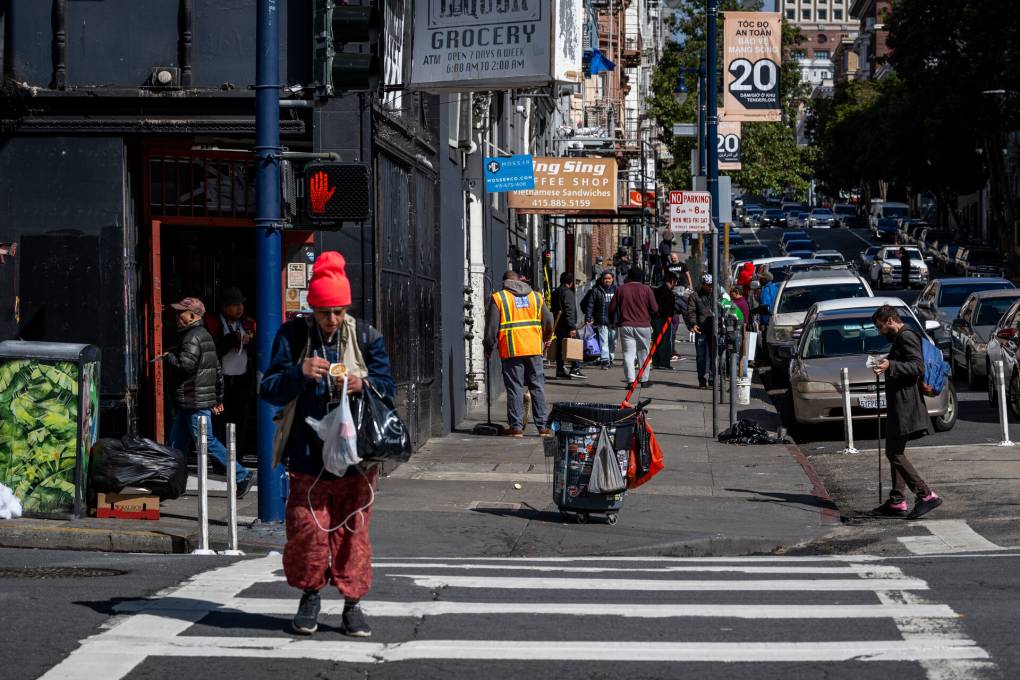
Tenderloin’s Troubles Take Center Stage in City Elections
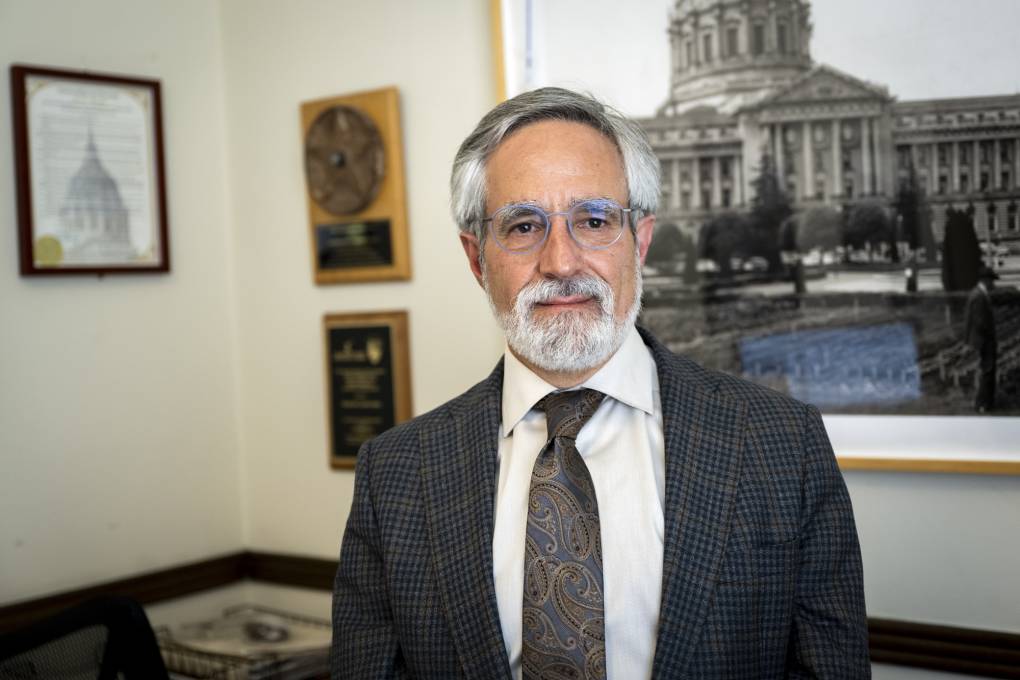
SF Supervisor Aaron Peskin Announces Mayoral Run
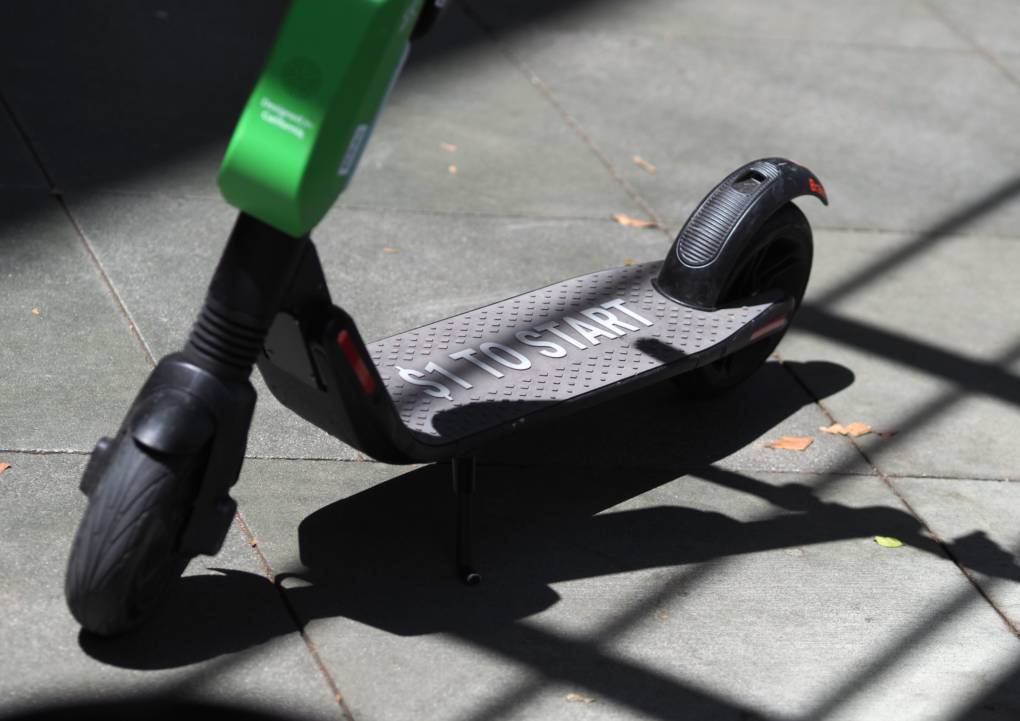
SF Enforces Stricter Rules for Batteries in Electric Bikes, Scooters Amid Rising Fire Concerns
San Francisco Supervisor Calls for City to Adopt Gaza Cease-Fire Resolution
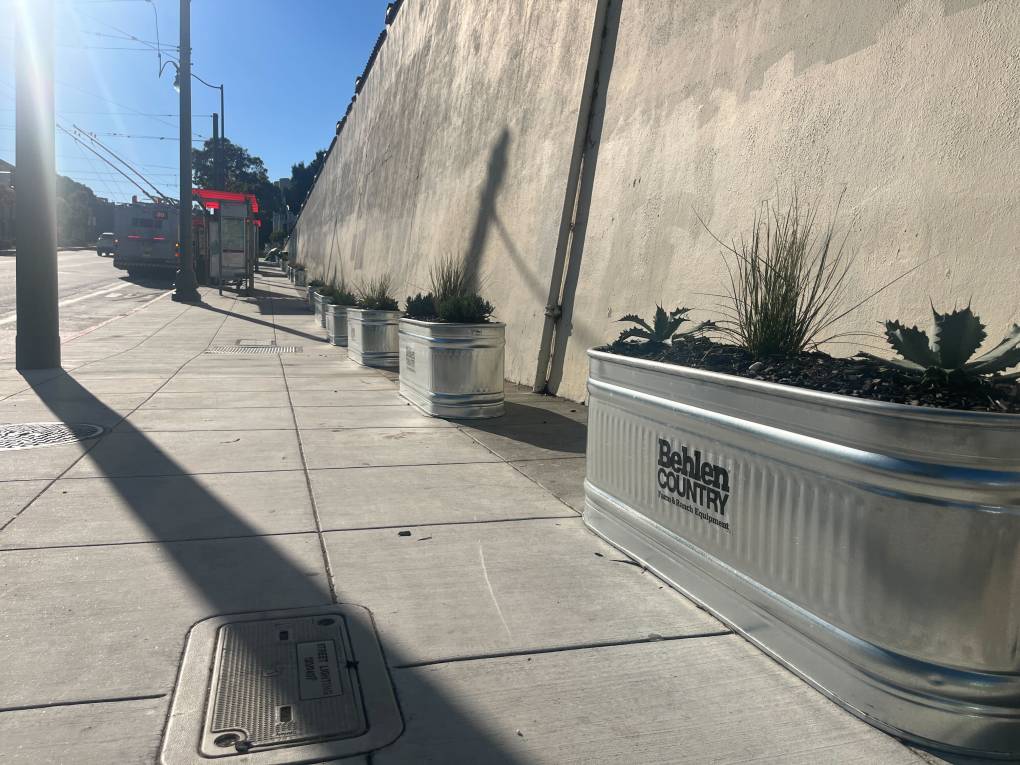
Emails Reveal SF Officials’ Coordinated Efforts Against Unhoused People
SF Supervisors Challenge Mayor Breed and the Navy to Bolster Protections at Bayview-Hunters Point
We Reviewed Every Law Campos and Haney Wrote as SF Supervisors to Help You Vote in the State Assembly Runoff
Sponsored
Player sponsored by
window.__IS_SSR__=true
window.__INITIAL_STATE__={
"attachmentsReducer": {
"audio_0": {
"type": "attachments",
"id": "audio_0",
"imgSizes": {
"kqedFullSize": {
"file": "https://ww2.kqed.org/news/wp-content/themes/KQED-unified/img/audio_bgs/background0.jpg"
}
}
},
"audio_1": {
"type": "attachments",
"id": "audio_1",
"imgSizes": {
"kqedFullSize": {
"file": "https://ww2.kqed.org/news/wp-content/themes/KQED-unified/img/audio_bgs/background1.jpg"
}
}
},
"audio_2": {
"type": "attachments",
"id": "audio_2",
"imgSizes": {
"kqedFullSize": {
"file": "https://ww2.kqed.org/news/wp-content/themes/KQED-unified/img/audio_bgs/background2.jpg"
}
}
},
"audio_3": {
"type": "attachments",
"id": "audio_3",
"imgSizes": {
"kqedFullSize": {
"file": "https://ww2.kqed.org/news/wp-content/themes/KQED-unified/img/audio_bgs/background3.jpg"
}
}
},
"audio_4": {
"type": "attachments",
"id": "audio_4",
"imgSizes": {
"kqedFullSize": {
"file": "https://ww2.kqed.org/news/wp-content/themes/KQED-unified/img/audio_bgs/background4.jpg"
}
}
},
"placeholder": {
"type": "attachments",
"id": "placeholder",
"imgSizes": {
"thumbnail": {
"file": "https://cdn.kqed.org/wp-content/uploads/2024/12/KQED-Default-Image-816638274-2000x1333-1-160x107.jpg",
"width": 160,
"height": 107,
"mimeType": "image/jpeg"
},
"medium": {
"file": "https://cdn.kqed.org/wp-content/uploads/2024/12/KQED-Default-Image-816638274-2000x1333-1-800x533.jpg",
"width": 800,
"height": 533,
"mimeType": "image/jpeg"
},
"medium_large": {
"file": "https://cdn.kqed.org/wp-content/uploads/2024/12/KQED-Default-Image-816638274-2000x1333-1-768x512.jpg",
"width": 768,
"height": 512,
"mimeType": "image/jpeg"
},
"large": {
"file": "https://cdn.kqed.org/wp-content/uploads/2024/12/KQED-Default-Image-816638274-2000x1333-1-1020x680.jpg",
"width": 1020,
"height": 680,
"mimeType": "image/jpeg"
},
"1536x1536": {
"file": "https://cdn.kqed.org/wp-content/uploads/2024/12/KQED-Default-Image-816638274-2000x1333-1-1536x1024.jpg",
"width": 1536,
"height": 1024,
"mimeType": "image/jpeg"
},
"fd-lrg": {
"file": "https://cdn.kqed.org/wp-content/uploads/2024/12/KQED-Default-Image-816638274-2000x1333-1-1536x1024.jpg",
"width": 1536,
"height": 1024,
"mimeType": "image/jpeg"
},
"fd-med": {
"file": "https://cdn.kqed.org/wp-content/uploads/2024/12/KQED-Default-Image-816638274-2000x1333-1-1020x680.jpg",
"width": 1020,
"height": 680,
"mimeType": "image/jpeg"
},
"fd-sm": {
"file": "https://cdn.kqed.org/wp-content/uploads/2024/12/KQED-Default-Image-816638274-2000x1333-1-800x533.jpg",
"width": 800,
"height": 533,
"mimeType": "image/jpeg"
},
"post-thumbnail": {
"file": "https://cdn.kqed.org/wp-content/uploads/2024/12/KQED-Default-Image-816638274-2000x1333-1-672x372.jpg",
"width": 672,
"height": 372,
"mimeType": "image/jpeg"
},
"twentyfourteen-full-width": {
"file": "https://cdn.kqed.org/wp-content/uploads/2024/12/KQED-Default-Image-816638274-2000x1333-1-1038x576.jpg",
"width": 1038,
"height": 576,
"mimeType": "image/jpeg"
},
"xxsmall": {
"file": "https://cdn.kqed.org/wp-content/uploads/2024/12/KQED-Default-Image-816638274-2000x1333-1-160x107.jpg",
"width": 160,
"height": 107,
"mimeType": "image/jpeg"
},
"xsmall": {
"file": "https://cdn.kqed.org/wp-content/uploads/2024/12/KQED-Default-Image-816638274-2000x1333-1-672x372.jpg",
"width": 672,
"height": 372,
"mimeType": "image/jpeg"
},
"small": {
"file": "https://cdn.kqed.org/wp-content/uploads/2024/12/KQED-Default-Image-816638274-2000x1333-1-672x372.jpg",
"width": 672,
"height": 372,
"mimeType": "image/jpeg"
},
"xlarge": {
"file": "https://cdn.kqed.org/wp-content/uploads/2024/12/KQED-Default-Image-816638274-2000x1333-1-1020x680.jpg",
"width": 1020,
"height": 680,
"mimeType": "image/jpeg"
},
"full-width": {
"file": "https://cdn.kqed.org/wp-content/uploads/2024/12/KQED-Default-Image-816638274-2000x1333-1-1920x1280.jpg",
"width": 1920,
"height": 1280,
"mimeType": "image/jpeg"
},
"guest-author-32": {
"file": "https://cdn.kqed.org/wp-content/uploads/2025/01/KQED-Default-Image-816638274-1333x1333-1-160x160.jpg",
"width": 32,
"height": 32,
"mimeType": "image/jpeg"
},
"guest-author-50": {
"file": "https://cdn.kqed.org/wp-content/uploads/2025/01/KQED-Default-Image-816638274-1333x1333-1-160x160.jpg",
"width": 50,
"height": 50,
"mimeType": "image/jpeg"
},
"guest-author-64": {
"file": "https://cdn.kqed.org/wp-content/uploads/2025/01/KQED-Default-Image-816638274-1333x1333-1-160x160.jpg",
"width": 64,
"height": 64,
"mimeType": "image/jpeg"
},
"guest-author-96": {
"file": "https://cdn.kqed.org/wp-content/uploads/2025/01/KQED-Default-Image-816638274-1333x1333-1-160x160.jpg",
"width": 96,
"height": 96,
"mimeType": "image/jpeg"
},
"guest-author-128": {
"file": "https://cdn.kqed.org/wp-content/uploads/2025/01/KQED-Default-Image-816638274-1333x1333-1-160x160.jpg",
"width": 128,
"height": 128,
"mimeType": "image/jpeg"
},
"detail": {
"file": "https://cdn.kqed.org/wp-content/uploads/2025/01/KQED-Default-Image-816638274-1333x1333-1-160x160.jpg",
"width": 160,
"height": 160,
"mimeType": "image/jpeg"
},
"kqedFullSize": {
"file": "https://cdn.kqed.org/wp-content/uploads/2024/12/KQED-Default-Image-816638274-2000x1333-1.jpg",
"width": 2000,
"height": 1333
}
}
},
"news_11982332": {
"type": "attachments",
"id": "news_11982332",
"meta": {
"index": "attachments_1716263798",
"site": "news",
"id": "11982332",
"found": true
},
"parent": 11982329,
"imgSizes": {
"twentyfourteen-full-width": {
"file": "https://cdn.kqed.org/wp-content/uploads/sites/10/2024/04/240405-District5BOSRedistricting-003-BL_qut-1038x576.jpg",
"width": 1038,
"mimeType": "image/jpeg",
"height": 576
},
"thumbnail": {
"file": "https://cdn.kqed.org/wp-content/uploads/sites/10/2024/04/240405-District5BOSRedistricting-003-BL_qut-160x107.jpg",
"width": 160,
"mimeType": "image/jpeg",
"height": 107
},
"post-thumbnail": {
"file": "https://cdn.kqed.org/wp-content/uploads/sites/10/2024/04/240405-District5BOSRedistricting-003-BL_qut-672x372.jpg",
"width": 672,
"mimeType": "image/jpeg",
"height": 372
},
"kqedFullSize": {
"file": "https://cdn.kqed.org/wp-content/uploads/sites/10/2024/04/240405-District5BOSRedistricting-003-BL_qut.jpg",
"width": 1920,
"height": 1280
},
"large": {
"file": "https://cdn.kqed.org/wp-content/uploads/sites/10/2024/04/240405-District5BOSRedistricting-003-BL_qut-1020x680.jpg",
"width": 1020,
"mimeType": "image/jpeg",
"height": 680
},
"1536x1536": {
"file": "https://cdn.kqed.org/wp-content/uploads/sites/10/2024/04/240405-District5BOSRedistricting-003-BL_qut-1536x1024.jpg",
"width": 1536,
"mimeType": "image/jpeg",
"height": 1024
},
"medium": {
"file": "https://cdn.kqed.org/wp-content/uploads/sites/10/2024/04/240405-District5BOSRedistricting-003-BL_qut-800x533.jpg",
"width": 800,
"mimeType": "image/jpeg",
"height": 533
}
},
"publishDate": 1712682989,
"modified": 1712701605,
"caption": "People walk through the Tenderloin neighborhood, now a part of District 5 in San Francisco, on April 5, 2024.",
"description": null,
"title": "240405-District5BOSRedistricting-003-BL_qut",
"credit": "Beth LaBerge/KQED",
"status": "inherit",
"altTag": "People walk up and down a street wearing various clothing styles.",
"fetchFailed": false,
"isLoading": false
},
"news_11981875": {
"type": "attachments",
"id": "news_11981875",
"meta": {
"index": "attachments_1716263798",
"site": "news",
"id": "11981875",
"found": true
},
"parent": 0,
"imgSizes": {
"twentyfourteen-full-width": {
"file": "https://cdn.kqed.org/wp-content/uploads/sites/10/2024/04/240403-AARONPESKIN-012-BL-KQED-1038x576.jpg",
"width": 1038,
"mimeType": "image/jpeg",
"height": 576
},
"thumbnail": {
"file": "https://cdn.kqed.org/wp-content/uploads/sites/10/2024/04/240403-AARONPESKIN-012-BL-KQED-160x107.jpg",
"width": 160,
"mimeType": "image/jpeg",
"height": 107
},
"post-thumbnail": {
"file": "https://cdn.kqed.org/wp-content/uploads/sites/10/2024/04/240403-AARONPESKIN-012-BL-KQED-672x372.jpg",
"width": 672,
"mimeType": "image/jpeg",
"height": 372
},
"kqedFullSize": {
"file": "https://cdn.kqed.org/wp-content/uploads/sites/10/2024/04/240403-AARONPESKIN-012-BL-KQED.jpg",
"width": 2000,
"height": 1333
},
"large": {
"file": "https://cdn.kqed.org/wp-content/uploads/sites/10/2024/04/240403-AARONPESKIN-012-BL-KQED-1020x680.jpg",
"width": 1020,
"mimeType": "image/jpeg",
"height": 680
},
"1536x1536": {
"file": "https://cdn.kqed.org/wp-content/uploads/sites/10/2024/04/240403-AARONPESKIN-012-BL-KQED-1536x1024.jpg",
"width": 1536,
"mimeType": "image/jpeg",
"height": 1024
},
"full-width": {
"file": "https://cdn.kqed.org/wp-content/uploads/sites/10/2024/04/240403-AARONPESKIN-012-BL-KQED-1920x1280.jpg",
"width": 1920,
"mimeType": "image/jpeg",
"height": 1280
},
"medium": {
"file": "https://cdn.kqed.org/wp-content/uploads/sites/10/2024/04/240403-AARONPESKIN-012-BL-KQED-800x533.jpg",
"width": 800,
"mimeType": "image/jpeg",
"height": 533
}
},
"publishDate": 1712247450,
"modified": 1712264717,
"caption": "Aaron Peskin, president of the Board of Supervisors, in his office in San Francisco on April 3, 2024.",
"description": null,
"title": "240403-AARONPESKIN-012-BL-KQED",
"credit": "Beth LaBerge/KQED",
"status": "inherit",
"altTag": "an older man in a suit and glasses",
"fetchFailed": false,
"isLoading": false
},
"news_11692911": {
"type": "attachments",
"id": "news_11692911",
"meta": {
"index": "attachments_1716263798",
"site": "news",
"id": "11692911",
"found": true
},
"parent": 11692906,
"imgSizes": {
"small": {
"file": "https://cdn.kqed.org/wp-content/uploads/sites/10/2018/09/GettyImages-998366012-520x367.jpg",
"width": 520,
"mimeType": "image/jpeg",
"height": 367
},
"twentyfourteen-full-width": {
"file": "https://cdn.kqed.org/wp-content/uploads/sites/10/2018/09/GettyImages-998366012-1038x576.jpg",
"width": 1038,
"mimeType": "image/jpeg",
"height": 576
},
"thumbnail": {
"file": "https://cdn.kqed.org/wp-content/uploads/sites/10/2018/09/GettyImages-998366012-160x113.jpg",
"width": 160,
"mimeType": "image/jpeg",
"height": 113
},
"fd-sm": {
"file": "https://cdn.kqed.org/wp-content/uploads/sites/10/2018/09/GettyImages-998366012-960x678.jpg",
"width": 960,
"mimeType": "image/jpeg",
"height": 678
},
"post-thumbnail": {
"file": "https://cdn.kqed.org/wp-content/uploads/sites/10/2018/09/GettyImages-998366012-672x372.jpg",
"width": 672,
"mimeType": "image/jpeg",
"height": 372
},
"xsmall": {
"file": "https://cdn.kqed.org/wp-content/uploads/sites/10/2018/09/GettyImages-998366012-375x265.jpg",
"width": 375,
"mimeType": "image/jpeg",
"height": 265
},
"kqedFullSize": {
"file": "https://cdn.kqed.org/wp-content/uploads/sites/10/2018/09/GettyImages-998366012-e1537167179316.jpg",
"width": 1920,
"height": 1356
},
"large": {
"file": "https://cdn.kqed.org/wp-content/uploads/sites/10/2018/09/GettyImages-998366012-1020x721.jpg",
"width": 1020,
"mimeType": "image/jpeg",
"height": 721
},
"xlarge": {
"file": "https://cdn.kqed.org/wp-content/uploads/sites/10/2018/09/GettyImages-998366012-1180x834.jpg",
"width": 1180,
"mimeType": "image/jpeg",
"height": 834
},
"complete_open_graph": {
"file": "https://cdn.kqed.org/wp-content/uploads/sites/10/2018/09/GettyImages-998366012-1200x848.jpg",
"width": 1200,
"mimeType": "image/jpeg",
"height": 848
},
"guest-author-50": {
"file": "https://cdn.kqed.org/wp-content/uploads/sites/10/2018/09/GettyImages-998366012-50x50.jpg",
"width": 50,
"mimeType": "image/jpeg",
"height": 50
},
"guest-author-96": {
"file": "https://cdn.kqed.org/wp-content/uploads/sites/10/2018/09/GettyImages-998366012-96x96.jpg",
"width": 96,
"mimeType": "image/jpeg",
"height": 96
},
"medium": {
"file": "https://cdn.kqed.org/wp-content/uploads/sites/10/2018/09/GettyImages-998366012-800x565.jpg",
"width": 800,
"mimeType": "image/jpeg",
"height": 565
},
"guest-author-64": {
"file": "https://cdn.kqed.org/wp-content/uploads/sites/10/2018/09/GettyImages-998366012-64x64.jpg",
"width": 64,
"mimeType": "image/jpeg",
"height": 64
},
"guest-author-32": {
"file": "https://cdn.kqed.org/wp-content/uploads/sites/10/2018/09/GettyImages-998366012-32x32.jpg",
"width": 32,
"mimeType": "image/jpeg",
"height": 32
},
"fd-lrg": {
"file": "https://cdn.kqed.org/wp-content/uploads/sites/10/2018/09/GettyImages-998366012-1920x1356.jpg",
"width": 1920,
"mimeType": "image/jpeg",
"height": 1356
},
"fd-med": {
"file": "https://cdn.kqed.org/wp-content/uploads/sites/10/2018/09/GettyImages-998366012-1180x834.jpg",
"width": 1180,
"mimeType": "image/jpeg",
"height": 834
},
"full-width": {
"file": "https://cdn.kqed.org/wp-content/uploads/sites/10/2018/09/GettyImages-998366012-1920x1356.jpg",
"width": 1920,
"mimeType": "image/jpeg",
"height": 1356
},
"detail": {
"file": "https://cdn.kqed.org/wp-content/uploads/sites/10/2018/09/GettyImages-998366012-150x150.jpg",
"width": 150,
"mimeType": "image/jpeg",
"height": 150
},
"guest-author-128": {
"file": "https://cdn.kqed.org/wp-content/uploads/sites/10/2018/09/GettyImages-998366012-128x128.jpg",
"width": 128,
"mimeType": "image/jpeg",
"height": 128
},
"xxsmall": {
"file": "https://cdn.kqed.org/wp-content/uploads/sites/10/2018/09/GettyImages-998366012-240x170.jpg",
"width": 240,
"mimeType": "image/jpeg",
"height": 170
}
},
"publishDate": 1537167029,
"modified": 1710182256,
"caption": "San Francisco fire officials say there’s been a dramatic increase in fires associated with lithium-ion batteries found in electric scooters and bicycles.",
"description": null,
"title": "Lime Scooter",
"credit": "Robyn Beck/AFP-Getty Images",
"status": "inherit",
"altTag": null,
"fetchFailed": false,
"isLoading": false
},
"news_11969080": {
"type": "attachments",
"id": "news_11969080",
"meta": {
"index": "attachments_1716263798",
"site": "news",
"id": "11969080",
"found": true
},
"parent": 0,
"imgSizes": {
"twentyfourteen-full-width": {
"file": "https://ww2.kqed.org/app/uploads/sites/10/2023/12/231112-APECProtest-41-BL-KQED-1038x576.jpg",
"width": 1038,
"mimeType": "image/jpeg",
"height": 576
},
"thumbnail": {
"file": "https://ww2.kqed.org/app/uploads/sites/10/2023/12/231112-APECProtest-41-BL-KQED-160x107.jpg",
"width": 160,
"mimeType": "image/jpeg",
"height": 107
},
"post-thumbnail": {
"file": "https://ww2.kqed.org/app/uploads/sites/10/2023/12/231112-APECProtest-41-BL-KQED-672x372.jpg",
"width": 672,
"mimeType": "image/jpeg",
"height": 372
},
"kqedFullSize": {
"file": "https://ww2.kqed.org/app/uploads/sites/10/2023/12/231112-APECProtest-41-BL-KQED.jpg",
"width": 2000,
"height": 1333
},
"large": {
"file": "https://ww2.kqed.org/app/uploads/sites/10/2023/12/231112-APECProtest-41-BL-KQED-1020x680.jpg",
"width": 1020,
"mimeType": "image/jpeg",
"height": 680
},
"1536x1536": {
"file": "https://ww2.kqed.org/app/uploads/sites/10/2023/12/231112-APECProtest-41-BL-KQED-1536x1024.jpg",
"width": 1536,
"mimeType": "image/jpeg",
"height": 1024
},
"full-width": {
"file": "https://ww2.kqed.org/app/uploads/sites/10/2023/12/231112-APECProtest-41-BL-KQED-1920x1280.jpg",
"width": 1920,
"mimeType": "image/jpeg",
"height": 1280
},
"medium": {
"file": "https://ww2.kqed.org/app/uploads/sites/10/2023/12/231112-APECProtest-41-BL-KQED-800x533.jpg",
"width": 800,
"mimeType": "image/jpeg",
"height": 533
}
},
"publishDate": 1701809262,
"modified": 1701816295,
"caption": "Thousands of demonstrators march in downtown San Francisco on Nov. 12, 2023.",
"description": null,
"title": "231112-APECProtest-41-BL-KQED",
"credit": "Beth LaBerge/KQED",
"status": "inherit",
"altTag": "A large group of people holding signs in an outdoor urban setting.",
"fetchFailed": false,
"isLoading": false
},
"news_11968407": {
"type": "attachments",
"id": "news_11968407",
"meta": {
"index": "attachments_1716263798",
"site": "news",
"id": "11968407",
"found": true
},
"parent": 11968398,
"imgSizes": {
"twentyfourteen-full-width": {
"file": "https://ww2.kqed.org/app/uploads/sites/10/2023/11/IMG_1901-1038x576.jpg",
"width": 1038,
"mimeType": "image/jpeg",
"height": 576
},
"thumbnail": {
"file": "https://ww2.kqed.org/app/uploads/sites/10/2023/11/IMG_1901-160x120.jpg",
"width": 160,
"mimeType": "image/jpeg",
"height": 120
},
"post-thumbnail": {
"file": "https://ww2.kqed.org/app/uploads/sites/10/2023/11/IMG_1901-672x372.jpg",
"width": 672,
"mimeType": "image/jpeg",
"height": 372
},
"kqedFullSize": {
"file": "https://ww2.kqed.org/app/uploads/sites/10/2023/11/IMG_1901-scaled.jpg",
"width": 2560,
"height": 1920
},
"2048x2048": {
"file": "https://ww2.kqed.org/app/uploads/sites/10/2023/11/IMG_1901-2048x1536.jpg",
"width": 2048,
"mimeType": "image/jpeg",
"height": 1536
},
"large": {
"file": "https://ww2.kqed.org/app/uploads/sites/10/2023/11/IMG_1901-1020x765.jpg",
"width": 1020,
"mimeType": "image/jpeg",
"height": 765
},
"1536x1536": {
"file": "https://ww2.kqed.org/app/uploads/sites/10/2023/11/IMG_1901-1536x1152.jpg",
"width": 1536,
"mimeType": "image/jpeg",
"height": 1152
},
"full-width": {
"file": "https://ww2.kqed.org/app/uploads/sites/10/2023/11/IMG_1901-1920x1440.jpg",
"width": 1920,
"mimeType": "image/jpeg",
"height": 1440
},
"medium": {
"file": "https://ww2.kqed.org/app/uploads/sites/10/2023/11/IMG_1901-800x600.jpg",
"width": 800,
"mimeType": "image/jpeg",
"height": 600
}
},
"publishDate": 1701131833,
"modified": 1701132093,
"caption": "More than 50 planters line Van Ness Avenue near North Point Street after housed residents worked with city officials to clear homeless encampments on the street.",
"description": null,
"title": "IMG_1901",
"credit": "Juan Carlos Lara/KQED",
"status": "inherit",
"altTag": "A view of planters lined up along a sidewalk.",
"fetchFailed": false,
"isLoading": false
},
"news_11927539": {
"type": "attachments",
"id": "news_11927539",
"meta": {
"index": "attachments_1716263798",
"site": "news",
"id": "11927539",
"found": true
},
"parent": 11927434,
"imgSizes": {
"twentyfourteen-full-width": {
"file": "https://ww2.kqed.org/app/uploads/sites/10/2022/10/RS53940_004_KQED_BayviewBloodTesting_02252022-qut-1038x576.jpg",
"width": 1038,
"mimeType": "image/jpeg",
"height": 576
},
"thumbnail": {
"file": "https://ww2.kqed.org/app/uploads/sites/10/2022/10/RS53940_004_KQED_BayviewBloodTesting_02252022-qut-160x107.jpg",
"width": 160,
"mimeType": "image/jpeg",
"height": 107
},
"post-thumbnail": {
"file": "https://ww2.kqed.org/app/uploads/sites/10/2022/10/RS53940_004_KQED_BayviewBloodTesting_02252022-qut-672x372.jpg",
"width": 672,
"mimeType": "image/jpeg",
"height": 372
},
"kqedFullSize": {
"file": "https://ww2.kqed.org/app/uploads/sites/10/2022/10/RS53940_004_KQED_BayviewBloodTesting_02252022-qut.jpg",
"width": 1920,
"height": 1280
},
"large": {
"file": "https://ww2.kqed.org/app/uploads/sites/10/2022/10/RS53940_004_KQED_BayviewBloodTesting_02252022-qut-1020x680.jpg",
"width": 1020,
"mimeType": "image/jpeg",
"height": 680
},
"1536x1536": {
"file": "https://ww2.kqed.org/app/uploads/sites/10/2022/10/RS53940_004_KQED_BayviewBloodTesting_02252022-qut-1536x1024.jpg",
"width": 1536,
"mimeType": "image/jpeg",
"height": 1024
},
"medium": {
"file": "https://ww2.kqed.org/app/uploads/sites/10/2022/10/RS53940_004_KQED_BayviewBloodTesting_02252022-qut-800x533.jpg",
"width": 800,
"mimeType": "image/jpeg",
"height": 533
}
},
"publishDate": 1664824309,
"modified": 1664825221,
"caption": "A view of the former Hunters Point Naval Shipyard from the Lennar at the SF Shipyard housing development on Feb. 25, 2022.",
"description": "A view of Hunters Point Naval Shipyard.",
"title": "RS53940_004_KQED_BayviewBloodTesting_02252022-qut",
"credit": "Beth LaBerge/KQED",
"status": "inherit",
"altTag": "A view from a hill of a dilapidated shuttered and abandoned naval shipyard with a dock and a rusting equipment, bushes in the foreground, the blue sea and sky past the dock looking out at San Francisco Bay",
"fetchFailed": false,
"isLoading": false
},
"news_11909925": {
"type": "attachments",
"id": "news_11909925",
"meta": {
"index": "attachments_1716263798",
"site": "news",
"id": "11909925",
"found": true
},
"parent": 11909759,
"imgSizes": {
"twentyfourteen-full-width": {
"file": "https://ww2.kqed.org/app/uploads/sites/10/2022/03/camposhaney-3-1038x576.jpg",
"width": 1038,
"mimeType": "image/jpeg",
"height": 576
},
"thumbnail": {
"file": "https://ww2.kqed.org/app/uploads/sites/10/2022/03/camposhaney-3-160x104.jpg",
"width": 160,
"mimeType": "image/jpeg",
"height": 104
},
"post-thumbnail": {
"file": "https://ww2.kqed.org/app/uploads/sites/10/2022/03/camposhaney-3-672x372.jpg",
"width": 672,
"mimeType": "image/jpeg",
"height": 372
},
"kqedFullSize": {
"file": "https://ww2.kqed.org/app/uploads/sites/10/2022/03/camposhaney-3.jpg",
"width": 1790,
"height": 1160
},
"large": {
"file": "https://ww2.kqed.org/app/uploads/sites/10/2022/03/camposhaney-3-1020x661.jpg",
"width": 1020,
"mimeType": "image/jpeg",
"height": 661
},
"1536x1536": {
"file": "https://ww2.kqed.org/app/uploads/sites/10/2022/03/camposhaney-3-1536x995.jpg",
"width": 1536,
"mimeType": "image/jpeg",
"height": 995
},
"medium": {
"file": "https://ww2.kqed.org/app/uploads/sites/10/2022/03/camposhaney-3-800x518.jpg",
"width": 800,
"mimeType": "image/jpeg",
"height": 518
}
},
"publishDate": 1648754116,
"modified": 1648837493,
"caption": "Former San Francisco Supervisor David Campos (left) on May 16, 2019, and current Supervisor Matt Haney, on Nov. 16, 2021. The two are competing in a heated runoff next month to represent the eastern part of San Francisco in the state Assembly.",
"description": null,
"title": "camposhaney-3",
"credit": "Santiago Mejia and Gabrielle Lurie/San Francisco Chronicle via Getty Images",
"status": "inherit",
"altTag": "A split screen of two men in suits speaking into microphones.",
"fetchFailed": false,
"isLoading": false
}
},
"audioPlayerReducer": {
"postId": "stream_live",
"isPaused": true,
"isPlaying": false,
"pfsActive": false,
"pledgeModalIsOpen": true,
"playerDrawerIsOpen": false
},
"authorsReducer": {
"mlagos": {
"type": "authors",
"id": "3239",
"meta": {
"index": "authors_1716337520",
"id": "3239",
"found": true
},
"name": "Marisa Lagos",
"firstName": "Marisa",
"lastName": "Lagos",
"slug": "mlagos",
"email": "mlagos@kqed.org",
"display_author_email": false,
"staff_mastheads": [
"news"
],
"title": "KQED Contributor",
"bio": "\u003cspan style=\"font-weight: 400;\">Marisa Lagos is a correspondent for KQED’s California Politics and Government Desk and co-hosts a weekly show and podcast, \u003c/span>\u003ci>\u003cspan style=\"font-weight: 400;\">Political Breakdown.\u003c/span>\u003c/i> \u003cspan style=\"font-weight: 400;\">At KQED, Lagos conducts reporting, analysis and investigations into state, local and national politics for radio, TV and online. Every week, she and cohost Scott Shafer sit down with political insiders on \u003c/span>\u003ci>\u003cspan style=\"font-weight: 400;\">Political Breakdown\u003c/span>\u003c/i>\u003cspan style=\"font-weight: 400;\">, where they offer a peek into lives and personalities of those driving politics in California and beyond. \u003c/span>\r\n\r\n\u003cspan style=\"font-weight: 400;\">Previously, she worked for nine years at the San Francisco Chronicle covering San Francisco City Hall and state politics; and at the San Francisco Examiner and Los Angeles Time,. She has won awards for her work investigating the 2017 wildfires and her ongoing coverage of criminal justice issues in California. She lives in San Francisco with her two sons and husband.\u003c/span>",
"avatar": "https://secure.gravatar.com/avatar/a261a0d3696fc066871ef96b85b5e7d2?s=600&d=blank&r=g",
"twitter": "@mlagos",
"facebook": null,
"instagram": null,
"linkedin": null,
"sites": [
{
"site": "news",
"roles": [
"editor"
]
},
{
"site": "science",
"roles": [
"editor"
]
},
{
"site": "forum",
"roles": [
"author"
]
}
],
"headData": {
"title": "Marisa Lagos | KQED",
"description": "KQED Contributor",
"ogImgSrc": "https://secure.gravatar.com/avatar/a261a0d3696fc066871ef96b85b5e7d2?s=600&d=blank&r=g",
"twImgSrc": "https://secure.gravatar.com/avatar/a261a0d3696fc066871ef96b85b5e7d2?s=600&d=blank&r=g"
},
"isLoading": false,
"link": "/author/mlagos"
},
"jrodriguez": {
"type": "authors",
"id": "11690",
"meta": {
"index": "authors_1716337520",
"id": "11690",
"found": true
},
"name": "Joe Fitzgerald Rodriguez",
"firstName": "Joe",
"lastName": "Fitzgerald Rodriguez",
"slug": "jrodriguez",
"email": "jrodriguez@kqed.org",
"display_author_email": true,
"staff_mastheads": [
"news"
],
"title": "Reporter and Producer",
"bio": "Joe Fitzgerald Rodriguez is a reporter and digital producer for KQED covering politics. Joe most recently wrote for the \u003cem>San Francisco Examiner\u003c/em> as a political columnist covering The City. He was raised in San Francisco and has spent his reporting career in his beloved, foggy, city by the bay. Joe was 12-years-old when he conducted his first interview in journalism, grilling former San Francisco Mayor Willie Brown for the Marina Middle School newspaper, \u003cem>The Penguin Press, \u003c/em>and he continues to report on the San Francisco Bay Area to this day.",
"avatar": "https://secure.gravatar.com/avatar/2247beb0564c1e9c62228d5649d2edac?s=600&d=blank&r=g",
"twitter": "FitztheReporter",
"facebook": null,
"instagram": "https://www.instagram.com/fitzthereporter/",
"linkedin": null,
"sites": [
{
"site": "",
"roles": [
"editor"
]
},
{
"site": "arts",
"roles": [
"editor"
]
},
{
"site": "news",
"roles": [
"editor"
]
},
{
"site": "science",
"roles": [
"editor"
]
},
{
"site": "elections",
"roles": [
"editor"
]
},
{
"site": "liveblog",
"roles": [
"editor"
]
}
],
"headData": {
"title": "Joe Fitzgerald Rodriguez | KQED",
"description": "Reporter and Producer",
"ogImgSrc": "https://secure.gravatar.com/avatar/2247beb0564c1e9c62228d5649d2edac?s=600&d=blank&r=g",
"twImgSrc": "https://secure.gravatar.com/avatar/2247beb0564c1e9c62228d5649d2edac?s=600&d=blank&r=g"
},
"isLoading": false,
"link": "/author/jrodriguez"
},
"eromero": {
"type": "authors",
"id": "11746",
"meta": {
"index": "authors_1716337520",
"id": "11746",
"found": true
},
"name": "Ezra David Romero",
"firstName": "Ezra David",
"lastName": "Romero",
"slug": "eromero",
"email": "eromero@kqed.org",
"display_author_email": true,
"staff_mastheads": [
"news",
"science"
],
"title": "Climate Reporter",
"bio": "Ezra David Romero is a climate reporter for KQED News. He covers the absence and excess of water in the Bay Area — think sea level rise, flooding and drought. For nearly a decade he’s covered how warming temperatures are altering the lives of Californians. He’s reported on farmers worried their pistachio trees aren’t getting enough sleep, families desperate for water, scientists studying dying giant sequoias, and alongside firefighters containing wildfires. His work has appeared on local stations across California and nationally on public radio shows like Morning Edition, Here and Now, All Things Considered and Science Friday. ",
"avatar": "https://secure.gravatar.com/avatar/9c15bb8bab267e058708a9eeaeef16bf?s=600&d=blank&r=g",
"twitter": "ezraromero",
"facebook": null,
"instagram": null,
"linkedin": null,
"sites": [
{
"site": "arts",
"roles": [
"editor"
]
},
{
"site": "news",
"roles": [
"editor"
]
},
{
"site": "science",
"roles": [
"editor"
]
},
{
"site": "liveblog",
"roles": [
"author"
]
}
],
"headData": {
"title": "Ezra David Romero | KQED",
"description": "Climate Reporter",
"ogImgSrc": "https://secure.gravatar.com/avatar/9c15bb8bab267e058708a9eeaeef16bf?s=600&d=blank&r=g",
"twImgSrc": "https://secure.gravatar.com/avatar/9c15bb8bab267e058708a9eeaeef16bf?s=600&d=blank&r=g"
},
"isLoading": false,
"link": "/author/eromero"
},
"jlara": {
"type": "authors",
"id": "11761",
"meta": {
"index": "authors_1716337520",
"id": "11761",
"found": true
},
"name": "Juan Carlos Lara",
"firstName": "Juan Carlos",
"lastName": "Lara",
"slug": "jlara",
"email": "jlara@kqed.org",
"display_author_email": false,
"staff_mastheads": [],
"title": "KQED Contributor",
"bio": null,
"avatar": "https://secure.gravatar.com/avatar/19e2052b9b05657c5ff2af2121846e9c?s=600&d=blank&r=g",
"twitter": null,
"facebook": null,
"instagram": null,
"linkedin": null,
"sites": [
{
"site": "arts",
"roles": [
"editor"
]
},
{
"site": "news",
"roles": [
"editor"
]
},
{
"site": "forum",
"roles": [
"editor"
]
},
{
"site": "liveblog",
"roles": [
"contributor"
]
}
],
"headData": {
"title": "Juan Carlos Lara | KQED",
"description": "KQED Contributor",
"ogImgSrc": "https://secure.gravatar.com/avatar/19e2052b9b05657c5ff2af2121846e9c?s=600&d=blank&r=g",
"twImgSrc": "https://secure.gravatar.com/avatar/19e2052b9b05657c5ff2af2121846e9c?s=600&d=blank&r=g"
},
"isLoading": false,
"link": "/author/jlara"
},
"opalma": {
"type": "authors",
"id": "11897",
"meta": {
"index": "authors_1716337520",
"id": "11897",
"found": true
},
"name": "Oscar Palma",
"firstName": "Oscar",
"lastName": "Palma",
"slug": "opalma",
"email": "opalma@kqed.org",
"display_author_email": false,
"staff_mastheads": [],
"title": "KQED Contributor",
"bio": "Oscar Palma is a newscast intern at KQED, a freelance reporter and former Spanish editor for Golden Gate Xpress. Oscar is interested in environmental and community journalism. Some of his personal interests are bicycles, film, and Latin American literature and punk, his work has previously appeared in El Tecolote, KQED and The Frisc.",
"avatar": "https://secure.gravatar.com/avatar/d488e9b9f94b80f7b78e2896064827ab?s=600&d=blank&r=g",
"twitter": null,
"facebook": null,
"instagram": null,
"linkedin": null,
"sites": [
{
"site": "news",
"roles": [
"author"
]
}
],
"headData": {
"title": "Oscar Palma | KQED",
"description": "KQED Contributor",
"ogImgSrc": "https://secure.gravatar.com/avatar/d488e9b9f94b80f7b78e2896064827ab?s=600&d=blank&r=g",
"twImgSrc": "https://secure.gravatar.com/avatar/d488e9b9f94b80f7b78e2896064827ab?s=600&d=blank&r=g"
},
"isLoading": false,
"link": "/author/opalma"
},
"kdebenedetti": {
"type": "authors",
"id": "11913",
"meta": {
"index": "authors_1716337520",
"id": "11913",
"found": true
},
"name": "Katie DeBenedetti",
"firstName": "Katie",
"lastName": "DeBenedetti",
"slug": "kdebenedetti",
"email": "kdebenedetti@kqed.org",
"display_author_email": false,
"staff_mastheads": [
"news",
"science"
],
"title": "KQED Contributor",
"bio": "Katie DeBenedetti is a digital reporter covering daily news for the Express Desk. Prior to joining KQED as a culture reporting intern in January 2024, she covered education and city government for the Napa Valley Register.",
"avatar": "https://secure.gravatar.com/avatar/6e31073cb8f7e4214ab03f42771d0f45?s=600&d=blank&r=g",
"twitter": null,
"facebook": null,
"instagram": null,
"linkedin": null,
"sites": [
{
"site": "news",
"roles": [
"author"
]
},
{
"site": "science",
"roles": [
"author"
]
},
{
"site": "liveblog",
"roles": [
"author"
]
}
],
"headData": {
"title": "Katie DeBenedetti | KQED",
"description": "KQED Contributor",
"ogImgSrc": "https://secure.gravatar.com/avatar/6e31073cb8f7e4214ab03f42771d0f45?s=600&d=blank&r=g",
"twImgSrc": "https://secure.gravatar.com/avatar/6e31073cb8f7e4214ab03f42771d0f45?s=600&d=blank&r=g"
},
"isLoading": false,
"link": "/author/kdebenedetti"
}
},
"breakingNewsReducer": {},
"pagesReducer": {},
"postsReducer": {
"stream_live": {
"type": "live",
"id": "stream_live",
"audioUrl": "https://streams.kqed.org/kqedradio",
"title": "Live Stream",
"excerpt": "Live Stream information currently unavailable.",
"link": "/radio",
"featImg": "",
"label": {
"name": "KQED Live",
"link": "/"
}
},
"stream_kqedNewscast": {
"type": "posts",
"id": "stream_kqedNewscast",
"audioUrl": "https://www.kqed.org/.stream/anon/radio/RDnews/newscast.mp3?_=1",
"title": "KQED Newscast",
"featImg": "",
"label": {
"name": "88.5 FM",
"link": "/"
}
},
"news_11982329": {
"type": "posts",
"id": "news_11982329",
"meta": {
"index": "posts_1716263798",
"site": "news",
"id": "11982329",
"score": null,
"sort": [
1712746831000
]
},
"guestAuthors": [],
"slug": "tenderloins-troubles-take-center-stage-in-city-elections",
"title": "Tenderloin’s Troubles Take Center Stage in City Elections",
"publishDate": 1712746831,
"format": "standard",
"headTitle": "Tenderloin’s Troubles Take Center Stage in City Elections | KQED",
"labelTerm": {
"site": "news"
},
"content": "\u003cp>Nikysha Parker-Dalton walks to work through the Tenderloin.\u003c/p>\n\u003cp>The blocks between her apartment and the Glide Foundation, where she’s a community advocate, are strewn with crushed cardboard boxes, shopping bags and piles of feces.\u003c/p>\n\u003cp>One morning last week, a KQED reporter and photographer walked the route Parker-Dalton takes. A cluster of tents, tarps and bicycles in front of the Cutting Ball Theater obstructed most of the sidewalk on Taylor Street, and on Turk Street, a woman sat on the curb wrapped in a plastic trash bag. Two blocks past Glide, a man was splayed out on Ellis Street with his arms above his head and his feet dangling over the curb.\u003c/p>\n\u003cp>[pullquote size=\"medium\" align=\"right\" citation=\"Freddy Martin, congregational life and community engagement manager, Glide Memorial Church\"]‘We need to be dealing with the trauma and issues people have that perpetuate the conditions they struggle with.’[/pullquote]“You live with the lack of cleanliness of the streets — the drug paraphernalia and usage openly, the tents that make it so you can’t even walk,” Parker-Dalton told KQED.\u003c/p>\n\u003cp>The Tenderloin’s troubles are at the center of this year’s city elections. The poor street conditions, exacerbated by San Francisco’s yearslong battle to support unhoused residents while simultaneously curtailing drug dealing and drug overdoses, have led the neighborhood’s small businesses to struggle. Some residents and tourists feel unsafe on the neighborhood’s streets. Others who work and live in the area, like Parker-Dalton, just want the city to provide solutions for those stuck between opioid addiction and homelessness.\u003c/p>\n\u003cfigure id=\"attachment_11982333\" class=\"wp-caption aligncenter\" style=\"max-width: 1920px\">\u003ca href=\"https://cdn.kqed.org/wp-content/uploads/sites/10/2024/04/240405-District5BOSRedistricting-006-BL_qut.jpg\">\u003cimg loading=\"lazy\" decoding=\"async\" class=\"size-full wp-image-11982333\" src=\"https://cdn.kqed.org/wp-content/uploads/sites/10/2024/04/240405-District5BOSRedistricting-006-BL_qut.jpg\" alt=\"Two men sitting on the sidewalk while another man on the left wearing a neon yellow and orange jacket stands near parked cars on the street.\" width=\"1920\" height=\"1280\" srcset=\"https://cdn.kqed.org/wp-content/uploads/sites/10/2024/04/240405-District5BOSRedistricting-006-BL_qut.jpg 1920w, https://cdn.kqed.org/wp-content/uploads/sites/10/2024/04/240405-District5BOSRedistricting-006-BL_qut-800x533.jpg 800w, https://cdn.kqed.org/wp-content/uploads/sites/10/2024/04/240405-District5BOSRedistricting-006-BL_qut-1020x680.jpg 1020w, https://cdn.kqed.org/wp-content/uploads/sites/10/2024/04/240405-District5BOSRedistricting-006-BL_qut-160x107.jpg 160w, https://cdn.kqed.org/wp-content/uploads/sites/10/2024/04/240405-District5BOSRedistricting-006-BL_qut-1536x1024.jpg 1536w\" sizes=\"(max-width: 1920px) 100vw, 1920px\">\u003c/a>\u003cfigcaption class=\"wp-caption-text\">People sit on the sidewalk in the Tenderloin on April 5, 2024. \u003ccite>(Beth LaBerge/KQED)\u003c/cite>\u003c/figcaption>\u003c/figure>\n\u003cp>Two weeks ago, two mayoral candidates announced emergency declarations around fentanyl. Daniel Lurie’s plan would give people on the street a choice: enter treatment or face arrest. A day after Lurie, Mark Farrell released a similar plan. If elected, Farrell would request more California Army National Guard soldiers in the Tenderloin and South of Market. The plans are comparable to Mayor London Breed’s 2021 Tenderloin state of emergency, which led to the creation of the Tenderloin Center, a place for drug users to connect with harm reduction services.\u003c/p>\n\u003cp>[ad fullwidth]\u003c/p>\n\u003cp>The city’s drug epidemic worsened despite Breed’s declaration.[aside postID=\"news_11979508,news_11972898,news_11975156\" label=\"Related Stories\"]\u003c/p>\n\u003cp>San Francisco recorded 806 drug overdose deaths in 2023, the \u003ca href=\"https://www.kqed.org/news/11972898/2023-was-san-franciscos-deadliest-year-for-drug-overdoses-new-data-confirms\">deadliest year on record\u003c/a>. About 80% of the deaths were fentanyl-related. During 2022’s redistricting, the Tenderloin was added to District 5, which now includes Japantown, Western Addition and Haight Ashbury. The overdose data and discontent over street conditions make Dean Preston, the district representative on the San Francisco Board of Supervisors, vulnerable in his November reelection bid.\u003c/p>\n\u003cp>Preston, the board’s only Democratic Socialist who said he is focused on tenants rights and alternatives to policing, has two opponents. Bilal Mahmood, a tech entrepreneur, said he wants to digitize City Hall to reduce red tape. Autumn Looijen, who co-launched San Francisco’s school board recall in 2022, told KQED she will concentrate on thwarting the fentanyl crisis.\u003c/p>\n\u003cp>While Preston and his challengers squabble over ideological differences, residents and business owners interviewed for this story said they want elected officials to take a new approach to cleaning up the Tenderloin’s streets.\u003c/p>\n\u003cp>Freddy Martin, a congregational life and community engagement manager at Glide, has lived in the Tenderloin for more than 20 years. He said getting people into housing should be a priority, but making sure they have access to wraparound mental health and addiction resources is key to keeping them off of the streets.\u003c/p>\n\u003cp>“We need to be dealing with the trauma and issues people have that perpetuate the conditions they struggle with,” Martin said. “Not having their mental health issues addressed or access to healthcare is part of the problem.”\u003c/p>\n\u003cfigure id=\"attachment_11982331\" class=\"wp-caption aligncenter\" style=\"max-width: 1920px\">\u003ca href=\"https://cdn.kqed.org/wp-content/uploads/sites/10/2024/04/240405-District5BOSRedistricting-001-BL_qut.jpg\">\u003cimg loading=\"lazy\" decoding=\"async\" class=\"size-full wp-image-11982331\" src=\"https://cdn.kqed.org/wp-content/uploads/sites/10/2024/04/240405-District5BOSRedistricting-001-BL_qut.jpg\" alt=\"A tourist bus, a person on a bike and a vehicle drive down a street with murals painted on the sides of buildings.\" width=\"1920\" height=\"1280\" srcset=\"https://cdn.kqed.org/wp-content/uploads/sites/10/2024/04/240405-District5BOSRedistricting-001-BL_qut.jpg 1920w, https://cdn.kqed.org/wp-content/uploads/sites/10/2024/04/240405-District5BOSRedistricting-001-BL_qut-800x533.jpg 800w, https://cdn.kqed.org/wp-content/uploads/sites/10/2024/04/240405-District5BOSRedistricting-001-BL_qut-1020x680.jpg 1020w, https://cdn.kqed.org/wp-content/uploads/sites/10/2024/04/240405-District5BOSRedistricting-001-BL_qut-160x107.jpg 160w, https://cdn.kqed.org/wp-content/uploads/sites/10/2024/04/240405-District5BOSRedistricting-001-BL_qut-1536x1024.jpg 1536w\" sizes=\"(max-width: 1920px) 100vw, 1920px\">\u003c/a>\u003cfigcaption class=\"wp-caption-text\">A tourist bus passes through the Tenderloin on April 5, 2024. \u003ccite>(Beth LaBerge/KQED)\u003c/cite>\u003c/figcaption>\u003c/figure>\n\u003cp>According to Martin, elected officials should be asking Tenderloin community members what housing and drug rehabilitation services they need if they want to see a positive, permanent change.\u003c/p>\n\u003cp>“These issues can’t be solved in the chambers in City Hall or in a meeting once a week,” he said. “You have to go to where people are at and meet them at that level.”\u003c/p>\n\u003cp>Filling vacant supportive housing units is a solution, Martin believes. According to the Department of Homelessness and Supportive Housing, \u003ca href=\"https://hsh.sfgov.org/about/research-and-reports/hrs-data/vacancies-in-permanent-supportive-housing/\">there are more than 600 vacancies\u003c/a>. This is down from just over 1,000 in September when Preston \u003ca href=\"https://sfgov.legistar.com/View.ashx?M=F&ID=12321199&GUID=F2C16A39-FA19-4503-9090-3F024FECA13B\">passed a resolution\u003c/a> urging HSH to reduce the number of vacant units by 50% in 90 days. As of this month, about \u003ca href=\"https://hsh.sfgov.org/about/research-and-reports/hrs-data/vacancies-in-permanent-supportive-housing/\">36% of the vacancies have been filled\u003c/a>.\u003c/p>\n\u003cp>“We have the homes; we have a lot of the resources. We just need to be more aggressive and bold,” said Preston, who has opposed Breed’s drug and homelessness policies.\u003c/p>\n\u003cp>Mahmood, who worked as a policy analyst in the Obama Administration, believes it’s too difficult for people to acquire supportive housing.\u003c/p>\n\u003cp>“One of the reasons people are in the streets is because it’s easier to sleep in a tent than it is to apply to get a bed,” he told KQED.\u003c/p>\n\u003cp>Mahmood, who rents in the Tenderloin, said he would advocate for a technology-based strategy to track homeless people, identify their health status and get them into housing. He has argued that the city’s existing tracking system is ineffective and outdated. At 10:30 a.m. today, he is planning to unveil his plan to end open-air drug markets at the corner of Market and Seventh streets.\u003c/p>\n\u003cp>Parker-Dalton, 39, said that the city needs to designate spaces for those who choose not to be housed.\u003c/p>\n\u003cp>“You have people that don’t want to be inside,” the decadelong Tenderloin resident said. “They don’t want to be confined. They have been on the streets for as long as they can remember.\u003c/p>\n\u003cp>“I’m not necessarily saying put them in housing, but I believe safe camping sites could be a solution.”\u003c/p>\n\u003cp>Martin said harm reduction strategies are necessary to address the fentanyl crisis. He would like to see the Tenderloin Center, which closed in December 2022, return. The site was part of Breed’s plan to reduce overdose deaths and increase access to addiction services. According to city data, \u003ca href=\"https://www.sf.gov/data/reducing-fatal-and-non-fatal-overdoses-tenderloin#overdose-reversals-by-emergency-medical-services\">333 overdoses were reversed\u003c/a> at the Tenderloin Center. Critics of the site, including Farrell, said it became a \u003ca href=\"https://www.kqed.org/news/11934281/heartbroken-visitors-staff-of-shuttered-tenderloin-center-left-reeling-amid-sfs-ongoing-overdose-crisis\">safe consumption area\u003c/a>.\u003c/p>\n\u003cfigure id=\"attachment_11982336\" class=\"wp-caption aligncenter\" style=\"max-width: 1920px\">\u003ca href=\"https://cdn.kqed.org/wp-content/uploads/sites/10/2024/04/240405-District5BOSRedistricting-014-BL_qut.jpg\">\u003cimg loading=\"lazy\" decoding=\"async\" class=\"size-full wp-image-11982336\" src=\"https://cdn.kqed.org/wp-content/uploads/sites/10/2024/04/240405-District5BOSRedistricting-014-BL_qut.jpg\" alt=\"A bicyclist rides in the street by parked cars and stores.\" width=\"1920\" height=\"1280\" srcset=\"https://cdn.kqed.org/wp-content/uploads/sites/10/2024/04/240405-District5BOSRedistricting-014-BL_qut.jpg 1920w, https://cdn.kqed.org/wp-content/uploads/sites/10/2024/04/240405-District5BOSRedistricting-014-BL_qut-800x533.jpg 800w, https://cdn.kqed.org/wp-content/uploads/sites/10/2024/04/240405-District5BOSRedistricting-014-BL_qut-1020x680.jpg 1020w, https://cdn.kqed.org/wp-content/uploads/sites/10/2024/04/240405-District5BOSRedistricting-014-BL_qut-160x107.jpg 160w, https://cdn.kqed.org/wp-content/uploads/sites/10/2024/04/240405-District5BOSRedistricting-014-BL_qut-1536x1024.jpg 1536w\" sizes=\"(max-width: 1920px) 100vw, 1920px\">\u003c/a>\u003cfigcaption class=\"wp-caption-text\">A bicyclist rides by the Tilted Brim in the Tenderloin on April 5, 2024. \u003ccite>(Beth LaBerge/KQED)\u003c/cite>\u003c/figcaption>\u003c/figure>\n\u003cp>Justin Bautista owns Tilted Brim, a clothing store on Larkin Street. He said when he moved into the space in 2016, it was a thriving commercial corridor. Now, there are empty storefronts on his block. Bautista said groups like the Tenderloin Community Benefit District’s Clean Team remove debris and respond to 311 calls, but their efforts aren’t enough.\u003c/p>\n\u003cp>“I’m in Little Saigon, and we have some of the best restaurants in the city,” Bautista said. “People would come from all over the city to eat at these restaurants. People still do, but it’s in a much fewer number.\u003c/p>\n\u003cp>“When you come to the Tenderloin, the optics are very bad. It’s heartbreaking, and it’s hard to live with.”\u003c/p>\n\u003cp>One solution Looijen has suggested is designating areas around businesses where unhoused people cannot congregate. She thinks this will encourage residents and tourists to visit the neighborhood.\u003c/p>\n\u003cfigure id=\"attachment_11982334\" class=\"wp-caption aligncenter\" style=\"max-width: 1920px\">\u003ca href=\"https://cdn.kqed.org/wp-content/uploads/sites/10/2024/04/240404-District5BOSRedistricting-001-BL_qut.jpg\">\u003cimg loading=\"lazy\" decoding=\"async\" class=\"size-full wp-image-11982334\" src=\"https://cdn.kqed.org/wp-content/uploads/sites/10/2024/04/240404-District5BOSRedistricting-001-BL_qut.jpg\" alt=\"A U-Haul van parked in front of a home.\" width=\"1920\" height=\"1280\" srcset=\"https://cdn.kqed.org/wp-content/uploads/sites/10/2024/04/240404-District5BOSRedistricting-001-BL_qut.jpg 1920w, https://cdn.kqed.org/wp-content/uploads/sites/10/2024/04/240404-District5BOSRedistricting-001-BL_qut-800x533.jpg 800w, https://cdn.kqed.org/wp-content/uploads/sites/10/2024/04/240404-District5BOSRedistricting-001-BL_qut-1020x680.jpg 1020w, https://cdn.kqed.org/wp-content/uploads/sites/10/2024/04/240404-District5BOSRedistricting-001-BL_qut-160x107.jpg 160w, https://cdn.kqed.org/wp-content/uploads/sites/10/2024/04/240404-District5BOSRedistricting-001-BL_qut-1536x1024.jpg 1536w\" sizes=\"(max-width: 1920px) 100vw, 1920px\">\u003c/a>\u003cfigcaption class=\"wp-caption-text\">A moving van is parked outside of a home on Haight Street on April 4, 2024. \u003ccite>(Beth LaBerge/KQED)\u003c/cite>\u003c/figcaption>\u003c/figure>\n\u003cp>“We should have a zone where people can go to the amazing restaurants in Little Saigon without being afraid that they’re going to get hurt on the way there,” she told KQED. “It doesn’t solve the problem of crime existing, but I do think it makes it so that people can get to the services in their neighborhood.”\u003c/p>\n\u003cp>Parker-Dalton isn’t sure clearing encampments and restricting where people can gather will do much to rehabilitate the neighborhood. She pointed to the skate park that opened in U.N. Plaza in November. Many people who used to hang around the plaza moved down to Seventh Street, she said.\u003c/p>\n\u003cp>[ad floatright]\u003c/p>\n\u003cp>“People migrate to other streets,” she said. “When you have a heavy police presence on one block, people move to another.”\u003c/p>\n\n",
"blocks": [],
"excerpt": "Drug overdoses and discontent over street conditions make Dean Preston, the district representative on the San Francisco Board of Supervisors, vulnerable in his November reelection bid. ",
"status": "publish",
"parent": 0,
"modified": 1721132808,
"stats": {
"hasAudio": false,
"hasVideo": false,
"hasChartOrMap": false,
"iframeSrcs": [],
"hasGoogleForm": false,
"hasGallery": false,
"hasHearkenModule": false,
"hasPolis": false,
"paragraphCount": 32,
"wordCount": 1470
},
"headData": {
"title": "Tenderloin’s Troubles Take Center Stage in City Elections | KQED",
"description": "Drug overdoses and discontent over street conditions make Dean Preston, the district representative on the San Francisco Board of Supervisors, vulnerable in his November reelection bid. ",
"ogTitle": "",
"ogDescription": "",
"ogImgId": "",
"twTitle": "",
"twDescription": "",
"twImgId": "",
"schema": {
"@context": "https://schema.org",
"@type": "NewsArticle",
"headline": "Tenderloin’s Troubles Take Center Stage in City Elections",
"datePublished": "2024-04-10T04:00:31-07:00",
"dateModified": "2024-07-16T05:26:48-07:00",
"image": "https://cdn.kqed.org/wp-content/uploads/2020/02/KQED-OG-Image@1x.png",
"isAccessibleForFree": "True",
"publisher": {
"@type": "NewsMediaOrganization",
"@id": "https://www.kqed.org/#organization",
"name": "KQED",
"logo": "https://cdn.kqed.org/wp-content/uploads/2020/02/KQED-OG-Image@1x.png",
"url": "https://www.kqed.org",
"sameAs": [
"https://www.facebook.com/KQED",
"https://twitter.com/KQED",
"https://www.instagram.com/kqed/",
"https://www.tiktok.com/@kqedofficial",
"https://www.linkedin.com/company/kqed",
"https://www.youtube.com/channel/UCeC0IOo7i1P_61zVUWbJ4nw"
]
}
}
},
"sticky": false,
"excludeFromSiteSearch": "Include",
"showOnAuthorArchivePages": "No",
"articleAge": "0",
"path": "/news/11982329/tenderloins-troubles-take-center-stage-in-city-elections",
"audioTrackLength": null,
"parsedContent": [
{
"type": "contentString",
"content": "\u003cdiv class=\"post-body\">\u003cp>\u003cp>Nikysha Parker-Dalton walks to work through the Tenderloin.\u003c/p>\n\u003cp>The blocks between her apartment and the Glide Foundation, where she’s a community advocate, are strewn with crushed cardboard boxes, shopping bags and piles of feces.\u003c/p>\n\u003cp>One morning last week, a KQED reporter and photographer walked the route Parker-Dalton takes. A cluster of tents, tarps and bicycles in front of the Cutting Ball Theater obstructed most of the sidewalk on Taylor Street, and on Turk Street, a woman sat on the curb wrapped in a plastic trash bag. Two blocks past Glide, a man was splayed out on Ellis Street with his arms above his head and his feet dangling over the curb.\u003c/p>\n\u003cp>\u003c/p>\u003c/div>",
"attributes": {
"named": {},
"numeric": []
}
},
{
"type": "component",
"content": "‘We need to be dealing with the trauma and issues people have that perpetuate the conditions they struggle with.’",
"name": "pullquote",
"attributes": {
"named": {
"size": "medium",
"align": "right",
"citation": "Freddy Martin, congregational life and community engagement manager, Glide Memorial Church",
"label": ""
},
"numeric": []
}
},
{
"type": "contentString",
"content": "\u003cdiv class=\"post-body\">\u003cp>“You live with the lack of cleanliness of the streets — the drug paraphernalia and usage openly, the tents that make it so you can’t even walk,” Parker-Dalton told KQED.\u003c/p>\n\u003cp>The Tenderloin’s troubles are at the center of this year’s city elections. The poor street conditions, exacerbated by San Francisco’s yearslong battle to support unhoused residents while simultaneously curtailing drug dealing and drug overdoses, have led the neighborhood’s small businesses to struggle. Some residents and tourists feel unsafe on the neighborhood’s streets. Others who work and live in the area, like Parker-Dalton, just want the city to provide solutions for those stuck between opioid addiction and homelessness.\u003c/p>\n\u003cfigure id=\"attachment_11982333\" class=\"wp-caption aligncenter\" style=\"max-width: 1920px\">\u003ca href=\"https://cdn.kqed.org/wp-content/uploads/sites/10/2024/04/240405-District5BOSRedistricting-006-BL_qut.jpg\">\u003cimg loading=\"lazy\" decoding=\"async\" class=\"size-full wp-image-11982333\" src=\"https://cdn.kqed.org/wp-content/uploads/sites/10/2024/04/240405-District5BOSRedistricting-006-BL_qut.jpg\" alt=\"Two men sitting on the sidewalk while another man on the left wearing a neon yellow and orange jacket stands near parked cars on the street.\" width=\"1920\" height=\"1280\" srcset=\"https://cdn.kqed.org/wp-content/uploads/sites/10/2024/04/240405-District5BOSRedistricting-006-BL_qut.jpg 1920w, https://cdn.kqed.org/wp-content/uploads/sites/10/2024/04/240405-District5BOSRedistricting-006-BL_qut-800x533.jpg 800w, https://cdn.kqed.org/wp-content/uploads/sites/10/2024/04/240405-District5BOSRedistricting-006-BL_qut-1020x680.jpg 1020w, https://cdn.kqed.org/wp-content/uploads/sites/10/2024/04/240405-District5BOSRedistricting-006-BL_qut-160x107.jpg 160w, https://cdn.kqed.org/wp-content/uploads/sites/10/2024/04/240405-District5BOSRedistricting-006-BL_qut-1536x1024.jpg 1536w\" sizes=\"(max-width: 1920px) 100vw, 1920px\">\u003c/a>\u003cfigcaption class=\"wp-caption-text\">People sit on the sidewalk in the Tenderloin on April 5, 2024. \u003ccite>(Beth LaBerge/KQED)\u003c/cite>\u003c/figcaption>\u003c/figure>\n\u003cp>Two weeks ago, two mayoral candidates announced emergency declarations around fentanyl. Daniel Lurie’s plan would give people on the street a choice: enter treatment or face arrest. A day after Lurie, Mark Farrell released a similar plan. If elected, Farrell would request more California Army National Guard soldiers in the Tenderloin and South of Market. The plans are comparable to Mayor London Breed’s 2021 Tenderloin state of emergency, which led to the creation of the Tenderloin Center, a place for drug users to connect with harm reduction services.\u003c/p>\n\u003cp>\u003c/p>\u003c/div>",
"attributes": {
"named": {},
"numeric": []
}
},
{
"type": "component",
"content": "",
"name": "ad",
"attributes": {
"named": {
"label": "fullwidth"
},
"numeric": [
"fullwidth"
]
}
},
{
"type": "contentString",
"content": "\u003cdiv class=\"post-body\">\u003cp>\u003c/p>\n\u003cp>The city’s drug epidemic worsened despite Breed’s declaration.\u003c/p>\u003c/div>",
"attributes": {
"named": {},
"numeric": []
}
},
{
"type": "component",
"content": "",
"name": "aside",
"attributes": {
"named": {
"postid": "news_11979508,news_11972898,news_11975156",
"label": "Related Stories "
},
"numeric": []
}
},
{
"type": "contentString",
"content": "\u003cdiv class=\"post-body\">\u003cp>\u003c/p>\n\u003cp>San Francisco recorded 806 drug overdose deaths in 2023, the \u003ca href=\"https://www.kqed.org/news/11972898/2023-was-san-franciscos-deadliest-year-for-drug-overdoses-new-data-confirms\">deadliest year on record\u003c/a>. About 80% of the deaths were fentanyl-related. During 2022’s redistricting, the Tenderloin was added to District 5, which now includes Japantown, Western Addition and Haight Ashbury. The overdose data and discontent over street conditions make Dean Preston, the district representative on the San Francisco Board of Supervisors, vulnerable in his November reelection bid.\u003c/p>\n\u003cp>Preston, the board’s only Democratic Socialist who said he is focused on tenants rights and alternatives to policing, has two opponents. Bilal Mahmood, a tech entrepreneur, said he wants to digitize City Hall to reduce red tape. Autumn Looijen, who co-launched San Francisco’s school board recall in 2022, told KQED she will concentrate on thwarting the fentanyl crisis.\u003c/p>\n\u003cp>While Preston and his challengers squabble over ideological differences, residents and business owners interviewed for this story said they want elected officials to take a new approach to cleaning up the Tenderloin’s streets.\u003c/p>\n\u003cp>Freddy Martin, a congregational life and community engagement manager at Glide, has lived in the Tenderloin for more than 20 years. He said getting people into housing should be a priority, but making sure they have access to wraparound mental health and addiction resources is key to keeping them off of the streets.\u003c/p>\n\u003cp>“We need to be dealing with the trauma and issues people have that perpetuate the conditions they struggle with,” Martin said. “Not having their mental health issues addressed or access to healthcare is part of the problem.”\u003c/p>\n\u003cfigure id=\"attachment_11982331\" class=\"wp-caption aligncenter\" style=\"max-width: 1920px\">\u003ca href=\"https://cdn.kqed.org/wp-content/uploads/sites/10/2024/04/240405-District5BOSRedistricting-001-BL_qut.jpg\">\u003cimg loading=\"lazy\" decoding=\"async\" class=\"size-full wp-image-11982331\" src=\"https://cdn.kqed.org/wp-content/uploads/sites/10/2024/04/240405-District5BOSRedistricting-001-BL_qut.jpg\" alt=\"A tourist bus, a person on a bike and a vehicle drive down a street with murals painted on the sides of buildings.\" width=\"1920\" height=\"1280\" srcset=\"https://cdn.kqed.org/wp-content/uploads/sites/10/2024/04/240405-District5BOSRedistricting-001-BL_qut.jpg 1920w, https://cdn.kqed.org/wp-content/uploads/sites/10/2024/04/240405-District5BOSRedistricting-001-BL_qut-800x533.jpg 800w, https://cdn.kqed.org/wp-content/uploads/sites/10/2024/04/240405-District5BOSRedistricting-001-BL_qut-1020x680.jpg 1020w, https://cdn.kqed.org/wp-content/uploads/sites/10/2024/04/240405-District5BOSRedistricting-001-BL_qut-160x107.jpg 160w, https://cdn.kqed.org/wp-content/uploads/sites/10/2024/04/240405-District5BOSRedistricting-001-BL_qut-1536x1024.jpg 1536w\" sizes=\"(max-width: 1920px) 100vw, 1920px\">\u003c/a>\u003cfigcaption class=\"wp-caption-text\">A tourist bus passes through the Tenderloin on April 5, 2024. \u003ccite>(Beth LaBerge/KQED)\u003c/cite>\u003c/figcaption>\u003c/figure>\n\u003cp>According to Martin, elected officials should be asking Tenderloin community members what housing and drug rehabilitation services they need if they want to see a positive, permanent change.\u003c/p>\n\u003cp>“These issues can’t be solved in the chambers in City Hall or in a meeting once a week,” he said. “You have to go to where people are at and meet them at that level.”\u003c/p>\n\u003cp>Filling vacant supportive housing units is a solution, Martin believes. According to the Department of Homelessness and Supportive Housing, \u003ca href=\"https://hsh.sfgov.org/about/research-and-reports/hrs-data/vacancies-in-permanent-supportive-housing/\">there are more than 600 vacancies\u003c/a>. This is down from just over 1,000 in September when Preston \u003ca href=\"https://sfgov.legistar.com/View.ashx?M=F&ID=12321199&GUID=F2C16A39-FA19-4503-9090-3F024FECA13B\">passed a resolution\u003c/a> urging HSH to reduce the number of vacant units by 50% in 90 days. As of this month, about \u003ca href=\"https://hsh.sfgov.org/about/research-and-reports/hrs-data/vacancies-in-permanent-supportive-housing/\">36% of the vacancies have been filled\u003c/a>.\u003c/p>\n\u003cp>“We have the homes; we have a lot of the resources. We just need to be more aggressive and bold,” said Preston, who has opposed Breed’s drug and homelessness policies.\u003c/p>\n\u003cp>Mahmood, who worked as a policy analyst in the Obama Administration, believes it’s too difficult for people to acquire supportive housing.\u003c/p>\n\u003cp>“One of the reasons people are in the streets is because it’s easier to sleep in a tent than it is to apply to get a bed,” he told KQED.\u003c/p>\n\u003cp>Mahmood, who rents in the Tenderloin, said he would advocate for a technology-based strategy to track homeless people, identify their health status and get them into housing. He has argued that the city’s existing tracking system is ineffective and outdated. At 10:30 a.m. today, he is planning to unveil his plan to end open-air drug markets at the corner of Market and Seventh streets.\u003c/p>\n\u003cp>Parker-Dalton, 39, said that the city needs to designate spaces for those who choose not to be housed.\u003c/p>\n\u003cp>“You have people that don’t want to be inside,” the decadelong Tenderloin resident said. “They don’t want to be confined. They have been on the streets for as long as they can remember.\u003c/p>\n\u003cp>“I’m not necessarily saying put them in housing, but I believe safe camping sites could be a solution.”\u003c/p>\n\u003cp>Martin said harm reduction strategies are necessary to address the fentanyl crisis. He would like to see the Tenderloin Center, which closed in December 2022, return. The site was part of Breed’s plan to reduce overdose deaths and increase access to addiction services. According to city data, \u003ca href=\"https://www.sf.gov/data/reducing-fatal-and-non-fatal-overdoses-tenderloin#overdose-reversals-by-emergency-medical-services\">333 overdoses were reversed\u003c/a> at the Tenderloin Center. Critics of the site, including Farrell, said it became a \u003ca href=\"https://www.kqed.org/news/11934281/heartbroken-visitors-staff-of-shuttered-tenderloin-center-left-reeling-amid-sfs-ongoing-overdose-crisis\">safe consumption area\u003c/a>.\u003c/p>\n\u003cfigure id=\"attachment_11982336\" class=\"wp-caption aligncenter\" style=\"max-width: 1920px\">\u003ca href=\"https://cdn.kqed.org/wp-content/uploads/sites/10/2024/04/240405-District5BOSRedistricting-014-BL_qut.jpg\">\u003cimg loading=\"lazy\" decoding=\"async\" class=\"size-full wp-image-11982336\" src=\"https://cdn.kqed.org/wp-content/uploads/sites/10/2024/04/240405-District5BOSRedistricting-014-BL_qut.jpg\" alt=\"A bicyclist rides in the street by parked cars and stores.\" width=\"1920\" height=\"1280\" srcset=\"https://cdn.kqed.org/wp-content/uploads/sites/10/2024/04/240405-District5BOSRedistricting-014-BL_qut.jpg 1920w, https://cdn.kqed.org/wp-content/uploads/sites/10/2024/04/240405-District5BOSRedistricting-014-BL_qut-800x533.jpg 800w, https://cdn.kqed.org/wp-content/uploads/sites/10/2024/04/240405-District5BOSRedistricting-014-BL_qut-1020x680.jpg 1020w, https://cdn.kqed.org/wp-content/uploads/sites/10/2024/04/240405-District5BOSRedistricting-014-BL_qut-160x107.jpg 160w, https://cdn.kqed.org/wp-content/uploads/sites/10/2024/04/240405-District5BOSRedistricting-014-BL_qut-1536x1024.jpg 1536w\" sizes=\"(max-width: 1920px) 100vw, 1920px\">\u003c/a>\u003cfigcaption class=\"wp-caption-text\">A bicyclist rides by the Tilted Brim in the Tenderloin on April 5, 2024. \u003ccite>(Beth LaBerge/KQED)\u003c/cite>\u003c/figcaption>\u003c/figure>\n\u003cp>Justin Bautista owns Tilted Brim, a clothing store on Larkin Street. He said when he moved into the space in 2016, it was a thriving commercial corridor. Now, there are empty storefronts on his block. Bautista said groups like the Tenderloin Community Benefit District’s Clean Team remove debris and respond to 311 calls, but their efforts aren’t enough.\u003c/p>\n\u003cp>“I’m in Little Saigon, and we have some of the best restaurants in the city,” Bautista said. “People would come from all over the city to eat at these restaurants. People still do, but it’s in a much fewer number.\u003c/p>\n\u003cp>“When you come to the Tenderloin, the optics are very bad. It’s heartbreaking, and it’s hard to live with.”\u003c/p>\n\u003cp>One solution Looijen has suggested is designating areas around businesses where unhoused people cannot congregate. She thinks this will encourage residents and tourists to visit the neighborhood.\u003c/p>\n\u003cfigure id=\"attachment_11982334\" class=\"wp-caption aligncenter\" style=\"max-width: 1920px\">\u003ca href=\"https://cdn.kqed.org/wp-content/uploads/sites/10/2024/04/240404-District5BOSRedistricting-001-BL_qut.jpg\">\u003cimg loading=\"lazy\" decoding=\"async\" class=\"size-full wp-image-11982334\" src=\"https://cdn.kqed.org/wp-content/uploads/sites/10/2024/04/240404-District5BOSRedistricting-001-BL_qut.jpg\" alt=\"A U-Haul van parked in front of a home.\" width=\"1920\" height=\"1280\" srcset=\"https://cdn.kqed.org/wp-content/uploads/sites/10/2024/04/240404-District5BOSRedistricting-001-BL_qut.jpg 1920w, https://cdn.kqed.org/wp-content/uploads/sites/10/2024/04/240404-District5BOSRedistricting-001-BL_qut-800x533.jpg 800w, https://cdn.kqed.org/wp-content/uploads/sites/10/2024/04/240404-District5BOSRedistricting-001-BL_qut-1020x680.jpg 1020w, https://cdn.kqed.org/wp-content/uploads/sites/10/2024/04/240404-District5BOSRedistricting-001-BL_qut-160x107.jpg 160w, https://cdn.kqed.org/wp-content/uploads/sites/10/2024/04/240404-District5BOSRedistricting-001-BL_qut-1536x1024.jpg 1536w\" sizes=\"(max-width: 1920px) 100vw, 1920px\">\u003c/a>\u003cfigcaption class=\"wp-caption-text\">A moving van is parked outside of a home on Haight Street on April 4, 2024. \u003ccite>(Beth LaBerge/KQED)\u003c/cite>\u003c/figcaption>\u003c/figure>\n\u003cp>“We should have a zone where people can go to the amazing restaurants in Little Saigon without being afraid that they’re going to get hurt on the way there,” she told KQED. “It doesn’t solve the problem of crime existing, but I do think it makes it so that people can get to the services in their neighborhood.”\u003c/p>\n\u003cp>Parker-Dalton isn’t sure clearing encampments and restricting where people can gather will do much to rehabilitate the neighborhood. She pointed to the skate park that opened in U.N. Plaza in November. Many people who used to hang around the plaza moved down to Seventh Street, she said.\u003c/p>\n\u003cp>\u003c/p>\u003c/div>",
"attributes": {
"named": {},
"numeric": []
}
},
{
"type": "component",
"content": "",
"name": "ad",
"attributes": {
"named": {
"label": "floatright"
},
"numeric": [
"floatright"
]
}
},
{
"type": "contentString",
"content": "\u003cdiv class=\"post-body\">\u003cp>\u003c/p>\n\u003cp>“People migrate to other streets,” she said. “When you have a heavy police presence on one block, people move to another.”\u003c/p>\n\n\u003c/div>\u003c/p>",
"attributes": {
"named": {},
"numeric": []
}
}
],
"link": "/news/11982329/tenderloins-troubles-take-center-stage-in-city-elections",
"authors": [
"11913"
],
"categories": [
"news_8"
],
"tags": [
"news_27045",
"news_26003",
"news_4020",
"news_17968",
"news_38",
"news_30889",
"news_3181"
],
"featImg": "news_11982332",
"label": "news"
},
"news_11981946": {
"type": "posts",
"id": "news_11981946",
"meta": {
"index": "posts_1716263798",
"site": "news",
"id": "11981946",
"score": null,
"sort": [
1712264419000
]
},
"guestAuthors": [],
"slug": "sf-supervisor-aaron-peskin-announces-mayoral-run",
"title": "SF Supervisor Aaron Peskin Announces Mayoral Run",
"publishDate": 1712264419,
"format": "standard",
"headTitle": "SF Supervisor Aaron Peskin Announces Mayoral Run | KQED",
"labelTerm": {
"site": "news"
},
"content": "\u003cp>San Francisco Board of Supervisors President Aaron Peskin is running for mayor. That means \u003ca href=\"https://www.kqed.org/news/11979849/peskins-rumored-mayor-run-has-same-strength-and-weakness-housing\">the city’s future approach to housing will be a major point of contention for all of the candidates\u003c/a>.\u003c/p>\n\u003cp>“Our highest elected leaders and most of the candidates in this race have been busy blaming — you name it — the Board of Supervisors, judges, nonprofits [and] the progressives rather than taking responsibility,” Peskin told KQED, during a Wednesday interview in his North Beach office. “This is a city that historically has been resilient.”\u003c/p>\n\u003cp>Peskin is scheduled to formally announce his campaign on Saturday at Portsmouth Square in the heart of Chinatown. The neighborhood lifted Peskin to victory in his last contested supervisor race in 2015. The support of the city’s Chinese community will also be crucial if he wants to become mayor.\u003c/p>\n\u003cp>Wing Hoo Leung, president of the Community Tenants Association, said Peskin is an ally of Chinese residents and low-income workers.\u003c/p>\n\u003cp>“Low-income seniors, we should support him. And I do hope that he can bring back the harmony in San Francisco,” Leung said in Cantonese and translated by an interpreter.\u003c/p>\n\u003cp>Mayor London Breed, Mark Farrell and Daniel Lurie, the other candidates in the race, have each presented themselves as tough on crime. Peskin, a progressive Democrat, may now swing the tone of the race away from the city’s rightward campaign proposals and rhetoric.\u003c/p>\n\u003cp>In early March, voters approved a Breed-backed ballot measure that would require screens of city welfare recipients for drug use. Just last week, Farrell, who previously served as interim mayor, announced an emergency declaration to tackle the fentanyl crisis. Lurie, a philanthropist, announced a similar declaration the day before Farrell. Lurie has been endorsed by former Mayor Frank Jordan, the chief of the San Francisco Police Department who rode a wave of anti-gay sentiment into office in 1992.\u003c/p>\n\u003cp>Peskin has long been an SFPD ally. He’s voted for budget increases, and frequently speaks at events honoring officers in Chinatown. He told KQED he plans to help the police’s hiring pipeline by building better bridges with schools and universities.\u003c/p>\n\u003cp>He also spoke to the need for the department to meet the reform mandates of the U.S. Department of Justice. He pushed back against the narrative that San Francisco is lawless, calling the narrative opportunistic.\u003c/p>\n\u003cp>“There is also the perception of crime that has been magnified by a set of billionaires, who spent literally tens of millions of dollars telling us that we are not safe,” Peskin said. “That does not in any way alleviate our primary responsibility to make sure that people are safe and to make sure that people feel safe. But I think it’s time to push back against that [narrative].”\u003c/p>\n\u003cp>Jim Ross, a campaign consultant who ran Gov. Gavin Newsom’s successful mayoral run in 2003, said the “race to the right” by Breed, Farrell and Lurie leaves an opening for Peskin.\u003c/p>\n\u003cp>“I think he has an opportunity to build a coalition that we haven’t really seen in San Francisco since [former Mayor Art] Agnos, which is a progressive neighborhood coalition,” Ross said.\u003c/p>\n\u003cp>Agnos, who was in office from 1988–1992, was the last progressive Democrat elected mayor. According to Ross, moderate Democrats have typically relied on a coalition of white renters and homeowners, parts of the city’s Chinese community and Republicans to get elected. The coalition Agnos built peeled off homeowners.\u003c/p>\n\u003cp>Peskin, who may benefit from his deep connections with Chinese tenant groups, said the government should provide assistance to people, including elderly, low-income tenants who need eviction controls. Peskin supports expanded rent control protections, low-income subsidies for seniors and families, and increased access to child care.\u003c/p>\n\u003cp>[ad fullwidth]\u003c/p>\n\u003cp>In his speech Saturday, Peskin will allude to his own struggles with alcoholism, which were revealed during the 2015 race against Supervisor Julie Christensen, who was appointed by the late Mayor Ed Lee. An advertisement accused Peskin of drunkenly calling city staffers to berate them.\u003c/p>\n\u003cp>Peskin said he’s been in recovery for three years.\u003c/p>\n\u003cp>“There is no doubt that alcohol made me less pleasant,” he said. “I still work long hours. I still talk to people late at night. But I have to say, I’m very grateful for the people who got me sobered up, who got me into recovery.”\u003c/p>\n\u003cfigure id=\"attachment_11981874\" class=\"wp-caption aligncenter\" style=\"max-width: 2000px\">\u003ca href=\"https://ww2.kqed.org/news/240403-aaronpeskin-005-bl-kqed/\">\u003cimg loading=\"lazy\" decoding=\"async\" class=\"size-full wp-image-11981874\" src=\"https://cdn.kqed.org/wp-content/uploads/sites/10/2024/04/240403-AARONPESKIN-005-BL-KQED.jpg\" alt=\"a row of campaign pins\" width=\"2000\" height=\"1333\" srcset=\"https://cdn.kqed.org/wp-content/uploads/sites/10/2024/04/240403-AARONPESKIN-005-BL-KQED.jpg 2000w, https://cdn.kqed.org/wp-content/uploads/sites/10/2024/04/240403-AARONPESKIN-005-BL-KQED-800x533.jpg 800w, https://cdn.kqed.org/wp-content/uploads/sites/10/2024/04/240403-AARONPESKIN-005-BL-KQED-1020x680.jpg 1020w, https://cdn.kqed.org/wp-content/uploads/sites/10/2024/04/240403-AARONPESKIN-005-BL-KQED-160x107.jpg 160w, https://cdn.kqed.org/wp-content/uploads/sites/10/2024/04/240403-AARONPESKIN-005-BL-KQED-1536x1024.jpg 1536w, https://cdn.kqed.org/wp-content/uploads/sites/10/2024/04/240403-AARONPESKIN-005-BL-KQED-1920x1280.jpg 1920w\" sizes=\"(max-width: 2000px) 100vw, 2000px\">\u003c/a>\u003cfigcaption class=\"wp-caption-text\">Pins from different campaigns over the years in Peskin’s office. \u003ccite>(Beth LaBerge/KQED)\u003c/cite>\u003c/figcaption>\u003c/figure>\n\u003cp>Some San Francisco residents and politicians, including Breed, have been critical of Peskin’s positions on housing. GrowSF, a political group funded by tech billionaires who aim to reshape San Francisco, wants the city to prioritize building market-rate developments without the restrictions it claims slows production.\u003c/p>\n\u003cp>State Sen. Scott Wiener, who has authored legislation to make it easier to build housing across the state, assailed what he called Peskin’s obstruction, ticking off neighborhoods — Nob Hill, Treasure Island, Stevenson Street — Peskin opposed developments in. He said Peskin has frequently used environmental laws and rezoning efforts to stall construction.\u003c/p>\n\u003cp>“Aaron Peskin as mayor would be unbelievably bad for San Francisco,” Wiener said. “He has spent his entire career making it harder and harder to build more housing.”\u003c/p>\n\u003cp>Last week, the Board of Supervisors \u003ca href=\"https://www.kqed.org/news/11980910/sf-supervisors-reject-breeds-veto-of-peskins-housing-density-law\">voted to overturn Breed’s veto of Peskin’s legislation limiting housing heights\u003c/a> in the Jackson Square Historic District and nearby neighborhoods.\u003c/p>\n\u003cp>Peskin defended his record, noting that he authored Proposition A, the $300 million housing bond voters approved in March. He also put forward housing bonds in 2015 and 2019. Originally from Berkeley, Peskin has been elected to represent North Beach, Chinatown and Fisherman’s Wharf in 2000, 2004, 2015, 2016 and 2020.\u003c/p>\n\u003cp>In a shelf by his desk, a framed photo depicts Peskin arm-in-arm with then-Supervisor Tom Ammiano, who blazed trails for gay politicians in the 1990s.\u003c/p>\n\u003cp>One of Peskin’s strongest assets is that people know him. On Wednesday, people popped out of Handcraft Gifts on Grant Avenue and Sandy’s Lucky Bamboo and Florist on Jackson Street to say hello and shake his hand as he walked by. Peskin’s challenge will be translating neighborhood enthusiasm to a citywide race.\u003c/p>\n\u003cp>[ad floatright]\u003c/p>\n",
"blocks": [],
"excerpt": "In a tight mayor race, candidates will look to create contrasts between progressive and moderate Democrats on housing, crime and the future of San Francisco.",
"status": "publish",
"parent": 0,
"modified": 1722977470,
"stats": {
"hasAudio": false,
"hasVideo": false,
"hasChartOrMap": false,
"iframeSrcs": [],
"hasGoogleForm": false,
"hasGallery": false,
"hasHearkenModule": false,
"hasPolis": false,
"paragraphCount": 26,
"wordCount": 1078
},
"headData": {
"title": "SF Supervisor Aaron Peskin Announces Mayoral Run | KQED",
"description": "In a tight mayor race, candidates will look to create contrasts between progressive and moderate Democrats on housing, crime and the future of San Francisco.",
"ogTitle": "",
"ogDescription": "",
"ogImgId": "",
"twTitle": "",
"twDescription": "",
"twImgId": "",
"schema": {
"@context": "https://schema.org",
"@type": "NewsArticle",
"headline": "SF Supervisor Aaron Peskin Announces Mayoral Run",
"datePublished": "2024-04-04T14:00:19-07:00",
"dateModified": "2024-08-06T13:51:10-07:00",
"image": "https://cdn.kqed.org/wp-content/uploads/2020/02/KQED-OG-Image@1x.png",
"isAccessibleForFree": "True",
"publisher": {
"@type": "NewsMediaOrganization",
"@id": "https://www.kqed.org/#organization",
"name": "KQED",
"logo": "https://cdn.kqed.org/wp-content/uploads/2020/02/KQED-OG-Image@1x.png",
"url": "https://www.kqed.org",
"sameAs": [
"https://www.facebook.com/KQED",
"https://twitter.com/KQED",
"https://www.instagram.com/kqed/",
"https://www.tiktok.com/@kqedofficial",
"https://www.linkedin.com/company/kqed",
"https://www.youtube.com/channel/UCeC0IOo7i1P_61zVUWbJ4nw"
]
}
}
},
"sticky": false,
"excludeFromSiteSearch": "Include",
"articleAge": "0",
"path": "/news/11981946/sf-supervisor-aaron-peskin-announces-mayoral-run",
"audioTrackLength": null,
"parsedContent": [
{
"type": "contentString",
"content": "\u003cdiv class=\"post-body\">\u003cp>\u003cp>San Francisco Board of Supervisors President Aaron Peskin is running for mayor. That means \u003ca href=\"https://www.kqed.org/news/11979849/peskins-rumored-mayor-run-has-same-strength-and-weakness-housing\">the city’s future approach to housing will be a major point of contention for all of the candidates\u003c/a>.\u003c/p>\n\u003cp>“Our highest elected leaders and most of the candidates in this race have been busy blaming — you name it — the Board of Supervisors, judges, nonprofits [and] the progressives rather than taking responsibility,” Peskin told KQED, during a Wednesday interview in his North Beach office. “This is a city that historically has been resilient.”\u003c/p>\n\u003cp>Peskin is scheduled to formally announce his campaign on Saturday at Portsmouth Square in the heart of Chinatown. The neighborhood lifted Peskin to victory in his last contested supervisor race in 2015. The support of the city’s Chinese community will also be crucial if he wants to become mayor.\u003c/p>\n\u003cp>Wing Hoo Leung, president of the Community Tenants Association, said Peskin is an ally of Chinese residents and low-income workers.\u003c/p>\n\u003cp>“Low-income seniors, we should support him. And I do hope that he can bring back the harmony in San Francisco,” Leung said in Cantonese and translated by an interpreter.\u003c/p>\n\u003cp>Mayor London Breed, Mark Farrell and Daniel Lurie, the other candidates in the race, have each presented themselves as tough on crime. Peskin, a progressive Democrat, may now swing the tone of the race away from the city’s rightward campaign proposals and rhetoric.\u003c/p>\n\u003cp>In early March, voters approved a Breed-backed ballot measure that would require screens of city welfare recipients for drug use. Just last week, Farrell, who previously served as interim mayor, announced an emergency declaration to tackle the fentanyl crisis. Lurie, a philanthropist, announced a similar declaration the day before Farrell. Lurie has been endorsed by former Mayor Frank Jordan, the chief of the San Francisco Police Department who rode a wave of anti-gay sentiment into office in 1992.\u003c/p>\n\u003cp>Peskin has long been an SFPD ally. He’s voted for budget increases, and frequently speaks at events honoring officers in Chinatown. He told KQED he plans to help the police’s hiring pipeline by building better bridges with schools and universities.\u003c/p>\n\u003cp>He also spoke to the need for the department to meet the reform mandates of the U.S. Department of Justice. He pushed back against the narrative that San Francisco is lawless, calling the narrative opportunistic.\u003c/p>\n\u003cp>“There is also the perception of crime that has been magnified by a set of billionaires, who spent literally tens of millions of dollars telling us that we are not safe,” Peskin said. “That does not in any way alleviate our primary responsibility to make sure that people are safe and to make sure that people feel safe. But I think it’s time to push back against that [narrative].”\u003c/p>\n\u003cp>Jim Ross, a campaign consultant who ran Gov. Gavin Newsom’s successful mayoral run in 2003, said the “race to the right” by Breed, Farrell and Lurie leaves an opening for Peskin.\u003c/p>\n\u003cp>“I think he has an opportunity to build a coalition that we haven’t really seen in San Francisco since [former Mayor Art] Agnos, which is a progressive neighborhood coalition,” Ross said.\u003c/p>\n\u003cp>Agnos, who was in office from 1988–1992, was the last progressive Democrat elected mayor. According to Ross, moderate Democrats have typically relied on a coalition of white renters and homeowners, parts of the city’s Chinese community and Republicans to get elected. The coalition Agnos built peeled off homeowners.\u003c/p>\n\u003cp>Peskin, who may benefit from his deep connections with Chinese tenant groups, said the government should provide assistance to people, including elderly, low-income tenants who need eviction controls. Peskin supports expanded rent control protections, low-income subsidies for seniors and families, and increased access to child care.\u003c/p>\n\u003cp>\u003c/p>\u003c/div>",
"attributes": {
"named": {},
"numeric": []
}
},
{
"type": "component",
"content": "",
"name": "ad",
"attributes": {
"named": {
"label": "fullwidth"
},
"numeric": [
"fullwidth"
]
}
},
{
"type": "contentString",
"content": "\u003cdiv class=\"post-body\">\u003cp>\u003c/p>\n\u003cp>In his speech Saturday, Peskin will allude to his own struggles with alcoholism, which were revealed during the 2015 race against Supervisor Julie Christensen, who was appointed by the late Mayor Ed Lee. An advertisement accused Peskin of drunkenly calling city staffers to berate them.\u003c/p>\n\u003cp>Peskin said he’s been in recovery for three years.\u003c/p>\n\u003cp>“There is no doubt that alcohol made me less pleasant,” he said. “I still work long hours. I still talk to people late at night. But I have to say, I’m very grateful for the people who got me sobered up, who got me into recovery.”\u003c/p>\n\u003cfigure id=\"attachment_11981874\" class=\"wp-caption aligncenter\" style=\"max-width: 2000px\">\u003ca href=\"https://ww2.kqed.org/news/240403-aaronpeskin-005-bl-kqed/\">\u003cimg loading=\"lazy\" decoding=\"async\" class=\"size-full wp-image-11981874\" src=\"https://cdn.kqed.org/wp-content/uploads/sites/10/2024/04/240403-AARONPESKIN-005-BL-KQED.jpg\" alt=\"a row of campaign pins\" width=\"2000\" height=\"1333\" srcset=\"https://cdn.kqed.org/wp-content/uploads/sites/10/2024/04/240403-AARONPESKIN-005-BL-KQED.jpg 2000w, https://cdn.kqed.org/wp-content/uploads/sites/10/2024/04/240403-AARONPESKIN-005-BL-KQED-800x533.jpg 800w, https://cdn.kqed.org/wp-content/uploads/sites/10/2024/04/240403-AARONPESKIN-005-BL-KQED-1020x680.jpg 1020w, https://cdn.kqed.org/wp-content/uploads/sites/10/2024/04/240403-AARONPESKIN-005-BL-KQED-160x107.jpg 160w, https://cdn.kqed.org/wp-content/uploads/sites/10/2024/04/240403-AARONPESKIN-005-BL-KQED-1536x1024.jpg 1536w, https://cdn.kqed.org/wp-content/uploads/sites/10/2024/04/240403-AARONPESKIN-005-BL-KQED-1920x1280.jpg 1920w\" sizes=\"(max-width: 2000px) 100vw, 2000px\">\u003c/a>\u003cfigcaption class=\"wp-caption-text\">Pins from different campaigns over the years in Peskin’s office. \u003ccite>(Beth LaBerge/KQED)\u003c/cite>\u003c/figcaption>\u003c/figure>\n\u003cp>Some San Francisco residents and politicians, including Breed, have been critical of Peskin’s positions on housing. GrowSF, a political group funded by tech billionaires who aim to reshape San Francisco, wants the city to prioritize building market-rate developments without the restrictions it claims slows production.\u003c/p>\n\u003cp>State Sen. Scott Wiener, who has authored legislation to make it easier to build housing across the state, assailed what he called Peskin’s obstruction, ticking off neighborhoods — Nob Hill, Treasure Island, Stevenson Street — Peskin opposed developments in. He said Peskin has frequently used environmental laws and rezoning efforts to stall construction.\u003c/p>\n\u003cp>“Aaron Peskin as mayor would be unbelievably bad for San Francisco,” Wiener said. “He has spent his entire career making it harder and harder to build more housing.”\u003c/p>\n\u003cp>Last week, the Board of Supervisors \u003ca href=\"https://www.kqed.org/news/11980910/sf-supervisors-reject-breeds-veto-of-peskins-housing-density-law\">voted to overturn Breed’s veto of Peskin’s legislation limiting housing heights\u003c/a> in the Jackson Square Historic District and nearby neighborhoods.\u003c/p>\n\u003cp>Peskin defended his record, noting that he authored Proposition A, the $300 million housing bond voters approved in March. He also put forward housing bonds in 2015 and 2019. Originally from Berkeley, Peskin has been elected to represent North Beach, Chinatown and Fisherman’s Wharf in 2000, 2004, 2015, 2016 and 2020.\u003c/p>\n\u003cp>In a shelf by his desk, a framed photo depicts Peskin arm-in-arm with then-Supervisor Tom Ammiano, who blazed trails for gay politicians in the 1990s.\u003c/p>\n\u003cp>One of Peskin’s strongest assets is that people know him. On Wednesday, people popped out of Handcraft Gifts on Grant Avenue and Sandy’s Lucky Bamboo and Florist on Jackson Street to say hello and shake his hand as he walked by. Peskin’s challenge will be translating neighborhood enthusiasm to a citywide race.\u003c/p>\n\u003cp>\u003c/p>\u003c/div>",
"attributes": {
"named": {},
"numeric": []
}
},
{
"type": "component",
"content": "",
"name": "ad",
"attributes": {
"named": {
"label": "floatright"
},
"numeric": [
"floatright"
]
}
},
{
"type": "contentString",
"content": "\u003cdiv class=\"post-body\">\u003cp>\u003c/p>\n\u003c/div>\u003c/p>",
"attributes": {
"named": {},
"numeric": []
}
}
],
"link": "/news/11981946/sf-supervisor-aaron-peskin-announces-mayoral-run",
"authors": [
"11690"
],
"categories": [
"news_8",
"news_13"
],
"tags": [
"news_195",
"news_6931",
"news_38",
"news_34371",
"news_30889"
],
"featImg": "news_11981875",
"label": "news"
},
"news_11978862": {
"type": "posts",
"id": "news_11978862",
"meta": {
"index": "posts_1716263798",
"site": "news",
"id": "11978862",
"score": null,
"sort": [
1710190840000
]
},
"guestAuthors": [],
"slug": "sf-enforces-stricter-rules-for-batteries-in-electric-bikes-scooters-amid-rising-fire-concerns",
"title": "SF Enforces Stricter Rules for Batteries in Electric Bikes, Scooters Amid Rising Fire Concerns",
"publishDate": 1710190840,
"format": "standard",
"headTitle": "SF Enforces Stricter Rules for Batteries in Electric Bikes, Scooters Amid Rising Fire Concerns | KQED",
"labelTerm": {
"site": "news"
},
"content": "\u003cp>San Francisco Board of Supervisors President Aaron Peskin still remembers the night he visited a \u003ca href=\"https://www.sfchronicle.com/bayarea/article/2-injured-as-fire-erupts-on-balcony-of-S-F-high-15741803.php\">fire at the Golden Gateway\u003c/a>, an apartment complex near the Embarcadero, which is part of the district he represents. Peskin said the fire was started by the lithium-ion battery in one of the five e-scooters a person in the building was charging. People living in the 15-unit building were displaced for a long period.\u003c/p>\n\u003cp>Peskin said, at this point, he realized these batteries could be dangerous and that something had to be done. [pullquote size=\"medium\" align=\"right\" citation=\"San Francisco Board of Supervisors President Aaron Peskin\"]‘The federal government is not regulating the inflow of inferior, poorly made devices that have been exploding and bursting into flames.’[/pullquote] Last month, the city’s Board of Supervisors unanimously voted to approve the legislation, which Supervisor Peskin introduced last November in an attempt to curb the number of such incidents.\u003c/p>\n\u003cp>Since then, between 2020 and 2023, the San Francisco Fire Department has recorded 65 incidents related to rechargeable batteries. In addition, these numbers have steadily increased every year since 2017 — another reason why Peskin introduced the legislation. He said that at least one person had already died in San Francisco from one of these incidents. In New York, \u003ca href=\"https://www.nytimes.com/2024/02/28/nyregion/fazil-khan-fire-lithium-ion-battery.html#:~:text=ion%2Dbattery.html-,E%2DBike%20Battery%20Caused%20Fire%20That%20Killed%20Young%20Journalist%2C%20Officials,of%20justice%2C%20his%20friends%20said.\">a journalist died\u003c/a> in February when a fire sparked by one of these batteries.\u003c/p>\n\u003cp>“Unfortunately, lithium-ion batteries, which are subject to … very hot, fast-moving fires, have increased in number exponentially over the last several years, not only in San Francisco but around the country,” Peskin said. “The federal government is not regulating the inflow of inferior, poorly made devices that have been exploding and bursting into flames. So now that happens, it looks like, every week in San Francisco, and with our dense, mostly wooden-framed building environment, it poses serious risks to the lives and homes of San Franciscans.” [aside postID=news_11978707 hero='https://cdn.kqed.org/wp-content/uploads/sites/10/2024/03/240305-ELECTIONFILESF-117-BL-KQED-1020x680.jpg']San Francisco Fire Department Capt. Justin Schorr said that many of these fires are caused by batteries that run popular power-mobility devices such as electric bikes, scooters, hoverboards and skateboards. He said that these fires are difficult to fight because of the incredible heat they emit when they burn.\u003c/p>\n\u003cp>“What we’re seeing is that not everyone is reading the owner’s manual and the users’ instructions when it comes to storage and charging of the devices, so it’s leading to some unsafe situations,” Schorr said. “These batteries can have such an incredible amount of energy released that it is described as fireworks or small explosions from folks that have seen these batteries fail.”\u003c/p>\n\u003cp>The new regulations say that single housing units can only store and charge a limit of four batteries, and for those units with more, additional measures such as sprinklers, a smoke detection system and a minimum space of 3 feet between batteries are required. [pullquote size=\"medium\" align=\"right\" citation=\"San Francisco Fire Department Capt. Justin Schorr\"]‘What we’re seeing is that not everyone is reading the owner’s manual and the users’ instructions when it comes to storage and charging of the devices, so it’s leading to some unsafe situations.’[/pullquote]The legislation also says that every battery must be plugged directly into a wall outlet, avoiding extension cords and power strips, and that users must follow the instructions provided by manufacturers never to use a battery that is damaged or reassembled.\u003c/p>\n\u003cp>Schorr said that San Franciscans can take other steps to ensure they can always stay safe while charging.\u003c/p>\n\u003cp>“We want to make sure that people keep those devices away from exit routes. Make sure you set a timer and never let it charge overnight or when you’re not there. These steps, if taken, will decrease the risk of injury and fatality from fires from these batteries., Schorr said.\u003c/p>\n\u003cp>[ad fullwidth]\u003c/p>\n\u003cp>\u003c/p>\n",
"blocks": [],
"excerpt": "San Francisco’s fire code now mandates new rules for safe lithium-ion battery storage and charging, prompted by a surge in fires caused by batteries in electric bikes and scooters.",
"status": "publish",
"parent": 0,
"modified": 1721132817,
"stats": {
"hasAudio": false,
"hasVideo": false,
"hasChartOrMap": false,
"iframeSrcs": [],
"hasGoogleForm": false,
"hasGallery": false,
"hasHearkenModule": false,
"hasPolis": false,
"paragraphCount": 10,
"wordCount": 686
},
"headData": {
"title": "SF Enforces Stricter Rules for Batteries in Electric Bikes, Scooters Amid Rising Fire Concerns | KQED",
"description": "San Francisco’s fire code now mandates new rules for safe lithium-ion battery storage and charging, prompted by a surge in fires caused by batteries in electric bikes and scooters.",
"ogTitle": "",
"ogDescription": "",
"ogImgId": "",
"twTitle": "",
"twDescription": "",
"twImgId": "",
"schema": {
"@context": "https://schema.org",
"@type": "NewsArticle",
"headline": "SF Enforces Stricter Rules for Batteries in Electric Bikes, Scooters Amid Rising Fire Concerns",
"datePublished": "2024-03-11T14:00:40-07:00",
"dateModified": "2024-07-16T05:26:57-07:00",
"image": "https://cdn.kqed.org/wp-content/uploads/2020/02/KQED-OG-Image@1x.png",
"isAccessibleForFree": "True",
"publisher": {
"@type": "NewsMediaOrganization",
"@id": "https://www.kqed.org/#organization",
"name": "KQED",
"logo": "https://cdn.kqed.org/wp-content/uploads/2020/02/KQED-OG-Image@1x.png",
"url": "https://www.kqed.org",
"sameAs": [
"https://www.facebook.com/KQED",
"https://twitter.com/KQED",
"https://www.instagram.com/kqed/",
"https://www.tiktok.com/@kqedofficial",
"https://www.linkedin.com/company/kqed",
"https://www.youtube.com/channel/UCeC0IOo7i1P_61zVUWbJ4nw"
]
}
}
},
"sticky": false,
"excludeFromSiteSearch": "Include",
"articleAge": "0",
"path": "/news/11978862/sf-enforces-stricter-rules-for-batteries-in-electric-bikes-scooters-amid-rising-fire-concerns",
"audioTrackLength": null,
"parsedContent": [
{
"type": "contentString",
"content": "\u003cdiv class=\"post-body\">\u003cp>\u003cp>San Francisco Board of Supervisors President Aaron Peskin still remembers the night he visited a \u003ca href=\"https://www.sfchronicle.com/bayarea/article/2-injured-as-fire-erupts-on-balcony-of-S-F-high-15741803.php\">fire at the Golden Gateway\u003c/a>, an apartment complex near the Embarcadero, which is part of the district he represents. Peskin said the fire was started by the lithium-ion battery in one of the five e-scooters a person in the building was charging. People living in the 15-unit building were displaced for a long period.\u003c/p>\n\u003cp>Peskin said, at this point, he realized these batteries could be dangerous and that something had to be done. \u003c/p>\u003c/div>",
"attributes": {
"named": {},
"numeric": []
}
},
{
"type": "component",
"content": "‘The federal government is not regulating the inflow of inferior, poorly made devices that have been exploding and bursting into flames.’",
"name": "pullquote",
"attributes": {
"named": {
"size": "medium",
"align": "right",
"citation": "San Francisco Board of Supervisors President Aaron Peskin",
"label": ""
},
"numeric": []
}
},
{
"type": "contentString",
"content": "\u003cdiv class=\"post-body\">\u003cp> Last month, the city’s Board of Supervisors unanimously voted to approve the legislation, which Supervisor Peskin introduced last November in an attempt to curb the number of such incidents.\u003c/p>\n\u003cp>Since then, between 2020 and 2023, the San Francisco Fire Department has recorded 65 incidents related to rechargeable batteries. In addition, these numbers have steadily increased every year since 2017 — another reason why Peskin introduced the legislation. He said that at least one person had already died in San Francisco from one of these incidents. In New York, \u003ca href=\"https://www.nytimes.com/2024/02/28/nyregion/fazil-khan-fire-lithium-ion-battery.html#:~:text=ion%2Dbattery.html-,E%2DBike%20Battery%20Caused%20Fire%20That%20Killed%20Young%20Journalist%2C%20Officials,of%20justice%2C%20his%20friends%20said.\">a journalist died\u003c/a> in February when a fire sparked by one of these batteries.\u003c/p>\n\u003cp>“Unfortunately, lithium-ion batteries, which are subject to … very hot, fast-moving fires, have increased in number exponentially over the last several years, not only in San Francisco but around the country,” Peskin said. “The federal government is not regulating the inflow of inferior, poorly made devices that have been exploding and bursting into flames. So now that happens, it looks like, every week in San Francisco, and with our dense, mostly wooden-framed building environment, it poses serious risks to the lives and homes of San Franciscans.” \u003c/p>\u003c/div>",
"attributes": {
"named": {},
"numeric": []
}
},
{
"type": "component",
"content": "",
"name": "aside",
"attributes": {
"named": {
"postid": "news_11978707",
"hero": "https://cdn.kqed.org/wp-content/uploads/sites/10/2024/03/240305-ELECTIONFILESF-117-BL-KQED-1020x680.jpg",
"label": ""
},
"numeric": []
}
},
{
"type": "contentString",
"content": "\u003cdiv class=\"post-body\">\u003cp>San Francisco Fire Department Capt. Justin Schorr said that many of these fires are caused by batteries that run popular power-mobility devices such as electric bikes, scooters, hoverboards and skateboards. He said that these fires are difficult to fight because of the incredible heat they emit when they burn.\u003c/p>\n\u003cp>“What we’re seeing is that not everyone is reading the owner’s manual and the users’ instructions when it comes to storage and charging of the devices, so it’s leading to some unsafe situations,” Schorr said. “These batteries can have such an incredible amount of energy released that it is described as fireworks or small explosions from folks that have seen these batteries fail.”\u003c/p>\n\u003cp>The new regulations say that single housing units can only store and charge a limit of four batteries, and for those units with more, additional measures such as sprinklers, a smoke detection system and a minimum space of 3 feet between batteries are required. \u003c/p>\u003c/div>",
"attributes": {
"named": {},
"numeric": []
}
},
{
"type": "component",
"content": "‘What we’re seeing is that not everyone is reading the owner’s manual and the users’ instructions when it comes to storage and charging of the devices, so it’s leading to some unsafe situations.’",
"name": "pullquote",
"attributes": {
"named": {
"size": "medium",
"align": "right",
"citation": "San Francisco Fire Department Capt. Justin Schorr",
"label": ""
},
"numeric": []
}
},
{
"type": "contentString",
"content": "\u003cdiv class=\"post-body\">\u003cp>The legislation also says that every battery must be plugged directly into a wall outlet, avoiding extension cords and power strips, and that users must follow the instructions provided by manufacturers never to use a battery that is damaged or reassembled.\u003c/p>\n\u003cp>Schorr said that San Franciscans can take other steps to ensure they can always stay safe while charging.\u003c/p>\n\u003cp>“We want to make sure that people keep those devices away from exit routes. Make sure you set a timer and never let it charge overnight or when you’re not there. These steps, if taken, will decrease the risk of injury and fatality from fires from these batteries., Schorr said.\u003c/p>\n\u003cp>\u003c/p>\u003c/div>",
"attributes": {
"named": {},
"numeric": []
}
},
{
"type": "component",
"content": "",
"name": "ad",
"attributes": {
"named": {
"label": "fullwidth"
},
"numeric": [
"fullwidth"
]
}
},
{
"type": "contentString",
"content": "\u003cdiv class=\"post-body\">\u003cp>\u003c/p>\n\u003cp>\u003c/p>\n\u003c/div>\u003c/p>",
"attributes": {
"named": {},
"numeric": []
}
}
],
"link": "/news/11978862/sf-enforces-stricter-rules-for-batteries-in-electric-bikes-scooters-amid-rising-fire-concerns",
"authors": [
"11897"
],
"categories": [
"news_8"
],
"tags": [
"news_195",
"news_18555",
"news_38",
"news_196",
"news_1513",
"news_30889",
"news_20517"
],
"featImg": "news_11692911",
"label": "news"
},
"news_11969094": {
"type": "posts",
"id": "news_11969094",
"meta": {
"index": "posts_1716263798",
"site": "news",
"id": "11969094",
"score": null,
"sort": [
1701817255000
]
},
"guestAuthors": [],
"slug": "sf-supervisor-preston-calls-for-city-to-adopt-resolution-demanding-gaza-cease-fire",
"title": "San Francisco Supervisor Calls for City to Adopt Gaza Cease-Fire Resolution",
"publishDate": 1701817255,
"format": "standard",
"headTitle": "San Francisco Supervisor Calls for City to Adopt Gaza Cease-Fire Resolution | KQED",
"labelTerm": {
"site": "news"
},
"content": "\u003cp>San Francisco Supervisor Dean Preston will introduce a resolution at this afternoon’s Board of Supervisors meeting calling for a cease-fire in Gaza as well as for the release of all hostages — a proposal that’s already getting pushback from some Jewish groups and is sure to attract a passionate public response.\u003c/p>\n\u003cp>The \u003ca href=\"https://s3.documentcloud.org/documents/24190172/preston-ceasefire-resolution-draft-12-4.pdf\">three-page resolution\u003c/a>, which Preston said was crafted with input from multiple stakeholders in both the Jewish and Arab communities, condemns antisemitic, anti-Palestinian and Islamophobic rhetoric and attacks.\u003c/p>\n\u003cp>[pullquote size=\"medium\" align=\"right\" citation=\"SF Supervisor Dean Preston\"]‘I believe really strongly that the things we’re calling for in this resolution are directly related to what people are experiencing here, in terms of rising antisemitism, rising Islamophobia.’[/pullquote]Preston said that after feedback from numerous communities, it also includes a specific reference to the Oct. 7 Hamas attack on Israel.\u003c/p>\n\u003cp>But it doesn’t include an explicit condemnation of Hamas.\u003c/p>\n\u003cp>“The focus was on trying to really address the situation in the moment and focus on bringing folks together and toward a goal of saving lives and not trying to, you know, assign relative blame, not trying to advance sort of different visions of long term solutions for the region,” he said.\u003c/p>\n\u003cp>[ad fullwidth]\u003c/p>\n\u003cp>“But instead to focus on the immediate humanitarian crisis, the fact that hostages are still being held, the fact that there is no cease-fire and the fact that humanitarian aid is not getting to people who need it.”\u003c/p>\n\u003cp>[aside postID=\"news_11968400,news_11967845,news_11967536\" label=\"Related Stories\"]If the resolution is approved, San Francisco would become the third Bay Area city, after Richmond and \u003ca href=\"https://www.kqed.org/news/11968400/oakland-city-council-set-to-vote-on-gaza-cease-fire-resolution\">Oakland\u003c/a>, to call for a cease-fire. Debates in both East Bay cities \u003ca href=\"https://omny.fm/shows/kqed-segmented-audio/oakland-city-council-meeting-sparks-controversy-ov\">attracted national attention and accusations of antisemitism after some speakers defended Hamas\u003c/a>.\u003c/p>\n\u003cp>While Preston’s resolution appears carefully crafted to incorporate concerns raised by the Jewish and Arab communities, it’s still sure to be controversial.\u003c/p>\n\u003cp>It notes that at least 15,000 Palestinians and more than 1,200 Israelis have been killed since Oct. 7 by “armed violence” and states that hundreds of thousands of Gazan lives are at risk — as well as the lives of more than 137 remaining Israeli hostages.\u003c/p>\n\u003cp>In addition to a cease-fire, the resolution urges the Biden administration and Congress to call for humanitarian aid and the release of all hostages.\u003c/p>\n\u003cp>But at least one Jewish group is already pushing back, saying the resolution isn’t strong enough in its statements about Hamas and could create a forum for the spread of antisemitism.\u003c/p>\n\u003cp>The Jewish Community Relations Council, a pro-Israel organization, is holding a vigil for Israeli hostages ahead of the 2 p.m. Board of Supervisors meeting that will include some members of the board and state Sen. Scott Wiener.\u003c/p>\n\u003cp>In a written statement, JCRC cited concerns that even considering the resolution will “create another forum for provocateurs to spread lies about Israel and Hamas and fuel antisemitism.”\u003c/p>\n\u003cp>“JCRC Bay Area has many concerns about the pending resolution,” the statement reads. “It fails to condemn or hold Hamas responsible for the pogrom of October 7, nor does it recognize that Hamas is an impediment to any sustained and peaceful ceasefire. It does not recognize that Hamas has failed to adhere to the temporary ceasefire in effect since October 24.”\u003c/p>\n\u003cp>The resolution does hold Hamas responsible for the attack, however, noting that following the “brutal attack by Hamas militants on Israelis on October 7, 2023, San Francisco Israelis, Jews and others have experienced, and continue to experience, shock, trauma, grief, and fear, compounded by rising antisemitism in our nation and our city.”\u003c/p>\n\u003cp>But a Muslim group praised Preston for authoring the resolution and urged the public to attend today’s meeting to support it.\u003c/p>\n\u003cp>In a statement, the executive director of the local office of the Council on American-Islamic Relations, Zahra Billoo, applauded what she called a resolution “for a sustained ceasefire to bring an end to the atrocities that Israel is committing in Gaza.”\u003c/p>\n\u003cp>“While some may question the value of local governments weighing in on international conflicts, resolutions like this communicate very strongly that ‘We see you. We care about this also,’” Billoo said. “It is also an important way for communities and local legislators to articulate that U.S. funding should be focused in the U.S. We don’t have money for schools or homes but are sending billions of dollars to Israel.”\u003c/p>\n\u003cp>Preston — who is Jewish and the son of Holocaust survivors — said he’s received “thousands” of calls and letters from San Franciscans who want the city government to weigh in.\u003c/p>\n\u003cp>\u003c/p>\n\u003cp>“I understand that’s not a consensus and that there’s some folks that don’t want to see a resolution and don’t want to see the board take action,” he said. “I believe really strongly that the things we’re calling for in this resolution are directly related to what people are experiencing here, in terms of rising antisemitism, rising Islamophobia…So I do think that local legislators have an increased interest and duty to act.”\u003c/p>\n\n",
"blocks": [],
"excerpt": "San Francisco Supervisor Dean Preston will introduce a resolution at this afternoon’s Board of Supervisors meeting calling for a cease-fire in Gaza as well as for the release of all hostages.",
"status": "publish",
"parent": 0,
"modified": 1721132821,
"stats": {
"hasAudio": false,
"hasVideo": false,
"hasChartOrMap": false,
"iframeSrcs": [],
"hasGoogleForm": false,
"hasGallery": false,
"hasHearkenModule": false,
"hasPolis": false,
"paragraphCount": 22,
"wordCount": 901
},
"headData": {
"title": "San Francisco Supervisor Calls for City to Adopt Gaza Cease-Fire Resolution | KQED",
"description": "San Francisco Supervisor Dean Preston will introduce a resolution at this afternoon’s Board of Supervisors meeting calling for a cease-fire in Gaza as well as for the release of all hostages.",
"ogTitle": "",
"ogDescription": "",
"ogImgId": "",
"twTitle": "",
"twDescription": "",
"twImgId": "",
"schema": {
"@context": "https://schema.org",
"@type": "NewsArticle",
"headline": "San Francisco Supervisor Calls for City to Adopt Gaza Cease-Fire Resolution",
"datePublished": "2023-12-05T15:00:55-08:00",
"dateModified": "2024-07-16T05:27:01-07:00",
"image": "https://cdn.kqed.org/wp-content/uploads/2020/02/KQED-OG-Image@1x.png",
"isAccessibleForFree": "True",
"publisher": {
"@type": "NewsMediaOrganization",
"@id": "https://www.kqed.org/#organization",
"name": "KQED",
"logo": "https://cdn.kqed.org/wp-content/uploads/2020/02/KQED-OG-Image@1x.png",
"url": "https://www.kqed.org",
"sameAs": [
"https://www.facebook.com/KQED",
"https://twitter.com/KQED",
"https://www.instagram.com/kqed/",
"https://www.tiktok.com/@kqedofficial",
"https://www.linkedin.com/company/kqed",
"https://www.youtube.com/channel/UCeC0IOo7i1P_61zVUWbJ4nw"
]
}
}
},
"sticky": false,
"excludeFromSiteSearch": "Include",
"articleAge": "0",
"path": "/news/11969094/sf-supervisor-preston-calls-for-city-to-adopt-resolution-demanding-gaza-cease-fire",
"audioTrackLength": null,
"parsedContent": [
{
"type": "contentString",
"content": "\u003cdiv class=\"post-body\">\u003cp>\u003cp>San Francisco Supervisor Dean Preston will introduce a resolution at this afternoon’s Board of Supervisors meeting calling for a cease-fire in Gaza as well as for the release of all hostages — a proposal that’s already getting pushback from some Jewish groups and is sure to attract a passionate public response.\u003c/p>\n\u003cp>The \u003ca href=\"https://s3.documentcloud.org/documents/24190172/preston-ceasefire-resolution-draft-12-4.pdf\">three-page resolution\u003c/a>, which Preston said was crafted with input from multiple stakeholders in both the Jewish and Arab communities, condemns antisemitic, anti-Palestinian and Islamophobic rhetoric and attacks.\u003c/p>\n\u003cp>\u003c/p>\u003c/div>",
"attributes": {
"named": {},
"numeric": []
}
},
{
"type": "component",
"content": "‘I believe really strongly that the things we’re calling for in this resolution are directly related to what people are experiencing here, in terms of rising antisemitism, rising Islamophobia.’",
"name": "pullquote",
"attributes": {
"named": {
"size": "medium",
"align": "right",
"citation": "SF Supervisor Dean Preston",
"label": ""
},
"numeric": []
}
},
{
"type": "contentString",
"content": "\u003cdiv class=\"post-body\">\u003cp>Preston said that after feedback from numerous communities, it also includes a specific reference to the Oct. 7 Hamas attack on Israel.\u003c/p>\n\u003cp>But it doesn’t include an explicit condemnation of Hamas.\u003c/p>\n\u003cp>“The focus was on trying to really address the situation in the moment and focus on bringing folks together and toward a goal of saving lives and not trying to, you know, assign relative blame, not trying to advance sort of different visions of long term solutions for the region,” he said.\u003c/p>\n\u003cp>\u003c/p>\u003c/div>",
"attributes": {
"named": {},
"numeric": []
}
},
{
"type": "component",
"content": "",
"name": "ad",
"attributes": {
"named": {
"label": "fullwidth"
},
"numeric": [
"fullwidth"
]
}
},
{
"type": "contentString",
"content": "\u003cdiv class=\"post-body\">\u003cp>\u003c/p>\n\u003cp>“But instead to focus on the immediate humanitarian crisis, the fact that hostages are still being held, the fact that there is no cease-fire and the fact that humanitarian aid is not getting to people who need it.”\u003c/p>\n\u003cp>\u003c/p>\u003c/div>",
"attributes": {
"named": {},
"numeric": []
}
},
{
"type": "component",
"content": "",
"name": "aside",
"attributes": {
"named": {
"postid": "news_11968400,news_11967845,news_11967536",
"label": "Related Stories "
},
"numeric": []
}
},
{
"type": "contentString",
"content": "\u003cdiv class=\"post-body\">\u003cp>If the resolution is approved, San Francisco would become the third Bay Area city, after Richmond and \u003ca href=\"https://www.kqed.org/news/11968400/oakland-city-council-set-to-vote-on-gaza-cease-fire-resolution\">Oakland\u003c/a>, to call for a cease-fire. Debates in both East Bay cities \u003ca href=\"https://omny.fm/shows/kqed-segmented-audio/oakland-city-council-meeting-sparks-controversy-ov\">attracted national attention and accusations of antisemitism after some speakers defended Hamas\u003c/a>.\u003c/p>\n\u003cp>While Preston’s resolution appears carefully crafted to incorporate concerns raised by the Jewish and Arab communities, it’s still sure to be controversial.\u003c/p>\n\u003cp>It notes that at least 15,000 Palestinians and more than 1,200 Israelis have been killed since Oct. 7 by “armed violence” and states that hundreds of thousands of Gazan lives are at risk — as well as the lives of more than 137 remaining Israeli hostages.\u003c/p>\n\u003cp>In addition to a cease-fire, the resolution urges the Biden administration and Congress to call for humanitarian aid and the release of all hostages.\u003c/p>\n\u003cp>But at least one Jewish group is already pushing back, saying the resolution isn’t strong enough in its statements about Hamas and could create a forum for the spread of antisemitism.\u003c/p>\n\u003cp>The Jewish Community Relations Council, a pro-Israel organization, is holding a vigil for Israeli hostages ahead of the 2 p.m. Board of Supervisors meeting that will include some members of the board and state Sen. Scott Wiener.\u003c/p>\n\u003cp>In a written statement, JCRC cited concerns that even considering the resolution will “create another forum for provocateurs to spread lies about Israel and Hamas and fuel antisemitism.”\u003c/p>\n\u003cp>“JCRC Bay Area has many concerns about the pending resolution,” the statement reads. “It fails to condemn or hold Hamas responsible for the pogrom of October 7, nor does it recognize that Hamas is an impediment to any sustained and peaceful ceasefire. It does not recognize that Hamas has failed to adhere to the temporary ceasefire in effect since October 24.”\u003c/p>\n\u003cp>The resolution does hold Hamas responsible for the attack, however, noting that following the “brutal attack by Hamas militants on Israelis on October 7, 2023, San Francisco Israelis, Jews and others have experienced, and continue to experience, shock, trauma, grief, and fear, compounded by rising antisemitism in our nation and our city.”\u003c/p>\n\u003cp>But a Muslim group praised Preston for authoring the resolution and urged the public to attend today’s meeting to support it.\u003c/p>\n\u003cp>In a statement, the executive director of the local office of the Council on American-Islamic Relations, Zahra Billoo, applauded what she called a resolution “for a sustained ceasefire to bring an end to the atrocities that Israel is committing in Gaza.”\u003c/p>\n\u003cp>“While some may question the value of local governments weighing in on international conflicts, resolutions like this communicate very strongly that ‘We see you. We care about this also,’” Billoo said. “It is also an important way for communities and local legislators to articulate that U.S. funding should be focused in the U.S. We don’t have money for schools or homes but are sending billions of dollars to Israel.”\u003c/p>\n\u003cp>Preston — who is Jewish and the son of Holocaust survivors — said he’s received “thousands” of calls and letters from San Franciscans who want the city government to weigh in.\u003c/p>\n\u003cp>\u003c/p>\n\u003cp>“I understand that’s not a consensus and that there’s some folks that don’t want to see a resolution and don’t want to see the board take action,” he said. “I believe really strongly that the things we’re calling for in this resolution are directly related to what people are experiencing here, in terms of rising antisemitism, rising Islamophobia…So I do think that local legislators have an increased interest and duty to act.”\u003c/p>\n\n\u003c/div>\u003c/p>",
"attributes": {
"named": {},
"numeric": []
}
}
],
"link": "/news/11969094/sf-supervisor-preston-calls-for-city-to-adopt-resolution-demanding-gaza-cease-fire",
"authors": [
"3239"
],
"categories": [
"news_8"
],
"tags": [
"news_33448",
"news_27045",
"news_27626",
"news_6631",
"news_33333",
"news_30889"
],
"featImg": "news_11969080",
"label": "news"
},
"news_11968398": {
"type": "posts",
"id": "news_11968398",
"meta": {
"index": "posts_1716263798",
"site": "news",
"id": "11968398",
"score": null,
"sort": [
1701185421000
]
},
"guestAuthors": [],
"slug": "emails-reveal-sf-officials-coordinated-efforts-against-unhoused-people",
"title": "Emails Reveal SF Officials’ Coordinated Efforts Against Unhoused People",
"publishDate": 1701185421,
"format": "standard",
"headTitle": "Emails Reveal SF Officials’ Coordinated Efforts Against Unhoused People | KQED",
"labelTerm": {
"site": "news"
},
"content": "\u003cp>San Francisco officials may be violating a court injunction barring the displacement of unhoused residents, according to a lawyer involved in an ongoing lawsuit against the city for its treatment of unhoused people.\u003c/p>\n\u003cp>The claim stems from \u003ca href=\"https://sanfrancisco.nextrequest.com/documents/26562315?token=a013daa995190f59337c2414e2f7e80d\">newly released public records\u003c/a> reviewed by KQED that show city officials coordinated with housed residents to clear a homeless encampment and install garden planters to stop the unhoused residents from returning.\u003c/p>\n\u003cp>Emails between July 2022 and September of this year show that housed residents near the intersection of Van Ness Avenue and North Point Street contacted the city multiple times about removing a homeless encampment.\u003c/p>\n\u003cp>[pullquote size=\"medium\" align=\"right\" citation=\"Hazel Williams, homeless rights advocate\"]‘It’s especially absurd considering how much money and how many resources are being spent on creative ways to push homeless people from one neighborhood to another, at the cost of the taxpayer in many cases, instead of just paying to house people.’[/pullquote]“I am reaching out today because several of my neighbors have expressed concern and asked me to contact you directly regarding the encampment on Van Ness and Bay Street,” said resident Alyssa Casares in a May email addressed to various members within the city government. “We believe it is the same man who has camped here in the last year after I was assaulted by the woman within this Van Ness encampment.”\u003c/p>\n\u003cp>Another resident, Julie Tang, chimed in, agreeing with Casares. “The situation with this homeless young man is an urgent public safety issue that requires immediate police attention… We have seen this man used drugs openly, set fire several times to public property, and constantly acting in a drug-induced manner,” Tang wrote.\u003c/p>\n\u003cp>[ad fullwidth]\u003c/p>\n\u003cp>“We have been attempting to keep this area clear for the citizens,” wrote Stephen Collins, with the San Francisco Police Department. “But be advised that with a new city lawsuit that is currently underway, if a homeless individual has an encampment that is not breaking any ADA laws or any municipal ordinances, they currently have the legal authority and right through a judge to stay there until this lawsuit has been decided.”\u003c/p>\n\u003cp>The court injunction Collins referenced comes from a lawsuit between the city and the Coalition on Homelessness. The injunction prevents the city from clearing most homeless encampments if the people are involuntarily homeless, meaning the city has no shelter or housing to offer them.\u003c/p>\n\u003cp>“It’s totally counterproductive and also a fundamental violation of constitutional rights to displace people, to threaten them with citation and arrest, or to make it illegal for them to be on the street just when they don’t have the ability to afford rent when the city has no shelter available to thousands of residents,” said Zal Shroff, the acting legal director at the Lawyers’ Committee for Civil Rights of the San Francisco Bay Area, one of the groups representing the Coalition on Homelessness.\u003c/p>\n\u003cfigure id=\"attachment_11968408\" class=\"wp-caption aligncenter\" style=\"max-width: 2560px\">\u003ca href=\"https://ww2.kqed.org/app/uploads/sites/10/2023/11/IMG_1904-scaled.jpg\">\u003cimg loading=\"lazy\" decoding=\"async\" class=\"size-full wp-image-11968408\" src=\"https://ww2.kqed.org/app/uploads/sites/10/2023/11/IMG_1904-scaled.jpg\" alt=\"A view of planters lined up along a sidewalk.\" width=\"2560\" height=\"1920\" srcset=\"https://cdn.kqed.org/wp-content/uploads/sites/10/2023/11/IMG_1904-scaled.jpg 2560w, https://cdn.kqed.org/wp-content/uploads/sites/10/2023/11/IMG_1904-800x600.jpg 800w, https://cdn.kqed.org/wp-content/uploads/sites/10/2023/11/IMG_1904-1020x765.jpg 1020w, https://cdn.kqed.org/wp-content/uploads/sites/10/2023/11/IMG_1904-160x120.jpg 160w, https://cdn.kqed.org/wp-content/uploads/sites/10/2023/11/IMG_1904-1536x1152.jpg 1536w, https://cdn.kqed.org/wp-content/uploads/sites/10/2023/11/IMG_1904-2048x1536.jpg 2048w, https://cdn.kqed.org/wp-content/uploads/sites/10/2023/11/IMG_1904-1920x1440.jpg 1920w\" sizes=\"(max-width: 2560px) 100vw, 2560px\">\u003c/a>\u003cfigcaption class=\"wp-caption-text\">Planters meant to deter homeless encampments stretch nearly to the northern end of Van Ness Avenue. Critics of the planters say they only push unhoused residents onto nearby streets. \u003ccite>(Juan Carlos Lara/KQED)\u003c/cite>\u003c/figcaption>\u003c/figure>\n\u003cp>In July, the neighbors said they had begun pooling their funds to install a group of planters along Van Ness, specifically to stop any encampments from returning.\u003c/p>\n\u003cp>“We would like to ask assistance from the SFPD homeless outreach team, as well as assistance from [Supervisor Catherine Stefani and Board of Supervisors President Aaron Peskin’s] office,” Casares wrote. “Stefani’s aid promised to help our community at both Fontana buildings with the paperwork to excavate the city sidewalk to add planters to deter the drug encampments.”\u003c/p>\n\u003cp>By mid-September, Casares shared that the neighbors had pooled enough funds to install the planters. Though they did not share a cost, more than 50 planters were installed and other estimates place the cost per unit in the hundreds, meaning neighbors likely pooled tens of thousands of dollars for the project.\u003c/p>\n\u003cp>[aside postID=\"news_11966960,news_11965063,news_11966533\" label=\"Related Stories\"]Dominica Donovan, Supervisor Stefani’s chief of staff, wrote back to enlist the help of a member of the Department of Public Works. “Great news regarding the planters, they will really brighten up the area. I am including Ian Schneider from DPW on this thread as he has been very helpful in coordinating street cleaning… Can PW help coordinate street cleaning before the planters are installed?”\u003c/p>\n\u003cp>Schneider responded, “Do you have a target date for installation? … Generally, folks are allowed to return to a sidewalk location after cleaning, so we’ll want to schedule this within a tight window.”\u003c/p>\n\u003cp>According to Shroff, this move isn’t the first time he has suspected the city of violating the injunction, adding that it is “consistent with the very cavalier attitude we’ve seen from the city with regard to this injunction.”\u003c/p>\n\u003cp>Shroff said he’s currently awaiting a response from the court on a motion meant to push the city to train local officials more thoroughly to abide by the injunction.\u003c/p>\n\u003cp>In an August court hearing, a judge criticized DPW for blatantly violating parts of the injunction, specifically related to throwing away the belongings of unhoused people instead of storing them for the owners to pick up later.\u003c/p>\n\u003cp>“The spirit of this lawsuit is to try to decrease the number of people who are out on the streets,” said Jennifer Friedenbach, executive director for the Coalition on Homelessness. “And address homeless people’s concerns about being out there and also address housed people’s concerns about having people being forced to sleep on the streets.”\u003c/p>\n\u003cp>The Department of Public Works declined to comment and directed inquiries to the City Attorney’s Office, citing the ongoing lawsuit. Jen Kwart, a spokesperson for the City Attorney’s Office, said in a written statement that the city is complying with the court order.\u003c/p>\n\u003cp>Supervisor Stefani said in a written statement, “I will not be deterred from continuing to advocate for residents and workers who seek safer, cleaner, and more beautiful communities.”\u003c/p>\n\u003cp>“It’s especially absurd considering how much money and how many resources are being spent on creative ways to push homeless people from one neighborhood to another, at the cost of the taxpayer in many cases, instead of just paying to house people,” said Hazel Williams, the homeless rights advocate who filed the initial public records request.\u003c/p>\n\u003cp>Though these emails may be the most clear-cut example of city officials and residents working together to move unhoused people and install planters meant to stop them from returning, it isn’t the first such case.\u003c/p>\n\u003cp>In one email, Casares, the resident driving the effort to install the planters along Van Ness, said, “We spoke with some of the neighbors on Harrison Street who mentioned they coordinated with SFPD and DPW to clean sidewalks before installing planters the same day.”\u003c/p>\n\u003cp>The residents who organized that effort earlier this year created \u003ca href=\"https://www.gofundme.com/f/a-prettier-greener-harrison-street\">a GoFundMe page\u003c/a>, where they said Supervisor Hillary Ronen suggested installing planters.\u003c/p>\n\u003cp>An email about the Harrison Street effort sent to a group of Mission residents and shared with KQED also includes the claim that DPW, the police department, and the city’s Healthy Streets Operation Center planned to clear encampments on the street to make way for the planter installation.\u003c/p>\n\u003cp>In the end, the group installed 33 planters. At $650 a piece, the number cited in the GoFundMe, the project cost more than $21,000. If the residents near Van Ness paid the same price for the more than 50 planters they installed, that project would cost more than $30,000.\u003c/p>\n\u003cp>Ronen’s office did not return a request for comment at the time of publication.\u003c/p>\n\u003cp>Supervisor Rafael Mandelman has also expressed support for the planters in the past. In September, he held a public event to celebrate the installation of planters outside of a Castro Walgreens.\u003c/p>\n\u003cp>“In my view, there’s certainly a failure here on the city’s part,” said Mandelman in an interview with KQED. “The city should not be having people needing to find shelter in public spaces, we ought to have shelter for any unhoused person willing to accept it, and we ought not to be expecting neighbors to try to figure out a response to folks camping in front of their neighborhoods or in front of their business.”\u003c/p>\n\u003cp>Mandelman added that it’s reasonable for the city to help residents beautify public spaces. However, critics like Williams, the homeless rights advocate, say many of these planters are not filled with beautiful plants but are instead filled with cement, rocks or a couple of small succulents that do nothing to beautify neighborhoods and are explicitly meant to deter unhoused people.\u003c/p>\n\u003cp>[ad floatright]\u003c/p>\n\u003cp>“To people who think that this is a good move, I would say that you will never stop seeing homeless people unless you demand that your government house them,” Williams said. “They will continue to shuffle in and out of your neighborhood until they’re housed.”\u003c/p>\n\n",
"blocks": [],
"excerpt": "San Francisco officials may be violating a court injunction barring the displacement of unhoused residents, according to a lawyer involved in an ongoing lawsuit against the city for its treatment of unhoused people. ",
"status": "publish",
"parent": 0,
"modified": 1721132825,
"stats": {
"hasAudio": false,
"hasVideo": false,
"hasChartOrMap": false,
"iframeSrcs": [],
"hasGoogleForm": false,
"hasGallery": false,
"hasHearkenModule": false,
"hasPolis": false,
"paragraphCount": 32,
"wordCount": 1559
},
"headData": {
"title": "Emails Reveal SF Officials’ Coordinated Efforts Against Unhoused People | KQED",
"description": "San Francisco officials may be violating a court injunction barring the displacement of unhoused residents, according to a lawyer involved in an ongoing lawsuit against the city for its treatment of unhoused people. ",
"ogTitle": "",
"ogDescription": "",
"ogImgId": "",
"twTitle": "",
"twDescription": "",
"twImgId": "",
"schema": {
"@context": "https://schema.org",
"@type": "NewsArticle",
"headline": "Emails Reveal SF Officials’ Coordinated Efforts Against Unhoused People",
"datePublished": "2023-11-28T07:30:21-08:00",
"dateModified": "2024-07-16T05:27:05-07:00",
"image": "https://cdn.kqed.org/wp-content/uploads/2020/02/KQED-OG-Image@1x.png",
"isAccessibleForFree": "True",
"publisher": {
"@type": "NewsMediaOrganization",
"@id": "https://www.kqed.org/#organization",
"name": "KQED",
"logo": "https://cdn.kqed.org/wp-content/uploads/2020/02/KQED-OG-Image@1x.png",
"url": "https://www.kqed.org",
"sameAs": [
"https://www.facebook.com/KQED",
"https://twitter.com/KQED",
"https://www.instagram.com/kqed/",
"https://www.tiktok.com/@kqedofficial",
"https://www.linkedin.com/company/kqed",
"https://www.youtube.com/channel/UCeC0IOo7i1P_61zVUWbJ4nw"
]
}
}
},
"sticky": false,
"excludeFromSiteSearch": "Include",
"articleAge": "0",
"path": "/news/11968398/emails-reveal-sf-officials-coordinated-efforts-against-unhoused-people",
"audioTrackLength": null,
"parsedContent": [
{
"type": "contentString",
"content": "\u003cdiv class=\"post-body\">\u003cp>\u003cp>San Francisco officials may be violating a court injunction barring the displacement of unhoused residents, according to a lawyer involved in an ongoing lawsuit against the city for its treatment of unhoused people.\u003c/p>\n\u003cp>The claim stems from \u003ca href=\"https://sanfrancisco.nextrequest.com/documents/26562315?token=a013daa995190f59337c2414e2f7e80d\">newly released public records\u003c/a> reviewed by KQED that show city officials coordinated with housed residents to clear a homeless encampment and install garden planters to stop the unhoused residents from returning.\u003c/p>\n\u003cp>Emails between July 2022 and September of this year show that housed residents near the intersection of Van Ness Avenue and North Point Street contacted the city multiple times about removing a homeless encampment.\u003c/p>\n\u003cp>\u003c/p>\u003c/div>",
"attributes": {
"named": {},
"numeric": []
}
},
{
"type": "component",
"content": "‘It’s especially absurd considering how much money and how many resources are being spent on creative ways to push homeless people from one neighborhood to another, at the cost of the taxpayer in many cases, instead of just paying to house people.’",
"name": "pullquote",
"attributes": {
"named": {
"size": "medium",
"align": "right",
"citation": "Hazel Williams, homeless rights advocate",
"label": ""
},
"numeric": []
}
},
{
"type": "contentString",
"content": "\u003cdiv class=\"post-body\">\u003cp>“I am reaching out today because several of my neighbors have expressed concern and asked me to contact you directly regarding the encampment on Van Ness and Bay Street,” said resident Alyssa Casares in a May email addressed to various members within the city government. “We believe it is the same man who has camped here in the last year after I was assaulted by the woman within this Van Ness encampment.”\u003c/p>\n\u003cp>Another resident, Julie Tang, chimed in, agreeing with Casares. “The situation with this homeless young man is an urgent public safety issue that requires immediate police attention… We have seen this man used drugs openly, set fire several times to public property, and constantly acting in a drug-induced manner,” Tang wrote.\u003c/p>\n\u003cp>\u003c/p>\u003c/div>",
"attributes": {
"named": {},
"numeric": []
}
},
{
"type": "component",
"content": "",
"name": "ad",
"attributes": {
"named": {
"label": "fullwidth"
},
"numeric": [
"fullwidth"
]
}
},
{
"type": "contentString",
"content": "\u003cdiv class=\"post-body\">\u003cp>\u003c/p>\n\u003cp>“We have been attempting to keep this area clear for the citizens,” wrote Stephen Collins, with the San Francisco Police Department. “But be advised that with a new city lawsuit that is currently underway, if a homeless individual has an encampment that is not breaking any ADA laws or any municipal ordinances, they currently have the legal authority and right through a judge to stay there until this lawsuit has been decided.”\u003c/p>\n\u003cp>The court injunction Collins referenced comes from a lawsuit between the city and the Coalition on Homelessness. The injunction prevents the city from clearing most homeless encampments if the people are involuntarily homeless, meaning the city has no shelter or housing to offer them.\u003c/p>\n\u003cp>“It’s totally counterproductive and also a fundamental violation of constitutional rights to displace people, to threaten them with citation and arrest, or to make it illegal for them to be on the street just when they don’t have the ability to afford rent when the city has no shelter available to thousands of residents,” said Zal Shroff, the acting legal director at the Lawyers’ Committee for Civil Rights of the San Francisco Bay Area, one of the groups representing the Coalition on Homelessness.\u003c/p>\n\u003cfigure id=\"attachment_11968408\" class=\"wp-caption aligncenter\" style=\"max-width: 2560px\">\u003ca href=\"https://ww2.kqed.org/app/uploads/sites/10/2023/11/IMG_1904-scaled.jpg\">\u003cimg loading=\"lazy\" decoding=\"async\" class=\"size-full wp-image-11968408\" src=\"https://ww2.kqed.org/app/uploads/sites/10/2023/11/IMG_1904-scaled.jpg\" alt=\"A view of planters lined up along a sidewalk.\" width=\"2560\" height=\"1920\" srcset=\"https://cdn.kqed.org/wp-content/uploads/sites/10/2023/11/IMG_1904-scaled.jpg 2560w, https://cdn.kqed.org/wp-content/uploads/sites/10/2023/11/IMG_1904-800x600.jpg 800w, https://cdn.kqed.org/wp-content/uploads/sites/10/2023/11/IMG_1904-1020x765.jpg 1020w, https://cdn.kqed.org/wp-content/uploads/sites/10/2023/11/IMG_1904-160x120.jpg 160w, https://cdn.kqed.org/wp-content/uploads/sites/10/2023/11/IMG_1904-1536x1152.jpg 1536w, https://cdn.kqed.org/wp-content/uploads/sites/10/2023/11/IMG_1904-2048x1536.jpg 2048w, https://cdn.kqed.org/wp-content/uploads/sites/10/2023/11/IMG_1904-1920x1440.jpg 1920w\" sizes=\"(max-width: 2560px) 100vw, 2560px\">\u003c/a>\u003cfigcaption class=\"wp-caption-text\">Planters meant to deter homeless encampments stretch nearly to the northern end of Van Ness Avenue. Critics of the planters say they only push unhoused residents onto nearby streets. \u003ccite>(Juan Carlos Lara/KQED)\u003c/cite>\u003c/figcaption>\u003c/figure>\n\u003cp>In July, the neighbors said they had begun pooling their funds to install a group of planters along Van Ness, specifically to stop any encampments from returning.\u003c/p>\n\u003cp>“We would like to ask assistance from the SFPD homeless outreach team, as well as assistance from [Supervisor Catherine Stefani and Board of Supervisors President Aaron Peskin’s] office,” Casares wrote. “Stefani’s aid promised to help our community at both Fontana buildings with the paperwork to excavate the city sidewalk to add planters to deter the drug encampments.”\u003c/p>\n\u003cp>By mid-September, Casares shared that the neighbors had pooled enough funds to install the planters. Though they did not share a cost, more than 50 planters were installed and other estimates place the cost per unit in the hundreds, meaning neighbors likely pooled tens of thousands of dollars for the project.\u003c/p>\n\u003cp>\u003c/p>\u003c/div>",
"attributes": {
"named": {},
"numeric": []
}
},
{
"type": "component",
"content": "",
"name": "aside",
"attributes": {
"named": {
"postid": "news_11966960,news_11965063,news_11966533",
"label": "Related Stories "
},
"numeric": []
}
},
{
"type": "contentString",
"content": "\u003cdiv class=\"post-body\">\u003cp>Dominica Donovan, Supervisor Stefani’s chief of staff, wrote back to enlist the help of a member of the Department of Public Works. “Great news regarding the planters, they will really brighten up the area. I am including Ian Schneider from DPW on this thread as he has been very helpful in coordinating street cleaning… Can PW help coordinate street cleaning before the planters are installed?”\u003c/p>\n\u003cp>Schneider responded, “Do you have a target date for installation? … Generally, folks are allowed to return to a sidewalk location after cleaning, so we’ll want to schedule this within a tight window.”\u003c/p>\n\u003cp>According to Shroff, this move isn’t the first time he has suspected the city of violating the injunction, adding that it is “consistent with the very cavalier attitude we’ve seen from the city with regard to this injunction.”\u003c/p>\n\u003cp>Shroff said he’s currently awaiting a response from the court on a motion meant to push the city to train local officials more thoroughly to abide by the injunction.\u003c/p>\n\u003cp>In an August court hearing, a judge criticized DPW for blatantly violating parts of the injunction, specifically related to throwing away the belongings of unhoused people instead of storing them for the owners to pick up later.\u003c/p>\n\u003cp>“The spirit of this lawsuit is to try to decrease the number of people who are out on the streets,” said Jennifer Friedenbach, executive director for the Coalition on Homelessness. “And address homeless people’s concerns about being out there and also address housed people’s concerns about having people being forced to sleep on the streets.”\u003c/p>\n\u003cp>The Department of Public Works declined to comment and directed inquiries to the City Attorney’s Office, citing the ongoing lawsuit. Jen Kwart, a spokesperson for the City Attorney’s Office, said in a written statement that the city is complying with the court order.\u003c/p>\n\u003cp>Supervisor Stefani said in a written statement, “I will not be deterred from continuing to advocate for residents and workers who seek safer, cleaner, and more beautiful communities.”\u003c/p>\n\u003cp>“It’s especially absurd considering how much money and how many resources are being spent on creative ways to push homeless people from one neighborhood to another, at the cost of the taxpayer in many cases, instead of just paying to house people,” said Hazel Williams, the homeless rights advocate who filed the initial public records request.\u003c/p>\n\u003cp>Though these emails may be the most clear-cut example of city officials and residents working together to move unhoused people and install planters meant to stop them from returning, it isn’t the first such case.\u003c/p>\n\u003cp>In one email, Casares, the resident driving the effort to install the planters along Van Ness, said, “We spoke with some of the neighbors on Harrison Street who mentioned they coordinated with SFPD and DPW to clean sidewalks before installing planters the same day.”\u003c/p>\n\u003cp>The residents who organized that effort earlier this year created \u003ca href=\"https://www.gofundme.com/f/a-prettier-greener-harrison-street\">a GoFundMe page\u003c/a>, where they said Supervisor Hillary Ronen suggested installing planters.\u003c/p>\n\u003cp>An email about the Harrison Street effort sent to a group of Mission residents and shared with KQED also includes the claim that DPW, the police department, and the city’s Healthy Streets Operation Center planned to clear encampments on the street to make way for the planter installation.\u003c/p>\n\u003cp>In the end, the group installed 33 planters. At $650 a piece, the number cited in the GoFundMe, the project cost more than $21,000. If the residents near Van Ness paid the same price for the more than 50 planters they installed, that project would cost more than $30,000.\u003c/p>\n\u003cp>Ronen’s office did not return a request for comment at the time of publication.\u003c/p>\n\u003cp>Supervisor Rafael Mandelman has also expressed support for the planters in the past. In September, he held a public event to celebrate the installation of planters outside of a Castro Walgreens.\u003c/p>\n\u003cp>“In my view, there’s certainly a failure here on the city’s part,” said Mandelman in an interview with KQED. “The city should not be having people needing to find shelter in public spaces, we ought to have shelter for any unhoused person willing to accept it, and we ought not to be expecting neighbors to try to figure out a response to folks camping in front of their neighborhoods or in front of their business.”\u003c/p>\n\u003cp>Mandelman added that it’s reasonable for the city to help residents beautify public spaces. However, critics like Williams, the homeless rights advocate, say many of these planters are not filled with beautiful plants but are instead filled with cement, rocks or a couple of small succulents that do nothing to beautify neighborhoods and are explicitly meant to deter unhoused people.\u003c/p>\n\u003cp>\u003c/p>\u003c/div>",
"attributes": {
"named": {},
"numeric": []
}
},
{
"type": "component",
"content": "",
"name": "ad",
"attributes": {
"named": {
"label": "floatright"
},
"numeric": [
"floatright"
]
}
},
{
"type": "contentString",
"content": "\u003cdiv class=\"post-body\">\u003cp>\u003c/p>\n\u003cp>“To people who think that this is a good move, I would say that you will never stop seeing homeless people unless you demand that your government house them,” Williams said. “They will continue to shuffle in and out of your neighborhood until they’re housed.”\u003c/p>\n\n\u003c/div>\u003c/p>",
"attributes": {
"named": {},
"numeric": []
}
}
],
"link": "/news/11968398/emails-reveal-sf-officials-coordinated-efforts-against-unhoused-people",
"authors": [
"11761"
],
"categories": [
"news_8"
],
"tags": [
"news_27626",
"news_21214",
"news_30889"
],
"featImg": "news_11968407",
"label": "news"
},
"news_11927434": {
"type": "posts",
"id": "news_11927434",
"meta": {
"index": "posts_1716263798",
"site": "news",
"id": "11927434",
"score": null,
"sort": [
1664659462000
]
},
"guestAuthors": [],
"slug": "sf-supervisors-challenge-mayor-breed-and-the-navy-to-bolster-protections-at-bayview-hunters-point",
"title": "SF Supervisors Challenge Mayor Breed and the Navy to Bolster Protections at Bayview-Hunters Point",
"publishDate": 1664659462,
"format": "standard",
"headTitle": "SF Supervisors Challenge Mayor Breed and the Navy to Bolster Protections at Bayview-Hunters Point | KQED",
"labelTerm": {
"site": "news"
},
"content": "\u003cp>\u003cstrong>Update, 5 p.m. Thursday, October 6: \u003c/strong>A government oversight committee with San Francisco’s Board of Supervisors recommended Thursday that the city strengthen protections against climate change-fueled flooding in the Bayview-Hunters Point neighborhood.\u003c/p>\n\u003cp>Several members of the board said they will pursue an independent task force over the next 18 months to examine how rising groundwater could mix with contaminants and expose the community of more than 35,000 people to toxic water and fumes. They also say an independent study conducted by outside researchers is needed to understand the issue fully.\u003c/p>\n\u003cp>“This is not just about Bayview-Hunters Point,” Supervisor Connie Chan said. “It is to help us think about and question the future of San Francisco in terms of our waterfront areas and how we protect our residents.”\u003c/p>\n\u003cp>The recommendations will now be taken up for consideration by the full board.\u003c/p>\n\u003cp>Last week, U.S. Environmental Protection Agency officials sent a memo to the nonprofit group Public Employees for Environmental Responsibility, or PEER, that said \u003ca href=\"https://peer.org/epa-says-hunters-point-will-never-be-fully-cleaned/\">the agency plans to allow much of the toxic contamination to remain forever underground \u003c/a>with potential land use restrictions and caps over toxics. But community groups and residents say they want all the contamination removed.\u003c/p>\n\u003cp>The memo seemed to contradict what Angeles Herrera, assistant director for Region 9 of the EPA, told the supervisors in late September.\u003c/p>\n\u003cp>“The bottom line is that EPA will not commit to the full cleanup of Hunters Point,” said Jeff Ruch, PEER’s director, in a statement. “As things stand now, the plan at Hunters Point is to pave over contamination rather than remove it.”\u003c/p>\n\u003cp>“We need a full cleanup of the shipyard and all those contaminants, toxins and radioactive elements removed,” said Bayview resident Blair Sandler, “so that kids and pets can play and that food can be grown in people’s yards.”\u003c/p>\n\u003cp>Residents asked the board to add language to require a full cleanup into its recommendations. They declined, but at the end of Thursday’s hearing Supervisor Dean Preston told community members the discussion is far from over and that the board will consider other issues related to the shipyard in the near term.\u003c/p>\n\u003cp>\u003cstrong>Original post, 2:24 p.m. October 1: \u003c/strong>Several members of the San Francisco Board of Supervisors, including its president, Shamann Walton, are challenging Mayor London Breed in an effort to bolster protections against climate change-fueled flooding for residents of Bayview-Hunters Point.\u003c/p>\n\u003cp>\u003cspan style=\"font-weight: 400\">Walton, who is pursuing an independent commission to make sure that happens, also urged U.S. Environmental Protection Agency officials Thursday, during an oversight committee hearing at City Hall, to compel the Navy to update the climate science it uses to inform the toxic cleanup at the Hunters Point Naval Shipyard, an 866-acre federal Superfund site the EPA has \u003c/span>\u003cspan style=\"font-weight: 400\">designated as highly contaminated with hazardous waste. Radioactive contamination remains buried in the soil along the edge of Bayview-Hunters Point, on the city’s southeast shoreline, among the most polluted areas of the entire San Francisco Bay.[aside label='Related Coverage' tag='superfund']\u003c/span>\u003cspan style=\"font-weight: 400\">In June, the San Francisco civil grand jury found the city, the Navy and the regulators overseeing the site had\u003c/span>\u003ca href=\"https://civilgrandjury.sfgov.org/2021_2022/2022%20CGJ%20Report_Buried%20Problems%20and%20a%20Buried%20Process%20-%20The%20Hunters%20Point%20Naval%20Shipyard%20in%20a%20Time%20of%20Climate%20Change.pdf\">\u003cspan style=\"font-weight: 400\"> not adequately accounted for how rising groundwater could mix with toxics and expose residents to contamination\u003c/span>\u003c/a>\u003cspan style=\"font-weight: 400\">. With the pace and scale of climate change, Bay Area climate scientists are increasingly worried the worst-case scenarios will become a reality, which could mean inundation of toxic sites from both above and below.\u003c/span>\u003c/p>\n\u003cp>\u003cspan style=\"font-weight: 400\">The report seemed to confirm what Bayview-Hunters Point residents have long been saying: that the city is not acting fast enough on the issue.\u003c/span>\u003cspan style=\"font-weight: 400\">\u003cbr>\n\u003c/span>\u003cspan style=\"font-weight: 400\">\u003cbr>\n\u003c/span>\u003cspan style=\"font-weight: 400\">San Francisco’s supervisors said they agree with most of the jury’s findings and have expressed frustration with the city’s lack of action on the issue. Walton would like to secure resources for an independent commission and a fast-tracked, third-party study of how groundwater rise could impact the Superfund site and the community. He would also like the city and all federal agencies involved to increase oversight of the cleanup to protect the health of residents.\u003c/span>\u003cspan style=\"font-weight: 400\">\u003cbr>\n\u003c/span>\u003cspan style=\"font-weight: 400\">\u003cbr>\n\u003c/span>\u003cspan style=\"font-weight: 400\">“Groundwater and sea level rise has not been afforded the level of review and research necessary to protect residents of the shipyard, and understanding the additional science is important to keeping people safe,” Walton said during Thursday’s hearing. \u003c/span>\u003c/p>\n\u003cp>\u003cspan style=\"font-weight: 400\">Tom Paulino, the mayor’s liaison to the Board of Supervisors,\u003c/span>\u003cspan style=\"font-weight: 400\"> reiterated the mayor’s objections to the report \u003c/span>\u003cspan style=\"font-weight: 400\">when pressed at Thursday’s hearing\u003c/span>\u003cspan style=\"font-weight: 400\">. Breed has said she mostly disagrees with its findings and argues that the city is working with regulators, the Navy and other experts on a response to the climate threat that is “robust and appropriate.” A five-year Navy review of the Superfund site beginning in March 2023 could include updated climate science. \u003c/span>\u003c/p>\n\u003cp>\u003cspan style=\"font-weight: 400\">Paulino said “additional elements of oversight” aren’t needed and would be “duplicative” of the existing structures in place. He noted the mayor’s team is willing to work collaboratively with the Board on the issue.\u003c/span>\u003c/p>\n\u003cfigure id=\"attachment_11927447\" class=\"wp-caption alignnone\" style=\"max-width: 800px\">\u003cimg loading=\"lazy\" decoding=\"async\" class=\"size-medium wp-image-11927447\" src=\"https://ww2.kqed.org/app/uploads/sites/10/2022/10/RS50006_047_SanFrancisco_JuneteenthKickoffRally_06172021-qut-800x533.jpg\" alt=\"A man in a suit with a blue tie speaks at a rally in front of a microphone.\" width=\"800\" height=\"533\" srcset=\"https://cdn.kqed.org/wp-content/uploads/sites/10/2022/10/RS50006_047_SanFrancisco_JuneteenthKickoffRally_06172021-qut-800x533.jpg 800w, https://cdn.kqed.org/wp-content/uploads/sites/10/2022/10/RS50006_047_SanFrancisco_JuneteenthKickoffRally_06172021-qut-1020x679.jpg 1020w, https://cdn.kqed.org/wp-content/uploads/sites/10/2022/10/RS50006_047_SanFrancisco_JuneteenthKickoffRally_06172021-qut-160x107.jpg 160w, https://cdn.kqed.org/wp-content/uploads/sites/10/2022/10/RS50006_047_SanFrancisco_JuneteenthKickoffRally_06172021-qut-1536x1022.jpg 1536w, https://cdn.kqed.org/wp-content/uploads/sites/10/2022/10/RS50006_047_SanFrancisco_JuneteenthKickoffRally_06172021-qut.jpg 1920w\" sizes=\"(max-width: 800px) 100vw, 800px\">\u003cfigcaption class=\"wp-caption-text\">San Francisco Board of Supervisors President Shamann Walton and his fellow supervisors are challenging Mayor Breed and the Navy over Bayview-Hunters Point. \u003ccite>(Beth LaBerge/KQED)\u003c/cite>\u003c/figcaption>\u003c/figure>\n\u003cp>\u003cspan style=\"font-weight: 400\">The jury recommended the city pay for an independent study, using multiple sea-level-rise scenarios, to determine how groundwater rise could affect toxic contamination in the soil at the Superfund site. Its report also recommended convening a permanent oversight committee to examine and question decisions about the cleanup, and communicate requests from residents and the city to the Navy and regulators. \u003c/span>\u003c/p>\n\u003cp>\u003cspan style=\"font-weight: 400\">Sara Miles, a member of the jury, said she’s happy the Board of Supervisors is taking the report seriously.\u003c/span>\u003c/p>\n\u003cp>\u003cspan style=\"font-weight: 400\">“There’s no way to erase or make good all the harm that has been done,” she said, noting\u003c/span>\u003ca href=\"https://www.kqed.org/science/1979614/for-these-black-bayview-hunters-point-residents-reparations-include-safeguarding-against-rising-toxic-contamination\">\u003cspan style=\"font-weight: 400\"> that local doctors have found contamination in resident’s bodies.\u003c/span>\u003c/a>\u003cspan style=\"font-weight: 400\"> “We’re getting somewhere. President Walton wants to take some responsibility. I think that’s good.”\u003c/span>\u003cspan style=\"font-weight: 400\">\u003cbr>\n\u003c/span>\u003cspan style=\"font-weight: 400\">\u003cbr>\n\u003c/span>\u003cspan style=\"font-weight: 400\">Bayview community members have also pressed city leaders to take action. Arieann Harrison, an organizer with the Marie Harrison Community Foundation, said that the board is taking a step in the right direction to protect residents, but that more work is needed. \u003c/span>\u003cspan style=\"font-weight: 400\">\u003cbr>\n\u003c/span>\u003cspan style=\"font-weight: 400\">\u003cbr>\n\u003c/span>\u003cspan style=\"font-weight: 400\">“It’s time to take it to big wigs,” she said. “We need our Nancy Pelosi’s to come and speak to the issue too. We need them to stop skipping past our community like we are invisible.”\u003c/span>\u003cspan style=\"font-weight: 400\">\u003cbr>\n\u003c/span>\u003cspan style=\"font-weight: 400\">\u003cbr>\n\u003c/span>\u003cspan style=\"font-weight: 400\">The Hunters Point Biomonitoring Foundation tested the urine of Harrison and other residents in the past three years and found high levels of contaminants such as uranium, although those tests were not independently confirmed by the health officials. “If I tested positive for that stuff, I’m pretty sure that a lot of other residents will test positive as well,” she said.[pullquote size=\"medium\" align=\"right\" citation=\"Shamann Walton, president, SF Board of Supervisors\"]‘Groundwater and sea level rise has not been afforded the level of review and research necessary to protect residents of the shipyard, and understanding the additional science is important to keeping people safe.’[/pullquote]In recent decades the Navy has partially cleaned up the Superfund site and is preparing it for eventual development into a sweeping new neighborhood with mixed-use construction of businesses, research institutions and thousands of homes.\u003c/span>\u003cspan style=\"font-weight: 400\">\u003cbr>\n\u003c/span>\u003cspan style=\"font-weight: 400\">\u003cbr>\n\u003c/span>\u003cspan style=\"font-weight: 400\">The board invited Navy officials but they declined saying in a letter that they disagree with the jury’s report and have accounted for both sea level rise and groundwater rise at the site. The Navy is “methodical in its cleanup approach, which is based on the best available data, science and engineering,” the letter said. \u003c/span>\u003cspan style=\"font-weight: 400\">\u003cbr>\n\u003c/span>\u003cspan style=\"font-weight: 400\">\u003cbr>\n\u003c/span>\u003cspan style=\"font-weight: 400\">The letter stated that the next five-year review will “include an evaluation of the potential effects of sea level rise and associated groundwater elevation changes on the remedies currently in place.”\u003c/span>\u003c/p>\n\u003cp>\u003cspan style=\"font-weight: 400\">“While we appreciate the written responses, it is unfortunate that the regulatory bodies, as well as the Navy, cannot be here to present the data in person,” Supervisor Connie Chan said at the early September hearing.\u003c/span>\u003cspan style=\"font-weight: 400\">\u003cbr>\n\u003c/span>\u003cspan style=\"font-weight: 400\">\u003cbr>\n\u003c/span>\u003cspan style=\"font-weight: 400\">At Thursday’s hearing, Angeles Herrera, assistant director for Region 9 of the EPA, said the agency will “set the expectation for the Navy” that it must examine the most up-to-date climate science of how rising water could move toxics around the site and into the community. \u003c/span>\u003c/p>\n\u003cp>\u003cspan style=\"font-weight: 400\">Residents have long complained about the Navy’s lack of transparency on the cleanup. At Thursday’s hearing, Walton pressed Herrera on how far the EPA will go to push the Navy if it does not cooperate. \u003c/span>\u003c/p>\n\u003cp>\u003cspan style=\"font-weight: 400\">“If we have to go to the Pentagon, we’ll go to the Pentagon to bring up these issues, and to make sure that what is done at the site is protective of human health and the environment,” Herrera said. \u003c/span>\u003c/p>\n\u003cp>\u003cspan style=\"font-weight: 400\">Walton said he is pushing for a 100% clean-up of the site before the land is allowed to be redeveloped into housing or businesses. \u003c/span>\u003c/p>\n\u003cp>\u003cspan style=\"font-weight: 400\">In mid-September, at Chan’s behest, San Francisco’s deputy city attorney determined that the board has the power to subpoena the Navy officials, but advised against it, given the lengthy and time-consuming process. \u003c/span>\u003c/p>\n\u003cp>\u003cspan style=\"font-weight: 400\">The board’s recommendations will be discussed at the Oct.\u003c/span>\u003ca href=\"https://sfbos.org/sites/default/files/gao100622_agenda.pdf\">\u003cspan style=\"font-weight: 400\"> 6 Government Audit and Oversight Committee meeting\u003c/span>\u003c/a>\u003cspan style=\"font-weight: 400\">.\u003c/span>\u003c/p>\n\u003cp>[ad fullwidth]\u003c/p>\n\u003cp>[ad floatright]\u003c/p>\n",
"blocks": [],
"excerpt": "Members of the San Francisco Board of Supervisors, including its president, Shamann Walton, are challenging Mayor London Breed in an effort to bolster protections against climate change-fueled flooding for residents of Bayview-Hunters Point.",
"status": "publish",
"parent": 0,
"modified": 1721132830,
"stats": {
"hasAudio": false,
"hasVideo": false,
"hasChartOrMap": false,
"iframeSrcs": [],
"hasGoogleForm": false,
"hasGallery": false,
"hasHearkenModule": false,
"hasPolis": false,
"paragraphCount": 25,
"wordCount": 1632
},
"headData": {
"title": "SF Supervisors Challenge Mayor Breed and the Navy to Bolster Protections at Bayview-Hunters Point | KQED",
"description": "Members of the San Francisco Board of Supervisors, including its president, Shamann Walton, are challenging Mayor London Breed in an effort to bolster protections against climate change-fueled flooding for residents of Bayview-Hunters Point.",
"ogTitle": "",
"ogDescription": "",
"ogImgId": "",
"twTitle": "",
"twDescription": "",
"twImgId": "",
"schema": {
"@context": "https://schema.org",
"@type": "NewsArticle",
"headline": "SF Supervisors Challenge Mayor Breed and the Navy to Bolster Protections at Bayview-Hunters Point",
"datePublished": "2022-10-01T14:24:22-07:00",
"dateModified": "2024-07-16T05:27:10-07:00",
"image": "https://cdn.kqed.org/wp-content/uploads/2020/02/KQED-OG-Image@1x.png",
"isAccessibleForFree": "True",
"publisher": {
"@type": "NewsMediaOrganization",
"@id": "https://www.kqed.org/#organization",
"name": "KQED",
"logo": "https://cdn.kqed.org/wp-content/uploads/2020/02/KQED-OG-Image@1x.png",
"url": "https://www.kqed.org",
"sameAs": [
"https://www.facebook.com/KQED",
"https://twitter.com/KQED",
"https://www.instagram.com/kqed/",
"https://www.tiktok.com/@kqedofficial",
"https://www.linkedin.com/company/kqed",
"https://www.youtube.com/channel/UCeC0IOo7i1P_61zVUWbJ4nw"
]
}
}
},
"sticky": false,
"excludeFromSiteSearch": "Include",
"path": "/news/11927434/sf-supervisors-challenge-mayor-breed-and-the-navy-to-bolster-protections-at-bayview-hunters-point",
"audioTrackLength": null,
"parsedContent": [
{
"type": "contentString",
"content": "\u003cdiv class=\"post-body\">\u003cp>\u003cp>\u003cstrong>Update, 5 p.m. Thursday, October 6: \u003c/strong>A government oversight committee with San Francisco’s Board of Supervisors recommended Thursday that the city strengthen protections against climate change-fueled flooding in the Bayview-Hunters Point neighborhood.\u003c/p>\n\u003cp>Several members of the board said they will pursue an independent task force over the next 18 months to examine how rising groundwater could mix with contaminants and expose the community of more than 35,000 people to toxic water and fumes. They also say an independent study conducted by outside researchers is needed to understand the issue fully.\u003c/p>\n\u003cp>“This is not just about Bayview-Hunters Point,” Supervisor Connie Chan said. “It is to help us think about and question the future of San Francisco in terms of our waterfront areas and how we protect our residents.”\u003c/p>\n\u003cp>The recommendations will now be taken up for consideration by the full board.\u003c/p>\n\u003cp>Last week, U.S. Environmental Protection Agency officials sent a memo to the nonprofit group Public Employees for Environmental Responsibility, or PEER, that said \u003ca href=\"https://peer.org/epa-says-hunters-point-will-never-be-fully-cleaned/\">the agency plans to allow much of the toxic contamination to remain forever underground \u003c/a>with potential land use restrictions and caps over toxics. But community groups and residents say they want all the contamination removed.\u003c/p>\n\u003cp>The memo seemed to contradict what Angeles Herrera, assistant director for Region 9 of the EPA, told the supervisors in late September.\u003c/p>\n\u003cp>“The bottom line is that EPA will not commit to the full cleanup of Hunters Point,” said Jeff Ruch, PEER’s director, in a statement. “As things stand now, the plan at Hunters Point is to pave over contamination rather than remove it.”\u003c/p>\n\u003cp>“We need a full cleanup of the shipyard and all those contaminants, toxins and radioactive elements removed,” said Bayview resident Blair Sandler, “so that kids and pets can play and that food can be grown in people’s yards.”\u003c/p>\n\u003cp>Residents asked the board to add language to require a full cleanup into its recommendations. They declined, but at the end of Thursday’s hearing Supervisor Dean Preston told community members the discussion is far from over and that the board will consider other issues related to the shipyard in the near term.\u003c/p>\n\u003cp>\u003cstrong>Original post, 2:24 p.m. October 1: \u003c/strong>Several members of the San Francisco Board of Supervisors, including its president, Shamann Walton, are challenging Mayor London Breed in an effort to bolster protections against climate change-fueled flooding for residents of Bayview-Hunters Point.\u003c/p>\n\u003cp>\u003cspan style=\"font-weight: 400\">Walton, who is pursuing an independent commission to make sure that happens, also urged U.S. Environmental Protection Agency officials Thursday, during an oversight committee hearing at City Hall, to compel the Navy to update the climate science it uses to inform the toxic cleanup at the Hunters Point Naval Shipyard, an 866-acre federal Superfund site the EPA has \u003c/span>\u003cspan style=\"font-weight: 400\">designated as highly contaminated with hazardous waste. Radioactive contamination remains buried in the soil along the edge of Bayview-Hunters Point, on the city’s southeast shoreline, among the most polluted areas of the entire San Francisco Bay.\u003c/p>\u003c/div>",
"attributes": {
"named": {},
"numeric": []
}
},
{
"type": "component",
"content": "",
"name": "aside",
"attributes": {
"named": {
"label": "Related Coverage ",
"tag": "superfund"
},
"numeric": []
}
},
{
"type": "contentString",
"content": "\u003cdiv class=\"post-body\">\u003cp>\u003c/span>\u003cspan style=\"font-weight: 400\">In June, the San Francisco civil grand jury found the city, the Navy and the regulators overseeing the site had\u003c/span>\u003ca href=\"https://civilgrandjury.sfgov.org/2021_2022/2022%20CGJ%20Report_Buried%20Problems%20and%20a%20Buried%20Process%20-%20The%20Hunters%20Point%20Naval%20Shipyard%20in%20a%20Time%20of%20Climate%20Change.pdf\">\u003cspan style=\"font-weight: 400\"> not adequately accounted for how rising groundwater could mix with toxics and expose residents to contamination\u003c/span>\u003c/a>\u003cspan style=\"font-weight: 400\">. With the pace and scale of climate change, Bay Area climate scientists are increasingly worried the worst-case scenarios will become a reality, which could mean inundation of toxic sites from both above and below.\u003c/span>\u003c/p>\n\u003cp>\u003cspan style=\"font-weight: 400\">The report seemed to confirm what Bayview-Hunters Point residents have long been saying: that the city is not acting fast enough on the issue.\u003c/span>\u003cspan style=\"font-weight: 400\">\u003cbr>\n\u003c/span>\u003cspan style=\"font-weight: 400\">\u003cbr>\n\u003c/span>\u003cspan style=\"font-weight: 400\">San Francisco’s supervisors said they agree with most of the jury’s findings and have expressed frustration with the city’s lack of action on the issue. Walton would like to secure resources for an independent commission and a fast-tracked, third-party study of how groundwater rise could impact the Superfund site and the community. He would also like the city and all federal agencies involved to increase oversight of the cleanup to protect the health of residents.\u003c/span>\u003cspan style=\"font-weight: 400\">\u003cbr>\n\u003c/span>\u003cspan style=\"font-weight: 400\">\u003cbr>\n\u003c/span>\u003cspan style=\"font-weight: 400\">“Groundwater and sea level rise has not been afforded the level of review and research necessary to protect residents of the shipyard, and understanding the additional science is important to keeping people safe,” Walton said during Thursday’s hearing. \u003c/span>\u003c/p>\n\u003cp>\u003cspan style=\"font-weight: 400\">Tom Paulino, the mayor’s liaison to the Board of Supervisors,\u003c/span>\u003cspan style=\"font-weight: 400\"> reiterated the mayor’s objections to the report \u003c/span>\u003cspan style=\"font-weight: 400\">when pressed at Thursday’s hearing\u003c/span>\u003cspan style=\"font-weight: 400\">. Breed has said she mostly disagrees with its findings and argues that the city is working with regulators, the Navy and other experts on a response to the climate threat that is “robust and appropriate.” A five-year Navy review of the Superfund site beginning in March 2023 could include updated climate science. \u003c/span>\u003c/p>\n\u003cp>\u003cspan style=\"font-weight: 400\">Paulino said “additional elements of oversight” aren’t needed and would be “duplicative” of the existing structures in place. He noted the mayor’s team is willing to work collaboratively with the Board on the issue.\u003c/span>\u003c/p>\n\u003cfigure id=\"attachment_11927447\" class=\"wp-caption alignnone\" style=\"max-width: 800px\">\u003cimg loading=\"lazy\" decoding=\"async\" class=\"size-medium wp-image-11927447\" src=\"https://ww2.kqed.org/app/uploads/sites/10/2022/10/RS50006_047_SanFrancisco_JuneteenthKickoffRally_06172021-qut-800x533.jpg\" alt=\"A man in a suit with a blue tie speaks at a rally in front of a microphone.\" width=\"800\" height=\"533\" srcset=\"https://cdn.kqed.org/wp-content/uploads/sites/10/2022/10/RS50006_047_SanFrancisco_JuneteenthKickoffRally_06172021-qut-800x533.jpg 800w, https://cdn.kqed.org/wp-content/uploads/sites/10/2022/10/RS50006_047_SanFrancisco_JuneteenthKickoffRally_06172021-qut-1020x679.jpg 1020w, https://cdn.kqed.org/wp-content/uploads/sites/10/2022/10/RS50006_047_SanFrancisco_JuneteenthKickoffRally_06172021-qut-160x107.jpg 160w, https://cdn.kqed.org/wp-content/uploads/sites/10/2022/10/RS50006_047_SanFrancisco_JuneteenthKickoffRally_06172021-qut-1536x1022.jpg 1536w, https://cdn.kqed.org/wp-content/uploads/sites/10/2022/10/RS50006_047_SanFrancisco_JuneteenthKickoffRally_06172021-qut.jpg 1920w\" sizes=\"(max-width: 800px) 100vw, 800px\">\u003cfigcaption class=\"wp-caption-text\">San Francisco Board of Supervisors President Shamann Walton and his fellow supervisors are challenging Mayor Breed and the Navy over Bayview-Hunters Point. \u003ccite>(Beth LaBerge/KQED)\u003c/cite>\u003c/figcaption>\u003c/figure>\n\u003cp>\u003cspan style=\"font-weight: 400\">The jury recommended the city pay for an independent study, using multiple sea-level-rise scenarios, to determine how groundwater rise could affect toxic contamination in the soil at the Superfund site. Its report also recommended convening a permanent oversight committee to examine and question decisions about the cleanup, and communicate requests from residents and the city to the Navy and regulators. \u003c/span>\u003c/p>\n\u003cp>\u003cspan style=\"font-weight: 400\">Sara Miles, a member of the jury, said she’s happy the Board of Supervisors is taking the report seriously.\u003c/span>\u003c/p>\n\u003cp>\u003cspan style=\"font-weight: 400\">“There’s no way to erase or make good all the harm that has been done,” she said, noting\u003c/span>\u003ca href=\"https://www.kqed.org/science/1979614/for-these-black-bayview-hunters-point-residents-reparations-include-safeguarding-against-rising-toxic-contamination\">\u003cspan style=\"font-weight: 400\"> that local doctors have found contamination in resident’s bodies.\u003c/span>\u003c/a>\u003cspan style=\"font-weight: 400\"> “We’re getting somewhere. President Walton wants to take some responsibility. I think that’s good.”\u003c/span>\u003cspan style=\"font-weight: 400\">\u003cbr>\n\u003c/span>\u003cspan style=\"font-weight: 400\">\u003cbr>\n\u003c/span>\u003cspan style=\"font-weight: 400\">Bayview community members have also pressed city leaders to take action. Arieann Harrison, an organizer with the Marie Harrison Community Foundation, said that the board is taking a step in the right direction to protect residents, but that more work is needed. \u003c/span>\u003cspan style=\"font-weight: 400\">\u003cbr>\n\u003c/span>\u003cspan style=\"font-weight: 400\">\u003cbr>\n\u003c/span>\u003cspan style=\"font-weight: 400\">“It’s time to take it to big wigs,” she said. “We need our Nancy Pelosi’s to come and speak to the issue too. We need them to stop skipping past our community like we are invisible.”\u003c/span>\u003cspan style=\"font-weight: 400\">\u003cbr>\n\u003c/span>\u003cspan style=\"font-weight: 400\">\u003cbr>\n\u003c/span>\u003cspan style=\"font-weight: 400\">The Hunters Point Biomonitoring Foundation tested the urine of Harrison and other residents in the past three years and found high levels of contaminants such as uranium, although those tests were not independently confirmed by the health officials. “If I tested positive for that stuff, I’m pretty sure that a lot of other residents will test positive as well,” she said.\u003c/p>\u003c/div>",
"attributes": {
"named": {},
"numeric": []
}
},
{
"type": "component",
"content": "‘Groundwater and sea level rise has not been afforded the level of review and research necessary to protect residents of the shipyard, and understanding the additional science is important to keeping people safe.’",
"name": "pullquote",
"attributes": {
"named": {
"size": "medium",
"align": "right",
"citation": "Shamann Walton, president, SF Board of Supervisors",
"label": ""
},
"numeric": []
}
},
{
"type": "contentString",
"content": "\u003cdiv class=\"post-body\">\u003cp>In recent decades the Navy has partially cleaned up the Superfund site and is preparing it for eventual development into a sweeping new neighborhood with mixed-use construction of businesses, research institutions and thousands of homes.\u003c/span>\u003cspan style=\"font-weight: 400\">\u003cbr>\n\u003c/span>\u003cspan style=\"font-weight: 400\">\u003cbr>\n\u003c/span>\u003cspan style=\"font-weight: 400\">The board invited Navy officials but they declined saying in a letter that they disagree with the jury’s report and have accounted for both sea level rise and groundwater rise at the site. The Navy is “methodical in its cleanup approach, which is based on the best available data, science and engineering,” the letter said. \u003c/span>\u003cspan style=\"font-weight: 400\">\u003cbr>\n\u003c/span>\u003cspan style=\"font-weight: 400\">\u003cbr>\n\u003c/span>\u003cspan style=\"font-weight: 400\">The letter stated that the next five-year review will “include an evaluation of the potential effects of sea level rise and associated groundwater elevation changes on the remedies currently in place.”\u003c/span>\u003c/p>\n\u003cp>\u003cspan style=\"font-weight: 400\">“While we appreciate the written responses, it is unfortunate that the regulatory bodies, as well as the Navy, cannot be here to present the data in person,” Supervisor Connie Chan said at the early September hearing.\u003c/span>\u003cspan style=\"font-weight: 400\">\u003cbr>\n\u003c/span>\u003cspan style=\"font-weight: 400\">\u003cbr>\n\u003c/span>\u003cspan style=\"font-weight: 400\">At Thursday’s hearing, Angeles Herrera, assistant director for Region 9 of the EPA, said the agency will “set the expectation for the Navy” that it must examine the most up-to-date climate science of how rising water could move toxics around the site and into the community. \u003c/span>\u003c/p>\n\u003cp>\u003cspan style=\"font-weight: 400\">Residents have long complained about the Navy’s lack of transparency on the cleanup. At Thursday’s hearing, Walton pressed Herrera on how far the EPA will go to push the Navy if it does not cooperate. \u003c/span>\u003c/p>\n\u003cp>\u003cspan style=\"font-weight: 400\">“If we have to go to the Pentagon, we’ll go to the Pentagon to bring up these issues, and to make sure that what is done at the site is protective of human health and the environment,” Herrera said. \u003c/span>\u003c/p>\n\u003cp>\u003cspan style=\"font-weight: 400\">Walton said he is pushing for a 100% clean-up of the site before the land is allowed to be redeveloped into housing or businesses. \u003c/span>\u003c/p>\n\u003cp>\u003cspan style=\"font-weight: 400\">In mid-September, at Chan’s behest, San Francisco’s deputy city attorney determined that the board has the power to subpoena the Navy officials, but advised against it, given the lengthy and time-consuming process. \u003c/span>\u003c/p>\n\u003cp>\u003cspan style=\"font-weight: 400\">The board’s recommendations will be discussed at the Oct.\u003c/span>\u003ca href=\"https://sfbos.org/sites/default/files/gao100622_agenda.pdf\">\u003cspan style=\"font-weight: 400\"> 6 Government Audit and Oversight Committee meeting\u003c/span>\u003c/a>\u003cspan style=\"font-weight: 400\">.\u003c/span>\u003c/p>\n\u003cp>\u003c/p>\u003c/div>",
"attributes": {
"named": {},
"numeric": []
}
},
{
"type": "component",
"content": "",
"name": "ad",
"attributes": {
"named": {
"label": "fullwidth"
},
"numeric": [
"fullwidth"
]
}
},
{
"type": "contentString",
"content": "\u003cdiv class=\"post-body\">\u003cp>\u003c/p>\n\u003cp>\u003c/p>\u003c/div>",
"attributes": {
"named": {},
"numeric": []
}
},
{
"type": "component",
"content": "",
"name": "ad",
"attributes": {
"named": {
"label": "floatright"
},
"numeric": [
"floatright"
]
}
},
{
"type": "contentString",
"content": "\u003cdiv class=\"post-body\">\u003cp>\u003c/p>\n\u003c/div>\u003c/p>",
"attributes": {
"named": {},
"numeric": []
}
}
],
"link": "/news/11927434/sf-supervisors-challenge-mayor-breed-and-the-navy-to-bolster-protections-at-bayview-hunters-point",
"authors": [
"11746"
],
"categories": [
"news_19906",
"news_8"
],
"tags": [
"news_1386",
"news_1700",
"news_1116",
"news_27626",
"news_30889",
"news_34037"
],
"featImg": "news_11927539",
"label": "news"
},
"news_11909759": {
"type": "posts",
"id": "news_11909759",
"meta": {
"index": "posts_1716263798",
"site": "news",
"id": "11909759",
"score": null,
"sort": [
1648843166000
]
},
"guestAuthors": [],
"slug": "haney-campos-laws",
"title": "We Reviewed Every Law Campos and Haney Wrote as SF Supervisors to Help You Vote in the State Assembly Runoff",
"publishDate": 1648843166,
"format": "standard",
"headTitle": "We Reviewed Every Law Campos and Haney Wrote as SF Supervisors to Help You Vote in the State Assembly Runoff | KQED",
"labelTerm": {
"site": "news"
},
"content": "\u003cp>Candidates running for elected office are known for making rosy promises, giving grandiose speeches, and singing soothing songs of better days to come.\u003c/p>\n\u003cp>And while that already makes choosing whom to vote for difficult, the race to represent San Francisco in Assembly District 17 (the city’s east side) between former Supervisor David Campos and current SF Supervisor Matt Haney can be even tougher to parse. That’s because finding the daylight between the two Democrats, on the issues, can be like searching for a clean sidewalk downtown.\u003c/p>\n\u003cp>To wit: It ain’t happenin’.\u003c/p>\n\u003cp>Well, gentlepeople, as \u003ca href=\"https://youtu.be/9vQaVIoEjOM\">a wise group\u003c/a> once said, don’t believe the hype. Instead of looking at what they’ve promised, look at what they’ve done. We’ll even help.\u003c/p>\n\u003cp>[aside postID=\"news_11908113\" hero='https://ww2.kqed.org/app/uploads/sites/10/2022/03/campos-haney3-1020x661.jpg']KQED has read every law these two lawmakers stamped their names on, or co-sponsored, while serving on the San Francisco Board of Supervisors. Yes, all of them.\u003c/p>\n\u003cp>That may serve as a window into their futures, as one of the key jobs of members of the state Assembly is writing laws. The scale of whom those laws affect is just wider by, you know, some 39 million people.\u003c/p>\n\u003cp>To help get a handle on their political futures, here are some top-line findings on their political pasts: While the legislators make similar public statements, and support similar causes, you can find significant differences in their \u003cem>approaches. \u003c/em>They both agree there’s a housing crisis, for instance, but wrote entirely different sets of laws to help ease it. And while both have focused extensively on public health, their specific aims have been notably different.\u003c/p>\n\u003cp>[ad fullwidth]\u003c/p>\n\u003cp>And, lastly — with caveats — one other big takeaway: Campos tended to focus more on citywide legislation, whereas Haney’s legislative portfolio is more of an even mix, with ordinances sometimes centered on the specific neighborhoods he has represented, instead of San Francisco writ large.\u003c/p>\n\u003cp>There’s not much time left: The special election to fill the Assembly seat vacated by now-SF City Attorney David Chiu is April 19. And if you’re asking yourself, “Didn’t I vote for one of these guys already?” \u003cem>— \u003c/em>you very well might have. Campos, Haney, Bilal Mahmood and Thea Selby all were listed as candidates for the Assembly seat on the city’s Feb. 15 ballot. But because \u003ca href=\"https://www.sfchronicle.com/projects/2022/election-results-sf-assembly/\">no one got a majority\u003c/a>, a special election was called between the top two vote-getters — Campos and Haney. Vote-by-mail ballots were sent out just last week.\u003c/p>\n\u003cp>So to help you with that vote, here’s more on what we found.\u003c/p>\n\u003ch2>\u003cstrong>How much work did they actually do in office? \u003c/strong>\u003c/h2>\n\u003cp>To answer that, we first just straight-up counted all the proposed laws the two candidates wrote or sponsored. One major caveat: Campos spent eight years on the Board of Supervisors, versus Haney’s three.\u003c/p>\n\u003cfigure id=\"attachment_11910113\" class=\"wp-caption alignright\" style=\"max-width: 1080px\">\u003ca href=\"https://ww2.kqed.org/app/uploads/sites/10/2022/04/slide3-4.jpg\">\u003cimg loading=\"lazy\" decoding=\"async\" class=\"size-full wp-image-11910113\" src=\"https://ww2.kqed.org/app/uploads/sites/10/2022/04/slide3-4.jpg\" alt=\"A breakdown of the number of laws written by assembly candidates David Campos and Matt Haney.\" width=\"1080\" height=\"1080\" srcset=\"https://cdn.kqed.org/wp-content/uploads/sites/10/2022/04/slide3-4.jpg 1080w, https://cdn.kqed.org/wp-content/uploads/sites/10/2022/04/slide3-4-800x800.jpg 800w, https://cdn.kqed.org/wp-content/uploads/sites/10/2022/04/slide3-4-1020x1020.jpg 1020w, https://cdn.kqed.org/wp-content/uploads/sites/10/2022/04/slide3-4-160x160.jpg 160w\" sizes=\"(max-width: 1080px) 100vw, 1080px\">\u003c/a>\u003cfigcaption class=\"wp-caption-text\">Source: San Francisco Legislative Research Center. \u003ccite>(Anna Vignet/KQED)\u003c/cite>\u003c/figcaption>\u003c/figure>\n\u003cp>Ordinances are legislation that becomes law, often drafted by the City Attorney’s Office at the direction of a supervisor, who becomes its “sponsor,” in wonk-speak.\u003c/p>\n\u003cp>Resolutions, by contrast, are policy statements to express approval or disapproval, that are introduced at Board of Supervisors meetings and voted on. For instance, an April 2021 resolution sponsored by Haney put the city on record “urging support of eliminating the United States Senate filibuster.” A January 2010 resolution by Campos recognized “the grand re-opening of the Bernal Heights Branch Library and commending the San Francisco Public Library and its team for their hard work and commitment to San Francisco and its residents.”\u003c/p>\n\u003cp>The supervisors vote on it, and — presto, change-o — it becomes a statement of record.\u003c/p>\n\u003cp>Lastly, hearings are meetings of the board, convened by one or more supervisors, to seek information or opinions on a topic of interest, wherein a representative of a city department may be asked to answer specific questions. Often these are a way to shine light on an issue for public understanding, or to establish a certain baseline of facts.\u003c/p>\n\u003cp>Former San Francisco Supervisor Jane Kim, Haney’s predecessor, hasn’t endorsed either candidate, but has long considered both of them allies and friends. We asked Kim to offer her own analysis on the two candidates’ lawmaking histories.\u003c/p>\n\u003cp>“Hearing these numbers for the first time, I would say that both Supervisor Haney and former Supervisor David Campos are both very active supervisors legislatively,” said Kim, who now runs the California Working Families Party.\u003c/p>\n\u003cp>Noting that both candidates often wrote ordinances directly influenced by the hearings they called — rather than prompting one hearing after another without a clear goal in sight — Kim also suggested looking at those two tallies in tandem to gauge their productiveness.\u003c/p>\n\u003cp>Campos, for instance, held a hearing in 2015 to look into fire code inspections of apartment buildings\u003ca href=\"https://sanfrancisco.cbslocal.com/2016/07/21/string-of-mission-district-fires-prompts-push-for-safer-buildings-tenant-protections/\"> after a string of fires in the Mission\u003c/a>, a neighborhood he represented.\u003c/p>\n\u003cp>By 2016, Campos had introduced an ordinance requiring owners of buildings with three or more dwelling units to comply with annual fire alarm testing and inspection requirements every two years, and upgrade existing fire alarm systems, among other changes.\u003c/p>\n\u003cp>Haney, meanwhile, called a hearing in 2019 to \u003ca href=\"https://beyondchron.org/supes-hold-hearing-on-tenderloin-drug-dealing/\">look into open-air drug dealing in the Tenderloin\u003c/a>, a longtime problem there.\u003c/p>\n\u003cp>By September 2019, he had convened a street-level drug-dealing task force to develop recommendations for further action.\u003c/p>\n\u003cp>“I do think that it contributed to the urgency that led to the [Tenderloin] state of emergency and some of the solutions that have been deployed,” Haney said of the task force’s findings. One of those recommendations led to the presence of \u003ca href=\"https://sfmayor.org/article/mayor-london-breed-announces-mid-market-vibrancy-and-safety-plan\">nonprofit Urban Alchemy’s unarmed ambassadors\u003c/a>, Haney said, who patrol the neighborhood to provide increased safety.\u003c/p>\n\u003ch2>\u003cstrong>Which laws did the two candidates work on? \u003c/strong>\u003c/h2>\n\u003cp>We categorized Campos and Haney’s legislative histories based on subject area.\u003c/p>\n\u003cp>\u003c!-- iframe plugin v.4.3 wordpress.org/plugins/iframe/ -->\u003cbr>\n\u003ciframe loading=\"lazy\" title=\"Every law Matt Haney wrote or sponsored on the SF Board of Supervisors\" aria-label=\"Table\" id=\"datawrapper-chart-sI01t\" src=\"https://datawrapper.dwcdn.net/sI01t/9/\" scrolling=\"yes\" frameborder=\"0\" style=\"border: none;\" width=\"1000\" height=\"500\" class=\"iframe-class\">\u003c/iframe>\u003c/p>\n\u003cp>Some laws were aimed at spurring housing development or tackling the homelessness crisis, or were inclusion-related laws aimed at helping a specific group, like the LGBTQ community or people of color. Other laws were intended to help specific businesses in each supervisor’s district, or a particular neighborhood, like when Haney created a local dog park in Mission Bay. The “reform” category includes new government ethics laws, improved access to voting, or cleaned-up errors in city code.\u003c/p>\n\u003cp>Categorizing laws is more art than science — for instance, a public health law may specifically aim to help homeless people, so is it a health care law, or a homelessness law? We mostly focused on \u003cem>who \u003c/em>the law aimed to help.\u003c/p>\n\u003cfigure id=\"attachment_11910114\" class=\"wp-caption alignright\" style=\"max-width: 1080px\">\u003ca href=\"https://ww2.kqed.org/app/uploads/sites/10/2022/04/slide4-4.jpg\">\u003cimg loading=\"lazy\" decoding=\"async\" class=\"size-full wp-image-11910114\" src=\"https://ww2.kqed.org/app/uploads/sites/10/2022/04/slide4-4.jpg\" alt=\"A graphic showing percentages of laws passed by assembly candidates David Campos and Matt Haney broken down by category.\" width=\"1080\" height=\"1080\" srcset=\"https://cdn.kqed.org/wp-content/uploads/sites/10/2022/04/slide4-4.jpg 1080w, https://cdn.kqed.org/wp-content/uploads/sites/10/2022/04/slide4-4-800x800.jpg 800w, https://cdn.kqed.org/wp-content/uploads/sites/10/2022/04/slide4-4-1020x1020.jpg 1020w, https://cdn.kqed.org/wp-content/uploads/sites/10/2022/04/slide4-4-160x160.jpg 160w\" sizes=\"(max-width: 1080px) 100vw, 1080px\">\u003c/a>\u003cfigcaption class=\"wp-caption-text\">Source: San Francisco Legislative Research Center. \u003ccite>(Anna Vignet/KQED)\u003c/cite>\u003c/figcaption>\u003c/figure>\n\u003cp>Reading their legislative histories, one top-line observation jumps out: The majority of laws Campos sponsored were citywide in scope, as opposed to targeting only his neighborhood. Haney, by contrast, has introduced more neighborhood-focused legislation. That differentiation could signal how they’d legislate in the Assembly, although, as Kim noted, it may also be circumstantial, given the open-air drug dealing, overdose deaths, poverty and homelessness that Haney has tried to address in his district.\u003c/p>\n\u003cp>Also, Kim said, supervisors in the beginnings of their careers tend to focus more on the neighborhoods and districts that helped them get elected. But, “as they log on more years, they become more citywide in perspective,” she said.\u003c/p>\n\u003cp>For his part, Campos attributed his dearth of neighborhood-facing legislation on an inclination to develop citywide solutions to issues he identified in his own district.\u003c/p>\n\u003cp>Navigation centers that help unhoused people with extended stays and connections to services are one example, he said. \u003ca href=\"https://www.kqed.org/news/10773847/as-s-f-s-homeless-crisis-grows-one-supervisor-wants-to-expand-new-approach-to-housing\">He helped get the first navigation center built in the Mission District, which he represented.\u003c/a> Along with other supervisors, Campos then sponsored legislation to expand navigation center construction in other neighborhoods.\u003c/p>\n\u003cp>“What we realized after the navigation center had been open was that no one else was opening navigation centers in their district, that ours was the only one,” Campos said. “That’s an example of something that was neighborhood-specific that then grew into a larger city issue.”\u003c/p>\n\u003cp>Haney said he has focused more on his district because the South of Market and Tenderloin neighborhoods have “a lot of huge challenges.”\u003c/p>\n\u003cp>That said, he trumpeted some of his own citywide laws, including placing on the 2020 ballot \u003ca href=\"https://ballotpedia.org/San_Francisco,_California,_Proposition_B,_Public_Works_Commission_and_Sanitation_and_Streets_Commission_Charter_Amendment_(November_2020)\">Proposition B\u003c/a>, which split San Francisco’s embattled Public Works Department into two separate departments, one of which now focuses solely on sanitation and streets.\u003c/p>\n\u003ch2>\u003cstrong>Housing: same issue, different approaches\u003c/strong>\u003c/h2>\n\u003cp>The Assembly candidates tackled housing from noticeably different angles during their times on the Board of Supervisors.\u003c/p>\n\u003cp>On the whole, Campos tended to concentrate on protecting existing housing, while Haney has focused more on enabling new housing construction.\u003c/p>\n\u003cp>Part of this is situational: Haney’s district includes South of Market and part of downtown, two neighborhoods that encompass much of the city’s development. By contrast, Campos’s district includes the Mission, a hotbed of tenant advocacy.\u003c/p>\n\u003cp>\u003c!-- iframe plugin v.4.3 wordpress.org/plugins/iframe/ -->\u003cbr>\n\u003ciframe loading=\"lazy\" title=\"Every law David Campos wrote/sponsored on SF Board of Supervisors\" aria-label=\"Table\" id=\"datawrapper-chart-ZKLpa\" src=\"https://datawrapper.dwcdn.net/ZKLpa/11/\" scrolling=\"yes\" frameborder=\"0\" style=\"border: none;\" width=\"1000\" height=\"500\" class=\"iframe-class\">\u003c/iframe>\u003c/p>\n\u003cp>“When you look at these two candidates side by side, they’re not going to differentiate a lot on their positions around tenant protections, but a voter may decide that one candidate just has a greater wealth of experience in regards to the technical aspects, or just experience working on tenant-protection legislation,” Kim said.\u003c/p>\n\u003cp>In 2013, Campos authored an ordinance to provide Rent Board hearings for tenants who allege landlord harassment. He also sponsored eight additional tenant-protection-related ordinances, including fire protections, relocation payments to evicted tenants, tenant buyout agreements, and no-fault eviction protections for families with children under 18.\u003c/p>\n\u003cp>And while Haney in 2019 wrote legislation extending some eviction protections to units constructed after 1979, his main legislative focus was promoting construction of housing. For instance, in June 2019, he sponsored an ordinance approving a development agreement between San Francisco and KR Flower Mart LLC, for the development of an approximately 6.5-acre office and retail site located at Fifth and Brannon streets that was expected to generate $166 million in community fees, with $54 million earmarked for affordable housing. That development is ongoing.\u003c/p>\n\u003cp>Haney also sponsored neighborhood redevelopment plans intended to spur housing and office construction and increase a jobs/housing linkage fee to fund new affordable housing development.\u003c/p>\n\u003cp>https://twitter.com/MattHaneySF/status/1503765849634598914\u003c/p>\n\u003cp>While some of these plans were started by other lawmakers, and were years in the making before his time in office, they still stand in stark contrast to his opponent’s record, including Campos’s proposed “Mission moratorium,” a controversial 2015 ordinance to halt housing construction in his district.\u003c/p>\n\u003cp>Campos told KQED he was largely responding to the wishes of his community at the time, when headlines often trumpeted high-profile evictions, and the issue of gentrification in the Mission District was on the tips of many tongues.\u003c/p>\n\u003cp>But the city’s politics have shifted ever-so-slightly in recent years to more strongly favor building dense construction — and amid that backdrop, Campos said he now supports building more housing than he did while serving as supervisor. But it should always be affordable housing, he added, as opposed to “luxury housing,” a term some use to refer to market-rate construction.\u003c/p>\n\u003cp>Campos said he would not repeat or replicate the Mission moratorium in Sacramento.\u003c/p>\n\u003cp>“In this business, you learn from your mistakes,” Campos said. “It’s actually something that came from the community. They actually collected signatures and brought it forward. And I think that in the end, you know, supporting it was a mistake. And if I had to do it over again, I wouldn’t do it.”\u003c/p>\n\u003ch2>\u003cstrong>The health care divide\u003c/strong>\u003c/h2>\n\u003cp>As supervisors, both also focused extensively on health policy, but in different areas.\u003c/p>\n\u003cp>Campos’s landmark health-related legislation sought to plug a loophole in Healthy San Francisco, the landmark law authored in 2006 by his predecessor, Tom Ammiano, that offered universal health coverage to city residents. But while one provision in the bill asked for companies to establish health care accounts to disburse money for employees, it also had a loophole that allowed the companies to get away with never giving the money away at all.\u003c/p>\n\u003cp>Campos’s legislation prevented companies from getting out of funding their employee health care accounts. “David was the cavalry,” said Ammiano, who in addition to his role as supervisor also served in the Assembly, and is supporting Campos. “He came to the rescue of Healthy San Francisco and closed a loophole, and now Healthy San Francisco is still healthy, especially given the COVID crisis. That politically, personally, morally meant a lot to me.”\u003c/p>\n\u003cp>Campos also authored health-related ordinances to establish a Medical Cannabis Task Force, and to require the city to create a plan for equitable distribution of health care services, among other legislation.\u003c/p>\n\u003cp>https://twitter.com/DavidCamposSF/status/1494851925291855875\u003c/p>\n\u003cp>By contrast, Haney’s health-related legislation illustrates his timing as a leader during the pandemic.\u003c/p>\n\u003cp>Haney had only been a supervisor for a year when the pandemic struck. Immediately, many citywide priorities were dropped as legislators and department heads came to grips with the invisible threat.\u003c/p>\n\u003cp>By March 2022, Haney had sponsored 10 COVID-19 emergency ordinances, the majority of which were extensions of two emergency laws. One requires grocery and drug stores, restaurants, and on-demand delivery service employers to provide health and scheduling protections to their employees during the pandemic. He also required the city to provide toilets and handwashing facilities within 1,000 feet of any tent encampment.\u003c/p>\n\u003cp>“There were some areas where I didn’t feel like our response as a city was robust enough, whether that was protecting essential workers, providing for bathrooms or handwashing,” Haney said. “There’s still clearly areas where I needed to legislate to get people off the streets, to protect workers, to provide bathroom access.”\u003c/p>\n\u003cp>Ultimately, whom you decide to support may come down to a single issue. But, Kim advised, as you browse the lists of laws each candidate has written or sponsored, think about which laws you consider most vital and whom you would want to represent you based on their experience writing them.\u003c/p>\n\u003cp>“It’s possible,” she said, “that the person with the greater experience in that legislative work will have a leg up the day they take their office in Sacramento.”\u003c/p>\n\u003cp>[ad floatright]\u003c/p>\n",
"blocks": [],
"excerpt": "In the heated race for state Assembly, David Campos and Matt Haney appear to be very closely aligned on many big issues. But their legislative records as San Francisco supervisors suggest deeper contrasts.",
"status": "publish",
"parent": 0,
"modified": 1728429970,
"stats": {
"hasAudio": false,
"hasVideo": false,
"hasChartOrMap": true,
"iframeSrcs": [
"https://datawrapper.dwcdn.net/sI01t/9/",
"https://datawrapper.dwcdn.net/ZKLpa/11/"
],
"hasGoogleForm": false,
"hasGallery": false,
"hasHearkenModule": false,
"hasPolis": false,
"paragraphCount": 59,
"wordCount": 2488
},
"headData": {
"title": "We Reviewed Every Law Campos and Haney Wrote as SF Supervisors to Help You Vote in the State Assembly Runoff | KQED",
"description": "In the heated race for state Assembly, David Campos and Matt Haney appear to be very closely aligned on many big issues. But their legislative records as San Francisco supervisors suggest deeper contrasts.",
"ogTitle": "",
"ogDescription": "",
"ogImgId": "",
"twTitle": "",
"twDescription": "",
"twImgId": "",
"schema": {
"@context": "https://schema.org",
"@type": "NewsArticle",
"headline": "We Reviewed Every Law Campos and Haney Wrote as SF Supervisors to Help You Vote in the State Assembly Runoff",
"datePublished": "2022-04-01T12:59:26-07:00",
"dateModified": "2024-10-08T16:26:10-07:00",
"image": "https://cdn.kqed.org/wp-content/uploads/2020/02/KQED-OG-Image@1x.png",
"isAccessibleForFree": "True",
"publisher": {
"@type": "NewsMediaOrganization",
"@id": "https://www.kqed.org/#organization",
"name": "KQED",
"logo": "https://cdn.kqed.org/wp-content/uploads/2020/02/KQED-OG-Image@1x.png",
"url": "https://www.kqed.org",
"sameAs": [
"https://www.facebook.com/KQED",
"https://twitter.com/KQED",
"https://www.instagram.com/kqed/",
"https://www.tiktok.com/@kqedofficial",
"https://www.linkedin.com/company/kqed",
"https://www.youtube.com/channel/UCeC0IOo7i1P_61zVUWbJ4nw"
]
}
}
},
"sticky": false,
"excludeFromSiteSearch": "Include",
"path": "/news/11909759/haney-campos-laws",
"audioTrackLength": null,
"parsedContent": [
{
"type": "contentString",
"content": "\u003cdiv class=\"post-body\">\u003cp>\u003cp>Candidates running for elected office are known for making rosy promises, giving grandiose speeches, and singing soothing songs of better days to come.\u003c/p>\n\u003cp>And while that already makes choosing whom to vote for difficult, the race to represent San Francisco in Assembly District 17 (the city’s east side) between former Supervisor David Campos and current SF Supervisor Matt Haney can be even tougher to parse. That’s because finding the daylight between the two Democrats, on the issues, can be like searching for a clean sidewalk downtown.\u003c/p>\n\u003cp>To wit: It ain’t happenin’.\u003c/p>\n\u003cp>Well, gentlepeople, as \u003ca href=\"https://youtu.be/9vQaVIoEjOM\">a wise group\u003c/a> once said, don’t believe the hype. Instead of looking at what they’ve promised, look at what they’ve done. We’ll even help.\u003c/p>\n\u003cp>\u003c/p>\u003c/div>",
"attributes": {
"named": {},
"numeric": []
}
},
{
"type": "component",
"content": "",
"name": "aside",
"attributes": {
"named": {
"postid": "news_11908113",
"hero": "https://ww2.kqed.org/app/uploads/sites/10/2022/03/campos-haney3-1020x661.jpg",
"label": ""
},
"numeric": []
}
},
{
"type": "contentString",
"content": "\u003cdiv class=\"post-body\">\u003cp>KQED has read every law these two lawmakers stamped their names on, or co-sponsored, while serving on the San Francisco Board of Supervisors. Yes, all of them.\u003c/p>\n\u003cp>That may serve as a window into their futures, as one of the key jobs of members of the state Assembly is writing laws. The scale of whom those laws affect is just wider by, you know, some 39 million people.\u003c/p>\n\u003cp>To help get a handle on their political futures, here are some top-line findings on their political pasts: While the legislators make similar public statements, and support similar causes, you can find significant differences in their \u003cem>approaches. \u003c/em>They both agree there’s a housing crisis, for instance, but wrote entirely different sets of laws to help ease it. And while both have focused extensively on public health, their specific aims have been notably different.\u003c/p>\n\u003cp>\u003c/p>\u003c/div>",
"attributes": {
"named": {},
"numeric": []
}
},
{
"type": "component",
"content": "",
"name": "ad",
"attributes": {
"named": {
"label": "fullwidth"
},
"numeric": [
"fullwidth"
]
}
},
{
"type": "contentString",
"content": "\u003cdiv class=\"post-body\">\u003cp>\u003c/p>\n\u003cp>And, lastly — with caveats — one other big takeaway: Campos tended to focus more on citywide legislation, whereas Haney’s legislative portfolio is more of an even mix, with ordinances sometimes centered on the specific neighborhoods he has represented, instead of San Francisco writ large.\u003c/p>\n\u003cp>There’s not much time left: The special election to fill the Assembly seat vacated by now-SF City Attorney David Chiu is April 19. And if you’re asking yourself, “Didn’t I vote for one of these guys already?” \u003cem>— \u003c/em>you very well might have. Campos, Haney, Bilal Mahmood and Thea Selby all were listed as candidates for the Assembly seat on the city’s Feb. 15 ballot. But because \u003ca href=\"https://www.sfchronicle.com/projects/2022/election-results-sf-assembly/\">no one got a majority\u003c/a>, a special election was called between the top two vote-getters — Campos and Haney. Vote-by-mail ballots were sent out just last week.\u003c/p>\n\u003cp>So to help you with that vote, here’s more on what we found.\u003c/p>\n\u003ch2>\u003cstrong>How much work did they actually do in office? \u003c/strong>\u003c/h2>\n\u003cp>To answer that, we first just straight-up counted all the proposed laws the two candidates wrote or sponsored. One major caveat: Campos spent eight years on the Board of Supervisors, versus Haney’s three.\u003c/p>\n\u003cfigure id=\"attachment_11910113\" class=\"wp-caption alignright\" style=\"max-width: 1080px\">\u003ca href=\"https://ww2.kqed.org/app/uploads/sites/10/2022/04/slide3-4.jpg\">\u003cimg loading=\"lazy\" decoding=\"async\" class=\"size-full wp-image-11910113\" src=\"https://ww2.kqed.org/app/uploads/sites/10/2022/04/slide3-4.jpg\" alt=\"A breakdown of the number of laws written by assembly candidates David Campos and Matt Haney.\" width=\"1080\" height=\"1080\" srcset=\"https://cdn.kqed.org/wp-content/uploads/sites/10/2022/04/slide3-4.jpg 1080w, https://cdn.kqed.org/wp-content/uploads/sites/10/2022/04/slide3-4-800x800.jpg 800w, https://cdn.kqed.org/wp-content/uploads/sites/10/2022/04/slide3-4-1020x1020.jpg 1020w, https://cdn.kqed.org/wp-content/uploads/sites/10/2022/04/slide3-4-160x160.jpg 160w\" sizes=\"(max-width: 1080px) 100vw, 1080px\">\u003c/a>\u003cfigcaption class=\"wp-caption-text\">Source: San Francisco Legislative Research Center. \u003ccite>(Anna Vignet/KQED)\u003c/cite>\u003c/figcaption>\u003c/figure>\n\u003cp>Ordinances are legislation that becomes law, often drafted by the City Attorney’s Office at the direction of a supervisor, who becomes its “sponsor,” in wonk-speak.\u003c/p>\n\u003cp>Resolutions, by contrast, are policy statements to express approval or disapproval, that are introduced at Board of Supervisors meetings and voted on. For instance, an April 2021 resolution sponsored by Haney put the city on record “urging support of eliminating the United States Senate filibuster.” A January 2010 resolution by Campos recognized “the grand re-opening of the Bernal Heights Branch Library and commending the San Francisco Public Library and its team for their hard work and commitment to San Francisco and its residents.”\u003c/p>\n\u003cp>The supervisors vote on it, and — presto, change-o — it becomes a statement of record.\u003c/p>\n\u003cp>Lastly, hearings are meetings of the board, convened by one or more supervisors, to seek information or opinions on a topic of interest, wherein a representative of a city department may be asked to answer specific questions. Often these are a way to shine light on an issue for public understanding, or to establish a certain baseline of facts.\u003c/p>\n\u003cp>Former San Francisco Supervisor Jane Kim, Haney’s predecessor, hasn’t endorsed either candidate, but has long considered both of them allies and friends. We asked Kim to offer her own analysis on the two candidates’ lawmaking histories.\u003c/p>\n\u003cp>“Hearing these numbers for the first time, I would say that both Supervisor Haney and former Supervisor David Campos are both very active supervisors legislatively,” said Kim, who now runs the California Working Families Party.\u003c/p>\n\u003cp>Noting that both candidates often wrote ordinances directly influenced by the hearings they called — rather than prompting one hearing after another without a clear goal in sight — Kim also suggested looking at those two tallies in tandem to gauge their productiveness.\u003c/p>\n\u003cp>Campos, for instance, held a hearing in 2015 to look into fire code inspections of apartment buildings\u003ca href=\"https://sanfrancisco.cbslocal.com/2016/07/21/string-of-mission-district-fires-prompts-push-for-safer-buildings-tenant-protections/\"> after a string of fires in the Mission\u003c/a>, a neighborhood he represented.\u003c/p>\n\u003cp>By 2016, Campos had introduced an ordinance requiring owners of buildings with three or more dwelling units to comply with annual fire alarm testing and inspection requirements every two years, and upgrade existing fire alarm systems, among other changes.\u003c/p>\n\u003cp>Haney, meanwhile, called a hearing in 2019 to \u003ca href=\"https://beyondchron.org/supes-hold-hearing-on-tenderloin-drug-dealing/\">look into open-air drug dealing in the Tenderloin\u003c/a>, a longtime problem there.\u003c/p>\n\u003cp>By September 2019, he had convened a street-level drug-dealing task force to develop recommendations for further action.\u003c/p>\n\u003cp>“I do think that it contributed to the urgency that led to the [Tenderloin] state of emergency and some of the solutions that have been deployed,” Haney said of the task force’s findings. One of those recommendations led to the presence of \u003ca href=\"https://sfmayor.org/article/mayor-london-breed-announces-mid-market-vibrancy-and-safety-plan\">nonprofit Urban Alchemy’s unarmed ambassadors\u003c/a>, Haney said, who patrol the neighborhood to provide increased safety.\u003c/p>\n\u003ch2>\u003cstrong>Which laws did the two candidates work on? \u003c/strong>\u003c/h2>\n\u003cp>We categorized Campos and Haney’s legislative histories based on subject area.\u003c/p>\n\u003cp>\u003c!-- iframe plugin v.4.3 wordpress.org/plugins/iframe/ -->\u003cbr>\n\u003ciframe loading=\"lazy\" title=\"Every law Matt Haney wrote or sponsored on the SF Board of Supervisors\" aria-label=\"Table\" id=\"datawrapper-chart-sI01t\" src=\"https://datawrapper.dwcdn.net/sI01t/9/\" scrolling=\"yes\" frameborder=\"0\" style=\"border: none;\" width=\"1000\" height=\"500\" class=\"iframe-class\">\u003c/iframe>\u003c/p>\n\u003cp>Some laws were aimed at spurring housing development or tackling the homelessness crisis, or were inclusion-related laws aimed at helping a specific group, like the LGBTQ community or people of color. Other laws were intended to help specific businesses in each supervisor’s district, or a particular neighborhood, like when Haney created a local dog park in Mission Bay. The “reform” category includes new government ethics laws, improved access to voting, or cleaned-up errors in city code.\u003c/p>\n\u003cp>Categorizing laws is more art than science — for instance, a public health law may specifically aim to help homeless people, so is it a health care law, or a homelessness law? We mostly focused on \u003cem>who \u003c/em>the law aimed to help.\u003c/p>\n\u003cfigure id=\"attachment_11910114\" class=\"wp-caption alignright\" style=\"max-width: 1080px\">\u003ca href=\"https://ww2.kqed.org/app/uploads/sites/10/2022/04/slide4-4.jpg\">\u003cimg loading=\"lazy\" decoding=\"async\" class=\"size-full wp-image-11910114\" src=\"https://ww2.kqed.org/app/uploads/sites/10/2022/04/slide4-4.jpg\" alt=\"A graphic showing percentages of laws passed by assembly candidates David Campos and Matt Haney broken down by category.\" width=\"1080\" height=\"1080\" srcset=\"https://cdn.kqed.org/wp-content/uploads/sites/10/2022/04/slide4-4.jpg 1080w, https://cdn.kqed.org/wp-content/uploads/sites/10/2022/04/slide4-4-800x800.jpg 800w, https://cdn.kqed.org/wp-content/uploads/sites/10/2022/04/slide4-4-1020x1020.jpg 1020w, https://cdn.kqed.org/wp-content/uploads/sites/10/2022/04/slide4-4-160x160.jpg 160w\" sizes=\"(max-width: 1080px) 100vw, 1080px\">\u003c/a>\u003cfigcaption class=\"wp-caption-text\">Source: San Francisco Legislative Research Center. \u003ccite>(Anna Vignet/KQED)\u003c/cite>\u003c/figcaption>\u003c/figure>\n\u003cp>Reading their legislative histories, one top-line observation jumps out: The majority of laws Campos sponsored were citywide in scope, as opposed to targeting only his neighborhood. Haney, by contrast, has introduced more neighborhood-focused legislation. That differentiation could signal how they’d legislate in the Assembly, although, as Kim noted, it may also be circumstantial, given the open-air drug dealing, overdose deaths, poverty and homelessness that Haney has tried to address in his district.\u003c/p>\n\u003cp>Also, Kim said, supervisors in the beginnings of their careers tend to focus more on the neighborhoods and districts that helped them get elected. But, “as they log on more years, they become more citywide in perspective,” she said.\u003c/p>\n\u003cp>For his part, Campos attributed his dearth of neighborhood-facing legislation on an inclination to develop citywide solutions to issues he identified in his own district.\u003c/p>\n\u003cp>Navigation centers that help unhoused people with extended stays and connections to services are one example, he said. \u003ca href=\"https://www.kqed.org/news/10773847/as-s-f-s-homeless-crisis-grows-one-supervisor-wants-to-expand-new-approach-to-housing\">He helped get the first navigation center built in the Mission District, which he represented.\u003c/a> Along with other supervisors, Campos then sponsored legislation to expand navigation center construction in other neighborhoods.\u003c/p>\n\u003cp>“What we realized after the navigation center had been open was that no one else was opening navigation centers in their district, that ours was the only one,” Campos said. “That’s an example of something that was neighborhood-specific that then grew into a larger city issue.”\u003c/p>\n\u003cp>Haney said he has focused more on his district because the South of Market and Tenderloin neighborhoods have “a lot of huge challenges.”\u003c/p>\n\u003cp>That said, he trumpeted some of his own citywide laws, including placing on the 2020 ballot \u003ca href=\"https://ballotpedia.org/San_Francisco,_California,_Proposition_B,_Public_Works_Commission_and_Sanitation_and_Streets_Commission_Charter_Amendment_(November_2020)\">Proposition B\u003c/a>, which split San Francisco’s embattled Public Works Department into two separate departments, one of which now focuses solely on sanitation and streets.\u003c/p>\n\u003ch2>\u003cstrong>Housing: same issue, different approaches\u003c/strong>\u003c/h2>\n\u003cp>The Assembly candidates tackled housing from noticeably different angles during their times on the Board of Supervisors.\u003c/p>\n\u003cp>On the whole, Campos tended to concentrate on protecting existing housing, while Haney has focused more on enabling new housing construction.\u003c/p>\n\u003cp>Part of this is situational: Haney’s district includes South of Market and part of downtown, two neighborhoods that encompass much of the city’s development. By contrast, Campos’s district includes the Mission, a hotbed of tenant advocacy.\u003c/p>\n\u003cp>\u003c!-- iframe plugin v.4.3 wordpress.org/plugins/iframe/ -->\u003cbr>\n\u003ciframe loading=\"lazy\" title=\"Every law David Campos wrote/sponsored on SF Board of Supervisors\" aria-label=\"Table\" id=\"datawrapper-chart-ZKLpa\" src=\"https://datawrapper.dwcdn.net/ZKLpa/11/\" scrolling=\"yes\" frameborder=\"0\" style=\"border: none;\" width=\"1000\" height=\"500\" class=\"iframe-class\">\u003c/iframe>\u003c/p>\n\u003cp>“When you look at these two candidates side by side, they’re not going to differentiate a lot on their positions around tenant protections, but a voter may decide that one candidate just has a greater wealth of experience in regards to the technical aspects, or just experience working on tenant-protection legislation,” Kim said.\u003c/p>\n\u003cp>In 2013, Campos authored an ordinance to provide Rent Board hearings for tenants who allege landlord harassment. He also sponsored eight additional tenant-protection-related ordinances, including fire protections, relocation payments to evicted tenants, tenant buyout agreements, and no-fault eviction protections for families with children under 18.\u003c/p>\n\u003cp>And while Haney in 2019 wrote legislation extending some eviction protections to units constructed after 1979, his main legislative focus was promoting construction of housing. For instance, in June 2019, he sponsored an ordinance approving a development agreement between San Francisco and KR Flower Mart LLC, for the development of an approximately 6.5-acre office and retail site located at Fifth and Brannon streets that was expected to generate $166 million in community fees, with $54 million earmarked for affordable housing. That development is ongoing.\u003c/p>\n\u003cp>Haney also sponsored neighborhood redevelopment plans intended to spur housing and office construction and increase a jobs/housing linkage fee to fund new affordable housing development.\u003c/p>\u003c/p>\u003c/div>",
"attributes": {
"named": {},
"numeric": []
}
},
{
"type": "component",
"content": "",
"name": "singleTwitterStatus",
"attributes": {
"named": {
"id": "1503765849634598914"
},
"numeric": []
}
},
{
"type": "contentString",
"content": "\u003cdiv class=\"post-body\">\u003cp>\n\u003cp>While some of these plans were started by other lawmakers, and were years in the making before his time in office, they still stand in stark contrast to his opponent’s record, including Campos’s proposed “Mission moratorium,” a controversial 2015 ordinance to halt housing construction in his district.\u003c/p>\n\u003cp>Campos told KQED he was largely responding to the wishes of his community at the time, when headlines often trumpeted high-profile evictions, and the issue of gentrification in the Mission District was on the tips of many tongues.\u003c/p>\n\u003cp>But the city’s politics have shifted ever-so-slightly in recent years to more strongly favor building dense construction — and amid that backdrop, Campos said he now supports building more housing than he did while serving as supervisor. But it should always be affordable housing, he added, as opposed to “luxury housing,” a term some use to refer to market-rate construction.\u003c/p>\n\u003cp>Campos said he would not repeat or replicate the Mission moratorium in Sacramento.\u003c/p>\n\u003cp>“In this business, you learn from your mistakes,” Campos said. “It’s actually something that came from the community. They actually collected signatures and brought it forward. And I think that in the end, you know, supporting it was a mistake. And if I had to do it over again, I wouldn’t do it.”\u003c/p>\n\u003ch2>\u003cstrong>The health care divide\u003c/strong>\u003c/h2>\n\u003cp>As supervisors, both also focused extensively on health policy, but in different areas.\u003c/p>\n\u003cp>Campos’s landmark health-related legislation sought to plug a loophole in Healthy San Francisco, the landmark law authored in 2006 by his predecessor, Tom Ammiano, that offered universal health coverage to city residents. But while one provision in the bill asked for companies to establish health care accounts to disburse money for employees, it also had a loophole that allowed the companies to get away with never giving the money away at all.\u003c/p>\n\u003cp>Campos’s legislation prevented companies from getting out of funding their employee health care accounts. “David was the cavalry,” said Ammiano, who in addition to his role as supervisor also served in the Assembly, and is supporting Campos. “He came to the rescue of Healthy San Francisco and closed a loophole, and now Healthy San Francisco is still healthy, especially given the COVID crisis. That politically, personally, morally meant a lot to me.”\u003c/p>\n\u003cp>Campos also authored health-related ordinances to establish a Medical Cannabis Task Force, and to require the city to create a plan for equitable distribution of health care services, among other legislation.\u003c/p>\u003c/p>\u003c/div>",
"attributes": {
"named": {},
"numeric": []
}
},
{
"type": "component",
"content": "",
"name": "singleTwitterStatus",
"attributes": {
"named": {
"id": "1494851925291855875"
},
"numeric": []
}
},
{
"type": "contentString",
"content": "\u003cdiv class=\"post-body\">\u003cp>\n\u003cp>By contrast, Haney’s health-related legislation illustrates his timing as a leader during the pandemic.\u003c/p>\n\u003cp>Haney had only been a supervisor for a year when the pandemic struck. Immediately, many citywide priorities were dropped as legislators and department heads came to grips with the invisible threat.\u003c/p>\n\u003cp>By March 2022, Haney had sponsored 10 COVID-19 emergency ordinances, the majority of which were extensions of two emergency laws. One requires grocery and drug stores, restaurants, and on-demand delivery service employers to provide health and scheduling protections to their employees during the pandemic. He also required the city to provide toilets and handwashing facilities within 1,000 feet of any tent encampment.\u003c/p>\n\u003cp>“There were some areas where I didn’t feel like our response as a city was robust enough, whether that was protecting essential workers, providing for bathrooms or handwashing,” Haney said. “There’s still clearly areas where I needed to legislate to get people off the streets, to protect workers, to provide bathroom access.”\u003c/p>\n\u003cp>Ultimately, whom you decide to support may come down to a single issue. But, Kim advised, as you browse the lists of laws each candidate has written or sponsored, think about which laws you consider most vital and whom you would want to represent you based on their experience writing them.\u003c/p>\n\u003cp>“It’s possible,” she said, “that the person with the greater experience in that legislative work will have a leg up the day they take their office in Sacramento.”\u003c/p>\n\u003cp>\u003c/p>\u003c/div>",
"attributes": {
"named": {},
"numeric": []
}
},
{
"type": "component",
"content": "",
"name": "ad",
"attributes": {
"named": {
"label": "floatright"
},
"numeric": [
"floatright"
]
}
},
{
"type": "contentString",
"content": "\u003cdiv class=\"post-body\">\u003cp>\u003c/p>\n\u003c/div>\u003c/p>",
"attributes": {
"named": {},
"numeric": []
}
}
],
"link": "/news/11909759/haney-campos-laws",
"authors": [
"11690"
],
"categories": [
"news_8",
"news_13"
],
"tags": [
"news_29966",
"news_4367",
"news_30879",
"news_23394",
"news_736",
"news_25468",
"news_17968",
"news_38",
"news_196",
"news_30889",
"news_20252"
],
"featImg": "news_11909925",
"label": "news"
}
},
"programsReducer": {
"all-things-considered": {
"id": "all-things-considered",
"title": "All Things Considered",
"info": "Every weekday, \u003cem>All Things Considered\u003c/em> hosts Robert Siegel, Audie Cornish, Ari Shapiro, and Kelly McEvers present the program's trademark mix of news, interviews, commentaries, reviews, and offbeat features. Michel Martin hosts on the weekends.",
"airtime": "MON-FRI 1pm-2pm, 4:30pm-6:30pm\u003cbr />SAT-SUN 5pm-6pm",
"imageSrc": "https://cdn.kqed.org/wp-content/uploads/2024/04/All-Things-Considered-Podcast-Tile-360x360-1.jpg",
"officialWebsiteLink": "https://www.npr.org/programs/all-things-considered/",
"meta": {
"site": "news",
"source": "npr"
},
"link": "/radio/program/all-things-considered"
},
"american-suburb-podcast": {
"id": "american-suburb-podcast",
"title": "American Suburb: The Podcast",
"tagline": "The flip side of gentrification, told through one town",
"info": "Gentrification is changing cities across America, forcing people from neighborhoods they have long called home. Call them the displaced. Now those priced out of the Bay Area are looking for a better life in an unlikely place. American Suburb follows this migration to one California town along the Delta, 45 miles from San Francisco. But is this once sleepy suburb ready for them?",
"imageSrc": "https://cdn.kqed.org/wp-content/uploads/2024/04/American-Suburb-Podcast-Tile-703x703-1.jpg",
"officialWebsiteLink": "/news/series/american-suburb-podcast",
"meta": {
"site": "news",
"source": "kqed",
"order": 19
},
"link": "/news/series/american-suburb-podcast/",
"subscribe": {
"npr": "https://rpb3r.app.goo.gl/RBrW",
"apple": "https://itunes.apple.com/WebObjects/MZStore.woa/wa/viewPodcast?mt=2&id=1287748328",
"tuneIn": "https://tunein.com/radio/American-Suburb-p1086805/",
"rss": "https://ww2.kqed.org/news/series/american-suburb-podcast/feed/podcast",
"google": "https://podcasts.google.com/feed/aHR0cHM6Ly9mZWVkcy5tZWdhcGhvbmUuZm0vS1FJTkMzMDExODgxNjA5"
}
},
"baycurious": {
"id": "baycurious",
"title": "Bay Curious",
"tagline": "Exploring the Bay Area, one question at a time",
"info": "KQED’s new podcast, Bay Curious, gets to the bottom of the mysteries — both profound and peculiar — that give the Bay Area its unique identity. And we’ll do it with your help! You ask the questions. You decide what Bay Curious investigates. And you join us on the journey to find the answers.",
"imageSrc": "https://cdn.kqed.org/wp-content/uploads/2024/04/Bay-Curious-Podcast-Tile-703x703-1.jpg",
"imageAlt": "\"KQED Bay Curious",
"officialWebsiteLink": "/news/series/baycurious",
"meta": {
"site": "news",
"source": "kqed",
"order": 3
},
"link": "/podcasts/baycurious",
"subscribe": {
"apple": "https://podcasts.apple.com/us/podcast/bay-curious/id1172473406",
"npr": "https://www.npr.org/podcasts/500557090/bay-curious",
"rss": "https://ww2.kqed.org/news/category/bay-curious-podcast/feed/podcast",
"google": "https://podcasts.google.com/feed/aHR0cHM6Ly93dzIua3FlZC5vcmcvbmV3cy9jYXRlZ29yeS9iYXktY3VyaW91cy1wb2RjYXN0L2ZlZWQvcG9kY2FzdA",
"stitcher": "https://www.stitcher.com/podcast/kqed/bay-curious",
"spotify": "https://open.spotify.com/show/6O76IdmhixfijmhTZLIJ8k"
}
},
"bbc-world-service": {
"id": "bbc-world-service",
"title": "BBC World Service",
"info": "The day's top stories from BBC News compiled twice daily in the week, once at weekends.",
"airtime": "MON-FRI 9pm-10pm, TUE-FRI 1am-2am",
"imageSrc": "https://cdn.kqed.org/wp-content/uploads/2024/04/BBC-World-Service-Podcast-Tile-360x360-1.jpg",
"officialWebsiteLink": "https://www.bbc.co.uk/sounds/play/live:bbc_world_service",
"meta": {
"site": "news",
"source": "BBC World Service"
},
"link": "/radio/program/bbc-world-service",
"subscribe": {
"apple": "https://itunes.apple.com/us/podcast/global-news-podcast/id135067274?mt=2",
"tuneIn": "https://tunein.com/radio/BBC-World-Service-p455581/",
"rss": "https://podcasts.files.bbci.co.uk/p02nq0gn.rss"
}
},
"californiareport": {
"id": "californiareport",
"title": "The California Report",
"tagline": "California, day by day",
"info": "KQED’s statewide radio news program providing daily coverage of issues, trends and public policy decisions.",
"imageSrc": "https://cdn.kqed.org/wp-content/uploads/2024/04/The-California-Report-Podcast-Tile-703x703-1.jpg",
"imageAlt": "KQED The California Report",
"officialWebsiteLink": "/californiareport",
"meta": {
"site": "news",
"source": "kqed",
"order": 8
},
"link": "/californiareport",
"subscribe": {
"apple": "https://podcasts.apple.com/us/podcast/kqeds-the-california-report/id79681292",
"google": "https://podcasts.google.com/feed/aHR0cHM6Ly9mZWVkcy5tZWdhcGhvbmUuZm0vS1FJTkM1MDAyODE4NTgz",
"npr": "https://www.npr.org/podcasts/432285393/the-california-report",
"stitcher": "https://www.stitcher.com/podcast/kqedfm-kqeds-the-california-report-podcast-8838",
"rss": "https://ww2.kqed.org/news/tag/tcram/feed/podcast"
}
},
"californiareportmagazine": {
"id": "californiareportmagazine",
"title": "The California Report Magazine",
"tagline": "Your state, your stories",
"info": "Every week, The California Report Magazine takes you on a road trip for the ears: to visit the places and meet the people who make California unique. The in-depth storytelling podcast from the California Report.",
"airtime": "FRI 4:30pm-5pm, 6:30pm-7pm, 11pm-11:30pm",
"imageSrc": "https://cdn.kqed.org/wp-content/uploads/2024/04/The-California-Report-Magazine-Podcast-Tile-703x703-1.jpg",
"imageAlt": "KQED The California Report Magazine",
"officialWebsiteLink": "/californiareportmagazine",
"meta": {
"site": "news",
"source": "kqed",
"order": 10
},
"link": "/californiareportmagazine",
"subscribe": {
"apple": "https://podcasts.apple.com/us/podcast/the-california-report-magazine/id1314750545",
"google": "https://podcasts.google.com/feed/aHR0cHM6Ly9mZWVkcy5tZWdhcGhvbmUuZm0vS1FJTkM3NjkwNjk1OTAz",
"npr": "https://www.npr.org/podcasts/564733126/the-california-report-magazine",
"stitcher": "https://www.stitcher.com/podcast/kqed/the-california-report-magazine",
"rss": "https://ww2.kqed.org/news/tag/tcrmag/feed/podcast"
}
},
"city-arts": {
"id": "city-arts",
"title": "City Arts & Lectures",
"info": "A one-hour radio program to hear celebrated writers, artists and thinkers address contemporary ideas and values, often discussing the creative process. Please note: tapes or transcripts are not available",
"imageSrc": "https://ww2.kqed.org/radio/wp-content/uploads/sites/50/2018/05/cityartsandlecture-300x300.jpg",
"officialWebsiteLink": "https://www.cityarts.net/",
"airtime": "SUN 1pm-2pm, TUE 10pm, WED 1am",
"meta": {
"site": "news",
"source": "City Arts & Lectures"
},
"link": "https://www.cityarts.net",
"subscribe": {
"tuneIn": "https://tunein.com/radio/City-Arts-and-Lectures-p692/",
"rss": "https://www.cityarts.net/feed/"
}
},
"closealltabs": {
"id": "closealltabs",
"title": "Close All Tabs",
"tagline": "Your irreverent guide to the trends redefining our world",
"info": "Close All Tabs breaks down how digital culture shapes our world through thoughtful insights and irreverent humor.",
"imageSrc": "https://cdn.kqed.org/wp-content/uploads/2025/02/CAT_2_Tile-scaled.jpg",
"imageAlt": "\"KQED Close All Tabs",
"officialWebsiteLink": "/podcasts/closealltabs",
"meta": {
"site": "news",
"source": "kqed",
"order": 1
},
"link": "/podcasts/closealltabs",
"subscribe": {
"apple": "https://podcasts.apple.com/us/podcast/close-all-tabs/id214663465",
"rss": "https://feeds.megaphone.fm/KQINC6993880386",
"amazon": "https://music.amazon.com/podcasts/92d9d4ac-67a3-4eed-b10a-fb45d45b1ef2/close-all-tabs",
"spotify": "https://open.spotify.com/show/6LAJFHnGK1pYXYzv6SIol6?si=deb0cae19813417c"
}
},
"code-switch-life-kit": {
"id": "code-switch-life-kit",
"title": "Code Switch / Life Kit",
"info": "\u003cem>Code Switch\u003c/em>, which listeners will hear in the first part of the hour, has fearless and much-needed conversations about race. Hosted by journalists of color, the show tackles the subject of race head-on, exploring how it impacts every part of society — from politics and pop culture to history, sports and more.\u003cbr />\u003cbr />\u003cem>Life Kit\u003c/em>, which will be in the second part of the hour, guides you through spaces and feelings no one prepares you for — from finances to mental health, from workplace microaggressions to imposter syndrome, from relationships to parenting. The show features experts with real world experience and shares their knowledge. Because everyone needs a little help being human.\u003cbr />\u003cbr />\u003ca href=\"https://www.npr.org/podcasts/510312/codeswitch\">\u003cem>Code Switch\u003c/em> offical site and podcast\u003c/a>\u003cbr />\u003ca href=\"https://www.npr.org/lifekit\">\u003cem>Life Kit\u003c/em> offical site and podcast\u003c/a>\u003cbr />",
"airtime": "SUN 9pm-10pm",
"imageSrc": "https://cdn.kqed.org/wp-content/uploads/2024/04/Code-Switch-Life-Kit-Podcast-Tile-360x360-1.jpg",
"meta": {
"site": "radio",
"source": "npr"
},
"link": "/radio/program/code-switch-life-kit",
"subscribe": {
"apple": "https://podcasts.apple.com/podcast/1112190608?mt=2&at=11l79Y&ct=nprdirectory",
"google": "https://podcasts.google.com/feed/aHR0cHM6Ly93d3cubnByLm9yZy9yc3MvcG9kY2FzdC5waHA_aWQ9NTEwMzEy",
"spotify": "https://open.spotify.com/show/3bExJ9JQpkwNhoHvaIIuyV",
"rss": "https://feeds.npr.org/510312/podcast.xml"
}
},
"commonwealth-club": {
"id": "commonwealth-club",
"title": "Commonwealth Club of California Podcast",
"info": "The Commonwealth Club of California is the nation's oldest and largest public affairs forum. As a non-partisan forum, The Club brings to the public airwaves diverse viewpoints on important topics. The Club's weekly radio broadcast - the oldest in the U.S., dating back to 1924 - is carried across the nation on public radio stations and is now podcasting. Our website archive features audio of our recent programs, as well as selected speeches from our long and distinguished history. This podcast feed is usually updated twice a week and is always un-edited.",
"airtime": "THU 10pm, FRI 1am",
"imageSrc": "https://cdn.kqed.org/wp-content/uploads/2024/04/Commonwealth-Club-Podcast-Tile-360x360-1.jpg",
"officialWebsiteLink": "https://www.commonwealthclub.org/podcasts",
"meta": {
"site": "news",
"source": "Commonwealth Club of California"
},
"link": "/radio/program/commonwealth-club",
"subscribe": {
"apple": "https://itunes.apple.com/us/podcast/commonwealth-club-of-california-podcast/id976334034?mt=2",
"google": "https://podcasts.google.com/feed/aHR0cDovL3d3dy5jb21tb253ZWFsdGhjbHViLm9yZy9hdWRpby9wb2RjYXN0L3dlZWtseS54bWw",
"tuneIn": "https://tunein.com/radio/Commonwealth-Club-of-California-p1060/"
}
},
"forum": {
"id": "forum",
"title": "Forum",
"tagline": "The conversation starts here",
"info": "KQED’s live call-in program discussing local, state, national and international issues, as well as in-depth interviews.",
"airtime": "MON-FRI 9am-11am, 10pm-11pm",
"imageSrc": "https://cdn.kqed.org/wp-content/uploads/2024/04/Forum-Podcast-Tile-703x703-1.jpg",
"imageAlt": "KQED Forum with Mina Kim and Alexis Madrigal",
"officialWebsiteLink": "/forum",
"meta": {
"site": "news",
"source": "kqed",
"order": 9
},
"link": "/forum",
"subscribe": {
"apple": "https://podcasts.apple.com/us/podcast/kqeds-forum/id73329719",
"google": "https://podcasts.google.com/feed/aHR0cHM6Ly9mZWVkcy5tZWdhcGhvbmUuZm0vS1FJTkM5NTU3MzgxNjMz",
"npr": "https://www.npr.org/podcasts/432307980/forum",
"stitcher": "https://www.stitcher.com/podcast/kqedfm-kqeds-forum-podcast",
"rss": "https://feeds.megaphone.fm/KQINC9557381633"
}
},
"freakonomics-radio": {
"id": "freakonomics-radio",
"title": "Freakonomics Radio",
"info": "Freakonomics Radio is a one-hour award-winning podcast and public-radio project hosted by Stephen Dubner, with co-author Steve Levitt as a regular guest. It is produced in partnership with WNYC.",
"imageSrc": "https://ww2.kqed.org/news/wp-content/uploads/sites/10/2018/05/freakonomicsRadio.png",
"officialWebsiteLink": "http://freakonomics.com/",
"airtime": "SUN 1am-2am, SAT 3pm-4pm",
"meta": {
"site": "radio",
"source": "WNYC"
},
"link": "/radio/program/freakonomics-radio",
"subscribe": {
"npr": "https://rpb3r.app.goo.gl/4s8b",
"apple": "https://itunes.apple.com/us/podcast/freakonomics-radio/id354668519",
"tuneIn": "https://tunein.com/podcasts/WNYC-Podcasts/Freakonomics-Radio-p272293/",
"rss": "https://feeds.feedburner.com/freakonomicsradio"
}
},
"fresh-air": {
"id": "fresh-air",
"title": "Fresh Air",
"info": "Hosted by Terry Gross, \u003cem>Fresh Air from WHYY\u003c/em> is the Peabody Award-winning weekday magazine of contemporary arts and issues. One of public radio's most popular programs, Fresh Air features intimate conversations with today's biggest luminaries.",
"airtime": "MON-FRI 7pm-8pm",
"imageSrc": "https://cdn.kqed.org/wp-content/uploads/2024/04/Fresh-Air-Podcast-Tile-360x360-1.jpg",
"officialWebsiteLink": "https://www.npr.org/programs/fresh-air/",
"meta": {
"site": "radio",
"source": "npr"
},
"link": "/radio/program/fresh-air",
"subscribe": {
"npr": "https://rpb3r.app.goo.gl/4s8b",
"apple": "https://itunes.apple.com/WebObjects/MZStore.woa/wa/viewPodcast?s=143441&mt=2&id=214089682&at=11l79Y&ct=nprdirectory",
"tuneIn": "https://tunein.com/radio/Fresh-Air-p17/",
"rss": "https://feeds.npr.org/381444908/podcast.xml"
}
},
"here-and-now": {
"id": "here-and-now",
"title": "Here & Now",
"info": "A live production of NPR and WBUR Boston, in collaboration with stations across the country, Here & Now reflects the fluid world of news as it's happening in the middle of the day, with timely, in-depth news, interviews and conversation. Hosted by Robin Young, Jeremy Hobson and Tonya Mosley.",
"airtime": "MON-THU 11am-12pm",
"imageSrc": "https://cdn.kqed.org/wp-content/uploads/2024/04/Here-And-Now-Podcast-Tile-360x360-1.jpg",
"officialWebsiteLink": "http://www.wbur.org/hereandnow",
"meta": {
"site": "news",
"source": "npr"
},
"link": "/radio/program/here-and-now",
"subsdcribe": {
"apple": "https://itunes.apple.com/WebObjects/MZStore.woa/wa/viewPodcast?mt=2&id=426698661",
"tuneIn": "https://tunein.com/radio/Here--Now-p211/",
"rss": "https://feeds.npr.org/510051/podcast.xml"
}
},
"hidden-brain": {
"id": "hidden-brain",
"title": "Hidden Brain",
"info": "Shankar Vedantam uses science and storytelling to reveal the unconscious patterns that drive human behavior, shape our choices and direct our relationships.",
"imageSrc": "https://ww2.kqed.org/radio/wp-content/uploads/sites/50/2018/05/hiddenbrain.jpg",
"officialWebsiteLink": "https://www.npr.org/series/423302056/hidden-brain",
"airtime": "SUN 7pm-8pm",
"meta": {
"site": "news",
"source": "NPR"
},
"link": "/radio/program/hidden-brain",
"subscribe": {
"apple": "https://itunes.apple.com/us/podcast/hidden-brain/id1028908750?mt=2",
"tuneIn": "https://tunein.com/podcasts/Science-Podcasts/Hidden-Brain-p787503/",
"rss": "https://feeds.npr.org/510308/podcast.xml"
}
},
"how-i-built-this": {
"id": "how-i-built-this",
"title": "How I Built This with Guy Raz",
"info": "Guy Raz dives into the stories behind some of the world's best known companies. How I Built This weaves a narrative journey about innovators, entrepreneurs and idealists—and the movements they built.",
"imageSrc": "https://ww2.kqed.org/news/wp-content/uploads/sites/10/2018/05/howIBuiltThis.png",
"officialWebsiteLink": "https://www.npr.org/podcasts/510313/how-i-built-this",
"airtime": "SUN 7:30pm-8pm",
"meta": {
"site": "news",
"source": "npr"
},
"link": "/radio/program/how-i-built-this",
"subscribe": {
"npr": "https://rpb3r.app.goo.gl/3zxy",
"apple": "https://itunes.apple.com/us/podcast/how-i-built-this-with-guy-raz/id1150510297?mt=2",
"tuneIn": "https://tunein.com/podcasts/Arts--Culture-Podcasts/How-I-Built-This-p910896/",
"rss": "https://feeds.npr.org/510313/podcast.xml"
}
},
"hyphenacion": {
"id": "hyphenacion",
"title": "Hyphenación",
"tagline": "Where conversation and cultura meet",
"info": "What kind of no sabo word is Hyphenación? For us, it’s about living within a hyphenation. Like being a third-gen Mexican-American from the Texas border now living that Bay Area Chicano life. Like Xorje! Each week we bring together a couple of hyphenated Latinos to talk all about personal life choices: family, careers, relationships, belonging … everything is on the table. ",
"imageSrc": "https://cdn.kqed.org/wp-content/uploads/2025/03/Hyphenacion_FinalAssets_PodcastTile.png",
"imageAlt": "KQED Hyphenación",
"officialWebsiteLink": "/podcasts/hyphenacion",
"meta": {
"site": "news",
"source": "kqed",
"order": 15
},
"link": "/podcasts/hyphenacion",
"subscribe": {
"apple": "https://podcasts.apple.com/us/podcast/hyphenaci%C3%B3n/id1191591838",
"spotify": "https://open.spotify.com/show/2p3Fifq96nw9BPcmFdIq0o?si=39209f7b25774f38",
"youtube": "https://www.youtube.com/c/kqedarts",
"amazon": "https://music.amazon.com/podcasts/6c3dd23c-93fb-4aab-97ba-1725fa6315f1/hyphenaci%C3%B3n",
"rss": "https://feeds.megaphone.fm/KQINC2275451163"
}
},
"jerrybrown": {
"id": "jerrybrown",
"title": "The Political Mind of Jerry Brown",
"tagline": "Lessons from a lifetime in politics",
"info": "The Political Mind of Jerry Brown brings listeners the wisdom of the former Governor, Mayor, and presidential candidate. Scott Shafer interviewed Brown for more than 40 hours, covering the former governor's life and half-century in the political game – and Brown has some lessons he'd like to share. ",
"imageSrc": "https://cdn.kqed.org/wp-content/uploads/2024/04/The-Political-Mind-of-Jerry-Brown-Podcast-Tile-703x703-1.jpg",
"imageAlt": "KQED The Political Mind of Jerry Brown",
"officialWebsiteLink": "/podcasts/jerrybrown",
"meta": {
"site": "news",
"source": "kqed",
"order": 18
},
"link": "/podcasts/jerrybrown",
"subscribe": {
"npr": "https://www.npr.org/podcasts/790253322/the-political-mind-of-jerry-brown",
"apple": "https://itunes.apple.com/us/podcast/id1492194549",
"rss": "https://ww2.kqed.org/news/series/jerrybrown/feed/podcast/",
"tuneIn": "http://tun.in/pjGcK",
"stitcher": "https://www.stitcher.com/podcast/kqed/the-political-mind-of-jerry-brown",
"spotify": "https://open.spotify.com/show/54C1dmuyFyKMFttY6X2j6r?si=K8SgRCoISNK6ZbjpXrX5-w",
"google": "https://podcasts.google.com/feed/aHR0cHM6Ly93dzIua3FlZC5vcmcvbmV3cy9zZXJpZXMvamVycnlicm93bi9mZWVkL3BvZGNhc3Qv"
}
},
"latino-usa": {
"id": "latino-usa",
"title": "Latino USA",
"airtime": "MON 1am-2am, SUN 6pm-7pm",
"info": "Latino USA, the radio journal of news and culture, is the only national, English-language radio program produced from a Latino perspective.",
"imageSrc": "https://ww2.kqed.org/radio/wp-content/uploads/sites/50/2018/04/latinoUsa.jpg",
"officialWebsiteLink": "http://latinousa.org/",
"meta": {
"site": "news",
"source": "npr"
},
"link": "/radio/program/latino-usa",
"subscribe": {
"npr": "https://rpb3r.app.goo.gl/xtTd",
"apple": "https://itunes.apple.com/WebObjects/MZStore.woa/wa/viewPodcast?s=143441&mt=2&id=79681317&at=11l79Y&ct=nprdirectory",
"tuneIn": "https://tunein.com/radio/Latino-USA-p621/",
"rss": "https://feeds.npr.org/510016/podcast.xml"
}
},
"marketplace": {
"id": "marketplace",
"title": "Marketplace",
"info": "Our flagship program, helmed by Kai Ryssdal, examines what the day in money delivered, through stories, conversations, newsworthy numbers and more. Updated Monday through Friday at about 3:30 p.m. PT.",
"airtime": "MON-FRI 4pm-4:30pm, MON-WED 6:30pm-7pm",
"imageSrc": "https://cdn.kqed.org/wp-content/uploads/2024/04/Marketplace-Podcast-Tile-360x360-1.jpg",
"officialWebsiteLink": "https://www.marketplace.org/",
"meta": {
"site": "news",
"source": "American Public Media"
},
"link": "/radio/program/marketplace",
"subscribe": {
"apple": "https://itunes.apple.com/WebObjects/MZStore.woa/wa/viewPodcast?s=143441&mt=2&id=201853034&at=11l79Y&ct=nprdirectory",
"tuneIn": "https://tunein.com/radio/APM-Marketplace-p88/",
"rss": "https://feeds.publicradio.org/public_feeds/marketplace-pm/rss/rss"
}
},
"masters-of-scale": {
"id": "masters-of-scale",
"title": "Masters of Scale",
"info": "Masters of Scale is an original podcast in which LinkedIn co-founder and Greylock Partner Reid Hoffman sets out to describe and prove theories that explain how great entrepreneurs take their companies from zero to a gazillion in ingenious fashion.",
"airtime": "Every other Wednesday June 12 through October 16 at 8pm (repeats Thursdays at 2am)",
"imageSrc": "https://cdn.kqed.org/wp-content/uploads/2024/04/Masters-of-Scale-Podcast-Tile-360x360-1.jpg",
"officialWebsiteLink": "https://mastersofscale.com/",
"meta": {
"site": "radio",
"source": "WaitWhat"
},
"link": "/radio/program/masters-of-scale",
"subscribe": {
"apple": "http://mastersofscale.app.link/",
"rss": "https://rss.art19.com/masters-of-scale"
}
},
"mindshift": {
"id": "mindshift",
"title": "MindShift",
"tagline": "A podcast about the future of learning and how we raise our kids",
"info": "The MindShift podcast explores the innovations in education that are shaping how kids learn. Hosts Ki Sung and Katrina Schwartz introduce listeners to educators, researchers, parents and students who are developing effective ways to improve how kids learn. We cover topics like how fed-up administrators are developing surprising tactics to deal with classroom disruptions; how listening to podcasts are helping kids develop reading skills; the consequences of overparenting; and why interdisciplinary learning can engage students on all ends of the traditional achievement spectrum. This podcast is part of the MindShift education site, a division of KQED News. KQED is an NPR/PBS member station based in San Francisco. You can also visit the MindShift website for episodes and supplemental blog posts or tweet us \u003ca href=\"https://twitter.com/MindShiftKQED\">@MindShiftKQED\u003c/a> or visit us at \u003ca href=\"/mindshift\">MindShift.KQED.org\u003c/a>",
"imageSrc": "https://cdn.kqed.org/wp-content/uploads/2024/04/Mindshift-Podcast-Tile-703x703-1.jpg",
"imageAlt": "KQED MindShift: How We Will Learn",
"officialWebsiteLink": "/mindshift/",
"meta": {
"site": "news",
"source": "kqed",
"order": 12
},
"link": "/podcasts/mindshift",
"subscribe": {
"apple": "https://podcasts.apple.com/us/podcast/mindshift-podcast/id1078765985",
"google": "https://podcasts.google.com/feed/aHR0cHM6Ly9mZWVkcy5tZWdhcGhvbmUuZm0vS1FJTkM1NzY0NjAwNDI5",
"npr": "https://www.npr.org/podcasts/464615685/mind-shift-podcast",
"stitcher": "https://www.stitcher.com/podcast/kqed/stories-teachers-share",
"spotify": "https://open.spotify.com/show/0MxSpNYZKNprFLCl7eEtyx"
}
},
"morning-edition": {
"id": "morning-edition",
"title": "Morning Edition",
"info": "\u003cem>Morning Edition\u003c/em> takes listeners around the country and the world with multi-faceted stories and commentaries every weekday. Hosts Steve Inskeep, David Greene and Rachel Martin bring you the latest breaking news and features to prepare you for the day.",
"airtime": "MON-FRI 3am-9am",
"imageSrc": "https://cdn.kqed.org/wp-content/uploads/2024/04/Morning-Edition-Podcast-Tile-360x360-1.jpg",
"officialWebsiteLink": "https://www.npr.org/programs/morning-edition/",
"meta": {
"site": "news",
"source": "npr"
},
"link": "/radio/program/morning-edition"
},
"onourwatch": {
"id": "onourwatch",
"title": "On Our Watch",
"tagline": "Deeply-reported investigative journalism",
"info": "For decades, the process for how police police themselves has been inconsistent – if not opaque. In some states, like California, these proceedings were completely hidden. After a new police transparency law unsealed scores of internal affairs files, our reporters set out to examine these cases and the shadow world of police discipline. On Our Watch brings listeners into the rooms where officers are questioned and witnesses are interrogated to find out who this system is really protecting. Is it the officers, or the public they've sworn to serve?",
"imageSrc": "https://cdn.kqed.org/wp-content/uploads/2024/04/On-Our-Watch-Podcast-Tile-703x703-1.jpg",
"imageAlt": "On Our Watch from NPR and KQED",
"officialWebsiteLink": "/podcasts/onourwatch",
"meta": {
"site": "news",
"source": "kqed",
"order": 11
},
"link": "/podcasts/onourwatch",
"subscribe": {
"apple": "https://podcasts.apple.com/podcast/id1567098962",
"google": "https://podcasts.google.com/feed/aHR0cHM6Ly9mZWVkcy5ucHIub3JnLzUxMDM2MC9wb2RjYXN0LnhtbD9zYz1nb29nbGVwb2RjYXN0cw",
"npr": "https://rpb3r.app.goo.gl/onourwatch",
"spotify": "https://open.spotify.com/show/0OLWoyizopu6tY1XiuX70x",
"tuneIn": "https://tunein.com/radio/On-Our-Watch-p1436229/",
"stitcher": "https://www.stitcher.com/show/on-our-watch",
"rss": "https://feeds.npr.org/510360/podcast.xml"
}
},
"on-the-media": {
"id": "on-the-media",
"title": "On The Media",
"info": "Our weekly podcast explores how the media 'sausage' is made, casts an incisive eye on fluctuations in the marketplace of ideas, and examines threats to the freedom of information and expression in America and abroad. For one hour a week, the show tries to lift the veil from the process of \"making media,\" especially news media, because it's through that lens that we see the world and the world sees us",
"airtime": "SUN 2pm-3pm, MON 12am-1am",
"imageSrc": "https://ww2.kqed.org/radio/wp-content/uploads/sites/50/2018/04/onTheMedia.png",
"officialWebsiteLink": "https://www.wnycstudios.org/shows/otm",
"meta": {
"site": "news",
"source": "wnyc"
},
"link": "/radio/program/on-the-media",
"subscribe": {
"apple": "https://itunes.apple.com/us/podcast/on-the-media/id73330715?mt=2",
"tuneIn": "https://tunein.com/radio/On-the-Media-p69/",
"rss": "http://feeds.wnyc.org/onthemedia"
}
},
"pbs-newshour": {
"id": "pbs-newshour",
"title": "PBS NewsHour",
"info": "Analysis, background reports and updates from the PBS NewsHour putting today's news in context.",
"airtime": "MON-FRI 3pm-4pm",
"imageSrc": "https://cdn.kqed.org/wp-content/uploads/2024/04/PBS-News-Hour-Podcast-Tile-360x360-1.jpg",
"officialWebsiteLink": "https://www.pbs.org/newshour/",
"meta": {
"site": "news",
"source": "pbs"
},
"link": "/radio/program/pbs-newshour",
"subscribe": {
"apple": "https://itunes.apple.com/us/podcast/pbs-newshour-full-show/id394432287?mt=2",
"tuneIn": "https://tunein.com/radio/PBS-NewsHour---Full-Show-p425698/",
"rss": "https://www.pbs.org/newshour/feeds/rss/podcasts/show"
}
},
"perspectives": {
"id": "perspectives",
"title": "Perspectives",
"tagline": "KQED's series of daily listener commentaries since 1991",
"info": "KQED's series of daily listener commentaries since 1991.",
"imageSrc": "https://cdn.kqed.org/wp-content/uploads/2025/01/Perspectives_Tile_Final.jpg",
"officialWebsiteLink": "/perspectives/",
"meta": {
"site": "radio",
"source": "kqed",
"order": 14
},
"link": "/perspectives",
"subscribe": {
"apple": "https://podcasts.apple.com/us/podcast/id73801135",
"npr": "https://www.npr.org/podcasts/432309616/perspectives",
"rss": "https://ww2.kqed.org/perspectives/category/perspectives/feed/",
"google": "https://podcasts.google.com/feed/aHR0cHM6Ly93dzIua3FlZC5vcmcvcGVyc3BlY3RpdmVzL2NhdGVnb3J5L3BlcnNwZWN0aXZlcy9mZWVkLw"
}
},
"planet-money": {
"id": "planet-money",
"title": "Planet Money",
"info": "The economy explained. Imagine you could call up a friend and say, Meet me at the bar and tell me what's going on with the economy. Now imagine that's actually a fun evening.",
"airtime": "SUN 3pm-4pm",
"imageSrc": "https://ww2.kqed.org/radio/wp-content/uploads/sites/50/2018/04/planetmoney.jpg",
"officialWebsiteLink": "https://www.npr.org/sections/money/",
"meta": {
"site": "news",
"source": "npr"
},
"link": "/radio/program/planet-money",
"subscribe": {
"npr": "https://rpb3r.app.goo.gl/M4f5",
"apple": "https://itunes.apple.com/us/podcast/planet-money/id290783428?mt=2",
"tuneIn": "https://tunein.com/podcasts/Business--Economics-Podcasts/Planet-Money-p164680/",
"rss": "https://feeds.npr.org/510289/podcast.xml"
}
},
"politicalbreakdown": {
"id": "politicalbreakdown",
"title": "Political Breakdown",
"tagline": "Politics from a personal perspective",
"info": "Political Breakdown is a new series that explores the political intersection of California and the nation. Each week hosts Scott Shafer and Marisa Lagos are joined with a new special guest to unpack politics -- with personality — and offer an insider’s glimpse at how politics happens.",
"airtime": "THU 6:30pm-7pm",
"imageSrc": "https://cdn.kqed.org/wp-content/uploads/2024/04/Political-Breakdown-2024-Podcast-Tile-703x703-1.jpg",
"imageAlt": "KQED Political Breakdown",
"officialWebsiteLink": "/podcasts/politicalbreakdown",
"meta": {
"site": "radio",
"source": "kqed",
"order": 5
},
"link": "/podcasts/politicalbreakdown",
"subscribe": {
"apple": "https://podcasts.apple.com/us/podcast/political-breakdown/id1327641087",
"google": "https://podcasts.google.com/feed/aHR0cHM6Ly9mZWVkcy5tZWdhcGhvbmUuZm0vS1FJTkM5Nzk2MzI2MTEx",
"npr": "https://www.npr.org/podcasts/572155894/political-breakdown",
"stitcher": "https://www.stitcher.com/podcast/kqed/political-breakdown",
"spotify": "https://open.spotify.com/show/07RVyIjIdk2WDuVehvBMoN",
"rss": "https://ww2.kqed.org/news/tag/political-breakdown/feed/podcast"
}
},
"possible": {
"id": "possible",
"title": "Possible",
"info": "Possible is hosted by entrepreneur Reid Hoffman and writer Aria Finger. Together in Possible, Hoffman and Finger lead enlightening discussions about building a brighter collective future. The show features interviews with visionary guests like Trevor Noah, Sam Altman and Janette Sadik-Khan. Possible paints an optimistic portrait of the world we can create through science, policy, business, art and our shared humanity. It asks: What if everything goes right for once? How can we get there? Each episode also includes a short fiction story generated by advanced AI GPT-4, serving as a thought-provoking springboard to speculate how humanity could leverage technology for good.",
"airtime": "SUN 2pm",
"imageSrc": "https://cdn.kqed.org/wp-content/uploads/2024/04/Possible-Podcast-Tile-360x360-1.jpg",
"officialWebsiteLink": "https://www.possible.fm/",
"meta": {
"site": "news",
"source": "Possible"
},
"link": "/radio/program/possible",
"subscribe": {
"apple": "https://podcasts.apple.com/us/podcast/possible/id1677184070",
"spotify": "https://open.spotify.com/show/730YpdUSNlMyPQwNnyjp4k"
}
},
"pri-the-world": {
"id": "pri-the-world",
"title": "PRI's The World: Latest Edition",
"info": "Each weekday, host Marco Werman and his team of producers bring you the world's most interesting stories in an hour of radio that reminds us just how small our planet really is.",
"airtime": "MON-FRI 2pm-3pm",
"imageSrc": "https://cdn.kqed.org/wp-content/uploads/2024/04/The-World-Podcast-Tile-360x360-1.jpg",
"officialWebsiteLink": "https://www.pri.org/programs/the-world",
"meta": {
"site": "news",
"source": "PRI"
},
"link": "/radio/program/pri-the-world",
"subscribe": {
"apple": "https://itunes.apple.com/us/podcast/pris-the-world-latest-edition/id278196007?mt=2",
"tuneIn": "https://tunein.com/podcasts/News--Politics-Podcasts/PRIs-The-World-p24/",
"rss": "http://feeds.feedburner.com/pri/theworld"
}
},
"radiolab": {
"id": "radiolab",
"title": "Radiolab",
"info": "A two-time Peabody Award-winner, Radiolab is an investigation told through sounds and stories, and centered around one big idea. In the Radiolab world, information sounds like music and science and culture collide. Hosted by Jad Abumrad and Robert Krulwich, the show is designed for listeners who demand skepticism, but appreciate wonder. WNYC Studios is the producer of other leading podcasts including Freakonomics Radio, Death, Sex & Money, On the Media and many more.",
"airtime": "SUN 12am-1am, SAT 2pm-3pm",
"imageSrc": "https://ww2.kqed.org/radio/wp-content/uploads/sites/50/2018/04/radiolab1400.png",
"officialWebsiteLink": "https://www.wnycstudios.org/shows/radiolab/",
"meta": {
"site": "science",
"source": "WNYC"
},
"link": "/radio/program/radiolab",
"subscribe": {
"apple": "https://itunes.apple.com/us/podcast/radiolab/id152249110?mt=2",
"tuneIn": "https://tunein.com/radio/RadioLab-p68032/",
"rss": "https://feeds.wnyc.org/radiolab"
}
},
"reveal": {
"id": "reveal",
"title": "Reveal",
"info": "Created by The Center for Investigative Reporting and PRX, Reveal is public radios first one-hour weekly radio show and podcast dedicated to investigative reporting. Credible, fact based and without a partisan agenda, Reveal combines the power and artistry of driveway moment storytelling with data-rich reporting on critically important issues. The result is stories that inform and inspire, arming our listeners with information to right injustices, hold the powerful accountable and improve lives.Reveal is hosted by Al Letson and showcases the award-winning work of CIR and newsrooms large and small across the nation. In a radio and podcast market crowded with choices, Reveal focuses on important and often surprising stories that illuminate the world for our listeners.",
"airtime": "SAT 4pm-5pm",
"imageSrc": "https://ww2.kqed.org/radio/wp-content/uploads/sites/50/2018/04/reveal300px.png",
"officialWebsiteLink": "https://www.revealnews.org/episodes/",
"meta": {
"site": "news",
"source": "npr"
},
"link": "/radio/program/reveal",
"subscribe": {
"apple": "https://itunes.apple.com/us/podcast/reveal/id886009669",
"tuneIn": "https://tunein.com/radio/Reveal-p679597/",
"rss": "http://feeds.revealradio.org/revealpodcast"
}
},
"rightnowish": {
"id": "rightnowish",
"title": "Rightnowish",
"tagline": "Art is where you find it",
"info": "Rightnowish digs into life in the Bay Area right now… ish. Journalist Pendarvis Harshaw takes us to galleries painted on the sides of liquor stores in West Oakland. We'll dance in warehouses in the Bayview, make smoothies with kids in South Berkeley, and listen to classical music in a 1984 Cutlass Supreme in Richmond. Every week, Pen talks to movers and shakers about how the Bay Area shapes what they create, and how they shape the place we call home.",
"imageSrc": "https://cdn.kqed.org/wp-content/uploads/2024/04/Rightnowish-Podcast-Tile-500x500-1.jpg",
"imageAlt": "KQED Rightnowish with Pendarvis Harshaw",
"officialWebsiteLink": "/podcasts/rightnowish",
"meta": {
"site": "arts",
"source": "kqed",
"order": 16
},
"link": "/podcasts/rightnowish",
"subscribe": {
"npr": "https://www.npr.org/podcasts/721590300/rightnowish",
"rss": "https://ww2.kqed.org/arts/programs/rightnowish/feed/podcast",
"apple": "https://podcasts.apple.com/us/podcast/rightnowish/id1482187648",
"stitcher": "https://www.stitcher.com/podcast/kqed/rightnowish",
"google": "https://podcasts.google.com/feed/aHR0cHM6Ly9mZWVkcy5tZWdhcGhvbmUuZm0vS1FJTkMxMjU5MTY3NDc4",
"spotify": "https://open.spotify.com/show/7kEJuafTzTVan7B78ttz1I"
}
},
"science-friday": {
"id": "science-friday",
"title": "Science Friday",
"info": "Science Friday is a weekly science talk show, broadcast live over public radio stations nationwide. Each week, the show focuses on science topics that are in the news and tries to bring an educated, balanced discussion to bear on the scientific issues at hand. Panels of expert guests join host Ira Flatow, a veteran science journalist, to discuss science and to take questions from listeners during the call-in portion of the program.",
"airtime": "FRI 11am-1pm",
"imageSrc": "https://cdn.kqed.org/wp-content/uploads/2024/04/Science-Friday-Podcast-Tile-360x360-1.jpg",
"officialWebsiteLink": "https://www.wnycstudios.org/shows/science-friday",
"meta": {
"site": "news",
"source": "npr"
},
"link": "/radio/program/science-friday",
"subscribe": {
"apple": "https://itunes.apple.com/WebObjects/MZStore.woa/wa/viewPodcast?s=143441&mt=2&id=73329284&at=11l79Y&ct=nprdirectory",
"tuneIn": "https://tunein.com/radio/Science-Friday-p394/",
"rss": "http://feeds.wnyc.org/science-friday"
}
},
"snap-judgment": {
"id": "snap-judgment",
"title": "Snap Judgment",
"tagline": "Real stories with killer beats",
"info": "The Snap Judgment radio show and podcast mixes real stories with killer beats to produce cinematic, dramatic radio. Snap's musical brand of storytelling dares listeners to see the world through the eyes of another. This is storytelling... with a BEAT!! Snap first aired on public radio stations nationwide in July 2010. Today, Snap Judgment airs on over 450 public radio stations and is brought to the airwaves by KQED & PRX.",
"airtime": "SAT 1pm-2pm, 9pm-10pm",
"imageSrc": "https://cdn.kqed.org/wp-content/uploads/2024/05/Snap-Judgment-Podcast-Tile-703x703-1.jpg",
"officialWebsiteLink": "https://snapjudgment.org",
"meta": {
"site": "arts",
"source": "kqed",
"order": 4
},
"link": "https://snapjudgment.org",
"subscribe": {
"apple": "https://podcasts.apple.com/us/podcast/snap-judgment/id283657561",
"npr": "https://www.npr.org/podcasts/449018144/snap-judgment",
"stitcher": "https://www.pandora.com/podcast/snap-judgment/PC:241?source=stitcher-sunset",
"spotify": "https://open.spotify.com/show/3Cct7ZWmxHNAtLgBTqjC5v",
"rss": "https://snap.feed.snapjudgment.org/"
}
},
"soldout": {
"id": "soldout",
"title": "SOLD OUT: Rethinking Housing in America",
"tagline": "A new future for housing",
"info": "Sold Out: Rethinking Housing in America",
"imageSrc": "https://cdn.kqed.org/wp-content/uploads/2024/04/Sold-Out-Podcast-Tile-703x703-1.jpg",
"imageAlt": "KQED Sold Out: Rethinking Housing in America",
"officialWebsiteLink": "/podcasts/soldout",
"meta": {
"site": "news",
"source": "kqed",
"order": 13
},
"link": "/podcasts/soldout",
"subscribe": {
"npr": "https://www.npr.org/podcasts/911586047/s-o-l-d-o-u-t-a-new-future-for-housing",
"apple": "https://podcasts.apple.com/us/podcast/introducing-sold-out-rethinking-housing-in-america/id1531354937",
"rss": "https://feeds.megaphone.fm/soldout",
"spotify": "https://open.spotify.com/show/38dTBSk2ISFoPiyYNoKn1X",
"stitcher": "https://www.stitcher.com/podcast/kqed/sold-out-rethinking-housing-in-america",
"tunein": "https://tunein.com/radio/SOLD-OUT-Rethinking-Housing-in-America-p1365871/",
"google": "https://podcasts.google.com/feed/aHR0cHM6Ly9mZWVkcy5tZWdhcGhvbmUuZm0vc29sZG91dA"
}
},
"spooked": {
"id": "spooked",
"title": "Spooked",
"tagline": "True-life supernatural stories",
"info": "",
"imageSrc": "https://cdn.kqed.org/wp-content/uploads/2024/10/Spooked-Podcast-Tile-703x703-1.jpg",
"imageAlt": "",
"officialWebsiteLink": "https://spookedpodcast.org/",
"meta": {
"site": "news",
"source": "kqed",
"order": 7
},
"link": "https://spookedpodcast.org/",
"subscribe": {
"apple": "https://podcasts.apple.com/us/podcast/spooked/id1279361017",
"npr": "https://www.npr.org/podcasts/549547848/snap-judgment-presents-spooked",
"spotify": "https://open.spotify.com/show/76571Rfl3m7PLJQZKQIGCT",
"rss": "https://feeds.simplecast.com/TBotaapn"
}
},
"tech-nation": {
"id": "tech-nation",
"title": "Tech Nation Radio Podcast",
"info": "Tech Nation is a weekly public radio program, hosted by Dr. Moira Gunn. Founded in 1993, it has grown from a simple interview show to a multi-faceted production, featuring conversations with noted technology and science leaders, and a weekly science and technology-related commentary.",
"airtime": "FRI 10pm",
"imageSrc": "https://cdn.kqed.org/wp-content/uploads/2024/04/Tech-Nation-Radio-Podcast-Tile-360x360-1.jpg",
"officialWebsiteLink": "http://technation.podomatic.com/",
"meta": {
"site": "science",
"source": "Tech Nation Media"
},
"link": "/radio/program/tech-nation",
"subscribe": {
"rss": "https://technation.podomatic.com/rss2.xml"
}
},
"ted-radio-hour": {
"id": "ted-radio-hour",
"title": "TED Radio Hour",
"info": "The TED Radio Hour is a journey through fascinating ideas, astonishing inventions, fresh approaches to old problems, and new ways to think and create.",
"airtime": "SUN 3pm-4pm, SAT 10pm-11pm",
"imageSrc": "https://ww2.kqed.org/radio/wp-content/uploads/sites/50/2018/04/tedRadioHour.jpg",
"officialWebsiteLink": "https://www.npr.org/programs/ted-radio-hour/?showDate=2018-06-22",
"meta": {
"site": "news",
"source": "npr"
},
"link": "/radio/program/ted-radio-hour",
"subscribe": {
"npr": "https://rpb3r.app.goo.gl/8vsS",
"apple": "https://itunes.apple.com/WebObjects/MZStore.woa/wa/viewPodcast?s=143441&mt=2&id=523121474&at=11l79Y&ct=nprdirectory",
"tuneIn": "https://tunein.com/radio/TED-Radio-Hour-p418021/",
"rss": "https://feeds.npr.org/510298/podcast.xml"
}
},
"thebay": {
"id": "thebay",
"title": "The Bay",
"tagline": "Local news to keep you rooted",
"info": "Host Devin Katayama walks you through the biggest story of the day with reporters and newsmakers.",
"imageSrc": "https://cdn.kqed.org/wp-content/uploads/2024/04/The-Bay-Podcast-Tile-703x703-1.jpg",
"imageAlt": "KQED The Bay",
"officialWebsiteLink": "/podcasts/thebay",
"meta": {
"site": "radio",
"source": "kqed",
"order": 2
},
"link": "/podcasts/thebay",
"subscribe": {
"apple": "https://podcasts.apple.com/us/podcast/the-bay/id1350043452",
"google": "https://podcasts.google.com/feed/aHR0cHM6Ly9mZWVkcy5tZWdhcGhvbmUuZm0vS1FJTkM4MjU5Nzg2MzI3",
"npr": "https://www.npr.org/podcasts/586725995/the-bay",
"stitcher": "https://www.stitcher.com/podcast/kqed/the-bay",
"spotify": "https://open.spotify.com/show/4BIKBKIujizLHlIlBNaAqQ",
"rss": "https://feeds.megaphone.fm/KQINC8259786327"
}
},
"thelatest": {
"id": "thelatest",
"title": "The Latest",
"tagline": "Trusted local news in real time",
"info": "",
"imageSrc": "https://cdn.kqed.org/wp-content/uploads/2025/05/The-Latest-2025-Podcast-Tile-703x703-1.jpg",
"imageAlt": "KQED The Latest",
"officialWebsiteLink": "/thelatest",
"meta": {
"site": "news",
"source": "kqed",
"order": 6
},
"link": "/thelatest",
"subscribe": {
"apple": "https://podcasts.apple.com/us/podcast/the-latest-from-kqed/id1197721799",
"npr": "https://www.npr.org/podcasts/1257949365/the-latest-from-k-q-e-d",
"spotify": "https://open.spotify.com/show/5KIIXMgM9GTi5AepwOYvIZ?si=bd3053fec7244dba",
"rss": "https://feeds.megaphone.fm/KQINC9137121918"
}
},
"theleap": {
"id": "theleap",
"title": "The Leap",
"tagline": "What if you closed your eyes, and jumped?",
"info": "Stories about people making dramatic, risky changes, told by award-winning public radio reporter Judy Campbell.",
"imageSrc": "https://cdn.kqed.org/wp-content/uploads/2024/04/The-Leap-Podcast-Tile-703x703-1.jpg",
"imageAlt": "KQED The Leap",
"officialWebsiteLink": "/podcasts/theleap",
"meta": {
"site": "news",
"source": "kqed",
"order": 17
},
"link": "/podcasts/theleap",
"subscribe": {
"apple": "https://podcasts.apple.com/us/podcast/the-leap/id1046668171",
"google": "https://podcasts.google.com/feed/aHR0cHM6Ly9mZWVkcy5tZWdhcGhvbmUuZm0vS1FJTkM0NTcwODQ2MjY2",
"npr": "https://www.npr.org/podcasts/447248267/the-leap",
"stitcher": "https://www.stitcher.com/podcast/kqed/the-leap",
"spotify": "https://open.spotify.com/show/3sSlVHHzU0ytLwuGs1SD1U",
"rss": "https://ww2.kqed.org/news/programs/the-leap/feed/podcast"
}
},
"the-moth-radio-hour": {
"id": "the-moth-radio-hour",
"title": "The Moth Radio Hour",
"info": "Since its launch in 1997, The Moth has presented thousands of true stories, told live and without notes, to standing-room-only crowds worldwide. Moth storytellers stand alone, under a spotlight, with only a microphone and a roomful of strangers. The storyteller and the audience embark on a high-wire act of shared experience which is both terrifying and exhilarating. Since 2008, The Moth podcast has featured many of our favorite stories told live on Moth stages around the country. For information on all of our programs and live events, visit themoth.org.",
"airtime": "SAT 8pm-9pm and SUN 11am-12pm",
"imageSrc": "https://ww2.kqed.org/radio/wp-content/uploads/sites/50/2018/04/theMoth.jpg",
"officialWebsiteLink": "https://themoth.org/",
"meta": {
"site": "arts",
"source": "prx"
},
"link": "/radio/program/the-moth-radio-hour",
"subscribe": {
"apple": "https://itunes.apple.com/us/podcast/the-moth-podcast/id275699983?mt=2",
"tuneIn": "https://tunein.com/radio/The-Moth-p273888/",
"rss": "http://feeds.themoth.org/themothpodcast"
}
},
"the-new-yorker-radio-hour": {
"id": "the-new-yorker-radio-hour",
"title": "The New Yorker Radio Hour",
"info": "The New Yorker Radio Hour is a weekly program presented by the magazine's editor, David Remnick, and produced by WNYC Studios and The New Yorker. Each episode features a diverse mix of interviews, profiles, storytelling, and an occasional burst of humor inspired by the magazine, and shaped by its writers, artists, and editors. This isn't a radio version of a magazine, but something all its own, reflecting the rich possibilities of audio storytelling and conversation. Theme music for the show was composed and performed by Merrill Garbus of tUnE-YArDs.",
"airtime": "SAT 10am-11am",
"imageSrc": "https://cdn.kqed.org/wp-content/uploads/2024/04/The-New-Yorker-Podcast-Tile-360x360-1.jpg",
"officialWebsiteLink": "https://www.wnycstudios.org/shows/tnyradiohour",
"meta": {
"site": "arts",
"source": "WNYC"
},
"link": "/radio/program/the-new-yorker-radio-hour",
"subscribe": {
"apple": "https://itunes.apple.com/us/podcast/id1050430296",
"tuneIn": "https://tunein.com/podcasts/WNYC-Podcasts/New-Yorker-Radio-Hour-p803804/",
"rss": "https://feeds.feedburner.com/newyorkerradiohour"
}
},
"the-sam-sanders-show": {
"id": "the-sam-sanders-show",
"title": "The Sam Sanders Show",
"info": "One of public radio's most dynamic voices, Sam Sanders helped launch The NPR Politics Podcast and hosted NPR's hit show It's Been A Minute. Now, the award-winning host returns with something brand new, The Sam Sanders Show. Every week, Sam Sanders and friends dig into the culture that shapes our lives: what's driving the biggest trends, how artists really think, and even the memes you can't stop scrolling past. Sam is beloved for his way of unpacking the world and bringing you up close to fresh currents and engaging conversations. The Sam Sanders Show is smart, funny and always a good time.",
"airtime": "FRI 12-1pm AND SAT 11am-12pm",
"imageSrc": "https://cdn.kqed.org/wp-content/uploads/2025/11/The-Sam-Sanders-Show-Podcast-Tile-400x400-1.jpg",
"officialWebsiteLink": "https://www.kcrw.com/shows/the-sam-sanders-show/latest",
"meta": {
"site": "arts",
"source": "KCRW"
},
"link": "https://www.kcrw.com/shows/the-sam-sanders-show/latest",
"subscribe": {
"rss": "https://feed.cdnstream1.com/zjb/feed/download/ac/28/59/ac28594c-e1d0-4231-8728-61865cdc80e8.xml"
}
},
"the-splendid-table": {
"id": "the-splendid-table",
"title": "The Splendid Table",
"info": "\u003cem>The Splendid Table\u003c/em> hosts our nation's conversations about cooking, sustainability and food culture.",
"imageSrc": "https://cdn.kqed.org/wp-content/uploads/2024/04/The-Splendid-Table-Podcast-Tile-360x360-1.jpg",
"officialWebsiteLink": "https://www.splendidtable.org/",
"airtime": "SUN 10-11 pm",
"meta": {
"site": "radio",
"source": "npr"
},
"link": "/radio/program/the-splendid-table"
},
"this-american-life": {
"id": "this-american-life",
"title": "This American Life",
"info": "This American Life is a weekly public radio show, heard by 2.2 million people on more than 500 stations. Another 2.5 million people download the weekly podcast. It is hosted by Ira Glass, produced in collaboration with Chicago Public Media, delivered to stations by PRX The Public Radio Exchange, and has won all of the major broadcasting awards.",
"airtime": "SAT 12pm-1pm, 7pm-8pm",
"imageSrc": "https://ww2.kqed.org/radio/wp-content/uploads/sites/50/2018/04/thisAmericanLife.png",
"officialWebsiteLink": "https://www.thisamericanlife.org/",
"meta": {
"site": "news",
"source": "wbez"
},
"link": "/radio/program/this-american-life",
"subscribe": {
"apple": "https://itunes.apple.com/WebObjects/MZStore.woa/wa/viewPodcast?s=143441&mt=2&id=201671138&at=11l79Y&ct=nprdirectory",
"rss": "https://www.thisamericanlife.org/podcast/rss.xml"
}
},
"tinydeskradio": {
"id": "tinydeskradio",
"title": "Tiny Desk Radio",
"info": "We're bringing the best of Tiny Desk to the airwaves, only on public radio.",
"airtime": "SUN 8pm and SAT 9pm",
"imageSrc": "https://cdn.kqed.org/wp-content/uploads/2025/04/300x300-For-Member-Station-Logo-Tiny-Desk-Radio-@2x.png",
"officialWebsiteLink": "https://www.npr.org/series/g-s1-52030/tiny-desk-radio",
"meta": {
"site": "news",
"source": "npr"
},
"link": "/radio/program/tinydeskradio",
"subscribe": {
"rss": "https://feeds.npr.org/g-s1-52030/rss.xml"
}
},
"wait-wait-dont-tell-me": {
"id": "wait-wait-dont-tell-me",
"title": "Wait Wait... Don't Tell Me!",
"info": "Peter Sagal and Bill Kurtis host the weekly NPR News quiz show alongside some of the best and brightest news and entertainment personalities.",
"airtime": "SUN 10am-11am, SAT 11am-12pm, SAT 6pm-7pm",
"imageSrc": "https://cdn.kqed.org/wp-content/uploads/2024/04/Wait-Wait-Podcast-Tile-300x300-1.jpg",
"officialWebsiteLink": "https://www.npr.org/programs/wait-wait-dont-tell-me/",
"meta": {
"site": "news",
"source": "npr"
},
"link": "/radio/program/wait-wait-dont-tell-me",
"subscribe": {
"npr": "https://rpb3r.app.goo.gl/Xogv",
"apple": "https://itunes.apple.com/WebObjects/MZStore.woa/wa/viewPodcast?s=143441&mt=2&id=121493804&at=11l79Y&ct=nprdirectory",
"tuneIn": "https://tunein.com/radio/Wait-Wait-Dont-Tell-Me-p46/",
"rss": "https://feeds.npr.org/344098539/podcast.xml"
}
},
"weekend-edition-saturday": {
"id": "weekend-edition-saturday",
"title": "Weekend Edition Saturday",
"info": "Weekend Edition Saturday wraps up the week's news and offers a mix of analysis and features on a wide range of topics, including arts, sports, entertainment, and human interest stories. The two-hour program is hosted by NPR's Peabody Award-winning Scott Simon.",
"airtime": "SAT 5am-10am",
"imageSrc": "https://cdn.kqed.org/wp-content/uploads/2024/04/Weekend-Edition-Podcast-Tile-360x360-1.jpg",
"officialWebsiteLink": "https://www.npr.org/programs/weekend-edition-saturday/",
"meta": {
"site": "news",
"source": "npr"
},
"link": "/radio/program/weekend-edition-saturday"
},
"weekend-edition-sunday": {
"id": "weekend-edition-sunday",
"title": "Weekend Edition Sunday",
"info": "Weekend Edition Sunday features interviews with newsmakers, artists, scientists, politicians, musicians, writers, theologians and historians. The program has covered news events from Nelson Mandela's 1990 release from a South African prison to the capture of Saddam Hussein.",
"airtime": "SUN 5am-10am",
"imageSrc": "https://cdn.kqed.org/wp-content/uploads/2024/04/Weekend-Edition-Podcast-Tile-360x360-1.jpg",
"officialWebsiteLink": "https://www.npr.org/programs/weekend-edition-sunday/",
"meta": {
"site": "news",
"source": "npr"
},
"link": "/radio/program/weekend-edition-sunday"
}
},
"racesReducer": {},
"racesGenElectionReducer": {},
"radioSchedulesReducer": {},
"listsReducer": {
"posts/news?tag=sf-board-of-supervisors": {
"isFetching": false,
"latestQuery": {
"from": 0,
"postsToRender": 9
},
"tag": null,
"vitalsOnly": true,
"totalRequested": 7,
"isLoading": false,
"isLoadingMore": true,
"total": {
"value": 7,
"relation": "eq"
},
"items": [
"news_11982329",
"news_11981946",
"news_11978862",
"news_11969094",
"news_11968398",
"news_11927434",
"news_11909759"
]
}
},
"recallGuideReducer": {
"intros": {},
"policy": {},
"candidates": {}
},
"savedArticleReducer": {
"articles": [],
"status": {}
},
"pfsSessionReducer": {},
"subscriptionsReducer": {},
"termsReducer": {
"about": {
"name": "About",
"type": "terms",
"id": "about",
"slug": "about",
"link": "/about",
"taxonomy": "site"
},
"arts": {
"name": "Arts & Culture",
"grouping": [
"arts",
"pop",
"trulyca"
],
"description": "KQED Arts provides daily in-depth coverage of the Bay Area's music, art, film, performing arts, literature and arts news, as well as cultural commentary and criticism.",
"type": "terms",
"id": "arts",
"slug": "arts",
"link": "/arts",
"taxonomy": "site"
},
"artschool": {
"name": "Art School",
"parent": "arts",
"type": "terms",
"id": "artschool",
"slug": "artschool",
"link": "/artschool",
"taxonomy": "site"
},
"bayareabites": {
"name": "KQED food",
"grouping": [
"food",
"bayareabites",
"checkplease"
],
"parent": "food",
"type": "terms",
"id": "bayareabites",
"slug": "bayareabites",
"link": "/food",
"taxonomy": "site"
},
"bayareahiphop": {
"name": "Bay Area Hiphop",
"type": "terms",
"id": "bayareahiphop",
"slug": "bayareahiphop",
"link": "/bayareahiphop",
"taxonomy": "site"
},
"campaign21": {
"name": "Campaign 21",
"type": "terms",
"id": "campaign21",
"slug": "campaign21",
"link": "/campaign21",
"taxonomy": "site"
},
"checkplease": {
"name": "KQED food",
"grouping": [
"food",
"bayareabites",
"checkplease"
],
"parent": "food",
"type": "terms",
"id": "checkplease",
"slug": "checkplease",
"link": "/food",
"taxonomy": "site"
},
"education": {
"name": "Education",
"grouping": [
"education"
],
"type": "terms",
"id": "education",
"slug": "education",
"link": "/education",
"taxonomy": "site"
},
"elections": {
"name": "Elections",
"type": "terms",
"id": "elections",
"slug": "elections",
"link": "/elections",
"taxonomy": "site"
},
"events": {
"name": "Events",
"type": "terms",
"id": "events",
"slug": "events",
"link": "/events",
"taxonomy": "site"
},
"event": {
"name": "Event",
"alias": "events",
"type": "terms",
"id": "event",
"slug": "event",
"link": "/event",
"taxonomy": "site"
},
"filmschoolshorts": {
"name": "Film School Shorts",
"type": "terms",
"id": "filmschoolshorts",
"slug": "filmschoolshorts",
"link": "/filmschoolshorts",
"taxonomy": "site"
},
"food": {
"name": "KQED food",
"grouping": [
"food",
"bayareabites",
"checkplease"
],
"type": "terms",
"id": "food",
"slug": "food",
"link": "/food",
"taxonomy": "site"
},
"forum": {
"name": "Forum",
"relatedContentQuery": "posts/forum?",
"parent": "news",
"type": "terms",
"id": "forum",
"slug": "forum",
"link": "/forum",
"taxonomy": "site"
},
"futureofyou": {
"name": "Future of You",
"grouping": [
"science",
"futureofyou"
],
"parent": "science",
"type": "terms",
"id": "futureofyou",
"slug": "futureofyou",
"link": "/futureofyou",
"taxonomy": "site"
},
"jpepinheart": {
"name": "KQED food",
"relatedContentQuery": "posts/food,bayareabites,checkplease",
"parent": "food",
"type": "terms",
"id": "jpepinheart",
"slug": "jpepinheart",
"link": "/food",
"taxonomy": "site"
},
"liveblog": {
"name": "Live Blog",
"type": "terms",
"id": "liveblog",
"slug": "liveblog",
"link": "/liveblog",
"taxonomy": "site"
},
"livetv": {
"name": "Live TV",
"parent": "tv",
"type": "terms",
"id": "livetv",
"slug": "livetv",
"link": "/livetv",
"taxonomy": "site"
},
"lowdown": {
"name": "The Lowdown",
"relatedContentQuery": "posts/lowdown?",
"parent": "news",
"type": "terms",
"id": "lowdown",
"slug": "lowdown",
"link": "/lowdown",
"taxonomy": "site"
},
"mindshift": {
"name": "Mindshift",
"parent": "news",
"description": "MindShift explores the future of education by highlighting the innovative – and sometimes counterintuitive – ways educators and parents are helping all children succeed.",
"type": "terms",
"id": "mindshift",
"slug": "mindshift",
"link": "/mindshift",
"taxonomy": "site"
},
"news": {
"name": "News",
"grouping": [
"news",
"forum"
],
"type": "terms",
"id": "news",
"slug": "news",
"link": "/news",
"taxonomy": "site"
},
"perspectives": {
"name": "Perspectives",
"parent": "radio",
"type": "terms",
"id": "perspectives",
"slug": "perspectives",
"link": "/perspectives",
"taxonomy": "site"
},
"podcasts": {
"name": "Podcasts",
"type": "terms",
"id": "podcasts",
"slug": "podcasts",
"link": "/podcasts",
"taxonomy": "site"
},
"pop": {
"name": "Pop",
"parent": "arts",
"type": "terms",
"id": "pop",
"slug": "pop",
"link": "/pop",
"taxonomy": "site"
},
"pressroom": {
"name": "Pressroom",
"type": "terms",
"id": "pressroom",
"slug": "pressroom",
"link": "/pressroom",
"taxonomy": "site"
},
"quest": {
"name": "Quest",
"parent": "science",
"type": "terms",
"id": "quest",
"slug": "quest",
"link": "/quest",
"taxonomy": "site"
},
"radio": {
"name": "Radio",
"grouping": [
"forum",
"perspectives"
],
"description": "Listen to KQED Public Radio – home of Forum and The California Report – on 88.5 FM in San Francisco, 89.3 FM in Sacramento, 88.3 FM in Santa Rosa and 88.1 FM in Martinez.",
"type": "terms",
"id": "radio",
"slug": "radio",
"link": "/radio",
"taxonomy": "site"
},
"root": {
"name": "KQED",
"image": "https://ww2.kqed.org/app/uploads/2020/02/KQED-OG-Image@1x.png",
"imageWidth": 1200,
"imageHeight": 630,
"headData": {
"title": "KQED | News, Radio, Podcasts, TV | Public Media for Northern California",
"description": "KQED provides public radio, television, and independent reporting on issues that matter to the Bay Area. We’re the NPR and PBS member station for Northern California."
},
"type": "terms",
"id": "root",
"slug": "root",
"link": "/root",
"taxonomy": "site"
},
"science": {
"name": "Science",
"grouping": [
"science",
"futureofyou"
],
"description": "KQED Science brings you award-winning science and environment coverage from the Bay Area and beyond.",
"type": "terms",
"id": "science",
"slug": "science",
"link": "/science",
"taxonomy": "site"
},
"stateofhealth": {
"name": "State of Health",
"parent": "science",
"type": "terms",
"id": "stateofhealth",
"slug": "stateofhealth",
"link": "/stateofhealth",
"taxonomy": "site"
},
"support": {
"name": "Support",
"type": "terms",
"id": "support",
"slug": "support",
"link": "/support",
"taxonomy": "site"
},
"thedolist": {
"name": "The Do List",
"parent": "arts",
"type": "terms",
"id": "thedolist",
"slug": "thedolist",
"link": "/thedolist",
"taxonomy": "site"
},
"trulyca": {
"name": "Truly CA",
"grouping": [
"arts",
"pop",
"trulyca"
],
"parent": "arts",
"type": "terms",
"id": "trulyca",
"slug": "trulyca",
"link": "/trulyca",
"taxonomy": "site"
},
"tv": {
"name": "TV",
"type": "terms",
"id": "tv",
"slug": "tv",
"link": "/tv",
"taxonomy": "site"
},
"voterguide": {
"name": "Voter Guide",
"parent": "elections",
"alias": "elections",
"type": "terms",
"id": "voterguide",
"slug": "voterguide",
"link": "/voterguide",
"taxonomy": "site"
},
"guiaelectoral": {
"name": "Guia Electoral",
"parent": "elections",
"alias": "elections",
"type": "terms",
"id": "guiaelectoral",
"slug": "guiaelectoral",
"link": "/guiaelectoral",
"taxonomy": "site"
},
"news_30889": {
"type": "terms",
"id": "news_30889",
"meta": {
"index": "terms_1716263798",
"site": "news",
"id": "30889",
"found": true
},
"relationships": {},
"featImg": null,
"name": "SF Board of Supervisors",
"description": null,
"taxonomy": "tag",
"headData": {
"twImgId": null,
"twTitle": null,
"ogTitle": null,
"ogImgId": null,
"twDescription": null,
"description": null,
"title": "SF Board of Supervisors Archives | KQED News",
"ogDescription": null,
"imageData": {
"ogImageSize": {
"file": "https://cdn.kqed.org/wp-content/uploads/2020/02/KQED-OG-Image@1x.png",
"width": 1200,
"height": 630
},
"twImageSize": {
"file": "https://cdn.kqed.org/wp-content/uploads/2020/02/KQED-OG-Image@1x.png"
},
"twitterCard": "summary_large_image"
}
},
"ttid": 30906,
"slug": "sf-board-of-supervisors",
"isLoading": false,
"link": "/news/tag/sf-board-of-supervisors"
},
"news_8": {
"type": "terms",
"id": "news_8",
"meta": {
"index": "terms_1716263798",
"site": "news",
"id": "8",
"found": true
},
"relationships": {},
"featImg": null,
"name": "News",
"description": null,
"taxonomy": "category",
"headData": {
"twImgId": null,
"twTitle": null,
"ogTitle": null,
"ogImgId": null,
"twDescription": null,
"description": null,
"title": "News Archives | KQED News",
"ogDescription": null
},
"ttid": 8,
"slug": "news",
"isLoading": false,
"link": "/news/category/news"
},
"news_27045": {
"type": "terms",
"id": "news_27045",
"meta": {
"index": "terms_1716263798",
"site": "news",
"id": "27045",
"found": true
},
"relationships": {},
"featImg": null,
"name": "Dean Preston",
"description": null,
"taxonomy": "tag",
"headData": {
"twImgId": null,
"twTitle": null,
"ogTitle": null,
"ogImgId": null,
"twDescription": null,
"description": null,
"title": "Dean Preston Archives | KQED News",
"ogDescription": null
},
"ttid": 27062,
"slug": "dean-preston",
"isLoading": false,
"link": "/news/tag/dean-preston"
},
"news_26003": {
"type": "terms",
"id": "news_26003",
"meta": {
"index": "terms_1716263798",
"site": "news",
"id": "26003",
"found": true
},
"relationships": {},
"featImg": null,
"name": "drug overdose",
"description": null,
"taxonomy": "tag",
"headData": {
"twImgId": null,
"twTitle": null,
"ogTitle": null,
"ogImgId": null,
"twDescription": null,
"description": null,
"title": "drug overdose Archives | KQED News",
"ogDescription": null
},
"ttid": 26020,
"slug": "drug-overdose",
"isLoading": false,
"link": "/news/tag/drug-overdose"
},
"news_4020": {
"type": "terms",
"id": "news_4020",
"meta": {
"index": "terms_1716263798",
"site": "news",
"id": "4020",
"found": true
},
"relationships": {},
"name": "Homelessness",
"slug": "homelessness",
"taxonomy": "tag",
"description": null,
"featImg": null,
"headData": {
"title": "Homelessness | KQED News",
"description": null,
"ogTitle": null,
"ogDescription": null,
"ogImgId": null,
"twTitle": null,
"twDescription": null,
"twImgId": null,
"metaRobotsNoIndex": "index"
},
"ttid": 4039,
"isLoading": false,
"link": "/news/tag/homelessness"
},
"news_17968": {
"type": "terms",
"id": "news_17968",
"meta": {
"index": "terms_1716263798",
"site": "news",
"id": "17968",
"found": true
},
"relationships": {},
"name": "Politics",
"slug": "politics",
"taxonomy": "tag",
"description": null,
"featImg": null,
"headData": {
"title": "Politics | KQED News",
"description": null,
"ogTitle": null,
"ogDescription": null,
"ogImgId": null,
"twTitle": null,
"twDescription": null,
"twImgId": null
},
"ttid": 18002,
"isLoading": false,
"link": "/news/tag/politics"
},
"news_38": {
"type": "terms",
"id": "news_38",
"meta": {
"index": "terms_1716263798",
"site": "news",
"id": "38",
"found": true
},
"relationships": {},
"featImg": null,
"name": "San Francisco",
"description": null,
"taxonomy": "tag",
"headData": {
"twImgId": null,
"twTitle": null,
"ogTitle": null,
"ogImgId": null,
"twDescription": null,
"description": null,
"title": "San Francisco Archives | KQED News",
"ogDescription": null
},
"ttid": 58,
"slug": "san-francisco",
"isLoading": false,
"link": "/news/tag/san-francisco"
},
"news_3181": {
"type": "terms",
"id": "news_3181",
"meta": {
"index": "terms_1716263798",
"site": "news",
"id": "3181",
"found": true
},
"relationships": {},
"featImg": null,
"name": "Tenderloin",
"description": null,
"taxonomy": "tag",
"headData": {
"twImgId": null,
"twTitle": null,
"ogTitle": null,
"ogImgId": null,
"twDescription": null,
"description": null,
"title": "Tenderloin Archives | KQED News",
"ogDescription": null
},
"ttid": 3199,
"slug": "tenderloin",
"isLoading": false,
"link": "/news/tag/tenderloin"
},
"news_33734": {
"type": "terms",
"id": "news_33734",
"meta": {
"index": "terms_1716263798",
"site": "news",
"id": "33734",
"found": true
},
"relationships": {},
"featImg": null,
"name": "Local Politics",
"description": null,
"taxonomy": "interest",
"headData": {
"twImgId": null,
"twTitle": null,
"ogTitle": null,
"ogImgId": null,
"twDescription": null,
"description": null,
"title": "Local Politics Archives | KQED News",
"ogDescription": null
},
"ttid": 33751,
"slug": "local-politics",
"isLoading": false,
"link": "/news/interest/local-politics"
},
"news_33733": {
"type": "terms",
"id": "news_33733",
"meta": {
"index": "terms_1716263798",
"site": "news",
"id": "33733",
"found": true
},
"relationships": {},
"featImg": null,
"name": "News",
"description": null,
"taxonomy": "interest",
"headData": {
"twImgId": null,
"twTitle": null,
"ogTitle": null,
"ogImgId": null,
"twDescription": null,
"description": null,
"title": "News Archives | KQED News",
"ogDescription": null
},
"ttid": 33750,
"slug": "news",
"isLoading": false,
"link": "/news/interest/news"
},
"news_13": {
"type": "terms",
"id": "news_13",
"meta": {
"index": "terms_1716263798",
"site": "news",
"id": "13",
"found": true
},
"relationships": {},
"name": "Politics",
"slug": "politics",
"taxonomy": "category",
"description": null,
"featImg": null,
"headData": {
"title": "Politics | KQED News",
"description": null,
"ogTitle": null,
"ogDescription": null,
"ogImgId": null,
"twTitle": null,
"twDescription": null,
"twImgId": null
},
"ttid": 13,
"isLoading": false,
"link": "/news/category/politics"
},
"news_195": {
"type": "terms",
"id": "news_195",
"meta": {
"index": "terms_1716263798",
"site": "news",
"id": "195",
"found": true
},
"relationships": {},
"featImg": null,
"name": "Aaron Peskin",
"description": null,
"taxonomy": "tag",
"headData": {
"twImgId": null,
"twTitle": null,
"ogTitle": null,
"ogImgId": null,
"twDescription": null,
"description": null,
"title": "Aaron Peskin Archives | KQED News",
"ogDescription": null
},
"ttid": 203,
"slug": "aaron-peskin",
"isLoading": false,
"link": "/news/tag/aaron-peskin"
},
"news_6931": {
"type": "terms",
"id": "news_6931",
"meta": {
"index": "terms_1716263798",
"site": "news",
"id": "6931",
"found": true
},
"relationships": {},
"featImg": null,
"name": "London Breed",
"description": null,
"taxonomy": "tag",
"headData": {
"twImgId": null,
"twTitle": null,
"ogTitle": null,
"ogImgId": null,
"twDescription": null,
"description": null,
"title": "London Breed Archives | KQED News",
"ogDescription": null
},
"ttid": 6955,
"slug": "london-breed",
"isLoading": false,
"link": "/news/tag/london-breed"
},
"news_34371": {
"type": "terms",
"id": "news_34371",
"meta": {
"index": "terms_1716263798",
"site": "news",
"id": "34371",
"found": true
},
"relationships": {},
"name": "San Francisco Mayor Election",
"slug": "san-francisco-mayor-election",
"taxonomy": "tag",
"description": null,
"featImg": null,
"headData": {
"title": "San Francisco Mayor Election Archives | KQED News",
"description": null,
"ogTitle": null,
"ogDescription": null,
"ogImgId": null,
"twTitle": null,
"twDescription": null,
"twImgId": null
},
"ttid": 34388,
"isLoading": false,
"link": "/news/tag/san-francisco-mayor-election"
},
"news_18555": {
"type": "terms",
"id": "news_18555",
"meta": {
"index": "terms_1716263798",
"site": "news",
"id": "18555",
"found": true
},
"relationships": {},
"featImg": null,
"name": "cycling",
"description": null,
"taxonomy": "tag",
"headData": {
"twImgId": null,
"twTitle": null,
"ogTitle": null,
"ogImgId": null,
"twDescription": null,
"description": null,
"title": "cycling Archives | KQED News",
"ogDescription": null
},
"ttid": 18572,
"slug": "cycling",
"isLoading": false,
"link": "/news/tag/cycling"
},
"news_196": {
"type": "terms",
"id": "news_196",
"meta": {
"index": "terms_1716263798",
"site": "news",
"id": "196",
"found": true
},
"relationships": {},
"featImg": null,
"name": "San Francisco Board of Supervisors",
"description": null,
"taxonomy": "tag",
"headData": {
"twImgId": null,
"twTitle": null,
"ogTitle": null,
"ogImgId": null,
"twDescription": null,
"description": null,
"title": "San Francisco Board of Supervisors Archives | KQED News",
"ogDescription": null
},
"ttid": 204,
"slug": "san-francisco-board-of-supervisors",
"isLoading": false,
"link": "/news/tag/san-francisco-board-of-supervisors"
},
"news_1513": {
"type": "terms",
"id": "news_1513",
"meta": {
"index": "terms_1716263798",
"site": "news",
"id": "1513",
"found": true
},
"relationships": {},
"featImg": null,
"name": "San Francisco Fire Department",
"description": null,
"taxonomy": "tag",
"headData": {
"twImgId": null,
"twTitle": null,
"ogTitle": null,
"ogImgId": null,
"twDescription": null,
"description": null,
"title": "San Francisco Fire Department Archives | KQED News",
"ogDescription": null
},
"ttid": 1525,
"slug": "san-francisco-fire-department",
"isLoading": false,
"link": "/news/tag/san-francisco-fire-department"
},
"news_20517": {
"type": "terms",
"id": "news_20517",
"meta": {
"index": "terms_1716263798",
"site": "news",
"id": "20517",
"found": true
},
"relationships": {},
"featImg": null,
"name": "transportation",
"description": null,
"taxonomy": "tag",
"headData": {
"twImgId": null,
"twTitle": null,
"ogTitle": null,
"ogImgId": null,
"twDescription": null,
"description": null,
"title": "transportation Archives | KQED News",
"ogDescription": null
},
"ttid": 20534,
"slug": "transportation",
"isLoading": false,
"link": "/news/tag/transportation"
},
"news_33729": {
"type": "terms",
"id": "news_33729",
"meta": {
"index": "terms_1716263798",
"site": "news",
"id": "33729",
"found": true
},
"relationships": {},
"featImg": null,
"name": "San Francisco",
"description": null,
"taxonomy": "interest",
"headData": {
"twImgId": null,
"twTitle": null,
"ogTitle": null,
"ogImgId": null,
"twDescription": null,
"description": null,
"title": "San Francisco Archives | KQED News",
"ogDescription": null
},
"ttid": 33746,
"slug": "san-francisco",
"isLoading": false,
"link": "/news/interest/san-francisco"
},
"news_33448": {
"type": "terms",
"id": "news_33448",
"meta": {
"index": "terms_1716263798",
"site": "news",
"id": "33448",
"found": true
},
"relationships": {},
"featImg": null,
"name": "cease-fire",
"description": null,
"taxonomy": "tag",
"headData": {
"twImgId": null,
"twTitle": null,
"ogTitle": null,
"ogImgId": null,
"twDescription": null,
"description": null,
"title": "cease-fire Archives | KQED News",
"ogDescription": null
},
"ttid": 33465,
"slug": "cease-fire",
"isLoading": false,
"link": "/news/tag/cease-fire"
},
"news_27626": {
"type": "terms",
"id": "news_27626",
"meta": {
"index": "terms_1716263798",
"site": "news",
"id": "27626",
"found": true
},
"relationships": {},
"featImg": null,
"name": "featured-news",
"description": null,
"taxonomy": "tag",
"headData": {
"twImgId": null,
"twTitle": null,
"ogTitle": null,
"ogImgId": null,
"twDescription": null,
"description": null,
"title": "featured-news Archives | KQED News",
"ogDescription": null
},
"ttid": 27643,
"slug": "featured-news",
"isLoading": false,
"link": "/news/tag/featured-news"
},
"news_6631": {
"type": "terms",
"id": "news_6631",
"meta": {
"index": "terms_1716263798",
"site": "news",
"id": "6631",
"found": true
},
"relationships": {},
"featImg": null,
"name": "Gaza",
"description": null,
"taxonomy": "tag",
"headData": {
"twImgId": null,
"twTitle": null,
"ogTitle": null,
"ogImgId": null,
"twDescription": null,
"description": null,
"title": "Gaza Archives | KQED News",
"ogDescription": null
},
"ttid": 6655,
"slug": "gaza",
"isLoading": false,
"link": "/news/tag/gaza"
},
"news_33333": {
"type": "terms",
"id": "news_33333",
"meta": {
"index": "terms_1716263798",
"site": "news",
"id": "33333",
"found": true
},
"relationships": {},
"featImg": null,
"name": "Israel-Hamas War",
"description": null,
"taxonomy": "tag",
"headData": {
"twImgId": null,
"twTitle": null,
"ogTitle": null,
"ogImgId": null,
"twDescription": null,
"description": null,
"title": "Israel-Hamas War Archives | KQED News",
"ogDescription": null
},
"ttid": 33350,
"slug": "israel-hamas-war",
"isLoading": false,
"link": "/news/tag/israel-hamas-war"
},
"news_21214": {
"type": "terms",
"id": "news_21214",
"meta": {
"index": "terms_1716263798",
"site": "news",
"id": "21214",
"found": true
},
"relationships": {},
"featImg": null,
"name": "homeless encampments",
"description": null,
"taxonomy": "tag",
"headData": {
"twImgId": null,
"twTitle": null,
"ogTitle": null,
"ogImgId": null,
"twDescription": null,
"description": null,
"title": "homeless encampments Archives | KQED News",
"ogDescription": null
},
"ttid": 21231,
"slug": "homeless-encampments",
"isLoading": false,
"link": "/news/tag/homeless-encampments"
},
"news_19906": {
"type": "terms",
"id": "news_19906",
"meta": {
"index": "terms_1716263798",
"site": "news",
"id": "19906",
"found": true
},
"relationships": {},
"featImg": null,
"name": "Environment",
"description": null,
"taxonomy": "category",
"headData": {
"twImgId": null,
"twTitle": null,
"ogTitle": null,
"ogImgId": null,
"twDescription": null,
"description": null,
"title": "Environment Archives | KQED News",
"ogDescription": null
},
"ttid": 19923,
"slug": "environment",
"isLoading": false,
"link": "/news/category/environment"
},
"news_1386": {
"type": "terms",
"id": "news_1386",
"meta": {
"index": "terms_1716263798",
"site": "news",
"id": "1386",
"found": true
},
"relationships": {},
"featImg": null,
"name": "Bay Area",
"description": null,
"taxonomy": "tag",
"headData": {
"twImgId": null,
"twTitle": null,
"ogTitle": null,
"ogImgId": null,
"twDescription": null,
"description": null,
"title": "Bay Area Archives | KQED News",
"ogDescription": null
},
"ttid": 1398,
"slug": "bay-area",
"isLoading": false,
"link": "/news/tag/bay-area"
},
"news_1700": {
"type": "terms",
"id": "news_1700",
"meta": {
"index": "terms_1716263798",
"site": "news",
"id": "1700",
"found": true
},
"relationships": {},
"featImg": null,
"name": "Bayview Hunters Point",
"description": null,
"taxonomy": "tag",
"headData": {
"twImgId": null,
"twTitle": null,
"ogTitle": null,
"ogImgId": null,
"twDescription": null,
"description": null,
"title": "Bayview Hunters Point Archives | KQED News",
"ogDescription": null
},
"ttid": 1712,
"slug": "bayview-hunters-point",
"isLoading": false,
"link": "/news/tag/bayview-hunters-point"
},
"news_1116": {
"type": "terms",
"id": "news_1116",
"meta": {
"index": "terms_1716263798",
"site": "news",
"id": "1116",
"found": true
},
"relationships": {},
"featImg": null,
"name": "EPA",
"description": null,
"taxonomy": "tag",
"headData": {
"twImgId": null,
"twTitle": null,
"ogTitle": null,
"ogImgId": null,
"twDescription": null,
"description": null,
"title": "EPA Archives | KQED News",
"ogDescription": null
},
"ttid": 1127,
"slug": "epa",
"isLoading": false,
"link": "/news/tag/epa"
},
"news_34037": {
"type": "terms",
"id": "news_34037",
"meta": {
"index": "terms_1716263798",
"site": "news",
"id": "34037",
"found": true
},
"relationships": {},
"name": "superfund sites",
"slug": "superfund-sites",
"taxonomy": "tag",
"description": null,
"featImg": null,
"headData": {
"title": "superfund sites | KQED News",
"description": null,
"ogTitle": null,
"ogDescription": null,
"ogImgId": null,
"twTitle": null,
"twDescription": null,
"twImgId": null,
"metaRobotsNoIndex": "noindex"
},
"ttid": 34054,
"isLoading": false,
"link": "/news/tag/superfund-sites"
},
"news_29966": {
"type": "terms",
"id": "news_29966",
"meta": {
"index": "terms_1716263798",
"site": "news",
"id": "29966",
"found": true
},
"relationships": {},
"name": "AD17",
"slug": "ad17",
"taxonomy": "tag",
"description": null,
"featImg": null,
"headData": {
"title": "AD17 | KQED News",
"description": null,
"ogTitle": null,
"ogDescription": null,
"ogImgId": null,
"twTitle": null,
"twDescription": null,
"twImgId": null,
"metaRobotsNoIndex": "noindex"
},
"ttid": 29983,
"isLoading": false,
"link": "/news/tag/ad17"
},
"news_4367": {
"type": "terms",
"id": "news_4367",
"meta": {
"index": "terms_1716263798",
"site": "news",
"id": "4367",
"found": true
},
"relationships": {},
"featImg": null,
"name": "David Campos",
"description": null,
"taxonomy": "tag",
"headData": {
"twImgId": null,
"twTitle": null,
"ogTitle": null,
"ogImgId": null,
"twDescription": null,
"description": null,
"title": "David Campos Archives | KQED News",
"ogDescription": null
},
"ttid": 4386,
"slug": "david-campos",
"isLoading": false,
"link": "/news/tag/david-campos"
},
"news_30879": {
"type": "terms",
"id": "news_30879",
"meta": {
"index": "terms_1716263798",
"site": "news",
"id": "30879",
"found": true
},
"relationships": {},
"name": "Election 2022",
"slug": "election-2022",
"taxonomy": "tag",
"description": null,
"featImg": null,
"headData": {
"title": "Election 2022 | KQED News",
"description": null,
"ogTitle": null,
"ogDescription": null,
"ogImgId": null,
"twTitle": null,
"twDescription": null,
"twImgId": null
},
"ttid": 30896,
"isLoading": false,
"link": "/news/tag/election-2022"
},
"news_23394": {
"type": "terms",
"id": "news_23394",
"meta": {
"index": "terms_1716263798",
"site": "news",
"id": "23394",
"found": true
},
"relationships": {},
"featImg": null,
"name": "elections",
"description": null,
"taxonomy": "tag",
"headData": {
"twImgId": null,
"twTitle": null,
"ogTitle": null,
"ogImgId": null,
"twDescription": null,
"description": null,
"title": "elections Archives | KQED News",
"ogDescription": null
},
"ttid": 23411,
"slug": "elections",
"isLoading": false,
"link": "/news/tag/elections"
},
"news_736": {
"type": "terms",
"id": "news_736",
"meta": {
"index": "terms_1716263798",
"site": "news",
"id": "736",
"found": true
},
"relationships": {},
"featImg": null,
"name": "Jane Kim",
"description": null,
"taxonomy": "tag",
"headData": {
"twImgId": null,
"twTitle": null,
"ogTitle": null,
"ogImgId": null,
"twDescription": null,
"description": null,
"title": "Jane Kim Archives | KQED News",
"ogDescription": null
},
"ttid": 745,
"slug": "jane-kim",
"isLoading": false,
"link": "/news/tag/jane-kim"
},
"news_25468": {
"type": "terms",
"id": "news_25468",
"meta": {
"index": "terms_1716263798",
"site": "news",
"id": "25468",
"found": true
},
"relationships": {},
"featImg": null,
"name": "Matt Haney",
"description": null,
"taxonomy": "tag",
"headData": {
"twImgId": null,
"twTitle": null,
"ogTitle": null,
"ogImgId": null,
"twDescription": null,
"description": null,
"title": "Matt Haney Archives | KQED News",
"ogDescription": null
},
"ttid": 25485,
"slug": "matt-haney",
"isLoading": false,
"link": "/news/tag/matt-haney"
},
"news_20252": {
"type": "terms",
"id": "news_20252",
"meta": {
"index": "terms_1716263798",
"site": "news",
"id": "20252",
"found": true
},
"relationships": {},
"featImg": null,
"name": "State Assembly",
"description": null,
"taxonomy": "tag",
"headData": {
"twImgId": null,
"twTitle": null,
"ogTitle": null,
"ogImgId": null,
"twDescription": null,
"description": null,
"title": "State Assembly Archives | KQED News",
"ogDescription": null
},
"ttid": 20269,
"slug": "state-assembly",
"isLoading": false,
"link": "/news/tag/state-assembly"
}
},
"userAgentReducer": {
"userAgent": "Mozilla/5.0 AppleWebKit/537.36 (KHTML, like Gecko; compatible; ClaudeBot/1.0; +claudebot@anthropic.com)",
"isBot": true
},
"userPermissionsReducer": {
"wpLoggedIn": false
},
"localStorageReducer": {},
"browserHistoryReducer": [],
"eventsReducer": {},
"fssReducer": {},
"tvDailyScheduleReducer": {},
"tvWeeklyScheduleReducer": {},
"tvPrimetimeScheduleReducer": {},
"tvMonthlyScheduleReducer": {},
"userAccountReducer": {
"user": {
"email": null,
"emailStatus": "EMAIL_UNVALIDATED",
"loggedStatus": "LOGGED_OUT",
"loggingChecked": false,
"articles": [],
"firstName": null,
"lastName": null,
"phoneNumber": null,
"fetchingMembership": false,
"membershipError": false,
"memberships": [
{
"id": null,
"startDate": null,
"firstName": null,
"lastName": null,
"familyNumber": null,
"memberNumber": null,
"memberSince": null,
"expirationDate": null,
"pfsEligible": false,
"isSustaining": false,
"membershipLevel": "Prospect",
"membershipStatus": "Non Member",
"lastGiftDate": null,
"renewalDate": null,
"lastDonationAmount": null
}
]
},
"authModal": {
"isOpen": false,
"view": "LANDING_VIEW"
},
"error": null
},
"youthMediaReducer": {},
"checkPleaseReducer": {
"filterData": {},
"restaurantData": []
},
"location": {
"pathname": "/news/tag/sf-board-of-supervisors",
"previousPathname": "/"
}
}