window.__IS_SSR__=true
window.__INITIAL_STATE__={
"attachmentsReducer": {
"audio_0": {
"type": "attachments",
"id": "audio_0",
"imgSizes": {
"kqedFullSize": {
"file": "https://ww2.kqed.org/news/wp-content/themes/KQED-unified/img/audio_bgs/background0.jpg"
}
}
},
"audio_1": {
"type": "attachments",
"id": "audio_1",
"imgSizes": {
"kqedFullSize": {
"file": "https://ww2.kqed.org/news/wp-content/themes/KQED-unified/img/audio_bgs/background1.jpg"
}
}
},
"audio_2": {
"type": "attachments",
"id": "audio_2",
"imgSizes": {
"kqedFullSize": {
"file": "https://ww2.kqed.org/news/wp-content/themes/KQED-unified/img/audio_bgs/background2.jpg"
}
}
},
"audio_3": {
"type": "attachments",
"id": "audio_3",
"imgSizes": {
"kqedFullSize": {
"file": "https://ww2.kqed.org/news/wp-content/themes/KQED-unified/img/audio_bgs/background3.jpg"
}
}
},
"audio_4": {
"type": "attachments",
"id": "audio_4",
"imgSizes": {
"kqedFullSize": {
"file": "https://ww2.kqed.org/news/wp-content/themes/KQED-unified/img/audio_bgs/background4.jpg"
}
}
},
"placeholder": {
"type": "attachments",
"id": "placeholder",
"imgSizes": {
"thumbnail": {
"file": "https://cdn.kqed.org/wp-content/uploads/2024/12/KQED-Default-Image-816638274-2000x1333-1-160x107.jpg",
"width": 160,
"height": 107,
"mimeType": "image/jpeg"
},
"medium": {
"file": "https://cdn.kqed.org/wp-content/uploads/2024/12/KQED-Default-Image-816638274-2000x1333-1-800x533.jpg",
"width": 800,
"height": 533,
"mimeType": "image/jpeg"
},
"medium_large": {
"file": "https://cdn.kqed.org/wp-content/uploads/2024/12/KQED-Default-Image-816638274-2000x1333-1-768x512.jpg",
"width": 768,
"height": 512,
"mimeType": "image/jpeg"
},
"large": {
"file": "https://cdn.kqed.org/wp-content/uploads/2024/12/KQED-Default-Image-816638274-2000x1333-1-1020x680.jpg",
"width": 1020,
"height": 680,
"mimeType": "image/jpeg"
},
"1536x1536": {
"file": "https://cdn.kqed.org/wp-content/uploads/2024/12/KQED-Default-Image-816638274-2000x1333-1-1536x1024.jpg",
"width": 1536,
"height": 1024,
"mimeType": "image/jpeg"
},
"fd-lrg": {
"file": "https://cdn.kqed.org/wp-content/uploads/2024/12/KQED-Default-Image-816638274-2000x1333-1-1536x1024.jpg",
"width": 1536,
"height": 1024,
"mimeType": "image/jpeg"
},
"fd-med": {
"file": "https://cdn.kqed.org/wp-content/uploads/2024/12/KQED-Default-Image-816638274-2000x1333-1-1020x680.jpg",
"width": 1020,
"height": 680,
"mimeType": "image/jpeg"
},
"fd-sm": {
"file": "https://cdn.kqed.org/wp-content/uploads/2024/12/KQED-Default-Image-816638274-2000x1333-1-800x533.jpg",
"width": 800,
"height": 533,
"mimeType": "image/jpeg"
},
"post-thumbnail": {
"file": "https://cdn.kqed.org/wp-content/uploads/2024/12/KQED-Default-Image-816638274-2000x1333-1-672x372.jpg",
"width": 672,
"height": 372,
"mimeType": "image/jpeg"
},
"twentyfourteen-full-width": {
"file": "https://cdn.kqed.org/wp-content/uploads/2024/12/KQED-Default-Image-816638274-2000x1333-1-1038x576.jpg",
"width": 1038,
"height": 576,
"mimeType": "image/jpeg"
},
"xxsmall": {
"file": "https://cdn.kqed.org/wp-content/uploads/2024/12/KQED-Default-Image-816638274-2000x1333-1-160x107.jpg",
"width": 160,
"height": 107,
"mimeType": "image/jpeg"
},
"xsmall": {
"file": "https://cdn.kqed.org/wp-content/uploads/2024/12/KQED-Default-Image-816638274-2000x1333-1-672x372.jpg",
"width": 672,
"height": 372,
"mimeType": "image/jpeg"
},
"small": {
"file": "https://cdn.kqed.org/wp-content/uploads/2024/12/KQED-Default-Image-816638274-2000x1333-1-672x372.jpg",
"width": 672,
"height": 372,
"mimeType": "image/jpeg"
},
"xlarge": {
"file": "https://cdn.kqed.org/wp-content/uploads/2024/12/KQED-Default-Image-816638274-2000x1333-1-1020x680.jpg",
"width": 1020,
"height": 680,
"mimeType": "image/jpeg"
},
"full-width": {
"file": "https://cdn.kqed.org/wp-content/uploads/2024/12/KQED-Default-Image-816638274-2000x1333-1-1920x1280.jpg",
"width": 1920,
"height": 1280,
"mimeType": "image/jpeg"
},
"guest-author-32": {
"file": "https://cdn.kqed.org/wp-content/uploads/2025/01/KQED-Default-Image-816638274-1333x1333-1-160x160.jpg",
"width": 32,
"height": 32,
"mimeType": "image/jpeg"
},
"guest-author-50": {
"file": "https://cdn.kqed.org/wp-content/uploads/2025/01/KQED-Default-Image-816638274-1333x1333-1-160x160.jpg",
"width": 50,
"height": 50,
"mimeType": "image/jpeg"
},
"guest-author-64": {
"file": "https://cdn.kqed.org/wp-content/uploads/2025/01/KQED-Default-Image-816638274-1333x1333-1-160x160.jpg",
"width": 64,
"height": 64,
"mimeType": "image/jpeg"
},
"guest-author-96": {
"file": "https://cdn.kqed.org/wp-content/uploads/2025/01/KQED-Default-Image-816638274-1333x1333-1-160x160.jpg",
"width": 96,
"height": 96,
"mimeType": "image/jpeg"
},
"guest-author-128": {
"file": "https://cdn.kqed.org/wp-content/uploads/2025/01/KQED-Default-Image-816638274-1333x1333-1-160x160.jpg",
"width": 128,
"height": 128,
"mimeType": "image/jpeg"
},
"detail": {
"file": "https://cdn.kqed.org/wp-content/uploads/2025/01/KQED-Default-Image-816638274-1333x1333-1-160x160.jpg",
"width": 160,
"height": 160,
"mimeType": "image/jpeg"
},
"kqedFullSize": {
"file": "https://cdn.kqed.org/wp-content/uploads/2024/12/KQED-Default-Image-816638274-2000x1333-1.jpg",
"width": 2000,
"height": 1333
}
}
},
"news_12042545": {
"type": "attachments",
"id": "news_12042545",
"meta": {
"index": "attachments_1716263798",
"site": "news",
"id": "12042545",
"found": true
},
"title": "California Highway Patrol",
"publishDate": 1748978289,
"status": "inherit",
"parent": 12042539,
"modified": 1757351055,
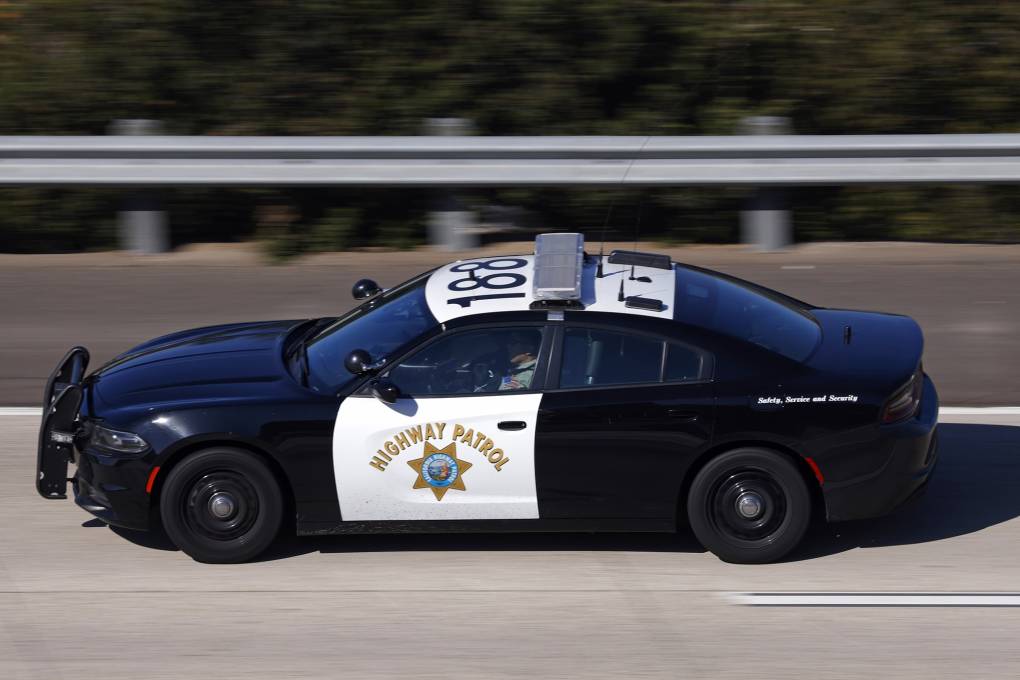
"caption": "A California Highway Patrol officer drives on State Route 52 on Sept. 28, 2024. The Department of Justice tried unsuccessfully to quash a lawsuit from Nicholas La Motte on the basis of qualified immunity.\r\n",
"credit": "Kevin Carter/Getty Images",
"altTag": null,
"description": null,
"imgSizes": {
"medium": {
"file": "https://cdn.kqed.org/wp-content/uploads/sites/10/2025/06/CHP-Getty-800x533.jpg",
"width": 800,
"height": 533,
"mimeType": "image/jpeg"
},
"large": {
"file": "https://cdn.kqed.org/wp-content/uploads/sites/10/2025/06/CHP-Getty-1020x680.jpg",
"width": 1020,
"height": 680,
"mimeType": "image/jpeg"
},
"thumbnail": {
"file": "https://cdn.kqed.org/wp-content/uploads/sites/10/2025/06/CHP-Getty-160x107.jpg",
"width": 160,
"height": 107,
"mimeType": "image/jpeg"
},
"1536x1536": {
"file": "https://cdn.kqed.org/wp-content/uploads/sites/10/2025/06/CHP-Getty-1536x1024.jpg",
"width": 1536,
"height": 1024,
"mimeType": "image/jpeg"
},
"post-thumbnail": {
"file": "https://cdn.kqed.org/wp-content/uploads/sites/10/2025/06/CHP-Getty-672x372.jpg",
"width": 672,
"height": 372,
"mimeType": "image/jpeg"
},
"twentyfourteen-full-width": {
"file": "https://cdn.kqed.org/wp-content/uploads/sites/10/2025/06/CHP-Getty-1038x576.jpg",
"width": 1038,
"height": 576,
"mimeType": "image/jpeg"
},
"full-width": {
"file": "https://cdn.kqed.org/wp-content/uploads/sites/10/2025/06/CHP-Getty-1920x1280.jpg",
"width": 1920,
"height": 1280,
"mimeType": "image/jpeg"
},
"kqedFullSize": {
"file": "https://cdn.kqed.org/wp-content/uploads/sites/10/2025/06/CHP-Getty.jpg",
"width": 2000,
"height": 1333
}
},
"isLoading": false,
"fetchFailed": false
},
"news_12093385": {
"type": "attachments",
"id": "news_12093385",
"meta": {
"index": "attachments_1716263798",
"site": "news",
"id": "12093385",
"found": true
},
"title": "260731-WOODSIDE FIRE-01-KQED",
"publishDate": 1785515869,
"status": "inherit",
"parent": 0,
"modified": 1785520756,
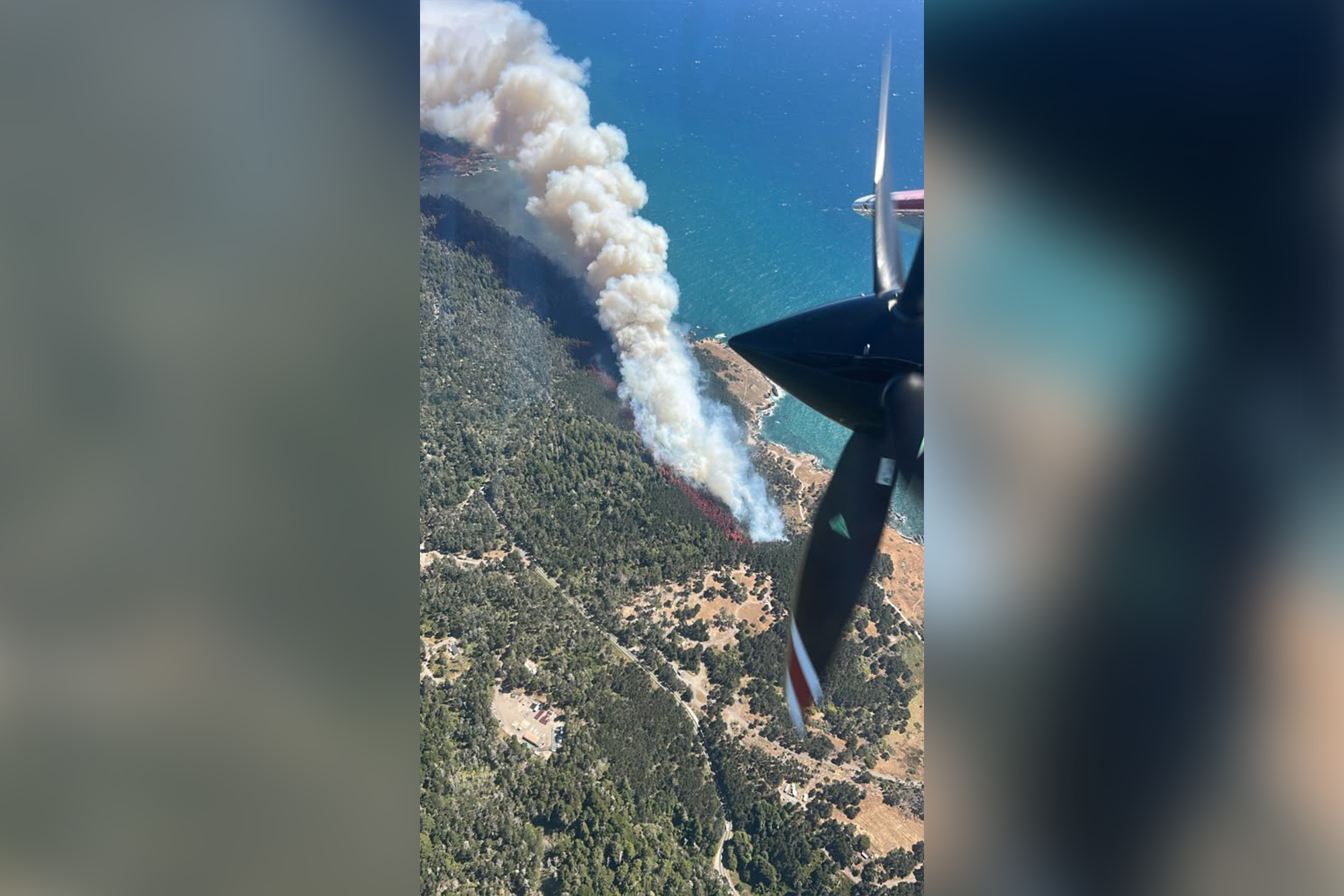
"caption": "The Woodside Fire burns in Marin County on July 30, 2026.",
"credit": "CalFire via X",
"altTag": null,
"description": null,
"imgSizes": {
"thumbnail": {
"file": "https://cdn.kqed.org/wp-content/uploads/sites/10/2026/07/260731-WOODSIDE-FIRE-01-KQED-160x107.jpg",
"width": 160,
"height": 107,
"mimeType": "image/jpeg"
},
"1536x1536": {
"file": "https://cdn.kqed.org/wp-content/uploads/sites/10/2026/07/260731-WOODSIDE-FIRE-01-KQED-1536x1025.jpg",
"width": 1536,
"height": 1025,
"mimeType": "image/jpeg"
},
"post-thumbnail": {
"file": "https://cdn.kqed.org/wp-content/uploads/sites/10/2026/07/260731-WOODSIDE-FIRE-01-KQED-672x372.jpg",
"width": 672,
"height": 372,
"mimeType": "image/jpeg"
},
"twentyfourteen-full-width": {
"file": "https://cdn.kqed.org/wp-content/uploads/sites/10/2026/07/260731-WOODSIDE-FIRE-01-KQED-1038x576.jpg",
"width": 1038,
"height": 576,
"mimeType": "image/jpeg"
},
"npr-cds-wide": {
"file": "https://cdn.kqed.org/wp-content/uploads/sites/10/2026/07/260731-WOODSIDE-FIRE-01-KQED-1200x675.jpg",
"width": 1200,
"height": 675,
"mimeType": "image/jpeg"
},
"npr-cds-square": {
"file": "https://cdn.kqed.org/wp-content/uploads/sites/10/2026/07/260731-WOODSIDE-FIRE-01-KQED-600x600.jpg",
"width": 600,
"height": 600,
"mimeType": "image/jpeg"
},
"kqedFullSize": {
"file": "https://cdn.kqed.org/wp-content/uploads/sites/10/2026/07/260731-WOODSIDE-FIRE-01-KQED.jpg",
"width": 2000,
"height": 1334
}
},
"isLoading": false,
"fetchFailed": false
},
"news_12064810": {
"type": "attachments",
"id": "news_12064810",
"meta": {
"index": "attachments_1716263798",
"site": "news",
"id": "12064810",
"found": true
},
"title": "U.S. Customs and Border Protection Agent",
"publishDate": 1763595140,
"status": "inherit",
"parent": 12064801,
"modified": 1763595174,
"caption": "A U.S. Customs and Border Protection logo is seen on a vest worn by an agent at MCAS Miramar on Sept. 26, 2025, in San Diego, California.",
"credit": "Kevin Carter/Getty Images",
"altTag": null,
"description": null,
"imgSizes": {
"thumbnail": {
"file": "https://cdn.kqed.org/wp-content/uploads/sites/10/2025/11/ICEGetty-160x107.jpg",
"width": 160,
"height": 107,
"mimeType": "image/jpeg"
},
"1536x1536": {
"file": "https://cdn.kqed.org/wp-content/uploads/sites/10/2025/11/ICEGetty-1536x1024.jpg",
"width": 1536,
"height": 1024,
"mimeType": "image/jpeg"
},
"post-thumbnail": {
"file": "https://cdn.kqed.org/wp-content/uploads/sites/10/2025/11/ICEGetty-672x372.jpg",
"width": 672,
"height": 372,
"mimeType": "image/jpeg"
},
"twentyfourteen-full-width": {
"file": "https://cdn.kqed.org/wp-content/uploads/sites/10/2025/11/ICEGetty-1038x576.jpg",
"width": 1038,
"height": 576,
"mimeType": "image/jpeg"
},
"npr-cds-wide": {
"file": "https://cdn.kqed.org/wp-content/uploads/sites/10/2025/11/ICEGetty-1200x675.jpg",
"width": 1200,
"height": 675,
"mimeType": "image/jpeg"
},
"kqedFullSize": {
"file": "https://cdn.kqed.org/wp-content/uploads/sites/10/2025/11/ICEGetty.jpg",
"width": 2000,
"height": 1333
}
},
"isLoading": false,
"fetchFailed": false
},
"news_12066847": {
"type": "attachments",
"id": "news_12066847",
"meta": {
"index": "attachments_1716263798",
"site": "news",
"id": "12066847",
"found": true
},
"title": "IMG_4776",
"publishDate": 1765494856,
"status": "inherit",
"parent": 12066846,
"modified": 1765494893,
"caption": "Snoopy's Home Ice, is a hockey rink built in Santa Rosa by Peanuts creator Charles Schulz.",
"credit": "Alan Montecillo",
"altTag": null,
"description": null,
"imgSizes": {
"medium": {
"file": "https://cdn.kqed.org/wp-content/uploads/sites/10/2025/12/IMG_4776-2000x1333.jpg",
"width": 2000,
"height": 1333,
"mimeType": "image/jpeg"
},
"large": {
"file": "https://cdn.kqed.org/wp-content/uploads/sites/10/2025/12/IMG_4776-2000x1333.jpg",
"width": 2000,
"height": 1333,
"mimeType": "image/jpeg"
},
"thumbnail": {
"file": "https://cdn.kqed.org/wp-content/uploads/sites/10/2025/12/IMG_4776-160x107.jpg",
"width": 160,
"height": 107,
"mimeType": "image/jpeg"
},
"1536x1536": {
"file": "https://cdn.kqed.org/wp-content/uploads/sites/10/2025/12/IMG_4776-1536x1024.jpg",
"width": 1536,
"height": 1024,
"mimeType": "image/jpeg"
},
"2048x2048": {
"file": "https://cdn.kqed.org/wp-content/uploads/sites/10/2025/12/IMG_4776-2048x1365.jpg",
"width": 2048,
"height": 1365,
"mimeType": "image/jpeg"
},
"post-thumbnail": {
"file": "https://cdn.kqed.org/wp-content/uploads/sites/10/2025/12/IMG_4776-672x372.jpg",
"width": 672,
"height": 372,
"mimeType": "image/jpeg"
},
"twentyfourteen-full-width": {
"file": "https://cdn.kqed.org/wp-content/uploads/sites/10/2025/12/IMG_4776-1038x576.jpg",
"width": 1038,
"height": 576,
"mimeType": "image/jpeg"
},
"full-width": {
"file": "https://cdn.kqed.org/wp-content/uploads/sites/10/2025/12/IMG_4776-2000x1333.jpg",
"width": 2000,
"height": 1333,
"mimeType": "image/jpeg"
},
"npr-cds-wide": {
"file": "https://cdn.kqed.org/wp-content/uploads/sites/10/2025/12/IMG_4776-1200x675.jpg",
"width": 1200,
"height": 675,
"mimeType": "image/jpeg"
},
"kqedFullSize": {
"file": "https://cdn.kqed.org/wp-content/uploads/sites/10/2025/12/IMG_4776-scaled.jpg",
"width": 2560,
"height": 1707
}
},
"isLoading": false,
"fetchFailed": false
},
"news_12066798": {
"type": "attachments",
"id": "news_12066798",
"meta": {
"index": "attachments_1716263798",
"site": "news",
"id": "12066798",
"found": true
},
"title": "251210-HOLIDAYLIGHTS-26-BL-KQED",
"publishDate": 1765484750,
"status": "inherit",
"parent": 0,
"modified": 1765486229,
"caption": "A holiday display sits in front of a home on Christmas Tree Lane on the 3200 block of Thompson Avenue in Alameda on Dec. 10, 2025. The tradition of holiday displays here dates back to the early 1930s.",
"credit": "Beth LaBerge/KQED",
"altTag": null,
"description": null,
"imgSizes": {
"thumbnail": {
"file": "https://cdn.kqed.org/wp-content/uploads/sites/10/2025/12/251210-HOLIDAYLIGHTS-26-BL-KQED-160x107.jpg",
"width": 160,
"height": 107,
"mimeType": "image/jpeg"
},
"1536x1536": {
"file": "https://cdn.kqed.org/wp-content/uploads/sites/10/2025/12/251210-HOLIDAYLIGHTS-26-BL-KQED-1536x1024.jpg",
"width": 1536,
"height": 1024,
"mimeType": "image/jpeg"
},
"post-thumbnail": {
"file": "https://cdn.kqed.org/wp-content/uploads/sites/10/2025/12/251210-HOLIDAYLIGHTS-26-BL-KQED-672x372.jpg",
"width": 672,
"height": 372,
"mimeType": "image/jpeg"
},
"twentyfourteen-full-width": {
"file": "https://cdn.kqed.org/wp-content/uploads/sites/10/2025/12/251210-HOLIDAYLIGHTS-26-BL-KQED-1038x576.jpg",
"width": 1038,
"height": 576,
"mimeType": "image/jpeg"
},
"npr-cds-wide": {
"file": "https://cdn.kqed.org/wp-content/uploads/sites/10/2025/12/251210-HOLIDAYLIGHTS-26-BL-KQED-1200x675.jpg",
"width": 1200,
"height": 675,
"mimeType": "image/jpeg"
},
"kqedFullSize": {
"file": "https://cdn.kqed.org/wp-content/uploads/sites/10/2025/12/251210-HOLIDAYLIGHTS-26-BL-KQED.jpg",
"width": 2000,
"height": 1333
}
},
"isLoading": false,
"fetchFailed": false
},
"news_12066007": {
"type": "attachments",
"id": "news_12066007",
"meta": {
"index": "attachments_1716263798",
"site": "news",
"id": "12066007",
"found": true
},
"title": "20251203-ZOE ROSENBERG SENTENCING_AC-05-KQED",
"publishDate": 1764809065,
"status": "inherit",
"parent": 0,
"modified": 1764809207,
"caption": "Zoe Rosenberg delivers a speech to supporters gathered in anticipation of her sentencing over a 2023 \"rescue\" of four chickens from a Petaluma poultry farm in Santa Rosa on Dec. 3, 2025.",
"credit": "Aryk Copley for KQED",
"altTag": null,
"description": null,
"imgSizes": {
"thumbnail": {
"file": "https://cdn.kqed.org/wp-content/uploads/sites/10/2025/12/20251203-ZOE-ROSENBERG-SENTENCING_AC-05-KQED-160x107.jpg",
"width": 160,
"height": 107,
"mimeType": "image/jpeg"
},
"1536x1536": {
"file": "https://cdn.kqed.org/wp-content/uploads/sites/10/2025/12/20251203-ZOE-ROSENBERG-SENTENCING_AC-05-KQED-1536x1024.jpg",
"width": 1536,
"height": 1024,
"mimeType": "image/jpeg"
},
"post-thumbnail": {
"file": "https://cdn.kqed.org/wp-content/uploads/sites/10/2025/12/20251203-ZOE-ROSENBERG-SENTENCING_AC-05-KQED-672x372.jpg",
"width": 672,
"height": 372,
"mimeType": "image/jpeg"
},
"twentyfourteen-full-width": {
"file": "https://cdn.kqed.org/wp-content/uploads/sites/10/2025/12/20251203-ZOE-ROSENBERG-SENTENCING_AC-05-KQED-1038x576.jpg",
"width": 1038,
"height": 576,
"mimeType": "image/jpeg"
},
"npr-cds-wide": {
"file": "https://cdn.kqed.org/wp-content/uploads/sites/10/2025/12/20251203-ZOE-ROSENBERG-SENTENCING_AC-05-KQED-1200x675.jpg",
"width": 1200,
"height": 675,
"mimeType": "image/jpeg"
},
"kqedFullSize": {
"file": "https://cdn.kqed.org/wp-content/uploads/sites/10/2025/12/20251203-ZOE-ROSENBERG-SENTENCING_AC-05-KQED.jpg",
"width": 2000,
"height": 1333
}
},
"isLoading": false,
"fetchFailed": false
},
"news_12053555": {
"type": "attachments",
"id": "news_12053555",
"meta": {
"index": "attachments_1716263798",
"site": "news",
"id": "12053555",
"found": true
},
"title": "WildfiresAPM1",
"publishDate": 1756143110,
"status": "inherit",
"parent": 12053436,
"modified": 1756143229,
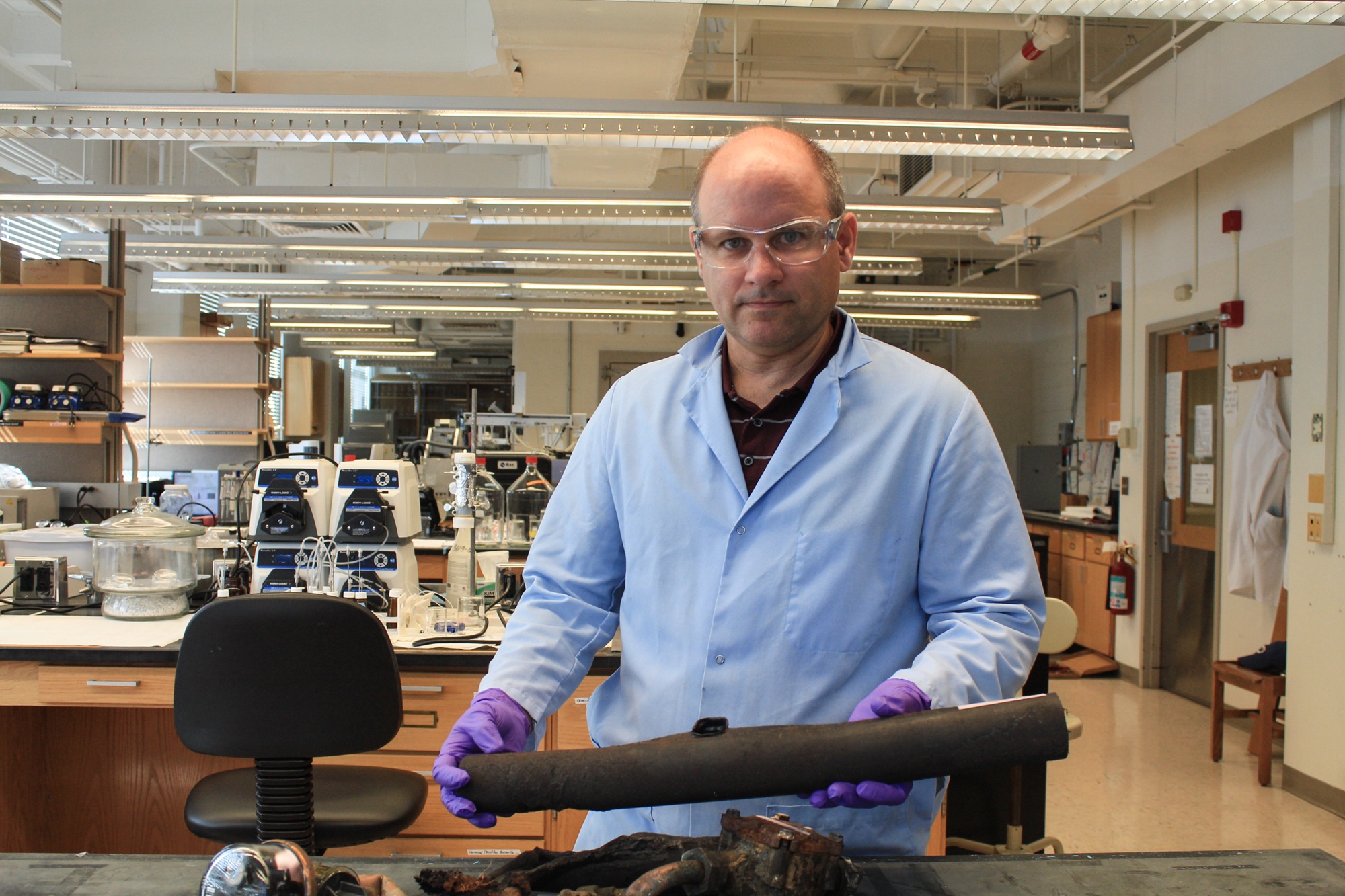
"caption": "Engineering professor Andrew Whelton in his lab on the campus of Purdue University. ",
"credit": "Benjamin Thorp/APM Reports",
"altTag": null,
"description": null,
"imgSizes": {
"thumbnail": {
"file": "https://cdn.kqed.org/wp-content/uploads/sites/10/2025/08/WildfiresAPM1-160x107.jpg",
"width": 160,
"height": 107,
"mimeType": "image/jpeg"
},
"1536x1536": {
"file": "https://cdn.kqed.org/wp-content/uploads/sites/10/2025/08/WildfiresAPM1-1536x1024.jpg",
"width": 1536,
"height": 1024,
"mimeType": "image/jpeg"
},
"post-thumbnail": {
"file": "https://cdn.kqed.org/wp-content/uploads/sites/10/2025/08/WildfiresAPM1-672x372.jpg",
"width": 672,
"height": 372,
"mimeType": "image/jpeg"
},
"twentyfourteen-full-width": {
"file": "https://cdn.kqed.org/wp-content/uploads/sites/10/2025/08/WildfiresAPM1-1038x576.jpg",
"width": 1038,
"height": 576,
"mimeType": "image/jpeg"
},
"kqedFullSize": {
"file": "https://cdn.kqed.org/wp-content/uploads/sites/10/2025/08/WildfiresAPM1.jpg",
"width": 2000,
"height": 1333
}
},
"isLoading": false,
"fetchFailed": false
},
"news_12050965": {
"type": "attachments",
"id": "news_12050965",
"meta": {
"index": "attachments_1716263798",
"site": "news",
"id": "12050965",
"found": true
},
"title": "250805-SONOMA HUNGER STRIKE-BL-01-KQED",
"publishDate": 1754420780,
"status": "inherit",
"parent": 0,
"modified": 1754421014,
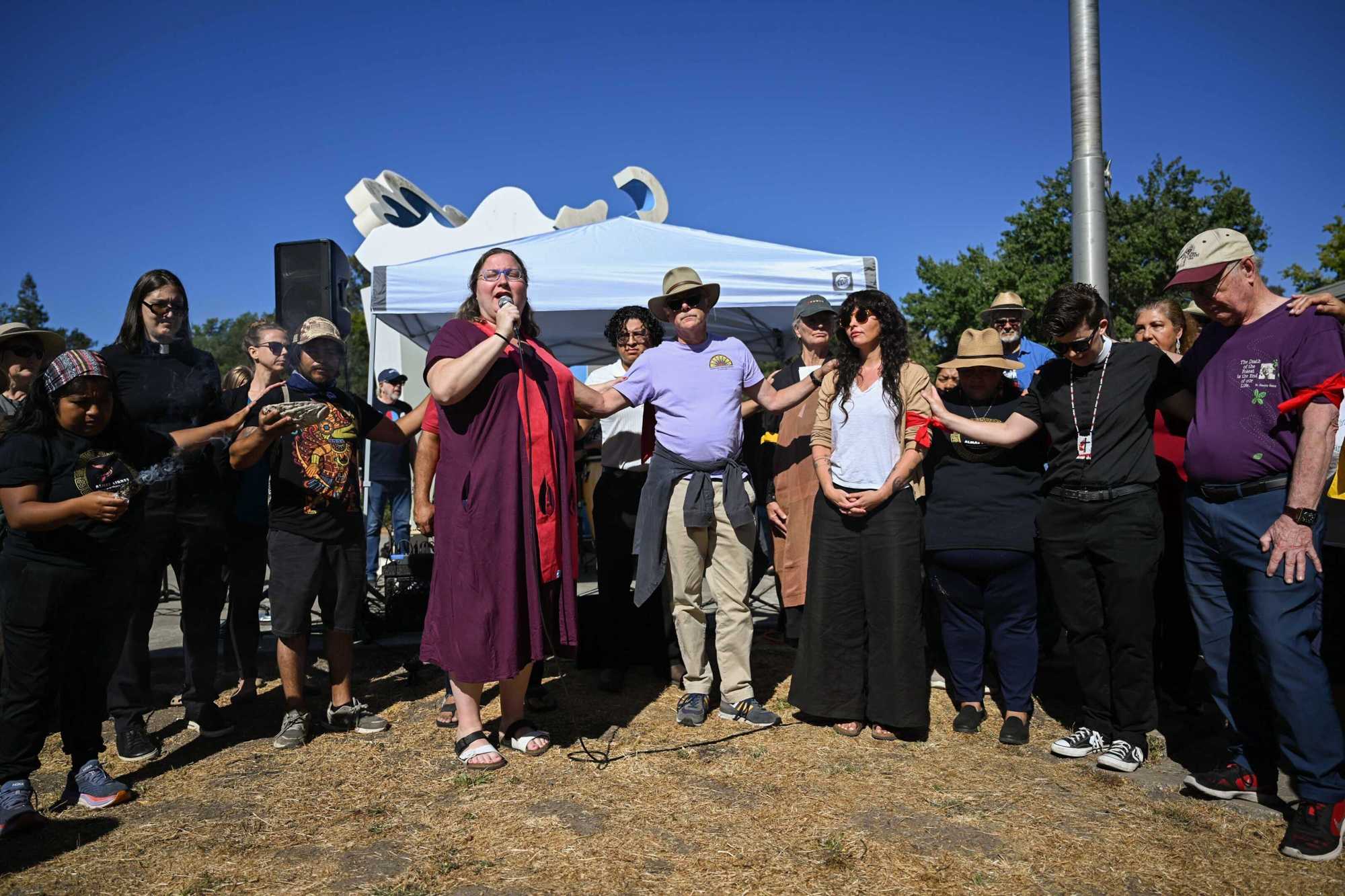
"caption": "Rev Aija Simpson-Newbury speaks to faith leaders, congregation members, immigrant rights groups and allies outside of the Sonoma County Board of Supervisors offices in Santa Rosa on Aug. 5, 2025, during a rally to launch an indefinite hunger strike urging the county to adopt a sanctuary law.",
"credit": "Beth LaBerge/KQED",
"altTag": null,
"description": null,
"imgSizes": {
"thumbnail": {
"file": "https://cdn.kqed.org/wp-content/uploads/sites/10/2025/08/250805-SONOMA-HUNGER-STRIKE-BL-01-KQED-160x107.jpg",
"width": 160,
"height": 107,
"mimeType": "image/jpeg"
},
"1536x1536": {
"file": "https://cdn.kqed.org/wp-content/uploads/sites/10/2025/08/250805-SONOMA-HUNGER-STRIKE-BL-01-KQED-1536x1024.jpg",
"width": 1536,
"height": 1024,
"mimeType": "image/jpeg"
},
"post-thumbnail": {
"file": "https://cdn.kqed.org/wp-content/uploads/sites/10/2025/08/250805-SONOMA-HUNGER-STRIKE-BL-01-KQED-672x372.jpg",
"width": 672,
"height": 372,
"mimeType": "image/jpeg"
},
"twentyfourteen-full-width": {
"file": "https://cdn.kqed.org/wp-content/uploads/sites/10/2025/08/250805-SONOMA-HUNGER-STRIKE-BL-01-KQED-1038x576.jpg",
"width": 1038,
"height": 576,
"mimeType": "image/jpeg"
},
"kqedFullSize": {
"file": "https://cdn.kqed.org/wp-content/uploads/sites/10/2025/08/250805-SONOMA-HUNGER-STRIKE-BL-01-KQED.jpg",
"width": 2000,
"height": 1333
}
},
"isLoading": false,
"fetchFailed": false
},
"news_12041677": {
"type": "attachments",
"id": "news_12041677",
"meta": {
"index": "attachments_1716263798",
"site": "news",
"id": "12041677",
"found": true
},
"title": "SantaRosaChurchFire1",
"publishDate": 1748366178,
"status": "inherit",
"parent": 0,
"modified": 1748366252,
"caption": "The historic Church of One Tree in Santa Rosa is seen on Tuesday, May 27, the morning after a fire that authorities are investigating as arson.",
"credit": "Gabe Meline/KQED",
"altTag": null,
"description": null,
"imgSizes": {
"medium": {
"file": "https://cdn.kqed.org/wp-content/uploads/sites/10/2025/05/SantaRosaChurchFire1-800x600.jpg",
"width": 800,
"height": 600,
"mimeType": "image/jpeg"
},
"large": {
"file": "https://cdn.kqed.org/wp-content/uploads/sites/10/2025/05/SantaRosaChurchFire1-1020x765.jpg",
"width": 1020,
"height": 765,
"mimeType": "image/jpeg"
},
"thumbnail": {
"file": "https://cdn.kqed.org/wp-content/uploads/sites/10/2025/05/SantaRosaChurchFire1-160x120.jpg",
"width": 160,
"height": 120,
"mimeType": "image/jpeg"
},
"1536x1536": {
"file": "https://cdn.kqed.org/wp-content/uploads/sites/10/2025/05/SantaRosaChurchFire1-1536x1152.jpg",
"width": 1536,
"height": 1152,
"mimeType": "image/jpeg"
},
"post-thumbnail": {
"file": "https://cdn.kqed.org/wp-content/uploads/sites/10/2025/05/SantaRosaChurchFire1-672x372.jpg",
"width": 672,
"height": 372,
"mimeType": "image/jpeg"
},
"twentyfourteen-full-width": {
"file": "https://cdn.kqed.org/wp-content/uploads/sites/10/2025/05/SantaRosaChurchFire1-1038x576.jpg",
"width": 1038,
"height": 576,
"mimeType": "image/jpeg"
},
"full-width": {
"file": "https://cdn.kqed.org/wp-content/uploads/sites/10/2025/05/SantaRosaChurchFire1-1920x1440.jpg",
"width": 1920,
"height": 1440,
"mimeType": "image/jpeg"
},
"kqedFullSize": {
"file": "https://cdn.kqed.org/wp-content/uploads/sites/10/2025/05/SantaRosaChurchFire1.jpg",
"width": 2000,
"height": 1500
}
},
"isLoading": false,
"fetchFailed": false
},
"news_12035731": {
"type": "attachments",
"id": "news_12035731",
"meta": {
"index": "attachments_1716263798",
"site": "news",
"id": "12035731",
"found": true
},
"title": "20240411_PRESSDEMOCRATFILE_GC-3-KQED",
"publishDate": 1744406823,
"status": "inherit",
"parent": 0,
"modified": 1744406883,
"caption": "The Press Democrat’s former printing facility in Rohnert Park on April 11, 2025.",
"credit": "Gina Castro/KQED",
"altTag": null,
"description": null,
"imgSizes": {
"medium": {
"file": "https://cdn.kqed.org/wp-content/uploads/sites/10/2025/04/20240411_PRESSDEMOCRATFILE_GC-3-KQED-800x533.jpg",
"width": 800,
"height": 533,
"mimeType": "image/jpeg"
},
"large": {
"file": "https://cdn.kqed.org/wp-content/uploads/sites/10/2025/04/20240411_PRESSDEMOCRATFILE_GC-3-KQED-1020x680.jpg",
"width": 1020,
"height": 680,
"mimeType": "image/jpeg"
},
"thumbnail": {
"file": "https://cdn.kqed.org/wp-content/uploads/sites/10/2025/04/20240411_PRESSDEMOCRATFILE_GC-3-KQED-160x107.jpg",
"width": 160,
"height": 107,
"mimeType": "image/jpeg"
},
"1536x1536": {
"file": "https://cdn.kqed.org/wp-content/uploads/sites/10/2025/04/20240411_PRESSDEMOCRATFILE_GC-3-KQED-1536x1024.jpg",
"width": 1536,
"height": 1024,
"mimeType": "image/jpeg"
},
"post-thumbnail": {
"file": "https://cdn.kqed.org/wp-content/uploads/sites/10/2025/04/20240411_PRESSDEMOCRATFILE_GC-3-KQED-672x372.jpg",
"width": 672,
"height": 372,
"mimeType": "image/jpeg"
},
"twentyfourteen-full-width": {
"file": "https://cdn.kqed.org/wp-content/uploads/sites/10/2025/04/20240411_PRESSDEMOCRATFILE_GC-3-KQED-1038x576.jpg",
"width": 1038,
"height": 576,
"mimeType": "image/jpeg"
},
"full-width": {
"file": "https://cdn.kqed.org/wp-content/uploads/sites/10/2025/04/20240411_PRESSDEMOCRATFILE_GC-3-KQED-1920x1280.jpg",
"width": 1920,
"height": 1280,
"mimeType": "image/jpeg"
},
"kqedFullSize": {
"file": "https://cdn.kqed.org/wp-content/uploads/sites/10/2025/04/20240411_PRESSDEMOCRATFILE_GC-3-KQED.jpg",
"width": 2000,
"height": 1333
}
},
"isLoading": false,
"fetchFailed": false
},
"news_12038512": {
"type": "attachments",
"id": "news_12038512",
"meta": {
"index": "attachments_1716263798",
"site": "news",
"id": "12038512",
"found": true
},
"title": "250501-MAYDAYRALLYSF-14-BL-KQED",
"publishDate": 1746161928,
"status": "inherit",
"parent": 0,
"modified": 1746162062,
"caption": "Darcie Chan Blackburn (left), a San Francisco teacher, marches alongside thousands of demonstrators from Civic Center Plaza toward the Embarcadero during a May Day protest in San Francisco on Thursday, May 1, 2025.",
"credit": "Beth LaBerge/KQED",
"altTag": null,
"description": null,
"imgSizes": {
"medium": {
"file": "https://cdn.kqed.org/wp-content/uploads/sites/10/2025/05/250501-MAYDAYRALLYSF-14-BL-KQED-800x533.jpg",
"width": 800,
"height": 533,
"mimeType": "image/jpeg"
},
"large": {
"file": "https://cdn.kqed.org/wp-content/uploads/sites/10/2025/05/250501-MAYDAYRALLYSF-14-BL-KQED-1020x680.jpg",
"width": 1020,
"height": 680,
"mimeType": "image/jpeg"
},
"thumbnail": {
"file": "https://cdn.kqed.org/wp-content/uploads/sites/10/2025/05/250501-MAYDAYRALLYSF-14-BL-KQED-160x107.jpg",
"width": 160,
"height": 107,
"mimeType": "image/jpeg"
},
"1536x1536": {
"file": "https://cdn.kqed.org/wp-content/uploads/sites/10/2025/05/250501-MAYDAYRALLYSF-14-BL-KQED-1536x1024.jpg",
"width": 1536,
"height": 1024,
"mimeType": "image/jpeg"
},
"post-thumbnail": {
"file": "https://cdn.kqed.org/wp-content/uploads/sites/10/2025/05/250501-MAYDAYRALLYSF-14-BL-KQED-672x372.jpg",
"width": 672,
"height": 372,
"mimeType": "image/jpeg"
},
"twentyfourteen-full-width": {
"file": "https://cdn.kqed.org/wp-content/uploads/sites/10/2025/05/250501-MAYDAYRALLYSF-14-BL-KQED-1038x576.jpg",
"width": 1038,
"height": 576,
"mimeType": "image/jpeg"
},
"full-width": {
"file": "https://cdn.kqed.org/wp-content/uploads/sites/10/2025/05/250501-MAYDAYRALLYSF-14-BL-KQED-1920x1280.jpg",
"width": 1920,
"height": 1280,
"mimeType": "image/jpeg"
},
"kqedFullSize": {
"file": "https://cdn.kqed.org/wp-content/uploads/sites/10/2025/05/250501-MAYDAYRALLYSF-14-BL-KQED.jpg",
"width": 2000,
"height": 1333
}
},
"isLoading": false,
"fetchFailed": false
},
"news_12038622": {
"type": "attachments",
"id": "news_12038622",
"meta": {
"index": "attachments_1716263798",
"site": "news",
"id": "12038622",
"found": true
},
"title": "20240411_PressDemocratFile_GC-4_qed",
"publishDate": 1746224391,
"status": "inherit",
"parent": 12038583,
"modified": 1746224407,
"caption": "The Press Democrat’s former printing facility in Rohnert Park on April 11, 2025.",
"credit": "Gina Castro/KQED",
"altTag": null,
"description": null,
"imgSizes": {
"medium": {
"file": "https://cdn.kqed.org/wp-content/uploads/sites/10/2025/05/20240411_PressDemocratFile_GC-4_qed-800x533.jpg",
"width": 800,
"height": 533,
"mimeType": "image/jpeg"
},
"large": {
"file": "https://cdn.kqed.org/wp-content/uploads/sites/10/2025/05/20240411_PressDemocratFile_GC-4_qed-1020x680.jpg",
"width": 1020,
"height": 680,
"mimeType": "image/jpeg"
},
"thumbnail": {
"file": "https://cdn.kqed.org/wp-content/uploads/sites/10/2025/05/20240411_PressDemocratFile_GC-4_qed-160x107.jpg",
"width": 160,
"height": 107,
"mimeType": "image/jpeg"
},
"1536x1536": {
"file": "https://cdn.kqed.org/wp-content/uploads/sites/10/2025/05/20240411_PressDemocratFile_GC-4_qed-1536x1024.jpg",
"width": 1536,
"height": 1024,
"mimeType": "image/jpeg"
},
"post-thumbnail": {
"file": "https://cdn.kqed.org/wp-content/uploads/sites/10/2025/05/20240411_PressDemocratFile_GC-4_qed-672x372.jpg",
"width": 672,
"height": 372,
"mimeType": "image/jpeg"
},
"twentyfourteen-full-width": {
"file": "https://cdn.kqed.org/wp-content/uploads/sites/10/2025/05/20240411_PressDemocratFile_GC-4_qed-1038x576.jpg",
"width": 1038,
"height": 576,
"mimeType": "image/jpeg"
},
"full-width": {
"file": "https://cdn.kqed.org/wp-content/uploads/sites/10/2025/05/20240411_PressDemocratFile_GC-4_qed-1920x1280.jpg",
"width": 1920,
"height": 1280,
"mimeType": "image/jpeg"
},
"kqedFullSize": {
"file": "https://cdn.kqed.org/wp-content/uploads/sites/10/2025/05/20240411_PressDemocratFile_GC-4_qed.jpg",
"width": 2000,
"height": 1333
}
},
"isLoading": false,
"fetchFailed": false
}
},
"audioPlayerReducer": {
"postId": "stream_live",
"isPaused": true,
"isPlaying": false,
"pfsActive": false,
"pledgeModalIsOpen": true,
"playerDrawerIsOpen": false,
"liveAudioPlayStartedAt": 0,
"liveAudioPlayContext": ""
},
"authorsReducer": {
"byline_news_12053436": {
"type": "authors",
"id": "byline_news_12053436",
"meta": {
"override": true
},
"slug": "byline_news_12053436",
"name": "Jennifer Lu, APM Reports",
"isLoading": false
},
"gmeline": {
"type": "authors",
"id": "185",
"meta": {
"index": "authors_1716337520",
"id": "185",
"found": true
},
"name": "Gabe Meline",
"firstName": "Gabe",
"lastName": "Meline",
"slug": "gmeline",
"email": "gmeline@kqed.org",
"display_author_email": true,
"staff_mastheads": [
"arts"
],
"title": "Senior Editor, KQED Arts & Culture",
"bio": "Gabe Meline entered journalism at age 15 making photocopied zines, and has since earned awards from the Edward R. Murrow Awards, the Society for Professional Journalists, the Online Journalism Awards, the Association of Alternative Newsweeklies and the California Newspaper Publishers Association. Prior to KQED, he was the editor of the \u003cem>North Bay Bohemian\u003c/em> and a touring musician. He lives with his wife and daughter in his hometown of Santa Rosa, CA.",
"avatar": "https://secure.gravatar.com/avatar/5bebe57be0d8bc2dd318934feb47299e2d2d10cba28d09d8d7afb389a2ce2bdd?s=600&d=blank&r=g",
"twitter": null,
"bluesky": null,
"facebook": null,
"instagram": null,
"linkedin": null,
"sites": [
{
"site": "",
"roles": [
"editor"
]
},
{
"site": "arts",
"roles": [
"administrator"
]
},
{
"site": "artschool",
"roles": [
"editor"
]
},
{
"site": "news",
"roles": [
"author"
]
},
{
"site": "pop",
"roles": [
"editor"
]
},
{
"site": "bayareabites",
"roles": [
"editor"
]
},
{
"site": "food",
"roles": [
"editor"
]
},
{
"site": "forum",
"roles": [
"administrator"
]
},
{
"site": "liveblog",
"roles": [
"editor"
]
},
{
"site": "hiphop",
"roles": [
"editor"
]
}
],
"headData": {
"title": "Gabe Meline | KQED",
"description": "Senior Editor, KQED Arts & Culture",
"ogImgSrc": "https://secure.gravatar.com/avatar/5bebe57be0d8bc2dd318934feb47299e2d2d10cba28d09d8d7afb389a2ce2bdd?s=600&d=blank&r=g",
"twImgSrc": "https://secure.gravatar.com/avatar/5bebe57be0d8bc2dd318934feb47299e2d2d10cba28d09d8d7afb389a2ce2bdd?s=600&d=blank&r=g"
},
"isLoading": false,
"link": "/author/gmeline"
},
"kqed": {
"type": "authors",
"id": "236",
"meta": {
"index": "authors_1716337520",
"id": "236",
"found": true
},
"name": "KQED News Staff",
"firstName": "KQED News Staff",
"lastName": null,
"slug": "kqed",
"email": "faq@kqed.org",
"display_author_email": false,
"staff_mastheads": [],
"title": null,
"bio": null,
"avatar": "https://secure.gravatar.com/avatar/ef0e801a68c4c54afa9180db14084167?s=600&d=blank&r=g",
"twitter": null,
"facebook": null,
"instagram": null,
"linkedin": null,
"sites": [
{
"site": "arts",
"roles": [
"contributor"
]
},
{
"site": "news",
"roles": [
"editor"
]
},
{
"site": "futureofyou",
"roles": [
"author"
]
}
],
"headData": {
"title": "KQED News Staff | KQED",
"description": null,
"ogImgSrc": "https://secure.gravatar.com/avatar/ef0e801a68c4c54afa9180db14084167?s=600&d=blank&r=g",
"twImgSrc": "https://secure.gravatar.com/avatar/ef0e801a68c4c54afa9180db14084167?s=600&d=blank&r=g"
},
"isLoading": false,
"link": "/author/kqed"
},
"ecruzguevarra": {
"type": "authors",
"id": "8654",
"meta": {
"index": "authors_1716337520",
"id": "8654",
"found": true
},
"name": "Ericka Cruz Guevarra",
"firstName": "Ericka",
"lastName": "Cruz Guevarra",
"slug": "ecruzguevarra",
"email": "ecruzguevarra@kqed.org",
"display_author_email": true,
"staff_mastheads": [
"news"
],
"title": "Producer, The Bay Podcast",
"bio": "Ericka Cruz Guevarra is host of \u003ca href=\"https://www.kqed.org/podcasts/thebay\">\u003cem>The Bay\u003c/em>\u003c/a> podcast at KQED. Before host, she was the show’s producer. Her work in that capacity includes a three-part reported series on policing in Vallejo, which won a 2020 excellence in journalism award from the Society of Professional Journalists. Ericka has worked as a breaking news reporter at Oregon Public Broadcasting, helped produce the Code Switch podcast, and was KQED’s inaugural Raul Ramirez Diversity Fund intern. She’s also an alumna of NPR’s Next Generation Radio program. Send her an email if you have strong feelings about whether Fairfield and Suisun City are the Bay. Ericka is represented by SAG-AFTRA.",
"avatar": "https://secure.gravatar.com/avatar/accefc1de4bafc7e234b69bcb9b6f6536c130fd84709bc3069ef11a78787e1bb?s=600&d=blank&r=g",
"twitter": "NotoriousECG",
"bluesky": null,
"facebook": null,
"instagram": null,
"linkedin": null,
"sites": [
{
"site": "arts",
"roles": [
"subscriber"
]
},
{
"site": "news",
"roles": [
"editor",
"manage_categories"
]
},
{
"site": "futureofyou",
"roles": [
"subscriber"
]
},
{
"site": "stateofhealth",
"roles": [
"subscriber"
]
},
{
"site": "science",
"roles": [
"editor"
]
},
{
"site": "forum",
"roles": [
"subscriber"
]
}
],
"headData": {
"title": "Ericka Cruz Guevarra | KQED",
"description": "Producer, The Bay Podcast",
"ogImgSrc": "https://secure.gravatar.com/avatar/accefc1de4bafc7e234b69bcb9b6f6536c130fd84709bc3069ef11a78787e1bb?s=600&d=blank&r=g",
"twImgSrc": "https://secure.gravatar.com/avatar/accefc1de4bafc7e234b69bcb9b6f6536c130fd84709bc3069ef11a78787e1bb?s=600&d=blank&r=g"
},
"isLoading": false,
"link": "/author/ecruzguevarra"
},
"dcronin": {
"type": "authors",
"id": "11362",
"meta": {
"index": "authors_1716337520",
"id": "11362",
"found": true
},
"name": "Dana Cronin",
"firstName": "Dana",
"lastName": "Cronin",
"slug": "dcronin",
"email": "dcronin@KQED.org",
"display_author_email": true,
"staff_mastheads": [],
"title": "KQED Contributor",
"bio": "Dana Cronin is a reporter for KQED News. She loves writing stories about climate change, environmental issues, food and agriculture. She's reported across the country, from Colorado to Washington D.C. to Illinois, and has won numerous awards for her coverage. Her work is regularly featured on national broadcasts, including NPR’s Morning Edition, All Things Considered, PBS Newshour and Science Friday. She lives in Oakland and has an avocado tree in her back yard.",
"avatar": "https://secure.gravatar.com/avatar/b242755225e2f85f37c259df1f4cdfa36dc82f17dcf79e697fb392d658d1750b?s=600&d=blank&r=g",
"twitter": "DanaHCronin",
"bluesky": null,
"facebook": null,
"instagram": null,
"linkedin": null,
"sites": [
{
"site": "arts",
"roles": [
"author"
]
},
{
"site": "news",
"roles": [
"editor"
]
},
{
"site": "science",
"roles": [
"author"
]
},
{
"site": "liveblog",
"roles": [
"author"
]
}
],
"headData": {
"title": "Dana Cronin | KQED",
"description": "KQED Contributor",
"ogImgSrc": "https://secure.gravatar.com/avatar/b242755225e2f85f37c259df1f4cdfa36dc82f17dcf79e697fb392d658d1750b?s=600&d=blank&r=g",
"twImgSrc": "https://secure.gravatar.com/avatar/b242755225e2f85f37c259df1f4cdfa36dc82f17dcf79e697fb392d658d1750b?s=600&d=blank&r=g"
},
"isLoading": false,
"link": "/author/dcronin"
},
"amontecillo": {
"type": "authors",
"id": "11649",
"meta": {
"index": "authors_1716337520",
"id": "11649",
"found": true
},
"name": "Alan Montecillo",
"firstName": "Alan",
"lastName": "Montecillo",
"slug": "amontecillo",
"email": "amontecillo@kqed.org",
"display_author_email": false,
"staff_mastheads": [
"news"
],
"title": "KQED Contributor",
"bio": "Alan Montecillo is the senior editor of \u003cem>\u003ca href=\"http://kqed.org/thebay\">The Bay\u003c/a>, \u003c/em> KQED's local news podcast. Before moving to the Bay Area, he worked as a senior talk show producer for WILL in Champaign-Urbana, Illinois and at Oregon Public Broadcasting in Portland, Oregon. He has won journalism awards from the Society of Professional Journalists Northern California, the Public Media Journalists Association, The Signal Awards, and has also received a regional Edward R. Murrow award. Alan is a Filipino American from Hong Kong and a graduate of Reed College.",
"avatar": "https://secure.gravatar.com/avatar/268f53a2066899ea9efdd8a5900218b17c822d9862cbc9326cccec53ef41d349?s=600&d=blank&r=g",
"twitter": "alanmontecillo",
"bluesky": null,
"facebook": null,
"instagram": null,
"linkedin": null,
"sites": [
{
"site": "",
"roles": [
"editor"
]
},
{
"site": "news",
"roles": [
"editor",
"manage_categories"
]
}
],
"headData": {
"title": "Alan Montecillo | KQED",
"description": "KQED Contributor",
"ogImgSrc": "https://secure.gravatar.com/avatar/268f53a2066899ea9efdd8a5900218b17c822d9862cbc9326cccec53ef41d349?s=600&d=blank&r=g",
"twImgSrc": "https://secure.gravatar.com/avatar/268f53a2066899ea9efdd8a5900218b17c822d9862cbc9326cccec53ef41d349?s=600&d=blank&r=g"
},
"isLoading": false,
"link": "/author/amontecillo"
},
"abandlamudi": {
"type": "authors",
"id": "11672",
"meta": {
"index": "authors_1716337520",
"id": "11672",
"found": true
},
"name": "Adhiti Bandlamudi",
"firstName": "Adhiti",
"lastName": "Bandlamudi",
"slug": "abandlamudi",
"email": "abandlamudi@kqed.org",
"display_author_email": false,
"staff_mastheads": [
"news"
],
"title": "KQED Housing Reporter",
"bio": "Adhiti Bandlamudi reports for KQED's Housing desk. She focuses on how housing gets built across the Bay Area. Before joining KQED in 2020, she reported for WUNC in Durham, North Carolina, WABE in Atlanta, Georgia and Capital Public Radio in Sacramento. In 2017, she was awarded a Kroc Fellowship at NPR where she reported on everything from sprinkles to the Golden State Killer's arrest. When she's not reporting, she's baking new recipes in her kitchen or watching movies with friends and family. She's originally from Georgia and has strong opinions about Great British Bake Off.",
"avatar": "https://secure.gravatar.com/avatar/868129c8b257bb99a3500e2c86a65400?s=600&d=mm&r=g",
"twitter": "oddity_adhiti",
"facebook": null,
"instagram": null,
"linkedin": null,
"sites": [
{
"site": "arts",
"roles": [
"author"
]
},
{
"site": "news",
"roles": [
"editor"
]
},
{
"site": "liveblog",
"roles": [
"author"
]
}
],
"headData": {
"title": "Adhiti Bandlamudi | KQED",
"description": "KQED Housing Reporter",
"ogImgSrc": "https://secure.gravatar.com/avatar/868129c8b257bb99a3500e2c86a65400?s=600&d=mm&r=g",
"twImgSrc": "https://secure.gravatar.com/avatar/868129c8b257bb99a3500e2c86a65400?s=600&d=mm&r=g"
},
"isLoading": false,
"link": "/author/abandlamudi"
},
"jessicakariisa": {
"type": "authors",
"id": "11831",
"meta": {
"index": "authors_1716337520",
"id": "11831",
"found": true
},
"name": "Jessica Kariisa",
"firstName": "Jessica",
"lastName": "Kariisa",
"slug": "jessicakariisa",
"email": "jkariisa@kqed.org",
"display_author_email": false,
"staff_mastheads": [],
"title": "Producer, The Bay",
"bio": "Jessica Kariisa is the producer of The Bay. She first joined KQED as an intern for The California Report Magazine, after which she became an on-call producer. She reported a Bay Curious episode on the use of rap lyrics in criminal trials which won a Society of Professional Journalists award in 2023 for Excellence in Features Journalism and the 2023 Signal Award for Best Conversation Starter. She’s worked on podcasts for Snap Judgment and American Public Media. Before embarking on her audio career, she was a music journalist.\r\n\r\nJessica Kariisa is represented by SAG-AFTRA.",
"avatar": "https://secure.gravatar.com/avatar/522e97b28ac0b3d411621c0fde8f3419c7b71ea2c5c262c57c4bb600963f328c?s=600&d=blank&r=g",
"twitter": null,
"bluesky": null,
"facebook": null,
"instagram": null,
"linkedin": null,
"sites": [
{
"site": "arts",
"roles": [
"author"
]
},
{
"site": "news",
"roles": [
"editor",
"manage_categories"
]
}
],
"headData": {
"title": "Jessica Kariisa | KQED",
"description": "Producer, The Bay",
"ogImgSrc": "https://secure.gravatar.com/avatar/522e97b28ac0b3d411621c0fde8f3419c7b71ea2c5c262c57c4bb600963f328c?s=600&d=blank&r=g",
"twImgSrc": "https://secure.gravatar.com/avatar/522e97b28ac0b3d411621c0fde8f3419c7b71ea2c5c262c57c4bb600963f328c?s=600&d=blank&r=g"
},
"isLoading": false,
"link": "/author/jessicakariisa"
},
"kdebenedetti": {
"type": "authors",
"id": "11913",
"meta": {
"index": "authors_1716337520",
"id": "11913",
"found": true
},
"name": "Katie DeBenedetti",
"firstName": "Katie",
"lastName": "DeBenedetti",
"slug": "kdebenedetti",
"email": "kdebenedetti@kqed.org",
"display_author_email": false,
"staff_mastheads": [
"news",
"science"
],
"title": "KQED Contributor",
"bio": "Katie DeBenedetti is a digital reporter covering daily news for the Express Desk. Prior to joining KQED as a culture reporting intern in January 2024, she covered education and city government for the Napa Valley Register.",
"avatar": "https://secure.gravatar.com/avatar/6e31073cb8f7e4214ab03f42771d0f45?s=600&d=blank&r=g",
"twitter": null,
"facebook": null,
"instagram": null,
"linkedin": null,
"sites": [
{
"site": "news",
"roles": [
"author"
]
},
{
"site": "science",
"roles": [
"author"
]
},
{
"site": "liveblog",
"roles": [
"author"
]
}
],
"headData": {
"title": "Katie DeBenedetti | KQED",
"description": "KQED Contributor",
"ogImgSrc": "https://secure.gravatar.com/avatar/6e31073cb8f7e4214ab03f42771d0f45?s=600&d=blank&r=g",
"twImgSrc": "https://secure.gravatar.com/avatar/6e31073cb8f7e4214ab03f42771d0f45?s=600&d=blank&r=g"
},
"isLoading": false,
"link": "/author/kdebenedetti"
},
"bkrans": {
"type": "authors",
"id": "11923",
"meta": {
"index": "authors_1716337520",
"id": "11923",
"found": true
},
"name": "Brian Krans",
"firstName": "Brian",
"lastName": "Krans",
"slug": "bkrans",
"email": "bkrans@kqed.org",
"display_author_email": false,
"staff_mastheads": [
"news"
],
"title": "KQED Contributing Reporter",
"bio": "Brian Krans is an award-winning local news and investigative reporter who has been proudly working as a general assignment reporter for KQED since August 2023. He lives in Richmond, where he also reports on air pollution for Richmondside. He is also a founding member of the Vallejo Sun.",
"avatar": "https://secure.gravatar.com/avatar/71fa91f931774612559f7640390b53d9c2840ff72b20f195a25239aab2d9fbb9?s=600&d=blank&r=g",
"twitter": "citizenkrans",
"bluesky": null,
"facebook": null,
"instagram": null,
"linkedin": null,
"sites": [
{
"site": "news",
"roles": [
"editor"
]
}
],
"headData": {
"title": "Brian Krans | KQED",
"description": "KQED Contributing Reporter",
"ogImgSrc": "https://secure.gravatar.com/avatar/71fa91f931774612559f7640390b53d9c2840ff72b20f195a25239aab2d9fbb9?s=600&d=blank&r=g",
"twImgSrc": "https://secure.gravatar.com/avatar/71fa91f931774612559f7640390b53d9c2840ff72b20f195a25239aab2d9fbb9?s=600&d=blank&r=g"
},
"isLoading": false,
"link": "/author/bkrans"
},
"emanoukian": {
"type": "authors",
"id": "11925",
"meta": {
"index": "authors_1716337520",
"id": "11925",
"found": true
},
"name": "Elize Manoukian",
"firstName": "Elize",
"lastName": "Manoukian",
"slug": "emanoukian",
"email": "emanoukian@KQED.org",
"display_author_email": false,
"staff_mastheads": [
"news"
],
"title": "Digital News Editor",
"bio": "Elize Manoukian is an award-winning audio producer and Senior Editor on the Express Desk, KQED's digital news platform. Her work has appeared on KPFA, Interlochen Public Radio, Oregon Public Broadcast, the New York Daily News, LA Times and the San Diego Union-Tribune.",
"avatar": "https://secure.gravatar.com/avatar/4525f1a8e46ccb30933b32653d9772064cfefe3fa655eb45b3b3a80341f6bdad?s=600&d=blank&r=g",
"twitter": null,
"bluesky": null,
"facebook": null,
"instagram": null,
"linkedin": null,
"sites": [
{
"site": "arts",
"roles": [
"editor"
]
},
{
"site": "news",
"roles": [
"editor"
]
},
{
"site": "science",
"roles": [
"editor"
]
}
],
"headData": {
"title": "Elize Manoukian | KQED",
"description": "Digital News Editor",
"ogImgSrc": "https://secure.gravatar.com/avatar/4525f1a8e46ccb30933b32653d9772064cfefe3fa655eb45b3b3a80341f6bdad?s=600&d=blank&r=g",
"twImgSrc": "https://secure.gravatar.com/avatar/4525f1a8e46ccb30933b32653d9772064cfefe3fa655eb45b3b3a80341f6bdad?s=600&d=blank&r=g"
},
"isLoading": false,
"link": "/author/emanoukian"
},
"sarahwright": {
"type": "authors",
"id": "11956",
"meta": {
"index": "authors_1716337520",
"id": "11956",
"found": true
},
"name": "Sarah Wright",
"firstName": "Sarah",
"lastName": "Wright",
"slug": "sarahwright",
"email": "swright@kqed.org",
"display_author_email": true,
"staff_mastheads": [],
"title": "Outdoors Engagement Reporter",
"bio": "Sarah Wright is KQED's Outdoors Engagement Reporter. Originally from Lake Tahoe, she completed a thru-hike of the Pacific Crest Trail in 2019 and was a U.S. Fulbright Program grantee to Argentina in 2023. Her journalism has appeared in The Guardian, The San Francisco Standard, The Palo Alto Weekly and the Half Moon Bay Review.",
"avatar": "https://secure.gravatar.com/avatar/c161a3d6441865cba25e6db4fa561099ad665799e9432e34da2b84d7e371524c?s=600&d=blank&r=g",
"twitter": null,
"bluesky": null,
"facebook": null,
"instagram": null,
"linkedin": null,
"sites": [
{
"site": "arts",
"roles": [
"editor"
]
},
{
"site": "news",
"roles": [
"editor"
]
},
{
"site": "science",
"roles": [
"contributor",
"author"
]
},
{
"site": "forum",
"roles": [
"editor"
]
}
],
"headData": {
"title": "Sarah Wright | KQED",
"description": "Outdoors Engagement Reporter",
"ogImgSrc": "https://secure.gravatar.com/avatar/c161a3d6441865cba25e6db4fa561099ad665799e9432e34da2b84d7e371524c?s=600&d=blank&r=g",
"twImgSrc": "https://secure.gravatar.com/avatar/c161a3d6441865cba25e6db4fa561099ad665799e9432e34da2b84d7e371524c?s=600&d=blank&r=g"
},
"isLoading": false,
"link": "/author/sarahwright"
}
},
"pagesReducer": {
"news_tag_santa-rosa": {
"type": "terms",
"id": "news_474",
"meta": {
"index": "terms_1716263798",
"site": "news",
"id": "474",
"score": 8.670046
},
"featImg": null,
"name": "Santa Rosa",
"description": null,
"taxonomy": "tag",
"headData": {
"twImgId": null,
"twTitle": null,
"ogTitle": null,
"ogImgId": null,
"twDescription": null,
"description": null,
"title": "Santa Rosa Archives | KQED News",
"ogDescription": null
},
"ttid": 483,
"slug": "santa-rosa",
"isLoading": false,
"title": "Santa Rosa",
"pageMeta": {
"site": "news",
"WpPageTemplate": "page-topic-editorial",
"currentPage": 1
},
"blocks": [
{
"blockName": "kqed/post-list",
"attrs": {
"layout": "cardArticle2",
"query": "posts/news?tag=santa-rosa",
"seeMore": false,
"paginated": true,
"page": 1
}
},
{
"blockName": "kqed/ad"
}
]
}
},
"pfsSessionReducer": {},
"postsReducer": {
"stream_live": {
"type": "live",
"id": "stream_live",
"audioUrl": "https://streams.kqed.org/kqedradio",
"title": "Live Stream",
"excerpt": "Live Stream information currently unavailable.",
"link": "/radio",
"featImg": "",
"label": {
"name": "KQED Live",
"link": "/"
}
},
"stream_kqedNewscast": {
"type": "posts",
"id": "stream_kqedNewscast",
"audioUrl": "https://www.kqed.org/.stream/anon/radio/RDnews/newscast.mp3?_=1",
"title": "KQED Newscast",
"featImg": "",
"label": {
"name": "88.5 FM",
"link": "/"
}
},
"news_12097788": {
"type": "posts",
"id": "news_12097788",
"meta": {
"index": "posts_1716263798",
"site": "news",
"id": "12097788",
"score": null,
"sort": [
1788297467000
]
},
"guestAuthors": [],
"slug": "oakland-jury-awards-5-million-to-sonoma-county-man-for-wrongful-arrest",
"title": "Oakland Jury Awards $5 Million to Sonoma County Man for Wrongful Arrest",
"publishDate": 1788297467,
"format": "standard",
"headTitle": "Oakland Jury Awards $5 Million to Sonoma County Man for Wrongful Arrest | KQED",
"labelTerm": {
"site": "news"
},
"content": "\n\u003cp>A \u003ca href=\"https://www.kqed.org/news/tag/california-highway-patrol\">California Highway Patrol\u003c/a> officer and sergeant must pay $5 million to a Sonoma County man for violating his constitutional rights in an unlawful arrest, an \u003ca href=\"https://www.kqed.org/news/12097290/oakland-jury-to-decide-if-california-highway-patrol-officers-committed-unlawful-arrest\">Oakland federal jury \u003c/a>decided Monday. \u003c/p>\n\n\n\n\u003cp>The jury found that CHP Officer Jayce Ray and Sgt. John Snider acted with “malice, recklessness, oppression or a conscious or reckless disregard” for the rights of Nicholas La Motte when they arrested him without probable cause in April 2023 for driving under the influence.\u003c/p>\n\n\n\n\u003cp>La Motte testified last week that around 1:30 a.m. on April 25, 2023, he was driving home from visiting his grandmother in San Francisco. While driving northbound on U.S. 101, he noticed he was being followed by a car — it was Ray in his cruiser. \u003c/p>\n\n\n\n\u003cp>Ray pulled him over, and La Motte began filming the encounter, footage that proved to key in his case against CHP. \u003c/p>\n\n\n\n\u003cp>Ray impounded La Motte’s Mercedes and arrested him, claiming he showed signs of intoxication, including red eyes. He then took La Motte to a nearby hospital to have his blood drawn. La Motte argued in his lawsuit that this violated his constitutional rights against unnecessary search and seizure because Ray lacked probable cause for the arrest.\u003c/p>\n\n\n\n\u003cfigure class=\"wp-block-image size-full\">\u003cimg loading=\"lazy\" decoding=\"async\" width=\"2329\" height=\"1308\" src=\"https://cdn.kqed.org/wp-content/uploads/sites/10/2026/09/CHPVerdict_horizontal-1.jpg\" alt=\"\" class=\"wp-image-12097803\" srcset=\"https://cdn.kqed.org/wp-content/uploads/sites/10/2026/09/CHPVerdict_horizontal-1.jpg 2329w, https://cdn.kqed.org/wp-content/uploads/sites/10/2026/09/CHPVerdict_horizontal-1-2000x1123.jpg 2000w, https://cdn.kqed.org/wp-content/uploads/sites/10/2026/09/CHPVerdict_horizontal-1-160x90.jpg 160w, https://cdn.kqed.org/wp-content/uploads/sites/10/2026/09/CHPVerdict_horizontal-1-1536x863.jpg 1536w, https://cdn.kqed.org/wp-content/uploads/sites/10/2026/09/CHPVerdict_horizontal-1-2048x1150.jpg 2048w, https://cdn.kqed.org/wp-content/uploads/sites/10/2026/09/CHPVerdict_horizontal-1-1200x675.jpg 1200w\" sizes=\"auto, (max-width: 2329px) 100vw, 2329px\" />\u003cfigcaption class=\"wp-element-caption\">Sonoma County resident Nicholas La Motte (left) poses for a photo with his attorney, Izaak Schwaiger. A jury found LaMotte’s Fourth Amendment rights were violated during a 2023 unlawful arrest by two California Highway Patrol officers. (Courtesy of Nicholas La Motte)\u003c/figcaption>\u003c/figure>\n\n\n\n\u003cp>CHP further justified La Motte’s arrest with a set of field sobriety tests that Snider administered at the Santa Rosa station. \u003c/p>\n\n\n\n\u003cp>Six months later, the Sonoma County District Attorney’s Office formally dropped charges against La Motte.\u003c/p>\n\n\n\n\u003cp>The jury’s verdict is significant because law enforcement and other government officials are generally protected from liability while on the job, under a legal framework known as qualified immunity. They lose that protection, however, if they violate someone’s rights while performing their duties. \u003c/p>\n\n\n\n\u003cp>That’s what the jury found happened here. \u003c/p>\n\n\n\n\u003cp>Izaak Schwaiger, La Motte’s attorney, said that, had his client not recorded the incident, there wouldn’t have been any evidence to combat the police’s version of events because CHP doesn’t require its officers to wear body cameras. \u003c/p>\n\n\n\n\n\n\u003cp>“I would say this is probably the 20th case that we received calls about, the CHP in and around the Sonoma County area making false arrests, but there was never any evidence,” Schwaiger said. “And what can you do when it’s the word of the individual against the word of the cops?”\u003c/p>\n\n\n\n\u003cp>Schwaiger said he took La Motte’s case because he was “waiting for the right one to come, where somebody had done something to preserve some kind of evidence, so that we could prove that this was going on, because it happens a lot.” \u003c/p>\n\n\n\n\u003cp>“But without proof,” the lawyer continued, “what can you do? Nick had that video, and the video showed that these cops were lying, and that’s what carried the case.” \u003c/p>\n\n\n\n\u003cp>Schwaiger said La Motte’s case was unique because it was simply about a wrongful arrest. \u003c/p>\n\n\n\n\u003cp>“The DA rejected this case because there wasn’t enough evidence that he had committed a crime,” Schwaiger said, adding that La Motte wasn’t prosecuted, nor held in jail for a significant time, nor physically beaten by the officers. “None of those things.” \u003c/p>\n\n\n\n\u003cp>“It was super important to Nick what happened. It profoundly affected his life, and he did a really good job of explaining that to the jury, such that when it came time to ask the jury for a verdict, we just said, ‘Do what you feel is right,’” Schwaiger said.\u003c/p>\n\n\n\n\u003cp>The jury’s verdict awarded La Motte $3 million in punitive damages — an amount for which Snider and Ray will not likely be personally liable, Schwaiger said — and $2 million in compensatory damages.\u003c/p>\n\n\n\u003cdiv class=\"wp-block-image\">\n\u003cfigure class=\"alignleft size-full\">\u003cimg loading=\"lazy\" decoding=\"async\" width=\"1380\" height=\"2000\" src=\"https://cdn.kqed.org/wp-content/uploads/sites/10/2026/09/CHPVerdict_2-KQED.jpg\" alt=\"\" class=\"wp-image-12097799\" srcset=\"https://cdn.kqed.org/wp-content/uploads/sites/10/2026/09/CHPVerdict_2-KQED.jpg 1380w, https://cdn.kqed.org/wp-content/uploads/sites/10/2026/09/CHPVerdict_2-KQED-160x232.jpg 160w, https://cdn.kqed.org/wp-content/uploads/sites/10/2026/09/CHPVerdict_2-KQED-1060x1536.jpg 1060w\" sizes=\"auto, (max-width: 1380px) 100vw, 1380px\" />\u003cfigcaption class=\"wp-element-caption\">Sonoma County resident Nicholas La Motte (right) poses for a photo with his daughter. A jury found LaMotte’s Fourth Amendment rights were violated during a 2023 unlawful arrest by two California Highway Patrol officers. (Courtesy of Nicholas La Motte)\u003c/figcaption>\u003c/figure>\n\u003c/div>\n\n\n\u003cp>“The law says California doesn’t have to cover them,” Schwaiger said. “In practice, it’s highly likely that the state will cover them because there will be a lot of pressure from the police unions and whatnot to do that. And the police unions are quite powerful.”\u003c/p>\n\n\n\n\u003cp>CHP and the California Department of Justice did not respond to a request for comment. \u003c/p>\n\n\n\n\u003cp>\u003ca href=\"https://law.stanford.edu/robert-weisberg/\">Robert Weisberg\u003c/a>, a Stanford law professor, said a case like La Motte’s doesn’t usually unfold with a jury award because an unlawful arrest is usually challenged in the middle of criminal proceedings, not in a civil case. \u003c/p>\n\n\n\n\u003cp>“It’s rare that people have the legal resources or the incentive to challenge an arrest in a civil suit like this, and they are very hard to win,” Weisberg said. “Because the most obvious fact is an arrest isn’t illegal simply because it turns out that, in retrospect, there wasn’t probable cause.\u003c/p>\n\n\n\n\u003cp>“The plaintiff has to prove that, in effect, no reasonable officer in that situation could have surmised that there was probable cause,” Weisberg continued. “And that’s a hard standard to meet.” \u003c/p>\n\n\n\n\u003cp>In defending the officers, the state called Capt. Lorenzo Glenn of the Anaheim Police Department, who testified that he reviewed the case file and found the officer’s actions to be reasonable. But when questioned by Schwaiger, Glenn admitted he wasn’t an expert in DUI or drug recognition.\u003c/p>\n\n\n\n\u003cp>“I find it just bizarre that they put on a so-called expert witness who acknowledged that he wasn’t an expert,” Weisberg said. “It’s not that hard to find experts who will testify for the government in this regard.\u003c/p>\n\n\n\n\n\n\u003cp>“The government lawyering in this case was less than impressive, let’s put it that way,” he added.\u003c/p>\n\n\n\n\u003cp>Weisberg said the case was unusual because the government’s evidence supporting the arrest was weak, La Motte recorded his arrest, and the police weren’t afforded qualified immunity. \u003c/p>\n\n\n\n\u003cp>“This is like the perfect case for a plaintiff,” he said. \u003c/p>\n\n\n\n\u003cp>Earlier this year, the California Justice Department, in defense of Ray and Snider, moved to have the case thrown out on the basis of qualified immunity. It lost its appeal of a district judge’s ruling at the 9th Circuit Court of Appeals, which found the state’s petition to be frivolous. \u003c/p>\n\n\n\n\u003cp>District Judge Araceli Martínez-Olguín denied a similar motion last week after La Motte’s attorneys rested their case, saying the DOJ further failed to bring up qualified immunity earlier in the proceedings.\u003c/p>\n\n\n\n\u003cp>Schwaiger said La Motte called him Tuesday morning and said that he hoped people would hear about the verdict and take similar action, namely by safely filming interactions with police. \u003c/p>\n\n\n\n\u003cp>“This was the result of a yearslong process where a man, against all odds, decided to stand up for himself and refused to say that what happened was OK,” Schwaiger said. “There’s an important lesson there, and I think if more people do stand up for themselves, that’s how we really affect change.”\u003c/p>\n",
"blocks": [
{
"blockName": "core/paragraph",
"attrs": {
"dropCap": false
},
"innerHTML": "\n\u003cp>A \u003ca href=\"https://www.kqed.org/news/tag/california-highway-patrol\">California Highway Patrol\u003c/a> officer and sergeant must pay $5 million to a Sonoma County man for violating his constitutional rights in an unlawful arrest, an \u003ca href=\"https://www.kqed.org/news/12097290/oakland-jury-to-decide-if-california-highway-patrol-officers-committed-unlawful-arrest\">Oakland federal jury \u003c/a>decided Monday. \u003c/p>\n",
"innerContent": [
"\n\u003cp>A \u003ca href=\"https://www.kqed.org/news/tag/california-highway-patrol\">California Highway Patrol\u003c/a> officer and sergeant must pay $5 million to a Sonoma County man for violating his constitutional rights in an unlawful arrest, an \u003ca href=\"https://www.kqed.org/news/12097290/oakland-jury-to-decide-if-california-highway-patrol-officers-committed-unlawful-arrest\">Oakland federal jury \u003c/a>decided Monday. \u003c/p>\n"
],
"innerBlocks": []
},
{
"blockName": "core/paragraph",
"attrs": {
"dropCap": false
},
"innerHTML": "\n\u003cp>The jury found that CHP Officer Jayce Ray and Sgt. John Snider acted with “malice, recklessness, oppression or a conscious or reckless disregard” for the rights of Nicholas La Motte when they arrested him without probable cause in April 2023 for driving under the influence.\u003c/p>\n",
"innerContent": [
"\n\u003cp>The jury found that CHP Officer Jayce Ray and Sgt. John Snider acted with “malice, recklessness, oppression or a conscious or reckless disregard” for the rights of Nicholas La Motte when they arrested him without probable cause in April 2023 for driving under the influence.\u003c/p>\n"
],
"innerBlocks": []
},
{
"blockName": "core/paragraph",
"attrs": {
"dropCap": false
},
"innerHTML": "\n\u003cp>La Motte testified last week that around 1:30 a.m. on April 25, 2023, he was driving home from visiting his grandmother in San Francisco. While driving northbound on U.S. 101, he noticed he was being followed by a car — it was Ray in his cruiser. \u003c/p>\n",
"innerContent": [
"\n\u003cp>La Motte testified last week that around 1:30 a.m. on April 25, 2023, he was driving home from visiting his grandmother in San Francisco. While driving northbound on U.S. 101, he noticed he was being followed by a car — it was Ray in his cruiser. \u003c/p>\n"
],
"innerBlocks": []
},
{
"blockName": "core/paragraph",
"attrs": {
"dropCap": false
},
"innerHTML": "\n\u003cp>Ray pulled him over, and La Motte began filming the encounter, footage that proved to key in his case against CHP. \u003c/p>\n",
"innerContent": [
"\n\u003cp>Ray pulled him over, and La Motte began filming the encounter, footage that proved to key in his case against CHP. \u003c/p>\n"
],
"innerBlocks": []
},
{
"blockName": "core/paragraph",
"attrs": {
"dropCap": false
},
"innerHTML": "\n\u003cp>Ray impounded La Motte’s Mercedes and arrested him, claiming he showed signs of intoxication, including red eyes. He then took La Motte to a nearby hospital to have his blood drawn. La Motte argued in his lawsuit that this violated his constitutional rights against unnecessary search and seizure because Ray lacked probable cause for the arrest.\u003c/p>\n",
"innerContent": [
"\n\u003cp>Ray impounded La Motte’s Mercedes and arrested him, claiming he showed signs of intoxication, including red eyes. He then took La Motte to a nearby hospital to have his blood drawn. La Motte argued in his lawsuit that this violated his constitutional rights against unnecessary search and seizure because Ray lacked probable cause for the arrest.\u003c/p>\n"
],
"innerBlocks": []
},
{
"blockName": "core/image",
"attrs": {
"id": 12097803,
"sizeSlug": "full",
"linkDestination": "none",
"alt": "",
"srcset": "https://cdn.kqed.org/wp-content/uploads/sites/10/2026/09/CHPVerdict_horizontal-1.jpg 2329w, https://cdn.kqed.org/wp-content/uploads/sites/10/2026/09/CHPVerdict_horizontal-1-2000x1123.jpg 2000w, https://cdn.kqed.org/wp-content/uploads/sites/10/2026/09/CHPVerdict_horizontal-1-160x90.jpg 160w, https://cdn.kqed.org/wp-content/uploads/sites/10/2026/09/CHPVerdict_horizontal-1-1536x863.jpg 1536w, https://cdn.kqed.org/wp-content/uploads/sites/10/2026/09/CHPVerdict_horizontal-1-2048x1150.jpg 2048w, https://cdn.kqed.org/wp-content/uploads/sites/10/2026/09/CHPVerdict_horizontal-1-1200x675.jpg 1200w",
"sizes": "(min-width: 992px) min(100vw, 1536px), (min-width: 768px) min(100vw, 1280px), min(100vw, 1020px)"
},
"innerHTML": "\n\u003cfigure class=\"wp-block-image size-full\">\u003cimg src=\"https://cdn.kqed.org/wp-content/uploads/sites/10/2026/09/CHPVerdict_horizontal-1.jpg\" alt=\"\" class=\"wp-image-12097803\" srcset=\"https://cdn.kqed.org/wp-content/uploads/sites/10/2026/09/CHPVerdict_horizontal-1.jpg 2329w, https://cdn.kqed.org/wp-content/uploads/sites/10/2026/09/CHPVerdict_horizontal-1-2000x1123.jpg 2000w, https://cdn.kqed.org/wp-content/uploads/sites/10/2026/09/CHPVerdict_horizontal-1-160x90.jpg 160w, https://cdn.kqed.org/wp-content/uploads/sites/10/2026/09/CHPVerdict_horizontal-1-1536x863.jpg 1536w, https://cdn.kqed.org/wp-content/uploads/sites/10/2026/09/CHPVerdict_horizontal-1-2048x1150.jpg 2048w, https://cdn.kqed.org/wp-content/uploads/sites/10/2026/09/CHPVerdict_horizontal-1-1200x675.jpg 1200w\" sizes=\"(min-width: 992px) min(100vw, 1536px), (min-width: 768px) min(100vw, 1280px), min(100vw, 1020px)\"/>\u003cfigcaption class=\"wp-element-caption\">Sonoma County resident Nicholas La Motte (left) poses for a photo with his attorney, Izaak Schwaiger. A jury found LaMotte’s Fourth Amendment rights were violated during a 2023 unlawful arrest by two California Highway Patrol officers. \u003ccite class=\"wp-inline-image-credit\"> (Courtesy of Nicholas La Motte)\u003c/cite>\u003c/figcaption>\u003c/figure>\n",
"innerContent": [
"\n\u003cfigure class=\"wp-block-image size-full\">\u003cimg src=\"https://cdn.kqed.org/wp-content/uploads/sites/10/2026/09/CHPVerdict_horizontal-1.jpg\" alt=\"\" class=\"wp-image-12097803\"/>\u003cfigcaption class=\"wp-element-caption\">Sonoma County resident Nicholas La Motte (left) poses for a photo with his attorney, Izaak Schwaiger. A jury found LaMotte’s Fourth Amendment rights were violated during a 2023 unlawful arrest by two California Highway Patrol officers. \u003ccite class=\"wp-inline-image-credit\"> (Courtesy of Nicholas La Motte)\u003c/cite>\u003c/figcaption>\u003c/figure>\n"
],
"innerBlocks": []
},
{
"blockName": "core/paragraph",
"attrs": {
"dropCap": false
},
"innerHTML": "\n\u003cp>CHP further justified La Motte’s arrest with a set of field sobriety tests that Snider administered at the Santa Rosa station. \u003c/p>\n",
"innerContent": [
"\n\u003cp>CHP further justified La Motte’s arrest with a set of field sobriety tests that Snider administered at the Santa Rosa station. \u003c/p>\n"
],
"innerBlocks": []
},
{
"blockName": "core/paragraph",
"attrs": {
"dropCap": false
},
"innerHTML": "\n\u003cp>Six months later, the Sonoma County District Attorney’s Office formally dropped charges against La Motte.\u003c/p>\n",
"innerContent": [
"\n\u003cp>Six months later, the Sonoma County District Attorney’s Office formally dropped charges against La Motte.\u003c/p>\n"
],
"innerBlocks": []
},
{
"blockName": "core/paragraph",
"attrs": {
"dropCap": false
},
"innerHTML": "\n\u003cp>The jury’s verdict is significant because law enforcement and other government officials are generally protected from liability while on the job, under a legal framework known as qualified immunity. They lose that protection, however, if they violate someone’s rights while performing their duties. \u003c/p>\n",
"innerContent": [
"\n\u003cp>The jury’s verdict is significant because law enforcement and other government officials are generally protected from liability while on the job, under a legal framework known as qualified immunity. They lose that protection, however, if they violate someone’s rights while performing their duties. \u003c/p>\n"
],
"innerBlocks": []
},
{
"blockName": "core/paragraph",
"attrs": {
"dropCap": false
},
"innerHTML": "\n\u003cp>That’s what the jury found happened here. \u003c/p>\n",
"innerContent": [
"\n\u003cp>That’s what the jury found happened here. \u003c/p>\n"
],
"innerBlocks": []
},
{
"blockName": "core/paragraph",
"attrs": {
"dropCap": false
},
"innerHTML": "\n\u003cp>Izaak Schwaiger, La Motte’s attorney, said that, had his client not recorded the incident, there wouldn’t have been any evidence to combat the police’s version of events because CHP doesn’t require its officers to wear body cameras. \u003c/p>\n",
"innerContent": [
"\n\u003cp>Izaak Schwaiger, La Motte’s attorney, said that, had his client not recorded the incident, there wouldn’t have been any evidence to combat the police’s version of events because CHP doesn’t require its officers to wear body cameras. \u003c/p>\n"
],
"innerBlocks": []
},
{
"blockName": "kqed-v2/related-articles",
"attrs": {
"postIds": [
"news_12097025"
],
"label": "Related Articles",
"maxPosts": 1,
"showImages": false,
"heroImage": "https://cdn.kqed.org/wp-content/uploads/sites/10/2025/11/20251124_SF-JAIL-RALLY_GH-18-KQED.jpg",
"query": "",
"labelWasCleared": false,
"heroImageAlt": "",
"heroImageLink": "",
"labelLink": "",
"alignment": "right",
"target": "_self",
"manualLinks": [],
"posts": []
},
"innerHTML": "",
"innerContent": [],
"innerBlocks": []
},
{
"blockName": "core/paragraph",
"attrs": {
"dropCap": false
},
"innerHTML": "\n\u003cp>“I would say this is probably the 20th case that we received calls about, the CHP in and around the Sonoma County area making false arrests, but there was never any evidence,” Schwaiger said. “And what can you do when it’s the word of the individual against the word of the cops?”\u003c/p>\n",
"innerContent": [
"\n\u003cp>“I would say this is probably the 20th case that we received calls about, the CHP in and around the Sonoma County area making false arrests, but there was never any evidence,” Schwaiger said. “And what can you do when it’s the word of the individual against the word of the cops?”\u003c/p>\n"
],
"innerBlocks": []
},
{
"blockName": "core/paragraph",
"attrs": {
"dropCap": false
},
"innerHTML": "\n\u003cp>Schwaiger said he took La Motte’s case because he was “waiting for the right one to come, where somebody had done something to preserve some kind of evidence, so that we could prove that this was going on, because it happens a lot.” \u003c/p>\n",
"innerContent": [
"\n\u003cp>Schwaiger said he took La Motte’s case because he was “waiting for the right one to come, where somebody had done something to preserve some kind of evidence, so that we could prove that this was going on, because it happens a lot.” \u003c/p>\n"
],
"innerBlocks": []
},
{
"blockName": "core/paragraph",
"attrs": {
"dropCap": false
},
"innerHTML": "\n\u003cp>“But without proof,” the lawyer continued, “what can you do? Nick had that video, and the video showed that these cops were lying, and that’s what carried the case.” \u003c/p>\n",
"innerContent": [
"\n\u003cp>“But without proof,” the lawyer continued, “what can you do? Nick had that video, and the video showed that these cops were lying, and that’s what carried the case.” \u003c/p>\n"
],
"innerBlocks": []
},
{
"blockName": "core/paragraph",
"attrs": {
"dropCap": false
},
"innerHTML": "\n\u003cp>Schwaiger said La Motte’s case was unique because it was simply about a wrongful arrest. \u003c/p>\n",
"innerContent": [
"\n\u003cp>Schwaiger said La Motte’s case was unique because it was simply about a wrongful arrest. \u003c/p>\n"
],
"innerBlocks": []
},
{
"blockName": "core/paragraph",
"attrs": {
"dropCap": false
},
"innerHTML": "\n\u003cp>“The DA rejected this case because there wasn’t enough evidence that he had committed a crime,” Schwaiger said, adding that La Motte wasn’t prosecuted, nor held in jail for a significant time, nor physically beaten by the officers. “None of those things.” \u003c/p>\n",
"innerContent": [
"\n\u003cp>“The DA rejected this case because there wasn’t enough evidence that he had committed a crime,” Schwaiger said, adding that La Motte wasn’t prosecuted, nor held in jail for a significant time, nor physically beaten by the officers. “None of those things.” \u003c/p>\n"
],
"innerBlocks": []
},
{
"blockName": "core/paragraph",
"attrs": {
"dropCap": false
},
"innerHTML": "\n\u003cp>“It was super important to Nick what happened. It profoundly affected his life, and he did a really good job of explaining that to the jury, such that when it came time to ask the jury for a verdict, we just said, ‘Do what you feel is right,’” Schwaiger said.\u003c/p>\n",
"innerContent": [
"\n\u003cp>“It was super important to Nick what happened. It profoundly affected his life, and he did a really good job of explaining that to the jury, such that when it came time to ask the jury for a verdict, we just said, ‘Do what you feel is right,’” Schwaiger said.\u003c/p>\n"
],
"innerBlocks": []
},
{
"blockName": "core/paragraph",
"attrs": {
"dropCap": false
},
"innerHTML": "\n\u003cp>The jury’s verdict awarded La Motte $3 million in punitive damages — an amount for which Snider and Ray will not likely be personally liable, Schwaiger said — and $2 million in compensatory damages.\u003c/p>\n",
"innerContent": [
"\n\u003cp>The jury’s verdict awarded La Motte $3 million in punitive damages — an amount for which Snider and Ray will not likely be personally liable, Schwaiger said — and $2 million in compensatory damages.\u003c/p>\n"
],
"innerBlocks": []
},
{
"blockName": "core/image",
"attrs": {
"id": 12097799,
"sizeSlug": "full",
"linkDestination": "none",
"align": "left",
"alt": "",
"srcset": "https://cdn.kqed.org/wp-content/uploads/sites/10/2026/09/CHPVerdict_2-KQED.jpg 1380w, https://cdn.kqed.org/wp-content/uploads/sites/10/2026/09/CHPVerdict_2-KQED-160x232.jpg 160w, https://cdn.kqed.org/wp-content/uploads/sites/10/2026/09/CHPVerdict_2-KQED-1060x1536.jpg 1060w",
"sizes": "(min-width: 992px) min(100vw, 1536px), (min-width: 768px) min(100vw, 1280px), min(100vw, 1020px)"
},
"innerHTML": "\n\u003cfigure class=\"wp-block-image alignleft size-full\">\u003cimg src=\"https://cdn.kqed.org/wp-content/uploads/sites/10/2026/09/CHPVerdict_2-KQED.jpg\" alt=\"\" class=\"wp-image-12097799\" srcset=\"https://cdn.kqed.org/wp-content/uploads/sites/10/2026/09/CHPVerdict_2-KQED.jpg 1380w, https://cdn.kqed.org/wp-content/uploads/sites/10/2026/09/CHPVerdict_2-KQED-160x232.jpg 160w, https://cdn.kqed.org/wp-content/uploads/sites/10/2026/09/CHPVerdict_2-KQED-1060x1536.jpg 1060w\" sizes=\"(min-width: 992px) min(100vw, 1536px), (min-width: 768px) min(100vw, 1280px), min(100vw, 1020px)\"/>\u003cfigcaption class=\"wp-element-caption\">Sonoma County resident Nicholas La Motte (right) poses for a photo with his daughter. A jury found LaMotte’s Fourth Amendment rights were violated during a 2023 unlawful arrest by two California Highway Patrol officers. \u003ccite class=\"wp-inline-image-credit\"> (Courtesy of Nicholas La Motte)\u003c/cite>\u003c/figcaption>\u003c/figure>\n",
"innerContent": [
"\n\u003cfigure class=\"wp-block-image alignleft size-full\">\u003cimg src=\"https://cdn.kqed.org/wp-content/uploads/sites/10/2026/09/CHPVerdict_2-KQED.jpg\" alt=\"\" class=\"wp-image-12097799\"/>\u003cfigcaption class=\"wp-element-caption\">Sonoma County resident Nicholas La Motte (right) poses for a photo with his daughter. A jury found LaMotte’s Fourth Amendment rights were violated during a 2023 unlawful arrest by two California Highway Patrol officers. \u003ccite class=\"wp-inline-image-credit\"> (Courtesy of Nicholas La Motte)\u003c/cite>\u003c/figcaption>\u003c/figure>\n"
],
"innerBlocks": []
},
{
"blockName": "core/paragraph",
"attrs": {
"dropCap": false
},
"innerHTML": "\n\u003cp>“The law says California doesn’t have to cover them,” Schwaiger said. “In practice, it’s highly likely that the state will cover them because there will be a lot of pressure from the police unions and whatnot to do that. And the police unions are quite powerful.”\u003c/p>\n",
"innerContent": [
"\n\u003cp>“The law says California doesn’t have to cover them,” Schwaiger said. “In practice, it’s highly likely that the state will cover them because there will be a lot of pressure from the police unions and whatnot to do that. And the police unions are quite powerful.”\u003c/p>\n"
],
"innerBlocks": []
},
{
"blockName": "core/paragraph",
"attrs": {
"dropCap": false
},
"innerHTML": "\n\u003cp>CHP and the California Department of Justice did not respond to a request for comment. \u003c/p>\n",
"innerContent": [
"\n\u003cp>CHP and the California Department of Justice did not respond to a request for comment. \u003c/p>\n"
],
"innerBlocks": []
},
{
"blockName": "core/paragraph",
"attrs": {
"dropCap": false
},
"innerHTML": "\n\u003cp>\u003ca href=\"https://law.stanford.edu/robert-weisberg/\">Robert Weisberg\u003c/a>, a Stanford law professor, said a case like La Motte’s doesn’t usually unfold with a jury award because an unlawful arrest is usually challenged in the middle of criminal proceedings, not in a civil case. \u003c/p>\n",
"innerContent": [
"\n\u003cp>\u003ca href=\"https://law.stanford.edu/robert-weisberg/\">Robert Weisberg\u003c/a>, a Stanford law professor, said a case like La Motte’s doesn’t usually unfold with a jury award because an unlawful arrest is usually challenged in the middle of criminal proceedings, not in a civil case. \u003c/p>\n"
],
"innerBlocks": []
},
{
"blockName": "core/paragraph",
"attrs": {
"dropCap": false
},
"innerHTML": "\n\u003cp>“It’s rare that people have the legal resources or the incentive to challenge an arrest in a civil suit like this, and they are very hard to win,” Weisberg said. “Because the most obvious fact is an arrest isn’t illegal simply because it turns out that, in retrospect, there wasn’t probable cause.\u003c/p>\n",
"innerContent": [
"\n\u003cp>“It’s rare that people have the legal resources or the incentive to challenge an arrest in a civil suit like this, and they are very hard to win,” Weisberg said. “Because the most obvious fact is an arrest isn’t illegal simply because it turns out that, in retrospect, there wasn’t probable cause.\u003c/p>\n"
],
"innerBlocks": []
},
{
"blockName": "core/paragraph",
"attrs": {
"dropCap": false
},
"innerHTML": "\n\u003cp>“The plaintiff has to prove that, in effect, no reasonable officer in that situation could have surmised that there was probable cause,” Weisberg continued. “And that’s a hard standard to meet.” \u003c/p>\n",
"innerContent": [
"\n\u003cp>“The plaintiff has to prove that, in effect, no reasonable officer in that situation could have surmised that there was probable cause,” Weisberg continued. “And that’s a hard standard to meet.” \u003c/p>\n"
],
"innerBlocks": []
},
{
"blockName": "core/paragraph",
"attrs": {
"dropCap": false
},
"innerHTML": "\n\u003cp>In defending the officers, the state called Capt. Lorenzo Glenn of the Anaheim Police Department, who testified that he reviewed the case file and found the officer’s actions to be reasonable. But when questioned by Schwaiger, Glenn admitted he wasn’t an expert in DUI or drug recognition.\u003c/p>\n",
"innerContent": [
"\n\u003cp>In defending the officers, the state called Capt. Lorenzo Glenn of the Anaheim Police Department, who testified that he reviewed the case file and found the officer’s actions to be reasonable. But when questioned by Schwaiger, Glenn admitted he wasn’t an expert in DUI or drug recognition.\u003c/p>\n"
],
"innerBlocks": []
},
{
"blockName": "core/paragraph",
"attrs": {
"dropCap": false
},
"innerHTML": "\n\u003cp>“I find it just bizarre that they put on a so-called expert witness who acknowledged that he wasn’t an expert,” Weisberg said. “It’s not that hard to find experts who will testify for the government in this regard.\u003c/p>\n",
"innerContent": [
"\n\u003cp>“I find it just bizarre that they put on a so-called expert witness who acknowledged that he wasn’t an expert,” Weisberg said. “It’s not that hard to find experts who will testify for the government in this regard.\u003c/p>\n"
],
"innerBlocks": []
},
{
"blockName": "kqed-v2/related-articles",
"attrs": {
"postIds": [
"news_12097353"
],
"label": "Related Articles",
"maxPosts": 1,
"showImages": false,
"heroImage": "https://cdn.kqed.org/wp-content/uploads/sites/10/2025/01/241015-OaklandChinatownThaoRecall-20-BL_qed-1536x1024.jpg",
"query": "",
"labelWasCleared": false,
"heroImageAlt": "",
"heroImageLink": "",
"labelLink": "",
"alignment": "right",
"target": "_self",
"manualLinks": [],
"posts": []
},
"innerHTML": "",
"innerContent": [],
"innerBlocks": []
},
{
"blockName": "core/paragraph",
"attrs": {
"dropCap": false
},
"innerHTML": "\n\u003cp>“The government lawyering in this case was less than impressive, let’s put it that way,” he added.\u003c/p>\n",
"innerContent": [
"\n\u003cp>“The government lawyering in this case was less than impressive, let’s put it that way,” he added.\u003c/p>\n"
],
"innerBlocks": []
},
{
"blockName": "core/paragraph",
"attrs": {
"dropCap": false
},
"innerHTML": "\n\u003cp>Weisberg said the case was unusual because the government’s evidence supporting the arrest was weak, La Motte recorded his arrest, and the police weren’t afforded qualified immunity. \u003c/p>\n",
"innerContent": [
"\n\u003cp>Weisberg said the case was unusual because the government’s evidence supporting the arrest was weak, La Motte recorded his arrest, and the police weren’t afforded qualified immunity. \u003c/p>\n"
],
"innerBlocks": []
},
{
"blockName": "core/paragraph",
"attrs": {
"dropCap": false
},
"innerHTML": "\n\u003cp>“This is like the perfect case for a plaintiff,” he said. \u003c/p>\n",
"innerContent": [
"\n\u003cp>“This is like the perfect case for a plaintiff,” he said. \u003c/p>\n"
],
"innerBlocks": []
},
{
"blockName": "core/paragraph",
"attrs": {
"dropCap": false
},
"innerHTML": "\n\u003cp>Earlier this year, the California Justice Department, in defense of Ray and Snider, moved to have the case thrown out on the basis of qualified immunity. It lost its appeal of a district judge’s ruling at the 9th Circuit Court of Appeals, which found the state’s petition to be frivolous. \u003c/p>\n",
"innerContent": [
"\n\u003cp>Earlier this year, the California Justice Department, in defense of Ray and Snider, moved to have the case thrown out on the basis of qualified immunity. It lost its appeal of a district judge’s ruling at the 9th Circuit Court of Appeals, which found the state’s petition to be frivolous. \u003c/p>\n"
],
"innerBlocks": []
},
{
"blockName": "core/paragraph",
"attrs": {
"dropCap": false
},
"innerHTML": "\n\u003cp>District Judge Araceli Martínez-Olguín denied a similar motion last week after La Motte’s attorneys rested their case, saying the DOJ further failed to bring up qualified immunity earlier in the proceedings.\u003c/p>\n",
"innerContent": [
"\n\u003cp>District Judge Araceli Martínez-Olguín denied a similar motion last week after La Motte’s attorneys rested their case, saying the DOJ further failed to bring up qualified immunity earlier in the proceedings.\u003c/p>\n"
],
"innerBlocks": []
},
{
"blockName": "core/paragraph",
"attrs": {
"dropCap": false
},
"innerHTML": "\n\u003cp>Schwaiger said La Motte called him Tuesday morning and said that he hoped people would hear about the verdict and take similar action, namely by safely filming interactions with police. \u003c/p>\n",
"innerContent": [
"\n\u003cp>Schwaiger said La Motte called him Tuesday morning and said that he hoped people would hear about the verdict and take similar action, namely by safely filming interactions with police. \u003c/p>\n"
],
"innerBlocks": []
},
{
"blockName": "core/paragraph",
"attrs": {
"dropCap": false
},
"innerHTML": "\n\u003cp>“This was the result of a yearslong process where a man, against all odds, decided to stand up for himself and refused to say that what happened was OK,” Schwaiger said. “There’s an important lesson there, and I think if more people do stand up for themselves, that’s how we really affect change.”\u003c/p>\n",
"innerContent": [
"\n\u003cp>“This was the result of a yearslong process where a man, against all odds, decided to stand up for himself and refused to say that what happened was OK,” Schwaiger said. “There’s an important lesson there, and I think if more people do stand up for themselves, that’s how we really affect change.”\u003c/p>\n"
],
"innerBlocks": []
}
],
"excerpt": "Nicholas La Motte had claimed in a federal civil rights lawsuit that California Highway Patrol arrested him without cause.\n",
"status": "publish",
"parent": 0,
"modified": 1788306593,
"stats": {
"hasAudio": false,
"hasVideo": false,
"hasChartOrMap": false,
"iframeSrcs": [],
"hasGoogleForm": false,
"hasGallery": false,
"hasHearkenModule": false,
"hasPolis": false,
"paragraphCount": 31,
"wordCount": 1234
},
"headData": {
"title": "Oakland Jury Awards $5 Million to Sonoma County Man for Wrongful Arrest | KQED",
"description": "Nicholas La Motte had claimed in a federal civil rights lawsuit that California Highway Patrol arrested him without cause.\n",
"ogTitle": "",
"ogDescription": "",
"ogImgId": "",
"twTitle": "",
"twDescription": "",
"twImgId": "",
"schema": {
"@context": "https://schema.org",
"@type": "NewsArticle",
"headline": "Oakland Jury Awards $5 Million to Sonoma County Man for Wrongful Arrest",
"datePublished": "2026-09-01T14:17:47-07:00",
"dateModified": "2026-09-01T16:49:53-07:00",
"image": "https://cdn.kqed.org/wp-content/uploads/2020/02/KQED-OG-Image@1x.png",
"isAccessibleForFree": "True",
"publisher": {
"@type": "NewsMediaOrganization",
"@id": "https://www.kqed.org/#organization",
"name": "KQED",
"logo": "https://cdn.kqed.org/wp-content/uploads/2020/02/KQED-OG-Image@1x.png",
"url": "https://www.kqed.org",
"sameAs": [
"https://www.facebook.com/KQED",
"https://twitter.com/KQED",
"https://www.instagram.com/kqed/",
"https://www.tiktok.com/@kqedofficial",
"https://www.linkedin.com/company/kqed",
"https://www.youtube.com/channel/UCeC0IOo7i1P_61zVUWbJ4nw"
]
}
}
},
"primaryCategory": {
"termId": 6188,
"slug": "law-and-justice",
"name": "Law and Justice"
},
"sticky": false,
"nprStoryId": "kqed-12097788",
"templateType": "standard",
"featuredImageType": "standard",
"excludeFromSiteSearch": "Include",
"articleAge": "0",
"path": "/news/12097788/oakland-jury-awards-5-million-to-sonoma-county-man-for-wrongful-arrest",
"audioTrackLength": null,
"parsedContent": [
{
"type": "contentString",
"content": "\u003cdiv class=\"post-body\">\u003cp>\n\u003cp>A \u003ca href=\"https://www.kqed.org/news/tag/california-highway-patrol\">California Highway Patrol\u003c/a> officer and sergeant must pay $5 million to a Sonoma County man for violating his constitutional rights in an unlawful arrest, an \u003ca href=\"https://www.kqed.org/news/12097290/oakland-jury-to-decide-if-california-highway-patrol-officers-committed-unlawful-arrest\">Oakland federal jury \u003c/a>decided Monday. \u003c/p>\n\n\n\n\u003cp>The jury found that CHP Officer Jayce Ray and Sgt. John Snider acted with “malice, recklessness, oppression or a conscious or reckless disregard” for the rights of Nicholas La Motte when they arrested him without probable cause in April 2023 for driving under the influence.\u003c/p>\n\n\n\n\u003cp>La Motte testified last week that around 1:30 a.m. on April 25, 2023, he was driving home from visiting his grandmother in San Francisco. While driving northbound on U.S. 101, he noticed he was being followed by a car — it was Ray in his cruiser. \u003c/p>\n\n\n\n\u003cp>Ray pulled him over, and La Motte began filming the encounter, footage that proved to key in his case against CHP. \u003c/p>\n\n\n\n\u003cp>Ray impounded La Motte’s Mercedes and arrested him, claiming he showed signs of intoxication, including red eyes. He then took La Motte to a nearby hospital to have his blood drawn. La Motte argued in his lawsuit that this violated his constitutional rights against unnecessary search and seizure because Ray lacked probable cause for the arrest.\u003c/p>\n\n\n\n\u003cfigure class=\"wp-block-image size-full\">\u003cimg loading=\"lazy\" decoding=\"async\" width=\"2329\" height=\"1308\" src=\"https://cdn.kqed.org/wp-content/uploads/sites/10/2026/09/CHPVerdict_horizontal-1.jpg\" alt=\"\" class=\"wp-image-12097803\" srcset=\"https://cdn.kqed.org/wp-content/uploads/sites/10/2026/09/CHPVerdict_horizontal-1.jpg 2329w, https://cdn.kqed.org/wp-content/uploads/sites/10/2026/09/CHPVerdict_horizontal-1-2000x1123.jpg 2000w, https://cdn.kqed.org/wp-content/uploads/sites/10/2026/09/CHPVerdict_horizontal-1-160x90.jpg 160w, https://cdn.kqed.org/wp-content/uploads/sites/10/2026/09/CHPVerdict_horizontal-1-1536x863.jpg 1536w, https://cdn.kqed.org/wp-content/uploads/sites/10/2026/09/CHPVerdict_horizontal-1-2048x1150.jpg 2048w, https://cdn.kqed.org/wp-content/uploads/sites/10/2026/09/CHPVerdict_horizontal-1-1200x675.jpg 1200w\" sizes=\"auto, (max-width: 2329px) 100vw, 2329px\" />\u003cfigcaption class=\"wp-element-caption\">Sonoma County resident Nicholas La Motte (left) poses for a photo with his attorney, Izaak Schwaiger. A jury found LaMotte’s Fourth Amendment rights were violated during a 2023 unlawful arrest by two California Highway Patrol officers. (Courtesy of Nicholas La Motte)\u003c/figcaption>\u003c/figure>\n\n\n\n\u003cp>CHP further justified La Motte’s arrest with a set of field sobriety tests that Snider administered at the Santa Rosa station. \u003c/p>\n\n\n\n\u003cp>Six months later, the Sonoma County District Attorney’s Office formally dropped charges against La Motte.\u003c/p>\n\n\n\n\u003cp>The jury’s verdict is significant because law enforcement and other government officials are generally protected from liability while on the job, under a legal framework known as qualified immunity. They lose that protection, however, if they violate someone’s rights while performing their duties. \u003c/p>\n\n\n\n\u003cp>That’s what the jury found happened here. \u003c/p>\n\n\n\n\u003cp>Izaak Schwaiger, La Motte’s attorney, said that, had his client not recorded the incident, there wouldn’t have been any evidence to combat the police’s version of events because CHP doesn’t require its officers to wear body cameras. \u003c/p>\n\n\n\n\n\n\u003cp>“I would say this is probably the 20th case that we received calls about, the CHP in and around the Sonoma County area making false arrests, but there was never any evidence,” Schwaiger said. “And what can you do when it’s the word of the individual against the word of the cops?”\u003c/p>\n\n\n\n\u003cp>Schwaiger said he took La Motte’s case because he was “waiting for the right one to come, where somebody had done something to preserve some kind of evidence, so that we could prove that this was going on, because it happens a lot.” \u003c/p>\n\n\n\n\u003cp>“But without proof,” the lawyer continued, “what can you do? Nick had that video, and the video showed that these cops were lying, and that’s what carried the case.” \u003c/p>\n\n\n\n\u003cp>Schwaiger said La Motte’s case was unique because it was simply about a wrongful arrest. \u003c/p>\n\n\n\n\u003cp>“The DA rejected this case because there wasn’t enough evidence that he had committed a crime,” Schwaiger said, adding that La Motte wasn’t prosecuted, nor held in jail for a significant time, nor physically beaten by the officers. “None of those things.” \u003c/p>\n\n\n\n\u003cp>“It was super important to Nick what happened. It profoundly affected his life, and he did a really good job of explaining that to the jury, such that when it came time to ask the jury for a verdict, we just said, ‘Do what you feel is right,’” Schwaiger said.\u003c/p>\n\n\n\n\u003cp>The jury’s verdict awarded La Motte $3 million in punitive damages — an amount for which Snider and Ray will not likely be personally liable, Schwaiger said — and $2 million in compensatory damages.\u003c/p>\n\n\n\u003cdiv class=\"wp-block-image\">\n\u003cfigure class=\"alignleft size-full\">\u003cimg loading=\"lazy\" decoding=\"async\" width=\"1380\" height=\"2000\" src=\"https://cdn.kqed.org/wp-content/uploads/sites/10/2026/09/CHPVerdict_2-KQED.jpg\" alt=\"\" class=\"wp-image-12097799\" srcset=\"https://cdn.kqed.org/wp-content/uploads/sites/10/2026/09/CHPVerdict_2-KQED.jpg 1380w, https://cdn.kqed.org/wp-content/uploads/sites/10/2026/09/CHPVerdict_2-KQED-160x232.jpg 160w, https://cdn.kqed.org/wp-content/uploads/sites/10/2026/09/CHPVerdict_2-KQED-1060x1536.jpg 1060w\" sizes=\"auto, (max-width: 1380px) 100vw, 1380px\" />\u003cfigcaption class=\"wp-element-caption\">Sonoma County resident Nicholas La Motte (right) poses for a photo with his daughter. A jury found LaMotte’s Fourth Amendment rights were violated during a 2023 unlawful arrest by two California Highway Patrol officers. (Courtesy of Nicholas La Motte)\u003c/figcaption>\u003c/figure>\n\u003c/div>\n\n\n\u003cp>“The law says California doesn’t have to cover them,” Schwaiger said. “In practice, it’s highly likely that the state will cover them because there will be a lot of pressure from the police unions and whatnot to do that. And the police unions are quite powerful.”\u003c/p>\n\n\n\n\u003cp>CHP and the California Department of Justice did not respond to a request for comment. \u003c/p>\n\n\n\n\u003cp>\u003ca href=\"https://law.stanford.edu/robert-weisberg/\">Robert Weisberg\u003c/a>, a Stanford law professor, said a case like La Motte’s doesn’t usually unfold with a jury award because an unlawful arrest is usually challenged in the middle of criminal proceedings, not in a civil case. \u003c/p>\n\n\n\n\u003cp>“It’s rare that people have the legal resources or the incentive to challenge an arrest in a civil suit like this, and they are very hard to win,” Weisberg said. “Because the most obvious fact is an arrest isn’t illegal simply because it turns out that, in retrospect, there wasn’t probable cause.\u003c/p>\n\n\n\n\u003cp>“The plaintiff has to prove that, in effect, no reasonable officer in that situation could have surmised that there was probable cause,” Weisberg continued. “And that’s a hard standard to meet.” \u003c/p>\n\n\n\n\u003cp>In defending the officers, the state called Capt. Lorenzo Glenn of the Anaheim Police Department, who testified that he reviewed the case file and found the officer’s actions to be reasonable. But when questioned by Schwaiger, Glenn admitted he wasn’t an expert in DUI or drug recognition.\u003c/p>\n\n\n\n\u003cp>“I find it just bizarre that they put on a so-called expert witness who acknowledged that he wasn’t an expert,” Weisberg said. “It’s not that hard to find experts who will testify for the government in this regard.\u003c/p>\n\n\n\n\n\n\u003cp>“The government lawyering in this case was less than impressive, let’s put it that way,” he added.\u003c/p>\n\n\n\n\u003cp>Weisberg said the case was unusual because the government’s evidence supporting the arrest was weak, La Motte recorded his arrest, and the police weren’t afforded qualified immunity. \u003c/p>\n\n\n\n\u003cp>“This is like the perfect case for a plaintiff,” he said. \u003c/p>\n\n\n\n\u003cp>Earlier this year, the California Justice Department, in defense of Ray and Snider, moved to have the case thrown out on the basis of qualified immunity. It lost its appeal of a district judge’s ruling at the 9th Circuit Court of Appeals, which found the state’s petition to be frivolous. \u003c/p>\n\n\n\n\u003cp>District Judge Araceli Martínez-Olguín denied a similar motion last week after La Motte’s attorneys rested their case, saying the DOJ further failed to bring up qualified immunity earlier in the proceedings.\u003c/p>\n\n\n\n\u003cp>Schwaiger said La Motte called him Tuesday morning and said that he hoped people would hear about the verdict and take similar action, namely by safely filming interactions with police. \u003c/p>\n\n\n\n\u003cp>“This was the result of a yearslong process where a man, against all odds, decided to stand up for himself and refused to say that what happened was OK,” Schwaiger said. “There’s an important lesson there, and I think if more people do stand up for themselves, that’s how we really affect change.”\u003c/p>\n\u003c/div>\u003c/p>",
"attributes": {
"named": {},
"numeric": []
}
}
],
"link": "/news/12097788/oakland-jury-awards-5-million-to-sonoma-county-man-for-wrongful-arrest",
"authors": [
"11923"
],
"categories": [
"news_6188",
"news_28250",
"news_8"
],
"tags": [
"news_35965",
"news_18538",
"news_21546",
"news_4100",
"news_17725",
"news_19954",
"news_34054",
"news_28780",
"news_474",
"news_4981"
],
"featImg": "news_12042545",
"label": "news"
},
"news_12093383": {
"type": "posts",
"id": "news_12093383",
"meta": {
"index": "posts_1716263798",
"site": "news",
"id": "12093383",
"score": null,
"sort": [
1785520017000
]
},
"guestAuthors": [],
"slug": "woodside-fire-30-contained-evacuations-air-quality-warnings-highway-1-closure-in-place",
"title": "Woodside Fire Brings Hazy Air to Much of North Bay",
"publishDate": 1785520017,
"format": "standard",
"headTitle": "Woodside Fire Brings Hazy Air to Much of North Bay | KQED",
"labelTerm": {
"site": "news"
},
"content": "\u003cp>A wildfire blazing in \u003ca href=\"https://www.kqed.org/news/tag/sonoma-county\">Sonoma County\u003c/a> since Thursday afternoon has prompted evacuation orders and widespread air quality warnings, and forced officials to close a stretch of Highway 1 in the North Bay.\u003c/p>\n\n\n\n\u003cp>The 140-acre Woodside Fire broke out just before 2 p.m. Thursday in northern Sonoma County near Salt Point State Park, a coastal, heavily forested area about 30 miles north of Bodega Bay. Strong winds quickly carried flames south, sparking smaller fires along the coast, according to Cal Fire Incident Commander Marshall Turbeville. \u003c/p>\n\n\n\n\u003cp>Cal Fire said favorable conditions overnight allowed them to make significant progress, stalling forward spread and reaching 30% containment. As of Friday morning, more than 300 fire personnel, including multiple helicopters and air tankers from around the state, were assisting suppression efforts.\u003c/p>\n\n\n\n\u003cfigure class=\"wp-block-image size-full\">\u003cimg loading=\"lazy\" decoding=\"async\" width=\"2000\" height=\"1333\" src=\"https://cdn.kqed.org/wp-content/uploads/sites/10/2026/07/CalFireGetty.jpg\" alt=\"\" class=\"wp-image-12093449\" srcset=\"https://cdn.kqed.org/wp-content/uploads/sites/10/2026/07/CalFireGetty.jpg 2000w, https://cdn.kqed.org/wp-content/uploads/sites/10/2026/07/CalFireGetty-160x107.jpg 160w, https://cdn.kqed.org/wp-content/uploads/sites/10/2026/07/CalFireGetty-1536x1024.jpg 1536w\" sizes=\"auto, (max-width: 2000px) 100vw, 2000px\">\u003cfigcaption class=\"wp-element-caption\">A Cal Fire patch is seen on the shoulder of a firefighter on Sept. 26, 2025, in San Diego, California. (Kevin Carter/Getty Images)\u003c/figcaption>\u003c/figure>\n\n\n\n\u003cp>Much of the North Bay woke up Friday morning to hazy skies, with the U.S. Environmental Protection Agency’s air quality monitors registering contamination levels up to four times what’s considered hazardous. \u003c/p>\n\n\n\n\u003cp>The EPA considers fire-particle pollution levels greater than 300 to be hazardous. Monitors along the Russian River, in communities like Sebastopol, Guerneville and Forestville, recorded levels up to 700 around 8:30 a.m. Friday, prompting warnings of emergency conditions. By the early afternoon, most monitors in the area were reading in the 200 range.\u003c/p>\n\n\n\n\u003cp>[ad fullwidth]\u003c/p>\n\u003cp>Air quality monitors in Santa Rosa fell in the 100 and 200 range, which is considered unhealthy to very unhealthy. \u003c/p>\n\n\n\n\u003cp>Further south, Petaluma and Novato pollution levels were slightly elevated, hovering in the low 100s, which can be unhealthy for members of sensitive populations, including elderly people, children and those with respiratory illnesses, or conditions like asthma or emphysema.\u003c/p>\n\n\n\n\n\n\u003cp>The Bay Area Air District extended a Spare the Air Alert for the Bay Area through Saturday, saying that air conditions in the North Bay are expected to continue to range from unhealthy for sensitive groups to very unhealthy based on the EPA’s monitoring system. \u003c/p>\n\n\n\n\u003cp>The worst conditions are expected in Sonoma County, though BAAQMD said smoke impacts could extend to other parts of the Bay over the weekend. \u003c/p>\n\n\n\n\u003cp>During a Spare the Air Alert, residents are prohibited from using fireplaces, wood stoves, pellet stoves, outdoor fire pits or any other wood-burning devices.\u003c/p>\n\n\n\n\u003cp>Some residents in Petaluma Friday morning said they planned to continue with their routines, despite the smell of smoke. \u003c/p>\n\n\n\n\u003cp>“I can smell it,” John Cottrell said. “I can’t really see it. For now it’s okay, but I hope it dissipates.”\u003c/p>\n\n\n\n\u003cp>The Bay Area Air District cautioned that conditions can change rapidly and smoke levels can be hard to predict in an advisory late Thursday. \u003c/p>\n\n\n\n\u003cp>“It is important that Bay Area residents protect their health by avoiding exposure. If possible, and temperatures allow, stay inside with windows and doors closed until smoke levels subside.”\u003c/p>\n\n\n\n\u003cfigure class=\"wp-block-image size-full\">\u003cimg loading=\"lazy\" decoding=\"async\" width=\"1434\" height=\"800\" src=\"https://cdn.kqed.org/wp-content/uploads/sites/10/2026/07/Screenshot-2026-07-31-at-12.06.25-PM-e1785527122326.png\" alt=\"\" class=\"wp-image-12093435\" srcset=\"https://cdn.kqed.org/wp-content/uploads/sites/10/2026/07/Screenshot-2026-07-31-at-12.06.25-PM-e1785527122326.png 1434w, https://cdn.kqed.org/wp-content/uploads/sites/10/2026/07/Screenshot-2026-07-31-at-12.06.25-PM-e1785527122326-160x89.png 160w\" sizes=\"auto, (max-width: 1434px) 100vw, 1434px\">\u003cfigcaption class=\"wp-element-caption\">Woodside Fire has burned 140 acres, forcing Sonoma Coast evacuations and a summer camp closure. (Courtesy of Cal Fire)\u003c/figcaption>\u003c/figure>\n\n\n\n\u003cp>The vegetation fire has forced evacuations along the coast near Jenner in Sonoma County, along with a private camp and subdivision community. Evacuation orders and warnings that took effect Thursday remain in place, according to Cal Fire.\u003c/p>\n\n\n\n\u003cp>The fire, directly west of Highway 1, led to closures between Timber Cove Road and Stewarts Point – Skaggs Springs Road, and evacuation zone SON-1D1, along with Salt Point State Park, Steelwater Cove Regional Park, Ocean Cove Private Camp and Timber Cove Subdivision, are under mandatory evacuation orders. An evacuation warning has been issued for zone SON-1D2.\u003c/p>\n\n\n\n\u003cp>A temporary evacuation point has been set up at Laguna High School in Forestville.\u003c/p>\n\n\n\n\u003cp>Turbeville said fire crews were working with the Sonoma County Sheriff’s Office and Department of Emergency Management to reopen Highway 1 in the next one to two days, and begin lifting evacuation orders as soon as Friday evening and Saturday.\u003c/p>\n\n\n\n\u003cp>Cal Fire Napa-Sonoma-Lake Unit spokesperson Tyree Zander said crews were able to make progress overnight Thursday after strong winds died down, and were hoping for conditions to remain calm throughout Friday. \u003c/p>\n\n\n\n\u003cfigure class=\"wp-block-image size-full\">\u003cimg loading=\"lazy\" decoding=\"async\" width=\"2000\" height=\"940\" src=\"https://cdn.kqed.org/wp-content/uploads/sites/10/2026/07/Screenshot-2026-07-31-at-12.03.06-PM-e1785524872205.png\" alt=\"\" class=\"wp-image-12093433\" srcset=\"https://cdn.kqed.org/wp-content/uploads/sites/10/2026/07/Screenshot-2026-07-31-at-12.03.06-PM-e1785524872205.png 2000w, https://cdn.kqed.org/wp-content/uploads/sites/10/2026/07/Screenshot-2026-07-31-at-12.03.06-PM-e1785524872205-160x75.png 160w, https://cdn.kqed.org/wp-content/uploads/sites/10/2026/07/Screenshot-2026-07-31-at-12.03.06-PM-e1785524872205-1536x722.png 1536w\" sizes=\"auto, (max-width: 2000px) 100vw, 2000px\">\u003cfigcaption class=\"wp-element-caption\">Woodside Fire has burned 140 acres, forcing Sonoma Coast evacuations and a summer camp closure. (Courtesy of Cal Fire)\u003c/figcaption>\u003c/figure>\n\n\n\n\u003cp>“We’re hoping that we’re not [going to] have the winds that we had yesterday,” he said. “One of the big factors … was there were winds out here on the coast, which are typical afternoon conditions.”\u003c/p>\n\n\n\n\u003cp>Zander warned Bay Area residents to be conscientious not to spark a fire this weekend, when the state is expecting a heat wave. He urged people to check that their trailer chains are lifted off the ground and brakes aren’t sparking. \u003c/p>\n\n\n\n\u003cp>“Remember to stay fire safe if you’re going to choose to go out and do something this weekend,” he said.\u003c/p>\n\n\n\n\u003cp>The cause of the fire is under investigation. \u003c/p>\n\n\n\n\u003cp>\u003cem>KQED’s \u003c/em>\u003ca href=\"https://www.kqed.org/author/dventon\">\u003cem>Danielle Venton\u003c/em>\u003c/a>\u003cem> contributed to this report.\u003c/em>\u003c/p>\n\n\n\n\u003cp>\u003cem>This is a developing story and will be updated.\u003c/em>\u003c/p>\n\n\n\n\u003cp>\u003c/p>\n\n\n\n\u003cp>\u003c/p>\n\u003cp>\u003c/p>\n\n",
"blocks": [
{
"blockName": "core/paragraph",
"attrs": [],
"innerHTML": "\n\u003cp>A wildfire blazing in \u003ca href=\"https://www.kqed.org/news/tag/sonoma-county\">Sonoma County\u003c/a> since Thursday afternoon has prompted evacuation orders and widespread air quality warnings, and forced officials to close a stretch of Highway 1 in the North Bay.\u003c/p>\n",
"innerContent": [
"\n\u003cp>A wildfire blazing in \u003ca href=\"https://www.kqed.org/news/tag/sonoma-county\">Sonoma County\u003c/a> since Thursday afternoon has prompted evacuation orders and widespread air quality warnings, and forced officials to close a stretch of Highway 1 in the North Bay.\u003c/p>\n"
],
"innerBlocks": []
},
{
"blockName": "core/paragraph",
"attrs": [],
"innerHTML": "\n\u003cp>The 140-acre Woodside Fire broke out just before 2 p.m. Thursday in northern Sonoma County near Salt Point State Park, a coastal, heavily forested area about 30 miles north of Bodega Bay. Strong winds quickly carried flames south, sparking smaller fires along the coast, according to Cal Fire Incident Commander Marshall Turbeville. \u003c/p>\n",
"innerContent": [
"\n\u003cp>The 140-acre Woodside Fire broke out just before 2 p.m. Thursday in northern Sonoma County near Salt Point State Park, a coastal, heavily forested area about 30 miles north of Bodega Bay. Strong winds quickly carried flames south, sparking smaller fires along the coast, according to Cal Fire Incident Commander Marshall Turbeville. \u003c/p>\n"
],
"innerBlocks": []
},
{
"blockName": "core/paragraph",
"attrs": [],
"innerHTML": "\n\u003cp>Cal Fire said favorable conditions overnight allowed them to make significant progress, stalling forward spread and reaching 30% containment. As of Friday morning, more than 300 fire personnel, including multiple helicopters and air tankers from around the state, were assisting suppression efforts.\u003c/p>\n",
"innerContent": [
"\n\u003cp>Cal Fire said favorable conditions overnight allowed them to make significant progress, stalling forward spread and reaching 30% containment. As of Friday morning, more than 300 fire personnel, including multiple helicopters and air tankers from around the state, were assisting suppression efforts.\u003c/p>\n"
],
"innerBlocks": []
},
{
"blockName": "core/image",
"attrs": {
"id": 12093449,
"sizeSlug": "full",
"linkDestination": "none",
"imageCredit": "Kevin Carter/Getty Images",
"srcset": "https://cdn.kqed.org/wp-content/uploads/sites/10/2026/07/CalFireGetty.jpg 2000w, https://cdn.kqed.org/wp-content/uploads/sites/10/2026/07/CalFireGetty-160x107.jpg 160w, https://cdn.kqed.org/wp-content/uploads/sites/10/2026/07/CalFireGetty-1536x1024.jpg 1536w",
"sizes": "(min-width: 992px) min(100vw, 1536px), (min-width: 768px) min(100vw, 1280px), min(100vw, 1020px)"
},
"innerHTML": "\n\u003cfigure class=\"wp-block-image size-full\">\u003cimg src=\"https://cdn.kqed.org/wp-content/uploads/sites/10/2026/07/CalFireGetty.jpg\" alt=\"\" class=\"wp-image-12093449\" srcset=\"https://cdn.kqed.org/wp-content/uploads/sites/10/2026/07/CalFireGetty.jpg 2000w, https://cdn.kqed.org/wp-content/uploads/sites/10/2026/07/CalFireGetty-160x107.jpg 160w, https://cdn.kqed.org/wp-content/uploads/sites/10/2026/07/CalFireGetty-1536x1024.jpg 1536w\" sizes=\"(min-width: 992px) min(100vw, 1536px), (min-width: 768px) min(100vw, 1280px), min(100vw, 1020px)\"/>\u003cfigcaption class=\"wp-element-caption\">A Cal Fire patch is seen on the shoulder of a firefighter on Sept. 26, 2025, in San Diego, California.\u003c/figcaption>\u003c/figure>\n",
"innerContent": [
"\n\u003cfigure class=\"wp-block-image size-full\">\u003cimg src=\"https://cdn.kqed.org/wp-content/uploads/sites/10/2026/07/CalFireGetty.jpg\" alt=\"\" class=\"wp-image-12093449\"/>\u003cfigcaption class=\"wp-element-caption\">A Cal Fire patch is seen on the shoulder of a firefighter on Sept. 26, 2025, in San Diego, California.\u003c/figcaption>\u003c/figure>\n"
],
"innerBlocks": []
},
{
"blockName": "core/paragraph",
"attrs": [],
"innerHTML": "\n\u003cp>Much of the North Bay woke up Friday morning to hazy skies, with the U.S. Environmental Protection Agency’s air quality monitors registering contamination levels up to four times what’s considered hazardous. \u003c/p>\n",
"innerContent": [
"\n\u003cp>Much of the North Bay woke up Friday morning to hazy skies, with the U.S. Environmental Protection Agency’s air quality monitors registering contamination levels up to four times what’s considered hazardous. \u003c/p>\n"
],
"innerBlocks": []
},
{
"blockName": "core/paragraph",
"attrs": [],
"innerHTML": "\n\u003cp>The EPA considers fire-particle pollution levels greater than 300 to be hazardous. Monitors along the Russian River, in communities like Sebastopol, Guerneville and Forestville, recorded levels up to 700 around 8:30 a.m. Friday, prompting warnings of emergency conditions. By the early afternoon, most monitors in the area were reading in the 200 range.\u003c/p>\n",
"innerContent": [
"\n\u003cp>The EPA considers fire-particle pollution levels greater than 300 to be hazardous. Monitors along the Russian River, in communities like Sebastopol, Guerneville and Forestville, recorded levels up to 700 around 8:30 a.m. Friday, prompting warnings of emergency conditions. By the early afternoon, most monitors in the area were reading in the 200 range.\u003c/p>\n"
],
"innerBlocks": []
},
{
"blockName": "kqed/ad",
"attrs": {
"format": "fullwidth"
},
"innerBlocks": [],
"innerHTML": "",
"innerContent": []
},
{
"blockName": "core/paragraph",
"attrs": [],
"innerHTML": "\n\u003cp>Air quality monitors in Santa Rosa fell in the 100 and 200 range, which is considered unhealthy to very unhealthy. \u003c/p>\n",
"innerContent": [
"\n\u003cp>Air quality monitors in Santa Rosa fell in the 100 and 200 range, which is considered unhealthy to very unhealthy. \u003c/p>\n"
],
"innerBlocks": []
},
{
"blockName": "core/paragraph",
"attrs": [],
"innerHTML": "\n\u003cp>Further south, Petaluma and Novato pollution levels were slightly elevated, hovering in the low 100s, which can be unhealthy for members of sensitive populations, including elderly people, children and those with respiratory illnesses, or conditions like asthma or emphysema.\u003c/p>\n",
"innerContent": [
"\n\u003cp>Further south, Petaluma and Novato pollution levels were slightly elevated, hovering in the low 100s, which can be unhealthy for members of sensitive populations, including elderly people, children and those with respiratory illnesses, or conditions like asthma or emphysema.\u003c/p>\n"
],
"innerBlocks": []
},
{
"blockName": "kqed-v2/related-articles",
"attrs": {
"postIds": [
"science_1930023"
],
"label": "Related Articles",
"maxPosts": 1,
"showImages": false,
"heroImage": "https://cdn.kqed.org/wp-content/uploads/sites/35/2023/09/wildfire-smoke-bay-area-air-quality-672x372.jpg"
},
"innerHTML": "",
"innerContent": [],
"innerBlocks": []
},
{
"blockName": "core/paragraph",
"attrs": [],
"innerHTML": "\n\u003cp>The Bay Area Air District extended a Spare the Air Alert for the Bay Area through Saturday, saying that air conditions in the North Bay are expected to continue to range from unhealthy for sensitive groups to very unhealthy based on the EPA’s monitoring system. \u003c/p>\n",
"innerContent": [
"\n\u003cp>The Bay Area Air District extended a Spare the Air Alert for the Bay Area through Saturday, saying that air conditions in the North Bay are expected to continue to range from unhealthy for sensitive groups to very unhealthy based on the EPA’s monitoring system. \u003c/p>\n"
],
"innerBlocks": []
},
{
"blockName": "core/paragraph",
"attrs": [],
"innerHTML": "\n\u003cp>The worst conditions are expected in Sonoma County, though BAAQMD said smoke impacts could extend to other parts of the Bay over the weekend. \u003c/p>\n",
"innerContent": [
"\n\u003cp>The worst conditions are expected in Sonoma County, though BAAQMD said smoke impacts could extend to other parts of the Bay over the weekend. \u003c/p>\n"
],
"innerBlocks": []
},
{
"blockName": "core/paragraph",
"attrs": [],
"innerHTML": "\n\u003cp>During a Spare the Air Alert, residents are prohibited from using fireplaces, wood stoves, pellet stoves, outdoor fire pits or any other wood-burning devices.\u003c/p>\n",
"innerContent": [
"\n\u003cp>During a Spare the Air Alert, residents are prohibited from using fireplaces, wood stoves, pellet stoves, outdoor fire pits or any other wood-burning devices.\u003c/p>\n"
],
"innerBlocks": []
},
{
"blockName": "core/paragraph",
"attrs": [],
"innerHTML": "\n\u003cp>Some residents in Petaluma Friday morning said they planned to continue with their routines, despite the smell of smoke. \u003c/p>\n",
"innerContent": [
"\n\u003cp>Some residents in Petaluma Friday morning said they planned to continue with their routines, despite the smell of smoke. \u003c/p>\n"
],
"innerBlocks": []
},
{
"blockName": "core/paragraph",
"attrs": [],
"innerHTML": "\n\u003cp>“I can smell it,” John Cottrell said. “I can’t really see it. For now it’s okay, but I hope it dissipates.”\u003c/p>\n",
"innerContent": [
"\n\u003cp>“I can smell it,” John Cottrell said. “I can’t really see it. For now it’s okay, but I hope it dissipates.”\u003c/p>\n"
],
"innerBlocks": []
},
{
"blockName": "core/paragraph",
"attrs": [],
"innerHTML": "\n\u003cp>The Bay Area Air District cautioned that conditions can change rapidly and smoke levels can be hard to predict in an advisory late Thursday. \u003c/p>\n",
"innerContent": [
"\n\u003cp>The Bay Area Air District cautioned that conditions can change rapidly and smoke levels can be hard to predict in an advisory late Thursday. \u003c/p>\n"
],
"innerBlocks": []
},
{
"blockName": "core/paragraph",
"attrs": [],
"innerHTML": "\n\u003cp>“It is important that Bay Area residents protect their health by avoiding exposure. If possible, and temperatures allow, stay inside with windows and doors closed until smoke levels subside.”\u003c/p>\n",
"innerContent": [
"\n\u003cp>“It is important that Bay Area residents protect their health by avoiding exposure. If possible, and temperatures allow, stay inside with windows and doors closed until smoke levels subside.”\u003c/p>\n"
],
"innerBlocks": []
},
{
"blockName": "core/image",
"attrs": {
"id": 12093435,
"sizeSlug": "full",
"linkDestination": "none",
"imageCredit": "Courtesy of Cal Fire",
"srcset": "https://cdn.kqed.org/wp-content/uploads/sites/10/2026/07/Screenshot-2026-07-31-at-12.06.25-PM-e1785527122326.png 1434w, https://cdn.kqed.org/wp-content/uploads/sites/10/2026/07/Screenshot-2026-07-31-at-12.06.25-PM-e1785527122326-160x89.png 160w",
"sizes": "(min-width: 992px) min(100vw, 1536px), (min-width: 768px) min(100vw, 1280px), min(100vw, 1020px)"
},
"innerHTML": "\n\u003cfigure class=\"wp-block-image size-full\">\u003cimg src=\"https://cdn.kqed.org/wp-content/uploads/sites/10/2026/07/Screenshot-2026-07-31-at-12.06.25-PM-e1785527122326.png\" alt=\"\" class=\"wp-image-12093435\" srcset=\"https://cdn.kqed.org/wp-content/uploads/sites/10/2026/07/Screenshot-2026-07-31-at-12.06.25-PM-e1785527122326.png 1434w, https://cdn.kqed.org/wp-content/uploads/sites/10/2026/07/Screenshot-2026-07-31-at-12.06.25-PM-e1785527122326-160x89.png 160w\" sizes=\"(min-width: 992px) min(100vw, 1536px), (min-width: 768px) min(100vw, 1280px), min(100vw, 1020px)\"/>\u003cfigcaption class=\"wp-element-caption\">Woodside Fire has burned 140 acres, forcing Sonoma Coast evacuations and a summer camp closure.\u003c/figcaption>\u003c/figure>\n",
"innerContent": [
"\n\u003cfigure class=\"wp-block-image size-full\">\u003cimg src=\"https://cdn.kqed.org/wp-content/uploads/sites/10/2026/07/Screenshot-2026-07-31-at-12.06.25-PM-e1785527122326.png\" alt=\"\" class=\"wp-image-12093435\"/>\u003cfigcaption class=\"wp-element-caption\">Woodside Fire has burned 140 acres, forcing Sonoma Coast evacuations and a summer camp closure.\u003c/figcaption>\u003c/figure>\n"
],
"innerBlocks": []
},
{
"blockName": "core/paragraph",
"attrs": [],
"innerHTML": "\n\u003cp>The vegetation fire has forced evacuations along the coast near Jenner in Sonoma County, along with a private camp and subdivision community. Evacuation orders and warnings that took effect Thursday remain in place, according to Cal Fire.\u003c/p>\n",
"innerContent": [
"\n\u003cp>The vegetation fire has forced evacuations along the coast near Jenner in Sonoma County, along with a private camp and subdivision community. Evacuation orders and warnings that took effect Thursday remain in place, according to Cal Fire.\u003c/p>\n"
],
"innerBlocks": []
},
{
"blockName": "core/paragraph",
"attrs": [],
"innerHTML": "\n\u003cp>The fire, directly west of Highway 1, led to closures between Timber Cove Road and Stewarts Point – Skaggs Springs Road, and evacuation zone SON-1D1, along with Salt Point State Park, Steelwater Cove Regional Park, Ocean Cove Private Camp and Timber Cove Subdivision, are under mandatory evacuation orders. An evacuation warning has been issued for zone SON-1D2.\u003c/p>\n",
"innerContent": [
"\n\u003cp>The fire, directly west of Highway 1, led to closures between Timber Cove Road and Stewarts Point – Skaggs Springs Road, and evacuation zone SON-1D1, along with Salt Point State Park, Steelwater Cove Regional Park, Ocean Cove Private Camp and Timber Cove Subdivision, are under mandatory evacuation orders. An evacuation warning has been issued for zone SON-1D2.\u003c/p>\n"
],
"innerBlocks": []
},
{
"blockName": "core/paragraph",
"attrs": [],
"innerHTML": "\n\u003cp>A temporary evacuation point has been set up at Laguna High School in Forestville.\u003c/p>\n",
"innerContent": [
"\n\u003cp>A temporary evacuation point has been set up at Laguna High School in Forestville.\u003c/p>\n"
],
"innerBlocks": []
},
{
"blockName": "core/paragraph",
"attrs": [],
"innerHTML": "\n\u003cp>Turbeville said fire crews were working with the Sonoma County Sheriff’s Office and Department of Emergency Management to reopen Highway 1 in the next one to two days, and begin lifting evacuation orders as soon as Friday evening and Saturday.\u003c/p>\n",
"innerContent": [
"\n\u003cp>Turbeville said fire crews were working with the Sonoma County Sheriff’s Office and Department of Emergency Management to reopen Highway 1 in the next one to two days, and begin lifting evacuation orders as soon as Friday evening and Saturday.\u003c/p>\n"
],
"innerBlocks": []
},
{
"blockName": "core/paragraph",
"attrs": [],
"innerHTML": "\n\u003cp>Cal Fire Napa-Sonoma-Lake Unit spokesperson Tyree Zander said crews were able to make progress overnight Thursday after strong winds died down, and were hoping for conditions to remain calm throughout Friday. \u003c/p>\n",
"innerContent": [
"\n\u003cp>Cal Fire Napa-Sonoma-Lake Unit spokesperson Tyree Zander said crews were able to make progress overnight Thursday after strong winds died down, and were hoping for conditions to remain calm throughout Friday. \u003c/p>\n"
],
"innerBlocks": []
},
{
"blockName": "core/image",
"attrs": {
"id": 12093433,
"sizeSlug": "full",
"linkDestination": "none",
"imageCredit": "Courtesy of Cal Fire",
"srcset": "https://cdn.kqed.org/wp-content/uploads/sites/10/2026/07/Screenshot-2026-07-31-at-12.03.06-PM-e1785524872205.png 2000w, https://cdn.kqed.org/wp-content/uploads/sites/10/2026/07/Screenshot-2026-07-31-at-12.03.06-PM-e1785524872205-160x75.png 160w, https://cdn.kqed.org/wp-content/uploads/sites/10/2026/07/Screenshot-2026-07-31-at-12.03.06-PM-e1785524872205-1536x722.png 1536w",
"sizes": "(min-width: 992px) min(100vw, 1536px), (min-width: 768px) min(100vw, 1280px), min(100vw, 1020px)"
},
"innerHTML": "\n\u003cfigure class=\"wp-block-image size-full\">\u003cimg src=\"https://cdn.kqed.org/wp-content/uploads/sites/10/2026/07/Screenshot-2026-07-31-at-12.03.06-PM-e1785524872205.png\" alt=\"\" class=\"wp-image-12093433\" srcset=\"https://cdn.kqed.org/wp-content/uploads/sites/10/2026/07/Screenshot-2026-07-31-at-12.03.06-PM-e1785524872205.png 2000w, https://cdn.kqed.org/wp-content/uploads/sites/10/2026/07/Screenshot-2026-07-31-at-12.03.06-PM-e1785524872205-160x75.png 160w, https://cdn.kqed.org/wp-content/uploads/sites/10/2026/07/Screenshot-2026-07-31-at-12.03.06-PM-e1785524872205-1536x722.png 1536w\" sizes=\"(min-width: 992px) min(100vw, 1536px), (min-width: 768px) min(100vw, 1280px), min(100vw, 1020px)\"/>\u003cfigcaption class=\"wp-element-caption\">Woodside Fire has burned 140 acres, forcing Sonoma Coast evacuations and a summer camp closure.\u003c/figcaption>\u003c/figure>\n",
"innerContent": [
"\n\u003cfigure class=\"wp-block-image size-full\">\u003cimg src=\"https://cdn.kqed.org/wp-content/uploads/sites/10/2026/07/Screenshot-2026-07-31-at-12.03.06-PM-e1785524872205.png\" alt=\"\" class=\"wp-image-12093433\"/>\u003cfigcaption class=\"wp-element-caption\">Woodside Fire has burned 140 acres, forcing Sonoma Coast evacuations and a summer camp closure.\u003c/figcaption>\u003c/figure>\n"
],
"innerBlocks": []
},
{
"blockName": "core/paragraph",
"attrs": [],
"innerHTML": "\n\u003cp>“We’re hoping that we’re not [going to] have the winds that we had yesterday,” he said. “One of the big factors … was there were winds out here on the coast, which are typical afternoon conditions.”\u003c/p>\n",
"innerContent": [
"\n\u003cp>“We’re hoping that we’re not [going to] have the winds that we had yesterday,” he said. “One of the big factors … was there were winds out here on the coast, which are typical afternoon conditions.”\u003c/p>\n"
],
"innerBlocks": []
},
{
"blockName": "core/paragraph",
"attrs": [],
"innerHTML": "\n\u003cp>Zander warned Bay Area residents to be conscientious not to spark a fire this weekend, when the state is expecting a heat wave. He urged people to check that their trailer chains are lifted off the ground and brakes aren’t sparking. \u003c/p>\n",
"innerContent": [
"\n\u003cp>Zander warned Bay Area residents to be conscientious not to spark a fire this weekend, when the state is expecting a heat wave. He urged people to check that their trailer chains are lifted off the ground and brakes aren’t sparking. \u003c/p>\n"
],
"innerBlocks": []
},
{
"blockName": "core/paragraph",
"attrs": [],
"innerHTML": "\n\u003cp>“Remember to stay fire safe if you’re going to choose to go out and do something this weekend,” he said.\u003c/p>\n",
"innerContent": [
"\n\u003cp>“Remember to stay fire safe if you’re going to choose to go out and do something this weekend,” he said.\u003c/p>\n"
],
"innerBlocks": []
},
{
"blockName": "core/paragraph",
"attrs": [],
"innerHTML": "\n\u003cp>The cause of the fire is under investigation. \u003c/p>\n",
"innerContent": [
"\n\u003cp>The cause of the fire is under investigation. \u003c/p>\n"
],
"innerBlocks": []
},
{
"blockName": "core/paragraph",
"attrs": [],
"innerHTML": "\n\u003cp>\u003cem>KQED’s \u003c/em>\u003ca href=\"https://www.kqed.org/author/dventon\">\u003cem>Danielle Venton\u003c/em>\u003c/a>\u003cem> contributed to this report.\u003c/em>\u003c/p>\n",
"innerContent": [
"\n\u003cp>\u003cem>KQED’s \u003c/em>\u003ca href=\"https://www.kqed.org/author/dventon\">\u003cem>Danielle Venton\u003c/em>\u003c/a>\u003cem> contributed to this report.\u003c/em>\u003c/p>\n"
],
"innerBlocks": []
},
{
"blockName": "core/paragraph",
"attrs": [],
"innerHTML": "\n\u003cp>\u003cem>This is a developing story and will be updated.\u003c/em>\u003c/p>\n",
"innerContent": [
"\n\u003cp>\u003cem>This is a developing story and will be updated.\u003c/em>\u003c/p>\n"
],
"innerBlocks": []
},
{
"blockName": "kqed/ad",
"attrs": {
"format": "floatright"
},
"innerBlocks": [],
"innerHTML": "",
"innerContent": []
},
{
"blockName": "core/paragraph",
"attrs": [],
"innerHTML": "\n\u003cp>\u003c/p>\n",
"innerContent": [
"\n\u003cp>\u003c/p>\n"
],
"innerBlocks": []
},
{
"blockName": "core/paragraph",
"attrs": [],
"innerHTML": "\n\u003cp>\u003c/p>\n",
"innerContent": [
"\n\u003cp>\u003c/p>\n"
],
"innerBlocks": []
}
],
"excerpt": "Heavy smoke continues to affect much of the North Bay.",
"status": "publish",
"parent": 0,
"modified": 1785535748,
"stats": {
"hasAudio": false,
"hasVideo": false,
"hasChartOrMap": false,
"iframeSrcs": [],
"hasGoogleForm": false,
"hasGallery": false,
"hasHearkenModule": false,
"hasPolis": false,
"paragraphCount": 29,
"wordCount": 875
},
"headData": {
"title": "Woodside Fire Brings Hazy Air to Much of North Bay | KQED",
"description": "Heavy smoke continues to affect much of the North Bay.",
"ogTitle": "",
"ogDescription": "",
"ogImgId": "",
"twTitle": "",
"twDescription": "",
"twImgId": "",
"schema": {
"@context": "https://schema.org",
"@type": "NewsArticle",
"headline": "Woodside Fire Brings Hazy Air to Much of North Bay",
"datePublished": "2026-07-31T10:46:57-07:00",
"dateModified": "2026-07-31T15:09:08-07:00",
"image": "https://cdn.kqed.org/wp-content/uploads/2020/02/KQED-OG-Image@1x.png",
"isAccessibleForFree": "True",
"publisher": {
"@type": "NewsMediaOrganization",
"@id": "https://www.kqed.org/#organization",
"name": "KQED",
"logo": "https://cdn.kqed.org/wp-content/uploads/2020/02/KQED-OG-Image@1x.png",
"url": "https://www.kqed.org",
"sameAs": [
"https://www.facebook.com/KQED",
"https://twitter.com/KQED",
"https://www.instagram.com/kqed/",
"https://www.tiktok.com/@kqedofficial",
"https://www.linkedin.com/company/kqed",
"https://www.youtube.com/channel/UCeC0IOo7i1P_61zVUWbJ4nw"
]
}
}
},
"primaryCategory": {
"termId": 31795,
"slug": "california",
"name": "California"
},
"sticky": false,
"nprStoryId": "kqed-12093383",
"templateType": "standard",
"featuredImageType": "standard",
"excludeFromSiteSearch": "Include",
"articleAge": "0",
"path": "/news/12093383/woodside-fire-30-contained-evacuations-air-quality-warnings-highway-1-closure-in-place",
"audioTrackLength": null,
"parsedContent": [
{
"type": "contentString",
"content": "\u003cdiv class=\"post-body\">\u003cp>\u003cp>A wildfire blazing in \u003ca href=\"https://www.kqed.org/news/tag/sonoma-county\">Sonoma County\u003c/a> since Thursday afternoon has prompted evacuation orders and widespread air quality warnings, and forced officials to close a stretch of Highway 1 in the North Bay.\u003c/p>\n\n\n\n\u003cp>The 140-acre Woodside Fire broke out just before 2 p.m. Thursday in northern Sonoma County near Salt Point State Park, a coastal, heavily forested area about 30 miles north of Bodega Bay. Strong winds quickly carried flames south, sparking smaller fires along the coast, according to Cal Fire Incident Commander Marshall Turbeville. \u003c/p>\n\n\n\n\u003cp>Cal Fire said favorable conditions overnight allowed them to make significant progress, stalling forward spread and reaching 30% containment. As of Friday morning, more than 300 fire personnel, including multiple helicopters and air tankers from around the state, were assisting suppression efforts.\u003c/p>\n\n\n\n\u003cfigure class=\"wp-block-image size-full\">\u003cimg loading=\"lazy\" decoding=\"async\" width=\"2000\" height=\"1333\" src=\"https://cdn.kqed.org/wp-content/uploads/sites/10/2026/07/CalFireGetty.jpg\" alt=\"\" class=\"wp-image-12093449\" srcset=\"https://cdn.kqed.org/wp-content/uploads/sites/10/2026/07/CalFireGetty.jpg 2000w, https://cdn.kqed.org/wp-content/uploads/sites/10/2026/07/CalFireGetty-160x107.jpg 160w, https://cdn.kqed.org/wp-content/uploads/sites/10/2026/07/CalFireGetty-1536x1024.jpg 1536w\" sizes=\"auto, (max-width: 2000px) 100vw, 2000px\">\u003cfigcaption class=\"wp-element-caption\">A Cal Fire patch is seen on the shoulder of a firefighter on Sept. 26, 2025, in San Diego, California. (Kevin Carter/Getty Images)\u003c/figcaption>\u003c/figure>\n\n\n\n\u003cp>Much of the North Bay woke up Friday morning to hazy skies, with the U.S. Environmental Protection Agency’s air quality monitors registering contamination levels up to four times what’s considered hazardous. \u003c/p>\n\n\n\n\u003cp>The EPA considers fire-particle pollution levels greater than 300 to be hazardous. Monitors along the Russian River, in communities like Sebastopol, Guerneville and Forestville, recorded levels up to 700 around 8:30 a.m. Friday, prompting warnings of emergency conditions. By the early afternoon, most monitors in the area were reading in the 200 range.\u003c/p>\n\n\n\n\u003cp>\u003c/p>\u003c/div>",
"attributes": {
"named": {},
"numeric": []
}
},
{
"type": "component",
"content": "",
"name": "ad",
"attributes": {
"named": {
"label": "fullwidth"
},
"numeric": [
"fullwidth"
]
}
},
{
"type": "contentString",
"content": "\u003cdiv class=\"post-body\">\u003cp>\u003c/p>\n\u003cp>Air quality monitors in Santa Rosa fell in the 100 and 200 range, which is considered unhealthy to very unhealthy. \u003c/p>\n\n\n\n\u003cp>Further south, Petaluma and Novato pollution levels were slightly elevated, hovering in the low 100s, which can be unhealthy for members of sensitive populations, including elderly people, children and those with respiratory illnesses, or conditions like asthma or emphysema.\u003c/p>\n\n\n\n\n\n\u003cp>The Bay Area Air District extended a Spare the Air Alert for the Bay Area through Saturday, saying that air conditions in the North Bay are expected to continue to range from unhealthy for sensitive groups to very unhealthy based on the EPA’s monitoring system. \u003c/p>\n\n\n\n\u003cp>The worst conditions are expected in Sonoma County, though BAAQMD said smoke impacts could extend to other parts of the Bay over the weekend. \u003c/p>\n\n\n\n\u003cp>During a Spare the Air Alert, residents are prohibited from using fireplaces, wood stoves, pellet stoves, outdoor fire pits or any other wood-burning devices.\u003c/p>\n\n\n\n\u003cp>Some residents in Petaluma Friday morning said they planned to continue with their routines, despite the smell of smoke. \u003c/p>\n\n\n\n\u003cp>“I can smell it,” John Cottrell said. “I can’t really see it. For now it’s okay, but I hope it dissipates.”\u003c/p>\n\n\n\n\u003cp>The Bay Area Air District cautioned that conditions can change rapidly and smoke levels can be hard to predict in an advisory late Thursday. \u003c/p>\n\n\n\n\u003cp>“It is important that Bay Area residents protect their health by avoiding exposure. If possible, and temperatures allow, stay inside with windows and doors closed until smoke levels subside.”\u003c/p>\n\n\n\n\u003cfigure class=\"wp-block-image size-full\">\u003cimg loading=\"lazy\" decoding=\"async\" width=\"1434\" height=\"800\" src=\"https://cdn.kqed.org/wp-content/uploads/sites/10/2026/07/Screenshot-2026-07-31-at-12.06.25-PM-e1785527122326.png\" alt=\"\" class=\"wp-image-12093435\" srcset=\"https://cdn.kqed.org/wp-content/uploads/sites/10/2026/07/Screenshot-2026-07-31-at-12.06.25-PM-e1785527122326.png 1434w, https://cdn.kqed.org/wp-content/uploads/sites/10/2026/07/Screenshot-2026-07-31-at-12.06.25-PM-e1785527122326-160x89.png 160w\" sizes=\"auto, (max-width: 1434px) 100vw, 1434px\">\u003cfigcaption class=\"wp-element-caption\">Woodside Fire has burned 140 acres, forcing Sonoma Coast evacuations and a summer camp closure. (Courtesy of Cal Fire)\u003c/figcaption>\u003c/figure>\n\n\n\n\u003cp>The vegetation fire has forced evacuations along the coast near Jenner in Sonoma County, along with a private camp and subdivision community. Evacuation orders and warnings that took effect Thursday remain in place, according to Cal Fire.\u003c/p>\n\n\n\n\u003cp>The fire, directly west of Highway 1, led to closures between Timber Cove Road and Stewarts Point – Skaggs Springs Road, and evacuation zone SON-1D1, along with Salt Point State Park, Steelwater Cove Regional Park, Ocean Cove Private Camp and Timber Cove Subdivision, are under mandatory evacuation orders. An evacuation warning has been issued for zone SON-1D2.\u003c/p>\n\n\n\n\u003cp>A temporary evacuation point has been set up at Laguna High School in Forestville.\u003c/p>\n\n\n\n\u003cp>Turbeville said fire crews were working with the Sonoma County Sheriff’s Office and Department of Emergency Management to reopen Highway 1 in the next one to two days, and begin lifting evacuation orders as soon as Friday evening and Saturday.\u003c/p>\n\n\n\n\u003cp>Cal Fire Napa-Sonoma-Lake Unit spokesperson Tyree Zander said crews were able to make progress overnight Thursday after strong winds died down, and were hoping for conditions to remain calm throughout Friday. \u003c/p>\n\n\n\n\u003cfigure class=\"wp-block-image size-full\">\u003cimg loading=\"lazy\" decoding=\"async\" width=\"2000\" height=\"940\" src=\"https://cdn.kqed.org/wp-content/uploads/sites/10/2026/07/Screenshot-2026-07-31-at-12.03.06-PM-e1785524872205.png\" alt=\"\" class=\"wp-image-12093433\" srcset=\"https://cdn.kqed.org/wp-content/uploads/sites/10/2026/07/Screenshot-2026-07-31-at-12.03.06-PM-e1785524872205.png 2000w, https://cdn.kqed.org/wp-content/uploads/sites/10/2026/07/Screenshot-2026-07-31-at-12.03.06-PM-e1785524872205-160x75.png 160w, https://cdn.kqed.org/wp-content/uploads/sites/10/2026/07/Screenshot-2026-07-31-at-12.03.06-PM-e1785524872205-1536x722.png 1536w\" sizes=\"auto, (max-width: 2000px) 100vw, 2000px\">\u003cfigcaption class=\"wp-element-caption\">Woodside Fire has burned 140 acres, forcing Sonoma Coast evacuations and a summer camp closure. (Courtesy of Cal Fire)\u003c/figcaption>\u003c/figure>\n\n\n\n\u003cp>“We’re hoping that we’re not [going to] have the winds that we had yesterday,” he said. “One of the big factors … was there were winds out here on the coast, which are typical afternoon conditions.”\u003c/p>\n\n\n\n\u003cp>Zander warned Bay Area residents to be conscientious not to spark a fire this weekend, when the state is expecting a heat wave. He urged people to check that their trailer chains are lifted off the ground and brakes aren’t sparking. \u003c/p>\n\n\n\n\u003cp>“Remember to stay fire safe if you’re going to choose to go out and do something this weekend,” he said.\u003c/p>\n\n\n\n\u003cp>The cause of the fire is under investigation. \u003c/p>\n\n\n\n\u003cp>\u003cem>KQED’s \u003c/em>\u003ca href=\"https://www.kqed.org/author/dventon\">\u003cem>Danielle Venton\u003c/em>\u003c/a>\u003cem> contributed to this report.\u003c/em>\u003c/p>\n\n\n\n\u003cp>\u003cem>This is a developing story and will be updated.\u003c/em>\u003c/p>\n\n\n\n\u003cp>\u003c/p>\n\n\n\n\u003cp>\u003c/p>\n\u003cp>\u003c/p>\n\n\u003c/div>\u003c/p>",
"attributes": {
"named": {},
"numeric": []
}
}
],
"link": "/news/12093383/woodside-fire-30-contained-evacuations-air-quality-warnings-highway-1-closure-in-place",
"authors": [
"11913"
],
"categories": [
"news_31795",
"news_34165",
"news_28250",
"news_8"
],
"tags": [
"news_1386",
"news_18538",
"news_19204",
"news_28199",
"news_6615",
"news_28979",
"news_2509",
"news_474",
"news_3187",
"news_21766",
"news_4981",
"news_4463"
],
"featImg": "news_12093385",
"label": "news"
},
"news_12072339": {
"type": "posts",
"id": "news_12072339",
"meta": {
"index": "posts_1716263798",
"site": "news",
"id": "12072339",
"score": null,
"sort": [
1770332970000
]
},
"guestAuthors": [],
"slug": "police-investigate-anonymous-letter-to-sonoma-county-gop-threatening-violence-against-ice",
"title": "Police Investigate Anonymous Letter to Sonoma County GOP Threatening Violence Against ICE",
"publishDate": 1770332970,
"format": "standard",
"headTitle": "Police Investigate Anonymous Letter to Sonoma County GOP Threatening Violence Against ICE | KQED",
"labelTerm": {
"site": "news"
},
"content": "\u003cp>\u003ca href=\"https://www.kqed.org/news/tag/santa-rosa\">Santa Rosa\u003c/a> police are investigating the origins of a graphic 12-page letter that was mailed to the Sonoma County Republican Party headquarters with threats of violence against Immigration and Customs Enforcement officers.\u003c/p>\n\u003cp>Party chair Debbie LeBoy said she found a stamped manila envelope on Jan. 20 in the mailbox of the party’s offices on Guerneville Road in Santa Rosa. The letter inside, which KQED reviewed, called for a “war” to be brought against ICE and its agents amid the Trump administration’s immigration crackdown roiling American cities.\u003c/p>\n\u003cp>The screed — titled “A Real American Response to Foreign Terrorist Invasions” — and mocks “low-IQ” federal agents for “living out their \u003cem>Call of Duty\u003c/em> fantasy army roles, only with real assault weapons,” and argues that agents should be sent home “in body bags.”\u003c/p>\n\u003cp>[ad fullwidth]\u003c/p>\n\u003cp>A section of the letter also contains diagrams with detailed instructions for building homemade explosive devices to launch at federal agents, “shredding body parts and terrorizing domestic ICE terrorists.”\u003c/p>\n\u003cp>Beyond the printed address on the envelope’s label, there was no other mention of the Sonoma County GOP. LeBoy said while the party’s offices have been broken into and received anonymous hate mail in the past, the letter has made the party feel like a target.\u003c/p>\n\u003cp>“Our board met last night and we’ve been working on some security measures,” she said Thursday. “They chose to mail this to us, but we don’t know what the next step might be.”[aside postID=news_12072244 hero='https://cdn.kqed.org/wp-content/uploads/sites/10/2026/02/RoKhannaAP.jpg']Santa Rosa Police Sgt. Patricia Seffens confirmed to KQED that the letter mailed to the North Bay Republicans was related to a separate one sent to “an out-of-state private organization that has some association with ICE.”\u003c/p>\n\u003cp>LeBoy said on Jan. 27, she received a call from Geo Group, \u003ca href=\"https://www.kqed.org/news/12063220/sf-supervisors-press-geo-group-halfway-house-operator-about-july-death-of-resident\">a global private prison company\u003c/a> based in Florida that operates immigration detention facilities, alerting her that the letter sent to the company had the Sonoma County Republican Party offices listed as the return address.\u003c/p>\n\u003cp>While Santa Rosa police have not identified the person or organization that sent the manifesto, officers from the department’s Violent Crimes Investigations Team are working with the United States Postal Inspector to track its source.\u003c/p>\n\u003cp>“We are also examining that letter for any forensic evidence, such as trace DNA that may have been left on the envelope or paper, anything like that,” Seffens said.\u003c/p>\n\u003cp>In Minneapolis, “Operation Metro Surge” has drawn broad condemnation for excessive force used by federal agents, who fatally shot two protesters in January, and spurred calls across the aisle for more accountability and funding restrictions for the Department of Homeland Security.\u003c/p>\n\u003cp>\u003cem>KQED’s \u003c/em>\u003ca href=\"https://www.kqed.org/author/shossaini\">\u003cem>Sara Hossaini \u003c/em>\u003c/a>\u003cem>contributed to this report.\u003c/em>\u003c/p>\n\u003cp>\u003c/p>\n",
"blocks": [],
"excerpt": "A second letter was mailed to an out-of-state private prison company that operates immigration jails and detention centers, the North Bay Republicans said.",
"status": "publish",
"parent": 0,
"modified": 1770333990,
"stats": {
"hasAudio": false,
"hasVideo": false,
"hasChartOrMap": false,
"iframeSrcs": [],
"hasGoogleForm": false,
"hasGallery": false,
"hasHearkenModule": false,
"hasPolis": false,
"paragraphCount": 13,
"wordCount": 493
},
"headData": {
"title": "Police Investigate Anonymous Letter to Sonoma County GOP Threatening Violence Against ICE | KQED",
"description": "A second letter was mailed to an out-of-state private prison company that operates immigration jails and detention centers, the North Bay Republicans said.",
"ogTitle": "",
"ogDescription": "",
"ogImgId": "",
"twTitle": "",
"twDescription": "",
"twImgId": "",
"schema": {
"@context": "https://schema.org",
"@type": "NewsArticle",
"headline": "Police Investigate Anonymous Letter to Sonoma County GOP Threatening Violence Against ICE",
"datePublished": "2026-02-05T15:09:30-08:00",
"dateModified": "2026-02-05T15:26:30-08:00",
"image": "https://cdn.kqed.org/wp-content/uploads/2020/02/KQED-OG-Image@1x.png",
"isAccessibleForFree": "True",
"publisher": {
"@type": "NewsMediaOrganization",
"@id": "https://www.kqed.org/#organization",
"name": "KQED",
"logo": "https://cdn.kqed.org/wp-content/uploads/2020/02/KQED-OG-Image@1x.png",
"url": "https://www.kqed.org",
"sameAs": [
"https://www.facebook.com/KQED",
"https://twitter.com/KQED",
"https://www.instagram.com/kqed/",
"https://www.tiktok.com/@kqedofficial",
"https://www.linkedin.com/company/kqed",
"https://www.youtube.com/channel/UCeC0IOo7i1P_61zVUWbJ4nw"
]
}
}
},
"primaryCategory": {
"termId": 1169,
"slug": "immigration",
"name": "Immigration"
},
"sticky": false,
"nprStoryId": "kqed-12072339",
"templateType": "standard",
"featuredImageType": "standard",
"excludeFromSiteSearch": "Include",
"articleAge": "0",
"path": "/news/12072339/police-investigate-anonymous-letter-to-sonoma-county-gop-threatening-violence-against-ice",
"audioTrackLength": null,
"parsedContent": [
{
"type": "contentString",
"content": "\u003cdiv class=\"post-body\">\u003cp>\u003cp>\u003ca href=\"https://www.kqed.org/news/tag/santa-rosa\">Santa Rosa\u003c/a> police are investigating the origins of a graphic 12-page letter that was mailed to the Sonoma County Republican Party headquarters with threats of violence against Immigration and Customs Enforcement officers.\u003c/p>\n\u003cp>Party chair Debbie LeBoy said she found a stamped manila envelope on Jan. 20 in the mailbox of the party’s offices on Guerneville Road in Santa Rosa. The letter inside, which KQED reviewed, called for a “war” to be brought against ICE and its agents amid the Trump administration’s immigration crackdown roiling American cities.\u003c/p>\n\u003cp>The screed — titled “A Real American Response to Foreign Terrorist Invasions” — and mocks “low-IQ” federal agents for “living out their \u003cem>Call of Duty\u003c/em> fantasy army roles, only with real assault weapons,” and argues that agents should be sent home “in body bags.”\u003c/p>\n\u003cp>\u003c/p>\u003c/div>",
"attributes": {
"named": {},
"numeric": []
}
},
{
"type": "component",
"content": "",
"name": "ad",
"attributes": {
"named": {
"label": "fullwidth"
},
"numeric": [
"fullwidth"
]
}
},
{
"type": "contentString",
"content": "\u003cdiv class=\"post-body\">\u003cp>\u003c/p>\n\u003cp>A section of the letter also contains diagrams with detailed instructions for building homemade explosive devices to launch at federal agents, “shredding body parts and terrorizing domestic ICE terrorists.”\u003c/p>\n\u003cp>Beyond the printed address on the envelope’s label, there was no other mention of the Sonoma County GOP. LeBoy said while the party’s offices have been broken into and received anonymous hate mail in the past, the letter has made the party feel like a target.\u003c/p>\n\u003cp>“Our board met last night and we’ve been working on some security measures,” she said Thursday. “They chose to mail this to us, but we don’t know what the next step might be.”\u003c/p>\u003c/div>",
"attributes": {
"named": {},
"numeric": []
}
},
{
"type": "component",
"content": "",
"name": "aside",
"attributes": {
"named": {
"postid": "news_12072244",
"hero": "https://cdn.kqed.org/wp-content/uploads/sites/10/2026/02/RoKhannaAP.jpg",
"label": ""
},
"numeric": []
}
},
{
"type": "contentString",
"content": "\u003cdiv class=\"post-body\">\u003cp>Santa Rosa Police Sgt. Patricia Seffens confirmed to KQED that the letter mailed to the North Bay Republicans was related to a separate one sent to “an out-of-state private organization that has some association with ICE.”\u003c/p>\n\u003cp>LeBoy said on Jan. 27, she received a call from Geo Group, \u003ca href=\"https://www.kqed.org/news/12063220/sf-supervisors-press-geo-group-halfway-house-operator-about-july-death-of-resident\">a global private prison company\u003c/a> based in Florida that operates immigration detention facilities, alerting her that the letter sent to the company had the Sonoma County Republican Party offices listed as the return address.\u003c/p>\n\u003cp>While Santa Rosa police have not identified the person or organization that sent the manifesto, officers from the department’s Violent Crimes Investigations Team are working with the United States Postal Inspector to track its source.\u003c/p>\n\u003cp>“We are also examining that letter for any forensic evidence, such as trace DNA that may have been left on the envelope or paper, anything like that,” Seffens said.\u003c/p>\n\u003cp>In Minneapolis, “Operation Metro Surge” has drawn broad condemnation for excessive force used by federal agents, who fatally shot two protesters in January, and spurred calls across the aisle for more accountability and funding restrictions for the Department of Homeland Security.\u003c/p>\n\u003cp>\u003cem>KQED’s \u003c/em>\u003ca href=\"https://www.kqed.org/author/shossaini\">\u003cem>Sara Hossaini \u003c/em>\u003c/a>\u003cem>contributed to this report.\u003c/em>\u003c/p>\n\u003cp>\u003c/p>\n\u003c/div>\u003c/p>",
"attributes": {
"named": {},
"numeric": []
}
}
],
"link": "/news/12072339/police-investigate-anonymous-letter-to-sonoma-county-gop-threatening-violence-against-ice",
"authors": [
"11925"
],
"categories": [
"news_1169",
"news_8"
],
"tags": [
"news_1386",
"news_20202",
"news_474",
"news_4981",
"news_20529"
],
"featImg": "news_12064810",
"label": "news"
},
"news_12066846": {
"type": "posts",
"id": "news_12066846",
"meta": {
"index": "posts_1716263798",
"site": "news",
"id": "12066846",
"score": null,
"sort": [
1766401231000
]
},
"guestAuthors": [],
"slug": "a-very-santa-rosa-christmas-at-snoopys-home-ice",
"title": "A Very Santa Rosa Christmas at Snoopy’s Home Ice",
"publishDate": 1766401231,
"format": "audio",
"headTitle": "A Very Santa Rosa Christmas at Snoopy’s Home Ice | KQED",
"labelTerm": {},
"content": "\u003cp>In 1969, Peanuts creator Charles M. Schulz and his first wife Joyce built Snoopy’s Home Ice in Santa Rosa. Since then, generations of locals — including KQED’s Gabe Meline — have made it a tradition to visit the skating rink, especially during the holidays.\u003c/p>\n\u003cp>\u003ci>This episode first aired on \u003ca href=\"https://www.kqed.org/news/12018736/snoopys-home-ice-a-santa-rosa-holiday-tradition\">Dec. 18, 2024.\u003c/a>\u003c/i>\u003c/p>\n\u003cp>\u003c!-- iframe plugin v.4.3 wordpress.org/plugins/iframe/ -->\u003cbr>\n\u003ciframe loading=\"lazy\" frameborder=\"0\" height=\"200\" scrolling=\"no\" src=\"https://playlist.megaphone.fm?e=KQINC8348040520&light=true\" width=\"100%\" class=\"iframe-class\">\u003c/iframe>\u003c/p>\n\u003cp>\u003ci>Some members of the KQED podcast team are represented by The Screen Actors Guild, American Federation of Television and Radio Artists, San Francisco-Northern California Local.\u003c/i>\u003c/p>\n\u003cp>[ad fullwidth]\u003c/p>\u003cp>\u003c/p>\n",
"blocks": [],
"excerpt": "In 1969, Peanuts creator Charles M. Schulz and his first wife Joyce built Snoopy’s Home Ice in Santa Rosa. Since then, generations of locals have made it a tradition to visit the skating rink, especially during the holidays.",
"status": "publish",
"parent": 0,
"modified": 1766083677,
"stats": {
"hasAudio": true,
"hasVideo": false,
"hasChartOrMap": false,
"iframeSrcs": [],
"hasGoogleForm": false,
"hasGallery": false,
"hasHearkenModule": false,
"hasPolis": false,
"paragraphCount": 6,
"wordCount": 84
},
"headData": {
"title": "A Very Santa Rosa Christmas at Snoopy’s Home Ice | KQED",
"description": "In 1969, Peanuts creator Charles M. Schulz and his first wife Joyce built Snoopy’s Home Ice in Santa Rosa. Since then, generations of locals have made it a tradition to visit the skating rink, especially during the holidays.",
"ogTitle": "",
"ogDescription": "",
"ogImgId": "",
"twTitle": "",
"twDescription": "",
"twImgId": "",
"schema": {
"@context": "https://schema.org",
"@type": "NewsArticle",
"headline": "A Very Santa Rosa Christmas at Snoopy’s Home Ice",
"datePublished": "2025-12-22T03:00:31-08:00",
"dateModified": "2025-12-18T10:47:57-08:00",
"image": "https://cdn.kqed.org/wp-content/uploads/2020/02/KQED-OG-Image@1x.png",
"isAccessibleForFree": "True",
"publisher": {
"@type": "NewsMediaOrganization",
"@id": "https://www.kqed.org/#organization",
"name": "KQED",
"logo": "https://cdn.kqed.org/wp-content/uploads/2020/02/KQED-OG-Image@1x.png",
"url": "https://www.kqed.org",
"sameAs": [
"https://www.facebook.com/KQED",
"https://twitter.com/KQED",
"https://www.instagram.com/kqed/",
"https://www.tiktok.com/@kqedofficial",
"https://www.linkedin.com/company/kqed",
"https://www.youtube.com/channel/UCeC0IOo7i1P_61zVUWbJ4nw"
]
}
}
},
"primaryCategory": {
"termId": 8,
"slug": "news",
"name": "News"
},
"source": "The Bay",
"sourceUrl": "https://www.kqed.org/podcasts/thebay",
"audioUrl": "https://www.podtrac.com/pts/redirect.mp3/traffic.megaphone.fm/KQINC8348040520.mp3",
"sticky": false,
"templateType": "standard",
"featuredImageType": "standard",
"excludeFromSiteSearch": "Include",
"articleAge": "0",
"path": "/news/12066846/a-very-santa-rosa-christmas-at-snoopys-home-ice",
"audioTrackLength": null,
"parsedContent": [
{
"type": "contentString",
"content": "\u003cdiv class=\"post-body\">\u003cp>\u003cp>In 1969, Peanuts creator Charles M. Schulz and his first wife Joyce built Snoopy’s Home Ice in Santa Rosa. Since then, generations of locals — including KQED’s Gabe Meline — have made it a tradition to visit the skating rink, especially during the holidays.\u003c/p>\n\u003cp>\u003ci>This episode first aired on \u003ca href=\"https://www.kqed.org/news/12018736/snoopys-home-ice-a-santa-rosa-holiday-tradition\">Dec. 18, 2024.\u003c/a>\u003c/i>\u003c/p>\n\u003cp>\u003c!-- iframe plugin v.4.3 wordpress.org/plugins/iframe/ -->\u003cbr>\n\u003ciframe loading=\"lazy\" frameborder=\"0\" height=\"200\" scrolling=\"no\" src=\"https://playlist.megaphone.fm?e=KQINC8348040520&light=true\" width=\"100%\" class=\"iframe-class\">\u003c/iframe>\u003c/p>\n\u003cp>\u003ci>Some members of the KQED podcast team are represented by The Screen Actors Guild, American Federation of Television and Radio Artists, San Francisco-Northern California Local.\u003c/i>\u003c/p>\n\u003cp>\u003c/p>\u003c/div>",
"attributes": {
"named": {},
"numeric": []
}
},
{
"type": "component",
"content": "",
"name": "ad",
"attributes": {
"named": {
"label": "fullwidth"
},
"numeric": [
"fullwidth"
]
}
},
{
"type": "contentString",
"content": "\u003cdiv class=\"post-body\">\u003cp>\u003c/p>\u003cp>\u003c/p>\n\u003c/div>\u003c/p>",
"attributes": {
"named": {},
"numeric": []
}
}
],
"link": "/news/12066846/a-very-santa-rosa-christmas-at-snoopys-home-ice",
"authors": [
"8654",
"185",
"11831",
"11649"
],
"categories": [
"news_8"
],
"tags": [
"news_470",
"news_21784",
"news_18909",
"news_20138",
"news_33812",
"news_474",
"news_4981",
"news_22598"
],
"featImg": "news_12066847",
"label": "source_news_12066846"
},
"news_12067283": {
"type": "posts",
"id": "news_12067283",
"meta": {
"index": "posts_1716263798",
"site": "news",
"id": "12067283",
"score": null,
"sort": [
1765897221000
]
},
"guestAuthors": [],
"slug": "get-in-the-holiday-spirit-by-visiting-these-bay-area-christmas-tree-lanes",
"title": "Get in the Holiday Spirit by Visiting These Bay Area Christmas Tree Lanes",
"publishDate": 1765897221,
"format": "standard",
"headTitle": "Get in the Holiday Spirit by Visiting These Bay Area Christmas Tree Lanes | KQED",
"labelTerm": {
"site": "news"
},
"content": "\u003cp>Mike Martin and his family were looking for their next home in the \u003ca href=\"https://www.kqed.org/news/tag/east-bay\">East Bay\u003c/a> when a listing came open on Thompson Avenue, \u003ca href=\"https://www.kqed.org/news/tag/alameda\">Alameda\u003c/a>’s “Christmas Tree Lane.”\u003c/p>\n\u003cp>Martin had long been taking his kids to the residential street, which has been going all-out on Christmas decorations since 1938.\u003c/p>\n\u003cp>“We were like, ‘Oh my goodness, are we up for this?’” he said.\u003c/p>\n\u003cp>As it turns out, they were.\u003c/p>\n\u003cp>[ad fullwidth]\u003c/p>\n\u003cp>Twenty years later, Martin’s decorative toy factory — the “Wrap-O-Matic,” which shuttles toy parts to be assembled and then wrapped in a magic box and ready for Santa’s delivery — is an Alameda Christmas Tree Lane staple.\u003c/p>\n\u003cp>This neighborhood is among a handful in the Bay Area that will be lit up all month long for the holiday season, welcoming those looking to get into the Christmas spirit to come on by.\u003c/p>\n\u003cfigure id=\"attachment_12066791\" class=\"wp-caption aligncenter\" style=\"max-width: 2000px\">\u003cimg loading=\"lazy\" decoding=\"async\" class=\"size-full wp-image-12066791\" src=\"https://cdn.kqed.org/wp-content/uploads/sites/10/2025/12/251210-HOLIDAYLIGHTS-05-BL-KQED.jpg\" alt=\"\" width=\"2000\" height=\"1333\" srcset=\"https://cdn.kqed.org/wp-content/uploads/sites/10/2025/12/251210-HOLIDAYLIGHTS-05-BL-KQED.jpg 2000w, https://cdn.kqed.org/wp-content/uploads/sites/10/2025/12/251210-HOLIDAYLIGHTS-05-BL-KQED-160x107.jpg 160w, https://cdn.kqed.org/wp-content/uploads/sites/10/2025/12/251210-HOLIDAYLIGHTS-05-BL-KQED-1536x1024.jpg 1536w\" sizes=\"auto, (max-width: 2000px) 100vw, 2000px\">\u003cfigcaption class=\"wp-caption-text\">Michael Martin sits with his handmade Wrap-o-Matic holiday display in front of his home on Christmas Tree Lane on the 3200 block of Thompson Avenue in Alameda on Dec. 10, 2025. \u003ccite>(Beth LaBerge/KQED)\u003c/cite>\u003c/figcaption>\u003c/figure>\n\u003cp>“Being able to share this with thousands of people that come through the street is really special,” Martin said.\u003c/p>\n\u003cp>It takes a village to keep the Christmas spirit alive on these festive streets, and that includes those who visit to enjoy the experience. Read on for some helpful suggestions, and depending on the night you drop by, you may even get to meet Santa Claus.\u003c/p>\n\u003cp>Just remember: Drive slowly and expect traffic along the holiday-themed streets.\u003c/p>\n\u003ch2>Christmas Tree Lane in Alameda\u003c/h2>\n\u003cp>\u003cem>Thompson Avenue\u003c/em>\u003c/p>\n\u003cp>Martin and his neighbors decorate their houses independently, but he said they do get together to make sure they all turn on their lights on the same day.\u003c/p>\n\u003cp>He said they also coordinate with Santa, who sits in his red sleigh in the road’s median every night from 6:30 to 8:30 p.m. until Dec. 23.\u003c/p>\n\u003cfigure id=\"attachment_12066790\" class=\"wp-caption aligncenter\" style=\"max-width: 2000px\">\u003cimg loading=\"lazy\" decoding=\"async\" class=\"size-full wp-image-12066790\" src=\"https://cdn.kqed.org/wp-content/uploads/sites/10/2025/12/251210-HOLIDAYLIGHTS-04-BL-KQED.jpg\" alt=\"\" width=\"2000\" height=\"1333\" srcset=\"https://cdn.kqed.org/wp-content/uploads/sites/10/2025/12/251210-HOLIDAYLIGHTS-04-BL-KQED.jpg 2000w, https://cdn.kqed.org/wp-content/uploads/sites/10/2025/12/251210-HOLIDAYLIGHTS-04-BL-KQED-160x107.jpg 160w, https://cdn.kqed.org/wp-content/uploads/sites/10/2025/12/251210-HOLIDAYLIGHTS-04-BL-KQED-1536x1024.jpg 1536w\" sizes=\"auto, (max-width: 2000px) 100vw, 2000px\">\u003cfigcaption class=\"wp-caption-text\">Holiday lights cover a home on Christmas Tree Lane on the 3200 block of Thompson Avenue in Alameda on Dec. 10, 2025. \u003ccite>(Beth LaBerge/KQED)\u003c/cite>\u003c/figcaption>\u003c/figure>\n\u003cp>While greeting families and handing out candy canes, Santa said his elves are “hard at work” at the North Pole.\u003c/p>\n\u003cp>“Those elves pulled together,” he said. “We’ve got Christmas in the bag.”\u003c/p>\n\u003cfigure id=\"attachment_12066793\" class=\"wp-caption aligncenter\" style=\"max-width: 2000px\">\u003cimg loading=\"lazy\" decoding=\"async\" class=\"size-full wp-image-12066793\" src=\"https://cdn.kqed.org/wp-content/uploads/sites/10/2025/12/251210-HOLIDAYLIGHTS-14-BL-KQED.jpg\" alt=\"\" width=\"2000\" height=\"1333\" srcset=\"https://cdn.kqed.org/wp-content/uploads/sites/10/2025/12/251210-HOLIDAYLIGHTS-14-BL-KQED.jpg 2000w, https://cdn.kqed.org/wp-content/uploads/sites/10/2025/12/251210-HOLIDAYLIGHTS-14-BL-KQED-160x107.jpg 160w, https://cdn.kqed.org/wp-content/uploads/sites/10/2025/12/251210-HOLIDAYLIGHTS-14-BL-KQED-1536x1024.jpg 1536w\" sizes=\"auto, (max-width: 2000px) 100vw, 2000px\">\u003cfigcaption class=\"wp-caption-text\">A holiday display sits in front of a home on Christmas Tree Lane on the 3200 block of Thompson Avenue in Alameda on Dec. 10, 2025. \u003ccite>(Beth LaBerge/KQED)\u003c/cite>\u003c/figcaption>\u003c/figure>\n\u003cp>But he won’t be there to hand out candy canes on Christmas Eve. “Of course, the 24th, he is too busy,” Martin said.\u003c/p>\n\u003cp>Martin said the street’s business ramps up significantly as Christmas Day nears, so come soon if you’re hoping for a quieter visit — or delay until the week before the holiday to join in on the busiest, most festive time of year.\u003c/p>\n\u003ch2>Christmas Tree Lane in Santa Rosa\u003c/h2>\n\u003cp>\u003cem>Hermit Way and Hartley Drive\u003c/em>\u003c/p>\n\u003cp>As far as Mark Gibbons knows, the two streets that comprise Santa Rosa’s Christmas Tree Lane have been in the holiday spirit since they were first built in the ’50s.\u003c/p>\n\u003cp>“When you purchase a house on these two streets here, you’ll typically find the previous person’s decorations for outside,” Gibbons said.\u003c/p>\n\u003cfigure id=\"attachment_12066792\" class=\"wp-caption aligncenter\" style=\"max-width: 2000px\">\u003cimg loading=\"lazy\" decoding=\"async\" class=\"size-full wp-image-12066792\" src=\"https://cdn.kqed.org/wp-content/uploads/sites/10/2025/12/251210-HOLIDAYLIGHTS-08-BL-KQED.jpg\" alt=\"\" width=\"2000\" height=\"1333\" srcset=\"https://cdn.kqed.org/wp-content/uploads/sites/10/2025/12/251210-HOLIDAYLIGHTS-08-BL-KQED.jpg 2000w, https://cdn.kqed.org/wp-content/uploads/sites/10/2025/12/251210-HOLIDAYLIGHTS-08-BL-KQED-160x107.jpg 160w, https://cdn.kqed.org/wp-content/uploads/sites/10/2025/12/251210-HOLIDAYLIGHTS-08-BL-KQED-1536x1024.jpg 1536w\" sizes=\"auto, (max-width: 2000px) 100vw, 2000px\">\u003cfigcaption class=\"wp-caption-text\">Members of the Tagle Family meet Santa Claus on Christmas Tree Lane on the 3200 block of Thompson Avenue in Alameda on Dec. 10, 2025. \u003ccite>(Beth LaBerge/KQED)\u003c/cite>\u003c/figcaption>\u003c/figure>\n\u003cp>When he moved in, he found a bunch of deer and a large Santa wooden cutout, the former of which they still have and display today.\u003c/p>\n\u003cp>But the real event is Gibbons’ commitment to playing Santa — after he moved to the area and realized that the former Santa had moved on to other commitments.\u003c/p>\n\u003cfigure id=\"attachment_12066794\" class=\"wp-caption aligncenter\" style=\"max-width: 2000px\">\u003cimg loading=\"lazy\" decoding=\"async\" class=\"size-full wp-image-12066794\" src=\"https://cdn.kqed.org/wp-content/uploads/sites/10/2025/12/251210-HOLIDAYLIGHTS-15-BL-KQED.jpg\" alt=\"\" width=\"2000\" height=\"1333\" srcset=\"https://cdn.kqed.org/wp-content/uploads/sites/10/2025/12/251210-HOLIDAYLIGHTS-15-BL-KQED.jpg 2000w, https://cdn.kqed.org/wp-content/uploads/sites/10/2025/12/251210-HOLIDAYLIGHTS-15-BL-KQED-160x107.jpg 160w, https://cdn.kqed.org/wp-content/uploads/sites/10/2025/12/251210-HOLIDAYLIGHTS-15-BL-KQED-1536x1024.jpg 1536w\" sizes=\"auto, (max-width: 2000px) 100vw, 2000px\">\u003cfigcaption class=\"wp-caption-text\">A Menorah sits inside a gingerbread house on Christmas Tree Lane on the 3200 block of Thompson Avenue in Alameda on Dec. 10, 2025. \u003ccite>(Beth LaBerge/KQED)\u003c/cite>\u003c/figcaption>\u003c/figure>\n\u003cp>“My father in the UK has for many, many years portrayed Santa at Christmastime, and so I just thought: ‘Why not take on the mantle of doing it and bring it back?’” he said.\u003c/p>\n\u003cp>This year, Gibbons said he’ll be out as Santa on Dec. 19 and 20.\u003c/p>\n\u003ch2>More festive neighborhoods in the Bay Area\u003c/h2>\n\u003cp>\u003ca href=\"http://crippsmasplace.org/\">\u003cstrong>Crippsmas Place\u003c/strong>\u003c/a>\u003cstrong> in Fremont\u003c/strong>\u003c/p>\n\u003cp>Candy canes will be handed out nightly from 6 to 10 p.m. until Dec. 27. A full schedule of events, including appearances from Santa and Mrs. Claus, is available \u003ca href=\"https://www.crippsmasplace.org/vip-visitors-to-crippsmas-place/\">here\u003c/a>. Carolers are welcome.\u003c/p>\n\u003cfigure id=\"attachment_12066799\" class=\"wp-caption aligncenter\" style=\"max-width: 2000px\">\u003cimg loading=\"lazy\" decoding=\"async\" class=\"size-full wp-image-12066799\" src=\"https://cdn.kqed.org/wp-content/uploads/sites/10/2025/12/251210-HOLIDAYLIGHTS-29-BL-KQED.jpg\" alt=\"\" width=\"2000\" height=\"1333\" srcset=\"https://cdn.kqed.org/wp-content/uploads/sites/10/2025/12/251210-HOLIDAYLIGHTS-29-BL-KQED.jpg 2000w, https://cdn.kqed.org/wp-content/uploads/sites/10/2025/12/251210-HOLIDAYLIGHTS-29-BL-KQED-160x107.jpg 160w, https://cdn.kqed.org/wp-content/uploads/sites/10/2025/12/251210-HOLIDAYLIGHTS-29-BL-KQED-1536x1024.jpg 1536w\" sizes=\"auto, (max-width: 2000px) 100vw, 2000px\">\u003cfigcaption class=\"wp-caption-text\">A holiday Charlie Brown display sits in front of a home on Christmas Tree Lane on the 3200 block of Thompson Avenue in Alameda on Dec. 10, 2025. \u003ccite>(Beth LaBerge/KQED)\u003c/cite>\u003c/figcaption>\u003c/figure>\n\u003cp>\u003ca href=\"https://casadelpomba.com/\">\u003cstrong>Deacon Dave’s\u003c/strong>\u003c/a>\u003cstrong> in Livermore\u003c/strong>\u003c/p>\n\u003cp>This year’s theme is “Storyland Christmas.” The display is open weeknights 6 to 9 p.m. and weekends 6 to 10 p.m. There are no public restrooms.\u003c/p>\n\u003cp>\u003ca href=\"https://www.cityofsancarlos.org/community/eucalyptus_ave_holiday_lights.php\">\u003cstrong>Christmas Tree Lane\u003c/strong>\u003c/a>\u003cstrong> in San Carlos\u003c/strong>\u003c/p>\n\u003cp>One-way traffic is in place on Eucalyptus Avenue between Dec. 2 and Dec. 26.\u003c/p>\n\u003cp>Overflow parking is available every weekend in December at Arroyo School at 1710 Arroyo Ave. Security will be present on the street.\u003c/p>\n\u003cp>\u003c/p>\n",
"blocks": [],
"excerpt": "Swing by any evening this month, and you may even catch a glimpse of Santa Claus himself.\r\n",
"status": "publish",
"parent": 0,
"modified": 1765905548,
"stats": {
"hasAudio": false,
"hasVideo": false,
"hasChartOrMap": false,
"iframeSrcs": [],
"hasGoogleForm": false,
"hasGallery": false,
"hasHearkenModule": false,
"hasPolis": false,
"paragraphCount": 32,
"wordCount": 900
},
"headData": {
"title": "Get in the Holiday Spirit by Visiting These Bay Area Christmas Tree Lanes | KQED",
"description": "Swing by any evening this month, and you may even catch a glimpse of Santa Claus himself.\r\n",
"ogTitle": "",
"ogDescription": "",
"ogImgId": "",
"twTitle": "",
"twDescription": "",
"twImgId": "",
"schema": {
"@context": "https://schema.org",
"@type": "NewsArticle",
"headline": "Get in the Holiday Spirit by Visiting These Bay Area Christmas Tree Lanes",
"datePublished": "2025-12-16T07:00:21-08:00",
"dateModified": "2025-12-16T09:19:08-08:00",
"image": "https://cdn.kqed.org/wp-content/uploads/2020/02/KQED-OG-Image@1x.png",
"isAccessibleForFree": "True",
"publisher": {
"@type": "NewsMediaOrganization",
"@id": "https://www.kqed.org/#organization",
"name": "KQED",
"logo": "https://cdn.kqed.org/wp-content/uploads/2020/02/KQED-OG-Image@1x.png",
"url": "https://www.kqed.org",
"sameAs": [
"https://www.facebook.com/KQED",
"https://twitter.com/KQED",
"https://www.instagram.com/kqed/",
"https://www.tiktok.com/@kqedofficial",
"https://www.linkedin.com/company/kqed",
"https://www.youtube.com/channel/UCeC0IOo7i1P_61zVUWbJ4nw"
]
}
}
},
"primaryCategory": {
"termId": 34168,
"slug": "guides-and-explainers",
"name": "Guides and Explainers"
},
"sticky": false,
"nprStoryId": "kqed-12067283",
"templateType": "standard",
"featuredImageType": "standard",
"excludeFromSiteSearch": "Include",
"articleAge": "0",
"path": "/news/12067283/get-in-the-holiday-spirit-by-visiting-these-bay-area-christmas-tree-lanes",
"audioTrackLength": null,
"parsedContent": [
{
"type": "contentString",
"content": "\u003cdiv class=\"post-body\">\u003cp>\u003cp>Mike Martin and his family were looking for their next home in the \u003ca href=\"https://www.kqed.org/news/tag/east-bay\">East Bay\u003c/a> when a listing came open on Thompson Avenue, \u003ca href=\"https://www.kqed.org/news/tag/alameda\">Alameda\u003c/a>’s “Christmas Tree Lane.”\u003c/p>\n\u003cp>Martin had long been taking his kids to the residential street, which has been going all-out on Christmas decorations since 1938.\u003c/p>\n\u003cp>“We were like, ‘Oh my goodness, are we up for this?’” he said.\u003c/p>\n\u003cp>As it turns out, they were.\u003c/p>\n\u003cp>\u003c/p>\u003c/div>",
"attributes": {
"named": {},
"numeric": []
}
},
{
"type": "component",
"content": "",
"name": "ad",
"attributes": {
"named": {
"label": "fullwidth"
},
"numeric": [
"fullwidth"
]
}
},
{
"type": "contentString",
"content": "\u003cdiv class=\"post-body\">\u003cp>\u003c/p>\n\u003cp>Twenty years later, Martin’s decorative toy factory — the “Wrap-O-Matic,” which shuttles toy parts to be assembled and then wrapped in a magic box and ready for Santa’s delivery — is an Alameda Christmas Tree Lane staple.\u003c/p>\n\u003cp>This neighborhood is among a handful in the Bay Area that will be lit up all month long for the holiday season, welcoming those looking to get into the Christmas spirit to come on by.\u003c/p>\n\u003cfigure id=\"attachment_12066791\" class=\"wp-caption aligncenter\" style=\"max-width: 2000px\">\u003cimg loading=\"lazy\" decoding=\"async\" class=\"size-full wp-image-12066791\" src=\"https://cdn.kqed.org/wp-content/uploads/sites/10/2025/12/251210-HOLIDAYLIGHTS-05-BL-KQED.jpg\" alt=\"\" width=\"2000\" height=\"1333\" srcset=\"https://cdn.kqed.org/wp-content/uploads/sites/10/2025/12/251210-HOLIDAYLIGHTS-05-BL-KQED.jpg 2000w, https://cdn.kqed.org/wp-content/uploads/sites/10/2025/12/251210-HOLIDAYLIGHTS-05-BL-KQED-160x107.jpg 160w, https://cdn.kqed.org/wp-content/uploads/sites/10/2025/12/251210-HOLIDAYLIGHTS-05-BL-KQED-1536x1024.jpg 1536w\" sizes=\"auto, (max-width: 2000px) 100vw, 2000px\">\u003cfigcaption class=\"wp-caption-text\">Michael Martin sits with his handmade Wrap-o-Matic holiday display in front of his home on Christmas Tree Lane on the 3200 block of Thompson Avenue in Alameda on Dec. 10, 2025. \u003ccite>(Beth LaBerge/KQED)\u003c/cite>\u003c/figcaption>\u003c/figure>\n\u003cp>“Being able to share this with thousands of people that come through the street is really special,” Martin said.\u003c/p>\n\u003cp>It takes a village to keep the Christmas spirit alive on these festive streets, and that includes those who visit to enjoy the experience. Read on for some helpful suggestions, and depending on the night you drop by, you may even get to meet Santa Claus.\u003c/p>\n\u003cp>Just remember: Drive slowly and expect traffic along the holiday-themed streets.\u003c/p>\n\u003ch2>Christmas Tree Lane in Alameda\u003c/h2>\n\u003cp>\u003cem>Thompson Avenue\u003c/em>\u003c/p>\n\u003cp>Martin and his neighbors decorate their houses independently, but he said they do get together to make sure they all turn on their lights on the same day.\u003c/p>\n\u003cp>He said they also coordinate with Santa, who sits in his red sleigh in the road’s median every night from 6:30 to 8:30 p.m. until Dec. 23.\u003c/p>\n\u003cfigure id=\"attachment_12066790\" class=\"wp-caption aligncenter\" style=\"max-width: 2000px\">\u003cimg loading=\"lazy\" decoding=\"async\" class=\"size-full wp-image-12066790\" src=\"https://cdn.kqed.org/wp-content/uploads/sites/10/2025/12/251210-HOLIDAYLIGHTS-04-BL-KQED.jpg\" alt=\"\" width=\"2000\" height=\"1333\" srcset=\"https://cdn.kqed.org/wp-content/uploads/sites/10/2025/12/251210-HOLIDAYLIGHTS-04-BL-KQED.jpg 2000w, https://cdn.kqed.org/wp-content/uploads/sites/10/2025/12/251210-HOLIDAYLIGHTS-04-BL-KQED-160x107.jpg 160w, https://cdn.kqed.org/wp-content/uploads/sites/10/2025/12/251210-HOLIDAYLIGHTS-04-BL-KQED-1536x1024.jpg 1536w\" sizes=\"auto, (max-width: 2000px) 100vw, 2000px\">\u003cfigcaption class=\"wp-caption-text\">Holiday lights cover a home on Christmas Tree Lane on the 3200 block of Thompson Avenue in Alameda on Dec. 10, 2025. \u003ccite>(Beth LaBerge/KQED)\u003c/cite>\u003c/figcaption>\u003c/figure>\n\u003cp>While greeting families and handing out candy canes, Santa said his elves are “hard at work” at the North Pole.\u003c/p>\n\u003cp>“Those elves pulled together,” he said. “We’ve got Christmas in the bag.”\u003c/p>\n\u003cfigure id=\"attachment_12066793\" class=\"wp-caption aligncenter\" style=\"max-width: 2000px\">\u003cimg loading=\"lazy\" decoding=\"async\" class=\"size-full wp-image-12066793\" src=\"https://cdn.kqed.org/wp-content/uploads/sites/10/2025/12/251210-HOLIDAYLIGHTS-14-BL-KQED.jpg\" alt=\"\" width=\"2000\" height=\"1333\" srcset=\"https://cdn.kqed.org/wp-content/uploads/sites/10/2025/12/251210-HOLIDAYLIGHTS-14-BL-KQED.jpg 2000w, https://cdn.kqed.org/wp-content/uploads/sites/10/2025/12/251210-HOLIDAYLIGHTS-14-BL-KQED-160x107.jpg 160w, https://cdn.kqed.org/wp-content/uploads/sites/10/2025/12/251210-HOLIDAYLIGHTS-14-BL-KQED-1536x1024.jpg 1536w\" sizes=\"auto, (max-width: 2000px) 100vw, 2000px\">\u003cfigcaption class=\"wp-caption-text\">A holiday display sits in front of a home on Christmas Tree Lane on the 3200 block of Thompson Avenue in Alameda on Dec. 10, 2025. \u003ccite>(Beth LaBerge/KQED)\u003c/cite>\u003c/figcaption>\u003c/figure>\n\u003cp>But he won’t be there to hand out candy canes on Christmas Eve. “Of course, the 24th, he is too busy,” Martin said.\u003c/p>\n\u003cp>Martin said the street’s business ramps up significantly as Christmas Day nears, so come soon if you’re hoping for a quieter visit — or delay until the week before the holiday to join in on the busiest, most festive time of year.\u003c/p>\n\u003ch2>Christmas Tree Lane in Santa Rosa\u003c/h2>\n\u003cp>\u003cem>Hermit Way and Hartley Drive\u003c/em>\u003c/p>\n\u003cp>As far as Mark Gibbons knows, the two streets that comprise Santa Rosa’s Christmas Tree Lane have been in the holiday spirit since they were first built in the ’50s.\u003c/p>\n\u003cp>“When you purchase a house on these two streets here, you’ll typically find the previous person’s decorations for outside,” Gibbons said.\u003c/p>\n\u003cfigure id=\"attachment_12066792\" class=\"wp-caption aligncenter\" style=\"max-width: 2000px\">\u003cimg loading=\"lazy\" decoding=\"async\" class=\"size-full wp-image-12066792\" src=\"https://cdn.kqed.org/wp-content/uploads/sites/10/2025/12/251210-HOLIDAYLIGHTS-08-BL-KQED.jpg\" alt=\"\" width=\"2000\" height=\"1333\" srcset=\"https://cdn.kqed.org/wp-content/uploads/sites/10/2025/12/251210-HOLIDAYLIGHTS-08-BL-KQED.jpg 2000w, https://cdn.kqed.org/wp-content/uploads/sites/10/2025/12/251210-HOLIDAYLIGHTS-08-BL-KQED-160x107.jpg 160w, https://cdn.kqed.org/wp-content/uploads/sites/10/2025/12/251210-HOLIDAYLIGHTS-08-BL-KQED-1536x1024.jpg 1536w\" sizes=\"auto, (max-width: 2000px) 100vw, 2000px\">\u003cfigcaption class=\"wp-caption-text\">Members of the Tagle Family meet Santa Claus on Christmas Tree Lane on the 3200 block of Thompson Avenue in Alameda on Dec. 10, 2025. \u003ccite>(Beth LaBerge/KQED)\u003c/cite>\u003c/figcaption>\u003c/figure>\n\u003cp>When he moved in, he found a bunch of deer and a large Santa wooden cutout, the former of which they still have and display today.\u003c/p>\n\u003cp>But the real event is Gibbons’ commitment to playing Santa — after he moved to the area and realized that the former Santa had moved on to other commitments.\u003c/p>\n\u003cfigure id=\"attachment_12066794\" class=\"wp-caption aligncenter\" style=\"max-width: 2000px\">\u003cimg loading=\"lazy\" decoding=\"async\" class=\"size-full wp-image-12066794\" src=\"https://cdn.kqed.org/wp-content/uploads/sites/10/2025/12/251210-HOLIDAYLIGHTS-15-BL-KQED.jpg\" alt=\"\" width=\"2000\" height=\"1333\" srcset=\"https://cdn.kqed.org/wp-content/uploads/sites/10/2025/12/251210-HOLIDAYLIGHTS-15-BL-KQED.jpg 2000w, https://cdn.kqed.org/wp-content/uploads/sites/10/2025/12/251210-HOLIDAYLIGHTS-15-BL-KQED-160x107.jpg 160w, https://cdn.kqed.org/wp-content/uploads/sites/10/2025/12/251210-HOLIDAYLIGHTS-15-BL-KQED-1536x1024.jpg 1536w\" sizes=\"auto, (max-width: 2000px) 100vw, 2000px\">\u003cfigcaption class=\"wp-caption-text\">A Menorah sits inside a gingerbread house on Christmas Tree Lane on the 3200 block of Thompson Avenue in Alameda on Dec. 10, 2025. \u003ccite>(Beth LaBerge/KQED)\u003c/cite>\u003c/figcaption>\u003c/figure>\n\u003cp>“My father in the UK has for many, many years portrayed Santa at Christmastime, and so I just thought: ‘Why not take on the mantle of doing it and bring it back?’” he said.\u003c/p>\n\u003cp>This year, Gibbons said he’ll be out as Santa on Dec. 19 and 20.\u003c/p>\n\u003ch2>More festive neighborhoods in the Bay Area\u003c/h2>\n\u003cp>\u003ca href=\"http://crippsmasplace.org/\">\u003cstrong>Crippsmas Place\u003c/strong>\u003c/a>\u003cstrong> in Fremont\u003c/strong>\u003c/p>\n\u003cp>Candy canes will be handed out nightly from 6 to 10 p.m. until Dec. 27. A full schedule of events, including appearances from Santa and Mrs. Claus, is available \u003ca href=\"https://www.crippsmasplace.org/vip-visitors-to-crippsmas-place/\">here\u003c/a>. Carolers are welcome.\u003c/p>\n\u003cfigure id=\"attachment_12066799\" class=\"wp-caption aligncenter\" style=\"max-width: 2000px\">\u003cimg loading=\"lazy\" decoding=\"async\" class=\"size-full wp-image-12066799\" src=\"https://cdn.kqed.org/wp-content/uploads/sites/10/2025/12/251210-HOLIDAYLIGHTS-29-BL-KQED.jpg\" alt=\"\" width=\"2000\" height=\"1333\" srcset=\"https://cdn.kqed.org/wp-content/uploads/sites/10/2025/12/251210-HOLIDAYLIGHTS-29-BL-KQED.jpg 2000w, https://cdn.kqed.org/wp-content/uploads/sites/10/2025/12/251210-HOLIDAYLIGHTS-29-BL-KQED-160x107.jpg 160w, https://cdn.kqed.org/wp-content/uploads/sites/10/2025/12/251210-HOLIDAYLIGHTS-29-BL-KQED-1536x1024.jpg 1536w\" sizes=\"auto, (max-width: 2000px) 100vw, 2000px\">\u003cfigcaption class=\"wp-caption-text\">A holiday Charlie Brown display sits in front of a home on Christmas Tree Lane on the 3200 block of Thompson Avenue in Alameda on Dec. 10, 2025. \u003ccite>(Beth LaBerge/KQED)\u003c/cite>\u003c/figcaption>\u003c/figure>\n\u003cp>\u003ca href=\"https://casadelpomba.com/\">\u003cstrong>Deacon Dave’s\u003c/strong>\u003c/a>\u003cstrong> in Livermore\u003c/strong>\u003c/p>\n\u003cp>This year’s theme is “Storyland Christmas.” The display is open weeknights 6 to 9 p.m. and weekends 6 to 10 p.m. There are no public restrooms.\u003c/p>\n\u003cp>\u003ca href=\"https://www.cityofsancarlos.org/community/eucalyptus_ave_holiday_lights.php\">\u003cstrong>Christmas Tree Lane\u003c/strong>\u003c/a>\u003cstrong> in San Carlos\u003c/strong>\u003c/p>\n\u003cp>One-way traffic is in place on Eucalyptus Avenue between Dec. 2 and Dec. 26.\u003c/p>\n\u003cp>Overflow parking is available every weekend in December at Arroyo School at 1710 Arroyo Ave. Security will be present on the street.\u003c/p>\n\u003cp>\u003c/p>\n\u003c/div>\u003c/p>",
"attributes": {
"named": {},
"numeric": []
}
}
],
"link": "/news/12067283/get-in-the-holiday-spirit-by-visiting-these-bay-area-christmas-tree-lanes",
"authors": [
"11956"
],
"categories": [
"news_29992",
"news_223",
"news_31795",
"news_34168",
"news_28250",
"news_8"
],
"tags": [
"news_18848",
"news_32707",
"news_1386",
"news_129",
"news_18909",
"news_18352",
"news_35888",
"news_27626",
"news_66",
"news_20138",
"news_804",
"news_34054",
"news_2672",
"news_1269",
"news_38",
"news_474"
],
"featImg": "news_12066798",
"label": "news"
},
"news_12065881": {
"type": "posts",
"id": "news_12065881",
"meta": {
"index": "posts_1716263798",
"site": "news",
"id": "12065881",
"score": null,
"sort": [
1764805390000
]
},
"guestAuthors": [],
"slug": "berkeley-animal-rights-activist-sentenced-to-30-days-in-jail-in-chicken-theft-case",
"title": "Berkeley Animal Rights Activist Sentenced to 30 Days in Jail in Chicken Theft Case",
"publishDate": 1764805390,
"format": "standard",
"headTitle": "Berkeley Animal Rights Activist Sentenced to 30 Days in Jail in Chicken Theft Case | KQED",
"labelTerm": {
"site": "news"
},
"content": "\u003cp>UC Berkeley student and animal rights activist Zoe Rosenberg was sentenced to 30 days in jail on Wednesday afternoon \u003ca href=\"https://www.kqed.org/news/12061839/rescue-or-crime-uc-berkeley-student-faces-5-years-in-sonoma-poultry-farm-case\">after being convicted\u003c/a> of breaking into a Petaluma farm and stealing four chickens in a case that drew international attention.\u003c/p>\n\u003cp>In addition to the time in custody, Rosenberg was sentenced to 60 days served through a jail alternative and ordered to pay restitution, including over $100,000 to Petaluma Poultry. Her attorneys have already appealed those fines. She is set to report to custody by Dec. 10.\u003c/p>\n\u003cp>She will also be on supervised probation for two years, and during that time, she is forbidden from going near Petaluma Poultry facilities.\u003c/p>\n\u003cp>[ad fullwidth]\u003c/p>\n\u003cp>At the sentencing hearing in Santa Rosa, Sonoma County Superior Court Judge Kenneth Gnoss said the sentence was issued due to Rosenberg’s lack of remorse and to prevent further unlawful actions by her or her associates.\u003c/p>\n\u003cp>The sentence is far less than the 4 ½-year maximum that Rosenberg, 23, could have faced after being convicted of felony conspiracy and three misdemeanor counts in October. The Sonoma County district attorney’s office had asked the judge to issue a 180-day sentence, calling Rosenberg’s lack of remorse “staggering.”\u003c/p>\n\u003cfigure id=\"attachment_12066009\" class=\"wp-caption aligncenter\" style=\"max-width: 2000px\">\u003cimg loading=\"lazy\" decoding=\"async\" class=\"size-full wp-image-12066009\" src=\"https://cdn.kqed.org/wp-content/uploads/sites/10/2025/12/20251203-ZOE-ROSENBERG-SENTENCING_AC-14-KQED.jpg\" alt=\"\" width=\"2000\" height=\"1333\" srcset=\"https://cdn.kqed.org/wp-content/uploads/sites/10/2025/12/20251203-ZOE-ROSENBERG-SENTENCING_AC-14-KQED.jpg 2000w, https://cdn.kqed.org/wp-content/uploads/sites/10/2025/12/20251203-ZOE-ROSENBERG-SENTENCING_AC-14-KQED-160x107.jpg 160w, https://cdn.kqed.org/wp-content/uploads/sites/10/2025/12/20251203-ZOE-ROSENBERG-SENTENCING_AC-14-KQED-1536x1024.jpg 1536w\" sizes=\"auto, (max-width: 2000px) 100vw, 2000px\">\u003cfigcaption class=\"wp-caption-text\">Fellow animal rights activist Andrew Stepanian delivers a speech to a crowd gathered in support of Zoe Rosenberg in front of the Superior Court of California on Dec. 3, 2025. \u003ccite>(Aryk Copley for KQED)\u003c/cite>\u003c/figcaption>\u003c/figure>\n\u003cp>During the sentencing hearing, Rosenberg’s attorneys argued a jail sentence could put her health at risk, as she has diabetes and gastroparesis, which requires her to carry an insulin pump and feeding tube.\u003c/p>\n\u003cp>But the district attorney said all of Rosenberg’s medical needs — and even her vegan diet — would be fully accommodated in jail, and urged the judge not to take that into account in issuing a sentence.[aside postID=news_12065754 hero='https://cdn.kqed.org/wp-content/uploads/sites/10/2025/10/Sonoma-Animal-Trial-05-KQED.jpg']\u003ca href=\"https://www.kqed.org/news/12055745/berkeley-animal-activist-faces-prison-in-sonoma-chicken-theft-case\">The sentencing marks the end\u003c/a> of the high-profile criminal case that spiraled out of a series of break-ins to Petaluma Poultry. On four separate occasions, prosecutors said, Rosenberg and a group of organizers with the Berkeley-based animal rights group Direct Action Everywhere entered the farm without permission, went through paperwork and computers, affixed GPS monitors to delivery vehicles and ultimately stole four chickens off a truck bed in June 2023.\u003c/p>\n\u003cp>Rosenberg never denied the allegations against her. She said the chickens were covered in scratches and bruises and needed to be “rescued.”\u003c/p>\n\u003cp>Direct Action Everywhere is known for its “\u003ca href=\"https://www.directactioneverywhere.com/open-rescue\">open rescues\u003c/a>,” in which activists enter farms where they believe animals are being abused and remove them. When asked on the stand if she wanted open rescue “to be something that happens everywhere,” Rosenberg told prosecutors: “Yes.”\u003c/p>\n\u003cp>Over the course of her six-week trial, Rosenberg’s defense argued that her unlawful actions were justified given the conditions of the chickens. The prosecution, in turn, argued that Rosenberg’s evidence was flimsy and that the theft was a felony that went beyond animal welfare. Ultimately, the jury agreed with the prosecution.\u003c/p>\n\u003cp>Many Sonoma County ranchers and farmers have called Direct Action Everywhere “extremist” and condemned its tactics as dangerous and unlawful.\u003c/p>\n\u003cfigure id=\"attachment_12066006\" class=\"wp-caption aligncenter\" style=\"max-width: 2000px\">\u003cimg loading=\"lazy\" decoding=\"async\" class=\"wp-image-12066006 size-full\" src=\"https://cdn.kqed.org/wp-content/uploads/sites/10/2025/12/20251203-ZOE-ROSENBERG-SENTENCING_AC-01-KQED.jpg\" alt=\"\" width=\"2000\" height=\"1333\" srcset=\"https://cdn.kqed.org/wp-content/uploads/sites/10/2025/12/20251203-ZOE-ROSENBERG-SENTENCING_AC-01-KQED.jpg 2000w, https://cdn.kqed.org/wp-content/uploads/sites/10/2025/12/20251203-ZOE-ROSENBERG-SENTENCING_AC-01-KQED-160x107.jpg 160w, https://cdn.kqed.org/wp-content/uploads/sites/10/2025/12/20251203-ZOE-ROSENBERG-SENTENCING_AC-01-KQED-1536x1024.jpg 1536w\" sizes=\"auto, (max-width: 2000px) 100vw, 2000px\">\u003cfigcaption class=\"wp-caption-text\">Supporters of animal rights activist Zoe Rosenberg gather outside the Superior Court of California in Santa Rosa on Dec. 3, 2025. \u003ccite>(Aryk Copley for KQED)\u003c/cite>\u003c/figcaption>\u003c/figure>\n\u003cp>“For years, DxE has harassed farm families and workers, trespassed on private property, and stolen from local businesses,” Dayna Ghirardelli, executive director of the Sonoma County Farm Bureau, said in the trial’s aftermath. “Our community has consistently rejected their extreme tactics, and this verdict reinforces that.”\u003c/p>\n\u003cp>Rosenberg’s \u003ca href=\"https://www.tiktok.com/@zoerosenberg_\">TikTok posts\u003c/a> about her case drew millions of views, and the trial garnered attention from high-profile activists, including actor Joaquin Phoenix, who rebuked the verdict and urged the Sonoma County district attorney to investigate allegations of animal cruelty at Petaluma Poultry.\u003c/p>\n\u003cp>“When individuals step in to save a life because the system has looked the other way, they should be supported — not prosecuted,” he said in a statement. “We have to decide who we are as a society: one that protects the vulnerable, or one that punishes those who try.”\u003c/p>\n\u003cp>\u003c/p>\n",
"blocks": [],
"excerpt": "Zoe Rosenberg was convicted of four counts, including felony conspiracy, in a case that drew international attention over what she called the “rescue” of four chickens.",
"status": "publish",
"parent": 0,
"modified": 1764811729,
"stats": {
"hasAudio": false,
"hasVideo": false,
"hasChartOrMap": false,
"iframeSrcs": [],
"hasGoogleForm": false,
"hasGallery": false,
"hasHearkenModule": false,
"hasPolis": false,
"paragraphCount": 16,
"wordCount": 736
},
"headData": {
"title": "Berkeley Animal Rights Activist Sentenced to 30 Days in Jail in Chicken Theft Case | KQED",
"description": "Zoe Rosenberg was convicted of four counts, including felony conspiracy, in a case that drew international attention over what she called the “rescue” of four chickens.",
"ogTitle": "",
"ogDescription": "",
"ogImgId": "",
"twTitle": "",
"twDescription": "",
"twImgId": "",
"schema": {
"@context": "https://schema.org",
"@type": "NewsArticle",
"headline": "Berkeley Animal Rights Activist Sentenced to 30 Days in Jail in Chicken Theft Case",
"datePublished": "2025-12-03T15:43:10-08:00",
"dateModified": "2025-12-03T17:28:49-08:00",
"image": "https://cdn.kqed.org/wp-content/uploads/2020/02/KQED-OG-Image@1x.png",
"isAccessibleForFree": "True",
"publisher": {
"@type": "NewsMediaOrganization",
"@id": "https://www.kqed.org/#organization",
"name": "KQED",
"logo": "https://cdn.kqed.org/wp-content/uploads/2020/02/KQED-OG-Image@1x.png",
"url": "https://www.kqed.org",
"sameAs": [
"https://www.facebook.com/KQED",
"https://twitter.com/KQED",
"https://www.instagram.com/kqed/",
"https://www.tiktok.com/@kqedofficial",
"https://www.linkedin.com/company/kqed",
"https://www.youtube.com/channel/UCeC0IOo7i1P_61zVUWbJ4nw"
]
}
}
},
"primaryCategory": {
"termId": 34167,
"slug": "criminal-justice",
"name": "Criminal Justice"
},
"sticky": false,
"nprStoryId": "kqed-12065881",
"templateType": "standard",
"featuredImageType": "standard",
"excludeFromSiteSearch": "Include",
"articleAge": "0",
"path": "/news/12065881/berkeley-animal-rights-activist-sentenced-to-30-days-in-jail-in-chicken-theft-case",
"audioTrackLength": null,
"parsedContent": [
{
"type": "contentString",
"content": "\u003cdiv class=\"post-body\">\u003cp>\u003cp>UC Berkeley student and animal rights activist Zoe Rosenberg was sentenced to 30 days in jail on Wednesday afternoon \u003ca href=\"https://www.kqed.org/news/12061839/rescue-or-crime-uc-berkeley-student-faces-5-years-in-sonoma-poultry-farm-case\">after being convicted\u003c/a> of breaking into a Petaluma farm and stealing four chickens in a case that drew international attention.\u003c/p>\n\u003cp>In addition to the time in custody, Rosenberg was sentenced to 60 days served through a jail alternative and ordered to pay restitution, including over $100,000 to Petaluma Poultry. Her attorneys have already appealed those fines. She is set to report to custody by Dec. 10.\u003c/p>\n\u003cp>She will also be on supervised probation for two years, and during that time, she is forbidden from going near Petaluma Poultry facilities.\u003c/p>\n\u003cp>\u003c/p>\u003c/div>",
"attributes": {
"named": {},
"numeric": []
}
},
{
"type": "component",
"content": "",
"name": "ad",
"attributes": {
"named": {
"label": "fullwidth"
},
"numeric": [
"fullwidth"
]
}
},
{
"type": "contentString",
"content": "\u003cdiv class=\"post-body\">\u003cp>\u003c/p>\n\u003cp>At the sentencing hearing in Santa Rosa, Sonoma County Superior Court Judge Kenneth Gnoss said the sentence was issued due to Rosenberg’s lack of remorse and to prevent further unlawful actions by her or her associates.\u003c/p>\n\u003cp>The sentence is far less than the 4 ½-year maximum that Rosenberg, 23, could have faced after being convicted of felony conspiracy and three misdemeanor counts in October. The Sonoma County district attorney’s office had asked the judge to issue a 180-day sentence, calling Rosenberg’s lack of remorse “staggering.”\u003c/p>\n\u003cfigure id=\"attachment_12066009\" class=\"wp-caption aligncenter\" style=\"max-width: 2000px\">\u003cimg loading=\"lazy\" decoding=\"async\" class=\"size-full wp-image-12066009\" src=\"https://cdn.kqed.org/wp-content/uploads/sites/10/2025/12/20251203-ZOE-ROSENBERG-SENTENCING_AC-14-KQED.jpg\" alt=\"\" width=\"2000\" height=\"1333\" srcset=\"https://cdn.kqed.org/wp-content/uploads/sites/10/2025/12/20251203-ZOE-ROSENBERG-SENTENCING_AC-14-KQED.jpg 2000w, https://cdn.kqed.org/wp-content/uploads/sites/10/2025/12/20251203-ZOE-ROSENBERG-SENTENCING_AC-14-KQED-160x107.jpg 160w, https://cdn.kqed.org/wp-content/uploads/sites/10/2025/12/20251203-ZOE-ROSENBERG-SENTENCING_AC-14-KQED-1536x1024.jpg 1536w\" sizes=\"auto, (max-width: 2000px) 100vw, 2000px\">\u003cfigcaption class=\"wp-caption-text\">Fellow animal rights activist Andrew Stepanian delivers a speech to a crowd gathered in support of Zoe Rosenberg in front of the Superior Court of California on Dec. 3, 2025. \u003ccite>(Aryk Copley for KQED)\u003c/cite>\u003c/figcaption>\u003c/figure>\n\u003cp>During the sentencing hearing, Rosenberg’s attorneys argued a jail sentence could put her health at risk, as she has diabetes and gastroparesis, which requires her to carry an insulin pump and feeding tube.\u003c/p>\n\u003cp>But the district attorney said all of Rosenberg’s medical needs — and even her vegan diet — would be fully accommodated in jail, and urged the judge not to take that into account in issuing a sentence.\u003c/p>\u003c/div>",
"attributes": {
"named": {},
"numeric": []
}
},
{
"type": "component",
"content": "",
"name": "aside",
"attributes": {
"named": {
"postid": "news_12065754",
"hero": "https://cdn.kqed.org/wp-content/uploads/sites/10/2025/10/Sonoma-Animal-Trial-05-KQED.jpg",
"label": ""
},
"numeric": []
}
},
{
"type": "contentString",
"content": "\u003cdiv class=\"post-body\">\u003cp>\u003ca href=\"https://www.kqed.org/news/12055745/berkeley-animal-activist-faces-prison-in-sonoma-chicken-theft-case\">The sentencing marks the end\u003c/a> of the high-profile criminal case that spiraled out of a series of break-ins to Petaluma Poultry. On four separate occasions, prosecutors said, Rosenberg and a group of organizers with the Berkeley-based animal rights group Direct Action Everywhere entered the farm without permission, went through paperwork and computers, affixed GPS monitors to delivery vehicles and ultimately stole four chickens off a truck bed in June 2023.\u003c/p>\n\u003cp>Rosenberg never denied the allegations against her. She said the chickens were covered in scratches and bruises and needed to be “rescued.”\u003c/p>\n\u003cp>Direct Action Everywhere is known for its “\u003ca href=\"https://www.directactioneverywhere.com/open-rescue\">open rescues\u003c/a>,” in which activists enter farms where they believe animals are being abused and remove them. When asked on the stand if she wanted open rescue “to be something that happens everywhere,” Rosenberg told prosecutors: “Yes.”\u003c/p>\n\u003cp>Over the course of her six-week trial, Rosenberg’s defense argued that her unlawful actions were justified given the conditions of the chickens. The prosecution, in turn, argued that Rosenberg’s evidence was flimsy and that the theft was a felony that went beyond animal welfare. Ultimately, the jury agreed with the prosecution.\u003c/p>\n\u003cp>Many Sonoma County ranchers and farmers have called Direct Action Everywhere “extremist” and condemned its tactics as dangerous and unlawful.\u003c/p>\n\u003cfigure id=\"attachment_12066006\" class=\"wp-caption aligncenter\" style=\"max-width: 2000px\">\u003cimg loading=\"lazy\" decoding=\"async\" class=\"wp-image-12066006 size-full\" src=\"https://cdn.kqed.org/wp-content/uploads/sites/10/2025/12/20251203-ZOE-ROSENBERG-SENTENCING_AC-01-KQED.jpg\" alt=\"\" width=\"2000\" height=\"1333\" srcset=\"https://cdn.kqed.org/wp-content/uploads/sites/10/2025/12/20251203-ZOE-ROSENBERG-SENTENCING_AC-01-KQED.jpg 2000w, https://cdn.kqed.org/wp-content/uploads/sites/10/2025/12/20251203-ZOE-ROSENBERG-SENTENCING_AC-01-KQED-160x107.jpg 160w, https://cdn.kqed.org/wp-content/uploads/sites/10/2025/12/20251203-ZOE-ROSENBERG-SENTENCING_AC-01-KQED-1536x1024.jpg 1536w\" sizes=\"auto, (max-width: 2000px) 100vw, 2000px\">\u003cfigcaption class=\"wp-caption-text\">Supporters of animal rights activist Zoe Rosenberg gather outside the Superior Court of California in Santa Rosa on Dec. 3, 2025. \u003ccite>(Aryk Copley for KQED)\u003c/cite>\u003c/figcaption>\u003c/figure>\n\u003cp>“For years, DxE has harassed farm families and workers, trespassed on private property, and stolen from local businesses,” Dayna Ghirardelli, executive director of the Sonoma County Farm Bureau, said in the trial’s aftermath. “Our community has consistently rejected their extreme tactics, and this verdict reinforces that.”\u003c/p>\n\u003cp>Rosenberg’s \u003ca href=\"https://www.tiktok.com/@zoerosenberg_\">TikTok posts\u003c/a> about her case drew millions of views, and the trial garnered attention from high-profile activists, including actor Joaquin Phoenix, who rebuked the verdict and urged the Sonoma County district attorney to investigate allegations of animal cruelty at Petaluma Poultry.\u003c/p>\n\u003cp>“When individuals step in to save a life because the system has looked the other way, they should be supported — not prosecuted,” he said in a statement. “We have to decide who we are as a society: one that protects the vulnerable, or one that punishes those who try.”\u003c/p>\n\u003cp>\u003c/p>\n\u003c/div>\u003c/p>",
"attributes": {
"named": {},
"numeric": []
}
}
],
"link": "/news/12065881/berkeley-animal-rights-activist-sentenced-to-30-days-in-jail-in-chicken-theft-case",
"authors": [
"11362"
],
"categories": [
"news_34167",
"news_6188",
"news_28250",
"news_8"
],
"tags": [
"news_35183",
"news_17725",
"news_27626",
"news_19954",
"news_2509",
"news_474",
"news_4981"
],
"featImg": "news_12066007",
"label": "news"
},
"news_12053436": {
"type": "posts",
"id": "news_12053436",
"meta": {
"index": "posts_1716263798",
"site": "news",
"id": "12053436",
"score": null,
"sort": [
1756224029000
]
},
"guestAuthors": [],
"slug": "when-wildfires-compromise-californias-drinking-water-utilities-lean-on-this-professors-advice",
"title": "When Wildfires Compromise California's Drinking Water, Utilities Lean on This Professor’s Advice",
"publishDate": 1756224029,
"format": "standard",
"headTitle": "When Wildfires Compromise California’s Drinking Water, Utilities Lean on This Professor’s Advice | KQED",
"labelTerm": {
"site": "news"
},
"content": "\u003cp>In 2017, after the Tubbs Fire blazed through parts of \u003ca href=\"https://www.kqed.org/news/tag/california\">California’s\u003c/a> wine country, a Santa Rosa resident returned home to one of the few structures left standing in his fire-scarred neighborhood. He turned on the tap and reported that the water smelled like gasoline.\u003c/p>\n\u003cp>Sampling identified the source of the odor as benzene, a compound found in petroleum products. One sample contained 8,000 times the amount of benzene that the Environmental Protection Agency allows in drinking water.\u003c/p>\n\u003cp>After ruling out the usual culprits for benzene contamination, such as a gasoline spill or leaking underground storage tanks, utility staff were left with a startling realization: The wildfire had contaminated the water system.\u003c/p>\n\u003cp>[ad fullwidth]\u003c/p>\n\u003cp>Typically, state regulators support and guide how public water systems address contamination. But this threat from wildfire was new.\u003c/p>\n\u003cp>No guidance or protocol existed for Santa Rosa’s water system to follow. Staff at Santa Rosa Water started reaching out to experts with experience responding to chemical spills, including a Purdue University engineering professor named Andrew Whelton. Whelton replied with exceptional interest, said Emma Walton, then a deputy director at the utility.\u003c/p>\n\u003cp>Since then, at least eight wildfires have contaminated public drinking water systems across the United States, and Whelton has become the de facto national authority on response and recovery.\u003c/p>\n\u003cfigure id=\"attachment_12053442\" class=\"wp-caption aligncenter\" style=\"max-width: 1760px\">\u003cimg loading=\"lazy\" decoding=\"async\" class=\"size-full wp-image-12053442\" src=\"https://cdn.kqed.org/wp-content/uploads/sites/10/2025/08/LA_BFeinzimer.jpg\" alt=\"\" width=\"1760\" height=\"1174\" srcset=\"https://cdn.kqed.org/wp-content/uploads/sites/10/2025/08/LA_BFeinzimer.jpg 1760w, https://cdn.kqed.org/wp-content/uploads/sites/10/2025/08/LA_BFeinzimer-160x107.jpg 160w, https://cdn.kqed.org/wp-content/uploads/sites/10/2025/08/LA_BFeinzimer-1536x1025.jpg 1536w\" sizes=\"auto, (max-width: 1760px) 100vw, 1760px\">\u003cfigcaption class=\"wp-caption-text\">Firefighters spray water onto a burning property in Altadena, California, during the L.A. wildfires earlier this year. \u003ccite>(Courtesy of Brian Feinzimer/LAist)\u003c/cite>\u003c/figcaption>\u003c/figure>\n\u003cp>He has rushed from his home in Indiana to the side of utility managers from Colorado to Hawaii who were facing some of the most stressful infrastructure crises of their careers.\u003c/p>\n\u003cp>He has clashed with California regulators over specific protocol and recommended managers test for more contaminants than regulators there require. Last year, Whelton published a blueprint for how water utility staff can look for and decontaminate their systems. Utility managers say it provides a resource in an area where federal and state guidelines are lacking.\u003c/p>\n\u003cp>It’s hard to describe how complex it was before we had this resource, because you were doing a lot of guessing on what was right and wrong,” said Kurt Kowar, a utility director who sought Whelton’s help in the aftermath of Colorado’s Marshall Fire in 2021. “And now, there’s no more guessing.”\u003c/p>\n\u003cp>Jonathan Leung, director of water quality at Los Angeles Department of Water and Power, said his staff referred to this playbook to make their recovery plan after the LA fires earlier this year.\u003c/p>\n\u003cp>Armed with this tool, LADWP was able to restore water service in two months.\u003c/p>\n\u003ch2>‘He wrote back, I think within 30 minutes’\u003c/h2>\n\u003cp>The benzene found in Santa Rosa’s water is one of many VOCs, or volatile organic compounds, that can enter municipal water systems when the buildings they’re connected to are destroyed by wildfire.\u003c/p>\n\u003cp>VOCs are a broad category of chemicals known for their ability to off-gas. They’re found in household and industrial products, including paints, pesticides, dry cleaning agents and petroleum fuels. They also form during natural processes such as volcanic eruptions and forest fires.\u003c/p>\n\u003cfigure id=\"attachment_12053565\" class=\"wp-caption aligncenter\" style=\"max-width: 2000px\">\u003cimg loading=\"lazy\" decoding=\"async\" class=\"size-full wp-image-12053565\" src=\"https://cdn.kqed.org/wp-content/uploads/sites/10/2025/08/WildfiresAPM2.jpg\" alt=\"\" width=\"2000\" height=\"1452\" srcset=\"https://cdn.kqed.org/wp-content/uploads/sites/10/2025/08/WildfiresAPM2.jpg 2000w, https://cdn.kqed.org/wp-content/uploads/sites/10/2025/08/WildfiresAPM2-160x116.jpg 160w, https://cdn.kqed.org/wp-content/uploads/sites/10/2025/08/WildfiresAPM2-1536x1115.jpg 1536w\" sizes=\"auto, (max-width: 2000px) 100vw, 2000px\">\u003cfigcaption class=\"wp-caption-text\">Purdue professor Andrew Whelton in his office on the school’s campus. \u003ccite>(Benjamin Thorp/APM Reports)\u003c/cite>\u003c/figcaption>\u003c/figure>\n\u003cp>Before the Tubbs Fires, experts understood that wildfires can contaminate water sources through soil erosion and runoff. Events in Santa Rosa revealed that wildfires can also contaminate water systems at the pipes that bring treated drinking water to buildings.\u003c/p>\n\u003cp>Experts say it works like this: damage to structures and excess demand for water cause depressurization. This creates a vacuum in the distribution system that can pull contaminants into service lines, water mains and connecting fixtures. Plastic pipes can also degrade at high temperatures, causing chemicals in the plastic to leach into the water. The contamination can be distributed unevenly in damaged areas, making it difficult to catch without sufficient sampling.\u003c/p>\n\u003cp>The Environmental Protection Agency regulates about 20 VOCs in drinking water that harm human health. Benzene, for example, has been linked to anemia, a decrease in blood platelets, and an increased risk of cancer. The agency limits benzene in drinking water to 5 micrograms per liter.[aside postID=news_12043312 hero='https://cdn.kqed.org/wp-content/uploads/sites/10/2025/06/CLAIRE-SCHWARTZ-L-AND-NINA-RAJ-WITH-A-CHILD_S-DRAWING-RECOVERED-BY-RAJ-AFTER-THE-EATON-FIRE-KQED-1020x765.jpg']California has a lower allowable maximum at 1 microgram per liter. If a million people consumed contaminated drinking water at this concentration over a 70-year period, the chemical would cause between six and seven cases of cancer, according to California regulators.\u003c/p>\n\u003cp>But national drinking water standards set by the EPA do not account for this newly understood mode of contamination from wildfires. Water utilities routinely monitor for VOCs as the water leaves the treatment plant, upstream of where wildfire contamination is likely to occur.\u003c/p>\n\u003cp>In 2018, after the Camp Fire engulfed more than 90% of Paradise, California, Kevin Phillips needed answers to some pressing questions. The Paradise Irrigation District had just confirmed the presence of benzene in its water system and Phillips, the district manager, wanted to know if it would permanently contaminate the pipes. A contact at the University of California, Berkeley, suggested his team reach out to Whelton.\u003c/p>\n\u003cp>“[Whelton] wrote back, I think within 30 minutes, a list of things we should look for and how we go about this,” Phillips said.\u003c/p>\n\u003cp>In his response, Whelton recommended that Paradise begin by flushing the distribution network to remove any contaminated water currently in the pipes. But, he cautioned, success depended on the types of materials the water came into contact with, the concentration of chemicals in the water, the water temperature and other factors.\u003c/p>\n\u003cfigure id=\"attachment_12053446\" class=\"wp-caption aligncenter\" style=\"max-width: 2560px\">\u003cimg loading=\"lazy\" decoding=\"async\" class=\"size-full wp-image-12053446\" src=\"https://cdn.kqed.org/wp-content/uploads/sites/10/2025/08/Paradise_DVenton-scaled.jpg\" alt=\"\" width=\"2560\" height=\"1707\" srcset=\"https://cdn.kqed.org/wp-content/uploads/sites/10/2025/08/Paradise_DVenton-scaled.jpg 2560w, https://cdn.kqed.org/wp-content/uploads/sites/10/2025/08/Paradise_DVenton-2000x1333.jpg 2000w, https://cdn.kqed.org/wp-content/uploads/sites/10/2025/08/Paradise_DVenton-160x107.jpg 160w, https://cdn.kqed.org/wp-content/uploads/sites/10/2025/08/Paradise_DVenton-1536x1024.jpg 1536w, https://cdn.kqed.org/wp-content/uploads/sites/10/2025/08/Paradise_DVenton-2048x1365.jpg 2048w\" sizes=\"auto, (max-width: 2560px) 100vw, 2560px\">\u003cfigcaption class=\"wp-caption-text\">Debris left behind by the Camp Fire in Paradise, California. \u003ccite>(Danielle Venton/KQED)\u003c/cite>\u003c/figcaption>\u003c/figure>\n\u003cp>“Plastics would be my biggest concern,” Whelton wrote. “Once you flush away the contaminated water, chemicals absorbed inside the plastic will then begin to leach out into the clean water.”\u003c/p>\n\u003cp>The speed at which the chemicals leach out of the plastic determines how long decontamination takes, regardless of flushing, Whelton added.\u003c/p>\n\u003cp>About a month later, Phillips flew Whelton and a small team from Purdue to Paradise to assist.\u003c/p>\n\u003cp>“From that point on, he was really kind of our go-to expert when it came to water contamination,” Phillips said.[aside postID=news_12051854 hero='https://cdn.kqed.org/wp-content/uploads/sites/10/2025/01/240109-CAWindStorm-075_qed-1020x680.jpg']This would not be the last time Whelton would steer a besieged water utility through such a crisis.\u003c/p>\n\u003cp>About three years later, the Marshall Fire plowed through several neighborhoods in the town of Louisville, Colorado. Kurt Kowar, director of public works and utilities in Louisville, said state regulators told him their agency didn’t have the expertise to address this kind of contamination.\u003c/p>\n\u003cp>Instead, they suggested that he call Whelton, whom Kowar then looked up on Twitter. Kowar said Whelton called within a half hour of receiving Kowar’s introductory email.\u003c/p>\n\u003cp>By the end of their conversation, Kowar said he knew what he needed to do next. “That’s when I said, ‘I’m gonna buy you a plane ticket. You’re gonna get on a plane. You’re gonna come here tomorrow, because we got to figure this out.’”\u003c/p>\n\u003cp>Whelton, who had just returned home from a business trip, immediately headed to the airport, booking a redeye flight on his way there.\u003c/p>\n\u003cp>The next morning, Whelton, Louisville water system staff, state regulators and others Whelton had recommended met in a nondescript conference room to make a plan.\u003c/p>\n\u003cp>From his seat in the back of the room, Whelton noticed their questions were similar to the ones utility staff in Santa Rosa and Paradise had posed when they were going through their respective water contamination crises.\u003c/p>\n\u003cfigure id=\"attachment_12053454\" class=\"wp-caption aligncenter\" style=\"max-width: 1024px\">\u003cimg loading=\"lazy\" decoding=\"async\" class=\"size-full wp-image-12053454\" src=\"https://cdn.kqed.org/wp-content/uploads/sites/10/2025/08/C1.jpeg\" alt=\"\" width=\"1024\" height=\"682\" srcset=\"https://cdn.kqed.org/wp-content/uploads/sites/10/2025/08/C1.jpeg 1024w, https://cdn.kqed.org/wp-content/uploads/sites/10/2025/08/C1-160x107.jpeg 160w\" sizes=\"auto, (max-width: 1024px) 100vw, 1024px\">\u003cfigcaption class=\"wp-caption-text\">Colorado’s Marshall Fire destroyed some homes while leaving others intact. \u003ccite>(Courtesy of Hart Van Denburg/Colorado Public Radio)\u003c/cite>\u003c/figcaption>\u003c/figure>\n\u003cp>This time, Whelton decided to take notes.\u003c/p>\n\u003cp>Whelton had worked for the U.S. Army on water infrastructure security before going into academia. The experience left him a firm believer in establishing military decision-making frameworks to address emerging disasters.\u003c/p>\n\u003cp>He decided to turn their questions into a similarly styled manual for water utility recovery in the aftermath of a wildfire.[aside postID=news_12033286 hero='https://cdn.kqed.org/wp-content/uploads/sites/10/2025/03/20250312_Stay-Behinds_JB_00010-1020x680.jpg']He started putting together a concept of operations, or CONOPS, plan for water distribution system testing and recovery. The name was a nod to his military experience.\u003c/p>\n\u003cp>With funding from the Water Research Foundation, a nonprofit that serves water utilities, Whelton and two other Purdue researchers published the guide in 2024 to help utility managers “get from Point A to Point B with an evidence-based approach,” Whelton said.\u003c/p>\n\u003cp>The report outlines the responsibilities of different parties during disaster response, from water utility staff to public health officials to state drinking water regulators. It also helps utility managers determine their options after a system tests positive for contamination.\u003c/p>\n\u003cp>Prior to the CONOPS, such information was spread out “on websites or in news articles or in people’s heads,” Kowar said.\u003c/p>\n\u003cp>The EPA issued a seven-page document in 2021, but it reads like a “high-level guidance,” Kowar said. The CONOPS plan “is a much more thorough, vetted document” that takes the guesswork out of recovery efforts and reflects industry best practices, he said.\u003c/p>\n\u003cp>During the 2023 wildfires in Maui, the CONOPS plan got its first test run with Whelton, Phillips and Kowar present.\u003c/p>\n\u003cp>“I have no interest in doing this for the next 10 to 20 years,” Whelton said. “We need to train these leaders, operators and engineers in communities to help themselves in times of crises.”\u003c/p>\n\u003ch2>‘If somebody would have shown me a draft’\u003c/h2>\n\u003cp>In 2024, California law began requiring water utilities to test for benzene contamination whenever a wildfire of 300 or more acres damaged or destroyed structures connected to a water system. California appears to be the only state with mandated testing after wildfires.\u003c/p>\n\u003cp>But according to Whelton, California’s law is not protective enough because it only requires water systems to test for benzene and not other VOCs.\u003c/p>\n\u003cfigure id=\"attachment_12053455\" class=\"wp-caption aligncenter\" style=\"max-width: 1024px\">\u003cimg loading=\"lazy\" decoding=\"async\" class=\"size-full wp-image-12053455\" src=\"https://cdn.kqed.org/wp-content/uploads/sites/10/2025/08/C2.jpeg\" alt=\"\" width=\"1024\" height=\"682\" srcset=\"https://cdn.kqed.org/wp-content/uploads/sites/10/2025/08/C2.jpeg 1024w, https://cdn.kqed.org/wp-content/uploads/sites/10/2025/08/C2-160x107.jpeg 160w\" sizes=\"auto, (max-width: 1024px) 100vw, 1024px\">\u003cfigcaption class=\"wp-caption-text\">VOC contamination tends to occur in areas where water systems lose pressure and structures connected to the water system are damaged. Photo from a flyover of neighborhoods affected by the Marshall Fire. \u003ccite>(Courtesy Hart Van Denburg/Colorado Public Radio)\u003c/cite>\u003c/figcaption>\u003c/figure>\n\u003cp>The idea that a single chemical could be “the panacea for a complex issue is bonkers,” he said. “If somebody would have shown me a draft of what actually got promulgated, I would have made clear that the code as written is going to result in potentially unsafe water for people.”\u003c/p>\n\u003cp>While benzene is the most common VOC found in water after wildfires, data from previous fires show that other VOCs can contaminate drinking water after wildfires, too. Sometimes those VOCs are present even when benzene isn’t.\u003c/p>\n\u003cp>This happened in about a quarter of the samples taken after the Marshall Fire, according to Corona Environmental Consulting, a local agency that worked on the response.\u003c/p>\n\u003cfigure id=\"attachment_12053681\" class=\"wp-caption aligncenter\" style=\"max-width: 2000px\">\u003cimg loading=\"lazy\" decoding=\"async\" class=\"size-full wp-image-12053681\" src=\"https://cdn.kqed.org/wp-content/uploads/sites/10/2025/08/WildfiresAPM3.jpg\" alt=\"\" width=\"2000\" height=\"1333\" srcset=\"https://cdn.kqed.org/wp-content/uploads/sites/10/2025/08/WildfiresAPM3.jpg 2000w, https://cdn.kqed.org/wp-content/uploads/sites/10/2025/08/WildfiresAPM3-160x107.jpg 160w, https://cdn.kqed.org/wp-content/uploads/sites/10/2025/08/WildfiresAPM3-1536x1024.jpg 1536w\" sizes=\"auto, (max-width: 2000px) 100vw, 2000px\">\u003cfigcaption class=\"wp-caption-text\">Andrew Whelton holds a piece of fire-damaged water infrastructure in his lab. \u003ccite>(Benjamin Thorp/APM Reports)\u003c/cite>\u003c/figcaption>\u003c/figure>\n\u003cp>Regulators at the California State Water Resources Control Board who weighed in on the law have said benzene is an adequate indicator for VOC contamination, nevertheless.\u003c/p>\n\u003cp>Darrin Polhemus, deputy director of the state water board’s drinking water division, acknowledged that other VOCs will sometimes show up in samples where benzene is not present. But he said that benzene has the highest signal of all the VOCs based on sampling data.\u003c/p>\n\u003cp>“Because of that, what we believe is that if you can manage for benzene, you’re basically managing for all of them,” Polhemus said, chalking the differences in perspective up to risk perception. “We’re dealing with the practicalities of cost and time and how to manage that compared with getting people back to their homes.”\u003c/p>\n\u003cp>While Whelton disagrees, he said he is glad that “California decided that it’s important that people have their drinking water tested after a wildfire.”\u003c/p>\n\u003ch2>On the ground in Los Angeles\u003c/h2>\n\u003cp>After the January wildfires, Leung, the director of water quality at LAWDP, said his team opted to test for a broad panel of VOCs even though state law only required them to test for benzene.\u003c/p>\n\u003cp>Of the 482 samples they took, Leung said, VOCs were detected without benzene present about 11 percent of the time, but “at levels far below the drinking water standard.”\u003c/p>\n\u003cfigure id=\"attachment_12023445\" class=\"wp-caption aligncenter\" style=\"max-width: 2000px\">\u003cimg loading=\"lazy\" decoding=\"async\" class=\"size-full wp-image-12023445\" src=\"https://cdn.kqed.org/wp-content/uploads/sites/10/2025/01/240109-CAWindStorm-075_qed.jpg\" alt=\"\" width=\"2000\" height=\"1333\" srcset=\"https://cdn.kqed.org/wp-content/uploads/sites/10/2025/01/240109-CAWindStorm-075_qed.jpg 2000w, https://cdn.kqed.org/wp-content/uploads/sites/10/2025/01/240109-CAWindStorm-075_qed-800x533.jpg 800w, https://cdn.kqed.org/wp-content/uploads/sites/10/2025/01/240109-CAWindStorm-075_qed-1020x680.jpg 1020w, https://cdn.kqed.org/wp-content/uploads/sites/10/2025/01/240109-CAWindStorm-075_qed-160x107.jpg 160w, https://cdn.kqed.org/wp-content/uploads/sites/10/2025/01/240109-CAWindStorm-075_qed-1536x1024.jpg 1536w, https://cdn.kqed.org/wp-content/uploads/sites/10/2025/01/240109-CAWindStorm-075_qed-1920x1280.jpg 1920w\" sizes=\"auto, (max-width: 2000px) 100vw, 2000px\">\u003cfigcaption class=\"wp-caption-text\">The remains of a house in Altadena, California, after the Eaton Fire swept through the area northeast of Los Angeles, on Thursday, Jan. 9, 2025. \u003ccite>(Beth LaBerge/KQED)\u003c/cite>\u003c/figcaption>\u003c/figure>\n\u003cp>Leung said his counterparts at the public water system in Oakland, California, sent him Whelton’s plan in the days after the fires. It was a document Leung said he found himself returning to as he began thinking about the water system’s next steps.\u003c/p>\n\u003cp>Screening for and removing wildfire contaminants is “not necessarily intuitive,” he said.\u003c/p>\n\u003cp>In the past, water utilities have thought their water systems were clean after analyzing samples taken immediately after flushing, only to have contaminants show up later as chemicals that had adhered to plastic pipes leached back into the water.\u003c/p>\n\u003cp>Leung said he took care to make sure that the water sat in the pipes for 72 hours before collecting samples, even though the water system used mostly metal pipes.\u003c/p>\n\u003cp>He said Whelton’s plan helped him understand how different pipe materials absorb, retain and release VOCs, which cleaning strategies to use, and which areas of the water system to prioritize. Since LADWP’s water system had mostly copper, steel and galvanized iron water lines, Leung realized there was less concern about chemicals adhering to pipes.\u003cbr>\n[aside postID=news_12034277 hero='https://cdn.kqed.org/wp-content/uploads/sites/10/2025/04/20250328_Zorthian-Ranch_SK_17-1020x680.jpg']This, to Whelton, is proof that the CONOPS plan is working.\u003c/p>\n\u003cp>The plan empowered water utilities in Los Angeles County to address the threat of contamination head-on, Whelton said. “They actually read the plan, they used it, they called us on the telephone or webinar, and then they made decisions for themselves and were able to find their way out of that disaster.”\u003c/p>\n\u003cp>Whelton said he worries that some people outside of California may see VOC contamination as “a California problem,” even though wildfires are increasingly intersecting with urban communities because of climate change. And outside of California, it is completely discretionary whether a water system tests for contamination after a wildfire, Whelton said.\u003c/p>\n\u003cp>Effective disaster response depends on who’s in the room making decisions and the information they have access to, Whelton said.\u003c/p>\n\u003cp>Whelton takes heart in the fact that public servants such as Walton, Phillips and Kowar have “stepped up when they were not legally required to,” and in doing so helped create the CONOPS plan.\u003c/p>\n\u003cp>“I drove the effort, but it was because of everyone else coming together [that] we were able to deliver,” he said.\u003c/p>\n\u003cp>[ad floatright]\u003c/p>\n",
"blocks": [],
"excerpt": "In 2017, the Tubbs Fire in Santa Rosa, California, exposed a new threat to public health: Wildfires can contaminate drinking water with toxic chemicals, which federally mandated testing is not designed to catch.",
"status": "publish",
"parent": 0,
"modified": 1756226350,
"stats": {
"hasAudio": false,
"hasVideo": false,
"hasChartOrMap": false,
"iframeSrcs": [],
"hasGoogleForm": false,
"hasGallery": false,
"hasHearkenModule": false,
"hasPolis": false,
"paragraphCount": 62,
"wordCount": 2594
},
"headData": {
"title": "When Wildfires Compromise California's Drinking Water, Utilities Lean on This Professor’s Advice | KQED",
"description": "In 2017, the Tubbs Fire in Santa Rosa, California, exposed a new threat to public health: Wildfires can contaminate drinking water with toxic chemicals, which federally mandated testing is not designed to catch.",
"ogTitle": "",
"ogDescription": "",
"ogImgId": "",
"twTitle": "",
"twDescription": "",
"twImgId": "",
"schema": {
"@context": "https://schema.org",
"@type": "NewsArticle",
"headline": "When Wildfires Compromise California's Drinking Water, Utilities Lean on This Professor’s Advice",
"datePublished": "2025-08-26T09:00:29-07:00",
"dateModified": "2025-08-26T09:39:10-07:00",
"image": "https://cdn.kqed.org/wp-content/uploads/2020/02/KQED-OG-Image@1x.png",
"isAccessibleForFree": "True",
"publisher": {
"@type": "NewsMediaOrganization",
"@id": "https://www.kqed.org/#organization",
"name": "KQED",
"logo": "https://cdn.kqed.org/wp-content/uploads/2020/02/KQED-OG-Image@1x.png",
"url": "https://www.kqed.org",
"sameAs": [
"https://www.facebook.com/KQED",
"https://twitter.com/KQED",
"https://www.instagram.com/kqed/",
"https://www.tiktok.com/@kqedofficial",
"https://www.linkedin.com/company/kqed",
"https://www.youtube.com/channel/UCeC0IOo7i1P_61zVUWbJ4nw"
]
}
}
},
"primaryCategory": {
"termId": 8,
"slug": "news",
"name": "News"
},
"sticky": false,
"nprByline": "Jennifer Lu, APM Reports",
"nprStoryId": "kqed-12053436",
"templateType": "standard",
"featuredImageType": "standard",
"excludeFromSiteSearch": "Include",
"showOnAuthorArchivePages": "No",
"articleAge": "0",
"path": "/news/12053436/when-wildfires-compromise-californias-drinking-water-utilities-lean-on-this-professors-advice",
"audioTrackLength": null,
"parsedContent": [
{
"type": "contentString",
"content": "\u003cdiv class=\"post-body\">\u003cp>\u003cp>In 2017, after the Tubbs Fire blazed through parts of \u003ca href=\"https://www.kqed.org/news/tag/california\">California’s\u003c/a> wine country, a Santa Rosa resident returned home to one of the few structures left standing in his fire-scarred neighborhood. He turned on the tap and reported that the water smelled like gasoline.\u003c/p>\n\u003cp>Sampling identified the source of the odor as benzene, a compound found in petroleum products. One sample contained 8,000 times the amount of benzene that the Environmental Protection Agency allows in drinking water.\u003c/p>\n\u003cp>After ruling out the usual culprits for benzene contamination, such as a gasoline spill or leaking underground storage tanks, utility staff were left with a startling realization: The wildfire had contaminated the water system.\u003c/p>\n\u003cp>\u003c/p>\u003c/div>",
"attributes": {
"named": {},
"numeric": []
}
},
{
"type": "component",
"content": "",
"name": "ad",
"attributes": {
"named": {
"label": "fullwidth"
},
"numeric": [
"fullwidth"
]
}
},
{
"type": "contentString",
"content": "\u003cdiv class=\"post-body\">\u003cp>\u003c/p>\n\u003cp>Typically, state regulators support and guide how public water systems address contamination. But this threat from wildfire was new.\u003c/p>\n\u003cp>No guidance or protocol existed for Santa Rosa’s water system to follow. Staff at Santa Rosa Water started reaching out to experts with experience responding to chemical spills, including a Purdue University engineering professor named Andrew Whelton. Whelton replied with exceptional interest, said Emma Walton, then a deputy director at the utility.\u003c/p>\n\u003cp>Since then, at least eight wildfires have contaminated public drinking water systems across the United States, and Whelton has become the de facto national authority on response and recovery.\u003c/p>\n\u003cfigure id=\"attachment_12053442\" class=\"wp-caption aligncenter\" style=\"max-width: 1760px\">\u003cimg loading=\"lazy\" decoding=\"async\" class=\"size-full wp-image-12053442\" src=\"https://cdn.kqed.org/wp-content/uploads/sites/10/2025/08/LA_BFeinzimer.jpg\" alt=\"\" width=\"1760\" height=\"1174\" srcset=\"https://cdn.kqed.org/wp-content/uploads/sites/10/2025/08/LA_BFeinzimer.jpg 1760w, https://cdn.kqed.org/wp-content/uploads/sites/10/2025/08/LA_BFeinzimer-160x107.jpg 160w, https://cdn.kqed.org/wp-content/uploads/sites/10/2025/08/LA_BFeinzimer-1536x1025.jpg 1536w\" sizes=\"auto, (max-width: 1760px) 100vw, 1760px\">\u003cfigcaption class=\"wp-caption-text\">Firefighters spray water onto a burning property in Altadena, California, during the L.A. wildfires earlier this year. \u003ccite>(Courtesy of Brian Feinzimer/LAist)\u003c/cite>\u003c/figcaption>\u003c/figure>\n\u003cp>He has rushed from his home in Indiana to the side of utility managers from Colorado to Hawaii who were facing some of the most stressful infrastructure crises of their careers.\u003c/p>\n\u003cp>He has clashed with California regulators over specific protocol and recommended managers test for more contaminants than regulators there require. Last year, Whelton published a blueprint for how water utility staff can look for and decontaminate their systems. Utility managers say it provides a resource in an area where federal and state guidelines are lacking.\u003c/p>\n\u003cp>It’s hard to describe how complex it was before we had this resource, because you were doing a lot of guessing on what was right and wrong,” said Kurt Kowar, a utility director who sought Whelton’s help in the aftermath of Colorado’s Marshall Fire in 2021. “And now, there’s no more guessing.”\u003c/p>\n\u003cp>Jonathan Leung, director of water quality at Los Angeles Department of Water and Power, said his staff referred to this playbook to make their recovery plan after the LA fires earlier this year.\u003c/p>\n\u003cp>Armed with this tool, LADWP was able to restore water service in two months.\u003c/p>\n\u003ch2>‘He wrote back, I think within 30 minutes’\u003c/h2>\n\u003cp>The benzene found in Santa Rosa’s water is one of many VOCs, or volatile organic compounds, that can enter municipal water systems when the buildings they’re connected to are destroyed by wildfire.\u003c/p>\n\u003cp>VOCs are a broad category of chemicals known for their ability to off-gas. They’re found in household and industrial products, including paints, pesticides, dry cleaning agents and petroleum fuels. They also form during natural processes such as volcanic eruptions and forest fires.\u003c/p>\n\u003cfigure id=\"attachment_12053565\" class=\"wp-caption aligncenter\" style=\"max-width: 2000px\">\u003cimg loading=\"lazy\" decoding=\"async\" class=\"size-full wp-image-12053565\" src=\"https://cdn.kqed.org/wp-content/uploads/sites/10/2025/08/WildfiresAPM2.jpg\" alt=\"\" width=\"2000\" height=\"1452\" srcset=\"https://cdn.kqed.org/wp-content/uploads/sites/10/2025/08/WildfiresAPM2.jpg 2000w, https://cdn.kqed.org/wp-content/uploads/sites/10/2025/08/WildfiresAPM2-160x116.jpg 160w, https://cdn.kqed.org/wp-content/uploads/sites/10/2025/08/WildfiresAPM2-1536x1115.jpg 1536w\" sizes=\"auto, (max-width: 2000px) 100vw, 2000px\">\u003cfigcaption class=\"wp-caption-text\">Purdue professor Andrew Whelton in his office on the school’s campus. \u003ccite>(Benjamin Thorp/APM Reports)\u003c/cite>\u003c/figcaption>\u003c/figure>\n\u003cp>Before the Tubbs Fires, experts understood that wildfires can contaminate water sources through soil erosion and runoff. Events in Santa Rosa revealed that wildfires can also contaminate water systems at the pipes that bring treated drinking water to buildings.\u003c/p>\n\u003cp>Experts say it works like this: damage to structures and excess demand for water cause depressurization. This creates a vacuum in the distribution system that can pull contaminants into service lines, water mains and connecting fixtures. Plastic pipes can also degrade at high temperatures, causing chemicals in the plastic to leach into the water. The contamination can be distributed unevenly in damaged areas, making it difficult to catch without sufficient sampling.\u003c/p>\n\u003cp>The Environmental Protection Agency regulates about 20 VOCs in drinking water that harm human health. Benzene, for example, has been linked to anemia, a decrease in blood platelets, and an increased risk of cancer. The agency limits benzene in drinking water to 5 micrograms per liter.\u003c/p>\u003c/div>",
"attributes": {
"named": {},
"numeric": []
}
},
{
"type": "component",
"content": "",
"name": "aside",
"attributes": {
"named": {
"postid": "news_12043312",
"hero": "https://cdn.kqed.org/wp-content/uploads/sites/10/2025/06/CLAIRE-SCHWARTZ-L-AND-NINA-RAJ-WITH-A-CHILD_S-DRAWING-RECOVERED-BY-RAJ-AFTER-THE-EATON-FIRE-KQED-1020x765.jpg",
"label": ""
},
"numeric": []
}
},
{
"type": "contentString",
"content": "\u003cdiv class=\"post-body\">\u003cp>California has a lower allowable maximum at 1 microgram per liter. If a million people consumed contaminated drinking water at this concentration over a 70-year period, the chemical would cause between six and seven cases of cancer, according to California regulators.\u003c/p>\n\u003cp>But national drinking water standards set by the EPA do not account for this newly understood mode of contamination from wildfires. Water utilities routinely monitor for VOCs as the water leaves the treatment plant, upstream of where wildfire contamination is likely to occur.\u003c/p>\n\u003cp>In 2018, after the Camp Fire engulfed more than 90% of Paradise, California, Kevin Phillips needed answers to some pressing questions. The Paradise Irrigation District had just confirmed the presence of benzene in its water system and Phillips, the district manager, wanted to know if it would permanently contaminate the pipes. A contact at the University of California, Berkeley, suggested his team reach out to Whelton.\u003c/p>\n\u003cp>“[Whelton] wrote back, I think within 30 minutes, a list of things we should look for and how we go about this,” Phillips said.\u003c/p>\n\u003cp>In his response, Whelton recommended that Paradise begin by flushing the distribution network to remove any contaminated water currently in the pipes. But, he cautioned, success depended on the types of materials the water came into contact with, the concentration of chemicals in the water, the water temperature and other factors.\u003c/p>\n\u003cfigure id=\"attachment_12053446\" class=\"wp-caption aligncenter\" style=\"max-width: 2560px\">\u003cimg loading=\"lazy\" decoding=\"async\" class=\"size-full wp-image-12053446\" src=\"https://cdn.kqed.org/wp-content/uploads/sites/10/2025/08/Paradise_DVenton-scaled.jpg\" alt=\"\" width=\"2560\" height=\"1707\" srcset=\"https://cdn.kqed.org/wp-content/uploads/sites/10/2025/08/Paradise_DVenton-scaled.jpg 2560w, https://cdn.kqed.org/wp-content/uploads/sites/10/2025/08/Paradise_DVenton-2000x1333.jpg 2000w, https://cdn.kqed.org/wp-content/uploads/sites/10/2025/08/Paradise_DVenton-160x107.jpg 160w, https://cdn.kqed.org/wp-content/uploads/sites/10/2025/08/Paradise_DVenton-1536x1024.jpg 1536w, https://cdn.kqed.org/wp-content/uploads/sites/10/2025/08/Paradise_DVenton-2048x1365.jpg 2048w\" sizes=\"auto, (max-width: 2560px) 100vw, 2560px\">\u003cfigcaption class=\"wp-caption-text\">Debris left behind by the Camp Fire in Paradise, California. \u003ccite>(Danielle Venton/KQED)\u003c/cite>\u003c/figcaption>\u003c/figure>\n\u003cp>“Plastics would be my biggest concern,” Whelton wrote. “Once you flush away the contaminated water, chemicals absorbed inside the plastic will then begin to leach out into the clean water.”\u003c/p>\n\u003cp>The speed at which the chemicals leach out of the plastic determines how long decontamination takes, regardless of flushing, Whelton added.\u003c/p>\n\u003cp>About a month later, Phillips flew Whelton and a small team from Purdue to Paradise to assist.\u003c/p>\n\u003cp>“From that point on, he was really kind of our go-to expert when it came to water contamination,” Phillips said.\u003c/p>\u003c/div>",
"attributes": {
"named": {},
"numeric": []
}
},
{
"type": "component",
"content": "",
"name": "aside",
"attributes": {
"named": {
"postid": "news_12051854",
"hero": "https://cdn.kqed.org/wp-content/uploads/sites/10/2025/01/240109-CAWindStorm-075_qed-1020x680.jpg",
"label": ""
},
"numeric": []
}
},
{
"type": "contentString",
"content": "\u003cdiv class=\"post-body\">\u003cp>This would not be the last time Whelton would steer a besieged water utility through such a crisis.\u003c/p>\n\u003cp>About three years later, the Marshall Fire plowed through several neighborhoods in the town of Louisville, Colorado. Kurt Kowar, director of public works and utilities in Louisville, said state regulators told him their agency didn’t have the expertise to address this kind of contamination.\u003c/p>\n\u003cp>Instead, they suggested that he call Whelton, whom Kowar then looked up on Twitter. Kowar said Whelton called within a half hour of receiving Kowar’s introductory email.\u003c/p>\n\u003cp>By the end of their conversation, Kowar said he knew what he needed to do next. “That’s when I said, ‘I’m gonna buy you a plane ticket. You’re gonna get on a plane. You’re gonna come here tomorrow, because we got to figure this out.’”\u003c/p>\n\u003cp>Whelton, who had just returned home from a business trip, immediately headed to the airport, booking a redeye flight on his way there.\u003c/p>\n\u003cp>The next morning, Whelton, Louisville water system staff, state regulators and others Whelton had recommended met in a nondescript conference room to make a plan.\u003c/p>\n\u003cp>From his seat in the back of the room, Whelton noticed their questions were similar to the ones utility staff in Santa Rosa and Paradise had posed when they were going through their respective water contamination crises.\u003c/p>\n\u003cfigure id=\"attachment_12053454\" class=\"wp-caption aligncenter\" style=\"max-width: 1024px\">\u003cimg loading=\"lazy\" decoding=\"async\" class=\"size-full wp-image-12053454\" src=\"https://cdn.kqed.org/wp-content/uploads/sites/10/2025/08/C1.jpeg\" alt=\"\" width=\"1024\" height=\"682\" srcset=\"https://cdn.kqed.org/wp-content/uploads/sites/10/2025/08/C1.jpeg 1024w, https://cdn.kqed.org/wp-content/uploads/sites/10/2025/08/C1-160x107.jpeg 160w\" sizes=\"auto, (max-width: 1024px) 100vw, 1024px\">\u003cfigcaption class=\"wp-caption-text\">Colorado’s Marshall Fire destroyed some homes while leaving others intact. \u003ccite>(Courtesy of Hart Van Denburg/Colorado Public Radio)\u003c/cite>\u003c/figcaption>\u003c/figure>\n\u003cp>This time, Whelton decided to take notes.\u003c/p>\n\u003cp>Whelton had worked for the U.S. Army on water infrastructure security before going into academia. The experience left him a firm believer in establishing military decision-making frameworks to address emerging disasters.\u003c/p>\n\u003cp>He decided to turn their questions into a similarly styled manual for water utility recovery in the aftermath of a wildfire.\u003c/p>\u003c/div>",
"attributes": {
"named": {},
"numeric": []
}
},
{
"type": "component",
"content": "",
"name": "aside",
"attributes": {
"named": {
"postid": "news_12033286",
"hero": "https://cdn.kqed.org/wp-content/uploads/sites/10/2025/03/20250312_Stay-Behinds_JB_00010-1020x680.jpg",
"label": ""
},
"numeric": []
}
},
{
"type": "contentString",
"content": "\u003cdiv class=\"post-body\">\u003cp>He started putting together a concept of operations, or CONOPS, plan for water distribution system testing and recovery. The name was a nod to his military experience.\u003c/p>\n\u003cp>With funding from the Water Research Foundation, a nonprofit that serves water utilities, Whelton and two other Purdue researchers published the guide in 2024 to help utility managers “get from Point A to Point B with an evidence-based approach,” Whelton said.\u003c/p>\n\u003cp>The report outlines the responsibilities of different parties during disaster response, from water utility staff to public health officials to state drinking water regulators. It also helps utility managers determine their options after a system tests positive for contamination.\u003c/p>\n\u003cp>Prior to the CONOPS, such information was spread out “on websites or in news articles or in people’s heads,” Kowar said.\u003c/p>\n\u003cp>The EPA issued a seven-page document in 2021, but it reads like a “high-level guidance,” Kowar said. The CONOPS plan “is a much more thorough, vetted document” that takes the guesswork out of recovery efforts and reflects industry best practices, he said.\u003c/p>\n\u003cp>During the 2023 wildfires in Maui, the CONOPS plan got its first test run with Whelton, Phillips and Kowar present.\u003c/p>\n\u003cp>“I have no interest in doing this for the next 10 to 20 years,” Whelton said. “We need to train these leaders, operators and engineers in communities to help themselves in times of crises.”\u003c/p>\n\u003ch2>‘If somebody would have shown me a draft’\u003c/h2>\n\u003cp>In 2024, California law began requiring water utilities to test for benzene contamination whenever a wildfire of 300 or more acres damaged or destroyed structures connected to a water system. California appears to be the only state with mandated testing after wildfires.\u003c/p>\n\u003cp>But according to Whelton, California’s law is not protective enough because it only requires water systems to test for benzene and not other VOCs.\u003c/p>\n\u003cfigure id=\"attachment_12053455\" class=\"wp-caption aligncenter\" style=\"max-width: 1024px\">\u003cimg loading=\"lazy\" decoding=\"async\" class=\"size-full wp-image-12053455\" src=\"https://cdn.kqed.org/wp-content/uploads/sites/10/2025/08/C2.jpeg\" alt=\"\" width=\"1024\" height=\"682\" srcset=\"https://cdn.kqed.org/wp-content/uploads/sites/10/2025/08/C2.jpeg 1024w, https://cdn.kqed.org/wp-content/uploads/sites/10/2025/08/C2-160x107.jpeg 160w\" sizes=\"auto, (max-width: 1024px) 100vw, 1024px\">\u003cfigcaption class=\"wp-caption-text\">VOC contamination tends to occur in areas where water systems lose pressure and structures connected to the water system are damaged. Photo from a flyover of neighborhoods affected by the Marshall Fire. \u003ccite>(Courtesy Hart Van Denburg/Colorado Public Radio)\u003c/cite>\u003c/figcaption>\u003c/figure>\n\u003cp>The idea that a single chemical could be “the panacea for a complex issue is bonkers,” he said. “If somebody would have shown me a draft of what actually got promulgated, I would have made clear that the code as written is going to result in potentially unsafe water for people.”\u003c/p>\n\u003cp>While benzene is the most common VOC found in water after wildfires, data from previous fires show that other VOCs can contaminate drinking water after wildfires, too. Sometimes those VOCs are present even when benzene isn’t.\u003c/p>\n\u003cp>This happened in about a quarter of the samples taken after the Marshall Fire, according to Corona Environmental Consulting, a local agency that worked on the response.\u003c/p>\n\u003cfigure id=\"attachment_12053681\" class=\"wp-caption aligncenter\" style=\"max-width: 2000px\">\u003cimg loading=\"lazy\" decoding=\"async\" class=\"size-full wp-image-12053681\" src=\"https://cdn.kqed.org/wp-content/uploads/sites/10/2025/08/WildfiresAPM3.jpg\" alt=\"\" width=\"2000\" height=\"1333\" srcset=\"https://cdn.kqed.org/wp-content/uploads/sites/10/2025/08/WildfiresAPM3.jpg 2000w, https://cdn.kqed.org/wp-content/uploads/sites/10/2025/08/WildfiresAPM3-160x107.jpg 160w, https://cdn.kqed.org/wp-content/uploads/sites/10/2025/08/WildfiresAPM3-1536x1024.jpg 1536w\" sizes=\"auto, (max-width: 2000px) 100vw, 2000px\">\u003cfigcaption class=\"wp-caption-text\">Andrew Whelton holds a piece of fire-damaged water infrastructure in his lab. \u003ccite>(Benjamin Thorp/APM Reports)\u003c/cite>\u003c/figcaption>\u003c/figure>\n\u003cp>Regulators at the California State Water Resources Control Board who weighed in on the law have said benzene is an adequate indicator for VOC contamination, nevertheless.\u003c/p>\n\u003cp>Darrin Polhemus, deputy director of the state water board’s drinking water division, acknowledged that other VOCs will sometimes show up in samples where benzene is not present. But he said that benzene has the highest signal of all the VOCs based on sampling data.\u003c/p>\n\u003cp>“Because of that, what we believe is that if you can manage for benzene, you’re basically managing for all of them,” Polhemus said, chalking the differences in perspective up to risk perception. “We’re dealing with the practicalities of cost and time and how to manage that compared with getting people back to their homes.”\u003c/p>\n\u003cp>While Whelton disagrees, he said he is glad that “California decided that it’s important that people have their drinking water tested after a wildfire.”\u003c/p>\n\u003ch2>On the ground in Los Angeles\u003c/h2>\n\u003cp>After the January wildfires, Leung, the director of water quality at LAWDP, said his team opted to test for a broad panel of VOCs even though state law only required them to test for benzene.\u003c/p>\n\u003cp>Of the 482 samples they took, Leung said, VOCs were detected without benzene present about 11 percent of the time, but “at levels far below the drinking water standard.”\u003c/p>\n\u003cfigure id=\"attachment_12023445\" class=\"wp-caption aligncenter\" style=\"max-width: 2000px\">\u003cimg loading=\"lazy\" decoding=\"async\" class=\"size-full wp-image-12023445\" src=\"https://cdn.kqed.org/wp-content/uploads/sites/10/2025/01/240109-CAWindStorm-075_qed.jpg\" alt=\"\" width=\"2000\" height=\"1333\" srcset=\"https://cdn.kqed.org/wp-content/uploads/sites/10/2025/01/240109-CAWindStorm-075_qed.jpg 2000w, https://cdn.kqed.org/wp-content/uploads/sites/10/2025/01/240109-CAWindStorm-075_qed-800x533.jpg 800w, https://cdn.kqed.org/wp-content/uploads/sites/10/2025/01/240109-CAWindStorm-075_qed-1020x680.jpg 1020w, https://cdn.kqed.org/wp-content/uploads/sites/10/2025/01/240109-CAWindStorm-075_qed-160x107.jpg 160w, https://cdn.kqed.org/wp-content/uploads/sites/10/2025/01/240109-CAWindStorm-075_qed-1536x1024.jpg 1536w, https://cdn.kqed.org/wp-content/uploads/sites/10/2025/01/240109-CAWindStorm-075_qed-1920x1280.jpg 1920w\" sizes=\"auto, (max-width: 2000px) 100vw, 2000px\">\u003cfigcaption class=\"wp-caption-text\">The remains of a house in Altadena, California, after the Eaton Fire swept through the area northeast of Los Angeles, on Thursday, Jan. 9, 2025. \u003ccite>(Beth LaBerge/KQED)\u003c/cite>\u003c/figcaption>\u003c/figure>\n\u003cp>Leung said his counterparts at the public water system in Oakland, California, sent him Whelton’s plan in the days after the fires. It was a document Leung said he found himself returning to as he began thinking about the water system’s next steps.\u003c/p>\n\u003cp>Screening for and removing wildfire contaminants is “not necessarily intuitive,” he said.\u003c/p>\n\u003cp>In the past, water utilities have thought their water systems were clean after analyzing samples taken immediately after flushing, only to have contaminants show up later as chemicals that had adhered to plastic pipes leached back into the water.\u003c/p>\n\u003cp>Leung said he took care to make sure that the water sat in the pipes for 72 hours before collecting samples, even though the water system used mostly metal pipes.\u003c/p>\n\u003cp>He said Whelton’s plan helped him understand how different pipe materials absorb, retain and release VOCs, which cleaning strategies to use, and which areas of the water system to prioritize. Since LADWP’s water system had mostly copper, steel and galvanized iron water lines, Leung realized there was less concern about chemicals adhering to pipes.\u003cbr>\n\u003c/p>\u003c/div>",
"attributes": {
"named": {},
"numeric": []
}
},
{
"type": "component",
"content": "",
"name": "aside",
"attributes": {
"named": {
"postid": "news_12034277",
"hero": "https://cdn.kqed.org/wp-content/uploads/sites/10/2025/04/20250328_Zorthian-Ranch_SK_17-1020x680.jpg",
"label": ""
},
"numeric": []
}
},
{
"type": "contentString",
"content": "\u003cdiv class=\"post-body\">\u003cp>This, to Whelton, is proof that the CONOPS plan is working.\u003c/p>\n\u003cp>The plan empowered water utilities in Los Angeles County to address the threat of contamination head-on, Whelton said. “They actually read the plan, they used it, they called us on the telephone or webinar, and then they made decisions for themselves and were able to find their way out of that disaster.”\u003c/p>\n\u003cp>Whelton said he worries that some people outside of California may see VOC contamination as “a California problem,” even though wildfires are increasingly intersecting with urban communities because of climate change. And outside of California, it is completely discretionary whether a water system tests for contamination after a wildfire, Whelton said.\u003c/p>\n\u003cp>Effective disaster response depends on who’s in the room making decisions and the information they have access to, Whelton said.\u003c/p>\n\u003cp>Whelton takes heart in the fact that public servants such as Walton, Phillips and Kowar have “stepped up when they were not legally required to,” and in doing so helped create the CONOPS plan.\u003c/p>\n\u003cp>“I drove the effort, but it was because of everyone else coming together [that] we were able to deliver,” he said.\u003c/p>\n\u003cp>\u003c/p>\u003c/div>",
"attributes": {
"named": {},
"numeric": []
}
},
{
"type": "component",
"content": "",
"name": "ad",
"attributes": {
"named": {
"label": "floatright"
},
"numeric": [
"floatright"
]
}
},
{
"type": "contentString",
"content": "\u003cdiv class=\"post-body\">\u003cp>\u003c/p>\n\u003c/div>\u003c/p>",
"attributes": {
"named": {},
"numeric": []
}
}
],
"link": "/news/12053436/when-wildfires-compromise-californias-drinking-water-utilities-lean-on-this-professors-advice",
"authors": [
"byline_news_12053436"
],
"categories": [
"news_31795",
"news_34165",
"news_457",
"news_8"
],
"tags": [
"news_1386",
"news_18538",
"news_19204",
"news_255",
"news_27626",
"news_28199",
"news_18543",
"news_4",
"news_34868",
"news_474",
"news_21760",
"news_4463"
],
"featImg": "news_12053555",
"label": "news"
},
"news_12050872": {
"type": "posts",
"id": "news_12050872",
"meta": {
"index": "posts_1716263798",
"site": "news",
"id": "12050872",
"score": null,
"sort": [
1754421406000
]
},
"guestAuthors": [],
"slug": "activists-declare-hunger-strike-demanding-sanctuary-status-for-sonoma-county",
"title": "Activists Declare Hunger Strike, Demanding Sanctuary Status for Sonoma County",
"publishDate": 1754421406,
"format": "standard",
"headTitle": "Activists Declare Hunger Strike, Demanding Sanctuary Status for Sonoma County | KQED",
"labelTerm": {
"site": "news"
},
"content": "\u003cp>A group of faith leaders and activists set up camp outside of \u003ca href=\"https://www.kqed.org/news/tag/sonoma-county\">Sonoma County\u003c/a>’s office in Santa Rosa on Tuesday, vowing not to eat or leave until the jurisdiction declares itself a sanctuary for undocumented immigrants.\u003c/p>\n\u003cp>About a dozen people, coordinated by the Sonoma County Sanctuary Coalition, a group of local faith-based and immigrants’ rights organizers, plan to hunger strike outside of the county’s Board of Supervisors’ chamber until the county agrees to pass a resolution protecting immigrants from federal Immigration and Customs Enforcement.\u003c/p>\n\u003cp>“With the large immigrant community that [Sonoma County] has — immigrant workers who sustain the wine industry and the hospitality and tourism industries — it really is a slap in the face that the Board of Supervisors has not yet passed this law,” said Renee Saucedo, a community organizer with environmental group Raizes Collective and one of the strikers.\u003c/p>\n\u003cp>[ad fullwidth]\u003c/p>\n\u003cp>“We’re going to camp all day, every day, and we’re not going to give up until Sonoma County minimally passes a sanctuary ordinance so that people can feel safe that local law enforcement will not report them to ICE,” she continued.\u003c/p>\n\u003cp>Saucedo said that activists have urged the county to pass a sanctuary policy for years, but that the need has become increasingly pressing in recent months as ICE enforcement has escalated throughout California and after the agency received a federal budget boost.\u003c/p>\n\u003cfigure id=\"attachment_12050969\" class=\"wp-caption aligncenter\" style=\"max-width: 2000px\">\u003cimg loading=\"lazy\" decoding=\"async\" class=\"size-full wp-image-12050969\" src=\"https://cdn.kqed.org/wp-content/uploads/sites/10/2025/08/250805-SONOMA-HUNGER-STRIKE-BL-05-KQED.jpg\" alt=\"\" width=\"2000\" height=\"1333\" srcset=\"https://cdn.kqed.org/wp-content/uploads/sites/10/2025/08/250805-SONOMA-HUNGER-STRIKE-BL-05-KQED.jpg 2000w, https://cdn.kqed.org/wp-content/uploads/sites/10/2025/08/250805-SONOMA-HUNGER-STRIKE-BL-05-KQED-160x107.jpg 160w, https://cdn.kqed.org/wp-content/uploads/sites/10/2025/08/250805-SONOMA-HUNGER-STRIKE-BL-05-KQED-1536x1024.jpg 1536w\" sizes=\"auto, (max-width: 2000px) 100vw, 2000px\">\u003cfigcaption class=\"wp-caption-text\">Miguel Trujillo listens to speakers alongside leaders, immigrant rights groups and allies outside of the Sonoma County Board of Supervisors offices in Santa Rosa on Aug. 5, 2025, during a rally to launch an indefinite hunger strike urging the county to adopt a sanctuary law. \u003ccite>(Beth LaBerge/KQED)\u003c/cite>\u003c/figcaption>\u003c/figure>\n\u003cp>She said the Sanctuary Coalition, which formed after President Trump’s election in November, is worried that Sonoma could begin to see more widespread raids like those occurring at farms, hardware stores and gas stations in \u003ca href=\"https://www.kqed.org/news/12043885/increased-ice-raids-send-shock-waves-through-farm-worker-community\">Southern California\u003c/a>, and more recently, \u003ca href=\"https://www.kqed.org/news/12048690/no-sanctuary-anywhere-border-patrol-raids-strike-heart-of-california-capitol\">Sacramento\u003c/a>.\u003c/p>\n\u003cp>Sonoma County is one of four Bay Area counties that does not have a local ordinance declaring itself a sanctuary for undocumented people, but in January, supervisors did pass a resolution pledging to protect immigrants’ civil rights.\u003c/p>\n\u003cp>Sonoma County Supervisor Lynda Hopkins said the resolution — which is less forceful than an ordinance — directed county departments to safeguard immigrants’ sensitive information and ensure they can continue to access services. The resolution also calls for the county to comply with a \u003ca href=\"https://www.kqed.org/news/12016037/california-is-a-sanctuary-state-how-much-protection-will-that-give-immigrants-from-trumps-deportation-plans\">trio of California sanctuary laws\u003c/a> that limit how local law enforcement agencies interact with ICE.[aside postID=news_12050403 hero='https://cdn.kqed.org/wp-content/uploads/sites/10/2025/10/GettyImages-2180061713_qed-1020x680.jpg']Hopkins, who chairs the board, said she and Vice Chair Rebecca Hermosillo met with the Sanctuary Coalition earlier this summer, and have another discussion set for later this month. Hopkins said she respects their pledge to strike, and believes the activists and county largely have the same priorities for protecting immigrants.\u003c/p>\n\u003cp>In her opinion, however, a sanctuary ordinance would do little to expand actual protections for undocumented people, while peddling false hope.\u003c/p>\n\u003cp>“We, at this point, can’t actually create a sanctuary county,” Hopkins said. “Even if we called ourselves a sanctuary county, ICE is still able to come in here and, honestly, take folks anytime, anywhere. That’s a really alarming reality that we’re facing.”\u003c/p>\n\u003cp>She also reiterated a fear expressed by \u003ca href=\"https://www.pressdemocrat.com/article/napa/immigration-napa-ice-state-california/\">Napa police\u003c/a> officials in January when discussing why they had not passed local sanctuary laws: that doing so could draw scrutiny from the federal government.\u003c/p>\n\u003cp>“It might actually put a target on the backs of our immigrant community and lead to increased ICE action and ICE presence in our community,” Hopkins said.\u003c/p>\n\u003cfigure id=\"attachment_12050967\" class=\"wp-caption aligncenter\" style=\"max-width: 2000px\">\u003cimg loading=\"lazy\" decoding=\"async\" class=\"size-full wp-image-12050967\" src=\"https://cdn.kqed.org/wp-content/uploads/sites/10/2025/08/250805-SONOMA-HUNGER-STRIKE-BL-03-KQED.jpg\" alt=\"\" width=\"2000\" height=\"1333\" srcset=\"https://cdn.kqed.org/wp-content/uploads/sites/10/2025/08/250805-SONOMA-HUNGER-STRIKE-BL-03-KQED.jpg 2000w, https://cdn.kqed.org/wp-content/uploads/sites/10/2025/08/250805-SONOMA-HUNGER-STRIKE-BL-03-KQED-160x107.jpg 160w, https://cdn.kqed.org/wp-content/uploads/sites/10/2025/08/250805-SONOMA-HUNGER-STRIKE-BL-03-KQED-1536x1024.jpg 1536w\" sizes=\"auto, (max-width: 2000px) 100vw, 2000px\">\u003cfigcaption class=\"wp-caption-text\">Faith leaders, immigrant rights groups and allies gather outside of the Sonoma County Board of Supervisors offices in Santa Rosa on Aug. 5, 2025, during a rally to launch an indefinite hunger strike urging the county to adopt a sanctuary law. \u003ccite>(Beth LaBerge/KQED)\u003c/cite>\u003c/figcaption>\u003c/figure>\n\u003cp>Along with Napa and Sonoma, Contra Costa and Marin counties also lack express sanctuary laws. Contra Costa County has said it follows state law and supports immigrants in the East Bay county.\u003c/p>\n\u003cp>In Marin County, a tense, hourslong debate at a Board of Supervisors meeting in 2020 \u003ca href=\"https://web.archive.org/web/20220527210637/https://www.marinij.com/2020/09/16/marin-supervisors-reject-call-for-sanctuary-county/\">ended without a sanctuary ordinance\u003c/a>. The supervisors at the time passed a resolution calling on the Sheriff’s Office to greatly reduce its correspondence with ICE, but stopped short of declaring a sanctuary county, citing disagreements with the sheriff over what he should report.\u003c/p>\n\u003cp>Unlike cities, whose councils directly oversee their police chiefs, county officials do not have authority over sheriff’s offices beyond approving their budgets.\u003c/p>\n\u003cp>Then-Marin County Sheriff Robert Doyle defended sharing information — like when some incarcerated people will be released — with ICE, according to reporting from the \u003cem>Marin Independent Journal\u003c/em> at the time. Supervisors passed a resolution urging Doyle to limit publicly posting release dates, limit reporting released to ICE to only undocumented people with serious or violent felony convictions, and notify ICE if someone facing pending charges for a serious crime is undocumented, only if a judge determines there is probable cause at a preliminary hearing.\u003c/p>\n\u003cfigure id=\"attachment_12050966\" class=\"wp-caption aligncenter\" style=\"max-width: 2000px\">\u003cimg loading=\"lazy\" decoding=\"async\" class=\"size-full wp-image-12050966\" src=\"https://cdn.kqed.org/wp-content/uploads/sites/10/2025/08/250805-SONOMA-HUNGER-STRIKE-BL-02-KQED.jpg\" alt=\"\" width=\"2000\" height=\"1333\" srcset=\"https://cdn.kqed.org/wp-content/uploads/sites/10/2025/08/250805-SONOMA-HUNGER-STRIKE-BL-02-KQED.jpg 2000w, https://cdn.kqed.org/wp-content/uploads/sites/10/2025/08/250805-SONOMA-HUNGER-STRIKE-BL-02-KQED-160x107.jpg 160w, https://cdn.kqed.org/wp-content/uploads/sites/10/2025/08/250805-SONOMA-HUNGER-STRIKE-BL-02-KQED-1536x1024.jpg 1536w\" sizes=\"auto, (max-width: 2000px) 100vw, 2000px\">\u003cfigcaption class=\"wp-caption-text\">Gabriela Hernandez, from Almas Libres, leads a cleansing for hunger strikers during a rally to launch an indefinite hunger strike urging the county to adopt a sanctuary law outside of the Sonoma County Board of Supervisors offices in Santa Rosa on Aug. 5, 2025. \u003ccite>(Beth LaBerge/KQED)\u003c/cite>\u003c/figcaption>\u003c/figure>\n\u003cp>While Saucedo said she believes Sonoma’s sheriff is complying with ICE, Hopkins believes California law already prevents the Sonoma County Sheriff’s Office from sharing personal information, like immigration status, with ICE unless it is subpoenaed.\u003c/p>\n\u003cp>She said the Sheriff’s Office doesn’t ask people their immigration status, and if ICE were to subpoena their data collection system, the records would not include that information.\u003c/p>\n\u003cp>“He’s actually going above and beyond [California law] in terms of noncooperation with ICE or non-notification based on ICE requests,” Hopkins told KQED.\u003c/p>\n\u003cp>Sheriff’s Office spokesperson Juan Valencia told KQED that the department doesn’t proactively contact ICE, and only responds to its information requests when it seeks public intel or is legally required to.\u003c/p>\n\u003cp>The department will only hold a person being released for immigration officials if they receive a warrant.\u003c/p>\n\u003cfigure id=\"attachment_12050968\" class=\"wp-caption aligncenter\" style=\"max-width: 2000px\">\u003cimg loading=\"lazy\" decoding=\"async\" class=\"size-full wp-image-12050968\" src=\"https://cdn.kqed.org/wp-content/uploads/sites/10/2025/08/250805-SONOMA-HUNGER-STRIKE-BL-04-KQED.jpg\" alt=\"\" width=\"2000\" height=\"1333\" srcset=\"https://cdn.kqed.org/wp-content/uploads/sites/10/2025/08/250805-SONOMA-HUNGER-STRIKE-BL-04-KQED.jpg 2000w, https://cdn.kqed.org/wp-content/uploads/sites/10/2025/08/250805-SONOMA-HUNGER-STRIKE-BL-04-KQED-160x107.jpg 160w, https://cdn.kqed.org/wp-content/uploads/sites/10/2025/08/250805-SONOMA-HUNGER-STRIKE-BL-04-KQED-1536x1024.jpg 1536w\" sizes=\"auto, (max-width: 2000px) 100vw, 2000px\">\u003cfigcaption class=\"wp-caption-text\">Faith leaders, immigrant rights groups and allies gather outside of the Sonoma County Board of Supervisors offices in Santa Rosa on Aug. 5, 2025, during a rally to launch an indefinite hunger strike urging the county to adopt a sanctuary law. \u003ccite>(Beth LaBerge/KQED)\u003c/cite>\u003c/figcaption>\u003c/figure>\n\u003cp>“We don’t actually do any enforcement at all of immigration, that’s not our job,” Valencia said.\u003c/p>\n\u003cp>Even with the state law, Saucedo said several other Bay Area counties, including San Francisco, San Mateo, Santa Clara and Alameda, have passed local ordinances expanding sanctuary protections.\u003c/p>\n\u003cp>She also pointed out that Humboldt County in Northern California — “which,” she said, “is not considered to be the bastion of radical politics” — has one of the state’s strongest laws against ICE.\u003c/p>\n\u003cp>“It really is unforgivable,” she told KQED, that Sonoma has not followed suit.\u003c/p>\n\u003cp>She and a group of 10 to 15 strikers began their action on Tuesday at 9 a.m., pitching tents and holding a ceremonial opening with dozens more activists and faith leaders. Throughout the week, Saucedo said people plan to join the core group of strikers for a day of fasting or support, but only a small group will remain camped outside the county office.\u003c/p>\n\u003cp>“We’re holding this hunger strike to convey the message to the Board of Supervisors and to the community at large that we won’t stop until our law passes, and immigrant communities are safer,” Saucedo said.\u003c/p>\n\u003cp>\u003cem>KQED’s \u003c/em>\u003ca href=\"https://www.kqed.org/author/carlysevern\">\u003cem>Carly Severn\u003c/em>\u003c/a>\u003cem> contributed to this report.\u003c/em>\u003c/p>\n\u003cp>[ad floatright]\u003c/p>\n",
"blocks": [],
"excerpt": "Faith leaders and community organizers said they would not end their strike until Sonoma County passes a sanctuary ordinance, enshrining protections against immigration enforcement. ",
"status": "publish",
"parent": 0,
"modified": 1754421406,
"stats": {
"hasAudio": false,
"hasVideo": false,
"hasChartOrMap": false,
"iframeSrcs": [],
"hasGoogleForm": false,
"hasGallery": false,
"hasHearkenModule": false,
"hasPolis": false,
"paragraphCount": 30,
"wordCount": 1346
},
"headData": {
"title": "Activists Declare Hunger Strike, Demanding Sanctuary Status for Sonoma County | KQED",
"description": "Faith leaders and community organizers said they would not end their strike until Sonoma County passes a sanctuary ordinance, enshrining protections against immigration enforcement. ",
"ogTitle": "",
"ogDescription": "",
"ogImgId": "",
"twTitle": "",
"twDescription": "",
"twImgId": "",
"schema": {
"@context": "https://schema.org",
"@type": "NewsArticle",
"headline": "Activists Declare Hunger Strike, Demanding Sanctuary Status for Sonoma County",
"datePublished": "2025-08-05T12:16:46-07:00",
"dateModified": "2025-08-05T12:16:46-07:00",
"image": "https://cdn.kqed.org/wp-content/uploads/2020/02/KQED-OG-Image@1x.png",
"isAccessibleForFree": "True",
"publisher": {
"@type": "NewsMediaOrganization",
"@id": "https://www.kqed.org/#organization",
"name": "KQED",
"logo": "https://cdn.kqed.org/wp-content/uploads/2020/02/KQED-OG-Image@1x.png",
"url": "https://www.kqed.org",
"sameAs": [
"https://www.facebook.com/KQED",
"https://twitter.com/KQED",
"https://www.instagram.com/kqed/",
"https://www.tiktok.com/@kqedofficial",
"https://www.linkedin.com/company/kqed",
"https://www.youtube.com/channel/UCeC0IOo7i1P_61zVUWbJ4nw"
]
}
}
},
"primaryCategory": {
"termId": 8,
"slug": "news",
"name": "News"
},
"sticky": false,
"nprStoryId": "kqed-12050872",
"templateType": "standard",
"featuredImageType": "standard",
"excludeFromSiteSearch": "Include",
"articleAge": "0",
"path": "/news/12050872/activists-declare-hunger-strike-demanding-sanctuary-status-for-sonoma-county",
"audioTrackLength": null,
"parsedContent": [
{
"type": "contentString",
"content": "\u003cdiv class=\"post-body\">\u003cp>\u003cp>A group of faith leaders and activists set up camp outside of \u003ca href=\"https://www.kqed.org/news/tag/sonoma-county\">Sonoma County\u003c/a>’s office in Santa Rosa on Tuesday, vowing not to eat or leave until the jurisdiction declares itself a sanctuary for undocumented immigrants.\u003c/p>\n\u003cp>About a dozen people, coordinated by the Sonoma County Sanctuary Coalition, a group of local faith-based and immigrants’ rights organizers, plan to hunger strike outside of the county’s Board of Supervisors’ chamber until the county agrees to pass a resolution protecting immigrants from federal Immigration and Customs Enforcement.\u003c/p>\n\u003cp>“With the large immigrant community that [Sonoma County] has — immigrant workers who sustain the wine industry and the hospitality and tourism industries — it really is a slap in the face that the Board of Supervisors has not yet passed this law,” said Renee Saucedo, a community organizer with environmental group Raizes Collective and one of the strikers.\u003c/p>\n\u003cp>\u003c/p>\u003c/div>",
"attributes": {
"named": {},
"numeric": []
}
},
{
"type": "component",
"content": "",
"name": "ad",
"attributes": {
"named": {
"label": "fullwidth"
},
"numeric": [
"fullwidth"
]
}
},
{
"type": "contentString",
"content": "\u003cdiv class=\"post-body\">\u003cp>\u003c/p>\n\u003cp>“We’re going to camp all day, every day, and we’re not going to give up until Sonoma County minimally passes a sanctuary ordinance so that people can feel safe that local law enforcement will not report them to ICE,” she continued.\u003c/p>\n\u003cp>Saucedo said that activists have urged the county to pass a sanctuary policy for years, but that the need has become increasingly pressing in recent months as ICE enforcement has escalated throughout California and after the agency received a federal budget boost.\u003c/p>\n\u003cfigure id=\"attachment_12050969\" class=\"wp-caption aligncenter\" style=\"max-width: 2000px\">\u003cimg loading=\"lazy\" decoding=\"async\" class=\"size-full wp-image-12050969\" src=\"https://cdn.kqed.org/wp-content/uploads/sites/10/2025/08/250805-SONOMA-HUNGER-STRIKE-BL-05-KQED.jpg\" alt=\"\" width=\"2000\" height=\"1333\" srcset=\"https://cdn.kqed.org/wp-content/uploads/sites/10/2025/08/250805-SONOMA-HUNGER-STRIKE-BL-05-KQED.jpg 2000w, https://cdn.kqed.org/wp-content/uploads/sites/10/2025/08/250805-SONOMA-HUNGER-STRIKE-BL-05-KQED-160x107.jpg 160w, https://cdn.kqed.org/wp-content/uploads/sites/10/2025/08/250805-SONOMA-HUNGER-STRIKE-BL-05-KQED-1536x1024.jpg 1536w\" sizes=\"auto, (max-width: 2000px) 100vw, 2000px\">\u003cfigcaption class=\"wp-caption-text\">Miguel Trujillo listens to speakers alongside leaders, immigrant rights groups and allies outside of the Sonoma County Board of Supervisors offices in Santa Rosa on Aug. 5, 2025, during a rally to launch an indefinite hunger strike urging the county to adopt a sanctuary law. \u003ccite>(Beth LaBerge/KQED)\u003c/cite>\u003c/figcaption>\u003c/figure>\n\u003cp>She said the Sanctuary Coalition, which formed after President Trump’s election in November, is worried that Sonoma could begin to see more widespread raids like those occurring at farms, hardware stores and gas stations in \u003ca href=\"https://www.kqed.org/news/12043885/increased-ice-raids-send-shock-waves-through-farm-worker-community\">Southern California\u003c/a>, and more recently, \u003ca href=\"https://www.kqed.org/news/12048690/no-sanctuary-anywhere-border-patrol-raids-strike-heart-of-california-capitol\">Sacramento\u003c/a>.\u003c/p>\n\u003cp>Sonoma County is one of four Bay Area counties that does not have a local ordinance declaring itself a sanctuary for undocumented people, but in January, supervisors did pass a resolution pledging to protect immigrants’ civil rights.\u003c/p>\n\u003cp>Sonoma County Supervisor Lynda Hopkins said the resolution — which is less forceful than an ordinance — directed county departments to safeguard immigrants’ sensitive information and ensure they can continue to access services. The resolution also calls for the county to comply with a \u003ca href=\"https://www.kqed.org/news/12016037/california-is-a-sanctuary-state-how-much-protection-will-that-give-immigrants-from-trumps-deportation-plans\">trio of California sanctuary laws\u003c/a> that limit how local law enforcement agencies interact with ICE.\u003c/p>\u003c/div>",
"attributes": {
"named": {},
"numeric": []
}
},
{
"type": "component",
"content": "",
"name": "aside",
"attributes": {
"named": {
"postid": "news_12050403",
"hero": "https://cdn.kqed.org/wp-content/uploads/sites/10/2025/10/GettyImages-2180061713_qed-1020x680.jpg",
"label": ""
},
"numeric": []
}
},
{
"type": "contentString",
"content": "\u003cdiv class=\"post-body\">\u003cp>Hopkins, who chairs the board, said she and Vice Chair Rebecca Hermosillo met with the Sanctuary Coalition earlier this summer, and have another discussion set for later this month. Hopkins said she respects their pledge to strike, and believes the activists and county largely have the same priorities for protecting immigrants.\u003c/p>\n\u003cp>In her opinion, however, a sanctuary ordinance would do little to expand actual protections for undocumented people, while peddling false hope.\u003c/p>\n\u003cp>“We, at this point, can’t actually create a sanctuary county,” Hopkins said. “Even if we called ourselves a sanctuary county, ICE is still able to come in here and, honestly, take folks anytime, anywhere. That’s a really alarming reality that we’re facing.”\u003c/p>\n\u003cp>She also reiterated a fear expressed by \u003ca href=\"https://www.pressdemocrat.com/article/napa/immigration-napa-ice-state-california/\">Napa police\u003c/a> officials in January when discussing why they had not passed local sanctuary laws: that doing so could draw scrutiny from the federal government.\u003c/p>\n\u003cp>“It might actually put a target on the backs of our immigrant community and lead to increased ICE action and ICE presence in our community,” Hopkins said.\u003c/p>\n\u003cfigure id=\"attachment_12050967\" class=\"wp-caption aligncenter\" style=\"max-width: 2000px\">\u003cimg loading=\"lazy\" decoding=\"async\" class=\"size-full wp-image-12050967\" src=\"https://cdn.kqed.org/wp-content/uploads/sites/10/2025/08/250805-SONOMA-HUNGER-STRIKE-BL-03-KQED.jpg\" alt=\"\" width=\"2000\" height=\"1333\" srcset=\"https://cdn.kqed.org/wp-content/uploads/sites/10/2025/08/250805-SONOMA-HUNGER-STRIKE-BL-03-KQED.jpg 2000w, https://cdn.kqed.org/wp-content/uploads/sites/10/2025/08/250805-SONOMA-HUNGER-STRIKE-BL-03-KQED-160x107.jpg 160w, https://cdn.kqed.org/wp-content/uploads/sites/10/2025/08/250805-SONOMA-HUNGER-STRIKE-BL-03-KQED-1536x1024.jpg 1536w\" sizes=\"auto, (max-width: 2000px) 100vw, 2000px\">\u003cfigcaption class=\"wp-caption-text\">Faith leaders, immigrant rights groups and allies gather outside of the Sonoma County Board of Supervisors offices in Santa Rosa on Aug. 5, 2025, during a rally to launch an indefinite hunger strike urging the county to adopt a sanctuary law. \u003ccite>(Beth LaBerge/KQED)\u003c/cite>\u003c/figcaption>\u003c/figure>\n\u003cp>Along with Napa and Sonoma, Contra Costa and Marin counties also lack express sanctuary laws. Contra Costa County has said it follows state law and supports immigrants in the East Bay county.\u003c/p>\n\u003cp>In Marin County, a tense, hourslong debate at a Board of Supervisors meeting in 2020 \u003ca href=\"https://web.archive.org/web/20220527210637/https://www.marinij.com/2020/09/16/marin-supervisors-reject-call-for-sanctuary-county/\">ended without a sanctuary ordinance\u003c/a>. The supervisors at the time passed a resolution calling on the Sheriff’s Office to greatly reduce its correspondence with ICE, but stopped short of declaring a sanctuary county, citing disagreements with the sheriff over what he should report.\u003c/p>\n\u003cp>Unlike cities, whose councils directly oversee their police chiefs, county officials do not have authority over sheriff’s offices beyond approving their budgets.\u003c/p>\n\u003cp>Then-Marin County Sheriff Robert Doyle defended sharing information — like when some incarcerated people will be released — with ICE, according to reporting from the \u003cem>Marin Independent Journal\u003c/em> at the time. Supervisors passed a resolution urging Doyle to limit publicly posting release dates, limit reporting released to ICE to only undocumented people with serious or violent felony convictions, and notify ICE if someone facing pending charges for a serious crime is undocumented, only if a judge determines there is probable cause at a preliminary hearing.\u003c/p>\n\u003cfigure id=\"attachment_12050966\" class=\"wp-caption aligncenter\" style=\"max-width: 2000px\">\u003cimg loading=\"lazy\" decoding=\"async\" class=\"size-full wp-image-12050966\" src=\"https://cdn.kqed.org/wp-content/uploads/sites/10/2025/08/250805-SONOMA-HUNGER-STRIKE-BL-02-KQED.jpg\" alt=\"\" width=\"2000\" height=\"1333\" srcset=\"https://cdn.kqed.org/wp-content/uploads/sites/10/2025/08/250805-SONOMA-HUNGER-STRIKE-BL-02-KQED.jpg 2000w, https://cdn.kqed.org/wp-content/uploads/sites/10/2025/08/250805-SONOMA-HUNGER-STRIKE-BL-02-KQED-160x107.jpg 160w, https://cdn.kqed.org/wp-content/uploads/sites/10/2025/08/250805-SONOMA-HUNGER-STRIKE-BL-02-KQED-1536x1024.jpg 1536w\" sizes=\"auto, (max-width: 2000px) 100vw, 2000px\">\u003cfigcaption class=\"wp-caption-text\">Gabriela Hernandez, from Almas Libres, leads a cleansing for hunger strikers during a rally to launch an indefinite hunger strike urging the county to adopt a sanctuary law outside of the Sonoma County Board of Supervisors offices in Santa Rosa on Aug. 5, 2025. \u003ccite>(Beth LaBerge/KQED)\u003c/cite>\u003c/figcaption>\u003c/figure>\n\u003cp>While Saucedo said she believes Sonoma’s sheriff is complying with ICE, Hopkins believes California law already prevents the Sonoma County Sheriff’s Office from sharing personal information, like immigration status, with ICE unless it is subpoenaed.\u003c/p>\n\u003cp>She said the Sheriff’s Office doesn’t ask people their immigration status, and if ICE were to subpoena their data collection system, the records would not include that information.\u003c/p>\n\u003cp>“He’s actually going above and beyond [California law] in terms of noncooperation with ICE or non-notification based on ICE requests,” Hopkins told KQED.\u003c/p>\n\u003cp>Sheriff’s Office spokesperson Juan Valencia told KQED that the department doesn’t proactively contact ICE, and only responds to its information requests when it seeks public intel or is legally required to.\u003c/p>\n\u003cp>The department will only hold a person being released for immigration officials if they receive a warrant.\u003c/p>\n\u003cfigure id=\"attachment_12050968\" class=\"wp-caption aligncenter\" style=\"max-width: 2000px\">\u003cimg loading=\"lazy\" decoding=\"async\" class=\"size-full wp-image-12050968\" src=\"https://cdn.kqed.org/wp-content/uploads/sites/10/2025/08/250805-SONOMA-HUNGER-STRIKE-BL-04-KQED.jpg\" alt=\"\" width=\"2000\" height=\"1333\" srcset=\"https://cdn.kqed.org/wp-content/uploads/sites/10/2025/08/250805-SONOMA-HUNGER-STRIKE-BL-04-KQED.jpg 2000w, https://cdn.kqed.org/wp-content/uploads/sites/10/2025/08/250805-SONOMA-HUNGER-STRIKE-BL-04-KQED-160x107.jpg 160w, https://cdn.kqed.org/wp-content/uploads/sites/10/2025/08/250805-SONOMA-HUNGER-STRIKE-BL-04-KQED-1536x1024.jpg 1536w\" sizes=\"auto, (max-width: 2000px) 100vw, 2000px\">\u003cfigcaption class=\"wp-caption-text\">Faith leaders, immigrant rights groups and allies gather outside of the Sonoma County Board of Supervisors offices in Santa Rosa on Aug. 5, 2025, during a rally to launch an indefinite hunger strike urging the county to adopt a sanctuary law. \u003ccite>(Beth LaBerge/KQED)\u003c/cite>\u003c/figcaption>\u003c/figure>\n\u003cp>“We don’t actually do any enforcement at all of immigration, that’s not our job,” Valencia said.\u003c/p>\n\u003cp>Even with the state law, Saucedo said several other Bay Area counties, including San Francisco, San Mateo, Santa Clara and Alameda, have passed local ordinances expanding sanctuary protections.\u003c/p>\n\u003cp>She also pointed out that Humboldt County in Northern California — “which,” she said, “is not considered to be the bastion of radical politics” — has one of the state’s strongest laws against ICE.\u003c/p>\n\u003cp>“It really is unforgivable,” she told KQED, that Sonoma has not followed suit.\u003c/p>\n\u003cp>She and a group of 10 to 15 strikers began their action on Tuesday at 9 a.m., pitching tents and holding a ceremonial opening with dozens more activists and faith leaders. Throughout the week, Saucedo said people plan to join the core group of strikers for a day of fasting or support, but only a small group will remain camped outside the county office.\u003c/p>\n\u003cp>“We’re holding this hunger strike to convey the message to the Board of Supervisors and to the community at large that we won’t stop until our law passes, and immigrant communities are safer,” Saucedo said.\u003c/p>\n\u003cp>\u003cem>KQED’s \u003c/em>\u003ca href=\"https://www.kqed.org/author/carlysevern\">\u003cem>Carly Severn\u003c/em>\u003c/a>\u003cem> contributed to this report.\u003c/em>\u003c/p>\n\u003cp>\u003c/p>\u003c/div>",
"attributes": {
"named": {},
"numeric": []
}
},
{
"type": "component",
"content": "",
"name": "ad",
"attributes": {
"named": {
"label": "floatright"
},
"numeric": [
"floatright"
]
}
},
{
"type": "contentString",
"content": "\u003cdiv class=\"post-body\">\u003cp>\u003c/p>\n\u003c/div>\u003c/p>",
"attributes": {
"named": {},
"numeric": []
}
}
],
"link": "/news/12050872/activists-declare-hunger-strike-demanding-sanctuary-status-for-sonoma-county",
"authors": [
"11913"
],
"categories": [
"news_31795",
"news_1169",
"news_8",
"news_13"
],
"tags": [
"news_1386",
"news_18538",
"news_1323",
"news_27626",
"news_34377",
"news_1925",
"news_35606",
"news_20202",
"news_17968",
"news_20445",
"news_18775",
"news_474",
"news_21766",
"news_20529"
],
"featImg": "news_12050965",
"label": "news"
},
"news_12041675": {
"type": "posts",
"id": "news_12041675",
"meta": {
"index": "posts_1716263798",
"site": "news",
"id": "12041675",
"score": null,
"sort": [
1748369070000
]
},
"guestAuthors": [],
"slug": "fire-at-santa-rosas-historic-church-of-one-tree-is-believed-to-be-arson",
"title": "Fire at Santa Rosa’s Historic Church of One Tree Is Believed to Be Arson",
"publishDate": 1748369070,
"format": "standard",
"headTitle": "Fire at Santa Rosa’s Historic Church of One Tree Is Believed to Be Arson | KQED",
"labelTerm": {
"site": "news"
},
"content": "\u003cp>A fire at the historic Church of One Tree in \u003ca href=\"https://www.kqed.org/news/tag/santa-rosa\">Santa Rosa\u003c/a> on Monday night is being investigated as arson, according to fire officials.\u003c/p>\n\u003cp>The Santa Rosa Fire Department responded to reports of a fire at the 19th-century building, which was once the city’s First Baptist Church and later gained fame as the subject of an early installment of “Ripley’s Believe It or Not!”\u003c/p>\n\u003cp>Fire crews were dispatched to the building on Sonoma Avenue shortly before 8 p.m. and extinguished a fire on its backside, according to Battalion Chief Paul Ricci. Firefighters also cut a small portion of the church’s back wall open with chainsaws and determined that smoke, but no fire, had spread inside.\u003c/p>\n\u003cp>[ad fullwidth]\u003c/p>\n\u003cp>Ricci said that after the fire was put out, an investigator was called to the scene, and “based on the preliminary investigation, the fire appears to be an intentional act.”\u003c/p>\n\u003cp>On early Tuesday morning, a pile of redwood siding and insulation sat adjacent to the damage, which constituted a relatively small corner of the church’s alcove. No other materials were present.\u003c/p>\n\u003cfigure id=\"attachment_12041678\" class=\"wp-caption aligncenter\" style=\"max-width: 2000px\">\u003cimg loading=\"lazy\" decoding=\"async\" class=\"wp-image-12041678 size-full\" src=\"https://cdn.kqed.org/wp-content/uploads/sites/10/2025/05/SantaRosaChurchFire2.jpg\" alt=\"\" width=\"2000\" height=\"1500\" srcset=\"https://cdn.kqed.org/wp-content/uploads/sites/10/2025/05/SantaRosaChurchFire2.jpg 2000w, https://cdn.kqed.org/wp-content/uploads/sites/10/2025/05/SantaRosaChurchFire2-800x600.jpg 800w, https://cdn.kqed.org/wp-content/uploads/sites/10/2025/05/SantaRosaChurchFire2-1020x765.jpg 1020w, https://cdn.kqed.org/wp-content/uploads/sites/10/2025/05/SantaRosaChurchFire2-160x120.jpg 160w, https://cdn.kqed.org/wp-content/uploads/sites/10/2025/05/SantaRosaChurchFire2-1536x1152.jpg 1536w, https://cdn.kqed.org/wp-content/uploads/sites/10/2025/05/SantaRosaChurchFire2-1920x1440.jpg 1920w\" sizes=\"auto, (max-width: 2000px) 100vw, 2000px\">\u003cfigcaption class=\"wp-caption-text\">The historic Church of One Tree in Santa Rosa stands charred on Tuesday, May 27, the morning after a suspected arson fire. Built more than 150 years ago from a single redwood tree milled in Guerneville, the landmark once served as the First Baptist Church and later as a museum honoring “Believe It or Not!” creator and Santa Rosa native Robert Ripley. \u003ccite>(Gabe Meline/KQED)\u003c/cite>\u003c/figcaption>\u003c/figure>\n\u003cp>The well-known church was built in downtown Santa Rosa from a single redwood tree, 18 feet in diameter, milled in Guerneville more than 150 years ago.\u003c/p>\n\u003cp>It served as the First Baptist Church for nearly 100 years before being repurposed as a memorial museum honoring Robert Ripley, a Santa Rosa native. He featured the church in one of his earliest versions of “Believe it or Not!” because his mother attended its services.[aside postID=news_12038756 hero='https://cdn.kqed.org/wp-content/uploads/sites/10/2025/04/METTE.LAMPCOV.CHURCH.BELL-22-KQED-1020x680.jpg']In 1957, the building was moved from downtown Santa Rosa to its current location, across from Juilliard Park, to avoid being torn down. It is now owned by the city and used as a community event space.\u003c/p>\n\u003cp>This is not the first time the church has been damaged by fire. In 1984, just after the installation of a new automatic fire alarm system and fire-resistant roof, the church’s steeple was charred in a blaze believed to be arson. Repairs at the time cost $72,000.\u003c/p>\n\u003cp>\u003cem>KQED’s \u003c/em>\u003ca href=\"https://www.kqed.org/author/gmeline\">\u003cem>Gabe Meline\u003c/em>\u003c/a>\u003cem> contributed to this report.\u003c/em>\u003c/p>\n\u003cp>\u003c/p>\n",
"blocks": [],
"excerpt": "The fire damaged the exterior of the building, which was built over 150 years ago from a single redwood tree milled in Guerneville.",
"status": "publish",
"parent": 0,
"modified": 1748369608,
"stats": {
"hasAudio": false,
"hasVideo": false,
"hasChartOrMap": false,
"iframeSrcs": [],
"hasGoogleForm": false,
"hasGallery": false,
"hasHearkenModule": false,
"hasPolis": false,
"paragraphCount": 11,
"wordCount": 454
},
"headData": {
"title": "Fire at Santa Rosa’s Historic Church of One Tree Is Believed to Be Arson | KQED",
"description": "The fire damaged the exterior of the building, which was built over 150 years ago from a single redwood tree milled in Guerneville.",
"ogTitle": "",
"ogDescription": "",
"ogImgId": "",
"twTitle": "",
"twDescription": "",
"twImgId": "",
"schema": {
"@context": "https://schema.org",
"@type": "NewsArticle",
"headline": "Fire at Santa Rosa’s Historic Church of One Tree Is Believed to Be Arson",
"datePublished": "2025-05-27T11:04:30-07:00",
"dateModified": "2025-05-27T11:13:28-07:00",
"image": "https://cdn.kqed.org/wp-content/uploads/2020/02/KQED-OG-Image@1x.png",
"isAccessibleForFree": "True",
"publisher": {
"@type": "NewsMediaOrganization",
"@id": "https://www.kqed.org/#organization",
"name": "KQED",
"logo": "https://cdn.kqed.org/wp-content/uploads/2020/02/KQED-OG-Image@1x.png",
"url": "https://www.kqed.org",
"sameAs": [
"https://www.facebook.com/KQED",
"https://twitter.com/KQED",
"https://www.instagram.com/kqed/",
"https://www.tiktok.com/@kqedofficial",
"https://www.linkedin.com/company/kqed",
"https://www.youtube.com/channel/UCeC0IOo7i1P_61zVUWbJ4nw"
]
}
}
},
"sticky": false,
"nprStoryId": "kqed-12041675",
"templateType": "standard",
"featuredImageType": "standard",
"excludeFromSiteSearch": "Include",
"articleAge": "0",
"path": "/news/12041675/fire-at-santa-rosas-historic-church-of-one-tree-is-believed-to-be-arson",
"audioTrackLength": null,
"parsedContent": [
{
"type": "contentString",
"content": "\u003cdiv class=\"post-body\">\u003cp>\u003cp>A fire at the historic Church of One Tree in \u003ca href=\"https://www.kqed.org/news/tag/santa-rosa\">Santa Rosa\u003c/a> on Monday night is being investigated as arson, according to fire officials.\u003c/p>\n\u003cp>The Santa Rosa Fire Department responded to reports of a fire at the 19th-century building, which was once the city’s First Baptist Church and later gained fame as the subject of an early installment of “Ripley’s Believe It or Not!”\u003c/p>\n\u003cp>Fire crews were dispatched to the building on Sonoma Avenue shortly before 8 p.m. and extinguished a fire on its backside, according to Battalion Chief Paul Ricci. Firefighters also cut a small portion of the church’s back wall open with chainsaws and determined that smoke, but no fire, had spread inside.\u003c/p>\n\u003cp>\u003c/p>\u003c/div>",
"attributes": {
"named": {},
"numeric": []
}
},
{
"type": "component",
"content": "",
"name": "ad",
"attributes": {
"named": {
"label": "fullwidth"
},
"numeric": [
"fullwidth"
]
}
},
{
"type": "contentString",
"content": "\u003cdiv class=\"post-body\">\u003cp>\u003c/p>\n\u003cp>Ricci said that after the fire was put out, an investigator was called to the scene, and “based on the preliminary investigation, the fire appears to be an intentional act.”\u003c/p>\n\u003cp>On early Tuesday morning, a pile of redwood siding and insulation sat adjacent to the damage, which constituted a relatively small corner of the church’s alcove. No other materials were present.\u003c/p>\n\u003cfigure id=\"attachment_12041678\" class=\"wp-caption aligncenter\" style=\"max-width: 2000px\">\u003cimg loading=\"lazy\" decoding=\"async\" class=\"wp-image-12041678 size-full\" src=\"https://cdn.kqed.org/wp-content/uploads/sites/10/2025/05/SantaRosaChurchFire2.jpg\" alt=\"\" width=\"2000\" height=\"1500\" srcset=\"https://cdn.kqed.org/wp-content/uploads/sites/10/2025/05/SantaRosaChurchFire2.jpg 2000w, https://cdn.kqed.org/wp-content/uploads/sites/10/2025/05/SantaRosaChurchFire2-800x600.jpg 800w, https://cdn.kqed.org/wp-content/uploads/sites/10/2025/05/SantaRosaChurchFire2-1020x765.jpg 1020w, https://cdn.kqed.org/wp-content/uploads/sites/10/2025/05/SantaRosaChurchFire2-160x120.jpg 160w, https://cdn.kqed.org/wp-content/uploads/sites/10/2025/05/SantaRosaChurchFire2-1536x1152.jpg 1536w, https://cdn.kqed.org/wp-content/uploads/sites/10/2025/05/SantaRosaChurchFire2-1920x1440.jpg 1920w\" sizes=\"auto, (max-width: 2000px) 100vw, 2000px\">\u003cfigcaption class=\"wp-caption-text\">The historic Church of One Tree in Santa Rosa stands charred on Tuesday, May 27, the morning after a suspected arson fire. Built more than 150 years ago from a single redwood tree milled in Guerneville, the landmark once served as the First Baptist Church and later as a museum honoring “Believe It or Not!” creator and Santa Rosa native Robert Ripley. \u003ccite>(Gabe Meline/KQED)\u003c/cite>\u003c/figcaption>\u003c/figure>\n\u003cp>The well-known church was built in downtown Santa Rosa from a single redwood tree, 18 feet in diameter, milled in Guerneville more than 150 years ago.\u003c/p>\n\u003cp>It served as the First Baptist Church for nearly 100 years before being repurposed as a memorial museum honoring Robert Ripley, a Santa Rosa native. He featured the church in one of his earliest versions of “Believe it or Not!” because his mother attended its services.\u003c/p>\u003c/div>",
"attributes": {
"named": {},
"numeric": []
}
},
{
"type": "component",
"content": "",
"name": "aside",
"attributes": {
"named": {
"postid": "news_12038756",
"hero": "https://cdn.kqed.org/wp-content/uploads/sites/10/2025/04/METTE.LAMPCOV.CHURCH.BELL-22-KQED-1020x680.jpg",
"label": ""
},
"numeric": []
}
},
{
"type": "contentString",
"content": "\u003cdiv class=\"post-body\">\u003cp>In 1957, the building was moved from downtown Santa Rosa to its current location, across from Juilliard Park, to avoid being torn down. It is now owned by the city and used as a community event space.\u003c/p>\n\u003cp>This is not the first time the church has been damaged by fire. In 1984, just after the installation of a new automatic fire alarm system and fire-resistant roof, the church’s steeple was charred in a blaze believed to be arson. Repairs at the time cost $72,000.\u003c/p>\n\u003cp>\u003cem>KQED’s \u003c/em>\u003ca href=\"https://www.kqed.org/author/gmeline\">\u003cem>Gabe Meline\u003c/em>\u003c/a>\u003cem> contributed to this report.\u003c/em>\u003c/p>\n\u003cp>\u003c/p>\n\u003c/div>\u003c/p>",
"attributes": {
"named": {},
"numeric": []
}
}
],
"link": "/news/12041675/fire-at-santa-rosas-historic-church-of-one-tree-is-believed-to-be-arson",
"authors": [
"11913"
],
"categories": [
"news_34167",
"news_28250",
"news_8"
],
"tags": [
"news_24350",
"news_1386",
"news_17626",
"news_17725",
"news_856",
"news_474",
"news_4981"
],
"featImg": "news_12041677",
"label": "news"
},
"news_12039596": {
"type": "posts",
"id": "news_12039596",
"meta": {
"index": "posts_1716263798",
"site": "news",
"id": "12039596",
"score": null,
"sort": [
1747044005000
]
},
"guestAuthors": [],
"slug": "press-democrat-alden-sale-thebay",
"title": "A New York Investment Firm Just Bought Sonoma County's Local Newspaper",
"publishDate": 1747044005,
"format": "audio",
"headTitle": "A New York Investment Firm Just Bought Sonoma County’s Local Newspaper | KQED",
"labelTerm": {},
"content": "\u003cp>\u003cspan style=\"font-weight: 400\">The Press Democrat, the longtime local newspaper of Santa Rosa and Sonoma County, has been sold to MediaNews Group, a newspaper publisher owned by Alden Global Capital, an investment firm based in Manhattan. \u003c/span>\u003c/p>\n\u003cp>\u003cspan style=\"font-weight: 400\">The sale has raised alarms among North Bay journalists and residents, who fear that the company will continue its pattern of buying newspapers and then slashing staff. KQED’s Gabe Meline joins us to discuss the sale and its potential impact on the local media landscape in the North Bay. \u003c/span>\u003c/p>\n\u003cp>\u003cem>Correction: The description of Alden Global Capital has been updated.\u003c/em>\u003c/p>\n\u003cp>\u003c!-- iframe plugin v.4.3 wordpress.org/plugins/iframe/ -->\u003cbr>\n\u003ciframe loading=\"lazy\" frameborder=\"0\" height=\"200\" scrolling=\"no\" src=\"https://playlist.megaphone.fm?e=KQINC5460423302&light=true\" width=\"100%\" class=\"iframe-class\">\u003c/iframe>\u003c/p>\n\u003cp>\u003cspan style=\"font-weight: 400\">\u003cstrong>Links\u003c/strong>:\u003cbr>\n\u003c/span>\u003c/p>\n\u003cul>\n\u003cli style=\"font-weight: 400\">\u003ca href=\"https://www.kqed.org/news/12038583/santa-rosas-press-democrat-was-just-sold-locals-are-concerned-for-the-papers-future\">\u003cspan style=\"font-weight: 400\">Santa Rosa’s Press Democrat Was Just Sold. Locals Are Concerned For the Paper’s Future\u003c/span>\u003c/a>\u003c/li>\n\u003c/ul>\n\u003cp>\u003cem>This is a computer-generated transcript. While our team has reviewed it, there may be errors.\u003c/em>\u003c/p>\n\u003cp>[ad fullwidth]\u003c/p>\n\u003cp>\u003cstrong>Ericka Cruz Guevarra \u003c/strong>[00:01:24] Well, Gabe, you live in the North Bay in Santa Rosa. I mean, how would you characterize the role that the press democrat plays in the local news ecosystem out there?\u003c/p>\n\u003cp>\u003cstrong>Gabe Meline \u003c/strong>[00:01:37] I mean, it’s invaluable. The PD is certainly the longest-running and it’s just been especially invested in the local community. It reflects what’s happening in the community, but sort of also creates its own community itself, you know. Its comment section can be a real town square of, you know, local concerns. And, you just the paper of record. Like, you know, there’s the saying that newspapers are the first draft of history. I believe that to be true, and the PD’s archives are the story of Santa Rosa.\u003c/p>\n\u003cp>\u003cstrong>Ericka Cruz Guevarra \u003c/strong>[00:02:26] For people who maybe aren’t familiar, what areas of the North Bay does the press democrat really cover?\u003c/p>\n\u003cp>\u003cstrong>Gabe Meline \u003c/strong>[00:02:34] It’s headquartered in Santa Rosa, but it covers all of Sonoma County. It has expanded into Napa County recently. It also covers a lot of what’s referred to as the North Coast, you know, up into Mendocino County. It was started in 1897 by Ernest Finley, and it’s been in the same family for years, the Finleys and then the Persons owned it up until 1985. Then it was bought by the New York Times, and the New York Times had it until 2012 when they sold it to this company called Halifax, which, you know, really all they did was put it up for sale and tell reporters that they couldn’t wear jeans to work. And then less than a year later, it was bought by Sonoma Media Investments, which is a local ownership group. It was seen when they bought this as like a return to local ownership. Saving the paper from corporate overlords, it was a real feel-good story.\u003c/p>\n\u003cp>\u003cstrong>Ericka Cruz Guevarra \u003c/strong>[00:03:38] Which brings us to now and why we’re talking about the paper today, which is because there are some big changes coming to it. I mean, what happened, Gabe? Tell me about the announcement.\u003c/p>\n\u003cp>\u003cstrong>Gabe Meline \u003c/strong>[00:03:54] The Press Democrat has been sold to Alden Global Capital. Their model is, you know, to buy distressed, troubled companies, sell them for parts, guide them into bankruptcy if need be, with the goal being profit at any cost and not long-term sustainability. Least of all, not journalism.\u003c/p>\n\u003cp>\u003cstrong>Ericka Cruz Guevarra \u003c/strong>[00:04:19] I mean, my mind kind of goes to, okay, another local paper maybe not doing so well. I mean do we know anything about why it was sold?\u003c/p>\n\u003cp>\u003cstrong>Gabe Meline \u003c/strong>[00:04:32] The PD has been healthy as for why Sonoma Media Investments sold it. One part of that ownership group, Doug Bosco said to the SF standard that, you know, that the investor group is getting older and that they had been discussing a possible sale and, you know, selling it to another company.\u003c/p>\n\u003cp>\u003cstrong>Ericka Cruz Guevarra \u003c/strong>[00:04:53] Was this a surprise or did people at the paper see this coming?\u003c/p>\n\u003cp>\u003cstrong>Gabe Meline \u003c/strong>[00:04:57] The people that I talked to were completely shocked. I mean, I was completely shocked\u003c/p>\n\u003cp>\u003cstrong>Hunter Paniagua \u003c/strong>[00:05:01] Pretty disappointed all around, to be quite frank.\u003c/p>\n\u003cp>\u003cstrong>Gabe Meline \u003c/strong>[00:05:04] KQED also spoke to Hunter Paniagua, the staff rep for the union representing the Press Democrat’s editorial staff.\u003c/p>\n\u003cp>\u003cstrong>Hunter Paniagua \u003c/strong>[00:05:12] Both disappointed in the way that the SMI owners went about doing business with Media News Group to complete that sale, doing so without notifying us at all.\u003c/p>\n\u003cp>\u003cstrong>Gabe Meline \u003c/strong>[00:05:24] Another big shock to the newsroom is that it had been reported and everyone was expecting that the press democrat would be sold to Hearst, which also owns the Chronicle and more than 20 other papers around the country. And Alden was really held up as this boogeyman, like this doomsday scenario. You don’t want to be sold Alden, you don’t wanna be sold the Alden. And then they did it anyway.\u003c/p>\n\u003cp>\u003cstrong>Hunter Paniagua \u003c/strong>[00:05:49] And so not only are we disappointed in that part of it, but also just concerned about what it means to lose local ownership and it being handed over to a group that has the reputation that Media News Group does and Alden Global Capital that runs them.\u003c/p>\n\u003cp>\u003cstrong>Ericka Cruz Guevarra \u003c/strong>[00:06:08] Coming up, we’ll hear more about Alden Global Capital and what this sale could mean for readers. Stay with us.\u003c/p>\n\u003cp>\u003cstrong>Ericka Cruz Guevarra \u003c/strong>[00:06:22] So it sounds like one of the bigger surprises here is who the newspaper was sold to. What do we know about Alden Global Capital MediaNews Group? Who are they?\u003c/p>\n\u003cp>\u003cstrong>Gabe Meline \u003c/strong>[00:06:35] Alden Global Capital, nobody really knows who Alden Global Capital is. The co-founders are Randall Smith and Heath Freeman. They don’t give any interviews, you know, barely any photos of them exist online. In 2011, they started buying up newspapers nationwide and they now own or manage more than 300 other publications around the country. In the Bay Area, their media news group owns the San Jose Mercury News. East Bay Times, formerly the Oakland Tribune and the Marin Independent Journal, and they are notorious for just routing out newspapers. The Oakland Tribune, which was renamed the East Bay Times by Alden Global Capital, they won a Pulitzer in 2017 for their coverage of the Ghost Ship Fire and a week later they laid off 20 people.\u003c/p>\n\u003cp>\u003cstrong>Ericka Cruz Guevarra \u003c/strong>[00:07:30] I mean, what has been the reaction from reporters and journalists in the Press Democrat newsroom?\u003c/p>\n\u003cp>\u003cstrong>Gabe Meline \u003c/strong>[00:07:38] I would say a mixture of sadness and anger.\u003c/p>\n\u003cp>\u003cstrong>Phil Barber \u003c/strong>[00:07:43] Well, we’re stunned collectively as a newsroom.\u003c/p>\n\u003cp>\u003cstrong>Gabe Meline \u003c/strong>[00:07:46] KQED also talked to a Press Democrat reporter, Phil Barber, who commented on just what a complete surprise this sale was.\u003c/p>\n\u003cp>\u003cstrong>Phil Barber \u003c/strong>[00:07:54] We were not told or notified about this at all from our current management. We found out when everybody got an email from the news media group.\u003c/p>\n\u003cp>\u003cstrong>Gabe Meline \u003c/strong>[00:08:06] The newsroom also learned about this by email, and the email went to a lot of reporters’ junk inboxes. So a lot people just thought it was a joke until a meeting happened to be called later that day.\u003c/p>\n\u003cp>\u003cstrong>Phil Barber \u003c/strong>[00:08:19] We were sort of blindsided by it and we have a lot of questions and a lot of uncertainty. Let’s be honest, Alden has a well-established track record of flashing jobs, flashing positions, and roles that are executed in newsrooms. So we’re very worried about that.\u003c/p>\n\u003cp>\u003cstrong>Ericka Cruz Guevarra \u003c/strong>[00:08:53] And I mean, has media news groups said anything about what this change is gonna mean for the paper?\u003c/p>\n\u003cp>\u003cstrong>Gabe Meline \u003c/strong>[00:08:59] You know, contacted by KQED, Media NewsGroup said that they were “honored to bring a newspaper of such high quality as the Press Democrat into their company. We appreciate the importance of local news and information to the communities where we publish, and we’re proud to expand our commitment to Northern California and the North Bay.” Someone from MediaNews group visited the Press Democrat and sort of said all the right things. And you know, we’re not out for clicks. We’re out for subscribers. But the reality is, the staff has a contract through August 2026, and then after that, all bets are off. MediaNews Group can implement these changes or any reduction in staffing or cuts, you know, as much as that contract will allow over the next year and change. But, you know after that who knows?\u003c/p>\n\u003cp>\u003cstrong>Ericka Cruz Guevarra \u003c/strong>[00:09:54] I just have to imagine that part of the concern for journalists here is what this is going to mean for readers and people who rely on the Press Democrat for news.\u003c/p>\n\u003cp>\u003cstrong>Gabe Meline \u003c/strong>[00:10:10] You know, Alden’s model, via media newsgroup, their model is shared resources, shared content, share, share, which is, you know, code word for do more with less. There are certain, like, administrative functions at the PD that are gonna be gone. I assume the HR department will be gone, you now, these employees that know the staff intimately well. Um, the copy desk, uh, you know, will probably shift to a shared model and the copy, those are the people that know the difference between Sebastopol road and Sebastopol Avenue. Like, you, they’re the taxi drivers of this community. They, they know how to get things right and they save reporters a lot of headache. As for reporters and especially as for enterprise reporters, investigative reporters with smaller staff, you can do less of it. And there’s just so much to cover up here.\u003c/p>\n\u003cp>\u003cstrong>Ericka Cruz Guevarra \u003c/strong>[00:11:08] I mean, as someone who lives out there, Gabe, what big questions and concerns, I guess, do you have about this sale moving forward?\u003c/p>\n\u003cp>[ad floatright]\u003c/p>\n\u003cp>\u003cstrong>Gabe Meline \u003c/strong>[00:11:19] Any community which has seen their local newspaper slim down or contract, which is to say like every community in America, is that much more prone to corruption among elected officials, unfair treatment of marginalized people, backroom deals, just an uninformed population. What newspapers do and what the PD has done so well is that they connect the dots of the complicated ways that your community works. And they explain it to you clearly and they tell you when it’s being done poorly or wrong. I was the editor of the local Alt Weekly up here for about five years, and it was my job to criticize the Press Democrat. They made it hard, you know, but the reason that we criticize the press Democrat is because they’re important, is because we want to hold them to a high standard, is because they are necessary for the health of our city.\u003c/p>\n\n",
"blocks": [],
"excerpt": "North Bay journalists fear that the company will continue its pattern of buying newspapers and then slashing staff.",
"status": "publish",
"parent": 0,
"modified": 1747084794,
"stats": {
"hasAudio": true,
"hasVideo": false,
"hasChartOrMap": false,
"iframeSrcs": [],
"hasGoogleForm": false,
"hasGallery": false,
"hasHearkenModule": false,
"hasPolis": false,
"paragraphCount": 39,
"wordCount": 1878
},
"headData": {
"title": "A New York Investment Firm Just Bought Sonoma County's Local Newspaper | KQED",
"description": "North Bay journalists fear that the company will continue its pattern of buying newspapers and then slashing staff.",
"ogTitle": "",
"ogDescription": "",
"ogImgId": "",
"twTitle": "",
"twDescription": "",
"twImgId": "",
"schema": {
"@context": "https://schema.org",
"@type": "NewsArticle",
"headline": "A New York Investment Firm Just Bought Sonoma County's Local Newspaper",
"datePublished": "2025-05-12T03:00:05-07:00",
"dateModified": "2025-05-12T14:19:54-07:00",
"image": "https://cdn.kqed.org/wp-content/uploads/2020/02/KQED-OG-Image@1x.png",
"isAccessibleForFree": "True",
"publisher": {
"@type": "NewsMediaOrganization",
"@id": "https://www.kqed.org/#organization",
"name": "KQED",
"logo": "https://cdn.kqed.org/wp-content/uploads/2020/02/KQED-OG-Image@1x.png",
"url": "https://www.kqed.org",
"sameAs": [
"https://www.facebook.com/KQED",
"https://twitter.com/KQED",
"https://www.instagram.com/kqed/",
"https://www.tiktok.com/@kqedofficial",
"https://www.linkedin.com/company/kqed",
"https://www.youtube.com/channel/UCeC0IOo7i1P_61zVUWbJ4nw"
]
}
}
},
"source": "The Bay",
"sourceUrl": "https://www.kqed.org/podcasts/thebay",
"audioUrl": "https://www.podtrac.com/pts/redirect.mp3/chrt.fm/track/G6C7C3/traffic.megaphone.fm/KQINC5460423302.mp3?updated=1746831162",
"sticky": false,
"WpOldSlug": "a-new-york-hedge-fund-just-bought-santa-rosas-local-newspaper",
"nprStoryId": "kqed-12039596",
"templateType": "standard",
"featuredImageType": "standard",
"excludeFromSiteSearch": "Include",
"articleAge": "0",
"path": "/news/12039596/press-democrat-alden-sale-thebay",
"audioTrackLength": null,
"parsedContent": [
{
"type": "contentString",
"content": "\u003cdiv class=\"post-body\">\u003cp>\u003cp>\u003cspan style=\"font-weight: 400\">The Press Democrat, the longtime local newspaper of Santa Rosa and Sonoma County, has been sold to MediaNews Group, a newspaper publisher owned by Alden Global Capital, an investment firm based in Manhattan. \u003c/span>\u003c/p>\n\u003cp>\u003cspan style=\"font-weight: 400\">The sale has raised alarms among North Bay journalists and residents, who fear that the company will continue its pattern of buying newspapers and then slashing staff. KQED’s Gabe Meline joins us to discuss the sale and its potential impact on the local media landscape in the North Bay. \u003c/span>\u003c/p>\n\u003cp>\u003cem>Correction: The description of Alden Global Capital has been updated.\u003c/em>\u003c/p>\n\u003cp>\u003c!-- iframe plugin v.4.3 wordpress.org/plugins/iframe/ -->\u003cbr>\n\u003ciframe loading=\"lazy\" frameborder=\"0\" height=\"200\" scrolling=\"no\" src=\"https://playlist.megaphone.fm?e=KQINC5460423302&light=true\" width=\"100%\" class=\"iframe-class\">\u003c/iframe>\u003c/p>\n\u003cp>\u003cspan style=\"font-weight: 400\">\u003cstrong>Links\u003c/strong>:\u003cbr>\n\u003c/span>\u003c/p>\n\u003cul>\n\u003cli style=\"font-weight: 400\">\u003ca href=\"https://www.kqed.org/news/12038583/santa-rosas-press-democrat-was-just-sold-locals-are-concerned-for-the-papers-future\">\u003cspan style=\"font-weight: 400\">Santa Rosa’s Press Democrat Was Just Sold. Locals Are Concerned For the Paper’s Future\u003c/span>\u003c/a>\u003c/li>\n\u003c/ul>\n\u003cp>\u003cem>This is a computer-generated transcript. While our team has reviewed it, there may be errors.\u003c/em>\u003c/p>\n\u003cp>\u003c/p>\u003c/div>",
"attributes": {
"named": {},
"numeric": []
}
},
{
"type": "component",
"content": "",
"name": "ad",
"attributes": {
"named": {
"label": "fullwidth"
},
"numeric": [
"fullwidth"
]
}
},
{
"type": "contentString",
"content": "\u003cdiv class=\"post-body\">\u003cp>\u003c/p>\n\u003cp>\u003cstrong>Ericka Cruz Guevarra \u003c/strong>[00:01:24] Well, Gabe, you live in the North Bay in Santa Rosa. I mean, how would you characterize the role that the press democrat plays in the local news ecosystem out there?\u003c/p>\n\u003cp>\u003cstrong>Gabe Meline \u003c/strong>[00:01:37] I mean, it’s invaluable. The PD is certainly the longest-running and it’s just been especially invested in the local community. It reflects what’s happening in the community, but sort of also creates its own community itself, you know. Its comment section can be a real town square of, you know, local concerns. And, you just the paper of record. Like, you know, there’s the saying that newspapers are the first draft of history. I believe that to be true, and the PD’s archives are the story of Santa Rosa.\u003c/p>\n\u003cp>\u003cstrong>Ericka Cruz Guevarra \u003c/strong>[00:02:26] For people who maybe aren’t familiar, what areas of the North Bay does the press democrat really cover?\u003c/p>\n\u003cp>\u003cstrong>Gabe Meline \u003c/strong>[00:02:34] It’s headquartered in Santa Rosa, but it covers all of Sonoma County. It has expanded into Napa County recently. It also covers a lot of what’s referred to as the North Coast, you know, up into Mendocino County. It was started in 1897 by Ernest Finley, and it’s been in the same family for years, the Finleys and then the Persons owned it up until 1985. Then it was bought by the New York Times, and the New York Times had it until 2012 when they sold it to this company called Halifax, which, you know, really all they did was put it up for sale and tell reporters that they couldn’t wear jeans to work. And then less than a year later, it was bought by Sonoma Media Investments, which is a local ownership group. It was seen when they bought this as like a return to local ownership. Saving the paper from corporate overlords, it was a real feel-good story.\u003c/p>\n\u003cp>\u003cstrong>Ericka Cruz Guevarra \u003c/strong>[00:03:38] Which brings us to now and why we’re talking about the paper today, which is because there are some big changes coming to it. I mean, what happened, Gabe? Tell me about the announcement.\u003c/p>\n\u003cp>\u003cstrong>Gabe Meline \u003c/strong>[00:03:54] The Press Democrat has been sold to Alden Global Capital. Their model is, you know, to buy distressed, troubled companies, sell them for parts, guide them into bankruptcy if need be, with the goal being profit at any cost and not long-term sustainability. Least of all, not journalism.\u003c/p>\n\u003cp>\u003cstrong>Ericka Cruz Guevarra \u003c/strong>[00:04:19] I mean, my mind kind of goes to, okay, another local paper maybe not doing so well. I mean do we know anything about why it was sold?\u003c/p>\n\u003cp>\u003cstrong>Gabe Meline \u003c/strong>[00:04:32] The PD has been healthy as for why Sonoma Media Investments sold it. One part of that ownership group, Doug Bosco said to the SF standard that, you know, that the investor group is getting older and that they had been discussing a possible sale and, you know, selling it to another company.\u003c/p>\n\u003cp>\u003cstrong>Ericka Cruz Guevarra \u003c/strong>[00:04:53] Was this a surprise or did people at the paper see this coming?\u003c/p>\n\u003cp>\u003cstrong>Gabe Meline \u003c/strong>[00:04:57] The people that I talked to were completely shocked. I mean, I was completely shocked\u003c/p>\n\u003cp>\u003cstrong>Hunter Paniagua \u003c/strong>[00:05:01] Pretty disappointed all around, to be quite frank.\u003c/p>\n\u003cp>\u003cstrong>Gabe Meline \u003c/strong>[00:05:04] KQED also spoke to Hunter Paniagua, the staff rep for the union representing the Press Democrat’s editorial staff.\u003c/p>\n\u003cp>\u003cstrong>Hunter Paniagua \u003c/strong>[00:05:12] Both disappointed in the way that the SMI owners went about doing business with Media News Group to complete that sale, doing so without notifying us at all.\u003c/p>\n\u003cp>\u003cstrong>Gabe Meline \u003c/strong>[00:05:24] Another big shock to the newsroom is that it had been reported and everyone was expecting that the press democrat would be sold to Hearst, which also owns the Chronicle and more than 20 other papers around the country. And Alden was really held up as this boogeyman, like this doomsday scenario. You don’t want to be sold Alden, you don’t wanna be sold the Alden. And then they did it anyway.\u003c/p>\n\u003cp>\u003cstrong>Hunter Paniagua \u003c/strong>[00:05:49] And so not only are we disappointed in that part of it, but also just concerned about what it means to lose local ownership and it being handed over to a group that has the reputation that Media News Group does and Alden Global Capital that runs them.\u003c/p>\n\u003cp>\u003cstrong>Ericka Cruz Guevarra \u003c/strong>[00:06:08] Coming up, we’ll hear more about Alden Global Capital and what this sale could mean for readers. Stay with us.\u003c/p>\n\u003cp>\u003cstrong>Ericka Cruz Guevarra \u003c/strong>[00:06:22] So it sounds like one of the bigger surprises here is who the newspaper was sold to. What do we know about Alden Global Capital MediaNews Group? Who are they?\u003c/p>\n\u003cp>\u003cstrong>Gabe Meline \u003c/strong>[00:06:35] Alden Global Capital, nobody really knows who Alden Global Capital is. The co-founders are Randall Smith and Heath Freeman. They don’t give any interviews, you know, barely any photos of them exist online. In 2011, they started buying up newspapers nationwide and they now own or manage more than 300 other publications around the country. In the Bay Area, their media news group owns the San Jose Mercury News. East Bay Times, formerly the Oakland Tribune and the Marin Independent Journal, and they are notorious for just routing out newspapers. The Oakland Tribune, which was renamed the East Bay Times by Alden Global Capital, they won a Pulitzer in 2017 for their coverage of the Ghost Ship Fire and a week later they laid off 20 people.\u003c/p>\n\u003cp>\u003cstrong>Ericka Cruz Guevarra \u003c/strong>[00:07:30] I mean, what has been the reaction from reporters and journalists in the Press Democrat newsroom?\u003c/p>\n\u003cp>\u003cstrong>Gabe Meline \u003c/strong>[00:07:38] I would say a mixture of sadness and anger.\u003c/p>\n\u003cp>\u003cstrong>Phil Barber \u003c/strong>[00:07:43] Well, we’re stunned collectively as a newsroom.\u003c/p>\n\u003cp>\u003cstrong>Gabe Meline \u003c/strong>[00:07:46] KQED also talked to a Press Democrat reporter, Phil Barber, who commented on just what a complete surprise this sale was.\u003c/p>\n\u003cp>\u003cstrong>Phil Barber \u003c/strong>[00:07:54] We were not told or notified about this at all from our current management. We found out when everybody got an email from the news media group.\u003c/p>\n\u003cp>\u003cstrong>Gabe Meline \u003c/strong>[00:08:06] The newsroom also learned about this by email, and the email went to a lot of reporters’ junk inboxes. So a lot people just thought it was a joke until a meeting happened to be called later that day.\u003c/p>\n\u003cp>\u003cstrong>Phil Barber \u003c/strong>[00:08:19] We were sort of blindsided by it and we have a lot of questions and a lot of uncertainty. Let’s be honest, Alden has a well-established track record of flashing jobs, flashing positions, and roles that are executed in newsrooms. So we’re very worried about that.\u003c/p>\n\u003cp>\u003cstrong>Ericka Cruz Guevarra \u003c/strong>[00:08:53] And I mean, has media news groups said anything about what this change is gonna mean for the paper?\u003c/p>\n\u003cp>\u003cstrong>Gabe Meline \u003c/strong>[00:08:59] You know, contacted by KQED, Media NewsGroup said that they were “honored to bring a newspaper of such high quality as the Press Democrat into their company. We appreciate the importance of local news and information to the communities where we publish, and we’re proud to expand our commitment to Northern California and the North Bay.” Someone from MediaNews group visited the Press Democrat and sort of said all the right things. And you know, we’re not out for clicks. We’re out for subscribers. But the reality is, the staff has a contract through August 2026, and then after that, all bets are off. MediaNews Group can implement these changes or any reduction in staffing or cuts, you know, as much as that contract will allow over the next year and change. But, you know after that who knows?\u003c/p>\n\u003cp>\u003cstrong>Ericka Cruz Guevarra \u003c/strong>[00:09:54] I just have to imagine that part of the concern for journalists here is what this is going to mean for readers and people who rely on the Press Democrat for news.\u003c/p>\n\u003cp>\u003cstrong>Gabe Meline \u003c/strong>[00:10:10] You know, Alden’s model, via media newsgroup, their model is shared resources, shared content, share, share, which is, you know, code word for do more with less. There are certain, like, administrative functions at the PD that are gonna be gone. I assume the HR department will be gone, you now, these employees that know the staff intimately well. Um, the copy desk, uh, you know, will probably shift to a shared model and the copy, those are the people that know the difference between Sebastopol road and Sebastopol Avenue. Like, you, they’re the taxi drivers of this community. They, they know how to get things right and they save reporters a lot of headache. As for reporters and especially as for enterprise reporters, investigative reporters with smaller staff, you can do less of it. And there’s just so much to cover up here.\u003c/p>\n\u003cp>\u003cstrong>Ericka Cruz Guevarra \u003c/strong>[00:11:08] I mean, as someone who lives out there, Gabe, what big questions and concerns, I guess, do you have about this sale moving forward?\u003c/p>\n\u003cp>\u003c/p>\u003c/div>",
"attributes": {
"named": {},
"numeric": []
}
},
{
"type": "component",
"content": "",
"name": "ad",
"attributes": {
"named": {
"label": "floatright"
},
"numeric": [
"floatright"
]
}
},
{
"type": "contentString",
"content": "\u003cdiv class=\"post-body\">\u003cp>\u003c/p>\n\u003cp>\u003cstrong>Gabe Meline \u003c/strong>[00:11:19] Any community which has seen their local newspaper slim down or contract, which is to say like every community in America, is that much more prone to corruption among elected officials, unfair treatment of marginalized people, backroom deals, just an uninformed population. What newspapers do and what the PD has done so well is that they connect the dots of the complicated ways that your community works. And they explain it to you clearly and they tell you when it’s being done poorly or wrong. I was the editor of the local Alt Weekly up here for about five years, and it was my job to criticize the Press Democrat. They made it hard, you know, but the reason that we criticize the press Democrat is because they’re important, is because we want to hold them to a high standard, is because they are necessary for the health of our city.\u003c/p>\n\n\u003c/div>\u003c/p>",
"attributes": {
"named": {},
"numeric": []
}
}
],
"link": "/news/12039596/press-democrat-alden-sale-thebay",
"authors": [
"8654",
"185",
"11831",
"11649"
],
"categories": [
"news_8"
],
"tags": [
"news_33812",
"news_2670",
"news_205",
"news_6615",
"news_35431",
"news_474",
"news_21766",
"news_4981",
"news_22598"
],
"featImg": "news_12035731",
"label": "source_news_12039596"
},
"news_12038481": {
"type": "posts",
"id": "news_12038481",
"meta": {
"index": "posts_1716263798",
"site": "news",
"id": "12038481",
"score": null,
"sort": [
1746316823000
]
},
"guestAuthors": [],
"slug": "may-day-thousands-bay-area-take-streets-immigrant-worker-rights",
"title": "May Day Photos: Thousands in Bay Area Take to the Streets for Immigrant, Worker Rights",
"publishDate": 1746316823,
"format": "standard",
"headTitle": "May Day Photos: Thousands in Bay Area Take to the Streets for Immigrant, Worker Rights | KQED",
"labelTerm": {
"site": "news"
},
"content": "\u003cp>Thousands of Bay Area residents, workers and labor activists \u003ca href=\"https://www.kqed.org/news/12038280/on-may-day-bay-area-workers-protest-trump-labor-battles\">rallied for May Day\u003c/a> in support of workers and immigrants, with protests calling out Trump administration policies.\u003c/p>\n\u003cp>In Oakland, around 200 marched Thursday afternoon from the Fruitvale BART Station to San Antonio Park.\u003c/p>\n\u003cp>“Even though the conditions that we are living in are frightening and terrifying, a lot of our communities know that this is nothing new and that the constant escalation is something that we want to be prepared for and organized for,” said Priya Prabhakar, a member of Critical Resistance Oakland, one of the organizers of the march.\u003c/p>\n\u003cp>[ad fullwidth]\u003c/p>\n\u003cp>Prabhakar said the Trump administration is not the root cause of struggles but rather the symptom of systems that are built to oppress people.\u003c/p>\n\u003cp>Organizers also drew parallels between rights for workers and immigrants and the push for a free Palestinian state.\u003c/p>\n\u003cp>Similar marches took place in San Francisco, Santa Rosa, San José and across the Bay Area. More than 50 marches and strikes were slated to take place on May Day, also known as International Workers’ Day, among thousands nationwide.\u003c/p>\n\u003cp>“We want to work freely,” said Socorro Diaz, a housekeeper in Sonoma County. Diaz said she felt compelled to start organizing fellow workers, many of them immigrants, when the administration launched its sweeping immigration crackdown.\u003c/p>\n\u003cp>“Our rights as immigrants are human rights, and we want worker rights to be respected,” Diaz said.\u003c/p>\n\u003cp>\u003cem>KQED’s \u003c/em>\u003ca href=\"https://www.kqed.org/author/skennedy\">\u003cem>Samantha Kennedy\u003c/em>\u003c/a>\u003cem> and \u003c/em>\u003ca href=\"https://www.kqed.org/author/matthewgreen\">\u003cem>Matthew Green\u003c/em>\u003c/a>\u003cem> contributed to this report.\u003c/em>\u003c/p>\n\u003ch2>May Day San Francisco: Rally and March for Immigrant and Workers’ Rights\u003c/h2>\n\u003cfigure id=\"attachment_12038509\" class=\"wp-caption aligncenter\" style=\"max-width: 2000px\">\u003cimg loading=\"lazy\" decoding=\"async\" class=\"size-full wp-image-12038509\" src=\"https://cdn.kqed.org/wp-content/uploads/sites/10/2025/05/250501-MAYDAYRALLYSF-03-BL-KQED.jpg\" alt=\"\" width=\"2000\" height=\"1333\" srcset=\"https://cdn.kqed.org/wp-content/uploads/sites/10/2025/05/250501-MAYDAYRALLYSF-03-BL-KQED.jpg 2000w, https://cdn.kqed.org/wp-content/uploads/sites/10/2025/05/250501-MAYDAYRALLYSF-03-BL-KQED-800x533.jpg 800w, https://cdn.kqed.org/wp-content/uploads/sites/10/2025/05/250501-MAYDAYRALLYSF-03-BL-KQED-1020x680.jpg 1020w, https://cdn.kqed.org/wp-content/uploads/sites/10/2025/05/250501-MAYDAYRALLYSF-03-BL-KQED-160x107.jpg 160w, https://cdn.kqed.org/wp-content/uploads/sites/10/2025/05/250501-MAYDAYRALLYSF-03-BL-KQED-1536x1024.jpg 1536w, https://cdn.kqed.org/wp-content/uploads/sites/10/2025/05/250501-MAYDAYRALLYSF-03-BL-KQED-1920x1280.jpg 1920w\" sizes=\"auto, (max-width: 2000px) 100vw, 2000px\">\u003cfigcaption class=\"wp-caption-text\">Thousands of demonstrators gather in Civic Center Plaza to listen to speakers during a May Day rally in San Francisco on Thursday, May 1, 2025. \u003ccite>(Beth LaBerge/KQED)\u003c/cite>\u003c/figcaption>\u003c/figure>\n\u003cfigure id=\"attachment_12038499\" class=\"wp-caption aligncenter\" style=\"max-width: 2000px\">\u003cimg loading=\"lazy\" decoding=\"async\" class=\"size-full wp-image-12038499\" src=\"https://cdn.kqed.org/wp-content/uploads/sites/10/2025/05/250501-MAY-DAY-DIPTYCH-1-KQED.jpg\" alt=\"\" width=\"2000\" height=\"670\" srcset=\"https://cdn.kqed.org/wp-content/uploads/sites/10/2025/05/250501-MAY-DAY-DIPTYCH-1-KQED.jpg 2000w, https://cdn.kqed.org/wp-content/uploads/sites/10/2025/05/250501-MAY-DAY-DIPTYCH-1-KQED-800x268.jpg 800w, https://cdn.kqed.org/wp-content/uploads/sites/10/2025/05/250501-MAY-DAY-DIPTYCH-1-KQED-1020x342.jpg 1020w, https://cdn.kqed.org/wp-content/uploads/sites/10/2025/05/250501-MAY-DAY-DIPTYCH-1-KQED-160x54.jpg 160w, https://cdn.kqed.org/wp-content/uploads/sites/10/2025/05/250501-MAY-DAY-DIPTYCH-1-KQED-1536x515.jpg 1536w, https://cdn.kqed.org/wp-content/uploads/sites/10/2025/05/250501-MAY-DAY-DIPTYCH-1-KQED-1920x643.jpg 1920w\" sizes=\"auto, (max-width: 2000px) 100vw, 2000px\">\u003cfigcaption class=\"wp-caption-text\">Supervisor Jackie Fielder speaks during a May Day rally in Civic Center Plaza in San Francisco on Thursday, May 1, 2025. \u003ccite>(Beth LaBerge/KQED)\u003c/cite>\u003c/figcaption>\u003c/figure>\n\u003cfigure id=\"attachment_12038508\" class=\"wp-caption aligncenter\" style=\"max-width: 2000px\">\u003cimg loading=\"lazy\" decoding=\"async\" class=\"size-full wp-image-12038508\" src=\"https://cdn.kqed.org/wp-content/uploads/sites/10/2025/05/250501-MAYDAYRALLYSF-01-BL-KQED.jpg\" alt=\"\" width=\"2000\" height=\"1333\" srcset=\"https://cdn.kqed.org/wp-content/uploads/sites/10/2025/05/250501-MAYDAYRALLYSF-01-BL-KQED.jpg 2000w, https://cdn.kqed.org/wp-content/uploads/sites/10/2025/05/250501-MAYDAYRALLYSF-01-BL-KQED-800x533.jpg 800w, https://cdn.kqed.org/wp-content/uploads/sites/10/2025/05/250501-MAYDAYRALLYSF-01-BL-KQED-1020x680.jpg 1020w, https://cdn.kqed.org/wp-content/uploads/sites/10/2025/05/250501-MAYDAYRALLYSF-01-BL-KQED-160x107.jpg 160w, https://cdn.kqed.org/wp-content/uploads/sites/10/2025/05/250501-MAYDAYRALLYSF-01-BL-KQED-1536x1024.jpg 1536w, https://cdn.kqed.org/wp-content/uploads/sites/10/2025/05/250501-MAYDAYRALLYSF-01-BL-KQED-1920x1280.jpg 1920w\" sizes=\"auto, (max-width: 2000px) 100vw, 2000px\">\u003cfigcaption class=\"wp-caption-text\">Demonstrators gather in Civic Center Plaza to listen to speakers during a May Day rally in San Francisco on Thursday, May 1, 2025. \u003ccite>(Beth LaBerge/KQED)\u003c/cite>\u003c/figcaption>\u003c/figure>\n\u003cfigure id=\"attachment_12038510\" class=\"wp-caption aligncenter\" style=\"max-width: 2000px\">\u003cimg loading=\"lazy\" decoding=\"async\" class=\"size-full wp-image-12038510\" src=\"https://cdn.kqed.org/wp-content/uploads/sites/10/2025/05/250501-MAYDAYRALLYSF-10-BL-KQED.jpg\" alt=\"\" width=\"2000\" height=\"1333\" srcset=\"https://cdn.kqed.org/wp-content/uploads/sites/10/2025/05/250501-MAYDAYRALLYSF-10-BL-KQED.jpg 2000w, https://cdn.kqed.org/wp-content/uploads/sites/10/2025/05/250501-MAYDAYRALLYSF-10-BL-KQED-800x533.jpg 800w, https://cdn.kqed.org/wp-content/uploads/sites/10/2025/05/250501-MAYDAYRALLYSF-10-BL-KQED-1020x680.jpg 1020w, https://cdn.kqed.org/wp-content/uploads/sites/10/2025/05/250501-MAYDAYRALLYSF-10-BL-KQED-160x107.jpg 160w, https://cdn.kqed.org/wp-content/uploads/sites/10/2025/05/250501-MAYDAYRALLYSF-10-BL-KQED-1536x1024.jpg 1536w, https://cdn.kqed.org/wp-content/uploads/sites/10/2025/05/250501-MAYDAYRALLYSF-10-BL-KQED-1920x1280.jpg 1920w\" sizes=\"auto, (max-width: 2000px) 100vw, 2000px\">\u003cfigcaption class=\"wp-caption-text\">Thousands of demonstrators march from Civic Center Plaza toward the Embarcadero during a May Day protest in San Francisco on Thursday, May 1, 2025. \u003ccite>(Beth LaBerge/KQED)\u003c/cite>\u003c/figcaption>\u003c/figure>\n\u003cfigure id=\"attachment_12038500\" class=\"wp-caption aligncenter\" style=\"max-width: 2000px\">\u003cimg loading=\"lazy\" decoding=\"async\" class=\"size-full wp-image-12038500\" src=\"https://cdn.kqed.org/wp-content/uploads/sites/10/2025/05/250501-MAY-DAY-DIPTYCH-2-KQED.jpg\" alt=\"\" width=\"2000\" height=\"670\" srcset=\"https://cdn.kqed.org/wp-content/uploads/sites/10/2025/05/250501-MAY-DAY-DIPTYCH-2-KQED.jpg 2000w, https://cdn.kqed.org/wp-content/uploads/sites/10/2025/05/250501-MAY-DAY-DIPTYCH-2-KQED-800x268.jpg 800w, https://cdn.kqed.org/wp-content/uploads/sites/10/2025/05/250501-MAY-DAY-DIPTYCH-2-KQED-1020x342.jpg 1020w, https://cdn.kqed.org/wp-content/uploads/sites/10/2025/05/250501-MAY-DAY-DIPTYCH-2-KQED-160x54.jpg 160w, https://cdn.kqed.org/wp-content/uploads/sites/10/2025/05/250501-MAY-DAY-DIPTYCH-2-KQED-1536x515.jpg 1536w, https://cdn.kqed.org/wp-content/uploads/sites/10/2025/05/250501-MAY-DAY-DIPTYCH-2-KQED-1920x643.jpg 1920w\" sizes=\"auto, (max-width: 2000px) 100vw, 2000px\">\u003cfigcaption class=\"wp-caption-text\">Demonstrators march from Civic Center Plaza toward the Embarcadero during a May Day protest in San Francisco on Thursday, May 1, 2025. \u003ccite>(Beth LaBerge/KQED)\u003c/cite>\u003c/figcaption>\u003c/figure>\n\u003ch2>May Day Strong: We Are the Many, Santa Rosa\u003c/h2>\n\u003cfigure id=\"attachment_12038513\" class=\"wp-caption aligncenter\" style=\"max-width: 2000px\">\u003cimg loading=\"lazy\" decoding=\"async\" class=\"size-full wp-image-12038513\" src=\"https://cdn.kqed.org/wp-content/uploads/sites/10/2025/05/20250501_MAYDAYRALLY_GC-2-KQED.jpg\" alt=\"\" width=\"2000\" height=\"1326\" srcset=\"https://cdn.kqed.org/wp-content/uploads/sites/10/2025/05/20250501_MAYDAYRALLY_GC-2-KQED.jpg 2000w, https://cdn.kqed.org/wp-content/uploads/sites/10/2025/05/20250501_MAYDAYRALLY_GC-2-KQED-800x530.jpg 800w, https://cdn.kqed.org/wp-content/uploads/sites/10/2025/05/20250501_MAYDAYRALLY_GC-2-KQED-1020x676.jpg 1020w, https://cdn.kqed.org/wp-content/uploads/sites/10/2025/05/20250501_MAYDAYRALLY_GC-2-KQED-160x106.jpg 160w, https://cdn.kqed.org/wp-content/uploads/sites/10/2025/05/20250501_MAYDAYRALLY_GC-2-KQED-1536x1018.jpg 1536w, https://cdn.kqed.org/wp-content/uploads/sites/10/2025/05/20250501_MAYDAYRALLY_GC-2-KQED-1920x1273.jpg 1920w\" sizes=\"auto, (max-width: 2000px) 100vw, 2000px\">\u003cfigcaption class=\"wp-caption-text\">Maureen Hayes holds an American flag during a May Day rally, calling for immigrant rights, on International Workers’ Day, in Santa Rosa on May 1, 2025. \u003ccite>(Gina Castro/KQED)\u003c/cite>\u003c/figcaption>\u003c/figure>\n\u003cfigure id=\"attachment_12038516\" class=\"wp-caption aligncenter\" style=\"max-width: 2000px\">\u003cimg loading=\"lazy\" decoding=\"async\" class=\"wp-image-12038516 size-full\" src=\"https://cdn.kqed.org/wp-content/uploads/sites/10/2025/05/20250501_MAYDAYRALLY_GC-14-KQED.jpg\" alt=\"\" width=\"2000\" height=\"1333\" srcset=\"https://cdn.kqed.org/wp-content/uploads/sites/10/2025/05/20250501_MAYDAYRALLY_GC-14-KQED.jpg 2000w, https://cdn.kqed.org/wp-content/uploads/sites/10/2025/05/20250501_MAYDAYRALLY_GC-14-KQED-800x533.jpg 800w, https://cdn.kqed.org/wp-content/uploads/sites/10/2025/05/20250501_MAYDAYRALLY_GC-14-KQED-1020x680.jpg 1020w, https://cdn.kqed.org/wp-content/uploads/sites/10/2025/05/20250501_MAYDAYRALLY_GC-14-KQED-160x107.jpg 160w, https://cdn.kqed.org/wp-content/uploads/sites/10/2025/05/20250501_MAYDAYRALLY_GC-14-KQED-1536x1024.jpg 1536w, https://cdn.kqed.org/wp-content/uploads/sites/10/2025/05/20250501_MAYDAYRALLY_GC-14-KQED-1920x1280.jpg 1920w\" sizes=\"auto, (max-width: 2000px) 100vw, 2000px\">\u003cfigcaption class=\"wp-caption-text\">Hundreds march during a May Day rally, calling for immigrant rights, on International Workers’ Day, in Santa Rosa on May 1, 2025. \u003ccite>(Gina Castro/KQED)\u003c/cite>\u003c/figcaption>\u003c/figure>\n\u003cfigure id=\"attachment_12038517\" class=\"wp-caption aligncenter\" style=\"max-width: 2000px\">\u003cimg loading=\"lazy\" decoding=\"async\" class=\"size-full wp-image-12038517\" src=\"https://cdn.kqed.org/wp-content/uploads/sites/10/2025/05/250501-MAY-DAY-DIPTYCH-4-KQED.jpg\" alt=\"\" width=\"2000\" height=\"670\" srcset=\"https://cdn.kqed.org/wp-content/uploads/sites/10/2025/05/250501-MAY-DAY-DIPTYCH-4-KQED.jpg 2000w, https://cdn.kqed.org/wp-content/uploads/sites/10/2025/05/250501-MAY-DAY-DIPTYCH-4-KQED-800x268.jpg 800w, https://cdn.kqed.org/wp-content/uploads/sites/10/2025/05/250501-MAY-DAY-DIPTYCH-4-KQED-1020x342.jpg 1020w, https://cdn.kqed.org/wp-content/uploads/sites/10/2025/05/250501-MAY-DAY-DIPTYCH-4-KQED-160x54.jpg 160w, https://cdn.kqed.org/wp-content/uploads/sites/10/2025/05/250501-MAY-DAY-DIPTYCH-4-KQED-1536x515.jpg 1536w, https://cdn.kqed.org/wp-content/uploads/sites/10/2025/05/250501-MAY-DAY-DIPTYCH-4-KQED-1920x643.jpg 1920w\" sizes=\"auto, (max-width: 2000px) 100vw, 2000px\">\u003cfigcaption class=\"wp-caption-text\">Hundreds march during a May Day rally, calling for immigrant rights, on International Workers’ Day, in Santa Rosa on May 1, 2025. \u003ccite>(Gina Castro/KQED)\u003c/cite>\u003c/figcaption>\u003c/figure>\n\u003cfigure id=\"attachment_12038514\" class=\"wp-caption aligncenter\" style=\"max-width: 2000px\">\u003cimg loading=\"lazy\" decoding=\"async\" class=\"size-full wp-image-12038514\" src=\"https://cdn.kqed.org/wp-content/uploads/sites/10/2025/05/20250501_MAYDAYRALLY_GC-4-KQED.jpg\" alt=\"\" width=\"2000\" height=\"1333\" srcset=\"https://cdn.kqed.org/wp-content/uploads/sites/10/2025/05/20250501_MAYDAYRALLY_GC-4-KQED.jpg 2000w, https://cdn.kqed.org/wp-content/uploads/sites/10/2025/05/20250501_MAYDAYRALLY_GC-4-KQED-800x533.jpg 800w, https://cdn.kqed.org/wp-content/uploads/sites/10/2025/05/20250501_MAYDAYRALLY_GC-4-KQED-1020x680.jpg 1020w, https://cdn.kqed.org/wp-content/uploads/sites/10/2025/05/20250501_MAYDAYRALLY_GC-4-KQED-160x107.jpg 160w, https://cdn.kqed.org/wp-content/uploads/sites/10/2025/05/20250501_MAYDAYRALLY_GC-4-KQED-1536x1024.jpg 1536w, https://cdn.kqed.org/wp-content/uploads/sites/10/2025/05/20250501_MAYDAYRALLY_GC-4-KQED-1920x1280.jpg 1920w\" sizes=\"auto, (max-width: 2000px) 100vw, 2000px\">\u003cfigcaption class=\"wp-caption-text\">Carol Bloom, center, chants during a May Day rally, calling for immigrant rights, on International Workers’ Day, in Santa Rosa on May 1, 2025. \u003ccite>(Gina Castro/KQED)\u003c/cite>\u003c/figcaption>\u003c/figure>\n\u003cfigure id=\"attachment_12038515\" class=\"wp-caption aligncenter\" style=\"max-width: 2000px\">\u003cimg loading=\"lazy\" decoding=\"async\" class=\"size-full wp-image-12038515\" src=\"https://cdn.kqed.org/wp-content/uploads/sites/10/2025/05/20250501_MAYDAYRALLY_GC-7-KQED.jpg\" alt=\"\" width=\"2000\" height=\"1333\" srcset=\"https://cdn.kqed.org/wp-content/uploads/sites/10/2025/05/20250501_MAYDAYRALLY_GC-7-KQED.jpg 2000w, https://cdn.kqed.org/wp-content/uploads/sites/10/2025/05/20250501_MAYDAYRALLY_GC-7-KQED-800x533.jpg 800w, https://cdn.kqed.org/wp-content/uploads/sites/10/2025/05/20250501_MAYDAYRALLY_GC-7-KQED-1020x680.jpg 1020w, https://cdn.kqed.org/wp-content/uploads/sites/10/2025/05/20250501_MAYDAYRALLY_GC-7-KQED-160x107.jpg 160w, https://cdn.kqed.org/wp-content/uploads/sites/10/2025/05/20250501_MAYDAYRALLY_GC-7-KQED-1536x1024.jpg 1536w, https://cdn.kqed.org/wp-content/uploads/sites/10/2025/05/20250501_MAYDAYRALLY_GC-7-KQED-1920x1280.jpg 1920w\" sizes=\"auto, (max-width: 2000px) 100vw, 2000px\">\u003cfigcaption class=\"wp-caption-text\">Hundreds gather at the Sonoma County Sheriff’s Office during a May Day rally, calling for immigrant rights, on International Workers’ Day, in Santa Rosa on May 1, 2025. \u003ccite>(Gina Castro/KQED)\u003c/cite>\u003c/figcaption>\u003c/figure>\n\u003cfigure id=\"attachment_12038518\" class=\"wp-caption aligncenter\" style=\"max-width: 2000px\">\u003cimg loading=\"lazy\" decoding=\"async\" class=\"size-full wp-image-12038518\" src=\"https://cdn.kqed.org/wp-content/uploads/sites/10/2025/05/250501-MAY-DAY-DIPTYCH-5-KQED.jpg\" alt=\"\" width=\"2000\" height=\"670\" srcset=\"https://cdn.kqed.org/wp-content/uploads/sites/10/2025/05/250501-MAY-DAY-DIPTYCH-5-KQED.jpg 2000w, https://cdn.kqed.org/wp-content/uploads/sites/10/2025/05/250501-MAY-DAY-DIPTYCH-5-KQED-800x268.jpg 800w, https://cdn.kqed.org/wp-content/uploads/sites/10/2025/05/250501-MAY-DAY-DIPTYCH-5-KQED-1020x342.jpg 1020w, https://cdn.kqed.org/wp-content/uploads/sites/10/2025/05/250501-MAY-DAY-DIPTYCH-5-KQED-160x54.jpg 160w, https://cdn.kqed.org/wp-content/uploads/sites/10/2025/05/250501-MAY-DAY-DIPTYCH-5-KQED-1536x515.jpg 1536w, https://cdn.kqed.org/wp-content/uploads/sites/10/2025/05/250501-MAY-DAY-DIPTYCH-5-KQED-1920x643.jpg 1920w\" sizes=\"auto, (max-width: 2000px) 100vw, 2000px\">\u003cfigcaption class=\"wp-caption-text\">La Banda Toxica performs as people dance at Old Courthouse Square, following a May Day rally, calling for immigrant rights, on International Workers’ Day, in Santa Rosa on May 1, 2025. \u003ccite>(Gina Castro/KQED)\u003c/cite>\u003c/figcaption>\u003c/figure>\n\u003ch2>Oakland Sin Fronteras May Day March for Labor & Immigrants\u003c/h2>\n\u003cfigure id=\"attachment_12038503\" class=\"wp-caption aligncenter\" style=\"max-width: 2000px\">\u003cimg loading=\"lazy\" decoding=\"async\" class=\"size-full wp-image-12038503\" src=\"https://cdn.kqed.org/wp-content/uploads/sites/10/2025/05/250501-MAY-DAY-MARCH-OAKLAND-MD-12-KQED.jpg\" alt=\"\" width=\"2000\" height=\"1334\" srcset=\"https://cdn.kqed.org/wp-content/uploads/sites/10/2025/05/250501-MAY-DAY-MARCH-OAKLAND-MD-12-KQED.jpg 2000w, https://cdn.kqed.org/wp-content/uploads/sites/10/2025/05/250501-MAY-DAY-MARCH-OAKLAND-MD-12-KQED-800x534.jpg 800w, https://cdn.kqed.org/wp-content/uploads/sites/10/2025/05/250501-MAY-DAY-MARCH-OAKLAND-MD-12-KQED-1020x680.jpg 1020w, https://cdn.kqed.org/wp-content/uploads/sites/10/2025/05/250501-MAY-DAY-MARCH-OAKLAND-MD-12-KQED-160x107.jpg 160w, https://cdn.kqed.org/wp-content/uploads/sites/10/2025/05/250501-MAY-DAY-MARCH-OAKLAND-MD-12-KQED-1536x1025.jpg 1536w, https://cdn.kqed.org/wp-content/uploads/sites/10/2025/05/250501-MAY-DAY-MARCH-OAKLAND-MD-12-KQED-1920x1281.jpg 1920w\" sizes=\"auto, (max-width: 2000px) 100vw, 2000px\">\u003cfigcaption class=\"wp-caption-text\">Hortencia M. (left) and Maria E. chant and play buckets as drums as part of the Oakland Sin Fronteras May Day March for Labor & Immigrants in Oakland on May 1, 2025. \u003ccite>(Martin do Nascimento/KQED)\u003c/cite>\u003c/figcaption>\u003c/figure>\n\u003cfigure id=\"attachment_12038506\" class=\"wp-caption aligncenter\" style=\"max-width: 2000px\">\u003cimg loading=\"lazy\" decoding=\"async\" class=\"size-full wp-image-12038506\" src=\"https://cdn.kqed.org/wp-content/uploads/sites/10/2025/05/250501-MAY-DAY-QUAD-1-KQED.jpg\" alt=\"\" width=\"2000\" height=\"1333\" srcset=\"https://cdn.kqed.org/wp-content/uploads/sites/10/2025/05/250501-MAY-DAY-QUAD-1-KQED.jpg 2000w, https://cdn.kqed.org/wp-content/uploads/sites/10/2025/05/250501-MAY-DAY-QUAD-1-KQED-800x533.jpg 800w, https://cdn.kqed.org/wp-content/uploads/sites/10/2025/05/250501-MAY-DAY-QUAD-1-KQED-1020x680.jpg 1020w, https://cdn.kqed.org/wp-content/uploads/sites/10/2025/05/250501-MAY-DAY-QUAD-1-KQED-160x107.jpg 160w, https://cdn.kqed.org/wp-content/uploads/sites/10/2025/05/250501-MAY-DAY-QUAD-1-KQED-1536x1024.jpg 1536w, https://cdn.kqed.org/wp-content/uploads/sites/10/2025/05/250501-MAY-DAY-QUAD-1-KQED-1920x1280.jpg 1920w\" sizes=\"auto, (max-width: 2000px) 100vw, 2000px\">\u003cfigcaption class=\"wp-caption-text\">ILWU Local 10 Drill team performs and Cat Brooks speaks in Fruitvale BART Plaza in Oakland prior to the Oakland Sin Fronteras May Day March for Labor & Immigrants in Oakland on May 1, 2025. \u003ccite>(Martin do Nascimento/KQED)\u003c/cite>\u003c/figcaption>\u003c/figure>\n\u003cfigure id=\"attachment_12038502\" class=\"wp-caption aligncenter\" style=\"max-width: 2000px\">\u003cimg loading=\"lazy\" decoding=\"async\" class=\"size-full wp-image-12038502\" src=\"https://cdn.kqed.org/wp-content/uploads/sites/10/2025/05/250501-MAY-DAY-MARCH-OAKLAND-MD-09-KQED.jpg\" alt=\"\" width=\"2000\" height=\"1334\" srcset=\"https://cdn.kqed.org/wp-content/uploads/sites/10/2025/05/250501-MAY-DAY-MARCH-OAKLAND-MD-09-KQED.jpg 2000w, https://cdn.kqed.org/wp-content/uploads/sites/10/2025/05/250501-MAY-DAY-MARCH-OAKLAND-MD-09-KQED-800x534.jpg 800w, https://cdn.kqed.org/wp-content/uploads/sites/10/2025/05/250501-MAY-DAY-MARCH-OAKLAND-MD-09-KQED-1020x680.jpg 1020w, https://cdn.kqed.org/wp-content/uploads/sites/10/2025/05/250501-MAY-DAY-MARCH-OAKLAND-MD-09-KQED-160x107.jpg 160w, https://cdn.kqed.org/wp-content/uploads/sites/10/2025/05/250501-MAY-DAY-MARCH-OAKLAND-MD-09-KQED-1536x1025.jpg 1536w, https://cdn.kqed.org/wp-content/uploads/sites/10/2025/05/250501-MAY-DAY-MARCH-OAKLAND-MD-09-KQED-1920x1281.jpg 1920w\" sizes=\"auto, (max-width: 2000px) 100vw, 2000px\">\u003cfigcaption class=\"wp-caption-text\">Demonstrators march down International Boulevard in Oakland as part of the Oakland Sin Fronteras May Day March for Labor & Immigrants on May 1, 2025. \u003ccite>(Martin do Nascimento/KQED)\u003c/cite>\u003c/figcaption>\u003c/figure>\n\u003cfigure id=\"attachment_12038504\" class=\"wp-caption aligncenter\" style=\"max-width: 2000px\">\u003cimg loading=\"lazy\" decoding=\"async\" class=\"wp-image-12038504 size-full\" src=\"https://cdn.kqed.org/wp-content/uploads/sites/10/2025/05/250501-MAY-DAY-MARCH-OAKLAND-MD-13-KQED.jpg\" alt=\"\" width=\"2000\" height=\"1334\" srcset=\"https://cdn.kqed.org/wp-content/uploads/sites/10/2025/05/250501-MAY-DAY-MARCH-OAKLAND-MD-13-KQED.jpg 2000w, https://cdn.kqed.org/wp-content/uploads/sites/10/2025/05/250501-MAY-DAY-MARCH-OAKLAND-MD-13-KQED-800x534.jpg 800w, https://cdn.kqed.org/wp-content/uploads/sites/10/2025/05/250501-MAY-DAY-MARCH-OAKLAND-MD-13-KQED-1020x680.jpg 1020w, https://cdn.kqed.org/wp-content/uploads/sites/10/2025/05/250501-MAY-DAY-MARCH-OAKLAND-MD-13-KQED-160x107.jpg 160w, https://cdn.kqed.org/wp-content/uploads/sites/10/2025/05/250501-MAY-DAY-MARCH-OAKLAND-MD-13-KQED-1536x1025.jpg 1536w, https://cdn.kqed.org/wp-content/uploads/sites/10/2025/05/250501-MAY-DAY-MARCH-OAKLAND-MD-13-KQED-1920x1281.jpg 1920w\" sizes=\"auto, (max-width: 2000px) 100vw, 2000px\">\u003cfigcaption class=\"wp-caption-text\">Spectators watch as the Oakland Sin Fronteras May Day March for Labor & Immigrants proceeds down International Boulevard in Oakland on May 1, 2025. \u003ccite>(Martin do Nascimento/KQED)\u003c/cite>\u003c/figcaption>\u003c/figure>\n\u003cfigure id=\"attachment_12038501\" class=\"wp-caption aligncenter\" style=\"max-width: 2000px\">\u003cimg loading=\"lazy\" decoding=\"async\" class=\"size-full wp-image-12038501\" src=\"https://cdn.kqed.org/wp-content/uploads/sites/10/2025/05/250501-MAY-DAY-DIPTYCH-3-KQED.jpg\" alt=\"\" width=\"2000\" height=\"670\" srcset=\"https://cdn.kqed.org/wp-content/uploads/sites/10/2025/05/250501-MAY-DAY-DIPTYCH-3-KQED.jpg 2000w, https://cdn.kqed.org/wp-content/uploads/sites/10/2025/05/250501-MAY-DAY-DIPTYCH-3-KQED-800x268.jpg 800w, https://cdn.kqed.org/wp-content/uploads/sites/10/2025/05/250501-MAY-DAY-DIPTYCH-3-KQED-1020x342.jpg 1020w, https://cdn.kqed.org/wp-content/uploads/sites/10/2025/05/250501-MAY-DAY-DIPTYCH-3-KQED-160x54.jpg 160w, https://cdn.kqed.org/wp-content/uploads/sites/10/2025/05/250501-MAY-DAY-DIPTYCH-3-KQED-1536x515.jpg 1536w, https://cdn.kqed.org/wp-content/uploads/sites/10/2025/05/250501-MAY-DAY-DIPTYCH-3-KQED-1920x643.jpg 1920w\" sizes=\"auto, (max-width: 2000px) 100vw, 2000px\">\u003cfigcaption class=\"wp-caption-text\">Spectators watch as the Oakland Sin Fronteras May Day March for Labor & Immigrants proceeds down International Boulevard in Oakland on May 1, 2025. \u003ccite>(Martin do Nascimento/KQED)\u003c/cite>\u003c/figcaption>\u003c/figure>\n\u003cfigure id=\"attachment_12038505\" class=\"wp-caption aligncenter\" style=\"max-width: 2000px\">\u003cimg loading=\"lazy\" decoding=\"async\" class=\"size-full wp-image-12038505\" src=\"https://cdn.kqed.org/wp-content/uploads/sites/10/2025/05/250501-MAY-DAY-MARCH-OAKLAND-MD-16-KQED.jpg\" alt=\"\" width=\"2000\" height=\"1333\" srcset=\"https://cdn.kqed.org/wp-content/uploads/sites/10/2025/05/250501-MAY-DAY-MARCH-OAKLAND-MD-16-KQED.jpg 2000w, https://cdn.kqed.org/wp-content/uploads/sites/10/2025/05/250501-MAY-DAY-MARCH-OAKLAND-MD-16-KQED-800x533.jpg 800w, https://cdn.kqed.org/wp-content/uploads/sites/10/2025/05/250501-MAY-DAY-MARCH-OAKLAND-MD-16-KQED-1020x680.jpg 1020w, https://cdn.kqed.org/wp-content/uploads/sites/10/2025/05/250501-MAY-DAY-MARCH-OAKLAND-MD-16-KQED-160x107.jpg 160w, https://cdn.kqed.org/wp-content/uploads/sites/10/2025/05/250501-MAY-DAY-MARCH-OAKLAND-MD-16-KQED-1536x1024.jpg 1536w, https://cdn.kqed.org/wp-content/uploads/sites/10/2025/05/250501-MAY-DAY-MARCH-OAKLAND-MD-16-KQED-1920x1280.jpg 1920w\" sizes=\"auto, (max-width: 2000px) 100vw, 2000px\">\u003cfigcaption class=\"wp-caption-text\">Demonstrators march down International Boulevard in Oakland as part of the Oakland Sin Fronteras May Day March for Labor & Immigrants on May 1, 2025. \u003ccite>(Martin do Nascimento/KQED)\u003c/cite>\u003c/figcaption>\u003c/figure>\n\u003cp>\u003c/p>\n",
"blocks": [],
"excerpt": "Thousands of Bay Area residents, workers and labor activists rallied for May Day in an annual demonstration made more urgent by the Trump administration’s policies.",
"status": "publish",
"parent": 0,
"modified": 1746450921,
"stats": {
"hasAudio": false,
"hasVideo": false,
"hasChartOrMap": false,
"iframeSrcs": [],
"hasGoogleForm": false,
"hasGallery": false,
"hasHearkenModule": false,
"hasPolis": false,
"paragraphCount": 11,
"wordCount": 784
},
"headData": {
"title": "May Day Photos: Thousands in Bay Area Take to the Streets for Immigrant, Worker Rights | KQED",
"description": "Thousands of Bay Area residents, workers and labor activists rallied for May Day in an annual demonstration made more urgent by the Trump administration’s policies.",
"ogTitle": "",
"ogDescription": "",
"ogImgId": "",
"twTitle": "",
"twDescription": "",
"twImgId": "",
"schema": {
"@context": "https://schema.org",
"@type": "NewsArticle",
"headline": "May Day Photos: Thousands in Bay Area Take to the Streets for Immigrant, Worker Rights",
"datePublished": "2025-05-03T17:00:23-07:00",
"dateModified": "2025-05-05T06:15:21-07:00",
"image": "https://cdn.kqed.org/wp-content/uploads/2020/02/KQED-OG-Image@1x.png",
"isAccessibleForFree": "True",
"publisher": {
"@type": "NewsMediaOrganization",
"@id": "https://www.kqed.org/#organization",
"name": "KQED",
"logo": "https://cdn.kqed.org/wp-content/uploads/2020/02/KQED-OG-Image@1x.png",
"url": "https://www.kqed.org",
"sameAs": [
"https://www.facebook.com/KQED",
"https://twitter.com/KQED",
"https://www.instagram.com/kqed/",
"https://www.tiktok.com/@kqedofficial",
"https://www.linkedin.com/company/kqed",
"https://www.youtube.com/channel/UCeC0IOo7i1P_61zVUWbJ4nw"
]
}
}
},
"sticky": false,
"nprStoryId": "kqed-12038481",
"templateType": "standard",
"featuredImageType": "standard",
"excludeFromSiteSearch": "Include",
"articleAge": "0",
"path": "/news/12038481/may-day-thousands-bay-area-take-streets-immigrant-worker-rights",
"audioTrackLength": null,
"parsedContent": [
{
"type": "contentString",
"content": "\u003cdiv class=\"post-body\">\u003cp>\u003cp>Thousands of Bay Area residents, workers and labor activists \u003ca href=\"https://www.kqed.org/news/12038280/on-may-day-bay-area-workers-protest-trump-labor-battles\">rallied for May Day\u003c/a> in support of workers and immigrants, with protests calling out Trump administration policies.\u003c/p>\n\u003cp>In Oakland, around 200 marched Thursday afternoon from the Fruitvale BART Station to San Antonio Park.\u003c/p>\n\u003cp>“Even though the conditions that we are living in are frightening and terrifying, a lot of our communities know that this is nothing new and that the constant escalation is something that we want to be prepared for and organized for,” said Priya Prabhakar, a member of Critical Resistance Oakland, one of the organizers of the march.\u003c/p>\n\u003cp>\u003c/p>\u003c/div>",
"attributes": {
"named": {},
"numeric": []
}
},
{
"type": "component",
"content": "",
"name": "ad",
"attributes": {
"named": {
"label": "fullwidth"
},
"numeric": [
"fullwidth"
]
}
},
{
"type": "contentString",
"content": "\u003cdiv class=\"post-body\">\u003cp>\u003c/p>\n\u003cp>Prabhakar said the Trump administration is not the root cause of struggles but rather the symptom of systems that are built to oppress people.\u003c/p>\n\u003cp>Organizers also drew parallels between rights for workers and immigrants and the push for a free Palestinian state.\u003c/p>\n\u003cp>Similar marches took place in San Francisco, Santa Rosa, San José and across the Bay Area. More than 50 marches and strikes were slated to take place on May Day, also known as International Workers’ Day, among thousands nationwide.\u003c/p>\n\u003cp>“We want to work freely,” said Socorro Diaz, a housekeeper in Sonoma County. Diaz said she felt compelled to start organizing fellow workers, many of them immigrants, when the administration launched its sweeping immigration crackdown.\u003c/p>\n\u003cp>“Our rights as immigrants are human rights, and we want worker rights to be respected,” Diaz said.\u003c/p>\n\u003cp>\u003cem>KQED’s \u003c/em>\u003ca href=\"https://www.kqed.org/author/skennedy\">\u003cem>Samantha Kennedy\u003c/em>\u003c/a>\u003cem> and \u003c/em>\u003ca href=\"https://www.kqed.org/author/matthewgreen\">\u003cem>Matthew Green\u003c/em>\u003c/a>\u003cem> contributed to this report.\u003c/em>\u003c/p>\n\u003ch2>May Day San Francisco: Rally and March for Immigrant and Workers’ Rights\u003c/h2>\n\u003cfigure id=\"attachment_12038509\" class=\"wp-caption aligncenter\" style=\"max-width: 2000px\">\u003cimg loading=\"lazy\" decoding=\"async\" class=\"size-full wp-image-12038509\" src=\"https://cdn.kqed.org/wp-content/uploads/sites/10/2025/05/250501-MAYDAYRALLYSF-03-BL-KQED.jpg\" alt=\"\" width=\"2000\" height=\"1333\" srcset=\"https://cdn.kqed.org/wp-content/uploads/sites/10/2025/05/250501-MAYDAYRALLYSF-03-BL-KQED.jpg 2000w, https://cdn.kqed.org/wp-content/uploads/sites/10/2025/05/250501-MAYDAYRALLYSF-03-BL-KQED-800x533.jpg 800w, https://cdn.kqed.org/wp-content/uploads/sites/10/2025/05/250501-MAYDAYRALLYSF-03-BL-KQED-1020x680.jpg 1020w, https://cdn.kqed.org/wp-content/uploads/sites/10/2025/05/250501-MAYDAYRALLYSF-03-BL-KQED-160x107.jpg 160w, https://cdn.kqed.org/wp-content/uploads/sites/10/2025/05/250501-MAYDAYRALLYSF-03-BL-KQED-1536x1024.jpg 1536w, https://cdn.kqed.org/wp-content/uploads/sites/10/2025/05/250501-MAYDAYRALLYSF-03-BL-KQED-1920x1280.jpg 1920w\" sizes=\"auto, (max-width: 2000px) 100vw, 2000px\">\u003cfigcaption class=\"wp-caption-text\">Thousands of demonstrators gather in Civic Center Plaza to listen to speakers during a May Day rally in San Francisco on Thursday, May 1, 2025. \u003ccite>(Beth LaBerge/KQED)\u003c/cite>\u003c/figcaption>\u003c/figure>\n\u003cfigure id=\"attachment_12038499\" class=\"wp-caption aligncenter\" style=\"max-width: 2000px\">\u003cimg loading=\"lazy\" decoding=\"async\" class=\"size-full wp-image-12038499\" src=\"https://cdn.kqed.org/wp-content/uploads/sites/10/2025/05/250501-MAY-DAY-DIPTYCH-1-KQED.jpg\" alt=\"\" width=\"2000\" height=\"670\" srcset=\"https://cdn.kqed.org/wp-content/uploads/sites/10/2025/05/250501-MAY-DAY-DIPTYCH-1-KQED.jpg 2000w, https://cdn.kqed.org/wp-content/uploads/sites/10/2025/05/250501-MAY-DAY-DIPTYCH-1-KQED-800x268.jpg 800w, https://cdn.kqed.org/wp-content/uploads/sites/10/2025/05/250501-MAY-DAY-DIPTYCH-1-KQED-1020x342.jpg 1020w, https://cdn.kqed.org/wp-content/uploads/sites/10/2025/05/250501-MAY-DAY-DIPTYCH-1-KQED-160x54.jpg 160w, https://cdn.kqed.org/wp-content/uploads/sites/10/2025/05/250501-MAY-DAY-DIPTYCH-1-KQED-1536x515.jpg 1536w, https://cdn.kqed.org/wp-content/uploads/sites/10/2025/05/250501-MAY-DAY-DIPTYCH-1-KQED-1920x643.jpg 1920w\" sizes=\"auto, (max-width: 2000px) 100vw, 2000px\">\u003cfigcaption class=\"wp-caption-text\">Supervisor Jackie Fielder speaks during a May Day rally in Civic Center Plaza in San Francisco on Thursday, May 1, 2025. \u003ccite>(Beth LaBerge/KQED)\u003c/cite>\u003c/figcaption>\u003c/figure>\n\u003cfigure id=\"attachment_12038508\" class=\"wp-caption aligncenter\" style=\"max-width: 2000px\">\u003cimg loading=\"lazy\" decoding=\"async\" class=\"size-full wp-image-12038508\" src=\"https://cdn.kqed.org/wp-content/uploads/sites/10/2025/05/250501-MAYDAYRALLYSF-01-BL-KQED.jpg\" alt=\"\" width=\"2000\" height=\"1333\" srcset=\"https://cdn.kqed.org/wp-content/uploads/sites/10/2025/05/250501-MAYDAYRALLYSF-01-BL-KQED.jpg 2000w, https://cdn.kqed.org/wp-content/uploads/sites/10/2025/05/250501-MAYDAYRALLYSF-01-BL-KQED-800x533.jpg 800w, https://cdn.kqed.org/wp-content/uploads/sites/10/2025/05/250501-MAYDAYRALLYSF-01-BL-KQED-1020x680.jpg 1020w, https://cdn.kqed.org/wp-content/uploads/sites/10/2025/05/250501-MAYDAYRALLYSF-01-BL-KQED-160x107.jpg 160w, https://cdn.kqed.org/wp-content/uploads/sites/10/2025/05/250501-MAYDAYRALLYSF-01-BL-KQED-1536x1024.jpg 1536w, https://cdn.kqed.org/wp-content/uploads/sites/10/2025/05/250501-MAYDAYRALLYSF-01-BL-KQED-1920x1280.jpg 1920w\" sizes=\"auto, (max-width: 2000px) 100vw, 2000px\">\u003cfigcaption class=\"wp-caption-text\">Demonstrators gather in Civic Center Plaza to listen to speakers during a May Day rally in San Francisco on Thursday, May 1, 2025. \u003ccite>(Beth LaBerge/KQED)\u003c/cite>\u003c/figcaption>\u003c/figure>\n\u003cfigure id=\"attachment_12038510\" class=\"wp-caption aligncenter\" style=\"max-width: 2000px\">\u003cimg loading=\"lazy\" decoding=\"async\" class=\"size-full wp-image-12038510\" src=\"https://cdn.kqed.org/wp-content/uploads/sites/10/2025/05/250501-MAYDAYRALLYSF-10-BL-KQED.jpg\" alt=\"\" width=\"2000\" height=\"1333\" srcset=\"https://cdn.kqed.org/wp-content/uploads/sites/10/2025/05/250501-MAYDAYRALLYSF-10-BL-KQED.jpg 2000w, https://cdn.kqed.org/wp-content/uploads/sites/10/2025/05/250501-MAYDAYRALLYSF-10-BL-KQED-800x533.jpg 800w, https://cdn.kqed.org/wp-content/uploads/sites/10/2025/05/250501-MAYDAYRALLYSF-10-BL-KQED-1020x680.jpg 1020w, https://cdn.kqed.org/wp-content/uploads/sites/10/2025/05/250501-MAYDAYRALLYSF-10-BL-KQED-160x107.jpg 160w, https://cdn.kqed.org/wp-content/uploads/sites/10/2025/05/250501-MAYDAYRALLYSF-10-BL-KQED-1536x1024.jpg 1536w, https://cdn.kqed.org/wp-content/uploads/sites/10/2025/05/250501-MAYDAYRALLYSF-10-BL-KQED-1920x1280.jpg 1920w\" sizes=\"auto, (max-width: 2000px) 100vw, 2000px\">\u003cfigcaption class=\"wp-caption-text\">Thousands of demonstrators march from Civic Center Plaza toward the Embarcadero during a May Day protest in San Francisco on Thursday, May 1, 2025. \u003ccite>(Beth LaBerge/KQED)\u003c/cite>\u003c/figcaption>\u003c/figure>\n\u003cfigure id=\"attachment_12038500\" class=\"wp-caption aligncenter\" style=\"max-width: 2000px\">\u003cimg loading=\"lazy\" decoding=\"async\" class=\"size-full wp-image-12038500\" src=\"https://cdn.kqed.org/wp-content/uploads/sites/10/2025/05/250501-MAY-DAY-DIPTYCH-2-KQED.jpg\" alt=\"\" width=\"2000\" height=\"670\" srcset=\"https://cdn.kqed.org/wp-content/uploads/sites/10/2025/05/250501-MAY-DAY-DIPTYCH-2-KQED.jpg 2000w, https://cdn.kqed.org/wp-content/uploads/sites/10/2025/05/250501-MAY-DAY-DIPTYCH-2-KQED-800x268.jpg 800w, https://cdn.kqed.org/wp-content/uploads/sites/10/2025/05/250501-MAY-DAY-DIPTYCH-2-KQED-1020x342.jpg 1020w, https://cdn.kqed.org/wp-content/uploads/sites/10/2025/05/250501-MAY-DAY-DIPTYCH-2-KQED-160x54.jpg 160w, https://cdn.kqed.org/wp-content/uploads/sites/10/2025/05/250501-MAY-DAY-DIPTYCH-2-KQED-1536x515.jpg 1536w, https://cdn.kqed.org/wp-content/uploads/sites/10/2025/05/250501-MAY-DAY-DIPTYCH-2-KQED-1920x643.jpg 1920w\" sizes=\"auto, (max-width: 2000px) 100vw, 2000px\">\u003cfigcaption class=\"wp-caption-text\">Demonstrators march from Civic Center Plaza toward the Embarcadero during a May Day protest in San Francisco on Thursday, May 1, 2025. \u003ccite>(Beth LaBerge/KQED)\u003c/cite>\u003c/figcaption>\u003c/figure>\n\u003ch2>May Day Strong: We Are the Many, Santa Rosa\u003c/h2>\n\u003cfigure id=\"attachment_12038513\" class=\"wp-caption aligncenter\" style=\"max-width: 2000px\">\u003cimg loading=\"lazy\" decoding=\"async\" class=\"size-full wp-image-12038513\" src=\"https://cdn.kqed.org/wp-content/uploads/sites/10/2025/05/20250501_MAYDAYRALLY_GC-2-KQED.jpg\" alt=\"\" width=\"2000\" height=\"1326\" srcset=\"https://cdn.kqed.org/wp-content/uploads/sites/10/2025/05/20250501_MAYDAYRALLY_GC-2-KQED.jpg 2000w, https://cdn.kqed.org/wp-content/uploads/sites/10/2025/05/20250501_MAYDAYRALLY_GC-2-KQED-800x530.jpg 800w, https://cdn.kqed.org/wp-content/uploads/sites/10/2025/05/20250501_MAYDAYRALLY_GC-2-KQED-1020x676.jpg 1020w, https://cdn.kqed.org/wp-content/uploads/sites/10/2025/05/20250501_MAYDAYRALLY_GC-2-KQED-160x106.jpg 160w, https://cdn.kqed.org/wp-content/uploads/sites/10/2025/05/20250501_MAYDAYRALLY_GC-2-KQED-1536x1018.jpg 1536w, https://cdn.kqed.org/wp-content/uploads/sites/10/2025/05/20250501_MAYDAYRALLY_GC-2-KQED-1920x1273.jpg 1920w\" sizes=\"auto, (max-width: 2000px) 100vw, 2000px\">\u003cfigcaption class=\"wp-caption-text\">Maureen Hayes holds an American flag during a May Day rally, calling for immigrant rights, on International Workers’ Day, in Santa Rosa on May 1, 2025. \u003ccite>(Gina Castro/KQED)\u003c/cite>\u003c/figcaption>\u003c/figure>\n\u003cfigure id=\"attachment_12038516\" class=\"wp-caption aligncenter\" style=\"max-width: 2000px\">\u003cimg loading=\"lazy\" decoding=\"async\" class=\"wp-image-12038516 size-full\" src=\"https://cdn.kqed.org/wp-content/uploads/sites/10/2025/05/20250501_MAYDAYRALLY_GC-14-KQED.jpg\" alt=\"\" width=\"2000\" height=\"1333\" srcset=\"https://cdn.kqed.org/wp-content/uploads/sites/10/2025/05/20250501_MAYDAYRALLY_GC-14-KQED.jpg 2000w, https://cdn.kqed.org/wp-content/uploads/sites/10/2025/05/20250501_MAYDAYRALLY_GC-14-KQED-800x533.jpg 800w, https://cdn.kqed.org/wp-content/uploads/sites/10/2025/05/20250501_MAYDAYRALLY_GC-14-KQED-1020x680.jpg 1020w, https://cdn.kqed.org/wp-content/uploads/sites/10/2025/05/20250501_MAYDAYRALLY_GC-14-KQED-160x107.jpg 160w, https://cdn.kqed.org/wp-content/uploads/sites/10/2025/05/20250501_MAYDAYRALLY_GC-14-KQED-1536x1024.jpg 1536w, https://cdn.kqed.org/wp-content/uploads/sites/10/2025/05/20250501_MAYDAYRALLY_GC-14-KQED-1920x1280.jpg 1920w\" sizes=\"auto, (max-width: 2000px) 100vw, 2000px\">\u003cfigcaption class=\"wp-caption-text\">Hundreds march during a May Day rally, calling for immigrant rights, on International Workers’ Day, in Santa Rosa on May 1, 2025. \u003ccite>(Gina Castro/KQED)\u003c/cite>\u003c/figcaption>\u003c/figure>\n\u003cfigure id=\"attachment_12038517\" class=\"wp-caption aligncenter\" style=\"max-width: 2000px\">\u003cimg loading=\"lazy\" decoding=\"async\" class=\"size-full wp-image-12038517\" src=\"https://cdn.kqed.org/wp-content/uploads/sites/10/2025/05/250501-MAY-DAY-DIPTYCH-4-KQED.jpg\" alt=\"\" width=\"2000\" height=\"670\" srcset=\"https://cdn.kqed.org/wp-content/uploads/sites/10/2025/05/250501-MAY-DAY-DIPTYCH-4-KQED.jpg 2000w, https://cdn.kqed.org/wp-content/uploads/sites/10/2025/05/250501-MAY-DAY-DIPTYCH-4-KQED-800x268.jpg 800w, https://cdn.kqed.org/wp-content/uploads/sites/10/2025/05/250501-MAY-DAY-DIPTYCH-4-KQED-1020x342.jpg 1020w, https://cdn.kqed.org/wp-content/uploads/sites/10/2025/05/250501-MAY-DAY-DIPTYCH-4-KQED-160x54.jpg 160w, https://cdn.kqed.org/wp-content/uploads/sites/10/2025/05/250501-MAY-DAY-DIPTYCH-4-KQED-1536x515.jpg 1536w, https://cdn.kqed.org/wp-content/uploads/sites/10/2025/05/250501-MAY-DAY-DIPTYCH-4-KQED-1920x643.jpg 1920w\" sizes=\"auto, (max-width: 2000px) 100vw, 2000px\">\u003cfigcaption class=\"wp-caption-text\">Hundreds march during a May Day rally, calling for immigrant rights, on International Workers’ Day, in Santa Rosa on May 1, 2025. \u003ccite>(Gina Castro/KQED)\u003c/cite>\u003c/figcaption>\u003c/figure>\n\u003cfigure id=\"attachment_12038514\" class=\"wp-caption aligncenter\" style=\"max-width: 2000px\">\u003cimg loading=\"lazy\" decoding=\"async\" class=\"size-full wp-image-12038514\" src=\"https://cdn.kqed.org/wp-content/uploads/sites/10/2025/05/20250501_MAYDAYRALLY_GC-4-KQED.jpg\" alt=\"\" width=\"2000\" height=\"1333\" srcset=\"https://cdn.kqed.org/wp-content/uploads/sites/10/2025/05/20250501_MAYDAYRALLY_GC-4-KQED.jpg 2000w, https://cdn.kqed.org/wp-content/uploads/sites/10/2025/05/20250501_MAYDAYRALLY_GC-4-KQED-800x533.jpg 800w, https://cdn.kqed.org/wp-content/uploads/sites/10/2025/05/20250501_MAYDAYRALLY_GC-4-KQED-1020x680.jpg 1020w, https://cdn.kqed.org/wp-content/uploads/sites/10/2025/05/20250501_MAYDAYRALLY_GC-4-KQED-160x107.jpg 160w, https://cdn.kqed.org/wp-content/uploads/sites/10/2025/05/20250501_MAYDAYRALLY_GC-4-KQED-1536x1024.jpg 1536w, https://cdn.kqed.org/wp-content/uploads/sites/10/2025/05/20250501_MAYDAYRALLY_GC-4-KQED-1920x1280.jpg 1920w\" sizes=\"auto, (max-width: 2000px) 100vw, 2000px\">\u003cfigcaption class=\"wp-caption-text\">Carol Bloom, center, chants during a May Day rally, calling for immigrant rights, on International Workers’ Day, in Santa Rosa on May 1, 2025. \u003ccite>(Gina Castro/KQED)\u003c/cite>\u003c/figcaption>\u003c/figure>\n\u003cfigure id=\"attachment_12038515\" class=\"wp-caption aligncenter\" style=\"max-width: 2000px\">\u003cimg loading=\"lazy\" decoding=\"async\" class=\"size-full wp-image-12038515\" src=\"https://cdn.kqed.org/wp-content/uploads/sites/10/2025/05/20250501_MAYDAYRALLY_GC-7-KQED.jpg\" alt=\"\" width=\"2000\" height=\"1333\" srcset=\"https://cdn.kqed.org/wp-content/uploads/sites/10/2025/05/20250501_MAYDAYRALLY_GC-7-KQED.jpg 2000w, https://cdn.kqed.org/wp-content/uploads/sites/10/2025/05/20250501_MAYDAYRALLY_GC-7-KQED-800x533.jpg 800w, https://cdn.kqed.org/wp-content/uploads/sites/10/2025/05/20250501_MAYDAYRALLY_GC-7-KQED-1020x680.jpg 1020w, https://cdn.kqed.org/wp-content/uploads/sites/10/2025/05/20250501_MAYDAYRALLY_GC-7-KQED-160x107.jpg 160w, https://cdn.kqed.org/wp-content/uploads/sites/10/2025/05/20250501_MAYDAYRALLY_GC-7-KQED-1536x1024.jpg 1536w, https://cdn.kqed.org/wp-content/uploads/sites/10/2025/05/20250501_MAYDAYRALLY_GC-7-KQED-1920x1280.jpg 1920w\" sizes=\"auto, (max-width: 2000px) 100vw, 2000px\">\u003cfigcaption class=\"wp-caption-text\">Hundreds gather at the Sonoma County Sheriff’s Office during a May Day rally, calling for immigrant rights, on International Workers’ Day, in Santa Rosa on May 1, 2025. \u003ccite>(Gina Castro/KQED)\u003c/cite>\u003c/figcaption>\u003c/figure>\n\u003cfigure id=\"attachment_12038518\" class=\"wp-caption aligncenter\" style=\"max-width: 2000px\">\u003cimg loading=\"lazy\" decoding=\"async\" class=\"size-full wp-image-12038518\" src=\"https://cdn.kqed.org/wp-content/uploads/sites/10/2025/05/250501-MAY-DAY-DIPTYCH-5-KQED.jpg\" alt=\"\" width=\"2000\" height=\"670\" srcset=\"https://cdn.kqed.org/wp-content/uploads/sites/10/2025/05/250501-MAY-DAY-DIPTYCH-5-KQED.jpg 2000w, https://cdn.kqed.org/wp-content/uploads/sites/10/2025/05/250501-MAY-DAY-DIPTYCH-5-KQED-800x268.jpg 800w, https://cdn.kqed.org/wp-content/uploads/sites/10/2025/05/250501-MAY-DAY-DIPTYCH-5-KQED-1020x342.jpg 1020w, https://cdn.kqed.org/wp-content/uploads/sites/10/2025/05/250501-MAY-DAY-DIPTYCH-5-KQED-160x54.jpg 160w, https://cdn.kqed.org/wp-content/uploads/sites/10/2025/05/250501-MAY-DAY-DIPTYCH-5-KQED-1536x515.jpg 1536w, https://cdn.kqed.org/wp-content/uploads/sites/10/2025/05/250501-MAY-DAY-DIPTYCH-5-KQED-1920x643.jpg 1920w\" sizes=\"auto, (max-width: 2000px) 100vw, 2000px\">\u003cfigcaption class=\"wp-caption-text\">La Banda Toxica performs as people dance at Old Courthouse Square, following a May Day rally, calling for immigrant rights, on International Workers’ Day, in Santa Rosa on May 1, 2025. \u003ccite>(Gina Castro/KQED)\u003c/cite>\u003c/figcaption>\u003c/figure>\n\u003ch2>Oakland Sin Fronteras May Day March for Labor & Immigrants\u003c/h2>\n\u003cfigure id=\"attachment_12038503\" class=\"wp-caption aligncenter\" style=\"max-width: 2000px\">\u003cimg loading=\"lazy\" decoding=\"async\" class=\"size-full wp-image-12038503\" src=\"https://cdn.kqed.org/wp-content/uploads/sites/10/2025/05/250501-MAY-DAY-MARCH-OAKLAND-MD-12-KQED.jpg\" alt=\"\" width=\"2000\" height=\"1334\" srcset=\"https://cdn.kqed.org/wp-content/uploads/sites/10/2025/05/250501-MAY-DAY-MARCH-OAKLAND-MD-12-KQED.jpg 2000w, https://cdn.kqed.org/wp-content/uploads/sites/10/2025/05/250501-MAY-DAY-MARCH-OAKLAND-MD-12-KQED-800x534.jpg 800w, https://cdn.kqed.org/wp-content/uploads/sites/10/2025/05/250501-MAY-DAY-MARCH-OAKLAND-MD-12-KQED-1020x680.jpg 1020w, https://cdn.kqed.org/wp-content/uploads/sites/10/2025/05/250501-MAY-DAY-MARCH-OAKLAND-MD-12-KQED-160x107.jpg 160w, https://cdn.kqed.org/wp-content/uploads/sites/10/2025/05/250501-MAY-DAY-MARCH-OAKLAND-MD-12-KQED-1536x1025.jpg 1536w, https://cdn.kqed.org/wp-content/uploads/sites/10/2025/05/250501-MAY-DAY-MARCH-OAKLAND-MD-12-KQED-1920x1281.jpg 1920w\" sizes=\"auto, (max-width: 2000px) 100vw, 2000px\">\u003cfigcaption class=\"wp-caption-text\">Hortencia M. (left) and Maria E. chant and play buckets as drums as part of the Oakland Sin Fronteras May Day March for Labor & Immigrants in Oakland on May 1, 2025. \u003ccite>(Martin do Nascimento/KQED)\u003c/cite>\u003c/figcaption>\u003c/figure>\n\u003cfigure id=\"attachment_12038506\" class=\"wp-caption aligncenter\" style=\"max-width: 2000px\">\u003cimg loading=\"lazy\" decoding=\"async\" class=\"size-full wp-image-12038506\" src=\"https://cdn.kqed.org/wp-content/uploads/sites/10/2025/05/250501-MAY-DAY-QUAD-1-KQED.jpg\" alt=\"\" width=\"2000\" height=\"1333\" srcset=\"https://cdn.kqed.org/wp-content/uploads/sites/10/2025/05/250501-MAY-DAY-QUAD-1-KQED.jpg 2000w, https://cdn.kqed.org/wp-content/uploads/sites/10/2025/05/250501-MAY-DAY-QUAD-1-KQED-800x533.jpg 800w, https://cdn.kqed.org/wp-content/uploads/sites/10/2025/05/250501-MAY-DAY-QUAD-1-KQED-1020x680.jpg 1020w, https://cdn.kqed.org/wp-content/uploads/sites/10/2025/05/250501-MAY-DAY-QUAD-1-KQED-160x107.jpg 160w, https://cdn.kqed.org/wp-content/uploads/sites/10/2025/05/250501-MAY-DAY-QUAD-1-KQED-1536x1024.jpg 1536w, https://cdn.kqed.org/wp-content/uploads/sites/10/2025/05/250501-MAY-DAY-QUAD-1-KQED-1920x1280.jpg 1920w\" sizes=\"auto, (max-width: 2000px) 100vw, 2000px\">\u003cfigcaption class=\"wp-caption-text\">ILWU Local 10 Drill team performs and Cat Brooks speaks in Fruitvale BART Plaza in Oakland prior to the Oakland Sin Fronteras May Day March for Labor & Immigrants in Oakland on May 1, 2025. \u003ccite>(Martin do Nascimento/KQED)\u003c/cite>\u003c/figcaption>\u003c/figure>\n\u003cfigure id=\"attachment_12038502\" class=\"wp-caption aligncenter\" style=\"max-width: 2000px\">\u003cimg loading=\"lazy\" decoding=\"async\" class=\"size-full wp-image-12038502\" src=\"https://cdn.kqed.org/wp-content/uploads/sites/10/2025/05/250501-MAY-DAY-MARCH-OAKLAND-MD-09-KQED.jpg\" alt=\"\" width=\"2000\" height=\"1334\" srcset=\"https://cdn.kqed.org/wp-content/uploads/sites/10/2025/05/250501-MAY-DAY-MARCH-OAKLAND-MD-09-KQED.jpg 2000w, https://cdn.kqed.org/wp-content/uploads/sites/10/2025/05/250501-MAY-DAY-MARCH-OAKLAND-MD-09-KQED-800x534.jpg 800w, https://cdn.kqed.org/wp-content/uploads/sites/10/2025/05/250501-MAY-DAY-MARCH-OAKLAND-MD-09-KQED-1020x680.jpg 1020w, https://cdn.kqed.org/wp-content/uploads/sites/10/2025/05/250501-MAY-DAY-MARCH-OAKLAND-MD-09-KQED-160x107.jpg 160w, https://cdn.kqed.org/wp-content/uploads/sites/10/2025/05/250501-MAY-DAY-MARCH-OAKLAND-MD-09-KQED-1536x1025.jpg 1536w, https://cdn.kqed.org/wp-content/uploads/sites/10/2025/05/250501-MAY-DAY-MARCH-OAKLAND-MD-09-KQED-1920x1281.jpg 1920w\" sizes=\"auto, (max-width: 2000px) 100vw, 2000px\">\u003cfigcaption class=\"wp-caption-text\">Demonstrators march down International Boulevard in Oakland as part of the Oakland Sin Fronteras May Day March for Labor & Immigrants on May 1, 2025. \u003ccite>(Martin do Nascimento/KQED)\u003c/cite>\u003c/figcaption>\u003c/figure>\n\u003cfigure id=\"attachment_12038504\" class=\"wp-caption aligncenter\" style=\"max-width: 2000px\">\u003cimg loading=\"lazy\" decoding=\"async\" class=\"wp-image-12038504 size-full\" src=\"https://cdn.kqed.org/wp-content/uploads/sites/10/2025/05/250501-MAY-DAY-MARCH-OAKLAND-MD-13-KQED.jpg\" alt=\"\" width=\"2000\" height=\"1334\" srcset=\"https://cdn.kqed.org/wp-content/uploads/sites/10/2025/05/250501-MAY-DAY-MARCH-OAKLAND-MD-13-KQED.jpg 2000w, https://cdn.kqed.org/wp-content/uploads/sites/10/2025/05/250501-MAY-DAY-MARCH-OAKLAND-MD-13-KQED-800x534.jpg 800w, https://cdn.kqed.org/wp-content/uploads/sites/10/2025/05/250501-MAY-DAY-MARCH-OAKLAND-MD-13-KQED-1020x680.jpg 1020w, https://cdn.kqed.org/wp-content/uploads/sites/10/2025/05/250501-MAY-DAY-MARCH-OAKLAND-MD-13-KQED-160x107.jpg 160w, https://cdn.kqed.org/wp-content/uploads/sites/10/2025/05/250501-MAY-DAY-MARCH-OAKLAND-MD-13-KQED-1536x1025.jpg 1536w, https://cdn.kqed.org/wp-content/uploads/sites/10/2025/05/250501-MAY-DAY-MARCH-OAKLAND-MD-13-KQED-1920x1281.jpg 1920w\" sizes=\"auto, (max-width: 2000px) 100vw, 2000px\">\u003cfigcaption class=\"wp-caption-text\">Spectators watch as the Oakland Sin Fronteras May Day March for Labor & Immigrants proceeds down International Boulevard in Oakland on May 1, 2025. \u003ccite>(Martin do Nascimento/KQED)\u003c/cite>\u003c/figcaption>\u003c/figure>\n\u003cfigure id=\"attachment_12038501\" class=\"wp-caption aligncenter\" style=\"max-width: 2000px\">\u003cimg loading=\"lazy\" decoding=\"async\" class=\"size-full wp-image-12038501\" src=\"https://cdn.kqed.org/wp-content/uploads/sites/10/2025/05/250501-MAY-DAY-DIPTYCH-3-KQED.jpg\" alt=\"\" width=\"2000\" height=\"670\" srcset=\"https://cdn.kqed.org/wp-content/uploads/sites/10/2025/05/250501-MAY-DAY-DIPTYCH-3-KQED.jpg 2000w, https://cdn.kqed.org/wp-content/uploads/sites/10/2025/05/250501-MAY-DAY-DIPTYCH-3-KQED-800x268.jpg 800w, https://cdn.kqed.org/wp-content/uploads/sites/10/2025/05/250501-MAY-DAY-DIPTYCH-3-KQED-1020x342.jpg 1020w, https://cdn.kqed.org/wp-content/uploads/sites/10/2025/05/250501-MAY-DAY-DIPTYCH-3-KQED-160x54.jpg 160w, https://cdn.kqed.org/wp-content/uploads/sites/10/2025/05/250501-MAY-DAY-DIPTYCH-3-KQED-1536x515.jpg 1536w, https://cdn.kqed.org/wp-content/uploads/sites/10/2025/05/250501-MAY-DAY-DIPTYCH-3-KQED-1920x643.jpg 1920w\" sizes=\"auto, (max-width: 2000px) 100vw, 2000px\">\u003cfigcaption class=\"wp-caption-text\">Spectators watch as the Oakland Sin Fronteras May Day March for Labor & Immigrants proceeds down International Boulevard in Oakland on May 1, 2025. \u003ccite>(Martin do Nascimento/KQED)\u003c/cite>\u003c/figcaption>\u003c/figure>\n\u003cfigure id=\"attachment_12038505\" class=\"wp-caption aligncenter\" style=\"max-width: 2000px\">\u003cimg loading=\"lazy\" decoding=\"async\" class=\"size-full wp-image-12038505\" src=\"https://cdn.kqed.org/wp-content/uploads/sites/10/2025/05/250501-MAY-DAY-MARCH-OAKLAND-MD-16-KQED.jpg\" alt=\"\" width=\"2000\" height=\"1333\" srcset=\"https://cdn.kqed.org/wp-content/uploads/sites/10/2025/05/250501-MAY-DAY-MARCH-OAKLAND-MD-16-KQED.jpg 2000w, https://cdn.kqed.org/wp-content/uploads/sites/10/2025/05/250501-MAY-DAY-MARCH-OAKLAND-MD-16-KQED-800x533.jpg 800w, https://cdn.kqed.org/wp-content/uploads/sites/10/2025/05/250501-MAY-DAY-MARCH-OAKLAND-MD-16-KQED-1020x680.jpg 1020w, https://cdn.kqed.org/wp-content/uploads/sites/10/2025/05/250501-MAY-DAY-MARCH-OAKLAND-MD-16-KQED-160x107.jpg 160w, https://cdn.kqed.org/wp-content/uploads/sites/10/2025/05/250501-MAY-DAY-MARCH-OAKLAND-MD-16-KQED-1536x1024.jpg 1536w, https://cdn.kqed.org/wp-content/uploads/sites/10/2025/05/250501-MAY-DAY-MARCH-OAKLAND-MD-16-KQED-1920x1280.jpg 1920w\" sizes=\"auto, (max-width: 2000px) 100vw, 2000px\">\u003cfigcaption class=\"wp-caption-text\">Demonstrators march down International Boulevard in Oakland as part of the Oakland Sin Fronteras May Day March for Labor & Immigrants on May 1, 2025. \u003ccite>(Martin do Nascimento/KQED)\u003c/cite>\u003c/figcaption>\u003c/figure>\n\u003cp>\u003c/p>\n\u003c/div>\u003c/p>",
"attributes": {
"named": {},
"numeric": []
}
}
],
"link": "/news/12038481/may-day-thousands-bay-area-take-streets-immigrant-worker-rights",
"authors": [
"236"
],
"categories": [
"news_31795",
"news_34551",
"news_8"
],
"tags": [
"news_1386",
"news_18538",
"news_1323",
"news_20466",
"news_27626",
"news_24939",
"news_20202",
"news_19904",
"news_2494",
"news_34054",
"news_2672",
"news_17968",
"news_38",
"news_474"
],
"featImg": "news_12038512",
"label": "news"
},
"news_12038583": {
"type": "posts",
"id": "news_12038583",
"meta": {
"index": "posts_1716263798",
"site": "news",
"id": "12038583",
"score": null,
"sort": [
1746223220000
]
},
"guestAuthors": [],
"slug": "santa-rosas-press-democrat-was-just-sold-locals-are-concerned-for-the-papers-future",
"title": "Santa Rosa’s Press Democrat Was Just Sold. Locals Are Concerned For the Paper’s Future",
"publishDate": 1746223220,
"format": "standard",
"headTitle": "Santa Rosa’s Press Democrat Was Just Sold. Locals Are Concerned For the Paper’s Future | KQED",
"labelTerm": {
"site": "news"
},
"content": "\u003cp>North Bay journalists and elected officials are concerned for the future of Santa Rosa’s\u003cem> Press Democrat\u003c/em> after it was \u003ca href=\"https://www.kqed.org/news/12038462/santa-rosa-press-democrat-sold-to-nations-largest-private-newspaper-group\">sold to the nation’s largest private newspaper operator\u003c/a> this week.\u003c/p>\n\u003cp>The newspaper’s ownership picture had been in flux for weeks amid negotiations to sell to \u003ca href=\"https://www.kqed.org/news/12035646/press-democrat-union-waives-contract-leaving-newspapers-sale-imminent\">media conglomerate Hearst\u003c/a>, but instead, MediaNews Group swooped in and bought the paper, the company announced Thursday.\u003c/p>\n\u003cp>MediaNews Group, a subsidiary of investment firm Alden Global Capital, owns more than 100 newspapers across the country, including \u003cem>The Mercury News\u003c/em>, \u003cem>East Bay Times\u003c/em>, \u003cem>The Orange County Register\u003c/em> and the \u003cem>Boston Herald\u003c/em>, but it has earned a reputation among journalists for buying distressed papers and gutting staff.\u003c/p>\n\u003cp>[ad fullwidth]\u003c/p>\n\u003cp>This week’s deal was for all of Sonoma Media Investments (SMI), a locally based ownership group that also included the \u003cem>Petaluma Argus-Courier\u003c/em> and the \u003cem>Sonoma Index-Tribune\u003c/em>.\u003c/p>\n\u003cp>Hunter Paniagua, a staff representative with the Pacific Media Workers Guild, the union representing the \u003cem>Press Democrat’s \u003c/em>editorial staff, said he was disappointed in the lack of transparency around the sale. Employees learned about the change in ownership through an email sent on Thursday.\u003c/p>\n\u003cp>“[We’re] disappointed in the way that the SMI owners went about doing business with MediaNews Group to complete that sale, doing so without notifying us at all after we had spent months talking with them about the potential sale to Hearst,” he said. “Not only are we disappointed in that part of it, but also just concerned about what it means to lose local ownership.”\u003c/p>\n\u003cp>The \u003cem>Press Democrat\u003c/em> has been owned locally since 2012. As more local papers like it are sold to media conglomerates, elected leaders want to put in some guardrails to protect local ownership.[aside postID=news_12035646 hero='https://cdn.kqed.org/wp-content/uploads/sites/10/2025/04/20240411_PRESSDEMOCRATFILE_GC-3-KQED-1020x680.jpg']This year, Assemblymember Alex Lee (D–Milpitas) introduced a bill known as the Keep News Independent Act, which aims to increase transparency around the sale of newspapers. \u003ca href=\"https://leginfo.legislature.ca.gov/faces/billNavClient.xhtml?bill_id=202520260AB611\">AB 611 \u003c/a>would require local media outlets to provide at least 120 days’ notice to staff and subscribers before a transaction is made.\u003c/p>\n\u003cp>“Local media outlets are embedded in our communities, reporting on local issues that matter most to people,” Lee said in a statement to KQED. “The notice will give newsroom staff and local communities the opportunity and time to approach the owners with alternatives to keep the outlet independently owned.”\u003c/p>\n\u003cp>The Santa Rosa paper earned a Pulitzer Prize in 2018 for its coverage of the Sonoma County wildfires. It previously won a Pulitzer for photography in 1997.\u003c/p>\n\u003cp>Sonoma County Supervisor Chris Coursey, a former \u003cem>Press Democrat\u003c/em> staffer, said a newspaper’s quality depends on its access to resources. He said he has seen the newspaper shrink in its size and scope over the years as people move away from traditional media and toward internet publications.\u003c/p>\n\u003cp>“When the current owners bought the paper … it was seen as a good thing because local ownership generally means better local interest in the paper, better respect for the news, for local news,” he said. “Unfortunately, the reputation of Alden is that they don’t have a good reputation for building up newsrooms — in fact, the reputation is the opposite.”\u003c/p>\n\u003cp>\u003cem>Press Democrat\u003c/em> reporter Phil Barber \u003ca href=\"https://www.kqed.org/news/12038462/santa-rosa-press-democrat-sold-to-nations-largest-private-newspaper-group\">told KQED\u003c/a> that while his newsroom was “stunned” by the sale, staffers were told all jobs at the newspaper were secure and that they would be allowed to maintain current union contracts. The union’s current contract is valid through next August.\u003c/p>\n\u003cp>In the meantime, Coursey said he hopes that MediaNews Group’s reputation will not dictate how it treats future employees, but that he and other readers will remain alert.\u003c/p>\n\u003cp>“People expect good local coverage from the \u003cem>Press Democrat\u003c/em>,” he said. “I think we can all be hopeful, but we’re all going to be watching very closely.”\u003c/p>\n\u003cp>\u003c/p>\n",
"blocks": [],
"excerpt": "The nation’s largest newspaper operator acquired the North Bay publication this week, but its reputation for cutting staff at other news outlets has employees and local officials worried. ",
"status": "publish",
"parent": 0,
"modified": 1746226543,
"stats": {
"hasAudio": false,
"hasVideo": false,
"hasChartOrMap": false,
"iframeSrcs": [],
"hasGoogleForm": false,
"hasGallery": false,
"hasHearkenModule": false,
"hasPolis": false,
"paragraphCount": 16,
"wordCount": 677
},
"headData": {
"title": "Santa Rosa’s Press Democrat Was Just Sold. Locals Are Concerned For the Paper’s Future | KQED",
"description": "The nation’s largest newspaper operator acquired the North Bay publication this week, but its reputation for cutting staff at other news outlets has employees and local officials worried. ",
"ogTitle": "",
"ogDescription": "",
"ogImgId": "",
"twTitle": "",
"twDescription": "",
"twImgId": "",
"schema": {
"@context": "https://schema.org",
"@type": "NewsArticle",
"headline": "Santa Rosa’s Press Democrat Was Just Sold. Locals Are Concerned For the Paper’s Future",
"datePublished": "2025-05-02T15:00:20-07:00",
"dateModified": "2025-05-02T15:55:43-07:00",
"image": "https://cdn.kqed.org/wp-content/uploads/2020/02/KQED-OG-Image@1x.png",
"isAccessibleForFree": "True",
"publisher": {
"@type": "NewsMediaOrganization",
"@id": "https://www.kqed.org/#organization",
"name": "KQED",
"logo": "https://cdn.kqed.org/wp-content/uploads/2020/02/KQED-OG-Image@1x.png",
"url": "https://www.kqed.org",
"sameAs": [
"https://www.facebook.com/KQED",
"https://twitter.com/KQED",
"https://www.instagram.com/kqed/",
"https://www.tiktok.com/@kqedofficial",
"https://www.linkedin.com/company/kqed",
"https://www.youtube.com/channel/UCeC0IOo7i1P_61zVUWbJ4nw"
]
}
}
},
"sticky": false,
"nprStoryId": "kqed-12038583",
"templateType": "standard",
"featuredImageType": "standard",
"excludeFromSiteSearch": "Include",
"articleAge": "0",
"path": "/news/12038583/santa-rosas-press-democrat-was-just-sold-locals-are-concerned-for-the-papers-future",
"audioTrackLength": null,
"parsedContent": [
{
"type": "contentString",
"content": "\u003cdiv class=\"post-body\">\u003cp>\u003cp>North Bay journalists and elected officials are concerned for the future of Santa Rosa’s\u003cem> Press Democrat\u003c/em> after it was \u003ca href=\"https://www.kqed.org/news/12038462/santa-rosa-press-democrat-sold-to-nations-largest-private-newspaper-group\">sold to the nation’s largest private newspaper operator\u003c/a> this week.\u003c/p>\n\u003cp>The newspaper’s ownership picture had been in flux for weeks amid negotiations to sell to \u003ca href=\"https://www.kqed.org/news/12035646/press-democrat-union-waives-contract-leaving-newspapers-sale-imminent\">media conglomerate Hearst\u003c/a>, but instead, MediaNews Group swooped in and bought the paper, the company announced Thursday.\u003c/p>\n\u003cp>MediaNews Group, a subsidiary of investment firm Alden Global Capital, owns more than 100 newspapers across the country, including \u003cem>The Mercury News\u003c/em>, \u003cem>East Bay Times\u003c/em>, \u003cem>The Orange County Register\u003c/em> and the \u003cem>Boston Herald\u003c/em>, but it has earned a reputation among journalists for buying distressed papers and gutting staff.\u003c/p>\n\u003cp>\u003c/p>\u003c/div>",
"attributes": {
"named": {},
"numeric": []
}
},
{
"type": "component",
"content": "",
"name": "ad",
"attributes": {
"named": {
"label": "fullwidth"
},
"numeric": [
"fullwidth"
]
}
},
{
"type": "contentString",
"content": "\u003cdiv class=\"post-body\">\u003cp>\u003c/p>\n\u003cp>This week’s deal was for all of Sonoma Media Investments (SMI), a locally based ownership group that also included the \u003cem>Petaluma Argus-Courier\u003c/em> and the \u003cem>Sonoma Index-Tribune\u003c/em>.\u003c/p>\n\u003cp>Hunter Paniagua, a staff representative with the Pacific Media Workers Guild, the union representing the \u003cem>Press Democrat’s \u003c/em>editorial staff, said he was disappointed in the lack of transparency around the sale. Employees learned about the change in ownership through an email sent on Thursday.\u003c/p>\n\u003cp>“[We’re] disappointed in the way that the SMI owners went about doing business with MediaNews Group to complete that sale, doing so without notifying us at all after we had spent months talking with them about the potential sale to Hearst,” he said. “Not only are we disappointed in that part of it, but also just concerned about what it means to lose local ownership.”\u003c/p>\n\u003cp>The \u003cem>Press Democrat\u003c/em> has been owned locally since 2012. As more local papers like it are sold to media conglomerates, elected leaders want to put in some guardrails to protect local ownership.\u003c/p>\u003c/div>",
"attributes": {
"named": {},
"numeric": []
}
},
{
"type": "component",
"content": "",
"name": "aside",
"attributes": {
"named": {
"postid": "news_12035646",
"hero": "https://cdn.kqed.org/wp-content/uploads/sites/10/2025/04/20240411_PRESSDEMOCRATFILE_GC-3-KQED-1020x680.jpg",
"label": ""
},
"numeric": []
}
},
{
"type": "contentString",
"content": "\u003cdiv class=\"post-body\">\u003cp>This year, Assemblymember Alex Lee (D–Milpitas) introduced a bill known as the Keep News Independent Act, which aims to increase transparency around the sale of newspapers. \u003ca href=\"https://leginfo.legislature.ca.gov/faces/billNavClient.xhtml?bill_id=202520260AB611\">AB 611 \u003c/a>would require local media outlets to provide at least 120 days’ notice to staff and subscribers before a transaction is made.\u003c/p>\n\u003cp>“Local media outlets are embedded in our communities, reporting on local issues that matter most to people,” Lee said in a statement to KQED. “The notice will give newsroom staff and local communities the opportunity and time to approach the owners with alternatives to keep the outlet independently owned.”\u003c/p>\n\u003cp>The Santa Rosa paper earned a Pulitzer Prize in 2018 for its coverage of the Sonoma County wildfires. It previously won a Pulitzer for photography in 1997.\u003c/p>\n\u003cp>Sonoma County Supervisor Chris Coursey, a former \u003cem>Press Democrat\u003c/em> staffer, said a newspaper’s quality depends on its access to resources. He said he has seen the newspaper shrink in its size and scope over the years as people move away from traditional media and toward internet publications.\u003c/p>\n\u003cp>“When the current owners bought the paper … it was seen as a good thing because local ownership generally means better local interest in the paper, better respect for the news, for local news,” he said. “Unfortunately, the reputation of Alden is that they don’t have a good reputation for building up newsrooms — in fact, the reputation is the opposite.”\u003c/p>\n\u003cp>\u003cem>Press Democrat\u003c/em> reporter Phil Barber \u003ca href=\"https://www.kqed.org/news/12038462/santa-rosa-press-democrat-sold-to-nations-largest-private-newspaper-group\">told KQED\u003c/a> that while his newsroom was “stunned” by the sale, staffers were told all jobs at the newspaper were secure and that they would be allowed to maintain current union contracts. The union’s current contract is valid through next August.\u003c/p>\n\u003cp>In the meantime, Coursey said he hopes that MediaNews Group’s reputation will not dictate how it treats future employees, but that he and other readers will remain alert.\u003c/p>\n\u003cp>“People expect good local coverage from the \u003cem>Press Democrat\u003c/em>,” he said. “I think we can all be hopeful, but we’re all going to be watching very closely.”\u003c/p>\n\u003cp>\u003c/p>\n\u003c/div>\u003c/p>",
"attributes": {
"named": {},
"numeric": []
}
}
],
"link": "/news/12038583/santa-rosas-press-democrat-was-just-sold-locals-are-concerned-for-the-papers-future",
"authors": [
"11672"
],
"categories": [
"news_28250",
"news_8"
],
"tags": [
"news_35019",
"news_2670",
"news_205",
"news_1401",
"news_474"
],
"featImg": "news_12038622",
"label": "news"
}
},
"podcastsReducer": {
"isFetching": false,
"fetchFailed": false,
"hasFetched": false,
"podcasts": {}
},
"radioProgramsReducer": {
"isFetching": false,
"fetchFailed": false,
"hasFetched": false,
"radioPrograms": {}
},
"radioSearchSegmentsReducer": {},
"programsReducer": {
"all-things-considered": {
"id": "all-things-considered",
"title": "All Things Considered",
"info": "Every weekday, \u003cem>All Things Considered\u003c/em> hosts Robert Siegel, Audie Cornish, Ari Shapiro, and Kelly McEvers present the program's trademark mix of news, interviews, commentaries, reviews, and offbeat features. Michel Martin hosts on the weekends.",
"airtime": "MON-FRI 1pm-2pm, 4:30pm-6:30pm\u003cbr />SAT-SUN 5pm-6pm",
"imageSrc": "https://cdn.kqed.org/wp-content/uploads/2024/04/All-Things-Considered-Podcast-Tile-360x360-1.jpg",
"officialWebsiteLink": "https://www.npr.org/programs/all-things-considered/",
"meta": {
"site": "news",
"source": "npr"
},
"link": "/radio/program/all-things-considered"
},
"american-suburb-podcast": {
"id": "american-suburb-podcast",
"title": "American Suburb: The Podcast",
"tagline": "The flip side of gentrification, told through one town",
"info": "Gentrification is changing cities across America, forcing people from neighborhoods they have long called home. Call them the displaced. Now those priced out of the Bay Area are looking for a better life in an unlikely place. American Suburb follows this migration to one California town along the Delta, 45 miles from San Francisco. But is this once sleepy suburb ready for them?",
"imageSrc": "https://cdn.kqed.org/wp-content/uploads/2024/04/American-Suburb-Podcast-Tile-703x703-1.jpg",
"officialWebsiteLink": "/news/series/american-suburb-podcast",
"meta": {
"site": "news",
"source": "kqed",
"order": 19
},
"link": "/news/series/american-suburb-podcast/",
"subscribe": {
"npr": "https://rpb3r.app.goo.gl/RBrW",
"apple": "https://itunes.apple.com/WebObjects/MZStore.woa/wa/viewPodcast?mt=2&id=1287748328",
"tuneIn": "https://tunein.com/radio/American-Suburb-p1086805/",
"rss": "https://ww2.kqed.org/news/series/american-suburb-podcast/feed/podcast",
"google": "https://podcasts.google.com/feed/aHR0cHM6Ly9mZWVkcy5tZWdhcGhvbmUuZm0vS1FJTkMzMDExODgxNjA5"
}
},
"baycurious": {
"id": "baycurious",
"title": "Bay Curious",
"tagline": "Exploring the Bay Area, one question at a time",
"info": "KQED’s new podcast, Bay Curious, gets to the bottom of the mysteries — both profound and peculiar — that give the Bay Area its unique identity. And we’ll do it with your help! You ask the questions. You decide what Bay Curious investigates. And you join us on the journey to find the answers.",
"imageSrc": "https://cdn.kqed.org/wp-content/uploads/2024/04/Bay-Curious-Podcast-Tile-703x703-1.jpg",
"imageAlt": "KQED Bay Curious",
"officialWebsiteLink": "/news/series/baycurious",
"meta": {
"site": "news",
"source": "kqed",
"order": 3
},
"link": "/podcasts/baycurious",
"subscribe": {
"apple": "https://podcasts.apple.com/us/podcast/bay-curious/id1172473406",
"npr": "https://www.npr.org/podcasts/500557090/bay-curious",
"rss": "https://ww2.kqed.org/news/category/bay-curious-podcast/feed/podcast",
"amazon": "https://music.amazon.com/podcasts/9a90d476-aa04-455d-9a4c-0871ed6216d4/bay-curious",
"stitcher": "https://www.stitcher.com/podcast/kqed/bay-curious",
"spotify": "https://open.spotify.com/show/6O76IdmhixfijmhTZLIJ8k"
}
},
"bbc-world-service": {
"id": "bbc-world-service",
"title": "BBC World Service",
"info": "The day's top stories from BBC News compiled twice daily in the week, once at weekends.",
"airtime": "MON-FRI 9pm-10pm, TUE-FRI 1am-2am",
"imageSrc": "https://cdn.kqed.org/wp-content/uploads/2024/04/BBC-World-Service-Podcast-Tile-360x360-1.jpg",
"officialWebsiteLink": "https://www.bbc.co.uk/sounds/play/live:bbc_world_service",
"meta": {
"site": "news",
"source": "BBC World Service"
},
"link": "/radio/program/bbc-world-service",
"subscribe": {
"apple": "https://itunes.apple.com/us/podcast/global-news-podcast/id135067274?mt=2",
"tuneIn": "https://tunein.com/radio/BBC-World-Service-p455581/",
"rss": "https://podcasts.files.bbci.co.uk/p02nq0gn.rss"
}
},
"californiareport": {
"id": "californiareport",
"title": "The California Report",
"tagline": "California, day by day",
"info": "KQED’s statewide radio news program providing daily coverage of issues, trends and public policy decisions.",
"imageSrc": "https://cdn.kqed.org/wp-content/uploads/2024/04/The-California-Report-Podcast-Tile-703x703-1.jpg",
"imageAlt": "KQED The California Report",
"officialWebsiteLink": "/californiareport",
"meta": {
"site": "news",
"source": "kqed",
"order": 8
},
"link": "/californiareport",
"subscribe": {
"apple": "https://podcasts.apple.com/us/podcast/kqeds-the-california-report/id79681292",
"amazon": "https://music.amazon.com/podcasts/26099305-72af-4542-9dde-ac1807fe36d5/kqed-s-the-california-report",
"npr": "https://www.npr.org/podcasts/432285393/the-california-report",
"stitcher": "https://www.stitcher.com/podcast/kqedfm-kqeds-the-california-report-podcast-8838",
"rss": "https://ww2.kqed.org/news/tag/tcram/feed/podcast"
}
},
"californiareportmagazine": {
"id": "californiareportmagazine",
"title": "The California Report Magazine",
"tagline": "Your state, your stories",
"info": "Every week, The California Report Magazine takes you on a road trip for the ears: to visit the places and meet the people who make California unique. The in-depth storytelling podcast from the California Report.",
"airtime": "FRI 4:30pm-5pm, 6:30pm-7pm, 11pm-11:30pm",
"imageSrc": "https://cdn.kqed.org/wp-content/uploads/2024/04/The-California-Report-Magazine-Podcast-Tile-703x703-1.jpg",
"imageAlt": "KQED The California Report Magazine",
"officialWebsiteLink": "/californiareportmagazine",
"meta": {
"site": "news",
"source": "kqed",
"order": 10
},
"link": "/californiareportmagazine",
"subscribe": {
"apple": "https://podcasts.apple.com/us/podcast/the-california-report-magazine/id1314750545",
"google": "https://podcasts.google.com/feed/aHR0cHM6Ly9mZWVkcy5tZWdhcGhvbmUuZm0vS1FJTkM3NjkwNjk1OTAz",
"npr": "https://www.npr.org/podcasts/564733126/the-california-report-magazine",
"stitcher": "https://www.stitcher.com/podcast/kqed/the-california-report-magazine",
"rss": "https://ww2.kqed.org/news/tag/tcrmag/feed/podcast"
}
},
"city-arts": {
"id": "city-arts",
"title": "City Arts & Lectures",
"info": "A one-hour radio program to hear celebrated writers, artists and thinkers address contemporary ideas and values, often discussing the creative process. Please note: tapes or transcripts are not available",
"imageSrc": "https://ww2.kqed.org/radio/wp-content/uploads/sites/50/2018/05/cityartsandlecture-300x300.jpg",
"officialWebsiteLink": "https://www.cityarts.net/",
"airtime": "SUN 1pm-2pm, TUE 10pm, WED 1am",
"meta": {
"site": "news",
"source": "City Arts & Lectures"
},
"link": "https://www.cityarts.net",
"subscribe": {
"tuneIn": "https://tunein.com/radio/City-Arts-and-Lectures-p692/",
"rss": "https://www.cityarts.net/feed/"
}
},
"closealltabs": {
"id": "closealltabs",
"title": "Close All Tabs",
"tagline": "Your irreverent guide to the trends redefining our world",
"info": "Close All Tabs breaks down how digital culture shapes our world through thoughtful insights and irreverent humor.",
"imageSrc": "https://cdn.kqed.org/wp-content/uploads/2025/02/CAT_2_Tile-scaled.jpg",
"imageAlt": "KQED Close All Tabs",
"officialWebsiteLink": "/podcasts/closealltabs",
"meta": {
"site": "news",
"source": "kqed",
"order": 1
},
"link": "/podcasts/closealltabs",
"subscribe": {
"apple": "https://podcasts.apple.com/us/podcast/close-all-tabs/id214663465",
"rss": "https://feeds.megaphone.fm/KQINC6993880386",
"amazon": "https://music.amazon.com/podcasts/92d9d4ac-67a3-4eed-b10a-fb45d45b1ef2/close-all-tabs",
"spotify": "https://open.spotify.com/show/6LAJFHnGK1pYXYzv6SIol6?si=deb0cae19813417c"
}
},
"code-switch-life-kit": {
"id": "code-switch-life-kit",
"title": "Code Switch / Life Kit",
"info": "\u003cem>Code Switch\u003c/em>, which listeners will hear in the first part of the hour, has fearless and much-needed conversations about race. Hosted by journalists of color, the show tackles the subject of race head-on, exploring how it impacts every part of society — from politics and pop culture to history, sports and more.\u003cbr />\u003cbr />\u003cem>Life Kit\u003c/em>, which will be in the second part of the hour, guides you through spaces and feelings no one prepares you for — from finances to mental health, from workplace microaggressions to imposter syndrome, from relationships to parenting. The show features experts with real world experience and shares their knowledge. Because everyone needs a little help being human.\u003cbr />\u003cbr />\u003ca href=\"https://www.npr.org/podcasts/510312/codeswitch\">\u003cem>Code Switch\u003c/em> offical site and podcast\u003c/a>\u003cbr />\u003ca href=\"https://www.npr.org/lifekit\">\u003cem>Life Kit\u003c/em> offical site and podcast\u003c/a>\u003cbr />",
"airtime": "SUN 9pm-10pm",
"imageSrc": "https://cdn.kqed.org/wp-content/uploads/2024/04/Code-Switch-Life-Kit-Podcast-Tile-360x360-1.jpg",
"meta": {
"site": "radio",
"source": "npr"
},
"link": "/radio/program/code-switch-life-kit",
"subscribe": {
"apple": "https://podcasts.apple.com/podcast/1112190608?mt=2&at=11l79Y&ct=nprdirectory",
"google": "https://podcasts.google.com/feed/aHR0cHM6Ly93d3cubnByLm9yZy9yc3MvcG9kY2FzdC5waHA_aWQ9NTEwMzEy",
"spotify": "https://open.spotify.com/show/3bExJ9JQpkwNhoHvaIIuyV",
"rss": "https://feeds.npr.org/510312/podcast.xml"
}
},
"commonwealth-club": {
"id": "commonwealth-club",
"title": "Commonwealth Club of California Podcast",
"info": "The Commonwealth Club of California is the nation's oldest and largest public affairs forum. As a non-partisan forum, The Club brings to the public airwaves diverse viewpoints on important topics. The Club's weekly radio broadcast - the oldest in the U.S., dating back to 1924 - is carried across the nation on public radio stations and is now podcasting. Our website archive features audio of our recent programs, as well as selected speeches from our long and distinguished history. This podcast feed is usually updated twice a week and is always un-edited.",
"airtime": "THU 10pm, FRI 1am",
"imageSrc": "https://cdn.kqed.org/wp-content/uploads/2024/04/Commonwealth-Club-Podcast-Tile-360x360-1.jpg",
"officialWebsiteLink": "https://www.commonwealthclub.org/podcasts",
"meta": {
"site": "news",
"source": "Commonwealth Club of California"
},
"link": "/radio/program/commonwealth-club",
"subscribe": {
"apple": "https://itunes.apple.com/us/podcast/commonwealth-club-of-california-podcast/id976334034?mt=2",
"google": "https://podcasts.google.com/feed/aHR0cDovL3d3dy5jb21tb253ZWFsdGhjbHViLm9yZy9hdWRpby9wb2RjYXN0L3dlZWtseS54bWw",
"tuneIn": "https://tunein.com/radio/Commonwealth-Club-of-California-p1060/"
}
},
"forum": {
"id": "forum",
"title": "Forum",
"tagline": "The conversation starts here",
"info": "KQED’s live call-in program discussing local, state, national and international issues, as well as in-depth interviews.",
"airtime": "MON-FRI 9am-11am, 10pm-11pm",
"imageSrc": "https://cdn.kqed.org/wp-content/uploads/2024/04/Forum-Podcast-Tile-703x703-1.jpg",
"imageAlt": "KQED Forum with Mina Kim and Alexis Madrigal",
"officialWebsiteLink": "/forum",
"meta": {
"site": "news",
"source": "kqed",
"order": 9
},
"link": "/forum",
"subscribe": {
"apple": "https://podcasts.apple.com/us/podcast/kqeds-forum/id73329719",
"google": "https://podcasts.google.com/feed/aHR0cHM6Ly9mZWVkcy5tZWdhcGhvbmUuZm0vS1FJTkM5NTU3MzgxNjMz",
"npr": "https://www.npr.org/podcasts/432307980/forum",
"stitcher": "https://www.stitcher.com/podcast/kqedfm-kqeds-forum-podcast",
"rss": "https://feeds.megaphone.fm/KQINC9557381633"
}
},
"freakonomics-radio": {
"id": "freakonomics-radio",
"title": "Freakonomics Radio",
"info": "Freakonomics Radio is a one-hour award-winning podcast and public-radio project hosted by Stephen Dubner, with co-author Steve Levitt as a regular guest. It is produced in partnership with WNYC.",
"imageSrc": "https://ww2.kqed.org/news/wp-content/uploads/sites/10/2018/05/freakonomicsRadio.png",
"officialWebsiteLink": "http://freakonomics.com/",
"airtime": "SUN 1am-2am, SAT 3pm-4pm",
"meta": {
"site": "radio",
"source": "WNYC"
},
"link": "/radio/program/freakonomics-radio",
"subscribe": {
"npr": "https://rpb3r.app.goo.gl/4s8b",
"apple": "https://itunes.apple.com/us/podcast/freakonomics-radio/id354668519",
"tuneIn": "https://tunein.com/podcasts/WNYC-Podcasts/Freakonomics-Radio-p272293/",
"rss": "https://feeds.feedburner.com/freakonomicsradio"
}
},
"fresh-air": {
"id": "fresh-air",
"title": "Fresh Air",
"info": "Hosted by Terry Gross, \u003cem>Fresh Air from WHYY\u003c/em> is the Peabody Award-winning weekday magazine of contemporary arts and issues. One of public radio's most popular programs, Fresh Air features intimate conversations with today's biggest luminaries.",
"airtime": "MON-FRI 7pm-8pm",
"imageSrc": "https://cdn.kqed.org/wp-content/uploads/2024/04/Fresh-Air-Podcast-Tile-360x360-1.jpg",
"officialWebsiteLink": "https://www.npr.org/programs/fresh-air/",
"meta": {
"site": "radio",
"source": "npr"
},
"link": "/radio/program/fresh-air",
"subscribe": {
"npr": "https://rpb3r.app.goo.gl/4s8b",
"apple": "https://itunes.apple.com/WebObjects/MZStore.woa/wa/viewPodcast?s=143441&mt=2&id=214089682&at=11l79Y&ct=nprdirectory",
"tuneIn": "https://tunein.com/radio/Fresh-Air-p17/",
"rss": "https://feeds.npr.org/381444908/podcast.xml"
}
},
"here-and-now": {
"id": "here-and-now",
"title": "Here & Now",
"info": "A live production of NPR and WBUR Boston, in collaboration with stations across the country, Here & Now reflects the fluid world of news as it's happening in the middle of the day, with timely, in-depth news, interviews and conversation. Hosted by Robin Young, Jeremy Hobson and Tonya Mosley.",
"airtime": "MON-THU 11am-12pm",
"imageSrc": "https://cdn.kqed.org/wp-content/uploads/2024/04/Here-And-Now-Podcast-Tile-360x360-1.jpg",
"officialWebsiteLink": "http://www.wbur.org/hereandnow",
"meta": {
"site": "news",
"source": "npr"
},
"link": "/radio/program/here-and-now",
"subsdcribe": {
"apple": "https://itunes.apple.com/WebObjects/MZStore.woa/wa/viewPodcast?mt=2&id=426698661",
"tuneIn": "https://tunein.com/radio/Here--Now-p211/",
"rss": "https://feeds.npr.org/510051/podcast.xml"
}
},
"hidden-brain": {
"id": "hidden-brain",
"title": "Hidden Brain",
"info": "Shankar Vedantam uses science and storytelling to reveal the unconscious patterns that drive human behavior, shape our choices and direct our relationships.",
"imageSrc": "https://ww2.kqed.org/radio/wp-content/uploads/sites/50/2018/05/hiddenbrain.jpg",
"officialWebsiteLink": "https://www.npr.org/series/423302056/hidden-brain",
"airtime": "SUN 7pm-8pm",
"meta": {
"site": "news",
"source": "NPR"
},
"link": "/radio/program/hidden-brain",
"subscribe": {
"apple": "https://itunes.apple.com/us/podcast/hidden-brain/id1028908750?mt=2",
"tuneIn": "https://tunein.com/podcasts/Science-Podcasts/Hidden-Brain-p787503/",
"rss": "https://feeds.npr.org/510308/podcast.xml"
}
},
"how-i-built-this": {
"id": "how-i-built-this",
"title": "How I Built This with Guy Raz",
"info": "Guy Raz dives into the stories behind some of the world's best known companies. How I Built This weaves a narrative journey about innovators, entrepreneurs and idealists—and the movements they built.",
"imageSrc": "https://ww2.kqed.org/news/wp-content/uploads/sites/10/2018/05/howIBuiltThis.png",
"officialWebsiteLink": "https://www.npr.org/podcasts/510313/how-i-built-this",
"airtime": "SUN 7:30pm-8pm",
"meta": {
"site": "news",
"source": "npr"
},
"link": "/radio/program/how-i-built-this",
"subscribe": {
"npr": "https://rpb3r.app.goo.gl/3zxy",
"apple": "https://itunes.apple.com/us/podcast/how-i-built-this-with-guy-raz/id1150510297?mt=2",
"tuneIn": "https://tunein.com/podcasts/Arts--Culture-Podcasts/How-I-Built-This-p910896/",
"rss": "https://feeds.npr.org/510313/podcast.xml"
}
},
"hyphenacion": {
"id": "hyphenacion",
"title": "Hyphenación",
"tagline": "Where conversation and cultura meet",
"info": "What kind of no sabo word is Hyphenación? For us, it’s about living within a hyphenation. Like being a third-gen Mexican-American from the Texas border now living that Bay Area Chicano life. Like Xorje! Each week we bring together a couple of hyphenated Latinos to talk all about personal life choices: family, careers, relationships, belonging … everything is on the table. ",
"imageSrc": "https://cdn.kqed.org/wp-content/uploads/2025/03/Hyphenacion_FinalAssets_PodcastTile.png",
"imageAlt": "KQED Hyphenación",
"officialWebsiteLink": "/podcasts/hyphenacion",
"meta": {
"site": "news",
"source": "kqed",
"order": 15
},
"link": "/podcasts/hyphenacion",
"subscribe": {
"apple": "https://podcasts.apple.com/us/podcast/hyphenaci%C3%B3n/id1191591838",
"spotify": "https://open.spotify.com/show/2p3Fifq96nw9BPcmFdIq0o?si=39209f7b25774f38",
"youtube": "https://www.youtube.com/c/kqedarts",
"amazon": "https://music.amazon.com/podcasts/6c3dd23c-93fb-4aab-97ba-1725fa6315f1/hyphenaci%C3%B3n",
"rss": "https://feeds.megaphone.fm/KQINC2275451163"
}
},
"jerrybrown": {
"id": "jerrybrown",
"title": "The Political Mind of Jerry Brown",
"tagline": "Lessons from a lifetime in politics",
"info": "The Political Mind of Jerry Brown brings listeners the wisdom of the former Governor, Mayor, and presidential candidate. Scott Shafer interviewed Brown for more than 40 hours, covering the former governor's life and half-century in the political game – and Brown has some lessons he'd like to share. ",
"imageSrc": "https://cdn.kqed.org/wp-content/uploads/2024/04/The-Political-Mind-of-Jerry-Brown-Podcast-Tile-703x703-1.jpg",
"imageAlt": "KQED The Political Mind of Jerry Brown",
"officialWebsiteLink": "/podcasts/jerrybrown",
"meta": {
"site": "news",
"source": "kqed",
"order": 18
},
"link": "/podcasts/jerrybrown",
"subscribe": {
"npr": "https://www.npr.org/podcasts/790253322/the-political-mind-of-jerry-brown",
"apple": "https://itunes.apple.com/us/podcast/id1492194549",
"rss": "https://ww2.kqed.org/news/series/jerrybrown/feed/podcast/",
"tuneIn": "http://tun.in/pjGcK",
"stitcher": "https://www.stitcher.com/podcast/kqed/the-political-mind-of-jerry-brown",
"spotify": "https://open.spotify.com/show/54C1dmuyFyKMFttY6X2j6r?si=K8SgRCoISNK6ZbjpXrX5-w",
"amazon": "https://music.amazon.com/podcasts/44420f75-3b0e-4301-ab3b-16da6b09e543/the-political-mind-of-jerry-brown"
}
},
"latino-usa": {
"id": "latino-usa",
"title": "Latino USA",
"airtime": "MON 1am-2am, SUN 6pm-7pm",
"info": "Latino USA, the radio journal of news and culture, is the only national, English-language radio program produced from a Latino perspective.",
"imageSrc": "https://ww2.kqed.org/radio/wp-content/uploads/sites/50/2018/04/latinoUsa.jpg",
"officialWebsiteLink": "http://latinousa.org/",
"meta": {
"site": "news",
"source": "npr"
},
"link": "/radio/program/latino-usa",
"subscribe": {
"npr": "https://rpb3r.app.goo.gl/xtTd",
"apple": "https://itunes.apple.com/WebObjects/MZStore.woa/wa/viewPodcast?s=143441&mt=2&id=79681317&at=11l79Y&ct=nprdirectory",
"tuneIn": "https://tunein.com/radio/Latino-USA-p621/",
"rss": "https://feeds.npr.org/510016/podcast.xml"
}
},
"marketplace": {
"id": "marketplace",
"title": "Marketplace",
"info": "Our flagship program, helmed by Kai Ryssdal, examines what the day in money delivered, through stories, conversations, newsworthy numbers and more. Updated Monday through Friday at about 3:30 p.m. PT.",
"airtime": "MON-FRI 4pm-4:30pm, MON-WED 6:30pm-7pm",
"imageSrc": "https://cdn.kqed.org/wp-content/uploads/2024/04/Marketplace-Podcast-Tile-360x360-1.jpg",
"officialWebsiteLink": "https://www.marketplace.org/",
"meta": {
"site": "news",
"source": "American Public Media"
},
"link": "/radio/program/marketplace",
"subscribe": {
"apple": "https://itunes.apple.com/WebObjects/MZStore.woa/wa/viewPodcast?s=143441&mt=2&id=201853034&at=11l79Y&ct=nprdirectory",
"tuneIn": "https://tunein.com/radio/APM-Marketplace-p88/",
"rss": "https://feeds.publicradio.org/public_feeds/marketplace-pm/rss/rss"
}
},
"masters-of-scale": {
"id": "masters-of-scale",
"title": "Masters of Scale",
"info": "Masters of Scale is an original podcast in which LinkedIn co-founder and Greylock Partner Reid Hoffman sets out to describe and prove theories that explain how great entrepreneurs take their companies from zero to a gazillion in ingenious fashion.",
"airtime": "Every other Wednesday June 12 through October 16 at 8pm (repeats Thursdays at 2am)",
"imageSrc": "https://cdn.kqed.org/wp-content/uploads/2024/04/Masters-of-Scale-Podcast-Tile-360x360-1.jpg",
"officialWebsiteLink": "https://mastersofscale.com/",
"meta": {
"site": "radio",
"source": "WaitWhat"
},
"link": "/radio/program/masters-of-scale",
"subscribe": {
"apple": "http://mastersofscale.app.link/",
"rss": "https://rss.art19.com/masters-of-scale"
}
},
"mindshift": {
"id": "mindshift",
"title": "MindShift",
"tagline": "A podcast about the future of learning and how we raise our kids",
"info": "The MindShift podcast explores the innovations in education that are shaping how kids learn. Hosts Ki Sung and Katrina Schwartz introduce listeners to educators, researchers, parents and students who are developing effective ways to improve how kids learn. We cover topics like how fed-up administrators are developing surprising tactics to deal with classroom disruptions; how listening to podcasts are helping kids develop reading skills; the consequences of overparenting; and why interdisciplinary learning can engage students on all ends of the traditional achievement spectrum. This podcast is part of the MindShift education site, a division of KQED News. KQED is an NPR/PBS member station based in San Francisco. You can also visit the MindShift website for episodes and supplemental blog posts or tweet us \u003ca href=\"https://twitter.com/MindShiftKQED\">@MindShiftKQED\u003c/a> or visit us at \u003ca href=\"/mindshift\">MindShift.KQED.org\u003c/a>",
"imageSrc": "https://cdn.kqed.org/wp-content/uploads/2024/04/Mindshift-Podcast-Tile-703x703-1.jpg",
"imageAlt": "KQED MindShift: How We Will Learn",
"officialWebsiteLink": "/mindshift/",
"meta": {
"site": "news",
"source": "kqed",
"order": 12
},
"link": "/podcasts/mindshift",
"subscribe": {
"apple": "https://podcasts.apple.com/us/podcast/mindshift-podcast/id1078765985",
"google": "https://podcasts.google.com/feed/aHR0cHM6Ly9mZWVkcy5tZWdhcGhvbmUuZm0vS1FJTkM1NzY0NjAwNDI5",
"npr": "https://www.npr.org/podcasts/464615685/mind-shift-podcast",
"stitcher": "https://www.stitcher.com/podcast/kqed/stories-teachers-share",
"spotify": "https://open.spotify.com/show/0MxSpNYZKNprFLCl7eEtyx"
}
},
"morning-edition": {
"id": "morning-edition",
"title": "Morning Edition",
"info": "\u003cem>Morning Edition\u003c/em> takes listeners around the country and the world with multi-faceted stories and commentaries every weekday. Hosts Steve Inskeep, David Greene and Rachel Martin bring you the latest breaking news and features to prepare you for the day.",
"airtime": "MON-FRI 3am-9am",
"imageSrc": "https://cdn.kqed.org/wp-content/uploads/2024/04/Morning-Edition-Podcast-Tile-360x360-1.jpg",
"officialWebsiteLink": "https://www.npr.org/programs/morning-edition/",
"meta": {
"site": "news",
"source": "npr"
},
"link": "/radio/program/morning-edition"
},
"onourwatch": {
"id": "onourwatch",
"title": "On Our Watch",
"tagline": "Deeply-reported investigative journalism",
"info": "For decades, the process for how police police themselves has been inconsistent – if not opaque. In some states, like California, these proceedings were completely hidden. After a new police transparency law unsealed scores of internal affairs files, our reporters set out to examine these cases and the shadow world of police discipline. On Our Watch brings listeners into the rooms where officers are questioned and witnesses are interrogated to find out who this system is really protecting. Is it the officers, or the public they've sworn to serve?",
"imageSrc": "https://cdn.kqed.org/wp-content/uploads/2024/04/On-Our-Watch-Podcast-Tile-703x703-1.jpg",
"imageAlt": "On Our Watch from NPR and KQED",
"officialWebsiteLink": "/podcasts/onourwatch",
"meta": {
"site": "news",
"source": "kqed",
"order": 11
},
"link": "/podcasts/onourwatch",
"subscribe": {
"apple": "https://podcasts.apple.com/podcast/id1567098962",
"google": "https://podcasts.google.com/feed/aHR0cHM6Ly9mZWVkcy5ucHIub3JnLzUxMDM2MC9wb2RjYXN0LnhtbD9zYz1nb29nbGVwb2RjYXN0cw",
"npr": "https://rpb3r.app.goo.gl/onourwatch",
"spotify": "https://open.spotify.com/show/0OLWoyizopu6tY1XiuX70x",
"tuneIn": "https://tunein.com/radio/On-Our-Watch-p1436229/",
"stitcher": "https://www.stitcher.com/show/on-our-watch",
"rss": "https://feeds.npr.org/510360/podcast.xml"
}
},
"on-the-media": {
"id": "on-the-media",
"title": "On The Media",
"info": "Our weekly podcast explores how the media 'sausage' is made, casts an incisive eye on fluctuations in the marketplace of ideas, and examines threats to the freedom of information and expression in America and abroad. For one hour a week, the show tries to lift the veil from the process of \"making media,\" especially news media, because it's through that lens that we see the world and the world sees us",
"airtime": "SUN 2pm-3pm, MON 12am-1am",
"imageSrc": "https://ww2.kqed.org/radio/wp-content/uploads/sites/50/2018/04/onTheMedia.png",
"officialWebsiteLink": "https://www.wnycstudios.org/shows/otm",
"meta": {
"site": "news",
"source": "wnyc"
},
"link": "/radio/program/on-the-media",
"subscribe": {
"apple": "https://itunes.apple.com/us/podcast/on-the-media/id73330715?mt=2",
"tuneIn": "https://tunein.com/radio/On-the-Media-p69/",
"rss": "http://feeds.wnyc.org/onthemedia"
}
},
"pbs-newshour": {
"id": "pbs-newshour",
"title": "PBS NewsHour",
"info": "Analysis, background reports and updates from the PBS NewsHour putting today's news in context.",
"airtime": "MON-FRI 3pm-4pm",
"imageSrc": "https://cdn.kqed.org/wp-content/uploads/2024/04/PBS-News-Hour-Podcast-Tile-360x360-1.jpg",
"officialWebsiteLink": "https://www.pbs.org/newshour/",
"meta": {
"site": "news",
"source": "pbs"
},
"link": "/radio/program/pbs-newshour",
"subscribe": {
"apple": "https://itunes.apple.com/us/podcast/pbs-newshour-full-show/id394432287?mt=2",
"tuneIn": "https://tunein.com/radio/PBS-NewsHour---Full-Show-p425698/",
"rss": "https://www.pbs.org/newshour/feeds/rss/podcasts/show"
}
},
"perspectives": {
"id": "perspectives",
"title": "Perspectives",
"tagline": "KQED's series of daily listener commentaries since 1991",
"info": "KQED's series of daily listener commentaries since 1991.",
"imageSrc": "https://cdn.kqed.org/wp-content/uploads/2025/01/Perspectives_Tile_Final.jpg",
"imageAlt": "KQED Perspectives",
"officialWebsiteLink": "/perspectives/",
"meta": {
"site": "radio",
"source": "kqed",
"order": 14
},
"link": "/perspectives",
"subscribe": {
"apple": "https://podcasts.apple.com/us/podcast/id73801135",
"npr": "https://www.npr.org/podcasts/432309616/perspectives",
"rss": "https://ww2.kqed.org/perspectives/category/perspectives/feed/",
"google": "https://podcasts.google.com/feed/aHR0cHM6Ly93dzIua3FlZC5vcmcvcGVyc3BlY3RpdmVzL2NhdGVnb3J5L3BlcnNwZWN0aXZlcy9mZWVkLw"
}
},
"planet-money": {
"id": "planet-money",
"title": "Planet Money",
"info": "The economy explained. Imagine you could call up a friend and say, Meet me at the bar and tell me what's going on with the economy. Now imagine that's actually a fun evening.",
"airtime": "SUN 3pm-4pm",
"imageSrc": "https://ww2.kqed.org/radio/wp-content/uploads/sites/50/2018/04/planetmoney.jpg",
"officialWebsiteLink": "https://www.npr.org/sections/money/",
"meta": {
"site": "news",
"source": "npr"
},
"link": "/radio/program/planet-money",
"subscribe": {
"npr": "https://rpb3r.app.goo.gl/M4f5",
"apple": "https://itunes.apple.com/us/podcast/planet-money/id290783428?mt=2",
"tuneIn": "https://tunein.com/podcasts/Business--Economics-Podcasts/Planet-Money-p164680/",
"rss": "https://feeds.npr.org/510289/podcast.xml"
}
},
"politicalbreakdown": {
"id": "politicalbreakdown",
"title": "Political Breakdown",
"tagline": "Politics from a personal perspective",
"info": "Political Breakdown is a new series that explores the political intersection of California and the nation. Each week hosts Scott Shafer and Marisa Lagos are joined with a new special guest to unpack politics -- with personality — and offer an insider’s glimpse at how politics happens.",
"airtime": "THU 6:30pm-7pm",
"imageSrc": "https://cdn.kqed.org/wp-content/uploads/2024/04/Political-Breakdown-2024-Podcast-Tile-703x703-1.jpg",
"imageAlt": "KQED Political Breakdown",
"officialWebsiteLink": "/podcasts/politicalbreakdown",
"meta": {
"site": "radio",
"source": "kqed",
"order": 5
},
"link": "/podcasts/politicalbreakdown",
"subscribe": {
"apple": "https://podcasts.apple.com/us/podcast/political-breakdown/id1327641087",
"amazon": "https://music.amazon.com/podcasts/e0c2d153-ad36-4c8d-901d-f1da6a724824/political-breakdown",
"npr": "https://www.npr.org/podcasts/572155894/political-breakdown",
"stitcher": "https://www.stitcher.com/podcast/kqed/political-breakdown",
"spotify": "https://open.spotify.com/show/07RVyIjIdk2WDuVehvBMoN",
"rss": "https://ww2.kqed.org/news/tag/political-breakdown/feed/podcast"
}
},
"possible": {
"id": "possible",
"title": "Possible",
"info": "Possible is hosted by entrepreneur Reid Hoffman and writer Aria Finger. Together in Possible, Hoffman and Finger lead enlightening discussions about building a brighter collective future. The show features interviews with visionary guests like Trevor Noah, Sam Altman and Janette Sadik-Khan. Possible paints an optimistic portrait of the world we can create through science, policy, business, art and our shared humanity. It asks: What if everything goes right for once? How can we get there? Each episode also includes a short fiction story generated by advanced AI GPT-4, serving as a thought-provoking springboard to speculate how humanity could leverage technology for good.",
"airtime": "SUN 2pm",
"imageSrc": "https://cdn.kqed.org/wp-content/uploads/2024/04/Possible-Podcast-Tile-360x360-1.jpg",
"officialWebsiteLink": "https://www.possible.fm/",
"meta": {
"site": "news",
"source": "Possible"
},
"link": "/radio/program/possible",
"subscribe": {
"apple": "https://podcasts.apple.com/us/podcast/possible/id1677184070",
"spotify": "https://open.spotify.com/show/730YpdUSNlMyPQwNnyjp4k"
}
},
"pri-the-world": {
"id": "pri-the-world",
"title": "PRI's The World: Latest Edition",
"info": "Each weekday, host Marco Werman and his team of producers bring you the world's most interesting stories in an hour of radio that reminds us just how small our planet really is.",
"airtime": "MON-FRI 2pm-3pm",
"imageSrc": "https://cdn.kqed.org/wp-content/uploads/2024/04/The-World-Podcast-Tile-360x360-1.jpg",
"officialWebsiteLink": "https://www.pri.org/programs/the-world",
"meta": {
"site": "news",
"source": "PRI"
},
"link": "/radio/program/pri-the-world",
"subscribe": {
"apple": "https://itunes.apple.com/us/podcast/pris-the-world-latest-edition/id278196007?mt=2",
"tuneIn": "https://tunein.com/podcasts/News--Politics-Podcasts/PRIs-The-World-p24/",
"rss": "http://feeds.feedburner.com/pri/theworld"
}
},
"radiolab": {
"id": "radiolab",
"title": "Radiolab",
"info": "A two-time Peabody Award-winner, Radiolab is an investigation told through sounds and stories, and centered around one big idea. In the Radiolab world, information sounds like music and science and culture collide. Hosted by Jad Abumrad and Robert Krulwich, the show is designed for listeners who demand skepticism, but appreciate wonder. WNYC Studios is the producer of other leading podcasts including Freakonomics Radio, Death, Sex & Money, On the Media and many more.",
"airtime": "SUN 12am-1am, SAT 2pm-3pm",
"imageSrc": "https://ww2.kqed.org/radio/wp-content/uploads/sites/50/2018/04/radiolab1400.png",
"officialWebsiteLink": "https://www.wnycstudios.org/shows/radiolab/",
"meta": {
"site": "science",
"source": "WNYC"
},
"link": "/radio/program/radiolab",
"subscribe": {
"apple": "https://itunes.apple.com/us/podcast/radiolab/id152249110?mt=2",
"tuneIn": "https://tunein.com/radio/RadioLab-p68032/",
"rss": "https://feeds.wnyc.org/radiolab"
}
},
"reveal": {
"id": "reveal",
"title": "Reveal",
"info": "Created by The Center for Investigative Reporting and PRX, Reveal is public radios first one-hour weekly radio show and podcast dedicated to investigative reporting. Credible, fact based and without a partisan agenda, Reveal combines the power and artistry of driveway moment storytelling with data-rich reporting on critically important issues. The result is stories that inform and inspire, arming our listeners with information to right injustices, hold the powerful accountable and improve lives.Reveal is hosted by Al Letson and showcases the award-winning work of CIR and newsrooms large and small across the nation. In a radio and podcast market crowded with choices, Reveal focuses on important and often surprising stories that illuminate the world for our listeners.",
"airtime": "SAT 4pm-5pm",
"imageSrc": "https://ww2.kqed.org/radio/wp-content/uploads/sites/50/2018/04/reveal300px.png",
"officialWebsiteLink": "https://www.revealnews.org/episodes/",
"meta": {
"site": "news",
"source": "npr"
},
"link": "/radio/program/reveal",
"subscribe": {
"apple": "https://itunes.apple.com/us/podcast/reveal/id886009669",
"tuneIn": "https://tunein.com/radio/Reveal-p679597/",
"rss": "http://feeds.revealradio.org/revealpodcast"
}
},
"rightnowish": {
"id": "rightnowish",
"title": "Rightnowish",
"tagline": "Art is where you find it",
"info": "Rightnowish digs into life in the Bay Area right now… ish. Journalist Pendarvis Harshaw takes us to galleries painted on the sides of liquor stores in West Oakland. We'll dance in warehouses in the Bayview, make smoothies with kids in South Berkeley, and listen to classical music in a 1984 Cutlass Supreme in Richmond. Every week, Pen talks to movers and shakers about how the Bay Area shapes what they create, and how they shape the place we call home.",
"imageSrc": "https://cdn.kqed.org/wp-content/uploads/2024/04/Rightnowish-Podcast-Tile-500x500-1.jpg",
"imageAlt": "KQED Rightnowish with Pendarvis Harshaw",
"officialWebsiteLink": "/podcasts/rightnowish",
"meta": {
"site": "arts",
"source": "kqed",
"order": 16
},
"link": "/podcasts/rightnowish",
"subscribe": {
"npr": "https://www.npr.org/podcasts/721590300/rightnowish",
"rss": "https://ww2.kqed.org/arts/programs/rightnowish/feed/podcast",
"apple": "https://podcasts.apple.com/us/podcast/rightnowish/id1482187648",
"stitcher": "https://www.stitcher.com/podcast/kqed/rightnowish",
"google": "https://podcasts.google.com/feed/aHR0cHM6Ly9mZWVkcy5tZWdhcGhvbmUuZm0vS1FJTkMxMjU5MTY3NDc4",
"spotify": "https://open.spotify.com/show/7kEJuafTzTVan7B78ttz1I"
}
},
"science-friday": {
"id": "science-friday",
"title": "Science Friday",
"info": "Science Friday is a weekly science talk show, broadcast live over public radio stations nationwide. Each week, the show focuses on science topics that are in the news and tries to bring an educated, balanced discussion to bear on the scientific issues at hand. Panels of expert guests join host Ira Flatow, a veteran science journalist, to discuss science and to take questions from listeners during the call-in portion of the program.",
"airtime": "FRI 11am-1pm",
"imageSrc": "https://cdn.kqed.org/wp-content/uploads/2024/04/Science-Friday-Podcast-Tile-360x360-1.jpg",
"officialWebsiteLink": "https://www.wnycstudios.org/shows/science-friday",
"meta": {
"site": "news",
"source": "npr"
},
"link": "/radio/program/science-friday",
"subscribe": {
"apple": "https://itunes.apple.com/WebObjects/MZStore.woa/wa/viewPodcast?s=143441&mt=2&id=73329284&at=11l79Y&ct=nprdirectory",
"tuneIn": "https://tunein.com/radio/Science-Friday-p394/",
"rss": "http://feeds.wnyc.org/science-friday"
}
},
"snap-judgment": {
"id": "snap-judgment",
"title": "Snap Judgment",
"tagline": "Real stories with killer beats",
"info": "The Snap Judgment radio show and podcast mixes real stories with killer beats to produce cinematic, dramatic radio. Snap's musical brand of storytelling dares listeners to see the world through the eyes of another. This is storytelling... with a BEAT!! Snap first aired on public radio stations nationwide in July 2010. Today, Snap Judgment airs on over 450 public radio stations and is brought to the airwaves by KQED & PRX.",
"airtime": "SAT 1pm-2pm, 9pm-10pm",
"imageSrc": "https://cdn.kqed.org/wp-content/uploads/2024/05/Snap-Judgment-Podcast-Tile-703x703-1.jpg",
"imageAlt": "KQED Snap Judgment",
"officialWebsiteLink": "https://snapjudgment.org",
"meta": {
"site": "arts",
"source": "kqed",
"order": 4
},
"link": "https://snapjudgment.org",
"subscribe": {
"apple": "https://podcasts.apple.com/us/podcast/snap-judgment/id283657561",
"npr": "https://www.npr.org/podcasts/449018144/snap-judgment",
"stitcher": "https://www.pandora.com/podcast/snap-judgment/PC:241?source=stitcher-sunset",
"spotify": "https://open.spotify.com/show/3Cct7ZWmxHNAtLgBTqjC5v",
"rss": "https://snap.feed.snapjudgment.org/"
}
},
"soldout": {
"id": "soldout",
"title": "SOLD OUT: Rethinking Housing in America",
"tagline": "A new future for housing",
"info": "Sold Out: Rethinking Housing in America",
"imageSrc": "https://cdn.kqed.org/wp-content/uploads/2024/04/Sold-Out-Podcast-Tile-703x703-1.jpg",
"imageAlt": "KQED Sold Out: Rethinking Housing in America",
"officialWebsiteLink": "/podcasts/soldout",
"meta": {
"site": "news",
"source": "kqed",
"order": 13
},
"link": "/podcasts/soldout",
"subscribe": {
"npr": "https://www.npr.org/podcasts/911586047/s-o-l-d-o-u-t-a-new-future-for-housing",
"apple": "https://podcasts.apple.com/us/podcast/introducing-sold-out-rethinking-housing-in-america/id1531354937",
"rss": "https://feeds.megaphone.fm/soldout",
"spotify": "https://open.spotify.com/show/38dTBSk2ISFoPiyYNoKn1X",
"stitcher": "https://www.stitcher.com/podcast/kqed/sold-out-rethinking-housing-in-america",
"tunein": "https://tunein.com/radio/SOLD-OUT-Rethinking-Housing-in-America-p1365871/"
}
},
"spooked": {
"id": "spooked",
"title": "Spooked",
"tagline": "True-life supernatural stories",
"info": "",
"imageSrc": "https://cdn.kqed.org/wp-content/uploads/2024/10/Spooked-Podcast-Tile-703x703-1.jpg",
"imageAlt": "KQED Spooked",
"officialWebsiteLink": "https://spookedpodcast.org/",
"meta": {
"site": "news",
"source": "kqed",
"order": 7
},
"link": "https://spookedpodcast.org/",
"subscribe": {
"apple": "https://podcasts.apple.com/us/podcast/spooked/id1279361017",
"npr": "https://www.npr.org/podcasts/549547848/snap-judgment-presents-spooked",
"spotify": "https://open.spotify.com/show/76571Rfl3m7PLJQZKQIGCT",
"rss": "https://feeds.simplecast.com/TBotaapn"
}
},
"tech-nation": {
"id": "tech-nation",
"title": "Tech Nation Radio Podcast",
"info": "Tech Nation is a weekly public radio program, hosted by Dr. Moira Gunn. Founded in 1993, it has grown from a simple interview show to a multi-faceted production, featuring conversations with noted technology and science leaders, and a weekly science and technology-related commentary.",
"airtime": "FRI 10pm",
"imageSrc": "https://cdn.kqed.org/wp-content/uploads/2024/04/Tech-Nation-Radio-Podcast-Tile-360x360-1.jpg",
"officialWebsiteLink": "http://technation.podomatic.com/",
"meta": {
"site": "science",
"source": "Tech Nation Media"
},
"link": "/radio/program/tech-nation",
"subscribe": {
"rss": "https://technation.podomatic.com/rss2.xml"
}
},
"ted-radio-hour": {
"id": "ted-radio-hour",
"title": "TED Radio Hour",
"info": "The TED Radio Hour is a journey through fascinating ideas, astonishing inventions, fresh approaches to old problems, and new ways to think and create.",
"airtime": "SUN 3pm-4pm, SAT 10pm-11pm",
"imageSrc": "https://ww2.kqed.org/radio/wp-content/uploads/sites/50/2018/04/tedRadioHour.jpg",
"officialWebsiteLink": "https://www.npr.org/programs/ted-radio-hour/?showDate=2018-06-22",
"meta": {
"site": "news",
"source": "npr"
},
"link": "/radio/program/ted-radio-hour",
"subscribe": {
"npr": "https://rpb3r.app.goo.gl/8vsS",
"apple": "https://itunes.apple.com/WebObjects/MZStore.woa/wa/viewPodcast?s=143441&mt=2&id=523121474&at=11l79Y&ct=nprdirectory",
"tuneIn": "https://tunein.com/radio/TED-Radio-Hour-p418021/",
"rss": "https://feeds.npr.org/510298/podcast.xml"
}
},
"thebay": {
"id": "thebay",
"title": "The Bay",
"tagline": "Local news to keep you rooted",
"info": "Host Devin Katayama walks you through the biggest story of the day with reporters and newsmakers.",
"imageSrc": "https://cdn.kqed.org/wp-content/uploads/2024/04/The-Bay-Podcast-Tile-703x703-1.jpg",
"imageAlt": "KQED The Bay",
"officialWebsiteLink": "/podcasts/thebay",
"meta": {
"site": "radio",
"source": "kqed",
"order": 2
},
"link": "/podcasts/thebay",
"subscribe": {
"apple": "https://podcasts.apple.com/us/podcast/the-bay/id1350043452",
"amazon": "https://music.amazon.com/podcasts/d800ea4c-7a2c-42f2-b861-edaf78a5db0b/the-bay",
"npr": "https://www.npr.org/podcasts/586725995/the-bay",
"stitcher": "https://www.stitcher.com/podcast/kqed/the-bay",
"spotify": "https://open.spotify.com/show/4BIKBKIujizLHlIlBNaAqQ",
"rss": "https://feeds.megaphone.fm/KQINC8259786327"
}
},
"thelatest": {
"id": "thelatest",
"title": "The Latest",
"tagline": "Trusted local news in real time",
"info": "",
"imageSrc": "https://cdn.kqed.org/wp-content/uploads/2025/05/The-Latest-2025-Podcast-Tile-703x703-1.jpg",
"imageAlt": "KQED The Latest",
"officialWebsiteLink": "/thelatest",
"meta": {
"site": "news",
"source": "kqed",
"order": 6
},
"link": "/thelatest",
"subscribe": {
"apple": "https://podcasts.apple.com/us/podcast/the-latest-from-kqed/id1197721799",
"npr": "https://www.npr.org/podcasts/1257949365/the-latest-from-k-q-e-d",
"spotify": "https://open.spotify.com/show/5KIIXMgM9GTi5AepwOYvIZ?si=bd3053fec7244dba",
"rss": "https://feeds.megaphone.fm/KQINC9137121918"
}
},
"theleap": {
"id": "theleap",
"title": "The Leap",
"tagline": "What if you closed your eyes, and jumped?",
"info": "Stories about people making dramatic, risky changes, told by award-winning public radio reporter Judy Campbell.",
"imageSrc": "https://cdn.kqed.org/wp-content/uploads/2024/04/The-Leap-Podcast-Tile-703x703-1.jpg",
"imageAlt": "KQED The Leap",
"officialWebsiteLink": "/podcasts/theleap",
"meta": {
"site": "news",
"source": "kqed",
"order": 17
},
"link": "/podcasts/theleap",
"subscribe": {
"apple": "https://podcasts.apple.com/us/podcast/the-leap/id1046668171",
"npr": "https://www.npr.org/podcasts/447248267/the-leap",
"stitcher": "https://www.stitcher.com/podcast/kqed/the-leap",
"spotify": "https://open.spotify.com/show/3sSlVHHzU0ytLwuGs1SD1U",
"rss": "https://ww2.kqed.org/news/programs/the-leap/feed/podcast"
}
},
"the-moth-radio-hour": {
"id": "the-moth-radio-hour",
"title": "The Moth Radio Hour",
"info": "Since its launch in 1997, The Moth has presented thousands of true stories, told live and without notes, to standing-room-only crowds worldwide. Moth storytellers stand alone, under a spotlight, with only a microphone and a roomful of strangers. The storyteller and the audience embark on a high-wire act of shared experience which is both terrifying and exhilarating. Since 2008, The Moth podcast has featured many of our favorite stories told live on Moth stages around the country. For information on all of our programs and live events, visit themoth.org.",
"airtime": "SAT 8pm-9pm and SUN 11am-12pm",
"imageSrc": "https://ww2.kqed.org/radio/wp-content/uploads/sites/50/2018/04/theMoth.jpg",
"officialWebsiteLink": "https://themoth.org/",
"meta": {
"site": "arts",
"source": "prx"
},
"link": "/radio/program/the-moth-radio-hour",
"subscribe": {
"apple": "https://itunes.apple.com/us/podcast/the-moth-podcast/id275699983?mt=2",
"tuneIn": "https://tunein.com/radio/The-Moth-p273888/",
"rss": "http://feeds.themoth.org/themothpodcast"
}
},
"the-new-yorker-radio-hour": {
"id": "the-new-yorker-radio-hour",
"title": "The New Yorker Radio Hour",
"info": "The New Yorker Radio Hour is a weekly program presented by the magazine's editor, David Remnick, and produced by WNYC Studios and The New Yorker. Each episode features a diverse mix of interviews, profiles, storytelling, and an occasional burst of humor inspired by the magazine, and shaped by its writers, artists, and editors. This isn't a radio version of a magazine, but something all its own, reflecting the rich possibilities of audio storytelling and conversation. Theme music for the show was composed and performed by Merrill Garbus of tUnE-YArDs.",
"airtime": "SAT 10am-11am",
"imageSrc": "https://cdn.kqed.org/wp-content/uploads/2024/04/The-New-Yorker-Podcast-Tile-360x360-1.jpg",
"officialWebsiteLink": "https://www.wnycstudios.org/shows/tnyradiohour",
"meta": {
"site": "arts",
"source": "WNYC"
},
"link": "/radio/program/the-new-yorker-radio-hour",
"subscribe": {
"apple": "https://itunes.apple.com/us/podcast/id1050430296",
"tuneIn": "https://tunein.com/podcasts/WNYC-Podcasts/New-Yorker-Radio-Hour-p803804/",
"rss": "https://feeds.feedburner.com/newyorkerradiohour"
}
},
"the-sam-sanders-show": {
"id": "the-sam-sanders-show",
"title": "The Sam Sanders Show",
"info": "One of public radio's most dynamic voices, Sam Sanders helped launch The NPR Politics Podcast and hosted NPR's hit show It's Been A Minute. Now, the award-winning host returns with something brand new, The Sam Sanders Show. Every week, Sam Sanders and friends dig into the culture that shapes our lives: what's driving the biggest trends, how artists really think, and even the memes you can't stop scrolling past. Sam is beloved for his way of unpacking the world and bringing you up close to fresh currents and engaging conversations. The Sam Sanders Show is smart, funny and always a good time.",
"airtime": "FRI 12-1pm AND SAT 11am-12pm",
"imageSrc": "https://cdn.kqed.org/wp-content/uploads/2025/11/The-Sam-Sanders-Show-Podcast-Tile-400x400-1.jpg",
"officialWebsiteLink": "https://www.kcrw.com/shows/the-sam-sanders-show/latest",
"meta": {
"site": "arts",
"source": "KCRW"
},
"link": "https://www.kcrw.com/shows/the-sam-sanders-show/latest",
"subscribe": {
"rss": "https://feed.cdnstream1.com/zjb/feed/download/ac/28/59/ac28594c-e1d0-4231-8728-61865cdc80e8.xml"
}
},
"the-splendid-table": {
"id": "the-splendid-table",
"title": "The Splendid Table",
"info": "\u003cem>The Splendid Table\u003c/em> hosts our nation's conversations about cooking, sustainability and food culture.",
"imageSrc": "https://cdn.kqed.org/wp-content/uploads/2024/04/The-Splendid-Table-Podcast-Tile-360x360-1.jpg",
"officialWebsiteLink": "https://www.splendidtable.org/",
"airtime": "SUN 10-11 pm",
"meta": {
"site": "radio",
"source": "npr"
},
"link": "/radio/program/the-splendid-table"
},
"this-american-life": {
"id": "this-american-life",
"title": "This American Life",
"info": "This American Life is a weekly public radio show, heard by 2.2 million people on more than 500 stations. Another 2.5 million people download the weekly podcast. It is hosted by Ira Glass, produced in collaboration with Chicago Public Media, delivered to stations by PRX The Public Radio Exchange, and has won all of the major broadcasting awards.",
"airtime": "SAT 12pm-1pm, 7pm-8pm",
"imageSrc": "https://ww2.kqed.org/radio/wp-content/uploads/sites/50/2018/04/thisAmericanLife.png",
"officialWebsiteLink": "https://www.thisamericanlife.org/",
"meta": {
"site": "news",
"source": "wbez"
},
"link": "/radio/program/this-american-life",
"subscribe": {
"apple": "https://itunes.apple.com/WebObjects/MZStore.woa/wa/viewPodcast?s=143441&mt=2&id=201671138&at=11l79Y&ct=nprdirectory",
"rss": "https://www.thisamericanlife.org/podcast/rss.xml"
}
},
"tinydeskradio": {
"id": "tinydeskradio",
"title": "Tiny Desk Radio",
"info": "We're bringing the best of Tiny Desk to the airwaves, only on public radio.",
"airtime": "SUN 8pm and SAT 9pm",
"imageSrc": "https://cdn.kqed.org/wp-content/uploads/2025/04/300x300-For-Member-Station-Logo-Tiny-Desk-Radio-@2x.png",
"officialWebsiteLink": "https://www.npr.org/series/g-s1-52030/tiny-desk-radio",
"meta": {
"site": "news",
"source": "npr"
},
"link": "/radio/program/tinydeskradio",
"subscribe": {
"rss": "https://feeds.npr.org/g-s1-52030/rss.xml"
}
},
"wait-wait-dont-tell-me": {
"id": "wait-wait-dont-tell-me",
"title": "Wait Wait... Don't Tell Me!",
"info": "Peter Sagal and Bill Kurtis host the weekly NPR News quiz show alongside some of the best and brightest news and entertainment personalities.",
"airtime": "SUN 10am-11am, SAT 11am-12pm, SAT 6pm-7pm",
"imageSrc": "https://cdn.kqed.org/wp-content/uploads/2024/04/Wait-Wait-Podcast-Tile-300x300-1.jpg",
"officialWebsiteLink": "https://www.npr.org/programs/wait-wait-dont-tell-me/",
"meta": {
"site": "news",
"source": "npr"
},
"link": "/radio/program/wait-wait-dont-tell-me",
"subscribe": {
"npr": "https://rpb3r.app.goo.gl/Xogv",
"apple": "https://itunes.apple.com/WebObjects/MZStore.woa/wa/viewPodcast?s=143441&mt=2&id=121493804&at=11l79Y&ct=nprdirectory",
"tuneIn": "https://tunein.com/radio/Wait-Wait-Dont-Tell-Me-p46/",
"rss": "https://feeds.npr.org/344098539/podcast.xml"
}
},
"weekend-edition-saturday": {
"id": "weekend-edition-saturday",
"title": "Weekend Edition Saturday",
"info": "Weekend Edition Saturday wraps up the week's news and offers a mix of analysis and features on a wide range of topics, including arts, sports, entertainment, and human interest stories. The two-hour program is hosted by NPR's Peabody Award-winning Scott Simon.",
"airtime": "SAT 5am-10am",
"imageSrc": "https://cdn.kqed.org/wp-content/uploads/2024/04/Weekend-Edition-Podcast-Tile-360x360-1.jpg",
"officialWebsiteLink": "https://www.npr.org/programs/weekend-edition-saturday/",
"meta": {
"site": "news",
"source": "npr"
},
"link": "/radio/program/weekend-edition-saturday"
},
"weekend-edition-sunday": {
"id": "weekend-edition-sunday",
"title": "Weekend Edition Sunday",
"info": "Weekend Edition Sunday features interviews with newsmakers, artists, scientists, politicians, musicians, writers, theologians and historians. The program has covered news events from Nelson Mandela's 1990 release from a South African prison to the capture of Saddam Hussein.",
"airtime": "SUN 5am-10am",
"imageSrc": "https://cdn.kqed.org/wp-content/uploads/2024/04/Weekend-Edition-Podcast-Tile-360x360-1.jpg",
"officialWebsiteLink": "https://www.npr.org/programs/weekend-edition-sunday/",
"meta": {
"site": "news",
"source": "npr"
},
"link": "/radio/program/weekend-edition-sunday"
}
},
"racesReducer": {},
"racesGenElectionReducer": {},
"racesGenElection2026Reducer": {},
"racesGenElection2026PresidentialReducer": {},
"radioSchedulesReducer": {},
"listsReducer": {
"posts/news?tag=santa-rosa": {
"isFetching": false,
"latestQuery": {
"from": 0,
"size": 12
},
"vitalsOnly": false,
"totalRequested": 12,
"isLoading": false,
"isLoadingMore": true,
"total": {
"value": 106,
"relation": "eq"
},
"items": [
"news_12097788",
"news_12093383",
"news_12072339",
"news_12066846",
"news_12067283",
"news_12065881",
"news_12053436",
"news_12050872",
"news_12041675",
"news_12039596",
"news_12038481",
"news_12038583"
],
"complete": true
}
},
"recallGuideReducer": {
"intros": {},
"policy": {},
"candidates": {}
},
"savedArticleReducer": {
"articles": [],
"status": {}
},
"newslettersReducer": {
"isFetching": false,
"fetchFailed": false,
"hasFetched": false,
"newsletters": {},
"isSubscribing": false,
"isUnsubscribing": false,
"subscribedNewsletters": {}
},
"termsReducer": {
"about": {
"name": "About",
"type": "terms",
"id": "about",
"slug": "about",
"link": "/about",
"taxonomy": "site"
},
"arts": {
"name": "Arts & Culture",
"grouping": [
"arts",
"pop",
"trulyca"
],
"description": "KQED Arts provides daily in-depth coverage of the Bay Area's music, art, film, performing arts, literature and arts news, as well as cultural commentary and criticism.",
"type": "terms",
"id": "arts",
"slug": "arts",
"link": "/arts",
"taxonomy": "site"
},
"artschool": {
"name": "Art School",
"parent": "arts",
"type": "terms",
"id": "artschool",
"slug": "artschool",
"link": "/artschool",
"taxonomy": "site"
},
"bayareabites": {
"name": "KQED food",
"grouping": [
"food",
"bayareabites",
"checkplease"
],
"parent": "food",
"type": "terms",
"id": "bayareabites",
"slug": "bayareabites",
"link": "/food",
"taxonomy": "site"
},
"bayareahiphop": {
"name": "Bay Area Hiphop",
"type": "terms",
"id": "bayareahiphop",
"slug": "bayareahiphop",
"link": "/bayareahiphop",
"taxonomy": "site"
},
"campaign21": {
"name": "Campaign 21",
"type": "terms",
"id": "campaign21",
"slug": "campaign21",
"link": "/campaign21",
"taxonomy": "site"
},
"careers": {
"name": "Careers",
"type": "terms",
"id": "careers",
"slug": "careers",
"link": "/careers",
"taxonomy": "site"
},
"checkplease": {
"name": "KQED food",
"grouping": [
"food",
"bayareabites",
"checkplease"
],
"parent": "food",
"type": "terms",
"id": "checkplease",
"slug": "checkplease",
"link": "/food",
"taxonomy": "site"
},
"education": {
"name": "Education",
"grouping": [
"education"
],
"type": "terms",
"id": "education",
"slug": "education",
"link": "/education",
"taxonomy": "site"
},
"elections": {
"name": "Elections",
"type": "terms",
"id": "elections",
"slug": "elections",
"link": "/elections",
"taxonomy": "site"
},
"events": {
"name": "Events",
"type": "terms",
"id": "events",
"slug": "events",
"link": "/events",
"taxonomy": "site"
},
"event": {
"name": "Event",
"alias": "events",
"type": "terms",
"id": "event",
"slug": "event",
"link": "/event",
"taxonomy": "site"
},
"filmschoolshorts": {
"name": "Film School Shorts",
"type": "terms",
"id": "filmschoolshorts",
"slug": "filmschoolshorts",
"link": "/filmschoolshorts",
"taxonomy": "site"
},
"food": {
"name": "KQED food",
"grouping": [
"food",
"bayareabites",
"checkplease"
],
"type": "terms",
"id": "food",
"slug": "food",
"link": "/food",
"taxonomy": "site"
},
"forum": {
"name": "Forum",
"relatedContentQuery": "posts/forum?",
"parent": "news",
"type": "terms",
"id": "forum",
"slug": "forum",
"link": "/forum",
"taxonomy": "site"
},
"futureofyou": {
"name": "Future of You",
"grouping": [
"science",
"futureofyou"
],
"parent": "science",
"type": "terms",
"id": "futureofyou",
"slug": "futureofyou",
"link": "/futureofyou",
"taxonomy": "site"
},
"jpepinheart": {
"name": "KQED food",
"relatedContentQuery": "posts/food,bayareabites,checkplease",
"parent": "food",
"type": "terms",
"id": "jpepinheart",
"slug": "jpepinheart",
"link": "/food",
"taxonomy": "site"
},
"liveblog": {
"name": "Live Blog",
"type": "terms",
"id": "liveblog",
"slug": "liveblog",
"link": "/liveblog",
"taxonomy": "site"
},
"livetv": {
"name": "Live TV",
"parent": "tv",
"type": "terms",
"id": "livetv",
"slug": "livetv",
"link": "/livetv",
"taxonomy": "site"
},
"lowdown": {
"name": "The Lowdown",
"relatedContentQuery": "posts/lowdown?",
"parent": "news",
"type": "terms",
"id": "lowdown",
"slug": "lowdown",
"link": "/lowdown",
"taxonomy": "site"
},
"mindshift": {
"name": "Mindshift",
"parent": "news",
"description": "MindShift explores the future of education by highlighting the innovative – and sometimes counterintuitive – ways educators and parents are helping all children succeed.",
"type": "terms",
"id": "mindshift",
"slug": "mindshift",
"link": "/mindshift",
"taxonomy": "site"
},
"news": {
"name": "News",
"grouping": [
"news",
"forum"
],
"type": "terms",
"id": "news",
"slug": "news",
"link": "/news",
"taxonomy": "site"
},
"newsletters": {
"name": "newsletters",
"type": "terms",
"id": "newsletters",
"slug": "newsletters",
"link": "/newsletters",
"taxonomy": "site"
},
"perspectives": {
"name": "Perspectives",
"parent": "radio",
"type": "terms",
"id": "perspectives",
"slug": "perspectives",
"link": "/perspectives",
"taxonomy": "site"
},
"podcasts": {
"name": "Podcasts",
"type": "terms",
"id": "podcasts",
"slug": "podcasts",
"link": "/podcasts",
"taxonomy": "site"
},
"pop": {
"name": "Pop",
"parent": "arts",
"type": "terms",
"id": "pop",
"slug": "pop",
"link": "/pop",
"taxonomy": "site"
},
"pressroom": {
"name": "Pressroom",
"type": "terms",
"id": "pressroom",
"slug": "pressroom",
"link": "/pressroom",
"taxonomy": "site"
},
"quest": {
"name": "Quest",
"parent": "science",
"type": "terms",
"id": "quest",
"slug": "quest",
"link": "/quest",
"taxonomy": "site"
},
"radio": {
"name": "Radio",
"grouping": [
"forum",
"perspectives"
],
"description": "Listen to KQED Public Radio – home of Forum and The California Report – on 88.5 FM in San Francisco, 89.3 FM in Sacramento, 88.3 FM in Santa Rosa and 88.1 FM in Martinez.",
"type": "terms",
"id": "radio",
"slug": "radio",
"link": "/radio",
"taxonomy": "site"
},
"root": {
"name": "KQED",
"image": "https://ww2.kqed.org/app/uploads/2020/02/KQED-OG-Image@1x.png",
"imageWidth": 1200,
"imageHeight": 630,
"headData": {
"title": "KQED | News, Radio, Podcasts, TV | Public Media for Northern California",
"description": "KQED provides public radio, television, and independent reporting on issues that matter to the Bay Area. We’re the NPR and PBS member station for Northern California."
},
"type": "terms",
"id": "root",
"slug": "root",
"link": "/root",
"taxonomy": "site"
},
"science": {
"name": "Science",
"grouping": [
"science",
"futureofyou"
],
"description": "KQED Science brings you award-winning science and environment coverage from the Bay Area and beyond.",
"type": "terms",
"id": "science",
"slug": "science",
"link": "/science",
"taxonomy": "site"
},
"stateofhealth": {
"name": "State of Health",
"parent": "science",
"type": "terms",
"id": "stateofhealth",
"slug": "stateofhealth",
"link": "/stateofhealth",
"taxonomy": "site"
},
"support": {
"name": "Support",
"type": "terms",
"id": "support",
"slug": "support",
"link": "/support",
"taxonomy": "site"
},
"thedolist": {
"name": "The Do List",
"parent": "arts",
"type": "terms",
"id": "thedolist",
"slug": "thedolist",
"link": "/thedolist",
"taxonomy": "site"
},
"trulyca": {
"name": "Truly CA",
"grouping": [
"arts",
"pop",
"trulyca"
],
"parent": "arts",
"type": "terms",
"id": "trulyca",
"slug": "trulyca",
"link": "/trulyca",
"taxonomy": "site"
},
"tv": {
"name": "TV",
"type": "terms",
"id": "tv",
"slug": "tv",
"link": "/tv",
"taxonomy": "site"
},
"voterguide": {
"name": "Voter Guide",
"parent": "elections",
"alias": "elections",
"type": "terms",
"id": "voterguide",
"slug": "voterguide",
"link": "/voterguide",
"taxonomy": "site"
},
"guiaelectoral": {
"name": "Guia Electoral",
"parent": "elections",
"alias": "elections",
"type": "terms",
"id": "guiaelectoral",
"slug": "guiaelectoral",
"link": "/guiaelectoral",
"taxonomy": "site"
},
"news_tag_santa-rosa": {
"isLoading": true
},
"news_474": {
"type": "terms",
"id": "news_474",
"meta": {
"index": "terms_1716263798",
"site": "news",
"id": "474",
"found": true
},
"relationships": {},
"featImg": null,
"name": "Santa Rosa",
"description": null,
"taxonomy": "tag",
"headData": {
"twImgId": null,
"twTitle": null,
"ogTitle": null,
"ogImgId": null,
"twDescription": null,
"description": null,
"title": "Santa Rosa Archives | KQED News",
"ogDescription": null
},
"ttid": 483,
"slug": "santa-rosa",
"isLoading": false,
"link": "/news/tag/santa-rosa"
},
"source_news_12066846": {
"type": "terms",
"id": "source_news_12066846",
"meta": {
"override": true
},
"name": "The Bay",
"link": "https://www.kqed.org/podcasts/thebay",
"isLoading": false
},
"source_news_12039596": {
"type": "terms",
"id": "source_news_12039596",
"meta": {
"override": true
},
"name": "The Bay",
"link": "https://www.kqed.org/podcasts/thebay",
"isLoading": false
},
"news_6188": {
"type": "terms",
"id": "news_6188",
"meta": {
"index": "terms_1716263798",
"site": "news",
"id": "6188",
"found": true
},
"relationships": {},
"featImg": null,
"name": "Law and Justice",
"description": null,
"taxonomy": "category",
"headData": {
"twImgId": null,
"twTitle": null,
"ogTitle": null,
"ogImgId": null,
"twDescription": null,
"description": null,
"title": "Law and Justice Archives | KQED News",
"ogDescription": null
},
"ttid": 6212,
"slug": "law-and-justice",
"isLoading": false,
"link": "/news/category/law-and-justice"
},
"news_28250": {
"type": "terms",
"id": "news_28250",
"meta": {
"index": "terms_1716263798",
"site": "news",
"id": "28250",
"found": true
},
"relationships": {},
"featImg": null,
"name": "Local",
"description": null,
"taxonomy": "category",
"headData": {
"twImgId": null,
"twTitle": null,
"ogTitle": null,
"ogImgId": null,
"twDescription": null,
"description": null,
"title": "Local Archives | KQED News",
"ogDescription": null
},
"ttid": 28267,
"slug": "local",
"isLoading": false,
"link": "/news/category/local"
},
"news_8": {
"type": "terms",
"id": "news_8",
"meta": {
"index": "terms_1716263798",
"site": "news",
"id": "8",
"found": true
},
"relationships": {},
"featImg": null,
"name": "News",
"description": null,
"taxonomy": "category",
"headData": {
"twImgId": null,
"twTitle": null,
"ogTitle": null,
"ogImgId": null,
"twDescription": null,
"description": null,
"title": "News Archives | KQED News",
"ogDescription": null
},
"ttid": 8,
"slug": "news",
"isLoading": false,
"link": "/news/category/news"
},
"news_35965": {
"type": "terms",
"id": "news_35965",
"meta": {
"index": "terms_1716263798",
"site": "news",
"id": "35965",
"found": true
},
"relationships": {},
"name": "arrest",
"slug": "arrest",
"taxonomy": "tag",
"description": null,
"featImg": null,
"headData": {
"title": "arrest | KQED News",
"description": null,
"ogTitle": null,
"ogDescription": null,
"ogImgId": null,
"twTitle": null,
"twDescription": null,
"twImgId": null
},
"ttid": 35982,
"isLoading": false,
"link": "/news/tag/arrest"
},
"news_18538": {
"type": "terms",
"id": "news_18538",
"meta": {
"index": "terms_1716263798",
"site": "news",
"id": "18538",
"found": true
},
"relationships": {},
"featImg": null,
"name": "California",
"description": null,
"taxonomy": "tag",
"headData": {
"twImgId": null,
"twTitle": null,
"ogTitle": null,
"ogImgId": null,
"twDescription": null,
"description": null,
"title": "California Archives | KQED News",
"ogDescription": null
},
"ttid": 31,
"slug": "california",
"isLoading": false,
"link": "/news/tag/california"
},
"news_21546": {
"type": "terms",
"id": "news_21546",
"meta": {
"index": "terms_1716263798",
"site": "news",
"id": "21546",
"found": true
},
"relationships": {},
"featImg": null,
"name": "California Highway Patrol",
"description": null,
"taxonomy": "tag",
"headData": {
"twImgId": null,
"twTitle": null,
"ogTitle": null,
"ogImgId": null,
"twDescription": null,
"description": null,
"title": "California Highway Patrol Archives | KQED News",
"ogDescription": null
},
"ttid": 21563,
"slug": "california-highway-patrol",
"isLoading": false,
"link": "/news/tag/california-highway-patrol"
},
"news_4100": {
"type": "terms",
"id": "news_4100",
"meta": {
"index": "terms_1716263798",
"site": "news",
"id": "4100",
"found": true
},
"relationships": {},
"featImg": null,
"name": "CHP",
"description": null,
"taxonomy": "tag",
"headData": {
"twImgId": null,
"twTitle": null,
"ogTitle": null,
"ogImgId": null,
"twDescription": null,
"description": null,
"title": "CHP Archives | KQED News",
"ogDescription": null
},
"ttid": 4119,
"slug": "chp",
"isLoading": false,
"link": "/news/tag/chp"
},
"news_17725": {
"type": "terms",
"id": "news_17725",
"meta": {
"index": "terms_1716263798",
"site": "news",
"id": "17725",
"found": true
},
"relationships": {},
"featImg": null,
"name": "criminal justice",
"description": null,
"taxonomy": "tag",
"headData": {
"twImgId": null,
"twTitle": null,
"ogTitle": null,
"ogImgId": null,
"twDescription": null,
"description": null,
"title": "criminal justice Archives | KQED News",
"ogDescription": null
},
"ttid": 17759,
"slug": "criminal-justice",
"isLoading": false,
"link": "/news/tag/criminal-justice"
},
"news_19954": {
"type": "terms",
"id": "news_19954",
"meta": {
"index": "terms_1716263798",
"site": "news",
"id": "19954",
"found": true
},
"relationships": {},
"featImg": null,
"name": "Law and Justice",
"description": null,
"taxonomy": "tag",
"headData": {
"twImgId": null,
"twTitle": null,
"ogTitle": null,
"ogImgId": null,
"twDescription": null,
"description": null,
"title": "Law and Justice Archives | KQED News",
"ogDescription": null
},
"ttid": 19971,
"slug": "law-and-justice",
"isLoading": false,
"link": "/news/tag/law-and-justice"
},
"news_34054": {
"type": "terms",
"id": "news_34054",
"meta": {
"index": "terms_1716263798",
"site": "news",
"id": "34054",
"found": true
},
"relationships": {},
"featImg": null,
"name": "oakland",
"description": null,
"taxonomy": "tag",
"headData": {
"twImgId": null,
"twTitle": null,
"ogTitle": null,
"ogImgId": null,
"twDescription": null,
"description": null,
"title": "oakland Archives | KQED News",
"ogDescription": null
},
"ttid": 34071,
"slug": "oakland",
"isLoading": false,
"link": "/news/tag/oakland"
},
"news_28780": {
"type": "terms",
"id": "news_28780",
"meta": {
"index": "terms_1716263798",
"site": "news",
"id": "28780",
"found": true
},
"relationships": {},
"featImg": null,
"name": "police accountability",
"description": null,
"taxonomy": "tag",
"headData": {
"twImgId": null,
"twTitle": null,
"ogTitle": null,
"ogImgId": null,
"twDescription": null,
"description": null,
"title": "police accountability Archives | KQED News",
"ogDescription": null
},
"ttid": 28797,
"slug": "police-accountability",
"isLoading": false,
"link": "/news/tag/police-accountability"
},
"news_4981": {
"type": "terms",
"id": "news_4981",
"meta": {
"index": "terms_1716263798",
"site": "news",
"id": "4981",
"found": true
},
"relationships": {},
"featImg": null,
"name": "Sonoma County",
"description": null,
"taxonomy": "tag",
"headData": {
"twImgId": null,
"twTitle": null,
"ogTitle": null,
"ogImgId": null,
"twDescription": null,
"description": null,
"title": "Sonoma County Archives | KQED News",
"ogDescription": null
},
"ttid": 5000,
"slug": "sonoma-county",
"isLoading": false,
"link": "/news/tag/sonoma-county"
},
"news_33738": {
"type": "terms",
"id": "news_33738",
"meta": {
"index": "terms_1716263798",
"site": "news",
"id": "33738",
"found": true
},
"relationships": {},
"featImg": null,
"name": "California",
"description": null,
"taxonomy": "interest",
"headData": {
"twImgId": null,
"twTitle": null,
"ogTitle": null,
"ogImgId": null,
"twDescription": null,
"description": null,
"title": "California Archives | KQED News",
"ogDescription": null
},
"ttid": 33755,
"slug": "california",
"isLoading": false,
"link": "/news/interest/california"
},
"news_33733": {
"type": "terms",
"id": "news_33733",
"meta": {
"index": "terms_1716263798",
"site": "news",
"id": "33733",
"found": true
},
"relationships": {},
"featImg": null,
"name": "News",
"description": null,
"taxonomy": "interest",
"headData": {
"twImgId": null,
"twTitle": null,
"ogTitle": null,
"ogImgId": null,
"twDescription": null,
"description": null,
"title": "News Archives | KQED News",
"ogDescription": null
},
"ttid": 33750,
"slug": "news",
"isLoading": false,
"link": "/news/interest/news"
},
"news_33743": {
"type": "terms",
"id": "news_33743",
"meta": {
"index": "terms_1716263798",
"site": "news",
"id": "33743",
"found": true
},
"relationships": {},
"featImg": null,
"name": "North Bay",
"description": null,
"taxonomy": "interest",
"headData": {
"twImgId": null,
"twTitle": null,
"ogTitle": null,
"ogImgId": null,
"twDescription": null,
"description": null,
"title": "North Bay Archives | KQED News",
"ogDescription": null
},
"ttid": 33760,
"slug": "north-bay",
"isLoading": false,
"link": "/news/interest/north-bay"
},
"news_31795": {
"type": "terms",
"id": "news_31795",
"meta": {
"index": "terms_1716263798",
"site": "news",
"id": "31795",
"found": true
},
"relationships": {},
"featImg": null,
"name": "California",
"description": null,
"taxonomy": "category",
"headData": {
"twImgId": null,
"twTitle": null,
"ogTitle": null,
"ogImgId": null,
"twDescription": null,
"description": null,
"title": "California Archives | KQED News",
"ogDescription": null
},
"ttid": 31812,
"slug": "california",
"isLoading": false,
"link": "/news/category/california"
},
"news_34165": {
"type": "terms",
"id": "news_34165",
"meta": {
"index": "terms_1716263798",
"site": "news",
"id": "34165",
"found": true
},
"relationships": {},
"name": "Climate",
"slug": "climate",
"taxonomy": "category",
"description": null,
"featImg": null,
"headData": {
"title": "Climate Archives | KQED News",
"description": null,
"ogTitle": null,
"ogDescription": null,
"ogImgId": null,
"twTitle": null,
"twDescription": null,
"twImgId": null
},
"ttid": 34182,
"isLoading": false,
"link": "/news/category/climate"
},
"news_1386": {
"type": "terms",
"id": "news_1386",
"meta": {
"index": "terms_1716263798",
"site": "news",
"id": "1386",
"found": true
},
"relationships": {},
"featImg": null,
"name": "Bay Area",
"description": null,
"taxonomy": "tag",
"headData": {
"twImgId": null,
"twTitle": null,
"ogTitle": null,
"ogImgId": null,
"twDescription": null,
"description": null,
"title": "Bay Area Archives | KQED News",
"ogDescription": null
},
"ttid": 1398,
"slug": "bay-area",
"isLoading": false,
"link": "/news/tag/bay-area"
},
"news_19204": {
"type": "terms",
"id": "news_19204",
"meta": {
"index": "terms_1716263798",
"site": "news",
"id": "19204",
"found": true
},
"relationships": {},
"featImg": null,
"name": "climate",
"description": null,
"taxonomy": "tag",
"headData": {
"twImgId": null,
"twTitle": null,
"ogTitle": null,
"ogImgId": null,
"twDescription": null,
"description": null,
"title": "climate Archives | KQED News",
"ogDescription": null
},
"ttid": 19221,
"slug": "climate",
"isLoading": false,
"link": "/news/tag/climate"
},
"news_28199": {
"type": "terms",
"id": "news_28199",
"meta": {
"index": "terms_1716263798",
"site": "news",
"id": "28199",
"found": true
},
"relationships": {},
"featImg": null,
"name": "featured-science",
"description": null,
"taxonomy": "tag",
"headData": {
"twImgId": null,
"twTitle": null,
"ogTitle": null,
"ogImgId": null,
"twDescription": null,
"description": null,
"title": "featured-science Archives | KQED News",
"ogDescription": null
},
"ttid": 28216,
"slug": "featured-science",
"isLoading": false,
"link": "/news/tag/featured-science"
},
"news_6615": {
"type": "terms",
"id": "news_6615",
"meta": {
"index": "terms_1716263798",
"site": "news",
"id": "6615",
"found": true
},
"relationships": {},
"featImg": null,
"name": "North Bay",
"description": null,
"taxonomy": "tag",
"headData": {
"twImgId": null,
"twTitle": null,
"ogTitle": null,
"ogImgId": null,
"twDescription": null,
"description": null,
"title": "North Bay Archives | KQED News",
"ogDescription": null
},
"ttid": 6639,
"slug": "north-bay",
"isLoading": false,
"link": "/news/tag/north-bay"
},
"news_28979": {
"type": "terms",
"id": "news_28979",
"meta": {
"index": "terms_1716263798",
"site": "news",
"id": "28979",
"found": true
},
"relationships": {},
"name": "novato",
"slug": "novato",
"taxonomy": "tag",
"description": null,
"featImg": null,
"headData": {
"title": "novato | KQED News",
"description": null,
"ogTitle": null,
"ogDescription": null,
"ogImgId": null,
"twTitle": null,
"twDescription": null,
"twImgId": null,
"metaRobotsNoIndex": "noindex"
},
"ttid": 28996,
"isLoading": false,
"link": "/news/tag/novato"
},
"news_2509": {
"type": "terms",
"id": "news_2509",
"meta": {
"index": "terms_1716263798",
"site": "news",
"id": "2509",
"found": true
},
"relationships": {},
"featImg": null,
"name": "Petaluma",
"description": null,
"taxonomy": "tag",
"headData": {
"twImgId": null,
"twTitle": null,
"ogTitle": null,
"ogImgId": null,
"twDescription": null,
"description": null,
"title": "Petaluma Archives | KQED News",
"ogDescription": null
},
"ttid": 2524,
"slug": "petaluma",
"isLoading": false,
"link": "/news/tag/petaluma"
},
"news_3187": {
"type": "terms",
"id": "news_3187",
"meta": {
"index": "terms_1716263798",
"site": "news",
"id": "3187",
"found": true
},
"relationships": {},
"featImg": null,
"name": "science",
"description": null,
"taxonomy": "tag",
"headData": {
"twImgId": null,
"twTitle": null,
"ogTitle": null,
"ogImgId": null,
"twDescription": null,
"description": null,
"title": "science Archives | KQED News",
"ogDescription": null
},
"ttid": 3205,
"slug": "science-2",
"isLoading": false,
"link": "/news/tag/science-2"
},
"news_21766": {
"type": "terms",
"id": "news_21766",
"meta": {
"index": "terms_1716263798",
"site": "news",
"id": "21766",
"found": true
},
"relationships": {},
"featImg": null,
"name": "Sonoma",
"description": null,
"taxonomy": "tag",
"headData": {
"twImgId": null,
"twTitle": null,
"ogTitle": null,
"ogImgId": null,
"twDescription": null,
"description": null,
"title": "Sonoma Archives | KQED News",
"ogDescription": null
},
"ttid": 21783,
"slug": "sonoma",
"isLoading": false,
"link": "/news/tag/sonoma"
},
"news_4463": {
"type": "terms",
"id": "news_4463",
"meta": {
"index": "terms_1716263798",
"site": "news",
"id": "4463",
"found": true
},
"relationships": {},
"featImg": null,
"name": "wildfires",
"description": null,
"taxonomy": "tag",
"headData": {
"twImgId": null,
"twTitle": null,
"ogTitle": null,
"ogImgId": null,
"twDescription": null,
"description": null,
"title": "wildfires Archives | KQED News",
"ogDescription": null
},
"ttid": 4482,
"slug": "wildfires",
"isLoading": false,
"link": "/news/tag/wildfires"
},
"news_33750": {
"type": "terms",
"id": "news_33750",
"meta": {
"index": "terms_1716263798",
"site": "news",
"id": "33750",
"found": true
},
"relationships": {},
"featImg": null,
"name": "Climate",
"description": null,
"taxonomy": "interest",
"headData": {
"twImgId": null,
"twTitle": null,
"ogTitle": null,
"ogImgId": null,
"twDescription": null,
"description": null,
"title": "Climate Archives | KQED News",
"ogDescription": null
},
"ttid": 33767,
"slug": "climate",
"isLoading": false,
"link": "/news/interest/climate"
},
"news_1169": {
"type": "terms",
"id": "news_1169",
"meta": {
"index": "terms_1716263798",
"site": "news",
"id": "1169",
"found": true
},
"relationships": {},
"featImg": null,
"name": "Immigration",
"description": null,
"taxonomy": "category",
"headData": {
"twImgId": null,
"twTitle": null,
"ogTitle": null,
"ogImgId": null,
"twDescription": null,
"description": null,
"title": "Immigration Archives | KQED News",
"ogDescription": null
},
"ttid": 1180,
"slug": "immigration",
"isLoading": false,
"link": "/news/category/immigration"
},
"news_20202": {
"type": "terms",
"id": "news_20202",
"meta": {
"index": "terms_1716263798",
"site": "news",
"id": "20202",
"found": true
},
"relationships": {},
"featImg": null,
"name": "immigration",
"description": null,
"taxonomy": "tag",
"headData": {
"twImgId": null,
"twTitle": null,
"ogTitle": null,
"ogImgId": null,
"twDescription": null,
"description": null,
"title": "immigration Archives | KQED News",
"ogDescription": null
},
"ttid": 20219,
"slug": "immigration",
"isLoading": false,
"link": "/news/tag/immigration"
},
"news_20529": {
"type": "terms",
"id": "news_20529",
"meta": {
"index": "terms_1716263798",
"site": "news",
"id": "20529",
"found": true
},
"relationships": {},
"featImg": null,
"name": "U.S. Immigration and Customs Enforcement",
"description": null,
"taxonomy": "tag",
"headData": {
"twImgId": null,
"twTitle": null,
"ogTitle": null,
"ogImgId": null,
"twDescription": null,
"description": null,
"title": "U.S. Immigration and Customs Enforcement Archives | KQED News",
"ogDescription": null
},
"ttid": 20546,
"slug": "u-s-immigration-and-customs-enforcement",
"isLoading": false,
"link": "/news/tag/u-s-immigration-and-customs-enforcement"
},
"news_33748": {
"type": "terms",
"id": "news_33748",
"meta": {
"index": "terms_1716263798",
"site": "news",
"id": "33748",
"found": true
},
"relationships": {},
"featImg": null,
"name": "Immigration",
"description": null,
"taxonomy": "interest",
"headData": {
"twImgId": null,
"twTitle": null,
"ogTitle": null,
"ogImgId": null,
"twDescription": null,
"description": null,
"title": "Immigration Archives | KQED News",
"ogDescription": null
},
"ttid": 33765,
"slug": "immigration",
"isLoading": false,
"link": "/news/interest/immigration"
},
"news_470": {
"type": "terms",
"id": "news_470",
"meta": {
"index": "terms_1716263798",
"site": "news",
"id": "470",
"found": true
},
"relationships": {},
"featImg": null,
"name": "A Charlie Brown Christmas",
"description": null,
"taxonomy": "tag",
"headData": {
"twImgId": null,
"twTitle": null,
"ogTitle": null,
"ogImgId": null,
"twDescription": null,
"description": null,
"title": "A Charlie Brown Christmas Archives | KQED News",
"ogDescription": null
},
"ttid": 479,
"slug": "a-charlie-brown-christmas",
"isLoading": false,
"link": "/news/tag/a-charlie-brown-christmas"
},
"news_21784": {
"type": "terms",
"id": "news_21784",
"meta": {
"index": "terms_1716263798",
"site": "news",
"id": "21784",
"found": true
},
"relationships": {},
"name": "Charles Schulz",
"slug": "charles-schulz",
"taxonomy": "tag",
"description": null,
"featImg": null,
"headData": {
"title": "Charles Schulz | KQED News",
"description": null,
"ogTitle": null,
"ogDescription": null,
"ogImgId": null,
"twTitle": null,
"twDescription": null,
"twImgId": null,
"metaRobotsNoIndex": "noindex"
},
"ttid": 21801,
"isLoading": false,
"link": "/news/tag/charles-schulz"
},
"news_18909": {
"type": "terms",
"id": "news_18909",
"meta": {
"index": "terms_1716263798",
"site": "news",
"id": "18909",
"found": true
},
"relationships": {},
"featImg": null,
"name": "Christmas",
"description": null,
"taxonomy": "tag",
"headData": {
"twImgId": null,
"twTitle": null,
"ogTitle": null,
"ogImgId": null,
"twDescription": null,
"description": null,
"title": "Christmas Archives | KQED News",
"ogDescription": null
},
"ttid": 18926,
"slug": "christmas",
"isLoading": false,
"link": "/news/tag/christmas"
},
"news_20138": {
"type": "terms",
"id": "news_20138",
"meta": {
"index": "terms_1716263798",
"site": "news",
"id": "20138",
"found": true
},
"relationships": {},
"featImg": null,
"name": "holidays",
"description": null,
"taxonomy": "tag",
"headData": {
"twImgId": null,
"twTitle": null,
"ogTitle": null,
"ogImgId": null,
"twDescription": null,
"description": null,
"title": "holidays Archives | KQED News",
"ogDescription": null
},
"ttid": 20155,
"slug": "holidays",
"isLoading": false,
"link": "/news/tag/holidays"
},
"news_33812": {
"type": "terms",
"id": "news_33812",
"meta": {
"index": "terms_1716263798",
"site": "news",
"id": "33812",
"found": true
},
"relationships": {},
"featImg": null,
"name": "Interests",
"description": null,
"taxonomy": "tag",
"headData": {
"twImgId": null,
"twTitle": null,
"ogTitle": null,
"ogImgId": null,
"twDescription": null,
"description": null,
"title": "Interests Archives | KQED News",
"ogDescription": null
},
"ttid": 33829,
"slug": "interests",
"isLoading": false,
"link": "/news/tag/interests"
},
"news_22598": {
"type": "terms",
"id": "news_22598",
"meta": {
"index": "terms_1716263798",
"site": "news",
"id": "22598",
"found": true
},
"relationships": {},
"featImg": null,
"name": "The Bay",
"description": "\u003cimg class=\"alignnone size-medium wp-image-11638190\" src=\"https://ww2.kqed.org/news/wp-content/uploads/sites/10/2018/02/TheBay_1200x6301.png\" alt=\"\" />\r\n\u003cbr/>\r\n\r\nEvery good story starts local. So that’s where we start. \u003ci>The Bay\u003c/i> is storytelling for daily news. KQED host Devin Katayama talks with reporters to help us make sense of what’s happening in the Bay Area. One story. One conversation. One idea.\r\n\r\n\u003cstrong>Subscribe to The Bay:\u003c/strong>\r\n\r\n\u003ca href=\"https://itunes.apple.com/us/podcast/the-bay/id1350043452?mt=2\">\u003cimg src=\"https://ww2.kqed.org/news/wp-content/uploads/sites/10/2018/01/Listen_on_Apple_Podcasts_sRGB_US-e1515635079510.png\" />\u003c/a>",
"taxonomy": "tag",
"headData": {
"twImgId": null,
"twTitle": null,
"ogTitle": null,
"ogImgId": null,
"twDescription": null,
"description": "Every good story starts local. So that’s where we start. The Bay is storytelling for daily news. KQED host Devin Katayama talks with reporters to help us make sense of what’s happening in the Bay Area. One story. One conversation. One idea. Subscribe to The Bay:",
"title": "The Bay Archives | KQED News",
"ogDescription": null
},
"ttid": 22615,
"slug": "the-bay",
"isLoading": false,
"link": "/news/tag/the-bay"
},
"news_29992": {
"type": "terms",
"id": "news_29992",
"meta": {
"index": "terms_1716263798",
"site": "news",
"id": "29992",
"found": true
},
"relationships": {},
"featImg": null,
"name": "Arts",
"description": null,
"taxonomy": "category",
"headData": {
"twImgId": null,
"twTitle": null,
"ogTitle": null,
"ogImgId": null,
"twDescription": null,
"description": null,
"title": "Arts Archives | KQED News",
"ogDescription": null
},
"ttid": 30009,
"slug": "arts",
"isLoading": false,
"link": "/news/category/arts"
},
"news_223": {
"type": "terms",
"id": "news_223",
"meta": {
"index": "terms_1716263798",
"site": "news",
"id": "223",
"found": true
},
"relationships": {},
"featImg": null,
"name": "Arts and Culture",
"description": null,
"taxonomy": "category",
"headData": {
"twImgId": null,
"twTitle": null,
"ogTitle": null,
"ogImgId": null,
"twDescription": null,
"description": null,
"title": "Arts and Culture Archives | KQED News",
"ogDescription": null
},
"ttid": 231,
"slug": "arts-and-culture",
"isLoading": false,
"link": "/news/category/arts-and-culture"
},
"news_34168": {
"type": "terms",
"id": "news_34168",
"meta": {
"index": "terms_1716263798",
"site": "news",
"id": "34168",
"found": true
},
"relationships": {},
"name": "Guides and Explainers",
"slug": "guides-and-explainers",
"taxonomy": "category",
"description": null,
"featImg": null,
"headData": {
"title": "Guides and Explainers Archives | KQED News",
"description": null,
"ogTitle": null,
"ogDescription": null,
"ogImgId": null,
"twTitle": null,
"twDescription": null,
"twImgId": null
},
"ttid": 34185,
"isLoading": false,
"link": "/news/category/guides-and-explainers"
},
"news_18848": {
"type": "terms",
"id": "news_18848",
"meta": {
"index": "terms_1716263798",
"site": "news",
"id": "18848",
"found": true
},
"relationships": {},
"featImg": null,
"name": "Alameda",
"description": null,
"taxonomy": "tag",
"headData": {
"twImgId": null,
"twTitle": null,
"ogTitle": null,
"ogImgId": null,
"twDescription": null,
"description": null,
"title": "Alameda Archives | KQED News",
"ogDescription": null
},
"ttid": 18865,
"slug": "alameda",
"isLoading": false,
"link": "/news/tag/alameda"
},
"news_32707": {
"type": "terms",
"id": "news_32707",
"meta": {
"index": "terms_1716263798",
"site": "news",
"id": "32707",
"found": true
},
"relationships": {},
"featImg": null,
"name": "audience-news",
"description": null,
"taxonomy": "tag",
"headData": {
"twImgId": null,
"twTitle": null,
"ogTitle": null,
"ogImgId": null,
"twDescription": null,
"description": null,
"title": "audience-news Archives | KQED News",
"ogDescription": null
},
"ttid": 32724,
"slug": "audience-news",
"isLoading": false,
"link": "/news/tag/audience-news"
},
"news_129": {
"type": "terms",
"id": "news_129",
"meta": {
"index": "terms_1716263798",
"site": "news",
"id": "129",
"found": true
},
"relationships": {},
"featImg": null,
"name": "Berkeley",
"description": null,
"taxonomy": "tag",
"headData": {
"twImgId": null,
"twTitle": null,
"ogTitle": null,
"ogImgId": null,
"twDescription": null,
"description": null,
"title": "Berkeley Archives | KQED News",
"ogDescription": null
},
"ttid": 133,
"slug": "berkeley",
"isLoading": false,
"link": "/news/tag/berkeley"
},
"news_18352": {
"type": "terms",
"id": "news_18352",
"meta": {
"index": "terms_1716263798",
"site": "news",
"id": "18352",
"found": true
},
"relationships": {},
"featImg": null,
"name": "East Bay",
"description": null,
"taxonomy": "tag",
"headData": {
"twImgId": null,
"twTitle": null,
"ogTitle": null,
"ogImgId": null,
"twDescription": null,
"description": null,
"title": "East Bay Archives | KQED News",
"ogDescription": null
},
"ttid": 18386,
"slug": "east-bay",
"isLoading": false,
"link": "/news/tag/east-bay"
},
"news_35888": {
"type": "terms",
"id": "news_35888",
"meta": {
"index": "terms_1716263798",
"site": "news",
"id": "35888",
"found": true
},
"relationships": {},
"name": "featured-audience-news",
"slug": "featured-audience-news",
"taxonomy": "tag",
"description": null,
"featImg": null,
"headData": {
"title": "featured-audience-news | KQED News",
"description": null,
"ogTitle": null,
"ogDescription": null,
"ogImgId": null,
"twTitle": null,
"twDescription": null,
"twImgId": null
},
"ttid": 35905,
"isLoading": false,
"link": "/news/tag/featured-audience-news"
},
"news_27626": {
"type": "terms",
"id": "news_27626",
"meta": {
"index": "terms_1716263798",
"site": "news",
"id": "27626",
"found": true
},
"relationships": {},
"featImg": null,
"name": "featured-news",
"description": null,
"taxonomy": "tag",
"headData": {
"twImgId": null,
"twTitle": null,
"ogTitle": null,
"ogImgId": null,
"twDescription": null,
"description": null,
"title": "featured-news Archives | KQED News",
"ogDescription": null
},
"ttid": 27643,
"slug": "featured-news",
"isLoading": false,
"link": "/news/tag/featured-news"
},
"news_66": {
"type": "terms",
"id": "news_66",
"meta": {
"index": "terms_1716263798",
"site": "news",
"id": "66",
"found": true
},
"relationships": {},
"featImg": null,
"name": "Fremont",
"description": null,
"taxonomy": "tag",
"headData": {
"twImgId": null,
"twTitle": null,
"ogTitle": null,
"ogImgId": null,
"twDescription": null,
"description": null,
"title": "Fremont Archives | KQED News",
"ogDescription": null
},
"ttid": 67,
"slug": "fremont",
"isLoading": false,
"link": "/news/tag/fremont"
},
"news_804": {
"type": "terms",
"id": "news_804",
"meta": {
"index": "terms_1716263798",
"site": "news",
"id": "804",
"found": true
},
"relationships": {},
"featImg": null,
"name": "Livermore",
"description": null,
"taxonomy": "tag",
"headData": {
"twImgId": null,
"twTitle": null,
"ogTitle": null,
"ogImgId": null,
"twDescription": null,
"description": null,
"title": "Livermore Archives | KQED News",
"ogDescription": null
},
"ttid": 814,
"slug": "livermore",
"isLoading": false,
"link": "/news/tag/livermore"
},
"news_2672": {
"type": "terms",
"id": "news_2672",
"meta": {
"index": "terms_1716263798",
"site": "news",
"id": "2672",
"found": true
},
"relationships": {},
"featImg": null,
"name": "Photography",
"description": "Witness the Bay Area through captivating images and compelling narratives. Explore the latest visually-driven storytelling by KQED and immerse yourself in the heart of our community.",
"taxonomy": "tag",
"headData": {
"twImgId": null,
"twTitle": null,
"ogTitle": null,
"ogImgId": null,
"twDescription": null,
"description": "Witness the Bay Area through captivating images and compelling narratives. Explore the latest visually-driven storytelling by KQED and immerse yourself in the heart of our community.",
"title": "Photography Archives | KQED News",
"ogDescription": null
},
"ttid": 2689,
"slug": "photography",
"isLoading": false,
"link": "/news/tag/photography"
},
"news_1269": {
"type": "terms",
"id": "news_1269",
"meta": {
"index": "terms_1716263798",
"site": "news",
"id": "1269",
"found": true
},
"relationships": {},
"name": "San Carlos",
"slug": "san-carlos",
"taxonomy": "tag",
"description": null,
"featImg": null,
"headData": {
"title": "San Carlos | KQED News",
"description": null,
"ogTitle": null,
"ogDescription": null,
"ogImgId": null,
"twTitle": null,
"twDescription": null,
"twImgId": null,
"metaRobotsNoIndex": "noindex"
},
"ttid": 1281,
"isLoading": false,
"link": "/news/tag/san-carlos"
},
"news_38": {
"type": "terms",
"id": "news_38",
"meta": {
"index": "terms_1716263798",
"site": "news",
"id": "38",
"found": true
},
"relationships": {},
"featImg": null,
"name": "San Francisco",
"description": null,
"taxonomy": "tag",
"headData": {
"twImgId": null,
"twTitle": null,
"ogTitle": null,
"ogImgId": null,
"twDescription": null,
"description": null,
"title": "San Francisco Archives | KQED News",
"ogDescription": null
},
"ttid": 58,
"slug": "san-francisco",
"isLoading": false,
"link": "/news/tag/san-francisco"
},
"news_33741": {
"type": "terms",
"id": "news_33741",
"meta": {
"index": "terms_1716263798",
"site": "news",
"id": "33741",
"found": true
},
"relationships": {},
"featImg": null,
"name": "East Bay",
"description": null,
"taxonomy": "interest",
"headData": {
"twImgId": null,
"twTitle": null,
"ogTitle": null,
"ogImgId": null,
"twDescription": null,
"description": null,
"title": "East Bay Archives | KQED News",
"ogDescription": null
},
"ttid": 33758,
"slug": "east-bay",
"isLoading": false,
"link": "/news/interest/east-bay"
},
"news_33749": {
"type": "terms",
"id": "news_33749",
"meta": {
"index": "terms_1716263798",
"site": "news",
"id": "33749",
"found": true
},
"relationships": {},
"featImg": null,
"name": "Entertainment",
"description": null,
"taxonomy": "interest",
"headData": {
"twImgId": null,
"twTitle": null,
"ogTitle": null,
"ogImgId": null,
"twDescription": null,
"description": null,
"title": "Entertainment Archives | KQED News",
"ogDescription": null
},
"ttid": 33766,
"slug": "entertainment",
"isLoading": false,
"link": "/news/interest/entertainment"
},
"news_34167": {
"type": "terms",
"id": "news_34167",
"meta": {
"index": "terms_1716263798",
"site": "news",
"id": "34167",
"found": true
},
"relationships": {},
"name": "Criminal Justice",
"slug": "criminal-justice",
"taxonomy": "category",
"description": null,
"featImg": null,
"headData": {
"title": "Criminal Justice Archives | KQED News",
"description": null,
"ogTitle": null,
"ogDescription": null,
"ogImgId": null,
"twTitle": null,
"twDescription": null,
"twImgId": null
},
"ttid": 34184,
"isLoading": false,
"link": "/news/category/criminal-justice"
},
"news_35183": {
"type": "terms",
"id": "news_35183",
"meta": {
"index": "terms_1716263798",
"site": "news",
"id": "35183",
"found": true
},
"relationships": {},
"name": "chickens",
"slug": "chickens",
"taxonomy": "tag",
"description": null,
"featImg": null,
"headData": {
"title": "chickens | KQED News",
"description": null,
"ogTitle": null,
"ogDescription": null,
"ogImgId": null,
"twTitle": null,
"twDescription": null,
"twImgId": null
},
"ttid": 35200,
"isLoading": false,
"link": "/news/tag/chickens"
},
"news_33745": {
"type": "terms",
"id": "news_33745",
"meta": {
"index": "terms_1716263798",
"site": "news",
"id": "33745",
"found": true
},
"relationships": {},
"featImg": null,
"name": "Criminal Justice",
"description": null,
"taxonomy": "interest",
"headData": {
"twImgId": null,
"twTitle": null,
"ogTitle": null,
"ogImgId": null,
"twDescription": null,
"description": null,
"title": "Criminal Justice Archives | KQED News",
"ogDescription": null
},
"ttid": 33762,
"slug": "criminal-justice",
"isLoading": false,
"link": "/news/interest/criminal-justice"
},
"news_457": {
"type": "terms",
"id": "news_457",
"meta": {
"index": "terms_1716263798",
"site": "news",
"id": "457",
"found": true
},
"relationships": {},
"featImg": null,
"name": "Health",
"description": null,
"taxonomy": "category",
"headData": {
"twImgId": null,
"twTitle": null,
"ogTitle": null,
"ogImgId": null,
"twDescription": null,
"description": null,
"title": "Health Archives | KQED News",
"ogDescription": null
},
"ttid": 16998,
"slug": "health",
"isLoading": false,
"link": "/news/category/health"
},
"news_255": {
"type": "terms",
"id": "news_255",
"meta": {
"index": "terms_1716263798",
"site": "news",
"id": "255",
"found": true
},
"relationships": {},
"featImg": null,
"name": "climate change",
"description": null,
"taxonomy": "tag",
"headData": {
"twImgId": null,
"twTitle": null,
"ogTitle": null,
"ogImgId": null,
"twDescription": null,
"description": null,
"title": "climate change Archives | KQED News",
"ogDescription": null
},
"ttid": 263,
"slug": "climate-change",
"isLoading": false,
"link": "/news/tag/climate-change"
},
"news_18543": {
"type": "terms",
"id": "news_18543",
"meta": {
"index": "terms_1716263798",
"site": "news",
"id": "18543",
"found": true
},
"relationships": {},
"featImg": null,
"name": "Health",
"description": null,
"taxonomy": "tag",
"headData": {
"twImgId": null,
"twTitle": null,
"ogTitle": null,
"ogImgId": null,
"twDescription": null,
"description": null,
"title": "Health Archives | KQED News",
"ogDescription": null
},
"ttid": 466,
"slug": "health",
"isLoading": false,
"link": "/news/tag/health"
},
"news_4": {
"type": "terms",
"id": "news_4",
"meta": {
"index": "terms_1716263798",
"site": "news",
"id": "4",
"found": true
},
"relationships": {},
"featImg": null,
"name": "los angeles",
"description": null,
"taxonomy": "tag",
"headData": {
"twImgId": null,
"twTitle": null,
"ogTitle": null,
"ogImgId": null,
"twDescription": null,
"description": null,
"title": "los angeles Archives | KQED News",
"ogDescription": null
},
"ttid": 4,
"slug": "los-angeles",
"isLoading": false,
"link": "/news/tag/los-angeles"
},
"news_34868": {
"type": "terms",
"id": "news_34868",
"meta": {
"index": "terms_1716263798",
"site": "news",
"id": "34868",
"found": true
},
"relationships": {},
"name": "los angeles fires",
"slug": "los-angeles-fires",
"taxonomy": "tag",
"description": null,
"featImg": null,
"headData": {
"title": "los angeles fires | KQED News",
"description": null,
"ogTitle": null,
"ogDescription": null,
"ogImgId": null,
"twTitle": null,
"twDescription": null,
"twImgId": null
},
"ttid": 34885,
"isLoading": false,
"link": "/news/tag/los-angeles-fires"
},
"news_21760": {
"type": "terms",
"id": "news_21760",
"meta": {
"index": "terms_1716263798",
"site": "news",
"id": "21760",
"found": true
},
"relationships": {},
"featImg": null,
"name": "Tubbs Fire",
"description": null,
"taxonomy": "tag",
"headData": {
"twImgId": null,
"twTitle": null,
"ogTitle": null,
"ogImgId": null,
"twDescription": null,
"description": null,
"title": "Tubbs Fire Archives | KQED News",
"ogDescription": null
},
"ttid": 21777,
"slug": "tubbs-fire",
"isLoading": false,
"link": "/news/tag/tubbs-fire"
},
"news_13": {
"type": "terms",
"id": "news_13",
"meta": {
"index": "terms_1716263798",
"site": "news",
"id": "13",
"found": true
},
"relationships": {},
"name": "Politics",
"slug": "politics",
"taxonomy": "category",
"description": null,
"featImg": null,
"headData": {
"title": "Politics | KQED News",
"description": null,
"ogTitle": null,
"ogDescription": null,
"ogImgId": null,
"twTitle": null,
"twDescription": null,
"twImgId": null
},
"ttid": 13,
"isLoading": false,
"link": "/news/category/politics"
},
"news_1323": {
"type": "terms",
"id": "news_1323",
"meta": {
"index": "terms_1716263798",
"site": "news",
"id": "1323",
"found": true
},
"relationships": {},
"featImg": null,
"name": "Donald Trump",
"description": null,
"taxonomy": "tag",
"headData": {
"twImgId": null,
"twTitle": null,
"ogTitle": null,
"ogImgId": null,
"twDescription": null,
"description": null,
"title": "Donald Trump Archives | KQED News",
"ogDescription": null
},
"ttid": 1335,
"slug": "donald-trump",
"isLoading": false,
"link": "/news/tag/donald-trump"
},
"news_34377": {
"type": "terms",
"id": "news_34377",
"meta": {
"index": "terms_1716263798",
"site": "news",
"id": "34377",
"found": true
},
"relationships": {},
"name": "featured-politics",
"slug": "featured-politics",
"taxonomy": "tag",
"description": null,
"featImg": null,
"headData": {
"title": "featured-politics Archives | KQED News",
"description": null,
"ogTitle": null,
"ogDescription": null,
"ogImgId": null,
"twTitle": null,
"twDescription": null,
"twImgId": null
},
"ttid": 34394,
"isLoading": false,
"link": "/news/tag/featured-politics"
},
"news_1925": {
"type": "terms",
"id": "news_1925",
"meta": {
"index": "terms_1716263798",
"site": "news",
"id": "1925",
"found": true
},
"relationships": {},
"featImg": null,
"name": "hunger strike",
"description": null,
"taxonomy": "tag",
"headData": {
"twImgId": null,
"twTitle": null,
"ogTitle": null,
"ogImgId": null,
"twDescription": null,
"description": null,
"title": "hunger strike Archives | KQED News",
"ogDescription": null
},
"ttid": 1940,
"slug": "hunger-strike",
"isLoading": false,
"link": "/news/tag/hunger-strike"
},
"news_35606": {
"type": "terms",
"id": "news_35606",
"meta": {
"index": "terms_1716263798",
"site": "news",
"id": "35606",
"found": true
},
"relationships": {},
"name": "ICE raids",
"slug": "ice-raids",
"taxonomy": "tag",
"description": null,
"featImg": null,
"headData": {
"title": "ICE raids | KQED News",
"description": null,
"ogTitle": null,
"ogDescription": null,
"ogImgId": null,
"twTitle": null,
"twDescription": null,
"twImgId": null
},
"ttid": 35623,
"isLoading": false,
"link": "/news/tag/ice-raids"
},
"news_17968": {
"type": "terms",
"id": "news_17968",
"meta": {
"index": "terms_1716263798",
"site": "news",
"id": "17968",
"found": true
},
"relationships": {},
"name": "Politics",
"slug": "politics",
"taxonomy": "tag",
"description": null,
"featImg": null,
"headData": {
"title": "Politics | KQED News",
"description": null,
"ogTitle": null,
"ogDescription": null,
"ogImgId": null,
"twTitle": null,
"twDescription": null,
"twImgId": null
},
"ttid": 18002,
"isLoading": false,
"link": "/news/tag/politics"
},
"news_20445": {
"type": "terms",
"id": "news_20445",
"meta": {
"index": "terms_1716263798",
"site": "news",
"id": "20445",
"found": true
},
"relationships": {},
"featImg": null,
"name": "Sanctuary Cities",
"description": null,
"taxonomy": "tag",
"headData": {
"twImgId": null,
"twTitle": null,
"ogTitle": null,
"ogImgId": null,
"twDescription": null,
"description": null,
"title": "Sanctuary Cities Archives | KQED News",
"ogDescription": null
},
"ttid": 20462,
"slug": "sanctuary-cities",
"isLoading": false,
"link": "/news/tag/sanctuary-cities"
},
"news_18775": {
"type": "terms",
"id": "news_18775",
"meta": {
"index": "terms_1716263798",
"site": "news",
"id": "18775",
"found": true
},
"relationships": {},
"featImg": null,
"name": "sanctuary city",
"description": null,
"taxonomy": "tag",
"headData": {
"twImgId": null,
"twTitle": null,
"ogTitle": null,
"ogImgId": null,
"twDescription": null,
"description": null,
"title": "sanctuary city Archives | KQED News",
"ogDescription": null
},
"ttid": 18792,
"slug": "sanctuary-city",
"isLoading": false,
"link": "/news/tag/sanctuary-city"
},
"news_33734": {
"type": "terms",
"id": "news_33734",
"meta": {
"index": "terms_1716263798",
"site": "news",
"id": "33734",
"found": true
},
"relationships": {},
"featImg": null,
"name": "Local Politics",
"description": null,
"taxonomy": "interest",
"headData": {
"twImgId": null,
"twTitle": null,
"ogTitle": null,
"ogImgId": null,
"twDescription": null,
"description": null,
"title": "Local Politics Archives | KQED News",
"ogDescription": null
},
"ttid": 33751,
"slug": "local-politics",
"isLoading": false,
"link": "/news/interest/local-politics"
},
"news_24350": {
"type": "terms",
"id": "news_24350",
"meta": {
"index": "terms_1716263798",
"site": "news",
"id": "24350",
"found": true
},
"relationships": {},
"featImg": null,
"name": "arson",
"description": null,
"taxonomy": "tag",
"headData": {
"twImgId": null,
"twTitle": null,
"ogTitle": null,
"ogImgId": null,
"twDescription": null,
"description": null,
"title": "arson Archives | KQED News",
"ogDescription": null
},
"ttid": 24367,
"slug": "arson",
"isLoading": false,
"link": "/news/tag/arson"
},
"news_17626": {
"type": "terms",
"id": "news_17626",
"meta": {
"index": "terms_1716263798",
"site": "news",
"id": "17626",
"found": true
},
"relationships": {},
"featImg": null,
"name": "crime",
"description": null,
"taxonomy": "tag",
"headData": {
"twImgId": null,
"twTitle": null,
"ogTitle": null,
"ogImgId": null,
"twDescription": null,
"description": null,
"title": "crime Archives | KQED News",
"ogDescription": null
},
"ttid": 17660,
"slug": "crime",
"isLoading": false,
"link": "/news/tag/crime"
},
"news_856": {
"type": "terms",
"id": "news_856",
"meta": {
"index": "terms_1716263798",
"site": "news",
"id": "856",
"found": true
},
"relationships": {},
"featImg": null,
"name": "Religion",
"description": null,
"taxonomy": "tag",
"headData": {
"twImgId": null,
"twTitle": null,
"ogTitle": null,
"ogImgId": null,
"twDescription": null,
"description": null,
"title": "Religion Archives | KQED News",
"ogDescription": null
},
"ttid": 866,
"slug": "religion",
"isLoading": false,
"link": "/news/tag/religion"
},
"news_2670": {
"type": "terms",
"id": "news_2670",
"meta": {
"index": "terms_1716263798",
"site": "news",
"id": "2670",
"found": true
},
"relationships": {},
"featImg": null,
"name": "journalism",
"description": null,
"taxonomy": "tag",
"headData": {
"twImgId": null,
"twTitle": null,
"ogTitle": null,
"ogImgId": null,
"twDescription": null,
"description": null,
"title": "journalism Archives | KQED News",
"ogDescription": null
},
"ttid": 2687,
"slug": "journalism",
"isLoading": false,
"link": "/news/tag/journalism"
},
"news_205": {
"type": "terms",
"id": "news_205",
"meta": {
"index": "terms_1716263798",
"site": "news",
"id": "205",
"found": true
},
"relationships": {},
"featImg": null,
"name": "Media",
"description": null,
"taxonomy": "tag",
"headData": {
"twImgId": null,
"twTitle": null,
"ogTitle": null,
"ogImgId": null,
"twDescription": null,
"description": null,
"title": "Media Archives | KQED News",
"ogDescription": null
},
"ttid": 213,
"slug": "media",
"isLoading": false,
"link": "/news/tag/media"
},
"news_35431": {
"type": "terms",
"id": "news_35431",
"meta": {
"index": "terms_1716263798",
"site": "news",
"id": "35431",
"found": true
},
"relationships": {},
"name": "press democrat",
"slug": "press-democrat",
"taxonomy": "tag",
"description": null,
"featImg": null,
"headData": {
"title": "press democrat | KQED News",
"description": null,
"ogTitle": null,
"ogDescription": null,
"ogImgId": null,
"twTitle": null,
"twDescription": null,
"twImgId": null
},
"ttid": 35448,
"isLoading": false,
"link": "/news/tag/press-democrat"
},
"news_34551": {
"type": "terms",
"id": "news_34551",
"meta": {
"index": "terms_1716263798",
"site": "news",
"id": "34551",
"found": true
},
"relationships": {},
"name": "Labor",
"slug": "labor",
"taxonomy": "category",
"description": "We examine worker safety, workplace regulation, employment trends and union organizing.",
"featImg": null,
"headData": {
"title": "Labor | KQED News",
"description": "We examine worker safety, workplace regulation, employment trends and union organizing.",
"ogTitle": null,
"ogDescription": null,
"ogImgId": null,
"twTitle": null,
"twDescription": null,
"twImgId": null
},
"ttid": 34568,
"isLoading": false,
"link": "/news/category/labor"
},
"news_20466": {
"type": "terms",
"id": "news_20466",
"meta": {
"index": "terms_1716263798",
"site": "news",
"id": "20466",
"found": true
},
"relationships": {},
"featImg": null,
"name": "Executive Order",
"description": null,
"taxonomy": "tag",
"headData": {
"twImgId": null,
"twTitle": null,
"ogTitle": null,
"ogImgId": null,
"twDescription": null,
"description": null,
"title": "Executive Order Archives | KQED News",
"ogDescription": null
},
"ttid": 20483,
"slug": "executive-order",
"isLoading": false,
"link": "/news/tag/executive-order"
},
"news_24939": {
"type": "terms",
"id": "news_24939",
"meta": {
"index": "terms_1716263798",
"site": "news",
"id": "24939",
"found": true
},
"relationships": {},
"featImg": null,
"name": "health care workers",
"description": null,
"taxonomy": "tag",
"headData": {
"twImgId": null,
"twTitle": null,
"ogTitle": null,
"ogImgId": null,
"twDescription": null,
"description": null,
"title": "health care workers Archives | KQED News",
"ogDescription": null
},
"ttid": 24956,
"slug": "health-care-workers",
"isLoading": false,
"link": "/news/tag/health-care-workers"
},
"news_19904": {
"type": "terms",
"id": "news_19904",
"meta": {
"index": "terms_1716263798",
"site": "news",
"id": "19904",
"found": true
},
"relationships": {},
"name": "Labor",
"slug": "labor",
"taxonomy": "tag",
"description": null,
"featImg": null,
"headData": {
"title": "Labor | KQED News",
"description": null,
"ogTitle": null,
"ogDescription": null,
"ogImgId": null,
"twTitle": null,
"twDescription": null,
"twImgId": null
},
"ttid": 19921,
"isLoading": false,
"link": "/news/tag/labor"
},
"news_2494": {
"type": "terms",
"id": "news_2494",
"meta": {
"index": "terms_1716263798",
"site": "news",
"id": "2494",
"found": true
},
"relationships": {},
"featImg": null,
"name": "May Day",
"description": null,
"taxonomy": "tag",
"headData": {
"twImgId": null,
"twTitle": null,
"ogTitle": null,
"ogImgId": null,
"twDescription": null,
"description": null,
"title": "May Day Archives | KQED News",
"ogDescription": null
},
"ttid": 2509,
"slug": "may-day",
"isLoading": false,
"link": "/news/tag/may-day"
},
"news_33729": {
"type": "terms",
"id": "news_33729",
"meta": {
"index": "terms_1716263798",
"site": "news",
"id": "33729",
"found": true
},
"relationships": {},
"featImg": null,
"name": "San Francisco",
"description": null,
"taxonomy": "interest",
"headData": {
"twImgId": null,
"twTitle": null,
"ogTitle": null,
"ogImgId": null,
"twDescription": null,
"description": null,
"title": "San Francisco Archives | KQED News",
"ogDescription": null
},
"ttid": 33746,
"slug": "san-francisco",
"isLoading": false,
"link": "/news/interest/san-francisco"
},
"news_35019": {
"type": "terms",
"id": "news_35019",
"meta": {
"index": "terms_1716263798",
"site": "news",
"id": "35019",
"found": true
},
"relationships": {},
"name": "Bay Area news",
"slug": "bay-area-news",
"taxonomy": "tag",
"description": null,
"featImg": null,
"headData": {
"title": "Bay Area news | KQED News",
"description": null,
"ogTitle": null,
"ogDescription": null,
"ogImgId": null,
"twTitle": null,
"twDescription": null,
"twImgId": null
},
"ttid": 35036,
"isLoading": false,
"link": "/news/tag/bay-area-news"
},
"news_1401": {
"type": "terms",
"id": "news_1401",
"meta": {
"index": "terms_1716263798",
"site": "news",
"id": "1401",
"found": true
},
"relationships": {},
"featImg": null,
"name": "public media",
"description": null,
"taxonomy": "tag",
"headData": {
"twImgId": null,
"twTitle": null,
"ogTitle": null,
"ogImgId": null,
"twDescription": null,
"description": null,
"title": "public media Archives | KQED News",
"ogDescription": null
},
"ttid": 1413,
"slug": "public-media",
"isLoading": false,
"link": "/news/tag/public-media"
}
},
"userPermissionsReducer": {
"wpLoggedIn": false
},
"eventsReducer": {},
"fssReducer": {},
"tvDailyScheduleReducer": {},
"tvWeeklyScheduleReducer": {},
"tvPrimetimeScheduleReducer": {},
"tvMonthlyScheduleReducer": {},
"userAccountReducer": {
"user": {
"email": null,
"emailStatus": "EMAIL_UNVALIDATED",
"loggedStatus": "LOGGED_OUT",
"loggingChecked": false,
"articles": [],
"firstName": null,
"lastName": null,
"phoneNumber": null,
"fetchingMembership": false,
"membershipError": false,
"memberships": [
{
"id": null,
"startDate": null,
"firstName": null,
"lastName": null,
"familyNumber": null,
"memberNumber": null,
"memberSince": null,
"expirationDate": null,
"pfsEligible": false,
"isSustaining": false,
"membershipLevel": "Prospect",
"membershipStatus": "Non Member",
"lastGiftDate": null,
"renewalDate": null,
"lastDonationAmount": null
}
]
},
"authModal": {
"isOpen": false,
"view": "LANDING_VIEW"
},
"error": null
},
"youthMediaReducer": {},
"checkPleaseReducer": {
"filterData": {
"region": {
"key": "Restaurant Region",
"filters": [
"Any Region"
]
},
"cuisine": {
"key": "Restaurant Cuisine",
"filters": [
"Any Cuisine"
]
}
},
"restaurantDataById": {},
"restaurantIdsSorted": [],
"error": null
},
"userAgentReducer": {
"userAgent": "Mozilla/5.0 AppleWebKit/537.36 (KHTML, like Gecko; compatible; ClaudeBot/1.0; +claudebot@anthropic.com)",
"isBot": true
},
"requestOutcomesReducer": {
"notFound": []
}
}