window.__IS_SSR__=true
window.__INITIAL_STATE__={
"attachmentsReducer": {
"audio_0": {
"type": "attachments",
"id": "audio_0",
"imgSizes": {
"kqedFullSize": {
"file": "https://ww2.kqed.org/news/wp-content/themes/KQED-unified/img/audio_bgs/background0.jpg"
}
}
},
"audio_1": {
"type": "attachments",
"id": "audio_1",
"imgSizes": {
"kqedFullSize": {
"file": "https://ww2.kqed.org/news/wp-content/themes/KQED-unified/img/audio_bgs/background1.jpg"
}
}
},
"audio_2": {
"type": "attachments",
"id": "audio_2",
"imgSizes": {
"kqedFullSize": {
"file": "https://ww2.kqed.org/news/wp-content/themes/KQED-unified/img/audio_bgs/background2.jpg"
}
}
},
"audio_3": {
"type": "attachments",
"id": "audio_3",
"imgSizes": {
"kqedFullSize": {
"file": "https://ww2.kqed.org/news/wp-content/themes/KQED-unified/img/audio_bgs/background3.jpg"
}
}
},
"audio_4": {
"type": "attachments",
"id": "audio_4",
"imgSizes": {
"kqedFullSize": {
"file": "https://ww2.kqed.org/news/wp-content/themes/KQED-unified/img/audio_bgs/background4.jpg"
}
}
},
"placeholder": {
"type": "attachments",
"id": "placeholder",
"imgSizes": {
"thumbnail": {
"file": "https://cdn.kqed.org/wp-content/uploads/2024/12/KQED-Default-Image-816638274-2000x1333-1-160x107.jpg",
"width": 160,
"height": 107,
"mimeType": "image/jpeg"
},
"medium": {
"file": "https://cdn.kqed.org/wp-content/uploads/2024/12/KQED-Default-Image-816638274-2000x1333-1-800x533.jpg",
"width": 800,
"height": 533,
"mimeType": "image/jpeg"
},
"medium_large": {
"file": "https://cdn.kqed.org/wp-content/uploads/2024/12/KQED-Default-Image-816638274-2000x1333-1-768x512.jpg",
"width": 768,
"height": 512,
"mimeType": "image/jpeg"
},
"large": {
"file": "https://cdn.kqed.org/wp-content/uploads/2024/12/KQED-Default-Image-816638274-2000x1333-1-1020x680.jpg",
"width": 1020,
"height": 680,
"mimeType": "image/jpeg"
},
"1536x1536": {
"file": "https://cdn.kqed.org/wp-content/uploads/2024/12/KQED-Default-Image-816638274-2000x1333-1-1536x1024.jpg",
"width": 1536,
"height": 1024,
"mimeType": "image/jpeg"
},
"fd-lrg": {
"file": "https://cdn.kqed.org/wp-content/uploads/2024/12/KQED-Default-Image-816638274-2000x1333-1-1536x1024.jpg",
"width": 1536,
"height": 1024,
"mimeType": "image/jpeg"
},
"fd-med": {
"file": "https://cdn.kqed.org/wp-content/uploads/2024/12/KQED-Default-Image-816638274-2000x1333-1-1020x680.jpg",
"width": 1020,
"height": 680,
"mimeType": "image/jpeg"
},
"fd-sm": {
"file": "https://cdn.kqed.org/wp-content/uploads/2024/12/KQED-Default-Image-816638274-2000x1333-1-800x533.jpg",
"width": 800,
"height": 533,
"mimeType": "image/jpeg"
},
"post-thumbnail": {
"file": "https://cdn.kqed.org/wp-content/uploads/2024/12/KQED-Default-Image-816638274-2000x1333-1-672x372.jpg",
"width": 672,
"height": 372,
"mimeType": "image/jpeg"
},
"twentyfourteen-full-width": {
"file": "https://cdn.kqed.org/wp-content/uploads/2024/12/KQED-Default-Image-816638274-2000x1333-1-1038x576.jpg",
"width": 1038,
"height": 576,
"mimeType": "image/jpeg"
},
"xxsmall": {
"file": "https://cdn.kqed.org/wp-content/uploads/2024/12/KQED-Default-Image-816638274-2000x1333-1-160x107.jpg",
"width": 160,
"height": 107,
"mimeType": "image/jpeg"
},
"xsmall": {
"file": "https://cdn.kqed.org/wp-content/uploads/2024/12/KQED-Default-Image-816638274-2000x1333-1-672x372.jpg",
"width": 672,
"height": 372,
"mimeType": "image/jpeg"
},
"small": {
"file": "https://cdn.kqed.org/wp-content/uploads/2024/12/KQED-Default-Image-816638274-2000x1333-1-672x372.jpg",
"width": 672,
"height": 372,
"mimeType": "image/jpeg"
},
"xlarge": {
"file": "https://cdn.kqed.org/wp-content/uploads/2024/12/KQED-Default-Image-816638274-2000x1333-1-1020x680.jpg",
"width": 1020,
"height": 680,
"mimeType": "image/jpeg"
},
"full-width": {
"file": "https://cdn.kqed.org/wp-content/uploads/2024/12/KQED-Default-Image-816638274-2000x1333-1-1920x1280.jpg",
"width": 1920,
"height": 1280,
"mimeType": "image/jpeg"
},
"guest-author-32": {
"file": "https://cdn.kqed.org/wp-content/uploads/2025/01/KQED-Default-Image-816638274-1333x1333-1-160x160.jpg",
"width": 32,
"height": 32,
"mimeType": "image/jpeg"
},
"guest-author-50": {
"file": "https://cdn.kqed.org/wp-content/uploads/2025/01/KQED-Default-Image-816638274-1333x1333-1-160x160.jpg",
"width": 50,
"height": 50,
"mimeType": "image/jpeg"
},
"guest-author-64": {
"file": "https://cdn.kqed.org/wp-content/uploads/2025/01/KQED-Default-Image-816638274-1333x1333-1-160x160.jpg",
"width": 64,
"height": 64,
"mimeType": "image/jpeg"
},
"guest-author-96": {
"file": "https://cdn.kqed.org/wp-content/uploads/2025/01/KQED-Default-Image-816638274-1333x1333-1-160x160.jpg",
"width": 96,
"height": 96,
"mimeType": "image/jpeg"
},
"guest-author-128": {
"file": "https://cdn.kqed.org/wp-content/uploads/2025/01/KQED-Default-Image-816638274-1333x1333-1-160x160.jpg",
"width": 128,
"height": 128,
"mimeType": "image/jpeg"
},
"detail": {
"file": "https://cdn.kqed.org/wp-content/uploads/2025/01/KQED-Default-Image-816638274-1333x1333-1-160x160.jpg",
"width": 160,
"height": 160,
"mimeType": "image/jpeg"
},
"kqedFullSize": {
"file": "https://cdn.kqed.org/wp-content/uploads/2024/12/KQED-Default-Image-816638274-2000x1333-1.jpg",
"width": 2000,
"height": 1333
}
}
},
"news_12074205": {
"type": "attachments",
"id": "news_12074205",
"meta": {
"index": "attachments_1716263798",
"site": "news",
"id": "12074205",
"found": true
},
"title": "260210-SFUSDStrikeDay2-46-BL_qed",
"publishDate": 1771866705,
"status": "inherit",
"parent": 12074197,
"modified": 1772236716,
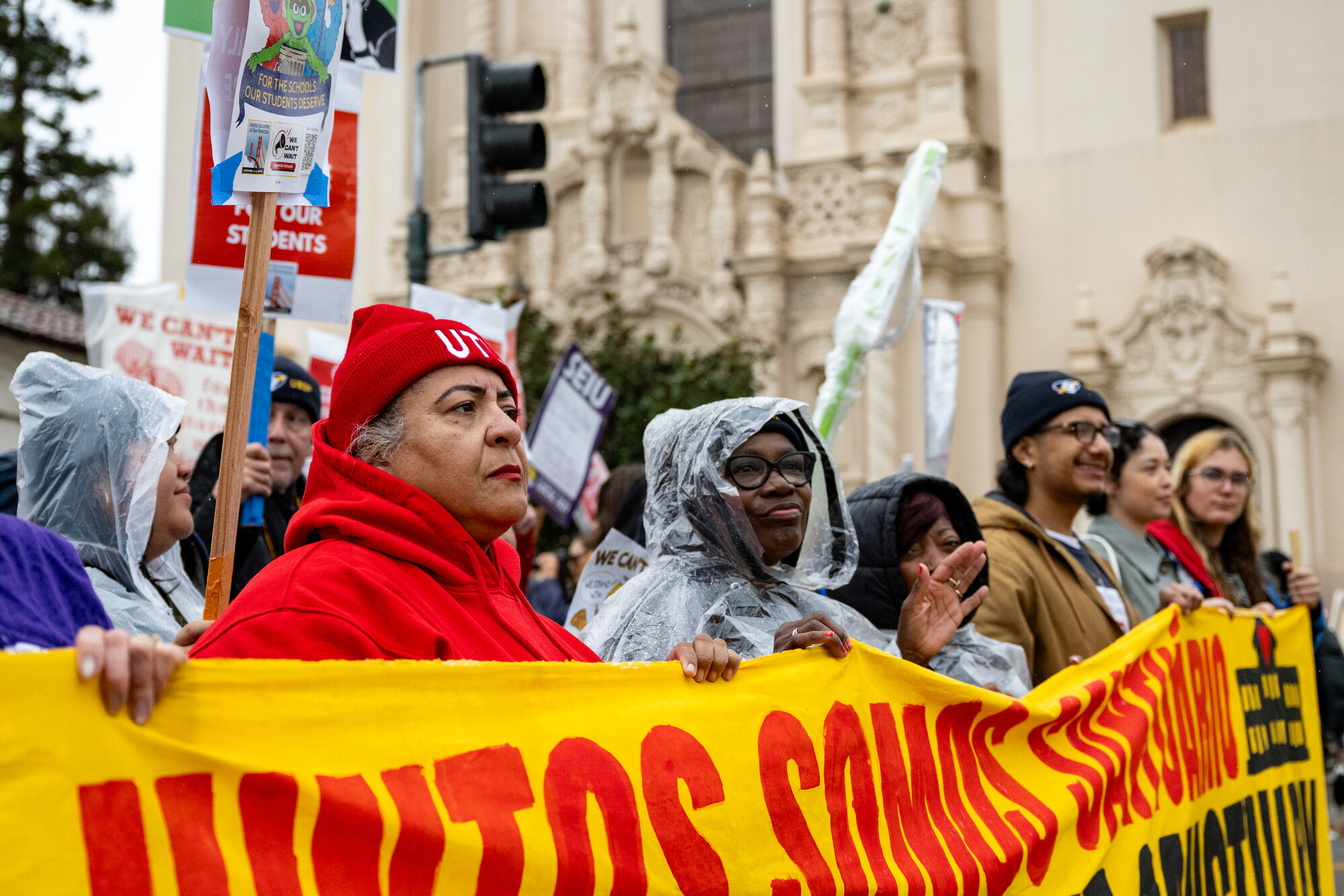
"caption": "Teachers, faculty and supporters march from Dolores Park to City Hall during the second day of an SFUSD teachers’ strike in San Francisco on Feb. 10, 2026. United Educators of San Francisco, which represents 6,000 teachers, classroom aides, counselors, social workers and other staff, voted 92% in favor of the $183 million deal.",
"credit": "Beth LaBerge/KQED",
"altTag": null,
"description": null,
"imgSizes": {
"thumbnail": {
"file": "https://cdn.kqed.org/wp-content/uploads/sites/10/2026/02/260210-SFUSDStrikeDay2-46-BL_qed-160x107.jpg",
"width": 160,
"height": 107,
"mimeType": "image/jpeg"
},
"1536x1536": {
"file": "https://cdn.kqed.org/wp-content/uploads/sites/10/2026/02/260210-SFUSDStrikeDay2-46-BL_qed-1536x1024.jpg",
"width": 1536,
"height": 1024,
"mimeType": "image/jpeg"
},
"post-thumbnail": {
"file": "https://cdn.kqed.org/wp-content/uploads/sites/10/2026/02/260210-SFUSDStrikeDay2-46-BL_qed-672x372.jpg",
"width": 672,
"height": 372,
"mimeType": "image/jpeg"
},
"twentyfourteen-full-width": {
"file": "https://cdn.kqed.org/wp-content/uploads/sites/10/2026/02/260210-SFUSDStrikeDay2-46-BL_qed-1038x576.jpg",
"width": 1038,
"height": 576,
"mimeType": "image/jpeg"
},
"npr-cds-wide": {
"file": "https://cdn.kqed.org/wp-content/uploads/sites/10/2026/02/260210-SFUSDStrikeDay2-46-BL_qed-1200x675.jpg",
"width": 1200,
"height": 675,
"mimeType": "image/jpeg"
},
"kqedFullSize": {
"file": "https://cdn.kqed.org/wp-content/uploads/sites/10/2026/02/260210-SFUSDStrikeDay2-46-BL_qed.jpg",
"width": 1999,
"height": 1333
}
},
"isLoading": false,
"fetchFailed": false
},
"news_12073227": {
"type": "attachments",
"id": "news_12073227",
"meta": {
"index": "attachments_1716263798",
"site": "news",
"id": "12073227",
"found": true
},
"title": "260211-SFUSDSTRIKEOCEANBEACH-05-BL-KQED",
"publishDate": 1770846526,
"status": "inherit",
"parent": 12073306,
"modified": 1770999108,
"caption": "Striking San Francisco Unified School District employees form the words \"For Our Students Strike\" at Ocean Beach in San Francisco on Feb. 11, 2026.",
"credit": "Beth LaBerge/KQED",
"altTag": null,
"description": null,
"imgSizes": {
"thumbnail": {
"file": "https://cdn.kqed.org/wp-content/uploads/sites/10/2026/02/260211-SFUSDSTRIKEOCEANBEACH-05-BL-KQED-160x107.jpg",
"width": 160,
"height": 107,
"mimeType": "image/jpeg"
},
"1536x1536": {
"file": "https://cdn.kqed.org/wp-content/uploads/sites/10/2026/02/260211-SFUSDSTRIKEOCEANBEACH-05-BL-KQED-1536x1025.jpg",
"width": 1536,
"height": 1025,
"mimeType": "image/jpeg"
},
"post-thumbnail": {
"file": "https://cdn.kqed.org/wp-content/uploads/sites/10/2026/02/260211-SFUSDSTRIKEOCEANBEACH-05-BL-KQED-672x372.jpg",
"width": 672,
"height": 372,
"mimeType": "image/jpeg"
},
"twentyfourteen-full-width": {
"file": "https://cdn.kqed.org/wp-content/uploads/sites/10/2026/02/260211-SFUSDSTRIKEOCEANBEACH-05-BL-KQED-1038x576.jpg",
"width": 1038,
"height": 576,
"mimeType": "image/jpeg"
},
"npr-cds-wide": {
"file": "https://cdn.kqed.org/wp-content/uploads/sites/10/2026/02/260211-SFUSDSTRIKEOCEANBEACH-05-BL-KQED-1200x675.jpg",
"width": 1200,
"height": 675,
"mimeType": "image/jpeg"
},
"kqedFullSize": {
"file": "https://cdn.kqed.org/wp-content/uploads/sites/10/2026/02/260211-SFUSDSTRIKEOCEANBEACH-05-BL-KQED.jpg",
"width": 2000,
"height": 1334
}
},
"isLoading": false,
"fetchFailed": false
},
"news_12025666": {
"type": "attachments",
"id": "news_12025666",
"meta": {
"index": "attachments_1716263798",
"site": "news",
"id": "12025666",
"found": true
},
"title": "250204-WeCantWait-13-BL",
"publishDate": 1738707457,
"status": "inherit",
"parent": 12025440,
"modified": 1764877024,
"caption": "Cassondra Curiel, president of United Educators of San Francisco, speaks during a press conference at Buena Vista Horace Mann K-8 Community School in San Francisco’s Mission District on Feb. 4, 2025.",
"credit": "Beth LaBerge/KQED",
"altTag": null,
"description": null,
"imgSizes": {
"medium": {
"file": "https://cdn.kqed.org/wp-content/uploads/sites/10/2025/02/250204-WeCantWait-13-BL-800x533.jpg",
"width": 800,
"height": 533,
"mimeType": "image/jpeg"
},
"large": {
"file": "https://cdn.kqed.org/wp-content/uploads/sites/10/2025/02/250204-WeCantWait-13-BL-1020x680.jpg",
"width": 1020,
"height": 680,
"mimeType": "image/jpeg"
},
"thumbnail": {
"file": "https://cdn.kqed.org/wp-content/uploads/sites/10/2025/02/250204-WeCantWait-13-BL-160x107.jpg",
"width": 160,
"height": 107,
"mimeType": "image/jpeg"
},
"1536x1536": {
"file": "https://cdn.kqed.org/wp-content/uploads/sites/10/2025/02/250204-WeCantWait-13-BL-1536x1024.jpg",
"width": 1536,
"height": 1024,
"mimeType": "image/jpeg"
},
"post-thumbnail": {
"file": "https://cdn.kqed.org/wp-content/uploads/sites/10/2025/02/250204-WeCantWait-13-BL-672x372.jpg",
"width": 672,
"height": 372,
"mimeType": "image/jpeg"
},
"twentyfourteen-full-width": {
"file": "https://cdn.kqed.org/wp-content/uploads/sites/10/2025/02/250204-WeCantWait-13-BL-1038x576.jpg",
"width": 1038,
"height": 576,
"mimeType": "image/jpeg"
},
"full-width": {
"file": "https://cdn.kqed.org/wp-content/uploads/sites/10/2025/02/250204-WeCantWait-13-BL-1920x1280.jpg",
"width": 1920,
"height": 1280,
"mimeType": "image/jpeg"
},
"kqedFullSize": {
"file": "https://cdn.kqed.org/wp-content/uploads/sites/10/2025/02/250204-WeCantWait-13-BL.jpg",
"width": 2000,
"height": 1333
}
},
"isLoading": false,
"fetchFailed": false
},
"news_12067251": {
"type": "attachments",
"id": "news_12067251",
"meta": {
"index": "attachments_1716263798",
"site": "news",
"id": "12067251",
"found": true
},
"title": "250818-SFUSDFirstDay-24_qed",
"publishDate": 1765835682,
"status": "inherit",
"parent": 12067247,
"modified": 1765835714,
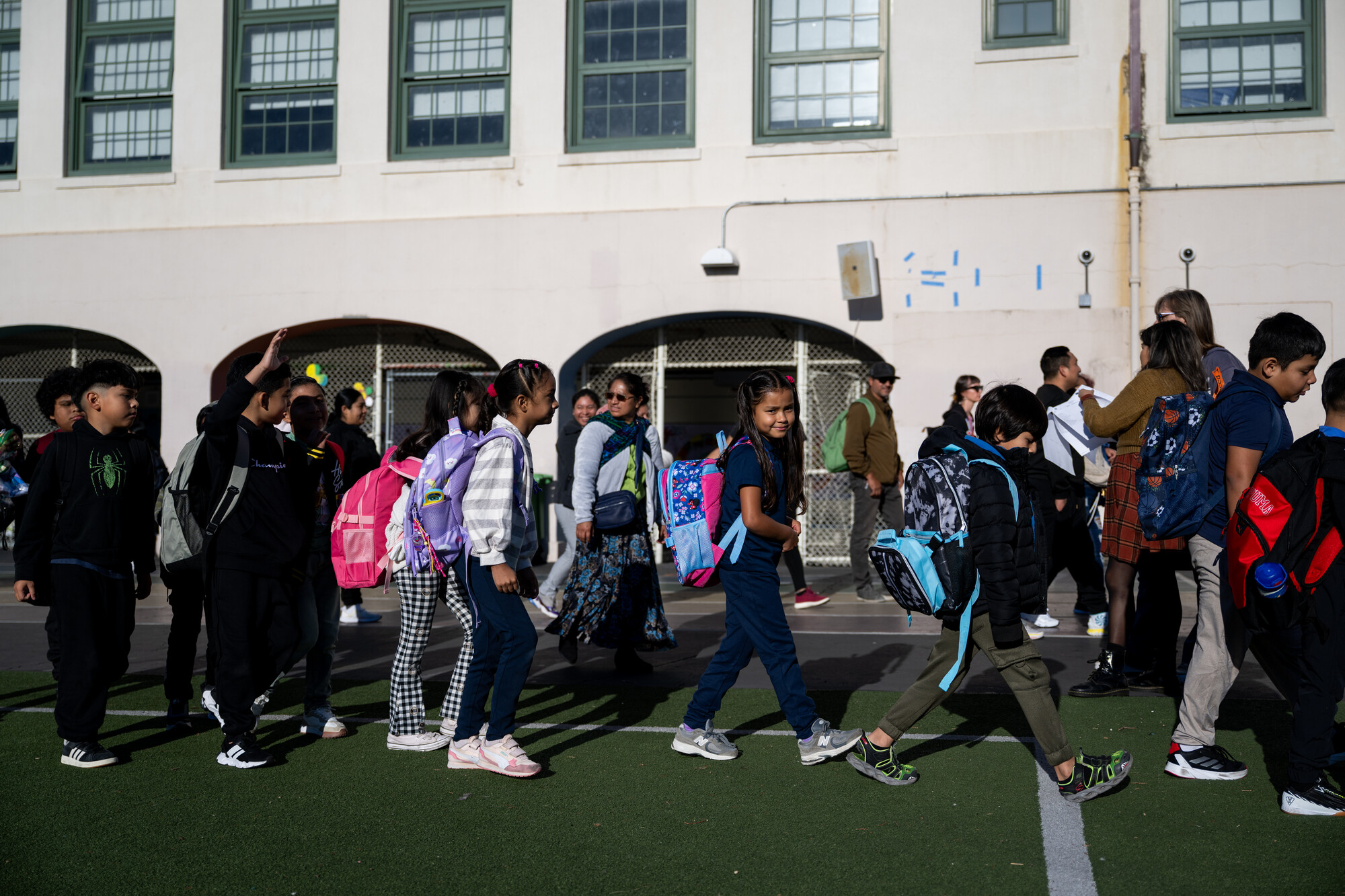
"caption": "Students at Sanchez Elementary School in San Francisco arrive for their first day of the school year on Aug. 18, 2025.",
"credit": "Beth LaBerge/KQED",
"altTag": null,
"description": null,
"imgSizes": {
"thumbnail": {
"file": "https://cdn.kqed.org/wp-content/uploads/sites/10/2025/12/250818-SFUSDFirstDay-24_qed-160x107.jpg",
"width": 160,
"height": 107,
"mimeType": "image/jpeg"
},
"1536x1536": {
"file": "https://cdn.kqed.org/wp-content/uploads/sites/10/2025/12/250818-SFUSDFirstDay-24_qed-1536x1024.jpg",
"width": 1536,
"height": 1024,
"mimeType": "image/jpeg"
},
"post-thumbnail": {
"file": "https://cdn.kqed.org/wp-content/uploads/sites/10/2025/12/250818-SFUSDFirstDay-24_qed-672x372.jpg",
"width": 672,
"height": 372,
"mimeType": "image/jpeg"
},
"twentyfourteen-full-width": {
"file": "https://cdn.kqed.org/wp-content/uploads/sites/10/2025/12/250818-SFUSDFirstDay-24_qed-1038x576.jpg",
"width": 1038,
"height": 576,
"mimeType": "image/jpeg"
},
"npr-cds-wide": {
"file": "https://cdn.kqed.org/wp-content/uploads/sites/10/2025/12/250818-SFUSDFirstDay-24_qed-1200x675.jpg",
"width": 1200,
"height": 675,
"mimeType": "image/jpeg"
},
"kqedFullSize": {
"file": "https://cdn.kqed.org/wp-content/uploads/sites/10/2025/12/250818-SFUSDFirstDay-24_qed.jpg",
"width": 2000,
"height": 1333
}
},
"isLoading": false,
"fetchFailed": false
},
"news_12064757": {
"type": "attachments",
"id": "news_12064757",
"meta": {
"index": "attachments_1716263798",
"site": "news",
"id": "12064757",
"found": true
},
"title": "241009-SFUSDClosuresMarch-30-BL_qed",
"publishDate": 1763584784,
"status": "inherit",
"parent": 12064746,
"modified": 1763584794,
"caption": "Teachers, K-5 students, and their families at Harvey Milk Civil Rights Academy rally at Harvey Milk Plaza in the Castro neighborhood of San Francisco on Oct. 9, 2024, to protest against the potential closure of the school. The school is on the list of 11 San Francisco campuses that could close after this academic year as the district grapples with declining enrollment and a budget deficit.",
"credit": "Beth LaBerge/KQED",
"altTag": null,
"description": null,
"imgSizes": {
"thumbnail": {
"file": "https://cdn.kqed.org/wp-content/uploads/sites/10/2025/11/241009-SFUSDClosuresMarch-30-BL_qed-160x107.jpg",
"width": 160,
"height": 107,
"mimeType": "image/jpeg"
},
"1536x1536": {
"file": "https://cdn.kqed.org/wp-content/uploads/sites/10/2025/11/241009-SFUSDClosuresMarch-30-BL_qed-1536x1024.jpg",
"width": 1536,
"height": 1024,
"mimeType": "image/jpeg"
},
"post-thumbnail": {
"file": "https://cdn.kqed.org/wp-content/uploads/sites/10/2025/11/241009-SFUSDClosuresMarch-30-BL_qed-672x372.jpg",
"width": 672,
"height": 372,
"mimeType": "image/jpeg"
},
"twentyfourteen-full-width": {
"file": "https://cdn.kqed.org/wp-content/uploads/sites/10/2025/11/241009-SFUSDClosuresMarch-30-BL_qed-1038x576.jpg",
"width": 1038,
"height": 576,
"mimeType": "image/jpeg"
},
"npr-cds-wide": {
"file": "https://cdn.kqed.org/wp-content/uploads/sites/10/2025/11/241009-SFUSDClosuresMarch-30-BL_qed-1200x675.jpg",
"width": 1200,
"height": 675,
"mimeType": "image/jpeg"
},
"kqedFullSize": {
"file": "https://cdn.kqed.org/wp-content/uploads/sites/10/2025/11/241009-SFUSDClosuresMarch-30-BL_qed.jpg",
"width": 2000,
"height": 1333
}
},
"isLoading": false,
"fetchFailed": false
},
"news_12052480": {
"type": "attachments",
"id": "news_12052480",
"meta": {
"index": "attachments_1716263798",
"site": "news",
"id": "12052480",
"found": true
},
"title": "250815-SF TK-DN-01-KQED",
"publishDate": 1755299194,
"status": "inherit",
"parent": 12052609,
"modified": 1755539932,
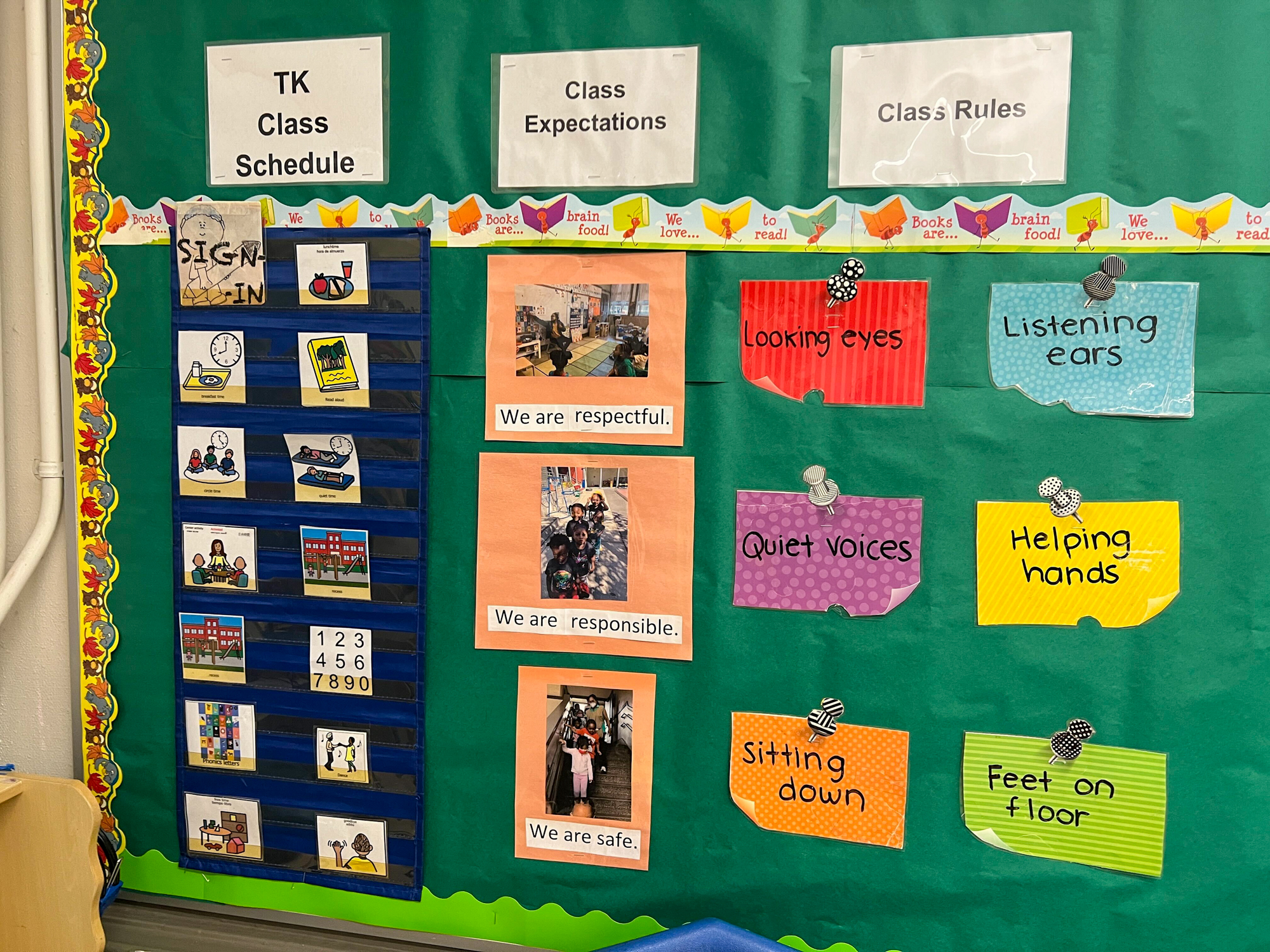
"caption": "Joselyn Manigque's transitional kindergarten classroom at Dr. William Cobb Elementary School in San Francisco on Aug. 15, 2025.",
"credit": "Daisy Nguyen/KQED",
"altTag": null,
"description": null,
"imgSizes": {
"thumbnail": {
"file": "https://cdn.kqed.org/wp-content/uploads/sites/10/2025/08/250815-SF-TK-DN-01-KQED-160x120.jpg",
"width": 160,
"height": 120,
"mimeType": "image/jpeg"
},
"1536x1536": {
"file": "https://cdn.kqed.org/wp-content/uploads/sites/10/2025/08/250815-SF-TK-DN-01-KQED-1536x1152.jpg",
"width": 1536,
"height": 1152,
"mimeType": "image/jpeg"
},
"post-thumbnail": {
"file": "https://cdn.kqed.org/wp-content/uploads/sites/10/2025/08/250815-SF-TK-DN-01-KQED-672x372.jpg",
"width": 672,
"height": 372,
"mimeType": "image/jpeg"
},
"twentyfourteen-full-width": {
"file": "https://cdn.kqed.org/wp-content/uploads/sites/10/2025/08/250815-SF-TK-DN-01-KQED-1038x576.jpg",
"width": 1038,
"height": 576,
"mimeType": "image/jpeg"
},
"kqedFullSize": {
"file": "https://cdn.kqed.org/wp-content/uploads/sites/10/2025/08/250815-SF-TK-DN-01-KQED.jpg",
"width": 2000,
"height": 1500
}
},
"isLoading": false,
"fetchFailed": false
},
"news_12059581": {
"type": "attachments",
"id": "news_12059581",
"meta": {
"index": "attachments_1716263798",
"site": "news",
"id": "12059581",
"found": true
},
"title": "20240827_SFUSDProtest_GC-5_qed",
"publishDate": 1760136595,
"status": "inherit",
"parent": 12059537,
"modified": 1760136618,
"caption": "Individuals cheer during an emergency rally and press conference, held by the United Educators of San Francisco, demanding fully staffed schools, outside of the San Francisco Unified School District offices, on Aug. 27, 2024.",
"credit": "Gina Castro/KQED",
"altTag": null,
"description": null,
"imgSizes": {
"thumbnail": {
"file": "https://cdn.kqed.org/wp-content/uploads/sites/10/2025/10/20240827_SFUSDProtest_GC-5_qed-160x109.jpg",
"width": 160,
"height": 109,
"mimeType": "image/jpeg"
},
"1536x1536": {
"file": "https://cdn.kqed.org/wp-content/uploads/sites/10/2025/10/20240827_SFUSDProtest_GC-5_qed-1536x1048.jpg",
"width": 1536,
"height": 1048,
"mimeType": "image/jpeg"
},
"post-thumbnail": {
"file": "https://cdn.kqed.org/wp-content/uploads/sites/10/2025/10/20240827_SFUSDProtest_GC-5_qed-672x372.jpg",
"width": 672,
"height": 372,
"mimeType": "image/jpeg"
},
"twentyfourteen-full-width": {
"file": "https://cdn.kqed.org/wp-content/uploads/sites/10/2025/10/20240827_SFUSDProtest_GC-5_qed-1038x576.jpg",
"width": 1038,
"height": 576,
"mimeType": "image/jpeg"
},
"kqedFullSize": {
"file": "https://cdn.kqed.org/wp-content/uploads/sites/10/2025/10/20240827_SFUSDProtest_GC-5_qed.jpg",
"width": 1953,
"height": 1333
}
},
"isLoading": false,
"fetchFailed": false
},
"news_12052409": {
"type": "attachments",
"id": "news_12052409",
"meta": {
"index": "attachments_1716263798",
"site": "news",
"id": "12052409",
"found": true
},
"title": "241023-SFUSDSuperintendent-12-BL_qed (1)",
"publishDate": 1755284348,
"status": "inherit",
"parent": 0,
"modified": 1755301624,
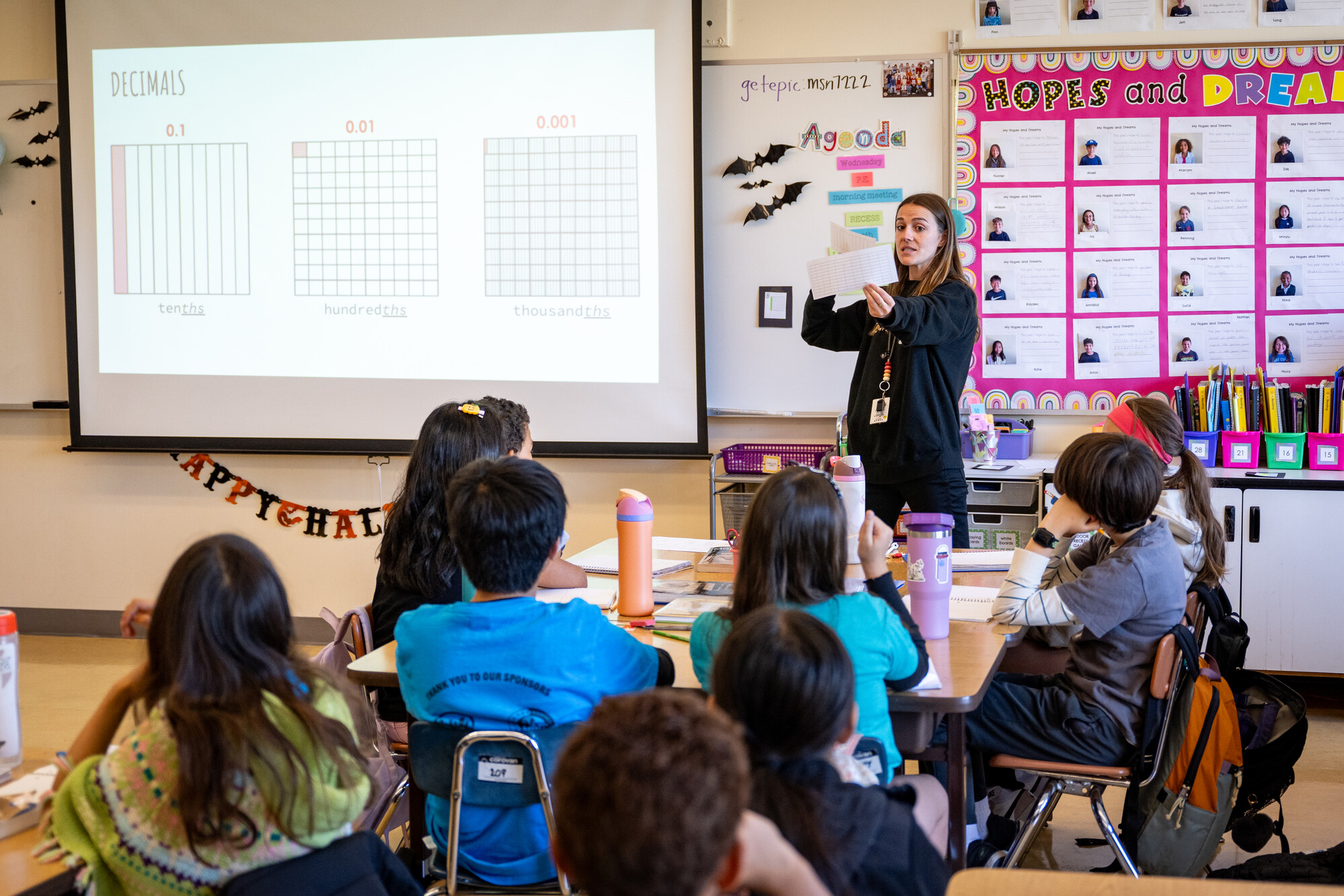
"caption": "A teacher instructs her class at Yick Wo Alternative Elementary School in San Francisco on Oct. 23, 2024.",
"credit": "Beth LaBerge/KQED",
"altTag": null,
"description": null,
"imgSizes": {
"thumbnail": {
"file": "https://cdn.kqed.org/wp-content/uploads/sites/10/2025/08/241023-SFUSDSuperintendent-12-BL_qed-1-160x107.jpg",
"width": 160,
"height": 107,
"mimeType": "image/jpeg"
},
"1536x1536": {
"file": "https://cdn.kqed.org/wp-content/uploads/sites/10/2025/08/241023-SFUSDSuperintendent-12-BL_qed-1-1536x1024.jpg",
"width": 1536,
"height": 1024,
"mimeType": "image/jpeg"
},
"post-thumbnail": {
"file": "https://cdn.kqed.org/wp-content/uploads/sites/10/2025/08/241023-SFUSDSuperintendent-12-BL_qed-1-672x372.jpg",
"width": 672,
"height": 372,
"mimeType": "image/jpeg"
},
"twentyfourteen-full-width": {
"file": "https://cdn.kqed.org/wp-content/uploads/sites/10/2025/08/241023-SFUSDSuperintendent-12-BL_qed-1-1038x576.jpg",
"width": 1038,
"height": 576,
"mimeType": "image/jpeg"
},
"kqedFullSize": {
"file": "https://cdn.kqed.org/wp-content/uploads/sites/10/2025/08/241023-SFUSDSuperintendent-12-BL_qed-1.jpg",
"width": 1999,
"height": 1333
}
},
"isLoading": false,
"fetchFailed": false
},
"news_12051869": {
"type": "attachments",
"id": "news_12051869",
"meta": {
"index": "attachments_1716263798",
"site": "news",
"id": "12051869",
"found": true
},
"title": "250418-SFUSD-04-BL_qed",
"publishDate": 1755024187,
"status": "inherit",
"parent": 12051862,
"modified": 1755024198,
"caption": "The San Francisco Unified School District Administrative Offices in San Francisco on April 18, 2025.",
"credit": "Beth LaBerge/KQED",
"altTag": null,
"description": null,
"imgSizes": {
"thumbnail": {
"file": "https://cdn.kqed.org/wp-content/uploads/sites/10/2025/08/250418-SFUSD-04-BL_qed-160x107.jpg",
"width": 160,
"height": 107,
"mimeType": "image/jpeg"
},
"1536x1536": {
"file": "https://cdn.kqed.org/wp-content/uploads/sites/10/2025/08/250418-SFUSD-04-BL_qed-1536x1024.jpg",
"width": 1536,
"height": 1024,
"mimeType": "image/jpeg"
},
"post-thumbnail": {
"file": "https://cdn.kqed.org/wp-content/uploads/sites/10/2025/08/250418-SFUSD-04-BL_qed-672x372.jpg",
"width": 672,
"height": 372,
"mimeType": "image/jpeg"
},
"twentyfourteen-full-width": {
"file": "https://cdn.kqed.org/wp-content/uploads/sites/10/2025/08/250418-SFUSD-04-BL_qed-1038x576.jpg",
"width": 1038,
"height": 576,
"mimeType": "image/jpeg"
},
"kqedFullSize": {
"file": "https://cdn.kqed.org/wp-content/uploads/sites/10/2025/08/250418-SFUSD-04-BL_qed.jpg",
"width": 2000,
"height": 1333
}
},
"isLoading": false,
"fetchFailed": false
},
"news_12036911": {
"type": "attachments",
"id": "news_12036911",
"meta": {
"index": "attachments_1716263798",
"site": "news",
"id": "12036911",
"found": true
},
"title": "250418-SFUSD-06-BL-KQED",
"publishDate": 1745253406,
"status": "inherit",
"parent": 12036914,
"modified": 1745274516,
"caption": "The San Francisco Unified School District Administrative Offices in San Francisco on April 18, 2025.",
"credit": "Beth LaBerge/KQED",
"altTag": null,
"description": null,
"imgSizes": {
"medium": {
"file": "https://cdn.kqed.org/wp-content/uploads/sites/10/2025/04/250418-SFUSD-06-BL-KQED-800x533.jpg",
"width": 800,
"height": 533,
"mimeType": "image/jpeg"
},
"large": {
"file": "https://cdn.kqed.org/wp-content/uploads/sites/10/2025/04/250418-SFUSD-06-BL-KQED-1020x680.jpg",
"width": 1020,
"height": 680,
"mimeType": "image/jpeg"
},
"thumbnail": {
"file": "https://cdn.kqed.org/wp-content/uploads/sites/10/2025/04/250418-SFUSD-06-BL-KQED-160x107.jpg",
"width": 160,
"height": 107,
"mimeType": "image/jpeg"
},
"1536x1536": {
"file": "https://cdn.kqed.org/wp-content/uploads/sites/10/2025/04/250418-SFUSD-06-BL-KQED-1536x1024.jpg",
"width": 1536,
"height": 1024,
"mimeType": "image/jpeg"
},
"post-thumbnail": {
"file": "https://cdn.kqed.org/wp-content/uploads/sites/10/2025/04/250418-SFUSD-06-BL-KQED-672x372.jpg",
"width": 672,
"height": 372,
"mimeType": "image/jpeg"
},
"twentyfourteen-full-width": {
"file": "https://cdn.kqed.org/wp-content/uploads/sites/10/2025/04/250418-SFUSD-06-BL-KQED-1038x576.jpg",
"width": 1038,
"height": 576,
"mimeType": "image/jpeg"
},
"full-width": {
"file": "https://cdn.kqed.org/wp-content/uploads/sites/10/2025/04/250418-SFUSD-06-BL-KQED-1920x1280.jpg",
"width": 1920,
"height": 1280,
"mimeType": "image/jpeg"
},
"kqedFullSize": {
"file": "https://cdn.kqed.org/wp-content/uploads/sites/10/2025/04/250418-SFUSD-06-BL-KQED.jpg",
"width": 2000,
"height": 1333
}
},
"isLoading": false,
"fetchFailed": false
},
"news_12044982": {
"type": "attachments",
"id": "news_12044982",
"meta": {
"index": "attachments_1716263798",
"site": "news",
"id": "12044982",
"found": true
},
"title": "250618-NEWTEACHERHOUSING-09-BL-KQED",
"publishDate": 1750284860,
"status": "inherit",
"parent": 12086457,
"modified": 1780701647,
"caption": "Construction workers build at 750 Golden Gate Avenue in San Francisco on June 18, 2025, during a groundbreaking ceremony marking the start of two affordable housing projects. One will deliver 75 units prioritized for SFUSD and City College educators, and the other at 850 Turk will add 92 family apartments.",
"credit": "Beth LaBerge/KQED",
"altTag": null,
"description": null,
"imgSizes": {
"thumbnail": {
"file": "https://cdn.kqed.org/wp-content/uploads/sites/10/2025/06/250618-NEWTEACHERHOUSING-09-BL-KQED-160x107.jpg",
"width": 160,
"height": 107,
"mimeType": "image/jpeg"
},
"1536x1536": {
"file": "https://cdn.kqed.org/wp-content/uploads/sites/10/2025/06/250618-NEWTEACHERHOUSING-09-BL-KQED-1536x1024.jpg",
"width": 1536,
"height": 1024,
"mimeType": "image/jpeg"
},
"post-thumbnail": {
"file": "https://cdn.kqed.org/wp-content/uploads/sites/10/2025/06/250618-NEWTEACHERHOUSING-09-BL-KQED-672x372.jpg",
"width": 672,
"height": 372,
"mimeType": "image/jpeg"
},
"twentyfourteen-full-width": {
"file": "https://cdn.kqed.org/wp-content/uploads/sites/10/2025/06/250618-NEWTEACHERHOUSING-09-BL-KQED-1038x576.jpg",
"width": 1038,
"height": 576,
"mimeType": "image/jpeg"
},
"kqedFullSize": {
"file": "https://cdn.kqed.org/wp-content/uploads/sites/10/2025/06/250618-NEWTEACHERHOUSING-09-BL-KQED.jpg",
"width": 2000,
"height": 1333
}
},
"isLoading": false,
"fetchFailed": false
}
},
"audioPlayerReducer": {
"postId": "stream_live",
"isPaused": true,
"isPlaying": false,
"pfsActive": false,
"pledgeModalIsOpen": true,
"playerDrawerIsOpen": false,
"liveAudioPlayStartedAt": 0,
"liveAudioPlayContext": ""
},
"authorsReducer": {
"gmarzorati": {
"type": "authors",
"id": "227",
"meta": {
"index": "authors_1716337520",
"id": "227",
"found": true
},
"name": "Guy Marzorati",
"firstName": "Guy",
"lastName": "Marzorati",
"slug": "gmarzorati",
"email": "gmarzorati@KQED.org",
"display_author_email": true,
"staff_mastheads": [
"news"
],
"title": "Correspondent",
"bio": "Guy Marzorati is a correspondent on KQED's California Politics and Government Desk, based in San Jose. A graduate of Santa Clara University, Guy joined KQED in 2013. He reports on state and local politics and produces KQED's digital voter guide.",
"avatar": "https://secure.gravatar.com/avatar/e7038b8dbfd55b104369b76b1cd0b9de?s=600&d=blank&r=g",
"twitter": "guymarzorati",
"facebook": null,
"instagram": null,
"linkedin": null,
"sites": [
{
"site": "",
"roles": [
"editor"
]
},
{
"site": "news",
"roles": [
"editor"
]
},
{
"site": "science",
"roles": [
"editor"
]
},
{
"site": "forum",
"roles": [
"editor"
]
},
{
"site": "elections",
"roles": [
"editor"
]
},
{
"site": "liveblog",
"roles": [
"editor"
]
}
],
"headData": {
"title": "Guy Marzorati | KQED",
"description": "Correspondent",
"ogImgSrc": "https://secure.gravatar.com/avatar/e7038b8dbfd55b104369b76b1cd0b9de?s=600&d=blank&r=g",
"twImgSrc": "https://secure.gravatar.com/avatar/e7038b8dbfd55b104369b76b1cd0b9de?s=600&d=blank&r=g"
},
"isLoading": false,
"link": "/author/gmarzorati"
},
"scottshafer": {
"type": "authors",
"id": "255",
"meta": {
"index": "authors_1716337520",
"id": "255",
"found": true
},
"name": "Scott Shafer",
"firstName": "Scott",
"lastName": "Shafer",
"slug": "scottshafer",
"email": "sshafer@kqed.org",
"display_author_email": false,
"staff_mastheads": [
"news"
],
"title": "KQED Contributor",
"bio": "Scott Shafer is a senior editor with the KQED Politics and Government desk. He is co-host of Political Breakdown, the award-winning radio show and podcast with a personal take on the world of politics. Scott came to KQED in 1998 to host the statewide\u003cem> California Report\u003c/em>. Prior to that he had extended stints in politics and government\u003cem>.\u003c/em> He uses that inside experience at KQED in his, reporting, hosting and analysis for the politics desk. Scott collaborated \u003cem>Political Breakdown a\u003c/em>nd on \u003cem>The Political Mind of Jerry Brown, \u003c/em>an eight-part series about the life and extraordinary political career of the former governor. For fun, he plays water polo with the San Francisco Tsunami.",
"avatar": "https://secure.gravatar.com/avatar/a62ebae45b79d7aed1a39a0e3bf68104?s=600&d=blank&r=g",
"twitter": "scottshafer",
"bluesky": null,
"facebook": null,
"instagram": null,
"linkedin": null,
"sites": [
{
"site": "news",
"roles": [
"editor"
]
},
{
"site": "stateofhealth",
"roles": [
"author"
]
},
{
"site": "science",
"roles": [
"author"
]
},
{
"site": "forum",
"roles": [
"subscriber"
]
},
{
"site": "liveblog",
"roles": [
"author"
]
}
],
"headData": {
"title": "Scott Shafer | KQED",
"description": "KQED Contributor",
"ogImgSrc": "https://secure.gravatar.com/avatar/a62ebae45b79d7aed1a39a0e3bf68104?s=600&d=blank&r=g",
"twImgSrc": "https://secure.gravatar.com/avatar/a62ebae45b79d7aed1a39a0e3bf68104?s=600&d=blank&r=g"
},
"isLoading": false,
"link": "/author/scottshafer"
},
"abandlamudi": {
"type": "authors",
"id": "11672",
"meta": {
"index": "authors_1716337520",
"id": "11672",
"found": true
},
"name": "Adhiti Bandlamudi",
"firstName": "Adhiti",
"lastName": "Bandlamudi",
"slug": "abandlamudi",
"email": "abandlamudi@kqed.org",
"display_author_email": false,
"staff_mastheads": [
"news"
],
"title": "KQED Housing Reporter",
"bio": "Adhiti Bandlamudi reports for KQED's Housing desk. She focuses on how housing gets built across the Bay Area. Before joining KQED in 2020, she reported for WUNC in Durham, North Carolina, WABE in Atlanta, Georgia and Capital Public Radio in Sacramento. In 2017, she was awarded a Kroc Fellowship at NPR where she reported on everything from sprinkles to the Golden State Killer's arrest. When she's not reporting, she's baking new recipes in her kitchen or watching movies with friends and family. She's originally from Georgia and has strong opinions about Great British Bake Off.",
"avatar": "https://secure.gravatar.com/avatar/868129c8b257bb99a3500e2c86a65400?s=600&d=mm&r=g",
"twitter": "oddity_adhiti",
"facebook": null,
"instagram": null,
"linkedin": null,
"sites": [
{
"site": "arts",
"roles": [
"author"
]
},
{
"site": "news",
"roles": [
"editor"
]
},
{
"site": "liveblog",
"roles": [
"author"
]
}
],
"headData": {
"title": "Adhiti Bandlamudi | KQED",
"description": "KQED Housing Reporter",
"ogImgSrc": "https://secure.gravatar.com/avatar/868129c8b257bb99a3500e2c86a65400?s=600&d=mm&r=g",
"twImgSrc": "https://secure.gravatar.com/avatar/868129c8b257bb99a3500e2c86a65400?s=600&d=mm&r=g"
},
"isLoading": false,
"link": "/author/abandlamudi"
},
"kdebenedetti": {
"type": "authors",
"id": "11913",
"meta": {
"index": "authors_1716337520",
"id": "11913",
"found": true
},
"name": "Katie DeBenedetti",
"firstName": "Katie",
"lastName": "DeBenedetti",
"slug": "kdebenedetti",
"email": "kdebenedetti@kqed.org",
"display_author_email": false,
"staff_mastheads": [
"news",
"science"
],
"title": "KQED Contributor",
"bio": "Katie DeBenedetti is a digital reporter covering daily news for the Express Desk. Prior to joining KQED as a culture reporting intern in January 2024, she covered education and city government for the Napa Valley Register.",
"avatar": "https://secure.gravatar.com/avatar/6e31073cb8f7e4214ab03f42771d0f45?s=600&d=blank&r=g",
"twitter": null,
"facebook": null,
"instagram": null,
"linkedin": null,
"sites": [
{
"site": "news",
"roles": [
"author"
]
},
{
"site": "science",
"roles": [
"author"
]
},
{
"site": "liveblog",
"roles": [
"author"
]
}
],
"headData": {
"title": "Katie DeBenedetti | KQED",
"description": "KQED Contributor",
"ogImgSrc": "https://secure.gravatar.com/avatar/6e31073cb8f7e4214ab03f42771d0f45?s=600&d=blank&r=g",
"twImgSrc": "https://secure.gravatar.com/avatar/6e31073cb8f7e4214ab03f42771d0f45?s=600&d=blank&r=g"
},
"isLoading": false,
"link": "/author/kdebenedetti"
}
},
"pagesReducer": {
"news_tag_san-francisco-teachers": {
"type": "terms",
"id": "news_30812",
"meta": {
"index": "terms_1716263798",
"site": "news",
"id": "30812",
"score": 10.404648
},
"featImg": null,
"name": "san francisco teachers",
"description": null,
"taxonomy": "tag",
"headData": {
"twImgId": null,
"twTitle": null,
"ogTitle": null,
"ogImgId": null,
"twDescription": null,
"description": null,
"title": "san francisco teachers Archives | KQED News",
"ogDescription": null
},
"ttid": 30829,
"slug": "san-francisco-teachers",
"isLoading": false,
"title": "san francisco teachers",
"pageMeta": {
"site": "news",
"WpPageTemplate": "page-topic-editorial",
"currentPage": 1
},
"blocks": [
{
"blockName": "kqed/post-list",
"attrs": {
"layout": "cardArticle2",
"query": "posts/news?tag=san-francisco-teachers",
"seeMore": false,
"paginated": true,
"page": 1
}
},
{
"blockName": "kqed/ad"
}
]
}
},
"pfsSessionReducer": {},
"postsReducer": {
"stream_live": {
"type": "live",
"id": "stream_live",
"audioUrl": "https://streams.kqed.org/kqedradio",
"title": "Live Stream",
"excerpt": "Live Stream information currently unavailable.",
"link": "/radio",
"featImg": "",
"label": {
"name": "KQED Live",
"link": "/"
}
},
"stream_kqedNewscast": {
"type": "posts",
"id": "stream_kqedNewscast",
"audioUrl": "https://www.kqed.org/.stream/anon/radio/RDnews/newscast.mp3?_=1",
"title": "KQED Newscast",
"featImg": "",
"label": {
"name": "88.5 FM",
"link": "/"
}
},
"news_12074913": {
"type": "posts",
"id": "news_12074913",
"meta": {
"index": "posts_1716263798",
"site": "news",
"id": "12074913",
"score": null,
"sort": [
1772232963000
]
},
"guestAuthors": [],
"slug": "sfusd-teachers-union-overwhelmingly-approves-contract-deal",
"title": "SFUSD Teachers Union Overwhelmingly Approves Contract Deal",
"publishDate": 1772232963,
"format": "standard",
"headTitle": "SFUSD Teachers Union Overwhelmingly Approves Contract Deal | KQED",
"labelTerm": {
"site": "news"
},
"content": "\u003cp>San Francisco’s teachers union overwhelmingly voted to ratify its \u003ca href=\"https://www.kqed.org/news/12073441/san-franciscos-teachers-strike-has-ended-what-comes-next\">new two-year contract\u003c/a> on Friday, two weeks after the \u003ca href=\"https://www.kqed.org/news/12073306/sfusd-teachers-strike-no-end-in-sight-health-care-battle\">tentative deal ended a four-day strike\u003c/a>.\u003c/p>\n\u003cp>United Educators of San Francisco, which represents 6,000 teachers, classroom aides, counselors, social workers and other staff, voted 92% in favor of the $183 million deal.\u003c/p>\n\u003cp>The contract includes a commitment from the district to fully fund family health care beginning next year and boosts wages for some of the district’s lowest-paid workers.\u003c/p>\n\u003cp>[ad fullwidth]\u003c/p>\n\u003cp>“San Francisco educators have overwhelmingly approved the contract that we know will help stabilize our schools and our communities,” union President Cassondra Curiel said.\u003c/p>\n\u003cp>“This is a historic win. It’s a win for our members … it’s a win for our school district and broadly for public educators throughout the Bay Area and California.”\u003c/p>\n\u003cfigure id=\"attachment_12073227\" class=\"wp-caption aligncenter\" style=\"max-width: 2000px\">\u003cimg loading=\"lazy\" decoding=\"async\" class=\"size-full wp-image-12073227\" src=\"https://cdn.kqed.org/wp-content/uploads/sites/10/2026/02/260211-SFUSDSTRIKEOCEANBEACH-05-BL-KQED.jpg\" alt=\"\" width=\"2000\" height=\"1334\" srcset=\"https://cdn.kqed.org/wp-content/uploads/sites/10/2026/02/260211-SFUSDSTRIKEOCEANBEACH-05-BL-KQED.jpg 2000w, https://cdn.kqed.org/wp-content/uploads/sites/10/2026/02/260211-SFUSDSTRIKEOCEANBEACH-05-BL-KQED-160x107.jpg 160w, https://cdn.kqed.org/wp-content/uploads/sites/10/2026/02/260211-SFUSDSTRIKEOCEANBEACH-05-BL-KQED-1536x1025.jpg 1536w\" sizes=\"auto, (max-width: 2000px) 100vw, 2000px\">\u003cfigcaption class=\"wp-caption-text\">Striking San Francisco Unified School District employees form the words “For Our Students Strike” at Ocean Beach in San Francisco on Feb. 11, 2026. \u003ccite>(Beth LaBerge/KQED)\u003c/cite>\u003c/figcaption>\u003c/figure>\n\u003cp>The vote comes as some other Bay Area districts narrowly avoid their own work stoppages. Early Friday, the Oakland Unified School District \u003ca href=\"https://www.kqed.org/news/12074794/oakland-schools-teachers-union-reach-deal-avert-strike\">reached a tentative agreement\u003c/a> with its teachers union to avert a looming strike, and Berkeley also secured a deal earlier this week.\u003c/p>\n\u003cp>“We’re really happy, proud of them and looking forward to hearing about many more districts doing the right thing and making sure that our schools are fully funded,” Curiel said.\u003c/p>\n\u003cp>Under the new deal, SFUSD will begin to cover the full cost of health care premiums for educators with dependents. Union leaders have said that previously cost members up to $1,500 per month.[aside postID=news_12074197 hero='https://cdn.kqed.org/wp-content/uploads/sites/10/2026/02/260210-SFUSDStrikeDay2-47-BL_qed.jpg']The contract also grants an 8.5% wage increase over two years to security guards and paraeducators, who work as classroom aides. Teachers and other credentialed staff, including social workers and counselors, will see 5% raises in that time.\u003c/p>\n\u003cp>It \u003ca href=\"https://www.kqed.org/news/12074197/sfusd-teachers-got-a-big-contract-deal-not-all-are-happy-with-it\">isn’t without pushback\u003c/a> from some members, including a group of Independence High School teachers, who urged fellow educators to \u003ca href=\"https://www.kalw.org/bay-area-news/2026-02-19/why-these-san-francisco-educators-are-voting-no-on-the-tentative-agreement\">vote against ratification\u003c/a>, citing a lack of concrete special education reforms and lower raises for credentialed staff than the union had proposed.\u003c/p>\n\u003cp>The 5% increase they’ll get over the next two years fails to keep up with the federal cost-of-living adjustment for 2026.\u003c/p>\n\u003cp>After the deal, the district has also warned that it will add another burden onto its already thin budget. SFUSD is looking to \u003ca href=\"https://www.kqed.org/news/12067247/as-teacher-strike-looms-san-franciscos-school-board-set-to-review-proposed-funding-cuts\">cut $100 million in ongoing expenses\u003c/a> this spring, not considering the additional costs of the labor deal.\u003c/p>\n\u003cp>This week, the school board approved dozens of layoffs, and \u003ca href=\"https://www.kqed.org/news/12073441/san-franciscos-teachers-strike-has-ended-what-comes-next\">more reductions are expected\u003c/a> in the coming months. Superintendent Maria Su has said workforce reductions and possible school closures are “on the table.”\u003c/p>\n\u003cfigure id=\"attachment_12037008\" class=\"wp-caption aligncenter\" style=\"max-width: 2000px\">\u003cimg loading=\"lazy\" decoding=\"async\" class=\"size-full wp-image-12037008\" src=\"https://cdn.kqed.org/wp-content/uploads/sites/10/2025/04/250421-SFUSDCentralCuts-11-BL_qed.jpg\" alt=\"\" width=\"2000\" height=\"1333\" srcset=\"https://cdn.kqed.org/wp-content/uploads/sites/10/2025/04/250421-SFUSDCentralCuts-11-BL_qed.jpg 2000w, https://cdn.kqed.org/wp-content/uploads/sites/10/2025/04/250421-SFUSDCentralCuts-11-BL_qed-800x533.jpg 800w, https://cdn.kqed.org/wp-content/uploads/sites/10/2025/04/250421-SFUSDCentralCuts-11-BL_qed-1020x680.jpg 1020w, https://cdn.kqed.org/wp-content/uploads/sites/10/2025/04/250421-SFUSDCentralCuts-11-BL_qed-160x107.jpg 160w, https://cdn.kqed.org/wp-content/uploads/sites/10/2025/04/250421-SFUSDCentralCuts-11-BL_qed-1536x1024.jpg 1536w, https://cdn.kqed.org/wp-content/uploads/sites/10/2025/04/250421-SFUSDCentralCuts-11-BL_qed-1920x1280.jpg 1920w\" sizes=\"auto, (max-width: 2000px) 100vw, 2000px\">\u003cfigcaption class=\"wp-caption-text\">San Francisco Unified School District Superintendent Dr. Maria Su speaks during a press conference at the school district offices in San Francisco on April 21, 2025. \u003ccite>(Beth LaBerge/KQED)\u003c/cite>\u003c/figcaption>\u003c/figure>\n\u003cp>“We stretched our resources to the limit to get this agreement done,” she said after signing the tentative agreement. “We still have a long way ahead of us where difficult choices remain. So while we have a deal today, we still need more support in the future.”\u003c/p>\n\u003cp>But the union has said the \u003ca href=\"https://www.kqed.org/news/12073219/san-francisco-teachers-strike-day-3-citys-schools-stay-closed-as-negotiations-drag-on\">district’s narrative about its budget is untrue\u003c/a>, accusing officials of manufacturing a crisis while building up a significant reserve fund.\u003c/p>\n\u003cp>Curiel said Friday that the city’s strong support for striking teachers shows that “our community members support our public schools being as best as they can be.”\u003c/p>\n\u003cp>“That puts us in stark conflict with any initiatives that attempt from any direction to cut positions, to cut programs from schools, to eliminate schools,” she said. “We and our many, many supporters … are ready to step up to the plate and to fight for the schools our students deserve.”\u003c/p>\n\u003cp>The contract still needs to be approved by SFUSD’s school board before it becomes final.\u003c/p>\n\u003cp>\u003c/p>\n",
"blocks": [],
"excerpt": "United Educators of San Francisco, which represents 6,000 teachers, classroom aides, counselors, social workers and other staff, voted 92% in favor of the $183 million deal.",
"status": "publish",
"parent": 0,
"modified": 1772237719,
"stats": {
"hasAudio": false,
"hasVideo": false,
"hasChartOrMap": false,
"iframeSrcs": [],
"hasGoogleForm": false,
"hasGallery": false,
"hasHearkenModule": false,
"hasPolis": false,
"paragraphCount": 19,
"wordCount": 704
},
"headData": {
"title": "SFUSD Teachers Union Overwhelmingly Approves Contract Deal | KQED",
"description": "United Educators of San Francisco, which represents 6,000 teachers, classroom aides, counselors, social workers and other staff, voted 92% in favor of the $183 million deal.",
"ogTitle": "",
"ogDescription": "",
"ogImgId": "",
"twTitle": "",
"twDescription": "",
"twImgId": "",
"schema": {
"@context": "https://schema.org",
"@type": "NewsArticle",
"headline": "SFUSD Teachers Union Overwhelmingly Approves Contract Deal",
"datePublished": "2026-02-27T14:56:03-08:00",
"dateModified": "2026-02-27T16:15:19-08:00",
"image": "https://cdn.kqed.org/wp-content/uploads/2020/02/KQED-OG-Image@1x.png",
"isAccessibleForFree": "True",
"publisher": {
"@type": "NewsMediaOrganization",
"@id": "https://www.kqed.org/#organization",
"name": "KQED",
"logo": "https://cdn.kqed.org/wp-content/uploads/2020/02/KQED-OG-Image@1x.png",
"url": "https://www.kqed.org",
"sameAs": [
"https://www.facebook.com/KQED",
"https://twitter.com/KQED",
"https://www.instagram.com/kqed/",
"https://www.tiktok.com/@kqedofficial",
"https://www.linkedin.com/company/kqed",
"https://www.youtube.com/channel/UCeC0IOo7i1P_61zVUWbJ4nw"
]
}
}
},
"primaryCategory": {
"termId": 18540,
"slug": "education",
"name": "Education"
},
"sticky": false,
"nprStoryId": "kqed-12074913",
"templateType": "standard",
"featuredImageType": "standard",
"excludeFromSiteSearch": "Include",
"articleAge": "0",
"path": "/news/12074913/sfusd-teachers-union-overwhelmingly-approves-contract-deal",
"audioTrackLength": null,
"parsedContent": [
{
"type": "contentString",
"content": "\u003cdiv class=\"post-body\">\u003cp>\u003cp>San Francisco’s teachers union overwhelmingly voted to ratify its \u003ca href=\"https://www.kqed.org/news/12073441/san-franciscos-teachers-strike-has-ended-what-comes-next\">new two-year contract\u003c/a> on Friday, two weeks after the \u003ca href=\"https://www.kqed.org/news/12073306/sfusd-teachers-strike-no-end-in-sight-health-care-battle\">tentative deal ended a four-day strike\u003c/a>.\u003c/p>\n\u003cp>United Educators of San Francisco, which represents 6,000 teachers, classroom aides, counselors, social workers and other staff, voted 92% in favor of the $183 million deal.\u003c/p>\n\u003cp>The contract includes a commitment from the district to fully fund family health care beginning next year and boosts wages for some of the district’s lowest-paid workers.\u003c/p>\n\u003cp>\u003c/p>\u003c/div>",
"attributes": {
"named": {},
"numeric": []
}
},
{
"type": "component",
"content": "",
"name": "ad",
"attributes": {
"named": {
"label": "fullwidth"
},
"numeric": [
"fullwidth"
]
}
},
{
"type": "contentString",
"content": "\u003cdiv class=\"post-body\">\u003cp>\u003c/p>\n\u003cp>“San Francisco educators have overwhelmingly approved the contract that we know will help stabilize our schools and our communities,” union President Cassondra Curiel said.\u003c/p>\n\u003cp>“This is a historic win. It’s a win for our members … it’s a win for our school district and broadly for public educators throughout the Bay Area and California.”\u003c/p>\n\u003cfigure id=\"attachment_12073227\" class=\"wp-caption aligncenter\" style=\"max-width: 2000px\">\u003cimg loading=\"lazy\" decoding=\"async\" class=\"size-full wp-image-12073227\" src=\"https://cdn.kqed.org/wp-content/uploads/sites/10/2026/02/260211-SFUSDSTRIKEOCEANBEACH-05-BL-KQED.jpg\" alt=\"\" width=\"2000\" height=\"1334\" srcset=\"https://cdn.kqed.org/wp-content/uploads/sites/10/2026/02/260211-SFUSDSTRIKEOCEANBEACH-05-BL-KQED.jpg 2000w, https://cdn.kqed.org/wp-content/uploads/sites/10/2026/02/260211-SFUSDSTRIKEOCEANBEACH-05-BL-KQED-160x107.jpg 160w, https://cdn.kqed.org/wp-content/uploads/sites/10/2026/02/260211-SFUSDSTRIKEOCEANBEACH-05-BL-KQED-1536x1025.jpg 1536w\" sizes=\"auto, (max-width: 2000px) 100vw, 2000px\">\u003cfigcaption class=\"wp-caption-text\">Striking San Francisco Unified School District employees form the words “For Our Students Strike” at Ocean Beach in San Francisco on Feb. 11, 2026. \u003ccite>(Beth LaBerge/KQED)\u003c/cite>\u003c/figcaption>\u003c/figure>\n\u003cp>The vote comes as some other Bay Area districts narrowly avoid their own work stoppages. Early Friday, the Oakland Unified School District \u003ca href=\"https://www.kqed.org/news/12074794/oakland-schools-teachers-union-reach-deal-avert-strike\">reached a tentative agreement\u003c/a> with its teachers union to avert a looming strike, and Berkeley also secured a deal earlier this week.\u003c/p>\n\u003cp>“We’re really happy, proud of them and looking forward to hearing about many more districts doing the right thing and making sure that our schools are fully funded,” Curiel said.\u003c/p>\n\u003cp>Under the new deal, SFUSD will begin to cover the full cost of health care premiums for educators with dependents. Union leaders have said that previously cost members up to $1,500 per month.\u003c/p>\u003c/div>",
"attributes": {
"named": {},
"numeric": []
}
},
{
"type": "component",
"content": "",
"name": "aside",
"attributes": {
"named": {
"postid": "news_12074197",
"hero": "https://cdn.kqed.org/wp-content/uploads/sites/10/2026/02/260210-SFUSDStrikeDay2-47-BL_qed.jpg",
"label": ""
},
"numeric": []
}
},
{
"type": "contentString",
"content": "\u003cdiv class=\"post-body\">\u003cp>The contract also grants an 8.5% wage increase over two years to security guards and paraeducators, who work as classroom aides. Teachers and other credentialed staff, including social workers and counselors, will see 5% raises in that time.\u003c/p>\n\u003cp>It \u003ca href=\"https://www.kqed.org/news/12074197/sfusd-teachers-got-a-big-contract-deal-not-all-are-happy-with-it\">isn’t without pushback\u003c/a> from some members, including a group of Independence High School teachers, who urged fellow educators to \u003ca href=\"https://www.kalw.org/bay-area-news/2026-02-19/why-these-san-francisco-educators-are-voting-no-on-the-tentative-agreement\">vote against ratification\u003c/a>, citing a lack of concrete special education reforms and lower raises for credentialed staff than the union had proposed.\u003c/p>\n\u003cp>The 5% increase they’ll get over the next two years fails to keep up with the federal cost-of-living adjustment for 2026.\u003c/p>\n\u003cp>After the deal, the district has also warned that it will add another burden onto its already thin budget. SFUSD is looking to \u003ca href=\"https://www.kqed.org/news/12067247/as-teacher-strike-looms-san-franciscos-school-board-set-to-review-proposed-funding-cuts\">cut $100 million in ongoing expenses\u003c/a> this spring, not considering the additional costs of the labor deal.\u003c/p>\n\u003cp>This week, the school board approved dozens of layoffs, and \u003ca href=\"https://www.kqed.org/news/12073441/san-franciscos-teachers-strike-has-ended-what-comes-next\">more reductions are expected\u003c/a> in the coming months. Superintendent Maria Su has said workforce reductions and possible school closures are “on the table.”\u003c/p>\n\u003cfigure id=\"attachment_12037008\" class=\"wp-caption aligncenter\" style=\"max-width: 2000px\">\u003cimg loading=\"lazy\" decoding=\"async\" class=\"size-full wp-image-12037008\" src=\"https://cdn.kqed.org/wp-content/uploads/sites/10/2025/04/250421-SFUSDCentralCuts-11-BL_qed.jpg\" alt=\"\" width=\"2000\" height=\"1333\" srcset=\"https://cdn.kqed.org/wp-content/uploads/sites/10/2025/04/250421-SFUSDCentralCuts-11-BL_qed.jpg 2000w, https://cdn.kqed.org/wp-content/uploads/sites/10/2025/04/250421-SFUSDCentralCuts-11-BL_qed-800x533.jpg 800w, https://cdn.kqed.org/wp-content/uploads/sites/10/2025/04/250421-SFUSDCentralCuts-11-BL_qed-1020x680.jpg 1020w, https://cdn.kqed.org/wp-content/uploads/sites/10/2025/04/250421-SFUSDCentralCuts-11-BL_qed-160x107.jpg 160w, https://cdn.kqed.org/wp-content/uploads/sites/10/2025/04/250421-SFUSDCentralCuts-11-BL_qed-1536x1024.jpg 1536w, https://cdn.kqed.org/wp-content/uploads/sites/10/2025/04/250421-SFUSDCentralCuts-11-BL_qed-1920x1280.jpg 1920w\" sizes=\"auto, (max-width: 2000px) 100vw, 2000px\">\u003cfigcaption class=\"wp-caption-text\">San Francisco Unified School District Superintendent Dr. Maria Su speaks during a press conference at the school district offices in San Francisco on April 21, 2025. \u003ccite>(Beth LaBerge/KQED)\u003c/cite>\u003c/figcaption>\u003c/figure>\n\u003cp>“We stretched our resources to the limit to get this agreement done,” she said after signing the tentative agreement. “We still have a long way ahead of us where difficult choices remain. So while we have a deal today, we still need more support in the future.”\u003c/p>\n\u003cp>But the union has said the \u003ca href=\"https://www.kqed.org/news/12073219/san-francisco-teachers-strike-day-3-citys-schools-stay-closed-as-negotiations-drag-on\">district’s narrative about its budget is untrue\u003c/a>, accusing officials of manufacturing a crisis while building up a significant reserve fund.\u003c/p>\n\u003cp>Curiel said Friday that the city’s strong support for striking teachers shows that “our community members support our public schools being as best as they can be.”\u003c/p>\n\u003cp>“That puts us in stark conflict with any initiatives that attempt from any direction to cut positions, to cut programs from schools, to eliminate schools,” she said. “We and our many, many supporters … are ready to step up to the plate and to fight for the schools our students deserve.”\u003c/p>\n\u003cp>The contract still needs to be approved by SFUSD’s school board before it becomes final.\u003c/p>\n\u003cp>\u003c/p>\n\u003c/div>\u003c/p>",
"attributes": {
"named": {},
"numeric": []
}
}
],
"link": "/news/12074913/sfusd-teachers-union-overwhelmingly-approves-contract-deal",
"authors": [
"11913"
],
"categories": [
"news_18540",
"news_34551",
"news_28250",
"news_8"
],
"tags": [
"news_20013",
"news_19904",
"news_38",
"news_30812",
"news_33375",
"news_3946",
"news_1290",
"news_30789"
],
"featImg": "news_12074205",
"label": "news"
},
"news_12073498": {
"type": "posts",
"id": "news_12073498",
"meta": {
"index": "posts_1716263798",
"site": "news",
"id": "12073498",
"score": null,
"sort": [
1771027559000
]
},
"guestAuthors": [],
"slug": "san-francisco-teachers-win-fully-funded-health-care-wage-increases-after-4-day-strike",
"title": "San Francisco Teachers Win Fully Funded Health Care, Wage Increases After 4-Day Strike",
"publishDate": 1771027559,
"format": "audio",
"headTitle": "San Francisco Teachers Win Fully Funded Health Care, Wage Increases After 4-Day Strike | KQED",
"labelTerm": {},
"content": "\u003cp>\u003cspan style=\"font-weight: 400\">After four days on the picket line, the San Francisco teachers union reached an\u003ca href=\"https://www.kqed.org/news/12073441/san-franciscos-teachers-strike-has-ended-what-comes-next\"> agreement\u003c/a> with the city’s school district. The union received much of their demands, including fully employer-paid family health care benefits and wage increases. Scott, Guy and KQED digital reporter Katie DeBenedetti discuss what led to the strike and agreement, what role Mayor Daniel Lurie played and how the district will afford these demands while projecting a $100 million deficit. \u003c/span>\u003cspan style=\"font-weight: 400\"> \u003c/span>\u003c/p>\n\u003cp>Check out \u003ca href=\"https://www.kqed.org/newsletters/political-breakdown\">Political Breakdown’s weekly newsletter\u003c/a>, delivered straight to your inbox.\u003c/p>\n\u003cp>[ad fullwidth]\u003c/p>\u003cp>\u003c/p>\n",
"blocks": [],
"excerpt": "San Francisco’s first teachers strike in nearly 50 years concluded early Friday with a tentative agreement addressing the union’s concerns over health care, salaries and other key issues.",
"status": "publish",
"parent": 0,
"modified": 1771027877,
"stats": {
"hasAudio": false,
"hasVideo": false,
"hasChartOrMap": false,
"iframeSrcs": [],
"hasGoogleForm": false,
"hasGallery": false,
"hasHearkenModule": false,
"hasPolis": false,
"paragraphCount": 4,
"wordCount": 101
},
"headData": {
"title": "San Francisco Teachers Win Fully Funded Health Care, Wage Increases After 4-Day Strike | KQED",
"description": "San Francisco’s first teachers strike in nearly 50 years concluded early Friday with a tentative agreement addressing the union’s concerns over health care, salaries and other key issues.",
"ogTitle": "",
"ogDescription": "",
"ogImgId": "",
"twTitle": "",
"twDescription": "",
"twImgId": "",
"schema": {
"@context": "https://schema.org",
"@type": "NewsArticle",
"headline": "San Francisco Teachers Win Fully Funded Health Care, Wage Increases After 4-Day Strike",
"datePublished": "2026-02-13T16:05:59-08:00",
"dateModified": "2026-02-13T16:11:17-08:00",
"image": "https://cdn.kqed.org/wp-content/uploads/2020/02/KQED-OG-Image@1x.png",
"isAccessibleForFree": "True",
"publisher": {
"@type": "NewsMediaOrganization",
"@id": "https://www.kqed.org/#organization",
"name": "KQED",
"logo": "https://cdn.kqed.org/wp-content/uploads/2020/02/KQED-OG-Image@1x.png",
"url": "https://www.kqed.org",
"sameAs": [
"https://www.facebook.com/KQED",
"https://twitter.com/KQED",
"https://www.instagram.com/kqed/",
"https://www.tiktok.com/@kqedofficial",
"https://www.linkedin.com/company/kqed",
"https://www.youtube.com/channel/UCeC0IOo7i1P_61zVUWbJ4nw"
]
}
}
},
"primaryCategory": {
"termId": 13,
"slug": "politics",
"name": "Politics"
},
"source": "Political Breakdown",
"audioUrl": "https://www.podtrac.com/pts/redirect.mp3/traffic.megaphone.fm/KQINC6079261503.mp3",
"sticky": false,
"nprStoryId": "kqed-12073498",
"templateType": "standard",
"featuredImageType": "standard",
"excludeFromSiteSearch": "Include",
"articleAge": "0",
"path": "/news/12073498/san-francisco-teachers-win-fully-funded-health-care-wage-increases-after-4-day-strike",
"audioTrackLength": null,
"parsedContent": [
{
"type": "contentString",
"content": "\u003cdiv class=\"post-body\">\u003cp>\u003cp>\u003cspan style=\"font-weight: 400\">After four days on the picket line, the San Francisco teachers union reached an\u003ca href=\"https://www.kqed.org/news/12073441/san-franciscos-teachers-strike-has-ended-what-comes-next\"> agreement\u003c/a> with the city’s school district. The union received much of their demands, including fully employer-paid family health care benefits and wage increases. Scott, Guy and KQED digital reporter Katie DeBenedetti discuss what led to the strike and agreement, what role Mayor Daniel Lurie played and how the district will afford these demands while projecting a $100 million deficit. \u003c/span>\u003cspan style=\"font-weight: 400\"> \u003c/span>\u003c/p>\n\u003cp>Check out \u003ca href=\"https://www.kqed.org/newsletters/political-breakdown\">Political Breakdown’s weekly newsletter\u003c/a>, delivered straight to your inbox.\u003c/p>\n\u003cp>\u003c/p>\u003c/div>",
"attributes": {
"named": {},
"numeric": []
}
},
{
"type": "component",
"content": "",
"name": "ad",
"attributes": {
"named": {
"label": "fullwidth"
},
"numeric": [
"fullwidth"
]
}
},
{
"type": "contentString",
"content": "\u003cdiv class=\"post-body\">\u003cp>\u003c/p>\u003cp>\u003c/p>\n\u003c/div>\u003c/p>",
"attributes": {
"named": {},
"numeric": []
}
}
],
"link": "/news/12073498/san-francisco-teachers-win-fully-funded-health-care-wage-increases-after-4-day-strike",
"authors": [
"255",
"227",
"11913"
],
"programs": [
"news_33544"
],
"categories": [
"news_8",
"news_13"
],
"tags": [
"news_34377",
"news_22235",
"news_17968",
"news_30812",
"news_33375",
"news_24807"
],
"featImg": "news_12073227",
"label": "source_news_12073498"
},
"news_12071181": {
"type": "posts",
"id": "news_12071181",
"meta": {
"index": "posts_1716263798",
"site": "news",
"id": "12071181",
"score": null,
"sort": [
1769612440000
]
},
"guestAuthors": [],
"slug": "san-francisco-teachers-union-moves-closer-to-a-historic-strike-first-in-more-than-50-years",
"title": "San Francisco Teachers Vote to Approve Historic Strike, First in Nearly 50 Years",
"publishDate": 1769612440,
"format": "standard",
"headTitle": "San Francisco Teachers Vote to Approve Historic Strike, First in Nearly 50 Years | KQED",
"labelTerm": {
"site": "news"
},
"content": "\u003cp>\u003cspan style=\"font-weight: 400\">San Francisco teachers are \u003c/span>\u003ca href=\"https://www.kqed.org/news/12066097/sfusd-teachers-overwhelmingly-vote-to-authorize-the-first-strike-in-49-years\">\u003cspan style=\"font-weight: 400\">barrelling toward a strike\u003c/span>\u003c/a>\u003cspan style=\"font-weight: 400\">, voting overwhelmingly this week to authorize one after months of unsuccessful labor negotiations.\u003c/span>\u003c/p>\n\u003cp>\u003cspan style=\"font-weight: 400\">The vote — which gives union leaders the go-ahead to declare an indefinite work stoppage — was supported by nearly 98% of the city’s educators who cast ballots during a weeklong vote. More than 5,200 of United Educators of San Francisco’s 6,000 members participated, according to the union.\u003c/span>\u003c/p>\n\u003cp>\u003cspan style=\"font-weight: 400\">If called, the strike would be the first in San Francisco since 1979, and threatens to upend school operations indefinitely. Superintendent Maria Su has said schools could not open safely without striking staff, and that — if campuses are forced to close — the academic year could be extended into the summer. \u003c/span>\u003c/p>\n\u003cp>\u003cspan style=\"font-weight: 400\">“The time is now for the district to act,” UESF President Cassondra Curiel said in a statement. “What comes next is ultimately up to the district and their actions, but San Francisco educators are making it clear that we are more than willing to do everything we can for our community.”\u003c/span>\u003c/p>\n\u003cp>[ad fullwidth]\u003c/p>\n\u003cp>\u003cspan style=\"font-weight: 400\">UESF won’t strike until it receives a fact-finding report from a neutral party, part of a state-mandated mediation process between the district and union, next week. \u003c/span>\u003c/p>\n\u003cp>\u003cspan style=\"font-weight: 400\">But Curiel said that the union is committed to reaching a deal that meets its core demands, including fully-funded dependent healthcare, wage increases and contract language affirming SFUSD’s sanctuary commitments for immigrants. Earlier this week, she said the district hasn’t indicated it plans to meet their requirements.\u003c/span>\u003c/p>\n\u003cp>\u003cspan style=\"font-weight: 400\">“The district and the union remain very far apart. That is a driving concern,” Curiel told KQED. She said this week’s vote brings the union closer to a strike than it has been in 20 years.\u003c/span>\u003c/p>\n\u003cp>\u003cspan style=\"font-weight: 400\">The last time the union held a final strike vote like this week’s was in 2006. \u003c/span>\u003c/p>\n\u003cfigure id=\"attachment_12037008\" class=\"wp-caption aligncenter\" style=\"max-width: 2000px\">\u003cimg loading=\"lazy\" decoding=\"async\" class=\"size-full wp-image-12037008\" src=\"https://cdn.kqed.org/wp-content/uploads/sites/10/2025/04/250421-SFUSDCentralCuts-11-BL_qed.jpg\" alt=\"\" width=\"2000\" height=\"1333\" srcset=\"https://cdn.kqed.org/wp-content/uploads/sites/10/2025/04/250421-SFUSDCentralCuts-11-BL_qed.jpg 2000w, https://cdn.kqed.org/wp-content/uploads/sites/10/2025/04/250421-SFUSDCentralCuts-11-BL_qed-800x533.jpg 800w, https://cdn.kqed.org/wp-content/uploads/sites/10/2025/04/250421-SFUSDCentralCuts-11-BL_qed-1020x680.jpg 1020w, https://cdn.kqed.org/wp-content/uploads/sites/10/2025/04/250421-SFUSDCentralCuts-11-BL_qed-160x107.jpg 160w, https://cdn.kqed.org/wp-content/uploads/sites/10/2025/04/250421-SFUSDCentralCuts-11-BL_qed-1536x1024.jpg 1536w, https://cdn.kqed.org/wp-content/uploads/sites/10/2025/04/250421-SFUSDCentralCuts-11-BL_qed-1920x1280.jpg 1920w\" sizes=\"auto, (max-width: 2000px) 100vw, 2000px\">\u003cfigcaption class=\"wp-caption-text\">San Francisco Unified School District Superintendent Dr. Maria Su speaks during a press conference at the school district offices in San Francisco on April 21, 2025. \u003ccite>(Beth LaBerge/KQED)\u003c/cite>\u003c/figcaption>\u003c/figure>\n\u003cp>\u003cspan style=\"font-weight: 400\">United Educators of San Francisco, which represents 6,000 teachers, paraeducators and other school staff, has been negotiating a new two-year contract with the district since March of last year. Educators are currently working under a deal that expired in June.\u003c/span>\u003c/p>\n\u003cp>\u003cspan style=\"font-weight: 400\">The parties mutually agreed to move into a two-part mediation process in November. Last week, they wrapped up the second step of that mediation process without a deal.\u003c/span>\u003c/p>\n\u003cp>\u003cspan style=\"font-weight: 400\">“We are disappointed to share that we did not reach an agreement with UESF after today’s fact-finding session,” Su said in a message to families Friday. “Despite the District’s creative suggestions, UESF did not offer any counter, and terminated our Fact Finding session at 4:30 p.m.”\u003c/span>\u003c/p>\n\u003cp>\u003cspan style=\"font-weight: 400\">The district said it’s offered UESF 6% raises over three years — pay increases the union said are contingent on giving up extra preparation periods for advanced placement course teachers and a sabbatical program for veteran educators, which they don’t want to lose. SFUSD also said it offered a way to fully fund health benefits, but Curiel said the union has not gotten any such proposal in writing. \u003c/span>\u003c/p>\n\u003cp>[aside postID=news_12070455 hero='https://cdn.kqed.org/wp-content/uploads/sites/10/2026/01/250318-PrivateSchoolRates-13-BL_qed.jpg']“These ideas did not go nearly far enough, and … came with huge concessions our team knew our members would never stand for,” the union said in a statement. “We remain prepared to hear any real solutions the district may formally bring to the table that will stabilize our district for our students, educators, and families.”\u003c/p>\n\u003cp>\u003cspan style=\"font-weight: 400\">Curiel said the union is still willing to negotiate with the district, but that it “has not shown any actions that lead to actual attempts to avoid [a strike].”\u003c/span>\u003c/p>\n\u003cp>\u003cspan style=\"font-weight: 400\">“[Since] the last real proposal that we were passed, [it] has been months,” she continued. “The district could change that effort. We’re taking steps to be prepared.”\u003c/span>\u003c/p>\n\u003cp>\u003cspan style=\"font-weight: 400\">Over the next week, the fact-finding panel, which is made up of a representative for the union, district and neutral chair, will issue its non-binding recommendations. The union also must choose to accept or reject a final offer from the district.\u003c/span>\u003c/p>\n\u003cp>\u003cspan style=\"font-weight: 400\">After that, it could call a strike at any time.\u003c/span>\u003c/p>\n\u003cp>\u003cspan style=\"font-weight: 400\">It’s not yet known which schools would shutter during a strike, or for how long. Su said in a message to families that SFUSD is committed to meeting its minimum number of instructional days, and could extend the academic year if necessary.\u003c/span>\u003c/p>\n\u003cp>\u003cspan style=\"font-weight: 400\">“This is an incredible show of strength and unity,” the union said in a statement. “The urgency of our demands has never been clearer.”\u003c/span>\u003c/p>\n\u003cp>\u003c/p>\n",
"blocks": [],
"excerpt": "In the next few weeks, the San Francisco Unified School District will send the union its final offer, the last step before a work stoppage. ",
"status": "publish",
"parent": 0,
"modified": 1769915808,
"stats": {
"hasAudio": false,
"hasVideo": false,
"hasChartOrMap": false,
"iframeSrcs": [],
"hasGoogleForm": false,
"hasGallery": false,
"hasHearkenModule": false,
"hasPolis": false,
"paragraphCount": 21,
"wordCount": 826
},
"headData": {
"title": "San Francisco Teachers Vote to Approve Historic Strike, First in Nearly 50 Years | KQED",
"description": "In the next few weeks, the San Francisco Unified School District will send the union its final offer, the last step before a work stoppage. ",
"ogTitle": "",
"ogDescription": "",
"ogImgId": "",
"twTitle": "",
"twDescription": "",
"twImgId": "",
"schema": {
"@context": "https://schema.org",
"@type": "NewsArticle",
"headline": "San Francisco Teachers Vote to Approve Historic Strike, First in Nearly 50 Years",
"datePublished": "2026-01-28T07:00:40-08:00",
"dateModified": "2026-01-31T19:16:48-08:00",
"image": "https://cdn.kqed.org/wp-content/uploads/2020/02/KQED-OG-Image@1x.png",
"isAccessibleForFree": "True",
"publisher": {
"@type": "NewsMediaOrganization",
"@id": "https://www.kqed.org/#organization",
"name": "KQED",
"logo": "https://cdn.kqed.org/wp-content/uploads/2020/02/KQED-OG-Image@1x.png",
"url": "https://www.kqed.org",
"sameAs": [
"https://www.facebook.com/KQED",
"https://twitter.com/KQED",
"https://www.instagram.com/kqed/",
"https://www.tiktok.com/@kqedofficial",
"https://www.linkedin.com/company/kqed",
"https://www.youtube.com/channel/UCeC0IOo7i1P_61zVUWbJ4nw"
]
}
}
},
"primaryCategory": {
"termId": 18540,
"slug": "education",
"name": "Education"
},
"sticky": false,
"nprStoryId": "kqed-12071181",
"templateType": "standard",
"featuredImageType": "standard",
"excludeFromSiteSearch": "Include",
"articleAge": "0",
"path": "/news/12071181/san-francisco-teachers-union-moves-closer-to-a-historic-strike-first-in-more-than-50-years",
"audioTrackLength": null,
"parsedContent": [
{
"type": "contentString",
"content": "\u003cdiv class=\"post-body\">\u003cp>\u003cp>\u003cspan style=\"font-weight: 400\">San Francisco teachers are \u003c/span>\u003ca href=\"https://www.kqed.org/news/12066097/sfusd-teachers-overwhelmingly-vote-to-authorize-the-first-strike-in-49-years\">\u003cspan style=\"font-weight: 400\">barrelling toward a strike\u003c/span>\u003c/a>\u003cspan style=\"font-weight: 400\">, voting overwhelmingly this week to authorize one after months of unsuccessful labor negotiations.\u003c/span>\u003c/p>\n\u003cp>\u003cspan style=\"font-weight: 400\">The vote — which gives union leaders the go-ahead to declare an indefinite work stoppage — was supported by nearly 98% of the city’s educators who cast ballots during a weeklong vote. More than 5,200 of United Educators of San Francisco’s 6,000 members participated, according to the union.\u003c/span>\u003c/p>\n\u003cp>\u003cspan style=\"font-weight: 400\">If called, the strike would be the first in San Francisco since 1979, and threatens to upend school operations indefinitely. Superintendent Maria Su has said schools could not open safely without striking staff, and that — if campuses are forced to close — the academic year could be extended into the summer. \u003c/span>\u003c/p>\n\u003cp>\u003cspan style=\"font-weight: 400\">“The time is now for the district to act,” UESF President Cassondra Curiel said in a statement. “What comes next is ultimately up to the district and their actions, but San Francisco educators are making it clear that we are more than willing to do everything we can for our community.”\u003c/span>\u003c/p>\n\u003cp>\u003c/p>\u003c/div>",
"attributes": {
"named": {},
"numeric": []
}
},
{
"type": "component",
"content": "",
"name": "ad",
"attributes": {
"named": {
"label": "fullwidth"
},
"numeric": [
"fullwidth"
]
}
},
{
"type": "contentString",
"content": "\u003cdiv class=\"post-body\">\u003cp>\u003c/p>\n\u003cp>\u003cspan style=\"font-weight: 400\">UESF won’t strike until it receives a fact-finding report from a neutral party, part of a state-mandated mediation process between the district and union, next week. \u003c/span>\u003c/p>\n\u003cp>\u003cspan style=\"font-weight: 400\">But Curiel said that the union is committed to reaching a deal that meets its core demands, including fully-funded dependent healthcare, wage increases and contract language affirming SFUSD’s sanctuary commitments for immigrants. Earlier this week, she said the district hasn’t indicated it plans to meet their requirements.\u003c/span>\u003c/p>\n\u003cp>\u003cspan style=\"font-weight: 400\">“The district and the union remain very far apart. That is a driving concern,” Curiel told KQED. She said this week’s vote brings the union closer to a strike than it has been in 20 years.\u003c/span>\u003c/p>\n\u003cp>\u003cspan style=\"font-weight: 400\">The last time the union held a final strike vote like this week’s was in 2006. \u003c/span>\u003c/p>\n\u003cfigure id=\"attachment_12037008\" class=\"wp-caption aligncenter\" style=\"max-width: 2000px\">\u003cimg loading=\"lazy\" decoding=\"async\" class=\"size-full wp-image-12037008\" src=\"https://cdn.kqed.org/wp-content/uploads/sites/10/2025/04/250421-SFUSDCentralCuts-11-BL_qed.jpg\" alt=\"\" width=\"2000\" height=\"1333\" srcset=\"https://cdn.kqed.org/wp-content/uploads/sites/10/2025/04/250421-SFUSDCentralCuts-11-BL_qed.jpg 2000w, https://cdn.kqed.org/wp-content/uploads/sites/10/2025/04/250421-SFUSDCentralCuts-11-BL_qed-800x533.jpg 800w, https://cdn.kqed.org/wp-content/uploads/sites/10/2025/04/250421-SFUSDCentralCuts-11-BL_qed-1020x680.jpg 1020w, https://cdn.kqed.org/wp-content/uploads/sites/10/2025/04/250421-SFUSDCentralCuts-11-BL_qed-160x107.jpg 160w, https://cdn.kqed.org/wp-content/uploads/sites/10/2025/04/250421-SFUSDCentralCuts-11-BL_qed-1536x1024.jpg 1536w, https://cdn.kqed.org/wp-content/uploads/sites/10/2025/04/250421-SFUSDCentralCuts-11-BL_qed-1920x1280.jpg 1920w\" sizes=\"auto, (max-width: 2000px) 100vw, 2000px\">\u003cfigcaption class=\"wp-caption-text\">San Francisco Unified School District Superintendent Dr. Maria Su speaks during a press conference at the school district offices in San Francisco on April 21, 2025. \u003ccite>(Beth LaBerge/KQED)\u003c/cite>\u003c/figcaption>\u003c/figure>\n\u003cp>\u003cspan style=\"font-weight: 400\">United Educators of San Francisco, which represents 6,000 teachers, paraeducators and other school staff, has been negotiating a new two-year contract with the district since March of last year. Educators are currently working under a deal that expired in June.\u003c/span>\u003c/p>\n\u003cp>\u003cspan style=\"font-weight: 400\">The parties mutually agreed to move into a two-part mediation process in November. Last week, they wrapped up the second step of that mediation process without a deal.\u003c/span>\u003c/p>\n\u003cp>\u003cspan style=\"font-weight: 400\">“We are disappointed to share that we did not reach an agreement with UESF after today’s fact-finding session,” Su said in a message to families Friday. “Despite the District’s creative suggestions, UESF did not offer any counter, and terminated our Fact Finding session at 4:30 p.m.”\u003c/span>\u003c/p>\n\u003cp>\u003cspan style=\"font-weight: 400\">The district said it’s offered UESF 6% raises over three years — pay increases the union said are contingent on giving up extra preparation periods for advanced placement course teachers and a sabbatical program for veteran educators, which they don’t want to lose. SFUSD also said it offered a way to fully fund health benefits, but Curiel said the union has not gotten any such proposal in writing. \u003c/span>\u003c/p>\n\u003cp>\u003c/p>\u003c/div>",
"attributes": {
"named": {},
"numeric": []
}
},
{
"type": "component",
"content": "",
"name": "aside",
"attributes": {
"named": {
"postid": "news_12070455",
"hero": "https://cdn.kqed.org/wp-content/uploads/sites/10/2026/01/250318-PrivateSchoolRates-13-BL_qed.jpg",
"label": ""
},
"numeric": []
}
},
{
"type": "contentString",
"content": "\u003cdiv class=\"post-body\">\u003cp>“These ideas did not go nearly far enough, and … came with huge concessions our team knew our members would never stand for,” the union said in a statement. “We remain prepared to hear any real solutions the district may formally bring to the table that will stabilize our district for our students, educators, and families.”\u003c/p>\n\u003cp>\u003cspan style=\"font-weight: 400\">Curiel said the union is still willing to negotiate with the district, but that it “has not shown any actions that lead to actual attempts to avoid [a strike].”\u003c/span>\u003c/p>\n\u003cp>\u003cspan style=\"font-weight: 400\">“[Since] the last real proposal that we were passed, [it] has been months,” she continued. “The district could change that effort. We’re taking steps to be prepared.”\u003c/span>\u003c/p>\n\u003cp>\u003cspan style=\"font-weight: 400\">Over the next week, the fact-finding panel, which is made up of a representative for the union, district and neutral chair, will issue its non-binding recommendations. The union also must choose to accept or reject a final offer from the district.\u003c/span>\u003c/p>\n\u003cp>\u003cspan style=\"font-weight: 400\">After that, it could call a strike at any time.\u003c/span>\u003c/p>\n\u003cp>\u003cspan style=\"font-weight: 400\">It’s not yet known which schools would shutter during a strike, or for how long. Su said in a message to families that SFUSD is committed to meeting its minimum number of instructional days, and could extend the academic year if necessary.\u003c/span>\u003c/p>\n\u003cp>\u003cspan style=\"font-weight: 400\">“This is an incredible show of strength and unity,” the union said in a statement. “The urgency of our demands has never been clearer.”\u003c/span>\u003c/p>\n\u003cp>\u003c/p>\n\u003c/div>\u003c/p>",
"attributes": {
"named": {},
"numeric": []
}
}
],
"link": "/news/12071181/san-francisco-teachers-union-moves-closer-to-a-historic-strike-first-in-more-than-50-years",
"authors": [
"11913"
],
"categories": [
"news_18540",
"news_34551",
"news_28250",
"news_8"
],
"tags": [
"news_1386",
"news_20013",
"news_27626",
"news_19904",
"news_38",
"news_30812",
"news_3946",
"news_1290",
"news_24807"
],
"featImg": "news_12025666",
"label": "news"
},
"news_12067247": {
"type": "posts",
"id": "news_12067247",
"meta": {
"index": "posts_1716263798",
"site": "news",
"id": "12067247",
"score": null,
"sort": [
1765908047000
]
},
"guestAuthors": [],
"slug": "as-teacher-strike-looms-san-franciscos-school-board-set-to-review-proposed-funding-cuts",
"title": "As Teacher Strike Looms, San Francisco’s School Board Set to Review Proposed Funding Cuts",
"publishDate": 1765908047,
"format": "standard",
"headTitle": "As Teacher Strike Looms, San Francisco’s School Board Set to Review Proposed Funding Cuts | KQED",
"labelTerm": {
"site": "news"
},
"content": "\u003cp>San Francisco’s \u003ca href=\"https://www.kqed.org/news/tag/san-francisco-board-of-education\">school board\u003c/a> on Tuesday will get a first look at \u003ca href=\"https://www.kqed.org/news/12066271/sfusd-has-overspent-for-years-major-cuts-could-have-it-on-the-path-to-stability\">district leaders’ plan to slash spending\u003c/a> by more than $100 million for the second year in a row.\u003c/p>\n\u003cp>The proposed cuts include deeper staffing reductions, changes to middle school schedules and school consolidations as soon as 2027.\u003c/p>\n\u003cp>San Francisco Unified School District Superintendent Maria Su said earlier this month that the reductions aim to pull the district out of state oversight, but parents and teachers are worried about the impact further classroom reductions could have, especially on already vulnerable students and schools.\u003c/p>\n\u003cp>[ad fullwidth]\u003c/p>\n\u003cp>“There is definitely some misalignment … in the sense that … our recommendations are calling out for sustainability in staffing, for mental health, and we’re cutting significant apportionments of positions,” said Vanessa Marrero, who heads Parents for Public Schools of San Francisco.\u003c/p>\n\u003cp>Last year, SFUSD cut $114 million in ongoing expenses through hundreds of early retirement buy-outs, a strict staffing model and administrative cuts. This year, it needs to identify another $102 million to cut.\u003c/p>\n\u003cp>The superintendent’s draft plan — which won’t be finalized until the spring — totals about $70 million in savings by 2028.\u003c/p>\n\u003cfigure id=\"attachment_12046126\" class=\"wp-caption aligncenter\" style=\"max-width: 1999px\">\u003cimg loading=\"lazy\" decoding=\"async\" class=\"size-full wp-image-12046126\" src=\"https://cdn.kqed.org/wp-content/uploads/sites/10/2025/06/250418-SFUSD-01-BL_qed.jpg\" alt=\"\" width=\"1999\" height=\"1333\" srcset=\"https://cdn.kqed.org/wp-content/uploads/sites/10/2025/06/250418-SFUSD-01-BL_qed.jpg 1999w, https://cdn.kqed.org/wp-content/uploads/sites/10/2025/06/250418-SFUSD-01-BL_qed-160x107.jpg 160w, https://cdn.kqed.org/wp-content/uploads/sites/10/2025/06/250418-SFUSD-01-BL_qed-1536x1024.jpg 1536w\" sizes=\"auto, (max-width: 1999px) 100vw, 1999px\">\u003cfigcaption class=\"wp-caption-text\">The San Francisco Unified School District Administrative Offices in San Francisco on April 18, 2025. \u003ccite>(Beth LaBerge/KQED)\u003c/cite>\u003c/figcaption>\u003c/figure>\n\u003cp>Under an updated staffing model, only Title I eligible schools will be allocated a social worker. Previously, non-Title I campuses that met specific enrollment criteria were eligible for at least a half-time position.\u003c/p>\n\u003cp>The proposal cuts 45 full-time roles, which could be spread across as many as 90 campuses. The district said it was looking to identify other restricted funding sources to pay for these roles, and to provide flexibility in schools’ discretionary spending to “prioritize investments.”\u003c/p>\n\u003cp>The other major personnel reductions will come from a change to middle school schedules: campuses will transition from a seven-period block schedule rolled out over the last few years back to six-period school days.[aside postID=news_12066271 hero='https://cdn.kqed.org/wp-content/uploads/sites/10/2025/06/250421-SFUSDCentralCuts-06-BL_qed-1.jpg']In 2018, the district introduced its “\u003ca href=\"https://mgredesign.sfusd.edu/\">Middle Grades Redesign\u003c/a>” initiative, which created longer class periods and aimed to add elective course opportunities for students. Presidio Middle School transitioned to the seven-period schedule in 2022, and allows students to \u003ca href=\"https://www.sfusd.edu/school/presidio-middle-school/departments/electives#:~:text=Presidio%2022%2D23%20Electives,%2C%20Dance%2C%20Music%2C%20Computers)\">choose\u003c/a> four quarter-long arts, computer science, language, health or other advanced courses throughout the year.\u003c/p>\n\u003cp>According to the district, returning to a standard six-period day will prioritize core classes.\u003c/p>\n\u003cp>The new schedule would cut 56 classroom teaching positions, and another eight in health. That course material would be folded into other classes, like physical education or science, according to the plan.\u003c/p>\n\u003cp>Security aide roles across campuses would also be cut in half, as well as 18 assistant principal jobs.\u003c/p>\n\u003cp>Eliminating transportation for 2,500 non-special education students would save another $5 million. Marrero said the current funding serves students in neighborhoods with historically lower average test scores who attend schools further from their homes. Cutting that service could create an additional barrier for some to go to a school of their choice, she said.\u003c/p>\n\u003cfigure id=\"attachment_12039959\" class=\"wp-caption aligncenter\" style=\"max-width: 2000px\">\u003cimg loading=\"lazy\" decoding=\"async\" class=\"wp-image-12039959 size-full\" src=\"https://cdn.kqed.org/wp-content/uploads/sites/10/2025/05/052_SanFrancisco_ReopenSchoolsMarch_03132021_qed.jpg\" alt=\"\" width=\"2000\" height=\"1331\" srcset=\"https://cdn.kqed.org/wp-content/uploads/sites/10/2025/05/052_SanFrancisco_ReopenSchoolsMarch_03132021_qed.jpg 2000w, https://cdn.kqed.org/wp-content/uploads/sites/10/2025/05/052_SanFrancisco_ReopenSchoolsMarch_03132021_qed-800x532.jpg 800w, https://cdn.kqed.org/wp-content/uploads/sites/10/2025/05/052_SanFrancisco_ReopenSchoolsMarch_03132021_qed-1020x679.jpg 1020w, https://cdn.kqed.org/wp-content/uploads/sites/10/2025/05/052_SanFrancisco_ReopenSchoolsMarch_03132021_qed-160x106.jpg 160w, https://cdn.kqed.org/wp-content/uploads/sites/10/2025/05/052_SanFrancisco_ReopenSchoolsMarch_03132021_qed-1536x1022.jpg 1536w, https://cdn.kqed.org/wp-content/uploads/sites/10/2025/05/052_SanFrancisco_ReopenSchoolsMarch_03132021_qed-1920x1278.jpg 1920w\" sizes=\"auto, (max-width: 2000px) 100vw, 2000px\">\u003cfigcaption class=\"wp-caption-text\">Meredith Willa Dodson speaks during a rally to reopen San Francisco Unified Schools at City Hall in San Francisco on March 13, 2021, on the first anniversary of school buildings being closed. \u003ccite>(Beth LaBerge/KQED)\u003c/cite>\u003c/figcaption>\u003c/figure>\n\u003cp>Another $14.6 million could come from central office personnel and service reductions, an area that the teachers’ union has long said keeps funds away from students. The district made significant reductions by restructuring the office last year.\u003c/p>\n\u003cp>“We understand that [the district] needs to make cuts, but we don’t yet understand, are these really the best cuts for our students or is there some other way?” said Meredith Dodson, who runs the advocacy group SF Parents. She said families want to know what other cuts were considered and how the ones identified in the fiscal stabilization plan were determined.\u003c/p>\n\u003cp>“We’re just looking for that information from the district to understand that that level of analysis was done [to determine] that these are the solutions that bring the minimal amount of harm to kids. I just don’t see it yet,” she said.\u003c/p>\n\u003cp>Beginning in the fall of 2027, the district is also suggesting savings of more than $3 million thanks to a “consolidation of [its] educational program portfolio.”\u003c/p>\n\u003cp>In recent weeks, SFUSD leadership has begun to discuss reconsidering school closures, after a controversial plan to shutter 11 schools was shelved last fall. Su took over in the wake of the closure crisis, and has prioritized the district’s budget before addressing its footprint, but she said last month that after the fiscal stabilization plan is complete this year, it would be time to take back up the initiative.\u003c/p>\n\u003cfigure id=\"attachment_12064757\" class=\"wp-caption aligncenter\" style=\"max-width: 2000px\">\u003cimg loading=\"lazy\" decoding=\"async\" class=\"wp-image-12064757 size-full\" src=\"https://cdn.kqed.org/wp-content/uploads/sites/10/2025/11/241009-SFUSDClosuresMarch-30-BL_qed.jpg\" alt=\"\" width=\"2000\" height=\"1333\" srcset=\"https://cdn.kqed.org/wp-content/uploads/sites/10/2025/11/241009-SFUSDClosuresMarch-30-BL_qed.jpg 2000w, https://cdn.kqed.org/wp-content/uploads/sites/10/2025/11/241009-SFUSDClosuresMarch-30-BL_qed-160x107.jpg 160w, https://cdn.kqed.org/wp-content/uploads/sites/10/2025/11/241009-SFUSDClosuresMarch-30-BL_qed-1536x1024.jpg 1536w\" sizes=\"auto, (max-width: 2000px) 100vw, 2000px\">\u003cfigcaption class=\"wp-caption-text\">Teachers, K-5 students, and their families at Harvey Milk Civil Rights Academy rally at Harvey Milk Plaza in the Castro neighborhood of San Francisco on Oct. 9, 2024, to protest against the potential closure of the school. \u003ccite>(Beth LaBerge/KQED)\u003c/cite>\u003c/figcaption>\u003c/figure>\n\u003cp>SFUSD, like many districts in the state, faces declining enrollment, and campuses across the city have hundreds of empty seats.\u003c/p>\n\u003cp>While shuttering schools alone won’t save the district significant amounts of money, the district has said that having fewer schools could allow for more robust staffing and make room for more specialized programs.\u003c/p>\n\u003cp>Dodson said showing families those potential benefits will be key to garnering community support.\u003c/p>\n\u003cp>“For a parent to be told that their school is going to be closed, and to be okay with it, I think they would have to believe that there’s better education on the other side of that for their kid,” she told KQED.\u003c/p>\n\u003cp>The reductions planned so far are still about $30 million shy of what the district will need to cut to avoid deficit spending. And, SFUSD currently faces an escalating threat of a \u003ca href=\"https://www.kqed.org/news/12066097/sfusd-teachers-overwhelmingly-vote-to-authorize-the-first-strike-in-49-years\">teacher strike after months\u003c/a> of halting negotiations over a new two-year contract.\u003c/p>\n\u003cp>While SFUSD has said it cannot meet the educators’ demands due to the budget crisis, the union has signaled that members are prepared to strike over wages, staffing demands and more subsidized health care benefits.\u003c/p>\n\u003cp>\u003c/p>\n",
"blocks": [],
"excerpt": "San Francisco Unified School District leaders’ proposed cuts include staffing reductions, shortened middle school schedules and school consolidations as soon as 2027. ",
"status": "publish",
"parent": 0,
"modified": 1765997862,
"stats": {
"hasAudio": false,
"hasVideo": false,
"hasChartOrMap": false,
"iframeSrcs": [],
"hasGoogleForm": false,
"hasGallery": false,
"hasHearkenModule": false,
"hasPolis": false,
"paragraphCount": 26,
"wordCount": 1065
},
"headData": {
"title": "As Teacher Strike Looms, San Francisco’s School Board Set to Review Proposed Funding Cuts | KQED",
"description": "San Francisco Unified School District leaders’ proposed cuts include staffing reductions, shortened middle school schedules and school consolidations as soon as 2027. ",
"ogTitle": "",
"ogDescription": "",
"ogImgId": "",
"twTitle": "",
"twDescription": "",
"twImgId": "",
"schema": {
"@context": "https://schema.org",
"@type": "NewsArticle",
"headline": "As Teacher Strike Looms, San Francisco’s School Board Set to Review Proposed Funding Cuts",
"datePublished": "2025-12-16T10:00:47-08:00",
"dateModified": "2025-12-17T10:57:42-08:00",
"image": "https://cdn.kqed.org/wp-content/uploads/2020/02/KQED-OG-Image@1x.png",
"isAccessibleForFree": "True",
"publisher": {
"@type": "NewsMediaOrganization",
"@id": "https://www.kqed.org/#organization",
"name": "KQED",
"logo": "https://cdn.kqed.org/wp-content/uploads/2020/02/KQED-OG-Image@1x.png",
"url": "https://www.kqed.org",
"sameAs": [
"https://www.facebook.com/KQED",
"https://twitter.com/KQED",
"https://www.instagram.com/kqed/",
"https://www.tiktok.com/@kqedofficial",
"https://www.linkedin.com/company/kqed",
"https://www.youtube.com/channel/UCeC0IOo7i1P_61zVUWbJ4nw"
]
}
}
},
"primaryCategory": {
"termId": 18540,
"slug": "education",
"name": "Education"
},
"sticky": false,
"nprStoryId": "kqed-12067247",
"templateType": "standard",
"featuredImageType": "standard",
"excludeFromSiteSearch": "Include",
"articleAge": "0",
"path": "/news/12067247/as-teacher-strike-looms-san-franciscos-school-board-set-to-review-proposed-funding-cuts",
"audioTrackLength": null,
"parsedContent": [
{
"type": "contentString",
"content": "\u003cdiv class=\"post-body\">\u003cp>\u003cp>San Francisco’s \u003ca href=\"https://www.kqed.org/news/tag/san-francisco-board-of-education\">school board\u003c/a> on Tuesday will get a first look at \u003ca href=\"https://www.kqed.org/news/12066271/sfusd-has-overspent-for-years-major-cuts-could-have-it-on-the-path-to-stability\">district leaders’ plan to slash spending\u003c/a> by more than $100 million for the second year in a row.\u003c/p>\n\u003cp>The proposed cuts include deeper staffing reductions, changes to middle school schedules and school consolidations as soon as 2027.\u003c/p>\n\u003cp>San Francisco Unified School District Superintendent Maria Su said earlier this month that the reductions aim to pull the district out of state oversight, but parents and teachers are worried about the impact further classroom reductions could have, especially on already vulnerable students and schools.\u003c/p>\n\u003cp>\u003c/p>\u003c/div>",
"attributes": {
"named": {},
"numeric": []
}
},
{
"type": "component",
"content": "",
"name": "ad",
"attributes": {
"named": {
"label": "fullwidth"
},
"numeric": [
"fullwidth"
]
}
},
{
"type": "contentString",
"content": "\u003cdiv class=\"post-body\">\u003cp>\u003c/p>\n\u003cp>“There is definitely some misalignment … in the sense that … our recommendations are calling out for sustainability in staffing, for mental health, and we’re cutting significant apportionments of positions,” said Vanessa Marrero, who heads Parents for Public Schools of San Francisco.\u003c/p>\n\u003cp>Last year, SFUSD cut $114 million in ongoing expenses through hundreds of early retirement buy-outs, a strict staffing model and administrative cuts. This year, it needs to identify another $102 million to cut.\u003c/p>\n\u003cp>The superintendent’s draft plan — which won’t be finalized until the spring — totals about $70 million in savings by 2028.\u003c/p>\n\u003cfigure id=\"attachment_12046126\" class=\"wp-caption aligncenter\" style=\"max-width: 1999px\">\u003cimg loading=\"lazy\" decoding=\"async\" class=\"size-full wp-image-12046126\" src=\"https://cdn.kqed.org/wp-content/uploads/sites/10/2025/06/250418-SFUSD-01-BL_qed.jpg\" alt=\"\" width=\"1999\" height=\"1333\" srcset=\"https://cdn.kqed.org/wp-content/uploads/sites/10/2025/06/250418-SFUSD-01-BL_qed.jpg 1999w, https://cdn.kqed.org/wp-content/uploads/sites/10/2025/06/250418-SFUSD-01-BL_qed-160x107.jpg 160w, https://cdn.kqed.org/wp-content/uploads/sites/10/2025/06/250418-SFUSD-01-BL_qed-1536x1024.jpg 1536w\" sizes=\"auto, (max-width: 1999px) 100vw, 1999px\">\u003cfigcaption class=\"wp-caption-text\">The San Francisco Unified School District Administrative Offices in San Francisco on April 18, 2025. \u003ccite>(Beth LaBerge/KQED)\u003c/cite>\u003c/figcaption>\u003c/figure>\n\u003cp>Under an updated staffing model, only Title I eligible schools will be allocated a social worker. Previously, non-Title I campuses that met specific enrollment criteria were eligible for at least a half-time position.\u003c/p>\n\u003cp>The proposal cuts 45 full-time roles, which could be spread across as many as 90 campuses. The district said it was looking to identify other restricted funding sources to pay for these roles, and to provide flexibility in schools’ discretionary spending to “prioritize investments.”\u003c/p>\n\u003cp>The other major personnel reductions will come from a change to middle school schedules: campuses will transition from a seven-period block schedule rolled out over the last few years back to six-period school days.\u003c/p>\u003c/div>",
"attributes": {
"named": {},
"numeric": []
}
},
{
"type": "component",
"content": "",
"name": "aside",
"attributes": {
"named": {
"postid": "news_12066271",
"hero": "https://cdn.kqed.org/wp-content/uploads/sites/10/2025/06/250421-SFUSDCentralCuts-06-BL_qed-1.jpg",
"label": ""
},
"numeric": []
}
},
{
"type": "contentString",
"content": "\u003cdiv class=\"post-body\">\u003cp>In 2018, the district introduced its “\u003ca href=\"https://mgredesign.sfusd.edu/\">Middle Grades Redesign\u003c/a>” initiative, which created longer class periods and aimed to add elective course opportunities for students. Presidio Middle School transitioned to the seven-period schedule in 2022, and allows students to \u003ca href=\"https://www.sfusd.edu/school/presidio-middle-school/departments/electives#:~:text=Presidio%2022%2D23%20Electives,%2C%20Dance%2C%20Music%2C%20Computers)\">choose\u003c/a> four quarter-long arts, computer science, language, health or other advanced courses throughout the year.\u003c/p>\n\u003cp>According to the district, returning to a standard six-period day will prioritize core classes.\u003c/p>\n\u003cp>The new schedule would cut 56 classroom teaching positions, and another eight in health. That course material would be folded into other classes, like physical education or science, according to the plan.\u003c/p>\n\u003cp>Security aide roles across campuses would also be cut in half, as well as 18 assistant principal jobs.\u003c/p>\n\u003cp>Eliminating transportation for 2,500 non-special education students would save another $5 million. Marrero said the current funding serves students in neighborhoods with historically lower average test scores who attend schools further from their homes. Cutting that service could create an additional barrier for some to go to a school of their choice, she said.\u003c/p>\n\u003cfigure id=\"attachment_12039959\" class=\"wp-caption aligncenter\" style=\"max-width: 2000px\">\u003cimg loading=\"lazy\" decoding=\"async\" class=\"wp-image-12039959 size-full\" src=\"https://cdn.kqed.org/wp-content/uploads/sites/10/2025/05/052_SanFrancisco_ReopenSchoolsMarch_03132021_qed.jpg\" alt=\"\" width=\"2000\" height=\"1331\" srcset=\"https://cdn.kqed.org/wp-content/uploads/sites/10/2025/05/052_SanFrancisco_ReopenSchoolsMarch_03132021_qed.jpg 2000w, https://cdn.kqed.org/wp-content/uploads/sites/10/2025/05/052_SanFrancisco_ReopenSchoolsMarch_03132021_qed-800x532.jpg 800w, https://cdn.kqed.org/wp-content/uploads/sites/10/2025/05/052_SanFrancisco_ReopenSchoolsMarch_03132021_qed-1020x679.jpg 1020w, https://cdn.kqed.org/wp-content/uploads/sites/10/2025/05/052_SanFrancisco_ReopenSchoolsMarch_03132021_qed-160x106.jpg 160w, https://cdn.kqed.org/wp-content/uploads/sites/10/2025/05/052_SanFrancisco_ReopenSchoolsMarch_03132021_qed-1536x1022.jpg 1536w, https://cdn.kqed.org/wp-content/uploads/sites/10/2025/05/052_SanFrancisco_ReopenSchoolsMarch_03132021_qed-1920x1278.jpg 1920w\" sizes=\"auto, (max-width: 2000px) 100vw, 2000px\">\u003cfigcaption class=\"wp-caption-text\">Meredith Willa Dodson speaks during a rally to reopen San Francisco Unified Schools at City Hall in San Francisco on March 13, 2021, on the first anniversary of school buildings being closed. \u003ccite>(Beth LaBerge/KQED)\u003c/cite>\u003c/figcaption>\u003c/figure>\n\u003cp>Another $14.6 million could come from central office personnel and service reductions, an area that the teachers’ union has long said keeps funds away from students. The district made significant reductions by restructuring the office last year.\u003c/p>\n\u003cp>“We understand that [the district] needs to make cuts, but we don’t yet understand, are these really the best cuts for our students or is there some other way?” said Meredith Dodson, who runs the advocacy group SF Parents. She said families want to know what other cuts were considered and how the ones identified in the fiscal stabilization plan were determined.\u003c/p>\n\u003cp>“We’re just looking for that information from the district to understand that that level of analysis was done [to determine] that these are the solutions that bring the minimal amount of harm to kids. I just don’t see it yet,” she said.\u003c/p>\n\u003cp>Beginning in the fall of 2027, the district is also suggesting savings of more than $3 million thanks to a “consolidation of [its] educational program portfolio.”\u003c/p>\n\u003cp>In recent weeks, SFUSD leadership has begun to discuss reconsidering school closures, after a controversial plan to shutter 11 schools was shelved last fall. Su took over in the wake of the closure crisis, and has prioritized the district’s budget before addressing its footprint, but she said last month that after the fiscal stabilization plan is complete this year, it would be time to take back up the initiative.\u003c/p>\n\u003cfigure id=\"attachment_12064757\" class=\"wp-caption aligncenter\" style=\"max-width: 2000px\">\u003cimg loading=\"lazy\" decoding=\"async\" class=\"wp-image-12064757 size-full\" src=\"https://cdn.kqed.org/wp-content/uploads/sites/10/2025/11/241009-SFUSDClosuresMarch-30-BL_qed.jpg\" alt=\"\" width=\"2000\" height=\"1333\" srcset=\"https://cdn.kqed.org/wp-content/uploads/sites/10/2025/11/241009-SFUSDClosuresMarch-30-BL_qed.jpg 2000w, https://cdn.kqed.org/wp-content/uploads/sites/10/2025/11/241009-SFUSDClosuresMarch-30-BL_qed-160x107.jpg 160w, https://cdn.kqed.org/wp-content/uploads/sites/10/2025/11/241009-SFUSDClosuresMarch-30-BL_qed-1536x1024.jpg 1536w\" sizes=\"auto, (max-width: 2000px) 100vw, 2000px\">\u003cfigcaption class=\"wp-caption-text\">Teachers, K-5 students, and their families at Harvey Milk Civil Rights Academy rally at Harvey Milk Plaza in the Castro neighborhood of San Francisco on Oct. 9, 2024, to protest against the potential closure of the school. \u003ccite>(Beth LaBerge/KQED)\u003c/cite>\u003c/figcaption>\u003c/figure>\n\u003cp>SFUSD, like many districts in the state, faces declining enrollment, and campuses across the city have hundreds of empty seats.\u003c/p>\n\u003cp>While shuttering schools alone won’t save the district significant amounts of money, the district has said that having fewer schools could allow for more robust staffing and make room for more specialized programs.\u003c/p>\n\u003cp>Dodson said showing families those potential benefits will be key to garnering community support.\u003c/p>\n\u003cp>“For a parent to be told that their school is going to be closed, and to be okay with it, I think they would have to believe that there’s better education on the other side of that for their kid,” she told KQED.\u003c/p>\n\u003cp>The reductions planned so far are still about $30 million shy of what the district will need to cut to avoid deficit spending. And, SFUSD currently faces an escalating threat of a \u003ca href=\"https://www.kqed.org/news/12066097/sfusd-teachers-overwhelmingly-vote-to-authorize-the-first-strike-in-49-years\">teacher strike after months\u003c/a> of halting negotiations over a new two-year contract.\u003c/p>\n\u003cp>While SFUSD has said it cannot meet the educators’ demands due to the budget crisis, the union has signaled that members are prepared to strike over wages, staffing demands and more subsidized health care benefits.\u003c/p>\n\u003cp>\u003c/p>\n\u003c/div>\u003c/p>",
"attributes": {
"named": {},
"numeric": []
}
}
],
"link": "/news/12067247/as-teacher-strike-looms-san-franciscos-school-board-set-to-review-proposed-funding-cuts",
"authors": [
"11913"
],
"categories": [
"news_18540",
"news_34551",
"news_28250",
"news_8"
],
"tags": [
"news_3854",
"news_20013",
"news_19904",
"news_38",
"news_30812",
"news_33375",
"news_3946",
"news_1290",
"news_2044",
"news_30789"
],
"featImg": "news_12067251",
"label": "news"
},
"news_12065524": {
"type": "posts",
"id": "news_12065524",
"meta": {
"index": "posts_1716263798",
"site": "news",
"id": "12065524",
"score": null,
"sort": [
1764428425000
]
},
"guestAuthors": [],
"slug": "san-francisco-teachers-take-key-step-toward-strike",
"title": "San Francisco Teachers Take Key Step Toward Strike",
"publishDate": 1764428425,
"format": "standard",
"headTitle": "San Francisco Teachers Take Key Step Toward Strike | KQED",
"labelTerm": {
"site": "news"
},
"content": "\u003cp>San Francisco’s teachers union plans to take a \u003ca href=\"https://www.kqed.org/news/12059537/as-deficit-looms-sf-public-school-teachers-threaten-strike-over-fair-contracts\">significant step toward a strike\u003c/a> next week, after eight months of bargaining with the San Francisco Unified School District have failed to yield a contract agreement.\u003c/p>\n\u003cp>United Educators of San Francisco will hold a strike authorization vote — the first of two the union’s rules require to officially call a work stoppage — on Dec. 3.\u003c/p>\n\u003cp>Union president Cassondra Curiel said that since UESF and SFUSD declared an \u003ca href=\"https://www.kqed.org/news/12059537/as-deficit-looms-sf-public-school-teachers-threaten-strike-over-fair-contracts\">impasse and entered third-party mediation\u003c/a> in October, the district has not made concessions on proposed raises and expanded health care coverage, among other issues, prompting the union to take a step toward striking.\u003c/p>\n\u003cp>[ad fullwidth]\u003c/p>\n\u003cp>“We did not get a signal from the district that they were going to change routes at all,” she said. The union and district’s bargaining teams attended a full day of mediation earlier this month, which Curiel said yielded no progress. “That really made it clear to our bargaining team that the district has every intention to maintain a status quo in our contract,” she continued.\u003c/p>\n\u003cp>SFUSD said in a statement on Wednesday that it was continuing to bargain in good faith “to achieve a fair agreement that avoids disruption to student services.”\u003c/p>\n\u003cfigure id=\"attachment_12008537\" class=\"wp-caption aligncenter\" style=\"max-width: 2000px\">\u003ca href=\"https://cdn.kqed.org/wp-content/uploads/sites/10/2024/10/240916-UnionSFSchoolClosures-38-BL_qed.jpg\">\u003cimg loading=\"lazy\" decoding=\"async\" class=\"size-full wp-image-12008537\" src=\"https://cdn.kqed.org/wp-content/uploads/sites/10/2024/10/240916-UnionSFSchoolClosures-38-BL_qed.jpg\" alt=\"\" width=\"2000\" height=\"1333\" srcset=\"https://cdn.kqed.org/wp-content/uploads/sites/10/2024/10/240916-UnionSFSchoolClosures-38-BL_qed.jpg 2000w, https://cdn.kqed.org/wp-content/uploads/sites/10/2024/10/240916-UnionSFSchoolClosures-38-BL_qed-800x533.jpg 800w, https://cdn.kqed.org/wp-content/uploads/sites/10/2024/10/240916-UnionSFSchoolClosures-38-BL_qed-1020x680.jpg 1020w, https://cdn.kqed.org/wp-content/uploads/sites/10/2024/10/240916-UnionSFSchoolClosures-38-BL_qed-160x107.jpg 160w, https://cdn.kqed.org/wp-content/uploads/sites/10/2024/10/240916-UnionSFSchoolClosures-38-BL_qed-1536x1024.jpg 1536w, https://cdn.kqed.org/wp-content/uploads/sites/10/2024/10/240916-UnionSFSchoolClosures-38-BL_qed-1920x1280.jpg 1920w\" sizes=\"auto, (max-width: 2000px) 100vw, 2000px\">\u003c/a>\u003cfigcaption class=\"wp-caption-text\">Teanna Tillery (center), a Para Educator, listens to Cassondra Curiel, President of United Educators of San Francisco, during a press conference outside San Francisco Unified School District offices on Sept. 16, 2025. \u003ccite>(Beth LaBerge/KQED)\u003c/cite>\u003c/figcaption>\u003c/figure>\n\u003cp>UESF and SFUSD \u003ca href=\"https://www.kqed.org/news/12025440/schools-face-cuts-california-teachers-unions-band-together-demands\">began bargaining\u003c/a> over a new two-year contract for educators in March. Their current contract expired in June, but mostly remains in place until a new deal is reached.\u003c/p>\n\u003cp>In October, UESF rejected SFUSD’s contract offer, which would have given educators a 2% raise, saying it would have required more concessions than gains from its members.\u003c/p>\n\u003cp>The deal would have undone existing agreements that give high school teachers who take on extra work — as department heads or teachers of Advanced Placement courses that enroll a certain number of students — an additional “prep” period, and cut stipends awarded to schools based on the number of AP exams their students take.\u003c/p>\n\u003cp>It would also have ended a program that allows educators to apply for semester-to-year-long sabbaticals after serving in the district for a minimum number of years and increased class sizes on some campuses.\u003c/p>\n\u003cp>UESF’s initial proposal for the pay increase in March was 14% for classified employees and 9% for certificated employees over two years. In the months since, there’s been no back-and-forth negotiations bringing that percentage down, Curiel told KQED in October. She said the 2% offer was the first from SFUSD that included a raise.[aside postID=news_12064746 hero='https://cdn.kqed.org/wp-content/uploads/sites/10/2025/11/241009-SFUSDClosuresMarch-30-BL_qed.jpg']The wage hike is important, especially for paraeducator positions, which are some of the district’s lowest-paid and hardest-to-staff roles, according to the union.\u003c/p>\n\u003cp>But the district has indicated that its budget to increase compensation is tight.\u003c/p>\n\u003cp>SFUSD is currently in the second of a two-year budgeting process to curb a massive ongoing deficit. Last year, it \u003ca href=\"https://www.kqed.org/news/12044768/sf-school-district-unveils-balanced-budget-after-cutting-over-110-million-in-spending\">slashed $114 million\u003c/a> in annual expenses through hundreds of \u003ca href=\"https://www.kqed.org/news/12017631/embattled-sf-school-district-offer-hundreds-buyouts-potential-layoffs\">early retirement buyouts\u003c/a>, the implementation of a strict staffing model in schools and \u003ca href=\"https://www.kqed.org/news/12044768/sf-school-district-unveils-balanced-budget-after-cutting-over-110-million-in-spending\">administrative position reductions\u003c/a>. This year, it will need to make another $48 million in cuts, which Superintendent Maria Su has indicated could be even more challenging.\u003c/p>\n\u003cp>In October, the district said it was committed to a budget process that benefits students while ensuring long-term financial stability.\u003c/p>\n\u003cp>“Right now, the state of California holds the authority to override any decision by the San Francisco Board of Education if it believes that decision could compromise the district’s financial stability,” the district said in a statement.\u003c/p>\n\u003cp>In October, SFUSD said that “any proposal for raises must be approved by the CDE and must be financially sustainable.”\u003c/p>\n\u003cp>The request for a wage hike comes just two years after SFUSD gave \u003ca href=\"https://www.sfusd.edu/about-sfusd/sfusd-news/press-releases/2023-10-20-sfusd-uesf-announce-9000-salary-raise-teachers-2023-24\">historic $9,000 raises\u003c/a> to educators, along with a 5% salary increase the following year. Under that deal, classified educators also received a significant bump to a minimum wage of $30 an hour.\u003c/p>\n\u003cp>Curiel said that higher pay matters to members, but the two primary focuses of negotiations have not been about compensation. UESF is requesting an agreement that the district will cover health care for educators’ dependents and development of a workload model aimed at improving working conditions for special education teachers.\u003c/p>\n\u003cp>“We are 36 days away from a massive increase to our health care for the second or third year in a row for our dependents,” Curiel said Tuesday. She said that educators pay about $650 per pay cycle for coverage for one child. In January, coverage for two will be more than $1500, she said.[aside postID=news_12064366 hero='https://cdn.kqed.org/wp-content/uploads/sites/10/2025/08/250818-SFUSDFIRSTDAY-04-KQED.jpg']While any health care or workload model deal would likely incur costs, the union’s final two major demands are “low-to-no-cost.” They’re asking to add language to the educators contract that echoes the district’s sanctuary status and commits to using district resources to provide shelter for the most vulnerable students.\u003c/p>\n\u003cp>The district already has that language and employs it in school policy, but Curiel said members feel it’s necessary to add it to their contracts because it makes it much more difficult to reverse.\u003c/p>\n\u003cp>“We see what happened to our nation during the last election cycle … when folks changed an administration that then changed policy entirely,” Curiel said. “If it’s in our contract, they absolutely cannot do that without the entire union agreeing to it.\u003c/p>\n\u003cp>“The 6,000 members of UESF hold these values very deeply and want to maintain them. The district insists it doesn’t want to put it in the contract, and we know they can and they absolutely should,” she continued.\u003c/p>\n\u003cp>The district did not respond to a request for comment regarding the language demands.\u003c/p>\n\u003cp>UESF has requested to be released from mediation. If that request is granted, the district and union would enter a final third-party-led “fact-finding” period to try to reach an agreement.\u003c/p>\n\u003cp>The strike authorization vote will happen in parallel. If it passes, it gives the union’s bargaining team permission to call a vote to officially authorize a strike in the future.\u003c/p>\n\u003cp>[ad floatright]\u003c/p>\n",
"blocks": [],
"excerpt": "The district and teachers union disagree over pay, health care benefits and more.",
"status": "publish",
"parent": 0,
"modified": 1764196127,
"stats": {
"hasAudio": false,
"hasVideo": false,
"hasChartOrMap": false,
"iframeSrcs": [],
"hasGoogleForm": false,
"hasGallery": false,
"hasHearkenModule": false,
"hasPolis": false,
"paragraphCount": 26,
"wordCount": 1123
},
"headData": {
"title": "San Francisco Teachers Take Key Step Toward Strike | KQED",
"description": "The district and teachers union disagree over pay, health care benefits and more.",
"ogTitle": "",
"ogDescription": "",
"ogImgId": "",
"twTitle": "",
"twDescription": "",
"twImgId": "",
"schema": {
"@context": "https://schema.org",
"@type": "NewsArticle",
"headline": "San Francisco Teachers Take Key Step Toward Strike",
"datePublished": "2025-11-29T07:00:25-08:00",
"dateModified": "2025-11-26T14:28:47-08:00",
"image": "https://cdn.kqed.org/wp-content/uploads/2020/02/KQED-OG-Image@1x.png",
"isAccessibleForFree": "True",
"publisher": {
"@type": "NewsMediaOrganization",
"@id": "https://www.kqed.org/#organization",
"name": "KQED",
"logo": "https://cdn.kqed.org/wp-content/uploads/2020/02/KQED-OG-Image@1x.png",
"url": "https://www.kqed.org",
"sameAs": [
"https://www.facebook.com/KQED",
"https://twitter.com/KQED",
"https://www.instagram.com/kqed/",
"https://www.tiktok.com/@kqedofficial",
"https://www.linkedin.com/company/kqed",
"https://www.youtube.com/channel/UCeC0IOo7i1P_61zVUWbJ4nw"
]
}
}
},
"primaryCategory": {
"termId": 18540,
"slug": "education",
"name": "Education"
},
"sticky": false,
"nprStoryId": "kqed-12064746",
"templateType": "standard",
"featuredImageType": "standard",
"excludeFromSiteSearch": "Include",
"articleAge": "0",
"path": "/news/12065524/san-francisco-teachers-take-key-step-toward-strike",
"audioTrackLength": null,
"parsedContent": [
{
"type": "contentString",
"content": "\u003cdiv class=\"post-body\">\u003cp>\u003cp>San Francisco’s teachers union plans to take a \u003ca href=\"https://www.kqed.org/news/12059537/as-deficit-looms-sf-public-school-teachers-threaten-strike-over-fair-contracts\">significant step toward a strike\u003c/a> next week, after eight months of bargaining with the San Francisco Unified School District have failed to yield a contract agreement.\u003c/p>\n\u003cp>United Educators of San Francisco will hold a strike authorization vote — the first of two the union’s rules require to officially call a work stoppage — on Dec. 3.\u003c/p>\n\u003cp>Union president Cassondra Curiel said that since UESF and SFUSD declared an \u003ca href=\"https://www.kqed.org/news/12059537/as-deficit-looms-sf-public-school-teachers-threaten-strike-over-fair-contracts\">impasse and entered third-party mediation\u003c/a> in October, the district has not made concessions on proposed raises and expanded health care coverage, among other issues, prompting the union to take a step toward striking.\u003c/p>\n\u003cp>\u003c/p>\u003c/div>",
"attributes": {
"named": {},
"numeric": []
}
},
{
"type": "component",
"content": "",
"name": "ad",
"attributes": {
"named": {
"label": "fullwidth"
},
"numeric": [
"fullwidth"
]
}
},
{
"type": "contentString",
"content": "\u003cdiv class=\"post-body\">\u003cp>\u003c/p>\n\u003cp>“We did not get a signal from the district that they were going to change routes at all,” she said. The union and district’s bargaining teams attended a full day of mediation earlier this month, which Curiel said yielded no progress. “That really made it clear to our bargaining team that the district has every intention to maintain a status quo in our contract,” she continued.\u003c/p>\n\u003cp>SFUSD said in a statement on Wednesday that it was continuing to bargain in good faith “to achieve a fair agreement that avoids disruption to student services.”\u003c/p>\n\u003cfigure id=\"attachment_12008537\" class=\"wp-caption aligncenter\" style=\"max-width: 2000px\">\u003ca href=\"https://cdn.kqed.org/wp-content/uploads/sites/10/2024/10/240916-UnionSFSchoolClosures-38-BL_qed.jpg\">\u003cimg loading=\"lazy\" decoding=\"async\" class=\"size-full wp-image-12008537\" src=\"https://cdn.kqed.org/wp-content/uploads/sites/10/2024/10/240916-UnionSFSchoolClosures-38-BL_qed.jpg\" alt=\"\" width=\"2000\" height=\"1333\" srcset=\"https://cdn.kqed.org/wp-content/uploads/sites/10/2024/10/240916-UnionSFSchoolClosures-38-BL_qed.jpg 2000w, https://cdn.kqed.org/wp-content/uploads/sites/10/2024/10/240916-UnionSFSchoolClosures-38-BL_qed-800x533.jpg 800w, https://cdn.kqed.org/wp-content/uploads/sites/10/2024/10/240916-UnionSFSchoolClosures-38-BL_qed-1020x680.jpg 1020w, https://cdn.kqed.org/wp-content/uploads/sites/10/2024/10/240916-UnionSFSchoolClosures-38-BL_qed-160x107.jpg 160w, https://cdn.kqed.org/wp-content/uploads/sites/10/2024/10/240916-UnionSFSchoolClosures-38-BL_qed-1536x1024.jpg 1536w, https://cdn.kqed.org/wp-content/uploads/sites/10/2024/10/240916-UnionSFSchoolClosures-38-BL_qed-1920x1280.jpg 1920w\" sizes=\"auto, (max-width: 2000px) 100vw, 2000px\">\u003c/a>\u003cfigcaption class=\"wp-caption-text\">Teanna Tillery (center), a Para Educator, listens to Cassondra Curiel, President of United Educators of San Francisco, during a press conference outside San Francisco Unified School District offices on Sept. 16, 2025. \u003ccite>(Beth LaBerge/KQED)\u003c/cite>\u003c/figcaption>\u003c/figure>\n\u003cp>UESF and SFUSD \u003ca href=\"https://www.kqed.org/news/12025440/schools-face-cuts-california-teachers-unions-band-together-demands\">began bargaining\u003c/a> over a new two-year contract for educators in March. Their current contract expired in June, but mostly remains in place until a new deal is reached.\u003c/p>\n\u003cp>In October, UESF rejected SFUSD’s contract offer, which would have given educators a 2% raise, saying it would have required more concessions than gains from its members.\u003c/p>\n\u003cp>The deal would have undone existing agreements that give high school teachers who take on extra work — as department heads or teachers of Advanced Placement courses that enroll a certain number of students — an additional “prep” period, and cut stipends awarded to schools based on the number of AP exams their students take.\u003c/p>\n\u003cp>It would also have ended a program that allows educators to apply for semester-to-year-long sabbaticals after serving in the district for a minimum number of years and increased class sizes on some campuses.\u003c/p>\n\u003cp>UESF’s initial proposal for the pay increase in March was 14% for classified employees and 9% for certificated employees over two years. In the months since, there’s been no back-and-forth negotiations bringing that percentage down, Curiel told KQED in October. She said the 2% offer was the first from SFUSD that included a raise.\u003c/p>\u003c/div>",
"attributes": {
"named": {},
"numeric": []
}
},
{
"type": "component",
"content": "",
"name": "aside",
"attributes": {
"named": {
"postid": "news_12064746",
"hero": "https://cdn.kqed.org/wp-content/uploads/sites/10/2025/11/241009-SFUSDClosuresMarch-30-BL_qed.jpg",
"label": ""
},
"numeric": []
}
},
{
"type": "contentString",
"content": "\u003cdiv class=\"post-body\">\u003cp>The wage hike is important, especially for paraeducator positions, which are some of the district’s lowest-paid and hardest-to-staff roles, according to the union.\u003c/p>\n\u003cp>But the district has indicated that its budget to increase compensation is tight.\u003c/p>\n\u003cp>SFUSD is currently in the second of a two-year budgeting process to curb a massive ongoing deficit. Last year, it \u003ca href=\"https://www.kqed.org/news/12044768/sf-school-district-unveils-balanced-budget-after-cutting-over-110-million-in-spending\">slashed $114 million\u003c/a> in annual expenses through hundreds of \u003ca href=\"https://www.kqed.org/news/12017631/embattled-sf-school-district-offer-hundreds-buyouts-potential-layoffs\">early retirement buyouts\u003c/a>, the implementation of a strict staffing model in schools and \u003ca href=\"https://www.kqed.org/news/12044768/sf-school-district-unveils-balanced-budget-after-cutting-over-110-million-in-spending\">administrative position reductions\u003c/a>. This year, it will need to make another $48 million in cuts, which Superintendent Maria Su has indicated could be even more challenging.\u003c/p>\n\u003cp>In October, the district said it was committed to a budget process that benefits students while ensuring long-term financial stability.\u003c/p>\n\u003cp>“Right now, the state of California holds the authority to override any decision by the San Francisco Board of Education if it believes that decision could compromise the district’s financial stability,” the district said in a statement.\u003c/p>\n\u003cp>In October, SFUSD said that “any proposal for raises must be approved by the CDE and must be financially sustainable.”\u003c/p>\n\u003cp>The request for a wage hike comes just two years after SFUSD gave \u003ca href=\"https://www.sfusd.edu/about-sfusd/sfusd-news/press-releases/2023-10-20-sfusd-uesf-announce-9000-salary-raise-teachers-2023-24\">historic $9,000 raises\u003c/a> to educators, along with a 5% salary increase the following year. Under that deal, classified educators also received a significant bump to a minimum wage of $30 an hour.\u003c/p>\n\u003cp>Curiel said that higher pay matters to members, but the two primary focuses of negotiations have not been about compensation. UESF is requesting an agreement that the district will cover health care for educators’ dependents and development of a workload model aimed at improving working conditions for special education teachers.\u003c/p>\n\u003cp>“We are 36 days away from a massive increase to our health care for the second or third year in a row for our dependents,” Curiel said Tuesday. She said that educators pay about $650 per pay cycle for coverage for one child. In January, coverage for two will be more than $1500, she said.\u003c/p>\u003c/div>",
"attributes": {
"named": {},
"numeric": []
}
},
{
"type": "component",
"content": "",
"name": "aside",
"attributes": {
"named": {
"postid": "news_12064366",
"hero": "https://cdn.kqed.org/wp-content/uploads/sites/10/2025/08/250818-SFUSDFIRSTDAY-04-KQED.jpg",
"label": ""
},
"numeric": []
}
},
{
"type": "contentString",
"content": "\u003cdiv class=\"post-body\">\u003cp>While any health care or workload model deal would likely incur costs, the union’s final two major demands are “low-to-no-cost.” They’re asking to add language to the educators contract that echoes the district’s sanctuary status and commits to using district resources to provide shelter for the most vulnerable students.\u003c/p>\n\u003cp>The district already has that language and employs it in school policy, but Curiel said members feel it’s necessary to add it to their contracts because it makes it much more difficult to reverse.\u003c/p>\n\u003cp>“We see what happened to our nation during the last election cycle … when folks changed an administration that then changed policy entirely,” Curiel said. “If it’s in our contract, they absolutely cannot do that without the entire union agreeing to it.\u003c/p>\n\u003cp>“The 6,000 members of UESF hold these values very deeply and want to maintain them. The district insists it doesn’t want to put it in the contract, and we know they can and they absolutely should,” she continued.\u003c/p>\n\u003cp>The district did not respond to a request for comment regarding the language demands.\u003c/p>\n\u003cp>UESF has requested to be released from mediation. If that request is granted, the district and union would enter a final third-party-led “fact-finding” period to try to reach an agreement.\u003c/p>\n\u003cp>The strike authorization vote will happen in parallel. If it passes, it gives the union’s bargaining team permission to call a vote to officially authorize a strike in the future.\u003c/p>\n\u003cp>\u003c/p>\u003c/div>",
"attributes": {
"named": {},
"numeric": []
}
},
{
"type": "component",
"content": "",
"name": "ad",
"attributes": {
"named": {
"label": "floatright"
},
"numeric": [
"floatright"
]
}
},
{
"type": "contentString",
"content": "\u003cdiv class=\"post-body\">\u003cp>\u003c/p>\n\u003c/div>\u003c/p>",
"attributes": {
"named": {},
"numeric": []
}
}
],
"link": "/news/12065524/san-francisco-teachers-take-key-step-toward-strike",
"authors": [
"11913"
],
"categories": [
"news_18540",
"news_28250",
"news_8"
],
"tags": [
"news_3854",
"news_20013",
"news_27626",
"news_19904",
"news_30812",
"news_3946",
"news_1290"
],
"featImg": "news_12025666",
"label": "news"
},
"news_12064746": {
"type": "posts",
"id": "news_12064746",
"meta": {
"index": "posts_1716263798",
"site": "news",
"id": "12064746",
"score": null,
"sort": [
1763677751000
]
},
"guestAuthors": [],
"slug": "sf-school-board-could-put-school-closures-back-on-the-table",
"title": "SF School Board Could Put School Closures Back on the Table",
"publishDate": 1763677751,
"format": "standard",
"headTitle": "SF School Board Could Put School Closures Back on the Table | KQED",
"labelTerm": {
"site": "news"
},
"content": "\u003cp>\u003ca href=\"https://www.kqed.org/news/tag/san-francisco\">San Francisco\u003c/a>’s school board could set a timeline on a plan to close schools, a year after a botched push to shutter up to 11 campuses left staff and district families reeling.\u003c/p>\n\u003cp>At a meeting earlier this week, members discussed a new resolution that would require Superintendent Maria Su to put forward proposals to reorganize schools and implement a new geography-based school assignment system, as soon as August 2026, and by the next fall’s enrollment fair at the latest. If passed, these changes would go into effect ahead of the 2027-2028 school year.\u003c/p>\n\u003cp>While still in early stages, the conversation foreshadows an uphill battle to get either the school reorganization or the assignment system to the finish line.\u003c/p>\n\u003cp>[ad fullwidth]\u003c/p>\n\u003cp>When Su was appointed superintendent by then-Mayor London Breed last October, she shelved a plan \u003ca href=\"https://www.kqed.org/news/12010008/sf-schools-crisis-is-spiraling-with-top-official-to-resign-heres-all-thats-happened\">to close up to three schools and merge up to 16\u003c/a>, which had been plagued with delays, data issues and equity and transparency concerns.\u003c/p>\n\u003cp>She turned to addressing SFUSD’s massive budget crisis, and is now in the second of a two-year plan to eliminate a structural deficit by slashing more than $150 million in district spending.\u003c/p>\n\u003cp>The “Strong Schools Resolution,” introduced Tuesday, appears to outline her next directives from the board.\u003c/p>\n\u003cfigure id=\"attachment_12010831\" class=\"wp-caption aligncenter\" style=\"max-width: 2000px\">\u003cimg loading=\"lazy\" decoding=\"async\" class=\"wp-image-12010831 size-full\" src=\"https://cdn.kqed.org/wp-content/uploads/sites/10/2024/10/241023-SFUSDSUPERINTENDENT-49-BL-KQED.jpg\" alt=\"\" width=\"2000\" height=\"1333\" srcset=\"https://cdn.kqed.org/wp-content/uploads/sites/10/2024/10/241023-SFUSDSUPERINTENDENT-49-BL-KQED.jpg 2000w, https://cdn.kqed.org/wp-content/uploads/sites/10/2024/10/241023-SFUSDSUPERINTENDENT-49-BL-KQED-800x533.jpg 800w, https://cdn.kqed.org/wp-content/uploads/sites/10/2024/10/241023-SFUSDSUPERINTENDENT-49-BL-KQED-1020x680.jpg 1020w, https://cdn.kqed.org/wp-content/uploads/sites/10/2024/10/241023-SFUSDSUPERINTENDENT-49-BL-KQED-160x107.jpg 160w, https://cdn.kqed.org/wp-content/uploads/sites/10/2024/10/241023-SFUSDSUPERINTENDENT-49-BL-KQED-1536x1024.jpg 1536w, https://cdn.kqed.org/wp-content/uploads/sites/10/2024/10/241023-SFUSDSUPERINTENDENT-49-BL-KQED-1920x1280.jpg 1920w\" sizes=\"auto, (max-width: 2000px) 100vw, 2000px\">\u003cfigcaption class=\"wp-caption-text\">Then-Mayor London Breed and Superintendent Maria Su speak with students at Yick Wo Alternative Elementary School in San Francisco on Oct. 23, 2024. \u003ccite>(Beth LaBerge/KQED)\u003c/cite>\u003c/figcaption>\u003c/figure>\n\u003cp>It details the district’s continuing enrollment decline and unequal demand for classroom seats across San Francisco neighborhoods and programs. While some schools, especially those with language immersion tracks, have long waitlists, others are half-empty and stand to lose more students in the coming years.\u003c/p>\n\u003cp>“Expanding some schools and consolidating others will ultimately allow all of our schools to be stronger by reinvesting in teachers, programs, and facilities and making the best use of our real estate portfolio, so that we can continue to improve academics while maintaining our financial stability long term to better serve students,” the draft resolution reads.\u003c/p>\n\u003cp>It echoes the district’s reasoning for pursuing closures last year, which failed to garner community support and ultimately led to Superintendent Matt Wayne’s resignation under fire.[aside postID=news_12064366 hero='https://cdn.kqed.org/wp-content/uploads/sites/10/2025/08/250818-SFUSDFIRSTDAY-04-KQED.jpg']Families, the teachers’ union and some board members accused the district of not communicating effectively why closures were necessary, using the budget crisis as an excuse despite determining that the closures themselves wouldn’t yield significant savings. SFUSD was also criticized for not engaging schools in the process, a lack of transparency in determining which should shutter and trying to push the plan through on a tight timeline.\u003c/p>\n\u003cp>The timing also put board members up for reelection in a tough position: discussing the potential closure of voters’ schools weeks before election day. Tuesday’s resolution would set up a similar timeline, putting a vote on any closure plan Su brings forward next fall, around November’s general election.\u003c/p>\n\u003cp>Overhauling the district’s enrollment strategy is likely to be more popular, since there’s broad alignment that the current system is dysfunctional, stressful and bad for stabilizing enrollment. But there doesn’t appear to be consensus that a zone-based system approved in 2020 is the right solution.\u003c/p>\n\u003cp>That December, SFUSD passed legislation that would transition from a school assignment lottery, which allows families to request any campus across the city, to a system that assigns students to one of a few schools closest to their homes. It was meant to go into effect for students entering elementary schools in the fall of 2023, but has been put off for years due to the pandemic, possible school closures and the ongoing budget crisis — and because the district has found it nearly impossible to implement equitably.\u003c/p>\n\u003cfigure id=\"attachment_11931650\" class=\"wp-caption aligncenter\" style=\"max-width: 1620px\">\u003cimg loading=\"lazy\" decoding=\"async\" class=\"size-full wp-image-11931650\" src=\"https://cdn.kqed.org/wp-content/uploads/sites/10/2022/11/1AFBACD6-E56E-4A4A-8624-783F1286C3AF.jpg\" alt=\"A white woman with a grey suit over a blue sweater speaks into a microphone at an event\" width=\"1620\" height=\"1080\" srcset=\"https://cdn.kqed.org/wp-content/uploads/sites/10/2022/11/1AFBACD6-E56E-4A4A-8624-783F1286C3AF.jpg 1620w, https://cdn.kqed.org/wp-content/uploads/sites/10/2022/11/1AFBACD6-E56E-4A4A-8624-783F1286C3AF-800x533.jpg 800w, https://cdn.kqed.org/wp-content/uploads/sites/10/2022/11/1AFBACD6-E56E-4A4A-8624-783F1286C3AF-1020x680.jpg 1020w, https://cdn.kqed.org/wp-content/uploads/sites/10/2022/11/1AFBACD6-E56E-4A4A-8624-783F1286C3AF-160x107.jpg 160w, https://cdn.kqed.org/wp-content/uploads/sites/10/2022/11/1AFBACD6-E56E-4A4A-8624-783F1286C3AF-1536x1024.jpg 1536w\" sizes=\"auto, (max-width: 1620px) 100vw, 1620px\">\u003cfigcaption class=\"wp-caption-text\">Then-San Francisco Unified School District board candidate, Alida Fisher, speaks at an election night event at El Rio in San Francisco on Nov. 8, 2022. \u003ccite>(Beth LaBerge/KQED)\u003c/cite>\u003c/figcaption>\u003c/figure>\n\u003cp>Board member Alida Fisher said Tuesday that the plan was opposed by community advisory committees, which warned at the time that the assignments would disadvantage children in the Southeast part of the city, where schools faced years of underinvestment, ailing facilities and less robust staffing.\u003c/p>\n\u003cp>The district also ran into issues creating maps that ensured access to language immersion and special education programs, and balancing three key factors laid out in the legislation — predictability, proximity and diversity.\u003c/p>\n\u003cp>Board member Matt Alexander said he wanted to see more concrete steps from the superintendent, like asking the board to pick two of those three factors to prioritize. He questioned why the resolution was necessary and why the superintendent didn’t just bring forward a proposal for a vote.\u003c/p>\n\u003cp>The late-night discussion yielded little concrete progress toward either goal and more questions than answers.\u003c/p>\n\u003cp>Fisher posed chief among them: “What is going to be different this time?”\u003c/p>\n\u003cp>“Insanity is doing the same thing over and over again and expecting different results,” she said.\u003c/p>\n\u003cp>\u003c/p>\n",
"blocks": [],
"excerpt": "Considering school closures and implementing a new school assignment system appear to be Superintendent Maria Su’s next directives from the San Francisco School Board.",
"status": "publish",
"parent": 0,
"modified": 1763679215,
"stats": {
"hasAudio": false,
"hasVideo": false,
"hasChartOrMap": false,
"iframeSrcs": [],
"hasGoogleForm": false,
"hasGallery": false,
"hasHearkenModule": false,
"hasPolis": false,
"paragraphCount": 20,
"wordCount": 869
},
"headData": {
"title": "SF School Board Could Put School Closures Back on the Table | KQED",
"description": "Considering school closures and implementing a new school assignment system appear to be Superintendent Maria Su’s next directives from the San Francisco School Board.",
"ogTitle": "",
"ogDescription": "",
"ogImgId": "",
"twTitle": "",
"twDescription": "",
"twImgId": "",
"schema": {
"@context": "https://schema.org",
"@type": "NewsArticle",
"headline": "SF School Board Could Put School Closures Back on the Table",
"datePublished": "2025-11-20T14:29:11-08:00",
"dateModified": "2025-11-20T14:53:35-08:00",
"image": "https://cdn.kqed.org/wp-content/uploads/2020/02/KQED-OG-Image@1x.png",
"isAccessibleForFree": "True",
"publisher": {
"@type": "NewsMediaOrganization",
"@id": "https://www.kqed.org/#organization",
"name": "KQED",
"logo": "https://cdn.kqed.org/wp-content/uploads/2020/02/KQED-OG-Image@1x.png",
"url": "https://www.kqed.org",
"sameAs": [
"https://www.facebook.com/KQED",
"https://twitter.com/KQED",
"https://www.instagram.com/kqed/",
"https://www.tiktok.com/@kqedofficial",
"https://www.linkedin.com/company/kqed",
"https://www.youtube.com/channel/UCeC0IOo7i1P_61zVUWbJ4nw"
]
}
}
},
"primaryCategory": {
"termId": 18540,
"slug": "education",
"name": "Education"
},
"sticky": false,
"nprStoryId": "kqed-12064746",
"templateType": "standard",
"featuredImageType": "standard",
"excludeFromSiteSearch": "Include",
"articleAge": "0",
"path": "/news/12064746/sf-school-board-could-put-school-closures-back-on-the-table",
"audioTrackLength": null,
"parsedContent": [
{
"type": "contentString",
"content": "\u003cdiv class=\"post-body\">\u003cp>\u003cp>\u003ca href=\"https://www.kqed.org/news/tag/san-francisco\">San Francisco\u003c/a>’s school board could set a timeline on a plan to close schools, a year after a botched push to shutter up to 11 campuses left staff and district families reeling.\u003c/p>\n\u003cp>At a meeting earlier this week, members discussed a new resolution that would require Superintendent Maria Su to put forward proposals to reorganize schools and implement a new geography-based school assignment system, as soon as August 2026, and by the next fall’s enrollment fair at the latest. If passed, these changes would go into effect ahead of the 2027-2028 school year.\u003c/p>\n\u003cp>While still in early stages, the conversation foreshadows an uphill battle to get either the school reorganization or the assignment system to the finish line.\u003c/p>\n\u003cp>\u003c/p>\u003c/div>",
"attributes": {
"named": {},
"numeric": []
}
},
{
"type": "component",
"content": "",
"name": "ad",
"attributes": {
"named": {
"label": "fullwidth"
},
"numeric": [
"fullwidth"
]
}
},
{
"type": "contentString",
"content": "\u003cdiv class=\"post-body\">\u003cp>\u003c/p>\n\u003cp>When Su was appointed superintendent by then-Mayor London Breed last October, she shelved a plan \u003ca href=\"https://www.kqed.org/news/12010008/sf-schools-crisis-is-spiraling-with-top-official-to-resign-heres-all-thats-happened\">to close up to three schools and merge up to 16\u003c/a>, which had been plagued with delays, data issues and equity and transparency concerns.\u003c/p>\n\u003cp>She turned to addressing SFUSD’s massive budget crisis, and is now in the second of a two-year plan to eliminate a structural deficit by slashing more than $150 million in district spending.\u003c/p>\n\u003cp>The “Strong Schools Resolution,” introduced Tuesday, appears to outline her next directives from the board.\u003c/p>\n\u003cfigure id=\"attachment_12010831\" class=\"wp-caption aligncenter\" style=\"max-width: 2000px\">\u003cimg loading=\"lazy\" decoding=\"async\" class=\"wp-image-12010831 size-full\" src=\"https://cdn.kqed.org/wp-content/uploads/sites/10/2024/10/241023-SFUSDSUPERINTENDENT-49-BL-KQED.jpg\" alt=\"\" width=\"2000\" height=\"1333\" srcset=\"https://cdn.kqed.org/wp-content/uploads/sites/10/2024/10/241023-SFUSDSUPERINTENDENT-49-BL-KQED.jpg 2000w, https://cdn.kqed.org/wp-content/uploads/sites/10/2024/10/241023-SFUSDSUPERINTENDENT-49-BL-KQED-800x533.jpg 800w, https://cdn.kqed.org/wp-content/uploads/sites/10/2024/10/241023-SFUSDSUPERINTENDENT-49-BL-KQED-1020x680.jpg 1020w, https://cdn.kqed.org/wp-content/uploads/sites/10/2024/10/241023-SFUSDSUPERINTENDENT-49-BL-KQED-160x107.jpg 160w, https://cdn.kqed.org/wp-content/uploads/sites/10/2024/10/241023-SFUSDSUPERINTENDENT-49-BL-KQED-1536x1024.jpg 1536w, https://cdn.kqed.org/wp-content/uploads/sites/10/2024/10/241023-SFUSDSUPERINTENDENT-49-BL-KQED-1920x1280.jpg 1920w\" sizes=\"auto, (max-width: 2000px) 100vw, 2000px\">\u003cfigcaption class=\"wp-caption-text\">Then-Mayor London Breed and Superintendent Maria Su speak with students at Yick Wo Alternative Elementary School in San Francisco on Oct. 23, 2024. \u003ccite>(Beth LaBerge/KQED)\u003c/cite>\u003c/figcaption>\u003c/figure>\n\u003cp>It details the district’s continuing enrollment decline and unequal demand for classroom seats across San Francisco neighborhoods and programs. While some schools, especially those with language immersion tracks, have long waitlists, others are half-empty and stand to lose more students in the coming years.\u003c/p>\n\u003cp>“Expanding some schools and consolidating others will ultimately allow all of our schools to be stronger by reinvesting in teachers, programs, and facilities and making the best use of our real estate portfolio, so that we can continue to improve academics while maintaining our financial stability long term to better serve students,” the draft resolution reads.\u003c/p>\n\u003cp>It echoes the district’s reasoning for pursuing closures last year, which failed to garner community support and ultimately led to Superintendent Matt Wayne’s resignation under fire.\u003c/p>\u003c/div>",
"attributes": {
"named": {},
"numeric": []
}
},
{
"type": "component",
"content": "",
"name": "aside",
"attributes": {
"named": {
"postid": "news_12064366",
"hero": "https://cdn.kqed.org/wp-content/uploads/sites/10/2025/08/250818-SFUSDFIRSTDAY-04-KQED.jpg",
"label": ""
},
"numeric": []
}
},
{
"type": "contentString",
"content": "\u003cdiv class=\"post-body\">\u003cp>Families, the teachers’ union and some board members accused the district of not communicating effectively why closures were necessary, using the budget crisis as an excuse despite determining that the closures themselves wouldn’t yield significant savings. SFUSD was also criticized for not engaging schools in the process, a lack of transparency in determining which should shutter and trying to push the plan through on a tight timeline.\u003c/p>\n\u003cp>The timing also put board members up for reelection in a tough position: discussing the potential closure of voters’ schools weeks before election day. Tuesday’s resolution would set up a similar timeline, putting a vote on any closure plan Su brings forward next fall, around November’s general election.\u003c/p>\n\u003cp>Overhauling the district’s enrollment strategy is likely to be more popular, since there’s broad alignment that the current system is dysfunctional, stressful and bad for stabilizing enrollment. But there doesn’t appear to be consensus that a zone-based system approved in 2020 is the right solution.\u003c/p>\n\u003cp>That December, SFUSD passed legislation that would transition from a school assignment lottery, which allows families to request any campus across the city, to a system that assigns students to one of a few schools closest to their homes. It was meant to go into effect for students entering elementary schools in the fall of 2023, but has been put off for years due to the pandemic, possible school closures and the ongoing budget crisis — and because the district has found it nearly impossible to implement equitably.\u003c/p>\n\u003cfigure id=\"attachment_11931650\" class=\"wp-caption aligncenter\" style=\"max-width: 1620px\">\u003cimg loading=\"lazy\" decoding=\"async\" class=\"size-full wp-image-11931650\" src=\"https://cdn.kqed.org/wp-content/uploads/sites/10/2022/11/1AFBACD6-E56E-4A4A-8624-783F1286C3AF.jpg\" alt=\"A white woman with a grey suit over a blue sweater speaks into a microphone at an event\" width=\"1620\" height=\"1080\" srcset=\"https://cdn.kqed.org/wp-content/uploads/sites/10/2022/11/1AFBACD6-E56E-4A4A-8624-783F1286C3AF.jpg 1620w, https://cdn.kqed.org/wp-content/uploads/sites/10/2022/11/1AFBACD6-E56E-4A4A-8624-783F1286C3AF-800x533.jpg 800w, https://cdn.kqed.org/wp-content/uploads/sites/10/2022/11/1AFBACD6-E56E-4A4A-8624-783F1286C3AF-1020x680.jpg 1020w, https://cdn.kqed.org/wp-content/uploads/sites/10/2022/11/1AFBACD6-E56E-4A4A-8624-783F1286C3AF-160x107.jpg 160w, https://cdn.kqed.org/wp-content/uploads/sites/10/2022/11/1AFBACD6-E56E-4A4A-8624-783F1286C3AF-1536x1024.jpg 1536w\" sizes=\"auto, (max-width: 1620px) 100vw, 1620px\">\u003cfigcaption class=\"wp-caption-text\">Then-San Francisco Unified School District board candidate, Alida Fisher, speaks at an election night event at El Rio in San Francisco on Nov. 8, 2022. \u003ccite>(Beth LaBerge/KQED)\u003c/cite>\u003c/figcaption>\u003c/figure>\n\u003cp>Board member Alida Fisher said Tuesday that the plan was opposed by community advisory committees, which warned at the time that the assignments would disadvantage children in the Southeast part of the city, where schools faced years of underinvestment, ailing facilities and less robust staffing.\u003c/p>\n\u003cp>The district also ran into issues creating maps that ensured access to language immersion and special education programs, and balancing three key factors laid out in the legislation — predictability, proximity and diversity.\u003c/p>\n\u003cp>Board member Matt Alexander said he wanted to see more concrete steps from the superintendent, like asking the board to pick two of those three factors to prioritize. He questioned why the resolution was necessary and why the superintendent didn’t just bring forward a proposal for a vote.\u003c/p>\n\u003cp>The late-night discussion yielded little concrete progress toward either goal and more questions than answers.\u003c/p>\n\u003cp>Fisher posed chief among them: “What is going to be different this time?”\u003c/p>\n\u003cp>“Insanity is doing the same thing over and over again and expecting different results,” she said.\u003c/p>\n\u003cp>\u003c/p>\n\u003c/div>\u003c/p>",
"attributes": {
"named": {},
"numeric": []
}
}
],
"link": "/news/12064746/sf-school-board-could-put-school-closures-back-on-the-table",
"authors": [
"11913"
],
"categories": [
"news_18540",
"news_28250",
"news_8"
],
"tags": [
"news_3854",
"news_20013",
"news_30812",
"news_3946",
"news_24524",
"news_1290"
],
"featImg": "news_12064757",
"label": "news"
},
"news_12061790": {
"type": "posts",
"id": "news_12061790",
"meta": {
"index": "posts_1716263798",
"site": "news",
"id": "12061790",
"score": null,
"sort": [
1761922859000
]
},
"guestAuthors": [],
"slug": "as-sf-expands-transitional-kindergarten-some-classes-still-lack-permanent-teachers",
"title": "As SF Expands Transitional Kindergarten, Some Classes Still Lack Permanent Teachers",
"publishDate": 1761922859,
"format": "standard",
"headTitle": "As SF Expands Transitional Kindergarten, Some Classes Still Lack Permanent Teachers | KQED",
"labelTerm": {
"site": "news"
},
"content": "\u003cp>On the calendar in Room 202 at \u003ca href=\"https://www.kqed.org/news/12053574/sf-school-serving-spanish-speaking-immigrants-is-severely-understaffed-parents-say\">Mission Education Center\u003c/a>, there’s a sad face scribbled across Oct. 31.\u003c/p>\n\u003cp>For the 4-year-olds in the Upper Noe school’s transitional kindergarten classroom, Halloween won’t just be a flurry of costumes and candy. It’ll also be their last day with Ms. Katrina, who’s been a familiar face amid a rotation of substitute teachers since August, when the school year began without a permanent teacher in place.\u003c/p>\n\u003cp>Maya Karwande’s daughter told her over the weekend that she’ll miss Ms. Katrina, who works out of the San Francisco Unified School District’s central office as an instructional coach supporting classroom teachers but has been stationed at MEC for about two months.\u003c/p>\n\u003cp>[ad fullwidth]\u003c/p>\n\u003cp>Though Karwande said the coaches have provided much-needed stability for the young students, parents were initially assured they would remain until their children’s classroom had a permanent teacher. But last week, the district told parents it “isn’t optimistic” it’ll be able to fill the role at all, according to Karwande. The instructional coaches’ last day is Friday, Karwande said.\u003c/p>\n\u003cp>“We are facing a situation where the kids have a new substitute teacher … every month for the rest of the year. Or even a series of substitutes that are less than 30 days at a time,” she said via email.\u003c/p>\n\u003cp>“As a parent, I’m so stressed out,” she told KQED last week.\u003c/p>\n\u003cfigure id=\"attachment_12053561\" class=\"wp-caption aligncenter\" style=\"max-width: 2000px\">\u003cimg loading=\"lazy\" decoding=\"async\" class=\"wp-image-12053561 size-full\" src=\"https://cdn.kqed.org/wp-content/uploads/sites/10/2025/08/250825-SFUSDMISSIONEDCENTER-08-BL-KQED.jpg\" alt=\"\" width=\"2000\" height=\"1333\" srcset=\"https://cdn.kqed.org/wp-content/uploads/sites/10/2025/08/250825-SFUSDMISSIONEDCENTER-08-BL-KQED.jpg 2000w, https://cdn.kqed.org/wp-content/uploads/sites/10/2025/08/250825-SFUSDMISSIONEDCENTER-08-BL-KQED-160x107.jpg 160w, https://cdn.kqed.org/wp-content/uploads/sites/10/2025/08/250825-SFUSDMISSIONEDCENTER-08-BL-KQED-1536x1024.jpg 1536w\" sizes=\"auto, (max-width: 2000px) 100vw, 2000px\">\u003cfigcaption class=\"wp-caption-text\">The Mission Education Center, a bilingual elementary school in the San Francisco Unified School District, in San Francisco’s Noe Valley neighborhood, on Aug. 25, 2025. \u003ccite>(Beth LaBerge/KQED)\u003c/cite>\u003c/figcaption>\u003c/figure>\n\u003cp>SFUSD \u003ca href=\"https://www.kqed.org/news/12052609/as-transitional-kindergarten-opens-to-all-4-year-olds-sf-parents-compete-for-seats\">expanded its transitional kindergarten program\u003c/a> this fall, adding more than a dozen new classrooms as part of California public schools’ gradual rollout of the early education grade level akin to preschool. Any child in the state who turns 4 by Sept. 1 is guaranteed a seat in a TK classroom.\u003c/p>\n\u003cp>The district has \u003ca href=\"https://www.kqed.org/news/12031802/san-francisco-public-schools-see-surge-applications-thanks-transitional-kindergarten-demand\">touted a boost in enrollment\u003c/a> thanks to growing TK interest, and it announced plans to open even more classrooms in the coming years to meet demand. But parents in at least five classrooms at four of the city’s early learning centers and elementary schools told KQED that their students still don’t have permanent teachers — and don’t seem likely to get one.\u003c/p>\n\u003cp>“If I had known in advance that my daughter’s classroom was not going to have a permanent lead teacher, or that they’re in limbo about a permanent teacher, I may have made other arrangements,” said Susan Zhang, whose daughter attends Frank McCoppin Elementary School in the Richmond District. She said her class has cycled through about 10 teachers since August.\u003c/p>\n\u003cp>“This is really not what we were expecting, and it’s not what our children need or deserve,” she continued.\u003c/p>\n\u003ch2>‘We have asked repeatedly, who’s accountable?’\u003c/h2>\n\u003cp>Substitute teachers with certain emergency permits can work in TK classrooms without meeting the same early education credential and experience requirements as permanent teachers — which are more extensive than those for other elementary school grades — but they can only teach the same group of students for 30 calendar days in an academic year, \u003ca href=\"https://www.ctc.ca.gov/credentials/leaflets/30-Day-Substitute-Teaching-Permit-(CL-505p)#:~:text=The%20Emergency%2030%2DDay%20Substitute,How%20to%20Apply\">according to California’s Commission on Teacher Credentialing\u003c/a>.\u003c/p>\n\u003cp>Zhang’s daughter’s classroom has had a long-term substitute since the beginning of October, but he is also leaving at the end of the month. While a new 30-day sub is interested in taking over the class in November, according to Zhang, parents haven’t gotten any confirmation.\u003c/p>\n\u003cp>“At the very least, we were just hoping for some communication and transparency from the district … and they just have not been giving us that,” Zhang said. “It’s been very frustrating for families.”\u003c/p>\n\u003cfigure id=\"attachment_11863671\" class=\"wp-caption aligncenter\" style=\"max-width: 2000px\">\u003cimg loading=\"lazy\" decoding=\"async\" class=\"wp-image-11863671 size-full\" src=\"https://cdn.kqed.org/wp-content/uploads/sites/10/2021/03/GettyImages-1213355350-scaled-e1761869574699.jpg\" alt=\"\" width=\"2000\" height=\"1334\">\u003cfigcaption class=\"wp-caption-text\">An aerial view of the schoolyard at Frank McCoppin Elementary School on March 18, 2020, in San Francisco. \u003ccite>(Justin Sullivan/Getty Images)\u003c/cite>\u003c/figcaption>\u003c/figure>\n\u003cp>Yaely Knebel, another TK parent at McCoppin, has been trying to gather information from district staff since the first week of school about when their children might get a permanent teacher, and why they started the year without one.\u003c/p>\n\u003cp>She’s been repeatedly bounced back and forth between administrators and school staff on a lengthy email chain, viewed by KQED.\u003c/p>\n\u003cp>District officials and McCoppin’s principal have sent some intermittent updates, but Knebel said parents have mostly been left to piece together what’s happening in their children’s classroom on their own.\u003c/p>\n\u003cp>According to Knebel, McCoppin’s original TK teacher resigned the position over the summer, leaving the school scrambling weeks before the first day. Parents were told that the principal interviewed and selected a replacement teacher, who was going to transfer to McCoppin from a different SFUSD school, but a “paperwork problem” held things up.[aside postID=news_12061802 hero='https://cdn.kqed.org/wp-content/uploads/sites/10/2025/10/251027-CHILD-CARE-PRICES-MD-05-1-KQED.jpg']In early September, the district told families that it instructed McCoppin’s principal to recruit a new candidate instead, since the teacher he selected couldn’t be released from their current school without a replacement being hired there, per the district and teachers union’s collective bargaining agreement. But parents say their principal told them there were no eligible TK teachers in the district’s hiring pool.\u003c/p>\n\u003cp>The district said via email that it is actively recruiting teachers for a small number of remaining TK vacancies.\u003c/p>\n\u003cp>“We have asked them repeatedly: Who’s accountable and what the plan is and how the pool will get bigger, and we just keep being redirected to, ‘The principal will recruit, the principal will recruit,’” Knebel told KQED.\u003c/p>\n\u003cp>“It’s very flippant and has gotten to a place of being super dismissed and frustrated with what’s happening,” she continued.\u003c/p>\n\u003cp>In September, McCoppin parents requested a meeting with district and school site staff, and the district’s executive director of schools supporting McCoppin said she, and potentially a human resources representative, would meet with them. But a date was never set, and once October’s long-term sub was in place, Knebel and Zhang said they were told that meeting was no longer necessary.\u003c/p>\n\u003cp>“We replied, ‘Actually, absolutely we would still like the meeting, that does not negate the need,’” Knebel said. “And then no response. It’s been completely pulled off the table now.”\u003c/p>\n\u003cp>Throughout October, Knebel has sent district and school staff multiple emails seeking a meeting and more answers, but she has gotten little information and no offer to talk face-to-face.\u003c/p>\n\u003cp>“I don’t want to send angry emails. I have a full-time job. This is exhausting,” Knebel said. “The goal is really to have a safe, happy learning environment for my kid.”\u003c/p>\n\u003ch2>A district-wide problem\u003c/h2>\n\u003cp>Junipero Serra Elementary and Junipero Serra Annex in Bernal Heights both have TK classes in similar situations, according to parents. Two classes at MEC don’t have permanent teachers.\u003c/p>\n\u003cp>Parents at MEC, which has also been operating without a principal since the start of the year, met with SFUSD human resources staff for the first time last week. According to Karwande, the district declined earlier meeting requests because they didn’t have any updates.\u003c/p>\n\u003cp>Parents wrote a letter to the district \u003ca href=\"https://www.kqed.org/news/12053574/sf-school-serving-spanish-speaking-immigrants-is-severely-understaffed-parents-say\">during the first week of school\u003c/a>, calling the conditions in their students’ classrooms “unsafe and unacceptable.” They said there was just one paraeducator bouncing between the school’s three TK classrooms, which required at least four based on student staffing ratios, and the interim principal had to step in to teach one class, while a parent said they led circle time in another.\u003c/p>\n\u003cfigure id=\"attachment_12046126\" class=\"wp-caption aligncenter\" style=\"max-width: 1999px\">\u003cimg loading=\"lazy\" decoding=\"async\" class=\"size-full wp-image-12046126\" src=\"https://cdn.kqed.org/wp-content/uploads/sites/10/2025/06/250418-SFUSD-01-BL_qed.jpg\" alt=\"\" width=\"1999\" height=\"1333\" srcset=\"https://cdn.kqed.org/wp-content/uploads/sites/10/2025/06/250418-SFUSD-01-BL_qed.jpg 1999w, https://cdn.kqed.org/wp-content/uploads/sites/10/2025/06/250418-SFUSD-01-BL_qed-160x107.jpg 160w, https://cdn.kqed.org/wp-content/uploads/sites/10/2025/06/250418-SFUSD-01-BL_qed-1536x1024.jpg 1536w\" sizes=\"auto, (max-width: 1999px) 100vw, 1999px\">\u003cfigcaption class=\"wp-caption-text\">The San Francisco Unified School District Administrative Offices in San Francisco on April 18, 2025. \u003ccite>(Beth LaBerge/KQED)\u003c/cite>\u003c/figcaption>\u003c/figure>\n\u003cp>By the end of week one, SFUSD said that it had offered a candidate the principal job and was “fully committed to providing the very best care and quality education to each of the 76 students enrolled at MEC.”\u003c/p>\n\u003cp>Karwande said most of the paraeducator vacancies have been filled, and the district sent Ms. Katrina and other instructional coaches to support the classrooms, but a permanent principal still hasn’t started. Now, it’s unlikely the remaining two TK vacancies will be filled, she said.\u003c/p>\n\u003cp>“What has been the most disappointing is feeling like the district is not meeting us where we’re at in the urgency of this situation,” Karwande told KQED.\u003c/p>\n\u003cp>District spokesperson Laura Dudnick said in a statement that the “positions have been challenging to fill due to statewide shortages of credentialed TK teachers.”[aside postID=news_12059537 hero='https://cdn.kqed.org/wp-content/uploads/sites/10/2025/10/20240827_SFUSDProtest_GC-5_qed.jpg']“In the meantime, we are ensuring that all classrooms have consistent coverage by qualified substitutes or long-term staff, with instructional coaches … provided to maintain continuity of instruction for students,” she said.\u003c/p>\n\u003cp>Specific early education qualifications that took effect this fall might be making it more difficult to permanently staff TK classrooms.\u003c/p>\n\u003cp>In addition to a multi-subject teaching credential, teachers have to meet a new early \u003ca href=\"https://law.justia.com/codes/california/2016/code-edc/title-2/division-4/part-27/chapter-1/article-1/section-48000\">education instruction requirement\u003c/a> this fall, either by completing 24 units of early childhood education or child development courses, obtaining a Child Development Teacher Permit or having an equivalent amount of work determined by their school district.\u003c/p>\n\u003cp>The state Legislature introduced the requirement about 10 years ago, but enforcement has been pushed back multiple times, according to Hanna Melnick, director of early learning policy at the Learning Policy Institute.\u003c/p>\n\u003cp>She said a survey of TK teachers conducted by the Learning Policy Institute last year found that more than 50% of respondents had the necessary course units or experience equivalent to meet the new requirement, while about a third reported having a Child Development Teacher Permit. It’s unclear how many met multiple requirements, though, or what the total portion of the workforce with the appropriate qualifications was.\u003c/p>\n\u003cp>In SFUSD, the requirement’s effective date aligned with the exodus of hundreds of educators through early retirement buy-outs as part of the district’s stabilization plan to close a major budget deficit last year, while also adding 16 new TK classrooms.\u003c/p>\n\u003cfigure id=\"attachment_12031806\" class=\"wp-caption aligncenter\" style=\"max-width: 2000px\">\u003cimg loading=\"lazy\" decoding=\"async\" class=\"wp-image-12031806 size-full\" src=\"https://cdn.kqed.org/wp-content/uploads/sites/10/2025/03/TKSF.jpg\" alt=\"\" width=\"2000\" height=\"1500\" srcset=\"https://cdn.kqed.org/wp-content/uploads/sites/10/2025/03/TKSF.jpg 2000w, https://cdn.kqed.org/wp-content/uploads/sites/10/2025/03/TKSF-800x600.jpg 800w, https://cdn.kqed.org/wp-content/uploads/sites/10/2025/03/TKSF-1020x765.jpg 1020w, https://cdn.kqed.org/wp-content/uploads/sites/10/2025/03/TKSF-160x120.jpg 160w, https://cdn.kqed.org/wp-content/uploads/sites/10/2025/03/TKSF-1536x1152.jpg 1536w, https://cdn.kqed.org/wp-content/uploads/sites/10/2025/03/TKSF-1920x1440.jpg 1920w\" sizes=\"auto, (max-width: 2000px) 100vw, 2000px\">\u003cfigcaption class=\"wp-caption-text\">Four-year-old students head back to their transitional kindergarten class at Tule Elk Park Early Educational School in San Francisco on Jan. 8, 2001. Tule Elk Park is not undergoing the same staffing issues. \u003ccite>(Ana Tintocalis/KQED)\u003c/cite>\u003c/figcaption>\u003c/figure>\n\u003cp>Still, Melnick said, “it has been known to districts for quite a while that that would eventually be the requirement.”\u003c/p>\n\u003cp>“It’s highly concerning to have any kind of instability, let alone someone who doesn’t know child development, in a [TK] classroom,” she continued. “Thirty-day subs are problematic for any grade level, but especially for 4-year-olds and especially for kids who are new to a school setting. That’s a really unfortunate way to start the school year.”\u003c/p>\n\u003cp>Parents are worried that as the district plans to continue increasing TK capacity, including at the \u003ca href=\"https://www.sfusd.edu/school/mission-bay-school#:~:text=SFUSD%20will%20open%20Mission%20Bay,the%20city's%20fastest%20growing%20areas.\">new Mission Bay Elementary Schoo\u003c/a>l set to open next fall, more students could be left behind.\u003c/p>\n\u003cp>Knebel and Zhang told KQED their kids have had little continuity of instruction. They said one of the substitutes in their children’s classroom put on movies.\u003c/p>\n\u003cp>At Junipero Serra, parents said some of the substitutes have not known how to properly discipline such young students or understand their developmental needs. And at MEC, which is a Spanish immersion campus, many of the instructors haven’t been Spanish-speaking.\u003c/p>\n\u003cp>“They can’t even get enough eligible teachers for the current class count,” Knebel said. “So they’re publicly stating ‘We’re going to have a spot for every eligible 4-year-old,’ but what does that spot mean? [If] it’s just like show up and watch TV with a sub, that’s not really a spot.”\u003c/p>\n\u003cp>[ad floatright]\u003c/p>\n",
"blocks": [],
"excerpt": "Parents in a handful of classes said they are operating with a rotation of substitute teachers and instructional coaches — and don’t seem likely to get a permanent teacher.",
"status": "publish",
"parent": 0,
"modified": 1763495288,
"stats": {
"hasAudio": false,
"hasVideo": false,
"hasChartOrMap": false,
"iframeSrcs": [],
"hasGoogleForm": false,
"hasGallery": false,
"hasHearkenModule": false,
"hasPolis": false,
"paragraphCount": 44,
"wordCount": 2095
},
"headData": {
"title": "As SF Expands Transitional Kindergarten, Some Classes Still Lack Permanent Teachers | KQED",
"description": "Parents in a handful of classes said they are operating with a rotation of substitute teachers and instructional coaches — and don’t seem likely to get a permanent teacher.",
"ogTitle": "",
"ogDescription": "",
"ogImgId": "",
"twTitle": "",
"twDescription": "",
"twImgId": "",
"schema": {
"@context": "https://schema.org",
"@type": "NewsArticle",
"headline": "As SF Expands Transitional Kindergarten, Some Classes Still Lack Permanent Teachers",
"datePublished": "2025-10-31T08:00:59-07:00",
"dateModified": "2025-11-18T11:48:08-08:00",
"image": "https://cdn.kqed.org/wp-content/uploads/2020/02/KQED-OG-Image@1x.png",
"isAccessibleForFree": "True",
"publisher": {
"@type": "NewsMediaOrganization",
"@id": "https://www.kqed.org/#organization",
"name": "KQED",
"logo": "https://cdn.kqed.org/wp-content/uploads/2020/02/KQED-OG-Image@1x.png",
"url": "https://www.kqed.org",
"sameAs": [
"https://www.facebook.com/KQED",
"https://twitter.com/KQED",
"https://www.instagram.com/kqed/",
"https://www.tiktok.com/@kqedofficial",
"https://www.linkedin.com/company/kqed",
"https://www.youtube.com/channel/UCeC0IOo7i1P_61zVUWbJ4nw"
]
}
}
},
"primaryCategory": {
"termId": 18540,
"slug": "education",
"name": "Education"
},
"audioUrl": "https://traffic.omny.fm/d/clips/0af137ef-751e-4b19-a055-aaef00d2d578/ffca7e9f-6831-41c5-bcaf-aaef00f5a073/076b3eb3-dc00-4533-b196-b399012c3dcc/audio.mp3",
"sticky": false,
"nprStoryId": "kqed-12061790",
"templateType": "standard",
"featuredImageType": "standard",
"excludeFromSiteSearch": "Include",
"articleAge": "0",
"path": "/news/12061790/as-sf-expands-transitional-kindergarten-some-classes-still-lack-permanent-teachers",
"audioTrackLength": null,
"parsedContent": [
{
"type": "contentString",
"content": "\u003cdiv class=\"post-body\">\u003cp>\u003cp>On the calendar in Room 202 at \u003ca href=\"https://www.kqed.org/news/12053574/sf-school-serving-spanish-speaking-immigrants-is-severely-understaffed-parents-say\">Mission Education Center\u003c/a>, there’s a sad face scribbled across Oct. 31.\u003c/p>\n\u003cp>For the 4-year-olds in the Upper Noe school’s transitional kindergarten classroom, Halloween won’t just be a flurry of costumes and candy. It’ll also be their last day with Ms. Katrina, who’s been a familiar face amid a rotation of substitute teachers since August, when the school year began without a permanent teacher in place.\u003c/p>\n\u003cp>Maya Karwande’s daughter told her over the weekend that she’ll miss Ms. Katrina, who works out of the San Francisco Unified School District’s central office as an instructional coach supporting classroom teachers but has been stationed at MEC for about two months.\u003c/p>\n\u003cp>\u003c/p>\u003c/div>",
"attributes": {
"named": {},
"numeric": []
}
},
{
"type": "component",
"content": "",
"name": "ad",
"attributes": {
"named": {
"label": "fullwidth"
},
"numeric": [
"fullwidth"
]
}
},
{
"type": "contentString",
"content": "\u003cdiv class=\"post-body\">\u003cp>\u003c/p>\n\u003cp>Though Karwande said the coaches have provided much-needed stability for the young students, parents were initially assured they would remain until their children’s classroom had a permanent teacher. But last week, the district told parents it “isn’t optimistic” it’ll be able to fill the role at all, according to Karwande. The instructional coaches’ last day is Friday, Karwande said.\u003c/p>\n\u003cp>“We are facing a situation where the kids have a new substitute teacher … every month for the rest of the year. Or even a series of substitutes that are less than 30 days at a time,” she said via email.\u003c/p>\n\u003cp>“As a parent, I’m so stressed out,” she told KQED last week.\u003c/p>\n\u003cfigure id=\"attachment_12053561\" class=\"wp-caption aligncenter\" style=\"max-width: 2000px\">\u003cimg loading=\"lazy\" decoding=\"async\" class=\"wp-image-12053561 size-full\" src=\"https://cdn.kqed.org/wp-content/uploads/sites/10/2025/08/250825-SFUSDMISSIONEDCENTER-08-BL-KQED.jpg\" alt=\"\" width=\"2000\" height=\"1333\" srcset=\"https://cdn.kqed.org/wp-content/uploads/sites/10/2025/08/250825-SFUSDMISSIONEDCENTER-08-BL-KQED.jpg 2000w, https://cdn.kqed.org/wp-content/uploads/sites/10/2025/08/250825-SFUSDMISSIONEDCENTER-08-BL-KQED-160x107.jpg 160w, https://cdn.kqed.org/wp-content/uploads/sites/10/2025/08/250825-SFUSDMISSIONEDCENTER-08-BL-KQED-1536x1024.jpg 1536w\" sizes=\"auto, (max-width: 2000px) 100vw, 2000px\">\u003cfigcaption class=\"wp-caption-text\">The Mission Education Center, a bilingual elementary school in the San Francisco Unified School District, in San Francisco’s Noe Valley neighborhood, on Aug. 25, 2025. \u003ccite>(Beth LaBerge/KQED)\u003c/cite>\u003c/figcaption>\u003c/figure>\n\u003cp>SFUSD \u003ca href=\"https://www.kqed.org/news/12052609/as-transitional-kindergarten-opens-to-all-4-year-olds-sf-parents-compete-for-seats\">expanded its transitional kindergarten program\u003c/a> this fall, adding more than a dozen new classrooms as part of California public schools’ gradual rollout of the early education grade level akin to preschool. Any child in the state who turns 4 by Sept. 1 is guaranteed a seat in a TK classroom.\u003c/p>\n\u003cp>The district has \u003ca href=\"https://www.kqed.org/news/12031802/san-francisco-public-schools-see-surge-applications-thanks-transitional-kindergarten-demand\">touted a boost in enrollment\u003c/a> thanks to growing TK interest, and it announced plans to open even more classrooms in the coming years to meet demand. But parents in at least five classrooms at four of the city’s early learning centers and elementary schools told KQED that their students still don’t have permanent teachers — and don’t seem likely to get one.\u003c/p>\n\u003cp>“If I had known in advance that my daughter’s classroom was not going to have a permanent lead teacher, or that they’re in limbo about a permanent teacher, I may have made other arrangements,” said Susan Zhang, whose daughter attends Frank McCoppin Elementary School in the Richmond District. She said her class has cycled through about 10 teachers since August.\u003c/p>\n\u003cp>“This is really not what we were expecting, and it’s not what our children need or deserve,” she continued.\u003c/p>\n\u003ch2>‘We have asked repeatedly, who’s accountable?’\u003c/h2>\n\u003cp>Substitute teachers with certain emergency permits can work in TK classrooms without meeting the same early education credential and experience requirements as permanent teachers — which are more extensive than those for other elementary school grades — but they can only teach the same group of students for 30 calendar days in an academic year, \u003ca href=\"https://www.ctc.ca.gov/credentials/leaflets/30-Day-Substitute-Teaching-Permit-(CL-505p)#:~:text=The%20Emergency%2030%2DDay%20Substitute,How%20to%20Apply\">according to California’s Commission on Teacher Credentialing\u003c/a>.\u003c/p>\n\u003cp>Zhang’s daughter’s classroom has had a long-term substitute since the beginning of October, but he is also leaving at the end of the month. While a new 30-day sub is interested in taking over the class in November, according to Zhang, parents haven’t gotten any confirmation.\u003c/p>\n\u003cp>“At the very least, we were just hoping for some communication and transparency from the district … and they just have not been giving us that,” Zhang said. “It’s been very frustrating for families.”\u003c/p>\n\u003cfigure id=\"attachment_11863671\" class=\"wp-caption aligncenter\" style=\"max-width: 2000px\">\u003cimg loading=\"lazy\" decoding=\"async\" class=\"wp-image-11863671 size-full\" src=\"https://cdn.kqed.org/wp-content/uploads/sites/10/2021/03/GettyImages-1213355350-scaled-e1761869574699.jpg\" alt=\"\" width=\"2000\" height=\"1334\">\u003cfigcaption class=\"wp-caption-text\">An aerial view of the schoolyard at Frank McCoppin Elementary School on March 18, 2020, in San Francisco. \u003ccite>(Justin Sullivan/Getty Images)\u003c/cite>\u003c/figcaption>\u003c/figure>\n\u003cp>Yaely Knebel, another TK parent at McCoppin, has been trying to gather information from district staff since the first week of school about when their children might get a permanent teacher, and why they started the year without one.\u003c/p>\n\u003cp>She’s been repeatedly bounced back and forth between administrators and school staff on a lengthy email chain, viewed by KQED.\u003c/p>\n\u003cp>District officials and McCoppin’s principal have sent some intermittent updates, but Knebel said parents have mostly been left to piece together what’s happening in their children’s classroom on their own.\u003c/p>\n\u003cp>According to Knebel, McCoppin’s original TK teacher resigned the position over the summer, leaving the school scrambling weeks before the first day. Parents were told that the principal interviewed and selected a replacement teacher, who was going to transfer to McCoppin from a different SFUSD school, but a “paperwork problem” held things up.\u003c/p>\u003c/div>",
"attributes": {
"named": {},
"numeric": []
}
},
{
"type": "component",
"content": "",
"name": "aside",
"attributes": {
"named": {
"postid": "news_12061802",
"hero": "https://cdn.kqed.org/wp-content/uploads/sites/10/2025/10/251027-CHILD-CARE-PRICES-MD-05-1-KQED.jpg",
"label": ""
},
"numeric": []
}
},
{
"type": "contentString",
"content": "\u003cdiv class=\"post-body\">\u003cp>In early September, the district told families that it instructed McCoppin’s principal to recruit a new candidate instead, since the teacher he selected couldn’t be released from their current school without a replacement being hired there, per the district and teachers union’s collective bargaining agreement. But parents say their principal told them there were no eligible TK teachers in the district’s hiring pool.\u003c/p>\n\u003cp>The district said via email that it is actively recruiting teachers for a small number of remaining TK vacancies.\u003c/p>\n\u003cp>“We have asked them repeatedly: Who’s accountable and what the plan is and how the pool will get bigger, and we just keep being redirected to, ‘The principal will recruit, the principal will recruit,’” Knebel told KQED.\u003c/p>\n\u003cp>“It’s very flippant and has gotten to a place of being super dismissed and frustrated with what’s happening,” she continued.\u003c/p>\n\u003cp>In September, McCoppin parents requested a meeting with district and school site staff, and the district’s executive director of schools supporting McCoppin said she, and potentially a human resources representative, would meet with them. But a date was never set, and once October’s long-term sub was in place, Knebel and Zhang said they were told that meeting was no longer necessary.\u003c/p>\n\u003cp>“We replied, ‘Actually, absolutely we would still like the meeting, that does not negate the need,’” Knebel said. “And then no response. It’s been completely pulled off the table now.”\u003c/p>\n\u003cp>Throughout October, Knebel has sent district and school staff multiple emails seeking a meeting and more answers, but she has gotten little information and no offer to talk face-to-face.\u003c/p>\n\u003cp>“I don’t want to send angry emails. I have a full-time job. This is exhausting,” Knebel said. “The goal is really to have a safe, happy learning environment for my kid.”\u003c/p>\n\u003ch2>A district-wide problem\u003c/h2>\n\u003cp>Junipero Serra Elementary and Junipero Serra Annex in Bernal Heights both have TK classes in similar situations, according to parents. Two classes at MEC don’t have permanent teachers.\u003c/p>\n\u003cp>Parents at MEC, which has also been operating without a principal since the start of the year, met with SFUSD human resources staff for the first time last week. According to Karwande, the district declined earlier meeting requests because they didn’t have any updates.\u003c/p>\n\u003cp>Parents wrote a letter to the district \u003ca href=\"https://www.kqed.org/news/12053574/sf-school-serving-spanish-speaking-immigrants-is-severely-understaffed-parents-say\">during the first week of school\u003c/a>, calling the conditions in their students’ classrooms “unsafe and unacceptable.” They said there was just one paraeducator bouncing between the school’s three TK classrooms, which required at least four based on student staffing ratios, and the interim principal had to step in to teach one class, while a parent said they led circle time in another.\u003c/p>\n\u003cfigure id=\"attachment_12046126\" class=\"wp-caption aligncenter\" style=\"max-width: 1999px\">\u003cimg loading=\"lazy\" decoding=\"async\" class=\"size-full wp-image-12046126\" src=\"https://cdn.kqed.org/wp-content/uploads/sites/10/2025/06/250418-SFUSD-01-BL_qed.jpg\" alt=\"\" width=\"1999\" height=\"1333\" srcset=\"https://cdn.kqed.org/wp-content/uploads/sites/10/2025/06/250418-SFUSD-01-BL_qed.jpg 1999w, https://cdn.kqed.org/wp-content/uploads/sites/10/2025/06/250418-SFUSD-01-BL_qed-160x107.jpg 160w, https://cdn.kqed.org/wp-content/uploads/sites/10/2025/06/250418-SFUSD-01-BL_qed-1536x1024.jpg 1536w\" sizes=\"auto, (max-width: 1999px) 100vw, 1999px\">\u003cfigcaption class=\"wp-caption-text\">The San Francisco Unified School District Administrative Offices in San Francisco on April 18, 2025. \u003ccite>(Beth LaBerge/KQED)\u003c/cite>\u003c/figcaption>\u003c/figure>\n\u003cp>By the end of week one, SFUSD said that it had offered a candidate the principal job and was “fully committed to providing the very best care and quality education to each of the 76 students enrolled at MEC.”\u003c/p>\n\u003cp>Karwande said most of the paraeducator vacancies have been filled, and the district sent Ms. Katrina and other instructional coaches to support the classrooms, but a permanent principal still hasn’t started. Now, it’s unlikely the remaining two TK vacancies will be filled, she said.\u003c/p>\n\u003cp>“What has been the most disappointing is feeling like the district is not meeting us where we’re at in the urgency of this situation,” Karwande told KQED.\u003c/p>\n\u003cp>District spokesperson Laura Dudnick said in a statement that the “positions have been challenging to fill due to statewide shortages of credentialed TK teachers.”\u003c/p>\u003c/div>",
"attributes": {
"named": {},
"numeric": []
}
},
{
"type": "component",
"content": "",
"name": "aside",
"attributes": {
"named": {
"postid": "news_12059537",
"hero": "https://cdn.kqed.org/wp-content/uploads/sites/10/2025/10/20240827_SFUSDProtest_GC-5_qed.jpg",
"label": ""
},
"numeric": []
}
},
{
"type": "contentString",
"content": "\u003cdiv class=\"post-body\">\u003cp>“In the meantime, we are ensuring that all classrooms have consistent coverage by qualified substitutes or long-term staff, with instructional coaches … provided to maintain continuity of instruction for students,” she said.\u003c/p>\n\u003cp>Specific early education qualifications that took effect this fall might be making it more difficult to permanently staff TK classrooms.\u003c/p>\n\u003cp>In addition to a multi-subject teaching credential, teachers have to meet a new early \u003ca href=\"https://law.justia.com/codes/california/2016/code-edc/title-2/division-4/part-27/chapter-1/article-1/section-48000\">education instruction requirement\u003c/a> this fall, either by completing 24 units of early childhood education or child development courses, obtaining a Child Development Teacher Permit or having an equivalent amount of work determined by their school district.\u003c/p>\n\u003cp>The state Legislature introduced the requirement about 10 years ago, but enforcement has been pushed back multiple times, according to Hanna Melnick, director of early learning policy at the Learning Policy Institute.\u003c/p>\n\u003cp>She said a survey of TK teachers conducted by the Learning Policy Institute last year found that more than 50% of respondents had the necessary course units or experience equivalent to meet the new requirement, while about a third reported having a Child Development Teacher Permit. It’s unclear how many met multiple requirements, though, or what the total portion of the workforce with the appropriate qualifications was.\u003c/p>\n\u003cp>In SFUSD, the requirement’s effective date aligned with the exodus of hundreds of educators through early retirement buy-outs as part of the district’s stabilization plan to close a major budget deficit last year, while also adding 16 new TK classrooms.\u003c/p>\n\u003cfigure id=\"attachment_12031806\" class=\"wp-caption aligncenter\" style=\"max-width: 2000px\">\u003cimg loading=\"lazy\" decoding=\"async\" class=\"wp-image-12031806 size-full\" src=\"https://cdn.kqed.org/wp-content/uploads/sites/10/2025/03/TKSF.jpg\" alt=\"\" width=\"2000\" height=\"1500\" srcset=\"https://cdn.kqed.org/wp-content/uploads/sites/10/2025/03/TKSF.jpg 2000w, https://cdn.kqed.org/wp-content/uploads/sites/10/2025/03/TKSF-800x600.jpg 800w, https://cdn.kqed.org/wp-content/uploads/sites/10/2025/03/TKSF-1020x765.jpg 1020w, https://cdn.kqed.org/wp-content/uploads/sites/10/2025/03/TKSF-160x120.jpg 160w, https://cdn.kqed.org/wp-content/uploads/sites/10/2025/03/TKSF-1536x1152.jpg 1536w, https://cdn.kqed.org/wp-content/uploads/sites/10/2025/03/TKSF-1920x1440.jpg 1920w\" sizes=\"auto, (max-width: 2000px) 100vw, 2000px\">\u003cfigcaption class=\"wp-caption-text\">Four-year-old students head back to their transitional kindergarten class at Tule Elk Park Early Educational School in San Francisco on Jan. 8, 2001. Tule Elk Park is not undergoing the same staffing issues. \u003ccite>(Ana Tintocalis/KQED)\u003c/cite>\u003c/figcaption>\u003c/figure>\n\u003cp>Still, Melnick said, “it has been known to districts for quite a while that that would eventually be the requirement.”\u003c/p>\n\u003cp>“It’s highly concerning to have any kind of instability, let alone someone who doesn’t know child development, in a [TK] classroom,” she continued. “Thirty-day subs are problematic for any grade level, but especially for 4-year-olds and especially for kids who are new to a school setting. That’s a really unfortunate way to start the school year.”\u003c/p>\n\u003cp>Parents are worried that as the district plans to continue increasing TK capacity, including at the \u003ca href=\"https://www.sfusd.edu/school/mission-bay-school#:~:text=SFUSD%20will%20open%20Mission%20Bay,the%20city's%20fastest%20growing%20areas.\">new Mission Bay Elementary Schoo\u003c/a>l set to open next fall, more students could be left behind.\u003c/p>\n\u003cp>Knebel and Zhang told KQED their kids have had little continuity of instruction. They said one of the substitutes in their children’s classroom put on movies.\u003c/p>\n\u003cp>At Junipero Serra, parents said some of the substitutes have not known how to properly discipline such young students or understand their developmental needs. And at MEC, which is a Spanish immersion campus, many of the instructors haven’t been Spanish-speaking.\u003c/p>\n\u003cp>“They can’t even get enough eligible teachers for the current class count,” Knebel said. “So they’re publicly stating ‘We’re going to have a spot for every eligible 4-year-old,’ but what does that spot mean? [If] it’s just like show up and watch TV with a sub, that’s not really a spot.”\u003c/p>\n\u003cp>\u003c/p>\u003c/div>",
"attributes": {
"named": {},
"numeric": []
}
},
{
"type": "component",
"content": "",
"name": "ad",
"attributes": {
"named": {
"label": "floatright"
},
"numeric": [
"floatright"
]
}
},
{
"type": "contentString",
"content": "\u003cdiv class=\"post-body\">\u003cp>\u003c/p>\n\u003c/div>\u003c/p>",
"attributes": {
"named": {},
"numeric": []
}
}
],
"link": "/news/12061790/as-sf-expands-transitional-kindergarten-some-classes-still-lack-permanent-teachers",
"authors": [
"11913"
],
"categories": [
"news_18540",
"news_28250",
"news_8"
],
"tags": [
"news_20013",
"news_27626",
"news_38",
"news_30812",
"news_3946",
"news_1290",
"news_34163"
],
"featImg": "news_12052480",
"label": "news"
},
"news_12059537": {
"type": "posts",
"id": "news_12059537",
"meta": {
"index": "posts_1716263798",
"site": "news",
"id": "12059537",
"score": null,
"sort": [
1760137259000
]
},
"guestAuthors": [],
"slug": "as-deficit-looms-sf-public-school-teachers-threaten-strike-over-fair-contracts",
"title": "As Deficit Looms, SF Public School Teachers Threaten Strike Over ‘Fair Contracts’",
"publishDate": 1760137259,
"format": "standard",
"headTitle": "As Deficit Looms, SF Public School Teachers Threaten Strike Over ‘Fair Contracts’ | KQED",
"labelTerm": {
"site": "news"
},
"content": "\u003cp>\u003ca href=\"https://www.kqed.org/news/tag/san-francisco-teachers\">San Francisco teachers\u003c/a> and the public school district are at an impasse after 8 months of contract negotiations have garnered very little movement toward an agreement.\u003c/p>\n\u003cp>The parties on Thursday jointly requested that the California Public Employment Relations Board officially declare a deadlock and appoint a mediator to intervene in their bargaining process.\u003c/p>\n\u003cp>The move is an escalation toward a strike from United Educators of San Francisco, and comes after the union flatly rejected the San Francisco Unified School District’s contract proposal that would have given educators a 2% raise on Monday. The union said the deal would have required more cuts and concessions than benefits for its members.\u003c/p>\n\u003cp>[ad fullwidth]\u003c/p>\n\u003cp>“That’s when we started really being concerned about the state of negotiations,” said Nathalie Hrizi, who is coordinating UESF’s bargaining. “We really felt we were so far apart in terms of our highest priorities that we had to declare an impasse, and the district declared jointly with us.”\u003c/p>\n\u003cp>\u003ca href=\"https://www.kqed.org/news/12025440/schools-face-cuts-california-teachers-unions-band-together-demands\">Contract negotiations\u003c/a> have been ongoing since March, and UESF’s existing contract expired June 30. It remains in place for the most part as the parties work to finalize a new contract for the next two years, according to Hrizi.\u003c/p>\n\u003cfigure id=\"attachment_12022799\" class=\"wp-caption aligncenter\" style=\"max-width: 2000px\">\u003cimg loading=\"lazy\" decoding=\"async\" class=\"size-full wp-image-12022799\" src=\"https://cdn.kqed.org/wp-content/uploads/sites/10/2025/01/20250115_TrumpProtestPresser_GC-15.jpg\" alt=\"\" width=\"2000\" height=\"1333\" srcset=\"https://cdn.kqed.org/wp-content/uploads/sites/10/2025/01/20250115_TrumpProtestPresser_GC-15.jpg 2000w, https://cdn.kqed.org/wp-content/uploads/sites/10/2025/01/20250115_TrumpProtestPresser_GC-15-800x533.jpg 800w, https://cdn.kqed.org/wp-content/uploads/sites/10/2025/01/20250115_TrumpProtestPresser_GC-15-1020x680.jpg 1020w, https://cdn.kqed.org/wp-content/uploads/sites/10/2025/01/20250115_TrumpProtestPresser_GC-15-160x107.jpg 160w, https://cdn.kqed.org/wp-content/uploads/sites/10/2025/01/20250115_TrumpProtestPresser_GC-15-1536x1024.jpg 1536w, https://cdn.kqed.org/wp-content/uploads/sites/10/2025/01/20250115_TrumpProtestPresser_GC-15-1920x1280.jpg 1920w\" sizes=\"auto, (max-width: 2000px) 100vw, 2000px\">\u003cfigcaption class=\"wp-caption-text\">Nathalie Hrizi, vice president of substitutes for United Educators of SF and public teacher, poses for a photo outside of City Hall in San Francisco on Wednesday, Jan. 15, 2025. \u003ccite>(Gina Castro/KQED)\u003c/cite>\u003c/figcaption>\u003c/figure>\n\u003cp>Throughout negotiations, the biggest sticking points for the union have been: an agreement that the district will cover healthcare for educators’ dependents; development of a workload model aimed at improving working conditions for special education teachers; pay increases for certificated and classified positions; and a few “low-to-no-cost” demands, including reaffirming the district’s sanctuary status and committing to use district resources to provide shelter for the most vulnerable students.\u003c/p>\n\u003cp>UESF’s initial proposal for the pay increase in March was 14% for classified employees and 9% for certificated employees over two years. UESF president Cassondra Curiel said that in the months since, there’s been no back-and-forth negotiations bringing that percentage down. The district had not proposed any raise until the 2% offer, she told KQED.\u003c/p>\n\u003cp>“They have at each turn either delayed, rejected or dismissed our conversations at the bargaining table in such a way that it has made it impossible for the two of us parties to have a constructive conversation about the realities of the finances and the realities of the needs of our members,” Curiel said.[aside postID=news_12051862 hero='https://cdn.kqed.org/wp-content/uploads/sites/10/2025/08/250418-SFUSD-04-BL_qed.jpg']Hrizi said the union was “ready and willing” to move on a number of its demands, but that the district’s proposal would have required them to drop many of their demands to gain the small raise.\u003c/p>\n\u003cp>SFUSD proposed the salary hike in exchange for undoing existing agreements that give high school teachers who take on extra work — as department heads or teachers of Advanced Placement courses that enroll a certain number of students — an additional “prep” period. Stipends that are awarded to schools based on the number of AP exams their students take would also be cut.\u003c/p>\n\u003cp>Additionally, the deal would have ended a program that allows educators to apply for semester-to-year-long sabbaticals after serving in the district for a minimum number of years and increased class sizes on some campuses.\u003c/p>\n\u003cp>“What we saw was a 2% raise created by cuts and a denial of some of the things that are most important to our students,” Hrizi said.\u003c/p>\n\u003cp>SFUSD \u003ca href=\"https://www.sfusd.edu/about-sfusd/sfusd-news/press-releases/2023-10-20-sfusd-uesf-announce-9000-salary-raise-teachers-2023-24\">granted teachers a historic $9,000 raise\u003c/a> in 2023, and an additional 5% salary increase the following year. The same deal gave classified educators a significant bump, to a minimum wage of $30 an hour.\u003c/p>\n\u003cfigure id=\"attachment_12046126\" class=\"wp-caption aligncenter\" style=\"max-width: 1999px\">\u003cimg loading=\"lazy\" decoding=\"async\" class=\"size-full wp-image-12046126\" src=\"https://cdn.kqed.org/wp-content/uploads/sites/10/2025/06/250418-SFUSD-01-BL_qed.jpg\" alt=\"\" width=\"1999\" height=\"1333\" srcset=\"https://cdn.kqed.org/wp-content/uploads/sites/10/2025/06/250418-SFUSD-01-BL_qed.jpg 1999w, https://cdn.kqed.org/wp-content/uploads/sites/10/2025/06/250418-SFUSD-01-BL_qed-160x107.jpg 160w, https://cdn.kqed.org/wp-content/uploads/sites/10/2025/06/250418-SFUSD-01-BL_qed-1536x1024.jpg 1536w\" sizes=\"auto, (max-width: 1999px) 100vw, 1999px\">\u003cfigcaption class=\"wp-caption-text\">The San Francisco Unified School District Administrative Offices in San Francisco on April 18, 2025. \u003ccite>(Beth LaBerge/KQED)\u003c/cite>\u003c/figcaption>\u003c/figure>\n\u003cp>Hrizi said those raises have been integral to hiring and retaining teachers, and “at the time, the district had the financial wherewithal to fund that package.”\u003c/p>\n\u003cp>She said that times are different now — SFUSD is in the midst of a multi-year budget crisis, and received a negative budget certification in spring of 2024 for the first time in recent memory. It \u003ca href=\"https://www.kqed.org/news/12044768/sf-school-district-unveils-balanced-budget-after-cutting-over-110-million-in-spending\">made $113 million\u003c/a> in cuts last year, including 100 layoffs of central office staffers and \u003ca href=\"https://www.kqed.org/news/12017631/embattled-sf-school-district-offer-hundreds-buyouts-potential-layoffs\">early retirement buyouts\u003c/a> of about 350 other employees.\u003c/p>\n\u003cp>The district implemented a stricter staffing model this year that leaves many schools’ former supplemental positions, like educators on special assignment or class-size-reducing teachers, vacant.\u003c/p>\n\u003cp>And in the 2026-2027 year, SFUSD said it will have to make further budget reductions. It remains under a negative budget status.\u003c/p>\n\u003cfigure id=\"attachment_12025666\" class=\"wp-caption aligncenter\" style=\"max-width: 2000px\">\u003cimg loading=\"lazy\" decoding=\"async\" class=\"size-full wp-image-12025666\" src=\"https://cdn.kqed.org/wp-content/uploads/sites/10/2025/02/250204-WeCantWait-13-BL.jpg\" alt=\"\" width=\"2000\" height=\"1333\" srcset=\"https://cdn.kqed.org/wp-content/uploads/sites/10/2025/02/250204-WeCantWait-13-BL.jpg 2000w, https://cdn.kqed.org/wp-content/uploads/sites/10/2025/02/250204-WeCantWait-13-BL-800x533.jpg 800w, https://cdn.kqed.org/wp-content/uploads/sites/10/2025/02/250204-WeCantWait-13-BL-1020x680.jpg 1020w, https://cdn.kqed.org/wp-content/uploads/sites/10/2025/02/250204-WeCantWait-13-BL-160x107.jpg 160w, https://cdn.kqed.org/wp-content/uploads/sites/10/2025/02/250204-WeCantWait-13-BL-1536x1024.jpg 1536w, https://cdn.kqed.org/wp-content/uploads/sites/10/2025/02/250204-WeCantWait-13-BL-1920x1280.jpg 1920w\" sizes=\"auto, (max-width: 2000px) 100vw, 2000px\">\u003cfigcaption class=\"wp-caption-text\">Cassondra Curiel, president of United Educators of San Francisco, speaks during a press conference at Buena Vista Horace Mann K-8 Community School in San Francisco’s Mission District on Tuesday, Feb. 4, 2025. \u003ccite>(Beth LaBerge/KQED)\u003c/cite>\u003c/figcaption>\u003c/figure>\n\u003cp>“SFUSD is committed to a budget process that prioritizes decisions benefiting students while ensuring long-term financial stability,” district spokesperson Laura Dudnick said in a statement. “The [California Department of Education] continues to closely monitor our finances, and we must address deficit spending to meet our obligations.”\u003c/p>\n\u003cp>Any raises the district does give teachers, she said, would need CDE approval.\u003c/p>\n\u003cp>“We’re not coming back saying we need to do what you did two years ago,” Hrizi told KQED. “We’re saying, given the current context, here are things that we think would make a big difference in the lives of educators and students and that are pretty doable and we’re happy to negotiate about them.[aside postID=news_12052399 hero='https://cdn.kqed.org/wp-content/uploads/sites/10/2025/08/241023-SFUSDSuperintendent-12-BL_qed-1.jpg']“And we have not had a partner in those negotiations,” she said.\u003c/p>\n\u003cp>Next Tuesday, the union is prepared to rally outside the district’s school board meeting, where it will deliver a petition signed by more than 75% of UESF’s 6,000 members declaring that they are willing to strike if necessary to “win a fair contract.”\u003c/p>\n\u003cp>Declaring an impasse is a step in that direction, but the district and union will go through a mediation and, if necessary, another third-party-led “fact-finding” period to try to reach an agreement first.\u003c/p>\n\u003cp>If they are unable to find common ground at the end of that process, the district will have a chance to provide a “best and final” offer, and the union will legally be able to initiate a strike.\u003c/p>\n\u003cp>“We want an agreement,” Curiel said. “UESF members do not want to strike. It’s not the goal.\u003c/p>\n\u003cp>“What I do know is that over 4,000 of my members are willing to strike if the district makes us. And that is the motivation for getting the agreement,” she said.\u003c/p>\n\u003cp>[ad floatright]\u003c/p>\n",
"blocks": [],
"excerpt": "A deadlock in contract negotiations with the teachers union comes as San Francisco schools face a multi-year budget crisis.",
"status": "publish",
"parent": 0,
"modified": 1760138928,
"stats": {
"hasAudio": false,
"hasVideo": false,
"hasChartOrMap": false,
"iframeSrcs": [],
"hasGoogleForm": false,
"hasGallery": false,
"hasHearkenModule": false,
"hasPolis": false,
"paragraphCount": 26,
"wordCount": 1206
},
"headData": {
"title": "As Deficit Looms, SF Public School Teachers Threaten Strike Over ‘Fair Contracts’ | KQED",
"description": "A deadlock in contract negotiations with the teachers union comes as San Francisco schools face a multi-year budget crisis.",
"ogTitle": "",
"ogDescription": "",
"ogImgId": "",
"twTitle": "",
"twDescription": "",
"twImgId": "",
"schema": {
"@context": "https://schema.org",
"@type": "NewsArticle",
"headline": "As Deficit Looms, SF Public School Teachers Threaten Strike Over ‘Fair Contracts’",
"datePublished": "2025-10-10T16:00:59-07:00",
"dateModified": "2025-10-10T16:28:48-07:00",
"image": "https://cdn.kqed.org/wp-content/uploads/2020/02/KQED-OG-Image@1x.png",
"isAccessibleForFree": "True",
"publisher": {
"@type": "NewsMediaOrganization",
"@id": "https://www.kqed.org/#organization",
"name": "KQED",
"logo": "https://cdn.kqed.org/wp-content/uploads/2020/02/KQED-OG-Image@1x.png",
"url": "https://www.kqed.org",
"sameAs": [
"https://www.facebook.com/KQED",
"https://twitter.com/KQED",
"https://www.instagram.com/kqed/",
"https://www.tiktok.com/@kqedofficial",
"https://www.linkedin.com/company/kqed",
"https://www.youtube.com/channel/UCeC0IOo7i1P_61zVUWbJ4nw"
]
}
}
},
"primaryCategory": {
"termId": 18540,
"slug": "education",
"name": "Education"
},
"sticky": false,
"nprStoryId": "kqed-12059537",
"templateType": "standard",
"featuredImageType": "standard",
"excludeFromSiteSearch": "Include",
"articleAge": "0",
"path": "/news/12059537/as-deficit-looms-sf-public-school-teachers-threaten-strike-over-fair-contracts",
"audioTrackLength": null,
"parsedContent": [
{
"type": "contentString",
"content": "\u003cdiv class=\"post-body\">\u003cp>\u003cp>\u003ca href=\"https://www.kqed.org/news/tag/san-francisco-teachers\">San Francisco teachers\u003c/a> and the public school district are at an impasse after 8 months of contract negotiations have garnered very little movement toward an agreement.\u003c/p>\n\u003cp>The parties on Thursday jointly requested that the California Public Employment Relations Board officially declare a deadlock and appoint a mediator to intervene in their bargaining process.\u003c/p>\n\u003cp>The move is an escalation toward a strike from United Educators of San Francisco, and comes after the union flatly rejected the San Francisco Unified School District’s contract proposal that would have given educators a 2% raise on Monday. The union said the deal would have required more cuts and concessions than benefits for its members.\u003c/p>\n\u003cp>\u003c/p>\u003c/div>",
"attributes": {
"named": {},
"numeric": []
}
},
{
"type": "component",
"content": "",
"name": "ad",
"attributes": {
"named": {
"label": "fullwidth"
},
"numeric": [
"fullwidth"
]
}
},
{
"type": "contentString",
"content": "\u003cdiv class=\"post-body\">\u003cp>\u003c/p>\n\u003cp>“That’s when we started really being concerned about the state of negotiations,” said Nathalie Hrizi, who is coordinating UESF’s bargaining. “We really felt we were so far apart in terms of our highest priorities that we had to declare an impasse, and the district declared jointly with us.”\u003c/p>\n\u003cp>\u003ca href=\"https://www.kqed.org/news/12025440/schools-face-cuts-california-teachers-unions-band-together-demands\">Contract negotiations\u003c/a> have been ongoing since March, and UESF’s existing contract expired June 30. It remains in place for the most part as the parties work to finalize a new contract for the next two years, according to Hrizi.\u003c/p>\n\u003cfigure id=\"attachment_12022799\" class=\"wp-caption aligncenter\" style=\"max-width: 2000px\">\u003cimg loading=\"lazy\" decoding=\"async\" class=\"size-full wp-image-12022799\" src=\"https://cdn.kqed.org/wp-content/uploads/sites/10/2025/01/20250115_TrumpProtestPresser_GC-15.jpg\" alt=\"\" width=\"2000\" height=\"1333\" srcset=\"https://cdn.kqed.org/wp-content/uploads/sites/10/2025/01/20250115_TrumpProtestPresser_GC-15.jpg 2000w, https://cdn.kqed.org/wp-content/uploads/sites/10/2025/01/20250115_TrumpProtestPresser_GC-15-800x533.jpg 800w, https://cdn.kqed.org/wp-content/uploads/sites/10/2025/01/20250115_TrumpProtestPresser_GC-15-1020x680.jpg 1020w, https://cdn.kqed.org/wp-content/uploads/sites/10/2025/01/20250115_TrumpProtestPresser_GC-15-160x107.jpg 160w, https://cdn.kqed.org/wp-content/uploads/sites/10/2025/01/20250115_TrumpProtestPresser_GC-15-1536x1024.jpg 1536w, https://cdn.kqed.org/wp-content/uploads/sites/10/2025/01/20250115_TrumpProtestPresser_GC-15-1920x1280.jpg 1920w\" sizes=\"auto, (max-width: 2000px) 100vw, 2000px\">\u003cfigcaption class=\"wp-caption-text\">Nathalie Hrizi, vice president of substitutes for United Educators of SF and public teacher, poses for a photo outside of City Hall in San Francisco on Wednesday, Jan. 15, 2025. \u003ccite>(Gina Castro/KQED)\u003c/cite>\u003c/figcaption>\u003c/figure>\n\u003cp>Throughout negotiations, the biggest sticking points for the union have been: an agreement that the district will cover healthcare for educators’ dependents; development of a workload model aimed at improving working conditions for special education teachers; pay increases for certificated and classified positions; and a few “low-to-no-cost” demands, including reaffirming the district’s sanctuary status and committing to use district resources to provide shelter for the most vulnerable students.\u003c/p>\n\u003cp>UESF’s initial proposal for the pay increase in March was 14% for classified employees and 9% for certificated employees over two years. UESF president Cassondra Curiel said that in the months since, there’s been no back-and-forth negotiations bringing that percentage down. The district had not proposed any raise until the 2% offer, she told KQED.\u003c/p>\n\u003cp>“They have at each turn either delayed, rejected or dismissed our conversations at the bargaining table in such a way that it has made it impossible for the two of us parties to have a constructive conversation about the realities of the finances and the realities of the needs of our members,” Curiel said.\u003c/p>\u003c/div>",
"attributes": {
"named": {},
"numeric": []
}
},
{
"type": "component",
"content": "",
"name": "aside",
"attributes": {
"named": {
"postid": "news_12051862",
"hero": "https://cdn.kqed.org/wp-content/uploads/sites/10/2025/08/250418-SFUSD-04-BL_qed.jpg",
"label": ""
},
"numeric": []
}
},
{
"type": "contentString",
"content": "\u003cdiv class=\"post-body\">\u003cp>Hrizi said the union was “ready and willing” to move on a number of its demands, but that the district’s proposal would have required them to drop many of their demands to gain the small raise.\u003c/p>\n\u003cp>SFUSD proposed the salary hike in exchange for undoing existing agreements that give high school teachers who take on extra work — as department heads or teachers of Advanced Placement courses that enroll a certain number of students — an additional “prep” period. Stipends that are awarded to schools based on the number of AP exams their students take would also be cut.\u003c/p>\n\u003cp>Additionally, the deal would have ended a program that allows educators to apply for semester-to-year-long sabbaticals after serving in the district for a minimum number of years and increased class sizes on some campuses.\u003c/p>\n\u003cp>“What we saw was a 2% raise created by cuts and a denial of some of the things that are most important to our students,” Hrizi said.\u003c/p>\n\u003cp>SFUSD \u003ca href=\"https://www.sfusd.edu/about-sfusd/sfusd-news/press-releases/2023-10-20-sfusd-uesf-announce-9000-salary-raise-teachers-2023-24\">granted teachers a historic $9,000 raise\u003c/a> in 2023, and an additional 5% salary increase the following year. The same deal gave classified educators a significant bump, to a minimum wage of $30 an hour.\u003c/p>\n\u003cfigure id=\"attachment_12046126\" class=\"wp-caption aligncenter\" style=\"max-width: 1999px\">\u003cimg loading=\"lazy\" decoding=\"async\" class=\"size-full wp-image-12046126\" src=\"https://cdn.kqed.org/wp-content/uploads/sites/10/2025/06/250418-SFUSD-01-BL_qed.jpg\" alt=\"\" width=\"1999\" height=\"1333\" srcset=\"https://cdn.kqed.org/wp-content/uploads/sites/10/2025/06/250418-SFUSD-01-BL_qed.jpg 1999w, https://cdn.kqed.org/wp-content/uploads/sites/10/2025/06/250418-SFUSD-01-BL_qed-160x107.jpg 160w, https://cdn.kqed.org/wp-content/uploads/sites/10/2025/06/250418-SFUSD-01-BL_qed-1536x1024.jpg 1536w\" sizes=\"auto, (max-width: 1999px) 100vw, 1999px\">\u003cfigcaption class=\"wp-caption-text\">The San Francisco Unified School District Administrative Offices in San Francisco on April 18, 2025. \u003ccite>(Beth LaBerge/KQED)\u003c/cite>\u003c/figcaption>\u003c/figure>\n\u003cp>Hrizi said those raises have been integral to hiring and retaining teachers, and “at the time, the district had the financial wherewithal to fund that package.”\u003c/p>\n\u003cp>She said that times are different now — SFUSD is in the midst of a multi-year budget crisis, and received a negative budget certification in spring of 2024 for the first time in recent memory. It \u003ca href=\"https://www.kqed.org/news/12044768/sf-school-district-unveils-balanced-budget-after-cutting-over-110-million-in-spending\">made $113 million\u003c/a> in cuts last year, including 100 layoffs of central office staffers and \u003ca href=\"https://www.kqed.org/news/12017631/embattled-sf-school-district-offer-hundreds-buyouts-potential-layoffs\">early retirement buyouts\u003c/a> of about 350 other employees.\u003c/p>\n\u003cp>The district implemented a stricter staffing model this year that leaves many schools’ former supplemental positions, like educators on special assignment or class-size-reducing teachers, vacant.\u003c/p>\n\u003cp>And in the 2026-2027 year, SFUSD said it will have to make further budget reductions. It remains under a negative budget status.\u003c/p>\n\u003cfigure id=\"attachment_12025666\" class=\"wp-caption aligncenter\" style=\"max-width: 2000px\">\u003cimg loading=\"lazy\" decoding=\"async\" class=\"size-full wp-image-12025666\" src=\"https://cdn.kqed.org/wp-content/uploads/sites/10/2025/02/250204-WeCantWait-13-BL.jpg\" alt=\"\" width=\"2000\" height=\"1333\" srcset=\"https://cdn.kqed.org/wp-content/uploads/sites/10/2025/02/250204-WeCantWait-13-BL.jpg 2000w, https://cdn.kqed.org/wp-content/uploads/sites/10/2025/02/250204-WeCantWait-13-BL-800x533.jpg 800w, https://cdn.kqed.org/wp-content/uploads/sites/10/2025/02/250204-WeCantWait-13-BL-1020x680.jpg 1020w, https://cdn.kqed.org/wp-content/uploads/sites/10/2025/02/250204-WeCantWait-13-BL-160x107.jpg 160w, https://cdn.kqed.org/wp-content/uploads/sites/10/2025/02/250204-WeCantWait-13-BL-1536x1024.jpg 1536w, https://cdn.kqed.org/wp-content/uploads/sites/10/2025/02/250204-WeCantWait-13-BL-1920x1280.jpg 1920w\" sizes=\"auto, (max-width: 2000px) 100vw, 2000px\">\u003cfigcaption class=\"wp-caption-text\">Cassondra Curiel, president of United Educators of San Francisco, speaks during a press conference at Buena Vista Horace Mann K-8 Community School in San Francisco’s Mission District on Tuesday, Feb. 4, 2025. \u003ccite>(Beth LaBerge/KQED)\u003c/cite>\u003c/figcaption>\u003c/figure>\n\u003cp>“SFUSD is committed to a budget process that prioritizes decisions benefiting students while ensuring long-term financial stability,” district spokesperson Laura Dudnick said in a statement. “The [California Department of Education] continues to closely monitor our finances, and we must address deficit spending to meet our obligations.”\u003c/p>\n\u003cp>Any raises the district does give teachers, she said, would need CDE approval.\u003c/p>\n\u003cp>“We’re not coming back saying we need to do what you did two years ago,” Hrizi told KQED. “We’re saying, given the current context, here are things that we think would make a big difference in the lives of educators and students and that are pretty doable and we’re happy to negotiate about them.\u003c/p>\u003c/div>",
"attributes": {
"named": {},
"numeric": []
}
},
{
"type": "component",
"content": "",
"name": "aside",
"attributes": {
"named": {
"postid": "news_12052399",
"hero": "https://cdn.kqed.org/wp-content/uploads/sites/10/2025/08/241023-SFUSDSuperintendent-12-BL_qed-1.jpg",
"label": ""
},
"numeric": []
}
},
{
"type": "contentString",
"content": "\u003cdiv class=\"post-body\">\u003cp>“And we have not had a partner in those negotiations,” she said.\u003c/p>\n\u003cp>Next Tuesday, the union is prepared to rally outside the district’s school board meeting, where it will deliver a petition signed by more than 75% of UESF’s 6,000 members declaring that they are willing to strike if necessary to “win a fair contract.”\u003c/p>\n\u003cp>Declaring an impasse is a step in that direction, but the district and union will go through a mediation and, if necessary, another third-party-led “fact-finding” period to try to reach an agreement first.\u003c/p>\n\u003cp>If they are unable to find common ground at the end of that process, the district will have a chance to provide a “best and final” offer, and the union will legally be able to initiate a strike.\u003c/p>\n\u003cp>“We want an agreement,” Curiel said. “UESF members do not want to strike. It’s not the goal.\u003c/p>\n\u003cp>“What I do know is that over 4,000 of my members are willing to strike if the district makes us. And that is the motivation for getting the agreement,” she said.\u003c/p>\n\u003cp>\u003c/p>\u003c/div>",
"attributes": {
"named": {},
"numeric": []
}
},
{
"type": "component",
"content": "",
"name": "ad",
"attributes": {
"named": {
"label": "floatright"
},
"numeric": [
"floatright"
]
}
},
{
"type": "contentString",
"content": "\u003cdiv class=\"post-body\">\u003cp>\u003c/p>\n\u003c/div>\u003c/p>",
"attributes": {
"named": {},
"numeric": []
}
}
],
"link": "/news/12059537/as-deficit-looms-sf-public-school-teachers-threaten-strike-over-fair-contracts",
"authors": [
"11913"
],
"categories": [
"news_18540",
"news_34551",
"news_28250",
"news_8"
],
"tags": [
"news_20013",
"news_27626",
"news_19904",
"news_38",
"news_30812",
"news_33375",
"news_3946",
"news_1290"
],
"featImg": "news_12059581",
"label": "news"
},
"news_12052399": {
"type": "posts",
"id": "news_12052399",
"meta": {
"index": "posts_1716263798",
"site": "news",
"id": "12052399",
"score": null,
"sort": [
1755514841000
]
},
"guestAuthors": [],
"slug": "a-new-school-year-begins-in-san-francisco-with-new-possibilities-and-problems",
"title": "A New School Year Begins in San Francisco, With New Possibilities and Problems",
"publishDate": 1755514841,
"format": "standard",
"headTitle": "A New School Year Begins in San Francisco, With New Possibilities and Problems | KQED",
"labelTerm": {
"site": "news"
},
"content": "\u003cp>Class is back in session for \u003ca href=\"https://www.kqed.org/news/tag/sfusd\">San Francisco Unified School District\u003c/a>, and the new school year promises lots of change for the nearly 50,000 students and thousands more staffers headed back to campuses.\u003c/p>\n\u003cp>While a \u003ca href=\"https://www.kqed.org/news/12008405/these-san-francisco-schools-could-close-list-isnt-final\">list of closing schools\u003c/a> is no longer looming overhead, and \u003ca href=\"https://www.kqed.org/news/12010008/sf-schools-crisis-is-spiraling-with-top-official-to-resign-heres-all-thats-happened\">leadership feels more stable \u003c/a>without the \u003ca href=\"https://www.kqed.org/news/12005932/sf-mayor-sends-team-to-address-crisis-at-school-district-but-dont-call-it-a-takeover\">flurry of major city elections\u003c/a>, SFUSD is teed up for plenty of changes and growing pains.\u003c/p>\n\u003cp>Here’s what we’re watching heading into the fall.\u003c/p>\n\u003cp>[ad fullwidth]\u003c/p>\n\u003ch2>Slimmed down staffing\u003c/h2>\n\u003cp>To close a record-high budget deficit projected for the 2025–26 school year, SFUSD last spring \u003ca href=\"https://www.kqed.org/news/12044768/sf-school-district-unveils-balanced-budget-after-cutting-over-110-million-in-spending\">laid off 109 members of its staff\u003c/a> and offered \u003ca href=\"https://www.kqed.org/news/12017631/embattled-sf-school-district-offer-hundreds-buyouts-potential-layoffs\">early retirement packages\u003c/a> to another 345 who agreed to leave their positions in June.\u003c/p>\n\u003cp>San Francisco’s school board \u003ca href=\"https://www.kqed.org/news/12028317/sf-schools-brace-hundreds-layoffs-including-teachers-librarians-counselors\">approved much higher layoff projections\u003c/a> in March, totalling more than 500 across school sites and the district’s administrative office, but was able to\u003ca href=\"https://www.kqed.org/news/12040756/sfusd-reverses-over-150-layoffs-but-hiring-teachers-may-still-be-an-uphill-battle\"> rescind most preliminary pink slips\u003c/a> thanks to high participation in the voluntary buyout.\u003c/p>\n\u003cfigure id=\"attachment_12046126\" class=\"wp-caption aligncenter\" style=\"max-width: 1999px\">\u003cimg loading=\"lazy\" decoding=\"async\" class=\"size-full wp-image-12046126\" src=\"https://cdn.kqed.org/wp-content/uploads/sites/10/2025/06/250418-SFUSD-01-BL_qed.jpg\" alt=\"\" width=\"1999\" height=\"1333\" srcset=\"https://cdn.kqed.org/wp-content/uploads/sites/10/2025/06/250418-SFUSD-01-BL_qed.jpg 1999w, https://cdn.kqed.org/wp-content/uploads/sites/10/2025/06/250418-SFUSD-01-BL_qed-160x107.jpg 160w, https://cdn.kqed.org/wp-content/uploads/sites/10/2025/06/250418-SFUSD-01-BL_qed-1536x1024.jpg 1536w\" sizes=\"auto, (max-width: 1999px) 100vw, 1999px\">\u003cfigcaption class=\"wp-caption-text\">The San Francisco Unified School District Administrative Offices in San Francisco on April 18, 2025. \u003ccite>(Beth LaBerge/KQED)\u003c/cite>\u003c/figcaption>\u003c/figure>\n\u003cp>Even though the final layoff numbers ended up being relatively low, especially for student-facing positions, campuses are going to have noticeably fewer staff members this fall.\u003c/p>\n\u003cp>The district eliminated 400 positions in schools and across its administration, shifting many educators working in specialized roles, like curriculum development or reading support, into classroom positions vacated by buyout recipients.[aside postID=news_12044768 hero='https://cdn.kqed.org/wp-content/uploads/sites/10/2025/06/250421-SFUSDCentralCuts-07-BL_qed.jpg']Schools will operate this fall according to a new bare-bones staffing model, which guarantees a principal, classroom teachers, a clerk and custodial staff.\u003c/p>\n\u003cp>Other professionals, however, who families have grown accustomed to having around — like additional teachers who help keep class sizes small, or support English language learners — will only work in schools that have discretionary budgets available.\u003c/p>\n\u003cp>SFUSD has publicly shared a supplementary staffing guide explaining how those roles could be filled, but how much funding individual schools have, and what they’re using it for, will start coming into view in the first few weeks of the year.\u003c/p>\n\u003cp>It also remains to be seen how many classes will start the year without a permanent teacher.\u003c/p>\n\u003cp>The district did not provide data on how many teacher vacancies it had on Friday, but in May, principals indicated that they were falling behind in \u003ca href=\"https://www.kqed.org/news/12040756/sfusd-reverses-over-150-layoffs-but-hiring-teachers-may-still-be-an-uphill-battle\">trying to fill the positions\u003c/a> of those retiring or leaving the district.\u003c/p>\n\u003ch2>Curriculum changes\u003c/h2>\n\u003cp>The district is also introducing some pretty significant curriculum changes — both planned and unplanned.\u003c/p>\n\u003cp>This week, kindergarten through eighth-grade math classes will begin using new lesson plans focused on problem-based learning and real-world applications. Both Imagine Learning and Amplify Desmos Math lessons were piloted in some SFUSD elementary and middle schools, respectively, last year.\u003c/p>\n\u003cfigure id=\"attachment_12008414\" class=\"wp-caption aligncenter\" style=\"max-width: 2000px\">\u003cimg loading=\"lazy\" decoding=\"async\" class=\"size-full wp-image-12008414\" src=\"https://cdn.kqed.org/wp-content/uploads/sites/10/2024/10/SFUSDStudentsGetty.jpg\" alt=\"\" width=\"2000\" height=\"1336\" srcset=\"https://cdn.kqed.org/wp-content/uploads/sites/10/2024/10/SFUSDStudentsGetty.jpg 2000w, https://cdn.kqed.org/wp-content/uploads/sites/10/2024/10/SFUSDStudentsGetty-800x534.jpg 800w, https://cdn.kqed.org/wp-content/uploads/sites/10/2024/10/SFUSDStudentsGetty-1020x681.jpg 1020w, https://cdn.kqed.org/wp-content/uploads/sites/10/2024/10/SFUSDStudentsGetty-160x107.jpg 160w, https://cdn.kqed.org/wp-content/uploads/sites/10/2024/10/SFUSDStudentsGetty-1536x1026.jpg 1536w, https://cdn.kqed.org/wp-content/uploads/sites/10/2024/10/SFUSDStudentsGetty-1920x1283.jpg 1920w\" sizes=\"auto, (max-width: 2000px) 100vw, 2000px\">\u003cfigcaption class=\"wp-caption-text\">Students from the San Francisco Unified School District return to their buses after a field trip in San Francisco, California, on Sept. 13, 2012. \u003ccite>(Liz Hafalia/The San Francisco Chronicle via Getty Images)\u003c/cite>\u003c/figcaption>\u003c/figure>\n\u003cp>The new curriculum will cost the district a total of $11.6 million — to fund new textbooks, digital licenses and professional development over the next five years in elementary grades and one year in middle school classes, according to SFUSD’s adoption \u003ca href=\"https://go.boarddocs.com/ca/sfusd/Board.nsf/files/DEYNRV60952B/%24file/K-8%20Math%20Curriculum%20Adoption%20-%20Mar.%202025.pdf\">documents\u003c/a>.\u003c/p>\n\u003cp>While the district has been working toward acquiring new math materials for multiple years, it also decided to make a last-minute change to another course curriculum: ninth-grade ethnic studies.\u003c/p>\n\u003cp>After parents and a \u003ca href=\"https://defendinged.org/map/\">national education organization\u003c/a> with a record of efforts to \u003ca href=\"https://web.archive.org/web/20250521190020/https:/www.bostonglobe.com/2022/11/14/metro/right-leaning-nonprofit-increasingly-targets-massachusetts-teaching-gender-race-sex-education/\">curtail education\u003c/a> about gender, race and sexual orientation in public schools expressed \u003ca href=\"https://www.kqed.org/news/12046122/sfusd-was-a-pioneer-in-ethnic-studies-now-the-program-could-be-put-on-pause\">concerns with SFUSD’s longstanding Ethnic Studies curriculum\u003c/a>, Superintendent Maria Su decided to swap it out for a more regulated curriculum used by other districts across the state.\u003c/p>\n\u003cp>She told school leaders and families in June that SFUSD would\u003ca href=\"https://www.kqed.org/news/12046580/sf-school-district-wont-cancel-ethnic-studies-but-pauses-its-homegrown-curriculum\"> pause instruction of its homegrown curriculum\u003c/a>, developed by educators over more than 15 years, to audit course materials. Throughout the 2025–26 school year, she said the district will work on a more regulated internal curriculum to bring to the school board for approval ahead of fall 2026.\u003c/p>\n\u003ch2>Payroll problems persist\u003c/h2>\n\u003cp>As teachers returned to classrooms last week, some dealt with what has become a fairly typical point of tension in recent years: \u003ca href=\"https://www.kqed.org/news/12051862/sf-teachers-are-yet-again-having-payroll-issues-just-after-launch-of-costly-new-system\">getting paid\u003c/a>.\u003c/p>\n\u003cp>After two years and more than $30 million trying to make a payroll system operated by EMPower work, the district ditched it last year, shelling out even more money to purchase new software from companies Frontline and Red Rover to manage paychecks and employee benefits.[aside postID=news_12051862 hero='https://cdn.kqed.org/wp-content/uploads/sites/10/2025/08/250418-SFUSD-04-BL_qed.jpg']That program launched in July, but in its first few weeks, some educators are already experiencing familiar issues.\u003c/p>\n\u003cp>United Educators of San Francisco said some of its members’ dues haven’t been properly deducted from their summer paychecks, while other employees have reported being paid at the wrong rate or missing money for clocked vacation and sick days.\u003c/p>\n\u003cp>The district said that kinks are expected, and some of the issues are byproducts of the EMPower system, since a lot of data had to be transferred over from that software.\u003c/p>\n\u003cp>Marin Trujillo, SFUSD’s head of staff, assured board members last week that, unlike issues that arose in EMPower, he’s confident the district can identify and fix the root causes quickly.\u003c/p>\n\u003ch2>Declining enrollment and … a new school?\u003c/h2>\n\u003cp>While many of the problems SFUSD has been dealing with for years — long-term enrollment decline, funding shortfalls and teacher retention — persist, Su looks to be betting on new programs to draw in more students and resources.\u003c/p>\n\u003cp>SFUSD saw an uptick in interest for this fall, thanks to \u003ca href=\"https://www.kqed.org/news/12031802/san-francisco-public-schools-see-surge-applications-thanks-transitional-kindergarten-demand\">expanding transitional kindergarten\u003c/a> offerings. Total applications were up 10%, led by families looking to enroll their 4-year-olds in district schools.\u003c/p>\n\u003cfigure id=\"attachment_12046127\" class=\"wp-caption aligncenter\" style=\"max-width: 2000px\">\u003cimg loading=\"lazy\" decoding=\"async\" class=\"size-full wp-image-12046127\" src=\"https://cdn.kqed.org/wp-content/uploads/sites/10/2025/06/250421-SFUSDCentralCuts-09-BL_qed.jpg\" alt=\"\" width=\"2000\" height=\"1333\" srcset=\"https://cdn.kqed.org/wp-content/uploads/sites/10/2025/06/250421-SFUSDCentralCuts-09-BL_qed.jpg 2000w, https://cdn.kqed.org/wp-content/uploads/sites/10/2025/06/250421-SFUSDCentralCuts-09-BL_qed-160x107.jpg 160w, https://cdn.kqed.org/wp-content/uploads/sites/10/2025/06/250421-SFUSDCentralCuts-09-BL_qed-1536x1024.jpg 1536w\" sizes=\"auto, (max-width: 2000px) 100vw, 2000px\">\u003cfigcaption class=\"wp-caption-text\">San Francisco Unified School District Superintendent Dr. Maria Su speaks during a press conference at the school district offices in San Francisco on April 21, 2025. \u003ccite>(Beth LaBerge/KQED)\u003c/cite>\u003c/figcaption>\u003c/figure>\n\u003cp>While Su and San Francisco’s Board of Education President Phil Kim have both left the door open to the possibility of school closures in the coming years, Su said in the spring that she’s most interested in transforming SFUSD sites for more TK classes and \u003ca href=\"https://www.kqed.org/news/12044978/sfusd-pays-millions-for-special-ed-this-change-could-save-money-and-help-families\">expanded special education \u003c/a>offerings.\u003c/p>\n\u003cp>One such site might also become the home of a new kindergarten through eighth-grade \u003ca href=\"https://www.kqed.org/news/12048313/san-francisco-unified-plans-new-mandarin-immersion-school-amid-charter-push\">Mandarin immersion school\u003c/a> announced in July.[aside postID=news_12048313 hero='https://cdn.kqed.org/wp-content/uploads/sites/10/2025/07/SanFranciscoK8SchoolGetty.jpg']Su previously said the move follows years of growing interest in a new dual language program. Currently, SFUSD only has 66 seats across two kindergarten Mandarin immersion programs, more than half of which are reserved for Mandarin speakers.\u003c/p>\n\u003cp>But the announcement this summer also came as support grew for a parent-led effort to launch a charter school offering a similar program.\u003c/p>\n\u003cp>In June, leaders of the proposed Dragon Gate Academy, also a K–8 Mandarin immersion school, submitted a petition to the city’s school board asking for a charter to open next fall.\u003c/p>\n\u003cp>Last week, district staff urged the board to reject the proposal, citing educational and legal issues, and saying SFUSD “is not positioned to absorb the financial impact of the charter school.”\u003c/p>\n\u003cp>School districts have been generally wary of new charters, which can hurt their enrollment and siphon their per-pupil funding. The board will vote on the proposal Aug. 26.\u003c/p>\n\u003cp>[ad floatright]\u003c/p>\n",
"blocks": [],
"excerpt": "As 50,000 students return to San Francisco Unified School District schools, families can anticipate slimmed-down staffing, a new ethnic studies curriculum and a chance for kindergarteners to learn Mandarin.",
"status": "publish",
"parent": 0,
"modified": 1755644665,
"stats": {
"hasAudio": false,
"hasVideo": false,
"hasChartOrMap": false,
"iframeSrcs": [],
"hasGoogleForm": false,
"hasGallery": false,
"hasHearkenModule": false,
"hasPolis": false,
"paragraphCount": 32,
"wordCount": 1286
},
"headData": {
"title": "A New School Year Begins in San Francisco, With New Possibilities and Problems | KQED",
"description": "As 50,000 students return to San Francisco Unified School District schools, families can anticipate slimmed-down staffing, a new ethnic studies curriculum and a chance for kindergarteners to learn Mandarin.",
"ogTitle": "",
"ogDescription": "",
"ogImgId": "",
"twTitle": "",
"twDescription": "",
"twImgId": "",
"schema": {
"@context": "https://schema.org",
"@type": "NewsArticle",
"headline": "A New School Year Begins in San Francisco, With New Possibilities and Problems",
"datePublished": "2025-08-18T04:00:41-07:00",
"dateModified": "2025-08-19T16:04:25-07:00",
"image": "https://cdn.kqed.org/wp-content/uploads/2020/02/KQED-OG-Image@1x.png",
"isAccessibleForFree": "True",
"publisher": {
"@type": "NewsMediaOrganization",
"@id": "https://www.kqed.org/#organization",
"name": "KQED",
"logo": "https://cdn.kqed.org/wp-content/uploads/2020/02/KQED-OG-Image@1x.png",
"url": "https://www.kqed.org",
"sameAs": [
"https://www.facebook.com/KQED",
"https://twitter.com/KQED",
"https://www.instagram.com/kqed/",
"https://www.tiktok.com/@kqedofficial",
"https://www.linkedin.com/company/kqed",
"https://www.youtube.com/channel/UCeC0IOo7i1P_61zVUWbJ4nw"
]
}
}
},
"primaryCategory": {
"termId": 8,
"slug": "news",
"name": "News"
},
"audioUrl": "https://traffic.omny.fm/d/clips/0af137ef-751e-4b19-a055-aaef00d2d578/ffca7e9f-6831-41c5-bcaf-aaef00f5a073/da0ea965-6169-4a27-924c-b33d01147b8e/audio.mp3",
"sticky": false,
"nprStoryId": "kqed-12052399",
"templateType": "standard",
"featuredImageType": "standard",
"excludeFromSiteSearch": "Include",
"articleAge": "0",
"path": "/news/12052399/a-new-school-year-begins-in-san-francisco-with-new-possibilities-and-problems",
"audioTrackLength": null,
"parsedContent": [
{
"type": "contentString",
"content": "\u003cdiv class=\"post-body\">\u003cp>\u003cp>Class is back in session for \u003ca href=\"https://www.kqed.org/news/tag/sfusd\">San Francisco Unified School District\u003c/a>, and the new school year promises lots of change for the nearly 50,000 students and thousands more staffers headed back to campuses.\u003c/p>\n\u003cp>While a \u003ca href=\"https://www.kqed.org/news/12008405/these-san-francisco-schools-could-close-list-isnt-final\">list of closing schools\u003c/a> is no longer looming overhead, and \u003ca href=\"https://www.kqed.org/news/12010008/sf-schools-crisis-is-spiraling-with-top-official-to-resign-heres-all-thats-happened\">leadership feels more stable \u003c/a>without the \u003ca href=\"https://www.kqed.org/news/12005932/sf-mayor-sends-team-to-address-crisis-at-school-district-but-dont-call-it-a-takeover\">flurry of major city elections\u003c/a>, SFUSD is teed up for plenty of changes and growing pains.\u003c/p>\n\u003cp>Here’s what we’re watching heading into the fall.\u003c/p>\n\u003cp>\u003c/p>\u003c/div>",
"attributes": {
"named": {},
"numeric": []
}
},
{
"type": "component",
"content": "",
"name": "ad",
"attributes": {
"named": {
"label": "fullwidth"
},
"numeric": [
"fullwidth"
]
}
},
{
"type": "contentString",
"content": "\u003cdiv class=\"post-body\">\u003cp>\u003c/p>\n\u003ch2>Slimmed down staffing\u003c/h2>\n\u003cp>To close a record-high budget deficit projected for the 2025–26 school year, SFUSD last spring \u003ca href=\"https://www.kqed.org/news/12044768/sf-school-district-unveils-balanced-budget-after-cutting-over-110-million-in-spending\">laid off 109 members of its staff\u003c/a> and offered \u003ca href=\"https://www.kqed.org/news/12017631/embattled-sf-school-district-offer-hundreds-buyouts-potential-layoffs\">early retirement packages\u003c/a> to another 345 who agreed to leave their positions in June.\u003c/p>\n\u003cp>San Francisco’s school board \u003ca href=\"https://www.kqed.org/news/12028317/sf-schools-brace-hundreds-layoffs-including-teachers-librarians-counselors\">approved much higher layoff projections\u003c/a> in March, totalling more than 500 across school sites and the district’s administrative office, but was able to\u003ca href=\"https://www.kqed.org/news/12040756/sfusd-reverses-over-150-layoffs-but-hiring-teachers-may-still-be-an-uphill-battle\"> rescind most preliminary pink slips\u003c/a> thanks to high participation in the voluntary buyout.\u003c/p>\n\u003cfigure id=\"attachment_12046126\" class=\"wp-caption aligncenter\" style=\"max-width: 1999px\">\u003cimg loading=\"lazy\" decoding=\"async\" class=\"size-full wp-image-12046126\" src=\"https://cdn.kqed.org/wp-content/uploads/sites/10/2025/06/250418-SFUSD-01-BL_qed.jpg\" alt=\"\" width=\"1999\" height=\"1333\" srcset=\"https://cdn.kqed.org/wp-content/uploads/sites/10/2025/06/250418-SFUSD-01-BL_qed.jpg 1999w, https://cdn.kqed.org/wp-content/uploads/sites/10/2025/06/250418-SFUSD-01-BL_qed-160x107.jpg 160w, https://cdn.kqed.org/wp-content/uploads/sites/10/2025/06/250418-SFUSD-01-BL_qed-1536x1024.jpg 1536w\" sizes=\"auto, (max-width: 1999px) 100vw, 1999px\">\u003cfigcaption class=\"wp-caption-text\">The San Francisco Unified School District Administrative Offices in San Francisco on April 18, 2025. \u003ccite>(Beth LaBerge/KQED)\u003c/cite>\u003c/figcaption>\u003c/figure>\n\u003cp>Even though the final layoff numbers ended up being relatively low, especially for student-facing positions, campuses are going to have noticeably fewer staff members this fall.\u003c/p>\n\u003cp>The district eliminated 400 positions in schools and across its administration, shifting many educators working in specialized roles, like curriculum development or reading support, into classroom positions vacated by buyout recipients.\u003c/p>\u003c/div>",
"attributes": {
"named": {},
"numeric": []
}
},
{
"type": "component",
"content": "",
"name": "aside",
"attributes": {
"named": {
"postid": "news_12044768",
"hero": "https://cdn.kqed.org/wp-content/uploads/sites/10/2025/06/250421-SFUSDCentralCuts-07-BL_qed.jpg",
"label": ""
},
"numeric": []
}
},
{
"type": "contentString",
"content": "\u003cdiv class=\"post-body\">\u003cp>Schools will operate this fall according to a new bare-bones staffing model, which guarantees a principal, classroom teachers, a clerk and custodial staff.\u003c/p>\n\u003cp>Other professionals, however, who families have grown accustomed to having around — like additional teachers who help keep class sizes small, or support English language learners — will only work in schools that have discretionary budgets available.\u003c/p>\n\u003cp>SFUSD has publicly shared a supplementary staffing guide explaining how those roles could be filled, but how much funding individual schools have, and what they’re using it for, will start coming into view in the first few weeks of the year.\u003c/p>\n\u003cp>It also remains to be seen how many classes will start the year without a permanent teacher.\u003c/p>\n\u003cp>The district did not provide data on how many teacher vacancies it had on Friday, but in May, principals indicated that they were falling behind in \u003ca href=\"https://www.kqed.org/news/12040756/sfusd-reverses-over-150-layoffs-but-hiring-teachers-may-still-be-an-uphill-battle\">trying to fill the positions\u003c/a> of those retiring or leaving the district.\u003c/p>\n\u003ch2>Curriculum changes\u003c/h2>\n\u003cp>The district is also introducing some pretty significant curriculum changes — both planned and unplanned.\u003c/p>\n\u003cp>This week, kindergarten through eighth-grade math classes will begin using new lesson plans focused on problem-based learning and real-world applications. Both Imagine Learning and Amplify Desmos Math lessons were piloted in some SFUSD elementary and middle schools, respectively, last year.\u003c/p>\n\u003cfigure id=\"attachment_12008414\" class=\"wp-caption aligncenter\" style=\"max-width: 2000px\">\u003cimg loading=\"lazy\" decoding=\"async\" class=\"size-full wp-image-12008414\" src=\"https://cdn.kqed.org/wp-content/uploads/sites/10/2024/10/SFUSDStudentsGetty.jpg\" alt=\"\" width=\"2000\" height=\"1336\" srcset=\"https://cdn.kqed.org/wp-content/uploads/sites/10/2024/10/SFUSDStudentsGetty.jpg 2000w, https://cdn.kqed.org/wp-content/uploads/sites/10/2024/10/SFUSDStudentsGetty-800x534.jpg 800w, https://cdn.kqed.org/wp-content/uploads/sites/10/2024/10/SFUSDStudentsGetty-1020x681.jpg 1020w, https://cdn.kqed.org/wp-content/uploads/sites/10/2024/10/SFUSDStudentsGetty-160x107.jpg 160w, https://cdn.kqed.org/wp-content/uploads/sites/10/2024/10/SFUSDStudentsGetty-1536x1026.jpg 1536w, https://cdn.kqed.org/wp-content/uploads/sites/10/2024/10/SFUSDStudentsGetty-1920x1283.jpg 1920w\" sizes=\"auto, (max-width: 2000px) 100vw, 2000px\">\u003cfigcaption class=\"wp-caption-text\">Students from the San Francisco Unified School District return to their buses after a field trip in San Francisco, California, on Sept. 13, 2012. \u003ccite>(Liz Hafalia/The San Francisco Chronicle via Getty Images)\u003c/cite>\u003c/figcaption>\u003c/figure>\n\u003cp>The new curriculum will cost the district a total of $11.6 million — to fund new textbooks, digital licenses and professional development over the next five years in elementary grades and one year in middle school classes, according to SFUSD’s adoption \u003ca href=\"https://go.boarddocs.com/ca/sfusd/Board.nsf/files/DEYNRV60952B/%24file/K-8%20Math%20Curriculum%20Adoption%20-%20Mar.%202025.pdf\">documents\u003c/a>.\u003c/p>\n\u003cp>While the district has been working toward acquiring new math materials for multiple years, it also decided to make a last-minute change to another course curriculum: ninth-grade ethnic studies.\u003c/p>\n\u003cp>After parents and a \u003ca href=\"https://defendinged.org/map/\">national education organization\u003c/a> with a record of efforts to \u003ca href=\"https://web.archive.org/web/20250521190020/https:/www.bostonglobe.com/2022/11/14/metro/right-leaning-nonprofit-increasingly-targets-massachusetts-teaching-gender-race-sex-education/\">curtail education\u003c/a> about gender, race and sexual orientation in public schools expressed \u003ca href=\"https://www.kqed.org/news/12046122/sfusd-was-a-pioneer-in-ethnic-studies-now-the-program-could-be-put-on-pause\">concerns with SFUSD’s longstanding Ethnic Studies curriculum\u003c/a>, Superintendent Maria Su decided to swap it out for a more regulated curriculum used by other districts across the state.\u003c/p>\n\u003cp>She told school leaders and families in June that SFUSD would\u003ca href=\"https://www.kqed.org/news/12046580/sf-school-district-wont-cancel-ethnic-studies-but-pauses-its-homegrown-curriculum\"> pause instruction of its homegrown curriculum\u003c/a>, developed by educators over more than 15 years, to audit course materials. Throughout the 2025–26 school year, she said the district will work on a more regulated internal curriculum to bring to the school board for approval ahead of fall 2026.\u003c/p>\n\u003ch2>Payroll problems persist\u003c/h2>\n\u003cp>As teachers returned to classrooms last week, some dealt with what has become a fairly typical point of tension in recent years: \u003ca href=\"https://www.kqed.org/news/12051862/sf-teachers-are-yet-again-having-payroll-issues-just-after-launch-of-costly-new-system\">getting paid\u003c/a>.\u003c/p>\n\u003cp>After two years and more than $30 million trying to make a payroll system operated by EMPower work, the district ditched it last year, shelling out even more money to purchase new software from companies Frontline and Red Rover to manage paychecks and employee benefits.\u003c/p>\u003c/div>",
"attributes": {
"named": {},
"numeric": []
}
},
{
"type": "component",
"content": "",
"name": "aside",
"attributes": {
"named": {
"postid": "news_12051862",
"hero": "https://cdn.kqed.org/wp-content/uploads/sites/10/2025/08/250418-SFUSD-04-BL_qed.jpg",
"label": ""
},
"numeric": []
}
},
{
"type": "contentString",
"content": "\u003cdiv class=\"post-body\">\u003cp>That program launched in July, but in its first few weeks, some educators are already experiencing familiar issues.\u003c/p>\n\u003cp>United Educators of San Francisco said some of its members’ dues haven’t been properly deducted from their summer paychecks, while other employees have reported being paid at the wrong rate or missing money for clocked vacation and sick days.\u003c/p>\n\u003cp>The district said that kinks are expected, and some of the issues are byproducts of the EMPower system, since a lot of data had to be transferred over from that software.\u003c/p>\n\u003cp>Marin Trujillo, SFUSD’s head of staff, assured board members last week that, unlike issues that arose in EMPower, he’s confident the district can identify and fix the root causes quickly.\u003c/p>\n\u003ch2>Declining enrollment and … a new school?\u003c/h2>\n\u003cp>While many of the problems SFUSD has been dealing with for years — long-term enrollment decline, funding shortfalls and teacher retention — persist, Su looks to be betting on new programs to draw in more students and resources.\u003c/p>\n\u003cp>SFUSD saw an uptick in interest for this fall, thanks to \u003ca href=\"https://www.kqed.org/news/12031802/san-francisco-public-schools-see-surge-applications-thanks-transitional-kindergarten-demand\">expanding transitional kindergarten\u003c/a> offerings. Total applications were up 10%, led by families looking to enroll their 4-year-olds in district schools.\u003c/p>\n\u003cfigure id=\"attachment_12046127\" class=\"wp-caption aligncenter\" style=\"max-width: 2000px\">\u003cimg loading=\"lazy\" decoding=\"async\" class=\"size-full wp-image-12046127\" src=\"https://cdn.kqed.org/wp-content/uploads/sites/10/2025/06/250421-SFUSDCentralCuts-09-BL_qed.jpg\" alt=\"\" width=\"2000\" height=\"1333\" srcset=\"https://cdn.kqed.org/wp-content/uploads/sites/10/2025/06/250421-SFUSDCentralCuts-09-BL_qed.jpg 2000w, https://cdn.kqed.org/wp-content/uploads/sites/10/2025/06/250421-SFUSDCentralCuts-09-BL_qed-160x107.jpg 160w, https://cdn.kqed.org/wp-content/uploads/sites/10/2025/06/250421-SFUSDCentralCuts-09-BL_qed-1536x1024.jpg 1536w\" sizes=\"auto, (max-width: 2000px) 100vw, 2000px\">\u003cfigcaption class=\"wp-caption-text\">San Francisco Unified School District Superintendent Dr. Maria Su speaks during a press conference at the school district offices in San Francisco on April 21, 2025. \u003ccite>(Beth LaBerge/KQED)\u003c/cite>\u003c/figcaption>\u003c/figure>\n\u003cp>While Su and San Francisco’s Board of Education President Phil Kim have both left the door open to the possibility of school closures in the coming years, Su said in the spring that she’s most interested in transforming SFUSD sites for more TK classes and \u003ca href=\"https://www.kqed.org/news/12044978/sfusd-pays-millions-for-special-ed-this-change-could-save-money-and-help-families\">expanded special education \u003c/a>offerings.\u003c/p>\n\u003cp>One such site might also become the home of a new kindergarten through eighth-grade \u003ca href=\"https://www.kqed.org/news/12048313/san-francisco-unified-plans-new-mandarin-immersion-school-amid-charter-push\">Mandarin immersion school\u003c/a> announced in July.\u003c/p>\u003c/div>",
"attributes": {
"named": {},
"numeric": []
}
},
{
"type": "component",
"content": "",
"name": "aside",
"attributes": {
"named": {
"postid": "news_12048313",
"hero": "https://cdn.kqed.org/wp-content/uploads/sites/10/2025/07/SanFranciscoK8SchoolGetty.jpg",
"label": ""
},
"numeric": []
}
},
{
"type": "contentString",
"content": "\u003cdiv class=\"post-body\">\u003cp>Su previously said the move follows years of growing interest in a new dual language program. Currently, SFUSD only has 66 seats across two kindergarten Mandarin immersion programs, more than half of which are reserved for Mandarin speakers.\u003c/p>\n\u003cp>But the announcement this summer also came as support grew for a parent-led effort to launch a charter school offering a similar program.\u003c/p>\n\u003cp>In June, leaders of the proposed Dragon Gate Academy, also a K–8 Mandarin immersion school, submitted a petition to the city’s school board asking for a charter to open next fall.\u003c/p>\n\u003cp>Last week, district staff urged the board to reject the proposal, citing educational and legal issues, and saying SFUSD “is not positioned to absorb the financial impact of the charter school.”\u003c/p>\n\u003cp>School districts have been generally wary of new charters, which can hurt their enrollment and siphon their per-pupil funding. The board will vote on the proposal Aug. 26.\u003c/p>\n\u003cp>\u003c/p>\u003c/div>",
"attributes": {
"named": {},
"numeric": []
}
},
{
"type": "component",
"content": "",
"name": "ad",
"attributes": {
"named": {
"label": "floatright"
},
"numeric": [
"floatright"
]
}
},
{
"type": "contentString",
"content": "\u003cdiv class=\"post-body\">\u003cp>\u003c/p>\n\u003c/div>\u003c/p>",
"attributes": {
"named": {},
"numeric": []
}
}
],
"link": "/news/12052399/a-new-school-year-begins-in-san-francisco-with-new-possibilities-and-problems",
"authors": [
"11913"
],
"categories": [
"news_18540",
"news_34551",
"news_28250",
"news_8"
],
"tags": [
"news_1386",
"news_20013",
"news_27626",
"news_19904",
"news_20516",
"news_38",
"news_30812",
"news_33375",
"news_3946",
"news_1290"
],
"featImg": "news_12052409",
"label": "news"
},
"news_12051862": {
"type": "posts",
"id": "news_12051862",
"meta": {
"index": "posts_1716263798",
"site": "news",
"id": "12051862",
"score": null,
"sort": [
1755024945000
]
},
"guestAuthors": [],
"slug": "sf-teachers-are-yet-again-having-payroll-issues-just-after-launch-of-costly-new-system",
"title": "SF Teachers Are Yet Again Having Payroll Issues, Just After Launch of Costly New System",
"publishDate": 1755024945,
"format": "standard",
"headTitle": "SF Teachers Are Yet Again Having Payroll Issues, Just After Launch of Costly New System | KQED",
"labelTerm": {
"site": "news"
},
"content": "\u003cp>More than 100 \u003ca href=\"https://www.kqed.org/news/tag/san-francisco\">San Francisco\u003c/a> public school employees haven’t been properly paid for their summer work, union leaders said as teachers return to their classrooms this week, just over a month after the district rolled out a replacement for its \u003ca href=\"https://www.kqed.org/news/11908196/sfusd-teachers-protest-missed-paychecks-and-payroll-glitches-at-headquarters-overnight\">faulty payroll system\u003c/a> at a cost of tens of millions of dollars.\u003c/p>\n\u003cp>According to the teachers’ union’s state labor complaint filed Monday against the \u003ca href=\"https://www.kqed.org/news/tag/san-francisco-unified-school-district\">San Francisco Unified School District\u003c/a>, some members’ paychecks were delayed or missing, their hours were miscalculated or their union dues went undeducted in the first six weeks since the new system launched.\u003c/p>\n\u003cp>“As they processed the first couple of checks for maybe a couple hundred employees who had worked over summer, many of the same excuses started to emerge, which was, ‘We didn’t account for these unique circumstances,’ and all of a sudden, people were not receiving their full pay,” said Frank Lara, the executive vice president of United Educators of San Francisco.\u003c/p>\n\u003cp>[ad fullwidth]\u003c/p>\n\u003cp>Payroll has been \u003ca href=\"https://www.kqed.org/news/11922273/as-new-school-year-begins-some-s-f-teachers-still-havent-been-paid-what-theyre-owed-sfusd\">a thorn in the district’s side\u003c/a> since 2022, when it implemented the costly EMPower system that left some employees with incorrect paychecks, and others without pay at all.\u003c/p>\n\u003cp>Over two years, the district tried to resolve issues with the buggy software, spending more than $30 million and ultimately angering thousands of educators.\u003c/p>\n\u003cp>In total, Lara estimated that at least 3,000 of the union’s members had issues getting paid through EMPower and filed more than 10,000 issue tickets with district staff.\u003c/p>\n\u003cfigure id=\"attachment_12042992\" class=\"wp-caption aligncenter\" style=\"max-width: 2000px\">\u003cimg loading=\"lazy\" decoding=\"async\" class=\"size-full wp-image-12042992\" src=\"https://cdn.kqed.org/wp-content/uploads/sites/10/2025/06/250605-TREASUREISLANDJOBCORPS-21-BL-KQED.jpg\" alt=\"\" width=\"2000\" height=\"1333\" srcset=\"https://cdn.kqed.org/wp-content/uploads/sites/10/2025/06/250605-TREASUREISLANDJOBCORPS-21-BL-KQED.jpg 2000w, https://cdn.kqed.org/wp-content/uploads/sites/10/2025/06/250605-TREASUREISLANDJOBCORPS-21-BL-KQED-160x107.jpg 160w, https://cdn.kqed.org/wp-content/uploads/sites/10/2025/06/250605-TREASUREISLANDJOBCORPS-21-BL-KQED-1536x1024.jpg 1536w\" sizes=\"auto, (max-width: 2000px) 100vw, 2000px\">\u003cfigcaption class=\"wp-caption-text\">Frank Lara, executive vice president of United Educators of San Francisco, speaks during a rally outside the Treasure Island Job Corps Center in San Francisco on June 5, 2025, protesting the facility’s upcoming closure, which they say could leave at-risk youth homeless. \u003ccite>(Beth LaBerge/KQED)\u003c/cite>\u003c/figcaption>\u003c/figure>\n\u003cp>Over the summer, the district rolled out a new system, operated by Frontline and Red Rover, that Superintendent Maria Su assured the school board and district employees would operate more smoothly and reliably. That software cost the \u003ca href=\"https://www.kqed.org/news/12044768/sf-school-district-unveils-balanced-budget-after-cutting-over-110-million-in-spending\">cash-strapped district\u003c/a> $20 million more.\u003c/p>\n\u003cp>“After careful deliberation with our teams, I am pleased to announce that we will be able to proceed with the transition to Frontline as scheduled on July 1,” Su told reporters in June. “And we’ve done all the due diligence to make sure we are going to be able to do it and not have the hiccups of last time.”\u003c/p>\n\u003cp>But since July, Lara said about 150 of the union’s 500 or so members who worked over the summer have had payroll issues.[aside postID=news_12048313 hero='https://cdn.kqed.org/wp-content/uploads/sites/10/2025/07/SanFranciscoK8SchoolGetty.jpg']Some teachers who worked at district-sponsored enrichment programs over the summer didn’t receive pay at all; others never had union dues deducted from their paychecks like they were supposed to.\u003c/p>\n\u003cp>Other employees were paid at the incorrect rate or had their paychecks delayed for weeks, among other issues.\u003c/p>\n\u003cp>“We knew that going into the implementation of Frontline, there were going to be challenges. … with the implementation of any software and program, especially built on top of a system that we know struggled and did not work for our school district,” said Phil Kim, the president of San Francisco’s Board of Education. “The question I think that I’ve been posing to staff and making sure that the superintendent prioritizes is: ‘How fast are we able to resolve these issues?’”\u003c/p>\n\u003cp>So far, the union has been especially disappointed by how the district is handling the problems, Lara said.\u003c/p>\n\u003cp>“When we raised the alarm, we were shocked at how dismissive the staff was in terms of the very real concerns,” he told KQED.\u003c/p>\n\u003cp>“When a problem arises, everybody starts blaming each other. When we talk to the executive director of payroll … they go, ‘That’s probably an HR thing or a labor relations thing.’ So then we go over to the executive director of HR, and they’re like, ‘We raised these concerns a year ago and they didn’t include that into the system,’” he said. “Then who’s managing the system?”\u003c/p>\n\u003cfigure id=\"attachment_12046127\" class=\"wp-caption aligncenter\" style=\"max-width: 2000px\">\u003cimg loading=\"lazy\" decoding=\"async\" class=\"size-full wp-image-12046127\" src=\"https://cdn.kqed.org/wp-content/uploads/sites/10/2025/06/250421-SFUSDCentralCuts-09-BL_qed.jpg\" alt=\"\" width=\"2000\" height=\"1333\" srcset=\"https://cdn.kqed.org/wp-content/uploads/sites/10/2025/06/250421-SFUSDCentralCuts-09-BL_qed.jpg 2000w, https://cdn.kqed.org/wp-content/uploads/sites/10/2025/06/250421-SFUSDCentralCuts-09-BL_qed-160x107.jpg 160w, https://cdn.kqed.org/wp-content/uploads/sites/10/2025/06/250421-SFUSDCentralCuts-09-BL_qed-1536x1024.jpg 1536w\" sizes=\"auto, (max-width: 2000px) 100vw, 2000px\">\u003cfigcaption class=\"wp-caption-text\">San Francisco Unified School District Superintendent Dr. Maria Su speaks during a press conference at the school district offices in San Francisco on April 21, 2025. \u003ccite>(Beth LaBerge/KQED)\u003c/cite>\u003c/figcaption>\u003c/figure>\n\u003cp>Last week, the union sent a cease and desist letter to district leaders, including Su and Kim, detailing the issues employees had been dealing with since July, and informing the district it would file a state labor complaint if the issues were not resolved.\u003c/p>\n\u003cp>On Monday, UESF sent that complaint to California’s Public Employment Relations Board, writing that after spending a year preparing for the transition to Frontline, “the system cannot actually do the things we need it to do.”\u003c/p>\n\u003cp>“UESF’s expectation is that SFUSD is paying all of our members exactly what they are owed exactly when it is owed, that our member’s benefits are fully and completely available … without delay,” the unfair-practice charge reads.\u003c/p>\n\u003cp>In a statement, the district said it is working quickly to resolve any issues that arise and has created a website for employees with information and a way to report payroll concerns.\u003c/p>\n\u003cp>As teachers return to their classrooms on Tuesday before the first day of school next week, union leaders plan to rally outside the district’s office, urging officials to resolve the issues quickly.\u003c/p>\n\u003cp>“We’re really concerned now that 6,000 of our members are coming back, especially substitute teachers, that this is going to be a problem,” Lara said.\u003c/p>\n\u003cp>\u003c/p>\n",
"blocks": [],
"excerpt": "The San Francisco Unified School District spent tens of millions of dollars on a replacement for its faulty payroll system. It’s already having major problems, the teachers union says.",
"status": "publish",
"parent": 0,
"modified": 1755026000,
"stats": {
"hasAudio": false,
"hasVideo": false,
"hasChartOrMap": false,
"iframeSrcs": [],
"hasGoogleForm": false,
"hasGallery": false,
"hasHearkenModule": false,
"hasPolis": false,
"paragraphCount": 22,
"wordCount": 981
},
"headData": {
"title": "SF Teachers Are Yet Again Having Payroll Issues, Just After Launch of Costly New System | KQED",
"description": "The San Francisco Unified School District spent tens of millions of dollars on a replacement for its faulty payroll system. It’s already having major problems, the teachers union says.",
"ogTitle": "",
"ogDescription": "",
"ogImgId": "",
"twTitle": "",
"twDescription": "",
"twImgId": "",
"schema": {
"@context": "https://schema.org",
"@type": "NewsArticle",
"headline": "SF Teachers Are Yet Again Having Payroll Issues, Just After Launch of Costly New System",
"datePublished": "2025-08-12T11:55:45-07:00",
"dateModified": "2025-08-12T12:13:20-07:00",
"image": "https://cdn.kqed.org/wp-content/uploads/2020/02/KQED-OG-Image@1x.png",
"isAccessibleForFree": "True",
"publisher": {
"@type": "NewsMediaOrganization",
"@id": "https://www.kqed.org/#organization",
"name": "KQED",
"logo": "https://cdn.kqed.org/wp-content/uploads/2020/02/KQED-OG-Image@1x.png",
"url": "https://www.kqed.org",
"sameAs": [
"https://www.facebook.com/KQED",
"https://twitter.com/KQED",
"https://www.instagram.com/kqed/",
"https://www.tiktok.com/@kqedofficial",
"https://www.linkedin.com/company/kqed",
"https://www.youtube.com/channel/UCeC0IOo7i1P_61zVUWbJ4nw"
]
}
}
},
"primaryCategory": {
"termId": 8,
"slug": "news",
"name": "News"
},
"sticky": false,
"nprStoryId": "kqed-12051862",
"templateType": "standard",
"featuredImageType": "standard",
"excludeFromSiteSearch": "Include",
"articleAge": "0",
"path": "/news/12051862/sf-teachers-are-yet-again-having-payroll-issues-just-after-launch-of-costly-new-system",
"audioTrackLength": null,
"parsedContent": [
{
"type": "contentString",
"content": "\u003cdiv class=\"post-body\">\u003cp>\u003cp>More than 100 \u003ca href=\"https://www.kqed.org/news/tag/san-francisco\">San Francisco\u003c/a> public school employees haven’t been properly paid for their summer work, union leaders said as teachers return to their classrooms this week, just over a month after the district rolled out a replacement for its \u003ca href=\"https://www.kqed.org/news/11908196/sfusd-teachers-protest-missed-paychecks-and-payroll-glitches-at-headquarters-overnight\">faulty payroll system\u003c/a> at a cost of tens of millions of dollars.\u003c/p>\n\u003cp>According to the teachers’ union’s state labor complaint filed Monday against the \u003ca href=\"https://www.kqed.org/news/tag/san-francisco-unified-school-district\">San Francisco Unified School District\u003c/a>, some members’ paychecks were delayed or missing, their hours were miscalculated or their union dues went undeducted in the first six weeks since the new system launched.\u003c/p>\n\u003cp>“As they processed the first couple of checks for maybe a couple hundred employees who had worked over summer, many of the same excuses started to emerge, which was, ‘We didn’t account for these unique circumstances,’ and all of a sudden, people were not receiving their full pay,” said Frank Lara, the executive vice president of United Educators of San Francisco.\u003c/p>\n\u003cp>\u003c/p>\u003c/div>",
"attributes": {
"named": {},
"numeric": []
}
},
{
"type": "component",
"content": "",
"name": "ad",
"attributes": {
"named": {
"label": "fullwidth"
},
"numeric": [
"fullwidth"
]
}
},
{
"type": "contentString",
"content": "\u003cdiv class=\"post-body\">\u003cp>\u003c/p>\n\u003cp>Payroll has been \u003ca href=\"https://www.kqed.org/news/11922273/as-new-school-year-begins-some-s-f-teachers-still-havent-been-paid-what-theyre-owed-sfusd\">a thorn in the district’s side\u003c/a> since 2022, when it implemented the costly EMPower system that left some employees with incorrect paychecks, and others without pay at all.\u003c/p>\n\u003cp>Over two years, the district tried to resolve issues with the buggy software, spending more than $30 million and ultimately angering thousands of educators.\u003c/p>\n\u003cp>In total, Lara estimated that at least 3,000 of the union’s members had issues getting paid through EMPower and filed more than 10,000 issue tickets with district staff.\u003c/p>\n\u003cfigure id=\"attachment_12042992\" class=\"wp-caption aligncenter\" style=\"max-width: 2000px\">\u003cimg loading=\"lazy\" decoding=\"async\" class=\"size-full wp-image-12042992\" src=\"https://cdn.kqed.org/wp-content/uploads/sites/10/2025/06/250605-TREASUREISLANDJOBCORPS-21-BL-KQED.jpg\" alt=\"\" width=\"2000\" height=\"1333\" srcset=\"https://cdn.kqed.org/wp-content/uploads/sites/10/2025/06/250605-TREASUREISLANDJOBCORPS-21-BL-KQED.jpg 2000w, https://cdn.kqed.org/wp-content/uploads/sites/10/2025/06/250605-TREASUREISLANDJOBCORPS-21-BL-KQED-160x107.jpg 160w, https://cdn.kqed.org/wp-content/uploads/sites/10/2025/06/250605-TREASUREISLANDJOBCORPS-21-BL-KQED-1536x1024.jpg 1536w\" sizes=\"auto, (max-width: 2000px) 100vw, 2000px\">\u003cfigcaption class=\"wp-caption-text\">Frank Lara, executive vice president of United Educators of San Francisco, speaks during a rally outside the Treasure Island Job Corps Center in San Francisco on June 5, 2025, protesting the facility’s upcoming closure, which they say could leave at-risk youth homeless. \u003ccite>(Beth LaBerge/KQED)\u003c/cite>\u003c/figcaption>\u003c/figure>\n\u003cp>Over the summer, the district rolled out a new system, operated by Frontline and Red Rover, that Superintendent Maria Su assured the school board and district employees would operate more smoothly and reliably. That software cost the \u003ca href=\"https://www.kqed.org/news/12044768/sf-school-district-unveils-balanced-budget-after-cutting-over-110-million-in-spending\">cash-strapped district\u003c/a> $20 million more.\u003c/p>\n\u003cp>“After careful deliberation with our teams, I am pleased to announce that we will be able to proceed with the transition to Frontline as scheduled on July 1,” Su told reporters in June. “And we’ve done all the due diligence to make sure we are going to be able to do it and not have the hiccups of last time.”\u003c/p>\n\u003cp>But since July, Lara said about 150 of the union’s 500 or so members who worked over the summer have had payroll issues.\u003c/p>\u003c/div>",
"attributes": {
"named": {},
"numeric": []
}
},
{
"type": "component",
"content": "",
"name": "aside",
"attributes": {
"named": {
"postid": "news_12048313",
"hero": "https://cdn.kqed.org/wp-content/uploads/sites/10/2025/07/SanFranciscoK8SchoolGetty.jpg",
"label": ""
},
"numeric": []
}
},
{
"type": "contentString",
"content": "\u003cdiv class=\"post-body\">\u003cp>Some teachers who worked at district-sponsored enrichment programs over the summer didn’t receive pay at all; others never had union dues deducted from their paychecks like they were supposed to.\u003c/p>\n\u003cp>Other employees were paid at the incorrect rate or had their paychecks delayed for weeks, among other issues.\u003c/p>\n\u003cp>“We knew that going into the implementation of Frontline, there were going to be challenges. … with the implementation of any software and program, especially built on top of a system that we know struggled and did not work for our school district,” said Phil Kim, the president of San Francisco’s Board of Education. “The question I think that I’ve been posing to staff and making sure that the superintendent prioritizes is: ‘How fast are we able to resolve these issues?’”\u003c/p>\n\u003cp>So far, the union has been especially disappointed by how the district is handling the problems, Lara said.\u003c/p>\n\u003cp>“When we raised the alarm, we were shocked at how dismissive the staff was in terms of the very real concerns,” he told KQED.\u003c/p>\n\u003cp>“When a problem arises, everybody starts blaming each other. When we talk to the executive director of payroll … they go, ‘That’s probably an HR thing or a labor relations thing.’ So then we go over to the executive director of HR, and they’re like, ‘We raised these concerns a year ago and they didn’t include that into the system,’” he said. “Then who’s managing the system?”\u003c/p>\n\u003cfigure id=\"attachment_12046127\" class=\"wp-caption aligncenter\" style=\"max-width: 2000px\">\u003cimg loading=\"lazy\" decoding=\"async\" class=\"size-full wp-image-12046127\" src=\"https://cdn.kqed.org/wp-content/uploads/sites/10/2025/06/250421-SFUSDCentralCuts-09-BL_qed.jpg\" alt=\"\" width=\"2000\" height=\"1333\" srcset=\"https://cdn.kqed.org/wp-content/uploads/sites/10/2025/06/250421-SFUSDCentralCuts-09-BL_qed.jpg 2000w, https://cdn.kqed.org/wp-content/uploads/sites/10/2025/06/250421-SFUSDCentralCuts-09-BL_qed-160x107.jpg 160w, https://cdn.kqed.org/wp-content/uploads/sites/10/2025/06/250421-SFUSDCentralCuts-09-BL_qed-1536x1024.jpg 1536w\" sizes=\"auto, (max-width: 2000px) 100vw, 2000px\">\u003cfigcaption class=\"wp-caption-text\">San Francisco Unified School District Superintendent Dr. Maria Su speaks during a press conference at the school district offices in San Francisco on April 21, 2025. \u003ccite>(Beth LaBerge/KQED)\u003c/cite>\u003c/figcaption>\u003c/figure>\n\u003cp>Last week, the union sent a cease and desist letter to district leaders, including Su and Kim, detailing the issues employees had been dealing with since July, and informing the district it would file a state labor complaint if the issues were not resolved.\u003c/p>\n\u003cp>On Monday, UESF sent that complaint to California’s Public Employment Relations Board, writing that after spending a year preparing for the transition to Frontline, “the system cannot actually do the things we need it to do.”\u003c/p>\n\u003cp>“UESF’s expectation is that SFUSD is paying all of our members exactly what they are owed exactly when it is owed, that our member’s benefits are fully and completely available … without delay,” the unfair-practice charge reads.\u003c/p>\n\u003cp>In a statement, the district said it is working quickly to resolve any issues that arise and has created a website for employees with information and a way to report payroll concerns.\u003c/p>\n\u003cp>As teachers return to their classrooms on Tuesday before the first day of school next week, union leaders plan to rally outside the district’s office, urging officials to resolve the issues quickly.\u003c/p>\n\u003cp>“We’re really concerned now that 6,000 of our members are coming back, especially substitute teachers, that this is going to be a problem,” Lara said.\u003c/p>\n\u003cp>\u003c/p>\n\u003c/div>\u003c/p>",
"attributes": {
"named": {},
"numeric": []
}
}
],
"link": "/news/12051862/sf-teachers-are-yet-again-having-payroll-issues-just-after-launch-of-costly-new-system",
"authors": [
"11913"
],
"categories": [
"news_18540",
"news_34551",
"news_28250",
"news_8"
],
"tags": [
"news_1386",
"news_18538",
"news_20013",
"news_27626",
"news_19904",
"news_20516",
"news_30812",
"news_33375",
"news_3946",
"news_1290",
"news_3733"
],
"featImg": "news_12051869",
"label": "news"
},
"news_12044978": {
"type": "posts",
"id": "news_12044978",
"meta": {
"index": "posts_1716263798",
"site": "news",
"id": "12044978",
"score": null,
"sort": [
1751121031000
]
},
"guestAuthors": [],
"slug": "sfusd-pays-millions-for-special-ed-this-change-could-save-money-and-help-families",
"title": "SFUSD Pays Millions for Special Ed. This Change Could Save Money — and Help Families",
"publishDate": 1751121031,
"format": "standard",
"headTitle": "SFUSD Pays Millions for Special Ed. This Change Could Save Money — and Help Families | KQED",
"labelTerm": {
"site": "news"
},
"content": "\u003cp>As the \u003ca href=\"https://www.kqed.org/news/tag/san-francisco-unified-school-district\">San Francisco Unified School District\u003c/a> still has a long-term budget problem despite widespread cuts, it could look to save money by revisiting the way it handles special education — an idea that many families are hesitant to get their hopes up for but desperately want to believe.\u003c/p>\n\u003cp>Amid dwindling enrollment and state funding, SFUSD is still hemorrhaging cash, spending outside its means this year, and expecting to run another deficit of nearly $60 million next year without restoring \u003ca href=\"https://www.kqed.org/news/12044768/sf-school-district-unveils-balanced-budget-after-cutting-over-110-million-in-spending\">cut positions and services\u003c/a>. Superintendent Maria Su told reporters last month that one of the drivers of the district’s annual shortfalls is the ballooning cost of special education, particularly for the 12% or so of special education students who require services the district has opted to outsource.\u003c/p>\n\u003cp>SFUSD is federally mandated to be responsible for all students’ special education within its geographical region, or SELPA, but the district alone cannot provide all services. It has about 200 students in private school programs that enroll students with individualized learning plans (IEPs) whose needs cannot be met by their public school district.\u003c/p>\n\u003cp>[ad fullwidth]\u003c/p>\n\u003cp>Next year, SFUSD estimates that it will pay $42.1 million to these non-public school programs, along with other independent agencies and consultants that provide special education services.\u003c/p>\n\u003cp>Su believes that expanding the district’s internal special education services could recoup some of this funding. It could also improve the learning experience for students who require nontraditional services.\u003c/p>\n\u003cp>“If SFUSD could find more options for kids like my son, families like [ours] would take it in a heartbeat,” said Havah Kelley, whose child has been in a non-public school program for three years.\u003c/p>\n\u003cfigure id=\"attachment_11969382\" class=\"wp-caption aligncenter\" style=\"max-width: 2560px\">\u003cimg loading=\"lazy\" decoding=\"async\" class=\"size-full wp-image-11969382\" src=\"https://cdn.kqed.org/wp-content/uploads/sites/10/2023/12/11132022_apmreports_soldastory312-scaled.jpg\" alt=\"\" width=\"2560\" height=\"1709\" srcset=\"https://cdn.kqed.org/wp-content/uploads/sites/10/2023/12/11132022_apmreports_soldastory312-scaled.jpg 2560w, https://cdn.kqed.org/wp-content/uploads/sites/10/2023/12/11132022_apmreports_soldastory312-800x534.jpg 800w, https://cdn.kqed.org/wp-content/uploads/sites/10/2023/12/11132022_apmreports_soldastory312-1020x681.jpg 1020w, https://cdn.kqed.org/wp-content/uploads/sites/10/2023/12/11132022_apmreports_soldastory312-160x107.jpg 160w, https://cdn.kqed.org/wp-content/uploads/sites/10/2023/12/11132022_apmreports_soldastory312-1536x1026.jpg 1536w, https://cdn.kqed.org/wp-content/uploads/sites/10/2023/12/11132022_apmreports_soldastory312-2048x1367.jpg 2048w, https://cdn.kqed.org/wp-content/uploads/sites/10/2023/12/11132022_apmreports_soldastory312-1920x1282.jpg 1920w\" sizes=\"auto, (max-width: 2560px) 100vw, 2560px\">\u003cfigcaption class=\"wp-caption-text\">Havah Kelley poses for a portrait on Nov. 13, 2022, near McLaren Park in San Francisco.\u003c/figcaption>\u003c/figure>\n\u003cp>“I want my son to go to a local public school,” she told KQED. “I want to be a part of that community. I want my son to be part of the community. I want him to meet friends who actually live in San Francisco and aren’t spread out, so he can never connect.”\u003c/p>\n\u003cp>Kelley’s son, who is entering ninth grade in the fall, has had an IEP since he was 3. He attended elementary school in a regular SFUSD classroom, but as he was gearing up for middle school, Kelley noticed him falling behind, despite the extra resources he had already received through the district’s special education department.\u003c/p>\n\u003cp>“He was just not making progress,” she said. “COVID hit, and that really, really derailed us further. Staffing shortages hit, it was a culmination of many different things happening at once, but by … the beginning of sixth grade, I was very gravely concerned.”[aside postID=news_12044768 hero='https://cdn.kqed.org/wp-content/uploads/sites/10/2025/06/250421-SFUSDCentralCuts-07-BL_qed.jpg']That summer, Kelley, who is a member of the district’s community advisory commission for special education, said she initiated the long, stressful process of moving her son into a non-public school program (NPS).\u003c/p>\n\u003cp>She requested a meeting with the special education team who’d worked with her family throughout her son’s education, and said she had to prove that the district couldn’t provide legally mandated resources, she told KQED.\u003c/p>\n\u003cp>Once SFUSD officials agreed that Kelley’s son needed an NPS placement, the district referred her to one program, where she and her son went through an application process similar to a private school — written questionnaire, interviews and a school tour — before hearing whether he would be offered a spot.\u003c/p>\n\u003cp>Parents don’t get much choice in which NPS their child attends, which can also stir up frustration and sometimes lead to costly lawsuits.\u003c/p>\n\u003cp>Instead, Kelley said, SFUSD refers families to one school at a time, and at the end of the application process, the parent can only decide whether to accept or reject the placement.\u003c/p>\n\u003cp>If they feel it’s the wrong fit, they start again from square one.\u003c/p>\n\u003cp>“It’s very rarely a straight shot,” Kelley said.\u003c/p>\n\u003ch2>A difficult path back to SFUSD\u003c/h2>\n\u003cp>California has 265 certified NPS programs. Some, like the one Kelley’s son attends, provide smaller student-to-teacher ratios and more individualized attention than SFUSD’s general education classrooms can offer, but less extensive services than some of its internal special day classes, which Kelley said would be too restrictive.\u003c/p>\n\u003cp>Others, such as Edgewood Community School, are geared toward students who need significant mental health support.\u003c/p>\n\u003cfigure id=\"attachment_12008414\" class=\"wp-caption aligncenter\" style=\"max-width: 2000px\">\u003cimg loading=\"lazy\" decoding=\"async\" class=\"size-full wp-image-12008414\" src=\"https://cdn.kqed.org/wp-content/uploads/sites/10/2024/10/SFUSDStudentsGetty.jpg\" alt=\"\" width=\"2000\" height=\"1336\" srcset=\"https://cdn.kqed.org/wp-content/uploads/sites/10/2024/10/SFUSDStudentsGetty.jpg 2000w, https://cdn.kqed.org/wp-content/uploads/sites/10/2024/10/SFUSDStudentsGetty-800x534.jpg 800w, https://cdn.kqed.org/wp-content/uploads/sites/10/2024/10/SFUSDStudentsGetty-1020x681.jpg 1020w, https://cdn.kqed.org/wp-content/uploads/sites/10/2024/10/SFUSDStudentsGetty-160x107.jpg 160w, https://cdn.kqed.org/wp-content/uploads/sites/10/2024/10/SFUSDStudentsGetty-1536x1026.jpg 1536w, https://cdn.kqed.org/wp-content/uploads/sites/10/2024/10/SFUSDStudentsGetty-1920x1283.jpg 1920w\" sizes=\"auto, (max-width: 2000px) 100vw, 2000px\">\u003cfigcaption class=\"wp-caption-text\">Students from the San Francisco Unified School District return to their buses after a field trip in San Francisco on Sept. 13, 2012. \u003ccite>(Liz Hafalia/The San Francisco Chronicle via Getty Images)\u003c/cite>\u003c/figcaption>\u003c/figure>\n\u003cp>The San Francisco campus serves high school students who have been diagnosed with anxiety, depression, PTSD and other mental health conditions, according to program director Roberto Orozco.\u003c/p>\n\u003cp>“The class schedule that we create for the students is individualized to make sure that they’re able to make up for the lost credit that they may have not accrued throughout their high school careers,” he said, adding that when they come to Edgewood, “a lot of the students have been out of school for anywhere from months to sometimes years.”\u003c/p>\n\u003cp>Academic courses, coupled with in-house individual, group and family therapy and case management, are geared toward two tracks — one to graduate from Edgewood, and another to move to a general education classroom in SFUSD.[aside postID=news_12044911 hero='https://cdn.kqed.org/wp-content/uploads/sites/10/2025/06/250618-NEWTEACHERHOUSING-09-BL-KQED.jpg']Orozco said that while seven students graduated from Edgewood last month, many are working toward returning to general education classrooms.\u003c/p>\n\u003cp>“Once progress has been made and maintained, we’re able to start having [students] go to a general education setting, where they’ll be there for about an hour,” he said. “They’ll come back, and then if it all goes well, after a month we increase the time … until finally the student is able to return to the least restrictive setting in their general education high school.”\u003c/p>\n\u003cp>This year though, no students were able to step down from Edgewood’s program, which isn’t a unique problem.\u003c/p>\n\u003cp>“When [my son] started, I was hopeful that he would go back to San Francisco for high school,” Kelley said.\u003c/p>\n\u003cp>She initially thought he would be out of the district for one to two years while he caught up after distance learning during the COVID-19 pandemic and got some targeted support. But next year will be her son’s fourth in an NPS.\u003c/p>\n\u003cp>“It’s really, really hard,” she told KQED.\u003c/p>\n\u003ch2>Outside services pose a major cost\u003c/h2>\n\u003cp>To get to his school, Kelley’s son travels three hours round-trip each day. She said that in addition to isolating them from other SFUSD families, the commute has affected her son’s attendance.\u003c/p>\n\u003cp>“He’s exhausted having to get up at 5:30 [or] 5:45 in the morning and not getting home until almost 5 o’clock,” she said. That’s without participating in any extracurriculars or hanging around after school with friends.\u003c/p>\n\u003cp>Long travel days are also a strain on the district.\u003c/p>\n\u003cfigure id=\"attachment_12046126\" class=\"wp-caption aligncenter\" style=\"max-width: 1999px\">\u003cimg loading=\"lazy\" decoding=\"async\" class=\"size-full wp-image-12046126\" src=\"https://cdn.kqed.org/wp-content/uploads/sites/10/2025/06/250418-SFUSD-01-BL_qed.jpg\" alt=\"\" width=\"1999\" height=\"1333\" srcset=\"https://cdn.kqed.org/wp-content/uploads/sites/10/2025/06/250418-SFUSD-01-BL_qed.jpg 1999w, https://cdn.kqed.org/wp-content/uploads/sites/10/2025/06/250418-SFUSD-01-BL_qed-160x107.jpg 160w, https://cdn.kqed.org/wp-content/uploads/sites/10/2025/06/250418-SFUSD-01-BL_qed-1536x1024.jpg 1536w\" sizes=\"auto, (max-width: 1999px) 100vw, 1999px\">\u003cfigcaption class=\"wp-caption-text\">The San Francisco Unified School District Administrative Offices in San Francisco on April 18, 2025. \u003ccite>(Beth LaBerge/KQED)\u003c/cite>\u003c/figcaption>\u003c/figure>\n\u003cp>SFUSD is required to pay for transportation for students at NPS programs, which are spread throughout the state, often hours away from San Francisco. Only two of the state-approved programs are within city limits.\u003c/p>\n\u003cp>Transportation often represents the biggest part of NPS programs’ cost to the district, Kelley said.\u003c/p>\n\u003cp>That price tag is getting higher, Su said, as more students require outside services.\u003c/p>\n\u003cp>“The reason why we’re spending so much money on special education is because we’re providing funding to serve our students outside of the district,” she said. “Imagine if we can serve these students inside the district, we can then keep these resources here.”[aside postID=news_12041122 hero='https://cdn.kqed.org/wp-content/uploads/sites/10/2024/05/240517-TKBilingualLearners-98-BL_qut-1020x680.jpg']In addition to transportation, the district pays for private school tuition, case managers who are SFUSD employees and serve as liaisons between the district and NPS schools, and for settlements to families who have sued the district over its inability to provide adequate services.\u003c/p>\n\u003cp>When parents have conflicts with the district over their child’s IEP and the services they’re allotted, lawsuits can arise, Kelley said.\u003c/p>\n\u003cp>“If a parent is upset about something … sometimes they just go straight for [legal action],” she said. “They’re just done and they don’t want to have these conversations.”\u003c/p>\n\u003cp>If the parents win a settlement, they can enroll their student in a private or parochial school that the district has to pay for. Currently, there are about 400 special education students in the district’s region in these schools.\u003c/p>\n\u003cp>The district is also in legal heat after a \u003ca href=\"https://www.sfchronicle.com/bayarea/article/sfusd-superintendent-special-education-20253658.php\">special education fiasco\u003c/a> left nearly 200 students without required teachers and services at the start of the school year. The misstep is estimated to cost the district more than $1.18 million to pay for the unmet services, plus legal fees and additional resources to determine the cause of the blunder and make amends with families.\u003c/p>\n\u003ch2>Su turns focus to special education\u003c/h2>\n\u003cp>Su said now that she’s completed her first school year as the superintendent, working to balance a massive budget deficit and rebuild families’ trust, she’s looking at how special education — and possibly \u003ca href=\"https://www.kqed.org/news/12010349/sf-school-closures-halted-for-now-but-districts-new-leader-will-be-tested\">school mergers and closures\u003c/a> — factor into the district’s future.\u003c/p>\n\u003cp>“What I’m going to do next year is review and survey all of our facilities and determine which facilities can be converted to transitional kindergarten classrooms and … which facilities can be used to serve our special education students,” she said. “Then at the end of the day … if we have to close or merge, we will determine that, but at a later time.”\u003c/p>\n\u003cfigure id=\"attachment_12037008\" class=\"wp-caption aligncenter\" style=\"max-width: 2000px\">\u003cimg loading=\"lazy\" decoding=\"async\" class=\"size-full wp-image-12037008\" src=\"https://cdn.kqed.org/wp-content/uploads/sites/10/2025/04/250421-SFUSDCentralCuts-11-BL_qed.jpg\" alt=\"\" width=\"2000\" height=\"1333\" srcset=\"https://cdn.kqed.org/wp-content/uploads/sites/10/2025/04/250421-SFUSDCentralCuts-11-BL_qed.jpg 2000w, https://cdn.kqed.org/wp-content/uploads/sites/10/2025/04/250421-SFUSDCentralCuts-11-BL_qed-800x533.jpg 800w, https://cdn.kqed.org/wp-content/uploads/sites/10/2025/04/250421-SFUSDCentralCuts-11-BL_qed-1020x680.jpg 1020w, https://cdn.kqed.org/wp-content/uploads/sites/10/2025/04/250421-SFUSDCentralCuts-11-BL_qed-160x107.jpg 160w, https://cdn.kqed.org/wp-content/uploads/sites/10/2025/04/250421-SFUSDCentralCuts-11-BL_qed-1536x1024.jpg 1536w, https://cdn.kqed.org/wp-content/uploads/sites/10/2025/04/250421-SFUSDCentralCuts-11-BL_qed-1920x1280.jpg 1920w\" sizes=\"auto, (max-width: 2000px) 100vw, 2000px\">\u003cfigcaption class=\"wp-caption-text\">San Francisco Unified School District Superintendent Dr. Maria Su speaks during a press conference at the school district offices in San Francisco on April 21, 2025. \u003ccite>(Beth LaBerge/KQED)\u003c/cite>\u003c/figcaption>\u003c/figure>\n\u003cp>A review of SFUSD’s special education earlier this year by FCMAT, a financial company tasked with assisting California districts with financial management, recommended that the district assess where it might be able to shift kids whose NPS programs provide similar services into a district or county-operated class.\u003c/p>\n\u003cp>While many special education regions cover multiple school districts, SFUSD is the only district in San Francisco’s geographic area. Because of this, it doesn’t look at county-operated special education programs the way others do, according to FCMAT’s analysis.\u003c/p>\n\u003cp>County classes can be a placement between NPS and SFUSD-operated programs, offering different student-to-teacher ratios and levels of support for students with similar needs currently placed in various NPS programs.\u003c/p>\n\u003cp>“This lack of differentiation does not occur in most other [special education areas], and it may be causing the SFUSD to miss an opportunity to meet students’ needs in a [district or county] class instead of placing them in a more expensive and restrictive environment like an NPS,” FCMAT Executive Director Mike Fine said in an email.\u003c/p>\n\u003cp>“Our sense is that SFUSD could bring quite a few students back from an NPS, at a significant savings, but the specifics of this are well beyond our analysis,” he added.\u003c/p>\n\u003cp>“Oftentimes, as you’re looking at keeping students in [the] least restrictive environment, you can create programs that have different class size ratios, different types of support from specialists, and maybe perhaps serve more students in a district program as opposed to a non-public school,” Carolynne Beno, a FCMAT analyst, told SFUSD’s board of education in March.\u003c/p>\n\u003cfigure id=\"attachment_12004914\" class=\"wp-caption aligncenter\" style=\"max-width: 2000px\">\u003cimg loading=\"lazy\" decoding=\"async\" class=\"size-full wp-image-12004914\" src=\"https://cdn.kqed.org/wp-content/uploads/sites/10/2024/09/240916-UNIONSFSCHOOLCLOSURES-33-BL-KQED.jpg\" alt=\"\" width=\"2000\" height=\"1333\" srcset=\"https://cdn.kqed.org/wp-content/uploads/sites/10/2024/09/240916-UNIONSFSCHOOLCLOSURES-33-BL-KQED.jpg 2000w, https://cdn.kqed.org/wp-content/uploads/sites/10/2024/09/240916-UNIONSFSCHOOLCLOSURES-33-BL-KQED-800x533.jpg 800w, https://cdn.kqed.org/wp-content/uploads/sites/10/2024/09/240916-UNIONSFSCHOOLCLOSURES-33-BL-KQED-1020x680.jpg 1020w, https://cdn.kqed.org/wp-content/uploads/sites/10/2024/09/240916-UNIONSFSCHOOLCLOSURES-33-BL-KQED-160x107.jpg 160w, https://cdn.kqed.org/wp-content/uploads/sites/10/2024/09/240916-UNIONSFSCHOOLCLOSURES-33-BL-KQED-1536x1024.jpg 1536w, https://cdn.kqed.org/wp-content/uploads/sites/10/2024/09/240916-UNIONSFSCHOOLCLOSURES-33-BL-KQED-1920x1280.jpg 1920w\" sizes=\"auto, (max-width: 2000px) 100vw, 2000px\">\u003cfigcaption class=\"wp-caption-text\">Parent Havah Kelley speaks during a press conference held by the United Educators of San Francisco outside of the San Francisco Unified School District offices on Sept. 16, 2024. \u003ccite>(Beth LaBerge/KQED)\u003c/cite>\u003c/figcaption>\u003c/figure>\n\u003cp>Although some students will continue to need services the district can’t provide, Kelley said the idea of returning to a district school is hopeful.\u003c/p>\n\u003cp>“I really want for SFUSD to have more options for kids like my son who are just a little more complicated,” she said.\u003c/p>\n\u003cp>She said that expanded in-district options would help catch some of the kids like hers, who “fall through the cracks” of SFUSD’s offerings.\u003c/p>\n\u003cp>“His needs were more expensive than [general education] could provide, but [special day classes] were not appropriate because his needs were not as severe in some cases for [that] model, so it would be too restrictive,” she said.\u003c/p>\n\u003cp>How the district plans to expand its options for special education beyond identifying classrooms isn’t yet clear, but the district said it is “committed to transforming how we support our students, families and staff.”\u003c/p>\n\u003cp>“The structural and systemic improvements that are already underway are not just necessary — they are long overdue, especially given the threats against the U.S. Department of Education,” district officials said in a statement. “We will continue to push forward with urgency and unwavering dedication.”\u003c/p>\n\u003cp>[ad floatright]\u003c/p>\n",
"blocks": [],
"excerpt": "San Francisco’s school district outsources services for some students whose needs it can’t meet. It is weighing more in-house options — a change many families desperately want.",
"status": "publish",
"parent": 0,
"modified": 1751136975,
"stats": {
"hasAudio": false,
"hasVideo": false,
"hasChartOrMap": false,
"iframeSrcs": [],
"hasGoogleForm": false,
"hasGallery": false,
"hasHearkenModule": false,
"hasPolis": false,
"paragraphCount": 52,
"wordCount": 2302
},
"headData": {
"title": "SFUSD Pays Millions for Special Ed. This Change Could Save Money — and Help Families | KQED",
"description": "San Francisco’s school district outsources services for some students whose needs it can’t meet. It is weighing more in-house options — a change many families desperately want.",
"ogTitle": "",
"ogDescription": "",
"ogImgId": "",
"twTitle": "",
"twDescription": "",
"twImgId": "",
"schema": {
"@context": "https://schema.org",
"@type": "NewsArticle",
"headline": "SFUSD Pays Millions for Special Ed. This Change Could Save Money — and Help Families",
"datePublished": "2025-06-28T07:30:31-07:00",
"dateModified": "2025-06-28T11:56:15-07:00",
"image": "https://cdn.kqed.org/wp-content/uploads/2020/02/KQED-OG-Image@1x.png",
"isAccessibleForFree": "True",
"publisher": {
"@type": "NewsMediaOrganization",
"@id": "https://www.kqed.org/#organization",
"name": "KQED",
"logo": "https://cdn.kqed.org/wp-content/uploads/2020/02/KQED-OG-Image@1x.png",
"url": "https://www.kqed.org",
"sameAs": [
"https://www.facebook.com/KQED",
"https://twitter.com/KQED",
"https://www.instagram.com/kqed/",
"https://www.tiktok.com/@kqedofficial",
"https://www.linkedin.com/company/kqed",
"https://www.youtube.com/channel/UCeC0IOo7i1P_61zVUWbJ4nw"
]
}
}
},
"primaryCategory": {
"termId": 8,
"slug": "news",
"name": "News"
},
"sticky": false,
"nprStoryId": "kqed-12044978",
"templateType": "standard",
"featuredImageType": "standard",
"excludeFromSiteSearch": "Include",
"articleAge": "0",
"path": "/news/12044978/sfusd-pays-millions-for-special-ed-this-change-could-save-money-and-help-families",
"audioTrackLength": null,
"parsedContent": [
{
"type": "contentString",
"content": "\u003cdiv class=\"post-body\">\u003cp>\u003cp>As the \u003ca href=\"https://www.kqed.org/news/tag/san-francisco-unified-school-district\">San Francisco Unified School District\u003c/a> still has a long-term budget problem despite widespread cuts, it could look to save money by revisiting the way it handles special education — an idea that many families are hesitant to get their hopes up for but desperately want to believe.\u003c/p>\n\u003cp>Amid dwindling enrollment and state funding, SFUSD is still hemorrhaging cash, spending outside its means this year, and expecting to run another deficit of nearly $60 million next year without restoring \u003ca href=\"https://www.kqed.org/news/12044768/sf-school-district-unveils-balanced-budget-after-cutting-over-110-million-in-spending\">cut positions and services\u003c/a>. Superintendent Maria Su told reporters last month that one of the drivers of the district’s annual shortfalls is the ballooning cost of special education, particularly for the 12% or so of special education students who require services the district has opted to outsource.\u003c/p>\n\u003cp>SFUSD is federally mandated to be responsible for all students’ special education within its geographical region, or SELPA, but the district alone cannot provide all services. It has about 200 students in private school programs that enroll students with individualized learning plans (IEPs) whose needs cannot be met by their public school district.\u003c/p>\n\u003cp>\u003c/p>\u003c/div>",
"attributes": {
"named": {},
"numeric": []
}
},
{
"type": "component",
"content": "",
"name": "ad",
"attributes": {
"named": {
"label": "fullwidth"
},
"numeric": [
"fullwidth"
]
}
},
{
"type": "contentString",
"content": "\u003cdiv class=\"post-body\">\u003cp>\u003c/p>\n\u003cp>Next year, SFUSD estimates that it will pay $42.1 million to these non-public school programs, along with other independent agencies and consultants that provide special education services.\u003c/p>\n\u003cp>Su believes that expanding the district’s internal special education services could recoup some of this funding. It could also improve the learning experience for students who require nontraditional services.\u003c/p>\n\u003cp>“If SFUSD could find more options for kids like my son, families like [ours] would take it in a heartbeat,” said Havah Kelley, whose child has been in a non-public school program for three years.\u003c/p>\n\u003cfigure id=\"attachment_11969382\" class=\"wp-caption aligncenter\" style=\"max-width: 2560px\">\u003cimg loading=\"lazy\" decoding=\"async\" class=\"size-full wp-image-11969382\" src=\"https://cdn.kqed.org/wp-content/uploads/sites/10/2023/12/11132022_apmreports_soldastory312-scaled.jpg\" alt=\"\" width=\"2560\" height=\"1709\" srcset=\"https://cdn.kqed.org/wp-content/uploads/sites/10/2023/12/11132022_apmreports_soldastory312-scaled.jpg 2560w, https://cdn.kqed.org/wp-content/uploads/sites/10/2023/12/11132022_apmreports_soldastory312-800x534.jpg 800w, https://cdn.kqed.org/wp-content/uploads/sites/10/2023/12/11132022_apmreports_soldastory312-1020x681.jpg 1020w, https://cdn.kqed.org/wp-content/uploads/sites/10/2023/12/11132022_apmreports_soldastory312-160x107.jpg 160w, https://cdn.kqed.org/wp-content/uploads/sites/10/2023/12/11132022_apmreports_soldastory312-1536x1026.jpg 1536w, https://cdn.kqed.org/wp-content/uploads/sites/10/2023/12/11132022_apmreports_soldastory312-2048x1367.jpg 2048w, https://cdn.kqed.org/wp-content/uploads/sites/10/2023/12/11132022_apmreports_soldastory312-1920x1282.jpg 1920w\" sizes=\"auto, (max-width: 2560px) 100vw, 2560px\">\u003cfigcaption class=\"wp-caption-text\">Havah Kelley poses for a portrait on Nov. 13, 2022, near McLaren Park in San Francisco.\u003c/figcaption>\u003c/figure>\n\u003cp>“I want my son to go to a local public school,” she told KQED. “I want to be a part of that community. I want my son to be part of the community. I want him to meet friends who actually live in San Francisco and aren’t spread out, so he can never connect.”\u003c/p>\n\u003cp>Kelley’s son, who is entering ninth grade in the fall, has had an IEP since he was 3. He attended elementary school in a regular SFUSD classroom, but as he was gearing up for middle school, Kelley noticed him falling behind, despite the extra resources he had already received through the district’s special education department.\u003c/p>\n\u003cp>“He was just not making progress,” she said. “COVID hit, and that really, really derailed us further. Staffing shortages hit, it was a culmination of many different things happening at once, but by … the beginning of sixth grade, I was very gravely concerned.”\u003c/p>\u003c/div>",
"attributes": {
"named": {},
"numeric": []
}
},
{
"type": "component",
"content": "",
"name": "aside",
"attributes": {
"named": {
"postid": "news_12044768",
"hero": "https://cdn.kqed.org/wp-content/uploads/sites/10/2025/06/250421-SFUSDCentralCuts-07-BL_qed.jpg",
"label": ""
},
"numeric": []
}
},
{
"type": "contentString",
"content": "\u003cdiv class=\"post-body\">\u003cp>That summer, Kelley, who is a member of the district’s community advisory commission for special education, said she initiated the long, stressful process of moving her son into a non-public school program (NPS).\u003c/p>\n\u003cp>She requested a meeting with the special education team who’d worked with her family throughout her son’s education, and said she had to prove that the district couldn’t provide legally mandated resources, she told KQED.\u003c/p>\n\u003cp>Once SFUSD officials agreed that Kelley’s son needed an NPS placement, the district referred her to one program, where she and her son went through an application process similar to a private school — written questionnaire, interviews and a school tour — before hearing whether he would be offered a spot.\u003c/p>\n\u003cp>Parents don’t get much choice in which NPS their child attends, which can also stir up frustration and sometimes lead to costly lawsuits.\u003c/p>\n\u003cp>Instead, Kelley said, SFUSD refers families to one school at a time, and at the end of the application process, the parent can only decide whether to accept or reject the placement.\u003c/p>\n\u003cp>If they feel it’s the wrong fit, they start again from square one.\u003c/p>\n\u003cp>“It’s very rarely a straight shot,” Kelley said.\u003c/p>\n\u003ch2>A difficult path back to SFUSD\u003c/h2>\n\u003cp>California has 265 certified NPS programs. Some, like the one Kelley’s son attends, provide smaller student-to-teacher ratios and more individualized attention than SFUSD’s general education classrooms can offer, but less extensive services than some of its internal special day classes, which Kelley said would be too restrictive.\u003c/p>\n\u003cp>Others, such as Edgewood Community School, are geared toward students who need significant mental health support.\u003c/p>\n\u003cfigure id=\"attachment_12008414\" class=\"wp-caption aligncenter\" style=\"max-width: 2000px\">\u003cimg loading=\"lazy\" decoding=\"async\" class=\"size-full wp-image-12008414\" src=\"https://cdn.kqed.org/wp-content/uploads/sites/10/2024/10/SFUSDStudentsGetty.jpg\" alt=\"\" width=\"2000\" height=\"1336\" srcset=\"https://cdn.kqed.org/wp-content/uploads/sites/10/2024/10/SFUSDStudentsGetty.jpg 2000w, https://cdn.kqed.org/wp-content/uploads/sites/10/2024/10/SFUSDStudentsGetty-800x534.jpg 800w, https://cdn.kqed.org/wp-content/uploads/sites/10/2024/10/SFUSDStudentsGetty-1020x681.jpg 1020w, https://cdn.kqed.org/wp-content/uploads/sites/10/2024/10/SFUSDStudentsGetty-160x107.jpg 160w, https://cdn.kqed.org/wp-content/uploads/sites/10/2024/10/SFUSDStudentsGetty-1536x1026.jpg 1536w, https://cdn.kqed.org/wp-content/uploads/sites/10/2024/10/SFUSDStudentsGetty-1920x1283.jpg 1920w\" sizes=\"auto, (max-width: 2000px) 100vw, 2000px\">\u003cfigcaption class=\"wp-caption-text\">Students from the San Francisco Unified School District return to their buses after a field trip in San Francisco on Sept. 13, 2012. \u003ccite>(Liz Hafalia/The San Francisco Chronicle via Getty Images)\u003c/cite>\u003c/figcaption>\u003c/figure>\n\u003cp>The San Francisco campus serves high school students who have been diagnosed with anxiety, depression, PTSD and other mental health conditions, according to program director Roberto Orozco.\u003c/p>\n\u003cp>“The class schedule that we create for the students is individualized to make sure that they’re able to make up for the lost credit that they may have not accrued throughout their high school careers,” he said, adding that when they come to Edgewood, “a lot of the students have been out of school for anywhere from months to sometimes years.”\u003c/p>\n\u003cp>Academic courses, coupled with in-house individual, group and family therapy and case management, are geared toward two tracks — one to graduate from Edgewood, and another to move to a general education classroom in SFUSD.\u003c/p>\u003c/div>",
"attributes": {
"named": {},
"numeric": []
}
},
{
"type": "component",
"content": "",
"name": "aside",
"attributes": {
"named": {
"postid": "news_12044911",
"hero": "https://cdn.kqed.org/wp-content/uploads/sites/10/2025/06/250618-NEWTEACHERHOUSING-09-BL-KQED.jpg",
"label": ""
},
"numeric": []
}
},
{
"type": "contentString",
"content": "\u003cdiv class=\"post-body\">\u003cp>Orozco said that while seven students graduated from Edgewood last month, many are working toward returning to general education classrooms.\u003c/p>\n\u003cp>“Once progress has been made and maintained, we’re able to start having [students] go to a general education setting, where they’ll be there for about an hour,” he said. “They’ll come back, and then if it all goes well, after a month we increase the time … until finally the student is able to return to the least restrictive setting in their general education high school.”\u003c/p>\n\u003cp>This year though, no students were able to step down from Edgewood’s program, which isn’t a unique problem.\u003c/p>\n\u003cp>“When [my son] started, I was hopeful that he would go back to San Francisco for high school,” Kelley said.\u003c/p>\n\u003cp>She initially thought he would be out of the district for one to two years while he caught up after distance learning during the COVID-19 pandemic and got some targeted support. But next year will be her son’s fourth in an NPS.\u003c/p>\n\u003cp>“It’s really, really hard,” she told KQED.\u003c/p>\n\u003ch2>Outside services pose a major cost\u003c/h2>\n\u003cp>To get to his school, Kelley’s son travels three hours round-trip each day. She said that in addition to isolating them from other SFUSD families, the commute has affected her son’s attendance.\u003c/p>\n\u003cp>“He’s exhausted having to get up at 5:30 [or] 5:45 in the morning and not getting home until almost 5 o’clock,” she said. That’s without participating in any extracurriculars or hanging around after school with friends.\u003c/p>\n\u003cp>Long travel days are also a strain on the district.\u003c/p>\n\u003cfigure id=\"attachment_12046126\" class=\"wp-caption aligncenter\" style=\"max-width: 1999px\">\u003cimg loading=\"lazy\" decoding=\"async\" class=\"size-full wp-image-12046126\" src=\"https://cdn.kqed.org/wp-content/uploads/sites/10/2025/06/250418-SFUSD-01-BL_qed.jpg\" alt=\"\" width=\"1999\" height=\"1333\" srcset=\"https://cdn.kqed.org/wp-content/uploads/sites/10/2025/06/250418-SFUSD-01-BL_qed.jpg 1999w, https://cdn.kqed.org/wp-content/uploads/sites/10/2025/06/250418-SFUSD-01-BL_qed-160x107.jpg 160w, https://cdn.kqed.org/wp-content/uploads/sites/10/2025/06/250418-SFUSD-01-BL_qed-1536x1024.jpg 1536w\" sizes=\"auto, (max-width: 1999px) 100vw, 1999px\">\u003cfigcaption class=\"wp-caption-text\">The San Francisco Unified School District Administrative Offices in San Francisco on April 18, 2025. \u003ccite>(Beth LaBerge/KQED)\u003c/cite>\u003c/figcaption>\u003c/figure>\n\u003cp>SFUSD is required to pay for transportation for students at NPS programs, which are spread throughout the state, often hours away from San Francisco. Only two of the state-approved programs are within city limits.\u003c/p>\n\u003cp>Transportation often represents the biggest part of NPS programs’ cost to the district, Kelley said.\u003c/p>\n\u003cp>That price tag is getting higher, Su said, as more students require outside services.\u003c/p>\n\u003cp>“The reason why we’re spending so much money on special education is because we’re providing funding to serve our students outside of the district,” she said. “Imagine if we can serve these students inside the district, we can then keep these resources here.”\u003c/p>\u003c/div>",
"attributes": {
"named": {},
"numeric": []
}
},
{
"type": "component",
"content": "",
"name": "aside",
"attributes": {
"named": {
"postid": "news_12041122",
"hero": "https://cdn.kqed.org/wp-content/uploads/sites/10/2024/05/240517-TKBilingualLearners-98-BL_qut-1020x680.jpg",
"label": ""
},
"numeric": []
}
},
{
"type": "contentString",
"content": "\u003cdiv class=\"post-body\">\u003cp>In addition to transportation, the district pays for private school tuition, case managers who are SFUSD employees and serve as liaisons between the district and NPS schools, and for settlements to families who have sued the district over its inability to provide adequate services.\u003c/p>\n\u003cp>When parents have conflicts with the district over their child’s IEP and the services they’re allotted, lawsuits can arise, Kelley said.\u003c/p>\n\u003cp>“If a parent is upset about something … sometimes they just go straight for [legal action],” she said. “They’re just done and they don’t want to have these conversations.”\u003c/p>\n\u003cp>If the parents win a settlement, they can enroll their student in a private or parochial school that the district has to pay for. Currently, there are about 400 special education students in the district’s region in these schools.\u003c/p>\n\u003cp>The district is also in legal heat after a \u003ca href=\"https://www.sfchronicle.com/bayarea/article/sfusd-superintendent-special-education-20253658.php\">special education fiasco\u003c/a> left nearly 200 students without required teachers and services at the start of the school year. The misstep is estimated to cost the district more than $1.18 million to pay for the unmet services, plus legal fees and additional resources to determine the cause of the blunder and make amends with families.\u003c/p>\n\u003ch2>Su turns focus to special education\u003c/h2>\n\u003cp>Su said now that she’s completed her first school year as the superintendent, working to balance a massive budget deficit and rebuild families’ trust, she’s looking at how special education — and possibly \u003ca href=\"https://www.kqed.org/news/12010349/sf-school-closures-halted-for-now-but-districts-new-leader-will-be-tested\">school mergers and closures\u003c/a> — factor into the district’s future.\u003c/p>\n\u003cp>“What I’m going to do next year is review and survey all of our facilities and determine which facilities can be converted to transitional kindergarten classrooms and … which facilities can be used to serve our special education students,” she said. “Then at the end of the day … if we have to close or merge, we will determine that, but at a later time.”\u003c/p>\n\u003cfigure id=\"attachment_12037008\" class=\"wp-caption aligncenter\" style=\"max-width: 2000px\">\u003cimg loading=\"lazy\" decoding=\"async\" class=\"size-full wp-image-12037008\" src=\"https://cdn.kqed.org/wp-content/uploads/sites/10/2025/04/250421-SFUSDCentralCuts-11-BL_qed.jpg\" alt=\"\" width=\"2000\" height=\"1333\" srcset=\"https://cdn.kqed.org/wp-content/uploads/sites/10/2025/04/250421-SFUSDCentralCuts-11-BL_qed.jpg 2000w, https://cdn.kqed.org/wp-content/uploads/sites/10/2025/04/250421-SFUSDCentralCuts-11-BL_qed-800x533.jpg 800w, https://cdn.kqed.org/wp-content/uploads/sites/10/2025/04/250421-SFUSDCentralCuts-11-BL_qed-1020x680.jpg 1020w, https://cdn.kqed.org/wp-content/uploads/sites/10/2025/04/250421-SFUSDCentralCuts-11-BL_qed-160x107.jpg 160w, https://cdn.kqed.org/wp-content/uploads/sites/10/2025/04/250421-SFUSDCentralCuts-11-BL_qed-1536x1024.jpg 1536w, https://cdn.kqed.org/wp-content/uploads/sites/10/2025/04/250421-SFUSDCentralCuts-11-BL_qed-1920x1280.jpg 1920w\" sizes=\"auto, (max-width: 2000px) 100vw, 2000px\">\u003cfigcaption class=\"wp-caption-text\">San Francisco Unified School District Superintendent Dr. Maria Su speaks during a press conference at the school district offices in San Francisco on April 21, 2025. \u003ccite>(Beth LaBerge/KQED)\u003c/cite>\u003c/figcaption>\u003c/figure>\n\u003cp>A review of SFUSD’s special education earlier this year by FCMAT, a financial company tasked with assisting California districts with financial management, recommended that the district assess where it might be able to shift kids whose NPS programs provide similar services into a district or county-operated class.\u003c/p>\n\u003cp>While many special education regions cover multiple school districts, SFUSD is the only district in San Francisco’s geographic area. Because of this, it doesn’t look at county-operated special education programs the way others do, according to FCMAT’s analysis.\u003c/p>\n\u003cp>County classes can be a placement between NPS and SFUSD-operated programs, offering different student-to-teacher ratios and levels of support for students with similar needs currently placed in various NPS programs.\u003c/p>\n\u003cp>“This lack of differentiation does not occur in most other [special education areas], and it may be causing the SFUSD to miss an opportunity to meet students’ needs in a [district or county] class instead of placing them in a more expensive and restrictive environment like an NPS,” FCMAT Executive Director Mike Fine said in an email.\u003c/p>\n\u003cp>“Our sense is that SFUSD could bring quite a few students back from an NPS, at a significant savings, but the specifics of this are well beyond our analysis,” he added.\u003c/p>\n\u003cp>“Oftentimes, as you’re looking at keeping students in [the] least restrictive environment, you can create programs that have different class size ratios, different types of support from specialists, and maybe perhaps serve more students in a district program as opposed to a non-public school,” Carolynne Beno, a FCMAT analyst, told SFUSD’s board of education in March.\u003c/p>\n\u003cfigure id=\"attachment_12004914\" class=\"wp-caption aligncenter\" style=\"max-width: 2000px\">\u003cimg loading=\"lazy\" decoding=\"async\" class=\"size-full wp-image-12004914\" src=\"https://cdn.kqed.org/wp-content/uploads/sites/10/2024/09/240916-UNIONSFSCHOOLCLOSURES-33-BL-KQED.jpg\" alt=\"\" width=\"2000\" height=\"1333\" srcset=\"https://cdn.kqed.org/wp-content/uploads/sites/10/2024/09/240916-UNIONSFSCHOOLCLOSURES-33-BL-KQED.jpg 2000w, https://cdn.kqed.org/wp-content/uploads/sites/10/2024/09/240916-UNIONSFSCHOOLCLOSURES-33-BL-KQED-800x533.jpg 800w, https://cdn.kqed.org/wp-content/uploads/sites/10/2024/09/240916-UNIONSFSCHOOLCLOSURES-33-BL-KQED-1020x680.jpg 1020w, https://cdn.kqed.org/wp-content/uploads/sites/10/2024/09/240916-UNIONSFSCHOOLCLOSURES-33-BL-KQED-160x107.jpg 160w, https://cdn.kqed.org/wp-content/uploads/sites/10/2024/09/240916-UNIONSFSCHOOLCLOSURES-33-BL-KQED-1536x1024.jpg 1536w, https://cdn.kqed.org/wp-content/uploads/sites/10/2024/09/240916-UNIONSFSCHOOLCLOSURES-33-BL-KQED-1920x1280.jpg 1920w\" sizes=\"auto, (max-width: 2000px) 100vw, 2000px\">\u003cfigcaption class=\"wp-caption-text\">Parent Havah Kelley speaks during a press conference held by the United Educators of San Francisco outside of the San Francisco Unified School District offices on Sept. 16, 2024. \u003ccite>(Beth LaBerge/KQED)\u003c/cite>\u003c/figcaption>\u003c/figure>\n\u003cp>Although some students will continue to need services the district can’t provide, Kelley said the idea of returning to a district school is hopeful.\u003c/p>\n\u003cp>“I really want for SFUSD to have more options for kids like my son who are just a little more complicated,” she said.\u003c/p>\n\u003cp>She said that expanded in-district options would help catch some of the kids like hers, who “fall through the cracks” of SFUSD’s offerings.\u003c/p>\n\u003cp>“His needs were more expensive than [general education] could provide, but [special day classes] were not appropriate because his needs were not as severe in some cases for [that] model, so it would be too restrictive,” she said.\u003c/p>\n\u003cp>How the district plans to expand its options for special education beyond identifying classrooms isn’t yet clear, but the district said it is “committed to transforming how we support our students, families and staff.”\u003c/p>\n\u003cp>“The structural and systemic improvements that are already underway are not just necessary — they are long overdue, especially given the threats against the U.S. Department of Education,” district officials said in a statement. “We will continue to push forward with urgency and unwavering dedication.”\u003c/p>\n\u003cp>\u003c/p>\u003c/div>",
"attributes": {
"named": {},
"numeric": []
}
},
{
"type": "component",
"content": "",
"name": "ad",
"attributes": {
"named": {
"label": "floatright"
},
"numeric": [
"floatright"
]
}
},
{
"type": "contentString",
"content": "\u003cdiv class=\"post-body\">\u003cp>\u003c/p>\n\u003c/div>\u003c/p>",
"attributes": {
"named": {},
"numeric": []
}
}
],
"link": "/news/12044978/sfusd-pays-millions-for-special-ed-this-change-could-save-money-and-help-families",
"authors": [
"11913"
],
"categories": [
"news_18540",
"news_28250",
"news_8"
],
"tags": [
"news_20013",
"news_27626",
"news_38",
"news_30812",
"news_3946",
"news_1290",
"news_4449"
],
"featImg": "news_12036911",
"label": "news"
},
"news_12044911": {
"type": "posts",
"id": "news_12044911",
"meta": {
"index": "posts_1716263798",
"site": "news",
"id": "12044911",
"score": null,
"sort": [
1750338054000
]
},
"guestAuthors": [],
"slug": "san-francisco-starts-construction-on-its-second-teacher-housing-project",
"title": "San Francisco Starts Construction on Its 2nd Teacher Housing Project",
"publishDate": 1750338054,
"format": "standard",
"headTitle": "San Francisco Starts Construction on Its 2nd Teacher Housing Project | KQED",
"labelTerm": {
"site": "news"
},
"content": "\u003cp>Teachers in San Francisco looking for affordable housing could have more options by the end of next year.\u003c/p>\n\u003cp>Construction began earlier this year on the city’s second subsidized housing development for teachers and school staff. The site, located at 750 Golden Gate Avenue in the Western Addition, will offer 75 apartments, with preference for employees of San Francisco’s Unified School District and Community College District. It’s slated to finish construction by the end of 2026.\u003c/p>\n\u003cp>“Today, we’re breaking ground on our future,” Mayor Daniel Lurie said Wednesday. “A future for our families and teachers, and a future where building housing in San Francisco is not the exception, it is the expectation.”\u003c/p>\n\u003cp>[ad fullwidth]\u003c/p>\n\u003cp>The event marked the early stages of construction for the educator workforce housing, as well as a second affordable housing development for families at 850 Turk Street.\u003c/p>\n\u003cp>For years, \u003ca href=\"https://www.sf.gov/news--san-francisco-announces-two-new-affordable-educator-housing-projects-0\">city\u003c/a> and \u003ca href=\"https://a46.asmdc.org/press-releases/20200928-governor-newsom-signs-legislation-spur-production-affordable-housing\">state\u003c/a>\u003ca href=\"https://www.kqed.org/news/11997949/california-schools-keep-losing-teachers-the-state-wants-to-help-build-homes-for-them\"> leaders\u003c/a> have proposed solutions to the state’s housing shortage and the impact of high rents and home prices on educators, many of whom are forced to commute from outside of San Francisco. According to a \u003ca href=\"https://www.cta.org/press-release/new-study-shows-californias-educators-are-stretched-thin-due-to-financial-pressures-with-four-in-10-thinking-of-leaving-the-profession\">survey\u003c/a> released in January by the California Teachers Association, more than 80% of the nearly 2,000 public school educators statewide said their salaries could not keep up with the rising cost of living.\u003c/p>\n\u003cfigure id=\"attachment_12044983\" class=\"wp-caption aligncenter\" style=\"max-width: 2000px\">\u003cimg loading=\"lazy\" decoding=\"async\" class=\"wp-image-12044983 size-full\" src=\"https://cdn.kqed.org/wp-content/uploads/sites/10/2025/06/250618-NEWTEACHERHOUSING-14-BL-KQED.jpg\" alt=\"\" width=\"2000\" height=\"1333\" srcset=\"https://cdn.kqed.org/wp-content/uploads/sites/10/2025/06/250618-NEWTEACHERHOUSING-14-BL-KQED.jpg 2000w, https://cdn.kqed.org/wp-content/uploads/sites/10/2025/06/250618-NEWTEACHERHOUSING-14-BL-KQED-160x107.jpg 160w, https://cdn.kqed.org/wp-content/uploads/sites/10/2025/06/250618-NEWTEACHERHOUSING-14-BL-KQED-1536x1024.jpg 1536w\" sizes=\"auto, (max-width: 2000px) 100vw, 2000px\">\u003cfigcaption class=\"wp-caption-text\">Mayor Daniel Lurie breaks ground alongside members of the team behind a new housing project during a groundbreaking ceremony at 750 Golden Gate Avenue in San Francisco on June 18, 2025. The event marked the start of 2 affordable housing developments — one with 75 units prioritized for SFUSD and City College educators, and another at 850 Turk that will add 92 family apartments. \u003ccite>(Beth LaBerge/KQED)\u003c/cite>\u003c/figcaption>\u003c/figure>\n\u003cp>To meet the need in San Francisco, officials have passed \u003ca href=\"https://sfplanning.org/resource/sb423-application\">streamlining\u003c/a>\u003ca href=\"https://www.kqed.org/news/12017695/san-francisco-wants-to-make-it-cheaper-for-developers-to-build-housing-downtown\"> bills\u003c/a> and used state programs to bring new homes online faster. But the process has been slow going.\u003c/p>\n\u003cp>Last year, the developer MidPen Housing completed the city’s first affordable housing development for teachers at \u003ca href=\"https://www.kqed.org/news/11981429/applications-to-open-for-san-franciscos-first-affordable-housing-project-for-educators\">Shirley Chisholm Village\u003c/a> in the Outer Sunset. It took almost seven years to get the project’s permits approved and construction completed. When applications opened last April, \u003ca href=\"https://www.sfchronicle.com/sf/article/teacher-housing-demand-19578185.php\">more than 900 people\u003c/a> applied for a spot in the 135-unit building.\u003c/p>\n\u003cp>But in the years since construction started at Shirley Chisholm Village, a lot has changed for the city and the developer, said Lauren Fuhry, project manager for MidPen Housing, which is also developing the Golden Gate site. Fuhry said the nonprofit was able to secure financing in Aug. 2023 and started construction in January — a relatively short timeline compared to the previous project.\u003c/p>\n\u003cp>“One thing that really helped Golden Gate kind of streak forward is there were some changes at the state level in laws around permit timelines,” Fuhry said. “Golden Gate directly benefited from permit submissions having explicit deadlines for how long the city has to respond.”\u003c/p>\n\u003cfigure id=\"attachment_12045026\" class=\"wp-caption aligncenter\" style=\"max-width: 2000px\">\u003cimg loading=\"lazy\" decoding=\"async\" class=\"size-full wp-image-12045026\" src=\"https://cdn.kqed.org/wp-content/uploads/sites/10/2025/06/SFTeacherHousingRendering.jpg\" alt=\"\" width=\"2000\" height=\"1356\" srcset=\"https://cdn.kqed.org/wp-content/uploads/sites/10/2025/06/SFTeacherHousingRendering.jpg 2000w, https://cdn.kqed.org/wp-content/uploads/sites/10/2025/06/SFTeacherHousingRendering-160x108.jpg 160w, https://cdn.kqed.org/wp-content/uploads/sites/10/2025/06/SFTeacherHousingRendering-1536x1041.jpg 1536w\" sizes=\"auto, (max-width: 2000px) 100vw, 2000px\">\u003cfigcaption class=\"wp-caption-text\">The affordable housing development, located at 750 Golden Gate Ave., will have 75 affordable apartments, with preference for employees of the San Francisco Unified School District and Community College District. The development is slated to finish construction by the end of 2026. \u003ccite>(Courtesy of David Baker Architects)\u003c/cite>\u003c/figcaption>\u003c/figure>\n\u003cp>The project is also being built on state-owned excess land. It replaces a parking lot for the Employment Development Department.\u003c/p>\n\u003cp>The city took advantage of the governor’s \u003ca href=\"https://www.hcd.ca.gov/planning-and-community-development/public-lands-affordable-housing-development\">Surplus Land Act\u003c/a>, which aims to repurpose underused public land for affordable housing by offering it to developers at a low cost.\u003c/p>\n\u003cp>“When you think about projects like this, land cost is often a really significant cost,” Tomiquia Moss, secretary of the state’s Business, Consumer Services and Housing Agency, told KQED. “When we’re able to offer state land at a deeply discounted rate, it allows the developers to focus on the other parts of the financing stack that they have to put together.”[aside postID=news_12037474 hero='https://cdn.kqed.org/wp-content/uploads/sites/10/2025/04/250425-SFSUStudentHousing-10-BL_qed-1020x680.jpg']Though the Shirley Chisholm Village took years to complete, officials are seeing success in what was built. Today, the apartments are 100% occupied, according to Anne Stanley, a spokesperson for the Mayor’s Office of Housing and Community Development.\u003c/p>\n\u003cp>About 90% of the 135 units are occupied by SFUSD educators and employees, with the remaining set aside for members of the general public with mobility, hearing or visual impairments, Stanley said.\u003c/p>\n\u003cp>One more project is in the city’s teacher housing pipeline, but awaits funding: 2205 Mission Street. It’s the third teacher housing project \u003ca href=\"https://www.sf.gov/news--san-francisco-announces-two-new-affordable-educator-housing-projects-0\">San Francisco officials \u003c/a>have vowed to build.\u003c/p>\n\u003cp>According to Mission Local, that project, developed by the Mission Economic Development Agency (MEDA), received about $12 million in funding from Proposition I in 2023 but has failed to get other financing needed to start construction.\u003c/p>\n\u003cp>“MEDA remains committed to this project, which will bring much-needed housing for our educators,” Juan Mesa, the nonprofit’s spokesperson, said in a statement. “We continue to work with public and private partners to secure funding for 2205 Mission Street, exploring solutions to make this vision a reality.”\u003c/p>\n\u003cp>\u003c/p>\n",
"blocks": [],
"excerpt": "The development, at 750 Golden Gate Avenue in San Francisco’s Western Addition neighborhood, would add 75 apartments for teachers and school staff. ",
"status": "publish",
"parent": 0,
"modified": 1750292682,
"stats": {
"hasAudio": false,
"hasVideo": false,
"hasChartOrMap": false,
"iframeSrcs": [],
"hasGoogleForm": false,
"hasGallery": false,
"hasHearkenModule": false,
"hasPolis": false,
"paragraphCount": 18,
"wordCount": 880
},
"headData": {
"title": "San Francisco Starts Construction on Its 2nd Teacher Housing Project | KQED",
"description": "The development, at 750 Golden Gate Avenue in San Francisco’s Western Addition neighborhood, would add 75 apartments for teachers and school staff. ",
"ogTitle": "",
"ogDescription": "",
"ogImgId": "",
"twTitle": "",
"twDescription": "",
"twImgId": "",
"schema": {
"@context": "https://schema.org",
"@type": "NewsArticle",
"headline": "San Francisco Starts Construction on Its 2nd Teacher Housing Project",
"datePublished": "2025-06-19T06:00:54-07:00",
"dateModified": "2025-06-18T17:24:42-07:00",
"image": "https://cdn.kqed.org/wp-content/uploads/2020/02/KQED-OG-Image@1x.png",
"isAccessibleForFree": "True",
"publisher": {
"@type": "NewsMediaOrganization",
"@id": "https://www.kqed.org/#organization",
"name": "KQED",
"logo": "https://cdn.kqed.org/wp-content/uploads/2020/02/KQED-OG-Image@1x.png",
"url": "https://www.kqed.org",
"sameAs": [
"https://www.facebook.com/KQED",
"https://twitter.com/KQED",
"https://www.instagram.com/kqed/",
"https://www.tiktok.com/@kqedofficial",
"https://www.linkedin.com/company/kqed",
"https://www.youtube.com/channel/UCeC0IOo7i1P_61zVUWbJ4nw"
]
}
}
},
"sticky": false,
"templateType": "standard",
"featuredImageType": "standard",
"excludeFromSiteSearch": "Include",
"articleAge": "0",
"path": "/news/12044911/san-francisco-starts-construction-on-its-second-teacher-housing-project",
"audioTrackLength": null,
"parsedContent": [
{
"type": "contentString",
"content": "\u003cdiv class=\"post-body\">\u003cp>\u003cp>Teachers in San Francisco looking for affordable housing could have more options by the end of next year.\u003c/p>\n\u003cp>Construction began earlier this year on the city’s second subsidized housing development for teachers and school staff. The site, located at 750 Golden Gate Avenue in the Western Addition, will offer 75 apartments, with preference for employees of San Francisco’s Unified School District and Community College District. It’s slated to finish construction by the end of 2026.\u003c/p>\n\u003cp>“Today, we’re breaking ground on our future,” Mayor Daniel Lurie said Wednesday. “A future for our families and teachers, and a future where building housing in San Francisco is not the exception, it is the expectation.”\u003c/p>\n\u003cp>\u003c/p>\u003c/div>",
"attributes": {
"named": {},
"numeric": []
}
},
{
"type": "component",
"content": "",
"name": "ad",
"attributes": {
"named": {
"label": "fullwidth"
},
"numeric": [
"fullwidth"
]
}
},
{
"type": "contentString",
"content": "\u003cdiv class=\"post-body\">\u003cp>\u003c/p>\n\u003cp>The event marked the early stages of construction for the educator workforce housing, as well as a second affordable housing development for families at 850 Turk Street.\u003c/p>\n\u003cp>For years, \u003ca href=\"https://www.sf.gov/news--san-francisco-announces-two-new-affordable-educator-housing-projects-0\">city\u003c/a> and \u003ca href=\"https://a46.asmdc.org/press-releases/20200928-governor-newsom-signs-legislation-spur-production-affordable-housing\">state\u003c/a>\u003ca href=\"https://www.kqed.org/news/11997949/california-schools-keep-losing-teachers-the-state-wants-to-help-build-homes-for-them\"> leaders\u003c/a> have proposed solutions to the state’s housing shortage and the impact of high rents and home prices on educators, many of whom are forced to commute from outside of San Francisco. According to a \u003ca href=\"https://www.cta.org/press-release/new-study-shows-californias-educators-are-stretched-thin-due-to-financial-pressures-with-four-in-10-thinking-of-leaving-the-profession\">survey\u003c/a> released in January by the California Teachers Association, more than 80% of the nearly 2,000 public school educators statewide said their salaries could not keep up with the rising cost of living.\u003c/p>\n\u003cfigure id=\"attachment_12044983\" class=\"wp-caption aligncenter\" style=\"max-width: 2000px\">\u003cimg loading=\"lazy\" decoding=\"async\" class=\"wp-image-12044983 size-full\" src=\"https://cdn.kqed.org/wp-content/uploads/sites/10/2025/06/250618-NEWTEACHERHOUSING-14-BL-KQED.jpg\" alt=\"\" width=\"2000\" height=\"1333\" srcset=\"https://cdn.kqed.org/wp-content/uploads/sites/10/2025/06/250618-NEWTEACHERHOUSING-14-BL-KQED.jpg 2000w, https://cdn.kqed.org/wp-content/uploads/sites/10/2025/06/250618-NEWTEACHERHOUSING-14-BL-KQED-160x107.jpg 160w, https://cdn.kqed.org/wp-content/uploads/sites/10/2025/06/250618-NEWTEACHERHOUSING-14-BL-KQED-1536x1024.jpg 1536w\" sizes=\"auto, (max-width: 2000px) 100vw, 2000px\">\u003cfigcaption class=\"wp-caption-text\">Mayor Daniel Lurie breaks ground alongside members of the team behind a new housing project during a groundbreaking ceremony at 750 Golden Gate Avenue in San Francisco on June 18, 2025. The event marked the start of 2 affordable housing developments — one with 75 units prioritized for SFUSD and City College educators, and another at 850 Turk that will add 92 family apartments. \u003ccite>(Beth LaBerge/KQED)\u003c/cite>\u003c/figcaption>\u003c/figure>\n\u003cp>To meet the need in San Francisco, officials have passed \u003ca href=\"https://sfplanning.org/resource/sb423-application\">streamlining\u003c/a>\u003ca href=\"https://www.kqed.org/news/12017695/san-francisco-wants-to-make-it-cheaper-for-developers-to-build-housing-downtown\"> bills\u003c/a> and used state programs to bring new homes online faster. But the process has been slow going.\u003c/p>\n\u003cp>Last year, the developer MidPen Housing completed the city’s first affordable housing development for teachers at \u003ca href=\"https://www.kqed.org/news/11981429/applications-to-open-for-san-franciscos-first-affordable-housing-project-for-educators\">Shirley Chisholm Village\u003c/a> in the Outer Sunset. It took almost seven years to get the project’s permits approved and construction completed. When applications opened last April, \u003ca href=\"https://www.sfchronicle.com/sf/article/teacher-housing-demand-19578185.php\">more than 900 people\u003c/a> applied for a spot in the 135-unit building.\u003c/p>\n\u003cp>But in the years since construction started at Shirley Chisholm Village, a lot has changed for the city and the developer, said Lauren Fuhry, project manager for MidPen Housing, which is also developing the Golden Gate site. Fuhry said the nonprofit was able to secure financing in Aug. 2023 and started construction in January — a relatively short timeline compared to the previous project.\u003c/p>\n\u003cp>“One thing that really helped Golden Gate kind of streak forward is there were some changes at the state level in laws around permit timelines,” Fuhry said. “Golden Gate directly benefited from permit submissions having explicit deadlines for how long the city has to respond.”\u003c/p>\n\u003cfigure id=\"attachment_12045026\" class=\"wp-caption aligncenter\" style=\"max-width: 2000px\">\u003cimg loading=\"lazy\" decoding=\"async\" class=\"size-full wp-image-12045026\" src=\"https://cdn.kqed.org/wp-content/uploads/sites/10/2025/06/SFTeacherHousingRendering.jpg\" alt=\"\" width=\"2000\" height=\"1356\" srcset=\"https://cdn.kqed.org/wp-content/uploads/sites/10/2025/06/SFTeacherHousingRendering.jpg 2000w, https://cdn.kqed.org/wp-content/uploads/sites/10/2025/06/SFTeacherHousingRendering-160x108.jpg 160w, https://cdn.kqed.org/wp-content/uploads/sites/10/2025/06/SFTeacherHousingRendering-1536x1041.jpg 1536w\" sizes=\"auto, (max-width: 2000px) 100vw, 2000px\">\u003cfigcaption class=\"wp-caption-text\">The affordable housing development, located at 750 Golden Gate Ave., will have 75 affordable apartments, with preference for employees of the San Francisco Unified School District and Community College District. The development is slated to finish construction by the end of 2026. \u003ccite>(Courtesy of David Baker Architects)\u003c/cite>\u003c/figcaption>\u003c/figure>\n\u003cp>The project is also being built on state-owned excess land. It replaces a parking lot for the Employment Development Department.\u003c/p>\n\u003cp>The city took advantage of the governor’s \u003ca href=\"https://www.hcd.ca.gov/planning-and-community-development/public-lands-affordable-housing-development\">Surplus Land Act\u003c/a>, which aims to repurpose underused public land for affordable housing by offering it to developers at a low cost.\u003c/p>\n\u003cp>“When you think about projects like this, land cost is often a really significant cost,” Tomiquia Moss, secretary of the state’s Business, Consumer Services and Housing Agency, told KQED. “When we’re able to offer state land at a deeply discounted rate, it allows the developers to focus on the other parts of the financing stack that they have to put together.”\u003c/p>\u003c/div>",
"attributes": {
"named": {},
"numeric": []
}
},
{
"type": "component",
"content": "",
"name": "aside",
"attributes": {
"named": {
"postid": "news_12037474",
"hero": "https://cdn.kqed.org/wp-content/uploads/sites/10/2025/04/250425-SFSUStudentHousing-10-BL_qed-1020x680.jpg",
"label": ""
},
"numeric": []
}
},
{
"type": "contentString",
"content": "\u003cdiv class=\"post-body\">\u003cp>Though the Shirley Chisholm Village took years to complete, officials are seeing success in what was built. Today, the apartments are 100% occupied, according to Anne Stanley, a spokesperson for the Mayor’s Office of Housing and Community Development.\u003c/p>\n\u003cp>About 90% of the 135 units are occupied by SFUSD educators and employees, with the remaining set aside for members of the general public with mobility, hearing or visual impairments, Stanley said.\u003c/p>\n\u003cp>One more project is in the city’s teacher housing pipeline, but awaits funding: 2205 Mission Street. It’s the third teacher housing project \u003ca href=\"https://www.sf.gov/news--san-francisco-announces-two-new-affordable-educator-housing-projects-0\">San Francisco officials \u003c/a>have vowed to build.\u003c/p>\n\u003cp>According to Mission Local, that project, developed by the Mission Economic Development Agency (MEDA), received about $12 million in funding from Proposition I in 2023 but has failed to get other financing needed to start construction.\u003c/p>\n\u003cp>“MEDA remains committed to this project, which will bring much-needed housing for our educators,” Juan Mesa, the nonprofit’s spokesperson, said in a statement. “We continue to work with public and private partners to secure funding for 2205 Mission Street, exploring solutions to make this vision a reality.”\u003c/p>\n\u003cp>\u003c/p>\n\u003c/div>\u003c/p>",
"attributes": {
"named": {},
"numeric": []
}
}
],
"link": "/news/12044911/san-francisco-starts-construction-on-its-second-teacher-housing-project",
"authors": [
"11672"
],
"categories": [
"news_31795",
"news_6266",
"news_8"
],
"tags": [
"news_3921",
"news_1386",
"news_20013",
"news_1775",
"news_38",
"news_30812",
"news_1290"
],
"featImg": "news_12044982",
"label": "news"
}
},
"podcastsReducer": {
"isFetching": false,
"fetchFailed": false,
"hasFetched": false,
"podcasts": {}
},
"radioProgramsReducer": {
"isFetching": false,
"fetchFailed": false,
"hasFetched": false,
"radioPrograms": {}
},
"radioSearchSegmentsReducer": {},
"programsReducer": {
"all-things-considered": {
"id": "all-things-considered",
"title": "All Things Considered",
"info": "Every weekday, \u003cem>All Things Considered\u003c/em> hosts Robert Siegel, Audie Cornish, Ari Shapiro, and Kelly McEvers present the program's trademark mix of news, interviews, commentaries, reviews, and offbeat features. Michel Martin hosts on the weekends.",
"airtime": "MON-FRI 1pm-2pm, 4:30pm-6:30pm\u003cbr />SAT-SUN 5pm-6pm",
"imageSrc": "https://cdn.kqed.org/wp-content/uploads/2024/04/All-Things-Considered-Podcast-Tile-360x360-1.jpg",
"officialWebsiteLink": "https://www.npr.org/programs/all-things-considered/",
"meta": {
"site": "news",
"source": "npr"
},
"link": "/radio/program/all-things-considered"
},
"american-suburb-podcast": {
"id": "american-suburb-podcast",
"title": "American Suburb: The Podcast",
"tagline": "The flip side of gentrification, told through one town",
"info": "Gentrification is changing cities across America, forcing people from neighborhoods they have long called home. Call them the displaced. Now those priced out of the Bay Area are looking for a better life in an unlikely place. American Suburb follows this migration to one California town along the Delta, 45 miles from San Francisco. But is this once sleepy suburb ready for them?",
"imageSrc": "https://cdn.kqed.org/wp-content/uploads/2024/04/American-Suburb-Podcast-Tile-703x703-1.jpg",
"officialWebsiteLink": "/news/series/american-suburb-podcast",
"meta": {
"site": "news",
"source": "kqed",
"order": 19
},
"link": "/news/series/american-suburb-podcast/",
"subscribe": {
"npr": "https://rpb3r.app.goo.gl/RBrW",
"apple": "https://itunes.apple.com/WebObjects/MZStore.woa/wa/viewPodcast?mt=2&id=1287748328",
"tuneIn": "https://tunein.com/radio/American-Suburb-p1086805/",
"rss": "https://ww2.kqed.org/news/series/american-suburb-podcast/feed/podcast",
"google": "https://podcasts.google.com/feed/aHR0cHM6Ly9mZWVkcy5tZWdhcGhvbmUuZm0vS1FJTkMzMDExODgxNjA5"
}
},
"baycurious": {
"id": "baycurious",
"title": "Bay Curious",
"tagline": "Exploring the Bay Area, one question at a time",
"info": "KQED’s new podcast, Bay Curious, gets to the bottom of the mysteries — both profound and peculiar — that give the Bay Area its unique identity. And we’ll do it with your help! You ask the questions. You decide what Bay Curious investigates. And you join us on the journey to find the answers.",
"imageSrc": "https://cdn.kqed.org/wp-content/uploads/2024/04/Bay-Curious-Podcast-Tile-703x703-1.jpg",
"imageAlt": "KQED Bay Curious",
"officialWebsiteLink": "/news/series/baycurious",
"meta": {
"site": "news",
"source": "kqed",
"order": 3
},
"link": "/podcasts/baycurious",
"subscribe": {
"apple": "https://podcasts.apple.com/us/podcast/bay-curious/id1172473406",
"npr": "https://www.npr.org/podcasts/500557090/bay-curious",
"rss": "https://ww2.kqed.org/news/category/bay-curious-podcast/feed/podcast",
"amazon": "https://music.amazon.com/podcasts/9a90d476-aa04-455d-9a4c-0871ed6216d4/bay-curious",
"stitcher": "https://www.stitcher.com/podcast/kqed/bay-curious",
"spotify": "https://open.spotify.com/show/6O76IdmhixfijmhTZLIJ8k"
}
},
"bbc-world-service": {
"id": "bbc-world-service",
"title": "BBC World Service",
"info": "The day's top stories from BBC News compiled twice daily in the week, once at weekends.",
"airtime": "MON-FRI 9pm-10pm, TUE-FRI 1am-2am",
"imageSrc": "https://cdn.kqed.org/wp-content/uploads/2024/04/BBC-World-Service-Podcast-Tile-360x360-1.jpg",
"officialWebsiteLink": "https://www.bbc.co.uk/sounds/play/live:bbc_world_service",
"meta": {
"site": "news",
"source": "BBC World Service"
},
"link": "/radio/program/bbc-world-service",
"subscribe": {
"apple": "https://itunes.apple.com/us/podcast/global-news-podcast/id135067274?mt=2",
"tuneIn": "https://tunein.com/radio/BBC-World-Service-p455581/",
"rss": "https://podcasts.files.bbci.co.uk/p02nq0gn.rss"
}
},
"californiareport": {
"id": "californiareport",
"title": "The California Report",
"tagline": "California, day by day",
"info": "KQED’s statewide radio news program providing daily coverage of issues, trends and public policy decisions.",
"imageSrc": "https://cdn.kqed.org/wp-content/uploads/2024/04/The-California-Report-Podcast-Tile-703x703-1.jpg",
"imageAlt": "KQED The California Report",
"officialWebsiteLink": "/californiareport",
"meta": {
"site": "news",
"source": "kqed",
"order": 8
},
"link": "/californiareport",
"subscribe": {
"apple": "https://podcasts.apple.com/us/podcast/kqeds-the-california-report/id79681292",
"amazon": "https://music.amazon.com/podcasts/26099305-72af-4542-9dde-ac1807fe36d5/kqed-s-the-california-report",
"npr": "https://www.npr.org/podcasts/432285393/the-california-report",
"stitcher": "https://www.stitcher.com/podcast/kqedfm-kqeds-the-california-report-podcast-8838",
"rss": "https://ww2.kqed.org/news/tag/tcram/feed/podcast"
}
},
"californiareportmagazine": {
"id": "californiareportmagazine",
"title": "The California Report Magazine",
"tagline": "Your state, your stories",
"info": "Every week, The California Report Magazine takes you on a road trip for the ears: to visit the places and meet the people who make California unique. The in-depth storytelling podcast from the California Report.",
"airtime": "FRI 4:30pm-5pm, 6:30pm-7pm, 11pm-11:30pm",
"imageSrc": "https://cdn.kqed.org/wp-content/uploads/2024/04/The-California-Report-Magazine-Podcast-Tile-703x703-1.jpg",
"imageAlt": "KQED The California Report Magazine",
"officialWebsiteLink": "/californiareportmagazine",
"meta": {
"site": "news",
"source": "kqed",
"order": 10
},
"link": "/californiareportmagazine",
"subscribe": {
"apple": "https://podcasts.apple.com/us/podcast/the-california-report-magazine/id1314750545",
"google": "https://podcasts.google.com/feed/aHR0cHM6Ly9mZWVkcy5tZWdhcGhvbmUuZm0vS1FJTkM3NjkwNjk1OTAz",
"npr": "https://www.npr.org/podcasts/564733126/the-california-report-magazine",
"stitcher": "https://www.stitcher.com/podcast/kqed/the-california-report-magazine",
"rss": "https://ww2.kqed.org/news/tag/tcrmag/feed/podcast"
}
},
"city-arts": {
"id": "city-arts",
"title": "City Arts & Lectures",
"info": "A one-hour radio program to hear celebrated writers, artists and thinkers address contemporary ideas and values, often discussing the creative process. Please note: tapes or transcripts are not available",
"imageSrc": "https://ww2.kqed.org/radio/wp-content/uploads/sites/50/2018/05/cityartsandlecture-300x300.jpg",
"officialWebsiteLink": "https://www.cityarts.net/",
"airtime": "SUN 1pm-2pm, TUE 10pm, WED 1am",
"meta": {
"site": "news",
"source": "City Arts & Lectures"
},
"link": "https://www.cityarts.net",
"subscribe": {
"tuneIn": "https://tunein.com/radio/City-Arts-and-Lectures-p692/",
"rss": "https://www.cityarts.net/feed/"
}
},
"closealltabs": {
"id": "closealltabs",
"title": "Close All Tabs",
"tagline": "Your irreverent guide to the trends redefining our world",
"info": "Close All Tabs breaks down how digital culture shapes our world through thoughtful insights and irreverent humor.",
"imageSrc": "https://cdn.kqed.org/wp-content/uploads/2025/02/CAT_2_Tile-scaled.jpg",
"imageAlt": "KQED Close All Tabs",
"officialWebsiteLink": "/podcasts/closealltabs",
"meta": {
"site": "news",
"source": "kqed",
"order": 1
},
"link": "/podcasts/closealltabs",
"subscribe": {
"apple": "https://podcasts.apple.com/us/podcast/close-all-tabs/id214663465",
"rss": "https://feeds.megaphone.fm/KQINC6993880386",
"amazon": "https://music.amazon.com/podcasts/92d9d4ac-67a3-4eed-b10a-fb45d45b1ef2/close-all-tabs",
"spotify": "https://open.spotify.com/show/6LAJFHnGK1pYXYzv6SIol6?si=deb0cae19813417c"
}
},
"code-switch-life-kit": {
"id": "code-switch-life-kit",
"title": "Code Switch / Life Kit",
"info": "\u003cem>Code Switch\u003c/em>, which listeners will hear in the first part of the hour, has fearless and much-needed conversations about race. Hosted by journalists of color, the show tackles the subject of race head-on, exploring how it impacts every part of society — from politics and pop culture to history, sports and more.\u003cbr />\u003cbr />\u003cem>Life Kit\u003c/em>, which will be in the second part of the hour, guides you through spaces and feelings no one prepares you for — from finances to mental health, from workplace microaggressions to imposter syndrome, from relationships to parenting. The show features experts with real world experience and shares their knowledge. Because everyone needs a little help being human.\u003cbr />\u003cbr />\u003ca href=\"https://www.npr.org/podcasts/510312/codeswitch\">\u003cem>Code Switch\u003c/em> offical site and podcast\u003c/a>\u003cbr />\u003ca href=\"https://www.npr.org/lifekit\">\u003cem>Life Kit\u003c/em> offical site and podcast\u003c/a>\u003cbr />",
"airtime": "SUN 9pm-10pm",
"imageSrc": "https://cdn.kqed.org/wp-content/uploads/2024/04/Code-Switch-Life-Kit-Podcast-Tile-360x360-1.jpg",
"meta": {
"site": "radio",
"source": "npr"
},
"link": "/radio/program/code-switch-life-kit",
"subscribe": {
"apple": "https://podcasts.apple.com/podcast/1112190608?mt=2&at=11l79Y&ct=nprdirectory",
"google": "https://podcasts.google.com/feed/aHR0cHM6Ly93d3cubnByLm9yZy9yc3MvcG9kY2FzdC5waHA_aWQ9NTEwMzEy",
"spotify": "https://open.spotify.com/show/3bExJ9JQpkwNhoHvaIIuyV",
"rss": "https://feeds.npr.org/510312/podcast.xml"
}
},
"commonwealth-club": {
"id": "commonwealth-club",
"title": "Commonwealth Club of California Podcast",
"info": "The Commonwealth Club of California is the nation's oldest and largest public affairs forum. As a non-partisan forum, The Club brings to the public airwaves diverse viewpoints on important topics. The Club's weekly radio broadcast - the oldest in the U.S., dating back to 1924 - is carried across the nation on public radio stations and is now podcasting. Our website archive features audio of our recent programs, as well as selected speeches from our long and distinguished history. This podcast feed is usually updated twice a week and is always un-edited.",
"airtime": "THU 10pm, FRI 1am",
"imageSrc": "https://cdn.kqed.org/wp-content/uploads/2024/04/Commonwealth-Club-Podcast-Tile-360x360-1.jpg",
"officialWebsiteLink": "https://www.commonwealthclub.org/podcasts",
"meta": {
"site": "news",
"source": "Commonwealth Club of California"
},
"link": "/radio/program/commonwealth-club",
"subscribe": {
"apple": "https://itunes.apple.com/us/podcast/commonwealth-club-of-california-podcast/id976334034?mt=2",
"google": "https://podcasts.google.com/feed/aHR0cDovL3d3dy5jb21tb253ZWFsdGhjbHViLm9yZy9hdWRpby9wb2RjYXN0L3dlZWtseS54bWw",
"tuneIn": "https://tunein.com/radio/Commonwealth-Club-of-California-p1060/"
}
},
"forum": {
"id": "forum",
"title": "Forum",
"tagline": "The conversation starts here",
"info": "KQED’s live call-in program discussing local, state, national and international issues, as well as in-depth interviews.",
"airtime": "MON-FRI 9am-11am, 10pm-11pm",
"imageSrc": "https://cdn.kqed.org/wp-content/uploads/2024/04/Forum-Podcast-Tile-703x703-1.jpg",
"imageAlt": "KQED Forum with Mina Kim and Alexis Madrigal",
"officialWebsiteLink": "/forum",
"meta": {
"site": "news",
"source": "kqed",
"order": 9
},
"link": "/forum",
"subscribe": {
"apple": "https://podcasts.apple.com/us/podcast/kqeds-forum/id73329719",
"google": "https://podcasts.google.com/feed/aHR0cHM6Ly9mZWVkcy5tZWdhcGhvbmUuZm0vS1FJTkM5NTU3MzgxNjMz",
"npr": "https://www.npr.org/podcasts/432307980/forum",
"stitcher": "https://www.stitcher.com/podcast/kqedfm-kqeds-forum-podcast",
"rss": "https://feeds.megaphone.fm/KQINC9557381633"
}
},
"freakonomics-radio": {
"id": "freakonomics-radio",
"title": "Freakonomics Radio",
"info": "Freakonomics Radio is a one-hour award-winning podcast and public-radio project hosted by Stephen Dubner, with co-author Steve Levitt as a regular guest. It is produced in partnership with WNYC.",
"imageSrc": "https://ww2.kqed.org/news/wp-content/uploads/sites/10/2018/05/freakonomicsRadio.png",
"officialWebsiteLink": "http://freakonomics.com/",
"airtime": "SUN 1am-2am, SAT 3pm-4pm",
"meta": {
"site": "radio",
"source": "WNYC"
},
"link": "/radio/program/freakonomics-radio",
"subscribe": {
"npr": "https://rpb3r.app.goo.gl/4s8b",
"apple": "https://itunes.apple.com/us/podcast/freakonomics-radio/id354668519",
"tuneIn": "https://tunein.com/podcasts/WNYC-Podcasts/Freakonomics-Radio-p272293/",
"rss": "https://feeds.feedburner.com/freakonomicsradio"
}
},
"fresh-air": {
"id": "fresh-air",
"title": "Fresh Air",
"info": "Hosted by Terry Gross, \u003cem>Fresh Air from WHYY\u003c/em> is the Peabody Award-winning weekday magazine of contemporary arts and issues. One of public radio's most popular programs, Fresh Air features intimate conversations with today's biggest luminaries.",
"airtime": "MON-FRI 7pm-8pm",
"imageSrc": "https://cdn.kqed.org/wp-content/uploads/2024/04/Fresh-Air-Podcast-Tile-360x360-1.jpg",
"officialWebsiteLink": "https://www.npr.org/programs/fresh-air/",
"meta": {
"site": "radio",
"source": "npr"
},
"link": "/radio/program/fresh-air",
"subscribe": {
"npr": "https://rpb3r.app.goo.gl/4s8b",
"apple": "https://itunes.apple.com/WebObjects/MZStore.woa/wa/viewPodcast?s=143441&mt=2&id=214089682&at=11l79Y&ct=nprdirectory",
"tuneIn": "https://tunein.com/radio/Fresh-Air-p17/",
"rss": "https://feeds.npr.org/381444908/podcast.xml"
}
},
"here-and-now": {
"id": "here-and-now",
"title": "Here & Now",
"info": "A live production of NPR and WBUR Boston, in collaboration with stations across the country, Here & Now reflects the fluid world of news as it's happening in the middle of the day, with timely, in-depth news, interviews and conversation. Hosted by Robin Young, Jeremy Hobson and Tonya Mosley.",
"airtime": "MON-THU 11am-12pm",
"imageSrc": "https://cdn.kqed.org/wp-content/uploads/2024/04/Here-And-Now-Podcast-Tile-360x360-1.jpg",
"officialWebsiteLink": "http://www.wbur.org/hereandnow",
"meta": {
"site": "news",
"source": "npr"
},
"link": "/radio/program/here-and-now",
"subsdcribe": {
"apple": "https://itunes.apple.com/WebObjects/MZStore.woa/wa/viewPodcast?mt=2&id=426698661",
"tuneIn": "https://tunein.com/radio/Here--Now-p211/",
"rss": "https://feeds.npr.org/510051/podcast.xml"
}
},
"hidden-brain": {
"id": "hidden-brain",
"title": "Hidden Brain",
"info": "Shankar Vedantam uses science and storytelling to reveal the unconscious patterns that drive human behavior, shape our choices and direct our relationships.",
"imageSrc": "https://ww2.kqed.org/radio/wp-content/uploads/sites/50/2018/05/hiddenbrain.jpg",
"officialWebsiteLink": "https://www.npr.org/series/423302056/hidden-brain",
"airtime": "SUN 7pm-8pm",
"meta": {
"site": "news",
"source": "NPR"
},
"link": "/radio/program/hidden-brain",
"subscribe": {
"apple": "https://itunes.apple.com/us/podcast/hidden-brain/id1028908750?mt=2",
"tuneIn": "https://tunein.com/podcasts/Science-Podcasts/Hidden-Brain-p787503/",
"rss": "https://feeds.npr.org/510308/podcast.xml"
}
},
"how-i-built-this": {
"id": "how-i-built-this",
"title": "How I Built This with Guy Raz",
"info": "Guy Raz dives into the stories behind some of the world's best known companies. How I Built This weaves a narrative journey about innovators, entrepreneurs and idealists—and the movements they built.",
"imageSrc": "https://ww2.kqed.org/news/wp-content/uploads/sites/10/2018/05/howIBuiltThis.png",
"officialWebsiteLink": "https://www.npr.org/podcasts/510313/how-i-built-this",
"airtime": "SUN 7:30pm-8pm",
"meta": {
"site": "news",
"source": "npr"
},
"link": "/radio/program/how-i-built-this",
"subscribe": {
"npr": "https://rpb3r.app.goo.gl/3zxy",
"apple": "https://itunes.apple.com/us/podcast/how-i-built-this-with-guy-raz/id1150510297?mt=2",
"tuneIn": "https://tunein.com/podcasts/Arts--Culture-Podcasts/How-I-Built-This-p910896/",
"rss": "https://feeds.npr.org/510313/podcast.xml"
}
},
"hyphenacion": {
"id": "hyphenacion",
"title": "Hyphenación",
"tagline": "Where conversation and cultura meet",
"info": "What kind of no sabo word is Hyphenación? For us, it’s about living within a hyphenation. Like being a third-gen Mexican-American from the Texas border now living that Bay Area Chicano life. Like Xorje! Each week we bring together a couple of hyphenated Latinos to talk all about personal life choices: family, careers, relationships, belonging … everything is on the table. ",
"imageSrc": "https://cdn.kqed.org/wp-content/uploads/2025/03/Hyphenacion_FinalAssets_PodcastTile.png",
"imageAlt": "KQED Hyphenación",
"officialWebsiteLink": "/podcasts/hyphenacion",
"meta": {
"site": "news",
"source": "kqed",
"order": 15
},
"link": "/podcasts/hyphenacion",
"subscribe": {
"apple": "https://podcasts.apple.com/us/podcast/hyphenaci%C3%B3n/id1191591838",
"spotify": "https://open.spotify.com/show/2p3Fifq96nw9BPcmFdIq0o?si=39209f7b25774f38",
"youtube": "https://www.youtube.com/c/kqedarts",
"amazon": "https://music.amazon.com/podcasts/6c3dd23c-93fb-4aab-97ba-1725fa6315f1/hyphenaci%C3%B3n",
"rss": "https://feeds.megaphone.fm/KQINC2275451163"
}
},
"jerrybrown": {
"id": "jerrybrown",
"title": "The Political Mind of Jerry Brown",
"tagline": "Lessons from a lifetime in politics",
"info": "The Political Mind of Jerry Brown brings listeners the wisdom of the former Governor, Mayor, and presidential candidate. Scott Shafer interviewed Brown for more than 40 hours, covering the former governor's life and half-century in the political game – and Brown has some lessons he'd like to share. ",
"imageSrc": "https://cdn.kqed.org/wp-content/uploads/2024/04/The-Political-Mind-of-Jerry-Brown-Podcast-Tile-703x703-1.jpg",
"imageAlt": "KQED The Political Mind of Jerry Brown",
"officialWebsiteLink": "/podcasts/jerrybrown",
"meta": {
"site": "news",
"source": "kqed",
"order": 18
},
"link": "/podcasts/jerrybrown",
"subscribe": {
"npr": "https://www.npr.org/podcasts/790253322/the-political-mind-of-jerry-brown",
"apple": "https://itunes.apple.com/us/podcast/id1492194549",
"rss": "https://ww2.kqed.org/news/series/jerrybrown/feed/podcast/",
"tuneIn": "http://tun.in/pjGcK",
"stitcher": "https://www.stitcher.com/podcast/kqed/the-political-mind-of-jerry-brown",
"spotify": "https://open.spotify.com/show/54C1dmuyFyKMFttY6X2j6r?si=K8SgRCoISNK6ZbjpXrX5-w",
"amazon": "https://music.amazon.com/podcasts/44420f75-3b0e-4301-ab3b-16da6b09e543/the-political-mind-of-jerry-brown"
}
},
"latino-usa": {
"id": "latino-usa",
"title": "Latino USA",
"airtime": "MON 1am-2am, SUN 6pm-7pm",
"info": "Latino USA, the radio journal of news and culture, is the only national, English-language radio program produced from a Latino perspective.",
"imageSrc": "https://ww2.kqed.org/radio/wp-content/uploads/sites/50/2018/04/latinoUsa.jpg",
"officialWebsiteLink": "http://latinousa.org/",
"meta": {
"site": "news",
"source": "npr"
},
"link": "/radio/program/latino-usa",
"subscribe": {
"npr": "https://rpb3r.app.goo.gl/xtTd",
"apple": "https://itunes.apple.com/WebObjects/MZStore.woa/wa/viewPodcast?s=143441&mt=2&id=79681317&at=11l79Y&ct=nprdirectory",
"tuneIn": "https://tunein.com/radio/Latino-USA-p621/",
"rss": "https://feeds.npr.org/510016/podcast.xml"
}
},
"marketplace": {
"id": "marketplace",
"title": "Marketplace",
"info": "Our flagship program, helmed by Kai Ryssdal, examines what the day in money delivered, through stories, conversations, newsworthy numbers and more. Updated Monday through Friday at about 3:30 p.m. PT.",
"airtime": "MON-FRI 4pm-4:30pm, MON-WED 6:30pm-7pm",
"imageSrc": "https://cdn.kqed.org/wp-content/uploads/2024/04/Marketplace-Podcast-Tile-360x360-1.jpg",
"officialWebsiteLink": "https://www.marketplace.org/",
"meta": {
"site": "news",
"source": "American Public Media"
},
"link": "/radio/program/marketplace",
"subscribe": {
"apple": "https://itunes.apple.com/WebObjects/MZStore.woa/wa/viewPodcast?s=143441&mt=2&id=201853034&at=11l79Y&ct=nprdirectory",
"tuneIn": "https://tunein.com/radio/APM-Marketplace-p88/",
"rss": "https://feeds.publicradio.org/public_feeds/marketplace-pm/rss/rss"
}
},
"masters-of-scale": {
"id": "masters-of-scale",
"title": "Masters of Scale",
"info": "Masters of Scale is an original podcast in which LinkedIn co-founder and Greylock Partner Reid Hoffman sets out to describe and prove theories that explain how great entrepreneurs take their companies from zero to a gazillion in ingenious fashion.",
"airtime": "Every other Wednesday June 12 through October 16 at 8pm (repeats Thursdays at 2am)",
"imageSrc": "https://cdn.kqed.org/wp-content/uploads/2024/04/Masters-of-Scale-Podcast-Tile-360x360-1.jpg",
"officialWebsiteLink": "https://mastersofscale.com/",
"meta": {
"site": "radio",
"source": "WaitWhat"
},
"link": "/radio/program/masters-of-scale",
"subscribe": {
"apple": "http://mastersofscale.app.link/",
"rss": "https://rss.art19.com/masters-of-scale"
}
},
"mindshift": {
"id": "mindshift",
"title": "MindShift",
"tagline": "A podcast about the future of learning and how we raise our kids",
"info": "The MindShift podcast explores the innovations in education that are shaping how kids learn. Hosts Ki Sung and Katrina Schwartz introduce listeners to educators, researchers, parents and students who are developing effective ways to improve how kids learn. We cover topics like how fed-up administrators are developing surprising tactics to deal with classroom disruptions; how listening to podcasts are helping kids develop reading skills; the consequences of overparenting; and why interdisciplinary learning can engage students on all ends of the traditional achievement spectrum. This podcast is part of the MindShift education site, a division of KQED News. KQED is an NPR/PBS member station based in San Francisco. You can also visit the MindShift website for episodes and supplemental blog posts or tweet us \u003ca href=\"https://twitter.com/MindShiftKQED\">@MindShiftKQED\u003c/a> or visit us at \u003ca href=\"/mindshift\">MindShift.KQED.org\u003c/a>",
"imageSrc": "https://cdn.kqed.org/wp-content/uploads/2024/04/Mindshift-Podcast-Tile-703x703-1.jpg",
"imageAlt": "KQED MindShift: How We Will Learn",
"officialWebsiteLink": "/mindshift/",
"meta": {
"site": "news",
"source": "kqed",
"order": 12
},
"link": "/podcasts/mindshift",
"subscribe": {
"apple": "https://podcasts.apple.com/us/podcast/mindshift-podcast/id1078765985",
"google": "https://podcasts.google.com/feed/aHR0cHM6Ly9mZWVkcy5tZWdhcGhvbmUuZm0vS1FJTkM1NzY0NjAwNDI5",
"npr": "https://www.npr.org/podcasts/464615685/mind-shift-podcast",
"stitcher": "https://www.stitcher.com/podcast/kqed/stories-teachers-share",
"spotify": "https://open.spotify.com/show/0MxSpNYZKNprFLCl7eEtyx"
}
},
"morning-edition": {
"id": "morning-edition",
"title": "Morning Edition",
"info": "\u003cem>Morning Edition\u003c/em> takes listeners around the country and the world with multi-faceted stories and commentaries every weekday. Hosts Steve Inskeep, David Greene and Rachel Martin bring you the latest breaking news and features to prepare you for the day.",
"airtime": "MON-FRI 3am-9am",
"imageSrc": "https://cdn.kqed.org/wp-content/uploads/2024/04/Morning-Edition-Podcast-Tile-360x360-1.jpg",
"officialWebsiteLink": "https://www.npr.org/programs/morning-edition/",
"meta": {
"site": "news",
"source": "npr"
},
"link": "/radio/program/morning-edition"
},
"onourwatch": {
"id": "onourwatch",
"title": "On Our Watch",
"tagline": "Deeply-reported investigative journalism",
"info": "For decades, the process for how police police themselves has been inconsistent – if not opaque. In some states, like California, these proceedings were completely hidden. After a new police transparency law unsealed scores of internal affairs files, our reporters set out to examine these cases and the shadow world of police discipline. On Our Watch brings listeners into the rooms where officers are questioned and witnesses are interrogated to find out who this system is really protecting. Is it the officers, or the public they've sworn to serve?",
"imageSrc": "https://cdn.kqed.org/wp-content/uploads/2024/04/On-Our-Watch-Podcast-Tile-703x703-1.jpg",
"imageAlt": "On Our Watch from NPR and KQED",
"officialWebsiteLink": "/podcasts/onourwatch",
"meta": {
"site": "news",
"source": "kqed",
"order": 11
},
"link": "/podcasts/onourwatch",
"subscribe": {
"apple": "https://podcasts.apple.com/podcast/id1567098962",
"google": "https://podcasts.google.com/feed/aHR0cHM6Ly9mZWVkcy5ucHIub3JnLzUxMDM2MC9wb2RjYXN0LnhtbD9zYz1nb29nbGVwb2RjYXN0cw",
"npr": "https://rpb3r.app.goo.gl/onourwatch",
"spotify": "https://open.spotify.com/show/0OLWoyizopu6tY1XiuX70x",
"tuneIn": "https://tunein.com/radio/On-Our-Watch-p1436229/",
"stitcher": "https://www.stitcher.com/show/on-our-watch",
"rss": "https://feeds.npr.org/510360/podcast.xml"
}
},
"on-the-media": {
"id": "on-the-media",
"title": "On The Media",
"info": "Our weekly podcast explores how the media 'sausage' is made, casts an incisive eye on fluctuations in the marketplace of ideas, and examines threats to the freedom of information and expression in America and abroad. For one hour a week, the show tries to lift the veil from the process of \"making media,\" especially news media, because it's through that lens that we see the world and the world sees us",
"airtime": "SUN 2pm-3pm, MON 12am-1am",
"imageSrc": "https://ww2.kqed.org/radio/wp-content/uploads/sites/50/2018/04/onTheMedia.png",
"officialWebsiteLink": "https://www.wnycstudios.org/shows/otm",
"meta": {
"site": "news",
"source": "wnyc"
},
"link": "/radio/program/on-the-media",
"subscribe": {
"apple": "https://itunes.apple.com/us/podcast/on-the-media/id73330715?mt=2",
"tuneIn": "https://tunein.com/radio/On-the-Media-p69/",
"rss": "http://feeds.wnyc.org/onthemedia"
}
},
"pbs-newshour": {
"id": "pbs-newshour",
"title": "PBS NewsHour",
"info": "Analysis, background reports and updates from the PBS NewsHour putting today's news in context.",
"airtime": "MON-FRI 3pm-4pm",
"imageSrc": "https://cdn.kqed.org/wp-content/uploads/2024/04/PBS-News-Hour-Podcast-Tile-360x360-1.jpg",
"officialWebsiteLink": "https://www.pbs.org/newshour/",
"meta": {
"site": "news",
"source": "pbs"
},
"link": "/radio/program/pbs-newshour",
"subscribe": {
"apple": "https://itunes.apple.com/us/podcast/pbs-newshour-full-show/id394432287?mt=2",
"tuneIn": "https://tunein.com/radio/PBS-NewsHour---Full-Show-p425698/",
"rss": "https://www.pbs.org/newshour/feeds/rss/podcasts/show"
}
},
"perspectives": {
"id": "perspectives",
"title": "Perspectives",
"tagline": "KQED's series of daily listener commentaries since 1991",
"info": "KQED's series of daily listener commentaries since 1991.",
"imageSrc": "https://cdn.kqed.org/wp-content/uploads/2025/01/Perspectives_Tile_Final.jpg",
"imageAlt": "KQED Perspectives",
"officialWebsiteLink": "/perspectives/",
"meta": {
"site": "radio",
"source": "kqed",
"order": 14
},
"link": "/perspectives",
"subscribe": {
"apple": "https://podcasts.apple.com/us/podcast/id73801135",
"npr": "https://www.npr.org/podcasts/432309616/perspectives",
"rss": "https://ww2.kqed.org/perspectives/category/perspectives/feed/",
"google": "https://podcasts.google.com/feed/aHR0cHM6Ly93dzIua3FlZC5vcmcvcGVyc3BlY3RpdmVzL2NhdGVnb3J5L3BlcnNwZWN0aXZlcy9mZWVkLw"
}
},
"planet-money": {
"id": "planet-money",
"title": "Planet Money",
"info": "The economy explained. Imagine you could call up a friend and say, Meet me at the bar and tell me what's going on with the economy. Now imagine that's actually a fun evening.",
"airtime": "SUN 3pm-4pm",
"imageSrc": "https://ww2.kqed.org/radio/wp-content/uploads/sites/50/2018/04/planetmoney.jpg",
"officialWebsiteLink": "https://www.npr.org/sections/money/",
"meta": {
"site": "news",
"source": "npr"
},
"link": "/radio/program/planet-money",
"subscribe": {
"npr": "https://rpb3r.app.goo.gl/M4f5",
"apple": "https://itunes.apple.com/us/podcast/planet-money/id290783428?mt=2",
"tuneIn": "https://tunein.com/podcasts/Business--Economics-Podcasts/Planet-Money-p164680/",
"rss": "https://feeds.npr.org/510289/podcast.xml"
}
},
"politicalbreakdown": {
"id": "politicalbreakdown",
"title": "Political Breakdown",
"tagline": "Politics from a personal perspective",
"info": "Political Breakdown is a new series that explores the political intersection of California and the nation. Each week hosts Scott Shafer and Marisa Lagos are joined with a new special guest to unpack politics -- with personality — and offer an insider’s glimpse at how politics happens.",
"airtime": "THU 6:30pm-7pm",
"imageSrc": "https://cdn.kqed.org/wp-content/uploads/2024/04/Political-Breakdown-2024-Podcast-Tile-703x703-1.jpg",
"imageAlt": "KQED Political Breakdown",
"officialWebsiteLink": "/podcasts/politicalbreakdown",
"meta": {
"site": "radio",
"source": "kqed",
"order": 5
},
"link": "/podcasts/politicalbreakdown",
"subscribe": {
"apple": "https://podcasts.apple.com/us/podcast/political-breakdown/id1327641087",
"amazon": "https://music.amazon.com/podcasts/e0c2d153-ad36-4c8d-901d-f1da6a724824/political-breakdown",
"npr": "https://www.npr.org/podcasts/572155894/political-breakdown",
"stitcher": "https://www.stitcher.com/podcast/kqed/political-breakdown",
"spotify": "https://open.spotify.com/show/07RVyIjIdk2WDuVehvBMoN",
"rss": "https://ww2.kqed.org/news/tag/political-breakdown/feed/podcast"
}
},
"possible": {
"id": "possible",
"title": "Possible",
"info": "Possible is hosted by entrepreneur Reid Hoffman and writer Aria Finger. Together in Possible, Hoffman and Finger lead enlightening discussions about building a brighter collective future. The show features interviews with visionary guests like Trevor Noah, Sam Altman and Janette Sadik-Khan. Possible paints an optimistic portrait of the world we can create through science, policy, business, art and our shared humanity. It asks: What if everything goes right for once? How can we get there? Each episode also includes a short fiction story generated by advanced AI GPT-4, serving as a thought-provoking springboard to speculate how humanity could leverage technology for good.",
"airtime": "SUN 2pm",
"imageSrc": "https://cdn.kqed.org/wp-content/uploads/2024/04/Possible-Podcast-Tile-360x360-1.jpg",
"officialWebsiteLink": "https://www.possible.fm/",
"meta": {
"site": "news",
"source": "Possible"
},
"link": "/radio/program/possible",
"subscribe": {
"apple": "https://podcasts.apple.com/us/podcast/possible/id1677184070",
"spotify": "https://open.spotify.com/show/730YpdUSNlMyPQwNnyjp4k"
}
},
"pri-the-world": {
"id": "pri-the-world",
"title": "PRI's The World: Latest Edition",
"info": "Each weekday, host Marco Werman and his team of producers bring you the world's most interesting stories in an hour of radio that reminds us just how small our planet really is.",
"airtime": "MON-FRI 2pm-3pm",
"imageSrc": "https://cdn.kqed.org/wp-content/uploads/2024/04/The-World-Podcast-Tile-360x360-1.jpg",
"officialWebsiteLink": "https://www.pri.org/programs/the-world",
"meta": {
"site": "news",
"source": "PRI"
},
"link": "/radio/program/pri-the-world",
"subscribe": {
"apple": "https://itunes.apple.com/us/podcast/pris-the-world-latest-edition/id278196007?mt=2",
"tuneIn": "https://tunein.com/podcasts/News--Politics-Podcasts/PRIs-The-World-p24/",
"rss": "http://feeds.feedburner.com/pri/theworld"
}
},
"radiolab": {
"id": "radiolab",
"title": "Radiolab",
"info": "A two-time Peabody Award-winner, Radiolab is an investigation told through sounds and stories, and centered around one big idea. In the Radiolab world, information sounds like music and science and culture collide. Hosted by Jad Abumrad and Robert Krulwich, the show is designed for listeners who demand skepticism, but appreciate wonder. WNYC Studios is the producer of other leading podcasts including Freakonomics Radio, Death, Sex & Money, On the Media and many more.",
"airtime": "SUN 12am-1am, SAT 2pm-3pm",
"imageSrc": "https://ww2.kqed.org/radio/wp-content/uploads/sites/50/2018/04/radiolab1400.png",
"officialWebsiteLink": "https://www.wnycstudios.org/shows/radiolab/",
"meta": {
"site": "science",
"source": "WNYC"
},
"link": "/radio/program/radiolab",
"subscribe": {
"apple": "https://itunes.apple.com/us/podcast/radiolab/id152249110?mt=2",
"tuneIn": "https://tunein.com/radio/RadioLab-p68032/",
"rss": "https://feeds.wnyc.org/radiolab"
}
},
"reveal": {
"id": "reveal",
"title": "Reveal",
"info": "Created by The Center for Investigative Reporting and PRX, Reveal is public radios first one-hour weekly radio show and podcast dedicated to investigative reporting. Credible, fact based and without a partisan agenda, Reveal combines the power and artistry of driveway moment storytelling with data-rich reporting on critically important issues. The result is stories that inform and inspire, arming our listeners with information to right injustices, hold the powerful accountable and improve lives.Reveal is hosted by Al Letson and showcases the award-winning work of CIR and newsrooms large and small across the nation. In a radio and podcast market crowded with choices, Reveal focuses on important and often surprising stories that illuminate the world for our listeners.",
"airtime": "SAT 4pm-5pm",
"imageSrc": "https://ww2.kqed.org/radio/wp-content/uploads/sites/50/2018/04/reveal300px.png",
"officialWebsiteLink": "https://www.revealnews.org/episodes/",
"meta": {
"site": "news",
"source": "npr"
},
"link": "/radio/program/reveal",
"subscribe": {
"apple": "https://itunes.apple.com/us/podcast/reveal/id886009669",
"tuneIn": "https://tunein.com/radio/Reveal-p679597/",
"rss": "http://feeds.revealradio.org/revealpodcast"
}
},
"rightnowish": {
"id": "rightnowish",
"title": "Rightnowish",
"tagline": "Art is where you find it",
"info": "Rightnowish digs into life in the Bay Area right now… ish. Journalist Pendarvis Harshaw takes us to galleries painted on the sides of liquor stores in West Oakland. We'll dance in warehouses in the Bayview, make smoothies with kids in South Berkeley, and listen to classical music in a 1984 Cutlass Supreme in Richmond. Every week, Pen talks to movers and shakers about how the Bay Area shapes what they create, and how they shape the place we call home.",
"imageSrc": "https://cdn.kqed.org/wp-content/uploads/2024/04/Rightnowish-Podcast-Tile-500x500-1.jpg",
"imageAlt": "KQED Rightnowish with Pendarvis Harshaw",
"officialWebsiteLink": "/podcasts/rightnowish",
"meta": {
"site": "arts",
"source": "kqed",
"order": 16
},
"link": "/podcasts/rightnowish",
"subscribe": {
"npr": "https://www.npr.org/podcasts/721590300/rightnowish",
"rss": "https://ww2.kqed.org/arts/programs/rightnowish/feed/podcast",
"apple": "https://podcasts.apple.com/us/podcast/rightnowish/id1482187648",
"stitcher": "https://www.stitcher.com/podcast/kqed/rightnowish",
"google": "https://podcasts.google.com/feed/aHR0cHM6Ly9mZWVkcy5tZWdhcGhvbmUuZm0vS1FJTkMxMjU5MTY3NDc4",
"spotify": "https://open.spotify.com/show/7kEJuafTzTVan7B78ttz1I"
}
},
"science-friday": {
"id": "science-friday",
"title": "Science Friday",
"info": "Science Friday is a weekly science talk show, broadcast live over public radio stations nationwide. Each week, the show focuses on science topics that are in the news and tries to bring an educated, balanced discussion to bear on the scientific issues at hand. Panels of expert guests join host Ira Flatow, a veteran science journalist, to discuss science and to take questions from listeners during the call-in portion of the program.",
"airtime": "FRI 11am-1pm",
"imageSrc": "https://cdn.kqed.org/wp-content/uploads/2024/04/Science-Friday-Podcast-Tile-360x360-1.jpg",
"officialWebsiteLink": "https://www.wnycstudios.org/shows/science-friday",
"meta": {
"site": "news",
"source": "npr"
},
"link": "/radio/program/science-friday",
"subscribe": {
"apple": "https://itunes.apple.com/WebObjects/MZStore.woa/wa/viewPodcast?s=143441&mt=2&id=73329284&at=11l79Y&ct=nprdirectory",
"tuneIn": "https://tunein.com/radio/Science-Friday-p394/",
"rss": "http://feeds.wnyc.org/science-friday"
}
},
"snap-judgment": {
"id": "snap-judgment",
"title": "Snap Judgment",
"tagline": "Real stories with killer beats",
"info": "The Snap Judgment radio show and podcast mixes real stories with killer beats to produce cinematic, dramatic radio. Snap's musical brand of storytelling dares listeners to see the world through the eyes of another. This is storytelling... with a BEAT!! Snap first aired on public radio stations nationwide in July 2010. Today, Snap Judgment airs on over 450 public radio stations and is brought to the airwaves by KQED & PRX.",
"airtime": "SAT 1pm-2pm, 9pm-10pm",
"imageSrc": "https://cdn.kqed.org/wp-content/uploads/2024/05/Snap-Judgment-Podcast-Tile-703x703-1.jpg",
"imageAlt": "KQED Snap Judgment",
"officialWebsiteLink": "https://snapjudgment.org",
"meta": {
"site": "arts",
"source": "kqed",
"order": 4
},
"link": "https://snapjudgment.org",
"subscribe": {
"apple": "https://podcasts.apple.com/us/podcast/snap-judgment/id283657561",
"npr": "https://www.npr.org/podcasts/449018144/snap-judgment",
"stitcher": "https://www.pandora.com/podcast/snap-judgment/PC:241?source=stitcher-sunset",
"spotify": "https://open.spotify.com/show/3Cct7ZWmxHNAtLgBTqjC5v",
"rss": "https://snap.feed.snapjudgment.org/"
}
},
"soldout": {
"id": "soldout",
"title": "SOLD OUT: Rethinking Housing in America",
"tagline": "A new future for housing",
"info": "Sold Out: Rethinking Housing in America",
"imageSrc": "https://cdn.kqed.org/wp-content/uploads/2024/04/Sold-Out-Podcast-Tile-703x703-1.jpg",
"imageAlt": "KQED Sold Out: Rethinking Housing in America",
"officialWebsiteLink": "/podcasts/soldout",
"meta": {
"site": "news",
"source": "kqed",
"order": 13
},
"link": "/podcasts/soldout",
"subscribe": {
"npr": "https://www.npr.org/podcasts/911586047/s-o-l-d-o-u-t-a-new-future-for-housing",
"apple": "https://podcasts.apple.com/us/podcast/introducing-sold-out-rethinking-housing-in-america/id1531354937",
"rss": "https://feeds.megaphone.fm/soldout",
"spotify": "https://open.spotify.com/show/38dTBSk2ISFoPiyYNoKn1X",
"stitcher": "https://www.stitcher.com/podcast/kqed/sold-out-rethinking-housing-in-america",
"tunein": "https://tunein.com/radio/SOLD-OUT-Rethinking-Housing-in-America-p1365871/"
}
},
"spooked": {
"id": "spooked",
"title": "Spooked",
"tagline": "True-life supernatural stories",
"info": "",
"imageSrc": "https://cdn.kqed.org/wp-content/uploads/2024/10/Spooked-Podcast-Tile-703x703-1.jpg",
"imageAlt": "KQED Spooked",
"officialWebsiteLink": "https://spookedpodcast.org/",
"meta": {
"site": "news",
"source": "kqed",
"order": 7
},
"link": "https://spookedpodcast.org/",
"subscribe": {
"apple": "https://podcasts.apple.com/us/podcast/spooked/id1279361017",
"npr": "https://www.npr.org/podcasts/549547848/snap-judgment-presents-spooked",
"spotify": "https://open.spotify.com/show/76571Rfl3m7PLJQZKQIGCT",
"rss": "https://feeds.simplecast.com/TBotaapn"
}
},
"tech-nation": {
"id": "tech-nation",
"title": "Tech Nation Radio Podcast",
"info": "Tech Nation is a weekly public radio program, hosted by Dr. Moira Gunn. Founded in 1993, it has grown from a simple interview show to a multi-faceted production, featuring conversations with noted technology and science leaders, and a weekly science and technology-related commentary.",
"airtime": "FRI 10pm",
"imageSrc": "https://cdn.kqed.org/wp-content/uploads/2024/04/Tech-Nation-Radio-Podcast-Tile-360x360-1.jpg",
"officialWebsiteLink": "http://technation.podomatic.com/",
"meta": {
"site": "science",
"source": "Tech Nation Media"
},
"link": "/radio/program/tech-nation",
"subscribe": {
"rss": "https://technation.podomatic.com/rss2.xml"
}
},
"ted-radio-hour": {
"id": "ted-radio-hour",
"title": "TED Radio Hour",
"info": "The TED Radio Hour is a journey through fascinating ideas, astonishing inventions, fresh approaches to old problems, and new ways to think and create.",
"airtime": "SUN 3pm-4pm, SAT 10pm-11pm",
"imageSrc": "https://ww2.kqed.org/radio/wp-content/uploads/sites/50/2018/04/tedRadioHour.jpg",
"officialWebsiteLink": "https://www.npr.org/programs/ted-radio-hour/?showDate=2018-06-22",
"meta": {
"site": "news",
"source": "npr"
},
"link": "/radio/program/ted-radio-hour",
"subscribe": {
"npr": "https://rpb3r.app.goo.gl/8vsS",
"apple": "https://itunes.apple.com/WebObjects/MZStore.woa/wa/viewPodcast?s=143441&mt=2&id=523121474&at=11l79Y&ct=nprdirectory",
"tuneIn": "https://tunein.com/radio/TED-Radio-Hour-p418021/",
"rss": "https://feeds.npr.org/510298/podcast.xml"
}
},
"thebay": {
"id": "thebay",
"title": "The Bay",
"tagline": "Local news to keep you rooted",
"info": "Host Devin Katayama walks you through the biggest story of the day with reporters and newsmakers.",
"imageSrc": "https://cdn.kqed.org/wp-content/uploads/2024/04/The-Bay-Podcast-Tile-703x703-1.jpg",
"imageAlt": "KQED The Bay",
"officialWebsiteLink": "/podcasts/thebay",
"meta": {
"site": "radio",
"source": "kqed",
"order": 2
},
"link": "/podcasts/thebay",
"subscribe": {
"apple": "https://podcasts.apple.com/us/podcast/the-bay/id1350043452",
"amazon": "https://music.amazon.com/podcasts/d800ea4c-7a2c-42f2-b861-edaf78a5db0b/the-bay",
"npr": "https://www.npr.org/podcasts/586725995/the-bay",
"stitcher": "https://www.stitcher.com/podcast/kqed/the-bay",
"spotify": "https://open.spotify.com/show/4BIKBKIujizLHlIlBNaAqQ",
"rss": "https://feeds.megaphone.fm/KQINC8259786327"
}
},
"thelatest": {
"id": "thelatest",
"title": "The Latest",
"tagline": "Trusted local news in real time",
"info": "",
"imageSrc": "https://cdn.kqed.org/wp-content/uploads/2025/05/The-Latest-2025-Podcast-Tile-703x703-1.jpg",
"imageAlt": "KQED The Latest",
"officialWebsiteLink": "/thelatest",
"meta": {
"site": "news",
"source": "kqed",
"order": 6
},
"link": "/thelatest",
"subscribe": {
"apple": "https://podcasts.apple.com/us/podcast/the-latest-from-kqed/id1197721799",
"npr": "https://www.npr.org/podcasts/1257949365/the-latest-from-k-q-e-d",
"spotify": "https://open.spotify.com/show/5KIIXMgM9GTi5AepwOYvIZ?si=bd3053fec7244dba",
"rss": "https://feeds.megaphone.fm/KQINC9137121918"
}
},
"theleap": {
"id": "theleap",
"title": "The Leap",
"tagline": "What if you closed your eyes, and jumped?",
"info": "Stories about people making dramatic, risky changes, told by award-winning public radio reporter Judy Campbell.",
"imageSrc": "https://cdn.kqed.org/wp-content/uploads/2024/04/The-Leap-Podcast-Tile-703x703-1.jpg",
"imageAlt": "KQED The Leap",
"officialWebsiteLink": "/podcasts/theleap",
"meta": {
"site": "news",
"source": "kqed",
"order": 17
},
"link": "/podcasts/theleap",
"subscribe": {
"apple": "https://podcasts.apple.com/us/podcast/the-leap/id1046668171",
"npr": "https://www.npr.org/podcasts/447248267/the-leap",
"stitcher": "https://www.stitcher.com/podcast/kqed/the-leap",
"spotify": "https://open.spotify.com/show/3sSlVHHzU0ytLwuGs1SD1U",
"rss": "https://ww2.kqed.org/news/programs/the-leap/feed/podcast"
}
},
"the-moth-radio-hour": {
"id": "the-moth-radio-hour",
"title": "The Moth Radio Hour",
"info": "Since its launch in 1997, The Moth has presented thousands of true stories, told live and without notes, to standing-room-only crowds worldwide. Moth storytellers stand alone, under a spotlight, with only a microphone and a roomful of strangers. The storyteller and the audience embark on a high-wire act of shared experience which is both terrifying and exhilarating. Since 2008, The Moth podcast has featured many of our favorite stories told live on Moth stages around the country. For information on all of our programs and live events, visit themoth.org.",
"airtime": "SAT 8pm-9pm and SUN 11am-12pm",
"imageSrc": "https://ww2.kqed.org/radio/wp-content/uploads/sites/50/2018/04/theMoth.jpg",
"officialWebsiteLink": "https://themoth.org/",
"meta": {
"site": "arts",
"source": "prx"
},
"link": "/radio/program/the-moth-radio-hour",
"subscribe": {
"apple": "https://itunes.apple.com/us/podcast/the-moth-podcast/id275699983?mt=2",
"tuneIn": "https://tunein.com/radio/The-Moth-p273888/",
"rss": "http://feeds.themoth.org/themothpodcast"
}
},
"the-new-yorker-radio-hour": {
"id": "the-new-yorker-radio-hour",
"title": "The New Yorker Radio Hour",
"info": "The New Yorker Radio Hour is a weekly program presented by the magazine's editor, David Remnick, and produced by WNYC Studios and The New Yorker. Each episode features a diverse mix of interviews, profiles, storytelling, and an occasional burst of humor inspired by the magazine, and shaped by its writers, artists, and editors. This isn't a radio version of a magazine, but something all its own, reflecting the rich possibilities of audio storytelling and conversation. Theme music for the show was composed and performed by Merrill Garbus of tUnE-YArDs.",
"airtime": "SAT 10am-11am",
"imageSrc": "https://cdn.kqed.org/wp-content/uploads/2024/04/The-New-Yorker-Podcast-Tile-360x360-1.jpg",
"officialWebsiteLink": "https://www.wnycstudios.org/shows/tnyradiohour",
"meta": {
"site": "arts",
"source": "WNYC"
},
"link": "/radio/program/the-new-yorker-radio-hour",
"subscribe": {
"apple": "https://itunes.apple.com/us/podcast/id1050430296",
"tuneIn": "https://tunein.com/podcasts/WNYC-Podcasts/New-Yorker-Radio-Hour-p803804/",
"rss": "https://feeds.feedburner.com/newyorkerradiohour"
}
},
"the-sam-sanders-show": {
"id": "the-sam-sanders-show",
"title": "The Sam Sanders Show",
"info": "One of public radio's most dynamic voices, Sam Sanders helped launch The NPR Politics Podcast and hosted NPR's hit show It's Been A Minute. Now, the award-winning host returns with something brand new, The Sam Sanders Show. Every week, Sam Sanders and friends dig into the culture that shapes our lives: what's driving the biggest trends, how artists really think, and even the memes you can't stop scrolling past. Sam is beloved for his way of unpacking the world and bringing you up close to fresh currents and engaging conversations. The Sam Sanders Show is smart, funny and always a good time.",
"airtime": "FRI 12-1pm AND SAT 11am-12pm",
"imageSrc": "https://cdn.kqed.org/wp-content/uploads/2025/11/The-Sam-Sanders-Show-Podcast-Tile-400x400-1.jpg",
"officialWebsiteLink": "https://www.kcrw.com/shows/the-sam-sanders-show/latest",
"meta": {
"site": "arts",
"source": "KCRW"
},
"link": "https://www.kcrw.com/shows/the-sam-sanders-show/latest",
"subscribe": {
"rss": "https://feed.cdnstream1.com/zjb/feed/download/ac/28/59/ac28594c-e1d0-4231-8728-61865cdc80e8.xml"
}
},
"the-splendid-table": {
"id": "the-splendid-table",
"title": "The Splendid Table",
"info": "\u003cem>The Splendid Table\u003c/em> hosts our nation's conversations about cooking, sustainability and food culture.",
"imageSrc": "https://cdn.kqed.org/wp-content/uploads/2024/04/The-Splendid-Table-Podcast-Tile-360x360-1.jpg",
"officialWebsiteLink": "https://www.splendidtable.org/",
"airtime": "SUN 10-11 pm",
"meta": {
"site": "radio",
"source": "npr"
},
"link": "/radio/program/the-splendid-table"
},
"this-american-life": {
"id": "this-american-life",
"title": "This American Life",
"info": "This American Life is a weekly public radio show, heard by 2.2 million people on more than 500 stations. Another 2.5 million people download the weekly podcast. It is hosted by Ira Glass, produced in collaboration with Chicago Public Media, delivered to stations by PRX The Public Radio Exchange, and has won all of the major broadcasting awards.",
"airtime": "SAT 12pm-1pm, 7pm-8pm",
"imageSrc": "https://ww2.kqed.org/radio/wp-content/uploads/sites/50/2018/04/thisAmericanLife.png",
"officialWebsiteLink": "https://www.thisamericanlife.org/",
"meta": {
"site": "news",
"source": "wbez"
},
"link": "/radio/program/this-american-life",
"subscribe": {
"apple": "https://itunes.apple.com/WebObjects/MZStore.woa/wa/viewPodcast?s=143441&mt=2&id=201671138&at=11l79Y&ct=nprdirectory",
"rss": "https://www.thisamericanlife.org/podcast/rss.xml"
}
},
"tinydeskradio": {
"id": "tinydeskradio",
"title": "Tiny Desk Radio",
"info": "We're bringing the best of Tiny Desk to the airwaves, only on public radio.",
"airtime": "SUN 8pm and SAT 9pm",
"imageSrc": "https://cdn.kqed.org/wp-content/uploads/2025/04/300x300-For-Member-Station-Logo-Tiny-Desk-Radio-@2x.png",
"officialWebsiteLink": "https://www.npr.org/series/g-s1-52030/tiny-desk-radio",
"meta": {
"site": "news",
"source": "npr"
},
"link": "/radio/program/tinydeskradio",
"subscribe": {
"rss": "https://feeds.npr.org/g-s1-52030/rss.xml"
}
},
"wait-wait-dont-tell-me": {
"id": "wait-wait-dont-tell-me",
"title": "Wait Wait... Don't Tell Me!",
"info": "Peter Sagal and Bill Kurtis host the weekly NPR News quiz show alongside some of the best and brightest news and entertainment personalities.",
"airtime": "SUN 10am-11am, SAT 11am-12pm, SAT 6pm-7pm",
"imageSrc": "https://cdn.kqed.org/wp-content/uploads/2024/04/Wait-Wait-Podcast-Tile-300x300-1.jpg",
"officialWebsiteLink": "https://www.npr.org/programs/wait-wait-dont-tell-me/",
"meta": {
"site": "news",
"source": "npr"
},
"link": "/radio/program/wait-wait-dont-tell-me",
"subscribe": {
"npr": "https://rpb3r.app.goo.gl/Xogv",
"apple": "https://itunes.apple.com/WebObjects/MZStore.woa/wa/viewPodcast?s=143441&mt=2&id=121493804&at=11l79Y&ct=nprdirectory",
"tuneIn": "https://tunein.com/radio/Wait-Wait-Dont-Tell-Me-p46/",
"rss": "https://feeds.npr.org/344098539/podcast.xml"
}
},
"weekend-edition-saturday": {
"id": "weekend-edition-saturday",
"title": "Weekend Edition Saturday",
"info": "Weekend Edition Saturday wraps up the week's news and offers a mix of analysis and features on a wide range of topics, including arts, sports, entertainment, and human interest stories. The two-hour program is hosted by NPR's Peabody Award-winning Scott Simon.",
"airtime": "SAT 5am-10am",
"imageSrc": "https://cdn.kqed.org/wp-content/uploads/2024/04/Weekend-Edition-Podcast-Tile-360x360-1.jpg",
"officialWebsiteLink": "https://www.npr.org/programs/weekend-edition-saturday/",
"meta": {
"site": "news",
"source": "npr"
},
"link": "/radio/program/weekend-edition-saturday"
},
"weekend-edition-sunday": {
"id": "weekend-edition-sunday",
"title": "Weekend Edition Sunday",
"info": "Weekend Edition Sunday features interviews with newsmakers, artists, scientists, politicians, musicians, writers, theologians and historians. The program has covered news events from Nelson Mandela's 1990 release from a South African prison to the capture of Saddam Hussein.",
"airtime": "SUN 5am-10am",
"imageSrc": "https://cdn.kqed.org/wp-content/uploads/2024/04/Weekend-Edition-Podcast-Tile-360x360-1.jpg",
"officialWebsiteLink": "https://www.npr.org/programs/weekend-edition-sunday/",
"meta": {
"site": "news",
"source": "npr"
},
"link": "/radio/program/weekend-edition-sunday"
}
},
"racesReducer": {},
"racesGenElectionReducer": {},
"racesGenElection2026Reducer": {},
"racesGenElection2026PresidentialReducer": {},
"radioSchedulesReducer": {},
"listsReducer": {
"posts/news?tag=san-francisco-teachers": {
"isFetching": false,
"latestQuery": {
"from": 0,
"size": 12
},
"vitalsOnly": false,
"totalRequested": 12,
"isLoading": false,
"isLoadingMore": true,
"total": {
"value": 21,
"relation": "eq"
},
"items": [
"news_12074913",
"news_12073498",
"news_12071181",
"news_12067247",
"news_12065524",
"news_12064746",
"news_12061790",
"news_12059537",
"news_12052399",
"news_12051862",
"news_12044978",
"news_12044911"
],
"complete": true
}
},
"recallGuideReducer": {
"intros": {},
"policy": {},
"candidates": {}
},
"savedArticleReducer": {
"articles": [],
"status": {}
},
"newslettersReducer": {
"isFetching": false,
"fetchFailed": false,
"hasFetched": false,
"newsletters": {},
"isSubscribing": false,
"isUnsubscribing": false,
"subscribedNewsletters": {}
},
"termsReducer": {
"about": {
"name": "About",
"type": "terms",
"id": "about",
"slug": "about",
"link": "/about",
"taxonomy": "site"
},
"arts": {
"name": "Arts & Culture",
"grouping": [
"arts",
"pop",
"trulyca"
],
"description": "KQED Arts provides daily in-depth coverage of the Bay Area's music, art, film, performing arts, literature and arts news, as well as cultural commentary and criticism.",
"type": "terms",
"id": "arts",
"slug": "arts",
"link": "/arts",
"taxonomy": "site"
},
"artschool": {
"name": "Art School",
"parent": "arts",
"type": "terms",
"id": "artschool",
"slug": "artschool",
"link": "/artschool",
"taxonomy": "site"
},
"bayareabites": {
"name": "KQED food",
"grouping": [
"food",
"bayareabites",
"checkplease"
],
"parent": "food",
"type": "terms",
"id": "bayareabites",
"slug": "bayareabites",
"link": "/food",
"taxonomy": "site"
},
"bayareahiphop": {
"name": "Bay Area Hiphop",
"type": "terms",
"id": "bayareahiphop",
"slug": "bayareahiphop",
"link": "/bayareahiphop",
"taxonomy": "site"
},
"campaign21": {
"name": "Campaign 21",
"type": "terms",
"id": "campaign21",
"slug": "campaign21",
"link": "/campaign21",
"taxonomy": "site"
},
"careers": {
"name": "Careers",
"type": "terms",
"id": "careers",
"slug": "careers",
"link": "/careers",
"taxonomy": "site"
},
"checkplease": {
"name": "KQED food",
"grouping": [
"food",
"bayareabites",
"checkplease"
],
"parent": "food",
"type": "terms",
"id": "checkplease",
"slug": "checkplease",
"link": "/food",
"taxonomy": "site"
},
"education": {
"name": "Education",
"grouping": [
"education"
],
"type": "terms",
"id": "education",
"slug": "education",
"link": "/education",
"taxonomy": "site"
},
"elections": {
"name": "Elections",
"type": "terms",
"id": "elections",
"slug": "elections",
"link": "/elections",
"taxonomy": "site"
},
"events": {
"name": "Events",
"type": "terms",
"id": "events",
"slug": "events",
"link": "/events",
"taxonomy": "site"
},
"event": {
"name": "Event",
"alias": "events",
"type": "terms",
"id": "event",
"slug": "event",
"link": "/event",
"taxonomy": "site"
},
"filmschoolshorts": {
"name": "Film School Shorts",
"type": "terms",
"id": "filmschoolshorts",
"slug": "filmschoolshorts",
"link": "/filmschoolshorts",
"taxonomy": "site"
},
"food": {
"name": "KQED food",
"grouping": [
"food",
"bayareabites",
"checkplease"
],
"type": "terms",
"id": "food",
"slug": "food",
"link": "/food",
"taxonomy": "site"
},
"forum": {
"name": "Forum",
"relatedContentQuery": "posts/forum?",
"parent": "news",
"type": "terms",
"id": "forum",
"slug": "forum",
"link": "/forum",
"taxonomy": "site"
},
"futureofyou": {
"name": "Future of You",
"grouping": [
"science",
"futureofyou"
],
"parent": "science",
"type": "terms",
"id": "futureofyou",
"slug": "futureofyou",
"link": "/futureofyou",
"taxonomy": "site"
},
"jpepinheart": {
"name": "KQED food",
"relatedContentQuery": "posts/food,bayareabites,checkplease",
"parent": "food",
"type": "terms",
"id": "jpepinheart",
"slug": "jpepinheart",
"link": "/food",
"taxonomy": "site"
},
"liveblog": {
"name": "Live Blog",
"type": "terms",
"id": "liveblog",
"slug": "liveblog",
"link": "/liveblog",
"taxonomy": "site"
},
"livetv": {
"name": "Live TV",
"parent": "tv",
"type": "terms",
"id": "livetv",
"slug": "livetv",
"link": "/livetv",
"taxonomy": "site"
},
"lowdown": {
"name": "The Lowdown",
"relatedContentQuery": "posts/lowdown?",
"parent": "news",
"type": "terms",
"id": "lowdown",
"slug": "lowdown",
"link": "/lowdown",
"taxonomy": "site"
},
"mindshift": {
"name": "Mindshift",
"parent": "news",
"description": "MindShift explores the future of education by highlighting the innovative – and sometimes counterintuitive – ways educators and parents are helping all children succeed.",
"type": "terms",
"id": "mindshift",
"slug": "mindshift",
"link": "/mindshift",
"taxonomy": "site"
},
"news": {
"name": "News",
"grouping": [
"news",
"forum"
],
"type": "terms",
"id": "news",
"slug": "news",
"link": "/news",
"taxonomy": "site"
},
"newsletters": {
"name": "newsletters",
"type": "terms",
"id": "newsletters",
"slug": "newsletters",
"link": "/newsletters",
"taxonomy": "site"
},
"perspectives": {
"name": "Perspectives",
"parent": "radio",
"type": "terms",
"id": "perspectives",
"slug": "perspectives",
"link": "/perspectives",
"taxonomy": "site"
},
"podcasts": {
"name": "Podcasts",
"type": "terms",
"id": "podcasts",
"slug": "podcasts",
"link": "/podcasts",
"taxonomy": "site"
},
"pop": {
"name": "Pop",
"parent": "arts",
"type": "terms",
"id": "pop",
"slug": "pop",
"link": "/pop",
"taxonomy": "site"
},
"pressroom": {
"name": "Pressroom",
"type": "terms",
"id": "pressroom",
"slug": "pressroom",
"link": "/pressroom",
"taxonomy": "site"
},
"quest": {
"name": "Quest",
"parent": "science",
"type": "terms",
"id": "quest",
"slug": "quest",
"link": "/quest",
"taxonomy": "site"
},
"radio": {
"name": "Radio",
"grouping": [
"forum",
"perspectives"
],
"description": "Listen to KQED Public Radio – home of Forum and The California Report – on 88.5 FM in San Francisco, 89.3 FM in Sacramento, 88.3 FM in Santa Rosa and 88.1 FM in Martinez.",
"type": "terms",
"id": "radio",
"slug": "radio",
"link": "/radio",
"taxonomy": "site"
},
"root": {
"name": "KQED",
"image": "https://ww2.kqed.org/app/uploads/2020/02/KQED-OG-Image@1x.png",
"imageWidth": 1200,
"imageHeight": 630,
"headData": {
"title": "KQED | News, Radio, Podcasts, TV | Public Media for Northern California",
"description": "KQED provides public radio, television, and independent reporting on issues that matter to the Bay Area. We’re the NPR and PBS member station for Northern California."
},
"type": "terms",
"id": "root",
"slug": "root",
"link": "/root",
"taxonomy": "site"
},
"science": {
"name": "Science",
"grouping": [
"science",
"futureofyou"
],
"description": "KQED Science brings you award-winning science and environment coverage from the Bay Area and beyond.",
"type": "terms",
"id": "science",
"slug": "science",
"link": "/science",
"taxonomy": "site"
},
"stateofhealth": {
"name": "State of Health",
"parent": "science",
"type": "terms",
"id": "stateofhealth",
"slug": "stateofhealth",
"link": "/stateofhealth",
"taxonomy": "site"
},
"support": {
"name": "Support",
"type": "terms",
"id": "support",
"slug": "support",
"link": "/support",
"taxonomy": "site"
},
"thedolist": {
"name": "The Do List",
"parent": "arts",
"type": "terms",
"id": "thedolist",
"slug": "thedolist",
"link": "/thedolist",
"taxonomy": "site"
},
"trulyca": {
"name": "Truly CA",
"grouping": [
"arts",
"pop",
"trulyca"
],
"parent": "arts",
"type": "terms",
"id": "trulyca",
"slug": "trulyca",
"link": "/trulyca",
"taxonomy": "site"
},
"tv": {
"name": "TV",
"type": "terms",
"id": "tv",
"slug": "tv",
"link": "/tv",
"taxonomy": "site"
},
"voterguide": {
"name": "Voter Guide",
"parent": "elections",
"alias": "elections",
"type": "terms",
"id": "voterguide",
"slug": "voterguide",
"link": "/voterguide",
"taxonomy": "site"
},
"guiaelectoral": {
"name": "Guia Electoral",
"parent": "elections",
"alias": "elections",
"type": "terms",
"id": "guiaelectoral",
"slug": "guiaelectoral",
"link": "/guiaelectoral",
"taxonomy": "site"
},
"news_tag_san-francisco-teachers": {
"isLoading": true
},
"news_30812": {
"type": "terms",
"id": "news_30812",
"meta": {
"index": "terms_1716263798",
"site": "news",
"id": "30812",
"found": true
},
"relationships": {},
"featImg": null,
"name": "san francisco teachers",
"description": null,
"taxonomy": "tag",
"headData": {
"twImgId": null,
"twTitle": null,
"ogTitle": null,
"ogImgId": null,
"twDescription": null,
"description": null,
"title": "san francisco teachers Archives | KQED News",
"ogDescription": null
},
"ttid": 30829,
"slug": "san-francisco-teachers",
"isLoading": false,
"link": "/news/tag/san-francisco-teachers"
},
"source_news_12073498": {
"type": "terms",
"id": "source_news_12073498",
"meta": {
"override": true
},
"name": "Political Breakdown",
"isLoading": false
},
"news_18540": {
"type": "terms",
"id": "news_18540",
"meta": {
"index": "terms_1716263798",
"site": "news",
"id": "18540",
"found": true
},
"relationships": {},
"featImg": null,
"name": "Education",
"description": null,
"taxonomy": "category",
"headData": {
"twImgId": null,
"twTitle": null,
"ogTitle": null,
"ogImgId": null,
"twDescription": null,
"description": null,
"title": "Education Archives | KQED News",
"ogDescription": null
},
"ttid": 2595,
"slug": "education",
"isLoading": false,
"link": "/news/category/education"
},
"news_34551": {
"type": "terms",
"id": "news_34551",
"meta": {
"index": "terms_1716263798",
"site": "news",
"id": "34551",
"found": true
},
"relationships": {},
"name": "Labor",
"slug": "labor",
"taxonomy": "category",
"description": "We examine worker safety, workplace regulation, employment trends and union organizing.",
"featImg": null,
"headData": {
"title": "Labor | KQED News",
"description": "We examine worker safety, workplace regulation, employment trends and union organizing.",
"ogTitle": null,
"ogDescription": null,
"ogImgId": null,
"twTitle": null,
"twDescription": null,
"twImgId": null
},
"ttid": 34568,
"isLoading": false,
"link": "/news/category/labor"
},
"news_28250": {
"type": "terms",
"id": "news_28250",
"meta": {
"index": "terms_1716263798",
"site": "news",
"id": "28250",
"found": true
},
"relationships": {},
"featImg": null,
"name": "Local",
"description": null,
"taxonomy": "category",
"headData": {
"twImgId": null,
"twTitle": null,
"ogTitle": null,
"ogImgId": null,
"twDescription": null,
"description": null,
"title": "Local Archives | KQED News",
"ogDescription": null
},
"ttid": 28267,
"slug": "local",
"isLoading": false,
"link": "/news/category/local"
},
"news_8": {
"type": "terms",
"id": "news_8",
"meta": {
"index": "terms_1716263798",
"site": "news",
"id": "8",
"found": true
},
"relationships": {},
"featImg": null,
"name": "News",
"description": null,
"taxonomy": "category",
"headData": {
"twImgId": null,
"twTitle": null,
"ogTitle": null,
"ogImgId": null,
"twDescription": null,
"description": null,
"title": "News Archives | KQED News",
"ogDescription": null
},
"ttid": 8,
"slug": "news",
"isLoading": false,
"link": "/news/category/news"
},
"news_20013": {
"type": "terms",
"id": "news_20013",
"meta": {
"index": "terms_1716263798",
"site": "news",
"id": "20013",
"found": true
},
"relationships": {},
"featImg": null,
"name": "education",
"description": null,
"taxonomy": "tag",
"headData": {
"twImgId": null,
"twTitle": null,
"ogTitle": null,
"ogImgId": null,
"twDescription": null,
"description": null,
"title": "education Archives | KQED News",
"ogDescription": null
},
"ttid": 20030,
"slug": "education",
"isLoading": false,
"link": "/news/tag/education"
},
"news_19904": {
"type": "terms",
"id": "news_19904",
"meta": {
"index": "terms_1716263798",
"site": "news",
"id": "19904",
"found": true
},
"relationships": {},
"name": "Labor",
"slug": "labor",
"taxonomy": "tag",
"description": null,
"featImg": null,
"headData": {
"title": "Labor | KQED News",
"description": null,
"ogTitle": null,
"ogDescription": null,
"ogImgId": null,
"twTitle": null,
"twDescription": null,
"twImgId": null
},
"ttid": 19921,
"isLoading": false,
"link": "/news/tag/labor"
},
"news_38": {
"type": "terms",
"id": "news_38",
"meta": {
"index": "terms_1716263798",
"site": "news",
"id": "38",
"found": true
},
"relationships": {},
"featImg": null,
"name": "San Francisco",
"description": null,
"taxonomy": "tag",
"headData": {
"twImgId": null,
"twTitle": null,
"ogTitle": null,
"ogImgId": null,
"twDescription": null,
"description": null,
"title": "San Francisco Archives | KQED News",
"ogDescription": null
},
"ttid": 58,
"slug": "san-francisco",
"isLoading": false,
"link": "/news/tag/san-francisco"
},
"news_33375": {
"type": "terms",
"id": "news_33375",
"meta": {
"index": "terms_1716263798",
"site": "news",
"id": "33375",
"found": true
},
"relationships": {},
"featImg": null,
"name": "san francisco teachers' union",
"description": null,
"taxonomy": "tag",
"headData": {
"twImgId": null,
"twTitle": null,
"ogTitle": null,
"ogImgId": null,
"twDescription": null,
"description": null,
"title": "san francisco teachers' union Archives | KQED News",
"ogDescription": null
},
"ttid": 33392,
"slug": "san-francisco-teachers-union",
"isLoading": false,
"link": "/news/tag/san-francisco-teachers-union"
},
"news_3946": {
"type": "terms",
"id": "news_3946",
"meta": {
"index": "terms_1716263798",
"site": "news",
"id": "3946",
"found": true
},
"relationships": {},
"featImg": null,
"name": "San Francisco Unified School District",
"description": null,
"taxonomy": "tag",
"headData": {
"twImgId": null,
"twTitle": null,
"ogTitle": null,
"ogImgId": null,
"twDescription": null,
"description": null,
"title": "San Francisco Unified School District Archives | KQED News",
"ogDescription": null
},
"ttid": 3965,
"slug": "san-francisco-unified-school-district",
"isLoading": false,
"link": "/news/tag/san-francisco-unified-school-district"
},
"news_1290": {
"type": "terms",
"id": "news_1290",
"meta": {
"index": "terms_1716263798",
"site": "news",
"id": "1290",
"found": true
},
"relationships": {},
"featImg": null,
"name": "SFUSD",
"description": null,
"taxonomy": "tag",
"headData": {
"twImgId": null,
"twTitle": null,
"ogTitle": null,
"ogImgId": null,
"twDescription": null,
"description": null,
"title": "SFUSD Archives | KQED News",
"ogDescription": null
},
"ttid": 1302,
"slug": "sfusd",
"isLoading": false,
"link": "/news/tag/sfusd"
},
"news_30789": {
"type": "terms",
"id": "news_30789",
"meta": {
"index": "terms_1716263798",
"site": "news",
"id": "30789",
"found": true
},
"relationships": {},
"featImg": null,
"name": "United Educators of San Francisco",
"description": null,
"taxonomy": "tag",
"headData": {
"twImgId": null,
"twTitle": null,
"ogTitle": null,
"ogImgId": null,
"twDescription": null,
"description": null,
"title": "United Educators of San Francisco Archives | KQED News",
"ogDescription": null
},
"ttid": 30806,
"slug": "united-educators-of-san-francisco",
"isLoading": false,
"link": "/news/tag/united-educators-of-san-francisco"
},
"news_33746": {
"type": "terms",
"id": "news_33746",
"meta": {
"index": "terms_1716263798",
"site": "news",
"id": "33746",
"found": true
},
"relationships": {},
"featImg": null,
"name": "Education",
"description": null,
"taxonomy": "interest",
"headData": {
"twImgId": null,
"twTitle": null,
"ogTitle": null,
"ogImgId": null,
"twDescription": null,
"description": null,
"title": "Education Archives | KQED News",
"ogDescription": null
},
"ttid": 33763,
"slug": "education",
"isLoading": false,
"link": "/news/interest/education"
},
"news_33733": {
"type": "terms",
"id": "news_33733",
"meta": {
"index": "terms_1716263798",
"site": "news",
"id": "33733",
"found": true
},
"relationships": {},
"featImg": null,
"name": "News",
"description": null,
"taxonomy": "interest",
"headData": {
"twImgId": null,
"twTitle": null,
"ogTitle": null,
"ogImgId": null,
"twDescription": null,
"description": null,
"title": "News Archives | KQED News",
"ogDescription": null
},
"ttid": 33750,
"slug": "news",
"isLoading": false,
"link": "/news/interest/news"
},
"news_33729": {
"type": "terms",
"id": "news_33729",
"meta": {
"index": "terms_1716263798",
"site": "news",
"id": "33729",
"found": true
},
"relationships": {},
"featImg": null,
"name": "San Francisco",
"description": null,
"taxonomy": "interest",
"headData": {
"twImgId": null,
"twTitle": null,
"ogTitle": null,
"ogImgId": null,
"twDescription": null,
"description": null,
"title": "San Francisco Archives | KQED News",
"ogDescription": null
},
"ttid": 33746,
"slug": "san-francisco",
"isLoading": false,
"link": "/news/interest/san-francisco"
},
"news_33544": {
"type": "terms",
"id": "news_33544",
"meta": {
"index": "terms_1716263798",
"site": "news",
"id": "33544",
"found": true
},
"relationships": {},
"featImg": null,
"name": "Political Breakdown",
"description": null,
"taxonomy": "program",
"headData": {
"twImgId": null,
"twTitle": null,
"ogTitle": null,
"ogImgId": null,
"twDescription": null,
"description": null,
"title": "Political Breakdown Archives | KQED News",
"ogDescription": null
},
"ttid": 33561,
"slug": "political-breakdown",
"isLoading": false,
"link": "/news/program/political-breakdown"
},
"news_13": {
"type": "terms",
"id": "news_13",
"meta": {
"index": "terms_1716263798",
"site": "news",
"id": "13",
"found": true
},
"relationships": {},
"name": "Politics",
"slug": "politics",
"taxonomy": "category",
"description": null,
"featImg": null,
"headData": {
"title": "Politics | KQED News",
"description": null,
"ogTitle": null,
"ogDescription": null,
"ogImgId": null,
"twTitle": null,
"twDescription": null,
"twImgId": null
},
"ttid": 13,
"isLoading": false,
"link": "/news/category/politics"
},
"news_34377": {
"type": "terms",
"id": "news_34377",
"meta": {
"index": "terms_1716263798",
"site": "news",
"id": "34377",
"found": true
},
"relationships": {},
"name": "featured-politics",
"slug": "featured-politics",
"taxonomy": "tag",
"description": null,
"featImg": null,
"headData": {
"title": "featured-politics Archives | KQED News",
"description": null,
"ogTitle": null,
"ogDescription": null,
"ogImgId": null,
"twTitle": null,
"twDescription": null,
"twImgId": null
},
"ttid": 34394,
"isLoading": false,
"link": "/news/tag/featured-politics"
},
"news_22235": {
"type": "terms",
"id": "news_22235",
"meta": {
"index": "terms_1716263798",
"site": "news",
"id": "22235",
"found": true
},
"relationships": {},
"featImg": null,
"name": "Political Breakdown",
"description": "\u003cimg class=\"alignnone size-medium wp-image-11638190\" src=\"https://ww2.kqed.org/news/wp-content/uploads/sites/10/2018/01/PB-for-FB-links.png\" alt=\"\" />\r\n\r\nJoin hosts\u003cstrong> Scott Shafer\u003c/strong> and \u003cstrong>Marisa Lagos\u003c/strong> as they unpack the week in politics with a California perspective. Featuring interviews with reporters and other insiders involved in the craft of politics—including elected officials, candidates, pollsters, campaign managers, fundraisers, and other political players—\u003ci>Political Breakdown \u003c/i>pulls back the curtain to offer an insider’s glimpse at how politics works today.\r\n\r\n\u003ca href=\"https://itunes.apple.com/us/podcast/political-breakdown/id1327641087?mt=2\">\u003cimg src=\"https://ww2.kqed.org/news/wp-content/uploads/sites/10/2018/01/Listen_on_Apple_Podcasts_sRGB_US-e1515635079510.png\" />\u003c/a>",
"taxonomy": "tag",
"headData": {
"twImgId": null,
"twTitle": null,
"ogTitle": null,
"ogImgId": null,
"twDescription": null,
"description": "Join hosts Scott Shafer and Marisa Lagos as they unpack the week in politics with a California perspective. Featuring interviews with reporters and other insiders involved in the craft of politics—including elected officials, candidates, pollsters, campaign managers, fundraisers, and other political players—Political Breakdown pulls back the curtain to offer an insider’s glimpse at how politics works today.",
"title": "Political Breakdown Archives | KQED News",
"ogDescription": null
},
"ttid": 22252,
"slug": "political-breakdown",
"isLoading": false,
"link": "/news/tag/political-breakdown"
},
"news_17968": {
"type": "terms",
"id": "news_17968",
"meta": {
"index": "terms_1716263798",
"site": "news",
"id": "17968",
"found": true
},
"relationships": {},
"name": "Politics",
"slug": "politics",
"taxonomy": "tag",
"description": null,
"featImg": null,
"headData": {
"title": "Politics | KQED News",
"description": null,
"ogTitle": null,
"ogDescription": null,
"ogImgId": null,
"twTitle": null,
"twDescription": null,
"twImgId": null
},
"ttid": 18002,
"isLoading": false,
"link": "/news/tag/politics"
},
"news_24807": {
"type": "terms",
"id": "news_24807",
"meta": {
"index": "terms_1716263798",
"site": "news",
"id": "24807",
"found": true
},
"relationships": {},
"featImg": null,
"name": "teachers strike",
"description": null,
"taxonomy": "tag",
"headData": {
"twImgId": null,
"twTitle": null,
"ogTitle": null,
"ogImgId": null,
"twDescription": null,
"description": null,
"title": "teachers strike Archives | KQED News",
"ogDescription": null
},
"ttid": 24824,
"slug": "teachers-strike",
"isLoading": false,
"link": "/news/tag/teachers-strike"
},
"news_1386": {
"type": "terms",
"id": "news_1386",
"meta": {
"index": "terms_1716263798",
"site": "news",
"id": "1386",
"found": true
},
"relationships": {},
"featImg": null,
"name": "Bay Area",
"description": null,
"taxonomy": "tag",
"headData": {
"twImgId": null,
"twTitle": null,
"ogTitle": null,
"ogImgId": null,
"twDescription": null,
"description": null,
"title": "Bay Area Archives | KQED News",
"ogDescription": null
},
"ttid": 1398,
"slug": "bay-area",
"isLoading": false,
"link": "/news/tag/bay-area"
},
"news_27626": {
"type": "terms",
"id": "news_27626",
"meta": {
"index": "terms_1716263798",
"site": "news",
"id": "27626",
"found": true
},
"relationships": {},
"featImg": null,
"name": "featured-news",
"description": null,
"taxonomy": "tag",
"headData": {
"twImgId": null,
"twTitle": null,
"ogTitle": null,
"ogImgId": null,
"twDescription": null,
"description": null,
"title": "featured-news Archives | KQED News",
"ogDescription": null
},
"ttid": 27643,
"slug": "featured-news",
"isLoading": false,
"link": "/news/tag/featured-news"
},
"news_3854": {
"type": "terms",
"id": "news_3854",
"meta": {
"index": "terms_1716263798",
"site": "news",
"id": "3854",
"found": true
},
"relationships": {},
"featImg": null,
"name": "budget cuts",
"description": null,
"taxonomy": "tag",
"headData": {
"twImgId": null,
"twTitle": null,
"ogTitle": null,
"ogImgId": null,
"twDescription": null,
"description": null,
"title": "budget cuts Archives | KQED News",
"ogDescription": null
},
"ttid": 3873,
"slug": "budget-cuts",
"isLoading": false,
"link": "/news/tag/budget-cuts"
},
"news_2044": {
"type": "terms",
"id": "news_2044",
"meta": {
"index": "terms_1716263798",
"site": "news",
"id": "2044",
"found": true
},
"relationships": {},
"featImg": null,
"name": "teachers",
"description": null,
"taxonomy": "tag",
"headData": {
"twImgId": null,
"twTitle": null,
"ogTitle": null,
"ogImgId": null,
"twDescription": null,
"description": null,
"title": "teachers Archives | KQED News",
"ogDescription": null
},
"ttid": 2059,
"slug": "teachers",
"isLoading": false,
"link": "/news/tag/teachers"
},
"news_24524": {
"type": "terms",
"id": "news_24524",
"meta": {
"index": "terms_1716263798",
"site": "news",
"id": "24524",
"found": true
},
"relationships": {},
"featImg": null,
"name": "school closures",
"description": null,
"taxonomy": "tag",
"headData": {
"twImgId": null,
"twTitle": null,
"ogTitle": null,
"ogImgId": null,
"twDescription": null,
"description": null,
"title": "school closures Archives | KQED News",
"ogDescription": null
},
"ttid": 24541,
"slug": "school-closures",
"isLoading": false,
"link": "/news/tag/school-closures"
},
"news_34163": {
"type": "terms",
"id": "news_34163",
"meta": {
"index": "terms_1716263798",
"site": "news",
"id": "34163",
"found": true
},
"relationships": {},
"name": "TK",
"slug": "tk",
"taxonomy": "tag",
"description": null,
"featImg": null,
"headData": {
"title": "TK Archives | KQED News",
"description": null,
"ogTitle": null,
"ogDescription": null,
"ogImgId": null,
"twTitle": null,
"twDescription": null,
"twImgId": null
},
"ttid": 34180,
"isLoading": false,
"link": "/news/tag/tk"
},
"news_20516": {
"type": "terms",
"id": "news_20516",
"meta": {
"index": "terms_1716263798",
"site": "news",
"id": "20516",
"found": true
},
"relationships": {},
"featImg": null,
"name": "public schools",
"description": null,
"taxonomy": "tag",
"headData": {
"twImgId": null,
"twTitle": null,
"ogTitle": null,
"ogImgId": null,
"twDescription": null,
"description": null,
"title": "public schools Archives | KQED News",
"ogDescription": null
},
"ttid": 20533,
"slug": "public-schools",
"isLoading": false,
"link": "/news/tag/public-schools"
},
"news_18538": {
"type": "terms",
"id": "news_18538",
"meta": {
"index": "terms_1716263798",
"site": "news",
"id": "18538",
"found": true
},
"relationships": {},
"featImg": null,
"name": "California",
"description": null,
"taxonomy": "tag",
"headData": {
"twImgId": null,
"twTitle": null,
"ogTitle": null,
"ogImgId": null,
"twDescription": null,
"description": null,
"title": "California Archives | KQED News",
"ogDescription": null
},
"ttid": 31,
"slug": "california",
"isLoading": false,
"link": "/news/tag/california"
},
"news_3733": {
"type": "terms",
"id": "news_3733",
"meta": {
"index": "terms_1716263798",
"site": "news",
"id": "3733",
"found": true
},
"relationships": {},
"featImg": null,
"name": "wages",
"description": null,
"taxonomy": "tag",
"headData": {
"twImgId": null,
"twTitle": null,
"ogTitle": null,
"ogImgId": null,
"twDescription": null,
"description": null,
"title": "wages Archives | KQED News",
"ogDescription": null
},
"ttid": 3751,
"slug": "wages",
"isLoading": false,
"link": "/news/tag/wages"
},
"news_4449": {
"type": "terms",
"id": "news_4449",
"meta": {
"index": "terms_1716263798",
"site": "news",
"id": "4449",
"found": true
},
"relationships": {},
"featImg": null,
"name": "special education",
"description": null,
"taxonomy": "tag",
"headData": {
"twImgId": null,
"twTitle": null,
"ogTitle": null,
"ogImgId": null,
"twDescription": null,
"description": null,
"title": "special education Archives | KQED News",
"ogDescription": null
},
"ttid": 4468,
"slug": "special-education",
"isLoading": false,
"link": "/news/tag/special-education"
},
"news_31795": {
"type": "terms",
"id": "news_31795",
"meta": {
"index": "terms_1716263798",
"site": "news",
"id": "31795",
"found": true
},
"relationships": {},
"featImg": null,
"name": "California",
"description": null,
"taxonomy": "category",
"headData": {
"twImgId": null,
"twTitle": null,
"ogTitle": null,
"ogImgId": null,
"twDescription": null,
"description": null,
"title": "California Archives | KQED News",
"ogDescription": null
},
"ttid": 31812,
"slug": "california",
"isLoading": false,
"link": "/news/category/california"
},
"news_6266": {
"type": "terms",
"id": "news_6266",
"meta": {
"index": "terms_1716263798",
"site": "news",
"id": "6266",
"found": true
},
"relationships": {},
"featImg": null,
"name": "Housing",
"description": null,
"taxonomy": "category",
"headData": {
"twImgId": null,
"twTitle": null,
"ogTitle": null,
"ogImgId": null,
"twDescription": null,
"description": null,
"title": "Housing Archives | KQED News",
"ogDescription": null
},
"ttid": 6290,
"slug": "housing",
"isLoading": false,
"link": "/news/category/housing"
},
"news_3921": {
"type": "terms",
"id": "news_3921",
"meta": {
"index": "terms_1716263798",
"site": "news",
"id": "3921",
"found": true
},
"relationships": {},
"featImg": null,
"name": "affordable housing",
"description": null,
"taxonomy": "tag",
"headData": {
"twImgId": null,
"twTitle": null,
"ogTitle": null,
"ogImgId": null,
"twDescription": null,
"description": null,
"title": "affordable housing Archives | KQED News",
"ogDescription": null
},
"ttid": 3940,
"slug": "affordable-housing",
"isLoading": false,
"link": "/news/tag/affordable-housing"
},
"news_1775": {
"type": "terms",
"id": "news_1775",
"meta": {
"index": "terms_1716263798",
"site": "news",
"id": "1775",
"found": true
},
"relationships": {},
"featImg": null,
"name": "housing",
"description": null,
"taxonomy": "tag",
"headData": {
"twImgId": null,
"twTitle": null,
"ogTitle": null,
"ogImgId": null,
"twDescription": null,
"description": null,
"title": "housing Archives | KQED News",
"ogDescription": null
},
"ttid": 1790,
"slug": "housing",
"isLoading": false,
"link": "/news/tag/housing"
},
"news_33739": {
"type": "terms",
"id": "news_33739",
"meta": {
"index": "terms_1716263798",
"site": "news",
"id": "33739",
"found": true
},
"relationships": {},
"featImg": null,
"name": "Housing",
"description": null,
"taxonomy": "interest",
"headData": {
"twImgId": null,
"twTitle": null,
"ogTitle": null,
"ogImgId": null,
"twDescription": null,
"description": null,
"title": "Housing Archives | KQED News",
"ogDescription": null
},
"ttid": 33756,
"slug": "housing",
"isLoading": false,
"link": "/news/interest/housing"
}
},
"userPermissionsReducer": {
"wpLoggedIn": false
},
"eventsReducer": {},
"fssReducer": {},
"tvDailyScheduleReducer": {},
"tvWeeklyScheduleReducer": {},
"tvPrimetimeScheduleReducer": {},
"tvMonthlyScheduleReducer": {},
"userAccountReducer": {
"user": {
"email": null,
"emailStatus": "EMAIL_UNVALIDATED",
"loggedStatus": "LOGGED_OUT",
"loggingChecked": false,
"articles": [],
"firstName": null,
"lastName": null,
"phoneNumber": null,
"fetchingMembership": false,
"membershipError": false,
"memberships": [
{
"id": null,
"startDate": null,
"firstName": null,
"lastName": null,
"familyNumber": null,
"memberNumber": null,
"memberSince": null,
"expirationDate": null,
"pfsEligible": false,
"isSustaining": false,
"membershipLevel": "Prospect",
"membershipStatus": "Non Member",
"lastGiftDate": null,
"renewalDate": null,
"lastDonationAmount": null
}
]
},
"authModal": {
"isOpen": false,
"view": "LANDING_VIEW"
},
"error": null
},
"youthMediaReducer": {},
"checkPleaseReducer": {
"filterData": {
"region": {
"key": "Restaurant Region",
"filters": [
"Any Region"
]
},
"cuisine": {
"key": "Restaurant Cuisine",
"filters": [
"Any Cuisine"
]
}
},
"restaurantDataById": {},
"restaurantIdsSorted": [],
"error": null
},
"userAgentReducer": {
"userAgent": "Mozilla/5.0 AppleWebKit/537.36 (KHTML, like Gecko; compatible; ClaudeBot/1.0; +claudebot@anthropic.com)",
"isBot": true
},
"requestOutcomesReducer": {
"notFound": []
}
}