San Francisco Supervisor Recall Asks: Whose Voices Are Heard in a Fight Over a Park?
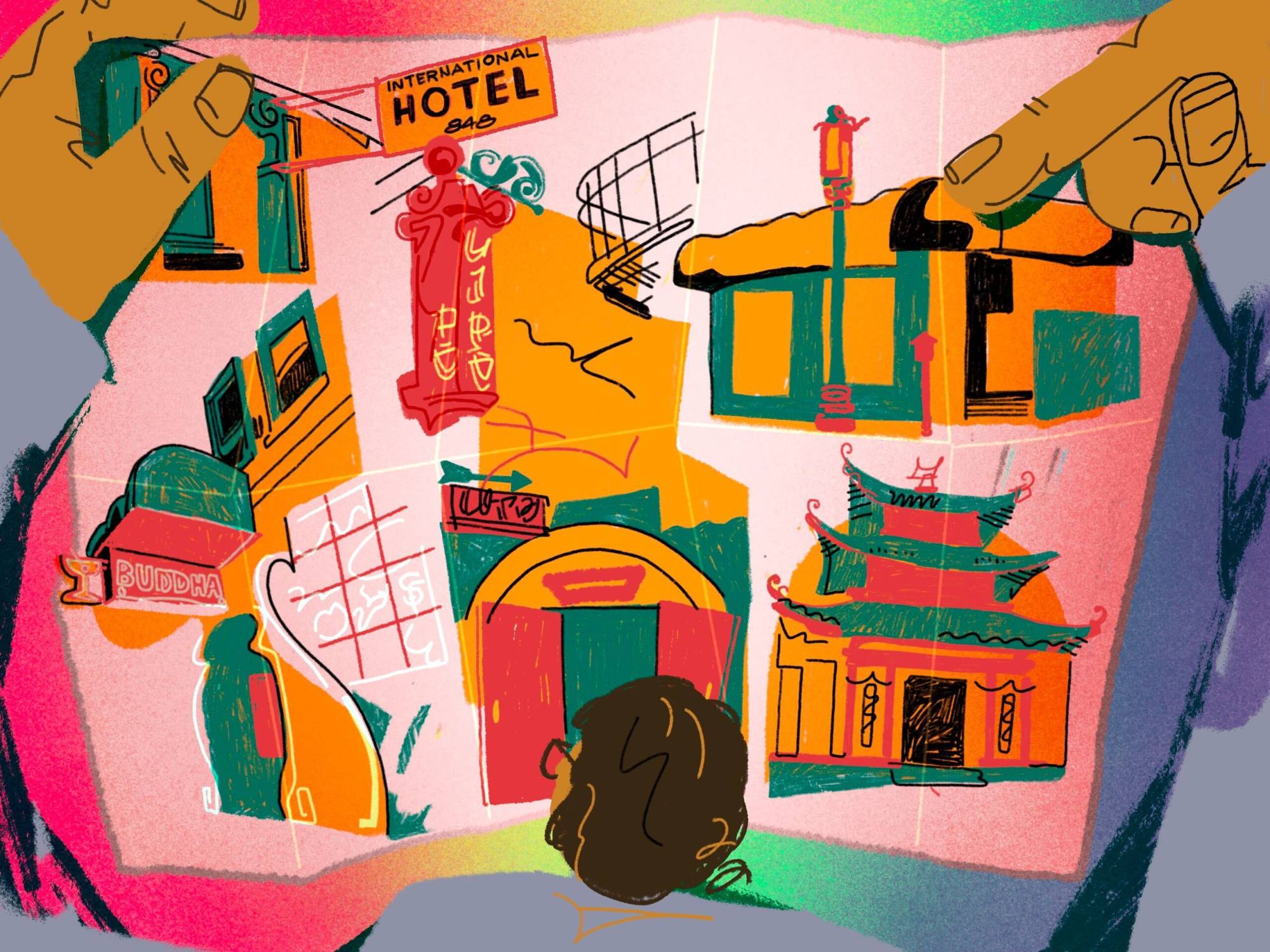
Take Yourself on a Self-Guided Tour of Chinatown’s Queer Past and Present
SF Chinatown Park Makeover Delayed, Thanks to Trump Tariffs
San Francisco Chinatown Leaders Push Back Against Trump’s Trade War
A Nailbiter in San José, Trump’s Tariffs Hit SF Chinatown, and New Fire Prevention Rules in the Berkeley Hills
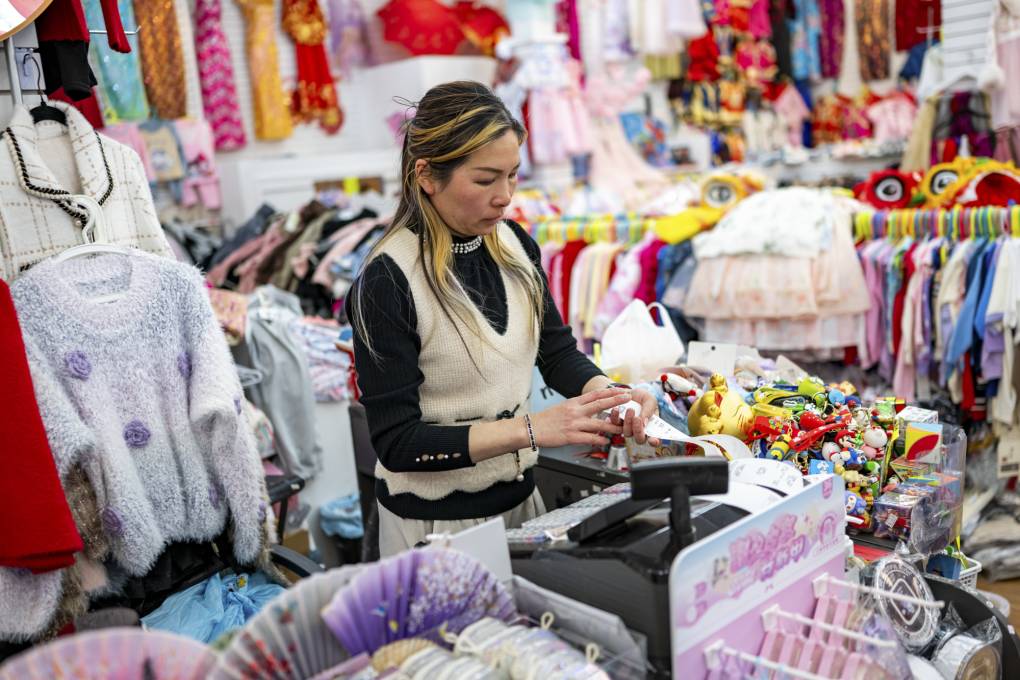
San Francisco Chinatown Businesses Enter Survival Mode During Trade War
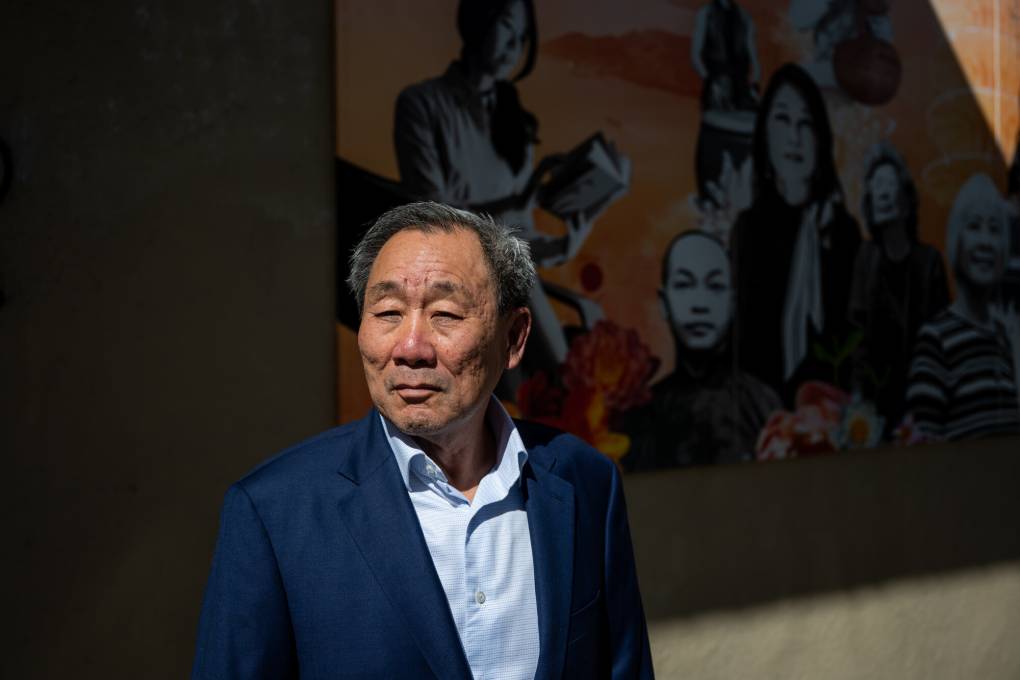
'Let’s Fight Back': 127 Years After Momentous Supreme Court Ruling, San Francisco Honors Wong Kim Ark
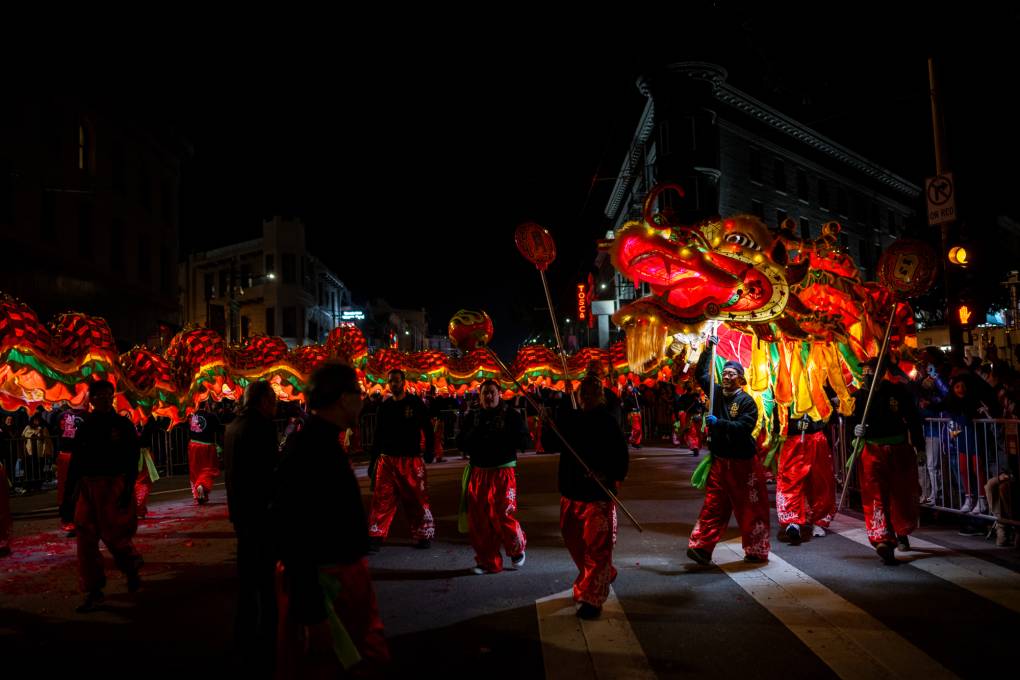
San Francisco Celebrates the Lunar New Year With Iconic Chinatown Parade
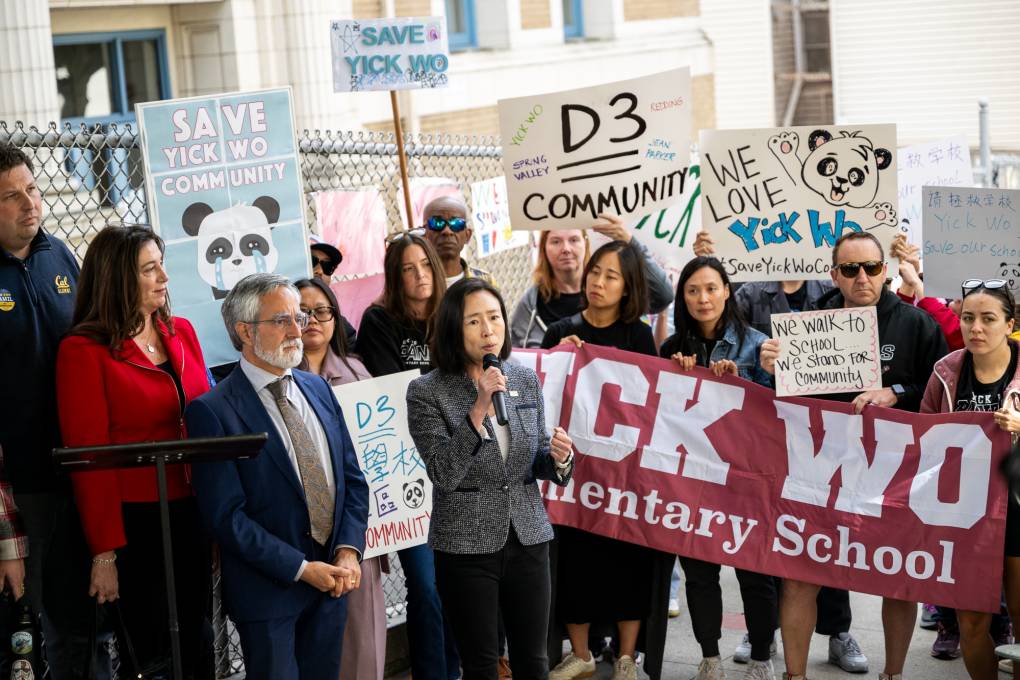
San Francisco School Closures Will Hurt Chinese, Immigrant Communities, City Leaders Say
Sponsored
Player sponsored by
window.__IS_SSR__=true
window.__INITIAL_STATE__={
"attachmentsReducer": {
"audio_0": {
"type": "attachments",
"id": "audio_0",
"imgSizes": {
"kqedFullSize": {
"file": "https://ww2.kqed.org/news/wp-content/themes/KQED-unified/img/audio_bgs/background0.jpg"
}
}
},
"audio_1": {
"type": "attachments",
"id": "audio_1",
"imgSizes": {
"kqedFullSize": {
"file": "https://ww2.kqed.org/news/wp-content/themes/KQED-unified/img/audio_bgs/background1.jpg"
}
}
},
"audio_2": {
"type": "attachments",
"id": "audio_2",
"imgSizes": {
"kqedFullSize": {
"file": "https://ww2.kqed.org/news/wp-content/themes/KQED-unified/img/audio_bgs/background2.jpg"
}
}
},
"audio_3": {
"type": "attachments",
"id": "audio_3",
"imgSizes": {
"kqedFullSize": {
"file": "https://ww2.kqed.org/news/wp-content/themes/KQED-unified/img/audio_bgs/background3.jpg"
}
}
},
"audio_4": {
"type": "attachments",
"id": "audio_4",
"imgSizes": {
"kqedFullSize": {
"file": "https://ww2.kqed.org/news/wp-content/themes/KQED-unified/img/audio_bgs/background4.jpg"
}
}
},
"placeholder": {
"type": "attachments",
"id": "placeholder",
"imgSizes": {
"thumbnail": {
"file": "https://cdn.kqed.org/wp-content/uploads/2024/12/KQED-Default-Image-816638274-2000x1333-1-160x107.jpg",
"width": 160,
"height": 107,
"mimeType": "image/jpeg"
},
"medium": {
"file": "https://cdn.kqed.org/wp-content/uploads/2024/12/KQED-Default-Image-816638274-2000x1333-1-800x533.jpg",
"width": 800,
"height": 533,
"mimeType": "image/jpeg"
},
"medium_large": {
"file": "https://cdn.kqed.org/wp-content/uploads/2024/12/KQED-Default-Image-816638274-2000x1333-1-768x512.jpg",
"width": 768,
"height": 512,
"mimeType": "image/jpeg"
},
"large": {
"file": "https://cdn.kqed.org/wp-content/uploads/2024/12/KQED-Default-Image-816638274-2000x1333-1-1020x680.jpg",
"width": 1020,
"height": 680,
"mimeType": "image/jpeg"
},
"1536x1536": {
"file": "https://cdn.kqed.org/wp-content/uploads/2024/12/KQED-Default-Image-816638274-2000x1333-1-1536x1024.jpg",
"width": 1536,
"height": 1024,
"mimeType": "image/jpeg"
},
"fd-lrg": {
"file": "https://cdn.kqed.org/wp-content/uploads/2024/12/KQED-Default-Image-816638274-2000x1333-1-1536x1024.jpg",
"width": 1536,
"height": 1024,
"mimeType": "image/jpeg"
},
"fd-med": {
"file": "https://cdn.kqed.org/wp-content/uploads/2024/12/KQED-Default-Image-816638274-2000x1333-1-1020x680.jpg",
"width": 1020,
"height": 680,
"mimeType": "image/jpeg"
},
"fd-sm": {
"file": "https://cdn.kqed.org/wp-content/uploads/2024/12/KQED-Default-Image-816638274-2000x1333-1-800x533.jpg",
"width": 800,
"height": 533,
"mimeType": "image/jpeg"
},
"post-thumbnail": {
"file": "https://cdn.kqed.org/wp-content/uploads/2024/12/KQED-Default-Image-816638274-2000x1333-1-672x372.jpg",
"width": 672,
"height": 372,
"mimeType": "image/jpeg"
},
"twentyfourteen-full-width": {
"file": "https://cdn.kqed.org/wp-content/uploads/2024/12/KQED-Default-Image-816638274-2000x1333-1-1038x576.jpg",
"width": 1038,
"height": 576,
"mimeType": "image/jpeg"
},
"xxsmall": {
"file": "https://cdn.kqed.org/wp-content/uploads/2024/12/KQED-Default-Image-816638274-2000x1333-1-160x107.jpg",
"width": 160,
"height": 107,
"mimeType": "image/jpeg"
},
"xsmall": {
"file": "https://cdn.kqed.org/wp-content/uploads/2024/12/KQED-Default-Image-816638274-2000x1333-1-672x372.jpg",
"width": 672,
"height": 372,
"mimeType": "image/jpeg"
},
"small": {
"file": "https://cdn.kqed.org/wp-content/uploads/2024/12/KQED-Default-Image-816638274-2000x1333-1-672x372.jpg",
"width": 672,
"height": 372,
"mimeType": "image/jpeg"
},
"xlarge": {
"file": "https://cdn.kqed.org/wp-content/uploads/2024/12/KQED-Default-Image-816638274-2000x1333-1-1020x680.jpg",
"width": 1020,
"height": 680,
"mimeType": "image/jpeg"
},
"full-width": {
"file": "https://cdn.kqed.org/wp-content/uploads/2024/12/KQED-Default-Image-816638274-2000x1333-1-1920x1280.jpg",
"width": 1920,
"height": 1280,
"mimeType": "image/jpeg"
},
"guest-author-32": {
"file": "https://cdn.kqed.org/wp-content/uploads/2025/01/KQED-Default-Image-816638274-1333x1333-1-160x160.jpg",
"width": 32,
"height": 32,
"mimeType": "image/jpeg"
},
"guest-author-50": {
"file": "https://cdn.kqed.org/wp-content/uploads/2025/01/KQED-Default-Image-816638274-1333x1333-1-160x160.jpg",
"width": 50,
"height": 50,
"mimeType": "image/jpeg"
},
"guest-author-64": {
"file": "https://cdn.kqed.org/wp-content/uploads/2025/01/KQED-Default-Image-816638274-1333x1333-1-160x160.jpg",
"width": 64,
"height": 64,
"mimeType": "image/jpeg"
},
"guest-author-96": {
"file": "https://cdn.kqed.org/wp-content/uploads/2025/01/KQED-Default-Image-816638274-1333x1333-1-160x160.jpg",
"width": 96,
"height": 96,
"mimeType": "image/jpeg"
},
"guest-author-128": {
"file": "https://cdn.kqed.org/wp-content/uploads/2025/01/KQED-Default-Image-816638274-1333x1333-1-160x160.jpg",
"width": 128,
"height": 128,
"mimeType": "image/jpeg"
},
"detail": {
"file": "https://cdn.kqed.org/wp-content/uploads/2025/01/KQED-Default-Image-816638274-1333x1333-1-160x160.jpg",
"width": 160,
"height": 160,
"mimeType": "image/jpeg"
},
"kqedFullSize": {
"file": "https://cdn.kqed.org/wp-content/uploads/2024/12/KQED-Default-Image-816638274-2000x1333-1.jpg",
"width": 2000,
"height": 1333
}
}
},
"news_12055058": {
"type": "attachments",
"id": "news_12055058",
"meta": {
"index": "attachments_1716263798",
"site": "news",
"id": "12055058",
"found": true
},
"title": "250903-SUNSETCHINESERECALL00232_TV-KQED",
"publishDate": 1757336306,
"status": "inherit",
"parent": 0,
"modified": 1757441690,
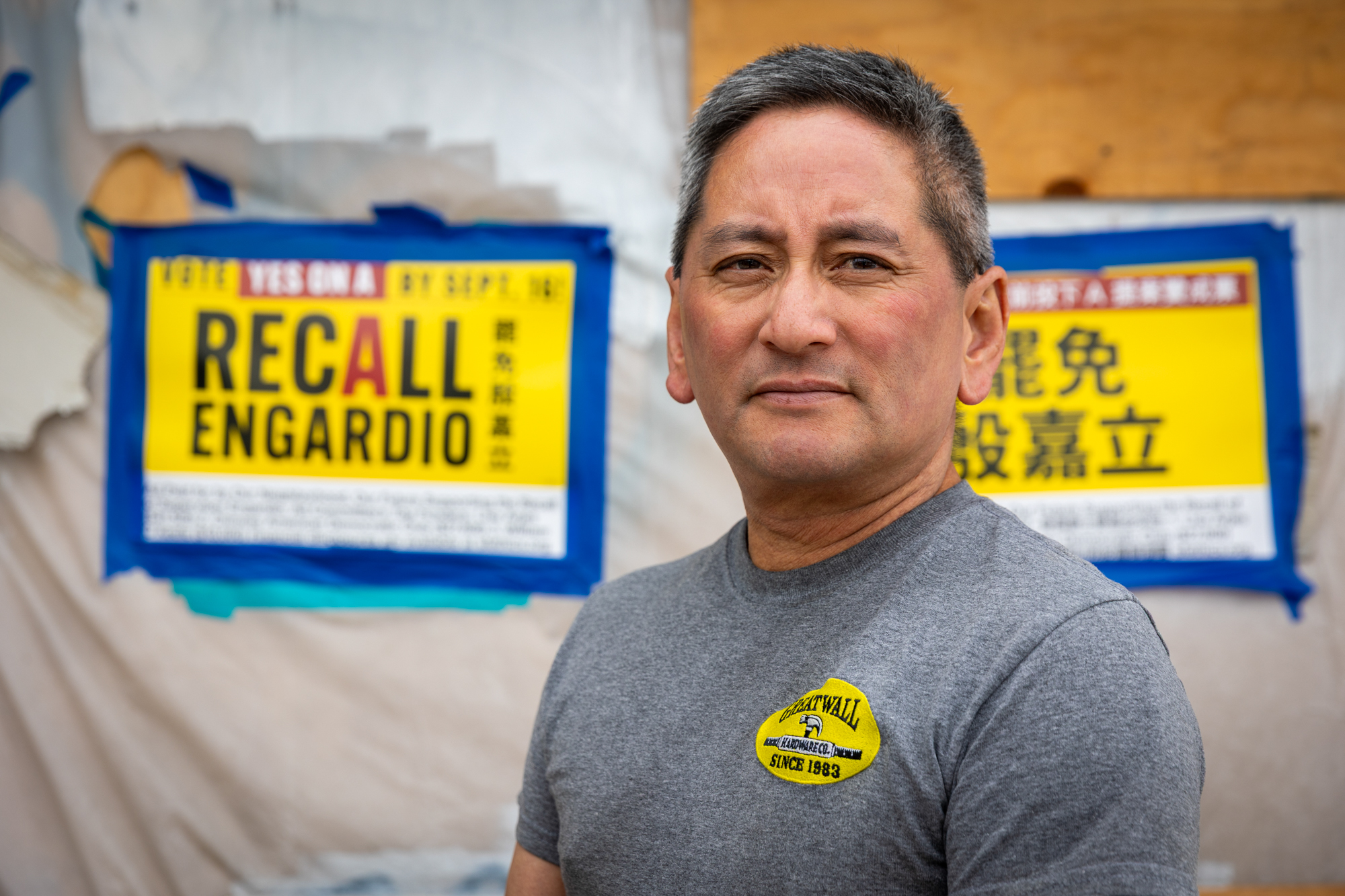
"caption": "Albert Chow, a business owner of Great Wall in the Sunset District, poses for a portrait outside Great Wall Hardware in San Francisco on Sept. 3, 2025. Chinese voters in the sunset are split on whether to support the recall of Supervisor Joel Engardio, who backed the proposal to close off the Great Highway to cars and open up a new park.",
"credit": "Tâm Vũ/KQED",
"altTag": null,
"description": null,
"imgSizes": {
"thumbnail": {
"file": "https://cdn.kqed.org/wp-content/uploads/sites/10/2025/09/250903-SUNSETCHINESERECALL00232_TV-KQED-160x107.jpg",
"width": 160,
"height": 107,
"mimeType": "image/jpeg"
},
"1536x1536": {
"file": "https://cdn.kqed.org/wp-content/uploads/sites/10/2025/09/250903-SUNSETCHINESERECALL00232_TV-KQED-1536x1024.jpg",
"width": 1536,
"height": 1024,
"mimeType": "image/jpeg"
},
"post-thumbnail": {
"file": "https://cdn.kqed.org/wp-content/uploads/sites/10/2025/09/250903-SUNSETCHINESERECALL00232_TV-KQED-672x372.jpg",
"width": 672,
"height": 372,
"mimeType": "image/jpeg"
},
"twentyfourteen-full-width": {
"file": "https://cdn.kqed.org/wp-content/uploads/sites/10/2025/09/250903-SUNSETCHINESERECALL00232_TV-KQED-1038x576.jpg",
"width": 1038,
"height": 576,
"mimeType": "image/jpeg"
},
"kqedFullSize": {
"file": "https://cdn.kqed.org/wp-content/uploads/sites/10/2025/09/250903-SUNSETCHINESERECALL00232_TV-KQED.jpg",
"width": 2000,
"height": 1333
}
},
"fetchFailed": false,
"isLoading": false
},
"news_12046209": {
"type": "attachments",
"id": "news_12046209",
"meta": {
"index": "attachments_1716263798",
"site": "news",
"id": "12046209",
"found": true
},
"title": "IMG_1062",
"publishDate": 1750976420,
"status": "inherit",
"parent": 12045988,
"modified": 1750976436,
"caption": null,
"credit": "Illustration by Anna Vignet",
"altTag": null,
"description": null,
"imgSizes": {
"medium": {
"file": "https://cdn.kqed.org/wp-content/uploads/sites/10/2025/06/IMG_1062-2000x1500.jpg",
"width": 2000,
"height": 1500,
"mimeType": "image/jpeg"
},
"large": {
"file": "https://cdn.kqed.org/wp-content/uploads/sites/10/2025/06/IMG_1062-2000x1500.jpg",
"width": 2000,
"height": 1500,
"mimeType": "image/jpeg"
},
"thumbnail": {
"file": "https://cdn.kqed.org/wp-content/uploads/sites/10/2025/06/IMG_1062-160x120.jpg",
"width": 160,
"height": 120,
"mimeType": "image/jpeg"
},
"1536x1536": {
"file": "https://cdn.kqed.org/wp-content/uploads/sites/10/2025/06/IMG_1062-1536x1152.jpg",
"width": 1536,
"height": 1152,
"mimeType": "image/jpeg"
},
"2048x2048": {
"file": "https://cdn.kqed.org/wp-content/uploads/sites/10/2025/06/IMG_1062-2048x1536.jpg",
"width": 2048,
"height": 1536,
"mimeType": "image/jpeg"
},
"post-thumbnail": {
"file": "https://cdn.kqed.org/wp-content/uploads/sites/10/2025/06/IMG_1062-672x372.jpg",
"width": 672,
"height": 372,
"mimeType": "image/jpeg"
},
"twentyfourteen-full-width": {
"file": "https://cdn.kqed.org/wp-content/uploads/sites/10/2025/06/IMG_1062-1038x576.jpg",
"width": 1038,
"height": 576,
"mimeType": "image/jpeg"
},
"full-width": {
"file": "https://cdn.kqed.org/wp-content/uploads/sites/10/2025/06/IMG_1062-2000x1500.jpg",
"width": 2000,
"height": 1500,
"mimeType": "image/jpeg"
},
"kqedFullSize": {
"file": "https://cdn.kqed.org/wp-content/uploads/sites/10/2025/06/IMG_1062.jpg",
"width": 2560,
"height": 1920
}
},
"fetchFailed": false,
"isLoading": false
},
"news_11973429": {
"type": "attachments",
"id": "news_11973429",
"meta": {
"index": "attachments_1716263798",
"site": "news",
"id": "11973429",
"found": true
},
"parent": 11973503,
"imgSizes": {
"twentyfourteen-full-width": {
"file": "https://cdn.kqed.org/wp-content/uploads/sites/10/2024/01/240122-PORTSMOUTHSQUARE-29-BL-KQED-1038x576.jpg",
"width": 1038,
"mimeType": "image/jpeg",
"height": 576
},
"thumbnail": {
"file": "https://cdn.kqed.org/wp-content/uploads/sites/10/2024/01/240122-PORTSMOUTHSQUARE-29-BL-KQED-160x107.jpg",
"width": 160,
"mimeType": "image/jpeg",
"height": 107
},
"post-thumbnail": {
"file": "https://cdn.kqed.org/wp-content/uploads/sites/10/2024/01/240122-PORTSMOUTHSQUARE-29-BL-KQED-672x372.jpg",
"width": 672,
"mimeType": "image/jpeg",
"height": 372
},
"kqedFullSize": {
"file": "https://cdn.kqed.org/wp-content/uploads/sites/10/2024/01/240122-PORTSMOUTHSQUARE-29-BL-KQED.jpg",
"width": 2000,
"height": 1333
},
"large": {
"file": "https://cdn.kqed.org/wp-content/uploads/sites/10/2024/01/240122-PORTSMOUTHSQUARE-29-BL-KQED-1020x680.jpg",
"width": 1020,
"mimeType": "image/jpeg",
"height": 680
},
"1536x1536": {
"file": "https://cdn.kqed.org/wp-content/uploads/sites/10/2024/01/240122-PORTSMOUTHSQUARE-29-BL-KQED-1536x1024.jpg",
"width": 1536,
"mimeType": "image/jpeg",
"height": 1024
},
"full-width": {
"file": "https://cdn.kqed.org/wp-content/uploads/sites/10/2024/01/240122-PORTSMOUTHSQUARE-29-BL-KQED-1920x1280.jpg",
"width": 1920,
"mimeType": "image/jpeg",
"height": 1280
},
"medium": {
"file": "https://cdn.kqed.org/wp-content/uploads/sites/10/2024/01/240122-PORTSMOUTHSQUARE-29-BL-KQED-800x533.jpg",
"width": 800,
"mimeType": "image/jpeg",
"height": 533
}
},
"publishDate": 1706042314,
"modified": 1706137239,
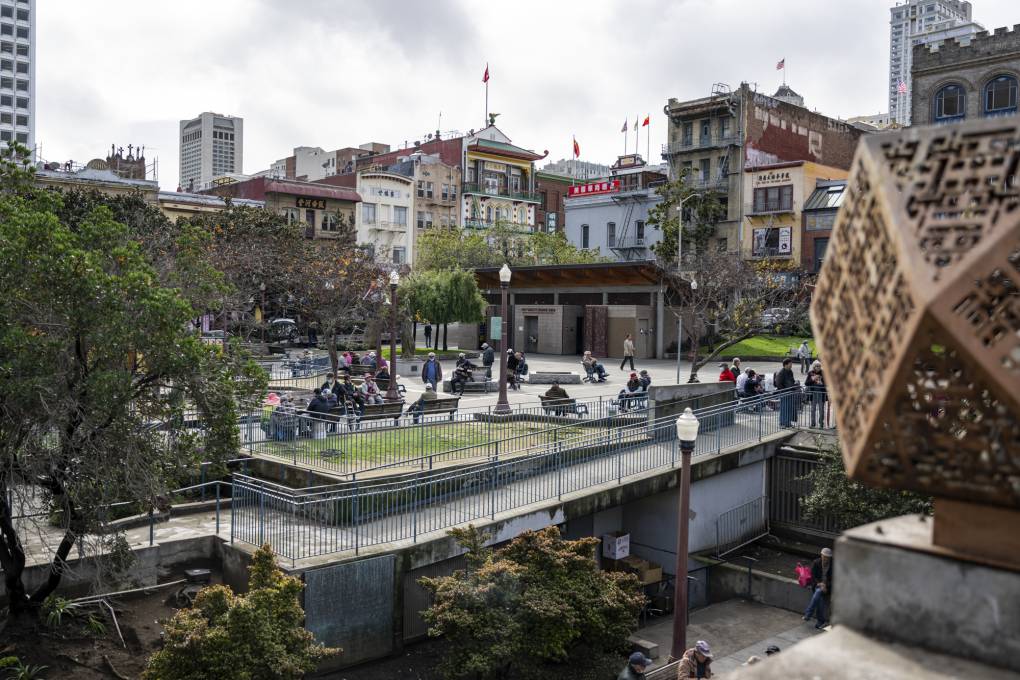
"caption": "People fill Portsmouth Square in San Francisco's Chinatown neighborhood on Jan. 22, 2024.",
"description": null,
"title": "240122-PORTSMOUTHSQUARE-29-BL-KQED",
"credit": "Beth LaBerge/KQED",
"status": "inherit",
"altTag": "People fill Portsmouth Square in San Francisco's Chinatown neighborhood on Jan. 22, 2024.",
"fetchFailed": false,
"isLoading": false
},
"news_12037244": {
"type": "attachments",
"id": "news_12037244",
"meta": {
"index": "attachments_1716263798",
"site": "news",
"id": "12037244",
"found": true
},
"title": "250421-CHINATOWNTARIFFS-30-BL-KQED",
"publishDate": 1745410870,
"status": "inherit",
"parent": 0,
"modified": 1745411036,
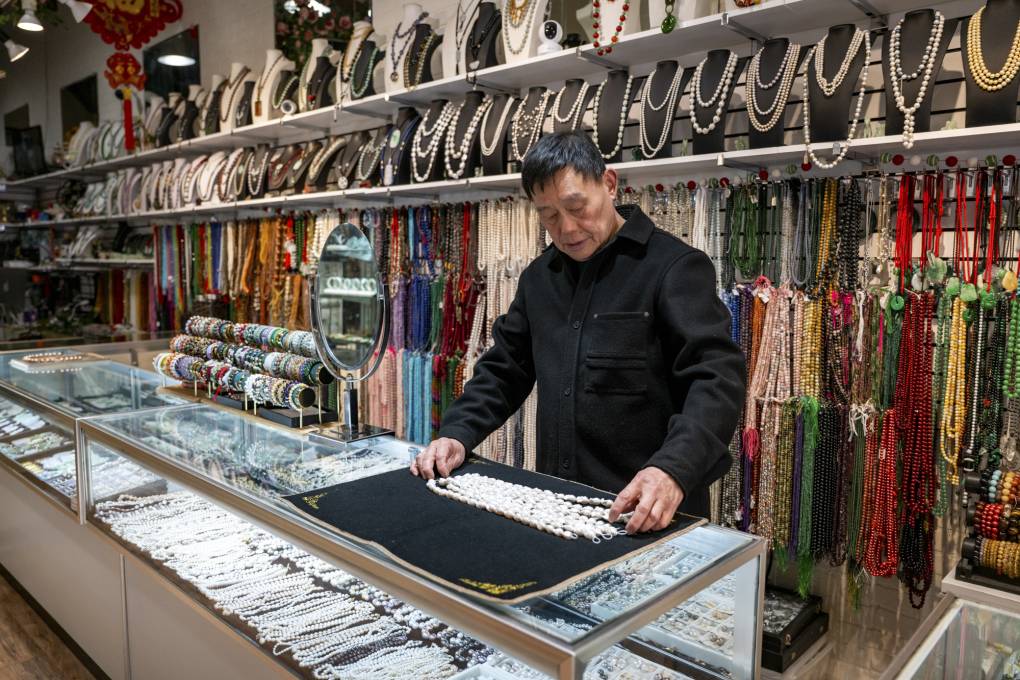
"caption": "Jian Wen Ma, owner of Powell Trading Company, stands in the shop in San Francisco’s Chinatown neighborhood on April 21, 2025.",
"credit": "Beth LaBerge/KQED",
"altTag": null,
"description": null,
"imgSizes": {
"medium": {
"file": "https://cdn.kqed.org/wp-content/uploads/sites/10/2025/04/250421-CHINATOWNTARIFFS-30-BL-KQED-800x533.jpg",
"width": 800,
"height": 533,
"mimeType": "image/jpeg"
},
"large": {
"file": "https://cdn.kqed.org/wp-content/uploads/sites/10/2025/04/250421-CHINATOWNTARIFFS-30-BL-KQED-1020x680.jpg",
"width": 1020,
"height": 680,
"mimeType": "image/jpeg"
},
"thumbnail": {
"file": "https://cdn.kqed.org/wp-content/uploads/sites/10/2025/04/250421-CHINATOWNTARIFFS-30-BL-KQED-160x107.jpg",
"width": 160,
"height": 107,
"mimeType": "image/jpeg"
},
"1536x1536": {
"file": "https://cdn.kqed.org/wp-content/uploads/sites/10/2025/04/250421-CHINATOWNTARIFFS-30-BL-KQED-1536x1024.jpg",
"width": 1536,
"height": 1024,
"mimeType": "image/jpeg"
},
"post-thumbnail": {
"file": "https://cdn.kqed.org/wp-content/uploads/sites/10/2025/04/250421-CHINATOWNTARIFFS-30-BL-KQED-672x372.jpg",
"width": 672,
"height": 372,
"mimeType": "image/jpeg"
},
"twentyfourteen-full-width": {
"file": "https://cdn.kqed.org/wp-content/uploads/sites/10/2025/04/250421-CHINATOWNTARIFFS-30-BL-KQED-1038x576.jpg",
"width": 1038,
"height": 576,
"mimeType": "image/jpeg"
},
"full-width": {
"file": "https://cdn.kqed.org/wp-content/uploads/sites/10/2025/04/250421-CHINATOWNTARIFFS-30-BL-KQED-1920x1280.jpg",
"width": 1920,
"height": 1280,
"mimeType": "image/jpeg"
},
"kqedFullSize": {
"file": "https://cdn.kqed.org/wp-content/uploads/sites/10/2025/04/250421-CHINATOWNTARIFFS-30-BL-KQED.jpg",
"width": 2000,
"height": 1333
}
},
"fetchFailed": false,
"isLoading": false
},
"news_12002386": {
"type": "attachments",
"id": "news_12002386",
"meta": {
"index": "attachments_1716263798",
"site": "news",
"id": "12002386",
"found": true
},
"title": "LOGO_THEBAY",
"publishDate": 1724964767,
"status": "inherit",
"parent": 12002385,
"modified": 1724964767,
"caption": null,
"credit": null,
"altTag": null,
"description": null,
"imgSizes": {
"thumbnail": {
"file": "https://cdn.kqed.org/wp-content/uploads/sites/10/2024/08/LOGO_THEBAY-160x160.png",
"width": 160,
"height": 160,
"mimeType": "image/png"
},
"kqedFullSize": {
"file": "https://cdn.kqed.org/wp-content/uploads/sites/10/2024/08/LOGO_THEBAY.png",
"width": 300,
"height": 300
}
},
"fetchFailed": false,
"isLoading": false
},
"news_12037246": {
"type": "attachments",
"id": "news_12037246",
"meta": {
"index": "attachments_1716263798",
"site": "news",
"id": "12037246",
"found": true
},
"title": "250421-CHINATOWNTARIFFS-32-BL-KQED",
"publishDate": 1745410880,
"status": "inherit",
"parent": 0,
"modified": 1745411031,
"caption": "Owner Tracy Liu works at her shop, Beijing Shopping Center, in San Francisco’s Chinatown neighborhood on April 21, 2025.",
"credit": "Beth LaBerge/KQED",
"altTag": null,
"description": null,
"imgSizes": {
"medium": {
"file": "https://cdn.kqed.org/wp-content/uploads/sites/10/2025/04/250421-CHINATOWNTARIFFS-32-BL-KQED-800x533.jpg",
"width": 800,
"height": 533,
"mimeType": "image/jpeg"
},
"large": {
"file": "https://cdn.kqed.org/wp-content/uploads/sites/10/2025/04/250421-CHINATOWNTARIFFS-32-BL-KQED-1020x680.jpg",
"width": 1020,
"height": 680,
"mimeType": "image/jpeg"
},
"thumbnail": {
"file": "https://cdn.kqed.org/wp-content/uploads/sites/10/2025/04/250421-CHINATOWNTARIFFS-32-BL-KQED-160x107.jpg",
"width": 160,
"height": 107,
"mimeType": "image/jpeg"
},
"1536x1536": {
"file": "https://cdn.kqed.org/wp-content/uploads/sites/10/2025/04/250421-CHINATOWNTARIFFS-32-BL-KQED-1536x1024.jpg",
"width": 1536,
"height": 1024,
"mimeType": "image/jpeg"
},
"post-thumbnail": {
"file": "https://cdn.kqed.org/wp-content/uploads/sites/10/2025/04/250421-CHINATOWNTARIFFS-32-BL-KQED-672x372.jpg",
"width": 672,
"height": 372,
"mimeType": "image/jpeg"
},
"twentyfourteen-full-width": {
"file": "https://cdn.kqed.org/wp-content/uploads/sites/10/2025/04/250421-CHINATOWNTARIFFS-32-BL-KQED-1038x576.jpg",
"width": 1038,
"height": 576,
"mimeType": "image/jpeg"
},
"full-width": {
"file": "https://cdn.kqed.org/wp-content/uploads/sites/10/2025/04/250421-CHINATOWNTARIFFS-32-BL-KQED-1920x1280.jpg",
"width": 1920,
"height": 1280,
"mimeType": "image/jpeg"
},
"kqedFullSize": {
"file": "https://cdn.kqed.org/wp-content/uploads/sites/10/2025/04/250421-CHINATOWNTARIFFS-32-BL-KQED.jpg",
"width": 2000,
"height": 1333
}
},
"fetchFailed": false,
"isLoading": false
},
"news_12032980": {
"type": "attachments",
"id": "news_12032980",
"meta": {
"index": "attachments_1716263798",
"site": "news",
"id": "12032980",
"found": true
},
"title": "250324-WongKimArk-02-BL_qed",
"publishDate": 1742934572,
"status": "inherit",
"parent": 0,
"modified": 1742934609,
"caption": "Norman Wong, the great-grandson of Wong Kim Ark, stands in front of a mural featuring his great-grandfather in San Francisco’s Chinatown on March 24, 2025, where Wong Kim Ark was born.",
"credit": "Beth LaBerge/KQED",
"altTag": null,
"description": null,
"imgSizes": {
"medium": {
"file": "https://cdn.kqed.org/wp-content/uploads/sites/10/2025/03/250324-WongKimArk-02-BL_qed-800x533.jpg",
"width": 800,
"height": 533,
"mimeType": "image/jpeg"
},
"large": {
"file": "https://cdn.kqed.org/wp-content/uploads/sites/10/2025/03/250324-WongKimArk-02-BL_qed-1020x680.jpg",
"width": 1020,
"height": 680,
"mimeType": "image/jpeg"
},
"thumbnail": {
"file": "https://cdn.kqed.org/wp-content/uploads/sites/10/2025/03/250324-WongKimArk-02-BL_qed-160x107.jpg",
"width": 160,
"height": 107,
"mimeType": "image/jpeg"
},
"1536x1536": {
"file": "https://cdn.kqed.org/wp-content/uploads/sites/10/2025/03/250324-WongKimArk-02-BL_qed-1536x1024.jpg",
"width": 1536,
"height": 1024,
"mimeType": "image/jpeg"
},
"post-thumbnail": {
"file": "https://cdn.kqed.org/wp-content/uploads/sites/10/2025/03/250324-WongKimArk-02-BL_qed-672x372.jpg",
"width": 672,
"height": 372,
"mimeType": "image/jpeg"
},
"twentyfourteen-full-width": {
"file": "https://cdn.kqed.org/wp-content/uploads/sites/10/2025/03/250324-WongKimArk-02-BL_qed-1038x576.jpg",
"width": 1038,
"height": 576,
"mimeType": "image/jpeg"
},
"full-width": {
"file": "https://cdn.kqed.org/wp-content/uploads/sites/10/2025/03/250324-WongKimArk-02-BL_qed-1920x1280.jpg",
"width": 1920,
"height": 1280,
"mimeType": "image/jpeg"
},
"kqedFullSize": {
"file": "https://cdn.kqed.org/wp-content/uploads/sites/10/2025/03/250324-WongKimArk-02-BL_qed.jpg",
"width": 2000,
"height": 1333
}
},
"fetchFailed": false,
"isLoading": false
},
"news_12027372": {
"type": "attachments",
"id": "news_12027372",
"meta": {
"index": "attachments_1716263798",
"site": "news",
"id": "12027372",
"found": true
},
"title": "250215-ChineseNewYear-24-BL",
"publishDate": 1739729104,
"status": "inherit",
"parent": 0,
"modified": 1739742386,
"caption": "Leung's White Crane Lion and Dragon Dance Association carry a dragon during the finale of the Chinese New Year Parade in San Francisco on Feb. 15, 2025.",
"credit": "Beth LaBerge/KQED",
"altTag": "Several people carry a decorative dragon.",
"description": null,
"imgSizes": {
"medium": {
"file": "https://cdn.kqed.org/wp-content/uploads/sites/10/2025/02/250215-ChineseNewYear-24-BL-800x533.jpg",
"width": 800,
"height": 533,
"mimeType": "image/jpeg"
},
"large": {
"file": "https://cdn.kqed.org/wp-content/uploads/sites/10/2025/02/250215-ChineseNewYear-24-BL-1020x680.jpg",
"width": 1020,
"height": 680,
"mimeType": "image/jpeg"
},
"thumbnail": {
"file": "https://cdn.kqed.org/wp-content/uploads/sites/10/2025/02/250215-ChineseNewYear-24-BL-160x107.jpg",
"width": 160,
"height": 107,
"mimeType": "image/jpeg"
},
"1536x1536": {
"file": "https://cdn.kqed.org/wp-content/uploads/sites/10/2025/02/250215-ChineseNewYear-24-BL-1536x1024.jpg",
"width": 1536,
"height": 1024,
"mimeType": "image/jpeg"
},
"post-thumbnail": {
"file": "https://cdn.kqed.org/wp-content/uploads/sites/10/2025/02/250215-ChineseNewYear-24-BL-672x372.jpg",
"width": 672,
"height": 372,
"mimeType": "image/jpeg"
},
"twentyfourteen-full-width": {
"file": "https://cdn.kqed.org/wp-content/uploads/sites/10/2025/02/250215-ChineseNewYear-24-BL-1038x576.jpg",
"width": 1038,
"height": 576,
"mimeType": "image/jpeg"
},
"full-width": {
"file": "https://cdn.kqed.org/wp-content/uploads/sites/10/2025/02/250215-ChineseNewYear-24-BL-1920x1280.jpg",
"width": 1920,
"height": 1280,
"mimeType": "image/jpeg"
},
"kqedFullSize": {
"file": "https://cdn.kqed.org/wp-content/uploads/sites/10/2025/02/250215-ChineseNewYear-24-BL.jpg",
"width": 2000,
"height": 1333
}
},
"fetchFailed": false,
"isLoading": false
},
"news_12008916": {
"type": "attachments",
"id": "news_12008916",
"meta": {
"index": "attachments_1716263798",
"site": "news",
"id": "12008916",
"found": true
},
"title": "241010-SFUSDClosures-06-BL",
"publishDate": 1728590533,
"status": "inherit",
"parent": 0,
"modified": 1728601972,
"caption": "Supervisor Connie Chan speaks alongside Board of Supervisors president Aaron Peskin during a press conference outside Spring Valley Science Elementary School in San Francisco on Oct. 10, 2024, to push for city intervention in SFUSD’s school closure plans.",
"credit": "Beth LaBerge/KQED",
"altTag": null,
"description": null,
"imgSizes": {
"medium": {
"file": "https://cdn.kqed.org/wp-content/uploads/sites/10/2024/10/241010-SFUSDClosures-06-BL-800x533.jpg",
"width": 800,
"height": 533,
"mimeType": "image/jpeg"
},
"large": {
"file": "https://cdn.kqed.org/wp-content/uploads/sites/10/2024/10/241010-SFUSDClosures-06-BL-1020x680.jpg",
"width": 1020,
"height": 680,
"mimeType": "image/jpeg"
},
"thumbnail": {
"file": "https://cdn.kqed.org/wp-content/uploads/sites/10/2024/10/241010-SFUSDClosures-06-BL-160x107.jpg",
"width": 160,
"height": 107,
"mimeType": "image/jpeg"
},
"1536x1536": {
"file": "https://cdn.kqed.org/wp-content/uploads/sites/10/2024/10/241010-SFUSDClosures-06-BL-1536x1024.jpg",
"width": 1536,
"height": 1024,
"mimeType": "image/jpeg"
},
"post-thumbnail": {
"file": "https://cdn.kqed.org/wp-content/uploads/sites/10/2024/10/241010-SFUSDClosures-06-BL-672x372.jpg",
"width": 672,
"height": 372,
"mimeType": "image/jpeg"
},
"twentyfourteen-full-width": {
"file": "https://cdn.kqed.org/wp-content/uploads/sites/10/2024/10/241010-SFUSDClosures-06-BL-1038x576.jpg",
"width": 1038,
"height": 576,
"mimeType": "image/jpeg"
},
"full-width": {
"file": "https://cdn.kqed.org/wp-content/uploads/sites/10/2024/10/241010-SFUSDClosures-06-BL-1920x1280.jpg",
"width": 1920,
"height": 1280,
"mimeType": "image/jpeg"
},
"kqedFullSize": {
"file": "https://cdn.kqed.org/wp-content/uploads/sites/10/2024/10/241010-SFUSDClosures-06-BL.jpg",
"width": 2000,
"height": 1333
}
},
"fetchFailed": false,
"isLoading": false
}
},
"audioPlayerReducer": {
"postId": "stream_live",
"isPaused": true,
"isPlaying": false,
"pfsActive": false,
"pledgeModalIsOpen": true,
"playerDrawerIsOpen": false
},
"authorsReducer": {
"byline_news_12044728": {
"type": "authors",
"id": "byline_news_12044728",
"meta": {
"override": true
},
"slug": "byline_news_12044728",
"name": "Cami Dominguez",
"isLoading": false
},
"matthewgreen": {
"type": "authors",
"id": "1263",
"meta": {
"index": "authors_1716337520",
"id": "1263",
"found": true
},
"name": "Matthew Green",
"firstName": "Matthew",
"lastName": "Green",
"slug": "matthewgreen",
"email": "mgreen@kqed.org",
"display_author_email": false,
"staff_mastheads": [],
"title": "KQED Editor/Reporter",
"bio": "Matthew Green is a digital media producer for KQED News. He previously produced \u003ca href=\"http://www.kqed.org/lowdown\">The Lowdown\u003c/a>, KQED’s multimedia news education blog. Matthew's written for numerous Bay Area publications, including the Oakland Tribune and San Francisco Chronicle. He also taught journalism classes at Fremont High School in East Oakland.\r\n\r\nEmail: mgreen@kqed.org; Twitter: @MGreenKQED",
"avatar": "https://secure.gravatar.com/avatar/3bf498d1267ca02c8494f33d8cfc575e?s=600&d=blank&r=g",
"twitter": "MGreenKQED",
"facebook": null,
"instagram": null,
"linkedin": null,
"sites": [
{
"site": "news",
"roles": []
},
{
"site": "lowdown",
"roles": []
},
{
"site": "science",
"roles": []
},
{
"site": "education",
"roles": []
},
{
"site": "quest",
"roles": []
},
{
"site": "liveblog",
"roles": []
}
],
"headData": {
"title": "Matthew Green | KQED",
"description": "KQED Editor/Reporter",
"ogImgSrc": "https://secure.gravatar.com/avatar/3bf498d1267ca02c8494f33d8cfc575e?s=600&d=blank&r=g",
"twImgSrc": "https://secure.gravatar.com/avatar/3bf498d1267ca02c8494f33d8cfc575e?s=600&d=blank&r=g"
},
"isLoading": false,
"link": "/author/matthewgreen"
},
"ecruzguevarra": {
"type": "authors",
"id": "8654",
"meta": {
"index": "authors_1716337520",
"id": "8654",
"found": true
},
"name": "Ericka Cruz Guevarra",
"firstName": "Ericka",
"lastName": "Cruz Guevarra",
"slug": "ecruzguevarra",
"email": "ecruzguevarra@kqed.org",
"display_author_email": true,
"staff_mastheads": [
"news"
],
"title": "Producer, The Bay Podcast",
"bio": "Ericka Cruz Guevarra is host of \u003ca href=\"https://www.kqed.org/podcasts/thebay\">\u003cem>The Bay\u003c/em>\u003c/a> podcast at KQED. Before host, she was the show’s producer. Her work in that capacity includes a three-part reported series on policing in Vallejo, which won a 2020 excellence in journalism award from the Society of Professional Journalists. Ericka has worked as a breaking news reporter at Oregon Public Broadcasting, helped produce the Code Switch podcast, and was KQED’s inaugural Raul Ramirez Diversity Fund intern. She’s also an alumna of NPR’s Next Generation Radio program. Send her an email if you have strong feelings about whether Fairfield and Suisun City are the Bay. Ericka is represented by SAG-AFTRA.",
"avatar": "https://secure.gravatar.com/avatar/25e5ab8d3d53fad2dcc7bb2b5c506b1a?s=600&d=blank&r=g",
"twitter": "NotoriousECG",
"facebook": null,
"instagram": null,
"linkedin": null,
"sites": [
{
"site": "arts",
"roles": [
"subscriber"
]
},
{
"site": "news",
"roles": [
"editor",
"manage_categories"
]
},
{
"site": "futureofyou",
"roles": [
"subscriber"
]
},
{
"site": "stateofhealth",
"roles": [
"subscriber"
]
},
{
"site": "science",
"roles": [
"editor"
]
},
{
"site": "forum",
"roles": [
"subscriber"
]
}
],
"headData": {
"title": "Ericka Cruz Guevarra | KQED",
"description": "Producer, The Bay Podcast",
"ogImgSrc": "https://secure.gravatar.com/avatar/25e5ab8d3d53fad2dcc7bb2b5c506b1a?s=600&d=blank&r=g",
"twImgSrc": "https://secure.gravatar.com/avatar/25e5ab8d3d53fad2dcc7bb2b5c506b1a?s=600&d=blank&r=g"
},
"isLoading": false,
"link": "/author/ecruzguevarra"
},
"amontecillo": {
"type": "authors",
"id": "11649",
"meta": {
"index": "authors_1716337520",
"id": "11649",
"found": true
},
"name": "Alan Montecillo",
"firstName": "Alan",
"lastName": "Montecillo",
"slug": "amontecillo",
"email": "amontecillo@kqed.org",
"display_author_email": false,
"staff_mastheads": [
"news"
],
"title": "KQED Contributor",
"bio": "Alan Montecillo is the senior editor of \u003cem>\u003ca href=\"http://kqed.org/thebay\">The Bay\u003c/a>, \u003c/em> KQED's local news podcast. Before moving to the Bay Area, he worked as a senior talk show producer for WILL in Champaign-Urbana, Illinois and at Oregon Public Broadcasting in Portland, Oregon. He has won journalism awards from the Society of Professional Journalists Northern California, the Public Media Journalists Association, The Signal Awards, and has also received a regional Edward R. Murrow award. Alan is a Filipino American from Hong Kong and a graduate of Reed College.",
"avatar": "https://secure.gravatar.com/avatar/d5e4e7a76481969ccba76f4e2b5ccabc?s=600&d=blank&r=g",
"twitter": "alanmontecillo",
"facebook": null,
"instagram": null,
"linkedin": null,
"sites": [
{
"site": "",
"roles": [
"editor"
]
},
{
"site": "news",
"roles": [
"editor",
"manage_categories"
]
}
],
"headData": {
"title": "Alan Montecillo | KQED",
"description": "KQED Contributor",
"ogImgSrc": "https://secure.gravatar.com/avatar/d5e4e7a76481969ccba76f4e2b5ccabc?s=600&d=blank&r=g",
"twImgSrc": "https://secure.gravatar.com/avatar/d5e4e7a76481969ccba76f4e2b5ccabc?s=600&d=blank&r=g"
},
"isLoading": false,
"link": "/author/amontecillo"
},
"blaberge": {
"type": "authors",
"id": "11667",
"meta": {
"index": "authors_1716337520",
"id": "11667",
"found": true
},
"name": "Beth LaBerge",
"firstName": "Beth",
"lastName": "LaBerge",
"slug": "blaberge",
"email": "blaberge@KQED.org",
"display_author_email": true,
"staff_mastheads": [
"news"
],
"title": "Photographer, News",
"bio": "Beth LaBerge is a visual journalist for \u003ca href=\"https://www.kqed.org/news\">KQED News\u003c/a>.",
"avatar": "https://secure.gravatar.com/avatar/15e224cd55918d1876693b8280954875?s=600&d=blank&r=g",
"twitter": null,
"facebook": null,
"instagram": "https://www.instagram.com/bethlaberge/",
"linkedin": null,
"sites": [
{
"site": "arts",
"roles": [
"editor"
]
},
{
"site": "news",
"roles": [
"editor"
]
},
{
"site": "science",
"roles": [
"editor",
"contributor",
"author"
]
},
{
"site": "liveblog",
"roles": [
"editor"
]
}
],
"headData": {
"title": "Beth LaBerge | KQED",
"description": "Photographer, News",
"ogImgSrc": "https://secure.gravatar.com/avatar/15e224cd55918d1876693b8280954875?s=600&d=blank&r=g",
"twImgSrc": "https://secure.gravatar.com/avatar/15e224cd55918d1876693b8280954875?s=600&d=blank&r=g"
},
"isLoading": false,
"link": "/author/blaberge"
},
"ccabreralomeli": {
"type": "authors",
"id": "11708",
"meta": {
"index": "authors_1716337520",
"id": "11708",
"found": true
},
"name": "Carlos Cabrera-Lomelí",
"firstName": "Carlos",
"lastName": "Cabrera-Lomelí",
"slug": "ccabreralomeli",
"email": "ccabreralomeli@KQED.org",
"display_author_email": true,
"staff_mastheads": [
"news"
],
"title": "Community Reporter",
"bio": "Carlos Cabrera-Lomelí is a community reporter with KQED's digital engagement team. He also reports and co-produces for KQED's bilingual news hub KQED en Español. He grew up in San Francisco's Mission District and has previously worked with Univision, 48 Hills and REFORMA in Mexico City.",
"avatar": "https://secure.gravatar.com/avatar/e95ff80bb2eaf18a8f2af4dcf7ffb54b?s=600&d=mm&r=g",
"twitter": "@LomeliCabrera",
"facebook": null,
"instagram": null,
"linkedin": null,
"sites": [
{
"site": "arts",
"roles": [
"editor"
]
},
{
"site": "news",
"roles": [
"editor"
]
},
{
"site": "about",
"roles": [
"editor"
]
},
{
"site": "science",
"roles": [
"editor"
]
},
{
"site": "perspectives",
"roles": [
"editor"
]
},
{
"site": "elections",
"roles": [
"editor"
]
},
{
"site": "liveblog",
"roles": [
"contributor"
]
}
],
"headData": {
"title": "Carlos Cabrera-Lomelí | KQED",
"description": "Community Reporter",
"ogImgSrc": "https://secure.gravatar.com/avatar/e95ff80bb2eaf18a8f2af4dcf7ffb54b?s=600&d=mm&r=g",
"twImgSrc": "https://secure.gravatar.com/avatar/e95ff80bb2eaf18a8f2af4dcf7ffb54b?s=600&d=mm&r=g"
},
"isLoading": false,
"link": "/author/ccabreralomeli"
},
"jlara": {
"type": "authors",
"id": "11761",
"meta": {
"index": "authors_1716337520",
"id": "11761",
"found": true
},
"name": "Juan Carlos Lara",
"firstName": "Juan Carlos",
"lastName": "Lara",
"slug": "jlara",
"email": "jlara@kqed.org",
"display_author_email": false,
"staff_mastheads": [],
"title": "KQED Contributor",
"bio": null,
"avatar": "https://secure.gravatar.com/avatar/19e2052b9b05657c5ff2af2121846e9c?s=600&d=blank&r=g",
"twitter": null,
"facebook": null,
"instagram": null,
"linkedin": null,
"sites": [
{
"site": "arts",
"roles": [
"editor"
]
},
{
"site": "news",
"roles": [
"editor"
]
},
{
"site": "forum",
"roles": [
"editor"
]
},
{
"site": "liveblog",
"roles": [
"contributor"
]
}
],
"headData": {
"title": "Juan Carlos Lara | KQED",
"description": "KQED Contributor",
"ogImgSrc": "https://secure.gravatar.com/avatar/19e2052b9b05657c5ff2af2121846e9c?s=600&d=blank&r=g",
"twImgSrc": "https://secure.gravatar.com/avatar/19e2052b9b05657c5ff2af2121846e9c?s=600&d=blank&r=g"
},
"isLoading": false,
"link": "/author/jlara"
},
"adahlstromeckman": {
"type": "authors",
"id": "11785",
"meta": {
"index": "authors_1716337520",
"id": "11785",
"found": true
},
"name": "Azul Dahlstrom-Eckman",
"firstName": "Azul",
"lastName": "Dahlstrom-Eckman",
"slug": "adahlstromeckman",
"email": "adahlstrom-eckman@kqed.org",
"display_author_email": true,
"staff_mastheads": [],
"title": "Reporter",
"bio": "Azul is a reporter for KQED who focuses on producing sound-rich audio features for KQED's Morning Edition segment and digital features for KQED's online audiences. He previously worked as the Weekend News Editor at KQED, responsible for overseeing radio and digital news on the weekends. He joined KQED in 2021 as an alumna of KALW's Audio Academy radio journalism training program. He was born and raised on Potrero Hill in San Francisco and holds a B.A. in Environmental Studies from the University of Oregon.",
"avatar": "https://secure.gravatar.com/avatar/99c0cfc680078897572931b34e941e1e?s=600&d=blank&r=g",
"twitter": "@zuliemann",
"facebook": null,
"instagram": null,
"linkedin": null,
"sites": [
{
"site": "arts",
"roles": [
"editor"
]
},
{
"site": "news",
"roles": [
"editor"
]
},
{
"site": "science",
"roles": [
"editor"
]
}
],
"headData": {
"title": "Azul Dahlstrom-Eckman | KQED",
"description": "Reporter",
"ogImgSrc": "https://secure.gravatar.com/avatar/99c0cfc680078897572931b34e941e1e?s=600&d=blank&r=g",
"twImgSrc": "https://secure.gravatar.com/avatar/99c0cfc680078897572931b34e941e1e?s=600&d=blank&r=g"
},
"isLoading": false,
"link": "/author/adahlstromeckman"
},
"jessicakariisa": {
"type": "authors",
"id": "11831",
"meta": {
"index": "authors_1716337520",
"id": "11831",
"found": true
},
"name": "Jessica Kariisa",
"firstName": "Jessica",
"lastName": "Kariisa",
"slug": "jessicakariisa",
"email": "jkariisa@kqed.org",
"display_author_email": false,
"staff_mastheads": [
"news"
],
"title": "Producer, The Bay",
"bio": "Jessica Kariisa is the producer of The Bay. She first joined KQED as an intern for The California Report Magazine, after which she became an on-call producer. She reported a Bay Curious episode on the use of rap lyrics in criminal trials which won a Society of Professional Journalists award in 2023 for Excellence in Features Journalism and the 2023 Signal Award for Best Conversation Starter. She’s worked on podcasts for Snap Judgment and American Public Media. Before embarking on her audio career, she was a music journalist.\r\n\r\nJessica Kariisa is represented by SAG-AFTRA.",
"avatar": "https://secure.gravatar.com/avatar/4afd355fd24f5515aeab77fd6c72b671?s=600&d=blank&r=g",
"twitter": null,
"facebook": null,
"instagram": null,
"linkedin": null,
"sites": [
{
"site": "arts",
"roles": [
"author"
]
},
{
"site": "news",
"roles": [
"editor",
"manage_categories"
]
}
],
"headData": {
"title": "Jessica Kariisa | KQED",
"description": "Producer, The Bay",
"ogImgSrc": "https://secure.gravatar.com/avatar/4afd355fd24f5515aeab77fd6c72b671?s=600&d=blank&r=g",
"twImgSrc": "https://secure.gravatar.com/avatar/4afd355fd24f5515aeab77fd6c72b671?s=600&d=blank&r=g"
},
"isLoading": false,
"link": "/author/jessicakariisa"
},
"sjohnson": {
"type": "authors",
"id": "11840",
"meta": {
"index": "authors_1716337520",
"id": "11840",
"found": true
},
"name": "Sydney Johnson",
"firstName": "Sydney",
"lastName": "Johnson",
"slug": "sjohnson",
"email": "sjohnson@kqed.org",
"display_author_email": false,
"staff_mastheads": [
"news"
],
"title": "KQED Reporter",
"bio": "Sydney Johnson is a general assignment reporter at KQED. She previously reported on public health and city government at the San Francisco Examiner, and before that, she covered statewide education policy for EdSource. Her reporting has won multiple local, state and national awards. Sydney is a graduate of the University of California, Berkeley and lives in San Francisco.",
"avatar": "https://secure.gravatar.com/avatar/97855f2719b72ad6190b7c535fe642c8?s=600&d=blank&r=g",
"twitter": "sydneyfjohnson",
"facebook": null,
"instagram": null,
"linkedin": null,
"sites": [
{
"site": "news",
"roles": [
"editor"
]
}
],
"headData": {
"title": "Sydney Johnson | KQED",
"description": "KQED Reporter",
"ogImgSrc": "https://secure.gravatar.com/avatar/97855f2719b72ad6190b7c535fe642c8?s=600&d=blank&r=g",
"twImgSrc": "https://secure.gravatar.com/avatar/97855f2719b72ad6190b7c535fe642c8?s=600&d=blank&r=g"
},
"isLoading": false,
"link": "/author/sjohnson"
},
"nkhan": {
"type": "authors",
"id": "11867",
"meta": {
"index": "authors_1716337520",
"id": "11867",
"found": true
},
"name": "Nisa Khan",
"firstName": "Nisa",
"lastName": "Khan",
"slug": "nkhan",
"email": "nkhan@kqed.org",
"display_author_email": false,
"staff_mastheads": [],
"title": "KQED Contributor",
"bio": "Nisa Khan is a reporter for KQED's Audience News Desk. She was formerly a data reporter at Michigan Radio. She earned a Bachelor of Science in Information from the University of Michigan and a Master of Arts in Communication from Stanford University.",
"avatar": "https://secure.gravatar.com/avatar/a3bf1efcfbe7658d13a434cc54d0b2e3?s=600&d=blank&r=g",
"twitter": "mnisakhan",
"facebook": null,
"instagram": null,
"linkedin": null,
"sites": [
{
"site": "arts",
"roles": [
"editor"
]
},
{
"site": "news",
"roles": [
"editor"
]
},
{
"site": "forum",
"roles": [
"editor"
]
},
{
"site": "liveblog",
"roles": [
"contributor"
]
}
],
"headData": {
"title": "Nisa Khan | KQED",
"description": "KQED Contributor",
"ogImgSrc": "https://secure.gravatar.com/avatar/a3bf1efcfbe7658d13a434cc54d0b2e3?s=600&d=blank&r=g",
"twImgSrc": "https://secure.gravatar.com/avatar/a3bf1efcfbe7658d13a434cc54d0b2e3?s=600&d=blank&r=g"
},
"isLoading": false,
"link": "/author/nkhan"
},
"gcastro": {
"type": "authors",
"id": "11908",
"meta": {
"index": "authors_1716337520",
"id": "11908",
"found": true
},
"name": "Gina Castro",
"firstName": "Gina",
"lastName": "Castro",
"slug": "gcastro",
"email": "gcastro@kqed.org",
"display_author_email": false,
"staff_mastheads": [
"news"
],
"title": "KQED Contributor",
"bio": null,
"avatar": "https://secure.gravatar.com/avatar/50d6af5532adc5ec032a210030cea261?s=600&d=blank&r=g",
"twitter": null,
"facebook": null,
"instagram": null,
"linkedin": null,
"sites": [
{
"site": "news",
"roles": [
"contributor"
]
}
],
"headData": {
"title": "Gina Castro | KQED",
"description": "KQED Contributor",
"ogImgSrc": "https://secure.gravatar.com/avatar/50d6af5532adc5ec032a210030cea261?s=600&d=blank&r=g",
"twImgSrc": "https://secure.gravatar.com/avatar/50d6af5532adc5ec032a210030cea261?s=600&d=blank&r=g"
},
"isLoading": false,
"link": "/author/gcastro"
},
"kdebenedetti": {
"type": "authors",
"id": "11913",
"meta": {
"index": "authors_1716337520",
"id": "11913",
"found": true
},
"name": "Katie DeBenedetti",
"firstName": "Katie",
"lastName": "DeBenedetti",
"slug": "kdebenedetti",
"email": "kdebenedetti@kqed.org",
"display_author_email": false,
"staff_mastheads": [
"news",
"science"
],
"title": "KQED Contributor",
"bio": "Katie DeBenedetti is a digital reporter covering daily news for the Express Desk. Prior to joining KQED as a culture reporting intern in January 2024, she covered education and city government for the Napa Valley Register.",
"avatar": "https://secure.gravatar.com/avatar/6e31073cb8f7e4214ab03f42771d0f45?s=600&d=blank&r=g",
"twitter": null,
"facebook": null,
"instagram": null,
"linkedin": null,
"sites": [
{
"site": "news",
"roles": [
"author"
]
},
{
"site": "science",
"roles": [
"author"
]
},
{
"site": "liveblog",
"roles": [
"author"
]
}
],
"headData": {
"title": "Katie DeBenedetti | KQED",
"description": "KQED Contributor",
"ogImgSrc": "https://secure.gravatar.com/avatar/6e31073cb8f7e4214ab03f42771d0f45?s=600&d=blank&r=g",
"twImgSrc": "https://secure.gravatar.com/avatar/6e31073cb8f7e4214ab03f42771d0f45?s=600&d=blank&r=g"
},
"isLoading": false,
"link": "/author/kdebenedetti"
},
"dbarreda": {
"type": "authors",
"id": "11933",
"meta": {
"index": "authors_1716337520",
"id": "11933",
"found": true
},
"name": "David M. Barreda",
"firstName": "David M.",
"lastName": "Barreda",
"slug": "dbarreda",
"email": "dbarreda@kqed.org",
"display_author_email": false,
"staff_mastheads": [],
"title": "KQED Photojournalist and Photo Editor",
"bio": null,
"avatar": "https://secure.gravatar.com/avatar/a04eda7b1670aec0811c6666c072677f?s=600&d=blank&r=g",
"twitter": "inkaman",
"facebook": null,
"instagram": "http://instagram.com/inkaman",
"linkedin": "https://www.linkedin.com/in/davidbarreda",
"sites": [
{
"site": "arts",
"roles": [
"editor",
"manage_categories"
]
},
{
"site": "news",
"roles": [
"editor",
"manage_categories"
]
},
{
"site": "science",
"roles": [
"editor",
"manage_categories"
]
}
],
"headData": {
"title": "David M. Barreda | KQED",
"description": "KQED Photojournalist and Photo Editor",
"ogImgSrc": "https://secure.gravatar.com/avatar/a04eda7b1670aec0811c6666c072677f?s=600&d=blank&r=g",
"twImgSrc": "https://secure.gravatar.com/avatar/a04eda7b1670aec0811c6666c072677f?s=600&d=blank&r=g"
},
"isLoading": false,
"link": "/author/dbarreda"
},
"mvelasquez": {
"type": "authors",
"id": "11939",
"meta": {
"index": "authors_1716337520",
"id": "11939",
"found": true
},
"name": "Mel Velasquez",
"firstName": "Mel",
"lastName": "Velasquez",
"slug": "mvelasquez",
"email": "mvelasquez@kqed.org",
"display_author_email": false,
"staff_mastheads": [],
"title": "KQED Contributor",
"bio": null,
"avatar": "https://secure.gravatar.com/avatar/409094312d56fab09fef4251e949ffa6?s=600&d=blank&r=g",
"twitter": null,
"facebook": null,
"instagram": null,
"linkedin": "www.linkedin.com/in/melanievelasquezz",
"sites": [
{
"site": "news",
"roles": [
"editor"
]
}
],
"headData": {
"title": "Mel Velasquez | KQED",
"description": "KQED Contributor",
"ogImgSrc": "https://secure.gravatar.com/avatar/409094312d56fab09fef4251e949ffa6?s=600&d=blank&r=g",
"twImgSrc": "https://secure.gravatar.com/avatar/409094312d56fab09fef4251e949ffa6?s=600&d=blank&r=g"
},
"isLoading": false,
"link": "/author/mvelasquez"
}
},
"breakingNewsReducer": {},
"pagesReducer": {},
"postsReducer": {
"stream_live": {
"type": "live",
"id": "stream_live",
"audioUrl": "https://streams.kqed.org/kqedradio",
"title": "Live Stream",
"excerpt": "Live Stream information currently unavailable.",
"link": "/radio",
"featImg": "",
"label": {
"name": "KQED Live",
"link": "/"
}
},
"stream_kqedNewscast": {
"type": "posts",
"id": "stream_kqedNewscast",
"audioUrl": "https://www.kqed.org/.stream/anon/radio/RDnews/newscast.mp3?_=1",
"title": "KQED Newscast",
"featImg": "",
"label": {
"name": "88.5 FM",
"link": "/"
}
},
"news_12055288": {
"type": "posts",
"id": "news_12055288",
"meta": {
"index": "posts_1716263798",
"site": "news",
"id": "12055288",
"score": null,
"sort": [
1757782850000
]
},
"guestAuthors": [],
"slug": "san-francisco-supervisor-recall-asks-whose-voices-are-heard-in-a-fight-over-a-park",
"title": "San Francisco Supervisor Recall Asks: Whose Voices Are Heard in a Fight Over a Park?",
"publishDate": 1757782850,
"format": "standard",
"headTitle": "San Francisco Supervisor Recall Asks: Whose Voices Are Heard in a Fight Over a Park? | KQED",
"labelTerm": {
"site": "news"
},
"content": "\u003cp>San Francisco’s latest recall campaign, \u003ca href=\"https://www.kqed.org/news/12053978/california-recall-fever-hits-san-franciscos-quiet-westside\">targeting Supervisor Joel Engardio\u003c/a> over his support for removing cars from part of the Great Highway to open a beachside park, has put a spotlight on deep tensions in the Sunset District.\u003c/p>\n\u003cp>Supporters and opponents of the recall come from diverse backgrounds and ideologies. But in this district, one of the city’s most densely populated Chinese American neighborhoods, a common refrain among recall proponents is that their voices aren’t being represented.\u003c/p>\n\u003cp>“The most important thing is that we’ve just not been heard,” said Albert Chow, a business owner in the Sunset and one of the most vocal recall supporters. “In fact, a lot felt betrayed.”\u003c/p>\n\u003cp>[ad fullwidth]\u003c/p>\n\u003cp>The park at the center of the debate, Sunset Dunes, was approved by voters citywide in 2024 through \u003ca href=\"https://www.kqed.org/science/1995182/proposition-k-victory-closing-part-of-the-great-highway-sparks-debate-and-delight\">Proposition K\u003c/a>. Some residents who live closest to the park and voted against it were furious to see it pass, and some continue to fight the road closure in court.\u003c/p>\n\u003cp>Chow and others say the park has increased car traffic on nearby avenues, although \u003ca href=\"https://www.sfmta.com/reports/outer-sunset-traffic-report-spring-2025\">an SFMTA study\u003c/a> found minimal impacts. Above all, they were stunned to find out that their supervisor had backed Proposition K.\u003c/p>\n\u003cfigure id=\"attachment_12040913\" class=\"wp-caption aligncenter\" style=\"max-width: 2000px\">\u003ca href=\"https://cdn.kqed.org/wp-content/uploads/sites/10/2025/05/SunsetDunesGetty.jpg\">\u003cimg loading=\"lazy\" decoding=\"async\" class=\"size-full wp-image-12040913\" src=\"https://cdn.kqed.org/wp-content/uploads/sites/10/2025/05/SunsetDunesGetty.jpg\" alt=\"\" width=\"2000\" height=\"1333\" srcset=\"https://cdn.kqed.org/wp-content/uploads/sites/10/2025/05/SunsetDunesGetty.jpg 2000w, https://cdn.kqed.org/wp-content/uploads/sites/10/2025/05/SunsetDunesGetty-800x533.jpg 800w, https://cdn.kqed.org/wp-content/uploads/sites/10/2025/05/SunsetDunesGetty-1020x680.jpg 1020w, https://cdn.kqed.org/wp-content/uploads/sites/10/2025/05/SunsetDunesGetty-160x107.jpg 160w, https://cdn.kqed.org/wp-content/uploads/sites/10/2025/05/SunsetDunesGetty-1536x1024.jpg 1536w, https://cdn.kqed.org/wp-content/uploads/sites/10/2025/05/SunsetDunesGetty-1920x1280.jpg 1920w\" sizes=\"auto, (max-width: 2000px) 100vw, 2000px\">\u003c/a>\u003cfigcaption class=\"wp-caption-text\">Visitors are seen during the grand opening of the Sunset Dunes Park along the former Upper Great Highway, in San Francisco, on April 12, 2025. \u003ccite>(Stephen Lam/San Francisco Chronicle via Getty Images)\u003c/cite>\u003c/figcaption>\u003c/figure>\n\u003cp>“Many of us only found out that this would be on the ballot by Sen. Scott Wiener’s Twitter. That is not transparency, that is betrayal,” said Sunset resident Julia Quon at a recent Democratic Party meeting, where the party \u003ca href=\"https://missionlocal.org/2025/08/sf-democratic-party-no-endorsement-joel-engardio-recall/\">voted not to make an endorsement\u003c/a> in the recall. Quon is a member of the Chinese American Democratic Club, one of the biggest backers of the recall.\u003c/p>\n\u003cp>That sense of betrayal, particularly among the neighborhood’s Chinese American residents, is rooted in history, said Russell Jeung, an Asian American studies professor at San Francisco State University.\u003c/p>\n\u003cp>“San Francisco has a long history of disenfranchising, redeveloping and evicting Asian American communities. The mayor of San Francisco called for the expulsion of Chinese (people) overall in the 19th century and wanted to get rid of Chinatown,” said Jeung. “That history isn’t forgotten.”\u003c/p>\n\u003cp>Engardio stands by his support for the park, saying he simply gave voters a choice.\u003c/p>\n\u003cp>“If you boil it down, my recall is over putting something on the ballot. I don’t have the power to close a road or create a park,” Engardio said while going door-to-door on a recent Saturday. “I supported democracy. I supported giving people a choice. I supported letting people vote on an issue.”\u003c/p>\n\u003cp>Even if Engardio is recalled, the highway won’t automatically reopen to cars — that would require another ballot measure. If he is removed from office, Mayor Daniel Lurie, who has not endorsed either side of the recall, would appoint an interim supervisor.[aside postID=news_12054762 hero='https://cdn.kqed.org/wp-content/uploads/sites/10/2025/09/20250412_SunsetDunesGrandOpening_GC-1_qed.jpg']To help get his message across, Engardio said he has a team of “WeChat warriors” — Chinese-speaking volunteers who clarify recall information on the popular messaging app.\u003c/p>\n\u003cp>“Anyone who dares to counter some of the loudest voices on WeChat will be targeted and harassed to no end,” Engardio said. “We have some seniors in their 70s who are old enough to not really care anymore. They just want to speak the truth.”\u003c/p>\n\u003cp>The sense of disempowerment among some residents dates back decades for Asian communities in the city, Jeung said.\u003c/p>\n\u003cp>“For Asian Americans, we haven’t had that community control — we were segregated in certain neighborhoods like Chinatown, like Japantown, but we didn’t even have control over those small neighborhoods,” Jeung said. “That’s why there’s that heightened sense of disempowerment.”\u003c/p>\n\u003cp>But the Chinese American community isn’t united on the recall. Many residents testified at the same Democratic Party meeting in support of the supervisor and the park.\u003c/p>\n\u003cp>“A lot of the Chinese American community here is saying, ‘If you don’t vote for the recall, you don’t want Chinese voices to be heard.’ I think that’s crazy because I’m Chinese and I want my voice to be heard,” Sunset resident Albert Lam told KQED. The recent college graduate grew up in the neighborhood and now lives with his parents, and said he supports the park for its environmental benefits.\u003c/p>\n\u003cfigure id=\"attachment_12042031\" class=\"wp-caption aligncenter\" style=\"max-width: 2000px\">\u003ca href=\"https://cdn.kqed.org/wp-content/uploads/sites/10/2025/05/20250412_SUNSETDUNESGRANDOPENING_GC-9-KQED-1.jpg\">\u003cimg loading=\"lazy\" decoding=\"async\" class=\"size-full wp-image-12042031\" src=\"https://cdn.kqed.org/wp-content/uploads/sites/10/2025/05/20250412_SUNSETDUNESGRANDOPENING_GC-9-KQED-1.jpg\" alt=\"\" width=\"2000\" height=\"1333\" srcset=\"https://cdn.kqed.org/wp-content/uploads/sites/10/2025/05/20250412_SUNSETDUNESGRANDOPENING_GC-9-KQED-1.jpg 2000w, https://cdn.kqed.org/wp-content/uploads/sites/10/2025/05/20250412_SUNSETDUNESGRANDOPENING_GC-9-KQED-1-800x533.jpg 800w, https://cdn.kqed.org/wp-content/uploads/sites/10/2025/05/20250412_SUNSETDUNESGRANDOPENING_GC-9-KQED-1-1020x680.jpg 1020w, https://cdn.kqed.org/wp-content/uploads/sites/10/2025/05/20250412_SUNSETDUNESGRANDOPENING_GC-9-KQED-1-160x107.jpg 160w, https://cdn.kqed.org/wp-content/uploads/sites/10/2025/05/20250412_SUNSETDUNESGRANDOPENING_GC-9-KQED-1-1536x1024.jpg 1536w, https://cdn.kqed.org/wp-content/uploads/sites/10/2025/05/20250412_SUNSETDUNESGRANDOPENING_GC-9-KQED-1-1920x1280.jpg 1920w\" sizes=\"auto, (max-width: 2000px) 100vw, 2000px\">\u003c/a>\u003cfigcaption class=\"wp-caption-text\">Supervisor Joel Engardio speaks during the Sunset Dunes Park grand opening on the Upper Great Highway in San Francisco on April 12, 2025. \u003ccite>(Gina Castro/KQED)\u003c/cite>\u003c/figcaption>\u003c/figure>\n\u003cp>Supporters say the road closure was necessary. The lower portion of the highway is already closed due to coastal erosion.\u003c/p>\n\u003cp>“It’s really important that we provide perspective and remember that we’re talking about a road that’s lost its greatest utility, and we’re talking about a park that is increasingly popular,” said Engardio. “People of all ages and backgrounds are benefiting from it, and the road was literally falling into the ocean. So, we had to do something.”\u003c/p>\n\u003cp>Ash Guay, a Chinese American westside resident, said she visits Sunset Dunes several times a week and was walking her dog there on a recent Sunday.\u003c/p>\n\u003cp>“I get to bike, be along the beach, enjoy the weather, see lots of people with dogs and families,” said Guay, who voted to open the park. “I know people who voted No on [Proposition] K, like friends of mine, but now that they’ve come out here and we all enjoy it.”\u003c/p>\n\u003cp>Several local businesses, like the owners of Andytown Coffee and florist Bright Moments, told KQED they’ve seen increased sales since the park opened, as more people from across the city and the Bay Area visit.\u003c/p>\n\u003cp>“An underlying theme among the recallers is wanting to keep San Francisco in the past and not being willing to accept change or welcome new people,” Engardio said. “But to me, it’s really important to welcome new people.”[aside postID=news_12055309 hero='https://cdn.kqed.org/wp-content/uploads/sites/10/2025/09/20250412_SunsetDunesGrandOpening_GC-16_qed.jpg']Engardio is now backing a rezoning proposal that could bring more housing to the westside as part of an effort to meet a statewide mandate.\u003c/p>\n\u003cp>Lam said he likes the supervisor’s stance to bring more affordable housing to the Sunset, too.\u003c/p>\n\u003cp>“The Sunset belongs to everyone, not just a few loud and angry voices,” Lam said. “I’d love to stay here, but it’s just wildly unaffordable to live in San Francisco.”\u003c/p>\n\u003cp>Chow said Engardio’s position on the park and housing threatens the neighborhood.\u003c/p>\n\u003cp>“He wants new people here, a new demographic, a different type of people with a whole different set of values and visions for this part of the city and probably the city in general. I think that is very dangerous,” Chow said in a \u003ca href=\"https://www.youtube.com/watch?v=VNvBqZkf57A&t=69s\">promotional video\u003c/a> supporting the recall. “You have not asked our opinion, and at the same time, you want to make essential changes to our neighborhood.”\u003c/p>\n\u003cp>Engardio said he’s focused on protecting existing residents while making the neighborhood more inclusive.\u003c/p>\n\u003cp>“The rhetoric Albert Chow and others are using about not wanting new people in the Sunset is the antithesis to what San Francisco is about,” he said. “Every new immigrant, every new LGBTQ person, every new artist and every new innovator benefits our city.\u003c/p>\n\u003cfigure id=\"attachment_12055055\" class=\"wp-caption aligncenter\" style=\"max-width: 2000px\">\u003ca href=\"https://cdn.kqed.org/wp-content/uploads/sites/10/2025/09/250903-SUNSETCHINESERECALL00096_TV-KQED.jpg\">\u003cimg loading=\"lazy\" decoding=\"async\" class=\"size-full wp-image-12055055\" src=\"https://cdn.kqed.org/wp-content/uploads/sites/10/2025/09/250903-SUNSETCHINESERECALL00096_TV-KQED.jpg\" alt=\"\" width=\"2000\" height=\"1333\" srcset=\"https://cdn.kqed.org/wp-content/uploads/sites/10/2025/09/250903-SUNSETCHINESERECALL00096_TV-KQED.jpg 2000w, https://cdn.kqed.org/wp-content/uploads/sites/10/2025/09/250903-SUNSETCHINESERECALL00096_TV-KQED-160x107.jpg 160w, https://cdn.kqed.org/wp-content/uploads/sites/10/2025/09/250903-SUNSETCHINESERECALL00096_TV-KQED-1536x1024.jpg 1536w\" sizes=\"auto, (max-width: 2000px) 100vw, 2000px\">\u003c/a>\u003cfigcaption class=\"wp-caption-text\">Albert Chow, a business owner of Great Wall in the Sunset District, walks through Taraval Street in San Francisco on September 3, 2025. Chinese voters in the Sunset are split on whether to support the recall of Supervisor Joel Engardio, who backed the proposal to close off the Great Highway to cars and open up a new park. \u003ccite>(Tâm Vũ/KQED)\u003c/cite>\u003c/figcaption>\u003c/figure>\n\u003cp>“We have to remember that 100 years ago, we took sand dunes and developed it into housing for a lot of immigrants and working families to live in the Sunset. We should continue to do that.”\u003c/p>\n\u003cp>Balancing residents’ concerns over the neighborhood will be challenging for whoever represents District 4.\u003c/p>\n\u003cp>“Most people [in the Sunset] have multiple cars and inter-generational households. So how do you balance that with the needs of an evolving urban city?” said David Ho, a political consultant who grew up in the neighborhood.\u003c/p>\n\u003cp>For Jeung, this recall underscores a bigger question: Who gets to shape a neighborhood, in a city with changing demographics and needs?\u003c/p>\n\u003cp>“The question that people should be arguing and complaining about is not whether politicians are betraying us or not, but who should have decision-making over local community decisions,” Jeung said. “This was a citywide election and a popular vote.”\u003c/p>\n\u003cp>[ad floatright]\u003c/p>\n",
"blocks": [],
"excerpt": "The recall of Supervisor Joel Engardio over Sunset Dunes park highlights tensions in the Sunset District, spotlighting questions of representation and who gets to decide the future of local public spaces.",
"status": "publish",
"parent": 0,
"modified": 1757726147,
"stats": {
"hasAudio": false,
"hasVideo": false,
"hasChartOrMap": false,
"iframeSrcs": [],
"hasGoogleForm": false,
"hasGallery": false,
"hasHearkenModule": false,
"hasPolis": false,
"paragraphCount": 35,
"wordCount": 1543
},
"headData": {
"title": "San Francisco Supervisor Recall Asks: Whose Voices Are Heard in a Fight Over a Park? | KQED",
"description": "The recall of Supervisor Joel Engardio over Sunset Dunes park highlights tensions in the Sunset District, spotlighting questions of representation and who gets to decide the future of local public spaces.",
"ogTitle": "",
"ogDescription": "",
"ogImgId": "",
"twTitle": "",
"twDescription": "",
"twImgId": "",
"schema": {
"@context": "https://schema.org",
"@type": "NewsArticle",
"headline": "San Francisco Supervisor Recall Asks: Whose Voices Are Heard in a Fight Over a Park?",
"datePublished": "2025-09-13T10:00:50-07:00",
"dateModified": "2025-09-12T18:15:47-07:00",
"image": "https://cdn.kqed.org/wp-content/uploads/2020/02/KQED-OG-Image@1x.png",
"isAccessibleForFree": "True",
"publisher": {
"@type": "NewsMediaOrganization",
"@id": "https://www.kqed.org/#organization",
"name": "KQED",
"logo": "https://cdn.kqed.org/wp-content/uploads/2020/02/KQED-OG-Image@1x.png",
"url": "https://www.kqed.org",
"sameAs": [
"https://www.facebook.com/KQED",
"https://twitter.com/KQED",
"https://www.instagram.com/kqed/",
"https://www.tiktok.com/@kqedofficial",
"https://www.linkedin.com/company/kqed",
"https://www.youtube.com/channel/UCeC0IOo7i1P_61zVUWbJ4nw"
]
}
}
},
"primaryCategory": {
"termId": 13,
"slug": "politics",
"name": "Politics"
},
"audioUrl": "https://traffic.omny.fm/d/clips/0af137ef-751e-4b19-a055-aaef00d2d578/ffca7e9f-6831-4[…]f-aaef00f5a073/11b54c18-1a58-48fb-a7e1-b3560115065d/audio.mp3",
"sticky": false,
"templateType": "standard",
"featuredImageType": "standard",
"excludeFromSiteSearch": "Include",
"articleAge": "0",
"path": "/news/12055288/san-francisco-supervisor-recall-asks-whose-voices-are-heard-in-a-fight-over-a-park",
"audioTrackLength": null,
"parsedContent": [
{
"type": "contentString",
"content": "\u003cdiv class=\"post-body\">\u003cp>\u003cp>San Francisco’s latest recall campaign, \u003ca href=\"https://www.kqed.org/news/12053978/california-recall-fever-hits-san-franciscos-quiet-westside\">targeting Supervisor Joel Engardio\u003c/a> over his support for removing cars from part of the Great Highway to open a beachside park, has put a spotlight on deep tensions in the Sunset District.\u003c/p>\n\u003cp>Supporters and opponents of the recall come from diverse backgrounds and ideologies. But in this district, one of the city’s most densely populated Chinese American neighborhoods, a common refrain among recall proponents is that their voices aren’t being represented.\u003c/p>\n\u003cp>“The most important thing is that we’ve just not been heard,” said Albert Chow, a business owner in the Sunset and one of the most vocal recall supporters. “In fact, a lot felt betrayed.”\u003c/p>\n\u003cp>\u003c/p>\u003c/div>",
"attributes": {
"named": {},
"numeric": []
}
},
{
"type": "component",
"content": "",
"name": "ad",
"attributes": {
"named": {
"label": "fullwidth"
},
"numeric": [
"fullwidth"
]
}
},
{
"type": "contentString",
"content": "\u003cdiv class=\"post-body\">\u003cp>\u003c/p>\n\u003cp>The park at the center of the debate, Sunset Dunes, was approved by voters citywide in 2024 through \u003ca href=\"https://www.kqed.org/science/1995182/proposition-k-victory-closing-part-of-the-great-highway-sparks-debate-and-delight\">Proposition K\u003c/a>. Some residents who live closest to the park and voted against it were furious to see it pass, and some continue to fight the road closure in court.\u003c/p>\n\u003cp>Chow and others say the park has increased car traffic on nearby avenues, although \u003ca href=\"https://www.sfmta.com/reports/outer-sunset-traffic-report-spring-2025\">an SFMTA study\u003c/a> found minimal impacts. Above all, they were stunned to find out that their supervisor had backed Proposition K.\u003c/p>\n\u003cfigure id=\"attachment_12040913\" class=\"wp-caption aligncenter\" style=\"max-width: 2000px\">\u003ca href=\"https://cdn.kqed.org/wp-content/uploads/sites/10/2025/05/SunsetDunesGetty.jpg\">\u003cimg loading=\"lazy\" decoding=\"async\" class=\"size-full wp-image-12040913\" src=\"https://cdn.kqed.org/wp-content/uploads/sites/10/2025/05/SunsetDunesGetty.jpg\" alt=\"\" width=\"2000\" height=\"1333\" srcset=\"https://cdn.kqed.org/wp-content/uploads/sites/10/2025/05/SunsetDunesGetty.jpg 2000w, https://cdn.kqed.org/wp-content/uploads/sites/10/2025/05/SunsetDunesGetty-800x533.jpg 800w, https://cdn.kqed.org/wp-content/uploads/sites/10/2025/05/SunsetDunesGetty-1020x680.jpg 1020w, https://cdn.kqed.org/wp-content/uploads/sites/10/2025/05/SunsetDunesGetty-160x107.jpg 160w, https://cdn.kqed.org/wp-content/uploads/sites/10/2025/05/SunsetDunesGetty-1536x1024.jpg 1536w, https://cdn.kqed.org/wp-content/uploads/sites/10/2025/05/SunsetDunesGetty-1920x1280.jpg 1920w\" sizes=\"auto, (max-width: 2000px) 100vw, 2000px\">\u003c/a>\u003cfigcaption class=\"wp-caption-text\">Visitors are seen during the grand opening of the Sunset Dunes Park along the former Upper Great Highway, in San Francisco, on April 12, 2025. \u003ccite>(Stephen Lam/San Francisco Chronicle via Getty Images)\u003c/cite>\u003c/figcaption>\u003c/figure>\n\u003cp>“Many of us only found out that this would be on the ballot by Sen. Scott Wiener’s Twitter. That is not transparency, that is betrayal,” said Sunset resident Julia Quon at a recent Democratic Party meeting, where the party \u003ca href=\"https://missionlocal.org/2025/08/sf-democratic-party-no-endorsement-joel-engardio-recall/\">voted not to make an endorsement\u003c/a> in the recall. Quon is a member of the Chinese American Democratic Club, one of the biggest backers of the recall.\u003c/p>\n\u003cp>That sense of betrayal, particularly among the neighborhood’s Chinese American residents, is rooted in history, said Russell Jeung, an Asian American studies professor at San Francisco State University.\u003c/p>\n\u003cp>“San Francisco has a long history of disenfranchising, redeveloping and evicting Asian American communities. The mayor of San Francisco called for the expulsion of Chinese (people) overall in the 19th century and wanted to get rid of Chinatown,” said Jeung. “That history isn’t forgotten.”\u003c/p>\n\u003cp>Engardio stands by his support for the park, saying he simply gave voters a choice.\u003c/p>\n\u003cp>“If you boil it down, my recall is over putting something on the ballot. I don’t have the power to close a road or create a park,” Engardio said while going door-to-door on a recent Saturday. “I supported democracy. I supported giving people a choice. I supported letting people vote on an issue.”\u003c/p>\n\u003cp>Even if Engardio is recalled, the highway won’t automatically reopen to cars — that would require another ballot measure. If he is removed from office, Mayor Daniel Lurie, who has not endorsed either side of the recall, would appoint an interim supervisor.\u003c/p>\u003c/div>",
"attributes": {
"named": {},
"numeric": []
}
},
{
"type": "component",
"content": "",
"name": "aside",
"attributes": {
"named": {
"postid": "news_12054762",
"hero": "https://cdn.kqed.org/wp-content/uploads/sites/10/2025/09/20250412_SunsetDunesGrandOpening_GC-1_qed.jpg",
"label": ""
},
"numeric": []
}
},
{
"type": "contentString",
"content": "\u003cdiv class=\"post-body\">\u003cp>To help get his message across, Engardio said he has a team of “WeChat warriors” — Chinese-speaking volunteers who clarify recall information on the popular messaging app.\u003c/p>\n\u003cp>“Anyone who dares to counter some of the loudest voices on WeChat will be targeted and harassed to no end,” Engardio said. “We have some seniors in their 70s who are old enough to not really care anymore. They just want to speak the truth.”\u003c/p>\n\u003cp>The sense of disempowerment among some residents dates back decades for Asian communities in the city, Jeung said.\u003c/p>\n\u003cp>“For Asian Americans, we haven’t had that community control — we were segregated in certain neighborhoods like Chinatown, like Japantown, but we didn’t even have control over those small neighborhoods,” Jeung said. “That’s why there’s that heightened sense of disempowerment.”\u003c/p>\n\u003cp>But the Chinese American community isn’t united on the recall. Many residents testified at the same Democratic Party meeting in support of the supervisor and the park.\u003c/p>\n\u003cp>“A lot of the Chinese American community here is saying, ‘If you don’t vote for the recall, you don’t want Chinese voices to be heard.’ I think that’s crazy because I’m Chinese and I want my voice to be heard,” Sunset resident Albert Lam told KQED. The recent college graduate grew up in the neighborhood and now lives with his parents, and said he supports the park for its environmental benefits.\u003c/p>\n\u003cfigure id=\"attachment_12042031\" class=\"wp-caption aligncenter\" style=\"max-width: 2000px\">\u003ca href=\"https://cdn.kqed.org/wp-content/uploads/sites/10/2025/05/20250412_SUNSETDUNESGRANDOPENING_GC-9-KQED-1.jpg\">\u003cimg loading=\"lazy\" decoding=\"async\" class=\"size-full wp-image-12042031\" src=\"https://cdn.kqed.org/wp-content/uploads/sites/10/2025/05/20250412_SUNSETDUNESGRANDOPENING_GC-9-KQED-1.jpg\" alt=\"\" width=\"2000\" height=\"1333\" srcset=\"https://cdn.kqed.org/wp-content/uploads/sites/10/2025/05/20250412_SUNSETDUNESGRANDOPENING_GC-9-KQED-1.jpg 2000w, https://cdn.kqed.org/wp-content/uploads/sites/10/2025/05/20250412_SUNSETDUNESGRANDOPENING_GC-9-KQED-1-800x533.jpg 800w, https://cdn.kqed.org/wp-content/uploads/sites/10/2025/05/20250412_SUNSETDUNESGRANDOPENING_GC-9-KQED-1-1020x680.jpg 1020w, https://cdn.kqed.org/wp-content/uploads/sites/10/2025/05/20250412_SUNSETDUNESGRANDOPENING_GC-9-KQED-1-160x107.jpg 160w, https://cdn.kqed.org/wp-content/uploads/sites/10/2025/05/20250412_SUNSETDUNESGRANDOPENING_GC-9-KQED-1-1536x1024.jpg 1536w, https://cdn.kqed.org/wp-content/uploads/sites/10/2025/05/20250412_SUNSETDUNESGRANDOPENING_GC-9-KQED-1-1920x1280.jpg 1920w\" sizes=\"auto, (max-width: 2000px) 100vw, 2000px\">\u003c/a>\u003cfigcaption class=\"wp-caption-text\">Supervisor Joel Engardio speaks during the Sunset Dunes Park grand opening on the Upper Great Highway in San Francisco on April 12, 2025. \u003ccite>(Gina Castro/KQED)\u003c/cite>\u003c/figcaption>\u003c/figure>\n\u003cp>Supporters say the road closure was necessary. The lower portion of the highway is already closed due to coastal erosion.\u003c/p>\n\u003cp>“It’s really important that we provide perspective and remember that we’re talking about a road that’s lost its greatest utility, and we’re talking about a park that is increasingly popular,” said Engardio. “People of all ages and backgrounds are benefiting from it, and the road was literally falling into the ocean. So, we had to do something.”\u003c/p>\n\u003cp>Ash Guay, a Chinese American westside resident, said she visits Sunset Dunes several times a week and was walking her dog there on a recent Sunday.\u003c/p>\n\u003cp>“I get to bike, be along the beach, enjoy the weather, see lots of people with dogs and families,” said Guay, who voted to open the park. “I know people who voted No on [Proposition] K, like friends of mine, but now that they’ve come out here and we all enjoy it.”\u003c/p>\n\u003cp>Several local businesses, like the owners of Andytown Coffee and florist Bright Moments, told KQED they’ve seen increased sales since the park opened, as more people from across the city and the Bay Area visit.\u003c/p>\n\u003cp>“An underlying theme among the recallers is wanting to keep San Francisco in the past and not being willing to accept change or welcome new people,” Engardio said. “But to me, it’s really important to welcome new people.”\u003c/p>\u003c/div>",
"attributes": {
"named": {},
"numeric": []
}
},
{
"type": "component",
"content": "",
"name": "aside",
"attributes": {
"named": {
"postid": "news_12055309",
"hero": "https://cdn.kqed.org/wp-content/uploads/sites/10/2025/09/20250412_SunsetDunesGrandOpening_GC-16_qed.jpg",
"label": ""
},
"numeric": []
}
},
{
"type": "contentString",
"content": "\u003cdiv class=\"post-body\">\u003cp>Engardio is now backing a rezoning proposal that could bring more housing to the westside as part of an effort to meet a statewide mandate.\u003c/p>\n\u003cp>Lam said he likes the supervisor’s stance to bring more affordable housing to the Sunset, too.\u003c/p>\n\u003cp>“The Sunset belongs to everyone, not just a few loud and angry voices,” Lam said. “I’d love to stay here, but it’s just wildly unaffordable to live in San Francisco.”\u003c/p>\n\u003cp>Chow said Engardio’s position on the park and housing threatens the neighborhood.\u003c/p>\n\u003cp>“He wants new people here, a new demographic, a different type of people with a whole different set of values and visions for this part of the city and probably the city in general. I think that is very dangerous,” Chow said in a \u003ca href=\"https://www.youtube.com/watch?v=VNvBqZkf57A&t=69s\">promotional video\u003c/a> supporting the recall. “You have not asked our opinion, and at the same time, you want to make essential changes to our neighborhood.”\u003c/p>\n\u003cp>Engardio said he’s focused on protecting existing residents while making the neighborhood more inclusive.\u003c/p>\n\u003cp>“The rhetoric Albert Chow and others are using about not wanting new people in the Sunset is the antithesis to what San Francisco is about,” he said. “Every new immigrant, every new LGBTQ person, every new artist and every new innovator benefits our city.\u003c/p>\n\u003cfigure id=\"attachment_12055055\" class=\"wp-caption aligncenter\" style=\"max-width: 2000px\">\u003ca href=\"https://cdn.kqed.org/wp-content/uploads/sites/10/2025/09/250903-SUNSETCHINESERECALL00096_TV-KQED.jpg\">\u003cimg loading=\"lazy\" decoding=\"async\" class=\"size-full wp-image-12055055\" src=\"https://cdn.kqed.org/wp-content/uploads/sites/10/2025/09/250903-SUNSETCHINESERECALL00096_TV-KQED.jpg\" alt=\"\" width=\"2000\" height=\"1333\" srcset=\"https://cdn.kqed.org/wp-content/uploads/sites/10/2025/09/250903-SUNSETCHINESERECALL00096_TV-KQED.jpg 2000w, https://cdn.kqed.org/wp-content/uploads/sites/10/2025/09/250903-SUNSETCHINESERECALL00096_TV-KQED-160x107.jpg 160w, https://cdn.kqed.org/wp-content/uploads/sites/10/2025/09/250903-SUNSETCHINESERECALL00096_TV-KQED-1536x1024.jpg 1536w\" sizes=\"auto, (max-width: 2000px) 100vw, 2000px\">\u003c/a>\u003cfigcaption class=\"wp-caption-text\">Albert Chow, a business owner of Great Wall in the Sunset District, walks through Taraval Street in San Francisco on September 3, 2025. Chinese voters in the Sunset are split on whether to support the recall of Supervisor Joel Engardio, who backed the proposal to close off the Great Highway to cars and open up a new park. \u003ccite>(Tâm Vũ/KQED)\u003c/cite>\u003c/figcaption>\u003c/figure>\n\u003cp>“We have to remember that 100 years ago, we took sand dunes and developed it into housing for a lot of immigrants and working families to live in the Sunset. We should continue to do that.”\u003c/p>\n\u003cp>Balancing residents’ concerns over the neighborhood will be challenging for whoever represents District 4.\u003c/p>\n\u003cp>“Most people [in the Sunset] have multiple cars and inter-generational households. So how do you balance that with the needs of an evolving urban city?” said David Ho, a political consultant who grew up in the neighborhood.\u003c/p>\n\u003cp>For Jeung, this recall underscores a bigger question: Who gets to shape a neighborhood, in a city with changing demographics and needs?\u003c/p>\n\u003cp>“The question that people should be arguing and complaining about is not whether politicians are betraying us or not, but who should have decision-making over local community decisions,” Jeung said. “This was a citywide election and a popular vote.”\u003c/p>\n\u003cp>\u003c/p>\u003c/div>",
"attributes": {
"named": {},
"numeric": []
}
},
{
"type": "component",
"content": "",
"name": "ad",
"attributes": {
"named": {
"label": "floatright"
},
"numeric": [
"floatright"
]
}
},
{
"type": "contentString",
"content": "\u003cdiv class=\"post-body\">\u003cp>\u003c/p>\n\u003c/div>\u003c/p>",
"attributes": {
"named": {},
"numeric": []
}
}
],
"link": "/news/12055288/san-francisco-supervisor-recall-asks-whose-voices-are-heard-in-a-fight-over-a-park",
"authors": [
"11840"
],
"categories": [
"news_28250",
"news_8",
"news_13"
],
"tags": [
"news_1386",
"news_393",
"news_31578",
"news_21509",
"news_30076",
"news_3012",
"news_31584",
"news_35297"
],
"featImg": "news_12055058",
"label": "news"
},
"news_12045988": {
"type": "posts",
"id": "news_12045988",
"meta": {
"index": "posts_1716263798",
"site": "news",
"id": "12045988",
"score": null,
"sort": [
1751034634000
]
},
"guestAuthors": [],
"slug": "take-yourself-on-a-self-guided-tour-of-chinatowns-queer-past-and-present",
"title": "Take Yourself on a Self-Guided Tour of Chinatown’s Queer Past and Present",
"publishDate": 1751034634,
"format": "standard",
"headTitle": "Take Yourself on a Self-Guided Tour of Chinatown’s Queer Past and Present | KQED",
"labelTerm": {
"site": "news"
},
"content": "\u003cp>\u003cem>Updated July 2\u003c/em>\u003c/p>\n\u003cp>\u003ca href=\"https://www.kqed.org/news/12046464/55th-annual-sf-pride-parade-focuses-on-queer-joy-as-resistance\">San Francisco’s iconic Pride celebrations\u003c/a> saw community groups and artists organize rallies, concerts and film festivals that explored the spectrum of experiences across the LGBTQ+ community in June.\u003c/p>\n\u003cp>But there’s something you can do in San Francisco any day of the year: a self-guided tour of Chinatown’s historical queer landmarks.\u003c/p>\n\u003cp>Heading out on this independent walking guide is also a particularly good option for anyone who missed the \u003ca href=\"https://www.kqed.org/arts/13976447/chinatown-pride-san-francisco-lgbtq-chinese-culture-center\">second annual Chinatown Pride\u003c/a> back in May, organized by the \u003ca href=\"https://www.cccsf.us/\">Chinese Cultural Center\u003c/a> and contemporary arts organization \u003ca href=\"https://www.edgeonthesquare.org/\">Edge on the Square\u003c/a>. As part of the celebration, drag queens with the \u003ca href=\"https://www.instagram.com/ricerockettes/?hl=en\">Rice Rockettes\u003c/a> and the \u003ca href=\"https://www.gapa.org/\">GLBTQ+ Asian Pacific Alliance\u003c/a> led a procession of hundreds of residents throughout the neighborhood on a six-stop tour of places connected to Chinatown’s LGBTQ+ community.\u003c/p>\n\u003cp>[ad fullwidth]\u003c/p>\n\u003cp>“Chinatown holds so many untold queer stories,” said YY Zhu, director of galleries and programs at CCC, whose team spent months researching and talking to elders in the community to identify the places in the neighborhood where LGBTQ+ individuals lived, connected and organized. “This is really our invitation to people to come to Chinatown and interact with this history,” she said.\u003c/p>\n\u003cp>So, for those who want to recreate this tour for themselves, we chatted to Chinatown Pride’s organizers to learn how folks can follow the procession’s footsteps. Each stop is only one or two blocks from the starting point, so if you are walking, the whole tour should take less than an hour.\u003c/p>\n\u003cfigure id=\"attachment_12041664\" class=\"wp-caption aligncenter\" style=\"max-width: 2000px\">\u003ca href=\"https://cdn.kqed.org/wp-content/uploads/sites/10/2025/05/05242025_CHINATOWNPRIDEWALKINGTOUR_EG060_QED-KQED.jpg\">\u003cimg loading=\"lazy\" decoding=\"async\" class=\"size-full wp-image-12041664\" src=\"https://cdn.kqed.org/wp-content/uploads/sites/10/2025/05/05242025_CHINATOWNPRIDEWALKINGTOUR_EG060_QED-KQED.jpg\" alt=\"\" width=\"2000\" height=\"1333\" srcset=\"https://cdn.kqed.org/wp-content/uploads/sites/10/2025/05/05242025_CHINATOWNPRIDEWALKINGTOUR_EG060_QED-KQED.jpg 2000w, https://cdn.kqed.org/wp-content/uploads/sites/10/2025/05/05242025_CHINATOWNPRIDEWALKINGTOUR_EG060_QED-KQED-800x533.jpg 800w, https://cdn.kqed.org/wp-content/uploads/sites/10/2025/05/05242025_CHINATOWNPRIDEWALKINGTOUR_EG060_QED-KQED-1020x680.jpg 1020w, https://cdn.kqed.org/wp-content/uploads/sites/10/2025/05/05242025_CHINATOWNPRIDEWALKINGTOUR_EG060_QED-KQED-160x107.jpg 160w, https://cdn.kqed.org/wp-content/uploads/sites/10/2025/05/05242025_CHINATOWNPRIDEWALKINGTOUR_EG060_QED-KQED-1536x1024.jpg 1536w, https://cdn.kqed.org/wp-content/uploads/sites/10/2025/05/05242025_CHINATOWNPRIDEWALKINGTOUR_EG060_QED-KQED-1920x1280.jpg 1920w\" sizes=\"auto, (max-width: 2000px) 100vw, 2000px\">\u003c/a>\u003cfigcaption class=\"wp-caption-text\">Peipei Ma’Bilz performs outside of the Chinese Culture Center in San Francisco during the 2025 Chinatown Pride celebration on Saturday, May 24, 2025. \u003ccite>(Estefany Gonzalez for KQED)\u003c/cite>\u003c/figcaption>\u003c/figure>\n\u003cp>“We might not recognize this landscape as queer — but now we do,” said Erika Pallasigue, art and public programs manager at Edge on the Square. “You don’t have to be queer, you don’t have to be Asian, you don’t need to be any of those identities — but think about which parts of \u003cem>you \u003c/em>are coming up as you’re in these spaces.”\u003c/p>\n\u003cp>Keep reading to learn the location of each stop and what motivated organizers to include it in the tour — and use our Google Map below to guide your journey:\u003c/p>\n\u003cp>\u003c!-- iframe plugin v.4.3 wordpress.org/plugins/iframe/ -->\u003cbr>\n\u003ciframe src=\"https://www.google.com/maps/embed?pb=!1m52!1m12!1m3!1d3152.777105925208!2d-122.40876392411549!3d37.79526307198029!2m3!1f0!2f0!3f0!3m2!1i1024!2i768!4f13.1!4m37!3e2!4m5!1s0x8085808b44883cad%3A0xd750b48a84be159b!2s800%20Grant%20Ave%2C%20San%20Francisco%2C%20CA%2094108!3m2!1d37.7943718!2d-122.4062012!4m5!1s0x808580f4b208980f%3A0x79f4a6ea2653f493!2s916%20Grant%20Ave%2C%20San%20Francisco%2C%20CA%2094108!3m2!1d37.795432!2d-122.4063589!4m5!1s0x8085808b4d0a5ab7%3A0x66e0e066e2685cbc!2s743%20Washington%20Street%2C%20San%20Francisco%2C%20CA!3m2!1d37.7950577!2d-122.4062732!4m5!1s0x808580f35bc71103%3A0x5c021c2e2c24075a!2s41%20Ross%20Alley%2C%20San%20Francisco%2C%20CA%2094108!3m2!1d37.795611099999995!2d-122.40751829999999!4m5!1s0x808580f4d3d446af%3A0x3331b3be07e21a26!2s848%20Kearny%20Street%2C%20San%20Francisco%2C%20CA!3m2!1d37.7960717!2d-122.4049677!4m5!1s0x8085808b37612399%3A0xf31611c8c7750f1!2s745%20Kearny%20St%2C%20San%20Francisco%2C%20CA%2094108!3m2!1d37.7948832!2d-122.4054149!5e0!3m2!1sen!2sus!4v1750884488990!5m2!1sen!2sus\" width=\"1920\" height=\"1000\" style=\"border:0;\" allowfullscreen loading=\"lazy\" scrolling=\"yes\" class=\"iframe-class\" frameborder=\"0\">\u003c/iframe>\u003c/p>\n\u003ch2>Stop #1: Edge on the Square, 800 Grant Ave.\u003c/h2>\n\u003cp>A few feet away from Portsmouth Square, Edge on the Square is an art exhibition and performance space that first opened in 2021 — on the same corner once occupied by retail store Asian Image and the iconic Shing Chong market \u003ca href=\"https://www.instagram.com/p/CqlwOixLIge/\">before that\u003c/a>.\u003c/p>\n\u003cp>Edge on the Square is currently hosting the exhibit “All Eyes on Us: Invention & Ingenuity During Artistic Diasporas,” which features artists representing a wide range of mediums. This includes \u003ca href=\"https://www.edgeonthesquare.org/yumei-hou\">Hou Yumei\u003c/a>’s art of paper cutting, installations by \u003ca href=\"https://www.edgeonthesquare.org/sun-park\">Sun Park\u003c/a>, illustrations by Chinatown’s own \u003ca href=\"https://www.edgeonthesquare.org/leland-wong\">Leland Wong\u003c/a> and drawings by \u003ca href=\"https://www.edgeonthesquare.org/jeanette-lazam\">Jeanette Lazam\u003c/a> — who you’ll see again later on in your tour, thanks to her role as \u003ca href=\"https://www.historypin.org/en/manilatown-heritage-foundation-s-collection/manilatown-manang-jeanette-gandiongco-lazam-2/geo/37.796126,-122.404933,17/bounds/37.793722,-122.4071,37.798529,-122.402766/paging/1/project/about\">an openly queer tenant organizer\u003c/a> in the struggle to \u003ca href=\"https://www.instagram.com/kqed/reel/DAt5-VRqL3z/?locale=uken1&hl=en\">save the neighborhood’s International Hotel\u003c/a>.\u003c/p>\n\u003cp>The exhibit, curated by Candace Huey, frames these artists as “hidden dragons,” \u003ca href=\"https://www.edgeonthesquare.org/all-eyes-on-us\">producing their work\u003c/a> while adapting to the challenges of “immigration, assimilation and survival.”\u003c/p>\n\u003cp>While social circumstances may have limited the visibility of some of these artists, Edge on the Square’s Pallasigue encourages visitors to also think about how staying under the radar can serve as a form of protection. “Marginalized communities — not just queer communities — have to negotiate what it means to be out or visible,” she said. “They may choose \u003cem>not \u003c/em>to be out or visible as a form of safety, protection and resilience.”\u003c/p>\n\u003cfigure id=\"attachment_12041654\" class=\"wp-caption aligncenter\" style=\"max-width: 2000px\">\u003ca href=\"https://cdn.kqed.org/wp-content/uploads/sites/10/2025/05/05242025_CHINATOWNPRIDEWALKINGTOUR_EG025_QED-KQED.jpg\">\u003cimg loading=\"lazy\" decoding=\"async\" class=\"size-full wp-image-12041654\" src=\"https://cdn.kqed.org/wp-content/uploads/sites/10/2025/05/05242025_CHINATOWNPRIDEWALKINGTOUR_EG025_QED-KQED.jpg\" alt=\"\" width=\"2000\" height=\"1333\" srcset=\"https://cdn.kqed.org/wp-content/uploads/sites/10/2025/05/05242025_CHINATOWNPRIDEWALKINGTOUR_EG025_QED-KQED.jpg 2000w, https://cdn.kqed.org/wp-content/uploads/sites/10/2025/05/05242025_CHINATOWNPRIDEWALKINGTOUR_EG025_QED-KQED-800x533.jpg 800w, https://cdn.kqed.org/wp-content/uploads/sites/10/2025/05/05242025_CHINATOWNPRIDEWALKINGTOUR_EG025_QED-KQED-1020x680.jpg 1020w, https://cdn.kqed.org/wp-content/uploads/sites/10/2025/05/05242025_CHINATOWNPRIDEWALKINGTOUR_EG025_QED-KQED-160x107.jpg 160w, https://cdn.kqed.org/wp-content/uploads/sites/10/2025/05/05242025_CHINATOWNPRIDEWALKINGTOUR_EG025_QED-KQED-1536x1024.jpg 1536w, https://cdn.kqed.org/wp-content/uploads/sites/10/2025/05/05242025_CHINATOWNPRIDEWALKINGTOUR_EG025_QED-KQED-1920x1280.jpg 1920w\" sizes=\"auto, (max-width: 2000px) 100vw, 2000px\">\u003c/a>\u003cfigcaption class=\"wp-caption-text\">Kotobuki Taiko performs during the inaugural Chinatown Pride procession through San Francisco’s Chinatown on Saturday, May 24, 2025. The event, co-presented by the Chinese Culture Center and Edge on the Square, featured a walking tour highlighting historic queer landmarks and honored the neighborhood’s LGBTQIA+ history dating back to the 1930s. \u003ccite>(Estefany Gonzalez for KQED)\u003c/cite>\u003c/figcaption>\u003c/figure>\n\u003ch2>Stop #2: Bars and shops along Grant Avenue\u003c/h2>\n\u003cp>From Edge on the Square, head north on Grant Avenue. Along these next few blocks, you’ll see staple Chinatown bars Li Po Cocktail Lounge on your right and Buddha Lounge on your left.\u003c/p>\n\u003cp>These spots are remnants of the time when Chinatown was \u003ca href=\"https://www.kqed.org/arts/13904467/chinatown-nightclubs-showgirl-magic-museum\">a big nightlife destination\u003c/a>.\u003c/p>\n\u003cp>From the 1930s to 1960s, clubs like Forbidden City and Chinese Sky Room threw glamorous shows featuring big bands and showgirl troupes — drawing in major celebrities like Frank Sinatra and \u003ca href=\"https://sfmuseum.org/hist10/forbidcity.html\">then-actor President Ronald Reagan\u003c/a>.[aside postID=news_12044243 hero='https://cdn.kqed.org/wp-content/uploads/sites/10/2024/06/017_KQED_SFPrideParade_06262022-1020x680.jpg']“But the queer history here is that there were several underground bars that served as gathering spaces for the community,” Pallasigue said. People who frequented these establishments often had to live a double life, she said, transforming into a version of themselves devoid of queerness during the daytime.\u003c/p>\n\u003cp>“Based on our research, it’s during the 1940s and ’50s that the queer nightlife in Chinatown was thriving,” Zhu said. “Chinatown was the go-to space where you could have a relatively safe environment to hang out and be yourself.”\u003c/p>\n\u003cp>Groups like CCC continue working on recovering the history of these underground bars. In the meantime, if you want to learn more about Chinatown’s nightlife boom and the Asian and Asian American performers behind it, visit the \u003ca href=\"https://www.theclarionsf.org/showgirl-magic-museum\">Showgirl Magic Museum\u003c/a> at 2 Waverly Place, a block away from the Grant and Sacramento street intersection.\u003c/p>\n\u003ch2>Stop #3: East West Bank, formerly the site of Telephone Exchange, 743 Washington St.\u003c/h2>\n\u003cfigure id=\"attachment_12041659\" class=\"wp-caption aligncenter\" style=\"max-width: 2000px\">\u003ca href=\"https://cdn.kqed.org/wp-content/uploads/sites/10/2025/05/05242025_CHINATOWNPRIDEWALKINGTOUR_EG039_QED-KQED.jpg\">\u003cimg loading=\"lazy\" decoding=\"async\" class=\"size-full wp-image-12041659\" src=\"https://cdn.kqed.org/wp-content/uploads/sites/10/2025/05/05242025_CHINATOWNPRIDEWALKINGTOUR_EG039_QED-KQED.jpg\" alt=\"\" width=\"2000\" height=\"1333\" srcset=\"https://cdn.kqed.org/wp-content/uploads/sites/10/2025/05/05242025_CHINATOWNPRIDEWALKINGTOUR_EG039_QED-KQED.jpg 2000w, https://cdn.kqed.org/wp-content/uploads/sites/10/2025/05/05242025_CHINATOWNPRIDEWALKINGTOUR_EG039_QED-KQED-800x533.jpg 800w, https://cdn.kqed.org/wp-content/uploads/sites/10/2025/05/05242025_CHINATOWNPRIDEWALKINGTOUR_EG039_QED-KQED-1020x680.jpg 1020w, https://cdn.kqed.org/wp-content/uploads/sites/10/2025/05/05242025_CHINATOWNPRIDEWALKINGTOUR_EG039_QED-KQED-160x107.jpg 160w, https://cdn.kqed.org/wp-content/uploads/sites/10/2025/05/05242025_CHINATOWNPRIDEWALKINGTOUR_EG039_QED-KQED-1536x1024.jpg 1536w, https://cdn.kqed.org/wp-content/uploads/sites/10/2025/05/05242025_CHINATOWNPRIDEWALKINGTOUR_EG039_QED-KQED-1920x1280.jpg 1920w\" sizes=\"auto, (max-width: 2000px) 100vw, 2000px\">\u003c/a>\u003cfigcaption class=\"wp-caption-text\">Lotus speaks outside of East West Bank on Washington St, the 3rd stop on the Chinatown Pride procession route through San Francisco’s Chinatown on Saturday, May 24, 2025. \u003ccite>(Estefany Gonzalez for KQED)\u003c/cite>\u003c/figcaption>\u003c/figure>\n\u003cp>From Buddha Lounge, cross Washington Street. On your left side, you’ll see a three-tiered pagoda painted in red and green. Now a branch office of East West Bank, this building served \u003ca href=\"https://hoodline.com/2016/04/plugged-in-the-fascinating-history-of-the-chinese-telephone-exchange/\">as the home of the Chinatown Telephone Exchange\u003c/a> from the end of the 19th century till 1949. Before cell phones or even landline telephones with dials, you would have to first call your local telephone exchange and ask the operator — \u003cem>an actual human\u003c/em> — to connect you to the person you were trying to reach.\u003c/p>\n\u003cp>At the Chinatown Telephone Exchange, a team of dozens of women connected the neighborhood’s thousands of residents to the outside world. As part of their jobs, these female operators were required to wear traditional qipao dresses every day and be fluent in multiple languages, Zhu said.[aside postID=arts_13977169 hero='https://cdn.kqed.org/wp-content/uploads/sites/2/2025/06/glbths_1997_13_Box4_DE_PatronsAtComptons-cropped.png']During the Chinatown Pride procession, an elderly woman approached Zhu to share that she herself had worked at a telephone exchange in the city similar to the one located on Washington Street.\u003c/p>\n\u003cp>At work, “she saw women flirting with each other,” Zhu said. “While they connected the outside world to Chinatown, there was this concealed intimacy. She was sure that there were other queer women operators besides her.”\u003c/p>\n\u003cp>The Exchange’s architecture is also a symbol of Chinatown’s ability to transform in order to survive, Pallasigue said. The 1906 earthquake destroyed most of Chinatown and local officials saw that as an opportunity to remove the Chinese community from this part of the city.\u003c/p>\n\u003cp>But Chinese and Chinese American business groups instead proposed that in order to boost tourism, the neighborhood \u003ca href=\"https://www.pbs.org/kqed/chinatown/resourceguide/story.html\">be protected and rebuilt\u003c/a> as an exaggerated version of what Westerners at the time imagined China to be like. Up went the paper lanterns, neon lights and pagodas — including those at the Chinatown Telephone Exchange.\u003c/p>\n\u003cp>“This is built into Chinatown’s DNA,” Pallasigue said: “Being creative with the use of space as a form of resilience in order to preserve the culture and community.”\u003c/p>\n\u003ch2>Stop #4: 41ross, 41 Ross Alley\u003c/h2>\n\u003cfigure id=\"attachment_12041660\" class=\"wp-caption aligncenter\" style=\"max-width: 2000px\">\u003ca href=\"https://cdn.kqed.org/wp-content/uploads/sites/10/2025/05/05242025_CHINATOWNPRIDEWALKINGTOUR_EG042_QED-KQED.jpg\">\u003cimg loading=\"lazy\" decoding=\"async\" class=\"size-full wp-image-12041660\" src=\"https://cdn.kqed.org/wp-content/uploads/sites/10/2025/05/05242025_CHINATOWNPRIDEWALKINGTOUR_EG042_QED-KQED.jpg\" alt=\"\" width=\"2000\" height=\"1333\" srcset=\"https://cdn.kqed.org/wp-content/uploads/sites/10/2025/05/05242025_CHINATOWNPRIDEWALKINGTOUR_EG042_QED-KQED.jpg 2000w, https://cdn.kqed.org/wp-content/uploads/sites/10/2025/05/05242025_CHINATOWNPRIDEWALKINGTOUR_EG042_QED-KQED-800x533.jpg 800w, https://cdn.kqed.org/wp-content/uploads/sites/10/2025/05/05242025_CHINATOWNPRIDEWALKINGTOUR_EG042_QED-KQED-1020x680.jpg 1020w, https://cdn.kqed.org/wp-content/uploads/sites/10/2025/05/05242025_CHINATOWNPRIDEWALKINGTOUR_EG042_QED-KQED-160x107.jpg 160w, https://cdn.kqed.org/wp-content/uploads/sites/10/2025/05/05242025_CHINATOWNPRIDEWALKINGTOUR_EG042_QED-KQED-1536x1024.jpg 1536w, https://cdn.kqed.org/wp-content/uploads/sites/10/2025/05/05242025_CHINATOWNPRIDEWALKINGTOUR_EG042_QED-KQED-1920x1280.jpg 1920w\" sizes=\"auto, (max-width: 2000px) 100vw, 2000px\">\u003c/a>\u003cfigcaption class=\"wp-caption-text\">Kalypso (right) walks to Ross Alley, the 4th stop on the Chinatown Pride procession route through San Francisco’s Chinatown on Saturday, May 24, 2025. \u003ccite>(Estefany Gonzalez for KQED)\u003c/cite>\u003c/figcaption>\u003c/figure>\n\u003cp>From the old Telephone Exchange building, walk up the hill on Washington Street and turn right at Ross Alley. On the left side, you’ll find 41ross, a gallery space managed by CCC that has hosted the work of dozens of LGBTQ+ artists over its 11 years in operation.\u003c/p>\n\u003cp>“The goal for this space is really to support artists and provide a platform for them — not only to showcase their work, but to also sell it,” she said, adding that 41ross includes a design store where visitors can find works by Jeanette Lazam, Hou Yumei, Leland Wong and other artists \u003ca href=\"https://www.edgeonthesquare.org/all-eyes-on-us\">currently featured at Edge on the Square\u003c/a>.\u003c/p>\n\u003cp>In 2024, 41ross collaborated with queer artist-activist Xiangqi Chen \u003ca href=\"https://www.cccsf.us/post/out-%E5%87%BA-museum-a-chinese-queer-museum-%E4%B8%AD%E5%9C%8B%E9%85%B7%E5%85%92%E5%8D%9A%E7%89%A9%E9%A4%A8\">to host “OUT/出 MUSEUM,”\u003c/a> a museum prototype focused on Chinese queer art. Visitors can ask the 41ross staff to learn more about ongoing work to find a permanent home for Chen’s collection.\u003c/p>\n\u003ch2>Stop #5: International Hotel Senior Housing, 848 Kearny St.\u003c/h2>\n\u003cp>Stepping out of 41ross, take a left and then a right on Jackson Street. Walk downhill on Jackson until you reach the intersection with Kearny Street, where you’ll see a tall apartment building behind a Muni bus stop. This is International Hotel Senior Housing, an affordable housing complex that opened in 2005 for lower-income seniors — and it stands on the site of the former \u003ca href=\"https://www.ihotel-sf.org/\">International Hotel\u003c/a> (or I-Hotel), where \u003ca href=\"https://www.ihotel-sf.org/history/\">one of the most extensive struggles\u003c/a> between tenants and developers in the city’s history went down.[aside postID=science_1997508 hero='https://cdn.kqed.org/wp-content/uploads/sites/35/2025/06/250603-QUEERKAYAK-20-BL-KQED.jpg']Since the 1920s, the I-Hotel housed hundreds of elderly and impoverished Filipino and Chinese men who shared cramped living quarters known as single room occupancies, or SROs.\u003c/p>\n\u003cp>When the property owners decided in 1968 that they wanted to turn the hotel into a parking lot and \u003ca href=\"https://www.kqed.org/arts/13964200/violeta-marasigan-bullet-filipina-activist-ihotel-manilatown-san-francisco-marcos\">started handing out eviction notices to residents\u003c/a>, students, activists and other community members quickly rallied in support of the hotel’s tenants, sparking \u003ca href=\"https://www.ihotel-sf.org/timeline/\">a nine-year battle\u003c/a> to prevent evictions. And although the owners ultimately succeeded in removing all residents in 1977, the struggle for the I-Hotel formed a generation of activists in Chinatown, Pallasigue said.\u003c/p>\n\u003cp>“The struggle for the I-Hotel was about displacement, gentrification and the question: who belongs here?,” she said — adding that even within this movement, “there weren’t many queer leaders at the forefront because they tended to be pushed out.”\u003c/p>\n\u003cp>One of the younger I-Hotel tenants at the time of the 1977 evictions was Jeanette Lazam — one of the artists currently featured at Edge on the Square. During the struggle to save the I-Hotel, she \u003ca href=\"https://convergencemag.com/articles/coming-home-jeanette-lazam-returns-to-the-i-hotel/\">pushed for Asian American activists from different generations to work together\u003c/a>, all the while \u003ca href=\"https://vdoc.pub/documents/san-franciscos-international-hotel-mobilizing-the-filipino-american-community-in-the-anti-eviction-movement-asian-american-history-cultu-k9benlnleos0\">defying homophobia and sexism\u003c/a>.\u003c/p>\n\u003cp>And when a group of nonprofits succeeded in transforming the former I-Hotel site into affordable housing, Lazam was one of the few surviving former tenants who returned.\u003c/p>\n\u003ch2>Stop #6: Crossing Portsmouth Square pedestrian bridge, 745 Kearny St.\u003c/h2>\n\u003cfigure id=\"attachment_12041663\" class=\"wp-caption aligncenter\" style=\"max-width: 2000px\">\u003ca href=\"https://cdn.kqed.org/wp-content/uploads/sites/10/2025/05/05242025_CHINATOWNPRIDEWALKINGTOUR_EG054_QED_DUPE1-KQED.jpg\">\u003cimg loading=\"lazy\" decoding=\"async\" class=\"size-full wp-image-12041663\" src=\"https://cdn.kqed.org/wp-content/uploads/sites/10/2025/05/05242025_CHINATOWNPRIDEWALKINGTOUR_EG054_QED_DUPE1-KQED.jpg\" alt=\"\" width=\"2000\" height=\"1333\" srcset=\"https://cdn.kqed.org/wp-content/uploads/sites/10/2025/05/05242025_CHINATOWNPRIDEWALKINGTOUR_EG054_QED_DUPE1-KQED.jpg 2000w, https://cdn.kqed.org/wp-content/uploads/sites/10/2025/05/05242025_CHINATOWNPRIDEWALKINGTOUR_EG054_QED_DUPE1-KQED-800x533.jpg 800w, https://cdn.kqed.org/wp-content/uploads/sites/10/2025/05/05242025_CHINATOWNPRIDEWALKINGTOUR_EG054_QED_DUPE1-KQED-1020x680.jpg 1020w, https://cdn.kqed.org/wp-content/uploads/sites/10/2025/05/05242025_CHINATOWNPRIDEWALKINGTOUR_EG054_QED_DUPE1-KQED-160x107.jpg 160w, https://cdn.kqed.org/wp-content/uploads/sites/10/2025/05/05242025_CHINATOWNPRIDEWALKINGTOUR_EG054_QED_DUPE1-KQED-1536x1024.jpg 1536w, https://cdn.kqed.org/wp-content/uploads/sites/10/2025/05/05242025_CHINATOWNPRIDEWALKINGTOUR_EG054_QED_DUPE1-KQED-1920x1280.jpg 1920w\" sizes=\"auto, (max-width: 2000px) 100vw, 2000px\">\u003c/a>\u003cfigcaption class=\"wp-caption-text\">Alfred Twu and others gather on Portsmouth Square Pedestrian Bridge, the 6th stop on the Chinatown Pride procession route on Saturday, May 24, 2025. \u003ccite>(Estefany Gonzalez for KQED)\u003c/cite>\u003c/figcaption>\u003c/figure>\n\u003cp>To wrap up your tour, head south to Portsmouth Square and step on the pedestrian bridge over Kearny Street. During the procession, Pallasigue and Zhu recalled that drag queens led the crowd across the bridge to the sound of taiko drums, with Pride flags flying high in the air. “This is the immortal runway,” Zhu said.\u003c/p>\n\u003cp>Ending the procession at the bridge was intentional, Zhu said — because this landmark will soon disappear.\u003c/p>\n\u003cp>As part of a city-led improvement project, the bridge is \u003ca href=\"https://sfrecpark.org/CivicAlerts.aspx?AID=1911\">scheduled to be demolished later this year\u003c/a>. But “even if the bridge goes away, even if these landmarks, one day, are physically gone, we still have the fact that we’ve brought all of these different people together — and they’re now telling these stories,” Pallasigue said. “We’ve woven ourselves into it.”\u003c/p>\n\u003cfigure id=\"attachment_12041662\" class=\"wp-caption aligncenter\" style=\"max-width: 2000px\">\u003ca href=\"https://cdn.kqed.org/wp-content/uploads/sites/10/2025/05/05242025_CHINATOWNPRIDEWALKINGTOUR_EG052_QED-KQED.jpg\">\u003cimg loading=\"lazy\" decoding=\"async\" class=\"size-full wp-image-12041662\" src=\"https://cdn.kqed.org/wp-content/uploads/sites/10/2025/05/05242025_CHINATOWNPRIDEWALKINGTOUR_EG052_QED-KQED.jpg\" alt=\"\" width=\"2000\" height=\"1333\" srcset=\"https://cdn.kqed.org/wp-content/uploads/sites/10/2025/05/05242025_CHINATOWNPRIDEWALKINGTOUR_EG052_QED-KQED.jpg 2000w, https://cdn.kqed.org/wp-content/uploads/sites/10/2025/05/05242025_CHINATOWNPRIDEWALKINGTOUR_EG052_QED-KQED-800x533.jpg 800w, https://cdn.kqed.org/wp-content/uploads/sites/10/2025/05/05242025_CHINATOWNPRIDEWALKINGTOUR_EG052_QED-KQED-1020x680.jpg 1020w, https://cdn.kqed.org/wp-content/uploads/sites/10/2025/05/05242025_CHINATOWNPRIDEWALKINGTOUR_EG052_QED-KQED-160x107.jpg 160w, https://cdn.kqed.org/wp-content/uploads/sites/10/2025/05/05242025_CHINATOWNPRIDEWALKINGTOUR_EG052_QED-KQED-1536x1024.jpg 1536w, https://cdn.kqed.org/wp-content/uploads/sites/10/2025/05/05242025_CHINATOWNPRIDEWALKINGTOUR_EG052_QED-KQED-1920x1280.jpg 1920w\" sizes=\"auto, (max-width: 2000px) 100vw, 2000px\">\u003c/a>\u003cfigcaption class=\"wp-caption-text\">Peipei Ma’Bilz (center left) walks across Portsmouth Square Pedestrian Bridge, the 6th stop on the Chinatown Pride procession route on Saturday, May 24, 2025. \u003ccite>(Estefany Gonzalez for KQED)\u003c/cite>\u003c/figcaption>\u003c/figure>\n\u003cp>\u003cem>This story includes reporting from KQED’s Nastia Voynovskaya and Rae Alexandra and NPR’s Chloe Veltman.\u003c/em>\u003c/p>\n\u003cp>[ad floatright]\u003c/p>\n",
"blocks": [],
"excerpt": "For Chinatown Pride 2025, community groups visited the neighborhood’s queer landmarks. You can now follow their steps.",
"status": "publish",
"parent": 0,
"modified": 1751482453,
"stats": {
"hasAudio": false,
"hasVideo": false,
"hasChartOrMap": true,
"iframeSrcs": [
"https://www.google.com/maps/embed"
],
"hasGoogleForm": false,
"hasGallery": false,
"hasHearkenModule": false,
"hasPolis": false,
"paragraphCount": 38,
"wordCount": 2170
},
"headData": {
"title": "Take Yourself on a Self-Guided Tour of Chinatown’s Queer Past and Present | KQED",
"description": "For Chinatown Pride 2025, community groups visited the neighborhood’s queer landmarks. You can now follow their steps.",
"ogTitle": "",
"ogDescription": "",
"ogImgId": "",
"twTitle": "",
"twDescription": "",
"twImgId": "",
"schema": {
"@context": "https://schema.org",
"@type": "NewsArticle",
"headline": "Take Yourself on a Self-Guided Tour of Chinatown’s Queer Past and Present",
"datePublished": "2025-06-27T07:30:34-07:00",
"dateModified": "2025-07-02T11:54:13-07:00",
"image": "https://cdn.kqed.org/wp-content/uploads/2020/02/KQED-OG-Image@1x.png",
"isAccessibleForFree": "True",
"publisher": {
"@type": "NewsMediaOrganization",
"@id": "https://www.kqed.org/#organization",
"name": "KQED",
"logo": "https://cdn.kqed.org/wp-content/uploads/2020/02/KQED-OG-Image@1x.png",
"url": "https://www.kqed.org",
"sameAs": [
"https://www.facebook.com/KQED",
"https://twitter.com/KQED",
"https://www.instagram.com/kqed/",
"https://www.tiktok.com/@kqedofficial",
"https://www.linkedin.com/company/kqed",
"https://www.youtube.com/channel/UCeC0IOo7i1P_61zVUWbJ4nw"
]
}
}
},
"primaryCategory": {
"termId": 34168,
"slug": "guides-and-explainers",
"name": "Guides and Explainers"
},
"sticky": false,
"nprStoryId": "kqed-12045988",
"templateType": "standard",
"featuredImageType": "standard",
"excludeFromSiteSearch": "Include",
"articleAge": "0",
"path": "/news/12045988/take-yourself-on-a-self-guided-tour-of-chinatowns-queer-past-and-present",
"audioTrackLength": null,
"parsedContent": [
{
"type": "contentString",
"content": "\u003cdiv class=\"post-body\">\u003cp>\u003cp>\u003cem>Updated July 2\u003c/em>\u003c/p>\n\u003cp>\u003ca href=\"https://www.kqed.org/news/12046464/55th-annual-sf-pride-parade-focuses-on-queer-joy-as-resistance\">San Francisco’s iconic Pride celebrations\u003c/a> saw community groups and artists organize rallies, concerts and film festivals that explored the spectrum of experiences across the LGBTQ+ community in June.\u003c/p>\n\u003cp>But there’s something you can do in San Francisco any day of the year: a self-guided tour of Chinatown’s historical queer landmarks.\u003c/p>\n\u003cp>Heading out on this independent walking guide is also a particularly good option for anyone who missed the \u003ca href=\"https://www.kqed.org/arts/13976447/chinatown-pride-san-francisco-lgbtq-chinese-culture-center\">second annual Chinatown Pride\u003c/a> back in May, organized by the \u003ca href=\"https://www.cccsf.us/\">Chinese Cultural Center\u003c/a> and contemporary arts organization \u003ca href=\"https://www.edgeonthesquare.org/\">Edge on the Square\u003c/a>. As part of the celebration, drag queens with the \u003ca href=\"https://www.instagram.com/ricerockettes/?hl=en\">Rice Rockettes\u003c/a> and the \u003ca href=\"https://www.gapa.org/\">GLBTQ+ Asian Pacific Alliance\u003c/a> led a procession of hundreds of residents throughout the neighborhood on a six-stop tour of places connected to Chinatown’s LGBTQ+ community.\u003c/p>\n\u003cp>\u003c/p>\u003c/div>",
"attributes": {
"named": {},
"numeric": []
}
},
{
"type": "component",
"content": "",
"name": "ad",
"attributes": {
"named": {
"label": "fullwidth"
},
"numeric": [
"fullwidth"
]
}
},
{
"type": "contentString",
"content": "\u003cdiv class=\"post-body\">\u003cp>\u003c/p>\n\u003cp>“Chinatown holds so many untold queer stories,” said YY Zhu, director of galleries and programs at CCC, whose team spent months researching and talking to elders in the community to identify the places in the neighborhood where LGBTQ+ individuals lived, connected and organized. “This is really our invitation to people to come to Chinatown and interact with this history,” she said.\u003c/p>\n\u003cp>So, for those who want to recreate this tour for themselves, we chatted to Chinatown Pride’s organizers to learn how folks can follow the procession’s footsteps. Each stop is only one or two blocks from the starting point, so if you are walking, the whole tour should take less than an hour.\u003c/p>\n\u003cfigure id=\"attachment_12041664\" class=\"wp-caption aligncenter\" style=\"max-width: 2000px\">\u003ca href=\"https://cdn.kqed.org/wp-content/uploads/sites/10/2025/05/05242025_CHINATOWNPRIDEWALKINGTOUR_EG060_QED-KQED.jpg\">\u003cimg loading=\"lazy\" decoding=\"async\" class=\"size-full wp-image-12041664\" src=\"https://cdn.kqed.org/wp-content/uploads/sites/10/2025/05/05242025_CHINATOWNPRIDEWALKINGTOUR_EG060_QED-KQED.jpg\" alt=\"\" width=\"2000\" height=\"1333\" srcset=\"https://cdn.kqed.org/wp-content/uploads/sites/10/2025/05/05242025_CHINATOWNPRIDEWALKINGTOUR_EG060_QED-KQED.jpg 2000w, https://cdn.kqed.org/wp-content/uploads/sites/10/2025/05/05242025_CHINATOWNPRIDEWALKINGTOUR_EG060_QED-KQED-800x533.jpg 800w, https://cdn.kqed.org/wp-content/uploads/sites/10/2025/05/05242025_CHINATOWNPRIDEWALKINGTOUR_EG060_QED-KQED-1020x680.jpg 1020w, https://cdn.kqed.org/wp-content/uploads/sites/10/2025/05/05242025_CHINATOWNPRIDEWALKINGTOUR_EG060_QED-KQED-160x107.jpg 160w, https://cdn.kqed.org/wp-content/uploads/sites/10/2025/05/05242025_CHINATOWNPRIDEWALKINGTOUR_EG060_QED-KQED-1536x1024.jpg 1536w, https://cdn.kqed.org/wp-content/uploads/sites/10/2025/05/05242025_CHINATOWNPRIDEWALKINGTOUR_EG060_QED-KQED-1920x1280.jpg 1920w\" sizes=\"auto, (max-width: 2000px) 100vw, 2000px\">\u003c/a>\u003cfigcaption class=\"wp-caption-text\">Peipei Ma’Bilz performs outside of the Chinese Culture Center in San Francisco during the 2025 Chinatown Pride celebration on Saturday, May 24, 2025. \u003ccite>(Estefany Gonzalez for KQED)\u003c/cite>\u003c/figcaption>\u003c/figure>\n\u003cp>“We might not recognize this landscape as queer — but now we do,” said Erika Pallasigue, art and public programs manager at Edge on the Square. “You don’t have to be queer, you don’t have to be Asian, you don’t need to be any of those identities — but think about which parts of \u003cem>you \u003c/em>are coming up as you’re in these spaces.”\u003c/p>\n\u003cp>Keep reading to learn the location of each stop and what motivated organizers to include it in the tour — and use our Google Map below to guide your journey:\u003c/p>\n\u003cp>\u003c!-- iframe plugin v.4.3 wordpress.org/plugins/iframe/ -->\u003cbr>\n\u003ciframe src=\"https://www.google.com/maps/embed?pb=!1m52!1m12!1m3!1d3152.777105925208!2d-122.40876392411549!3d37.79526307198029!2m3!1f0!2f0!3f0!3m2!1i1024!2i768!4f13.1!4m37!3e2!4m5!1s0x8085808b44883cad%3A0xd750b48a84be159b!2s800%20Grant%20Ave%2C%20San%20Francisco%2C%20CA%2094108!3m2!1d37.7943718!2d-122.4062012!4m5!1s0x808580f4b208980f%3A0x79f4a6ea2653f493!2s916%20Grant%20Ave%2C%20San%20Francisco%2C%20CA%2094108!3m2!1d37.795432!2d-122.4063589!4m5!1s0x8085808b4d0a5ab7%3A0x66e0e066e2685cbc!2s743%20Washington%20Street%2C%20San%20Francisco%2C%20CA!3m2!1d37.7950577!2d-122.4062732!4m5!1s0x808580f35bc71103%3A0x5c021c2e2c24075a!2s41%20Ross%20Alley%2C%20San%20Francisco%2C%20CA%2094108!3m2!1d37.795611099999995!2d-122.40751829999999!4m5!1s0x808580f4d3d446af%3A0x3331b3be07e21a26!2s848%20Kearny%20Street%2C%20San%20Francisco%2C%20CA!3m2!1d37.7960717!2d-122.4049677!4m5!1s0x8085808b37612399%3A0xf31611c8c7750f1!2s745%20Kearny%20St%2C%20San%20Francisco%2C%20CA%2094108!3m2!1d37.7948832!2d-122.4054149!5e0!3m2!1sen!2sus!4v1750884488990!5m2!1sen!2sus\" width=\"1920\" height=\"1000\" style=\"border:0;\" allowfullscreen loading=\"lazy\" scrolling=\"yes\" class=\"iframe-class\" frameborder=\"0\">\u003c/iframe>\u003c/p>\n\u003ch2>Stop #1: Edge on the Square, 800 Grant Ave.\u003c/h2>\n\u003cp>A few feet away from Portsmouth Square, Edge on the Square is an art exhibition and performance space that first opened in 2021 — on the same corner once occupied by retail store Asian Image and the iconic Shing Chong market \u003ca href=\"https://www.instagram.com/p/CqlwOixLIge/\">before that\u003c/a>.\u003c/p>\n\u003cp>Edge on the Square is currently hosting the exhibit “All Eyes on Us: Invention & Ingenuity During Artistic Diasporas,” which features artists representing a wide range of mediums. This includes \u003ca href=\"https://www.edgeonthesquare.org/yumei-hou\">Hou Yumei\u003c/a>’s art of paper cutting, installations by \u003ca href=\"https://www.edgeonthesquare.org/sun-park\">Sun Park\u003c/a>, illustrations by Chinatown’s own \u003ca href=\"https://www.edgeonthesquare.org/leland-wong\">Leland Wong\u003c/a> and drawings by \u003ca href=\"https://www.edgeonthesquare.org/jeanette-lazam\">Jeanette Lazam\u003c/a> — who you’ll see again later on in your tour, thanks to her role as \u003ca href=\"https://www.historypin.org/en/manilatown-heritage-foundation-s-collection/manilatown-manang-jeanette-gandiongco-lazam-2/geo/37.796126,-122.404933,17/bounds/37.793722,-122.4071,37.798529,-122.402766/paging/1/project/about\">an openly queer tenant organizer\u003c/a> in the struggle to \u003ca href=\"https://www.instagram.com/kqed/reel/DAt5-VRqL3z/?locale=uken1&hl=en\">save the neighborhood’s International Hotel\u003c/a>.\u003c/p>\n\u003cp>The exhibit, curated by Candace Huey, frames these artists as “hidden dragons,” \u003ca href=\"https://www.edgeonthesquare.org/all-eyes-on-us\">producing their work\u003c/a> while adapting to the challenges of “immigration, assimilation and survival.”\u003c/p>\n\u003cp>While social circumstances may have limited the visibility of some of these artists, Edge on the Square’s Pallasigue encourages visitors to also think about how staying under the radar can serve as a form of protection. “Marginalized communities — not just queer communities — have to negotiate what it means to be out or visible,” she said. “They may choose \u003cem>not \u003c/em>to be out or visible as a form of safety, protection and resilience.”\u003c/p>\n\u003cfigure id=\"attachment_12041654\" class=\"wp-caption aligncenter\" style=\"max-width: 2000px\">\u003ca href=\"https://cdn.kqed.org/wp-content/uploads/sites/10/2025/05/05242025_CHINATOWNPRIDEWALKINGTOUR_EG025_QED-KQED.jpg\">\u003cimg loading=\"lazy\" decoding=\"async\" class=\"size-full wp-image-12041654\" src=\"https://cdn.kqed.org/wp-content/uploads/sites/10/2025/05/05242025_CHINATOWNPRIDEWALKINGTOUR_EG025_QED-KQED.jpg\" alt=\"\" width=\"2000\" height=\"1333\" srcset=\"https://cdn.kqed.org/wp-content/uploads/sites/10/2025/05/05242025_CHINATOWNPRIDEWALKINGTOUR_EG025_QED-KQED.jpg 2000w, https://cdn.kqed.org/wp-content/uploads/sites/10/2025/05/05242025_CHINATOWNPRIDEWALKINGTOUR_EG025_QED-KQED-800x533.jpg 800w, https://cdn.kqed.org/wp-content/uploads/sites/10/2025/05/05242025_CHINATOWNPRIDEWALKINGTOUR_EG025_QED-KQED-1020x680.jpg 1020w, https://cdn.kqed.org/wp-content/uploads/sites/10/2025/05/05242025_CHINATOWNPRIDEWALKINGTOUR_EG025_QED-KQED-160x107.jpg 160w, https://cdn.kqed.org/wp-content/uploads/sites/10/2025/05/05242025_CHINATOWNPRIDEWALKINGTOUR_EG025_QED-KQED-1536x1024.jpg 1536w, https://cdn.kqed.org/wp-content/uploads/sites/10/2025/05/05242025_CHINATOWNPRIDEWALKINGTOUR_EG025_QED-KQED-1920x1280.jpg 1920w\" sizes=\"auto, (max-width: 2000px) 100vw, 2000px\">\u003c/a>\u003cfigcaption class=\"wp-caption-text\">Kotobuki Taiko performs during the inaugural Chinatown Pride procession through San Francisco’s Chinatown on Saturday, May 24, 2025. The event, co-presented by the Chinese Culture Center and Edge on the Square, featured a walking tour highlighting historic queer landmarks and honored the neighborhood’s LGBTQIA+ history dating back to the 1930s. \u003ccite>(Estefany Gonzalez for KQED)\u003c/cite>\u003c/figcaption>\u003c/figure>\n\u003ch2>Stop #2: Bars and shops along Grant Avenue\u003c/h2>\n\u003cp>From Edge on the Square, head north on Grant Avenue. Along these next few blocks, you’ll see staple Chinatown bars Li Po Cocktail Lounge on your right and Buddha Lounge on your left.\u003c/p>\n\u003cp>These spots are remnants of the time when Chinatown was \u003ca href=\"https://www.kqed.org/arts/13904467/chinatown-nightclubs-showgirl-magic-museum\">a big nightlife destination\u003c/a>.\u003c/p>\n\u003cp>From the 1930s to 1960s, clubs like Forbidden City and Chinese Sky Room threw glamorous shows featuring big bands and showgirl troupes — drawing in major celebrities like Frank Sinatra and \u003ca href=\"https://sfmuseum.org/hist10/forbidcity.html\">then-actor President Ronald Reagan\u003c/a>.\u003c/p>\u003c/div>",
"attributes": {
"named": {},
"numeric": []
}
},
{
"type": "component",
"content": "",
"name": "aside",
"attributes": {
"named": {
"postid": "news_12044243",
"hero": "https://cdn.kqed.org/wp-content/uploads/sites/10/2024/06/017_KQED_SFPrideParade_06262022-1020x680.jpg",
"label": ""
},
"numeric": []
}
},
{
"type": "contentString",
"content": "\u003cdiv class=\"post-body\">\u003cp>“But the queer history here is that there were several underground bars that served as gathering spaces for the community,” Pallasigue said. People who frequented these establishments often had to live a double life, she said, transforming into a version of themselves devoid of queerness during the daytime.\u003c/p>\n\u003cp>“Based on our research, it’s during the 1940s and ’50s that the queer nightlife in Chinatown was thriving,” Zhu said. “Chinatown was the go-to space where you could have a relatively safe environment to hang out and be yourself.”\u003c/p>\n\u003cp>Groups like CCC continue working on recovering the history of these underground bars. In the meantime, if you want to learn more about Chinatown’s nightlife boom and the Asian and Asian American performers behind it, visit the \u003ca href=\"https://www.theclarionsf.org/showgirl-magic-museum\">Showgirl Magic Museum\u003c/a> at 2 Waverly Place, a block away from the Grant and Sacramento street intersection.\u003c/p>\n\u003ch2>Stop #3: East West Bank, formerly the site of Telephone Exchange, 743 Washington St.\u003c/h2>\n\u003cfigure id=\"attachment_12041659\" class=\"wp-caption aligncenter\" style=\"max-width: 2000px\">\u003ca href=\"https://cdn.kqed.org/wp-content/uploads/sites/10/2025/05/05242025_CHINATOWNPRIDEWALKINGTOUR_EG039_QED-KQED.jpg\">\u003cimg loading=\"lazy\" decoding=\"async\" class=\"size-full wp-image-12041659\" src=\"https://cdn.kqed.org/wp-content/uploads/sites/10/2025/05/05242025_CHINATOWNPRIDEWALKINGTOUR_EG039_QED-KQED.jpg\" alt=\"\" width=\"2000\" height=\"1333\" srcset=\"https://cdn.kqed.org/wp-content/uploads/sites/10/2025/05/05242025_CHINATOWNPRIDEWALKINGTOUR_EG039_QED-KQED.jpg 2000w, https://cdn.kqed.org/wp-content/uploads/sites/10/2025/05/05242025_CHINATOWNPRIDEWALKINGTOUR_EG039_QED-KQED-800x533.jpg 800w, https://cdn.kqed.org/wp-content/uploads/sites/10/2025/05/05242025_CHINATOWNPRIDEWALKINGTOUR_EG039_QED-KQED-1020x680.jpg 1020w, https://cdn.kqed.org/wp-content/uploads/sites/10/2025/05/05242025_CHINATOWNPRIDEWALKINGTOUR_EG039_QED-KQED-160x107.jpg 160w, https://cdn.kqed.org/wp-content/uploads/sites/10/2025/05/05242025_CHINATOWNPRIDEWALKINGTOUR_EG039_QED-KQED-1536x1024.jpg 1536w, https://cdn.kqed.org/wp-content/uploads/sites/10/2025/05/05242025_CHINATOWNPRIDEWALKINGTOUR_EG039_QED-KQED-1920x1280.jpg 1920w\" sizes=\"auto, (max-width: 2000px) 100vw, 2000px\">\u003c/a>\u003cfigcaption class=\"wp-caption-text\">Lotus speaks outside of East West Bank on Washington St, the 3rd stop on the Chinatown Pride procession route through San Francisco’s Chinatown on Saturday, May 24, 2025. \u003ccite>(Estefany Gonzalez for KQED)\u003c/cite>\u003c/figcaption>\u003c/figure>\n\u003cp>From Buddha Lounge, cross Washington Street. On your left side, you’ll see a three-tiered pagoda painted in red and green. Now a branch office of East West Bank, this building served \u003ca href=\"https://hoodline.com/2016/04/plugged-in-the-fascinating-history-of-the-chinese-telephone-exchange/\">as the home of the Chinatown Telephone Exchange\u003c/a> from the end of the 19th century till 1949. Before cell phones or even landline telephones with dials, you would have to first call your local telephone exchange and ask the operator — \u003cem>an actual human\u003c/em> — to connect you to the person you were trying to reach.\u003c/p>\n\u003cp>At the Chinatown Telephone Exchange, a team of dozens of women connected the neighborhood’s thousands of residents to the outside world. As part of their jobs, these female operators were required to wear traditional qipao dresses every day and be fluent in multiple languages, Zhu said.\u003c/p>\u003c/div>",
"attributes": {
"named": {},
"numeric": []
}
},
{
"type": "component",
"content": "",
"name": "aside",
"attributes": {
"named": {
"postid": "arts_13977169",
"hero": "https://cdn.kqed.org/wp-content/uploads/sites/2/2025/06/glbths_1997_13_Box4_DE_PatronsAtComptons-cropped.png",
"label": ""
},
"numeric": []
}
},
{
"type": "contentString",
"content": "\u003cdiv class=\"post-body\">\u003cp>During the Chinatown Pride procession, an elderly woman approached Zhu to share that she herself had worked at a telephone exchange in the city similar to the one located on Washington Street.\u003c/p>\n\u003cp>At work, “she saw women flirting with each other,” Zhu said. “While they connected the outside world to Chinatown, there was this concealed intimacy. She was sure that there were other queer women operators besides her.”\u003c/p>\n\u003cp>The Exchange’s architecture is also a symbol of Chinatown’s ability to transform in order to survive, Pallasigue said. The 1906 earthquake destroyed most of Chinatown and local officials saw that as an opportunity to remove the Chinese community from this part of the city.\u003c/p>\n\u003cp>But Chinese and Chinese American business groups instead proposed that in order to boost tourism, the neighborhood \u003ca href=\"https://www.pbs.org/kqed/chinatown/resourceguide/story.html\">be protected and rebuilt\u003c/a> as an exaggerated version of what Westerners at the time imagined China to be like. Up went the paper lanterns, neon lights and pagodas — including those at the Chinatown Telephone Exchange.\u003c/p>\n\u003cp>“This is built into Chinatown’s DNA,” Pallasigue said: “Being creative with the use of space as a form of resilience in order to preserve the culture and community.”\u003c/p>\n\u003ch2>Stop #4: 41ross, 41 Ross Alley\u003c/h2>\n\u003cfigure id=\"attachment_12041660\" class=\"wp-caption aligncenter\" style=\"max-width: 2000px\">\u003ca href=\"https://cdn.kqed.org/wp-content/uploads/sites/10/2025/05/05242025_CHINATOWNPRIDEWALKINGTOUR_EG042_QED-KQED.jpg\">\u003cimg loading=\"lazy\" decoding=\"async\" class=\"size-full wp-image-12041660\" src=\"https://cdn.kqed.org/wp-content/uploads/sites/10/2025/05/05242025_CHINATOWNPRIDEWALKINGTOUR_EG042_QED-KQED.jpg\" alt=\"\" width=\"2000\" height=\"1333\" srcset=\"https://cdn.kqed.org/wp-content/uploads/sites/10/2025/05/05242025_CHINATOWNPRIDEWALKINGTOUR_EG042_QED-KQED.jpg 2000w, https://cdn.kqed.org/wp-content/uploads/sites/10/2025/05/05242025_CHINATOWNPRIDEWALKINGTOUR_EG042_QED-KQED-800x533.jpg 800w, https://cdn.kqed.org/wp-content/uploads/sites/10/2025/05/05242025_CHINATOWNPRIDEWALKINGTOUR_EG042_QED-KQED-1020x680.jpg 1020w, https://cdn.kqed.org/wp-content/uploads/sites/10/2025/05/05242025_CHINATOWNPRIDEWALKINGTOUR_EG042_QED-KQED-160x107.jpg 160w, https://cdn.kqed.org/wp-content/uploads/sites/10/2025/05/05242025_CHINATOWNPRIDEWALKINGTOUR_EG042_QED-KQED-1536x1024.jpg 1536w, https://cdn.kqed.org/wp-content/uploads/sites/10/2025/05/05242025_CHINATOWNPRIDEWALKINGTOUR_EG042_QED-KQED-1920x1280.jpg 1920w\" sizes=\"auto, (max-width: 2000px) 100vw, 2000px\">\u003c/a>\u003cfigcaption class=\"wp-caption-text\">Kalypso (right) walks to Ross Alley, the 4th stop on the Chinatown Pride procession route through San Francisco’s Chinatown on Saturday, May 24, 2025. \u003ccite>(Estefany Gonzalez for KQED)\u003c/cite>\u003c/figcaption>\u003c/figure>\n\u003cp>From the old Telephone Exchange building, walk up the hill on Washington Street and turn right at Ross Alley. On the left side, you’ll find 41ross, a gallery space managed by CCC that has hosted the work of dozens of LGBTQ+ artists over its 11 years in operation.\u003c/p>\n\u003cp>“The goal for this space is really to support artists and provide a platform for them — not only to showcase their work, but to also sell it,” she said, adding that 41ross includes a design store where visitors can find works by Jeanette Lazam, Hou Yumei, Leland Wong and other artists \u003ca href=\"https://www.edgeonthesquare.org/all-eyes-on-us\">currently featured at Edge on the Square\u003c/a>.\u003c/p>\n\u003cp>In 2024, 41ross collaborated with queer artist-activist Xiangqi Chen \u003ca href=\"https://www.cccsf.us/post/out-%E5%87%BA-museum-a-chinese-queer-museum-%E4%B8%AD%E5%9C%8B%E9%85%B7%E5%85%92%E5%8D%9A%E7%89%A9%E9%A4%A8\">to host “OUT/出 MUSEUM,”\u003c/a> a museum prototype focused on Chinese queer art. Visitors can ask the 41ross staff to learn more about ongoing work to find a permanent home for Chen’s collection.\u003c/p>\n\u003ch2>Stop #5: International Hotel Senior Housing, 848 Kearny St.\u003c/h2>\n\u003cp>Stepping out of 41ross, take a left and then a right on Jackson Street. Walk downhill on Jackson until you reach the intersection with Kearny Street, where you’ll see a tall apartment building behind a Muni bus stop. This is International Hotel Senior Housing, an affordable housing complex that opened in 2005 for lower-income seniors — and it stands on the site of the former \u003ca href=\"https://www.ihotel-sf.org/\">International Hotel\u003c/a> (or I-Hotel), where \u003ca href=\"https://www.ihotel-sf.org/history/\">one of the most extensive struggles\u003c/a> between tenants and developers in the city’s history went down.\u003c/p>\u003c/div>",
"attributes": {
"named": {},
"numeric": []
}
},
{
"type": "component",
"content": "",
"name": "aside",
"attributes": {
"named": {
"postid": "science_1997508",
"hero": "https://cdn.kqed.org/wp-content/uploads/sites/35/2025/06/250603-QUEERKAYAK-20-BL-KQED.jpg",
"label": ""
},
"numeric": []
}
},
{
"type": "contentString",
"content": "\u003cdiv class=\"post-body\">\u003cp>Since the 1920s, the I-Hotel housed hundreds of elderly and impoverished Filipino and Chinese men who shared cramped living quarters known as single room occupancies, or SROs.\u003c/p>\n\u003cp>When the property owners decided in 1968 that they wanted to turn the hotel into a parking lot and \u003ca href=\"https://www.kqed.org/arts/13964200/violeta-marasigan-bullet-filipina-activist-ihotel-manilatown-san-francisco-marcos\">started handing out eviction notices to residents\u003c/a>, students, activists and other community members quickly rallied in support of the hotel’s tenants, sparking \u003ca href=\"https://www.ihotel-sf.org/timeline/\">a nine-year battle\u003c/a> to prevent evictions. And although the owners ultimately succeeded in removing all residents in 1977, the struggle for the I-Hotel formed a generation of activists in Chinatown, Pallasigue said.\u003c/p>\n\u003cp>“The struggle for the I-Hotel was about displacement, gentrification and the question: who belongs here?,” she said — adding that even within this movement, “there weren’t many queer leaders at the forefront because they tended to be pushed out.”\u003c/p>\n\u003cp>One of the younger I-Hotel tenants at the time of the 1977 evictions was Jeanette Lazam — one of the artists currently featured at Edge on the Square. During the struggle to save the I-Hotel, she \u003ca href=\"https://convergencemag.com/articles/coming-home-jeanette-lazam-returns-to-the-i-hotel/\">pushed for Asian American activists from different generations to work together\u003c/a>, all the while \u003ca href=\"https://vdoc.pub/documents/san-franciscos-international-hotel-mobilizing-the-filipino-american-community-in-the-anti-eviction-movement-asian-american-history-cultu-k9benlnleos0\">defying homophobia and sexism\u003c/a>.\u003c/p>\n\u003cp>And when a group of nonprofits succeeded in transforming the former I-Hotel site into affordable housing, Lazam was one of the few surviving former tenants who returned.\u003c/p>\n\u003ch2>Stop #6: Crossing Portsmouth Square pedestrian bridge, 745 Kearny St.\u003c/h2>\n\u003cfigure id=\"attachment_12041663\" class=\"wp-caption aligncenter\" style=\"max-width: 2000px\">\u003ca href=\"https://cdn.kqed.org/wp-content/uploads/sites/10/2025/05/05242025_CHINATOWNPRIDEWALKINGTOUR_EG054_QED_DUPE1-KQED.jpg\">\u003cimg loading=\"lazy\" decoding=\"async\" class=\"size-full wp-image-12041663\" src=\"https://cdn.kqed.org/wp-content/uploads/sites/10/2025/05/05242025_CHINATOWNPRIDEWALKINGTOUR_EG054_QED_DUPE1-KQED.jpg\" alt=\"\" width=\"2000\" height=\"1333\" srcset=\"https://cdn.kqed.org/wp-content/uploads/sites/10/2025/05/05242025_CHINATOWNPRIDEWALKINGTOUR_EG054_QED_DUPE1-KQED.jpg 2000w, https://cdn.kqed.org/wp-content/uploads/sites/10/2025/05/05242025_CHINATOWNPRIDEWALKINGTOUR_EG054_QED_DUPE1-KQED-800x533.jpg 800w, https://cdn.kqed.org/wp-content/uploads/sites/10/2025/05/05242025_CHINATOWNPRIDEWALKINGTOUR_EG054_QED_DUPE1-KQED-1020x680.jpg 1020w, https://cdn.kqed.org/wp-content/uploads/sites/10/2025/05/05242025_CHINATOWNPRIDEWALKINGTOUR_EG054_QED_DUPE1-KQED-160x107.jpg 160w, https://cdn.kqed.org/wp-content/uploads/sites/10/2025/05/05242025_CHINATOWNPRIDEWALKINGTOUR_EG054_QED_DUPE1-KQED-1536x1024.jpg 1536w, https://cdn.kqed.org/wp-content/uploads/sites/10/2025/05/05242025_CHINATOWNPRIDEWALKINGTOUR_EG054_QED_DUPE1-KQED-1920x1280.jpg 1920w\" sizes=\"auto, (max-width: 2000px) 100vw, 2000px\">\u003c/a>\u003cfigcaption class=\"wp-caption-text\">Alfred Twu and others gather on Portsmouth Square Pedestrian Bridge, the 6th stop on the Chinatown Pride procession route on Saturday, May 24, 2025. \u003ccite>(Estefany Gonzalez for KQED)\u003c/cite>\u003c/figcaption>\u003c/figure>\n\u003cp>To wrap up your tour, head south to Portsmouth Square and step on the pedestrian bridge over Kearny Street. During the procession, Pallasigue and Zhu recalled that drag queens led the crowd across the bridge to the sound of taiko drums, with Pride flags flying high in the air. “This is the immortal runway,” Zhu said.\u003c/p>\n\u003cp>Ending the procession at the bridge was intentional, Zhu said — because this landmark will soon disappear.\u003c/p>\n\u003cp>As part of a city-led improvement project, the bridge is \u003ca href=\"https://sfrecpark.org/CivicAlerts.aspx?AID=1911\">scheduled to be demolished later this year\u003c/a>. But “even if the bridge goes away, even if these landmarks, one day, are physically gone, we still have the fact that we’ve brought all of these different people together — and they’re now telling these stories,” Pallasigue said. “We’ve woven ourselves into it.”\u003c/p>\n\u003cfigure id=\"attachment_12041662\" class=\"wp-caption aligncenter\" style=\"max-width: 2000px\">\u003ca href=\"https://cdn.kqed.org/wp-content/uploads/sites/10/2025/05/05242025_CHINATOWNPRIDEWALKINGTOUR_EG052_QED-KQED.jpg\">\u003cimg loading=\"lazy\" decoding=\"async\" class=\"size-full wp-image-12041662\" src=\"https://cdn.kqed.org/wp-content/uploads/sites/10/2025/05/05242025_CHINATOWNPRIDEWALKINGTOUR_EG052_QED-KQED.jpg\" alt=\"\" width=\"2000\" height=\"1333\" srcset=\"https://cdn.kqed.org/wp-content/uploads/sites/10/2025/05/05242025_CHINATOWNPRIDEWALKINGTOUR_EG052_QED-KQED.jpg 2000w, https://cdn.kqed.org/wp-content/uploads/sites/10/2025/05/05242025_CHINATOWNPRIDEWALKINGTOUR_EG052_QED-KQED-800x533.jpg 800w, https://cdn.kqed.org/wp-content/uploads/sites/10/2025/05/05242025_CHINATOWNPRIDEWALKINGTOUR_EG052_QED-KQED-1020x680.jpg 1020w, https://cdn.kqed.org/wp-content/uploads/sites/10/2025/05/05242025_CHINATOWNPRIDEWALKINGTOUR_EG052_QED-KQED-160x107.jpg 160w, https://cdn.kqed.org/wp-content/uploads/sites/10/2025/05/05242025_CHINATOWNPRIDEWALKINGTOUR_EG052_QED-KQED-1536x1024.jpg 1536w, https://cdn.kqed.org/wp-content/uploads/sites/10/2025/05/05242025_CHINATOWNPRIDEWALKINGTOUR_EG052_QED-KQED-1920x1280.jpg 1920w\" sizes=\"auto, (max-width: 2000px) 100vw, 2000px\">\u003c/a>\u003cfigcaption class=\"wp-caption-text\">Peipei Ma’Bilz (center left) walks across Portsmouth Square Pedestrian Bridge, the 6th stop on the Chinatown Pride procession route on Saturday, May 24, 2025. \u003ccite>(Estefany Gonzalez for KQED)\u003c/cite>\u003c/figcaption>\u003c/figure>\n\u003cp>\u003cem>This story includes reporting from KQED’s Nastia Voynovskaya and Rae Alexandra and NPR’s Chloe Veltman.\u003c/em>\u003c/p>\n\u003cp>\u003c/p>\u003c/div>",
"attributes": {
"named": {},
"numeric": []
}
},
{
"type": "component",
"content": "",
"name": "ad",
"attributes": {
"named": {
"label": "floatright"
},
"numeric": [
"floatright"
]
}
},
{
"type": "contentString",
"content": "\u003cdiv class=\"post-body\">\u003cp>\u003c/p>\n\u003c/div>\u003c/p>",
"attributes": {
"named": {},
"numeric": []
}
}
],
"link": "/news/12045988/take-yourself-on-a-self-guided-tour-of-chinatowns-queer-past-and-present",
"authors": [
"11708"
],
"categories": [
"news_31795",
"news_34168",
"news_8"
],
"tags": [
"news_32707",
"news_18538",
"news_26702",
"news_20004",
"news_20003",
"news_3123",
"news_30076",
"news_1579"
],
"featImg": "news_12046209",
"label": "news"
},
"news_12044728": {
"type": "posts",
"id": "news_12044728",
"meta": {
"index": "posts_1716263798",
"site": "news",
"id": "12044728",
"score": null,
"sort": [
1750258850000
]
},
"guestAuthors": [],
"slug": "sf-chinatown-park-makeover-delayed-thanks-to-trump-tariffs",
"title": "SF Chinatown Park Makeover Delayed, Thanks to Trump Tariffs",
"publishDate": 1750258850,
"format": "standard",
"headTitle": "SF Chinatown Park Makeover Delayed, Thanks to Trump Tariffs | KQED",
"labelTerm": {
"site": "news"
},
"content": "\u003cp>The planned makeover of one of \u003ca href=\"https://www.kqed.org/news/tag/san-francisco\">San Francisco\u003c/a>’s oldest parks is facing a six-month delay due to tariff-induced increased construction prices.\u003c/p>\n\u003cp>Renovations to \u003ca href=\"https://www.kqed.org/news/tag/portsmouth-square\">Portsmouth Square\u003c/a>, in Chinatown, were projected to cost around $43 million but because of President Donald Trump’s tariffs on global trading partners, ongoing supply chain challenges and widespread construction inflation, all bids on the city project have exceeded that estimate by over $10 million, with the lowest at $54.7 million, according to the Recreation & Parks department.\u003c/p>\n\u003cp>To stay on budget, the project will undergo another bidding process in September, with an anticipated groundbreaking in March 2026.\u003c/p>\n\u003cp>[ad fullwidth]\u003c/p>\n\u003cp>Despite the delay, community members said they are glad the development is still underway.\u003c/p>\n\u003cp>“I’d say the department is still on track. A five-month delay is nothing, the community has waited for years,” said Vanita Louie, a Rec and Parks commissioner, in a statement. “This is the most major park renovation project in Chinatown’s history. The department will take the extra time in finding cost-saving ways without changing the approved design.”\u003c/p>\n\u003cfigure id=\"attachment_11973426\" class=\"wp-caption aligncenter\" style=\"max-width: 2000px\">\u003cimg loading=\"lazy\" decoding=\"async\" class=\"size-full wp-image-11973426\" src=\"https://cdn.kqed.org/wp-content/uploads/sites/10/2024/01/240122-PORTSMOUTHSQUARE-11-BL-KQED.jpg\" alt=\"Birds fly above a pedestrian bridge connecting a Hilton to Portsmouth Square in San Francisco's Chinatown neighborhood on Jan. 22, 2024.\" width=\"2000\" height=\"1333\" srcset=\"https://cdn.kqed.org/wp-content/uploads/sites/10/2024/01/240122-PORTSMOUTHSQUARE-11-BL-KQED.jpg 2000w, https://cdn.kqed.org/wp-content/uploads/sites/10/2024/01/240122-PORTSMOUTHSQUARE-11-BL-KQED-800x533.jpg 800w, https://cdn.kqed.org/wp-content/uploads/sites/10/2024/01/240122-PORTSMOUTHSQUARE-11-BL-KQED-1020x680.jpg 1020w, https://cdn.kqed.org/wp-content/uploads/sites/10/2024/01/240122-PORTSMOUTHSQUARE-11-BL-KQED-160x107.jpg 160w, https://cdn.kqed.org/wp-content/uploads/sites/10/2024/01/240122-PORTSMOUTHSQUARE-11-BL-KQED-1536x1024.jpg 1536w, https://cdn.kqed.org/wp-content/uploads/sites/10/2024/01/240122-PORTSMOUTHSQUARE-11-BL-KQED-1920x1280.jpg 1920w\" sizes=\"auto, (max-width: 2000px) 100vw, 2000px\">\u003cfigcaption class=\"wp-caption-text\">Birds fly above a pedestrian bridge connecting a Hilton to Portsmouth Square in San Francisco’s Chinatown neighborhood on Jan. 22, 2024. \u003ccite>(Beth LaBerge/KQED)\u003c/cite>\u003c/figcaption>\u003c/figure>\n\u003cp>According to Rec and Parks spokesperson Tamara Aparton, rebidding will protect public funds, preserve access to time-sensitive state funding and add an emphasis on avoiding a full redesign that could delay the project further.\u003c/p>\n\u003cp>“We’ll adjust the more ancillary or unseen parts of the project, like finding a less expensive material for something or adjusting things like fencing, to bring down the cost while keeping the heart of the project intact,” said Aparton.\u003c/p>\n\u003cp>The “heart of the project in question” is the needs and cultural preservation of Chinatown, where Portsmouth Square resides, Aparton said.\u003c/p>\n\u003cp>Anni Chung, the president and CEO of Self-Help for the Elderly, a nonprofit that runs classes and workshops from the Portsmouth Square Clubhouse, emphasized that many of Chinatown’s 15,000 residents live in single-room occupancy apartments. Without living rooms, many rely on public spaces like parks to form community.[aside postID=news_11973503 hero='https://cdn.kqed.org/wp-content/uploads/sites/10/2024/01/240122-PORTSMOUTHSQUARE-35-BL-KQED-1020x680.jpg']“It’s really part of our life. We work in Chinatown. Some of us live in Chinatown. The elderly and immigrant families live in Chinatown,” said Chung. “I know how important it is for our community to have a functional, viable, safe park where all our residents, young and old, can go and enjoy lunch there and just sit and relax for a few minutes before the hectic day.”\u003c/p>\n\u003cp>While developments are in motion, the removal of the pedestrian bridge that connects the Hilton Financial District hotel and Kearny Street, which borders the park, poses a challenge for the project — as there isn’t an agreement as to who will cover the expense.\u003c/p>\n\u003cp>The hotel also hosts the neighborhood’s Chinese Culture Center, where community members have expressed concerns about the bridge.\u003c/p>\n\u003cp>“As part of the park design, the majority of the community supported the removal of the bridge,” said community member Allan Low.\u003c/p>\n\u003cp>Louie added that all the new bid proposals include plans for demolition of the Hilton bridge.\u003c/p>\n\u003cp>The city attorney’s office is currently in negotiations with the Hilton hotel. Construction and completion of the development are now expected to begin in the summer of 2028.\u003c/p>\n\u003cp>\u003c/p>\n",
"blocks": [],
"excerpt": "The project, estimated to cost more than $54 million, will revitalize public space in the neighborhood. \r\n",
"status": "publish",
"parent": 0,
"modified": 1750207459,
"stats": {
"hasAudio": false,
"hasVideo": false,
"hasChartOrMap": false,
"iframeSrcs": [],
"hasGoogleForm": false,
"hasGallery": false,
"hasHearkenModule": false,
"hasPolis": false,
"paragraphCount": 16,
"wordCount": 602
},
"headData": {
"title": "SF Chinatown Park Makeover Delayed, Thanks to Trump Tariffs | KQED",
"description": "The project, estimated to cost more than $54 million, will revitalize public space in the neighborhood. \r\n",
"ogTitle": "",
"ogDescription": "",
"ogImgId": "",
"twTitle": "",
"twDescription": "",
"twImgId": "",
"schema": {
"@context": "https://schema.org",
"@type": "NewsArticle",
"headline": "SF Chinatown Park Makeover Delayed, Thanks to Trump Tariffs",
"datePublished": "2025-06-18T08:00:50-07:00",
"dateModified": "2025-06-17T17:44:19-07:00",
"image": "https://cdn.kqed.org/wp-content/uploads/2020/02/KQED-OG-Image@1x.png",
"isAccessibleForFree": "True",
"publisher": {
"@type": "NewsMediaOrganization",
"@id": "https://www.kqed.org/#organization",
"name": "KQED",
"logo": "https://cdn.kqed.org/wp-content/uploads/2020/02/KQED-OG-Image@1x.png",
"url": "https://www.kqed.org",
"sameAs": [
"https://www.facebook.com/KQED",
"https://twitter.com/KQED",
"https://www.instagram.com/kqed/",
"https://www.tiktok.com/@kqedofficial",
"https://www.linkedin.com/company/kqed",
"https://www.youtube.com/channel/UCeC0IOo7i1P_61zVUWbJ4nw"
]
}
}
},
"sticky": false,
"nprByline": "Cami Dominguez",
"templateType": "standard",
"featuredImageType": "standard",
"excludeFromSiteSearch": "Include",
"showOnAuthorArchivePages": "No",
"articleAge": "0",
"path": "/news/12044728/sf-chinatown-park-makeover-delayed-thanks-to-trump-tariffs",
"audioTrackLength": null,
"parsedContent": [
{
"type": "contentString",
"content": "\u003cdiv class=\"post-body\">\u003cp>\u003cp>The planned makeover of one of \u003ca href=\"https://www.kqed.org/news/tag/san-francisco\">San Francisco\u003c/a>’s oldest parks is facing a six-month delay due to tariff-induced increased construction prices.\u003c/p>\n\u003cp>Renovations to \u003ca href=\"https://www.kqed.org/news/tag/portsmouth-square\">Portsmouth Square\u003c/a>, in Chinatown, were projected to cost around $43 million but because of President Donald Trump’s tariffs on global trading partners, ongoing supply chain challenges and widespread construction inflation, all bids on the city project have exceeded that estimate by over $10 million, with the lowest at $54.7 million, according to the Recreation & Parks department.\u003c/p>\n\u003cp>To stay on budget, the project will undergo another bidding process in September, with an anticipated groundbreaking in March 2026.\u003c/p>\n\u003cp>\u003c/p>\u003c/div>",
"attributes": {
"named": {},
"numeric": []
}
},
{
"type": "component",
"content": "",
"name": "ad",
"attributes": {
"named": {
"label": "fullwidth"
},
"numeric": [
"fullwidth"
]
}
},
{
"type": "contentString",
"content": "\u003cdiv class=\"post-body\">\u003cp>\u003c/p>\n\u003cp>Despite the delay, community members said they are glad the development is still underway.\u003c/p>\n\u003cp>“I’d say the department is still on track. A five-month delay is nothing, the community has waited for years,” said Vanita Louie, a Rec and Parks commissioner, in a statement. “This is the most major park renovation project in Chinatown’s history. The department will take the extra time in finding cost-saving ways without changing the approved design.”\u003c/p>\n\u003cfigure id=\"attachment_11973426\" class=\"wp-caption aligncenter\" style=\"max-width: 2000px\">\u003cimg loading=\"lazy\" decoding=\"async\" class=\"size-full wp-image-11973426\" src=\"https://cdn.kqed.org/wp-content/uploads/sites/10/2024/01/240122-PORTSMOUTHSQUARE-11-BL-KQED.jpg\" alt=\"Birds fly above a pedestrian bridge connecting a Hilton to Portsmouth Square in San Francisco's Chinatown neighborhood on Jan. 22, 2024.\" width=\"2000\" height=\"1333\" srcset=\"https://cdn.kqed.org/wp-content/uploads/sites/10/2024/01/240122-PORTSMOUTHSQUARE-11-BL-KQED.jpg 2000w, https://cdn.kqed.org/wp-content/uploads/sites/10/2024/01/240122-PORTSMOUTHSQUARE-11-BL-KQED-800x533.jpg 800w, https://cdn.kqed.org/wp-content/uploads/sites/10/2024/01/240122-PORTSMOUTHSQUARE-11-BL-KQED-1020x680.jpg 1020w, https://cdn.kqed.org/wp-content/uploads/sites/10/2024/01/240122-PORTSMOUTHSQUARE-11-BL-KQED-160x107.jpg 160w, https://cdn.kqed.org/wp-content/uploads/sites/10/2024/01/240122-PORTSMOUTHSQUARE-11-BL-KQED-1536x1024.jpg 1536w, https://cdn.kqed.org/wp-content/uploads/sites/10/2024/01/240122-PORTSMOUTHSQUARE-11-BL-KQED-1920x1280.jpg 1920w\" sizes=\"auto, (max-width: 2000px) 100vw, 2000px\">\u003cfigcaption class=\"wp-caption-text\">Birds fly above a pedestrian bridge connecting a Hilton to Portsmouth Square in San Francisco’s Chinatown neighborhood on Jan. 22, 2024. \u003ccite>(Beth LaBerge/KQED)\u003c/cite>\u003c/figcaption>\u003c/figure>\n\u003cp>According to Rec and Parks spokesperson Tamara Aparton, rebidding will protect public funds, preserve access to time-sensitive state funding and add an emphasis on avoiding a full redesign that could delay the project further.\u003c/p>\n\u003cp>“We’ll adjust the more ancillary or unseen parts of the project, like finding a less expensive material for something or adjusting things like fencing, to bring down the cost while keeping the heart of the project intact,” said Aparton.\u003c/p>\n\u003cp>The “heart of the project in question” is the needs and cultural preservation of Chinatown, where Portsmouth Square resides, Aparton said.\u003c/p>\n\u003cp>Anni Chung, the president and CEO of Self-Help for the Elderly, a nonprofit that runs classes and workshops from the Portsmouth Square Clubhouse, emphasized that many of Chinatown’s 15,000 residents live in single-room occupancy apartments. Without living rooms, many rely on public spaces like parks to form community.\u003c/p>\u003c/div>",
"attributes": {
"named": {},
"numeric": []
}
},
{
"type": "component",
"content": "",
"name": "aside",
"attributes": {
"named": {
"postid": "news_11973503",
"hero": "https://cdn.kqed.org/wp-content/uploads/sites/10/2024/01/240122-PORTSMOUTHSQUARE-35-BL-KQED-1020x680.jpg",
"label": ""
},
"numeric": []
}
},
{
"type": "contentString",
"content": "\u003cdiv class=\"post-body\">\u003cp>“It’s really part of our life. We work in Chinatown. Some of us live in Chinatown. The elderly and immigrant families live in Chinatown,” said Chung. “I know how important it is for our community to have a functional, viable, safe park where all our residents, young and old, can go and enjoy lunch there and just sit and relax for a few minutes before the hectic day.”\u003c/p>\n\u003cp>While developments are in motion, the removal of the pedestrian bridge that connects the Hilton Financial District hotel and Kearny Street, which borders the park, poses a challenge for the project — as there isn’t an agreement as to who will cover the expense.\u003c/p>\n\u003cp>The hotel also hosts the neighborhood’s Chinese Culture Center, where community members have expressed concerns about the bridge.\u003c/p>\n\u003cp>“As part of the park design, the majority of the community supported the removal of the bridge,” said community member Allan Low.\u003c/p>\n\u003cp>Louie added that all the new bid proposals include plans for demolition of the Hilton bridge.\u003c/p>\n\u003cp>The city attorney’s office is currently in negotiations with the Hilton hotel. Construction and completion of the development are now expected to begin in the summer of 2028.\u003c/p>\n\u003cp>\u003c/p>\n\u003c/div>\u003c/p>",
"attributes": {
"named": {},
"numeric": []
}
}
],
"link": "/news/12044728/sf-chinatown-park-makeover-delayed-thanks-to-trump-tariffs",
"authors": [
"byline_news_12044728"
],
"categories": [
"news_28250",
"news_8"
],
"tags": [
"news_393",
"news_27959",
"news_38",
"news_30076"
],
"featImg": "news_11973429",
"label": "news"
},
"news_12038033": {
"type": "posts",
"id": "news_12038033",
"meta": {
"index": "posts_1716263798",
"site": "news",
"id": "12038033",
"score": null,
"sort": [
1746018040000
]
},
"guestAuthors": [],
"slug": "san-francisco-chinatown-leaders-push-back-against-trumps-trade-war",
"title": "San Francisco Chinatown Leaders Push Back Against Trump’s Trade War",
"publishDate": 1746018040,
"format": "standard",
"headTitle": "San Francisco Chinatown Leaders Push Back Against Trump’s Trade War | KQED",
"labelTerm": {
"site": "news"
},
"content": "\u003cp>The Trump administration’s \u003ca href=\"https://www.kqed.org/news/12036939/san-francisco-chinatown-businesses-survival-mode-trade-war\">trade war\u003c/a> with China could prove to be even more devastating to businesses in San Francisco’s Chinatown than the pandemic.\u003c/p>\n\u003cp>That’s according to Donald Luu, president of the San Francisco Chinese Chamber of Commerce, who told KQED \u003ca href=\"https://www.kqed.org/news/tag/donald-trump\">the administration’s\u003c/a> steep tariffs on Chinese goods — of up to 145% — are creating a nearly impossible situation for the more than 1,000 mostly small businesses in this historic immigrant community.\u003c/p>\n\u003cp>Speaking at a Tuesday press event on Clay Street, in the heart of Chinatown, Luu said about 90% of goods sold there are from China, and the tariffs have already forced many merchants to raise their prices by at least 30%.\u003c/p>\n\u003cp>[ad fullwidth]\u003c/p>\n\u003cp>“With this economic trade war, we feel that the effect’s going to be long-lasting and it’s going to threaten the very fabric of Chinatown,” said Luu, flanked by local business leaders and state Assemblymember Matt Haney, who represents the community.\u003c/p>\n\u003cp>Magan Li, the owner of Lion Trading, which sells religious and spiritual items, said nearly all the products lining her shelves come from China. As costs skyrocket, she said she can only increase prices so much before customers refuse to pay.\u003c/p>\n\u003cfigure id=\"attachment_12037241\" class=\"wp-caption aligncenter\" style=\"max-width: 2000px\">\u003cimg loading=\"lazy\" decoding=\"async\" class=\"size-full wp-image-12037241\" src=\"https://cdn.kqed.org/wp-content/uploads/sites/10/2025/04/250421-CHINATOWNTARIFFS-22-BL-KQED.jpg\" alt=\"\" width=\"2000\" height=\"1333\" srcset=\"https://cdn.kqed.org/wp-content/uploads/sites/10/2025/04/250421-CHINATOWNTARIFFS-22-BL-KQED.jpg 2000w, https://cdn.kqed.org/wp-content/uploads/sites/10/2025/04/250421-CHINATOWNTARIFFS-22-BL-KQED-800x533.jpg 800w, https://cdn.kqed.org/wp-content/uploads/sites/10/2025/04/250421-CHINATOWNTARIFFS-22-BL-KQED-1020x680.jpg 1020w, https://cdn.kqed.org/wp-content/uploads/sites/10/2025/04/250421-CHINATOWNTARIFFS-22-BL-KQED-160x107.jpg 160w, https://cdn.kqed.org/wp-content/uploads/sites/10/2025/04/250421-CHINATOWNTARIFFS-22-BL-KQED-1536x1024.jpg 1536w, https://cdn.kqed.org/wp-content/uploads/sites/10/2025/04/250421-CHINATOWNTARIFFS-22-BL-KQED-1920x1280.jpg 1920w\" sizes=\"auto, (max-width: 2000px) 100vw, 2000px\">\u003cfigcaption class=\"wp-caption-text\">Grant Avenue in San Francisco’s Chinatown neighborhood on April 21, 2025. \u003ccite>(Beth LaBerge/KQED)\u003c/cite>\u003c/figcaption>\u003c/figure>\n\u003cp>“This is a very, very big blow to our small business,” said Li in Cantonese. “We’re at risk of losing the traditions that the community has spent so much time protecting. And so I hope that the government will work something out and help small businesses like us to continue to thrive.”\u003c/p>\n\u003cp>Chinese exports to the U.S. have plummeted amid the administration’s outsized tariffs (and China’s reciprocal 125% import duties on U.S. products), prompting major U.S. retailers and small businesses alike to sound the alarm about imminent \u003ca href=\"https://www.cbsnews.com/news/china-exports-to-us-drop-sharply/\">supply shortages\u003c/a>. The Port of Los Angeles, a major entry point for Chinese goods, has seen that drop firsthand, leading its director to recently predict that cargo shipments to the port will drop by 35% within a few weeks.\u003c/p>\n\u003cp>None of that bodes well for businesses in San Francisco’s Chinatown, the oldest and largest of its kind in the country, which has been reluctantly thrust onto the frontlines of Trump’s escalating trade war.[aside postID=news_12036939 hero='https://cdn.kqed.org/wp-content/uploads/sites/10/2025/04/250421-CHINATOWNTARIFFS-32-BL-KQED-1020x680.jpg']“I think Chinatown is at the center of why these tariffs are so harmful and how devastating they’re going to be — not to another country’s government, but to us here, in our country,” Haney said on Tuesday.\u003c/p>\n\u003cp>Many products sold here can’t be found anywhere else in the city, he said.\u003c/p>\n\u003cp>“This is a direct attack on these businesses, and it’s a direct attack on our residents who rely on this community,” Haney said. “This is where they get their medicine. This is where they get their clothing. This is where they get their goods to cook.”\u003c/p>\n\u003cp>Haney said that if the administration refuses to relent on the tariffs, \u003ca href=\"https://www.kqed.org/news/tag/gavin-newsom\">Gov. Gavin Newsom\u003c/a> has indicated he would begin negotiating directly with China on a California trade agreement.\u003c/p>\n\u003cp>“It’s unfortunate that California is increasingly having to act like our own country, negotiating trade agreements with countries and trying to find ways to reduce the cost of these imports,” said Haney, who noted California’s \u003ca href=\"https://www.kqed.org/news/12036199/trumps-tariffs-could-wreck-californias-economy-the-state-is-suing\">recent lawsuit\u003c/a> against the administration over the tariffs. “Because our businesses, our economy, cannot survive without these imports, especially coming from Asia.”\u003c/p>\n\u003cp>The trade war has pushed Chinatown merchants into an existential crisis, Malcolm Yeung, executive director of the Chinatown Community Development Center, \u003ca href=\"https://www.kqed.org/news/12036939/san-francisco-chinatown-businesses-survival-mode-trade-war\">told KQED\u003c/a> for a recent story profiling several local business owners.\u003c/p>\n\u003cp>“ This has always been a community that has been built around trade,” he said, noting the resiliency of the district throughout its long history. “Trade created an opportunity for upward economic mobility for people through owning stores, or by leveraging relationships that they have back in China.”\u003c/p>\n\u003cp>\u003cem>KQED’s \u003c/em>\u003ca href=\"https://twitter.com/camiiddominguez\">\u003cem>Cami Dominguez\u003c/em>\u003c/a>\u003cem> and \u003c/em>\u003ca href=\"https://www.kqed.org/author/adahlstromeckman\">\u003cem>Azul Dahlstrom-Eckman\u003c/em>\u003c/a>\u003cem> contributed reporting.\u003c/em>\u003c/p>\n\u003cp>\u003c/p>\n",
"blocks": [],
"excerpt": "Chinese American small business owners say that the Trump administration’s tariffs will hurt the local economy, not China. ",
"status": "publish",
"parent": 0,
"modified": 1746021647,
"stats": {
"hasAudio": false,
"hasVideo": false,
"hasChartOrMap": false,
"iframeSrcs": [],
"hasGoogleForm": false,
"hasGallery": false,
"hasHearkenModule": false,
"hasPolis": false,
"paragraphCount": 17,
"wordCount": 728
},
"headData": {
"title": "San Francisco Chinatown Leaders Push Back Against Trump’s Trade War | KQED",
"description": "Chinese American small business owners say that the Trump administration’s tariffs will hurt the local economy, not China. ",
"ogTitle": "",
"ogDescription": "",
"ogImgId": "",
"twTitle": "",
"twDescription": "",
"twImgId": "",
"schema": {
"@context": "https://schema.org",
"@type": "NewsArticle",
"headline": "San Francisco Chinatown Leaders Push Back Against Trump’s Trade War",
"datePublished": "2025-04-30T06:00:40-07:00",
"dateModified": "2025-04-30T07:00:47-07:00",
"image": "https://cdn.kqed.org/wp-content/uploads/2020/02/KQED-OG-Image@1x.png",
"isAccessibleForFree": "True",
"publisher": {
"@type": "NewsMediaOrganization",
"@id": "https://www.kqed.org/#organization",
"name": "KQED",
"logo": "https://cdn.kqed.org/wp-content/uploads/2020/02/KQED-OG-Image@1x.png",
"url": "https://www.kqed.org",
"sameAs": [
"https://www.facebook.com/KQED",
"https://twitter.com/KQED",
"https://www.instagram.com/kqed/",
"https://www.tiktok.com/@kqedofficial",
"https://www.linkedin.com/company/kqed",
"https://www.youtube.com/channel/UCeC0IOo7i1P_61zVUWbJ4nw"
]
}
}
},
"sticky": false,
"nprStoryId": "kqed-12038033",
"templateType": "standard",
"featuredImageType": "standard",
"excludeFromSiteSearch": "Include",
"articleAge": "0",
"path": "/news/12038033/san-francisco-chinatown-leaders-push-back-against-trumps-trade-war",
"audioTrackLength": null,
"parsedContent": [
{
"type": "contentString",
"content": "\u003cdiv class=\"post-body\">\u003cp>\u003cp>The Trump administration’s \u003ca href=\"https://www.kqed.org/news/12036939/san-francisco-chinatown-businesses-survival-mode-trade-war\">trade war\u003c/a> with China could prove to be even more devastating to businesses in San Francisco’s Chinatown than the pandemic.\u003c/p>\n\u003cp>That’s according to Donald Luu, president of the San Francisco Chinese Chamber of Commerce, who told KQED \u003ca href=\"https://www.kqed.org/news/tag/donald-trump\">the administration’s\u003c/a> steep tariffs on Chinese goods — of up to 145% — are creating a nearly impossible situation for the more than 1,000 mostly small businesses in this historic immigrant community.\u003c/p>\n\u003cp>Speaking at a Tuesday press event on Clay Street, in the heart of Chinatown, Luu said about 90% of goods sold there are from China, and the tariffs have already forced many merchants to raise their prices by at least 30%.\u003c/p>\n\u003cp>\u003c/p>\u003c/div>",
"attributes": {
"named": {},
"numeric": []
}
},
{
"type": "component",
"content": "",
"name": "ad",
"attributes": {
"named": {
"label": "fullwidth"
},
"numeric": [
"fullwidth"
]
}
},
{
"type": "contentString",
"content": "\u003cdiv class=\"post-body\">\u003cp>\u003c/p>\n\u003cp>“With this economic trade war, we feel that the effect’s going to be long-lasting and it’s going to threaten the very fabric of Chinatown,” said Luu, flanked by local business leaders and state Assemblymember Matt Haney, who represents the community.\u003c/p>\n\u003cp>Magan Li, the owner of Lion Trading, which sells religious and spiritual items, said nearly all the products lining her shelves come from China. As costs skyrocket, she said she can only increase prices so much before customers refuse to pay.\u003c/p>\n\u003cfigure id=\"attachment_12037241\" class=\"wp-caption aligncenter\" style=\"max-width: 2000px\">\u003cimg loading=\"lazy\" decoding=\"async\" class=\"size-full wp-image-12037241\" src=\"https://cdn.kqed.org/wp-content/uploads/sites/10/2025/04/250421-CHINATOWNTARIFFS-22-BL-KQED.jpg\" alt=\"\" width=\"2000\" height=\"1333\" srcset=\"https://cdn.kqed.org/wp-content/uploads/sites/10/2025/04/250421-CHINATOWNTARIFFS-22-BL-KQED.jpg 2000w, https://cdn.kqed.org/wp-content/uploads/sites/10/2025/04/250421-CHINATOWNTARIFFS-22-BL-KQED-800x533.jpg 800w, https://cdn.kqed.org/wp-content/uploads/sites/10/2025/04/250421-CHINATOWNTARIFFS-22-BL-KQED-1020x680.jpg 1020w, https://cdn.kqed.org/wp-content/uploads/sites/10/2025/04/250421-CHINATOWNTARIFFS-22-BL-KQED-160x107.jpg 160w, https://cdn.kqed.org/wp-content/uploads/sites/10/2025/04/250421-CHINATOWNTARIFFS-22-BL-KQED-1536x1024.jpg 1536w, https://cdn.kqed.org/wp-content/uploads/sites/10/2025/04/250421-CHINATOWNTARIFFS-22-BL-KQED-1920x1280.jpg 1920w\" sizes=\"auto, (max-width: 2000px) 100vw, 2000px\">\u003cfigcaption class=\"wp-caption-text\">Grant Avenue in San Francisco’s Chinatown neighborhood on April 21, 2025. \u003ccite>(Beth LaBerge/KQED)\u003c/cite>\u003c/figcaption>\u003c/figure>\n\u003cp>“This is a very, very big blow to our small business,” said Li in Cantonese. “We’re at risk of losing the traditions that the community has spent so much time protecting. And so I hope that the government will work something out and help small businesses like us to continue to thrive.”\u003c/p>\n\u003cp>Chinese exports to the U.S. have plummeted amid the administration’s outsized tariffs (and China’s reciprocal 125% import duties on U.S. products), prompting major U.S. retailers and small businesses alike to sound the alarm about imminent \u003ca href=\"https://www.cbsnews.com/news/china-exports-to-us-drop-sharply/\">supply shortages\u003c/a>. The Port of Los Angeles, a major entry point for Chinese goods, has seen that drop firsthand, leading its director to recently predict that cargo shipments to the port will drop by 35% within a few weeks.\u003c/p>\n\u003cp>None of that bodes well for businesses in San Francisco’s Chinatown, the oldest and largest of its kind in the country, which has been reluctantly thrust onto the frontlines of Trump’s escalating trade war.\u003c/p>\u003c/div>",
"attributes": {
"named": {},
"numeric": []
}
},
{
"type": "component",
"content": "",
"name": "aside",
"attributes": {
"named": {
"postid": "news_12036939",
"hero": "https://cdn.kqed.org/wp-content/uploads/sites/10/2025/04/250421-CHINATOWNTARIFFS-32-BL-KQED-1020x680.jpg",
"label": ""
},
"numeric": []
}
},
{
"type": "contentString",
"content": "\u003cdiv class=\"post-body\">\u003cp>“I think Chinatown is at the center of why these tariffs are so harmful and how devastating they’re going to be — not to another country’s government, but to us here, in our country,” Haney said on Tuesday.\u003c/p>\n\u003cp>Many products sold here can’t be found anywhere else in the city, he said.\u003c/p>\n\u003cp>“This is a direct attack on these businesses, and it’s a direct attack on our residents who rely on this community,” Haney said. “This is where they get their medicine. This is where they get their clothing. This is where they get their goods to cook.”\u003c/p>\n\u003cp>Haney said that if the administration refuses to relent on the tariffs, \u003ca href=\"https://www.kqed.org/news/tag/gavin-newsom\">Gov. Gavin Newsom\u003c/a> has indicated he would begin negotiating directly with China on a California trade agreement.\u003c/p>\n\u003cp>“It’s unfortunate that California is increasingly having to act like our own country, negotiating trade agreements with countries and trying to find ways to reduce the cost of these imports,” said Haney, who noted California’s \u003ca href=\"https://www.kqed.org/news/12036199/trumps-tariffs-could-wreck-californias-economy-the-state-is-suing\">recent lawsuit\u003c/a> against the administration over the tariffs. “Because our businesses, our economy, cannot survive without these imports, especially coming from Asia.”\u003c/p>\n\u003cp>The trade war has pushed Chinatown merchants into an existential crisis, Malcolm Yeung, executive director of the Chinatown Community Development Center, \u003ca href=\"https://www.kqed.org/news/12036939/san-francisco-chinatown-businesses-survival-mode-trade-war\">told KQED\u003c/a> for a recent story profiling several local business owners.\u003c/p>\n\u003cp>“ This has always been a community that has been built around trade,” he said, noting the resiliency of the district throughout its long history. “Trade created an opportunity for upward economic mobility for people through owning stores, or by leveraging relationships that they have back in China.”\u003c/p>\n\u003cp>\u003cem>KQED’s \u003c/em>\u003ca href=\"https://twitter.com/camiiddominguez\">\u003cem>Cami Dominguez\u003c/em>\u003c/a>\u003cem> and \u003c/em>\u003ca href=\"https://www.kqed.org/author/adahlstromeckman\">\u003cem>Azul Dahlstrom-Eckman\u003c/em>\u003c/a>\u003cem> contributed reporting.\u003c/em>\u003c/p>\n\u003cp>\u003c/p>\n\u003c/div>\u003c/p>",
"attributes": {
"named": {},
"numeric": []
}
}
],
"link": "/news/12038033/san-francisco-chinatown-leaders-push-back-against-trumps-trade-war",
"authors": [
"1263"
],
"categories": [
"news_31795",
"news_8",
"news_13"
],
"tags": [
"news_1386",
"news_18538",
"news_393",
"news_1323",
"news_34377",
"news_35341",
"news_29160",
"news_17968",
"news_30076",
"news_27734",
"news_23908"
],
"featImg": "news_12037244",
"label": "news"
},
"news_12038066": {
"type": "posts",
"id": "news_12038066",
"meta": {
"index": "posts_1716263798",
"site": "news",
"id": "12038066",
"score": null,
"sort": [
1746007202000
]
},
"guestAuthors": [],
"slug": "a-nailbiter-in-san-jose-trumps-tariffs-hit-sf-chinatown-and-new-fire-prevention-rules-in-the-berkeley-hills",
"title": "A Nailbiter in San José, Trump’s Tariffs Hit SF Chinatown, and New Fire Prevention Rules in the Berkeley Hills",
"publishDate": 1746007202,
"format": "audio",
"headTitle": "A Nailbiter in San José, Trump’s Tariffs Hit SF Chinatown, and New Fire Prevention Rules in the Berkeley Hills | KQED",
"labelTerm": {},
"content": "\u003cp>In this edition of The Bay’s monthly news roundup, we unpack the razor-thin \u003ca href=\"https://www.kqed.org/news/12037469/after-recount-tordillos-advances-to-runoff-election-for-san-jose-council-seat\">election results in San José’s District 3\u003c/a> and \u003ca href=\"https://www.kqed.org/news/12036939/san-francisco-chinatown-businesses-survival-mode-trade-war\">the impact of President Donald Trump’s tariffs in San Francisco’s Chinatown\u003c/a>. Plus, we learn more about how roughly 900 \u003ca href=\"https://www.kqed.org/news/12035866/berkeley-considers-controversial-plan-require-vegetation-removal-near-homes-fire-zones\">Berkeley homeowners will need to clear vegetation in order to protect their houses against wildfire damage\u003c/a>.\u003c/p>\n\u003cp>\u003c!-- iframe plugin v.4.3 wordpress.org/plugins/iframe/ -->\u003cbr>\n\u003ciframe loading=\"lazy\" frameborder=\"0\" height=\"200\" scrolling=\"no\" src=\"https://playlist.megaphone.fm?e=KQINC6806377143&light=true\" width=\"100%\" class=\"iframe-class\">\u003c/iframe>\u003c/p>\n\u003cp>\u003cem>\u003ci>Some members of the KQED podcast team are represented by The Screen Actors Guild, American Federation of Television and Radio Artists. San Francisco Northern California Local.\u003c/i>\u003c/em>\u003c/p>\n\u003cp>\u003cem>This is a computer-generated transcript. While our team has reviewed it, there may be errors.\u003c/em>\u003c/p>\n\u003cp>\u003cstrong>Ericka Cruz Guevarra \u003c/strong>[00:00:06] I’m Ericka Cruz Guevara, and welcome to The Bay, local news to keep you rooted. And welcome to our April news roundup, where we talk about some of the other stories that we, the Bay team, have been following this month. I’m joined by our senior editor, Alan Montecillo. and producer, Jessica Kariisa. I was just saying earlier in the office, I can’t believe we’re already approaching May, but I’ve just been looking back also at some of the things that we’ve been covering this month, quite the range. We’ve covered the potential closure of the Valero refinery in Benicia, Barbara Lee’s mayoral win in Oakland, and we also celebrated Youth Takeover week here at KQED. It’s this KQED-wide initiative to basically uplift the voices of young people around the Bay Area. And we did this really fun episode with four young people from across the Bay area. Jessica, I wonder if you can talk a little bit more about that one. It was a really fun one that we got to produce with Bay Curious.\u003c/p>\n\u003cp>[ad fullwidth]\u003c/p>\n\u003cp>\u003cstrong>Jessica Kariisa \u003c/strong>[00:01:17] Yeah, Youth Takeover was a super fun project that we did with high school students who are part of the Youth Advisory Board at KQED. And basically what happened was they sent us some audio diaries over the past few months, and we listened to them and we cut them down into an episode basically about what it’s like to be a high schooler in the Bay Area. We had two juniors and two seniors who live all across the Bay Area, sharing their stories about everything from dreams of designing a web comic to picking colleges, to what it’s gonna mean to not have their parents around or their teachers around when they go off to school. It’s just crazy to see some of the same concerns, even though so much has changed in the over decade that I’ve been in high school, but I could definitely relate to a lot of the things that they were going through.\u003c/p>\n\u003cp>\u003cstrong>Alan Montecillo \u003c/strong>[00:02:16] I think one thing I appreciated about this process was how open-ended it was compared to the ways that high school students, college students, younger people are often in the news, or even in our stories, you know, usually they are talked about or quoted directly in reference to some news story, maybe it’s about education policy, maybe its about, you know student protests. But I think that one thing that was both really cool and honestly a big contrast from how we usually do things is that this played out over a long period of time. And we didn’t say, hey, we really want to hear your opinion on this thing that is happening. It really was about just tell us what’s going on in your life. So I mean, it was really impressed with the four students, Abby, Oumou, Olivia, and Riya. I’m glad that we made the time to do it, and we’ll do it again. Can I ask a question? As you listened back to the episode, which, I guess, teenage anxiety or emotion did you resonate with the most?\u003c/p>\n\u003cp>\u003cstrong>Ericka Cruz Guevarra \u003c/strong>[00:03:17] Definitely Oumou’s angst and the way that she uses music to process her feelings was very, very relatable to me.\u003c/p>\n\u003cp>\u003cstrong>Jessica Kariisa \u003c/strong>[00:03:32] I think for me, there’s a moment where Abby talks about having some FOMO around missing school events because of sports and those particular commitments in her life and I definitely felt that. It just sort of took me back to like school dances and things that other kids were doing that I wasn’t able to attend sometimes and just like the angst and just the worry of like, no, I’m gonna regress socially.\u003c/p>\n\u003cp>\u003cstrong>Alan Montecillo \u003c/strong>[00:04:01] Still relatable, unfortunately.\u003c/p>\n\u003cp>\u003cstrong>Ericka Cruz Guevarra \u003c/strong>[00:04:04] Maybe even more so relatable now. Oh gosh. What about you, Alan?\u003c/p>\n\u003cp>\u003cstrong>Alan Montecillo \u003c/strong>[00:04:09] If I had to pick one, I mean, it was present for everybody, but particularly for Riya, is just the anxiety around college admissions. I remember being so excited, so ready to get out of high school and experience college. And it felt like that, at that point, that was the most important decision I’d ever made in my entire life. And in some respects, you could say that it was, but knowing intellectually that like, it’s probably bad that I’m comparing myself to my peers and where I get in is not a measure of how smart I am, how valuable I am but you almost can’t help it and so just that anxiety and around the waiting, waiting too, what’s challenging then is still challenging now.\u003c/p>\n\u003cp>\u003cstrong>Ericka Cruz Guevarra \u003c/strong>[00:04:48] Well, if you haven’t listened to this episode already, make sure to go back and listen to it. It’s a really fun listen. When we come back, we’ll dig into some of the other stories from around the Bay Area that we have been watching this month. Stay with us.\u003c/p>\n\u003cp>\u003cstrong>Ericka Cruz Guevarra \u003c/strong>[00:05:15] And welcome back to The Bay’s Monthly News Roundup, where we discuss some of the other stories that we have been following this month. Jessica, let’s have you kick us off.\u003c/p>\n\u003cp>\u003cstrong>Jessica Kariisa \u003c/strong>[00:05:24] So for listeners of The Bay, we have talked a few times about the special election in San Jose D3, which encompasses downtown and Japantown and is actually where I live. So just a quick little recap. The former council member for D3 Omar Torres resigned after he was charged with sexual abuse and an interim council member was appointed. And there was a special election held earlier this month, and we just got the results. You know, this city council race for District 3 was really important, and we did an episode on this, actually, with politics reporter, Guy Marzorati, because it really makes a difference as to whether or not Mayor Matt Mahan is able to really pushed through a lot of things on his agenda faster, specifically around permanently moving funds towards short-term interim housing, as opposed to permanent affordable housing, and also around homelessness. You know, there have been some controversial proposals around arresting people who refuse shelter three times within 18 months. And so this race and who ends up in this seat is a really big deal as to how far Mayor Mahan can go.\u003c/p>\n\u003cp>\u003cstrong>Jessica Kariisa \u003c/strong>[00:06:46] Gabby Chavez Lopez, the executive director of the Latina Coalition of Silicon Valley, ended up getting about 30% of the vote. That was not enough to declare an outright victory, and so it’s going to be a runoff. But what was really interesting was second place was up for grabs because it was really, really close between Anthony Tordillos, who is the head of San Jose’s planning commission and also works at YouTube. Matthew Quevedo, who is Matt Mahan’s deputy chief of staff. Earlier this week, Santa Clara County election officials have officially said that Anthony Tordillos got second place with a six vote lead over Matthew Quevedo. And so he is gonna be going into the runoff with Gabby Chavez Lopez on June 24th.\u003c/p>\n\u003cp>\u003cstrong>Alan Montecillo \u003c/strong>[00:07:36] What does it mean that Tordillos has made it to the runoff and not Matthew Quevedo?\u003c/p>\n\u003cp>\u003cstrong>Jessica Kariisa \u003c/strong>[00:07:43] So, Matthew Quevedo being Mayhan’s deputy chief of staff, if he ended up in this seat, it was expected to be validation of the mayor’s agenda. You know, Quevedo talked about being the sixth vote on the council to help push Mayhan’s plan specifically around short-term interim housing and shifting funds from permanent affordable housing to short- term interim housing. But with Tordillos and Chavez-Lopez advancing, they’re more on the progressive side. They’ve also pushed more for permanent affordable housing. So it’s not a total rejection of Mahan, but it does signal that it might be a bit harder for him moving forward to streamline his agenda.\u003c/p>\n\u003cp>\u003cstrong>Ericka Cruz Guevarra \u003c/strong>[00:08:30] I’m still not over the six vote difference.\u003c/p>\n\u003cp>\u003cstrong>Jessica Kariisa \u003c/strong>[00:08:33] I know, it’s crazy.\u003c/p>\n\u003cp>\u003cstrong>Jessica Kariisa \u003c/strong>[00:08:36] Vote people, it matters. So this is going to a runoff. Jessica, what happens next?\u003c/p>\n\u003cp>\u003cstrong>Jessica Kariisa \u003c/strong>[00:08:43] So starting end of May, ballots are gonna be sent out for the runoff, which is officially on June 24th between Chavez-Lopez and Tordillos. We’ll see who comes out on top. Is Tordillos going to collect the more conservative votes that were distributed between Quevedo and the rest of the people who were running? Or will something else happen? It’s unclear, but we’ll have to wait and see.\u003c/p>\n\u003cp>\u003cstrong>Ericka Cruz Guevarra \u003c/strong>[00:09:13] Jessica, thank you.\u003c/p>\n\u003cp>\u003cstrong>Ericka Cruz Guevarra \u003c/strong>[00:09:14] Thank you so much.\u003c/p>\n\u003cp>\u003cstrong>Ericka Cruz Guevarra \u003c/strong>[00:09:22] And next, we’re going to talk about the story that I’ve been following this month. I’ve be thinking a lot about the impact of Trump’s tariffs on certain communities here in the Bay Area. I’ve thinking about Little Saigon in San Jose and Chinatown in San Francisco, where right now many businesses have sort of entered survival mode. Our colleague Azul Dahlstrom-Eckman has been talking with business owners in San Francisco Chinatown specifically, who are really, really struggling right now. They’re dealing with declining sales and really an uncertain future as the U.S.-China trade war drags on.\u003c/p>\n\u003cp>\u003cstrong>Jessica Kariisa \u003c/strong>[00:10:08] Yeah, I mean, tariffs have dominated the news cycle, and it’s definitely made me wonder about local businesses here as well. Do you know, like, what exactly business owners are experiencing at their shops? Like, have prices already gone up? Like, what’s going on?\u003c/p>\n\u003cp>\u003cstrong>Ericka Cruz Guevarra \u003c/strong>[00:10:24] Yeah, our colleague Azul talked with business owners in Chinatown, including the owner of Mei’s Groceries on Stockton Street, Mei Zhu. She’s been the owner there for the past 11 years. And 90% of her goods at the store are imported. We’re talking about like dry noodles, candies, cookies. And now these items are subject to tariffs as high as 245%, she told Azul, which has meant that she’s had to raise her prices for some of her items by 50%. Some items cost 145% more, so she just stopped stocking them entirely. And for the remaining stock, she says that higher prices are really just driving customers away. I mean, if you can imagine, we’ve been talking about the high cost of groceries. For a long time now, this as sort of an added bonus has really affected her business. She told Azul that sales are down 30%. And I mean, when Azul talked with other business owners, in Chinatown that’s really kind of reflected across the board, a lot of these businesses are just really having a hard time right now.\u003c/p>\n\u003cp>\u003cstrong>Alan Montecillo \u003c/strong>[00:11:45] It’s hard for me not to think about specifically what San Francisco’s Chinatown has been through in the last five years or so, particularly with COVID, you know, anti-Asian hate. This is a neighborhood that’s just been through a lot, even before the tariffs. I wonder how much of that, if at all, was present in some of the conversations that Azul was having with people.\u003c/p>\n\u003cp>\u003cstrong>Ericka Cruz Guevarra \u003c/strong>[00:12:05] Yeah, totally. Azul talked with Malcolm Young, who’s the executive director of the Chinatown Community Development Center. And, you know, he says Chinatown is really built around trade. Many business owners have basically been able to create an opportunity for upward mobility using their relationships home back in China. And these are the same businesses who’ve really gone through hard times before. And he does see this as just kind of another hump that the community has to go through and that Chinatown has overcome a lot, but it also really needs our help right now. Zhu from Mei’s Groceries said that if things continue like this for another month or two, the only option for her is to close her business and to stop operating. And other owners really echoed this. And customers who Azul also talked with say that they’re not really encouraged to shop at these stores with these prices. So the end result is kind of obvious, but there’s sort of this feeling of like wanting to remain hopeful and that the community’s already been through so much and we can get to go through this again, but really it needs our help right now. Well, that is it for my story and I want to pivot to our last story here from senior editor Alan Montecillo. What have you been following this month?\u003c/p>\n\u003cp>\u003cstrong>Alan Montecillo \u003c/strong>[00:13:40] Well, this story takes place in Berkeley, specifically around the Berkeley Hills. There’s a story on KQED’s website that was reported by Matthew Green and Samantha Kennedy. Earlier this month, the city approved rules that would require about 900 homes around Tilden Park to essentially remove vegetation and flammable materials around their homes to reduce fire risk. They are among some of the most stringent in the state. They are amongst some of, the first of their kind in the state as well.\u003c/p>\n\u003cp>\u003cstrong>Jessica Kariisa \u003c/strong>[00:14:10] So how exactly would this work? Is the total responsibility on the homeowners, is the city gonna offer any resources or guides to help people figure out even what exactly they need to get rid of?\u003c/p>\n\u003cp>\u003cstrong>Alan Montecillo \u003c/strong>[00:14:24] So the proposal is pretty clear that what we’re talking about is any vegetation or flammable material within a five feet perimeter of one’s home, and that needs to be removed by January. So there is time. The reason that it’s these 900 homes specifically around Tilden Park is that these are homes that are sort of deemed to have the highest wildfire risk. There is funding to help. The city said that they have about a million dollar grant from CAL FIRE, and they’re trying to get other funds from the state, like Prop 4, which last November, it has to do with climate funds. So the city is saying that there will be resources, but obviously a lot of the responsibility and time will be on the homeowners to actually clear out all this vegetation. I think anyone who’s been in the Berkeley Hills knows that a lot these homes are very beautiful and Berkeley residents love their vegetation and foliage and growing things, etc. So it is going to be some amount of work. But the folks who were really pushing this, I mean this proposal was drafted by the department. Are saying that this is really, really important to try and prevent tragedies like what we saw in Southern California.\u003c/p>\n\u003cp>\u003cstrong>Ericka Cruz Guevarra \u003c/strong>[00:15:32] 900 homes, it’s a lot of people, I imagine, who are gonna be affected, who are going to have to do some work on their homes. Was this a controversial idea or proposal, or yeah, what were the vibes, I guess, at the city council meeting?\u003c/p>\n\u003cp>\u003cstrong>Alan Montecillo \u003c/strong>[00:15:48] Well, I think one might expect the city council meeting to be pretty contentious, pretty controversial. But while there was some opposition, I think overall, most residents who spoke were in favor of these rules, who said that these were really necessary to protect the safety of the neighborhood, of the community. This actually passed the council unanimously early this month. There’s a second reading in early May, and it’s essentially a sure thing at this point.\u003c/p>\n\u003cp>\u003cstrong>Ericka Cruz Guevarra \u003c/strong>[00:16:15] What happens if you don’t clear the vegetation around your home?\u003c/p>\n\u003cp>\u003cstrong>Alan Montecillo \u003c/strong>[00:16:20] There could be fines if you don’t comply with this. I think that the hope from city officials is that it doesn’t get to that point. Council member Brent Blackaby who sort of lives in this area, and I should say also voted for this, I think really sums up the feeling among a lot of people, which is this can be frustrating for a lot of homeowners, but most people understand the risk, people understand the threat of climate change and that doing this kind of proactive work really matters.\u003c/p>\n\u003cp>[ad floatright]\u003c/p>\n\u003cp>\u003cstrong>Brent Blackaby \u003c/strong>[00:16:48] We’re only making the big ask because it’s a big threat. You know, I’ve lived in the same home for 20 years. I’m in this zone, so I’ll have to be doing the same kind of defensible space work around my home. And sometimes change is hard.\u003c/p>\n\n",
"blocks": [],
"excerpt": "In this edition of The Bay’s monthly news roundup, we unpack the razor-thin election results in San José’s District 3 and the impact of President Donald Trump’s tariffs in San Francisco’s Chinatown. Plus, we learn more about how roughly 900 Berkeley homeowners will need to clear vegetation in order to protect their houses against wildfire damage. ",
"status": "publish",
"parent": 0,
"modified": 1746040085,
"stats": {
"hasAudio": true,
"hasVideo": false,
"hasChartOrMap": false,
"iframeSrcs": [],
"hasGoogleForm": false,
"hasGallery": false,
"hasHearkenModule": false,
"hasPolis": false,
"paragraphCount": 39,
"wordCount": 3076
},
"headData": {
"title": "A Nailbiter in San José, Trump’s Tariffs Hit SF Chinatown, and New Fire Prevention Rules in the Berkeley Hills | KQED",
"description": "In this edition of The Bay’s monthly news roundup, we unpack the razor-thin election results in San José’s District 3 and the impact of President Donald Trump’s tariffs in San Francisco’s Chinatown. Plus, we learn more about how roughly 900 Berkeley homeowners will need to clear vegetation in order to protect their houses against wildfire damage. ",
"ogTitle": "",
"ogDescription": "",
"ogImgId": "",
"twTitle": "",
"twDescription": "",
"twImgId": "",
"schema": {
"@context": "https://schema.org",
"@type": "NewsArticle",
"headline": "A Nailbiter in San José, Trump’s Tariffs Hit SF Chinatown, and New Fire Prevention Rules in the Berkeley Hills",
"datePublished": "2025-04-30T03:00:02-07:00",
"dateModified": "2025-04-30T12:08:05-07:00",
"image": "https://cdn.kqed.org/wp-content/uploads/2020/02/KQED-OG-Image@1x.png",
"isAccessibleForFree": "True",
"publisher": {
"@type": "NewsMediaOrganization",
"@id": "https://www.kqed.org/#organization",
"name": "KQED",
"logo": "https://cdn.kqed.org/wp-content/uploads/2020/02/KQED-OG-Image@1x.png",
"url": "https://www.kqed.org",
"sameAs": [
"https://www.facebook.com/KQED",
"https://twitter.com/KQED",
"https://www.instagram.com/kqed/",
"https://www.tiktok.com/@kqedofficial",
"https://www.linkedin.com/company/kqed",
"https://www.youtube.com/channel/UCeC0IOo7i1P_61zVUWbJ4nw"
]
}
}
},
"source": "The Bay",
"sourceUrl": "https://www.kqed.org/podcasts/thebay",
"audioUrl": "https://www.podtrac.com/pts/redirect.mp3/chrt.fm/track/G6C7C3/traffic.megaphone.fm/KQINC6806377143.mp3?updated=1745951581",
"sticky": false,
"nprStoryId": "kqed-12038066",
"templateType": "standard",
"featuredImageType": "standard",
"excludeFromSiteSearch": "Include",
"articleAge": "0",
"path": "/news/12038066/a-nailbiter-in-san-jose-trumps-tariffs-hit-sf-chinatown-and-new-fire-prevention-rules-in-the-berkeley-hills",
"audioTrackLength": null,
"parsedContent": [
{
"type": "contentString",
"content": "\u003cdiv class=\"post-body\">\u003cp>\u003cp>In this edition of The Bay’s monthly news roundup, we unpack the razor-thin \u003ca href=\"https://www.kqed.org/news/12037469/after-recount-tordillos-advances-to-runoff-election-for-san-jose-council-seat\">election results in San José’s District 3\u003c/a> and \u003ca href=\"https://www.kqed.org/news/12036939/san-francisco-chinatown-businesses-survival-mode-trade-war\">the impact of President Donald Trump’s tariffs in San Francisco’s Chinatown\u003c/a>. Plus, we learn more about how roughly 900 \u003ca href=\"https://www.kqed.org/news/12035866/berkeley-considers-controversial-plan-require-vegetation-removal-near-homes-fire-zones\">Berkeley homeowners will need to clear vegetation in order to protect their houses against wildfire damage\u003c/a>.\u003c/p>\n\u003cp>\u003c!-- iframe plugin v.4.3 wordpress.org/plugins/iframe/ -->\u003cbr>\n\u003ciframe loading=\"lazy\" frameborder=\"0\" height=\"200\" scrolling=\"no\" src=\"https://playlist.megaphone.fm?e=KQINC6806377143&light=true\" width=\"100%\" class=\"iframe-class\">\u003c/iframe>\u003c/p>\n\u003cp>\u003cem>\u003ci>Some members of the KQED podcast team are represented by The Screen Actors Guild, American Federation of Television and Radio Artists. San Francisco Northern California Local.\u003c/i>\u003c/em>\u003c/p>\n\u003cp>\u003cem>This is a computer-generated transcript. While our team has reviewed it, there may be errors.\u003c/em>\u003c/p>\n\u003cp>\u003cstrong>Ericka Cruz Guevarra \u003c/strong>[00:00:06] I’m Ericka Cruz Guevara, and welcome to The Bay, local news to keep you rooted. And welcome to our April news roundup, where we talk about some of the other stories that we, the Bay team, have been following this month. I’m joined by our senior editor, Alan Montecillo. and producer, Jessica Kariisa. I was just saying earlier in the office, I can’t believe we’re already approaching May, but I’ve just been looking back also at some of the things that we’ve been covering this month, quite the range. We’ve covered the potential closure of the Valero refinery in Benicia, Barbara Lee’s mayoral win in Oakland, and we also celebrated Youth Takeover week here at KQED. It’s this KQED-wide initiative to basically uplift the voices of young people around the Bay Area. And we did this really fun episode with four young people from across the Bay area. Jessica, I wonder if you can talk a little bit more about that one. It was a really fun one that we got to produce with Bay Curious.\u003c/p>\n\u003cp>\u003c/p>\u003c/div>",
"attributes": {
"named": {},
"numeric": []
}
},
{
"type": "component",
"content": "",
"name": "ad",
"attributes": {
"named": {
"label": "fullwidth"
},
"numeric": [
"fullwidth"
]
}
},
{
"type": "contentString",
"content": "\u003cdiv class=\"post-body\">\u003cp>\u003c/p>\n\u003cp>\u003cstrong>Jessica Kariisa \u003c/strong>[00:01:17] Yeah, Youth Takeover was a super fun project that we did with high school students who are part of the Youth Advisory Board at KQED. And basically what happened was they sent us some audio diaries over the past few months, and we listened to them and we cut them down into an episode basically about what it’s like to be a high schooler in the Bay Area. We had two juniors and two seniors who live all across the Bay Area, sharing their stories about everything from dreams of designing a web comic to picking colleges, to what it’s gonna mean to not have their parents around or their teachers around when they go off to school. It’s just crazy to see some of the same concerns, even though so much has changed in the over decade that I’ve been in high school, but I could definitely relate to a lot of the things that they were going through.\u003c/p>\n\u003cp>\u003cstrong>Alan Montecillo \u003c/strong>[00:02:16] I think one thing I appreciated about this process was how open-ended it was compared to the ways that high school students, college students, younger people are often in the news, or even in our stories, you know, usually they are talked about or quoted directly in reference to some news story, maybe it’s about education policy, maybe its about, you know student protests. But I think that one thing that was both really cool and honestly a big contrast from how we usually do things is that this played out over a long period of time. And we didn’t say, hey, we really want to hear your opinion on this thing that is happening. It really was about just tell us what’s going on in your life. So I mean, it was really impressed with the four students, Abby, Oumou, Olivia, and Riya. I’m glad that we made the time to do it, and we’ll do it again. Can I ask a question? As you listened back to the episode, which, I guess, teenage anxiety or emotion did you resonate with the most?\u003c/p>\n\u003cp>\u003cstrong>Ericka Cruz Guevarra \u003c/strong>[00:03:17] Definitely Oumou’s angst and the way that she uses music to process her feelings was very, very relatable to me.\u003c/p>\n\u003cp>\u003cstrong>Jessica Kariisa \u003c/strong>[00:03:32] I think for me, there’s a moment where Abby talks about having some FOMO around missing school events because of sports and those particular commitments in her life and I definitely felt that. It just sort of took me back to like school dances and things that other kids were doing that I wasn’t able to attend sometimes and just like the angst and just the worry of like, no, I’m gonna regress socially.\u003c/p>\n\u003cp>\u003cstrong>Alan Montecillo \u003c/strong>[00:04:01] Still relatable, unfortunately.\u003c/p>\n\u003cp>\u003cstrong>Ericka Cruz Guevarra \u003c/strong>[00:04:04] Maybe even more so relatable now. Oh gosh. What about you, Alan?\u003c/p>\n\u003cp>\u003cstrong>Alan Montecillo \u003c/strong>[00:04:09] If I had to pick one, I mean, it was present for everybody, but particularly for Riya, is just the anxiety around college admissions. I remember being so excited, so ready to get out of high school and experience college. And it felt like that, at that point, that was the most important decision I’d ever made in my entire life. And in some respects, you could say that it was, but knowing intellectually that like, it’s probably bad that I’m comparing myself to my peers and where I get in is not a measure of how smart I am, how valuable I am but you almost can’t help it and so just that anxiety and around the waiting, waiting too, what’s challenging then is still challenging now.\u003c/p>\n\u003cp>\u003cstrong>Ericka Cruz Guevarra \u003c/strong>[00:04:48] Well, if you haven’t listened to this episode already, make sure to go back and listen to it. It’s a really fun listen. When we come back, we’ll dig into some of the other stories from around the Bay Area that we have been watching this month. Stay with us.\u003c/p>\n\u003cp>\u003cstrong>Ericka Cruz Guevarra \u003c/strong>[00:05:15] And welcome back to The Bay’s Monthly News Roundup, where we discuss some of the other stories that we have been following this month. Jessica, let’s have you kick us off.\u003c/p>\n\u003cp>\u003cstrong>Jessica Kariisa \u003c/strong>[00:05:24] So for listeners of The Bay, we have talked a few times about the special election in San Jose D3, which encompasses downtown and Japantown and is actually where I live. So just a quick little recap. The former council member for D3 Omar Torres resigned after he was charged with sexual abuse and an interim council member was appointed. And there was a special election held earlier this month, and we just got the results. You know, this city council race for District 3 was really important, and we did an episode on this, actually, with politics reporter, Guy Marzorati, because it really makes a difference as to whether or not Mayor Matt Mahan is able to really pushed through a lot of things on his agenda faster, specifically around permanently moving funds towards short-term interim housing, as opposed to permanent affordable housing, and also around homelessness. You know, there have been some controversial proposals around arresting people who refuse shelter three times within 18 months. And so this race and who ends up in this seat is a really big deal as to how far Mayor Mahan can go.\u003c/p>\n\u003cp>\u003cstrong>Jessica Kariisa \u003c/strong>[00:06:46] Gabby Chavez Lopez, the executive director of the Latina Coalition of Silicon Valley, ended up getting about 30% of the vote. That was not enough to declare an outright victory, and so it’s going to be a runoff. But what was really interesting was second place was up for grabs because it was really, really close between Anthony Tordillos, who is the head of San Jose’s planning commission and also works at YouTube. Matthew Quevedo, who is Matt Mahan’s deputy chief of staff. Earlier this week, Santa Clara County election officials have officially said that Anthony Tordillos got second place with a six vote lead over Matthew Quevedo. And so he is gonna be going into the runoff with Gabby Chavez Lopez on June 24th.\u003c/p>\n\u003cp>\u003cstrong>Alan Montecillo \u003c/strong>[00:07:36] What does it mean that Tordillos has made it to the runoff and not Matthew Quevedo?\u003c/p>\n\u003cp>\u003cstrong>Jessica Kariisa \u003c/strong>[00:07:43] So, Matthew Quevedo being Mayhan’s deputy chief of staff, if he ended up in this seat, it was expected to be validation of the mayor’s agenda. You know, Quevedo talked about being the sixth vote on the council to help push Mayhan’s plan specifically around short-term interim housing and shifting funds from permanent affordable housing to short- term interim housing. But with Tordillos and Chavez-Lopez advancing, they’re more on the progressive side. They’ve also pushed more for permanent affordable housing. So it’s not a total rejection of Mahan, but it does signal that it might be a bit harder for him moving forward to streamline his agenda.\u003c/p>\n\u003cp>\u003cstrong>Ericka Cruz Guevarra \u003c/strong>[00:08:30] I’m still not over the six vote difference.\u003c/p>\n\u003cp>\u003cstrong>Jessica Kariisa \u003c/strong>[00:08:33] I know, it’s crazy.\u003c/p>\n\u003cp>\u003cstrong>Jessica Kariisa \u003c/strong>[00:08:36] Vote people, it matters. So this is going to a runoff. Jessica, what happens next?\u003c/p>\n\u003cp>\u003cstrong>Jessica Kariisa \u003c/strong>[00:08:43] So starting end of May, ballots are gonna be sent out for the runoff, which is officially on June 24th between Chavez-Lopez and Tordillos. We’ll see who comes out on top. Is Tordillos going to collect the more conservative votes that were distributed between Quevedo and the rest of the people who were running? Or will something else happen? It’s unclear, but we’ll have to wait and see.\u003c/p>\n\u003cp>\u003cstrong>Ericka Cruz Guevarra \u003c/strong>[00:09:13] Jessica, thank you.\u003c/p>\n\u003cp>\u003cstrong>Ericka Cruz Guevarra \u003c/strong>[00:09:14] Thank you so much.\u003c/p>\n\u003cp>\u003cstrong>Ericka Cruz Guevarra \u003c/strong>[00:09:22] And next, we’re going to talk about the story that I’ve been following this month. I’ve be thinking a lot about the impact of Trump’s tariffs on certain communities here in the Bay Area. I’ve thinking about Little Saigon in San Jose and Chinatown in San Francisco, where right now many businesses have sort of entered survival mode. Our colleague Azul Dahlstrom-Eckman has been talking with business owners in San Francisco Chinatown specifically, who are really, really struggling right now. They’re dealing with declining sales and really an uncertain future as the U.S.-China trade war drags on.\u003c/p>\n\u003cp>\u003cstrong>Jessica Kariisa \u003c/strong>[00:10:08] Yeah, I mean, tariffs have dominated the news cycle, and it’s definitely made me wonder about local businesses here as well. Do you know, like, what exactly business owners are experiencing at their shops? Like, have prices already gone up? Like, what’s going on?\u003c/p>\n\u003cp>\u003cstrong>Ericka Cruz Guevarra \u003c/strong>[00:10:24] Yeah, our colleague Azul talked with business owners in Chinatown, including the owner of Mei’s Groceries on Stockton Street, Mei Zhu. She’s been the owner there for the past 11 years. And 90% of her goods at the store are imported. We’re talking about like dry noodles, candies, cookies. And now these items are subject to tariffs as high as 245%, she told Azul, which has meant that she’s had to raise her prices for some of her items by 50%. Some items cost 145% more, so she just stopped stocking them entirely. And for the remaining stock, she says that higher prices are really just driving customers away. I mean, if you can imagine, we’ve been talking about the high cost of groceries. For a long time now, this as sort of an added bonus has really affected her business. She told Azul that sales are down 30%. And I mean, when Azul talked with other business owners, in Chinatown that’s really kind of reflected across the board, a lot of these businesses are just really having a hard time right now.\u003c/p>\n\u003cp>\u003cstrong>Alan Montecillo \u003c/strong>[00:11:45] It’s hard for me not to think about specifically what San Francisco’s Chinatown has been through in the last five years or so, particularly with COVID, you know, anti-Asian hate. This is a neighborhood that’s just been through a lot, even before the tariffs. I wonder how much of that, if at all, was present in some of the conversations that Azul was having with people.\u003c/p>\n\u003cp>\u003cstrong>Ericka Cruz Guevarra \u003c/strong>[00:12:05] Yeah, totally. Azul talked with Malcolm Young, who’s the executive director of the Chinatown Community Development Center. And, you know, he says Chinatown is really built around trade. Many business owners have basically been able to create an opportunity for upward mobility using their relationships home back in China. And these are the same businesses who’ve really gone through hard times before. And he does see this as just kind of another hump that the community has to go through and that Chinatown has overcome a lot, but it also really needs our help right now. Zhu from Mei’s Groceries said that if things continue like this for another month or two, the only option for her is to close her business and to stop operating. And other owners really echoed this. And customers who Azul also talked with say that they’re not really encouraged to shop at these stores with these prices. So the end result is kind of obvious, but there’s sort of this feeling of like wanting to remain hopeful and that the community’s already been through so much and we can get to go through this again, but really it needs our help right now. Well, that is it for my story and I want to pivot to our last story here from senior editor Alan Montecillo. What have you been following this month?\u003c/p>\n\u003cp>\u003cstrong>Alan Montecillo \u003c/strong>[00:13:40] Well, this story takes place in Berkeley, specifically around the Berkeley Hills. There’s a story on KQED’s website that was reported by Matthew Green and Samantha Kennedy. Earlier this month, the city approved rules that would require about 900 homes around Tilden Park to essentially remove vegetation and flammable materials around their homes to reduce fire risk. They are among some of the most stringent in the state. They are amongst some of, the first of their kind in the state as well.\u003c/p>\n\u003cp>\u003cstrong>Jessica Kariisa \u003c/strong>[00:14:10] So how exactly would this work? Is the total responsibility on the homeowners, is the city gonna offer any resources or guides to help people figure out even what exactly they need to get rid of?\u003c/p>\n\u003cp>\u003cstrong>Alan Montecillo \u003c/strong>[00:14:24] So the proposal is pretty clear that what we’re talking about is any vegetation or flammable material within a five feet perimeter of one’s home, and that needs to be removed by January. So there is time. The reason that it’s these 900 homes specifically around Tilden Park is that these are homes that are sort of deemed to have the highest wildfire risk. There is funding to help. The city said that they have about a million dollar grant from CAL FIRE, and they’re trying to get other funds from the state, like Prop 4, which last November, it has to do with climate funds. So the city is saying that there will be resources, but obviously a lot of the responsibility and time will be on the homeowners to actually clear out all this vegetation. I think anyone who’s been in the Berkeley Hills knows that a lot these homes are very beautiful and Berkeley residents love their vegetation and foliage and growing things, etc. So it is going to be some amount of work. But the folks who were really pushing this, I mean this proposal was drafted by the department. Are saying that this is really, really important to try and prevent tragedies like what we saw in Southern California.\u003c/p>\n\u003cp>\u003cstrong>Ericka Cruz Guevarra \u003c/strong>[00:15:32] 900 homes, it’s a lot of people, I imagine, who are gonna be affected, who are going to have to do some work on their homes. Was this a controversial idea or proposal, or yeah, what were the vibes, I guess, at the city council meeting?\u003c/p>\n\u003cp>\u003cstrong>Alan Montecillo \u003c/strong>[00:15:48] Well, I think one might expect the city council meeting to be pretty contentious, pretty controversial. But while there was some opposition, I think overall, most residents who spoke were in favor of these rules, who said that these were really necessary to protect the safety of the neighborhood, of the community. This actually passed the council unanimously early this month. There’s a second reading in early May, and it’s essentially a sure thing at this point.\u003c/p>\n\u003cp>\u003cstrong>Ericka Cruz Guevarra \u003c/strong>[00:16:15] What happens if you don’t clear the vegetation around your home?\u003c/p>\n\u003cp>\u003cstrong>Alan Montecillo \u003c/strong>[00:16:20] There could be fines if you don’t comply with this. I think that the hope from city officials is that it doesn’t get to that point. Council member Brent Blackaby who sort of lives in this area, and I should say also voted for this, I think really sums up the feeling among a lot of people, which is this can be frustrating for a lot of homeowners, but most people understand the risk, people understand the threat of climate change and that doing this kind of proactive work really matters.\u003c/p>\n\u003cp>\u003c/p>\u003c/div>",
"attributes": {
"named": {},
"numeric": []
}
},
{
"type": "component",
"content": "",
"name": "ad",
"attributes": {
"named": {
"label": "floatright"
},
"numeric": [
"floatright"
]
}
},
{
"type": "contentString",
"content": "\u003cdiv class=\"post-body\">\u003cp>\u003c/p>\n\u003cp>\u003cstrong>Brent Blackaby \u003c/strong>[00:16:48] We’re only making the big ask because it’s a big threat. You know, I’ve lived in the same home for 20 years. I’m in this zone, so I’ll have to be doing the same kind of defensible space work around my home. And sometimes change is hard.\u003c/p>\n\n\u003c/div>\u003c/p>",
"attributes": {
"named": {},
"numeric": []
}
}
],
"link": "/news/12038066/a-nailbiter-in-san-jose-trumps-tariffs-hit-sf-chinatown-and-new-fire-prevention-rules-in-the-berkeley-hills",
"authors": [
"8654",
"11831",
"11649",
"11939"
],
"categories": [
"news_8"
],
"tags": [
"news_129",
"news_1323",
"news_33812",
"news_30076",
"news_18541",
"news_23908",
"news_22598",
"news_34684"
],
"featImg": "news_12002386",
"label": "source_news_12038066"
},
"news_12036939": {
"type": "posts",
"id": "news_12036939",
"meta": {
"index": "posts_1716263798",
"site": "news",
"id": "12036939",
"score": null,
"sort": [
1745751632000
]
},
"guestAuthors": [],
"slug": "san-francisco-chinatown-businesses-survival-mode-trade-war",
"title": "San Francisco Chinatown Businesses Enter Survival Mode During Trade War",
"publishDate": 1745751632,
"format": "standard",
"headTitle": "San Francisco Chinatown Businesses Enter Survival Mode During Trade War | KQED",
"labelTerm": {
"site": "news"
},
"content": "\u003cp>Business owners like Mei Zhu in \u003ca href=\"https://www.kqed.org/news/tag/san-francisco\">San Francisco’s\u003c/a> Chinatown say they’re struggling to stay afloat, facing declining sales and an uncertain future, as the U.S.-China trade war drags on.\u003c/p>\n\u003cp>“With tariffs increasing so drastically, it’s very difficult to keep it going,” said Zhu, who has owned Mei’s Grocery on Stockton Street for the past 11 years.\u003c/p>\n\u003cp>Around 90% of the goods at her store are imported from China — now subject to \u003ca href=\"https://www.whitehouse.gov/fact-sheets/2025/04/fact-sheet-president-donald-j-trump-ensures-national-security-and-economic-resilience-through-section-232-actions-on-processed-critical-minerals-and-derivative-products/\">tariffs\u003c/a> as high as 245%. Her inventory includes sauces, dry noodles, candies and cookies.\u003c/p>\n\u003cp>[ad fullwidth]\u003c/p>\n\u003cp>According to Zhu, wholesalers have absorbed some of the price hikes associated with the tariffs, so she’s raised her prices by 50% for certain items. However, some products now cost 145% more, so she’s stopped stocking them. For the remaining stock, higher prices are driving customers away, and sales are down 30%, Zhu said.\u003c/p>\n\u003cp>“If things continue like this for another month or two, the only option is to end the business and stop operating,” she said.\u003c/p>\n\u003cfigure id=\"attachment_12037242\" class=\"wp-caption aligncenter\" style=\"max-width: 2000px\">\u003cimg loading=\"lazy\" decoding=\"async\" class=\"size-full wp-image-12037242\" src=\"https://cdn.kqed.org/wp-content/uploads/sites/10/2025/04/250421-CHINATOWNTARIFFS-24-BL-KQED.jpg\" alt=\"\" width=\"2000\" height=\"1333\" srcset=\"https://cdn.kqed.org/wp-content/uploads/sites/10/2025/04/250421-CHINATOWNTARIFFS-24-BL-KQED.jpg 2000w, https://cdn.kqed.org/wp-content/uploads/sites/10/2025/04/250421-CHINATOWNTARIFFS-24-BL-KQED-800x533.jpg 800w, https://cdn.kqed.org/wp-content/uploads/sites/10/2025/04/250421-CHINATOWNTARIFFS-24-BL-KQED-1020x680.jpg 1020w, https://cdn.kqed.org/wp-content/uploads/sites/10/2025/04/250421-CHINATOWNTARIFFS-24-BL-KQED-160x107.jpg 160w, https://cdn.kqed.org/wp-content/uploads/sites/10/2025/04/250421-CHINATOWNTARIFFS-24-BL-KQED-1536x1024.jpg 1536w, https://cdn.kqed.org/wp-content/uploads/sites/10/2025/04/250421-CHINATOWNTARIFFS-24-BL-KQED-1920x1280.jpg 1920w\" sizes=\"auto, (max-width: 2000px) 100vw, 2000px\">\u003cfigcaption class=\"wp-caption-text\">Mei Zhu stocks items in her grocery store, Mei’s Grocery, in San Francisco’s Chinatown neighborhood on April 21, 2025. \u003ccite>(Beth LaBerge/KQED)\u003c/cite>\u003c/figcaption>\u003c/figure>\n\u003cp>Several Chinatown business owners, interviewed by KQED through a Cantonese interpreter, echoed Zhu’s concerns. They say that if the trade war persists, they’ll be forced to shut down or retire early.\u003c/p>\n\u003cp>The situation has pushed San Francisco’s Chinatown — which has served as an immigrant gateway and economic hub for more than a century — into an existential crisis, according to Malcolm Yeung, executive director of the Chinatown Community Development Center.[aside postID=news_12035335 hero='https://cdn.kqed.org/wp-content/uploads/sites/10/2025/04/20250415_BIKETARIFF_GC-3-KQED-1020x680.jpg']“ This has always been a community that has been built around trade,” he said. “Trade created an opportunity for upward economic mobility for people through owning stores, or by leveraging relationships that they have back in China.”\u003c/p>\n\u003cp>Yeung said the tariffs signal that this way of life is cut off.\u003c/p>\n\u003cp>Since taking office, President Donald Trump has deployed tariffs as a tool to pursue his policy agenda, which is meant to encourage domestic manufacturing and reduce trade deficits between the U.S. and its largest trading partners. China, in particular, has retaliated by raising its tariffs on all U.S. goods to 125%. As of Friday, China \u003ca href=\"https://www.cnn.com/2025/04/25/business/china-us-tariffs-semiconductors-exemptions-hnk-intl/index.html\">reportedly\u003c/a> appeared to roll back some of the tax on U.S.-made semiconductors.\u003c/p>\n\u003cp>David Bachman, a professor of China studies at the University of Washington, said Trump’s tariff policies could be better defined.\u003c/p>\n\u003cp>“If [the Trump administration] is out to re-establish American manufacturing, they could have confined those tariffs to manufactured products and ignored agricultural products or other areas where it was extremely unlikely that the U.S. would establish production lines,” Bachman said.\u003c/p>\n\u003cfigure id=\"attachment_12037241\" class=\"wp-caption aligncenter\" style=\"max-width: 2000px\">\u003cimg loading=\"lazy\" decoding=\"async\" class=\"size-full wp-image-12037241\" src=\"https://cdn.kqed.org/wp-content/uploads/sites/10/2025/04/250421-CHINATOWNTARIFFS-22-BL-KQED.jpg\" alt=\"\" width=\"2000\" height=\"1333\" srcset=\"https://cdn.kqed.org/wp-content/uploads/sites/10/2025/04/250421-CHINATOWNTARIFFS-22-BL-KQED.jpg 2000w, https://cdn.kqed.org/wp-content/uploads/sites/10/2025/04/250421-CHINATOWNTARIFFS-22-BL-KQED-800x533.jpg 800w, https://cdn.kqed.org/wp-content/uploads/sites/10/2025/04/250421-CHINATOWNTARIFFS-22-BL-KQED-1020x680.jpg 1020w, https://cdn.kqed.org/wp-content/uploads/sites/10/2025/04/250421-CHINATOWNTARIFFS-22-BL-KQED-160x107.jpg 160w, https://cdn.kqed.org/wp-content/uploads/sites/10/2025/04/250421-CHINATOWNTARIFFS-22-BL-KQED-1536x1024.jpg 1536w, https://cdn.kqed.org/wp-content/uploads/sites/10/2025/04/250421-CHINATOWNTARIFFS-22-BL-KQED-1920x1280.jpg 1920w\" sizes=\"auto, (max-width: 2000px) 100vw, 2000px\">\u003cfigcaption class=\"wp-caption-text\">Grant Avenue in San Francisco’s Chinatown neighborhood on April 21, 2025. \u003ccite>(Beth LaBerge/KQED)\u003c/cite>\u003c/figcaption>\u003c/figure>\n\u003cp>Consumers of Chinese imports are likely to feel the impacts of the tariffs, too, according to Bachman.\u003c/p>\n\u003cp>Daniel Young lives in Antioch and travels to the Chinatowns in San Francisco and Oakland to get things he can’t get anywhere else. He had a grocery bag full of Chinese products, including “Spanish ham” and lamb-flavored potato chips.\u003c/p>\n\u003cp>“ These bags were $11 a piece. They used to be $7. It’s ridiculous,” Young said, referring to a bag of fortune cookies he had bought.\u003c/p>\n\u003cp>Sam Liang, owner of Run Feng Hai Wei Chinese Herbal in San Francisco’s Chinatown, sells ingredients used in traditional Chinese medicine, including Tangerine peels, ginseng and chrysanthemum flowers. He said his suppliers have raised their prices by $3 to $4 a pound.\u003c/p>\n\u003cfigure id=\"attachment_12037237\" class=\"wp-caption aligncenter\" style=\"max-width: 2000px\">\u003cimg loading=\"lazy\" decoding=\"async\" class=\"size-full wp-image-12037237\" src=\"https://cdn.kqed.org/wp-content/uploads/sites/10/2025/04/250421-CHINATOWNTARIFFS-06-BL-KQED.jpg\" alt=\"\" width=\"2000\" height=\"1333\" srcset=\"https://cdn.kqed.org/wp-content/uploads/sites/10/2025/04/250421-CHINATOWNTARIFFS-06-BL-KQED.jpg 2000w, https://cdn.kqed.org/wp-content/uploads/sites/10/2025/04/250421-CHINATOWNTARIFFS-06-BL-KQED-800x533.jpg 800w, https://cdn.kqed.org/wp-content/uploads/sites/10/2025/04/250421-CHINATOWNTARIFFS-06-BL-KQED-1020x680.jpg 1020w, https://cdn.kqed.org/wp-content/uploads/sites/10/2025/04/250421-CHINATOWNTARIFFS-06-BL-KQED-160x107.jpg 160w, https://cdn.kqed.org/wp-content/uploads/sites/10/2025/04/250421-CHINATOWNTARIFFS-06-BL-KQED-1536x1024.jpg 1536w, https://cdn.kqed.org/wp-content/uploads/sites/10/2025/04/250421-CHINATOWNTARIFFS-06-BL-KQED-1920x1280.jpg 1920w\" sizes=\"auto, (max-width: 2000px) 100vw, 2000px\">\u003cfigcaption class=\"wp-caption-text\">Owner Sam Liang weighs medical herbs at his shop, Run Feng Hai Wei Chinese Herbal Inc., in San Francisco’s Chinatown neighborhood on April 21, 2025. \u003ccite>(Beth LaBerge/KQED)\u003c/cite>\u003c/figcaption>\u003c/figure>\n\u003cp>“The impact is already becoming apparent now. When we go to suppliers to get goods, they’re often out of stock or have shortages,” Liang said.\u003c/p>\n\u003cp>Liang has operated Chinese medicine businesses in San Francisco’s Chinatown for the past eight years. He said his business was already struggling, but with the latest tariffs, revenue and profit have decreased by around 30%.\u003c/p>\n\u003cp>He added that some products might not appeal to his customers if they are manufactured in other countries.\u003c/p>\n\u003cp>“I’m worried about running out of inventory,” Liang said.\u003c/p>\n\u003cfigure id=\"attachment_12037238\" class=\"wp-caption aligncenter\" style=\"max-width: 2000px\">\u003cimg loading=\"lazy\" decoding=\"async\" class=\"size-full wp-image-12037238\" src=\"https://cdn.kqed.org/wp-content/uploads/sites/10/2025/04/250421-CHINATOWNTARIFFS-09-BL-KQED.jpg\" alt=\"\" width=\"2000\" height=\"1333\" srcset=\"https://cdn.kqed.org/wp-content/uploads/sites/10/2025/04/250421-CHINATOWNTARIFFS-09-BL-KQED.jpg 2000w, https://cdn.kqed.org/wp-content/uploads/sites/10/2025/04/250421-CHINATOWNTARIFFS-09-BL-KQED-800x533.jpg 800w, https://cdn.kqed.org/wp-content/uploads/sites/10/2025/04/250421-CHINATOWNTARIFFS-09-BL-KQED-1020x680.jpg 1020w, https://cdn.kqed.org/wp-content/uploads/sites/10/2025/04/250421-CHINATOWNTARIFFS-09-BL-KQED-160x107.jpg 160w, https://cdn.kqed.org/wp-content/uploads/sites/10/2025/04/250421-CHINATOWNTARIFFS-09-BL-KQED-1536x1024.jpg 1536w, https://cdn.kqed.org/wp-content/uploads/sites/10/2025/04/250421-CHINATOWNTARIFFS-09-BL-KQED-1920x1280.jpg 1920w\" sizes=\"auto, (max-width: 2000px) 100vw, 2000px\">\u003cfigcaption class=\"wp-caption-text\">Owner Sam Liang at his shop, Run Feng Hai Wei Chinese Herbal Inc., in San Francisco’s Chinatown neighborhood on April 21, 2025. \u003ccite>(Beth LaBerge/KQED)\u003c/cite>\u003c/figcaption>\u003c/figure>\n\u003cp>These merchants may experience relief from the economic pressures soon. On Tuesday, Trump \u003ca href=\"https://www.cnn.com/2025/04/22/business/trump-china-trade-war-reduction-hnk-intl/index.html\">signaled\u003c/a> that the “tariffs will come down substantially.”\u003c/p>\n\u003cp>“It’s very difficult to predict; we’re just taking it one day at a time,” said Liu, owner of Beijing Shopping Center, which specializes in specialty clothing from China, such as hand-embroidered wedding dresses.\u003c/p>\n\u003cp>Lui added that if the tariffs continue, she’ll consider pivoting to sell more clothing produced domestically — or close the store entirely.\u003c/p>\n\u003cfigure id=\"attachment_12037245\" class=\"wp-caption aligncenter\" style=\"max-width: 2000px\">\u003cimg loading=\"lazy\" decoding=\"async\" class=\"size-full wp-image-12037245\" src=\"https://cdn.kqed.org/wp-content/uploads/sites/10/2025/04/250421-CHINATOWNTARIFFS-31-BL-KQED.jpg\" alt=\"\" width=\"2000\" height=\"1333\" srcset=\"https://cdn.kqed.org/wp-content/uploads/sites/10/2025/04/250421-CHINATOWNTARIFFS-31-BL-KQED.jpg 2000w, https://cdn.kqed.org/wp-content/uploads/sites/10/2025/04/250421-CHINATOWNTARIFFS-31-BL-KQED-800x533.jpg 800w, https://cdn.kqed.org/wp-content/uploads/sites/10/2025/04/250421-CHINATOWNTARIFFS-31-BL-KQED-1020x680.jpg 1020w, https://cdn.kqed.org/wp-content/uploads/sites/10/2025/04/250421-CHINATOWNTARIFFS-31-BL-KQED-160x107.jpg 160w, https://cdn.kqed.org/wp-content/uploads/sites/10/2025/04/250421-CHINATOWNTARIFFS-31-BL-KQED-1536x1024.jpg 1536w, https://cdn.kqed.org/wp-content/uploads/sites/10/2025/04/250421-CHINATOWNTARIFFS-31-BL-KQED-1920x1280.jpg 1920w\" sizes=\"auto, (max-width: 2000px) 100vw, 2000px\">\u003cfigcaption class=\"wp-caption-text\">Imported items fill the wall at Beijing Shopping Center in San Francisco’s Chinatown neighborhood on April 21, 2025. \u003ccite>(Beth LaBerge/KQED)\u003c/cite>\u003c/figcaption>\u003c/figure>\n\u003cp>Yeung said business owners in the neighborhood are feeling an “emerging sense of powerlessness,” but he’s confident the community will weather the storm, given its history of surviving adversity.\u003c/p>\n\u003cp>He said the community has overcome discriminatory policies, like the \u003ca href=\"https://www.kqed.org/news/12034009/angel-island-exhibit-aims-shine-light-border-surveillance-american-exclusion\">Chinese Exclusion Act\u003c/a>, urban redevelopment and, more recently, the COVID-19 pandemic and the subsequent rise in \u003ca href=\"https://www.kqed.org/news/11961693/californias-anti-asian-hate-crimes-decline-but-long-term-pattern-persists\">hate crimes targeting Asian communities\u003c/a>.\u003c/p>\n\u003cp>“ That’s actually the Chinatown story more than virtually anything else,” Yeung said. “We’ve found ways to just be here through thick and thin. I think we’re entering into a thin period, but this community in many ways is built for that.”\u003c/p>\n\u003cp>\u003c/p>\n",
"blocks": [],
"excerpt": "Small business owners in San Francisco’s Chinatown have long relied on imports from China, but this economic connection could be in jeopardy under the current trade war. ",
"status": "publish",
"parent": 0,
"modified": 1746021680,
"stats": {
"hasAudio": false,
"hasVideo": false,
"hasChartOrMap": false,
"iframeSrcs": [],
"hasGoogleForm": false,
"hasGallery": false,
"hasHearkenModule": false,
"hasPolis": false,
"paragraphCount": 27,
"wordCount": 1030
},
"headData": {
"title": "San Francisco Chinatown Businesses Enter Survival Mode During Trade War | KQED",
"description": "Small business owners in San Francisco’s Chinatown have long relied on imports from China, but this economic connection could be in jeopardy under the current trade war. ",
"ogTitle": "",
"ogDescription": "",
"ogImgId": "",
"twTitle": "",
"twDescription": "",
"twImgId": "",
"schema": {
"@context": "https://schema.org",
"@type": "NewsArticle",
"headline": "San Francisco Chinatown Businesses Enter Survival Mode During Trade War",
"datePublished": "2025-04-27T04:00:32-07:00",
"dateModified": "2025-04-30T07:01:20-07:00",
"image": "https://cdn.kqed.org/wp-content/uploads/2020/02/KQED-OG-Image@1x.png",
"isAccessibleForFree": "True",
"publisher": {
"@type": "NewsMediaOrganization",
"@id": "https://www.kqed.org/#organization",
"name": "KQED",
"logo": "https://cdn.kqed.org/wp-content/uploads/2020/02/KQED-OG-Image@1x.png",
"url": "https://www.kqed.org",
"sameAs": [
"https://www.facebook.com/KQED",
"https://twitter.com/KQED",
"https://www.instagram.com/kqed/",
"https://www.tiktok.com/@kqedofficial",
"https://www.linkedin.com/company/kqed",
"https://www.youtube.com/channel/UCeC0IOo7i1P_61zVUWbJ4nw"
]
}
}
},
"sticky": false,
"nprStoryId": "kqed-12036939",
"templateType": "standard",
"featuredImageType": "standard",
"excludeFromSiteSearch": "Include",
"articleAge": "0",
"path": "/news/12036939/san-francisco-chinatown-businesses-survival-mode-trade-war",
"audioTrackLength": null,
"parsedContent": [
{
"type": "contentString",
"content": "\u003cdiv class=\"post-body\">\u003cp>\u003cp>Business owners like Mei Zhu in \u003ca href=\"https://www.kqed.org/news/tag/san-francisco\">San Francisco’s\u003c/a> Chinatown say they’re struggling to stay afloat, facing declining sales and an uncertain future, as the U.S.-China trade war drags on.\u003c/p>\n\u003cp>“With tariffs increasing so drastically, it’s very difficult to keep it going,” said Zhu, who has owned Mei’s Grocery on Stockton Street for the past 11 years.\u003c/p>\n\u003cp>Around 90% of the goods at her store are imported from China — now subject to \u003ca href=\"https://www.whitehouse.gov/fact-sheets/2025/04/fact-sheet-president-donald-j-trump-ensures-national-security-and-economic-resilience-through-section-232-actions-on-processed-critical-minerals-and-derivative-products/\">tariffs\u003c/a> as high as 245%. Her inventory includes sauces, dry noodles, candies and cookies.\u003c/p>\n\u003cp>\u003c/p>\u003c/div>",
"attributes": {
"named": {},
"numeric": []
}
},
{
"type": "component",
"content": "",
"name": "ad",
"attributes": {
"named": {
"label": "fullwidth"
},
"numeric": [
"fullwidth"
]
}
},
{
"type": "contentString",
"content": "\u003cdiv class=\"post-body\">\u003cp>\u003c/p>\n\u003cp>According to Zhu, wholesalers have absorbed some of the price hikes associated with the tariffs, so she’s raised her prices by 50% for certain items. However, some products now cost 145% more, so she’s stopped stocking them. For the remaining stock, higher prices are driving customers away, and sales are down 30%, Zhu said.\u003c/p>\n\u003cp>“If things continue like this for another month or two, the only option is to end the business and stop operating,” she said.\u003c/p>\n\u003cfigure id=\"attachment_12037242\" class=\"wp-caption aligncenter\" style=\"max-width: 2000px\">\u003cimg loading=\"lazy\" decoding=\"async\" class=\"size-full wp-image-12037242\" src=\"https://cdn.kqed.org/wp-content/uploads/sites/10/2025/04/250421-CHINATOWNTARIFFS-24-BL-KQED.jpg\" alt=\"\" width=\"2000\" height=\"1333\" srcset=\"https://cdn.kqed.org/wp-content/uploads/sites/10/2025/04/250421-CHINATOWNTARIFFS-24-BL-KQED.jpg 2000w, https://cdn.kqed.org/wp-content/uploads/sites/10/2025/04/250421-CHINATOWNTARIFFS-24-BL-KQED-800x533.jpg 800w, https://cdn.kqed.org/wp-content/uploads/sites/10/2025/04/250421-CHINATOWNTARIFFS-24-BL-KQED-1020x680.jpg 1020w, https://cdn.kqed.org/wp-content/uploads/sites/10/2025/04/250421-CHINATOWNTARIFFS-24-BL-KQED-160x107.jpg 160w, https://cdn.kqed.org/wp-content/uploads/sites/10/2025/04/250421-CHINATOWNTARIFFS-24-BL-KQED-1536x1024.jpg 1536w, https://cdn.kqed.org/wp-content/uploads/sites/10/2025/04/250421-CHINATOWNTARIFFS-24-BL-KQED-1920x1280.jpg 1920w\" sizes=\"auto, (max-width: 2000px) 100vw, 2000px\">\u003cfigcaption class=\"wp-caption-text\">Mei Zhu stocks items in her grocery store, Mei’s Grocery, in San Francisco’s Chinatown neighborhood on April 21, 2025. \u003ccite>(Beth LaBerge/KQED)\u003c/cite>\u003c/figcaption>\u003c/figure>\n\u003cp>Several Chinatown business owners, interviewed by KQED through a Cantonese interpreter, echoed Zhu’s concerns. They say that if the trade war persists, they’ll be forced to shut down or retire early.\u003c/p>\n\u003cp>The situation has pushed San Francisco’s Chinatown — which has served as an immigrant gateway and economic hub for more than a century — into an existential crisis, according to Malcolm Yeung, executive director of the Chinatown Community Development Center.\u003c/p>\u003c/div>",
"attributes": {
"named": {},
"numeric": []
}
},
{
"type": "component",
"content": "",
"name": "aside",
"attributes": {
"named": {
"postid": "news_12035335",
"hero": "https://cdn.kqed.org/wp-content/uploads/sites/10/2025/04/20250415_BIKETARIFF_GC-3-KQED-1020x680.jpg",
"label": ""
},
"numeric": []
}
},
{
"type": "contentString",
"content": "\u003cdiv class=\"post-body\">\u003cp>“ This has always been a community that has been built around trade,” he said. “Trade created an opportunity for upward economic mobility for people through owning stores, or by leveraging relationships that they have back in China.”\u003c/p>\n\u003cp>Yeung said the tariffs signal that this way of life is cut off.\u003c/p>\n\u003cp>Since taking office, President Donald Trump has deployed tariffs as a tool to pursue his policy agenda, which is meant to encourage domestic manufacturing and reduce trade deficits between the U.S. and its largest trading partners. China, in particular, has retaliated by raising its tariffs on all U.S. goods to 125%. As of Friday, China \u003ca href=\"https://www.cnn.com/2025/04/25/business/china-us-tariffs-semiconductors-exemptions-hnk-intl/index.html\">reportedly\u003c/a> appeared to roll back some of the tax on U.S.-made semiconductors.\u003c/p>\n\u003cp>David Bachman, a professor of China studies at the University of Washington, said Trump’s tariff policies could be better defined.\u003c/p>\n\u003cp>“If [the Trump administration] is out to re-establish American manufacturing, they could have confined those tariffs to manufactured products and ignored agricultural products or other areas where it was extremely unlikely that the U.S. would establish production lines,” Bachman said.\u003c/p>\n\u003cfigure id=\"attachment_12037241\" class=\"wp-caption aligncenter\" style=\"max-width: 2000px\">\u003cimg loading=\"lazy\" decoding=\"async\" class=\"size-full wp-image-12037241\" src=\"https://cdn.kqed.org/wp-content/uploads/sites/10/2025/04/250421-CHINATOWNTARIFFS-22-BL-KQED.jpg\" alt=\"\" width=\"2000\" height=\"1333\" srcset=\"https://cdn.kqed.org/wp-content/uploads/sites/10/2025/04/250421-CHINATOWNTARIFFS-22-BL-KQED.jpg 2000w, https://cdn.kqed.org/wp-content/uploads/sites/10/2025/04/250421-CHINATOWNTARIFFS-22-BL-KQED-800x533.jpg 800w, https://cdn.kqed.org/wp-content/uploads/sites/10/2025/04/250421-CHINATOWNTARIFFS-22-BL-KQED-1020x680.jpg 1020w, https://cdn.kqed.org/wp-content/uploads/sites/10/2025/04/250421-CHINATOWNTARIFFS-22-BL-KQED-160x107.jpg 160w, https://cdn.kqed.org/wp-content/uploads/sites/10/2025/04/250421-CHINATOWNTARIFFS-22-BL-KQED-1536x1024.jpg 1536w, https://cdn.kqed.org/wp-content/uploads/sites/10/2025/04/250421-CHINATOWNTARIFFS-22-BL-KQED-1920x1280.jpg 1920w\" sizes=\"auto, (max-width: 2000px) 100vw, 2000px\">\u003cfigcaption class=\"wp-caption-text\">Grant Avenue in San Francisco’s Chinatown neighborhood on April 21, 2025. \u003ccite>(Beth LaBerge/KQED)\u003c/cite>\u003c/figcaption>\u003c/figure>\n\u003cp>Consumers of Chinese imports are likely to feel the impacts of the tariffs, too, according to Bachman.\u003c/p>\n\u003cp>Daniel Young lives in Antioch and travels to the Chinatowns in San Francisco and Oakland to get things he can’t get anywhere else. He had a grocery bag full of Chinese products, including “Spanish ham” and lamb-flavored potato chips.\u003c/p>\n\u003cp>“ These bags were $11 a piece. They used to be $7. It’s ridiculous,” Young said, referring to a bag of fortune cookies he had bought.\u003c/p>\n\u003cp>Sam Liang, owner of Run Feng Hai Wei Chinese Herbal in San Francisco’s Chinatown, sells ingredients used in traditional Chinese medicine, including Tangerine peels, ginseng and chrysanthemum flowers. He said his suppliers have raised their prices by $3 to $4 a pound.\u003c/p>\n\u003cfigure id=\"attachment_12037237\" class=\"wp-caption aligncenter\" style=\"max-width: 2000px\">\u003cimg loading=\"lazy\" decoding=\"async\" class=\"size-full wp-image-12037237\" src=\"https://cdn.kqed.org/wp-content/uploads/sites/10/2025/04/250421-CHINATOWNTARIFFS-06-BL-KQED.jpg\" alt=\"\" width=\"2000\" height=\"1333\" srcset=\"https://cdn.kqed.org/wp-content/uploads/sites/10/2025/04/250421-CHINATOWNTARIFFS-06-BL-KQED.jpg 2000w, https://cdn.kqed.org/wp-content/uploads/sites/10/2025/04/250421-CHINATOWNTARIFFS-06-BL-KQED-800x533.jpg 800w, https://cdn.kqed.org/wp-content/uploads/sites/10/2025/04/250421-CHINATOWNTARIFFS-06-BL-KQED-1020x680.jpg 1020w, https://cdn.kqed.org/wp-content/uploads/sites/10/2025/04/250421-CHINATOWNTARIFFS-06-BL-KQED-160x107.jpg 160w, https://cdn.kqed.org/wp-content/uploads/sites/10/2025/04/250421-CHINATOWNTARIFFS-06-BL-KQED-1536x1024.jpg 1536w, https://cdn.kqed.org/wp-content/uploads/sites/10/2025/04/250421-CHINATOWNTARIFFS-06-BL-KQED-1920x1280.jpg 1920w\" sizes=\"auto, (max-width: 2000px) 100vw, 2000px\">\u003cfigcaption class=\"wp-caption-text\">Owner Sam Liang weighs medical herbs at his shop, Run Feng Hai Wei Chinese Herbal Inc., in San Francisco’s Chinatown neighborhood on April 21, 2025. \u003ccite>(Beth LaBerge/KQED)\u003c/cite>\u003c/figcaption>\u003c/figure>\n\u003cp>“The impact is already becoming apparent now. When we go to suppliers to get goods, they’re often out of stock or have shortages,” Liang said.\u003c/p>\n\u003cp>Liang has operated Chinese medicine businesses in San Francisco’s Chinatown for the past eight years. He said his business was already struggling, but with the latest tariffs, revenue and profit have decreased by around 30%.\u003c/p>\n\u003cp>He added that some products might not appeal to his customers if they are manufactured in other countries.\u003c/p>\n\u003cp>“I’m worried about running out of inventory,” Liang said.\u003c/p>\n\u003cfigure id=\"attachment_12037238\" class=\"wp-caption aligncenter\" style=\"max-width: 2000px\">\u003cimg loading=\"lazy\" decoding=\"async\" class=\"size-full wp-image-12037238\" src=\"https://cdn.kqed.org/wp-content/uploads/sites/10/2025/04/250421-CHINATOWNTARIFFS-09-BL-KQED.jpg\" alt=\"\" width=\"2000\" height=\"1333\" srcset=\"https://cdn.kqed.org/wp-content/uploads/sites/10/2025/04/250421-CHINATOWNTARIFFS-09-BL-KQED.jpg 2000w, https://cdn.kqed.org/wp-content/uploads/sites/10/2025/04/250421-CHINATOWNTARIFFS-09-BL-KQED-800x533.jpg 800w, https://cdn.kqed.org/wp-content/uploads/sites/10/2025/04/250421-CHINATOWNTARIFFS-09-BL-KQED-1020x680.jpg 1020w, https://cdn.kqed.org/wp-content/uploads/sites/10/2025/04/250421-CHINATOWNTARIFFS-09-BL-KQED-160x107.jpg 160w, https://cdn.kqed.org/wp-content/uploads/sites/10/2025/04/250421-CHINATOWNTARIFFS-09-BL-KQED-1536x1024.jpg 1536w, https://cdn.kqed.org/wp-content/uploads/sites/10/2025/04/250421-CHINATOWNTARIFFS-09-BL-KQED-1920x1280.jpg 1920w\" sizes=\"auto, (max-width: 2000px) 100vw, 2000px\">\u003cfigcaption class=\"wp-caption-text\">Owner Sam Liang at his shop, Run Feng Hai Wei Chinese Herbal Inc., in San Francisco’s Chinatown neighborhood on April 21, 2025. \u003ccite>(Beth LaBerge/KQED)\u003c/cite>\u003c/figcaption>\u003c/figure>\n\u003cp>These merchants may experience relief from the economic pressures soon. On Tuesday, Trump \u003ca href=\"https://www.cnn.com/2025/04/22/business/trump-china-trade-war-reduction-hnk-intl/index.html\">signaled\u003c/a> that the “tariffs will come down substantially.”\u003c/p>\n\u003cp>“It’s very difficult to predict; we’re just taking it one day at a time,” said Liu, owner of Beijing Shopping Center, which specializes in specialty clothing from China, such as hand-embroidered wedding dresses.\u003c/p>\n\u003cp>Lui added that if the tariffs continue, she’ll consider pivoting to sell more clothing produced domestically — or close the store entirely.\u003c/p>\n\u003cfigure id=\"attachment_12037245\" class=\"wp-caption aligncenter\" style=\"max-width: 2000px\">\u003cimg loading=\"lazy\" decoding=\"async\" class=\"size-full wp-image-12037245\" src=\"https://cdn.kqed.org/wp-content/uploads/sites/10/2025/04/250421-CHINATOWNTARIFFS-31-BL-KQED.jpg\" alt=\"\" width=\"2000\" height=\"1333\" srcset=\"https://cdn.kqed.org/wp-content/uploads/sites/10/2025/04/250421-CHINATOWNTARIFFS-31-BL-KQED.jpg 2000w, https://cdn.kqed.org/wp-content/uploads/sites/10/2025/04/250421-CHINATOWNTARIFFS-31-BL-KQED-800x533.jpg 800w, https://cdn.kqed.org/wp-content/uploads/sites/10/2025/04/250421-CHINATOWNTARIFFS-31-BL-KQED-1020x680.jpg 1020w, https://cdn.kqed.org/wp-content/uploads/sites/10/2025/04/250421-CHINATOWNTARIFFS-31-BL-KQED-160x107.jpg 160w, https://cdn.kqed.org/wp-content/uploads/sites/10/2025/04/250421-CHINATOWNTARIFFS-31-BL-KQED-1536x1024.jpg 1536w, https://cdn.kqed.org/wp-content/uploads/sites/10/2025/04/250421-CHINATOWNTARIFFS-31-BL-KQED-1920x1280.jpg 1920w\" sizes=\"auto, (max-width: 2000px) 100vw, 2000px\">\u003cfigcaption class=\"wp-caption-text\">Imported items fill the wall at Beijing Shopping Center in San Francisco’s Chinatown neighborhood on April 21, 2025. \u003ccite>(Beth LaBerge/KQED)\u003c/cite>\u003c/figcaption>\u003c/figure>\n\u003cp>Yeung said business owners in the neighborhood are feeling an “emerging sense of powerlessness,” but he’s confident the community will weather the storm, given its history of surviving adversity.\u003c/p>\n\u003cp>He said the community has overcome discriminatory policies, like the \u003ca href=\"https://www.kqed.org/news/12034009/angel-island-exhibit-aims-shine-light-border-surveillance-american-exclusion\">Chinese Exclusion Act\u003c/a>, urban redevelopment and, more recently, the COVID-19 pandemic and the subsequent rise in \u003ca href=\"https://www.kqed.org/news/11961693/californias-anti-asian-hate-crimes-decline-but-long-term-pattern-persists\">hate crimes targeting Asian communities\u003c/a>.\u003c/p>\n\u003cp>“ That’s actually the Chinatown story more than virtually anything else,” Yeung said. “We’ve found ways to just be here through thick and thin. I think we’re entering into a thin period, but this community in many ways is built for that.”\u003c/p>\n\u003cp>\u003c/p>\n\u003c/div>\u003c/p>",
"attributes": {
"named": {},
"numeric": []
}
}
],
"link": "/news/12036939/san-francisco-chinatown-businesses-survival-mode-trade-war",
"authors": [
"11785"
],
"categories": [
"news_31795",
"news_1758",
"news_28250",
"news_8",
"news_13"
],
"tags": [
"news_393",
"news_22973",
"news_1323",
"news_27626",
"news_34377",
"news_2672",
"news_17968",
"news_38",
"news_30076",
"news_27734",
"news_23908",
"news_22934"
],
"featImg": "news_12037246",
"label": "news"
},
"news_12033789": {
"type": "posts",
"id": "news_12033789",
"meta": {
"index": "posts_1716263798",
"site": "news",
"id": "12033789",
"score": null,
"sort": [
1743516024000
]
},
"guestAuthors": [],
"slug": "lets-fight-back-127-years-after-momentous-supreme-court-ruling-san-francisco-honors-wong-kim-ark",
"title": "'Let’s Fight Back': 127 Years After Momentous Supreme Court Ruling, San Francisco Honors Wong Kim Ark",
"publishDate": 1743516024,
"format": "standard",
"headTitle": "‘Let’s Fight Back’: 127 Years After Momentous Supreme Court Ruling, San Francisco Honors Wong Kim Ark | KQED",
"labelTerm": {
"site": "news"
},
"content": "\u003cp>On Friday, the corner of Grant Avenue and Sacramento Street in San Francisco’s Chinatown — usually packed with tourists and residents moving through the narrow sidewalks — saw a different crowd: organizers, lawmakers and historians gathered to honor the 127th anniversary of \u003ca href=\"https://www.kqed.org/news/12015449/a-129-year-old-san-francisco-lawsuit-could-stop-trump-from-ending-birthright-citizenship\">\u003cem>United States v. Wong Kim Ark\u003c/em>\u003c/a>, the landmark Supreme Court ruling that set the precedent for birthright citizenship.\u003c/p>\n\u003cp>Friday’s event was the culmination of a week of programming titled “\u003ca href=\"https://caasf.org/2025/03/born-in-the-usa-wong-kim-ark-and-the-fight-for-citizenship/\">Born in the USA: Wong Kim Ark & The Fight for Citizenship\u003c/a>,” organized by the nonprofit Chinese for Affirmative Action. As the Trump administration continues its fights in the courts to limit who gets to be a \u003ca href=\"https://www.kqed.org/news/12023740/federal-judge-temporarily-blocks-trumps-executive-order-ending-birthright-citizenship\">U.S. citizen at birth\u003c/a>, Chinese and Chinese American organizers and lawmakers in San Francisco are stepping up to honor the legacy of Wong Kim Ark by mobilizing to defend birthright citizenship on the national stage.\u003c/p>\n\u003cp>“Attacks on our constitutional rights are only meant to divide us further in an already fractured world,” Norman Wong, Wong Kim Ark’s great-grandson, said on Friday.\u003c/p>\n\u003cp>[ad fullwidth]\u003c/p>\n\u003cp>Next to him stood officials from across the state, including San Francisco City Attorney David Chiu, who has filed multiple lawsuits for the city against the federal government, \u003ca href=\"https://www.sfcityattorney.org/2025/01/21/san-francisco-city-attorney-and-attorneys-general-file-suit-to-protect-birthright-citizenship/\">including one over birthright citizenship\u003c/a>.\u003c/p>\n\u003cp>Wong Kim Ark was born right on that same block on Sacramento Street in the 1870s to Chinese immigrants. In 1894, he traveled to China to visit his family. During his trip, he \u003ca href=\"https://theamericanscholar.org/birthright-citizens-and-paper-sons/\">married a woman and had a child with her\u003c/a>. On his way back to the U.S., he was detained in San Francisco. Customs officials claimed that he was not a U.S. citizen but rather a Chinese national through his parents, blocking him from entering the country due to the Chinese Exclusion Act of 1882.\u003c/p>\n\u003cfigure id=\"attachment_12033800\" class=\"wp-caption aligncenter\" style=\"max-width: 2000px\">\u003ca href=\"https://cdn.kqed.org/wp-content/uploads/sites/10/2025/03/20250328_WONG-KIM-ARK_DB_00062-KQED.jpg\">\u003cimg loading=\"lazy\" decoding=\"async\" class=\"size-full wp-image-12033800\" src=\"https://cdn.kqed.org/wp-content/uploads/sites/10/2025/03/20250328_WONG-KIM-ARK_DB_00062-KQED.jpg\" alt=\"\" width=\"2000\" height=\"1333\" srcset=\"https://cdn.kqed.org/wp-content/uploads/sites/10/2025/03/20250328_WONG-KIM-ARK_DB_00062-KQED.jpg 2000w, https://cdn.kqed.org/wp-content/uploads/sites/10/2025/03/20250328_WONG-KIM-ARK_DB_00062-KQED-800x533.jpg 800w, https://cdn.kqed.org/wp-content/uploads/sites/10/2025/03/20250328_WONG-KIM-ARK_DB_00062-KQED-1020x680.jpg 1020w, https://cdn.kqed.org/wp-content/uploads/sites/10/2025/03/20250328_WONG-KIM-ARK_DB_00062-KQED-160x107.jpg 160w, https://cdn.kqed.org/wp-content/uploads/sites/10/2025/03/20250328_WONG-KIM-ARK_DB_00062-KQED-1536x1024.jpg 1536w, https://cdn.kqed.org/wp-content/uploads/sites/10/2025/03/20250328_WONG-KIM-ARK_DB_00062-KQED-1920x1280.jpg 1920w\" sizes=\"auto, (max-width: 2000px) 100vw, 2000px\">\u003c/a>\u003cfigcaption class=\"wp-caption-text\">A press conference marking the conclusion of Wong Kim Ark week in San Francisco’s Chinatown on the corner of Grant Avenue and Sacramento Street, at the birthplace of Wong Kim Ark, March 28, 2025. Honoring his legacy and the fight for birthright citizenship, this event featured a plaque rendering of Wong Kim Ark celebrating his enduring impact on birthright citizenship and the ongoing efforts to protect this fundamental right. \u003ccite>(David M Barreda/KQED)\u003c/cite>\u003c/figcaption>\u003c/figure>\n\u003cp>Wong Kim Ark sued the U.S. government in order to be recognized as an American citizen. His case went all the way to the Supreme Court, which affirmed that the Constitution \u003ca href=\"https://www.law.cornell.edu/supremecourt/text/169/649\">recognized Wong as a U.S. citizen\u003c/a> because he was born on American soil. The ruling established birthright citizenship as a constitutional principle.\u003c/p>\n\u003cp>“Wong Kim Ark was not a hero alone,” said Norman Wong, noting that his great-grandfather had the financial and legal support of San Francisco’s Chinese community. “Now we need each of us to find the hero inside to make our world right.”\u003c/p>\n\u003cp>Wong Kim Ark’s case is what could stop President Donald Trump from fulfilling one of his biggest campaign promises: ending birthright citizenship for the U.S.-born children of undocumented immigrants.\u003c/p>\n\u003cp>On his first day back in the White House, Trump \u003ca href=\"https://www.kqed.org/news/12024082/qa-what-to-know-about-birthright-citizenship\">signed an executive order\u003c/a> that would radically transform who gets to be a U.S. citizen at birth. The order goes further than what Trump \u003ca href=\"https://x.com/TrumpWarRoom/status/1663537082633953282\">promised on the campaign trail\u003c/a>: It denies birthright citizenship to babies born on or after Feb. 19, 2025, who don’t have at least one parent who is a citizen or a lawful permanent resident.\u003c/p>\n\u003cp>However, multiple federal judges have already \u003ca href=\"https://abcnews.go.com/US/judge-future-trumps-order-blocking-birthright-citizenship/story?id=118460936\">issued injunctions against the executive order\u003c/a>, blocking the federal government from moving forward with Trump’s plans.\u003c/p>\n\u003cp>Last month, the Trump administration asked the Supreme Court to lift the pause on his policy in some \u003ca href=\"https://www.nytimes.com/2025/03/13/us/politics/trump-birthright-citizenship-supreme-court.html\">parts of the country\u003c/a>. During a March 24 event dedicated to Wong Kim Ark, Chiu described this idea as chaotic.\u003c/p>\n\u003cp>[aside postID=news_12015449 hero='https://cdn.kqed.org/wp-content/uploads/sites/10/2024/11/20241119_BirthrightCitizenshipExplainer_GC-16_qed-1020x680.jpg']\u003c/p>\n\u003cp>“We could have an entire generation of babies, newborns, kids, who were born here in the United States who are literally classless,” Chiu said. “It would create a permanent generation of folks who have never lived anywhere else but are considered undocumented. And we’re talking about kids who would not be able to naturalize or obtain citizenship elsewhere because they’re born here.\u003c/p>\n\u003cp>“We’re talking about casting an entire underclass of babies to lifelong immigration purgatory.”\u003c/p>\n\u003cp>San Francisco Mayor Daniel Lurie proclaimed March 28, 2025, as Wong Kim Ark Day in the city, while California Attorney General Rob Bonta mentioned Wong multiple times when he announced that the state \u003ca href=\"https://oag.ca.gov/news/press-releases/attorney-general-bonta-sues-trump-administration-over-unconstitutional\">would sue the federal government over Trump’s birthright executive order\u003c/a>. And earlier in March, state legislators — including Bay Area Reps. Alex Lee, Matt Haney and Ash Kalra — introduced a joint Assembly resolution which, if passed, would reinforce California’s “commitment to birthright citizenship” in honor of Wong Kim Ark’s legal battle.\u003c/p>\n\u003cp>Annie Lee, managing director of policy at Chinese for Affirmative Action, said getting the resolution passed is an important step to protect California’s immigrant communities. “For those of us who were born citizens, we take for granted what it means to be a citizen,” she said. “But there is so much tied to citizenship.”\u003c/p>\n\u003cp>Similar to Wong Kim Ark, Lee was born in San Francisco and grew up traveling between the U.S. and China to visit family. Having American citizenship allowed her to seek more financial aid for her education and express her beliefs via the ballot box.\u003c/p>\n\u003cp>“The important thing about Wong Kim Ark’s case is not that it happened 127 years ago — it’s that it matters today,” she said. “It matters today because every child born in the United States is a citizen, and we cannot allow that fundamental constitutional right to change.”\u003c/p>\n\u003cfigure id=\"attachment_12033798\" class=\"wp-caption aligncenter\" style=\"max-width: 2000px\">\u003ca href=\"https://cdn.kqed.org/wp-content/uploads/sites/10/2025/03/20250328_WONG-KIM-ARK_DB_00021-KQED.jpg\">\u003cimg loading=\"lazy\" decoding=\"async\" class=\"size-full wp-image-12033798\" src=\"https://cdn.kqed.org/wp-content/uploads/sites/10/2025/03/20250328_WONG-KIM-ARK_DB_00021-KQED.jpg\" alt=\"\" width=\"2000\" height=\"1333\" srcset=\"https://cdn.kqed.org/wp-content/uploads/sites/10/2025/03/20250328_WONG-KIM-ARK_DB_00021-KQED.jpg 2000w, https://cdn.kqed.org/wp-content/uploads/sites/10/2025/03/20250328_WONG-KIM-ARK_DB_00021-KQED-800x533.jpg 800w, https://cdn.kqed.org/wp-content/uploads/sites/10/2025/03/20250328_WONG-KIM-ARK_DB_00021-KQED-1020x680.jpg 1020w, https://cdn.kqed.org/wp-content/uploads/sites/10/2025/03/20250328_WONG-KIM-ARK_DB_00021-KQED-160x107.jpg 160w, https://cdn.kqed.org/wp-content/uploads/sites/10/2025/03/20250328_WONG-KIM-ARK_DB_00021-KQED-1536x1024.jpg 1536w, https://cdn.kqed.org/wp-content/uploads/sites/10/2025/03/20250328_WONG-KIM-ARK_DB_00021-KQED-1920x1280.jpg 1920w\" sizes=\"auto, (max-width: 2000px) 100vw, 2000px\">\u003c/a>\u003cfigcaption class=\"wp-caption-text\">A plaque rendering of Wong Kim Ark is unveiled at the conclusion of Wong Kim Ark week in San Francisco’s Chinatown on the corner of Grant Avenue and Sacramento Street on March 28, 2025. \u003ccite>(David M Barreda/KQED)\u003c/cite>\u003c/figcaption>\u003c/figure>\n\u003cp>When Wong Kim Ark took the federal government to court, his legal argument was based on \u003ca href=\"https://constitution.congress.gov/constitution/amendment-14/\">the Fourteenth Amendment\u003c/a>, which protects rights like birthright citizenship, due process and equal protection. Congress originally passed the Fourteenth Amendment in response to the laws many Southern states instituted after the Civil War that severely restricted the rights of formerly enslaved Black Americans and their children.\u003c/p>\n\u003cp>“I’m so proud of this community, the Chinatown community, because Asian Americans have been in the fight for civil rights for a really long time,” Lee said. “And we don’t just do it for ourselves, we do it in collaboration with other communities of color.”\u003c/p>\n\u003cp>For Norman Wong, a San Francisco native like his great-grandfather, defending birthright citizenship is also about his father and \u003ca href=\"https://theamericanscholar.org/birthright-citizens-and-paper-sons/\">the family’s complex history\u003c/a>.\u003c/p>\n\u003cp>Late into his life, Norman Wong’s father was interviewed by local press and even taken to events on Angel Island where Wong Kim Ark was detained. His father started taking pride in the Wong Kim Ark story.\u003c/p>\n\u003cp>“He did these things without our knowledge,” Wong said. “I was well into my adulthood, probably middle-aged, before I ever heard the name Wong Kim Ark. My father didn’t talk about his past. It’s because my father had a very painful childhood when he came over [from China.]”\u003c/p>\n\u003cp>[aside postID=news_12021919 hero='https://cdn.kqed.org/wp-content/uploads/sites/10/2025/01/20250115_JapaneseAmericanActivism_GC-47-1020x680.jpg']\u003c/p>\n\u003cp>His father began sharing more with him and his wife, pulling out articles and talking about the reporters who visited him.\u003c/p>\n\u003cp>“Parents of our generation, it was different. You did what you were told, and you didn’t really ask questions,” Wong said. “Now, we have all these young people that wanna bring up these questions. I’d like to be part of this, [for] my grandchildren … I think it’s really important to know who your ancestors are.\u003c/p>\n\u003cp>“I want my children and my grandchildren and their children to have a better life … I don’t see them having a better life in this country if everything turns draconian.”\u003c/p>\n\u003cp>But the story equally involves his mother’s side. The Trump administration recently invoked the Alien Enemies Act of 1798 to \u003ca href=\"https://apnews.com/article/trump-venezuela-el-salvador-immigration-dd4f61999f85c4dd8bcaba7d4fc7c9af\">detain and deport hundreds of immigrants\u003c/a> to El Salvador. The last time the act was used was 84 years ago, after the bombing of Pearl Harbor. It led to the detention of Japanese, German and Italian nationals and was the precursor to the incarceration of over 120,000 people with Japanese ancestry during World War II, including Wong’s mother.\u003c/p>\n\u003cp>“Threats to birthright citizenship will only divide us,” Norman Wong said during the March 24 event. “We need to come together to continue the impact of my great-grandfather and to remember the history of my mother.\u003c/p>\n\u003cp>“Let’s fight back.”\u003c/p>\n\u003cp>[ad floatright]\u003c/p>\n",
"blocks": [],
"excerpt": "One hundred and twenty-seven years ago, the Supreme Court case of San Francisco resident Wong Kim Ark set the precedent for birthright citizenship — and last week, the city honored his legacy.",
"status": "publish",
"parent": 0,
"modified": 1743523532,
"stats": {
"hasAudio": false,
"hasVideo": false,
"hasChartOrMap": false,
"iframeSrcs": [],
"hasGoogleForm": false,
"hasGallery": false,
"hasHearkenModule": false,
"hasPolis": false,
"paragraphCount": 32,
"wordCount": 1558
},
"headData": {
"title": "'Let’s Fight Back': 127 Years After Momentous Supreme Court Ruling, San Francisco Honors Wong Kim Ark | KQED",
"description": "One hundred and twenty-seven years ago, the Supreme Court case of San Francisco resident Wong Kim Ark set the precedent for birthright citizenship — and last week, the city honored his legacy.",
"ogTitle": "",
"ogDescription": "",
"ogImgId": "",
"twTitle": "",
"twDescription": "",
"twImgId": "",
"schema": {
"@context": "https://schema.org",
"@type": "NewsArticle",
"headline": "'Let’s Fight Back': 127 Years After Momentous Supreme Court Ruling, San Francisco Honors Wong Kim Ark",
"datePublished": "2025-04-01T07:00:24-07:00",
"dateModified": "2025-04-01T09:05:32-07:00",
"image": "https://cdn.kqed.org/wp-content/uploads/2020/02/KQED-OG-Image@1x.png",
"isAccessibleForFree": "True",
"publisher": {
"@type": "NewsMediaOrganization",
"@id": "https://www.kqed.org/#organization",
"name": "KQED",
"logo": "https://cdn.kqed.org/wp-content/uploads/2020/02/KQED-OG-Image@1x.png",
"url": "https://www.kqed.org",
"sameAs": [
"https://www.facebook.com/KQED",
"https://twitter.com/KQED",
"https://www.instagram.com/kqed/",
"https://www.tiktok.com/@kqedofficial",
"https://www.linkedin.com/company/kqed",
"https://www.youtube.com/channel/UCeC0IOo7i1P_61zVUWbJ4nw"
]
}
}
},
"sticky": false,
"nprStoryId": "kqed-12033789",
"templateType": "standard",
"featuredImageType": "standard",
"excludeFromSiteSearch": "Include",
"articleAge": "0",
"path": "/news/12033789/lets-fight-back-127-years-after-momentous-supreme-court-ruling-san-francisco-honors-wong-kim-ark",
"audioTrackLength": null,
"parsedContent": [
{
"type": "contentString",
"content": "\u003cdiv class=\"post-body\">\u003cp>\u003cp>On Friday, the corner of Grant Avenue and Sacramento Street in San Francisco’s Chinatown — usually packed with tourists and residents moving through the narrow sidewalks — saw a different crowd: organizers, lawmakers and historians gathered to honor the 127th anniversary of \u003ca href=\"https://www.kqed.org/news/12015449/a-129-year-old-san-francisco-lawsuit-could-stop-trump-from-ending-birthright-citizenship\">\u003cem>United States v. Wong Kim Ark\u003c/em>\u003c/a>, the landmark Supreme Court ruling that set the precedent for birthright citizenship.\u003c/p>\n\u003cp>Friday’s event was the culmination of a week of programming titled “\u003ca href=\"https://caasf.org/2025/03/born-in-the-usa-wong-kim-ark-and-the-fight-for-citizenship/\">Born in the USA: Wong Kim Ark & The Fight for Citizenship\u003c/a>,” organized by the nonprofit Chinese for Affirmative Action. As the Trump administration continues its fights in the courts to limit who gets to be a \u003ca href=\"https://www.kqed.org/news/12023740/federal-judge-temporarily-blocks-trumps-executive-order-ending-birthright-citizenship\">U.S. citizen at birth\u003c/a>, Chinese and Chinese American organizers and lawmakers in San Francisco are stepping up to honor the legacy of Wong Kim Ark by mobilizing to defend birthright citizenship on the national stage.\u003c/p>\n\u003cp>“Attacks on our constitutional rights are only meant to divide us further in an already fractured world,” Norman Wong, Wong Kim Ark’s great-grandson, said on Friday.\u003c/p>\n\u003cp>\u003c/p>\u003c/div>",
"attributes": {
"named": {},
"numeric": []
}
},
{
"type": "component",
"content": "",
"name": "ad",
"attributes": {
"named": {
"label": "fullwidth"
},
"numeric": [
"fullwidth"
]
}
},
{
"type": "contentString",
"content": "\u003cdiv class=\"post-body\">\u003cp>\u003c/p>\n\u003cp>Next to him stood officials from across the state, including San Francisco City Attorney David Chiu, who has filed multiple lawsuits for the city against the federal government, \u003ca href=\"https://www.sfcityattorney.org/2025/01/21/san-francisco-city-attorney-and-attorneys-general-file-suit-to-protect-birthright-citizenship/\">including one over birthright citizenship\u003c/a>.\u003c/p>\n\u003cp>Wong Kim Ark was born right on that same block on Sacramento Street in the 1870s to Chinese immigrants. In 1894, he traveled to China to visit his family. During his trip, he \u003ca href=\"https://theamericanscholar.org/birthright-citizens-and-paper-sons/\">married a woman and had a child with her\u003c/a>. On his way back to the U.S., he was detained in San Francisco. Customs officials claimed that he was not a U.S. citizen but rather a Chinese national through his parents, blocking him from entering the country due to the Chinese Exclusion Act of 1882.\u003c/p>\n\u003cfigure id=\"attachment_12033800\" class=\"wp-caption aligncenter\" style=\"max-width: 2000px\">\u003ca href=\"https://cdn.kqed.org/wp-content/uploads/sites/10/2025/03/20250328_WONG-KIM-ARK_DB_00062-KQED.jpg\">\u003cimg loading=\"lazy\" decoding=\"async\" class=\"size-full wp-image-12033800\" src=\"https://cdn.kqed.org/wp-content/uploads/sites/10/2025/03/20250328_WONG-KIM-ARK_DB_00062-KQED.jpg\" alt=\"\" width=\"2000\" height=\"1333\" srcset=\"https://cdn.kqed.org/wp-content/uploads/sites/10/2025/03/20250328_WONG-KIM-ARK_DB_00062-KQED.jpg 2000w, https://cdn.kqed.org/wp-content/uploads/sites/10/2025/03/20250328_WONG-KIM-ARK_DB_00062-KQED-800x533.jpg 800w, https://cdn.kqed.org/wp-content/uploads/sites/10/2025/03/20250328_WONG-KIM-ARK_DB_00062-KQED-1020x680.jpg 1020w, https://cdn.kqed.org/wp-content/uploads/sites/10/2025/03/20250328_WONG-KIM-ARK_DB_00062-KQED-160x107.jpg 160w, https://cdn.kqed.org/wp-content/uploads/sites/10/2025/03/20250328_WONG-KIM-ARK_DB_00062-KQED-1536x1024.jpg 1536w, https://cdn.kqed.org/wp-content/uploads/sites/10/2025/03/20250328_WONG-KIM-ARK_DB_00062-KQED-1920x1280.jpg 1920w\" sizes=\"auto, (max-width: 2000px) 100vw, 2000px\">\u003c/a>\u003cfigcaption class=\"wp-caption-text\">A press conference marking the conclusion of Wong Kim Ark week in San Francisco’s Chinatown on the corner of Grant Avenue and Sacramento Street, at the birthplace of Wong Kim Ark, March 28, 2025. Honoring his legacy and the fight for birthright citizenship, this event featured a plaque rendering of Wong Kim Ark celebrating his enduring impact on birthright citizenship and the ongoing efforts to protect this fundamental right. \u003ccite>(David M Barreda/KQED)\u003c/cite>\u003c/figcaption>\u003c/figure>\n\u003cp>Wong Kim Ark sued the U.S. government in order to be recognized as an American citizen. His case went all the way to the Supreme Court, which affirmed that the Constitution \u003ca href=\"https://www.law.cornell.edu/supremecourt/text/169/649\">recognized Wong as a U.S. citizen\u003c/a> because he was born on American soil. The ruling established birthright citizenship as a constitutional principle.\u003c/p>\n\u003cp>“Wong Kim Ark was not a hero alone,” said Norman Wong, noting that his great-grandfather had the financial and legal support of San Francisco’s Chinese community. “Now we need each of us to find the hero inside to make our world right.”\u003c/p>\n\u003cp>Wong Kim Ark’s case is what could stop President Donald Trump from fulfilling one of his biggest campaign promises: ending birthright citizenship for the U.S.-born children of undocumented immigrants.\u003c/p>\n\u003cp>On his first day back in the White House, Trump \u003ca href=\"https://www.kqed.org/news/12024082/qa-what-to-know-about-birthright-citizenship\">signed an executive order\u003c/a> that would radically transform who gets to be a U.S. citizen at birth. The order goes further than what Trump \u003ca href=\"https://x.com/TrumpWarRoom/status/1663537082633953282\">promised on the campaign trail\u003c/a>: It denies birthright citizenship to babies born on or after Feb. 19, 2025, who don’t have at least one parent who is a citizen or a lawful permanent resident.\u003c/p>\n\u003cp>However, multiple federal judges have already \u003ca href=\"https://abcnews.go.com/US/judge-future-trumps-order-blocking-birthright-citizenship/story?id=118460936\">issued injunctions against the executive order\u003c/a>, blocking the federal government from moving forward with Trump’s plans.\u003c/p>\n\u003cp>Last month, the Trump administration asked the Supreme Court to lift the pause on his policy in some \u003ca href=\"https://www.nytimes.com/2025/03/13/us/politics/trump-birthright-citizenship-supreme-court.html\">parts of the country\u003c/a>. During a March 24 event dedicated to Wong Kim Ark, Chiu described this idea as chaotic.\u003c/p>\n\u003cp>\u003c/p>\u003c/div>",
"attributes": {
"named": {},
"numeric": []
}
},
{
"type": "component",
"content": "",
"name": "aside",
"attributes": {
"named": {
"postid": "news_12015449",
"hero": "https://cdn.kqed.org/wp-content/uploads/sites/10/2024/11/20241119_BirthrightCitizenshipExplainer_GC-16_qed-1020x680.jpg",
"label": ""
},
"numeric": []
}
},
{
"type": "contentString",
"content": "\u003cdiv class=\"post-body\">\u003cp>\u003c/p>\n\u003cp>“We could have an entire generation of babies, newborns, kids, who were born here in the United States who are literally classless,” Chiu said. “It would create a permanent generation of folks who have never lived anywhere else but are considered undocumented. And we’re talking about kids who would not be able to naturalize or obtain citizenship elsewhere because they’re born here.\u003c/p>\n\u003cp>“We’re talking about casting an entire underclass of babies to lifelong immigration purgatory.”\u003c/p>\n\u003cp>San Francisco Mayor Daniel Lurie proclaimed March 28, 2025, as Wong Kim Ark Day in the city, while California Attorney General Rob Bonta mentioned Wong multiple times when he announced that the state \u003ca href=\"https://oag.ca.gov/news/press-releases/attorney-general-bonta-sues-trump-administration-over-unconstitutional\">would sue the federal government over Trump’s birthright executive order\u003c/a>. And earlier in March, state legislators — including Bay Area Reps. Alex Lee, Matt Haney and Ash Kalra — introduced a joint Assembly resolution which, if passed, would reinforce California’s “commitment to birthright citizenship” in honor of Wong Kim Ark’s legal battle.\u003c/p>\n\u003cp>Annie Lee, managing director of policy at Chinese for Affirmative Action, said getting the resolution passed is an important step to protect California’s immigrant communities. “For those of us who were born citizens, we take for granted what it means to be a citizen,” she said. “But there is so much tied to citizenship.”\u003c/p>\n\u003cp>Similar to Wong Kim Ark, Lee was born in San Francisco and grew up traveling between the U.S. and China to visit family. Having American citizenship allowed her to seek more financial aid for her education and express her beliefs via the ballot box.\u003c/p>\n\u003cp>“The important thing about Wong Kim Ark’s case is not that it happened 127 years ago — it’s that it matters today,” she said. “It matters today because every child born in the United States is a citizen, and we cannot allow that fundamental constitutional right to change.”\u003c/p>\n\u003cfigure id=\"attachment_12033798\" class=\"wp-caption aligncenter\" style=\"max-width: 2000px\">\u003ca href=\"https://cdn.kqed.org/wp-content/uploads/sites/10/2025/03/20250328_WONG-KIM-ARK_DB_00021-KQED.jpg\">\u003cimg loading=\"lazy\" decoding=\"async\" class=\"size-full wp-image-12033798\" src=\"https://cdn.kqed.org/wp-content/uploads/sites/10/2025/03/20250328_WONG-KIM-ARK_DB_00021-KQED.jpg\" alt=\"\" width=\"2000\" height=\"1333\" srcset=\"https://cdn.kqed.org/wp-content/uploads/sites/10/2025/03/20250328_WONG-KIM-ARK_DB_00021-KQED.jpg 2000w, https://cdn.kqed.org/wp-content/uploads/sites/10/2025/03/20250328_WONG-KIM-ARK_DB_00021-KQED-800x533.jpg 800w, https://cdn.kqed.org/wp-content/uploads/sites/10/2025/03/20250328_WONG-KIM-ARK_DB_00021-KQED-1020x680.jpg 1020w, https://cdn.kqed.org/wp-content/uploads/sites/10/2025/03/20250328_WONG-KIM-ARK_DB_00021-KQED-160x107.jpg 160w, https://cdn.kqed.org/wp-content/uploads/sites/10/2025/03/20250328_WONG-KIM-ARK_DB_00021-KQED-1536x1024.jpg 1536w, https://cdn.kqed.org/wp-content/uploads/sites/10/2025/03/20250328_WONG-KIM-ARK_DB_00021-KQED-1920x1280.jpg 1920w\" sizes=\"auto, (max-width: 2000px) 100vw, 2000px\">\u003c/a>\u003cfigcaption class=\"wp-caption-text\">A plaque rendering of Wong Kim Ark is unveiled at the conclusion of Wong Kim Ark week in San Francisco’s Chinatown on the corner of Grant Avenue and Sacramento Street on March 28, 2025. \u003ccite>(David M Barreda/KQED)\u003c/cite>\u003c/figcaption>\u003c/figure>\n\u003cp>When Wong Kim Ark took the federal government to court, his legal argument was based on \u003ca href=\"https://constitution.congress.gov/constitution/amendment-14/\">the Fourteenth Amendment\u003c/a>, which protects rights like birthright citizenship, due process and equal protection. Congress originally passed the Fourteenth Amendment in response to the laws many Southern states instituted after the Civil War that severely restricted the rights of formerly enslaved Black Americans and their children.\u003c/p>\n\u003cp>“I’m so proud of this community, the Chinatown community, because Asian Americans have been in the fight for civil rights for a really long time,” Lee said. “And we don’t just do it for ourselves, we do it in collaboration with other communities of color.”\u003c/p>\n\u003cp>For Norman Wong, a San Francisco native like his great-grandfather, defending birthright citizenship is also about his father and \u003ca href=\"https://theamericanscholar.org/birthright-citizens-and-paper-sons/\">the family’s complex history\u003c/a>.\u003c/p>\n\u003cp>Late into his life, Norman Wong’s father was interviewed by local press and even taken to events on Angel Island where Wong Kim Ark was detained. His father started taking pride in the Wong Kim Ark story.\u003c/p>\n\u003cp>“He did these things without our knowledge,” Wong said. “I was well into my adulthood, probably middle-aged, before I ever heard the name Wong Kim Ark. My father didn’t talk about his past. It’s because my father had a very painful childhood when he came over [from China.]”\u003c/p>\n\u003cp>\u003c/p>\u003c/div>",
"attributes": {
"named": {},
"numeric": []
}
},
{
"type": "component",
"content": "",
"name": "aside",
"attributes": {
"named": {
"postid": "news_12021919",
"hero": "https://cdn.kqed.org/wp-content/uploads/sites/10/2025/01/20250115_JapaneseAmericanActivism_GC-47-1020x680.jpg",
"label": ""
},
"numeric": []
}
},
{
"type": "contentString",
"content": "\u003cdiv class=\"post-body\">\u003cp>\u003c/p>\n\u003cp>His father began sharing more with him and his wife, pulling out articles and talking about the reporters who visited him.\u003c/p>\n\u003cp>“Parents of our generation, it was different. You did what you were told, and you didn’t really ask questions,” Wong said. “Now, we have all these young people that wanna bring up these questions. I’d like to be part of this, [for] my grandchildren … I think it’s really important to know who your ancestors are.\u003c/p>\n\u003cp>“I want my children and my grandchildren and their children to have a better life … I don’t see them having a better life in this country if everything turns draconian.”\u003c/p>\n\u003cp>But the story equally involves his mother’s side. The Trump administration recently invoked the Alien Enemies Act of 1798 to \u003ca href=\"https://apnews.com/article/trump-venezuela-el-salvador-immigration-dd4f61999f85c4dd8bcaba7d4fc7c9af\">detain and deport hundreds of immigrants\u003c/a> to El Salvador. The last time the act was used was 84 years ago, after the bombing of Pearl Harbor. It led to the detention of Japanese, German and Italian nationals and was the precursor to the incarceration of over 120,000 people with Japanese ancestry during World War II, including Wong’s mother.\u003c/p>\n\u003cp>“Threats to birthright citizenship will only divide us,” Norman Wong said during the March 24 event. “We need to come together to continue the impact of my great-grandfather and to remember the history of my mother.\u003c/p>\n\u003cp>“Let’s fight back.”\u003c/p>\n\u003cp>\u003c/p>\u003c/div>",
"attributes": {
"named": {},
"numeric": []
}
},
{
"type": "component",
"content": "",
"name": "ad",
"attributes": {
"named": {
"label": "floatright"
},
"numeric": [
"floatright"
]
}
},
{
"type": "contentString",
"content": "\u003cdiv class=\"post-body\">\u003cp>\u003c/p>\n\u003c/div>\u003c/p>",
"attributes": {
"named": {},
"numeric": []
}
}
],
"link": "/news/12033789/lets-fight-back-127-years-after-momentous-supreme-court-ruling-san-francisco-honors-wong-kim-ark",
"authors": [
"11708",
"11867"
],
"categories": [
"news_223",
"news_31795",
"news_8"
],
"tags": [
"news_21077",
"news_20075",
"news_32707",
"news_34903",
"news_30652",
"news_1323",
"news_20466",
"news_27626",
"news_34377",
"news_20202",
"news_17968",
"news_38",
"news_30076"
],
"featImg": "news_12032980",
"label": "news"
},
"news_12027348": {
"type": "posts",
"id": "news_12027348",
"meta": {
"index": "posts_1716263798",
"site": "news",
"id": "12027348",
"score": null,
"sort": [
1739742884000
]
},
"guestAuthors": [],
"slug": "san-francisco-celebrates-the-lunar-new-year-with-iconic-chinatown-parade",
"title": "San Francisco Celebrates the Lunar New Year With Iconic Chinatown Parade",
"publishDate": 1739742884,
"format": "image",
"headTitle": "San Francisco Celebrates the Lunar New Year With Iconic Chinatown Parade | KQED",
"labelTerm": {
"site": "news"
},
"content": "\u003cp>Thousands of revelers from throughout the Bay Area and beyond converged on San Francisco’s Chinatown Saturday for Lunar New Year celebrations.\u003c/p>\n\u003cp>The official first day of the Year of the Snake was in late January, but this weekend brought the peak of festivities, culminating in Saturday night’s annual parade along Market Street. The NBA All-Star Weekend also takes place in San Francisco this year, making for a lively weekend in the city at a time when concerns over its revitalization following the COVID-19 pandemic are front of mind.\u003c/p>\n\u003cfigure id=\"attachment_12027371\" class=\"wp-caption aligncenter\" style=\"max-width: 2000px\">\u003ca href=\"https://cdn.kqed.org/wp-content/uploads/sites/10/2025/02/250215-ChineseNewYear-04-BL.jpg\">\u003cimg loading=\"lazy\" decoding=\"async\" class=\"size-full wp-image-12027371\" src=\"https://cdn.kqed.org/wp-content/uploads/sites/10/2025/02/250215-ChineseNewYear-04-BL.jpg\" alt=\"Two people dressed in decorative outfits walk on stilts in the street.\" width=\"2000\" height=\"1333\" srcset=\"https://cdn.kqed.org/wp-content/uploads/sites/10/2025/02/250215-ChineseNewYear-04-BL.jpg 2000w, https://cdn.kqed.org/wp-content/uploads/sites/10/2025/02/250215-ChineseNewYear-04-BL-800x533.jpg 800w, https://cdn.kqed.org/wp-content/uploads/sites/10/2025/02/250215-ChineseNewYear-04-BL-1020x680.jpg 1020w, https://cdn.kqed.org/wp-content/uploads/sites/10/2025/02/250215-ChineseNewYear-04-BL-160x107.jpg 160w, https://cdn.kqed.org/wp-content/uploads/sites/10/2025/02/250215-ChineseNewYear-04-BL-1536x1024.jpg 1536w, https://cdn.kqed.org/wp-content/uploads/sites/10/2025/02/250215-ChineseNewYear-04-BL-1920x1280.jpg 1920w\" sizes=\"auto, (max-width: 2000px) 100vw, 2000px\">\u003c/a>\u003cfigcaption class=\"wp-caption-text\">Members of the Asian Performing Arts Program of San Francisco perform in the Chinese New Year Parade in San Francisco on Feb. 15, 2025. \u003ccite>(Beth LaBerge/KQED)\u003c/cite>\u003c/figcaption>\u003c/figure>\n\u003cp>“The Year of the Snake symbolizes rebirth and renewal,” said Malcolm Yeung, executive director of the Chinatown Community Development Center. “Every year the snake sheds its scales, it puts on new skin and it’s reborn…this was particularly important because this is a moment in which San Francisco and California could always use some rebirth and renewal and we’re really hoping the energy from the Year of the Snake is captured by the city as a whole.”\u003c/p>\n\u003cfigure id=\"attachment_12027370\" class=\"wp-caption aligncenter\" style=\"max-width: 2000px\">\u003ca href=\"https://cdn.kqed.org/wp-content/uploads/sites/10/2025/02/20250215_ChineseNewYearParade_GC-8_duo.jpg\">\u003cimg loading=\"lazy\" decoding=\"async\" class=\"size-full wp-image-12027370\" src=\"https://cdn.kqed.org/wp-content/uploads/sites/10/2025/02/20250215_ChineseNewYearParade_GC-8_duo.jpg\" alt=\"Left: A headshot of a Black woman wearing glasses and a red jacket.Right: Colorful masks and decor piled together on the street.\" width=\"2000\" height=\"790\" srcset=\"https://cdn.kqed.org/wp-content/uploads/sites/10/2025/02/20250215_ChineseNewYearParade_GC-8_duo.jpg 2000w, https://cdn.kqed.org/wp-content/uploads/sites/10/2025/02/20250215_ChineseNewYearParade_GC-8_duo-800x316.jpg 800w, https://cdn.kqed.org/wp-content/uploads/sites/10/2025/02/20250215_ChineseNewYearParade_GC-8_duo-1020x403.jpg 1020w, https://cdn.kqed.org/wp-content/uploads/sites/10/2025/02/20250215_ChineseNewYearParade_GC-8_duo-160x63.jpg 160w, https://cdn.kqed.org/wp-content/uploads/sites/10/2025/02/20250215_ChineseNewYearParade_GC-8_duo-1536x607.jpg 1536w, https://cdn.kqed.org/wp-content/uploads/sites/10/2025/02/20250215_ChineseNewYearParade_GC-8_duo-1920x758.jpg 1920w\" sizes=\"auto, (max-width: 2000px) 100vw, 2000px\">\u003c/a>\u003cfigcaption class=\"wp-caption-text\">(left) Lanai Windsong, of Castro Valley, wears earrings for the Year of the Snake on her way to see the Chinese New Year Parade for her first time in San Francisco. (right) Masks and decor with the Ma Tsu Temple rests on the sidewalk ahead of the Chinese New Year parade. \u003ccite>(Gina Castro/KQED)\u003c/cite>\u003c/figcaption>\u003c/figure>\n\u003cfigure id=\"attachment_12027369\" class=\"wp-caption aligncenter\" style=\"max-width: 2000px\">\u003ca href=\"https://cdn.kqed.org/wp-content/uploads/sites/10/2025/02/20250215_ChineseNewYearParade_GC-9_duo.jpg\">\u003cimg loading=\"lazy\" decoding=\"async\" class=\"size-full wp-image-12027369\" src=\"https://cdn.kqed.org/wp-content/uploads/sites/10/2025/02/20250215_ChineseNewYearParade_GC-9_duo.jpg\" alt=\"Left: A man wearing a red suit poses for a photo while another person holds the camera. Right: A young girl wearing a red and white outfit sits atop a man's shoulders.\" width=\"2000\" height=\"660\" srcset=\"https://cdn.kqed.org/wp-content/uploads/sites/10/2025/02/20250215_ChineseNewYearParade_GC-9_duo.jpg 2000w, https://cdn.kqed.org/wp-content/uploads/sites/10/2025/02/20250215_ChineseNewYearParade_GC-9_duo-800x264.jpg 800w, https://cdn.kqed.org/wp-content/uploads/sites/10/2025/02/20250215_ChineseNewYearParade_GC-9_duo-1020x337.jpg 1020w, https://cdn.kqed.org/wp-content/uploads/sites/10/2025/02/20250215_ChineseNewYearParade_GC-9_duo-160x53.jpg 160w, https://cdn.kqed.org/wp-content/uploads/sites/10/2025/02/20250215_ChineseNewYearParade_GC-9_duo-1536x507.jpg 1536w, https://cdn.kqed.org/wp-content/uploads/sites/10/2025/02/20250215_ChineseNewYearParade_GC-9_duo-1920x634.jpg 1920w\" sizes=\"auto, (max-width: 2000px) 100vw, 2000px\">\u003c/a>\u003cfigcaption class=\"wp-caption-text\">(left) Daniel Callejas, of Pacifica, poses for a photo taken by his friend Jaden De La Cruz, of Visitation Valley, in a Northeast China Big Flower suit on Grant Street in San Francisco. (right) Ziyan You and her father Xuehe You watch the parade on Market Street. \u003ccite>((left) David M. Barreda/KQED; (right) Gina Castro/KQED)\u003c/cite>\u003c/figcaption>\u003c/figure>\n\u003cp>[aside postID=news_12024779 hero='https://cdn.kqed.org/wp-content/uploads/sites/10/2026/01/240224-ChineseNYParade-38-BL_qed-1020x680.jpg'] The parade route began on Second and Market streets and continued for over a mile through Chinatown on Kearny Street. The celebrations continue on Sunday with a street fair on Grant Avenue until 5 p.m. Nearly 100 organizations participated in the parade, with colorful floats, signs and other decorations displayed as onlookers cheered and waved at the performers and dancers. Banners flying over Grant Avenue also acknowledged that this is the first year under new Mayor Daniel Lurie, who ran a campaign as an outsider to local government.\u003c/p>\n\u003cfigure id=\"attachment_12027368\" class=\"wp-caption aligncenter\" style=\"max-width: 2000px\">\u003ca href=\"https://cdn.kqed.org/wp-content/uploads/sites/10/2025/02/20250215_Lunar-Parade_DMB_02000.jpg\">\u003cimg loading=\"lazy\" decoding=\"async\" class=\"size-full wp-image-12027368\" src=\"https://cdn.kqed.org/wp-content/uploads/sites/10/2025/02/20250215_Lunar-Parade_DMB_02000.jpg\" alt=\"A fire truck flashes headlights with a man waving from the top of the vehicle on the street.\" width=\"2000\" height=\"1333\" srcset=\"https://cdn.kqed.org/wp-content/uploads/sites/10/2025/02/20250215_Lunar-Parade_DMB_02000.jpg 2000w, https://cdn.kqed.org/wp-content/uploads/sites/10/2025/02/20250215_Lunar-Parade_DMB_02000-800x533.jpg 800w, https://cdn.kqed.org/wp-content/uploads/sites/10/2025/02/20250215_Lunar-Parade_DMB_02000-1020x680.jpg 1020w, https://cdn.kqed.org/wp-content/uploads/sites/10/2025/02/20250215_Lunar-Parade_DMB_02000-160x107.jpg 160w, https://cdn.kqed.org/wp-content/uploads/sites/10/2025/02/20250215_Lunar-Parade_DMB_02000-1536x1024.jpg 1536w, https://cdn.kqed.org/wp-content/uploads/sites/10/2025/02/20250215_Lunar-Parade_DMB_02000-1920x1280.jpg 1920w\" sizes=\"auto, (max-width: 2000px) 100vw, 2000px\">\u003c/a>\u003cfigcaption class=\"wp-caption-text\">Members of the San Francisco Fire Department turn the corner from Kearney Street to Columbus Ave at the end of the Chinese New Year Parade in San Francisco on Saturday, Feb. 15, 2025. \u003ccite>(David M. Barreda/KQED)\u003c/cite>\u003c/figcaption>\u003c/figure>\n\u003cfigure id=\"attachment_12027366\" class=\"wp-caption aligncenter\" style=\"max-width: 2000px\">\u003ca href=\"https://cdn.kqed.org/wp-content/uploads/sites/10/2025/02/250215-ChineseNewYear-09-BL.jpg\">\u003cimg loading=\"lazy\" decoding=\"async\" class=\"size-full wp-image-12027366\" src=\"https://cdn.kqed.org/wp-content/uploads/sites/10/2025/02/250215-ChineseNewYear-09-BL.jpg\" alt=\"Several women dressed in dance costumes perform on the street.\" width=\"2000\" height=\"1333\" srcset=\"https://cdn.kqed.org/wp-content/uploads/sites/10/2025/02/250215-ChineseNewYear-09-BL.jpg 2000w, https://cdn.kqed.org/wp-content/uploads/sites/10/2025/02/250215-ChineseNewYear-09-BL-800x533.jpg 800w, https://cdn.kqed.org/wp-content/uploads/sites/10/2025/02/250215-ChineseNewYear-09-BL-1020x680.jpg 1020w, https://cdn.kqed.org/wp-content/uploads/sites/10/2025/02/250215-ChineseNewYear-09-BL-160x107.jpg 160w, https://cdn.kqed.org/wp-content/uploads/sites/10/2025/02/250215-ChineseNewYear-09-BL-1536x1024.jpg 1536w, https://cdn.kqed.org/wp-content/uploads/sites/10/2025/02/250215-ChineseNewYear-09-BL-1920x1280.jpg 1920w\" sizes=\"auto, (max-width: 2000px) 100vw, 2000px\">\u003c/a>\u003cfigcaption class=\"wp-caption-text\">Members of Xiaopei Chinese Dance perform in the Chinese New Year Parade in San Francisco. \u003ccite>(Beth LaBerge/KQED)\u003c/cite>\u003c/figcaption>\u003c/figure>\n\u003cfigure id=\"attachment_12027367\" class=\"wp-caption aligncenter\" style=\"max-width: 2000px\">\u003ca href=\"https://cdn.kqed.org/wp-content/uploads/sites/10/2025/02/20250215_ChineseNewYearParade_GC-29.jpg\">\u003cimg loading=\"lazy\" decoding=\"async\" class=\"size-full wp-image-12027367\" src=\"https://cdn.kqed.org/wp-content/uploads/sites/10/2025/02/20250215_ChineseNewYearParade_GC-29.jpg\" alt=\"Two people wearing yellow and holding stands to raise a decorative snake walk in front of a crowd.\" width=\"2000\" height=\"1333\" srcset=\"https://cdn.kqed.org/wp-content/uploads/sites/10/2025/02/20250215_ChineseNewYearParade_GC-29.jpg 2000w, https://cdn.kqed.org/wp-content/uploads/sites/10/2025/02/20250215_ChineseNewYearParade_GC-29-800x533.jpg 800w, https://cdn.kqed.org/wp-content/uploads/sites/10/2025/02/20250215_ChineseNewYearParade_GC-29-1020x680.jpg 1020w, https://cdn.kqed.org/wp-content/uploads/sites/10/2025/02/20250215_ChineseNewYearParade_GC-29-160x107.jpg 160w, https://cdn.kqed.org/wp-content/uploads/sites/10/2025/02/20250215_ChineseNewYearParade_GC-29-1536x1024.jpg 1536w, https://cdn.kqed.org/wp-content/uploads/sites/10/2025/02/20250215_ChineseNewYearParade_GC-29-1920x1280.jpg 1920w\" sizes=\"auto, (max-width: 2000px) 100vw, 2000px\">\u003c/a>\u003cfigcaption class=\"wp-caption-text\">Yau Kung Moon Kung Fu performers walk around holding a snake, for year of the snake, during the Chinese New Year parade. \u003ccite>(Gina Castro/KQED)\u003c/cite>\u003c/figcaption>\u003c/figure>\n\u003cp>A portion of Grant Avenue — where the parade was held until the 1970s — was closed to cars Saturday for the annual Community Street Fair. Attendees completely filled the street for several blocks, filtering in and out of neighborhood shops and stopping at the scores of booths selling snacks and holiday goods.\u003c/p>\n\u003cfigure id=\"attachment_12027365\" class=\"wp-caption aligncenter\" style=\"max-width: 2000px\">\u003ca href=\"https://cdn.kqed.org/wp-content/uploads/sites/10/2025/02/250215-ChineseNewYear-11-BL.jpg\">\u003cimg loading=\"lazy\" decoding=\"async\" class=\"size-full wp-image-12027365\" src=\"https://cdn.kqed.org/wp-content/uploads/sites/10/2025/02/250215-ChineseNewYear-11-BL.jpg\" alt=\"An Asian man and woman sit in a car with flags behind them.\" width=\"2000\" height=\"1333\" srcset=\"https://cdn.kqed.org/wp-content/uploads/sites/10/2025/02/250215-ChineseNewYear-11-BL.jpg 2000w, https://cdn.kqed.org/wp-content/uploads/sites/10/2025/02/250215-ChineseNewYear-11-BL-800x533.jpg 800w, https://cdn.kqed.org/wp-content/uploads/sites/10/2025/02/250215-ChineseNewYear-11-BL-1020x680.jpg 1020w, https://cdn.kqed.org/wp-content/uploads/sites/10/2025/02/250215-ChineseNewYear-11-BL-160x107.jpg 160w, https://cdn.kqed.org/wp-content/uploads/sites/10/2025/02/250215-ChineseNewYear-11-BL-1536x1024.jpg 1536w, https://cdn.kqed.org/wp-content/uploads/sites/10/2025/02/250215-ChineseNewYear-11-BL-1920x1280.jpg 1920w\" sizes=\"auto, (max-width: 2000px) 100vw, 2000px\">\u003c/a>\u003cfigcaption class=\"wp-caption-text\">Grand Marshal Joan Chen rides in a car during the Chinese New Year Parade in San Francisco. \u003ccite>(Beth LaBerge/KQED)\u003c/cite>\u003c/figcaption>\u003c/figure>\n\u003cfigure id=\"attachment_12027364\" class=\"wp-caption aligncenter\" style=\"max-width: 2000px\">\u003ca href=\"https://cdn.kqed.org/wp-content/uploads/sites/10/2025/02/250215-ChineseNewYear-14-BL.jpg\">\u003cimg loading=\"lazy\" decoding=\"async\" class=\"size-full wp-image-12027364\" src=\"https://cdn.kqed.org/wp-content/uploads/sites/10/2025/02/250215-ChineseNewYear-14-BL.jpg\" alt=\"Fireworks explode in the night sky while people on the street look.\" width=\"2000\" height=\"1333\" srcset=\"https://cdn.kqed.org/wp-content/uploads/sites/10/2025/02/250215-ChineseNewYear-14-BL.jpg 2000w, https://cdn.kqed.org/wp-content/uploads/sites/10/2025/02/250215-ChineseNewYear-14-BL-800x533.jpg 800w, https://cdn.kqed.org/wp-content/uploads/sites/10/2025/02/250215-ChineseNewYear-14-BL-1020x680.jpg 1020w, https://cdn.kqed.org/wp-content/uploads/sites/10/2025/02/250215-ChineseNewYear-14-BL-160x107.jpg 160w, https://cdn.kqed.org/wp-content/uploads/sites/10/2025/02/250215-ChineseNewYear-14-BL-1536x1024.jpg 1536w, https://cdn.kqed.org/wp-content/uploads/sites/10/2025/02/250215-ChineseNewYear-14-BL-1920x1280.jpg 1920w\" sizes=\"auto, (max-width: 2000px) 100vw, 2000px\">\u003c/a>\u003cfigcaption class=\"wp-caption-text\">Fireworks go off in Chinatown during the Chinese New Year Parade in San Francisco. \u003ccite>(Beth LaBerge/KQED)\u003c/cite>\u003c/figcaption>\u003c/figure>\n\u003cp>“I think it’s great, especially with the NBA All-Star weekend, there’s a lot more people coming in,” said Evan Wong, a local content creator and videographer selling merchandise from a booth.\u003c/p>\n\u003cp>“For us, it’s kind of like a full circle moment because when we were younger, we used to watch the parade,” Wong said of himself and his business partner. “Then years later, we would be in the parade as lion dancers, and now we’re here at the booth meeting the community.”\u003c/p>\n\u003cfigure id=\"attachment_12027363\" class=\"wp-caption aligncenter\" style=\"max-width: 2000px\">\u003ca href=\"https://cdn.kqed.org/wp-content/uploads/sites/10/2025/02/20250215_Lunar-Parade_DMB_04105.jpg\">\u003cimg loading=\"lazy\" decoding=\"async\" class=\"size-full wp-image-12027363\" src=\"https://cdn.kqed.org/wp-content/uploads/sites/10/2025/02/20250215_Lunar-Parade_DMB_04105.jpg\" alt=\"A large crowd behind metal gates on the street.\" width=\"2000\" height=\"1333\" srcset=\"https://cdn.kqed.org/wp-content/uploads/sites/10/2025/02/20250215_Lunar-Parade_DMB_04105.jpg 2000w, https://cdn.kqed.org/wp-content/uploads/sites/10/2025/02/20250215_Lunar-Parade_DMB_04105-800x533.jpg 800w, https://cdn.kqed.org/wp-content/uploads/sites/10/2025/02/20250215_Lunar-Parade_DMB_04105-1020x680.jpg 1020w, https://cdn.kqed.org/wp-content/uploads/sites/10/2025/02/20250215_Lunar-Parade_DMB_04105-160x107.jpg 160w, https://cdn.kqed.org/wp-content/uploads/sites/10/2025/02/20250215_Lunar-Parade_DMB_04105-1536x1024.jpg 1536w, https://cdn.kqed.org/wp-content/uploads/sites/10/2025/02/20250215_Lunar-Parade_DMB_04105-1920x1280.jpg 1920w\" sizes=\"auto, (max-width: 2000px) 100vw, 2000px\">\u003c/a>\u003cfigcaption class=\"wp-caption-text\">Crowds pack Kearney Street in the Chinese New Year Parade in San Francisco. \u003ccite>(David M. Barreda/KQED)\u003c/cite>\u003c/figcaption>\u003c/figure>\n\u003cfigure id=\"attachment_12027360\" class=\"wp-caption aligncenter\" style=\"max-width: 2020px\">\u003ca href=\"https://cdn.kqed.org/wp-content/uploads/sites/10/2025/02/20250215_Lunar-Parade_DMB_03050_duo.jpg\">\u003cimg loading=\"lazy\" decoding=\"async\" class=\"size-full wp-image-12027360\" src=\"https://cdn.kqed.org/wp-content/uploads/sites/10/2025/02/20250215_Lunar-Parade_DMB_03050_duo.jpg\" alt=\"Left: The remains of empty fireworks on the ground. Right: A snake-printed cape.\" width=\"2020\" height=\"667\" srcset=\"https://cdn.kqed.org/wp-content/uploads/sites/10/2025/02/20250215_Lunar-Parade_DMB_03050_duo.jpg 2020w, https://cdn.kqed.org/wp-content/uploads/sites/10/2025/02/20250215_Lunar-Parade_DMB_03050_duo-800x264.jpg 800w, https://cdn.kqed.org/wp-content/uploads/sites/10/2025/02/20250215_Lunar-Parade_DMB_03050_duo-1020x337.jpg 1020w, https://cdn.kqed.org/wp-content/uploads/sites/10/2025/02/20250215_Lunar-Parade_DMB_03050_duo-160x53.jpg 160w, https://cdn.kqed.org/wp-content/uploads/sites/10/2025/02/20250215_Lunar-Parade_DMB_03050_duo-1536x507.jpg 1536w, https://cdn.kqed.org/wp-content/uploads/sites/10/2025/02/20250215_Lunar-Parade_DMB_03050_duo-1920x634.jpg 1920w\" sizes=\"auto, (max-width: 2020px) 100vw, 2020px\">\u003c/a>\u003cfigcaption class=\"wp-caption-text\">(left) Fireworks on the street near the end of the parade. (right) A snake skin-printed cape nods to the Year of the Snake. \u003ccite>((left) Beth LaBerge/KQED; (right) David M. Barreda/KQED)\u003c/cite>\u003c/figcaption>\u003c/figure>\n\u003cp>Simon Huong grew up in the city and regularly attended the fair and parade.\u003c/p>\n\u003cp>“I moved to the East Bay about seven years ago,” Huong said. “I’m taking my son out to our second fair together just to see and expose him to the culture.”\u003c/p>\n\u003cp>Huong said they planned to watch the parade on television as he’s worried it will be too loud for his 3-year-old.\u003c/p>\n\u003cfigure id=\"attachment_12027361\" class=\"wp-caption aligncenter\" style=\"max-width: 2000px\">\u003ca href=\"https://cdn.kqed.org/wp-content/uploads/sites/10/2025/02/20250215_ChineseNewYearParade_GC-35.jpg\">\u003cimg loading=\"lazy\" decoding=\"async\" class=\"size-full wp-image-12027361\" src=\"https://cdn.kqed.org/wp-content/uploads/sites/10/2025/02/20250215_ChineseNewYearParade_GC-35.jpg\" alt=\"An Asian woman wearing a crown and sash sits next to a man in a red car with several people in the background.\" width=\"2000\" height=\"1333\" srcset=\"https://cdn.kqed.org/wp-content/uploads/sites/10/2025/02/20250215_ChineseNewYearParade_GC-35.jpg 2000w, https://cdn.kqed.org/wp-content/uploads/sites/10/2025/02/20250215_ChineseNewYearParade_GC-35-800x533.jpg 800w, https://cdn.kqed.org/wp-content/uploads/sites/10/2025/02/20250215_ChineseNewYearParade_GC-35-1020x680.jpg 1020w, https://cdn.kqed.org/wp-content/uploads/sites/10/2025/02/20250215_ChineseNewYearParade_GC-35-160x107.jpg 160w, https://cdn.kqed.org/wp-content/uploads/sites/10/2025/02/20250215_ChineseNewYearParade_GC-35-1536x1024.jpg 1536w, https://cdn.kqed.org/wp-content/uploads/sites/10/2025/02/20250215_ChineseNewYearParade_GC-35-1920x1280.jpg 1920w\" sizes=\"auto, (max-width: 2000px) 100vw, 2000px\">\u003c/a>\u003cfigcaption class=\"wp-caption-text\">Miss Chinatown USA 2024 Tara Wong Nash passes in a convertible during the Chinese New Year parade. \u003ccite>(Gina Castro/KQED)\u003c/cite>\u003c/figcaption>\u003c/figure>\n\u003cfigure id=\"attachment_12027362\" class=\"wp-caption aligncenter\" style=\"max-width: 2000px\">\u003ca href=\"https://cdn.kqed.org/wp-content/uploads/sites/10/2025/02/20250215_ChineseNewYearParade_GC-39.jpg\">\u003cimg loading=\"lazy\" decoding=\"async\" class=\"size-full wp-image-12027362\" src=\"https://cdn.kqed.org/wp-content/uploads/sites/10/2025/02/20250215_ChineseNewYearParade_GC-39.jpg\" alt=\"A crowd behind a metal gate reach out to touch a yellow decorative costume on the street.\" width=\"2000\" height=\"1333\" srcset=\"https://cdn.kqed.org/wp-content/uploads/sites/10/2025/02/20250215_ChineseNewYearParade_GC-39.jpg 2000w, https://cdn.kqed.org/wp-content/uploads/sites/10/2025/02/20250215_ChineseNewYearParade_GC-39-800x533.jpg 800w, https://cdn.kqed.org/wp-content/uploads/sites/10/2025/02/20250215_ChineseNewYearParade_GC-39-1020x680.jpg 1020w, https://cdn.kqed.org/wp-content/uploads/sites/10/2025/02/20250215_ChineseNewYearParade_GC-39-160x107.jpg 160w, https://cdn.kqed.org/wp-content/uploads/sites/10/2025/02/20250215_ChineseNewYearParade_GC-39-1536x1024.jpg 1536w, https://cdn.kqed.org/wp-content/uploads/sites/10/2025/02/20250215_ChineseNewYearParade_GC-39-1920x1280.jpg 1920w\" sizes=\"auto, (max-width: 2000px) 100vw, 2000px\">\u003c/a>\u003cfigcaption class=\"wp-caption-text\">West Coast Lion Dance Troupe dancers approach the crowd during the Chinese New Year parade. \u003ccite>(Gina Castro/KQED)\u003c/cite>\u003c/figcaption>\u003c/figure>\n\u003cp>Some visitors expressed hope that the new year will bring new opportunities.\u003c/p>\n\u003cp>“I’m going to be graduating from university this semester, and that’s going to be a bit nerve-wracking,” said Tricia Nguyen, who went to the fair with her mother and her film camera to capture the festivities. “I’m really hoping that a lot of things turn out well, especially with the job market and all.”\u003c/p>\n\u003cfigure id=\"attachment_12027359\" class=\"wp-caption aligncenter\" style=\"max-width: 2000px\">\u003ca href=\"https://cdn.kqed.org/wp-content/uploads/sites/10/2025/02/250215-ChineseNewYear-25-BL.jpg\">\u003cimg loading=\"lazy\" decoding=\"async\" class=\"size-full wp-image-12027359\" src=\"https://cdn.kqed.org/wp-content/uploads/sites/10/2025/02/250215-ChineseNewYear-25-BL.jpg\" alt=\"Fireworks are seen above a string of red lanterns.\" width=\"2000\" height=\"1333\" srcset=\"https://cdn.kqed.org/wp-content/uploads/sites/10/2025/02/250215-ChineseNewYear-25-BL.jpg 2000w, https://cdn.kqed.org/wp-content/uploads/sites/10/2025/02/250215-ChineseNewYear-25-BL-800x533.jpg 800w, https://cdn.kqed.org/wp-content/uploads/sites/10/2025/02/250215-ChineseNewYear-25-BL-1020x680.jpg 1020w, https://cdn.kqed.org/wp-content/uploads/sites/10/2025/02/250215-ChineseNewYear-25-BL-160x107.jpg 160w, https://cdn.kqed.org/wp-content/uploads/sites/10/2025/02/250215-ChineseNewYear-25-BL-1536x1024.jpg 1536w, https://cdn.kqed.org/wp-content/uploads/sites/10/2025/02/250215-ChineseNewYear-25-BL-1920x1280.jpg 1920w\" sizes=\"auto, (max-width: 2000px) 100vw, 2000px\">\u003c/a>\u003cfigcaption class=\"wp-caption-text\">Fireworks go off in Chinatown during the Chinese New Year Parade in San Francisco. \u003ccite>(Beth LaBerge/KQED)\u003c/cite>\u003c/figcaption>\u003c/figure>\n\u003cp>The festivities will continue in San Francisco with events and street fairs in accordance with the moon’s 12 phases through March 2.\u003c/p>\n\u003cp>[ad fullwidth]\u003c/p>\n\u003cp>\u003c/p>\n",
"blocks": [],
"excerpt": "Bay Area residents ushered in the Year of the Snake at San Francisco’s Chinese New Year Parade on Saturday, with actress Joan Chen as grand marshal.",
"status": "publish",
"parent": 0,
"modified": 1741278458,
"stats": {
"hasAudio": false,
"hasVideo": false,
"hasChartOrMap": false,
"iframeSrcs": [],
"hasGoogleForm": false,
"hasGallery": false,
"hasHearkenModule": false,
"hasPolis": false,
"paragraphCount": 15,
"wordCount": 978
},
"headData": {
"title": "San Francisco Celebrates the Lunar New Year With Iconic Chinatown Parade | KQED",
"description": "Bay Area residents ushered in the Year of the Snake at San Francisco’s Chinese New Year Parade on Saturday, with actress Joan Chen as grand marshal.",
"ogTitle": "",
"ogDescription": "",
"ogImgId": "",
"twTitle": "",
"twDescription": "",
"twImgId": "",
"schema": {
"@context": "https://schema.org",
"@type": "NewsArticle",
"headline": "San Francisco Celebrates the Lunar New Year With Iconic Chinatown Parade",
"datePublished": "2025-02-16T13:54:44-08:00",
"dateModified": "2025-03-06T08:27:38-08:00",
"image": "https://cdn.kqed.org/wp-content/uploads/2020/02/KQED-OG-Image@1x.png",
"isAccessibleForFree": "True",
"publisher": {
"@type": "NewsMediaOrganization",
"@id": "https://www.kqed.org/#organization",
"name": "KQED",
"logo": "https://cdn.kqed.org/wp-content/uploads/2020/02/KQED-OG-Image@1x.png",
"url": "https://www.kqed.org",
"sameAs": [
"https://www.facebook.com/KQED",
"https://twitter.com/KQED",
"https://www.instagram.com/kqed/",
"https://www.tiktok.com/@kqedofficial",
"https://www.linkedin.com/company/kqed",
"https://www.youtube.com/channel/UCeC0IOo7i1P_61zVUWbJ4nw"
]
}
}
},
"sticky": false,
"nprStoryId": "kqed-12027348",
"templateType": "standard",
"featuredImageType": "standard",
"excludeFromSiteSearch": "Include",
"articleAge": "0",
"path": "/news/12027348/san-francisco-celebrates-the-lunar-new-year-with-iconic-chinatown-parade",
"audioTrackLength": null,
"parsedContent": [
{
"type": "contentString",
"content": "\u003cdiv class=\"post-body\">\u003cp>\u003cp>Thousands of revelers from throughout the Bay Area and beyond converged on San Francisco’s Chinatown Saturday for Lunar New Year celebrations.\u003c/p>\n\u003cp>The official first day of the Year of the Snake was in late January, but this weekend brought the peak of festivities, culminating in Saturday night’s annual parade along Market Street. The NBA All-Star Weekend also takes place in San Francisco this year, making for a lively weekend in the city at a time when concerns over its revitalization following the COVID-19 pandemic are front of mind.\u003c/p>\n\u003cfigure id=\"attachment_12027371\" class=\"wp-caption aligncenter\" style=\"max-width: 2000px\">\u003ca href=\"https://cdn.kqed.org/wp-content/uploads/sites/10/2025/02/250215-ChineseNewYear-04-BL.jpg\">\u003cimg loading=\"lazy\" decoding=\"async\" class=\"size-full wp-image-12027371\" src=\"https://cdn.kqed.org/wp-content/uploads/sites/10/2025/02/250215-ChineseNewYear-04-BL.jpg\" alt=\"Two people dressed in decorative outfits walk on stilts in the street.\" width=\"2000\" height=\"1333\" srcset=\"https://cdn.kqed.org/wp-content/uploads/sites/10/2025/02/250215-ChineseNewYear-04-BL.jpg 2000w, https://cdn.kqed.org/wp-content/uploads/sites/10/2025/02/250215-ChineseNewYear-04-BL-800x533.jpg 800w, https://cdn.kqed.org/wp-content/uploads/sites/10/2025/02/250215-ChineseNewYear-04-BL-1020x680.jpg 1020w, https://cdn.kqed.org/wp-content/uploads/sites/10/2025/02/250215-ChineseNewYear-04-BL-160x107.jpg 160w, https://cdn.kqed.org/wp-content/uploads/sites/10/2025/02/250215-ChineseNewYear-04-BL-1536x1024.jpg 1536w, https://cdn.kqed.org/wp-content/uploads/sites/10/2025/02/250215-ChineseNewYear-04-BL-1920x1280.jpg 1920w\" sizes=\"auto, (max-width: 2000px) 100vw, 2000px\">\u003c/a>\u003cfigcaption class=\"wp-caption-text\">Members of the Asian Performing Arts Program of San Francisco perform in the Chinese New Year Parade in San Francisco on Feb. 15, 2025. \u003ccite>(Beth LaBerge/KQED)\u003c/cite>\u003c/figcaption>\u003c/figure>\n\u003cp>“The Year of the Snake symbolizes rebirth and renewal,” said Malcolm Yeung, executive director of the Chinatown Community Development Center. “Every year the snake sheds its scales, it puts on new skin and it’s reborn…this was particularly important because this is a moment in which San Francisco and California could always use some rebirth and renewal and we’re really hoping the energy from the Year of the Snake is captured by the city as a whole.”\u003c/p>\n\u003cfigure id=\"attachment_12027370\" class=\"wp-caption aligncenter\" style=\"max-width: 2000px\">\u003ca href=\"https://cdn.kqed.org/wp-content/uploads/sites/10/2025/02/20250215_ChineseNewYearParade_GC-8_duo.jpg\">\u003cimg loading=\"lazy\" decoding=\"async\" class=\"size-full wp-image-12027370\" src=\"https://cdn.kqed.org/wp-content/uploads/sites/10/2025/02/20250215_ChineseNewYearParade_GC-8_duo.jpg\" alt=\"Left: A headshot of a Black woman wearing glasses and a red jacket.Right: Colorful masks and decor piled together on the street.\" width=\"2000\" height=\"790\" srcset=\"https://cdn.kqed.org/wp-content/uploads/sites/10/2025/02/20250215_ChineseNewYearParade_GC-8_duo.jpg 2000w, https://cdn.kqed.org/wp-content/uploads/sites/10/2025/02/20250215_ChineseNewYearParade_GC-8_duo-800x316.jpg 800w, https://cdn.kqed.org/wp-content/uploads/sites/10/2025/02/20250215_ChineseNewYearParade_GC-8_duo-1020x403.jpg 1020w, https://cdn.kqed.org/wp-content/uploads/sites/10/2025/02/20250215_ChineseNewYearParade_GC-8_duo-160x63.jpg 160w, https://cdn.kqed.org/wp-content/uploads/sites/10/2025/02/20250215_ChineseNewYearParade_GC-8_duo-1536x607.jpg 1536w, https://cdn.kqed.org/wp-content/uploads/sites/10/2025/02/20250215_ChineseNewYearParade_GC-8_duo-1920x758.jpg 1920w\" sizes=\"auto, (max-width: 2000px) 100vw, 2000px\">\u003c/a>\u003cfigcaption class=\"wp-caption-text\">(left) Lanai Windsong, of Castro Valley, wears earrings for the Year of the Snake on her way to see the Chinese New Year Parade for her first time in San Francisco. (right) Masks and decor with the Ma Tsu Temple rests on the sidewalk ahead of the Chinese New Year parade. \u003ccite>(Gina Castro/KQED)\u003c/cite>\u003c/figcaption>\u003c/figure>\n\u003cfigure id=\"attachment_12027369\" class=\"wp-caption aligncenter\" style=\"max-width: 2000px\">\u003ca href=\"https://cdn.kqed.org/wp-content/uploads/sites/10/2025/02/20250215_ChineseNewYearParade_GC-9_duo.jpg\">\u003cimg loading=\"lazy\" decoding=\"async\" class=\"size-full wp-image-12027369\" src=\"https://cdn.kqed.org/wp-content/uploads/sites/10/2025/02/20250215_ChineseNewYearParade_GC-9_duo.jpg\" alt=\"Left: A man wearing a red suit poses for a photo while another person holds the camera. Right: A young girl wearing a red and white outfit sits atop a man's shoulders.\" width=\"2000\" height=\"660\" srcset=\"https://cdn.kqed.org/wp-content/uploads/sites/10/2025/02/20250215_ChineseNewYearParade_GC-9_duo.jpg 2000w, https://cdn.kqed.org/wp-content/uploads/sites/10/2025/02/20250215_ChineseNewYearParade_GC-9_duo-800x264.jpg 800w, https://cdn.kqed.org/wp-content/uploads/sites/10/2025/02/20250215_ChineseNewYearParade_GC-9_duo-1020x337.jpg 1020w, https://cdn.kqed.org/wp-content/uploads/sites/10/2025/02/20250215_ChineseNewYearParade_GC-9_duo-160x53.jpg 160w, https://cdn.kqed.org/wp-content/uploads/sites/10/2025/02/20250215_ChineseNewYearParade_GC-9_duo-1536x507.jpg 1536w, https://cdn.kqed.org/wp-content/uploads/sites/10/2025/02/20250215_ChineseNewYearParade_GC-9_duo-1920x634.jpg 1920w\" sizes=\"auto, (max-width: 2000px) 100vw, 2000px\">\u003c/a>\u003cfigcaption class=\"wp-caption-text\">(left) Daniel Callejas, of Pacifica, poses for a photo taken by his friend Jaden De La Cruz, of Visitation Valley, in a Northeast China Big Flower suit on Grant Street in San Francisco. (right) Ziyan You and her father Xuehe You watch the parade on Market Street. \u003ccite>((left) David M. Barreda/KQED; (right) Gina Castro/KQED)\u003c/cite>\u003c/figcaption>\u003c/figure>\n\u003cp>\u003c/p>\u003c/div>",
"attributes": {
"named": {},
"numeric": []
}
},
{
"type": "component",
"content": "",
"name": "aside",
"attributes": {
"named": {
"postid": "news_12024779",
"hero": "https://cdn.kqed.org/wp-content/uploads/sites/10/2026/01/240224-ChineseNYParade-38-BL_qed-1020x680.jpg",
"label": ""
},
"numeric": []
}
},
{
"type": "contentString",
"content": "\u003cdiv class=\"post-body\">\u003cp> The parade route began on Second and Market streets and continued for over a mile through Chinatown on Kearny Street. The celebrations continue on Sunday with a street fair on Grant Avenue until 5 p.m. Nearly 100 organizations participated in the parade, with colorful floats, signs and other decorations displayed as onlookers cheered and waved at the performers and dancers. Banners flying over Grant Avenue also acknowledged that this is the first year under new Mayor Daniel Lurie, who ran a campaign as an outsider to local government.\u003c/p>\n\u003cfigure id=\"attachment_12027368\" class=\"wp-caption aligncenter\" style=\"max-width: 2000px\">\u003ca href=\"https://cdn.kqed.org/wp-content/uploads/sites/10/2025/02/20250215_Lunar-Parade_DMB_02000.jpg\">\u003cimg loading=\"lazy\" decoding=\"async\" class=\"size-full wp-image-12027368\" src=\"https://cdn.kqed.org/wp-content/uploads/sites/10/2025/02/20250215_Lunar-Parade_DMB_02000.jpg\" alt=\"A fire truck flashes headlights with a man waving from the top of the vehicle on the street.\" width=\"2000\" height=\"1333\" srcset=\"https://cdn.kqed.org/wp-content/uploads/sites/10/2025/02/20250215_Lunar-Parade_DMB_02000.jpg 2000w, https://cdn.kqed.org/wp-content/uploads/sites/10/2025/02/20250215_Lunar-Parade_DMB_02000-800x533.jpg 800w, https://cdn.kqed.org/wp-content/uploads/sites/10/2025/02/20250215_Lunar-Parade_DMB_02000-1020x680.jpg 1020w, https://cdn.kqed.org/wp-content/uploads/sites/10/2025/02/20250215_Lunar-Parade_DMB_02000-160x107.jpg 160w, https://cdn.kqed.org/wp-content/uploads/sites/10/2025/02/20250215_Lunar-Parade_DMB_02000-1536x1024.jpg 1536w, https://cdn.kqed.org/wp-content/uploads/sites/10/2025/02/20250215_Lunar-Parade_DMB_02000-1920x1280.jpg 1920w\" sizes=\"auto, (max-width: 2000px) 100vw, 2000px\">\u003c/a>\u003cfigcaption class=\"wp-caption-text\">Members of the San Francisco Fire Department turn the corner from Kearney Street to Columbus Ave at the end of the Chinese New Year Parade in San Francisco on Saturday, Feb. 15, 2025. \u003ccite>(David M. Barreda/KQED)\u003c/cite>\u003c/figcaption>\u003c/figure>\n\u003cfigure id=\"attachment_12027366\" class=\"wp-caption aligncenter\" style=\"max-width: 2000px\">\u003ca href=\"https://cdn.kqed.org/wp-content/uploads/sites/10/2025/02/250215-ChineseNewYear-09-BL.jpg\">\u003cimg loading=\"lazy\" decoding=\"async\" class=\"size-full wp-image-12027366\" src=\"https://cdn.kqed.org/wp-content/uploads/sites/10/2025/02/250215-ChineseNewYear-09-BL.jpg\" alt=\"Several women dressed in dance costumes perform on the street.\" width=\"2000\" height=\"1333\" srcset=\"https://cdn.kqed.org/wp-content/uploads/sites/10/2025/02/250215-ChineseNewYear-09-BL.jpg 2000w, https://cdn.kqed.org/wp-content/uploads/sites/10/2025/02/250215-ChineseNewYear-09-BL-800x533.jpg 800w, https://cdn.kqed.org/wp-content/uploads/sites/10/2025/02/250215-ChineseNewYear-09-BL-1020x680.jpg 1020w, https://cdn.kqed.org/wp-content/uploads/sites/10/2025/02/250215-ChineseNewYear-09-BL-160x107.jpg 160w, https://cdn.kqed.org/wp-content/uploads/sites/10/2025/02/250215-ChineseNewYear-09-BL-1536x1024.jpg 1536w, https://cdn.kqed.org/wp-content/uploads/sites/10/2025/02/250215-ChineseNewYear-09-BL-1920x1280.jpg 1920w\" sizes=\"auto, (max-width: 2000px) 100vw, 2000px\">\u003c/a>\u003cfigcaption class=\"wp-caption-text\">Members of Xiaopei Chinese Dance perform in the Chinese New Year Parade in San Francisco. \u003ccite>(Beth LaBerge/KQED)\u003c/cite>\u003c/figcaption>\u003c/figure>\n\u003cfigure id=\"attachment_12027367\" class=\"wp-caption aligncenter\" style=\"max-width: 2000px\">\u003ca href=\"https://cdn.kqed.org/wp-content/uploads/sites/10/2025/02/20250215_ChineseNewYearParade_GC-29.jpg\">\u003cimg loading=\"lazy\" decoding=\"async\" class=\"size-full wp-image-12027367\" src=\"https://cdn.kqed.org/wp-content/uploads/sites/10/2025/02/20250215_ChineseNewYearParade_GC-29.jpg\" alt=\"Two people wearing yellow and holding stands to raise a decorative snake walk in front of a crowd.\" width=\"2000\" height=\"1333\" srcset=\"https://cdn.kqed.org/wp-content/uploads/sites/10/2025/02/20250215_ChineseNewYearParade_GC-29.jpg 2000w, https://cdn.kqed.org/wp-content/uploads/sites/10/2025/02/20250215_ChineseNewYearParade_GC-29-800x533.jpg 800w, https://cdn.kqed.org/wp-content/uploads/sites/10/2025/02/20250215_ChineseNewYearParade_GC-29-1020x680.jpg 1020w, https://cdn.kqed.org/wp-content/uploads/sites/10/2025/02/20250215_ChineseNewYearParade_GC-29-160x107.jpg 160w, https://cdn.kqed.org/wp-content/uploads/sites/10/2025/02/20250215_ChineseNewYearParade_GC-29-1536x1024.jpg 1536w, https://cdn.kqed.org/wp-content/uploads/sites/10/2025/02/20250215_ChineseNewYearParade_GC-29-1920x1280.jpg 1920w\" sizes=\"auto, (max-width: 2000px) 100vw, 2000px\">\u003c/a>\u003cfigcaption class=\"wp-caption-text\">Yau Kung Moon Kung Fu performers walk around holding a snake, for year of the snake, during the Chinese New Year parade. \u003ccite>(Gina Castro/KQED)\u003c/cite>\u003c/figcaption>\u003c/figure>\n\u003cp>A portion of Grant Avenue — where the parade was held until the 1970s — was closed to cars Saturday for the annual Community Street Fair. Attendees completely filled the street for several blocks, filtering in and out of neighborhood shops and stopping at the scores of booths selling snacks and holiday goods.\u003c/p>\n\u003cfigure id=\"attachment_12027365\" class=\"wp-caption aligncenter\" style=\"max-width: 2000px\">\u003ca href=\"https://cdn.kqed.org/wp-content/uploads/sites/10/2025/02/250215-ChineseNewYear-11-BL.jpg\">\u003cimg loading=\"lazy\" decoding=\"async\" class=\"size-full wp-image-12027365\" src=\"https://cdn.kqed.org/wp-content/uploads/sites/10/2025/02/250215-ChineseNewYear-11-BL.jpg\" alt=\"An Asian man and woman sit in a car with flags behind them.\" width=\"2000\" height=\"1333\" srcset=\"https://cdn.kqed.org/wp-content/uploads/sites/10/2025/02/250215-ChineseNewYear-11-BL.jpg 2000w, https://cdn.kqed.org/wp-content/uploads/sites/10/2025/02/250215-ChineseNewYear-11-BL-800x533.jpg 800w, https://cdn.kqed.org/wp-content/uploads/sites/10/2025/02/250215-ChineseNewYear-11-BL-1020x680.jpg 1020w, https://cdn.kqed.org/wp-content/uploads/sites/10/2025/02/250215-ChineseNewYear-11-BL-160x107.jpg 160w, https://cdn.kqed.org/wp-content/uploads/sites/10/2025/02/250215-ChineseNewYear-11-BL-1536x1024.jpg 1536w, https://cdn.kqed.org/wp-content/uploads/sites/10/2025/02/250215-ChineseNewYear-11-BL-1920x1280.jpg 1920w\" sizes=\"auto, (max-width: 2000px) 100vw, 2000px\">\u003c/a>\u003cfigcaption class=\"wp-caption-text\">Grand Marshal Joan Chen rides in a car during the Chinese New Year Parade in San Francisco. \u003ccite>(Beth LaBerge/KQED)\u003c/cite>\u003c/figcaption>\u003c/figure>\n\u003cfigure id=\"attachment_12027364\" class=\"wp-caption aligncenter\" style=\"max-width: 2000px\">\u003ca href=\"https://cdn.kqed.org/wp-content/uploads/sites/10/2025/02/250215-ChineseNewYear-14-BL.jpg\">\u003cimg loading=\"lazy\" decoding=\"async\" class=\"size-full wp-image-12027364\" src=\"https://cdn.kqed.org/wp-content/uploads/sites/10/2025/02/250215-ChineseNewYear-14-BL.jpg\" alt=\"Fireworks explode in the night sky while people on the street look.\" width=\"2000\" height=\"1333\" srcset=\"https://cdn.kqed.org/wp-content/uploads/sites/10/2025/02/250215-ChineseNewYear-14-BL.jpg 2000w, https://cdn.kqed.org/wp-content/uploads/sites/10/2025/02/250215-ChineseNewYear-14-BL-800x533.jpg 800w, https://cdn.kqed.org/wp-content/uploads/sites/10/2025/02/250215-ChineseNewYear-14-BL-1020x680.jpg 1020w, https://cdn.kqed.org/wp-content/uploads/sites/10/2025/02/250215-ChineseNewYear-14-BL-160x107.jpg 160w, https://cdn.kqed.org/wp-content/uploads/sites/10/2025/02/250215-ChineseNewYear-14-BL-1536x1024.jpg 1536w, https://cdn.kqed.org/wp-content/uploads/sites/10/2025/02/250215-ChineseNewYear-14-BL-1920x1280.jpg 1920w\" sizes=\"auto, (max-width: 2000px) 100vw, 2000px\">\u003c/a>\u003cfigcaption class=\"wp-caption-text\">Fireworks go off in Chinatown during the Chinese New Year Parade in San Francisco. \u003ccite>(Beth LaBerge/KQED)\u003c/cite>\u003c/figcaption>\u003c/figure>\n\u003cp>“I think it’s great, especially with the NBA All-Star weekend, there’s a lot more people coming in,” said Evan Wong, a local content creator and videographer selling merchandise from a booth.\u003c/p>\n\u003cp>“For us, it’s kind of like a full circle moment because when we were younger, we used to watch the parade,” Wong said of himself and his business partner. “Then years later, we would be in the parade as lion dancers, and now we’re here at the booth meeting the community.”\u003c/p>\n\u003cfigure id=\"attachment_12027363\" class=\"wp-caption aligncenter\" style=\"max-width: 2000px\">\u003ca href=\"https://cdn.kqed.org/wp-content/uploads/sites/10/2025/02/20250215_Lunar-Parade_DMB_04105.jpg\">\u003cimg loading=\"lazy\" decoding=\"async\" class=\"size-full wp-image-12027363\" src=\"https://cdn.kqed.org/wp-content/uploads/sites/10/2025/02/20250215_Lunar-Parade_DMB_04105.jpg\" alt=\"A large crowd behind metal gates on the street.\" width=\"2000\" height=\"1333\" srcset=\"https://cdn.kqed.org/wp-content/uploads/sites/10/2025/02/20250215_Lunar-Parade_DMB_04105.jpg 2000w, https://cdn.kqed.org/wp-content/uploads/sites/10/2025/02/20250215_Lunar-Parade_DMB_04105-800x533.jpg 800w, https://cdn.kqed.org/wp-content/uploads/sites/10/2025/02/20250215_Lunar-Parade_DMB_04105-1020x680.jpg 1020w, https://cdn.kqed.org/wp-content/uploads/sites/10/2025/02/20250215_Lunar-Parade_DMB_04105-160x107.jpg 160w, https://cdn.kqed.org/wp-content/uploads/sites/10/2025/02/20250215_Lunar-Parade_DMB_04105-1536x1024.jpg 1536w, https://cdn.kqed.org/wp-content/uploads/sites/10/2025/02/20250215_Lunar-Parade_DMB_04105-1920x1280.jpg 1920w\" sizes=\"auto, (max-width: 2000px) 100vw, 2000px\">\u003c/a>\u003cfigcaption class=\"wp-caption-text\">Crowds pack Kearney Street in the Chinese New Year Parade in San Francisco. \u003ccite>(David M. Barreda/KQED)\u003c/cite>\u003c/figcaption>\u003c/figure>\n\u003cfigure id=\"attachment_12027360\" class=\"wp-caption aligncenter\" style=\"max-width: 2020px\">\u003ca href=\"https://cdn.kqed.org/wp-content/uploads/sites/10/2025/02/20250215_Lunar-Parade_DMB_03050_duo.jpg\">\u003cimg loading=\"lazy\" decoding=\"async\" class=\"size-full wp-image-12027360\" src=\"https://cdn.kqed.org/wp-content/uploads/sites/10/2025/02/20250215_Lunar-Parade_DMB_03050_duo.jpg\" alt=\"Left: The remains of empty fireworks on the ground. Right: A snake-printed cape.\" width=\"2020\" height=\"667\" srcset=\"https://cdn.kqed.org/wp-content/uploads/sites/10/2025/02/20250215_Lunar-Parade_DMB_03050_duo.jpg 2020w, https://cdn.kqed.org/wp-content/uploads/sites/10/2025/02/20250215_Lunar-Parade_DMB_03050_duo-800x264.jpg 800w, https://cdn.kqed.org/wp-content/uploads/sites/10/2025/02/20250215_Lunar-Parade_DMB_03050_duo-1020x337.jpg 1020w, https://cdn.kqed.org/wp-content/uploads/sites/10/2025/02/20250215_Lunar-Parade_DMB_03050_duo-160x53.jpg 160w, https://cdn.kqed.org/wp-content/uploads/sites/10/2025/02/20250215_Lunar-Parade_DMB_03050_duo-1536x507.jpg 1536w, https://cdn.kqed.org/wp-content/uploads/sites/10/2025/02/20250215_Lunar-Parade_DMB_03050_duo-1920x634.jpg 1920w\" sizes=\"auto, (max-width: 2020px) 100vw, 2020px\">\u003c/a>\u003cfigcaption class=\"wp-caption-text\">(left) Fireworks on the street near the end of the parade. (right) A snake skin-printed cape nods to the Year of the Snake. \u003ccite>((left) Beth LaBerge/KQED; (right) David M. Barreda/KQED)\u003c/cite>\u003c/figcaption>\u003c/figure>\n\u003cp>Simon Huong grew up in the city and regularly attended the fair and parade.\u003c/p>\n\u003cp>“I moved to the East Bay about seven years ago,” Huong said. “I’m taking my son out to our second fair together just to see and expose him to the culture.”\u003c/p>\n\u003cp>Huong said they planned to watch the parade on television as he’s worried it will be too loud for his 3-year-old.\u003c/p>\n\u003cfigure id=\"attachment_12027361\" class=\"wp-caption aligncenter\" style=\"max-width: 2000px\">\u003ca href=\"https://cdn.kqed.org/wp-content/uploads/sites/10/2025/02/20250215_ChineseNewYearParade_GC-35.jpg\">\u003cimg loading=\"lazy\" decoding=\"async\" class=\"size-full wp-image-12027361\" src=\"https://cdn.kqed.org/wp-content/uploads/sites/10/2025/02/20250215_ChineseNewYearParade_GC-35.jpg\" alt=\"An Asian woman wearing a crown and sash sits next to a man in a red car with several people in the background.\" width=\"2000\" height=\"1333\" srcset=\"https://cdn.kqed.org/wp-content/uploads/sites/10/2025/02/20250215_ChineseNewYearParade_GC-35.jpg 2000w, https://cdn.kqed.org/wp-content/uploads/sites/10/2025/02/20250215_ChineseNewYearParade_GC-35-800x533.jpg 800w, https://cdn.kqed.org/wp-content/uploads/sites/10/2025/02/20250215_ChineseNewYearParade_GC-35-1020x680.jpg 1020w, https://cdn.kqed.org/wp-content/uploads/sites/10/2025/02/20250215_ChineseNewYearParade_GC-35-160x107.jpg 160w, https://cdn.kqed.org/wp-content/uploads/sites/10/2025/02/20250215_ChineseNewYearParade_GC-35-1536x1024.jpg 1536w, https://cdn.kqed.org/wp-content/uploads/sites/10/2025/02/20250215_ChineseNewYearParade_GC-35-1920x1280.jpg 1920w\" sizes=\"auto, (max-width: 2000px) 100vw, 2000px\">\u003c/a>\u003cfigcaption class=\"wp-caption-text\">Miss Chinatown USA 2024 Tara Wong Nash passes in a convertible during the Chinese New Year parade. \u003ccite>(Gina Castro/KQED)\u003c/cite>\u003c/figcaption>\u003c/figure>\n\u003cfigure id=\"attachment_12027362\" class=\"wp-caption aligncenter\" style=\"max-width: 2000px\">\u003ca href=\"https://cdn.kqed.org/wp-content/uploads/sites/10/2025/02/20250215_ChineseNewYearParade_GC-39.jpg\">\u003cimg loading=\"lazy\" decoding=\"async\" class=\"size-full wp-image-12027362\" src=\"https://cdn.kqed.org/wp-content/uploads/sites/10/2025/02/20250215_ChineseNewYearParade_GC-39.jpg\" alt=\"A crowd behind a metal gate reach out to touch a yellow decorative costume on the street.\" width=\"2000\" height=\"1333\" srcset=\"https://cdn.kqed.org/wp-content/uploads/sites/10/2025/02/20250215_ChineseNewYearParade_GC-39.jpg 2000w, https://cdn.kqed.org/wp-content/uploads/sites/10/2025/02/20250215_ChineseNewYearParade_GC-39-800x533.jpg 800w, https://cdn.kqed.org/wp-content/uploads/sites/10/2025/02/20250215_ChineseNewYearParade_GC-39-1020x680.jpg 1020w, https://cdn.kqed.org/wp-content/uploads/sites/10/2025/02/20250215_ChineseNewYearParade_GC-39-160x107.jpg 160w, https://cdn.kqed.org/wp-content/uploads/sites/10/2025/02/20250215_ChineseNewYearParade_GC-39-1536x1024.jpg 1536w, https://cdn.kqed.org/wp-content/uploads/sites/10/2025/02/20250215_ChineseNewYearParade_GC-39-1920x1280.jpg 1920w\" sizes=\"auto, (max-width: 2000px) 100vw, 2000px\">\u003c/a>\u003cfigcaption class=\"wp-caption-text\">West Coast Lion Dance Troupe dancers approach the crowd during the Chinese New Year parade. \u003ccite>(Gina Castro/KQED)\u003c/cite>\u003c/figcaption>\u003c/figure>\n\u003cp>Some visitors expressed hope that the new year will bring new opportunities.\u003c/p>\n\u003cp>“I’m going to be graduating from university this semester, and that’s going to be a bit nerve-wracking,” said Tricia Nguyen, who went to the fair with her mother and her film camera to capture the festivities. “I’m really hoping that a lot of things turn out well, especially with the job market and all.”\u003c/p>\n\u003cfigure id=\"attachment_12027359\" class=\"wp-caption aligncenter\" style=\"max-width: 2000px\">\u003ca href=\"https://cdn.kqed.org/wp-content/uploads/sites/10/2025/02/250215-ChineseNewYear-25-BL.jpg\">\u003cimg loading=\"lazy\" decoding=\"async\" class=\"size-full wp-image-12027359\" src=\"https://cdn.kqed.org/wp-content/uploads/sites/10/2025/02/250215-ChineseNewYear-25-BL.jpg\" alt=\"Fireworks are seen above a string of red lanterns.\" width=\"2000\" height=\"1333\" srcset=\"https://cdn.kqed.org/wp-content/uploads/sites/10/2025/02/250215-ChineseNewYear-25-BL.jpg 2000w, https://cdn.kqed.org/wp-content/uploads/sites/10/2025/02/250215-ChineseNewYear-25-BL-800x533.jpg 800w, https://cdn.kqed.org/wp-content/uploads/sites/10/2025/02/250215-ChineseNewYear-25-BL-1020x680.jpg 1020w, https://cdn.kqed.org/wp-content/uploads/sites/10/2025/02/250215-ChineseNewYear-25-BL-160x107.jpg 160w, https://cdn.kqed.org/wp-content/uploads/sites/10/2025/02/250215-ChineseNewYear-25-BL-1536x1024.jpg 1536w, https://cdn.kqed.org/wp-content/uploads/sites/10/2025/02/250215-ChineseNewYear-25-BL-1920x1280.jpg 1920w\" sizes=\"auto, (max-width: 2000px) 100vw, 2000px\">\u003c/a>\u003cfigcaption class=\"wp-caption-text\">Fireworks go off in Chinatown during the Chinese New Year Parade in San Francisco. \u003ccite>(Beth LaBerge/KQED)\u003c/cite>\u003c/figcaption>\u003c/figure>\n\u003cp>The festivities will continue in San Francisco with events and street fairs in accordance with the moon’s 12 phases through March 2.\u003c/p>\n\u003cp>\u003c/p>\u003c/div>",
"attributes": {
"named": {},
"numeric": []
}
},
{
"type": "component",
"content": "",
"name": "ad",
"attributes": {
"named": {
"label": "fullwidth"
},
"numeric": [
"fullwidth"
]
}
},
{
"type": "contentString",
"content": "\u003cdiv class=\"post-body\">\u003cp>\u003c/p>\n\u003cp>\u003c/p>\n\u003c/div>\u003c/p>",
"attributes": {
"named": {},
"numeric": []
}
}
],
"link": "/news/12027348/san-francisco-celebrates-the-lunar-new-year-with-iconic-chinatown-parade",
"authors": [
"11761",
"11667",
"11908",
"11933"
],
"categories": [
"news_223",
"news_8"
],
"tags": [
"news_24788",
"news_393",
"news_17653",
"news_31655",
"news_32319",
"news_27626",
"news_24932",
"news_2672",
"news_38",
"news_30076"
],
"featImg": "news_12027372",
"label": "news"
},
"news_12008873": {
"type": "posts",
"id": "news_12008873",
"meta": {
"index": "posts_1716263798",
"site": "news",
"id": "12008873",
"score": null,
"sort": [
1728602745000
]
},
"guestAuthors": [],
"slug": "san-francisco-school-closures-will-hurt-chinese-immigrant-communities-city-leaders-say",
"title": "San Francisco School Closures Will Hurt Chinese, Immigrant Communities, City Leaders Say",
"publishDate": 1728602745,
"format": "standard",
"headTitle": "San Francisco School Closures Will Hurt Chinese, Immigrant Communities, City Leaders Say | KQED",
"labelTerm": {
"site": "news"
},
"content": "\u003cp>City leaders rallied Thursday morning to urge the San Francisco Unified School District to halt its \u003ca href=\"https://www.kqed.org/news/12008714/parents-sf-schools-named-for-closure-fight-keep-campuses-open\">effort to close as many as 11 campuses\u003c/a>, which they say will have a disproportionate impact on the city’s immigrant population and communities of color.\u003c/p>\n\u003cp>Board of Supervisors President Aaron Peskin, whose district includes three elementary schools that could close, said Jean Parker Elementary, in particular, is integral to the Chinatown community.\u003c/p>\n\u003cp>“This is more than just a school site,” Peskin, who is a candidate for mayor, said during the rally outside Spring Valley Science Elementary School, which is also on the list of potential closures. “This is an intimate part of the fabric of this community. This is the densest part of San Francisco, and that’s why we have this many school sites in San Francisco. It is also the heartland of the Chinese-American community.”\u003c/p>\n\u003cp>[ad fullwidth]\u003c/p>\n\u003cp>After a hectic and agonizing few months of waiting and confusion for parents, Superintendent Matt Wayne on Tuesday released \u003ca href=\"https://www.kqed.org/news/12008405/these-san-francisco-schools-could-close-list-isnt-final\">a list of 11 campuses that could close\u003c/a> at the end of this school year.\u003c/p>\n\u003cp>The list includes a few schools with special programs geared toward Cantonese-speaking families, one of which is in Peskin’s District 3 near Chinatown.\u003c/p>\n\u003cp>\u003ciframe title=\"Student Demographic Makeup at SFUSD Schools Slated to Merge or Close\" aria-label=\"Multiple Donuts\" id=\"datawrapper-chart-rz3JE\" src=\"https://datawrapper.dwcdn.net/rz3JE/5/\" scrolling=\"no\" frameborder=\"0\" style=\"width: 0; min-width: 100% !important; border: none;\" height=\"481\" data-external=\"1\">\u003c/iframe>\u003cscript type=\"text/javascript\">!function(){\"use strict\";window.addEventListener(\"message\",(function(a){if(void 0!==a.data[\"datawrapper-height\"]){var e=document.querySelectorAll(\"iframe\");for(var t in a.data[\"datawrapper-height\"])for(var r=0;r\u003ce.length;r++)if(e[r].contentWindow===a.source){var i=a.data[\"datawrapper-height\"][t]+\"px\";e[r].style.height=i}}}))}();\u003c/script>\u003cbr>\nJean Parker, which serves students from Chinatown along with Nob Hill and Russian Hill, has a Cantonese biliteracy program, and about 65% of its students identify as Asian or Pacific Islander. More than 80% of students at both Gordon J. Lau and John Yehall Chin elementary schools, where Jean Parker’s general education students could go next year if it closes, also identify as Asian.\u003c/p>\n\u003cp>Supervisor Connie Chan, who represents the Richmond and Presidio, said that it “seems like [the closures are] targeting Chinese Americans and Asian American families.”\u003c/p>\n\u003cp>Sutro Elementary, the only westside elementary school on the district’s initial list, is the only bilingual and immersion school in the Richmond, Chan said, and many of its students have family members who are monolingual Cantonese speakers.\u003c/p>\n\u003cfigure id=\"attachment_12008939\" class=\"wp-caption aligncenter\" style=\"max-width: 2000px\">\u003cimg loading=\"lazy\" decoding=\"async\" class=\"size-full wp-image-12008939\" src=\"https://cdn.kqed.org/wp-content/uploads/sites/10/2024/10/241010-SFUSDClosures-11-BL_qed.jpg\" alt=\"\" width=\"2000\" height=\"1333\" srcset=\"https://cdn.kqed.org/wp-content/uploads/sites/10/2024/10/241010-SFUSDClosures-11-BL_qed.jpg 2000w, https://cdn.kqed.org/wp-content/uploads/sites/10/2024/10/241010-SFUSDClosures-11-BL_qed-800x533.jpg 800w, https://cdn.kqed.org/wp-content/uploads/sites/10/2024/10/241010-SFUSDClosures-11-BL_qed-1020x680.jpg 1020w, https://cdn.kqed.org/wp-content/uploads/sites/10/2024/10/241010-SFUSDClosures-11-BL_qed-160x107.jpg 160w, https://cdn.kqed.org/wp-content/uploads/sites/10/2024/10/241010-SFUSDClosures-11-BL_qed-1536x1024.jpg 1536w, https://cdn.kqed.org/wp-content/uploads/sites/10/2024/10/241010-SFUSDClosures-11-BL_qed-1920x1280.jpg 1920w\" sizes=\"(max-width: 2000px) 100vw, 2000px\">\u003cfigcaption class=\"wp-caption-text\">Signs cover the fence in front of Spring Valley Science Elementary School in San Francisco during a press conference on Oct. 10, 2024, to push for city intervention in SFUSD’s school closure plans. \u003ccite>(Beth LaBerge/KQED)\u003c/cite>\u003c/figcaption>\u003c/figure>\n\u003cp>Students who are enrolled in Sutro’s Cantonese biliteracy program would move to the Chinese Immersion School at De Avila Elementary next year, but Chan said an immersion program would be very different from the support they get at Sutro.\u003c/p>\n\u003cp>“Chinese [Immersion School at] De Avila is really an immersion program where your primary language doesn't have to be Chinese — or in this case, Cantonese — to be part,” she told KQED. “For Sutro Elementary, though, it’s not just about the language itself, but also many of [the students] are actually what we would call newcomer immigrants. They typically would be first generation, newly arrived immigrants, or their family, are typically monolingual.”\u003c/p>\n\u003cp>She said that while the goal of an immersion program is often for students to become bilingual, the biliteracy program at Sutro is geared toward families whose first language is Cantonese.\u003c/p>\n\u003cp>Other speakers at the event got emotional discussing the school communities affected by the list of potential closures.\u003c/p>\n\u003cfigure id=\"attachment_12008914\" class=\"wp-caption aligncenter\" style=\"max-width: 2000px\">\u003cimg loading=\"lazy\" decoding=\"async\" class=\"size-full wp-image-12008914\" src=\"https://cdn.kqed.org/wp-content/uploads/sites/10/2024/10/241010-SFUSDClosures-01-BL.jpg\" alt=\"\" width=\"2000\" height=\"1333\" srcset=\"https://cdn.kqed.org/wp-content/uploads/sites/10/2024/10/241010-SFUSDClosures-01-BL.jpg 2000w, https://cdn.kqed.org/wp-content/uploads/sites/10/2024/10/241010-SFUSDClosures-01-BL-800x533.jpg 800w, https://cdn.kqed.org/wp-content/uploads/sites/10/2024/10/241010-SFUSDClosures-01-BL-1020x680.jpg 1020w, https://cdn.kqed.org/wp-content/uploads/sites/10/2024/10/241010-SFUSDClosures-01-BL-160x107.jpg 160w, https://cdn.kqed.org/wp-content/uploads/sites/10/2024/10/241010-SFUSDClosures-01-BL-1536x1024.jpg 1536w, https://cdn.kqed.org/wp-content/uploads/sites/10/2024/10/241010-SFUSDClosures-01-BL-1920x1280.jpg 1920w\" sizes=\"(max-width: 2000px) 100vw, 2000px\">\u003cfigcaption class=\"wp-caption-text\">Board of Supervisors president Aaron Peskin speaks during a press conference outside Spring Valley Science Elementary School in San Francisco on Oct. 10, 2024. \u003ccite>(Beth LaBerge/KQED)\u003c/cite>\u003c/figcaption>\u003c/figure>\n\u003cp>“This is a similar situation for me because … during my senior year of high school, we were told our school was cutting a bunch of teachers because we didn't have money because enrollment was down,” said Queena Chen, an alumna of Spring Valley Elementary. “Does that sound familiar?”\u003c/p>\n\u003cp>SFUSD last \u003ca href=\"https://www.sfgate.com/education/article/MANY-S-F-SCHOOLS-TO-CLOSE-OR-MERGE-In-front-of-3237431.php\">closed schools in 2005 and 2006\u003c/a>. Those consolidations drew criticism for disproportionately affecting schools with higher percentages of Black students.\u003c/p>\n\u003cp>Four schools in the Western Addition neighborhood shuttered in those two years, along with a K-8 school in the Bayview. The Japanese Bilingual Bicultural Program was merged with Rosa Parks Elementary School in 2006.\u003c/p>\n\u003cp>The school district has made a point to center equity in this round of cuts, citing an equity audit and weighing equity heavily in the “composite scores” it is giving schools to guide its decisions. In Wayne’s announcement sharing the initial list of campuses that qualify for closure under the district’s criteria, he said that elementary schools with under 260 students and composite scores in the lower 50% — which weigh equity, academic performance, school culture and use of resources — could be closed.\u003c/p>\n\u003cp>[aside postID=news_12008405 hero='https://cdn.kqed.org/wp-content/uploads/sites/10/2024/10/SFUSDStudentsGetty-1020x681.jpg']\u003c/p>\n\u003cp>\u003ca href=\"https://www.sfchronicle.com/sf/article/sfusd-releases-list-sf-schools-facing-closure-19752856.php\">Data\u003c/a> from the \u003cem>San Francisco Chronicle\u003c/em> shows that the demographic split of students affected by the closures aligns pretty closely with the demographic makeup of the district. Still, there’s a lot of concern over where the schools getting cut are located and which communities will be the most heavily affected.\u003c/p>\n\u003cp>“I think that there is a general sense that the list of schools proposed to be merged and closed is unequitable,” said Vanessa Marrero, the executive director of Parents for Public School Students of San Francisco. “The three schools that are proposed for closure are all schools that have a high incidence of Asian populations and or bilingual education programs in the Chinese language, so that seems problematic to me.”\u003c/p>\n\u003cp>Chan and Peskin are calling on the district to hold off on the consolidation plan and focus instead on remediating the district’s budget crisis, which puts it at risk of state takeover if it can’t cut an additional $113 million to balance the books by December.\u003c/p>\n\u003cp>Growing up as an immigrant who attended Galileo High School, Chan said that school communities can be a lifeline for families arriving in the city and added that budget solutions should be more thoroughly examined before turning to closures.\u003c/p>\n\u003cp>“When you really think about a school community — especially for immigrants and new immigrants — those are the very critical community spaces … so that they can actually take root and stay here and thrive as part of the larger San Francisco community,” she told KQED.\u003c/p>\n\u003cp>\u003c/p>\n",
"blocks": [],
"excerpt": "Supervisors Aaron Peskin and Connie Chan joined others in a rally urging a halt to the SFUSD closures, which they say will have a disproportionate impact on immigrants.",
"status": "publish",
"parent": 0,
"modified": 1729049746,
"stats": {
"hasAudio": false,
"hasVideo": false,
"hasChartOrMap": true,
"iframeSrcs": [
"https://datawrapper.dwcdn.net/rz3JE/5/"
],
"hasGoogleForm": false,
"hasGallery": false,
"hasHearkenModule": false,
"hasPolis": false,
"paragraphCount": 7,
"wordCount": 244
},
"headData": {
"title": "San Francisco School Closures Will Hurt Chinese, Immigrant Communities, City Leaders Say | KQED",
"description": "Supervisors Aaron Peskin and Connie Chan joined others in a rally urging a halt to the SFUSD closures, which they say will have a disproportionate impact on immigrants.",
"ogTitle": "",
"ogDescription": "",
"ogImgId": "",
"twTitle": "",
"twDescription": "",
"twImgId": "",
"schema": {
"@context": "https://schema.org",
"@type": "NewsArticle",
"headline": "San Francisco School Closures Will Hurt Chinese, Immigrant Communities, City Leaders Say",
"datePublished": "2024-10-10T16:25:45-07:00",
"dateModified": "2024-10-15T20:35:46-07:00",
"image": "https://cdn.kqed.org/wp-content/uploads/2020/02/KQED-OG-Image@1x.png",
"isAccessibleForFree": "True",
"publisher": {
"@type": "NewsMediaOrganization",
"@id": "https://www.kqed.org/#organization",
"name": "KQED",
"logo": "https://cdn.kqed.org/wp-content/uploads/2020/02/KQED-OG-Image@1x.png",
"url": "https://www.kqed.org",
"sameAs": [
"https://www.facebook.com/KQED",
"https://twitter.com/KQED",
"https://www.instagram.com/kqed/",
"https://www.tiktok.com/@kqedofficial",
"https://www.linkedin.com/company/kqed",
"https://www.youtube.com/channel/UCeC0IOo7i1P_61zVUWbJ4nw"
]
}
}
},
"sticky": false,
"nprStoryId": "kqed-12008873",
"excludeFromSiteSearch": "Include",
"articleAge": "0",
"path": "/news/12008873/san-francisco-school-closures-will-hurt-chinese-immigrant-communities-city-leaders-say",
"audioTrackLength": null,
"parsedContent": [
{
"type": "contentString",
"content": "\u003cdiv class=\"post-body\">\u003cp>\u003cp>City leaders rallied Thursday morning to urge the San Francisco Unified School District to halt its \u003ca href=\"https://www.kqed.org/news/12008714/parents-sf-schools-named-for-closure-fight-keep-campuses-open\">effort to close as many as 11 campuses\u003c/a>, which they say will have a disproportionate impact on the city’s immigrant population and communities of color.\u003c/p>\n\u003cp>Board of Supervisors President Aaron Peskin, whose district includes three elementary schools that could close, said Jean Parker Elementary, in particular, is integral to the Chinatown community.\u003c/p>\n\u003cp>“This is more than just a school site,” Peskin, who is a candidate for mayor, said during the rally outside Spring Valley Science Elementary School, which is also on the list of potential closures. “This is an intimate part of the fabric of this community. This is the densest part of San Francisco, and that’s why we have this many school sites in San Francisco. It is also the heartland of the Chinese-American community.”\u003c/p>\n\u003cp>\u003c/p>\u003c/div>",
"attributes": {
"named": {},
"numeric": []
}
},
{
"type": "component",
"content": "",
"name": "ad",
"attributes": {
"named": {
"label": "fullwidth"
},
"numeric": [
"fullwidth"
]
}
},
{
"type": "contentString",
"content": "\u003cdiv class=\"post-body\">\u003cp>\u003c/p>\n\u003cp>After a hectic and agonizing few months of waiting and confusion for parents, Superintendent Matt Wayne on Tuesday released \u003ca href=\"https://www.kqed.org/news/12008405/these-san-francisco-schools-could-close-list-isnt-final\">a list of 11 campuses that could close\u003c/a> at the end of this school year.\u003c/p>\n\u003cp>The list includes a few schools with special programs geared toward Cantonese-speaking families, one of which is in Peskin’s District 3 near Chinatown.\u003c/p>\n\u003cp>\u003ciframe title=\"Student Demographic Makeup at SFUSD Schools Slated to Merge or Close\" aria-label=\"Multiple Donuts\" id=\"datawrapper-chart-rz3JE\" src=\"https://datawrapper.dwcdn.net/rz3JE/5/\" scrolling=\"no\" frameborder=\"0\" style=\"width: 0; min-width: 100% !important; border: none;\" height=\"481\" data-external=\"1\">\u003c/iframe>\u003cscript type=\"text/javascript\">!function(){\"use strict\";window.addEventListener(\"message\",(function(a){if(void 0!==a.data[\"datawrapper-height\"]){var e=document.querySelectorAll(\"iframe\");for(var t in a.data[\"datawrapper-height\"])for(var r=0;r\u003ce.length;r++)if(e[r].contentWindow===a.source){var i=a.data[\"datawrapper-height\"][t]+\"px\";e[r].style.height=i}}}))}();\u003c/script>\u003cbr>\nJean Parker, which serves students from Chinatown along with Nob Hill and Russian Hill, has a Cantonese biliteracy program, and about 65% of its students identify as Asian or Pacific Islander. More than 80% of students at both Gordon J. Lau and John Yehall Chin elementary schools, where Jean Parker’s general education students could go next year if it closes, also identify as Asian.\u003c/p>\n\u003cp>Supervisor Connie Chan, who represents the Richmond and Presidio, said that it “seems like [the closures are] targeting Chinese Americans and Asian American families.”\u003c/p>\n\u003cp>Sutro Elementary, the only westside elementary school on the district’s initial list, is the only bilingual and immersion school in the Richmond, Chan said, and many of its students have family members who are monolingual Cantonese speakers.\u003c/p>\n\u003cfigure id=\"attachment_12008939\" class=\"wp-caption aligncenter\" style=\"max-width: 2000px\">\u003cimg loading=\"lazy\" decoding=\"async\" class=\"size-full wp-image-12008939\" src=\"https://cdn.kqed.org/wp-content/uploads/sites/10/2024/10/241010-SFUSDClosures-11-BL_qed.jpg\" alt=\"\" width=\"2000\" height=\"1333\" srcset=\"https://cdn.kqed.org/wp-content/uploads/sites/10/2024/10/241010-SFUSDClosures-11-BL_qed.jpg 2000w, https://cdn.kqed.org/wp-content/uploads/sites/10/2024/10/241010-SFUSDClosures-11-BL_qed-800x533.jpg 800w, https://cdn.kqed.org/wp-content/uploads/sites/10/2024/10/241010-SFUSDClosures-11-BL_qed-1020x680.jpg 1020w, https://cdn.kqed.org/wp-content/uploads/sites/10/2024/10/241010-SFUSDClosures-11-BL_qed-160x107.jpg 160w, https://cdn.kqed.org/wp-content/uploads/sites/10/2024/10/241010-SFUSDClosures-11-BL_qed-1536x1024.jpg 1536w, https://cdn.kqed.org/wp-content/uploads/sites/10/2024/10/241010-SFUSDClosures-11-BL_qed-1920x1280.jpg 1920w\" sizes=\"(max-width: 2000px) 100vw, 2000px\">\u003cfigcaption class=\"wp-caption-text\">Signs cover the fence in front of Spring Valley Science Elementary School in San Francisco during a press conference on Oct. 10, 2024, to push for city intervention in SFUSD’s school closure plans. \u003ccite>(Beth LaBerge/KQED)\u003c/cite>\u003c/figcaption>\u003c/figure>\n\u003cp>Students who are enrolled in Sutro’s Cantonese biliteracy program would move to the Chinese Immersion School at De Avila Elementary next year, but Chan said an immersion program would be very different from the support they get at Sutro.\u003c/p>\n\u003cp>“Chinese [Immersion School at] De Avila is really an immersion program where your primary language doesn't have to be Chinese — or in this case, Cantonese — to be part,” she told KQED. “For Sutro Elementary, though, it’s not just about the language itself, but also many of [the students] are actually what we would call newcomer immigrants. They typically would be first generation, newly arrived immigrants, or their family, are typically monolingual.”\u003c/p>\n\u003cp>She said that while the goal of an immersion program is often for students to become bilingual, the biliteracy program at Sutro is geared toward families whose first language is Cantonese.\u003c/p>\n\u003cp>Other speakers at the event got emotional discussing the school communities affected by the list of potential closures.\u003c/p>\n\u003cfigure id=\"attachment_12008914\" class=\"wp-caption aligncenter\" style=\"max-width: 2000px\">\u003cimg loading=\"lazy\" decoding=\"async\" class=\"size-full wp-image-12008914\" src=\"https://cdn.kqed.org/wp-content/uploads/sites/10/2024/10/241010-SFUSDClosures-01-BL.jpg\" alt=\"\" width=\"2000\" height=\"1333\" srcset=\"https://cdn.kqed.org/wp-content/uploads/sites/10/2024/10/241010-SFUSDClosures-01-BL.jpg 2000w, https://cdn.kqed.org/wp-content/uploads/sites/10/2024/10/241010-SFUSDClosures-01-BL-800x533.jpg 800w, https://cdn.kqed.org/wp-content/uploads/sites/10/2024/10/241010-SFUSDClosures-01-BL-1020x680.jpg 1020w, https://cdn.kqed.org/wp-content/uploads/sites/10/2024/10/241010-SFUSDClosures-01-BL-160x107.jpg 160w, https://cdn.kqed.org/wp-content/uploads/sites/10/2024/10/241010-SFUSDClosures-01-BL-1536x1024.jpg 1536w, https://cdn.kqed.org/wp-content/uploads/sites/10/2024/10/241010-SFUSDClosures-01-BL-1920x1280.jpg 1920w\" sizes=\"(max-width: 2000px) 100vw, 2000px\">\u003cfigcaption class=\"wp-caption-text\">Board of Supervisors president Aaron Peskin speaks during a press conference outside Spring Valley Science Elementary School in San Francisco on Oct. 10, 2024. \u003ccite>(Beth LaBerge/KQED)\u003c/cite>\u003c/figcaption>\u003c/figure>\n\u003cp>“This is a similar situation for me because … during my senior year of high school, we were told our school was cutting a bunch of teachers because we didn't have money because enrollment was down,” said Queena Chen, an alumna of Spring Valley Elementary. “Does that sound familiar?”\u003c/p>\n\u003cp>SFUSD last \u003ca href=\"https://www.sfgate.com/education/article/MANY-S-F-SCHOOLS-TO-CLOSE-OR-MERGE-In-front-of-3237431.php\">closed schools in 2005 and 2006\u003c/a>. Those consolidations drew criticism for disproportionately affecting schools with higher percentages of Black students.\u003c/p>\n\u003cp>Four schools in the Western Addition neighborhood shuttered in those two years, along with a K-8 school in the Bayview. The Japanese Bilingual Bicultural Program was merged with Rosa Parks Elementary School in 2006.\u003c/p>\n\u003cp>The school district has made a point to center equity in this round of cuts, citing an equity audit and weighing equity heavily in the “composite scores” it is giving schools to guide its decisions. In Wayne’s announcement sharing the initial list of campuses that qualify for closure under the district’s criteria, he said that elementary schools with under 260 students and composite scores in the lower 50% — which weigh equity, academic performance, school culture and use of resources — could be closed.\u003c/p>\n\u003cp>\u003c/p>\u003c/div>",
"attributes": {
"named": {},
"numeric": []
}
},
{
"type": "component",
"content": "",
"name": "aside",
"attributes": {
"named": {
"postid": "news_12008405",
"hero": "https://cdn.kqed.org/wp-content/uploads/sites/10/2024/10/SFUSDStudentsGetty-1020x681.jpg",
"label": ""
},
"numeric": []
}
},
{
"type": "contentString",
"content": "\u003cdiv class=\"post-body\">\u003cp>\u003c/p>\n\u003cp>\u003ca href=\"https://www.sfchronicle.com/sf/article/sfusd-releases-list-sf-schools-facing-closure-19752856.php\">Data\u003c/a> from the \u003cem>San Francisco Chronicle\u003c/em> shows that the demographic split of students affected by the closures aligns pretty closely with the demographic makeup of the district. Still, there’s a lot of concern over where the schools getting cut are located and which communities will be the most heavily affected.\u003c/p>\n\u003cp>“I think that there is a general sense that the list of schools proposed to be merged and closed is unequitable,” said Vanessa Marrero, the executive director of Parents for Public School Students of San Francisco. “The three schools that are proposed for closure are all schools that have a high incidence of Asian populations and or bilingual education programs in the Chinese language, so that seems problematic to me.”\u003c/p>\n\u003cp>Chan and Peskin are calling on the district to hold off on the consolidation plan and focus instead on remediating the district’s budget crisis, which puts it at risk of state takeover if it can’t cut an additional $113 million to balance the books by December.\u003c/p>\n\u003cp>Growing up as an immigrant who attended Galileo High School, Chan said that school communities can be a lifeline for families arriving in the city and added that budget solutions should be more thoroughly examined before turning to closures.\u003c/p>\n\u003cp>“When you really think about a school community — especially for immigrants and new immigrants — those are the very critical community spaces … so that they can actually take root and stay here and thrive as part of the larger San Francisco community,” she told KQED.\u003c/p>\n\u003cp>\u003c/p>\n\u003c/div>\u003c/p>",
"attributes": {
"named": {},
"numeric": []
}
}
],
"link": "/news/12008873/san-francisco-school-closures-will-hurt-chinese-immigrant-communities-city-leaders-say",
"authors": [
"11913"
],
"categories": [
"news_31795",
"news_18540",
"news_8"
],
"tags": [
"news_195",
"news_1386",
"news_393",
"news_22960",
"news_20013",
"news_38",
"news_30076",
"news_3946",
"news_24524",
"news_1290",
"news_3457"
],
"featImg": "news_12008916",
"label": "news"
}
},
"programsReducer": {
"all-things-considered": {
"id": "all-things-considered",
"title": "All Things Considered",
"info": "Every weekday, \u003cem>All Things Considered\u003c/em> hosts Robert Siegel, Audie Cornish, Ari Shapiro, and Kelly McEvers present the program's trademark mix of news, interviews, commentaries, reviews, and offbeat features. Michel Martin hosts on the weekends.",
"airtime": "MON-FRI 1pm-2pm, 4:30pm-6:30pm\u003cbr />SAT-SUN 5pm-6pm",
"imageSrc": "https://cdn.kqed.org/wp-content/uploads/2024/04/All-Things-Considered-Podcast-Tile-360x360-1.jpg",
"officialWebsiteLink": "https://www.npr.org/programs/all-things-considered/",
"meta": {
"site": "news",
"source": "npr"
},
"link": "/radio/program/all-things-considered"
},
"american-suburb-podcast": {
"id": "american-suburb-podcast",
"title": "American Suburb: The Podcast",
"tagline": "The flip side of gentrification, told through one town",
"info": "Gentrification is changing cities across America, forcing people from neighborhoods they have long called home. Call them the displaced. Now those priced out of the Bay Area are looking for a better life in an unlikely place. American Suburb follows this migration to one California town along the Delta, 45 miles from San Francisco. But is this once sleepy suburb ready for them?",
"imageSrc": "https://cdn.kqed.org/wp-content/uploads/2024/04/American-Suburb-Podcast-Tile-703x703-1.jpg",
"officialWebsiteLink": "/news/series/american-suburb-podcast",
"meta": {
"site": "news",
"source": "kqed",
"order": 19
},
"link": "/news/series/american-suburb-podcast/",
"subscribe": {
"npr": "https://rpb3r.app.goo.gl/RBrW",
"apple": "https://itunes.apple.com/WebObjects/MZStore.woa/wa/viewPodcast?mt=2&id=1287748328",
"tuneIn": "https://tunein.com/radio/American-Suburb-p1086805/",
"rss": "https://ww2.kqed.org/news/series/american-suburb-podcast/feed/podcast",
"google": "https://podcasts.google.com/feed/aHR0cHM6Ly9mZWVkcy5tZWdhcGhvbmUuZm0vS1FJTkMzMDExODgxNjA5"
}
},
"baycurious": {
"id": "baycurious",
"title": "Bay Curious",
"tagline": "Exploring the Bay Area, one question at a time",
"info": "KQED’s new podcast, Bay Curious, gets to the bottom of the mysteries — both profound and peculiar — that give the Bay Area its unique identity. And we’ll do it with your help! You ask the questions. You decide what Bay Curious investigates. And you join us on the journey to find the answers.",
"imageSrc": "https://cdn.kqed.org/wp-content/uploads/2024/04/Bay-Curious-Podcast-Tile-703x703-1.jpg",
"imageAlt": "\"KQED Bay Curious",
"officialWebsiteLink": "/news/series/baycurious",
"meta": {
"site": "news",
"source": "kqed",
"order": 3
},
"link": "/podcasts/baycurious",
"subscribe": {
"apple": "https://podcasts.apple.com/us/podcast/bay-curious/id1172473406",
"npr": "https://www.npr.org/podcasts/500557090/bay-curious",
"rss": "https://ww2.kqed.org/news/category/bay-curious-podcast/feed/podcast",
"google": "https://podcasts.google.com/feed/aHR0cHM6Ly93dzIua3FlZC5vcmcvbmV3cy9jYXRlZ29yeS9iYXktY3VyaW91cy1wb2RjYXN0L2ZlZWQvcG9kY2FzdA",
"stitcher": "https://www.stitcher.com/podcast/kqed/bay-curious",
"spotify": "https://open.spotify.com/show/6O76IdmhixfijmhTZLIJ8k"
}
},
"bbc-world-service": {
"id": "bbc-world-service",
"title": "BBC World Service",
"info": "The day's top stories from BBC News compiled twice daily in the week, once at weekends.",
"airtime": "MON-FRI 9pm-10pm, TUE-FRI 1am-2am",
"imageSrc": "https://cdn.kqed.org/wp-content/uploads/2024/04/BBC-World-Service-Podcast-Tile-360x360-1.jpg",
"officialWebsiteLink": "https://www.bbc.co.uk/sounds/play/live:bbc_world_service",
"meta": {
"site": "news",
"source": "BBC World Service"
},
"link": "/radio/program/bbc-world-service",
"subscribe": {
"apple": "https://itunes.apple.com/us/podcast/global-news-podcast/id135067274?mt=2",
"tuneIn": "https://tunein.com/radio/BBC-World-Service-p455581/",
"rss": "https://podcasts.files.bbci.co.uk/p02nq0gn.rss"
}
},
"californiareport": {
"id": "californiareport",
"title": "The California Report",
"tagline": "California, day by day",
"info": "KQED’s statewide radio news program providing daily coverage of issues, trends and public policy decisions.",
"imageSrc": "https://cdn.kqed.org/wp-content/uploads/2024/04/The-California-Report-Podcast-Tile-703x703-1.jpg",
"imageAlt": "KQED The California Report",
"officialWebsiteLink": "/californiareport",
"meta": {
"site": "news",
"source": "kqed",
"order": 8
},
"link": "/californiareport",
"subscribe": {
"apple": "https://podcasts.apple.com/us/podcast/kqeds-the-california-report/id79681292",
"google": "https://podcasts.google.com/feed/aHR0cHM6Ly9mZWVkcy5tZWdhcGhvbmUuZm0vS1FJTkM1MDAyODE4NTgz",
"npr": "https://www.npr.org/podcasts/432285393/the-california-report",
"stitcher": "https://www.stitcher.com/podcast/kqedfm-kqeds-the-california-report-podcast-8838",
"rss": "https://ww2.kqed.org/news/tag/tcram/feed/podcast"
}
},
"californiareportmagazine": {
"id": "californiareportmagazine",
"title": "The California Report Magazine",
"tagline": "Your state, your stories",
"info": "Every week, The California Report Magazine takes you on a road trip for the ears: to visit the places and meet the people who make California unique. The in-depth storytelling podcast from the California Report.",
"airtime": "FRI 4:30pm-5pm, 6:30pm-7pm, 11pm-11:30pm",
"imageSrc": "https://cdn.kqed.org/wp-content/uploads/2024/04/The-California-Report-Magazine-Podcast-Tile-703x703-1.jpg",
"imageAlt": "KQED The California Report Magazine",
"officialWebsiteLink": "/californiareportmagazine",
"meta": {
"site": "news",
"source": "kqed",
"order": 10
},
"link": "/californiareportmagazine",
"subscribe": {
"apple": "https://podcasts.apple.com/us/podcast/the-california-report-magazine/id1314750545",
"google": "https://podcasts.google.com/feed/aHR0cHM6Ly9mZWVkcy5tZWdhcGhvbmUuZm0vS1FJTkM3NjkwNjk1OTAz",
"npr": "https://www.npr.org/podcasts/564733126/the-california-report-magazine",
"stitcher": "https://www.stitcher.com/podcast/kqed/the-california-report-magazine",
"rss": "https://ww2.kqed.org/news/tag/tcrmag/feed/podcast"
}
},
"city-arts": {
"id": "city-arts",
"title": "City Arts & Lectures",
"info": "A one-hour radio program to hear celebrated writers, artists and thinkers address contemporary ideas and values, often discussing the creative process. Please note: tapes or transcripts are not available",
"imageSrc": "https://ww2.kqed.org/radio/wp-content/uploads/sites/50/2018/05/cityartsandlecture-300x300.jpg",
"officialWebsiteLink": "https://www.cityarts.net/",
"airtime": "SUN 1pm-2pm, TUE 10pm, WED 1am",
"meta": {
"site": "news",
"source": "City Arts & Lectures"
},
"link": "https://www.cityarts.net",
"subscribe": {
"tuneIn": "https://tunein.com/radio/City-Arts-and-Lectures-p692/",
"rss": "https://www.cityarts.net/feed/"
}
},
"closealltabs": {
"id": "closealltabs",
"title": "Close All Tabs",
"tagline": "Your irreverent guide to the trends redefining our world",
"info": "Close All Tabs breaks down how digital culture shapes our world through thoughtful insights and irreverent humor.",
"imageSrc": "https://cdn.kqed.org/wp-content/uploads/2025/02/CAT_2_Tile-scaled.jpg",
"imageAlt": "\"KQED Close All Tabs",
"officialWebsiteLink": "/podcasts/closealltabs",
"meta": {
"site": "news",
"source": "kqed",
"order": 1
},
"link": "/podcasts/closealltabs",
"subscribe": {
"apple": "https://podcasts.apple.com/us/podcast/close-all-tabs/id214663465",
"rss": "https://feeds.megaphone.fm/KQINC6993880386",
"amazon": "https://music.amazon.com/podcasts/92d9d4ac-67a3-4eed-b10a-fb45d45b1ef2/close-all-tabs",
"spotify": "https://open.spotify.com/show/6LAJFHnGK1pYXYzv6SIol6?si=deb0cae19813417c"
}
},
"code-switch-life-kit": {
"id": "code-switch-life-kit",
"title": "Code Switch / Life Kit",
"info": "\u003cem>Code Switch\u003c/em>, which listeners will hear in the first part of the hour, has fearless and much-needed conversations about race. Hosted by journalists of color, the show tackles the subject of race head-on, exploring how it impacts every part of society — from politics and pop culture to history, sports and more.\u003cbr />\u003cbr />\u003cem>Life Kit\u003c/em>, which will be in the second part of the hour, guides you through spaces and feelings no one prepares you for — from finances to mental health, from workplace microaggressions to imposter syndrome, from relationships to parenting. The show features experts with real world experience and shares their knowledge. Because everyone needs a little help being human.\u003cbr />\u003cbr />\u003ca href=\"https://www.npr.org/podcasts/510312/codeswitch\">\u003cem>Code Switch\u003c/em> offical site and podcast\u003c/a>\u003cbr />\u003ca href=\"https://www.npr.org/lifekit\">\u003cem>Life Kit\u003c/em> offical site and podcast\u003c/a>\u003cbr />",
"airtime": "SUN 9pm-10pm",
"imageSrc": "https://cdn.kqed.org/wp-content/uploads/2024/04/Code-Switch-Life-Kit-Podcast-Tile-360x360-1.jpg",
"meta": {
"site": "radio",
"source": "npr"
},
"link": "/radio/program/code-switch-life-kit",
"subscribe": {
"apple": "https://podcasts.apple.com/podcast/1112190608?mt=2&at=11l79Y&ct=nprdirectory",
"google": "https://podcasts.google.com/feed/aHR0cHM6Ly93d3cubnByLm9yZy9yc3MvcG9kY2FzdC5waHA_aWQ9NTEwMzEy",
"spotify": "https://open.spotify.com/show/3bExJ9JQpkwNhoHvaIIuyV",
"rss": "https://feeds.npr.org/510312/podcast.xml"
}
},
"commonwealth-club": {
"id": "commonwealth-club",
"title": "Commonwealth Club of California Podcast",
"info": "The Commonwealth Club of California is the nation's oldest and largest public affairs forum. As a non-partisan forum, The Club brings to the public airwaves diverse viewpoints on important topics. The Club's weekly radio broadcast - the oldest in the U.S., dating back to 1924 - is carried across the nation on public radio stations and is now podcasting. Our website archive features audio of our recent programs, as well as selected speeches from our long and distinguished history. This podcast feed is usually updated twice a week and is always un-edited.",
"airtime": "THU 10pm, FRI 1am",
"imageSrc": "https://cdn.kqed.org/wp-content/uploads/2024/04/Commonwealth-Club-Podcast-Tile-360x360-1.jpg",
"officialWebsiteLink": "https://www.commonwealthclub.org/podcasts",
"meta": {
"site": "news",
"source": "Commonwealth Club of California"
},
"link": "/radio/program/commonwealth-club",
"subscribe": {
"apple": "https://itunes.apple.com/us/podcast/commonwealth-club-of-california-podcast/id976334034?mt=2",
"google": "https://podcasts.google.com/feed/aHR0cDovL3d3dy5jb21tb253ZWFsdGhjbHViLm9yZy9hdWRpby9wb2RjYXN0L3dlZWtseS54bWw",
"tuneIn": "https://tunein.com/radio/Commonwealth-Club-of-California-p1060/"
}
},
"forum": {
"id": "forum",
"title": "Forum",
"tagline": "The conversation starts here",
"info": "KQED’s live call-in program discussing local, state, national and international issues, as well as in-depth interviews.",
"airtime": "MON-FRI 9am-11am, 10pm-11pm",
"imageSrc": "https://cdn.kqed.org/wp-content/uploads/2024/04/Forum-Podcast-Tile-703x703-1.jpg",
"imageAlt": "KQED Forum with Mina Kim and Alexis Madrigal",
"officialWebsiteLink": "/forum",
"meta": {
"site": "news",
"source": "kqed",
"order": 9
},
"link": "/forum",
"subscribe": {
"apple": "https://podcasts.apple.com/us/podcast/kqeds-forum/id73329719",
"google": "https://podcasts.google.com/feed/aHR0cHM6Ly9mZWVkcy5tZWdhcGhvbmUuZm0vS1FJTkM5NTU3MzgxNjMz",
"npr": "https://www.npr.org/podcasts/432307980/forum",
"stitcher": "https://www.stitcher.com/podcast/kqedfm-kqeds-forum-podcast",
"rss": "https://feeds.megaphone.fm/KQINC9557381633"
}
},
"freakonomics-radio": {
"id": "freakonomics-radio",
"title": "Freakonomics Radio",
"info": "Freakonomics Radio is a one-hour award-winning podcast and public-radio project hosted by Stephen Dubner, with co-author Steve Levitt as a regular guest. It is produced in partnership with WNYC.",
"imageSrc": "https://ww2.kqed.org/news/wp-content/uploads/sites/10/2018/05/freakonomicsRadio.png",
"officialWebsiteLink": "http://freakonomics.com/",
"airtime": "SUN 1am-2am, SAT 3pm-4pm",
"meta": {
"site": "radio",
"source": "WNYC"
},
"link": "/radio/program/freakonomics-radio",
"subscribe": {
"npr": "https://rpb3r.app.goo.gl/4s8b",
"apple": "https://itunes.apple.com/us/podcast/freakonomics-radio/id354668519",
"tuneIn": "https://tunein.com/podcasts/WNYC-Podcasts/Freakonomics-Radio-p272293/",
"rss": "https://feeds.feedburner.com/freakonomicsradio"
}
},
"fresh-air": {
"id": "fresh-air",
"title": "Fresh Air",
"info": "Hosted by Terry Gross, \u003cem>Fresh Air from WHYY\u003c/em> is the Peabody Award-winning weekday magazine of contemporary arts and issues. One of public radio's most popular programs, Fresh Air features intimate conversations with today's biggest luminaries.",
"airtime": "MON-FRI 7pm-8pm",
"imageSrc": "https://cdn.kqed.org/wp-content/uploads/2024/04/Fresh-Air-Podcast-Tile-360x360-1.jpg",
"officialWebsiteLink": "https://www.npr.org/programs/fresh-air/",
"meta": {
"site": "radio",
"source": "npr"
},
"link": "/radio/program/fresh-air",
"subscribe": {
"npr": "https://rpb3r.app.goo.gl/4s8b",
"apple": "https://itunes.apple.com/WebObjects/MZStore.woa/wa/viewPodcast?s=143441&mt=2&id=214089682&at=11l79Y&ct=nprdirectory",
"tuneIn": "https://tunein.com/radio/Fresh-Air-p17/",
"rss": "https://feeds.npr.org/381444908/podcast.xml"
}
},
"here-and-now": {
"id": "here-and-now",
"title": "Here & Now",
"info": "A live production of NPR and WBUR Boston, in collaboration with stations across the country, Here & Now reflects the fluid world of news as it's happening in the middle of the day, with timely, in-depth news, interviews and conversation. Hosted by Robin Young, Jeremy Hobson and Tonya Mosley.",
"airtime": "MON-THU 11am-12pm",
"imageSrc": "https://cdn.kqed.org/wp-content/uploads/2024/04/Here-And-Now-Podcast-Tile-360x360-1.jpg",
"officialWebsiteLink": "http://www.wbur.org/hereandnow",
"meta": {
"site": "news",
"source": "npr"
},
"link": "/radio/program/here-and-now",
"subsdcribe": {
"apple": "https://itunes.apple.com/WebObjects/MZStore.woa/wa/viewPodcast?mt=2&id=426698661",
"tuneIn": "https://tunein.com/radio/Here--Now-p211/",
"rss": "https://feeds.npr.org/510051/podcast.xml"
}
},
"hidden-brain": {
"id": "hidden-brain",
"title": "Hidden Brain",
"info": "Shankar Vedantam uses science and storytelling to reveal the unconscious patterns that drive human behavior, shape our choices and direct our relationships.",
"imageSrc": "https://ww2.kqed.org/radio/wp-content/uploads/sites/50/2018/05/hiddenbrain.jpg",
"officialWebsiteLink": "https://www.npr.org/series/423302056/hidden-brain",
"airtime": "SUN 7pm-8pm",
"meta": {
"site": "news",
"source": "NPR"
},
"link": "/radio/program/hidden-brain",
"subscribe": {
"apple": "https://itunes.apple.com/us/podcast/hidden-brain/id1028908750?mt=2",
"tuneIn": "https://tunein.com/podcasts/Science-Podcasts/Hidden-Brain-p787503/",
"rss": "https://feeds.npr.org/510308/podcast.xml"
}
},
"how-i-built-this": {
"id": "how-i-built-this",
"title": "How I Built This with Guy Raz",
"info": "Guy Raz dives into the stories behind some of the world's best known companies. How I Built This weaves a narrative journey about innovators, entrepreneurs and idealists—and the movements they built.",
"imageSrc": "https://ww2.kqed.org/news/wp-content/uploads/sites/10/2018/05/howIBuiltThis.png",
"officialWebsiteLink": "https://www.npr.org/podcasts/510313/how-i-built-this",
"airtime": "SUN 7:30pm-8pm",
"meta": {
"site": "news",
"source": "npr"
},
"link": "/radio/program/how-i-built-this",
"subscribe": {
"npr": "https://rpb3r.app.goo.gl/3zxy",
"apple": "https://itunes.apple.com/us/podcast/how-i-built-this-with-guy-raz/id1150510297?mt=2",
"tuneIn": "https://tunein.com/podcasts/Arts--Culture-Podcasts/How-I-Built-This-p910896/",
"rss": "https://feeds.npr.org/510313/podcast.xml"
}
},
"hyphenacion": {
"id": "hyphenacion",
"title": "Hyphenación",
"tagline": "Where conversation and cultura meet",
"info": "What kind of no sabo word is Hyphenación? For us, it’s about living within a hyphenation. Like being a third-gen Mexican-American from the Texas border now living that Bay Area Chicano life. Like Xorje! Each week we bring together a couple of hyphenated Latinos to talk all about personal life choices: family, careers, relationships, belonging … everything is on the table. ",
"imageSrc": "https://cdn.kqed.org/wp-content/uploads/2025/03/Hyphenacion_FinalAssets_PodcastTile.png",
"imageAlt": "KQED Hyphenación",
"officialWebsiteLink": "/podcasts/hyphenacion",
"meta": {
"site": "news",
"source": "kqed",
"order": 15
},
"link": "/podcasts/hyphenacion",
"subscribe": {
"apple": "https://podcasts.apple.com/us/podcast/hyphenaci%C3%B3n/id1191591838",
"spotify": "https://open.spotify.com/show/2p3Fifq96nw9BPcmFdIq0o?si=39209f7b25774f38",
"youtube": "https://www.youtube.com/c/kqedarts",
"amazon": "https://music.amazon.com/podcasts/6c3dd23c-93fb-4aab-97ba-1725fa6315f1/hyphenaci%C3%B3n",
"rss": "https://feeds.megaphone.fm/KQINC2275451163"
}
},
"jerrybrown": {
"id": "jerrybrown",
"title": "The Political Mind of Jerry Brown",
"tagline": "Lessons from a lifetime in politics",
"info": "The Political Mind of Jerry Brown brings listeners the wisdom of the former Governor, Mayor, and presidential candidate. Scott Shafer interviewed Brown for more than 40 hours, covering the former governor's life and half-century in the political game – and Brown has some lessons he'd like to share. ",
"imageSrc": "https://cdn.kqed.org/wp-content/uploads/2024/04/The-Political-Mind-of-Jerry-Brown-Podcast-Tile-703x703-1.jpg",
"imageAlt": "KQED The Political Mind of Jerry Brown",
"officialWebsiteLink": "/podcasts/jerrybrown",
"meta": {
"site": "news",
"source": "kqed",
"order": 18
},
"link": "/podcasts/jerrybrown",
"subscribe": {
"npr": "https://www.npr.org/podcasts/790253322/the-political-mind-of-jerry-brown",
"apple": "https://itunes.apple.com/us/podcast/id1492194549",
"rss": "https://ww2.kqed.org/news/series/jerrybrown/feed/podcast/",
"tuneIn": "http://tun.in/pjGcK",
"stitcher": "https://www.stitcher.com/podcast/kqed/the-political-mind-of-jerry-brown",
"spotify": "https://open.spotify.com/show/54C1dmuyFyKMFttY6X2j6r?si=K8SgRCoISNK6ZbjpXrX5-w",
"google": "https://podcasts.google.com/feed/aHR0cHM6Ly93dzIua3FlZC5vcmcvbmV3cy9zZXJpZXMvamVycnlicm93bi9mZWVkL3BvZGNhc3Qv"
}
},
"latino-usa": {
"id": "latino-usa",
"title": "Latino USA",
"airtime": "MON 1am-2am, SUN 6pm-7pm",
"info": "Latino USA, the radio journal of news and culture, is the only national, English-language radio program produced from a Latino perspective.",
"imageSrc": "https://ww2.kqed.org/radio/wp-content/uploads/sites/50/2018/04/latinoUsa.jpg",
"officialWebsiteLink": "http://latinousa.org/",
"meta": {
"site": "news",
"source": "npr"
},
"link": "/radio/program/latino-usa",
"subscribe": {
"npr": "https://rpb3r.app.goo.gl/xtTd",
"apple": "https://itunes.apple.com/WebObjects/MZStore.woa/wa/viewPodcast?s=143441&mt=2&id=79681317&at=11l79Y&ct=nprdirectory",
"tuneIn": "https://tunein.com/radio/Latino-USA-p621/",
"rss": "https://feeds.npr.org/510016/podcast.xml"
}
},
"marketplace": {
"id": "marketplace",
"title": "Marketplace",
"info": "Our flagship program, helmed by Kai Ryssdal, examines what the day in money delivered, through stories, conversations, newsworthy numbers and more. Updated Monday through Friday at about 3:30 p.m. PT.",
"airtime": "MON-FRI 4pm-4:30pm, MON-WED 6:30pm-7pm",
"imageSrc": "https://cdn.kqed.org/wp-content/uploads/2024/04/Marketplace-Podcast-Tile-360x360-1.jpg",
"officialWebsiteLink": "https://www.marketplace.org/",
"meta": {
"site": "news",
"source": "American Public Media"
},
"link": "/radio/program/marketplace",
"subscribe": {
"apple": "https://itunes.apple.com/WebObjects/MZStore.woa/wa/viewPodcast?s=143441&mt=2&id=201853034&at=11l79Y&ct=nprdirectory",
"tuneIn": "https://tunein.com/radio/APM-Marketplace-p88/",
"rss": "https://feeds.publicradio.org/public_feeds/marketplace-pm/rss/rss"
}
},
"masters-of-scale": {
"id": "masters-of-scale",
"title": "Masters of Scale",
"info": "Masters of Scale is an original podcast in which LinkedIn co-founder and Greylock Partner Reid Hoffman sets out to describe and prove theories that explain how great entrepreneurs take their companies from zero to a gazillion in ingenious fashion.",
"airtime": "Every other Wednesday June 12 through October 16 at 8pm (repeats Thursdays at 2am)",
"imageSrc": "https://cdn.kqed.org/wp-content/uploads/2024/04/Masters-of-Scale-Podcast-Tile-360x360-1.jpg",
"officialWebsiteLink": "https://mastersofscale.com/",
"meta": {
"site": "radio",
"source": "WaitWhat"
},
"link": "/radio/program/masters-of-scale",
"subscribe": {
"apple": "http://mastersofscale.app.link/",
"rss": "https://rss.art19.com/masters-of-scale"
}
},
"mindshift": {
"id": "mindshift",
"title": "MindShift",
"tagline": "A podcast about the future of learning and how we raise our kids",
"info": "The MindShift podcast explores the innovations in education that are shaping how kids learn. Hosts Ki Sung and Katrina Schwartz introduce listeners to educators, researchers, parents and students who are developing effective ways to improve how kids learn. We cover topics like how fed-up administrators are developing surprising tactics to deal with classroom disruptions; how listening to podcasts are helping kids develop reading skills; the consequences of overparenting; and why interdisciplinary learning can engage students on all ends of the traditional achievement spectrum. This podcast is part of the MindShift education site, a division of KQED News. KQED is an NPR/PBS member station based in San Francisco. You can also visit the MindShift website for episodes and supplemental blog posts or tweet us \u003ca href=\"https://twitter.com/MindShiftKQED\">@MindShiftKQED\u003c/a> or visit us at \u003ca href=\"/mindshift\">MindShift.KQED.org\u003c/a>",
"imageSrc": "https://cdn.kqed.org/wp-content/uploads/2024/04/Mindshift-Podcast-Tile-703x703-1.jpg",
"imageAlt": "KQED MindShift: How We Will Learn",
"officialWebsiteLink": "/mindshift/",
"meta": {
"site": "news",
"source": "kqed",
"order": 12
},
"link": "/podcasts/mindshift",
"subscribe": {
"apple": "https://podcasts.apple.com/us/podcast/mindshift-podcast/id1078765985",
"google": "https://podcasts.google.com/feed/aHR0cHM6Ly9mZWVkcy5tZWdhcGhvbmUuZm0vS1FJTkM1NzY0NjAwNDI5",
"npr": "https://www.npr.org/podcasts/464615685/mind-shift-podcast",
"stitcher": "https://www.stitcher.com/podcast/kqed/stories-teachers-share",
"spotify": "https://open.spotify.com/show/0MxSpNYZKNprFLCl7eEtyx"
}
},
"morning-edition": {
"id": "morning-edition",
"title": "Morning Edition",
"info": "\u003cem>Morning Edition\u003c/em> takes listeners around the country and the world with multi-faceted stories and commentaries every weekday. Hosts Steve Inskeep, David Greene and Rachel Martin bring you the latest breaking news and features to prepare you for the day.",
"airtime": "MON-FRI 3am-9am",
"imageSrc": "https://cdn.kqed.org/wp-content/uploads/2024/04/Morning-Edition-Podcast-Tile-360x360-1.jpg",
"officialWebsiteLink": "https://www.npr.org/programs/morning-edition/",
"meta": {
"site": "news",
"source": "npr"
},
"link": "/radio/program/morning-edition"
},
"onourwatch": {
"id": "onourwatch",
"title": "On Our Watch",
"tagline": "Deeply-reported investigative journalism",
"info": "For decades, the process for how police police themselves has been inconsistent – if not opaque. In some states, like California, these proceedings were completely hidden. After a new police transparency law unsealed scores of internal affairs files, our reporters set out to examine these cases and the shadow world of police discipline. On Our Watch brings listeners into the rooms where officers are questioned and witnesses are interrogated to find out who this system is really protecting. Is it the officers, or the public they've sworn to serve?",
"imageSrc": "https://cdn.kqed.org/wp-content/uploads/2024/04/On-Our-Watch-Podcast-Tile-703x703-1.jpg",
"imageAlt": "On Our Watch from NPR and KQED",
"officialWebsiteLink": "/podcasts/onourwatch",
"meta": {
"site": "news",
"source": "kqed",
"order": 11
},
"link": "/podcasts/onourwatch",
"subscribe": {
"apple": "https://podcasts.apple.com/podcast/id1567098962",
"google": "https://podcasts.google.com/feed/aHR0cHM6Ly9mZWVkcy5ucHIub3JnLzUxMDM2MC9wb2RjYXN0LnhtbD9zYz1nb29nbGVwb2RjYXN0cw",
"npr": "https://rpb3r.app.goo.gl/onourwatch",
"spotify": "https://open.spotify.com/show/0OLWoyizopu6tY1XiuX70x",
"tuneIn": "https://tunein.com/radio/On-Our-Watch-p1436229/",
"stitcher": "https://www.stitcher.com/show/on-our-watch",
"rss": "https://feeds.npr.org/510360/podcast.xml"
}
},
"on-the-media": {
"id": "on-the-media",
"title": "On The Media",
"info": "Our weekly podcast explores how the media 'sausage' is made, casts an incisive eye on fluctuations in the marketplace of ideas, and examines threats to the freedom of information and expression in America and abroad. For one hour a week, the show tries to lift the veil from the process of \"making media,\" especially news media, because it's through that lens that we see the world and the world sees us",
"airtime": "SUN 2pm-3pm, MON 12am-1am",
"imageSrc": "https://ww2.kqed.org/radio/wp-content/uploads/sites/50/2018/04/onTheMedia.png",
"officialWebsiteLink": "https://www.wnycstudios.org/shows/otm",
"meta": {
"site": "news",
"source": "wnyc"
},
"link": "/radio/program/on-the-media",
"subscribe": {
"apple": "https://itunes.apple.com/us/podcast/on-the-media/id73330715?mt=2",
"tuneIn": "https://tunein.com/radio/On-the-Media-p69/",
"rss": "http://feeds.wnyc.org/onthemedia"
}
},
"pbs-newshour": {
"id": "pbs-newshour",
"title": "PBS NewsHour",
"info": "Analysis, background reports and updates from the PBS NewsHour putting today's news in context.",
"airtime": "MON-FRI 3pm-4pm",
"imageSrc": "https://cdn.kqed.org/wp-content/uploads/2024/04/PBS-News-Hour-Podcast-Tile-360x360-1.jpg",
"officialWebsiteLink": "https://www.pbs.org/newshour/",
"meta": {
"site": "news",
"source": "pbs"
},
"link": "/radio/program/pbs-newshour",
"subscribe": {
"apple": "https://itunes.apple.com/us/podcast/pbs-newshour-full-show/id394432287?mt=2",
"tuneIn": "https://tunein.com/radio/PBS-NewsHour---Full-Show-p425698/",
"rss": "https://www.pbs.org/newshour/feeds/rss/podcasts/show"
}
},
"perspectives": {
"id": "perspectives",
"title": "Perspectives",
"tagline": "KQED's series of daily listener commentaries since 1991",
"info": "KQED's series of daily listener commentaries since 1991.",
"imageSrc": "https://cdn.kqed.org/wp-content/uploads/2025/01/Perspectives_Tile_Final.jpg",
"officialWebsiteLink": "/perspectives/",
"meta": {
"site": "radio",
"source": "kqed",
"order": 14
},
"link": "/perspectives",
"subscribe": {
"apple": "https://podcasts.apple.com/us/podcast/id73801135",
"npr": "https://www.npr.org/podcasts/432309616/perspectives",
"rss": "https://ww2.kqed.org/perspectives/category/perspectives/feed/",
"google": "https://podcasts.google.com/feed/aHR0cHM6Ly93dzIua3FlZC5vcmcvcGVyc3BlY3RpdmVzL2NhdGVnb3J5L3BlcnNwZWN0aXZlcy9mZWVkLw"
}
},
"planet-money": {
"id": "planet-money",
"title": "Planet Money",
"info": "The economy explained. Imagine you could call up a friend and say, Meet me at the bar and tell me what's going on with the economy. Now imagine that's actually a fun evening.",
"airtime": "SUN 3pm-4pm",
"imageSrc": "https://ww2.kqed.org/radio/wp-content/uploads/sites/50/2018/04/planetmoney.jpg",
"officialWebsiteLink": "https://www.npr.org/sections/money/",
"meta": {
"site": "news",
"source": "npr"
},
"link": "/radio/program/planet-money",
"subscribe": {
"npr": "https://rpb3r.app.goo.gl/M4f5",
"apple": "https://itunes.apple.com/us/podcast/planet-money/id290783428?mt=2",
"tuneIn": "https://tunein.com/podcasts/Business--Economics-Podcasts/Planet-Money-p164680/",
"rss": "https://feeds.npr.org/510289/podcast.xml"
}
},
"politicalbreakdown": {
"id": "politicalbreakdown",
"title": "Political Breakdown",
"tagline": "Politics from a personal perspective",
"info": "Political Breakdown is a new series that explores the political intersection of California and the nation. Each week hosts Scott Shafer and Marisa Lagos are joined with a new special guest to unpack politics -- with personality — and offer an insider’s glimpse at how politics happens.",
"airtime": "THU 6:30pm-7pm",
"imageSrc": "https://cdn.kqed.org/wp-content/uploads/2024/04/Political-Breakdown-2024-Podcast-Tile-703x703-1.jpg",
"imageAlt": "KQED Political Breakdown",
"officialWebsiteLink": "/podcasts/politicalbreakdown",
"meta": {
"site": "radio",
"source": "kqed",
"order": 5
},
"link": "/podcasts/politicalbreakdown",
"subscribe": {
"apple": "https://podcasts.apple.com/us/podcast/political-breakdown/id1327641087",
"google": "https://podcasts.google.com/feed/aHR0cHM6Ly9mZWVkcy5tZWdhcGhvbmUuZm0vS1FJTkM5Nzk2MzI2MTEx",
"npr": "https://www.npr.org/podcasts/572155894/political-breakdown",
"stitcher": "https://www.stitcher.com/podcast/kqed/political-breakdown",
"spotify": "https://open.spotify.com/show/07RVyIjIdk2WDuVehvBMoN",
"rss": "https://ww2.kqed.org/news/tag/political-breakdown/feed/podcast"
}
},
"possible": {
"id": "possible",
"title": "Possible",
"info": "Possible is hosted by entrepreneur Reid Hoffman and writer Aria Finger. Together in Possible, Hoffman and Finger lead enlightening discussions about building a brighter collective future. The show features interviews with visionary guests like Trevor Noah, Sam Altman and Janette Sadik-Khan. Possible paints an optimistic portrait of the world we can create through science, policy, business, art and our shared humanity. It asks: What if everything goes right for once? How can we get there? Each episode also includes a short fiction story generated by advanced AI GPT-4, serving as a thought-provoking springboard to speculate how humanity could leverage technology for good.",
"airtime": "SUN 2pm",
"imageSrc": "https://cdn.kqed.org/wp-content/uploads/2024/04/Possible-Podcast-Tile-360x360-1.jpg",
"officialWebsiteLink": "https://www.possible.fm/",
"meta": {
"site": "news",
"source": "Possible"
},
"link": "/radio/program/possible",
"subscribe": {
"apple": "https://podcasts.apple.com/us/podcast/possible/id1677184070",
"spotify": "https://open.spotify.com/show/730YpdUSNlMyPQwNnyjp4k"
}
},
"pri-the-world": {
"id": "pri-the-world",
"title": "PRI's The World: Latest Edition",
"info": "Each weekday, host Marco Werman and his team of producers bring you the world's most interesting stories in an hour of radio that reminds us just how small our planet really is.",
"airtime": "MON-FRI 2pm-3pm",
"imageSrc": "https://cdn.kqed.org/wp-content/uploads/2024/04/The-World-Podcast-Tile-360x360-1.jpg",
"officialWebsiteLink": "https://www.pri.org/programs/the-world",
"meta": {
"site": "news",
"source": "PRI"
},
"link": "/radio/program/pri-the-world",
"subscribe": {
"apple": "https://itunes.apple.com/us/podcast/pris-the-world-latest-edition/id278196007?mt=2",
"tuneIn": "https://tunein.com/podcasts/News--Politics-Podcasts/PRIs-The-World-p24/",
"rss": "http://feeds.feedburner.com/pri/theworld"
}
},
"radiolab": {
"id": "radiolab",
"title": "Radiolab",
"info": "A two-time Peabody Award-winner, Radiolab is an investigation told through sounds and stories, and centered around one big idea. In the Radiolab world, information sounds like music and science and culture collide. Hosted by Jad Abumrad and Robert Krulwich, the show is designed for listeners who demand skepticism, but appreciate wonder. WNYC Studios is the producer of other leading podcasts including Freakonomics Radio, Death, Sex & Money, On the Media and many more.",
"airtime": "SUN 12am-1am, SAT 2pm-3pm",
"imageSrc": "https://ww2.kqed.org/radio/wp-content/uploads/sites/50/2018/04/radiolab1400.png",
"officialWebsiteLink": "https://www.wnycstudios.org/shows/radiolab/",
"meta": {
"site": "science",
"source": "WNYC"
},
"link": "/radio/program/radiolab",
"subscribe": {
"apple": "https://itunes.apple.com/us/podcast/radiolab/id152249110?mt=2",
"tuneIn": "https://tunein.com/radio/RadioLab-p68032/",
"rss": "https://feeds.wnyc.org/radiolab"
}
},
"reveal": {
"id": "reveal",
"title": "Reveal",
"info": "Created by The Center for Investigative Reporting and PRX, Reveal is public radios first one-hour weekly radio show and podcast dedicated to investigative reporting. Credible, fact based and without a partisan agenda, Reveal combines the power and artistry of driveway moment storytelling with data-rich reporting on critically important issues. The result is stories that inform and inspire, arming our listeners with information to right injustices, hold the powerful accountable and improve lives.Reveal is hosted by Al Letson and showcases the award-winning work of CIR and newsrooms large and small across the nation. In a radio and podcast market crowded with choices, Reveal focuses on important and often surprising stories that illuminate the world for our listeners.",
"airtime": "SAT 4pm-5pm",
"imageSrc": "https://ww2.kqed.org/radio/wp-content/uploads/sites/50/2018/04/reveal300px.png",
"officialWebsiteLink": "https://www.revealnews.org/episodes/",
"meta": {
"site": "news",
"source": "npr"
},
"link": "/radio/program/reveal",
"subscribe": {
"apple": "https://itunes.apple.com/us/podcast/reveal/id886009669",
"tuneIn": "https://tunein.com/radio/Reveal-p679597/",
"rss": "http://feeds.revealradio.org/revealpodcast"
}
},
"rightnowish": {
"id": "rightnowish",
"title": "Rightnowish",
"tagline": "Art is where you find it",
"info": "Rightnowish digs into life in the Bay Area right now… ish. Journalist Pendarvis Harshaw takes us to galleries painted on the sides of liquor stores in West Oakland. We'll dance in warehouses in the Bayview, make smoothies with kids in South Berkeley, and listen to classical music in a 1984 Cutlass Supreme in Richmond. Every week, Pen talks to movers and shakers about how the Bay Area shapes what they create, and how they shape the place we call home.",
"imageSrc": "https://cdn.kqed.org/wp-content/uploads/2024/04/Rightnowish-Podcast-Tile-500x500-1.jpg",
"imageAlt": "KQED Rightnowish with Pendarvis Harshaw",
"officialWebsiteLink": "/podcasts/rightnowish",
"meta": {
"site": "arts",
"source": "kqed",
"order": 16
},
"link": "/podcasts/rightnowish",
"subscribe": {
"npr": "https://www.npr.org/podcasts/721590300/rightnowish",
"rss": "https://ww2.kqed.org/arts/programs/rightnowish/feed/podcast",
"apple": "https://podcasts.apple.com/us/podcast/rightnowish/id1482187648",
"stitcher": "https://www.stitcher.com/podcast/kqed/rightnowish",
"google": "https://podcasts.google.com/feed/aHR0cHM6Ly9mZWVkcy5tZWdhcGhvbmUuZm0vS1FJTkMxMjU5MTY3NDc4",
"spotify": "https://open.spotify.com/show/7kEJuafTzTVan7B78ttz1I"
}
},
"science-friday": {
"id": "science-friday",
"title": "Science Friday",
"info": "Science Friday is a weekly science talk show, broadcast live over public radio stations nationwide. Each week, the show focuses on science topics that are in the news and tries to bring an educated, balanced discussion to bear on the scientific issues at hand. Panels of expert guests join host Ira Flatow, a veteran science journalist, to discuss science and to take questions from listeners during the call-in portion of the program.",
"airtime": "FRI 11am-1pm",
"imageSrc": "https://cdn.kqed.org/wp-content/uploads/2024/04/Science-Friday-Podcast-Tile-360x360-1.jpg",
"officialWebsiteLink": "https://www.wnycstudios.org/shows/science-friday",
"meta": {
"site": "news",
"source": "npr"
},
"link": "/radio/program/science-friday",
"subscribe": {
"apple": "https://itunes.apple.com/WebObjects/MZStore.woa/wa/viewPodcast?s=143441&mt=2&id=73329284&at=11l79Y&ct=nprdirectory",
"tuneIn": "https://tunein.com/radio/Science-Friday-p394/",
"rss": "http://feeds.wnyc.org/science-friday"
}
},
"snap-judgment": {
"id": "snap-judgment",
"title": "Snap Judgment",
"tagline": "Real stories with killer beats",
"info": "The Snap Judgment radio show and podcast mixes real stories with killer beats to produce cinematic, dramatic radio. Snap's musical brand of storytelling dares listeners to see the world through the eyes of another. This is storytelling... with a BEAT!! Snap first aired on public radio stations nationwide in July 2010. Today, Snap Judgment airs on over 450 public radio stations and is brought to the airwaves by KQED & PRX.",
"airtime": "SAT 1pm-2pm, 9pm-10pm",
"imageSrc": "https://cdn.kqed.org/wp-content/uploads/2024/05/Snap-Judgment-Podcast-Tile-703x703-1.jpg",
"officialWebsiteLink": "https://snapjudgment.org",
"meta": {
"site": "arts",
"source": "kqed",
"order": 4
},
"link": "https://snapjudgment.org",
"subscribe": {
"apple": "https://podcasts.apple.com/us/podcast/snap-judgment/id283657561",
"npr": "https://www.npr.org/podcasts/449018144/snap-judgment",
"stitcher": "https://www.pandora.com/podcast/snap-judgment/PC:241?source=stitcher-sunset",
"spotify": "https://open.spotify.com/show/3Cct7ZWmxHNAtLgBTqjC5v",
"rss": "https://snap.feed.snapjudgment.org/"
}
},
"soldout": {
"id": "soldout",
"title": "SOLD OUT: Rethinking Housing in America",
"tagline": "A new future for housing",
"info": "Sold Out: Rethinking Housing in America",
"imageSrc": "https://cdn.kqed.org/wp-content/uploads/2024/04/Sold-Out-Podcast-Tile-703x703-1.jpg",
"imageAlt": "KQED Sold Out: Rethinking Housing in America",
"officialWebsiteLink": "/podcasts/soldout",
"meta": {
"site": "news",
"source": "kqed",
"order": 13
},
"link": "/podcasts/soldout",
"subscribe": {
"npr": "https://www.npr.org/podcasts/911586047/s-o-l-d-o-u-t-a-new-future-for-housing",
"apple": "https://podcasts.apple.com/us/podcast/introducing-sold-out-rethinking-housing-in-america/id1531354937",
"rss": "https://feeds.megaphone.fm/soldout",
"spotify": "https://open.spotify.com/show/38dTBSk2ISFoPiyYNoKn1X",
"stitcher": "https://www.stitcher.com/podcast/kqed/sold-out-rethinking-housing-in-america",
"tunein": "https://tunein.com/radio/SOLD-OUT-Rethinking-Housing-in-America-p1365871/",
"google": "https://podcasts.google.com/feed/aHR0cHM6Ly9mZWVkcy5tZWdhcGhvbmUuZm0vc29sZG91dA"
}
},
"spooked": {
"id": "spooked",
"title": "Spooked",
"tagline": "True-life supernatural stories",
"info": "",
"imageSrc": "https://cdn.kqed.org/wp-content/uploads/2024/10/Spooked-Podcast-Tile-703x703-1.jpg",
"imageAlt": "",
"officialWebsiteLink": "https://spookedpodcast.org/",
"meta": {
"site": "news",
"source": "kqed",
"order": 7
},
"link": "https://spookedpodcast.org/",
"subscribe": {
"apple": "https://podcasts.apple.com/us/podcast/spooked/id1279361017",
"npr": "https://www.npr.org/podcasts/549547848/snap-judgment-presents-spooked",
"spotify": "https://open.spotify.com/show/76571Rfl3m7PLJQZKQIGCT",
"rss": "https://feeds.simplecast.com/TBotaapn"
}
},
"tech-nation": {
"id": "tech-nation",
"title": "Tech Nation Radio Podcast",
"info": "Tech Nation is a weekly public radio program, hosted by Dr. Moira Gunn. Founded in 1993, it has grown from a simple interview show to a multi-faceted production, featuring conversations with noted technology and science leaders, and a weekly science and technology-related commentary.",
"airtime": "FRI 10pm",
"imageSrc": "https://cdn.kqed.org/wp-content/uploads/2024/04/Tech-Nation-Radio-Podcast-Tile-360x360-1.jpg",
"officialWebsiteLink": "http://technation.podomatic.com/",
"meta": {
"site": "science",
"source": "Tech Nation Media"
},
"link": "/radio/program/tech-nation",
"subscribe": {
"rss": "https://technation.podomatic.com/rss2.xml"
}
},
"ted-radio-hour": {
"id": "ted-radio-hour",
"title": "TED Radio Hour",
"info": "The TED Radio Hour is a journey through fascinating ideas, astonishing inventions, fresh approaches to old problems, and new ways to think and create.",
"airtime": "SUN 3pm-4pm, SAT 10pm-11pm",
"imageSrc": "https://ww2.kqed.org/radio/wp-content/uploads/sites/50/2018/04/tedRadioHour.jpg",
"officialWebsiteLink": "https://www.npr.org/programs/ted-radio-hour/?showDate=2018-06-22",
"meta": {
"site": "news",
"source": "npr"
},
"link": "/radio/program/ted-radio-hour",
"subscribe": {
"npr": "https://rpb3r.app.goo.gl/8vsS",
"apple": "https://itunes.apple.com/WebObjects/MZStore.woa/wa/viewPodcast?s=143441&mt=2&id=523121474&at=11l79Y&ct=nprdirectory",
"tuneIn": "https://tunein.com/radio/TED-Radio-Hour-p418021/",
"rss": "https://feeds.npr.org/510298/podcast.xml"
}
},
"thebay": {
"id": "thebay",
"title": "The Bay",
"tagline": "Local news to keep you rooted",
"info": "Host Devin Katayama walks you through the biggest story of the day with reporters and newsmakers.",
"imageSrc": "https://cdn.kqed.org/wp-content/uploads/2024/04/The-Bay-Podcast-Tile-703x703-1.jpg",
"imageAlt": "KQED The Bay",
"officialWebsiteLink": "/podcasts/thebay",
"meta": {
"site": "radio",
"source": "kqed",
"order": 2
},
"link": "/podcasts/thebay",
"subscribe": {
"apple": "https://podcasts.apple.com/us/podcast/the-bay/id1350043452",
"google": "https://podcasts.google.com/feed/aHR0cHM6Ly9mZWVkcy5tZWdhcGhvbmUuZm0vS1FJTkM4MjU5Nzg2MzI3",
"npr": "https://www.npr.org/podcasts/586725995/the-bay",
"stitcher": "https://www.stitcher.com/podcast/kqed/the-bay",
"spotify": "https://open.spotify.com/show/4BIKBKIujizLHlIlBNaAqQ",
"rss": "https://feeds.megaphone.fm/KQINC8259786327"
}
},
"thelatest": {
"id": "thelatest",
"title": "The Latest",
"tagline": "Trusted local news in real time",
"info": "",
"imageSrc": "https://cdn.kqed.org/wp-content/uploads/2025/05/The-Latest-2025-Podcast-Tile-703x703-1.jpg",
"imageAlt": "KQED The Latest",
"officialWebsiteLink": "/thelatest",
"meta": {
"site": "news",
"source": "kqed",
"order": 6
},
"link": "/thelatest",
"subscribe": {
"apple": "https://podcasts.apple.com/us/podcast/the-latest-from-kqed/id1197721799",
"npr": "https://www.npr.org/podcasts/1257949365/the-latest-from-k-q-e-d",
"spotify": "https://open.spotify.com/show/5KIIXMgM9GTi5AepwOYvIZ?si=bd3053fec7244dba",
"rss": "https://feeds.megaphone.fm/KQINC9137121918"
}
},
"theleap": {
"id": "theleap",
"title": "The Leap",
"tagline": "What if you closed your eyes, and jumped?",
"info": "Stories about people making dramatic, risky changes, told by award-winning public radio reporter Judy Campbell.",
"imageSrc": "https://cdn.kqed.org/wp-content/uploads/2024/04/The-Leap-Podcast-Tile-703x703-1.jpg",
"imageAlt": "KQED The Leap",
"officialWebsiteLink": "/podcasts/theleap",
"meta": {
"site": "news",
"source": "kqed",
"order": 17
},
"link": "/podcasts/theleap",
"subscribe": {
"apple": "https://podcasts.apple.com/us/podcast/the-leap/id1046668171",
"google": "https://podcasts.google.com/feed/aHR0cHM6Ly9mZWVkcy5tZWdhcGhvbmUuZm0vS1FJTkM0NTcwODQ2MjY2",
"npr": "https://www.npr.org/podcasts/447248267/the-leap",
"stitcher": "https://www.stitcher.com/podcast/kqed/the-leap",
"spotify": "https://open.spotify.com/show/3sSlVHHzU0ytLwuGs1SD1U",
"rss": "https://ww2.kqed.org/news/programs/the-leap/feed/podcast"
}
},
"the-moth-radio-hour": {
"id": "the-moth-radio-hour",
"title": "The Moth Radio Hour",
"info": "Since its launch in 1997, The Moth has presented thousands of true stories, told live and without notes, to standing-room-only crowds worldwide. Moth storytellers stand alone, under a spotlight, with only a microphone and a roomful of strangers. The storyteller and the audience embark on a high-wire act of shared experience which is both terrifying and exhilarating. Since 2008, The Moth podcast has featured many of our favorite stories told live on Moth stages around the country. For information on all of our programs and live events, visit themoth.org.",
"airtime": "SAT 8pm-9pm and SUN 11am-12pm",
"imageSrc": "https://ww2.kqed.org/radio/wp-content/uploads/sites/50/2018/04/theMoth.jpg",
"officialWebsiteLink": "https://themoth.org/",
"meta": {
"site": "arts",
"source": "prx"
},
"link": "/radio/program/the-moth-radio-hour",
"subscribe": {
"apple": "https://itunes.apple.com/us/podcast/the-moth-podcast/id275699983?mt=2",
"tuneIn": "https://tunein.com/radio/The-Moth-p273888/",
"rss": "http://feeds.themoth.org/themothpodcast"
}
},
"the-new-yorker-radio-hour": {
"id": "the-new-yorker-radio-hour",
"title": "The New Yorker Radio Hour",
"info": "The New Yorker Radio Hour is a weekly program presented by the magazine's editor, David Remnick, and produced by WNYC Studios and The New Yorker. Each episode features a diverse mix of interviews, profiles, storytelling, and an occasional burst of humor inspired by the magazine, and shaped by its writers, artists, and editors. This isn't a radio version of a magazine, but something all its own, reflecting the rich possibilities of audio storytelling and conversation. Theme music for the show was composed and performed by Merrill Garbus of tUnE-YArDs.",
"airtime": "SAT 10am-11am",
"imageSrc": "https://cdn.kqed.org/wp-content/uploads/2024/04/The-New-Yorker-Podcast-Tile-360x360-1.jpg",
"officialWebsiteLink": "https://www.wnycstudios.org/shows/tnyradiohour",
"meta": {
"site": "arts",
"source": "WNYC"
},
"link": "/radio/program/the-new-yorker-radio-hour",
"subscribe": {
"apple": "https://itunes.apple.com/us/podcast/id1050430296",
"tuneIn": "https://tunein.com/podcasts/WNYC-Podcasts/New-Yorker-Radio-Hour-p803804/",
"rss": "https://feeds.feedburner.com/newyorkerradiohour"
}
},
"the-sam-sanders-show": {
"id": "the-sam-sanders-show",
"title": "The Sam Sanders Show",
"info": "One of public radio's most dynamic voices, Sam Sanders helped launch The NPR Politics Podcast and hosted NPR's hit show It's Been A Minute. Now, the award-winning host returns with something brand new, The Sam Sanders Show. Every week, Sam Sanders and friends dig into the culture that shapes our lives: what's driving the biggest trends, how artists really think, and even the memes you can't stop scrolling past. Sam is beloved for his way of unpacking the world and bringing you up close to fresh currents and engaging conversations. The Sam Sanders Show is smart, funny and always a good time.",
"airtime": "FRI 12-1pm AND SAT 11am-12pm",
"imageSrc": "https://cdn.kqed.org/wp-content/uploads/2025/11/The-Sam-Sanders-Show-Podcast-Tile-400x400-1.jpg",
"officialWebsiteLink": "https://www.kcrw.com/shows/the-sam-sanders-show/latest",
"meta": {
"site": "arts",
"source": "KCRW"
},
"link": "https://www.kcrw.com/shows/the-sam-sanders-show/latest",
"subscribe": {
"rss": "https://feed.cdnstream1.com/zjb/feed/download/ac/28/59/ac28594c-e1d0-4231-8728-61865cdc80e8.xml"
}
},
"the-splendid-table": {
"id": "the-splendid-table",
"title": "The Splendid Table",
"info": "\u003cem>The Splendid Table\u003c/em> hosts our nation's conversations about cooking, sustainability and food culture.",
"imageSrc": "https://cdn.kqed.org/wp-content/uploads/2024/04/The-Splendid-Table-Podcast-Tile-360x360-1.jpg",
"officialWebsiteLink": "https://www.splendidtable.org/",
"airtime": "SUN 10-11 pm",
"meta": {
"site": "radio",
"source": "npr"
},
"link": "/radio/program/the-splendid-table"
},
"this-american-life": {
"id": "this-american-life",
"title": "This American Life",
"info": "This American Life is a weekly public radio show, heard by 2.2 million people on more than 500 stations. Another 2.5 million people download the weekly podcast. It is hosted by Ira Glass, produced in collaboration with Chicago Public Media, delivered to stations by PRX The Public Radio Exchange, and has won all of the major broadcasting awards.",
"airtime": "SAT 12pm-1pm, 7pm-8pm",
"imageSrc": "https://ww2.kqed.org/radio/wp-content/uploads/sites/50/2018/04/thisAmericanLife.png",
"officialWebsiteLink": "https://www.thisamericanlife.org/",
"meta": {
"site": "news",
"source": "wbez"
},
"link": "/radio/program/this-american-life",
"subscribe": {
"apple": "https://itunes.apple.com/WebObjects/MZStore.woa/wa/viewPodcast?s=143441&mt=2&id=201671138&at=11l79Y&ct=nprdirectory",
"rss": "https://www.thisamericanlife.org/podcast/rss.xml"
}
},
"tinydeskradio": {
"id": "tinydeskradio",
"title": "Tiny Desk Radio",
"info": "We're bringing the best of Tiny Desk to the airwaves, only on public radio.",
"airtime": "SUN 8pm and SAT 9pm",
"imageSrc": "https://cdn.kqed.org/wp-content/uploads/2025/04/300x300-For-Member-Station-Logo-Tiny-Desk-Radio-@2x.png",
"officialWebsiteLink": "https://www.npr.org/series/g-s1-52030/tiny-desk-radio",
"meta": {
"site": "news",
"source": "npr"
},
"link": "/radio/program/tinydeskradio",
"subscribe": {
"rss": "https://feeds.npr.org/g-s1-52030/rss.xml"
}
},
"wait-wait-dont-tell-me": {
"id": "wait-wait-dont-tell-me",
"title": "Wait Wait... Don't Tell Me!",
"info": "Peter Sagal and Bill Kurtis host the weekly NPR News quiz show alongside some of the best and brightest news and entertainment personalities.",
"airtime": "SUN 10am-11am, SAT 11am-12pm, SAT 6pm-7pm",
"imageSrc": "https://cdn.kqed.org/wp-content/uploads/2024/04/Wait-Wait-Podcast-Tile-300x300-1.jpg",
"officialWebsiteLink": "https://www.npr.org/programs/wait-wait-dont-tell-me/",
"meta": {
"site": "news",
"source": "npr"
},
"link": "/radio/program/wait-wait-dont-tell-me",
"subscribe": {
"npr": "https://rpb3r.app.goo.gl/Xogv",
"apple": "https://itunes.apple.com/WebObjects/MZStore.woa/wa/viewPodcast?s=143441&mt=2&id=121493804&at=11l79Y&ct=nprdirectory",
"tuneIn": "https://tunein.com/radio/Wait-Wait-Dont-Tell-Me-p46/",
"rss": "https://feeds.npr.org/344098539/podcast.xml"
}
},
"weekend-edition-saturday": {
"id": "weekend-edition-saturday",
"title": "Weekend Edition Saturday",
"info": "Weekend Edition Saturday wraps up the week's news and offers a mix of analysis and features on a wide range of topics, including arts, sports, entertainment, and human interest stories. The two-hour program is hosted by NPR's Peabody Award-winning Scott Simon.",
"airtime": "SAT 5am-10am",
"imageSrc": "https://cdn.kqed.org/wp-content/uploads/2024/04/Weekend-Edition-Podcast-Tile-360x360-1.jpg",
"officialWebsiteLink": "https://www.npr.org/programs/weekend-edition-saturday/",
"meta": {
"site": "news",
"source": "npr"
},
"link": "/radio/program/weekend-edition-saturday"
},
"weekend-edition-sunday": {
"id": "weekend-edition-sunday",
"title": "Weekend Edition Sunday",
"info": "Weekend Edition Sunday features interviews with newsmakers, artists, scientists, politicians, musicians, writers, theologians and historians. The program has covered news events from Nelson Mandela's 1990 release from a South African prison to the capture of Saddam Hussein.",
"airtime": "SUN 5am-10am",
"imageSrc": "https://cdn.kqed.org/wp-content/uploads/2024/04/Weekend-Edition-Podcast-Tile-360x360-1.jpg",
"officialWebsiteLink": "https://www.npr.org/programs/weekend-edition-sunday/",
"meta": {
"site": "news",
"source": "npr"
},
"link": "/radio/program/weekend-edition-sunday"
}
},
"racesReducer": {},
"racesGenElectionReducer": {},
"radioSchedulesReducer": {},
"listsReducer": {
"posts/news?tag=san-francisco-chinatown": {
"isFetching": false,
"latestQuery": {
"from": 0,
"postsToRender": 9
},
"tag": null,
"vitalsOnly": true,
"totalRequested": 9,
"isLoading": false,
"isLoadingMore": true,
"total": {
"value": 14,
"relation": "eq"
},
"items": [
"news_12055288",
"news_12045988",
"news_12044728",
"news_12038033",
"news_12038066",
"news_12036939",
"news_12033789",
"news_12027348",
"news_12008873"
]
}
},
"recallGuideReducer": {
"intros": {},
"policy": {},
"candidates": {}
},
"savedArticleReducer": {
"articles": [],
"status": {}
},
"pfsSessionReducer": {},
"subscriptionsReducer": {},
"termsReducer": {
"about": {
"name": "About",
"type": "terms",
"id": "about",
"slug": "about",
"link": "/about",
"taxonomy": "site"
},
"arts": {
"name": "Arts & Culture",
"grouping": [
"arts",
"pop",
"trulyca"
],
"description": "KQED Arts provides daily in-depth coverage of the Bay Area's music, art, film, performing arts, literature and arts news, as well as cultural commentary and criticism.",
"type": "terms",
"id": "arts",
"slug": "arts",
"link": "/arts",
"taxonomy": "site"
},
"artschool": {
"name": "Art School",
"parent": "arts",
"type": "terms",
"id": "artschool",
"slug": "artschool",
"link": "/artschool",
"taxonomy": "site"
},
"bayareabites": {
"name": "KQED food",
"grouping": [
"food",
"bayareabites",
"checkplease"
],
"parent": "food",
"type": "terms",
"id": "bayareabites",
"slug": "bayareabites",
"link": "/food",
"taxonomy": "site"
},
"bayareahiphop": {
"name": "Bay Area Hiphop",
"type": "terms",
"id": "bayareahiphop",
"slug": "bayareahiphop",
"link": "/bayareahiphop",
"taxonomy": "site"
},
"campaign21": {
"name": "Campaign 21",
"type": "terms",
"id": "campaign21",
"slug": "campaign21",
"link": "/campaign21",
"taxonomy": "site"
},
"checkplease": {
"name": "KQED food",
"grouping": [
"food",
"bayareabites",
"checkplease"
],
"parent": "food",
"type": "terms",
"id": "checkplease",
"slug": "checkplease",
"link": "/food",
"taxonomy": "site"
},
"education": {
"name": "Education",
"grouping": [
"education"
],
"type": "terms",
"id": "education",
"slug": "education",
"link": "/education",
"taxonomy": "site"
},
"elections": {
"name": "Elections",
"type": "terms",
"id": "elections",
"slug": "elections",
"link": "/elections",
"taxonomy": "site"
},
"events": {
"name": "Events",
"type": "terms",
"id": "events",
"slug": "events",
"link": "/events",
"taxonomy": "site"
},
"event": {
"name": "Event",
"alias": "events",
"type": "terms",
"id": "event",
"slug": "event",
"link": "/event",
"taxonomy": "site"
},
"filmschoolshorts": {
"name": "Film School Shorts",
"type": "terms",
"id": "filmschoolshorts",
"slug": "filmschoolshorts",
"link": "/filmschoolshorts",
"taxonomy": "site"
},
"food": {
"name": "KQED food",
"grouping": [
"food",
"bayareabites",
"checkplease"
],
"type": "terms",
"id": "food",
"slug": "food",
"link": "/food",
"taxonomy": "site"
},
"forum": {
"name": "Forum",
"relatedContentQuery": "posts/forum?",
"parent": "news",
"type": "terms",
"id": "forum",
"slug": "forum",
"link": "/forum",
"taxonomy": "site"
},
"futureofyou": {
"name": "Future of You",
"grouping": [
"science",
"futureofyou"
],
"parent": "science",
"type": "terms",
"id": "futureofyou",
"slug": "futureofyou",
"link": "/futureofyou",
"taxonomy": "site"
},
"jpepinheart": {
"name": "KQED food",
"relatedContentQuery": "posts/food,bayareabites,checkplease",
"parent": "food",
"type": "terms",
"id": "jpepinheart",
"slug": "jpepinheart",
"link": "/food",
"taxonomy": "site"
},
"liveblog": {
"name": "Live Blog",
"type": "terms",
"id": "liveblog",
"slug": "liveblog",
"link": "/liveblog",
"taxonomy": "site"
},
"livetv": {
"name": "Live TV",
"parent": "tv",
"type": "terms",
"id": "livetv",
"slug": "livetv",
"link": "/livetv",
"taxonomy": "site"
},
"lowdown": {
"name": "The Lowdown",
"relatedContentQuery": "posts/lowdown?",
"parent": "news",
"type": "terms",
"id": "lowdown",
"slug": "lowdown",
"link": "/lowdown",
"taxonomy": "site"
},
"mindshift": {
"name": "Mindshift",
"parent": "news",
"description": "MindShift explores the future of education by highlighting the innovative – and sometimes counterintuitive – ways educators and parents are helping all children succeed.",
"type": "terms",
"id": "mindshift",
"slug": "mindshift",
"link": "/mindshift",
"taxonomy": "site"
},
"news": {
"name": "News",
"grouping": [
"news",
"forum"
],
"type": "terms",
"id": "news",
"slug": "news",
"link": "/news",
"taxonomy": "site"
},
"perspectives": {
"name": "Perspectives",
"parent": "radio",
"type": "terms",
"id": "perspectives",
"slug": "perspectives",
"link": "/perspectives",
"taxonomy": "site"
},
"podcasts": {
"name": "Podcasts",
"type": "terms",
"id": "podcasts",
"slug": "podcasts",
"link": "/podcasts",
"taxonomy": "site"
},
"pop": {
"name": "Pop",
"parent": "arts",
"type": "terms",
"id": "pop",
"slug": "pop",
"link": "/pop",
"taxonomy": "site"
},
"pressroom": {
"name": "Pressroom",
"type": "terms",
"id": "pressroom",
"slug": "pressroom",
"link": "/pressroom",
"taxonomy": "site"
},
"quest": {
"name": "Quest",
"parent": "science",
"type": "terms",
"id": "quest",
"slug": "quest",
"link": "/quest",
"taxonomy": "site"
},
"radio": {
"name": "Radio",
"grouping": [
"forum",
"perspectives"
],
"description": "Listen to KQED Public Radio – home of Forum and The California Report – on 88.5 FM in San Francisco, 89.3 FM in Sacramento, 88.3 FM in Santa Rosa and 88.1 FM in Martinez.",
"type": "terms",
"id": "radio",
"slug": "radio",
"link": "/radio",
"taxonomy": "site"
},
"root": {
"name": "KQED",
"image": "https://ww2.kqed.org/app/uploads/2020/02/KQED-OG-Image@1x.png",
"imageWidth": 1200,
"imageHeight": 630,
"headData": {
"title": "KQED | News, Radio, Podcasts, TV | Public Media for Northern California",
"description": "KQED provides public radio, television, and independent reporting on issues that matter to the Bay Area. We’re the NPR and PBS member station for Northern California."
},
"type": "terms",
"id": "root",
"slug": "root",
"link": "/root",
"taxonomy": "site"
},
"science": {
"name": "Science",
"grouping": [
"science",
"futureofyou"
],
"description": "KQED Science brings you award-winning science and environment coverage from the Bay Area and beyond.",
"type": "terms",
"id": "science",
"slug": "science",
"link": "/science",
"taxonomy": "site"
},
"stateofhealth": {
"name": "State of Health",
"parent": "science",
"type": "terms",
"id": "stateofhealth",
"slug": "stateofhealth",
"link": "/stateofhealth",
"taxonomy": "site"
},
"support": {
"name": "Support",
"type": "terms",
"id": "support",
"slug": "support",
"link": "/support",
"taxonomy": "site"
},
"thedolist": {
"name": "The Do List",
"parent": "arts",
"type": "terms",
"id": "thedolist",
"slug": "thedolist",
"link": "/thedolist",
"taxonomy": "site"
},
"trulyca": {
"name": "Truly CA",
"grouping": [
"arts",
"pop",
"trulyca"
],
"parent": "arts",
"type": "terms",
"id": "trulyca",
"slug": "trulyca",
"link": "/trulyca",
"taxonomy": "site"
},
"tv": {
"name": "TV",
"type": "terms",
"id": "tv",
"slug": "tv",
"link": "/tv",
"taxonomy": "site"
},
"voterguide": {
"name": "Voter Guide",
"parent": "elections",
"alias": "elections",
"type": "terms",
"id": "voterguide",
"slug": "voterguide",
"link": "/voterguide",
"taxonomy": "site"
},
"guiaelectoral": {
"name": "Guia Electoral",
"parent": "elections",
"alias": "elections",
"type": "terms",
"id": "guiaelectoral",
"slug": "guiaelectoral",
"link": "/guiaelectoral",
"taxonomy": "site"
},
"news_30076": {
"type": "terms",
"id": "news_30076",
"meta": {
"index": "terms_1716263798",
"site": "news",
"id": "30076",
"found": true
},
"relationships": {},
"featImg": null,
"name": "San Francisco Chinatown",
"description": null,
"taxonomy": "tag",
"headData": {
"twImgId": null,
"twTitle": null,
"ogTitle": null,
"ogImgId": null,
"twDescription": null,
"description": null,
"title": "San Francisco Chinatown Archives | KQED News",
"ogDescription": null,
"imageData": {
"ogImageSize": {
"file": "https://cdn.kqed.org/wp-content/uploads/2020/02/KQED-OG-Image@1x.png",
"width": 1200,
"height": 630
},
"twImageSize": {
"file": "https://cdn.kqed.org/wp-content/uploads/2020/02/KQED-OG-Image@1x.png"
},
"twitterCard": "summary_large_image"
}
},
"ttid": 30093,
"slug": "san-francisco-chinatown",
"isLoading": false,
"link": "/news/tag/san-francisco-chinatown"
},
"source_news_12038066": {
"type": "terms",
"id": "source_news_12038066",
"meta": {
"override": true
},
"name": "The Bay",
"link": "https://www.kqed.org/podcasts/thebay",
"isLoading": false
},
"news_28250": {
"type": "terms",
"id": "news_28250",
"meta": {
"index": "terms_1716263798",
"site": "news",
"id": "28250",
"found": true
},
"relationships": {},
"featImg": null,
"name": "Local",
"description": null,
"taxonomy": "category",
"headData": {
"twImgId": null,
"twTitle": null,
"ogTitle": null,
"ogImgId": null,
"twDescription": null,
"description": null,
"title": "Local Archives | KQED News",
"ogDescription": null
},
"ttid": 28267,
"slug": "local",
"isLoading": false,
"link": "/news/category/local"
},
"news_8": {
"type": "terms",
"id": "news_8",
"meta": {
"index": "terms_1716263798",
"site": "news",
"id": "8",
"found": true
},
"relationships": {},
"featImg": null,
"name": "News",
"description": null,
"taxonomy": "category",
"headData": {
"twImgId": null,
"twTitle": null,
"ogTitle": null,
"ogImgId": null,
"twDescription": null,
"description": null,
"title": "News Archives | KQED News",
"ogDescription": null
},
"ttid": 8,
"slug": "news",
"isLoading": false,
"link": "/news/category/news"
},
"news_13": {
"type": "terms",
"id": "news_13",
"meta": {
"index": "terms_1716263798",
"site": "news",
"id": "13",
"found": true
},
"relationships": {},
"name": "Politics",
"slug": "politics",
"taxonomy": "category",
"description": null,
"featImg": null,
"headData": {
"title": "Politics | KQED News",
"description": null,
"ogTitle": null,
"ogDescription": null,
"ogImgId": null,
"twTitle": null,
"twDescription": null,
"twImgId": null
},
"ttid": 13,
"isLoading": false,
"link": "/news/category/politics"
},
"news_1386": {
"type": "terms",
"id": "news_1386",
"meta": {
"index": "terms_1716263798",
"site": "news",
"id": "1386",
"found": true
},
"relationships": {},
"featImg": null,
"name": "Bay Area",
"description": null,
"taxonomy": "tag",
"headData": {
"twImgId": null,
"twTitle": null,
"ogTitle": null,
"ogImgId": null,
"twDescription": null,
"description": null,
"title": "Bay Area Archives | KQED News",
"ogDescription": null
},
"ttid": 1398,
"slug": "bay-area",
"isLoading": false,
"link": "/news/tag/bay-area"
},
"news_393": {
"type": "terms",
"id": "news_393",
"meta": {
"index": "terms_1716263798",
"site": "news",
"id": "393",
"found": true
},
"relationships": {},
"featImg": null,
"name": "Chinatown",
"description": null,
"taxonomy": "tag",
"headData": {
"twImgId": null,
"twTitle": null,
"ogTitle": null,
"ogImgId": null,
"twDescription": null,
"description": null,
"title": "Chinatown Archives | KQED News",
"ogDescription": null
},
"ttid": 401,
"slug": "chinatown",
"isLoading": false,
"link": "/news/tag/chinatown"
},
"news_31578": {
"type": "terms",
"id": "news_31578",
"meta": {
"index": "terms_1716263798",
"site": "news",
"id": "31578",
"found": true
},
"relationships": {},
"featImg": null,
"name": "Joel Engardio",
"description": null,
"taxonomy": "tag",
"headData": {
"twImgId": null,
"twTitle": null,
"ogTitle": null,
"ogImgId": null,
"twDescription": null,
"description": null,
"title": "Joel Engardio Archives | KQED News",
"ogDescription": null
},
"ttid": 31595,
"slug": "joel-engardio",
"isLoading": false,
"link": "/news/tag/joel-engardio"
},
"news_21509": {
"type": "terms",
"id": "news_21509",
"meta": {
"index": "terms_1716263798",
"site": "news",
"id": "21509",
"found": true
},
"relationships": {},
"featImg": null,
"name": "recall",
"description": null,
"taxonomy": "tag",
"headData": {
"twImgId": null,
"twTitle": null,
"ogTitle": null,
"ogImgId": null,
"twDescription": null,
"description": null,
"title": "recall Archives | KQED News",
"ogDescription": null
},
"ttid": 21526,
"slug": "recall",
"isLoading": false,
"link": "/news/tag/recall"
},
"news_3012": {
"type": "terms",
"id": "news_3012",
"meta": {
"index": "terms_1716263798",
"site": "news",
"id": "3012",
"found": true
},
"relationships": {},
"name": "San Francsico",
"slug": "san-francsico",
"taxonomy": "tag",
"description": null,
"featImg": null,
"headData": {
"title": "San Francsico | KQED News",
"description": null,
"ogTitle": null,
"ogDescription": null,
"ogImgId": null,
"twTitle": null,
"twDescription": null,
"twImgId": null,
"metaRobotsNoIndex": "noindex"
},
"ttid": 3030,
"isLoading": false,
"link": "/news/tag/san-francsico"
},
"news_31584": {
"type": "terms",
"id": "news_31584",
"meta": {
"index": "terms_1716263798",
"site": "news",
"id": "31584",
"found": true
},
"relationships": {},
"featImg": null,
"name": "sunset district",
"description": null,
"taxonomy": "tag",
"headData": {
"twImgId": null,
"twTitle": null,
"ogTitle": null,
"ogImgId": null,
"twDescription": null,
"description": null,
"title": "sunset district Archives | KQED News",
"ogDescription": null
},
"ttid": 31601,
"slug": "sunset-district",
"isLoading": false,
"link": "/news/tag/sunset-district"
},
"news_35297": {
"type": "terms",
"id": "news_35297",
"meta": {
"index": "terms_1716263798",
"site": "news",
"id": "35297",
"found": true
},
"relationships": {},
"name": "Sunset Dunes",
"slug": "sunset-dunes",
"taxonomy": "tag",
"description": null,
"featImg": null,
"headData": {
"title": "Sunset Dunes | KQED News",
"description": null,
"ogTitle": null,
"ogDescription": null,
"ogImgId": null,
"twTitle": null,
"twDescription": null,
"twImgId": null
},
"ttid": 35314,
"isLoading": false,
"link": "/news/tag/sunset-dunes"
},
"news_33734": {
"type": "terms",
"id": "news_33734",
"meta": {
"index": "terms_1716263798",
"site": "news",
"id": "33734",
"found": true
},
"relationships": {},
"featImg": null,
"name": "Local Politics",
"description": null,
"taxonomy": "interest",
"headData": {
"twImgId": null,
"twTitle": null,
"ogTitle": null,
"ogImgId": null,
"twDescription": null,
"description": null,
"title": "Local Politics Archives | KQED News",
"ogDescription": null
},
"ttid": 33751,
"slug": "local-politics",
"isLoading": false,
"link": "/news/interest/local-politics"
},
"news_33733": {
"type": "terms",
"id": "news_33733",
"meta": {
"index": "terms_1716263798",
"site": "news",
"id": "33733",
"found": true
},
"relationships": {},
"featImg": null,
"name": "News",
"description": null,
"taxonomy": "interest",
"headData": {
"twImgId": null,
"twTitle": null,
"ogTitle": null,
"ogImgId": null,
"twDescription": null,
"description": null,
"title": "News Archives | KQED News",
"ogDescription": null
},
"ttid": 33750,
"slug": "news",
"isLoading": false,
"link": "/news/interest/news"
},
"news_33729": {
"type": "terms",
"id": "news_33729",
"meta": {
"index": "terms_1716263798",
"site": "news",
"id": "33729",
"found": true
},
"relationships": {},
"featImg": null,
"name": "San Francisco",
"description": null,
"taxonomy": "interest",
"headData": {
"twImgId": null,
"twTitle": null,
"ogTitle": null,
"ogImgId": null,
"twDescription": null,
"description": null,
"title": "San Francisco Archives | KQED News",
"ogDescription": null
},
"ttid": 33746,
"slug": "san-francisco",
"isLoading": false,
"link": "/news/interest/san-francisco"
},
"news_31795": {
"type": "terms",
"id": "news_31795",
"meta": {
"index": "terms_1716263798",
"site": "news",
"id": "31795",
"found": true
},
"relationships": {},
"featImg": null,
"name": "California",
"description": null,
"taxonomy": "category",
"headData": {
"twImgId": null,
"twTitle": null,
"ogTitle": null,
"ogImgId": null,
"twDescription": null,
"description": null,
"title": "California Archives | KQED News",
"ogDescription": null
},
"ttid": 31812,
"slug": "california",
"isLoading": false,
"link": "/news/category/california"
},
"news_34168": {
"type": "terms",
"id": "news_34168",
"meta": {
"index": "terms_1716263798",
"site": "news",
"id": "34168",
"found": true
},
"relationships": {},
"name": "Guides and Explainers",
"slug": "guides-and-explainers",
"taxonomy": "category",
"description": null,
"featImg": null,
"headData": {
"title": "Guides and Explainers Archives | KQED News",
"description": null,
"ogTitle": null,
"ogDescription": null,
"ogImgId": null,
"twTitle": null,
"twDescription": null,
"twImgId": null
},
"ttid": 34185,
"isLoading": false,
"link": "/news/category/guides-and-explainers"
},
"news_32707": {
"type": "terms",
"id": "news_32707",
"meta": {
"index": "terms_1716263798",
"site": "news",
"id": "32707",
"found": true
},
"relationships": {},
"featImg": null,
"name": "audience-news",
"description": null,
"taxonomy": "tag",
"headData": {
"twImgId": null,
"twTitle": null,
"ogTitle": null,
"ogImgId": null,
"twDescription": null,
"description": null,
"title": "audience-news Archives | KQED News",
"ogDescription": null
},
"ttid": 32724,
"slug": "audience-news",
"isLoading": false,
"link": "/news/tag/audience-news"
},
"news_18538": {
"type": "terms",
"id": "news_18538",
"meta": {
"index": "terms_1716263798",
"site": "news",
"id": "18538",
"found": true
},
"relationships": {},
"featImg": null,
"name": "California",
"description": null,
"taxonomy": "tag",
"headData": {
"twImgId": null,
"twTitle": null,
"ogTitle": null,
"ogImgId": null,
"twDescription": null,
"description": null,
"title": "California Archives | KQED News",
"ogDescription": null
},
"ttid": 31,
"slug": "california",
"isLoading": false,
"link": "/news/tag/california"
},
"news_26702": {
"type": "terms",
"id": "news_26702",
"meta": {
"index": "terms_1716263798",
"site": "news",
"id": "26702",
"found": true
},
"relationships": {},
"featImg": null,
"name": "KQED guides",
"description": null,
"taxonomy": "tag",
"headData": {
"twImgId": null,
"twTitle": null,
"ogTitle": null,
"ogImgId": null,
"twDescription": null,
"description": null,
"title": "KQED guides Archives | KQED News",
"ogDescription": null
},
"ttid": 26719,
"slug": "kqed-guides",
"isLoading": false,
"link": "/news/tag/kqed-guides"
},
"news_20004": {
"type": "terms",
"id": "news_20004",
"meta": {
"index": "terms_1716263798",
"site": "news",
"id": "20004",
"found": true
},
"relationships": {},
"featImg": null,
"name": "LGBTQ",
"description": null,
"taxonomy": "tag",
"headData": {
"twImgId": null,
"twTitle": null,
"ogTitle": null,
"ogImgId": null,
"twDescription": null,
"description": null,
"title": "LGBTQ Archives | KQED News",
"ogDescription": null
},
"ttid": 20021,
"slug": "lgbtq",
"isLoading": false,
"link": "/news/tag/lgbtq"
},
"news_20003": {
"type": "terms",
"id": "news_20003",
"meta": {
"index": "terms_1716263798",
"site": "news",
"id": "20003",
"found": true
},
"relationships": {},
"featImg": null,
"name": "LGBTQ community",
"description": null,
"taxonomy": "tag",
"headData": {
"twImgId": null,
"twTitle": null,
"ogTitle": null,
"ogImgId": null,
"twDescription": null,
"description": null,
"title": "LGBTQ community Archives | KQED News",
"ogDescription": null
},
"ttid": 20020,
"slug": "lgbtq-community",
"isLoading": false,
"link": "/news/tag/lgbtq-community"
},
"news_3123": {
"type": "terms",
"id": "news_3123",
"meta": {
"index": "terms_1716263798",
"site": "news",
"id": "3123",
"found": true
},
"relationships": {},
"featImg": null,
"name": "pride",
"description": null,
"taxonomy": "tag",
"headData": {
"twImgId": null,
"twTitle": null,
"ogTitle": null,
"ogImgId": null,
"twDescription": null,
"description": null,
"title": "pride Archives | KQED News",
"ogDescription": null
},
"ttid": 3141,
"slug": "pride",
"isLoading": false,
"link": "/news/tag/pride"
},
"news_1579": {
"type": "terms",
"id": "news_1579",
"meta": {
"index": "terms_1716263798",
"site": "news",
"id": "1579",
"found": true
},
"relationships": {},
"featImg": null,
"name": "San Francisco Pride",
"description": null,
"taxonomy": "tag",
"headData": {
"twImgId": null,
"twTitle": null,
"ogTitle": null,
"ogImgId": null,
"twDescription": null,
"description": null,
"title": "San Francisco Pride Archives | KQED News",
"ogDescription": null
},
"ttid": 1591,
"slug": "san-francisco-pride",
"isLoading": false,
"link": "/news/tag/san-francisco-pride"
},
"news_33738": {
"type": "terms",
"id": "news_33738",
"meta": {
"index": "terms_1716263798",
"site": "news",
"id": "33738",
"found": true
},
"relationships": {},
"featImg": null,
"name": "California",
"description": null,
"taxonomy": "interest",
"headData": {
"twImgId": null,
"twTitle": null,
"ogTitle": null,
"ogImgId": null,
"twDescription": null,
"description": null,
"title": "California Archives | KQED News",
"ogDescription": null
},
"ttid": 33755,
"slug": "california",
"isLoading": false,
"link": "/news/interest/california"
},
"news_27959": {
"type": "terms",
"id": "news_27959",
"meta": {
"index": "terms_1716263798",
"site": "news",
"id": "27959",
"found": true
},
"relationships": {},
"featImg": null,
"name": "portsmouth square",
"description": null,
"taxonomy": "tag",
"headData": {
"twImgId": null,
"twTitle": null,
"ogTitle": null,
"ogImgId": null,
"twDescription": null,
"description": null,
"title": "portsmouth square Archives | KQED News",
"ogDescription": null
},
"ttid": 27976,
"slug": "portsmouth-square",
"isLoading": false,
"link": "/news/tag/portsmouth-square"
},
"news_38": {
"type": "terms",
"id": "news_38",
"meta": {
"index": "terms_1716263798",
"site": "news",
"id": "38",
"found": true
},
"relationships": {},
"featImg": null,
"name": "San Francisco",
"description": null,
"taxonomy": "tag",
"headData": {
"twImgId": null,
"twTitle": null,
"ogTitle": null,
"ogImgId": null,
"twDescription": null,
"description": null,
"title": "San Francisco Archives | KQED News",
"ogDescription": null
},
"ttid": 58,
"slug": "san-francisco",
"isLoading": false,
"link": "/news/tag/san-francisco"
},
"news_1323": {
"type": "terms",
"id": "news_1323",
"meta": {
"index": "terms_1716263798",
"site": "news",
"id": "1323",
"found": true
},
"relationships": {},
"featImg": null,
"name": "Donald Trump",
"description": null,
"taxonomy": "tag",
"headData": {
"twImgId": null,
"twTitle": null,
"ogTitle": null,
"ogImgId": null,
"twDescription": null,
"description": null,
"title": "Donald Trump Archives | KQED News",
"ogDescription": null
},
"ttid": 1335,
"slug": "donald-trump",
"isLoading": false,
"link": "/news/tag/donald-trump"
},
"news_34377": {
"type": "terms",
"id": "news_34377",
"meta": {
"index": "terms_1716263798",
"site": "news",
"id": "34377",
"found": true
},
"relationships": {},
"name": "featured-politics",
"slug": "featured-politics",
"taxonomy": "tag",
"description": null,
"featImg": null,
"headData": {
"title": "featured-politics Archives | KQED News",
"description": null,
"ogTitle": null,
"ogDescription": null,
"ogImgId": null,
"twTitle": null,
"twDescription": null,
"twImgId": null
},
"ttid": 34394,
"isLoading": false,
"link": "/news/tag/featured-politics"
},
"news_35341": {
"type": "terms",
"id": "news_35341",
"meta": {
"index": "terms_1716263798",
"site": "news",
"id": "35341",
"found": true
},
"relationships": {},
"name": "imports",
"slug": "imports",
"taxonomy": "tag",
"description": null,
"featImg": null,
"headData": {
"title": "imports | KQED News",
"description": null,
"ogTitle": null,
"ogDescription": null,
"ogImgId": null,
"twTitle": null,
"twDescription": null,
"twImgId": null
},
"ttid": 35358,
"isLoading": false,
"link": "/news/tag/imports"
},
"news_29160": {
"type": "terms",
"id": "news_29160",
"meta": {
"index": "terms_1716263798",
"site": "news",
"id": "29160",
"found": true
},
"relationships": {},
"featImg": null,
"name": "Oakland Chinatown",
"description": null,
"taxonomy": "tag",
"headData": {
"twImgId": null,
"twTitle": null,
"ogTitle": null,
"ogImgId": null,
"twDescription": null,
"description": null,
"title": "Oakland Chinatown Archives | KQED News",
"ogDescription": null
},
"ttid": 29177,
"slug": "oakland-chinatown",
"isLoading": false,
"link": "/news/tag/oakland-chinatown"
},
"news_17968": {
"type": "terms",
"id": "news_17968",
"meta": {
"index": "terms_1716263798",
"site": "news",
"id": "17968",
"found": true
},
"relationships": {},
"name": "Politics",
"slug": "politics",
"taxonomy": "tag",
"description": null,
"featImg": null,
"headData": {
"title": "Politics | KQED News",
"description": null,
"ogTitle": null,
"ogDescription": null,
"ogImgId": null,
"twTitle": null,
"twDescription": null,
"twImgId": null
},
"ttid": 18002,
"isLoading": false,
"link": "/news/tag/politics"
},
"news_27734": {
"type": "terms",
"id": "news_27734",
"meta": {
"index": "terms_1716263798",
"site": "news",
"id": "27734",
"found": true
},
"relationships": {},
"featImg": null,
"name": "small businesses",
"description": null,
"taxonomy": "tag",
"headData": {
"twImgId": null,
"twTitle": null,
"ogTitle": null,
"ogImgId": null,
"twDescription": null,
"description": null,
"title": "small businesses Archives | KQED News",
"ogDescription": null
},
"ttid": 27751,
"slug": "small-businesses",
"isLoading": false,
"link": "/news/tag/small-businesses"
},
"news_23908": {
"type": "terms",
"id": "news_23908",
"meta": {
"index": "terms_1716263798",
"site": "news",
"id": "23908",
"found": true
},
"relationships": {},
"featImg": null,
"name": "tariffs",
"description": null,
"taxonomy": "tag",
"headData": {
"twImgId": null,
"twTitle": null,
"ogTitle": null,
"ogImgId": null,
"twDescription": null,
"description": null,
"title": "tariffs Archives | KQED News",
"ogDescription": null
},
"ttid": 23925,
"slug": "tariffs",
"isLoading": false,
"link": "/news/tag/tariffs"
},
"news_129": {
"type": "terms",
"id": "news_129",
"meta": {
"index": "terms_1716263798",
"site": "news",
"id": "129",
"found": true
},
"relationships": {},
"featImg": null,
"name": "Berkeley",
"description": null,
"taxonomy": "tag",
"headData": {
"twImgId": null,
"twTitle": null,
"ogTitle": null,
"ogImgId": null,
"twDescription": null,
"description": null,
"title": "Berkeley Archives | KQED News",
"ogDescription": null
},
"ttid": 133,
"slug": "berkeley",
"isLoading": false,
"link": "/news/tag/berkeley"
},
"news_33812": {
"type": "terms",
"id": "news_33812",
"meta": {
"index": "terms_1716263798",
"site": "news",
"id": "33812",
"found": true
},
"relationships": {},
"featImg": null,
"name": "Interests",
"description": null,
"taxonomy": "tag",
"headData": {
"twImgId": null,
"twTitle": null,
"ogTitle": null,
"ogImgId": null,
"twDescription": null,
"description": null,
"title": "Interests Archives | KQED News",
"ogDescription": null
},
"ttid": 33829,
"slug": "interests",
"isLoading": false,
"link": "/news/tag/interests"
},
"news_18541": {
"type": "terms",
"id": "news_18541",
"meta": {
"index": "terms_1716263798",
"site": "news",
"id": "18541",
"found": true
},
"relationships": {},
"featImg": null,
"name": "San Jose",
"description": null,
"taxonomy": "tag",
"headData": {
"twImgId": null,
"twTitle": null,
"ogTitle": null,
"ogImgId": null,
"twDescription": null,
"description": null,
"title": "San Jose Archives | KQED News",
"ogDescription": null
},
"ttid": 91,
"slug": "san-jose",
"isLoading": false,
"link": "/news/tag/san-jose"
},
"news_22598": {
"type": "terms",
"id": "news_22598",
"meta": {
"index": "terms_1716263798",
"site": "news",
"id": "22598",
"found": true
},
"relationships": {},
"featImg": null,
"name": "The Bay",
"description": "\u003cimg class=\"alignnone size-medium wp-image-11638190\" src=\"https://ww2.kqed.org/news/wp-content/uploads/sites/10/2018/02/TheBay_1200x6301.png\" alt=\"\" />\r\n\u003cbr/>\r\n\r\nEvery good story starts local. So that’s where we start. \u003ci>The Bay\u003c/i> is storytelling for daily news. KQED host Devin Katayama talks with reporters to help us make sense of what’s happening in the Bay Area. One story. One conversation. One idea.\r\n\r\n\u003cstrong>Subscribe to The Bay:\u003c/strong>\r\n\r\n\u003ca href=\"https://itunes.apple.com/us/podcast/the-bay/id1350043452?mt=2\">\u003cimg src=\"https://ww2.kqed.org/news/wp-content/uploads/sites/10/2018/01/Listen_on_Apple_Podcasts_sRGB_US-e1515635079510.png\" />\u003c/a>",
"taxonomy": "tag",
"headData": {
"twImgId": null,
"twTitle": null,
"ogTitle": null,
"ogImgId": null,
"twDescription": null,
"description": "Every good story starts local. So that’s where we start. The Bay is storytelling for daily news. KQED host Devin Katayama talks with reporters to help us make sense of what’s happening in the Bay Area. One story. One conversation. One idea. Subscribe to The Bay:",
"title": "The Bay Archives | KQED News",
"ogDescription": null
},
"ttid": 22615,
"slug": "the-bay",
"isLoading": false,
"link": "/news/tag/the-bay"
},
"news_34684": {
"type": "terms",
"id": "news_34684",
"meta": {
"index": "terms_1716263798",
"site": "news",
"id": "34684",
"found": true
},
"relationships": {},
"name": "wildfire",
"slug": "wildfire",
"taxonomy": "tag",
"description": null,
"featImg": null,
"headData": {
"title": "wildfire | KQED News",
"description": null,
"ogTitle": null,
"ogDescription": null,
"ogImgId": null,
"twTitle": null,
"twDescription": null,
"twImgId": null
},
"ttid": 34701,
"isLoading": false,
"link": "/news/tag/wildfire"
},
"news_1758": {
"type": "terms",
"id": "news_1758",
"meta": {
"index": "terms_1716263798",
"site": "news",
"id": "1758",
"found": true
},
"relationships": {},
"featImg": null,
"name": "Economy",
"description": null,
"taxonomy": "category",
"headData": {
"twImgId": null,
"twTitle": null,
"ogTitle": null,
"ogImgId": null,
"twDescription": null,
"description": "Full coverage of the economy",
"title": "Economy Archives | KQED News",
"ogDescription": null
},
"ttid": 2648,
"slug": "economy",
"isLoading": false,
"link": "/news/category/economy"
},
"news_22973": {
"type": "terms",
"id": "news_22973",
"meta": {
"index": "terms_1716263798",
"site": "news",
"id": "22973",
"found": true
},
"relationships": {},
"featImg": null,
"name": "culture",
"description": null,
"taxonomy": "tag",
"headData": {
"twImgId": null,
"twTitle": null,
"ogTitle": null,
"ogImgId": null,
"twDescription": null,
"description": null,
"title": "culture Archives | KQED News",
"ogDescription": null
},
"ttid": 22990,
"slug": "culture",
"isLoading": false,
"link": "/news/tag/culture"
},
"news_27626": {
"type": "terms",
"id": "news_27626",
"meta": {
"index": "terms_1716263798",
"site": "news",
"id": "27626",
"found": true
},
"relationships": {},
"featImg": null,
"name": "featured-news",
"description": null,
"taxonomy": "tag",
"headData": {
"twImgId": null,
"twTitle": null,
"ogTitle": null,
"ogImgId": null,
"twDescription": null,
"description": null,
"title": "featured-news Archives | KQED News",
"ogDescription": null
},
"ttid": 27643,
"slug": "featured-news",
"isLoading": false,
"link": "/news/tag/featured-news"
},
"news_2672": {
"type": "terms",
"id": "news_2672",
"meta": {
"index": "terms_1716263798",
"site": "news",
"id": "2672",
"found": true
},
"relationships": {},
"featImg": null,
"name": "Photography",
"description": "Witness the Bay Area through captivating images and compelling narratives. Explore the latest visually-driven storytelling by KQED and immerse yourself in the heart of our community.",
"taxonomy": "tag",
"headData": {
"twImgId": null,
"twTitle": null,
"ogTitle": null,
"ogImgId": null,
"twDescription": null,
"description": "Witness the Bay Area through captivating images and compelling narratives. Explore the latest visually-driven storytelling by KQED and immerse yourself in the heart of our community.",
"title": "Photography Archives | KQED News",
"ogDescription": null
},
"ttid": 2689,
"slug": "photography",
"isLoading": false,
"link": "/news/tag/photography"
},
"news_22934": {
"type": "terms",
"id": "news_22934",
"meta": {
"index": "terms_1716263798",
"site": "news",
"id": "22934",
"found": true
},
"relationships": {},
"featImg": null,
"name": "trade war",
"description": null,
"taxonomy": "tag",
"headData": {
"twImgId": null,
"twTitle": null,
"ogTitle": null,
"ogImgId": null,
"twDescription": null,
"description": null,
"title": "trade war Archives | KQED News",
"ogDescription": null
},
"ttid": 22951,
"slug": "trade-war",
"isLoading": false,
"link": "/news/tag/trade-war"
},
"news_223": {
"type": "terms",
"id": "news_223",
"meta": {
"index": "terms_1716263798",
"site": "news",
"id": "223",
"found": true
},
"relationships": {},
"featImg": null,
"name": "Arts and Culture",
"description": null,
"taxonomy": "category",
"headData": {
"twImgId": null,
"twTitle": null,
"ogTitle": null,
"ogImgId": null,
"twDescription": null,
"description": null,
"title": "Arts and Culture Archives | KQED News",
"ogDescription": null
},
"ttid": 231,
"slug": "arts-and-culture",
"isLoading": false,
"link": "/news/category/arts-and-culture"
},
"news_21077": {
"type": "terms",
"id": "news_21077",
"meta": {
"index": "terms_1716263798",
"site": "news",
"id": "21077",
"found": true
},
"relationships": {},
"featImg": null,
"name": "activism",
"description": null,
"taxonomy": "tag",
"headData": {
"twImgId": null,
"twTitle": null,
"ogTitle": null,
"ogImgId": null,
"twDescription": null,
"description": null,
"title": "activism Archives | KQED News",
"ogDescription": null
},
"ttid": 21094,
"slug": "activism",
"isLoading": false,
"link": "/news/tag/activism"
},
"news_20075": {
"type": "terms",
"id": "news_20075",
"meta": {
"index": "terms_1716263798",
"site": "news",
"id": "20075",
"found": true
},
"relationships": {},
"featImg": null,
"name": "asian americans",
"description": null,
"taxonomy": "tag",
"headData": {
"twImgId": null,
"twTitle": null,
"ogTitle": null,
"ogImgId": null,
"twDescription": null,
"description": null,
"title": "asian americans Archives | KQED News",
"ogDescription": null
},
"ttid": 20092,
"slug": "asian-americans",
"isLoading": false,
"link": "/news/tag/asian-americans"
},
"news_34903": {
"type": "terms",
"id": "news_34903",
"meta": {
"index": "terms_1716263798",
"site": "news",
"id": "34903",
"found": true
},
"relationships": {},
"name": "birthright citizenship",
"slug": "birthright-citizenship",
"taxonomy": "tag",
"description": null,
"featImg": null,
"headData": {
"title": "birthright citizenship | KQED News",
"description": null,
"ogTitle": null,
"ogDescription": null,
"ogImgId": null,
"twTitle": null,
"twDescription": null,
"twImgId": null
},
"ttid": 34920,
"isLoading": false,
"link": "/news/tag/birthright-citizenship"
},
"news_30652": {
"type": "terms",
"id": "news_30652",
"meta": {
"index": "terms_1716263798",
"site": "news",
"id": "30652",
"found": true
},
"relationships": {},
"featImg": null,
"name": "california-reparations",
"description": null,
"taxonomy": "tag",
"headData": {
"twImgId": null,
"twTitle": null,
"ogTitle": null,
"ogImgId": null,
"twDescription": null,
"description": null,
"title": "california-reparations Archives | KQED News",
"ogDescription": null
},
"ttid": 30669,
"slug": "california-reparations",
"isLoading": false,
"link": "/news/tag/california-reparations"
},
"news_20466": {
"type": "terms",
"id": "news_20466",
"meta": {
"index": "terms_1716263798",
"site": "news",
"id": "20466",
"found": true
},
"relationships": {},
"featImg": null,
"name": "Executive Order",
"description": null,
"taxonomy": "tag",
"headData": {
"twImgId": null,
"twTitle": null,
"ogTitle": null,
"ogImgId": null,
"twDescription": null,
"description": null,
"title": "Executive Order Archives | KQED News",
"ogDescription": null
},
"ttid": 20483,
"slug": "executive-order",
"isLoading": false,
"link": "/news/tag/executive-order"
},
"news_20202": {
"type": "terms",
"id": "news_20202",
"meta": {
"index": "terms_1716263798",
"site": "news",
"id": "20202",
"found": true
},
"relationships": {},
"featImg": null,
"name": "immigration",
"description": null,
"taxonomy": "tag",
"headData": {
"twImgId": null,
"twTitle": null,
"ogTitle": null,
"ogImgId": null,
"twDescription": null,
"description": null,
"title": "immigration Archives | KQED News",
"ogDescription": null
},
"ttid": 20219,
"slug": "immigration",
"isLoading": false,
"link": "/news/tag/immigration"
},
"news_33736": {
"type": "terms",
"id": "news_33736",
"meta": {
"index": "terms_1716263798",
"site": "news",
"id": "33736",
"found": true
},
"relationships": {},
"featImg": null,
"name": "Arts and Culture",
"description": null,
"taxonomy": "interest",
"headData": {
"twImgId": null,
"twTitle": null,
"ogTitle": null,
"ogImgId": null,
"twDescription": null,
"description": null,
"title": "Arts and Culture Archives | KQED News",
"ogDescription": null
},
"ttid": 33753,
"slug": "arts-and-culture",
"isLoading": false,
"link": "/news/interest/arts-and-culture"
},
"news_33748": {
"type": "terms",
"id": "news_33748",
"meta": {
"index": "terms_1716263798",
"site": "news",
"id": "33748",
"found": true
},
"relationships": {},
"featImg": null,
"name": "Immigration",
"description": null,
"taxonomy": "interest",
"headData": {
"twImgId": null,
"twTitle": null,
"ogTitle": null,
"ogImgId": null,
"twDescription": null,
"description": null,
"title": "Immigration Archives | KQED News",
"ogDescription": null
},
"ttid": 33765,
"slug": "immigration",
"isLoading": false,
"link": "/news/interest/immigration"
},
"news_24788": {
"type": "terms",
"id": "news_24788",
"meta": {
"index": "terms_1716263798",
"site": "news",
"id": "24788",
"found": true
},
"relationships": {},
"featImg": null,
"name": "Asian American",
"description": null,
"taxonomy": "tag",
"headData": {
"twImgId": null,
"twTitle": null,
"ogTitle": null,
"ogImgId": null,
"twDescription": null,
"description": null,
"title": "Asian American Archives | KQED News",
"ogDescription": null
},
"ttid": 24805,
"slug": "asian-american",
"isLoading": false,
"link": "/news/tag/asian-american"
},
"news_17653": {
"type": "terms",
"id": "news_17653",
"meta": {
"index": "terms_1716263798",
"site": "news",
"id": "17653",
"found": true
},
"relationships": {},
"featImg": null,
"name": "Chinese",
"description": null,
"taxonomy": "tag",
"headData": {
"twImgId": null,
"twTitle": null,
"ogTitle": null,
"ogImgId": null,
"twDescription": null,
"description": null,
"title": "Chinese Archives | KQED News",
"ogDescription": null
},
"ttid": 17687,
"slug": "chinese",
"isLoading": false,
"link": "/news/tag/chinese"
},
"news_31655": {
"type": "terms",
"id": "news_31655",
"meta": {
"index": "terms_1716263798",
"site": "news",
"id": "31655",
"found": true
},
"relationships": {},
"featImg": null,
"name": "Chinese American",
"description": null,
"taxonomy": "tag",
"headData": {
"twImgId": null,
"twTitle": null,
"ogTitle": null,
"ogImgId": null,
"twDescription": null,
"description": null,
"title": "Chinese American Archives | KQED News",
"ogDescription": null
},
"ttid": 31672,
"slug": "chinese-american",
"isLoading": false,
"link": "/news/tag/chinese-american"
},
"news_32319": {
"type": "terms",
"id": "news_32319",
"meta": {
"index": "terms_1716263798",
"site": "news",
"id": "32319",
"found": true
},
"relationships": {},
"featImg": null,
"name": "Chinese Lunar New Year",
"description": null,
"taxonomy": "tag",
"headData": {
"twImgId": null,
"twTitle": null,
"ogTitle": null,
"ogImgId": null,
"twDescription": null,
"description": null,
"title": "Chinese Lunar New Year Archives | KQED News",
"ogDescription": null
},
"ttid": 32336,
"slug": "chinese-lunar-new-year",
"isLoading": false,
"link": "/news/tag/chinese-lunar-new-year"
},
"news_24932": {
"type": "terms",
"id": "news_24932",
"meta": {
"index": "terms_1716263798",
"site": "news",
"id": "24932",
"found": true
},
"relationships": {},
"featImg": null,
"name": "Lunar new year",
"description": null,
"taxonomy": "tag",
"headData": {
"twImgId": null,
"twTitle": null,
"ogTitle": null,
"ogImgId": null,
"twDescription": null,
"description": null,
"title": "Lunar new year Archives | KQED News",
"ogDescription": null
},
"ttid": 24949,
"slug": "lunar-new-year",
"isLoading": false,
"link": "/news/tag/lunar-new-year"
},
"news_33749": {
"type": "terms",
"id": "news_33749",
"meta": {
"index": "terms_1716263798",
"site": "news",
"id": "33749",
"found": true
},
"relationships": {},
"featImg": null,
"name": "Entertainment",
"description": null,
"taxonomy": "interest",
"headData": {
"twImgId": null,
"twTitle": null,
"ogTitle": null,
"ogImgId": null,
"twDescription": null,
"description": null,
"title": "Entertainment Archives | KQED News",
"ogDescription": null
},
"ttid": 33766,
"slug": "entertainment",
"isLoading": false,
"link": "/news/interest/entertainment"
},
"news_33740": {
"type": "terms",
"id": "news_33740",
"meta": {
"index": "terms_1716263798",
"site": "news",
"id": "33740",
"found": true
},
"relationships": {},
"featImg": null,
"name": "Events",
"description": null,
"taxonomy": "interest",
"headData": {
"twImgId": null,
"twTitle": null,
"ogTitle": null,
"ogImgId": null,
"twDescription": null,
"description": null,
"title": "Events Archives | KQED News",
"ogDescription": null
},
"ttid": 33757,
"slug": "events",
"isLoading": false,
"link": "/news/interest/events"
},
"news_18540": {
"type": "terms",
"id": "news_18540",
"meta": {
"index": "terms_1716263798",
"site": "news",
"id": "18540",
"found": true
},
"relationships": {},
"featImg": null,
"name": "Education",
"description": null,
"taxonomy": "category",
"headData": {
"twImgId": null,
"twTitle": null,
"ogTitle": null,
"ogImgId": null,
"twDescription": null,
"description": null,
"title": "Education Archives | KQED News",
"ogDescription": null
},
"ttid": 2595,
"slug": "education",
"isLoading": false,
"link": "/news/category/education"
},
"news_195": {
"type": "terms",
"id": "news_195",
"meta": {
"index": "terms_1716263798",
"site": "news",
"id": "195",
"found": true
},
"relationships": {},
"featImg": null,
"name": "Aaron Peskin",
"description": null,
"taxonomy": "tag",
"headData": {
"twImgId": null,
"twTitle": null,
"ogTitle": null,
"ogImgId": null,
"twDescription": null,
"description": null,
"title": "Aaron Peskin Archives | KQED News",
"ogDescription": null
},
"ttid": 203,
"slug": "aaron-peskin",
"isLoading": false,
"link": "/news/tag/aaron-peskin"
},
"news_22960": {
"type": "terms",
"id": "news_22960",
"meta": {
"index": "terms_1716263798",
"site": "news",
"id": "22960",
"found": true
},
"relationships": {},
"featImg": null,
"name": "community",
"description": null,
"taxonomy": "tag",
"headData": {
"twImgId": null,
"twTitle": null,
"ogTitle": null,
"ogImgId": null,
"twDescription": null,
"description": null,
"title": "community Archives | KQED News",
"ogDescription": null
},
"ttid": 22977,
"slug": "community",
"isLoading": false,
"link": "/news/tag/community"
},
"news_20013": {
"type": "terms",
"id": "news_20013",
"meta": {
"index": "terms_1716263798",
"site": "news",
"id": "20013",
"found": true
},
"relationships": {},
"featImg": null,
"name": "education",
"description": null,
"taxonomy": "tag",
"headData": {
"twImgId": null,
"twTitle": null,
"ogTitle": null,
"ogImgId": null,
"twDescription": null,
"description": null,
"title": "education Archives | KQED News",
"ogDescription": null
},
"ttid": 20030,
"slug": "education",
"isLoading": false,
"link": "/news/tag/education"
},
"news_3946": {
"type": "terms",
"id": "news_3946",
"meta": {
"index": "terms_1716263798",
"site": "news",
"id": "3946",
"found": true
},
"relationships": {},
"featImg": null,
"name": "San Francisco Unified School District",
"description": null,
"taxonomy": "tag",
"headData": {
"twImgId": null,
"twTitle": null,
"ogTitle": null,
"ogImgId": null,
"twDescription": null,
"description": null,
"title": "San Francisco Unified School District Archives | KQED News",
"ogDescription": null
},
"ttid": 3965,
"slug": "san-francisco-unified-school-district",
"isLoading": false,
"link": "/news/tag/san-francisco-unified-school-district"
},
"news_24524": {
"type": "terms",
"id": "news_24524",
"meta": {
"index": "terms_1716263798",
"site": "news",
"id": "24524",
"found": true
},
"relationships": {},
"featImg": null,
"name": "school closures",
"description": null,
"taxonomy": "tag",
"headData": {
"twImgId": null,
"twTitle": null,
"ogTitle": null,
"ogImgId": null,
"twDescription": null,
"description": null,
"title": "school closures Archives | KQED News",
"ogDescription": null
},
"ttid": 24541,
"slug": "school-closures",
"isLoading": false,
"link": "/news/tag/school-closures"
},
"news_1290": {
"type": "terms",
"id": "news_1290",
"meta": {
"index": "terms_1716263798",
"site": "news",
"id": "1290",
"found": true
},
"relationships": {},
"featImg": null,
"name": "SFUSD",
"description": null,
"taxonomy": "tag",
"headData": {
"twImgId": null,
"twTitle": null,
"ogTitle": null,
"ogImgId": null,
"twDescription": null,
"description": null,
"title": "SFUSD Archives | KQED News",
"ogDescription": null
},
"ttid": 1302,
"slug": "sfusd",
"isLoading": false,
"link": "/news/tag/sfusd"
},
"news_3457": {
"type": "terms",
"id": "news_3457",
"meta": {
"index": "terms_1716263798",
"site": "news",
"id": "3457",
"found": true
},
"relationships": {},
"name": "Students",
"slug": "students",
"taxonomy": "tag",
"description": null,
"featImg": null,
"headData": {
"title": "Students | KQED News",
"description": null,
"ogTitle": null,
"ogDescription": null,
"ogImgId": null,
"twTitle": null,
"twDescription": null,
"twImgId": null
},
"ttid": 3475,
"isLoading": false,
"link": "/news/tag/students"
},
"news_33746": {
"type": "terms",
"id": "news_33746",
"meta": {
"index": "terms_1716263798",
"site": "news",
"id": "33746",
"found": true
},
"relationships": {},
"featImg": null,
"name": "Education",
"description": null,
"taxonomy": "interest",
"headData": {
"twImgId": null,
"twTitle": null,
"ogTitle": null,
"ogImgId": null,
"twDescription": null,
"description": null,
"title": "Education Archives | KQED News",
"ogDescription": null
},
"ttid": 33763,
"slug": "education",
"isLoading": false,
"link": "/news/interest/education"
}
},
"userAgentReducer": {
"userAgent": "Mozilla/5.0 AppleWebKit/537.36 (KHTML, like Gecko; compatible; ClaudeBot/1.0; +claudebot@anthropic.com)",
"isBot": true
},
"userPermissionsReducer": {
"wpLoggedIn": false
},
"localStorageReducer": {},
"browserHistoryReducer": [],
"eventsReducer": {},
"fssReducer": {},
"tvDailyScheduleReducer": {},
"tvWeeklyScheduleReducer": {},
"tvPrimetimeScheduleReducer": {},
"tvMonthlyScheduleReducer": {},
"userAccountReducer": {
"user": {
"email": null,
"emailStatus": "EMAIL_UNVALIDATED",
"loggedStatus": "LOGGED_OUT",
"loggingChecked": false,
"articles": [],
"firstName": null,
"lastName": null,
"phoneNumber": null,
"fetchingMembership": false,
"membershipError": false,
"memberships": [
{
"id": null,
"startDate": null,
"firstName": null,
"lastName": null,
"familyNumber": null,
"memberNumber": null,
"memberSince": null,
"expirationDate": null,
"pfsEligible": false,
"isSustaining": false,
"membershipLevel": "Prospect",
"membershipStatus": "Non Member",
"lastGiftDate": null,
"renewalDate": null,
"lastDonationAmount": null
}
]
},
"authModal": {
"isOpen": false,
"view": "LANDING_VIEW"
},
"error": null
},
"youthMediaReducer": {},
"checkPleaseReducer": {
"filterData": {},
"restaurantData": []
},
"location": {
"pathname": "/news/tag/san-francisco-chinatown",
"previousPathname": "/"
}
}