San Francisco Board of EducationSan Francisco Board of Education
SFUSD Has Overspent for Years. Major Cuts Could Have It on the Path to Stability
As SFUSD Cuts Spending, Dozens of Classroom Roles Still Need to Be Filled
SF Schools Brace for Hundreds of Layoffs, Including Teachers and Counselors
SF School Board Must Consider a Worst-Case Scenario of Over 800 Layoffs
Lowell High School's Admissions Policy Is a 'Looming Question,' Says New SF School Board Member
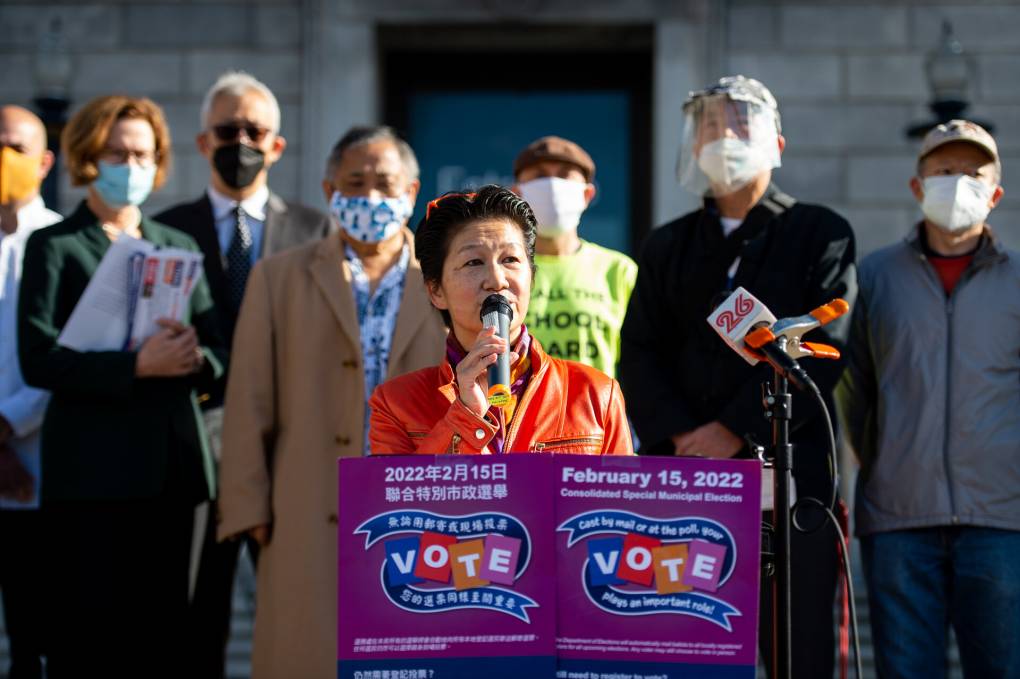
'Stunning Reversal of Fortune': Ann Hsu Voted Off SF School Board Following Racist Comments
As Chinese Community Helps Fuel the S.F. School Board Recall, Their Elected Leaders Are Silent
SF School Board Recall Drives More Noncitizen Voters to Register
SF School Board Member Alison Collins Defends Herself Against Recall Effort
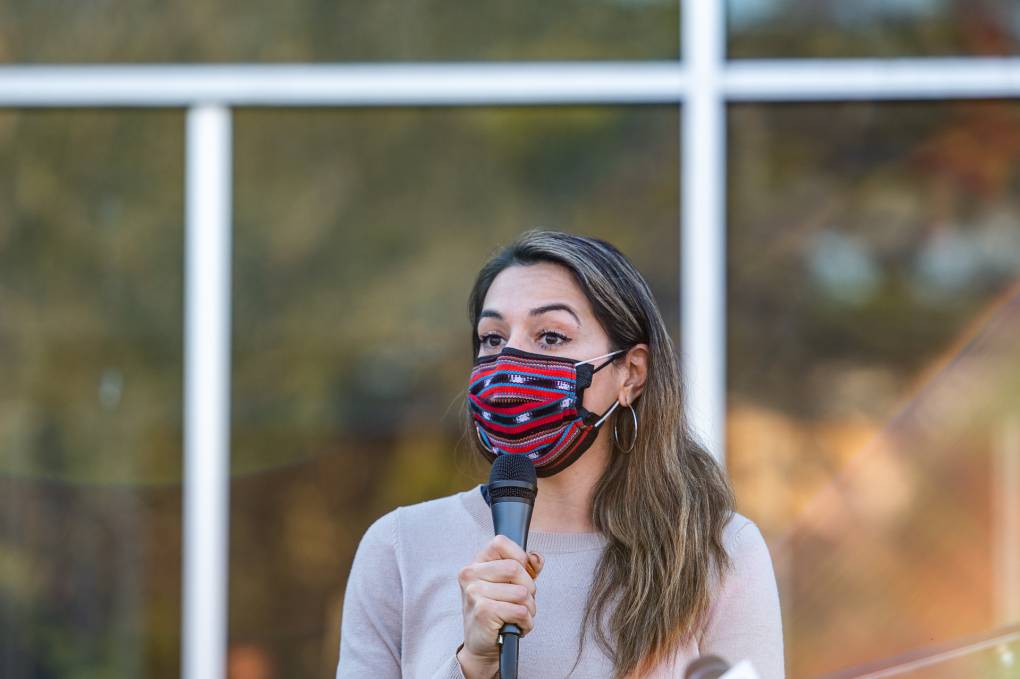
'All Political': SF Board of Education President Gabriela López on the Recall Effort Against Her, 2 Other Board Members
SF School Board Commits to Full Fall Reopening, Suspends School Renaming Effort
Player sponsored by
window.__IS_SSR__=true
window.__INITIAL_STATE__={
"attachmentsReducer": {
"audio_0": {
"type": "attachments",
"id": "audio_0",
"imgSizes": {
"kqedFullSize": {
"file": "https://ww2.kqed.org/news/wp-content/themes/KQED-unified/img/audio_bgs/background0.jpg"
}
}
},
"audio_1": {
"type": "attachments",
"id": "audio_1",
"imgSizes": {
"kqedFullSize": {
"file": "https://ww2.kqed.org/news/wp-content/themes/KQED-unified/img/audio_bgs/background1.jpg"
}
}
},
"audio_2": {
"type": "attachments",
"id": "audio_2",
"imgSizes": {
"kqedFullSize": {
"file": "https://ww2.kqed.org/news/wp-content/themes/KQED-unified/img/audio_bgs/background2.jpg"
}
}
},
"audio_3": {
"type": "attachments",
"id": "audio_3",
"imgSizes": {
"kqedFullSize": {
"file": "https://ww2.kqed.org/news/wp-content/themes/KQED-unified/img/audio_bgs/background3.jpg"
}
}
},
"audio_4": {
"type": "attachments",
"id": "audio_4",
"imgSizes": {
"kqedFullSize": {
"file": "https://ww2.kqed.org/news/wp-content/themes/KQED-unified/img/audio_bgs/background4.jpg"
}
}
},
"placeholder": {
"type": "attachments",
"id": "placeholder",
"imgSizes": {
"thumbnail": {
"file": "https://cdn.kqed.org/wp-content/uploads/2024/12/KQED-Default-Image-816638274-2000x1333-1-160x107.jpg",
"width": 160,
"height": 107,
"mimeType": "image/jpeg"
},
"medium": {
"file": "https://cdn.kqed.org/wp-content/uploads/2024/12/KQED-Default-Image-816638274-2000x1333-1-800x533.jpg",
"width": 800,
"height": 533,
"mimeType": "image/jpeg"
},
"medium_large": {
"file": "https://cdn.kqed.org/wp-content/uploads/2024/12/KQED-Default-Image-816638274-2000x1333-1-768x512.jpg",
"width": 768,
"height": 512,
"mimeType": "image/jpeg"
},
"large": {
"file": "https://cdn.kqed.org/wp-content/uploads/2024/12/KQED-Default-Image-816638274-2000x1333-1-1020x680.jpg",
"width": 1020,
"height": 680,
"mimeType": "image/jpeg"
},
"1536x1536": {
"file": "https://cdn.kqed.org/wp-content/uploads/2024/12/KQED-Default-Image-816638274-2000x1333-1-1536x1024.jpg",
"width": 1536,
"height": 1024,
"mimeType": "image/jpeg"
},
"fd-lrg": {
"file": "https://cdn.kqed.org/wp-content/uploads/2024/12/KQED-Default-Image-816638274-2000x1333-1-1536x1024.jpg",
"width": 1536,
"height": 1024,
"mimeType": "image/jpeg"
},
"fd-med": {
"file": "https://cdn.kqed.org/wp-content/uploads/2024/12/KQED-Default-Image-816638274-2000x1333-1-1020x680.jpg",
"width": 1020,
"height": 680,
"mimeType": "image/jpeg"
},
"fd-sm": {
"file": "https://cdn.kqed.org/wp-content/uploads/2024/12/KQED-Default-Image-816638274-2000x1333-1-800x533.jpg",
"width": 800,
"height": 533,
"mimeType": "image/jpeg"
},
"post-thumbnail": {
"file": "https://cdn.kqed.org/wp-content/uploads/2024/12/KQED-Default-Image-816638274-2000x1333-1-672x372.jpg",
"width": 672,
"height": 372,
"mimeType": "image/jpeg"
},
"twentyfourteen-full-width": {
"file": "https://cdn.kqed.org/wp-content/uploads/2024/12/KQED-Default-Image-816638274-2000x1333-1-1038x576.jpg",
"width": 1038,
"height": 576,
"mimeType": "image/jpeg"
},
"xxsmall": {
"file": "https://cdn.kqed.org/wp-content/uploads/2024/12/KQED-Default-Image-816638274-2000x1333-1-160x107.jpg",
"width": 160,
"height": 107,
"mimeType": "image/jpeg"
},
"xsmall": {
"file": "https://cdn.kqed.org/wp-content/uploads/2024/12/KQED-Default-Image-816638274-2000x1333-1-672x372.jpg",
"width": 672,
"height": 372,
"mimeType": "image/jpeg"
},
"small": {
"file": "https://cdn.kqed.org/wp-content/uploads/2024/12/KQED-Default-Image-816638274-2000x1333-1-672x372.jpg",
"width": 672,
"height": 372,
"mimeType": "image/jpeg"
},
"xlarge": {
"file": "https://cdn.kqed.org/wp-content/uploads/2024/12/KQED-Default-Image-816638274-2000x1333-1-1020x680.jpg",
"width": 1020,
"height": 680,
"mimeType": "image/jpeg"
},
"full-width": {
"file": "https://cdn.kqed.org/wp-content/uploads/2024/12/KQED-Default-Image-816638274-2000x1333-1-1920x1280.jpg",
"width": 1920,
"height": 1280,
"mimeType": "image/jpeg"
},
"guest-author-32": {
"file": "https://cdn.kqed.org/wp-content/uploads/2025/01/KQED-Default-Image-816638274-1333x1333-1-160x160.jpg",
"width": 32,
"height": 32,
"mimeType": "image/jpeg"
},
"guest-author-50": {
"file": "https://cdn.kqed.org/wp-content/uploads/2025/01/KQED-Default-Image-816638274-1333x1333-1-160x160.jpg",
"width": 50,
"height": 50,
"mimeType": "image/jpeg"
},
"guest-author-64": {
"file": "https://cdn.kqed.org/wp-content/uploads/2025/01/KQED-Default-Image-816638274-1333x1333-1-160x160.jpg",
"width": 64,
"height": 64,
"mimeType": "image/jpeg"
},
"guest-author-96": {
"file": "https://cdn.kqed.org/wp-content/uploads/2025/01/KQED-Default-Image-816638274-1333x1333-1-160x160.jpg",
"width": 96,
"height": 96,
"mimeType": "image/jpeg"
},
"guest-author-128": {
"file": "https://cdn.kqed.org/wp-content/uploads/2025/01/KQED-Default-Image-816638274-1333x1333-1-160x160.jpg",
"width": 128,
"height": 128,
"mimeType": "image/jpeg"
},
"detail": {
"file": "https://cdn.kqed.org/wp-content/uploads/2025/01/KQED-Default-Image-816638274-1333x1333-1-160x160.jpg",
"width": 160,
"height": 160,
"mimeType": "image/jpeg"
},
"kqedFullSize": {
"file": "https://cdn.kqed.org/wp-content/uploads/2024/12/KQED-Default-Image-816638274-2000x1333-1.jpg",
"width": 2000,
"height": 1333
}
}
},
"news_12046361": {
"type": "attachments",
"id": "news_12046361",
"meta": {
"index": "attachments_1716263798",
"site": "news",
"id": "12046361",
"found": true
},
"title": "250421-SFUSDCentralCuts-06-BL_qed (1)",
"publishDate": 1751052877,
"status": "inherit",
"parent": 12046122,
"modified": 1751052886,
"caption": "San Francisco Unified School District Superintendent Dr. Maria Su speaks during a press conference at the school district offices in San Francisco on April 21, 2025. The San Francisco school district plans to make more than $100 million in budget cuts for the second year in a row, but the move could be threatened by ongoing labor negotiations.",
"credit": "Beth LaBerge/KQED",
"altTag": null,
"description": null,
"imgSizes": {
"thumbnail": {
"file": "https://cdn.kqed.org/wp-content/uploads/sites/10/2025/06/250421-SFUSDCentralCuts-06-BL_qed-1-160x107.jpg",
"width": 160,
"height": 107,
"mimeType": "image/jpeg"
},
"1536x1536": {
"file": "https://cdn.kqed.org/wp-content/uploads/sites/10/2025/06/250421-SFUSDCentralCuts-06-BL_qed-1-1536x1024.jpg",
"width": 1536,
"height": 1024,
"mimeType": "image/jpeg"
},
"post-thumbnail": {
"file": "https://cdn.kqed.org/wp-content/uploads/sites/10/2025/06/250421-SFUSDCentralCuts-06-BL_qed-1-672x372.jpg",
"width": 672,
"height": 372,
"mimeType": "image/jpeg"
},
"twentyfourteen-full-width": {
"file": "https://cdn.kqed.org/wp-content/uploads/sites/10/2025/06/250421-SFUSDCentralCuts-06-BL_qed-1-1038x576.jpg",
"width": 1038,
"height": 576,
"mimeType": "image/jpeg"
},
"kqedFullSize": {
"file": "https://cdn.kqed.org/wp-content/uploads/sites/10/2025/06/250421-SFUSDCentralCuts-06-BL_qed-1.jpg",
"width": 1999,
"height": 1333
}
},
"isLoading": false,
"fetchFailed": false
},
"news_12036911": {
"type": "attachments",
"id": "news_12036911",
"meta": {
"index": "attachments_1716263798",
"site": "news",
"id": "12036911",
"found": true
},
"title": "250418-SFUSD-06-BL-KQED",
"publishDate": 1745253406,
"status": "inherit",
"parent": 12036914,
"modified": 1745274516,
"caption": "The San Francisco Unified School District Administrative Offices in San Francisco on April 18, 2025.",
"credit": "Beth LaBerge/KQED",
"altTag": null,
"description": null,
"imgSizes": {
"medium": {
"file": "https://cdn.kqed.org/wp-content/uploads/sites/10/2025/04/250418-SFUSD-06-BL-KQED-800x533.jpg",
"width": 800,
"height": 533,
"mimeType": "image/jpeg"
},
"large": {
"file": "https://cdn.kqed.org/wp-content/uploads/sites/10/2025/04/250418-SFUSD-06-BL-KQED-1020x680.jpg",
"width": 1020,
"height": 680,
"mimeType": "image/jpeg"
},
"thumbnail": {
"file": "https://cdn.kqed.org/wp-content/uploads/sites/10/2025/04/250418-SFUSD-06-BL-KQED-160x107.jpg",
"width": 160,
"height": 107,
"mimeType": "image/jpeg"
},
"1536x1536": {
"file": "https://cdn.kqed.org/wp-content/uploads/sites/10/2025/04/250418-SFUSD-06-BL-KQED-1536x1024.jpg",
"width": 1536,
"height": 1024,
"mimeType": "image/jpeg"
},
"post-thumbnail": {
"file": "https://cdn.kqed.org/wp-content/uploads/sites/10/2025/04/250418-SFUSD-06-BL-KQED-672x372.jpg",
"width": 672,
"height": 372,
"mimeType": "image/jpeg"
},
"twentyfourteen-full-width": {
"file": "https://cdn.kqed.org/wp-content/uploads/sites/10/2025/04/250418-SFUSD-06-BL-KQED-1038x576.jpg",
"width": 1038,
"height": 576,
"mimeType": "image/jpeg"
},
"full-width": {
"file": "https://cdn.kqed.org/wp-content/uploads/sites/10/2025/04/250418-SFUSD-06-BL-KQED-1920x1280.jpg",
"width": 1920,
"height": 1280,
"mimeType": "image/jpeg"
},
"kqedFullSize": {
"file": "https://cdn.kqed.org/wp-content/uploads/sites/10/2025/04/250418-SFUSD-06-BL-KQED.jpg",
"width": 2000,
"height": 1333
}
},
"isLoading": false,
"fetchFailed": false
},
"news_12028319": {
"type": "attachments",
"id": "news_12028319",
"meta": {
"index": "attachments_1716263798",
"site": "news",
"id": "12028319",
"found": true
},
"title": "241009-SFUSDClosuresMarch-38-BL_qed",
"publishDate": 1740421432,
"status": "inherit",
"parent": 12028317,
"modified": 1740601322,
"caption": "Teachers, K–5 students and their families at Harvey Milk Civil Rights Academy rally at Harvey Milk Plaza in the Castro neighborhood of San Francisco on Oct. 9, 2024, to protest against the potential closure of the school. The school is on the list of 11 San Francisco campuses that could close after this academic year as the district grapples with declining enrollment and a budget deficit.",
"credit": "Beth LaBerge/KQED",
"altTag": null,
"description": null,
"imgSizes": {
"medium": {
"file": "https://cdn.kqed.org/wp-content/uploads/sites/10/2025/02/241009-SFUSDClosuresMarch-38-BL_qed-800x533.jpg",
"width": 800,
"height": 533,
"mimeType": "image/jpeg"
},
"large": {
"file": "https://cdn.kqed.org/wp-content/uploads/sites/10/2025/02/241009-SFUSDClosuresMarch-38-BL_qed-1020x680.jpg",
"width": 1020,
"height": 680,
"mimeType": "image/jpeg"
},
"thumbnail": {
"file": "https://cdn.kqed.org/wp-content/uploads/sites/10/2025/02/241009-SFUSDClosuresMarch-38-BL_qed-160x107.jpg",
"width": 160,
"height": 107,
"mimeType": "image/jpeg"
},
"1536x1536": {
"file": "https://cdn.kqed.org/wp-content/uploads/sites/10/2025/02/241009-SFUSDClosuresMarch-38-BL_qed-1536x1024.jpg",
"width": 1536,
"height": 1024,
"mimeType": "image/jpeg"
},
"post-thumbnail": {
"file": "https://cdn.kqed.org/wp-content/uploads/sites/10/2025/02/241009-SFUSDClosuresMarch-38-BL_qed-672x372.jpg",
"width": 672,
"height": 372,
"mimeType": "image/jpeg"
},
"twentyfourteen-full-width": {
"file": "https://cdn.kqed.org/wp-content/uploads/sites/10/2025/02/241009-SFUSDClosuresMarch-38-BL_qed-1038x576.jpg",
"width": 1038,
"height": 576,
"mimeType": "image/jpeg"
},
"full-width": {
"file": "https://cdn.kqed.org/wp-content/uploads/sites/10/2025/02/241009-SFUSDClosuresMarch-38-BL_qed-1920x1280.jpg",
"width": 1920,
"height": 1280,
"mimeType": "image/jpeg"
},
"kqedFullSize": {
"file": "https://cdn.kqed.org/wp-content/uploads/sites/10/2025/02/241009-SFUSDClosuresMarch-38-BL_qed.jpg",
"width": 2000,
"height": 1333
}
},
"isLoading": false,
"fetchFailed": false
},
"news_12028311": {
"type": "attachments",
"id": "news_12028311",
"meta": {
"index": "attachments_1716263798",
"site": "news",
"id": "12028311",
"found": true
},
"title": "241023-SFUSDSuperintendent-12-BL_qed",
"publishDate": 1740420271,
"status": "inherit",
"parent": 12028309,
"modified": 1740420300,
"caption": "Katie Dorset teaches a class at Yick Wo Alternative Elementary School in San Francisco on Oct. 23, 2024.",
"credit": "Beth LaBerge/KQED",
"altTag": null,
"description": null,
"imgSizes": {
"medium": {
"file": "https://cdn.kqed.org/wp-content/uploads/sites/10/2025/02/241023-SFUSDSuperintendent-12-BL_qed-800x533.jpg",
"width": 800,
"height": 533,
"mimeType": "image/jpeg"
},
"large": {
"file": "https://cdn.kqed.org/wp-content/uploads/sites/10/2025/02/241023-SFUSDSuperintendent-12-BL_qed-1020x680.jpg",
"width": 1020,
"height": 680,
"mimeType": "image/jpeg"
},
"thumbnail": {
"file": "https://cdn.kqed.org/wp-content/uploads/sites/10/2025/02/241023-SFUSDSuperintendent-12-BL_qed-160x107.jpg",
"width": 160,
"height": 107,
"mimeType": "image/jpeg"
},
"1536x1536": {
"file": "https://cdn.kqed.org/wp-content/uploads/sites/10/2025/02/241023-SFUSDSuperintendent-12-BL_qed-1536x1024.jpg",
"width": 1536,
"height": 1024,
"mimeType": "image/jpeg"
},
"post-thumbnail": {
"file": "https://cdn.kqed.org/wp-content/uploads/sites/10/2025/02/241023-SFUSDSuperintendent-12-BL_qed-672x372.jpg",
"width": 672,
"height": 372,
"mimeType": "image/jpeg"
},
"twentyfourteen-full-width": {
"file": "https://cdn.kqed.org/wp-content/uploads/sites/10/2025/02/241023-SFUSDSuperintendent-12-BL_qed-1038x576.jpg",
"width": 1038,
"height": 576,
"mimeType": "image/jpeg"
},
"full-width": {
"file": "https://cdn.kqed.org/wp-content/uploads/sites/10/2025/02/241023-SFUSDSuperintendent-12-BL_qed-1920x1280.jpg",
"width": 1920,
"height": 1280,
"mimeType": "image/jpeg"
},
"kqedFullSize": {
"file": "https://cdn.kqed.org/wp-content/uploads/sites/10/2025/02/241023-SFUSDSuperintendent-12-BL_qed.jpg",
"width": 1999,
"height": 1333
}
},
"isLoading": false,
"fetchFailed": false
},
"news_11931650": {
"type": "attachments",
"id": "news_11931650",
"meta": {
"index": "attachments_1716263798",
"site": "news",
"id": "11931650",
"found": true
},
"title": "1AFBACD6-E56E-4A4A-8624-783F1286C3AF",
"publishDate": 1667981119,
"status": "inherit",
"parent": 11932210,
"modified": 1763677534,
"caption": "Then-San Francisco Unified School District board candidate, Alida Fisher, speaks at an election night event at El Rio in San Francisco on Nov. 8, 2022.",
"credit": "Beth LaBerge/KQED",
"altTag": "A white woman with a grey suit over a blue sweater speaks into a microphone at an event",
"description": null,
"imgSizes": {
"medium": {
"file": "https://cdn.kqed.org/wp-content/uploads/sites/10/2022/11/1AFBACD6-E56E-4A4A-8624-783F1286C3AF-800x533.jpg",
"width": 800,
"height": 533,
"mimeType": "image/jpeg"
},
"large": {
"file": "https://cdn.kqed.org/wp-content/uploads/sites/10/2022/11/1AFBACD6-E56E-4A4A-8624-783F1286C3AF-1020x680.jpg",
"width": 1020,
"height": 680,
"mimeType": "image/jpeg"
},
"thumbnail": {
"file": "https://cdn.kqed.org/wp-content/uploads/sites/10/2022/11/1AFBACD6-E56E-4A4A-8624-783F1286C3AF-160x107.jpg",
"width": 160,
"height": 107,
"mimeType": "image/jpeg"
},
"1536x1536": {
"file": "https://cdn.kqed.org/wp-content/uploads/sites/10/2022/11/1AFBACD6-E56E-4A4A-8624-783F1286C3AF-1536x1024.jpg",
"width": 1536,
"height": 1024,
"mimeType": "image/jpeg"
},
"post-thumbnail": {
"file": "https://cdn.kqed.org/wp-content/uploads/sites/10/2022/11/1AFBACD6-E56E-4A4A-8624-783F1286C3AF-672x372.jpg",
"width": 672,
"height": 372,
"mimeType": "image/jpeg"
},
"twentyfourteen-full-width": {
"file": "https://cdn.kqed.org/wp-content/uploads/sites/10/2022/11/1AFBACD6-E56E-4A4A-8624-783F1286C3AF-1038x576.jpg",
"width": 1038,
"height": 576,
"mimeType": "image/jpeg"
},
"kqedFullSize": {
"file": "https://cdn.kqed.org/wp-content/uploads/sites/10/2022/11/1AFBACD6-E56E-4A4A-8624-783F1286C3AF.jpg",
"width": 1620,
"height": 1080
}
},
"isLoading": false,
"fetchFailed": false
},
"news_11922097": {
"type": "attachments",
"id": "news_11922097",
"meta": {
"index": "attachments_1716263798",
"site": "news",
"id": "11922097",
"found": true
},
"parent": 11922072,
"imgSizes": {
"twentyfourteen-full-width": {
"file": "https://ww2.kqed.org/app/uploads/sites/10/2022/08/RS53041_003_KQED_BethLaBerge_SchoolBoardRecallPresser_01142022-qut-e1660091672724-1038x576.jpg",
"width": 1038,
"mimeType": "image/jpeg",
"height": 576
},
"thumbnail": {
"file": "https://ww2.kqed.org/app/uploads/sites/10/2022/08/RS53041_003_KQED_BethLaBerge_SchoolBoardRecallPresser_01142022-qut-e1660091672724-160x100.jpg",
"width": 160,
"mimeType": "image/jpeg",
"height": 100
},
"post-thumbnail": {
"file": "https://ww2.kqed.org/app/uploads/sites/10/2022/08/RS53041_003_KQED_BethLaBerge_SchoolBoardRecallPresser_01142022-qut-e1660091672724-672x372.jpg",
"width": 672,
"mimeType": "image/jpeg",
"height": 372
},
"kqedFullSize": {
"file": "https://ww2.kqed.org/app/uploads/sites/10/2022/08/RS53041_003_KQED_BethLaBerge_SchoolBoardRecallPresser_01142022-qut-e1660091672724.jpg",
"width": 1920,
"height": 1204
},
"large": {
"file": "https://ww2.kqed.org/app/uploads/sites/10/2022/08/RS53041_003_KQED_BethLaBerge_SchoolBoardRecallPresser_01142022-qut-e1660091672724-1020x640.jpg",
"width": 1020,
"mimeType": "image/jpeg",
"height": 640
},
"1536x1536": {
"file": "https://ww2.kqed.org/app/uploads/sites/10/2022/08/RS53041_003_KQED_BethLaBerge_SchoolBoardRecallPresser_01142022-qut-e1660091672724-1536x963.jpg",
"width": 1536,
"mimeType": "image/jpeg",
"height": 963
},
"medium": {
"file": "https://ww2.kqed.org/app/uploads/sites/10/2022/08/RS53041_003_KQED_BethLaBerge_SchoolBoardRecallPresser_01142022-qut-e1660091672724-800x502.jpg",
"width": 800,
"mimeType": "image/jpeg",
"height": 502
}
},
"publishDate": 1660081595,
"modified": 1668550555,
"caption": "Ann Hsu speaks during a press conference held by the Chinese/API Voter Outreach Taskforce on the steps of the Asian Art Museum in San Francisco on Jan. 14, 2021.",
"description": "Ann Hsu speaks during a press conference held by the Chinese/API Voter Outreach Taskforce on the steps of the Asian Art Museum in San Francisco on Jan. 14, 2021.",
"title": "Ann Hsu",
"credit": "Beth LaBerge/KQED",
"status": "inherit",
"altTag": "An Asian woman with short black hair and holding a microphone wears a red leather jacket, red sunglasses on top of her head, and a red, yellow and purple scarf.",
"isLoading": false,
"fetchFailed": false
},
"news_11903437": {
"type": "attachments",
"id": "news_11903437",
"meta": {
"index": "attachments_1716263798",
"site": "news",
"id": "11903437",
"found": true
},
"parent": 11903352,
"imgSizes": {
"twentyfourteen-full-width": {
"file": "https://ww2.kqed.org/app/uploads/sites/10/2022/01/new-image-1038x576.jpg",
"width": 1038,
"mimeType": "image/jpeg",
"height": 576
},
"thumbnail": {
"file": "https://ww2.kqed.org/app/uploads/sites/10/2022/01/new-image-160x104.jpg",
"width": 160,
"mimeType": "image/jpeg",
"height": 104
},
"post-thumbnail": {
"file": "https://ww2.kqed.org/app/uploads/sites/10/2022/01/new-image-672x372.jpg",
"width": 672,
"mimeType": "image/jpeg",
"height": 372
},
"kqedFullSize": {
"file": "https://ww2.kqed.org/app/uploads/sites/10/2022/01/new-image.jpg",
"width": 1790,
"height": 1160
},
"large": {
"file": "https://ww2.kqed.org/app/uploads/sites/10/2022/01/new-image-1020x661.jpg",
"width": 1020,
"mimeType": "image/jpeg",
"height": 661
},
"1536x1536": {
"file": "https://ww2.kqed.org/app/uploads/sites/10/2022/01/new-image-1536x995.jpg",
"width": 1536,
"mimeType": "image/jpeg",
"height": 995
},
"medium": {
"file": "https://ww2.kqed.org/app/uploads/sites/10/2022/01/new-image-800x518.jpg",
"width": 800,
"mimeType": "image/jpeg",
"height": 518
}
},
"publishDate": 1643662339,
"modified": 1643662381,
"caption": "From left to right: Supervisors Gordon Mar and Connie Chan, Assemblyman Phil Ting and City Attorney David Chiu.",
"description": null,
"title": "new-image",
"credit": "Courtesy of The San Francisco Standard",
"status": "inherit",
"altTag": "Four people dressed in business attire wearing jackets and ties.",
"isLoading": false,
"fetchFailed": false
},
"news_11901815": {
"type": "attachments",
"id": "news_11901815",
"meta": {
"index": "attachments_1716263798",
"site": "news",
"id": "11901815",
"found": true
},
"parent": 11901813,
"imgSizes": {
"twentyfourteen-full-width": {
"file": "https://ww2.kqed.org/app/uploads/sites/10/2022/01/RS53040_001_KQED_BethLaBerge_SchoolBoardRecallPresser_01142022-qut-1-1038x576.jpg",
"width": 1038,
"mimeType": "image/jpeg",
"height": 576
},
"thumbnail": {
"file": "https://ww2.kqed.org/app/uploads/sites/10/2022/01/RS53040_001_KQED_BethLaBerge_SchoolBoardRecallPresser_01142022-qut-1-160x107.jpg",
"width": 160,
"mimeType": "image/jpeg",
"height": 107
},
"post-thumbnail": {
"file": "https://ww2.kqed.org/app/uploads/sites/10/2022/01/RS53040_001_KQED_BethLaBerge_SchoolBoardRecallPresser_01142022-qut-1-672x372.jpg",
"width": 672,
"mimeType": "image/jpeg",
"height": 372
},
"kqedFullSize": {
"file": "https://ww2.kqed.org/app/uploads/sites/10/2022/01/RS53040_001_KQED_BethLaBerge_SchoolBoardRecallPresser_01142022-qut-1.jpg",
"width": 1920,
"height": 1278
},
"large": {
"file": "https://ww2.kqed.org/app/uploads/sites/10/2022/01/RS53040_001_KQED_BethLaBerge_SchoolBoardRecallPresser_01142022-qut-1-1020x679.jpg",
"width": 1020,
"mimeType": "image/jpeg",
"height": 679
},
"1536x1536": {
"file": "https://ww2.kqed.org/app/uploads/sites/10/2022/01/RS53040_001_KQED_BethLaBerge_SchoolBoardRecallPresser_01142022-qut-1-1536x1022.jpg",
"width": 1536,
"mimeType": "image/jpeg",
"height": 1022
},
"medium": {
"file": "https://ww2.kqed.org/app/uploads/sites/10/2022/01/RS53040_001_KQED_BethLaBerge_SchoolBoardRecallPresser_01142022-qut-1-800x533.jpg",
"width": 800,
"mimeType": "image/jpeg",
"height": 533
}
},
"publishDate": 1642210803,
"modified": 1659136405,
"caption": "Ann Hsu speaks during a press conference held by the Chinese/API Voter Outreach Task Force on the steps of the Asian Art Museum in San Francisco on Jan. 14, 2022.",
"description": null,
"title": "RS53040_001_KQED_BethLaBerge_SchoolBoardRecallPresser_01142022-qut (1)",
"credit": "Beth LaBerge/KQED",
"status": "inherit",
"altTag": "A woman speaks at a podium flanked by other people behind her wearing masks.",
"isLoading": false,
"fetchFailed": false
},
"news_11867521": {
"type": "attachments",
"id": "news_11867521",
"meta": {
"index": "attachments_1716263798",
"site": "news",
"id": "11867521",
"found": true
},
"parent": 11900721,
"imgSizes": {
"twentyfourteen-full-width": {
"file": "https://ww2.kqed.org/app/uploads/sites/10/2021/04/IMG_7815-1038x576.jpg",
"width": 1038,
"mimeType": "image/jpeg",
"height": 576
},
"thumbnail": {
"file": "https://ww2.kqed.org/app/uploads/sites/10/2021/04/IMG_7815-160x107.jpg",
"width": 160,
"mimeType": "image/jpeg",
"height": 107
},
"post-thumbnail": {
"file": "https://ww2.kqed.org/app/uploads/sites/10/2021/04/IMG_7815-672x372.jpg",
"width": 672,
"mimeType": "image/jpeg",
"height": 372
},
"kqedFullSize": {
"file": "https://ww2.kqed.org/app/uploads/sites/10/2021/04/IMG_7815-scaled-e1617305062188.jpg",
"width": 1920,
"height": 1280
},
"2048x2048": {
"file": "https://ww2.kqed.org/app/uploads/sites/10/2021/04/IMG_7815-2048x1365.jpg",
"width": 2048,
"mimeType": "image/jpeg",
"height": 1365
},
"large": {
"file": "https://ww2.kqed.org/app/uploads/sites/10/2021/04/IMG_7815-1020x680.jpg",
"width": 1020,
"mimeType": "image/jpeg",
"height": 680
},
"1536x1536": {
"file": "https://ww2.kqed.org/app/uploads/sites/10/2021/04/IMG_7815-1536x1024.jpg",
"width": 1536,
"mimeType": "image/jpeg",
"height": 1024
},
"full-width": {
"file": "https://ww2.kqed.org/app/uploads/sites/10/2021/04/IMG_7815-1920x1280.jpg",
"width": 1920,
"mimeType": "image/jpeg",
"height": 1280
},
"medium": {
"file": "https://ww2.kqed.org/app/uploads/sites/10/2021/04/IMG_7815-800x533.jpg",
"width": 800,
"mimeType": "image/jpeg",
"height": 533
}
},
"publishDate": 1617282004,
"modified": 1641855855,
"caption": "San Francisco Board of Education Commissioner Alison Collins addresses her supporters at a rally in San Francisco on March 31, 2021.",
"description": null,
"title": "IMG_7815",
"credit": "MJ Johnson/KQED",
"status": "inherit",
"altTag": "A woman standing in front of microphones at a news conference.",
"isLoading": false,
"fetchFailed": false
},
"news_11892786": {
"type": "attachments",
"id": "news_11892786",
"meta": {
"index": "attachments_1716263798",
"site": "news",
"id": "11892786",
"found": true
},
"parent": 11892743,
"imgSizes": {
"twentyfourteen-full-width": {
"file": "https://ww2.kqed.org/app/uploads/sites/10/2021/10/RS47103_033_SanFrancisco_LowellBSURally_02052021-qut-1-1038x576.jpg",
"width": 1038,
"mimeType": "image/jpeg",
"height": 576
},
"thumbnail": {
"file": "https://ww2.kqed.org/app/uploads/sites/10/2021/10/RS47103_033_SanFrancisco_LowellBSURally_02052021-qut-1-160x107.jpg",
"width": 160,
"mimeType": "image/jpeg",
"height": 107
},
"post-thumbnail": {
"file": "https://ww2.kqed.org/app/uploads/sites/10/2021/10/RS47103_033_SanFrancisco_LowellBSURally_02052021-qut-1-672x372.jpg",
"width": 672,
"mimeType": "image/jpeg",
"height": 372
},
"kqedFullSize": {
"file": "https://ww2.kqed.org/app/uploads/sites/10/2021/10/RS47103_033_SanFrancisco_LowellBSURally_02052021-qut-1.jpg",
"width": 1920,
"height": 1278
},
"large": {
"file": "https://ww2.kqed.org/app/uploads/sites/10/2021/10/RS47103_033_SanFrancisco_LowellBSURally_02052021-qut-1-1020x679.jpg",
"width": 1020,
"mimeType": "image/jpeg",
"height": 679
},
"1536x1536": {
"file": "https://ww2.kqed.org/app/uploads/sites/10/2021/10/RS47103_033_SanFrancisco_LowellBSURally_02052021-qut-1-1536x1022.jpg",
"width": 1536,
"mimeType": "image/jpeg",
"height": 1022
},
"medium": {
"file": "https://ww2.kqed.org/app/uploads/sites/10/2021/10/RS47103_033_SanFrancisco_LowellBSURally_02052021-qut-1-800x533.jpg",
"width": 800,
"mimeType": "image/jpeg",
"height": 533
}
},
"publishDate": 1634600992,
"modified": 1635366825,
"caption": "SFUSD Board President Gabriela López speaks during a rally at Lowell High School on Feb. 5, 2021.",
"description": null,
"title": "RS47103_033_SanFrancisco_LowellBSURally_02052021-qut (1)",
"credit": "Beth LaBerge/KQED",
"status": "inherit",
"altTag": "A woman with long brown hair and a red and black woven masks holds a microphone in front of windows reflecting trees.",
"isLoading": false,
"fetchFailed": false
},
"news_11868359": {
"type": "attachments",
"id": "news_11868359",
"meta": {
"index": "attachments_1716263798",
"site": "news",
"id": "11868359",
"found": true
},
"parent": 11868340,
"imgSizes": {
"twentyfourteen-full-width": {
"file": "https://ww2.kqed.org/app/uploads/sites/10/2021/04/RS47763_064_SanFrancisco_ReopenSchoolsMarch_03132021-qut-1038x576.jpg",
"width": 1038,
"mimeType": "image/jpeg",
"height": 576
},
"thumbnail": {
"file": "https://ww2.kqed.org/app/uploads/sites/10/2021/04/RS47763_064_SanFrancisco_ReopenSchoolsMarch_03132021-qut-160x107.jpg",
"width": 160,
"mimeType": "image/jpeg",
"height": 107
},
"post-thumbnail": {
"file": "https://ww2.kqed.org/app/uploads/sites/10/2021/04/RS47763_064_SanFrancisco_ReopenSchoolsMarch_03132021-qut-672x372.jpg",
"width": 672,
"mimeType": "image/jpeg",
"height": 372
},
"kqedFullSize": {
"file": "https://ww2.kqed.org/app/uploads/sites/10/2021/04/RS47763_064_SanFrancisco_ReopenSchoolsMarch_03132021-qut.jpg",
"width": 1920,
"height": 1280
},
"large": {
"file": "https://ww2.kqed.org/app/uploads/sites/10/2021/04/RS47763_064_SanFrancisco_ReopenSchoolsMarch_03132021-qut-1020x680.jpg",
"width": 1020,
"mimeType": "image/jpeg",
"height": 680
},
"1536x1536": {
"file": "https://ww2.kqed.org/app/uploads/sites/10/2021/04/RS47763_064_SanFrancisco_ReopenSchoolsMarch_03132021-qut-1536x1024.jpg",
"width": 1536,
"mimeType": "image/jpeg",
"height": 1024
},
"medium": {
"file": "https://ww2.kqed.org/app/uploads/sites/10/2021/04/RS47763_064_SanFrancisco_ReopenSchoolsMarch_03132021-qut-800x533.jpg",
"width": 800,
"mimeType": "image/jpeg",
"height": 533
}
},
"publishDate": 1617756987,
"modified": 1617839586,
"caption": "San Francisco Unified School District families and educators rally at City Hall in San Francisco on March 13, 2021, in support of opening schools on the one-year anniversary of school buildings being closed.",
"description": "San Francisco Unified School District families and educators rally at City Hall in San Francisco on March 13, 2021, in support of reopening schools, a year after they were shuttered by the coronavirus pandemic.",
"title": "RS47763_064_SanFrancisco_ReopenSchoolsMarch_03132021-qut",
"credit": "Beth LaBerge/KQED",
"status": "inherit",
"altTag": null,
"isLoading": false,
"fetchFailed": false
}
},
"audioPlayerReducer": {
"postId": "stream_live",
"isPaused": true,
"isPlaying": false,
"pfsActive": false,
"pledgeModalIsOpen": true,
"playerDrawerIsOpen": false,
"liveAudioPlayStartedAt": 0,
"liveAudioPlayContext": ""
},
"authorsReducer": {
"byline_news_11903352": {
"type": "authors",
"id": "byline_news_11903352",
"meta": {
"override": true
},
"slug": "byline_news_11903352",
"name": "Scott Shafer and Han Li",
"isLoading": false
},
"byline_news_11901813": {
"type": "authors",
"id": "byline_news_11901813",
"meta": {
"override": true
},
"slug": "byline_news_11901813",
"name": "Scott Shafer and Han Li",
"isLoading": false
},
"vrancano": {
"type": "authors",
"id": "11276",
"meta": {
"index": "authors_1716337520",
"id": "11276",
"found": true
},
"name": "Vanessa Rancaño",
"firstName": "Vanessa",
"lastName": "Rancaño",
"slug": "vrancano",
"email": "vrancano@kqed.org",
"display_author_email": false,
"staff_mastheads": [
"news"
],
"title": "Reporter",
"bio": "Vanessa Rancaño is a features reporter for KQED. She’s also covered homelessness and education for the station and reported from the Central Valley. Her work has aired across public radio, from flagship national news shows to longform narrative podcasts. Before taking up a mic, she worked as a freelance print journalist. She’s been recognized with a number of national and regional awards. Vanessa grew up in California's Central Valley. She's a former NPR Kroc Fellow, and a graduate of the UC Berkeley Graduate School of Journalism.",
"avatar": "https://secure.gravatar.com/avatar/b3a383dfb0e7ee1c17568f2cf067904ab654d6e3de9743fc661f3c788ade1bed?s=600&d=blank&r=g",
"twitter": "vanessarancano",
"bluesky": null,
"facebook": null,
"instagram": null,
"linkedin": null,
"sites": [
{
"site": "arts",
"roles": [
"editor"
]
},
{
"site": "news",
"roles": [
"editor"
]
},
{
"site": "liveblog",
"roles": [
"contributor"
]
}
],
"headData": {
"title": "Vanessa Rancaño | KQED",
"description": "Reporter",
"ogImgSrc": "https://secure.gravatar.com/avatar/b3a383dfb0e7ee1c17568f2cf067904ab654d6e3de9743fc661f3c788ade1bed?s=600&d=blank&r=g",
"twImgSrc": "https://secure.gravatar.com/avatar/b3a383dfb0e7ee1c17568f2cf067904ab654d6e3de9743fc661f3c788ade1bed?s=600&d=blank&r=g"
},
"isLoading": false,
"link": "/author/vrancano"
},
"hmcdede": {
"type": "authors",
"id": "11635",
"meta": {
"index": "authors_1716337520",
"id": "11635",
"found": true
},
"name": "Holly McDede",
"firstName": "Holly",
"lastName": "McDede",
"slug": "hmcdede",
"email": "hmcdede@KQED.org",
"display_author_email": false,
"staff_mastheads": [],
"title": "KQED Contributor",
"bio": null,
"avatar": "https://secure.gravatar.com/avatar/35d1a1f5422c9d266f7ace9348d170f2136671a65fffc90a592e4d7fbf8dc3f6?s=600&d=blank&r=g",
"twitter": null,
"bluesky": null,
"facebook": null,
"instagram": null,
"linkedin": null,
"sites": [
{
"site": "arts",
"roles": [
"editor"
]
},
{
"site": "news",
"roles": [
"edit_others_posts",
"editor"
]
},
{
"site": "science",
"roles": [
"editor"
]
},
{
"site": "forum",
"roles": [
"editor"
]
},
{
"site": "perspectives",
"roles": [
"administrator"
]
}
],
"headData": {
"title": "Holly McDede | KQED",
"description": "KQED Contributor",
"ogImgSrc": "https://secure.gravatar.com/avatar/35d1a1f5422c9d266f7ace9348d170f2136671a65fffc90a592e4d7fbf8dc3f6?s=600&d=blank&r=g",
"twImgSrc": "https://secure.gravatar.com/avatar/35d1a1f5422c9d266f7ace9348d170f2136671a65fffc90a592e4d7fbf8dc3f6?s=600&d=blank&r=g"
},
"isLoading": false,
"link": "/author/hmcdede"
},
"jrodriguez": {
"type": "authors",
"id": "11690",
"meta": {
"index": "authors_1716337520",
"id": "11690",
"found": true
},
"name": "Joe Fitzgerald Rodriguez",
"firstName": "Joe",
"lastName": "Fitzgerald Rodriguez",
"slug": "jrodriguez",
"email": "jrodriguez@kqed.org",
"display_author_email": true,
"staff_mastheads": [
"news"
],
"title": "Reporter and Producer",
"bio": "Joe Fitzgerald Rodriguez is a reporter and digital producer for KQED covering politics. Joe most recently wrote for the \u003cem>San Francisco Examiner\u003c/em> as a political columnist covering The City. He was raised in San Francisco and has spent his reporting career in his beloved, foggy, city by the bay. Joe was 12-years-old when he conducted his first interview in journalism, grilling former San Francisco Mayor Willie Brown for the Marina Middle School newspaper, \u003cem>The Penguin Press, \u003c/em>and he continues to report on the San Francisco Bay Area to this day.",
"avatar": "https://secure.gravatar.com/avatar/2247beb0564c1e9c62228d5649d2edac?s=600&d=blank&r=g",
"twitter": "FitztheReporter",
"facebook": null,
"instagram": "https://www.instagram.com/fitzthereporter/",
"linkedin": null,
"sites": [
{
"site": "",
"roles": [
"editor"
]
},
{
"site": "arts",
"roles": [
"editor"
]
},
{
"site": "news",
"roles": [
"editor"
]
},
{
"site": "science",
"roles": [
"editor"
]
},
{
"site": "elections",
"roles": [
"editor"
]
},
{
"site": "liveblog",
"roles": [
"editor"
]
}
],
"headData": {
"title": "Joe Fitzgerald Rodriguez | KQED",
"description": "Reporter and Producer",
"ogImgSrc": "https://secure.gravatar.com/avatar/2247beb0564c1e9c62228d5649d2edac?s=600&d=blank&r=g",
"twImgSrc": "https://secure.gravatar.com/avatar/2247beb0564c1e9c62228d5649d2edac?s=600&d=blank&r=g"
},
"isLoading": false,
"link": "/author/jrodriguez"
},
"kdebenedetti": {
"type": "authors",
"id": "11913",
"meta": {
"index": "authors_1716337520",
"id": "11913",
"found": true
},
"name": "Katie DeBenedetti",
"firstName": "Katie",
"lastName": "DeBenedetti",
"slug": "kdebenedetti",
"email": "kdebenedetti@kqed.org",
"display_author_email": false,
"staff_mastheads": [
"news",
"science"
],
"title": "KQED Contributor",
"bio": "Katie DeBenedetti is a digital reporter covering daily news for the Express Desk. Prior to joining KQED as a culture reporting intern in January 2024, she covered education and city government for the Napa Valley Register.",
"avatar": "https://secure.gravatar.com/avatar/6e31073cb8f7e4214ab03f42771d0f45?s=600&d=blank&r=g",
"twitter": null,
"facebook": null,
"instagram": null,
"linkedin": null,
"sites": [
{
"site": "news",
"roles": [
"author"
]
},
{
"site": "science",
"roles": [
"author"
]
},
{
"site": "liveblog",
"roles": [
"author"
]
}
],
"headData": {
"title": "Katie DeBenedetti | KQED",
"description": "KQED Contributor",
"ogImgSrc": "https://secure.gravatar.com/avatar/6e31073cb8f7e4214ab03f42771d0f45?s=600&d=blank&r=g",
"twImgSrc": "https://secure.gravatar.com/avatar/6e31073cb8f7e4214ab03f42771d0f45?s=600&d=blank&r=g"
},
"isLoading": false,
"link": "/author/kdebenedetti"
}
},
"pagesReducer": {
"news_tag_san-francisco-board-of-education": {
"type": "terms",
"id": "news_29330",
"meta": {
"index": "terms_1716263798",
"site": "news",
"id": "29330",
"score": 10.404627
},
"featImg": null,
"name": "San Francisco Board of Education",
"description": null,
"taxonomy": "tag",
"headData": {
"twImgId": null,
"twTitle": null,
"ogTitle": null,
"ogImgId": null,
"twDescription": null,
"description": null,
"title": "San Francisco Board of Education Archives | KQED News",
"ogDescription": null
},
"ttid": 29347,
"slug": "san-francisco-board-of-education",
"isLoading": false,
"title": "San Francisco Board of Education",
"pageMeta": {
"site": "news",
"WpPageTemplate": "page-topic-editorial",
"currentPage": 1
},
"blocks": [
{
"blockName": "kqed/post-list",
"attrs": {
"layout": "cardArticle2",
"query": "posts/news?tag=san-francisco-board-of-education",
"seeMore": false,
"paginated": true,
"page": 1
}
},
{
"blockName": "kqed/ad"
}
]
}
},
"pfsSessionReducer": {},
"postsReducer": {
"stream_live": {
"type": "live",
"id": "stream_live",
"audioUrl": "https://streams.kqed.org/kqedradio",
"title": "Live Stream",
"excerpt": "Live Stream information currently unavailable.",
"link": "/radio",
"featImg": "",
"label": {
"name": "KQED Live",
"link": "/"
}
},
"stream_kqedNewscast": {
"type": "posts",
"id": "stream_kqedNewscast",
"audioUrl": "https://www.kqed.org/.stream/anon/radio/RDnews/newscast.mp3?_=1",
"title": "KQED Newscast",
"featImg": "",
"label": {
"name": "88.5 FM",
"link": "/"
}
},
"news_12066271": {
"type": "posts",
"id": "news_12066271",
"meta": {
"index": "posts_1716263798",
"site": "news",
"id": "12066271",
"score": null,
"sort": [
1764978950000
]
},
"guestAuthors": [],
"slug": "sfusd-has-overspent-for-years-major-cuts-could-have-it-on-the-path-to-stability",
"title": "SFUSD Has Overspent for Years. Major Cuts Could Have It on the Path to Stability",
"publishDate": 1764978950,
"format": "standard",
"headTitle": "SFUSD Has Overspent for Years. Major Cuts Could Have It on the Path to Stability | KQED",
"labelTerm": {
"site": "news"
},
"content": "\u003cp>San Francisco’s school district plans to make \u003ca href=\"https://www.kqed.org/news/12044768/sf-school-district-unveils-balanced-budget-after-cutting-over-110-million-in-spending\">more than $100 million in budget cuts\u003c/a> for the second year in a row to stave off a \u003ca href=\"https://www.kqed.org/news/12059537/as-deficit-looms-sf-public-school-teachers-threaten-strike-over-fair-contracts\">massive deficit\u003c/a> and aim to end a yearslong pattern of overspending, district officials said Friday.\u003c/p>\n\u003cp>The move, however, won’t come without pain for families and staff, and it could be threatened by ongoing labor negotiations with district teachers, who \u003ca href=\"https://www.kqed.org/news/12066097/sfusd-teachers-overwhelmingly-vote-to-authorize-the-first-strike-in-49-years\">escalated their threat to strike\u003c/a> this week.\u003c/p>\n\u003cp>“Our fiscal stabilization plan is working, and we are moving towards stability for our school district,” Superintendent Maria Su said Friday. “However, we are still struggling in really tough times. We still need to make additional reductions.\u003c/p>\n\u003cp>[ad fullwidth]\u003c/p>\n\u003cp>“These reductions will not be taken lightly,” she continued.\u003c/p>\n\u003cp>The San Francisco Unified School District plans to present $102 million in budget cuts this year, as it faces projected funding shortfalls of $51 million for next year, and $32 million and $19 million for the following two years, Su said. Insight into where those cuts will focus could come as soon as Dec. 16, when staff will present an update to their multi-year fiscal stabilization plan to the school board.\u003c/p>\n\u003cp>The first year of the plan, which was implemented for the current school year, included $114 million in ongoing expenditure reductions through an employee buyout initiative for hundreds of late-career educators, a strict campus staffing model and layoffs of administrative employees in the central office.\u003c/p>\n\u003cfigure id=\"attachment_12053776\" class=\"wp-caption aligncenter\" style=\"max-width: 1999px\">\u003cimg loading=\"lazy\" decoding=\"async\" class=\"size-full wp-image-12053776\" src=\"https://cdn.kqed.org/wp-content/uploads/sites/10/2025/08/250818-SFUSDFirstDay-01_qed.jpg\" alt=\"\" width=\"1999\" height=\"1333\" srcset=\"https://cdn.kqed.org/wp-content/uploads/sites/10/2025/08/250818-SFUSDFirstDay-01_qed.jpg 1999w, https://cdn.kqed.org/wp-content/uploads/sites/10/2025/08/250818-SFUSDFirstDay-01_qed-160x107.jpg 160w, https://cdn.kqed.org/wp-content/uploads/sites/10/2025/08/250818-SFUSDFirstDay-01_qed-1536x1024.jpg 1536w\" sizes=\"auto, (max-width: 1999px) 100vw, 1999px\">\u003cfigcaption class=\"wp-caption-text\">Students at Sanchez Elementary School in San Francisco arrive for their first day of the school year on Aug. 18, 2025. \u003ccite>(Beth LaBerge/KQED)\u003c/cite>\u003c/figcaption>\u003c/figure>\n\u003cp>Su has warned that making more cuts on top of those could be harder, but she said her team heard a resounding message from families at town halls across the district this fall: End the cycle of cutting services year after year.\u003c/p>\n\u003cp>“There’s a strong desire for us to be stable,” Su told KQED. “It’s not fair to students, it’s not fair to parents, [and] certainly not fair to our staff, where we cannot even guarantee the basic stability of a job or the basic stability of a student knowing that their teacher is going to be in their school.”\u003c/p>\n\u003cp>Making these budget reductions, she said, is necessary to achieve stability.\u003c/p>\n\u003cp>The district’s cuts last year put it in a position to move out of a “negative” budget certification from the state, which indicates that financial advisors don’t believe it will be able to pay its bills over the coming two years. Now, the district expects a “qualified” certification, which indicates that it might be able to meet its financial obligations.[aside postID=news_12066097 hero='https://cdn.kqed.org/wp-content/uploads/sites/10/2025/10/20240827_SFUSDProtest_GC-5_qed.jpg']“Today is good news. Achieving qualified certification is a critical step towards exiting state oversight and fully regaining local control,” school board president Phil Kim said.\u003c/p>\n\u003cp>Under that certification, the district would still be subject to financial oversight, but Su said it’s a step toward a “positive” certification, which would allow it to operate independent of the state for the \u003ca href=\"https://go.boarddocs.com/ca/sfusd/Board.nsf/files/C7JF2N82A0CD/%24file/21%20-%2009.15%20CDE%20Letter%20re%20San%20Francisco%20COE%20%26%20USD%202021-22%20Budget.pdf\">first time since 2021\u003c/a>.\u003c/p>\n\u003cp>Su said the district hopes to reach that level as soon as March, but by the end of the academic year at the latest.\u003c/p>\n\u003cp>That plan could be threatened, though, by ongoing labor tensions between SFUSD and United Educators of San Francisco, which represents 6,500 district educators.\u003c/p>\n\u003cp>A strike authorization vote held by UESF overwhelmingly passed on Wednesday, the first of two votes needed to authorize a work stoppage, after nine months of unfruitful negotiations over their 2025-2027 contract.\u003c/p>\n\u003cp>The union can now call for a strike vote at any time, but it will have to complete a two-step mediation process before teachers are legally allowed to walk off the job.\u003c/p>\n\u003cp>The parties declared an impasse in October and are now in the second mediated negotiation phase, called “fact-finding.” They’ll present arguments to a panel of state-appointed mediators later this month, and that panel will issue non-binding compromise recommendations. SFUSD will be able to make a final offer to the union before educators can legally go on strike.\u003c/p>\n\u003cfigure id=\"attachment_12051869\" class=\"wp-caption aligncenter\" style=\"max-width: 2000px\">\u003cimg loading=\"lazy\" decoding=\"async\" class=\"size-full wp-image-12051869\" src=\"https://cdn.kqed.org/wp-content/uploads/sites/10/2025/08/250418-SFUSD-04-BL_qed.jpg\" alt=\"\" width=\"2000\" height=\"1333\" srcset=\"https://cdn.kqed.org/wp-content/uploads/sites/10/2025/08/250418-SFUSD-04-BL_qed.jpg 2000w, https://cdn.kqed.org/wp-content/uploads/sites/10/2025/08/250418-SFUSD-04-BL_qed-160x107.jpg 160w, https://cdn.kqed.org/wp-content/uploads/sites/10/2025/08/250418-SFUSD-04-BL_qed-1536x1024.jpg 1536w\" sizes=\"auto, (max-width: 2000px) 100vw, 2000px\">\u003cfigcaption class=\"wp-caption-text\">The San Francisco Unified School District Administrative Offices in San Francisco on April 18, 2025. \u003ccite>(Beth LaBerge/KQED)\u003c/cite>\u003c/figcaption>\u003c/figure>\n\u003cp>While the union is demanding a raise, fully paid health care coverage for dependents and a new special education staffing model, the board said it isn’t in a position to offer the union more money.\u003c/p>\n\u003cp>“The board truly wants to honor all of the hard work and meaningful work that our educators are doing to serve our students every single day. We just cannot give them money that we do not have,” school board vice president Jaime Huling said.\u003c/p>\n\u003cp>“We will and have offered them everything that we can afford,” she continued.\u003c/p>\n\u003cp>In October, SFUSD offered UESF a 2% raise in exchange for concessions on its other demands, and at the expense of some existing contract provisions, including a sabbatical program for veteran educators and extra preparation periods for advanced placement teachers.\u003c/p>\n\u003cp>Union leaders said the results of this week’s vote — which was passed by 99.3% of members who voted — indicate that they’re willing to strike if their demands aren’t met.\u003c/p>\n\u003cp>If teachers strike, it would be the first in nearly 50 years in the city.\u003c/p>\n\u003cp>“Right now, we hope district management is really looking at where they’re at in negotiations and preparing to bring us things that could be a potential agreement,” said Nathalie Hrizi, one of UESF’s bargaining coordinators. “No one wants to strike, but we are willing to.”\u003c/p>\n\u003cp>\u003c/p>\n",
"blocks": [],
"excerpt": "The San Francisco school district plans to make more than $100 million in budget cuts for the second year in a row, but the move could be threatened by ongoing labor negotiations.",
"status": "publish",
"parent": 0,
"modified": 1764979233,
"stats": {
"hasAudio": false,
"hasVideo": false,
"hasChartOrMap": false,
"iframeSrcs": [],
"hasGoogleForm": false,
"hasGallery": false,
"hasHearkenModule": false,
"hasPolis": false,
"paragraphCount": 25,
"wordCount": 987
},
"headData": {
"title": "SFUSD Has Overspent for Years. Major Cuts Could Have It on the Path to Stability | KQED",
"description": "The San Francisco school district plans to make more than $100 million in budget cuts for the second year in a row, but the move could be threatened by ongoing labor negotiations.",
"ogTitle": "",
"ogDescription": "",
"ogImgId": "",
"twTitle": "",
"twDescription": "",
"twImgId": "",
"schema": {
"@context": "https://schema.org",
"@type": "NewsArticle",
"headline": "SFUSD Has Overspent for Years. Major Cuts Could Have It on the Path to Stability",
"datePublished": "2025-12-05T15:55:50-08:00",
"dateModified": "2025-12-05T16:00:33-08:00",
"image": "https://cdn.kqed.org/wp-content/uploads/2020/02/KQED-OG-Image@1x.png",
"isAccessibleForFree": "True",
"publisher": {
"@type": "NewsMediaOrganization",
"@id": "https://www.kqed.org/#organization",
"name": "KQED",
"logo": "https://cdn.kqed.org/wp-content/uploads/2020/02/KQED-OG-Image@1x.png",
"url": "https://www.kqed.org",
"sameAs": [
"https://www.facebook.com/KQED",
"https://twitter.com/KQED",
"https://www.instagram.com/kqed/",
"https://www.tiktok.com/@kqedofficial",
"https://www.linkedin.com/company/kqed",
"https://www.youtube.com/channel/UCeC0IOo7i1P_61zVUWbJ4nw"
]
}
}
},
"primaryCategory": {
"termId": 18540,
"slug": "education",
"name": "Education"
},
"sticky": false,
"nprStoryId": "kqed-12066271",
"templateType": "standard",
"featuredImageType": "standard",
"excludeFromSiteSearch": "Include",
"articleAge": "0",
"path": "/news/12066271/sfusd-has-overspent-for-years-major-cuts-could-have-it-on-the-path-to-stability",
"audioTrackLength": null,
"parsedContent": [
{
"type": "contentString",
"content": "\u003cdiv class=\"post-body\">\u003cp>\u003cp>San Francisco’s school district plans to make \u003ca href=\"https://www.kqed.org/news/12044768/sf-school-district-unveils-balanced-budget-after-cutting-over-110-million-in-spending\">more than $100 million in budget cuts\u003c/a> for the second year in a row to stave off a \u003ca href=\"https://www.kqed.org/news/12059537/as-deficit-looms-sf-public-school-teachers-threaten-strike-over-fair-contracts\">massive deficit\u003c/a> and aim to end a yearslong pattern of overspending, district officials said Friday.\u003c/p>\n\u003cp>The move, however, won’t come without pain for families and staff, and it could be threatened by ongoing labor negotiations with district teachers, who \u003ca href=\"https://www.kqed.org/news/12066097/sfusd-teachers-overwhelmingly-vote-to-authorize-the-first-strike-in-49-years\">escalated their threat to strike\u003c/a> this week.\u003c/p>\n\u003cp>“Our fiscal stabilization plan is working, and we are moving towards stability for our school district,” Superintendent Maria Su said Friday. “However, we are still struggling in really tough times. We still need to make additional reductions.\u003c/p>\n\u003cp>\u003c/p>\u003c/div>",
"attributes": {
"named": {},
"numeric": []
}
},
{
"type": "component",
"content": "",
"name": "ad",
"attributes": {
"named": {
"label": "fullwidth"
},
"numeric": [
"fullwidth"
]
}
},
{
"type": "contentString",
"content": "\u003cdiv class=\"post-body\">\u003cp>\u003c/p>\n\u003cp>“These reductions will not be taken lightly,” she continued.\u003c/p>\n\u003cp>The San Francisco Unified School District plans to present $102 million in budget cuts this year, as it faces projected funding shortfalls of $51 million for next year, and $32 million and $19 million for the following two years, Su said. Insight into where those cuts will focus could come as soon as Dec. 16, when staff will present an update to their multi-year fiscal stabilization plan to the school board.\u003c/p>\n\u003cp>The first year of the plan, which was implemented for the current school year, included $114 million in ongoing expenditure reductions through an employee buyout initiative for hundreds of late-career educators, a strict campus staffing model and layoffs of administrative employees in the central office.\u003c/p>\n\u003cfigure id=\"attachment_12053776\" class=\"wp-caption aligncenter\" style=\"max-width: 1999px\">\u003cimg loading=\"lazy\" decoding=\"async\" class=\"size-full wp-image-12053776\" src=\"https://cdn.kqed.org/wp-content/uploads/sites/10/2025/08/250818-SFUSDFirstDay-01_qed.jpg\" alt=\"\" width=\"1999\" height=\"1333\" srcset=\"https://cdn.kqed.org/wp-content/uploads/sites/10/2025/08/250818-SFUSDFirstDay-01_qed.jpg 1999w, https://cdn.kqed.org/wp-content/uploads/sites/10/2025/08/250818-SFUSDFirstDay-01_qed-160x107.jpg 160w, https://cdn.kqed.org/wp-content/uploads/sites/10/2025/08/250818-SFUSDFirstDay-01_qed-1536x1024.jpg 1536w\" sizes=\"auto, (max-width: 1999px) 100vw, 1999px\">\u003cfigcaption class=\"wp-caption-text\">Students at Sanchez Elementary School in San Francisco arrive for their first day of the school year on Aug. 18, 2025. \u003ccite>(Beth LaBerge/KQED)\u003c/cite>\u003c/figcaption>\u003c/figure>\n\u003cp>Su has warned that making more cuts on top of those could be harder, but she said her team heard a resounding message from families at town halls across the district this fall: End the cycle of cutting services year after year.\u003c/p>\n\u003cp>“There’s a strong desire for us to be stable,” Su told KQED. “It’s not fair to students, it’s not fair to parents, [and] certainly not fair to our staff, where we cannot even guarantee the basic stability of a job or the basic stability of a student knowing that their teacher is going to be in their school.”\u003c/p>\n\u003cp>Making these budget reductions, she said, is necessary to achieve stability.\u003c/p>\n\u003cp>The district’s cuts last year put it in a position to move out of a “negative” budget certification from the state, which indicates that financial advisors don’t believe it will be able to pay its bills over the coming two years. Now, the district expects a “qualified” certification, which indicates that it might be able to meet its financial obligations.\u003c/p>\u003c/div>",
"attributes": {
"named": {},
"numeric": []
}
},
{
"type": "component",
"content": "",
"name": "aside",
"attributes": {
"named": {
"postid": "news_12066097",
"hero": "https://cdn.kqed.org/wp-content/uploads/sites/10/2025/10/20240827_SFUSDProtest_GC-5_qed.jpg",
"label": ""
},
"numeric": []
}
},
{
"type": "contentString",
"content": "\u003cdiv class=\"post-body\">\u003cp>“Today is good news. Achieving qualified certification is a critical step towards exiting state oversight and fully regaining local control,” school board president Phil Kim said.\u003c/p>\n\u003cp>Under that certification, the district would still be subject to financial oversight, but Su said it’s a step toward a “positive” certification, which would allow it to operate independent of the state for the \u003ca href=\"https://go.boarddocs.com/ca/sfusd/Board.nsf/files/C7JF2N82A0CD/%24file/21%20-%2009.15%20CDE%20Letter%20re%20San%20Francisco%20COE%20%26%20USD%202021-22%20Budget.pdf\">first time since 2021\u003c/a>.\u003c/p>\n\u003cp>Su said the district hopes to reach that level as soon as March, but by the end of the academic year at the latest.\u003c/p>\n\u003cp>That plan could be threatened, though, by ongoing labor tensions between SFUSD and United Educators of San Francisco, which represents 6,500 district educators.\u003c/p>\n\u003cp>A strike authorization vote held by UESF overwhelmingly passed on Wednesday, the first of two votes needed to authorize a work stoppage, after nine months of unfruitful negotiations over their 2025-2027 contract.\u003c/p>\n\u003cp>The union can now call for a strike vote at any time, but it will have to complete a two-step mediation process before teachers are legally allowed to walk off the job.\u003c/p>\n\u003cp>The parties declared an impasse in October and are now in the second mediated negotiation phase, called “fact-finding.” They’ll present arguments to a panel of state-appointed mediators later this month, and that panel will issue non-binding compromise recommendations. SFUSD will be able to make a final offer to the union before educators can legally go on strike.\u003c/p>\n\u003cfigure id=\"attachment_12051869\" class=\"wp-caption aligncenter\" style=\"max-width: 2000px\">\u003cimg loading=\"lazy\" decoding=\"async\" class=\"size-full wp-image-12051869\" src=\"https://cdn.kqed.org/wp-content/uploads/sites/10/2025/08/250418-SFUSD-04-BL_qed.jpg\" alt=\"\" width=\"2000\" height=\"1333\" srcset=\"https://cdn.kqed.org/wp-content/uploads/sites/10/2025/08/250418-SFUSD-04-BL_qed.jpg 2000w, https://cdn.kqed.org/wp-content/uploads/sites/10/2025/08/250418-SFUSD-04-BL_qed-160x107.jpg 160w, https://cdn.kqed.org/wp-content/uploads/sites/10/2025/08/250418-SFUSD-04-BL_qed-1536x1024.jpg 1536w\" sizes=\"auto, (max-width: 2000px) 100vw, 2000px\">\u003cfigcaption class=\"wp-caption-text\">The San Francisco Unified School District Administrative Offices in San Francisco on April 18, 2025. \u003ccite>(Beth LaBerge/KQED)\u003c/cite>\u003c/figcaption>\u003c/figure>\n\u003cp>While the union is demanding a raise, fully paid health care coverage for dependents and a new special education staffing model, the board said it isn’t in a position to offer the union more money.\u003c/p>\n\u003cp>“The board truly wants to honor all of the hard work and meaningful work that our educators are doing to serve our students every single day. We just cannot give them money that we do not have,” school board vice president Jaime Huling said.\u003c/p>\n\u003cp>“We will and have offered them everything that we can afford,” she continued.\u003c/p>\n\u003cp>In October, SFUSD offered UESF a 2% raise in exchange for concessions on its other demands, and at the expense of some existing contract provisions, including a sabbatical program for veteran educators and extra preparation periods for advanced placement teachers.\u003c/p>\n\u003cp>Union leaders said the results of this week’s vote — which was passed by 99.3% of members who voted — indicate that they’re willing to strike if their demands aren’t met.\u003c/p>\n\u003cp>If teachers strike, it would be the first in nearly 50 years in the city.\u003c/p>\n\u003cp>“Right now, we hope district management is really looking at where they’re at in negotiations and preparing to bring us things that could be a potential agreement,” said Nathalie Hrizi, one of UESF’s bargaining coordinators. “No one wants to strike, but we are willing to.”\u003c/p>\n\u003cp>\u003c/p>\n\u003c/div>\u003c/p>",
"attributes": {
"named": {},
"numeric": []
}
}
],
"link": "/news/12066271/sfusd-has-overspent-for-years-major-cuts-could-have-it-on-the-path-to-stability",
"authors": [
"11913"
],
"categories": [
"news_18540",
"news_28250",
"news_8"
],
"tags": [
"news_3854",
"news_20013",
"news_38",
"news_29330",
"news_3946",
"news_1290"
],
"featImg": "news_12046361",
"label": "news"
},
"news_12039904": {
"type": "posts",
"id": "news_12039904",
"meta": {
"index": "posts_1716263798",
"site": "news",
"id": "12039904",
"score": null,
"sort": [
1747175338000
]
},
"guestAuthors": [],
"slug": "sfusd-cuts-spending-dozens-classroom-roles-still-need-filled",
"title": "As SFUSD Cuts Spending, Dozens of Classroom Roles Still Need to Be Filled",
"publishDate": 1747175338,
"format": "standard",
"headTitle": "As SFUSD Cuts Spending, Dozens of Classroom Roles Still Need to Be Filled | KQED",
"labelTerm": {
"site": "news"
},
"content": "\u003cp>While San Francisco public schools will avoid teacher layoffs thanks to \u003ca href=\"https://www.kqed.org/news/12017631/embattled-sf-school-district-offer-hundreds-buyouts-potential-layoffs\">hundreds of buyouts \u003c/a>offered this spring, the district’s work to make significant budget cuts as painless as possible has left schools needing to fill about 150 classroom positions before next fall.\u003c/p>\n\u003cp>According to tentative budget documents district officials plan to present to the school board on Tuesday evening, the early retirement plan will save the district more than $7.5 million through educator buyouts, and layoffs in the administrative central office total more than $28 million in spending reductions, although those numbers could change since the district temporarily reopened buyout applications in April.\u003c/p>\n\u003cp>However, the staffing changes also leave the district with classroom vacancies to fill and strict limits on how to fill them.\u003c/p>\n\u003cp>[ad fullwidth]\u003c/p>\n\u003cp>“The efforts that the leadership took to close the deficit in the ‘easiest pill to swallow’ way … [mean that] right now there are hundreds of positions because of the shuffling [that] need to be filled this spring,” said Meredith Dodson, the executive director of advocacy group San Francisco Parents. “But the state is preventing them from doing any external hiring.”\u003c/p>\n\u003cp>The \u003ca href=\"https://www.kqed.org/news/tag/sfusd\">San Francisco Unified School District\u003c/a>’s hiring process comes at the end of a whirlwind school year marked by a botched school closure plan, a new superintendent and public scrutiny tied up in the city’s contentious election cycle. This year, the district must make $114 million in budget cuts to avoid state takeover after years of overspending, and it has faced mounting pressure to do so without cutting teachers or classrooms.\u003c/p>\n\u003cfigure id=\"attachment_12039959\" class=\"wp-caption aligncenter\" style=\"max-width: 2000px\">\u003cimg loading=\"lazy\" decoding=\"async\" class=\"wp-image-12039959 size-full\" src=\"https://cdn.kqed.org/wp-content/uploads/sites/10/2025/05/052_SanFrancisco_ReopenSchoolsMarch_03132021_qed.jpg\" alt=\"\" width=\"2000\" height=\"1331\" srcset=\"https://cdn.kqed.org/wp-content/uploads/sites/10/2025/05/052_SanFrancisco_ReopenSchoolsMarch_03132021_qed.jpg 2000w, https://cdn.kqed.org/wp-content/uploads/sites/10/2025/05/052_SanFrancisco_ReopenSchoolsMarch_03132021_qed-800x532.jpg 800w, https://cdn.kqed.org/wp-content/uploads/sites/10/2025/05/052_SanFrancisco_ReopenSchoolsMarch_03132021_qed-1020x679.jpg 1020w, https://cdn.kqed.org/wp-content/uploads/sites/10/2025/05/052_SanFrancisco_ReopenSchoolsMarch_03132021_qed-160x106.jpg 160w, https://cdn.kqed.org/wp-content/uploads/sites/10/2025/05/052_SanFrancisco_ReopenSchoolsMarch_03132021_qed-1536x1022.jpg 1536w, https://cdn.kqed.org/wp-content/uploads/sites/10/2025/05/052_SanFrancisco_ReopenSchoolsMarch_03132021_qed-1920x1278.jpg 1920w\" sizes=\"auto, (max-width: 2000px) 100vw, 2000px\">\u003cfigcaption class=\"wp-caption-text\">Meredith Willa Dodson from Decreasing the Distance speaks during a rally to reopen San Francisco Unified Schools at City Hall in San Francisco on March 13, 2021, on the first anniversary of school buildings being closed. \u003ccite>(Beth LaBerge/KQED)\u003c/cite>\u003c/figcaption>\u003c/figure>\n\u003cp>Because of the budget shortfall, SFUSD has been under heightened state oversight since last May, including a hiring freeze that requires state advisors to approve any district plans to bring in new staff. Earlier this month, the California Department of Education partially lifted that freeze, allowing SFUSD to begin hiring eligible internal employees for classroom positions after they were affected by layoffs in the central office or cuts to other special assignment roles and offering renewals to temporary teachers on one-year contracts.\u003c/p>\n\u003cp>But Dodson said that if the district is not allowed to recruit candidates from outside, whether those vacancies get filled fully depends on where teachers want to work — and if they choose to remain at SFUSD at all.\u003c/p>\n\u003cp>“There is the challenge of a principal being like, ‘Wait, it’s the end of the year, I need to fill my school for the next year,’ and they’re not being allowed to,” she told KQED. “It’s really bad, especially for those high priority, high need schools, [that] are typically the schools that are harder to staff.”[aside postID=news_12039737 hero='https://cdn.kqed.org/wp-content/uploads/sites/10/2025/05/OaklandSchoolChildren-1020x696.jpg']Even if the district is allowed to begin hiring externally and fills its classroom roles, it is still set to have \u003ca href=\"https://www.kqed.org/news/12031347/san-francisco-schools-may-cut-staff-face-backlash-over-new-hiring-limits\">hundreds fewer staff members next year\u003c/a> and lose some of its most experienced teachers to early retirement.\u003c/p>\n\u003cp>Dodson said parents are especially worried about “the cuts in para[educators], the cuts in counselors.”\u003c/p>\n\u003cp>“You can’t have counselors with hundreds and hundreds of kids on their caseload; they’ll never be able to meet with them all,” she said. “And then, of course, paras [serve] our kids in special education who need that additional support. There are a lot of concerns about some of those cuts that we’re seeing.”\u003c/p>\n\u003cp>Superintendent Maria Su recently said SFUSD is \u003ca href=\"https://www.kqed.org/news/12036914/more-sfusd-layoffs-to-target-central-office-bringing-budget-gap-closer-to-zero\">within $10 million\u003c/a> of balancing this year’s shortfall, but the district isn’t out of the woods financially in the long term.\u003c/p>\n\u003cp>It is forecasting deficits in the tens of millions in each of the next three years. Those projections would spend down the majority of SFUSD’s restricted and unrestricted fund balances and wipe out its rainy day reserves, and they don’t reflect any salary increases that could be negotiated with employee unions.\u003c/p>\n\u003cp>The district said some of the excess spending it plans to do in the next few years allows it to utilize one-time money in its restricted fund, but it will need to make more reductions as that money is spent.\u003c/p>\n\u003cp>“The Fiscal Stabilization Plan has a significant positive impact on our financial forecast, but additional steps will be necessary to achieve sustainability in the long term,” according to district documents.\u003c/p>\n\u003cp>Dodson said the district’s new leadership is making strides in the right direction, but without better collaboration with the state, long-term problems will continue to loom.\u003c/p>\n\u003cp>“We need to see the state giving San Francisco Unified a little more carrot and a little less stick,” she said. “If they don’t allow principals to hire to fill classrooms, then the state is as much responsible as our district for denying kids a quality education.”\u003c/p>\n\u003cp>\u003c/p>\n",
"blocks": [],
"excerpt": "San Francisco public schools will avoid teacher layoffs, but the district’s buyouts and staffing changes leave it with classroom vacancies to fill, and strict limits on how to fill them.",
"status": "publish",
"parent": 0,
"modified": 1747177901,
"stats": {
"hasAudio": false,
"hasVideo": false,
"hasChartOrMap": false,
"iframeSrcs": [],
"hasGoogleForm": false,
"hasGallery": false,
"hasHearkenModule": false,
"hasPolis": false,
"paragraphCount": 18,
"wordCount": 880
},
"headData": {
"title": "As SFUSD Cuts Spending, Dozens of Classroom Roles Still Need to Be Filled | KQED",
"description": "San Francisco public schools will avoid teacher layoffs, but the district’s buyouts and staffing changes leave it with classroom vacancies to fill, and strict limits on how to fill them.",
"ogTitle": "",
"ogDescription": "",
"ogImgId": "",
"twTitle": "",
"twDescription": "",
"twImgId": "",
"schema": {
"@context": "https://schema.org",
"@type": "NewsArticle",
"headline": "As SFUSD Cuts Spending, Dozens of Classroom Roles Still Need to Be Filled",
"datePublished": "2025-05-13T15:28:58-07:00",
"dateModified": "2025-05-13T16:11:41-07:00",
"image": "https://cdn.kqed.org/wp-content/uploads/2020/02/KQED-OG-Image@1x.png",
"isAccessibleForFree": "True",
"publisher": {
"@type": "NewsMediaOrganization",
"@id": "https://www.kqed.org/#organization",
"name": "KQED",
"logo": "https://cdn.kqed.org/wp-content/uploads/2020/02/KQED-OG-Image@1x.png",
"url": "https://www.kqed.org",
"sameAs": [
"https://www.facebook.com/KQED",
"https://twitter.com/KQED",
"https://www.instagram.com/kqed/",
"https://www.tiktok.com/@kqedofficial",
"https://www.linkedin.com/company/kqed",
"https://www.youtube.com/channel/UCeC0IOo7i1P_61zVUWbJ4nw"
]
}
}
},
"sticky": false,
"nprStoryId": "kqed-12039904",
"templateType": "standard",
"featuredImageType": "standard",
"excludeFromSiteSearch": "Include",
"articleAge": "0",
"path": "/news/12039904/sfusd-cuts-spending-dozens-classroom-roles-still-need-filled",
"audioTrackLength": null,
"parsedContent": [
{
"type": "contentString",
"content": "\u003cdiv class=\"post-body\">\u003cp>\u003cp>While San Francisco public schools will avoid teacher layoffs thanks to \u003ca href=\"https://www.kqed.org/news/12017631/embattled-sf-school-district-offer-hundreds-buyouts-potential-layoffs\">hundreds of buyouts \u003c/a>offered this spring, the district’s work to make significant budget cuts as painless as possible has left schools needing to fill about 150 classroom positions before next fall.\u003c/p>\n\u003cp>According to tentative budget documents district officials plan to present to the school board on Tuesday evening, the early retirement plan will save the district more than $7.5 million through educator buyouts, and layoffs in the administrative central office total more than $28 million in spending reductions, although those numbers could change since the district temporarily reopened buyout applications in April.\u003c/p>\n\u003cp>However, the staffing changes also leave the district with classroom vacancies to fill and strict limits on how to fill them.\u003c/p>\n\u003cp>\u003c/p>\u003c/div>",
"attributes": {
"named": {},
"numeric": []
}
},
{
"type": "component",
"content": "",
"name": "ad",
"attributes": {
"named": {
"label": "fullwidth"
},
"numeric": [
"fullwidth"
]
}
},
{
"type": "contentString",
"content": "\u003cdiv class=\"post-body\">\u003cp>\u003c/p>\n\u003cp>“The efforts that the leadership took to close the deficit in the ‘easiest pill to swallow’ way … [mean that] right now there are hundreds of positions because of the shuffling [that] need to be filled this spring,” said Meredith Dodson, the executive director of advocacy group San Francisco Parents. “But the state is preventing them from doing any external hiring.”\u003c/p>\n\u003cp>The \u003ca href=\"https://www.kqed.org/news/tag/sfusd\">San Francisco Unified School District\u003c/a>’s hiring process comes at the end of a whirlwind school year marked by a botched school closure plan, a new superintendent and public scrutiny tied up in the city’s contentious election cycle. This year, the district must make $114 million in budget cuts to avoid state takeover after years of overspending, and it has faced mounting pressure to do so without cutting teachers or classrooms.\u003c/p>\n\u003cfigure id=\"attachment_12039959\" class=\"wp-caption aligncenter\" style=\"max-width: 2000px\">\u003cimg loading=\"lazy\" decoding=\"async\" class=\"wp-image-12039959 size-full\" src=\"https://cdn.kqed.org/wp-content/uploads/sites/10/2025/05/052_SanFrancisco_ReopenSchoolsMarch_03132021_qed.jpg\" alt=\"\" width=\"2000\" height=\"1331\" srcset=\"https://cdn.kqed.org/wp-content/uploads/sites/10/2025/05/052_SanFrancisco_ReopenSchoolsMarch_03132021_qed.jpg 2000w, https://cdn.kqed.org/wp-content/uploads/sites/10/2025/05/052_SanFrancisco_ReopenSchoolsMarch_03132021_qed-800x532.jpg 800w, https://cdn.kqed.org/wp-content/uploads/sites/10/2025/05/052_SanFrancisco_ReopenSchoolsMarch_03132021_qed-1020x679.jpg 1020w, https://cdn.kqed.org/wp-content/uploads/sites/10/2025/05/052_SanFrancisco_ReopenSchoolsMarch_03132021_qed-160x106.jpg 160w, https://cdn.kqed.org/wp-content/uploads/sites/10/2025/05/052_SanFrancisco_ReopenSchoolsMarch_03132021_qed-1536x1022.jpg 1536w, https://cdn.kqed.org/wp-content/uploads/sites/10/2025/05/052_SanFrancisco_ReopenSchoolsMarch_03132021_qed-1920x1278.jpg 1920w\" sizes=\"auto, (max-width: 2000px) 100vw, 2000px\">\u003cfigcaption class=\"wp-caption-text\">Meredith Willa Dodson from Decreasing the Distance speaks during a rally to reopen San Francisco Unified Schools at City Hall in San Francisco on March 13, 2021, on the first anniversary of school buildings being closed. \u003ccite>(Beth LaBerge/KQED)\u003c/cite>\u003c/figcaption>\u003c/figure>\n\u003cp>Because of the budget shortfall, SFUSD has been under heightened state oversight since last May, including a hiring freeze that requires state advisors to approve any district plans to bring in new staff. Earlier this month, the California Department of Education partially lifted that freeze, allowing SFUSD to begin hiring eligible internal employees for classroom positions after they were affected by layoffs in the central office or cuts to other special assignment roles and offering renewals to temporary teachers on one-year contracts.\u003c/p>\n\u003cp>But Dodson said that if the district is not allowed to recruit candidates from outside, whether those vacancies get filled fully depends on where teachers want to work — and if they choose to remain at SFUSD at all.\u003c/p>\n\u003cp>“There is the challenge of a principal being like, ‘Wait, it’s the end of the year, I need to fill my school for the next year,’ and they’re not being allowed to,” she told KQED. “It’s really bad, especially for those high priority, high need schools, [that] are typically the schools that are harder to staff.”\u003c/p>\u003c/div>",
"attributes": {
"named": {},
"numeric": []
}
},
{
"type": "component",
"content": "",
"name": "aside",
"attributes": {
"named": {
"postid": "news_12039737",
"hero": "https://cdn.kqed.org/wp-content/uploads/sites/10/2025/05/OaklandSchoolChildren-1020x696.jpg",
"label": ""
},
"numeric": []
}
},
{
"type": "contentString",
"content": "\u003cdiv class=\"post-body\">\u003cp>Even if the district is allowed to begin hiring externally and fills its classroom roles, it is still set to have \u003ca href=\"https://www.kqed.org/news/12031347/san-francisco-schools-may-cut-staff-face-backlash-over-new-hiring-limits\">hundreds fewer staff members next year\u003c/a> and lose some of its most experienced teachers to early retirement.\u003c/p>\n\u003cp>Dodson said parents are especially worried about “the cuts in para[educators], the cuts in counselors.”\u003c/p>\n\u003cp>“You can’t have counselors with hundreds and hundreds of kids on their caseload; they’ll never be able to meet with them all,” she said. “And then, of course, paras [serve] our kids in special education who need that additional support. There are a lot of concerns about some of those cuts that we’re seeing.”\u003c/p>\n\u003cp>Superintendent Maria Su recently said SFUSD is \u003ca href=\"https://www.kqed.org/news/12036914/more-sfusd-layoffs-to-target-central-office-bringing-budget-gap-closer-to-zero\">within $10 million\u003c/a> of balancing this year’s shortfall, but the district isn’t out of the woods financially in the long term.\u003c/p>\n\u003cp>It is forecasting deficits in the tens of millions in each of the next three years. Those projections would spend down the majority of SFUSD’s restricted and unrestricted fund balances and wipe out its rainy day reserves, and they don’t reflect any salary increases that could be negotiated with employee unions.\u003c/p>\n\u003cp>The district said some of the excess spending it plans to do in the next few years allows it to utilize one-time money in its restricted fund, but it will need to make more reductions as that money is spent.\u003c/p>\n\u003cp>“The Fiscal Stabilization Plan has a significant positive impact on our financial forecast, but additional steps will be necessary to achieve sustainability in the long term,” according to district documents.\u003c/p>\n\u003cp>Dodson said the district’s new leadership is making strides in the right direction, but without better collaboration with the state, long-term problems will continue to loom.\u003c/p>\n\u003cp>“We need to see the state giving San Francisco Unified a little more carrot and a little less stick,” she said. “If they don’t allow principals to hire to fill classrooms, then the state is as much responsible as our district for denying kids a quality education.”\u003c/p>\n\u003cp>\u003c/p>\n\u003c/div>\u003c/p>",
"attributes": {
"named": {},
"numeric": []
}
}
],
"link": "/news/12039904/sfusd-cuts-spending-dozens-classroom-roles-still-need-filled",
"authors": [
"11913"
],
"categories": [
"news_18540",
"news_28250",
"news_8"
],
"tags": [
"news_1386",
"news_3854",
"news_20013",
"news_19904",
"news_38",
"news_29330",
"news_123",
"news_2876",
"news_30812",
"news_1290"
],
"featImg": "news_12036911",
"label": "news"
},
"news_12028317": {
"type": "posts",
"id": "news_12028317",
"meta": {
"index": "posts_1716263798",
"site": "news",
"id": "12028317",
"score": null,
"sort": [
1740600715000
]
},
"guestAuthors": [],
"slug": "sf-schools-brace-hundreds-layoffs-including-teachers-librarians-counselors",
"title": "SF Schools Brace for Hundreds of Layoffs, Including Teachers and Counselors",
"publishDate": 1740600715,
"format": "standard",
"headTitle": "SF Schools Brace for Hundreds of Layoffs, Including Teachers and Counselors | KQED",
"labelTerm": {
"site": "news"
},
"content": "\u003cp>\u003cem>Updated 12:30 p.m. Thursday\u003c/em>\u003c/p>\n\u003cp>San Francisco’s school board on Tuesday night \u003ca href=\"https://www.kqed.org/news/12028309/sf-school-board-must-consider-worst-case-scenario-over-800-layoffs\">approved a plan to send layoff notices\u003c/a> to hundreds of educators and other employees amid a major budget shortfall, raising concerns from school workers and families about diminishing student services.\u003c/p>\n\u003cp>The final number of layoffs at the end of the year will almost certainly be lower, the district said, but its workforce is still going to shrink. Tuesday’s unanimous vote allows the \u003ca href=\"https://www.kqed.org/news/tag/sfusd\">San Francisco Unified School District\u003c/a> to issue preliminary notices to 559 employees, but it hopes to find not-yet-guaranteed restricted funding to rescind notices for some of the 280 included support staff. Classroom educators are also included, with 115 credentialed teaching positions that won’t be budgeted for next year.\u003c/p>\n\u003cp>The layoffs are the board’s first major budget decision of the year as SFUSD rushes to patch a $113 million deficit and regain local control over its spending. Without major changes, the district has reported, it could run out of cash by the middle of next year.\u003c/p>\n\u003cp>[ad fullwidth]\u003c/p>\n\u003cp>“The district has experienced a significant decline in overall enrollment consistent with statewide trends, and yet we’ve kept staffing levels largely the same,” said Board President Phil Kim. “It simply is not sustainable.”\u003c/p>\n\u003cp>While it’s unclear whether the cuts will come mostly from pink slips, voluntary departures or SFUSD’s \u003ca href=\"https://www.kqed.org/news/12017631/embattled-sf-school-district-offer-hundreds-buyouts-potential-layoffs\">early retirement buyout\u003c/a> plan — which Superintendent Maria Su confirmed Tuesday received more than the minimum 314 applications to go forward — there will be fewer staff positions in the district next year.\u003c/p>\n\u003cfigure id=\"attachment_12010494\" class=\"wp-caption aligncenter\" style=\"max-width: 2000px\">\u003cimg loading=\"lazy\" decoding=\"async\" class=\"size-full wp-image-12010494\" src=\"https://cdn.kqed.org/wp-content/uploads/sites/10/2024/10/241021-SFUSD-BREED-STATE-PRESSER-MD-04-KQED-1.jpg\" alt=\"\" width=\"2000\" height=\"1333\" srcset=\"https://cdn.kqed.org/wp-content/uploads/sites/10/2024/10/241021-SFUSD-BREED-STATE-PRESSER-MD-04-KQED-1.jpg 2000w, https://cdn.kqed.org/wp-content/uploads/sites/10/2024/10/241021-SFUSD-BREED-STATE-PRESSER-MD-04-KQED-1-800x533.jpg 800w, https://cdn.kqed.org/wp-content/uploads/sites/10/2024/10/241021-SFUSD-BREED-STATE-PRESSER-MD-04-KQED-1-1020x680.jpg 1020w, https://cdn.kqed.org/wp-content/uploads/sites/10/2024/10/241021-SFUSD-BREED-STATE-PRESSER-MD-04-KQED-1-160x107.jpg 160w, https://cdn.kqed.org/wp-content/uploads/sites/10/2024/10/241021-SFUSD-BREED-STATE-PRESSER-MD-04-KQED-1-1536x1024.jpg 1536w, https://cdn.kqed.org/wp-content/uploads/sites/10/2024/10/241021-SFUSD-BREED-STATE-PRESSER-MD-04-KQED-1-1920x1280.jpg 1920w\" sizes=\"auto, (max-width: 2000px) 100vw, 2000px\">\u003cfigcaption class=\"wp-caption-text\">Maria Su speaks at a press event in front of the SFUSD offices in San Francisco on Oct. 21, 2024. \u003ccite>(Martin do Nascimento/KQED)\u003c/cite>\u003c/figcaption>\u003c/figure>\n\u003cp>This could force schools to have more combined-grade classes or fewer full-time support staff, such as English language arts specialists and social workers.\u003c/p>\n\u003cp>Art teacher Laura Simon said Visitacion Valley Middle School is at risk of losing a full-time counselor and nurse.\u003c/p>\n\u003cp>“My school nurse helped me get vaccinated so that I could come to school, she helped my family find a clinic so that we could go see a doctor — so many of our newcomer students wrote that same thing,” Simon said during the board meeting, reading notes from students. “‘The nurse is always there for me; she talked to me about substance abuse and my feelings; she makes my school feel safe.’”\u003c/p>\n\u003cp>Tara Ramos, who has been the librarian at Sanchez Middle School for a decade, said the most notable effect on students would be a lack of enrichment opportunities. Librarian roles, which weren’t included in the preliminary layoff notices approved Tuesday, could be redistributed based on the district’s new staffing model.\u003c/p>\n\u003cp>“My only role would probably end up being to just release teachers,” Ramos told KQED. Four days a week, she hosts a whole grade level in the library for almost two hours while their teachers have a planning meeting. But she said this isn’t the part of her job that inspires her — or the students.\u003c/p>\n\u003cp>“I wouldn’t be able to do any book clubs, I wouldn’t be able to do any special projects. I’ll have no opportunities for collaboration with teachers, to make connections between what I’m doing in library class and what the kids are doing in classrooms,” she continued. “It’s just going to be very basic, and it kind of feels like I’m more of like a substitute than a librarian.”\u003c/p>\n\u003cp>[aside postID=news_12028309 hero='https://cdn.kqed.org/wp-content/uploads/sites/10/2025/02/241023-SFUSDSuperintendent-12-BL_qed-1020x680.jpg']\u003c/p>\n\u003cp>In the school budgets sent to schools last week, Sanchez is budgeted to have a librarian three days a week, according to Ramos. If she takes that role, she would work at another school the other two days.\u003c/p>\n\u003cp>Under that schedule, Ramos said she probably wouldn’t work with the second and third-grade classes like she has this year — taking them on curriculum-relevant field trips like Mondays to the African American Art and Culture Complex in the Fillmore during second grade’s history of San Francisco unit.\u003c/p>\n\u003cp>She also wouldn’t host book clubs, which have helped coax some of her more hesitant readers into becoming bookworms but require individualized attention as she gets to know what excites students about reading.\u003c/p>\n\u003cfigure id=\"attachment_12008731\" class=\"wp-caption aligncenter\" style=\"max-width: 2000px\">\u003cimg loading=\"lazy\" decoding=\"async\" class=\"size-full wp-image-12008731\" src=\"https://cdn.kqed.org/wp-content/uploads/sites/10/2024/10/SFUSDStudentsFamiliesGetty.jpg\" alt=\"\" width=\"2000\" height=\"1333\" srcset=\"https://cdn.kqed.org/wp-content/uploads/sites/10/2024/10/SFUSDStudentsFamiliesGetty.jpg 2000w, https://cdn.kqed.org/wp-content/uploads/sites/10/2024/10/SFUSDStudentsFamiliesGetty-800x533.jpg 800w, https://cdn.kqed.org/wp-content/uploads/sites/10/2024/10/SFUSDStudentsFamiliesGetty-1020x680.jpg 1020w, https://cdn.kqed.org/wp-content/uploads/sites/10/2024/10/SFUSDStudentsFamiliesGetty-160x107.jpg 160w, https://cdn.kqed.org/wp-content/uploads/sites/10/2024/10/SFUSDStudentsFamiliesGetty-1536x1024.jpg 1536w, https://cdn.kqed.org/wp-content/uploads/sites/10/2024/10/SFUSDStudentsFamiliesGetty-1920x1280.jpg 1920w\" sizes=\"auto, (max-width: 2000px) 100vw, 2000px\">\u003cfigcaption class=\"wp-caption-text\">Students and parents protest San Francisco Unified School District for closures in San Francisco on Sept. 24, 2024. Educators claim that the California Department of Education is blocking SFUSD from hiring critical staff such as counselors, nurses, social workers and psychologists. \u003ccite>(Tayfun Coskun/Anadolu via Getty Images)\u003c/cite>\u003c/figcaption>\u003c/figure>\n\u003cp>Assistant principals, who focus on issues like chronic absenteeism and managing individualized education programs for students with disabilities, are also not included in the district’s preliminary staffing model. Earlier this month, the school board approved 149 administrator layoffs — all positions considered supplemental by the state and that SFUSD can’t afford to pay for with general funds under its bare-bones staffing plan, according to Su.\u003c/p>\n\u003cp>That fund — which comes from local property taxes and the state — would guarantee the staffing of classroom teachers, a principal, a clerk and janitorial staff at each school site, which are the requirements for “keeping the lights on.”[aside postID=news_12027158 hero='https://cdn.kqed.org/wp-content/uploads/sites/10/2024/10/241010-SFUSDClosures-11-BL_qed-1020x680.jpg']Other roles would be filled only if the district can find restricted money to allocate to them. Ramos’ position will likely be covered by the Public Education Enrichment Fund, which comes from the city and a portion of which must be used for sports, libraries, arts and music.\u003c/p>\n\u003cp>Parents, teachers and board members have repeatedly implored district staff to cut contracts and positions in the central office first so that SFUSD doesn’t have to issue and later rescind as many layoff notices — which hurts morale and is likely to lead educators to look for jobs elsewhere.\u003c/p>\n\u003cp>Receiving a pink slip — and not knowing whether it will be rescinded — “often causes a lot of anxiety and, of course, a real reaction of folks to seek employment elsewhere,” said teachers union president Cassondra Curiel before the vote. “For these layoffs to be coming in at almost 400 when we know that annually in a regular school year, 400 of our educators churn out of education in San Francisco Unified … we really find this to be an unnecessarily high number.”\u003c/p>\n\u003cp>Su said her team would turn to reductions in the central office next but had to look at teacher staffing first because the state requires districts to send out preliminary notices for those positions by March 15.\u003c/p>\n\u003cp>The total number of educators that will be cut — and how many will be through layoffs — won’t be clear until May, when Gov. Gavin Newsom releases his state budget revision and the district has a better understanding of its attrition and retirement rates. A final vote on layoff notices has to happen before May 15.\u003c/p>\n\u003cp>“We need to see the central office reductions. We need to see the contract reductions,” board member Matt Alexander told Su and the budget team, adding that he felt uncomfortable supporting the layoffs while these cuts remained up in the air. “If we get to May 15, I’m not going to vote for this same number of layoffs unless the data shows that that’s what needs to happen — but there needs to be a lot more evidence.”\u003c/p>\n\u003cp>\u003cem>Feb. 27: This story was updated to clarify that school librarian cuts were not included in the layoff notices approved Tuesday night. Instead, campuses could have reduced and redistributed librarian roles under the district’s overall staffing model for next year.\u003c/em>\u003c/p>\n\u003cp>[ad floatright]\u003c/p>\n",
"blocks": [],
"excerpt": "San Francisco’s school board approved a plan to send preliminary layoff notices to 559 employees, although the final number is likely to be lower.",
"status": "publish",
"parent": 0,
"modified": 1740688522,
"stats": {
"hasAudio": false,
"hasVideo": false,
"hasChartOrMap": false,
"iframeSrcs": [],
"hasGoogleForm": false,
"hasGallery": false,
"hasHearkenModule": false,
"hasPolis": false,
"paragraphCount": 26,
"wordCount": 1362
},
"headData": {
"title": "SF Schools Brace for Hundreds of Layoffs, Including Teachers and Counselors | KQED",
"description": "San Francisco’s school board approved a plan to send preliminary layoff notices to 559 employees, although the final number is likely to be lower.",
"ogTitle": "",
"ogDescription": "",
"ogImgId": "",
"twTitle": "",
"twDescription": "",
"twImgId": "",
"schema": {
"@context": "https://schema.org",
"@type": "NewsArticle",
"headline": "SF Schools Brace for Hundreds of Layoffs, Including Teachers and Counselors",
"datePublished": "2025-02-26T12:11:55-08:00",
"dateModified": "2025-02-27T12:35:22-08:00",
"image": "https://cdn.kqed.org/wp-content/uploads/2020/02/KQED-OG-Image@1x.png",
"isAccessibleForFree": "True",
"publisher": {
"@type": "NewsMediaOrganization",
"@id": "https://www.kqed.org/#organization",
"name": "KQED",
"logo": "https://cdn.kqed.org/wp-content/uploads/2020/02/KQED-OG-Image@1x.png",
"url": "https://www.kqed.org",
"sameAs": [
"https://www.facebook.com/KQED",
"https://twitter.com/KQED",
"https://www.instagram.com/kqed/",
"https://www.tiktok.com/@kqedofficial",
"https://www.linkedin.com/company/kqed",
"https://www.youtube.com/channel/UCeC0IOo7i1P_61zVUWbJ4nw"
]
}
}
},
"sticky": false,
"nprStoryId": "kqed-12028317",
"excludeFromSiteSearch": "Include",
"articleAge": "0",
"path": "/news/12028317/sf-schools-brace-hundreds-layoffs-including-teachers-librarians-counselors",
"audioTrackLength": null,
"parsedContent": [
{
"type": "contentString",
"content": "\u003cdiv class=\"post-body\">\u003cp>\u003cp>\u003cem>Updated 12:30 p.m. Thursday\u003c/em>\u003c/p>\n\u003cp>San Francisco’s school board on Tuesday night \u003ca href=\"https://www.kqed.org/news/12028309/sf-school-board-must-consider-worst-case-scenario-over-800-layoffs\">approved a plan to send layoff notices\u003c/a> to hundreds of educators and other employees amid a major budget shortfall, raising concerns from school workers and families about diminishing student services.\u003c/p>\n\u003cp>The final number of layoffs at the end of the year will almost certainly be lower, the district said, but its workforce is still going to shrink. Tuesday’s unanimous vote allows the \u003ca href=\"https://www.kqed.org/news/tag/sfusd\">San Francisco Unified School District\u003c/a> to issue preliminary notices to 559 employees, but it hopes to find not-yet-guaranteed restricted funding to rescind notices for some of the 280 included support staff. Classroom educators are also included, with 115 credentialed teaching positions that won’t be budgeted for next year.\u003c/p>\n\u003cp>The layoffs are the board’s first major budget decision of the year as SFUSD rushes to patch a $113 million deficit and regain local control over its spending. Without major changes, the district has reported, it could run out of cash by the middle of next year.\u003c/p>\n\u003cp>\u003c/p>\u003c/div>",
"attributes": {
"named": {},
"numeric": []
}
},
{
"type": "component",
"content": "",
"name": "ad",
"attributes": {
"named": {
"label": "fullwidth"
},
"numeric": [
"fullwidth"
]
}
},
{
"type": "contentString",
"content": "\u003cdiv class=\"post-body\">\u003cp>\u003c/p>\n\u003cp>“The district has experienced a significant decline in overall enrollment consistent with statewide trends, and yet we’ve kept staffing levels largely the same,” said Board President Phil Kim. “It simply is not sustainable.”\u003c/p>\n\u003cp>While it’s unclear whether the cuts will come mostly from pink slips, voluntary departures or SFUSD’s \u003ca href=\"https://www.kqed.org/news/12017631/embattled-sf-school-district-offer-hundreds-buyouts-potential-layoffs\">early retirement buyout\u003c/a> plan — which Superintendent Maria Su confirmed Tuesday received more than the minimum 314 applications to go forward — there will be fewer staff positions in the district next year.\u003c/p>\n\u003cfigure id=\"attachment_12010494\" class=\"wp-caption aligncenter\" style=\"max-width: 2000px\">\u003cimg loading=\"lazy\" decoding=\"async\" class=\"size-full wp-image-12010494\" src=\"https://cdn.kqed.org/wp-content/uploads/sites/10/2024/10/241021-SFUSD-BREED-STATE-PRESSER-MD-04-KQED-1.jpg\" alt=\"\" width=\"2000\" height=\"1333\" srcset=\"https://cdn.kqed.org/wp-content/uploads/sites/10/2024/10/241021-SFUSD-BREED-STATE-PRESSER-MD-04-KQED-1.jpg 2000w, https://cdn.kqed.org/wp-content/uploads/sites/10/2024/10/241021-SFUSD-BREED-STATE-PRESSER-MD-04-KQED-1-800x533.jpg 800w, https://cdn.kqed.org/wp-content/uploads/sites/10/2024/10/241021-SFUSD-BREED-STATE-PRESSER-MD-04-KQED-1-1020x680.jpg 1020w, https://cdn.kqed.org/wp-content/uploads/sites/10/2024/10/241021-SFUSD-BREED-STATE-PRESSER-MD-04-KQED-1-160x107.jpg 160w, https://cdn.kqed.org/wp-content/uploads/sites/10/2024/10/241021-SFUSD-BREED-STATE-PRESSER-MD-04-KQED-1-1536x1024.jpg 1536w, https://cdn.kqed.org/wp-content/uploads/sites/10/2024/10/241021-SFUSD-BREED-STATE-PRESSER-MD-04-KQED-1-1920x1280.jpg 1920w\" sizes=\"auto, (max-width: 2000px) 100vw, 2000px\">\u003cfigcaption class=\"wp-caption-text\">Maria Su speaks at a press event in front of the SFUSD offices in San Francisco on Oct. 21, 2024. \u003ccite>(Martin do Nascimento/KQED)\u003c/cite>\u003c/figcaption>\u003c/figure>\n\u003cp>This could force schools to have more combined-grade classes or fewer full-time support staff, such as English language arts specialists and social workers.\u003c/p>\n\u003cp>Art teacher Laura Simon said Visitacion Valley Middle School is at risk of losing a full-time counselor and nurse.\u003c/p>\n\u003cp>“My school nurse helped me get vaccinated so that I could come to school, she helped my family find a clinic so that we could go see a doctor — so many of our newcomer students wrote that same thing,” Simon said during the board meeting, reading notes from students. “‘The nurse is always there for me; she talked to me about substance abuse and my feelings; she makes my school feel safe.’”\u003c/p>\n\u003cp>Tara Ramos, who has been the librarian at Sanchez Middle School for a decade, said the most notable effect on students would be a lack of enrichment opportunities. Librarian roles, which weren’t included in the preliminary layoff notices approved Tuesday, could be redistributed based on the district’s new staffing model.\u003c/p>\n\u003cp>“My only role would probably end up being to just release teachers,” Ramos told KQED. Four days a week, she hosts a whole grade level in the library for almost two hours while their teachers have a planning meeting. But she said this isn’t the part of her job that inspires her — or the students.\u003c/p>\n\u003cp>“I wouldn’t be able to do any book clubs, I wouldn’t be able to do any special projects. I’ll have no opportunities for collaboration with teachers, to make connections between what I’m doing in library class and what the kids are doing in classrooms,” she continued. “It’s just going to be very basic, and it kind of feels like I’m more of like a substitute than a librarian.”\u003c/p>\n\u003cp>\u003c/p>\u003c/div>",
"attributes": {
"named": {},
"numeric": []
}
},
{
"type": "component",
"content": "",
"name": "aside",
"attributes": {
"named": {
"postid": "news_12028309",
"hero": "https://cdn.kqed.org/wp-content/uploads/sites/10/2025/02/241023-SFUSDSuperintendent-12-BL_qed-1020x680.jpg",
"label": ""
},
"numeric": []
}
},
{
"type": "contentString",
"content": "\u003cdiv class=\"post-body\">\u003cp>\u003c/p>\n\u003cp>In the school budgets sent to schools last week, Sanchez is budgeted to have a librarian three days a week, according to Ramos. If she takes that role, she would work at another school the other two days.\u003c/p>\n\u003cp>Under that schedule, Ramos said she probably wouldn’t work with the second and third-grade classes like she has this year — taking them on curriculum-relevant field trips like Mondays to the African American Art and Culture Complex in the Fillmore during second grade’s history of San Francisco unit.\u003c/p>\n\u003cp>She also wouldn’t host book clubs, which have helped coax some of her more hesitant readers into becoming bookworms but require individualized attention as she gets to know what excites students about reading.\u003c/p>\n\u003cfigure id=\"attachment_12008731\" class=\"wp-caption aligncenter\" style=\"max-width: 2000px\">\u003cimg loading=\"lazy\" decoding=\"async\" class=\"size-full wp-image-12008731\" src=\"https://cdn.kqed.org/wp-content/uploads/sites/10/2024/10/SFUSDStudentsFamiliesGetty.jpg\" alt=\"\" width=\"2000\" height=\"1333\" srcset=\"https://cdn.kqed.org/wp-content/uploads/sites/10/2024/10/SFUSDStudentsFamiliesGetty.jpg 2000w, https://cdn.kqed.org/wp-content/uploads/sites/10/2024/10/SFUSDStudentsFamiliesGetty-800x533.jpg 800w, https://cdn.kqed.org/wp-content/uploads/sites/10/2024/10/SFUSDStudentsFamiliesGetty-1020x680.jpg 1020w, https://cdn.kqed.org/wp-content/uploads/sites/10/2024/10/SFUSDStudentsFamiliesGetty-160x107.jpg 160w, https://cdn.kqed.org/wp-content/uploads/sites/10/2024/10/SFUSDStudentsFamiliesGetty-1536x1024.jpg 1536w, https://cdn.kqed.org/wp-content/uploads/sites/10/2024/10/SFUSDStudentsFamiliesGetty-1920x1280.jpg 1920w\" sizes=\"auto, (max-width: 2000px) 100vw, 2000px\">\u003cfigcaption class=\"wp-caption-text\">Students and parents protest San Francisco Unified School District for closures in San Francisco on Sept. 24, 2024. Educators claim that the California Department of Education is blocking SFUSD from hiring critical staff such as counselors, nurses, social workers and psychologists. \u003ccite>(Tayfun Coskun/Anadolu via Getty Images)\u003c/cite>\u003c/figcaption>\u003c/figure>\n\u003cp>Assistant principals, who focus on issues like chronic absenteeism and managing individualized education programs for students with disabilities, are also not included in the district’s preliminary staffing model. Earlier this month, the school board approved 149 administrator layoffs — all positions considered supplemental by the state and that SFUSD can’t afford to pay for with general funds under its bare-bones staffing plan, according to Su.\u003c/p>\n\u003cp>That fund — which comes from local property taxes and the state — would guarantee the staffing of classroom teachers, a principal, a clerk and janitorial staff at each school site, which are the requirements for “keeping the lights on.”\u003c/p>\u003c/div>",
"attributes": {
"named": {},
"numeric": []
}
},
{
"type": "component",
"content": "",
"name": "aside",
"attributes": {
"named": {
"postid": "news_12027158",
"hero": "https://cdn.kqed.org/wp-content/uploads/sites/10/2024/10/241010-SFUSDClosures-11-BL_qed-1020x680.jpg",
"label": ""
},
"numeric": []
}
},
{
"type": "contentString",
"content": "\u003cdiv class=\"post-body\">\u003cp>Other roles would be filled only if the district can find restricted money to allocate to them. Ramos’ position will likely be covered by the Public Education Enrichment Fund, which comes from the city and a portion of which must be used for sports, libraries, arts and music.\u003c/p>\n\u003cp>Parents, teachers and board members have repeatedly implored district staff to cut contracts and positions in the central office first so that SFUSD doesn’t have to issue and later rescind as many layoff notices — which hurts morale and is likely to lead educators to look for jobs elsewhere.\u003c/p>\n\u003cp>Receiving a pink slip — and not knowing whether it will be rescinded — “often causes a lot of anxiety and, of course, a real reaction of folks to seek employment elsewhere,” said teachers union president Cassondra Curiel before the vote. “For these layoffs to be coming in at almost 400 when we know that annually in a regular school year, 400 of our educators churn out of education in San Francisco Unified … we really find this to be an unnecessarily high number.”\u003c/p>\n\u003cp>Su said her team would turn to reductions in the central office next but had to look at teacher staffing first because the state requires districts to send out preliminary notices for those positions by March 15.\u003c/p>\n\u003cp>The total number of educators that will be cut — and how many will be through layoffs — won’t be clear until May, when Gov. Gavin Newsom releases his state budget revision and the district has a better understanding of its attrition and retirement rates. A final vote on layoff notices has to happen before May 15.\u003c/p>\n\u003cp>“We need to see the central office reductions. We need to see the contract reductions,” board member Matt Alexander told Su and the budget team, adding that he felt uncomfortable supporting the layoffs while these cuts remained up in the air. “If we get to May 15, I’m not going to vote for this same number of layoffs unless the data shows that that’s what needs to happen — but there needs to be a lot more evidence.”\u003c/p>\n\u003cp>\u003cem>Feb. 27: This story was updated to clarify that school librarian cuts were not included in the layoff notices approved Tuesday night. Instead, campuses could have reduced and redistributed librarian roles under the district’s overall staffing model for next year.\u003c/em>\u003c/p>\n\u003cp>\u003c/p>\u003c/div>",
"attributes": {
"named": {},
"numeric": []
}
},
{
"type": "component",
"content": "",
"name": "ad",
"attributes": {
"named": {
"label": "floatright"
},
"numeric": [
"floatright"
]
}
},
{
"type": "contentString",
"content": "\u003cdiv class=\"post-body\">\u003cp>\u003c/p>\n\u003c/div>\u003c/p>",
"attributes": {
"named": {},
"numeric": []
}
}
],
"link": "/news/12028317/sf-schools-brace-hundreds-layoffs-including-teachers-librarians-counselors",
"authors": [
"11913"
],
"categories": [
"news_18540",
"news_28250",
"news_8"
],
"tags": [
"news_1386",
"news_20013",
"news_27626",
"news_19904",
"news_352",
"news_38",
"news_29330",
"news_30812",
"news_3946",
"news_1290"
],
"featImg": "news_12028319",
"label": "news"
},
"news_12028309": {
"type": "posts",
"id": "news_12028309",
"meta": {
"index": "posts_1716263798",
"site": "news",
"id": "12028309",
"score": null,
"sort": [
1740497404000
]
},
"guestAuthors": [],
"slug": "sf-school-board-must-consider-worst-case-scenario-over-800-layoffs",
"title": "SF School Board Must Consider a Worst-Case Scenario of Over 800 Layoffs",
"publishDate": 1740497404,
"format": "standard",
"headTitle": "SF School Board Must Consider a Worst-Case Scenario of Over 800 Layoffs | KQED",
"labelTerm": {
"site": "news"
},
"content": "\u003cp>San Francisco’s school board will make its first major budget decision of the year on Tuesday night when it votes on a proposal to potentially lay off hundreds of educators and administrators — \u003ca href=\"https://www.kqed.org/news/12026596/sf-school-staffing-cuts-leave-counselors-social-workers-on-the-chopping-block\">“painful” cuts\u003c/a> that parents and teachers say will unfairly harm students’ education.\u003c/p>\n\u003cp>The \u003ca href=\"https://www.kqed.org/news/tag/san-francisco-unified-school-district\">San Francisco Unified School District\u003c/a>, which is already under state oversight after certifying two negative budget reports in a row, has to cut $113 million — 10% of its total spending — next year. In an announcement on Friday, SFUSD said that about 80% of its budget goes toward staffing, so cuts across school sites and the district’s central office will be necessary to close its funding gap.\u003c/p>\n\u003cp>The district has been warning of the budget crisis’ effects on school staffing since it launched its \u003ca href=\"https://www.kqed.org/news/12010008/sf-schools-crisis-is-spiraling-with-top-official-to-resign-heres-all-thats-happened\">now-shelved school closure plan\u003c/a> last March. Still, for many, Tuesday’s decision will be a reality check of what campuses could look like next fall when the district starts operating on a staffing plan focused on “keeping the lights on.”\u003c/p>\n\u003cp>[ad fullwidth]\u003c/p>\n\u003cp>“I hear that it is a really tough place to be in right now where we have to make these tough decisions, and these tough decisions are going to, as I shared in our last meeting, impact people that we know and impact our students and impact our schools,” Superintendent Maria Su said at a board meeting earlier this month. “However, we are, at this moment in time, facing a very large deficit.”\u003c/p>\n\u003cp>Tuesday’s proposal is part of a worst-case scenario that would see the district issue as many as 837 preliminary layoff notices. If approved, it would give the district permission to send pink slips to 559 student-facing employees such as teachers, counselors and teachers aides. Earlier this month, the board approved a plan to send notices to 149 administrators and release temporary staffers. In the coming months, it also expects to request approval to pink slip 129 central office employees.\u003c/p>\n\u003cfigure id=\"attachment_12028401\" class=\"wp-caption aligncenter\" style=\"max-width: 2000px\">\u003cimg loading=\"lazy\" decoding=\"async\" class=\"size-full wp-image-12028401\" src=\"https://cdn.kqed.org/wp-content/uploads/sites/10/2025/02/241023-SFUSDSuperintendent-05-BL_qed.jpg\" alt=\"\" width=\"2000\" height=\"1333\" srcset=\"https://cdn.kqed.org/wp-content/uploads/sites/10/2025/02/241023-SFUSDSuperintendent-05-BL_qed.jpg 2000w, https://cdn.kqed.org/wp-content/uploads/sites/10/2025/02/241023-SFUSDSuperintendent-05-BL_qed-800x533.jpg 800w, https://cdn.kqed.org/wp-content/uploads/sites/10/2025/02/241023-SFUSDSuperintendent-05-BL_qed-1020x680.jpg 1020w, https://cdn.kqed.org/wp-content/uploads/sites/10/2025/02/241023-SFUSDSuperintendent-05-BL_qed-160x107.jpg 160w, https://cdn.kqed.org/wp-content/uploads/sites/10/2025/02/241023-SFUSDSuperintendent-05-BL_qed-1536x1024.jpg 1536w, https://cdn.kqed.org/wp-content/uploads/sites/10/2025/02/241023-SFUSDSuperintendent-05-BL_qed-1920x1280.jpg 1920w\" sizes=\"auto, (max-width: 2000px) 100vw, 2000px\">\u003cfigcaption class=\"wp-caption-text\">SFUSD Superintendent Maria Su speaks during a press conference at Yick Wo Alternative Elementary School in San Francisco on Oct. 23, 2024. \u003ccite>(Beth LaBerge/KQED)\u003c/cite>\u003c/figcaption>\u003c/figure>\n\u003cp>The district said these high numbers were chosen out of an “abundance of caution” and added that the final number of employees left without a job next year will likely be lower. But because it is required by state law to issue preliminary pink slips by March 15 — before it has a complete picture of its budget for the next fiscal year based on resignations, an early retirement buyout plan, and final state and federal funding allocations — it wants to ensure “flexibility” to lay off the necessary number of employees.\u003c/p>\n\u003cp>“We really find this to be an unnecessarily high number, even if they were in good faith doing due diligence in order to make sure their budget matches their staffing,” said Cassondra Curiel, the president of San Francisco’s teachers union.\u003c/p>\n\u003cp>“We have so many families and students without a [permanent] educator in their classroom right now, so the concept of a layoff yet again of educators that are already employed seems counterproductive to ensuring that every student has a qualified credentialed educator in their classroom for next year,” she told KQED.\u003c/p>\n\u003cp>[aside postID=news_12027158 hero='https://cdn.kqed.org/wp-content/uploads/sites/10/2024/10/241010-SFUSDClosures-11-BL_qed-1020x680.jpg']\u003c/p>\n\u003cp>Last fall, students in dozens of classrooms \u003ca href=\"https://www.kqed.org/news/12002125/as-san-francisco-school-closures-loom-frustrated-teachers-say-hiring-has-hit-a-wall\">didn’t have a permanent teacher\u003c/a>. There’s also been an uptick in the number of combination classes that schools have to teach.\u003c/p>\n\u003cp>Next year, some schools, like Sheridan Elementary School, might have to introduce a \u003ca href=\"https://www.kqed.org/news/12025440/schools-face-cuts-california-teachers-unions-band-together-demands\">kindergarten-first grade combined class\u003c/a>.\u003c/p>\n\u003cp>“Not one person who I know has a child in this district sends their child to school to be the teacher. They send their child to school to learn from teachers and educators,” Curiel said. “The district’s cuts [are] ultimately harming what students have to look forward to for the next year.”\u003c/p>\n\u003cp>Parents are also worried that important school-site positions like assistant principal roles won’t be funded. Some campuses are already without a \u003ca href=\"https://careers.sfusd.edu/job/San-Francisco-Assistant-Principal-2024-2025-School-Year-CA-94102/1111756000/#:~:text=Job%20Description&text=You%20will%20report%20to%20the,the%20achievement%20of%20all%20students.\">second-in-command\u003c/a> who helps supervise and train staff and work on “closing the opportunity gap” in schools — including managing individualized education programs and efforts to help chronically absent students.\u003c/p>\n\u003cp>“We’ve got over 100 IEPs in the school, which is about 25%–30% of the student population, all of which not only requires the extra staffing to put those supports in place but also an administrative overhead to make sure they’re being met, that the reporting is happening, all of that kind of stuff,” said Daniel Hobe, whose third-grader attends Rosa Parks Elementary in the Western Addition. “That’s really where our assistant principal was carrying a lot of the water.”\u003c/p>\n\u003cfigure id=\"attachment_12028404\" class=\"wp-caption aligncenter\" style=\"max-width: 1999px\">\u003cimg loading=\"lazy\" decoding=\"async\" class=\"size-full wp-image-12028404\" src=\"https://cdn.kqed.org/wp-content/uploads/sites/10/2025/02/241023-SFUSDSuperintendent-52-BL_qed.jpg\" alt=\"\" width=\"1999\" height=\"1333\" srcset=\"https://cdn.kqed.org/wp-content/uploads/sites/10/2025/02/241023-SFUSDSuperintendent-52-BL_qed.jpg 1999w, https://cdn.kqed.org/wp-content/uploads/sites/10/2025/02/241023-SFUSDSuperintendent-52-BL_qed-800x533.jpg 800w, https://cdn.kqed.org/wp-content/uploads/sites/10/2025/02/241023-SFUSDSuperintendent-52-BL_qed-1020x680.jpg 1020w, https://cdn.kqed.org/wp-content/uploads/sites/10/2025/02/241023-SFUSDSuperintendent-52-BL_qed-160x107.jpg 160w, https://cdn.kqed.org/wp-content/uploads/sites/10/2025/02/241023-SFUSDSuperintendent-52-BL_qed-1536x1024.jpg 1536w, https://cdn.kqed.org/wp-content/uploads/sites/10/2025/02/241023-SFUSDSuperintendent-52-BL_qed-1920x1280.jpg 1920w\" sizes=\"auto, (max-width: 1999px) 100vw, 1999px\">\u003cfigcaption class=\"wp-caption-text\">Backpacks hang in the hallway at Yick Wo Alternative Elementary School in San Francisco on Oct. 23, 2024. \u003ccite>(Beth LaBerge/KQED)\u003c/cite>\u003c/figcaption>\u003c/figure>\n\u003cp>Su’s staffing plan presented earlier this month does not include guaranteed funding for assistant principals at any schools. The baseline model, which district staff said includes the positions required to keep schools functional, is trim — it includes classroom teachers, a principal, a clerk, janitorial staff and a few other roles. It doesn’t cover wages for many of the social workers or counselors the district employs, though Su said that doesn’t mean they will all be laid off.\u003c/p>\n\u003cp>“Half of our SFUSD students live in poverty, we have other kids with disabilities. This is just a real kick in the stomach,” parent Brandee Marckmann said of cuts to student support positions. “It’s not fair to basically balance the budget on the backs of our kids when it’s the SFUSD management that has made so many mistakes.”[aside postID=news_12026600 hero='https://cdn.kqed.org/wp-content/uploads/sites/10/2025/02/250214-Dream-Keeper-Returns-01-KQED-1020x680.jpg']The board’s decision on Tuesday night won’t include a list of specific employees who’ll get pink slips next month, — only the numbers that will go out. If the plan is approved, the district said it will review employee resignations, retirements and leaves and then use a seniority list to determine which staffers will receive preliminary notices.\u003c/p>\n\u003cp>Some staff who have worked in the district for a long time might be bumped from a specialized role, like a language arts specialist, back to the classroom. That means that in some cases, two notices are issued while only one employee would be without a job, Curiel previously told KQED.\u003c/p>\n\u003cp>The district is also reviewing interest in a \u003ca href=\"https://www.kqed.org/news/12017631/embattled-sf-school-district-offer-hundreds-buyouts-potential-layoffs\">buyout it offered more senior staff\u003c/a> last December, which had a deadline last week. If at least 314 agree to early retirement at the end of the year, they’ll get a one-time payment equal to 60% of their salary and keep their retirement benefits. The district said that could help offset the final number of layoffs, but if there is too little interest, the deal will be fully revoked.\u003c/p>\n\u003cp>While Su has said that the process of stabilizing the district’s finances will be “awful” over the next few months, she has maintained that it is necessary to keep the district from further state intervention — especially with uncertainty at the federal level.\u003c/p>\n\u003cp>“We will be in a much better place in two years’ time where this district will be fully solvent, meaning we control our budget, we control how we allocate our dollars, we control what types of programs and initiatives we want to fund,” she told the school board at its last meeting. “More importantly, we will have and be able to give our teachers and educators and staff a level of stability and predictability that they need.”\u003c/p>\n\u003cp>[ad floatright]\u003c/p>\n",
"blocks": [],
"excerpt": "Tuesday’s decision could give the San Francisco school district permission to lay off hundreds of educators and administrators as it tries to cut $113 million from its budget.",
"status": "publish",
"parent": 0,
"modified": 1740512945,
"stats": {
"hasAudio": false,
"hasVideo": false,
"hasChartOrMap": false,
"iframeSrcs": [],
"hasGoogleForm": false,
"hasGallery": false,
"hasHearkenModule": false,
"hasPolis": false,
"paragraphCount": 22,
"wordCount": 1361
},
"headData": {
"title": "SF School Board Must Consider a Worst-Case Scenario of Over 800 Layoffs | KQED",
"description": "Tuesday’s decision could give the San Francisco school district permission to lay off hundreds of educators and administrators as it tries to cut $113 million from its budget.",
"ogTitle": "",
"ogDescription": "",
"ogImgId": "",
"twTitle": "",
"twDescription": "",
"twImgId": "",
"schema": {
"@context": "https://schema.org",
"@type": "NewsArticle",
"headline": "SF School Board Must Consider a Worst-Case Scenario of Over 800 Layoffs",
"datePublished": "2025-02-25T07:30:04-08:00",
"dateModified": "2025-02-25T11:49:05-08:00",
"image": "https://cdn.kqed.org/wp-content/uploads/2020/02/KQED-OG-Image@1x.png",
"isAccessibleForFree": "True",
"publisher": {
"@type": "NewsMediaOrganization",
"@id": "https://www.kqed.org/#organization",
"name": "KQED",
"logo": "https://cdn.kqed.org/wp-content/uploads/2020/02/KQED-OG-Image@1x.png",
"url": "https://www.kqed.org",
"sameAs": [
"https://www.facebook.com/KQED",
"https://twitter.com/KQED",
"https://www.instagram.com/kqed/",
"https://www.tiktok.com/@kqedofficial",
"https://www.linkedin.com/company/kqed",
"https://www.youtube.com/channel/UCeC0IOo7i1P_61zVUWbJ4nw"
]
}
}
},
"sticky": false,
"nprStoryId": "kqed-12028309",
"excludeFromSiteSearch": "Include",
"articleAge": "0",
"path": "/news/12028309/sf-school-board-must-consider-worst-case-scenario-over-800-layoffs",
"audioTrackLength": null,
"parsedContent": [
{
"type": "contentString",
"content": "\u003cdiv class=\"post-body\">\u003cp>\u003cp>San Francisco’s school board will make its first major budget decision of the year on Tuesday night when it votes on a proposal to potentially lay off hundreds of educators and administrators — \u003ca href=\"https://www.kqed.org/news/12026596/sf-school-staffing-cuts-leave-counselors-social-workers-on-the-chopping-block\">“painful” cuts\u003c/a> that parents and teachers say will unfairly harm students’ education.\u003c/p>\n\u003cp>The \u003ca href=\"https://www.kqed.org/news/tag/san-francisco-unified-school-district\">San Francisco Unified School District\u003c/a>, which is already under state oversight after certifying two negative budget reports in a row, has to cut $113 million — 10% of its total spending — next year. In an announcement on Friday, SFUSD said that about 80% of its budget goes toward staffing, so cuts across school sites and the district’s central office will be necessary to close its funding gap.\u003c/p>\n\u003cp>The district has been warning of the budget crisis’ effects on school staffing since it launched its \u003ca href=\"https://www.kqed.org/news/12010008/sf-schools-crisis-is-spiraling-with-top-official-to-resign-heres-all-thats-happened\">now-shelved school closure plan\u003c/a> last March. Still, for many, Tuesday’s decision will be a reality check of what campuses could look like next fall when the district starts operating on a staffing plan focused on “keeping the lights on.”\u003c/p>\n\u003cp>\u003c/p>\u003c/div>",
"attributes": {
"named": {},
"numeric": []
}
},
{
"type": "component",
"content": "",
"name": "ad",
"attributes": {
"named": {
"label": "fullwidth"
},
"numeric": [
"fullwidth"
]
}
},
{
"type": "contentString",
"content": "\u003cdiv class=\"post-body\">\u003cp>\u003c/p>\n\u003cp>“I hear that it is a really tough place to be in right now where we have to make these tough decisions, and these tough decisions are going to, as I shared in our last meeting, impact people that we know and impact our students and impact our schools,” Superintendent Maria Su said at a board meeting earlier this month. “However, we are, at this moment in time, facing a very large deficit.”\u003c/p>\n\u003cp>Tuesday’s proposal is part of a worst-case scenario that would see the district issue as many as 837 preliminary layoff notices. If approved, it would give the district permission to send pink slips to 559 student-facing employees such as teachers, counselors and teachers aides. Earlier this month, the board approved a plan to send notices to 149 administrators and release temporary staffers. In the coming months, it also expects to request approval to pink slip 129 central office employees.\u003c/p>\n\u003cfigure id=\"attachment_12028401\" class=\"wp-caption aligncenter\" style=\"max-width: 2000px\">\u003cimg loading=\"lazy\" decoding=\"async\" class=\"size-full wp-image-12028401\" src=\"https://cdn.kqed.org/wp-content/uploads/sites/10/2025/02/241023-SFUSDSuperintendent-05-BL_qed.jpg\" alt=\"\" width=\"2000\" height=\"1333\" srcset=\"https://cdn.kqed.org/wp-content/uploads/sites/10/2025/02/241023-SFUSDSuperintendent-05-BL_qed.jpg 2000w, https://cdn.kqed.org/wp-content/uploads/sites/10/2025/02/241023-SFUSDSuperintendent-05-BL_qed-800x533.jpg 800w, https://cdn.kqed.org/wp-content/uploads/sites/10/2025/02/241023-SFUSDSuperintendent-05-BL_qed-1020x680.jpg 1020w, https://cdn.kqed.org/wp-content/uploads/sites/10/2025/02/241023-SFUSDSuperintendent-05-BL_qed-160x107.jpg 160w, https://cdn.kqed.org/wp-content/uploads/sites/10/2025/02/241023-SFUSDSuperintendent-05-BL_qed-1536x1024.jpg 1536w, https://cdn.kqed.org/wp-content/uploads/sites/10/2025/02/241023-SFUSDSuperintendent-05-BL_qed-1920x1280.jpg 1920w\" sizes=\"auto, (max-width: 2000px) 100vw, 2000px\">\u003cfigcaption class=\"wp-caption-text\">SFUSD Superintendent Maria Su speaks during a press conference at Yick Wo Alternative Elementary School in San Francisco on Oct. 23, 2024. \u003ccite>(Beth LaBerge/KQED)\u003c/cite>\u003c/figcaption>\u003c/figure>\n\u003cp>The district said these high numbers were chosen out of an “abundance of caution” and added that the final number of employees left without a job next year will likely be lower. But because it is required by state law to issue preliminary pink slips by March 15 — before it has a complete picture of its budget for the next fiscal year based on resignations, an early retirement buyout plan, and final state and federal funding allocations — it wants to ensure “flexibility” to lay off the necessary number of employees.\u003c/p>\n\u003cp>“We really find this to be an unnecessarily high number, even if they were in good faith doing due diligence in order to make sure their budget matches their staffing,” said Cassondra Curiel, the president of San Francisco’s teachers union.\u003c/p>\n\u003cp>“We have so many families and students without a [permanent] educator in their classroom right now, so the concept of a layoff yet again of educators that are already employed seems counterproductive to ensuring that every student has a qualified credentialed educator in their classroom for next year,” she told KQED.\u003c/p>\n\u003cp>\u003c/p>\u003c/div>",
"attributes": {
"named": {},
"numeric": []
}
},
{
"type": "component",
"content": "",
"name": "aside",
"attributes": {
"named": {
"postid": "news_12027158",
"hero": "https://cdn.kqed.org/wp-content/uploads/sites/10/2024/10/241010-SFUSDClosures-11-BL_qed-1020x680.jpg",
"label": ""
},
"numeric": []
}
},
{
"type": "contentString",
"content": "\u003cdiv class=\"post-body\">\u003cp>\u003c/p>\n\u003cp>Last fall, students in dozens of classrooms \u003ca href=\"https://www.kqed.org/news/12002125/as-san-francisco-school-closures-loom-frustrated-teachers-say-hiring-has-hit-a-wall\">didn’t have a permanent teacher\u003c/a>. There’s also been an uptick in the number of combination classes that schools have to teach.\u003c/p>\n\u003cp>Next year, some schools, like Sheridan Elementary School, might have to introduce a \u003ca href=\"https://www.kqed.org/news/12025440/schools-face-cuts-california-teachers-unions-band-together-demands\">kindergarten-first grade combined class\u003c/a>.\u003c/p>\n\u003cp>“Not one person who I know has a child in this district sends their child to school to be the teacher. They send their child to school to learn from teachers and educators,” Curiel said. “The district’s cuts [are] ultimately harming what students have to look forward to for the next year.”\u003c/p>\n\u003cp>Parents are also worried that important school-site positions like assistant principal roles won’t be funded. Some campuses are already without a \u003ca href=\"https://careers.sfusd.edu/job/San-Francisco-Assistant-Principal-2024-2025-School-Year-CA-94102/1111756000/#:~:text=Job%20Description&text=You%20will%20report%20to%20the,the%20achievement%20of%20all%20students.\">second-in-command\u003c/a> who helps supervise and train staff and work on “closing the opportunity gap” in schools — including managing individualized education programs and efforts to help chronically absent students.\u003c/p>\n\u003cp>“We’ve got over 100 IEPs in the school, which is about 25%–30% of the student population, all of which not only requires the extra staffing to put those supports in place but also an administrative overhead to make sure they’re being met, that the reporting is happening, all of that kind of stuff,” said Daniel Hobe, whose third-grader attends Rosa Parks Elementary in the Western Addition. “That’s really where our assistant principal was carrying a lot of the water.”\u003c/p>\n\u003cfigure id=\"attachment_12028404\" class=\"wp-caption aligncenter\" style=\"max-width: 1999px\">\u003cimg loading=\"lazy\" decoding=\"async\" class=\"size-full wp-image-12028404\" src=\"https://cdn.kqed.org/wp-content/uploads/sites/10/2025/02/241023-SFUSDSuperintendent-52-BL_qed.jpg\" alt=\"\" width=\"1999\" height=\"1333\" srcset=\"https://cdn.kqed.org/wp-content/uploads/sites/10/2025/02/241023-SFUSDSuperintendent-52-BL_qed.jpg 1999w, https://cdn.kqed.org/wp-content/uploads/sites/10/2025/02/241023-SFUSDSuperintendent-52-BL_qed-800x533.jpg 800w, https://cdn.kqed.org/wp-content/uploads/sites/10/2025/02/241023-SFUSDSuperintendent-52-BL_qed-1020x680.jpg 1020w, https://cdn.kqed.org/wp-content/uploads/sites/10/2025/02/241023-SFUSDSuperintendent-52-BL_qed-160x107.jpg 160w, https://cdn.kqed.org/wp-content/uploads/sites/10/2025/02/241023-SFUSDSuperintendent-52-BL_qed-1536x1024.jpg 1536w, https://cdn.kqed.org/wp-content/uploads/sites/10/2025/02/241023-SFUSDSuperintendent-52-BL_qed-1920x1280.jpg 1920w\" sizes=\"auto, (max-width: 1999px) 100vw, 1999px\">\u003cfigcaption class=\"wp-caption-text\">Backpacks hang in the hallway at Yick Wo Alternative Elementary School in San Francisco on Oct. 23, 2024. \u003ccite>(Beth LaBerge/KQED)\u003c/cite>\u003c/figcaption>\u003c/figure>\n\u003cp>Su’s staffing plan presented earlier this month does not include guaranteed funding for assistant principals at any schools. The baseline model, which district staff said includes the positions required to keep schools functional, is trim — it includes classroom teachers, a principal, a clerk, janitorial staff and a few other roles. It doesn’t cover wages for many of the social workers or counselors the district employs, though Su said that doesn’t mean they will all be laid off.\u003c/p>\n\u003cp>“Half of our SFUSD students live in poverty, we have other kids with disabilities. This is just a real kick in the stomach,” parent Brandee Marckmann said of cuts to student support positions. “It’s not fair to basically balance the budget on the backs of our kids when it’s the SFUSD management that has made so many mistakes.”\u003c/p>\u003c/div>",
"attributes": {
"named": {},
"numeric": []
}
},
{
"type": "component",
"content": "",
"name": "aside",
"attributes": {
"named": {
"postid": "news_12026600",
"hero": "https://cdn.kqed.org/wp-content/uploads/sites/10/2025/02/250214-Dream-Keeper-Returns-01-KQED-1020x680.jpg",
"label": ""
},
"numeric": []
}
},
{
"type": "contentString",
"content": "\u003cdiv class=\"post-body\">\u003cp>The board’s decision on Tuesday night won’t include a list of specific employees who’ll get pink slips next month, — only the numbers that will go out. If the plan is approved, the district said it will review employee resignations, retirements and leaves and then use a seniority list to determine which staffers will receive preliminary notices.\u003c/p>\n\u003cp>Some staff who have worked in the district for a long time might be bumped from a specialized role, like a language arts specialist, back to the classroom. That means that in some cases, two notices are issued while only one employee would be without a job, Curiel previously told KQED.\u003c/p>\n\u003cp>The district is also reviewing interest in a \u003ca href=\"https://www.kqed.org/news/12017631/embattled-sf-school-district-offer-hundreds-buyouts-potential-layoffs\">buyout it offered more senior staff\u003c/a> last December, which had a deadline last week. If at least 314 agree to early retirement at the end of the year, they’ll get a one-time payment equal to 60% of their salary and keep their retirement benefits. The district said that could help offset the final number of layoffs, but if there is too little interest, the deal will be fully revoked.\u003c/p>\n\u003cp>While Su has said that the process of stabilizing the district’s finances will be “awful” over the next few months, she has maintained that it is necessary to keep the district from further state intervention — especially with uncertainty at the federal level.\u003c/p>\n\u003cp>“We will be in a much better place in two years’ time where this district will be fully solvent, meaning we control our budget, we control how we allocate our dollars, we control what types of programs and initiatives we want to fund,” she told the school board at its last meeting. “More importantly, we will have and be able to give our teachers and educators and staff a level of stability and predictability that they need.”\u003c/p>\n\u003cp>\u003c/p>\u003c/div>",
"attributes": {
"named": {},
"numeric": []
}
},
{
"type": "component",
"content": "",
"name": "ad",
"attributes": {
"named": {
"label": "floatright"
},
"numeric": [
"floatright"
]
}
},
{
"type": "contentString",
"content": "\u003cdiv class=\"post-body\">\u003cp>\u003c/p>\n\u003c/div>\u003c/p>",
"attributes": {
"named": {},
"numeric": []
}
}
],
"link": "/news/12028309/sf-school-board-must-consider-worst-case-scenario-over-800-layoffs",
"authors": [
"11913"
],
"categories": [
"news_18540",
"news_28250",
"news_8"
],
"tags": [
"news_1386",
"news_3854",
"news_34186",
"news_20013",
"news_19904",
"news_38",
"news_29330",
"news_3946",
"news_1290"
],
"featImg": "news_12028311",
"label": "news"
},
"news_11933770": {
"type": "posts",
"id": "news_11933770",
"meta": {
"index": "posts_1716263798",
"site": "news",
"id": "11933770",
"score": null,
"sort": [
1670017908000
]
},
"parent": 0,
"labelTerm": {
"site": "news"
},
"blocks": [],
"publishDate": 1670017908,
"format": "standard",
"title": "Lowell High School's Admissions Policy Is a 'Looming Question,' Says New SF School Board Member",
"headTitle": "KQED News",
"content": "\u003cp>Lowell High School's merit-based admissions policy is not settled and is instead a \"looming question\" for the San Francisco Unified School District.\u003c/p>\n\u003cp>That's according to one of the San Francisco Board of Education's newest members, Alida Fisher, who won her seat on the board in something of an upset this November.\u003c/p>\n\u003cp>\"I think that Lowell is definitely something that we as a board are going to have to address. It is a looming question for sure,\" Fisher told KQED in an interview.\u003c/p>\n\u003cp>The board's previous termination of Lowell's merit-based admissions policy is thought to have activated parents, especially those who are Asian American, who were angry at the board for reverting to the same lottery system as other SFUSD schools.[pullquote align=\"right\" size=\"medium\" citation=\"Alida Fisher, board member, SFUSD\"]'I want to make sure that whatever we do with our high schools, we are bringing all the rest of our high schools up to those same levels of resources as Lowell and not tear Lowell apart.'[/pullquote]As has been previously reported, the school district's legal counsel warned that the merit-based admissions system — though favored strongly by some in the city — is \u003ca href=\"https://missionlocal.org/2022/02/lowells-old-merit-based-admissions-policy-wont-come-back-no-matter-whos-on-the-school-board/\">incompatible with state law\u003c/a> and, if sued to end it, the school would likely lose.\u003c/p>\n\u003cp>And it's especially key as Fisher's win tips the school board's majority to progressive Democrats, who traditionally have been more apt to side with Black students and families who have wanted Lowell High School's admissions process to be lottery-based for the sake of equity.\u003c/p>\n\u003cp>Fisher won the third of three spots by \u003ca href=\"https://www.kqed.org/news/11932210/stunning-reversal-of-fortune-ann-hsu-voted-off-sf-school-board-following-racist-comments\">beating incumbent Ann Hsu\u003c/a>, whom Mayor London Breed appointed and who was part of the moderate-Democrat majority that \u003ca href=\"https://www.sfchronicle.com/sf/article/Big-votes-on-Lowell-and-Washington-mural-before-17259285.php\">voted to restore merit-based admissions at Lowell in June\u003c/a>.\u003c/p>\n\u003cp>Persistence was key to Fisher's win. She has run for the office twice unsuccessfully but, undeterred, finally won this November. She's a frequent voice at Board of Education meetings and is the advocacy chair on the SFUSD Community Advisory Committee for Special Education. Her decade-long advocacy springs from experience, as \u003ca href=\"https://sfstandard.com/education/meet-the-special-ed-advocate-who-ousted-ann-hsu-for-a-spot-on-sfs-school-board/\">one of her four children qualified for special education\u003c/a>, according to the SF Standard.\u003c/p>\n\u003cp>Fisher is a parent volunteer, and her work in the weeds of education policy helped earn her\u003ca href=\"https://uesf.org/wp-content/uploads/2022/10/UESF-112022-Voter-Guide-FINAL-1.pdf\"> the endorsement of the teachers union (PDF)\u003c/a>, the United Educators of San Francisco.\u003c/p>\n\u003cfigure id=\"attachment_10961135\" class=\"wp-caption alignright\" style=\"max-width: 800px\">\u003cimg class=\"wp-image-10961135 size-medium\" src=\"https://ww2.kqed.org/app/uploads/sites/10/2016/05/LowellHighSchoolMainEntranceFromEuclyptausStreet-800x600.jpg\" alt=\"An exterior view of Lowell High School, a gray, boxy building.\" width=\"800\" height=\"600\" srcset=\"https://ww2.kqed.org/app/uploads/sites/10/2016/05/LowellHighSchoolMainEntranceFromEuclyptausStreet-800x600.jpg 800w, https://ww2.kqed.org/app/uploads/sites/10/2016/05/LowellHighSchoolMainEntranceFromEuclyptausStreet-400x300.jpg 400w, https://ww2.kqed.org/app/uploads/sites/10/2016/05/LowellHighSchoolMainEntranceFromEuclyptausStreet-1180x885.jpg 1180w, https://ww2.kqed.org/app/uploads/sites/10/2016/05/LowellHighSchoolMainEntranceFromEuclyptausStreet-960x720.jpg 960w, https://ww2.kqed.org/app/uploads/sites/10/2016/05/LowellHighSchoolMainEntranceFromEuclyptausStreet.jpg 1600w\" sizes=\"(max-width: 800px) 100vw, 800px\">\u003cfigcaption class=\"wp-caption-text\">The main entrance of Lowell High School in San Francisco, on May 19, 2016. \u003ccite>(Wikimedia Commons)\u003c/cite>\u003c/figcaption>\u003c/figure>\n\u003cp>From the start, the debate over Lowell High School's admissions process propelled the San Francisco Board of Education election to the front of the city's conversation. Asian parents, partially galvanized by the loss of a merit-based admissions system at the school, pushed to recall three school board members earlier this year. San Francisco's Asian communities often view Lowell as both a symbolic and very real driver of economic success for their kids, while some in Black communities say its merit-based system is skewed in ways that have historically blocked their children from attendance.\u003c/p>\n\u003cp>For the brief time the school was under a lottery system, \u003ca href=\"https://www.sfchronicle.com/bayarea/article/Lowell-got-rid-of-competitive-admissions-New-16415271.php\">Black student enrollment did increase\u003c/a>.\u003c/p>\n\u003cp>In a wide-ranging interview with KQED, Fisher touched on topics including Lowell’s admissions policy as well as SFUSD’s broken payroll system and her early priorities on the board.\u003c/p>\n\u003cp>\u003cem>The interview below has been edited for brevity and clarity. \u003c/em>\u003c/p>\n\u003cp>\u003cstrong>JOE FITZGERALD RODRIGUEZ: So how does it feel to have done what many said could not be done? \u003c/strong>\u003c/p>\n\u003cp>\u003cstrong>ALIDA FISHER:\u003c/strong> Well, I don't think it's sunk in yet. I'm still in parent mode, I'm still in (SFUSD Community Advisory Committee for Special Education) board member mode where we're still in the middle of planning for a joint CAC-AAPAC (African American Parent Advisory Council) meeting tonight. And so my focus is there, thinking in two hours I've got to pick up the kids. So I don't think the enormity of what's happened has really sunk in yet.\u003c/p>\n\u003cp>\u003cstrong>So what are your first priorities on the board?\u003c/strong>\u003c/p>\n\u003cp>I know I have a lot of work to do to catch up with the governance that the current board is focusing on. I really want to dig in and understand what's going on with EMPowerSF (the school district's staff payment system). I'm grateful that the superintendent has built the command center to actually get the issues fixed so that our teachers and our staff members get paid and benefits are offered, and if there's anything I can do to help keep that a priority.\u003c/p>\n\u003cp>For me, long term, one of my biggest priorities — and an issue that I've been working on for years — is reading. We've got to make sure system-wide, throughout every single school in our district, that we've got the resources, we've got the curriculum, we've got the professional development, we have everything so that our kids are learning to read.\u003c/p>\n\u003cp>The curriculum in our classroom, the methodology that our teachers are using, it's actually teaching our kids the foundational skills they need to be successful later in life. It's one of our biggest gaps right now. Less than half of our kids are proficient readers, and that's — as far as I'm concerned — one of the biggest mandates our school district has: to teach our kids to read.\u003c/p>\n\u003cp>\u003cstrong>There's one thing that folks are wondering openly about Lowell High School's future. Obviously, there's a \u003ca href=\"https://www.npr.org/2022/11/04/1134421129/the-supreme-court-could-end-affirmative-action-what-could-happen-next\">much-anticipated Supreme Court decision that could strike down affirmative action\u003c/a>. And there's a lot of talk about the legality of Lowell's current status now. What's next?\u003c/strong>\u003c/p>\n\u003cp>Well, as far as the law goes, I think right now there are issues that take precedence in our district in front of Lowell. But what I am encouraged to see is this \u003ca href=\"https://www.sfusd.edu/about-sfusd/sfusd-news/current-news-sfusd/sf-board-education-votes-create-task-force-examine-sfusd-high-schools\">high school task force\u003c/a> that has been formed and met.\u003c/p>\n\u003cp>Long term, for me, I think that Lowell is a shining beacon in our system. It has an amazing number of resources. We've got great programs there. We've got a lot of alumni involvement, financially and in other ways. And I want to make sure that whatever we do with our high schools, we are bringing all the rest of our high schools up to those same levels of resources as Lowell and not tear Lowell apart. If every student had the resources at their fingertips that the students at Lowell have, I think we would see a dramatic shift in so many things that happen in our high schools.\u003c/p>\n\u003cp>\u003cstrong>But as far as its legal status goes, I mean, is it not something that's open to challenge?\u003c/strong>\u003c/p>\n\u003cp>Yes, I think it is open to challenge. I think that Lowell is definitely something that we as a board are going to have to address. It is a looming question for sure.\u003c/p>\n\u003cp>And like I said, it's one of many, many big issues that we need to tackle as a district. I am one of seven commissioners in a school district with 50,000 students. One of the things that I value most is authentic family engagement and community partnership. And so I expect that this is not work that I would do as one person in a vacuum. It would be work that is informed by many, including the attorneys who are the ones who actually do interpret the education code, not me.\u003c/p>\n\u003cp>\u003cstrong>Moving back to the teacher pay issue, are you comfortable with how the district is handling it now? Do you get the sense that they're doing their best and that it's best to just get out of the way and let them do it? Or is there some sense of a need to step in and intervene?\u003c/strong>\u003c/p>\n\u003cp>Well, at the beginning of the school year, I was calling for transparency and accountability. And so what I appreciate, and I was not alone in that, is how Superintendent (Matt) Wayne started adding updates about EMPowerSF to every superintendent report at the school board meeting. And then when that wasn't enough and we continued to hear the calls from teachers and we had walkouts at schools, the command center was formed.\u003c/p>\n\u003cp>And so now we have senior leadership that is working alongside HR, all of our contractors, all of our software vendors, everyone in the same room every day. Not just to close the tickets that have been opened by teachers who weren't getting paid, but to actually address the root causes. And that was very encouraging to me, and hopefully to a lot of other folks. But I think that level of transparency needs to continue.\u003c/p>\n\u003cp>This has been going on for almost a year now. This is absolutely unacceptable. And I really appreciate that our leadership team have acknowledged that as well.\u003c/p>\n\u003cp>\u003cstrong>You went to the NAACP local chapter and talked to the folks there. Can you tell me what you felt the message was coming from Black leaders there?\u003c/strong>\u003c/p>\n\u003cp>Well, I was honored to be able to attend the NAACP September meeting and to meet with the community members. The work that is being done and the assets that are being made, the calls to action, there's nothing new. Nothing has changed. The frustration is mounting because the asks are the same year over year.\u003c/p>\n\u003cp>On Tuesday night, for example, our African American Parent Advisory Council gave a report to the Board of Education, and there were no new asks this year in the report. They highlighted the asks that they have been making over the past few years, the calls for restorative practice for culturally humble and culturally responsive teaching practices, for educators to have high expectations for our Black students and to believe in our Black students.\u003c/p>\n\u003cp>None of this is new. And that's what I heard at the NAACP meeting as well and many other opportunities that families have to provide their input: \"Listen to us. Take us seriously. Include us in the decision-making process. Use us as authentic partners.\" That's, I think, universally what we hear.\u003c/p>\n\u003cp>\u003cstrong>One thing that your opponents and Ann Hsu's supporters might say is, they lost the chance for a critical voice for Chinese parents and Chinese families, specifically those with an immigrant background. What lessons can you take from what they prioritized in their messaging and their policies? And what can you take with you to the board when you represent all families?\u003c/strong>\u003c/p>\n\u003cp>I think that there are some things that are universal to all families, whether you're in San Francisco Unified, whether you're in a private school, or whether you're a grandparent or a parent. I think there are some things that just ring true to everybody: We all want our children to achieve the highest level of success that they possibly can. We all want our kids to have more opportunities than we had growing up — I mean, especially anyone who sacrifices anything they had, leaves whatever environment they started in, and makes a conscientious choice to come to California or San Francisco. That sacrifice is nine times out of 10 for the betterment of the next generation.\u003c/p>\n\u003cp>So especially in San Francisco, a city that has such a large immigrant population, I take the responsibility of making sure that all kids have the support and services and resources and everything they need in our public schools to do everything they need to do to make their ancestors proud. I take that responsibility very seriously.\u003c/p>\n\u003cp>[ad fullwidth]\u003c/p>\n\u003cp>[ad floatright]\u003c/p>\n",
"stats": {
"hasVideo": false,
"hasChartOrMap": false,
"hasAudio": false,
"hasPolis": false,
"wordCount": 1965,
"hasGoogleForm": false,
"hasGallery": false,
"hasHearkenModule": false,
"iframeSrcs": [],
"paragraphCount": 37
},
"modified": 1670035918,
"excerpt": "Alida Fisher's win tips the balance on the SF school board to progressive Democrats who take on contentious issues, including the future of Lowell High School.",
"headData": {
"twImgId": "",
"twTitle": "",
"ogTitle": "",
"ogImgId": "",
"twDescription": "",
"description": "Alida Fisher's win tips the balance on the SF school board to progressive Democrats who take on contentious issues, including the future of Lowell High School.",
"title": "Lowell High School's Admissions Policy Is a 'Looming Question,' Says New SF School Board Member | KQED",
"ogDescription": "",
"schema": {
"@context": "https://schema.org",
"@type": "NewsArticle",
"headline": "Lowell High School's Admissions Policy Is a 'Looming Question,' Says New SF School Board Member",
"datePublished": "2022-12-02T13:51:48-08:00",
"dateModified": "2022-12-02T18:51:58-08:00",
"image": "https://cdn.kqed.org/wp-content/uploads/2020/02/KQED-OG-Image@1x.png",
"isAccessibleForFree": "True",
"publisher": {
"@type": "NewsMediaOrganization",
"@id": "https://www.kqed.org/#organization",
"name": "KQED",
"logo": "https://cdn.kqed.org/wp-content/uploads/2020/02/KQED-OG-Image@1x.png",
"url": "https://www.kqed.org",
"sameAs": [
"https://www.facebook.com/KQED",
"https://twitter.com/KQED",
"https://www.instagram.com/kqed/",
"https://www.tiktok.com/@kqedofficial",
"https://www.linkedin.com/company/kqed",
"https://www.youtube.com/channel/UCeC0IOo7i1P_61zVUWbJ4nw"
]
}
}
},
"guestAuthors": [],
"slug": "lowell-high-schools-admissions-policy-is-a-looming-question-says-new-sf-school-board-member",
"status": "publish",
"excludeFromSiteSearch": "Include",
"path": "/news/11933770/lowell-high-schools-admissions-policy-is-a-looming-question-says-new-sf-school-board-member",
"audioTrackLength": null,
"parsedContent": [
{
"type": "contentString",
"content": "\u003cdiv class=\"post-body\">\u003cp>\u003cp>Lowell High School's merit-based admissions policy is not settled and is instead a \"looming question\" for the San Francisco Unified School District.\u003c/p>\n\u003cp>That's according to one of the San Francisco Board of Education's newest members, Alida Fisher, who won her seat on the board in something of an upset this November.\u003c/p>\n\u003cp>\"I think that Lowell is definitely something that we as a board are going to have to address. It is a looming question for sure,\" Fisher told KQED in an interview.\u003c/p>\n\u003cp>The board's previous termination of Lowell's merit-based admissions policy is thought to have activated parents, especially those who are Asian American, who were angry at the board for reverting to the same lottery system as other SFUSD schools.\u003c/p>\u003c/div>",
"attributes": {
"named": {},
"numeric": []
}
},
{
"type": "component",
"content": "'I want to make sure that whatever we do with our high schools, we are bringing all the rest of our high schools up to those same levels of resources as Lowell and not tear Lowell apart.'",
"name": "pullquote",
"attributes": {
"named": {
"align": "right",
"size": "medium",
"citation": "Alida Fisher, board member, SFUSD",
"label": ""
},
"numeric": []
}
},
{
"type": "contentString",
"content": "\u003cdiv class=\"post-body\">\u003cp>As has been previously reported, the school district's legal counsel warned that the merit-based admissions system — though favored strongly by some in the city — is \u003ca href=\"https://missionlocal.org/2022/02/lowells-old-merit-based-admissions-policy-wont-come-back-no-matter-whos-on-the-school-board/\">incompatible with state law\u003c/a> and, if sued to end it, the school would likely lose.\u003c/p>\n\u003cp>And it's especially key as Fisher's win tips the school board's majority to progressive Democrats, who traditionally have been more apt to side with Black students and families who have wanted Lowell High School's admissions process to be lottery-based for the sake of equity.\u003c/p>\n\u003cp>Fisher won the third of three spots by \u003ca href=\"https://www.kqed.org/news/11932210/stunning-reversal-of-fortune-ann-hsu-voted-off-sf-school-board-following-racist-comments\">beating incumbent Ann Hsu\u003c/a>, whom Mayor London Breed appointed and who was part of the moderate-Democrat majority that \u003ca href=\"https://www.sfchronicle.com/sf/article/Big-votes-on-Lowell-and-Washington-mural-before-17259285.php\">voted to restore merit-based admissions at Lowell in June\u003c/a>.\u003c/p>\n\u003cp>Persistence was key to Fisher's win. She has run for the office twice unsuccessfully but, undeterred, finally won this November. She's a frequent voice at Board of Education meetings and is the advocacy chair on the SFUSD Community Advisory Committee for Special Education. Her decade-long advocacy springs from experience, as \u003ca href=\"https://sfstandard.com/education/meet-the-special-ed-advocate-who-ousted-ann-hsu-for-a-spot-on-sfs-school-board/\">one of her four children qualified for special education\u003c/a>, according to the SF Standard.\u003c/p>\n\u003cp>Fisher is a parent volunteer, and her work in the weeds of education policy helped earn her\u003ca href=\"https://uesf.org/wp-content/uploads/2022/10/UESF-112022-Voter-Guide-FINAL-1.pdf\"> the endorsement of the teachers union (PDF)\u003c/a>, the United Educators of San Francisco.\u003c/p>\n\u003cfigure id=\"attachment_10961135\" class=\"wp-caption alignright\" style=\"max-width: 800px\">\u003cimg class=\"wp-image-10961135 size-medium\" src=\"https://ww2.kqed.org/app/uploads/sites/10/2016/05/LowellHighSchoolMainEntranceFromEuclyptausStreet-800x600.jpg\" alt=\"An exterior view of Lowell High School, a gray, boxy building.\" width=\"800\" height=\"600\" srcset=\"https://ww2.kqed.org/app/uploads/sites/10/2016/05/LowellHighSchoolMainEntranceFromEuclyptausStreet-800x600.jpg 800w, https://ww2.kqed.org/app/uploads/sites/10/2016/05/LowellHighSchoolMainEntranceFromEuclyptausStreet-400x300.jpg 400w, https://ww2.kqed.org/app/uploads/sites/10/2016/05/LowellHighSchoolMainEntranceFromEuclyptausStreet-1180x885.jpg 1180w, https://ww2.kqed.org/app/uploads/sites/10/2016/05/LowellHighSchoolMainEntranceFromEuclyptausStreet-960x720.jpg 960w, https://ww2.kqed.org/app/uploads/sites/10/2016/05/LowellHighSchoolMainEntranceFromEuclyptausStreet.jpg 1600w\" sizes=\"(max-width: 800px) 100vw, 800px\">\u003cfigcaption class=\"wp-caption-text\">The main entrance of Lowell High School in San Francisco, on May 19, 2016. \u003ccite>(Wikimedia Commons)\u003c/cite>\u003c/figcaption>\u003c/figure>\n\u003cp>From the start, the debate over Lowell High School's admissions process propelled the San Francisco Board of Education election to the front of the city's conversation. Asian parents, partially galvanized by the loss of a merit-based admissions system at the school, pushed to recall three school board members earlier this year. San Francisco's Asian communities often view Lowell as both a symbolic and very real driver of economic success for their kids, while some in Black communities say its merit-based system is skewed in ways that have historically blocked their children from attendance.\u003c/p>\n\u003cp>For the brief time the school was under a lottery system, \u003ca href=\"https://www.sfchronicle.com/bayarea/article/Lowell-got-rid-of-competitive-admissions-New-16415271.php\">Black student enrollment did increase\u003c/a>.\u003c/p>\n\u003cp>In a wide-ranging interview with KQED, Fisher touched on topics including Lowell’s admissions policy as well as SFUSD’s broken payroll system and her early priorities on the board.\u003c/p>\n\u003cp>\u003cem>The interview below has been edited for brevity and clarity. \u003c/em>\u003c/p>\n\u003cp>\u003cstrong>JOE FITZGERALD RODRIGUEZ: So how does it feel to have done what many said could not be done? \u003c/strong>\u003c/p>\n\u003cp>\u003cstrong>ALIDA FISHER:\u003c/strong> Well, I don't think it's sunk in yet. I'm still in parent mode, I'm still in (SFUSD Community Advisory Committee for Special Education) board member mode where we're still in the middle of planning for a joint CAC-AAPAC (African American Parent Advisory Council) meeting tonight. And so my focus is there, thinking in two hours I've got to pick up the kids. So I don't think the enormity of what's happened has really sunk in yet.\u003c/p>\n\u003cp>\u003cstrong>So what are your first priorities on the board?\u003c/strong>\u003c/p>\n\u003cp>I know I have a lot of work to do to catch up with the governance that the current board is focusing on. I really want to dig in and understand what's going on with EMPowerSF (the school district's staff payment system). I'm grateful that the superintendent has built the command center to actually get the issues fixed so that our teachers and our staff members get paid and benefits are offered, and if there's anything I can do to help keep that a priority.\u003c/p>\n\u003cp>For me, long term, one of my biggest priorities — and an issue that I've been working on for years — is reading. We've got to make sure system-wide, throughout every single school in our district, that we've got the resources, we've got the curriculum, we've got the professional development, we have everything so that our kids are learning to read.\u003c/p>\n\u003cp>The curriculum in our classroom, the methodology that our teachers are using, it's actually teaching our kids the foundational skills they need to be successful later in life. It's one of our biggest gaps right now. Less than half of our kids are proficient readers, and that's — as far as I'm concerned — one of the biggest mandates our school district has: to teach our kids to read.\u003c/p>\n\u003cp>\u003cstrong>There's one thing that folks are wondering openly about Lowell High School's future. Obviously, there's a \u003ca href=\"https://www.npr.org/2022/11/04/1134421129/the-supreme-court-could-end-affirmative-action-what-could-happen-next\">much-anticipated Supreme Court decision that could strike down affirmative action\u003c/a>. And there's a lot of talk about the legality of Lowell's current status now. What's next?\u003c/strong>\u003c/p>\n\u003cp>Well, as far as the law goes, I think right now there are issues that take precedence in our district in front of Lowell. But what I am encouraged to see is this \u003ca href=\"https://www.sfusd.edu/about-sfusd/sfusd-news/current-news-sfusd/sf-board-education-votes-create-task-force-examine-sfusd-high-schools\">high school task force\u003c/a> that has been formed and met.\u003c/p>\n\u003cp>Long term, for me, I think that Lowell is a shining beacon in our system. It has an amazing number of resources. We've got great programs there. We've got a lot of alumni involvement, financially and in other ways. And I want to make sure that whatever we do with our high schools, we are bringing all the rest of our high schools up to those same levels of resources as Lowell and not tear Lowell apart. If every student had the resources at their fingertips that the students at Lowell have, I think we would see a dramatic shift in so many things that happen in our high schools.\u003c/p>\n\u003cp>\u003cstrong>But as far as its legal status goes, I mean, is it not something that's open to challenge?\u003c/strong>\u003c/p>\n\u003cp>Yes, I think it is open to challenge. I think that Lowell is definitely something that we as a board are going to have to address. It is a looming question for sure.\u003c/p>\n\u003cp>And like I said, it's one of many, many big issues that we need to tackle as a district. I am one of seven commissioners in a school district with 50,000 students. One of the things that I value most is authentic family engagement and community partnership. And so I expect that this is not work that I would do as one person in a vacuum. It would be work that is informed by many, including the attorneys who are the ones who actually do interpret the education code, not me.\u003c/p>\n\u003cp>\u003cstrong>Moving back to the teacher pay issue, are you comfortable with how the district is handling it now? Do you get the sense that they're doing their best and that it's best to just get out of the way and let them do it? Or is there some sense of a need to step in and intervene?\u003c/strong>\u003c/p>\n\u003cp>Well, at the beginning of the school year, I was calling for transparency and accountability. And so what I appreciate, and I was not alone in that, is how Superintendent (Matt) Wayne started adding updates about EMPowerSF to every superintendent report at the school board meeting. And then when that wasn't enough and we continued to hear the calls from teachers and we had walkouts at schools, the command center was formed.\u003c/p>\n\u003cp>And so now we have senior leadership that is working alongside HR, all of our contractors, all of our software vendors, everyone in the same room every day. Not just to close the tickets that have been opened by teachers who weren't getting paid, but to actually address the root causes. And that was very encouraging to me, and hopefully to a lot of other folks. But I think that level of transparency needs to continue.\u003c/p>\n\u003cp>This has been going on for almost a year now. This is absolutely unacceptable. And I really appreciate that our leadership team have acknowledged that as well.\u003c/p>\n\u003cp>\u003cstrong>You went to the NAACP local chapter and talked to the folks there. Can you tell me what you felt the message was coming from Black leaders there?\u003c/strong>\u003c/p>\n\u003cp>Well, I was honored to be able to attend the NAACP September meeting and to meet with the community members. The work that is being done and the assets that are being made, the calls to action, there's nothing new. Nothing has changed. The frustration is mounting because the asks are the same year over year.\u003c/p>\n\u003cp>On Tuesday night, for example, our African American Parent Advisory Council gave a report to the Board of Education, and there were no new asks this year in the report. They highlighted the asks that they have been making over the past few years, the calls for restorative practice for culturally humble and culturally responsive teaching practices, for educators to have high expectations for our Black students and to believe in our Black students.\u003c/p>\n\u003cp>None of this is new. And that's what I heard at the NAACP meeting as well and many other opportunities that families have to provide their input: \"Listen to us. Take us seriously. Include us in the decision-making process. Use us as authentic partners.\" That's, I think, universally what we hear.\u003c/p>\n\u003cp>\u003cstrong>One thing that your opponents and Ann Hsu's supporters might say is, they lost the chance for a critical voice for Chinese parents and Chinese families, specifically those with an immigrant background. What lessons can you take from what they prioritized in their messaging and their policies? And what can you take with you to the board when you represent all families?\u003c/strong>\u003c/p>\n\u003cp>I think that there are some things that are universal to all families, whether you're in San Francisco Unified, whether you're in a private school, or whether you're a grandparent or a parent. I think there are some things that just ring true to everybody: We all want our children to achieve the highest level of success that they possibly can. We all want our kids to have more opportunities than we had growing up — I mean, especially anyone who sacrifices anything they had, leaves whatever environment they started in, and makes a conscientious choice to come to California or San Francisco. That sacrifice is nine times out of 10 for the betterment of the next generation.\u003c/p>\n\u003cp>So especially in San Francisco, a city that has such a large immigrant population, I take the responsibility of making sure that all kids have the support and services and resources and everything they need in our public schools to do everything they need to do to make their ancestors proud. I take that responsibility very seriously.\u003c/p>\n\u003cp>\u003c/p>\u003c/div>",
"attributes": {
"named": {},
"numeric": []
}
},
{
"type": "component",
"content": "",
"name": "ad",
"attributes": {
"named": {
"label": "fullwidth"
},
"numeric": [
"fullwidth"
]
}
},
{
"type": "contentString",
"content": "\u003cdiv class=\"post-body\">\u003cp>\u003c/p>\n\u003cp>\u003c/p>\u003c/div>",
"attributes": {
"named": {},
"numeric": []
}
},
{
"type": "component",
"content": "",
"name": "ad",
"attributes": {
"named": {
"label": "floatright"
},
"numeric": [
"floatright"
]
}
},
{
"type": "contentString",
"content": "\u003cdiv class=\"post-body\">\u003cp>\u003c/p>\n\u003c/div>\u003c/p>",
"attributes": {
"named": {},
"numeric": []
}
}
],
"link": "/news/11933770/lowell-high-schools-admissions-policy-is-a-looming-question-says-new-sf-school-board-member",
"authors": [
"11690"
],
"categories": [
"news_8",
"news_13"
],
"tags": [
"news_31992",
"news_31373",
"news_6931",
"news_29127",
"news_17968",
"news_18536",
"news_29330",
"news_1290"
],
"featImg": "news_11931650",
"label": "news"
},
"news_11932210": {
"type": "posts",
"id": "news_11932210",
"meta": {
"index": "posts_1716263798",
"site": "news",
"id": "11932210",
"score": null,
"sort": [
1668732663000
]
},
"guestAuthors": [],
"slug": "stunning-reversal-of-fortune-ann-hsu-voted-off-sf-school-board-following-racist-comments",
"title": "'Stunning Reversal of Fortune': Ann Hsu Voted Off SF School Board Following Racist Comments",
"publishDate": 1668732663,
"format": "standard",
"headTitle": "‘Stunning Reversal of Fortune’: Ann Hsu Voted Off SF School Board Following Racist Comments | KQED",
"labelTerm": {
"site": "news"
},
"content": "\u003cp>San Francisco Unified school board commissioner Ann Hsu, who was widely condemned for racist comments she made earlier this year, has lost her seat to challenger Alida Fisher.\u003c/p>\n\u003cp>Though previously Hsu was in third place in the Board of Education race — for three open seats — she dropped to fourth place on Monday, and never recovered.\u003c/p>\n\u003cp>As of Thursday, Hsu had no viable path to win. Hsu has 17.14% of the vote, with challenger Alida Fisher surpassing her at 17.75%. Fisher is leading Hsu by 4,054 votes — an insurmountable lead considering the 800 ballots left to count by the San Francisco Department of Elections.\u003c/p>\n\u003cp>In a \u003ca href=\"https://www.youtube.com/watch?v=oWAeFHd0M-I\">YouTube video concession speech\u003c/a>, Hsu complained that people focused too much on the way she worded her sentiment about Black and brown families, instead of the message behind the words.\u003c/p>\n\u003cp>“Regarding my campaign, we had challenges from the very beginning. It is unfortunate some people chose to focus on political correctness, rather than the substance of my entire statement,” Hsu said, which is that “parent involvement is critical to the success of children in school and in life.”\u003c/p>\n\u003cp>She continued that if some parents can’t help students succeed — due to culture or life circumstances — the school district needs to step in and help those students.\u003c/p>\n\u003cp>“That is the truth, whether politically correct or not,” Hsu said.\u003c/p>\n\u003cp>Hsu, an immigrant and a mother of SFUSD students, was appointed to the Board of Education by Mayor London Breed in March, following the recall of three school board members.\u003c/p>\n\u003cp>[aside label=\"related coverage\" tag=\"ann-hsu\"]A few months later, \u003ca href=\"https://www.kqed.org/news/11920452/ann-hsu-sfusd-saga-after-racist-statement-whos-pushing-for-her-removal-and-whos-supporting-her\">Hsu faced her own calls to resign\u003c/a> from Black and brown communities after she made racist comments in a parents’ group candidate questionnaire, which she later apologized for. One Latina student speaking to KQED in August called Hsu’s comments “a slap in the face.”\u003c/p>\n\u003cp>After that controversy, however, some prominent politicians called for forgiveness and grace. \u003ca href=\"https://www.kqed.org/news/11920452/ann-hsu-sfusd-saga-after-racist-statement-whos-pushing-for-her-removal-and-whos-supporting-her\">Mayor London Breed asked\u003c/a>, “How do we come together and make this a teaching moment?” Even Hsu herself said she would conduct “listening sessions and community outreach.”\u003c/p>\n\u003cp>But did she?\u003c/p>\n\u003cp>Some of the most prominent groups representing Black and Latinx San Franciscans, the NAACP and San Francisco Latinx Democratic Club, said Hsu never reached out to fix the harms she had caused.\u003c/p>\n\u003cp>Yulanda Williams, third vice president of the San Francisco chapter of the NAACP, said Hsu’s dwindling electoral support may show that San Francisco voters didn’t accept Hsu’s apology.\u003c/p>\n\u003cp>“Actions speak louder than words,” Williams said. “Hsu was lacking in cultural competency.”\u003c/p>\n\u003cp>https://www.youtube.com/watch?v=oWAeFHd0M-I\u003c/p>\n\u003cp>\u003cem>Watch Ann Hsu’s concession speech in a YouTube video, above.\u003c/em>\u003c/p>\n\u003cp>Quincy Yu, Hsu’s campaign spokesperson, said it’s “not true” that Hsu has done no outreach.\u003c/p>\n\u003cp>Instead, her outreach was out of the spotlight, Yu said.\u003c/p>\n\u003cp>“She has for the last three months been in the community speaking to parents, faith-based organizations and nonprofit organizations. She has not politicized any of this. She has quietly and consistently reached out,” Yu said.\u003c/p>\n\u003cp>When asked to name those organizations, Yu said, “I am not at liberty to disclose them. They are faith-based.”\u003c/p>\n\u003cp>Despite the intense scrutiny, early ballot returns showed Hsu as the third-place vote-getter for the San Francisco Board of Education, with three open positions. That changed Monday.\u003c/p>\n\u003cp>The San Francisco Department of Elections has continued to count provisional ballots turned in the day of the election, and with each passing tally, Hsu’s grip on third place loosened. Monday, that grip slipped completely, and her closest competitor, Alida Fisher, a special education advocate, surpassed her into third.\u003c/p>\n\u003cp>Fisher now appears poised to join the Board of Education, as the pattern of ballot results has only continued in her favor.\u003c/p>\n\u003cfigure id=\"attachment_11931650\" class=\"wp-caption alignnone\" style=\"max-width: 1620px\">\u003cimg loading=\"lazy\" decoding=\"async\" class=\"wp-image-11931650 size-full\" src=\"https://ww2.kqed.org/app/uploads/sites/10/2022/11/1AFBACD6-E56E-4A4A-8624-783F1286C3AF.jpg\" alt=\"Alida Fisher speaks into microphone at event\" width=\"1620\" height=\"1080\" srcset=\"https://cdn.kqed.org/wp-content/uploads/sites/10/2022/11/1AFBACD6-E56E-4A4A-8624-783F1286C3AF.jpg 1620w, https://cdn.kqed.org/wp-content/uploads/sites/10/2022/11/1AFBACD6-E56E-4A4A-8624-783F1286C3AF-800x533.jpg 800w, https://cdn.kqed.org/wp-content/uploads/sites/10/2022/11/1AFBACD6-E56E-4A4A-8624-783F1286C3AF-1020x680.jpg 1020w, https://cdn.kqed.org/wp-content/uploads/sites/10/2022/11/1AFBACD6-E56E-4A4A-8624-783F1286C3AF-160x107.jpg 160w, https://cdn.kqed.org/wp-content/uploads/sites/10/2022/11/1AFBACD6-E56E-4A4A-8624-783F1286C3AF-1536x1024.jpg 1536w\" sizes=\"(max-width: 1620px) 100vw, 1620px\">\u003cfigcaption class=\"wp-caption-text\">San Francisco Unified School District board candidate Alida Fisher speaks at an election night event at El Rio in San Francisco on Nov. 8, 2022. \u003ccite>(Beth LaBerge/KQED)\u003c/cite>\u003c/figcaption>\u003c/figure>\n\u003cp>Whoever joins the Board of Education will \u003ca href=\"https://www.kqed.org/news/11927789/sf-school-board-candidates-try-to-distance-themselves-from-performative-politics-of-recalled-commissioners\">arrive during a time of turmoil and transition\u003c/a>: Students are still lagging in testing after pandemic lockdowns, payroll system errors have deprived many teachers of their salaries, and there’s a national concern for school safety following high-profile school shootings.\u003c/p>\n\u003cp>And there is more at stake than just Hsu’s political career: Fisher’s win would tilt the ideological majority of the Board of Education away from supporting Mayor London Breed’s policies. A newly left-leaning board might, for instance, revisit the decision to make Lowell High School merit-based, long a desire of Black students who championed an open lottery system.\u003c/p>\n\u003cp>Hsu declined to comment for this story.\u003c/p>\n\u003cp>But those speaking to KQED said it’s likely that, in the eye of the public, she never recovered from her comments saying Black and brown families do not value education.\u003c/p>\n\u003cp>By contrast, Fisher reached out to groups representing communities of color. She spoke at length to the local NAACP chapter last month and asked questions to help understand the needs of Black families attending San Francisco schools, Williams said.\u003c/p>\n\u003cp>Williams was so impressed with Fisher that, after the visit, she said, “I have far more hope that Fisher is more understanding and aware of Black culture.”\u003c/p>\n\u003cp>Fisher told KQED, “I don’t want to be the voice of Black families or of Latinx families or Pacific Islander families, but I sure as hell want to elevate their voices. I think that it’s important to have that. It’s important to have those voices represented. And if they’re not members who sit on the board themselves, then whatever I can do to help elevate their experiences and their perspectives, I see that as my job.”\u003c/p>\n\u003cp>Like the NAACP, the San Francisco Latinx Democratic Club also publicly discussed their disappointment in Hsu’s previous anti-Black and anti-brown comments. Bahlam Vigil, an officer of the club, said that after their public rebuke of Hsu and subsequent invitation to talk, she never responded.\u003c/p>\n\u003cp>“We’ve tried reaching out to her behind the scenes. We even asked Supervisor Gordon Mar to help. She reached out to us on Twitter, publicly, but she never followed up in private,” Vigil said.\u003c/p>\n\u003cp>“We wanted to build coalitions that are multicultural,” Vigil added. “We didn’t want to make this about politics, we wanted to make it about healing. We were really worried her comments would continue this divide that has perpetuated among communities of color.”\u003c/p>\n\u003cp>Yu, Hsu’s spokesperson, said Hsu had learned much since the comments she made earlier in the year. Black and brown communities are firstly “not monolithic,” she said, and there are transportation issues and other roadblocks that are contributing to truancy among Black and Latinx students that Hsu is eager to help tackle.\u003c/p>\n\u003cp>Despite what Yu described as quiet outreach, a lack of support from Black and brown San Francisco communities may be reflected as the remaining ballots are tallied.\u003c/p>\n\u003cp>David Lee, political science lecturer at San Francisco State University, said the neighborhoods that voted strongest for Hsu were ones with the most Asian voters: the Richmond District, the Excelsior, Visitacion Valley and Chinatown.\u003c/p>\n\u003cp>Those neighborhoods alone weren’t enough to carry Hsu to victory. Her weak showing in more progressive neighborhoods on the eastern side of San Francisco was particularly notable given that Hsu was appointed to the school board, and incumbents are normally hard to topple. But Hsu also out-raised all of her opponents, Lee said.\u003c/p>\n\u003cp>Hsu had more than $93,000 in campaign contributions; Fisher raised roughly $30,000.\u003c/p>\n\u003cp>“That is a stunning reversal of fortune for this candidate who looked like she had everything going for her,” Lee said.\u003c/p>\n\u003cp>But one place where Hsu suffered was in \u003ca href=\"https://www.annforsfboe.com/endorsements\">endorsements\u003c/a>.\u003c/p>\n\u003cp>Many of them evaporated in the face of her racist comments, and that could have cost her votes.\u003c/p>\n\u003cp>The Mayor London Breed-backed Hsu picked up endorsements from groups that are strong allies of the mayor, like the Chinese American Democratic Club, Edwin M. Lee Asian Pacific Democratic Club, GrowSF and the United Democratic Club.\u003c/p>\n\u003cp>But she failed to pick up endorsements from labor groups and major Democratic clubs like the Alice B. Toklas LGBTQ Democratic Club or Harvey Milk LGBTQ Democratic Club and, perhaps most key, the teachers union and the San Francisco Democratic Party.\u003c/p>\n\u003cp>The San Francisco Chronicle also endorsed Breed’s two other appointees but not Hsu, endorsing Fisher instead.\u003c/p>\n\u003cp>The teachers union, the United Educators of San Francisco, endorsed only Fisher and Lisa Weissman-Ward, a Breed appointee.\u003c/p>\n\u003cp>Yu said Hsu tried to spread the word on her campaign and raise funds, but she “did not go after endorsements because, frankly, those organizations had already condemned her without giving her the ability to address the larger issues. I’m sure those endorsements help a lot.”\u003c/p>\n\u003cp>The local Democratic Party often swings with San Francisco’s progressives but, for the school board, it endorsed two mayoral appointees — although notably, not Hsu.\u003c/p>\n\u003cp>Instead, they also endorsed Fisher. Lee said endorsements are important in school board races, which are considered low-information, “down-ballot” races, where voters depend a lot on recommendations from groups instead of on doing research.\u003c/p>\n\u003cp>“The local Democratic Party endorsement carries a lot of weight in down-ballot races, such as a school board election. And in this case, clearly it did because Alida Fisher was endorsed and Hsu was not,” Lee said.\u003c/p>\n\u003cp>\u003cem>KQED’s Julia McEvoy contributed to this report.\u003c/em>\u003c/p>\n\u003cp>[ad fullwidth]\u003c/p>\n\u003cp>[ad floatright]\u003c/p>\n",
"blocks": [],
"excerpt": "Hsu, who was widely condemned this summer for racist comments she made, lost her seat on the board to challenger Alida Fisher.",
"status": "publish",
"parent": 0,
"modified": 1721132126,
"stats": {
"hasAudio": false,
"hasVideo": true,
"hasChartOrMap": false,
"iframeSrcs": [],
"hasGoogleForm": false,
"hasGallery": false,
"hasHearkenModule": false,
"hasPolis": false,
"paragraphCount": 51,
"wordCount": 1659
},
"headData": {
"title": "'Stunning Reversal of Fortune': Ann Hsu Voted Off SF School Board Following Racist Comments | KQED",
"description": "Hsu, who was widely condemned this summer for racist comments she made, lost her seat on the board to challenger Alida Fisher.",
"ogTitle": "",
"ogDescription": "",
"ogImgId": "",
"twTitle": "",
"twDescription": "",
"twImgId": "",
"schema": {
"@context": "https://schema.org",
"@type": "NewsArticle",
"headline": "'Stunning Reversal of Fortune': Ann Hsu Voted Off SF School Board Following Racist Comments",
"datePublished": "2022-11-17T16:51:03-08:00",
"dateModified": "2024-07-16T05:15:26-07:00",
"image": "https://cdn.kqed.org/wp-content/uploads/2020/02/KQED-OG-Image@1x.png",
"isAccessibleForFree": "True",
"publisher": {
"@type": "NewsMediaOrganization",
"@id": "https://www.kqed.org/#organization",
"name": "KQED",
"logo": "https://cdn.kqed.org/wp-content/uploads/2020/02/KQED-OG-Image@1x.png",
"url": "https://www.kqed.org",
"sameAs": [
"https://www.facebook.com/KQED",
"https://twitter.com/KQED",
"https://www.instagram.com/kqed/",
"https://www.tiktok.com/@kqedofficial",
"https://www.linkedin.com/company/kqed",
"https://www.youtube.com/channel/UCeC0IOo7i1P_61zVUWbJ4nw"
]
}
}
},
"sticky": false,
"excludeFromSiteSearch": "Include",
"path": "/news/11932210/stunning-reversal-of-fortune-ann-hsu-voted-off-sf-school-board-following-racist-comments",
"audioTrackLength": null,
"parsedContent": [
{
"type": "contentString",
"content": "\u003cdiv class=\"post-body\">\u003cp>\u003cp>San Francisco Unified school board commissioner Ann Hsu, who was widely condemned for racist comments she made earlier this year, has lost her seat to challenger Alida Fisher.\u003c/p>\n\u003cp>Though previously Hsu was in third place in the Board of Education race — for three open seats — she dropped to fourth place on Monday, and never recovered.\u003c/p>\n\u003cp>As of Thursday, Hsu had no viable path to win. Hsu has 17.14% of the vote, with challenger Alida Fisher surpassing her at 17.75%. Fisher is leading Hsu by 4,054 votes — an insurmountable lead considering the 800 ballots left to count by the San Francisco Department of Elections.\u003c/p>\n\u003cp>In a \u003ca href=\"https://www.youtube.com/watch?v=oWAeFHd0M-I\">YouTube video concession speech\u003c/a>, Hsu complained that people focused too much on the way she worded her sentiment about Black and brown families, instead of the message behind the words.\u003c/p>\n\u003cp>“Regarding my campaign, we had challenges from the very beginning. It is unfortunate some people chose to focus on political correctness, rather than the substance of my entire statement,” Hsu said, which is that “parent involvement is critical to the success of children in school and in life.”\u003c/p>\n\u003cp>She continued that if some parents can’t help students succeed — due to culture or life circumstances — the school district needs to step in and help those students.\u003c/p>\n\u003cp>“That is the truth, whether politically correct or not,” Hsu said.\u003c/p>\n\u003cp>Hsu, an immigrant and a mother of SFUSD students, was appointed to the Board of Education by Mayor London Breed in March, following the recall of three school board members.\u003c/p>\n\u003cp>\u003c/p>\u003c/div>",
"attributes": {
"named": {},
"numeric": []
}
},
{
"type": "component",
"content": "",
"name": "aside",
"attributes": {
"named": {
"label": "related coverage ",
"tag": "ann-hsu"
},
"numeric": []
}
},
{
"type": "contentString",
"content": "\u003cdiv class=\"post-body\">\u003cp>A few months later, \u003ca href=\"https://www.kqed.org/news/11920452/ann-hsu-sfusd-saga-after-racist-statement-whos-pushing-for-her-removal-and-whos-supporting-her\">Hsu faced her own calls to resign\u003c/a> from Black and brown communities after she made racist comments in a parents’ group candidate questionnaire, which she later apologized for. One Latina student speaking to KQED in August called Hsu’s comments “a slap in the face.”\u003c/p>\n\u003cp>After that controversy, however, some prominent politicians called for forgiveness and grace. \u003ca href=\"https://www.kqed.org/news/11920452/ann-hsu-sfusd-saga-after-racist-statement-whos-pushing-for-her-removal-and-whos-supporting-her\">Mayor London Breed asked\u003c/a>, “How do we come together and make this a teaching moment?” Even Hsu herself said she would conduct “listening sessions and community outreach.”\u003c/p>\n\u003cp>But did she?\u003c/p>\n\u003cp>Some of the most prominent groups representing Black and Latinx San Franciscans, the NAACP and San Francisco Latinx Democratic Club, said Hsu never reached out to fix the harms she had caused.\u003c/p>\n\u003cp>Yulanda Williams, third vice president of the San Francisco chapter of the NAACP, said Hsu’s dwindling electoral support may show that San Francisco voters didn’t accept Hsu’s apology.\u003c/p>\n\u003cp>“Actions speak louder than words,” Williams said. “Hsu was lacking in cultural competency.”\u003c/p>\u003c/p>\u003cp>\u003cspan class='utils-parseShortcode-shortcodes-__youtubeShortcode__embedYoutube'>\n \u003cspan class='utils-parseShortcode-shortcodes-__youtubeShortcode__embedYoutubeInside'>\n \u003ciframe\n loading='lazy'\n class='utils-parseShortcode-shortcodes-__youtubeShortcode__youtubePlayer'\n type='text/html'\n src='//www.youtube.com/embed/oWAeFHd0M-I'\n title='//www.youtube.com/embed/oWAeFHd0M-I'\n allowfullscreen='true'\n style='border:0;'>\u003c/iframe>\n \u003c/span>\n \u003c/span>\u003c/p>\u003cp>\u003cp>\u003cem>Watch Ann Hsu’s concession speech in a YouTube video, above.\u003c/em>\u003c/p>\n\u003cp>Quincy Yu, Hsu’s campaign spokesperson, said it’s “not true” that Hsu has done no outreach.\u003c/p>\n\u003cp>Instead, her outreach was out of the spotlight, Yu said.\u003c/p>\n\u003cp>“She has for the last three months been in the community speaking to parents, faith-based organizations and nonprofit organizations. She has not politicized any of this. She has quietly and consistently reached out,” Yu said.\u003c/p>\n\u003cp>When asked to name those organizations, Yu said, “I am not at liberty to disclose them. They are faith-based.”\u003c/p>\n\u003cp>Despite the intense scrutiny, early ballot returns showed Hsu as the third-place vote-getter for the San Francisco Board of Education, with three open positions. That changed Monday.\u003c/p>\n\u003cp>The San Francisco Department of Elections has continued to count provisional ballots turned in the day of the election, and with each passing tally, Hsu’s grip on third place loosened. Monday, that grip slipped completely, and her closest competitor, Alida Fisher, a special education advocate, surpassed her into third.\u003c/p>\n\u003cp>Fisher now appears poised to join the Board of Education, as the pattern of ballot results has only continued in her favor.\u003c/p>\n\u003cfigure id=\"attachment_11931650\" class=\"wp-caption alignnone\" style=\"max-width: 1620px\">\u003cimg loading=\"lazy\" decoding=\"async\" class=\"wp-image-11931650 size-full\" src=\"https://ww2.kqed.org/app/uploads/sites/10/2022/11/1AFBACD6-E56E-4A4A-8624-783F1286C3AF.jpg\" alt=\"Alida Fisher speaks into microphone at event\" width=\"1620\" height=\"1080\" srcset=\"https://cdn.kqed.org/wp-content/uploads/sites/10/2022/11/1AFBACD6-E56E-4A4A-8624-783F1286C3AF.jpg 1620w, https://cdn.kqed.org/wp-content/uploads/sites/10/2022/11/1AFBACD6-E56E-4A4A-8624-783F1286C3AF-800x533.jpg 800w, https://cdn.kqed.org/wp-content/uploads/sites/10/2022/11/1AFBACD6-E56E-4A4A-8624-783F1286C3AF-1020x680.jpg 1020w, https://cdn.kqed.org/wp-content/uploads/sites/10/2022/11/1AFBACD6-E56E-4A4A-8624-783F1286C3AF-160x107.jpg 160w, https://cdn.kqed.org/wp-content/uploads/sites/10/2022/11/1AFBACD6-E56E-4A4A-8624-783F1286C3AF-1536x1024.jpg 1536w\" sizes=\"(max-width: 1620px) 100vw, 1620px\">\u003cfigcaption class=\"wp-caption-text\">San Francisco Unified School District board candidate Alida Fisher speaks at an election night event at El Rio in San Francisco on Nov. 8, 2022. \u003ccite>(Beth LaBerge/KQED)\u003c/cite>\u003c/figcaption>\u003c/figure>\n\u003cp>Whoever joins the Board of Education will \u003ca href=\"https://www.kqed.org/news/11927789/sf-school-board-candidates-try-to-distance-themselves-from-performative-politics-of-recalled-commissioners\">arrive during a time of turmoil and transition\u003c/a>: Students are still lagging in testing after pandemic lockdowns, payroll system errors have deprived many teachers of their salaries, and there’s a national concern for school safety following high-profile school shootings.\u003c/p>\n\u003cp>And there is more at stake than just Hsu’s political career: Fisher’s win would tilt the ideological majority of the Board of Education away from supporting Mayor London Breed’s policies. A newly left-leaning board might, for instance, revisit the decision to make Lowell High School merit-based, long a desire of Black students who championed an open lottery system.\u003c/p>\n\u003cp>Hsu declined to comment for this story.\u003c/p>\n\u003cp>But those speaking to KQED said it’s likely that, in the eye of the public, she never recovered from her comments saying Black and brown families do not value education.\u003c/p>\n\u003cp>By contrast, Fisher reached out to groups representing communities of color. She spoke at length to the local NAACP chapter last month and asked questions to help understand the needs of Black families attending San Francisco schools, Williams said.\u003c/p>\n\u003cp>Williams was so impressed with Fisher that, after the visit, she said, “I have far more hope that Fisher is more understanding and aware of Black culture.”\u003c/p>\n\u003cp>Fisher told KQED, “I don’t want to be the voice of Black families or of Latinx families or Pacific Islander families, but I sure as hell want to elevate their voices. I think that it’s important to have that. It’s important to have those voices represented. And if they’re not members who sit on the board themselves, then whatever I can do to help elevate their experiences and their perspectives, I see that as my job.”\u003c/p>\n\u003cp>Like the NAACP, the San Francisco Latinx Democratic Club also publicly discussed their disappointment in Hsu’s previous anti-Black and anti-brown comments. Bahlam Vigil, an officer of the club, said that after their public rebuke of Hsu and subsequent invitation to talk, she never responded.\u003c/p>\n\u003cp>“We’ve tried reaching out to her behind the scenes. We even asked Supervisor Gordon Mar to help. She reached out to us on Twitter, publicly, but she never followed up in private,” Vigil said.\u003c/p>\n\u003cp>“We wanted to build coalitions that are multicultural,” Vigil added. “We didn’t want to make this about politics, we wanted to make it about healing. We were really worried her comments would continue this divide that has perpetuated among communities of color.”\u003c/p>\n\u003cp>Yu, Hsu’s spokesperson, said Hsu had learned much since the comments she made earlier in the year. Black and brown communities are firstly “not monolithic,” she said, and there are transportation issues and other roadblocks that are contributing to truancy among Black and Latinx students that Hsu is eager to help tackle.\u003c/p>\n\u003cp>Despite what Yu described as quiet outreach, a lack of support from Black and brown San Francisco communities may be reflected as the remaining ballots are tallied.\u003c/p>\n\u003cp>David Lee, political science lecturer at San Francisco State University, said the neighborhoods that voted strongest for Hsu were ones with the most Asian voters: the Richmond District, the Excelsior, Visitacion Valley and Chinatown.\u003c/p>\n\u003cp>Those neighborhoods alone weren’t enough to carry Hsu to victory. Her weak showing in more progressive neighborhoods on the eastern side of San Francisco was particularly notable given that Hsu was appointed to the school board, and incumbents are normally hard to topple. But Hsu also out-raised all of her opponents, Lee said.\u003c/p>\n\u003cp>Hsu had more than $93,000 in campaign contributions; Fisher raised roughly $30,000.\u003c/p>\n\u003cp>“That is a stunning reversal of fortune for this candidate who looked like she had everything going for her,” Lee said.\u003c/p>\n\u003cp>But one place where Hsu suffered was in \u003ca href=\"https://www.annforsfboe.com/endorsements\">endorsements\u003c/a>.\u003c/p>\n\u003cp>Many of them evaporated in the face of her racist comments, and that could have cost her votes.\u003c/p>\n\u003cp>The Mayor London Breed-backed Hsu picked up endorsements from groups that are strong allies of the mayor, like the Chinese American Democratic Club, Edwin M. Lee Asian Pacific Democratic Club, GrowSF and the United Democratic Club.\u003c/p>\n\u003cp>But she failed to pick up endorsements from labor groups and major Democratic clubs like the Alice B. Toklas LGBTQ Democratic Club or Harvey Milk LGBTQ Democratic Club and, perhaps most key, the teachers union and the San Francisco Democratic Party.\u003c/p>\n\u003cp>The San Francisco Chronicle also endorsed Breed’s two other appointees but not Hsu, endorsing Fisher instead.\u003c/p>\n\u003cp>The teachers union, the United Educators of San Francisco, endorsed only Fisher and Lisa Weissman-Ward, a Breed appointee.\u003c/p>\n\u003cp>Yu said Hsu tried to spread the word on her campaign and raise funds, but she “did not go after endorsements because, frankly, those organizations had already condemned her without giving her the ability to address the larger issues. I’m sure those endorsements help a lot.”\u003c/p>\n\u003cp>The local Democratic Party often swings with San Francisco’s progressives but, for the school board, it endorsed two mayoral appointees — although notably, not Hsu.\u003c/p>\n\u003cp>Instead, they also endorsed Fisher. Lee said endorsements are important in school board races, which are considered low-information, “down-ballot” races, where voters depend a lot on recommendations from groups instead of on doing research.\u003c/p>\n\u003cp>“The local Democratic Party endorsement carries a lot of weight in down-ballot races, such as a school board election. And in this case, clearly it did because Alida Fisher was endorsed and Hsu was not,” Lee said.\u003c/p>\n\u003cp>\u003cem>KQED’s Julia McEvoy contributed to this report.\u003c/em>\u003c/p>\n\u003cp>\u003c/p>\u003c/div>",
"attributes": {
"named": {},
"numeric": []
}
},
{
"type": "component",
"content": "",
"name": "ad",
"attributes": {
"named": {
"label": "fullwidth"
},
"numeric": [
"fullwidth"
]
}
},
{
"type": "contentString",
"content": "\u003cdiv class=\"post-body\">\u003cp>\u003c/p>\n\u003cp>\u003c/p>\u003c/div>",
"attributes": {
"named": {},
"numeric": []
}
},
{
"type": "component",
"content": "",
"name": "ad",
"attributes": {
"named": {
"label": "floatright"
},
"numeric": [
"floatright"
]
}
},
{
"type": "contentString",
"content": "\u003cdiv class=\"post-body\">\u003cp>\u003c/p>\n\u003c/div>\u003c/p>",
"attributes": {
"named": {},
"numeric": []
}
}
],
"link": "/news/11932210/stunning-reversal-of-fortune-ann-hsu-voted-off-sf-school-board-following-racist-comments",
"authors": [
"11690"
],
"categories": [
"news_8",
"news_13"
],
"tags": [
"news_31992",
"news_31373",
"news_20013",
"news_27626",
"news_6931",
"news_17968",
"news_29330"
],
"featImg": "news_11922097",
"label": "news"
},
"news_11903352": {
"type": "posts",
"id": "news_11903352",
"meta": {
"index": "posts_1716263798",
"site": "news",
"id": "11903352",
"score": null,
"sort": [
1643662546000
]
},
"guestAuthors": [],
"slug": "as-chinese-community-helps-fuel-the-s-f-school-board-recall-their-elected-leaders-are-silent",
"title": "As Chinese Community Helps Fuel the S.F. School Board Recall, Their Elected Leaders Are Silent",
"publishDate": 1643662546,
"format": "standard",
"headTitle": "As Chinese Community Helps Fuel the S.F. School Board Recall, Their Elected Leaders Are Silent | KQED",
"labelTerm": {
"site": "news"
},
"content": "\u003cp>\u003cspan style=\"font-weight: 400;\">Selena Chu tightened up her double mask and braved the omicron threat on a recent sunny Saturday to join a volunteer event in support of the recall of three San Francisco school board members.\u003c/span>\u003c/p>\n\u003cp>\u003cspan style=\"font-weight: 400;\">“I’m here with the Chinese-language voter registration form to encourage them. ‘Hey, have you signed up? If you haven’t, this is your chance. I can help you,’” said Chu, a Chinese immigrant and a public school parent.\u003c/span>\u003c/p>\n\u003cp>\u003cspan style=\"font-weight: 400;\">Chu, along with many Asian community activists, sees the passion ignited by the school board recall as an opportunity to fight apathy among Chinese San Franciscans who are eligible to vote but don’t.\u003c/span>\u003c/p>\n\u003cp>\u003cspan style=\"font-weight: 400;\">Recall supporters are confident they have heavy support in the Chinese American community. One of the board members facing a recall, Alison Collins, made comments on Twitter that appeared to be anti-Asian, and many Asian parents, including Chu, are against efforts to end merit-based admissions at the elite Lowell High School, where Asian students are the majority. The three board members also are blamed for failing to reopen schools until more than a year into the pandemic.\u003c/span>[pullquote size=\"medium\" align=\"right\" citation=\"Todd David, director, Concerned Parents Supporting the Recall of Collins, Lopez, and Moliga\"]‘Supervisor Mar and Supervisor Chan have different rules for themselves than they do for people who, you know, volunteer their time at farmers markets to go collect signatures.’[/pullquote]\u003c/p>\n\u003cp>\u003cspan style=\"font-weight: 400;\">Yet San Francisco’s top Asian American public officials are not on the same page — and don’t much want to talk about it. Supervisors Gordon Mar and Connie Chan, along with Assemblymember Phil Ting, all called on Collins to resign after her controversial tweets were publicized. But none of them supports the recall of Collins and her two colleagues, Gabriela López and Faauuga Moliga.\u003c/span>\u003c/p>\n\u003cp>\u003cspan style=\"font-weight: 400;\">Ting declined to make himself available for an interview. In a text, he said, “I have not taken a position on the recall outside of my call to have Allison Collins resign.”\u003c/span>\u003c/p>\n\u003cp>\u003cspan style=\"font-weight: 400;\">Supervisor Chan’s team, given a choice of four days for an interview, said she was too busy on all of those days. She said in a statement that she opposed all recalls.\u003c/span>\u003c/p>\n\u003cp>\u003cspan style=\"font-weight: 400;\">Supervisor Mar agreed with Chan. He said, “It was not an appropriate use of the recall process when we have these three school board members up for reelection just later this year.”\u003c/span>\u003c/p>\n\u003cp>\u003cspan style=\"font-weight: 400;\">Former Assembly member David Chiu said he would not take a position on the issue now that he is city attorney. In fact the City Charter explicitly prohibits the city attorney from taking positions on or raising money for ballot measures or candidate elections other than their own.\u003c/span>\u003c/p>\n\u003cp>\u003cspan style=\"font-weight: 400;\">None of the four is eager to advertise their positions, though: T\u003c/span>\u003cspan style=\"font-weight: 400;\">heir names do not appear on the “No on Recalls of School Board Commissioners Lopez, Collins and Moliga” campaign website.\u003c/span>[aside postID=\"news_11903279,news_11902654,news_11900721\" label=\"Related Posts\"]\u003c/p>\n\u003cp>\u003cspan style=\"font-weight: 400;\">Todd David, who’s running a well-funded committee called “\u003c/span>\u003ca href=\"https://public.netfile.com/pub2/?aid=sfo\">\u003cspan style=\"font-weight: 400;\">Concerned Parents Supporting the Recall of Collins, Lopez, and Moliga\u003c/span>\u003c/a>\u003cspan style=\"font-weight: 400;\">,” criticized elected officials who try to have it both ways — calling on Collins to resign, while declining to endorse the recall.\u003c/span>\u003c/p>\n\u003cp>\u003cspan style=\"font-weight: 400;\">“Supervisor Mar and Supervisor Chan have different rules for themselves than they do for people who, you know, volunteer their time at farmers markets to go collect signatures,” David said. “I just find that argument bizarre.”\u003c/span>\u003c/p>\n\u003cp>\u003cspan style=\"font-weight: 400;\">For her part, Collins, in an interview with KQED’s Vanessa Rancaño in November, insisted she is a victim of hate, not a perpetrator. She sees it as part of a larger right-wing plot. “All of a sudden it’s on Fox News. And this is all very, very organized activity that’s been happening on a national level and it’s highly funded,” she said. \u003c/span>\u003c/p>\n\u003cp>\u003cspan style=\"font-weight: 400;\">San Francisco Board of Education President Gabriela López also dismissed some of the criticisms she and her colleagues are facing in the recall campaign, including that they acted too slowly in reopening the schools.\u003c/span>\u003c/p>\n\u003cp>\u003cspan style=\"font-weight: 400;\">“But this sense of just returning to return because of the pressure that people were giving us, or the fact that \u003c/span>\u003ca href=\"https://www.kqed.org/news/11858457/as-battle-over-reopening-san-francisco-schools-turns-ugly-equity-emerges-as-fault-line\">\u003cspan style=\"font-weight: 400;\">the city sued the school district\u003c/span>\u003c/a>\u003cspan style=\"font-weight: 400;\"> — which I still disagree with — and trying to push these efforts to appease a voter base that honestly wasn’t impacted by the pandemic in as many ways as other communities were who didn’t want to return, is all political,” López told KQED in October. \u003c/span>\u003c/p>\n\u003cp>\u003cspan style=\"font-weight: 400;\">“The fact that people keep pointing to the renaming issue is another, for me, excuse to kind of point to that fact. And I say that because the renaming work had begun before members were even on the board. It was passed by a previous school board a couple of years back, and work had begun on a topic that hadn’t been finalized yet.”\u003c/span>\u003c/p>\n\u003cp>\u003cspan style=\"font-weight: 400;\">Having raised just $12,631 last year, the campaign opposing the recall said they’re hoping to reach voters through person-to-person contact within existing networks of parents and teachers. \u003c/span>\u003c/p>\n\u003cp>\u003cspan style=\"font-weight: 400;\">“We’re not able to depend on TV ads and mailers,” said Tara Ramos, a co-chair of the No campaign. “So we’re just doing a lot of footwork, getting out there, talking to our own community at our school sites and our neighborhoods.” \u003c/span>\u003c/p>\n\u003cp>\u003cspan style=\"font-weight: 400;\">Moliga has opted to\u003c/span>\u003ca href=\"https://www.kqed.org/news/11899172/in-sf-school-board-recall-moliga-charts-separate-path-and-local-politicos-take-notice\">\u003cspan style=\"font-weight: 400;\"> run a separate campaign\u003c/span>\u003c/a>\u003cspan style=\"font-weight: 400;\">, raising $35,500 and relying largely on appearances at local Democratic clubs and community forums to spread his message. \u003c/span>\u003c/p>\n\u003cp>\u003cspan style=\"font-weight: 400;\">“The relationships are already there,” said Moliga. “I’ve done plenty of work being on the school board with the Chinese community.”\u003c/span>\u003c/p>\n\u003cp>\u003cspan style=\"font-weight: 400;\">Moliga touted a recent visit he took to Chinatown to meet with members of the Chinese Progressive Association and students who helped create the \u003c/span>\u003ca href=\"https://www.kalw.org/show/crosscurrents/2019-07-02/sf-high-school-students-seek-improved-mental-health-services\">\u003cspan style=\"font-weight: 400;\">“\u003c/span>\u003cspan style=\"font-weight: 400;\">Our Healing in Our Hands” initiative\u003c/span>\u003c/a>\u003cspan style=\"font-weight: 400;\">. The policy was passed by the school board in 2019 to improve wellness services, particularly for Asian American students. \u003c/span>\u003c/p>\n\u003cp>\u003cspan style=\"font-weight: 400;\">Voter outreach ahead of the recall vote, Moliga said, will rely on these existing networks of support. \u003c/span>\u003c/p>\n\u003cp>\u003cspan style=\"font-weight: 400;\">“I could probably go out there and pull 5,000 votes, 5,000 people who know me just because I’m from this city,” Moliga added. “I can go to Chinatown, I can go to the Richmond district.” \u003c/span>\u003c/p>\n\u003ch3>City at a turning point\u003c/h3>\n\u003cp>\u003cspan style=\"font-weight: 400;\">David Lee, executive director of the Chinese American Voter Education Committee, sees dissatisfaction with the school board as just one of the numerous urgent issues facing the community. Standing in Portsmouth Square — “the living room of Chinatown,” Lee said — he pointed to the rise of anti-Asian hate crimes and the pandemic-flattened economy, noting the absence of people in the square just a few days from Chinese New Year celebrations.\u003c/span>\u003c/p>\n\u003cp>\u003cspan style=\"font-weight: 400;\">“To see Chinatown boarded up, we’re lacking in the kind of vibrancy that you would normally see at this time of year,” Lee said. “It is a true indication of the frustrations of the Asian American community.”\u003c/span>\u003c/p>\n\u003cp>\u003cspan style=\"font-weight: 400;\">For the first time ever, Lee’s organization produced a “get out the vote” video in Mandarin and Cantonese, with Ting, Chan and Chiu. “Because we feel that the city is at a turning point, the Asian American community, particularly the Chinese American community, feels that the city is headed in the wrong direction,” he said, adding that many see the Feb. 15 election as a chance to change course.\u003c/span>\u003c/p>\n\u003cp>\u003cspan style=\"font-weight: 400;\">Data shows that supporters of the school board recall are \u003c/span>\u003ca href=\"https://www.sfchronicle.com/sf/article/Who-is-supporting-the-S-F-Board-of-Education-16779875.php\">\u003cspan style=\"font-weight: 400;\">highly concentrated on the city’s west side\u003c/span>\u003c/a>\u003cspan style=\"font-weight: 400;\">, where most of the precincts have majority Asian, including Chinese, households.\u003c/span>\u003c/p>\n\u003cp>\u003cspan style=\"font-weight: 400;\">The grassroots Chinese/API Voter Outreach Taskforce, which formed after the recall qualified for the ballot, said it has registered 430 new Asian American voters just since mid-December, including 330 first-time voters and 100 noncitizen parents who are eligible to vote in local school board elections.\u003c/span>\u003c/p>\n\u003cp>\u003cspan style=\"font-weight: 400;\">While the well-organized recall supporters are confident of victory, the future is still filled with uncertainty for many parents.\u003c/span>\u003c/p>\n\u003cp>\u003cspan style=\"font-weight: 400;\">Allene Jue, a San Francisco mom with two toddlers, is now struggling to choose between public and private kindergarten. “My kids are not even in public school, but it’s important for me to stay involved,” Jue said, adding that she’s been paying extra attention to local politics, and the recall movement really “resonated” with her.\u003c/span>\u003c/p>\n\u003cp>\u003cspan style=\"font-weight: 400;\">“I did graduate from Lowell,” said Jue, who considers herself a proud public school product. But now she feels being Asian is “not welcomed” in the school district.\u003c/span>\u003c/p>\n\u003cp>\u003ci>\u003cspan style=\"font-weight: 400;\">KQED’s Guy Marzorati contributed to this story.\u003c/span>\u003c/i>\u003c/p>\n\u003cp>\u003cem>\u003cspan class=\"s1\">This article has been updated to identify restrictions placed on the city attorney by the City Charter.\u003c/span>\u003c/em>\u003c/p>\n\u003cp>\u003ci data-stringify-type=\"italic\">Note: This story is part of a collaboration between KQED and Han Li of \u003c/i>\u003ci data-stringify-type=\"italic\">\u003ca class=\"c-link\" href=\"https://sfstandard.com/\" target=\"_blank\" rel=\"noopener noreferrer\" data-stringify-link=\"https://sfstandard.com/\" data-sk=\"tooltip_parent\" data-remove-tab-index=\"true\">The San Francisco Standard\u003c/a>\u003c/i>\u003ci data-stringify-type=\"italic\"> to cover the school board recall election. Han Li can be reached at \u003c/i>\u003ci data-stringify-type=\"italic\">\u003ca class=\"c-link\" target=\"_blank\" rel=\"noopener noreferrer\" data-stringify-link=\"mailto:han@sfstandard.com\" data-sk=\"tooltip_parent\" data-remove-tab-index=\"true\">han@sfstandard.com\u003c/a>\u003c/i>\u003ci data-stringify-type=\"italic\"> or on Twitter \u003c/i>\u003ci data-stringify-type=\"italic\">\u003ca class=\"c-link\" href=\"https://twitter.com/lihanlihan\" target=\"_blank\" rel=\"noopener noreferrer\" data-stringify-link=\"https://twitter.com/lihanlihan\" data-sk=\"tooltip_parent\" data-remove-tab-index=\"true\">@lihanlihan\u003c/a>\u003c/i>\u003ci data-stringify-type=\"italic\">.\u003c/i>\u003c/p>\n\u003cp>[ad fullwidth]\u003c/p>\n\u003cp>[ad floatright]\u003c/p>\n",
"blocks": [],
"excerpt": "San Francisco school board recall supporters are confident they have heavy support in the Chinese American community. Yet, the city's top Asian American public officials are not on the same page — and don't much want to talk about it.",
"status": "publish",
"parent": 0,
"modified": 1721126149,
"stats": {
"hasAudio": false,
"hasVideo": false,
"hasChartOrMap": false,
"iframeSrcs": [],
"hasGoogleForm": false,
"hasGallery": false,
"hasHearkenModule": false,
"hasPolis": false,
"paragraphCount": 36,
"wordCount": 1573
},
"headData": {
"title": "As Chinese Community Helps Fuel the S.F. School Board Recall, Their Elected Leaders Are Silent | KQED",
"description": "San Francisco school board recall supporters are confident they have heavy support in the Chinese American community. Yet, the city's top Asian American public officials are not on the same page — and don't much want to talk about it.",
"ogTitle": "",
"ogDescription": "",
"ogImgId": "",
"twTitle": "",
"twDescription": "",
"twImgId": "",
"schema": {
"@context": "https://schema.org",
"@type": "NewsArticle",
"headline": "As Chinese Community Helps Fuel the S.F. School Board Recall, Their Elected Leaders Are Silent",
"datePublished": "2022-01-31T12:55:46-08:00",
"dateModified": "2024-07-16T03:35:49-07:00",
"image": "https://cdn.kqed.org/wp-content/uploads/2020/02/KQED-OG-Image@1x.png",
"isAccessibleForFree": "True",
"publisher": {
"@type": "NewsMediaOrganization",
"@id": "https://www.kqed.org/#organization",
"name": "KQED",
"logo": "https://cdn.kqed.org/wp-content/uploads/2020/02/KQED-OG-Image@1x.png",
"url": "https://www.kqed.org",
"sameAs": [
"https://www.facebook.com/KQED",
"https://twitter.com/KQED",
"https://www.instagram.com/kqed/",
"https://www.tiktok.com/@kqedofficial",
"https://www.linkedin.com/company/kqed",
"https://www.youtube.com/channel/UCeC0IOo7i1P_61zVUWbJ4nw"
]
}
}
},
"sticky": false,
"nprByline": "Scott Shafer and Han Li",
"excludeFromSiteSearch": "Include",
"showOnAuthorArchivePages": "No",
"path": "/news/11903352/as-chinese-community-helps-fuel-the-s-f-school-board-recall-their-elected-leaders-are-silent",
"audioTrackLength": null,
"parsedContent": [
{
"type": "contentString",
"content": "\u003cdiv class=\"post-body\">\u003cp>\u003cp>\u003cspan style=\"font-weight: 400;\">Selena Chu tightened up her double mask and braved the omicron threat on a recent sunny Saturday to join a volunteer event in support of the recall of three San Francisco school board members.\u003c/span>\u003c/p>\n\u003cp>\u003cspan style=\"font-weight: 400;\">“I’m here with the Chinese-language voter registration form to encourage them. ‘Hey, have you signed up? If you haven’t, this is your chance. I can help you,’” said Chu, a Chinese immigrant and a public school parent.\u003c/span>\u003c/p>\n\u003cp>\u003cspan style=\"font-weight: 400;\">Chu, along with many Asian community activists, sees the passion ignited by the school board recall as an opportunity to fight apathy among Chinese San Franciscans who are eligible to vote but don’t.\u003c/span>\u003c/p>\n\u003cp>\u003cspan style=\"font-weight: 400;\">Recall supporters are confident they have heavy support in the Chinese American community. One of the board members facing a recall, Alison Collins, made comments on Twitter that appeared to be anti-Asian, and many Asian parents, including Chu, are against efforts to end merit-based admissions at the elite Lowell High School, where Asian students are the majority. The three board members also are blamed for failing to reopen schools until more than a year into the pandemic.\u003c/span>\u003c/p>\u003c/div>",
"attributes": {
"named": {},
"numeric": []
}
},
{
"type": "component",
"content": "‘Supervisor Mar and Supervisor Chan have different rules for themselves than they do for people who, you know, volunteer their time at farmers markets to go collect signatures.’",
"name": "pullquote",
"attributes": {
"named": {
"size": "medium",
"align": "right",
"citation": "Todd David, director, Concerned Parents Supporting the Recall of Collins, Lopez, and Moliga",
"label": ""
},
"numeric": []
}
},
{
"type": "contentString",
"content": "\u003cdiv class=\"post-body\">\u003cp>\u003c/p>\n\u003cp>\u003cspan style=\"font-weight: 400;\">Yet San Francisco’s top Asian American public officials are not on the same page — and don’t much want to talk about it. Supervisors Gordon Mar and Connie Chan, along with Assemblymember Phil Ting, all called on Collins to resign after her controversial tweets were publicized. But none of them supports the recall of Collins and her two colleagues, Gabriela López and Faauuga Moliga.\u003c/span>\u003c/p>\n\u003cp>\u003cspan style=\"font-weight: 400;\">Ting declined to make himself available for an interview. In a text, he said, “I have not taken a position on the recall outside of my call to have Allison Collins resign.”\u003c/span>\u003c/p>\n\u003cp>\u003cspan style=\"font-weight: 400;\">Supervisor Chan’s team, given a choice of four days for an interview, said she was too busy on all of those days. She said in a statement that she opposed all recalls.\u003c/span>\u003c/p>\n\u003cp>\u003cspan style=\"font-weight: 400;\">Supervisor Mar agreed with Chan. He said, “It was not an appropriate use of the recall process when we have these three school board members up for reelection just later this year.”\u003c/span>\u003c/p>\n\u003cp>\u003cspan style=\"font-weight: 400;\">Former Assembly member David Chiu said he would not take a position on the issue now that he is city attorney. In fact the City Charter explicitly prohibits the city attorney from taking positions on or raising money for ballot measures or candidate elections other than their own.\u003c/span>\u003c/p>\n\u003cp>\u003cspan style=\"font-weight: 400;\">None of the four is eager to advertise their positions, though: T\u003c/span>\u003cspan style=\"font-weight: 400;\">heir names do not appear on the “No on Recalls of School Board Commissioners Lopez, Collins and Moliga” campaign website.\u003c/span>\u003c/p>\u003c/div>",
"attributes": {
"named": {},
"numeric": []
}
},
{
"type": "component",
"content": "",
"name": "aside",
"attributes": {
"named": {
"postid": "news_11903279,news_11902654,news_11900721",
"label": "Related Posts "
},
"numeric": []
}
},
{
"type": "contentString",
"content": "\u003cdiv class=\"post-body\">\u003cp>\u003c/p>\n\u003cp>\u003cspan style=\"font-weight: 400;\">Todd David, who’s running a well-funded committee called “\u003c/span>\u003ca href=\"https://public.netfile.com/pub2/?aid=sfo\">\u003cspan style=\"font-weight: 400;\">Concerned Parents Supporting the Recall of Collins, Lopez, and Moliga\u003c/span>\u003c/a>\u003cspan style=\"font-weight: 400;\">,” criticized elected officials who try to have it both ways — calling on Collins to resign, while declining to endorse the recall.\u003c/span>\u003c/p>\n\u003cp>\u003cspan style=\"font-weight: 400;\">“Supervisor Mar and Supervisor Chan have different rules for themselves than they do for people who, you know, volunteer their time at farmers markets to go collect signatures,” David said. “I just find that argument bizarre.”\u003c/span>\u003c/p>\n\u003cp>\u003cspan style=\"font-weight: 400;\">For her part, Collins, in an interview with KQED’s Vanessa Rancaño in November, insisted she is a victim of hate, not a perpetrator. She sees it as part of a larger right-wing plot. “All of a sudden it’s on Fox News. And this is all very, very organized activity that’s been happening on a national level and it’s highly funded,” she said. \u003c/span>\u003c/p>\n\u003cp>\u003cspan style=\"font-weight: 400;\">San Francisco Board of Education President Gabriela López also dismissed some of the criticisms she and her colleagues are facing in the recall campaign, including that they acted too slowly in reopening the schools.\u003c/span>\u003c/p>\n\u003cp>\u003cspan style=\"font-weight: 400;\">“But this sense of just returning to return because of the pressure that people were giving us, or the fact that \u003c/span>\u003ca href=\"https://www.kqed.org/news/11858457/as-battle-over-reopening-san-francisco-schools-turns-ugly-equity-emerges-as-fault-line\">\u003cspan style=\"font-weight: 400;\">the city sued the school district\u003c/span>\u003c/a>\u003cspan style=\"font-weight: 400;\"> — which I still disagree with — and trying to push these efforts to appease a voter base that honestly wasn’t impacted by the pandemic in as many ways as other communities were who didn’t want to return, is all political,” López told KQED in October. \u003c/span>\u003c/p>\n\u003cp>\u003cspan style=\"font-weight: 400;\">“The fact that people keep pointing to the renaming issue is another, for me, excuse to kind of point to that fact. And I say that because the renaming work had begun before members were even on the board. It was passed by a previous school board a couple of years back, and work had begun on a topic that hadn’t been finalized yet.”\u003c/span>\u003c/p>\n\u003cp>\u003cspan style=\"font-weight: 400;\">Having raised just $12,631 last year, the campaign opposing the recall said they’re hoping to reach voters through person-to-person contact within existing networks of parents and teachers. \u003c/span>\u003c/p>\n\u003cp>\u003cspan style=\"font-weight: 400;\">“We’re not able to depend on TV ads and mailers,” said Tara Ramos, a co-chair of the No campaign. “So we’re just doing a lot of footwork, getting out there, talking to our own community at our school sites and our neighborhoods.” \u003c/span>\u003c/p>\n\u003cp>\u003cspan style=\"font-weight: 400;\">Moliga has opted to\u003c/span>\u003ca href=\"https://www.kqed.org/news/11899172/in-sf-school-board-recall-moliga-charts-separate-path-and-local-politicos-take-notice\">\u003cspan style=\"font-weight: 400;\"> run a separate campaign\u003c/span>\u003c/a>\u003cspan style=\"font-weight: 400;\">, raising $35,500 and relying largely on appearances at local Democratic clubs and community forums to spread his message. \u003c/span>\u003c/p>\n\u003cp>\u003cspan style=\"font-weight: 400;\">“The relationships are already there,” said Moliga. “I’ve done plenty of work being on the school board with the Chinese community.”\u003c/span>\u003c/p>\n\u003cp>\u003cspan style=\"font-weight: 400;\">Moliga touted a recent visit he took to Chinatown to meet with members of the Chinese Progressive Association and students who helped create the \u003c/span>\u003ca href=\"https://www.kalw.org/show/crosscurrents/2019-07-02/sf-high-school-students-seek-improved-mental-health-services\">\u003cspan style=\"font-weight: 400;\">“\u003c/span>\u003cspan style=\"font-weight: 400;\">Our Healing in Our Hands” initiative\u003c/span>\u003c/a>\u003cspan style=\"font-weight: 400;\">. The policy was passed by the school board in 2019 to improve wellness services, particularly for Asian American students. \u003c/span>\u003c/p>\n\u003cp>\u003cspan style=\"font-weight: 400;\">Voter outreach ahead of the recall vote, Moliga said, will rely on these existing networks of support. \u003c/span>\u003c/p>\n\u003cp>\u003cspan style=\"font-weight: 400;\">“I could probably go out there and pull 5,000 votes, 5,000 people who know me just because I’m from this city,” Moliga added. “I can go to Chinatown, I can go to the Richmond district.” \u003c/span>\u003c/p>\n\u003ch3>City at a turning point\u003c/h3>\n\u003cp>\u003cspan style=\"font-weight: 400;\">David Lee, executive director of the Chinese American Voter Education Committee, sees dissatisfaction with the school board as just one of the numerous urgent issues facing the community. Standing in Portsmouth Square — “the living room of Chinatown,” Lee said — he pointed to the rise of anti-Asian hate crimes and the pandemic-flattened economy, noting the absence of people in the square just a few days from Chinese New Year celebrations.\u003c/span>\u003c/p>\n\u003cp>\u003cspan style=\"font-weight: 400;\">“To see Chinatown boarded up, we’re lacking in the kind of vibrancy that you would normally see at this time of year,” Lee said. “It is a true indication of the frustrations of the Asian American community.”\u003c/span>\u003c/p>\n\u003cp>\u003cspan style=\"font-weight: 400;\">For the first time ever, Lee’s organization produced a “get out the vote” video in Mandarin and Cantonese, with Ting, Chan and Chiu. “Because we feel that the city is at a turning point, the Asian American community, particularly the Chinese American community, feels that the city is headed in the wrong direction,” he said, adding that many see the Feb. 15 election as a chance to change course.\u003c/span>\u003c/p>\n\u003cp>\u003cspan style=\"font-weight: 400;\">Data shows that supporters of the school board recall are \u003c/span>\u003ca href=\"https://www.sfchronicle.com/sf/article/Who-is-supporting-the-S-F-Board-of-Education-16779875.php\">\u003cspan style=\"font-weight: 400;\">highly concentrated on the city’s west side\u003c/span>\u003c/a>\u003cspan style=\"font-weight: 400;\">, where most of the precincts have majority Asian, including Chinese, households.\u003c/span>\u003c/p>\n\u003cp>\u003cspan style=\"font-weight: 400;\">The grassroots Chinese/API Voter Outreach Taskforce, which formed after the recall qualified for the ballot, said it has registered 430 new Asian American voters just since mid-December, including 330 first-time voters and 100 noncitizen parents who are eligible to vote in local school board elections.\u003c/span>\u003c/p>\n\u003cp>\u003cspan style=\"font-weight: 400;\">While the well-organized recall supporters are confident of victory, the future is still filled with uncertainty for many parents.\u003c/span>\u003c/p>\n\u003cp>\u003cspan style=\"font-weight: 400;\">Allene Jue, a San Francisco mom with two toddlers, is now struggling to choose between public and private kindergarten. “My kids are not even in public school, but it’s important for me to stay involved,” Jue said, adding that she’s been paying extra attention to local politics, and the recall movement really “resonated” with her.\u003c/span>\u003c/p>\n\u003cp>\u003cspan style=\"font-weight: 400;\">“I did graduate from Lowell,” said Jue, who considers herself a proud public school product. But now she feels being Asian is “not welcomed” in the school district.\u003c/span>\u003c/p>\n\u003cp>\u003ci>\u003cspan style=\"font-weight: 400;\">KQED’s Guy Marzorati contributed to this story.\u003c/span>\u003c/i>\u003c/p>\n\u003cp>\u003cem>\u003cspan class=\"s1\">This article has been updated to identify restrictions placed on the city attorney by the City Charter.\u003c/span>\u003c/em>\u003c/p>\n\u003cp>\u003ci data-stringify-type=\"italic\">Note: This story is part of a collaboration between KQED and Han Li of \u003c/i>\u003ci data-stringify-type=\"italic\">\u003ca class=\"c-link\" href=\"https://sfstandard.com/\" target=\"_blank\" rel=\"noopener noreferrer\" data-stringify-link=\"https://sfstandard.com/\" data-sk=\"tooltip_parent\" data-remove-tab-index=\"true\">The San Francisco Standard\u003c/a>\u003c/i>\u003ci data-stringify-type=\"italic\"> to cover the school board recall election. Han Li can be reached at \u003c/i>\u003ci data-stringify-type=\"italic\">\u003ca class=\"c-link\" target=\"_blank\" rel=\"noopener noreferrer\" data-stringify-link=\"mailto:han@sfstandard.com\" data-sk=\"tooltip_parent\" data-remove-tab-index=\"true\">han@sfstandard.com\u003c/a>\u003c/i>\u003ci data-stringify-type=\"italic\"> or on Twitter \u003c/i>\u003ci data-stringify-type=\"italic\">\u003ca class=\"c-link\" href=\"https://twitter.com/lihanlihan\" target=\"_blank\" rel=\"noopener noreferrer\" data-stringify-link=\"https://twitter.com/lihanlihan\" data-sk=\"tooltip_parent\" data-remove-tab-index=\"true\">@lihanlihan\u003c/a>\u003c/i>\u003ci data-stringify-type=\"italic\">.\u003c/i>\u003c/p>\n\u003cp>\u003c/p>\u003c/div>",
"attributes": {
"named": {},
"numeric": []
}
},
{
"type": "component",
"content": "",
"name": "ad",
"attributes": {
"named": {
"label": "fullwidth"
},
"numeric": [
"fullwidth"
]
}
},
{
"type": "contentString",
"content": "\u003cdiv class=\"post-body\">\u003cp>\u003c/p>\n\u003cp>\u003c/p>\u003c/div>",
"attributes": {
"named": {},
"numeric": []
}
},
{
"type": "component",
"content": "",
"name": "ad",
"attributes": {
"named": {
"label": "floatright"
},
"numeric": [
"floatright"
]
}
},
{
"type": "contentString",
"content": "\u003cdiv class=\"post-body\">\u003cp>\u003c/p>\n\u003c/div>\u003c/p>",
"attributes": {
"named": {},
"numeric": []
}
}
],
"link": "/news/11903352/as-chinese-community-helps-fuel-the-s-f-school-board-recall-their-elected-leaders-are-silent",
"authors": [
"byline_news_11903352"
],
"categories": [
"news_18540",
"news_8"
],
"tags": [
"news_27626",
"news_17968",
"news_29647",
"news_29330",
"news_30277"
],
"featImg": "news_11903437",
"label": "news"
},
"news_11901813": {
"type": "posts",
"id": "news_11901813",
"meta": {
"index": "posts_1716263798",
"site": "news",
"id": "11901813",
"score": null,
"sort": [
1642292201000
]
},
"guestAuthors": [],
"slug": "sf-school-board-recall-drives-more-non-citizen-voters-to-register",
"title": "SF School Board Recall Drives More Noncitizen Voters to Register",
"publishDate": 1642292201,
"format": "standard",
"headTitle": "SF School Board Recall Drives More Noncitizen Voters to Register | KQED",
"labelTerm": {
"site": "news"
},
"content": "\u003cp>Driven by a string of controversies and frustrations surrounding the San Francisco Board of Education, a record number of San Francisco green card holders, visa holders, refugees and undocumented immigrants have taken advantage of \u003ca href=\"https://sfstandard.com/community/i-feel-angry-non-citizen-immigrant-parents-lean-into-sf-school-board-recall-election/\">\u003cspan style=\"font-weight: 400\">a San Francisco law allowing noncitizen parents to vote\u003c/span>\u003c/a>\u003cspan style=\"font-weight: 400\"> in the Feb. 15 school board recall election. \u003c/span>\u003c/p>\n\u003cp>“For someone like me to get involved in something like this, that shows how terrible the situation is,” said Siva Raj, an immigrant from India who is here on a work visa as he awaits permanent residency.\u003c/p>\n\u003cp>Raj is one of 74 noncitizen residents of San Francisco to have filed to participate in the upcoming recall election.\u003c/p>\n\u003cfigure id=\"attachment_11901825\" class=\"wp-caption alignnone\" style=\"max-width: 1920px\">\u003cimg loading=\"lazy\" decoding=\"async\" class=\"size-full wp-image-11901825\" src=\"https://ww2.kqed.org/app/uploads/sites/10/2022/01/RS53108_069_KQED_BethLaBerge_SchoolBoardRecallPresser_01142022-qut.jpg\" alt=\"\" width=\"1920\" height=\"1278\" srcset=\"https://cdn.kqed.org/wp-content/uploads/sites/10/2022/01/RS53108_069_KQED_BethLaBerge_SchoolBoardRecallPresser_01142022-qut.jpg 1920w, https://cdn.kqed.org/wp-content/uploads/sites/10/2022/01/RS53108_069_KQED_BethLaBerge_SchoolBoardRecallPresser_01142022-qut-800x533.jpg 800w, https://cdn.kqed.org/wp-content/uploads/sites/10/2022/01/RS53108_069_KQED_BethLaBerge_SchoolBoardRecallPresser_01142022-qut-1020x679.jpg 1020w, https://cdn.kqed.org/wp-content/uploads/sites/10/2022/01/RS53108_069_KQED_BethLaBerge_SchoolBoardRecallPresser_01142022-qut-160x107.jpg 160w, https://cdn.kqed.org/wp-content/uploads/sites/10/2022/01/RS53108_069_KQED_BethLaBerge_SchoolBoardRecallPresser_01142022-qut-1536x1022.jpg 1536w\" sizes=\"(max-width: 1920px) 100vw, 1920px\">\u003cfigcaption class=\"wp-caption-text\">Siva Raj (left) and Autumn Looijen speak during a press conference held by the Chinese/API Voter Outreach Taskforce on the steps of the Asian Art Museum in San Francisco on Jan. 14, 2021. \u003ccite>(Beth LaBerge/KQED)\u003c/cite>\u003c/figcaption>\u003c/figure>\n\u003cp>While that’s still a relatively small number, it’s more than the total of noncitizens who registered for the school board elections in 2018 (65 registered) and 2020 (36 registered), the first two times noncitizens with children in public schools could vote thanks to passage of a 2016 charter amendment, according to the San Francisco Department of Elections.\u003c/p>\n\u003cp>At the end of 2020, Raj moved to San Francisco with his kids from the East Bay. Soon thereafter, \u003ca href=\"https://sfstandard.com/education/san-francisco-school-board-recall-meet-team-parents-founders/\">\u003cspan style=\"font-weight: 400\">he and another parent launched the school board \u003c/span>\u003c/a>\u003ca href=\"https://sfstandard.com/education/san-francisco-school-board-recall-meet-team-parents-founders/\">recall effort\u003c/a>\u003cspan style=\"font-weight: 400\">, accomplishing something that hadn’t been done since 1983, the last time a recall qualified for the San Francisco ballot. \u003c/span>\u003c/p>\n\u003cp>[ad fullwidth]\u003c/p>\n\u003cp>“This is for our children,” said Raj, who will be voting for the first time this year. “We couldn’t just afford to stand back and do nothing.”\u003c/p>\n\u003cp>Throughout the pandemic the San Francisco Board of Education has been \u003ca href=\"https://www.kqed.org/news/11900721/how-we-got-here-the-road-to-the-recall-election-of-3-sf-school-board-members\">\u003cspan style=\"font-weight: 400\">embroiled in several controversies\u003c/span>\u003c/a>\u003cspan style=\"font-weight: 400\">, like an embattled effort to rename public schools, landing them in the national spotlight on multiple occasions and leading local parents to initiate a recall movement to remove three elected school board members: Alison Collins, Gabriela López and Faauuga Moliga.\u003c/span>[pullquote size=\"medium\" align=\"right\" citation=\"David Lu, San Francisco voter\"]“We have to speak up for the Chinese community, or we will be ignored and discriminated against.”[/pullquote]\u003c/p>\n\u003cp>While some parent groups in San Francisco were mobilized to recall the Board of Education members due to a sense that they did not move fast enough to reopen schools amid the pandemic, Asian parents speaking out against the board have also mentioned \u003ca href=\"https://www.kqed.org/news/11867918/no-one-was-asking-what-we-thought-san-francisco-students-weigh-in-on-school-district-controversies\">the reform of Lowell High School’s merit-based admissions process\u003c/a> and allegedly racist tweets against the Asian community by board member Collins, especially amid a time of rising anti-Asian bigotry, as reasons to step up.\u003c/p>\n\u003cp>Friday morning, a grassroots parent group called the Chinese/API Voter Outreach Taskforce held a press conference in front of the Asian Art Museum announcing that they had registered over 228 new Asian American voters, including citizens and noncitizens.\u003c/p>\n\u003cp>Like others who attended the press conference, parent Ann Hsu said the recall campaign is her foray into civic engagement. “I have never been involved in politics. And part of the reason is because I don’t think much of politicians,” said Hsu, whose twin sons attend Galileo Academy of Science and Technology.\u003c/p>\n\u003cp>\u003ca href=\"https://www.kqed.org/news/11867492/thousands-of-business-leaders-commit-10m-to-aapi-organizations-fighting-racism\">David Lu, a Chinese immigrant who became a U.S. citizen late last year,\u003c/a> registered to vote with the help of the task force. During a speech at Friday’s rally, he listed his grievances with the board, including the “failures” to reopen schools in a timely manner, the “unpractical” school renaming process, the “flawed” Lowell High School admission reform and the \u003ca href=\"https://www.kqed.org/news/11900721/how-we-got-here-the-road-to-the-recall-election-of-3-sf-school-board-members\">controversial tweets by Collins\u003c/a> perceived to be anti-Asian.\u003c/p>\n\u003cp>“We have to speak up for the Chinese community, or we will be ignored and discriminated against,” said Lu. “So we need to become voters and say no to the school board members.”\u003c/p>\n\u003cp>Parent volunteer Ann Hsu is determined to help send a message: “The city will hear the voice of the Asian American community that in the past it has not heard very loudly or much at all,” she said. “We are here and we can be engaged and mobilized.” [aside tag=\"education\" label=\"More education coverage\"]\u003c/p>\n\u003cp>The campaign opposing the recall — No On Recalls of School Board Commissioners Lopez, Collins and Moliga — did not respond to requests for comment.\u003c/p>\n\u003cp>If any of the three members is removed, San Francisco Mayor London Breed will have the power to appoint the replacements. The ballots were mailed on Friday to voters. Early voting starts next Tuesday on January 18 after the Dr. Martin Luther King Jr. federal holiday.\u003c/p>\n\u003cp>\u003c/p>\n\u003cp>\u003cem>Note: This story is part of a collaboration between KQED and Han Li of \u003ca href=\"https://sfstandard.com/\">The San Francisco Standard\u003c/a> to cover the school board recall election. Han Li can be reached at \u003ca href=\"mailto:han@sfstandard.com\">han@sfstandard.com\u003c/a> or on Twitter \u003ca href=\"https://twitter.com/lihanlihan\">@lihanlihan\u003c/a>.\u003c/em>\u003c/p>\n\n",
"blocks": [],
"excerpt": "A growing number of Asian noncitizens are voting in the San Francisco Board of Education recall election, exercising a right they have under a 2016 charter amendment. ",
"status": "publish",
"parent": 0,
"modified": 1721132023,
"stats": {
"hasAudio": false,
"hasVideo": false,
"hasChartOrMap": false,
"iframeSrcs": [],
"hasGoogleForm": false,
"hasGallery": false,
"hasHearkenModule": false,
"hasPolis": false,
"paragraphCount": 18,
"wordCount": 843
},
"headData": {
"title": "SF School Board Recall Drives More Noncitizen Voters to Register | KQED",
"description": "A growing number of Asian noncitizens are voting in the San Francisco Board of Education recall election, exercising a right they have under a 2016 charter amendment. ",
"ogTitle": "",
"ogDescription": "",
"ogImgId": "",
"twTitle": "",
"twDescription": "",
"twImgId": "",
"schema": {
"@context": "https://schema.org",
"@type": "NewsArticle",
"headline": "SF School Board Recall Drives More Noncitizen Voters to Register",
"datePublished": "2022-01-15T16:16:41-08:00",
"dateModified": "2024-07-16T05:13:43-07:00",
"image": "https://cdn.kqed.org/wp-content/uploads/2020/02/KQED-OG-Image@1x.png",
"isAccessibleForFree": "True",
"publisher": {
"@type": "NewsMediaOrganization",
"@id": "https://www.kqed.org/#organization",
"name": "KQED",
"logo": "https://cdn.kqed.org/wp-content/uploads/2020/02/KQED-OG-Image@1x.png",
"url": "https://www.kqed.org",
"sameAs": [
"https://www.facebook.com/KQED",
"https://twitter.com/KQED",
"https://www.instagram.com/kqed/",
"https://www.tiktok.com/@kqedofficial",
"https://www.linkedin.com/company/kqed",
"https://www.youtube.com/channel/UCeC0IOo7i1P_61zVUWbJ4nw"
]
}
}
},
"sticky": false,
"nprByline": "Scott Shafer and Han Li",
"excludeFromSiteSearch": "Include",
"showOnAuthorArchivePages": "No",
"path": "/news/11901813/sf-school-board-recall-drives-more-non-citizen-voters-to-register",
"audioTrackLength": null,
"parsedContent": [
{
"type": "contentString",
"content": "\u003cdiv class=\"post-body\">\u003cp>\u003cp>Driven by a string of controversies and frustrations surrounding the San Francisco Board of Education, a record number of San Francisco green card holders, visa holders, refugees and undocumented immigrants have taken advantage of \u003ca href=\"https://sfstandard.com/community/i-feel-angry-non-citizen-immigrant-parents-lean-into-sf-school-board-recall-election/\">\u003cspan style=\"font-weight: 400\">a San Francisco law allowing noncitizen parents to vote\u003c/span>\u003c/a>\u003cspan style=\"font-weight: 400\"> in the Feb. 15 school board recall election. \u003c/span>\u003c/p>\n\u003cp>“For someone like me to get involved in something like this, that shows how terrible the situation is,” said Siva Raj, an immigrant from India who is here on a work visa as he awaits permanent residency.\u003c/p>\n\u003cp>Raj is one of 74 noncitizen residents of San Francisco to have filed to participate in the upcoming recall election.\u003c/p>\n\u003cfigure id=\"attachment_11901825\" class=\"wp-caption alignnone\" style=\"max-width: 1920px\">\u003cimg loading=\"lazy\" decoding=\"async\" class=\"size-full wp-image-11901825\" src=\"https://ww2.kqed.org/app/uploads/sites/10/2022/01/RS53108_069_KQED_BethLaBerge_SchoolBoardRecallPresser_01142022-qut.jpg\" alt=\"\" width=\"1920\" height=\"1278\" srcset=\"https://cdn.kqed.org/wp-content/uploads/sites/10/2022/01/RS53108_069_KQED_BethLaBerge_SchoolBoardRecallPresser_01142022-qut.jpg 1920w, https://cdn.kqed.org/wp-content/uploads/sites/10/2022/01/RS53108_069_KQED_BethLaBerge_SchoolBoardRecallPresser_01142022-qut-800x533.jpg 800w, https://cdn.kqed.org/wp-content/uploads/sites/10/2022/01/RS53108_069_KQED_BethLaBerge_SchoolBoardRecallPresser_01142022-qut-1020x679.jpg 1020w, https://cdn.kqed.org/wp-content/uploads/sites/10/2022/01/RS53108_069_KQED_BethLaBerge_SchoolBoardRecallPresser_01142022-qut-160x107.jpg 160w, https://cdn.kqed.org/wp-content/uploads/sites/10/2022/01/RS53108_069_KQED_BethLaBerge_SchoolBoardRecallPresser_01142022-qut-1536x1022.jpg 1536w\" sizes=\"(max-width: 1920px) 100vw, 1920px\">\u003cfigcaption class=\"wp-caption-text\">Siva Raj (left) and Autumn Looijen speak during a press conference held by the Chinese/API Voter Outreach Taskforce on the steps of the Asian Art Museum in San Francisco on Jan. 14, 2021. \u003ccite>(Beth LaBerge/KQED)\u003c/cite>\u003c/figcaption>\u003c/figure>\n\u003cp>While that’s still a relatively small number, it’s more than the total of noncitizens who registered for the school board elections in 2018 (65 registered) and 2020 (36 registered), the first two times noncitizens with children in public schools could vote thanks to passage of a 2016 charter amendment, according to the San Francisco Department of Elections.\u003c/p>\n\u003cp>At the end of 2020, Raj moved to San Francisco with his kids from the East Bay. Soon thereafter, \u003ca href=\"https://sfstandard.com/education/san-francisco-school-board-recall-meet-team-parents-founders/\">\u003cspan style=\"font-weight: 400\">he and another parent launched the school board \u003c/span>\u003c/a>\u003ca href=\"https://sfstandard.com/education/san-francisco-school-board-recall-meet-team-parents-founders/\">recall effort\u003c/a>\u003cspan style=\"font-weight: 400\">, accomplishing something that hadn’t been done since 1983, the last time a recall qualified for the San Francisco ballot. \u003c/span>\u003c/p>\n\u003cp>\u003c/p>\u003c/div>",
"attributes": {
"named": {},
"numeric": []
}
},
{
"type": "component",
"content": "",
"name": "ad",
"attributes": {
"named": {
"label": "fullwidth"
},
"numeric": [
"fullwidth"
]
}
},
{
"type": "contentString",
"content": "\u003cdiv class=\"post-body\">\u003cp>\u003c/p>\n\u003cp>“This is for our children,” said Raj, who will be voting for the first time this year. “We couldn’t just afford to stand back and do nothing.”\u003c/p>\n\u003cp>Throughout the pandemic the San Francisco Board of Education has been \u003ca href=\"https://www.kqed.org/news/11900721/how-we-got-here-the-road-to-the-recall-election-of-3-sf-school-board-members\">\u003cspan style=\"font-weight: 400\">embroiled in several controversies\u003c/span>\u003c/a>\u003cspan style=\"font-weight: 400\">, like an embattled effort to rename public schools, landing them in the national spotlight on multiple occasions and leading local parents to initiate a recall movement to remove three elected school board members: Alison Collins, Gabriela López and Faauuga Moliga.\u003c/span>\u003c/p>\u003c/div>",
"attributes": {
"named": {},
"numeric": []
}
},
{
"type": "component",
"content": "“We have to speak up for the Chinese community, or we will be ignored and discriminated against.”",
"name": "pullquote",
"attributes": {
"named": {
"size": "medium",
"align": "right",
"citation": "David Lu, San Francisco voter",
"label": ""
},
"numeric": []
}
},
{
"type": "contentString",
"content": "\u003cdiv class=\"post-body\">\u003cp>\u003c/p>\n\u003cp>While some parent groups in San Francisco were mobilized to recall the Board of Education members due to a sense that they did not move fast enough to reopen schools amid the pandemic, Asian parents speaking out against the board have also mentioned \u003ca href=\"https://www.kqed.org/news/11867918/no-one-was-asking-what-we-thought-san-francisco-students-weigh-in-on-school-district-controversies\">the reform of Lowell High School’s merit-based admissions process\u003c/a> and allegedly racist tweets against the Asian community by board member Collins, especially amid a time of rising anti-Asian bigotry, as reasons to step up.\u003c/p>\n\u003cp>Friday morning, a grassroots parent group called the Chinese/API Voter Outreach Taskforce held a press conference in front of the Asian Art Museum announcing that they had registered over 228 new Asian American voters, including citizens and noncitizens.\u003c/p>\n\u003cp>Like others who attended the press conference, parent Ann Hsu said the recall campaign is her foray into civic engagement. “I have never been involved in politics. And part of the reason is because I don’t think much of politicians,” said Hsu, whose twin sons attend Galileo Academy of Science and Technology.\u003c/p>\n\u003cp>\u003ca href=\"https://www.kqed.org/news/11867492/thousands-of-business-leaders-commit-10m-to-aapi-organizations-fighting-racism\">David Lu, a Chinese immigrant who became a U.S. citizen late last year,\u003c/a> registered to vote with the help of the task force. During a speech at Friday’s rally, he listed his grievances with the board, including the “failures” to reopen schools in a timely manner, the “unpractical” school renaming process, the “flawed” Lowell High School admission reform and the \u003ca href=\"https://www.kqed.org/news/11900721/how-we-got-here-the-road-to-the-recall-election-of-3-sf-school-board-members\">controversial tweets by Collins\u003c/a> perceived to be anti-Asian.\u003c/p>\n\u003cp>“We have to speak up for the Chinese community, or we will be ignored and discriminated against,” said Lu. “So we need to become voters and say no to the school board members.”\u003c/p>\n\u003cp>Parent volunteer Ann Hsu is determined to help send a message: “The city will hear the voice of the Asian American community that in the past it has not heard very loudly or much at all,” she said. “We are here and we can be engaged and mobilized.” \u003c/p>\u003c/div>",
"attributes": {
"named": {},
"numeric": []
}
},
{
"type": "component",
"content": "",
"name": "aside",
"attributes": {
"named": {
"tag": "education",
"label": "More education coverage "
},
"numeric": []
}
},
{
"type": "contentString",
"content": "\u003cdiv class=\"post-body\">\u003cp>\u003c/p>\n\u003cp>The campaign opposing the recall — No On Recalls of School Board Commissioners Lopez, Collins and Moliga — did not respond to requests for comment.\u003c/p>\n\u003cp>If any of the three members is removed, San Francisco Mayor London Breed will have the power to appoint the replacements. The ballots were mailed on Friday to voters. Early voting starts next Tuesday on January 18 after the Dr. Martin Luther King Jr. federal holiday.\u003c/p>\n\u003cp>\u003c/p>\n\u003cp>\u003cem>Note: This story is part of a collaboration between KQED and Han Li of \u003ca href=\"https://sfstandard.com/\">The San Francisco Standard\u003c/a> to cover the school board recall election. Han Li can be reached at \u003ca href=\"mailto:han@sfstandard.com\">han@sfstandard.com\u003c/a> or on Twitter \u003ca href=\"https://twitter.com/lihanlihan\">@lihanlihan\u003c/a>.\u003c/em>\u003c/p>\n\n\u003c/div>\u003c/p>",
"attributes": {
"named": {},
"numeric": []
}
}
],
"link": "/news/11901813/sf-school-board-recall-drives-more-non-citizen-voters-to-register",
"authors": [
"byline_news_11901813"
],
"categories": [
"news_8",
"news_13"
],
"tags": [
"news_20013",
"news_27626",
"news_17968",
"news_29330",
"news_30150",
"news_2998"
],
"featImg": "news_11901815",
"label": "news"
},
"news_11896759": {
"type": "posts",
"id": "news_11896759",
"meta": {
"index": "posts_1716263798",
"site": "news",
"id": "11896759",
"score": null,
"sort": [
1637356234000
]
},
"guestAuthors": [],
"slug": "sf-school-board-member-alison-collins-defends-herself-against-recall-effort",
"title": "SF School Board Member Alison Collins Defends Herself Against Recall Effort",
"publishDate": 1637356234,
"format": "standard",
"headTitle": "SF School Board Member Alison Collins Defends Herself Against Recall Effort | KQED",
"labelTerm": {
"site": "news"
},
"content": "\u003cp>\u003cem>This article is part of \u003ca href=\"https://www.kqed.org/news/tag/sf-school-board-recall\">a series of interviews\u003c/a> that KQED has conducted with all three San Francisco school board members facing recall elections in February.\u003c/em>\u003c/p>\n\u003cp>The push to recall San Francisco Board of Education members Alison Collins, Gabriela López and Faauuga Moliga is gaining momentum with high profile endorsements from state Sen. Scott Wiener and Mayor London Breed.\u003c/p>\n\u003cp>Meanwhile, the board’s defenders are getting ready to fight back. The group NoSchoolBoardRecall has begun collecting donations, and Vice President Moliga has launched his own campaign. \u003ca href=\"https://uesf.org/news/uesf-statement-on-board-of-education-recall/\">The union representing San Francisco teachers said it opposes the recall effort\u003c/a>, but for now will remain on the sidelines, with a focus on educating voters, according to its leadership. On social media the recall’s proponents have accused the union of taking a more active role.\u003c/p>\n\u003cp>Recall leaders argue the board unnecessarily delayed reopening classrooms while prioritizing, and mismanaging, the renaming of schools and the admissions policy change at Lowell High School. But anger directed at Collins has been its own motivating force for some. Collins was stripped of her leadership position on the board over past Twitter comments resurfaced by recall proponent and Lowell alumna Diane Yap. In response, \u003ca href=\"https://www.kqed.org/news/11867599/censured-sf-school-board-member-alison-collins-sues-district-colleagues-for-constitutional-rights-violations\">Collins sued the district for $87 million.\u003c/a> A judge dismissed the suit, and Collins dropped her effort.\u003c/p>\n\u003cp>KQED education reporter Vanessa Rancaño spoke with San Francisco Board of Education commissioner Alison Collins about that controversy and the broader recall effort.[pullquote size=\"medium\" align=\"right\" citation=\"Alison Collins, San Francisco Board of Education commissioner\"]‘One of the things that I think makes me the most sad about this recall effort is that it takes needed energy away from meeting the needs of our most vulnerable communities who are still struggling with the impacts of the pandemic.’[/pullquote]\u003c/p>\n\u003cp>\u003cem>This interview from Nov. 15 has been edited for length and clarity.\u003c/em>\u003c/p>\n\u003cp>\u003cstrong>Vanessa Rancaño: Do you draw a distinction between yourself and Gabriela Lopez and Faauuga Moliga in terms of whether you should be recalled? \u003c/strong>\u003c/p>\n\u003cp>\u003cstrong>Alison Collins:\u003c/strong> No. We are all representing constituencies that have been underrepresented. We all come from community. We all value community voice. We may not always see eye to eye on how to get there. I think that is normal, healthy part of democracy, and I think it makes our board better that we do represent and reflect a variety of voices and constituencies.\u003c/p>\n\u003cp>I’m really proud of the work that we are doing because that expertise and direct experience inform the work that we’ve been doing, and it’s allowed us to really bridge some of these persistent gaps that have been named in the past, but that we haven’t been able to really address before.\u003c/p>\n\u003cp>\u003cstrong>Are you going to campaign with them?\u003c/strong>\u003c/p>\n\u003cp>I think most of what we’ve been doing is doing the work. One of the things that I think makes me the most sad about this recall effort is that it takes needed energy away from meeting the needs of our most vulnerable communities who are still struggling with the impacts of the pandemic. I would much rather be talking to you about, how do we address sexual assault in our schools? How do we fully fund education in California? This is happening nationwide with an unprecedented amount of recalls across the country. It is a political tactic, and it’s unfortunate when politics gets in the way of us doing the work that we were elected to do.\u003c/p>\n\u003cp>\u003cstrong>How are you thinking about the mayor’s role in this recall?\u003c/strong>\u003c/p>\n\u003cp>Obviously, education is always a political issue. Folks often want to use education as a talking point, you know, to engage with voters. Schools are always a very emotional issue. But we’re the ones that are most closely connected to the communities that we serve.\u003c/p>\n\u003cp>I think four out of seven of us are credentialed educators. I always defer to the folks that are on the ground and are doing the work. And those are going to be the parents, parent leaders, students themselves and our educators that are in the schools. And those are the folks that we’re listening to.[pullquote size=\"medium\" align=\"right\" citation=\"Alison Collins, San Francisco Board of Education commissioner\"]‘What happened to me was an information attack and the goal of it was to prevent me and President Lopez and others on our board from doing this racial equity work.’[/pullquote]\u003c/p>\n\u003cp>\u003cstrong>What role do you think race plays in this recall?\u003c/strong>\u003c/p>\n\u003cp>It’s not just about race. But I do think that when you look at some of the criticism directed specifically at the three of us … having a president that’s Latina, a vice president that’s Black and both also being women as well. I do think there are different standards. I think where this really shows up is not in critiques of policies, but in critiques of people. They invariably feed into tropes of certain racial, cultural or gender groups.\u003c/p>\n\u003cp>\u003cstrong>For a lot of parents who are supporting this recall they are frustrated around the reopening of schools, feeling like the board wasn’t listening to them and ignoring concerns about learning loss and mental health issues. They argue, if this board is so worried about equity, why are they doing these “symbolic” things and not reopening, which would help the kids who are most likely to suffer learning loss during the pandemic. What would you want to say to them?\u003c/strong>\u003c/p>\n\u003cp>We represent all parents and I’m a parent who wanted my teenagers to go back for sure, but there were also families that reached out to us that were worried. Our number one priority was opening schools safely, not opening schools at all costs. I’m proud of the work that our district has done and I think it reflects a wide range of perspectives.\u003c/p>\n\u003cp>This idea about learning loss — every year, the parent advisory council — the [American Indian/Alaskan Native Parent Advisory Council], the [Community Advisory Committee for Special Education for SFUSD], the English Learners Advisory Committee — present an official report to the Board of Education and there is one consistent thing that they say that their children need: they need to see that their community, history and culture is reflected in the curriculum. That motivates kids, so that has a direct impact on achievement. Anybody who’s saying they’re not focused on learning is actually just not aware or hasn’t been involved because that’s the work that we’re currently doing.\u003c/p>\n\u003cp>\u003cstrong>I want to ask you about the tweet controversy. Looking back, how do you judge the way you handled that situation?\u003c/strong>\u003c/p>\n\u003cp>I’m very sorry that my words were used in a way that was hurtful to a community that was reeling. I’m very sad that my words were weaponized in that way. And they did cause people pain. During that time, I was listening to many folks and having really hard conversations with people.\u003c/p>\n\u003cp>This was about really just stirring up outrage. And I don’t think that’s productive for the Black community. I don’t think it’s productive for the Asian-American community.\u003c/p>\n\u003cp>My tweets, what I said, was not racist. My tweets addressed ongoing anti-Black racism at Lowell and throughout SFUSD. Anybody who’s done racial equity work, they understood what I was saying. At the same time, I did not think that having (that) conversation during a time when Asian-Americans were really grieving (was appropriate.)\u003c/p>\n\u003cp>If we’re going to talk about what I said, we should be looking at who surfaced what I said and what were their motivations in sharing old tweets about during a time when Asian Americans were going through a lot of fear and pain. If the impact of starting that conversation is more upset, that says a lot about what’s really behind that conversation. And I think this is a part of a larger pattern that we see behind recalls going on nationally.[aside postID='news_11893795,forum_2010101886188,news_11892743' label='Related Coverage']\u003c/p>\n\u003cp>\u003cstrong>In terms of your lawsuit, why — in the context of the district’s financial situation, in the context of everything that you just expressed about the pain in Asian-American communities at that time — why was it important to you to sue?\u003c/strong>\u003c/p>\n\u003cp>I needed to protect my family, and I also needed to protect the work of the Board of Education and also protect students and families in our district and in our communities. What happened to me was an information attack and the goal of it was to prevent me and President Lopez and others on our board from doing this racial equity work. Specifically, it relates to Lowell.\u003c/p>\n\u003cp>If folks want to talk about lawsuits, there’s a lot of lawsuits flying around, right? And there’s a lot of people filing them, and a lot of those lawsuits are being lodged by folks who want to undermine progress for communities of color who are consistently fighting to make sure that their kids have access to high-quality schools and that their kids feel valued and visible in the schools.\u003c/p>\n\u003cp>I had the opportunity to continue my lawsuit and I chose not to continue it when school started because I wanted to focus on meeting the needs of families and students.\u003c/p>\n\u003cp>\u003cstrong>Do you regret filing it?\u003c/strong>\u003c/p>\n\u003cp>No, I don’t, because it reaffirmed my presence on the board. And it also protected my family.\u003c/p>\n\u003cp>\u003cstrong>Looking back at the last couple of years, is there anything that you would do differently?\u003c/strong>\u003c/p>\n\u003cp>I lead with my heart, so making the right choice in some ways is easy, but it can be difficult at the same time in the sense that what is politically expedient isn’t always the right thing. I’m doing what I was elected to do. I’m defending the right of all children to a quality education and specifically centering families that have a harder time getting access.\u003c/p>\n\u003cp>\u003cstrong>Do you have greater political ambitions?\u003c/strong>\u003c/p>\n\u003cp>No, I’ve been very clear. I think you’re not supposed to say that or as a politician, but I’m an educator through and through. I’m a parent activist organizer through and through. I’ve been doing it for 20 years.\u003c/p>\n\u003cp>[ad fullwidth]\u003c/p>\n\u003cp>[ad floatright]\u003c/p>\n",
"blocks": [],
"excerpt": "San Francisco Board of Education commissioner Alison Collins discusses the recall efforts against her and her fellow colleagues, Gabriela López and Faauuga Moliga.",
"status": "publish",
"parent": 0,
"modified": 1721131483,
"stats": {
"hasAudio": false,
"hasVideo": false,
"hasChartOrMap": false,
"iframeSrcs": [],
"hasGoogleForm": false,
"hasGallery": false,
"hasHearkenModule": false,
"hasPolis": false,
"paragraphCount": 36,
"wordCount": 1783
},
"headData": {
"title": "SF School Board Member Alison Collins Defends Herself Against Recall Effort | KQED",
"description": "San Francisco Board of Education commissioner Alison Collins discusses the recall efforts against her and her fellow colleagues, Gabriela López and Faauuga Moliga.",
"ogTitle": "",
"ogDescription": "",
"ogImgId": "",
"twTitle": "",
"twDescription": "",
"twImgId": "",
"schema": {
"@context": "https://schema.org",
"@type": "NewsArticle",
"headline": "SF School Board Member Alison Collins Defends Herself Against Recall Effort",
"datePublished": "2021-11-19T13:10:34-08:00",
"dateModified": "2024-07-16T05:04:43-07:00",
"image": "https://cdn.kqed.org/wp-content/uploads/2020/02/KQED-OG-Image@1x.png",
"isAccessibleForFree": "True",
"publisher": {
"@type": "NewsMediaOrganization",
"@id": "https://www.kqed.org/#organization",
"name": "KQED",
"logo": "https://cdn.kqed.org/wp-content/uploads/2020/02/KQED-OG-Image@1x.png",
"url": "https://www.kqed.org",
"sameAs": [
"https://www.facebook.com/KQED",
"https://twitter.com/KQED",
"https://www.instagram.com/kqed/",
"https://www.tiktok.com/@kqedofficial",
"https://www.linkedin.com/company/kqed",
"https://www.youtube.com/channel/UCeC0IOo7i1P_61zVUWbJ4nw"
]
}
}
},
"sticky": false,
"excludeFromSiteSearch": "Include",
"path": "/news/11896759/sf-school-board-member-alison-collins-defends-herself-against-recall-effort",
"audioTrackLength": null,
"parsedContent": [
{
"type": "contentString",
"content": "\u003cdiv class=\"post-body\">\u003cp>\u003cp>\u003cem>This article is part of \u003ca href=\"https://www.kqed.org/news/tag/sf-school-board-recall\">a series of interviews\u003c/a> that KQED has conducted with all three San Francisco school board members facing recall elections in February.\u003c/em>\u003c/p>\n\u003cp>The push to recall San Francisco Board of Education members Alison Collins, Gabriela López and Faauuga Moliga is gaining momentum with high profile endorsements from state Sen. Scott Wiener and Mayor London Breed.\u003c/p>\n\u003cp>Meanwhile, the board’s defenders are getting ready to fight back. The group NoSchoolBoardRecall has begun collecting donations, and Vice President Moliga has launched his own campaign. \u003ca href=\"https://uesf.org/news/uesf-statement-on-board-of-education-recall/\">The union representing San Francisco teachers said it opposes the recall effort\u003c/a>, but for now will remain on the sidelines, with a focus on educating voters, according to its leadership. On social media the recall’s proponents have accused the union of taking a more active role.\u003c/p>\n\u003cp>Recall leaders argue the board unnecessarily delayed reopening classrooms while prioritizing, and mismanaging, the renaming of schools and the admissions policy change at Lowell High School. But anger directed at Collins has been its own motivating force for some. Collins was stripped of her leadership position on the board over past Twitter comments resurfaced by recall proponent and Lowell alumna Diane Yap. In response, \u003ca href=\"https://www.kqed.org/news/11867599/censured-sf-school-board-member-alison-collins-sues-district-colleagues-for-constitutional-rights-violations\">Collins sued the district for $87 million.\u003c/a> A judge dismissed the suit, and Collins dropped her effort.\u003c/p>\n\u003cp>KQED education reporter Vanessa Rancaño spoke with San Francisco Board of Education commissioner Alison Collins about that controversy and the broader recall effort.\u003c/p>\u003c/div>",
"attributes": {
"named": {},
"numeric": []
}
},
{
"type": "component",
"content": "‘One of the things that I think makes me the most sad about this recall effort is that it takes needed energy away from meeting the needs of our most vulnerable communities who are still struggling with the impacts of the pandemic.’",
"name": "pullquote",
"attributes": {
"named": {
"size": "medium",
"align": "right",
"citation": "Alison Collins, San Francisco Board of Education commissioner",
"label": ""
},
"numeric": []
}
},
{
"type": "contentString",
"content": "\u003cdiv class=\"post-body\">\u003cp>\u003c/p>\n\u003cp>\u003cem>This interview from Nov. 15 has been edited for length and clarity.\u003c/em>\u003c/p>\n\u003cp>\u003cstrong>Vanessa Rancaño: Do you draw a distinction between yourself and Gabriela Lopez and Faauuga Moliga in terms of whether you should be recalled? \u003c/strong>\u003c/p>\n\u003cp>\u003cstrong>Alison Collins:\u003c/strong> No. We are all representing constituencies that have been underrepresented. We all come from community. We all value community voice. We may not always see eye to eye on how to get there. I think that is normal, healthy part of democracy, and I think it makes our board better that we do represent and reflect a variety of voices and constituencies.\u003c/p>\n\u003cp>I’m really proud of the work that we are doing because that expertise and direct experience inform the work that we’ve been doing, and it’s allowed us to really bridge some of these persistent gaps that have been named in the past, but that we haven’t been able to really address before.\u003c/p>\n\u003cp>\u003cstrong>Are you going to campaign with them?\u003c/strong>\u003c/p>\n\u003cp>I think most of what we’ve been doing is doing the work. One of the things that I think makes me the most sad about this recall effort is that it takes needed energy away from meeting the needs of our most vulnerable communities who are still struggling with the impacts of the pandemic. I would much rather be talking to you about, how do we address sexual assault in our schools? How do we fully fund education in California? This is happening nationwide with an unprecedented amount of recalls across the country. It is a political tactic, and it’s unfortunate when politics gets in the way of us doing the work that we were elected to do.\u003c/p>\n\u003cp>\u003cstrong>How are you thinking about the mayor’s role in this recall?\u003c/strong>\u003c/p>\n\u003cp>Obviously, education is always a political issue. Folks often want to use education as a talking point, you know, to engage with voters. Schools are always a very emotional issue. But we’re the ones that are most closely connected to the communities that we serve.\u003c/p>\n\u003cp>I think four out of seven of us are credentialed educators. I always defer to the folks that are on the ground and are doing the work. And those are going to be the parents, parent leaders, students themselves and our educators that are in the schools. And those are the folks that we’re listening to.\u003c/p>\u003c/div>",
"attributes": {
"named": {},
"numeric": []
}
},
{
"type": "component",
"content": "‘What happened to me was an information attack and the goal of it was to prevent me and President Lopez and others on our board from doing this racial equity work.’",
"name": "pullquote",
"attributes": {
"named": {
"size": "medium",
"align": "right",
"citation": "Alison Collins, San Francisco Board of Education commissioner",
"label": ""
},
"numeric": []
}
},
{
"type": "contentString",
"content": "\u003cdiv class=\"post-body\">\u003cp>\u003c/p>\n\u003cp>\u003cstrong>What role do you think race plays in this recall?\u003c/strong>\u003c/p>\n\u003cp>It’s not just about race. But I do think that when you look at some of the criticism directed specifically at the three of us … having a president that’s Latina, a vice president that’s Black and both also being women as well. I do think there are different standards. I think where this really shows up is not in critiques of policies, but in critiques of people. They invariably feed into tropes of certain racial, cultural or gender groups.\u003c/p>\n\u003cp>\u003cstrong>For a lot of parents who are supporting this recall they are frustrated around the reopening of schools, feeling like the board wasn’t listening to them and ignoring concerns about learning loss and mental health issues. They argue, if this board is so worried about equity, why are they doing these “symbolic” things and not reopening, which would help the kids who are most likely to suffer learning loss during the pandemic. What would you want to say to them?\u003c/strong>\u003c/p>\n\u003cp>We represent all parents and I’m a parent who wanted my teenagers to go back for sure, but there were also families that reached out to us that were worried. Our number one priority was opening schools safely, not opening schools at all costs. I’m proud of the work that our district has done and I think it reflects a wide range of perspectives.\u003c/p>\n\u003cp>This idea about learning loss — every year, the parent advisory council — the [American Indian/Alaskan Native Parent Advisory Council], the [Community Advisory Committee for Special Education for SFUSD], the English Learners Advisory Committee — present an official report to the Board of Education and there is one consistent thing that they say that their children need: they need to see that their community, history and culture is reflected in the curriculum. That motivates kids, so that has a direct impact on achievement. Anybody who’s saying they’re not focused on learning is actually just not aware or hasn’t been involved because that’s the work that we’re currently doing.\u003c/p>\n\u003cp>\u003cstrong>I want to ask you about the tweet controversy. Looking back, how do you judge the way you handled that situation?\u003c/strong>\u003c/p>\n\u003cp>I’m very sorry that my words were used in a way that was hurtful to a community that was reeling. I’m very sad that my words were weaponized in that way. And they did cause people pain. During that time, I was listening to many folks and having really hard conversations with people.\u003c/p>\n\u003cp>This was about really just stirring up outrage. And I don’t think that’s productive for the Black community. I don’t think it’s productive for the Asian-American community.\u003c/p>\n\u003cp>My tweets, what I said, was not racist. My tweets addressed ongoing anti-Black racism at Lowell and throughout SFUSD. Anybody who’s done racial equity work, they understood what I was saying. At the same time, I did not think that having (that) conversation during a time when Asian-Americans were really grieving (was appropriate.)\u003c/p>\n\u003cp>If we’re going to talk about what I said, we should be looking at who surfaced what I said and what were their motivations in sharing old tweets about during a time when Asian Americans were going through a lot of fear and pain. If the impact of starting that conversation is more upset, that says a lot about what’s really behind that conversation. And I think this is a part of a larger pattern that we see behind recalls going on nationally.\u003c/p>\u003c/div>",
"attributes": {
"named": {},
"numeric": []
}
},
{
"type": "component",
"content": "",
"name": "aside",
"attributes": {
"named": {
"postid": "news_11893795,forum_2010101886188,news_11892743",
"label": "Related Coverage "
},
"numeric": []
}
},
{
"type": "contentString",
"content": "\u003cdiv class=\"post-body\">\u003cp>\u003c/p>\n\u003cp>\u003cstrong>In terms of your lawsuit, why — in the context of the district’s financial situation, in the context of everything that you just expressed about the pain in Asian-American communities at that time — why was it important to you to sue?\u003c/strong>\u003c/p>\n\u003cp>I needed to protect my family, and I also needed to protect the work of the Board of Education and also protect students and families in our district and in our communities. What happened to me was an information attack and the goal of it was to prevent me and President Lopez and others on our board from doing this racial equity work. Specifically, it relates to Lowell.\u003c/p>\n\u003cp>If folks want to talk about lawsuits, there’s a lot of lawsuits flying around, right? And there’s a lot of people filing them, and a lot of those lawsuits are being lodged by folks who want to undermine progress for communities of color who are consistently fighting to make sure that their kids have access to high-quality schools and that their kids feel valued and visible in the schools.\u003c/p>\n\u003cp>I had the opportunity to continue my lawsuit and I chose not to continue it when school started because I wanted to focus on meeting the needs of families and students.\u003c/p>\n\u003cp>\u003cstrong>Do you regret filing it?\u003c/strong>\u003c/p>\n\u003cp>No, I don’t, because it reaffirmed my presence on the board. And it also protected my family.\u003c/p>\n\u003cp>\u003cstrong>Looking back at the last couple of years, is there anything that you would do differently?\u003c/strong>\u003c/p>\n\u003cp>I lead with my heart, so making the right choice in some ways is easy, but it can be difficult at the same time in the sense that what is politically expedient isn’t always the right thing. I’m doing what I was elected to do. I’m defending the right of all children to a quality education and specifically centering families that have a harder time getting access.\u003c/p>\n\u003cp>\u003cstrong>Do you have greater political ambitions?\u003c/strong>\u003c/p>\n\u003cp>No, I’ve been very clear. I think you’re not supposed to say that or as a politician, but I’m an educator through and through. I’m a parent activist organizer through and through. I’ve been doing it for 20 years.\u003c/p>\n\u003cp>\u003c/p>\u003c/div>",
"attributes": {
"named": {},
"numeric": []
}
},
{
"type": "component",
"content": "",
"name": "ad",
"attributes": {
"named": {
"label": "fullwidth"
},
"numeric": [
"fullwidth"
]
}
},
{
"type": "contentString",
"content": "\u003cdiv class=\"post-body\">\u003cp>\u003c/p>\n\u003cp>\u003c/p>\u003c/div>",
"attributes": {
"named": {},
"numeric": []
}
},
{
"type": "component",
"content": "",
"name": "ad",
"attributes": {
"named": {
"label": "floatright"
},
"numeric": [
"floatright"
]
}
},
{
"type": "contentString",
"content": "\u003cdiv class=\"post-body\">\u003cp>\u003c/p>\n\u003c/div>\u003c/p>",
"attributes": {
"named": {},
"numeric": []
}
}
],
"link": "/news/11896759/sf-school-board-member-alison-collins-defends-herself-against-recall-effort",
"authors": [
"11276"
],
"categories": [
"news_18540",
"news_8"
],
"tags": [
"news_29311",
"news_20013",
"news_30139",
"news_29888",
"news_29330",
"news_30150",
"news_30277",
"news_1290"
],
"featImg": "news_11867521",
"label": "news"
},
"news_11893795": {
"type": "posts",
"id": "news_11893795",
"meta": {
"index": "posts_1716263798",
"site": "news",
"id": "11893795",
"score": null,
"sort": [
1635343223000
]
},
"parent": 0,
"labelTerm": {
"site": "news"
},
"blocks": [],
"publishDate": 1635343223,
"format": "standard",
"disqusTitle": "'All Political': SF Board of Education President Gabriela López on the Recall Effort Against Her, 2 Other Board Members",
"title": "'All Political': SF Board of Education President Gabriela López on the Recall Effort Against Her, 2 Other Board Members",
"headTitle": "KQED News",
"content": "\u003cp>\u003cem>This article is \u003ca href=\"https://www.kqed.org/news/tag/sf-school-board-recall\">part of a series of interviews\u003c/a> KQED has conducted with all three San Francisco school board members facing recall elections in February.\u003c/em>\u003c/p>\n\u003cp>For the first time in nearly 40 years, a \u003ca href=\"https://www.kqed.org/news/11892743/recall-of-3-san-francisco-school-board-members-headed-to-ballot\">recall is headed to the ballot in San Francisco\u003c/a>.\u003c/p>\n\u003cp>Voters will be asked whether to keep or oust San Francisco Board of Education members Alison Collins, Gabriela López and Faauuga Moliga in three separate questions on a Feb. 15 special election ballot. If any are recalled, Mayor London Breed would choose their replacements.\u003c/p>\n\u003cp>The other four members of the board were elected last November, and therefore are not eligible to be recalled based on city elections rules.\u003c/p>\n\u003cp>Getting any recall on the ballot is tough, but a school board recall is an especially difficult proposition in normal times.\u003c/p>\n\u003cp>“The average voter doesn’t even think about the schools,” said Larry Tramutola, an Oakland-based political consultant who’s spent decades working on education-related campaigns. “You could stand on any corner in San Francisco, and despite San Francisco being highly educated, highly politically aware, if you ask 100 people who their school board members are, I’ll bet three can tell you who they are.”\u003c/p>\n\u003cp>[pullquote size=\"medium\" align=\"right\" citation=\"Gabriela López, SFUSD Board of Education president\"]'So to be told by a community of people who I know are privileged that we're not supporting the most marginalized ... it was honestly hard for me because a part of me knew that they weren't seeing it and living it every day.'[/pullquote]\u003c/p>\n\u003cp>But these are hardly normal times. The California School Boards Association said there are roughly 60 recall attempts this year. “This is far beyond anything that’s ever been seen in California before,” said CSBA spokesperson Troy Flint.\u003c/p>\n\u003cp>That’s in part because parents, forced to become more active participants in the educational process during distance learning, started paying more attention to school boards and didn’t like what they saw, whether it was delays in reopening schools for in-person learning, mask mandates or teaching critical race theory and ethnic studies, “even in California,” Flint said.\u003c/p>\n\u003cp>Many of these recall efforts have already failed or are likely to fail. But in San Francisco, critics argued the board prioritized initiatives to rename schools and overhaul admissions procedures at Lowell High School rather than what they called the far more pressing issue of reopening classrooms.\u003c/p>\n\u003cp>The grassroots momentum that created, plus some big donors, made for success. “When the recall ball starts rolling down the hill, it collects issues,” Tramutola said.\u003c/p>\n\u003cp>Now, opponents of the effort are preparing to mount a defense. The group NoSchoolBoardRecall has begun collecting donations, and Commissioner Moliga has launched his own campaign. Meanwhile, United Educators of San Francisco President Cassondra Curiel said the teachers union will stay focused on educating voters for now.\u003c/p>\n\u003cp>KQED education reporter Vanessa Rancaño spoke with San Francisco Board of Education President Gabriela López about the recall effort against her and her colleagues.\u003c/p>\n\u003cp>\u003cem>This interview from Oct. 25 has been edited for length and clarity.\u003c/em>\u003c/p>\n\u003cp>\u003cstrong>Vanessa Rancaño: Do you draw a distinction between yourself and Collins and Moliga? And do you think voters should draw distinctions?\u003c/strong>\u003c/p>\n\u003cp>\u003cstrong>Gabriela López\u003c/strong>: That's a good question, and I really believe that they should view us as a board, because it really is a recall against the school board. There's a part of me that knows if they could do all seven they would have. There's been talks and attempts to do that as well. So in remaining united as we have been, considering the year we've had, that's important for voters to view as well because this is really part of a larger issue — on trying to take over school districts and school boards — that we're seeing across the country.\u003c/p>\n\u003cp>\u003cstrong>Mayor London Breed was pretty vocal about wanting schools reopened. She was openly critical of this renaming effort. How do you think about her role in this recall, as the official who would appoint a potential replacement? \u003c/strong>\u003c/p>\n\u003cp>I think the underlying issue is that fact: the amount of control that the city and the mayor would have over these positions. And I completely understand the area around reopening schools and the issues that that created. But what people fail to remember is during that time, at the beginning of this year, it wasn't even that long ago, we still weren't in a place where people had access to vaccines, where we were out of the tier that allowed us to be in-person and to be safe, and that we weren't ready to put people in that situation when it wasn't clear yet. Once that opportunity opened up in April, then we began to do that work, understanding that younger learners, who were the most impacted, should get priority.\u003c/p>\n\u003cp>But this sense of just returning to return because of the pressure that people were giving us, or the fact that \u003ca href=\"https://www.kqed.org/news/11858457/as-battle-over-reopening-san-francisco-schools-turns-ugly-equity-emerges-as-fault-line\">the city sued the school district\u003c/a> — which I still disagree with — and trying to push these efforts to appease a voter base that honestly wasn't impacted by the pandemic in as many ways as other communities were who didn't want to return, is all political. The fact that people keep pointing to the renaming issue is another, for me, excuse to kind of point to that fact. And I say that because the renaming work had begun before members were even on the board. It was passed by a previous school board a couple of years back, and work had begun on a topic that hadn't been finalized yet.[aside postID=\"news_11892743,forum_2010101886188,news_11867599\" label=\"Related Coverage\"]But it didn't take away from the planning that was occurring already to [reopen schools]. The fact that we had been meeting and organizing and getting all of the information ready for our families — it didn't take away from that. So in fact, the response to the renaming and using that as an excuse of us not focusing on [just] one thing was what created the distraction, in my belief, because we were still doing all of that. We hadn't taken a break over the summer before, like we do in regular years. We've been meeting almost on a weekly basis. ... In fact, [it] was all people were doing seven days a week.\u003c/p>\n\u003cp>\u003cstrong>What role do you think race plays in this recall push? \u003c/strong>\u003c/p>\n\u003cp>Obviously that's an important question, and I'm not going to say that we're not noticing that this is a recall against people of color, and it's against people who have also been doing a lot of work to support those communities across our city who are often not in these spaces. So, I do believe if it wasn't someone with my background, and I'll speak for myself, my experience, my understanding or cultural understandings, I don't think I would be getting as much pushback as I am now.\u003c/p>\n\u003cp>[This recall] is aligned in many ways with other issues that are happening across the country. ... People might disagree, but I think a lot of the issues that we're facing have to do with who's in a position of power right now, who isn't usually.\u003c/p>\n\u003cp>[ad fullwidth]\u003c/p>\n\u003cp>\u003cstrong>One of the criticisms that I am hearing again and again from the recall proponents is this idea of prioritizing politics or ideology over kids. Some people say that the reopening delay hurt disadvantaged kids in the district the most, and that the board was posturing — doing these ideological things like renaming, and Lowell — rather than focusing on reopening, which they argued was the most concrete thing that could have been done to support the most vulnerable or marginalized kids in the district. What do you make of that? \u003c/strong>\u003c/p>\n\u003cp>What I certainly know is many of the criticisms that we're hearing I don't believe were on the ground in the communities most affected. When the pandemic started, a group of us in the Latino community formed the Latino Task Force, and a lot of our work was how do we support Latino communities who we know are most affected, least able to access resources, least able to take two weeks off if they get infected? And seeing that struggle ... I was surrounded by that every day just being on the ground, helping families navigate the tech platforms, hosting classes and being in their space, helping families sign up. I was seeing the real fear of being in a space that wasn't ready for them. I still hear about it, even though we're back now.[pullquote size=\"medium\" align=\"right\" citation=\"Gabriela López\"]'This idea of trying to force us to come back when people weren't ready, when the city wasn't ready, when the country wasn't ready, is something I would not be able to stand by.'[/pullquote]So to be told by a community of people who I know are privileged that we're not supporting the most marginalized ... it was honestly hard for me because a part of me knew that they weren't seeing it and living it every day. I heard stories of families who for eight months didn't leave their homes. And this idea of trying to force us to come back when people weren't ready, when the city wasn't ready, when the country wasn't ready, is something I would not be able to stand by.\u003c/p>\n\u003cp>[Returning to schools] was not safe until maybe April. And even then the schools weren't designed to support us in this way. And we have a prime example right now: One of our school sites — Buena Vista Horace Mann — is operating under horrible conditions that we've been learning about over and over, and families have that understanding. So to be told that we are returning to school buildings that aren't in the best conditions, but that we're going to be safe, especially during a pandemic, is really hard for people.\u003c/p>\n\u003cp>\u003cstrong>Do you see any validity in the anger expressed in this recall effort?\u003c/strong>\u003c/p>\n\u003cp>I, of course, do. I know that we are living through a horrible, stressful time, and to feel like your concerns aren't heard and the issues aren't being resolved, is infuriating. And I completely, completely understand that and believe that. My response to people who have been in that position has always been to be as open as I can, to be available to communicate, have conversations, maybe even explain further to get through what's being either miscommunicated or not communicated during our board meetings.\u003c/p>\n\u003cp>I think one thing that I keep hearing is, I don't listen to parents — and that's far from the truth. Part of my daily routine is talking to at least one parent. And those have just become habits that have grown in the position that I've created for myself in this role, and continues to be even when people are frustrated with our actions.\u003c/p>\n\u003cp>\u003cstrong>What have you found are the biggest obstacles to doing the sort of equity work you care about?\u003c/strong>\u003c/p>\n\u003cp>For me, it's really trying to educate people to see what we mean by this work, why we're pushing this work, why it's important to see who is affected, what they're telling us that the people aren't hearing during our meetings, and changing that. But I hear a lot of hate in the response. It reminds me of why I'm doing this work and why I need to keep pushing, but it's also very toxic and frustrating and tiring. That balance to keep going is really tricky.\u003c/p>\n\u003cp>\u003cstrong>Do you have greater political aspirations? Would you run again for the board? What's next?\u003c/strong>\u003c/p>\n\u003cp>To say it plainly, no, no, no. Obviously I've learned a lot. When I first began, I remember saying I was very, very grateful to be in this position. As soon as I became president, and this year and everything that came with it happened, that started to shift. ... It was just kind of a clear indication of why people say politics is dirty and why regular people — I consider myself to be a regular worker, an educator who really wanted to make an impact at a policy level — get drained out. When I ran, it was because people were supportive and encouraged me and motivated me to do it. And the reason why I kept doing that work is because of those people.\u003c/p>\n\u003cp>I never have [and] never will have aspirations for higher office, even though I know this position is set up for that. If you take a look at our Board of Supervisors, even the many who are in those positions now running for higher office, that is far from where I ever see myself being. My world is in education. ... I'm currently applying to Ph.D. programs to pursue a different part of this work. And this isn't going to change that or take away from that.\u003c/p>\n\u003cp>So, no, I don't have any aspirations for higher office. I'm not sure at this moment if I'll run again next fall for a second term. But I do fear that this experience is going to deter other people from doing that.\u003c/p>\n\u003cp>[ad floatright]\u003c/p>\n",
"disqusIdentifier": "11893795 https://ww2.kqed.org/news/?p=11893795",
"disqusUrl": "https://ww2.kqed.org/news/2021/10/27/all-political-sf-board-of-education-president-gabriela-lopez-on-the-recall-effort-against-her-2-other-board-members/",
"stats": {
"hasVideo": false,
"hasChartOrMap": false,
"hasAudio": false,
"hasPolis": false,
"wordCount": 2291,
"hasGoogleForm": false,
"hasGallery": false,
"hasHearkenModule": false,
"iframeSrcs": [],
"paragraphCount": 36
},
"modified": 1637364583,
"excerpt": "San Francisco Board of Education President Gabriela López talks about the recall effort, criticism of the board's decisions during the pandemic and any future political aspirations, among other things.",
"headData": {
"twImgId": "",
"twTitle": "",
"ogTitle": "",
"ogImgId": "",
"twDescription": "",
"description": "San Francisco Board of Education President Gabriela López talks about the recall effort, criticism of the board's decisions during the pandemic and any future political aspirations, among other things.",
"title": "'All Political': SF Board of Education President Gabriela López on the Recall Effort Against Her, 2 Other Board Members | KQED",
"ogDescription": "",
"schema": {
"@context": "https://schema.org",
"@type": "NewsArticle",
"headline": "'All Political': SF Board of Education President Gabriela López on the Recall Effort Against Her, 2 Other Board Members",
"datePublished": "2021-10-27T07:00:23-07:00",
"dateModified": "2021-11-19T15:29:43-08:00",
"image": "https://cdn.kqed.org/wp-content/uploads/2020/02/KQED-OG-Image@1x.png",
"isAccessibleForFree": "True",
"publisher": {
"@type": "NewsMediaOrganization",
"@id": "https://www.kqed.org/#organization",
"name": "KQED",
"logo": "https://cdn.kqed.org/wp-content/uploads/2020/02/KQED-OG-Image@1x.png",
"url": "https://www.kqed.org",
"sameAs": [
"https://www.facebook.com/KQED",
"https://twitter.com/KQED",
"https://www.instagram.com/kqed/",
"https://www.tiktok.com/@kqedofficial",
"https://www.linkedin.com/company/kqed",
"https://www.youtube.com/channel/UCeC0IOo7i1P_61zVUWbJ4nw"
]
}
}
},
"guestAuthors": [],
"slug": "all-political-sf-board-of-education-president-gabriela-lopez-on-the-recall-effort-against-her-2-other-board-members",
"status": "publish",
"audioUrl": "https://traffic.omny.fm/d/clips/0af137ef-751e-4b19-a055-aaef00d2d578/ffca7e9f-6831-4[…]f-aaef00f5a073/9140d1ac-ceb2-4941-8656-adce011ba5bd/audio.mp3",
"excludeFromSiteSearch": "Include",
"path": "/news/11893795/all-political-sf-board-of-education-president-gabriela-lopez-on-the-recall-effort-against-her-2-other-board-members",
"audioTrackLength": null,
"parsedContent": [
{
"type": "contentString",
"content": "\u003cdiv class=\"post-body\">\u003cp>\u003cp>\u003cem>This article is \u003ca href=\"https://www.kqed.org/news/tag/sf-school-board-recall\">part of a series of interviews\u003c/a> KQED has conducted with all three San Francisco school board members facing recall elections in February.\u003c/em>\u003c/p>\n\u003cp>For the first time in nearly 40 years, a \u003ca href=\"https://www.kqed.org/news/11892743/recall-of-3-san-francisco-school-board-members-headed-to-ballot\">recall is headed to the ballot in San Francisco\u003c/a>.\u003c/p>\n\u003cp>Voters will be asked whether to keep or oust San Francisco Board of Education members Alison Collins, Gabriela López and Faauuga Moliga in three separate questions on a Feb. 15 special election ballot. If any are recalled, Mayor London Breed would choose their replacements.\u003c/p>\n\u003cp>The other four members of the board were elected last November, and therefore are not eligible to be recalled based on city elections rules.\u003c/p>\n\u003cp>Getting any recall on the ballot is tough, but a school board recall is an especially difficult proposition in normal times.\u003c/p>\n\u003cp>“The average voter doesn’t even think about the schools,” said Larry Tramutola, an Oakland-based political consultant who’s spent decades working on education-related campaigns. “You could stand on any corner in San Francisco, and despite San Francisco being highly educated, highly politically aware, if you ask 100 people who their school board members are, I’ll bet three can tell you who they are.”\u003c/p>\n\u003cp>\u003c/p>\u003c/div>",
"attributes": {
"named": {},
"numeric": []
}
},
{
"type": "component",
"content": "'So to be told by a community of people who I know are privileged that we're not supporting the most marginalized ... it was honestly hard for me because a part of me knew that they weren't seeing it and living it every day.'",
"name": "pullquote",
"attributes": {
"named": {
"size": "medium",
"align": "right",
"citation": "Gabriela López, SFUSD Board of Education president",
"label": ""
},
"numeric": []
}
},
{
"type": "contentString",
"content": "\u003cdiv class=\"post-body\">\u003cp>\u003c/p>\n\u003cp>But these are hardly normal times. The California School Boards Association said there are roughly 60 recall attempts this year. “This is far beyond anything that’s ever been seen in California before,” said CSBA spokesperson Troy Flint.\u003c/p>\n\u003cp>That’s in part because parents, forced to become more active participants in the educational process during distance learning, started paying more attention to school boards and didn’t like what they saw, whether it was delays in reopening schools for in-person learning, mask mandates or teaching critical race theory and ethnic studies, “even in California,” Flint said.\u003c/p>\n\u003cp>Many of these recall efforts have already failed or are likely to fail. But in San Francisco, critics argued the board prioritized initiatives to rename schools and overhaul admissions procedures at Lowell High School rather than what they called the far more pressing issue of reopening classrooms.\u003c/p>\n\u003cp>The grassroots momentum that created, plus some big donors, made for success. “When the recall ball starts rolling down the hill, it collects issues,” Tramutola said.\u003c/p>\n\u003cp>Now, opponents of the effort are preparing to mount a defense. The group NoSchoolBoardRecall has begun collecting donations, and Commissioner Moliga has launched his own campaign. Meanwhile, United Educators of San Francisco President Cassondra Curiel said the teachers union will stay focused on educating voters for now.\u003c/p>\n\u003cp>KQED education reporter Vanessa Rancaño spoke with San Francisco Board of Education President Gabriela López about the recall effort against her and her colleagues.\u003c/p>\n\u003cp>\u003cem>This interview from Oct. 25 has been edited for length and clarity.\u003c/em>\u003c/p>\n\u003cp>\u003cstrong>Vanessa Rancaño: Do you draw a distinction between yourself and Collins and Moliga? And do you think voters should draw distinctions?\u003c/strong>\u003c/p>\n\u003cp>\u003cstrong>Gabriela López\u003c/strong>: That's a good question, and I really believe that they should view us as a board, because it really is a recall against the school board. There's a part of me that knows if they could do all seven they would have. There's been talks and attempts to do that as well. So in remaining united as we have been, considering the year we've had, that's important for voters to view as well because this is really part of a larger issue — on trying to take over school districts and school boards — that we're seeing across the country.\u003c/p>\n\u003cp>\u003cstrong>Mayor London Breed was pretty vocal about wanting schools reopened. She was openly critical of this renaming effort. How do you think about her role in this recall, as the official who would appoint a potential replacement? \u003c/strong>\u003c/p>\n\u003cp>I think the underlying issue is that fact: the amount of control that the city and the mayor would have over these positions. And I completely understand the area around reopening schools and the issues that that created. But what people fail to remember is during that time, at the beginning of this year, it wasn't even that long ago, we still weren't in a place where people had access to vaccines, where we were out of the tier that allowed us to be in-person and to be safe, and that we weren't ready to put people in that situation when it wasn't clear yet. Once that opportunity opened up in April, then we began to do that work, understanding that younger learners, who were the most impacted, should get priority.\u003c/p>\n\u003cp>But this sense of just returning to return because of the pressure that people were giving us, or the fact that \u003ca href=\"https://www.kqed.org/news/11858457/as-battle-over-reopening-san-francisco-schools-turns-ugly-equity-emerges-as-fault-line\">the city sued the school district\u003c/a> — which I still disagree with — and trying to push these efforts to appease a voter base that honestly wasn't impacted by the pandemic in as many ways as other communities were who didn't want to return, is all political. The fact that people keep pointing to the renaming issue is another, for me, excuse to kind of point to that fact. And I say that because the renaming work had begun before members were even on the board. It was passed by a previous school board a couple of years back, and work had begun on a topic that hadn't been finalized yet.\u003c/p>\u003c/div>",
"attributes": {
"named": {},
"numeric": []
}
},
{
"type": "component",
"content": "",
"name": "aside",
"attributes": {
"named": {
"postid": "news_11892743,forum_2010101886188,news_11867599",
"label": "Related Coverage "
},
"numeric": []
}
},
{
"type": "contentString",
"content": "\u003cdiv class=\"post-body\">\u003cp>But it didn't take away from the planning that was occurring already to [reopen schools]. The fact that we had been meeting and organizing and getting all of the information ready for our families — it didn't take away from that. So in fact, the response to the renaming and using that as an excuse of us not focusing on [just] one thing was what created the distraction, in my belief, because we were still doing all of that. We hadn't taken a break over the summer before, like we do in regular years. We've been meeting almost on a weekly basis. ... In fact, [it] was all people were doing seven days a week.\u003c/p>\n\u003cp>\u003cstrong>What role do you think race plays in this recall push? \u003c/strong>\u003c/p>\n\u003cp>Obviously that's an important question, and I'm not going to say that we're not noticing that this is a recall against people of color, and it's against people who have also been doing a lot of work to support those communities across our city who are often not in these spaces. So, I do believe if it wasn't someone with my background, and I'll speak for myself, my experience, my understanding or cultural understandings, I don't think I would be getting as much pushback as I am now.\u003c/p>\n\u003cp>[This recall] is aligned in many ways with other issues that are happening across the country. ... People might disagree, but I think a lot of the issues that we're facing have to do with who's in a position of power right now, who isn't usually.\u003c/p>\n\u003cp>\u003c/p>\u003c/div>",
"attributes": {
"named": {},
"numeric": []
}
},
{
"type": "component",
"content": "",
"name": "ad",
"attributes": {
"named": {
"label": "fullwidth"
},
"numeric": [
"fullwidth"
]
}
},
{
"type": "contentString",
"content": "\u003cdiv class=\"post-body\">\u003cp>\u003c/p>\n\u003cp>\u003cstrong>One of the criticisms that I am hearing again and again from the recall proponents is this idea of prioritizing politics or ideology over kids. Some people say that the reopening delay hurt disadvantaged kids in the district the most, and that the board was posturing — doing these ideological things like renaming, and Lowell — rather than focusing on reopening, which they argued was the most concrete thing that could have been done to support the most vulnerable or marginalized kids in the district. What do you make of that? \u003c/strong>\u003c/p>\n\u003cp>What I certainly know is many of the criticisms that we're hearing I don't believe were on the ground in the communities most affected. When the pandemic started, a group of us in the Latino community formed the Latino Task Force, and a lot of our work was how do we support Latino communities who we know are most affected, least able to access resources, least able to take two weeks off if they get infected? And seeing that struggle ... I was surrounded by that every day just being on the ground, helping families navigate the tech platforms, hosting classes and being in their space, helping families sign up. I was seeing the real fear of being in a space that wasn't ready for them. I still hear about it, even though we're back now.\u003c/p>\u003c/div>",
"attributes": {
"named": {},
"numeric": []
}
},
{
"type": "component",
"content": "'This idea of trying to force us to come back when people weren't ready, when the city wasn't ready, when the country wasn't ready, is something I would not be able to stand by.'",
"name": "pullquote",
"attributes": {
"named": {
"size": "medium",
"align": "right",
"citation": "Gabriela López",
"label": ""
},
"numeric": []
}
},
{
"type": "contentString",
"content": "\u003cdiv class=\"post-body\">\u003cp>So to be told by a community of people who I know are privileged that we're not supporting the most marginalized ... it was honestly hard for me because a part of me knew that they weren't seeing it and living it every day. I heard stories of families who for eight months didn't leave their homes. And this idea of trying to force us to come back when people weren't ready, when the city wasn't ready, when the country wasn't ready, is something I would not be able to stand by.\u003c/p>\n\u003cp>[Returning to schools] was not safe until maybe April. And even then the schools weren't designed to support us in this way. And we have a prime example right now: One of our school sites — Buena Vista Horace Mann — is operating under horrible conditions that we've been learning about over and over, and families have that understanding. So to be told that we are returning to school buildings that aren't in the best conditions, but that we're going to be safe, especially during a pandemic, is really hard for people.\u003c/p>\n\u003cp>\u003cstrong>Do you see any validity in the anger expressed in this recall effort?\u003c/strong>\u003c/p>\n\u003cp>I, of course, do. I know that we are living through a horrible, stressful time, and to feel like your concerns aren't heard and the issues aren't being resolved, is infuriating. And I completely, completely understand that and believe that. My response to people who have been in that position has always been to be as open as I can, to be available to communicate, have conversations, maybe even explain further to get through what's being either miscommunicated or not communicated during our board meetings.\u003c/p>\n\u003cp>I think one thing that I keep hearing is, I don't listen to parents — and that's far from the truth. Part of my daily routine is talking to at least one parent. And those have just become habits that have grown in the position that I've created for myself in this role, and continues to be even when people are frustrated with our actions.\u003c/p>\n\u003cp>\u003cstrong>What have you found are the biggest obstacles to doing the sort of equity work you care about?\u003c/strong>\u003c/p>\n\u003cp>For me, it's really trying to educate people to see what we mean by this work, why we're pushing this work, why it's important to see who is affected, what they're telling us that the people aren't hearing during our meetings, and changing that. But I hear a lot of hate in the response. It reminds me of why I'm doing this work and why I need to keep pushing, but it's also very toxic and frustrating and tiring. That balance to keep going is really tricky.\u003c/p>\n\u003cp>\u003cstrong>Do you have greater political aspirations? Would you run again for the board? What's next?\u003c/strong>\u003c/p>\n\u003cp>To say it plainly, no, no, no. Obviously I've learned a lot. When I first began, I remember saying I was very, very grateful to be in this position. As soon as I became president, and this year and everything that came with it happened, that started to shift. ... It was just kind of a clear indication of why people say politics is dirty and why regular people — I consider myself to be a regular worker, an educator who really wanted to make an impact at a policy level — get drained out. When I ran, it was because people were supportive and encouraged me and motivated me to do it. And the reason why I kept doing that work is because of those people.\u003c/p>\n\u003cp>I never have [and] never will have aspirations for higher office, even though I know this position is set up for that. If you take a look at our Board of Supervisors, even the many who are in those positions now running for higher office, that is far from where I ever see myself being. My world is in education. ... I'm currently applying to Ph.D. programs to pursue a different part of this work. And this isn't going to change that or take away from that.\u003c/p>\n\u003cp>So, no, I don't have any aspirations for higher office. I'm not sure at this moment if I'll run again next fall for a second term. But I do fear that this experience is going to deter other people from doing that.\u003c/p>\n\u003cp>\u003c/p>\u003c/div>",
"attributes": {
"named": {},
"numeric": []
}
},
{
"type": "component",
"content": "",
"name": "ad",
"attributes": {
"named": {
"label": "floatright"
},
"numeric": [
"floatright"
]
}
},
{
"type": "contentString",
"content": "\u003cdiv class=\"post-body\">\u003cp>\u003c/p>\n\u003c/div>\u003c/p>",
"attributes": {
"named": {},
"numeric": []
}
}
],
"link": "/news/11893795/all-political-sf-board-of-education-president-gabriela-lopez-on-the-recall-effort-against-her-2-other-board-members",
"authors": [
"11276"
],
"categories": [
"news_18540",
"news_8"
],
"tags": [
"news_29311",
"news_30139",
"news_29888",
"news_29330",
"news_3946",
"news_30277",
"news_1290"
],
"featImg": "news_11892786",
"label": "news"
},
"news_11868340": {
"type": "posts",
"id": "news_11868340",
"meta": {
"index": "posts_1716263798",
"site": "news",
"id": "11868340",
"score": null,
"sort": [
1617831036000
]
},
"guestAuthors": [],
"slug": "sf-school-board-commits-to-full-fall-reopening-suspends-school-renaming-effort",
"title": "SF School Board Commits to Full Fall Reopening, Suspends School Renaming Effort",
"publishDate": 1617831036,
"format": "standard",
"headTitle": "SF School Board Commits to Full Fall Reopening, Suspends School Renaming Effort | KQED",
"labelTerm": {
"site": "news"
},
"content": "\u003cp>The San Francisco Board of Education unanimously committed this week to fully reopening all district schools in time for the start of the fall semester.\u003c/p>\n\u003cp>During its lengthy meeting on Tuesday that ran late into the evening, the board also voted to suspend a contentious push to rename 44 of its schools that honor figures linked to historical racism or oppression, an issue it said it would revisit only after all students in the district have returned to their classrooms five days a week.\u003c/p>\n\u003cp>[pullquote align=\"right\" size=\"medium\" citation=\"Zoe Simotas, Lowell High School senior\"]‘If SFUSD crashes and burns, which it feels like it is, we have no other option. So please pull yourself together.’[/pullquote]\u003c/p>\n\u003cp>That move marks an effort by board members to fully invest in reopening schools and to shift focus away from the \u003ca href=\"https://www.npr.org/2021/04/07/984919925/san-francisco-school-board-rescinds-controversial-school-renaming-plan\">numerous controversies\u003c/a> it has recently been entangled in.\u003c/p>\n\u003cp>Under the resolution committing to a full return in the fall, authored by Commissioner Jenny Lam, students can still opt to continue with distance learning if they prefer.\u003c/p>\n\u003cp>In arguing for reopening, \u003ca href=\"https://go.boarddocs.com/ca/sfusd/Board.nsf/files/BZLAZB2A0FE5/%24file/Lam%20Return%20Students%20to%20School%2021-22.pdf\">the resolution\u003c/a> underscores the mental health toll that not being in school for a year has had on many students, citing a 66% increase in the number of suicidal children coming to the emergency room at UCSF Benioff Children’s Hospital in the past year, and a 75% increase in youth who have required hospitalization for mental health services.\u003c/p>\n\u003cp>Elementary school students in the district \u003ca href=\"https://www.sfusd.edu/covid-19-response-updates-and-resources/return-person-learning/timeline-returning-person-learning\">can return to in-person classes\u003c/a> starting next week, and some high-needs older students will return later this month. But there is still no plan in place for reopening most middle and high schools before the end of the school year.\u003c/p>\n\u003cp>“I think you all know how impassioned I feel about returning our students back to in-person learning after being in distance learning and navigating this pandemic for over a year,” Lam told attendees at the meeting. “I just want to acknowledge and share that I feel and hear the pain, the fear, the frustration, the heartbreak.”\u003c/p>\n\u003cp>[ad fullwidth]\u003cbr>\nThe vote comes on the heels of Gov. Gavin Newsom’s \u003ca href=\"https://www.kqed.org/news/11868240/newsom-announces-plan-to-open-up-business-as-usual-in-california-by-june-15\">announcement Tuesday\u003c/a> aiming for a “full reopening” of the state on June 15, should vaccination supplies be sufficiently high and hospitalizations remain low.\u003c/p>\n\u003cp>Newsom said that should clear the way for most students to return to their classrooms.\u003c/p>\n\u003cp>“I want kids back in person. I want kids back in schools safely for in-person instruction,” he said. “On June 15 we anticipate there’ll be no barrier to getting all our kids safely back.”\u003c/p>\n\u003cp>During the meeting, students and parents expressed frustration that the board has devoted so much time to issues unrelated to school reopenings.\u003c/p>\n\u003cp>Lowell High School senior Zoe Simotas implored board members to stay focused on the students they were elected to support.\u003c/p>\n\u003cp>“If you aren’t here to fight for students, we don’t want you here,” she said. “It feels like SFUSD is falling apart. I’m not part of a family that can afford private school. If SFUSD crashes and burns, which it feels like it is, we have no other option. So please pull yourself together.”\u003c/p>\n\u003cp>Along with the school renaming push, and the furor it sparked, the board has also \u003ca href=\"https://www.kqed.org/forum/2010101882638/turbulent-times-for-san-franciscos-school-district\">come under intense fire\u003c/a> for its recent move \u003ca href=\"https://www.sfexaminer.com/news/school-board-votes-5-2-to-end-selective-admissions-policy-at-lowell/\">to strip Lowell High School\u003c/a> of its merit-based admissions policies. And it is now entangled in a conflict involving one of its own board members, Alison Collins, \u003ca href=\"https://www.kqed.org/news/11867599/censured-sf-school-board-member-alison-collins-sues-district-colleagues-for-constitutional-rights-violations\">who was removed\u003c/a> last week from several leadership positions after the discovery of a set of inflammatory tweets she wrote in 2016, sharply criticizing Asian Americans. Collins has since sued the district and her fellow board members — to the tune of nearly $90 million — claiming her constitutional rights were violated.\u003c/p>\n\u003cp>[aside label=\"related coverage\" tag=\"sfusd\"]Amid the ongoing tumult, San Francisco Unified School District Superintendent Dr. Vincent Matthews, who recently announced plans to retire in June, \u003ca href=\"https://www.kqed.org/news/11868069/sfusd-superintendent-reverses-course-says-he-wont-retire-this-year-as-planned\">reversed course this week\u003c/a>, saying he would remain in the position for an additional year after board members requested he stay.\u003c/p>\n\u003cp>In January, \u003ca href=\"https://www.kqed.org/news/11857527/san-francisco-may-rename-schools-named-after-washington-lincoln-and-others\">the board was lambasted\u003c/a> by many parents and officials — as well conservative observers — for its 6-1 vote to rename dozens of schools, an effort that was later found to have been based on flimsy research, including an over-reliance on Wikipedia.\u003c/p>\n\u003cp>Other critics, including alumni association members of Abraham Lincoln High School — one of the schools that was slated to be renamed — said the board \u003ca href=\"https://www.npr.org/2021/04/07/984919925/san-francisco-school-board-rescinds-controversial-school-renaming-plan\">failed to adequately include\u003c/a> community members in the process.\u003c/p>\n\u003cp>The board on Tuesday unanimously approved the \u003ca href=\"https://go.boarddocs.com/ca/sfusd/Board.nsf/files/BZPR896CB91E/%24file/Second%20Amended%20Resolution%20Re%20Renaming%20Schools.pdf\">resolution\u003c/a> to suspend the effort, saying it “wishes to avoid the distraction and wasteful expenditure of public funds in frivolous litigation.”\u003c/p>\n\u003cp>San Francisco Mayor London Breed has for months criticized the board for taking on the issue in the midst of the pandemic.\u003c/p>\n\u003cp>“What I cannot understand is why the School Board is advancing a plan to have all these schools renamed by April, when there isn’t a plan to have our kids back in the classroom by then,” Breed said in a January statement.\u003c/p>\n\u003cp>“Our students are suffering, and we should be talking about getting them in classrooms, getting them mental health support, and getting them the resources they need in this challenging time.”\u003c/p>\n\u003cp>\u003cem>KQED’s Matthew Green and Joe Fitzgerald Rodriguez contributed to this article.\u003c/em>\u003c/p>\n\u003cp>\u003c/p>\n",
"blocks": [],
"excerpt": "The school board unanimously approved both resolutions, an effort to get students back in classrooms and shift focus away from the many other controversies it has been recently entangled in.",
"status": "publish",
"parent": 0,
"modified": 1722644494,
"stats": {
"hasAudio": false,
"hasVideo": false,
"hasChartOrMap": false,
"iframeSrcs": [],
"hasGoogleForm": false,
"hasGallery": false,
"hasHearkenModule": false,
"hasPolis": false,
"paragraphCount": 24,
"wordCount": 928
},
"headData": {
"title": "SF School Board Commits to Full Fall Reopening, Suspends School Renaming Effort | KQED",
"description": "The school board unanimously approved both resolutions, an effort to get students back in classrooms and shift focus away from the many other controversies it has been recently entangled in.",
"ogTitle": "",
"ogDescription": "",
"ogImgId": "",
"twTitle": "",
"twDescription": "",
"twImgId": "",
"schema": {
"@context": "https://schema.org",
"@type": "NewsArticle",
"headline": "SF School Board Commits to Full Fall Reopening, Suspends School Renaming Effort",
"datePublished": "2021-04-07T14:30:36-07:00",
"dateModified": "2024-08-02T17:21:34-07:00",
"image": "https://cdn.kqed.org/wp-content/uploads/2020/02/KQED-OG-Image@1x.png",
"isAccessibleForFree": "True",
"publisher": {
"@type": "NewsMediaOrganization",
"@id": "https://www.kqed.org/#organization",
"name": "KQED",
"logo": "https://cdn.kqed.org/wp-content/uploads/2020/02/KQED-OG-Image@1x.png",
"url": "https://www.kqed.org",
"sameAs": [
"https://www.facebook.com/KQED",
"https://twitter.com/KQED",
"https://www.instagram.com/kqed/",
"https://www.tiktok.com/@kqedofficial",
"https://www.linkedin.com/company/kqed",
"https://www.youtube.com/channel/UCeC0IOo7i1P_61zVUWbJ4nw"
]
}
}
},
"sticky": false,
"path": "/news/11868340/sf-school-board-commits-to-full-fall-reopening-suspends-school-renaming-effort",
"audioTrackLength": null,
"parsedContent": [
{
"type": "contentString",
"content": "\u003cdiv class=\"post-body\">\u003cp>\u003cp>The San Francisco Board of Education unanimously committed this week to fully reopening all district schools in time for the start of the fall semester.\u003c/p>\n\u003cp>During its lengthy meeting on Tuesday that ran late into the evening, the board also voted to suspend a contentious push to rename 44 of its schools that honor figures linked to historical racism or oppression, an issue it said it would revisit only after all students in the district have returned to their classrooms five days a week.\u003c/p>\n\u003cp>\u003c/p>\u003c/div>",
"attributes": {
"named": {},
"numeric": []
}
},
{
"type": "component",
"content": "‘If SFUSD crashes and burns, which it feels like it is, we have no other option. So please pull yourself together.’",
"name": "pullquote",
"attributes": {
"named": {
"align": "right",
"size": "medium",
"citation": "Zoe Simotas, Lowell High School senior",
"label": ""
},
"numeric": []
}
},
{
"type": "contentString",
"content": "\u003cdiv class=\"post-body\">\u003cp>\u003c/p>\n\u003cp>That move marks an effort by board members to fully invest in reopening schools and to shift focus away from the \u003ca href=\"https://www.npr.org/2021/04/07/984919925/san-francisco-school-board-rescinds-controversial-school-renaming-plan\">numerous controversies\u003c/a> it has recently been entangled in.\u003c/p>\n\u003cp>Under the resolution committing to a full return in the fall, authored by Commissioner Jenny Lam, students can still opt to continue with distance learning if they prefer.\u003c/p>\n\u003cp>In arguing for reopening, \u003ca href=\"https://go.boarddocs.com/ca/sfusd/Board.nsf/files/BZLAZB2A0FE5/%24file/Lam%20Return%20Students%20to%20School%2021-22.pdf\">the resolution\u003c/a> underscores the mental health toll that not being in school for a year has had on many students, citing a 66% increase in the number of suicidal children coming to the emergency room at UCSF Benioff Children’s Hospital in the past year, and a 75% increase in youth who have required hospitalization for mental health services.\u003c/p>\n\u003cp>Elementary school students in the district \u003ca href=\"https://www.sfusd.edu/covid-19-response-updates-and-resources/return-person-learning/timeline-returning-person-learning\">can return to in-person classes\u003c/a> starting next week, and some high-needs older students will return later this month. But there is still no plan in place for reopening most middle and high schools before the end of the school year.\u003c/p>\n\u003cp>“I think you all know how impassioned I feel about returning our students back to in-person learning after being in distance learning and navigating this pandemic for over a year,” Lam told attendees at the meeting. “I just want to acknowledge and share that I feel and hear the pain, the fear, the frustration, the heartbreak.”\u003c/p>\n\u003cp>\u003c/p>\u003c/div>",
"attributes": {
"named": {},
"numeric": []
}
},
{
"type": "component",
"content": "",
"name": "ad",
"attributes": {
"named": {
"label": "fullwidth"
},
"numeric": [
"fullwidth"
]
}
},
{
"type": "contentString",
"content": "\u003cdiv class=\"post-body\">\u003cp>\u003cbr>\nThe vote comes on the heels of Gov. Gavin Newsom’s \u003ca href=\"https://www.kqed.org/news/11868240/newsom-announces-plan-to-open-up-business-as-usual-in-california-by-june-15\">announcement Tuesday\u003c/a> aiming for a “full reopening” of the state on June 15, should vaccination supplies be sufficiently high and hospitalizations remain low.\u003c/p>\n\u003cp>Newsom said that should clear the way for most students to return to their classrooms.\u003c/p>\n\u003cp>“I want kids back in person. I want kids back in schools safely for in-person instruction,” he said. “On June 15 we anticipate there’ll be no barrier to getting all our kids safely back.”\u003c/p>\n\u003cp>During the meeting, students and parents expressed frustration that the board has devoted so much time to issues unrelated to school reopenings.\u003c/p>\n\u003cp>Lowell High School senior Zoe Simotas implored board members to stay focused on the students they were elected to support.\u003c/p>\n\u003cp>“If you aren’t here to fight for students, we don’t want you here,” she said. “It feels like SFUSD is falling apart. I’m not part of a family that can afford private school. If SFUSD crashes and burns, which it feels like it is, we have no other option. So please pull yourself together.”\u003c/p>\n\u003cp>Along with the school renaming push, and the furor it sparked, the board has also \u003ca href=\"https://www.kqed.org/forum/2010101882638/turbulent-times-for-san-franciscos-school-district\">come under intense fire\u003c/a> for its recent move \u003ca href=\"https://www.sfexaminer.com/news/school-board-votes-5-2-to-end-selective-admissions-policy-at-lowell/\">to strip Lowell High School\u003c/a> of its merit-based admissions policies. And it is now entangled in a conflict involving one of its own board members, Alison Collins, \u003ca href=\"https://www.kqed.org/news/11867599/censured-sf-school-board-member-alison-collins-sues-district-colleagues-for-constitutional-rights-violations\">who was removed\u003c/a> last week from several leadership positions after the discovery of a set of inflammatory tweets she wrote in 2016, sharply criticizing Asian Americans. Collins has since sued the district and her fellow board members — to the tune of nearly $90 million — claiming her constitutional rights were violated.\u003c/p>\n\u003cp>\u003c/p>\u003c/div>",
"attributes": {
"named": {},
"numeric": []
}
},
{
"type": "component",
"content": "",
"name": "aside",
"attributes": {
"named": {
"label": "related coverage ",
"tag": "sfusd"
},
"numeric": []
}
},
{
"type": "contentString",
"content": "\u003cdiv class=\"post-body\">\u003cp>Amid the ongoing tumult, San Francisco Unified School District Superintendent Dr. Vincent Matthews, who recently announced plans to retire in June, \u003ca href=\"https://www.kqed.org/news/11868069/sfusd-superintendent-reverses-course-says-he-wont-retire-this-year-as-planned\">reversed course this week\u003c/a>, saying he would remain in the position for an additional year after board members requested he stay.\u003c/p>\n\u003cp>In January, \u003ca href=\"https://www.kqed.org/news/11857527/san-francisco-may-rename-schools-named-after-washington-lincoln-and-others\">the board was lambasted\u003c/a> by many parents and officials — as well conservative observers — for its 6-1 vote to rename dozens of schools, an effort that was later found to have been based on flimsy research, including an over-reliance on Wikipedia.\u003c/p>\n\u003cp>Other critics, including alumni association members of Abraham Lincoln High School — one of the schools that was slated to be renamed — said the board \u003ca href=\"https://www.npr.org/2021/04/07/984919925/san-francisco-school-board-rescinds-controversial-school-renaming-plan\">failed to adequately include\u003c/a> community members in the process.\u003c/p>\n\u003cp>The board on Tuesday unanimously approved the \u003ca href=\"https://go.boarddocs.com/ca/sfusd/Board.nsf/files/BZPR896CB91E/%24file/Second%20Amended%20Resolution%20Re%20Renaming%20Schools.pdf\">resolution\u003c/a> to suspend the effort, saying it “wishes to avoid the distraction and wasteful expenditure of public funds in frivolous litigation.”\u003c/p>\n\u003cp>San Francisco Mayor London Breed has for months criticized the board for taking on the issue in the midst of the pandemic.\u003c/p>\n\u003cp>“What I cannot understand is why the School Board is advancing a plan to have all these schools renamed by April, when there isn’t a plan to have our kids back in the classroom by then,” Breed said in a January statement.\u003c/p>\n\u003cp>“Our students are suffering, and we should be talking about getting them in classrooms, getting them mental health support, and getting them the resources they need in this challenging time.”\u003c/p>\n\u003cp>\u003cem>KQED’s Matthew Green and Joe Fitzgerald Rodriguez contributed to this article.\u003c/em>\u003c/p>\n\u003cp>\u003c/p>\n\u003c/div>\u003c/p>",
"attributes": {
"named": {},
"numeric": []
}
}
],
"link": "/news/11868340/sf-school-board-commits-to-full-fall-reopening-suspends-school-renaming-effort",
"authors": [
"11635"
],
"categories": [
"news_18540",
"news_8"
],
"tags": [
"news_29311",
"news_16",
"news_29330",
"news_1290"
],
"featImg": "news_11868359",
"label": "news"
}
},
"podcastsReducer": {
"isFetching": false,
"fetchFailed": false,
"hasFetched": false,
"podcasts": {}
},
"radioProgramsReducer": {
"isFetching": false,
"fetchFailed": false,
"hasFetched": false,
"radioPrograms": {}
},
"radioSearchSegmentsReducer": {},
"programsReducer": {
"all-things-considered": {
"id": "all-things-considered",
"title": "All Things Considered",
"info": "Every weekday, \u003cem>All Things Considered\u003c/em> hosts Robert Siegel, Audie Cornish, Ari Shapiro, and Kelly McEvers present the program's trademark mix of news, interviews, commentaries, reviews, and offbeat features. Michel Martin hosts on the weekends.",
"airtime": "MON-FRI 1pm-2pm, 4:30pm-6:30pm\u003cbr />SAT-SUN 5pm-6pm",
"imageSrc": "https://cdn.kqed.org/wp-content/uploads/2024/04/All-Things-Considered-Podcast-Tile-360x360-1.jpg",
"officialWebsiteLink": "https://www.npr.org/programs/all-things-considered/",
"meta": {
"site": "news",
"source": "npr"
},
"link": "/radio/program/all-things-considered"
},
"american-suburb-podcast": {
"id": "american-suburb-podcast",
"title": "American Suburb: The Podcast",
"tagline": "The flip side of gentrification, told through one town",
"info": "Gentrification is changing cities across America, forcing people from neighborhoods they have long called home. Call them the displaced. Now those priced out of the Bay Area are looking for a better life in an unlikely place. American Suburb follows this migration to one California town along the Delta, 45 miles from San Francisco. But is this once sleepy suburb ready for them?",
"imageSrc": "https://cdn.kqed.org/wp-content/uploads/2024/04/American-Suburb-Podcast-Tile-703x703-1.jpg",
"officialWebsiteLink": "/news/series/american-suburb-podcast",
"meta": {
"site": "news",
"source": "kqed",
"order": 19
},
"link": "/news/series/american-suburb-podcast/",
"subscribe": {
"npr": "https://rpb3r.app.goo.gl/RBrW",
"apple": "https://itunes.apple.com/WebObjects/MZStore.woa/wa/viewPodcast?mt=2&id=1287748328",
"tuneIn": "https://tunein.com/radio/American-Suburb-p1086805/",
"rss": "https://ww2.kqed.org/news/series/american-suburb-podcast/feed/podcast",
"google": "https://podcasts.google.com/feed/aHR0cHM6Ly9mZWVkcy5tZWdhcGhvbmUuZm0vS1FJTkMzMDExODgxNjA5"
}
},
"baycurious": {
"id": "baycurious",
"title": "Bay Curious",
"tagline": "Exploring the Bay Area, one question at a time",
"info": "KQED’s new podcast, Bay Curious, gets to the bottom of the mysteries — both profound and peculiar — that give the Bay Area its unique identity. And we’ll do it with your help! You ask the questions. You decide what Bay Curious investigates. And you join us on the journey to find the answers.",
"imageSrc": "https://cdn.kqed.org/wp-content/uploads/2024/04/Bay-Curious-Podcast-Tile-703x703-1.jpg",
"imageAlt": "KQED Bay Curious",
"officialWebsiteLink": "/news/series/baycurious",
"meta": {
"site": "news",
"source": "kqed",
"order": 3
},
"link": "/podcasts/baycurious",
"subscribe": {
"apple": "https://podcasts.apple.com/us/podcast/bay-curious/id1172473406",
"npr": "https://www.npr.org/podcasts/500557090/bay-curious",
"rss": "https://ww2.kqed.org/news/category/bay-curious-podcast/feed/podcast",
"amazon": "https://music.amazon.com/podcasts/9a90d476-aa04-455d-9a4c-0871ed6216d4/bay-curious",
"stitcher": "https://www.stitcher.com/podcast/kqed/bay-curious",
"spotify": "https://open.spotify.com/show/6O76IdmhixfijmhTZLIJ8k"
}
},
"bbc-world-service": {
"id": "bbc-world-service",
"title": "BBC World Service",
"info": "The day's top stories from BBC News compiled twice daily in the week, once at weekends.",
"airtime": "MON-FRI 9pm-10pm, TUE-FRI 1am-2am",
"imageSrc": "https://cdn.kqed.org/wp-content/uploads/2024/04/BBC-World-Service-Podcast-Tile-360x360-1.jpg",
"officialWebsiteLink": "https://www.bbc.co.uk/sounds/play/live:bbc_world_service",
"meta": {
"site": "news",
"source": "BBC World Service"
},
"link": "/radio/program/bbc-world-service",
"subscribe": {
"apple": "https://itunes.apple.com/us/podcast/global-news-podcast/id135067274?mt=2",
"tuneIn": "https://tunein.com/radio/BBC-World-Service-p455581/",
"rss": "https://podcasts.files.bbci.co.uk/p02nq0gn.rss"
}
},
"californiareport": {
"id": "californiareport",
"title": "The California Report",
"tagline": "California, day by day",
"info": "KQED’s statewide radio news program providing daily coverage of issues, trends and public policy decisions.",
"imageSrc": "https://cdn.kqed.org/wp-content/uploads/2024/04/The-California-Report-Podcast-Tile-703x703-1.jpg",
"imageAlt": "KQED The California Report",
"officialWebsiteLink": "/californiareport",
"meta": {
"site": "news",
"source": "kqed",
"order": 8
},
"link": "/californiareport",
"subscribe": {
"apple": "https://podcasts.apple.com/us/podcast/kqeds-the-california-report/id79681292",
"amazon": "https://music.amazon.com/podcasts/26099305-72af-4542-9dde-ac1807fe36d5/kqed-s-the-california-report",
"npr": "https://www.npr.org/podcasts/432285393/the-california-report",
"stitcher": "https://www.stitcher.com/podcast/kqedfm-kqeds-the-california-report-podcast-8838",
"rss": "https://ww2.kqed.org/news/tag/tcram/feed/podcast"
}
},
"californiareportmagazine": {
"id": "californiareportmagazine",
"title": "The California Report Magazine",
"tagline": "Your state, your stories",
"info": "Every week, The California Report Magazine takes you on a road trip for the ears: to visit the places and meet the people who make California unique. The in-depth storytelling podcast from the California Report.",
"airtime": "FRI 4:30pm-5pm, 6:30pm-7pm, 11pm-11:30pm",
"imageSrc": "https://cdn.kqed.org/wp-content/uploads/2024/04/The-California-Report-Magazine-Podcast-Tile-703x703-1.jpg",
"imageAlt": "KQED The California Report Magazine",
"officialWebsiteLink": "/californiareportmagazine",
"meta": {
"site": "news",
"source": "kqed",
"order": 10
},
"link": "/californiareportmagazine",
"subscribe": {
"apple": "https://podcasts.apple.com/us/podcast/the-california-report-magazine/id1314750545",
"google": "https://podcasts.google.com/feed/aHR0cHM6Ly9mZWVkcy5tZWdhcGhvbmUuZm0vS1FJTkM3NjkwNjk1OTAz",
"npr": "https://www.npr.org/podcasts/564733126/the-california-report-magazine",
"stitcher": "https://www.stitcher.com/podcast/kqed/the-california-report-magazine",
"rss": "https://ww2.kqed.org/news/tag/tcrmag/feed/podcast"
}
},
"city-arts": {
"id": "city-arts",
"title": "City Arts & Lectures",
"info": "A one-hour radio program to hear celebrated writers, artists and thinkers address contemporary ideas and values, often discussing the creative process. Please note: tapes or transcripts are not available",
"imageSrc": "https://ww2.kqed.org/radio/wp-content/uploads/sites/50/2018/05/cityartsandlecture-300x300.jpg",
"officialWebsiteLink": "https://www.cityarts.net/",
"airtime": "SUN 1pm-2pm, TUE 10pm, WED 1am",
"meta": {
"site": "news",
"source": "City Arts & Lectures"
},
"link": "https://www.cityarts.net",
"subscribe": {
"tuneIn": "https://tunein.com/radio/City-Arts-and-Lectures-p692/",
"rss": "https://www.cityarts.net/feed/"
}
},
"closealltabs": {
"id": "closealltabs",
"title": "Close All Tabs",
"tagline": "Your irreverent guide to the trends redefining our world",
"info": "Close All Tabs breaks down how digital culture shapes our world through thoughtful insights and irreverent humor.",
"imageSrc": "https://cdn.kqed.org/wp-content/uploads/2025/02/CAT_2_Tile-scaled.jpg",
"imageAlt": "KQED Close All Tabs",
"officialWebsiteLink": "/podcasts/closealltabs",
"meta": {
"site": "news",
"source": "kqed",
"order": 1
},
"link": "/podcasts/closealltabs",
"subscribe": {
"apple": "https://podcasts.apple.com/us/podcast/close-all-tabs/id214663465",
"rss": "https://feeds.megaphone.fm/KQINC6993880386",
"amazon": "https://music.amazon.com/podcasts/92d9d4ac-67a3-4eed-b10a-fb45d45b1ef2/close-all-tabs",
"spotify": "https://open.spotify.com/show/6LAJFHnGK1pYXYzv6SIol6?si=deb0cae19813417c"
}
},
"code-switch-life-kit": {
"id": "code-switch-life-kit",
"title": "Code Switch / Life Kit",
"info": "\u003cem>Code Switch\u003c/em>, which listeners will hear in the first part of the hour, has fearless and much-needed conversations about race. Hosted by journalists of color, the show tackles the subject of race head-on, exploring how it impacts every part of society — from politics and pop culture to history, sports and more.\u003cbr />\u003cbr />\u003cem>Life Kit\u003c/em>, which will be in the second part of the hour, guides you through spaces and feelings no one prepares you for — from finances to mental health, from workplace microaggressions to imposter syndrome, from relationships to parenting. The show features experts with real world experience and shares their knowledge. Because everyone needs a little help being human.\u003cbr />\u003cbr />\u003ca href=\"https://www.npr.org/podcasts/510312/codeswitch\">\u003cem>Code Switch\u003c/em> offical site and podcast\u003c/a>\u003cbr />\u003ca href=\"https://www.npr.org/lifekit\">\u003cem>Life Kit\u003c/em> offical site and podcast\u003c/a>\u003cbr />",
"airtime": "SUN 9pm-10pm",
"imageSrc": "https://cdn.kqed.org/wp-content/uploads/2024/04/Code-Switch-Life-Kit-Podcast-Tile-360x360-1.jpg",
"meta": {
"site": "radio",
"source": "npr"
},
"link": "/radio/program/code-switch-life-kit",
"subscribe": {
"apple": "https://podcasts.apple.com/podcast/1112190608?mt=2&at=11l79Y&ct=nprdirectory",
"google": "https://podcasts.google.com/feed/aHR0cHM6Ly93d3cubnByLm9yZy9yc3MvcG9kY2FzdC5waHA_aWQ9NTEwMzEy",
"spotify": "https://open.spotify.com/show/3bExJ9JQpkwNhoHvaIIuyV",
"rss": "https://feeds.npr.org/510312/podcast.xml"
}
},
"commonwealth-club": {
"id": "commonwealth-club",
"title": "Commonwealth Club of California Podcast",
"info": "The Commonwealth Club of California is the nation's oldest and largest public affairs forum. As a non-partisan forum, The Club brings to the public airwaves diverse viewpoints on important topics. The Club's weekly radio broadcast - the oldest in the U.S., dating back to 1924 - is carried across the nation on public radio stations and is now podcasting. Our website archive features audio of our recent programs, as well as selected speeches from our long and distinguished history. This podcast feed is usually updated twice a week and is always un-edited.",
"airtime": "THU 10pm, FRI 1am",
"imageSrc": "https://cdn.kqed.org/wp-content/uploads/2024/04/Commonwealth-Club-Podcast-Tile-360x360-1.jpg",
"officialWebsiteLink": "https://www.commonwealthclub.org/podcasts",
"meta": {
"site": "news",
"source": "Commonwealth Club of California"
},
"link": "/radio/program/commonwealth-club",
"subscribe": {
"apple": "https://itunes.apple.com/us/podcast/commonwealth-club-of-california-podcast/id976334034?mt=2",
"google": "https://podcasts.google.com/feed/aHR0cDovL3d3dy5jb21tb253ZWFsdGhjbHViLm9yZy9hdWRpby9wb2RjYXN0L3dlZWtseS54bWw",
"tuneIn": "https://tunein.com/radio/Commonwealth-Club-of-California-p1060/"
}
},
"forum": {
"id": "forum",
"title": "Forum",
"tagline": "The conversation starts here",
"info": "KQED’s live call-in program discussing local, state, national and international issues, as well as in-depth interviews.",
"airtime": "MON-FRI 9am-11am, 10pm-11pm",
"imageSrc": "https://cdn.kqed.org/wp-content/uploads/2024/04/Forum-Podcast-Tile-703x703-1.jpg",
"imageAlt": "KQED Forum with Mina Kim and Alexis Madrigal",
"officialWebsiteLink": "/forum",
"meta": {
"site": "news",
"source": "kqed",
"order": 9
},
"link": "/forum",
"subscribe": {
"apple": "https://podcasts.apple.com/us/podcast/kqeds-forum/id73329719",
"google": "https://podcasts.google.com/feed/aHR0cHM6Ly9mZWVkcy5tZWdhcGhvbmUuZm0vS1FJTkM5NTU3MzgxNjMz",
"npr": "https://www.npr.org/podcasts/432307980/forum",
"stitcher": "https://www.stitcher.com/podcast/kqedfm-kqeds-forum-podcast",
"rss": "https://feeds.megaphone.fm/KQINC9557381633"
}
},
"freakonomics-radio": {
"id": "freakonomics-radio",
"title": "Freakonomics Radio",
"info": "Freakonomics Radio is a one-hour award-winning podcast and public-radio project hosted by Stephen Dubner, with co-author Steve Levitt as a regular guest. It is produced in partnership with WNYC.",
"imageSrc": "https://ww2.kqed.org/news/wp-content/uploads/sites/10/2018/05/freakonomicsRadio.png",
"officialWebsiteLink": "http://freakonomics.com/",
"airtime": "SUN 1am-2am, SAT 3pm-4pm",
"meta": {
"site": "radio",
"source": "WNYC"
},
"link": "/radio/program/freakonomics-radio",
"subscribe": {
"npr": "https://rpb3r.app.goo.gl/4s8b",
"apple": "https://itunes.apple.com/us/podcast/freakonomics-radio/id354668519",
"tuneIn": "https://tunein.com/podcasts/WNYC-Podcasts/Freakonomics-Radio-p272293/",
"rss": "https://feeds.feedburner.com/freakonomicsradio"
}
},
"fresh-air": {
"id": "fresh-air",
"title": "Fresh Air",
"info": "Hosted by Terry Gross, \u003cem>Fresh Air from WHYY\u003c/em> is the Peabody Award-winning weekday magazine of contemporary arts and issues. One of public radio's most popular programs, Fresh Air features intimate conversations with today's biggest luminaries.",
"airtime": "MON-FRI 7pm-8pm",
"imageSrc": "https://cdn.kqed.org/wp-content/uploads/2024/04/Fresh-Air-Podcast-Tile-360x360-1.jpg",
"officialWebsiteLink": "https://www.npr.org/programs/fresh-air/",
"meta": {
"site": "radio",
"source": "npr"
},
"link": "/radio/program/fresh-air",
"subscribe": {
"npr": "https://rpb3r.app.goo.gl/4s8b",
"apple": "https://itunes.apple.com/WebObjects/MZStore.woa/wa/viewPodcast?s=143441&mt=2&id=214089682&at=11l79Y&ct=nprdirectory",
"tuneIn": "https://tunein.com/radio/Fresh-Air-p17/",
"rss": "https://feeds.npr.org/381444908/podcast.xml"
}
},
"here-and-now": {
"id": "here-and-now",
"title": "Here & Now",
"info": "A live production of NPR and WBUR Boston, in collaboration with stations across the country, Here & Now reflects the fluid world of news as it's happening in the middle of the day, with timely, in-depth news, interviews and conversation. Hosted by Robin Young, Jeremy Hobson and Tonya Mosley.",
"airtime": "MON-THU 11am-12pm",
"imageSrc": "https://cdn.kqed.org/wp-content/uploads/2024/04/Here-And-Now-Podcast-Tile-360x360-1.jpg",
"officialWebsiteLink": "http://www.wbur.org/hereandnow",
"meta": {
"site": "news",
"source": "npr"
},
"link": "/radio/program/here-and-now",
"subsdcribe": {
"apple": "https://itunes.apple.com/WebObjects/MZStore.woa/wa/viewPodcast?mt=2&id=426698661",
"tuneIn": "https://tunein.com/radio/Here--Now-p211/",
"rss": "https://feeds.npr.org/510051/podcast.xml"
}
},
"hidden-brain": {
"id": "hidden-brain",
"title": "Hidden Brain",
"info": "Shankar Vedantam uses science and storytelling to reveal the unconscious patterns that drive human behavior, shape our choices and direct our relationships.",
"imageSrc": "https://ww2.kqed.org/radio/wp-content/uploads/sites/50/2018/05/hiddenbrain.jpg",
"officialWebsiteLink": "https://www.npr.org/series/423302056/hidden-brain",
"airtime": "SUN 7pm-8pm",
"meta": {
"site": "news",
"source": "NPR"
},
"link": "/radio/program/hidden-brain",
"subscribe": {
"apple": "https://itunes.apple.com/us/podcast/hidden-brain/id1028908750?mt=2",
"tuneIn": "https://tunein.com/podcasts/Science-Podcasts/Hidden-Brain-p787503/",
"rss": "https://feeds.npr.org/510308/podcast.xml"
}
},
"how-i-built-this": {
"id": "how-i-built-this",
"title": "How I Built This with Guy Raz",
"info": "Guy Raz dives into the stories behind some of the world's best known companies. How I Built This weaves a narrative journey about innovators, entrepreneurs and idealists—and the movements they built.",
"imageSrc": "https://ww2.kqed.org/news/wp-content/uploads/sites/10/2018/05/howIBuiltThis.png",
"officialWebsiteLink": "https://www.npr.org/podcasts/510313/how-i-built-this",
"airtime": "SUN 7:30pm-8pm",
"meta": {
"site": "news",
"source": "npr"
},
"link": "/radio/program/how-i-built-this",
"subscribe": {
"npr": "https://rpb3r.app.goo.gl/3zxy",
"apple": "https://itunes.apple.com/us/podcast/how-i-built-this-with-guy-raz/id1150510297?mt=2",
"tuneIn": "https://tunein.com/podcasts/Arts--Culture-Podcasts/How-I-Built-This-p910896/",
"rss": "https://feeds.npr.org/510313/podcast.xml"
}
},
"hyphenacion": {
"id": "hyphenacion",
"title": "Hyphenación",
"tagline": "Where conversation and cultura meet",
"info": "What kind of no sabo word is Hyphenación? For us, it’s about living within a hyphenation. Like being a third-gen Mexican-American from the Texas border now living that Bay Area Chicano life. Like Xorje! Each week we bring together a couple of hyphenated Latinos to talk all about personal life choices: family, careers, relationships, belonging … everything is on the table. ",
"imageSrc": "https://cdn.kqed.org/wp-content/uploads/2025/03/Hyphenacion_FinalAssets_PodcastTile.png",
"imageAlt": "KQED Hyphenación",
"officialWebsiteLink": "/podcasts/hyphenacion",
"meta": {
"site": "news",
"source": "kqed",
"order": 15
},
"link": "/podcasts/hyphenacion",
"subscribe": {
"apple": "https://podcasts.apple.com/us/podcast/hyphenaci%C3%B3n/id1191591838",
"spotify": "https://open.spotify.com/show/2p3Fifq96nw9BPcmFdIq0o?si=39209f7b25774f38",
"youtube": "https://www.youtube.com/c/kqedarts",
"amazon": "https://music.amazon.com/podcasts/6c3dd23c-93fb-4aab-97ba-1725fa6315f1/hyphenaci%C3%B3n",
"rss": "https://feeds.megaphone.fm/KQINC2275451163"
}
},
"jerrybrown": {
"id": "jerrybrown",
"title": "The Political Mind of Jerry Brown",
"tagline": "Lessons from a lifetime in politics",
"info": "The Political Mind of Jerry Brown brings listeners the wisdom of the former Governor, Mayor, and presidential candidate. Scott Shafer interviewed Brown for more than 40 hours, covering the former governor's life and half-century in the political game – and Brown has some lessons he'd like to share. ",
"imageSrc": "https://cdn.kqed.org/wp-content/uploads/2024/04/The-Political-Mind-of-Jerry-Brown-Podcast-Tile-703x703-1.jpg",
"imageAlt": "KQED The Political Mind of Jerry Brown",
"officialWebsiteLink": "/podcasts/jerrybrown",
"meta": {
"site": "news",
"source": "kqed",
"order": 18
},
"link": "/podcasts/jerrybrown",
"subscribe": {
"npr": "https://www.npr.org/podcasts/790253322/the-political-mind-of-jerry-brown",
"apple": "https://itunes.apple.com/us/podcast/id1492194549",
"rss": "https://ww2.kqed.org/news/series/jerrybrown/feed/podcast/",
"tuneIn": "http://tun.in/pjGcK",
"stitcher": "https://www.stitcher.com/podcast/kqed/the-political-mind-of-jerry-brown",
"spotify": "https://open.spotify.com/show/54C1dmuyFyKMFttY6X2j6r?si=K8SgRCoISNK6ZbjpXrX5-w",
"amazon": "https://music.amazon.com/podcasts/44420f75-3b0e-4301-ab3b-16da6b09e543/the-political-mind-of-jerry-brown"
}
},
"latino-usa": {
"id": "latino-usa",
"title": "Latino USA",
"airtime": "MON 1am-2am, SUN 6pm-7pm",
"info": "Latino USA, the radio journal of news and culture, is the only national, English-language radio program produced from a Latino perspective.",
"imageSrc": "https://ww2.kqed.org/radio/wp-content/uploads/sites/50/2018/04/latinoUsa.jpg",
"officialWebsiteLink": "http://latinousa.org/",
"meta": {
"site": "news",
"source": "npr"
},
"link": "/radio/program/latino-usa",
"subscribe": {
"npr": "https://rpb3r.app.goo.gl/xtTd",
"apple": "https://itunes.apple.com/WebObjects/MZStore.woa/wa/viewPodcast?s=143441&mt=2&id=79681317&at=11l79Y&ct=nprdirectory",
"tuneIn": "https://tunein.com/radio/Latino-USA-p621/",
"rss": "https://feeds.npr.org/510016/podcast.xml"
}
},
"marketplace": {
"id": "marketplace",
"title": "Marketplace",
"info": "Our flagship program, helmed by Kai Ryssdal, examines what the day in money delivered, through stories, conversations, newsworthy numbers and more. Updated Monday through Friday at about 3:30 p.m. PT.",
"airtime": "MON-FRI 4pm-4:30pm, MON-WED 6:30pm-7pm",
"imageSrc": "https://cdn.kqed.org/wp-content/uploads/2024/04/Marketplace-Podcast-Tile-360x360-1.jpg",
"officialWebsiteLink": "https://www.marketplace.org/",
"meta": {
"site": "news",
"source": "American Public Media"
},
"link": "/radio/program/marketplace",
"subscribe": {
"apple": "https://itunes.apple.com/WebObjects/MZStore.woa/wa/viewPodcast?s=143441&mt=2&id=201853034&at=11l79Y&ct=nprdirectory",
"tuneIn": "https://tunein.com/radio/APM-Marketplace-p88/",
"rss": "https://feeds.publicradio.org/public_feeds/marketplace-pm/rss/rss"
}
},
"masters-of-scale": {
"id": "masters-of-scale",
"title": "Masters of Scale",
"info": "Masters of Scale is an original podcast in which LinkedIn co-founder and Greylock Partner Reid Hoffman sets out to describe and prove theories that explain how great entrepreneurs take their companies from zero to a gazillion in ingenious fashion.",
"airtime": "Every other Wednesday June 12 through October 16 at 8pm (repeats Thursdays at 2am)",
"imageSrc": "https://cdn.kqed.org/wp-content/uploads/2024/04/Masters-of-Scale-Podcast-Tile-360x360-1.jpg",
"officialWebsiteLink": "https://mastersofscale.com/",
"meta": {
"site": "radio",
"source": "WaitWhat"
},
"link": "/radio/program/masters-of-scale",
"subscribe": {
"apple": "http://mastersofscale.app.link/",
"rss": "https://rss.art19.com/masters-of-scale"
}
},
"mindshift": {
"id": "mindshift",
"title": "MindShift",
"tagline": "A podcast about the future of learning and how we raise our kids",
"info": "The MindShift podcast explores the innovations in education that are shaping how kids learn. Hosts Ki Sung and Katrina Schwartz introduce listeners to educators, researchers, parents and students who are developing effective ways to improve how kids learn. We cover topics like how fed-up administrators are developing surprising tactics to deal with classroom disruptions; how listening to podcasts are helping kids develop reading skills; the consequences of overparenting; and why interdisciplinary learning can engage students on all ends of the traditional achievement spectrum. This podcast is part of the MindShift education site, a division of KQED News. KQED is an NPR/PBS member station based in San Francisco. You can also visit the MindShift website for episodes and supplemental blog posts or tweet us \u003ca href=\"https://twitter.com/MindShiftKQED\">@MindShiftKQED\u003c/a> or visit us at \u003ca href=\"/mindshift\">MindShift.KQED.org\u003c/a>",
"imageSrc": "https://cdn.kqed.org/wp-content/uploads/2024/04/Mindshift-Podcast-Tile-703x703-1.jpg",
"imageAlt": "KQED MindShift: How We Will Learn",
"officialWebsiteLink": "/mindshift/",
"meta": {
"site": "news",
"source": "kqed",
"order": 12
},
"link": "/podcasts/mindshift",
"subscribe": {
"apple": "https://podcasts.apple.com/us/podcast/mindshift-podcast/id1078765985",
"google": "https://podcasts.google.com/feed/aHR0cHM6Ly9mZWVkcy5tZWdhcGhvbmUuZm0vS1FJTkM1NzY0NjAwNDI5",
"npr": "https://www.npr.org/podcasts/464615685/mind-shift-podcast",
"stitcher": "https://www.stitcher.com/podcast/kqed/stories-teachers-share",
"spotify": "https://open.spotify.com/show/0MxSpNYZKNprFLCl7eEtyx"
}
},
"morning-edition": {
"id": "morning-edition",
"title": "Morning Edition",
"info": "\u003cem>Morning Edition\u003c/em> takes listeners around the country and the world with multi-faceted stories and commentaries every weekday. Hosts Steve Inskeep, David Greene and Rachel Martin bring you the latest breaking news and features to prepare you for the day.",
"airtime": "MON-FRI 3am-9am",
"imageSrc": "https://cdn.kqed.org/wp-content/uploads/2024/04/Morning-Edition-Podcast-Tile-360x360-1.jpg",
"officialWebsiteLink": "https://www.npr.org/programs/morning-edition/",
"meta": {
"site": "news",
"source": "npr"
},
"link": "/radio/program/morning-edition"
},
"onourwatch": {
"id": "onourwatch",
"title": "On Our Watch",
"tagline": "Deeply-reported investigative journalism",
"info": "For decades, the process for how police police themselves has been inconsistent – if not opaque. In some states, like California, these proceedings were completely hidden. After a new police transparency law unsealed scores of internal affairs files, our reporters set out to examine these cases and the shadow world of police discipline. On Our Watch brings listeners into the rooms where officers are questioned and witnesses are interrogated to find out who this system is really protecting. Is it the officers, or the public they've sworn to serve?",
"imageSrc": "https://cdn.kqed.org/wp-content/uploads/2024/04/On-Our-Watch-Podcast-Tile-703x703-1.jpg",
"imageAlt": "On Our Watch from NPR and KQED",
"officialWebsiteLink": "/podcasts/onourwatch",
"meta": {
"site": "news",
"source": "kqed",
"order": 11
},
"link": "/podcasts/onourwatch",
"subscribe": {
"apple": "https://podcasts.apple.com/podcast/id1567098962",
"google": "https://podcasts.google.com/feed/aHR0cHM6Ly9mZWVkcy5ucHIub3JnLzUxMDM2MC9wb2RjYXN0LnhtbD9zYz1nb29nbGVwb2RjYXN0cw",
"npr": "https://rpb3r.app.goo.gl/onourwatch",
"spotify": "https://open.spotify.com/show/0OLWoyizopu6tY1XiuX70x",
"tuneIn": "https://tunein.com/radio/On-Our-Watch-p1436229/",
"stitcher": "https://www.stitcher.com/show/on-our-watch",
"rss": "https://feeds.npr.org/510360/podcast.xml"
}
},
"on-the-media": {
"id": "on-the-media",
"title": "On The Media",
"info": "Our weekly podcast explores how the media 'sausage' is made, casts an incisive eye on fluctuations in the marketplace of ideas, and examines threats to the freedom of information and expression in America and abroad. For one hour a week, the show tries to lift the veil from the process of \"making media,\" especially news media, because it's through that lens that we see the world and the world sees us",
"airtime": "SUN 2pm-3pm, MON 12am-1am",
"imageSrc": "https://ww2.kqed.org/radio/wp-content/uploads/sites/50/2018/04/onTheMedia.png",
"officialWebsiteLink": "https://www.wnycstudios.org/shows/otm",
"meta": {
"site": "news",
"source": "wnyc"
},
"link": "/radio/program/on-the-media",
"subscribe": {
"apple": "https://itunes.apple.com/us/podcast/on-the-media/id73330715?mt=2",
"tuneIn": "https://tunein.com/radio/On-the-Media-p69/",
"rss": "http://feeds.wnyc.org/onthemedia"
}
},
"pbs-newshour": {
"id": "pbs-newshour",
"title": "PBS NewsHour",
"info": "Analysis, background reports and updates from the PBS NewsHour putting today's news in context.",
"airtime": "MON-FRI 3pm-4pm",
"imageSrc": "https://cdn.kqed.org/wp-content/uploads/2024/04/PBS-News-Hour-Podcast-Tile-360x360-1.jpg",
"officialWebsiteLink": "https://www.pbs.org/newshour/",
"meta": {
"site": "news",
"source": "pbs"
},
"link": "/radio/program/pbs-newshour",
"subscribe": {
"apple": "https://itunes.apple.com/us/podcast/pbs-newshour-full-show/id394432287?mt=2",
"tuneIn": "https://tunein.com/radio/PBS-NewsHour---Full-Show-p425698/",
"rss": "https://www.pbs.org/newshour/feeds/rss/podcasts/show"
}
},
"perspectives": {
"id": "perspectives",
"title": "Perspectives",
"tagline": "KQED's series of daily listener commentaries since 1991",
"info": "KQED's series of daily listener commentaries since 1991.",
"imageSrc": "https://cdn.kqed.org/wp-content/uploads/2025/01/Perspectives_Tile_Final.jpg",
"imageAlt": "KQED Perspectives",
"officialWebsiteLink": "/perspectives/",
"meta": {
"site": "radio",
"source": "kqed",
"order": 14
},
"link": "/perspectives",
"subscribe": {
"apple": "https://podcasts.apple.com/us/podcast/id73801135",
"npr": "https://www.npr.org/podcasts/432309616/perspectives",
"rss": "https://ww2.kqed.org/perspectives/category/perspectives/feed/",
"google": "https://podcasts.google.com/feed/aHR0cHM6Ly93dzIua3FlZC5vcmcvcGVyc3BlY3RpdmVzL2NhdGVnb3J5L3BlcnNwZWN0aXZlcy9mZWVkLw"
}
},
"planet-money": {
"id": "planet-money",
"title": "Planet Money",
"info": "The economy explained. Imagine you could call up a friend and say, Meet me at the bar and tell me what's going on with the economy. Now imagine that's actually a fun evening.",
"airtime": "SUN 3pm-4pm",
"imageSrc": "https://ww2.kqed.org/radio/wp-content/uploads/sites/50/2018/04/planetmoney.jpg",
"officialWebsiteLink": "https://www.npr.org/sections/money/",
"meta": {
"site": "news",
"source": "npr"
},
"link": "/radio/program/planet-money",
"subscribe": {
"npr": "https://rpb3r.app.goo.gl/M4f5",
"apple": "https://itunes.apple.com/us/podcast/planet-money/id290783428?mt=2",
"tuneIn": "https://tunein.com/podcasts/Business--Economics-Podcasts/Planet-Money-p164680/",
"rss": "https://feeds.npr.org/510289/podcast.xml"
}
},
"politicalbreakdown": {
"id": "politicalbreakdown",
"title": "Political Breakdown",
"tagline": "Politics from a personal perspective",
"info": "Political Breakdown is a new series that explores the political intersection of California and the nation. Each week hosts Scott Shafer and Marisa Lagos are joined with a new special guest to unpack politics -- with personality — and offer an insider’s glimpse at how politics happens.",
"airtime": "THU 6:30pm-7pm",
"imageSrc": "https://cdn.kqed.org/wp-content/uploads/2024/04/Political-Breakdown-2024-Podcast-Tile-703x703-1.jpg",
"imageAlt": "KQED Political Breakdown",
"officialWebsiteLink": "/podcasts/politicalbreakdown",
"meta": {
"site": "radio",
"source": "kqed",
"order": 5
},
"link": "/podcasts/politicalbreakdown",
"subscribe": {
"apple": "https://podcasts.apple.com/us/podcast/political-breakdown/id1327641087",
"amazon": "https://music.amazon.com/podcasts/e0c2d153-ad36-4c8d-901d-f1da6a724824/political-breakdown",
"npr": "https://www.npr.org/podcasts/572155894/political-breakdown",
"stitcher": "https://www.stitcher.com/podcast/kqed/political-breakdown",
"spotify": "https://open.spotify.com/show/07RVyIjIdk2WDuVehvBMoN",
"rss": "https://ww2.kqed.org/news/tag/political-breakdown/feed/podcast"
}
},
"possible": {
"id": "possible",
"title": "Possible",
"info": "Possible is hosted by entrepreneur Reid Hoffman and writer Aria Finger. Together in Possible, Hoffman and Finger lead enlightening discussions about building a brighter collective future. The show features interviews with visionary guests like Trevor Noah, Sam Altman and Janette Sadik-Khan. Possible paints an optimistic portrait of the world we can create through science, policy, business, art and our shared humanity. It asks: What if everything goes right for once? How can we get there? Each episode also includes a short fiction story generated by advanced AI GPT-4, serving as a thought-provoking springboard to speculate how humanity could leverage technology for good.",
"airtime": "SUN 2pm",
"imageSrc": "https://cdn.kqed.org/wp-content/uploads/2024/04/Possible-Podcast-Tile-360x360-1.jpg",
"officialWebsiteLink": "https://www.possible.fm/",
"meta": {
"site": "news",
"source": "Possible"
},
"link": "/radio/program/possible",
"subscribe": {
"apple": "https://podcasts.apple.com/us/podcast/possible/id1677184070",
"spotify": "https://open.spotify.com/show/730YpdUSNlMyPQwNnyjp4k"
}
},
"pri-the-world": {
"id": "pri-the-world",
"title": "PRI's The World: Latest Edition",
"info": "Each weekday, host Marco Werman and his team of producers bring you the world's most interesting stories in an hour of radio that reminds us just how small our planet really is.",
"airtime": "MON-FRI 2pm-3pm",
"imageSrc": "https://cdn.kqed.org/wp-content/uploads/2024/04/The-World-Podcast-Tile-360x360-1.jpg",
"officialWebsiteLink": "https://www.pri.org/programs/the-world",
"meta": {
"site": "news",
"source": "PRI"
},
"link": "/radio/program/pri-the-world",
"subscribe": {
"apple": "https://itunes.apple.com/us/podcast/pris-the-world-latest-edition/id278196007?mt=2",
"tuneIn": "https://tunein.com/podcasts/News--Politics-Podcasts/PRIs-The-World-p24/",
"rss": "http://feeds.feedburner.com/pri/theworld"
}
},
"radiolab": {
"id": "radiolab",
"title": "Radiolab",
"info": "A two-time Peabody Award-winner, Radiolab is an investigation told through sounds and stories, and centered around one big idea. In the Radiolab world, information sounds like music and science and culture collide. Hosted by Jad Abumrad and Robert Krulwich, the show is designed for listeners who demand skepticism, but appreciate wonder. WNYC Studios is the producer of other leading podcasts including Freakonomics Radio, Death, Sex & Money, On the Media and many more.",
"airtime": "SUN 12am-1am, SAT 2pm-3pm",
"imageSrc": "https://ww2.kqed.org/radio/wp-content/uploads/sites/50/2018/04/radiolab1400.png",
"officialWebsiteLink": "https://www.wnycstudios.org/shows/radiolab/",
"meta": {
"site": "science",
"source": "WNYC"
},
"link": "/radio/program/radiolab",
"subscribe": {
"apple": "https://itunes.apple.com/us/podcast/radiolab/id152249110?mt=2",
"tuneIn": "https://tunein.com/radio/RadioLab-p68032/",
"rss": "https://feeds.wnyc.org/radiolab"
}
},
"reveal": {
"id": "reveal",
"title": "Reveal",
"info": "Created by The Center for Investigative Reporting and PRX, Reveal is public radios first one-hour weekly radio show and podcast dedicated to investigative reporting. Credible, fact based and without a partisan agenda, Reveal combines the power and artistry of driveway moment storytelling with data-rich reporting on critically important issues. The result is stories that inform and inspire, arming our listeners with information to right injustices, hold the powerful accountable and improve lives.Reveal is hosted by Al Letson and showcases the award-winning work of CIR and newsrooms large and small across the nation. In a radio and podcast market crowded with choices, Reveal focuses on important and often surprising stories that illuminate the world for our listeners.",
"airtime": "SAT 4pm-5pm",
"imageSrc": "https://ww2.kqed.org/radio/wp-content/uploads/sites/50/2018/04/reveal300px.png",
"officialWebsiteLink": "https://www.revealnews.org/episodes/",
"meta": {
"site": "news",
"source": "npr"
},
"link": "/radio/program/reveal",
"subscribe": {
"apple": "https://itunes.apple.com/us/podcast/reveal/id886009669",
"tuneIn": "https://tunein.com/radio/Reveal-p679597/",
"rss": "http://feeds.revealradio.org/revealpodcast"
}
},
"rightnowish": {
"id": "rightnowish",
"title": "Rightnowish",
"tagline": "Art is where you find it",
"info": "Rightnowish digs into life in the Bay Area right now… ish. Journalist Pendarvis Harshaw takes us to galleries painted on the sides of liquor stores in West Oakland. We'll dance in warehouses in the Bayview, make smoothies with kids in South Berkeley, and listen to classical music in a 1984 Cutlass Supreme in Richmond. Every week, Pen talks to movers and shakers about how the Bay Area shapes what they create, and how they shape the place we call home.",
"imageSrc": "https://cdn.kqed.org/wp-content/uploads/2024/04/Rightnowish-Podcast-Tile-500x500-1.jpg",
"imageAlt": "KQED Rightnowish with Pendarvis Harshaw",
"officialWebsiteLink": "/podcasts/rightnowish",
"meta": {
"site": "arts",
"source": "kqed",
"order": 16
},
"link": "/podcasts/rightnowish",
"subscribe": {
"npr": "https://www.npr.org/podcasts/721590300/rightnowish",
"rss": "https://ww2.kqed.org/arts/programs/rightnowish/feed/podcast",
"apple": "https://podcasts.apple.com/us/podcast/rightnowish/id1482187648",
"stitcher": "https://www.stitcher.com/podcast/kqed/rightnowish",
"google": "https://podcasts.google.com/feed/aHR0cHM6Ly9mZWVkcy5tZWdhcGhvbmUuZm0vS1FJTkMxMjU5MTY3NDc4",
"spotify": "https://open.spotify.com/show/7kEJuafTzTVan7B78ttz1I"
}
},
"science-friday": {
"id": "science-friday",
"title": "Science Friday",
"info": "Science Friday is a weekly science talk show, broadcast live over public radio stations nationwide. Each week, the show focuses on science topics that are in the news and tries to bring an educated, balanced discussion to bear on the scientific issues at hand. Panels of expert guests join host Ira Flatow, a veteran science journalist, to discuss science and to take questions from listeners during the call-in portion of the program.",
"airtime": "FRI 11am-1pm",
"imageSrc": "https://cdn.kqed.org/wp-content/uploads/2024/04/Science-Friday-Podcast-Tile-360x360-1.jpg",
"officialWebsiteLink": "https://www.wnycstudios.org/shows/science-friday",
"meta": {
"site": "news",
"source": "npr"
},
"link": "/radio/program/science-friday",
"subscribe": {
"apple": "https://itunes.apple.com/WebObjects/MZStore.woa/wa/viewPodcast?s=143441&mt=2&id=73329284&at=11l79Y&ct=nprdirectory",
"tuneIn": "https://tunein.com/radio/Science-Friday-p394/",
"rss": "http://feeds.wnyc.org/science-friday"
}
},
"snap-judgment": {
"id": "snap-judgment",
"title": "Snap Judgment",
"tagline": "Real stories with killer beats",
"info": "The Snap Judgment radio show and podcast mixes real stories with killer beats to produce cinematic, dramatic radio. Snap's musical brand of storytelling dares listeners to see the world through the eyes of another. This is storytelling... with a BEAT!! Snap first aired on public radio stations nationwide in July 2010. Today, Snap Judgment airs on over 450 public radio stations and is brought to the airwaves by KQED & PRX.",
"airtime": "SAT 1pm-2pm, 9pm-10pm",
"imageSrc": "https://cdn.kqed.org/wp-content/uploads/2024/05/Snap-Judgment-Podcast-Tile-703x703-1.jpg",
"imageAlt": "KQED Snap Judgment",
"officialWebsiteLink": "https://snapjudgment.org",
"meta": {
"site": "arts",
"source": "kqed",
"order": 4
},
"link": "https://snapjudgment.org",
"subscribe": {
"apple": "https://podcasts.apple.com/us/podcast/snap-judgment/id283657561",
"npr": "https://www.npr.org/podcasts/449018144/snap-judgment",
"stitcher": "https://www.pandora.com/podcast/snap-judgment/PC:241?source=stitcher-sunset",
"spotify": "https://open.spotify.com/show/3Cct7ZWmxHNAtLgBTqjC5v",
"rss": "https://snap.feed.snapjudgment.org/"
}
},
"soldout": {
"id": "soldout",
"title": "SOLD OUT: Rethinking Housing in America",
"tagline": "A new future for housing",
"info": "Sold Out: Rethinking Housing in America",
"imageSrc": "https://cdn.kqed.org/wp-content/uploads/2024/04/Sold-Out-Podcast-Tile-703x703-1.jpg",
"imageAlt": "KQED Sold Out: Rethinking Housing in America",
"officialWebsiteLink": "/podcasts/soldout",
"meta": {
"site": "news",
"source": "kqed",
"order": 13
},
"link": "/podcasts/soldout",
"subscribe": {
"npr": "https://www.npr.org/podcasts/911586047/s-o-l-d-o-u-t-a-new-future-for-housing",
"apple": "https://podcasts.apple.com/us/podcast/introducing-sold-out-rethinking-housing-in-america/id1531354937",
"rss": "https://feeds.megaphone.fm/soldout",
"spotify": "https://open.spotify.com/show/38dTBSk2ISFoPiyYNoKn1X",
"stitcher": "https://www.stitcher.com/podcast/kqed/sold-out-rethinking-housing-in-america",
"tunein": "https://tunein.com/radio/SOLD-OUT-Rethinking-Housing-in-America-p1365871/"
}
},
"spooked": {
"id": "spooked",
"title": "Spooked",
"tagline": "True-life supernatural stories",
"info": "",
"imageSrc": "https://cdn.kqed.org/wp-content/uploads/2024/10/Spooked-Podcast-Tile-703x703-1.jpg",
"imageAlt": "KQED Spooked",
"officialWebsiteLink": "https://spookedpodcast.org/",
"meta": {
"site": "news",
"source": "kqed",
"order": 7
},
"link": "https://spookedpodcast.org/",
"subscribe": {
"apple": "https://podcasts.apple.com/us/podcast/spooked/id1279361017",
"npr": "https://www.npr.org/podcasts/549547848/snap-judgment-presents-spooked",
"spotify": "https://open.spotify.com/show/76571Rfl3m7PLJQZKQIGCT",
"rss": "https://feeds.simplecast.com/TBotaapn"
}
},
"tech-nation": {
"id": "tech-nation",
"title": "Tech Nation Radio Podcast",
"info": "Tech Nation is a weekly public radio program, hosted by Dr. Moira Gunn. Founded in 1993, it has grown from a simple interview show to a multi-faceted production, featuring conversations with noted technology and science leaders, and a weekly science and technology-related commentary.",
"airtime": "FRI 10pm",
"imageSrc": "https://cdn.kqed.org/wp-content/uploads/2024/04/Tech-Nation-Radio-Podcast-Tile-360x360-1.jpg",
"officialWebsiteLink": "http://technation.podomatic.com/",
"meta": {
"site": "science",
"source": "Tech Nation Media"
},
"link": "/radio/program/tech-nation",
"subscribe": {
"rss": "https://technation.podomatic.com/rss2.xml"
}
},
"ted-radio-hour": {
"id": "ted-radio-hour",
"title": "TED Radio Hour",
"info": "The TED Radio Hour is a journey through fascinating ideas, astonishing inventions, fresh approaches to old problems, and new ways to think and create.",
"airtime": "SUN 3pm-4pm, SAT 10pm-11pm",
"imageSrc": "https://ww2.kqed.org/radio/wp-content/uploads/sites/50/2018/04/tedRadioHour.jpg",
"officialWebsiteLink": "https://www.npr.org/programs/ted-radio-hour/?showDate=2018-06-22",
"meta": {
"site": "news",
"source": "npr"
},
"link": "/radio/program/ted-radio-hour",
"subscribe": {
"npr": "https://rpb3r.app.goo.gl/8vsS",
"apple": "https://itunes.apple.com/WebObjects/MZStore.woa/wa/viewPodcast?s=143441&mt=2&id=523121474&at=11l79Y&ct=nprdirectory",
"tuneIn": "https://tunein.com/radio/TED-Radio-Hour-p418021/",
"rss": "https://feeds.npr.org/510298/podcast.xml"
}
},
"thebay": {
"id": "thebay",
"title": "The Bay",
"tagline": "Local news to keep you rooted",
"info": "Host Devin Katayama walks you through the biggest story of the day with reporters and newsmakers.",
"imageSrc": "https://cdn.kqed.org/wp-content/uploads/2024/04/The-Bay-Podcast-Tile-703x703-1.jpg",
"imageAlt": "KQED The Bay",
"officialWebsiteLink": "/podcasts/thebay",
"meta": {
"site": "radio",
"source": "kqed",
"order": 2
},
"link": "/podcasts/thebay",
"subscribe": {
"apple": "https://podcasts.apple.com/us/podcast/the-bay/id1350043452",
"amazon": "https://music.amazon.com/podcasts/d800ea4c-7a2c-42f2-b861-edaf78a5db0b/the-bay",
"npr": "https://www.npr.org/podcasts/586725995/the-bay",
"stitcher": "https://www.stitcher.com/podcast/kqed/the-bay",
"spotify": "https://open.spotify.com/show/4BIKBKIujizLHlIlBNaAqQ",
"rss": "https://feeds.megaphone.fm/KQINC8259786327"
}
},
"thelatest": {
"id": "thelatest",
"title": "The Latest",
"tagline": "Trusted local news in real time",
"info": "",
"imageSrc": "https://cdn.kqed.org/wp-content/uploads/2025/05/The-Latest-2025-Podcast-Tile-703x703-1.jpg",
"imageAlt": "KQED The Latest",
"officialWebsiteLink": "/thelatest",
"meta": {
"site": "news",
"source": "kqed",
"order": 6
},
"link": "/thelatest",
"subscribe": {
"apple": "https://podcasts.apple.com/us/podcast/the-latest-from-kqed/id1197721799",
"npr": "https://www.npr.org/podcasts/1257949365/the-latest-from-k-q-e-d",
"spotify": "https://open.spotify.com/show/5KIIXMgM9GTi5AepwOYvIZ?si=bd3053fec7244dba",
"rss": "https://feeds.megaphone.fm/KQINC9137121918"
}
},
"theleap": {
"id": "theleap",
"title": "The Leap",
"tagline": "What if you closed your eyes, and jumped?",
"info": "Stories about people making dramatic, risky changes, told by award-winning public radio reporter Judy Campbell.",
"imageSrc": "https://cdn.kqed.org/wp-content/uploads/2024/04/The-Leap-Podcast-Tile-703x703-1.jpg",
"imageAlt": "KQED The Leap",
"officialWebsiteLink": "/podcasts/theleap",
"meta": {
"site": "news",
"source": "kqed",
"order": 17
},
"link": "/podcasts/theleap",
"subscribe": {
"apple": "https://podcasts.apple.com/us/podcast/the-leap/id1046668171",
"npr": "https://www.npr.org/podcasts/447248267/the-leap",
"stitcher": "https://www.stitcher.com/podcast/kqed/the-leap",
"spotify": "https://open.spotify.com/show/3sSlVHHzU0ytLwuGs1SD1U",
"rss": "https://ww2.kqed.org/news/programs/the-leap/feed/podcast"
}
},
"the-moth-radio-hour": {
"id": "the-moth-radio-hour",
"title": "The Moth Radio Hour",
"info": "Since its launch in 1997, The Moth has presented thousands of true stories, told live and without notes, to standing-room-only crowds worldwide. Moth storytellers stand alone, under a spotlight, with only a microphone and a roomful of strangers. The storyteller and the audience embark on a high-wire act of shared experience which is both terrifying and exhilarating. Since 2008, The Moth podcast has featured many of our favorite stories told live on Moth stages around the country. For information on all of our programs and live events, visit themoth.org.",
"airtime": "SAT 8pm-9pm and SUN 11am-12pm",
"imageSrc": "https://ww2.kqed.org/radio/wp-content/uploads/sites/50/2018/04/theMoth.jpg",
"officialWebsiteLink": "https://themoth.org/",
"meta": {
"site": "arts",
"source": "prx"
},
"link": "/radio/program/the-moth-radio-hour",
"subscribe": {
"apple": "https://itunes.apple.com/us/podcast/the-moth-podcast/id275699983?mt=2",
"tuneIn": "https://tunein.com/radio/The-Moth-p273888/",
"rss": "http://feeds.themoth.org/themothpodcast"
}
},
"the-new-yorker-radio-hour": {
"id": "the-new-yorker-radio-hour",
"title": "The New Yorker Radio Hour",
"info": "The New Yorker Radio Hour is a weekly program presented by the magazine's editor, David Remnick, and produced by WNYC Studios and The New Yorker. Each episode features a diverse mix of interviews, profiles, storytelling, and an occasional burst of humor inspired by the magazine, and shaped by its writers, artists, and editors. This isn't a radio version of a magazine, but something all its own, reflecting the rich possibilities of audio storytelling and conversation. Theme music for the show was composed and performed by Merrill Garbus of tUnE-YArDs.",
"airtime": "SAT 10am-11am",
"imageSrc": "https://cdn.kqed.org/wp-content/uploads/2024/04/The-New-Yorker-Podcast-Tile-360x360-1.jpg",
"officialWebsiteLink": "https://www.wnycstudios.org/shows/tnyradiohour",
"meta": {
"site": "arts",
"source": "WNYC"
},
"link": "/radio/program/the-new-yorker-radio-hour",
"subscribe": {
"apple": "https://itunes.apple.com/us/podcast/id1050430296",
"tuneIn": "https://tunein.com/podcasts/WNYC-Podcasts/New-Yorker-Radio-Hour-p803804/",
"rss": "https://feeds.feedburner.com/newyorkerradiohour"
}
},
"the-sam-sanders-show": {
"id": "the-sam-sanders-show",
"title": "The Sam Sanders Show",
"info": "One of public radio's most dynamic voices, Sam Sanders helped launch The NPR Politics Podcast and hosted NPR's hit show It's Been A Minute. Now, the award-winning host returns with something brand new, The Sam Sanders Show. Every week, Sam Sanders and friends dig into the culture that shapes our lives: what's driving the biggest trends, how artists really think, and even the memes you can't stop scrolling past. Sam is beloved for his way of unpacking the world and bringing you up close to fresh currents and engaging conversations. The Sam Sanders Show is smart, funny and always a good time.",
"airtime": "FRI 12-1pm AND SAT 11am-12pm",
"imageSrc": "https://cdn.kqed.org/wp-content/uploads/2025/11/The-Sam-Sanders-Show-Podcast-Tile-400x400-1.jpg",
"officialWebsiteLink": "https://www.kcrw.com/shows/the-sam-sanders-show/latest",
"meta": {
"site": "arts",
"source": "KCRW"
},
"link": "https://www.kcrw.com/shows/the-sam-sanders-show/latest",
"subscribe": {
"rss": "https://feed.cdnstream1.com/zjb/feed/download/ac/28/59/ac28594c-e1d0-4231-8728-61865cdc80e8.xml"
}
},
"the-splendid-table": {
"id": "the-splendid-table",
"title": "The Splendid Table",
"info": "\u003cem>The Splendid Table\u003c/em> hosts our nation's conversations about cooking, sustainability and food culture.",
"imageSrc": "https://cdn.kqed.org/wp-content/uploads/2024/04/The-Splendid-Table-Podcast-Tile-360x360-1.jpg",
"officialWebsiteLink": "https://www.splendidtable.org/",
"airtime": "SUN 10-11 pm",
"meta": {
"site": "radio",
"source": "npr"
},
"link": "/radio/program/the-splendid-table"
},
"this-american-life": {
"id": "this-american-life",
"title": "This American Life",
"info": "This American Life is a weekly public radio show, heard by 2.2 million people on more than 500 stations. Another 2.5 million people download the weekly podcast. It is hosted by Ira Glass, produced in collaboration with Chicago Public Media, delivered to stations by PRX The Public Radio Exchange, and has won all of the major broadcasting awards.",
"airtime": "SAT 12pm-1pm, 7pm-8pm",
"imageSrc": "https://ww2.kqed.org/radio/wp-content/uploads/sites/50/2018/04/thisAmericanLife.png",
"officialWebsiteLink": "https://www.thisamericanlife.org/",
"meta": {
"site": "news",
"source": "wbez"
},
"link": "/radio/program/this-american-life",
"subscribe": {
"apple": "https://itunes.apple.com/WebObjects/MZStore.woa/wa/viewPodcast?s=143441&mt=2&id=201671138&at=11l79Y&ct=nprdirectory",
"rss": "https://www.thisamericanlife.org/podcast/rss.xml"
}
},
"tinydeskradio": {
"id": "tinydeskradio",
"title": "Tiny Desk Radio",
"info": "We're bringing the best of Tiny Desk to the airwaves, only on public radio.",
"airtime": "SUN 8pm and SAT 9pm",
"imageSrc": "https://cdn.kqed.org/wp-content/uploads/2025/04/300x300-For-Member-Station-Logo-Tiny-Desk-Radio-@2x.png",
"officialWebsiteLink": "https://www.npr.org/series/g-s1-52030/tiny-desk-radio",
"meta": {
"site": "news",
"source": "npr"
},
"link": "/radio/program/tinydeskradio",
"subscribe": {
"rss": "https://feeds.npr.org/g-s1-52030/rss.xml"
}
},
"wait-wait-dont-tell-me": {
"id": "wait-wait-dont-tell-me",
"title": "Wait Wait... Don't Tell Me!",
"info": "Peter Sagal and Bill Kurtis host the weekly NPR News quiz show alongside some of the best and brightest news and entertainment personalities.",
"airtime": "SUN 10am-11am, SAT 11am-12pm, SAT 6pm-7pm",
"imageSrc": "https://cdn.kqed.org/wp-content/uploads/2024/04/Wait-Wait-Podcast-Tile-300x300-1.jpg",
"officialWebsiteLink": "https://www.npr.org/programs/wait-wait-dont-tell-me/",
"meta": {
"site": "news",
"source": "npr"
},
"link": "/radio/program/wait-wait-dont-tell-me",
"subscribe": {
"npr": "https://rpb3r.app.goo.gl/Xogv",
"apple": "https://itunes.apple.com/WebObjects/MZStore.woa/wa/viewPodcast?s=143441&mt=2&id=121493804&at=11l79Y&ct=nprdirectory",
"tuneIn": "https://tunein.com/radio/Wait-Wait-Dont-Tell-Me-p46/",
"rss": "https://feeds.npr.org/344098539/podcast.xml"
}
},
"weekend-edition-saturday": {
"id": "weekend-edition-saturday",
"title": "Weekend Edition Saturday",
"info": "Weekend Edition Saturday wraps up the week's news and offers a mix of analysis and features on a wide range of topics, including arts, sports, entertainment, and human interest stories. The two-hour program is hosted by NPR's Peabody Award-winning Scott Simon.",
"airtime": "SAT 5am-10am",
"imageSrc": "https://cdn.kqed.org/wp-content/uploads/2024/04/Weekend-Edition-Podcast-Tile-360x360-1.jpg",
"officialWebsiteLink": "https://www.npr.org/programs/weekend-edition-saturday/",
"meta": {
"site": "news",
"source": "npr"
},
"link": "/radio/program/weekend-edition-saturday"
},
"weekend-edition-sunday": {
"id": "weekend-edition-sunday",
"title": "Weekend Edition Sunday",
"info": "Weekend Edition Sunday features interviews with newsmakers, artists, scientists, politicians, musicians, writers, theologians and historians. The program has covered news events from Nelson Mandela's 1990 release from a South African prison to the capture of Saddam Hussein.",
"airtime": "SUN 5am-10am",
"imageSrc": "https://cdn.kqed.org/wp-content/uploads/2024/04/Weekend-Edition-Podcast-Tile-360x360-1.jpg",
"officialWebsiteLink": "https://www.npr.org/programs/weekend-edition-sunday/",
"meta": {
"site": "news",
"source": "npr"
},
"link": "/radio/program/weekend-edition-sunday"
}
},
"racesReducer": {},
"racesGenElectionReducer": {},
"racesGenElection2026Reducer": {},
"racesGenElection2026PresidentialReducer": {},
"radioSchedulesReducer": {},
"listsReducer": {
"posts/news?tag=san-francisco-board-of-education": {
"isFetching": false,
"latestQuery": {
"from": 0,
"size": 12
},
"vitalsOnly": false,
"totalRequested": 11,
"isLoading": false,
"isLoadingMore": true,
"total": {
"value": 11,
"relation": "eq"
},
"items": [
"news_12066271",
"news_12039904",
"news_12028317",
"news_12028309",
"news_11933770",
"news_11932210",
"news_11903352",
"news_11901813",
"news_11896759",
"news_11893795",
"news_11868340"
],
"complete": true
}
},
"recallGuideReducer": {
"intros": {},
"policy": {},
"candidates": {}
},
"savedArticleReducer": {
"articles": [],
"status": {}
},
"newslettersReducer": {
"isFetching": false,
"fetchFailed": false,
"hasFetched": false,
"newsletters": {},
"isSubscribing": false,
"isUnsubscribing": false,
"subscribedNewsletters": {}
},
"termsReducer": {
"about": {
"name": "About",
"type": "terms",
"id": "about",
"slug": "about",
"link": "/about",
"taxonomy": "site"
},
"arts": {
"name": "Arts & Culture",
"grouping": [
"arts",
"pop",
"trulyca"
],
"description": "KQED Arts provides daily in-depth coverage of the Bay Area's music, art, film, performing arts, literature and arts news, as well as cultural commentary and criticism.",
"type": "terms",
"id": "arts",
"slug": "arts",
"link": "/arts",
"taxonomy": "site"
},
"artschool": {
"name": "Art School",
"parent": "arts",
"type": "terms",
"id": "artschool",
"slug": "artschool",
"link": "/artschool",
"taxonomy": "site"
},
"bayareabites": {
"name": "KQED food",
"grouping": [
"food",
"bayareabites",
"checkplease"
],
"parent": "food",
"type": "terms",
"id": "bayareabites",
"slug": "bayareabites",
"link": "/food",
"taxonomy": "site"
},
"bayareahiphop": {
"name": "Bay Area Hiphop",
"type": "terms",
"id": "bayareahiphop",
"slug": "bayareahiphop",
"link": "/bayareahiphop",
"taxonomy": "site"
},
"campaign21": {
"name": "Campaign 21",
"type": "terms",
"id": "campaign21",
"slug": "campaign21",
"link": "/campaign21",
"taxonomy": "site"
},
"careers": {
"name": "Careers",
"type": "terms",
"id": "careers",
"slug": "careers",
"link": "/careers",
"taxonomy": "site"
},
"checkplease": {
"name": "KQED food",
"grouping": [
"food",
"bayareabites",
"checkplease"
],
"parent": "food",
"type": "terms",
"id": "checkplease",
"slug": "checkplease",
"link": "/food",
"taxonomy": "site"
},
"education": {
"name": "Education",
"grouping": [
"education"
],
"type": "terms",
"id": "education",
"slug": "education",
"link": "/education",
"taxonomy": "site"
},
"elections": {
"name": "Elections",
"type": "terms",
"id": "elections",
"slug": "elections",
"link": "/elections",
"taxonomy": "site"
},
"events": {
"name": "Events",
"type": "terms",
"id": "events",
"slug": "events",
"link": "/events",
"taxonomy": "site"
},
"event": {
"name": "Event",
"alias": "events",
"type": "terms",
"id": "event",
"slug": "event",
"link": "/event",
"taxonomy": "site"
},
"filmschoolshorts": {
"name": "Film School Shorts",
"type": "terms",
"id": "filmschoolshorts",
"slug": "filmschoolshorts",
"link": "/filmschoolshorts",
"taxonomy": "site"
},
"food": {
"name": "KQED food",
"grouping": [
"food",
"bayareabites",
"checkplease"
],
"type": "terms",
"id": "food",
"slug": "food",
"link": "/food",
"taxonomy": "site"
},
"forum": {
"name": "Forum",
"relatedContentQuery": "posts/forum?",
"parent": "news",
"type": "terms",
"id": "forum",
"slug": "forum",
"link": "/forum",
"taxonomy": "site"
},
"futureofyou": {
"name": "Future of You",
"grouping": [
"science",
"futureofyou"
],
"parent": "science",
"type": "terms",
"id": "futureofyou",
"slug": "futureofyou",
"link": "/futureofyou",
"taxonomy": "site"
},
"jpepinheart": {
"name": "KQED food",
"relatedContentQuery": "posts/food,bayareabites,checkplease",
"parent": "food",
"type": "terms",
"id": "jpepinheart",
"slug": "jpepinheart",
"link": "/food",
"taxonomy": "site"
},
"liveblog": {
"name": "Live Blog",
"type": "terms",
"id": "liveblog",
"slug": "liveblog",
"link": "/liveblog",
"taxonomy": "site"
},
"livetv": {
"name": "Live TV",
"parent": "tv",
"type": "terms",
"id": "livetv",
"slug": "livetv",
"link": "/livetv",
"taxonomy": "site"
},
"lowdown": {
"name": "The Lowdown",
"relatedContentQuery": "posts/lowdown?",
"parent": "news",
"type": "terms",
"id": "lowdown",
"slug": "lowdown",
"link": "/lowdown",
"taxonomy": "site"
},
"mindshift": {
"name": "Mindshift",
"parent": "news",
"description": "MindShift explores the future of education by highlighting the innovative – and sometimes counterintuitive – ways educators and parents are helping all children succeed.",
"type": "terms",
"id": "mindshift",
"slug": "mindshift",
"link": "/mindshift",
"taxonomy": "site"
},
"news": {
"name": "News",
"grouping": [
"news",
"forum"
],
"type": "terms",
"id": "news",
"slug": "news",
"link": "/news",
"taxonomy": "site"
},
"newsletters": {
"name": "newsletters",
"type": "terms",
"id": "newsletters",
"slug": "newsletters",
"link": "/newsletters",
"taxonomy": "site"
},
"perspectives": {
"name": "Perspectives",
"parent": "radio",
"type": "terms",
"id": "perspectives",
"slug": "perspectives",
"link": "/perspectives",
"taxonomy": "site"
},
"podcasts": {
"name": "Podcasts",
"type": "terms",
"id": "podcasts",
"slug": "podcasts",
"link": "/podcasts",
"taxonomy": "site"
},
"pop": {
"name": "Pop",
"parent": "arts",
"type": "terms",
"id": "pop",
"slug": "pop",
"link": "/pop",
"taxonomy": "site"
},
"pressroom": {
"name": "Pressroom",
"type": "terms",
"id": "pressroom",
"slug": "pressroom",
"link": "/pressroom",
"taxonomy": "site"
},
"quest": {
"name": "Quest",
"parent": "science",
"type": "terms",
"id": "quest",
"slug": "quest",
"link": "/quest",
"taxonomy": "site"
},
"radio": {
"name": "Radio",
"grouping": [
"forum",
"perspectives"
],
"description": "Listen to KQED Public Radio – home of Forum and The California Report – on 88.5 FM in San Francisco, 89.3 FM in Sacramento, 88.3 FM in Santa Rosa and 88.1 FM in Martinez.",
"type": "terms",
"id": "radio",
"slug": "radio",
"link": "/radio",
"taxonomy": "site"
},
"root": {
"name": "KQED",
"image": "https://ww2.kqed.org/app/uploads/2020/02/KQED-OG-Image@1x.png",
"imageWidth": 1200,
"imageHeight": 630,
"headData": {
"title": "KQED | News, Radio, Podcasts, TV | Public Media for Northern California",
"description": "KQED provides public radio, television, and independent reporting on issues that matter to the Bay Area. We’re the NPR and PBS member station for Northern California."
},
"type": "terms",
"id": "root",
"slug": "root",
"link": "/root",
"taxonomy": "site"
},
"science": {
"name": "Science",
"grouping": [
"science",
"futureofyou"
],
"description": "KQED Science brings you award-winning science and environment coverage from the Bay Area and beyond.",
"type": "terms",
"id": "science",
"slug": "science",
"link": "/science",
"taxonomy": "site"
},
"stateofhealth": {
"name": "State of Health",
"parent": "science",
"type": "terms",
"id": "stateofhealth",
"slug": "stateofhealth",
"link": "/stateofhealth",
"taxonomy": "site"
},
"support": {
"name": "Support",
"type": "terms",
"id": "support",
"slug": "support",
"link": "/support",
"taxonomy": "site"
},
"thedolist": {
"name": "The Do List",
"parent": "arts",
"type": "terms",
"id": "thedolist",
"slug": "thedolist",
"link": "/thedolist",
"taxonomy": "site"
},
"trulyca": {
"name": "Truly CA",
"grouping": [
"arts",
"pop",
"trulyca"
],
"parent": "arts",
"type": "terms",
"id": "trulyca",
"slug": "trulyca",
"link": "/trulyca",
"taxonomy": "site"
},
"tv": {
"name": "TV",
"type": "terms",
"id": "tv",
"slug": "tv",
"link": "/tv",
"taxonomy": "site"
},
"voterguide": {
"name": "Voter Guide",
"parent": "elections",
"alias": "elections",
"type": "terms",
"id": "voterguide",
"slug": "voterguide",
"link": "/voterguide",
"taxonomy": "site"
},
"guiaelectoral": {
"name": "Guia Electoral",
"parent": "elections",
"alias": "elections",
"type": "terms",
"id": "guiaelectoral",
"slug": "guiaelectoral",
"link": "/guiaelectoral",
"taxonomy": "site"
},
"news_tag_san-francisco-board-of-education": {
"isLoading": true
},
"news_29330": {
"type": "terms",
"id": "news_29330",
"meta": {
"index": "terms_1716263798",
"site": "news",
"id": "29330",
"found": true
},
"relationships": {},
"featImg": null,
"name": "San Francisco Board of Education",
"description": null,
"taxonomy": "tag",
"headData": {
"twImgId": null,
"twTitle": null,
"ogTitle": null,
"ogImgId": null,
"twDescription": null,
"description": null,
"title": "San Francisco Board of Education Archives | KQED News",
"ogDescription": null
},
"ttid": 29347,
"slug": "san-francisco-board-of-education",
"isLoading": false,
"link": "/news/tag/san-francisco-board-of-education"
},
"news_18540": {
"type": "terms",
"id": "news_18540",
"meta": {
"index": "terms_1716263798",
"site": "news",
"id": "18540",
"found": true
},
"relationships": {},
"featImg": null,
"name": "Education",
"description": null,
"taxonomy": "category",
"headData": {
"twImgId": null,
"twTitle": null,
"ogTitle": null,
"ogImgId": null,
"twDescription": null,
"description": null,
"title": "Education Archives | KQED News",
"ogDescription": null
},
"ttid": 2595,
"slug": "education",
"isLoading": false,
"link": "/news/category/education"
},
"news_28250": {
"type": "terms",
"id": "news_28250",
"meta": {
"index": "terms_1716263798",
"site": "news",
"id": "28250",
"found": true
},
"relationships": {},
"featImg": null,
"name": "Local",
"description": null,
"taxonomy": "category",
"headData": {
"twImgId": null,
"twTitle": null,
"ogTitle": null,
"ogImgId": null,
"twDescription": null,
"description": null,
"title": "Local Archives | KQED News",
"ogDescription": null
},
"ttid": 28267,
"slug": "local",
"isLoading": false,
"link": "/news/category/local"
},
"news_8": {
"type": "terms",
"id": "news_8",
"meta": {
"index": "terms_1716263798",
"site": "news",
"id": "8",
"found": true
},
"relationships": {},
"featImg": null,
"name": "News",
"description": null,
"taxonomy": "category",
"headData": {
"twImgId": null,
"twTitle": null,
"ogTitle": null,
"ogImgId": null,
"twDescription": null,
"description": null,
"title": "News Archives | KQED News",
"ogDescription": null
},
"ttid": 8,
"slug": "news",
"isLoading": false,
"link": "/news/category/news"
},
"news_3854": {
"type": "terms",
"id": "news_3854",
"meta": {
"index": "terms_1716263798",
"site": "news",
"id": "3854",
"found": true
},
"relationships": {},
"featImg": null,
"name": "budget cuts",
"description": null,
"taxonomy": "tag",
"headData": {
"twImgId": null,
"twTitle": null,
"ogTitle": null,
"ogImgId": null,
"twDescription": null,
"description": null,
"title": "budget cuts Archives | KQED News",
"ogDescription": null
},
"ttid": 3873,
"slug": "budget-cuts",
"isLoading": false,
"link": "/news/tag/budget-cuts"
},
"news_20013": {
"type": "terms",
"id": "news_20013",
"meta": {
"index": "terms_1716263798",
"site": "news",
"id": "20013",
"found": true
},
"relationships": {},
"featImg": null,
"name": "education",
"description": null,
"taxonomy": "tag",
"headData": {
"twImgId": null,
"twTitle": null,
"ogTitle": null,
"ogImgId": null,
"twDescription": null,
"description": null,
"title": "education Archives | KQED News",
"ogDescription": null
},
"ttid": 20030,
"slug": "education",
"isLoading": false,
"link": "/news/tag/education"
},
"news_38": {
"type": "terms",
"id": "news_38",
"meta": {
"index": "terms_1716263798",
"site": "news",
"id": "38",
"found": true
},
"relationships": {},
"featImg": null,
"name": "San Francisco",
"description": null,
"taxonomy": "tag",
"headData": {
"twImgId": null,
"twTitle": null,
"ogTitle": null,
"ogImgId": null,
"twDescription": null,
"description": null,
"title": "San Francisco Archives | KQED News",
"ogDescription": null
},
"ttid": 58,
"slug": "san-francisco",
"isLoading": false,
"link": "/news/tag/san-francisco"
},
"news_3946": {
"type": "terms",
"id": "news_3946",
"meta": {
"index": "terms_1716263798",
"site": "news",
"id": "3946",
"found": true
},
"relationships": {},
"featImg": null,
"name": "San Francisco Unified School District",
"description": null,
"taxonomy": "tag",
"headData": {
"twImgId": null,
"twTitle": null,
"ogTitle": null,
"ogImgId": null,
"twDescription": null,
"description": null,
"title": "San Francisco Unified School District Archives | KQED News",
"ogDescription": null
},
"ttid": 3965,
"slug": "san-francisco-unified-school-district",
"isLoading": false,
"link": "/news/tag/san-francisco-unified-school-district"
},
"news_1290": {
"type": "terms",
"id": "news_1290",
"meta": {
"index": "terms_1716263798",
"site": "news",
"id": "1290",
"found": true
},
"relationships": {},
"featImg": null,
"name": "SFUSD",
"description": null,
"taxonomy": "tag",
"headData": {
"twImgId": null,
"twTitle": null,
"ogTitle": null,
"ogImgId": null,
"twDescription": null,
"description": null,
"title": "SFUSD Archives | KQED News",
"ogDescription": null
},
"ttid": 1302,
"slug": "sfusd",
"isLoading": false,
"link": "/news/tag/sfusd"
},
"news_33746": {
"type": "terms",
"id": "news_33746",
"meta": {
"index": "terms_1716263798",
"site": "news",
"id": "33746",
"found": true
},
"relationships": {},
"featImg": null,
"name": "Education",
"description": null,
"taxonomy": "interest",
"headData": {
"twImgId": null,
"twTitle": null,
"ogTitle": null,
"ogImgId": null,
"twDescription": null,
"description": null,
"title": "Education Archives | KQED News",
"ogDescription": null
},
"ttid": 33763,
"slug": "education",
"isLoading": false,
"link": "/news/interest/education"
},
"news_33733": {
"type": "terms",
"id": "news_33733",
"meta": {
"index": "terms_1716263798",
"site": "news",
"id": "33733",
"found": true
},
"relationships": {},
"featImg": null,
"name": "News",
"description": null,
"taxonomy": "interest",
"headData": {
"twImgId": null,
"twTitle": null,
"ogTitle": null,
"ogImgId": null,
"twDescription": null,
"description": null,
"title": "News Archives | KQED News",
"ogDescription": null
},
"ttid": 33750,
"slug": "news",
"isLoading": false,
"link": "/news/interest/news"
},
"news_33729": {
"type": "terms",
"id": "news_33729",
"meta": {
"index": "terms_1716263798",
"site": "news",
"id": "33729",
"found": true
},
"relationships": {},
"featImg": null,
"name": "San Francisco",
"description": null,
"taxonomy": "interest",
"headData": {
"twImgId": null,
"twTitle": null,
"ogTitle": null,
"ogImgId": null,
"twDescription": null,
"description": null,
"title": "San Francisco Archives | KQED News",
"ogDescription": null
},
"ttid": 33746,
"slug": "san-francisco",
"isLoading": false,
"link": "/news/interest/san-francisco"
},
"news_1386": {
"type": "terms",
"id": "news_1386",
"meta": {
"index": "terms_1716263798",
"site": "news",
"id": "1386",
"found": true
},
"relationships": {},
"featImg": null,
"name": "Bay Area",
"description": null,
"taxonomy": "tag",
"headData": {
"twImgId": null,
"twTitle": null,
"ogTitle": null,
"ogImgId": null,
"twDescription": null,
"description": null,
"title": "Bay Area Archives | KQED News",
"ogDescription": null
},
"ttid": 1398,
"slug": "bay-area",
"isLoading": false,
"link": "/news/tag/bay-area"
},
"news_19904": {
"type": "terms",
"id": "news_19904",
"meta": {
"index": "terms_1716263798",
"site": "news",
"id": "19904",
"found": true
},
"relationships": {},
"name": "Labor",
"slug": "labor",
"taxonomy": "tag",
"description": null,
"featImg": null,
"headData": {
"title": "Labor | KQED News",
"description": null,
"ogTitle": null,
"ogDescription": null,
"ogImgId": null,
"twTitle": null,
"twDescription": null,
"twImgId": null
},
"ttid": 19921,
"isLoading": false,
"link": "/news/tag/labor"
},
"news_123": {
"type": "terms",
"id": "news_123",
"meta": {
"index": "terms_1716263798",
"site": "news",
"id": "123",
"found": true
},
"relationships": {},
"featImg": null,
"name": "San Francisco School Board",
"description": null,
"taxonomy": "tag",
"headData": {
"twImgId": null,
"twTitle": null,
"ogTitle": null,
"ogImgId": null,
"twDescription": null,
"description": null,
"title": "San Francisco School Board Archives | KQED News",
"ogDescription": null
},
"ttid": 127,
"slug": "san-francisco-school-board",
"isLoading": false,
"link": "/news/tag/san-francisco-school-board"
},
"news_2876": {
"type": "terms",
"id": "news_2876",
"meta": {
"index": "terms_1716263798",
"site": "news",
"id": "2876",
"found": true
},
"relationships": {},
"featImg": null,
"name": "San Francisco School District",
"description": null,
"taxonomy": "tag",
"headData": {
"twImgId": null,
"twTitle": null,
"ogTitle": null,
"ogImgId": null,
"twDescription": null,
"description": null,
"title": "San Francisco School District Archives | KQED News",
"ogDescription": null
},
"ttid": 2894,
"slug": "san-francisco-school-district",
"isLoading": false,
"link": "/news/tag/san-francisco-school-district"
},
"news_30812": {
"type": "terms",
"id": "news_30812",
"meta": {
"index": "terms_1716263798",
"site": "news",
"id": "30812",
"found": true
},
"relationships": {},
"featImg": null,
"name": "san francisco teachers",
"description": null,
"taxonomy": "tag",
"headData": {
"twImgId": null,
"twTitle": null,
"ogTitle": null,
"ogImgId": null,
"twDescription": null,
"description": null,
"title": "san francisco teachers Archives | KQED News",
"ogDescription": null
},
"ttid": 30829,
"slug": "san-francisco-teachers",
"isLoading": false,
"link": "/news/tag/san-francisco-teachers"
},
"news_27626": {
"type": "terms",
"id": "news_27626",
"meta": {
"index": "terms_1716263798",
"site": "news",
"id": "27626",
"found": true
},
"relationships": {},
"featImg": null,
"name": "featured-news",
"description": null,
"taxonomy": "tag",
"headData": {
"twImgId": null,
"twTitle": null,
"ogTitle": null,
"ogImgId": null,
"twDescription": null,
"description": null,
"title": "featured-news Archives | KQED News",
"ogDescription": null
},
"ttid": 27643,
"slug": "featured-news",
"isLoading": false,
"link": "/news/tag/featured-news"
},
"news_352": {
"type": "terms",
"id": "news_352",
"meta": {
"index": "terms_1716263798",
"site": "news",
"id": "352",
"found": true
},
"relationships": {},
"featImg": null,
"name": "layoffs",
"description": null,
"taxonomy": "tag",
"headData": {
"twImgId": null,
"twTitle": null,
"ogTitle": null,
"ogImgId": null,
"twDescription": null,
"description": null,
"title": "layoffs Archives | KQED News",
"ogDescription": null
},
"ttid": 360,
"slug": "layoffs",
"isLoading": false,
"link": "/news/tag/layoffs"
},
"news_34186": {
"type": "terms",
"id": "news_34186",
"meta": {
"index": "terms_1716263798",
"site": "news",
"id": "34186",
"found": true
},
"relationships": {},
"name": "budget deficit",
"slug": "budget-deficit",
"taxonomy": "tag",
"description": null,
"featImg": null,
"headData": {
"title": "budget deficit Archives | KQED News",
"description": null,
"ogTitle": null,
"ogDescription": null,
"ogImgId": null,
"twTitle": null,
"twDescription": null,
"twImgId": null
},
"ttid": 34203,
"isLoading": false,
"link": "/news/tag/budget-deficit"
},
"news_13": {
"type": "terms",
"id": "news_13",
"meta": {
"index": "terms_1716263798",
"site": "news",
"id": "13",
"found": true
},
"relationships": {},
"name": "Politics",
"slug": "politics",
"taxonomy": "category",
"description": null,
"featImg": null,
"headData": {
"title": "Politics | KQED News",
"description": null,
"ogTitle": null,
"ogDescription": null,
"ogImgId": null,
"twTitle": null,
"twDescription": null,
"twImgId": null
},
"ttid": 13,
"isLoading": false,
"link": "/news/category/politics"
},
"news_31992": {
"type": "terms",
"id": "news_31992",
"meta": {
"index": "terms_1716263798",
"site": "news",
"id": "31992",
"found": true
},
"relationships": {},
"name": "Alida Fisher",
"slug": "alida-fisher",
"taxonomy": "tag",
"description": null,
"featImg": null,
"headData": {
"title": "Alida Fisher | KQED News",
"description": null,
"ogTitle": null,
"ogDescription": null,
"ogImgId": null,
"twTitle": null,
"twDescription": null,
"twImgId": null,
"metaRobotsNoIndex": "noindex"
},
"ttid": 32009,
"isLoading": false,
"link": "/news/tag/alida-fisher"
},
"news_31373": {
"type": "terms",
"id": "news_31373",
"meta": {
"index": "terms_1716263798",
"site": "news",
"id": "31373",
"found": true
},
"relationships": {},
"name": "Ann Hsu",
"slug": "ann-hsu",
"taxonomy": "tag",
"description": null,
"featImg": null,
"headData": {
"title": "Ann Hsu | KQED News",
"description": null,
"ogTitle": null,
"ogDescription": null,
"ogImgId": null,
"twTitle": null,
"twDescription": null,
"twImgId": null,
"metaRobotsNoIndex": "noindex"
},
"ttid": 31390,
"isLoading": false,
"link": "/news/tag/ann-hsu"
},
"news_6931": {
"type": "terms",
"id": "news_6931",
"meta": {
"index": "terms_1716263798",
"site": "news",
"id": "6931",
"found": true
},
"relationships": {},
"featImg": null,
"name": "London Breed",
"description": null,
"taxonomy": "tag",
"headData": {
"twImgId": null,
"twTitle": null,
"ogTitle": null,
"ogImgId": null,
"twDescription": null,
"description": null,
"title": "London Breed Archives | KQED News",
"ogDescription": null
},
"ttid": 6955,
"slug": "london-breed",
"isLoading": false,
"link": "/news/tag/london-breed"
},
"news_29127": {
"type": "terms",
"id": "news_29127",
"meta": {
"index": "terms_1716263798",
"site": "news",
"id": "29127",
"found": true
},
"relationships": {},
"featImg": null,
"name": "lowell high school",
"description": null,
"taxonomy": "tag",
"headData": {
"twImgId": null,
"twTitle": null,
"ogTitle": null,
"ogImgId": null,
"twDescription": null,
"description": null,
"title": "lowell high school Archives | KQED News",
"ogDescription": null
},
"ttid": 29144,
"slug": "lowell-high-school",
"isLoading": false,
"link": "/news/tag/lowell-high-school"
},
"news_17968": {
"type": "terms",
"id": "news_17968",
"meta": {
"index": "terms_1716263798",
"site": "news",
"id": "17968",
"found": true
},
"relationships": {},
"name": "Politics",
"slug": "politics",
"taxonomy": "tag",
"description": null,
"featImg": null,
"headData": {
"title": "Politics | KQED News",
"description": null,
"ogTitle": null,
"ogDescription": null,
"ogImgId": null,
"twTitle": null,
"twDescription": null,
"twImgId": null
},
"ttid": 18002,
"isLoading": false,
"link": "/news/tag/politics"
},
"news_29647": {
"type": "terms",
"id": "news_29647",
"meta": {
"index": "terms_1716263798",
"site": "news",
"id": "29647",
"found": true
},
"relationships": {},
"featImg": null,
"name": "Recall election",
"description": null,
"taxonomy": "tag",
"headData": {
"twImgId": null,
"twTitle": null,
"ogTitle": null,
"ogImgId": null,
"twDescription": null,
"description": null,
"title": "Recall election Archives | KQED News",
"ogDescription": null
},
"ttid": 29664,
"slug": "recall-election",
"isLoading": false,
"link": "/news/tag/recall-election"
},
"news_30277": {
"type": "terms",
"id": "news_30277",
"meta": {
"index": "terms_1716263798",
"site": "news",
"id": "30277",
"found": true
},
"relationships": {},
"featImg": null,
"name": "SF school board recall",
"description": null,
"taxonomy": "tag",
"headData": {
"twImgId": null,
"twTitle": null,
"ogTitle": null,
"ogImgId": null,
"twDescription": null,
"description": null,
"title": "SF school board recall Archives | KQED News",
"ogDescription": null
},
"ttid": 30294,
"slug": "sf-school-board-recall",
"isLoading": false,
"link": "/news/tag/sf-school-board-recall"
},
"news_30150": {
"type": "terms",
"id": "news_30150",
"meta": {
"index": "terms_1716263798",
"site": "news",
"id": "30150",
"found": true
},
"relationships": {},
"featImg": null,
"name": "school board recall",
"description": null,
"taxonomy": "tag",
"headData": {
"twImgId": null,
"twTitle": null,
"ogTitle": null,
"ogImgId": null,
"twDescription": null,
"description": null,
"title": "school board recall Archives | KQED News",
"ogDescription": null
},
"ttid": 30167,
"slug": "school-board-recall",
"isLoading": false,
"link": "/news/tag/school-board-recall"
},
"news_2998": {
"type": "terms",
"id": "news_2998",
"meta": {
"index": "terms_1716263798",
"site": "news",
"id": "2998",
"found": true
},
"relationships": {},
"featImg": null,
"name": "schools",
"description": null,
"taxonomy": "tag",
"headData": {
"twImgId": null,
"twTitle": null,
"ogTitle": null,
"ogImgId": null,
"twDescription": null,
"description": null,
"title": "schools Archives | KQED News",
"ogDescription": null
},
"ttid": 3016,
"slug": "schools",
"isLoading": false,
"link": "/news/tag/schools"
},
"news_29311": {
"type": "terms",
"id": "news_29311",
"meta": {
"index": "terms_1716263798",
"site": "news",
"id": "29311",
"found": true
},
"relationships": {},
"name": "alison collins",
"slug": "alison-collins",
"taxonomy": "tag",
"description": null,
"featImg": null,
"headData": {
"title": "alison collins | KQED News",
"description": null,
"ogTitle": null,
"ogDescription": null,
"ogImgId": null,
"twTitle": null,
"twDescription": null,
"twImgId": null,
"metaRobotsNoIndex": "noindex"
},
"ttid": 29328,
"isLoading": false,
"link": "/news/tag/alison-collins"
},
"news_30139": {
"type": "terms",
"id": "news_30139",
"meta": {
"index": "terms_1716263798",
"site": "news",
"id": "30139",
"found": true
},
"relationships": {},
"featImg": null,
"name": "Faauuga Moliga",
"description": null,
"taxonomy": "tag",
"headData": {
"twImgId": null,
"twTitle": null,
"ogTitle": null,
"ogImgId": null,
"twDescription": null,
"description": null,
"title": "Faauuga Moliga Archives | KQED News",
"ogDescription": null
},
"ttid": 30156,
"slug": "faauuga-moliga",
"isLoading": false,
"link": "/news/tag/faauuga-moliga"
},
"news_29888": {
"type": "terms",
"id": "news_29888",
"meta": {
"index": "terms_1716263798",
"site": "news",
"id": "29888",
"found": true
},
"relationships": {},
"featImg": null,
"name": "Gabriela Lopez",
"description": null,
"taxonomy": "tag",
"headData": {
"twImgId": null,
"twTitle": null,
"ogTitle": null,
"ogImgId": null,
"twDescription": null,
"description": null,
"title": "Gabriela Lopez Archives | KQED News",
"ogDescription": null
},
"ttid": 29905,
"slug": "gabriela-lopez",
"isLoading": false,
"link": "/news/tag/gabriela-lopez"
},
"news_16": {
"type": "terms",
"id": "news_16",
"meta": {
"index": "terms_1716263798",
"site": "news",
"id": "16",
"found": true
},
"relationships": {},
"featImg": null,
"name": "Gavin Newsom",
"description": null,
"taxonomy": "tag",
"headData": {
"twImgId": null,
"twTitle": null,
"ogTitle": null,
"ogImgId": null,
"twDescription": null,
"description": null,
"title": "Gavin Newsom Archives | KQED News",
"ogDescription": null
},
"ttid": 16,
"slug": "gavin-newsom",
"isLoading": false,
"link": "/news/tag/gavin-newsom"
}
},
"userPermissionsReducer": {
"wpLoggedIn": false
},
"eventsReducer": {},
"fssReducer": {},
"tvDailyScheduleReducer": {},
"tvWeeklyScheduleReducer": {},
"tvPrimetimeScheduleReducer": {},
"tvMonthlyScheduleReducer": {},
"userAccountReducer": {
"user": {
"email": null,
"emailStatus": "EMAIL_UNVALIDATED",
"loggedStatus": "LOGGED_OUT",
"loggingChecked": false,
"articles": [],
"firstName": null,
"lastName": null,
"phoneNumber": null,
"fetchingMembership": false,
"membershipError": false,
"memberships": [
{
"id": null,
"startDate": null,
"firstName": null,
"lastName": null,
"familyNumber": null,
"memberNumber": null,
"memberSince": null,
"expirationDate": null,
"pfsEligible": false,
"isSustaining": false,
"membershipLevel": "Prospect",
"membershipStatus": "Non Member",
"lastGiftDate": null,
"renewalDate": null,
"lastDonationAmount": null
}
]
},
"authModal": {
"isOpen": false,
"view": "LANDING_VIEW"
},
"error": null
},
"youthMediaReducer": {},
"checkPleaseReducer": {
"filterData": {
"region": {
"key": "Restaurant Region",
"filters": [
"Any Region"
]
},
"cuisine": {
"key": "Restaurant Cuisine",
"filters": [
"Any Cuisine"
]
}
},
"restaurantDataById": {},
"restaurantIdsSorted": [],
"error": null
},
"userAgentReducer": {
"userAgent": "Mozilla/5.0 AppleWebKit/537.36 (KHTML, like Gecko; compatible; ClaudeBot/1.0; +claudebot@anthropic.com)",
"isBot": true
},
"requestOutcomesReducer": {
"notFound": []
}
}