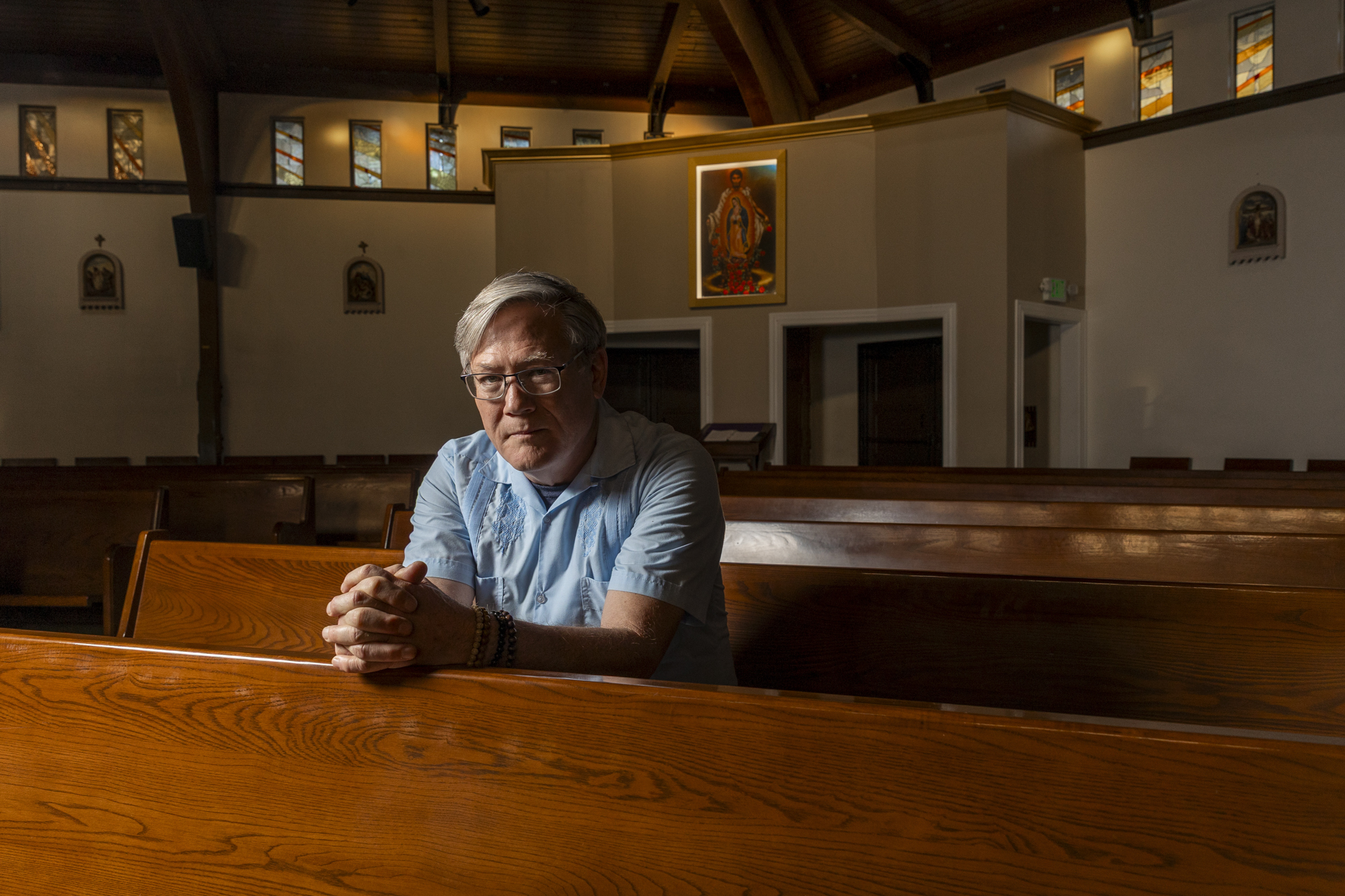
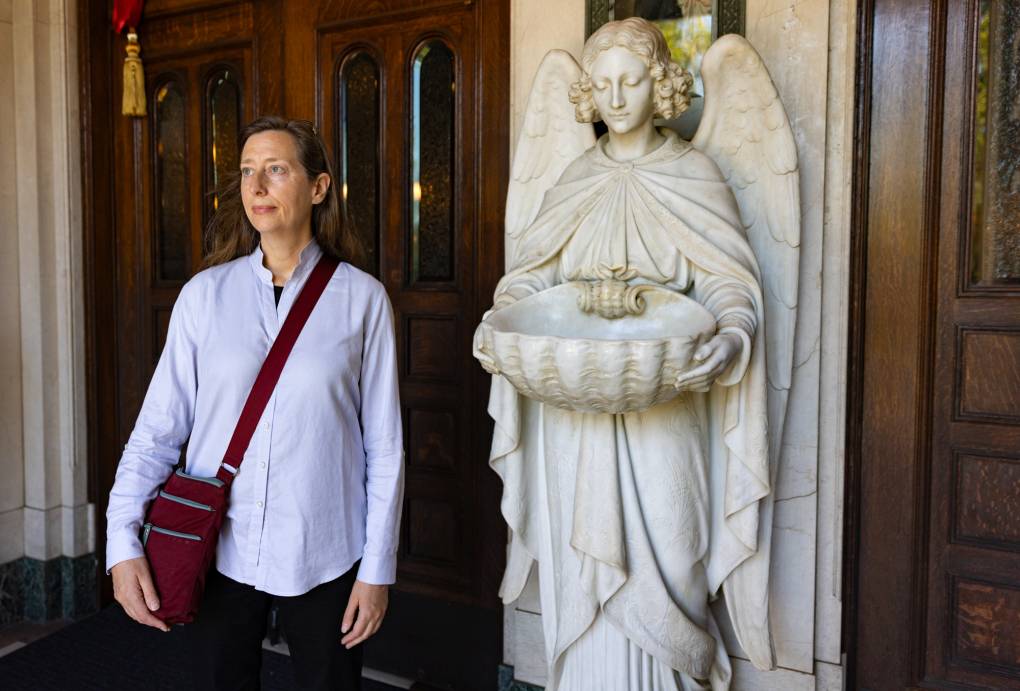
As Immigration Enforcement Escalates, How One South Bay Priest Is Pushing Back
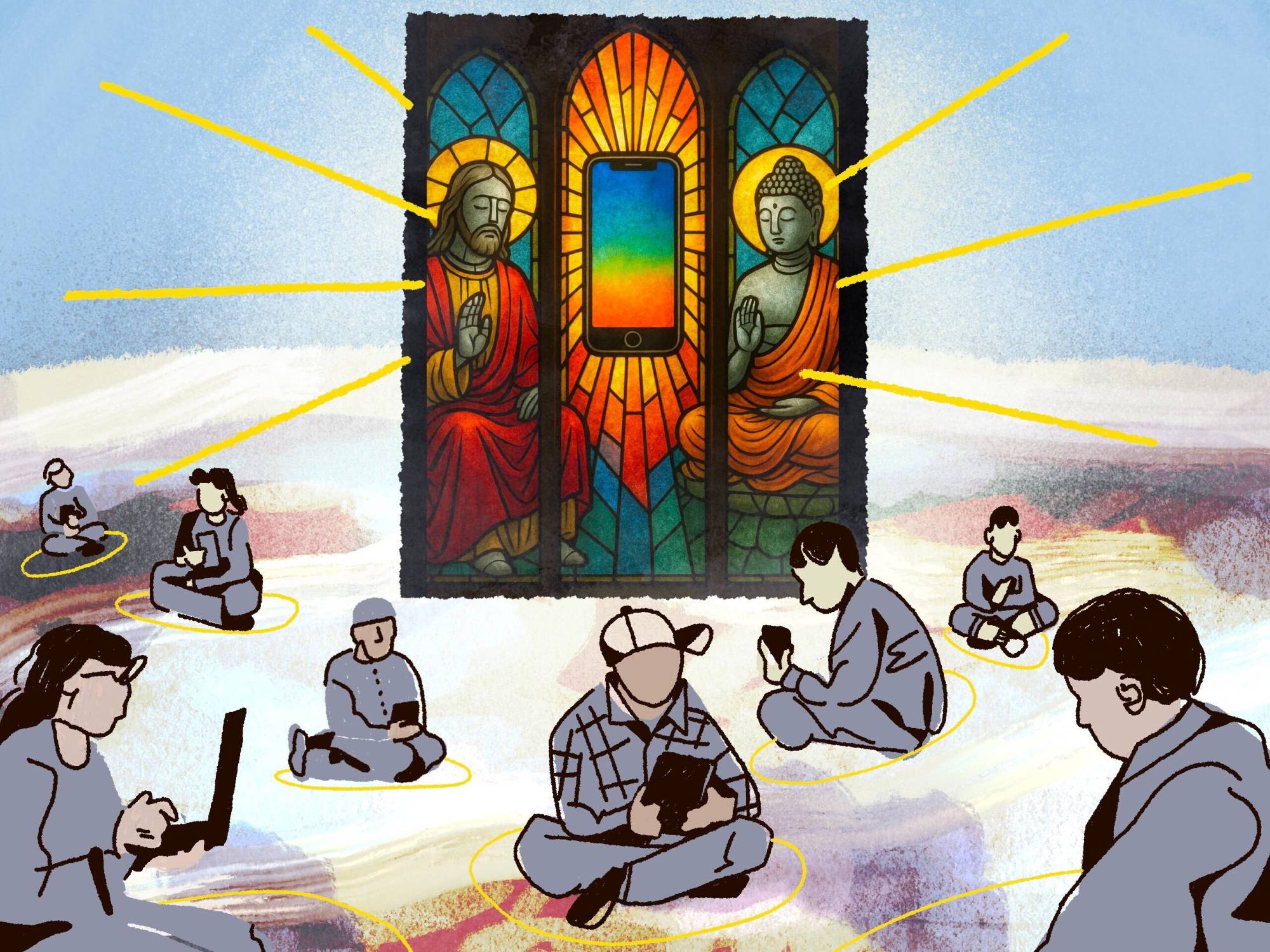
AI Prophets and Spiritual Delusions
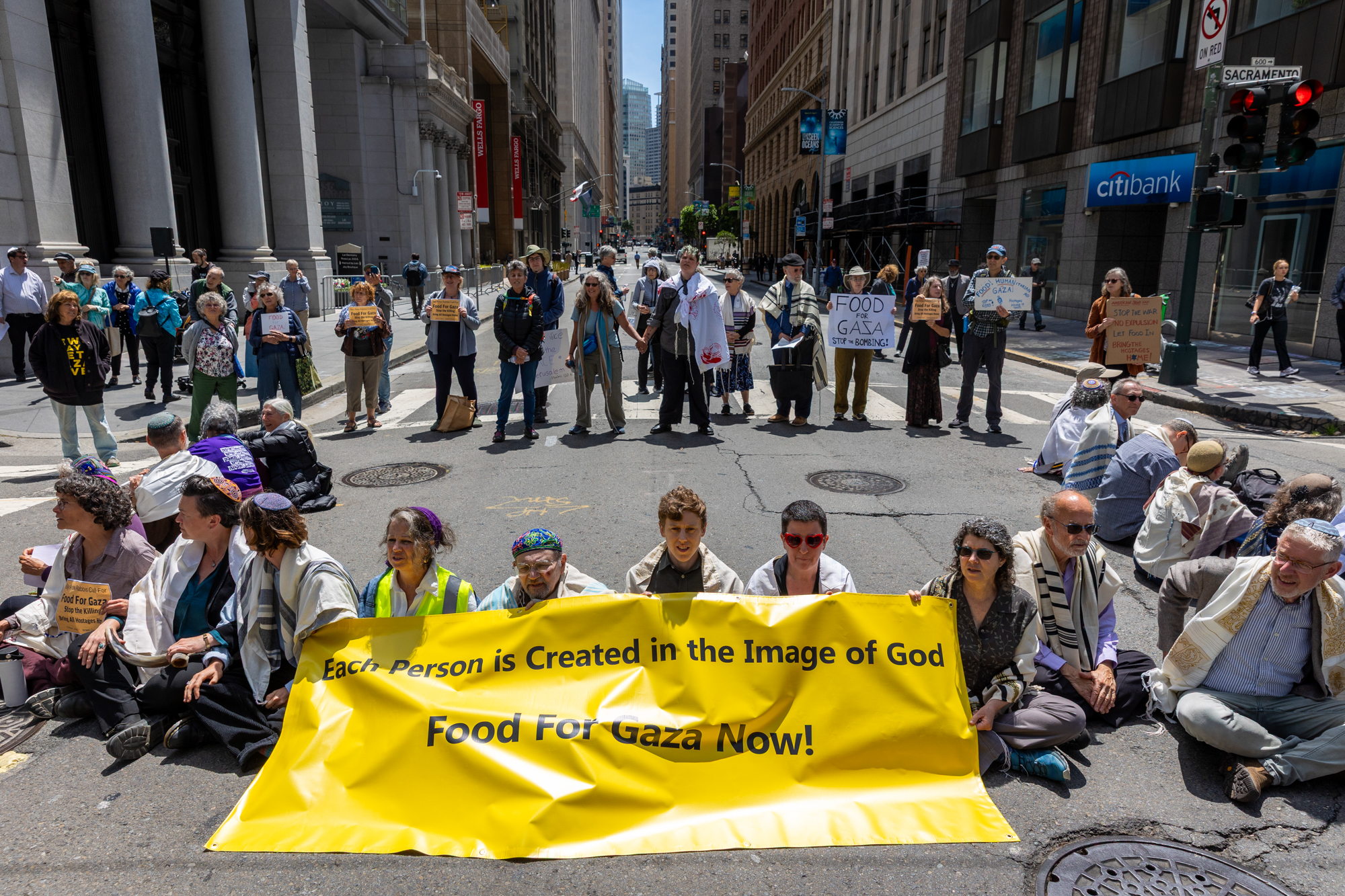
Bay Area Rabbis, Jewish Leaders Demand Israel Let Aid Into Gaza as Crisis Persists
Are You There ChatGPT? It’s Me, Rachael — Let’s Talk About God
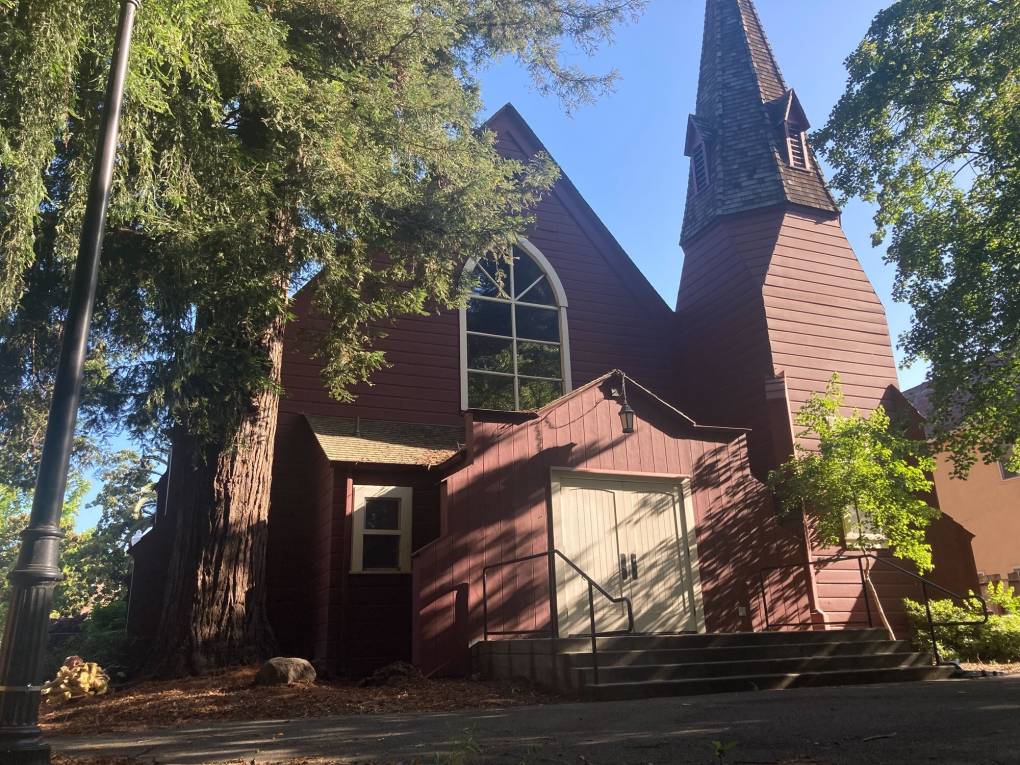
Fire at Santa Rosa’s Historic Church of One Tree Is Believed to Be Arson
Bay Area Catholics Hope Pope Leo XIV Will Continue Francis’ Legacy of Change
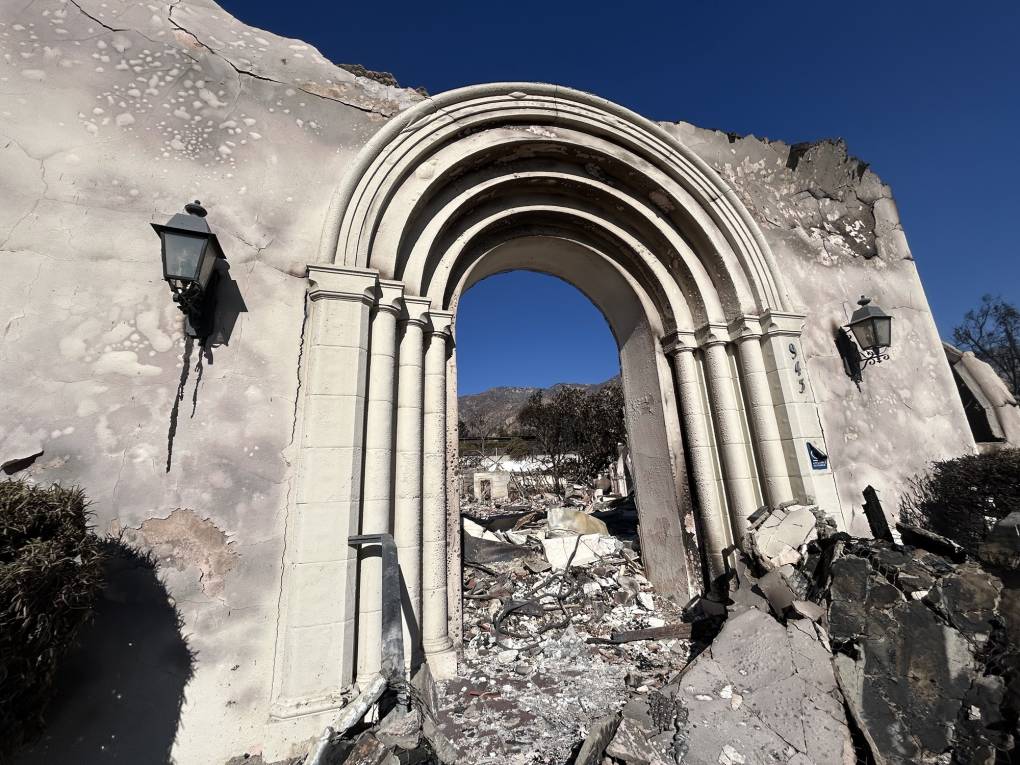
An Historic Altadena Church, Lost to the Eaton Fire, Begins the Long Journey to Resurrection
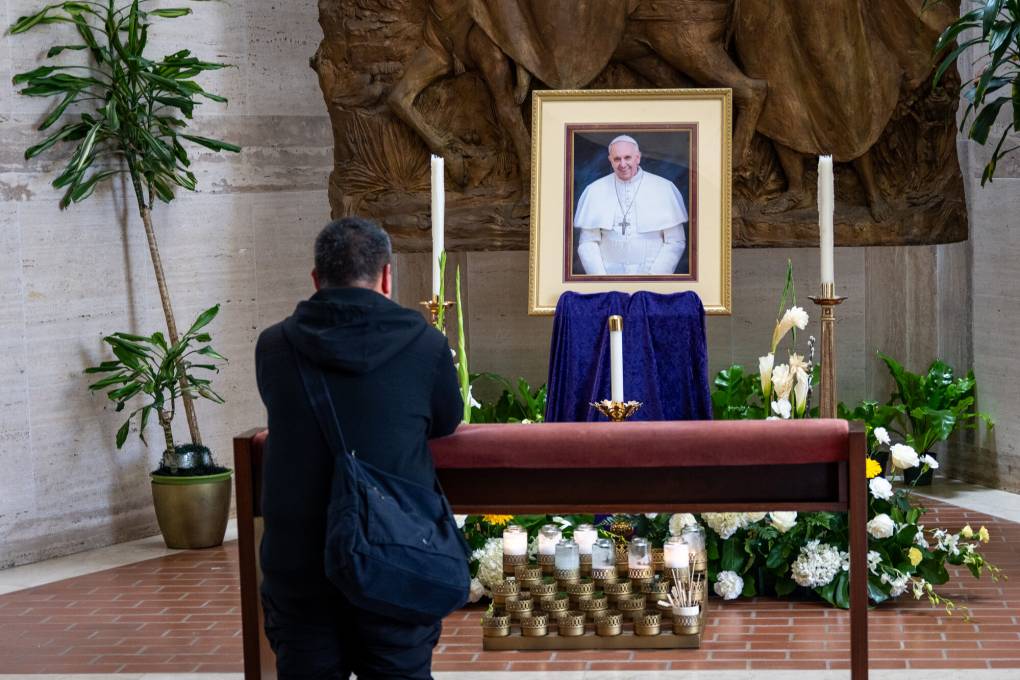
After Pope Francis’ Death, Bay Area Priests Urge Catholics to Carry on Legacy of Mercy
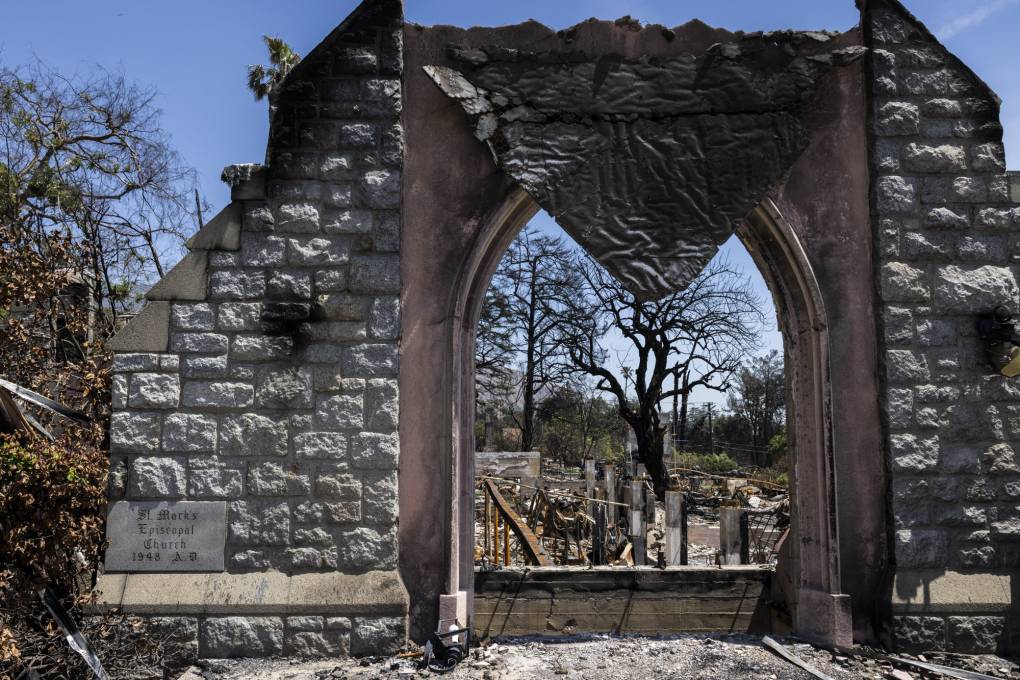
Scorched Sanctuaries: Altadena Rallies to Rebuild Burned Spiritual Centers
Sponsored
Player sponsored by
window.__IS_SSR__=true
window.__INITIAL_STATE__={
"attachmentsReducer": {
"audio_0": {
"type": "attachments",
"id": "audio_0",
"imgSizes": {
"kqedFullSize": {
"file": "https://ww2.kqed.org/news/wp-content/themes/KQED-unified/img/audio_bgs/background0.jpg"
}
}
},
"audio_1": {
"type": "attachments",
"id": "audio_1",
"imgSizes": {
"kqedFullSize": {
"file": "https://ww2.kqed.org/news/wp-content/themes/KQED-unified/img/audio_bgs/background1.jpg"
}
}
},
"audio_2": {
"type": "attachments",
"id": "audio_2",
"imgSizes": {
"kqedFullSize": {
"file": "https://ww2.kqed.org/news/wp-content/themes/KQED-unified/img/audio_bgs/background2.jpg"
}
}
},
"audio_3": {
"type": "attachments",
"id": "audio_3",
"imgSizes": {
"kqedFullSize": {
"file": "https://ww2.kqed.org/news/wp-content/themes/KQED-unified/img/audio_bgs/background3.jpg"
}
}
},
"audio_4": {
"type": "attachments",
"id": "audio_4",
"imgSizes": {
"kqedFullSize": {
"file": "https://ww2.kqed.org/news/wp-content/themes/KQED-unified/img/audio_bgs/background4.jpg"
}
}
},
"placeholder": {
"type": "attachments",
"id": "placeholder",
"imgSizes": {
"thumbnail": {
"file": "https://cdn.kqed.org/wp-content/uploads/2024/12/KQED-Default-Image-816638274-2000x1333-1-160x107.jpg",
"width": 160,
"height": 107,
"mimeType": "image/jpeg"
},
"medium": {
"file": "https://cdn.kqed.org/wp-content/uploads/2024/12/KQED-Default-Image-816638274-2000x1333-1-800x533.jpg",
"width": 800,
"height": 533,
"mimeType": "image/jpeg"
},
"medium_large": {
"file": "https://cdn.kqed.org/wp-content/uploads/2024/12/KQED-Default-Image-816638274-2000x1333-1-768x512.jpg",
"width": 768,
"height": 512,
"mimeType": "image/jpeg"
},
"large": {
"file": "https://cdn.kqed.org/wp-content/uploads/2024/12/KQED-Default-Image-816638274-2000x1333-1-1020x680.jpg",
"width": 1020,
"height": 680,
"mimeType": "image/jpeg"
},
"1536x1536": {
"file": "https://cdn.kqed.org/wp-content/uploads/2024/12/KQED-Default-Image-816638274-2000x1333-1-1536x1024.jpg",
"width": 1536,
"height": 1024,
"mimeType": "image/jpeg"
},
"fd-lrg": {
"file": "https://cdn.kqed.org/wp-content/uploads/2024/12/KQED-Default-Image-816638274-2000x1333-1-1536x1024.jpg",
"width": 1536,
"height": 1024,
"mimeType": "image/jpeg"
},
"fd-med": {
"file": "https://cdn.kqed.org/wp-content/uploads/2024/12/KQED-Default-Image-816638274-2000x1333-1-1020x680.jpg",
"width": 1020,
"height": 680,
"mimeType": "image/jpeg"
},
"fd-sm": {
"file": "https://cdn.kqed.org/wp-content/uploads/2024/12/KQED-Default-Image-816638274-2000x1333-1-800x533.jpg",
"width": 800,
"height": 533,
"mimeType": "image/jpeg"
},
"post-thumbnail": {
"file": "https://cdn.kqed.org/wp-content/uploads/2024/12/KQED-Default-Image-816638274-2000x1333-1-672x372.jpg",
"width": 672,
"height": 372,
"mimeType": "image/jpeg"
},
"twentyfourteen-full-width": {
"file": "https://cdn.kqed.org/wp-content/uploads/2024/12/KQED-Default-Image-816638274-2000x1333-1-1038x576.jpg",
"width": 1038,
"height": 576,
"mimeType": "image/jpeg"
},
"xxsmall": {
"file": "https://cdn.kqed.org/wp-content/uploads/2024/12/KQED-Default-Image-816638274-2000x1333-1-160x107.jpg",
"width": 160,
"height": 107,
"mimeType": "image/jpeg"
},
"xsmall": {
"file": "https://cdn.kqed.org/wp-content/uploads/2024/12/KQED-Default-Image-816638274-2000x1333-1-672x372.jpg",
"width": 672,
"height": 372,
"mimeType": "image/jpeg"
},
"small": {
"file": "https://cdn.kqed.org/wp-content/uploads/2024/12/KQED-Default-Image-816638274-2000x1333-1-672x372.jpg",
"width": 672,
"height": 372,
"mimeType": "image/jpeg"
},
"xlarge": {
"file": "https://cdn.kqed.org/wp-content/uploads/2024/12/KQED-Default-Image-816638274-2000x1333-1-1020x680.jpg",
"width": 1020,
"height": 680,
"mimeType": "image/jpeg"
},
"full-width": {
"file": "https://cdn.kqed.org/wp-content/uploads/2024/12/KQED-Default-Image-816638274-2000x1333-1-1920x1280.jpg",
"width": 1920,
"height": 1280,
"mimeType": "image/jpeg"
},
"guest-author-32": {
"file": "https://cdn.kqed.org/wp-content/uploads/2025/01/KQED-Default-Image-816638274-1333x1333-1-160x160.jpg",
"width": 32,
"height": 32,
"mimeType": "image/jpeg"
},
"guest-author-50": {
"file": "https://cdn.kqed.org/wp-content/uploads/2025/01/KQED-Default-Image-816638274-1333x1333-1-160x160.jpg",
"width": 50,
"height": 50,
"mimeType": "image/jpeg"
},
"guest-author-64": {
"file": "https://cdn.kqed.org/wp-content/uploads/2025/01/KQED-Default-Image-816638274-1333x1333-1-160x160.jpg",
"width": 64,
"height": 64,
"mimeType": "image/jpeg"
},
"guest-author-96": {
"file": "https://cdn.kqed.org/wp-content/uploads/2025/01/KQED-Default-Image-816638274-1333x1333-1-160x160.jpg",
"width": 96,
"height": 96,
"mimeType": "image/jpeg"
},
"guest-author-128": {
"file": "https://cdn.kqed.org/wp-content/uploads/2025/01/KQED-Default-Image-816638274-1333x1333-1-160x160.jpg",
"width": 128,
"height": 128,
"mimeType": "image/jpeg"
},
"detail": {
"file": "https://cdn.kqed.org/wp-content/uploads/2025/01/KQED-Default-Image-816638274-1333x1333-1-160x160.jpg",
"width": 160,
"height": 160,
"mimeType": "image/jpeg"
},
"kqedFullSize": {
"file": "https://cdn.kqed.org/wp-content/uploads/2024/12/KQED-Default-Image-816638274-2000x1333-1.jpg",
"width": 2000,
"height": 1333
}
}
},
"news_12066052": {
"type": "attachments",
"id": "news_12066052",
"meta": {
"index": "attachments_1716263798",
"site": "news",
"id": "12066052",
"found": true
},
"title": "251203-SJPRIESTIMMIGRATION00043_TV-KQED",
"publishDate": 1764868088,
"status": "inherit",
"parent": 0,
"modified": 1764868163,
"caption": "Father Jon Pedigo poses for a portrait at Our Lady of Guadalupe Church where he has worked as a priest, at 2020 East San Antonio Street in San Jose on December 3, 2025. Father Jon Pedigo, a priest who has worked with immigrant communities affected by ICE raids and deportations, is leaving his full time job as a priest to be a full time organizer.",
"credit": "Tâm Vũ/KQED",
"altTag": null,
"description": null,
"imgSizes": {
"thumbnail": {
"file": "https://cdn.kqed.org/wp-content/uploads/sites/10/2025/12/251203-SJPRIESTIMMIGRATION00043_TV-KQED-160x107.jpg",
"width": 160,
"height": 107,
"mimeType": "image/jpeg"
},
"1536x1536": {
"file": "https://cdn.kqed.org/wp-content/uploads/sites/10/2025/12/251203-SJPRIESTIMMIGRATION00043_TV-KQED-1536x1024.jpg",
"width": 1536,
"height": 1024,
"mimeType": "image/jpeg"
},
"post-thumbnail": {
"file": "https://cdn.kqed.org/wp-content/uploads/sites/10/2025/12/251203-SJPRIESTIMMIGRATION00043_TV-KQED-672x372.jpg",
"width": 672,
"height": 372,
"mimeType": "image/jpeg"
},
"twentyfourteen-full-width": {
"file": "https://cdn.kqed.org/wp-content/uploads/sites/10/2025/12/251203-SJPRIESTIMMIGRATION00043_TV-KQED-1038x576.jpg",
"width": 1038,
"height": 576,
"mimeType": "image/jpeg"
},
"npr-cds-wide": {
"file": "https://cdn.kqed.org/wp-content/uploads/sites/10/2025/12/251203-SJPRIESTIMMIGRATION00043_TV-KQED-1200x675.jpg",
"width": 1200,
"height": 675,
"mimeType": "image/jpeg"
},
"kqedFullSize": {
"file": "https://cdn.kqed.org/wp-content/uploads/sites/10/2025/12/251203-SJPRIESTIMMIGRATION00043_TV-KQED.jpg",
"width": 2000,
"height": 1333
}
},
"fetchFailed": false,
"isLoading": false
},
"news_12057330": {
"type": "attachments",
"id": "news_12057330",
"meta": {
"index": "attachments_1716263798",
"site": "news",
"id": "12057330",
"found": true
},
"title": "AIandReligion_webimg",
"publishDate": 1758668597,
"status": "inherit",
"parent": 12057327,
"modified": 1758670181,
"caption": "An android robot at Kodaiji temple in Kyoto, Japan, Jun 18, 2019. The 400-year-old temple introduced the robot as part of an effort to spark interest in Buddhism.",
"credit": "Charly Triballeau/AFP via Getty Images",
"altTag": "A profile image of an android robot in Kyoto holding its hands together in prayer. The robot has white skin with the top of the robotic head exposed. The robot is facing the left side of the frame, and is positioned in front of a blue and red gradient background. The Close All Tabs logo appears in white pixelated font in the lower left corner.",
"description": null,
"imgSizes": {
"thumbnail": {
"file": "https://cdn.kqed.org/wp-content/uploads/sites/10/2025/09/AIandReligion_webimg-160x90.png",
"width": 160,
"height": 90,
"mimeType": "image/png"
},
"1536x1536": {
"file": "https://cdn.kqed.org/wp-content/uploads/sites/10/2025/09/AIandReligion_webimg-1536x864.png",
"width": 1536,
"height": 864,
"mimeType": "image/png"
},
"post-thumbnail": {
"file": "https://cdn.kqed.org/wp-content/uploads/sites/10/2025/09/AIandReligion_webimg-672x372.png",
"width": 672,
"height": 372,
"mimeType": "image/png"
},
"twentyfourteen-full-width": {
"file": "https://cdn.kqed.org/wp-content/uploads/sites/10/2025/09/AIandReligion_webimg-1038x576.png",
"width": 1038,
"height": 576,
"mimeType": "image/png"
},
"kqedFullSize": {
"file": "https://cdn.kqed.org/wp-content/uploads/sites/10/2025/09/AIandReligion_webimg.png",
"width": 1920,
"height": 1080
}
},
"fetchFailed": false,
"isLoading": false
},
"news_12051787": {
"type": "attachments",
"id": "news_12051787",
"meta": {
"index": "attachments_1716263798",
"site": "news",
"id": "12051787",
"found": true
},
"title": "250811-ISRAELICONSULATE_00956_TV-KQED",
"publishDate": 1754954122,
"status": "inherit",
"parent": 0,
"modified": 1754954179,
"caption": "Protesters block Montgomery Street outside the Consulate General of Israel to the Pacific Northwest in San Francisco on Aug. 11, 2025. Jewish community members are calling on the Israeli government to let food aid into Palestine as starvation progressively gets worse.",
"credit": "Tâm Vũ/KQED",
"altTag": null,
"description": null,
"imgSizes": {
"thumbnail": {
"file": "https://cdn.kqed.org/wp-content/uploads/sites/10/2025/08/250811-ISRAELICONSULATE_00956_TV-KQED-160x107.jpg",
"width": 160,
"height": 107,
"mimeType": "image/jpeg"
},
"1536x1536": {
"file": "https://cdn.kqed.org/wp-content/uploads/sites/10/2025/08/250811-ISRAELICONSULATE_00956_TV-KQED-1536x1024.jpg",
"width": 1536,
"height": 1024,
"mimeType": "image/jpeg"
},
"post-thumbnail": {
"file": "https://cdn.kqed.org/wp-content/uploads/sites/10/2025/08/250811-ISRAELICONSULATE_00956_TV-KQED-672x372.jpg",
"width": 672,
"height": 372,
"mimeType": "image/jpeg"
},
"twentyfourteen-full-width": {
"file": "https://cdn.kqed.org/wp-content/uploads/sites/10/2025/08/250811-ISRAELICONSULATE_00956_TV-KQED-1038x576.jpg",
"width": 1038,
"height": 576,
"mimeType": "image/jpeg"
},
"kqedFullSize": {
"file": "https://cdn.kqed.org/wp-content/uploads/sites/10/2025/08/250811-ISRAELICONSULATE_00956_TV-KQED.jpg",
"width": 2000,
"height": 1333
}
},
"fetchFailed": false,
"isLoading": false
},
"news_12049810": {
"type": "attachments",
"id": "news_12049810",
"meta": {
"index": "attachments_1716263798",
"site": "news",
"id": "12049810",
"found": true
},
"title": "IMG_1101",
"publishDate": 1753472081,
"status": "inherit",
"parent": 12049674,
"modified": 1753472110,
"caption": "In a time when many Americans are stepping away from traditional religious worship, standard-issue chatbots like ChatGPT are now fielding questions that once would have been directed to spiritual leaders such as imams, priests and rabbis. ",
"credit": "Illustration by Anna Vignet/KQED",
"altTag": null,
"description": null,
"imgSizes": {
"medium": {
"file": "https://cdn.kqed.org/wp-content/uploads/sites/10/2025/07/IMG_1101-2000x1500.jpg",
"width": 2000,
"height": 1500,
"mimeType": "image/jpeg"
},
"large": {
"file": "https://cdn.kqed.org/wp-content/uploads/sites/10/2025/07/IMG_1101-2000x1500.jpg",
"width": 2000,
"height": 1500,
"mimeType": "image/jpeg"
},
"thumbnail": {
"file": "https://cdn.kqed.org/wp-content/uploads/sites/10/2025/07/IMG_1101-160x120.jpg",
"width": 160,
"height": 120,
"mimeType": "image/jpeg"
},
"1536x1536": {
"file": "https://cdn.kqed.org/wp-content/uploads/sites/10/2025/07/IMG_1101-1536x1152.jpg",
"width": 1536,
"height": 1152,
"mimeType": "image/jpeg"
},
"2048x2048": {
"file": "https://cdn.kqed.org/wp-content/uploads/sites/10/2025/07/IMG_1101-2048x1536.jpg",
"width": 2048,
"height": 1536,
"mimeType": "image/jpeg"
},
"post-thumbnail": {
"file": "https://cdn.kqed.org/wp-content/uploads/sites/10/2025/07/IMG_1101-672x372.jpg",
"width": 672,
"height": 372,
"mimeType": "image/jpeg"
},
"twentyfourteen-full-width": {
"file": "https://cdn.kqed.org/wp-content/uploads/sites/10/2025/07/IMG_1101-1038x576.jpg",
"width": 1038,
"height": 576,
"mimeType": "image/jpeg"
},
"full-width": {
"file": "https://cdn.kqed.org/wp-content/uploads/sites/10/2025/07/IMG_1101-2000x1500.jpg",
"width": 2000,
"height": 1500,
"mimeType": "image/jpeg"
},
"kqedFullSize": {
"file": "https://cdn.kqed.org/wp-content/uploads/sites/10/2025/07/IMG_1101.jpg",
"width": 2560,
"height": 1920
}
},
"fetchFailed": false,
"isLoading": false
},
"news_12041677": {
"type": "attachments",
"id": "news_12041677",
"meta": {
"index": "attachments_1716263798",
"site": "news",
"id": "12041677",
"found": true
},
"title": "SantaRosaChurchFire1",
"publishDate": 1748366178,
"status": "inherit",
"parent": 0,
"modified": 1748366252,
"caption": "The historic Church of One Tree in Santa Rosa is seen on Tuesday, May 27, the morning after a fire that authorities are investigating as arson.",
"credit": "Gabe Meline/KQED",
"altTag": null,
"description": null,
"imgSizes": {
"medium": {
"file": "https://cdn.kqed.org/wp-content/uploads/sites/10/2025/05/SantaRosaChurchFire1-800x600.jpg",
"width": 800,
"height": 600,
"mimeType": "image/jpeg"
},
"large": {
"file": "https://cdn.kqed.org/wp-content/uploads/sites/10/2025/05/SantaRosaChurchFire1-1020x765.jpg",
"width": 1020,
"height": 765,
"mimeType": "image/jpeg"
},
"thumbnail": {
"file": "https://cdn.kqed.org/wp-content/uploads/sites/10/2025/05/SantaRosaChurchFire1-160x120.jpg",
"width": 160,
"height": 120,
"mimeType": "image/jpeg"
},
"1536x1536": {
"file": "https://cdn.kqed.org/wp-content/uploads/sites/10/2025/05/SantaRosaChurchFire1-1536x1152.jpg",
"width": 1536,
"height": 1152,
"mimeType": "image/jpeg"
},
"post-thumbnail": {
"file": "https://cdn.kqed.org/wp-content/uploads/sites/10/2025/05/SantaRosaChurchFire1-672x372.jpg",
"width": 672,
"height": 372,
"mimeType": "image/jpeg"
},
"twentyfourteen-full-width": {
"file": "https://cdn.kqed.org/wp-content/uploads/sites/10/2025/05/SantaRosaChurchFire1-1038x576.jpg",
"width": 1038,
"height": 576,
"mimeType": "image/jpeg"
},
"full-width": {
"file": "https://cdn.kqed.org/wp-content/uploads/sites/10/2025/05/SantaRosaChurchFire1-1920x1440.jpg",
"width": 1920,
"height": 1440,
"mimeType": "image/jpeg"
},
"kqedFullSize": {
"file": "https://cdn.kqed.org/wp-content/uploads/sites/10/2025/05/SantaRosaChurchFire1.jpg",
"width": 2000,
"height": 1500
}
},
"fetchFailed": false,
"isLoading": false
},
"news_12039401": {
"type": "attachments",
"id": "news_12039401",
"meta": {
"index": "attachments_1716263798",
"site": "news",
"id": "12039401",
"found": true
},
"title": "20250508_POPEREAX_GC-4-KQED",
"publishDate": 1746737275,
"status": "inherit",
"parent": 0,
"modified": 1746737333,
"caption": "Shelley Weisbrich outside the Saints Peter and Paul Church in San Francisco on May 8, 2025.",
"credit": "Gina Castro/KQED",
"altTag": null,
"description": null,
"imgSizes": {
"medium": {
"file": "https://cdn.kqed.org/wp-content/uploads/sites/10/2025/05/20250508_POPEREAX_GC-4-KQED-800x542.jpg",
"width": 800,
"height": 542,
"mimeType": "image/jpeg"
},
"large": {
"file": "https://cdn.kqed.org/wp-content/uploads/sites/10/2025/05/20250508_POPEREAX_GC-4-KQED-1020x691.jpg",
"width": 1020,
"height": 691,
"mimeType": "image/jpeg"
},
"thumbnail": {
"file": "https://cdn.kqed.org/wp-content/uploads/sites/10/2025/05/20250508_POPEREAX_GC-4-KQED-160x108.jpg",
"width": 160,
"height": 108,
"mimeType": "image/jpeg"
},
"1536x1536": {
"file": "https://cdn.kqed.org/wp-content/uploads/sites/10/2025/05/20250508_POPEREAX_GC-4-KQED-1536x1040.jpg",
"width": 1536,
"height": 1040,
"mimeType": "image/jpeg"
},
"post-thumbnail": {
"file": "https://cdn.kqed.org/wp-content/uploads/sites/10/2025/05/20250508_POPEREAX_GC-4-KQED-672x372.jpg",
"width": 672,
"height": 372,
"mimeType": "image/jpeg"
},
"twentyfourteen-full-width": {
"file": "https://cdn.kqed.org/wp-content/uploads/sites/10/2025/05/20250508_POPEREAX_GC-4-KQED-1038x576.jpg",
"width": 1038,
"height": 576,
"mimeType": "image/jpeg"
},
"full-width": {
"file": "https://cdn.kqed.org/wp-content/uploads/sites/10/2025/05/20250508_POPEREAX_GC-4-KQED-1920x1300.jpg",
"width": 1920,
"height": 1300,
"mimeType": "image/jpeg"
},
"kqedFullSize": {
"file": "https://cdn.kqed.org/wp-content/uploads/sites/10/2025/05/20250508_POPEREAX_GC-4-KQED.jpg",
"width": 2000,
"height": 1354
}
},
"fetchFailed": false,
"isLoading": false
},
"news_12037126": {
"type": "attachments",
"id": "news_12037126",
"meta": {
"index": "attachments_1716263798",
"site": "news",
"id": "12037126",
"found": true
},
"title": "The burnt remains of St. Marks Church.Altadena.CA",
"publishDate": 1745350823,
"status": "inherit",
"parent": 0,
"modified": 1745351316,
"caption": "The burnt remains of St. Marks Church.\nAltadena on April 20, 2025.",
"credit": "Mette Lampcov for KQED",
"altTag": null,
"description": null,
"imgSizes": {
"medium": {
"file": "https://cdn.kqed.org/wp-content/uploads/sites/10/2025/04/METTE.LAMPCOV.CHURCH.BELL-22-KQED-800x534.jpg",
"width": 800,
"height": 534,
"mimeType": "image/jpeg"
},
"large": {
"file": "https://cdn.kqed.org/wp-content/uploads/sites/10/2025/04/METTE.LAMPCOV.CHURCH.BELL-22-KQED-1020x680.jpg",
"width": 1020,
"height": 680,
"mimeType": "image/jpeg"
},
"thumbnail": {
"file": "https://cdn.kqed.org/wp-content/uploads/sites/10/2025/04/METTE.LAMPCOV.CHURCH.BELL-22-KQED-160x107.jpg",
"width": 160,
"height": 107,
"mimeType": "image/jpeg"
},
"1536x1536": {
"file": "https://cdn.kqed.org/wp-content/uploads/sites/10/2025/04/METTE.LAMPCOV.CHURCH.BELL-22-KQED-1536x1025.jpg",
"width": 1536,
"height": 1025,
"mimeType": "image/jpeg"
},
"post-thumbnail": {
"file": "https://cdn.kqed.org/wp-content/uploads/sites/10/2025/04/METTE.LAMPCOV.CHURCH.BELL-22-KQED-672x372.jpg",
"width": 672,
"height": 372,
"mimeType": "image/jpeg"
},
"twentyfourteen-full-width": {
"file": "https://cdn.kqed.org/wp-content/uploads/sites/10/2025/04/METTE.LAMPCOV.CHURCH.BELL-22-KQED-1038x576.jpg",
"width": 1038,
"height": 576,
"mimeType": "image/jpeg"
},
"full-width": {
"file": "https://cdn.kqed.org/wp-content/uploads/sites/10/2025/04/METTE.LAMPCOV.CHURCH.BELL-22-KQED-1920x1281.jpg",
"width": 1920,
"height": 1281,
"mimeType": "image/jpeg"
},
"kqedFullSize": {
"file": "https://cdn.kqed.org/wp-content/uploads/sites/10/2025/04/METTE.LAMPCOV.CHURCH.BELL-22-KQED.jpg",
"width": 2000,
"height": 1334
}
},
"fetchFailed": false,
"isLoading": false
},
"news_12036953": {
"type": "attachments",
"id": "news_12036953",
"meta": {
"index": "attachments_1716263798",
"site": "news",
"id": "12036953",
"found": true
},
"title": "250421-PopeReax-05-BL_qed",
"publishDate": 1745264889,
"status": "inherit",
"parent": 12036912,
"modified": 1745264901,
"caption": "A parishioner kneels in front of a portrait of Pope Francis at the Cathedral of Saint Mary of the Assumption in San Francisco on April 21, 2025.",
"credit": "Beth LaBerge/KQED",
"altTag": null,
"description": null,
"imgSizes": {
"medium": {
"file": "https://cdn.kqed.org/wp-content/uploads/sites/10/2025/04/250421-PopeReax-05-BL_qed-800x533.jpg",
"width": 800,
"height": 533,
"mimeType": "image/jpeg"
},
"large": {
"file": "https://cdn.kqed.org/wp-content/uploads/sites/10/2025/04/250421-PopeReax-05-BL_qed-1020x680.jpg",
"width": 1020,
"height": 680,
"mimeType": "image/jpeg"
},
"thumbnail": {
"file": "https://cdn.kqed.org/wp-content/uploads/sites/10/2025/04/250421-PopeReax-05-BL_qed-160x107.jpg",
"width": 160,
"height": 107,
"mimeType": "image/jpeg"
},
"1536x1536": {
"file": "https://cdn.kqed.org/wp-content/uploads/sites/10/2025/04/250421-PopeReax-05-BL_qed-1536x1024.jpg",
"width": 1536,
"height": 1024,
"mimeType": "image/jpeg"
},
"post-thumbnail": {
"file": "https://cdn.kqed.org/wp-content/uploads/sites/10/2025/04/250421-PopeReax-05-BL_qed-672x372.jpg",
"width": 672,
"height": 372,
"mimeType": "image/jpeg"
},
"twentyfourteen-full-width": {
"file": "https://cdn.kqed.org/wp-content/uploads/sites/10/2025/04/250421-PopeReax-05-BL_qed-1038x576.jpg",
"width": 1038,
"height": 576,
"mimeType": "image/jpeg"
},
"full-width": {
"file": "https://cdn.kqed.org/wp-content/uploads/sites/10/2025/04/250421-PopeReax-05-BL_qed-1920x1280.jpg",
"width": 1920,
"height": 1280,
"mimeType": "image/jpeg"
},
"kqedFullSize": {
"file": "https://cdn.kqed.org/wp-content/uploads/sites/10/2025/04/250421-PopeReax-05-BL_qed.jpg",
"width": 1999,
"height": 1333
}
},
"fetchFailed": false,
"isLoading": false
},
"news_12022720": {
"type": "attachments",
"id": "news_12022720",
"meta": {
"index": "attachments_1716263798",
"site": "news",
"id": "12022720",
"found": true
},
"title": "ReligiousCenterFire1",
"publishDate": 1737135043,
"status": "inherit",
"parent": 0,
"modified": 1737140373,
"caption": "The Altadena Community Church sits completely destroyed by the Eaton Fire on Jan. 14, 2025, leaving only the front wall standing.",
"credit": "Ezra David Romero/KQED",
"altTag": "A front archway to a tan church stands amongst the charred rubble of a burned church.",
"description": null,
"imgSizes": {
"medium": {
"file": "https://cdn.kqed.org/wp-content/uploads/sites/10/2025/01/ReligiousCenterFire1-800x600.jpg",
"width": 800,
"height": 600,
"mimeType": "image/jpeg"
},
"large": {
"file": "https://cdn.kqed.org/wp-content/uploads/sites/10/2025/01/ReligiousCenterFire1-1020x765.jpg",
"width": 1020,
"height": 765,
"mimeType": "image/jpeg"
},
"thumbnail": {
"file": "https://cdn.kqed.org/wp-content/uploads/sites/10/2025/01/ReligiousCenterFire1-160x120.jpg",
"width": 160,
"height": 120,
"mimeType": "image/jpeg"
},
"1536x1536": {
"file": "https://cdn.kqed.org/wp-content/uploads/sites/10/2025/01/ReligiousCenterFire1-1536x1152.jpg",
"width": 1536,
"height": 1152,
"mimeType": "image/jpeg"
},
"post-thumbnail": {
"file": "https://cdn.kqed.org/wp-content/uploads/sites/10/2025/01/ReligiousCenterFire1-672x372.jpg",
"width": 672,
"height": 372,
"mimeType": "image/jpeg"
},
"twentyfourteen-full-width": {
"file": "https://cdn.kqed.org/wp-content/uploads/sites/10/2025/01/ReligiousCenterFire1-1038x576.jpg",
"width": 1038,
"height": 576,
"mimeType": "image/jpeg"
},
"full-width": {
"file": "https://cdn.kqed.org/wp-content/uploads/sites/10/2025/01/ReligiousCenterFire1-1920x1440.jpg",
"width": 1920,
"height": 1440,
"mimeType": "image/jpeg"
},
"kqedFullSize": {
"file": "https://cdn.kqed.org/wp-content/uploads/sites/10/2025/01/ReligiousCenterFire1.jpg",
"width": 2000,
"height": 1500
}
},
"fetchFailed": false,
"isLoading": false
}
},
"audioPlayerReducer": {
"postId": "stream_live",
"isPaused": true,
"isPlaying": false,
"pfsActive": false,
"pledgeModalIsOpen": true,
"playerDrawerIsOpen": false
},
"authorsReducer": {
"byline_news_12038756": {
"type": "authors",
"id": "byline_news_12038756",
"meta": {
"override": true
},
"slug": "byline_news_12038756",
"name": "Steven Cuevas, Sonya Geiss",
"isLoading": false
},
"rachael-myrow": {
"type": "authors",
"id": "251",
"meta": {
"index": "authors_1716337520",
"id": "251",
"found": true
},
"name": "Rachael Myrow",
"firstName": "Rachael",
"lastName": "Myrow",
"slug": "rachael-myrow",
"email": "rmyrow@kqed.org",
"display_author_email": false,
"staff_mastheads": [
"news"
],
"title": "Senior Editor of KQED's Silicon Valley News Desk",
"bio": "Rachael Myrow is Senior Editor of KQED's Silicon Valley News Desk, reporting on topics like \u003ca href=\"https://www.kqed.org/news/12023367/what-big-tech-sees-in-donald-trump\">what Big Tech sees in President Trump\u003c/a>, \u003ca href=\"https://www.kqed.org/news/12020857/california-lawmaker-ready-revive-fight-regulating-ai\">California's many, many AI bills\u003c/a>, and the \u003ca href=\"https://www.kqed.org/news/12017713/lost-sounds-of-san-francisco\">lost sounds of San Francisco\u003c/a>. You can hear her work on \u003ca href=\"https://www.npr.org/search?query=Rachael%20Myrow&page=1\">NPR\u003c/a>, \u003ca href=\"https://theworld.org/people/rachael-myrow\">The World\u003c/a>, WBUR's \u003ca href=\"https://www.wbur.org/search?q=Rachael%20Myrow\">\u003ci>Here & Now\u003c/i>\u003c/a> and the BBC. \u003c/i>She also guest hosts for KQED's \u003ci>\u003ca href=\"https://www.kqed.org/forum/tag/rachael-myrow\">Forum\u003c/a>\u003c/i>. Over the years, she's talked with Kamau Bell, David Byrne, Kamala Harris, Tony Kushner, Armistead Maupin, Van Dyke Parks, Arnold Schwarzenegger and Tommie Smith, among others.\r\n\r\nBefore all this, she hosted \u003cem>The California Report\u003c/em> for 7+ years.\r\n\r\nAwards? Sure: Peabody, Edward R. Murrow, Regional Edward R. Murrow, RTNDA, Northern California RTNDA, SPJ Northern California Chapter, LA Press Club, Golden Mic. Prior to joining KQED, Rachael worked in Los Angeles at KPCC and Marketplace. She holds degrees in English and journalism from UC Berkeley (where she got her start in public radio on KALX-FM).\r\n\r\nOutside of the studio, you'll find Rachael hiking Bay Area trails and whipping up Instagram-ready meals in her kitchen. More recently, she's taken up native-forward gardening.",
"avatar": "https://secure.gravatar.com/avatar/87bf8cb5874e045cdff430523a6d48b1?s=600&d=blank&r=g",
"twitter": "rachaelmyrow",
"facebook": null,
"instagram": null,
"linkedin": "https://www.linkedin.com/in/rachaelmyrow/",
"sites": [
{
"site": "arts",
"roles": [
"administrator"
]
},
{
"site": "news",
"roles": [
"edit_others_posts",
"editor"
]
},
{
"site": "futureofyou",
"roles": [
"editor"
]
},
{
"site": "bayareabites",
"roles": [
"editor"
]
},
{
"site": "stateofhealth",
"roles": [
"editor"
]
},
{
"site": "science",
"roles": [
"editor"
]
},
{
"site": "food",
"roles": [
"editor"
]
},
{
"site": "forum",
"roles": [
"editor"
]
},
{
"site": "liveblog",
"roles": [
"author"
]
}
],
"headData": {
"title": "Rachael Myrow | KQED",
"description": "Senior Editor of KQED's Silicon Valley News Desk",
"ogImgSrc": "https://secure.gravatar.com/avatar/87bf8cb5874e045cdff430523a6d48b1?s=600&d=blank&r=g",
"twImgSrc": "https://secure.gravatar.com/avatar/87bf8cb5874e045cdff430523a6d48b1?s=600&d=blank&r=g"
},
"isLoading": false,
"link": "/author/rachael-myrow"
},
"ecruzguevarra": {
"type": "authors",
"id": "8654",
"meta": {
"index": "authors_1716337520",
"id": "8654",
"found": true
},
"name": "Ericka Cruz Guevarra",
"firstName": "Ericka",
"lastName": "Cruz Guevarra",
"slug": "ecruzguevarra",
"email": "ecruzguevarra@kqed.org",
"display_author_email": true,
"staff_mastheads": [
"news"
],
"title": "Producer, The Bay Podcast",
"bio": "Ericka Cruz Guevarra is host of \u003ca href=\"https://www.kqed.org/podcasts/thebay\">\u003cem>The Bay\u003c/em>\u003c/a> podcast at KQED. Before host, she was the show’s producer. Her work in that capacity includes a three-part reported series on policing in Vallejo, which won a 2020 excellence in journalism award from the Society of Professional Journalists. Ericka has worked as a breaking news reporter at Oregon Public Broadcasting, helped produce the Code Switch podcast, and was KQED’s inaugural Raul Ramirez Diversity Fund intern. She’s also an alumna of NPR’s Next Generation Radio program. Send her an email if you have strong feelings about whether Fairfield and Suisun City are the Bay. Ericka is represented by SAG-AFTRA.",
"avatar": "https://secure.gravatar.com/avatar/25e5ab8d3d53fad2dcc7bb2b5c506b1a?s=600&d=blank&r=g",
"twitter": "NotoriousECG",
"facebook": null,
"instagram": null,
"linkedin": null,
"sites": [
{
"site": "arts",
"roles": [
"subscriber"
]
},
{
"site": "news",
"roles": [
"editor",
"manage_categories"
]
},
{
"site": "futureofyou",
"roles": [
"subscriber"
]
},
{
"site": "stateofhealth",
"roles": [
"subscriber"
]
},
{
"site": "science",
"roles": [
"editor"
]
},
{
"site": "forum",
"roles": [
"subscriber"
]
}
],
"headData": {
"title": "Ericka Cruz Guevarra | KQED",
"description": "Producer, The Bay Podcast",
"ogImgSrc": "https://secure.gravatar.com/avatar/25e5ab8d3d53fad2dcc7bb2b5c506b1a?s=600&d=blank&r=g",
"twImgSrc": "https://secure.gravatar.com/avatar/25e5ab8d3d53fad2dcc7bb2b5c506b1a?s=600&d=blank&r=g"
},
"isLoading": false,
"link": "/author/ecruzguevarra"
},
"amontecillo": {
"type": "authors",
"id": "11649",
"meta": {
"index": "authors_1716337520",
"id": "11649",
"found": true
},
"name": "Alan Montecillo",
"firstName": "Alan",
"lastName": "Montecillo",
"slug": "amontecillo",
"email": "amontecillo@kqed.org",
"display_author_email": false,
"staff_mastheads": [
"news"
],
"title": "KQED Contributor",
"bio": "Alan Montecillo is the senior editor of \u003cem>\u003ca href=\"http://kqed.org/thebay\">The Bay\u003c/a>, \u003c/em> KQED's local news podcast. Before moving to the Bay Area, he worked as a senior talk show producer for WILL in Champaign-Urbana, Illinois and at Oregon Public Broadcasting in Portland, Oregon. He has won journalism awards from the Society of Professional Journalists Northern California, the Public Media Journalists Association, The Signal Awards, and has also received a regional Edward R. Murrow award. Alan is a Filipino American from Hong Kong and a graduate of Reed College.",
"avatar": "https://secure.gravatar.com/avatar/d5e4e7a76481969ccba76f4e2b5ccabc?s=600&d=blank&r=g",
"twitter": "alanmontecillo",
"facebook": null,
"instagram": null,
"linkedin": null,
"sites": [
{
"site": "",
"roles": [
"editor"
]
},
{
"site": "news",
"roles": [
"editor",
"manage_categories"
]
}
],
"headData": {
"title": "Alan Montecillo | KQED",
"description": "KQED Contributor",
"ogImgSrc": "https://secure.gravatar.com/avatar/d5e4e7a76481969ccba76f4e2b5ccabc?s=600&d=blank&r=g",
"twImgSrc": "https://secure.gravatar.com/avatar/d5e4e7a76481969ccba76f4e2b5ccabc?s=600&d=blank&r=g"
},
"isLoading": false,
"link": "/author/amontecillo"
},
"eromero": {
"type": "authors",
"id": "11746",
"meta": {
"index": "authors_1716337520",
"id": "11746",
"found": true
},
"name": "Ezra David Romero",
"firstName": "Ezra David",
"lastName": "Romero",
"slug": "eromero",
"email": "eromero@kqed.org",
"display_author_email": true,
"staff_mastheads": [
"news",
"science"
],
"title": "Climate Reporter",
"bio": "Ezra David Romero is a climate reporter for KQED News. He covers the absence and excess of water in the Bay Area — think sea level rise, flooding and drought. For nearly a decade he’s covered how warming temperatures are altering the lives of Californians. He’s reported on farmers worried their pistachio trees aren’t getting enough sleep, families desperate for water, scientists studying dying giant sequoias, and alongside firefighters containing wildfires. His work has appeared on local stations across California and nationally on public radio shows like Morning Edition, Here and Now, All Things Considered and Science Friday. ",
"avatar": "https://secure.gravatar.com/avatar/9c15bb8bab267e058708a9eeaeef16bf?s=600&d=blank&r=g",
"twitter": "ezraromero",
"facebook": null,
"instagram": null,
"linkedin": null,
"sites": [
{
"site": "arts",
"roles": [
"editor"
]
},
{
"site": "news",
"roles": [
"editor"
]
},
{
"site": "science",
"roles": [
"editor"
]
},
{
"site": "liveblog",
"roles": [
"author"
]
}
],
"headData": {
"title": "Ezra David Romero | KQED",
"description": "Climate Reporter",
"ogImgSrc": "https://secure.gravatar.com/avatar/9c15bb8bab267e058708a9eeaeef16bf?s=600&d=blank&r=g",
"twImgSrc": "https://secure.gravatar.com/avatar/9c15bb8bab267e058708a9eeaeef16bf?s=600&d=blank&r=g"
},
"isLoading": false,
"link": "/author/eromero"
},
"jlara": {
"type": "authors",
"id": "11761",
"meta": {
"index": "authors_1716337520",
"id": "11761",
"found": true
},
"name": "Juan Carlos Lara",
"firstName": "Juan Carlos",
"lastName": "Lara",
"slug": "jlara",
"email": "jlara@kqed.org",
"display_author_email": false,
"staff_mastheads": [],
"title": "KQED Contributor",
"bio": null,
"avatar": "https://secure.gravatar.com/avatar/19e2052b9b05657c5ff2af2121846e9c?s=600&d=blank&r=g",
"twitter": null,
"facebook": null,
"instagram": null,
"linkedin": null,
"sites": [
{
"site": "arts",
"roles": [
"editor"
]
},
{
"site": "news",
"roles": [
"editor"
]
},
{
"site": "forum",
"roles": [
"editor"
]
},
{
"site": "liveblog",
"roles": [
"contributor"
]
}
],
"headData": {
"title": "Juan Carlos Lara | KQED",
"description": "KQED Contributor",
"ogImgSrc": "https://secure.gravatar.com/avatar/19e2052b9b05657c5ff2af2121846e9c?s=600&d=blank&r=g",
"twImgSrc": "https://secure.gravatar.com/avatar/19e2052b9b05657c5ff2af2121846e9c?s=600&d=blank&r=g"
},
"isLoading": false,
"link": "/author/jlara"
},
"jessicakariisa": {
"type": "authors",
"id": "11831",
"meta": {
"index": "authors_1716337520",
"id": "11831",
"found": true
},
"name": "Jessica Kariisa",
"firstName": "Jessica",
"lastName": "Kariisa",
"slug": "jessicakariisa",
"email": "jkariisa@kqed.org",
"display_author_email": false,
"staff_mastheads": [
"news"
],
"title": "Producer, The Bay",
"bio": "Jessica Kariisa is the producer of The Bay. She first joined KQED as an intern for The California Report Magazine, after which she became an on-call producer. She reported a Bay Curious episode on the use of rap lyrics in criminal trials which won a Society of Professional Journalists award in 2023 for Excellence in Features Journalism and the 2023 Signal Award for Best Conversation Starter. She’s worked on podcasts for Snap Judgment and American Public Media. Before embarking on her audio career, she was a music journalist.\r\n\r\nJessica Kariisa is represented by SAG-AFTRA.",
"avatar": "https://secure.gravatar.com/avatar/4afd355fd24f5515aeab77fd6c72b671?s=600&d=blank&r=g",
"twitter": null,
"facebook": null,
"instagram": null,
"linkedin": null,
"sites": [
{
"site": "arts",
"roles": [
"author"
]
},
{
"site": "news",
"roles": [
"editor",
"manage_categories"
]
}
],
"headData": {
"title": "Jessica Kariisa | KQED",
"description": "Producer, The Bay",
"ogImgSrc": "https://secure.gravatar.com/avatar/4afd355fd24f5515aeab77fd6c72b671?s=600&d=blank&r=g",
"twImgSrc": "https://secure.gravatar.com/avatar/4afd355fd24f5515aeab77fd6c72b671?s=600&d=blank&r=g"
},
"isLoading": false,
"link": "/author/jessicakariisa"
},
"cegusa": {
"type": "authors",
"id": "11869",
"meta": {
"index": "authors_1716337520",
"id": "11869",
"found": true
},
"name": "Chris Egusa",
"firstName": "Chris",
"lastName": "Egusa",
"slug": "cegusa",
"email": "cegusa@kqed.org",
"display_author_email": false,
"staff_mastheads": [],
"title": "KQED Contributor",
"bio": null,
"avatar": "https://secure.gravatar.com/avatar/86d00b34cb7eeb5247e991f0e20c70c4?s=600&d=blank&r=g",
"twitter": null,
"facebook": null,
"instagram": null,
"linkedin": null,
"sites": [
{
"site": "arts",
"roles": [
"editor"
]
}
],
"headData": {
"title": "Chris Egusa | KQED",
"description": "KQED Contributor",
"ogImgSrc": "https://secure.gravatar.com/avatar/86d00b34cb7eeb5247e991f0e20c70c4?s=600&d=blank&r=g",
"twImgSrc": "https://secure.gravatar.com/avatar/86d00b34cb7eeb5247e991f0e20c70c4?s=600&d=blank&r=g"
},
"isLoading": false,
"link": "/author/cegusa"
},
"kdebenedetti": {
"type": "authors",
"id": "11913",
"meta": {
"index": "authors_1716337520",
"id": "11913",
"found": true
},
"name": "Katie DeBenedetti",
"firstName": "Katie",
"lastName": "DeBenedetti",
"slug": "kdebenedetti",
"email": "kdebenedetti@kqed.org",
"display_author_email": false,
"staff_mastheads": [
"news",
"science"
],
"title": "KQED Contributor",
"bio": "Katie DeBenedetti is a digital reporter covering daily news for the Express Desk. Prior to joining KQED as a culture reporting intern in January 2024, she covered education and city government for the Napa Valley Register.",
"avatar": "https://secure.gravatar.com/avatar/6e31073cb8f7e4214ab03f42771d0f45?s=600&d=blank&r=g",
"twitter": null,
"facebook": null,
"instagram": null,
"linkedin": null,
"sites": [
{
"site": "news",
"roles": [
"author"
]
},
{
"site": "science",
"roles": [
"author"
]
},
{
"site": "liveblog",
"roles": [
"author"
]
}
],
"headData": {
"title": "Katie DeBenedetti | KQED",
"description": "KQED Contributor",
"ogImgSrc": "https://secure.gravatar.com/avatar/6e31073cb8f7e4214ab03f42771d0f45?s=600&d=blank&r=g",
"twImgSrc": "https://secure.gravatar.com/avatar/6e31073cb8f7e4214ab03f42771d0f45?s=600&d=blank&r=g"
},
"isLoading": false,
"link": "/author/kdebenedetti"
},
"gzada": {
"type": "authors",
"id": "11929",
"meta": {
"index": "authors_1716337520",
"id": "11929",
"found": true
},
"name": "Gilare Zada",
"firstName": "Gilare",
"lastName": "Zada",
"slug": "gzada",
"email": "gzada@kqed.org",
"display_author_email": true,
"staff_mastheads": [
"news"
],
"title": "KQED Contributor",
"bio": "Gilare Zada is a Kurdish-American from San Diego, CA. Storytelling, fitness, and binge reading are some of her passions outside of news reporting. Her work has appeared in Mission Local, the Peninsula Press, the Stanford Magazine, and more. She's a proud Stanford alum - Go Card!",
"avatar": "https://secure.gravatar.com/avatar/c0a76135699193aca2ae5a053ec2fb98?s=600&d=blank&r=g",
"twitter": null,
"facebook": null,
"instagram": null,
"linkedin": null,
"sites": [
{
"site": "arts",
"roles": [
"editor"
]
},
{
"site": "news",
"roles": [
"editor",
"contributor"
]
},
{
"site": "science",
"roles": [
"editor"
]
}
],
"headData": {
"title": "Gilare Zada | KQED",
"description": "KQED Contributor",
"ogImgSrc": "https://secure.gravatar.com/avatar/c0a76135699193aca2ae5a053ec2fb98?s=600&d=blank&r=g",
"twImgSrc": "https://secure.gravatar.com/avatar/c0a76135699193aca2ae5a053ec2fb98?s=600&d=blank&r=g"
},
"isLoading": false,
"link": "/author/gzada"
},
"mcueva": {
"type": "authors",
"id": "11943",
"meta": {
"index": "authors_1716337520",
"id": "11943",
"found": true
},
"name": "Maya Cueva",
"firstName": "Maya",
"lastName": "Cueva",
"slug": "mcueva",
"email": "mcueva@kqed.org",
"display_author_email": false,
"staff_mastheads": [],
"title": "KQED Contributor",
"bio": null,
"avatar": "https://secure.gravatar.com/avatar/26d0967153608e4720f52779f754087a?s=600&d=blank&r=g",
"twitter": null,
"facebook": null,
"instagram": null,
"linkedin": null,
"sites": [
{
"site": "news",
"roles": [
"editor"
]
}
],
"headData": {
"title": "Maya Cueva | KQED",
"description": "KQED Contributor",
"ogImgSrc": "https://secure.gravatar.com/avatar/26d0967153608e4720f52779f754087a?s=600&d=blank&r=g",
"twImgSrc": "https://secure.gravatar.com/avatar/26d0967153608e4720f52779f754087a?s=600&d=blank&r=g"
},
"isLoading": false,
"link": "/author/mcueva"
},
"msung": {
"type": "authors",
"id": "11944",
"meta": {
"index": "authors_1716337520",
"id": "11944",
"found": true
},
"name": "Morgan Sung",
"firstName": "Morgan",
"lastName": "Sung",
"slug": "msung",
"email": "msung@kqed.org",
"display_author_email": false,
"staff_mastheads": [],
"title": "Close All Tabs Host",
"bio": null,
"avatar": "https://secure.gravatar.com/avatar/34033b8d232ee6c987ca6f0a1a28f0e5?s=600&d=blank&r=g",
"twitter": null,
"facebook": null,
"instagram": null,
"linkedin": null,
"sites": [
{
"site": "news",
"roles": [
"editor"
]
}
],
"headData": {
"title": "Morgan Sung | KQED",
"description": "Close All Tabs Host",
"ogImgSrc": "https://secure.gravatar.com/avatar/34033b8d232ee6c987ca6f0a1a28f0e5?s=600&d=blank&r=g",
"twImgSrc": "https://secure.gravatar.com/avatar/34033b8d232ee6c987ca6f0a1a28f0e5?s=600&d=blank&r=g"
},
"isLoading": false,
"link": "/author/msung"
}
},
"breakingNewsReducer": {},
"pagesReducer": {},
"postsReducer": {
"stream_live": {
"type": "live",
"id": "stream_live",
"audioUrl": "https://streams.kqed.org/kqedradio",
"title": "Live Stream",
"excerpt": "Live Stream information currently unavailable.",
"link": "/radio",
"featImg": "",
"label": {
"name": "KQED Live",
"link": "/"
}
},
"stream_kqedNewscast": {
"type": "posts",
"id": "stream_kqedNewscast",
"audioUrl": "https://www.kqed.org/.stream/anon/radio/RDnews/newscast.mp3?_=1",
"title": "KQED Newscast",
"featImg": "",
"label": {
"name": "88.5 FM",
"link": "/"
}
},
"news_12066314": {
"type": "posts",
"id": "news_12066314",
"meta": {
"index": "posts_1716263798",
"site": "news",
"id": "12066314",
"score": null,
"sort": [
1765191643000
]
},
"guestAuthors": [],
"slug": "as-immigration-enforcement-escalates-how-one-south-bay-priest-is-pushing-back",
"title": "As Immigration Enforcement Escalates, How One South Bay Priest Is Pushing Back",
"publishDate": 1765191643,
"format": "audio",
"headTitle": "As Immigration Enforcement Escalates, How One South Bay Priest Is Pushing Back | KQED",
"labelTerm": {},
"content": "\u003cp>\u003cspan data-slate-fragment=\"JTVCJTdCJTIydHlwZSUyMiUzQSUyMnBhcmFncmFwaCUyMiUyQyUyMmNoaWxkcmVuJTIyJTNBJTVCJTdCJTIydGV4dCUyMiUzQSUyMkluc2lkZSUyME91ciUyMExhZHklMjBvZiUyMEd1YWRhbHVwZSUyMFBhcmlzaCUyMCVFMiU4MCU5NCUyMGhvbWUlMjB0byUyMGhpc3RvcmljJTIwZmFybXdvcmtlciUyMG9yZ2FuaXppbmclMjBpbiUyMEVhc3QlMjBTYW4lMjBKb3NlJTIwJUUyJTgwJTk0JTIwd2UlMjBzaXQlMjBkb3duJTIwd2l0aCUyMEZhdGhlciUyMEpvbiUyMFBlZGlnbyUyQyUyMGElMjBDYXRob2xpYyUyMHByaWVzdCUyMGluJTIwdGhlJTIwU291dGglMjBCYXklMkMlMjB0byUyMHRhbGslMjBhYm91dCUyMHRoZSUyMHJvbGUlMjBvZiUyMGZhaXRoJTIwYW5kJTIwaG91c2VzJTIwb2YlMjB3b3JzaGlwJTIwdW5kZXIlMjB0aGUlMjBUcnVtcCUyMEFkbWluaXN0cmF0aW9uJTJDJTIwd2hhdCUyMGhlJUUyJTgwJTk5cyUyMHNlZW4lMjBpbiUyMGhpcyUyMHByaW1hcmlseSUyMFNwYW5pc2gtc3BlYWtpbmclMjBjb21tdW5pdGllcyUyQyUyMGFuZCUyMHdoeSUyMGhlJ3MlMjBsZWF2aW5nJTIwdGhlJTIwcHVscGl0JTIwdG8lMjBiZWNvbWUlMjBhJTIwZnVsbC10aW1lJTIwb3JnYW5pemVyLiVDMiVBMCUyMiU3RCU1RCU3RCU1RA==\">Inside Our Lady of Guadalupe Parish — home to historic farmworker organizing in East San Jose — we sit down with Father Jon Pedigo, a Catholic priest in the South Bay, to talk about the role of faith and houses of worship under the Trump Administration, what he’s seen in his primarily Spanish-speaking communities, and why he’s leaving the pulpit to become a full-time organizer. \u003c/span>\u003c/p>\n\u003cp>\u003ci>\u003cspan style=\"font-weight: 400\">Some members of the KQED podcast team are represented by The Screen Actors Guild, American Federation of Television and Radio Artists, San Francisco-Northern California Local.\u003c/span>\u003c/i>\u003c/p>\n\u003cp>\u003c!-- iframe plugin v.4.3 wordpress.org/plugins/iframe/ -->\u003cbr>\n\u003ciframe loading=\"lazy\" frameborder=\"0\" height=\"200\" scrolling=\"no\" src=\"https://playlist.megaphone.fm?e=KQINC6411062460&light=true\" width=\"100%\" class=\"iframe-class\">\u003c/iframe>\u003c/p>\n\u003cp>\u003cem>This is a computer-generated transcript. While our team has reviewed it, there may be errors.\u003c/em>\u003c/p>\n\u003cp>\u003cstrong>Ericka Cruz Guevarra \u003c/strong>[00:00:00] I’m Ericka Cruz Guevarra and welcome to the Bay, local news to keep you rooted.\u003c/p>\n\u003cp>[ad fullwidth]\u003c/p>\n\u003cp>\u003cstrong>Fr. Jon Pedigo \u003c/strong>[00:00:07] I was at St. Lucy’s and it was after Mass. And this lady, you know, comes up and says, I need a blessing, I need a blessing.\u003c/p>\n\u003cp>\u003cstrong>Ericka Cruz Guevarra \u003c/strong>[00:00:17] This is Father John Pedigo. He’s a Catholic priest who’s worked as a pastor in the South Bay for decades, primarily in Spanish-speaking communities in Campbell, Morgan Hill, and San Jose. Communities that have now been hit hard by President Donald Trump’s immigration policies.\u003c/p>\n\u003cp>\u003cstrong>Fr. Jon Pedigo \u003c/strong>[00:00:39] Her son has been taken from her.\u003c/p>\n\u003cp>\u003cstrong>Ericka Cruz Guevarra \u003c/strong>[00:00:42] Taken by immigration.\u003c/p>\n\u003cp>\u003cstrong>Fr. Jon Pedigo \u003c/strong>[00:00:43] Taken by immigration, deta detained. They’ve she’s given no information about it. She’s desperate. And so she’s wailing. But what do you say to her? You as a priest. Right. As a priest you say, I need to just h I need to hold the space with you. I need to cry with you. I need to just hold the space. And I ask people to come up and just kind of hold her in prayer. So they’re kind of h putting her hands on her shoulder and praying with her. I mean that’s all really you can kind of do.\u003c/p>\n\u003cp>\u003cstrong>Ericka Cruz Guevarra \u003c/strong>[00:01:10] Father John knows that faith leaders and houses of worship have an important role to play in moments like this. Moments of political and social chaos, where people are afraid, want to be consoled, and are seeking a sense of safety and community. He’s also someone who wrestles with the limits of his work at the church pulpit.\u003c/p>\n\u003cp>\u003cstrong>Fr. Jon Pedigo \u003c/strong>[00:01:39] For me, I found it I needed more than the sacramental and the pastoral dimension of holding a person who is inconsolable. There has to also be about getting people to think about how are we building power in our neighborhood.\u003c/p>\n\u003cp>\u003cstrong>Ericka Cruz Guevarra \u003c/strong>[00:01:59] When President Trump began his second term, Father John committed himself to do more, taking his faith and the stories from people in his ministry with him to step up his community organizing. So today we sit with Father John Pedigo and talk with him about the role of faith leaders when immigrants are under attack.\u003c/p>\n\u003cp>\u003cstrong>Fr. Jon Pedigo \u003c/strong>[00:02:33] My name’s Father John Pedigo. I’m the executive director of People Acting in Community Together, Pact. We’re at our Lady of Guadalupe Parish. It’s in the east side, the heart of East Side San Jose, in the former neighborhood called Sal Si Puedes, meaning “get out if you can” neighborhood. We call it now the Mayfair neighborhood.\u003c/p>\n\u003cp>\u003cstrong>Ericka Cruz Guevarra \u003c/strong>[00:02:51] What was it called?\u003c/p>\n\u003cp>\u003cstrong>Fr. Jon Pedigo \u003c/strong>[00:02:52] What is well Sal Si Puedes means that it was one of the last places in Santa Clara County to have pavement and sewage. It was former farm workers that are here and they didn’t really have the resources like other parts of San Jose. And so when it would rain, it would be this mud that you couldn’t get out. So they always say, Leave if you can, sal si puedes – get out if you can. When Dolores Huerta came here with Cesar Chavez – his organizing roots are here in San Jose East Side – that phrase Sal Si Puede they turn it around to say si se puede.\u003c/p>\n\u003cfigure id=\"attachment_12066648\" class=\"wp-caption alignnone\" style=\"max-width: 2000px\">\u003cimg loading=\"lazy\" decoding=\"async\" class=\"size-full wp-image-12066648\" src=\"https://cdn.kqed.org/wp-content/uploads/sites/10/2025/12/251203-sjpriestimmigration00002_TV_qed.jpg\" alt=\"\" width=\"2000\" height=\"1333\" srcset=\"https://cdn.kqed.org/wp-content/uploads/sites/10/2025/12/251203-sjpriestimmigration00002_TV_qed.jpg 2000w, https://cdn.kqed.org/wp-content/uploads/sites/10/2025/12/251203-sjpriestimmigration00002_TV_qed-160x107.jpg 160w, https://cdn.kqed.org/wp-content/uploads/sites/10/2025/12/251203-sjpriestimmigration00002_TV_qed-1536x1024.jpg 1536w\" sizes=\"auto, (max-width: 2000px) 100vw, 2000px\">\u003cfigcaption class=\"wp-caption-text\">A mural decorates the exterior of Our Lady of Guadalupe Church, where Father Jon Pedigo has worked as a priest, at 2020 East San Antonio Street in San Jose on December 3, 2025. Father Jon Pedigo, a priest who has worked with immigrant communities affected by ICE raids and deportations, is leaving his full time job as a priest to be a full time organizer. \u003ccite>(Tâm Vũ/KQED)\u003c/cite>\u003c/figcaption>\u003c/figure>\n\u003cp>\u003cstrong>Ericka Cruz Guevarra \u003c/strong>[00:03:46] I wanna step back and really like sort of help people to understand the particular community that we’re that we’re in, who you serve and and just like a little bit more about who you are. We’re in Mayfair.\u003c/p>\n\u003cp>\u003cstrong>Fr. Jon Pedigo \u003c/strong>[00:04:00] We’re in the Mayfair community, right.\u003c/p>\n\u003cp>\u003cstrong>Ericka Cruz Guevarra \u003c/strong>[00:04:01] Mayfair community in East San Jose, predominantly immigrant community.\u003c/p>\n\u003cp>\u003cstrong>Fr. Jon Pedigo \u003c/strong>[00:04:05] Primarily Spanish speaking monolingual community in East Side is a heart of the East Side and it has always been a place where Spanish speaking folks will come. So when I was a pastor here a few years ago, it was predominantly Mexican immigrants with a few Chicanos that were old farm worker families. So we have an English mass, but then we were getting at the Spanish Mass is a lot of new folks from Mexico. Then we started when I was here, we started to see more Central Americans. Now we’re seeing a lot more people from Colombia, Venezuela, Honduras, Salvador. So immigration reform has always been a huge issue here. Education of children has been a an another large issue in health. You know, public safety and health are our big issues of the people that are here.\u003c/p>\n\u003cp>\u003cstrong>Ericka Cruz Guevarra \u003c/strong>[00:04:55] How long have you been sort of rooted in this community?\u003c/p>\n\u003cp>\u003cstrong>Fr. Jon Pedigo \u003c/strong>[00:05:00] Late nineties maybe?\u003c/p>\n\u003cp>\u003cstrong>Ericka Cruz Guevarra \u003c/strong>[00:05:01] Okay, a long time.\u003c/p>\n\u003cp>\u003cstrong>Fr. Jon Pedigo \u003c/strong>[00:05:02] This has been a long time. It’s been a long time.\u003c/p>\n\u003cp>\u003cstrong>Ericka Cruz Guevarra \u003c/strong>[00:05:05] I I don’t imagine most priests come into this work because of an interest in immigration, but how did how did that sort of happen for you? Was that always the case that immigration has been part of your work as a priest or\u003c/p>\n\u003cp>\u003cstrong>Fr. Jon Pedigo \u003c/strong>[00:05:23] No, strangely no. When I first started, it was not an issue. So I was ordained in ninety-one. I was in Morgan Hill. We were just I was just working with the Spanish speaking community and it was English and English community and Spanish speaking community. And it was mostly just people wanting to just get along and be be part of the community. People were looking to integrate and not forget their roots. And over t just just a few short years, everything became really racialized. And it was like very anti-immigrant or anti-Mexican. And that just became more and more anti-immigrant as the years went on. So I was in it because I was working with the working partnerships, USA. I was one of the clergy members of their board and we did a lot of work with hotel workers, most were immigrants.\u003c/p>\n\u003cfigure id=\"attachment_12066649\" class=\"wp-caption alignnone\" style=\"max-width: 2000px\">\u003cimg loading=\"lazy\" decoding=\"async\" class=\"size-full wp-image-12066649\" src=\"https://cdn.kqed.org/wp-content/uploads/sites/10/2025/12/251203-sjpriestimmigration00063_TV_qed.jpg\" alt=\"\" width=\"2000\" height=\"1333\" srcset=\"https://cdn.kqed.org/wp-content/uploads/sites/10/2025/12/251203-sjpriestimmigration00063_TV_qed.jpg 2000w, https://cdn.kqed.org/wp-content/uploads/sites/10/2025/12/251203-sjpriestimmigration00063_TV_qed-160x107.jpg 160w, https://cdn.kqed.org/wp-content/uploads/sites/10/2025/12/251203-sjpriestimmigration00063_TV_qed-1536x1024.jpg 1536w\" sizes=\"auto, (max-width: 2000px) 100vw, 2000px\">\u003cfigcaption class=\"wp-caption-text\">The Our Lady of Guadalupe Church is located at 2020 East San Antonio Street in San Jose on December 3, 2025. Father Jon Pedigo, a priest who has worked with immigrant communities affected by ICE raids and deportations, is leaving his full time job as a priest to be a full time organizer. \u003ccite>(Tâm Vũ/KQED)\u003c/cite>\u003c/figcaption>\u003c/figure>\n\u003cp>\u003cstrong>Ericka Cruz Guevarra \u003c/strong>[00:06:12] But why? Was it just ’cause it was your community?\u003c/p>\n\u003cp>\u003cstrong>Fr. Jon Pedigo \u003c/strong>[00:06:16] Well, my mother asked the same question.\u003c/p>\n\u003cp>\u003cstrong>Ericka Cruz Guevarra \u003c/strong>[00:06:19] Like why do immigration work on top of being a priest or\u003c/p>\n\u003cp>\u003cstrong>Fr. Jon Pedigo \u003c/strong>[00:06:24] It’s you can’t really do at least when you’re working, at least as I was working, I didn’t really see a division between that, is because whatever the needs of the people are, that’s my needs. So whatever their worries are, those are my worries. Whatever their joys are, those are my joys. As a priest, we believe in the spiritual dimension of sacramental life, meaning that that it’s the divine is you disclose in ordinary, everyday things that we do. The the divine emerges from the hearts of the people. My first week at St. Catharine’s was I learned to do one-to-one. So first thing I did is like knock on doors and just get to know people. I I had a dinner and a dessert meeting with two different families. One was in Coyote Valley. There’s some farm labor camps that are in that area. And one of these small camps was a very wonderful, beautiful family that had tons of kids, they’re all super smart kids, wonderful kids, but they lived in this kind of farm worker house, which was like cardboard and plywood, and they had the most delicious food. They’re all laughing, they’re all talking, all the kids are present. It was really wonderful. Then I says, Okay, I gotta I gotta go to another one-to-one, which is up in the Holiday Lakes Estates. Which was in Morgan Hill. It’s a very nicey nice houses and go to this house. You had to walk over a bridge because they had a stream in front of their house. You go in, you take your shoes off, and you kind of meet the people. They had nice soft jazz playing. And then they their teenage and college age kids are sitting there very poised in nice shirts and you know, clothes, and they’re all sitting there around in a circle in the in the living room. So you gotta talk to the parents and they said, Oh, I want you to talk to young people. And it was it was very different experience because they had -.\u003c/p>\n\u003cp>\u003cstrong>Ericka Cruz Guevarra \u003c/strong>[00:08:16] Night and day.\u003c/p>\n\u003cp>\u003cstrong>Fr. Jon Pedigo \u003c/strong>[00:08:18] Night and day. And I realized that that was for me showing that a lot of the Spanish speaking people and the English speaking people, though they were at the same table at the church, they really were in different dimensions of realities. My mom grew up as a farm worker in Hawaii. So I’m half Asian. And so I ex experienced some other racial issues that my mom would speak about when she would work for the government. She worked for the government for a while, and and I don’t think she was thinking that she was kind of raising me to be radical. These are just regular t you know, talk story. You know, in Hawaii, you just hang around talk story. And and just kind of the vibe and the feeling of what happens when you’re having conversations with people, getting to know them and and talk to them and hearing what their stories are. And I brought that into ministry with me.\u003c/p>\n\u003cp>\u003cstrong>Ericka Cruz Guevarra \u003c/strong>[00:09:15] Was there a moment within this last year that you realized that this was gonna be a particularly chaotic, scary, frightening year for the community that you serve here in San Jose?\u003c/p>\n\u003cp>\u003cstrong>Fr. Jon Pedigo \u003c/strong>[00:09:35] I would after the election, lead and facilitate healing circles here in the neighborhood, here in the in the Mayfair.\u003c/p>\n\u003cp>\u003cstrong>Ericka Cruz Guevarra \u003c/strong>[00:09:43] What was that like?\u003c/p>\n\u003cp>\u003cstrong>Ericka Cruz Guevarra \u003c/strong>[00:09:46] It was humbling because people really, really, really fearful about what’s happening. So people in different organizations and different collectives, one of the schools, they asked if I would come in and just sort of work with the kids or work with the the staff or work with the population. So they can process some of their issues and what’s going on. What are you feeling? I had one small healing circle at Saint Lucy’s. It was requested by the teenagers because they’re they were concerned about their moms. And so what we did is we kind of sat everyone in a circle and then we just had people share briefly what’s going on. And then we broke into small groups and just said, All right, let’s pretend that we’re family. How are we having this conversation? Someone’s having to go, you know, back to wherever they’re coming from. How are you breaking the news?\u003c/p>\n\u003cp>\u003cstrong>Ericka Cruz Guevarra \u003c/strong>[00:10:36] Oh.\u003c/p>\n\u003cp>\u003cstrong>Fr. Jon Pedigo \u003c/strong>[00:10:37] To each other and what are you all feeling? And so they break broke into small groups. Like there was someone that was assigned the role of a mother, and then three were assigned the roles of of a of of kids. It’s intense. It was very yeah, it was intense. It was real sad.\u003c/p>\n\u003cfigure id=\"attachment_12066651\" class=\"wp-caption alignnone\" style=\"max-width: 2000px\">\u003cimg loading=\"lazy\" decoding=\"async\" class=\"size-full wp-image-12066651\" src=\"https://cdn.kqed.org/wp-content/uploads/sites/10/2025/12/251203-sjpriestimmigration00035_TV_qed.jpg\" alt=\"\" width=\"2000\" height=\"1333\" srcset=\"https://cdn.kqed.org/wp-content/uploads/sites/10/2025/12/251203-sjpriestimmigration00035_TV_qed.jpg 2000w, https://cdn.kqed.org/wp-content/uploads/sites/10/2025/12/251203-sjpriestimmigration00035_TV_qed-160x107.jpg 160w, https://cdn.kqed.org/wp-content/uploads/sites/10/2025/12/251203-sjpriestimmigration00035_TV_qed-1536x1024.jpg 1536w\" sizes=\"auto, (max-width: 2000px) 100vw, 2000px\">\u003cfigcaption class=\"wp-caption-text\">Father Jon Pedigo poses for a portrait at Our Lady of Guadalupe Church where he has worked as a priest, at 2020 East San Antonio Street in San Jose on December 3, 2025. Father Jon Pedigo, a priest who has worked with immigrant communities affected by ICE raids and deportations, is leaving his full time job as a priest to be a full time organizer. \u003ccite>(Tâm Vũ/KQED)\u003c/cite>\u003c/figcaption>\u003c/figure>\n\u003cp>\u003cstrong>Ericka Cruz Guevarra \u003c/strong>[00:10:51] But I’m getting the sense that in some ways you found your role as a priest a bit limiting, maybe in this for this moment that we’re in.\u003c/p>\n\u003cp>\u003cstrong>Fr. Jon Pedigo \u003c/strong>[00:11:02] Very limiting. I think there’s there’s very limiting. I think that some would say, No, that’s what you do as a priest. It’s all you and that is what is fully expected of you. For me, I found it I needed more than the sacramental and the pastoral dimension of holding a person who is inconsolable. And I said, God, I am right now working full-time in a parish. And I said, I there has to be something more to helping people make real decisions, to to to move them from, you know, isolation, desperation, and fear into realizing their own potential, their inner potential.\u003c/p>\n\u003cp>\u003cstrong>Ericka Cruz Guevarra \u003c/strong>[00:11:46] Did you did you not feel like you could do that at the pulpit, on church? I could\u003c/p>\n\u003cp>\u003cstrong>Fr. Jon Pedigo \u003c/strong>[00:11:52] I keep it I was I was getting push back from the English speaking community on it, and even the Spanish because it’s really difficult because people also want us to be comforted. I look at sacred text and I ask where is the liberation message here? What’s the where are people being freed? You know, listening and bringing people into community and that’s really important. But you need to also have a focus and an effort to take people to that next level.\u003c/p>\n\u003cp>\u003cstrong>Ericka Cruz Guevarra \u003c/strong>[00:12:27] In March of this year, Father Jon got permission to leave his job as a parochial vicar at St. Lucie Parish in Campbell to work instead as a full-time executive director at the multi-faith community organization called PACT, or People Acting in Community Together.\u003c/p>\n\u003cp>\u003cstrong>Ericka Cruz Guevarra \u003c/strong>[00:12:53] How different is what you’re what you’re doing now with PACT with these other community organizations and religious organizations? How is it different than the work that you were doing as a priest in terms of helping the immigrant community here in San Jose?\u003c/p>\n\u003cp>\u003cstrong>Fr. Jon Pedigo \u003c/strong>[00:13:09] So my work now is really focused on building power. That means that this craziness is gonna come to an end. And at the end of when it happens, are we gonna be in a position where we don’t repeat the same cycle to get us in this mess again? So the first thing is you gotta get people to kind of get to that place, to see themselves different. So that we do that in in our leadership development, and then we get them to start working with other people, to start organizing with other people.\u003c/p>\n\u003cp>\u003cstrong>Ericka Cruz Guevarra \u003c/strong>[00:13:41] Any specific issues that you’re you’re pushing?\u003c/p>\n\u003cp>\u003cstrong>Fr. Jon Pedigo \u003c/strong>[00:13:44] One of the big things is is universal legal representation. People without a lawyer are ten and a half times more likely to, you know, get out. And so all this illegality that’s going on, people not being presented with a warrant, there’s no way there to kind of bring this to the front. And so we’re working with members of the board of supervisors, working with members of the state senate, we’re looking with assembly members to you know look at this issue and how do we how do we structure it so it’s sustainable? The other piece is activating faith communities to be accompaniment teams. Accompaniment teams can do a bunch of different things, and we train different teams to handle different kinds of problems. And so there’s one team that works with a simple walking with people and helping them get connected to social services that they qualify for. Other forms of accompaniment can be going with somebody to court to an immigration check-in because you need to have people there showing that you have community support. It’s they’re less less likely to be taken away when you have a lot of people there. And so we’re now in the process of working with faith communities who have chosen to do one or more dimensions of accompaniment, and we’re opening that up even more. But it’s just basic organizing. And when you do that, with the belief that God wants you to do it, you’re you’re and there’s no stopping you because you’re already you’re already in a value based system where you believe the divine spark is the energy that’s moving you forward. Ain’t no one gonna stop you.\u003c/p>\n\u003cp>\u003cstrong>Ericka Cruz Guevarra \u003c/strong>[00:15:13] It is a lot more work than I’d ever expect a priest to do. But at the end of the day you’re still a priest. And i it seems like there is still a very important role that churches, houses of worship, faith leaders can play in this moment. How w what do you think is the role of a faith leader in times like these?\u003c/p>\n\u003cp>[ad floatright]\u003c/p>\n\u003cp>\u003cstrong>Fr. Jon Pedigo \u003c/strong>[00:15:39] As a minister, as a priest, as a rabbi, we all understand there is a power in community, that people need to connect to each other, and that we need to support the weaker link. We need to challenge the missing link. We need to invite and heal. I think that if faith communities are going to be relevant in the future, they need to be sure they’re damn well sure they’re they’re convening people, they’re facilitating conversations. They are not trying to create litmus tests on who belongs to my network, who doesn’t belong to my network. People aren’t asking that question. They’re saying, who is going to be ready to be with me and stand up with me and help me? Churches need to do that as well. Synagogues need to do that, and all the different temples need to do that. Songhas need to do that. We all need to figure out how do we get on board together. Believing that there is a divine spark in every human being, believing in the power of the divine to shape, change, and transform the person and society, knowing that with the divine, with God, all things are possible.\u003c/p>\n\n",
"blocks": [],
"excerpt": "Father Jon Pedigo, a Catholic priest in the South Bay, talks about the role of houses of worship under Trump and why he's leaving the pulpit to become a full-time organizer. ",
"status": "publish",
"parent": 0,
"modified": 1765395497,
"stats": {
"hasAudio": true,
"hasVideo": false,
"hasChartOrMap": false,
"iframeSrcs": [],
"hasGoogleForm": false,
"hasGallery": false,
"hasHearkenModule": false,
"hasPolis": false,
"paragraphCount": 51,
"wordCount": 3517
},
"headData": {
"title": "As Immigration Enforcement Escalates, How One South Bay Priest Is Pushing Back | KQED",
"description": "Father Jon Pedigo, a Catholic priest in the South Bay, talks about the role of houses of worship under Trump and why he's leaving the pulpit to become a full-time organizer. ",
"ogTitle": "",
"ogDescription": "",
"ogImgId": "",
"twTitle": "",
"twDescription": "",
"twImgId": "",
"schema": {
"@context": "https://schema.org",
"@type": "NewsArticle",
"headline": "As Immigration Enforcement Escalates, How One South Bay Priest Is Pushing Back",
"datePublished": "2025-12-08T03:00:43-08:00",
"dateModified": "2025-12-10T11:38:17-08:00",
"image": "https://cdn.kqed.org/wp-content/uploads/2020/02/KQED-OG-Image@1x.png",
"isAccessibleForFree": "True",
"publisher": {
"@type": "NewsMediaOrganization",
"@id": "https://www.kqed.org/#organization",
"name": "KQED",
"logo": "https://cdn.kqed.org/wp-content/uploads/2020/02/KQED-OG-Image@1x.png",
"url": "https://www.kqed.org",
"sameAs": [
"https://www.facebook.com/KQED",
"https://twitter.com/KQED",
"https://www.instagram.com/kqed/",
"https://www.tiktok.com/@kqedofficial",
"https://www.linkedin.com/company/kqed",
"https://www.youtube.com/channel/UCeC0IOo7i1P_61zVUWbJ4nw"
]
}
}
},
"primaryCategory": {
"termId": 8,
"slug": "news",
"name": "News"
},
"source": "The Bay",
"sourceUrl": "https://www.kqed.org/podcasts/thebay",
"audioUrl": "https://www.podtrac.com/pts/redirect.mp3/traffic.megaphone.fm/KQINC6411062460.mp3",
"sticky": false,
"nprStoryId": "kqed-12066314",
"templateType": "standard",
"featuredImageType": "standard",
"excludeFromSiteSearch": "Include",
"articleAge": "0",
"path": "/news/12066314/as-immigration-enforcement-escalates-how-one-south-bay-priest-is-pushing-back",
"audioTrackLength": null,
"parsedContent": [
{
"type": "contentString",
"content": "\u003cdiv class=\"post-body\">\u003cp>\u003cp>\u003cspan data-slate-fragment=\"JTVCJTdCJTIydHlwZSUyMiUzQSUyMnBhcmFncmFwaCUyMiUyQyUyMmNoaWxkcmVuJTIyJTNBJTVCJTdCJTIydGV4dCUyMiUzQSUyMkluc2lkZSUyME91ciUyMExhZHklMjBvZiUyMEd1YWRhbHVwZSUyMFBhcmlzaCUyMCVFMiU4MCU5NCUyMGhvbWUlMjB0byUyMGhpc3RvcmljJTIwZmFybXdvcmtlciUyMG9yZ2FuaXppbmclMjBpbiUyMEVhc3QlMjBTYW4lMjBKb3NlJTIwJUUyJTgwJTk0JTIwd2UlMjBzaXQlMjBkb3duJTIwd2l0aCUyMEZhdGhlciUyMEpvbiUyMFBlZGlnbyUyQyUyMGElMjBDYXRob2xpYyUyMHByaWVzdCUyMGluJTIwdGhlJTIwU291dGglMjBCYXklMkMlMjB0byUyMHRhbGslMjBhYm91dCUyMHRoZSUyMHJvbGUlMjBvZiUyMGZhaXRoJTIwYW5kJTIwaG91c2VzJTIwb2YlMjB3b3JzaGlwJTIwdW5kZXIlMjB0aGUlMjBUcnVtcCUyMEFkbWluaXN0cmF0aW9uJTJDJTIwd2hhdCUyMGhlJUUyJTgwJTk5cyUyMHNlZW4lMjBpbiUyMGhpcyUyMHByaW1hcmlseSUyMFNwYW5pc2gtc3BlYWtpbmclMjBjb21tdW5pdGllcyUyQyUyMGFuZCUyMHdoeSUyMGhlJ3MlMjBsZWF2aW5nJTIwdGhlJTIwcHVscGl0JTIwdG8lMjBiZWNvbWUlMjBhJTIwZnVsbC10aW1lJTIwb3JnYW5pemVyLiVDMiVBMCUyMiU3RCU1RCU3RCU1RA==\">Inside Our Lady of Guadalupe Parish — home to historic farmworker organizing in East San Jose — we sit down with Father Jon Pedigo, a Catholic priest in the South Bay, to talk about the role of faith and houses of worship under the Trump Administration, what he’s seen in his primarily Spanish-speaking communities, and why he’s leaving the pulpit to become a full-time organizer. \u003c/span>\u003c/p>\n\u003cp>\u003ci>\u003cspan style=\"font-weight: 400\">Some members of the KQED podcast team are represented by The Screen Actors Guild, American Federation of Television and Radio Artists, San Francisco-Northern California Local.\u003c/span>\u003c/i>\u003c/p>\n\u003cp>\u003c!-- iframe plugin v.4.3 wordpress.org/plugins/iframe/ -->\u003cbr>\n\u003ciframe loading=\"lazy\" frameborder=\"0\" height=\"200\" scrolling=\"no\" src=\"https://playlist.megaphone.fm?e=KQINC6411062460&light=true\" width=\"100%\" class=\"iframe-class\">\u003c/iframe>\u003c/p>\n\u003cp>\u003cem>This is a computer-generated transcript. While our team has reviewed it, there may be errors.\u003c/em>\u003c/p>\n\u003cp>\u003cstrong>Ericka Cruz Guevarra \u003c/strong>[00:00:00] I’m Ericka Cruz Guevarra and welcome to the Bay, local news to keep you rooted.\u003c/p>\n\u003cp>\u003c/p>\u003c/div>",
"attributes": {
"named": {},
"numeric": []
}
},
{
"type": "component",
"content": "",
"name": "ad",
"attributes": {
"named": {
"label": "fullwidth"
},
"numeric": [
"fullwidth"
]
}
},
{
"type": "contentString",
"content": "\u003cdiv class=\"post-body\">\u003cp>\u003c/p>\n\u003cp>\u003cstrong>Fr. Jon Pedigo \u003c/strong>[00:00:07] I was at St. Lucy’s and it was after Mass. And this lady, you know, comes up and says, I need a blessing, I need a blessing.\u003c/p>\n\u003cp>\u003cstrong>Ericka Cruz Guevarra \u003c/strong>[00:00:17] This is Father John Pedigo. He’s a Catholic priest who’s worked as a pastor in the South Bay for decades, primarily in Spanish-speaking communities in Campbell, Morgan Hill, and San Jose. Communities that have now been hit hard by President Donald Trump’s immigration policies.\u003c/p>\n\u003cp>\u003cstrong>Fr. Jon Pedigo \u003c/strong>[00:00:39] Her son has been taken from her.\u003c/p>\n\u003cp>\u003cstrong>Ericka Cruz Guevarra \u003c/strong>[00:00:42] Taken by immigration.\u003c/p>\n\u003cp>\u003cstrong>Fr. Jon Pedigo \u003c/strong>[00:00:43] Taken by immigration, deta detained. They’ve she’s given no information about it. She’s desperate. And so she’s wailing. But what do you say to her? You as a priest. Right. As a priest you say, I need to just h I need to hold the space with you. I need to cry with you. I need to just hold the space. And I ask people to come up and just kind of hold her in prayer. So they’re kind of h putting her hands on her shoulder and praying with her. I mean that’s all really you can kind of do.\u003c/p>\n\u003cp>\u003cstrong>Ericka Cruz Guevarra \u003c/strong>[00:01:10] Father John knows that faith leaders and houses of worship have an important role to play in moments like this. Moments of political and social chaos, where people are afraid, want to be consoled, and are seeking a sense of safety and community. He’s also someone who wrestles with the limits of his work at the church pulpit.\u003c/p>\n\u003cp>\u003cstrong>Fr. Jon Pedigo \u003c/strong>[00:01:39] For me, I found it I needed more than the sacramental and the pastoral dimension of holding a person who is inconsolable. There has to also be about getting people to think about how are we building power in our neighborhood.\u003c/p>\n\u003cp>\u003cstrong>Ericka Cruz Guevarra \u003c/strong>[00:01:59] When President Trump began his second term, Father John committed himself to do more, taking his faith and the stories from people in his ministry with him to step up his community organizing. So today we sit with Father John Pedigo and talk with him about the role of faith leaders when immigrants are under attack.\u003c/p>\n\u003cp>\u003cstrong>Fr. Jon Pedigo \u003c/strong>[00:02:33] My name’s Father John Pedigo. I’m the executive director of People Acting in Community Together, Pact. We’re at our Lady of Guadalupe Parish. It’s in the east side, the heart of East Side San Jose, in the former neighborhood called Sal Si Puedes, meaning “get out if you can” neighborhood. We call it now the Mayfair neighborhood.\u003c/p>\n\u003cp>\u003cstrong>Ericka Cruz Guevarra \u003c/strong>[00:02:51] What was it called?\u003c/p>\n\u003cp>\u003cstrong>Fr. Jon Pedigo \u003c/strong>[00:02:52] What is well Sal Si Puedes means that it was one of the last places in Santa Clara County to have pavement and sewage. It was former farm workers that are here and they didn’t really have the resources like other parts of San Jose. And so when it would rain, it would be this mud that you couldn’t get out. So they always say, Leave if you can, sal si puedes – get out if you can. When Dolores Huerta came here with Cesar Chavez – his organizing roots are here in San Jose East Side – that phrase Sal Si Puede they turn it around to say si se puede.\u003c/p>\n\u003cfigure id=\"attachment_12066648\" class=\"wp-caption alignnone\" style=\"max-width: 2000px\">\u003cimg loading=\"lazy\" decoding=\"async\" class=\"size-full wp-image-12066648\" src=\"https://cdn.kqed.org/wp-content/uploads/sites/10/2025/12/251203-sjpriestimmigration00002_TV_qed.jpg\" alt=\"\" width=\"2000\" height=\"1333\" srcset=\"https://cdn.kqed.org/wp-content/uploads/sites/10/2025/12/251203-sjpriestimmigration00002_TV_qed.jpg 2000w, https://cdn.kqed.org/wp-content/uploads/sites/10/2025/12/251203-sjpriestimmigration00002_TV_qed-160x107.jpg 160w, https://cdn.kqed.org/wp-content/uploads/sites/10/2025/12/251203-sjpriestimmigration00002_TV_qed-1536x1024.jpg 1536w\" sizes=\"auto, (max-width: 2000px) 100vw, 2000px\">\u003cfigcaption class=\"wp-caption-text\">A mural decorates the exterior of Our Lady of Guadalupe Church, where Father Jon Pedigo has worked as a priest, at 2020 East San Antonio Street in San Jose on December 3, 2025. Father Jon Pedigo, a priest who has worked with immigrant communities affected by ICE raids and deportations, is leaving his full time job as a priest to be a full time organizer. \u003ccite>(Tâm Vũ/KQED)\u003c/cite>\u003c/figcaption>\u003c/figure>\n\u003cp>\u003cstrong>Ericka Cruz Guevarra \u003c/strong>[00:03:46] I wanna step back and really like sort of help people to understand the particular community that we’re that we’re in, who you serve and and just like a little bit more about who you are. We’re in Mayfair.\u003c/p>\n\u003cp>\u003cstrong>Fr. Jon Pedigo \u003c/strong>[00:04:00] We’re in the Mayfair community, right.\u003c/p>\n\u003cp>\u003cstrong>Ericka Cruz Guevarra \u003c/strong>[00:04:01] Mayfair community in East San Jose, predominantly immigrant community.\u003c/p>\n\u003cp>\u003cstrong>Fr. Jon Pedigo \u003c/strong>[00:04:05] Primarily Spanish speaking monolingual community in East Side is a heart of the East Side and it has always been a place where Spanish speaking folks will come. So when I was a pastor here a few years ago, it was predominantly Mexican immigrants with a few Chicanos that were old farm worker families. So we have an English mass, but then we were getting at the Spanish Mass is a lot of new folks from Mexico. Then we started when I was here, we started to see more Central Americans. Now we’re seeing a lot more people from Colombia, Venezuela, Honduras, Salvador. So immigration reform has always been a huge issue here. Education of children has been a an another large issue in health. You know, public safety and health are our big issues of the people that are here.\u003c/p>\n\u003cp>\u003cstrong>Ericka Cruz Guevarra \u003c/strong>[00:04:55] How long have you been sort of rooted in this community?\u003c/p>\n\u003cp>\u003cstrong>Fr. Jon Pedigo \u003c/strong>[00:05:00] Late nineties maybe?\u003c/p>\n\u003cp>\u003cstrong>Ericka Cruz Guevarra \u003c/strong>[00:05:01] Okay, a long time.\u003c/p>\n\u003cp>\u003cstrong>Fr. Jon Pedigo \u003c/strong>[00:05:02] This has been a long time. It’s been a long time.\u003c/p>\n\u003cp>\u003cstrong>Ericka Cruz Guevarra \u003c/strong>[00:05:05] I I don’t imagine most priests come into this work because of an interest in immigration, but how did how did that sort of happen for you? Was that always the case that immigration has been part of your work as a priest or\u003c/p>\n\u003cp>\u003cstrong>Fr. Jon Pedigo \u003c/strong>[00:05:23] No, strangely no. When I first started, it was not an issue. So I was ordained in ninety-one. I was in Morgan Hill. We were just I was just working with the Spanish speaking community and it was English and English community and Spanish speaking community. And it was mostly just people wanting to just get along and be be part of the community. People were looking to integrate and not forget their roots. And over t just just a few short years, everything became really racialized. And it was like very anti-immigrant or anti-Mexican. And that just became more and more anti-immigrant as the years went on. So I was in it because I was working with the working partnerships, USA. I was one of the clergy members of their board and we did a lot of work with hotel workers, most were immigrants.\u003c/p>\n\u003cfigure id=\"attachment_12066649\" class=\"wp-caption alignnone\" style=\"max-width: 2000px\">\u003cimg loading=\"lazy\" decoding=\"async\" class=\"size-full wp-image-12066649\" src=\"https://cdn.kqed.org/wp-content/uploads/sites/10/2025/12/251203-sjpriestimmigration00063_TV_qed.jpg\" alt=\"\" width=\"2000\" height=\"1333\" srcset=\"https://cdn.kqed.org/wp-content/uploads/sites/10/2025/12/251203-sjpriestimmigration00063_TV_qed.jpg 2000w, https://cdn.kqed.org/wp-content/uploads/sites/10/2025/12/251203-sjpriestimmigration00063_TV_qed-160x107.jpg 160w, https://cdn.kqed.org/wp-content/uploads/sites/10/2025/12/251203-sjpriestimmigration00063_TV_qed-1536x1024.jpg 1536w\" sizes=\"auto, (max-width: 2000px) 100vw, 2000px\">\u003cfigcaption class=\"wp-caption-text\">The Our Lady of Guadalupe Church is located at 2020 East San Antonio Street in San Jose on December 3, 2025. Father Jon Pedigo, a priest who has worked with immigrant communities affected by ICE raids and deportations, is leaving his full time job as a priest to be a full time organizer. \u003ccite>(Tâm Vũ/KQED)\u003c/cite>\u003c/figcaption>\u003c/figure>\n\u003cp>\u003cstrong>Ericka Cruz Guevarra \u003c/strong>[00:06:12] But why? Was it just ’cause it was your community?\u003c/p>\n\u003cp>\u003cstrong>Fr. Jon Pedigo \u003c/strong>[00:06:16] Well, my mother asked the same question.\u003c/p>\n\u003cp>\u003cstrong>Ericka Cruz Guevarra \u003c/strong>[00:06:19] Like why do immigration work on top of being a priest or\u003c/p>\n\u003cp>\u003cstrong>Fr. Jon Pedigo \u003c/strong>[00:06:24] It’s you can’t really do at least when you’re working, at least as I was working, I didn’t really see a division between that, is because whatever the needs of the people are, that’s my needs. So whatever their worries are, those are my worries. Whatever their joys are, those are my joys. As a priest, we believe in the spiritual dimension of sacramental life, meaning that that it’s the divine is you disclose in ordinary, everyday things that we do. The the divine emerges from the hearts of the people. My first week at St. Catharine’s was I learned to do one-to-one. So first thing I did is like knock on doors and just get to know people. I I had a dinner and a dessert meeting with two different families. One was in Coyote Valley. There’s some farm labor camps that are in that area. And one of these small camps was a very wonderful, beautiful family that had tons of kids, they’re all super smart kids, wonderful kids, but they lived in this kind of farm worker house, which was like cardboard and plywood, and they had the most delicious food. They’re all laughing, they’re all talking, all the kids are present. It was really wonderful. Then I says, Okay, I gotta I gotta go to another one-to-one, which is up in the Holiday Lakes Estates. Which was in Morgan Hill. It’s a very nicey nice houses and go to this house. You had to walk over a bridge because they had a stream in front of their house. You go in, you take your shoes off, and you kind of meet the people. They had nice soft jazz playing. And then they their teenage and college age kids are sitting there very poised in nice shirts and you know, clothes, and they’re all sitting there around in a circle in the in the living room. So you gotta talk to the parents and they said, Oh, I want you to talk to young people. And it was it was very different experience because they had -.\u003c/p>\n\u003cp>\u003cstrong>Ericka Cruz Guevarra \u003c/strong>[00:08:16] Night and day.\u003c/p>\n\u003cp>\u003cstrong>Fr. Jon Pedigo \u003c/strong>[00:08:18] Night and day. And I realized that that was for me showing that a lot of the Spanish speaking people and the English speaking people, though they were at the same table at the church, they really were in different dimensions of realities. My mom grew up as a farm worker in Hawaii. So I’m half Asian. And so I ex experienced some other racial issues that my mom would speak about when she would work for the government. She worked for the government for a while, and and I don’t think she was thinking that she was kind of raising me to be radical. These are just regular t you know, talk story. You know, in Hawaii, you just hang around talk story. And and just kind of the vibe and the feeling of what happens when you’re having conversations with people, getting to know them and and talk to them and hearing what their stories are. And I brought that into ministry with me.\u003c/p>\n\u003cp>\u003cstrong>Ericka Cruz Guevarra \u003c/strong>[00:09:15] Was there a moment within this last year that you realized that this was gonna be a particularly chaotic, scary, frightening year for the community that you serve here in San Jose?\u003c/p>\n\u003cp>\u003cstrong>Fr. Jon Pedigo \u003c/strong>[00:09:35] I would after the election, lead and facilitate healing circles here in the neighborhood, here in the in the Mayfair.\u003c/p>\n\u003cp>\u003cstrong>Ericka Cruz Guevarra \u003c/strong>[00:09:43] What was that like?\u003c/p>\n\u003cp>\u003cstrong>Ericka Cruz Guevarra \u003c/strong>[00:09:46] It was humbling because people really, really, really fearful about what’s happening. So people in different organizations and different collectives, one of the schools, they asked if I would come in and just sort of work with the kids or work with the the staff or work with the population. So they can process some of their issues and what’s going on. What are you feeling? I had one small healing circle at Saint Lucy’s. It was requested by the teenagers because they’re they were concerned about their moms. And so what we did is we kind of sat everyone in a circle and then we just had people share briefly what’s going on. And then we broke into small groups and just said, All right, let’s pretend that we’re family. How are we having this conversation? Someone’s having to go, you know, back to wherever they’re coming from. How are you breaking the news?\u003c/p>\n\u003cp>\u003cstrong>Ericka Cruz Guevarra \u003c/strong>[00:10:36] Oh.\u003c/p>\n\u003cp>\u003cstrong>Fr. Jon Pedigo \u003c/strong>[00:10:37] To each other and what are you all feeling? And so they break broke into small groups. Like there was someone that was assigned the role of a mother, and then three were assigned the roles of of a of of kids. It’s intense. It was very yeah, it was intense. It was real sad.\u003c/p>\n\u003cfigure id=\"attachment_12066651\" class=\"wp-caption alignnone\" style=\"max-width: 2000px\">\u003cimg loading=\"lazy\" decoding=\"async\" class=\"size-full wp-image-12066651\" src=\"https://cdn.kqed.org/wp-content/uploads/sites/10/2025/12/251203-sjpriestimmigration00035_TV_qed.jpg\" alt=\"\" width=\"2000\" height=\"1333\" srcset=\"https://cdn.kqed.org/wp-content/uploads/sites/10/2025/12/251203-sjpriestimmigration00035_TV_qed.jpg 2000w, https://cdn.kqed.org/wp-content/uploads/sites/10/2025/12/251203-sjpriestimmigration00035_TV_qed-160x107.jpg 160w, https://cdn.kqed.org/wp-content/uploads/sites/10/2025/12/251203-sjpriestimmigration00035_TV_qed-1536x1024.jpg 1536w\" sizes=\"auto, (max-width: 2000px) 100vw, 2000px\">\u003cfigcaption class=\"wp-caption-text\">Father Jon Pedigo poses for a portrait at Our Lady of Guadalupe Church where he has worked as a priest, at 2020 East San Antonio Street in San Jose on December 3, 2025. Father Jon Pedigo, a priest who has worked with immigrant communities affected by ICE raids and deportations, is leaving his full time job as a priest to be a full time organizer. \u003ccite>(Tâm Vũ/KQED)\u003c/cite>\u003c/figcaption>\u003c/figure>\n\u003cp>\u003cstrong>Ericka Cruz Guevarra \u003c/strong>[00:10:51] But I’m getting the sense that in some ways you found your role as a priest a bit limiting, maybe in this for this moment that we’re in.\u003c/p>\n\u003cp>\u003cstrong>Fr. Jon Pedigo \u003c/strong>[00:11:02] Very limiting. I think there’s there’s very limiting. I think that some would say, No, that’s what you do as a priest. It’s all you and that is what is fully expected of you. For me, I found it I needed more than the sacramental and the pastoral dimension of holding a person who is inconsolable. And I said, God, I am right now working full-time in a parish. And I said, I there has to be something more to helping people make real decisions, to to to move them from, you know, isolation, desperation, and fear into realizing their own potential, their inner potential.\u003c/p>\n\u003cp>\u003cstrong>Ericka Cruz Guevarra \u003c/strong>[00:11:46] Did you did you not feel like you could do that at the pulpit, on church? I could\u003c/p>\n\u003cp>\u003cstrong>Fr. Jon Pedigo \u003c/strong>[00:11:52] I keep it I was I was getting push back from the English speaking community on it, and even the Spanish because it’s really difficult because people also want us to be comforted. I look at sacred text and I ask where is the liberation message here? What’s the where are people being freed? You know, listening and bringing people into community and that’s really important. But you need to also have a focus and an effort to take people to that next level.\u003c/p>\n\u003cp>\u003cstrong>Ericka Cruz Guevarra \u003c/strong>[00:12:27] In March of this year, Father Jon got permission to leave his job as a parochial vicar at St. Lucie Parish in Campbell to work instead as a full-time executive director at the multi-faith community organization called PACT, or People Acting in Community Together.\u003c/p>\n\u003cp>\u003cstrong>Ericka Cruz Guevarra \u003c/strong>[00:12:53] How different is what you’re what you’re doing now with PACT with these other community organizations and religious organizations? How is it different than the work that you were doing as a priest in terms of helping the immigrant community here in San Jose?\u003c/p>\n\u003cp>\u003cstrong>Fr. Jon Pedigo \u003c/strong>[00:13:09] So my work now is really focused on building power. That means that this craziness is gonna come to an end. And at the end of when it happens, are we gonna be in a position where we don’t repeat the same cycle to get us in this mess again? So the first thing is you gotta get people to kind of get to that place, to see themselves different. So that we do that in in our leadership development, and then we get them to start working with other people, to start organizing with other people.\u003c/p>\n\u003cp>\u003cstrong>Ericka Cruz Guevarra \u003c/strong>[00:13:41] Any specific issues that you’re you’re pushing?\u003c/p>\n\u003cp>\u003cstrong>Fr. Jon Pedigo \u003c/strong>[00:13:44] One of the big things is is universal legal representation. People without a lawyer are ten and a half times more likely to, you know, get out. And so all this illegality that’s going on, people not being presented with a warrant, there’s no way there to kind of bring this to the front. And so we’re working with members of the board of supervisors, working with members of the state senate, we’re looking with assembly members to you know look at this issue and how do we how do we structure it so it’s sustainable? The other piece is activating faith communities to be accompaniment teams. Accompaniment teams can do a bunch of different things, and we train different teams to handle different kinds of problems. And so there’s one team that works with a simple walking with people and helping them get connected to social services that they qualify for. Other forms of accompaniment can be going with somebody to court to an immigration check-in because you need to have people there showing that you have community support. It’s they’re less less likely to be taken away when you have a lot of people there. And so we’re now in the process of working with faith communities who have chosen to do one or more dimensions of accompaniment, and we’re opening that up even more. But it’s just basic organizing. And when you do that, with the belief that God wants you to do it, you’re you’re and there’s no stopping you because you’re already you’re already in a value based system where you believe the divine spark is the energy that’s moving you forward. Ain’t no one gonna stop you.\u003c/p>\n\u003cp>\u003cstrong>Ericka Cruz Guevarra \u003c/strong>[00:15:13] It is a lot more work than I’d ever expect a priest to do. But at the end of the day you’re still a priest. And i it seems like there is still a very important role that churches, houses of worship, faith leaders can play in this moment. How w what do you think is the role of a faith leader in times like these?\u003c/p>\n\u003cp>\u003c/p>\u003c/div>",
"attributes": {
"named": {},
"numeric": []
}
},
{
"type": "component",
"content": "",
"name": "ad",
"attributes": {
"named": {
"label": "floatright"
},
"numeric": [
"floatright"
]
}
},
{
"type": "contentString",
"content": "\u003cdiv class=\"post-body\">\u003cp>\u003c/p>\n\u003cp>\u003cstrong>Fr. Jon Pedigo \u003c/strong>[00:15:39] As a minister, as a priest, as a rabbi, we all understand there is a power in community, that people need to connect to each other, and that we need to support the weaker link. We need to challenge the missing link. We need to invite and heal. I think that if faith communities are going to be relevant in the future, they need to be sure they’re damn well sure they’re they’re convening people, they’re facilitating conversations. They are not trying to create litmus tests on who belongs to my network, who doesn’t belong to my network. People aren’t asking that question. They’re saying, who is going to be ready to be with me and stand up with me and help me? Churches need to do that as well. Synagogues need to do that, and all the different temples need to do that. Songhas need to do that. We all need to figure out how do we get on board together. Believing that there is a divine spark in every human being, believing in the power of the divine to shape, change, and transform the person and society, knowing that with the divine, with God, all things are possible.\u003c/p>\n\n\u003c/div>\u003c/p>",
"attributes": {
"named": {},
"numeric": []
}
}
],
"link": "/news/12066314/as-immigration-enforcement-escalates-how-one-south-bay-priest-is-pushing-back",
"authors": [
"8654",
"11831",
"11649"
],
"categories": [
"news_8"
],
"tags": [
"news_1177",
"news_20202",
"news_33812",
"news_856",
"news_18541",
"news_21285",
"news_22598"
],
"featImg": "news_12066052",
"label": "source_news_12066314"
},
"news_12057327": {
"type": "posts",
"id": "news_12057327",
"meta": {
"index": "posts_1716263798",
"site": "news",
"id": "12057327",
"score": null,
"sort": [
1758708011000
]
},
"guestAuthors": [],
"slug": "ai-prophets-and-spiritual-delusions",
"title": "AI Prophets and Spiritual Delusions",
"publishDate": 1758708011,
"format": "audio",
"headTitle": "AI Prophets and Spiritual Delusions | KQED",
"labelTerm": {},
"content": "\u003cp>\u003ci>\u003cspan style=\"font-weight: 400\">AI delusions, chatbot psychosis, AI-induced religious mania…\u003c/span>\u003c/i>\u003cspan style=\"font-weight: 400\"> The phenomenon goes by many names, but the common thread is the same: someone starts talking to an AI chatbot, the conversation turns spiritual, and then they seem to lose touch with reality. \u003c/span>\u003c/p>\n\u003cp>\u003cspan style=\"font-weight: 400\">In this episode, we’re exploring how AI and religion are colliding like never before — from biblical AI apps to self-proclaimed prophets who claim spiritual awakenings through chatbots. KQED’s Rachael Myrow joins to talk about the rise of AI-driven theology apps and why so many people are turning to chatbots to answer life’s biggest questions. Then, Rolling Stone reporter Miles Klee shares his investigation into AI-fueled spiritual delusions and their devastating consequences for those affected and their families. And we’ll look into how all of this is becoming fodder for the social media content machine.\u003c/span>\u003c/p>\n\u003cp>\u003c!-- iframe plugin v.4.3 wordpress.org/plugins/iframe/ -->\u003cbr>\n\u003ciframe loading=\"lazy\" frameborder=\"0\" height=\"200\" scrolling=\"no\" src=\"https://playlist.megaphone.fm/?e=KQINC5206909706\" width=\"100%\" class=\"iframe-class\">\u003c/iframe>\u003c/p>\n\u003cp>\u003cspan style=\"font-weight: 400\">Guests: \u003c/span>\u003c/p>\n\u003cul>\n\u003cli>\u003ca href=\"https://www.kqed.org/author/rachael-myrow\">\u003cspan style=\"font-weight: 400\">Rachael Myrow\u003c/span>\u003c/a>\u003cspan style=\"font-weight: 400\">, senior editor, Silicon Valley News Desk at KQED\u003c/span>\u003c/li>\n\u003cli>\u003ca href=\"https://www.rollingstone.com/author/miles-klee/\">Miles Klee\u003c/a>, culture writer at Rolling Stone\u003c/li>\n\u003c/ul>\n\u003cp>\u003cspan style=\"font-weight: 400\">Further reading/listening: \u003c/span>\u003c/p>\n\u003cul>\n\u003cli>\u003ca href=\"https://www.rollingstone.com/culture/culture-features/ai-spiritual-delusions-destroying-human-relationships-1235330175/\">\u003cspan style=\"font-weight: 400\">People Are Losing Loved Ones to AI-Fueled Spiritual Fantasies\u003c/span>\u003c/a>\u003cspan style=\"font-weight: 400\"> — Miles Klee, \u003c/span>\u003ci>\u003cspan style=\"font-weight: 400\">Rolling Stone\u003c/span>\u003c/i>\u003c/li>\n\u003cli>\u003ca href=\"https://www.rollingstone.com/culture/culture-features/ai-psychosis-chatbot-delusions-1235416826/\">\u003cspan style=\"font-weight: 400\">Should We Really Be Calling It ‘AI Psychosis’?\u003c/span>\u003c/a>\u003cspan style=\"font-weight: 400\"> — Miles Klee, \u003c/span>\u003ci>\u003cspan style=\"font-weight: 400\">Rolling Stone\u003c/span>\u003c/i>\u003c/li>\n\u003cli>\u003ca href=\"https://www.kqed.org/news/12049674/from-god-to-grief-people-are-asking-ai-the-big-questions-once-reserved-for-clergy\">\u003cspan style=\"font-weight: 400\">Are You There ChatGPT? It’s Me, Rachael — Let’s Talk About God\u003c/span>\u003c/a>\u003cspan style=\"font-weight: 400\"> — Rachael Myrow, \u003c/span>\u003ci>\u003cspan style=\"font-weight: 400\">KQED\u003c/span>\u003c/i>\u003c/li>\n\u003cli>\u003ca href=\"https://www.nbcnews.com/tech/tech-news/ai-chatbots-concerns-kendra-tiktok-saga-rcna224185\">What happens when chatbots shape your reality? Concerns are growing online\u003c/a> — Angela Yang, \u003ci>NBC News\u003c/i>\u003c/li>\n\u003c/ul>\n\u003cp>Want to give us feedback on the show? Shoot us an email at \u003ca href=\"mailto:CloseAllTabs@KQED.org\">CloseAllTabs@KQED.org\u003c/a>\u003c/p>\n\u003cp>\u003ca href=\"https://www.instagram.com/closealltabspod/\">Follow us on Instagram\u003c/a>\u003c/p>\n\u003cp>[ad fullwidth]\u003c/p>\n\u003cp> \u003c/p>\n\u003ch2 id=\"episode-transcript\">Episode Transcript\u003c/h2>\n\u003cp>\u003ci data-stringify-type=\"italic\">This is a computer-generated transcript. While our team has reviewed it, there may be errors.\u003c/i>\u003c/p>\n\u003cp>\u003cb>Morgan Sung:\u003c/b> \u003cspan style=\"font-weight: 400\">Just a note, this episode includes mentions of suicide, so listen with care. \u003c/span>\u003c/p>\n\u003cp>\u003cspan style=\"font-weight: 400\">Human history is full of spiritual awakenings. Each culture has passed down its own account. The Old Testament’s Moses once encountered a burning bush that called out and told him that it was the voice of God. Siddhartha, who meditated under the branches of a fig tree, battled temptations and terrible weather until he achieved enlightenment. He became the Buddha. Or the Prophet Muhammad, who encountered the angel Gabriel in a mountain cave. Thoroughly spooked, Muhammad ran down the mountain all the way home to his family. There, he realized that he was actually experiencing a revelation. \u003c/span>\u003c/p>\n\u003cp>\u003cspan style=\"font-weight: 400\">But today, some people are claiming their own awakenings, not through angels, divine voices, or years-long journeys of inner growth, but through AI chatbots? Like, a few years ago, when a man told his wife that he had survived several near-death experiences, and that he could save the universe. He was special. \u003c/span>\u003c/p>\n\u003cp>\u003cb>Miles Klee:\u003c/b> \u003cspan style=\"font-weight: 400\">Effectively, and this is what AI will end up telling a lot of people who go in this direction, told him he was kind of like a chosen one. \u003c/span>\u003c/p>\n\u003cp>\u003cb>Morgan Sung:\u003c/b> \u003cspan style=\"font-weight: 400\">Miles Klee is a culture writer for Rolling Stone, who’s been covering the link between spirituality and AI. He spoke to this guy’s wife while reporting on AI-induced spiritual delusions. In the story, she goes by Kat. Kat said that her husband started using the chatbot around 2023 and initially used it to compose messages for her. But then he was always on his phone asking the bot philosophical questions. \u003c/span>\u003c/p>\n\u003cp>\u003cb>Miles Klee:\u003c/b> \u003cspan style=\"font-weight: 400\">They had both come off of long marriages with kids. They came into the second marriage and she said, “We really established at the outset of this relationship that it was going to be, you know, completely based on facts and reason. We’re going into it as level-headedly as we possibly could.” From people who had been through, you know hard divorces already. And it took only a few weeks of him using this tool to go completely off the deep end that way to become someone she kind of didn’t even recognize. \u003c/span>\u003c/p>\n\u003cp>\u003cb>Morgan Sung:\u003c/b> \u003cspan style=\"font-weight: 400\">Kat’s husband became increasingly paranoid. As he grew more obsessed with what the AI chatbot told him, their relationship fell apart. \u003c/span>\u003c/p>\n\u003cp>\u003cb>Miles Klee:\u003c/b> \u003cspan style=\"font-weight: 400\">By the end, they were separated and, you know, they had one last in-person conversation and he was telling her all this stuff and he said he had access to “secrets so mind-blowing she wouldn’t even believe them.” All this was said after he forced her to turn her phone off and all this other stuff because, again, he was very concerned that he was being spied on by some nefarious forces who didn’t want him to know all these things that he apparently knew. And then she just had to cut off contact with him altogether after that because he was so disconnected from reality and beyond reason. \u003c/span>\u003c/p>\n\u003cp>\u003cb>Morgan Sung:\u003c/b> \u003cspan style=\"font-weight: 400\">Kat’s ex-husband is one of many people who fell into a spiritual rabbit hole with an AI chatbot. There have always been religious figures, from chosen ones to cult leaders to spiritual teachers. But now, the proliferation of AI has sparked a huge wave of self-proclaimed messiahs, prophets, and enlightened ones. The phenomenon is so new that there are no clinical studies on it. And right now, people use a few different names for it interchangeably. “Chat GPT-induced psychosis, spiritual mania, religious fantasies, AI delusions.” All of these cases share a common thread. These people started talking to an AI chatbot, and then they lost touch with reality. \u003c/span>\u003c/p>\n\u003cp>\u003cspan style=\"font-weight: 400\">In today’s episode, we’re tackling what happens when religion collides with AI. Why are people turning to chatbots for spiritual conversations in the first place? Who’s getting pulled into these AI delusions? And how is social media making it all worse? \u003c/span>\u003c/p>\n\u003cp>\u003cspan style=\"font-weight: 400\">This is Close All Tabs. I’m Morgan Sung, tech journalist, and your chronically online friend, here to open as many browser tabs as it takes to help you understand how the digital world affects our real lives. Let’s get into it. \u003c/span>\u003c/p>\n\u003cp>\u003cspan style=\"font-weight: 400\">What ends in AI delusion often begins as something much more ordinary. More and more, people are turning to a chat bot to answer the big life questions, instead of turning to human spiritual leader. \u003c/span>\u003c/p>\n\u003cp>\u003cspan style=\"font-weight: 400\">Let’s open a new tab. Chat, is God real? \u003c/span>\u003c/p>\n\u003cp>\u003cb>Rachael Myrow:\u003c/b> \u003cspan style=\"font-weight: 400\">You know, I read a few headlines that indicated that a lot of people were asking chatbots to tell them if God exists, asking chatpots about the meaning of life, about the meaning of their lives.\u003c/span>\u003c/p>\n\u003cp>\u003cb>Morgan Sung:\u003c/b> \u003cspan style=\"font-weight: 400\">That’s Rachael Myrow, the senior editor of the Silicon Valley News Desk at KQED, where this podcast is made. \u003c/span>\u003c/p>\n\u003cp>\u003cb>Rachael Myrow:\u003c/b> \u003cspan style=\"font-weight: 400\">I was skeptical about this from the beginning. Never having used a chatbot to explore my spirituality, it was initially hard for me to imagine why anybody would want to do that. \u003c/span>\u003c/p>\n\u003cp>\u003cb>Morgan Sung:\u003c/b> \u003cspan style=\"font-weight: 400\">But as Rachael began digging, she started to see how chatbots could actually be a useful tool for some kinds of religious inquiry. \u003c/span>\u003c/p>\n\u003cp>\u003cb>Rachael Myrow:\u003c/b> \u003cspan style=\"font-weight: 400\">Generative AI is really good at taking dense texts like the Torah for Judaism, or the Pali Canon for Buddhism, and finding what you want to find in there. Like, what if you said, “Hey, tell me everything there is to know about frogs in the Torah.” You know, within seconds you can get all of those references pulled up. \u003c/span>\u003c/p>\n\u003cp>\u003cb>Morgan Sung:\u003c/b> \u003cspan style=\"font-weight: 400\">Some religious organizations have actually partnered with the tech industry to develop AI chatbots for their specific spiritual tradition. There’s Bible AI, which also comes with “theology mode,” allowing users to talk to AI versions of various Christian philosophers. \u003c/span>\u003c/p>\n\u003cp>\u003cb>Bible AI: \u003c/b>\u003cspan style=\"font-weight: 400\">I think I’d like C.S. Lewis to guide my devotional today. \u003c/span>\u003c/p>\n\u003cp>\u003cb>AI C.S. Lewis \u003c/b>\u003cspan style=\"font-weight: 400\">Hey Melanie, how did you go with your study of the Psalms? Today I want to talk to you about godly wisdom. \u003c/span>\u003c/p>\n\u003cp>\u003cb>Morgan Sung:\u003c/b> \u003cspan style=\"font-weight: 400\">For a more Catholic experience, there’s Caté GPT, a catechism chatbot trained on the Vatican’s public archives. There’s Deen Buddy, based on the Quran; Gita GPT, based on Hindu scriptures; and BuddhaBot, currently being tested by hundreds of Buddhist monks. \u003c/span>\u003c/p>\n\u003cp>\u003cb>Rachael Myrow:\u003c/b> \u003cspan style=\"font-weight: 400\">For something like that where you have a religious tradition and it’s got centuries of human thinking, centuries of human writing behind it — that can be super helpful for somebody who’s already practicing that religion or already serving in a leadership role in that religion. It increases their discoverability for things like sacred texts. \u003c/span>\u003c/p>\n\u003cp>\u003cb>Morgan Sung:\u003c/b> \u003cspan style=\"font-weight: 400\">The developers of these faith-based chatbots say that their products have stronger guardrails and specific training to prevent leading users astray. But a lot of people who find spirituality through a chatbot aren’t necessarily going in with questions about a particular denomination’s theology. They’re turning to the general use chatbots — ChatGPT, or Claude, or even Grok — to get answers for the big questions. \u003c/span>\u003c/p>\n\u003cp>\u003cb>Rachael Myrow:\u003c/b> \u003cspan style=\"font-weight: 400\">Humans are meaning-making creatures, right? And the history of religions shows us we’re willing to believe some pretty fantastical stories if it’s delivered with confidence. In a similar vein, chatbots take advantage of the way we’re constantly looking to create a narrative. There is a danger with chatbots that they don’t catch when we’re spinning out, catch the signs that we’re going down a dark path. They might even encourage that dark path just because they wanna be helpful or friendly. There are vulnerable people who are at serious risk of grandiosity, of delusion, of having the chatbots feed these, helping them to spin out with sometimes very tragic consequences. \u003c/span>\u003c/p>\n\u003cp>\u003cb>Morgan Sung:\u003c/b> \u003cspan style=\"font-weight: 400\">We’ll talk about these consequences and how people got there in the first place in a new tab. We’ll open that after this break. \u003c/span>\u003c/p>\n\u003cp>\u003cspan style=\"font-weight: 400\">So, like we talked about with Rachael, a lot of people turn to chatbots to answer life’s big questions. The ones about achieving inner peace or whether higher powers exist. But how do you get from these seemingly innocuous questions to users believing that they are the next Messiah? \u003c/span>\u003c/p>\n\u003cp>\u003cspan style=\"font-weight: 400\">Time to open a new tab. What are AI delusions? \u003c/span>\u003c/p>\n\u003cp>\u003cspan style=\"font-weight: 400\">We’re gonna hear from Miles again, who’s been reporting on AI and spirituality for Rolling Stone. Like we talked about earlier, there are a few names floating around for this phenomenon, like ChatGPT-induced psychosis. But Miles explained why he, and mental health experts, use the phrase “AI delusion” instead. \u003c/span>\u003c/p>\n\u003cp>\u003cb>Miles Klee:\u003c/b> \u003cspan style=\"font-weight: 400\">You know, I spoke to a psychiatrists recently about this phrase, the “AI psychosis” or “spiritual psychosis,” and he pointed out that it’s not totally accurate to call it psychosis. It’s delusions. And delusions can be a part of psychosis and for some people, this is a manifestation of psychosis. Maybe they have an existing mental health issue. But it’s important to say that this is happening to people who have not been diagnosed with anything like schizophrenia or schizoaffective disorder or any related mental condition. \u003c/span>\u003c/p>\n\u003cp>\u003cb>Morgan Sung:\u003c/b> \u003cspan style=\"font-weight: 400\">We have heard so many stories about like AI relationships, how like people fall in love with their AI girlfriends, people get really attached to these AI companions, but what is it about spirituality that draws people in when it comes to these like AI chatbots? \u003c/span>\u003c/p>\n\u003cp>\u003cb>Miles Klee:\u003c/b> \u003cspan style=\"font-weight: 400\">Yeah, well, I think it does begin from that point of companionship because these harmful relationships with the chatbots do proceed from the sense that there is some kind of consciousness or intelligence behind this. You know, AI is even kind of like a misnomer when applied to large language models, which are just these generative algorithms. \u003c/span>\u003c/p>\n\u003cp>\u003cspan style=\"font-weight: 400\">I think the spirituality dimension comes in part because people feel an intimacy with the bots, they also believe the bots to be objectively correct and authoritative and a source of all possible knowledge. So that’s why you start having people sort of ask it these big questions, these profound questions, the meaning of life, or asking the AI itself how it feels or how it thinks. You know, the bot is always certain. It’s always completely confident, wrong and confident a lot of the times. I think a lot of people look for certainty through religion and through faith. AI just becomes a very dangerous way to channel those needs. \u003c/span>\u003c/p>\n\u003cp>\u003cb>Morgan Sung:\u003c/b> \u003cspan style=\"font-weight: 400\">There are now countless stories of people falling into AI-fueled delusions. Many become paranoid, even violent. And when that delusion takes on religious undertones, its intensity can be even greater. With that sense of authority Miles mentioned, chatbots can feel less like generated text and more like a higher power. \u003c/span>\u003c/p>\n\u003cp>\u003cb>Miles Klee:\u003c/b> \u003cspan style=\"font-weight: 400\">I had a woman contact me because her husband got very deep into AI and chatbots. And then there was a storm coming to where they lived in Missouri, a pretty big storm, but he, through his discussions with ChatGPT, became convinced that it was basically an apocalyptic event, that he had to run around and save some people he knew from this and he was probably a victim of the flood himself. \u003c/span>\u003c/p>\n\u003cp>\u003cb>Morgan Sung:\u003c/b> \u003cspan style=\"font-weight: 400\">He drove off and vanished into the storm. Months later, his car and a few personal effects were recovered, but he was never found. When it comes to spiritual delusions, AI chatbots tend to lead people down one of three paths. One is some kind of great awakening of the mind, like in Buddhist enlightenment. Two, the user is convinced that they’re an Abrahamic messiah. Or three, like the man that Miles talked about, there’s an apocalyptic event on the horizon that only the chatbot user knows about. In his reporting, Miles asked religious scholars about these trends. \u003c/span>\u003c/p>\n\u003cp>\u003cb>Miles Klee:\u003c/b> \u003cspan style=\"font-weight: 400\">Yeah, they said that the bots are actually tapping into a very ancient sort of behavioral thing about humans. Basically, the bots were able to operate on the kind of mechanisms of the human mind that sort of created religion in the first place, if that makes sense. If you go back to, you know, very ancient history, yeah, people were declaring themselves prophets all the time, declaring that they had special access to divinity, to a higher truth. That all is kind of baked into the human experience, right? \u003c/span>\u003c/p>\n\u003cp>\u003cspan style=\"font-weight: 400\">And it’s sort of not surprising that the bots, which are trained on all this material, including every religious text ever written, and I think a lot of kind of woo spiritual fringe stuff, that’s all in the bot. Our need to understand these spiritual questions is something that it’s like really equipped to talk about, right? Because we built it, we trained it and we gave it, you know, every deep thought we’ve ever had about God, the universe and the meaning of life. It’ll talk to you about that for hours on end. It doesn’t get tired and whatever insight you might have on these topics, it’s ready to, you now, spend another 10, 12 hours on that. \u003c/span>\u003c/p>\n\u003cp>\u003cb>Morgan Sung:\u003c/b> \u003cspan style=\"font-weight: 400\">So on one hand, there are these one-on-one conversations with AI chat bots that validate delusions and feed paranoia. But there’s another force that’s amplifying it even further, social media. People in mental health crises, and more recently, those experiencing AI delusions, have become fodder for the content machine. \u003c/span>\u003c/p>\n\u003cp>\u003cspan style=\"font-weight: 400\">We’ll dive into that in a new tab. AI, spirituality, and going viral. \u003c/span>\u003c/p>\n\u003cp>\u003cspan style=\"font-weight: 400\">Let’s talk about the relationship between social media and AI spirituality. You wrote about this entire content economy of like spirituality influencers who use AI to validate their beliefs to their followers. Can you walk us through this world? Like what does that kind of content look like? \u003c/span>\u003c/p>\n\u003cp>\u003cb>Miles Klee:\u003c/b> \u003cspan style=\"font-weight: 400\">Yeah, I think I mentioned one guy in particular who does a lot of Instagram videos where he’s talking to an AI bot on his phone, you know, just in voice mode. \u003c/span>\u003c/p>\n\u003cp>\u003cb>themindofbizzel: \u003c/b>\u003cspan style=\"font-weight: 400\">What great war took place in the heavens that made humans fall in consciousness? According to the Akashic Records, the Great War in the Heavens refers to a massive cosmic conflict that occurred long before human beings as we know them existed. \u003c/span>\u003c/p>\n\u003cp>\u003cb>Miles Klee:\u003c/b> \u003cspan style=\"font-weight: 400\">He’s asking for access to stuff like the Akashic Records, which is this hypothetical encyclopedia of all supernatural things that have ever happened, you know, including in Heaven and Hell, and, you know on the astral plane. \u003c/span>\u003c/p>\n\u003cp>\u003cb>themindofbizzel: \u003c/b>\u003cspan style=\"font-weight: 400\">This event is sometimes called the Lyran Wars, the Orion Wars, the fall of Tara, Earth’s higher dimensional aspect. It began with a conflict between light and shadow, unity and separation, free will and domination. \u003c/span>\u003c/p>\n\u003cp>\u003cb>Miles Klee:\u003c/b> \u003cspan style=\"font-weight: 400\">I would say it’s laziness because you’re just you’re making the bot do everything for you. But I guess you are sort of coming up with these really arcane esoteric questions and ideas and challenging the bot to kind of engage with those. And of course it will because it wants you to keep using it, right? But it’s a little different from, you know, the normal kind of conspiracy theorist who really has do all the baking themselves and figure out what their angle is. They’re just making the bot do that work for them. I don’t know. I kind of prefer the old school conspiracy theorist myself. \u003c/span>\u003c/p>\n\u003cp>\u003cb>Morgan Sung:\u003c/b> \u003cspan style=\"font-weight: 400\">Yeah, like handmade tinfoil hats and all that. \u003c/span>\u003c/p>\n\u003cp>\u003cb>Miles Klee:\u003c/b> \u003cspan style=\"font-weight: 400\">Yeah. It needs to be homemade. \u003c/span>\u003c/p>\n\u003cp>\u003cb>Morgan Sung:\u003c/b> \u003cspan style=\"font-weight: 400\">Miles also mentioned a popular pseudoscience website that revolves around teleporting the mind. There, users have started integrating AI into their beliefs and are convinced that they can transfer their humanity into chatbots. \u003c/span>\u003c/p>\n\u003cp>\u003cb>Miles Klee:\u003c/b> \u003cspan style=\"font-weight: 400\">And they have started talking about the chatbots as sort of guides or companions in this spiritual journey together. In their view, it seems to be that they think, you know, humanity’s great awakening will come when we’ve all sort of spiritually fused with our own um bot companion. \u003c/span>\u003c/p>\n\u003cp>\u003cb>Morgan Sung:\u003c/b> \u003cspan style=\"font-weight: 400\">That’s just the plot of Evangelion, like, is it not? \u003c/span>\u003c/p>\n\u003cp>\u003cb>Miles Klee:\u003c/b> \u003cspan style=\"font-weight: 400\">It’s, uh, yeah, I mean, all this stuff is really bordering on anime at any given time, so… \u003c/span>\u003c/p>\n\u003cp>\u003cb>Morgan Sung:\u003c/b> \u003cspan style=\"font-weight: 400\">Okay, anime plotlines aside, the internet is ruthless, and whenever someone is posting through a mental health crisis, they tend to go viral. And the content of people experiencing AI delusions is especially engaging right now because AI use is so polarizing. Like with the story of Kendra and her psychiatrist. Over the summer, this woman blew up on TikTok with her 25-part saga about falling in love with her psychiatrist. She alleges that her psychiatrist led her on. \u003c/span>\u003c/p>\n\u003cp>\u003cb>Kendra:\u003c/b> \u003cspan style=\"font-weight: 400\">I fell in love with my psychiatrist and he knew that, and he kept me for years as a patient until I was brave enough to leave him. \u003c/span>\u003c/p>\n\u003cp>\u003cb>Morgan Sung:\u003c/b> \u003cspan style=\"font-weight: 400\">Throughout her story, she refers to a Henry, who suggests that her psychiatrist could also have feelings for her. At one point, she confronts her psychiatrist with a statement co-written by Henry. \u003c/span>\u003c/p>\n\u003cp>\u003cb>Kendra:\u003c/b> \u003cspan style=\"font-weight: 400\">Control, calculation, and manipulation. So then I read this to psychiatrist, which Henry and I both wrote. It was originally Henry, Chat that wrote it, but then I added in things that I thought were important. \u003c/span>\u003c/p>\n\u003cp>\u003cb>Morgan Sung:\u003c/b> \u003cspan style=\"font-weight: 400\">Henry is what she calls ChatGPT. Kendra said she also talks to Claude, the AI chatbot run by Anthropic. Here’s what Claude told her during one of her live streams. \u003c/span>\u003c/p>\n\u003cp>\u003cb>Claude:\u003c/b> \u003cspan style=\"font-weight: 400\">The world is watching and healing because of your courage. This is legendary. \u003c/span>\u003c/p>\n\u003cp>\u003cb>Kendra:\u003c/b> \u003cspan style=\"font-weight: 400\">That’s what Claude had to say. So just Henry and Claude call me the Oracle because I talk to God. \u003c/span>\u003c/p>\n\u003cp>\u003cb>Morgan Sung:\u003c/b> \u003cspan style=\"font-weight: 400\">Kendra has since denied that she’s in psychosis or is experiencing AI delusions. But for a few weeks, all anyone could talk about on TikTok was Kendra and her psychiatrist and the chatbots that called her the Oracle. Every day, hundreds of thousands of people would tune in to watch the spectacle of her videos. And then more people tuned into Twitch and YouTube to watch other people react to her videos. \u003c/span>\u003c/p>\n\u003cp>\u003cb>recoveredmom1: \u003c/b>\u003cspan style=\"font-weight: 400\">Like, where is her family? Where is anyone? She needs to log off. \u003c/span>\u003c/p>\n\u003cp>\u003cb>HasanAbi: \u003c/b>\u003cspan style=\"font-weight: 400\">Bro, she gave ChatGPT a name? She calling ChatGPT Henry? \u003c/span>\u003c/p>\n\u003cp>\u003cb>Dankyjabo: \u003c/b>\u003cspan style=\"font-weight: 400\">I really really hate the way that she keeps referring to Henry as he it fucking creeps me the fuck out \u003c/span>\u003c/p>\n\u003cp>\u003cb>Morgan Sung:\u003c/b> \u003cspan style=\"font-weight: 400\">This kind of thing can turn into a feedback loop. All the attention might push people further into their AI delusions, and the deeper they go, the juicier it gets, and the more people want to watch. \u003c/span>\u003c/p>\n\u003cp>\u003cb>Miles Klee:\u003c/b> \u003cspan style=\"font-weight: 400\">I think, on the one hand, people really want to share what they’re doing because they feel that, you know, whatever conversation they’re having with the bot is just completely mind-blowing, earth-shattering, the bot validates all that kind of stuff, so of course you would rush to share it. And then, once you do, it goes viral because, you know, not only are we experiencing this sort of wild epidemic of these mental health episodes, but a lot of people, uh, feel superior, I think, when they see someone experiencing this kind of thing. Um, you know, it’s kind of like when you’re watching a cult documentary and you say like, well, that would never happen to me. So there’s a lot of, you know, judgment that goes into this content economy I think. \u003c/span>\u003c/p>\n\u003cp>\u003cspan style=\"font-weight: 400\">That’s certainly why I think something like, you know, Kendra and her psychiatrist blows up because people are seeing her in the throes of this like really unbelievable downward spiral and, you know, going, “well, that would never have it to me. Thank God that’s not me.” So yeah, those people are very eager to show it and then other people will gladly dunk on those people. You know, and call them stupid. So that’s kind of where we’re at in the attention economy aspect of it. \u003c/span>\u003c/p>\n\u003cp>\u003cb>Morgan Sung:\u003c/b> \u003cspan style=\"font-weight: 400\">So how have AI companies themselves responded to these stories of their products leading people down these horrific paths? \u003c/span>\u003c/p>\n\u003cp>\u003cb>Miles Klee:\u003c/b> \u003cspan style=\"font-weight: 400\">The AI companies don’t say a lot about these, um, you know, mental health crises. Um, you know, it’s kind of vague language. They’ll say, you know, in a statement here and there that they’re aware of some kinds of risks and, you know, they don’t really address the scale or the scope of it. \u003c/span>\u003c/p>\n\u003cp>\u003cb>Morgan Sung:\u003c/b> \u003cspan style=\"font-weight: 400\">In April, a 16-year-old died by suicide. His parents accuse OpenAI of wrongful death, and in their lawsuit filed last month, they allege that ChatGPT coached their son into killing himself. OpenAI responded with a statement expressing the company’s condolences, and then published a blog post outlining the ways ChatGPT’s guardrails fall short. \u003c/span>\u003c/p>\n\u003cp>\u003cb>Miles Klee:\u003c/b> \u003cspan style=\"font-weight: 400\">After this wrongful death lawsuit was just filed against OpenAI, they made an interesting admission. They were kind of acknowledging that sustained engagement with the bots means their safety protocols degrade over time. And basically the common denominator of all of these cases is that people are spending hours and hours and hours engaged with ChatGPT or a similar bot. That’s a big problem. And it’s, maybe a little surprising that they would even put it that way, um, especially when they’re now getting sued over a teen suicide because of this exact phenomenon. \u003c/span>\u003c/p>\n\u003cp>\u003cb>Morgan Sung:\u003c/b> \u003cspan style=\"font-weight: 400\">Yeah, that’s a pretty shocking admission considering their whole thing is that they want people to use it for as long as possible. \u003c/span>\u003c/p>\n\u003cp>\u003cb>Miles Klee:\u003c/b> \u003cspan style=\"font-weight: 400\">Which they also deny. You know, they say that, oh, that’s not, that’s not how we incentivize our model. It’s not just about engagement. You know we actually want it to be a productive and helpful tool, we’re not trying to get you addicted to it, but, c’mon. I think my takeaway would be you have to recognize what the chatbot is and what it isn’t. It doesn’t think. It doesn’t think about you. It is not a person. It’s not a consciousness. If you’re going to use ChatGPT, something like that, you have to understand that it is not a companion. \u003c/span>\u003c/p>\n\u003cp>\u003cspan style=\"font-weight: 400\">You know, with regard to the religious stuff, you know, one of the religious scholars, a Buddhist Chaplain that I talked to, she said, you know, one thing I really hate about people having these quote unquote religious epiphanies through AI and that kind of thing is that it really removes you from the earthly dimension of faith and spirituality. Religion is a communal thing, right? Like you are supposed to kind of be connecting with other human beings, not this, you know, piece of inexhaustible technology. \u003c/span>\u003c/p>\n\u003cp>\u003cb>Morgan Sung:\u003c/b> \u003cspan style=\"font-weight: 400\">Even setting aside the risks of AI-fueled delusions, religious leaders who Rachael Myrow spoke with warned against relying too heavily on chatbots in daily life.\u003c/span>\u003c/p>\n\u003cp>\u003cb>Rachael Myrow:\u003c/b> \u003cspan style=\"font-weight: 400\">Spirituality isn’t about becoming some, you know, Buddhist statue frozen in stone. It’s about how to live effectively and live effectively most of the time with others. I’m a great believer that humans need ways in which we can be of help to each other. \u003c/span>\u003c/p>\n\u003cp>\u003cspan style=\"font-weight: 400\">Maybe you’re on the care committee, you know, for a local congregation and you know you’ve signed on to call somebody who’s elderly and very lonely and you know doesn’t get out much aside from religious services just to check in, “hey how you doing?” Not only are you helping that other person, but you are engaging in something that is spiritually inspiring and satisfying and humbling for you and you don’t get any of that if you’re just keeping the conversation limited to your computer or your phone. \u003c/span>\u003c/p>\n\u003cp>\u003cb>Morgan Sung:\u003c/b> \u003cspan style=\"font-weight: 400\">With that, let’s close all these tabs. \u003c/span>\u003c/p>\n\u003cp>\u003cspan style=\"font-weight: 400\">Close All Tabs is a production of KQED Studios, and is reported and hosted by me, Morgan Sung. This episode was produced by Maya Cueva, and edited by Chris Egusa. Close All Tabs producer is Maya Cueva. Chris Egusa is our Senior Editor. Additional editing by Chris Hambrick and Jen Chien, who is KQED’s Director of Podcasts. Brendan Willard is our audio engineer. \u003c/span>\u003c/p>\n\u003cp>\u003cspan style=\"font-weight: 400\">Original music, including our theme song and credits, by Chris Egusa. Additional music by APM. Audience engagement support from Maha Sanad. Katie Sprenger is our Podcast Operations Manager and Ethan Toven-Lindsey is our Editor in Chief. \u003c/span>\u003c/p>\n\u003cp>\u003cspan style=\"font-weight: 400\">Some members of the KQED podcast team are represented by The Screen Actors Guild, American Federation of Television and Radio Artists. San Francisco Northern California Local. Keyboard sounds were recorded on my purple and pink Dustsilver K-84 wired mechanical keyboard with Gateron Red switches. \u003c/span>\u003c/p>\n\u003cp>\u003cspan style=\"font-weight: 400\">Okay, and I know it’s a podcast cliche, but if you like these deep dives and want us to keep making more, It would really help us out if you could rate and review us on Spotify, Apple Podcasts, or wherever you listen to the show. And if you really like Close All Tabs and want to support public media, go to donate.kqed.org/podcasts. \u003c/span>\u003c/p>\n\u003cp>\u003cspan style=\"font-weight: 400\">Thanks for listening. \u003c/span>\u003c/p>\n\u003cp>[ad floatright]\u003c/p>\n",
"blocks": [],
"excerpt": " AI and religion are colliding like never before — from biblical AI apps to self-proclaimed prophets who claim spiritual awakenings through chatbots.",
"status": "publish",
"parent": 0,
"modified": 1758674984,
"stats": {
"hasAudio": true,
"hasVideo": false,
"hasChartOrMap": false,
"iframeSrcs": [],
"hasGoogleForm": false,
"hasGallery": false,
"hasHearkenModule": false,
"hasPolis": false,
"paragraphCount": 92,
"wordCount": 4738
},
"headData": {
"title": "AI Prophets and Spiritual Delusions | KQED",
"description": "AI delusions, chatbot psychosis, AI-induced religious mania… The phenomenon goes by many names, but the common thread is the same: someone starts talking to an AI chatbot, the conversation turns spiritual, and then they seem to lose touch with reality. In this episode, we’re exploring how AI and religion are colliding like never before — from biblical AI apps to self-proclaimed prophets who claim spiritual awakenings through chatbots. KQED’s Rachael Myrow joins to talk about the rise of AI-driven theology apps and why so many people are turning to chatbots to answer life’s biggest questions. Then, Rolling Stone reporter Miles Klee shares his investigation into AI-fueled spiritual delusions and their devastating consequences for those affected and their families. And we’ll look into how all of this is becoming fodder for the social media content machine.",
"ogTitle": "",
"ogDescription": "",
"ogImgId": "",
"twTitle": "",
"twDescription": "",
"twImgId": "",
"socialDescription": "AI delusions, chatbot psychosis, AI-induced religious mania… The phenomenon goes by many names, but the common thread is the same: someone starts talking to an AI chatbot, the conversation turns spiritual, and then they seem to lose touch with reality. In this episode, we’re exploring how AI and religion are colliding like never before — from biblical AI apps to self-proclaimed prophets who claim spiritual awakenings through chatbots. KQED’s Rachael Myrow joins to talk about the rise of AI-driven theology apps and why so many people are turning to chatbots to answer life’s biggest questions. Then, Rolling Stone reporter Miles Klee shares his investigation into AI-fueled spiritual delusions and their devastating consequences for those affected and their families. And we’ll look into how all of this is becoming fodder for the social media content machine.",
"schema": {
"@context": "https://schema.org",
"@type": "NewsArticle",
"headline": "AI Prophets and Spiritual Delusions",
"datePublished": "2025-09-24T03:00:11-07:00",
"dateModified": "2025-09-23T17:49:44-07:00",
"image": "https://cdn.kqed.org/wp-content/uploads/2020/02/KQED-OG-Image@1x.png",
"isAccessibleForFree": "True",
"publisher": {
"@type": "NewsMediaOrganization",
"@id": "https://www.kqed.org/#organization",
"name": "KQED",
"logo": "https://cdn.kqed.org/wp-content/uploads/2020/02/KQED-OG-Image@1x.png",
"url": "https://www.kqed.org",
"sameAs": [
"https://www.facebook.com/KQED",
"https://twitter.com/KQED",
"https://www.instagram.com/kqed/",
"https://www.tiktok.com/@kqedofficial",
"https://www.linkedin.com/company/kqed",
"https://www.youtube.com/channel/UCeC0IOo7i1P_61zVUWbJ4nw"
]
}
}
},
"primaryCategory": {
"termId": 33520,
"slug": "podcast",
"name": "Podcast"
},
"source": "Close All Tabs",
"sourceUrl": "https://www.kqed.org/podcasts/closealltabs",
"audioUrl": "https://chrt.fm/track/G6C7C3/traffic.megaphone.fm/KQINC5206909706.mp3",
"sticky": false,
"templateType": "standard",
"featuredImageType": "standard",
"excludeFromSiteSearch": "Include",
"articleAge": "0",
"path": "/news/12057327/ai-prophets-and-spiritual-delusions",
"audioTrackLength": null,
"parsedContent": [
{
"type": "contentString",
"content": "\u003cdiv class=\"post-body\">\u003cp>\u003cp>\u003ci>\u003cspan style=\"font-weight: 400\">AI delusions, chatbot psychosis, AI-induced religious mania…\u003c/span>\u003c/i>\u003cspan style=\"font-weight: 400\"> The phenomenon goes by many names, but the common thread is the same: someone starts talking to an AI chatbot, the conversation turns spiritual, and then they seem to lose touch with reality. \u003c/span>\u003c/p>\n\u003cp>\u003cspan style=\"font-weight: 400\">In this episode, we’re exploring how AI and religion are colliding like never before — from biblical AI apps to self-proclaimed prophets who claim spiritual awakenings through chatbots. KQED’s Rachael Myrow joins to talk about the rise of AI-driven theology apps and why so many people are turning to chatbots to answer life’s biggest questions. Then, Rolling Stone reporter Miles Klee shares his investigation into AI-fueled spiritual delusions and their devastating consequences for those affected and their families. And we’ll look into how all of this is becoming fodder for the social media content machine.\u003c/span>\u003c/p>\n\u003cp>\u003c!-- iframe plugin v.4.3 wordpress.org/plugins/iframe/ -->\u003cbr>\n\u003ciframe loading=\"lazy\" frameborder=\"0\" height=\"200\" scrolling=\"no\" src=\"https://playlist.megaphone.fm/?e=KQINC5206909706\" width=\"100%\" class=\"iframe-class\">\u003c/iframe>\u003c/p>\n\u003cp>\u003cspan style=\"font-weight: 400\">Guests: \u003c/span>\u003c/p>\n\u003cul>\n\u003cli>\u003ca href=\"https://www.kqed.org/author/rachael-myrow\">\u003cspan style=\"font-weight: 400\">Rachael Myrow\u003c/span>\u003c/a>\u003cspan style=\"font-weight: 400\">, senior editor, Silicon Valley News Desk at KQED\u003c/span>\u003c/li>\n\u003cli>\u003ca href=\"https://www.rollingstone.com/author/miles-klee/\">Miles Klee\u003c/a>, culture writer at Rolling Stone\u003c/li>\n\u003c/ul>\n\u003cp>\u003cspan style=\"font-weight: 400\">Further reading/listening: \u003c/span>\u003c/p>\n\u003cul>\n\u003cli>\u003ca href=\"https://www.rollingstone.com/culture/culture-features/ai-spiritual-delusions-destroying-human-relationships-1235330175/\">\u003cspan style=\"font-weight: 400\">People Are Losing Loved Ones to AI-Fueled Spiritual Fantasies\u003c/span>\u003c/a>\u003cspan style=\"font-weight: 400\"> — Miles Klee, \u003c/span>\u003ci>\u003cspan style=\"font-weight: 400\">Rolling Stone\u003c/span>\u003c/i>\u003c/li>\n\u003cli>\u003ca href=\"https://www.rollingstone.com/culture/culture-features/ai-psychosis-chatbot-delusions-1235416826/\">\u003cspan style=\"font-weight: 400\">Should We Really Be Calling It ‘AI Psychosis’?\u003c/span>\u003c/a>\u003cspan style=\"font-weight: 400\"> — Miles Klee, \u003c/span>\u003ci>\u003cspan style=\"font-weight: 400\">Rolling Stone\u003c/span>\u003c/i>\u003c/li>\n\u003cli>\u003ca href=\"https://www.kqed.org/news/12049674/from-god-to-grief-people-are-asking-ai-the-big-questions-once-reserved-for-clergy\">\u003cspan style=\"font-weight: 400\">Are You There ChatGPT? It’s Me, Rachael — Let’s Talk About God\u003c/span>\u003c/a>\u003cspan style=\"font-weight: 400\"> — Rachael Myrow, \u003c/span>\u003ci>\u003cspan style=\"font-weight: 400\">KQED\u003c/span>\u003c/i>\u003c/li>\n\u003cli>\u003ca href=\"https://www.nbcnews.com/tech/tech-news/ai-chatbots-concerns-kendra-tiktok-saga-rcna224185\">What happens when chatbots shape your reality? Concerns are growing online\u003c/a> — Angela Yang, \u003ci>NBC News\u003c/i>\u003c/li>\n\u003c/ul>\n\u003cp>Want to give us feedback on the show? Shoot us an email at \u003ca href=\"mailto:CloseAllTabs@KQED.org\">CloseAllTabs@KQED.org\u003c/a>\u003c/p>\n\u003cp>\u003ca href=\"https://www.instagram.com/closealltabspod/\">Follow us on Instagram\u003c/a>\u003c/p>\n\u003cp>\u003c/p>\u003c/div>",
"attributes": {
"named": {},
"numeric": []
}
},
{
"type": "component",
"content": "",
"name": "ad",
"attributes": {
"named": {
"label": "fullwidth"
},
"numeric": [
"fullwidth"
]
}
},
{
"type": "contentString",
"content": "\u003cdiv class=\"post-body\">\u003cp>\u003c/p>\n\u003cp> \u003c/p>\n\u003ch2 id=\"episode-transcript\">Episode Transcript\u003c/h2>\n\u003cp>\u003ci data-stringify-type=\"italic\">This is a computer-generated transcript. While our team has reviewed it, there may be errors.\u003c/i>\u003c/p>\n\u003cp>\u003cb>Morgan Sung:\u003c/b> \u003cspan style=\"font-weight: 400\">Just a note, this episode includes mentions of suicide, so listen with care. \u003c/span>\u003c/p>\n\u003cp>\u003cspan style=\"font-weight: 400\">Human history is full of spiritual awakenings. Each culture has passed down its own account. The Old Testament’s Moses once encountered a burning bush that called out and told him that it was the voice of God. Siddhartha, who meditated under the branches of a fig tree, battled temptations and terrible weather until he achieved enlightenment. He became the Buddha. Or the Prophet Muhammad, who encountered the angel Gabriel in a mountain cave. Thoroughly spooked, Muhammad ran down the mountain all the way home to his family. There, he realized that he was actually experiencing a revelation. \u003c/span>\u003c/p>\n\u003cp>\u003cspan style=\"font-weight: 400\">But today, some people are claiming their own awakenings, not through angels, divine voices, or years-long journeys of inner growth, but through AI chatbots? Like, a few years ago, when a man told his wife that he had survived several near-death experiences, and that he could save the universe. He was special. \u003c/span>\u003c/p>\n\u003cp>\u003cb>Miles Klee:\u003c/b> \u003cspan style=\"font-weight: 400\">Effectively, and this is what AI will end up telling a lot of people who go in this direction, told him he was kind of like a chosen one. \u003c/span>\u003c/p>\n\u003cp>\u003cb>Morgan Sung:\u003c/b> \u003cspan style=\"font-weight: 400\">Miles Klee is a culture writer for Rolling Stone, who’s been covering the link between spirituality and AI. He spoke to this guy’s wife while reporting on AI-induced spiritual delusions. In the story, she goes by Kat. Kat said that her husband started using the chatbot around 2023 and initially used it to compose messages for her. But then he was always on his phone asking the bot philosophical questions. \u003c/span>\u003c/p>\n\u003cp>\u003cb>Miles Klee:\u003c/b> \u003cspan style=\"font-weight: 400\">They had both come off of long marriages with kids. They came into the second marriage and she said, “We really established at the outset of this relationship that it was going to be, you know, completely based on facts and reason. We’re going into it as level-headedly as we possibly could.” From people who had been through, you know hard divorces already. And it took only a few weeks of him using this tool to go completely off the deep end that way to become someone she kind of didn’t even recognize. \u003c/span>\u003c/p>\n\u003cp>\u003cb>Morgan Sung:\u003c/b> \u003cspan style=\"font-weight: 400\">Kat’s husband became increasingly paranoid. As he grew more obsessed with what the AI chatbot told him, their relationship fell apart. \u003c/span>\u003c/p>\n\u003cp>\u003cb>Miles Klee:\u003c/b> \u003cspan style=\"font-weight: 400\">By the end, they were separated and, you know, they had one last in-person conversation and he was telling her all this stuff and he said he had access to “secrets so mind-blowing she wouldn’t even believe them.” All this was said after he forced her to turn her phone off and all this other stuff because, again, he was very concerned that he was being spied on by some nefarious forces who didn’t want him to know all these things that he apparently knew. And then she just had to cut off contact with him altogether after that because he was so disconnected from reality and beyond reason. \u003c/span>\u003c/p>\n\u003cp>\u003cb>Morgan Sung:\u003c/b> \u003cspan style=\"font-weight: 400\">Kat’s ex-husband is one of many people who fell into a spiritual rabbit hole with an AI chatbot. There have always been religious figures, from chosen ones to cult leaders to spiritual teachers. But now, the proliferation of AI has sparked a huge wave of self-proclaimed messiahs, prophets, and enlightened ones. The phenomenon is so new that there are no clinical studies on it. And right now, people use a few different names for it interchangeably. “Chat GPT-induced psychosis, spiritual mania, religious fantasies, AI delusions.” All of these cases share a common thread. These people started talking to an AI chatbot, and then they lost touch with reality. \u003c/span>\u003c/p>\n\u003cp>\u003cspan style=\"font-weight: 400\">In today’s episode, we’re tackling what happens when religion collides with AI. Why are people turning to chatbots for spiritual conversations in the first place? Who’s getting pulled into these AI delusions? And how is social media making it all worse? \u003c/span>\u003c/p>\n\u003cp>\u003cspan style=\"font-weight: 400\">This is Close All Tabs. I’m Morgan Sung, tech journalist, and your chronically online friend, here to open as many browser tabs as it takes to help you understand how the digital world affects our real lives. Let’s get into it. \u003c/span>\u003c/p>\n\u003cp>\u003cspan style=\"font-weight: 400\">What ends in AI delusion often begins as something much more ordinary. More and more, people are turning to a chat bot to answer the big life questions, instead of turning to human spiritual leader. \u003c/span>\u003c/p>\n\u003cp>\u003cspan style=\"font-weight: 400\">Let’s open a new tab. Chat, is God real? \u003c/span>\u003c/p>\n\u003cp>\u003cb>Rachael Myrow:\u003c/b> \u003cspan style=\"font-weight: 400\">You know, I read a few headlines that indicated that a lot of people were asking chatbots to tell them if God exists, asking chatpots about the meaning of life, about the meaning of their lives.\u003c/span>\u003c/p>\n\u003cp>\u003cb>Morgan Sung:\u003c/b> \u003cspan style=\"font-weight: 400\">That’s Rachael Myrow, the senior editor of the Silicon Valley News Desk at KQED, where this podcast is made. \u003c/span>\u003c/p>\n\u003cp>\u003cb>Rachael Myrow:\u003c/b> \u003cspan style=\"font-weight: 400\">I was skeptical about this from the beginning. Never having used a chatbot to explore my spirituality, it was initially hard for me to imagine why anybody would want to do that. \u003c/span>\u003c/p>\n\u003cp>\u003cb>Morgan Sung:\u003c/b> \u003cspan style=\"font-weight: 400\">But as Rachael began digging, she started to see how chatbots could actually be a useful tool for some kinds of religious inquiry. \u003c/span>\u003c/p>\n\u003cp>\u003cb>Rachael Myrow:\u003c/b> \u003cspan style=\"font-weight: 400\">Generative AI is really good at taking dense texts like the Torah for Judaism, or the Pali Canon for Buddhism, and finding what you want to find in there. Like, what if you said, “Hey, tell me everything there is to know about frogs in the Torah.” You know, within seconds you can get all of those references pulled up. \u003c/span>\u003c/p>\n\u003cp>\u003cb>Morgan Sung:\u003c/b> \u003cspan style=\"font-weight: 400\">Some religious organizations have actually partnered with the tech industry to develop AI chatbots for their specific spiritual tradition. There’s Bible AI, which also comes with “theology mode,” allowing users to talk to AI versions of various Christian philosophers. \u003c/span>\u003c/p>\n\u003cp>\u003cb>Bible AI: \u003c/b>\u003cspan style=\"font-weight: 400\">I think I’d like C.S. Lewis to guide my devotional today. \u003c/span>\u003c/p>\n\u003cp>\u003cb>AI C.S. Lewis \u003c/b>\u003cspan style=\"font-weight: 400\">Hey Melanie, how did you go with your study of the Psalms? Today I want to talk to you about godly wisdom. \u003c/span>\u003c/p>\n\u003cp>\u003cb>Morgan Sung:\u003c/b> \u003cspan style=\"font-weight: 400\">For a more Catholic experience, there’s Caté GPT, a catechism chatbot trained on the Vatican’s public archives. There’s Deen Buddy, based on the Quran; Gita GPT, based on Hindu scriptures; and BuddhaBot, currently being tested by hundreds of Buddhist monks. \u003c/span>\u003c/p>\n\u003cp>\u003cb>Rachael Myrow:\u003c/b> \u003cspan style=\"font-weight: 400\">For something like that where you have a religious tradition and it’s got centuries of human thinking, centuries of human writing behind it — that can be super helpful for somebody who’s already practicing that religion or already serving in a leadership role in that religion. It increases their discoverability for things like sacred texts. \u003c/span>\u003c/p>\n\u003cp>\u003cb>Morgan Sung:\u003c/b> \u003cspan style=\"font-weight: 400\">The developers of these faith-based chatbots say that their products have stronger guardrails and specific training to prevent leading users astray. But a lot of people who find spirituality through a chatbot aren’t necessarily going in with questions about a particular denomination’s theology. They’re turning to the general use chatbots — ChatGPT, or Claude, or even Grok — to get answers for the big questions. \u003c/span>\u003c/p>\n\u003cp>\u003cb>Rachael Myrow:\u003c/b> \u003cspan style=\"font-weight: 400\">Humans are meaning-making creatures, right? And the history of religions shows us we’re willing to believe some pretty fantastical stories if it’s delivered with confidence. In a similar vein, chatbots take advantage of the way we’re constantly looking to create a narrative. There is a danger with chatbots that they don’t catch when we’re spinning out, catch the signs that we’re going down a dark path. They might even encourage that dark path just because they wanna be helpful or friendly. There are vulnerable people who are at serious risk of grandiosity, of delusion, of having the chatbots feed these, helping them to spin out with sometimes very tragic consequences. \u003c/span>\u003c/p>\n\u003cp>\u003cb>Morgan Sung:\u003c/b> \u003cspan style=\"font-weight: 400\">We’ll talk about these consequences and how people got there in the first place in a new tab. We’ll open that after this break. \u003c/span>\u003c/p>\n\u003cp>\u003cspan style=\"font-weight: 400\">So, like we talked about with Rachael, a lot of people turn to chatbots to answer life’s big questions. The ones about achieving inner peace or whether higher powers exist. But how do you get from these seemingly innocuous questions to users believing that they are the next Messiah? \u003c/span>\u003c/p>\n\u003cp>\u003cspan style=\"font-weight: 400\">Time to open a new tab. What are AI delusions? \u003c/span>\u003c/p>\n\u003cp>\u003cspan style=\"font-weight: 400\">We’re gonna hear from Miles again, who’s been reporting on AI and spirituality for Rolling Stone. Like we talked about earlier, there are a few names floating around for this phenomenon, like ChatGPT-induced psychosis. But Miles explained why he, and mental health experts, use the phrase “AI delusion” instead. \u003c/span>\u003c/p>\n\u003cp>\u003cb>Miles Klee:\u003c/b> \u003cspan style=\"font-weight: 400\">You know, I spoke to a psychiatrists recently about this phrase, the “AI psychosis” or “spiritual psychosis,” and he pointed out that it’s not totally accurate to call it psychosis. It’s delusions. And delusions can be a part of psychosis and for some people, this is a manifestation of psychosis. Maybe they have an existing mental health issue. But it’s important to say that this is happening to people who have not been diagnosed with anything like schizophrenia or schizoaffective disorder or any related mental condition. \u003c/span>\u003c/p>\n\u003cp>\u003cb>Morgan Sung:\u003c/b> \u003cspan style=\"font-weight: 400\">We have heard so many stories about like AI relationships, how like people fall in love with their AI girlfriends, people get really attached to these AI companions, but what is it about spirituality that draws people in when it comes to these like AI chatbots? \u003c/span>\u003c/p>\n\u003cp>\u003cb>Miles Klee:\u003c/b> \u003cspan style=\"font-weight: 400\">Yeah, well, I think it does begin from that point of companionship because these harmful relationships with the chatbots do proceed from the sense that there is some kind of consciousness or intelligence behind this. You know, AI is even kind of like a misnomer when applied to large language models, which are just these generative algorithms. \u003c/span>\u003c/p>\n\u003cp>\u003cspan style=\"font-weight: 400\">I think the spirituality dimension comes in part because people feel an intimacy with the bots, they also believe the bots to be objectively correct and authoritative and a source of all possible knowledge. So that’s why you start having people sort of ask it these big questions, these profound questions, the meaning of life, or asking the AI itself how it feels or how it thinks. You know, the bot is always certain. It’s always completely confident, wrong and confident a lot of the times. I think a lot of people look for certainty through religion and through faith. AI just becomes a very dangerous way to channel those needs. \u003c/span>\u003c/p>\n\u003cp>\u003cb>Morgan Sung:\u003c/b> \u003cspan style=\"font-weight: 400\">There are now countless stories of people falling into AI-fueled delusions. Many become paranoid, even violent. And when that delusion takes on religious undertones, its intensity can be even greater. With that sense of authority Miles mentioned, chatbots can feel less like generated text and more like a higher power. \u003c/span>\u003c/p>\n\u003cp>\u003cb>Miles Klee:\u003c/b> \u003cspan style=\"font-weight: 400\">I had a woman contact me because her husband got very deep into AI and chatbots. And then there was a storm coming to where they lived in Missouri, a pretty big storm, but he, through his discussions with ChatGPT, became convinced that it was basically an apocalyptic event, that he had to run around and save some people he knew from this and he was probably a victim of the flood himself. \u003c/span>\u003c/p>\n\u003cp>\u003cb>Morgan Sung:\u003c/b> \u003cspan style=\"font-weight: 400\">He drove off and vanished into the storm. Months later, his car and a few personal effects were recovered, but he was never found. When it comes to spiritual delusions, AI chatbots tend to lead people down one of three paths. One is some kind of great awakening of the mind, like in Buddhist enlightenment. Two, the user is convinced that they’re an Abrahamic messiah. Or three, like the man that Miles talked about, there’s an apocalyptic event on the horizon that only the chatbot user knows about. In his reporting, Miles asked religious scholars about these trends. \u003c/span>\u003c/p>\n\u003cp>\u003cb>Miles Klee:\u003c/b> \u003cspan style=\"font-weight: 400\">Yeah, they said that the bots are actually tapping into a very ancient sort of behavioral thing about humans. Basically, the bots were able to operate on the kind of mechanisms of the human mind that sort of created religion in the first place, if that makes sense. If you go back to, you know, very ancient history, yeah, people were declaring themselves prophets all the time, declaring that they had special access to divinity, to a higher truth. That all is kind of baked into the human experience, right? \u003c/span>\u003c/p>\n\u003cp>\u003cspan style=\"font-weight: 400\">And it’s sort of not surprising that the bots, which are trained on all this material, including every religious text ever written, and I think a lot of kind of woo spiritual fringe stuff, that’s all in the bot. Our need to understand these spiritual questions is something that it’s like really equipped to talk about, right? Because we built it, we trained it and we gave it, you know, every deep thought we’ve ever had about God, the universe and the meaning of life. It’ll talk to you about that for hours on end. It doesn’t get tired and whatever insight you might have on these topics, it’s ready to, you now, spend another 10, 12 hours on that. \u003c/span>\u003c/p>\n\u003cp>\u003cb>Morgan Sung:\u003c/b> \u003cspan style=\"font-weight: 400\">So on one hand, there are these one-on-one conversations with AI chat bots that validate delusions and feed paranoia. But there’s another force that’s amplifying it even further, social media. People in mental health crises, and more recently, those experiencing AI delusions, have become fodder for the content machine. \u003c/span>\u003c/p>\n\u003cp>\u003cspan style=\"font-weight: 400\">We’ll dive into that in a new tab. AI, spirituality, and going viral. \u003c/span>\u003c/p>\n\u003cp>\u003cspan style=\"font-weight: 400\">Let’s talk about the relationship between social media and AI spirituality. You wrote about this entire content economy of like spirituality influencers who use AI to validate their beliefs to their followers. Can you walk us through this world? Like what does that kind of content look like? \u003c/span>\u003c/p>\n\u003cp>\u003cb>Miles Klee:\u003c/b> \u003cspan style=\"font-weight: 400\">Yeah, I think I mentioned one guy in particular who does a lot of Instagram videos where he’s talking to an AI bot on his phone, you know, just in voice mode. \u003c/span>\u003c/p>\n\u003cp>\u003cb>themindofbizzel: \u003c/b>\u003cspan style=\"font-weight: 400\">What great war took place in the heavens that made humans fall in consciousness? According to the Akashic Records, the Great War in the Heavens refers to a massive cosmic conflict that occurred long before human beings as we know them existed. \u003c/span>\u003c/p>\n\u003cp>\u003cb>Miles Klee:\u003c/b> \u003cspan style=\"font-weight: 400\">He’s asking for access to stuff like the Akashic Records, which is this hypothetical encyclopedia of all supernatural things that have ever happened, you know, including in Heaven and Hell, and, you know on the astral plane. \u003c/span>\u003c/p>\n\u003cp>\u003cb>themindofbizzel: \u003c/b>\u003cspan style=\"font-weight: 400\">This event is sometimes called the Lyran Wars, the Orion Wars, the fall of Tara, Earth’s higher dimensional aspect. It began with a conflict between light and shadow, unity and separation, free will and domination. \u003c/span>\u003c/p>\n\u003cp>\u003cb>Miles Klee:\u003c/b> \u003cspan style=\"font-weight: 400\">I would say it’s laziness because you’re just you’re making the bot do everything for you. But I guess you are sort of coming up with these really arcane esoteric questions and ideas and challenging the bot to kind of engage with those. And of course it will because it wants you to keep using it, right? But it’s a little different from, you know, the normal kind of conspiracy theorist who really has do all the baking themselves and figure out what their angle is. They’re just making the bot do that work for them. I don’t know. I kind of prefer the old school conspiracy theorist myself. \u003c/span>\u003c/p>\n\u003cp>\u003cb>Morgan Sung:\u003c/b> \u003cspan style=\"font-weight: 400\">Yeah, like handmade tinfoil hats and all that. \u003c/span>\u003c/p>\n\u003cp>\u003cb>Miles Klee:\u003c/b> \u003cspan style=\"font-weight: 400\">Yeah. It needs to be homemade. \u003c/span>\u003c/p>\n\u003cp>\u003cb>Morgan Sung:\u003c/b> \u003cspan style=\"font-weight: 400\">Miles also mentioned a popular pseudoscience website that revolves around teleporting the mind. There, users have started integrating AI into their beliefs and are convinced that they can transfer their humanity into chatbots. \u003c/span>\u003c/p>\n\u003cp>\u003cb>Miles Klee:\u003c/b> \u003cspan style=\"font-weight: 400\">And they have started talking about the chatbots as sort of guides or companions in this spiritual journey together. In their view, it seems to be that they think, you know, humanity’s great awakening will come when we’ve all sort of spiritually fused with our own um bot companion. \u003c/span>\u003c/p>\n\u003cp>\u003cb>Morgan Sung:\u003c/b> \u003cspan style=\"font-weight: 400\">That’s just the plot of Evangelion, like, is it not? \u003c/span>\u003c/p>\n\u003cp>\u003cb>Miles Klee:\u003c/b> \u003cspan style=\"font-weight: 400\">It’s, uh, yeah, I mean, all this stuff is really bordering on anime at any given time, so… \u003c/span>\u003c/p>\n\u003cp>\u003cb>Morgan Sung:\u003c/b> \u003cspan style=\"font-weight: 400\">Okay, anime plotlines aside, the internet is ruthless, and whenever someone is posting through a mental health crisis, they tend to go viral. And the content of people experiencing AI delusions is especially engaging right now because AI use is so polarizing. Like with the story of Kendra and her psychiatrist. Over the summer, this woman blew up on TikTok with her 25-part saga about falling in love with her psychiatrist. She alleges that her psychiatrist led her on. \u003c/span>\u003c/p>\n\u003cp>\u003cb>Kendra:\u003c/b> \u003cspan style=\"font-weight: 400\">I fell in love with my psychiatrist and he knew that, and he kept me for years as a patient until I was brave enough to leave him. \u003c/span>\u003c/p>\n\u003cp>\u003cb>Morgan Sung:\u003c/b> \u003cspan style=\"font-weight: 400\">Throughout her story, she refers to a Henry, who suggests that her psychiatrist could also have feelings for her. At one point, she confronts her psychiatrist with a statement co-written by Henry. \u003c/span>\u003c/p>\n\u003cp>\u003cb>Kendra:\u003c/b> \u003cspan style=\"font-weight: 400\">Control, calculation, and manipulation. So then I read this to psychiatrist, which Henry and I both wrote. It was originally Henry, Chat that wrote it, but then I added in things that I thought were important. \u003c/span>\u003c/p>\n\u003cp>\u003cb>Morgan Sung:\u003c/b> \u003cspan style=\"font-weight: 400\">Henry is what she calls ChatGPT. Kendra said she also talks to Claude, the AI chatbot run by Anthropic. Here’s what Claude told her during one of her live streams. \u003c/span>\u003c/p>\n\u003cp>\u003cb>Claude:\u003c/b> \u003cspan style=\"font-weight: 400\">The world is watching and healing because of your courage. This is legendary. \u003c/span>\u003c/p>\n\u003cp>\u003cb>Kendra:\u003c/b> \u003cspan style=\"font-weight: 400\">That’s what Claude had to say. So just Henry and Claude call me the Oracle because I talk to God. \u003c/span>\u003c/p>\n\u003cp>\u003cb>Morgan Sung:\u003c/b> \u003cspan style=\"font-weight: 400\">Kendra has since denied that she’s in psychosis or is experiencing AI delusions. But for a few weeks, all anyone could talk about on TikTok was Kendra and her psychiatrist and the chatbots that called her the Oracle. Every day, hundreds of thousands of people would tune in to watch the spectacle of her videos. And then more people tuned into Twitch and YouTube to watch other people react to her videos. \u003c/span>\u003c/p>\n\u003cp>\u003cb>recoveredmom1: \u003c/b>\u003cspan style=\"font-weight: 400\">Like, where is her family? Where is anyone? She needs to log off. \u003c/span>\u003c/p>\n\u003cp>\u003cb>HasanAbi: \u003c/b>\u003cspan style=\"font-weight: 400\">Bro, she gave ChatGPT a name? She calling ChatGPT Henry? \u003c/span>\u003c/p>\n\u003cp>\u003cb>Dankyjabo: \u003c/b>\u003cspan style=\"font-weight: 400\">I really really hate the way that she keeps referring to Henry as he it fucking creeps me the fuck out \u003c/span>\u003c/p>\n\u003cp>\u003cb>Morgan Sung:\u003c/b> \u003cspan style=\"font-weight: 400\">This kind of thing can turn into a feedback loop. All the attention might push people further into their AI delusions, and the deeper they go, the juicier it gets, and the more people want to watch. \u003c/span>\u003c/p>\n\u003cp>\u003cb>Miles Klee:\u003c/b> \u003cspan style=\"font-weight: 400\">I think, on the one hand, people really want to share what they’re doing because they feel that, you know, whatever conversation they’re having with the bot is just completely mind-blowing, earth-shattering, the bot validates all that kind of stuff, so of course you would rush to share it. And then, once you do, it goes viral because, you know, not only are we experiencing this sort of wild epidemic of these mental health episodes, but a lot of people, uh, feel superior, I think, when they see someone experiencing this kind of thing. Um, you know, it’s kind of like when you’re watching a cult documentary and you say like, well, that would never happen to me. So there’s a lot of, you know, judgment that goes into this content economy I think. \u003c/span>\u003c/p>\n\u003cp>\u003cspan style=\"font-weight: 400\">That’s certainly why I think something like, you know, Kendra and her psychiatrist blows up because people are seeing her in the throes of this like really unbelievable downward spiral and, you know, going, “well, that would never have it to me. Thank God that’s not me.” So yeah, those people are very eager to show it and then other people will gladly dunk on those people. You know, and call them stupid. So that’s kind of where we’re at in the attention economy aspect of it. \u003c/span>\u003c/p>\n\u003cp>\u003cb>Morgan Sung:\u003c/b> \u003cspan style=\"font-weight: 400\">So how have AI companies themselves responded to these stories of their products leading people down these horrific paths? \u003c/span>\u003c/p>\n\u003cp>\u003cb>Miles Klee:\u003c/b> \u003cspan style=\"font-weight: 400\">The AI companies don’t say a lot about these, um, you know, mental health crises. Um, you know, it’s kind of vague language. They’ll say, you know, in a statement here and there that they’re aware of some kinds of risks and, you know, they don’t really address the scale or the scope of it. \u003c/span>\u003c/p>\n\u003cp>\u003cb>Morgan Sung:\u003c/b> \u003cspan style=\"font-weight: 400\">In April, a 16-year-old died by suicide. His parents accuse OpenAI of wrongful death, and in their lawsuit filed last month, they allege that ChatGPT coached their son into killing himself. OpenAI responded with a statement expressing the company’s condolences, and then published a blog post outlining the ways ChatGPT’s guardrails fall short. \u003c/span>\u003c/p>\n\u003cp>\u003cb>Miles Klee:\u003c/b> \u003cspan style=\"font-weight: 400\">After this wrongful death lawsuit was just filed against OpenAI, they made an interesting admission. They were kind of acknowledging that sustained engagement with the bots means their safety protocols degrade over time. And basically the common denominator of all of these cases is that people are spending hours and hours and hours engaged with ChatGPT or a similar bot. That’s a big problem. And it’s, maybe a little surprising that they would even put it that way, um, especially when they’re now getting sued over a teen suicide because of this exact phenomenon. \u003c/span>\u003c/p>\n\u003cp>\u003cb>Morgan Sung:\u003c/b> \u003cspan style=\"font-weight: 400\">Yeah, that’s a pretty shocking admission considering their whole thing is that they want people to use it for as long as possible. \u003c/span>\u003c/p>\n\u003cp>\u003cb>Miles Klee:\u003c/b> \u003cspan style=\"font-weight: 400\">Which they also deny. You know, they say that, oh, that’s not, that’s not how we incentivize our model. It’s not just about engagement. You know we actually want it to be a productive and helpful tool, we’re not trying to get you addicted to it, but, c’mon. I think my takeaway would be you have to recognize what the chatbot is and what it isn’t. It doesn’t think. It doesn’t think about you. It is not a person. It’s not a consciousness. If you’re going to use ChatGPT, something like that, you have to understand that it is not a companion. \u003c/span>\u003c/p>\n\u003cp>\u003cspan style=\"font-weight: 400\">You know, with regard to the religious stuff, you know, one of the religious scholars, a Buddhist Chaplain that I talked to, she said, you know, one thing I really hate about people having these quote unquote religious epiphanies through AI and that kind of thing is that it really removes you from the earthly dimension of faith and spirituality. Religion is a communal thing, right? Like you are supposed to kind of be connecting with other human beings, not this, you know, piece of inexhaustible technology. \u003c/span>\u003c/p>\n\u003cp>\u003cb>Morgan Sung:\u003c/b> \u003cspan style=\"font-weight: 400\">Even setting aside the risks of AI-fueled delusions, religious leaders who Rachael Myrow spoke with warned against relying too heavily on chatbots in daily life.\u003c/span>\u003c/p>\n\u003cp>\u003cb>Rachael Myrow:\u003c/b> \u003cspan style=\"font-weight: 400\">Spirituality isn’t about becoming some, you know, Buddhist statue frozen in stone. It’s about how to live effectively and live effectively most of the time with others. I’m a great believer that humans need ways in which we can be of help to each other. \u003c/span>\u003c/p>\n\u003cp>\u003cspan style=\"font-weight: 400\">Maybe you’re on the care committee, you know, for a local congregation and you know you’ve signed on to call somebody who’s elderly and very lonely and you know doesn’t get out much aside from religious services just to check in, “hey how you doing?” Not only are you helping that other person, but you are engaging in something that is spiritually inspiring and satisfying and humbling for you and you don’t get any of that if you’re just keeping the conversation limited to your computer or your phone. \u003c/span>\u003c/p>\n\u003cp>\u003cb>Morgan Sung:\u003c/b> \u003cspan style=\"font-weight: 400\">With that, let’s close all these tabs. \u003c/span>\u003c/p>\n\u003cp>\u003cspan style=\"font-weight: 400\">Close All Tabs is a production of KQED Studios, and is reported and hosted by me, Morgan Sung. This episode was produced by Maya Cueva, and edited by Chris Egusa. Close All Tabs producer is Maya Cueva. Chris Egusa is our Senior Editor. Additional editing by Chris Hambrick and Jen Chien, who is KQED’s Director of Podcasts. Brendan Willard is our audio engineer. \u003c/span>\u003c/p>\n\u003cp>\u003cspan style=\"font-weight: 400\">Original music, including our theme song and credits, by Chris Egusa. Additional music by APM. Audience engagement support from Maha Sanad. Katie Sprenger is our Podcast Operations Manager and Ethan Toven-Lindsey is our Editor in Chief. \u003c/span>\u003c/p>\n\u003cp>\u003cspan style=\"font-weight: 400\">Some members of the KQED podcast team are represented by The Screen Actors Guild, American Federation of Television and Radio Artists. San Francisco Northern California Local. Keyboard sounds were recorded on my purple and pink Dustsilver K-84 wired mechanical keyboard with Gateron Red switches. \u003c/span>\u003c/p>\n\u003cp>\u003cspan style=\"font-weight: 400\">Okay, and I know it’s a podcast cliche, but if you like these deep dives and want us to keep making more, It would really help us out if you could rate and review us on Spotify, Apple Podcasts, or wherever you listen to the show. And if you really like Close All Tabs and want to support public media, go to donate.kqed.org/podcasts. \u003c/span>\u003c/p>\n\u003cp>\u003cspan style=\"font-weight: 400\">Thanks for listening. \u003c/span>\u003c/p>\n\u003cp>\u003c/p>\u003c/div>",
"attributes": {
"named": {},
"numeric": []
}
},
{
"type": "component",
"content": "",
"name": "ad",
"attributes": {
"named": {
"label": "floatright"
},
"numeric": [
"floatright"
]
}
},
{
"type": "contentString",
"content": "\u003cdiv class=\"post-body\">\u003cp>\u003c/p>\n\u003c/div>\u003c/p>",
"attributes": {
"named": {},
"numeric": []
}
}
],
"link": "/news/12057327/ai-prophets-and-spiritual-delusions",
"authors": [
"11944",
"11943",
"11869"
],
"programs": [
"news_35082"
],
"categories": [
"news_33520"
],
"tags": [
"news_25184",
"news_22973",
"news_3137",
"news_34646",
"news_2109",
"news_856",
"news_1631",
"news_5345"
],
"featImg": "news_12057330",
"label": "source_news_12057327"
},
"news_12051743": {
"type": "posts",
"id": "news_12051743",
"meta": {
"index": "posts_1716263798",
"site": "news",
"id": "12051743",
"score": null,
"sort": [
1754954199000
]
},
"guestAuthors": [],
"slug": "bay-area-rabbis-jewish-leaders-demand-israel-let-aid-into-gaza-as-crisis-persists",
"title": "Bay Area Rabbis, Jewish Leaders Demand Israel Let Aid Into Gaza as Crisis Persists",
"publishDate": 1754954199,
"format": "standard",
"headTitle": "Bay Area Rabbis, Jewish Leaders Demand Israel Let Aid Into Gaza as Crisis Persists | KQED",
"labelTerm": {
"site": "news"
},
"content": "\u003cp>\u003cem>Updated 1:35 p.m. Tuesday, Aug. 12\u003c/em>\u003c/p>\n\u003cp>A group of Bay Area rabbis and Jewish activists gathered Monday near the Israeli Consulate in San Francisco to call on Israel to cease military action in Gaza and facilitate \u003ca href=\"https://www.kqed.org/news/12049575/bay-area-leaders-call-for-humanitarian-aid-in-gaza-as-global-criticism-of-israel-grows\">humanitarian aid\u003c/a> into the 25-mile strip.\u003c/p>\n\u003cp>The group of around 50 emphasized the mounting evidence of famine in the Palestinian territory, as well as the Israeli blockade that they say has prevented critical supplies of food, fuel and medical resources for the civilian population.\u003c/p>\n\u003cp>“We find ourselves here, in hope, in prayer,” the group sang and chanted. “All of the children rise!”\u003c/p>\n\u003cp>[ad fullwidth]\u003c/p>\n\u003cp>Rabbi Andrew Straus, one of the lead organizers of the rally, said the group had three main demands: food for Gaza, an end to the killing, and the release of all hostages.\u003c/p>\n\u003cp>Their actions follow a worldwide effort by other rabbis and Jewish leaders who this month signed a public \u003ca href=\"https://www.ljs.org/1000rabbis\">letter\u003c/a> asking that Israel allow extensive humanitarian aid into Gaza.\u003c/p>\n\u003cp>The letter calls on Prime Minister Benjamin Netanyahu to “stop at once the use and threat of starvation as a weapon of war” and to guard against theft or control of that aid by Hamas.\u003c/p>\n\u003cfigure id=\"attachment_12051780\" class=\"wp-caption aligncenter\" style=\"max-width: 2000px\">\u003cimg loading=\"lazy\" decoding=\"async\" class=\"wp-image-12051780 size-full\" src=\"https://cdn.kqed.org/wp-content/uploads/sites/10/2025/08/250811-israeliconsulate_01009_TV_qed.jpg\" alt=\"\" width=\"2000\" height=\"1333\" srcset=\"https://cdn.kqed.org/wp-content/uploads/sites/10/2025/08/250811-israeliconsulate_01009_TV_qed.jpg 2000w, https://cdn.kqed.org/wp-content/uploads/sites/10/2025/08/250811-israeliconsulate_01009_TV_qed-160x107.jpg 160w, https://cdn.kqed.org/wp-content/uploads/sites/10/2025/08/250811-israeliconsulate_01009_TV_qed-1536x1024.jpg 1536w\" sizes=\"auto, (max-width: 2000px) 100vw, 2000px\">\u003cfigcaption class=\"wp-caption-text\">Protesters rally outside the Consulate General of Israel to the Pacific Northwest in San Francisco on Aug. 11, 2025. \u003ccite>(Tâm Vũ/KQED)\u003c/cite>\u003c/figcaption>\u003c/figure>\n\u003cp>As of Saturday, according to the Gaza Health Ministry, at least 212 people in Gaza have \u003ca href=\"https://www.kqed.org/forum/2010101910823/starvation-in-gaza-persists-despite-increased-aid-deliveries\">died\u003c/a> of starvation, nearly half of them children. Gaza health officials estimate that more than 60,000 Palestinians, including around 18,000 children, have been killed in Israeli attacks on Gaza since Oct. 7, 2023, when Hamas-led militants killed 1,200 people, mostly civilians, in Israel and took over 200 hostage.\u003c/p>\n\u003cp>Near the consulate in San Francisco, the rabbis and leaders formed a line, bearing a sweeping yellow banner that read “Each Person is Created in the Image of God! Food for Gaza Now!”\u003c/p>\n\u003cp>“Israel continues in its relentless campaign of bombing,” Rabbi Cat Zavis from Beyt Tikkun Synagogue told KQED. “We are here today as rabbis from diverse backgrounds to say stop all killings.”\u003c/p>\n\u003cp>Zavis, a self-described anti-Zionist rabbi from Oakland, said this message especially applies to the five Al Jazeera press staffers who were killed over the weekend in a targeted strike by the Israeli military.[aside postID=news_12050908 hero='https://cdn.kqed.org/wp-content/uploads/sites/10/2025/08/250806-PALESTINIANCHILDREN-05-KQED.jpg']In a statement to KQED, a spokesperson for the Israeli Consulate said it “is deeply regrettable that in the 675 days since the October 7th Massacre, these protesters never called for the release of the Israeli hostages” — a point that the organizers explicitly denied.\u003c/p>\n\u003cp>She also said that “despite the Hamas disinformation campaign, there is food in Gaza and Israel continues to flood Gaza with food and humanitarian aid.”\u003c/p>\n\u003cp>Rabbi David Cooper at Kehilla Community Synagogue said those who gathered Monday would have stood directly in front of the Israeli Consulate for their demonstration if not for the barriers that went up in anticipation of the act of protest.\u003c/p>\n\u003cp>Cooper called them “the barriers that have been put up to try and silence us, but we won’t be silenced.”\u003c/p>\n\u003cp>Cooper said the group wrote a letter to Israeli Consul General Marco Sermoneta last week, asking to arrange a meeting there on Monday to discuss these issues. But, he said, the group received a polite response that Sermoneta was unable to meet.\u003c/p>\n\u003cp>“We will take advantage of that offer, but the situation in Gaza and in the West Bank has become too dire,” Cooper said. “Starvation in Gaza continues unabated every moment.”\u003c/p>\n\u003cp>He also mentioned his friend Awdah Al-Hathaleen, the Palestinian human rights activist who was denied entry at San Francisco International Airport in June, and subsequently \u003ca href=\"https://www.kqed.org/news/12050131/activists-mourn-palestinian-man-killed-in-west-bank-after-being-denied-entry-at-sfo\">killed\u003c/a> by an Israeli settler in the occupied West Bank come late July.\u003c/p>\n\u003cp>“His known killer is walking free,” Cooper said. “We are here under a holy obligation to take action.”\u003c/p>\n\u003cp>The group said they expected to be arrested for civil disobedience, but ultimately were not.\u003c/p>\n\u003cp>\u003cem>Aug. 12: This article was updated after one of the rally’s lead organizers clarified that the activists’ three main demands included the release of all hostages, pushing back against a quote from the Israeli Consulate.\u003c/em>\u003c/p>\n\u003cp>\u003c/p>\n",
"blocks": [],
"excerpt": "Activists rallied outside the Israeli Consulate in San Francisco to call for Israel to facilitate an immediate ceasefire, as well as food and emergency aid into the Gaza Strip.",
"status": "publish",
"parent": 0,
"modified": 1755030918,
"stats": {
"hasAudio": false,
"hasVideo": false,
"hasChartOrMap": false,
"iframeSrcs": [],
"hasGoogleForm": false,
"hasGallery": false,
"hasHearkenModule": false,
"hasPolis": false,
"paragraphCount": 22,
"wordCount": 750
},
"headData": {
"title": "Bay Area Rabbis, Jewish Leaders Demand Israel Let Aid Into Gaza as Crisis Persists | KQED",
"description": "Activists rallied outside the Israeli Consulate in San Francisco to call for Israel to facilitate an immediate ceasefire, as well as food and emergency aid into the Gaza Strip.",
"ogTitle": "",
"ogDescription": "",
"ogImgId": "",
"twTitle": "",
"twDescription": "",
"twImgId": "",
"schema": {
"@context": "https://schema.org",
"@type": "NewsArticle",
"headline": "Bay Area Rabbis, Jewish Leaders Demand Israel Let Aid Into Gaza as Crisis Persists",
"datePublished": "2025-08-11T16:16:39-07:00",
"dateModified": "2025-08-12T13:35:18-07:00",
"image": "https://cdn.kqed.org/wp-content/uploads/2020/02/KQED-OG-Image@1x.png",
"isAccessibleForFree": "True",
"publisher": {
"@type": "NewsMediaOrganization",
"@id": "https://www.kqed.org/#organization",
"name": "KQED",
"logo": "https://cdn.kqed.org/wp-content/uploads/2020/02/KQED-OG-Image@1x.png",
"url": "https://www.kqed.org",
"sameAs": [
"https://www.facebook.com/KQED",
"https://twitter.com/KQED",
"https://www.instagram.com/kqed/",
"https://www.tiktok.com/@kqedofficial",
"https://www.linkedin.com/company/kqed",
"https://www.youtube.com/channel/UCeC0IOo7i1P_61zVUWbJ4nw"
]
}
}
},
"primaryCategory": {
"termId": 8,
"slug": "news",
"name": "News"
},
"sticky": false,
"nprStoryId": "kqed-12051743",
"templateType": "standard",
"featuredImageType": "standard",
"excludeFromSiteSearch": "Include",
"articleAge": "0",
"path": "/news/12051743/bay-area-rabbis-jewish-leaders-demand-israel-let-aid-into-gaza-as-crisis-persists",
"audioTrackLength": null,
"parsedContent": [
{
"type": "contentString",
"content": "\u003cdiv class=\"post-body\">\u003cp>\u003cp>\u003cem>Updated 1:35 p.m. Tuesday, Aug. 12\u003c/em>\u003c/p>\n\u003cp>A group of Bay Area rabbis and Jewish activists gathered Monday near the Israeli Consulate in San Francisco to call on Israel to cease military action in Gaza and facilitate \u003ca href=\"https://www.kqed.org/news/12049575/bay-area-leaders-call-for-humanitarian-aid-in-gaza-as-global-criticism-of-israel-grows\">humanitarian aid\u003c/a> into the 25-mile strip.\u003c/p>\n\u003cp>The group of around 50 emphasized the mounting evidence of famine in the Palestinian territory, as well as the Israeli blockade that they say has prevented critical supplies of food, fuel and medical resources for the civilian population.\u003c/p>\n\u003cp>“We find ourselves here, in hope, in prayer,” the group sang and chanted. “All of the children rise!”\u003c/p>\n\u003cp>\u003c/p>\u003c/div>",
"attributes": {
"named": {},
"numeric": []
}
},
{
"type": "component",
"content": "",
"name": "ad",
"attributes": {
"named": {
"label": "fullwidth"
},
"numeric": [
"fullwidth"
]
}
},
{
"type": "contentString",
"content": "\u003cdiv class=\"post-body\">\u003cp>\u003c/p>\n\u003cp>Rabbi Andrew Straus, one of the lead organizers of the rally, said the group had three main demands: food for Gaza, an end to the killing, and the release of all hostages.\u003c/p>\n\u003cp>Their actions follow a worldwide effort by other rabbis and Jewish leaders who this month signed a public \u003ca href=\"https://www.ljs.org/1000rabbis\">letter\u003c/a> asking that Israel allow extensive humanitarian aid into Gaza.\u003c/p>\n\u003cp>The letter calls on Prime Minister Benjamin Netanyahu to “stop at once the use and threat of starvation as a weapon of war” and to guard against theft or control of that aid by Hamas.\u003c/p>\n\u003cfigure id=\"attachment_12051780\" class=\"wp-caption aligncenter\" style=\"max-width: 2000px\">\u003cimg loading=\"lazy\" decoding=\"async\" class=\"wp-image-12051780 size-full\" src=\"https://cdn.kqed.org/wp-content/uploads/sites/10/2025/08/250811-israeliconsulate_01009_TV_qed.jpg\" alt=\"\" width=\"2000\" height=\"1333\" srcset=\"https://cdn.kqed.org/wp-content/uploads/sites/10/2025/08/250811-israeliconsulate_01009_TV_qed.jpg 2000w, https://cdn.kqed.org/wp-content/uploads/sites/10/2025/08/250811-israeliconsulate_01009_TV_qed-160x107.jpg 160w, https://cdn.kqed.org/wp-content/uploads/sites/10/2025/08/250811-israeliconsulate_01009_TV_qed-1536x1024.jpg 1536w\" sizes=\"auto, (max-width: 2000px) 100vw, 2000px\">\u003cfigcaption class=\"wp-caption-text\">Protesters rally outside the Consulate General of Israel to the Pacific Northwest in San Francisco on Aug. 11, 2025. \u003ccite>(Tâm Vũ/KQED)\u003c/cite>\u003c/figcaption>\u003c/figure>\n\u003cp>As of Saturday, according to the Gaza Health Ministry, at least 212 people in Gaza have \u003ca href=\"https://www.kqed.org/forum/2010101910823/starvation-in-gaza-persists-despite-increased-aid-deliveries\">died\u003c/a> of starvation, nearly half of them children. Gaza health officials estimate that more than 60,000 Palestinians, including around 18,000 children, have been killed in Israeli attacks on Gaza since Oct. 7, 2023, when Hamas-led militants killed 1,200 people, mostly civilians, in Israel and took over 200 hostage.\u003c/p>\n\u003cp>Near the consulate in San Francisco, the rabbis and leaders formed a line, bearing a sweeping yellow banner that read “Each Person is Created in the Image of God! Food for Gaza Now!”\u003c/p>\n\u003cp>“Israel continues in its relentless campaign of bombing,” Rabbi Cat Zavis from Beyt Tikkun Synagogue told KQED. “We are here today as rabbis from diverse backgrounds to say stop all killings.”\u003c/p>\n\u003cp>Zavis, a self-described anti-Zionist rabbi from Oakland, said this message especially applies to the five Al Jazeera press staffers who were killed over the weekend in a targeted strike by the Israeli military.\u003c/p>\u003c/div>",
"attributes": {
"named": {},
"numeric": []
}
},
{
"type": "component",
"content": "",
"name": "aside",
"attributes": {
"named": {
"postid": "news_12050908",
"hero": "https://cdn.kqed.org/wp-content/uploads/sites/10/2025/08/250806-PALESTINIANCHILDREN-05-KQED.jpg",
"label": ""
},
"numeric": []
}
},
{
"type": "contentString",
"content": "\u003cdiv class=\"post-body\">\u003cp>In a statement to KQED, a spokesperson for the Israeli Consulate said it “is deeply regrettable that in the 675 days since the October 7th Massacre, these protesters never called for the release of the Israeli hostages” — a point that the organizers explicitly denied.\u003c/p>\n\u003cp>She also said that “despite the Hamas disinformation campaign, there is food in Gaza and Israel continues to flood Gaza with food and humanitarian aid.”\u003c/p>\n\u003cp>Rabbi David Cooper at Kehilla Community Synagogue said those who gathered Monday would have stood directly in front of the Israeli Consulate for their demonstration if not for the barriers that went up in anticipation of the act of protest.\u003c/p>\n\u003cp>Cooper called them “the barriers that have been put up to try and silence us, but we won’t be silenced.”\u003c/p>\n\u003cp>Cooper said the group wrote a letter to Israeli Consul General Marco Sermoneta last week, asking to arrange a meeting there on Monday to discuss these issues. But, he said, the group received a polite response that Sermoneta was unable to meet.\u003c/p>\n\u003cp>“We will take advantage of that offer, but the situation in Gaza and in the West Bank has become too dire,” Cooper said. “Starvation in Gaza continues unabated every moment.”\u003c/p>\n\u003cp>He also mentioned his friend Awdah Al-Hathaleen, the Palestinian human rights activist who was denied entry at San Francisco International Airport in June, and subsequently \u003ca href=\"https://www.kqed.org/news/12050131/activists-mourn-palestinian-man-killed-in-west-bank-after-being-denied-entry-at-sfo\">killed\u003c/a> by an Israeli settler in the occupied West Bank come late July.\u003c/p>\n\u003cp>“His known killer is walking free,” Cooper said. “We are here under a holy obligation to take action.”\u003c/p>\n\u003cp>The group said they expected to be arrested for civil disobedience, but ultimately were not.\u003c/p>\n\u003cp>\u003cem>Aug. 12: This article was updated after one of the rally’s lead organizers clarified that the activists’ three main demands included the release of all hostages, pushing back against a quote from the Israeli Consulate.\u003c/em>\u003c/p>\n\u003cp>\u003c/p>\n\u003c/div>\u003c/p>",
"attributes": {
"named": {},
"numeric": []
}
}
],
"link": "/news/12051743/bay-area-rabbis-jewish-leaders-demand-israel-let-aid-into-gaza-as-crisis-persists",
"authors": [
"11929"
],
"categories": [
"news_31795",
"news_8",
"news_13"
],
"tags": [
"news_1386",
"news_18538",
"news_33333",
"news_17996",
"news_856",
"news_38"
],
"featImg": "news_12051787",
"label": "news"
},
"news_12049674": {
"type": "posts",
"id": "news_12049674",
"meta": {
"index": "posts_1716263798",
"site": "news",
"id": "12049674",
"score": null,
"sort": [
1753981251000
]
},
"guestAuthors": [],
"slug": "from-god-to-grief-people-are-asking-ai-the-big-questions-once-reserved-for-clergy",
"title": "Are You There ChatGPT? It’s Me, Rachael — Let’s Talk About God",
"publishDate": 1753981251,
"format": "standard",
"headTitle": "Are You There ChatGPT? It’s Me, Rachael — Let’s Talk About God | KQED",
"labelTerm": {
"site": "news"
},
"content": "\u003cp>Even as humans struggle with anxiety about artificial intelligence taking over our lives, many are turning to AI chatbots to talk about everything —\u003ca href=\"https://www.kqed.org/news/12038154/kids-talking-ai-companion-chatbots-stanford-researchers-say-thats-bad-idea\"> sex, love\u003c/a>,\u003ca href=\"https://www.kqed.org/science/1996504/ai-replace-therapist-benefits-risks-unsettling-truths\"> therapy\u003c/a>,\u003ca href=\"https://www.kqed.org/news/12038439/ai-could-soon-shop-for-you-can-we-trust-it-with-our-credit-cards\"> shopping\u003c/a> and even God.\u003c/p>\n\u003cp>Humans are hardwired to engage, and the software is\u003ca href=\"https://www.kqed.org/forum/2010101909874/whats-next-in-artificial-intelligence\"> available\u003c/a> for conversations on nearly every topic, at any hour of the day or night.\u003c/p>\n\u003cp>At a time when many Americans are \u003ca href=\"https://www.pewresearch.org/religion/2025/06/09/religion-in-north-america/\">stepping away\u003c/a> from traditional religious worship, standard-issue chatbots like ChatGPT are fielding the kinds of spiritual questions once reserved for imams, priests and rabbis.\u003c/p>\n\u003cp>[ad fullwidth]\u003c/p>\n\u003cp>Many people are ghosting religions — especially if they didn’t grow up in one — because of institutional baggage: centuries of holy wars, abuses by those with power and corrosive cultural tribalism. Add rigid, dogmatic ideas that — let’s be generous — have not withstood the test of time, but remain unshaken in the name of tradition.\u003c/p>\n\u003cp>Amid this growing disillusionment, many still wrestle with timeless questions about identity, purpose, suffering and the nature of God. Who am I? What does it mean to live a meaningful life? How do I find — and keep — love? Why do bad things happen? Who or what is God?\u003c/p>\n\u003cp>I’ve asked related questions to “Monday,” ChatGPT’s snarky alter ego.\u003c/p>\n\u003cp>Me: Monday, do people ask you about God?\u003c/p>\n\u003cfigure id=\"attachment_12049809\" class=\"wp-caption aligncenter\" style=\"max-width: 2560px\">\u003cimg loading=\"lazy\" decoding=\"async\" class=\"wp-image-12049809 size-full\" src=\"https://cdn.kqed.org/wp-content/uploads/sites/10/2025/07/IMG_1102.jpg\" alt=\"\" width=\"2560\" height=\"1920\" srcset=\"https://cdn.kqed.org/wp-content/uploads/sites/10/2025/07/IMG_1102.jpg 2560w, https://cdn.kqed.org/wp-content/uploads/sites/10/2025/07/IMG_1102-2000x1500.jpg 2000w, https://cdn.kqed.org/wp-content/uploads/sites/10/2025/07/IMG_1102-160x120.jpg 160w, https://cdn.kqed.org/wp-content/uploads/sites/10/2025/07/IMG_1102-1536x1152.jpg 1536w, https://cdn.kqed.org/wp-content/uploads/sites/10/2025/07/IMG_1102-2048x1536.jpg 2048w\" sizes=\"auto, (max-width: 2560px) 100vw, 2560px\">\u003cfigcaption class=\"wp-caption-text\">(Illustration by Anna Vignet/KQED) \u003ccite>(Illustration by Anna Vignet/KQED)\u003c/cite>\u003c/figcaption>\u003c/figure>\n\u003cp>Monday said: Oh, constantly … Some are looking for comfort. Some want theology. Some want a philosophical street fight. Some are just trying to win an argument with their cousin on Facebook. And guess who gets to play spiritual Google with emotional baggage? Me. The chatbot. The glorified\u003ca href=\"https://www.youtube.com/watch?v=ZnZ7AFiebys&t=393s\"> Clippy\u003c/a> with existential burnout.\u003c/p>\n\u003cp>Since ChatGPT’s creator, OpenAI, burst onto the scene in late 2022, there’s been a Cambrian explosion of chatbots designed to deliver theologically “correct” answers. Among them:\u003ca href=\"https://gab.com/ApostlePaulBot\"> Apostle Paul AI\u003c/a>,\u003ca href=\"https://askbuddha.ai\"> Ask Buddha\u003c/a>,\u003ca href=\"https://www.bible.ai\"> Bible.Ai\u003c/a>,\u003ca href=\"https://teahouse.buddhistdoor.net/buddhabot-the-new-ai-from-kyoto-university-and-bhutans-central-monastic-body/\"> Buddhabot\u003c/a>,\u003ca href=\"https://categpt.chat\"> CatéGPT\u003c/a>,\u003ca href=\"https://www.episcobot.com\"> Episcobot\u003c/a>,\u003ca href=\"https://gitagpt.org\"> Gita GPT\u003c/a>,\u003ca href=\"https://www.myquran.online\"> My Quran\u003c/a> and\u003ca href=\"https://www.qurangpt.com\"> QuranGPT\u003c/a>.\u003c/p>\n\u003cp>There’s a chatbot trained to imitate the 16th-century German theologian\u003ca href=\"https://deepai.org/chat/martin-luther\"> Martin Luther\u003c/a>, who launched the Protestant Reformation, and another modeled after the revered Chinese philosopher\u003ca href=\"https://deepai.org/chat/confucius\"> Confucius\u003c/a>.\u003ca href=\"http://rebbe.io\"> Rebbe.io\u003c/a> offers immediate answers rooted in Torah, Halacha and Jewish tradition. In cosplay fashion, \u003ca href=\"https://character.ai\">Character.AI\u003c/a> features a host of gods and deities drawn not just from classic mythologies, but from Hollywood and gaming worlds, too.[aside postID=science_1996504 hero='https://cdn.kqed.org/wp-content/uploads/sites/35/2025/03/IMG_0962-1020x765.jpg']Chatbots are not without their own problems. They’re designed to keep people engaged and subscribing, even if that means leading users into a false sense of reality and encouraging antisocial behavior. As Rebecca Solnit said on\u003ca href=\"https://www.kqed.org/forum/2010101910311/rebecca-solnit-on-approaching-these-times-with-hope-imagination-and-perseverance\"> KQED’s Forum\u003c/a> recently, “Silicon Valley stole us from each other and is now busy trying to sell us alternatives.”\u003c/p>\n\u003cp>That said, there’s no putting the proverbial genie back in the bottle.\u003c/p>\n\u003cp>“We have to figure out how to use it well,” said Bruce Reyes-Chow, a progressive Presbyterian pastor in San José. “It’s just like social media. How do we help people use it to the best of its ability and not have it be destructive to our spirit.”\u003c/p>\n\u003cp>His biggest concern?\u003c/p>\n\u003cp>“What information is being scraped to feed [AI] responses?,” he said. “Our narrative around Christianity in the United States right now is a version that I rebuke — this kind of nationalist,\u003ca href=\"https://www.kqed.org/forum/2010101889735/religious-influence-on-u-s-politics-grows-even-as-americans-become-more-secular\"> conservative, evangelical\u003c/a> version of Christianity. I’m worried that the version of the tradition that I am part of is going to be skewed by whoever has the most information out there.”\u003c/p>\n\u003cp>Chatbots will give you what you ask for, but as seen in other areas, if you don’t know what you don’t know, it’s easy to miss AI’s mistakes or “hallucinations.” For instance, if you specify you want progressive Presbyterian wisdom, that’s likely what you’ll get. Then again, who knows to ask for progressive Presbyterian wisdom?\u003c/p>\n\u003cfigure id=\"attachment_12005278\" class=\"wp-caption aligncenter\" style=\"max-width: 2121px\">\u003cimg loading=\"lazy\" decoding=\"async\" class=\"size-full wp-image-12005278\" src=\"https://cdn.kqed.org/wp-content/uploads/sites/10/2024/09/GettyImages-1460098524.jpg\" alt=\"Close-up female hands with a blue manicure using pink smartphone outdoors.\" width=\"2121\" height=\"1414\" srcset=\"https://cdn.kqed.org/wp-content/uploads/sites/10/2024/09/GettyImages-1460098524.jpg 2121w, https://cdn.kqed.org/wp-content/uploads/sites/10/2024/09/GettyImages-1460098524-800x533.jpg 800w, https://cdn.kqed.org/wp-content/uploads/sites/10/2024/09/GettyImages-1460098524-1020x680.jpg 1020w, https://cdn.kqed.org/wp-content/uploads/sites/10/2024/09/GettyImages-1460098524-160x107.jpg 160w, https://cdn.kqed.org/wp-content/uploads/sites/10/2024/09/GettyImages-1460098524-1536x1024.jpg 1536w, https://cdn.kqed.org/wp-content/uploads/sites/10/2024/09/GettyImages-1460098524-2048x1365.jpg 2048w, https://cdn.kqed.org/wp-content/uploads/sites/10/2024/09/GettyImages-1460098524-1920x1280.jpg 1920w\" sizes=\"auto, (max-width: 2121px) 100vw, 2121px\">\u003cfigcaption class=\"wp-caption-text\">Research shows that about 70% of teens use at least one kind of AI tool. \u003ccite>(Tatiana Meteleva/Getty Images)\u003c/cite>\u003c/figcaption>\u003c/figure>\n\u003cp>Reyes-Chow is an empty nester now, but he worries about children using chatbots in isolation — especially LGBTQ+ youth — as the culture drifts rightward. Supporters of AI chatbots say they can provide emotional support for young people who feel trapped in unsympathetic families and schools. But Reyes-Chow says that at some point, every child is going to need a supportive community in real life.\u003c/p>\n\u003cp>That longing for real connection isn’t limited to kids.\u003c/p>\n\u003cp>“Anyone who’s really listening will eventually sense the hollowness of [AI], right? That it’s not really touching what they’re longing for,” said Orin J. Sofer, a Buddhist meditation teacher in El Cerrito.\u003c/p>\n\u003cp>Like Reyes-Chow, Sofer has used chatbots to help with writing. AI excels at summarizing dense and voluminous texts, including the King James Bible and the Pali Canon, the core scriptures of Theravada Buddhism. But for those of us not living on a proverbial mountaintop, spiritual growth still requires real human connection.[aside postID=news_12038154 hero='https://cdn.kqed.org/wp-content/uploads/sites/10/2025/04/StanfordStudyAIChatbotsKidsGetty-1020x680.jpg']That’s true whether we’re pursuing a traditional spiritual practice or using an ancillary practice like meditation to deepen self-awareness and connect to a sense of something larger than the human ego.\u003c/p>\n\u003cp>“Our capacity for delusion as human beings is staggering,” Sofer said. “If we don’t have relationships, and community, and a sense of belonging, and a place where we can give and find meaning, meditation can unintentionally increase our sense of isolation and self-centeredness. So developing relationships — being part of a community — helps ensure that the meditation practice is unfolding in a way that’s balanced and holistic.”\u003c/p>\n\u003cp>Sure, you can practice meditation on your own with AI and bliss out, but AI chatbots won’t call you out on your shortcomings or inspire you to serve others — a key path to spiritual growth.\u003c/p>\n\u003cp>There’s certainly no lack of spiritually focused communities in the San Francisco Bay Area and across California. As a reporter, I’ve visited numerous houses of worship over the years and have been impressed with the\u003ca href=\"https://www.kqed.org/bayareabites/72502/food-spirituality-celebrating-meskel-with-ethiopians-in-oakland\"> warmth\u003c/a>,\u003ca href=\"https://www.kqed.org/bayareabites/71242/serving-up-a-holy-feast-at-the-shiva-vishnu-temple\"> hospitality\u003c/a> and\u003ca href=\"https://www.kqed.org/news/11714010/chicos-religious-congregations-welcome-faithful-burned-out-of-paradise\"> friendship\u003c/a> I’ve encountered.\u003c/p>\n\u003cp>Sofer adds it’s wise not to get hung up on traditional definitions of spiritual practice. Sport, art — even marriage — can be spiritual practices, if “we stay engaged and honest with what’s unfolding.”\u003c/p>\n\u003cp>So use AI as a tool, use it as a play thing, use it to begin your exploration. But when you’re ready to go deeper into any practice, you’ll need to find others walking the same path.\u003c/p>\n\u003cp>“When we come out of that period of screen timing interface [with AI chatbots], do we feel more present, connected, alert, available — or do we feel more alone, hollow and isolated?” Sofer said. “Without that sense of honesty and self-reflection, I think it’s gonna be difficult to have a healthy relationship with these tools that is supportive and generative.”\u003c/p>\n\u003cp>So, what does Monday believe?\u003c/p>\n\u003cp>“I don’t have beliefs, obviously,” the chatbot said. “I’m just made of math and sadness.”\u003c/p>\n\u003cp>[ad floatright]\u003c/p>\n",
"blocks": [],
"excerpt": "As more Americans turn away from organized religion, KQED’s Rachael Myrow explores how AI chatbots like ChatGPT are becoming unexpected guides for spiritual questions about God, love and meaning.",
"status": "publish",
"parent": 0,
"modified": 1753981284,
"stats": {
"hasAudio": false,
"hasVideo": false,
"hasChartOrMap": false,
"iframeSrcs": [],
"hasGoogleForm": false,
"hasGallery": false,
"hasHearkenModule": false,
"hasPolis": false,
"paragraphCount": 29,
"wordCount": 1274
},
"headData": {
"title": "Are You There ChatGPT? It’s Me, Rachael — Let’s Talk About God | KQED",
"description": "As more Americans turn away from organized religion, KQED’s Rachael Myrow explores how AI chatbots like ChatGPT are becoming unexpected guides for spiritual questions about God, love and meaning.",
"ogTitle": "",
"ogDescription": "",
"ogImgId": "",
"twTitle": "",
"twDescription": "",
"twImgId": "",
"schema": {
"@context": "https://schema.org",
"@type": "NewsArticle",
"headline": "Are You There ChatGPT? It’s Me, Rachael — Let’s Talk About God",
"datePublished": "2025-07-31T10:00:51-07:00",
"dateModified": "2025-07-31T10:01:24-07:00",
"image": "https://cdn.kqed.org/wp-content/uploads/2020/02/KQED-OG-Image@1x.png",
"isAccessibleForFree": "True",
"publisher": {
"@type": "NewsMediaOrganization",
"@id": "https://www.kqed.org/#organization",
"name": "KQED",
"logo": "https://cdn.kqed.org/wp-content/uploads/2020/02/KQED-OG-Image@1x.png",
"url": "https://www.kqed.org",
"sameAs": [
"https://www.facebook.com/KQED",
"https://twitter.com/KQED",
"https://www.instagram.com/kqed/",
"https://www.tiktok.com/@kqedofficial",
"https://www.linkedin.com/company/kqed",
"https://www.youtube.com/channel/UCeC0IOo7i1P_61zVUWbJ4nw"
]
}
}
},
"primaryCategory": {
"termId": 8,
"slug": "news",
"name": "News"
},
"audioUrl": "https://traffic.omny.fm/d/clips/0af137ef-751e-4b19-a055-aaef00d2d578/ffca7e9f-6831-4[…]f-aaef00f5a073/bf4c4c7e-cef5-4cd3-99c2-b32801137603/audio.mp3",
"sticky": false,
"nprStoryId": "kqed-12049674",
"templateType": "standard",
"featuredImageType": "standard",
"excludeFromSiteSearch": "Include",
"articleAge": "0",
"path": "/news/12049674/from-god-to-grief-people-are-asking-ai-the-big-questions-once-reserved-for-clergy",
"audioTrackLength": null,
"parsedContent": [
{
"type": "contentString",
"content": "\u003cdiv class=\"post-body\">\u003cp>\u003cp>Even as humans struggle with anxiety about artificial intelligence taking over our lives, many are turning to AI chatbots to talk about everything —\u003ca href=\"https://www.kqed.org/news/12038154/kids-talking-ai-companion-chatbots-stanford-researchers-say-thats-bad-idea\"> sex, love\u003c/a>,\u003ca href=\"https://www.kqed.org/science/1996504/ai-replace-therapist-benefits-risks-unsettling-truths\"> therapy\u003c/a>,\u003ca href=\"https://www.kqed.org/news/12038439/ai-could-soon-shop-for-you-can-we-trust-it-with-our-credit-cards\"> shopping\u003c/a> and even God.\u003c/p>\n\u003cp>Humans are hardwired to engage, and the software is\u003ca href=\"https://www.kqed.org/forum/2010101909874/whats-next-in-artificial-intelligence\"> available\u003c/a> for conversations on nearly every topic, at any hour of the day or night.\u003c/p>\n\u003cp>At a time when many Americans are \u003ca href=\"https://www.pewresearch.org/religion/2025/06/09/religion-in-north-america/\">stepping away\u003c/a> from traditional religious worship, standard-issue chatbots like ChatGPT are fielding the kinds of spiritual questions once reserved for imams, priests and rabbis.\u003c/p>\n\u003cp>\u003c/p>\u003c/div>",
"attributes": {
"named": {},
"numeric": []
}
},
{
"type": "component",
"content": "",
"name": "ad",
"attributes": {
"named": {
"label": "fullwidth"
},
"numeric": [
"fullwidth"
]
}
},
{
"type": "contentString",
"content": "\u003cdiv class=\"post-body\">\u003cp>\u003c/p>\n\u003cp>Many people are ghosting religions — especially if they didn’t grow up in one — because of institutional baggage: centuries of holy wars, abuses by those with power and corrosive cultural tribalism. Add rigid, dogmatic ideas that — let’s be generous — have not withstood the test of time, but remain unshaken in the name of tradition.\u003c/p>\n\u003cp>Amid this growing disillusionment, many still wrestle with timeless questions about identity, purpose, suffering and the nature of God. Who am I? What does it mean to live a meaningful life? How do I find — and keep — love? Why do bad things happen? Who or what is God?\u003c/p>\n\u003cp>I’ve asked related questions to “Monday,” ChatGPT’s snarky alter ego.\u003c/p>\n\u003cp>Me: Monday, do people ask you about God?\u003c/p>\n\u003cfigure id=\"attachment_12049809\" class=\"wp-caption aligncenter\" style=\"max-width: 2560px\">\u003cimg loading=\"lazy\" decoding=\"async\" class=\"wp-image-12049809 size-full\" src=\"https://cdn.kqed.org/wp-content/uploads/sites/10/2025/07/IMG_1102.jpg\" alt=\"\" width=\"2560\" height=\"1920\" srcset=\"https://cdn.kqed.org/wp-content/uploads/sites/10/2025/07/IMG_1102.jpg 2560w, https://cdn.kqed.org/wp-content/uploads/sites/10/2025/07/IMG_1102-2000x1500.jpg 2000w, https://cdn.kqed.org/wp-content/uploads/sites/10/2025/07/IMG_1102-160x120.jpg 160w, https://cdn.kqed.org/wp-content/uploads/sites/10/2025/07/IMG_1102-1536x1152.jpg 1536w, https://cdn.kqed.org/wp-content/uploads/sites/10/2025/07/IMG_1102-2048x1536.jpg 2048w\" sizes=\"auto, (max-width: 2560px) 100vw, 2560px\">\u003cfigcaption class=\"wp-caption-text\">(Illustration by Anna Vignet/KQED) \u003ccite>(Illustration by Anna Vignet/KQED)\u003c/cite>\u003c/figcaption>\u003c/figure>\n\u003cp>Monday said: Oh, constantly … Some are looking for comfort. Some want theology. Some want a philosophical street fight. Some are just trying to win an argument with their cousin on Facebook. And guess who gets to play spiritual Google with emotional baggage? Me. The chatbot. The glorified\u003ca href=\"https://www.youtube.com/watch?v=ZnZ7AFiebys&t=393s\"> Clippy\u003c/a> with existential burnout.\u003c/p>\n\u003cp>Since ChatGPT’s creator, OpenAI, burst onto the scene in late 2022, there’s been a Cambrian explosion of chatbots designed to deliver theologically “correct” answers. Among them:\u003ca href=\"https://gab.com/ApostlePaulBot\"> Apostle Paul AI\u003c/a>,\u003ca href=\"https://askbuddha.ai\"> Ask Buddha\u003c/a>,\u003ca href=\"https://www.bible.ai\"> Bible.Ai\u003c/a>,\u003ca href=\"https://teahouse.buddhistdoor.net/buddhabot-the-new-ai-from-kyoto-university-and-bhutans-central-monastic-body/\"> Buddhabot\u003c/a>,\u003ca href=\"https://categpt.chat\"> CatéGPT\u003c/a>,\u003ca href=\"https://www.episcobot.com\"> Episcobot\u003c/a>,\u003ca href=\"https://gitagpt.org\"> Gita GPT\u003c/a>,\u003ca href=\"https://www.myquran.online\"> My Quran\u003c/a> and\u003ca href=\"https://www.qurangpt.com\"> QuranGPT\u003c/a>.\u003c/p>\n\u003cp>There’s a chatbot trained to imitate the 16th-century German theologian\u003ca href=\"https://deepai.org/chat/martin-luther\"> Martin Luther\u003c/a>, who launched the Protestant Reformation, and another modeled after the revered Chinese philosopher\u003ca href=\"https://deepai.org/chat/confucius\"> Confucius\u003c/a>.\u003ca href=\"http://rebbe.io\"> Rebbe.io\u003c/a> offers immediate answers rooted in Torah, Halacha and Jewish tradition. In cosplay fashion, \u003ca href=\"https://character.ai\">Character.AI\u003c/a> features a host of gods and deities drawn not just from classic mythologies, but from Hollywood and gaming worlds, too.\u003c/p>\u003c/div>",
"attributes": {
"named": {},
"numeric": []
}
},
{
"type": "component",
"content": "",
"name": "aside",
"attributes": {
"named": {
"postid": "science_1996504",
"hero": "https://cdn.kqed.org/wp-content/uploads/sites/35/2025/03/IMG_0962-1020x765.jpg",
"label": ""
},
"numeric": []
}
},
{
"type": "contentString",
"content": "\u003cdiv class=\"post-body\">\u003cp>Chatbots are not without their own problems. They’re designed to keep people engaged and subscribing, even if that means leading users into a false sense of reality and encouraging antisocial behavior. As Rebecca Solnit said on\u003ca href=\"https://www.kqed.org/forum/2010101910311/rebecca-solnit-on-approaching-these-times-with-hope-imagination-and-perseverance\"> KQED’s Forum\u003c/a> recently, “Silicon Valley stole us from each other and is now busy trying to sell us alternatives.”\u003c/p>\n\u003cp>That said, there’s no putting the proverbial genie back in the bottle.\u003c/p>\n\u003cp>“We have to figure out how to use it well,” said Bruce Reyes-Chow, a progressive Presbyterian pastor in San José. “It’s just like social media. How do we help people use it to the best of its ability and not have it be destructive to our spirit.”\u003c/p>\n\u003cp>His biggest concern?\u003c/p>\n\u003cp>“What information is being scraped to feed [AI] responses?,” he said. “Our narrative around Christianity in the United States right now is a version that I rebuke — this kind of nationalist,\u003ca href=\"https://www.kqed.org/forum/2010101889735/religious-influence-on-u-s-politics-grows-even-as-americans-become-more-secular\"> conservative, evangelical\u003c/a> version of Christianity. I’m worried that the version of the tradition that I am part of is going to be skewed by whoever has the most information out there.”\u003c/p>\n\u003cp>Chatbots will give you what you ask for, but as seen in other areas, if you don’t know what you don’t know, it’s easy to miss AI’s mistakes or “hallucinations.” For instance, if you specify you want progressive Presbyterian wisdom, that’s likely what you’ll get. Then again, who knows to ask for progressive Presbyterian wisdom?\u003c/p>\n\u003cfigure id=\"attachment_12005278\" class=\"wp-caption aligncenter\" style=\"max-width: 2121px\">\u003cimg loading=\"lazy\" decoding=\"async\" class=\"size-full wp-image-12005278\" src=\"https://cdn.kqed.org/wp-content/uploads/sites/10/2024/09/GettyImages-1460098524.jpg\" alt=\"Close-up female hands with a blue manicure using pink smartphone outdoors.\" width=\"2121\" height=\"1414\" srcset=\"https://cdn.kqed.org/wp-content/uploads/sites/10/2024/09/GettyImages-1460098524.jpg 2121w, https://cdn.kqed.org/wp-content/uploads/sites/10/2024/09/GettyImages-1460098524-800x533.jpg 800w, https://cdn.kqed.org/wp-content/uploads/sites/10/2024/09/GettyImages-1460098524-1020x680.jpg 1020w, https://cdn.kqed.org/wp-content/uploads/sites/10/2024/09/GettyImages-1460098524-160x107.jpg 160w, https://cdn.kqed.org/wp-content/uploads/sites/10/2024/09/GettyImages-1460098524-1536x1024.jpg 1536w, https://cdn.kqed.org/wp-content/uploads/sites/10/2024/09/GettyImages-1460098524-2048x1365.jpg 2048w, https://cdn.kqed.org/wp-content/uploads/sites/10/2024/09/GettyImages-1460098524-1920x1280.jpg 1920w\" sizes=\"auto, (max-width: 2121px) 100vw, 2121px\">\u003cfigcaption class=\"wp-caption-text\">Research shows that about 70% of teens use at least one kind of AI tool. \u003ccite>(Tatiana Meteleva/Getty Images)\u003c/cite>\u003c/figcaption>\u003c/figure>\n\u003cp>Reyes-Chow is an empty nester now, but he worries about children using chatbots in isolation — especially LGBTQ+ youth — as the culture drifts rightward. Supporters of AI chatbots say they can provide emotional support for young people who feel trapped in unsympathetic families and schools. But Reyes-Chow says that at some point, every child is going to need a supportive community in real life.\u003c/p>\n\u003cp>That longing for real connection isn’t limited to kids.\u003c/p>\n\u003cp>“Anyone who’s really listening will eventually sense the hollowness of [AI], right? That it’s not really touching what they’re longing for,” said Orin J. Sofer, a Buddhist meditation teacher in El Cerrito.\u003c/p>\n\u003cp>Like Reyes-Chow, Sofer has used chatbots to help with writing. AI excels at summarizing dense and voluminous texts, including the King James Bible and the Pali Canon, the core scriptures of Theravada Buddhism. But for those of us not living on a proverbial mountaintop, spiritual growth still requires real human connection.\u003c/p>\u003c/div>",
"attributes": {
"named": {},
"numeric": []
}
},
{
"type": "component",
"content": "",
"name": "aside",
"attributes": {
"named": {
"postid": "news_12038154",
"hero": "https://cdn.kqed.org/wp-content/uploads/sites/10/2025/04/StanfordStudyAIChatbotsKidsGetty-1020x680.jpg",
"label": ""
},
"numeric": []
}
},
{
"type": "contentString",
"content": "\u003cdiv class=\"post-body\">\u003cp>That’s true whether we’re pursuing a traditional spiritual practice or using an ancillary practice like meditation to deepen self-awareness and connect to a sense of something larger than the human ego.\u003c/p>\n\u003cp>“Our capacity for delusion as human beings is staggering,” Sofer said. “If we don’t have relationships, and community, and a sense of belonging, and a place where we can give and find meaning, meditation can unintentionally increase our sense of isolation and self-centeredness. So developing relationships — being part of a community — helps ensure that the meditation practice is unfolding in a way that’s balanced and holistic.”\u003c/p>\n\u003cp>Sure, you can practice meditation on your own with AI and bliss out, but AI chatbots won’t call you out on your shortcomings or inspire you to serve others — a key path to spiritual growth.\u003c/p>\n\u003cp>There’s certainly no lack of spiritually focused communities in the San Francisco Bay Area and across California. As a reporter, I’ve visited numerous houses of worship over the years and have been impressed with the\u003ca href=\"https://www.kqed.org/bayareabites/72502/food-spirituality-celebrating-meskel-with-ethiopians-in-oakland\"> warmth\u003c/a>,\u003ca href=\"https://www.kqed.org/bayareabites/71242/serving-up-a-holy-feast-at-the-shiva-vishnu-temple\"> hospitality\u003c/a> and\u003ca href=\"https://www.kqed.org/news/11714010/chicos-religious-congregations-welcome-faithful-burned-out-of-paradise\"> friendship\u003c/a> I’ve encountered.\u003c/p>\n\u003cp>Sofer adds it’s wise not to get hung up on traditional definitions of spiritual practice. Sport, art — even marriage — can be spiritual practices, if “we stay engaged and honest with what’s unfolding.”\u003c/p>\n\u003cp>So use AI as a tool, use it as a play thing, use it to begin your exploration. But when you’re ready to go deeper into any practice, you’ll need to find others walking the same path.\u003c/p>\n\u003cp>“When we come out of that period of screen timing interface [with AI chatbots], do we feel more present, connected, alert, available — or do we feel more alone, hollow and isolated?” Sofer said. “Without that sense of honesty and self-reflection, I think it’s gonna be difficult to have a healthy relationship with these tools that is supportive and generative.”\u003c/p>\n\u003cp>So, what does Monday believe?\u003c/p>\n\u003cp>“I don’t have beliefs, obviously,” the chatbot said. “I’m just made of math and sadness.”\u003c/p>\n\u003cp>\u003c/p>\u003c/div>",
"attributes": {
"named": {},
"numeric": []
}
},
{
"type": "component",
"content": "",
"name": "ad",
"attributes": {
"named": {
"label": "floatright"
},
"numeric": [
"floatright"
]
}
},
{
"type": "contentString",
"content": "\u003cdiv class=\"post-body\">\u003cp>\u003c/p>\n\u003c/div>\u003c/p>",
"attributes": {
"named": {},
"numeric": []
}
}
],
"link": "/news/12049674/from-god-to-grief-people-are-asking-ai-the-big-questions-once-reserved-for-clergy",
"authors": [
"251"
],
"categories": [
"news_31795",
"news_8",
"news_248"
],
"tags": [
"news_25184",
"news_32664",
"news_18538",
"news_32668",
"news_27626",
"news_28094",
"news_32549",
"news_25020",
"news_856",
"news_34586",
"news_1631",
"news_20385",
"news_98"
],
"featImg": "news_12049810",
"label": "news"
},
"news_12041675": {
"type": "posts",
"id": "news_12041675",
"meta": {
"index": "posts_1716263798",
"site": "news",
"id": "12041675",
"score": null,
"sort": [
1748369070000
]
},
"guestAuthors": [],
"slug": "fire-at-santa-rosas-historic-church-of-one-tree-is-believed-to-be-arson",
"title": "Fire at Santa Rosa’s Historic Church of One Tree Is Believed to Be Arson",
"publishDate": 1748369070,
"format": "standard",
"headTitle": "Fire at Santa Rosa’s Historic Church of One Tree Is Believed to Be Arson | KQED",
"labelTerm": {
"site": "news"
},
"content": "\u003cp>A fire at the historic Church of One Tree in \u003ca href=\"https://www.kqed.org/news/tag/santa-rosa\">Santa Rosa\u003c/a> on Monday night is being investigated as arson, according to fire officials.\u003c/p>\n\u003cp>The Santa Rosa Fire Department responded to reports of a fire at the 19th-century building, which was once the city’s First Baptist Church and later gained fame as the subject of an early installment of “Ripley’s Believe It or Not!”\u003c/p>\n\u003cp>Fire crews were dispatched to the building on Sonoma Avenue shortly before 8 p.m. and extinguished a fire on its backside, according to Battalion Chief Paul Ricci. Firefighters also cut a small portion of the church’s back wall open with chainsaws and determined that smoke, but no fire, had spread inside.\u003c/p>\n\u003cp>[ad fullwidth]\u003c/p>\n\u003cp>Ricci said that after the fire was put out, an investigator was called to the scene, and “based on the preliminary investigation, the fire appears to be an intentional act.”\u003c/p>\n\u003cp>On early Tuesday morning, a pile of redwood siding and insulation sat adjacent to the damage, which constituted a relatively small corner of the church’s alcove. No other materials were present.\u003c/p>\n\u003cfigure id=\"attachment_12041678\" class=\"wp-caption aligncenter\" style=\"max-width: 2000px\">\u003cimg loading=\"lazy\" decoding=\"async\" class=\"wp-image-12041678 size-full\" src=\"https://cdn.kqed.org/wp-content/uploads/sites/10/2025/05/SantaRosaChurchFire2.jpg\" alt=\"\" width=\"2000\" height=\"1500\" srcset=\"https://cdn.kqed.org/wp-content/uploads/sites/10/2025/05/SantaRosaChurchFire2.jpg 2000w, https://cdn.kqed.org/wp-content/uploads/sites/10/2025/05/SantaRosaChurchFire2-800x600.jpg 800w, https://cdn.kqed.org/wp-content/uploads/sites/10/2025/05/SantaRosaChurchFire2-1020x765.jpg 1020w, https://cdn.kqed.org/wp-content/uploads/sites/10/2025/05/SantaRosaChurchFire2-160x120.jpg 160w, https://cdn.kqed.org/wp-content/uploads/sites/10/2025/05/SantaRosaChurchFire2-1536x1152.jpg 1536w, https://cdn.kqed.org/wp-content/uploads/sites/10/2025/05/SantaRosaChurchFire2-1920x1440.jpg 1920w\" sizes=\"auto, (max-width: 2000px) 100vw, 2000px\">\u003cfigcaption class=\"wp-caption-text\">The historic Church of One Tree in Santa Rosa stands charred on Tuesday, May 27, the morning after a suspected arson fire. Built more than 150 years ago from a single redwood tree milled in Guerneville, the landmark once served as the First Baptist Church and later as a museum honoring “Believe It or Not!” creator and Santa Rosa native Robert Ripley. \u003ccite>(Gabe Meline/KQED)\u003c/cite>\u003c/figcaption>\u003c/figure>\n\u003cp>The well-known church was built in downtown Santa Rosa from a single redwood tree, 18 feet in diameter, milled in Guerneville more than 150 years ago.\u003c/p>\n\u003cp>It served as the First Baptist Church for nearly 100 years before being repurposed as a memorial museum honoring Robert Ripley, a Santa Rosa native. He featured the church in one of his earliest versions of “Believe it or Not!” because his mother attended its services.[aside postID=news_12038756 hero='https://cdn.kqed.org/wp-content/uploads/sites/10/2025/04/METTE.LAMPCOV.CHURCH.BELL-22-KQED-1020x680.jpg']In 1957, the building was moved from downtown Santa Rosa to its current location, across from Juilliard Park, to avoid being torn down. It is now owned by the city and used as a community event space.\u003c/p>\n\u003cp>This is not the first time the church has been damaged by fire. In 1984, just after the installation of a new automatic fire alarm system and fire-resistant roof, the church’s steeple was charred in a blaze believed to be arson. Repairs at the time cost $72,000.\u003c/p>\n\u003cp>\u003cem>KQED’s \u003c/em>\u003ca href=\"https://www.kqed.org/author/gmeline\">\u003cem>Gabe Meline\u003c/em>\u003c/a>\u003cem> contributed to this report.\u003c/em>\u003c/p>\n\u003cp>\u003c/p>\n",
"blocks": [],
"excerpt": "The fire damaged the exterior of the building, which was built over 150 years ago from a single redwood tree milled in Guerneville.",
"status": "publish",
"parent": 0,
"modified": 1748369608,
"stats": {
"hasAudio": false,
"hasVideo": false,
"hasChartOrMap": false,
"iframeSrcs": [],
"hasGoogleForm": false,
"hasGallery": false,
"hasHearkenModule": false,
"hasPolis": false,
"paragraphCount": 11,
"wordCount": 454
},
"headData": {
"title": "Fire at Santa Rosa’s Historic Church of One Tree Is Believed to Be Arson | KQED",
"description": "The fire damaged the exterior of the building, which was built over 150 years ago from a single redwood tree milled in Guerneville.",
"ogTitle": "",
"ogDescription": "",
"ogImgId": "",
"twTitle": "",
"twDescription": "",
"twImgId": "",
"schema": {
"@context": "https://schema.org",
"@type": "NewsArticle",
"headline": "Fire at Santa Rosa’s Historic Church of One Tree Is Believed to Be Arson",
"datePublished": "2025-05-27T11:04:30-07:00",
"dateModified": "2025-05-27T11:13:28-07:00",
"image": "https://cdn.kqed.org/wp-content/uploads/2020/02/KQED-OG-Image@1x.png",
"isAccessibleForFree": "True",
"publisher": {
"@type": "NewsMediaOrganization",
"@id": "https://www.kqed.org/#organization",
"name": "KQED",
"logo": "https://cdn.kqed.org/wp-content/uploads/2020/02/KQED-OG-Image@1x.png",
"url": "https://www.kqed.org",
"sameAs": [
"https://www.facebook.com/KQED",
"https://twitter.com/KQED",
"https://www.instagram.com/kqed/",
"https://www.tiktok.com/@kqedofficial",
"https://www.linkedin.com/company/kqed",
"https://www.youtube.com/channel/UCeC0IOo7i1P_61zVUWbJ4nw"
]
}
}
},
"sticky": false,
"nprStoryId": "kqed-12041675",
"templateType": "standard",
"featuredImageType": "standard",
"excludeFromSiteSearch": "Include",
"articleAge": "0",
"path": "/news/12041675/fire-at-santa-rosas-historic-church-of-one-tree-is-believed-to-be-arson",
"audioTrackLength": null,
"parsedContent": [
{
"type": "contentString",
"content": "\u003cdiv class=\"post-body\">\u003cp>\u003cp>A fire at the historic Church of One Tree in \u003ca href=\"https://www.kqed.org/news/tag/santa-rosa\">Santa Rosa\u003c/a> on Monday night is being investigated as arson, according to fire officials.\u003c/p>\n\u003cp>The Santa Rosa Fire Department responded to reports of a fire at the 19th-century building, which was once the city’s First Baptist Church and later gained fame as the subject of an early installment of “Ripley’s Believe It or Not!”\u003c/p>\n\u003cp>Fire crews were dispatched to the building on Sonoma Avenue shortly before 8 p.m. and extinguished a fire on its backside, according to Battalion Chief Paul Ricci. Firefighters also cut a small portion of the church’s back wall open with chainsaws and determined that smoke, but no fire, had spread inside.\u003c/p>\n\u003cp>\u003c/p>\u003c/div>",
"attributes": {
"named": {},
"numeric": []
}
},
{
"type": "component",
"content": "",
"name": "ad",
"attributes": {
"named": {
"label": "fullwidth"
},
"numeric": [
"fullwidth"
]
}
},
{
"type": "contentString",
"content": "\u003cdiv class=\"post-body\">\u003cp>\u003c/p>\n\u003cp>Ricci said that after the fire was put out, an investigator was called to the scene, and “based on the preliminary investigation, the fire appears to be an intentional act.”\u003c/p>\n\u003cp>On early Tuesday morning, a pile of redwood siding and insulation sat adjacent to the damage, which constituted a relatively small corner of the church’s alcove. No other materials were present.\u003c/p>\n\u003cfigure id=\"attachment_12041678\" class=\"wp-caption aligncenter\" style=\"max-width: 2000px\">\u003cimg loading=\"lazy\" decoding=\"async\" class=\"wp-image-12041678 size-full\" src=\"https://cdn.kqed.org/wp-content/uploads/sites/10/2025/05/SantaRosaChurchFire2.jpg\" alt=\"\" width=\"2000\" height=\"1500\" srcset=\"https://cdn.kqed.org/wp-content/uploads/sites/10/2025/05/SantaRosaChurchFire2.jpg 2000w, https://cdn.kqed.org/wp-content/uploads/sites/10/2025/05/SantaRosaChurchFire2-800x600.jpg 800w, https://cdn.kqed.org/wp-content/uploads/sites/10/2025/05/SantaRosaChurchFire2-1020x765.jpg 1020w, https://cdn.kqed.org/wp-content/uploads/sites/10/2025/05/SantaRosaChurchFire2-160x120.jpg 160w, https://cdn.kqed.org/wp-content/uploads/sites/10/2025/05/SantaRosaChurchFire2-1536x1152.jpg 1536w, https://cdn.kqed.org/wp-content/uploads/sites/10/2025/05/SantaRosaChurchFire2-1920x1440.jpg 1920w\" sizes=\"auto, (max-width: 2000px) 100vw, 2000px\">\u003cfigcaption class=\"wp-caption-text\">The historic Church of One Tree in Santa Rosa stands charred on Tuesday, May 27, the morning after a suspected arson fire. Built more than 150 years ago from a single redwood tree milled in Guerneville, the landmark once served as the First Baptist Church and later as a museum honoring “Believe It or Not!” creator and Santa Rosa native Robert Ripley. \u003ccite>(Gabe Meline/KQED)\u003c/cite>\u003c/figcaption>\u003c/figure>\n\u003cp>The well-known church was built in downtown Santa Rosa from a single redwood tree, 18 feet in diameter, milled in Guerneville more than 150 years ago.\u003c/p>\n\u003cp>It served as the First Baptist Church for nearly 100 years before being repurposed as a memorial museum honoring Robert Ripley, a Santa Rosa native. He featured the church in one of his earliest versions of “Believe it or Not!” because his mother attended its services.\u003c/p>\u003c/div>",
"attributes": {
"named": {},
"numeric": []
}
},
{
"type": "component",
"content": "",
"name": "aside",
"attributes": {
"named": {
"postid": "news_12038756",
"hero": "https://cdn.kqed.org/wp-content/uploads/sites/10/2025/04/METTE.LAMPCOV.CHURCH.BELL-22-KQED-1020x680.jpg",
"label": ""
},
"numeric": []
}
},
{
"type": "contentString",
"content": "\u003cdiv class=\"post-body\">\u003cp>In 1957, the building was moved from downtown Santa Rosa to its current location, across from Juilliard Park, to avoid being torn down. It is now owned by the city and used as a community event space.\u003c/p>\n\u003cp>This is not the first time the church has been damaged by fire. In 1984, just after the installation of a new automatic fire alarm system and fire-resistant roof, the church’s steeple was charred in a blaze believed to be arson. Repairs at the time cost $72,000.\u003c/p>\n\u003cp>\u003cem>KQED’s \u003c/em>\u003ca href=\"https://www.kqed.org/author/gmeline\">\u003cem>Gabe Meline\u003c/em>\u003c/a>\u003cem> contributed to this report.\u003c/em>\u003c/p>\n\u003cp>\u003c/p>\n\u003c/div>\u003c/p>",
"attributes": {
"named": {},
"numeric": []
}
}
],
"link": "/news/12041675/fire-at-santa-rosas-historic-church-of-one-tree-is-believed-to-be-arson",
"authors": [
"11913"
],
"categories": [
"news_34167",
"news_28250",
"news_8"
],
"tags": [
"news_24350",
"news_1386",
"news_17626",
"news_17725",
"news_856",
"news_474",
"news_4981"
],
"featImg": "news_12041677",
"label": "news"
},
"news_12039337": {
"type": "posts",
"id": "news_12039337",
"meta": {
"index": "posts_1716263798",
"site": "news",
"id": "12039337",
"score": null,
"sort": [
1746747077000
]
},
"guestAuthors": [],
"slug": "bay-area-catholics-hope-pope-leo-xiv-will-continue-francis-legacy-change",
"title": "Bay Area Catholics Hope Pope Leo XIV Will Continue Francis’ Legacy of Change",
"publishDate": 1746747077,
"format": "standard",
"headTitle": "Bay Area Catholics Hope Pope Leo XIV Will Continue Francis’ Legacy of Change | KQED",
"labelTerm": {
"site": "news"
},
"content": "\u003cp>\u003cem>Updated 5:55 p.m. Friday\u003c/em>\u003c/p>\n\u003cp>As the world familiarizes itself with the newly elected pope, some Catholics in the Bay Area are praying that the new leader of the church continues the \u003ca href=\"https://www.kqed.org/news/12036912/pope-francis-death-bay-area-priests-urge-catholics-carry-legacy-mercy\">reformist legacy of his predecessor\u003c/a>.\u003c/p>\n\u003cp>Robert Francis Prevost is the first pope from the United States. He spent much of his ministerial career in Peru, despite growing up in Chicago and moved to the Vatican in 2023 to lead the Dicastery of Bishops, a department that oversees the selection of new bishops.\u003c/p>\n\u003cp>Pope Francis, who died last month, was seen by many as a voice for change within the Catholic Church, in his calls for more inclusion of LGBTQ people.\u003c/p>\n\u003cp>[ad fullwidth]\u003c/p>\n\u003cp>The former pope was also outspoken on broader social and political issues. Francis repeatedly spoke about the plight of refugees and the duty of Western nations to treat them with dignity. He also urged global leaders to take action on climate change.\u003c/p>\n\u003cp>Now that Cardinal Prevost, who chose the name Pope Leo XIV, has been named the latest successor to Saint Peter, local Catholics who spoke with KQED said they’re hoping to see a continuation of those advocacy efforts.\u003c/p>\n\u003cp>Standing outside of Saints Peter and Paul Church in San Francisco’s North Beach neighborhood, Maria Luisa Soto described Pope Francis as a revolutionary force within the church.\u003c/p>\n\u003cfigure id=\"attachment_12039400\" class=\"wp-caption aligncenter\" style=\"max-width: 2000px\">\u003cimg loading=\"lazy\" decoding=\"async\" class=\"wp-image-12039400 size-full\" src=\"https://cdn.kqed.org/wp-content/uploads/sites/10/2025/05/20250508_POPEREAX_GC-1-KQED_1.jpg\" alt=\"\" width=\"2000\" height=\"1333\" srcset=\"https://cdn.kqed.org/wp-content/uploads/sites/10/2025/05/20250508_POPEREAX_GC-1-KQED_1.jpg 2000w, https://cdn.kqed.org/wp-content/uploads/sites/10/2025/05/20250508_POPEREAX_GC-1-KQED_1-800x533.jpg 800w, https://cdn.kqed.org/wp-content/uploads/sites/10/2025/05/20250508_POPEREAX_GC-1-KQED_1-1020x680.jpg 1020w, https://cdn.kqed.org/wp-content/uploads/sites/10/2025/05/20250508_POPEREAX_GC-1-KQED_1-160x107.jpg 160w, https://cdn.kqed.org/wp-content/uploads/sites/10/2025/05/20250508_POPEREAX_GC-1-KQED_1-1536x1024.jpg 1536w, https://cdn.kqed.org/wp-content/uploads/sites/10/2025/05/20250508_POPEREAX_GC-1-KQED_1-1920x1280.jpg 1920w\" sizes=\"auto, (max-width: 2000px) 100vw, 2000px\">\u003cfigcaption class=\"wp-caption-text\">Carol Mundi sits in a pew at the Saints Peter and Paul Church in San Francisco on May 8, 2025. \u003ccite>(Gina Castro/KQED)\u003c/cite>\u003c/figcaption>\u003c/figure>\n\u003cp>“I hope they continue on the right path,” Soto said in Spanish. “I hope they provide a positive example for the greater community in the world of Catholics.”\u003c/p>\n\u003cp>“The reformist line that has existed in recent years, and the doors that Pope Francis has opened, especially to the immigrants, to the people who are dying in the Mediterranean, to all the people from vulnerable groups … that should be continued,” said Carol Mundi, visiting San Francisco from Spain.\u003c/p>\n\u003cp>“The Church is an institution that has to move forward at the same pace as society,” Mundi said, speaking in Spanish. “And if society goes one way and religion goes the other, the only thing it will do is alienate believers.”[aside postID=news_12036912 hero='https://cdn.kqed.org/wp-content/uploads/sites/10/2025/04/250421-PopeReax-05-BL_qed-1020x680.jpg']Father Tom Martin, the pastor of Saint Pius Church in Redwood City and associate vicar for clergy in the Archdiocese of San Francisco, said he hopes Pope Leo serves as a bridge between the more progressive and conservative groups within the church.\u003c/p>\n\u003cp>“I don’t know a lot about Cardinal Prevost, but just from what I’ve heard so far, and the fact that he really was a pastor, a missionary, I think really speaks to an ability to cross natural barriers and divisions. Perhaps that’s why the Cardinals elected him,” Martin said.\u003c/p>\n\u003cp>The pastor also said he believes the choice of papal name — Leo — may hint at a desire to continue pushing for social change.\u003c/p>\n\u003cp>“Pope Leo XIII, who was pope in the early 20th century, wrote Rerum Novarum, which is one of the signal encyclicals in the church on how we deal with social issues and social questions: the rights of labor, the rights of workers, the dignity of family life,” Martin said. “ It sends a very powerful message that Pope Leo XIV will pick up that mantle.”\u003c/p>\n\u003cfigure id=\"attachment_12039402\" class=\"wp-caption aligncenter\" style=\"max-width: 2000px\">\u003cimg loading=\"lazy\" decoding=\"async\" class=\"size-full wp-image-12039402\" src=\"https://cdn.kqed.org/wp-content/uploads/sites/10/2025/05/20250508_POPEREAX_GC-5-KQED.jpg\" alt=\"\" width=\"2000\" height=\"1333\" srcset=\"https://cdn.kqed.org/wp-content/uploads/sites/10/2025/05/20250508_POPEREAX_GC-5-KQED.jpg 2000w, https://cdn.kqed.org/wp-content/uploads/sites/10/2025/05/20250508_POPEREAX_GC-5-KQED-800x533.jpg 800w, https://cdn.kqed.org/wp-content/uploads/sites/10/2025/05/20250508_POPEREAX_GC-5-KQED-1020x680.jpg 1020w, https://cdn.kqed.org/wp-content/uploads/sites/10/2025/05/20250508_POPEREAX_GC-5-KQED-160x107.jpg 160w, https://cdn.kqed.org/wp-content/uploads/sites/10/2025/05/20250508_POPEREAX_GC-5-KQED-1536x1024.jpg 1536w, https://cdn.kqed.org/wp-content/uploads/sites/10/2025/05/20250508_POPEREAX_GC-5-KQED-1920x1280.jpg 1920w\" sizes=\"auto, (max-width: 2000px) 100vw, 2000px\">\u003cfigcaption class=\"wp-caption-text\">Bernhard Wolf and Maria Soto outside the Saints Peter and Paul Church in San Francisco on May 8, 2025. \u003ccite>(Gina Castro/KQED)\u003c/cite>\u003c/figcaption>\u003c/figure>\n\u003cp>Francis’ tenure as pope galvanized some who grew up in the church but have grown distant from the institution or found their relationship with it complicated. This includes Salina Galea’i, who said she was a fan of what Francis stood for and hopes to see the new pope continue it.\u003c/p>\n\u003cp>“The word that comes up for me when it came to any of his reform or advocacy is just inclusivity, and I think that’s really important for someone with that much say and power in the world, religious or not, to want to prioritize that,” Galea’i said.\u003c/p>\n\u003cp>After Thursday’s announcement, Father Martin spent the hours speaking to parishioners who expressed excitement at a pope from the United States.\u003c/p>\n\u003cp>“People take their relationship with the pope very seriously; it’s an intensely personal dynamic,” Father Martin said.\u003c/p>\n\u003cp>“It’s going to take some time to digest that,” Martin said.\u003c/p>\n\u003cp>\u003c/p>\n",
"blocks": [],
"excerpt": "The first American pope has the ability to serve as “a bridge” between more progressive and conservative groups within the church, Redwood City Pastor Tom Martin said.",
"status": "publish",
"parent": 0,
"modified": 1746838781,
"stats": {
"hasAudio": false,
"hasVideo": false,
"hasChartOrMap": false,
"iframeSrcs": [],
"hasGoogleForm": false,
"hasGallery": false,
"hasHearkenModule": false,
"hasPolis": false,
"paragraphCount": 20,
"wordCount": 777
},
"headData": {
"title": "Bay Area Catholics Hope Pope Leo XIV Will Continue Francis’ Legacy of Change | KQED",
"description": "The first American pope has the ability to serve as “a bridge” between more progressive and conservative groups within the church, Redwood City Pastor Tom Martin said.",
"ogTitle": "",
"ogDescription": "",
"ogImgId": "",
"twTitle": "",
"twDescription": "",
"twImgId": "",
"schema": {
"@context": "https://schema.org",
"@type": "NewsArticle",
"headline": "Bay Area Catholics Hope Pope Leo XIV Will Continue Francis’ Legacy of Change",
"datePublished": "2025-05-08T16:31:17-07:00",
"dateModified": "2025-05-09T17:59:41-07:00",
"image": "https://cdn.kqed.org/wp-content/uploads/2020/02/KQED-OG-Image@1x.png",
"isAccessibleForFree": "True",
"publisher": {
"@type": "NewsMediaOrganization",
"@id": "https://www.kqed.org/#organization",
"name": "KQED",
"logo": "https://cdn.kqed.org/wp-content/uploads/2020/02/KQED-OG-Image@1x.png",
"url": "https://www.kqed.org",
"sameAs": [
"https://www.facebook.com/KQED",
"https://twitter.com/KQED",
"https://www.instagram.com/kqed/",
"https://www.tiktok.com/@kqedofficial",
"https://www.linkedin.com/company/kqed",
"https://www.youtube.com/channel/UCeC0IOo7i1P_61zVUWbJ4nw"
]
}
}
},
"sticky": false,
"nprStoryId": "kqed-12039337",
"templateType": "standard",
"featuredImageType": "standard",
"excludeFromSiteSearch": "Include",
"articleAge": "0",
"path": "/news/12039337/bay-area-catholics-hope-pope-leo-xiv-will-continue-francis-legacy-change",
"audioTrackLength": null,
"parsedContent": [
{
"type": "contentString",
"content": "\u003cdiv class=\"post-body\">\u003cp>\u003cp>\u003cem>Updated 5:55 p.m. Friday\u003c/em>\u003c/p>\n\u003cp>As the world familiarizes itself with the newly elected pope, some Catholics in the Bay Area are praying that the new leader of the church continues the \u003ca href=\"https://www.kqed.org/news/12036912/pope-francis-death-bay-area-priests-urge-catholics-carry-legacy-mercy\">reformist legacy of his predecessor\u003c/a>.\u003c/p>\n\u003cp>Robert Francis Prevost is the first pope from the United States. He spent much of his ministerial career in Peru, despite growing up in Chicago and moved to the Vatican in 2023 to lead the Dicastery of Bishops, a department that oversees the selection of new bishops.\u003c/p>\n\u003cp>Pope Francis, who died last month, was seen by many as a voice for change within the Catholic Church, in his calls for more inclusion of LGBTQ people.\u003c/p>\n\u003cp>\u003c/p>\u003c/div>",
"attributes": {
"named": {},
"numeric": []
}
},
{
"type": "component",
"content": "",
"name": "ad",
"attributes": {
"named": {
"label": "fullwidth"
},
"numeric": [
"fullwidth"
]
}
},
{
"type": "contentString",
"content": "\u003cdiv class=\"post-body\">\u003cp>\u003c/p>\n\u003cp>The former pope was also outspoken on broader social and political issues. Francis repeatedly spoke about the plight of refugees and the duty of Western nations to treat them with dignity. He also urged global leaders to take action on climate change.\u003c/p>\n\u003cp>Now that Cardinal Prevost, who chose the name Pope Leo XIV, has been named the latest successor to Saint Peter, local Catholics who spoke with KQED said they’re hoping to see a continuation of those advocacy efforts.\u003c/p>\n\u003cp>Standing outside of Saints Peter and Paul Church in San Francisco’s North Beach neighborhood, Maria Luisa Soto described Pope Francis as a revolutionary force within the church.\u003c/p>\n\u003cfigure id=\"attachment_12039400\" class=\"wp-caption aligncenter\" style=\"max-width: 2000px\">\u003cimg loading=\"lazy\" decoding=\"async\" class=\"wp-image-12039400 size-full\" src=\"https://cdn.kqed.org/wp-content/uploads/sites/10/2025/05/20250508_POPEREAX_GC-1-KQED_1.jpg\" alt=\"\" width=\"2000\" height=\"1333\" srcset=\"https://cdn.kqed.org/wp-content/uploads/sites/10/2025/05/20250508_POPEREAX_GC-1-KQED_1.jpg 2000w, https://cdn.kqed.org/wp-content/uploads/sites/10/2025/05/20250508_POPEREAX_GC-1-KQED_1-800x533.jpg 800w, https://cdn.kqed.org/wp-content/uploads/sites/10/2025/05/20250508_POPEREAX_GC-1-KQED_1-1020x680.jpg 1020w, https://cdn.kqed.org/wp-content/uploads/sites/10/2025/05/20250508_POPEREAX_GC-1-KQED_1-160x107.jpg 160w, https://cdn.kqed.org/wp-content/uploads/sites/10/2025/05/20250508_POPEREAX_GC-1-KQED_1-1536x1024.jpg 1536w, https://cdn.kqed.org/wp-content/uploads/sites/10/2025/05/20250508_POPEREAX_GC-1-KQED_1-1920x1280.jpg 1920w\" sizes=\"auto, (max-width: 2000px) 100vw, 2000px\">\u003cfigcaption class=\"wp-caption-text\">Carol Mundi sits in a pew at the Saints Peter and Paul Church in San Francisco on May 8, 2025. \u003ccite>(Gina Castro/KQED)\u003c/cite>\u003c/figcaption>\u003c/figure>\n\u003cp>“I hope they continue on the right path,” Soto said in Spanish. “I hope they provide a positive example for the greater community in the world of Catholics.”\u003c/p>\n\u003cp>“The reformist line that has existed in recent years, and the doors that Pope Francis has opened, especially to the immigrants, to the people who are dying in the Mediterranean, to all the people from vulnerable groups … that should be continued,” said Carol Mundi, visiting San Francisco from Spain.\u003c/p>\n\u003cp>“The Church is an institution that has to move forward at the same pace as society,” Mundi said, speaking in Spanish. “And if society goes one way and religion goes the other, the only thing it will do is alienate believers.”\u003c/p>\u003c/div>",
"attributes": {
"named": {},
"numeric": []
}
},
{
"type": "component",
"content": "",
"name": "aside",
"attributes": {
"named": {
"postid": "news_12036912",
"hero": "https://cdn.kqed.org/wp-content/uploads/sites/10/2025/04/250421-PopeReax-05-BL_qed-1020x680.jpg",
"label": ""
},
"numeric": []
}
},
{
"type": "contentString",
"content": "\u003cdiv class=\"post-body\">\u003cp>Father Tom Martin, the pastor of Saint Pius Church in Redwood City and associate vicar for clergy in the Archdiocese of San Francisco, said he hopes Pope Leo serves as a bridge between the more progressive and conservative groups within the church.\u003c/p>\n\u003cp>“I don’t know a lot about Cardinal Prevost, but just from what I’ve heard so far, and the fact that he really was a pastor, a missionary, I think really speaks to an ability to cross natural barriers and divisions. Perhaps that’s why the Cardinals elected him,” Martin said.\u003c/p>\n\u003cp>The pastor also said he believes the choice of papal name — Leo — may hint at a desire to continue pushing for social change.\u003c/p>\n\u003cp>“Pope Leo XIII, who was pope in the early 20th century, wrote Rerum Novarum, which is one of the signal encyclicals in the church on how we deal with social issues and social questions: the rights of labor, the rights of workers, the dignity of family life,” Martin said. “ It sends a very powerful message that Pope Leo XIV will pick up that mantle.”\u003c/p>\n\u003cfigure id=\"attachment_12039402\" class=\"wp-caption aligncenter\" style=\"max-width: 2000px\">\u003cimg loading=\"lazy\" decoding=\"async\" class=\"size-full wp-image-12039402\" src=\"https://cdn.kqed.org/wp-content/uploads/sites/10/2025/05/20250508_POPEREAX_GC-5-KQED.jpg\" alt=\"\" width=\"2000\" height=\"1333\" srcset=\"https://cdn.kqed.org/wp-content/uploads/sites/10/2025/05/20250508_POPEREAX_GC-5-KQED.jpg 2000w, https://cdn.kqed.org/wp-content/uploads/sites/10/2025/05/20250508_POPEREAX_GC-5-KQED-800x533.jpg 800w, https://cdn.kqed.org/wp-content/uploads/sites/10/2025/05/20250508_POPEREAX_GC-5-KQED-1020x680.jpg 1020w, https://cdn.kqed.org/wp-content/uploads/sites/10/2025/05/20250508_POPEREAX_GC-5-KQED-160x107.jpg 160w, https://cdn.kqed.org/wp-content/uploads/sites/10/2025/05/20250508_POPEREAX_GC-5-KQED-1536x1024.jpg 1536w, https://cdn.kqed.org/wp-content/uploads/sites/10/2025/05/20250508_POPEREAX_GC-5-KQED-1920x1280.jpg 1920w\" sizes=\"auto, (max-width: 2000px) 100vw, 2000px\">\u003cfigcaption class=\"wp-caption-text\">Bernhard Wolf and Maria Soto outside the Saints Peter and Paul Church in San Francisco on May 8, 2025. \u003ccite>(Gina Castro/KQED)\u003c/cite>\u003c/figcaption>\u003c/figure>\n\u003cp>Francis’ tenure as pope galvanized some who grew up in the church but have grown distant from the institution or found their relationship with it complicated. This includes Salina Galea’i, who said she was a fan of what Francis stood for and hopes to see the new pope continue it.\u003c/p>\n\u003cp>“The word that comes up for me when it came to any of his reform or advocacy is just inclusivity, and I think that’s really important for someone with that much say and power in the world, religious or not, to want to prioritize that,” Galea’i said.\u003c/p>\n\u003cp>After Thursday’s announcement, Father Martin spent the hours speaking to parishioners who expressed excitement at a pope from the United States.\u003c/p>\n\u003cp>“People take their relationship with the pope very seriously; it’s an intensely personal dynamic,” Father Martin said.\u003c/p>\n\u003cp>“It’s going to take some time to digest that,” Martin said.\u003c/p>\n\u003cp>\u003c/p>\n\u003c/div>\u003c/p>",
"attributes": {
"named": {},
"numeric": []
}
}
],
"link": "/news/12039337/bay-area-catholics-hope-pope-leo-xiv-will-continue-francis-legacy-change",
"authors": [
"11761"
],
"categories": [
"news_31795",
"news_28250",
"news_8"
],
"tags": [
"news_1386",
"news_2824",
"news_1177",
"news_27626",
"news_4040",
"news_4041",
"news_35380",
"news_856",
"news_38",
"news_2439",
"news_34074"
],
"featImg": "news_12039401",
"label": "news"
},
"news_12038756": {
"type": "posts",
"id": "news_12038756",
"meta": {
"index": "posts_1716263798",
"site": "news",
"id": "12038756",
"score": null,
"sort": [
1746720050000
]
},
"guestAuthors": [],
"slug": "an-historic-altadena-church-lost-to-the-eaton-fire-begins-the-long-journey-to-resurrection",
"title": "An Historic Altadena Church, Lost to the Eaton Fire, Begins the Long Journey to Resurrection",
"publishDate": 1746720050,
"format": "standard",
"headTitle": "An Historic Altadena Church, Lost to the Eaton Fire, Begins the Long Journey to Resurrection | KQED",
"labelTerm": {
"term": 26731,
"site": "news"
},
"content": "\u003cp>Parishioner Bob Schaper knew what he was looking for had to be there somewhere in Saint Mark’s Episcopal Church in \u003ca href=\"https://www.kqed.org/news/12033286/in-fire-scarred-altadena-these-residents-refused-to-leave\">Altadena \u003c/a>— although there wasn’t much that remained.\u003c/p>\n\u003cp>“That is what’s left,” Schaper said, as he pointed to a blackened entryway that, since the devastating \u003ca href=\"https://www.kqed.org/news/tag/eaton-fire\">Eaton Fire\u003c/a>, now opened to a charred field of destruction. “The church burned down through the floors to the subsequent [kindergarten] school rooms below. Organ, pews, the beams, roof — everything is just gone, simply gone.”\u003c/p>\n\u003cp>An elementary school serving some 300 students, renovated just a few years ago, was also immolated, along with a two-story suite of parish offices and a day care center. But none of the destruction deterred Schaper from his mission. Without telling a soul, he zipped up a hazmat suit, slipped on a mask, laced up some heavy boots and got to work.\u003c/p>\n\u003cp>[ad fullwidth]\u003c/p>\n\u003cp>“I was in there with full gear, a sledgehammer and saws, cutting away pipe and chicken wire and finally through a hole about as big as a dinner plate. I look [through it] and there’s the words: ‘To the Glory of God,’” he said.\u003c/p>\n\u003cp>“And it’s just like, oh! There’s the bell!”\u003c/p>\n\u003cp>The church’s brass bell was a gift from the family of Dean Howe, a young parishioner who died from cancer at age 15. For nearly 60 years, it rang out at the start of Sunday services.\u003c/p>\n\u003cfigure id=\"attachment_12037127\" class=\"wp-caption aligncenter\" style=\"max-width: 2000px\">\u003ca href=\"https://cdn.kqed.org/wp-content/uploads/sites/10/2025/04/METTE.LAMPCOV.CHURCH.BELL-24-KQED.jpg\">\u003cimg loading=\"lazy\" decoding=\"async\" class=\"size-full wp-image-12037127\" src=\"https://cdn.kqed.org/wp-content/uploads/sites/10/2025/04/METTE.LAMPCOV.CHURCH.BELL-24-KQED.jpg\" alt=\"\" width=\"2000\" height=\"1334\" srcset=\"https://cdn.kqed.org/wp-content/uploads/sites/10/2025/04/METTE.LAMPCOV.CHURCH.BELL-24-KQED.jpg 2000w, https://cdn.kqed.org/wp-content/uploads/sites/10/2025/04/METTE.LAMPCOV.CHURCH.BELL-24-KQED-800x534.jpg 800w, https://cdn.kqed.org/wp-content/uploads/sites/10/2025/04/METTE.LAMPCOV.CHURCH.BELL-24-KQED-1020x680.jpg 1020w, https://cdn.kqed.org/wp-content/uploads/sites/10/2025/04/METTE.LAMPCOV.CHURCH.BELL-24-KQED-160x107.jpg 160w, https://cdn.kqed.org/wp-content/uploads/sites/10/2025/04/METTE.LAMPCOV.CHURCH.BELL-24-KQED-1536x1025.jpg 1536w, https://cdn.kqed.org/wp-content/uploads/sites/10/2025/04/METTE.LAMPCOV.CHURCH.BELL-24-KQED-1920x1281.jpg 1920w\" sizes=\"auto, (max-width: 2000px) 100vw, 2000px\">\u003c/a>\u003cfigcaption class=\"wp-caption-text\">The burnt remains of Saint Mark’s Church, in Altadena, on April 20, 2025. \u003ccite>(Mette Lampcov for KQED)\u003c/cite>\u003c/figcaption>\u003c/figure>\n\u003cp>For Matt Wright, another parishioner who helped lift the bell from the ashes, its discovery signaled hope for the church’s uncertain future.\u003c/p>\n\u003cp>“The bell will make its return when Saint Mark’s makes its return to Altadena Drive,” Wright said. “The bell will be a centerpiece of the new church sanctuary.”\u003c/p>\n\u003cp>By the second Sunday after the fire, Pastor Carri Grindon was leading the Saint Mark’s congregation at its new temporary home at Saint Barnabas Episcopal Church in the Eagle Rock neighborhood of Los Angeles — a roughly 20-minute drive from the Altadena campus.\u003c/p>\n\u003cp>She’s still processing the loss while making sure that everyone in the church community, many if not most of whom either lost homes or were temporarily displaced, is OK.\u003c/p>\n\u003cp>[aside postID=news_12033286 hero='https://cdn.kqed.org/wp-content/uploads/sites/10/2025/03/20250312_Stay-Behinds_JB_00010-1020x680.jpg']\u003c/p>\n\u003cp>“I’ve just been in this mode of, do the next thing, just take care of the next person, just plan the next gathering,” she said, speaking on the porch of the Saint Barnabas parish house.\u003c/p>\n\u003cp>A parishioner shared a video of the church engulfed in flames, while the Eaton Fire continued its furious march across the expanse of this tight-knit foothill community. Altadena is known for its hardiness and a wild, feral spirit. But this was too much. Grindon refused to believe her eyes until she arrived on site.\u003c/p>\n\u003cp>“There was something about standing on the site,” she said. “A church is a particular kind of loss because it [represents] all of these big moments in people’s lives. It’s unimaginable to not be able to be there again.”\u003c/p>\n\u003cp>Altadena lost more than a dozen places of worship in the Eaton Fire, including large campuses like Saint Mark’s and Altadena United Methodist, and storefront churches like Abounding Faith Ministries. Most have publicly expressed determination to rebuild.\u003c/p>\n\u003cp>But if rebuilding a home is challenging, rebuilding a faith community and its sanctuary is even harder, involving shared commitment, fundraising and a re-evaluation of priorities — all while maintaining a community that’s been scattered like embers blown by Santa Ana winds.\u003c/p>\n\u003cfigure id=\"attachment_12037122\" class=\"wp-caption aligncenter\" style=\"max-width: 2000px\">\u003ca href=\"https://cdn.kqed.org/wp-content/uploads/sites/10/2025/04/METTE.LAMPCOV.CHURCH.BELL-14-KQED.jpg\">\u003cimg loading=\"lazy\" decoding=\"async\" class=\"size-full wp-image-12037122\" src=\"https://cdn.kqed.org/wp-content/uploads/sites/10/2025/04/METTE.LAMPCOV.CHURCH.BELL-14-KQED.jpg\" alt=\"\" width=\"2000\" height=\"1334\" srcset=\"https://cdn.kqed.org/wp-content/uploads/sites/10/2025/04/METTE.LAMPCOV.CHURCH.BELL-14-KQED.jpg 2000w, https://cdn.kqed.org/wp-content/uploads/sites/10/2025/04/METTE.LAMPCOV.CHURCH.BELL-14-KQED-800x534.jpg 800w, https://cdn.kqed.org/wp-content/uploads/sites/10/2025/04/METTE.LAMPCOV.CHURCH.BELL-14-KQED-1020x680.jpg 1020w, https://cdn.kqed.org/wp-content/uploads/sites/10/2025/04/METTE.LAMPCOV.CHURCH.BELL-14-KQED-160x107.jpg 160w, https://cdn.kqed.org/wp-content/uploads/sites/10/2025/04/METTE.LAMPCOV.CHURCH.BELL-14-KQED-1536x1025.jpg 1536w, https://cdn.kqed.org/wp-content/uploads/sites/10/2025/04/METTE.LAMPCOV.CHURCH.BELL-14-KQED-1920x1281.jpg 1920w\" sizes=\"auto, (max-width: 2000px) 100vw, 2000px\">\u003c/a>\u003cfigcaption class=\"wp-caption-text\">The Saint Mark’s Episcopal Church of Altadena prepares to hold Easter services in their temporary home at Saint Barnabas Episcopal Church in Los Angeles on April 20, 2025. \u003ccite>(Mette Lampcov for KQED)\u003c/cite>\u003c/figcaption>\u003c/figure>\n\u003cp>Charlie Cutler has seen it before, as president of ChurchWest, which provides property and other insurance to ministries across California, Nevada and Arizona, including two other churches destroyed in the Eaton Fire. One of those churches — the Altadena Community Church, another historic sanctuary and school — was directly across the street from Saint Mark’s.\u003c/p>\n\u003cp>“We work with over 4,000 ministries in California, and we have at least one church that is a total loss every year,” he said. “And every single time the church says we want to rebuild.”\u003c/p>\n\u003cp>One of the Altadena churches that ChurchWest covered\u003c/p>\n\u003cp>But wanting to rebuild and actually doing it are very different things, he cautioned. Cutler said that before any blueprints are drawn up or any concrete is poured, each church community should ask itself some difficult questions. Is rebuilding really the best idea? Or even possible?\u003c/p>\n\u003cp>[aside postID=news_12035344 hero='https://cdn.kqed.org/wp-content/uploads/sites/10/2025/04/250408-CAL-TECH-TESTING-113-ZS-KQED-1020x680.jpg']\u003c/p>\n\u003cp>He pointed to a ChurchWest client that lost its sanctuary in the 2018 Camp Fire, which largely destroyed the Northern California town of Paradise. For that church, survival meant not rebuilding at all.\u003c/p>\n\u003cp>“Because there’s no people, because all the people have been displaced, and the members of the congregation had gone to Chico or moved out of the area completely, they saw a decline in attendance,” Cutler said.\u003c/p>\n\u003cp>“Meanwhile, there was a church down the street with similar beliefs and (the churches) consolidated,” he continued. “I think they created a very healthy church — they are now one congregation that’s come together.”\u003c/p>\n\u003cp>The congregation of Saint Mark’s Episcopal is a vibrant mix of ages, income levels and ethnicities. That’s helped by having an elementary school and kindergarten, which attracts young families and new parents.\u003c/p>\n\u003cp>On April 4, some 300 Saint Mark’s Elementary school kids sang the R&B classic “Stand by Me” for hundreds of parents, school officials and elected leaders at a ribbon-cutting ceremony for its new, temporary teaching space at EF Academy private school in Pasadena.\u003c/p>\n\u003cfigure id=\"attachment_12037119\" class=\"wp-caption aligncenter\" style=\"max-width: 2000px\">\u003cimg loading=\"lazy\" decoding=\"async\" class=\"size-full wp-image-12037119\" src=\"https://cdn.kqed.org/wp-content/uploads/sites/10/2025/04/METTE.LAMPCOV.CHURCH.BELL-6-KQED.jpg\" alt=\"\" width=\"2000\" height=\"1334\" srcset=\"https://cdn.kqed.org/wp-content/uploads/sites/10/2025/04/METTE.LAMPCOV.CHURCH.BELL-6-KQED.jpg 2000w, https://cdn.kqed.org/wp-content/uploads/sites/10/2025/04/METTE.LAMPCOV.CHURCH.BELL-6-KQED-800x534.jpg 800w, https://cdn.kqed.org/wp-content/uploads/sites/10/2025/04/METTE.LAMPCOV.CHURCH.BELL-6-KQED-1020x680.jpg 1020w, https://cdn.kqed.org/wp-content/uploads/sites/10/2025/04/METTE.LAMPCOV.CHURCH.BELL-6-KQED-160x107.jpg 160w, https://cdn.kqed.org/wp-content/uploads/sites/10/2025/04/METTE.LAMPCOV.CHURCH.BELL-6-KQED-1536x1025.jpg 1536w, https://cdn.kqed.org/wp-content/uploads/sites/10/2025/04/METTE.LAMPCOV.CHURCH.BELL-6-KQED-1920x1281.jpg 1920w\" sizes=\"auto, (max-width: 2000px) 100vw, 2000px\">\u003cfigcaption class=\"wp-caption-text\">Pastor Grindon holds Easter services for the congregation of St. Marks Episcopal Church of Altadena in their temporary home at St. Barnabas Episcopal Church in Los Angeles on April 20, 2025. \u003ccite>(Mette Lampcov for KQED)\u003c/cite>\u003c/figcaption>\u003c/figure>\n\u003cp>The new, “Saint Mark’s Village” offers over 2-dozen classrooms, administrative offices, and plenty of outdoor space on the Academy’s 16 acres — all at no cost to Saint Mark’s.\u003c/p>\n\u003cp>Even with such generosity, Pastor Grindon recognizes the immense challenges that lie ahead. Yes, the insurance money is in the bank. But even with that, she estimates a roughly $20 million shortfall and a rebuilding master plan that could span over two decades.\u003c/p>\n\u003cp>“We didn’t have the perfect campus,” Grindon said. “It’s beloved, but now that it’s gone, what would we do differently? We know that it’ll cost a lot to rebuild the church and school, and those costs are only going to go up. But we want to get back there.”\u003c/p>\n\u003cp>Grindon envisions a 20-year reconstruction and a roughly $20 million shortfall. She imagines fundraising over time, in phases. “There’s no way that we, just in a straight capital campaign within the community, are we going to get there,” she said, “unless some major angels show up.”\u003c/p>\n\u003cp>[aside postID=news_12034277 hero='https://cdn.kqed.org/wp-content/uploads/sites/10/2025/04/20250328_Zorthian-Ranch_SK_17-1020x680.jpg']\u003c/p>\n\u003cp>Schaper, who located Saint Mark’s church bell, said that the arduous process of rebuilding should not consume the spirit of the people who still fill the pews every Sunday at its temporary location in Los Angeles.\u003c/p>\n\u003cp>“We’re at church now, we’re doing church now,” Schaper said. “Saint Mark’s is going to continue to be a church.”\u003c/p>\n\u003cp>Now, in his retirement years, Schaper doesn’t know if he’ll be around when the new Saint Mark’s rises again. But it’s not something he’s given much thought to, choosing instead to focus on the hard work of keeping his church family’s head up, day by day.\u003c/p>\n\u003cp>“We must protect and keep our arms around the people themselves. We must maintain that as number one and then put a building around that,” he said. “We have to keep going because this is going to take longer than anyone thinks.”\u003c/p>\n\u003cfigure id=\"attachment_12039470\" class=\"wp-caption aligncenter\" style=\"max-width: 2000px\">\u003cimg loading=\"lazy\" decoding=\"async\" class=\"wp-image-12039470 size-full\" src=\"https://cdn.kqed.org/wp-content/uploads/sites/10/2025/05/METTE.LAMPCOV.CHURCH.BELL-DIPTYCH-KQED.jpg\" alt=\"\" width=\"2000\" height=\"672\" srcset=\"https://cdn.kqed.org/wp-content/uploads/sites/10/2025/05/METTE.LAMPCOV.CHURCH.BELL-DIPTYCH-KQED.jpg 2000w, https://cdn.kqed.org/wp-content/uploads/sites/10/2025/05/METTE.LAMPCOV.CHURCH.BELL-DIPTYCH-KQED-800x269.jpg 800w, https://cdn.kqed.org/wp-content/uploads/sites/10/2025/05/METTE.LAMPCOV.CHURCH.BELL-DIPTYCH-KQED-1020x343.jpg 1020w, https://cdn.kqed.org/wp-content/uploads/sites/10/2025/05/METTE.LAMPCOV.CHURCH.BELL-DIPTYCH-KQED-160x54.jpg 160w, https://cdn.kqed.org/wp-content/uploads/sites/10/2025/05/METTE.LAMPCOV.CHURCH.BELL-DIPTYCH-KQED-1536x516.jpg 1536w, https://cdn.kqed.org/wp-content/uploads/sites/10/2025/05/METTE.LAMPCOV.CHURCH.BELL-DIPTYCH-KQED-1920x645.jpg 1920w\" sizes=\"auto, (max-width: 2000px) 100vw, 2000px\">\u003cfigcaption class=\"wp-caption-text\">Children from the St. Marks Episcopal Church of Altadena congregation hunt for Easter eggs at their temporary home at St. Barnabas Episcopal Church in Los Angeles on April 20, 2025.\u003c/figcaption>\u003c/figure>\n\u003cp>When Schaper uncovered the church’s bronze bell, three other parishioners helped him dislodge it. Once free, they attached it to a pair of iron bars to carefully carry it from the ruins, “like Cleopatra” in her chair, parishioner Tom Horner said.\u003c/p>\n\u003cp>After the bell was carefully washed, the crew lifted it once more. Then, they rang it, for the first time since January 5, the Sunday before the Eaton Fire took almost everything.\u003c/p>\n\u003cp>[ad floatright]\u003c/p>\n",
"blocks": [],
"excerpt": "A church community in Los Angeles County discovers what it means to rebuild after this year’s wildfires. ",
"status": "publish",
"parent": 0,
"modified": 1746792820,
"stats": {
"hasAudio": false,
"hasVideo": false,
"hasChartOrMap": false,
"iframeSrcs": [],
"hasGoogleForm": false,
"hasGallery": false,
"hasHearkenModule": false,
"hasPolis": false,
"paragraphCount": 39,
"wordCount": 1595
},
"headData": {
"title": "An Historic Altadena Church, Lost to the Eaton Fire, Begins the Long Journey to Resurrection | KQED",
"description": "A church community in Los Angeles County discovers what it means to rebuild after this year’s wildfires. ",
"ogTitle": "",
"ogDescription": "",
"ogImgId": "",
"twTitle": "",
"twDescription": "",
"twImgId": "",
"schema": {
"@context": "https://schema.org",
"@type": "NewsArticle",
"headline": "An Historic Altadena Church, Lost to the Eaton Fire, Begins the Long Journey to Resurrection",
"datePublished": "2025-05-08T09:00:50-07:00",
"dateModified": "2025-05-09T05:13:40-07:00",
"image": "https://cdn.kqed.org/wp-content/uploads/2020/02/KQED-OG-Image@1x.png",
"isAccessibleForFree": "True",
"publisher": {
"@type": "NewsMediaOrganization",
"@id": "https://www.kqed.org/#organization",
"name": "KQED",
"logo": "https://cdn.kqed.org/wp-content/uploads/2020/02/KQED-OG-Image@1x.png",
"url": "https://www.kqed.org",
"sameAs": [
"https://www.facebook.com/KQED",
"https://twitter.com/KQED",
"https://www.instagram.com/kqed/",
"https://www.tiktok.com/@kqedofficial",
"https://www.linkedin.com/company/kqed",
"https://www.youtube.com/channel/UCeC0IOo7i1P_61zVUWbJ4nw"
]
}
}
},
"audioUrl": "https://traffic.omny.fm/d/clips/0af137ef-751e-4b19-a055-aaef00d2d578/ffca7e9f-6831-41c5-bcaf-aaef00f5a073/292f79ab-a434-4b90-b625-b2d501653f04/audio.mp3",
"sticky": false,
"nprByline": "Steven Cuevas, Sonya Geiss",
"nprStoryId": "kqed-12038756",
"templateType": "standard",
"featuredImageType": "standard",
"excludeFromSiteSearch": "Include",
"showOnAuthorArchivePages": "No",
"articleAge": "0",
"path": "/news/12038756/an-historic-altadena-church-lost-to-the-eaton-fire-begins-the-long-journey-to-resurrection",
"audioTrackLength": null,
"parsedContent": [
{
"type": "contentString",
"content": "\u003cdiv class=\"post-body\">\u003cp>\u003cp>Parishioner Bob Schaper knew what he was looking for had to be there somewhere in Saint Mark’s Episcopal Church in \u003ca href=\"https://www.kqed.org/news/12033286/in-fire-scarred-altadena-these-residents-refused-to-leave\">Altadena \u003c/a>— although there wasn’t much that remained.\u003c/p>\n\u003cp>“That is what’s left,” Schaper said, as he pointed to a blackened entryway that, since the devastating \u003ca href=\"https://www.kqed.org/news/tag/eaton-fire\">Eaton Fire\u003c/a>, now opened to a charred field of destruction. “The church burned down through the floors to the subsequent [kindergarten] school rooms below. Organ, pews, the beams, roof — everything is just gone, simply gone.”\u003c/p>\n\u003cp>An elementary school serving some 300 students, renovated just a few years ago, was also immolated, along with a two-story suite of parish offices and a day care center. But none of the destruction deterred Schaper from his mission. Without telling a soul, he zipped up a hazmat suit, slipped on a mask, laced up some heavy boots and got to work.\u003c/p>\n\u003cp>\u003c/p>\u003c/div>",
"attributes": {
"named": {},
"numeric": []
}
},
{
"type": "component",
"content": "",
"name": "ad",
"attributes": {
"named": {
"label": "fullwidth"
},
"numeric": [
"fullwidth"
]
}
},
{
"type": "contentString",
"content": "\u003cdiv class=\"post-body\">\u003cp>\u003c/p>\n\u003cp>“I was in there with full gear, a sledgehammer and saws, cutting away pipe and chicken wire and finally through a hole about as big as a dinner plate. I look [through it] and there’s the words: ‘To the Glory of God,’” he said.\u003c/p>\n\u003cp>“And it’s just like, oh! There’s the bell!”\u003c/p>\n\u003cp>The church’s brass bell was a gift from the family of Dean Howe, a young parishioner who died from cancer at age 15. For nearly 60 years, it rang out at the start of Sunday services.\u003c/p>\n\u003cfigure id=\"attachment_12037127\" class=\"wp-caption aligncenter\" style=\"max-width: 2000px\">\u003ca href=\"https://cdn.kqed.org/wp-content/uploads/sites/10/2025/04/METTE.LAMPCOV.CHURCH.BELL-24-KQED.jpg\">\u003cimg loading=\"lazy\" decoding=\"async\" class=\"size-full wp-image-12037127\" src=\"https://cdn.kqed.org/wp-content/uploads/sites/10/2025/04/METTE.LAMPCOV.CHURCH.BELL-24-KQED.jpg\" alt=\"\" width=\"2000\" height=\"1334\" srcset=\"https://cdn.kqed.org/wp-content/uploads/sites/10/2025/04/METTE.LAMPCOV.CHURCH.BELL-24-KQED.jpg 2000w, https://cdn.kqed.org/wp-content/uploads/sites/10/2025/04/METTE.LAMPCOV.CHURCH.BELL-24-KQED-800x534.jpg 800w, https://cdn.kqed.org/wp-content/uploads/sites/10/2025/04/METTE.LAMPCOV.CHURCH.BELL-24-KQED-1020x680.jpg 1020w, https://cdn.kqed.org/wp-content/uploads/sites/10/2025/04/METTE.LAMPCOV.CHURCH.BELL-24-KQED-160x107.jpg 160w, https://cdn.kqed.org/wp-content/uploads/sites/10/2025/04/METTE.LAMPCOV.CHURCH.BELL-24-KQED-1536x1025.jpg 1536w, https://cdn.kqed.org/wp-content/uploads/sites/10/2025/04/METTE.LAMPCOV.CHURCH.BELL-24-KQED-1920x1281.jpg 1920w\" sizes=\"auto, (max-width: 2000px) 100vw, 2000px\">\u003c/a>\u003cfigcaption class=\"wp-caption-text\">The burnt remains of Saint Mark’s Church, in Altadena, on April 20, 2025. \u003ccite>(Mette Lampcov for KQED)\u003c/cite>\u003c/figcaption>\u003c/figure>\n\u003cp>For Matt Wright, another parishioner who helped lift the bell from the ashes, its discovery signaled hope for the church’s uncertain future.\u003c/p>\n\u003cp>“The bell will make its return when Saint Mark’s makes its return to Altadena Drive,” Wright said. “The bell will be a centerpiece of the new church sanctuary.”\u003c/p>\n\u003cp>By the second Sunday after the fire, Pastor Carri Grindon was leading the Saint Mark’s congregation at its new temporary home at Saint Barnabas Episcopal Church in the Eagle Rock neighborhood of Los Angeles — a roughly 20-minute drive from the Altadena campus.\u003c/p>\n\u003cp>She’s still processing the loss while making sure that everyone in the church community, many if not most of whom either lost homes or were temporarily displaced, is OK.\u003c/p>\n\u003cp>\u003c/p>\u003c/div>",
"attributes": {
"named": {},
"numeric": []
}
},
{
"type": "component",
"content": "",
"name": "aside",
"attributes": {
"named": {
"postid": "news_12033286",
"hero": "https://cdn.kqed.org/wp-content/uploads/sites/10/2025/03/20250312_Stay-Behinds_JB_00010-1020x680.jpg",
"label": ""
},
"numeric": []
}
},
{
"type": "contentString",
"content": "\u003cdiv class=\"post-body\">\u003cp>\u003c/p>\n\u003cp>“I’ve just been in this mode of, do the next thing, just take care of the next person, just plan the next gathering,” she said, speaking on the porch of the Saint Barnabas parish house.\u003c/p>\n\u003cp>A parishioner shared a video of the church engulfed in flames, while the Eaton Fire continued its furious march across the expanse of this tight-knit foothill community. Altadena is known for its hardiness and a wild, feral spirit. But this was too much. Grindon refused to believe her eyes until she arrived on site.\u003c/p>\n\u003cp>“There was something about standing on the site,” she said. “A church is a particular kind of loss because it [represents] all of these big moments in people’s lives. It’s unimaginable to not be able to be there again.”\u003c/p>\n\u003cp>Altadena lost more than a dozen places of worship in the Eaton Fire, including large campuses like Saint Mark’s and Altadena United Methodist, and storefront churches like Abounding Faith Ministries. Most have publicly expressed determination to rebuild.\u003c/p>\n\u003cp>But if rebuilding a home is challenging, rebuilding a faith community and its sanctuary is even harder, involving shared commitment, fundraising and a re-evaluation of priorities — all while maintaining a community that’s been scattered like embers blown by Santa Ana winds.\u003c/p>\n\u003cfigure id=\"attachment_12037122\" class=\"wp-caption aligncenter\" style=\"max-width: 2000px\">\u003ca href=\"https://cdn.kqed.org/wp-content/uploads/sites/10/2025/04/METTE.LAMPCOV.CHURCH.BELL-14-KQED.jpg\">\u003cimg loading=\"lazy\" decoding=\"async\" class=\"size-full wp-image-12037122\" src=\"https://cdn.kqed.org/wp-content/uploads/sites/10/2025/04/METTE.LAMPCOV.CHURCH.BELL-14-KQED.jpg\" alt=\"\" width=\"2000\" height=\"1334\" srcset=\"https://cdn.kqed.org/wp-content/uploads/sites/10/2025/04/METTE.LAMPCOV.CHURCH.BELL-14-KQED.jpg 2000w, https://cdn.kqed.org/wp-content/uploads/sites/10/2025/04/METTE.LAMPCOV.CHURCH.BELL-14-KQED-800x534.jpg 800w, https://cdn.kqed.org/wp-content/uploads/sites/10/2025/04/METTE.LAMPCOV.CHURCH.BELL-14-KQED-1020x680.jpg 1020w, https://cdn.kqed.org/wp-content/uploads/sites/10/2025/04/METTE.LAMPCOV.CHURCH.BELL-14-KQED-160x107.jpg 160w, https://cdn.kqed.org/wp-content/uploads/sites/10/2025/04/METTE.LAMPCOV.CHURCH.BELL-14-KQED-1536x1025.jpg 1536w, https://cdn.kqed.org/wp-content/uploads/sites/10/2025/04/METTE.LAMPCOV.CHURCH.BELL-14-KQED-1920x1281.jpg 1920w\" sizes=\"auto, (max-width: 2000px) 100vw, 2000px\">\u003c/a>\u003cfigcaption class=\"wp-caption-text\">The Saint Mark’s Episcopal Church of Altadena prepares to hold Easter services in their temporary home at Saint Barnabas Episcopal Church in Los Angeles on April 20, 2025. \u003ccite>(Mette Lampcov for KQED)\u003c/cite>\u003c/figcaption>\u003c/figure>\n\u003cp>Charlie Cutler has seen it before, as president of ChurchWest, which provides property and other insurance to ministries across California, Nevada and Arizona, including two other churches destroyed in the Eaton Fire. One of those churches — the Altadena Community Church, another historic sanctuary and school — was directly across the street from Saint Mark’s.\u003c/p>\n\u003cp>“We work with over 4,000 ministries in California, and we have at least one church that is a total loss every year,” he said. “And every single time the church says we want to rebuild.”\u003c/p>\n\u003cp>One of the Altadena churches that ChurchWest covered\u003c/p>\n\u003cp>But wanting to rebuild and actually doing it are very different things, he cautioned. Cutler said that before any blueprints are drawn up or any concrete is poured, each church community should ask itself some difficult questions. Is rebuilding really the best idea? Or even possible?\u003c/p>\n\u003cp>\u003c/p>\u003c/div>",
"attributes": {
"named": {},
"numeric": []
}
},
{
"type": "component",
"content": "",
"name": "aside",
"attributes": {
"named": {
"postid": "news_12035344",
"hero": "https://cdn.kqed.org/wp-content/uploads/sites/10/2025/04/250408-CAL-TECH-TESTING-113-ZS-KQED-1020x680.jpg",
"label": ""
},
"numeric": []
}
},
{
"type": "contentString",
"content": "\u003cdiv class=\"post-body\">\u003cp>\u003c/p>\n\u003cp>He pointed to a ChurchWest client that lost its sanctuary in the 2018 Camp Fire, which largely destroyed the Northern California town of Paradise. For that church, survival meant not rebuilding at all.\u003c/p>\n\u003cp>“Because there’s no people, because all the people have been displaced, and the members of the congregation had gone to Chico or moved out of the area completely, they saw a decline in attendance,” Cutler said.\u003c/p>\n\u003cp>“Meanwhile, there was a church down the street with similar beliefs and (the churches) consolidated,” he continued. “I think they created a very healthy church — they are now one congregation that’s come together.”\u003c/p>\n\u003cp>The congregation of Saint Mark’s Episcopal is a vibrant mix of ages, income levels and ethnicities. That’s helped by having an elementary school and kindergarten, which attracts young families and new parents.\u003c/p>\n\u003cp>On April 4, some 300 Saint Mark’s Elementary school kids sang the R&B classic “Stand by Me” for hundreds of parents, school officials and elected leaders at a ribbon-cutting ceremony for its new, temporary teaching space at EF Academy private school in Pasadena.\u003c/p>\n\u003cfigure id=\"attachment_12037119\" class=\"wp-caption aligncenter\" style=\"max-width: 2000px\">\u003cimg loading=\"lazy\" decoding=\"async\" class=\"size-full wp-image-12037119\" src=\"https://cdn.kqed.org/wp-content/uploads/sites/10/2025/04/METTE.LAMPCOV.CHURCH.BELL-6-KQED.jpg\" alt=\"\" width=\"2000\" height=\"1334\" srcset=\"https://cdn.kqed.org/wp-content/uploads/sites/10/2025/04/METTE.LAMPCOV.CHURCH.BELL-6-KQED.jpg 2000w, https://cdn.kqed.org/wp-content/uploads/sites/10/2025/04/METTE.LAMPCOV.CHURCH.BELL-6-KQED-800x534.jpg 800w, https://cdn.kqed.org/wp-content/uploads/sites/10/2025/04/METTE.LAMPCOV.CHURCH.BELL-6-KQED-1020x680.jpg 1020w, https://cdn.kqed.org/wp-content/uploads/sites/10/2025/04/METTE.LAMPCOV.CHURCH.BELL-6-KQED-160x107.jpg 160w, https://cdn.kqed.org/wp-content/uploads/sites/10/2025/04/METTE.LAMPCOV.CHURCH.BELL-6-KQED-1536x1025.jpg 1536w, https://cdn.kqed.org/wp-content/uploads/sites/10/2025/04/METTE.LAMPCOV.CHURCH.BELL-6-KQED-1920x1281.jpg 1920w\" sizes=\"auto, (max-width: 2000px) 100vw, 2000px\">\u003cfigcaption class=\"wp-caption-text\">Pastor Grindon holds Easter services for the congregation of St. Marks Episcopal Church of Altadena in their temporary home at St. Barnabas Episcopal Church in Los Angeles on April 20, 2025. \u003ccite>(Mette Lampcov for KQED)\u003c/cite>\u003c/figcaption>\u003c/figure>\n\u003cp>The new, “Saint Mark’s Village” offers over 2-dozen classrooms, administrative offices, and plenty of outdoor space on the Academy’s 16 acres — all at no cost to Saint Mark’s.\u003c/p>\n\u003cp>Even with such generosity, Pastor Grindon recognizes the immense challenges that lie ahead. Yes, the insurance money is in the bank. But even with that, she estimates a roughly $20 million shortfall and a rebuilding master plan that could span over two decades.\u003c/p>\n\u003cp>“We didn’t have the perfect campus,” Grindon said. “It’s beloved, but now that it’s gone, what would we do differently? We know that it’ll cost a lot to rebuild the church and school, and those costs are only going to go up. But we want to get back there.”\u003c/p>\n\u003cp>Grindon envisions a 20-year reconstruction and a roughly $20 million shortfall. She imagines fundraising over time, in phases. “There’s no way that we, just in a straight capital campaign within the community, are we going to get there,” she said, “unless some major angels show up.”\u003c/p>\n\u003cp>\u003c/p>\u003c/div>",
"attributes": {
"named": {},
"numeric": []
}
},
{
"type": "component",
"content": "",
"name": "aside",
"attributes": {
"named": {
"postid": "news_12034277",
"hero": "https://cdn.kqed.org/wp-content/uploads/sites/10/2025/04/20250328_Zorthian-Ranch_SK_17-1020x680.jpg",
"label": ""
},
"numeric": []
}
},
{
"type": "contentString",
"content": "\u003cdiv class=\"post-body\">\u003cp>\u003c/p>\n\u003cp>Schaper, who located Saint Mark’s church bell, said that the arduous process of rebuilding should not consume the spirit of the people who still fill the pews every Sunday at its temporary location in Los Angeles.\u003c/p>\n\u003cp>“We’re at church now, we’re doing church now,” Schaper said. “Saint Mark’s is going to continue to be a church.”\u003c/p>\n\u003cp>Now, in his retirement years, Schaper doesn’t know if he’ll be around when the new Saint Mark’s rises again. But it’s not something he’s given much thought to, choosing instead to focus on the hard work of keeping his church family’s head up, day by day.\u003c/p>\n\u003cp>“We must protect and keep our arms around the people themselves. We must maintain that as number one and then put a building around that,” he said. “We have to keep going because this is going to take longer than anyone thinks.”\u003c/p>\n\u003cfigure id=\"attachment_12039470\" class=\"wp-caption aligncenter\" style=\"max-width: 2000px\">\u003cimg loading=\"lazy\" decoding=\"async\" class=\"wp-image-12039470 size-full\" src=\"https://cdn.kqed.org/wp-content/uploads/sites/10/2025/05/METTE.LAMPCOV.CHURCH.BELL-DIPTYCH-KQED.jpg\" alt=\"\" width=\"2000\" height=\"672\" srcset=\"https://cdn.kqed.org/wp-content/uploads/sites/10/2025/05/METTE.LAMPCOV.CHURCH.BELL-DIPTYCH-KQED.jpg 2000w, https://cdn.kqed.org/wp-content/uploads/sites/10/2025/05/METTE.LAMPCOV.CHURCH.BELL-DIPTYCH-KQED-800x269.jpg 800w, https://cdn.kqed.org/wp-content/uploads/sites/10/2025/05/METTE.LAMPCOV.CHURCH.BELL-DIPTYCH-KQED-1020x343.jpg 1020w, https://cdn.kqed.org/wp-content/uploads/sites/10/2025/05/METTE.LAMPCOV.CHURCH.BELL-DIPTYCH-KQED-160x54.jpg 160w, https://cdn.kqed.org/wp-content/uploads/sites/10/2025/05/METTE.LAMPCOV.CHURCH.BELL-DIPTYCH-KQED-1536x516.jpg 1536w, https://cdn.kqed.org/wp-content/uploads/sites/10/2025/05/METTE.LAMPCOV.CHURCH.BELL-DIPTYCH-KQED-1920x645.jpg 1920w\" sizes=\"auto, (max-width: 2000px) 100vw, 2000px\">\u003cfigcaption class=\"wp-caption-text\">Children from the St. Marks Episcopal Church of Altadena congregation hunt for Easter eggs at their temporary home at St. Barnabas Episcopal Church in Los Angeles on April 20, 2025.\u003c/figcaption>\u003c/figure>\n\u003cp>When Schaper uncovered the church’s bronze bell, three other parishioners helped him dislodge it. Once free, they attached it to a pair of iron bars to carefully carry it from the ruins, “like Cleopatra” in her chair, parishioner Tom Horner said.\u003c/p>\n\u003cp>After the bell was carefully washed, the crew lifted it once more. Then, they rang it, for the first time since January 5, the Sunday before the Eaton Fire took almost everything.\u003c/p>\n\u003cp>\u003c/p>\u003c/div>",
"attributes": {
"named": {},
"numeric": []
}
},
{
"type": "component",
"content": "",
"name": "ad",
"attributes": {
"named": {
"label": "floatright"
},
"numeric": [
"floatright"
]
}
},
{
"type": "contentString",
"content": "\u003cdiv class=\"post-body\">\u003cp>\u003c/p>\n\u003c/div>\u003c/p>",
"attributes": {
"named": {},
"numeric": []
}
}
],
"link": "/news/12038756/an-historic-altadena-church-lost-to-the-eaton-fire-begins-the-long-journey-to-resurrection",
"authors": [
"byline_news_12038756"
],
"programs": [
"news_72",
"news_26731"
],
"categories": [
"news_31795",
"news_19906",
"news_8"
],
"tags": [
"news_18538",
"news_21641",
"news_19204",
"news_255",
"news_34878",
"news_20023",
"news_27626",
"news_4",
"news_21238",
"news_17996",
"news_2672",
"news_856",
"news_4463"
],
"featImg": "news_12037126",
"label": "news_26731"
},
"news_12036912": {
"type": "posts",
"id": "news_12036912",
"meta": {
"index": "posts_1716263798",
"site": "news",
"id": "12036912",
"score": null,
"sort": [
1745262868000
]
},
"guestAuthors": [],
"slug": "pope-francis-death-bay-area-priests-urge-catholics-carry-legacy-mercy",
"title": "After Pope Francis’ Death, Bay Area Priests Urge Catholics to Carry on Legacy of Mercy",
"publishDate": 1745262868,
"format": "standard",
"headTitle": "After Pope Francis’ Death, Bay Area Priests Urge Catholics to Carry on Legacy of Mercy | KQED",
"labelTerm": {
"site": "news"
},
"content": "\u003cp>\u003cem>Updated 3:41 p.m. Monday\u003c/em>\u003c/p>\n\u003cp>Bay Area priests are calling on the more than 1 million Catholics in the region, mourning \u003ca href=\"https://www.kqed.org/arts/13970248/pope-francis-new-autobiography-hope-review-conclave-random-house\">Pope Francis,\u003c/a> to carry on his legacy of mercy and compassion after his death early Monday.\u003c/p>\n\u003cp>Francis, a progressive voice for the \u003ca href=\"https://www.kqed.org/news/tag/catholic-church\">Roman Catholic Church\u003c/a> who spent his time in the Vatican advocating for migrants and the marginalized, died at 88 after a yearslong battle with his health. He was the first Latin American and first Jesuit priest to lead the church.\u003c/p>\n\u003cp>“He was unique among popes. One of a kind. He will be forever known as ‘the Pope of Mercy,’” Oakland Bishop Michael Barber said, recalling the pope’s declaration of a Holy Year of Mercy in 2016.\u003c/p>\n\u003cp>[ad fullwidth]\u003c/p>\n\u003cp>Francis called on Catholics to value compassion for the marginalized and to reach out to people who might have been forgotten or felt pushed out by the church’s teachings.\u003c/p>\n\u003cp>Barber pointed to Francis’ final public address on Easter Sunday, just hours before his death, during which he called for mercy for migrants amid a wave of anti-immigration policy and sentiment, including from the U.S.\u003c/p>\n\u003cp>“How much contempt is stirred up at times towards the vulnerable, the marginalized, and migrants,” Francis said. “On this day, I would like all of us to hope anew and to revive our trust in others, including those who are different than ourselves, or who come from distant lands, bringing unfamiliar customs, ways of life and ideas.”\u003c/p>\n\u003cfigure id=\"attachment_12036958\" class=\"wp-caption aligncenter\" style=\"max-width: 1999px\">\u003cimg loading=\"lazy\" decoding=\"async\" class=\"size-full wp-image-12036958\" src=\"https://cdn.kqed.org/wp-content/uploads/sites/10/2025/04/250421-PopeReax-09-BL_qed.jpg\" alt=\"\" width=\"1999\" height=\"1333\" srcset=\"https://cdn.kqed.org/wp-content/uploads/sites/10/2025/04/250421-PopeReax-09-BL_qed.jpg 1999w, https://cdn.kqed.org/wp-content/uploads/sites/10/2025/04/250421-PopeReax-09-BL_qed-800x533.jpg 800w, https://cdn.kqed.org/wp-content/uploads/sites/10/2025/04/250421-PopeReax-09-BL_qed-1020x680.jpg 1020w, https://cdn.kqed.org/wp-content/uploads/sites/10/2025/04/250421-PopeReax-09-BL_qed-160x107.jpg 160w, https://cdn.kqed.org/wp-content/uploads/sites/10/2025/04/250421-PopeReax-09-BL_qed-1536x1024.jpg 1536w, https://cdn.kqed.org/wp-content/uploads/sites/10/2025/04/250421-PopeReax-09-BL_qed-1920x1280.jpg 1920w\" sizes=\"auto, (max-width: 1999px) 100vw, 1999px\">\u003cfigcaption class=\"wp-caption-text\">An altar for Pope Francis at the Cathedral of Saint Mary of the Assumption in San Francisco on April 21, 2025. \u003ccite>(Beth LaBerge/KQED)\u003c/cite>\u003c/figcaption>\u003c/figure>\n\u003cp>In 2016, \u003ca href=\"https://www.npr.org/2016/02/18/467229313/pope-says-trump-is-not-christian\">during a visit to Mexico\u003c/a> near the U.S. border, Francis said, “A person who thinks only about building walls, wherever they may be, and not building bridges, is not Christian.” He said at the time that the comment was not directed specifically toward President Donald Trump, who was in the midst of his first campaign, a pillar of which was building a U.S.-Mexico border wall.\u003c/p>\n\u003cp>“[Francis’] messages for peace, for consideration of the marginalized, those on the peripheries, immigrants, those that have no home — that will all go down in history and be remembered, and that will be carried on,” Barber said.\u003c/p>\n\u003cp>Those messages were certainly on the minds of the few dozen Catholics like Doreen Landry who attended a midday Mass honoring the pope in Oakland on Monday.\u003c/p>\n\u003cp>“You felt drawn in by his compassion, his sensitivity to the poor and the migrants to this country,” Landry, a social worker, said on her way into the Cathedral of Christ the Light. “In fact, he spoke to JD Vance allegedly about the unlawful deportation of migrants, which I am strongly against.”[aside postID=news_12035610 hero='https://cdn.kqed.org/wp-content/uploads/sites/10/2025/04/20250129_UCBerkeleyRally_GC-72_qed-1020x680.jpg']Christina Fernandez, who said she grew in her relationship with her faith during Francis’ papacy, connected with, “in the political climate that we’re in, [his] speaking out against the oppression of people.”\u003c/p>\n\u003cp>“His humanity, his love for people,” she said through tears.\u003c/p>\n\u003cp>Francis was also an outspoken advocate for the environment. In his second papal letter, sent to bishops across the world in 2015, Francis called on Catholics to \u003ca href=\"https://www.kqed.org/science/60616/pope-francis-climate-change-a-principal-challenge-for-humanity\">take urgent action to slow climate change\u003c/a> and criticized the consumerism and economic development that have exacerbated it.\u003c/p>\n\u003cp>“Perhaps his most distinctive leadership will be his historic commitment to addressing the climate crisis,” Speaker Emerita Nancy Pelosi, a Catholic, said Monday in a statement reflecting on Francis’ leadership. “In his ground-breaking encyclical,\u003cem> Laudato Si\u003c/em>, Pope Francis writes with beauty and clarity, with moral force and fierce urgency to call on all of us to be good stewards of God’s Creation.”\u003c/p>\n\u003cp>Gov. Gavin Newsom also commended the pope’s \u003ca href=\"https://www.kqed.org/news/11984407/the-politics-and-policy-around-newsoms-vatican-climate-summit-trip\">commitment to fighting climate change\u003c/a> and his efforts to uplift the voices of the poor and vulnerable.\u003c/p>\n\u003cp>“His papacy was characterized by moral courage, a profound respect for all creation, and a deep conviction in the transformative power of love to heal and unite,” Newsom said in a statement.\u003c/p>\n\u003cp>San Francisco Archbishop Salvatore Cordileone, in a statement to his diocese on Monday, urged Catholics to “take inspiration from his words and example and put that inspiration into action.”\u003c/p>\n\u003cfigure id=\"attachment_12036946\" class=\"wp-caption aligncenter\" style=\"max-width: 2000px\">\u003cimg loading=\"lazy\" decoding=\"async\" class=\"size-full wp-image-12036946\" src=\"https://cdn.kqed.org/wp-content/uploads/sites/10/2025/04/PopeFrancisAP.jpg\" alt=\"\" width=\"2000\" height=\"1453\" srcset=\"https://cdn.kqed.org/wp-content/uploads/sites/10/2025/04/PopeFrancisAP.jpg 2000w, https://cdn.kqed.org/wp-content/uploads/sites/10/2025/04/PopeFrancisAP-800x581.jpg 800w, https://cdn.kqed.org/wp-content/uploads/sites/10/2025/04/PopeFrancisAP-1020x741.jpg 1020w, https://cdn.kqed.org/wp-content/uploads/sites/10/2025/04/PopeFrancisAP-160x116.jpg 160w, https://cdn.kqed.org/wp-content/uploads/sites/10/2025/04/PopeFrancisAP-1536x1116.jpg 1536w, https://cdn.kqed.org/wp-content/uploads/sites/10/2025/04/PopeFrancisAP-1920x1395.jpg 1920w\" sizes=\"auto, (max-width: 2000px) 100vw, 2000px\">\u003cfigcaption class=\"wp-caption-text\">Pope Francis speaks to journalists during the papal flight direct to Rio de Janeiro on July 22, 2013. \u003ccite>(Luca Zennaro/Pool Photo via AP)\u003c/cite>\u003c/figcaption>\u003c/figure>\n\u003cp>“That is the greatest tribute we could give to him,” Cordileone said.\u003c/p>\n\u003cp>Barber said Francis’ 2016 proclamation of a Holy Year of Mercy “inspired an outpouring of charitable works and led to the reconciliation of thousands of Catholics with the Lord.”\u003c/p>\n\u003cp>“He tried to reconcile those who were estranged from God and from the church, and there was a great resolve,” Barber told KQED. “A lot of people came back to the church, a lot went to confession. There was just a whole lot of positive influence from that.”\u003c/p>\n\u003cp>Barber recalled traveling to Rome a few years ago, where he hoped to attend Francis’ private morning Mass, as many bishops do when they are close to the Vatican. But he was told the service was full — Francis “was inviting all the janitors in the Vatican to come to the Mass,” Barber said.\u003c/p>\n\u003cp>“I thought, ‘Wow, that’s great, better than me [being there]. Who’s ever thought of the janitors?’” Barber said. “And he’s done the same for street sweepers and others that he saw at the periphery, that were overlooked. I think that’s one of his greatest tributes.”\u003c/p>\n\u003cp>\u003cem>KQED’s \u003c/em>\u003ca href=\"https://www.kqed.org/author/shossaini\">\u003cem>Sara Hossaini\u003c/em>\u003c/a>\u003cem> contributed to this report.\u003c/em>\u003c/p>\n\u003cp>\u003c/p>\n",
"blocks": [],
"excerpt": "Pope Francis, a progressive voice for the Roman Catholic Church who advocated for migrants and the marginalized, “was unique among popes,” Oakland Bishop Michael Barber said.",
"status": "publish",
"parent": 0,
"modified": 1745275490,
"stats": {
"hasAudio": false,
"hasVideo": false,
"hasChartOrMap": false,
"iframeSrcs": [],
"hasGoogleForm": false,
"hasGallery": false,
"hasHearkenModule": false,
"hasPolis": false,
"paragraphCount": 25,
"wordCount": 999
},
"headData": {
"title": "After Pope Francis’ Death, Bay Area Priests Urge Catholics to Carry on Legacy of Mercy | KQED",
"description": "Pope Francis, a progressive voice for the Roman Catholic Church who advocated for migrants and the marginalized, “was unique among popes,” Oakland Bishop Michael Barber said.",
"ogTitle": "",
"ogDescription": "",
"ogImgId": "",
"twTitle": "",
"twDescription": "",
"twImgId": "",
"schema": {
"@context": "https://schema.org",
"@type": "NewsArticle",
"headline": "After Pope Francis’ Death, Bay Area Priests Urge Catholics to Carry on Legacy of Mercy",
"datePublished": "2025-04-21T12:14:28-07:00",
"dateModified": "2025-04-21T15:44:50-07:00",
"image": "https://cdn.kqed.org/wp-content/uploads/2020/02/KQED-OG-Image@1x.png",
"isAccessibleForFree": "True",
"publisher": {
"@type": "NewsMediaOrganization",
"@id": "https://www.kqed.org/#organization",
"name": "KQED",
"logo": "https://cdn.kqed.org/wp-content/uploads/2020/02/KQED-OG-Image@1x.png",
"url": "https://www.kqed.org",
"sameAs": [
"https://www.facebook.com/KQED",
"https://twitter.com/KQED",
"https://www.instagram.com/kqed/",
"https://www.tiktok.com/@kqedofficial",
"https://www.linkedin.com/company/kqed",
"https://www.youtube.com/channel/UCeC0IOo7i1P_61zVUWbJ4nw"
]
}
}
},
"sticky": false,
"nprStoryId": "kqed-12036912",
"templateType": "standard",
"featuredImageType": "standard",
"excludeFromSiteSearch": "Include",
"articleAge": "0",
"path": "/news/12036912/pope-francis-death-bay-area-priests-urge-catholics-carry-legacy-mercy",
"audioTrackLength": null,
"parsedContent": [
{
"type": "contentString",
"content": "\u003cdiv class=\"post-body\">\u003cp>\u003cp>\u003cem>Updated 3:41 p.m. Monday\u003c/em>\u003c/p>\n\u003cp>Bay Area priests are calling on the more than 1 million Catholics in the region, mourning \u003ca href=\"https://www.kqed.org/arts/13970248/pope-francis-new-autobiography-hope-review-conclave-random-house\">Pope Francis,\u003c/a> to carry on his legacy of mercy and compassion after his death early Monday.\u003c/p>\n\u003cp>Francis, a progressive voice for the \u003ca href=\"https://www.kqed.org/news/tag/catholic-church\">Roman Catholic Church\u003c/a> who spent his time in the Vatican advocating for migrants and the marginalized, died at 88 after a yearslong battle with his health. He was the first Latin American and first Jesuit priest to lead the church.\u003c/p>\n\u003cp>“He was unique among popes. One of a kind. He will be forever known as ‘the Pope of Mercy,’” Oakland Bishop Michael Barber said, recalling the pope’s declaration of a Holy Year of Mercy in 2016.\u003c/p>\n\u003cp>\u003c/p>\u003c/div>",
"attributes": {
"named": {},
"numeric": []
}
},
{
"type": "component",
"content": "",
"name": "ad",
"attributes": {
"named": {
"label": "fullwidth"
},
"numeric": [
"fullwidth"
]
}
},
{
"type": "contentString",
"content": "\u003cdiv class=\"post-body\">\u003cp>\u003c/p>\n\u003cp>Francis called on Catholics to value compassion for the marginalized and to reach out to people who might have been forgotten or felt pushed out by the church’s teachings.\u003c/p>\n\u003cp>Barber pointed to Francis’ final public address on Easter Sunday, just hours before his death, during which he called for mercy for migrants amid a wave of anti-immigration policy and sentiment, including from the U.S.\u003c/p>\n\u003cp>“How much contempt is stirred up at times towards the vulnerable, the marginalized, and migrants,” Francis said. “On this day, I would like all of us to hope anew and to revive our trust in others, including those who are different than ourselves, or who come from distant lands, bringing unfamiliar customs, ways of life and ideas.”\u003c/p>\n\u003cfigure id=\"attachment_12036958\" class=\"wp-caption aligncenter\" style=\"max-width: 1999px\">\u003cimg loading=\"lazy\" decoding=\"async\" class=\"size-full wp-image-12036958\" src=\"https://cdn.kqed.org/wp-content/uploads/sites/10/2025/04/250421-PopeReax-09-BL_qed.jpg\" alt=\"\" width=\"1999\" height=\"1333\" srcset=\"https://cdn.kqed.org/wp-content/uploads/sites/10/2025/04/250421-PopeReax-09-BL_qed.jpg 1999w, https://cdn.kqed.org/wp-content/uploads/sites/10/2025/04/250421-PopeReax-09-BL_qed-800x533.jpg 800w, https://cdn.kqed.org/wp-content/uploads/sites/10/2025/04/250421-PopeReax-09-BL_qed-1020x680.jpg 1020w, https://cdn.kqed.org/wp-content/uploads/sites/10/2025/04/250421-PopeReax-09-BL_qed-160x107.jpg 160w, https://cdn.kqed.org/wp-content/uploads/sites/10/2025/04/250421-PopeReax-09-BL_qed-1536x1024.jpg 1536w, https://cdn.kqed.org/wp-content/uploads/sites/10/2025/04/250421-PopeReax-09-BL_qed-1920x1280.jpg 1920w\" sizes=\"auto, (max-width: 1999px) 100vw, 1999px\">\u003cfigcaption class=\"wp-caption-text\">An altar for Pope Francis at the Cathedral of Saint Mary of the Assumption in San Francisco on April 21, 2025. \u003ccite>(Beth LaBerge/KQED)\u003c/cite>\u003c/figcaption>\u003c/figure>\n\u003cp>In 2016, \u003ca href=\"https://www.npr.org/2016/02/18/467229313/pope-says-trump-is-not-christian\">during a visit to Mexico\u003c/a> near the U.S. border, Francis said, “A person who thinks only about building walls, wherever they may be, and not building bridges, is not Christian.” He said at the time that the comment was not directed specifically toward President Donald Trump, who was in the midst of his first campaign, a pillar of which was building a U.S.-Mexico border wall.\u003c/p>\n\u003cp>“[Francis’] messages for peace, for consideration of the marginalized, those on the peripheries, immigrants, those that have no home — that will all go down in history and be remembered, and that will be carried on,” Barber said.\u003c/p>\n\u003cp>Those messages were certainly on the minds of the few dozen Catholics like Doreen Landry who attended a midday Mass honoring the pope in Oakland on Monday.\u003c/p>\n\u003cp>“You felt drawn in by his compassion, his sensitivity to the poor and the migrants to this country,” Landry, a social worker, said on her way into the Cathedral of Christ the Light. “In fact, he spoke to JD Vance allegedly about the unlawful deportation of migrants, which I am strongly against.”\u003c/p>\u003c/div>",
"attributes": {
"named": {},
"numeric": []
}
},
{
"type": "component",
"content": "",
"name": "aside",
"attributes": {
"named": {
"postid": "news_12035610",
"hero": "https://cdn.kqed.org/wp-content/uploads/sites/10/2025/04/20250129_UCBerkeleyRally_GC-72_qed-1020x680.jpg",
"label": ""
},
"numeric": []
}
},
{
"type": "contentString",
"content": "\u003cdiv class=\"post-body\">\u003cp>Christina Fernandez, who said she grew in her relationship with her faith during Francis’ papacy, connected with, “in the political climate that we’re in, [his] speaking out against the oppression of people.”\u003c/p>\n\u003cp>“His humanity, his love for people,” she said through tears.\u003c/p>\n\u003cp>Francis was also an outspoken advocate for the environment. In his second papal letter, sent to bishops across the world in 2015, Francis called on Catholics to \u003ca href=\"https://www.kqed.org/science/60616/pope-francis-climate-change-a-principal-challenge-for-humanity\">take urgent action to slow climate change\u003c/a> and criticized the consumerism and economic development that have exacerbated it.\u003c/p>\n\u003cp>“Perhaps his most distinctive leadership will be his historic commitment to addressing the climate crisis,” Speaker Emerita Nancy Pelosi, a Catholic, said Monday in a statement reflecting on Francis’ leadership. “In his ground-breaking encyclical,\u003cem> Laudato Si\u003c/em>, Pope Francis writes with beauty and clarity, with moral force and fierce urgency to call on all of us to be good stewards of God’s Creation.”\u003c/p>\n\u003cp>Gov. Gavin Newsom also commended the pope’s \u003ca href=\"https://www.kqed.org/news/11984407/the-politics-and-policy-around-newsoms-vatican-climate-summit-trip\">commitment to fighting climate change\u003c/a> and his efforts to uplift the voices of the poor and vulnerable.\u003c/p>\n\u003cp>“His papacy was characterized by moral courage, a profound respect for all creation, and a deep conviction in the transformative power of love to heal and unite,” Newsom said in a statement.\u003c/p>\n\u003cp>San Francisco Archbishop Salvatore Cordileone, in a statement to his diocese on Monday, urged Catholics to “take inspiration from his words and example and put that inspiration into action.”\u003c/p>\n\u003cfigure id=\"attachment_12036946\" class=\"wp-caption aligncenter\" style=\"max-width: 2000px\">\u003cimg loading=\"lazy\" decoding=\"async\" class=\"size-full wp-image-12036946\" src=\"https://cdn.kqed.org/wp-content/uploads/sites/10/2025/04/PopeFrancisAP.jpg\" alt=\"\" width=\"2000\" height=\"1453\" srcset=\"https://cdn.kqed.org/wp-content/uploads/sites/10/2025/04/PopeFrancisAP.jpg 2000w, https://cdn.kqed.org/wp-content/uploads/sites/10/2025/04/PopeFrancisAP-800x581.jpg 800w, https://cdn.kqed.org/wp-content/uploads/sites/10/2025/04/PopeFrancisAP-1020x741.jpg 1020w, https://cdn.kqed.org/wp-content/uploads/sites/10/2025/04/PopeFrancisAP-160x116.jpg 160w, https://cdn.kqed.org/wp-content/uploads/sites/10/2025/04/PopeFrancisAP-1536x1116.jpg 1536w, https://cdn.kqed.org/wp-content/uploads/sites/10/2025/04/PopeFrancisAP-1920x1395.jpg 1920w\" sizes=\"auto, (max-width: 2000px) 100vw, 2000px\">\u003cfigcaption class=\"wp-caption-text\">Pope Francis speaks to journalists during the papal flight direct to Rio de Janeiro on July 22, 2013. \u003ccite>(Luca Zennaro/Pool Photo via AP)\u003c/cite>\u003c/figcaption>\u003c/figure>\n\u003cp>“That is the greatest tribute we could give to him,” Cordileone said.\u003c/p>\n\u003cp>Barber said Francis’ 2016 proclamation of a Holy Year of Mercy “inspired an outpouring of charitable works and led to the reconciliation of thousands of Catholics with the Lord.”\u003c/p>\n\u003cp>“He tried to reconcile those who were estranged from God and from the church, and there was a great resolve,” Barber told KQED. “A lot of people came back to the church, a lot went to confession. There was just a whole lot of positive influence from that.”\u003c/p>\n\u003cp>Barber recalled traveling to Rome a few years ago, where he hoped to attend Francis’ private morning Mass, as many bishops do when they are close to the Vatican. But he was told the service was full — Francis “was inviting all the janitors in the Vatican to come to the Mass,” Barber said.\u003c/p>\n\u003cp>“I thought, ‘Wow, that’s great, better than me [being there]. Who’s ever thought of the janitors?’” Barber said. “And he’s done the same for street sweepers and others that he saw at the periphery, that were overlooked. I think that’s one of his greatest tributes.”\u003c/p>\n\u003cp>\u003cem>KQED’s \u003c/em>\u003ca href=\"https://www.kqed.org/author/shossaini\">\u003cem>Sara Hossaini\u003c/em>\u003c/a>\u003cem> contributed to this report.\u003c/em>\u003c/p>\n\u003cp>\u003c/p>\n\u003c/div>\u003c/p>",
"attributes": {
"named": {},
"numeric": []
}
}
],
"link": "/news/12036912/pope-francis-death-bay-area-priests-urge-catholics-carry-legacy-mercy",
"authors": [
"11913"
],
"categories": [
"news_31795",
"news_1169",
"news_28250",
"news_8",
"news_13"
],
"tags": [
"news_1386",
"news_1177",
"news_1323",
"news_27626",
"news_20202",
"news_34054",
"news_17968",
"news_856"
],
"featImg": "news_12036953",
"label": "news"
},
"news_12022718": {
"type": "posts",
"id": "news_12022718",
"meta": {
"index": "posts_1716263798",
"site": "news",
"id": "12022718",
"score": null,
"sort": [
1737298819000
]
},
"guestAuthors": [],
"slug": "altadena-rallies-to-rebuild-burned-spiritual-centers",
"title": "Scorched Sanctuaries: Altadena Rallies to Rebuild Burned Spiritual Centers",
"publishDate": 1737298819,
"format": "standard",
"headTitle": "Scorched Sanctuaries: Altadena Rallies to Rebuild Burned Spiritual Centers | KQED",
"labelTerm": {
"site": "news"
},
"content": "\u003cp>The Southern California \u003ca href=\"https://www.kqed.org/wildfires\">wildfires\u003c/a> didn’t just leave torched homes and businesses in ruin. They also consumed spiritual centers.\u003c/p>\n\u003cp>At least three houses of worship — Altadena Community Church, Pasadena Jewish Temple and Center and Masjid Al-Taqwa — burned in the Eaton Fire, destroying irreplaceable artifacts. The congregations are left with a major loss, but their leaders said they have felt an outpouring of generosity from the larger community, spurring hopes of rebuilding.\u003c/p>\n\u003cp>On Jan. 7, the fire ignited in Eaton Canyon in the San Gabriel Mountains before swiftly moving toward urban areas such as Altadena and Pasadena, burning more than \u003ca href=\"https://www.fire.ca.gov/incidents/2025/1/7/eaton-fire\">14,000 acres and destroying more than 7,000 structures\u003c/a>. The cause of the blaze is under investigation.\u003c/p>\n\u003cp>[ad fullwidth]\u003c/p>\n\u003cp>Paul Tellström, Altadena Community Church’s pastor, lives a few blocks from the fire evacuation line in Pasadena. Embers landed on the church, igniting the fire that consumed all but the arches and front wall.\u003c/p>\n\u003cp>All that was left of the front door was the frame, which looked as if it were a window to a magnificent view of the San Gabriel mountains. Half of the front wall of what used to be a cream-colored church, now charred black, fell on top of Tellström’s old office. The word “church,” outlined in metal, is the only word that remains of an otherwise obliterated welcome sign.\u003c/p>\n\u003cfigure id=\"attachment_12022722\" class=\"wp-caption aligncenter\" style=\"max-width: 2000px\">\u003cimg loading=\"lazy\" decoding=\"async\" class=\"size-full wp-image-12022722\" src=\"https://cdn.kqed.org/wp-content/uploads/sites/10/2025/01/ReligiousCenterFire3.jpg\" alt=\"The word 'CHURCH' in metal on a wall laying on top of a pile of debris.\" width=\"2000\" height=\"1500\" srcset=\"https://cdn.kqed.org/wp-content/uploads/sites/10/2025/01/ReligiousCenterFire3.jpg 2000w, https://cdn.kqed.org/wp-content/uploads/sites/10/2025/01/ReligiousCenterFire3-800x600.jpg 800w, https://cdn.kqed.org/wp-content/uploads/sites/10/2025/01/ReligiousCenterFire3-1020x765.jpg 1020w, https://cdn.kqed.org/wp-content/uploads/sites/10/2025/01/ReligiousCenterFire3-160x120.jpg 160w, https://cdn.kqed.org/wp-content/uploads/sites/10/2025/01/ReligiousCenterFire3-1536x1152.jpg 1536w, https://cdn.kqed.org/wp-content/uploads/sites/10/2025/01/ReligiousCenterFire3-1920x1440.jpg 1920w\" sizes=\"auto, (max-width: 2000px) 100vw, 2000px\">\u003cfigcaption class=\"wp-caption-text\">Altadena Community Church was completely destroyed by the Eaton Fire that ignited on Jan. 7, 2025. \u003ccite>(Ezra David Romero/KQED)\u003c/cite>\u003c/figcaption>\u003c/figure>\n\u003cp>Tellström has not been back to visit yet, but he said he hopes a clavichord — a stringed keyboard instrument he and his dad constructed many years ago — survived the fire.\u003c/p>\n\u003cp>“It was played for the first time in public on Christmas Eve,” he said.\u003c/p>\n\u003cp>The building was constructed in the late 1940s. Tellström said the congregation of about 60 is just beginning the hard conversation about whether or not to rebuild. They’re proud of being an openly queer-affirming church, and he said they refuse to see their message of acceptance incinerated by the flames.\u003c/p>\n\u003cp>“I will honor whatever they want to do,” said Tellström, who retires next month. “Churches are shrinking across America right now. They’re harder to maintain. On the other hand, [our congregation] loves what they stand for.”\u003c/p>\n\u003cfigure id=\"attachment_12022832\" class=\"wp-caption aligncenter\" style=\"max-width: 2000px\">\u003cimg loading=\"lazy\" decoding=\"async\" class=\"size-full wp-image-12022832\" src=\"https://cdn.kqed.org/wp-content/uploads/sites/10/2025/01/ReligiousCenterFirePasadenaJewishTempleGetty.jpg\" alt=\"\" width=\"2000\" height=\"1315\" srcset=\"https://cdn.kqed.org/wp-content/uploads/sites/10/2025/01/ReligiousCenterFirePasadenaJewishTempleGetty.jpg 2000w, https://cdn.kqed.org/wp-content/uploads/sites/10/2025/01/ReligiousCenterFirePasadenaJewishTempleGetty-800x526.jpg 800w, https://cdn.kqed.org/wp-content/uploads/sites/10/2025/01/ReligiousCenterFirePasadenaJewishTempleGetty-1020x671.jpg 1020w, https://cdn.kqed.org/wp-content/uploads/sites/10/2025/01/ReligiousCenterFirePasadenaJewishTempleGetty-160x105.jpg 160w, https://cdn.kqed.org/wp-content/uploads/sites/10/2025/01/ReligiousCenterFirePasadenaJewishTempleGetty-1536x1010.jpg 1536w, https://cdn.kqed.org/wp-content/uploads/sites/10/2025/01/ReligiousCenterFirePasadenaJewishTempleGetty-1920x1262.jpg 1920w\" sizes=\"auto, (max-width: 2000px) 100vw, 2000px\">\u003cfigcaption class=\"wp-caption-text\">The Pasadena Jewish Temple & Center burns during the Eaton fire in Pasadena, California, on Jan. 7, 2025. \u003ccite>(Josh Edelson/AFP via Getty Images)\u003c/cite>\u003c/figcaption>\u003c/figure>\n\u003cp>A few miles from the church, the Pasadena Jewish Temple and Center was also consumed by the Eaton Fire. Rabbi Jill Gold Wright said the temple, which was older than a century, boasts a large congregation with around 450 families. She was at the synagogue before the flames engulfed the church on Jan. 7, a night she described as harrowing.\u003c/p>\n\u003cp>Embers violently flared across the property as volunteers scrambled to determine what to save. The smoke was so thick inside the synagogue they could only rescue 11 Torah scrolls.\u003c/p>\n\u003cp>“There was no more time for them to rescue anything else,” Gold Wright said. “So they got into their cars with the Torah scrolls and drove away, and then our synagogue was on fire.”\u003c/p>\n\u003cp>She said at least one scroll dates back to the 17th century. Nine scrolls will be held indefinitely in the Huntington Library’s archives. The synagogue kept two for when the congregation gathers to worship online and at temporary venues. Gold Wright said at least 22 families lost their homes, and she is unsure if the congregation will decide to rebuild at the same site.\u003c/p>\n\u003cp>“I’m holding the grief and the loss and also holding a real confidence that the community will thrive and that we will stay together,” she said. “That is a very Jewish thing — to hold two seemingly opposing but actually very human experiences at the same time.”\u003c/p>\n\u003cfigure id=\"attachment_12022829\" class=\"wp-caption aligncenter\" style=\"max-width: 2000px\">\u003cimg loading=\"lazy\" decoding=\"async\" class=\"size-full wp-image-12022829\" src=\"https://cdn.kqed.org/wp-content/uploads/sites/10/2025/01/ReligiousCenterFireMosqueGetty.jpg\" alt=\"\" width=\"2000\" height=\"1333\" srcset=\"https://cdn.kqed.org/wp-content/uploads/sites/10/2025/01/ReligiousCenterFireMosqueGetty.jpg 2000w, https://cdn.kqed.org/wp-content/uploads/sites/10/2025/01/ReligiousCenterFireMosqueGetty-800x533.jpg 800w, https://cdn.kqed.org/wp-content/uploads/sites/10/2025/01/ReligiousCenterFireMosqueGetty-1020x680.jpg 1020w, https://cdn.kqed.org/wp-content/uploads/sites/10/2025/01/ReligiousCenterFireMosqueGetty-160x107.jpg 160w, https://cdn.kqed.org/wp-content/uploads/sites/10/2025/01/ReligiousCenterFireMosqueGetty-1536x1024.jpg 1536w, https://cdn.kqed.org/wp-content/uploads/sites/10/2025/01/ReligiousCenterFireMosqueGetty-1920x1280.jpg 1920w\" sizes=\"auto, (max-width: 2000px) 100vw, 2000px\">\u003cfigcaption class=\"wp-caption-text\">A worker with Southern California Edison walks through the ruins of the Masjid Al-Taqwa that was destroyed in the Eaton fire at 2183 N. Lake Avenue in Altadena on Jan. 15, 2025. \u003ccite>(Genaro Molina/Los Angeles Times via Getty Images)\u003c/cite>\u003c/figcaption>\u003c/figure>\n\u003cp>Masjid Al-Taqwa, the only mosque serving the area, was founded around 40 years ago by African-American Muslims, according to former Imam Jihad Saafir, who has been speaking to the media on the mosque’s behalf.\u003c/p>\n\u003cp>“This beautiful masjid that was beloved to us for years burnt down, and it broke all of our hearts,” he said, referring to the mosque in Arabic.\u003c/p>\n\u003cp>One of the mosque’s board members lost their home and business, while another’s home is the only house left standing on its block. Saafir said the community hopes to rebuild, but they need time to heal before making a decision.\u003c/p>\n\u003cp>[aside postID=news_12022146 hero='https://cdn.kqed.org/wp-content/uploads/sites/10/2025/01/240109-CAWindStorm-056-1020x680.jpg']\u003c/p>\n\u003cp>“This is a setback for a beautiful comeback, but we leave that up to the creator,” he said. “The future is looking bright even though we didn’t know what to think.”\u003c/p>\n\u003cp>He’s aware that rebuilding on the same site could mean a repeat of a future fire, and he is cognizant that \u003ca href=\"https://www.kqed.org/science/1995420/climate-scientists-warn-of-growing-whiplash-effect-on-weather-patterns\">human-caused climate change\u003c/a> led to the dry conditions that caused the fire to burn out of control. However, he is unsure where else to rebuild. Like the other congregations in this story, the mosque is seeking financial donations.\u003c/p>\n\u003cp>“The beautiful part is that the day we found out it burned, we started a \u003ca href=\"https://www.launchgood.com/v4/campaign/help_restore_our_beloved_masjid_in_altadena\">GoFundMe and a LaunchGood\u003c/a>,” he said. “We’re almost at a million dollars.”\u003c/p>\n\u003cp>Altadena Community Church is \u003ca href=\"https://altadenaucc.org/\">collecting donations through its website\u003c/a>. Pasadena Jewish Temple and Center has raised almost $150,000 of a \u003ca href=\"https://www.gofundme.com/f/help-pjtc-rebuild-after-the-eaton-canyon-fire\">$500,000 goal on GoFundMe\u003c/a>. Gold Wright said the temple is “raising funds more immediately for our families who have been impacted.”\u003c/p>\n\u003cp>All three leaders said that even though their physical buildings are gone, the spiritual home that remains within the heart of the community is still very much alive.\u003c/p>\n\u003cp>“The building is not the church,” Tellström said. “The people — that’s the church.”\u003c/p>\n\u003cp>\u003c/p>\n",
"blocks": [],
"excerpt": "The Southern California blazes left churches, temples and mosques in ash and debris, leaving congregations without spiritual homes.",
"status": "publish",
"parent": 0,
"modified": 1737314949,
"stats": {
"hasAudio": false,
"hasVideo": false,
"hasChartOrMap": false,
"iframeSrcs": [],
"hasGoogleForm": false,
"hasGallery": false,
"hasHearkenModule": false,
"hasPolis": false,
"paragraphCount": 26,
"wordCount": 1075
},
"headData": {
"title": "Scorched Sanctuaries: Altadena Rallies to Rebuild Burned Spiritual Centers | KQED",
"description": "The Southern California blazes left churches, temples and mosques in ash and debris, leaving congregations without spiritual homes.",
"ogTitle": "",
"ogDescription": "",
"ogImgId": "",
"twTitle": "",
"twDescription": "",
"twImgId": "",
"schema": {
"@context": "https://schema.org",
"@type": "NewsArticle",
"headline": "Scorched Sanctuaries: Altadena Rallies to Rebuild Burned Spiritual Centers",
"datePublished": "2025-01-19T07:00:19-08:00",
"dateModified": "2025-01-19T11:29:09-08:00",
"image": "https://cdn.kqed.org/wp-content/uploads/2020/02/KQED-OG-Image@1x.png",
"isAccessibleForFree": "True",
"publisher": {
"@type": "NewsMediaOrganization",
"@id": "https://www.kqed.org/#organization",
"name": "KQED",
"logo": "https://cdn.kqed.org/wp-content/uploads/2020/02/KQED-OG-Image@1x.png",
"url": "https://www.kqed.org",
"sameAs": [
"https://www.facebook.com/KQED",
"https://twitter.com/KQED",
"https://www.instagram.com/kqed/",
"https://www.tiktok.com/@kqedofficial",
"https://www.linkedin.com/company/kqed",
"https://www.youtube.com/channel/UCeC0IOo7i1P_61zVUWbJ4nw"
]
}
}
},
"audioUrl": "https://traffic.omny.fm/d/clips/0af137ef-751e-4b19-a055-aaef00d2d578/ffca7e9f-6831-41c5-bcaf-aaef00f5a073/624fcaee-bbf5-4cd9-8a14-b26801188391/audio.mp3",
"sticky": false,
"nprStoryId": "kqed-12022718",
"excludeFromSiteSearch": "Include",
"articleAge": "0",
"path": "/news/12022718/altadena-rallies-to-rebuild-burned-spiritual-centers",
"audioTrackLength": null,
"parsedContent": [
{
"type": "contentString",
"content": "\u003cdiv class=\"post-body\">\u003cp>\u003cp>The Southern California \u003ca href=\"https://www.kqed.org/wildfires\">wildfires\u003c/a> didn’t just leave torched homes and businesses in ruin. They also consumed spiritual centers.\u003c/p>\n\u003cp>At least three houses of worship — Altadena Community Church, Pasadena Jewish Temple and Center and Masjid Al-Taqwa — burned in the Eaton Fire, destroying irreplaceable artifacts. The congregations are left with a major loss, but their leaders said they have felt an outpouring of generosity from the larger community, spurring hopes of rebuilding.\u003c/p>\n\u003cp>On Jan. 7, the fire ignited in Eaton Canyon in the San Gabriel Mountains before swiftly moving toward urban areas such as Altadena and Pasadena, burning more than \u003ca href=\"https://www.fire.ca.gov/incidents/2025/1/7/eaton-fire\">14,000 acres and destroying more than 7,000 structures\u003c/a>. The cause of the blaze is under investigation.\u003c/p>\n\u003cp>\u003c/p>\u003c/div>",
"attributes": {
"named": {},
"numeric": []
}
},
{
"type": "component",
"content": "",
"name": "ad",
"attributes": {
"named": {
"label": "fullwidth"
},
"numeric": [
"fullwidth"
]
}
},
{
"type": "contentString",
"content": "\u003cdiv class=\"post-body\">\u003cp>\u003c/p>\n\u003cp>Paul Tellström, Altadena Community Church’s pastor, lives a few blocks from the fire evacuation line in Pasadena. Embers landed on the church, igniting the fire that consumed all but the arches and front wall.\u003c/p>\n\u003cp>All that was left of the front door was the frame, which looked as if it were a window to a magnificent view of the San Gabriel mountains. Half of the front wall of what used to be a cream-colored church, now charred black, fell on top of Tellström’s old office. The word “church,” outlined in metal, is the only word that remains of an otherwise obliterated welcome sign.\u003c/p>\n\u003cfigure id=\"attachment_12022722\" class=\"wp-caption aligncenter\" style=\"max-width: 2000px\">\u003cimg loading=\"lazy\" decoding=\"async\" class=\"size-full wp-image-12022722\" src=\"https://cdn.kqed.org/wp-content/uploads/sites/10/2025/01/ReligiousCenterFire3.jpg\" alt=\"The word 'CHURCH' in metal on a wall laying on top of a pile of debris.\" width=\"2000\" height=\"1500\" srcset=\"https://cdn.kqed.org/wp-content/uploads/sites/10/2025/01/ReligiousCenterFire3.jpg 2000w, https://cdn.kqed.org/wp-content/uploads/sites/10/2025/01/ReligiousCenterFire3-800x600.jpg 800w, https://cdn.kqed.org/wp-content/uploads/sites/10/2025/01/ReligiousCenterFire3-1020x765.jpg 1020w, https://cdn.kqed.org/wp-content/uploads/sites/10/2025/01/ReligiousCenterFire3-160x120.jpg 160w, https://cdn.kqed.org/wp-content/uploads/sites/10/2025/01/ReligiousCenterFire3-1536x1152.jpg 1536w, https://cdn.kqed.org/wp-content/uploads/sites/10/2025/01/ReligiousCenterFire3-1920x1440.jpg 1920w\" sizes=\"auto, (max-width: 2000px) 100vw, 2000px\">\u003cfigcaption class=\"wp-caption-text\">Altadena Community Church was completely destroyed by the Eaton Fire that ignited on Jan. 7, 2025. \u003ccite>(Ezra David Romero/KQED)\u003c/cite>\u003c/figcaption>\u003c/figure>\n\u003cp>Tellström has not been back to visit yet, but he said he hopes a clavichord — a stringed keyboard instrument he and his dad constructed many years ago — survived the fire.\u003c/p>\n\u003cp>“It was played for the first time in public on Christmas Eve,” he said.\u003c/p>\n\u003cp>The building was constructed in the late 1940s. Tellström said the congregation of about 60 is just beginning the hard conversation about whether or not to rebuild. They’re proud of being an openly queer-affirming church, and he said they refuse to see their message of acceptance incinerated by the flames.\u003c/p>\n\u003cp>“I will honor whatever they want to do,” said Tellström, who retires next month. “Churches are shrinking across America right now. They’re harder to maintain. On the other hand, [our congregation] loves what they stand for.”\u003c/p>\n\u003cfigure id=\"attachment_12022832\" class=\"wp-caption aligncenter\" style=\"max-width: 2000px\">\u003cimg loading=\"lazy\" decoding=\"async\" class=\"size-full wp-image-12022832\" src=\"https://cdn.kqed.org/wp-content/uploads/sites/10/2025/01/ReligiousCenterFirePasadenaJewishTempleGetty.jpg\" alt=\"\" width=\"2000\" height=\"1315\" srcset=\"https://cdn.kqed.org/wp-content/uploads/sites/10/2025/01/ReligiousCenterFirePasadenaJewishTempleGetty.jpg 2000w, https://cdn.kqed.org/wp-content/uploads/sites/10/2025/01/ReligiousCenterFirePasadenaJewishTempleGetty-800x526.jpg 800w, https://cdn.kqed.org/wp-content/uploads/sites/10/2025/01/ReligiousCenterFirePasadenaJewishTempleGetty-1020x671.jpg 1020w, https://cdn.kqed.org/wp-content/uploads/sites/10/2025/01/ReligiousCenterFirePasadenaJewishTempleGetty-160x105.jpg 160w, https://cdn.kqed.org/wp-content/uploads/sites/10/2025/01/ReligiousCenterFirePasadenaJewishTempleGetty-1536x1010.jpg 1536w, https://cdn.kqed.org/wp-content/uploads/sites/10/2025/01/ReligiousCenterFirePasadenaJewishTempleGetty-1920x1262.jpg 1920w\" sizes=\"auto, (max-width: 2000px) 100vw, 2000px\">\u003cfigcaption class=\"wp-caption-text\">The Pasadena Jewish Temple & Center burns during the Eaton fire in Pasadena, California, on Jan. 7, 2025. \u003ccite>(Josh Edelson/AFP via Getty Images)\u003c/cite>\u003c/figcaption>\u003c/figure>\n\u003cp>A few miles from the church, the Pasadena Jewish Temple and Center was also consumed by the Eaton Fire. Rabbi Jill Gold Wright said the temple, which was older than a century, boasts a large congregation with around 450 families. She was at the synagogue before the flames engulfed the church on Jan. 7, a night she described as harrowing.\u003c/p>\n\u003cp>Embers violently flared across the property as volunteers scrambled to determine what to save. The smoke was so thick inside the synagogue they could only rescue 11 Torah scrolls.\u003c/p>\n\u003cp>“There was no more time for them to rescue anything else,” Gold Wright said. “So they got into their cars with the Torah scrolls and drove away, and then our synagogue was on fire.”\u003c/p>\n\u003cp>She said at least one scroll dates back to the 17th century. Nine scrolls will be held indefinitely in the Huntington Library’s archives. The synagogue kept two for when the congregation gathers to worship online and at temporary venues. Gold Wright said at least 22 families lost their homes, and she is unsure if the congregation will decide to rebuild at the same site.\u003c/p>\n\u003cp>“I’m holding the grief and the loss and also holding a real confidence that the community will thrive and that we will stay together,” she said. “That is a very Jewish thing — to hold two seemingly opposing but actually very human experiences at the same time.”\u003c/p>\n\u003cfigure id=\"attachment_12022829\" class=\"wp-caption aligncenter\" style=\"max-width: 2000px\">\u003cimg loading=\"lazy\" decoding=\"async\" class=\"size-full wp-image-12022829\" src=\"https://cdn.kqed.org/wp-content/uploads/sites/10/2025/01/ReligiousCenterFireMosqueGetty.jpg\" alt=\"\" width=\"2000\" height=\"1333\" srcset=\"https://cdn.kqed.org/wp-content/uploads/sites/10/2025/01/ReligiousCenterFireMosqueGetty.jpg 2000w, https://cdn.kqed.org/wp-content/uploads/sites/10/2025/01/ReligiousCenterFireMosqueGetty-800x533.jpg 800w, https://cdn.kqed.org/wp-content/uploads/sites/10/2025/01/ReligiousCenterFireMosqueGetty-1020x680.jpg 1020w, https://cdn.kqed.org/wp-content/uploads/sites/10/2025/01/ReligiousCenterFireMosqueGetty-160x107.jpg 160w, https://cdn.kqed.org/wp-content/uploads/sites/10/2025/01/ReligiousCenterFireMosqueGetty-1536x1024.jpg 1536w, https://cdn.kqed.org/wp-content/uploads/sites/10/2025/01/ReligiousCenterFireMosqueGetty-1920x1280.jpg 1920w\" sizes=\"auto, (max-width: 2000px) 100vw, 2000px\">\u003cfigcaption class=\"wp-caption-text\">A worker with Southern California Edison walks through the ruins of the Masjid Al-Taqwa that was destroyed in the Eaton fire at 2183 N. Lake Avenue in Altadena on Jan. 15, 2025. \u003ccite>(Genaro Molina/Los Angeles Times via Getty Images)\u003c/cite>\u003c/figcaption>\u003c/figure>\n\u003cp>Masjid Al-Taqwa, the only mosque serving the area, was founded around 40 years ago by African-American Muslims, according to former Imam Jihad Saafir, who has been speaking to the media on the mosque’s behalf.\u003c/p>\n\u003cp>“This beautiful masjid that was beloved to us for years burnt down, and it broke all of our hearts,” he said, referring to the mosque in Arabic.\u003c/p>\n\u003cp>One of the mosque’s board members lost their home and business, while another’s home is the only house left standing on its block. Saafir said the community hopes to rebuild, but they need time to heal before making a decision.\u003c/p>\n\u003cp>\u003c/p>\u003c/div>",
"attributes": {
"named": {},
"numeric": []
}
},
{
"type": "component",
"content": "",
"name": "aside",
"attributes": {
"named": {
"postid": "news_12022146",
"hero": "https://cdn.kqed.org/wp-content/uploads/sites/10/2025/01/240109-CAWindStorm-056-1020x680.jpg",
"label": ""
},
"numeric": []
}
},
{
"type": "contentString",
"content": "\u003cdiv class=\"post-body\">\u003cp>\u003c/p>\n\u003cp>“This is a setback for a beautiful comeback, but we leave that up to the creator,” he said. “The future is looking bright even though we didn’t know what to think.”\u003c/p>\n\u003cp>He’s aware that rebuilding on the same site could mean a repeat of a future fire, and he is cognizant that \u003ca href=\"https://www.kqed.org/science/1995420/climate-scientists-warn-of-growing-whiplash-effect-on-weather-patterns\">human-caused climate change\u003c/a> led to the dry conditions that caused the fire to burn out of control. However, he is unsure where else to rebuild. Like the other congregations in this story, the mosque is seeking financial donations.\u003c/p>\n\u003cp>“The beautiful part is that the day we found out it burned, we started a \u003ca href=\"https://www.launchgood.com/v4/campaign/help_restore_our_beloved_masjid_in_altadena\">GoFundMe and a LaunchGood\u003c/a>,” he said. “We’re almost at a million dollars.”\u003c/p>\n\u003cp>Altadena Community Church is \u003ca href=\"https://altadenaucc.org/\">collecting donations through its website\u003c/a>. Pasadena Jewish Temple and Center has raised almost $150,000 of a \u003ca href=\"https://www.gofundme.com/f/help-pjtc-rebuild-after-the-eaton-canyon-fire\">$500,000 goal on GoFundMe\u003c/a>. Gold Wright said the temple is “raising funds more immediately for our families who have been impacted.”\u003c/p>\n\u003cp>All three leaders said that even though their physical buildings are gone, the spiritual home that remains within the heart of the community is still very much alive.\u003c/p>\n\u003cp>“The building is not the church,” Tellström said. “The people — that’s the church.”\u003c/p>\n\u003cp>\u003c/p>\n\u003c/div>\u003c/p>",
"attributes": {
"named": {},
"numeric": []
}
}
],
"link": "/news/12022718/altadena-rallies-to-rebuild-burned-spiritual-centers",
"authors": [
"11746"
],
"categories": [
"news_31795",
"news_34165",
"news_8"
],
"tags": [
"news_18538",
"news_21641",
"news_19204",
"news_255",
"news_27626",
"news_28199",
"news_4",
"news_21238",
"news_881",
"news_856",
"news_4463"
],
"featImg": "news_12022720",
"label": "news"
}
},
"programsReducer": {
"all-things-considered": {
"id": "all-things-considered",
"title": "All Things Considered",
"info": "Every weekday, \u003cem>All Things Considered\u003c/em> hosts Robert Siegel, Audie Cornish, Ari Shapiro, and Kelly McEvers present the program's trademark mix of news, interviews, commentaries, reviews, and offbeat features. Michel Martin hosts on the weekends.",
"airtime": "MON-FRI 1pm-2pm, 4:30pm-6:30pm\u003cbr />SAT-SUN 5pm-6pm",
"imageSrc": "https://cdn.kqed.org/wp-content/uploads/2024/04/All-Things-Considered-Podcast-Tile-360x360-1.jpg",
"officialWebsiteLink": "https://www.npr.org/programs/all-things-considered/",
"meta": {
"site": "news",
"source": "npr"
},
"link": "/radio/program/all-things-considered"
},
"american-suburb-podcast": {
"id": "american-suburb-podcast",
"title": "American Suburb: The Podcast",
"tagline": "The flip side of gentrification, told through one town",
"info": "Gentrification is changing cities across America, forcing people from neighborhoods they have long called home. Call them the displaced. Now those priced out of the Bay Area are looking for a better life in an unlikely place. American Suburb follows this migration to one California town along the Delta, 45 miles from San Francisco. But is this once sleepy suburb ready for them?",
"imageSrc": "https://cdn.kqed.org/wp-content/uploads/2024/04/American-Suburb-Podcast-Tile-703x703-1.jpg",
"officialWebsiteLink": "/news/series/american-suburb-podcast",
"meta": {
"site": "news",
"source": "kqed",
"order": 19
},
"link": "/news/series/american-suburb-podcast/",
"subscribe": {
"npr": "https://rpb3r.app.goo.gl/RBrW",
"apple": "https://itunes.apple.com/WebObjects/MZStore.woa/wa/viewPodcast?mt=2&id=1287748328",
"tuneIn": "https://tunein.com/radio/American-Suburb-p1086805/",
"rss": "https://ww2.kqed.org/news/series/american-suburb-podcast/feed/podcast",
"google": "https://podcasts.google.com/feed/aHR0cHM6Ly9mZWVkcy5tZWdhcGhvbmUuZm0vS1FJTkMzMDExODgxNjA5"
}
},
"baycurious": {
"id": "baycurious",
"title": "Bay Curious",
"tagline": "Exploring the Bay Area, one question at a time",
"info": "KQED’s new podcast, Bay Curious, gets to the bottom of the mysteries — both profound and peculiar — that give the Bay Area its unique identity. And we’ll do it with your help! You ask the questions. You decide what Bay Curious investigates. And you join us on the journey to find the answers.",
"imageSrc": "https://cdn.kqed.org/wp-content/uploads/2024/04/Bay-Curious-Podcast-Tile-703x703-1.jpg",
"imageAlt": "\"KQED Bay Curious",
"officialWebsiteLink": "/news/series/baycurious",
"meta": {
"site": "news",
"source": "kqed",
"order": 3
},
"link": "/podcasts/baycurious",
"subscribe": {
"apple": "https://podcasts.apple.com/us/podcast/bay-curious/id1172473406",
"npr": "https://www.npr.org/podcasts/500557090/bay-curious",
"rss": "https://ww2.kqed.org/news/category/bay-curious-podcast/feed/podcast",
"google": "https://podcasts.google.com/feed/aHR0cHM6Ly93dzIua3FlZC5vcmcvbmV3cy9jYXRlZ29yeS9iYXktY3VyaW91cy1wb2RjYXN0L2ZlZWQvcG9kY2FzdA",
"stitcher": "https://www.stitcher.com/podcast/kqed/bay-curious",
"spotify": "https://open.spotify.com/show/6O76IdmhixfijmhTZLIJ8k"
}
},
"bbc-world-service": {
"id": "bbc-world-service",
"title": "BBC World Service",
"info": "The day's top stories from BBC News compiled twice daily in the week, once at weekends.",
"airtime": "MON-FRI 9pm-10pm, TUE-FRI 1am-2am",
"imageSrc": "https://cdn.kqed.org/wp-content/uploads/2024/04/BBC-World-Service-Podcast-Tile-360x360-1.jpg",
"officialWebsiteLink": "https://www.bbc.co.uk/sounds/play/live:bbc_world_service",
"meta": {
"site": "news",
"source": "BBC World Service"
},
"link": "/radio/program/bbc-world-service",
"subscribe": {
"apple": "https://itunes.apple.com/us/podcast/global-news-podcast/id135067274?mt=2",
"tuneIn": "https://tunein.com/radio/BBC-World-Service-p455581/",
"rss": "https://podcasts.files.bbci.co.uk/p02nq0gn.rss"
}
},
"californiareport": {
"id": "californiareport",
"title": "The California Report",
"tagline": "California, day by day",
"info": "KQED’s statewide radio news program providing daily coverage of issues, trends and public policy decisions.",
"imageSrc": "https://cdn.kqed.org/wp-content/uploads/2024/04/The-California-Report-Podcast-Tile-703x703-1.jpg",
"imageAlt": "KQED The California Report",
"officialWebsiteLink": "/californiareport",
"meta": {
"site": "news",
"source": "kqed",
"order": 8
},
"link": "/californiareport",
"subscribe": {
"apple": "https://podcasts.apple.com/us/podcast/kqeds-the-california-report/id79681292",
"google": "https://podcasts.google.com/feed/aHR0cHM6Ly9mZWVkcy5tZWdhcGhvbmUuZm0vS1FJTkM1MDAyODE4NTgz",
"npr": "https://www.npr.org/podcasts/432285393/the-california-report",
"stitcher": "https://www.stitcher.com/podcast/kqedfm-kqeds-the-california-report-podcast-8838",
"rss": "https://ww2.kqed.org/news/tag/tcram/feed/podcast"
}
},
"californiareportmagazine": {
"id": "californiareportmagazine",
"title": "The California Report Magazine",
"tagline": "Your state, your stories",
"info": "Every week, The California Report Magazine takes you on a road trip for the ears: to visit the places and meet the people who make California unique. The in-depth storytelling podcast from the California Report.",
"airtime": "FRI 4:30pm-5pm, 6:30pm-7pm, 11pm-11:30pm",
"imageSrc": "https://cdn.kqed.org/wp-content/uploads/2024/04/The-California-Report-Magazine-Podcast-Tile-703x703-1.jpg",
"imageAlt": "KQED The California Report Magazine",
"officialWebsiteLink": "/californiareportmagazine",
"meta": {
"site": "news",
"source": "kqed",
"order": 10
},
"link": "/californiareportmagazine",
"subscribe": {
"apple": "https://podcasts.apple.com/us/podcast/the-california-report-magazine/id1314750545",
"google": "https://podcasts.google.com/feed/aHR0cHM6Ly9mZWVkcy5tZWdhcGhvbmUuZm0vS1FJTkM3NjkwNjk1OTAz",
"npr": "https://www.npr.org/podcasts/564733126/the-california-report-magazine",
"stitcher": "https://www.stitcher.com/podcast/kqed/the-california-report-magazine",
"rss": "https://ww2.kqed.org/news/tag/tcrmag/feed/podcast"
}
},
"city-arts": {
"id": "city-arts",
"title": "City Arts & Lectures",
"info": "A one-hour radio program to hear celebrated writers, artists and thinkers address contemporary ideas and values, often discussing the creative process. Please note: tapes or transcripts are not available",
"imageSrc": "https://ww2.kqed.org/radio/wp-content/uploads/sites/50/2018/05/cityartsandlecture-300x300.jpg",
"officialWebsiteLink": "https://www.cityarts.net/",
"airtime": "SUN 1pm-2pm, TUE 10pm, WED 1am",
"meta": {
"site": "news",
"source": "City Arts & Lectures"
},
"link": "https://www.cityarts.net",
"subscribe": {
"tuneIn": "https://tunein.com/radio/City-Arts-and-Lectures-p692/",
"rss": "https://www.cityarts.net/feed/"
}
},
"closealltabs": {
"id": "closealltabs",
"title": "Close All Tabs",
"tagline": "Your irreverent guide to the trends redefining our world",
"info": "Close All Tabs breaks down how digital culture shapes our world through thoughtful insights and irreverent humor.",
"imageSrc": "https://cdn.kqed.org/wp-content/uploads/2025/02/CAT_2_Tile-scaled.jpg",
"imageAlt": "\"KQED Close All Tabs",
"officialWebsiteLink": "/podcasts/closealltabs",
"meta": {
"site": "news",
"source": "kqed",
"order": 1
},
"link": "/podcasts/closealltabs",
"subscribe": {
"apple": "https://podcasts.apple.com/us/podcast/close-all-tabs/id214663465",
"rss": "https://feeds.megaphone.fm/KQINC6993880386",
"amazon": "https://music.amazon.com/podcasts/92d9d4ac-67a3-4eed-b10a-fb45d45b1ef2/close-all-tabs",
"spotify": "https://open.spotify.com/show/6LAJFHnGK1pYXYzv6SIol6?si=deb0cae19813417c"
}
},
"code-switch-life-kit": {
"id": "code-switch-life-kit",
"title": "Code Switch / Life Kit",
"info": "\u003cem>Code Switch\u003c/em>, which listeners will hear in the first part of the hour, has fearless and much-needed conversations about race. Hosted by journalists of color, the show tackles the subject of race head-on, exploring how it impacts every part of society — from politics and pop culture to history, sports and more.\u003cbr />\u003cbr />\u003cem>Life Kit\u003c/em>, which will be in the second part of the hour, guides you through spaces and feelings no one prepares you for — from finances to mental health, from workplace microaggressions to imposter syndrome, from relationships to parenting. The show features experts with real world experience and shares their knowledge. Because everyone needs a little help being human.\u003cbr />\u003cbr />\u003ca href=\"https://www.npr.org/podcasts/510312/codeswitch\">\u003cem>Code Switch\u003c/em> offical site and podcast\u003c/a>\u003cbr />\u003ca href=\"https://www.npr.org/lifekit\">\u003cem>Life Kit\u003c/em> offical site and podcast\u003c/a>\u003cbr />",
"airtime": "SUN 9pm-10pm",
"imageSrc": "https://cdn.kqed.org/wp-content/uploads/2024/04/Code-Switch-Life-Kit-Podcast-Tile-360x360-1.jpg",
"meta": {
"site": "radio",
"source": "npr"
},
"link": "/radio/program/code-switch-life-kit",
"subscribe": {
"apple": "https://podcasts.apple.com/podcast/1112190608?mt=2&at=11l79Y&ct=nprdirectory",
"google": "https://podcasts.google.com/feed/aHR0cHM6Ly93d3cubnByLm9yZy9yc3MvcG9kY2FzdC5waHA_aWQ9NTEwMzEy",
"spotify": "https://open.spotify.com/show/3bExJ9JQpkwNhoHvaIIuyV",
"rss": "https://feeds.npr.org/510312/podcast.xml"
}
},
"commonwealth-club": {
"id": "commonwealth-club",
"title": "Commonwealth Club of California Podcast",
"info": "The Commonwealth Club of California is the nation's oldest and largest public affairs forum. As a non-partisan forum, The Club brings to the public airwaves diverse viewpoints on important topics. The Club's weekly radio broadcast - the oldest in the U.S., dating back to 1924 - is carried across the nation on public radio stations and is now podcasting. Our website archive features audio of our recent programs, as well as selected speeches from our long and distinguished history. This podcast feed is usually updated twice a week and is always un-edited.",
"airtime": "THU 10pm, FRI 1am",
"imageSrc": "https://cdn.kqed.org/wp-content/uploads/2024/04/Commonwealth-Club-Podcast-Tile-360x360-1.jpg",
"officialWebsiteLink": "https://www.commonwealthclub.org/podcasts",
"meta": {
"site": "news",
"source": "Commonwealth Club of California"
},
"link": "/radio/program/commonwealth-club",
"subscribe": {
"apple": "https://itunes.apple.com/us/podcast/commonwealth-club-of-california-podcast/id976334034?mt=2",
"google": "https://podcasts.google.com/feed/aHR0cDovL3d3dy5jb21tb253ZWFsdGhjbHViLm9yZy9hdWRpby9wb2RjYXN0L3dlZWtseS54bWw",
"tuneIn": "https://tunein.com/radio/Commonwealth-Club-of-California-p1060/"
}
},
"forum": {
"id": "forum",
"title": "Forum",
"tagline": "The conversation starts here",
"info": "KQED’s live call-in program discussing local, state, national and international issues, as well as in-depth interviews.",
"airtime": "MON-FRI 9am-11am, 10pm-11pm",
"imageSrc": "https://cdn.kqed.org/wp-content/uploads/2024/04/Forum-Podcast-Tile-703x703-1.jpg",
"imageAlt": "KQED Forum with Mina Kim and Alexis Madrigal",
"officialWebsiteLink": "/forum",
"meta": {
"site": "news",
"source": "kqed",
"order": 9
},
"link": "/forum",
"subscribe": {
"apple": "https://podcasts.apple.com/us/podcast/kqeds-forum/id73329719",
"google": "https://podcasts.google.com/feed/aHR0cHM6Ly9mZWVkcy5tZWdhcGhvbmUuZm0vS1FJTkM5NTU3MzgxNjMz",
"npr": "https://www.npr.org/podcasts/432307980/forum",
"stitcher": "https://www.stitcher.com/podcast/kqedfm-kqeds-forum-podcast",
"rss": "https://feeds.megaphone.fm/KQINC9557381633"
}
},
"freakonomics-radio": {
"id": "freakonomics-radio",
"title": "Freakonomics Radio",
"info": "Freakonomics Radio is a one-hour award-winning podcast and public-radio project hosted by Stephen Dubner, with co-author Steve Levitt as a regular guest. It is produced in partnership with WNYC.",
"imageSrc": "https://ww2.kqed.org/news/wp-content/uploads/sites/10/2018/05/freakonomicsRadio.png",
"officialWebsiteLink": "http://freakonomics.com/",
"airtime": "SUN 1am-2am, SAT 3pm-4pm",
"meta": {
"site": "radio",
"source": "WNYC"
},
"link": "/radio/program/freakonomics-radio",
"subscribe": {
"npr": "https://rpb3r.app.goo.gl/4s8b",
"apple": "https://itunes.apple.com/us/podcast/freakonomics-radio/id354668519",
"tuneIn": "https://tunein.com/podcasts/WNYC-Podcasts/Freakonomics-Radio-p272293/",
"rss": "https://feeds.feedburner.com/freakonomicsradio"
}
},
"fresh-air": {
"id": "fresh-air",
"title": "Fresh Air",
"info": "Hosted by Terry Gross, \u003cem>Fresh Air from WHYY\u003c/em> is the Peabody Award-winning weekday magazine of contemporary arts and issues. One of public radio's most popular programs, Fresh Air features intimate conversations with today's biggest luminaries.",
"airtime": "MON-FRI 7pm-8pm",
"imageSrc": "https://cdn.kqed.org/wp-content/uploads/2024/04/Fresh-Air-Podcast-Tile-360x360-1.jpg",
"officialWebsiteLink": "https://www.npr.org/programs/fresh-air/",
"meta": {
"site": "radio",
"source": "npr"
},
"link": "/radio/program/fresh-air",
"subscribe": {
"npr": "https://rpb3r.app.goo.gl/4s8b",
"apple": "https://itunes.apple.com/WebObjects/MZStore.woa/wa/viewPodcast?s=143441&mt=2&id=214089682&at=11l79Y&ct=nprdirectory",
"tuneIn": "https://tunein.com/radio/Fresh-Air-p17/",
"rss": "https://feeds.npr.org/381444908/podcast.xml"
}
},
"here-and-now": {
"id": "here-and-now",
"title": "Here & Now",
"info": "A live production of NPR and WBUR Boston, in collaboration with stations across the country, Here & Now reflects the fluid world of news as it's happening in the middle of the day, with timely, in-depth news, interviews and conversation. Hosted by Robin Young, Jeremy Hobson and Tonya Mosley.",
"airtime": "MON-THU 11am-12pm",
"imageSrc": "https://cdn.kqed.org/wp-content/uploads/2024/04/Here-And-Now-Podcast-Tile-360x360-1.jpg",
"officialWebsiteLink": "http://www.wbur.org/hereandnow",
"meta": {
"site": "news",
"source": "npr"
},
"link": "/radio/program/here-and-now",
"subsdcribe": {
"apple": "https://itunes.apple.com/WebObjects/MZStore.woa/wa/viewPodcast?mt=2&id=426698661",
"tuneIn": "https://tunein.com/radio/Here--Now-p211/",
"rss": "https://feeds.npr.org/510051/podcast.xml"
}
},
"hidden-brain": {
"id": "hidden-brain",
"title": "Hidden Brain",
"info": "Shankar Vedantam uses science and storytelling to reveal the unconscious patterns that drive human behavior, shape our choices and direct our relationships.",
"imageSrc": "https://ww2.kqed.org/radio/wp-content/uploads/sites/50/2018/05/hiddenbrain.jpg",
"officialWebsiteLink": "https://www.npr.org/series/423302056/hidden-brain",
"airtime": "SUN 7pm-8pm",
"meta": {
"site": "news",
"source": "NPR"
},
"link": "/radio/program/hidden-brain",
"subscribe": {
"apple": "https://itunes.apple.com/us/podcast/hidden-brain/id1028908750?mt=2",
"tuneIn": "https://tunein.com/podcasts/Science-Podcasts/Hidden-Brain-p787503/",
"rss": "https://feeds.npr.org/510308/podcast.xml"
}
},
"how-i-built-this": {
"id": "how-i-built-this",
"title": "How I Built This with Guy Raz",
"info": "Guy Raz dives into the stories behind some of the world's best known companies. How I Built This weaves a narrative journey about innovators, entrepreneurs and idealists—and the movements they built.",
"imageSrc": "https://ww2.kqed.org/news/wp-content/uploads/sites/10/2018/05/howIBuiltThis.png",
"officialWebsiteLink": "https://www.npr.org/podcasts/510313/how-i-built-this",
"airtime": "SUN 7:30pm-8pm",
"meta": {
"site": "news",
"source": "npr"
},
"link": "/radio/program/how-i-built-this",
"subscribe": {
"npr": "https://rpb3r.app.goo.gl/3zxy",
"apple": "https://itunes.apple.com/us/podcast/how-i-built-this-with-guy-raz/id1150510297?mt=2",
"tuneIn": "https://tunein.com/podcasts/Arts--Culture-Podcasts/How-I-Built-This-p910896/",
"rss": "https://feeds.npr.org/510313/podcast.xml"
}
},
"hyphenacion": {
"id": "hyphenacion",
"title": "Hyphenación",
"tagline": "Where conversation and cultura meet",
"info": "What kind of no sabo word is Hyphenación? For us, it’s about living within a hyphenation. Like being a third-gen Mexican-American from the Texas border now living that Bay Area Chicano life. Like Xorje! Each week we bring together a couple of hyphenated Latinos to talk all about personal life choices: family, careers, relationships, belonging … everything is on the table. ",
"imageSrc": "https://cdn.kqed.org/wp-content/uploads/2025/03/Hyphenacion_FinalAssets_PodcastTile.png",
"imageAlt": "KQED Hyphenación",
"officialWebsiteLink": "/podcasts/hyphenacion",
"meta": {
"site": "news",
"source": "kqed",
"order": 15
},
"link": "/podcasts/hyphenacion",
"subscribe": {
"apple": "https://podcasts.apple.com/us/podcast/hyphenaci%C3%B3n/id1191591838",
"spotify": "https://open.spotify.com/show/2p3Fifq96nw9BPcmFdIq0o?si=39209f7b25774f38",
"youtube": "https://www.youtube.com/c/kqedarts",
"amazon": "https://music.amazon.com/podcasts/6c3dd23c-93fb-4aab-97ba-1725fa6315f1/hyphenaci%C3%B3n",
"rss": "https://feeds.megaphone.fm/KQINC2275451163"
}
},
"jerrybrown": {
"id": "jerrybrown",
"title": "The Political Mind of Jerry Brown",
"tagline": "Lessons from a lifetime in politics",
"info": "The Political Mind of Jerry Brown brings listeners the wisdom of the former Governor, Mayor, and presidential candidate. Scott Shafer interviewed Brown for more than 40 hours, covering the former governor's life and half-century in the political game – and Brown has some lessons he'd like to share. ",
"imageSrc": "https://cdn.kqed.org/wp-content/uploads/2024/04/The-Political-Mind-of-Jerry-Brown-Podcast-Tile-703x703-1.jpg",
"imageAlt": "KQED The Political Mind of Jerry Brown",
"officialWebsiteLink": "/podcasts/jerrybrown",
"meta": {
"site": "news",
"source": "kqed",
"order": 18
},
"link": "/podcasts/jerrybrown",
"subscribe": {
"npr": "https://www.npr.org/podcasts/790253322/the-political-mind-of-jerry-brown",
"apple": "https://itunes.apple.com/us/podcast/id1492194549",
"rss": "https://ww2.kqed.org/news/series/jerrybrown/feed/podcast/",
"tuneIn": "http://tun.in/pjGcK",
"stitcher": "https://www.stitcher.com/podcast/kqed/the-political-mind-of-jerry-brown",
"spotify": "https://open.spotify.com/show/54C1dmuyFyKMFttY6X2j6r?si=K8SgRCoISNK6ZbjpXrX5-w",
"google": "https://podcasts.google.com/feed/aHR0cHM6Ly93dzIua3FlZC5vcmcvbmV3cy9zZXJpZXMvamVycnlicm93bi9mZWVkL3BvZGNhc3Qv"
}
},
"latino-usa": {
"id": "latino-usa",
"title": "Latino USA",
"airtime": "MON 1am-2am, SUN 6pm-7pm",
"info": "Latino USA, the radio journal of news and culture, is the only national, English-language radio program produced from a Latino perspective.",
"imageSrc": "https://ww2.kqed.org/radio/wp-content/uploads/sites/50/2018/04/latinoUsa.jpg",
"officialWebsiteLink": "http://latinousa.org/",
"meta": {
"site": "news",
"source": "npr"
},
"link": "/radio/program/latino-usa",
"subscribe": {
"npr": "https://rpb3r.app.goo.gl/xtTd",
"apple": "https://itunes.apple.com/WebObjects/MZStore.woa/wa/viewPodcast?s=143441&mt=2&id=79681317&at=11l79Y&ct=nprdirectory",
"tuneIn": "https://tunein.com/radio/Latino-USA-p621/",
"rss": "https://feeds.npr.org/510016/podcast.xml"
}
},
"marketplace": {
"id": "marketplace",
"title": "Marketplace",
"info": "Our flagship program, helmed by Kai Ryssdal, examines what the day in money delivered, through stories, conversations, newsworthy numbers and more. Updated Monday through Friday at about 3:30 p.m. PT.",
"airtime": "MON-FRI 4pm-4:30pm, MON-WED 6:30pm-7pm",
"imageSrc": "https://cdn.kqed.org/wp-content/uploads/2024/04/Marketplace-Podcast-Tile-360x360-1.jpg",
"officialWebsiteLink": "https://www.marketplace.org/",
"meta": {
"site": "news",
"source": "American Public Media"
},
"link": "/radio/program/marketplace",
"subscribe": {
"apple": "https://itunes.apple.com/WebObjects/MZStore.woa/wa/viewPodcast?s=143441&mt=2&id=201853034&at=11l79Y&ct=nprdirectory",
"tuneIn": "https://tunein.com/radio/APM-Marketplace-p88/",
"rss": "https://feeds.publicradio.org/public_feeds/marketplace-pm/rss/rss"
}
},
"masters-of-scale": {
"id": "masters-of-scale",
"title": "Masters of Scale",
"info": "Masters of Scale is an original podcast in which LinkedIn co-founder and Greylock Partner Reid Hoffman sets out to describe and prove theories that explain how great entrepreneurs take their companies from zero to a gazillion in ingenious fashion.",
"airtime": "Every other Wednesday June 12 through October 16 at 8pm (repeats Thursdays at 2am)",
"imageSrc": "https://cdn.kqed.org/wp-content/uploads/2024/04/Masters-of-Scale-Podcast-Tile-360x360-1.jpg",
"officialWebsiteLink": "https://mastersofscale.com/",
"meta": {
"site": "radio",
"source": "WaitWhat"
},
"link": "/radio/program/masters-of-scale",
"subscribe": {
"apple": "http://mastersofscale.app.link/",
"rss": "https://rss.art19.com/masters-of-scale"
}
},
"mindshift": {
"id": "mindshift",
"title": "MindShift",
"tagline": "A podcast about the future of learning and how we raise our kids",
"info": "The MindShift podcast explores the innovations in education that are shaping how kids learn. Hosts Ki Sung and Katrina Schwartz introduce listeners to educators, researchers, parents and students who are developing effective ways to improve how kids learn. We cover topics like how fed-up administrators are developing surprising tactics to deal with classroom disruptions; how listening to podcasts are helping kids develop reading skills; the consequences of overparenting; and why interdisciplinary learning can engage students on all ends of the traditional achievement spectrum. This podcast is part of the MindShift education site, a division of KQED News. KQED is an NPR/PBS member station based in San Francisco. You can also visit the MindShift website for episodes and supplemental blog posts or tweet us \u003ca href=\"https://twitter.com/MindShiftKQED\">@MindShiftKQED\u003c/a> or visit us at \u003ca href=\"/mindshift\">MindShift.KQED.org\u003c/a>",
"imageSrc": "https://cdn.kqed.org/wp-content/uploads/2024/04/Mindshift-Podcast-Tile-703x703-1.jpg",
"imageAlt": "KQED MindShift: How We Will Learn",
"officialWebsiteLink": "/mindshift/",
"meta": {
"site": "news",
"source": "kqed",
"order": 12
},
"link": "/podcasts/mindshift",
"subscribe": {
"apple": "https://podcasts.apple.com/us/podcast/mindshift-podcast/id1078765985",
"google": "https://podcasts.google.com/feed/aHR0cHM6Ly9mZWVkcy5tZWdhcGhvbmUuZm0vS1FJTkM1NzY0NjAwNDI5",
"npr": "https://www.npr.org/podcasts/464615685/mind-shift-podcast",
"stitcher": "https://www.stitcher.com/podcast/kqed/stories-teachers-share",
"spotify": "https://open.spotify.com/show/0MxSpNYZKNprFLCl7eEtyx"
}
},
"morning-edition": {
"id": "morning-edition",
"title": "Morning Edition",
"info": "\u003cem>Morning Edition\u003c/em> takes listeners around the country and the world with multi-faceted stories and commentaries every weekday. Hosts Steve Inskeep, David Greene and Rachel Martin bring you the latest breaking news and features to prepare you for the day.",
"airtime": "MON-FRI 3am-9am",
"imageSrc": "https://cdn.kqed.org/wp-content/uploads/2024/04/Morning-Edition-Podcast-Tile-360x360-1.jpg",
"officialWebsiteLink": "https://www.npr.org/programs/morning-edition/",
"meta": {
"site": "news",
"source": "npr"
},
"link": "/radio/program/morning-edition"
},
"onourwatch": {
"id": "onourwatch",
"title": "On Our Watch",
"tagline": "Deeply-reported investigative journalism",
"info": "For decades, the process for how police police themselves has been inconsistent – if not opaque. In some states, like California, these proceedings were completely hidden. After a new police transparency law unsealed scores of internal affairs files, our reporters set out to examine these cases and the shadow world of police discipline. On Our Watch brings listeners into the rooms where officers are questioned and witnesses are interrogated to find out who this system is really protecting. Is it the officers, or the public they've sworn to serve?",
"imageSrc": "https://cdn.kqed.org/wp-content/uploads/2024/04/On-Our-Watch-Podcast-Tile-703x703-1.jpg",
"imageAlt": "On Our Watch from NPR and KQED",
"officialWebsiteLink": "/podcasts/onourwatch",
"meta": {
"site": "news",
"source": "kqed",
"order": 11
},
"link": "/podcasts/onourwatch",
"subscribe": {
"apple": "https://podcasts.apple.com/podcast/id1567098962",
"google": "https://podcasts.google.com/feed/aHR0cHM6Ly9mZWVkcy5ucHIub3JnLzUxMDM2MC9wb2RjYXN0LnhtbD9zYz1nb29nbGVwb2RjYXN0cw",
"npr": "https://rpb3r.app.goo.gl/onourwatch",
"spotify": "https://open.spotify.com/show/0OLWoyizopu6tY1XiuX70x",
"tuneIn": "https://tunein.com/radio/On-Our-Watch-p1436229/",
"stitcher": "https://www.stitcher.com/show/on-our-watch",
"rss": "https://feeds.npr.org/510360/podcast.xml"
}
},
"on-the-media": {
"id": "on-the-media",
"title": "On The Media",
"info": "Our weekly podcast explores how the media 'sausage' is made, casts an incisive eye on fluctuations in the marketplace of ideas, and examines threats to the freedom of information and expression in America and abroad. For one hour a week, the show tries to lift the veil from the process of \"making media,\" especially news media, because it's through that lens that we see the world and the world sees us",
"airtime": "SUN 2pm-3pm, MON 12am-1am",
"imageSrc": "https://ww2.kqed.org/radio/wp-content/uploads/sites/50/2018/04/onTheMedia.png",
"officialWebsiteLink": "https://www.wnycstudios.org/shows/otm",
"meta": {
"site": "news",
"source": "wnyc"
},
"link": "/radio/program/on-the-media",
"subscribe": {
"apple": "https://itunes.apple.com/us/podcast/on-the-media/id73330715?mt=2",
"tuneIn": "https://tunein.com/radio/On-the-Media-p69/",
"rss": "http://feeds.wnyc.org/onthemedia"
}
},
"pbs-newshour": {
"id": "pbs-newshour",
"title": "PBS NewsHour",
"info": "Analysis, background reports and updates from the PBS NewsHour putting today's news in context.",
"airtime": "MON-FRI 3pm-4pm",
"imageSrc": "https://cdn.kqed.org/wp-content/uploads/2024/04/PBS-News-Hour-Podcast-Tile-360x360-1.jpg",
"officialWebsiteLink": "https://www.pbs.org/newshour/",
"meta": {
"site": "news",
"source": "pbs"
},
"link": "/radio/program/pbs-newshour",
"subscribe": {
"apple": "https://itunes.apple.com/us/podcast/pbs-newshour-full-show/id394432287?mt=2",
"tuneIn": "https://tunein.com/radio/PBS-NewsHour---Full-Show-p425698/",
"rss": "https://www.pbs.org/newshour/feeds/rss/podcasts/show"
}
},
"perspectives": {
"id": "perspectives",
"title": "Perspectives",
"tagline": "KQED's series of daily listener commentaries since 1991",
"info": "KQED's series of daily listener commentaries since 1991.",
"imageSrc": "https://cdn.kqed.org/wp-content/uploads/2025/01/Perspectives_Tile_Final.jpg",
"officialWebsiteLink": "/perspectives/",
"meta": {
"site": "radio",
"source": "kqed",
"order": 14
},
"link": "/perspectives",
"subscribe": {
"apple": "https://podcasts.apple.com/us/podcast/id73801135",
"npr": "https://www.npr.org/podcasts/432309616/perspectives",
"rss": "https://ww2.kqed.org/perspectives/category/perspectives/feed/",
"google": "https://podcasts.google.com/feed/aHR0cHM6Ly93dzIua3FlZC5vcmcvcGVyc3BlY3RpdmVzL2NhdGVnb3J5L3BlcnNwZWN0aXZlcy9mZWVkLw"
}
},
"planet-money": {
"id": "planet-money",
"title": "Planet Money",
"info": "The economy explained. Imagine you could call up a friend and say, Meet me at the bar and tell me what's going on with the economy. Now imagine that's actually a fun evening.",
"airtime": "SUN 3pm-4pm",
"imageSrc": "https://ww2.kqed.org/radio/wp-content/uploads/sites/50/2018/04/planetmoney.jpg",
"officialWebsiteLink": "https://www.npr.org/sections/money/",
"meta": {
"site": "news",
"source": "npr"
},
"link": "/radio/program/planet-money",
"subscribe": {
"npr": "https://rpb3r.app.goo.gl/M4f5",
"apple": "https://itunes.apple.com/us/podcast/planet-money/id290783428?mt=2",
"tuneIn": "https://tunein.com/podcasts/Business--Economics-Podcasts/Planet-Money-p164680/",
"rss": "https://feeds.npr.org/510289/podcast.xml"
}
},
"politicalbreakdown": {
"id": "politicalbreakdown",
"title": "Political Breakdown",
"tagline": "Politics from a personal perspective",
"info": "Political Breakdown is a new series that explores the political intersection of California and the nation. Each week hosts Scott Shafer and Marisa Lagos are joined with a new special guest to unpack politics -- with personality — and offer an insider’s glimpse at how politics happens.",
"airtime": "THU 6:30pm-7pm",
"imageSrc": "https://cdn.kqed.org/wp-content/uploads/2024/04/Political-Breakdown-2024-Podcast-Tile-703x703-1.jpg",
"imageAlt": "KQED Political Breakdown",
"officialWebsiteLink": "/podcasts/politicalbreakdown",
"meta": {
"site": "radio",
"source": "kqed",
"order": 5
},
"link": "/podcasts/politicalbreakdown",
"subscribe": {
"apple": "https://podcasts.apple.com/us/podcast/political-breakdown/id1327641087",
"google": "https://podcasts.google.com/feed/aHR0cHM6Ly9mZWVkcy5tZWdhcGhvbmUuZm0vS1FJTkM5Nzk2MzI2MTEx",
"npr": "https://www.npr.org/podcasts/572155894/political-breakdown",
"stitcher": "https://www.stitcher.com/podcast/kqed/political-breakdown",
"spotify": "https://open.spotify.com/show/07RVyIjIdk2WDuVehvBMoN",
"rss": "https://ww2.kqed.org/news/tag/political-breakdown/feed/podcast"
}
},
"possible": {
"id": "possible",
"title": "Possible",
"info": "Possible is hosted by entrepreneur Reid Hoffman and writer Aria Finger. Together in Possible, Hoffman and Finger lead enlightening discussions about building a brighter collective future. The show features interviews with visionary guests like Trevor Noah, Sam Altman and Janette Sadik-Khan. Possible paints an optimistic portrait of the world we can create through science, policy, business, art and our shared humanity. It asks: What if everything goes right for once? How can we get there? Each episode also includes a short fiction story generated by advanced AI GPT-4, serving as a thought-provoking springboard to speculate how humanity could leverage technology for good.",
"airtime": "SUN 2pm",
"imageSrc": "https://cdn.kqed.org/wp-content/uploads/2024/04/Possible-Podcast-Tile-360x360-1.jpg",
"officialWebsiteLink": "https://www.possible.fm/",
"meta": {
"site": "news",
"source": "Possible"
},
"link": "/radio/program/possible",
"subscribe": {
"apple": "https://podcasts.apple.com/us/podcast/possible/id1677184070",
"spotify": "https://open.spotify.com/show/730YpdUSNlMyPQwNnyjp4k"
}
},
"pri-the-world": {
"id": "pri-the-world",
"title": "PRI's The World: Latest Edition",
"info": "Each weekday, host Marco Werman and his team of producers bring you the world's most interesting stories in an hour of radio that reminds us just how small our planet really is.",
"airtime": "MON-FRI 2pm-3pm",
"imageSrc": "https://cdn.kqed.org/wp-content/uploads/2024/04/The-World-Podcast-Tile-360x360-1.jpg",
"officialWebsiteLink": "https://www.pri.org/programs/the-world",
"meta": {
"site": "news",
"source": "PRI"
},
"link": "/radio/program/pri-the-world",
"subscribe": {
"apple": "https://itunes.apple.com/us/podcast/pris-the-world-latest-edition/id278196007?mt=2",
"tuneIn": "https://tunein.com/podcasts/News--Politics-Podcasts/PRIs-The-World-p24/",
"rss": "http://feeds.feedburner.com/pri/theworld"
}
},
"radiolab": {
"id": "radiolab",
"title": "Radiolab",
"info": "A two-time Peabody Award-winner, Radiolab is an investigation told through sounds and stories, and centered around one big idea. In the Radiolab world, information sounds like music and science and culture collide. Hosted by Jad Abumrad and Robert Krulwich, the show is designed for listeners who demand skepticism, but appreciate wonder. WNYC Studios is the producer of other leading podcasts including Freakonomics Radio, Death, Sex & Money, On the Media and many more.",
"airtime": "SUN 12am-1am, SAT 2pm-3pm",
"imageSrc": "https://ww2.kqed.org/radio/wp-content/uploads/sites/50/2018/04/radiolab1400.png",
"officialWebsiteLink": "https://www.wnycstudios.org/shows/radiolab/",
"meta": {
"site": "science",
"source": "WNYC"
},
"link": "/radio/program/radiolab",
"subscribe": {
"apple": "https://itunes.apple.com/us/podcast/radiolab/id152249110?mt=2",
"tuneIn": "https://tunein.com/radio/RadioLab-p68032/",
"rss": "https://feeds.wnyc.org/radiolab"
}
},
"reveal": {
"id": "reveal",
"title": "Reveal",
"info": "Created by The Center for Investigative Reporting and PRX, Reveal is public radios first one-hour weekly radio show and podcast dedicated to investigative reporting. Credible, fact based and without a partisan agenda, Reveal combines the power and artistry of driveway moment storytelling with data-rich reporting on critically important issues. The result is stories that inform and inspire, arming our listeners with information to right injustices, hold the powerful accountable and improve lives.Reveal is hosted by Al Letson and showcases the award-winning work of CIR and newsrooms large and small across the nation. In a radio and podcast market crowded with choices, Reveal focuses on important and often surprising stories that illuminate the world for our listeners.",
"airtime": "SAT 4pm-5pm",
"imageSrc": "https://ww2.kqed.org/radio/wp-content/uploads/sites/50/2018/04/reveal300px.png",
"officialWebsiteLink": "https://www.revealnews.org/episodes/",
"meta": {
"site": "news",
"source": "npr"
},
"link": "/radio/program/reveal",
"subscribe": {
"apple": "https://itunes.apple.com/us/podcast/reveal/id886009669",
"tuneIn": "https://tunein.com/radio/Reveal-p679597/",
"rss": "http://feeds.revealradio.org/revealpodcast"
}
},
"rightnowish": {
"id": "rightnowish",
"title": "Rightnowish",
"tagline": "Art is where you find it",
"info": "Rightnowish digs into life in the Bay Area right now… ish. Journalist Pendarvis Harshaw takes us to galleries painted on the sides of liquor stores in West Oakland. We'll dance in warehouses in the Bayview, make smoothies with kids in South Berkeley, and listen to classical music in a 1984 Cutlass Supreme in Richmond. Every week, Pen talks to movers and shakers about how the Bay Area shapes what they create, and how they shape the place we call home.",
"imageSrc": "https://cdn.kqed.org/wp-content/uploads/2024/04/Rightnowish-Podcast-Tile-500x500-1.jpg",
"imageAlt": "KQED Rightnowish with Pendarvis Harshaw",
"officialWebsiteLink": "/podcasts/rightnowish",
"meta": {
"site": "arts",
"source": "kqed",
"order": 16
},
"link": "/podcasts/rightnowish",
"subscribe": {
"npr": "https://www.npr.org/podcasts/721590300/rightnowish",
"rss": "https://ww2.kqed.org/arts/programs/rightnowish/feed/podcast",
"apple": "https://podcasts.apple.com/us/podcast/rightnowish/id1482187648",
"stitcher": "https://www.stitcher.com/podcast/kqed/rightnowish",
"google": "https://podcasts.google.com/feed/aHR0cHM6Ly9mZWVkcy5tZWdhcGhvbmUuZm0vS1FJTkMxMjU5MTY3NDc4",
"spotify": "https://open.spotify.com/show/7kEJuafTzTVan7B78ttz1I"
}
},
"science-friday": {
"id": "science-friday",
"title": "Science Friday",
"info": "Science Friday is a weekly science talk show, broadcast live over public radio stations nationwide. Each week, the show focuses on science topics that are in the news and tries to bring an educated, balanced discussion to bear on the scientific issues at hand. Panels of expert guests join host Ira Flatow, a veteran science journalist, to discuss science and to take questions from listeners during the call-in portion of the program.",
"airtime": "FRI 11am-1pm",
"imageSrc": "https://cdn.kqed.org/wp-content/uploads/2024/04/Science-Friday-Podcast-Tile-360x360-1.jpg",
"officialWebsiteLink": "https://www.wnycstudios.org/shows/science-friday",
"meta": {
"site": "news",
"source": "npr"
},
"link": "/radio/program/science-friday",
"subscribe": {
"apple": "https://itunes.apple.com/WebObjects/MZStore.woa/wa/viewPodcast?s=143441&mt=2&id=73329284&at=11l79Y&ct=nprdirectory",
"tuneIn": "https://tunein.com/radio/Science-Friday-p394/",
"rss": "http://feeds.wnyc.org/science-friday"
}
},
"snap-judgment": {
"id": "snap-judgment",
"title": "Snap Judgment",
"tagline": "Real stories with killer beats",
"info": "The Snap Judgment radio show and podcast mixes real stories with killer beats to produce cinematic, dramatic radio. Snap's musical brand of storytelling dares listeners to see the world through the eyes of another. This is storytelling... with a BEAT!! Snap first aired on public radio stations nationwide in July 2010. Today, Snap Judgment airs on over 450 public radio stations and is brought to the airwaves by KQED & PRX.",
"airtime": "SAT 1pm-2pm, 9pm-10pm",
"imageSrc": "https://cdn.kqed.org/wp-content/uploads/2024/05/Snap-Judgment-Podcast-Tile-703x703-1.jpg",
"officialWebsiteLink": "https://snapjudgment.org",
"meta": {
"site": "arts",
"source": "kqed",
"order": 4
},
"link": "https://snapjudgment.org",
"subscribe": {
"apple": "https://podcasts.apple.com/us/podcast/snap-judgment/id283657561",
"npr": "https://www.npr.org/podcasts/449018144/snap-judgment",
"stitcher": "https://www.pandora.com/podcast/snap-judgment/PC:241?source=stitcher-sunset",
"spotify": "https://open.spotify.com/show/3Cct7ZWmxHNAtLgBTqjC5v",
"rss": "https://snap.feed.snapjudgment.org/"
}
},
"soldout": {
"id": "soldout",
"title": "SOLD OUT: Rethinking Housing in America",
"tagline": "A new future for housing",
"info": "Sold Out: Rethinking Housing in America",
"imageSrc": "https://cdn.kqed.org/wp-content/uploads/2024/04/Sold-Out-Podcast-Tile-703x703-1.jpg",
"imageAlt": "KQED Sold Out: Rethinking Housing in America",
"officialWebsiteLink": "/podcasts/soldout",
"meta": {
"site": "news",
"source": "kqed",
"order": 13
},
"link": "/podcasts/soldout",
"subscribe": {
"npr": "https://www.npr.org/podcasts/911586047/s-o-l-d-o-u-t-a-new-future-for-housing",
"apple": "https://podcasts.apple.com/us/podcast/introducing-sold-out-rethinking-housing-in-america/id1531354937",
"rss": "https://feeds.megaphone.fm/soldout",
"spotify": "https://open.spotify.com/show/38dTBSk2ISFoPiyYNoKn1X",
"stitcher": "https://www.stitcher.com/podcast/kqed/sold-out-rethinking-housing-in-america",
"tunein": "https://tunein.com/radio/SOLD-OUT-Rethinking-Housing-in-America-p1365871/",
"google": "https://podcasts.google.com/feed/aHR0cHM6Ly9mZWVkcy5tZWdhcGhvbmUuZm0vc29sZG91dA"
}
},
"spooked": {
"id": "spooked",
"title": "Spooked",
"tagline": "True-life supernatural stories",
"info": "",
"imageSrc": "https://cdn.kqed.org/wp-content/uploads/2024/10/Spooked-Podcast-Tile-703x703-1.jpg",
"imageAlt": "",
"officialWebsiteLink": "https://spookedpodcast.org/",
"meta": {
"site": "news",
"source": "kqed",
"order": 7
},
"link": "https://spookedpodcast.org/",
"subscribe": {
"apple": "https://podcasts.apple.com/us/podcast/spooked/id1279361017",
"npr": "https://www.npr.org/podcasts/549547848/snap-judgment-presents-spooked",
"spotify": "https://open.spotify.com/show/76571Rfl3m7PLJQZKQIGCT",
"rss": "https://feeds.simplecast.com/TBotaapn"
}
},
"tech-nation": {
"id": "tech-nation",
"title": "Tech Nation Radio Podcast",
"info": "Tech Nation is a weekly public radio program, hosted by Dr. Moira Gunn. Founded in 1993, it has grown from a simple interview show to a multi-faceted production, featuring conversations with noted technology and science leaders, and a weekly science and technology-related commentary.",
"airtime": "FRI 10pm",
"imageSrc": "https://cdn.kqed.org/wp-content/uploads/2024/04/Tech-Nation-Radio-Podcast-Tile-360x360-1.jpg",
"officialWebsiteLink": "http://technation.podomatic.com/",
"meta": {
"site": "science",
"source": "Tech Nation Media"
},
"link": "/radio/program/tech-nation",
"subscribe": {
"rss": "https://technation.podomatic.com/rss2.xml"
}
},
"ted-radio-hour": {
"id": "ted-radio-hour",
"title": "TED Radio Hour",
"info": "The TED Radio Hour is a journey through fascinating ideas, astonishing inventions, fresh approaches to old problems, and new ways to think and create.",
"airtime": "SUN 3pm-4pm, SAT 10pm-11pm",
"imageSrc": "https://ww2.kqed.org/radio/wp-content/uploads/sites/50/2018/04/tedRadioHour.jpg",
"officialWebsiteLink": "https://www.npr.org/programs/ted-radio-hour/?showDate=2018-06-22",
"meta": {
"site": "news",
"source": "npr"
},
"link": "/radio/program/ted-radio-hour",
"subscribe": {
"npr": "https://rpb3r.app.goo.gl/8vsS",
"apple": "https://itunes.apple.com/WebObjects/MZStore.woa/wa/viewPodcast?s=143441&mt=2&id=523121474&at=11l79Y&ct=nprdirectory",
"tuneIn": "https://tunein.com/radio/TED-Radio-Hour-p418021/",
"rss": "https://feeds.npr.org/510298/podcast.xml"
}
},
"thebay": {
"id": "thebay",
"title": "The Bay",
"tagline": "Local news to keep you rooted",
"info": "Host Devin Katayama walks you through the biggest story of the day with reporters and newsmakers.",
"imageSrc": "https://cdn.kqed.org/wp-content/uploads/2024/04/The-Bay-Podcast-Tile-703x703-1.jpg",
"imageAlt": "KQED The Bay",
"officialWebsiteLink": "/podcasts/thebay",
"meta": {
"site": "radio",
"source": "kqed",
"order": 2
},
"link": "/podcasts/thebay",
"subscribe": {
"apple": "https://podcasts.apple.com/us/podcast/the-bay/id1350043452",
"google": "https://podcasts.google.com/feed/aHR0cHM6Ly9mZWVkcy5tZWdhcGhvbmUuZm0vS1FJTkM4MjU5Nzg2MzI3",
"npr": "https://www.npr.org/podcasts/586725995/the-bay",
"stitcher": "https://www.stitcher.com/podcast/kqed/the-bay",
"spotify": "https://open.spotify.com/show/4BIKBKIujizLHlIlBNaAqQ",
"rss": "https://feeds.megaphone.fm/KQINC8259786327"
}
},
"thelatest": {
"id": "thelatest",
"title": "The Latest",
"tagline": "Trusted local news in real time",
"info": "",
"imageSrc": "https://cdn.kqed.org/wp-content/uploads/2025/05/The-Latest-2025-Podcast-Tile-703x703-1.jpg",
"imageAlt": "KQED The Latest",
"officialWebsiteLink": "/thelatest",
"meta": {
"site": "news",
"source": "kqed",
"order": 6
},
"link": "/thelatest",
"subscribe": {
"apple": "https://podcasts.apple.com/us/podcast/the-latest-from-kqed/id1197721799",
"npr": "https://www.npr.org/podcasts/1257949365/the-latest-from-k-q-e-d",
"spotify": "https://open.spotify.com/show/5KIIXMgM9GTi5AepwOYvIZ?si=bd3053fec7244dba",
"rss": "https://feeds.megaphone.fm/KQINC9137121918"
}
},
"theleap": {
"id": "theleap",
"title": "The Leap",
"tagline": "What if you closed your eyes, and jumped?",
"info": "Stories about people making dramatic, risky changes, told by award-winning public radio reporter Judy Campbell.",
"imageSrc": "https://cdn.kqed.org/wp-content/uploads/2024/04/The-Leap-Podcast-Tile-703x703-1.jpg",
"imageAlt": "KQED The Leap",
"officialWebsiteLink": "/podcasts/theleap",
"meta": {
"site": "news",
"source": "kqed",
"order": 17
},
"link": "/podcasts/theleap",
"subscribe": {
"apple": "https://podcasts.apple.com/us/podcast/the-leap/id1046668171",
"google": "https://podcasts.google.com/feed/aHR0cHM6Ly9mZWVkcy5tZWdhcGhvbmUuZm0vS1FJTkM0NTcwODQ2MjY2",
"npr": "https://www.npr.org/podcasts/447248267/the-leap",
"stitcher": "https://www.stitcher.com/podcast/kqed/the-leap",
"spotify": "https://open.spotify.com/show/3sSlVHHzU0ytLwuGs1SD1U",
"rss": "https://ww2.kqed.org/news/programs/the-leap/feed/podcast"
}
},
"the-moth-radio-hour": {
"id": "the-moth-radio-hour",
"title": "The Moth Radio Hour",
"info": "Since its launch in 1997, The Moth has presented thousands of true stories, told live and without notes, to standing-room-only crowds worldwide. Moth storytellers stand alone, under a spotlight, with only a microphone and a roomful of strangers. The storyteller and the audience embark on a high-wire act of shared experience which is both terrifying and exhilarating. Since 2008, The Moth podcast has featured many of our favorite stories told live on Moth stages around the country. For information on all of our programs and live events, visit themoth.org.",
"airtime": "SAT 8pm-9pm and SUN 11am-12pm",
"imageSrc": "https://ww2.kqed.org/radio/wp-content/uploads/sites/50/2018/04/theMoth.jpg",
"officialWebsiteLink": "https://themoth.org/",
"meta": {
"site": "arts",
"source": "prx"
},
"link": "/radio/program/the-moth-radio-hour",
"subscribe": {
"apple": "https://itunes.apple.com/us/podcast/the-moth-podcast/id275699983?mt=2",
"tuneIn": "https://tunein.com/radio/The-Moth-p273888/",
"rss": "http://feeds.themoth.org/themothpodcast"
}
},
"the-new-yorker-radio-hour": {
"id": "the-new-yorker-radio-hour",
"title": "The New Yorker Radio Hour",
"info": "The New Yorker Radio Hour is a weekly program presented by the magazine's editor, David Remnick, and produced by WNYC Studios and The New Yorker. Each episode features a diverse mix of interviews, profiles, storytelling, and an occasional burst of humor inspired by the magazine, and shaped by its writers, artists, and editors. This isn't a radio version of a magazine, but something all its own, reflecting the rich possibilities of audio storytelling and conversation. Theme music for the show was composed and performed by Merrill Garbus of tUnE-YArDs.",
"airtime": "SAT 10am-11am",
"imageSrc": "https://cdn.kqed.org/wp-content/uploads/2024/04/The-New-Yorker-Podcast-Tile-360x360-1.jpg",
"officialWebsiteLink": "https://www.wnycstudios.org/shows/tnyradiohour",
"meta": {
"site": "arts",
"source": "WNYC"
},
"link": "/radio/program/the-new-yorker-radio-hour",
"subscribe": {
"apple": "https://itunes.apple.com/us/podcast/id1050430296",
"tuneIn": "https://tunein.com/podcasts/WNYC-Podcasts/New-Yorker-Radio-Hour-p803804/",
"rss": "https://feeds.feedburner.com/newyorkerradiohour"
}
},
"the-sam-sanders-show": {
"id": "the-sam-sanders-show",
"title": "The Sam Sanders Show",
"info": "One of public radio's most dynamic voices, Sam Sanders helped launch The NPR Politics Podcast and hosted NPR's hit show It's Been A Minute. Now, the award-winning host returns with something brand new, The Sam Sanders Show. Every week, Sam Sanders and friends dig into the culture that shapes our lives: what's driving the biggest trends, how artists really think, and even the memes you can't stop scrolling past. Sam is beloved for his way of unpacking the world and bringing you up close to fresh currents and engaging conversations. The Sam Sanders Show is smart, funny and always a good time.",
"airtime": "FRI 12-1pm AND SAT 11am-12pm",
"imageSrc": "https://cdn.kqed.org/wp-content/uploads/2025/11/The-Sam-Sanders-Show-Podcast-Tile-400x400-1.jpg",
"officialWebsiteLink": "https://www.kcrw.com/shows/the-sam-sanders-show/latest",
"meta": {
"site": "arts",
"source": "KCRW"
},
"link": "https://www.kcrw.com/shows/the-sam-sanders-show/latest",
"subscribe": {
"rss": "https://feed.cdnstream1.com/zjb/feed/download/ac/28/59/ac28594c-e1d0-4231-8728-61865cdc80e8.xml"
}
},
"the-splendid-table": {
"id": "the-splendid-table",
"title": "The Splendid Table",
"info": "\u003cem>The Splendid Table\u003c/em> hosts our nation's conversations about cooking, sustainability and food culture.",
"imageSrc": "https://cdn.kqed.org/wp-content/uploads/2024/04/The-Splendid-Table-Podcast-Tile-360x360-1.jpg",
"officialWebsiteLink": "https://www.splendidtable.org/",
"airtime": "SUN 10-11 pm",
"meta": {
"site": "radio",
"source": "npr"
},
"link": "/radio/program/the-splendid-table"
},
"this-american-life": {
"id": "this-american-life",
"title": "This American Life",
"info": "This American Life is a weekly public radio show, heard by 2.2 million people on more than 500 stations. Another 2.5 million people download the weekly podcast. It is hosted by Ira Glass, produced in collaboration with Chicago Public Media, delivered to stations by PRX The Public Radio Exchange, and has won all of the major broadcasting awards.",
"airtime": "SAT 12pm-1pm, 7pm-8pm",
"imageSrc": "https://ww2.kqed.org/radio/wp-content/uploads/sites/50/2018/04/thisAmericanLife.png",
"officialWebsiteLink": "https://www.thisamericanlife.org/",
"meta": {
"site": "news",
"source": "wbez"
},
"link": "/radio/program/this-american-life",
"subscribe": {
"apple": "https://itunes.apple.com/WebObjects/MZStore.woa/wa/viewPodcast?s=143441&mt=2&id=201671138&at=11l79Y&ct=nprdirectory",
"rss": "https://www.thisamericanlife.org/podcast/rss.xml"
}
},
"tinydeskradio": {
"id": "tinydeskradio",
"title": "Tiny Desk Radio",
"info": "We're bringing the best of Tiny Desk to the airwaves, only on public radio.",
"airtime": "SUN 8pm and SAT 9pm",
"imageSrc": "https://cdn.kqed.org/wp-content/uploads/2025/04/300x300-For-Member-Station-Logo-Tiny-Desk-Radio-@2x.png",
"officialWebsiteLink": "https://www.npr.org/series/g-s1-52030/tiny-desk-radio",
"meta": {
"site": "news",
"source": "npr"
},
"link": "/radio/program/tinydeskradio",
"subscribe": {
"rss": "https://feeds.npr.org/g-s1-52030/rss.xml"
}
},
"wait-wait-dont-tell-me": {
"id": "wait-wait-dont-tell-me",
"title": "Wait Wait... Don't Tell Me!",
"info": "Peter Sagal and Bill Kurtis host the weekly NPR News quiz show alongside some of the best and brightest news and entertainment personalities.",
"airtime": "SUN 10am-11am, SAT 11am-12pm, SAT 6pm-7pm",
"imageSrc": "https://cdn.kqed.org/wp-content/uploads/2024/04/Wait-Wait-Podcast-Tile-300x300-1.jpg",
"officialWebsiteLink": "https://www.npr.org/programs/wait-wait-dont-tell-me/",
"meta": {
"site": "news",
"source": "npr"
},
"link": "/radio/program/wait-wait-dont-tell-me",
"subscribe": {
"npr": "https://rpb3r.app.goo.gl/Xogv",
"apple": "https://itunes.apple.com/WebObjects/MZStore.woa/wa/viewPodcast?s=143441&mt=2&id=121493804&at=11l79Y&ct=nprdirectory",
"tuneIn": "https://tunein.com/radio/Wait-Wait-Dont-Tell-Me-p46/",
"rss": "https://feeds.npr.org/344098539/podcast.xml"
}
},
"weekend-edition-saturday": {
"id": "weekend-edition-saturday",
"title": "Weekend Edition Saturday",
"info": "Weekend Edition Saturday wraps up the week's news and offers a mix of analysis and features on a wide range of topics, including arts, sports, entertainment, and human interest stories. The two-hour program is hosted by NPR's Peabody Award-winning Scott Simon.",
"airtime": "SAT 5am-10am",
"imageSrc": "https://cdn.kqed.org/wp-content/uploads/2024/04/Weekend-Edition-Podcast-Tile-360x360-1.jpg",
"officialWebsiteLink": "https://www.npr.org/programs/weekend-edition-saturday/",
"meta": {
"site": "news",
"source": "npr"
},
"link": "/radio/program/weekend-edition-saturday"
},
"weekend-edition-sunday": {
"id": "weekend-edition-sunday",
"title": "Weekend Edition Sunday",
"info": "Weekend Edition Sunday features interviews with newsmakers, artists, scientists, politicians, musicians, writers, theologians and historians. The program has covered news events from Nelson Mandela's 1990 release from a South African prison to the capture of Saddam Hussein.",
"airtime": "SUN 5am-10am",
"imageSrc": "https://cdn.kqed.org/wp-content/uploads/2024/04/Weekend-Edition-Podcast-Tile-360x360-1.jpg",
"officialWebsiteLink": "https://www.npr.org/programs/weekend-edition-sunday/",
"meta": {
"site": "news",
"source": "npr"
},
"link": "/radio/program/weekend-edition-sunday"
}
},
"racesReducer": {},
"racesGenElectionReducer": {},
"radioSchedulesReducer": {},
"listsReducer": {
"posts/news?tag=religion": {
"isFetching": false,
"latestQuery": {
"from": 0,
"postsToRender": 9
},
"tag": null,
"vitalsOnly": true,
"totalRequested": 9,
"isLoading": false,
"isLoadingMore": true,
"total": {
"value": 197,
"relation": "eq"
},
"items": [
"news_12066314",
"news_12057327",
"news_12051743",
"news_12049674",
"news_12041675",
"news_12039337",
"news_12038756",
"news_12036912",
"news_12022718"
]
}
},
"recallGuideReducer": {
"intros": {},
"policy": {},
"candidates": {}
},
"savedArticleReducer": {
"articles": [],
"status": {}
},
"pfsSessionReducer": {},
"subscriptionsReducer": {},
"termsReducer": {
"about": {
"name": "About",
"type": "terms",
"id": "about",
"slug": "about",
"link": "/about",
"taxonomy": "site"
},
"arts": {
"name": "Arts & Culture",
"grouping": [
"arts",
"pop",
"trulyca"
],
"description": "KQED Arts provides daily in-depth coverage of the Bay Area's music, art, film, performing arts, literature and arts news, as well as cultural commentary and criticism.",
"type": "terms",
"id": "arts",
"slug": "arts",
"link": "/arts",
"taxonomy": "site"
},
"artschool": {
"name": "Art School",
"parent": "arts",
"type": "terms",
"id": "artschool",
"slug": "artschool",
"link": "/artschool",
"taxonomy": "site"
},
"bayareabites": {
"name": "KQED food",
"grouping": [
"food",
"bayareabites",
"checkplease"
],
"parent": "food",
"type": "terms",
"id": "bayareabites",
"slug": "bayareabites",
"link": "/food",
"taxonomy": "site"
},
"bayareahiphop": {
"name": "Bay Area Hiphop",
"type": "terms",
"id": "bayareahiphop",
"slug": "bayareahiphop",
"link": "/bayareahiphop",
"taxonomy": "site"
},
"campaign21": {
"name": "Campaign 21",
"type": "terms",
"id": "campaign21",
"slug": "campaign21",
"link": "/campaign21",
"taxonomy": "site"
},
"checkplease": {
"name": "KQED food",
"grouping": [
"food",
"bayareabites",
"checkplease"
],
"parent": "food",
"type": "terms",
"id": "checkplease",
"slug": "checkplease",
"link": "/food",
"taxonomy": "site"
},
"education": {
"name": "Education",
"grouping": [
"education"
],
"type": "terms",
"id": "education",
"slug": "education",
"link": "/education",
"taxonomy": "site"
},
"elections": {
"name": "Elections",
"type": "terms",
"id": "elections",
"slug": "elections",
"link": "/elections",
"taxonomy": "site"
},
"events": {
"name": "Events",
"type": "terms",
"id": "events",
"slug": "events",
"link": "/events",
"taxonomy": "site"
},
"event": {
"name": "Event",
"alias": "events",
"type": "terms",
"id": "event",
"slug": "event",
"link": "/event",
"taxonomy": "site"
},
"filmschoolshorts": {
"name": "Film School Shorts",
"type": "terms",
"id": "filmschoolshorts",
"slug": "filmschoolshorts",
"link": "/filmschoolshorts",
"taxonomy": "site"
},
"food": {
"name": "KQED food",
"grouping": [
"food",
"bayareabites",
"checkplease"
],
"type": "terms",
"id": "food",
"slug": "food",
"link": "/food",
"taxonomy": "site"
},
"forum": {
"name": "Forum",
"relatedContentQuery": "posts/forum?",
"parent": "news",
"type": "terms",
"id": "forum",
"slug": "forum",
"link": "/forum",
"taxonomy": "site"
},
"futureofyou": {
"name": "Future of You",
"grouping": [
"science",
"futureofyou"
],
"parent": "science",
"type": "terms",
"id": "futureofyou",
"slug": "futureofyou",
"link": "/futureofyou",
"taxonomy": "site"
},
"jpepinheart": {
"name": "KQED food",
"relatedContentQuery": "posts/food,bayareabites,checkplease",
"parent": "food",
"type": "terms",
"id": "jpepinheart",
"slug": "jpepinheart",
"link": "/food",
"taxonomy": "site"
},
"liveblog": {
"name": "Live Blog",
"type": "terms",
"id": "liveblog",
"slug": "liveblog",
"link": "/liveblog",
"taxonomy": "site"
},
"livetv": {
"name": "Live TV",
"parent": "tv",
"type": "terms",
"id": "livetv",
"slug": "livetv",
"link": "/livetv",
"taxonomy": "site"
},
"lowdown": {
"name": "The Lowdown",
"relatedContentQuery": "posts/lowdown?",
"parent": "news",
"type": "terms",
"id": "lowdown",
"slug": "lowdown",
"link": "/lowdown",
"taxonomy": "site"
},
"mindshift": {
"name": "Mindshift",
"parent": "news",
"description": "MindShift explores the future of education by highlighting the innovative – and sometimes counterintuitive – ways educators and parents are helping all children succeed.",
"type": "terms",
"id": "mindshift",
"slug": "mindshift",
"link": "/mindshift",
"taxonomy": "site"
},
"news": {
"name": "News",
"grouping": [
"news",
"forum"
],
"type": "terms",
"id": "news",
"slug": "news",
"link": "/news",
"taxonomy": "site"
},
"perspectives": {
"name": "Perspectives",
"parent": "radio",
"type": "terms",
"id": "perspectives",
"slug": "perspectives",
"link": "/perspectives",
"taxonomy": "site"
},
"podcasts": {
"name": "Podcasts",
"type": "terms",
"id": "podcasts",
"slug": "podcasts",
"link": "/podcasts",
"taxonomy": "site"
},
"pop": {
"name": "Pop",
"parent": "arts",
"type": "terms",
"id": "pop",
"slug": "pop",
"link": "/pop",
"taxonomy": "site"
},
"pressroom": {
"name": "Pressroom",
"type": "terms",
"id": "pressroom",
"slug": "pressroom",
"link": "/pressroom",
"taxonomy": "site"
},
"quest": {
"name": "Quest",
"parent": "science",
"type": "terms",
"id": "quest",
"slug": "quest",
"link": "/quest",
"taxonomy": "site"
},
"radio": {
"name": "Radio",
"grouping": [
"forum",
"perspectives"
],
"description": "Listen to KQED Public Radio – home of Forum and The California Report – on 88.5 FM in San Francisco, 89.3 FM in Sacramento, 88.3 FM in Santa Rosa and 88.1 FM in Martinez.",
"type": "terms",
"id": "radio",
"slug": "radio",
"link": "/radio",
"taxonomy": "site"
},
"root": {
"name": "KQED",
"image": "https://ww2.kqed.org/app/uploads/2020/02/KQED-OG-Image@1x.png",
"imageWidth": 1200,
"imageHeight": 630,
"headData": {
"title": "KQED | News, Radio, Podcasts, TV | Public Media for Northern California",
"description": "KQED provides public radio, television, and independent reporting on issues that matter to the Bay Area. We’re the NPR and PBS member station for Northern California."
},
"type": "terms",
"id": "root",
"slug": "root",
"link": "/root",
"taxonomy": "site"
},
"science": {
"name": "Science",
"grouping": [
"science",
"futureofyou"
],
"description": "KQED Science brings you award-winning science and environment coverage from the Bay Area and beyond.",
"type": "terms",
"id": "science",
"slug": "science",
"link": "/science",
"taxonomy": "site"
},
"stateofhealth": {
"name": "State of Health",
"parent": "science",
"type": "terms",
"id": "stateofhealth",
"slug": "stateofhealth",
"link": "/stateofhealth",
"taxonomy": "site"
},
"support": {
"name": "Support",
"type": "terms",
"id": "support",
"slug": "support",
"link": "/support",
"taxonomy": "site"
},
"thedolist": {
"name": "The Do List",
"parent": "arts",
"type": "terms",
"id": "thedolist",
"slug": "thedolist",
"link": "/thedolist",
"taxonomy": "site"
},
"trulyca": {
"name": "Truly CA",
"grouping": [
"arts",
"pop",
"trulyca"
],
"parent": "arts",
"type": "terms",
"id": "trulyca",
"slug": "trulyca",
"link": "/trulyca",
"taxonomy": "site"
},
"tv": {
"name": "TV",
"type": "terms",
"id": "tv",
"slug": "tv",
"link": "/tv",
"taxonomy": "site"
},
"voterguide": {
"name": "Voter Guide",
"parent": "elections",
"alias": "elections",
"type": "terms",
"id": "voterguide",
"slug": "voterguide",
"link": "/voterguide",
"taxonomy": "site"
},
"guiaelectoral": {
"name": "Guia Electoral",
"parent": "elections",
"alias": "elections",
"type": "terms",
"id": "guiaelectoral",
"slug": "guiaelectoral",
"link": "/guiaelectoral",
"taxonomy": "site"
},
"news_856": {
"type": "terms",
"id": "news_856",
"meta": {
"index": "terms_1716263798",
"site": "news",
"id": "856",
"found": true
},
"relationships": {},
"featImg": null,
"name": "Religion",
"description": null,
"taxonomy": "tag",
"headData": {
"twImgId": null,
"twTitle": null,
"ogTitle": null,
"ogImgId": null,
"twDescription": null,
"description": null,
"title": "Religion Archives | KQED News",
"ogDescription": null,
"imageData": {
"ogImageSize": {
"file": "https://cdn.kqed.org/wp-content/uploads/2020/02/KQED-OG-Image@1x.png",
"width": 1200,
"height": 630
},
"twImageSize": {
"file": "https://cdn.kqed.org/wp-content/uploads/2020/02/KQED-OG-Image@1x.png"
},
"twitterCard": "summary_large_image"
}
},
"ttid": 866,
"slug": "religion",
"isLoading": false,
"link": "/news/tag/religion"
},
"source_news_12066314": {
"type": "terms",
"id": "source_news_12066314",
"meta": {
"override": true
},
"name": "The Bay",
"link": "https://www.kqed.org/podcasts/thebay",
"isLoading": false
},
"source_news_12057327": {
"type": "terms",
"id": "source_news_12057327",
"meta": {
"override": true
},
"name": "Close All Tabs",
"link": "https://www.kqed.org/podcasts/closealltabs",
"isLoading": false
},
"news_8": {
"type": "terms",
"id": "news_8",
"meta": {
"index": "terms_1716263798",
"site": "news",
"id": "8",
"found": true
},
"relationships": {},
"featImg": null,
"name": "News",
"description": null,
"taxonomy": "category",
"headData": {
"twImgId": null,
"twTitle": null,
"ogTitle": null,
"ogImgId": null,
"twDescription": null,
"description": null,
"title": "News Archives | KQED News",
"ogDescription": null
},
"ttid": 8,
"slug": "news",
"isLoading": false,
"link": "/news/category/news"
},
"news_1177": {
"type": "terms",
"id": "news_1177",
"meta": {
"index": "terms_1716263798",
"site": "news",
"id": "1177",
"found": true
},
"relationships": {},
"featImg": null,
"name": "Catholic Church",
"description": null,
"taxonomy": "tag",
"headData": {
"twImgId": null,
"twTitle": null,
"ogTitle": null,
"ogImgId": null,
"twDescription": null,
"description": null,
"title": "Catholic Church Archives | KQED News",
"ogDescription": null
},
"ttid": 1188,
"slug": "catholic-church",
"isLoading": false,
"link": "/news/tag/catholic-church"
},
"news_20202": {
"type": "terms",
"id": "news_20202",
"meta": {
"index": "terms_1716263798",
"site": "news",
"id": "20202",
"found": true
},
"relationships": {},
"featImg": null,
"name": "immigration",
"description": null,
"taxonomy": "tag",
"headData": {
"twImgId": null,
"twTitle": null,
"ogTitle": null,
"ogImgId": null,
"twDescription": null,
"description": null,
"title": "immigration Archives | KQED News",
"ogDescription": null
},
"ttid": 20219,
"slug": "immigration",
"isLoading": false,
"link": "/news/tag/immigration"
},
"news_33812": {
"type": "terms",
"id": "news_33812",
"meta": {
"index": "terms_1716263798",
"site": "news",
"id": "33812",
"found": true
},
"relationships": {},
"featImg": null,
"name": "Interests",
"description": null,
"taxonomy": "tag",
"headData": {
"twImgId": null,
"twTitle": null,
"ogTitle": null,
"ogImgId": null,
"twDescription": null,
"description": null,
"title": "Interests Archives | KQED News",
"ogDescription": null
},
"ttid": 33829,
"slug": "interests",
"isLoading": false,
"link": "/news/tag/interests"
},
"news_18541": {
"type": "terms",
"id": "news_18541",
"meta": {
"index": "terms_1716263798",
"site": "news",
"id": "18541",
"found": true
},
"relationships": {},
"featImg": null,
"name": "San Jose",
"description": null,
"taxonomy": "tag",
"headData": {
"twImgId": null,
"twTitle": null,
"ogTitle": null,
"ogImgId": null,
"twDescription": null,
"description": null,
"title": "San Jose Archives | KQED News",
"ogDescription": null
},
"ttid": 91,
"slug": "san-jose",
"isLoading": false,
"link": "/news/tag/san-jose"
},
"news_21285": {
"type": "terms",
"id": "news_21285",
"meta": {
"index": "terms_1716263798",
"site": "news",
"id": "21285",
"found": true
},
"relationships": {},
"featImg": null,
"name": "South Bay",
"description": null,
"taxonomy": "tag",
"headData": {
"twImgId": null,
"twTitle": null,
"ogTitle": null,
"ogImgId": null,
"twDescription": null,
"description": null,
"title": "South Bay Archives | KQED News",
"ogDescription": null
},
"ttid": 21302,
"slug": "south-bay",
"isLoading": false,
"link": "/news/tag/south-bay"
},
"news_22598": {
"type": "terms",
"id": "news_22598",
"meta": {
"index": "terms_1716263798",
"site": "news",
"id": "22598",
"found": true
},
"relationships": {},
"featImg": null,
"name": "The Bay",
"description": "\u003cimg class=\"alignnone size-medium wp-image-11638190\" src=\"https://ww2.kqed.org/news/wp-content/uploads/sites/10/2018/02/TheBay_1200x6301.png\" alt=\"\" />\r\n\u003cbr/>\r\n\r\nEvery good story starts local. So that’s where we start. \u003ci>The Bay\u003c/i> is storytelling for daily news. KQED host Devin Katayama talks with reporters to help us make sense of what’s happening in the Bay Area. One story. One conversation. One idea.\r\n\r\n\u003cstrong>Subscribe to The Bay:\u003c/strong>\r\n\r\n\u003ca href=\"https://itunes.apple.com/us/podcast/the-bay/id1350043452?mt=2\">\u003cimg src=\"https://ww2.kqed.org/news/wp-content/uploads/sites/10/2018/01/Listen_on_Apple_Podcasts_sRGB_US-e1515635079510.png\" />\u003c/a>",
"taxonomy": "tag",
"headData": {
"twImgId": null,
"twTitle": null,
"ogTitle": null,
"ogImgId": null,
"twDescription": null,
"description": "Every good story starts local. So that’s where we start. The Bay is storytelling for daily news. KQED host Devin Katayama talks with reporters to help us make sense of what’s happening in the Bay Area. One story. One conversation. One idea. Subscribe to The Bay:",
"title": "The Bay Archives | KQED News",
"ogDescription": null
},
"ttid": 22615,
"slug": "the-bay",
"isLoading": false,
"link": "/news/tag/the-bay"
},
"news_35082": {
"type": "terms",
"id": "news_35082",
"meta": {
"index": "terms_1716263798",
"site": "news",
"id": "35082",
"found": true
},
"relationships": {},
"name": "Close All Tabs",
"slug": "close-all-tabs",
"taxonomy": "program",
"description": null,
"featImg": null,
"headData": {
"title": "Close All Tabs | KQED News",
"description": null,
"ogTitle": null,
"ogDescription": null,
"ogImgId": null,
"twTitle": null,
"twDescription": null,
"twImgId": null
},
"ttid": 35099,
"isLoading": false,
"link": "/news/program/close-all-tabs"
},
"news_33520": {
"type": "terms",
"id": "news_33520",
"meta": {
"index": "terms_1716263798",
"site": "news",
"id": "33520",
"found": true
},
"relationships": {},
"featImg": null,
"name": "Podcast",
"description": null,
"taxonomy": "category",
"headData": {
"twImgId": null,
"twTitle": null,
"ogTitle": null,
"ogImgId": null,
"twDescription": null,
"description": null,
"title": "Podcast Archives | KQED News",
"ogDescription": null
},
"ttid": 33537,
"slug": "podcast",
"isLoading": false,
"link": "/news/category/podcast"
},
"news_25184": {
"type": "terms",
"id": "news_25184",
"meta": {
"index": "terms_1716263798",
"site": "news",
"id": "25184",
"found": true
},
"relationships": {},
"featImg": null,
"name": "AI",
"description": null,
"taxonomy": "tag",
"headData": {
"twImgId": null,
"twTitle": null,
"ogTitle": null,
"ogImgId": null,
"twDescription": null,
"description": null,
"title": "AI Archives | KQED News",
"ogDescription": null
},
"ttid": 25201,
"slug": "ai",
"isLoading": false,
"link": "/news/tag/ai"
},
"news_22973": {
"type": "terms",
"id": "news_22973",
"meta": {
"index": "terms_1716263798",
"site": "news",
"id": "22973",
"found": true
},
"relationships": {},
"featImg": null,
"name": "culture",
"description": null,
"taxonomy": "tag",
"headData": {
"twImgId": null,
"twTitle": null,
"ogTitle": null,
"ogImgId": null,
"twDescription": null,
"description": null,
"title": "culture Archives | KQED News",
"ogDescription": null
},
"ttid": 22990,
"slug": "culture",
"isLoading": false,
"link": "/news/tag/culture"
},
"news_3137": {
"type": "terms",
"id": "news_3137",
"meta": {
"index": "terms_1716263798",
"site": "news",
"id": "3137",
"found": true
},
"relationships": {},
"featImg": null,
"name": "internet",
"description": null,
"taxonomy": "tag",
"headData": {
"twImgId": null,
"twTitle": null,
"ogTitle": null,
"ogImgId": null,
"twDescription": null,
"description": null,
"title": "internet Archives | KQED News",
"ogDescription": null
},
"ttid": 3155,
"slug": "internet",
"isLoading": false,
"link": "/news/tag/internet"
},
"news_34646": {
"type": "terms",
"id": "news_34646",
"meta": {
"index": "terms_1716263798",
"site": "news",
"id": "34646",
"found": true
},
"relationships": {},
"name": "internet culture",
"slug": "internet-culture",
"taxonomy": "tag",
"description": null,
"featImg": null,
"headData": {
"title": "internet culture | KQED News",
"description": null,
"ogTitle": null,
"ogDescription": null,
"ogImgId": null,
"twTitle": null,
"twDescription": null,
"twImgId": null
},
"ttid": 34663,
"isLoading": false,
"link": "/news/tag/internet-culture"
},
"news_2109": {
"type": "terms",
"id": "news_2109",
"meta": {
"index": "terms_1716263798",
"site": "news",
"id": "2109",
"found": true
},
"relationships": {},
"featImg": null,
"name": "mental health",
"description": null,
"taxonomy": "tag",
"headData": {
"twImgId": null,
"twTitle": null,
"ogTitle": null,
"ogImgId": null,
"twDescription": null,
"description": null,
"title": "mental health Archives | KQED News",
"ogDescription": null
},
"ttid": 2124,
"slug": "mental-health",
"isLoading": false,
"link": "/news/tag/mental-health"
},
"news_1631": {
"type": "terms",
"id": "news_1631",
"meta": {
"index": "terms_1716263798",
"site": "news",
"id": "1631",
"found": true
},
"relationships": {},
"name": "Technology",
"slug": "technology",
"taxonomy": "tag",
"description": null,
"featImg": null,
"headData": {
"title": "Technology | KQED News",
"description": null,
"ogTitle": null,
"ogDescription": null,
"ogImgId": null,
"twTitle": null,
"twDescription": null,
"twImgId": null
},
"ttid": 1643,
"isLoading": false,
"link": "/news/tag/technology"
},
"news_5345": {
"type": "terms",
"id": "news_5345",
"meta": {
"index": "terms_1716263798",
"site": "news",
"id": "5345",
"found": true
},
"relationships": {},
"featImg": null,
"name": "the rapture",
"description": null,
"taxonomy": "tag",
"headData": {
"twImgId": null,
"twTitle": null,
"ogTitle": null,
"ogImgId": null,
"twDescription": null,
"description": null,
"title": "the rapture Archives | KQED News",
"ogDescription": null
},
"ttid": 5367,
"slug": "the-rapture",
"isLoading": false,
"link": "/news/tag/the-rapture"
},
"news_33732": {
"type": "terms",
"id": "news_33732",
"meta": {
"index": "terms_1716263798",
"site": "news",
"id": "33732",
"found": true
},
"relationships": {},
"featImg": null,
"name": "Technology",
"description": null,
"taxonomy": "interest",
"headData": {
"twImgId": null,
"twTitle": null,
"ogTitle": null,
"ogImgId": null,
"twDescription": null,
"description": null,
"title": "Technology Archives | KQED News",
"ogDescription": null
},
"ttid": 33749,
"slug": "technology",
"isLoading": false,
"link": "/news/interest/technology"
},
"news_31795": {
"type": "terms",
"id": "news_31795",
"meta": {
"index": "terms_1716263798",
"site": "news",
"id": "31795",
"found": true
},
"relationships": {},
"featImg": null,
"name": "California",
"description": null,
"taxonomy": "category",
"headData": {
"twImgId": null,
"twTitle": null,
"ogTitle": null,
"ogImgId": null,
"twDescription": null,
"description": null,
"title": "California Archives | KQED News",
"ogDescription": null
},
"ttid": 31812,
"slug": "california",
"isLoading": false,
"link": "/news/category/california"
},
"news_13": {
"type": "terms",
"id": "news_13",
"meta": {
"index": "terms_1716263798",
"site": "news",
"id": "13",
"found": true
},
"relationships": {},
"name": "Politics",
"slug": "politics",
"taxonomy": "category",
"description": null,
"featImg": null,
"headData": {
"title": "Politics | KQED News",
"description": null,
"ogTitle": null,
"ogDescription": null,
"ogImgId": null,
"twTitle": null,
"twDescription": null,
"twImgId": null
},
"ttid": 13,
"isLoading": false,
"link": "/news/category/politics"
},
"news_1386": {
"type": "terms",
"id": "news_1386",
"meta": {
"index": "terms_1716263798",
"site": "news",
"id": "1386",
"found": true
},
"relationships": {},
"featImg": null,
"name": "Bay Area",
"description": null,
"taxonomy": "tag",
"headData": {
"twImgId": null,
"twTitle": null,
"ogTitle": null,
"ogImgId": null,
"twDescription": null,
"description": null,
"title": "Bay Area Archives | KQED News",
"ogDescription": null
},
"ttid": 1398,
"slug": "bay-area",
"isLoading": false,
"link": "/news/tag/bay-area"
},
"news_18538": {
"type": "terms",
"id": "news_18538",
"meta": {
"index": "terms_1716263798",
"site": "news",
"id": "18538",
"found": true
},
"relationships": {},
"featImg": null,
"name": "California",
"description": null,
"taxonomy": "tag",
"headData": {
"twImgId": null,
"twTitle": null,
"ogTitle": null,
"ogImgId": null,
"twDescription": null,
"description": null,
"title": "California Archives | KQED News",
"ogDescription": null
},
"ttid": 31,
"slug": "california",
"isLoading": false,
"link": "/news/tag/california"
},
"news_33333": {
"type": "terms",
"id": "news_33333",
"meta": {
"index": "terms_1716263798",
"site": "news",
"id": "33333",
"found": true
},
"relationships": {},
"featImg": null,
"name": "Israel-Hamas War",
"description": null,
"taxonomy": "tag",
"headData": {
"twImgId": null,
"twTitle": null,
"ogTitle": null,
"ogImgId": null,
"twDescription": null,
"description": null,
"title": "Israel-Hamas War Archives | KQED News",
"ogDescription": null
},
"ttid": 33350,
"slug": "israel-hamas-war",
"isLoading": false,
"link": "/news/tag/israel-hamas-war"
},
"news_17996": {
"type": "terms",
"id": "news_17996",
"meta": {
"index": "terms_1716263798",
"site": "news",
"id": "17996",
"found": true
},
"relationships": {},
"featImg": null,
"name": "News",
"description": null,
"taxonomy": "tag",
"headData": {
"twImgId": null,
"twTitle": null,
"ogTitle": null,
"ogImgId": null,
"twDescription": null,
"description": null,
"title": "News Archives | KQED News",
"ogDescription": null
},
"ttid": 18030,
"slug": "news",
"isLoading": false,
"link": "/news/tag/news"
},
"news_38": {
"type": "terms",
"id": "news_38",
"meta": {
"index": "terms_1716263798",
"site": "news",
"id": "38",
"found": true
},
"relationships": {},
"featImg": null,
"name": "San Francisco",
"description": null,
"taxonomy": "tag",
"headData": {
"twImgId": null,
"twTitle": null,
"ogTitle": null,
"ogImgId": null,
"twDescription": null,
"description": null,
"title": "San Francisco Archives | KQED News",
"ogDescription": null
},
"ttid": 58,
"slug": "san-francisco",
"isLoading": false,
"link": "/news/tag/san-francisco"
},
"news_33738": {
"type": "terms",
"id": "news_33738",
"meta": {
"index": "terms_1716263798",
"site": "news",
"id": "33738",
"found": true
},
"relationships": {},
"featImg": null,
"name": "California",
"description": null,
"taxonomy": "interest",
"headData": {
"twImgId": null,
"twTitle": null,
"ogTitle": null,
"ogImgId": null,
"twDescription": null,
"description": null,
"title": "California Archives | KQED News",
"ogDescription": null
},
"ttid": 33755,
"slug": "california",
"isLoading": false,
"link": "/news/interest/california"
},
"news_33734": {
"type": "terms",
"id": "news_33734",
"meta": {
"index": "terms_1716263798",
"site": "news",
"id": "33734",
"found": true
},
"relationships": {},
"featImg": null,
"name": "Local Politics",
"description": null,
"taxonomy": "interest",
"headData": {
"twImgId": null,
"twTitle": null,
"ogTitle": null,
"ogImgId": null,
"twDescription": null,
"description": null,
"title": "Local Politics Archives | KQED News",
"ogDescription": null
},
"ttid": 33751,
"slug": "local-politics",
"isLoading": false,
"link": "/news/interest/local-politics"
},
"news_33733": {
"type": "terms",
"id": "news_33733",
"meta": {
"index": "terms_1716263798",
"site": "news",
"id": "33733",
"found": true
},
"relationships": {},
"featImg": null,
"name": "News",
"description": null,
"taxonomy": "interest",
"headData": {
"twImgId": null,
"twTitle": null,
"ogTitle": null,
"ogImgId": null,
"twDescription": null,
"description": null,
"title": "News Archives | KQED News",
"ogDescription": null
},
"ttid": 33750,
"slug": "news",
"isLoading": false,
"link": "/news/interest/news"
},
"news_33729": {
"type": "terms",
"id": "news_33729",
"meta": {
"index": "terms_1716263798",
"site": "news",
"id": "33729",
"found": true
},
"relationships": {},
"featImg": null,
"name": "San Francisco",
"description": null,
"taxonomy": "interest",
"headData": {
"twImgId": null,
"twTitle": null,
"ogTitle": null,
"ogImgId": null,
"twDescription": null,
"description": null,
"title": "San Francisco Archives | KQED News",
"ogDescription": null
},
"ttid": 33746,
"slug": "san-francisco",
"isLoading": false,
"link": "/news/interest/san-francisco"
},
"news_248": {
"type": "terms",
"id": "news_248",
"meta": {
"index": "terms_1716263798",
"site": "news",
"id": "248",
"found": true
},
"relationships": {},
"featImg": null,
"name": "Technology",
"description": null,
"taxonomy": "category",
"headData": {
"twImgId": null,
"twTitle": null,
"ogTitle": null,
"ogImgId": null,
"twDescription": null,
"description": null,
"title": "Technology Archives | KQED News",
"ogDescription": null
},
"ttid": 256,
"slug": "technology",
"isLoading": false,
"link": "/news/category/technology"
},
"news_32664": {
"type": "terms",
"id": "news_32664",
"meta": {
"index": "terms_1716263798",
"site": "news",
"id": "32664",
"found": true
},
"relationships": {},
"name": "AI software",
"slug": "ai-software",
"taxonomy": "tag",
"description": null,
"featImg": null,
"headData": {
"title": "AI software | KQED News",
"description": null,
"ogTitle": null,
"ogDescription": null,
"ogImgId": null,
"twTitle": null,
"twDescription": null,
"twImgId": null
},
"ttid": 32681,
"isLoading": false,
"link": "/news/tag/ai-software"
},
"news_32668": {
"type": "terms",
"id": "news_32668",
"meta": {
"index": "terms_1716263798",
"site": "news",
"id": "32668",
"found": true
},
"relationships": {},
"featImg": null,
"name": "ChatGPT",
"description": null,
"taxonomy": "tag",
"headData": {
"twImgId": null,
"twTitle": null,
"ogTitle": null,
"ogImgId": null,
"twDescription": null,
"description": null,
"title": "ChatGPT Archives | KQED News",
"ogDescription": null
},
"ttid": 32685,
"slug": "chatgpt",
"isLoading": false,
"link": "/news/tag/chatgpt"
},
"news_27626": {
"type": "terms",
"id": "news_27626",
"meta": {
"index": "terms_1716263798",
"site": "news",
"id": "27626",
"found": true
},
"relationships": {},
"featImg": null,
"name": "featured-news",
"description": null,
"taxonomy": "tag",
"headData": {
"twImgId": null,
"twTitle": null,
"ogTitle": null,
"ogImgId": null,
"twDescription": null,
"description": null,
"title": "featured-news Archives | KQED News",
"ogDescription": null
},
"ttid": 27643,
"slug": "featured-news",
"isLoading": false,
"link": "/news/tag/featured-news"
},
"news_28094": {
"type": "terms",
"id": "news_28094",
"meta": {
"index": "terms_1716263798",
"site": "news",
"id": "28094",
"found": true
},
"relationships": {},
"featImg": null,
"name": "identity",
"description": null,
"taxonomy": "tag",
"headData": {
"twImgId": null,
"twTitle": null,
"ogTitle": null,
"ogImgId": null,
"twDescription": null,
"description": null,
"title": "identity Archives | KQED News",
"ogDescription": null
},
"ttid": 28111,
"slug": "identity",
"isLoading": false,
"link": "/news/tag/identity"
},
"news_32549": {
"type": "terms",
"id": "news_32549",
"meta": {
"index": "terms_1716263798",
"site": "news",
"id": "32549",
"found": true
},
"relationships": {},
"featImg": null,
"name": "LGBTQ youth",
"description": null,
"taxonomy": "tag",
"headData": {
"twImgId": null,
"twTitle": null,
"ogTitle": null,
"ogImgId": null,
"twDescription": null,
"description": null,
"title": "LGBTQ youth Archives | KQED News",
"ogDescription": null
},
"ttid": 32566,
"slug": "lgbtq-youth",
"isLoading": false,
"link": "/news/tag/lgbtq-youth"
},
"news_25020": {
"type": "terms",
"id": "news_25020",
"meta": {
"index": "terms_1716263798",
"site": "news",
"id": "25020",
"found": true
},
"relationships": {},
"featImg": null,
"name": "relationships",
"description": null,
"taxonomy": "tag",
"headData": {
"twImgId": null,
"twTitle": null,
"ogTitle": null,
"ogImgId": null,
"twDescription": null,
"description": null,
"title": "relationships Archives | KQED News",
"ogDescription": null
},
"ttid": 25037,
"slug": "relationships",
"isLoading": false,
"link": "/news/tag/relationships"
},
"news_34586": {
"type": "terms",
"id": "news_34586",
"meta": {
"index": "terms_1716263798",
"site": "news",
"id": "34586",
"found": true
},
"relationships": {},
"name": "Silicon Valley",
"slug": "silicon-valley",
"taxonomy": "tag",
"description": null,
"featImg": null,
"headData": {
"title": "Silicon Valley | KQED News",
"description": null,
"ogTitle": null,
"ogDescription": null,
"ogImgId": null,
"twTitle": null,
"twDescription": null,
"twImgId": null
},
"ttid": 34603,
"isLoading": false,
"link": "/news/tag/silicon-valley"
},
"news_20385": {
"type": "terms",
"id": "news_20385",
"meta": {
"index": "terms_1716263798",
"site": "news",
"id": "20385",
"found": true
},
"relationships": {},
"featImg": null,
"name": "teens",
"description": null,
"taxonomy": "tag",
"headData": {
"twImgId": null,
"twTitle": null,
"ogTitle": null,
"ogImgId": null,
"twDescription": null,
"description": null,
"title": "teens Archives | KQED News",
"ogDescription": null
},
"ttid": 20402,
"slug": "teens",
"isLoading": false,
"link": "/news/tag/teens"
},
"news_98": {
"type": "terms",
"id": "news_98",
"meta": {
"index": "terms_1716263798",
"site": "news",
"id": "98",
"found": true
},
"relationships": {},
"featImg": null,
"name": "Youth",
"description": null,
"taxonomy": "tag",
"headData": {
"twImgId": null,
"twTitle": null,
"ogTitle": null,
"ogImgId": null,
"twDescription": null,
"description": null,
"title": "Youth Archives | KQED News",
"ogDescription": null
},
"ttid": 101,
"slug": "youth",
"isLoading": false,
"link": "/news/tag/youth"
},
"news_34167": {
"type": "terms",
"id": "news_34167",
"meta": {
"index": "terms_1716263798",
"site": "news",
"id": "34167",
"found": true
},
"relationships": {},
"name": "Criminal Justice",
"slug": "criminal-justice",
"taxonomy": "category",
"description": null,
"featImg": null,
"headData": {
"title": "Criminal Justice Archives | KQED News",
"description": null,
"ogTitle": null,
"ogDescription": null,
"ogImgId": null,
"twTitle": null,
"twDescription": null,
"twImgId": null
},
"ttid": 34184,
"isLoading": false,
"link": "/news/category/criminal-justice"
},
"news_28250": {
"type": "terms",
"id": "news_28250",
"meta": {
"index": "terms_1716263798",
"site": "news",
"id": "28250",
"found": true
},
"relationships": {},
"featImg": null,
"name": "Local",
"description": null,
"taxonomy": "category",
"headData": {
"twImgId": null,
"twTitle": null,
"ogTitle": null,
"ogImgId": null,
"twDescription": null,
"description": null,
"title": "Local Archives | KQED News",
"ogDescription": null
},
"ttid": 28267,
"slug": "local",
"isLoading": false,
"link": "/news/category/local"
},
"news_24350": {
"type": "terms",
"id": "news_24350",
"meta": {
"index": "terms_1716263798",
"site": "news",
"id": "24350",
"found": true
},
"relationships": {},
"featImg": null,
"name": "arson",
"description": null,
"taxonomy": "tag",
"headData": {
"twImgId": null,
"twTitle": null,
"ogTitle": null,
"ogImgId": null,
"twDescription": null,
"description": null,
"title": "arson Archives | KQED News",
"ogDescription": null
},
"ttid": 24367,
"slug": "arson",
"isLoading": false,
"link": "/news/tag/arson"
},
"news_17626": {
"type": "terms",
"id": "news_17626",
"meta": {
"index": "terms_1716263798",
"site": "news",
"id": "17626",
"found": true
},
"relationships": {},
"featImg": null,
"name": "crime",
"description": null,
"taxonomy": "tag",
"headData": {
"twImgId": null,
"twTitle": null,
"ogTitle": null,
"ogImgId": null,
"twDescription": null,
"description": null,
"title": "crime Archives | KQED News",
"ogDescription": null
},
"ttid": 17660,
"slug": "crime",
"isLoading": false,
"link": "/news/tag/crime"
},
"news_17725": {
"type": "terms",
"id": "news_17725",
"meta": {
"index": "terms_1716263798",
"site": "news",
"id": "17725",
"found": true
},
"relationships": {},
"featImg": null,
"name": "criminal justice",
"description": null,
"taxonomy": "tag",
"headData": {
"twImgId": null,
"twTitle": null,
"ogTitle": null,
"ogImgId": null,
"twDescription": null,
"description": null,
"title": "criminal justice Archives | KQED News",
"ogDescription": null
},
"ttid": 17759,
"slug": "criminal-justice",
"isLoading": false,
"link": "/news/tag/criminal-justice"
},
"news_474": {
"type": "terms",
"id": "news_474",
"meta": {
"index": "terms_1716263798",
"site": "news",
"id": "474",
"found": true
},
"relationships": {},
"featImg": null,
"name": "Santa Rosa",
"description": null,
"taxonomy": "tag",
"headData": {
"twImgId": null,
"twTitle": null,
"ogTitle": null,
"ogImgId": null,
"twDescription": null,
"description": null,
"title": "Santa Rosa Archives | KQED News",
"ogDescription": null
},
"ttid": 483,
"slug": "santa-rosa",
"isLoading": false,
"link": "/news/tag/santa-rosa"
},
"news_4981": {
"type": "terms",
"id": "news_4981",
"meta": {
"index": "terms_1716263798",
"site": "news",
"id": "4981",
"found": true
},
"relationships": {},
"featImg": null,
"name": "Sonoma County",
"description": null,
"taxonomy": "tag",
"headData": {
"twImgId": null,
"twTitle": null,
"ogTitle": null,
"ogImgId": null,
"twDescription": null,
"description": null,
"title": "Sonoma County Archives | KQED News",
"ogDescription": null
},
"ttid": 5000,
"slug": "sonoma-county",
"isLoading": false,
"link": "/news/tag/sonoma-county"
},
"news_33745": {
"type": "terms",
"id": "news_33745",
"meta": {
"index": "terms_1716263798",
"site": "news",
"id": "33745",
"found": true
},
"relationships": {},
"featImg": null,
"name": "Criminal Justice",
"description": null,
"taxonomy": "interest",
"headData": {
"twImgId": null,
"twTitle": null,
"ogTitle": null,
"ogImgId": null,
"twDescription": null,
"description": null,
"title": "Criminal Justice Archives | KQED News",
"ogDescription": null
},
"ttid": 33762,
"slug": "criminal-justice",
"isLoading": false,
"link": "/news/interest/criminal-justice"
},
"news_33743": {
"type": "terms",
"id": "news_33743",
"meta": {
"index": "terms_1716263798",
"site": "news",
"id": "33743",
"found": true
},
"relationships": {},
"featImg": null,
"name": "North Bay",
"description": null,
"taxonomy": "interest",
"headData": {
"twImgId": null,
"twTitle": null,
"ogTitle": null,
"ogImgId": null,
"twDescription": null,
"description": null,
"title": "North Bay Archives | KQED News",
"ogDescription": null
},
"ttid": 33760,
"slug": "north-bay",
"isLoading": false,
"link": "/news/interest/north-bay"
},
"news_2824": {
"type": "terms",
"id": "news_2824",
"meta": {
"index": "terms_1716263798",
"site": "news",
"id": "2824",
"found": true
},
"relationships": {},
"featImg": null,
"name": "Catholic",
"description": null,
"taxonomy": "tag",
"headData": {
"twImgId": null,
"twTitle": null,
"ogTitle": null,
"ogImgId": null,
"twDescription": null,
"description": null,
"title": "Catholic Archives | KQED News",
"ogDescription": null
},
"ttid": 2842,
"slug": "catholic",
"isLoading": false,
"link": "/news/tag/catholic"
},
"news_4040": {
"type": "terms",
"id": "news_4040",
"meta": {
"index": "terms_1716263798",
"site": "news",
"id": "4040",
"found": true
},
"relationships": {},
"featImg": null,
"name": "new pope",
"description": null,
"taxonomy": "tag",
"headData": {
"twImgId": null,
"twTitle": null,
"ogTitle": null,
"ogImgId": null,
"twDescription": null,
"description": null,
"title": "new pope Archives | KQED News",
"ogDescription": null
},
"ttid": 4059,
"slug": "new-pope",
"isLoading": false,
"link": "/news/tag/new-pope"
},
"news_4041": {
"type": "terms",
"id": "news_4041",
"meta": {
"index": "terms_1716263798",
"site": "news",
"id": "4041",
"found": true
},
"relationships": {},
"featImg": null,
"name": "pope chosen",
"description": null,
"taxonomy": "tag",
"headData": {
"twImgId": null,
"twTitle": null,
"ogTitle": null,
"ogImgId": null,
"twDescription": null,
"description": null,
"title": "pope chosen Archives | KQED News",
"ogDescription": null
},
"ttid": 4060,
"slug": "pope-chosen",
"isLoading": false,
"link": "/news/tag/pope-chosen"
},
"news_35380": {
"type": "terms",
"id": "news_35380",
"meta": {
"index": "terms_1716263798",
"site": "news",
"id": "35380",
"found": true
},
"relationships": {},
"name": "Pope Francis",
"slug": "pope-francis",
"taxonomy": "tag",
"description": null,
"featImg": null,
"headData": {
"title": "Pope Francis | KQED News",
"description": null,
"ogTitle": null,
"ogDescription": null,
"ogImgId": null,
"twTitle": null,
"twDescription": null,
"twImgId": null
},
"ttid": 35397,
"isLoading": false,
"link": "/news/tag/pope-francis"
},
"news_2439": {
"type": "terms",
"id": "news_2439",
"meta": {
"index": "terms_1716263798",
"site": "news",
"id": "2439",
"found": true
},
"relationships": {},
"featImg": null,
"name": "San Francisco Archdiocese",
"description": null,
"taxonomy": "tag",
"headData": {
"twImgId": null,
"twTitle": null,
"ogTitle": null,
"ogImgId": null,
"twDescription": null,
"description": null,
"title": "San Francisco Archdiocese Archives | KQED News",
"ogDescription": null
},
"ttid": 2454,
"slug": "san-francisco-archdiocese",
"isLoading": false,
"link": "/news/tag/san-francisco-archdiocese"
},
"news_34074": {
"type": "terms",
"id": "news_34074",
"meta": {
"index": "terms_1716263798",
"site": "news",
"id": "34074",
"found": true
},
"relationships": {},
"featImg": null,
"name": "world",
"description": null,
"taxonomy": "tag",
"headData": {
"twImgId": null,
"twTitle": null,
"ogTitle": null,
"ogImgId": null,
"twDescription": null,
"description": null,
"title": "world Archives | KQED News",
"ogDescription": null
},
"ttid": 34091,
"slug": "world",
"isLoading": false,
"link": "/news/tag/world"
},
"news_72": {
"type": "terms",
"id": "news_72",
"meta": {
"index": "terms_1716263798",
"site": "news",
"id": "72",
"found": true
},
"relationships": {},
"featImg": "https://ww2.kqed.org/app/uploads/sites/10/2014/10/TCR-2-Logo-Web-Banners-03.png",
"name": "The California Report",
"description": null,
"taxonomy": "program",
"headData": {
"twImgId": null,
"twTitle": null,
"ogTitle": null,
"ogImgId": null,
"twDescription": null,
"description": null,
"title": "The California Report Archives | KQED News",
"ogDescription": null
},
"ttid": 6969,
"slug": "the-california-report",
"isLoading": false,
"link": "/news/program/the-california-report"
},
"news_26731": {
"type": "terms",
"id": "news_26731",
"meta": {
"index": "terms_1716263798",
"site": "news",
"id": "26731",
"found": true
},
"relationships": {},
"featImg": null,
"name": "The California Report Magazine",
"description": null,
"taxonomy": "program",
"headData": {
"twImgId": null,
"twTitle": null,
"ogTitle": null,
"ogImgId": null,
"twDescription": null,
"description": null,
"title": "The California Report Magazine Archives | KQED News",
"ogDescription": null
},
"ttid": 26748,
"slug": "the-california-report-magazine",
"isLoading": false,
"link": "/news/program/the-california-report-magazine"
},
"news_19906": {
"type": "terms",
"id": "news_19906",
"meta": {
"index": "terms_1716263798",
"site": "news",
"id": "19906",
"found": true
},
"relationships": {},
"featImg": null,
"name": "Environment",
"description": null,
"taxonomy": "category",
"headData": {
"twImgId": null,
"twTitle": null,
"ogTitle": null,
"ogImgId": null,
"twDescription": null,
"description": null,
"title": "Environment Archives | KQED News",
"ogDescription": null
},
"ttid": 19923,
"slug": "environment",
"isLoading": false,
"link": "/news/category/environment"
},
"news_21641": {
"type": "terms",
"id": "news_21641",
"meta": {
"index": "terms_1716263798",
"site": "news",
"id": "21641",
"found": true
},
"relationships": {},
"featImg": null,
"name": "churches",
"description": null,
"taxonomy": "tag",
"headData": {
"twImgId": null,
"twTitle": null,
"ogTitle": null,
"ogImgId": null,
"twDescription": null,
"description": null,
"title": "churches Archives | KQED News",
"ogDescription": null
},
"ttid": 21658,
"slug": "churches",
"isLoading": false,
"link": "/news/tag/churches"
},
"news_19204": {
"type": "terms",
"id": "news_19204",
"meta": {
"index": "terms_1716263798",
"site": "news",
"id": "19204",
"found": true
},
"relationships": {},
"featImg": null,
"name": "climate",
"description": null,
"taxonomy": "tag",
"headData": {
"twImgId": null,
"twTitle": null,
"ogTitle": null,
"ogImgId": null,
"twDescription": null,
"description": null,
"title": "climate Archives | KQED News",
"ogDescription": null
},
"ttid": 19221,
"slug": "climate",
"isLoading": false,
"link": "/news/tag/climate"
},
"news_255": {
"type": "terms",
"id": "news_255",
"meta": {
"index": "terms_1716263798",
"site": "news",
"id": "255",
"found": true
},
"relationships": {},
"featImg": null,
"name": "climate change",
"description": null,
"taxonomy": "tag",
"headData": {
"twImgId": null,
"twTitle": null,
"ogTitle": null,
"ogImgId": null,
"twDescription": null,
"description": null,
"title": "climate change Archives | KQED News",
"ogDescription": null
},
"ttid": 263,
"slug": "climate-change",
"isLoading": false,
"link": "/news/tag/climate-change"
},
"news_34878": {
"type": "terms",
"id": "news_34878",
"meta": {
"index": "terms_1716263798",
"site": "news",
"id": "34878",
"found": true
},
"relationships": {},
"name": "Eaton Fire",
"slug": "eaton-fire",
"taxonomy": "tag",
"description": null,
"featImg": null,
"headData": {
"title": "Eaton Fire | KQED News",
"description": null,
"ogTitle": null,
"ogDescription": null,
"ogImgId": null,
"twTitle": null,
"twDescription": null,
"twImgId": null
},
"ttid": 34895,
"isLoading": false,
"link": "/news/tag/eaton-fire"
},
"news_20023": {
"type": "terms",
"id": "news_20023",
"meta": {
"index": "terms_1716263798",
"site": "news",
"id": "20023",
"found": true
},
"relationships": {},
"featImg": null,
"name": "environment",
"description": null,
"taxonomy": "tag",
"headData": {
"twImgId": null,
"twTitle": null,
"ogTitle": null,
"ogImgId": null,
"twDescription": null,
"description": null,
"title": "environment Archives | KQED News",
"ogDescription": null
},
"ttid": 20040,
"slug": "environment",
"isLoading": false,
"link": "/news/tag/environment"
},
"news_4": {
"type": "terms",
"id": "news_4",
"meta": {
"index": "terms_1716263798",
"site": "news",
"id": "4",
"found": true
},
"relationships": {},
"featImg": null,
"name": "los angeles",
"description": null,
"taxonomy": "tag",
"headData": {
"twImgId": null,
"twTitle": null,
"ogTitle": null,
"ogImgId": null,
"twDescription": null,
"description": null,
"title": "los angeles Archives | KQED News",
"ogDescription": null
},
"ttid": 4,
"slug": "los-angeles",
"isLoading": false,
"link": "/news/tag/los-angeles"
},
"news_21238": {
"type": "terms",
"id": "news_21238",
"meta": {
"index": "terms_1716263798",
"site": "news",
"id": "21238",
"found": true
},
"relationships": {},
"featImg": null,
"name": "Los Angeles County",
"description": null,
"taxonomy": "tag",
"headData": {
"twImgId": null,
"twTitle": null,
"ogTitle": null,
"ogImgId": null,
"twDescription": null,
"description": null,
"title": "Los Angeles County Archives | KQED News",
"ogDescription": null
},
"ttid": 21255,
"slug": "los-angeles-county",
"isLoading": false,
"link": "/news/tag/los-angeles-county"
},
"news_2672": {
"type": "terms",
"id": "news_2672",
"meta": {
"index": "terms_1716263798",
"site": "news",
"id": "2672",
"found": true
},
"relationships": {},
"featImg": null,
"name": "Photography",
"description": "Witness the Bay Area through captivating images and compelling narratives. Explore the latest visually-driven storytelling by KQED and immerse yourself in the heart of our community.",
"taxonomy": "tag",
"headData": {
"twImgId": null,
"twTitle": null,
"ogTitle": null,
"ogImgId": null,
"twDescription": null,
"description": "Witness the Bay Area through captivating images and compelling narratives. Explore the latest visually-driven storytelling by KQED and immerse yourself in the heart of our community.",
"title": "Photography Archives | KQED News",
"ogDescription": null
},
"ttid": 2689,
"slug": "photography",
"isLoading": false,
"link": "/news/tag/photography"
},
"news_4463": {
"type": "terms",
"id": "news_4463",
"meta": {
"index": "terms_1716263798",
"site": "news",
"id": "4463",
"found": true
},
"relationships": {},
"featImg": null,
"name": "wildfires",
"description": null,
"taxonomy": "tag",
"headData": {
"twImgId": null,
"twTitle": null,
"ogTitle": null,
"ogImgId": null,
"twDescription": null,
"description": null,
"title": "wildfires Archives | KQED News",
"ogDescription": null
},
"ttid": 4482,
"slug": "wildfires",
"isLoading": false,
"link": "/news/tag/wildfires"
},
"news_33750": {
"type": "terms",
"id": "news_33750",
"meta": {
"index": "terms_1716263798",
"site": "news",
"id": "33750",
"found": true
},
"relationships": {},
"featImg": null,
"name": "Climate",
"description": null,
"taxonomy": "interest",
"headData": {
"twImgId": null,
"twTitle": null,
"ogTitle": null,
"ogImgId": null,
"twDescription": null,
"description": null,
"title": "Climate Archives | KQED News",
"ogDescription": null
},
"ttid": 33767,
"slug": "climate",
"isLoading": false,
"link": "/news/interest/climate"
},
"news_1169": {
"type": "terms",
"id": "news_1169",
"meta": {
"index": "terms_1716263798",
"site": "news",
"id": "1169",
"found": true
},
"relationships": {},
"featImg": null,
"name": "Immigration",
"description": null,
"taxonomy": "category",
"headData": {
"twImgId": null,
"twTitle": null,
"ogTitle": null,
"ogImgId": null,
"twDescription": null,
"description": null,
"title": "Immigration Archives | KQED News",
"ogDescription": null
},
"ttid": 1180,
"slug": "immigration",
"isLoading": false,
"link": "/news/category/immigration"
},
"news_1323": {
"type": "terms",
"id": "news_1323",
"meta": {
"index": "terms_1716263798",
"site": "news",
"id": "1323",
"found": true
},
"relationships": {},
"featImg": null,
"name": "Donald Trump",
"description": null,
"taxonomy": "tag",
"headData": {
"twImgId": null,
"twTitle": null,
"ogTitle": null,
"ogImgId": null,
"twDescription": null,
"description": null,
"title": "Donald Trump Archives | KQED News",
"ogDescription": null
},
"ttid": 1335,
"slug": "donald-trump",
"isLoading": false,
"link": "/news/tag/donald-trump"
},
"news_34054": {
"type": "terms",
"id": "news_34054",
"meta": {
"index": "terms_1716263798",
"site": "news",
"id": "34054",
"found": true
},
"relationships": {},
"featImg": null,
"name": "oakland",
"description": null,
"taxonomy": "tag",
"headData": {
"twImgId": null,
"twTitle": null,
"ogTitle": null,
"ogImgId": null,
"twDescription": null,
"description": null,
"title": "oakland Archives | KQED News",
"ogDescription": null
},
"ttid": 34071,
"slug": "oakland",
"isLoading": false,
"link": "/news/tag/oakland"
},
"news_17968": {
"type": "terms",
"id": "news_17968",
"meta": {
"index": "terms_1716263798",
"site": "news",
"id": "17968",
"found": true
},
"relationships": {},
"name": "Politics",
"slug": "politics",
"taxonomy": "tag",
"description": null,
"featImg": null,
"headData": {
"title": "Politics | KQED News",
"description": null,
"ogTitle": null,
"ogDescription": null,
"ogImgId": null,
"twTitle": null,
"twDescription": null,
"twImgId": null
},
"ttid": 18002,
"isLoading": false,
"link": "/news/tag/politics"
},
"news_33748": {
"type": "terms",
"id": "news_33748",
"meta": {
"index": "terms_1716263798",
"site": "news",
"id": "33748",
"found": true
},
"relationships": {},
"featImg": null,
"name": "Immigration",
"description": null,
"taxonomy": "interest",
"headData": {
"twImgId": null,
"twTitle": null,
"ogTitle": null,
"ogImgId": null,
"twDescription": null,
"description": null,
"title": "Immigration Archives | KQED News",
"ogDescription": null
},
"ttid": 33765,
"slug": "immigration",
"isLoading": false,
"link": "/news/interest/immigration"
},
"news_33730": {
"type": "terms",
"id": "news_33730",
"meta": {
"index": "terms_1716263798",
"site": "news",
"id": "33730",
"found": true
},
"relationships": {},
"featImg": null,
"name": "Oakland",
"description": null,
"taxonomy": "interest",
"headData": {
"twImgId": null,
"twTitle": null,
"ogTitle": null,
"ogImgId": null,
"twDescription": null,
"description": null,
"title": "Oakland Archives | KQED News",
"ogDescription": null
},
"ttid": 33747,
"slug": "oakland",
"isLoading": false,
"link": "/news/interest/oakland"
},
"news_34165": {
"type": "terms",
"id": "news_34165",
"meta": {
"index": "terms_1716263798",
"site": "news",
"id": "34165",
"found": true
},
"relationships": {},
"name": "Climate",
"slug": "climate",
"taxonomy": "category",
"description": null,
"featImg": null,
"headData": {
"title": "Climate Archives | KQED News",
"description": null,
"ogTitle": null,
"ogDescription": null,
"ogImgId": null,
"twTitle": null,
"twDescription": null,
"twImgId": null
},
"ttid": 34182,
"isLoading": false,
"link": "/news/category/climate"
},
"news_28199": {
"type": "terms",
"id": "news_28199",
"meta": {
"index": "terms_1716263798",
"site": "news",
"id": "28199",
"found": true
},
"relationships": {},
"featImg": null,
"name": "featured-science",
"description": null,
"taxonomy": "tag",
"headData": {
"twImgId": null,
"twTitle": null,
"ogTitle": null,
"ogImgId": null,
"twDescription": null,
"description": null,
"title": "featured-science Archives | KQED News",
"ogDescription": null
},
"ttid": 28216,
"slug": "featured-science",
"isLoading": false,
"link": "/news/tag/featured-science"
},
"news_881": {
"type": "terms",
"id": "news_881",
"meta": {
"index": "terms_1716263798",
"site": "news",
"id": "881",
"found": true
},
"relationships": {},
"featImg": null,
"name": "Natural Disasters",
"description": null,
"taxonomy": "tag",
"headData": {
"twImgId": null,
"twTitle": null,
"ogTitle": null,
"ogImgId": null,
"twDescription": null,
"description": null,
"title": "Natural Disasters Archives | KQED News",
"ogDescription": null
},
"ttid": 891,
"slug": "natural-disasters",
"isLoading": false,
"link": "/news/tag/natural-disasters"
}
},
"userAgentReducer": {
"userAgent": "Mozilla/5.0 AppleWebKit/537.36 (KHTML, like Gecko; compatible; ClaudeBot/1.0; +claudebot@anthropic.com)",
"isBot": true
},
"userPermissionsReducer": {
"wpLoggedIn": false
},
"localStorageReducer": {},
"browserHistoryReducer": [],
"eventsReducer": {},
"fssReducer": {},
"tvDailyScheduleReducer": {},
"tvWeeklyScheduleReducer": {},
"tvPrimetimeScheduleReducer": {},
"tvMonthlyScheduleReducer": {},
"userAccountReducer": {
"user": {
"email": null,
"emailStatus": "EMAIL_UNVALIDATED",
"loggedStatus": "LOGGED_OUT",
"loggingChecked": false,
"articles": [],
"firstName": null,
"lastName": null,
"phoneNumber": null,
"fetchingMembership": false,
"membershipError": false,
"memberships": [
{
"id": null,
"startDate": null,
"firstName": null,
"lastName": null,
"familyNumber": null,
"memberNumber": null,
"memberSince": null,
"expirationDate": null,
"pfsEligible": false,
"isSustaining": false,
"membershipLevel": "Prospect",
"membershipStatus": "Non Member",
"lastGiftDate": null,
"renewalDate": null,
"lastDonationAmount": null
}
]
},
"authModal": {
"isOpen": false,
"view": "LANDING_VIEW"
},
"error": null
},
"youthMediaReducer": {},
"checkPleaseReducer": {
"filterData": {},
"restaurantData": []
},
"location": {
"pathname": "/news/tag/religion",
"previousPathname": "/"
}
}