window.__IS_SSR__=true
window.__INITIAL_STATE__={
"attachmentsReducer": {
"audio_0": {
"type": "attachments",
"id": "audio_0",
"imgSizes": {
"kqedFullSize": {
"file": "https://ww2.kqed.org/news/wp-content/themes/KQED-unified/img/audio_bgs/background0.jpg"
}
}
},
"audio_1": {
"type": "attachments",
"id": "audio_1",
"imgSizes": {
"kqedFullSize": {
"file": "https://ww2.kqed.org/news/wp-content/themes/KQED-unified/img/audio_bgs/background1.jpg"
}
}
},
"audio_2": {
"type": "attachments",
"id": "audio_2",
"imgSizes": {
"kqedFullSize": {
"file": "https://ww2.kqed.org/news/wp-content/themes/KQED-unified/img/audio_bgs/background2.jpg"
}
}
},
"audio_3": {
"type": "attachments",
"id": "audio_3",
"imgSizes": {
"kqedFullSize": {
"file": "https://ww2.kqed.org/news/wp-content/themes/KQED-unified/img/audio_bgs/background3.jpg"
}
}
},
"audio_4": {
"type": "attachments",
"id": "audio_4",
"imgSizes": {
"kqedFullSize": {
"file": "https://ww2.kqed.org/news/wp-content/themes/KQED-unified/img/audio_bgs/background4.jpg"
}
}
},
"placeholder": {
"type": "attachments",
"id": "placeholder",
"imgSizes": {
"thumbnail": {
"file": "https://cdn.kqed.org/wp-content/uploads/2024/12/KQED-Default-Image-816638274-2000x1333-1-160x107.jpg",
"width": 160,
"height": 107,
"mimeType": "image/jpeg"
},
"medium": {
"file": "https://cdn.kqed.org/wp-content/uploads/2024/12/KQED-Default-Image-816638274-2000x1333-1-800x533.jpg",
"width": 800,
"height": 533,
"mimeType": "image/jpeg"
},
"medium_large": {
"file": "https://cdn.kqed.org/wp-content/uploads/2024/12/KQED-Default-Image-816638274-2000x1333-1-768x512.jpg",
"width": 768,
"height": 512,
"mimeType": "image/jpeg"
},
"large": {
"file": "https://cdn.kqed.org/wp-content/uploads/2024/12/KQED-Default-Image-816638274-2000x1333-1-1020x680.jpg",
"width": 1020,
"height": 680,
"mimeType": "image/jpeg"
},
"1536x1536": {
"file": "https://cdn.kqed.org/wp-content/uploads/2024/12/KQED-Default-Image-816638274-2000x1333-1-1536x1024.jpg",
"width": 1536,
"height": 1024,
"mimeType": "image/jpeg"
},
"fd-lrg": {
"file": "https://cdn.kqed.org/wp-content/uploads/2024/12/KQED-Default-Image-816638274-2000x1333-1-1536x1024.jpg",
"width": 1536,
"height": 1024,
"mimeType": "image/jpeg"
},
"fd-med": {
"file": "https://cdn.kqed.org/wp-content/uploads/2024/12/KQED-Default-Image-816638274-2000x1333-1-1020x680.jpg",
"width": 1020,
"height": 680,
"mimeType": "image/jpeg"
},
"fd-sm": {
"file": "https://cdn.kqed.org/wp-content/uploads/2024/12/KQED-Default-Image-816638274-2000x1333-1-800x533.jpg",
"width": 800,
"height": 533,
"mimeType": "image/jpeg"
},
"post-thumbnail": {
"file": "https://cdn.kqed.org/wp-content/uploads/2024/12/KQED-Default-Image-816638274-2000x1333-1-672x372.jpg",
"width": 672,
"height": 372,
"mimeType": "image/jpeg"
},
"twentyfourteen-full-width": {
"file": "https://cdn.kqed.org/wp-content/uploads/2024/12/KQED-Default-Image-816638274-2000x1333-1-1038x576.jpg",
"width": 1038,
"height": 576,
"mimeType": "image/jpeg"
},
"xxsmall": {
"file": "https://cdn.kqed.org/wp-content/uploads/2024/12/KQED-Default-Image-816638274-2000x1333-1-160x107.jpg",
"width": 160,
"height": 107,
"mimeType": "image/jpeg"
},
"xsmall": {
"file": "https://cdn.kqed.org/wp-content/uploads/2024/12/KQED-Default-Image-816638274-2000x1333-1-672x372.jpg",
"width": 672,
"height": 372,
"mimeType": "image/jpeg"
},
"small": {
"file": "https://cdn.kqed.org/wp-content/uploads/2024/12/KQED-Default-Image-816638274-2000x1333-1-672x372.jpg",
"width": 672,
"height": 372,
"mimeType": "image/jpeg"
},
"xlarge": {
"file": "https://cdn.kqed.org/wp-content/uploads/2024/12/KQED-Default-Image-816638274-2000x1333-1-1020x680.jpg",
"width": 1020,
"height": 680,
"mimeType": "image/jpeg"
},
"full-width": {
"file": "https://cdn.kqed.org/wp-content/uploads/2024/12/KQED-Default-Image-816638274-2000x1333-1-1920x1280.jpg",
"width": 1920,
"height": 1280,
"mimeType": "image/jpeg"
},
"guest-author-32": {
"file": "https://cdn.kqed.org/wp-content/uploads/2025/01/KQED-Default-Image-816638274-1333x1333-1-160x160.jpg",
"width": 32,
"height": 32,
"mimeType": "image/jpeg"
},
"guest-author-50": {
"file": "https://cdn.kqed.org/wp-content/uploads/2025/01/KQED-Default-Image-816638274-1333x1333-1-160x160.jpg",
"width": 50,
"height": 50,
"mimeType": "image/jpeg"
},
"guest-author-64": {
"file": "https://cdn.kqed.org/wp-content/uploads/2025/01/KQED-Default-Image-816638274-1333x1333-1-160x160.jpg",
"width": 64,
"height": 64,
"mimeType": "image/jpeg"
},
"guest-author-96": {
"file": "https://cdn.kqed.org/wp-content/uploads/2025/01/KQED-Default-Image-816638274-1333x1333-1-160x160.jpg",
"width": 96,
"height": 96,
"mimeType": "image/jpeg"
},
"guest-author-128": {
"file": "https://cdn.kqed.org/wp-content/uploads/2025/01/KQED-Default-Image-816638274-1333x1333-1-160x160.jpg",
"width": 128,
"height": 128,
"mimeType": "image/jpeg"
},
"detail": {
"file": "https://cdn.kqed.org/wp-content/uploads/2025/01/KQED-Default-Image-816638274-1333x1333-1-160x160.jpg",
"width": 160,
"height": 160,
"mimeType": "image/jpeg"
},
"kqedFullSize": {
"file": "https://cdn.kqed.org/wp-content/uploads/2024/12/KQED-Default-Image-816638274-2000x1333-1.jpg",
"width": 2000,
"height": 1333
}
}
},
"news_12071906": {
"type": "attachments",
"id": "news_12071906",
"meta": {
"index": "attachments_1716263798",
"site": "news",
"id": "12071906",
"found": true
},
"title": "EchoesOfIsolation_01",
"publishDate": 1770056333,
"status": "inherit",
"parent": 12071751,
"modified": 1770056374,
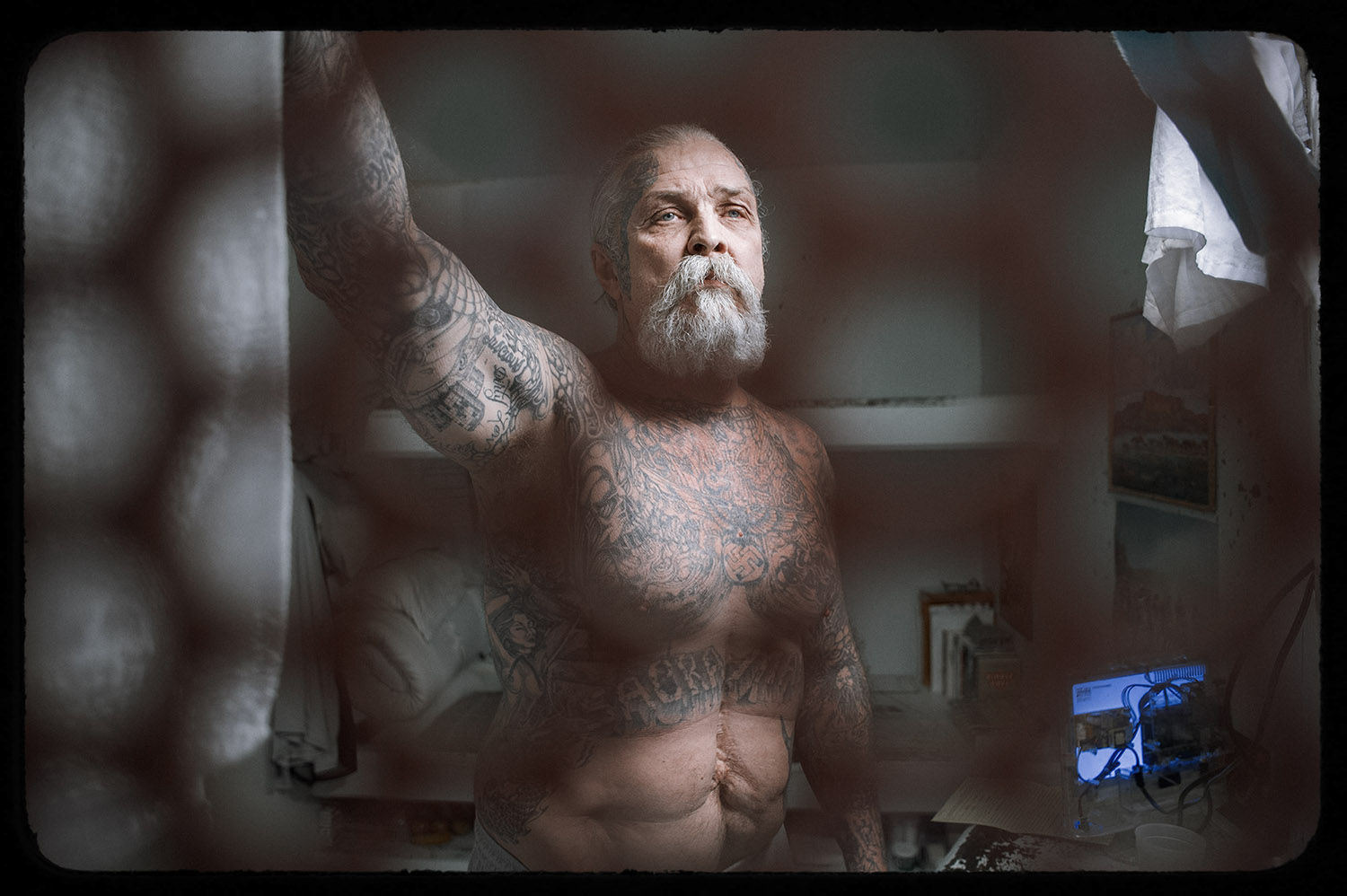
"caption": "Craig Canary, 55, in his Security Housing Unit (SHU) cell at Pelican Bay supermax prison in California in 2014. He had spent about a year in this cell while officials investigated whether he was in a prison gang.",
"credit": "Brian L. Frank/CatchLight",
"altTag": null,
"description": null,
"imgSizes": {
"thumbnail": {
"file": "https://cdn.kqed.org/wp-content/uploads/sites/10/2026/02/EchoesOfIsolation_01-160x106.jpg",
"width": 160,
"height": 106,
"mimeType": "image/jpeg"
},
"post-thumbnail": {
"file": "https://cdn.kqed.org/wp-content/uploads/sites/10/2026/02/EchoesOfIsolation_01-672x372.jpg",
"width": 672,
"height": 372,
"mimeType": "image/jpeg"
},
"twentyfourteen-full-width": {
"file": "https://cdn.kqed.org/wp-content/uploads/sites/10/2026/02/EchoesOfIsolation_01-1038x576.jpg",
"width": 1038,
"height": 576,
"mimeType": "image/jpeg"
},
"npr-cds-wide": {
"file": "https://cdn.kqed.org/wp-content/uploads/sites/10/2026/02/EchoesOfIsolation_01-1200x675.jpg",
"width": 1200,
"height": 675,
"mimeType": "image/jpeg"
},
"kqedFullSize": {
"file": "https://cdn.kqed.org/wp-content/uploads/sites/10/2026/02/EchoesOfIsolation_01.jpg",
"width": 1500,
"height": 998
}
},
"fetchFailed": false,
"isLoading": false
},
"news_12014135": {
"type": "attachments",
"id": "news_12014135",
"meta": {
"index": "attachments_1716263798",
"site": "news",
"id": "12014135",
"found": true
},
"title": "101724-HECHINGER-Pelican-MO-CM-08 copy",
"publishDate": 1731454992,
"status": "inherit",
"parent": 12014128,
"modified": 1731455056,
"caption": "Incarcerated college students participate in a persuasive speaking class by giving feedback to a classmate after their presentation at Pelican Bay State Prison in Crescent City, on Sept. 17, 2024. ",
"credit": "Manuel Orbegozo for Hechinger Report",
"altTag": null,
"description": null,
"imgSizes": {
"medium": {
"file": "https://cdn.kqed.org/wp-content/uploads/sites/10/2024/11/101724-HECHINGER-Pelican-MO-CM-08-copy-800x533.jpg",
"width": 800,
"height": 533,
"mimeType": "image/jpeg"
},
"large": {
"file": "https://cdn.kqed.org/wp-content/uploads/sites/10/2024/11/101724-HECHINGER-Pelican-MO-CM-08-copy-1020x680.jpg",
"width": 1020,
"height": 680,
"mimeType": "image/jpeg"
},
"thumbnail": {
"file": "https://cdn.kqed.org/wp-content/uploads/sites/10/2024/11/101724-HECHINGER-Pelican-MO-CM-08-copy-160x107.jpg",
"width": 160,
"height": 107,
"mimeType": "image/jpeg"
},
"1536x1536": {
"file": "https://cdn.kqed.org/wp-content/uploads/sites/10/2024/11/101724-HECHINGER-Pelican-MO-CM-08-copy-1536x1024.jpg",
"width": 1536,
"height": 1024,
"mimeType": "image/jpeg"
},
"post-thumbnail": {
"file": "https://cdn.kqed.org/wp-content/uploads/sites/10/2024/11/101724-HECHINGER-Pelican-MO-CM-08-copy-672x372.jpg",
"width": 672,
"height": 372,
"mimeType": "image/jpeg"
},
"twentyfourteen-full-width": {
"file": "https://cdn.kqed.org/wp-content/uploads/sites/10/2024/11/101724-HECHINGER-Pelican-MO-CM-08-copy-1038x576.jpg",
"width": 1038,
"height": 576,
"mimeType": "image/jpeg"
},
"full-width": {
"file": "https://cdn.kqed.org/wp-content/uploads/sites/10/2024/11/101724-HECHINGER-Pelican-MO-CM-08-copy-1920x1280.jpg",
"width": 1920,
"height": 1280,
"mimeType": "image/jpeg"
},
"kqedFullSize": {
"file": "https://cdn.kqed.org/wp-content/uploads/sites/10/2024/11/101724-HECHINGER-Pelican-MO-CM-08-copy.jpg",
"width": 2000,
"height": 1333
}
},
"fetchFailed": false,
"isLoading": false
},
"news_11070387": {
"type": "attachments",
"id": "news_11070387",
"meta": {
"index": "attachments_1716263798",
"site": "news",
"id": "11070387",
"found": true
},
"parent": 11067321,
"imgSizes": {
"twentyfourteen-full-width": {
"file": "https://ww2.kqed.org/app/uploads/sites/10/2016/09/RS1076_alt_500-1038x576.jpg",
"width": 1038,
"mimeType": "image/jpeg",
"height": 576
},
"thumbnail": {
"file": "https://ww2.kqed.org/app/uploads/sites/10/2016/09/RS1076_alt_500-400x300.jpg",
"width": 400,
"mimeType": "image/jpeg",
"height": 300
},
"fd-sm": {
"file": "https://ww2.kqed.org/app/uploads/sites/10/2016/09/RS1076_alt_500-960x720.jpg",
"width": 960,
"mimeType": "image/jpeg",
"height": 720
},
"post-thumbnail": {
"file": "https://ww2.kqed.org/app/uploads/sites/10/2016/09/RS1076_alt_500-672x372.jpg",
"width": 672,
"mimeType": "image/jpeg",
"height": 372
},
"kqedFullSize": {
"file": "https://ww2.kqed.org/app/uploads/sites/10/2016/09/RS1076_alt_500.jpg",
"width": 1920,
"height": 1440
},
"large": {
"file": "https://ww2.kqed.org/app/uploads/sites/10/2016/09/RS1076_alt_500-1920x1440.jpg",
"width": 1920,
"mimeType": "image/jpeg",
"height": 1440
},
"guest-author-50": {
"file": "https://ww2.kqed.org/app/uploads/sites/10/2016/09/RS1076_alt_500-50x50.jpg",
"width": 50,
"mimeType": "image/jpeg",
"height": 50
},
"guest-author-96": {
"file": "https://ww2.kqed.org/app/uploads/sites/10/2016/09/RS1076_alt_500-96x96.jpg",
"width": 96,
"mimeType": "image/jpeg",
"height": 96
},
"medium": {
"file": "https://ww2.kqed.org/app/uploads/sites/10/2016/09/RS1076_alt_500-800x600.jpg",
"width": 800,
"mimeType": "image/jpeg",
"height": 600
},
"guest-author-64": {
"file": "https://ww2.kqed.org/app/uploads/sites/10/2016/09/RS1076_alt_500-64x64.jpg",
"width": 64,
"mimeType": "image/jpeg",
"height": 64
},
"guest-author-32": {
"file": "https://ww2.kqed.org/app/uploads/sites/10/2016/09/RS1076_alt_500-32x32.jpg",
"width": 32,
"mimeType": "image/jpeg",
"height": 32
},
"jmtc-small-thumb": {
"file": "https://ww2.kqed.org/app/uploads/sites/10/2016/09/RS1076_alt_500-280x150.jpg",
"width": 280,
"mimeType": "image/jpeg",
"height": 150
},
"fd-lrg": {
"file": "https://ww2.kqed.org/app/uploads/sites/10/2016/09/RS1076_alt_500-1920x1440.jpg",
"width": 1920,
"mimeType": "image/jpeg",
"height": 1440
},
"fd-med": {
"file": "https://ww2.kqed.org/app/uploads/sites/10/2016/09/RS1076_alt_500-1180x885.jpg",
"width": 1180,
"mimeType": "image/jpeg",
"height": 885
},
"detail": {
"file": "https://ww2.kqed.org/app/uploads/sites/10/2016/09/RS1076_alt_500-150x150.jpg",
"width": 150,
"mimeType": "image/jpeg",
"height": 150
},
"guest-author-128": {
"file": "https://ww2.kqed.org/app/uploads/sites/10/2016/09/RS1076_alt_500-128x128.jpg",
"width": 128,
"mimeType": "image/jpeg",
"height": 128
}
},
"publishDate": 1472834415,
"modified": 1472834652,
"caption": "Facility D in Pelican Bay's SHU now sits empty, according to California Department of Corrections and Rehabilitation officials.",
"description": "Facility D in Pelican Bay's SHU now sits empty, according to California Department of Corrections and Rehabilitation officials.",
"title": "RS1076_alt_500",
"credit": "Michael Montgomery/KQED",
"status": "inherit",
"fetchFailed": false,
"isLoading": false
},
"news_10506835": {
"type": "attachments",
"id": "news_10506835",
"meta": {
"index": "attachments_1716263798",
"site": "news",
"id": "10506835",
"found": true
},
"parent": 89880,
"imgSizes": {
"twentyfourteen-full-width": {
"file": "https://ww2.kqed.org/app/uploads/sites/10/2013/02/SHUPrisoner-1038x576.jpg",
"width": 1038,
"mimeType": "image/jpeg",
"height": 576
},
"thumbnail": {
"file": "https://ww2.kqed.org/app/uploads/sites/10/2013/02/SHUPrisoner-400x225.jpg",
"width": 400,
"mimeType": "image/jpeg",
"height": 225
},
"fd-sm": {
"file": "https://ww2.kqed.org/app/uploads/sites/10/2013/02/SHUPrisoner-960x540.jpg",
"width": 960,
"mimeType": "image/jpeg",
"height": 540
},
"post-thumbnail": {
"file": "https://ww2.kqed.org/app/uploads/sites/10/2013/02/SHUPrisoner-672x372.jpg",
"width": 672,
"mimeType": "image/jpeg",
"height": 372
},
"kqedFullSize": {
"file": "https://ww2.kqed.org/app/uploads/sites/10/2013/02/SHUPrisoner.jpg",
"width": 1920,
"height": 1080
},
"large": {
"file": "https://ww2.kqed.org/app/uploads/sites/10/2013/02/SHUPrisoner-1440x810.jpg",
"width": 1440,
"mimeType": "image/jpeg",
"height": 810
},
"guest-author-96": {
"file": "https://ww2.kqed.org/app/uploads/sites/10/2013/02/SHUPrisoner-96x96.jpg",
"width": 96,
"mimeType": "image/jpeg",
"height": 96
},
"medium": {
"file": "https://ww2.kqed.org/app/uploads/sites/10/2013/02/SHUPrisoner-800x450.jpg",
"width": 800,
"mimeType": "image/jpeg",
"height": 450
},
"guest-author-64": {
"file": "https://ww2.kqed.org/app/uploads/sites/10/2013/02/SHUPrisoner-64x64.jpg",
"width": 64,
"mimeType": "image/jpeg",
"height": 64
},
"guest-author-32": {
"file": "https://ww2.kqed.org/app/uploads/sites/10/2013/02/SHUPrisoner-32x32.jpg",
"width": 32,
"mimeType": "image/jpeg",
"height": 32
},
"fd-med": {
"file": "https://ww2.kqed.org/app/uploads/sites/10/2013/02/SHUPrisoner-1180x664.jpg",
"width": 1180,
"mimeType": "image/jpeg",
"height": 664
},
"detail": {
"file": "https://ww2.kqed.org/app/uploads/sites/10/2013/02/SHUPrisoner-75x75.jpg",
"width": 75,
"mimeType": "image/jpeg",
"height": 75
},
"guest-author-128": {
"file": "https://ww2.kqed.org/app/uploads/sites/10/2013/02/SHUPrisoner-128x128.jpg",
"width": 128,
"mimeType": "image/jpeg",
"height": 128
}
},
"publishDate": 1430329910,
"modified": 1430329961,
"caption": "Inmate Jeremy Beasley in his cell at Pelican Bay State Prison. Beasley spent nearly 15 years in the special security housing unit.",
"description": "Inmate Jeremy Beasley in his cell at Pelican Bay State Prison. Beasley spent nearly 15 years in the special security housing unit.",
"title": "SHUPrisoner",
"credit": "Singeli Agnew/CIR",
"status": "inherit",
"fetchFailed": false,
"isLoading": false
}
},
"audioPlayerReducer": {
"postId": "stream_live",
"isPaused": true,
"isPlaying": false,
"pfsActive": false,
"pledgeModalIsOpen": true,
"playerDrawerIsOpen": false
},
"authorsReducer": {
"byline_news_12071751": {
"type": "authors",
"id": "byline_news_12071751",
"meta": {
"override": true
},
"slug": "byline_news_12071751",
"name": "Christie Thompson, The Marshall Project and Brian L. Frank, CatchLight",
"isLoading": false
},
"byline_news_12014128": {
"type": "authors",
"id": "byline_news_12014128",
"meta": {
"override": true
},
"slug": "byline_news_12014128",
"name": "Wayne D’Orio",
"isLoading": false
},
"jbrooks": {
"type": "authors",
"id": "80",
"meta": {
"index": "authors_1716337520",
"id": "80",
"found": true
},
"name": "Jon Brooks",
"firstName": "Jon",
"lastName": "Brooks",
"slug": "jbrooks",
"email": "jbrooks@kqed.org",
"display_author_email": true,
"staff_mastheads": [
"science"
],
"title": "Digital Editor",
"bio": "Jon Brooks is a former Digital Editor for KQED Science. He is the former editor of KQED’s daily news blog, News Fix. In 2014, he won a California Journalism Award for his coverage of ride services like Uber and Lyft and the taxi industry. A veteran blogger, he previously worked for Yahoo! in various news writing and editing roles. Jon is also a playwright whose work has been produced in San Francisco, New York, Italy, and around the U.S. He has written about film for his own blog and studied film at Boston University.",
"avatar": "https://secure.gravatar.com/avatar/98887f7ed1c876ed414d4c915e969584?s=600&d=blank&r=g",
"twitter": "jbrooksfoy",
"facebook": null,
"instagram": null,
"linkedin": null,
"sites": [
{
"site": "arts",
"roles": [
"Contributor",
"editor"
]
},
{
"site": "news",
"roles": [
"author"
]
},
{
"site": "futureofyou",
"roles": [
"administrator"
]
},
{
"site": "mindshift",
"roles": [
"editor"
]
},
{
"site": "stateofhealth",
"roles": [
"editor"
]
},
{
"site": "science",
"roles": [
"administrator"
]
},
{
"site": "quest",
"roles": [
"editor"
]
}
],
"headData": {
"title": "Jon Brooks | KQED",
"description": "Digital Editor",
"ogImgSrc": "https://secure.gravatar.com/avatar/98887f7ed1c876ed414d4c915e969584?s=600&d=blank&r=g",
"twImgSrc": "https://secure.gravatar.com/avatar/98887f7ed1c876ed414d4c915e969584?s=600&d=blank&r=g"
},
"isLoading": false,
"link": "/author/jbrooks"
},
"kqed": {
"type": "authors",
"id": "236",
"meta": {
"index": "authors_1716337520",
"id": "236",
"found": true
},
"name": "KQED News Staff",
"firstName": "KQED News Staff",
"lastName": null,
"slug": "kqed",
"email": "faq@kqed.org",
"display_author_email": false,
"staff_mastheads": [],
"title": null,
"bio": null,
"avatar": "https://secure.gravatar.com/avatar/ef0e801a68c4c54afa9180db14084167?s=600&d=blank&r=g",
"twitter": null,
"facebook": null,
"instagram": null,
"linkedin": null,
"sites": [
{
"site": "arts",
"roles": [
"contributor"
]
},
{
"site": "news",
"roles": [
"editor"
]
},
{
"site": "futureofyou",
"roles": [
"author"
]
}
],
"headData": {
"title": "KQED News Staff | KQED",
"description": null,
"ogImgSrc": "https://secure.gravatar.com/avatar/ef0e801a68c4c54afa9180db14084167?s=600&d=blank&r=g",
"twImgSrc": "https://secure.gravatar.com/avatar/ef0e801a68c4c54afa9180db14084167?s=600&d=blank&r=g"
},
"isLoading": false,
"link": "/author/kqed"
},
"mmontgomery": {
"type": "authors",
"id": "245",
"meta": {
"index": "authors_1716337520",
"id": "245",
"found": true
},
"name": "Michael Montgomery",
"firstName": "Michael",
"lastName": "Montgomery",
"slug": "mmontgomery",
"email": "t4monk@gmail.com",
"display_author_email": false,
"staff_mastheads": [],
"title": null,
"bio": null,
"avatar": "https://secure.gravatar.com/avatar/79a5f79d5aa798ddff903c26834bb398?s=600&d=blank&r=g",
"twitter": null,
"facebook": null,
"instagram": null,
"linkedin": null,
"sites": [
{
"site": "news",
"roles": [
"contributor"
]
}
],
"headData": {
"title": "Michael Montgomery | KQED",
"description": null,
"ogImgSrc": "https://secure.gravatar.com/avatar/79a5f79d5aa798ddff903c26834bb398?s=600&d=blank&r=g",
"twImgSrc": "https://secure.gravatar.com/avatar/79a5f79d5aa798ddff903c26834bb398?s=600&d=blank&r=g"
},
"isLoading": false,
"link": "/author/mmontgomery"
},
"aemslie": {
"type": "authors",
"id": "3206",
"meta": {
"index": "authors_1716337520",
"id": "3206",
"found": true
},
"name": "Alex Emslie",
"firstName": "Alex",
"lastName": "Emslie",
"slug": "aemslie",
"email": "aemslie@kqed.org",
"display_author_email": true,
"staff_mastheads": [
"news"
],
"title": "KQED Senior Editor",
"bio": "Alex Emslie is senior editor of talent and development at KQED, where he manages dozens of early career journalists and oversees news department internships.\r\n\r\nHe is a former carpenter and proud graduate of City College of San Francisco and San Francisco State University, where he studied journalism and criminal justice before joining KQED in 2013.\r\n\r\nAlex produced investigative journalism focused on \u003ca href=\"https://www.kqed.org/news/11667594/the-trials-of-marvin-mutch-video\">criminal justice\u003c/a> and policing for most of a decade. He has broken major stories about \u003ca href=\"https://www.kqed.org/news/135682/amid-a-series-of-vallejo-police-shootings-one-officers-name-stands-out\">police use of deadly force\u003c/a>, \u003ca href=\"https://www.kqed.org/news/10454955/racist-texts-prompt-sfpd-internal-investigation\">officer misconduct\u003c/a> and \u003ca href=\"https://www.kqed.org/news/11712239/terrorist-or-troll-judge-to-weigh-whether-oakland-man-really-intended-to-attack-bay-area\">other\u003c/a> \u003ca href=\"https://www.kqed.org/news/11221414/hayward-paid-159000-to-husband-of-retired-police-chief-documents-show\">high\u003c/a>-\u003ca href=\"https://www.kqed.org/news/10622762/the-forgotten-tracking-two-homicides-in-san-francisco-public-housing\">profile\u003c/a> \u003ca href=\"https://www.kqed.org/news/11624516/federal-agency-promoted-ranger-just-months-after-his-gun-was-stolen-and-used-in-steinle-killing\">cases\u003c/a>. He co-founded the \u003ca href=\"https://projects.scpr.org/california-reporting-project/\">California Reporting Project\u003c/a> in 2019 to obtain and report on previously confidential police internal investigations. The effort produced well over 100 original stories and changed the course of multiple criminal cases.\r\n\r\nHis work has been recognized with numerous journalism awards, including a national Edward R. Murrow award for several years of \u003ca href=\"https://www.kqed.org/news/11688481/sfpd-officers-in-mario-woods-case-recount-shooting-in-newly-filed-depositions\">reporting\u003c/a> on the San Francisco Police shooting of Mario Woods. His \u003ca href=\"https://www.kqed.org/news/147854/half-of-those-killed-by-san-francisco-police-are-mentally-ill\">reporting\u003c/a> on police killings of people in psychiatric crisis was cited in amicus briefs before the U.S. Supreme Court.\r\n\r\nAlex now enjoys mentoring the next generation of journalists at KQED.",
"avatar": "https://secure.gravatar.com/avatar/e691e65209f20e9da202bd730ead5663?s=600&d=blank&r=g",
"twitter": "SFNewsReporter",
"facebook": null,
"instagram": null,
"linkedin": null,
"sites": [
{
"site": "arts",
"roles": [
"editor"
]
},
{
"site": "news",
"roles": [
"editor"
]
},
{
"site": "mindshift",
"roles": [
"editor"
]
},
{
"site": "stateofhealth",
"roles": [
"editor"
]
},
{
"site": "science",
"roles": [
"administrator"
]
}
],
"headData": {
"title": "Alex Emslie | KQED",
"description": "KQED Senior Editor",
"ogImgSrc": "https://secure.gravatar.com/avatar/e691e65209f20e9da202bd730ead5663?s=600&d=blank&r=g",
"twImgSrc": "https://secure.gravatar.com/avatar/e691e65209f20e9da202bd730ead5663?s=600&d=blank&r=g"
},
"isLoading": false,
"link": "/author/aemslie"
}
},
"breakingNewsReducer": {},
"pagesReducer": {},
"postsReducer": {
"stream_live": {
"type": "live",
"id": "stream_live",
"audioUrl": "https://streams.kqed.org/kqedradio",
"title": "Live Stream",
"excerpt": "Live Stream information currently unavailable.",
"link": "/radio",
"featImg": "",
"label": {
"name": "KQED Live",
"link": "/"
}
},
"stream_kqedNewscast": {
"type": "posts",
"id": "stream_kqedNewscast",
"audioUrl": "https://www.kqed.org/.stream/anon/radio/RDnews/newscast.mp3?_=1",
"title": "KQED Newscast",
"featImg": "",
"label": {
"name": "88.5 FM",
"link": "/"
}
},
"news_12071751": {
"type": "posts",
"id": "news_12071751",
"meta": {
"index": "posts_1716263798",
"site": "news",
"id": "12071751",
"score": null,
"sort": [
1770130851000
]
},
"guestAuthors": [],
"slug": "echoes-of-isolation",
"title": "Echoes of Isolation",
"publishDate": 1770130851,
"format": "standard",
"headTitle": "Echoes of Isolation | KQED",
"labelTerm": {
"site": "news"
},
"content": "\u003cp>\u003cstrong>\u003cem>This \u003c/em>\u003c/strong>\u003ca href=\"https://www.themarshallproject.org/2026/01/28/california-los-angeles-prison-solitary\">\u003cstrong>\u003cem>story\u003c/em>\u003c/strong>\u003c/a>\u003cstrong>\u003cem> was produced in collaboration between The Marshall Project and CatchLight as part of a three-year \u003c/em>\u003c/strong>\u003ca href=\"https://www.catchlight.io/mental-health-details\">\u003cstrong>\u003cem>Mental Health Visual Desk Reporting Initiative.\u003c/em>\u003c/strong>\u003c/a>\u003c/p>\n\u003cp>One morning in July 2013, tens of thousands of California prisoners made history when they refused to eat. They were participating in a state-wide hunger strike, protesting policies that kept people locked in solitary confinement indefinitely. Hundreds of people in Pelican Bay State Prison, the state’s supermax facility near the Oregon state line, had been in \u003ca href=\"https://ccrjustice.org/sites/default/files/attach/2016/10/resource-PB-monitoring-stats.pdf\">isolation for over a decade\u003c/a>.\u003c/p>\n\u003cp>Most were sent to solitary, known as the Security Housing Unit (SHU), for being labeled gang members. But that designation could be based on evidence as thin as reading a certain book, knowing someone in a gang, or sketching an Aztec warrior, incarcerated people and attorneys reported.\u003c/p>\n\u003cp>After 60 days of refusing food, and along with a \u003ca href=\"https://ccrjustice.org/home/what-we-do/our-cases/ashker-v-brown\">concurrent lawsuit\u003c/a>, the hunger strikers ultimately won \u003ca href=\"https://ccrjustice.org/sites/default/files/attach/2015/08/2015-09-01-Ashker-settlement-summary.pdf\">major policy changes\u003c/a> from the California corrections department. Among them was an agreement to move most people in long-term solitary back into the general population, giving many a renewed chance at parole. Now, back in the community and over a decade since the protest, these men are working to rebuild their lives, help others inside, and make sense of the trauma they endured.\u003c/p>\n\u003cp>[ad fullwidth]\u003c/p>\n\u003cp>Photographer Brian L. Frank has been capturing this journey through portraits of people who were in solitary and who participated in the 2013 strike. The project primarily took place at Alcatraz, a site whose history echoes the experience of those in Pelican Bay. As a federal penitentiary, Alcatraz housed men who were deemed too dangerous for other facilities. Most were locked in small single cells. The prison, which closed in 1963, has since become a national park with exhibits exploring the \u003ca href=\"https://www.nps.gov/goga/thebiglockup.htm\">past and present\u003c/a> of incarceration in the U.S.\u003c/p>\n\u003cp>Frank had photographed men inside the Pelican Bay SHU in 2014, on assignment for The Atlantic magazine. “It was a traumatizing and defining experience,” he said. “To think that I might be the only human from outside the prison they really spoke to, maybe in 10 years. It was something that stuck with me.”\u003c/p>\n\u003cfigure id=\"attachment_12071908\" class=\"wp-caption aligncenter\" style=\"max-width: 1500px\">\u003cimg loading=\"lazy\" decoding=\"async\" class=\"size-full wp-image-12071908\" src=\"https://cdn.kqed.org/wp-content/uploads/sites/10/2026/02/EchoesOfIsolation_02.jpg\" alt=\"\" width=\"1500\" height=\"998\" srcset=\"https://cdn.kqed.org/wp-content/uploads/sites/10/2026/02/EchoesOfIsolation_02.jpg 1500w, https://cdn.kqed.org/wp-content/uploads/sites/10/2026/02/EchoesOfIsolation_02-160x106.jpg 160w\" sizes=\"auto, (max-width: 1500px) 100vw, 1500px\">\u003cfigcaption class=\"wp-caption-text\">An incarcerated man paces in the “exercise yard” of the solitary unit at Pelican Bay prison in 2014. SHU prisoners spend roughly 23 hours a day in their cells and often less than an hour in the concrete yard, with a partially open roof — their only exposure to sunlight and fresh air. \u003ccite>(Brian L. Frank/CatchLight)\u003c/cite>\u003c/figcaption>\u003c/figure>\n\u003cp>Participants in the portrait series include strike leaders like Sitawa Jamaa, one of four members of the Short Corridor Collective who \u003ca href=\"https://nymag.com/news/features/solitary-secure-housing-units-2014-2/?src=longreads\">organized the strike\u003c/a>. The Collective formed when its members were isolated in a specific section of Pelican Bay’s SHU, intended to cut them off from members of their alleged gangs. Instead, the four men formed a multiracial coalition that drafted an “agreement to end hostilities” among incarcerated people and planned the protest.\u003c/p>\n\u003cp>“I don’t care what label you put on any of us, you can’t keep us in the hole because of a label,” Jamaa said. “They keep you in there forever, unless you snitch. That ain’t fair. I never had an incident in 34 years.”\u003c/p>\n\u003cp>Frank also photographed hunger striker Jack Morris in Los Angeles. Morris, who spent over 30 years in solitary confinement, came home in 2017 and now runs the reentry program for a community health clinic. “When I think of guys having to do time in solitary confinement, I can’t even begin to make a suggestion as to how to endure that,” he said. “Because I don’t know if I could survive again.”\u003c/p>\n\u003cfigure id=\"attachment_12071909\" class=\"wp-caption aligncenter\" style=\"max-width: 2000px\">\u003cimg loading=\"lazy\" decoding=\"async\" class=\"wp-image-12071909 size-full\" src=\"https://cdn.kqed.org/wp-content/uploads/sites/10/2026/02/EchoesOfIsolation_03.jpg\" alt=\"\" width=\"2000\" height=\"1494\" srcset=\"https://cdn.kqed.org/wp-content/uploads/sites/10/2026/02/EchoesOfIsolation_03.jpg 2000w, https://cdn.kqed.org/wp-content/uploads/sites/10/2026/02/EchoesOfIsolation_03-160x120.jpg 160w, https://cdn.kqed.org/wp-content/uploads/sites/10/2026/02/EchoesOfIsolation_03-1536x1147.jpg 1536w\" sizes=\"auto, (max-width: 2000px) 100vw, 2000px\">\u003cfigcaption class=\"wp-caption-text\">Solitary confinement cell at the Solitary Housing Unit (SHU) at Pelican Bay penitentiary. \u003ccite>(Brian L. Frank/CatchLight)\u003c/cite>\u003c/figcaption>\u003c/figure>\n\u003cp>While in the SHU at Pelican Bay, men were alone in their cells for roughly 23 hours a day, with every meal provided through a slot in their door. Many said they never received a phone call, unless a family member died. Visits with loved ones were behind a thick plexiglass window. And any time spent outside their cells to exercise took place in an open-air cement room, with walls so high they couldn’t see their surroundings.\u003c/p>\n\u003cp>“I had guys ask me, ‘Where are we in the world, where are we in the state?’” said psychologist Craig Haney, who studies the mental toll of long-term isolation. He has interviewed over 100 men in the SHU at Pelican Bay as an expert witness. “They could have been on Mars because they never got visually in contact with the world around them.”\u003c/p>\n\u003cp>When it was built in the late 1980s, the solitary unit at Pelican Bay was a new kind of incarceration, Haney said. Human contact between incarcerated people and officers was largely eliminated. Cell doors were operated by the push of a button, messages were communicated via intercom, and surveillance was done with cameras instead of officers making rounds.[aside postID=news_12059022 hero='https://cdn.kqed.org/wp-content/uploads/sites/10/2024/12/258_KQED_NewFolsomPrisonSacramento_04132023-1020x680.jpg']Haney’s research found that such prolonged isolation led to paranoia, anxiety, despair, anger and, eventually, numbness among people in the SHU. “When you’re in the SHU, you don’t feel,” said Frank Reyna, who spent 20 years in solitary at Pelican Bay. “If you feel, you start getting weak. When people die, you just move on. You lose your emotions.”\u003c/p>\n\u003cp>Prison officials had built a fortress designed to keep people away from each other. But locked alone in their cells, the men at Pelican Bay found any way they could to connect — by talking through their cell doors, the vents in the walls, or in cracks in the corners of their recreation cages.\u003cem> \u003c/em>\u003c/p>\n\u003cp>People found different ways to pass time, and make what meaning they could. Jamaa organized reading groups on his tier, with men taking turns reading different passages to each other and analyzing the text. Many spent hours in the morning with fastidious workout routines. During the strike, Brian James at Corcoran prison, south of Fresno, found himself counting and re-counting the perforations on his cell door.\u003c/p>\n\u003cp>There were only three ways out of the SHU, prisoners concluded: “snitch, parole, or die.” To snitch meant to provide information on another alleged gang member, and open yourself to the risk of retaliatory violence. Parole was unlikely for those whom prison officials had deemed among “the worst of the worst.” The only way out of the Pelican Bay SHU, hunger strikers reasoned, was in a body bag. They had nothing to lose.\u003c/p>\n\u003cp>When the strike began, “there was something in front of me to reach for, or hope for,” said James. “You spend your life inside of a box alone. So to know I’m in solidarity with [so many] people, it gave me that push in the right direction. I immediately knew we were a part of something really big.”\u003c/p>\n\u003cfigure id=\"attachment_12071918\" class=\"wp-caption aligncenter\" style=\"max-width: 2000px\">\u003cimg loading=\"lazy\" decoding=\"async\" class=\"size-full wp-image-12071918\" src=\"https://cdn.kqed.org/wp-content/uploads/sites/10/2026/02/EchoesOfIsolation_04.jpg\" alt=\"\" width=\"2000\" height=\"1466\" srcset=\"https://cdn.kqed.org/wp-content/uploads/sites/10/2026/02/EchoesOfIsolation_04.jpg 2000w, https://cdn.kqed.org/wp-content/uploads/sites/10/2026/02/EchoesOfIsolation_04-160x117.jpg 160w, https://cdn.kqed.org/wp-content/uploads/sites/10/2026/02/EchoesOfIsolation_04-1536x1126.jpg 1536w\" sizes=\"auto, (max-width: 2000px) 100vw, 2000px\">\u003cfigcaption class=\"wp-caption-text\">Rows of concertina wire and flood lighting surround the solitary unit at Pelican Bay in 2014. \u003ccite>(Brian L. Frank/CatchLight)\u003c/cite>\u003c/figcaption>\u003c/figure>\n\u003cp>Participants remember how, after a few days of fasting, the tier grew quiet. Where there used to be the sounds of morning exercise routines and chatter between cells, people began to spend more time in bed, conserving their energy.\u003c/p>\n\u003cp>Meanwhile, a growing chorus of activists outside the prison were amplifying their message. The strike made international news. Celebrities like Danny Glover and Jay Leno lent their support. Groups held frequent rallies outside state prisons.\u003c/p>\n\u003cp>Dolores Canales’ son was on hunger strike in the SHU in Corcoran prison. She and other family members organized the California Families Against Solitary Confinement to pressure the corrections department to change their policies. “I felt like they would probably let them starve to death before meeting any demands,” she said. “There was such an urgency that if we did not do something, it would never change.”\u003c/p>\n\u003cfigure id=\"attachment_12071919\" class=\"wp-caption aligncenter\" style=\"max-width: 2560px\">\u003cimg loading=\"lazy\" decoding=\"async\" class=\"size-full wp-image-12071919\" src=\"https://cdn.kqed.org/wp-content/uploads/sites/10/2026/02/EchoesOfIsolation_06-scaled.jpg\" alt=\"\" width=\"2560\" height=\"1705\" srcset=\"https://cdn.kqed.org/wp-content/uploads/sites/10/2026/02/EchoesOfIsolation_06-scaled.jpg 2560w, https://cdn.kqed.org/wp-content/uploads/sites/10/2026/02/EchoesOfIsolation_06-2000x1332.jpg 2000w, https://cdn.kqed.org/wp-content/uploads/sites/10/2026/02/EchoesOfIsolation_06-160x107.jpg 160w, https://cdn.kqed.org/wp-content/uploads/sites/10/2026/02/EchoesOfIsolation_06-1536x1023.jpg 1536w, https://cdn.kqed.org/wp-content/uploads/sites/10/2026/02/EchoesOfIsolation_06-2048x1364.jpg 2048w\" sizes=\"auto, (max-width: 2560px) 100vw, 2560px\">\u003cfigcaption class=\"wp-caption-text\">A photograph of the Reyna family, with a young Frank at the bottom right, in front of his Los Angeles home. \u003ccite>(Brian L. Frank/CatchLight)\u003c/cite>\u003c/figcaption>\u003c/figure>\n\u003cp>After a two-month strike, state lawmakers agreed to hold a hearing on the issue, and the men returned to eating. The protest had a long-lasting impact in California and beyond. In December 2012, before the strike, there were \u003ca href=\"https://ccrjustice.org/sites/default/files/attach/2016/10/resource-PB-monitoring-stats.pdf\">9,870 \u003c/a>men in some form of isolation in California state prisons. This past December, the most recent data available, \u003ca href=\"https://www.cdcr.ca.gov/research/wp-content/uploads/sites/174/2026/01/STA429-010526-M.pdf\">there were 3,030\u003c/a>. The strike also sparked a nationwide movement against isolation — the next year, \u003ca href=\"https://www.themarshallproject.org/2014/12/23/shifting-away-from-solitary\">10 states\u003c/a> passed laws restricting its use. Many more states \u003ca href=\"https://www.brennancenter.org/our-work/analysis-opinion/reforming-solitary-confinement-without-high-court\">have since followed\u003c/a>.\u003c/p>\n\u003cp>Despite the hunger strikers’ wins, the fight against the use of solitary continues. State activists are pushing for the \u003ca href=\"https://camandela.org/\">California Mandela Act on Solitary Confinement\u003c/a>, which would put strict limits on the length of isolation in state facilities, and ban it outright for pregnant people and people with disabilities. The act is named for the \u003ca href=\"https://www.unodc.org/documents/justice-and-prison-reform/Nelson_Mandela_Rules-E-ebook.pdf\">U.N. Standard Minimum Rules for the Treatment of Prisoners\u003c/a>, known as the Nelson Mandela Rules. Gov. Gavin Newsom \u003ca href=\"https://calmatters.org/justice/2022/09/california-solitary-confinement-bill/\">vetoed a version\u003c/a> of the bill in 2022, calling it “overly broad.”\u003c/p>\n\u003cp>After a long-term fast, people need to return to eating very slowly, to avoid serious health complications. And after being starved of human contact, prisoners describe how they needed to also slowly readjust to being around people. Psychiatrist Terry Kupers called it the “SHU post-release syndrome.”\u003c/p>\n\u003cfigure id=\"attachment_12071921\" class=\"wp-caption aligncenter\" style=\"max-width: 2560px\">\u003cimg loading=\"lazy\" decoding=\"async\" class=\"size-full wp-image-12071921\" src=\"https://cdn.kqed.org/wp-content/uploads/sites/10/2026/02/EchoesOfIsolation_09-scaled.jpg\" alt=\"\" width=\"2560\" height=\"1705\" srcset=\"https://cdn.kqed.org/wp-content/uploads/sites/10/2026/02/EchoesOfIsolation_09-scaled.jpg 2560w, https://cdn.kqed.org/wp-content/uploads/sites/10/2026/02/EchoesOfIsolation_09-2000x1332.jpg 2000w, https://cdn.kqed.org/wp-content/uploads/sites/10/2026/02/EchoesOfIsolation_09-160x107.jpg 160w, https://cdn.kqed.org/wp-content/uploads/sites/10/2026/02/EchoesOfIsolation_09-1536x1023.jpg 1536w, https://cdn.kqed.org/wp-content/uploads/sites/10/2026/02/EchoesOfIsolation_09-2048x1364.jpg 2048w\" sizes=\"auto, (max-width: 2560px) 100vw, 2560px\">\u003cfigcaption class=\"wp-caption-text\">Alcatraz Island, initially constructed as a military prison in the 1850s, was later converted into a maximum-security federal penitentiary until its closure in 1963. \u003ccite>(Brian L. Frank/CatchLight)\u003c/cite>\u003c/figcaption>\u003c/figure>\n\u003cp>“When people get out of solitary, they isolate themselves,” Kupers said. “They dread crowds. They can’t look for a job. They don’t want to be near people they don’t know. I have mothers in the community calling me saying, ‘My kid will not come out of the room. What should I do?’”\u003c/p>\n\u003cp>Reyna came home to Los Angeles in October after over 38 years in prison. “Sometimes I could have a beautiful day, man, and then I just feel empty, like I’m back to where I was,” he said. “But now I can release things. My feelings are coming back. Now, I don’t care, I cry.”\u003c/p>\n\u003cp>\u003cstrong>\u003cem>\u003cu>ACKNOWLEDGEMENTS:\u003c/u>\u003c/em>\u003c/strong>\u003c/p>\n\u003cp>\u003cem>Thank you to the individuals who shared their time and stories to \u003ca href=\"https://www.themarshallproject.org/2026/01/28/california-los-angeles-prison-solitary\">make this project possible\u003c/a>. \u003c/em>\u003c/p>\n\u003cp>\u003cem>With additional gratitude to Minister King X (Director, California Prison Focus/K.A.G.E Universal), \u003c/em>\u003ca href=\"https://www.c-note.org/\">\u003cem>Donald C-Note Hooker\u003c/em>\u003c/a>\u003cem>, Lundi Shackleton, and the Golden Gate National Parks Conservancy staff at Alcatraz and organizers of the \u003c/em>\u003ca href=\"https://www.nps.gov/alca/planyourvisit/formerly-incarcerated-speaker-series.htm\">\u003cem>Formerly Incarcerated Speaker Series. \u003c/em>\u003c/a>\u003c/p>\n\u003cp>\u003cem>This project is dedicated to the memory and enduring legacy of \u003c/em>\u003ca href=\"https://www.parksconservancy.org/article/unlocking-truth-how-alcatraz-changing-conversation-incarceration\">\u003cstrong>\u003cem>Stanford Chatfield \u003c/em>\u003c/strong>\u003c/a>\u003cstrong>\u003cem>(1956-2025)\u003c/em>\u003c/strong>\u003c/p>\n\u003cp>\u003cem>(Historical Interpreter at Alcatraz for the Golden Gate National Parks Conservancy)\u003c/em>\u003c/p>\n\u003cp>\u003cstrong>\u003cem>\u003cu>CREDITS:\u003c/u>\u003c/em>\u003c/strong>\u003c/p>\n\u003cp>\u003cem>\u003cstrong>PHOTOGRAPHER: \u003c/strong> \u003c/em>\u003c/p>\n\u003cp>\u003cem>Brian L. Frank/CatchLight\u003c/em>\u003c/p>\n\u003cp>\u003cem>\u003cstrong>REPORTER:\u003c/strong> \u003c/em>\u003c/p>\n\u003cp>\u003cem>Christie Thompson/The Marshall Project \u003c/em>\u003c/p>\n\u003cp>\u003cem>\u003cstrong>MULTIMEDIA EDITORS:\u003c/strong> \u003c/em>\u003c/p>\n\u003cp>\u003cem>Celina Fang/The Marshall Project, Jenny Stratton/CatchLight\u003c/em>\u003c/p>\n\u003cp>\u003cem>\u003cstrong>EDITORS:\u003c/strong> \u003c/em>\u003c/p>\n\u003cp>\u003cem>Manuel Torres/The Marshall Project, Raghu Vadarevu/The Marshall Project \u003c/em>\u003c/p>\n\u003cp>\u003cstrong>\u003cem>DEVELOPER:\u003c/em>\u003c/strong>\u003c/p>\n\u003cp>\u003cem> Aithne Feay/The Marshall Project\u003c/em>\u003c/p>\n\u003cp>\u003cstrong>\u003cem>COPY EDITORS:\u003c/em>\u003c/strong>\u003c/p>\n\u003cp>\u003cem>Lauren Hardie/The Marshall Project, Ghazala Irshad/The Marshall Project\u003c/em>\u003c/p>\n\u003cp>\u003cstrong>\u003cem>PRODUCTION COORDINATOR:\u003c/em>\u003c/strong>\u003c/p>\n\u003cp>\u003cem>Mara Corbett\u003c/em>\u003c/p>\n\u003cp>\u003cstrong>\u003cem>AUDIENCE ENGAGEMENT:\u003c/em>\u003c/strong>\u003c/p>\n\u003cp>\u003cem>Ashley Dye/The Marshall Project, Adriana Garcia/CatchLight \u003c/em>\u003c/p>\n\u003cp>\u003cstrong>\u003cem>About The Marshall Project: \u003c/em>\u003c/strong>\u003cem>The Marshall Project is a nonprofit news organization covering the U.S. criminal justice system. Sign up for their \u003c/em>\u003ca href=\"https://www.themarshallproject.org/newsletters\">\u003cem>newsletters\u003c/em>\u003c/a>\u003cem>, and follow them on \u003c/em>\u003ca href=\"https://www.instagram.com/marshallproj/?hl=en\">\u003cem>Instagram\u003c/em>\u003c/a>\u003cem>, \u003c/em>\u003ca href=\"https://www.instagram.com/marshallproj/?hl=en\">\u003cem>TikTok\u003c/em>\u003c/a>\u003cem>, \u003c/em>\u003ca href=\"https://www.instagram.com/marshallproj/?hl=en\">\u003cem>Reddit\u003c/em>\u003c/a>\u003cem> and \u003c/em>\u003ca href=\"https://www.instagram.com/marshallproj/?hl=en\">\u003cem>Facebook\u003c/em>\u003c/a>\u003cem>.\u003c/em>\u003c/p>\n\u003cp>[ad floatright]\u003c/p>\n",
"blocks": [],
"excerpt": "A 2013 prison hunger strike in California led to a dramatic decline in the use of solitary confinement. More than a decade later, people impacted by solitary reflect on the toll of separation.",
"status": "publish",
"parent": 0,
"modified": 1770148988,
"stats": {
"hasAudio": false,
"hasVideo": false,
"hasChartOrMap": false,
"iframeSrcs": [],
"hasGoogleForm": false,
"hasGallery": false,
"hasHearkenModule": false,
"hasPolis": false,
"paragraphCount": 48,
"wordCount": 2068
},
"headData": {
"title": "Echoes of Isolation | KQED",
"description": "A 2013 prison hunger strike in California led to a dramatic decline in the use of solitary confinement. More than a decade later, people impacted by solitary reflect on the toll of separation.",
"ogTitle": "",
"ogDescription": "",
"ogImgId": "",
"twTitle": "",
"twDescription": "",
"twImgId": "",
"schema": {
"@context": "https://schema.org",
"@type": "NewsArticle",
"headline": "Echoes of Isolation",
"datePublished": "2026-02-03T07:00:51-08:00",
"dateModified": "2026-02-03T12:03:08-08:00",
"image": "https://cdn.kqed.org/wp-content/uploads/2020/02/KQED-OG-Image@1x.png",
"isAccessibleForFree": "True",
"publisher": {
"@type": "NewsMediaOrganization",
"@id": "https://www.kqed.org/#organization",
"name": "KQED",
"logo": "https://cdn.kqed.org/wp-content/uploads/2020/02/KQED-OG-Image@1x.png",
"url": "https://www.kqed.org",
"sameAs": [
"https://www.facebook.com/KQED",
"https://twitter.com/KQED",
"https://www.instagram.com/kqed/",
"https://www.tiktok.com/@kqedofficial",
"https://www.linkedin.com/company/kqed",
"https://www.youtube.com/channel/UCeC0IOo7i1P_61zVUWbJ4nw"
]
}
}
},
"primaryCategory": {
"termId": 8,
"slug": "news",
"name": "News"
},
"sticky": false,
"nprByline": "Christie Thompson, The Marshall Project and Brian L. Frank, CatchLight",
"nprStoryId": "kqed-12071751",
"templateType": "standard",
"featuredImageType": "standard",
"excludeFromSiteSearch": "Include",
"showOnAuthorArchivePages": "No",
"articleAge": "0",
"path": "/news/12071751/echoes-of-isolation",
"audioTrackLength": null,
"parsedContent": [
{
"type": "contentString",
"content": "\u003cdiv class=\"post-body\">\u003cp>\u003cp>\u003cstrong>\u003cem>This \u003c/em>\u003c/strong>\u003ca href=\"https://www.themarshallproject.org/2026/01/28/california-los-angeles-prison-solitary\">\u003cstrong>\u003cem>story\u003c/em>\u003c/strong>\u003c/a>\u003cstrong>\u003cem> was produced in collaboration between The Marshall Project and CatchLight as part of a three-year \u003c/em>\u003c/strong>\u003ca href=\"https://www.catchlight.io/mental-health-details\">\u003cstrong>\u003cem>Mental Health Visual Desk Reporting Initiative.\u003c/em>\u003c/strong>\u003c/a>\u003c/p>\n\u003cp>One morning in July 2013, tens of thousands of California prisoners made history when they refused to eat. They were participating in a state-wide hunger strike, protesting policies that kept people locked in solitary confinement indefinitely. Hundreds of people in Pelican Bay State Prison, the state’s supermax facility near the Oregon state line, had been in \u003ca href=\"https://ccrjustice.org/sites/default/files/attach/2016/10/resource-PB-monitoring-stats.pdf\">isolation for over a decade\u003c/a>.\u003c/p>\n\u003cp>Most were sent to solitary, known as the Security Housing Unit (SHU), for being labeled gang members. But that designation could be based on evidence as thin as reading a certain book, knowing someone in a gang, or sketching an Aztec warrior, incarcerated people and attorneys reported.\u003c/p>\n\u003cp>After 60 days of refusing food, and along with a \u003ca href=\"https://ccrjustice.org/home/what-we-do/our-cases/ashker-v-brown\">concurrent lawsuit\u003c/a>, the hunger strikers ultimately won \u003ca href=\"https://ccrjustice.org/sites/default/files/attach/2015/08/2015-09-01-Ashker-settlement-summary.pdf\">major policy changes\u003c/a> from the California corrections department. Among them was an agreement to move most people in long-term solitary back into the general population, giving many a renewed chance at parole. Now, back in the community and over a decade since the protest, these men are working to rebuild their lives, help others inside, and make sense of the trauma they endured.\u003c/p>\n\u003cp>\u003c/p>\u003c/div>",
"attributes": {
"named": {},
"numeric": []
}
},
{
"type": "component",
"content": "",
"name": "ad",
"attributes": {
"named": {
"label": "fullwidth"
},
"numeric": [
"fullwidth"
]
}
},
{
"type": "contentString",
"content": "\u003cdiv class=\"post-body\">\u003cp>\u003c/p>\n\u003cp>Photographer Brian L. Frank has been capturing this journey through portraits of people who were in solitary and who participated in the 2013 strike. The project primarily took place at Alcatraz, a site whose history echoes the experience of those in Pelican Bay. As a federal penitentiary, Alcatraz housed men who were deemed too dangerous for other facilities. Most were locked in small single cells. The prison, which closed in 1963, has since become a national park with exhibits exploring the \u003ca href=\"https://www.nps.gov/goga/thebiglockup.htm\">past and present\u003c/a> of incarceration in the U.S.\u003c/p>\n\u003cp>Frank had photographed men inside the Pelican Bay SHU in 2014, on assignment for The Atlantic magazine. “It was a traumatizing and defining experience,” he said. “To think that I might be the only human from outside the prison they really spoke to, maybe in 10 years. It was something that stuck with me.”\u003c/p>\n\u003cfigure id=\"attachment_12071908\" class=\"wp-caption aligncenter\" style=\"max-width: 1500px\">\u003cimg loading=\"lazy\" decoding=\"async\" class=\"size-full wp-image-12071908\" src=\"https://cdn.kqed.org/wp-content/uploads/sites/10/2026/02/EchoesOfIsolation_02.jpg\" alt=\"\" width=\"1500\" height=\"998\" srcset=\"https://cdn.kqed.org/wp-content/uploads/sites/10/2026/02/EchoesOfIsolation_02.jpg 1500w, https://cdn.kqed.org/wp-content/uploads/sites/10/2026/02/EchoesOfIsolation_02-160x106.jpg 160w\" sizes=\"auto, (max-width: 1500px) 100vw, 1500px\">\u003cfigcaption class=\"wp-caption-text\">An incarcerated man paces in the “exercise yard” of the solitary unit at Pelican Bay prison in 2014. SHU prisoners spend roughly 23 hours a day in their cells and often less than an hour in the concrete yard, with a partially open roof — their only exposure to sunlight and fresh air. \u003ccite>(Brian L. Frank/CatchLight)\u003c/cite>\u003c/figcaption>\u003c/figure>\n\u003cp>Participants in the portrait series include strike leaders like Sitawa Jamaa, one of four members of the Short Corridor Collective who \u003ca href=\"https://nymag.com/news/features/solitary-secure-housing-units-2014-2/?src=longreads\">organized the strike\u003c/a>. The Collective formed when its members were isolated in a specific section of Pelican Bay’s SHU, intended to cut them off from members of their alleged gangs. Instead, the four men formed a multiracial coalition that drafted an “agreement to end hostilities” among incarcerated people and planned the protest.\u003c/p>\n\u003cp>“I don’t care what label you put on any of us, you can’t keep us in the hole because of a label,” Jamaa said. “They keep you in there forever, unless you snitch. That ain’t fair. I never had an incident in 34 years.”\u003c/p>\n\u003cp>Frank also photographed hunger striker Jack Morris in Los Angeles. Morris, who spent over 30 years in solitary confinement, came home in 2017 and now runs the reentry program for a community health clinic. “When I think of guys having to do time in solitary confinement, I can’t even begin to make a suggestion as to how to endure that,” he said. “Because I don’t know if I could survive again.”\u003c/p>\n\u003cfigure id=\"attachment_12071909\" class=\"wp-caption aligncenter\" style=\"max-width: 2000px\">\u003cimg loading=\"lazy\" decoding=\"async\" class=\"wp-image-12071909 size-full\" src=\"https://cdn.kqed.org/wp-content/uploads/sites/10/2026/02/EchoesOfIsolation_03.jpg\" alt=\"\" width=\"2000\" height=\"1494\" srcset=\"https://cdn.kqed.org/wp-content/uploads/sites/10/2026/02/EchoesOfIsolation_03.jpg 2000w, https://cdn.kqed.org/wp-content/uploads/sites/10/2026/02/EchoesOfIsolation_03-160x120.jpg 160w, https://cdn.kqed.org/wp-content/uploads/sites/10/2026/02/EchoesOfIsolation_03-1536x1147.jpg 1536w\" sizes=\"auto, (max-width: 2000px) 100vw, 2000px\">\u003cfigcaption class=\"wp-caption-text\">Solitary confinement cell at the Solitary Housing Unit (SHU) at Pelican Bay penitentiary. \u003ccite>(Brian L. Frank/CatchLight)\u003c/cite>\u003c/figcaption>\u003c/figure>\n\u003cp>While in the SHU at Pelican Bay, men were alone in their cells for roughly 23 hours a day, with every meal provided through a slot in their door. Many said they never received a phone call, unless a family member died. Visits with loved ones were behind a thick plexiglass window. And any time spent outside their cells to exercise took place in an open-air cement room, with walls so high they couldn’t see their surroundings.\u003c/p>\n\u003cp>“I had guys ask me, ‘Where are we in the world, where are we in the state?’” said psychologist Craig Haney, who studies the mental toll of long-term isolation. He has interviewed over 100 men in the SHU at Pelican Bay as an expert witness. “They could have been on Mars because they never got visually in contact with the world around them.”\u003c/p>\n\u003cp>When it was built in the late 1980s, the solitary unit at Pelican Bay was a new kind of incarceration, Haney said. Human contact between incarcerated people and officers was largely eliminated. Cell doors were operated by the push of a button, messages were communicated via intercom, and surveillance was done with cameras instead of officers making rounds.\u003c/p>\u003c/div>",
"attributes": {
"named": {},
"numeric": []
}
},
{
"type": "component",
"content": "",
"name": "aside",
"attributes": {
"named": {
"postid": "news_12059022",
"hero": "https://cdn.kqed.org/wp-content/uploads/sites/10/2024/12/258_KQED_NewFolsomPrisonSacramento_04132023-1020x680.jpg",
"label": ""
},
"numeric": []
}
},
{
"type": "contentString",
"content": "\u003cdiv class=\"post-body\">\u003cp>Haney’s research found that such prolonged isolation led to paranoia, anxiety, despair, anger and, eventually, numbness among people in the SHU. “When you’re in the SHU, you don’t feel,” said Frank Reyna, who spent 20 years in solitary at Pelican Bay. “If you feel, you start getting weak. When people die, you just move on. You lose your emotions.”\u003c/p>\n\u003cp>Prison officials had built a fortress designed to keep people away from each other. But locked alone in their cells, the men at Pelican Bay found any way they could to connect — by talking through their cell doors, the vents in the walls, or in cracks in the corners of their recreation cages.\u003cem> \u003c/em>\u003c/p>\n\u003cp>People found different ways to pass time, and make what meaning they could. Jamaa organized reading groups on his tier, with men taking turns reading different passages to each other and analyzing the text. Many spent hours in the morning with fastidious workout routines. During the strike, Brian James at Corcoran prison, south of Fresno, found himself counting and re-counting the perforations on his cell door.\u003c/p>\n\u003cp>There were only three ways out of the SHU, prisoners concluded: “snitch, parole, or die.” To snitch meant to provide information on another alleged gang member, and open yourself to the risk of retaliatory violence. Parole was unlikely for those whom prison officials had deemed among “the worst of the worst.” The only way out of the Pelican Bay SHU, hunger strikers reasoned, was in a body bag. They had nothing to lose.\u003c/p>\n\u003cp>When the strike began, “there was something in front of me to reach for, or hope for,” said James. “You spend your life inside of a box alone. So to know I’m in solidarity with [so many] people, it gave me that push in the right direction. I immediately knew we were a part of something really big.”\u003c/p>\n\u003cfigure id=\"attachment_12071918\" class=\"wp-caption aligncenter\" style=\"max-width: 2000px\">\u003cimg loading=\"lazy\" decoding=\"async\" class=\"size-full wp-image-12071918\" src=\"https://cdn.kqed.org/wp-content/uploads/sites/10/2026/02/EchoesOfIsolation_04.jpg\" alt=\"\" width=\"2000\" height=\"1466\" srcset=\"https://cdn.kqed.org/wp-content/uploads/sites/10/2026/02/EchoesOfIsolation_04.jpg 2000w, https://cdn.kqed.org/wp-content/uploads/sites/10/2026/02/EchoesOfIsolation_04-160x117.jpg 160w, https://cdn.kqed.org/wp-content/uploads/sites/10/2026/02/EchoesOfIsolation_04-1536x1126.jpg 1536w\" sizes=\"auto, (max-width: 2000px) 100vw, 2000px\">\u003cfigcaption class=\"wp-caption-text\">Rows of concertina wire and flood lighting surround the solitary unit at Pelican Bay in 2014. \u003ccite>(Brian L. Frank/CatchLight)\u003c/cite>\u003c/figcaption>\u003c/figure>\n\u003cp>Participants remember how, after a few days of fasting, the tier grew quiet. Where there used to be the sounds of morning exercise routines and chatter between cells, people began to spend more time in bed, conserving their energy.\u003c/p>\n\u003cp>Meanwhile, a growing chorus of activists outside the prison were amplifying their message. The strike made international news. Celebrities like Danny Glover and Jay Leno lent their support. Groups held frequent rallies outside state prisons.\u003c/p>\n\u003cp>Dolores Canales’ son was on hunger strike in the SHU in Corcoran prison. She and other family members organized the California Families Against Solitary Confinement to pressure the corrections department to change their policies. “I felt like they would probably let them starve to death before meeting any demands,” she said. “There was such an urgency that if we did not do something, it would never change.”\u003c/p>\n\u003cfigure id=\"attachment_12071919\" class=\"wp-caption aligncenter\" style=\"max-width: 2560px\">\u003cimg loading=\"lazy\" decoding=\"async\" class=\"size-full wp-image-12071919\" src=\"https://cdn.kqed.org/wp-content/uploads/sites/10/2026/02/EchoesOfIsolation_06-scaled.jpg\" alt=\"\" width=\"2560\" height=\"1705\" srcset=\"https://cdn.kqed.org/wp-content/uploads/sites/10/2026/02/EchoesOfIsolation_06-scaled.jpg 2560w, https://cdn.kqed.org/wp-content/uploads/sites/10/2026/02/EchoesOfIsolation_06-2000x1332.jpg 2000w, https://cdn.kqed.org/wp-content/uploads/sites/10/2026/02/EchoesOfIsolation_06-160x107.jpg 160w, https://cdn.kqed.org/wp-content/uploads/sites/10/2026/02/EchoesOfIsolation_06-1536x1023.jpg 1536w, https://cdn.kqed.org/wp-content/uploads/sites/10/2026/02/EchoesOfIsolation_06-2048x1364.jpg 2048w\" sizes=\"auto, (max-width: 2560px) 100vw, 2560px\">\u003cfigcaption class=\"wp-caption-text\">A photograph of the Reyna family, with a young Frank at the bottom right, in front of his Los Angeles home. \u003ccite>(Brian L. Frank/CatchLight)\u003c/cite>\u003c/figcaption>\u003c/figure>\n\u003cp>After a two-month strike, state lawmakers agreed to hold a hearing on the issue, and the men returned to eating. The protest had a long-lasting impact in California and beyond. In December 2012, before the strike, there were \u003ca href=\"https://ccrjustice.org/sites/default/files/attach/2016/10/resource-PB-monitoring-stats.pdf\">9,870 \u003c/a>men in some form of isolation in California state prisons. This past December, the most recent data available, \u003ca href=\"https://www.cdcr.ca.gov/research/wp-content/uploads/sites/174/2026/01/STA429-010526-M.pdf\">there were 3,030\u003c/a>. The strike also sparked a nationwide movement against isolation — the next year, \u003ca href=\"https://www.themarshallproject.org/2014/12/23/shifting-away-from-solitary\">10 states\u003c/a> passed laws restricting its use. Many more states \u003ca href=\"https://www.brennancenter.org/our-work/analysis-opinion/reforming-solitary-confinement-without-high-court\">have since followed\u003c/a>.\u003c/p>\n\u003cp>Despite the hunger strikers’ wins, the fight against the use of solitary continues. State activists are pushing for the \u003ca href=\"https://camandela.org/\">California Mandela Act on Solitary Confinement\u003c/a>, which would put strict limits on the length of isolation in state facilities, and ban it outright for pregnant people and people with disabilities. The act is named for the \u003ca href=\"https://www.unodc.org/documents/justice-and-prison-reform/Nelson_Mandela_Rules-E-ebook.pdf\">U.N. Standard Minimum Rules for the Treatment of Prisoners\u003c/a>, known as the Nelson Mandela Rules. Gov. Gavin Newsom \u003ca href=\"https://calmatters.org/justice/2022/09/california-solitary-confinement-bill/\">vetoed a version\u003c/a> of the bill in 2022, calling it “overly broad.”\u003c/p>\n\u003cp>After a long-term fast, people need to return to eating very slowly, to avoid serious health complications. And after being starved of human contact, prisoners describe how they needed to also slowly readjust to being around people. Psychiatrist Terry Kupers called it the “SHU post-release syndrome.”\u003c/p>\n\u003cfigure id=\"attachment_12071921\" class=\"wp-caption aligncenter\" style=\"max-width: 2560px\">\u003cimg loading=\"lazy\" decoding=\"async\" class=\"size-full wp-image-12071921\" src=\"https://cdn.kqed.org/wp-content/uploads/sites/10/2026/02/EchoesOfIsolation_09-scaled.jpg\" alt=\"\" width=\"2560\" height=\"1705\" srcset=\"https://cdn.kqed.org/wp-content/uploads/sites/10/2026/02/EchoesOfIsolation_09-scaled.jpg 2560w, https://cdn.kqed.org/wp-content/uploads/sites/10/2026/02/EchoesOfIsolation_09-2000x1332.jpg 2000w, https://cdn.kqed.org/wp-content/uploads/sites/10/2026/02/EchoesOfIsolation_09-160x107.jpg 160w, https://cdn.kqed.org/wp-content/uploads/sites/10/2026/02/EchoesOfIsolation_09-1536x1023.jpg 1536w, https://cdn.kqed.org/wp-content/uploads/sites/10/2026/02/EchoesOfIsolation_09-2048x1364.jpg 2048w\" sizes=\"auto, (max-width: 2560px) 100vw, 2560px\">\u003cfigcaption class=\"wp-caption-text\">Alcatraz Island, initially constructed as a military prison in the 1850s, was later converted into a maximum-security federal penitentiary until its closure in 1963. \u003ccite>(Brian L. Frank/CatchLight)\u003c/cite>\u003c/figcaption>\u003c/figure>\n\u003cp>“When people get out of solitary, they isolate themselves,” Kupers said. “They dread crowds. They can’t look for a job. They don’t want to be near people they don’t know. I have mothers in the community calling me saying, ‘My kid will not come out of the room. What should I do?’”\u003c/p>\n\u003cp>Reyna came home to Los Angeles in October after over 38 years in prison. “Sometimes I could have a beautiful day, man, and then I just feel empty, like I’m back to where I was,” he said. “But now I can release things. My feelings are coming back. Now, I don’t care, I cry.”\u003c/p>\n\u003cp>\u003cstrong>\u003cem>\u003cu>ACKNOWLEDGEMENTS:\u003c/u>\u003c/em>\u003c/strong>\u003c/p>\n\u003cp>\u003cem>Thank you to the individuals who shared their time and stories to \u003ca href=\"https://www.themarshallproject.org/2026/01/28/california-los-angeles-prison-solitary\">make this project possible\u003c/a>. \u003c/em>\u003c/p>\n\u003cp>\u003cem>With additional gratitude to Minister King X (Director, California Prison Focus/K.A.G.E Universal), \u003c/em>\u003ca href=\"https://www.c-note.org/\">\u003cem>Donald C-Note Hooker\u003c/em>\u003c/a>\u003cem>, Lundi Shackleton, and the Golden Gate National Parks Conservancy staff at Alcatraz and organizers of the \u003c/em>\u003ca href=\"https://www.nps.gov/alca/planyourvisit/formerly-incarcerated-speaker-series.htm\">\u003cem>Formerly Incarcerated Speaker Series. \u003c/em>\u003c/a>\u003c/p>\n\u003cp>\u003cem>This project is dedicated to the memory and enduring legacy of \u003c/em>\u003ca href=\"https://www.parksconservancy.org/article/unlocking-truth-how-alcatraz-changing-conversation-incarceration\">\u003cstrong>\u003cem>Stanford Chatfield \u003c/em>\u003c/strong>\u003c/a>\u003cstrong>\u003cem>(1956-2025)\u003c/em>\u003c/strong>\u003c/p>\n\u003cp>\u003cem>(Historical Interpreter at Alcatraz for the Golden Gate National Parks Conservancy)\u003c/em>\u003c/p>\n\u003cp>\u003cstrong>\u003cem>\u003cu>CREDITS:\u003c/u>\u003c/em>\u003c/strong>\u003c/p>\n\u003cp>\u003cem>\u003cstrong>PHOTOGRAPHER: \u003c/strong> \u003c/em>\u003c/p>\n\u003cp>\u003cem>Brian L. Frank/CatchLight\u003c/em>\u003c/p>\n\u003cp>\u003cem>\u003cstrong>REPORTER:\u003c/strong> \u003c/em>\u003c/p>\n\u003cp>\u003cem>Christie Thompson/The Marshall Project \u003c/em>\u003c/p>\n\u003cp>\u003cem>\u003cstrong>MULTIMEDIA EDITORS:\u003c/strong> \u003c/em>\u003c/p>\n\u003cp>\u003cem>Celina Fang/The Marshall Project, Jenny Stratton/CatchLight\u003c/em>\u003c/p>\n\u003cp>\u003cem>\u003cstrong>EDITORS:\u003c/strong> \u003c/em>\u003c/p>\n\u003cp>\u003cem>Manuel Torres/The Marshall Project, Raghu Vadarevu/The Marshall Project \u003c/em>\u003c/p>\n\u003cp>\u003cstrong>\u003cem>DEVELOPER:\u003c/em>\u003c/strong>\u003c/p>\n\u003cp>\u003cem> Aithne Feay/The Marshall Project\u003c/em>\u003c/p>\n\u003cp>\u003cstrong>\u003cem>COPY EDITORS:\u003c/em>\u003c/strong>\u003c/p>\n\u003cp>\u003cem>Lauren Hardie/The Marshall Project, Ghazala Irshad/The Marshall Project\u003c/em>\u003c/p>\n\u003cp>\u003cstrong>\u003cem>PRODUCTION COORDINATOR:\u003c/em>\u003c/strong>\u003c/p>\n\u003cp>\u003cem>Mara Corbett\u003c/em>\u003c/p>\n\u003cp>\u003cstrong>\u003cem>AUDIENCE ENGAGEMENT:\u003c/em>\u003c/strong>\u003c/p>\n\u003cp>\u003cem>Ashley Dye/The Marshall Project, Adriana Garcia/CatchLight \u003c/em>\u003c/p>\n\u003cp>\u003cstrong>\u003cem>About The Marshall Project: \u003c/em>\u003c/strong>\u003cem>The Marshall Project is a nonprofit news organization covering the U.S. criminal justice system. Sign up for their \u003c/em>\u003ca href=\"https://www.themarshallproject.org/newsletters\">\u003cem>newsletters\u003c/em>\u003c/a>\u003cem>, and follow them on \u003c/em>\u003ca href=\"https://www.instagram.com/marshallproj/?hl=en\">\u003cem>Instagram\u003c/em>\u003c/a>\u003cem>, \u003c/em>\u003ca href=\"https://www.instagram.com/marshallproj/?hl=en\">\u003cem>TikTok\u003c/em>\u003c/a>\u003cem>, \u003c/em>\u003ca href=\"https://www.instagram.com/marshallproj/?hl=en\">\u003cem>Reddit\u003c/em>\u003c/a>\u003cem> and \u003c/em>\u003ca href=\"https://www.instagram.com/marshallproj/?hl=en\">\u003cem>Facebook\u003c/em>\u003c/a>\u003cem>.\u003c/em>\u003c/p>\n\u003cp>\u003c/p>\u003c/div>",
"attributes": {
"named": {},
"numeric": []
}
},
{
"type": "component",
"content": "",
"name": "ad",
"attributes": {
"named": {
"label": "floatright"
},
"numeric": [
"floatright"
]
}
},
{
"type": "contentString",
"content": "\u003cdiv class=\"post-body\">\u003cp>\u003c/p>\n\u003c/div>\u003c/p>",
"attributes": {
"named": {},
"numeric": []
}
}
],
"link": "/news/12071751/echoes-of-isolation",
"authors": [
"byline_news_12071751"
],
"categories": [
"news_31795",
"news_34167",
"news_6188",
"news_8"
],
"tags": [
"news_165",
"news_616",
"news_27626",
"news_2842",
"news_615",
"news_614",
"news_2672",
"news_24020",
"news_1471",
"news_3113"
],
"featImg": "news_12071906",
"label": "news"
},
"news_12014128": {
"type": "posts",
"id": "news_12014128",
"meta": {
"index": "posts_1716263798",
"site": "news",
"id": "12014128",
"score": null,
"sort": [
1731769214000
]
},
"guestAuthors": [],
"slug": "it-used-to-be-a-notoriously-violent-prison-now-its-home-to-a-first-of-its-kind-education-program",
"title": "It Used to Be a Notoriously Violent Prison. Now It’s Home to a First-of-Its Kind Education Program",
"publishDate": 1731769214,
"format": "standard",
"headTitle": "It Used to Be a Notoriously Violent Prison. Now It’s Home to a First-of-Its Kind Education Program | KQED",
"labelTerm": {},
"content": "\u003cp>CRESCENT CITY, Calif. — In less than 15 minutes, Michael Mariscal validated why a team of officials at Cal Poly Humboldt has spent more than three years trying to set up the first bachelor’s degree program at a maximum-security prison in California.\u003c/p>\n\u003cp>At the end of a class in persuasive speaking, Mariscal was tasked with giving a presentation to highlight his personal growth. His 22 classmates inside B Facility at Pelican Bay State Prison were skeptical: Just two weeks earlier, Mariscal had used his presentation time to give step-by-step directions on how to make a peanut butter and jelly sandwich.\u003c/p>\n\u003cp>But today was different.\u003c/p>\n\u003cp>“I’ve never told this to anyone before,” the 32-year-old Mariscal said, holding back tears as he explained his feelings when he learned at his trial that the state was requesting he be put to death. “I said, ‘That’s OK, that’s cool,’” showing no outward emotion at the time, he told the class. But inside, his mind was reeling.\u003c/p>\n\u003cp>“I’m not innocent; I did everything I was convicted for,” he quickly added, referring to a gang shooting that left two people dead.\u003c/p>\n\u003cfigure id=\"attachment_12014138\" class=\"wp-caption alignnone\" style=\"max-width: 1568px\">\u003cimg loading=\"lazy\" decoding=\"async\" class=\"size-full wp-image-12014138\" src=\"https://cdn.kqed.org/wp-content/uploads/sites/10/2024/11/101724-HECHINGER-Pelican-MO-CM-11-copy.jpg\" alt=\"\" width=\"1568\" height=\"1045\" srcset=\"https://cdn.kqed.org/wp-content/uploads/sites/10/2024/11/101724-HECHINGER-Pelican-MO-CM-11-copy.jpg 1568w, https://cdn.kqed.org/wp-content/uploads/sites/10/2024/11/101724-HECHINGER-Pelican-MO-CM-11-copy-800x533.jpg 800w, https://cdn.kqed.org/wp-content/uploads/sites/10/2024/11/101724-HECHINGER-Pelican-MO-CM-11-copy-1020x680.jpg 1020w, https://cdn.kqed.org/wp-content/uploads/sites/10/2024/11/101724-HECHINGER-Pelican-MO-CM-11-copy-160x107.jpg 160w, https://cdn.kqed.org/wp-content/uploads/sites/10/2024/11/101724-HECHINGER-Pelican-MO-CM-11-copy-1536x1024.jpg 1536w\" sizes=\"auto, (max-width: 1568px) 100vw, 1568px\">\u003cfigcaption class=\"wp-caption-text\">Incarcerated college students applaud Michael Anthony Mariscal, 32, after he gave a presentation about his own journey to turn his life around during a CalPoly Humboldt class on persuasive speaking at Pelican Bay State Prison in Crescent City, on Sept. 17, 2024. \u003ccite>(Manuel Orbegozo for Hechinger Report)\u003c/cite>\u003c/figcaption>\u003c/figure>\n\u003cp>Mariscal went on to say that his brother had received a life sentence and been murdered while in prison. Mariscal himself was given five life sentences. He declared that he did not expect ever to be released but finished by saying, “I can still live a meaningful life in here. Freedom is different for everybody.”\u003c/p>\n\u003cp>A shocked silence filled the room before classmate Darryl Baca spoke up. “That’s some raw stuff right here. I recognize the potential in you.”\u003c/p>\n\u003cp>“It’s not the first time I’ve cried after class,” the professor, Romi Hitchcock-Tinseth, said later, although she was teaching only her fourth session at the prison.\u003c/p>\n\u003cfigure id=\"attachment_12014139\" class=\"wp-caption alignnone\" style=\"max-width: 1568px\">\u003cimg loading=\"lazy\" decoding=\"async\" class=\"size-full wp-image-12014139\" src=\"https://cdn.kqed.org/wp-content/uploads/sites/10/2024/11/101724-HECHINGER-Pelican-MO-CM-13-copy.jpg\" alt=\"\" width=\"1568\" height=\"1046\" srcset=\"https://cdn.kqed.org/wp-content/uploads/sites/10/2024/11/101724-HECHINGER-Pelican-MO-CM-13-copy.jpg 1568w, https://cdn.kqed.org/wp-content/uploads/sites/10/2024/11/101724-HECHINGER-Pelican-MO-CM-13-copy-800x534.jpg 800w, https://cdn.kqed.org/wp-content/uploads/sites/10/2024/11/101724-HECHINGER-Pelican-MO-CM-13-copy-1020x680.jpg 1020w, https://cdn.kqed.org/wp-content/uploads/sites/10/2024/11/101724-HECHINGER-Pelican-MO-CM-13-copy-160x107.jpg 160w, https://cdn.kqed.org/wp-content/uploads/sites/10/2024/11/101724-HECHINGER-Pelican-MO-CM-13-copy-1536x1025.jpg 1536w\" sizes=\"auto, (max-width: 1568px) 100vw, 1568px\">\u003cfigcaption class=\"wp-caption-text\">Incarcerated college student Michael Anthony Mariscal, 32, center, leaves the education hallway with fellow classmates after school at Pelican Bay State Prison in Crescent City, Calif, on Sept. 17, 2024. \u003ccite>(Manuel Orbegozo for Hechinger Report)\u003c/cite>\u003c/figcaption>\u003c/figure>\n\u003cp>Mariscal’s speech exemplified everything officials at Cal Poly Humboldt hoped to accomplish when they set out to create a satellite campus at one of the most notorious prisons in the country. They knew that earning a degree could help some men shorten their sentences and possibly land well-paying jobs once released. But they also hoped that the classes, and the camaraderie fostered there, would pay immediate dividends, lessening violence at the prison and improving students’ daily behaviors. Seeing Mariscal address his past while both sharing his feelings and mapping out a hopeful path forward just four weeks into the semester was validating, officials said.\u003c/p>\n\u003cp>California has been a leader in \u003ca href=\"https://calmatters.org/education/higher-education/college-beat/2021/10/prison-bachelors-degree-california-inside-out/\">prison education\u003c/a> programs, starting with a \u003ca href=\"https://lao.ca.gov/Publications/Report/4913#:~:text=In%202014%2C%20the%20state%20approved,closed%20to%20the%20general%20public).\">2014 rule\u003c/a> authorizing state funding for community colleges to set up programs for students who are incarcerated. Since then, some 25 community colleges and eight universities have established degree-granting programs that now cover every facility in the state. Humboldt’s Pelican Bay program is not only the state’s first bachelor’s initiative at a max-security prison; earlier this year, it became the first program in the country approved under new federal Department of Education rules to let incarcerated individuals access \u003ca href=\"https://now.humboldt.edu/news/prison-education-program-first-nation-receive-pell-grant-eligibility-under-new-federal-policy\">Pell Grant funds\u003c/a> to pay for college.\u003c/p>\n\u003cp>[ad fullwidth]\u003c/p>\n\u003cp>For about 29 years, Pell money had been largely prohibited for individuals who are incarcerated, with the exception of a small federal pilot program \u003ca href=\"https://www.vera.org/publications/second-chance-pell-six-years-of-expanding-access-to-education-in-prison\">that debuted in 2015\u003c/a>. The new Pell rules made 767,000 people at state prisons nationwide eligible to pay for college with federal funds — starting with a handful of those at Pelican Bay.\u003c/p>\n\u003cp>“We’re setting an example,” said Tony Wallin-Sato, a former Humboldt official who helped create the program. “If we can be successful at Pelican Bay, it can work anywhere.”\u003c/p>\n\u003cp>Pelican Bay is one of the most infamous prisons in the country. Built in 1989 in the extreme northwest corner of California, the facility was created to isolate its occupants in two ways. Many of the men who are incarcerated there hail from the Los Angeles area, nearly 700 miles south. And nearly half of the facility’s units were \u003ca href=\"https://www.nytimes.com/2015/08/04/health/solitary-confinement-mental-illness.html\">built for solitary confinement\u003c/a>, with some occupants stuck inside these 7-by-11-foot cells for decades.\u003c/p>\n\u003cp>A “60 Minutes” report in 1993 highlighted excessive force by guards, and a 1995 lawsuit exposed inadequate medical care. In 2013, people incarcerated there staged a two-month hunger strike that spread throughout the state’s prisons to protest the excessive use of \u003ca href=\"https://calmatters.org/justice/2022/09/california-solitary-confinement-bill/\">solitary confinement\u003c/a>.\u003c/p>\n\u003cp>But program staffers and people incarcerated at the facility say day-to-day life there now bears little resemblance to those days. About 400 of the prison’s 2,200 incarcerated men currently take classes that include GED preparation, courses from four community colleges and, now, Humboldt’s new bachelor’s program.\u003c/p>\n\u003cp>Pelican Bay “used to be one of the most violent prisons in the country. Now it’s not,” said Mark Taylor, a Humboldt official who spent more than 21 years incarcerated before helping to create this program.\u003c/p>\n\u003cp>In fact, incarcerated students openly drop hints around Kari Telaro Rexford, the prison’s supervisor of academic instruction, telling her they hope she’ll soon bring in a master’s degree program. “I’m trying,” she tells them.\u003c/p>\n\u003ch2>Humboldt prison program ‘makes people safer’\u003c/h2>\n\u003cp>Rebecca Silbert, the deputy superintendent of higher education for the state’s Department of Corrections and Rehabilitation, has watched every program that has started in the eight years since bachelor’s degree programs began in state prisons. “Because of the involvement of senior leadership,” she said, “Cal Poly Humboldt’s was the easiest by far.”\u003c/p>\n\u003cp>Yet Silbert admitted she first tried to talk officials out of creating this program. “Are you sure?” she said she asked them. “It’s easy to be starry-eyed in the beginning, but it’s an endeavor.”\u003c/p>\n\u003cp>Humboldt’s provost, Jenn Capps, said she agreed with that assessment but pushed on because the program “makes people safer.” Offering bachelor’s degree classes helps “disrupt the narrative” of violence in these men’s lives, making life safer for them, their families, guards at Pelican Bay, and ultimately the public, she argued.\u003c/p>\n\u003cp>“There are lots of myths out there about people who are incarcerated,” Capps said. “But everybody wants community safety. Offering prison education programs is key to community safety.”\u003c/p>\n\u003cp>A team of Cal Poly Humboldt officials worked for more than two years before beginning the program in January. The university’s communications department chair, Maxwell Schnurer, taught a class at the prison through the College of the Redwoods to understand why that community college’s program had been so successful. Redwoods began with one course at the prison in 2015, and its program has since mushroomed to 43 courses serving 390 students, said Tory Eagles, the college’s Pelican Bay Scholars program manager.\u003c/p>\n\u003cfigure id=\"attachment_12014137\" class=\"wp-caption alignnone\" style=\"max-width: 1568px\">\u003cimg loading=\"lazy\" decoding=\"async\" class=\"size-full wp-image-12014137\" src=\"https://cdn.kqed.org/wp-content/uploads/sites/10/2024/11/101724-HECHINGER-Pelican-MO-CM-03-copy.jpg\" alt=\"\" width=\"1568\" height=\"1045\" srcset=\"https://cdn.kqed.org/wp-content/uploads/sites/10/2024/11/101724-HECHINGER-Pelican-MO-CM-03-copy.jpg 1568w, https://cdn.kqed.org/wp-content/uploads/sites/10/2024/11/101724-HECHINGER-Pelican-MO-CM-03-copy-800x533.jpg 800w, https://cdn.kqed.org/wp-content/uploads/sites/10/2024/11/101724-HECHINGER-Pelican-MO-CM-03-copy-1020x680.jpg 1020w, https://cdn.kqed.org/wp-content/uploads/sites/10/2024/11/101724-HECHINGER-Pelican-MO-CM-03-copy-160x107.jpg 160w, https://cdn.kqed.org/wp-content/uploads/sites/10/2024/11/101724-HECHINGER-Pelican-MO-CM-03-copy-1536x1024.jpg 1536w\" sizes=\"auto, (max-width: 1568px) 100vw, 1568px\">\u003cfigcaption class=\"wp-caption-text\">CalPoly Humboldt communications lecturer Romi Hitchcock-Tinseth discusses a presentation assignment with inmates during her persuasive speaking class at Pelican Bay State Prison in Crescent City on Sept. 17, 2024. \u003ccite>(Manuel Orbegozo for Hechinger Report)\u003c/cite>\u003c/figcaption>\u003c/figure>\n\u003cp>As of this semester, the university has ramped up to four classes, each of which are taken by all of the school’s 23 students. Each student had already earned associate degrees and all are now communications majors. Humboldt’s five-year plan is to add other majors and expand to two more of the prison’s four yards, said Steve Ladwig, the director of the university’s Transformative and Restorative Education Center.\u003c/p>\n\u003cp>Being the first program the federal government authorized to use Pell Grants for incarcerated men put a spotlight on Humboldt’s work. However, actually getting those funds has proven to be hard, largely because of the federal Department of Education’s botched rollout of the Free Application for Federal Student Aid, or FAFSA, last year.\u003c/p>\n\u003cp>Although all of Humboldt’s students are eligible for Pell, only about half of the 23 have had their applications reviewed by the Department of Education so far, said Ladwig. While the university waits for approval of its students’ Pell Grants, it is covering tuition for each student, he added.\u003c/p>\n\u003cp>When Humboldt staged a ceremony to hand incarcerated individuals their college acceptance letters, Ladwig had to venture to the prison’s solitary confinement wing to deliver Mariscal’s letter because he was being punished for getting into a fight.\u003c/p>\n\u003ch2>Decades in solitary confinement\u003c/h2>\n\u003cp>Darryl Baca — the student who praised Mariscal after his classroom speech — epitomizes the entire history of Pelican Bay. He came to the prison in 1990, only months after it opened. He spent his first 25 years in solitary confinement, where many incarcerated individuals with gang backgrounds were placed. He was part of the \u003ca href=\"https://www.kqed.org/forum/2010101905589/how-a-massive-california-prison-hunger-strike-overhauled-solitary-confinement\">2013 hunger strike \u003c/a>that led to changes in how the prison uses solitary. Now, he’s not only a straight-A student but someone both staff and fellow students look to for guidance.\u003c/p>\n\u003cp>As Mariscal unspooled his revelation, Baca noticed the seven-minute timer the instructor had set was about to go off and interrupt his speech. From his seat at the front of the class, Baca reached over and deftly paused the timer while handing Mariscal a tissue.\u003c/p>\n\u003cp>Baca said it took him three tries to earn his GED. Later, he used correspondence courses to secure an associate degree. He continued his education with College of the Redwood’s courses and said he recently passed up a chance to transfer to a lower-security prison because of his Humboldt classes.\u003c/p>\n\u003cp>“It’s the opportunity of a lifetime,” he said. The college classes have erased the barriers that typically exist among prisoners of different backgrounds, he explained. While classmates support each other, many people at the prison “are making better choices now. The culture has evolved. We’re like a campus now.”\u003c/p>\n\u003cp>Baca isn’t the only person incarcerated at Pelican Bay who has rejected possible transfers to other prisons. Others said they made the difficult decision to pass up the chance to be moved closer to home and earn a lower-security designation because they wanted to continue in Humboldt’s classes. “I told my family, ‘I want to see you and get closer, but I can’t transfer,’” said Davion Holman, 35, who is originally from the Los Angeles area. Holman, sentenced to 31 years in 2013, told his classmates that before being arrested, he liked school. “I knew I was smart, but I was content being stupid,” he said.\u003c/p>\n\u003cp>“We take it serious because it is serious,” he added.\u003c/p>\n\u003cp>Humboldt Professor Roberto Mónico, who teaches a course called multiethnic resistance in the U.S., says at times, it feels more like a graduate-level seminar than an undergraduate class. Students are well prepared, he said, with “all the readings marked up,” and they drop in references to the theories of Plato and Aristotle. Yet they can be sensitive about not knowing how to create a PowerPoint presentation or other computer skills because of their lack of formal education.\u003c/p>\n\u003cp>“If I tell them to read two out of five essays, they read all five,” said Hitchcock-Tinseth. Added Ladwig: “They are phenomenally well prepared to take on a bachelor’s degree.”\u003c/p>\n\u003cp>Being in a college classroom and able to debate ideas freely is “not mirrored in a lot of other prison experiences,” said Ruth Delaney, who directs the Vera Institute of Justice’s Unlocking Potential initiative, which helps colleges develop prison programs.\u003c/p>\n\u003cfigure id=\"attachment_12014136\" class=\"wp-caption alignright\" style=\"max-width: 1568px\">\u003cimg loading=\"lazy\" decoding=\"async\" class=\"size-full wp-image-12014136\" src=\"https://cdn.kqed.org/wp-content/uploads/sites/10/2024/11/101724-HECHINGER-Pelican-MO-CM-04-copy.jpg\" alt=\"\" width=\"1568\" height=\"1960\" srcset=\"https://cdn.kqed.org/wp-content/uploads/sites/10/2024/11/101724-HECHINGER-Pelican-MO-CM-04-copy.jpg 1568w, https://cdn.kqed.org/wp-content/uploads/sites/10/2024/11/101724-HECHINGER-Pelican-MO-CM-04-copy-800x1000.jpg 800w, https://cdn.kqed.org/wp-content/uploads/sites/10/2024/11/101724-HECHINGER-Pelican-MO-CM-04-copy-1020x1275.jpg 1020w, https://cdn.kqed.org/wp-content/uploads/sites/10/2024/11/101724-HECHINGER-Pelican-MO-CM-04-copy-160x200.jpg 160w, https://cdn.kqed.org/wp-content/uploads/sites/10/2024/11/101724-HECHINGER-Pelican-MO-CM-04-copy-1229x1536.jpg 1229w\" sizes=\"auto, (max-width: 1568px) 100vw, 1568px\">\u003cfigcaption class=\"wp-caption-text\">Francisco Vallejo, an incarcerated college student with a passion for multicultural resistance courses, poses in front of a mural painted by inmates at Pelican Bay State Prison in Crescent City on Sept. 17, 2024. \u003ccite>(Manuel Orbegozo for Hechinger Report)\u003c/cite>\u003c/figcaption>\u003c/figure>\n\u003cp>Francisco Vallejo admitted he struggled when he first began taking community college classes, dropping some before trying again the next semester. But now he hopes his academic progress will bolster his case for parole in 2026. “I had to train to be a student,” he said. “Redwoods gives you the tools, but you use them at Humboldt.”\u003c/p>\n\u003cp>Student Dom Congiardo said the prison environment teaches people to guard their feelings. But taking college classes shows them “you don’t have to be afraid to open up,” he said. “You won’t be judged for it. It’s all new territory for us.”\u003c/p>\n\u003cp>Carlson Bryant is another student who declined a transfer to stay in Humboldt’s program. At 41 years old, he’s been at Pelican Bay since 2003, more than half his life.\u003c/p>\n\u003cp>Bryant said he was scared of the prison’s reputation when he came to Pelican Bay at age 19. “In the beginning, I would have left so fast,” he said. “But there’s too much positive stuff here. It changes you all the way around.”\u003c/p>\n\u003cp>\u003cem>Contact editor Lawrie Mifflin at 212-678-4078 or mifflin@hechingerreport.org.\u003c/em>\u003c/p>\n\u003cp>\u003cem>This story was produced with support from the Education Writers Association Reporting Fellowship program.\u003c/em>\u003c/p>\n\u003cp>\u003cem>This story about prison education was produced by \u003ca href=\"https://hechingerreport.org/\">The Hechinger Report\u003c/a>, a nonprofit, independent news organization focused on inequality and innovation in education. Sign up for the \u003ca href=\"https://hechingerreport.org/highereducation/\">Hechinger higher education newsletter\u003c/a>.\u003c/em>\u003c/p>\n\u003cp>[ad floatright]\u003c/p>\n",
"blocks": [],
"excerpt": "Cal Poly Humboldt’s bachelor’s program offers new opportunity to people incarcerated at maximum-security Pelican Bay State Prison",
"status": "publish",
"parent": 0,
"modified": 1738777981,
"stats": {
"hasAudio": false,
"hasVideo": false,
"hasChartOrMap": false,
"iframeSrcs": [],
"hasGoogleForm": false,
"hasGallery": false,
"hasHearkenModule": false,
"hasPolis": false,
"paragraphCount": 44,
"wordCount": 2378
},
"headData": {
"title": "It Used to Be a Notoriously Violent Prison. Now It’s Home to a First-of-Its Kind Education Program | KQED",
"description": "Cal Poly Humboldt’s bachelor’s program offers new opportunity to people incarcerated at maximum-security Pelican Bay State Prison",
"ogTitle": "",
"ogDescription": "",
"ogImgId": "",
"twTitle": "",
"twDescription": "",
"twImgId": "",
"schema": {
"@context": "https://schema.org",
"@type": "NewsArticle",
"headline": "It Used to Be a Notoriously Violent Prison. Now It’s Home to a First-of-Its Kind Education Program",
"datePublished": "2024-11-16T07:00:14-08:00",
"dateModified": "2025-02-05T09:53:01-08:00",
"image": "https://cdn.kqed.org/wp-content/uploads/2020/02/KQED-OG-Image@1x.png",
"isAccessibleForFree": "True",
"publisher": {
"@type": "NewsMediaOrganization",
"@id": "https://www.kqed.org/#organization",
"name": "KQED",
"logo": "https://cdn.kqed.org/wp-content/uploads/2020/02/KQED-OG-Image@1x.png",
"url": "https://www.kqed.org",
"sameAs": [
"https://www.facebook.com/KQED",
"https://twitter.com/KQED",
"https://www.instagram.com/kqed/",
"https://www.tiktok.com/@kqedofficial",
"https://www.linkedin.com/company/kqed",
"https://www.youtube.com/channel/UCeC0IOo7i1P_61zVUWbJ4nw"
]
}
}
},
"source": "CalMatters",
"sourceUrl": "https://calmatters.org/",
"sticky": false,
"nprByline": "Wayne D’Orio",
"excludeFromSiteSearch": "Include",
"showOnAuthorArchivePages": "No",
"articleAge": "0",
"path": "/news/12014128/it-used-to-be-a-notoriously-violent-prison-now-its-home-to-a-first-of-its-kind-education-program",
"audioTrackLength": null,
"parsedContent": [
{
"type": "contentString",
"content": "\u003cdiv class=\"post-body\">\u003cp>\u003cp>CRESCENT CITY, Calif. — In less than 15 minutes, Michael Mariscal validated why a team of officials at Cal Poly Humboldt has spent more than three years trying to set up the first bachelor’s degree program at a maximum-security prison in California.\u003c/p>\n\u003cp>At the end of a class in persuasive speaking, Mariscal was tasked with giving a presentation to highlight his personal growth. His 22 classmates inside B Facility at Pelican Bay State Prison were skeptical: Just two weeks earlier, Mariscal had used his presentation time to give step-by-step directions on how to make a peanut butter and jelly sandwich.\u003c/p>\n\u003cp>But today was different.\u003c/p>\n\u003cp>“I’ve never told this to anyone before,” the 32-year-old Mariscal said, holding back tears as he explained his feelings when he learned at his trial that the state was requesting he be put to death. “I said, ‘That’s OK, that’s cool,’” showing no outward emotion at the time, he told the class. But inside, his mind was reeling.\u003c/p>\n\u003cp>“I’m not innocent; I did everything I was convicted for,” he quickly added, referring to a gang shooting that left two people dead.\u003c/p>\n\u003cfigure id=\"attachment_12014138\" class=\"wp-caption alignnone\" style=\"max-width: 1568px\">\u003cimg loading=\"lazy\" decoding=\"async\" class=\"size-full wp-image-12014138\" src=\"https://cdn.kqed.org/wp-content/uploads/sites/10/2024/11/101724-HECHINGER-Pelican-MO-CM-11-copy.jpg\" alt=\"\" width=\"1568\" height=\"1045\" srcset=\"https://cdn.kqed.org/wp-content/uploads/sites/10/2024/11/101724-HECHINGER-Pelican-MO-CM-11-copy.jpg 1568w, https://cdn.kqed.org/wp-content/uploads/sites/10/2024/11/101724-HECHINGER-Pelican-MO-CM-11-copy-800x533.jpg 800w, https://cdn.kqed.org/wp-content/uploads/sites/10/2024/11/101724-HECHINGER-Pelican-MO-CM-11-copy-1020x680.jpg 1020w, https://cdn.kqed.org/wp-content/uploads/sites/10/2024/11/101724-HECHINGER-Pelican-MO-CM-11-copy-160x107.jpg 160w, https://cdn.kqed.org/wp-content/uploads/sites/10/2024/11/101724-HECHINGER-Pelican-MO-CM-11-copy-1536x1024.jpg 1536w\" sizes=\"auto, (max-width: 1568px) 100vw, 1568px\">\u003cfigcaption class=\"wp-caption-text\">Incarcerated college students applaud Michael Anthony Mariscal, 32, after he gave a presentation about his own journey to turn his life around during a CalPoly Humboldt class on persuasive speaking at Pelican Bay State Prison in Crescent City, on Sept. 17, 2024. \u003ccite>(Manuel Orbegozo for Hechinger Report)\u003c/cite>\u003c/figcaption>\u003c/figure>\n\u003cp>Mariscal went on to say that his brother had received a life sentence and been murdered while in prison. Mariscal himself was given five life sentences. He declared that he did not expect ever to be released but finished by saying, “I can still live a meaningful life in here. Freedom is different for everybody.”\u003c/p>\n\u003cp>A shocked silence filled the room before classmate Darryl Baca spoke up. “That’s some raw stuff right here. I recognize the potential in you.”\u003c/p>\n\u003cp>“It’s not the first time I’ve cried after class,” the professor, Romi Hitchcock-Tinseth, said later, although she was teaching only her fourth session at the prison.\u003c/p>\n\u003cfigure id=\"attachment_12014139\" class=\"wp-caption alignnone\" style=\"max-width: 1568px\">\u003cimg loading=\"lazy\" decoding=\"async\" class=\"size-full wp-image-12014139\" src=\"https://cdn.kqed.org/wp-content/uploads/sites/10/2024/11/101724-HECHINGER-Pelican-MO-CM-13-copy.jpg\" alt=\"\" width=\"1568\" height=\"1046\" srcset=\"https://cdn.kqed.org/wp-content/uploads/sites/10/2024/11/101724-HECHINGER-Pelican-MO-CM-13-copy.jpg 1568w, https://cdn.kqed.org/wp-content/uploads/sites/10/2024/11/101724-HECHINGER-Pelican-MO-CM-13-copy-800x534.jpg 800w, https://cdn.kqed.org/wp-content/uploads/sites/10/2024/11/101724-HECHINGER-Pelican-MO-CM-13-copy-1020x680.jpg 1020w, https://cdn.kqed.org/wp-content/uploads/sites/10/2024/11/101724-HECHINGER-Pelican-MO-CM-13-copy-160x107.jpg 160w, https://cdn.kqed.org/wp-content/uploads/sites/10/2024/11/101724-HECHINGER-Pelican-MO-CM-13-copy-1536x1025.jpg 1536w\" sizes=\"auto, (max-width: 1568px) 100vw, 1568px\">\u003cfigcaption class=\"wp-caption-text\">Incarcerated college student Michael Anthony Mariscal, 32, center, leaves the education hallway with fellow classmates after school at Pelican Bay State Prison in Crescent City, Calif, on Sept. 17, 2024. \u003ccite>(Manuel Orbegozo for Hechinger Report)\u003c/cite>\u003c/figcaption>\u003c/figure>\n\u003cp>Mariscal’s speech exemplified everything officials at Cal Poly Humboldt hoped to accomplish when they set out to create a satellite campus at one of the most notorious prisons in the country. They knew that earning a degree could help some men shorten their sentences and possibly land well-paying jobs once released. But they also hoped that the classes, and the camaraderie fostered there, would pay immediate dividends, lessening violence at the prison and improving students’ daily behaviors. Seeing Mariscal address his past while both sharing his feelings and mapping out a hopeful path forward just four weeks into the semester was validating, officials said.\u003c/p>\n\u003cp>California has been a leader in \u003ca href=\"https://calmatters.org/education/higher-education/college-beat/2021/10/prison-bachelors-degree-california-inside-out/\">prison education\u003c/a> programs, starting with a \u003ca href=\"https://lao.ca.gov/Publications/Report/4913#:~:text=In%202014%2C%20the%20state%20approved,closed%20to%20the%20general%20public).\">2014 rule\u003c/a> authorizing state funding for community colleges to set up programs for students who are incarcerated. Since then, some 25 community colleges and eight universities have established degree-granting programs that now cover every facility in the state. Humboldt’s Pelican Bay program is not only the state’s first bachelor’s initiative at a max-security prison; earlier this year, it became the first program in the country approved under new federal Department of Education rules to let incarcerated individuals access \u003ca href=\"https://now.humboldt.edu/news/prison-education-program-first-nation-receive-pell-grant-eligibility-under-new-federal-policy\">Pell Grant funds\u003c/a> to pay for college.\u003c/p>\n\u003cp>\u003c/p>\u003c/div>",
"attributes": {
"named": {},
"numeric": []
}
},
{
"type": "component",
"content": "",
"name": "ad",
"attributes": {
"named": {
"label": "fullwidth"
},
"numeric": [
"fullwidth"
]
}
},
{
"type": "contentString",
"content": "\u003cdiv class=\"post-body\">\u003cp>\u003c/p>\n\u003cp>For about 29 years, Pell money had been largely prohibited for individuals who are incarcerated, with the exception of a small federal pilot program \u003ca href=\"https://www.vera.org/publications/second-chance-pell-six-years-of-expanding-access-to-education-in-prison\">that debuted in 2015\u003c/a>. The new Pell rules made 767,000 people at state prisons nationwide eligible to pay for college with federal funds — starting with a handful of those at Pelican Bay.\u003c/p>\n\u003cp>“We’re setting an example,” said Tony Wallin-Sato, a former Humboldt official who helped create the program. “If we can be successful at Pelican Bay, it can work anywhere.”\u003c/p>\n\u003cp>Pelican Bay is one of the most infamous prisons in the country. Built in 1989 in the extreme northwest corner of California, the facility was created to isolate its occupants in two ways. Many of the men who are incarcerated there hail from the Los Angeles area, nearly 700 miles south. And nearly half of the facility’s units were \u003ca href=\"https://www.nytimes.com/2015/08/04/health/solitary-confinement-mental-illness.html\">built for solitary confinement\u003c/a>, with some occupants stuck inside these 7-by-11-foot cells for decades.\u003c/p>\n\u003cp>A “60 Minutes” report in 1993 highlighted excessive force by guards, and a 1995 lawsuit exposed inadequate medical care. In 2013, people incarcerated there staged a two-month hunger strike that spread throughout the state’s prisons to protest the excessive use of \u003ca href=\"https://calmatters.org/justice/2022/09/california-solitary-confinement-bill/\">solitary confinement\u003c/a>.\u003c/p>\n\u003cp>But program staffers and people incarcerated at the facility say day-to-day life there now bears little resemblance to those days. About 400 of the prison’s 2,200 incarcerated men currently take classes that include GED preparation, courses from four community colleges and, now, Humboldt’s new bachelor’s program.\u003c/p>\n\u003cp>Pelican Bay “used to be one of the most violent prisons in the country. Now it’s not,” said Mark Taylor, a Humboldt official who spent more than 21 years incarcerated before helping to create this program.\u003c/p>\n\u003cp>In fact, incarcerated students openly drop hints around Kari Telaro Rexford, the prison’s supervisor of academic instruction, telling her they hope she’ll soon bring in a master’s degree program. “I’m trying,” she tells them.\u003c/p>\n\u003ch2>Humboldt prison program ‘makes people safer’\u003c/h2>\n\u003cp>Rebecca Silbert, the deputy superintendent of higher education for the state’s Department of Corrections and Rehabilitation, has watched every program that has started in the eight years since bachelor’s degree programs began in state prisons. “Because of the involvement of senior leadership,” she said, “Cal Poly Humboldt’s was the easiest by far.”\u003c/p>\n\u003cp>Yet Silbert admitted she first tried to talk officials out of creating this program. “Are you sure?” she said she asked them. “It’s easy to be starry-eyed in the beginning, but it’s an endeavor.”\u003c/p>\n\u003cp>Humboldt’s provost, Jenn Capps, said she agreed with that assessment but pushed on because the program “makes people safer.” Offering bachelor’s degree classes helps “disrupt the narrative” of violence in these men’s lives, making life safer for them, their families, guards at Pelican Bay, and ultimately the public, she argued.\u003c/p>\n\u003cp>“There are lots of myths out there about people who are incarcerated,” Capps said. “But everybody wants community safety. Offering prison education programs is key to community safety.”\u003c/p>\n\u003cp>A team of Cal Poly Humboldt officials worked for more than two years before beginning the program in January. The university’s communications department chair, Maxwell Schnurer, taught a class at the prison through the College of the Redwoods to understand why that community college’s program had been so successful. Redwoods began with one course at the prison in 2015, and its program has since mushroomed to 43 courses serving 390 students, said Tory Eagles, the college’s Pelican Bay Scholars program manager.\u003c/p>\n\u003cfigure id=\"attachment_12014137\" class=\"wp-caption alignnone\" style=\"max-width: 1568px\">\u003cimg loading=\"lazy\" decoding=\"async\" class=\"size-full wp-image-12014137\" src=\"https://cdn.kqed.org/wp-content/uploads/sites/10/2024/11/101724-HECHINGER-Pelican-MO-CM-03-copy.jpg\" alt=\"\" width=\"1568\" height=\"1045\" srcset=\"https://cdn.kqed.org/wp-content/uploads/sites/10/2024/11/101724-HECHINGER-Pelican-MO-CM-03-copy.jpg 1568w, https://cdn.kqed.org/wp-content/uploads/sites/10/2024/11/101724-HECHINGER-Pelican-MO-CM-03-copy-800x533.jpg 800w, https://cdn.kqed.org/wp-content/uploads/sites/10/2024/11/101724-HECHINGER-Pelican-MO-CM-03-copy-1020x680.jpg 1020w, https://cdn.kqed.org/wp-content/uploads/sites/10/2024/11/101724-HECHINGER-Pelican-MO-CM-03-copy-160x107.jpg 160w, https://cdn.kqed.org/wp-content/uploads/sites/10/2024/11/101724-HECHINGER-Pelican-MO-CM-03-copy-1536x1024.jpg 1536w\" sizes=\"auto, (max-width: 1568px) 100vw, 1568px\">\u003cfigcaption class=\"wp-caption-text\">CalPoly Humboldt communications lecturer Romi Hitchcock-Tinseth discusses a presentation assignment with inmates during her persuasive speaking class at Pelican Bay State Prison in Crescent City on Sept. 17, 2024. \u003ccite>(Manuel Orbegozo for Hechinger Report)\u003c/cite>\u003c/figcaption>\u003c/figure>\n\u003cp>As of this semester, the university has ramped up to four classes, each of which are taken by all of the school’s 23 students. Each student had already earned associate degrees and all are now communications majors. Humboldt’s five-year plan is to add other majors and expand to two more of the prison’s four yards, said Steve Ladwig, the director of the university’s Transformative and Restorative Education Center.\u003c/p>\n\u003cp>Being the first program the federal government authorized to use Pell Grants for incarcerated men put a spotlight on Humboldt’s work. However, actually getting those funds has proven to be hard, largely because of the federal Department of Education’s botched rollout of the Free Application for Federal Student Aid, or FAFSA, last year.\u003c/p>\n\u003cp>Although all of Humboldt’s students are eligible for Pell, only about half of the 23 have had their applications reviewed by the Department of Education so far, said Ladwig. While the university waits for approval of its students’ Pell Grants, it is covering tuition for each student, he added.\u003c/p>\n\u003cp>When Humboldt staged a ceremony to hand incarcerated individuals their college acceptance letters, Ladwig had to venture to the prison’s solitary confinement wing to deliver Mariscal’s letter because he was being punished for getting into a fight.\u003c/p>\n\u003ch2>Decades in solitary confinement\u003c/h2>\n\u003cp>Darryl Baca — the student who praised Mariscal after his classroom speech — epitomizes the entire history of Pelican Bay. He came to the prison in 1990, only months after it opened. He spent his first 25 years in solitary confinement, where many incarcerated individuals with gang backgrounds were placed. He was part of the \u003ca href=\"https://www.kqed.org/forum/2010101905589/how-a-massive-california-prison-hunger-strike-overhauled-solitary-confinement\">2013 hunger strike \u003c/a>that led to changes in how the prison uses solitary. Now, he’s not only a straight-A student but someone both staff and fellow students look to for guidance.\u003c/p>\n\u003cp>As Mariscal unspooled his revelation, Baca noticed the seven-minute timer the instructor had set was about to go off and interrupt his speech. From his seat at the front of the class, Baca reached over and deftly paused the timer while handing Mariscal a tissue.\u003c/p>\n\u003cp>Baca said it took him three tries to earn his GED. Later, he used correspondence courses to secure an associate degree. He continued his education with College of the Redwood’s courses and said he recently passed up a chance to transfer to a lower-security prison because of his Humboldt classes.\u003c/p>\n\u003cp>“It’s the opportunity of a lifetime,” he said. The college classes have erased the barriers that typically exist among prisoners of different backgrounds, he explained. While classmates support each other, many people at the prison “are making better choices now. The culture has evolved. We’re like a campus now.”\u003c/p>\n\u003cp>Baca isn’t the only person incarcerated at Pelican Bay who has rejected possible transfers to other prisons. Others said they made the difficult decision to pass up the chance to be moved closer to home and earn a lower-security designation because they wanted to continue in Humboldt’s classes. “I told my family, ‘I want to see you and get closer, but I can’t transfer,’” said Davion Holman, 35, who is originally from the Los Angeles area. Holman, sentenced to 31 years in 2013, told his classmates that before being arrested, he liked school. “I knew I was smart, but I was content being stupid,” he said.\u003c/p>\n\u003cp>“We take it serious because it is serious,” he added.\u003c/p>\n\u003cp>Humboldt Professor Roberto Mónico, who teaches a course called multiethnic resistance in the U.S., says at times, it feels more like a graduate-level seminar than an undergraduate class. Students are well prepared, he said, with “all the readings marked up,” and they drop in references to the theories of Plato and Aristotle. Yet they can be sensitive about not knowing how to create a PowerPoint presentation or other computer skills because of their lack of formal education.\u003c/p>\n\u003cp>“If I tell them to read two out of five essays, they read all five,” said Hitchcock-Tinseth. Added Ladwig: “They are phenomenally well prepared to take on a bachelor’s degree.”\u003c/p>\n\u003cp>Being in a college classroom and able to debate ideas freely is “not mirrored in a lot of other prison experiences,” said Ruth Delaney, who directs the Vera Institute of Justice’s Unlocking Potential initiative, which helps colleges develop prison programs.\u003c/p>\n\u003cfigure id=\"attachment_12014136\" class=\"wp-caption alignright\" style=\"max-width: 1568px\">\u003cimg loading=\"lazy\" decoding=\"async\" class=\"size-full wp-image-12014136\" src=\"https://cdn.kqed.org/wp-content/uploads/sites/10/2024/11/101724-HECHINGER-Pelican-MO-CM-04-copy.jpg\" alt=\"\" width=\"1568\" height=\"1960\" srcset=\"https://cdn.kqed.org/wp-content/uploads/sites/10/2024/11/101724-HECHINGER-Pelican-MO-CM-04-copy.jpg 1568w, https://cdn.kqed.org/wp-content/uploads/sites/10/2024/11/101724-HECHINGER-Pelican-MO-CM-04-copy-800x1000.jpg 800w, https://cdn.kqed.org/wp-content/uploads/sites/10/2024/11/101724-HECHINGER-Pelican-MO-CM-04-copy-1020x1275.jpg 1020w, https://cdn.kqed.org/wp-content/uploads/sites/10/2024/11/101724-HECHINGER-Pelican-MO-CM-04-copy-160x200.jpg 160w, https://cdn.kqed.org/wp-content/uploads/sites/10/2024/11/101724-HECHINGER-Pelican-MO-CM-04-copy-1229x1536.jpg 1229w\" sizes=\"auto, (max-width: 1568px) 100vw, 1568px\">\u003cfigcaption class=\"wp-caption-text\">Francisco Vallejo, an incarcerated college student with a passion for multicultural resistance courses, poses in front of a mural painted by inmates at Pelican Bay State Prison in Crescent City on Sept. 17, 2024. \u003ccite>(Manuel Orbegozo for Hechinger Report)\u003c/cite>\u003c/figcaption>\u003c/figure>\n\u003cp>Francisco Vallejo admitted he struggled when he first began taking community college classes, dropping some before trying again the next semester. But now he hopes his academic progress will bolster his case for parole in 2026. “I had to train to be a student,” he said. “Redwoods gives you the tools, but you use them at Humboldt.”\u003c/p>\n\u003cp>Student Dom Congiardo said the prison environment teaches people to guard their feelings. But taking college classes shows them “you don’t have to be afraid to open up,” he said. “You won’t be judged for it. It’s all new territory for us.”\u003c/p>\n\u003cp>Carlson Bryant is another student who declined a transfer to stay in Humboldt’s program. At 41 years old, he’s been at Pelican Bay since 2003, more than half his life.\u003c/p>\n\u003cp>Bryant said he was scared of the prison’s reputation when he came to Pelican Bay at age 19. “In the beginning, I would have left so fast,” he said. “But there’s too much positive stuff here. It changes you all the way around.”\u003c/p>\n\u003cp>\u003cem>Contact editor Lawrie Mifflin at 212-678-4078 or mifflin@hechingerreport.org.\u003c/em>\u003c/p>\n\u003cp>\u003cem>This story was produced with support from the Education Writers Association Reporting Fellowship program.\u003c/em>\u003c/p>\n\u003cp>\u003cem>This story about prison education was produced by \u003ca href=\"https://hechingerreport.org/\">The Hechinger Report\u003c/a>, a nonprofit, independent news organization focused on inequality and innovation in education. Sign up for the \u003ca href=\"https://hechingerreport.org/highereducation/\">Hechinger higher education newsletter\u003c/a>.\u003c/em>\u003c/p>\n\u003cp>\u003c/p>\u003c/div>",
"attributes": {
"named": {},
"numeric": []
}
},
{
"type": "component",
"content": "",
"name": "ad",
"attributes": {
"named": {
"label": "floatright"
},
"numeric": [
"floatright"
]
}
},
{
"type": "contentString",
"content": "\u003cdiv class=\"post-body\">\u003cp>\u003c/p>\n\u003c/div>\u003c/p>",
"attributes": {
"named": {},
"numeric": []
}
}
],
"link": "/news/12014128/it-used-to-be-a-notoriously-violent-prison-now-its-home-to-a-first-of-its-kind-education-program",
"authors": [
"byline_news_12014128"
],
"categories": [
"news_34167",
"news_18540",
"news_6188",
"news_8"
],
"tags": [
"news_20013",
"news_614",
"news_1471"
],
"affiliates": [
"news_18481"
],
"featImg": "news_12014135",
"label": "source_news_12014128"
},
"news_11067321": {
"type": "posts",
"id": "news_11067321",
"meta": {
"index": "posts_1716263798",
"site": "news",
"id": "11067321",
"score": null,
"sort": [
1473008413000
]
},
"parent": 0,
"labelTerm": {
"site": "news",
"term": 72
},
"blocks": [],
"publishDate": 1473008413,
"format": "image",
"disqusTitle": "A Year After Settlement, Hundreds of State Prison Isolation Cells Empty",
"title": "A Year After Settlement, Hundreds of State Prison Isolation Cells Empty",
"headTitle": "The California Report | KQED News",
"content": "\u003cp>\"I didn’t know that he could ever be touched.\"\u003c/p>\n\u003cp>That's how 20-year-old Joseph Carranza described his relationship with his father, who is housed at Pelican Bay State Prison.\u003c/p>\n\u003cp>\"This will be my first time actually giving him a hug since like ever, in my whole life,\" added Carranza, who until now has only interacted with his dad through a glass wall.\u003c/p>\n\u003cp>Carranza was with about 60 inmates' loved ones making a 14-hour bus trip from Los Angeles to Pelican Bay State Prison on California's northern border on Aug. 26.\u003c/p>\n\u003cp>He said his dad was one of the 1,226 inmates moved out of the maximum-security prison's Security Housing Unit in the last year following a landmark legal settlement that changed the way California prisons use their most restrictive form of custody -- commonly known as the SHU.\u003c/p>\n\u003caside class=\"pullquote alignright\">'People are being released from the SHU practically every day. We have over a thousand empty SHU beds statewide, a thousand. Nobody’s living in those cells.'\u003ccite>Terry Thornton,\u003cbr>\nCDCR Deputy Press Secretary\u003c/cite>\u003c/aside>\n\u003cp>In that year, the number of male inmates in Security Housing Units has been cut by about two-thirds.\u003c/p>\n\u003cp>[ad fullwidth]\u003c/p>\n\u003cp>The lawsuit followed California prison hunger strikes in 2011 and 2013 that protested indefinite isolation in SHU facilities based solely on prison authorities' determination that an inmate was affiliated with a gang, called gang validation.\u003c/p>\n\u003cp>A stint in the SHU means isolation from other inmates. It means up to 22½ hours a day in a windowless cell if the inmate does not participate in prison programs, like education. It also means no-contact visits with loved ones.\u003c/p>\n\u003cp>After the settlement, proposed on Sept. 1, 2015, and accepted by the federal judge in the case a month later, all SHU terms became behavior-based.\u003c/p>\n\u003cp>[soundcloud url=\"https://api.soundcloud.com/tracks/280945696\" params=\"color=ff5500&auto_play=false&hide_related=false&show_comments=true&show_user=true&show_reposts=false\" width=\"100%\" height=\"166\" iframe=\"true\" /]\u003c/p>\n\u003cp>CDCR spokeswoman Terry Thornton said more than 3,000 inmates were housed in the SHU at the time of the hunger strikes, but the department began to trim that population years before the settlement. By the time it happened, 1,478 SHU inmates had been evaluated, and 1,110 had been moved to the general population.\u003c/p>\n\u003cp>In the past year, another 1,530 were reviewed, and another 1,226 made it back to the general population.\u003c/p>\n\u003cp>From the SHU, inmates can go a number of places other than the general population. They may end up in a special-needs yard or new \"general population-like\" housing for inmates with safety concerns, to name a few.\u003c/p>\n\u003cp>There were just over 1,060 male inmates and 16 female inmates in all California Security Housing Units as of early July, according to CDCR data, and 419 in Pelican Bay's SHU as of late August.\u003c/p>\n\u003cp>\"People are being released from the SHU practically every day,\" Thornton said. \"We have over a thousand empty SHU beds statewide, a thousand. Nobody’s living in those cells. I don’t know if you’re understanding what has changed in the past years. It’s enormous.\"\u003c/p>\n\u003caside class=\"alignright\">\n\u003ch3>\u003ca href=\"https://ww2.kqed.org/news/prison+isolation+video/\" target=\"_blank\">Does 22 1/2 Hours Alone in an 8 x 10 Cell Every Day Amount to Torture?\u003c/a>\u003c/h3>\n\u003cfigure>\u003cimg class=\"alignnone size-medium wp-image-11070393\" src=\"http://ww2.kqed.org/news/wp-content/uploads/sites/10/2016/09/SHUPrisoner-800x450.jpg\" alt=\"SHUPrisoner\" width=\"800\" height=\"450\" srcset=\"https://ww2.kqed.org/app/uploads/sites/10/2016/09/SHUPrisoner-800x450.jpg 800w, https://ww2.kqed.org/app/uploads/sites/10/2016/09/SHUPrisoner-400x225.jpg 400w, https://ww2.kqed.org/app/uploads/sites/10/2016/09/SHUPrisoner.jpg 1920w, https://ww2.kqed.org/app/uploads/sites/10/2016/09/SHUPrisoner-1180x664.jpg 1180w, https://ww2.kqed.org/app/uploads/sites/10/2016/09/SHUPrisoner-960x540.jpg 960w\" sizes=\"(max-width: 800px) 100vw, 800px\">\u003c/figure>\n\u003c/aside>\n\u003cp>The population fluctuates, though, because inmates can still be given fixed terms of up to five years if they're found guilty of a criminal offense.\u003c/p>\n\u003cp>\"The department’s longest SHU term is 60 months, and that’s for the offense of murder,\" said Sandra Alfaro, an associate director in CDCR’s Division of Adult Institutions. \"With good conduct, that SHU term can be reduced by 50 percent.\"\u003c/p>\n\u003cp>Thornton said CDCR would not provide the length of time that those still in the SHU had been there. She said no one had been in isolation for longer than 10 years.\u003c/p>\n\u003cp>\"We're down to just a handful, a little more than a handful of reviews left to do, so honestly the question is moot,\" she said. \"From our point of view, it's not a relevant question.\"\u003c/p>\n\u003cp>The number of inmates who remain in the SHU based solely on gang validation is down to 25, Thornton said, plus 45 others whose cases have been reviewed. But safety or other considerations have complicated their relocation.\u003c/p>\n\u003cp>CDCR also still puts inmates in Security Housing Units indefinitely, but never based solely on gang affiliation.\u003c/p>\n\u003cp>A small population, described as a \"handful\" and not further specified by CDCR, is in the most restricted type of housing indefinitely for three SHU-level offenses in a five-year period.\u003c/p>\n\u003cp>That's the situation Robin Anderson says her son Eric is in. He's serving a life sentence for murder.\u003c/p>\n\u003cp>\"That's been hell for him,\" she said, as she got ready for her seven-hour trip from Stockton to Pelican Bay for a recent visit. \"It's hard for both of us. I don't get to hug him or kiss him or touch him, so that's hard.\"\u003c/p>\n\u003cp>She disputes CDCR's characterization that the small population still serving indefinite SHU terms are repeat problem offenders.\u003c/p>\n\u003cp>\"He wrote a letter against the excessive lockdowns,\" she said, \"and then he was validated on confidential informants,\" meaning he was identified as a gang member, but never learned who identified him. His third offense, she said, was having his name on a document circulated by a gang.\u003c/p>\n\u003cp>\"That’s how they got him for three write-ups, which were all bogus,\" she said. \"Those aren’t valid reasons. Even if they were, that’s still not a violent crime.\"\u003c/p>\n\u003cp>CDCR representatives interviewed for this report declined to discuss the use of confidential information to land inmates in the SHU because that part of the lawsuit is still being litigated.\u003c/p>\n\u003cp>\"One key problem historically has been that they put people in the SHU not based on strong evidence that they do anything, but based on confidential information,\" said plaintiff's attorney Jules Lobel. \"'We have a confidential informant who says this about you,' and they start putting a lot of people back in the SHU for that reason.\"\u003c/p>\n\u003cp>Maria Rodriguez didn't like the six months her son spent in the highly restrictive custody back in 2013. It interrupted her monthly visits from Los Angeles.\u003c/p>\n\u003cp>Angel Rodriguez was convicted on a conspiracy charge, but she says someone else is responsible for the murder that led to his incarceration. He told her he had to join the hunger strike to help his fellow inmates.\u003c/p>\n\u003cp>\"He was punished because he went on a hunger strike,\" she said. \"People become sick because they don’t feed them, they don’t take them to the yard, everything. That’s why he went to hunger strike.\"\u003c/p>\n\u003cp>She said when he emerged, he was skinny and looked terrible, but he was proud he'd fought for the rights of his fellow inmates.\u003c/p>\n\u003cp>[ad floatright]\u003c/p>\n\u003cp>\"They got it. They got it,\" she said. \"No more SHU anymore. He said, 'Look, Ma, all these people, they are happy because they’re not in the SHU.' He said they are happy.\"\u003c/p>\n\n",
"disqusIdentifier": "11067321 http://ww2.kqed.org/news/?p=11067321",
"disqusUrl": "https://ww2.kqed.org/news/2016/09/04/a-year-after-settlement-hundreds-of-state-prison-isolation-cells-empty/",
"stats": {
"hasVideo": false,
"hasChartOrMap": false,
"hasAudio": false,
"hasPolis": false,
"wordCount": 1210,
"hasGoogleForm": false,
"hasGallery": false,
"hasHearkenModule": false,
"iframeSrcs": [],
"paragraphCount": 36
},
"modified": 1472869080,
"excerpt": "Following hunger strike and landmark lawsuit, state prisons cut SHU population by about two-thirds.",
"headData": {
"twImgId": "",
"twTitle": "",
"ogTitle": "",
"ogImgId": "",
"twDescription": "",
"description": "Following hunger strike and landmark lawsuit, state prisons cut SHU population by about two-thirds.",
"title": "A Year After Settlement, Hundreds of State Prison Isolation Cells Empty | KQED",
"ogDescription": "",
"schema": {
"@context": "https://schema.org",
"@type": "NewsArticle",
"headline": "A Year After Settlement, Hundreds of State Prison Isolation Cells Empty",
"datePublished": "2016-09-04T10:00:13-07:00",
"dateModified": "2016-09-02T19:18:00-07:00",
"image": "https://cdn.kqed.org/wp-content/uploads/2020/02/KQED-OG-Image@1x.png",
"isAccessibleForFree": "True",
"publisher": {
"@type": "NewsMediaOrganization",
"@id": "https://www.kqed.org/#organization",
"name": "KQED",
"logo": "https://cdn.kqed.org/wp-content/uploads/2020/02/KQED-OG-Image@1x.png",
"url": "https://www.kqed.org",
"sameAs": [
"https://www.facebook.com/KQED",
"https://twitter.com/KQED",
"https://www.instagram.com/kqed/",
"https://www.tiktok.com/@kqedofficial",
"https://www.linkedin.com/company/kqed",
"https://www.youtube.com/channel/UCeC0IOo7i1P_61zVUWbJ4nw"
]
}
}
},
"guestAuthors": [],
"slug": "a-year-after-settlement-hundreds-of-state-prison-isolation-cells-empty",
"status": "publish",
"nprStoryId": "492617274",
"path": "/news/11067321/a-year-after-settlement-hundreds-of-state-prison-isolation-cells-empty",
"audioTrackLength": null,
"parsedContent": [
{
"type": "contentString",
"content": "\u003cdiv class=\"post-body\">\u003cp>\u003cp>\"I didn’t know that he could ever be touched.\"\u003c/p>\n\u003cp>That's how 20-year-old Joseph Carranza described his relationship with his father, who is housed at Pelican Bay State Prison.\u003c/p>\n\u003cp>\"This will be my first time actually giving him a hug since like ever, in my whole life,\" added Carranza, who until now has only interacted with his dad through a glass wall.\u003c/p>\n\u003cp>Carranza was with about 60 inmates' loved ones making a 14-hour bus trip from Los Angeles to Pelican Bay State Prison on California's northern border on Aug. 26.\u003c/p>\n\u003cp>He said his dad was one of the 1,226 inmates moved out of the maximum-security prison's Security Housing Unit in the last year following a landmark legal settlement that changed the way California prisons use their most restrictive form of custody -- commonly known as the SHU.\u003c/p>\n\u003caside class=\"pullquote alignright\">'People are being released from the SHU practically every day. We have over a thousand empty SHU beds statewide, a thousand. Nobody’s living in those cells.'\u003ccite>Terry Thornton,\u003cbr>\nCDCR Deputy Press Secretary\u003c/cite>\u003c/aside>\n\u003cp>In that year, the number of male inmates in Security Housing Units has been cut by about two-thirds.\u003c/p>\n\u003cp>\u003c/p>\u003c/div>",
"attributes": {
"named": {},
"numeric": []
}
},
{
"type": "component",
"content": "",
"name": "ad",
"attributes": {
"named": {
"label": "fullwidth"
},
"numeric": [
"fullwidth"
]
}
},
{
"type": "contentString",
"content": "\u003cdiv class=\"post-body\">\u003cp>\u003c/p>\n\u003cp>The lawsuit followed California prison hunger strikes in 2011 and 2013 that protested indefinite isolation in SHU facilities based solely on prison authorities' determination that an inmate was affiliated with a gang, called gang validation.\u003c/p>\n\u003cp>A stint in the SHU means isolation from other inmates. It means up to 22½ hours a day in a windowless cell if the inmate does not participate in prison programs, like education. It also means no-contact visits with loved ones.\u003c/p>\n\u003cp>After the settlement, proposed on Sept. 1, 2015, and accepted by the federal judge in the case a month later, all SHU terms became behavior-based.\u003c/p>\n\u003cp>\u003c/p>\u003cp>\u003cdiv class='utils-parseShortcode-shortcodes-__shortcodes__shortcodeWrapper'>\n \u003ciframe width='100%' height='166'\n scrolling='no' frameborder='no'\n src='https://w.soundcloud.com/player/?url=https://api.soundcloud.com/tracks/280945696&visual=true&color=ff5500&auto_play=false&hide_related=false&show_comments=true&show_user=true&show_reposts=false'\n title='https://api.soundcloud.com/tracks/280945696'>\n \u003c/iframe>\n \u003c/div>\u003c/p>\u003cp>\u003c/p>\n\u003cp>CDCR spokeswoman Terry Thornton said more than 3,000 inmates were housed in the SHU at the time of the hunger strikes, but the department began to trim that population years before the settlement. By the time it happened, 1,478 SHU inmates had been evaluated, and 1,110 had been moved to the general population.\u003c/p>\n\u003cp>In the past year, another 1,530 were reviewed, and another 1,226 made it back to the general population.\u003c/p>\n\u003cp>From the SHU, inmates can go a number of places other than the general population. They may end up in a special-needs yard or new \"general population-like\" housing for inmates with safety concerns, to name a few.\u003c/p>\n\u003cp>There were just over 1,060 male inmates and 16 female inmates in all California Security Housing Units as of early July, according to CDCR data, and 419 in Pelican Bay's SHU as of late August.\u003c/p>\n\u003cp>\"People are being released from the SHU practically every day,\" Thornton said. \"We have over a thousand empty SHU beds statewide, a thousand. Nobody’s living in those cells. I don’t know if you’re understanding what has changed in the past years. It’s enormous.\"\u003c/p>\n\u003caside class=\"alignright\">\n\u003ch3>\u003ca href=\"https://ww2.kqed.org/news/prison+isolation+video/\" target=\"_blank\">Does 22 1/2 Hours Alone in an 8 x 10 Cell Every Day Amount to Torture?\u003c/a>\u003c/h3>\n\u003cfigure>\u003cimg class=\"alignnone size-medium wp-image-11070393\" src=\"http://ww2.kqed.org/news/wp-content/uploads/sites/10/2016/09/SHUPrisoner-800x450.jpg\" alt=\"SHUPrisoner\" width=\"800\" height=\"450\" srcset=\"https://ww2.kqed.org/app/uploads/sites/10/2016/09/SHUPrisoner-800x450.jpg 800w, https://ww2.kqed.org/app/uploads/sites/10/2016/09/SHUPrisoner-400x225.jpg 400w, https://ww2.kqed.org/app/uploads/sites/10/2016/09/SHUPrisoner.jpg 1920w, https://ww2.kqed.org/app/uploads/sites/10/2016/09/SHUPrisoner-1180x664.jpg 1180w, https://ww2.kqed.org/app/uploads/sites/10/2016/09/SHUPrisoner-960x540.jpg 960w\" sizes=\"(max-width: 800px) 100vw, 800px\">\u003c/figure>\n\u003c/aside>\n\u003cp>The population fluctuates, though, because inmates can still be given fixed terms of up to five years if they're found guilty of a criminal offense.\u003c/p>\n\u003cp>\"The department’s longest SHU term is 60 months, and that’s for the offense of murder,\" said Sandra Alfaro, an associate director in CDCR’s Division of Adult Institutions. \"With good conduct, that SHU term can be reduced by 50 percent.\"\u003c/p>\n\u003cp>Thornton said CDCR would not provide the length of time that those still in the SHU had been there. She said no one had been in isolation for longer than 10 years.\u003c/p>\n\u003cp>\"We're down to just a handful, a little more than a handful of reviews left to do, so honestly the question is moot,\" she said. \"From our point of view, it's not a relevant question.\"\u003c/p>\n\u003cp>The number of inmates who remain in the SHU based solely on gang validation is down to 25, Thornton said, plus 45 others whose cases have been reviewed. But safety or other considerations have complicated their relocation.\u003c/p>\n\u003cp>CDCR also still puts inmates in Security Housing Units indefinitely, but never based solely on gang affiliation.\u003c/p>\n\u003cp>A small population, described as a \"handful\" and not further specified by CDCR, is in the most restricted type of housing indefinitely for three SHU-level offenses in a five-year period.\u003c/p>\n\u003cp>That's the situation Robin Anderson says her son Eric is in. He's serving a life sentence for murder.\u003c/p>\n\u003cp>\"That's been hell for him,\" she said, as she got ready for her seven-hour trip from Stockton to Pelican Bay for a recent visit. \"It's hard for both of us. I don't get to hug him or kiss him or touch him, so that's hard.\"\u003c/p>\n\u003cp>She disputes CDCR's characterization that the small population still serving indefinite SHU terms are repeat problem offenders.\u003c/p>\n\u003cp>\"He wrote a letter against the excessive lockdowns,\" she said, \"and then he was validated on confidential informants,\" meaning he was identified as a gang member, but never learned who identified him. His third offense, she said, was having his name on a document circulated by a gang.\u003c/p>\n\u003cp>\"That’s how they got him for three write-ups, which were all bogus,\" she said. \"Those aren’t valid reasons. Even if they were, that’s still not a violent crime.\"\u003c/p>\n\u003cp>CDCR representatives interviewed for this report declined to discuss the use of confidential information to land inmates in the SHU because that part of the lawsuit is still being litigated.\u003c/p>\n\u003cp>\"One key problem historically has been that they put people in the SHU not based on strong evidence that they do anything, but based on confidential information,\" said plaintiff's attorney Jules Lobel. \"'We have a confidential informant who says this about you,' and they start putting a lot of people back in the SHU for that reason.\"\u003c/p>\n\u003cp>Maria Rodriguez didn't like the six months her son spent in the highly restrictive custody back in 2013. It interrupted her monthly visits from Los Angeles.\u003c/p>\n\u003cp>Angel Rodriguez was convicted on a conspiracy charge, but she says someone else is responsible for the murder that led to his incarceration. He told her he had to join the hunger strike to help his fellow inmates.\u003c/p>\n\u003cp>\"He was punished because he went on a hunger strike,\" she said. \"People become sick because they don’t feed them, they don’t take them to the yard, everything. That’s why he went to hunger strike.\"\u003c/p>\n\u003cp>She said when he emerged, he was skinny and looked terrible, but he was proud he'd fought for the rights of his fellow inmates.\u003c/p>\n\u003cp>\u003c/p>\u003c/div>",
"attributes": {
"named": {},
"numeric": []
}
},
{
"type": "component",
"content": "",
"name": "ad",
"attributes": {
"named": {
"label": "floatright"
},
"numeric": [
"floatright"
]
}
},
{
"type": "contentString",
"content": "\u003cdiv class=\"post-body\">\u003cp>\u003c/p>\n\u003cp>\"They got it. They got it,\" she said. \"No more SHU anymore. He said, 'Look, Ma, all these people, they are happy because they’re not in the SHU.' He said they are happy.\"\u003c/p>\n\n\u003c/div>\u003c/p>",
"attributes": {
"named": {},
"numeric": []
}
}
],
"link": "/news/11067321/a-year-after-settlement-hundreds-of-state-prison-isolation-cells-empty",
"authors": [
"3206"
],
"programs": [
"news_6944",
"news_72"
],
"categories": [
"news_6188",
"news_8"
],
"tags": [
"news_1628",
"news_614"
],
"featImg": "news_11070387",
"label": "news_72"
},
"news_89880": {
"type": "posts",
"id": "news_89880",
"meta": {
"index": "posts_1716263798",
"site": "news",
"id": "89880",
"score": null,
"sort": [
1361847609000
]
},
"guestAuthors": [],
"slug": "inhumane-or-necessary-see-rare-video-inside-a-california-prison-isolation-unit",
"title": "Does 22 1/2 Hours Alone in an 8 x 10 Cell Every Day Amount to Torture? Video From Inside Pelican Bay Prison",
"publishDate": 1361847609,
"format": "standard",
"headTitle": "Does 22 1/2 Hours Alone in an 8 x 10 Cell Every Day Amount to Torture? Video From Inside Pelican Bay Prison | KQED",
"labelTerm": {
"term": 6944,
"site": "news"
},
"content": "\u003cp>“I haven’t seen the moon since 1998.”\u003c/p>\n\u003cp>That’s inmate Jeremy Beasley, talking to me while sitting–shackled–in an interview room at Pelican Bay State Prison, California’s highest security lockup.\u003c/p>\n\u003cp>Beasley, a convicted murderer, was clearly surprised by my presence—he told me he hadn’t met with a visitor since 1994, when he was incarcerated.\u003c/p>\n\u003cp>It’s not just the moon Beasley hadn’t seen in 15 years. During that time, in fact, Beasley rarely glimpsed the outside world. Before being transferred to another prison, he was held in Pelican Bay’s Security Housing Unit, a windowless, bunker-like facility that houses more than 1,000 California inmates.\u003c/p>\n\u003cp>For 22-and-a-half hours a day, each inmate here is locked, usually alone, in an 8-by-10 feet cell. For 90 minutes the inmate is allowed to exercise in an adjacent room with 25-30 feet high walls. And that’s their entire day — every day.\u003c/p>\n\u003cp>[ad fullwidth]\u003c/p>\n\u003cp>“I’ve seen guys lose their minds back here,” Beasley tells me.\u003c/p>\n\u003cp>[youtube http://www.youtube.com/watch?v=wRO9BHbF9GA&w=800&h=450]\u003c/p>\n\u003cp>\u003cstrong>Isolation Unit Conditions: Torture?\u003cbr>\n\u003c/strong>\u003c/p>\n\u003cp>Monday in Sacramento lawmakers are delving into a growing national controversy over special security units like Pelican Bay’s that are used to isolate thousands of inmates from the regular prison population. Civil rights groups say long-term isolation amounts to torture, while state corrections officials say the units are necessary and the conditions are humane.\u003c/p>\n\u003cp>Around the state there are four of these Security Housing Unit facilities. Pelican Bay’s is the most controversial.\u003c/p>\n\u003caside class=\"pullquote alignleft\">\u003cstrong>For 22-and-a-half hours a day, each inmate is locked, usually alone, in an 8-by-10 feet cell. They get 90 minutes of exercise in an adjacent room. That’s their entire day — every day\u003c/strong>.\u003c/aside>\n\u003cp>Conditions in the units are one part of the debate. Many inmates are held in windowless cells and have been denied everything from calendars and sweatpants to phone calls. Also at issue: criteria that determine which prisoners are placed there and how they can get back into the regular population again.\u003c/p>\n\u003cp>Then there is the long amount of time some inmates spend in the facilities. More than 500 California prisoners have been locked in the special units for 10 years or longer, according to state data. Of those, 78 prisoners have been held inside for more than 20 years.\u003c/p>\n\u003cp>Over the years, authorities have allowed media into Pelican Bay’s Security Housing Unit, but access has been limited and the inmates carefully selected by the prison staff.\u003c/p>\n\u003cp>However, top corrections officials granted unusual access to a team of reporters and videographers from the Center for Investigative Reporting and KQED. We visited all areas of Pelican Bay’s Security Housing Unit except for a section that houses leaders of a 2011 hunger strike.\u003c/p>\n\u003cp>Using a small camera mounted to a wall, our team recorded Beasley exercising with a rubber handball in the small concrete pen (prison staff began allowing the balls last year). At all other times–day and night—he was held in his cell, alone. While skylights allow filtered sunlight into the units, there are no windows.\u003c/p>\n\u003cp>A \u003ca href=\"http://www.scribd.com/doc/127065819/Ruiz-Amended-Complaint-May-31-2012\" target=\"_blank\">class action lawsuit\u003c/a> filed last year by a coalition of civil rights groups states:\u003c/p>\n\u003cblockquote>\u003cp>California’s uniquely harsh regime of prolonged solitary confinement at Pelican Bay is inhumane and debilitating. Plaintiffs and class members languish, typically alone, in a cramped, concrete, windowless cell, for 22 and one-half to 24 hours a day. They are denied telephone calls, contact visits, and vocational, recreational or educational programming.\u003c/p>\n\u003cp>Defendants persistently deny these men the normal human contact necessary for a person’s mental and physical wellbeing. These tormenting and prolonged conditions of confinement have produced harmful and predictable psychological deterioration among Plaintiffs and class members.\u003c/p>\n\u003cp>The solitary confinement regime at Pelican Bay, which renders California an outlier in this country and in the civilized world, violates the United States Constitution’s requirement of due process and prohibition of cruel and unusual punishment, as well as the most basic human rights prohibitions against cruel, inhuman or degrading treatment. Indeed, the prolonged conditions of brutal confinement and isolation at Pelican Bay cross over from having any valid penological purpose into a system rightly condemned as torture by the international community.\u003c/p>\u003c/blockquote>\n\u003cp>But state corrections officials maintain that conditions in the special units are humane; that they do not practice solitary confinement; that inmates are “segregated” but not “isolated”; and that there is a valid purpose for keeping prisoners in the units—protecting other inmates, staff and the public from men who have been linked to violent prison gangs.\u003c/p>\n\u003cp>“These are the men who are propagating the violence, the drug trafficking, the extortions and the murders throughout the larger communities of our state,” said Pelican Bay warden Greg Lewis.\u003c/p>\n\u003cp>\u003cstrong>New prison policy\u003c/strong>\u003c/p>\n\u003cfigure id=\"attachment_90081\" class=\"wp-caption alignright\" style=\"max-width: 300px\">\u003ca href=\"http://ww2.kqed.org/news/prison+isolation+video/_mg_0800/\" rel=\"attachment wp-att-90081\">\u003cimg loading=\"lazy\" decoding=\"async\" class=\"size-medium wp-image-90081\" src=\"http://ww2.kqed.org/news/wp-content/uploads/sites/10/2013/02/MG_0800-300x200.jpg\" alt=\"Units at Pelican Bay's Security Housing Units have no windows, so inmates' only regular view of the outside world is through the top of the exercise pens. (Monica Lam/CIR)\" width=\"300\" height=\"200\">\u003c/a>\u003cfigcaption class=\"wp-caption-text\">Units at Pelican Bay’s Security Housing Units have no windows so inmates’ only regular view of the outside world is through the top of the exercise pens. (Monica Lam/CIR)\u003c/figcaption>\u003c/figure>\n\u003cp>Without conceding any shortcomings, however, corrections officials are embarking on a new policy to bring in more educational and self-help programs, and to reduce the amount of time some inmates spend in the units.\u003c/p>\n\u003cp>Since last October, officials have reviewed the cases of 144 inmates and determined that 75 should be transferred immediately to regular prisons because they were not active in gangs. Some of the inmates have been held in the special units for more than 20 years, according to Kelly Harrington, an associate corrections director.\u003c/p>\n\u003cp>Pelican Bay inmates who led the 2011 hunger strike, as well as some prisoner rights groups, have denounced the new policy and are threatening more protests this summer. Amid a long list of demands, they are seeking shorter, fixed terms for inmates in the special units (currently, most are held there on “indeterminate” terms), more programs and more frequent visits with family members.\u003c/p>\n\u003caside class=\"pullquote alignleft\">\u003cstrong>I believe that some people should be isolated. If they were to cut me loose before I debriefed and I went back to the mainline, I would have killed somebody…”\u003c/strong>\n\u003cp>–Convicted murderer Jeremy Beasley\u003c/p>\u003c/aside>\n\u003cp>For his part, Jeremy Beasley said that while the conditions at Pelican Bay are awful, he doesn’t think they amount to solitary confinement. Although he can’t see other inmates from his cell (doors are made of perforated steel and face a wall), Beasley says he can carry on conversations with them.\u003c/p>\n\u003cp>“Don’t get me wrong,” he said. “It sucks in here. I hate it. But some prisoners have found that they can get a lot of attention by exaggerating how bad it is.”\u003c/p>\n\u003cp>Beasley said he was an active member of the Aryan Brotherhood, a white-power gang, and committed assaults on behalf of the group. He agreed to drop out and provide authorities with incriminating information about other members, a process known as “debriefing.” In exchange, officials recently transferred Beasley to a different prison.\u003c/p>\n\u003cp>“I believe that some people should be isolated. If they were to cut me loose before I debriefed and I went back to the mainline,” he said, using the term for the general prison population, “I would have killed somebody or at the very least I would have stabbed somebody else.”\u003c/p>\n\u003cp>Other Pelican Bay inmates see it differently.\u003c/p>\n\u003cp>“There is only one option to get out of here and that is to make up lies about other people,” said 39-year-old Henry Albanez, who is serving a 27-year sentence for kidnapping. Albanez said he expected the department’s new policies would fail.\u003c/p>\n\u003cfigure id=\"attachment_90082\" class=\"wp-caption alignleft\" style=\"max-width: 300px\">\u003ca href=\"http://ww2.kqed.org/news/prison+isolation+video/_mg_0830/\" rel=\"attachment wp-att-90082\">\u003cimg loading=\"lazy\" decoding=\"async\" class=\"size-medium wp-image-90082\" src=\"http://ww2.kqed.org/news/wp-content/uploads/sites/10/2013/02/MG_0830-300x200.jpg\" alt=\"Pelican Bay's Security Housing Unit is organized into small pods housing eight cells set side-by-side on two tiers. Through the perforated steel doors inmates can only see a blank wall. (Monica Lam/CIR)\" width=\"300\" height=\"200\">\u003c/a>\u003cfigcaption class=\"wp-caption-text\">Pelican Bay’s Security Housing Unit is organized into small pods housing eight cells set side-by-side on two tiers. Through the perforated steel doors inmates can only see a blank wall. (Monica Lam/CIR)\u003c/figcaption>\u003c/figure>\n\u003cp>“How do you expect to take all of these guys out of the SHU (Security Housing Unit) and throw them in the same yard and expect them to get along when you have all this sensory deprivation,” he said.\u003c/p>\n\u003cp>Still, Albanez said he probably would take part in a new step-down program that begins later this year. Corrections officials have said the program allows inmates to earn their way out of the special units in 2-4 years without being required to renounce the gangs they have been affiliated with. Instead, they must declare that they won’t participate in gang activity.\u003c/p>\n\u003cp>State Assemblyman Tom Ammiano, who visited Pelican Bay early this month, said he found the prison clean and professionally staffed but was troubled thinking that some inmates are locked up for decades in small cells with little or no regular human contact. Inmates must also be shackled whenever they are outside their cells and in the presence of another individual.\u003c/p>\n\u003cp>“I do think it’s psychologically devastating to be in such a tight space for so long,” Ammiano said.\u003c/p>\n\u003cp>What, then, about the question of torture?\u003c/p>\n\u003cp>Ammiano said the strangest thing he saw at the prison was a group therapy room where inmates are locked in small cages during sessions.\u003c/p>\n\u003cp>“Could I say that’s torture? Perhaps I could,” he said. “But did we witness any torture? No.”\u003c/p>\n\u003cp>\u003cem>You can listen to Michael Montgomery report from California’s most controversial, highest security lockup on Monday morning on The California Report, on the \u003ca href=\"http://www.californiareport.org/tunein/\" target=\"_blank\">following stations\u003c/a> around the state. The report will also be \u003ca href=\"http://www.californiareport.org/\" target=\"_blank\">archived at the show’s web site\u003c/a>.\u003c/em>\u003c/p>\n\u003cp>[ad floatright]\u003c/p>\n\u003cp>\u003cem>This story was produced in collaboration with the Center for Investigative Reporting\u003c/em>.\u003c/p>\n\n",
"blocks": [],
"excerpt": null,
"status": "publish",
"parent": 0,
"modified": 1738778504,
"stats": {
"hasAudio": false,
"hasVideo": true,
"hasChartOrMap": false,
"iframeSrcs": [],
"hasGoogleForm": false,
"hasGallery": false,
"hasHearkenModule": false,
"hasPolis": false,
"paragraphCount": 43,
"wordCount": 1663
},
"headData": {
"title": "Does 22 1/2 Hours Alone in an 8 x 10 Cell Every Day Amount to Torture? Video From Inside Pelican Bay Prison | KQED",
"description": "“I haven’t seen the moon since 1998.” That's inmate Jeremy Beasley, talking to me while sitting--shackled--in an interview room at Pelican Bay State Prison, California’s highest security lockup. Beasley, a convicted murderer, was clearly surprised by my presence—he told me he hadn’t met with a visitor since 1994, when he was incarcerated. It’s not just the moon Beasley hadn't seen in 15 years. During that time, in fact, Beasley rarely glimpsed the outside world. Before being transferred to another prison, he was held in Pelican Bay's Security Housing Unit, a windowless, bunker-like facility that houses more than 1,000 California inmates.",
"ogTitle": "",
"ogDescription": "",
"ogImgId": "",
"twTitle": "",
"twDescription": "",
"twImgId": "",
"schema": {
"@context": "https://schema.org",
"@type": "NewsArticle",
"headline": "Does 22 1/2 Hours Alone in an 8 x 10 Cell Every Day Amount to Torture? Video From Inside Pelican Bay Prison",
"datePublished": "2013-02-25T19:00:09-08:00",
"dateModified": "2025-02-05T10:01:44-08:00",
"image": "https://cdn.kqed.org/wp-content/uploads/2020/02/KQED-OG-Image@1x.png",
"isAccessibleForFree": "True",
"publisher": {
"@type": "NewsMediaOrganization",
"@id": "https://www.kqed.org/#organization",
"name": "KQED",
"logo": "https://cdn.kqed.org/wp-content/uploads/2020/02/KQED-OG-Image@1x.png",
"url": "https://www.kqed.org",
"sameAs": [
"https://www.facebook.com/KQED",
"https://twitter.com/KQED",
"https://www.instagram.com/kqed/",
"https://www.tiktok.com/@kqedofficial",
"https://www.linkedin.com/company/kqed",
"https://www.youtube.com/channel/UCeC0IOo7i1P_61zVUWbJ4nw"
]
}
}
},
"sticky": false,
"customPermalink": "prison+isolation+video/",
"path": "/news/89880/inhumane-or-necessary-see-rare-video-inside-a-california-prison-isolation-unit",
"audioTrackLength": null,
"parsedContent": [
{
"type": "contentString",
"content": "\u003cdiv class=\"post-body\">\u003cp>\u003cp>“I haven’t seen the moon since 1998.”\u003c/p>\n\u003cp>That’s inmate Jeremy Beasley, talking to me while sitting–shackled–in an interview room at Pelican Bay State Prison, California’s highest security lockup.\u003c/p>\n\u003cp>Beasley, a convicted murderer, was clearly surprised by my presence—he told me he hadn’t met with a visitor since 1994, when he was incarcerated.\u003c/p>\n\u003cp>It’s not just the moon Beasley hadn’t seen in 15 years. During that time, in fact, Beasley rarely glimpsed the outside world. Before being transferred to another prison, he was held in Pelican Bay’s Security Housing Unit, a windowless, bunker-like facility that houses more than 1,000 California inmates.\u003c/p>\n\u003cp>For 22-and-a-half hours a day, each inmate here is locked, usually alone, in an 8-by-10 feet cell. For 90 minutes the inmate is allowed to exercise in an adjacent room with 25-30 feet high walls. And that’s their entire day — every day.\u003c/p>\n\u003cp>\u003c/p>\u003c/div>",
"attributes": {
"named": {},
"numeric": []
}
},
{
"type": "component",
"content": "",
"name": "ad",
"attributes": {
"named": {
"label": "fullwidth"
},
"numeric": [
"fullwidth"
]
}
},
{
"type": "contentString",
"content": "\u003cdiv class=\"post-body\">\u003cp>\u003c/p>\n\u003cp>“I’ve seen guys lose their minds back here,” Beasley tells me.\u003c/p>\n\u003cp>\u003c/p>\u003cp>\u003cspan class='utils-parseShortcode-shortcodes-__youtubeShortcode__embedYoutube'>\n \u003cspan class='utils-parseShortcode-shortcodes-__youtubeShortcode__embedYoutubeInside'>\n \u003ciframe\n loading='lazy'\n class='utils-parseShortcode-shortcodes-__youtubeShortcode__youtubePlayer'\n type='text/html'\n src='//www.youtube.com/embed/wRO9BHbF9GA'\n title='//www.youtube.com/embed/wRO9BHbF9GA'\n allowfullscreen='true'\n style='border:0;'>\u003c/iframe>\n \u003c/span>\n \u003c/span>\u003c/p>\u003cp>\u003c/p>\n\u003cp>\u003cstrong>Isolation Unit Conditions: Torture?\u003cbr>\n\u003c/strong>\u003c/p>\n\u003cp>Monday in Sacramento lawmakers are delving into a growing national controversy over special security units like Pelican Bay’s that are used to isolate thousands of inmates from the regular prison population. Civil rights groups say long-term isolation amounts to torture, while state corrections officials say the units are necessary and the conditions are humane.\u003c/p>\n\u003cp>Around the state there are four of these Security Housing Unit facilities. Pelican Bay’s is the most controversial.\u003c/p>\n\u003caside class=\"pullquote alignleft\">\u003cstrong>For 22-and-a-half hours a day, each inmate is locked, usually alone, in an 8-by-10 feet cell. They get 90 minutes of exercise in an adjacent room. That’s their entire day — every day\u003c/strong>.\u003c/aside>\n\u003cp>Conditions in the units are one part of the debate. Many inmates are held in windowless cells and have been denied everything from calendars and sweatpants to phone calls. Also at issue: criteria that determine which prisoners are placed there and how they can get back into the regular population again.\u003c/p>\n\u003cp>Then there is the long amount of time some inmates spend in the facilities. More than 500 California prisoners have been locked in the special units for 10 years or longer, according to state data. Of those, 78 prisoners have been held inside for more than 20 years.\u003c/p>\n\u003cp>Over the years, authorities have allowed media into Pelican Bay’s Security Housing Unit, but access has been limited and the inmates carefully selected by the prison staff.\u003c/p>\n\u003cp>However, top corrections officials granted unusual access to a team of reporters and videographers from the Center for Investigative Reporting and KQED. We visited all areas of Pelican Bay’s Security Housing Unit except for a section that houses leaders of a 2011 hunger strike.\u003c/p>\n\u003cp>Using a small camera mounted to a wall, our team recorded Beasley exercising with a rubber handball in the small concrete pen (prison staff began allowing the balls last year). At all other times–day and night—he was held in his cell, alone. While skylights allow filtered sunlight into the units, there are no windows.\u003c/p>\n\u003cp>A \u003ca href=\"http://www.scribd.com/doc/127065819/Ruiz-Amended-Complaint-May-31-2012\" target=\"_blank\">class action lawsuit\u003c/a> filed last year by a coalition of civil rights groups states:\u003c/p>\n\u003cblockquote>\u003cp>California’s uniquely harsh regime of prolonged solitary confinement at Pelican Bay is inhumane and debilitating. Plaintiffs and class members languish, typically alone, in a cramped, concrete, windowless cell, for 22 and one-half to 24 hours a day. They are denied telephone calls, contact visits, and vocational, recreational or educational programming.\u003c/p>\n\u003cp>Defendants persistently deny these men the normal human contact necessary for a person’s mental and physical wellbeing. These tormenting and prolonged conditions of confinement have produced harmful and predictable psychological deterioration among Plaintiffs and class members.\u003c/p>\n\u003cp>The solitary confinement regime at Pelican Bay, which renders California an outlier in this country and in the civilized world, violates the United States Constitution’s requirement of due process and prohibition of cruel and unusual punishment, as well as the most basic human rights prohibitions against cruel, inhuman or degrading treatment. Indeed, the prolonged conditions of brutal confinement and isolation at Pelican Bay cross over from having any valid penological purpose into a system rightly condemned as torture by the international community.\u003c/p>\u003c/blockquote>\n\u003cp>But state corrections officials maintain that conditions in the special units are humane; that they do not practice solitary confinement; that inmates are “segregated” but not “isolated”; and that there is a valid purpose for keeping prisoners in the units—protecting other inmates, staff and the public from men who have been linked to violent prison gangs.\u003c/p>\n\u003cp>“These are the men who are propagating the violence, the drug trafficking, the extortions and the murders throughout the larger communities of our state,” said Pelican Bay warden Greg Lewis.\u003c/p>\n\u003cp>\u003cstrong>New prison policy\u003c/strong>\u003c/p>\n\u003cfigure id=\"attachment_90081\" class=\"wp-caption alignright\" style=\"max-width: 300px\">\u003ca href=\"http://ww2.kqed.org/news/prison+isolation+video/_mg_0800/\" rel=\"attachment wp-att-90081\">\u003cimg loading=\"lazy\" decoding=\"async\" class=\"size-medium wp-image-90081\" src=\"http://ww2.kqed.org/news/wp-content/uploads/sites/10/2013/02/MG_0800-300x200.jpg\" alt=\"Units at Pelican Bay's Security Housing Units have no windows, so inmates' only regular view of the outside world is through the top of the exercise pens. (Monica Lam/CIR)\" width=\"300\" height=\"200\">\u003c/a>\u003cfigcaption class=\"wp-caption-text\">Units at Pelican Bay’s Security Housing Units have no windows so inmates’ only regular view of the outside world is through the top of the exercise pens. (Monica Lam/CIR)\u003c/figcaption>\u003c/figure>\n\u003cp>Without conceding any shortcomings, however, corrections officials are embarking on a new policy to bring in more educational and self-help programs, and to reduce the amount of time some inmates spend in the units.\u003c/p>\n\u003cp>Since last October, officials have reviewed the cases of 144 inmates and determined that 75 should be transferred immediately to regular prisons because they were not active in gangs. Some of the inmates have been held in the special units for more than 20 years, according to Kelly Harrington, an associate corrections director.\u003c/p>\n\u003cp>Pelican Bay inmates who led the 2011 hunger strike, as well as some prisoner rights groups, have denounced the new policy and are threatening more protests this summer. Amid a long list of demands, they are seeking shorter, fixed terms for inmates in the special units (currently, most are held there on “indeterminate” terms), more programs and more frequent visits with family members.\u003c/p>\n\u003caside class=\"pullquote alignleft\">\u003cstrong>I believe that some people should be isolated. If they were to cut me loose before I debriefed and I went back to the mainline, I would have killed somebody…”\u003c/strong>\n\u003cp>–Convicted murderer Jeremy Beasley\u003c/p>\u003c/aside>\n\u003cp>For his part, Jeremy Beasley said that while the conditions at Pelican Bay are awful, he doesn’t think they amount to solitary confinement. Although he can’t see other inmates from his cell (doors are made of perforated steel and face a wall), Beasley says he can carry on conversations with them.\u003c/p>\n\u003cp>“Don’t get me wrong,” he said. “It sucks in here. I hate it. But some prisoners have found that they can get a lot of attention by exaggerating how bad it is.”\u003c/p>\n\u003cp>Beasley said he was an active member of the Aryan Brotherhood, a white-power gang, and committed assaults on behalf of the group. He agreed to drop out and provide authorities with incriminating information about other members, a process known as “debriefing.” In exchange, officials recently transferred Beasley to a different prison.\u003c/p>\n\u003cp>“I believe that some people should be isolated. If they were to cut me loose before I debriefed and I went back to the mainline,” he said, using the term for the general prison population, “I would have killed somebody or at the very least I would have stabbed somebody else.”\u003c/p>\n\u003cp>Other Pelican Bay inmates see it differently.\u003c/p>\n\u003cp>“There is only one option to get out of here and that is to make up lies about other people,” said 39-year-old Henry Albanez, who is serving a 27-year sentence for kidnapping. Albanez said he expected the department’s new policies would fail.\u003c/p>\n\u003cfigure id=\"attachment_90082\" class=\"wp-caption alignleft\" style=\"max-width: 300px\">\u003ca href=\"http://ww2.kqed.org/news/prison+isolation+video/_mg_0830/\" rel=\"attachment wp-att-90082\">\u003cimg loading=\"lazy\" decoding=\"async\" class=\"size-medium wp-image-90082\" src=\"http://ww2.kqed.org/news/wp-content/uploads/sites/10/2013/02/MG_0830-300x200.jpg\" alt=\"Pelican Bay's Security Housing Unit is organized into small pods housing eight cells set side-by-side on two tiers. Through the perforated steel doors inmates can only see a blank wall. (Monica Lam/CIR)\" width=\"300\" height=\"200\">\u003c/a>\u003cfigcaption class=\"wp-caption-text\">Pelican Bay’s Security Housing Unit is organized into small pods housing eight cells set side-by-side on two tiers. Through the perforated steel doors inmates can only see a blank wall. (Monica Lam/CIR)\u003c/figcaption>\u003c/figure>\n\u003cp>“How do you expect to take all of these guys out of the SHU (Security Housing Unit) and throw them in the same yard and expect them to get along when you have all this sensory deprivation,” he said.\u003c/p>\n\u003cp>Still, Albanez said he probably would take part in a new step-down program that begins later this year. Corrections officials have said the program allows inmates to earn their way out of the special units in 2-4 years without being required to renounce the gangs they have been affiliated with. Instead, they must declare that they won’t participate in gang activity.\u003c/p>\n\u003cp>State Assemblyman Tom Ammiano, who visited Pelican Bay early this month, said he found the prison clean and professionally staffed but was troubled thinking that some inmates are locked up for decades in small cells with little or no regular human contact. Inmates must also be shackled whenever they are outside their cells and in the presence of another individual.\u003c/p>\n\u003cp>“I do think it’s psychologically devastating to be in such a tight space for so long,” Ammiano said.\u003c/p>\n\u003cp>What, then, about the question of torture?\u003c/p>\n\u003cp>Ammiano said the strangest thing he saw at the prison was a group therapy room where inmates are locked in small cages during sessions.\u003c/p>\n\u003cp>“Could I say that’s torture? Perhaps I could,” he said. “But did we witness any torture? No.”\u003c/p>\n\u003cp>\u003cem>You can listen to Michael Montgomery report from California’s most controversial, highest security lockup on Monday morning on The California Report, on the \u003ca href=\"http://www.californiareport.org/tunein/\" target=\"_blank\">following stations\u003c/a> around the state. The report will also be \u003ca href=\"http://www.californiareport.org/\" target=\"_blank\">archived at the show’s web site\u003c/a>.\u003c/em>\u003c/p>\n\u003cp>\u003c/p>\u003c/div>",
"attributes": {
"named": {},
"numeric": []
}
},
{
"type": "component",
"content": "",
"name": "ad",
"attributes": {
"named": {
"label": "floatright"
},
"numeric": [
"floatright"
]
}
},
{
"type": "contentString",
"content": "\u003cdiv class=\"post-body\">\u003cp>\u003c/p>\n\u003cp>\u003cem>This story was produced in collaboration with the Center for Investigative Reporting\u003c/em>.\u003c/p>\n\n\u003c/div>\u003c/p>",
"attributes": {
"named": {},
"numeric": []
}
}
],
"link": "/news/89880/inhumane-or-necessary-see-rare-video-inside-a-california-prison-isolation-unit",
"authors": [
"245"
],
"programs": [
"news_6944"
],
"categories": [
"news_6188"
],
"tags": [
"news_616",
"news_152",
"news_686",
"news_614",
"news_1660",
"news_1471"
],
"featImg": "news_10506835",
"label": "news_6944"
},
"news_59180": {
"type": "posts",
"id": "news_59180",
"meta": {
"index": "posts_1716263798",
"site": "news",
"id": "59180",
"score": null,
"sort": [
1331753071000
]
},
"parent": 0,
"labelTerm": {
"site": "news",
"term": 6944
},
"blocks": [],
"publishDate": 1331753071,
"format": "aside",
"disqusTitle": "Anatomy of a Prison Policy: Document on New Isolation Rules Annotated",
"title": "Anatomy of a Prison Policy: Document on New Isolation Rules Annotated",
"headTitle": "News Fix | KQED News",
"content": "\u003cfigure id=\"attachment_59316\" class=\"wp-caption alignleft\" style=\"max-width: 300px\">\u003ca href=\"http://ww2.kqed.org/news/wp-content/uploads/sites/10/2012/03/pelicanbay1.jpg\">\u003cimg src=\"http://ww2.kqed.org/news/wp-content/uploads/sites/10/2012/03/pelicanbay1.jpg\" alt=\"\" title=\"pelicanbay1\" width=\"300\" height=\"257\" class=\"size-full wp-image-59316\">\u003c/a>\u003cfigcaption class=\"wp-caption-text\">Pelican Bay Prison\u003c/figcaption>\u003c/figure>\n\u003cp>Last year hundreds of inmates staged two \u003ca href=\"http://ww2.kqed.org/news/tag/prison-hunger-strike/\">hunger strikes\u003c/a> that spread to 13 prisons in California. The prisoners were protesting conditions in super-maximum security units known as SHUs, where a majority of state prisoners are held in extreme isolation for alleged ties to prison gangs. \u003c/p>\n\u003cp>Last week, the State Department of Corrections and Rehabilitation issued a new set of policies aimed at overhauling how these units are managed, what prisoners are sent there, and how long they're held in isolation. \u003c/p>\n\u003cp>The changes were spelled out in a Dept of Corrections document, \u003ca href=\"http://www.scribd.com/doc/85362385/Security-Threat-Group-Prevention-Identification-and-Management-Model-V5-5-03-01-2012\">embedded here\u003c/a> and below. \u003c/p>\n\u003cp>\u003c/p>\n\u003cp>We asked KQED's Michael Montgomery, a longtime reporter of California prison issues, to annotate a key section of the document, cracking open some of the bureaucratic language to reveal the harsh isolation and deprivation in which some prisoners have been housed, as well as the rewards they are now being offered to toe the line and potentially exit these most restrictive of conditions. Rewards that, to a person at liberty, may seem poignantly meager or even absurd, but ones that the California Department of Corrections & Rehabiliation thinks will be incentive enough to coax good behavior.\u003c!--more-->\u003c/p>\n\u003cp>[ad fullwidth]\u003c/p>\n\u003cp>Here is the crux of the policy. \u003cstrong>Click on the \"view explanation\" link to be taken to Montgomery's analysis\u003c/strong>: \u003c/p>\n\u003cblockquote>\u003cp>The SDP will establish an incentive based multi-step process for the management of STG offenders. This program will assign, transition, and monitor offenders who by their behavior have demonstrated the need for CDCR’s utilization of special strategies for their management. This program is designed for STG offenders who require structured activities and programming, who choose to discontinue criminal activity. Additionally, it affords offenders the opportunity to earn enhanced privileges proportionate to their ability to reintegrate and effectively interact with others. As an alternative to the SDP, offenders may choose to participate in the debriefing process at any time. As part of the program development, an assessment will be conducted to determine additional resource needs. CDCR will seek resources where available, to assist with this effort. \u003ca href=\"http://ww2.kqed.org/news/2012/03/14/anatomy-of-a-prison-policy-document-on-new-isolation-rules-annotated/#par1\">\u003cstrong>View explanation\u003c/strong>\u003c/a>\u003c/p>\n\u003cp>The STG SDP shall be normally completed in five steps and provides a process for offenders engaged in STG behavior to demonstrate their ability to refrain from criminal gang behavior, preparing them for return to a general population, or SNY program setting. The initial four steps are generally designed to be completed within 48 months. The fifth step which consists of observation and monitoring of behavior within the general population or SNY will normally be completed within the 12 months following Step 4. Each step will consist of programs and privileges that increase as the offender progresses through the SDP... \u003ca href=\"http://ww2.kqed.org/news/2012/03/14/anatomy-of-a-prison-policy-document-on-new-isolation-rules-annotated/#par2\">\u003cstrong>View explanation\u003c/strong>\u003c/a>\u003c/p>\n\u003cp>Participants in Steps 1, 2 and 3 will be reviewed by ICC at least every 180 days for evaluation of program participation. If, during the ICC review, it is determined that the offender has participated in the required programs for successful step completion, the offender may be considered for placement into the next successive step. Participants in Step 4 shall be reviewed by ICC at least every 90 days. The successful completion of each step will require a minimum of 12 months program participation. \u003ca href=\"//ww2.kqed.org/news/2012/03/14/anatomy-of-a-prison-policy-document-on-new-isolation-rules-annotated/#par3\">\u003cstrong>View explanation\u003c/strong>\u003c/a>\u003c/p>\n\u003c/blockquote>\n\u003cp>\u003ca name=\"par1\">\u003c/a>\u003c/p>\n\u003cp>\u003cstrong>Paragraph 1\u003c/strong>\u003c/p>\n\u003cp>SDP is the \"Step-Down Program,\" the type of carrot-and-stick system that has been used in other states to encourage inmates to change negative behavior, including violent conflicts with members of other races or prison groups. \u003c/p>\n\u003cp>The program would be set up to gradually give prisoners more \"privileges\" in exchange for following the rules. In addition to refraining from participating in gang activity and, presumably, committing racially motivated offenses, they will be be expected to take part in educational, self-help or anger management classes of the type offered to prisoners in the mainstream population, most likely alone in their cells. \u003c/p>\n\u003cp>The rewards component consists of things like phone calls, exercise equipment (currently prohibited), freedom from physical restraints, and the ability to participate in group activities.\u003c/p>\n\u003cp>Currently SHU inmates are almost always shackled when outside their cells, and inmates who successfully work their way through to the 3rd year of the new Step-Down Program will be afforded the privilege of being unshackled around other inmates. By the 4th year, they would be able to eat meals with other inmates \"unrestrained.\" \u003c/p>\n\u003cp>Other rewards: By the end of the 1st year, an inmate would be allowed one phone call home; that number increases to two by the second year. At the end of the 1st year, an inmate would also be allowed to send one photograph home. \u003c/p>\n\u003cp>The \"STG\" that is mentioned stands for \"Security Threat Group,\" made up of prison gangs and other prohibited groups. The number of groups whose members could face enhanced SHU terms is being widened under the new plan to include street gangs like the Crips and Bloods. This expansion of red-flagged groups is one reason prison advocates are worried that the new policy may actually result in an increase in the SHU population.\u003c/p>\n\u003cp>The \"debriefing process\" cited in the document refers to what is commonly called snitching. Inmates have felt that once you're in the SHU as a gang member, the only way you can exit is to inform on other inmates. The corrections department says currently there is another way out of the SHU -- refraining from any gang-related activity for six years. Under the new regulations, inmates will be able to work their way out of the SHU without explicitly renouncing any gang, though they will have to prove that they no longer take part in gang-related activities, can mix with inmates from other racial and ethnic groups, etc. \u003c/p>\n\u003cp>\u003ca name=\"par2\">\u003c/a>\u003c/p>\n\u003cp>\u003cstrong>Paragraph 2\u003c/strong>\u003c/p>\n\u003cp>The SNY program cited here refers to \"Sensitive Needs Yard.\" The term refers to housing for prisoners who are vulnerable to assault, including gang dropouts and convicted pedophiles, child murderers and rapists. \u003c/p>\n\u003cp>The timeline laid out indicates that the minimum amount of time a prisoner can spend in a SHU is four years, unless he agrees to inform. That's down from a six-year minimum. \u003c/p>\n\u003cp>However, Michael Montgomery says, a close reading of the proposal indicates that prisoners who are in the SHU facility at Pelican Bay, home of the notorious windowless isolation cells where last year's prisoner strike started, would have to be transferred out of those units in two years, as they don't include areas where inmates could participate in group activities unrestrained. \u003c/p>\n\u003cp>Many penal experts say two years should be the limit for solitary confinement. It may be that the department is seeking to reduce the time that inmates who are participating in the program spend in the SHU due to legal concerns associated with long-term isolation. \u003c/p>\n\u003cp>The new policy refers to refraining from \"criminal gang behavior\" as a prerequisite to reentering the mainstream prison population. This is a move toward the national norm within penitentiaries, in which isolation is restricted to those who have committed criminal offenses, as opposed to the loosely defined \"gang affiliation\" that has landed many inmates in California SHUs. Out of 3,100 inmates in isolation units, 2,000 have been labeled as gang \"associates.\" The department says it will do a case-by-case review of these so-designated prisoners, in consideration for transfer to less isolated units. \u003c/p>\n\u003cp>The new criteria may prevent inmates like Ernesto Lira from winding up in isolation. As \u003ca href=\"http://ww2.kqed.org/news/2011/09/15/a-tale-of-2-maximum-security-inmates-gang-lord-petty-thief-both-wind-up-in-windowless-isolation-units/\">reported by Montgomery last year\u003c/a>, Lira was serving a sentence for drug possession in a low-security prison when he was sent to Pelican Bay for an “indeterminate” term because authorities contended he was an associate of a violent Latino group known as Nuestra Raza. Lira was never accused of doing anything tangible for the group, and the key piece of evidence against him was a drawing found in his locker that allegedly contained gang symbols. He eventually won a judgment in U.S. District Court against the Department of Corrections and Rehabilitation, in part for psychological damage he suffered while locked in isolation.\u003c/p>\n\u003cp>\u003ca name=\"par3\">\u003c/a>\u003c/p>\n\u003cp>\u003cstrong>Paragraph 3\u003c/strong>\u003c/p>\n\u003cp>The Step Down Program requires that an \"Institutional Classification Committee\" (ICC) evaluate a prisoner's progress every 180 days in the first three years of the program in order to make a determination as to whether the prisoner can advance to the next step. Prisoner rights advocates have long argued these committees are rubber stamps for prison authorities and that prisoners do not receive a legitimate review. \u003c/p>\n\u003cp>So a big question for prisoner advocates around the new policy is whether these committees will be redirected to consider more information favorable to a prisoner's case.\u003c/p>\n\u003cp>[ad floatright]\u003c/p>\n\u003cp>\u003ca title=\"View Security Threat Group Prevention Identification and Management Model V5 5 03-01-2012 on Scribd\" href=\"http://www.scribd.com/doc/85362385/Security-Threat-Group-Prevention-Identification-and-Management-Model-V5-5-03-01-2012\">Security Threat Group Prevention Identification and Management Model V5 5 03-01-2012\u003c/a>\u003ciframe src=\"http://www.scribd.com/embeds/85362385/content?start_page=1&view_mode=list&access_key=key-2i7hndyqloahwotvqvlv\" scrolling=\"no\" width=\"100%\" height=\"600\" frameborder=\"0\">\u003c/iframe>\u003c/p>\n\n",
"disqusIdentifier": "59180 http://ww2.kqed.org/news/?p=59180",
"disqusUrl": "https://ww2.kqed.org/news/2012/03/14/anatomy-of-a-prison-policy-document-on-new-isolation-rules-annotated/",
"stats": {
"hasVideo": false,
"hasChartOrMap": false,
"hasAudio": false,
"hasPolis": false,
"wordCount": 1456,
"hasGoogleForm": false,
"hasGallery": false,
"hasHearkenModule": false,
"iframeSrcs": [],
"paragraphCount": 33
},
"modified": 1331824809,
"excerpt": null,
"headData": {
"twImgId": "",
"twTitle": "",
"ogTitle": "",
"ogImgId": "",
"twDescription": "",
"description": "Last year hundreds of inmates staged two hunger strikes that spread to 13 prisons in California. The prisoners were protesting conditions in super-maximum security units known as SHUs, where a majority of state prisoners are held in extreme isolation for alleged ties to prison gangs. Last week, the State Department of Corrections and Rehabilitation issued",
"title": "Anatomy of a Prison Policy: Document on New Isolation Rules Annotated | KQED",
"ogDescription": "",
"schema": {
"@context": "https://schema.org",
"@type": "NewsArticle",
"headline": "Anatomy of a Prison Policy: Document on New Isolation Rules Annotated",
"datePublished": "2012-03-14T12:24:31-07:00",
"dateModified": "2012-03-15T08:20:09-07:00",
"image": "https://cdn.kqed.org/wp-content/uploads/2020/02/KQED-OG-Image@1x.png",
"isAccessibleForFree": "True",
"publisher": {
"@type": "NewsMediaOrganization",
"@id": "https://www.kqed.org/#organization",
"name": "KQED",
"logo": "https://cdn.kqed.org/wp-content/uploads/2020/02/KQED-OG-Image@1x.png",
"url": "https://www.kqed.org",
"sameAs": [
"https://www.facebook.com/KQED",
"https://twitter.com/KQED",
"https://www.instagram.com/kqed/",
"https://www.tiktok.com/@kqedofficial",
"https://www.linkedin.com/company/kqed",
"https://www.youtube.com/channel/UCeC0IOo7i1P_61zVUWbJ4nw"
]
}
}
},
"guestAuthors": [],
"slug": "anatomy-of-a-prison-policy-document-on-new-isolation-rules-annotated",
"status": "publish",
"path": "/news/59180/anatomy-of-a-prison-policy-document-on-new-isolation-rules-annotated",
"audioTrackLength": null,
"parsedContent": [
{
"type": "contentString",
"content": "\u003cdiv class=\"post-body\">\u003cp>\u003cfigure id=\"attachment_59316\" class=\"wp-caption alignleft\" style=\"max-width: 300px\">\u003ca href=\"http://ww2.kqed.org/news/wp-content/uploads/sites/10/2012/03/pelicanbay1.jpg\">\u003cimg src=\"http://ww2.kqed.org/news/wp-content/uploads/sites/10/2012/03/pelicanbay1.jpg\" alt=\"\" title=\"pelicanbay1\" width=\"300\" height=\"257\" class=\"size-full wp-image-59316\">\u003c/a>\u003cfigcaption class=\"wp-caption-text\">Pelican Bay Prison\u003c/figcaption>\u003c/figure>\n\u003cp>Last year hundreds of inmates staged two \u003ca href=\"http://ww2.kqed.org/news/tag/prison-hunger-strike/\">hunger strikes\u003c/a> that spread to 13 prisons in California. The prisoners were protesting conditions in super-maximum security units known as SHUs, where a majority of state prisoners are held in extreme isolation for alleged ties to prison gangs. \u003c/p>\n\u003cp>Last week, the State Department of Corrections and Rehabilitation issued a new set of policies aimed at overhauling how these units are managed, what prisoners are sent there, and how long they're held in isolation. \u003c/p>\n\u003cp>The changes were spelled out in a Dept of Corrections document, \u003ca href=\"http://www.scribd.com/doc/85362385/Security-Threat-Group-Prevention-Identification-and-Management-Model-V5-5-03-01-2012\">embedded here\u003c/a> and below. \u003c/p>\n\u003cp>\u003c/p>\n\u003cp>We asked KQED's Michael Montgomery, a longtime reporter of California prison issues, to annotate a key section of the document, cracking open some of the bureaucratic language to reveal the harsh isolation and deprivation in which some prisoners have been housed, as well as the rewards they are now being offered to toe the line and potentially exit these most restrictive of conditions. Rewards that, to a person at liberty, may seem poignantly meager or even absurd, but ones that the California Department of Corrections & Rehabiliation thinks will be incentive enough to coax good behavior.\u003c!--more-->\u003c/p>\n\u003cp>\u003c/p>\u003c/div>",
"attributes": {
"named": {},
"numeric": []
}
},
{
"type": "component",
"content": "",
"name": "ad",
"attributes": {
"named": {
"label": "fullwidth"
},
"numeric": [
"fullwidth"
]
}
},
{
"type": "contentString",
"content": "\u003cdiv class=\"post-body\">\u003cp>\u003c/p>\n\u003cp>Here is the crux of the policy. \u003cstrong>Click on the \"view explanation\" link to be taken to Montgomery's analysis\u003c/strong>: \u003c/p>\n\u003cblockquote>\u003cp>The SDP will establish an incentive based multi-step process for the management of STG offenders. This program will assign, transition, and monitor offenders who by their behavior have demonstrated the need for CDCR’s utilization of special strategies for their management. This program is designed for STG offenders who require structured activities and programming, who choose to discontinue criminal activity. Additionally, it affords offenders the opportunity to earn enhanced privileges proportionate to their ability to reintegrate and effectively interact with others. As an alternative to the SDP, offenders may choose to participate in the debriefing process at any time. As part of the program development, an assessment will be conducted to determine additional resource needs. CDCR will seek resources where available, to assist with this effort. \u003ca href=\"http://ww2.kqed.org/news/2012/03/14/anatomy-of-a-prison-policy-document-on-new-isolation-rules-annotated/#par1\">\u003cstrong>View explanation\u003c/strong>\u003c/a>\u003c/p>\n\u003cp>The STG SDP shall be normally completed in five steps and provides a process for offenders engaged in STG behavior to demonstrate their ability to refrain from criminal gang behavior, preparing them for return to a general population, or SNY program setting. The initial four steps are generally designed to be completed within 48 months. The fifth step which consists of observation and monitoring of behavior within the general population or SNY will normally be completed within the 12 months following Step 4. Each step will consist of programs and privileges that increase as the offender progresses through the SDP... \u003ca href=\"http://ww2.kqed.org/news/2012/03/14/anatomy-of-a-prison-policy-document-on-new-isolation-rules-annotated/#par2\">\u003cstrong>View explanation\u003c/strong>\u003c/a>\u003c/p>\n\u003cp>Participants in Steps 1, 2 and 3 will be reviewed by ICC at least every 180 days for evaluation of program participation. If, during the ICC review, it is determined that the offender has participated in the required programs for successful step completion, the offender may be considered for placement into the next successive step. Participants in Step 4 shall be reviewed by ICC at least every 90 days. The successful completion of each step will require a minimum of 12 months program participation. \u003ca href=\"//ww2.kqed.org/news/2012/03/14/anatomy-of-a-prison-policy-document-on-new-isolation-rules-annotated/#par3\">\u003cstrong>View explanation\u003c/strong>\u003c/a>\u003c/p>\n\u003c/blockquote>\n\u003cp>\u003ca name=\"par1\">\u003c/a>\u003c/p>\n\u003cp>\u003cstrong>Paragraph 1\u003c/strong>\u003c/p>\n\u003cp>SDP is the \"Step-Down Program,\" the type of carrot-and-stick system that has been used in other states to encourage inmates to change negative behavior, including violent conflicts with members of other races or prison groups. \u003c/p>\n\u003cp>The program would be set up to gradually give prisoners more \"privileges\" in exchange for following the rules. In addition to refraining from participating in gang activity and, presumably, committing racially motivated offenses, they will be be expected to take part in educational, self-help or anger management classes of the type offered to prisoners in the mainstream population, most likely alone in their cells. \u003c/p>\n\u003cp>The rewards component consists of things like phone calls, exercise equipment (currently prohibited), freedom from physical restraints, and the ability to participate in group activities.\u003c/p>\n\u003cp>Currently SHU inmates are almost always shackled when outside their cells, and inmates who successfully work their way through to the 3rd year of the new Step-Down Program will be afforded the privilege of being unshackled around other inmates. By the 4th year, they would be able to eat meals with other inmates \"unrestrained.\" \u003c/p>\n\u003cp>Other rewards: By the end of the 1st year, an inmate would be allowed one phone call home; that number increases to two by the second year. At the end of the 1st year, an inmate would also be allowed to send one photograph home. \u003c/p>\n\u003cp>The \"STG\" that is mentioned stands for \"Security Threat Group,\" made up of prison gangs and other prohibited groups. The number of groups whose members could face enhanced SHU terms is being widened under the new plan to include street gangs like the Crips and Bloods. This expansion of red-flagged groups is one reason prison advocates are worried that the new policy may actually result in an increase in the SHU population.\u003c/p>\n\u003cp>The \"debriefing process\" cited in the document refers to what is commonly called snitching. Inmates have felt that once you're in the SHU as a gang member, the only way you can exit is to inform on other inmates. The corrections department says currently there is another way out of the SHU -- refraining from any gang-related activity for six years. Under the new regulations, inmates will be able to work their way out of the SHU without explicitly renouncing any gang, though they will have to prove that they no longer take part in gang-related activities, can mix with inmates from other racial and ethnic groups, etc. \u003c/p>\n\u003cp>\u003ca name=\"par2\">\u003c/a>\u003c/p>\n\u003cp>\u003cstrong>Paragraph 2\u003c/strong>\u003c/p>\n\u003cp>The SNY program cited here refers to \"Sensitive Needs Yard.\" The term refers to housing for prisoners who are vulnerable to assault, including gang dropouts and convicted pedophiles, child murderers and rapists. \u003c/p>\n\u003cp>The timeline laid out indicates that the minimum amount of time a prisoner can spend in a SHU is four years, unless he agrees to inform. That's down from a six-year minimum. \u003c/p>\n\u003cp>However, Michael Montgomery says, a close reading of the proposal indicates that prisoners who are in the SHU facility at Pelican Bay, home of the notorious windowless isolation cells where last year's prisoner strike started, would have to be transferred out of those units in two years, as they don't include areas where inmates could participate in group activities unrestrained. \u003c/p>\n\u003cp>Many penal experts say two years should be the limit for solitary confinement. It may be that the department is seeking to reduce the time that inmates who are participating in the program spend in the SHU due to legal concerns associated with long-term isolation. \u003c/p>\n\u003cp>The new policy refers to refraining from \"criminal gang behavior\" as a prerequisite to reentering the mainstream prison population. This is a move toward the national norm within penitentiaries, in which isolation is restricted to those who have committed criminal offenses, as opposed to the loosely defined \"gang affiliation\" that has landed many inmates in California SHUs. Out of 3,100 inmates in isolation units, 2,000 have been labeled as gang \"associates.\" The department says it will do a case-by-case review of these so-designated prisoners, in consideration for transfer to less isolated units. \u003c/p>\n\u003cp>The new criteria may prevent inmates like Ernesto Lira from winding up in isolation. As \u003ca href=\"http://ww2.kqed.org/news/2011/09/15/a-tale-of-2-maximum-security-inmates-gang-lord-petty-thief-both-wind-up-in-windowless-isolation-units/\">reported by Montgomery last year\u003c/a>, Lira was serving a sentence for drug possession in a low-security prison when he was sent to Pelican Bay for an “indeterminate” term because authorities contended he was an associate of a violent Latino group known as Nuestra Raza. Lira was never accused of doing anything tangible for the group, and the key piece of evidence against him was a drawing found in his locker that allegedly contained gang symbols. He eventually won a judgment in U.S. District Court against the Department of Corrections and Rehabilitation, in part for psychological damage he suffered while locked in isolation.\u003c/p>\n\u003cp>\u003ca name=\"par3\">\u003c/a>\u003c/p>\n\u003cp>\u003cstrong>Paragraph 3\u003c/strong>\u003c/p>\n\u003cp>The Step Down Program requires that an \"Institutional Classification Committee\" (ICC) evaluate a prisoner's progress every 180 days in the first three years of the program in order to make a determination as to whether the prisoner can advance to the next step. Prisoner rights advocates have long argued these committees are rubber stamps for prison authorities and that prisoners do not receive a legitimate review. \u003c/p>\n\u003cp>So a big question for prisoner advocates around the new policy is whether these committees will be redirected to consider more information favorable to a prisoner's case.\u003c/p>\n\u003cp>\u003c/p>\u003c/div>",
"attributes": {
"named": {},
"numeric": []
}
},
{
"type": "component",
"content": "",
"name": "ad",
"attributes": {
"named": {
"label": "floatright"
},
"numeric": [
"floatright"
]
}
},
{
"type": "contentString",
"content": "\u003cdiv class=\"post-body\">\u003cp>\u003c/p>\n\u003cp>\u003ca title=\"View Security Threat Group Prevention Identification and Management Model V5 5 03-01-2012 on Scribd\" href=\"http://www.scribd.com/doc/85362385/Security-Threat-Group-Prevention-Identification-and-Management-Model-V5-5-03-01-2012\">Security Threat Group Prevention Identification and Management Model V5 5 03-01-2012\u003c/a>\u003ciframe src=\"http://www.scribd.com/embeds/85362385/content?start_page=1&view_mode=list&access_key=key-2i7hndyqloahwotvqvlv\" scrolling=\"no\" width=\"100%\" height=\"600\" frameborder=\"0\">\u003c/iframe>\u003c/p>\n\n\u003c/div>\u003c/p>",
"attributes": {
"named": {},
"numeric": []
}
}
],
"link": "/news/59180/anatomy-of-a-prison-policy-document-on-new-isolation-rules-annotated",
"authors": [
"236"
],
"programs": [
"news_6944"
],
"categories": [
"news_6188",
"news_8"
],
"tags": [
"news_614",
"news_1660"
],
"label": "news_6944"
},
"news_41596": {
"type": "posts",
"id": "news_41596",
"meta": {
"index": "posts_1716263798",
"site": "news",
"id": "41596",
"score": null,
"sort": [
1317668322000
]
},
"parent": 0,
"labelTerm": {
"site": "news",
"term": 6944
},
"blocks": [],
"publishDate": 1317668322,
"format": "aside",
"disqusTitle": "Prison Officials Investigate Inmate Advocates",
"title": "Prison Officials Investigate Inmate Advocates",
"headTitle": "News Fix | KQED News",
"content": "\u003cp>\u003cem>Originally published on \u003ca href=\"http://californiawatch.org/dailyreport/new-hunger-strike-begins-prison-officials-investigate-advocates-12885\" target=\"_blank\">Californiawatch.org\u003c/a>\u003c/em>\u003c/p>\n\u003cfigure id=\"attachment_41604\" class=\"wp-caption alignright\" style=\"max-width: 300px\">\u003ca href=\"http://ww2.kqed.org/news/wp-content/uploads/sites/10/2011/10/PelicanBayExerciseYd.jpg\">\u003cimg class=\"size-medium wp-image-41604\" title=\"PelicanBayExerciseYd\" src=\"http://ww2.kqed.org/news/wp-content/uploads/sites/10/2011/10/PelicanBayExerciseYd-300x225.jpg\" alt=\"An exercise yard inside Pelican Bay State Prison.\" width=\"300\" height=\"225\">\u003c/a>\u003cfigcaption class=\"wp-caption-text\">Photo: Michael Montgomery/KQED\u003c/figcaption>\u003c/figure>\n\u003cp>Just days after thousands of California inmates renewed a hunger strike, two Bay Area attorneys closely involved in mediation efforts got a surprise: They were under investigation by the Department of Corrections and Rehabilitation for allegations of misconduct and unspecified security threats.\u003c/p>\n\u003cp>The attorneys – Marilyn McMahon, executive director of California Prison Focus, and Carol Strickman of Legal Services for Prisoners With Children – have been banned from state institutions until the investigation is resolved, according to temporary exclusion orders signed by Corrections Undersecretary Scott Kernan on Sept. 29.\u003c/p>\n\u003cp>The investigation will determine whether the attorneys “violated the laws and policies governing the safe operations of institutions within the CDCR,” the order states.\u003c/p>\n\u003cp>The document does not provide details about the allegations. It cites a section from the California Code of Regulations that reads:\u003c/p>\n\u003cp>[ad fullwidth]\u003c/p>\n\u003cp>\"Committing an act that jeopardizes the life of a person, violates the security of the facility, constitutes a misdemeanor or a felony, or is a reoccurrence of previous violations shall result in a one-year to lifetime exclusion depending on the severity of the offense in question.\"\u003c/p>\n\u003cp>Corrections spokeswoman Terry Thornton confirmed the department had banned \"some specific attorneys\" from one facility for alleged misconduct. She declined further comment, citing an ongoing investigation.\u003c/p>\n\u003cp>\u003c!--more-->The move is another indication that the corrections department intends to handle the current protest differently from an earlier hunger strike, which ended July 20 after officials agreed to some concessions, including a review of policies governing the state’s controversial Security Housing Units, where some inmates have spent decades housed alone in windowless cells.\u003c/p>\n\u003cp>Since then, strike leaders have accused corrections officials of failing to carry out their promises.\u003c/p>\n\u003cp>“CDCR has responded with more propaganda, lies and vague double-talk of promises of change in time,\" reads a statement from the leaders posted on an advocacy website. The inmates vowed to continue the protest indefinitely, “until actual changes are implemented.”\u003c/p>\n\u003cp>But corrections officials say they’ve kept their commitments and claim the protests are the work of dangerous gang leaders.\u003c/p>\n\u003cp>“Unlike in the first instance where we certainly evaluated their concerns and thought there was some merit to it, this instance appears to be more manipulative, and it certainly has the possibility of being a real disruption to the Department of Corrections and the security of its staff and inmates,” Kernan said.\u003c/p>\n\u003cp>A memo signed by Kernan and distributed to inmates Sept. 29 warned the department was treating the new hunger strike as a “mass disturbance” and said any prisoner who joined the protest would be subject to disciplinary action.\u003c/p>\n\u003cp>General-population inmates identified as strike leaders will be locked in special segregation units normally used as punishment for major rules violations, according to the memo.\u003c/p>\n\u003cp>Strickman and McMahon have been involved in extensive discussions with corrections officials, including Kernan, and leaders of the strike, who are housed in Pelican Bay State Prison’s Security Housing Unit.\u003c/p>\n\u003cp>Neither attorney was available for comment.\u003c/p>\n\u003cp>Dorsey Nunn, executive director of Legal Services for Prisoners With Children, condemned the sanctions against the attorneys and said he expected the department would place similar restrictions on other advocates in order to further isolate leaders of the hunger strike.\u003c/p>\n\u003cp>“They’re trying to move us out of the way,” he said.\u003c/p>\n\u003cp>\u003c/p>\n\u003cp>Nearly 3,400 inmates at six prisons have refused state-issued meals for three consecutive days, according to the most recent data from the corrections department.\u003c/p>\n\n",
"disqusIdentifier": "41596 http://ww2.kqed.org/news/?p=41596",
"disqusUrl": "https://ww2.kqed.org/news/2011/10/03/prison-officials-investigate-inmate-advocates/",
"stats": {
"hasVideo": false,
"hasChartOrMap": false,
"hasAudio": false,
"hasPolis": false,
"wordCount": 595,
"hasGoogleForm": false,
"hasGallery": false,
"hasHearkenModule": false,
"iframeSrcs": [],
"paragraphCount": 21
},
"modified": 1384819600,
"excerpt": null,
"headData": {
"twImgId": "",
"twTitle": "",
"ogTitle": "",
"ogImgId": "",
"twDescription": "",
"description": "Originally published on Californiawatch.org Just days after thousands of California inmates renewed a hunger strike, two Bay Area attorneys closely involved in mediation efforts got a surprise: They were under investigation by the Department of Corrections and Rehabilitation for allegations of misconduct and unspecified security threats. The attorneys – Marilyn McMahon, executive director of California",
"title": "Prison Officials Investigate Inmate Advocates | KQED",
"ogDescription": "",
"schema": {
"@context": "https://schema.org",
"@type": "NewsArticle",
"headline": "Prison Officials Investigate Inmate Advocates",
"datePublished": "2011-10-03T11:58:42-07:00",
"dateModified": "2013-11-18T16:06:40-08:00",
"image": "https://cdn.kqed.org/wp-content/uploads/2020/02/KQED-OG-Image@1x.png",
"isAccessibleForFree": "True",
"publisher": {
"@type": "NewsMediaOrganization",
"@id": "https://www.kqed.org/#organization",
"name": "KQED",
"logo": "https://cdn.kqed.org/wp-content/uploads/2020/02/KQED-OG-Image@1x.png",
"url": "https://www.kqed.org",
"sameAs": [
"https://www.facebook.com/KQED",
"https://twitter.com/KQED",
"https://www.instagram.com/kqed/",
"https://www.tiktok.com/@kqedofficial",
"https://www.linkedin.com/company/kqed",
"https://www.youtube.com/channel/UCeC0IOo7i1P_61zVUWbJ4nw"
]
}
}
},
"guestAuthors": [],
"slug": "prison-officials-investigate-inmate-advocates",
"status": "publish",
"path": "/news/41596/prison-officials-investigate-inmate-advocates",
"audioTrackLength": null,
"parsedContent": [
{
"type": "contentString",
"content": "\u003cdiv class=\"post-body\">\u003cp>\u003cp>\u003cem>Originally published on \u003ca href=\"http://californiawatch.org/dailyreport/new-hunger-strike-begins-prison-officials-investigate-advocates-12885\" target=\"_blank\">Californiawatch.org\u003c/a>\u003c/em>\u003c/p>\n\u003cfigure id=\"attachment_41604\" class=\"wp-caption alignright\" style=\"max-width: 300px\">\u003ca href=\"http://ww2.kqed.org/news/wp-content/uploads/sites/10/2011/10/PelicanBayExerciseYd.jpg\">\u003cimg class=\"size-medium wp-image-41604\" title=\"PelicanBayExerciseYd\" src=\"http://ww2.kqed.org/news/wp-content/uploads/sites/10/2011/10/PelicanBayExerciseYd-300x225.jpg\" alt=\"An exercise yard inside Pelican Bay State Prison.\" width=\"300\" height=\"225\">\u003c/a>\u003cfigcaption class=\"wp-caption-text\">Photo: Michael Montgomery/KQED\u003c/figcaption>\u003c/figure>\n\u003cp>Just days after thousands of California inmates renewed a hunger strike, two Bay Area attorneys closely involved in mediation efforts got a surprise: They were under investigation by the Department of Corrections and Rehabilitation for allegations of misconduct and unspecified security threats.\u003c/p>\n\u003cp>The attorneys – Marilyn McMahon, executive director of California Prison Focus, and Carol Strickman of Legal Services for Prisoners With Children – have been banned from state institutions until the investigation is resolved, according to temporary exclusion orders signed by Corrections Undersecretary Scott Kernan on Sept. 29.\u003c/p>\n\u003cp>The investigation will determine whether the attorneys “violated the laws and policies governing the safe operations of institutions within the CDCR,” the order states.\u003c/p>\n\u003cp>The document does not provide details about the allegations. It cites a section from the California Code of Regulations that reads:\u003c/p>\n\u003cp>\u003c/p>\u003c/div>",
"attributes": {
"named": {},
"numeric": []
}
},
{
"type": "component",
"content": "",
"name": "ad",
"attributes": {
"named": {
"label": "fullwidth"
},
"numeric": [
"fullwidth"
]
}
},
{
"type": "contentString",
"content": "\u003cdiv class=\"post-body\">\u003cp>\u003c/p>\n\u003cp>\"Committing an act that jeopardizes the life of a person, violates the security of the facility, constitutes a misdemeanor or a felony, or is a reoccurrence of previous violations shall result in a one-year to lifetime exclusion depending on the severity of the offense in question.\"\u003c/p>\n\u003cp>Corrections spokeswoman Terry Thornton confirmed the department had banned \"some specific attorneys\" from one facility for alleged misconduct. She declined further comment, citing an ongoing investigation.\u003c/p>\n\u003cp>\u003c!--more-->The move is another indication that the corrections department intends to handle the current protest differently from an earlier hunger strike, which ended July 20 after officials agreed to some concessions, including a review of policies governing the state’s controversial Security Housing Units, where some inmates have spent decades housed alone in windowless cells.\u003c/p>\n\u003cp>Since then, strike leaders have accused corrections officials of failing to carry out their promises.\u003c/p>\n\u003cp>“CDCR has responded with more propaganda, lies and vague double-talk of promises of change in time,\" reads a statement from the leaders posted on an advocacy website. The inmates vowed to continue the protest indefinitely, “until actual changes are implemented.”\u003c/p>\n\u003cp>But corrections officials say they’ve kept their commitments and claim the protests are the work of dangerous gang leaders.\u003c/p>\n\u003cp>“Unlike in the first instance where we certainly evaluated their concerns and thought there was some merit to it, this instance appears to be more manipulative, and it certainly has the possibility of being a real disruption to the Department of Corrections and the security of its staff and inmates,” Kernan said.\u003c/p>\n\u003cp>A memo signed by Kernan and distributed to inmates Sept. 29 warned the department was treating the new hunger strike as a “mass disturbance” and said any prisoner who joined the protest would be subject to disciplinary action.\u003c/p>\n\u003cp>General-population inmates identified as strike leaders will be locked in special segregation units normally used as punishment for major rules violations, according to the memo.\u003c/p>\n\u003cp>Strickman and McMahon have been involved in extensive discussions with corrections officials, including Kernan, and leaders of the strike, who are housed in Pelican Bay State Prison’s Security Housing Unit.\u003c/p>\n\u003cp>Neither attorney was available for comment.\u003c/p>\n\u003cp>Dorsey Nunn, executive director of Legal Services for Prisoners With Children, condemned the sanctions against the attorneys and said he expected the department would place similar restrictions on other advocates in order to further isolate leaders of the hunger strike.\u003c/p>\n\u003cp>“They’re trying to move us out of the way,” he said.\u003c/p>\n\u003cp>\u003c/p>\n\u003cp>Nearly 3,400 inmates at six prisons have refused state-issued meals for three consecutive days, according to the most recent data from the corrections department.\u003c/p>\n\n\u003c/div>\u003c/p>",
"attributes": {
"named": {},
"numeric": []
}
}
],
"link": "/news/41596/prison-officials-investigate-inmate-advocates",
"authors": [
"245"
],
"programs": [
"news_6944"
],
"categories": [
"news_6188",
"news_8"
],
"tags": [
"news_1925",
"news_614"
],
"label": "news_6944"
},
"news_41319": {
"type": "posts",
"id": "news_41319",
"meta": {
"index": "posts_1716263798",
"site": "news",
"id": "41319",
"score": null,
"sort": [
1317316373000
]
},
"parent": 0,
"labelTerm": {
"site": "news",
"term": 6944
},
"blocks": [],
"publishDate": 1317316373,
"format": "aside",
"disqusTitle": "State Officials Warn of Discipline For Inmates on Hunger Strike",
"title": "State Officials Warn of Discipline For Inmates on Hunger Strike",
"headTitle": "News Fix | KQED News",
"content": "\u003cp>State corrections officials yesterday threatened to discipline thousands of inmates who have resumed a hunger strike over conditions at California’s highest-security lockups.\u003c/p>\n\u003cfigure id=\"attachment_41320\" class=\"wp-caption alignleft\" style=\"max-width: 300px\">\u003ca href=\"http://ww2.kqed.org/news/wp-content/uploads/sites/10/2011/09/prisoninmates.jpg\">\u003cimg class=\"size-medium wp-image-41320\" title=\"prisoninmates\" src=\"http://ww2.kqed.org/news/wp-content/uploads/sites/10/2011/09/prisoninmates-300x199.jpg\" alt=\"\" width=\"300\" height=\"199\">\u003c/a>\u003cfigcaption class=\"wp-caption-text\">Photo: CDCR\u003c/figcaption>\u003c/figure>\n\u003cp>A \u003ca href=\"http://ww2.kqed.org/news/wp-content/uploads/sites/10/2011/09/prisonstrikememo.pdf\">state Department of Corrections and Rehabilitation memo distributed to all state inmates\u003c/a>(pdf) said any prisoner participating in the strike would receive disciplinary action “in accordance with the California Code of Regulations.”\u003c/p>\n\u003cp>The memo warned that inmates “identified as leading the disturbance will be subject to removal from general population and placed in an Administrative Segregation Unit.” The department also said it would consider removing canteen items from inmates' cells, including any food.\u003c/p>\n\u003cp>The memo did not explain what action the department would take against the main strike leaders, all of whom are already locked in a special section of Pelican Bay State Prison’s Security Housing Unit, which is at the heart of the protest.\u003c/p>\n\u003cp>As many as 5,000 inmates in California prisons, including Calipatria and Pelican Bay, have refused state-issued meals since Monday, according to advocacy groups and internal corrections department reporting. That followed an appeal from strike leaders that was posted on an advocacy website earlier this month. \u003c!--more-->\u003c/p>\n\u003cp>[ad fullwidth]\u003c/p>\n\u003cp>Corrections spokeswoman Terry Thornton declined to offer specific numbers or locations, saying “thousands” of inmates had refused meals at “several” institutions. Thornton said the department will not formally treat the action as a hunger strike until inmates have refused nine consecutive meals.\u003c/p>\n\u003cp>The strikers are accusing officials of not following through on earlier promises to overhaul policies governing the Security Housing Units, where some prisoners, including several strike leaders, have spent decades locked in windowless cells.\u003c/p>\n\u003cp>Corrections officials say prisoners housed in the units are dangerous gang leaders who need to be segregated from the general prison population for security reasons. Officials also say they are moving forward with significant policy changes that were discussed with Pelican Bay inmates during the last hunger strike, which ended July 20.\u003c/p>\n\u003cp>A separate department memo also distributed to inmates yesterday outlined the new policies being developed by senior corrections staff, including “increased privileges based upon disciplinary free behavior, a step down process for SHU (Security Housing Unit) inmates, and a system that better defines and weighs necessary points in the (gang) validation process.” The memo warned that work on the new policies “may be delayed by large-scale inmate disturbances or other emergency circumstances.”\u003c/p>\n\u003cp>Prisoner-rights advocates expressed concern that the situation could escalate dramatically, as neither side appears open to compromise.\u003c/p>\n\u003cp>“There doesn’t seem to be any endgame,” said Donald Specter, director of the Berkeley-based Prison Law Office. “The prisoners distrust the Department of Corrections. And the Department of Corrections has no intention of doing more than they’ve previously announced.”\u003c/p>\n\u003cp>“I’m very concerned that prisoners may die or be seriously injured,\" Specter said. \"I don’t see any way to come to a resolution, short of prisoners stopping the hunger strike or the department taking extraordinary measures to force-feed them.”\u003c/p>\n\u003cp>Medical staff are on alert and expected to begin monitoring the inmates' health conditions tomorrow.\u003c/p>\n\u003cp>Meanwhile, some lawmakers are asking the Office of the Inspector General to take action.\u003c/p>\n\u003cp>\u003c/p>\n\u003cp>A Sept. 22 letter from state Senate President Pro Tem Darrell Steinberg, D-Sacramento, to Inspector General Robert Barton requested a review of the corrections department’s “response to the issues raised by the inmate hunger strike that ended in July of this year.\" The letter – formally issued by the Senate Rules Committee – asked that the review be completed within 30 days.\u003c/p>\n\n",
"disqusIdentifier": "41319 http://ww2.kqed.org/news/?p=41319",
"disqusUrl": "https://ww2.kqed.org/news/2011/09/29/state-officials-warn-of-discipline-for-inmates-on-hunger-strike/",
"stats": {
"hasVideo": false,
"hasChartOrMap": false,
"hasAudio": false,
"hasPolis": false,
"wordCount": 614,
"hasGoogleForm": false,
"hasGallery": false,
"hasHearkenModule": false,
"iframeSrcs": [],
"paragraphCount": 17
},
"modified": 1384819612,
"excerpt": null,
"headData": {
"twImgId": "",
"twTitle": "",
"ogTitle": "",
"ogImgId": "",
"twDescription": "",
"description": "State corrections officials yesterday threatened to discipline thousands of inmates who have resumed a hunger strike over conditions at California’s highest-security lockups. A state Department of Corrections and Rehabilitation memo distributed to all state inmates(pdf) said any prisoner participating in the strike would receive disciplinary action “in accordance with the California Code of Regulations.” The",
"title": "State Officials Warn of Discipline For Inmates on Hunger Strike | KQED",
"ogDescription": "",
"schema": {
"@context": "https://schema.org",
"@type": "NewsArticle",
"headline": "State Officials Warn of Discipline For Inmates on Hunger Strike",
"datePublished": "2011-09-29T10:12:53-07:00",
"dateModified": "2013-11-18T16:06:52-08:00",
"image": "https://cdn.kqed.org/wp-content/uploads/2020/02/KQED-OG-Image@1x.png",
"isAccessibleForFree": "True",
"publisher": {
"@type": "NewsMediaOrganization",
"@id": "https://www.kqed.org/#organization",
"name": "KQED",
"logo": "https://cdn.kqed.org/wp-content/uploads/2020/02/KQED-OG-Image@1x.png",
"url": "https://www.kqed.org",
"sameAs": [
"https://www.facebook.com/KQED",
"https://twitter.com/KQED",
"https://www.instagram.com/kqed/",
"https://www.tiktok.com/@kqedofficial",
"https://www.linkedin.com/company/kqed",
"https://www.youtube.com/channel/UCeC0IOo7i1P_61zVUWbJ4nw"
]
}
}
},
"guestAuthors": [],
"slug": "state-officials-warn-of-discipline-for-inmates-on-hunger-strike",
"status": "publish",
"path": "/news/41319/state-officials-warn-of-discipline-for-inmates-on-hunger-strike",
"audioTrackLength": null,
"parsedContent": [
{
"type": "contentString",
"content": "\u003cdiv class=\"post-body\">\u003cp>\u003cp>State corrections officials yesterday threatened to discipline thousands of inmates who have resumed a hunger strike over conditions at California’s highest-security lockups.\u003c/p>\n\u003cfigure id=\"attachment_41320\" class=\"wp-caption alignleft\" style=\"max-width: 300px\">\u003ca href=\"http://ww2.kqed.org/news/wp-content/uploads/sites/10/2011/09/prisoninmates.jpg\">\u003cimg class=\"size-medium wp-image-41320\" title=\"prisoninmates\" src=\"http://ww2.kqed.org/news/wp-content/uploads/sites/10/2011/09/prisoninmates-300x199.jpg\" alt=\"\" width=\"300\" height=\"199\">\u003c/a>\u003cfigcaption class=\"wp-caption-text\">Photo: CDCR\u003c/figcaption>\u003c/figure>\n\u003cp>A \u003ca href=\"http://ww2.kqed.org/news/wp-content/uploads/sites/10/2011/09/prisonstrikememo.pdf\">state Department of Corrections and Rehabilitation memo distributed to all state inmates\u003c/a>(pdf) said any prisoner participating in the strike would receive disciplinary action “in accordance with the California Code of Regulations.”\u003c/p>\n\u003cp>The memo warned that inmates “identified as leading the disturbance will be subject to removal from general population and placed in an Administrative Segregation Unit.” The department also said it would consider removing canteen items from inmates' cells, including any food.\u003c/p>\n\u003cp>The memo did not explain what action the department would take against the main strike leaders, all of whom are already locked in a special section of Pelican Bay State Prison’s Security Housing Unit, which is at the heart of the protest.\u003c/p>\n\u003cp>As many as 5,000 inmates in California prisons, including Calipatria and Pelican Bay, have refused state-issued meals since Monday, according to advocacy groups and internal corrections department reporting. That followed an appeal from strike leaders that was posted on an advocacy website earlier this month. \u003c!--more-->\u003c/p>\n\u003cp>\u003c/p>\u003c/div>",
"attributes": {
"named": {},
"numeric": []
}
},
{
"type": "component",
"content": "",
"name": "ad",
"attributes": {
"named": {
"label": "fullwidth"
},
"numeric": [
"fullwidth"
]
}
},
{
"type": "contentString",
"content": "\u003cdiv class=\"post-body\">\u003cp>\u003c/p>\n\u003cp>Corrections spokeswoman Terry Thornton declined to offer specific numbers or locations, saying “thousands” of inmates had refused meals at “several” institutions. Thornton said the department will not formally treat the action as a hunger strike until inmates have refused nine consecutive meals.\u003c/p>\n\u003cp>The strikers are accusing officials of not following through on earlier promises to overhaul policies governing the Security Housing Units, where some prisoners, including several strike leaders, have spent decades locked in windowless cells.\u003c/p>\n\u003cp>Corrections officials say prisoners housed in the units are dangerous gang leaders who need to be segregated from the general prison population for security reasons. Officials also say they are moving forward with significant policy changes that were discussed with Pelican Bay inmates during the last hunger strike, which ended July 20.\u003c/p>\n\u003cp>A separate department memo also distributed to inmates yesterday outlined the new policies being developed by senior corrections staff, including “increased privileges based upon disciplinary free behavior, a step down process for SHU (Security Housing Unit) inmates, and a system that better defines and weighs necessary points in the (gang) validation process.” The memo warned that work on the new policies “may be delayed by large-scale inmate disturbances or other emergency circumstances.”\u003c/p>\n\u003cp>Prisoner-rights advocates expressed concern that the situation could escalate dramatically, as neither side appears open to compromise.\u003c/p>\n\u003cp>“There doesn’t seem to be any endgame,” said Donald Specter, director of the Berkeley-based Prison Law Office. “The prisoners distrust the Department of Corrections. And the Department of Corrections has no intention of doing more than they’ve previously announced.”\u003c/p>\n\u003cp>“I’m very concerned that prisoners may die or be seriously injured,\" Specter said. \"I don’t see any way to come to a resolution, short of prisoners stopping the hunger strike or the department taking extraordinary measures to force-feed them.”\u003c/p>\n\u003cp>Medical staff are on alert and expected to begin monitoring the inmates' health conditions tomorrow.\u003c/p>\n\u003cp>Meanwhile, some lawmakers are asking the Office of the Inspector General to take action.\u003c/p>\n\u003cp>\u003c/p>\n\u003cp>A Sept. 22 letter from state Senate President Pro Tem Darrell Steinberg, D-Sacramento, to Inspector General Robert Barton requested a review of the corrections department’s “response to the issues raised by the inmate hunger strike that ended in July of this year.\" The letter – formally issued by the Senate Rules Committee – asked that the review be completed within 30 days.\u003c/p>\n\n\u003c/div>\u003c/p>",
"attributes": {
"named": {},
"numeric": []
}
}
],
"link": "/news/41319/state-officials-warn-of-discipline-for-inmates-on-hunger-strike",
"authors": [
"245"
],
"programs": [
"news_6944"
],
"categories": [
"news_6188",
"news_8"
],
"tags": [
"news_616",
"news_614",
"news_1660"
],
"label": "news_6944"
},
"news_40806": {
"type": "posts",
"id": "news_40806",
"meta": {
"index": "posts_1716263798",
"site": "news",
"id": "40806",
"score": null,
"sort": [
1316792572000
]
},
"parent": 0,
"labelTerm": {
"site": "news",
"term": 6944
},
"blocks": [],
"publishDate": 1316792572,
"format": "aside",
"disqusTitle": "Inmates Vow to Resume Hunger Strike",
"title": "Inmates Vow to Resume Hunger Strike",
"headTitle": "News Fix | KQED News",
"content": "\u003cp>from \u003ca href=\"http://californiawatch.org/dailyreport/inmates-vow-resume-hunger-strike-12739\">\u003cstrong>California Watch\u003c/strong>\u003c/a>\u003c/p>\n\u003cp>Corrections officials are taking security precautions and gearing up medical staff in response to growing indications that inmates at Pelican Bay State Prison will resume a hunger strike that was suspended July 20.\u003c/p>\n\u003cfigure id=\"attachment_40811\" class=\"wp-caption alignleft\" style=\"max-width: 250px\">\u003ca href=\"http://ww2.kqed.org/news/wp-content/uploads/sites/10/2011/09/pelicanbay1.jpg\">\u003cimg class=\"size-full wp-image-40811\" title=\"pelicanbay\" src=\"http://ww2.kqed.org/news/wp-content/uploads/sites/10/2011/09/pelicanbay1.jpg\" alt=\"\" width=\"250\" height=\"214\">\u003c/a>\u003cfigcaption class=\"wp-caption-text\">Pelican Bay Prison\u003c/figcaption>\u003c/figure>\n\u003cp>Strike leaders are calling on state inmates to begin refusing state-issued food Monday to protest conditions in controversial Security Housing Units, according to handwritten letters, Internet postings, and communications with lawyers and advocates.\u003c/p>\n\u003cp>“Formal and informal sources say they’re going to start the strike again,\" said Dorsey Nunn, executive director of Legal Services for Prisoners with Children, an advocacy group that was involved in mediation efforts during the last hunger strike. \"They’re tired of being tortured.”\u003c/p>\n\u003cp>In a statement posted on an advocacy website, strike leaders accused officials from the California Department of Corrections and Rehabilitation of reneging on promises for major changes in how they manage the state’s four Security Housing Units, the isolation cells that were at the center of the previous strike.\u003c/p>\n\u003cp>[ad fullwidth]\u003c/p>\n\u003cp>“CDCR has responded with more propaganda, lies and vague double-talk of promises of change in time,\" the statement reads. \"SHU prisoners are dissatisfied with CDCR’s response to their formal complaint and … core demands and therefore will continue to resist via peaceful protest indefinitely, until actual changes are implemented.” \u003c!--more-->\u003c/p>\n\u003cp>Department officials have agreed to allow personal items for Security Housing Unit inmates that were previously banned, such as sweats, wall calendars and art supplies. And they say new policy guidelines governing the special units will be ready for stakeholder review next month.\u003c/p>\n\u003cp>An internal memo dated Aug. 25 \u003ca href=\"https://www.documentcloud.org/documents/251731-gang-management-policy-proposa-8-25-11l.html\">outlines key elements of the policy overhaul\u003c/a>, including changes in how inmates are identified, or validated, as gang members and associates; changes in the criteria used to determine how inmates are assigned to a Security Housing Unit; and the creation of a “step-down” program that would allow an inmate transfer to a general population yard without having to “debrief,” something many inmates consider snitching.\u003c/p>\n\u003caside class=\"pullquote alignleft\">\n\u003cp>Kernan said officials will treat any new hunger strike as a “mass disturbance” and will take disciplinary action against anyone who takes part.\u003c/p>\n\u003c/aside>\n\u003cp>Corrections Undersecretary Scott Kernan said the department has kept its word and will continue the policy makeover even if the inmates launch a new hunger strike. Kernan had sharp words for many of the strike leaders, whom he accused of being \"manipulative\" gang leaders.\u003c/p>\n\u003cp>“Unlike in the first instance where we certainly evaluated their concerns and thought there was some merit to it, this instance appears to be more manipulative, and it certainly has the possibility of being a real disruption to the Department of Corrections and the security of its staff and inmates,” he said.\u003c/p>\n\u003cp>Kernan said officials will treat any new hunger strike as a “mass disturbance” and will take disciplinary action against anyone who takes part. That could include ending commissary privileges and imposing six-month terms in the Security Housing Units for general population inmates who join the action.\u003c/p>\n\u003cp>Advocacy groups pledged to continue to support the inmates in their demands for change. But some prominent advocates say strike leaders should hold off on another action until the department releases more details on its policy changes.\u003c/p>\n\u003cp>“If I were the prisoners … I would wait,” said Charles Carbone, an inmate rights attorney who has handled dozens of lawsuits against the corrections department. “But we have to understand these guys have been waiting for decades. Their patience has understandably run out.”\u003c/p>\n\u003cp>You can also \u003ca href=\"http://www.californiareport.org/archive/R201109230850/b\">listen to this report\u003c/a> on today's California Report.\u003c/p>\n\u003cp>\u003c/p>\n\u003cp>\u003cem>Michael Montgomery is an investigative reporter with KQED News and California Watch. Read more from California Watch \u003ca href=\"http://californiawatch.org/\">here\u003c/a>.\u003c/em>\u003c/p>\n\n",
"disqusIdentifier": "40806 http://ww2.kqed.org/news/?p=40806",
"disqusUrl": "https://ww2.kqed.org/news/2011/09/23/inmates-vow-to-resume-hunger-strike/",
"stats": {
"hasVideo": false,
"hasChartOrMap": false,
"hasAudio": false,
"hasPolis": false,
"wordCount": 634,
"hasGoogleForm": false,
"hasGallery": false,
"hasHearkenModule": false,
"iframeSrcs": [],
"paragraphCount": 18
},
"modified": 1384819625,
"excerpt": null,
"headData": {
"twImgId": "",
"twTitle": "",
"ogTitle": "",
"ogImgId": "",
"twDescription": "",
"description": "from California Watch Corrections officials are taking security precautions and gearing up medical staff in response to growing indications that inmates at Pelican Bay State Prison will resume a hunger strike that was suspended July 20. Strike leaders are calling on state inmates to begin refusing state-issued food Monday to protest conditions in controversial Security",
"title": "Inmates Vow to Resume Hunger Strike | KQED",
"ogDescription": "",
"schema": {
"@context": "https://schema.org",
"@type": "NewsArticle",
"headline": "Inmates Vow to Resume Hunger Strike",
"datePublished": "2011-09-23T08:42:52-07:00",
"dateModified": "2013-11-18T16:07:05-08:00",
"image": "https://cdn.kqed.org/wp-content/uploads/2020/02/KQED-OG-Image@1x.png",
"isAccessibleForFree": "True",
"publisher": {
"@type": "NewsMediaOrganization",
"@id": "https://www.kqed.org/#organization",
"name": "KQED",
"logo": "https://cdn.kqed.org/wp-content/uploads/2020/02/KQED-OG-Image@1x.png",
"url": "https://www.kqed.org",
"sameAs": [
"https://www.facebook.com/KQED",
"https://twitter.com/KQED",
"https://www.instagram.com/kqed/",
"https://www.tiktok.com/@kqedofficial",
"https://www.linkedin.com/company/kqed",
"https://www.youtube.com/channel/UCeC0IOo7i1P_61zVUWbJ4nw"
]
}
}
},
"guestAuthors": [],
"slug": "inmates-vow-to-resume-hunger-strike",
"status": "publish",
"path": "/news/40806/inmates-vow-to-resume-hunger-strike",
"audioTrackLength": null,
"parsedContent": [
{
"type": "contentString",
"content": "\u003cdiv class=\"post-body\">\u003cp>\u003cp>from \u003ca href=\"http://californiawatch.org/dailyreport/inmates-vow-resume-hunger-strike-12739\">\u003cstrong>California Watch\u003c/strong>\u003c/a>\u003c/p>\n\u003cp>Corrections officials are taking security precautions and gearing up medical staff in response to growing indications that inmates at Pelican Bay State Prison will resume a hunger strike that was suspended July 20.\u003c/p>\n\u003cfigure id=\"attachment_40811\" class=\"wp-caption alignleft\" style=\"max-width: 250px\">\u003ca href=\"http://ww2.kqed.org/news/wp-content/uploads/sites/10/2011/09/pelicanbay1.jpg\">\u003cimg class=\"size-full wp-image-40811\" title=\"pelicanbay\" src=\"http://ww2.kqed.org/news/wp-content/uploads/sites/10/2011/09/pelicanbay1.jpg\" alt=\"\" width=\"250\" height=\"214\">\u003c/a>\u003cfigcaption class=\"wp-caption-text\">Pelican Bay Prison\u003c/figcaption>\u003c/figure>\n\u003cp>Strike leaders are calling on state inmates to begin refusing state-issued food Monday to protest conditions in controversial Security Housing Units, according to handwritten letters, Internet postings, and communications with lawyers and advocates.\u003c/p>\n\u003cp>“Formal and informal sources say they’re going to start the strike again,\" said Dorsey Nunn, executive director of Legal Services for Prisoners with Children, an advocacy group that was involved in mediation efforts during the last hunger strike. \"They’re tired of being tortured.”\u003c/p>\n\u003cp>In a statement posted on an advocacy website, strike leaders accused officials from the California Department of Corrections and Rehabilitation of reneging on promises for major changes in how they manage the state’s four Security Housing Units, the isolation cells that were at the center of the previous strike.\u003c/p>\n\u003cp>\u003c/p>\u003c/div>",
"attributes": {
"named": {},
"numeric": []
}
},
{
"type": "component",
"content": "",
"name": "ad",
"attributes": {
"named": {
"label": "fullwidth"
},
"numeric": [
"fullwidth"
]
}
},
{
"type": "contentString",
"content": "\u003cdiv class=\"post-body\">\u003cp>\u003c/p>\n\u003cp>“CDCR has responded with more propaganda, lies and vague double-talk of promises of change in time,\" the statement reads. \"SHU prisoners are dissatisfied with CDCR’s response to their formal complaint and … core demands and therefore will continue to resist via peaceful protest indefinitely, until actual changes are implemented.” \u003c!--more-->\u003c/p>\n\u003cp>Department officials have agreed to allow personal items for Security Housing Unit inmates that were previously banned, such as sweats, wall calendars and art supplies. And they say new policy guidelines governing the special units will be ready for stakeholder review next month.\u003c/p>\n\u003cp>An internal memo dated Aug. 25 \u003ca href=\"https://www.documentcloud.org/documents/251731-gang-management-policy-proposa-8-25-11l.html\">outlines key elements of the policy overhaul\u003c/a>, including changes in how inmates are identified, or validated, as gang members and associates; changes in the criteria used to determine how inmates are assigned to a Security Housing Unit; and the creation of a “step-down” program that would allow an inmate transfer to a general population yard without having to “debrief,” something many inmates consider snitching.\u003c/p>\n\u003caside class=\"pullquote alignleft\">\n\u003cp>Kernan said officials will treat any new hunger strike as a “mass disturbance” and will take disciplinary action against anyone who takes part.\u003c/p>\n\u003c/aside>\n\u003cp>Corrections Undersecretary Scott Kernan said the department has kept its word and will continue the policy makeover even if the inmates launch a new hunger strike. Kernan had sharp words for many of the strike leaders, whom he accused of being \"manipulative\" gang leaders.\u003c/p>\n\u003cp>“Unlike in the first instance where we certainly evaluated their concerns and thought there was some merit to it, this instance appears to be more manipulative, and it certainly has the possibility of being a real disruption to the Department of Corrections and the security of its staff and inmates,” he said.\u003c/p>\n\u003cp>Kernan said officials will treat any new hunger strike as a “mass disturbance” and will take disciplinary action against anyone who takes part. That could include ending commissary privileges and imposing six-month terms in the Security Housing Units for general population inmates who join the action.\u003c/p>\n\u003cp>Advocacy groups pledged to continue to support the inmates in their demands for change. But some prominent advocates say strike leaders should hold off on another action until the department releases more details on its policy changes.\u003c/p>\n\u003cp>“If I were the prisoners … I would wait,” said Charles Carbone, an inmate rights attorney who has handled dozens of lawsuits against the corrections department. “But we have to understand these guys have been waiting for decades. Their patience has understandably run out.”\u003c/p>\n\u003cp>You can also \u003ca href=\"http://www.californiareport.org/archive/R201109230850/b\">listen to this report\u003c/a> on today's California Report.\u003c/p>\n\u003cp>\u003c/p>\n\u003cp>\u003cem>Michael Montgomery is an investigative reporter with KQED News and California Watch. Read more from California Watch \u003ca href=\"http://californiawatch.org/\">here\u003c/a>.\u003c/em>\u003c/p>\n\n\u003c/div>\u003c/p>",
"attributes": {
"named": {},
"numeric": []
}
}
],
"link": "/news/40806/inmates-vow-to-resume-hunger-strike",
"authors": [
"245"
],
"programs": [
"news_6944"
],
"categories": [
"news_6188",
"news_8"
],
"tags": [
"news_1719",
"news_614",
"news_1660"
],
"label": "news_6944"
},
"news_37921": {
"type": "posts",
"id": "news_37921",
"meta": {
"index": "posts_1716263798",
"site": "news",
"id": "37921",
"score": null,
"sort": [
1314131723000
]
},
"parent": 0,
"labelTerm": {
"site": "news",
"term": 6944
},
"blocks": [],
"publishDate": 1314131723,
"format": "aside",
"title": "Security Housing Units, Extreme Isolation at Heart of Inmate Hunger Strike, is Subject of Hearing",
"headTitle": "Security Housing Units, Extreme Isolation at Heart of Inmate Hunger Strike, is Subject of Hearing | KQED",
"content": "\u003cp>Corrections officials told state lawmakers today they’re \u003ca href=\"http://www.kqed.org/a/kqednews/RN201108231704\">committed\u003c/a> to changing the state’s controversial use of isolation units at four prisons, including Pelican Bay. \u003c/p>\n\u003cp>At an Assembly Public Safety Committee hearing, Michael Montgomery reports, legislators pressed prison officials on three main issues: how an inmate is put inside an isolation unit, how long they stay there and how they can get out. (The California Channel webcast the hearing live; check back here for an \u003ca href=\"http://www.calchannel.com/channel/videos/\">archive\u003c/a>.)\u003c/p>\n\u003cp>Earlier today on The California Report, Montgomery \u003ca href=\"http://www.californiareport.org/archive/R201108230850/a\">\u003cstrong>delved into the issue \u003c/strong>\u003c/a> of these prison quarters, called Security Housing Units (SHUs), where state prisoners are held in extreme isolation because of their affiliation with prison gangs — affiliation, at least, according to prison authorities. \u003c/p>\n\u003cfigure id=\"attachment_37935\" class=\"wp-caption alignleft\" style=\"max-width: 199px\">\u003ca href=\"http://ww2.kqed.org/news/wp-content/uploads/sites/10/2011/08/CastellanosPelicanBay01.jpg\">\u003cimg decoding=\"async\" loading=\"lazy\" src=\"http://ww2.kqed.org/news/wp-content/uploads/sites/10/2011/08/CastellanosPelicanBay01.jpg\" alt=\"\" title=\"CastellanosPelicanBay0\" width=\"199\" height=\"114\" class=\"size-full wp-image-37935\">\u003c/a>\u003cfigcaption class=\"wp-caption-text\">Photo: Department of Corrections and Rehabilitation\u003c/figcaption>\u003c/figure>\n\u003cp>The criteria for sending inmates into such prisons within a prison, as well as the conditions under which they are housed, were at the \u003ca href=\"http://ww2.kqed.org/news/2011/07/20/interview-what-is-the-hunger-strike-by-california-prisoners-about/\">heart\u003c/a> of last month’s \u003ca href=\"http://ww2.kqed.org/news/2011/07/01/pelican-bay-prisoners-go-on-hunger-strike/\">prisoner hunger strike\u003c/a>, which at its peak was participated in by hundreds of inmates in at least four prisons. \u003c/p>\n\u003cp>Inmates ended the strike when the Department of Corrections agreed to review SHU procedures and conditions, and granted some smaller \u003ca href=\"http://ww2.kqed.org/news/2011/07/25/prison-hunger-strike-update/\">concessions\u003c/a>, such as providing more TV channels and art supplies, allowing different types of clothing, and allowing prisoners to receive one photo per year. \u003c/p>\n\u003cp>[ad fullwidth]\u003c/p>\n\u003cp>A previous review of SHUs resulted in few if any changes, but Michael Montgomery has reported that corrections officials are \u003ca href=\"http://ww2.kqed.org/news/2011/08/18/officials-prison-isolation-units-focus-of-reform/\">moving ahead\u003c/a> this time — amid threats of another hunger strike by inmates who spearheaded the action at Pelican Bay — with reforms recommended in 2007 by a panel of experts appointed by the corrections department.\u003c/p>\n\u003cp>\u003c/p>\n\u003cp>Listen to or read the \u003ca href=\"http://www.californiareport.org/archive/R201108230850/a\">\u003cstrong>latest report\u003c/strong>\u003c/a> on the Security Housing Units issue\u003c/p>\n\n",
"stats": {
"hasVideo": false,
"hasChartOrMap": false,
"hasAudio": false,
"hasPolis": false,
"wordCount": 291,
"hasGoogleForm": false,
"hasGallery": false,
"hasHearkenModule": false,
"iframeSrcs": [],
"paragraphCount": 9
},
"modified": 1685492602,
"excerpt": null,
"headData": {
"twImgId": "",
"twTitle": "",
"ogTitle": "",
"ogImgId": "",
"twDescription": "",
"description": "Corrections officials told state lawmakers today they're committed to changing the state's controversial use of isolation units at four prisons, including Pelican Bay. At an Assembly Public Safety Committee hearing, Michael Montgomery reports, legislators pressed prison officials on three main issues: how an inmate is put inside an isolation unit, how long they stay there",
"title": "Security Housing Units, Extreme Isolation at Heart of Inmate Hunger Strike, is Subject of Hearing | KQED",
"ogDescription": "",
"schema": {
"@context": "https://schema.org",
"@type": "NewsArticle",
"headline": "Security Housing Units, Extreme Isolation at Heart of Inmate Hunger Strike, is Subject of Hearing",
"datePublished": "2011-08-23T13:35:23-07:00",
"dateModified": "2023-05-30T17:23:22-07:00",
"image": "https://cdn.kqed.org/wp-content/uploads/2020/02/KQED-OG-Image@1x.png",
"isAccessibleForFree": "True",
"publisher": {
"@type": "NewsMediaOrganization",
"@id": "https://www.kqed.org/#organization",
"name": "KQED",
"logo": "https://cdn.kqed.org/wp-content/uploads/2020/02/KQED-OG-Image@1x.png",
"url": "https://www.kqed.org",
"sameAs": [
"https://www.facebook.com/KQED",
"https://twitter.com/KQED",
"https://www.instagram.com/kqed/",
"https://www.tiktok.com/@kqedofficial",
"https://www.linkedin.com/company/kqed",
"https://www.youtube.com/channel/UCeC0IOo7i1P_61zVUWbJ4nw"
]
}
}
},
"guestAuthors": [],
"slug": "sacto-hearing-on-security-isolation-units-extreme-seclusion-was-at-heart-of-prison-hunger-strike",
"status": "publish",
"templateType": "standard",
"excludeFromSiteSearch": "Include",
"featuredImageType": "standard",
"articleAge": "0",
"path": "/news/37921/sacto-hearing-on-security-isolation-units-extreme-seclusion-was-at-heart-of-prison-hunger-strike",
"audioTrackLength": null,
"parsedContent": [
{
"type": "contentString",
"content": "\u003cdiv class=\"post-body\">\u003cp>\u003cp>Corrections officials told state lawmakers today they’re \u003ca href=\"http://www.kqed.org/a/kqednews/RN201108231704\">committed\u003c/a> to changing the state’s controversial use of isolation units at four prisons, including Pelican Bay. \u003c/p>\n\u003cp>At an Assembly Public Safety Committee hearing, Michael Montgomery reports, legislators pressed prison officials on three main issues: how an inmate is put inside an isolation unit, how long they stay there and how they can get out. (The California Channel webcast the hearing live; check back here for an \u003ca href=\"http://www.calchannel.com/channel/videos/\">archive\u003c/a>.)\u003c/p>\n\u003cp>Earlier today on The California Report, Montgomery \u003ca href=\"http://www.californiareport.org/archive/R201108230850/a\">\u003cstrong>delved into the issue \u003c/strong>\u003c/a> of these prison quarters, called Security Housing Units (SHUs), where state prisoners are held in extreme isolation because of their affiliation with prison gangs — affiliation, at least, according to prison authorities. \u003c/p>\n\u003cfigure id=\"attachment_37935\" class=\"wp-caption alignleft\" style=\"max-width: 199px\">\u003ca href=\"http://ww2.kqed.org/news/wp-content/uploads/sites/10/2011/08/CastellanosPelicanBay01.jpg\">\u003cimg decoding=\"async\" loading=\"lazy\" src=\"http://ww2.kqed.org/news/wp-content/uploads/sites/10/2011/08/CastellanosPelicanBay01.jpg\" alt=\"\" title=\"CastellanosPelicanBay0\" width=\"199\" height=\"114\" class=\"size-full wp-image-37935\">\u003c/a>\u003cfigcaption class=\"wp-caption-text\">Photo: Department of Corrections and Rehabilitation\u003c/figcaption>\u003c/figure>\n\u003cp>The criteria for sending inmates into such prisons within a prison, as well as the conditions under which they are housed, were at the \u003ca href=\"http://ww2.kqed.org/news/2011/07/20/interview-what-is-the-hunger-strike-by-california-prisoners-about/\">heart\u003c/a> of last month’s \u003ca href=\"http://ww2.kqed.org/news/2011/07/01/pelican-bay-prisoners-go-on-hunger-strike/\">prisoner hunger strike\u003c/a>, which at its peak was participated in by hundreds of inmates in at least four prisons. \u003c/p>\n\u003cp>Inmates ended the strike when the Department of Corrections agreed to review SHU procedures and conditions, and granted some smaller \u003ca href=\"http://ww2.kqed.org/news/2011/07/25/prison-hunger-strike-update/\">concessions\u003c/a>, such as providing more TV channels and art supplies, allowing different types of clothing, and allowing prisoners to receive one photo per year. \u003c/p>\n\u003cp>\u003c/p>\u003c/div>",
"attributes": {
"named": {},
"numeric": []
}
},
{
"type": "component",
"content": "",
"name": "ad",
"attributes": {
"named": {
"label": "fullwidth"
},
"numeric": [
"fullwidth"
]
}
},
{
"type": "contentString",
"content": "\u003cdiv class=\"post-body\">\u003cp>\u003c/p>\n\u003cp>A previous review of SHUs resulted in few if any changes, but Michael Montgomery has reported that corrections officials are \u003ca href=\"http://ww2.kqed.org/news/2011/08/18/officials-prison-isolation-units-focus-of-reform/\">moving ahead\u003c/a> this time — amid threats of another hunger strike by inmates who spearheaded the action at Pelican Bay — with reforms recommended in 2007 by a panel of experts appointed by the corrections department.\u003c/p>\n\u003cp>\u003c/p>\n\u003cp>Listen to or read the \u003ca href=\"http://www.californiareport.org/archive/R201108230850/a\">\u003cstrong>latest report\u003c/strong>\u003c/a> on the Security Housing Units issue\u003c/p>\n\n\u003c/div>\u003c/p>",
"attributes": {
"named": {},
"numeric": []
}
}
],
"link": "/news/37921/sacto-hearing-on-security-isolation-units-extreme-seclusion-was-at-heart-of-prison-hunger-strike",
"authors": [
"80"
],
"programs": [
"news_6944"
],
"categories": [
"news_6188",
"news_8"
],
"tags": [
"news_616",
"news_1719",
"news_614",
"news_1660"
],
"label": "news_6944"
}
},
"programsReducer": {
"all-things-considered": {
"id": "all-things-considered",
"title": "All Things Considered",
"info": "Every weekday, \u003cem>All Things Considered\u003c/em> hosts Robert Siegel, Audie Cornish, Ari Shapiro, and Kelly McEvers present the program's trademark mix of news, interviews, commentaries, reviews, and offbeat features. Michel Martin hosts on the weekends.",
"airtime": "MON-FRI 1pm-2pm, 4:30pm-6:30pm\u003cbr />SAT-SUN 5pm-6pm",
"imageSrc": "https://cdn.kqed.org/wp-content/uploads/2024/04/All-Things-Considered-Podcast-Tile-360x360-1.jpg",
"officialWebsiteLink": "https://www.npr.org/programs/all-things-considered/",
"meta": {
"site": "news",
"source": "npr"
},
"link": "/radio/program/all-things-considered"
},
"american-suburb-podcast": {
"id": "american-suburb-podcast",
"title": "American Suburb: The Podcast",
"tagline": "The flip side of gentrification, told through one town",
"info": "Gentrification is changing cities across America, forcing people from neighborhoods they have long called home. Call them the displaced. Now those priced out of the Bay Area are looking for a better life in an unlikely place. American Suburb follows this migration to one California town along the Delta, 45 miles from San Francisco. But is this once sleepy suburb ready for them?",
"imageSrc": "https://cdn.kqed.org/wp-content/uploads/2024/04/American-Suburb-Podcast-Tile-703x703-1.jpg",
"officialWebsiteLink": "/news/series/american-suburb-podcast",
"meta": {
"site": "news",
"source": "kqed",
"order": 19
},
"link": "/news/series/american-suburb-podcast/",
"subscribe": {
"npr": "https://rpb3r.app.goo.gl/RBrW",
"apple": "https://itunes.apple.com/WebObjects/MZStore.woa/wa/viewPodcast?mt=2&id=1287748328",
"tuneIn": "https://tunein.com/radio/American-Suburb-p1086805/",
"rss": "https://ww2.kqed.org/news/series/american-suburb-podcast/feed/podcast",
"google": "https://podcasts.google.com/feed/aHR0cHM6Ly9mZWVkcy5tZWdhcGhvbmUuZm0vS1FJTkMzMDExODgxNjA5"
}
},
"baycurious": {
"id": "baycurious",
"title": "Bay Curious",
"tagline": "Exploring the Bay Area, one question at a time",
"info": "KQED’s new podcast, Bay Curious, gets to the bottom of the mysteries — both profound and peculiar — that give the Bay Area its unique identity. And we’ll do it with your help! You ask the questions. You decide what Bay Curious investigates. And you join us on the journey to find the answers.",
"imageSrc": "https://cdn.kqed.org/wp-content/uploads/2024/04/Bay-Curious-Podcast-Tile-703x703-1.jpg",
"imageAlt": "KQED Bay Curious",
"officialWebsiteLink": "/news/series/baycurious",
"meta": {
"site": "news",
"source": "kqed",
"order": 3
},
"link": "/podcasts/baycurious",
"subscribe": {
"apple": "https://podcasts.apple.com/us/podcast/bay-curious/id1172473406",
"npr": "https://www.npr.org/podcasts/500557090/bay-curious",
"rss": "https://ww2.kqed.org/news/category/bay-curious-podcast/feed/podcast",
"amazon": "https://music.amazon.com/podcasts/9a90d476-aa04-455d-9a4c-0871ed6216d4/bay-curious",
"stitcher": "https://www.stitcher.com/podcast/kqed/bay-curious",
"spotify": "https://open.spotify.com/show/6O76IdmhixfijmhTZLIJ8k"
}
},
"bbc-world-service": {
"id": "bbc-world-service",
"title": "BBC World Service",
"info": "The day's top stories from BBC News compiled twice daily in the week, once at weekends.",
"airtime": "MON-FRI 9pm-10pm, TUE-FRI 1am-2am",
"imageSrc": "https://cdn.kqed.org/wp-content/uploads/2024/04/BBC-World-Service-Podcast-Tile-360x360-1.jpg",
"officialWebsiteLink": "https://www.bbc.co.uk/sounds/play/live:bbc_world_service",
"meta": {
"site": "news",
"source": "BBC World Service"
},
"link": "/radio/program/bbc-world-service",
"subscribe": {
"apple": "https://itunes.apple.com/us/podcast/global-news-podcast/id135067274?mt=2",
"tuneIn": "https://tunein.com/radio/BBC-World-Service-p455581/",
"rss": "https://podcasts.files.bbci.co.uk/p02nq0gn.rss"
}
},
"californiareport": {
"id": "californiareport",
"title": "The California Report",
"tagline": "California, day by day",
"info": "KQED’s statewide radio news program providing daily coverage of issues, trends and public policy decisions.",
"imageSrc": "https://cdn.kqed.org/wp-content/uploads/2024/04/The-California-Report-Podcast-Tile-703x703-1.jpg",
"imageAlt": "KQED The California Report",
"officialWebsiteLink": "/californiareport",
"meta": {
"site": "news",
"source": "kqed",
"order": 8
},
"link": "/californiareport",
"subscribe": {
"apple": "https://podcasts.apple.com/us/podcast/kqeds-the-california-report/id79681292",
"google": "https://podcasts.google.com/feed/aHR0cHM6Ly9mZWVkcy5tZWdhcGhvbmUuZm0vS1FJTkM1MDAyODE4NTgz",
"npr": "https://www.npr.org/podcasts/432285393/the-california-report",
"stitcher": "https://www.stitcher.com/podcast/kqedfm-kqeds-the-california-report-podcast-8838",
"rss": "https://ww2.kqed.org/news/tag/tcram/feed/podcast"
}
},
"californiareportmagazine": {
"id": "californiareportmagazine",
"title": "The California Report Magazine",
"tagline": "Your state, your stories",
"info": "Every week, The California Report Magazine takes you on a road trip for the ears: to visit the places and meet the people who make California unique. The in-depth storytelling podcast from the California Report.",
"airtime": "FRI 4:30pm-5pm, 6:30pm-7pm, 11pm-11:30pm",
"imageSrc": "https://cdn.kqed.org/wp-content/uploads/2024/04/The-California-Report-Magazine-Podcast-Tile-703x703-1.jpg",
"imageAlt": "KQED The California Report Magazine",
"officialWebsiteLink": "/californiareportmagazine",
"meta": {
"site": "news",
"source": "kqed",
"order": 10
},
"link": "/californiareportmagazine",
"subscribe": {
"apple": "https://podcasts.apple.com/us/podcast/the-california-report-magazine/id1314750545",
"google": "https://podcasts.google.com/feed/aHR0cHM6Ly9mZWVkcy5tZWdhcGhvbmUuZm0vS1FJTkM3NjkwNjk1OTAz",
"npr": "https://www.npr.org/podcasts/564733126/the-california-report-magazine",
"stitcher": "https://www.stitcher.com/podcast/kqed/the-california-report-magazine",
"rss": "https://ww2.kqed.org/news/tag/tcrmag/feed/podcast"
}
},
"city-arts": {
"id": "city-arts",
"title": "City Arts & Lectures",
"info": "A one-hour radio program to hear celebrated writers, artists and thinkers address contemporary ideas and values, often discussing the creative process. Please note: tapes or transcripts are not available",
"imageSrc": "https://ww2.kqed.org/radio/wp-content/uploads/sites/50/2018/05/cityartsandlecture-300x300.jpg",
"officialWebsiteLink": "https://www.cityarts.net/",
"airtime": "SUN 1pm-2pm, TUE 10pm, WED 1am",
"meta": {
"site": "news",
"source": "City Arts & Lectures"
},
"link": "https://www.cityarts.net",
"subscribe": {
"tuneIn": "https://tunein.com/radio/City-Arts-and-Lectures-p692/",
"rss": "https://www.cityarts.net/feed/"
}
},
"closealltabs": {
"id": "closealltabs",
"title": "Close All Tabs",
"tagline": "Your irreverent guide to the trends redefining our world",
"info": "Close All Tabs breaks down how digital culture shapes our world through thoughtful insights and irreverent humor.",
"imageSrc": "https://cdn.kqed.org/wp-content/uploads/2025/02/CAT_2_Tile-scaled.jpg",
"imageAlt": "KQED Close All Tabs",
"officialWebsiteLink": "/podcasts/closealltabs",
"meta": {
"site": "news",
"source": "kqed",
"order": 1
},
"link": "/podcasts/closealltabs",
"subscribe": {
"apple": "https://podcasts.apple.com/us/podcast/close-all-tabs/id214663465",
"rss": "https://feeds.megaphone.fm/KQINC6993880386",
"amazon": "https://music.amazon.com/podcasts/92d9d4ac-67a3-4eed-b10a-fb45d45b1ef2/close-all-tabs",
"spotify": "https://open.spotify.com/show/6LAJFHnGK1pYXYzv6SIol6?si=deb0cae19813417c"
}
},
"code-switch-life-kit": {
"id": "code-switch-life-kit",
"title": "Code Switch / Life Kit",
"info": "\u003cem>Code Switch\u003c/em>, which listeners will hear in the first part of the hour, has fearless and much-needed conversations about race. Hosted by journalists of color, the show tackles the subject of race head-on, exploring how it impacts every part of society — from politics and pop culture to history, sports and more.\u003cbr />\u003cbr />\u003cem>Life Kit\u003c/em>, which will be in the second part of the hour, guides you through spaces and feelings no one prepares you for — from finances to mental health, from workplace microaggressions to imposter syndrome, from relationships to parenting. The show features experts with real world experience and shares their knowledge. Because everyone needs a little help being human.\u003cbr />\u003cbr />\u003ca href=\"https://www.npr.org/podcasts/510312/codeswitch\">\u003cem>Code Switch\u003c/em> offical site and podcast\u003c/a>\u003cbr />\u003ca href=\"https://www.npr.org/lifekit\">\u003cem>Life Kit\u003c/em> offical site and podcast\u003c/a>\u003cbr />",
"airtime": "SUN 9pm-10pm",
"imageSrc": "https://cdn.kqed.org/wp-content/uploads/2024/04/Code-Switch-Life-Kit-Podcast-Tile-360x360-1.jpg",
"meta": {
"site": "radio",
"source": "npr"
},
"link": "/radio/program/code-switch-life-kit",
"subscribe": {
"apple": "https://podcasts.apple.com/podcast/1112190608?mt=2&at=11l79Y&ct=nprdirectory",
"google": "https://podcasts.google.com/feed/aHR0cHM6Ly93d3cubnByLm9yZy9yc3MvcG9kY2FzdC5waHA_aWQ9NTEwMzEy",
"spotify": "https://open.spotify.com/show/3bExJ9JQpkwNhoHvaIIuyV",
"rss": "https://feeds.npr.org/510312/podcast.xml"
}
},
"commonwealth-club": {
"id": "commonwealth-club",
"title": "Commonwealth Club of California Podcast",
"info": "The Commonwealth Club of California is the nation's oldest and largest public affairs forum. As a non-partisan forum, The Club brings to the public airwaves diverse viewpoints on important topics. The Club's weekly radio broadcast - the oldest in the U.S., dating back to 1924 - is carried across the nation on public radio stations and is now podcasting. Our website archive features audio of our recent programs, as well as selected speeches from our long and distinguished history. This podcast feed is usually updated twice a week and is always un-edited.",
"airtime": "THU 10pm, FRI 1am",
"imageSrc": "https://cdn.kqed.org/wp-content/uploads/2024/04/Commonwealth-Club-Podcast-Tile-360x360-1.jpg",
"officialWebsiteLink": "https://www.commonwealthclub.org/podcasts",
"meta": {
"site": "news",
"source": "Commonwealth Club of California"
},
"link": "/radio/program/commonwealth-club",
"subscribe": {
"apple": "https://itunes.apple.com/us/podcast/commonwealth-club-of-california-podcast/id976334034?mt=2",
"google": "https://podcasts.google.com/feed/aHR0cDovL3d3dy5jb21tb253ZWFsdGhjbHViLm9yZy9hdWRpby9wb2RjYXN0L3dlZWtseS54bWw",
"tuneIn": "https://tunein.com/radio/Commonwealth-Club-of-California-p1060/"
}
},
"forum": {
"id": "forum",
"title": "Forum",
"tagline": "The conversation starts here",
"info": "KQED’s live call-in program discussing local, state, national and international issues, as well as in-depth interviews.",
"airtime": "MON-FRI 9am-11am, 10pm-11pm",
"imageSrc": "https://cdn.kqed.org/wp-content/uploads/2024/04/Forum-Podcast-Tile-703x703-1.jpg",
"imageAlt": "KQED Forum with Mina Kim and Alexis Madrigal",
"officialWebsiteLink": "/forum",
"meta": {
"site": "news",
"source": "kqed",
"order": 9
},
"link": "/forum",
"subscribe": {
"apple": "https://podcasts.apple.com/us/podcast/kqeds-forum/id73329719",
"google": "https://podcasts.google.com/feed/aHR0cHM6Ly9mZWVkcy5tZWdhcGhvbmUuZm0vS1FJTkM5NTU3MzgxNjMz",
"npr": "https://www.npr.org/podcasts/432307980/forum",
"stitcher": "https://www.stitcher.com/podcast/kqedfm-kqeds-forum-podcast",
"rss": "https://feeds.megaphone.fm/KQINC9557381633"
}
},
"freakonomics-radio": {
"id": "freakonomics-radio",
"title": "Freakonomics Radio",
"info": "Freakonomics Radio is a one-hour award-winning podcast and public-radio project hosted by Stephen Dubner, with co-author Steve Levitt as a regular guest. It is produced in partnership with WNYC.",
"imageSrc": "https://ww2.kqed.org/news/wp-content/uploads/sites/10/2018/05/freakonomicsRadio.png",
"officialWebsiteLink": "http://freakonomics.com/",
"airtime": "SUN 1am-2am, SAT 3pm-4pm",
"meta": {
"site": "radio",
"source": "WNYC"
},
"link": "/radio/program/freakonomics-radio",
"subscribe": {
"npr": "https://rpb3r.app.goo.gl/4s8b",
"apple": "https://itunes.apple.com/us/podcast/freakonomics-radio/id354668519",
"tuneIn": "https://tunein.com/podcasts/WNYC-Podcasts/Freakonomics-Radio-p272293/",
"rss": "https://feeds.feedburner.com/freakonomicsradio"
}
},
"fresh-air": {
"id": "fresh-air",
"title": "Fresh Air",
"info": "Hosted by Terry Gross, \u003cem>Fresh Air from WHYY\u003c/em> is the Peabody Award-winning weekday magazine of contemporary arts and issues. One of public radio's most popular programs, Fresh Air features intimate conversations with today's biggest luminaries.",
"airtime": "MON-FRI 7pm-8pm",
"imageSrc": "https://cdn.kqed.org/wp-content/uploads/2024/04/Fresh-Air-Podcast-Tile-360x360-1.jpg",
"officialWebsiteLink": "https://www.npr.org/programs/fresh-air/",
"meta": {
"site": "radio",
"source": "npr"
},
"link": "/radio/program/fresh-air",
"subscribe": {
"npr": "https://rpb3r.app.goo.gl/4s8b",
"apple": "https://itunes.apple.com/WebObjects/MZStore.woa/wa/viewPodcast?s=143441&mt=2&id=214089682&at=11l79Y&ct=nprdirectory",
"tuneIn": "https://tunein.com/radio/Fresh-Air-p17/",
"rss": "https://feeds.npr.org/381444908/podcast.xml"
}
},
"here-and-now": {
"id": "here-and-now",
"title": "Here & Now",
"info": "A live production of NPR and WBUR Boston, in collaboration with stations across the country, Here & Now reflects the fluid world of news as it's happening in the middle of the day, with timely, in-depth news, interviews and conversation. Hosted by Robin Young, Jeremy Hobson and Tonya Mosley.",
"airtime": "MON-THU 11am-12pm",
"imageSrc": "https://cdn.kqed.org/wp-content/uploads/2024/04/Here-And-Now-Podcast-Tile-360x360-1.jpg",
"officialWebsiteLink": "http://www.wbur.org/hereandnow",
"meta": {
"site": "news",
"source": "npr"
},
"link": "/radio/program/here-and-now",
"subsdcribe": {
"apple": "https://itunes.apple.com/WebObjects/MZStore.woa/wa/viewPodcast?mt=2&id=426698661",
"tuneIn": "https://tunein.com/radio/Here--Now-p211/",
"rss": "https://feeds.npr.org/510051/podcast.xml"
}
},
"hidden-brain": {
"id": "hidden-brain",
"title": "Hidden Brain",
"info": "Shankar Vedantam uses science and storytelling to reveal the unconscious patterns that drive human behavior, shape our choices and direct our relationships.",
"imageSrc": "https://ww2.kqed.org/radio/wp-content/uploads/sites/50/2018/05/hiddenbrain.jpg",
"officialWebsiteLink": "https://www.npr.org/series/423302056/hidden-brain",
"airtime": "SUN 7pm-8pm",
"meta": {
"site": "news",
"source": "NPR"
},
"link": "/radio/program/hidden-brain",
"subscribe": {
"apple": "https://itunes.apple.com/us/podcast/hidden-brain/id1028908750?mt=2",
"tuneIn": "https://tunein.com/podcasts/Science-Podcasts/Hidden-Brain-p787503/",
"rss": "https://feeds.npr.org/510308/podcast.xml"
}
},
"how-i-built-this": {
"id": "how-i-built-this",
"title": "How I Built This with Guy Raz",
"info": "Guy Raz dives into the stories behind some of the world's best known companies. How I Built This weaves a narrative journey about innovators, entrepreneurs and idealists—and the movements they built.",
"imageSrc": "https://ww2.kqed.org/news/wp-content/uploads/sites/10/2018/05/howIBuiltThis.png",
"officialWebsiteLink": "https://www.npr.org/podcasts/510313/how-i-built-this",
"airtime": "SUN 7:30pm-8pm",
"meta": {
"site": "news",
"source": "npr"
},
"link": "/radio/program/how-i-built-this",
"subscribe": {
"npr": "https://rpb3r.app.goo.gl/3zxy",
"apple": "https://itunes.apple.com/us/podcast/how-i-built-this-with-guy-raz/id1150510297?mt=2",
"tuneIn": "https://tunein.com/podcasts/Arts--Culture-Podcasts/How-I-Built-This-p910896/",
"rss": "https://feeds.npr.org/510313/podcast.xml"
}
},
"hyphenacion": {
"id": "hyphenacion",
"title": "Hyphenación",
"tagline": "Where conversation and cultura meet",
"info": "What kind of no sabo word is Hyphenación? For us, it’s about living within a hyphenation. Like being a third-gen Mexican-American from the Texas border now living that Bay Area Chicano life. Like Xorje! Each week we bring together a couple of hyphenated Latinos to talk all about personal life choices: family, careers, relationships, belonging … everything is on the table. ",
"imageSrc": "https://cdn.kqed.org/wp-content/uploads/2025/03/Hyphenacion_FinalAssets_PodcastTile.png",
"imageAlt": "KQED Hyphenación",
"officialWebsiteLink": "/podcasts/hyphenacion",
"meta": {
"site": "news",
"source": "kqed",
"order": 15
},
"link": "/podcasts/hyphenacion",
"subscribe": {
"apple": "https://podcasts.apple.com/us/podcast/hyphenaci%C3%B3n/id1191591838",
"spotify": "https://open.spotify.com/show/2p3Fifq96nw9BPcmFdIq0o?si=39209f7b25774f38",
"youtube": "https://www.youtube.com/c/kqedarts",
"amazon": "https://music.amazon.com/podcasts/6c3dd23c-93fb-4aab-97ba-1725fa6315f1/hyphenaci%C3%B3n",
"rss": "https://feeds.megaphone.fm/KQINC2275451163"
}
},
"jerrybrown": {
"id": "jerrybrown",
"title": "The Political Mind of Jerry Brown",
"tagline": "Lessons from a lifetime in politics",
"info": "The Political Mind of Jerry Brown brings listeners the wisdom of the former Governor, Mayor, and presidential candidate. Scott Shafer interviewed Brown for more than 40 hours, covering the former governor's life and half-century in the political game – and Brown has some lessons he'd like to share. ",
"imageSrc": "https://cdn.kqed.org/wp-content/uploads/2024/04/The-Political-Mind-of-Jerry-Brown-Podcast-Tile-703x703-1.jpg",
"imageAlt": "KQED The Political Mind of Jerry Brown",
"officialWebsiteLink": "/podcasts/jerrybrown",
"meta": {
"site": "news",
"source": "kqed",
"order": 18
},
"link": "/podcasts/jerrybrown",
"subscribe": {
"npr": "https://www.npr.org/podcasts/790253322/the-political-mind-of-jerry-brown",
"apple": "https://itunes.apple.com/us/podcast/id1492194549",
"rss": "https://ww2.kqed.org/news/series/jerrybrown/feed/podcast/",
"tuneIn": "http://tun.in/pjGcK",
"stitcher": "https://www.stitcher.com/podcast/kqed/the-political-mind-of-jerry-brown",
"spotify": "https://open.spotify.com/show/54C1dmuyFyKMFttY6X2j6r?si=K8SgRCoISNK6ZbjpXrX5-w",
"google": "https://podcasts.google.com/feed/aHR0cHM6Ly93dzIua3FlZC5vcmcvbmV3cy9zZXJpZXMvamVycnlicm93bi9mZWVkL3BvZGNhc3Qv"
}
},
"latino-usa": {
"id": "latino-usa",
"title": "Latino USA",
"airtime": "MON 1am-2am, SUN 6pm-7pm",
"info": "Latino USA, the radio journal of news and culture, is the only national, English-language radio program produced from a Latino perspective.",
"imageSrc": "https://ww2.kqed.org/radio/wp-content/uploads/sites/50/2018/04/latinoUsa.jpg",
"officialWebsiteLink": "http://latinousa.org/",
"meta": {
"site": "news",
"source": "npr"
},
"link": "/radio/program/latino-usa",
"subscribe": {
"npr": "https://rpb3r.app.goo.gl/xtTd",
"apple": "https://itunes.apple.com/WebObjects/MZStore.woa/wa/viewPodcast?s=143441&mt=2&id=79681317&at=11l79Y&ct=nprdirectory",
"tuneIn": "https://tunein.com/radio/Latino-USA-p621/",
"rss": "https://feeds.npr.org/510016/podcast.xml"
}
},
"marketplace": {
"id": "marketplace",
"title": "Marketplace",
"info": "Our flagship program, helmed by Kai Ryssdal, examines what the day in money delivered, through stories, conversations, newsworthy numbers and more. Updated Monday through Friday at about 3:30 p.m. PT.",
"airtime": "MON-FRI 4pm-4:30pm, MON-WED 6:30pm-7pm",
"imageSrc": "https://cdn.kqed.org/wp-content/uploads/2024/04/Marketplace-Podcast-Tile-360x360-1.jpg",
"officialWebsiteLink": "https://www.marketplace.org/",
"meta": {
"site": "news",
"source": "American Public Media"
},
"link": "/radio/program/marketplace",
"subscribe": {
"apple": "https://itunes.apple.com/WebObjects/MZStore.woa/wa/viewPodcast?s=143441&mt=2&id=201853034&at=11l79Y&ct=nprdirectory",
"tuneIn": "https://tunein.com/radio/APM-Marketplace-p88/",
"rss": "https://feeds.publicradio.org/public_feeds/marketplace-pm/rss/rss"
}
},
"masters-of-scale": {
"id": "masters-of-scale",
"title": "Masters of Scale",
"info": "Masters of Scale is an original podcast in which LinkedIn co-founder and Greylock Partner Reid Hoffman sets out to describe and prove theories that explain how great entrepreneurs take their companies from zero to a gazillion in ingenious fashion.",
"airtime": "Every other Wednesday June 12 through October 16 at 8pm (repeats Thursdays at 2am)",
"imageSrc": "https://cdn.kqed.org/wp-content/uploads/2024/04/Masters-of-Scale-Podcast-Tile-360x360-1.jpg",
"officialWebsiteLink": "https://mastersofscale.com/",
"meta": {
"site": "radio",
"source": "WaitWhat"
},
"link": "/radio/program/masters-of-scale",
"subscribe": {
"apple": "http://mastersofscale.app.link/",
"rss": "https://rss.art19.com/masters-of-scale"
}
},
"mindshift": {
"id": "mindshift",
"title": "MindShift",
"tagline": "A podcast about the future of learning and how we raise our kids",
"info": "The MindShift podcast explores the innovations in education that are shaping how kids learn. Hosts Ki Sung and Katrina Schwartz introduce listeners to educators, researchers, parents and students who are developing effective ways to improve how kids learn. We cover topics like how fed-up administrators are developing surprising tactics to deal with classroom disruptions; how listening to podcasts are helping kids develop reading skills; the consequences of overparenting; and why interdisciplinary learning can engage students on all ends of the traditional achievement spectrum. This podcast is part of the MindShift education site, a division of KQED News. KQED is an NPR/PBS member station based in San Francisco. You can also visit the MindShift website for episodes and supplemental blog posts or tweet us \u003ca href=\"https://twitter.com/MindShiftKQED\">@MindShiftKQED\u003c/a> or visit us at \u003ca href=\"/mindshift\">MindShift.KQED.org\u003c/a>",
"imageSrc": "https://cdn.kqed.org/wp-content/uploads/2024/04/Mindshift-Podcast-Tile-703x703-1.jpg",
"imageAlt": "KQED MindShift: How We Will Learn",
"officialWebsiteLink": "/mindshift/",
"meta": {
"site": "news",
"source": "kqed",
"order": 12
},
"link": "/podcasts/mindshift",
"subscribe": {
"apple": "https://podcasts.apple.com/us/podcast/mindshift-podcast/id1078765985",
"google": "https://podcasts.google.com/feed/aHR0cHM6Ly9mZWVkcy5tZWdhcGhvbmUuZm0vS1FJTkM1NzY0NjAwNDI5",
"npr": "https://www.npr.org/podcasts/464615685/mind-shift-podcast",
"stitcher": "https://www.stitcher.com/podcast/kqed/stories-teachers-share",
"spotify": "https://open.spotify.com/show/0MxSpNYZKNprFLCl7eEtyx"
}
},
"morning-edition": {
"id": "morning-edition",
"title": "Morning Edition",
"info": "\u003cem>Morning Edition\u003c/em> takes listeners around the country and the world with multi-faceted stories and commentaries every weekday. Hosts Steve Inskeep, David Greene and Rachel Martin bring you the latest breaking news and features to prepare you for the day.",
"airtime": "MON-FRI 3am-9am",
"imageSrc": "https://cdn.kqed.org/wp-content/uploads/2024/04/Morning-Edition-Podcast-Tile-360x360-1.jpg",
"officialWebsiteLink": "https://www.npr.org/programs/morning-edition/",
"meta": {
"site": "news",
"source": "npr"
},
"link": "/radio/program/morning-edition"
},
"onourwatch": {
"id": "onourwatch",
"title": "On Our Watch",
"tagline": "Deeply-reported investigative journalism",
"info": "For decades, the process for how police police themselves has been inconsistent – if not opaque. In some states, like California, these proceedings were completely hidden. After a new police transparency law unsealed scores of internal affairs files, our reporters set out to examine these cases and the shadow world of police discipline. On Our Watch brings listeners into the rooms where officers are questioned and witnesses are interrogated to find out who this system is really protecting. Is it the officers, or the public they've sworn to serve?",
"imageSrc": "https://cdn.kqed.org/wp-content/uploads/2024/04/On-Our-Watch-Podcast-Tile-703x703-1.jpg",
"imageAlt": "On Our Watch from NPR and KQED",
"officialWebsiteLink": "/podcasts/onourwatch",
"meta": {
"site": "news",
"source": "kqed",
"order": 11
},
"link": "/podcasts/onourwatch",
"subscribe": {
"apple": "https://podcasts.apple.com/podcast/id1567098962",
"google": "https://podcasts.google.com/feed/aHR0cHM6Ly9mZWVkcy5ucHIub3JnLzUxMDM2MC9wb2RjYXN0LnhtbD9zYz1nb29nbGVwb2RjYXN0cw",
"npr": "https://rpb3r.app.goo.gl/onourwatch",
"spotify": "https://open.spotify.com/show/0OLWoyizopu6tY1XiuX70x",
"tuneIn": "https://tunein.com/radio/On-Our-Watch-p1436229/",
"stitcher": "https://www.stitcher.com/show/on-our-watch",
"rss": "https://feeds.npr.org/510360/podcast.xml"
}
},
"on-the-media": {
"id": "on-the-media",
"title": "On The Media",
"info": "Our weekly podcast explores how the media 'sausage' is made, casts an incisive eye on fluctuations in the marketplace of ideas, and examines threats to the freedom of information and expression in America and abroad. For one hour a week, the show tries to lift the veil from the process of \"making media,\" especially news media, because it's through that lens that we see the world and the world sees us",
"airtime": "SUN 2pm-3pm, MON 12am-1am",
"imageSrc": "https://ww2.kqed.org/radio/wp-content/uploads/sites/50/2018/04/onTheMedia.png",
"officialWebsiteLink": "https://www.wnycstudios.org/shows/otm",
"meta": {
"site": "news",
"source": "wnyc"
},
"link": "/radio/program/on-the-media",
"subscribe": {
"apple": "https://itunes.apple.com/us/podcast/on-the-media/id73330715?mt=2",
"tuneIn": "https://tunein.com/radio/On-the-Media-p69/",
"rss": "http://feeds.wnyc.org/onthemedia"
}
},
"pbs-newshour": {
"id": "pbs-newshour",
"title": "PBS NewsHour",
"info": "Analysis, background reports and updates from the PBS NewsHour putting today's news in context.",
"airtime": "MON-FRI 3pm-4pm",
"imageSrc": "https://cdn.kqed.org/wp-content/uploads/2024/04/PBS-News-Hour-Podcast-Tile-360x360-1.jpg",
"officialWebsiteLink": "https://www.pbs.org/newshour/",
"meta": {
"site": "news",
"source": "pbs"
},
"link": "/radio/program/pbs-newshour",
"subscribe": {
"apple": "https://itunes.apple.com/us/podcast/pbs-newshour-full-show/id394432287?mt=2",
"tuneIn": "https://tunein.com/radio/PBS-NewsHour---Full-Show-p425698/",
"rss": "https://www.pbs.org/newshour/feeds/rss/podcasts/show"
}
},
"perspectives": {
"id": "perspectives",
"title": "Perspectives",
"tagline": "KQED's series of daily listener commentaries since 1991",
"info": "KQED's series of daily listener commentaries since 1991.",
"imageSrc": "https://cdn.kqed.org/wp-content/uploads/2025/01/Perspectives_Tile_Final.jpg",
"imageAlt": "KQED Perspectives",
"officialWebsiteLink": "/perspectives/",
"meta": {
"site": "radio",
"source": "kqed",
"order": 14
},
"link": "/perspectives",
"subscribe": {
"apple": "https://podcasts.apple.com/us/podcast/id73801135",
"npr": "https://www.npr.org/podcasts/432309616/perspectives",
"rss": "https://ww2.kqed.org/perspectives/category/perspectives/feed/",
"google": "https://podcasts.google.com/feed/aHR0cHM6Ly93dzIua3FlZC5vcmcvcGVyc3BlY3RpdmVzL2NhdGVnb3J5L3BlcnNwZWN0aXZlcy9mZWVkLw"
}
},
"planet-money": {
"id": "planet-money",
"title": "Planet Money",
"info": "The economy explained. Imagine you could call up a friend and say, Meet me at the bar and tell me what's going on with the economy. Now imagine that's actually a fun evening.",
"airtime": "SUN 3pm-4pm",
"imageSrc": "https://ww2.kqed.org/radio/wp-content/uploads/sites/50/2018/04/planetmoney.jpg",
"officialWebsiteLink": "https://www.npr.org/sections/money/",
"meta": {
"site": "news",
"source": "npr"
},
"link": "/radio/program/planet-money",
"subscribe": {
"npr": "https://rpb3r.app.goo.gl/M4f5",
"apple": "https://itunes.apple.com/us/podcast/planet-money/id290783428?mt=2",
"tuneIn": "https://tunein.com/podcasts/Business--Economics-Podcasts/Planet-Money-p164680/",
"rss": "https://feeds.npr.org/510289/podcast.xml"
}
},
"politicalbreakdown": {
"id": "politicalbreakdown",
"title": "Political Breakdown",
"tagline": "Politics from a personal perspective",
"info": "Political Breakdown is a new series that explores the political intersection of California and the nation. Each week hosts Scott Shafer and Marisa Lagos are joined with a new special guest to unpack politics -- with personality — and offer an insider’s glimpse at how politics happens.",
"airtime": "THU 6:30pm-7pm",
"imageSrc": "https://cdn.kqed.org/wp-content/uploads/2024/04/Political-Breakdown-2024-Podcast-Tile-703x703-1.jpg",
"imageAlt": "KQED Political Breakdown",
"officialWebsiteLink": "/podcasts/politicalbreakdown",
"meta": {
"site": "radio",
"source": "kqed",
"order": 5
},
"link": "/podcasts/politicalbreakdown",
"subscribe": {
"apple": "https://podcasts.apple.com/us/podcast/political-breakdown/id1327641087",
"google": "https://podcasts.google.com/feed/aHR0cHM6Ly9mZWVkcy5tZWdhcGhvbmUuZm0vS1FJTkM5Nzk2MzI2MTEx",
"npr": "https://www.npr.org/podcasts/572155894/political-breakdown",
"stitcher": "https://www.stitcher.com/podcast/kqed/political-breakdown",
"spotify": "https://open.spotify.com/show/07RVyIjIdk2WDuVehvBMoN",
"rss": "https://ww2.kqed.org/news/tag/political-breakdown/feed/podcast"
}
},
"possible": {
"id": "possible",
"title": "Possible",
"info": "Possible is hosted by entrepreneur Reid Hoffman and writer Aria Finger. Together in Possible, Hoffman and Finger lead enlightening discussions about building a brighter collective future. The show features interviews with visionary guests like Trevor Noah, Sam Altman and Janette Sadik-Khan. Possible paints an optimistic portrait of the world we can create through science, policy, business, art and our shared humanity. It asks: What if everything goes right for once? How can we get there? Each episode also includes a short fiction story generated by advanced AI GPT-4, serving as a thought-provoking springboard to speculate how humanity could leverage technology for good.",
"airtime": "SUN 2pm",
"imageSrc": "https://cdn.kqed.org/wp-content/uploads/2024/04/Possible-Podcast-Tile-360x360-1.jpg",
"officialWebsiteLink": "https://www.possible.fm/",
"meta": {
"site": "news",
"source": "Possible"
},
"link": "/radio/program/possible",
"subscribe": {
"apple": "https://podcasts.apple.com/us/podcast/possible/id1677184070",
"spotify": "https://open.spotify.com/show/730YpdUSNlMyPQwNnyjp4k"
}
},
"pri-the-world": {
"id": "pri-the-world",
"title": "PRI's The World: Latest Edition",
"info": "Each weekday, host Marco Werman and his team of producers bring you the world's most interesting stories in an hour of radio that reminds us just how small our planet really is.",
"airtime": "MON-FRI 2pm-3pm",
"imageSrc": "https://cdn.kqed.org/wp-content/uploads/2024/04/The-World-Podcast-Tile-360x360-1.jpg",
"officialWebsiteLink": "https://www.pri.org/programs/the-world",
"meta": {
"site": "news",
"source": "PRI"
},
"link": "/radio/program/pri-the-world",
"subscribe": {
"apple": "https://itunes.apple.com/us/podcast/pris-the-world-latest-edition/id278196007?mt=2",
"tuneIn": "https://tunein.com/podcasts/News--Politics-Podcasts/PRIs-The-World-p24/",
"rss": "http://feeds.feedburner.com/pri/theworld"
}
},
"radiolab": {
"id": "radiolab",
"title": "Radiolab",
"info": "A two-time Peabody Award-winner, Radiolab is an investigation told through sounds and stories, and centered around one big idea. In the Radiolab world, information sounds like music and science and culture collide. Hosted by Jad Abumrad and Robert Krulwich, the show is designed for listeners who demand skepticism, but appreciate wonder. WNYC Studios is the producer of other leading podcasts including Freakonomics Radio, Death, Sex & Money, On the Media and many more.",
"airtime": "SUN 12am-1am, SAT 2pm-3pm",
"imageSrc": "https://ww2.kqed.org/radio/wp-content/uploads/sites/50/2018/04/radiolab1400.png",
"officialWebsiteLink": "https://www.wnycstudios.org/shows/radiolab/",
"meta": {
"site": "science",
"source": "WNYC"
},
"link": "/radio/program/radiolab",
"subscribe": {
"apple": "https://itunes.apple.com/us/podcast/radiolab/id152249110?mt=2",
"tuneIn": "https://tunein.com/radio/RadioLab-p68032/",
"rss": "https://feeds.wnyc.org/radiolab"
}
},
"reveal": {
"id": "reveal",
"title": "Reveal",
"info": "Created by The Center for Investigative Reporting and PRX, Reveal is public radios first one-hour weekly radio show and podcast dedicated to investigative reporting. Credible, fact based and without a partisan agenda, Reveal combines the power and artistry of driveway moment storytelling with data-rich reporting on critically important issues. The result is stories that inform and inspire, arming our listeners with information to right injustices, hold the powerful accountable and improve lives.Reveal is hosted by Al Letson and showcases the award-winning work of CIR and newsrooms large and small across the nation. In a radio and podcast market crowded with choices, Reveal focuses on important and often surprising stories that illuminate the world for our listeners.",
"airtime": "SAT 4pm-5pm",
"imageSrc": "https://ww2.kqed.org/radio/wp-content/uploads/sites/50/2018/04/reveal300px.png",
"officialWebsiteLink": "https://www.revealnews.org/episodes/",
"meta": {
"site": "news",
"source": "npr"
},
"link": "/radio/program/reveal",
"subscribe": {
"apple": "https://itunes.apple.com/us/podcast/reveal/id886009669",
"tuneIn": "https://tunein.com/radio/Reveal-p679597/",
"rss": "http://feeds.revealradio.org/revealpodcast"
}
},
"rightnowish": {
"id": "rightnowish",
"title": "Rightnowish",
"tagline": "Art is where you find it",
"info": "Rightnowish digs into life in the Bay Area right now… ish. Journalist Pendarvis Harshaw takes us to galleries painted on the sides of liquor stores in West Oakland. We'll dance in warehouses in the Bayview, make smoothies with kids in South Berkeley, and listen to classical music in a 1984 Cutlass Supreme in Richmond. Every week, Pen talks to movers and shakers about how the Bay Area shapes what they create, and how they shape the place we call home.",
"imageSrc": "https://cdn.kqed.org/wp-content/uploads/2024/04/Rightnowish-Podcast-Tile-500x500-1.jpg",
"imageAlt": "KQED Rightnowish with Pendarvis Harshaw",
"officialWebsiteLink": "/podcasts/rightnowish",
"meta": {
"site": "arts",
"source": "kqed",
"order": 16
},
"link": "/podcasts/rightnowish",
"subscribe": {
"npr": "https://www.npr.org/podcasts/721590300/rightnowish",
"rss": "https://ww2.kqed.org/arts/programs/rightnowish/feed/podcast",
"apple": "https://podcasts.apple.com/us/podcast/rightnowish/id1482187648",
"stitcher": "https://www.stitcher.com/podcast/kqed/rightnowish",
"google": "https://podcasts.google.com/feed/aHR0cHM6Ly9mZWVkcy5tZWdhcGhvbmUuZm0vS1FJTkMxMjU5MTY3NDc4",
"spotify": "https://open.spotify.com/show/7kEJuafTzTVan7B78ttz1I"
}
},
"science-friday": {
"id": "science-friday",
"title": "Science Friday",
"info": "Science Friday is a weekly science talk show, broadcast live over public radio stations nationwide. Each week, the show focuses on science topics that are in the news and tries to bring an educated, balanced discussion to bear on the scientific issues at hand. Panels of expert guests join host Ira Flatow, a veteran science journalist, to discuss science and to take questions from listeners during the call-in portion of the program.",
"airtime": "FRI 11am-1pm",
"imageSrc": "https://cdn.kqed.org/wp-content/uploads/2024/04/Science-Friday-Podcast-Tile-360x360-1.jpg",
"officialWebsiteLink": "https://www.wnycstudios.org/shows/science-friday",
"meta": {
"site": "news",
"source": "npr"
},
"link": "/radio/program/science-friday",
"subscribe": {
"apple": "https://itunes.apple.com/WebObjects/MZStore.woa/wa/viewPodcast?s=143441&mt=2&id=73329284&at=11l79Y&ct=nprdirectory",
"tuneIn": "https://tunein.com/radio/Science-Friday-p394/",
"rss": "http://feeds.wnyc.org/science-friday"
}
},
"snap-judgment": {
"id": "snap-judgment",
"title": "Snap Judgment",
"tagline": "Real stories with killer beats",
"info": "The Snap Judgment radio show and podcast mixes real stories with killer beats to produce cinematic, dramatic radio. Snap's musical brand of storytelling dares listeners to see the world through the eyes of another. This is storytelling... with a BEAT!! Snap first aired on public radio stations nationwide in July 2010. Today, Snap Judgment airs on over 450 public radio stations and is brought to the airwaves by KQED & PRX.",
"airtime": "SAT 1pm-2pm, 9pm-10pm",
"imageSrc": "https://cdn.kqed.org/wp-content/uploads/2024/05/Snap-Judgment-Podcast-Tile-703x703-1.jpg",
"imageAlt": "KQED Snap Judgment",
"officialWebsiteLink": "https://snapjudgment.org",
"meta": {
"site": "arts",
"source": "kqed",
"order": 4
},
"link": "https://snapjudgment.org",
"subscribe": {
"apple": "https://podcasts.apple.com/us/podcast/snap-judgment/id283657561",
"npr": "https://www.npr.org/podcasts/449018144/snap-judgment",
"stitcher": "https://www.pandora.com/podcast/snap-judgment/PC:241?source=stitcher-sunset",
"spotify": "https://open.spotify.com/show/3Cct7ZWmxHNAtLgBTqjC5v",
"rss": "https://snap.feed.snapjudgment.org/"
}
},
"soldout": {
"id": "soldout",
"title": "SOLD OUT: Rethinking Housing in America",
"tagline": "A new future for housing",
"info": "Sold Out: Rethinking Housing in America",
"imageSrc": "https://cdn.kqed.org/wp-content/uploads/2024/04/Sold-Out-Podcast-Tile-703x703-1.jpg",
"imageAlt": "KQED Sold Out: Rethinking Housing in America",
"officialWebsiteLink": "/podcasts/soldout",
"meta": {
"site": "news",
"source": "kqed",
"order": 13
},
"link": "/podcasts/soldout",
"subscribe": {
"npr": "https://www.npr.org/podcasts/911586047/s-o-l-d-o-u-t-a-new-future-for-housing",
"apple": "https://podcasts.apple.com/us/podcast/introducing-sold-out-rethinking-housing-in-america/id1531354937",
"rss": "https://feeds.megaphone.fm/soldout",
"spotify": "https://open.spotify.com/show/38dTBSk2ISFoPiyYNoKn1X",
"stitcher": "https://www.stitcher.com/podcast/kqed/sold-out-rethinking-housing-in-america",
"tunein": "https://tunein.com/radio/SOLD-OUT-Rethinking-Housing-in-America-p1365871/",
"google": "https://podcasts.google.com/feed/aHR0cHM6Ly9mZWVkcy5tZWdhcGhvbmUuZm0vc29sZG91dA"
}
},
"spooked": {
"id": "spooked",
"title": "Spooked",
"tagline": "True-life supernatural stories",
"info": "",
"imageSrc": "https://cdn.kqed.org/wp-content/uploads/2024/10/Spooked-Podcast-Tile-703x703-1.jpg",
"imageAlt": "KQED Spooked",
"officialWebsiteLink": "https://spookedpodcast.org/",
"meta": {
"site": "news",
"source": "kqed",
"order": 7
},
"link": "https://spookedpodcast.org/",
"subscribe": {
"apple": "https://podcasts.apple.com/us/podcast/spooked/id1279361017",
"npr": "https://www.npr.org/podcasts/549547848/snap-judgment-presents-spooked",
"spotify": "https://open.spotify.com/show/76571Rfl3m7PLJQZKQIGCT",
"rss": "https://feeds.simplecast.com/TBotaapn"
}
},
"tech-nation": {
"id": "tech-nation",
"title": "Tech Nation Radio Podcast",
"info": "Tech Nation is a weekly public radio program, hosted by Dr. Moira Gunn. Founded in 1993, it has grown from a simple interview show to a multi-faceted production, featuring conversations with noted technology and science leaders, and a weekly science and technology-related commentary.",
"airtime": "FRI 10pm",
"imageSrc": "https://cdn.kqed.org/wp-content/uploads/2024/04/Tech-Nation-Radio-Podcast-Tile-360x360-1.jpg",
"officialWebsiteLink": "http://technation.podomatic.com/",
"meta": {
"site": "science",
"source": "Tech Nation Media"
},
"link": "/radio/program/tech-nation",
"subscribe": {
"rss": "https://technation.podomatic.com/rss2.xml"
}
},
"ted-radio-hour": {
"id": "ted-radio-hour",
"title": "TED Radio Hour",
"info": "The TED Radio Hour is a journey through fascinating ideas, astonishing inventions, fresh approaches to old problems, and new ways to think and create.",
"airtime": "SUN 3pm-4pm, SAT 10pm-11pm",
"imageSrc": "https://ww2.kqed.org/radio/wp-content/uploads/sites/50/2018/04/tedRadioHour.jpg",
"officialWebsiteLink": "https://www.npr.org/programs/ted-radio-hour/?showDate=2018-06-22",
"meta": {
"site": "news",
"source": "npr"
},
"link": "/radio/program/ted-radio-hour",
"subscribe": {
"npr": "https://rpb3r.app.goo.gl/8vsS",
"apple": "https://itunes.apple.com/WebObjects/MZStore.woa/wa/viewPodcast?s=143441&mt=2&id=523121474&at=11l79Y&ct=nprdirectory",
"tuneIn": "https://tunein.com/radio/TED-Radio-Hour-p418021/",
"rss": "https://feeds.npr.org/510298/podcast.xml"
}
},
"thebay": {
"id": "thebay",
"title": "The Bay",
"tagline": "Local news to keep you rooted",
"info": "Host Devin Katayama walks you through the biggest story of the day with reporters and newsmakers.",
"imageSrc": "https://cdn.kqed.org/wp-content/uploads/2024/04/The-Bay-Podcast-Tile-703x703-1.jpg",
"imageAlt": "KQED The Bay",
"officialWebsiteLink": "/podcasts/thebay",
"meta": {
"site": "radio",
"source": "kqed",
"order": 2
},
"link": "/podcasts/thebay",
"subscribe": {
"apple": "https://podcasts.apple.com/us/podcast/the-bay/id1350043452",
"google": "https://podcasts.google.com/feed/aHR0cHM6Ly9mZWVkcy5tZWdhcGhvbmUuZm0vS1FJTkM4MjU5Nzg2MzI3",
"npr": "https://www.npr.org/podcasts/586725995/the-bay",
"stitcher": "https://www.stitcher.com/podcast/kqed/the-bay",
"spotify": "https://open.spotify.com/show/4BIKBKIujizLHlIlBNaAqQ",
"rss": "https://feeds.megaphone.fm/KQINC8259786327"
}
},
"thelatest": {
"id": "thelatest",
"title": "The Latest",
"tagline": "Trusted local news in real time",
"info": "",
"imageSrc": "https://cdn.kqed.org/wp-content/uploads/2025/05/The-Latest-2025-Podcast-Tile-703x703-1.jpg",
"imageAlt": "KQED The Latest",
"officialWebsiteLink": "/thelatest",
"meta": {
"site": "news",
"source": "kqed",
"order": 6
},
"link": "/thelatest",
"subscribe": {
"apple": "https://podcasts.apple.com/us/podcast/the-latest-from-kqed/id1197721799",
"npr": "https://www.npr.org/podcasts/1257949365/the-latest-from-k-q-e-d",
"spotify": "https://open.spotify.com/show/5KIIXMgM9GTi5AepwOYvIZ?si=bd3053fec7244dba",
"rss": "https://feeds.megaphone.fm/KQINC9137121918"
}
},
"theleap": {
"id": "theleap",
"title": "The Leap",
"tagline": "What if you closed your eyes, and jumped?",
"info": "Stories about people making dramatic, risky changes, told by award-winning public radio reporter Judy Campbell.",
"imageSrc": "https://cdn.kqed.org/wp-content/uploads/2024/04/The-Leap-Podcast-Tile-703x703-1.jpg",
"imageAlt": "KQED The Leap",
"officialWebsiteLink": "/podcasts/theleap",
"meta": {
"site": "news",
"source": "kqed",
"order": 17
},
"link": "/podcasts/theleap",
"subscribe": {
"apple": "https://podcasts.apple.com/us/podcast/the-leap/id1046668171",
"google": "https://podcasts.google.com/feed/aHR0cHM6Ly9mZWVkcy5tZWdhcGhvbmUuZm0vS1FJTkM0NTcwODQ2MjY2",
"npr": "https://www.npr.org/podcasts/447248267/the-leap",
"stitcher": "https://www.stitcher.com/podcast/kqed/the-leap",
"spotify": "https://open.spotify.com/show/3sSlVHHzU0ytLwuGs1SD1U",
"rss": "https://ww2.kqed.org/news/programs/the-leap/feed/podcast"
}
},
"the-moth-radio-hour": {
"id": "the-moth-radio-hour",
"title": "The Moth Radio Hour",
"info": "Since its launch in 1997, The Moth has presented thousands of true stories, told live and without notes, to standing-room-only crowds worldwide. Moth storytellers stand alone, under a spotlight, with only a microphone and a roomful of strangers. The storyteller and the audience embark on a high-wire act of shared experience which is both terrifying and exhilarating. Since 2008, The Moth podcast has featured many of our favorite stories told live on Moth stages around the country. For information on all of our programs and live events, visit themoth.org.",
"airtime": "SAT 8pm-9pm and SUN 11am-12pm",
"imageSrc": "https://ww2.kqed.org/radio/wp-content/uploads/sites/50/2018/04/theMoth.jpg",
"officialWebsiteLink": "https://themoth.org/",
"meta": {
"site": "arts",
"source": "prx"
},
"link": "/radio/program/the-moth-radio-hour",
"subscribe": {
"apple": "https://itunes.apple.com/us/podcast/the-moth-podcast/id275699983?mt=2",
"tuneIn": "https://tunein.com/radio/The-Moth-p273888/",
"rss": "http://feeds.themoth.org/themothpodcast"
}
},
"the-new-yorker-radio-hour": {
"id": "the-new-yorker-radio-hour",
"title": "The New Yorker Radio Hour",
"info": "The New Yorker Radio Hour is a weekly program presented by the magazine's editor, David Remnick, and produced by WNYC Studios and The New Yorker. Each episode features a diverse mix of interviews, profiles, storytelling, and an occasional burst of humor inspired by the magazine, and shaped by its writers, artists, and editors. This isn't a radio version of a magazine, but something all its own, reflecting the rich possibilities of audio storytelling and conversation. Theme music for the show was composed and performed by Merrill Garbus of tUnE-YArDs.",
"airtime": "SAT 10am-11am",
"imageSrc": "https://cdn.kqed.org/wp-content/uploads/2024/04/The-New-Yorker-Podcast-Tile-360x360-1.jpg",
"officialWebsiteLink": "https://www.wnycstudios.org/shows/tnyradiohour",
"meta": {
"site": "arts",
"source": "WNYC"
},
"link": "/radio/program/the-new-yorker-radio-hour",
"subscribe": {
"apple": "https://itunes.apple.com/us/podcast/id1050430296",
"tuneIn": "https://tunein.com/podcasts/WNYC-Podcasts/New-Yorker-Radio-Hour-p803804/",
"rss": "https://feeds.feedburner.com/newyorkerradiohour"
}
},
"the-sam-sanders-show": {
"id": "the-sam-sanders-show",
"title": "The Sam Sanders Show",
"info": "One of public radio's most dynamic voices, Sam Sanders helped launch The NPR Politics Podcast and hosted NPR's hit show It's Been A Minute. Now, the award-winning host returns with something brand new, The Sam Sanders Show. Every week, Sam Sanders and friends dig into the culture that shapes our lives: what's driving the biggest trends, how artists really think, and even the memes you can't stop scrolling past. Sam is beloved for his way of unpacking the world and bringing you up close to fresh currents and engaging conversations. The Sam Sanders Show is smart, funny and always a good time.",
"airtime": "FRI 12-1pm AND SAT 11am-12pm",
"imageSrc": "https://cdn.kqed.org/wp-content/uploads/2025/11/The-Sam-Sanders-Show-Podcast-Tile-400x400-1.jpg",
"officialWebsiteLink": "https://www.kcrw.com/shows/the-sam-sanders-show/latest",
"meta": {
"site": "arts",
"source": "KCRW"
},
"link": "https://www.kcrw.com/shows/the-sam-sanders-show/latest",
"subscribe": {
"rss": "https://feed.cdnstream1.com/zjb/feed/download/ac/28/59/ac28594c-e1d0-4231-8728-61865cdc80e8.xml"
}
},
"the-splendid-table": {
"id": "the-splendid-table",
"title": "The Splendid Table",
"info": "\u003cem>The Splendid Table\u003c/em> hosts our nation's conversations about cooking, sustainability and food culture.",
"imageSrc": "https://cdn.kqed.org/wp-content/uploads/2024/04/The-Splendid-Table-Podcast-Tile-360x360-1.jpg",
"officialWebsiteLink": "https://www.splendidtable.org/",
"airtime": "SUN 10-11 pm",
"meta": {
"site": "radio",
"source": "npr"
},
"link": "/radio/program/the-splendid-table"
},
"this-american-life": {
"id": "this-american-life",
"title": "This American Life",
"info": "This American Life is a weekly public radio show, heard by 2.2 million people on more than 500 stations. Another 2.5 million people download the weekly podcast. It is hosted by Ira Glass, produced in collaboration with Chicago Public Media, delivered to stations by PRX The Public Radio Exchange, and has won all of the major broadcasting awards.",
"airtime": "SAT 12pm-1pm, 7pm-8pm",
"imageSrc": "https://ww2.kqed.org/radio/wp-content/uploads/sites/50/2018/04/thisAmericanLife.png",
"officialWebsiteLink": "https://www.thisamericanlife.org/",
"meta": {
"site": "news",
"source": "wbez"
},
"link": "/radio/program/this-american-life",
"subscribe": {
"apple": "https://itunes.apple.com/WebObjects/MZStore.woa/wa/viewPodcast?s=143441&mt=2&id=201671138&at=11l79Y&ct=nprdirectory",
"rss": "https://www.thisamericanlife.org/podcast/rss.xml"
}
},
"tinydeskradio": {
"id": "tinydeskradio",
"title": "Tiny Desk Radio",
"info": "We're bringing the best of Tiny Desk to the airwaves, only on public radio.",
"airtime": "SUN 8pm and SAT 9pm",
"imageSrc": "https://cdn.kqed.org/wp-content/uploads/2025/04/300x300-For-Member-Station-Logo-Tiny-Desk-Radio-@2x.png",
"officialWebsiteLink": "https://www.npr.org/series/g-s1-52030/tiny-desk-radio",
"meta": {
"site": "news",
"source": "npr"
},
"link": "/radio/program/tinydeskradio",
"subscribe": {
"rss": "https://feeds.npr.org/g-s1-52030/rss.xml"
}
},
"wait-wait-dont-tell-me": {
"id": "wait-wait-dont-tell-me",
"title": "Wait Wait... Don't Tell Me!",
"info": "Peter Sagal and Bill Kurtis host the weekly NPR News quiz show alongside some of the best and brightest news and entertainment personalities.",
"airtime": "SUN 10am-11am, SAT 11am-12pm, SAT 6pm-7pm",
"imageSrc": "https://cdn.kqed.org/wp-content/uploads/2024/04/Wait-Wait-Podcast-Tile-300x300-1.jpg",
"officialWebsiteLink": "https://www.npr.org/programs/wait-wait-dont-tell-me/",
"meta": {
"site": "news",
"source": "npr"
},
"link": "/radio/program/wait-wait-dont-tell-me",
"subscribe": {
"npr": "https://rpb3r.app.goo.gl/Xogv",
"apple": "https://itunes.apple.com/WebObjects/MZStore.woa/wa/viewPodcast?s=143441&mt=2&id=121493804&at=11l79Y&ct=nprdirectory",
"tuneIn": "https://tunein.com/radio/Wait-Wait-Dont-Tell-Me-p46/",
"rss": "https://feeds.npr.org/344098539/podcast.xml"
}
},
"weekend-edition-saturday": {
"id": "weekend-edition-saturday",
"title": "Weekend Edition Saturday",
"info": "Weekend Edition Saturday wraps up the week's news and offers a mix of analysis and features on a wide range of topics, including arts, sports, entertainment, and human interest stories. The two-hour program is hosted by NPR's Peabody Award-winning Scott Simon.",
"airtime": "SAT 5am-10am",
"imageSrc": "https://cdn.kqed.org/wp-content/uploads/2024/04/Weekend-Edition-Podcast-Tile-360x360-1.jpg",
"officialWebsiteLink": "https://www.npr.org/programs/weekend-edition-saturday/",
"meta": {
"site": "news",
"source": "npr"
},
"link": "/radio/program/weekend-edition-saturday"
},
"weekend-edition-sunday": {
"id": "weekend-edition-sunday",
"title": "Weekend Edition Sunday",
"info": "Weekend Edition Sunday features interviews with newsmakers, artists, scientists, politicians, musicians, writers, theologians and historians. The program has covered news events from Nelson Mandela's 1990 release from a South African prison to the capture of Saddam Hussein.",
"airtime": "SUN 5am-10am",
"imageSrc": "https://cdn.kqed.org/wp-content/uploads/2024/04/Weekend-Edition-Podcast-Tile-360x360-1.jpg",
"officialWebsiteLink": "https://www.npr.org/programs/weekend-edition-sunday/",
"meta": {
"site": "news",
"source": "npr"
},
"link": "/radio/program/weekend-edition-sunday"
}
},
"racesReducer": {},
"racesGenElectionReducer": {},
"radioSchedulesReducer": {},
"listsReducer": {
"posts/news?tag=pelican-bay-state-prison": {
"isFetching": false,
"latestQuery": {
"from": 0,
"postsToRender": 9
},
"tag": null,
"vitalsOnly": true,
"totalRequested": 9,
"isLoading": false,
"isLoadingMore": true,
"total": {
"value": 10,
"relation": "eq"
},
"items": [
"news_12071751",
"news_12014128",
"news_11067321",
"news_89880",
"news_59180",
"news_41596",
"news_41319",
"news_40806",
"news_37921"
]
}
},
"recallGuideReducer": {
"intros": {},
"policy": {},
"candidates": {}
},
"savedArticleReducer": {
"articles": [],
"status": {}
},
"pfsSessionReducer": {},
"subscriptionsReducer": {},
"termsReducer": {
"about": {
"name": "About",
"type": "terms",
"id": "about",
"slug": "about",
"link": "/about",
"taxonomy": "site"
},
"arts": {
"name": "Arts & Culture",
"grouping": [
"arts",
"pop",
"trulyca"
],
"description": "KQED Arts provides daily in-depth coverage of the Bay Area's music, art, film, performing arts, literature and arts news, as well as cultural commentary and criticism.",
"type": "terms",
"id": "arts",
"slug": "arts",
"link": "/arts",
"taxonomy": "site"
},
"artschool": {
"name": "Art School",
"parent": "arts",
"type": "terms",
"id": "artschool",
"slug": "artschool",
"link": "/artschool",
"taxonomy": "site"
},
"bayareabites": {
"name": "KQED food",
"grouping": [
"food",
"bayareabites",
"checkplease"
],
"parent": "food",
"type": "terms",
"id": "bayareabites",
"slug": "bayareabites",
"link": "/food",
"taxonomy": "site"
},
"bayareahiphop": {
"name": "Bay Area Hiphop",
"type": "terms",
"id": "bayareahiphop",
"slug": "bayareahiphop",
"link": "/bayareahiphop",
"taxonomy": "site"
},
"campaign21": {
"name": "Campaign 21",
"type": "terms",
"id": "campaign21",
"slug": "campaign21",
"link": "/campaign21",
"taxonomy": "site"
},
"checkplease": {
"name": "KQED food",
"grouping": [
"food",
"bayareabites",
"checkplease"
],
"parent": "food",
"type": "terms",
"id": "checkplease",
"slug": "checkplease",
"link": "/food",
"taxonomy": "site"
},
"education": {
"name": "Education",
"grouping": [
"education"
],
"type": "terms",
"id": "education",
"slug": "education",
"link": "/education",
"taxonomy": "site"
},
"elections": {
"name": "Elections",
"type": "terms",
"id": "elections",
"slug": "elections",
"link": "/elections",
"taxonomy": "site"
},
"events": {
"name": "Events",
"type": "terms",
"id": "events",
"slug": "events",
"link": "/events",
"taxonomy": "site"
},
"event": {
"name": "Event",
"alias": "events",
"type": "terms",
"id": "event",
"slug": "event",
"link": "/event",
"taxonomy": "site"
},
"filmschoolshorts": {
"name": "Film School Shorts",
"type": "terms",
"id": "filmschoolshorts",
"slug": "filmschoolshorts",
"link": "/filmschoolshorts",
"taxonomy": "site"
},
"food": {
"name": "KQED food",
"grouping": [
"food",
"bayareabites",
"checkplease"
],
"type": "terms",
"id": "food",
"slug": "food",
"link": "/food",
"taxonomy": "site"
},
"forum": {
"name": "Forum",
"relatedContentQuery": "posts/forum?",
"parent": "news",
"type": "terms",
"id": "forum",
"slug": "forum",
"link": "/forum",
"taxonomy": "site"
},
"futureofyou": {
"name": "Future of You",
"grouping": [
"science",
"futureofyou"
],
"parent": "science",
"type": "terms",
"id": "futureofyou",
"slug": "futureofyou",
"link": "/futureofyou",
"taxonomy": "site"
},
"jpepinheart": {
"name": "KQED food",
"relatedContentQuery": "posts/food,bayareabites,checkplease",
"parent": "food",
"type": "terms",
"id": "jpepinheart",
"slug": "jpepinheart",
"link": "/food",
"taxonomy": "site"
},
"liveblog": {
"name": "Live Blog",
"type": "terms",
"id": "liveblog",
"slug": "liveblog",
"link": "/liveblog",
"taxonomy": "site"
},
"livetv": {
"name": "Live TV",
"parent": "tv",
"type": "terms",
"id": "livetv",
"slug": "livetv",
"link": "/livetv",
"taxonomy": "site"
},
"lowdown": {
"name": "The Lowdown",
"relatedContentQuery": "posts/lowdown?",
"parent": "news",
"type": "terms",
"id": "lowdown",
"slug": "lowdown",
"link": "/lowdown",
"taxonomy": "site"
},
"mindshift": {
"name": "Mindshift",
"parent": "news",
"description": "MindShift explores the future of education by highlighting the innovative – and sometimes counterintuitive – ways educators and parents are helping all children succeed.",
"type": "terms",
"id": "mindshift",
"slug": "mindshift",
"link": "/mindshift",
"taxonomy": "site"
},
"news": {
"name": "News",
"grouping": [
"news",
"forum"
],
"type": "terms",
"id": "news",
"slug": "news",
"link": "/news",
"taxonomy": "site"
},
"perspectives": {
"name": "Perspectives",
"parent": "radio",
"type": "terms",
"id": "perspectives",
"slug": "perspectives",
"link": "/perspectives",
"taxonomy": "site"
},
"podcasts": {
"name": "Podcasts",
"type": "terms",
"id": "podcasts",
"slug": "podcasts",
"link": "/podcasts",
"taxonomy": "site"
},
"pop": {
"name": "Pop",
"parent": "arts",
"type": "terms",
"id": "pop",
"slug": "pop",
"link": "/pop",
"taxonomy": "site"
},
"pressroom": {
"name": "Pressroom",
"type": "terms",
"id": "pressroom",
"slug": "pressroom",
"link": "/pressroom",
"taxonomy": "site"
},
"quest": {
"name": "Quest",
"parent": "science",
"type": "terms",
"id": "quest",
"slug": "quest",
"link": "/quest",
"taxonomy": "site"
},
"radio": {
"name": "Radio",
"grouping": [
"forum",
"perspectives"
],
"description": "Listen to KQED Public Radio – home of Forum and The California Report – on 88.5 FM in San Francisco, 89.3 FM in Sacramento, 88.3 FM in Santa Rosa and 88.1 FM in Martinez.",
"type": "terms",
"id": "radio",
"slug": "radio",
"link": "/radio",
"taxonomy": "site"
},
"root": {
"name": "KQED",
"image": "https://ww2.kqed.org/app/uploads/2020/02/KQED-OG-Image@1x.png",
"imageWidth": 1200,
"imageHeight": 630,
"headData": {
"title": "KQED | News, Radio, Podcasts, TV | Public Media for Northern California",
"description": "KQED provides public radio, television, and independent reporting on issues that matter to the Bay Area. We’re the NPR and PBS member station for Northern California."
},
"type": "terms",
"id": "root",
"slug": "root",
"link": "/root",
"taxonomy": "site"
},
"science": {
"name": "Science",
"grouping": [
"science",
"futureofyou"
],
"description": "KQED Science brings you award-winning science and environment coverage from the Bay Area and beyond.",
"type": "terms",
"id": "science",
"slug": "science",
"link": "/science",
"taxonomy": "site"
},
"stateofhealth": {
"name": "State of Health",
"parent": "science",
"type": "terms",
"id": "stateofhealth",
"slug": "stateofhealth",
"link": "/stateofhealth",
"taxonomy": "site"
},
"support": {
"name": "Support",
"type": "terms",
"id": "support",
"slug": "support",
"link": "/support",
"taxonomy": "site"
},
"thedolist": {
"name": "The Do List",
"parent": "arts",
"type": "terms",
"id": "thedolist",
"slug": "thedolist",
"link": "/thedolist",
"taxonomy": "site"
},
"trulyca": {
"name": "Truly CA",
"grouping": [
"arts",
"pop",
"trulyca"
],
"parent": "arts",
"type": "terms",
"id": "trulyca",
"slug": "trulyca",
"link": "/trulyca",
"taxonomy": "site"
},
"tv": {
"name": "TV",
"type": "terms",
"id": "tv",
"slug": "tv",
"link": "/tv",
"taxonomy": "site"
},
"voterguide": {
"name": "Voter Guide",
"parent": "elections",
"alias": "elections",
"type": "terms",
"id": "voterguide",
"slug": "voterguide",
"link": "/voterguide",
"taxonomy": "site"
},
"guiaelectoral": {
"name": "Guia Electoral",
"parent": "elections",
"alias": "elections",
"type": "terms",
"id": "guiaelectoral",
"slug": "guiaelectoral",
"link": "/guiaelectoral",
"taxonomy": "site"
},
"news_614": {
"type": "terms",
"id": "news_614",
"meta": {
"index": "terms_1716263798",
"site": "news",
"id": "614",
"found": true
},
"relationships": {},
"featImg": null,
"name": "Pelican Bay State Prison",
"description": null,
"taxonomy": "tag",
"headData": {
"twImgId": null,
"twTitle": null,
"ogTitle": null,
"ogImgId": null,
"twDescription": null,
"description": null,
"title": "Pelican Bay State Prison Archives | KQED News",
"ogDescription": null,
"imageData": {
"ogImageSize": {
"file": "https://cdn.kqed.org/wp-content/uploads/2020/02/KQED-OG-Image@1x.png",
"width": 1200,
"height": 630
},
"twImageSize": {
"file": "https://cdn.kqed.org/wp-content/uploads/2020/02/KQED-OG-Image@1x.png"
},
"twitterCard": "summary_large_image"
}
},
"ttid": 623,
"slug": "pelican-bay-state-prison",
"isLoading": false,
"link": "/news/tag/pelican-bay-state-prison"
},
"source_news_12014128": {
"type": "terms",
"id": "source_news_12014128",
"meta": {
"override": true
},
"name": "CalMatters",
"link": "https://calmatters.org/",
"isLoading": false
},
"news_31795": {
"type": "terms",
"id": "news_31795",
"meta": {
"index": "terms_1716263798",
"site": "news",
"id": "31795",
"found": true
},
"relationships": {},
"featImg": null,
"name": "California",
"description": null,
"taxonomy": "category",
"headData": {
"twImgId": null,
"twTitle": null,
"ogTitle": null,
"ogImgId": null,
"twDescription": null,
"description": null,
"title": "California Archives | KQED News",
"ogDescription": null
},
"ttid": 31812,
"slug": "california",
"isLoading": false,
"link": "/news/category/california"
},
"news_34167": {
"type": "terms",
"id": "news_34167",
"meta": {
"index": "terms_1716263798",
"site": "news",
"id": "34167",
"found": true
},
"relationships": {},
"name": "Criminal Justice",
"slug": "criminal-justice",
"taxonomy": "category",
"description": null,
"featImg": null,
"headData": {
"title": "Criminal Justice Archives | KQED News",
"description": null,
"ogTitle": null,
"ogDescription": null,
"ogImgId": null,
"twTitle": null,
"twDescription": null,
"twImgId": null
},
"ttid": 34184,
"isLoading": false,
"link": "/news/category/criminal-justice"
},
"news_6188": {
"type": "terms",
"id": "news_6188",
"meta": {
"index": "terms_1716263798",
"site": "news",
"id": "6188",
"found": true
},
"relationships": {},
"featImg": null,
"name": "Law and Justice",
"description": null,
"taxonomy": "category",
"headData": {
"twImgId": null,
"twTitle": null,
"ogTitle": null,
"ogImgId": null,
"twDescription": null,
"description": null,
"title": "Law and Justice Archives | KQED News",
"ogDescription": null
},
"ttid": 6212,
"slug": "law-and-justice",
"isLoading": false,
"link": "/news/category/law-and-justice"
},
"news_8": {
"type": "terms",
"id": "news_8",
"meta": {
"index": "terms_1716263798",
"site": "news",
"id": "8",
"found": true
},
"relationships": {},
"featImg": null,
"name": "News",
"description": null,
"taxonomy": "category",
"headData": {
"twImgId": null,
"twTitle": null,
"ogTitle": null,
"ogImgId": null,
"twDescription": null,
"description": null,
"title": "News Archives | KQED News",
"ogDescription": null
},
"ttid": 8,
"slug": "news",
"isLoading": false,
"link": "/news/category/news"
},
"news_165": {
"type": "terms",
"id": "news_165",
"meta": {
"index": "terms_1716263798",
"site": "news",
"id": "165",
"found": true
},
"relationships": {},
"name": "Alcatraz",
"slug": "alcatraz",
"taxonomy": "tag",
"description": null,
"featImg": null,
"headData": {
"title": "Alcatraz | KQED News",
"description": null,
"ogTitle": null,
"ogDescription": null,
"ogImgId": null,
"twTitle": null,
"twDescription": null,
"twImgId": null,
"metaRobotsNoIndex": "noindex"
},
"ttid": 172,
"isLoading": false,
"link": "/news/tag/alcatraz"
},
"news_616": {
"type": "terms",
"id": "news_616",
"meta": {
"index": "terms_1716263798",
"site": "news",
"id": "616",
"found": true
},
"relationships": {},
"featImg": null,
"name": "California prisons",
"description": null,
"taxonomy": "tag",
"headData": {
"twImgId": null,
"twTitle": null,
"ogTitle": null,
"ogImgId": null,
"twDescription": null,
"description": null,
"title": "California prisons Archives | KQED News",
"ogDescription": null
},
"ttid": 625,
"slug": "california-prisons",
"isLoading": false,
"link": "/news/tag/california-prisons"
},
"news_27626": {
"type": "terms",
"id": "news_27626",
"meta": {
"index": "terms_1716263798",
"site": "news",
"id": "27626",
"found": true
},
"relationships": {},
"featImg": null,
"name": "featured-news",
"description": null,
"taxonomy": "tag",
"headData": {
"twImgId": null,
"twTitle": null,
"ogTitle": null,
"ogImgId": null,
"twDescription": null,
"description": null,
"title": "featured-news Archives | KQED News",
"ogDescription": null
},
"ttid": 27643,
"slug": "featured-news",
"isLoading": false,
"link": "/news/tag/featured-news"
},
"news_2842": {
"type": "terms",
"id": "news_2842",
"meta": {
"index": "terms_1716263798",
"site": "news",
"id": "2842",
"found": true
},
"relationships": {},
"featImg": null,
"name": "incarceration",
"description": null,
"taxonomy": "tag",
"headData": {
"twImgId": null,
"twTitle": null,
"ogTitle": null,
"ogImgId": null,
"twDescription": null,
"description": null,
"title": "incarceration Archives | KQED News",
"ogDescription": null
},
"ttid": 2860,
"slug": "incarceration",
"isLoading": false,
"link": "/news/tag/incarceration"
},
"news_615": {
"type": "terms",
"id": "news_615",
"meta": {
"index": "terms_1716263798",
"site": "news",
"id": "615",
"found": true
},
"relationships": {},
"featImg": null,
"name": "Pelican Bay",
"description": null,
"taxonomy": "tag",
"headData": {
"twImgId": null,
"twTitle": null,
"ogTitle": null,
"ogImgId": null,
"twDescription": null,
"description": null,
"title": "Pelican Bay Archives | KQED News",
"ogDescription": null
},
"ttid": 624,
"slug": "pelican-bay",
"isLoading": false,
"link": "/news/tag/pelican-bay"
},
"news_2672": {
"type": "terms",
"id": "news_2672",
"meta": {
"index": "terms_1716263798",
"site": "news",
"id": "2672",
"found": true
},
"relationships": {},
"featImg": null,
"name": "Photography",
"description": "Witness the Bay Area through captivating images and compelling narratives. Explore the latest visually-driven storytelling by KQED and immerse yourself in the heart of our community.",
"taxonomy": "tag",
"headData": {
"twImgId": null,
"twTitle": null,
"ogTitle": null,
"ogImgId": null,
"twDescription": null,
"description": "Witness the Bay Area through captivating images and compelling narratives. Explore the latest visually-driven storytelling by KQED and immerse yourself in the heart of our community.",
"title": "Photography Archives | KQED News",
"ogDescription": null
},
"ttid": 2689,
"slug": "photography",
"isLoading": false,
"link": "/news/tag/photography"
},
"news_24020": {
"type": "terms",
"id": "news_24020",
"meta": {
"index": "terms_1716263798",
"site": "news",
"id": "24020",
"found": true
},
"relationships": {},
"featImg": null,
"name": "prison reform",
"description": null,
"taxonomy": "tag",
"headData": {
"twImgId": null,
"twTitle": null,
"ogTitle": null,
"ogImgId": null,
"twDescription": null,
"description": null,
"title": "prison reform Archives | KQED News",
"ogDescription": null
},
"ttid": 24037,
"slug": "prison-reform",
"isLoading": false,
"link": "/news/tag/prison-reform"
},
"news_1471": {
"type": "terms",
"id": "news_1471",
"meta": {
"index": "terms_1716263798",
"site": "news",
"id": "1471",
"found": true
},
"relationships": {},
"featImg": null,
"name": "prisons",
"description": null,
"taxonomy": "tag",
"headData": {
"twImgId": null,
"twTitle": null,
"ogTitle": null,
"ogImgId": null,
"twDescription": null,
"description": null,
"title": "prisons Archives | KQED News",
"ogDescription": null
},
"ttid": 1483,
"slug": "prisons",
"isLoading": false,
"link": "/news/tag/prisons"
},
"news_3113": {
"type": "terms",
"id": "news_3113",
"meta": {
"index": "terms_1716263798",
"site": "news",
"id": "3113",
"found": true
},
"relationships": {},
"featImg": null,
"name": "solitary confinement",
"description": null,
"taxonomy": "tag",
"headData": {
"twImgId": null,
"twTitle": null,
"ogTitle": null,
"ogImgId": null,
"twDescription": null,
"description": null,
"title": "solitary confinement Archives | KQED News",
"ogDescription": null
},
"ttid": 3131,
"slug": "solitary-confinement",
"isLoading": false,
"link": "/news/tag/solitary-confinement"
},
"news_33738": {
"type": "terms",
"id": "news_33738",
"meta": {
"index": "terms_1716263798",
"site": "news",
"id": "33738",
"found": true
},
"relationships": {},
"featImg": null,
"name": "California",
"description": null,
"taxonomy": "interest",
"headData": {
"twImgId": null,
"twTitle": null,
"ogTitle": null,
"ogImgId": null,
"twDescription": null,
"description": null,
"title": "California Archives | KQED News",
"ogDescription": null
},
"ttid": 33755,
"slug": "california",
"isLoading": false,
"link": "/news/interest/california"
},
"news_33745": {
"type": "terms",
"id": "news_33745",
"meta": {
"index": "terms_1716263798",
"site": "news",
"id": "33745",
"found": true
},
"relationships": {},
"featImg": null,
"name": "Criminal Justice",
"description": null,
"taxonomy": "interest",
"headData": {
"twImgId": null,
"twTitle": null,
"ogTitle": null,
"ogImgId": null,
"twDescription": null,
"description": null,
"title": "Criminal Justice Archives | KQED News",
"ogDescription": null
},
"ttid": 33762,
"slug": "criminal-justice",
"isLoading": false,
"link": "/news/interest/criminal-justice"
},
"news_33733": {
"type": "terms",
"id": "news_33733",
"meta": {
"index": "terms_1716263798",
"site": "news",
"id": "33733",
"found": true
},
"relationships": {},
"featImg": null,
"name": "News",
"description": null,
"taxonomy": "interest",
"headData": {
"twImgId": null,
"twTitle": null,
"ogTitle": null,
"ogImgId": null,
"twDescription": null,
"description": null,
"title": "News Archives | KQED News",
"ogDescription": null
},
"ttid": 33750,
"slug": "news",
"isLoading": false,
"link": "/news/interest/news"
},
"news_18540": {
"type": "terms",
"id": "news_18540",
"meta": {
"index": "terms_1716263798",
"site": "news",
"id": "18540",
"found": true
},
"relationships": {},
"featImg": null,
"name": "Education",
"description": null,
"taxonomy": "category",
"headData": {
"twImgId": null,
"twTitle": null,
"ogTitle": null,
"ogImgId": null,
"twDescription": null,
"description": null,
"title": "Education Archives | KQED News",
"ogDescription": null
},
"ttid": 2595,
"slug": "education",
"isLoading": false,
"link": "/news/category/education"
},
"news_20013": {
"type": "terms",
"id": "news_20013",
"meta": {
"index": "terms_1716263798",
"site": "news",
"id": "20013",
"found": true
},
"relationships": {},
"featImg": null,
"name": "education",
"description": null,
"taxonomy": "tag",
"headData": {
"twImgId": null,
"twTitle": null,
"ogTitle": null,
"ogImgId": null,
"twDescription": null,
"description": null,
"title": "education Archives | KQED News",
"ogDescription": null
},
"ttid": 20030,
"slug": "education",
"isLoading": false,
"link": "/news/tag/education"
},
"news_18481": {
"type": "terms",
"id": "news_18481",
"meta": {
"index": "terms_1716263798",
"site": "news",
"id": "18481",
"found": true
},
"relationships": {},
"featImg": null,
"name": "CALmatters",
"description": null,
"taxonomy": "affiliate",
"headData": {
"twImgId": null,
"twTitle": null,
"ogTitle": null,
"ogImgId": null,
"twDescription": null,
"description": null,
"title": "CALmatters Archives | KQED Arts",
"ogDescription": null
},
"ttid": 18515,
"slug": "calmatters",
"isLoading": false,
"link": "/news/affiliate/calmatters"
},
"news_33746": {
"type": "terms",
"id": "news_33746",
"meta": {
"index": "terms_1716263798",
"site": "news",
"id": "33746",
"found": true
},
"relationships": {},
"featImg": null,
"name": "Education",
"description": null,
"taxonomy": "interest",
"headData": {
"twImgId": null,
"twTitle": null,
"ogTitle": null,
"ogImgId": null,
"twDescription": null,
"description": null,
"title": "Education Archives | KQED News",
"ogDescription": null
},
"ttid": 33763,
"slug": "education",
"isLoading": false,
"link": "/news/interest/education"
},
"news_6944": {
"type": "terms",
"id": "news_6944",
"meta": {
"index": "terms_1716263798",
"site": "news",
"id": "6944",
"found": true
},
"relationships": {},
"featImg": "https://ww2.kqed.org/app/uploads/sites/10/2014/10/News-Fix-Logo-Web-Banners-04.png",
"name": "News Fix",
"description": null,
"taxonomy": "program",
"headData": {
"twImgId": null,
"twTitle": null,
"ogTitle": null,
"ogImgId": null,
"twDescription": null,
"description": "The News Fix is a daily news podcast from KQED that breaks down the latest headlines and provides in-depth analysis of the stories that matter to the Bay Area.",
"title": "News Fix - Daily Dose of Bay Area News | KQED",
"ogDescription": null
},
"ttid": 6968,
"slug": "news-fix",
"isLoading": false,
"link": "/news/program/news-fix"
},
"news_72": {
"type": "terms",
"id": "news_72",
"meta": {
"index": "terms_1716263798",
"site": "news",
"id": "72",
"found": true
},
"relationships": {},
"featImg": "https://ww2.kqed.org/app/uploads/sites/10/2014/10/TCR-2-Logo-Web-Banners-03.png",
"name": "The California Report",
"description": null,
"taxonomy": "program",
"headData": {
"twImgId": null,
"twTitle": null,
"ogTitle": null,
"ogImgId": null,
"twDescription": null,
"description": null,
"title": "The California Report Archives | KQED News",
"ogDescription": null
},
"ttid": 6969,
"slug": "the-california-report",
"isLoading": false,
"link": "/news/program/the-california-report"
},
"news_1628": {
"type": "terms",
"id": "news_1628",
"meta": {
"index": "terms_1716263798",
"site": "news",
"id": "1628",
"found": true
},
"relationships": {},
"featImg": null,
"name": "California Department of Corrections and Rehabilitation",
"description": null,
"taxonomy": "tag",
"headData": {
"twImgId": null,
"twTitle": null,
"ogTitle": null,
"ogImgId": null,
"twDescription": null,
"description": null,
"title": "California Department of Corrections and Rehabilitation Archives | KQED News",
"ogDescription": null
},
"ttid": 1640,
"slug": "california-department-of-corrections-and-rehabilitation",
"isLoading": false,
"link": "/news/tag/california-department-of-corrections-and-rehabilitation"
},
"news_152": {
"type": "terms",
"id": "news_152",
"meta": {
"index": "terms_1716263798",
"site": "news",
"id": "152",
"found": true
},
"relationships": {},
"featImg": null,
"name": "Government",
"description": null,
"taxonomy": "tag",
"headData": {
"twImgId": null,
"twTitle": null,
"ogTitle": null,
"ogImgId": null,
"twDescription": null,
"description": null,
"title": "Government Archives | KQED News",
"ogDescription": null
},
"ttid": 159,
"slug": "government",
"isLoading": false,
"link": "/news/tag/government"
},
"news_686": {
"type": "terms",
"id": "news_686",
"meta": {
"index": "terms_1716263798",
"site": "news",
"id": "686",
"found": true
},
"relationships": {},
"featImg": null,
"name": "Human Rights",
"description": null,
"taxonomy": "tag",
"headData": {
"twImgId": null,
"twTitle": null,
"ogTitle": null,
"ogImgId": null,
"twDescription": null,
"description": null,
"title": "Human Rights Archives | KQED News",
"ogDescription": null
},
"ttid": 695,
"slug": "human-rights",
"isLoading": false,
"link": "/news/tag/human-rights"
},
"news_1660": {
"type": "terms",
"id": "news_1660",
"meta": {
"index": "terms_1716263798",
"site": "news",
"id": "1660",
"found": true
},
"relationships": {},
"featImg": null,
"name": "prison hunger strike",
"description": null,
"taxonomy": "tag",
"headData": {
"twImgId": null,
"twTitle": null,
"ogTitle": null,
"ogImgId": null,
"twDescription": null,
"description": null,
"title": "prison hunger strike Archives | KQED News",
"ogDescription": null
},
"ttid": 1672,
"slug": "prison-hunger-strike",
"isLoading": false,
"link": "/news/tag/prison-hunger-strike"
},
"news_1925": {
"type": "terms",
"id": "news_1925",
"meta": {
"index": "terms_1716263798",
"site": "news",
"id": "1925",
"found": true
},
"relationships": {},
"featImg": null,
"name": "hunger strike",
"description": null,
"taxonomy": "tag",
"headData": {
"twImgId": null,
"twTitle": null,
"ogTitle": null,
"ogImgId": null,
"twDescription": null,
"description": null,
"title": "hunger strike Archives | KQED News",
"ogDescription": null
},
"ttid": 1940,
"slug": "hunger-strike",
"isLoading": false,
"link": "/news/tag/hunger-strike"
},
"news_1719": {
"type": "terms",
"id": "news_1719",
"meta": {
"index": "terms_1716263798",
"site": "news",
"id": "1719",
"found": true
},
"relationships": {},
"featImg": null,
"name": "Michael Montgomery",
"description": null,
"taxonomy": "tag",
"headData": {
"twImgId": null,
"twTitle": null,
"ogTitle": null,
"ogImgId": null,
"twDescription": null,
"description": null,
"title": "Michael Montgomery Archives | KQED News",
"ogDescription": null
},
"ttid": 1731,
"slug": "michael-montgomery",
"isLoading": false,
"link": "/news/tag/michael-montgomery"
}
},
"userAgentReducer": {
"userAgent": "Mozilla/5.0 AppleWebKit/537.36 (KHTML, like Gecko; compatible; ClaudeBot/1.0; +claudebot@anthropic.com)",
"isBot": true
},
"userPermissionsReducer": {
"wpLoggedIn": false
},
"localStorageReducer": {},
"browserHistoryReducer": [],
"eventsReducer": {},
"fssReducer": {},
"tvDailyScheduleReducer": {},
"tvWeeklyScheduleReducer": {},
"tvPrimetimeScheduleReducer": {},
"tvMonthlyScheduleReducer": {},
"userAccountReducer": {
"user": {
"email": null,
"emailStatus": "EMAIL_UNVALIDATED",
"loggedStatus": "LOGGED_OUT",
"loggingChecked": false,
"articles": [],
"firstName": null,
"lastName": null,
"phoneNumber": null,
"fetchingMembership": false,
"membershipError": false,
"memberships": [
{
"id": null,
"startDate": null,
"firstName": null,
"lastName": null,
"familyNumber": null,
"memberNumber": null,
"memberSince": null,
"expirationDate": null,
"pfsEligible": false,
"isSustaining": false,
"membershipLevel": "Prospect",
"membershipStatus": "Non Member",
"lastGiftDate": null,
"renewalDate": null,
"lastDonationAmount": null
}
]
},
"authModal": {
"isOpen": false,
"view": "LANDING_VIEW"
},
"error": null
},
"youthMediaReducer": {},
"checkPleaseReducer": {
"filterData": {
"region": {
"key": "Restaurant Region",
"filters": [
"Any Region"
]
},
"cuisine": {
"key": "Restaurant Cuisine",
"filters": [
"Any Cuisine"
]
}
},
"restaurantDataById": {},
"restaurantIdsSorted": [],
"error": null
},
"location": {
"pathname": "/news/tag/pelican-bay-state-prison",
"previousPathname": "/"
}
}