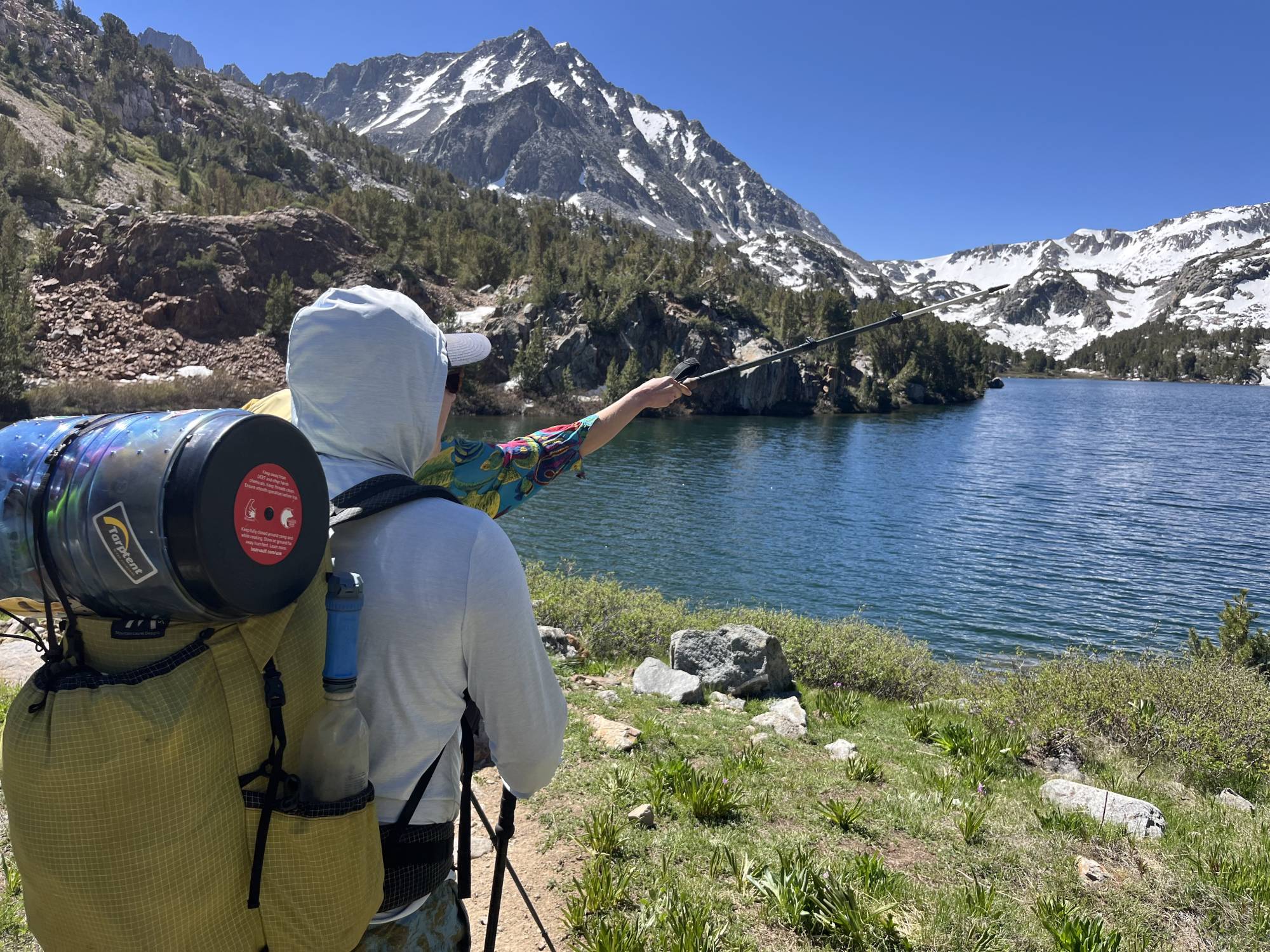
What Is Trail Magic? How a Small Act of Kindness on a Trail Can Make Someone’s Day
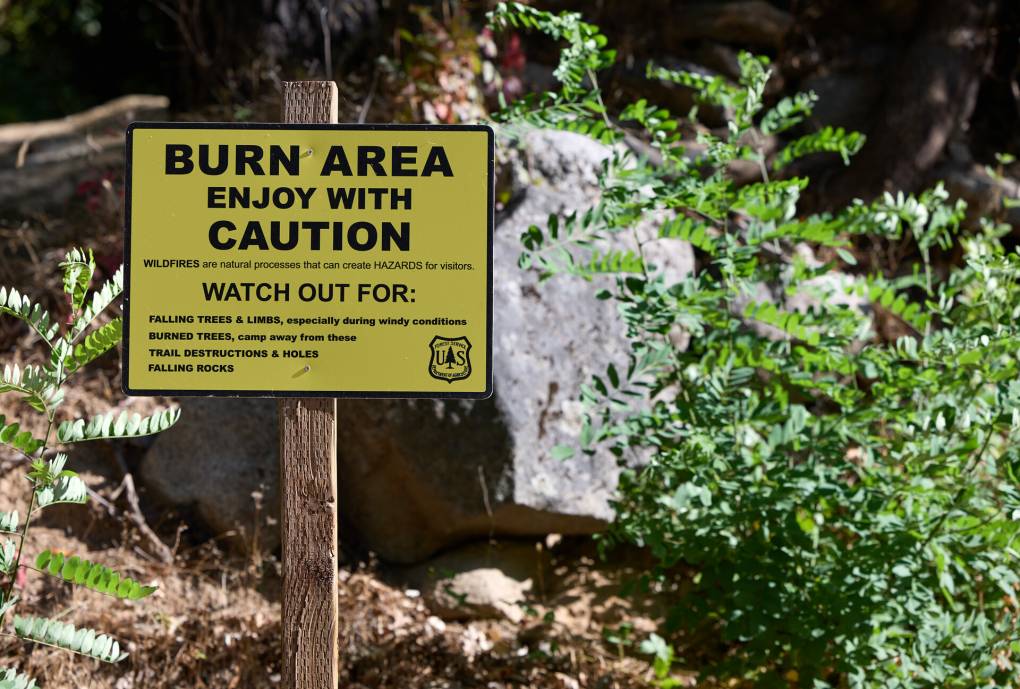
Two Years After the Dixie Fire, Towns That Relied on Pacific Crest Trail Hikers Are Still Struggling
Avalanches in June? Heavy Sierra Snowpack Still Poses a Risk for Some Hikers
Wet Winter Ups the Ante for Pacific Crest Trail Hikers
Sponsored
Player sponsored by
window.__IS_SSR__=true
window.__INITIAL_STATE__={
"attachmentsReducer": {
"audio_0": {
"type": "attachments",
"id": "audio_0",
"imgSizes": {
"kqedFullSize": {
"file": "https://ww2.kqed.org/news/wp-content/themes/KQED-unified/img/audio_bgs/background0.jpg"
}
}
},
"audio_1": {
"type": "attachments",
"id": "audio_1",
"imgSizes": {
"kqedFullSize": {
"file": "https://ww2.kqed.org/news/wp-content/themes/KQED-unified/img/audio_bgs/background1.jpg"
}
}
},
"audio_2": {
"type": "attachments",
"id": "audio_2",
"imgSizes": {
"kqedFullSize": {
"file": "https://ww2.kqed.org/news/wp-content/themes/KQED-unified/img/audio_bgs/background2.jpg"
}
}
},
"audio_3": {
"type": "attachments",
"id": "audio_3",
"imgSizes": {
"kqedFullSize": {
"file": "https://ww2.kqed.org/news/wp-content/themes/KQED-unified/img/audio_bgs/background3.jpg"
}
}
},
"audio_4": {
"type": "attachments",
"id": "audio_4",
"imgSizes": {
"kqedFullSize": {
"file": "https://ww2.kqed.org/news/wp-content/themes/KQED-unified/img/audio_bgs/background4.jpg"
}
}
},
"placeholder": {
"type": "attachments",
"id": "placeholder",
"imgSizes": {
"thumbnail": {
"file": "https://cdn.kqed.org/wp-content/uploads/2024/12/KQED-Default-Image-816638274-2000x1333-1-160x107.jpg",
"width": 160,
"height": 107,
"mimeType": "image/jpeg"
},
"medium": {
"file": "https://cdn.kqed.org/wp-content/uploads/2024/12/KQED-Default-Image-816638274-2000x1333-1-800x533.jpg",
"width": 800,
"height": 533,
"mimeType": "image/jpeg"
},
"medium_large": {
"file": "https://cdn.kqed.org/wp-content/uploads/2024/12/KQED-Default-Image-816638274-2000x1333-1-768x512.jpg",
"width": 768,
"height": 512,
"mimeType": "image/jpeg"
},
"large": {
"file": "https://cdn.kqed.org/wp-content/uploads/2024/12/KQED-Default-Image-816638274-2000x1333-1-1020x680.jpg",
"width": 1020,
"height": 680,
"mimeType": "image/jpeg"
},
"1536x1536": {
"file": "https://cdn.kqed.org/wp-content/uploads/2024/12/KQED-Default-Image-816638274-2000x1333-1-1536x1024.jpg",
"width": 1536,
"height": 1024,
"mimeType": "image/jpeg"
},
"fd-lrg": {
"file": "https://cdn.kqed.org/wp-content/uploads/2024/12/KQED-Default-Image-816638274-2000x1333-1-1536x1024.jpg",
"width": 1536,
"height": 1024,
"mimeType": "image/jpeg"
},
"fd-med": {
"file": "https://cdn.kqed.org/wp-content/uploads/2024/12/KQED-Default-Image-816638274-2000x1333-1-1020x680.jpg",
"width": 1020,
"height": 680,
"mimeType": "image/jpeg"
},
"fd-sm": {
"file": "https://cdn.kqed.org/wp-content/uploads/2024/12/KQED-Default-Image-816638274-2000x1333-1-800x533.jpg",
"width": 800,
"height": 533,
"mimeType": "image/jpeg"
},
"post-thumbnail": {
"file": "https://cdn.kqed.org/wp-content/uploads/2024/12/KQED-Default-Image-816638274-2000x1333-1-672x372.jpg",
"width": 672,
"height": 372,
"mimeType": "image/jpeg"
},
"twentyfourteen-full-width": {
"file": "https://cdn.kqed.org/wp-content/uploads/2024/12/KQED-Default-Image-816638274-2000x1333-1-1038x576.jpg",
"width": 1038,
"height": 576,
"mimeType": "image/jpeg"
},
"xxsmall": {
"file": "https://cdn.kqed.org/wp-content/uploads/2024/12/KQED-Default-Image-816638274-2000x1333-1-160x107.jpg",
"width": 160,
"height": 107,
"mimeType": "image/jpeg"
},
"xsmall": {
"file": "https://cdn.kqed.org/wp-content/uploads/2024/12/KQED-Default-Image-816638274-2000x1333-1-672x372.jpg",
"width": 672,
"height": 372,
"mimeType": "image/jpeg"
},
"small": {
"file": "https://cdn.kqed.org/wp-content/uploads/2024/12/KQED-Default-Image-816638274-2000x1333-1-672x372.jpg",
"width": 672,
"height": 372,
"mimeType": "image/jpeg"
},
"xlarge": {
"file": "https://cdn.kqed.org/wp-content/uploads/2024/12/KQED-Default-Image-816638274-2000x1333-1-1020x680.jpg",
"width": 1020,
"height": 680,
"mimeType": "image/jpeg"
},
"full-width": {
"file": "https://cdn.kqed.org/wp-content/uploads/2024/12/KQED-Default-Image-816638274-2000x1333-1-1920x1280.jpg",
"width": 1920,
"height": 1280,
"mimeType": "image/jpeg"
},
"guest-author-32": {
"file": "https://cdn.kqed.org/wp-content/uploads/2025/01/KQED-Default-Image-816638274-1333x1333-1-160x160.jpg",
"width": 32,
"height": 32,
"mimeType": "image/jpeg"
},
"guest-author-50": {
"file": "https://cdn.kqed.org/wp-content/uploads/2025/01/KQED-Default-Image-816638274-1333x1333-1-160x160.jpg",
"width": 50,
"height": 50,
"mimeType": "image/jpeg"
},
"guest-author-64": {
"file": "https://cdn.kqed.org/wp-content/uploads/2025/01/KQED-Default-Image-816638274-1333x1333-1-160x160.jpg",
"width": 64,
"height": 64,
"mimeType": "image/jpeg"
},
"guest-author-96": {
"file": "https://cdn.kqed.org/wp-content/uploads/2025/01/KQED-Default-Image-816638274-1333x1333-1-160x160.jpg",
"width": 96,
"height": 96,
"mimeType": "image/jpeg"
},
"guest-author-128": {
"file": "https://cdn.kqed.org/wp-content/uploads/2025/01/KQED-Default-Image-816638274-1333x1333-1-160x160.jpg",
"width": 128,
"height": 128,
"mimeType": "image/jpeg"
},
"detail": {
"file": "https://cdn.kqed.org/wp-content/uploads/2025/01/KQED-Default-Image-816638274-1333x1333-1-160x160.jpg",
"width": 160,
"height": 160,
"mimeType": "image/jpeg"
},
"kqedFullSize": {
"file": "https://cdn.kqed.org/wp-content/uploads/2024/12/KQED-Default-Image-816638274-2000x1333-1.jpg",
"width": 2000,
"height": 1333
}
}
},
"news_12047594": {
"type": "attachments",
"id": "news_12047594",
"meta": {
"index": "attachments_1716263798",
"site": "news",
"id": "12047594",
"found": true
},
"title": "IMG_1993",
"publishDate": 1752180888,
"status": "inherit",
"parent": 12047586,
"modified": 1752180932,
"caption": "Two hikers look out on a lake on the way up Bishop Pass in the Eastern Sierra on June 14, 2025.",
"credit": "Sarah Wright/KQED",
"altTag": null,
"description": null,
"imgSizes": {
"medium": {
"file": "https://cdn.kqed.org/wp-content/uploads/sites/10/2025/07/IMG_1993-2000x1500.jpg",
"width": 2000,
"height": 1500,
"mimeType": "image/jpeg"
},
"large": {
"file": "https://cdn.kqed.org/wp-content/uploads/sites/10/2025/07/IMG_1993-2000x1500.jpg",
"width": 2000,
"height": 1500,
"mimeType": "image/jpeg"
},
"thumbnail": {
"file": "https://cdn.kqed.org/wp-content/uploads/sites/10/2025/07/IMG_1993-160x120.jpg",
"width": 160,
"height": 120,
"mimeType": "image/jpeg"
},
"1536x1536": {
"file": "https://cdn.kqed.org/wp-content/uploads/sites/10/2025/07/IMG_1993-1536x1152.jpg",
"width": 1536,
"height": 1152,
"mimeType": "image/jpeg"
},
"2048x2048": {
"file": "https://cdn.kqed.org/wp-content/uploads/sites/10/2025/07/IMG_1993-2048x1536.jpg",
"width": 2048,
"height": 1536,
"mimeType": "image/jpeg"
},
"post-thumbnail": {
"file": "https://cdn.kqed.org/wp-content/uploads/sites/10/2025/07/IMG_1993-672x372.jpg",
"width": 672,
"height": 372,
"mimeType": "image/jpeg"
},
"twentyfourteen-full-width": {
"file": "https://cdn.kqed.org/wp-content/uploads/sites/10/2025/07/IMG_1993-1038x576.jpg",
"width": 1038,
"height": 576,
"mimeType": "image/jpeg"
},
"full-width": {
"file": "https://cdn.kqed.org/wp-content/uploads/sites/10/2025/07/IMG_1993-2000x1500.jpg",
"width": 2000,
"height": 1500,
"mimeType": "image/jpeg"
},
"kqedFullSize": {
"file": "https://cdn.kqed.org/wp-content/uploads/sites/10/2025/07/IMG_1993-scaled.jpg",
"width": 2560,
"height": 1920
}
},
"fetchFailed": false,
"isLoading": false
},
"news_11968247": {
"type": "attachments",
"id": "news_11968247",
"meta": {
"index": "attachments_1716263798",
"site": "news",
"id": "11968247",
"found": true
},
"parent": 11968242,
"imgSizes": {
"twentyfourteen-full-width": {
"file": "https://ww2.kqed.org/app/uploads/sites/10/2023/11/FG_Belden_PCT_2023_09_14_FG25721-qut-1038x576.jpg",
"width": 1038,
"mimeType": "image/jpeg",
"height": 576
},
"thumbnail": {
"file": "https://ww2.kqed.org/app/uploads/sites/10/2023/11/FG_Belden_PCT_2023_09_14_FG25721-qut-160x108.jpg",
"width": 160,
"mimeType": "image/jpeg",
"height": 108
},
"post-thumbnail": {
"file": "https://ww2.kqed.org/app/uploads/sites/10/2023/11/FG_Belden_PCT_2023_09_14_FG25721-qut-672x372.jpg",
"width": 672,
"mimeType": "image/jpeg",
"height": 372
},
"kqedFullSize": {
"file": "https://ww2.kqed.org/app/uploads/sites/10/2023/11/FG_Belden_PCT_2023_09_14_FG25721-qut.jpg",
"width": 1920,
"height": 1297
},
"large": {
"file": "https://ww2.kqed.org/app/uploads/sites/10/2023/11/FG_Belden_PCT_2023_09_14_FG25721-qut-1020x689.jpg",
"width": 1020,
"mimeType": "image/jpeg",
"height": 689
},
"1536x1536": {
"file": "https://ww2.kqed.org/app/uploads/sites/10/2023/11/FG_Belden_PCT_2023_09_14_FG25721-qut-1536x1038.jpg",
"width": 1536,
"mimeType": "image/jpeg",
"height": 1038
},
"medium": {
"file": "https://ww2.kqed.org/app/uploads/sites/10/2023/11/FG_Belden_PCT_2023_09_14_FG25721-qut-800x540.jpg",
"width": 800,
"mimeType": "image/jpeg",
"height": 540
}
},
"publishDate": 1700689451,
"modified": 1701283193,
"caption": "A sign still warns hikers about the dangers of the Pacific Crest Trail, which was damaged by the Dixie Fire in 2021. ",
"description": null,
"title": "FG_Belden_PCT_2023_09_14_FG25721-qut",
"credit": "Fred Greaves for KQED",
"status": "inherit",
"altTag": "A sign among trees says \"burn area, enjoy with caution.\"",
"fetchFailed": false,
"isLoading": false
},
"news_11757876": {
"type": "attachments",
"id": "news_11757876",
"meta": {
"index": "attachments_1716263798",
"site": "news",
"id": "11757876",
"found": true
},
"parent": 11757157,
"imgSizes": {
"apple_news_ca_landscape_5_5": {
"file": "https://ww2.kqed.org/app/uploads/sites/10/2019/06/06272019_pointless-peak-rock-creek-canyon-qut-1044x783.jpg",
"width": 1044,
"mimeType": "image/jpeg",
"height": 783
},
"apple_news_ca_square_4_0": {
"file": "https://ww2.kqed.org/app/uploads/sites/10/2019/06/06272019_pointless-peak-rock-creek-canyon-qut-470x470.jpg",
"width": 470,
"mimeType": "image/jpeg",
"height": 470
},
"twentyfourteen-full-width": {
"file": "https://ww2.kqed.org/app/uploads/sites/10/2019/06/06272019_pointless-peak-rock-creek-canyon-qut-1038x576.jpg",
"width": 1038,
"mimeType": "image/jpeg",
"height": 576
},
"thumbnail": {
"file": "https://ww2.kqed.org/app/uploads/sites/10/2019/06/06272019_pointless-peak-rock-creek-canyon-qut-160x114.jpg",
"width": 160,
"mimeType": "image/jpeg",
"height": 114
},
"post-thumbnail": {
"file": "https://ww2.kqed.org/app/uploads/sites/10/2019/06/06272019_pointless-peak-rock-creek-canyon-qut-672x372.jpg",
"width": 672,
"mimeType": "image/jpeg",
"height": 372
},
"kqedFullSize": {
"file": "https://ww2.kqed.org/app/uploads/sites/10/2019/06/06272019_pointless-peak-rock-creek-canyon-qut.jpg",
"width": 1280,
"height": 914
},
"apple_news_ca_landscape_4_7": {
"file": "https://ww2.kqed.org/app/uploads/sites/10/2019/06/06272019_pointless-peak-rock-creek-canyon-qut-632x474.jpg",
"width": 632,
"mimeType": "image/jpeg",
"height": 474
},
"large": {
"file": "https://ww2.kqed.org/app/uploads/sites/10/2019/06/06272019_pointless-peak-rock-creek-canyon-qut-1020x728.jpg",
"width": 1020,
"mimeType": "image/jpeg",
"height": 728
},
"complete_open_graph": {
"file": "https://ww2.kqed.org/app/uploads/sites/10/2019/06/06272019_pointless-peak-rock-creek-canyon-qut-1200x857.jpg",
"width": 1200,
"mimeType": "image/jpeg",
"height": 857
},
"apple_news_ca_landscape_4_0": {
"file": "https://ww2.kqed.org/app/uploads/sites/10/2019/06/06272019_pointless-peak-rock-creek-canyon-qut-536x402.jpg",
"width": 536,
"mimeType": "image/jpeg",
"height": 402
},
"apple_news_ca_portrait_12_9": {
"file": "https://ww2.kqed.org/app/uploads/sites/10/2019/06/06272019_pointless-peak-rock-creek-canyon-qut-1122x914.jpg",
"width": 1122,
"mimeType": "image/jpeg",
"height": 914
},
"medium": {
"file": "https://ww2.kqed.org/app/uploads/sites/10/2019/06/06272019_pointless-peak-rock-creek-canyon-qut-800x571.jpg",
"width": 800,
"mimeType": "image/jpeg",
"height": 571
},
"apple_news_ca_portrait_4_0": {
"file": "https://ww2.kqed.org/app/uploads/sites/10/2019/06/06272019_pointless-peak-rock-creek-canyon-qut-354x472.jpg",
"width": 354,
"mimeType": "image/jpeg",
"height": 472
},
"apple_news_ca_portrait_9_7": {
"file": "https://ww2.kqed.org/app/uploads/sites/10/2019/06/06272019_pointless-peak-rock-creek-canyon-qut-840x914.jpg",
"width": 840,
"mimeType": "image/jpeg",
"height": 914
},
"apple_news_ca_square_9_7": {
"file": "https://ww2.kqed.org/app/uploads/sites/10/2019/06/06272019_pointless-peak-rock-creek-canyon-qut-1104x914.jpg",
"width": 1104,
"mimeType": "image/jpeg",
"height": 914
},
"apple_news_ca_portrait_4_7": {
"file": "https://ww2.kqed.org/app/uploads/sites/10/2019/06/06272019_pointless-peak-rock-creek-canyon-qut-414x552.jpg",
"width": 414,
"mimeType": "image/jpeg",
"height": 552
},
"apple_news_ca_portrait_5_5": {
"file": "https://ww2.kqed.org/app/uploads/sites/10/2019/06/06272019_pointless-peak-rock-creek-canyon-qut-687x914.jpg",
"width": 687,
"mimeType": "image/jpeg",
"height": 914
},
"apple_news_ca_square_4_7": {
"file": "https://ww2.kqed.org/app/uploads/sites/10/2019/06/06272019_pointless-peak-rock-creek-canyon-qut-550x550.jpg",
"width": 550,
"mimeType": "image/jpeg",
"height": 550
},
"apple_news_ca_square_5_5": {
"file": "https://ww2.kqed.org/app/uploads/sites/10/2019/06/06272019_pointless-peak-rock-creek-canyon-qut-912x912.jpg",
"width": 912,
"mimeType": "image/jpeg",
"height": 912
}
},
"publishDate": 1561702975,
"modified": 1561750560,
"caption": "Wet slab fractures on Pointless Peak, Rock Creek Canyon. The jagged lines are crown fractures probably up to two feet high where the wet heavy snow below has separated and funneled down the gullies below. Note also the lip of snow (a cornice) with small “wet loose” avalanches originating from it. This cornice will fall off at some point in the near future. Photo from June 4, 2019.",
"description": "SP Parker: Wet slab fractures on Pointless Peak, Rock Creek Canyon. The jagged lines are crown fractures probably up to two feet high where the wet heavy snow below has separated and funneled down the gullies below. Note also the lip of snow (a cornice) with small “wet loose” avalanches originating from it. This cornice will fall off at some point in the near future. June 4, 2019.",
"title": "06272019_pointless-peak-rock-creek-canyon-qut",
"credit": "Courtesy of SP Parker",
"status": "inherit",
"fetchFailed": false,
"isLoading": false
},
"news_11533892": {
"type": "attachments",
"id": "news_11533892",
"meta": {
"index": "attachments_1716263798",
"site": "news",
"id": "11533892",
"found": true
},
"parent": 11533804,
"imgSizes": {
"small": {
"file": "https://ww2.kqed.org/app/uploads/sites/10/2017/06/CrossingSnowField-520x343.jpg",
"width": 520,
"mimeType": "image/jpeg",
"height": 343
},
"twentyfourteen-full-width": {
"file": "https://ww2.kqed.org/app/uploads/sites/10/2017/06/CrossingSnowField-1038x576.jpg",
"width": 1038,
"mimeType": "image/jpeg",
"height": 576
},
"thumbnail": {
"file": "https://ww2.kqed.org/app/uploads/sites/10/2017/06/CrossingSnowField-160x105.jpg",
"width": 160,
"mimeType": "image/jpeg",
"height": 105
},
"fd-sm": {
"file": "https://ww2.kqed.org/app/uploads/sites/10/2017/06/CrossingSnowField-960x633.jpg",
"width": 960,
"mimeType": "image/jpeg",
"height": 633
},
"post-thumbnail": {
"file": "https://ww2.kqed.org/app/uploads/sites/10/2017/06/CrossingSnowField-672x372.jpg",
"width": 672,
"mimeType": "image/jpeg",
"height": 372
},
"xsmall": {
"file": "https://ww2.kqed.org/app/uploads/sites/10/2017/06/CrossingSnowField-375x247.jpg",
"width": 375,
"mimeType": "image/jpeg",
"height": 247
},
"kqedFullSize": {
"file": "https://ww2.kqed.org/app/uploads/sites/10/2017/06/CrossingSnowField.jpg",
"width": 1920,
"height": 1265
},
"large": {
"file": "https://ww2.kqed.org/app/uploads/sites/10/2017/06/CrossingSnowField-1020x672.jpg",
"width": 1020,
"mimeType": "image/jpeg",
"height": 672
},
"xlarge": {
"file": "https://ww2.kqed.org/app/uploads/sites/10/2017/06/CrossingSnowField-1180x777.jpg",
"width": 1180,
"mimeType": "image/jpeg",
"height": 777
},
"guest-author-50": {
"file": "https://ww2.kqed.org/app/uploads/sites/10/2017/06/CrossingSnowField-50x50.jpg",
"width": 50,
"mimeType": "image/jpeg",
"height": 50
},
"guest-author-96": {
"file": "https://ww2.kqed.org/app/uploads/sites/10/2017/06/CrossingSnowField-96x96.jpg",
"width": 96,
"mimeType": "image/jpeg",
"height": 96
},
"medium": {
"file": "https://ww2.kqed.org/app/uploads/sites/10/2017/06/CrossingSnowField-800x527.jpg",
"width": 800,
"mimeType": "image/jpeg",
"height": 527
},
"guest-author-64": {
"file": "https://ww2.kqed.org/app/uploads/sites/10/2017/06/CrossingSnowField-64x64.jpg",
"width": 64,
"mimeType": "image/jpeg",
"height": 64
},
"guest-author-32": {
"file": "https://ww2.kqed.org/app/uploads/sites/10/2017/06/CrossingSnowField-32x32.jpg",
"width": 32,
"mimeType": "image/jpeg",
"height": 32
},
"fd-lrg": {
"file": "https://ww2.kqed.org/app/uploads/sites/10/2017/06/CrossingSnowField-1920x1265.jpg",
"width": 1920,
"mimeType": "image/jpeg",
"height": 1265
},
"fd-med": {
"file": "https://ww2.kqed.org/app/uploads/sites/10/2017/06/CrossingSnowField-1180x777.jpg",
"width": 1180,
"mimeType": "image/jpeg",
"height": 777
},
"full-width": {
"file": "https://ww2.kqed.org/app/uploads/sites/10/2017/06/CrossingSnowField-1920x1265.jpg",
"width": 1920,
"mimeType": "image/jpeg",
"height": 1265
},
"detail": {
"file": "https://ww2.kqed.org/app/uploads/sites/10/2017/06/CrossingSnowField-150x150.jpg",
"width": 150,
"mimeType": "image/jpeg",
"height": 150
},
"guest-author-128": {
"file": "https://ww2.kqed.org/app/uploads/sites/10/2017/06/CrossingSnowField-128x128.jpg",
"width": 128,
"mimeType": "image/jpeg",
"height": 128
},
"xxsmall": {
"file": "https://ww2.kqed.org/app/uploads/sites/10/2017/06/CrossingSnowField-240x158.jpg",
"width": 240,
"mimeType": "image/jpeg",
"height": 158
}
},
"publishDate": 1498518178,
"modified": 1498518224,
"caption": "Hikers cross a snow field below Forester Pass on the Pacific Crest Trail.",
"description": "Hikers cross a snow field below Forester Pass on the Pacific Crest Trail.",
"title": "CrossingSnowField",
"credit": "Junaid Dawud/Flickr",
"status": "inherit",
"fetchFailed": false,
"isLoading": false
}
},
"audioPlayerReducer": {
"postId": "stream_live",
"isPaused": true,
"isPlaying": false,
"pfsActive": false,
"pledgeModalIsOpen": true,
"playerDrawerIsOpen": false
},
"authorsReducer": {
"byline_news_11757157": {
"type": "authors",
"id": "byline_news_11757157",
"meta": {
"override": true
},
"slug": "byline_news_11757157",
"name": "\u003cstrong>Bree Zender and Miranda Leitsinger\u003c/strong>",
"isLoading": false
},
"byline_news_11533804": {
"type": "authors",
"id": "byline_news_11533804",
"meta": {
"override": true
},
"slug": "byline_news_11533804",
"name": "Brian Melley \u003cbr> Associated Press",
"isLoading": false
},
"dcronin": {
"type": "authors",
"id": "11362",
"meta": {
"index": "authors_1716337520",
"id": "11362",
"found": true
},
"name": "Dana Cronin",
"firstName": "Dana",
"lastName": "Cronin",
"slug": "dcronin",
"email": "dcronin@KQED.org",
"display_author_email": true,
"staff_mastheads": [],
"title": "KQED Contributor",
"bio": "Dana Cronin is a reporter for KQED News. She loves writing stories about climate change, environmental issues, food and agriculture. She's reported across the country, from Colorado to Washington D.C. to Illinois, and has won numerous awards for her coverage. Her work is regularly featured on national broadcasts, including NPR’s Morning Edition, All Things Considered, PBS Newshour and Science Friday. She lives in Oakland and has an avocado tree in her back yard.",
"avatar": "https://secure.gravatar.com/avatar/bcf89e3455ff7235f96ab6fa7258dd95?s=600&d=blank&r=g",
"twitter": "DanaHCronin",
"facebook": null,
"instagram": null,
"linkedin": null,
"sites": [
{
"site": "arts",
"roles": [
"author"
]
},
{
"site": "news",
"roles": [
"editor"
]
},
{
"site": "science",
"roles": [
"author"
]
},
{
"site": "liveblog",
"roles": [
"author"
]
}
],
"headData": {
"title": "Dana Cronin | KQED",
"description": "KQED Contributor",
"ogImgSrc": "https://secure.gravatar.com/avatar/bcf89e3455ff7235f96ab6fa7258dd95?s=600&d=blank&r=g",
"twImgSrc": "https://secure.gravatar.com/avatar/bcf89e3455ff7235f96ab6fa7258dd95?s=600&d=blank&r=g"
},
"isLoading": false,
"link": "/author/dcronin"
},
"sarahwright": {
"type": "authors",
"id": "11956",
"meta": {
"index": "authors_1716337520",
"id": "11956",
"found": true
},
"name": "Sarah Wright",
"firstName": "Sarah",
"lastName": "Wright",
"slug": "sarahwright",
"email": "swright@kqed.org",
"display_author_email": true,
"staff_mastheads": [],
"title": "Outdoors Engagement Reporter",
"bio": "Sarah Wright is KQED's Outdoors Engagement Reporter. Originally from Lake Tahoe, she completed a thru-hike of the Pacific Crest Trail in 2019 and was a U.S. Fulbright Program grantee to Argentina in 2023. Her journalism has appeared in The Guardian, The San Francisco Standard, The Palo Alto Weekly and the Half Moon Bay Review.",
"avatar": "https://secure.gravatar.com/avatar/585b7a53f459b86d1d3ca1561541ab4b?s=600&d=blank&r=g",
"twitter": null,
"facebook": null,
"instagram": null,
"linkedin": null,
"sites": [
{
"site": "arts",
"roles": [
"editor"
]
},
{
"site": "news",
"roles": [
"editor"
]
},
{
"site": "science",
"roles": [
"contributor",
"author"
]
},
{
"site": "forum",
"roles": [
"editor"
]
}
],
"headData": {
"title": "Sarah Wright | KQED",
"description": "Outdoors Engagement Reporter",
"ogImgSrc": "https://secure.gravatar.com/avatar/585b7a53f459b86d1d3ca1561541ab4b?s=600&d=blank&r=g",
"twImgSrc": "https://secure.gravatar.com/avatar/585b7a53f459b86d1d3ca1561541ab4b?s=600&d=blank&r=g"
},
"isLoading": false,
"link": "/author/sarahwright"
}
},
"breakingNewsReducer": {},
"pagesReducer": {},
"postsReducer": {
"stream_live": {
"type": "live",
"id": "stream_live",
"audioUrl": "https://streams.kqed.org/kqedradio",
"title": "Live Stream",
"excerpt": "Live Stream information currently unavailable.",
"link": "/radio",
"featImg": "",
"label": {
"name": "KQED Live",
"link": "/"
}
},
"stream_kqedNewscast": {
"type": "posts",
"id": "stream_kqedNewscast",
"audioUrl": "https://www.kqed.org/.stream/anon/radio/RDnews/newscast.mp3?_=1",
"title": "KQED Newscast",
"featImg": "",
"label": {
"name": "88.5 FM",
"link": "/"
}
},
"news_12047586": {
"type": "posts",
"id": "news_12047586",
"meta": {
"index": "posts_1716263798",
"site": "news",
"id": "12047586",
"score": null,
"sort": [
1752231623000
]
},
"guestAuthors": [],
"slug": "what-is-trail-magic-how-a-small-act-of-kindness-on-a-trail-can-make-someones-day",
"title": "What Is Trail Magic? How a Small Act of Kindness on a Trail Can Make Someone’s Day",
"publishDate": 1752231623,
"format": "standard",
"headTitle": "What Is Trail Magic? How a Small Act of Kindness on a Trail Can Make Someone’s Day | KQED",
"labelTerm": {
"site": "news"
},
"content": "\u003cp>Natalie “Swell” Dillon, an avid backpacker who lives in Bishop in California’s Eastern Sierra, completed the 2,650-mile Pacific Crest Trail in 2022.\u003c/p>\n\u003cp>And every year since, the occupational therapist — who’s also a member of her local search and rescue team — has spent a full weekend back out on the PCT to support those making the same journey she did.\u003c/p>\n\u003cp>These acts of kindness — offering tired, hungry thru-hikers everything from food and snacks to rides to the nearest town — are colloquially known as “trail magic.” And this year, Dillon decided to “go big” and invite other thru-hikers who’ve previously conquered the PCT to join her in her most ambitious trail magic plan yet: hiking 12 miles up and over nearly 12,000-foot Bishop Pass with as much fresh food as they could carry.\u003c/p>\n\u003cp>[ad fullwidth]\u003c/p>\n\u003cp>Dillon hiked the trail the same year as my partner, and \u003ca href=\"https://www.kqed.org/news/12040242/start-backpacking-trails-bay-area-near-me-permits\">as someone who completed the PCT myself\u003c/a> back in 2019, I found myself on Dillon’s invite list and joining her on her mission.\u003c/p>\n\u003cp>So if you’re new to the concept of trail magic or have always wondered how to get involved, keep reading for what you need to know.\u003c/p>\n\u003cp>\u003cstrong>Jump straight to:\u003c/strong>\u003c/p>\n\u003cul>\n\u003cli>\u003ca href=\"#A\">What is trail magic?\u003c/a>\u003c/li>\n\u003cli>\u003ca href=\"#B\">What are some easy ways to get involved?\u003c/a>\u003c/li>\n\u003c/ul>\n\u003ch2>\u003cstrong>\u003ca id=\"A\">\u003c/a>What is trail magic?\u003c/strong>\u003c/h2>\n\u003cp>At its most basic level, trail magic is “\u003ca href=\"https://www.pcta.org/discover-the-trail/thru-hiking-long-distance-hiking/trail-magic-and-trail-angels/\">an act of goodwill or a remarkable moment\u003c/a>,” according to the Pacific Crest Trail Association — anchored in the sentiment that “\u003ca href=\"https://www.pcta.org/discover-the-trail/thru-hiking-long-distance-hiking/trail-magic-and-trail-angels/\">the trail provides\u003c/a>.”\u003c/p>\n\u003cp>Some trail magic is serendipitous. On my own PCT hike, for example, it came in the form of a particularly juicy peach handed to me as I took my first steps into Oregon, followed by a ride from a stranger who saw three hitchhikers and stopped — even though she’d never heard of the trail before. As for the “remarkable moment” aspect, spotting nearly 100 dogs on a particularly popular stretch of trail near Tahoe added immense joy to my day.\u003c/p>\n\u003cfigure id=\"attachment_12047596\" class=\"wp-caption aligncenter\" style=\"max-width: 2560px\">\u003cimg loading=\"lazy\" decoding=\"async\" class=\"size-full wp-image-12047596\" src=\"https://cdn.kqed.org/wp-content/uploads/sites/10/2025/07/PXL_20250613_202831210_Original-scaled.jpg\" alt=\"\" width=\"2560\" height=\"1922\" srcset=\"https://cdn.kqed.org/wp-content/uploads/sites/10/2025/07/PXL_20250613_202831210_Original-scaled.jpg 2560w, https://cdn.kqed.org/wp-content/uploads/sites/10/2025/07/PXL_20250613_202831210_Original-2000x1502.jpg 2000w, https://cdn.kqed.org/wp-content/uploads/sites/10/2025/07/PXL_20250613_202831210_Original-160x120.jpg 160w, https://cdn.kqed.org/wp-content/uploads/sites/10/2025/07/PXL_20250613_202831210_Original-1536x1153.jpg 1536w, https://cdn.kqed.org/wp-content/uploads/sites/10/2025/07/PXL_20250613_202831210_Original-2048x1538.jpg 2048w\" sizes=\"auto, (max-width: 2560px) 100vw, 2560px\">\u003cfigcaption class=\"wp-caption-text\">Trail angels trek food and supplies over Bishop Pass to do trail magic in the Eastern Sierra on June 14, 2025. \u003ccite>(Courtesy of Natalie Dillon)\u003c/cite>\u003c/figcaption>\u003c/figure>\n\u003cp>I was also the grateful recipient of several coordinated pieces of trail magic from established “trail angels” who are known in their communities to offer help to hikers, including hot coffee and breakfast in a remote lakes area of Oregon, cold Gatorades after a particularly difficult day of hiking and much-needed rides to and from trailheads.\u003c/p>\n\u003cp>Taking on a long trek like the Pacific Crest Trail is no easy journey. The demands of hiking 20–30 miles per day for 12-plus hours often prompt many backpackers to bring only the most calorie-efficient foods in an attempt to save weight.\u003c/p>\n\u003cp>[aside postID=news_12047124 hero='https://cdn.kqed.org/wp-content/uploads/sites/10/2025/07/Sonora-Pass-3-1-2000x1276.jpg']\u003c/p>\n\u003cp>The PCT can also be mentally challenging. During my hike, in certain sections of the trail, I found myself without new company for days on end.\u003c/p>\n\u003cp>All of this can make coming across fresh food and a group of new people incredibly refreshing. And in a section like the Sierra Nevada mountain range, where hikers travel through 300 miles of unbroken wilderness and very little in the form of access to luxuries, it can be positively transformative — not to mention surprising, as the only ways in and out are extremely rugged.\u003c/p>\n\u003cp>Dillon said she was inspired to start doing both organized and spontaneous trail magic after her own experiences receiving “countless encounters of trail magic” on her PCT hike — including one standout moment when she stumbled upon a trail angel offering water and a “huge buffet of breakfast and lunch foods” in a hot section of Southern California. “We feasted for hours.”\u003c/p>\n\u003cfigure id=\"attachment_12047598\" class=\"wp-caption alignleft\" style=\"max-width: 2000px\">\u003cimg loading=\"lazy\" decoding=\"async\" class=\"size-medium wp-image-12047598\" src=\"https://cdn.kqed.org/wp-content/uploads/sites/10/2025/07/PXL_20250614_200808698_Original-2000x2664.jpg\" alt=\"\" width=\"2000\" height=\"2664\" srcset=\"https://cdn.kqed.org/wp-content/uploads/sites/10/2025/07/PXL_20250614_200808698_Original-2000x2664.jpg 2000w, https://cdn.kqed.org/wp-content/uploads/sites/10/2025/07/PXL_20250614_200808698_Original-160x213.jpg 160w, https://cdn.kqed.org/wp-content/uploads/sites/10/2025/07/PXL_20250614_200808698_Original-1153x1536.jpg 1153w, https://cdn.kqed.org/wp-content/uploads/sites/10/2025/07/PXL_20250614_200808698_Original-1538x2048.jpg 1538w, https://cdn.kqed.org/wp-content/uploads/sites/10/2025/07/PXL_20250614_200808698_Original-scaled.jpg 1922w\" sizes=\"auto, (max-width: 2000px) 100vw, 2000px\">\u003cfigcaption class=\"wp-caption-text\">A group of thru-hikers and trail angels gather and share food and company in LeConte Canyon in the Sierra on June 14, 2025. \u003ccite>(Courtesy of Natalie Dillon)\u003c/cite>\u003c/figcaption>\u003c/figure>\n\u003cp>“All of those acts of generosity from other people really fueled me forward in ways that were essential to finishing a thru-hike,” she said.\u003c/p>\n\u003ch2>\u003cstrong>Surprise in the High Sierra\u003c/strong>\u003c/h2>\n\u003cp>To make this year extra special, Dillon asked everyone she knew who had hiked the trail in previous years and lived within a day’s drive of Bishop to meet her one weekend in early June, loading pounds of fresh fruit, vegetables and other surprises into our packs \u003ca href=\"https://www.google.com/search?q=bishop+pass+alltrails+south+lake+to+leconte&sca_esv=4bb3ee777edb1788&rlz=1C1GCMA_en___US1162&ei=juNuaJeSA-WikPIP9qe3yQs&ved=0ahUKEwiXkdm94LCOAxVlEUQIHfbTLbkQ4dUDCBA&uact=5&oq=bishop+pass+alltrails+south+lake+to+leconte&gs_lp=Egxnd3Mtd2l6LXNlcnAiK2Jpc2hvcCBwYXNzIGFsbHRyYWlscyBzb3V0aCBsYWtlIHRvIGxlY29udGUyBRAhGKABMgUQIRigATIFECEYoAEyBRAhGKABMgUQIRigATIFECEYqwIyBRAhGKsCSLUfULYBWMYecAF4AZABAJgBjgGgAdcUqgEEMC4yMbgBA8gBAPgBAZgCFqACvRXCAgoQABiwAxjWBBhHwgIGEAAYFhgewgILEAAYgAQYhgMYigXCAgUQABjvBcICCBAAGKIEGIkFwgIIEAAYgAQYogSYAwCIBgGQBgiSBwQxLjIxoAe_jAGyBwQwLjIxuAezFcIHBzAuMTAuMTLIB0U&sclient=gws-wiz-serp&safe=active&ssui=on\">to hike 12 miles up and over the nearly 12,000-foot Bishop Pass\u003c/a> and spend a full day cooking and socializing with hikers in the High Sierra.\u003c/p>\n\u003cp>“Even for us in our three-day weekend together, we created a little ‘\u003ca href=\"https://www.backpacker.com/skills/beginner-skills/pre-trip-planning/why-hikers-create-trail-families\">tramily\u003c/a>,’” she said. “And instead of being driven by trying to get to Canada, we were all driven by this idea of trying to provide a superb trail magic experience for this year’s hikers.”\u003c/p>\n\u003cp>These hikers included Simon from Belgium, who goes by “Presoak” (many long-distance hikers are given or choose their own “trail names”). “Trail magic in the middle of freaking nowhere!” he exclaimed upon seeing our group, shocked to come across us so deep in the wilderness.\u003c/p>\n\u003cp>Simon had been traveling for the past four years and became inspired to visit the U.S. for a long-distance trail this year by a podcast about the Appalachian Trail on the East Coast.\u003c/p>\n\u003cp>“It’s amazing,” he said of his PCT hike so far. “Every day is getting more beautiful than the last.”\u003c/p>\n\u003cfigure id=\"attachment_12047601\" class=\"wp-caption aligncenter\" style=\"max-width: 2560px\">\u003cimg loading=\"lazy\" decoding=\"async\" class=\"size-full wp-image-12047601\" src=\"https://cdn.kqed.org/wp-content/uploads/sites/10/2025/07/IMG_2069-scaled.jpg\" alt=\"\" width=\"2560\" height=\"1920\" srcset=\"https://cdn.kqed.org/wp-content/uploads/sites/10/2025/07/IMG_2069-scaled.jpg 2560w, https://cdn.kqed.org/wp-content/uploads/sites/10/2025/07/IMG_2069-2000x1500.jpg 2000w, https://cdn.kqed.org/wp-content/uploads/sites/10/2025/07/IMG_2069-160x120.jpg 160w, https://cdn.kqed.org/wp-content/uploads/sites/10/2025/07/IMG_2069-1536x1152.jpg 1536w, https://cdn.kqed.org/wp-content/uploads/sites/10/2025/07/IMG_2069-2048x1536.jpg 2048w\" sizes=\"auto, (max-width: 2560px) 100vw, 2560px\">\u003cfigcaption class=\"wp-caption-text\">A group of thru-hikers and trail angels gather and share food in LeConte Canyon in the Sierra on June 14, 2025. \u003ccite>(Sarah Wright/KQED)\u003c/cite>\u003c/figcaption>\u003c/figure>\n\u003cp>Simon’s reaction, Dillon said, is exactly why she chose Bishop Pass for her group weekend of trail magic — aside from its proximity to her home and the challenge it offered her fellow angels, she wanted to bring an element of surprise to the several dozen hikers we met that weekend.\u003c/p>\n\u003cp>“Something that was cool about this weekend was creating a vortex of hikers that stopped, took off their packs [and] lounged for not 30 minutes, not an hour, but like two or three hours,” Dillon said, noting that some hikers were just as excited to run into one another as they were for the trail magic itself. “It’s just a facilitator of joy, really. You see joy in the surprise of it — the theme of community.”\u003c/p>\n\u003cfigure id=\"attachment_12047603\" class=\"wp-caption aligncenter\" style=\"max-width: 2560px\">\u003cimg loading=\"lazy\" decoding=\"async\" class=\"size-full wp-image-12047603\" src=\"https://cdn.kqed.org/wp-content/uploads/sites/10/2025/07/IMG_5121_Original-scaled.jpg\" alt=\"\" width=\"2560\" height=\"1920\" srcset=\"https://cdn.kqed.org/wp-content/uploads/sites/10/2025/07/IMG_5121_Original-scaled.jpg 2560w, https://cdn.kqed.org/wp-content/uploads/sites/10/2025/07/IMG_5121_Original-2000x1500.jpg 2000w, https://cdn.kqed.org/wp-content/uploads/sites/10/2025/07/IMG_5121_Original-160x120.jpg 160w, https://cdn.kqed.org/wp-content/uploads/sites/10/2025/07/IMG_5121_Original-1536x1152.jpg 1536w, https://cdn.kqed.org/wp-content/uploads/sites/10/2025/07/IMG_5121_Original-2048x1536.jpg 2048w\" sizes=\"auto, (max-width: 2560px) 100vw, 2560px\">\u003cfigcaption class=\"wp-caption-text\">Two trail angels prepare pancakes in the remote LeConte Canyon along the Pacific Crest Trail on June 14, 2025. \u003ccite>(Courtesy of Jake Blakely)\u003c/cite>\u003c/figcaption>\u003c/figure>\n\u003ch2>\u003cstrong>Guardian angels on the trail\u003c/strong>\u003c/h2>\n\u003cp>As well as offering food and a morale boost in the wilderness, trail angels can offer a hand when it comes to a thru-hiker’s logistics — and their safety.[aside postID=news_12040242 hero='https://cdn.kqed.org/wp-content/uploads/sites/10/2025/05/HENRY-COE-6-KQED-1020x765.jpg']Mark Trent, who lives in McCloud near the PCT in the Mt. Shasta area, \u003ca href=\"https://www.facebook.com/groups/485493951880710/\">manages a Facebook group\u003c/a> dedicated to organizing rides and places to stay for hikers in Northern California.\u003c/p>\n\u003cp>Trent said he started bringing sodas and other goodies to hikers when he first moved to the area around a decade ago. Now, he’s become an instrumental force in the support system for hikers passing through the area, especially during wildfire season.\u003c/p>\n\u003cp>For the past several years, fires have closed trailheads in the Mt. Shasta region, a key resupply stop for PCT hikers. And when that happens, “angels have to turn into getting people off the trail and down to safety,” Trent said. He’s also performed trail maintenance, provided fresh food and a place to stay and even gone out to help hikers stuck alone navigating dangerous snowfields.\u003c/p>\n\u003cp>“I do a little bit of everything,” he said. “We’re so remote up here that there’s not a lot of services. And public transportation is lacking, to say the least.”\u003c/p>\n\u003cfigure id=\"attachment_12047604\" class=\"wp-caption aligncenter\" style=\"max-width: 2560px\">\u003cimg loading=\"lazy\" decoding=\"async\" class=\"size-full wp-image-12047604\" src=\"https://cdn.kqed.org/wp-content/uploads/sites/10/2025/07/IMG_1543_Original-scaled.jpg\" alt=\"\" width=\"2560\" height=\"1920\" srcset=\"https://cdn.kqed.org/wp-content/uploads/sites/10/2025/07/IMG_1543_Original-scaled.jpg 2560w, https://cdn.kqed.org/wp-content/uploads/sites/10/2025/07/IMG_1543_Original-2000x1500.jpg 2000w, https://cdn.kqed.org/wp-content/uploads/sites/10/2025/07/IMG_1543_Original-160x120.jpg 160w, https://cdn.kqed.org/wp-content/uploads/sites/10/2025/07/IMG_1543_Original-1536x1152.jpg 1536w, https://cdn.kqed.org/wp-content/uploads/sites/10/2025/07/IMG_1543_Original-2048x1536.jpg 2048w\" sizes=\"auto, (max-width: 2560px) 100vw, 2560px\">\u003cfigcaption class=\"wp-caption-text\">A group of former thru-hikers organized ‘trail magic’ in the Eastern Sierra, cooking pancakes and falafel for Pacific Crest Trail hikers on June 14, 2025. \u003ccite>(Courtesy of Jake Blakely)\u003c/cite>\u003c/figcaption>\u003c/figure>\n\u003ch2>\u003cstrong>\u003ca id=\"A\">\u003c/a>How to get involved with trail magic yourself\u003c/strong>\u003c/h2>\n\u003cp>If you don’t have enough time to do a whole weekend trip and you don’t live by a long trail, don’t count yourself out of becoming a trail angel.\u003c/p>\n\u003cp>If you find yourself in a town — or even out hiking near a long trail like the PCT — consider keeping your eyes peeled for backpackers who may appreciate some fresh food. You could, for example, consider packing a few extra snacks in your pack.\u003c/p>\n\u003cp>If you feel comfortable doing so, you could also consider offering rides. Because Dillon lives in Bishop, where hundreds of thru-hikers pass through every year, she often runs into hikers at her local grocery store, around town or at local trailheads, and will offer rides to their next stop.\u003c/p>\n\u003cp>“When you’ve already walked over 700, 800 miles, walking 2 miles to the grocery store and then another 2 miles back from the grocery store can feel tiring,” Dillon said.\u003c/p>\n\u003cp>\u003ca href=\"https://www.pcta.org/discover-the-trail/thru-hiking-long-distance-hiking/trail-magic-and-trail-angels/\">The PCTA offers a few good suggestions\u003c/a>, too, including paying a hiker’s tab at a restaurant — either in person or by calling from home and asking if there are any hikers dining that day that you could treat.\u003c/p>\n\u003cp>But most of all, keep it simple, Trent said.\u003c/p>\n\u003cfigure id=\"attachment_12047606\" class=\"wp-caption aligncenter\" style=\"max-width: 2560px\">\u003cimg loading=\"lazy\" decoding=\"async\" class=\"size-full wp-image-12047606\" src=\"https://cdn.kqed.org/wp-content/uploads/sites/10/2025/07/IMG_5158_Original-scaled.jpg\" alt=\"\" width=\"2560\" height=\"1920\" srcset=\"https://cdn.kqed.org/wp-content/uploads/sites/10/2025/07/IMG_5158_Original-scaled.jpg 2560w, https://cdn.kqed.org/wp-content/uploads/sites/10/2025/07/IMG_5158_Original-2000x1500.jpg 2000w, https://cdn.kqed.org/wp-content/uploads/sites/10/2025/07/IMG_5158_Original-160x120.jpg 160w, https://cdn.kqed.org/wp-content/uploads/sites/10/2025/07/IMG_5158_Original-1536x1152.jpg 1536w, https://cdn.kqed.org/wp-content/uploads/sites/10/2025/07/IMG_5158_Original-2048x1536.jpg 2048w\" sizes=\"auto, (max-width: 2560px) 100vw, 2560px\">\u003cfigcaption class=\"wp-caption-text\">A group of thru-hikers and trail angels gather and share food and company in LeConte Canyon in the Sierra on June 14, 2025. \u003ccite>(Courtesy of Jake Blakely)\u003c/cite>\u003c/figcaption>\u003c/figure>\n\u003cp>“Find a local angel group [online] and just look it over and see what is necessary,” he said. “The hikers will tell you themselves.”\u003c/p>\n\u003cp>As for what \u003cem>not \u003c/em>to do as a trail angel starting out, remember: Trail magic in its purest form is a serendipitous moment, so the more of that energy you can bring, the better.\u003c/p>\n\u003cp>The PCTA suggests choosing less popular locations or times of year, when your magic won’t create a crowd or compete with local businesses. And never leave food or beverages unattended on the trail, because they’re likely to get eaten by animals before any human stumbles upon them.\u003c/p>\n\u003cp>“Overdone trail magic is no longer magical,” the organization said.\u003c/p>\n\u003cp>The spirit of trail magic also asks that you don’t accept anything in return. If a hiker offers to pay, Trent said, he does his best to decline — but if they insist, he will just use the money to feed the next hiker.\u003c/p>\n\u003cp>Or as Dillon puts it, as an alumna of the PCT: “Participating in trail magic and providing trail magic for the PCT hikers is a way of giving back to the community.”\u003c/p>\n\u003cp>https://docs.google.com/forms/d/e/1FAIpQLSeCeDp_MY_h4G6VWj_-VPl-BJlQ3Uya2H0vxRZZd_47BpXwVA/viewform?embedded=true\u003c/p>\n\u003cp>[ad floatright]\u003c/p>\n",
"blocks": [],
"excerpt": "You don’t have to hike 12 miles over a High Sierra mountain pass to be a trail angel — but we did, and it was magical.",
"status": "publish",
"parent": 0,
"modified": 1752185858,
"stats": {
"hasAudio": false,
"hasVideo": false,
"hasChartOrMap": false,
"iframeSrcs": [],
"hasGoogleForm": true,
"hasGallery": false,
"hasHearkenModule": false,
"hasPolis": false,
"paragraphCount": 40,
"wordCount": 1902
},
"headData": {
"title": "What Is Trail Magic? How a Small Act of Kindness on a Trail Can Make Someone’s Day | KQED",
"description": "You don’t have to hike 12 miles over a High Sierra mountain pass to be a trail angel — but we did, and it was magical.",
"ogTitle": "",
"ogDescription": "",
"ogImgId": "",
"twTitle": "",
"twDescription": "",
"twImgId": "",
"schema": {
"@context": "https://schema.org",
"@type": "NewsArticle",
"headline": "What Is Trail Magic? How a Small Act of Kindness on a Trail Can Make Someone’s Day",
"datePublished": "2025-07-11T04:00:23-07:00",
"dateModified": "2025-07-10T15:17:38-07:00",
"image": "https://cdn.kqed.org/wp-content/uploads/2020/02/KQED-OG-Image@1x.png",
"isAccessibleForFree": "True",
"publisher": {
"@type": "NewsMediaOrganization",
"@id": "https://www.kqed.org/#organization",
"name": "KQED",
"logo": "https://cdn.kqed.org/wp-content/uploads/2020/02/KQED-OG-Image@1x.png",
"url": "https://www.kqed.org",
"sameAs": [
"https://www.facebook.com/KQED",
"https://twitter.com/KQED",
"https://www.instagram.com/kqed/",
"https://www.tiktok.com/@kqedofficial",
"https://www.linkedin.com/company/kqed",
"https://www.youtube.com/channel/UCeC0IOo7i1P_61zVUWbJ4nw"
]
}
}
},
"primaryCategory": {
"termId": 8,
"slug": "news",
"name": "News"
},
"sticky": false,
"templateType": "standard",
"featuredImageType": "standard",
"excludeFromSiteSearch": "Include",
"articleAge": "0",
"path": "/news/12047586/what-is-trail-magic-how-a-small-act-of-kindness-on-a-trail-can-make-someones-day",
"audioTrackLength": null,
"parsedContent": [
{
"type": "contentString",
"content": "\u003cdiv class=\"post-body\">\u003cp>\u003cp>Natalie “Swell” Dillon, an avid backpacker who lives in Bishop in California’s Eastern Sierra, completed the 2,650-mile Pacific Crest Trail in 2022.\u003c/p>\n\u003cp>And every year since, the occupational therapist — who’s also a member of her local search and rescue team — has spent a full weekend back out on the PCT to support those making the same journey she did.\u003c/p>\n\u003cp>These acts of kindness — offering tired, hungry thru-hikers everything from food and snacks to rides to the nearest town — are colloquially known as “trail magic.” And this year, Dillon decided to “go big” and invite other thru-hikers who’ve previously conquered the PCT to join her in her most ambitious trail magic plan yet: hiking 12 miles up and over nearly 12,000-foot Bishop Pass with as much fresh food as they could carry.\u003c/p>\n\u003cp>\u003c/p>\u003c/div>",
"attributes": {
"named": {},
"numeric": []
}
},
{
"type": "component",
"content": "",
"name": "ad",
"attributes": {
"named": {
"label": "fullwidth"
},
"numeric": [
"fullwidth"
]
}
},
{
"type": "contentString",
"content": "\u003cdiv class=\"post-body\">\u003cp>\u003c/p>\n\u003cp>Dillon hiked the trail the same year as my partner, and \u003ca href=\"https://www.kqed.org/news/12040242/start-backpacking-trails-bay-area-near-me-permits\">as someone who completed the PCT myself\u003c/a> back in 2019, I found myself on Dillon’s invite list and joining her on her mission.\u003c/p>\n\u003cp>So if you’re new to the concept of trail magic or have always wondered how to get involved, keep reading for what you need to know.\u003c/p>\n\u003cp>\u003cstrong>Jump straight to:\u003c/strong>\u003c/p>\n\u003cul>\n\u003cli>\u003ca href=\"#A\">What is trail magic?\u003c/a>\u003c/li>\n\u003cli>\u003ca href=\"#B\">What are some easy ways to get involved?\u003c/a>\u003c/li>\n\u003c/ul>\n\u003ch2>\u003cstrong>\u003ca id=\"A\">\u003c/a>What is trail magic?\u003c/strong>\u003c/h2>\n\u003cp>At its most basic level, trail magic is “\u003ca href=\"https://www.pcta.org/discover-the-trail/thru-hiking-long-distance-hiking/trail-magic-and-trail-angels/\">an act of goodwill or a remarkable moment\u003c/a>,” according to the Pacific Crest Trail Association — anchored in the sentiment that “\u003ca href=\"https://www.pcta.org/discover-the-trail/thru-hiking-long-distance-hiking/trail-magic-and-trail-angels/\">the trail provides\u003c/a>.”\u003c/p>\n\u003cp>Some trail magic is serendipitous. On my own PCT hike, for example, it came in the form of a particularly juicy peach handed to me as I took my first steps into Oregon, followed by a ride from a stranger who saw three hitchhikers and stopped — even though she’d never heard of the trail before. As for the “remarkable moment” aspect, spotting nearly 100 dogs on a particularly popular stretch of trail near Tahoe added immense joy to my day.\u003c/p>\n\u003cfigure id=\"attachment_12047596\" class=\"wp-caption aligncenter\" style=\"max-width: 2560px\">\u003cimg loading=\"lazy\" decoding=\"async\" class=\"size-full wp-image-12047596\" src=\"https://cdn.kqed.org/wp-content/uploads/sites/10/2025/07/PXL_20250613_202831210_Original-scaled.jpg\" alt=\"\" width=\"2560\" height=\"1922\" srcset=\"https://cdn.kqed.org/wp-content/uploads/sites/10/2025/07/PXL_20250613_202831210_Original-scaled.jpg 2560w, https://cdn.kqed.org/wp-content/uploads/sites/10/2025/07/PXL_20250613_202831210_Original-2000x1502.jpg 2000w, https://cdn.kqed.org/wp-content/uploads/sites/10/2025/07/PXL_20250613_202831210_Original-160x120.jpg 160w, https://cdn.kqed.org/wp-content/uploads/sites/10/2025/07/PXL_20250613_202831210_Original-1536x1153.jpg 1536w, https://cdn.kqed.org/wp-content/uploads/sites/10/2025/07/PXL_20250613_202831210_Original-2048x1538.jpg 2048w\" sizes=\"auto, (max-width: 2560px) 100vw, 2560px\">\u003cfigcaption class=\"wp-caption-text\">Trail angels trek food and supplies over Bishop Pass to do trail magic in the Eastern Sierra on June 14, 2025. \u003ccite>(Courtesy of Natalie Dillon)\u003c/cite>\u003c/figcaption>\u003c/figure>\n\u003cp>I was also the grateful recipient of several coordinated pieces of trail magic from established “trail angels” who are known in their communities to offer help to hikers, including hot coffee and breakfast in a remote lakes area of Oregon, cold Gatorades after a particularly difficult day of hiking and much-needed rides to and from trailheads.\u003c/p>\n\u003cp>Taking on a long trek like the Pacific Crest Trail is no easy journey. The demands of hiking 20–30 miles per day for 12-plus hours often prompt many backpackers to bring only the most calorie-efficient foods in an attempt to save weight.\u003c/p>\n\u003cp>\u003c/p>\u003c/div>",
"attributes": {
"named": {},
"numeric": []
}
},
{
"type": "component",
"content": "",
"name": "aside",
"attributes": {
"named": {
"postid": "news_12047124",
"hero": "https://cdn.kqed.org/wp-content/uploads/sites/10/2025/07/Sonora-Pass-3-1-2000x1276.jpg",
"label": ""
},
"numeric": []
}
},
{
"type": "contentString",
"content": "\u003cdiv class=\"post-body\">\u003cp>\u003c/p>\n\u003cp>The PCT can also be mentally challenging. During my hike, in certain sections of the trail, I found myself without new company for days on end.\u003c/p>\n\u003cp>All of this can make coming across fresh food and a group of new people incredibly refreshing. And in a section like the Sierra Nevada mountain range, where hikers travel through 300 miles of unbroken wilderness and very little in the form of access to luxuries, it can be positively transformative — not to mention surprising, as the only ways in and out are extremely rugged.\u003c/p>\n\u003cp>Dillon said she was inspired to start doing both organized and spontaneous trail magic after her own experiences receiving “countless encounters of trail magic” on her PCT hike — including one standout moment when she stumbled upon a trail angel offering water and a “huge buffet of breakfast and lunch foods” in a hot section of Southern California. “We feasted for hours.”\u003c/p>\n\u003cfigure id=\"attachment_12047598\" class=\"wp-caption alignleft\" style=\"max-width: 2000px\">\u003cimg loading=\"lazy\" decoding=\"async\" class=\"size-medium wp-image-12047598\" src=\"https://cdn.kqed.org/wp-content/uploads/sites/10/2025/07/PXL_20250614_200808698_Original-2000x2664.jpg\" alt=\"\" width=\"2000\" height=\"2664\" srcset=\"https://cdn.kqed.org/wp-content/uploads/sites/10/2025/07/PXL_20250614_200808698_Original-2000x2664.jpg 2000w, https://cdn.kqed.org/wp-content/uploads/sites/10/2025/07/PXL_20250614_200808698_Original-160x213.jpg 160w, https://cdn.kqed.org/wp-content/uploads/sites/10/2025/07/PXL_20250614_200808698_Original-1153x1536.jpg 1153w, https://cdn.kqed.org/wp-content/uploads/sites/10/2025/07/PXL_20250614_200808698_Original-1538x2048.jpg 1538w, https://cdn.kqed.org/wp-content/uploads/sites/10/2025/07/PXL_20250614_200808698_Original-scaled.jpg 1922w\" sizes=\"auto, (max-width: 2000px) 100vw, 2000px\">\u003cfigcaption class=\"wp-caption-text\">A group of thru-hikers and trail angels gather and share food and company in LeConte Canyon in the Sierra on June 14, 2025. \u003ccite>(Courtesy of Natalie Dillon)\u003c/cite>\u003c/figcaption>\u003c/figure>\n\u003cp>“All of those acts of generosity from other people really fueled me forward in ways that were essential to finishing a thru-hike,” she said.\u003c/p>\n\u003ch2>\u003cstrong>Surprise in the High Sierra\u003c/strong>\u003c/h2>\n\u003cp>To make this year extra special, Dillon asked everyone she knew who had hiked the trail in previous years and lived within a day’s drive of Bishop to meet her one weekend in early June, loading pounds of fresh fruit, vegetables and other surprises into our packs \u003ca href=\"https://www.google.com/search?q=bishop+pass+alltrails+south+lake+to+leconte&sca_esv=4bb3ee777edb1788&rlz=1C1GCMA_en___US1162&ei=juNuaJeSA-WikPIP9qe3yQs&ved=0ahUKEwiXkdm94LCOAxVlEUQIHfbTLbkQ4dUDCBA&uact=5&oq=bishop+pass+alltrails+south+lake+to+leconte&gs_lp=Egxnd3Mtd2l6LXNlcnAiK2Jpc2hvcCBwYXNzIGFsbHRyYWlscyBzb3V0aCBsYWtlIHRvIGxlY29udGUyBRAhGKABMgUQIRigATIFECEYoAEyBRAhGKABMgUQIRigATIFECEYqwIyBRAhGKsCSLUfULYBWMYecAF4AZABAJgBjgGgAdcUqgEEMC4yMbgBA8gBAPgBAZgCFqACvRXCAgoQABiwAxjWBBhHwgIGEAAYFhgewgILEAAYgAQYhgMYigXCAgUQABjvBcICCBAAGKIEGIkFwgIIEAAYgAQYogSYAwCIBgGQBgiSBwQxLjIxoAe_jAGyBwQwLjIxuAezFcIHBzAuMTAuMTLIB0U&sclient=gws-wiz-serp&safe=active&ssui=on\">to hike 12 miles up and over the nearly 12,000-foot Bishop Pass\u003c/a> and spend a full day cooking and socializing with hikers in the High Sierra.\u003c/p>\n\u003cp>“Even for us in our three-day weekend together, we created a little ‘\u003ca href=\"https://www.backpacker.com/skills/beginner-skills/pre-trip-planning/why-hikers-create-trail-families\">tramily\u003c/a>,’” she said. “And instead of being driven by trying to get to Canada, we were all driven by this idea of trying to provide a superb trail magic experience for this year’s hikers.”\u003c/p>\n\u003cp>These hikers included Simon from Belgium, who goes by “Presoak” (many long-distance hikers are given or choose their own “trail names”). “Trail magic in the middle of freaking nowhere!” he exclaimed upon seeing our group, shocked to come across us so deep in the wilderness.\u003c/p>\n\u003cp>Simon had been traveling for the past four years and became inspired to visit the U.S. for a long-distance trail this year by a podcast about the Appalachian Trail on the East Coast.\u003c/p>\n\u003cp>“It’s amazing,” he said of his PCT hike so far. “Every day is getting more beautiful than the last.”\u003c/p>\n\u003cfigure id=\"attachment_12047601\" class=\"wp-caption aligncenter\" style=\"max-width: 2560px\">\u003cimg loading=\"lazy\" decoding=\"async\" class=\"size-full wp-image-12047601\" src=\"https://cdn.kqed.org/wp-content/uploads/sites/10/2025/07/IMG_2069-scaled.jpg\" alt=\"\" width=\"2560\" height=\"1920\" srcset=\"https://cdn.kqed.org/wp-content/uploads/sites/10/2025/07/IMG_2069-scaled.jpg 2560w, https://cdn.kqed.org/wp-content/uploads/sites/10/2025/07/IMG_2069-2000x1500.jpg 2000w, https://cdn.kqed.org/wp-content/uploads/sites/10/2025/07/IMG_2069-160x120.jpg 160w, https://cdn.kqed.org/wp-content/uploads/sites/10/2025/07/IMG_2069-1536x1152.jpg 1536w, https://cdn.kqed.org/wp-content/uploads/sites/10/2025/07/IMG_2069-2048x1536.jpg 2048w\" sizes=\"auto, (max-width: 2560px) 100vw, 2560px\">\u003cfigcaption class=\"wp-caption-text\">A group of thru-hikers and trail angels gather and share food in LeConte Canyon in the Sierra on June 14, 2025. \u003ccite>(Sarah Wright/KQED)\u003c/cite>\u003c/figcaption>\u003c/figure>\n\u003cp>Simon’s reaction, Dillon said, is exactly why she chose Bishop Pass for her group weekend of trail magic — aside from its proximity to her home and the challenge it offered her fellow angels, she wanted to bring an element of surprise to the several dozen hikers we met that weekend.\u003c/p>\n\u003cp>“Something that was cool about this weekend was creating a vortex of hikers that stopped, took off their packs [and] lounged for not 30 minutes, not an hour, but like two or three hours,” Dillon said, noting that some hikers were just as excited to run into one another as they were for the trail magic itself. “It’s just a facilitator of joy, really. You see joy in the surprise of it — the theme of community.”\u003c/p>\n\u003cfigure id=\"attachment_12047603\" class=\"wp-caption aligncenter\" style=\"max-width: 2560px\">\u003cimg loading=\"lazy\" decoding=\"async\" class=\"size-full wp-image-12047603\" src=\"https://cdn.kqed.org/wp-content/uploads/sites/10/2025/07/IMG_5121_Original-scaled.jpg\" alt=\"\" width=\"2560\" height=\"1920\" srcset=\"https://cdn.kqed.org/wp-content/uploads/sites/10/2025/07/IMG_5121_Original-scaled.jpg 2560w, https://cdn.kqed.org/wp-content/uploads/sites/10/2025/07/IMG_5121_Original-2000x1500.jpg 2000w, https://cdn.kqed.org/wp-content/uploads/sites/10/2025/07/IMG_5121_Original-160x120.jpg 160w, https://cdn.kqed.org/wp-content/uploads/sites/10/2025/07/IMG_5121_Original-1536x1152.jpg 1536w, https://cdn.kqed.org/wp-content/uploads/sites/10/2025/07/IMG_5121_Original-2048x1536.jpg 2048w\" sizes=\"auto, (max-width: 2560px) 100vw, 2560px\">\u003cfigcaption class=\"wp-caption-text\">Two trail angels prepare pancakes in the remote LeConte Canyon along the Pacific Crest Trail on June 14, 2025. \u003ccite>(Courtesy of Jake Blakely)\u003c/cite>\u003c/figcaption>\u003c/figure>\n\u003ch2>\u003cstrong>Guardian angels on the trail\u003c/strong>\u003c/h2>\n\u003cp>As well as offering food and a morale boost in the wilderness, trail angels can offer a hand when it comes to a thru-hiker’s logistics — and their safety.\u003c/p>\u003c/div>",
"attributes": {
"named": {},
"numeric": []
}
},
{
"type": "component",
"content": "",
"name": "aside",
"attributes": {
"named": {
"postid": "news_12040242",
"hero": "https://cdn.kqed.org/wp-content/uploads/sites/10/2025/05/HENRY-COE-6-KQED-1020x765.jpg",
"label": ""
},
"numeric": []
}
},
{
"type": "contentString",
"content": "\u003cdiv class=\"post-body\">\u003cp>Mark Trent, who lives in McCloud near the PCT in the Mt. Shasta area, \u003ca href=\"https://www.facebook.com/groups/485493951880710/\">manages a Facebook group\u003c/a> dedicated to organizing rides and places to stay for hikers in Northern California.\u003c/p>\n\u003cp>Trent said he started bringing sodas and other goodies to hikers when he first moved to the area around a decade ago. Now, he’s become an instrumental force in the support system for hikers passing through the area, especially during wildfire season.\u003c/p>\n\u003cp>For the past several years, fires have closed trailheads in the Mt. Shasta region, a key resupply stop for PCT hikers. And when that happens, “angels have to turn into getting people off the trail and down to safety,” Trent said. He’s also performed trail maintenance, provided fresh food and a place to stay and even gone out to help hikers stuck alone navigating dangerous snowfields.\u003c/p>\n\u003cp>“I do a little bit of everything,” he said. “We’re so remote up here that there’s not a lot of services. And public transportation is lacking, to say the least.”\u003c/p>\n\u003cfigure id=\"attachment_12047604\" class=\"wp-caption aligncenter\" style=\"max-width: 2560px\">\u003cimg loading=\"lazy\" decoding=\"async\" class=\"size-full wp-image-12047604\" src=\"https://cdn.kqed.org/wp-content/uploads/sites/10/2025/07/IMG_1543_Original-scaled.jpg\" alt=\"\" width=\"2560\" height=\"1920\" srcset=\"https://cdn.kqed.org/wp-content/uploads/sites/10/2025/07/IMG_1543_Original-scaled.jpg 2560w, https://cdn.kqed.org/wp-content/uploads/sites/10/2025/07/IMG_1543_Original-2000x1500.jpg 2000w, https://cdn.kqed.org/wp-content/uploads/sites/10/2025/07/IMG_1543_Original-160x120.jpg 160w, https://cdn.kqed.org/wp-content/uploads/sites/10/2025/07/IMG_1543_Original-1536x1152.jpg 1536w, https://cdn.kqed.org/wp-content/uploads/sites/10/2025/07/IMG_1543_Original-2048x1536.jpg 2048w\" sizes=\"auto, (max-width: 2560px) 100vw, 2560px\">\u003cfigcaption class=\"wp-caption-text\">A group of former thru-hikers organized ‘trail magic’ in the Eastern Sierra, cooking pancakes and falafel for Pacific Crest Trail hikers on June 14, 2025. \u003ccite>(Courtesy of Jake Blakely)\u003c/cite>\u003c/figcaption>\u003c/figure>\n\u003ch2>\u003cstrong>\u003ca id=\"A\">\u003c/a>How to get involved with trail magic yourself\u003c/strong>\u003c/h2>\n\u003cp>If you don’t have enough time to do a whole weekend trip and you don’t live by a long trail, don’t count yourself out of becoming a trail angel.\u003c/p>\n\u003cp>If you find yourself in a town — or even out hiking near a long trail like the PCT — consider keeping your eyes peeled for backpackers who may appreciate some fresh food. You could, for example, consider packing a few extra snacks in your pack.\u003c/p>\n\u003cp>If you feel comfortable doing so, you could also consider offering rides. Because Dillon lives in Bishop, where hundreds of thru-hikers pass through every year, she often runs into hikers at her local grocery store, around town or at local trailheads, and will offer rides to their next stop.\u003c/p>\n\u003cp>“When you’ve already walked over 700, 800 miles, walking 2 miles to the grocery store and then another 2 miles back from the grocery store can feel tiring,” Dillon said.\u003c/p>\n\u003cp>\u003ca href=\"https://www.pcta.org/discover-the-trail/thru-hiking-long-distance-hiking/trail-magic-and-trail-angels/\">The PCTA offers a few good suggestions\u003c/a>, too, including paying a hiker’s tab at a restaurant — either in person or by calling from home and asking if there are any hikers dining that day that you could treat.\u003c/p>\n\u003cp>But most of all, keep it simple, Trent said.\u003c/p>\n\u003cfigure id=\"attachment_12047606\" class=\"wp-caption aligncenter\" style=\"max-width: 2560px\">\u003cimg loading=\"lazy\" decoding=\"async\" class=\"size-full wp-image-12047606\" src=\"https://cdn.kqed.org/wp-content/uploads/sites/10/2025/07/IMG_5158_Original-scaled.jpg\" alt=\"\" width=\"2560\" height=\"1920\" srcset=\"https://cdn.kqed.org/wp-content/uploads/sites/10/2025/07/IMG_5158_Original-scaled.jpg 2560w, https://cdn.kqed.org/wp-content/uploads/sites/10/2025/07/IMG_5158_Original-2000x1500.jpg 2000w, https://cdn.kqed.org/wp-content/uploads/sites/10/2025/07/IMG_5158_Original-160x120.jpg 160w, https://cdn.kqed.org/wp-content/uploads/sites/10/2025/07/IMG_5158_Original-1536x1152.jpg 1536w, https://cdn.kqed.org/wp-content/uploads/sites/10/2025/07/IMG_5158_Original-2048x1536.jpg 2048w\" sizes=\"auto, (max-width: 2560px) 100vw, 2560px\">\u003cfigcaption class=\"wp-caption-text\">A group of thru-hikers and trail angels gather and share food and company in LeConte Canyon in the Sierra on June 14, 2025. \u003ccite>(Courtesy of Jake Blakely)\u003c/cite>\u003c/figcaption>\u003c/figure>\n\u003cp>“Find a local angel group [online] and just look it over and see what is necessary,” he said. “The hikers will tell you themselves.”\u003c/p>\n\u003cp>As for what \u003cem>not \u003c/em>to do as a trail angel starting out, remember: Trail magic in its purest form is a serendipitous moment, so the more of that energy you can bring, the better.\u003c/p>\n\u003cp>The PCTA suggests choosing less popular locations or times of year, when your magic won’t create a crowd or compete with local businesses. And never leave food or beverages unattended on the trail, because they’re likely to get eaten by animals before any human stumbles upon them.\u003c/p>\n\u003cp>“Overdone trail magic is no longer magical,” the organization said.\u003c/p>\n\u003cp>The spirit of trail magic also asks that you don’t accept anything in return. If a hiker offers to pay, Trent said, he does his best to decline — but if they insist, he will just use the money to feed the next hiker.\u003c/p>\n\u003cp>Or as Dillon puts it, as an alumna of the PCT: “Participating in trail magic and providing trail magic for the PCT hikers is a way of giving back to the community.”\u003c/p>\u003c/p>\u003cp>\u003cdiv class='utils-parseShortcode-shortcodes-__shortcodes__shortcodeWrapper'>\n \u003ciframe\n src='https://docs.google.com/forms/d/e/1FAIpQLSeCeDp_MY_h4G6VWj_-VPl-BJlQ3Uya2H0vxRZZd_47BpXwVA/viewform?embedded=true?embedded=true'\n title='https://docs.google.com/forms/d/e/1FAIpQLSeCeDp_MY_h4G6VWj_-VPl-BJlQ3Uya2H0vxRZZd_47BpXwVA/viewform?embedded=true'\n width='760' height='500'\n frameborder='0'\n marginheight='0' marginwidth='0'>\u003c/iframe>\u003c/div>\u003c/p>\u003cp>\u003cp>\u003c/p>\u003c/div>",
"attributes": {
"named": {},
"numeric": []
}
},
{
"type": "component",
"content": "",
"name": "ad",
"attributes": {
"named": {
"label": "floatright"
},
"numeric": [
"floatright"
]
}
},
{
"type": "contentString",
"content": "\u003cdiv class=\"post-body\">\u003cp>\u003c/p>\n\u003c/div>\u003c/p>",
"attributes": {
"named": {},
"numeric": []
}
}
],
"link": "/news/12047586/what-is-trail-magic-how-a-small-act-of-kindness-on-a-trail-can-make-someones-day",
"authors": [
"11956"
],
"categories": [
"news_19906",
"news_34168",
"news_8"
],
"tags": [
"news_32707",
"news_17925",
"news_21188"
],
"featImg": "news_12047594",
"label": "news"
},
"news_11968242": {
"type": "posts",
"id": "news_11968242",
"meta": {
"index": "posts_1716263798",
"site": "news",
"id": "11968242",
"score": null,
"sort": [
1701271826000
]
},
"parent": 0,
"labelTerm": {
"site": "news",
"term": 26731
},
"blocks": [],
"publishDate": 1701271826,
"format": "standard",
"title": "Two Years After the Dixie Fire, Towns That Relied on Pacific Crest Trail Hikers Are Still Struggling",
"headTitle": "Two Years After the Dixie Fire, Towns That Relied on Pacific Crest Trail Hikers Are Still Struggling | KQED",
"content": "\u003cp>When Brenda and Laurie Braaten were preparing to retire, they knew they wanted to live closer to California’s iconic long-distance hiking trail — the Pacific Crest Trail, known fondly as the PCT. It runs the length of California, 2,650 miles, from Canada to Mexico. After sussing out a few different properties, they settled on one in Belden, about a mile up the road from the trail.\u003c/p>\n\u003cp>Belden is a small town on the western edge of Plumas County, nestled in the northern Sierras. It was first constructed as a railroad town and is now known for its recreational opportunities, including fishing and, of course, hiking.\u003c/p>\n\u003cp>Once the Braatens moved in, they became “trail angels” — that is, people living near the trail who help thru-hikers with things like rides to the post office, meals and sometimes even shelter. They helped sick and injured hikers and have treated everything from trench foot to giardia. They loved it.\u003c/p>\n\u003cp>“I find kindred spirits much more readily in the hiking community than I would in any other social venue,” Brenda said.\u003c/p>\n\u003cfigure id=\"attachment_11961428\" class=\"wp-caption aligncenter\" style=\"max-width: 2000px\">\u003ca href=\"https://ww2.kqed.org/news/fg_belden_pct_2023_09_14_fg30135-kqed/\">\u003cimg decoding=\"async\" loading=\"lazy\" class=\"size-full wp-image-11961428\" src=\"https://ww2.kqed.org/app/uploads/sites/10/2023/09/FG_Belden_PCT_2023_09_14_FG30135-KQED.jpg\" alt=\"an older woman in long pants, a t-shirt, and a hat, hikes up a trail\" width=\"2000\" height=\"1305\" srcset=\"https://ww2.kqed.org/app/uploads/sites/10/2023/09/FG_Belden_PCT_2023_09_14_FG30135-KQED.jpg 2000w, https://ww2.kqed.org/app/uploads/sites/10/2023/09/FG_Belden_PCT_2023_09_14_FG30135-KQED-800x522.jpg 800w, https://ww2.kqed.org/app/uploads/sites/10/2023/09/FG_Belden_PCT_2023_09_14_FG30135-KQED-1020x666.jpg 1020w, https://ww2.kqed.org/app/uploads/sites/10/2023/09/FG_Belden_PCT_2023_09_14_FG30135-KQED-160x104.jpg 160w, https://ww2.kqed.org/app/uploads/sites/10/2023/09/FG_Belden_PCT_2023_09_14_FG30135-KQED-1536x1002.jpg 1536w, https://ww2.kqed.org/app/uploads/sites/10/2023/09/FG_Belden_PCT_2023_09_14_FG30135-KQED-1920x1253.jpg 1920w\" sizes=\"(max-width: 2000px) 100vw, 2000px\">\u003c/a>\u003cfigcaption class=\"wp-caption-text\">Brenda Braaten hikes along the Pacific Crest Trail near where she lives in Belden, California, on Sept. 13, 2023. \u003ccite>(Fred Greaves for KQED)\u003c/cite>\u003c/figcaption>\u003c/figure>\n\u003cp>Then came the \u003ca href=\"https://www.kqed.org/news/tag/dixie-fire\">Dixie Fire\u003c/a>, which burned \u003ca href=\"https://www.fire.ca.gov/incidents/2021/7/13/dixie-fire/\">nearly a million acres in northern California in 2021\u003c/a>.\u003c/p>\n\u003cp>The Braatens remember staying up all night, watching from their living room as the fire came over the mountain and dropped down closer and closer to their house. Finally, they decided to evacuate.\u003c/p>\n\u003cp>“It’s a miracle that Cal Fire kept this house standing because everything along that road burnt to a cinder,” Brenda said.\u003c/p>\n\u003cp>After three weeks, they returned to their home and a transformed canyon. Instead of lush, green forest, the land was charred black with dead trees as far as the eye could see.\u003c/p>\n\u003cp>[aside postID=forum_2010101890826]“It’s always in your face that, yeah, that tree is dead, that’s dead,” Brenda said.\u003c/p>\n\u003cp>And they’ve hardly seen any hikers in the two years since the fire.\u003c/p>\n\u003cp>“This will not be on anybody’s radar, particularly after people post on Facebook, TikTok or whatever social media, ‘Oh, this was a burned-out section. It was hot. It was nasty.’ Who’s going to want to come here?” Brenda said. “When Laurie and I hiked this section in 2004, it was the prettiest place in the universe.”\u003c/p>\n\u003cp>The Dixie Fire nearly wiped this section of the PCT off the map. But with a lot of work, the trail has mostly been repaired and reopened within a year—even if many of the trees around it are still dead.\u003c/p>\n\u003cp>Their town of Belden, though, hasn’t been so lucky.\u003c/p>\n\u003cp>[ad fullwidth]\u003c/p>\n\u003ch2>Hikers increasingly ‘cherry-pick’ the PCT\u003c/h2>\n\u003cp>The Braatens are two of only a handful of people who live in Belden full-time. It’s a tiny town made up of a motel and bar, an abandoned schoolhouse and an RV park. Despite the charred landscape, the area is still stunning. The North Fork Feather River flows through the center of town, carving a canyon, and train tracks run along the mountainside.\u003c/p>\n\u003cp>The PCT trail also cuts through town, making it an easy place for multi-day hikers to stop for a rest and to resupply.\u003c/p>\n\u003cp>In a normal summer, the sole bar in town would be full of PCT hikers, stocking up on supplies and fueling up on burgers and tater tots. On the day I’m visiting, I’m lucky to encounter three of them.\u003c/p>\n\u003cp>I could almost smell them before I saw them. They plopped down their big backpacks and settled in at the bar, where they eagerly ordered three cheeseburgers and a round of beers.\u003c/p>\n\u003cp>[pullquote size=\"medium\" align=\"right\" citation=\"Scott Wilkinson, Pacific Crest Trail Association\"]‘We are now saying, really for the first time in our history, that doing a continuous thru-hike of every mile of the trail from beginning to end is almost impossible.’[/pullquote]The trio met in Canada at the beginning of their hike. They split off, hiked solo for about 600 miles, and met again before hiking through the Dixie Fire burn scar. Those 100 or so miles were rough.\u003c/p>\n\u003cp>“It’s quite miserable,” said Jonathan Horwitz, one of the hikers. “For one, there’s no shade, so on days like today, when it’s very hot and you’re sweaty, there’s no place to take a break and have a rest. Every time you want to sit down, it’s ashy and your hands just get black and your clothes just get black. And when you set up camp, you get everything — your jackets, your tent — dirty with ash.”\u003c/p>\n\u003cp>A lot of hikers aren’t willing to put up with those conditions. In fact, Horwitz said they started up in Canada with a group of about 30 hikers, and now there are only five. The rest skipped over the burn scar section.\u003c/p>\n\u003cp>This type of hiking — skipping over burned-out or inconvenient sections of the trail — is called “cherry picking.” And it’s becoming increasingly common, necessary even, along the PCT.\u003c/p>\n\u003cfigure id=\"attachment_11968249\" class=\"wp-caption aligncenter\" style=\"max-width: 1920px\">\u003ca href=\"https://ww2.kqed.org/news/2023/11/29/two-years-after-the-dixie-fire-towns-that-relied-on-pacific-crest-trail-hikers-are-still-struggling/fg_beldin_pct_drone_2023_09_13_0265-qut/\" rel=\"attachment wp-att-11968249\">\u003cimg decoding=\"async\" loading=\"lazy\" class=\"size-full wp-image-11968249\" src=\"https://ww2.kqed.org/app/uploads/sites/10/2023/11/FG_Beldin_PCT_drone_2023_09_13_0265-qut.jpg\" alt=\"looking down from above on an exposed part of a trail with burned trees in the background\" width=\"1920\" height=\"1319\" srcset=\"https://ww2.kqed.org/app/uploads/sites/10/2023/11/FG_Beldin_PCT_drone_2023_09_13_0265-qut.jpg 1920w, https://ww2.kqed.org/app/uploads/sites/10/2023/11/FG_Beldin_PCT_drone_2023_09_13_0265-qut-800x550.jpg 800w, https://ww2.kqed.org/app/uploads/sites/10/2023/11/FG_Beldin_PCT_drone_2023_09_13_0265-qut-1020x701.jpg 1020w, https://ww2.kqed.org/app/uploads/sites/10/2023/11/FG_Beldin_PCT_drone_2023_09_13_0265-qut-160x110.jpg 160w, https://ww2.kqed.org/app/uploads/sites/10/2023/11/FG_Beldin_PCT_drone_2023_09_13_0265-qut-1536x1055.jpg 1536w\" sizes=\"(max-width: 1920px) 100vw, 1920px\">\u003c/a>\u003cfigcaption class=\"wp-caption-text\">Hikers are increasingly skipping burned sections of the Pacific Crest Trail, like this one outside Belden, California. \u003ccite>(Fred Greaves for KQED)\u003c/cite>\u003c/figcaption>\u003c/figure>\n\u003cp>“We are now saying, really for the first time in our history, that doing a continuous thru-hike of every mile of the trail from beginning to end is almost impossible,” said Scott Wilkinson, content development director with \u003ca href=\"https://www.pcta.org/\">the Pacific Crest Trail Association\u003c/a>.\u003c/p>\n\u003cp>Just in the last year, sections of the trail have been closed due to \u003ca href=\"https://www.postholer.com/trail-fires/Pacific-Crest-Trail/1\">fires\u003c/a>, \u003ca href=\"https://www.kqed.org/news/11945598/californias-snowpack-one-of-the-largest-ever\">record snowpack\u003c/a> in the Sierras and even a \u003ca href=\"https://www.kqed.org/news/11958698/hurricane-hilary-leaves-socal-drenched\">hurricane\u003c/a> in southern California. These disasters, fueled by climate change, are transforming California’s iconic trail.\u003c/p>\n\u003cp>“For years, that’s been the famous journey that people from all over the world come here to do,” Wilkinson said — hike the entire length of the trail. “People plan for years of their lives. It’s a very big deal.”\u003c/p>\n\u003cfigure id=\"attachment_11961430\" class=\"wp-caption aligncenter\" style=\"max-width: 2000px\">\u003ca href=\"https://ww2.kqed.org/news/fg_belden_pct_2023_09_14_fg30251-kqed/\">\u003cimg decoding=\"async\" loading=\"lazy\" class=\"size-full wp-image-11961430\" src=\"https://ww2.kqed.org/app/uploads/sites/10/2023/09/FG_Belden_PCT_2023_09_14_FG30251-KQED.jpg\" alt=\"a burned log across a small river\" width=\"2000\" height=\"1270\" srcset=\"https://ww2.kqed.org/app/uploads/sites/10/2023/09/FG_Belden_PCT_2023_09_14_FG30251-KQED.jpg 2000w, https://ww2.kqed.org/app/uploads/sites/10/2023/09/FG_Belden_PCT_2023_09_14_FG30251-KQED-800x508.jpg 800w, https://ww2.kqed.org/app/uploads/sites/10/2023/09/FG_Belden_PCT_2023_09_14_FG30251-KQED-1020x648.jpg 1020w, https://ww2.kqed.org/app/uploads/sites/10/2023/09/FG_Belden_PCT_2023_09_14_FG30251-KQED-160x102.jpg 160w, https://ww2.kqed.org/app/uploads/sites/10/2023/09/FG_Belden_PCT_2023_09_14_FG30251-KQED-1536x975.jpg 1536w, https://ww2.kqed.org/app/uploads/sites/10/2023/09/FG_Belden_PCT_2023_09_14_FG30251-KQED-1920x1219.jpg 1920w\" sizes=\"(max-width: 2000px) 100vw, 2000px\">\u003c/a>\u003cfigcaption class=\"wp-caption-text\">The charred remains of the Indian Creek Bridge, which was burned by the Dixie Fire. \u003ccite>(Fred Greaves for KQED)\u003c/cite>\u003c/figcaption>\u003c/figure>\n\u003ch2>Knowing how to survive as ‘Canyon people’\u003c/h2>\n\u003cp>Now, with more hikers skipping over the burn scar, Belden is struggling to survive. The rural town only has so many revenue streams, and people here depend on the annual flood of thru-hikers each summer to sustain them throughout the year.\u003c/p>\n\u003cp>“It’s not always a money-making proposition; sometimes it’s a losing proposition,” said Ivan Coffman, owner of Belden Town Resort and Lodge.\u003c/p>\n\u003cp>[pullquote size=\"medium\" align=\"right\" citation=\"Tabetha Burton\"]‘It’s a lot of money going out the window.’[/pullquote]Coffman estimates that he sees an average of about 3,000 hikers each year. However, this year, he’s only seen about 500.\u003c/p>\n\u003cp>“We certainly did have to cut down on our hours,” he said. “Normally, we would have two bartenders and two waitresses and a cook. And right now, we have one or two people doing all that.”\u003c/p>\n\u003cp>The reduced hours have been hard on the employees that remain.\u003c/p>\n\u003cp>“It’s a lot of money going out the window,” said Tabetha Burton, the bartender, waitress and cook. “I work seven days a week now; I have no days off. I’m a single mom, I got to make sure that I have everything paid for.”\u003c/p>\n\u003cp>This is not the first time Burton has faced wildfire-related hardship. In 2020 — one year before the Dixie Fire — her house burned down in \u003ca href=\"https://wildfiretoday.com/tag/bear-fire/\">the Bear Fire\u003c/a>. So, she bought a trailer and set up at the RV park in Belden. The Dixie Fire displaced her again. But she said she’s determined to stay, in part because she loves the community here.\u003c/p>\n\u003cp>“It’s its own entity, that’s for sure,” she said. “It definitely welcomes anybody.”\u003c/p>\n\u003cp>Burton calls herself a “canyon person.” She said it’s nice to be away from crowded cities, to have more freedom and bask in the natural beauty. Plus, she enjoys meeting hikers who come from all over the world.\u003c/p>\n\u003cfigure id=\"attachment_11961432\" class=\"wp-caption aligncenter\" style=\"max-width: 2000px\">\u003ca href=\"https://ww2.kqed.org/news/fg_belden_pct_2023_09_14_fg30332-kqed/\">\u003cimg decoding=\"async\" loading=\"lazy\" class=\"size-full wp-image-11961432\" src=\"https://ww2.kqed.org/app/uploads/sites/10/2023/09/FG_Belden_PCT_2023_09_14_FG30332-KQED.jpg\" alt=\"a building with a red roof sits among trees alongside a river\" width=\"2000\" height=\"1306\" srcset=\"https://ww2.kqed.org/app/uploads/sites/10/2023/09/FG_Belden_PCT_2023_09_14_FG30332-KQED.jpg 2000w, https://ww2.kqed.org/app/uploads/sites/10/2023/09/FG_Belden_PCT_2023_09_14_FG30332-KQED-800x522.jpg 800w, https://ww2.kqed.org/app/uploads/sites/10/2023/09/FG_Belden_PCT_2023_09_14_FG30332-KQED-1020x666.jpg 1020w, https://ww2.kqed.org/app/uploads/sites/10/2023/09/FG_Belden_PCT_2023_09_14_FG30332-KQED-160x104.jpg 160w, https://ww2.kqed.org/app/uploads/sites/10/2023/09/FG_Belden_PCT_2023_09_14_FG30332-KQED-1536x1003.jpg 1536w, https://ww2.kqed.org/app/uploads/sites/10/2023/09/FG_Belden_PCT_2023_09_14_FG30332-KQED-1920x1254.jpg 1920w\" sizes=\"(max-width: 2000px) 100vw, 2000px\">\u003c/a>\u003cfigcaption class=\"wp-caption-text\">The Belden Town Hotel and Resort on the south side of the North Fork Feather River. \u003ccite>(Fred Greaves for KQED)\u003c/cite>\u003c/figcaption>\u003c/figure>\n\u003cp>Despite the dwindling number of hikers coming through and the corresponding decline in income, Belden is figuring out a way through. Construction workers fixing Highway 70 through the canyon keep the motel in business. The road was damaged in a series of landslides caused by intense rain after the fire.\u003c/p>\n\u003cp>Belden also hosts music festivals throughout the summer. These are not small-town, intimate folk festivals — they are big electronic dance music raves where thousands of visitors descend on the tiny town and camp out for days.\u003c/p>\n\u003cp>“Economically, it’s a good thing for the whole county,” motel owner Ivan Coffman said.\u003c/p>\n\u003cp>Forging on, despite setbacks, is what it means to be a “canyon person,” Brenda Braaten said.\u003c/p>\n\u003cp>“To me, a canyon person is somebody who is of a mindset of ‘pull yourself up by your own bootstraps,’ kind of independent,” she said. “The community will come together, and we will solve our problem.”\u003c/p>\n\u003cp>[ad floatright]\u003c/p>\n",
"stats": {
"hasVideo": false,
"hasChartOrMap": false,
"hasAudio": false,
"hasPolis": false,
"wordCount": 1623,
"hasGoogleForm": false,
"hasGallery": false,
"hasHearkenModule": false,
"iframeSrcs": [],
"paragraphCount": 40
},
"modified": 1701306751,
"excerpt": "Hikers traversing the Pacific Crest Trail are the lifeblood of many rural California towns. But with wildfires and climate change, many of them are skipping sections — leaving behind an economic toll. ",
"headData": {
"twImgId": "",
"twTitle": "",
"ogTitle": "",
"ogImgId": "",
"twDescription": "",
"description": "Hikers traversing the Pacific Crest Trail are the lifeblood of many rural California towns. But with wildfires and climate change, many of them are skipping sections — leaving behind an economic toll. ",
"title": "Two Years After the Dixie Fire, Towns That Relied on Pacific Crest Trail Hikers Are Still Struggling | KQED",
"ogDescription": "",
"schema": {
"@context": "https://schema.org",
"@type": "NewsArticle",
"headline": "Two Years After the Dixie Fire, Towns That Relied on Pacific Crest Trail Hikers Are Still Struggling",
"datePublished": "2023-11-29T07:30:26-08:00",
"dateModified": "2023-11-29T17:12:31-08:00",
"image": "https://cdn.kqed.org/wp-content/uploads/2020/02/KQED-OG-Image@1x.png",
"isAccessibleForFree": "True",
"publisher": {
"@type": "NewsMediaOrganization",
"@id": "https://www.kqed.org/#organization",
"name": "KQED",
"logo": "https://cdn.kqed.org/wp-content/uploads/2020/02/KQED-OG-Image@1x.png",
"url": "https://www.kqed.org",
"sameAs": [
"https://www.facebook.com/KQED",
"https://twitter.com/KQED",
"https://www.instagram.com/kqed/",
"https://www.tiktok.com/@kqedofficial",
"https://www.linkedin.com/company/kqed",
"https://www.youtube.com/channel/UCeC0IOo7i1P_61zVUWbJ4nw"
]
}
}
},
"guestAuthors": [],
"slug": "two-years-after-the-dixie-fire-towns-that-relied-on-pacific-crest-trail-hikers-are-still-struggling",
"status": "publish",
"audioUrl": "https://traffic.omny.fm/d/clips/0af137ef-751e-4b19-a055-aaef00d2d578/ffca7e9f-6831-41c5-bcaf-aaef00f5a073/494d124d-0c15-4ed5-a58a-b0ca0012a359/audio.mp3",
"excludeFromSiteSearch": "Include",
"articleAge": "0",
"path": "/news/11968242/two-years-after-the-dixie-fire-towns-that-relied-on-pacific-crest-trail-hikers-are-still-struggling",
"audioTrackLength": null,
"parsedContent": [
{
"type": "contentString",
"content": "\u003cdiv class=\"post-body\">\u003cp>\u003cp>When Brenda and Laurie Braaten were preparing to retire, they knew they wanted to live closer to California’s iconic long-distance hiking trail — the Pacific Crest Trail, known fondly as the PCT. It runs the length of California, 2,650 miles, from Canada to Mexico. After sussing out a few different properties, they settled on one in Belden, about a mile up the road from the trail.\u003c/p>\n\u003cp>Belden is a small town on the western edge of Plumas County, nestled in the northern Sierras. It was first constructed as a railroad town and is now known for its recreational opportunities, including fishing and, of course, hiking.\u003c/p>\n\u003cp>Once the Braatens moved in, they became “trail angels” — that is, people living near the trail who help thru-hikers with things like rides to the post office, meals and sometimes even shelter. They helped sick and injured hikers and have treated everything from trench foot to giardia. They loved it.\u003c/p>\n\u003cp>“I find kindred spirits much more readily in the hiking community than I would in any other social venue,” Brenda said.\u003c/p>\n\u003cfigure id=\"attachment_11961428\" class=\"wp-caption aligncenter\" style=\"max-width: 2000px\">\u003ca href=\"https://ww2.kqed.org/news/fg_belden_pct_2023_09_14_fg30135-kqed/\">\u003cimg decoding=\"async\" loading=\"lazy\" class=\"size-full wp-image-11961428\" src=\"https://ww2.kqed.org/app/uploads/sites/10/2023/09/FG_Belden_PCT_2023_09_14_FG30135-KQED.jpg\" alt=\"an older woman in long pants, a t-shirt, and a hat, hikes up a trail\" width=\"2000\" height=\"1305\" srcset=\"https://ww2.kqed.org/app/uploads/sites/10/2023/09/FG_Belden_PCT_2023_09_14_FG30135-KQED.jpg 2000w, https://ww2.kqed.org/app/uploads/sites/10/2023/09/FG_Belden_PCT_2023_09_14_FG30135-KQED-800x522.jpg 800w, https://ww2.kqed.org/app/uploads/sites/10/2023/09/FG_Belden_PCT_2023_09_14_FG30135-KQED-1020x666.jpg 1020w, https://ww2.kqed.org/app/uploads/sites/10/2023/09/FG_Belden_PCT_2023_09_14_FG30135-KQED-160x104.jpg 160w, https://ww2.kqed.org/app/uploads/sites/10/2023/09/FG_Belden_PCT_2023_09_14_FG30135-KQED-1536x1002.jpg 1536w, https://ww2.kqed.org/app/uploads/sites/10/2023/09/FG_Belden_PCT_2023_09_14_FG30135-KQED-1920x1253.jpg 1920w\" sizes=\"(max-width: 2000px) 100vw, 2000px\">\u003c/a>\u003cfigcaption class=\"wp-caption-text\">Brenda Braaten hikes along the Pacific Crest Trail near where she lives in Belden, California, on Sept. 13, 2023. \u003ccite>(Fred Greaves for KQED)\u003c/cite>\u003c/figcaption>\u003c/figure>\n\u003cp>Then came the \u003ca href=\"https://www.kqed.org/news/tag/dixie-fire\">Dixie Fire\u003c/a>, which burned \u003ca href=\"https://www.fire.ca.gov/incidents/2021/7/13/dixie-fire/\">nearly a million acres in northern California in 2021\u003c/a>.\u003c/p>\n\u003cp>The Braatens remember staying up all night, watching from their living room as the fire came over the mountain and dropped down closer and closer to their house. Finally, they decided to evacuate.\u003c/p>\n\u003cp>“It’s a miracle that Cal Fire kept this house standing because everything along that road burnt to a cinder,” Brenda said.\u003c/p>\n\u003cp>After three weeks, they returned to their home and a transformed canyon. Instead of lush, green forest, the land was charred black with dead trees as far as the eye could see.\u003c/p>\n\u003cp>\u003c/p>\u003c/div>",
"attributes": {
"named": {},
"numeric": []
}
},
{
"type": "component",
"content": "",
"name": "aside",
"attributes": {
"named": {
"postid": "forum_2010101890826",
"label": ""
},
"numeric": []
}
},
{
"type": "contentString",
"content": "\u003cdiv class=\"post-body\">\u003cp>“It’s always in your face that, yeah, that tree is dead, that’s dead,” Brenda said.\u003c/p>\n\u003cp>And they’ve hardly seen any hikers in the two years since the fire.\u003c/p>\n\u003cp>“This will not be on anybody’s radar, particularly after people post on Facebook, TikTok or whatever social media, ‘Oh, this was a burned-out section. It was hot. It was nasty.’ Who’s going to want to come here?” Brenda said. “When Laurie and I hiked this section in 2004, it was the prettiest place in the universe.”\u003c/p>\n\u003cp>The Dixie Fire nearly wiped this section of the PCT off the map. But with a lot of work, the trail has mostly been repaired and reopened within a year—even if many of the trees around it are still dead.\u003c/p>\n\u003cp>Their town of Belden, though, hasn’t been so lucky.\u003c/p>\n\u003cp>\u003c/p>\u003c/div>",
"attributes": {
"named": {},
"numeric": []
}
},
{
"type": "component",
"content": "",
"name": "ad",
"attributes": {
"named": {
"label": "fullwidth"
},
"numeric": [
"fullwidth"
]
}
},
{
"type": "contentString",
"content": "\u003cdiv class=\"post-body\">\u003cp>\u003c/p>\n\u003ch2>Hikers increasingly ‘cherry-pick’ the PCT\u003c/h2>\n\u003cp>The Braatens are two of only a handful of people who live in Belden full-time. It’s a tiny town made up of a motel and bar, an abandoned schoolhouse and an RV park. Despite the charred landscape, the area is still stunning. The North Fork Feather River flows through the center of town, carving a canyon, and train tracks run along the mountainside.\u003c/p>\n\u003cp>The PCT trail also cuts through town, making it an easy place for multi-day hikers to stop for a rest and to resupply.\u003c/p>\n\u003cp>In a normal summer, the sole bar in town would be full of PCT hikers, stocking up on supplies and fueling up on burgers and tater tots. On the day I’m visiting, I’m lucky to encounter three of them.\u003c/p>\n\u003cp>I could almost smell them before I saw them. They plopped down their big backpacks and settled in at the bar, where they eagerly ordered three cheeseburgers and a round of beers.\u003c/p>\n\u003cp>\u003c/p>\u003c/div>",
"attributes": {
"named": {},
"numeric": []
}
},
{
"type": "component",
"content": "‘We are now saying, really for the first time in our history, that doing a continuous thru-hike of every mile of the trail from beginning to end is almost impossible.’",
"name": "pullquote",
"attributes": {
"named": {
"size": "medium",
"align": "right",
"citation": "Scott Wilkinson, Pacific Crest Trail Association",
"label": ""
},
"numeric": []
}
},
{
"type": "contentString",
"content": "\u003cdiv class=\"post-body\">\u003cp>The trio met in Canada at the beginning of their hike. They split off, hiked solo for about 600 miles, and met again before hiking through the Dixie Fire burn scar. Those 100 or so miles were rough.\u003c/p>\n\u003cp>“It’s quite miserable,” said Jonathan Horwitz, one of the hikers. “For one, there’s no shade, so on days like today, when it’s very hot and you’re sweaty, there’s no place to take a break and have a rest. Every time you want to sit down, it’s ashy and your hands just get black and your clothes just get black. And when you set up camp, you get everything — your jackets, your tent — dirty with ash.”\u003c/p>\n\u003cp>A lot of hikers aren’t willing to put up with those conditions. In fact, Horwitz said they started up in Canada with a group of about 30 hikers, and now there are only five. The rest skipped over the burn scar section.\u003c/p>\n\u003cp>This type of hiking — skipping over burned-out or inconvenient sections of the trail — is called “cherry picking.” And it’s becoming increasingly common, necessary even, along the PCT.\u003c/p>\n\u003cfigure id=\"attachment_11968249\" class=\"wp-caption aligncenter\" style=\"max-width: 1920px\">\u003ca href=\"https://ww2.kqed.org/news/2023/11/29/two-years-after-the-dixie-fire-towns-that-relied-on-pacific-crest-trail-hikers-are-still-struggling/fg_beldin_pct_drone_2023_09_13_0265-qut/\" rel=\"attachment wp-att-11968249\">\u003cimg decoding=\"async\" loading=\"lazy\" class=\"size-full wp-image-11968249\" src=\"https://ww2.kqed.org/app/uploads/sites/10/2023/11/FG_Beldin_PCT_drone_2023_09_13_0265-qut.jpg\" alt=\"looking down from above on an exposed part of a trail with burned trees in the background\" width=\"1920\" height=\"1319\" srcset=\"https://ww2.kqed.org/app/uploads/sites/10/2023/11/FG_Beldin_PCT_drone_2023_09_13_0265-qut.jpg 1920w, https://ww2.kqed.org/app/uploads/sites/10/2023/11/FG_Beldin_PCT_drone_2023_09_13_0265-qut-800x550.jpg 800w, https://ww2.kqed.org/app/uploads/sites/10/2023/11/FG_Beldin_PCT_drone_2023_09_13_0265-qut-1020x701.jpg 1020w, https://ww2.kqed.org/app/uploads/sites/10/2023/11/FG_Beldin_PCT_drone_2023_09_13_0265-qut-160x110.jpg 160w, https://ww2.kqed.org/app/uploads/sites/10/2023/11/FG_Beldin_PCT_drone_2023_09_13_0265-qut-1536x1055.jpg 1536w\" sizes=\"(max-width: 1920px) 100vw, 1920px\">\u003c/a>\u003cfigcaption class=\"wp-caption-text\">Hikers are increasingly skipping burned sections of the Pacific Crest Trail, like this one outside Belden, California. \u003ccite>(Fred Greaves for KQED)\u003c/cite>\u003c/figcaption>\u003c/figure>\n\u003cp>“We are now saying, really for the first time in our history, that doing a continuous thru-hike of every mile of the trail from beginning to end is almost impossible,” said Scott Wilkinson, content development director with \u003ca href=\"https://www.pcta.org/\">the Pacific Crest Trail Association\u003c/a>.\u003c/p>\n\u003cp>Just in the last year, sections of the trail have been closed due to \u003ca href=\"https://www.postholer.com/trail-fires/Pacific-Crest-Trail/1\">fires\u003c/a>, \u003ca href=\"https://www.kqed.org/news/11945598/californias-snowpack-one-of-the-largest-ever\">record snowpack\u003c/a> in the Sierras and even a \u003ca href=\"https://www.kqed.org/news/11958698/hurricane-hilary-leaves-socal-drenched\">hurricane\u003c/a> in southern California. These disasters, fueled by climate change, are transforming California’s iconic trail.\u003c/p>\n\u003cp>“For years, that’s been the famous journey that people from all over the world come here to do,” Wilkinson said — hike the entire length of the trail. “People plan for years of their lives. It’s a very big deal.”\u003c/p>\n\u003cfigure id=\"attachment_11961430\" class=\"wp-caption aligncenter\" style=\"max-width: 2000px\">\u003ca href=\"https://ww2.kqed.org/news/fg_belden_pct_2023_09_14_fg30251-kqed/\">\u003cimg decoding=\"async\" loading=\"lazy\" class=\"size-full wp-image-11961430\" src=\"https://ww2.kqed.org/app/uploads/sites/10/2023/09/FG_Belden_PCT_2023_09_14_FG30251-KQED.jpg\" alt=\"a burned log across a small river\" width=\"2000\" height=\"1270\" srcset=\"https://ww2.kqed.org/app/uploads/sites/10/2023/09/FG_Belden_PCT_2023_09_14_FG30251-KQED.jpg 2000w, https://ww2.kqed.org/app/uploads/sites/10/2023/09/FG_Belden_PCT_2023_09_14_FG30251-KQED-800x508.jpg 800w, https://ww2.kqed.org/app/uploads/sites/10/2023/09/FG_Belden_PCT_2023_09_14_FG30251-KQED-1020x648.jpg 1020w, https://ww2.kqed.org/app/uploads/sites/10/2023/09/FG_Belden_PCT_2023_09_14_FG30251-KQED-160x102.jpg 160w, https://ww2.kqed.org/app/uploads/sites/10/2023/09/FG_Belden_PCT_2023_09_14_FG30251-KQED-1536x975.jpg 1536w, https://ww2.kqed.org/app/uploads/sites/10/2023/09/FG_Belden_PCT_2023_09_14_FG30251-KQED-1920x1219.jpg 1920w\" sizes=\"(max-width: 2000px) 100vw, 2000px\">\u003c/a>\u003cfigcaption class=\"wp-caption-text\">The charred remains of the Indian Creek Bridge, which was burned by the Dixie Fire. \u003ccite>(Fred Greaves for KQED)\u003c/cite>\u003c/figcaption>\u003c/figure>\n\u003ch2>Knowing how to survive as ‘Canyon people’\u003c/h2>\n\u003cp>Now, with more hikers skipping over the burn scar, Belden is struggling to survive. The rural town only has so many revenue streams, and people here depend on the annual flood of thru-hikers each summer to sustain them throughout the year.\u003c/p>\n\u003cp>“It’s not always a money-making proposition; sometimes it’s a losing proposition,” said Ivan Coffman, owner of Belden Town Resort and Lodge.\u003c/p>\n\u003cp>\u003c/p>\u003c/div>",
"attributes": {
"named": {},
"numeric": []
}
},
{
"type": "component",
"content": "‘It’s a lot of money going out the window.’",
"name": "pullquote",
"attributes": {
"named": {
"size": "medium",
"align": "right",
"citation": "Tabetha Burton",
"label": ""
},
"numeric": []
}
},
{
"type": "contentString",
"content": "\u003cdiv class=\"post-body\">\u003cp>Coffman estimates that he sees an average of about 3,000 hikers each year. However, this year, he’s only seen about 500.\u003c/p>\n\u003cp>“We certainly did have to cut down on our hours,” he said. “Normally, we would have two bartenders and two waitresses and a cook. And right now, we have one or two people doing all that.”\u003c/p>\n\u003cp>The reduced hours have been hard on the employees that remain.\u003c/p>\n\u003cp>“It’s a lot of money going out the window,” said Tabetha Burton, the bartender, waitress and cook. “I work seven days a week now; I have no days off. I’m a single mom, I got to make sure that I have everything paid for.”\u003c/p>\n\u003cp>This is not the first time Burton has faced wildfire-related hardship. In 2020 — one year before the Dixie Fire — her house burned down in \u003ca href=\"https://wildfiretoday.com/tag/bear-fire/\">the Bear Fire\u003c/a>. So, she bought a trailer and set up at the RV park in Belden. The Dixie Fire displaced her again. But she said she’s determined to stay, in part because she loves the community here.\u003c/p>\n\u003cp>“It’s its own entity, that’s for sure,” she said. “It definitely welcomes anybody.”\u003c/p>\n\u003cp>Burton calls herself a “canyon person.” She said it’s nice to be away from crowded cities, to have more freedom and bask in the natural beauty. Plus, she enjoys meeting hikers who come from all over the world.\u003c/p>\n\u003cfigure id=\"attachment_11961432\" class=\"wp-caption aligncenter\" style=\"max-width: 2000px\">\u003ca href=\"https://ww2.kqed.org/news/fg_belden_pct_2023_09_14_fg30332-kqed/\">\u003cimg decoding=\"async\" loading=\"lazy\" class=\"size-full wp-image-11961432\" src=\"https://ww2.kqed.org/app/uploads/sites/10/2023/09/FG_Belden_PCT_2023_09_14_FG30332-KQED.jpg\" alt=\"a building with a red roof sits among trees alongside a river\" width=\"2000\" height=\"1306\" srcset=\"https://ww2.kqed.org/app/uploads/sites/10/2023/09/FG_Belden_PCT_2023_09_14_FG30332-KQED.jpg 2000w, https://ww2.kqed.org/app/uploads/sites/10/2023/09/FG_Belden_PCT_2023_09_14_FG30332-KQED-800x522.jpg 800w, https://ww2.kqed.org/app/uploads/sites/10/2023/09/FG_Belden_PCT_2023_09_14_FG30332-KQED-1020x666.jpg 1020w, https://ww2.kqed.org/app/uploads/sites/10/2023/09/FG_Belden_PCT_2023_09_14_FG30332-KQED-160x104.jpg 160w, https://ww2.kqed.org/app/uploads/sites/10/2023/09/FG_Belden_PCT_2023_09_14_FG30332-KQED-1536x1003.jpg 1536w, https://ww2.kqed.org/app/uploads/sites/10/2023/09/FG_Belden_PCT_2023_09_14_FG30332-KQED-1920x1254.jpg 1920w\" sizes=\"(max-width: 2000px) 100vw, 2000px\">\u003c/a>\u003cfigcaption class=\"wp-caption-text\">The Belden Town Hotel and Resort on the south side of the North Fork Feather River. \u003ccite>(Fred Greaves for KQED)\u003c/cite>\u003c/figcaption>\u003c/figure>\n\u003cp>Despite the dwindling number of hikers coming through and the corresponding decline in income, Belden is figuring out a way through. Construction workers fixing Highway 70 through the canyon keep the motel in business. The road was damaged in a series of landslides caused by intense rain after the fire.\u003c/p>\n\u003cp>Belden also hosts music festivals throughout the summer. These are not small-town, intimate folk festivals — they are big electronic dance music raves where thousands of visitors descend on the tiny town and camp out for days.\u003c/p>\n\u003cp>“Economically, it’s a good thing for the whole county,” motel owner Ivan Coffman said.\u003c/p>\n\u003cp>Forging on, despite setbacks, is what it means to be a “canyon person,” Brenda Braaten said.\u003c/p>\n\u003cp>“To me, a canyon person is somebody who is of a mindset of ‘pull yourself up by your own bootstraps,’ kind of independent,” she said. “The community will come together, and we will solve our problem.”\u003c/p>\n\u003cp>\u003c/p>\u003c/div>",
"attributes": {
"named": {},
"numeric": []
}
},
{
"type": "component",
"content": "",
"name": "ad",
"attributes": {
"named": {
"label": "floatright"
},
"numeric": [
"floatright"
]
}
},
{
"type": "contentString",
"content": "\u003cdiv class=\"post-body\">\u003cp>\u003c/p>\n\u003c/div>\u003c/p>",
"attributes": {
"named": {},
"numeric": []
}
}
],
"link": "/news/11968242/two-years-after-the-dixie-fire-towns-that-relied-on-pacific-crest-trail-hikers-are-still-struggling",
"authors": [
"11362"
],
"programs": [
"news_26731"
],
"categories": [
"news_8"
],
"tags": [
"news_29684",
"news_27626",
"news_21188"
],
"featImg": "news_11968247",
"label": "news_26731"
},
"news_11757157": {
"type": "posts",
"id": "news_11757157",
"meta": {
"index": "posts_1716263798",
"site": "news",
"id": "11757157",
"score": null,
"sort": [
1561753897000
]
},
"parent": 0,
"labelTerm": {
"site": "news",
"term": 72
},
"blocks": [],
"publishDate": 1561753897,
"format": "standard",
"disqusTitle": "Avalanches in June? Heavy Sierra Snowpack Still Poses a Risk for Some Hikers",
"title": "Avalanches in June? Heavy Sierra Snowpack Still Poses a Risk for Some Hikers",
"headTitle": "The California Report | KQED News",
"content": "\u003cp>Heavy snowfall in winter and spring in the Sierra Nevada, followed by relatively cool then rising temperatures in June, has led to an ongoing risk of avalanches into the summer — posing a threat to long-distance hikers on the famed Pacific Crest Trail, experts say.\u003c/p>\n\u003cp>[pullquote size='medium' align='right' citation='Jack Haskel, Pacific Crest Trail Association']'This year is different because of how much snow there is. And that means that there's continued avalanche danger.'[/pullquote]Thousands of people attempt to hike what’s known as the PCT every year, more than 2,600 miles through California, Oregon and Washington. And as the weather warms up, hikers hit the trail. But snow is still on the ground — and above normal for this time of year in some areas, said Emily Heller, a meteorologist at the National Weather Service in Sacramento.\u003c/p>\n\u003cp>“Temperatures are definitely increasing but they haven't got baking hot up high yet,” SP Parker, owner of the Bishop-based Sierra Mountain Center who has about 40 years of mountain guiding experience, said Thursday. What that means for conditions: “It's going to keep on avalanching for a little while yet,” he added.\u003c/p>\n\u003cp>Parker said he saw a “wet slab” avalanche — where the top surface was coming off as one cohesive layer — last week near the Sierra Crest ridgeline in Rock Creek.\u003c/p>\n\u003cp>“Normally we don't get those in June,” Parker said.\u003c/p>\n\u003cp>https://twitter.com/NWSHanford/status/1142161072461234176?ref_src=twsrc%5Etfw%7Ctwcamp%5Eembeddedtimeline%7Ctwterm%5Eprofile%3APCTAssociation%7Ctwcon%5Etimelinechrome&ref_url=https%3A%2F%2Fwww.pcta.org%2F2019%2Favalanche-conditions-sierra-june-65895%2F\u003c/p>\n\u003cp>“This year things (avalanche danger) are persisting longer than usual and we've got different problems than usual,\" he said. \"I have lived in this area since 1980 and I can't remember seeing quite such a prevalent and pervasive wet slab cycle.\"\u003c/p>\n\u003cp>The Eastern Sierra Avalanche Center and the Sierra Avalanche Center have closed for the season, but people continue to post their observations to their websites. Some people reported avalanches in \u003ca href=\"https://www.sierraavalanchecenter.org/observations\" target=\"_blank\" rel=\"noopener\">late May\u003c/a> and \u003ca href=\"https://www.esavalanche.org/ObservationsPage\" target=\"_blank\" rel=\"noopener\">early June\u003c/a>, although those reports are unverified.\u003c/p>\n\u003cp>[pullquote size='medium' align='right' citation='SP Parker, Sierra Mountain Center']'The key to success in the mountains is not necessarily rolling the dice when you don't have to.'[/pullquote]Increasing numbers of people are hiking the trail, about 5,000 last year, according to the Pacific Crest Trail Association.\u003c/p>\n\u003cp>“This year is different because of how much snow there is,” said Jack Haskel, the association’s trail information manager. “And that means that there's continued avalanche danger and ... all that snow melting in the stream crossings can be pretty dangerous out there.\"\u003c/p>\n\u003cp>“It's too early for most people to head out to the high peaks,” he said last week.\u003c/p>\n\u003cp>But people are out on the trail — it’s “prime time” — and you don’t have to be up on the peaks to encounter danger, Parker said.\u003c/p>\n\u003cp>[aside tag='hiking' label='Related Coverage']“It's also what happens up above you. And there's certainly areas where the PCT and the JMT (\u003ca href=\"https://www.pcta.org/discover-the-trail/john-muir-trail/\" target=\"_blank\" rel=\"noopener\">John Muir Trail\u003c/a>) cross through what we would call avalanche terrain, which is where you're exposed to a threat maybe from above,” he said. “There's also the high passes ... where you are actually up high in those conditions. Right now, people are beating out a trail through there, which can help. It can also give people a false sense of security.”\u003c/p>\n\u003cp>Parker said conditions are moving into a \"wet loose\" avalanche activity, which is “the classic idea of a snowball rolling down slope, gathering up more and more snow around it, and eventually becoming sort of a large wet mass that flows downhill.”\u003c/p>\n\u003cp>\"I was out recently and looking up at the mountains and I'm seeing more of that type of activity,\" he said Thursday.\u003c/p>\n\u003cp>Though conditions were moving toward more stability, Parker, a former president of the American Mountain Guides Association, said he \u003ca href=\"https://www.pcta.org/2019/avalanche-conditions-sierra-june-65895/\" target=\"_blank\" rel=\"noopener\">was advising hikers\u003c/a> to be cautious and even wait to embark upon their PCT adventure.\u003c/p>\n\u003cp>\"There's some years, such as this year, where maybe it's just not a good idea to do the PCT,\" he said. \"Be prepared to come back and do it when things are in your favor. The key to success in the mountains is not necessarily rolling the dice when you don't have to.\"\u003c/p>\n\u003cfigure id=\"attachment_11757966\" class=\"wp-caption aligncenter\" style=\"max-width: 800px\">\u003cimg class=\"size-medium wp-image-11757966\" src=\"https://ww2.kqed.org/news/wp-content/uploads/sites/10/2019/06/image001-800x613.jpg\" alt=\"Wet slab avalanches in Rock Creek Canyon above Half Moon Bowl at about 12,000 feet.\" width=\"800\" height=\"613\" srcset=\"https://ww2.kqed.org/app/uploads/sites/10/2019/06/image001-800x613.jpg 800w, https://ww2.kqed.org/app/uploads/sites/10/2019/06/image001-160x123.jpg 160w, https://ww2.kqed.org/app/uploads/sites/10/2019/06/image001-1020x782.jpg 1020w, https://ww2.kqed.org/app/uploads/sites/10/2019/06/image001-1200x920.jpg 1200w, https://ww2.kqed.org/app/uploads/sites/10/2019/06/image001.jpg 1252w\" sizes=\"(max-width: 800px) 100vw, 800px\">\u003cfigcaption class=\"wp-caption-text\">Wet slab avalanches in Rock Creek Canyon above Half Moon Bowl at about 12,000 feet. \u003ccite>(Courtesy of SP Parker)\u003c/cite>\u003c/figcaption>\u003c/figure>\n\u003cp>[ad fullwidth]\u003c/p>\n\u003cp>\u003c/p>\n",
"disqusIdentifier": "11757157 https://ww2.kqed.org/news/?p=11757157",
"disqusUrl": "https://ww2.kqed.org/news/2019/06/28/avalanching-for-a-little-while-yet-heavy-sierra-snowpack-poses-risks-to-hikers/",
"stats": {
"hasVideo": false,
"hasChartOrMap": false,
"hasAudio": false,
"hasPolis": false,
"wordCount": 786,
"hasGoogleForm": false,
"hasGallery": false,
"hasHearkenModule": false,
"iframeSrcs": [],
"paragraphCount": 18
},
"modified": 1562098709,
"excerpt": "Thousands of people attempt to hike the Pacific Crest Trail every year, more than 2,600 miles through California, Oregon and Washington. It's prime time for hiking on the trail, and this season, avalanches are part of the risk.",
"headData": {
"twImgId": "",
"twTitle": "",
"ogTitle": "",
"ogImgId": "",
"twDescription": "",
"description": "Thousands of people attempt to hike the Pacific Crest Trail every year, more than 2,600 miles through California, Oregon and Washington. It's prime time for hiking on the trail, and this season, avalanches are part of the risk.",
"title": "Avalanches in June? Heavy Sierra Snowpack Still Poses a Risk for Some Hikers | KQED",
"ogDescription": "",
"schema": {
"@context": "https://schema.org",
"@type": "NewsArticle",
"headline": "Avalanches in June? Heavy Sierra Snowpack Still Poses a Risk for Some Hikers",
"datePublished": "2019-06-28T13:31:37-07:00",
"dateModified": "2019-07-02T13:18:29-07:00",
"image": "https://cdn.kqed.org/wp-content/uploads/2020/02/KQED-OG-Image@1x.png",
"isAccessibleForFree": "True",
"publisher": {
"@type": "NewsMediaOrganization",
"@id": "https://www.kqed.org/#organization",
"name": "KQED",
"logo": "https://cdn.kqed.org/wp-content/uploads/2020/02/KQED-OG-Image@1x.png",
"url": "https://www.kqed.org",
"sameAs": [
"https://www.facebook.com/KQED",
"https://twitter.com/KQED",
"https://www.instagram.com/kqed/",
"https://www.tiktok.com/@kqedofficial",
"https://www.linkedin.com/company/kqed",
"https://www.youtube.com/channel/UCeC0IOo7i1P_61zVUWbJ4nw"
]
}
}
},
"guestAuthors": [],
"slug": "avalanching-for-a-little-while-yet-heavy-sierra-snowpack-poses-risks-to-hikers",
"status": "publish",
"audioUrl": "https://www.kqed.org/.stream/anon/radio/tcr/2019/07/ZenderAvalancheDanger.mp3",
"nprByline": "\u003cstrong>Bree Zender and Miranda Leitsinger\u003c/strong>",
"audioTrackLength": 89,
"path": "/news/11757157/avalanching-for-a-little-while-yet-heavy-sierra-snowpack-poses-risks-to-hikers",
"audioDuration": 110000,
"parsedContent": [
{
"type": "contentString",
"content": "\u003cdiv class=\"post-body\">\u003cp>\u003cp>Heavy snowfall in winter and spring in the Sierra Nevada, followed by relatively cool then rising temperatures in June, has led to an ongoing risk of avalanches into the summer — posing a threat to long-distance hikers on the famed Pacific Crest Trail, experts say.\u003c/p>\n\u003cp>\u003c/p>\u003c/div>",
"attributes": {
"named": {},
"numeric": []
}
},
{
"type": "component",
"content": "'This year is different because of how much snow there is. And that means that there's continued avalanche danger.'",
"name": "pullquote",
"attributes": {
"named": {
"size": "medium",
"align": "right",
"citation": "Jack Haskel, Pacific Crest Trail Association",
"label": ""
},
"numeric": []
}
},
{
"type": "contentString",
"content": "\u003cdiv class=\"post-body\">\u003cp>Thousands of people attempt to hike what’s known as the PCT every year, more than 2,600 miles through California, Oregon and Washington. And as the weather warms up, hikers hit the trail. But snow is still on the ground — and above normal for this time of year in some areas, said Emily Heller, a meteorologist at the National Weather Service in Sacramento.\u003c/p>\n\u003cp>“Temperatures are definitely increasing but they haven't got baking hot up high yet,” SP Parker, owner of the Bishop-based Sierra Mountain Center who has about 40 years of mountain guiding experience, said Thursday. What that means for conditions: “It's going to keep on avalanching for a little while yet,” he added.\u003c/p>\n\u003cp>Parker said he saw a “wet slab” avalanche — where the top surface was coming off as one cohesive layer — last week near the Sierra Crest ridgeline in Rock Creek.\u003c/p>\n\u003cp>“Normally we don't get those in June,” Parker said.\u003c/p>\u003c/p>\u003c/div>",
"attributes": {
"named": {},
"numeric": []
}
},
{
"type": "component",
"content": "",
"name": "singleTwitterStatus",
"attributes": {
"named": {
"id": "1142161072461234176"
},
"numeric": []
}
},
{
"type": "contentString",
"content": "\u003cdiv class=\"post-body\">\u003cp>\n\u003cp>“This year things (avalanche danger) are persisting longer than usual and we've got different problems than usual,\" he said. \"I have lived in this area since 1980 and I can't remember seeing quite such a prevalent and pervasive wet slab cycle.\"\u003c/p>\n\u003cp>The Eastern Sierra Avalanche Center and the Sierra Avalanche Center have closed for the season, but people continue to post their observations to their websites. Some people reported avalanches in \u003ca href=\"https://www.sierraavalanchecenter.org/observations\" target=\"_blank\" rel=\"noopener\">late May\u003c/a> and \u003ca href=\"https://www.esavalanche.org/ObservationsPage\" target=\"_blank\" rel=\"noopener\">early June\u003c/a>, although those reports are unverified.\u003c/p>\n\u003cp>\u003c/p>\u003c/div>",
"attributes": {
"named": {},
"numeric": []
}
},
{
"type": "component",
"content": "'The key to success in the mountains is not necessarily rolling the dice when you don't have to.'",
"name": "pullquote",
"attributes": {
"named": {
"size": "medium",
"align": "right",
"citation": "SP Parker, Sierra Mountain Center",
"label": ""
},
"numeric": []
}
},
{
"type": "contentString",
"content": "\u003cdiv class=\"post-body\">\u003cp>Increasing numbers of people are hiking the trail, about 5,000 last year, according to the Pacific Crest Trail Association.\u003c/p>\n\u003cp>“This year is different because of how much snow there is,” said Jack Haskel, the association’s trail information manager. “And that means that there's continued avalanche danger and ... all that snow melting in the stream crossings can be pretty dangerous out there.\"\u003c/p>\n\u003cp>“It's too early for most people to head out to the high peaks,” he said last week.\u003c/p>\n\u003cp>But people are out on the trail — it’s “prime time” — and you don’t have to be up on the peaks to encounter danger, Parker said.\u003c/p>\n\u003cp>\u003c/p>\u003c/div>",
"attributes": {
"named": {},
"numeric": []
}
},
{
"type": "component",
"content": "",
"name": "aside",
"attributes": {
"named": {
"tag": "hiking",
"label": "Related Coverage "
},
"numeric": []
}
},
{
"type": "contentString",
"content": "\u003cdiv class=\"post-body\">\u003cp>“It's also what happens up above you. And there's certainly areas where the PCT and the JMT (\u003ca href=\"https://www.pcta.org/discover-the-trail/john-muir-trail/\" target=\"_blank\" rel=\"noopener\">John Muir Trail\u003c/a>) cross through what we would call avalanche terrain, which is where you're exposed to a threat maybe from above,” he said. “There's also the high passes ... where you are actually up high in those conditions. Right now, people are beating out a trail through there, which can help. It can also give people a false sense of security.”\u003c/p>\n\u003cp>Parker said conditions are moving into a \"wet loose\" avalanche activity, which is “the classic idea of a snowball rolling down slope, gathering up more and more snow around it, and eventually becoming sort of a large wet mass that flows downhill.”\u003c/p>\n\u003cp>\"I was out recently and looking up at the mountains and I'm seeing more of that type of activity,\" he said Thursday.\u003c/p>\n\u003cp>Though conditions were moving toward more stability, Parker, a former president of the American Mountain Guides Association, said he \u003ca href=\"https://www.pcta.org/2019/avalanche-conditions-sierra-june-65895/\" target=\"_blank\" rel=\"noopener\">was advising hikers\u003c/a> to be cautious and even wait to embark upon their PCT adventure.\u003c/p>\n\u003cp>\"There's some years, such as this year, where maybe it's just not a good idea to do the PCT,\" he said. \"Be prepared to come back and do it when things are in your favor. The key to success in the mountains is not necessarily rolling the dice when you don't have to.\"\u003c/p>\n\u003cfigure id=\"attachment_11757966\" class=\"wp-caption aligncenter\" style=\"max-width: 800px\">\u003cimg class=\"size-medium wp-image-11757966\" src=\"https://ww2.kqed.org/news/wp-content/uploads/sites/10/2019/06/image001-800x613.jpg\" alt=\"Wet slab avalanches in Rock Creek Canyon above Half Moon Bowl at about 12,000 feet.\" width=\"800\" height=\"613\" srcset=\"https://ww2.kqed.org/app/uploads/sites/10/2019/06/image001-800x613.jpg 800w, https://ww2.kqed.org/app/uploads/sites/10/2019/06/image001-160x123.jpg 160w, https://ww2.kqed.org/app/uploads/sites/10/2019/06/image001-1020x782.jpg 1020w, https://ww2.kqed.org/app/uploads/sites/10/2019/06/image001-1200x920.jpg 1200w, https://ww2.kqed.org/app/uploads/sites/10/2019/06/image001.jpg 1252w\" sizes=\"(max-width: 800px) 100vw, 800px\">\u003cfigcaption class=\"wp-caption-text\">Wet slab avalanches in Rock Creek Canyon above Half Moon Bowl at about 12,000 feet. \u003ccite>(Courtesy of SP Parker)\u003c/cite>\u003c/figcaption>\u003c/figure>\n\u003cp>\u003c/p>\u003c/div>",
"attributes": {
"named": {},
"numeric": []
}
},
{
"type": "component",
"content": "",
"name": "ad",
"attributes": {
"named": {
"label": "fullwidth"
},
"numeric": [
"fullwidth"
]
}
},
{
"type": "contentString",
"content": "\u003cdiv class=\"post-body\">\u003cp>\u003c/p>\n\u003cp>\u003c/p>\n\u003c/div>\u003c/p>",
"attributes": {
"named": {},
"numeric": []
}
}
],
"link": "/news/11757157/avalanching-for-a-little-while-yet-heavy-sierra-snowpack-poses-risks-to-hikers",
"authors": [
"byline_news_11757157"
],
"programs": [
"news_72"
],
"categories": [
"news_19906",
"news_457",
"news_8",
"news_356",
"news_10"
],
"tags": [
"news_26084",
"news_17925",
"news_21188",
"news_4747",
"news_466",
"news_17041"
],
"featImg": "news_11757876",
"label": "news_72"
},
"news_11533804": {
"type": "posts",
"id": "news_11533804",
"meta": {
"index": "posts_1716263798",
"site": "news",
"id": "11533804",
"score": null,
"sort": [
1498519577000
]
},
"parent": 0,
"labelTerm": {
"site": "news",
"term": 72
},
"blocks": [],
"publishDate": 1498519577,
"format": "standard",
"disqusTitle": "Wet Winter Ups the Ante for Pacific Crest Trail Hikers",
"title": "Wet Winter Ups the Ante for Pacific Crest Trail Hikers",
"headTitle": "The California Report | KQED News",
"content": "\u003cp>LOS ANGELES — Anya Sellsted had scaled scary snow-covered passes and forded frightening rivers during her solo hike from Mexico to Canada when the hazards of California's gargantuan winter finally caught up to her.\u003c/p>\n\u003cp>While crossing a partly submerged log in Yosemite National Park, Sellsted was sucked under the tree and down the rushing creek. She gasped for air as the weight of her 55-pound (25-kilogram) backpack pushed her under the frigid water.\u003c/p>\n\u003cp>No one was within miles as she was battered and scraped on rocks before grasping branches and saving herself.\u003c/p>\n\u003cp>\"I couldn't stop screaming and shaking and crying,\" said Sellsted, who swigged whiskey to calm her nerves.\u003c/p>\n\u003cp>Sellsted is one of several hikers who reported harrowing incidents tackling the 2,650-mile (4,265-kilometer) Pacific Crest Trail across this year's massive snowpack, which has fed swift streams and turned the dream trip of a lifetime into a near-death nightmare for some.\u003c/p>\n\u003cp>[ad fullwidth]\u003c/p>\n\u003cp>\u003c!-- iframe plugin v.4.3 wordpress.org/plugins/iframe/ -->\u003cbr>\n\u003ciframe src=\"https://www.facebook.com/plugins/post.php?href=https%3A%2F%2Fwww.facebook.com%2Fanya.ivanova.12%2Fposts%2F10154741148638105&width=500\" width=\"800\" height=\"742\" style=\"border:none;overflow:hidden\" scrolling=\"no\" frameborder=\"0\" allowtransparency=\"true\" class=\"iframe-class\">\u003c/iframe>\u003c/p>\n\u003cp>Hikers have survived an avalanche, falls on snow and close calls in raging rivers. Most have retreated to lower ground and detoured the hazardous Sierra Nevada — the highest, most rugged section of the scenic trail running the length of California and through Oregon and Washington.\u003c/p>\n\u003cp>Hiking the trail is an arduous endurance test, but not particularly perilous. It has become more popular each year and draws more than 3,000 hikers from around the world trying to cover the entire length within six months, though fewer than a quarter finished last year.\u003c/p>\n\u003cp>https://www.youtube.com/watch?v=7ygoIWLji7U\u003c/p>\n\u003cp>Given the length and likelihood of snow in the Sierra and Cascades, most hikers start in the Southern California desert in early spring with the hope that snow will melt by the time they reach alpine elevations.\u003c/p>\n\u003cp>With hundreds of so-called thru-hikers entering the high Sierra early in the season, their experiences can serve as cautionary tales for others planning summer wilderness escapes. More than a dozen people have drowned in Sierra rivers at lower elevations, including one in Yosemite and three in Sequoia National Park, and rangers are warning hikers to think twice about crossing swift water.\u003c/p>\n\u003cp>Marcus Mazzaferri, 25, of Seattle, narrowly survived an ordeal after falling in a swollen Yosemite creek and abandoning his pack so he could get to shore before being swept over a waterfall. He lost all his gear and had to do jumping jacks and run in circles all night.\u003c/p>\n\u003cp>He got lost hiking for help the next day and was beginning to despair when he heard a beeping sound and discovered a snow-plowing crew that took him to a ranger station.\u003c/p>\n\u003cp>\"I remember the feeling of not being sure if I would survive or not,\" Mazzaferri said.\u003c/p>\n\u003cp>https://www.youtube.com/watch?v=8tf1AwuyHnQ\u003c/p>\n\u003cp>Photos and videos on social media show whitewater churning beneath shaky log crossings and shirtless hikers wading chest-deep in still waters with packs over their heads. On cliff-hanging Forester Pass, the trail's highest point at 13,200 feet (4,000 meters), snow cover makes for precarious footing. Majestic landscapes display endless expanses of white framed by craggy black and gray peaks.\u003c/p>\n\u003cp>Jack Haskel of the Pacific Crest Trail Association urged hikers two weeks ago on Facebook to let more snow melt, saying he was worried someone would die.\u003c/p>\n\u003cp>\"It's not really ready for us yet,\" he said. \"Conditions are more like mountaineering than backpacking.\"\u003c/p>\n\u003cp>\u003c!-- iframe plugin v.4.3 wordpress.org/plugins/iframe/ -->\u003cbr>\n\u003ciframe src=\"https://www.facebook.com/plugins/post.php?href=https%3A%2F%2Fwww.facebook.com%2FPCTAFan%2Fposts%2F10155698880662985&width=500\" width=\"800\" height=\"595\" style=\"border:none;overflow:hidden\" scrolling=\"no\" frameborder=\"0\" allowtransparency=\"true\" class=\"iframe-class\">\u003c/iframe>\u003c/p>\n\u003cp>Brien Bower, 25, an experienced mountaineer from Seattle, said there were two mindsets among hikers approaching the high Sierra: those who said everyone was going to die and those going for it.\u003c/p>\n\u003cp>Bower, who completed the trail two years ago, planned to turn around if he sensed danger.\u003c/p>\n\u003cp>He was climbing on skis near the top of 11,978-foot (3,651-meter) Glen Pass in Kings Canyon National Park in late May when he stopped to check the snow's stability and triggered an avalanche. He hardly realized what happened before it carried him 400 feet (120 meters) — and off a 20-foot (6-meter) cliff — in about four seconds.\u003c/p>\n\u003cp>His hip was sore, but remarkably, he stayed atop the slide and wasn't badly hurt. He left the mountains for a few days and returned farther north, where intimidating waters drove him from the trail again and he eventually quit after becoming sick.\u003c/p>\n\u003cp>\"People are either continuing to get lucky or learning the skills on the job very fast,\" he said.\u003c/p>\n\u003cp>[contextly_sidebar id=\"nMED9fXsx0HwjSkyOu6RkYWpwfrhF5py\"]\u003c/p>\n\u003cp>Jake Gustafson, 21, a McDonald's manager from Pennsylvania, was pressing on with a friend despite \"fear mongering\" he read on social media. The worst thing he encountered were sunburned nostrils from solar reflection off snow.\u003c/p>\n\u003cp>\"We're considered the daredevils,\" said Gustafson, who sends a \"Not dead yet\" message by satellite to his mother each night. \"We like the sense of danger, I guess.\"\u003c/p>\n\u003cp>Sellsted, 31, who works at a Seattle architecture firm, lost track of how many times she used her ice ax to arrest falls on steep and slick snow. She had gotten accustomed to chilly water crossings before she nearly drowned June 5 in Rancheria Creek.\u003c/p>\n\u003cp>After drying her gear, she carried on. But the next crossing was too spooky after her experience, so she hiked out and returned home.\u003c/p>\n\u003cp>\"I made some mistakes thinking I could do this,\" Sellsted said. \"I got humbled pretty quickly.\"\u003c/p>\n\u003cp>Still, she made it farther than most in the Sierra, covering nearly 1,000 miles (1,600 kilometers) in California.\u003c/p>\n\u003cp>\u003c/p>\n\u003cp>She resumed her hike Monday in Oregon, expecting clear trails at lower elevations. But the trail was covered in snow, and she turned back.\u003c/p>\n\n",
"disqusIdentifier": "11533804 https://ww2.kqed.org/news/?p=11533804",
"disqusUrl": "https://ww2.kqed.org/news/2017/06/26/wet-winter-ups-the-ante-for-pacific-crest-trail-hikers/",
"stats": {
"hasVideo": true,
"hasChartOrMap": false,
"hasAudio": false,
"hasPolis": false,
"wordCount": 948,
"hasGoogleForm": false,
"hasGallery": false,
"hasHearkenModule": false,
"iframeSrcs": [],
"paragraphCount": 32
},
"modified": 1498522446,
"excerpt": "Hikers have reported harrowing incidents tackling the 2,650-mile Pacific Crest Trail across this year’s massive snowpack.",
"headData": {
"twImgId": "",
"twTitle": "",
"ogTitle": "",
"ogImgId": "",
"twDescription": "",
"description": "Hikers have reported harrowing incidents tackling the 2,650-mile Pacific Crest Trail across this year’s massive snowpack.",
"title": "Wet Winter Ups the Ante for Pacific Crest Trail Hikers | KQED",
"ogDescription": "",
"schema": {
"@context": "https://schema.org",
"@type": "NewsArticle",
"headline": "Wet Winter Ups the Ante for Pacific Crest Trail Hikers",
"datePublished": "2017-06-26T16:26:17-07:00",
"dateModified": "2017-06-26T17:14:06-07:00",
"image": "https://cdn.kqed.org/wp-content/uploads/2020/02/KQED-OG-Image@1x.png",
"isAccessibleForFree": "True",
"publisher": {
"@type": "NewsMediaOrganization",
"@id": "https://www.kqed.org/#organization",
"name": "KQED",
"logo": "https://cdn.kqed.org/wp-content/uploads/2020/02/KQED-OG-Image@1x.png",
"url": "https://www.kqed.org",
"sameAs": [
"https://www.facebook.com/KQED",
"https://twitter.com/KQED",
"https://www.instagram.com/kqed/",
"https://www.tiktok.com/@kqedofficial",
"https://www.linkedin.com/company/kqed",
"https://www.youtube.com/channel/UCeC0IOo7i1P_61zVUWbJ4nw"
]
}
}
},
"guestAuthors": [],
"slug": "wet-winter-ups-the-ante-for-pacific-crest-trail-hikers",
"status": "publish",
"nprByline": "Brian Melley \u003cbr> Associated Press",
"path": "/news/11533804/wet-winter-ups-the-ante-for-pacific-crest-trail-hikers",
"audioTrackLength": null,
"parsedContent": [
{
"type": "contentString",
"content": "\u003cdiv class=\"post-body\">\u003cp>\u003cp>LOS ANGELES — Anya Sellsted had scaled scary snow-covered passes and forded frightening rivers during her solo hike from Mexico to Canada when the hazards of California's gargantuan winter finally caught up to her.\u003c/p>\n\u003cp>While crossing a partly submerged log in Yosemite National Park, Sellsted was sucked under the tree and down the rushing creek. She gasped for air as the weight of her 55-pound (25-kilogram) backpack pushed her under the frigid water.\u003c/p>\n\u003cp>No one was within miles as she was battered and scraped on rocks before grasping branches and saving herself.\u003c/p>\n\u003cp>\"I couldn't stop screaming and shaking and crying,\" said Sellsted, who swigged whiskey to calm her nerves.\u003c/p>\n\u003cp>Sellsted is one of several hikers who reported harrowing incidents tackling the 2,650-mile (4,265-kilometer) Pacific Crest Trail across this year's massive snowpack, which has fed swift streams and turned the dream trip of a lifetime into a near-death nightmare for some.\u003c/p>\n\u003cp>\u003c/p>\u003c/div>",
"attributes": {
"named": {},
"numeric": []
}
},
{
"type": "component",
"content": "",
"name": "ad",
"attributes": {
"named": {
"label": "fullwidth"
},
"numeric": [
"fullwidth"
]
}
},
{
"type": "contentString",
"content": "\u003cdiv class=\"post-body\">\u003cp>\u003c/p>\n\u003cp>\u003c!-- iframe plugin v.4.3 wordpress.org/plugins/iframe/ -->\u003cbr>\n\u003ciframe src=\"https://www.facebook.com/plugins/post.php?href=https%3A%2F%2Fwww.facebook.com%2Fanya.ivanova.12%2Fposts%2F10154741148638105&width=500\" width=\"800\" height=\"742\" style=\"border:none;overflow:hidden\" scrolling=\"no\" frameborder=\"0\" allowtransparency=\"true\" class=\"iframe-class\">\u003c/iframe>\u003c/p>\n\u003cp>Hikers have survived an avalanche, falls on snow and close calls in raging rivers. Most have retreated to lower ground and detoured the hazardous Sierra Nevada — the highest, most rugged section of the scenic trail running the length of California and through Oregon and Washington.\u003c/p>\n\u003cp>Hiking the trail is an arduous endurance test, but not particularly perilous. It has become more popular each year and draws more than 3,000 hikers from around the world trying to cover the entire length within six months, though fewer than a quarter finished last year.\u003c/p>\u003c/p>\u003cp>\u003cspan class='utils-parseShortcode-shortcodes-__youtubeShortcode__embedYoutube'>\n \u003cspan class='utils-parseShortcode-shortcodes-__youtubeShortcode__embedYoutubeInside'>\n \u003ciframe\n loading='lazy'\n class='utils-parseShortcode-shortcodes-__youtubeShortcode__youtubePlayer'\n type='text/html'\n src='//www.youtube.com/embed/7ygoIWLji7U'\n title='//www.youtube.com/embed/7ygoIWLji7U'\n allowfullscreen='true'\n style='border:0;'>\u003c/iframe>\n \u003c/span>\n \u003c/span>\u003c/p>\u003cp>\u003cp>Given the length and likelihood of snow in the Sierra and Cascades, most hikers start in the Southern California desert in early spring with the hope that snow will melt by the time they reach alpine elevations.\u003c/p>\n\u003cp>With hundreds of so-called thru-hikers entering the high Sierra early in the season, their experiences can serve as cautionary tales for others planning summer wilderness escapes. More than a dozen people have drowned in Sierra rivers at lower elevations, including one in Yosemite and three in Sequoia National Park, and rangers are warning hikers to think twice about crossing swift water.\u003c/p>\n\u003cp>Marcus Mazzaferri, 25, of Seattle, narrowly survived an ordeal after falling in a swollen Yosemite creek and abandoning his pack so he could get to shore before being swept over a waterfall. He lost all his gear and had to do jumping jacks and run in circles all night.\u003c/p>\n\u003cp>He got lost hiking for help the next day and was beginning to despair when he heard a beeping sound and discovered a snow-plowing crew that took him to a ranger station.\u003c/p>\n\u003cp>\"I remember the feeling of not being sure if I would survive or not,\" Mazzaferri said.\u003c/p>\u003c/p>\u003cp>\u003cspan class='utils-parseShortcode-shortcodes-__youtubeShortcode__embedYoutube'>\n \u003cspan class='utils-parseShortcode-shortcodes-__youtubeShortcode__embedYoutubeInside'>\n \u003ciframe\n loading='lazy'\n class='utils-parseShortcode-shortcodes-__youtubeShortcode__youtubePlayer'\n type='text/html'\n src='//www.youtube.com/embed/8tf1AwuyHnQ'\n title='//www.youtube.com/embed/8tf1AwuyHnQ'\n allowfullscreen='true'\n style='border:0;'>\u003c/iframe>\n \u003c/span>\n \u003c/span>\u003c/p>\u003cp>\u003cp>Photos and videos on social media show whitewater churning beneath shaky log crossings and shirtless hikers wading chest-deep in still waters with packs over their heads. On cliff-hanging Forester Pass, the trail's highest point at 13,200 feet (4,000 meters), snow cover makes for precarious footing. Majestic landscapes display endless expanses of white framed by craggy black and gray peaks.\u003c/p>\n\u003cp>Jack Haskel of the Pacific Crest Trail Association urged hikers two weeks ago on Facebook to let more snow melt, saying he was worried someone would die.\u003c/p>\n\u003cp>\"It's not really ready for us yet,\" he said. \"Conditions are more like mountaineering than backpacking.\"\u003c/p>\n\u003cp>\u003c!-- iframe plugin v.4.3 wordpress.org/plugins/iframe/ -->\u003cbr>\n\u003ciframe src=\"https://www.facebook.com/plugins/post.php?href=https%3A%2F%2Fwww.facebook.com%2FPCTAFan%2Fposts%2F10155698880662985&width=500\" width=\"800\" height=\"595\" style=\"border:none;overflow:hidden\" scrolling=\"no\" frameborder=\"0\" allowtransparency=\"true\" class=\"iframe-class\">\u003c/iframe>\u003c/p>\n\u003cp>Brien Bower, 25, an experienced mountaineer from Seattle, said there were two mindsets among hikers approaching the high Sierra: those who said everyone was going to die and those going for it.\u003c/p>\n\u003cp>Bower, who completed the trail two years ago, planned to turn around if he sensed danger.\u003c/p>\n\u003cp>He was climbing on skis near the top of 11,978-foot (3,651-meter) Glen Pass in Kings Canyon National Park in late May when he stopped to check the snow's stability and triggered an avalanche. He hardly realized what happened before it carried him 400 feet (120 meters) — and off a 20-foot (6-meter) cliff — in about four seconds.\u003c/p>\n\u003cp>His hip was sore, but remarkably, he stayed atop the slide and wasn't badly hurt. He left the mountains for a few days and returned farther north, where intimidating waters drove him from the trail again and he eventually quit after becoming sick.\u003c/p>\n\u003cp>\"People are either continuing to get lucky or learning the skills on the job very fast,\" he said.\u003c/p>\n\u003cp>\u003c/p>\u003cp>\u003c/p>\u003cp>\u003c/p>\n\u003cp>Jake Gustafson, 21, a McDonald's manager from Pennsylvania, was pressing on with a friend despite \"fear mongering\" he read on social media. The worst thing he encountered were sunburned nostrils from solar reflection off snow.\u003c/p>\n\u003cp>\"We're considered the daredevils,\" said Gustafson, who sends a \"Not dead yet\" message by satellite to his mother each night. \"We like the sense of danger, I guess.\"\u003c/p>\n\u003cp>Sellsted, 31, who works at a Seattle architecture firm, lost track of how many times she used her ice ax to arrest falls on steep and slick snow. She had gotten accustomed to chilly water crossings before she nearly drowned June 5 in Rancheria Creek.\u003c/p>\n\u003cp>After drying her gear, she carried on. But the next crossing was too spooky after her experience, so she hiked out and returned home.\u003c/p>\n\u003cp>\"I made some mistakes thinking I could do this,\" Sellsted said. \"I got humbled pretty quickly.\"\u003c/p>\n\u003cp>Still, she made it farther than most in the Sierra, covering nearly 1,000 miles (1,600 kilometers) in California.\u003c/p>\n\u003cp>\u003c/p>\n\u003cp>She resumed her hike Monday in Oregon, expecting clear trails at lower elevations. But the trail was covered in snow, and she turned back.\u003c/p>\n\n\u003c/div>\u003c/p>",
"attributes": {
"named": {},
"numeric": []
}
}
],
"link": "/news/11533804/wet-winter-ups-the-ante-for-pacific-crest-trail-hikers",
"authors": [
"byline_news_11533804"
],
"programs": [
"news_6944",
"news_72"
],
"categories": [
"news_19906",
"news_8",
"news_356"
],
"tags": [
"news_17925",
"news_21188",
"news_4747",
"news_17286"
],
"featImg": "news_11533892",
"label": "news_72"
}
},
"programsReducer": {
"all-things-considered": {
"id": "all-things-considered",
"title": "All Things Considered",
"info": "Every weekday, \u003cem>All Things Considered\u003c/em> hosts Robert Siegel, Audie Cornish, Ari Shapiro, and Kelly McEvers present the program's trademark mix of news, interviews, commentaries, reviews, and offbeat features. Michel Martin hosts on the weekends.",
"airtime": "MON-FRI 1pm-2pm, 4:30pm-6:30pm\u003cbr />SAT-SUN 5pm-6pm",
"imageSrc": "https://cdn.kqed.org/wp-content/uploads/2024/04/All-Things-Considered-Podcast-Tile-360x360-1.jpg",
"officialWebsiteLink": "https://www.npr.org/programs/all-things-considered/",
"meta": {
"site": "news",
"source": "npr"
},
"link": "/radio/program/all-things-considered"
},
"american-suburb-podcast": {
"id": "american-suburb-podcast",
"title": "American Suburb: The Podcast",
"tagline": "The flip side of gentrification, told through one town",
"info": "Gentrification is changing cities across America, forcing people from neighborhoods they have long called home. Call them the displaced. Now those priced out of the Bay Area are looking for a better life in an unlikely place. American Suburb follows this migration to one California town along the Delta, 45 miles from San Francisco. But is this once sleepy suburb ready for them?",
"imageSrc": "https://cdn.kqed.org/wp-content/uploads/2024/04/American-Suburb-Podcast-Tile-703x703-1.jpg",
"officialWebsiteLink": "/news/series/american-suburb-podcast",
"meta": {
"site": "news",
"source": "kqed",
"order": 19
},
"link": "/news/series/american-suburb-podcast/",
"subscribe": {
"npr": "https://rpb3r.app.goo.gl/RBrW",
"apple": "https://itunes.apple.com/WebObjects/MZStore.woa/wa/viewPodcast?mt=2&id=1287748328",
"tuneIn": "https://tunein.com/radio/American-Suburb-p1086805/",
"rss": "https://ww2.kqed.org/news/series/american-suburb-podcast/feed/podcast",
"google": "https://podcasts.google.com/feed/aHR0cHM6Ly9mZWVkcy5tZWdhcGhvbmUuZm0vS1FJTkMzMDExODgxNjA5"
}
},
"baycurious": {
"id": "baycurious",
"title": "Bay Curious",
"tagline": "Exploring the Bay Area, one question at a time",
"info": "KQED’s new podcast, Bay Curious, gets to the bottom of the mysteries — both profound and peculiar — that give the Bay Area its unique identity. And we’ll do it with your help! You ask the questions. You decide what Bay Curious investigates. And you join us on the journey to find the answers.",
"imageSrc": "https://cdn.kqed.org/wp-content/uploads/2024/04/Bay-Curious-Podcast-Tile-703x703-1.jpg",
"imageAlt": "\"KQED Bay Curious",
"officialWebsiteLink": "/news/series/baycurious",
"meta": {
"site": "news",
"source": "kqed",
"order": 3
},
"link": "/podcasts/baycurious",
"subscribe": {
"apple": "https://podcasts.apple.com/us/podcast/bay-curious/id1172473406",
"npr": "https://www.npr.org/podcasts/500557090/bay-curious",
"rss": "https://ww2.kqed.org/news/category/bay-curious-podcast/feed/podcast",
"google": "https://podcasts.google.com/feed/aHR0cHM6Ly93dzIua3FlZC5vcmcvbmV3cy9jYXRlZ29yeS9iYXktY3VyaW91cy1wb2RjYXN0L2ZlZWQvcG9kY2FzdA",
"stitcher": "https://www.stitcher.com/podcast/kqed/bay-curious",
"spotify": "https://open.spotify.com/show/6O76IdmhixfijmhTZLIJ8k"
}
},
"bbc-world-service": {
"id": "bbc-world-service",
"title": "BBC World Service",
"info": "The day's top stories from BBC News compiled twice daily in the week, once at weekends.",
"airtime": "MON-FRI 9pm-10pm, TUE-FRI 1am-2am",
"imageSrc": "https://cdn.kqed.org/wp-content/uploads/2024/04/BBC-World-Service-Podcast-Tile-360x360-1.jpg",
"officialWebsiteLink": "https://www.bbc.co.uk/sounds/play/live:bbc_world_service",
"meta": {
"site": "news",
"source": "BBC World Service"
},
"link": "/radio/program/bbc-world-service",
"subscribe": {
"apple": "https://itunes.apple.com/us/podcast/global-news-podcast/id135067274?mt=2",
"tuneIn": "https://tunein.com/radio/BBC-World-Service-p455581/",
"rss": "https://podcasts.files.bbci.co.uk/p02nq0gn.rss"
}
},
"californiareport": {
"id": "californiareport",
"title": "The California Report",
"tagline": "California, day by day",
"info": "KQED’s statewide radio news program providing daily coverage of issues, trends and public policy decisions.",
"imageSrc": "https://cdn.kqed.org/wp-content/uploads/2024/04/The-California-Report-Podcast-Tile-703x703-1.jpg",
"imageAlt": "KQED The California Report",
"officialWebsiteLink": "/californiareport",
"meta": {
"site": "news",
"source": "kqed",
"order": 8
},
"link": "/californiareport",
"subscribe": {
"apple": "https://podcasts.apple.com/us/podcast/kqeds-the-california-report/id79681292",
"google": "https://podcasts.google.com/feed/aHR0cHM6Ly9mZWVkcy5tZWdhcGhvbmUuZm0vS1FJTkM1MDAyODE4NTgz",
"npr": "https://www.npr.org/podcasts/432285393/the-california-report",
"stitcher": "https://www.stitcher.com/podcast/kqedfm-kqeds-the-california-report-podcast-8838",
"rss": "https://ww2.kqed.org/news/tag/tcram/feed/podcast"
}
},
"californiareportmagazine": {
"id": "californiareportmagazine",
"title": "The California Report Magazine",
"tagline": "Your state, your stories",
"info": "Every week, The California Report Magazine takes you on a road trip for the ears: to visit the places and meet the people who make California unique. The in-depth storytelling podcast from the California Report.",
"airtime": "FRI 4:30pm-5pm, 6:30pm-7pm, 11pm-11:30pm",
"imageSrc": "https://cdn.kqed.org/wp-content/uploads/2024/04/The-California-Report-Magazine-Podcast-Tile-703x703-1.jpg",
"imageAlt": "KQED The California Report Magazine",
"officialWebsiteLink": "/californiareportmagazine",
"meta": {
"site": "news",
"source": "kqed",
"order": 10
},
"link": "/californiareportmagazine",
"subscribe": {
"apple": "https://podcasts.apple.com/us/podcast/the-california-report-magazine/id1314750545",
"google": "https://podcasts.google.com/feed/aHR0cHM6Ly9mZWVkcy5tZWdhcGhvbmUuZm0vS1FJTkM3NjkwNjk1OTAz",
"npr": "https://www.npr.org/podcasts/564733126/the-california-report-magazine",
"stitcher": "https://www.stitcher.com/podcast/kqed/the-california-report-magazine",
"rss": "https://ww2.kqed.org/news/tag/tcrmag/feed/podcast"
}
},
"city-arts": {
"id": "city-arts",
"title": "City Arts & Lectures",
"info": "A one-hour radio program to hear celebrated writers, artists and thinkers address contemporary ideas and values, often discussing the creative process. Please note: tapes or transcripts are not available",
"imageSrc": "https://ww2.kqed.org/radio/wp-content/uploads/sites/50/2018/05/cityartsandlecture-300x300.jpg",
"officialWebsiteLink": "https://www.cityarts.net/",
"airtime": "SUN 1pm-2pm, TUE 10pm, WED 1am",
"meta": {
"site": "news",
"source": "City Arts & Lectures"
},
"link": "https://www.cityarts.net",
"subscribe": {
"tuneIn": "https://tunein.com/radio/City-Arts-and-Lectures-p692/",
"rss": "https://www.cityarts.net/feed/"
}
},
"closealltabs": {
"id": "closealltabs",
"title": "Close All Tabs",
"tagline": "Your irreverent guide to the trends redefining our world",
"info": "Close All Tabs breaks down how digital culture shapes our world through thoughtful insights and irreverent humor.",
"imageSrc": "https://cdn.kqed.org/wp-content/uploads/2025/02/CAT_2_Tile-scaled.jpg",
"imageAlt": "\"KQED Close All Tabs",
"officialWebsiteLink": "/podcasts/closealltabs",
"meta": {
"site": "news",
"source": "kqed",
"order": 1
},
"link": "/podcasts/closealltabs",
"subscribe": {
"apple": "https://podcasts.apple.com/us/podcast/close-all-tabs/id214663465",
"rss": "https://feeds.megaphone.fm/KQINC6993880386",
"amazon": "https://music.amazon.com/podcasts/92d9d4ac-67a3-4eed-b10a-fb45d45b1ef2/close-all-tabs",
"spotify": "https://open.spotify.com/show/6LAJFHnGK1pYXYzv6SIol6?si=deb0cae19813417c"
}
},
"code-switch-life-kit": {
"id": "code-switch-life-kit",
"title": "Code Switch / Life Kit",
"info": "\u003cem>Code Switch\u003c/em>, which listeners will hear in the first part of the hour, has fearless and much-needed conversations about race. Hosted by journalists of color, the show tackles the subject of race head-on, exploring how it impacts every part of society — from politics and pop culture to history, sports and more.\u003cbr />\u003cbr />\u003cem>Life Kit\u003c/em>, which will be in the second part of the hour, guides you through spaces and feelings no one prepares you for — from finances to mental health, from workplace microaggressions to imposter syndrome, from relationships to parenting. The show features experts with real world experience and shares their knowledge. Because everyone needs a little help being human.\u003cbr />\u003cbr />\u003ca href=\"https://www.npr.org/podcasts/510312/codeswitch\">\u003cem>Code Switch\u003c/em> offical site and podcast\u003c/a>\u003cbr />\u003ca href=\"https://www.npr.org/lifekit\">\u003cem>Life Kit\u003c/em> offical site and podcast\u003c/a>\u003cbr />",
"airtime": "SUN 9pm-10pm",
"imageSrc": "https://cdn.kqed.org/wp-content/uploads/2024/04/Code-Switch-Life-Kit-Podcast-Tile-360x360-1.jpg",
"meta": {
"site": "radio",
"source": "npr"
},
"link": "/radio/program/code-switch-life-kit",
"subscribe": {
"apple": "https://podcasts.apple.com/podcast/1112190608?mt=2&at=11l79Y&ct=nprdirectory",
"google": "https://podcasts.google.com/feed/aHR0cHM6Ly93d3cubnByLm9yZy9yc3MvcG9kY2FzdC5waHA_aWQ9NTEwMzEy",
"spotify": "https://open.spotify.com/show/3bExJ9JQpkwNhoHvaIIuyV",
"rss": "https://feeds.npr.org/510312/podcast.xml"
}
},
"commonwealth-club": {
"id": "commonwealth-club",
"title": "Commonwealth Club of California Podcast",
"info": "The Commonwealth Club of California is the nation's oldest and largest public affairs forum. As a non-partisan forum, The Club brings to the public airwaves diverse viewpoints on important topics. The Club's weekly radio broadcast - the oldest in the U.S., dating back to 1924 - is carried across the nation on public radio stations and is now podcasting. Our website archive features audio of our recent programs, as well as selected speeches from our long and distinguished history. This podcast feed is usually updated twice a week and is always un-edited.",
"airtime": "THU 10pm, FRI 1am",
"imageSrc": "https://cdn.kqed.org/wp-content/uploads/2024/04/Commonwealth-Club-Podcast-Tile-360x360-1.jpg",
"officialWebsiteLink": "https://www.commonwealthclub.org/podcasts",
"meta": {
"site": "news",
"source": "Commonwealth Club of California"
},
"link": "/radio/program/commonwealth-club",
"subscribe": {
"apple": "https://itunes.apple.com/us/podcast/commonwealth-club-of-california-podcast/id976334034?mt=2",
"google": "https://podcasts.google.com/feed/aHR0cDovL3d3dy5jb21tb253ZWFsdGhjbHViLm9yZy9hdWRpby9wb2RjYXN0L3dlZWtseS54bWw",
"tuneIn": "https://tunein.com/radio/Commonwealth-Club-of-California-p1060/"
}
},
"forum": {
"id": "forum",
"title": "Forum",
"tagline": "The conversation starts here",
"info": "KQED’s live call-in program discussing local, state, national and international issues, as well as in-depth interviews.",
"airtime": "MON-FRI 9am-11am, 10pm-11pm",
"imageSrc": "https://cdn.kqed.org/wp-content/uploads/2024/04/Forum-Podcast-Tile-703x703-1.jpg",
"imageAlt": "KQED Forum with Mina Kim and Alexis Madrigal",
"officialWebsiteLink": "/forum",
"meta": {
"site": "news",
"source": "kqed",
"order": 9
},
"link": "/forum",
"subscribe": {
"apple": "https://podcasts.apple.com/us/podcast/kqeds-forum/id73329719",
"google": "https://podcasts.google.com/feed/aHR0cHM6Ly9mZWVkcy5tZWdhcGhvbmUuZm0vS1FJTkM5NTU3MzgxNjMz",
"npr": "https://www.npr.org/podcasts/432307980/forum",
"stitcher": "https://www.stitcher.com/podcast/kqedfm-kqeds-forum-podcast",
"rss": "https://feeds.megaphone.fm/KQINC9557381633"
}
},
"freakonomics-radio": {
"id": "freakonomics-radio",
"title": "Freakonomics Radio",
"info": "Freakonomics Radio is a one-hour award-winning podcast and public-radio project hosted by Stephen Dubner, with co-author Steve Levitt as a regular guest. It is produced in partnership with WNYC.",
"imageSrc": "https://ww2.kqed.org/news/wp-content/uploads/sites/10/2018/05/freakonomicsRadio.png",
"officialWebsiteLink": "http://freakonomics.com/",
"airtime": "SUN 1am-2am, SAT 3pm-4pm",
"meta": {
"site": "radio",
"source": "WNYC"
},
"link": "/radio/program/freakonomics-radio",
"subscribe": {
"npr": "https://rpb3r.app.goo.gl/4s8b",
"apple": "https://itunes.apple.com/us/podcast/freakonomics-radio/id354668519",
"tuneIn": "https://tunein.com/podcasts/WNYC-Podcasts/Freakonomics-Radio-p272293/",
"rss": "https://feeds.feedburner.com/freakonomicsradio"
}
},
"fresh-air": {
"id": "fresh-air",
"title": "Fresh Air",
"info": "Hosted by Terry Gross, \u003cem>Fresh Air from WHYY\u003c/em> is the Peabody Award-winning weekday magazine of contemporary arts and issues. One of public radio's most popular programs, Fresh Air features intimate conversations with today's biggest luminaries.",
"airtime": "MON-FRI 7pm-8pm",
"imageSrc": "https://cdn.kqed.org/wp-content/uploads/2024/04/Fresh-Air-Podcast-Tile-360x360-1.jpg",
"officialWebsiteLink": "https://www.npr.org/programs/fresh-air/",
"meta": {
"site": "radio",
"source": "npr"
},
"link": "/radio/program/fresh-air",
"subscribe": {
"npr": "https://rpb3r.app.goo.gl/4s8b",
"apple": "https://itunes.apple.com/WebObjects/MZStore.woa/wa/viewPodcast?s=143441&mt=2&id=214089682&at=11l79Y&ct=nprdirectory",
"tuneIn": "https://tunein.com/radio/Fresh-Air-p17/",
"rss": "https://feeds.npr.org/381444908/podcast.xml"
}
},
"here-and-now": {
"id": "here-and-now",
"title": "Here & Now",
"info": "A live production of NPR and WBUR Boston, in collaboration with stations across the country, Here & Now reflects the fluid world of news as it's happening in the middle of the day, with timely, in-depth news, interviews and conversation. Hosted by Robin Young, Jeremy Hobson and Tonya Mosley.",
"airtime": "MON-THU 11am-12pm",
"imageSrc": "https://cdn.kqed.org/wp-content/uploads/2024/04/Here-And-Now-Podcast-Tile-360x360-1.jpg",
"officialWebsiteLink": "http://www.wbur.org/hereandnow",
"meta": {
"site": "news",
"source": "npr"
},
"link": "/radio/program/here-and-now",
"subsdcribe": {
"apple": "https://itunes.apple.com/WebObjects/MZStore.woa/wa/viewPodcast?mt=2&id=426698661",
"tuneIn": "https://tunein.com/radio/Here--Now-p211/",
"rss": "https://feeds.npr.org/510051/podcast.xml"
}
},
"hidden-brain": {
"id": "hidden-brain",
"title": "Hidden Brain",
"info": "Shankar Vedantam uses science and storytelling to reveal the unconscious patterns that drive human behavior, shape our choices and direct our relationships.",
"imageSrc": "https://ww2.kqed.org/radio/wp-content/uploads/sites/50/2018/05/hiddenbrain.jpg",
"officialWebsiteLink": "https://www.npr.org/series/423302056/hidden-brain",
"airtime": "SUN 7pm-8pm",
"meta": {
"site": "news",
"source": "NPR"
},
"link": "/radio/program/hidden-brain",
"subscribe": {
"apple": "https://itunes.apple.com/us/podcast/hidden-brain/id1028908750?mt=2",
"tuneIn": "https://tunein.com/podcasts/Science-Podcasts/Hidden-Brain-p787503/",
"rss": "https://feeds.npr.org/510308/podcast.xml"
}
},
"how-i-built-this": {
"id": "how-i-built-this",
"title": "How I Built This with Guy Raz",
"info": "Guy Raz dives into the stories behind some of the world's best known companies. How I Built This weaves a narrative journey about innovators, entrepreneurs and idealists—and the movements they built.",
"imageSrc": "https://ww2.kqed.org/news/wp-content/uploads/sites/10/2018/05/howIBuiltThis.png",
"officialWebsiteLink": "https://www.npr.org/podcasts/510313/how-i-built-this",
"airtime": "SUN 7:30pm-8pm",
"meta": {
"site": "news",
"source": "npr"
},
"link": "/radio/program/how-i-built-this",
"subscribe": {
"npr": "https://rpb3r.app.goo.gl/3zxy",
"apple": "https://itunes.apple.com/us/podcast/how-i-built-this-with-guy-raz/id1150510297?mt=2",
"tuneIn": "https://tunein.com/podcasts/Arts--Culture-Podcasts/How-I-Built-This-p910896/",
"rss": "https://feeds.npr.org/510313/podcast.xml"
}
},
"hyphenacion": {
"id": "hyphenacion",
"title": "Hyphenación",
"tagline": "Where conversation and cultura meet",
"info": "What kind of no sabo word is Hyphenación? For us, it’s about living within a hyphenation. Like being a third-gen Mexican-American from the Texas border now living that Bay Area Chicano life. Like Xorje! Each week we bring together a couple of hyphenated Latinos to talk all about personal life choices: family, careers, relationships, belonging … everything is on the table. ",
"imageSrc": "https://cdn.kqed.org/wp-content/uploads/2025/03/Hyphenacion_FinalAssets_PodcastTile.png",
"imageAlt": "KQED Hyphenación",
"officialWebsiteLink": "/podcasts/hyphenacion",
"meta": {
"site": "news",
"source": "kqed",
"order": 15
},
"link": "/podcasts/hyphenacion",
"subscribe": {
"apple": "https://podcasts.apple.com/us/podcast/hyphenaci%C3%B3n/id1191591838",
"spotify": "https://open.spotify.com/show/2p3Fifq96nw9BPcmFdIq0o?si=39209f7b25774f38",
"youtube": "https://www.youtube.com/c/kqedarts",
"amazon": "https://music.amazon.com/podcasts/6c3dd23c-93fb-4aab-97ba-1725fa6315f1/hyphenaci%C3%B3n",
"rss": "https://feeds.megaphone.fm/KQINC2275451163"
}
},
"jerrybrown": {
"id": "jerrybrown",
"title": "The Political Mind of Jerry Brown",
"tagline": "Lessons from a lifetime in politics",
"info": "The Political Mind of Jerry Brown brings listeners the wisdom of the former Governor, Mayor, and presidential candidate. Scott Shafer interviewed Brown for more than 40 hours, covering the former governor's life and half-century in the political game – and Brown has some lessons he'd like to share. ",
"imageSrc": "https://cdn.kqed.org/wp-content/uploads/2024/04/The-Political-Mind-of-Jerry-Brown-Podcast-Tile-703x703-1.jpg",
"imageAlt": "KQED The Political Mind of Jerry Brown",
"officialWebsiteLink": "/podcasts/jerrybrown",
"meta": {
"site": "news",
"source": "kqed",
"order": 18
},
"link": "/podcasts/jerrybrown",
"subscribe": {
"npr": "https://www.npr.org/podcasts/790253322/the-political-mind-of-jerry-brown",
"apple": "https://itunes.apple.com/us/podcast/id1492194549",
"rss": "https://ww2.kqed.org/news/series/jerrybrown/feed/podcast/",
"tuneIn": "http://tun.in/pjGcK",
"stitcher": "https://www.stitcher.com/podcast/kqed/the-political-mind-of-jerry-brown",
"spotify": "https://open.spotify.com/show/54C1dmuyFyKMFttY6X2j6r?si=K8SgRCoISNK6ZbjpXrX5-w",
"google": "https://podcasts.google.com/feed/aHR0cHM6Ly93dzIua3FlZC5vcmcvbmV3cy9zZXJpZXMvamVycnlicm93bi9mZWVkL3BvZGNhc3Qv"
}
},
"latino-usa": {
"id": "latino-usa",
"title": "Latino USA",
"airtime": "MON 1am-2am, SUN 6pm-7pm",
"info": "Latino USA, the radio journal of news and culture, is the only national, English-language radio program produced from a Latino perspective.",
"imageSrc": "https://ww2.kqed.org/radio/wp-content/uploads/sites/50/2018/04/latinoUsa.jpg",
"officialWebsiteLink": "http://latinousa.org/",
"meta": {
"site": "news",
"source": "npr"
},
"link": "/radio/program/latino-usa",
"subscribe": {
"npr": "https://rpb3r.app.goo.gl/xtTd",
"apple": "https://itunes.apple.com/WebObjects/MZStore.woa/wa/viewPodcast?s=143441&mt=2&id=79681317&at=11l79Y&ct=nprdirectory",
"tuneIn": "https://tunein.com/radio/Latino-USA-p621/",
"rss": "https://feeds.npr.org/510016/podcast.xml"
}
},
"marketplace": {
"id": "marketplace",
"title": "Marketplace",
"info": "Our flagship program, helmed by Kai Ryssdal, examines what the day in money delivered, through stories, conversations, newsworthy numbers and more. Updated Monday through Friday at about 3:30 p.m. PT.",
"airtime": "MON-FRI 4pm-4:30pm, MON-WED 6:30pm-7pm",
"imageSrc": "https://cdn.kqed.org/wp-content/uploads/2024/04/Marketplace-Podcast-Tile-360x360-1.jpg",
"officialWebsiteLink": "https://www.marketplace.org/",
"meta": {
"site": "news",
"source": "American Public Media"
},
"link": "/radio/program/marketplace",
"subscribe": {
"apple": "https://itunes.apple.com/WebObjects/MZStore.woa/wa/viewPodcast?s=143441&mt=2&id=201853034&at=11l79Y&ct=nprdirectory",
"tuneIn": "https://tunein.com/radio/APM-Marketplace-p88/",
"rss": "https://feeds.publicradio.org/public_feeds/marketplace-pm/rss/rss"
}
},
"masters-of-scale": {
"id": "masters-of-scale",
"title": "Masters of Scale",
"info": "Masters of Scale is an original podcast in which LinkedIn co-founder and Greylock Partner Reid Hoffman sets out to describe and prove theories that explain how great entrepreneurs take their companies from zero to a gazillion in ingenious fashion.",
"airtime": "Every other Wednesday June 12 through October 16 at 8pm (repeats Thursdays at 2am)",
"imageSrc": "https://cdn.kqed.org/wp-content/uploads/2024/04/Masters-of-Scale-Podcast-Tile-360x360-1.jpg",
"officialWebsiteLink": "https://mastersofscale.com/",
"meta": {
"site": "radio",
"source": "WaitWhat"
},
"link": "/radio/program/masters-of-scale",
"subscribe": {
"apple": "http://mastersofscale.app.link/",
"rss": "https://rss.art19.com/masters-of-scale"
}
},
"mindshift": {
"id": "mindshift",
"title": "MindShift",
"tagline": "A podcast about the future of learning and how we raise our kids",
"info": "The MindShift podcast explores the innovations in education that are shaping how kids learn. Hosts Ki Sung and Katrina Schwartz introduce listeners to educators, researchers, parents and students who are developing effective ways to improve how kids learn. We cover topics like how fed-up administrators are developing surprising tactics to deal with classroom disruptions; how listening to podcasts are helping kids develop reading skills; the consequences of overparenting; and why interdisciplinary learning can engage students on all ends of the traditional achievement spectrum. This podcast is part of the MindShift education site, a division of KQED News. KQED is an NPR/PBS member station based in San Francisco. You can also visit the MindShift website for episodes and supplemental blog posts or tweet us \u003ca href=\"https://twitter.com/MindShiftKQED\">@MindShiftKQED\u003c/a> or visit us at \u003ca href=\"/mindshift\">MindShift.KQED.org\u003c/a>",
"imageSrc": "https://cdn.kqed.org/wp-content/uploads/2024/04/Mindshift-Podcast-Tile-703x703-1.jpg",
"imageAlt": "KQED MindShift: How We Will Learn",
"officialWebsiteLink": "/mindshift/",
"meta": {
"site": "news",
"source": "kqed",
"order": 12
},
"link": "/podcasts/mindshift",
"subscribe": {
"apple": "https://podcasts.apple.com/us/podcast/mindshift-podcast/id1078765985",
"google": "https://podcasts.google.com/feed/aHR0cHM6Ly9mZWVkcy5tZWdhcGhvbmUuZm0vS1FJTkM1NzY0NjAwNDI5",
"npr": "https://www.npr.org/podcasts/464615685/mind-shift-podcast",
"stitcher": "https://www.stitcher.com/podcast/kqed/stories-teachers-share",
"spotify": "https://open.spotify.com/show/0MxSpNYZKNprFLCl7eEtyx"
}
},
"morning-edition": {
"id": "morning-edition",
"title": "Morning Edition",
"info": "\u003cem>Morning Edition\u003c/em> takes listeners around the country and the world with multi-faceted stories and commentaries every weekday. Hosts Steve Inskeep, David Greene and Rachel Martin bring you the latest breaking news and features to prepare you for the day.",
"airtime": "MON-FRI 3am-9am",
"imageSrc": "https://cdn.kqed.org/wp-content/uploads/2024/04/Morning-Edition-Podcast-Tile-360x360-1.jpg",
"officialWebsiteLink": "https://www.npr.org/programs/morning-edition/",
"meta": {
"site": "news",
"source": "npr"
},
"link": "/radio/program/morning-edition"
},
"onourwatch": {
"id": "onourwatch",
"title": "On Our Watch",
"tagline": "Deeply-reported investigative journalism",
"info": "For decades, the process for how police police themselves has been inconsistent – if not opaque. In some states, like California, these proceedings were completely hidden. After a new police transparency law unsealed scores of internal affairs files, our reporters set out to examine these cases and the shadow world of police discipline. On Our Watch brings listeners into the rooms where officers are questioned and witnesses are interrogated to find out who this system is really protecting. Is it the officers, or the public they've sworn to serve?",
"imageSrc": "https://cdn.kqed.org/wp-content/uploads/2024/04/On-Our-Watch-Podcast-Tile-703x703-1.jpg",
"imageAlt": "On Our Watch from NPR and KQED",
"officialWebsiteLink": "/podcasts/onourwatch",
"meta": {
"site": "news",
"source": "kqed",
"order": 11
},
"link": "/podcasts/onourwatch",
"subscribe": {
"apple": "https://podcasts.apple.com/podcast/id1567098962",
"google": "https://podcasts.google.com/feed/aHR0cHM6Ly9mZWVkcy5ucHIub3JnLzUxMDM2MC9wb2RjYXN0LnhtbD9zYz1nb29nbGVwb2RjYXN0cw",
"npr": "https://rpb3r.app.goo.gl/onourwatch",
"spotify": "https://open.spotify.com/show/0OLWoyizopu6tY1XiuX70x",
"tuneIn": "https://tunein.com/radio/On-Our-Watch-p1436229/",
"stitcher": "https://www.stitcher.com/show/on-our-watch",
"rss": "https://feeds.npr.org/510360/podcast.xml"
}
},
"on-the-media": {
"id": "on-the-media",
"title": "On The Media",
"info": "Our weekly podcast explores how the media 'sausage' is made, casts an incisive eye on fluctuations in the marketplace of ideas, and examines threats to the freedom of information and expression in America and abroad. For one hour a week, the show tries to lift the veil from the process of \"making media,\" especially news media, because it's through that lens that we see the world and the world sees us",
"airtime": "SUN 2pm-3pm, MON 12am-1am",
"imageSrc": "https://ww2.kqed.org/radio/wp-content/uploads/sites/50/2018/04/onTheMedia.png",
"officialWebsiteLink": "https://www.wnycstudios.org/shows/otm",
"meta": {
"site": "news",
"source": "wnyc"
},
"link": "/radio/program/on-the-media",
"subscribe": {
"apple": "https://itunes.apple.com/us/podcast/on-the-media/id73330715?mt=2",
"tuneIn": "https://tunein.com/radio/On-the-Media-p69/",
"rss": "http://feeds.wnyc.org/onthemedia"
}
},
"pbs-newshour": {
"id": "pbs-newshour",
"title": "PBS NewsHour",
"info": "Analysis, background reports and updates from the PBS NewsHour putting today's news in context.",
"airtime": "MON-FRI 3pm-4pm",
"imageSrc": "https://cdn.kqed.org/wp-content/uploads/2024/04/PBS-News-Hour-Podcast-Tile-360x360-1.jpg",
"officialWebsiteLink": "https://www.pbs.org/newshour/",
"meta": {
"site": "news",
"source": "pbs"
},
"link": "/radio/program/pbs-newshour",
"subscribe": {
"apple": "https://itunes.apple.com/us/podcast/pbs-newshour-full-show/id394432287?mt=2",
"tuneIn": "https://tunein.com/radio/PBS-NewsHour---Full-Show-p425698/",
"rss": "https://www.pbs.org/newshour/feeds/rss/podcasts/show"
}
},
"perspectives": {
"id": "perspectives",
"title": "Perspectives",
"tagline": "KQED's series of daily listener commentaries since 1991",
"info": "KQED's series of daily listener commentaries since 1991.",
"imageSrc": "https://cdn.kqed.org/wp-content/uploads/2025/01/Perspectives_Tile_Final.jpg",
"officialWebsiteLink": "/perspectives/",
"meta": {
"site": "radio",
"source": "kqed",
"order": 14
},
"link": "/perspectives",
"subscribe": {
"apple": "https://podcasts.apple.com/us/podcast/id73801135",
"npr": "https://www.npr.org/podcasts/432309616/perspectives",
"rss": "https://ww2.kqed.org/perspectives/category/perspectives/feed/",
"google": "https://podcasts.google.com/feed/aHR0cHM6Ly93dzIua3FlZC5vcmcvcGVyc3BlY3RpdmVzL2NhdGVnb3J5L3BlcnNwZWN0aXZlcy9mZWVkLw"
}
},
"planet-money": {
"id": "planet-money",
"title": "Planet Money",
"info": "The economy explained. Imagine you could call up a friend and say, Meet me at the bar and tell me what's going on with the economy. Now imagine that's actually a fun evening.",
"airtime": "SUN 3pm-4pm",
"imageSrc": "https://ww2.kqed.org/radio/wp-content/uploads/sites/50/2018/04/planetmoney.jpg",
"officialWebsiteLink": "https://www.npr.org/sections/money/",
"meta": {
"site": "news",
"source": "npr"
},
"link": "/radio/program/planet-money",
"subscribe": {
"npr": "https://rpb3r.app.goo.gl/M4f5",
"apple": "https://itunes.apple.com/us/podcast/planet-money/id290783428?mt=2",
"tuneIn": "https://tunein.com/podcasts/Business--Economics-Podcasts/Planet-Money-p164680/",
"rss": "https://feeds.npr.org/510289/podcast.xml"
}
},
"politicalbreakdown": {
"id": "politicalbreakdown",
"title": "Political Breakdown",
"tagline": "Politics from a personal perspective",
"info": "Political Breakdown is a new series that explores the political intersection of California and the nation. Each week hosts Scott Shafer and Marisa Lagos are joined with a new special guest to unpack politics -- with personality — and offer an insider’s glimpse at how politics happens.",
"airtime": "THU 6:30pm-7pm",
"imageSrc": "https://cdn.kqed.org/wp-content/uploads/2024/04/Political-Breakdown-2024-Podcast-Tile-703x703-1.jpg",
"imageAlt": "KQED Political Breakdown",
"officialWebsiteLink": "/podcasts/politicalbreakdown",
"meta": {
"site": "radio",
"source": "kqed",
"order": 5
},
"link": "/podcasts/politicalbreakdown",
"subscribe": {
"apple": "https://podcasts.apple.com/us/podcast/political-breakdown/id1327641087",
"google": "https://podcasts.google.com/feed/aHR0cHM6Ly9mZWVkcy5tZWdhcGhvbmUuZm0vS1FJTkM5Nzk2MzI2MTEx",
"npr": "https://www.npr.org/podcasts/572155894/political-breakdown",
"stitcher": "https://www.stitcher.com/podcast/kqed/political-breakdown",
"spotify": "https://open.spotify.com/show/07RVyIjIdk2WDuVehvBMoN",
"rss": "https://ww2.kqed.org/news/tag/political-breakdown/feed/podcast"
}
},
"possible": {
"id": "possible",
"title": "Possible",
"info": "Possible is hosted by entrepreneur Reid Hoffman and writer Aria Finger. Together in Possible, Hoffman and Finger lead enlightening discussions about building a brighter collective future. The show features interviews with visionary guests like Trevor Noah, Sam Altman and Janette Sadik-Khan. Possible paints an optimistic portrait of the world we can create through science, policy, business, art and our shared humanity. It asks: What if everything goes right for once? How can we get there? Each episode also includes a short fiction story generated by advanced AI GPT-4, serving as a thought-provoking springboard to speculate how humanity could leverage technology for good.",
"airtime": "SUN 2pm",
"imageSrc": "https://cdn.kqed.org/wp-content/uploads/2024/04/Possible-Podcast-Tile-360x360-1.jpg",
"officialWebsiteLink": "https://www.possible.fm/",
"meta": {
"site": "news",
"source": "Possible"
},
"link": "/radio/program/possible",
"subscribe": {
"apple": "https://podcasts.apple.com/us/podcast/possible/id1677184070",
"spotify": "https://open.spotify.com/show/730YpdUSNlMyPQwNnyjp4k"
}
},
"pri-the-world": {
"id": "pri-the-world",
"title": "PRI's The World: Latest Edition",
"info": "Each weekday, host Marco Werman and his team of producers bring you the world's most interesting stories in an hour of radio that reminds us just how small our planet really is.",
"airtime": "MON-FRI 2pm-3pm",
"imageSrc": "https://cdn.kqed.org/wp-content/uploads/2024/04/The-World-Podcast-Tile-360x360-1.jpg",
"officialWebsiteLink": "https://www.pri.org/programs/the-world",
"meta": {
"site": "news",
"source": "PRI"
},
"link": "/radio/program/pri-the-world",
"subscribe": {
"apple": "https://itunes.apple.com/us/podcast/pris-the-world-latest-edition/id278196007?mt=2",
"tuneIn": "https://tunein.com/podcasts/News--Politics-Podcasts/PRIs-The-World-p24/",
"rss": "http://feeds.feedburner.com/pri/theworld"
}
},
"radiolab": {
"id": "radiolab",
"title": "Radiolab",
"info": "A two-time Peabody Award-winner, Radiolab is an investigation told through sounds and stories, and centered around one big idea. In the Radiolab world, information sounds like music and science and culture collide. Hosted by Jad Abumrad and Robert Krulwich, the show is designed for listeners who demand skepticism, but appreciate wonder. WNYC Studios is the producer of other leading podcasts including Freakonomics Radio, Death, Sex & Money, On the Media and many more.",
"airtime": "SUN 12am-1am, SAT 2pm-3pm",
"imageSrc": "https://ww2.kqed.org/radio/wp-content/uploads/sites/50/2018/04/radiolab1400.png",
"officialWebsiteLink": "https://www.wnycstudios.org/shows/radiolab/",
"meta": {
"site": "science",
"source": "WNYC"
},
"link": "/radio/program/radiolab",
"subscribe": {
"apple": "https://itunes.apple.com/us/podcast/radiolab/id152249110?mt=2",
"tuneIn": "https://tunein.com/radio/RadioLab-p68032/",
"rss": "https://feeds.wnyc.org/radiolab"
}
},
"reveal": {
"id": "reveal",
"title": "Reveal",
"info": "Created by The Center for Investigative Reporting and PRX, Reveal is public radios first one-hour weekly radio show and podcast dedicated to investigative reporting. Credible, fact based and without a partisan agenda, Reveal combines the power and artistry of driveway moment storytelling with data-rich reporting on critically important issues. The result is stories that inform and inspire, arming our listeners with information to right injustices, hold the powerful accountable and improve lives.Reveal is hosted by Al Letson and showcases the award-winning work of CIR and newsrooms large and small across the nation. In a radio and podcast market crowded with choices, Reveal focuses on important and often surprising stories that illuminate the world for our listeners.",
"airtime": "SAT 4pm-5pm",
"imageSrc": "https://ww2.kqed.org/radio/wp-content/uploads/sites/50/2018/04/reveal300px.png",
"officialWebsiteLink": "https://www.revealnews.org/episodes/",
"meta": {
"site": "news",
"source": "npr"
},
"link": "/radio/program/reveal",
"subscribe": {
"apple": "https://itunes.apple.com/us/podcast/reveal/id886009669",
"tuneIn": "https://tunein.com/radio/Reveal-p679597/",
"rss": "http://feeds.revealradio.org/revealpodcast"
}
},
"rightnowish": {
"id": "rightnowish",
"title": "Rightnowish",
"tagline": "Art is where you find it",
"info": "Rightnowish digs into life in the Bay Area right now… ish. Journalist Pendarvis Harshaw takes us to galleries painted on the sides of liquor stores in West Oakland. We'll dance in warehouses in the Bayview, make smoothies with kids in South Berkeley, and listen to classical music in a 1984 Cutlass Supreme in Richmond. Every week, Pen talks to movers and shakers about how the Bay Area shapes what they create, and how they shape the place we call home.",
"imageSrc": "https://cdn.kqed.org/wp-content/uploads/2024/04/Rightnowish-Podcast-Tile-500x500-1.jpg",
"imageAlt": "KQED Rightnowish with Pendarvis Harshaw",
"officialWebsiteLink": "/podcasts/rightnowish",
"meta": {
"site": "arts",
"source": "kqed",
"order": 16
},
"link": "/podcasts/rightnowish",
"subscribe": {
"npr": "https://www.npr.org/podcasts/721590300/rightnowish",
"rss": "https://ww2.kqed.org/arts/programs/rightnowish/feed/podcast",
"apple": "https://podcasts.apple.com/us/podcast/rightnowish/id1482187648",
"stitcher": "https://www.stitcher.com/podcast/kqed/rightnowish",
"google": "https://podcasts.google.com/feed/aHR0cHM6Ly9mZWVkcy5tZWdhcGhvbmUuZm0vS1FJTkMxMjU5MTY3NDc4",
"spotify": "https://open.spotify.com/show/7kEJuafTzTVan7B78ttz1I"
}
},
"science-friday": {
"id": "science-friday",
"title": "Science Friday",
"info": "Science Friday is a weekly science talk show, broadcast live over public radio stations nationwide. Each week, the show focuses on science topics that are in the news and tries to bring an educated, balanced discussion to bear on the scientific issues at hand. Panels of expert guests join host Ira Flatow, a veteran science journalist, to discuss science and to take questions from listeners during the call-in portion of the program.",
"airtime": "FRI 11am-1pm",
"imageSrc": "https://cdn.kqed.org/wp-content/uploads/2024/04/Science-Friday-Podcast-Tile-360x360-1.jpg",
"officialWebsiteLink": "https://www.wnycstudios.org/shows/science-friday",
"meta": {
"site": "news",
"source": "npr"
},
"link": "/radio/program/science-friday",
"subscribe": {
"apple": "https://itunes.apple.com/WebObjects/MZStore.woa/wa/viewPodcast?s=143441&mt=2&id=73329284&at=11l79Y&ct=nprdirectory",
"tuneIn": "https://tunein.com/radio/Science-Friday-p394/",
"rss": "http://feeds.wnyc.org/science-friday"
}
},
"snap-judgment": {
"id": "snap-judgment",
"title": "Snap Judgment",
"tagline": "Real stories with killer beats",
"info": "The Snap Judgment radio show and podcast mixes real stories with killer beats to produce cinematic, dramatic radio. Snap's musical brand of storytelling dares listeners to see the world through the eyes of another. This is storytelling... with a BEAT!! Snap first aired on public radio stations nationwide in July 2010. Today, Snap Judgment airs on over 450 public radio stations and is brought to the airwaves by KQED & PRX.",
"airtime": "SAT 1pm-2pm, 9pm-10pm",
"imageSrc": "https://cdn.kqed.org/wp-content/uploads/2024/05/Snap-Judgment-Podcast-Tile-703x703-1.jpg",
"officialWebsiteLink": "https://snapjudgment.org",
"meta": {
"site": "arts",
"source": "kqed",
"order": 4
},
"link": "https://snapjudgment.org",
"subscribe": {
"apple": "https://podcasts.apple.com/us/podcast/snap-judgment/id283657561",
"npr": "https://www.npr.org/podcasts/449018144/snap-judgment",
"stitcher": "https://www.pandora.com/podcast/snap-judgment/PC:241?source=stitcher-sunset",
"spotify": "https://open.spotify.com/show/3Cct7ZWmxHNAtLgBTqjC5v",
"rss": "https://snap.feed.snapjudgment.org/"
}
},
"soldout": {
"id": "soldout",
"title": "SOLD OUT: Rethinking Housing in America",
"tagline": "A new future for housing",
"info": "Sold Out: Rethinking Housing in America",
"imageSrc": "https://cdn.kqed.org/wp-content/uploads/2024/04/Sold-Out-Podcast-Tile-703x703-1.jpg",
"imageAlt": "KQED Sold Out: Rethinking Housing in America",
"officialWebsiteLink": "/podcasts/soldout",
"meta": {
"site": "news",
"source": "kqed",
"order": 13
},
"link": "/podcasts/soldout",
"subscribe": {
"npr": "https://www.npr.org/podcasts/911586047/s-o-l-d-o-u-t-a-new-future-for-housing",
"apple": "https://podcasts.apple.com/us/podcast/introducing-sold-out-rethinking-housing-in-america/id1531354937",
"rss": "https://feeds.megaphone.fm/soldout",
"spotify": "https://open.spotify.com/show/38dTBSk2ISFoPiyYNoKn1X",
"stitcher": "https://www.stitcher.com/podcast/kqed/sold-out-rethinking-housing-in-america",
"tunein": "https://tunein.com/radio/SOLD-OUT-Rethinking-Housing-in-America-p1365871/",
"google": "https://podcasts.google.com/feed/aHR0cHM6Ly9mZWVkcy5tZWdhcGhvbmUuZm0vc29sZG91dA"
}
},
"spooked": {
"id": "spooked",
"title": "Spooked",
"tagline": "True-life supernatural stories",
"info": "",
"imageSrc": "https://cdn.kqed.org/wp-content/uploads/2024/10/Spooked-Podcast-Tile-703x703-1.jpg",
"imageAlt": "",
"officialWebsiteLink": "https://spookedpodcast.org/",
"meta": {
"site": "news",
"source": "kqed",
"order": 7
},
"link": "https://spookedpodcast.org/",
"subscribe": {
"apple": "https://podcasts.apple.com/us/podcast/spooked/id1279361017",
"npr": "https://www.npr.org/podcasts/549547848/snap-judgment-presents-spooked",
"spotify": "https://open.spotify.com/show/76571Rfl3m7PLJQZKQIGCT",
"rss": "https://feeds.simplecast.com/TBotaapn"
}
},
"tech-nation": {
"id": "tech-nation",
"title": "Tech Nation Radio Podcast",
"info": "Tech Nation is a weekly public radio program, hosted by Dr. Moira Gunn. Founded in 1993, it has grown from a simple interview show to a multi-faceted production, featuring conversations with noted technology and science leaders, and a weekly science and technology-related commentary.",
"airtime": "FRI 10pm",
"imageSrc": "https://cdn.kqed.org/wp-content/uploads/2024/04/Tech-Nation-Radio-Podcast-Tile-360x360-1.jpg",
"officialWebsiteLink": "http://technation.podomatic.com/",
"meta": {
"site": "science",
"source": "Tech Nation Media"
},
"link": "/radio/program/tech-nation",
"subscribe": {
"rss": "https://technation.podomatic.com/rss2.xml"
}
},
"ted-radio-hour": {
"id": "ted-radio-hour",
"title": "TED Radio Hour",
"info": "The TED Radio Hour is a journey through fascinating ideas, astonishing inventions, fresh approaches to old problems, and new ways to think and create.",
"airtime": "SUN 3pm-4pm, SAT 10pm-11pm",
"imageSrc": "https://ww2.kqed.org/radio/wp-content/uploads/sites/50/2018/04/tedRadioHour.jpg",
"officialWebsiteLink": "https://www.npr.org/programs/ted-radio-hour/?showDate=2018-06-22",
"meta": {
"site": "news",
"source": "npr"
},
"link": "/radio/program/ted-radio-hour",
"subscribe": {
"npr": "https://rpb3r.app.goo.gl/8vsS",
"apple": "https://itunes.apple.com/WebObjects/MZStore.woa/wa/viewPodcast?s=143441&mt=2&id=523121474&at=11l79Y&ct=nprdirectory",
"tuneIn": "https://tunein.com/radio/TED-Radio-Hour-p418021/",
"rss": "https://feeds.npr.org/510298/podcast.xml"
}
},
"thebay": {
"id": "thebay",
"title": "The Bay",
"tagline": "Local news to keep you rooted",
"info": "Host Devin Katayama walks you through the biggest story of the day with reporters and newsmakers.",
"imageSrc": "https://cdn.kqed.org/wp-content/uploads/2024/04/The-Bay-Podcast-Tile-703x703-1.jpg",
"imageAlt": "KQED The Bay",
"officialWebsiteLink": "/podcasts/thebay",
"meta": {
"site": "radio",
"source": "kqed",
"order": 2
},
"link": "/podcasts/thebay",
"subscribe": {
"apple": "https://podcasts.apple.com/us/podcast/the-bay/id1350043452",
"google": "https://podcasts.google.com/feed/aHR0cHM6Ly9mZWVkcy5tZWdhcGhvbmUuZm0vS1FJTkM4MjU5Nzg2MzI3",
"npr": "https://www.npr.org/podcasts/586725995/the-bay",
"stitcher": "https://www.stitcher.com/podcast/kqed/the-bay",
"spotify": "https://open.spotify.com/show/4BIKBKIujizLHlIlBNaAqQ",
"rss": "https://feeds.megaphone.fm/KQINC8259786327"
}
},
"thelatest": {
"id": "thelatest",
"title": "The Latest",
"tagline": "Trusted local news in real time",
"info": "",
"imageSrc": "https://cdn.kqed.org/wp-content/uploads/2025/05/The-Latest-2025-Podcast-Tile-703x703-1.jpg",
"imageAlt": "KQED The Latest",
"officialWebsiteLink": "/thelatest",
"meta": {
"site": "news",
"source": "kqed",
"order": 6
},
"link": "/thelatest",
"subscribe": {
"apple": "https://podcasts.apple.com/us/podcast/the-latest-from-kqed/id1197721799",
"npr": "https://www.npr.org/podcasts/1257949365/the-latest-from-k-q-e-d",
"spotify": "https://open.spotify.com/show/5KIIXMgM9GTi5AepwOYvIZ?si=bd3053fec7244dba",
"rss": "https://feeds.megaphone.fm/KQINC9137121918"
}
},
"theleap": {
"id": "theleap",
"title": "The Leap",
"tagline": "What if you closed your eyes, and jumped?",
"info": "Stories about people making dramatic, risky changes, told by award-winning public radio reporter Judy Campbell.",
"imageSrc": "https://cdn.kqed.org/wp-content/uploads/2024/04/The-Leap-Podcast-Tile-703x703-1.jpg",
"imageAlt": "KQED The Leap",
"officialWebsiteLink": "/podcasts/theleap",
"meta": {
"site": "news",
"source": "kqed",
"order": 17
},
"link": "/podcasts/theleap",
"subscribe": {
"apple": "https://podcasts.apple.com/us/podcast/the-leap/id1046668171",
"google": "https://podcasts.google.com/feed/aHR0cHM6Ly9mZWVkcy5tZWdhcGhvbmUuZm0vS1FJTkM0NTcwODQ2MjY2",
"npr": "https://www.npr.org/podcasts/447248267/the-leap",
"stitcher": "https://www.stitcher.com/podcast/kqed/the-leap",
"spotify": "https://open.spotify.com/show/3sSlVHHzU0ytLwuGs1SD1U",
"rss": "https://ww2.kqed.org/news/programs/the-leap/feed/podcast"
}
},
"the-moth-radio-hour": {
"id": "the-moth-radio-hour",
"title": "The Moth Radio Hour",
"info": "Since its launch in 1997, The Moth has presented thousands of true stories, told live and without notes, to standing-room-only crowds worldwide. Moth storytellers stand alone, under a spotlight, with only a microphone and a roomful of strangers. The storyteller and the audience embark on a high-wire act of shared experience which is both terrifying and exhilarating. Since 2008, The Moth podcast has featured many of our favorite stories told live on Moth stages around the country. For information on all of our programs and live events, visit themoth.org.",
"airtime": "SAT 8pm-9pm and SUN 11am-12pm",
"imageSrc": "https://ww2.kqed.org/radio/wp-content/uploads/sites/50/2018/04/theMoth.jpg",
"officialWebsiteLink": "https://themoth.org/",
"meta": {
"site": "arts",
"source": "prx"
},
"link": "/radio/program/the-moth-radio-hour",
"subscribe": {
"apple": "https://itunes.apple.com/us/podcast/the-moth-podcast/id275699983?mt=2",
"tuneIn": "https://tunein.com/radio/The-Moth-p273888/",
"rss": "http://feeds.themoth.org/themothpodcast"
}
},
"the-new-yorker-radio-hour": {
"id": "the-new-yorker-radio-hour",
"title": "The New Yorker Radio Hour",
"info": "The New Yorker Radio Hour is a weekly program presented by the magazine's editor, David Remnick, and produced by WNYC Studios and The New Yorker. Each episode features a diverse mix of interviews, profiles, storytelling, and an occasional burst of humor inspired by the magazine, and shaped by its writers, artists, and editors. This isn't a radio version of a magazine, but something all its own, reflecting the rich possibilities of audio storytelling and conversation. Theme music for the show was composed and performed by Merrill Garbus of tUnE-YArDs.",
"airtime": "SAT 10am-11am",
"imageSrc": "https://cdn.kqed.org/wp-content/uploads/2024/04/The-New-Yorker-Podcast-Tile-360x360-1.jpg",
"officialWebsiteLink": "https://www.wnycstudios.org/shows/tnyradiohour",
"meta": {
"site": "arts",
"source": "WNYC"
},
"link": "/radio/program/the-new-yorker-radio-hour",
"subscribe": {
"apple": "https://itunes.apple.com/us/podcast/id1050430296",
"tuneIn": "https://tunein.com/podcasts/WNYC-Podcasts/New-Yorker-Radio-Hour-p803804/",
"rss": "https://feeds.feedburner.com/newyorkerradiohour"
}
},
"the-sam-sanders-show": {
"id": "the-sam-sanders-show",
"title": "The Sam Sanders Show",
"info": "One of public radio's most dynamic voices, Sam Sanders helped launch The NPR Politics Podcast and hosted NPR's hit show It's Been A Minute. Now, the award-winning host returns with something brand new, The Sam Sanders Show. Every week, Sam Sanders and friends dig into the culture that shapes our lives: what's driving the biggest trends, how artists really think, and even the memes you can't stop scrolling past. Sam is beloved for his way of unpacking the world and bringing you up close to fresh currents and engaging conversations. The Sam Sanders Show is smart, funny and always a good time.",
"airtime": "FRI 12-1pm AND SAT 11am-12pm",
"imageSrc": "https://cdn.kqed.org/wp-content/uploads/2025/11/The-Sam-Sanders-Show-Podcast-Tile-400x400-1.jpg",
"officialWebsiteLink": "https://www.kcrw.com/shows/the-sam-sanders-show/latest",
"meta": {
"site": "arts",
"source": "KCRW"
},
"link": "https://www.kcrw.com/shows/the-sam-sanders-show/latest",
"subscribe": {
"rss": "https://feed.cdnstream1.com/zjb/feed/download/ac/28/59/ac28594c-e1d0-4231-8728-61865cdc80e8.xml"
}
},
"the-splendid-table": {
"id": "the-splendid-table",
"title": "The Splendid Table",
"info": "\u003cem>The Splendid Table\u003c/em> hosts our nation's conversations about cooking, sustainability and food culture.",
"imageSrc": "https://cdn.kqed.org/wp-content/uploads/2024/04/The-Splendid-Table-Podcast-Tile-360x360-1.jpg",
"officialWebsiteLink": "https://www.splendidtable.org/",
"airtime": "SUN 10-11 pm",
"meta": {
"site": "radio",
"source": "npr"
},
"link": "/radio/program/the-splendid-table"
},
"this-american-life": {
"id": "this-american-life",
"title": "This American Life",
"info": "This American Life is a weekly public radio show, heard by 2.2 million people on more than 500 stations. Another 2.5 million people download the weekly podcast. It is hosted by Ira Glass, produced in collaboration with Chicago Public Media, delivered to stations by PRX The Public Radio Exchange, and has won all of the major broadcasting awards.",
"airtime": "SAT 12pm-1pm, 7pm-8pm",
"imageSrc": "https://ww2.kqed.org/radio/wp-content/uploads/sites/50/2018/04/thisAmericanLife.png",
"officialWebsiteLink": "https://www.thisamericanlife.org/",
"meta": {
"site": "news",
"source": "wbez"
},
"link": "/radio/program/this-american-life",
"subscribe": {
"apple": "https://itunes.apple.com/WebObjects/MZStore.woa/wa/viewPodcast?s=143441&mt=2&id=201671138&at=11l79Y&ct=nprdirectory",
"rss": "https://www.thisamericanlife.org/podcast/rss.xml"
}
},
"tinydeskradio": {
"id": "tinydeskradio",
"title": "Tiny Desk Radio",
"info": "We're bringing the best of Tiny Desk to the airwaves, only on public radio.",
"airtime": "SUN 8pm and SAT 9pm",
"imageSrc": "https://cdn.kqed.org/wp-content/uploads/2025/04/300x300-For-Member-Station-Logo-Tiny-Desk-Radio-@2x.png",
"officialWebsiteLink": "https://www.npr.org/series/g-s1-52030/tiny-desk-radio",
"meta": {
"site": "news",
"source": "npr"
},
"link": "/radio/program/tinydeskradio",
"subscribe": {
"rss": "https://feeds.npr.org/g-s1-52030/rss.xml"
}
},
"wait-wait-dont-tell-me": {
"id": "wait-wait-dont-tell-me",
"title": "Wait Wait... Don't Tell Me!",
"info": "Peter Sagal and Bill Kurtis host the weekly NPR News quiz show alongside some of the best and brightest news and entertainment personalities.",
"airtime": "SUN 10am-11am, SAT 11am-12pm, SAT 6pm-7pm",
"imageSrc": "https://cdn.kqed.org/wp-content/uploads/2024/04/Wait-Wait-Podcast-Tile-300x300-1.jpg",
"officialWebsiteLink": "https://www.npr.org/programs/wait-wait-dont-tell-me/",
"meta": {
"site": "news",
"source": "npr"
},
"link": "/radio/program/wait-wait-dont-tell-me",
"subscribe": {
"npr": "https://rpb3r.app.goo.gl/Xogv",
"apple": "https://itunes.apple.com/WebObjects/MZStore.woa/wa/viewPodcast?s=143441&mt=2&id=121493804&at=11l79Y&ct=nprdirectory",
"tuneIn": "https://tunein.com/radio/Wait-Wait-Dont-Tell-Me-p46/",
"rss": "https://feeds.npr.org/344098539/podcast.xml"
}
},
"weekend-edition-saturday": {
"id": "weekend-edition-saturday",
"title": "Weekend Edition Saturday",
"info": "Weekend Edition Saturday wraps up the week's news and offers a mix of analysis and features on a wide range of topics, including arts, sports, entertainment, and human interest stories. The two-hour program is hosted by NPR's Peabody Award-winning Scott Simon.",
"airtime": "SAT 5am-10am",
"imageSrc": "https://cdn.kqed.org/wp-content/uploads/2024/04/Weekend-Edition-Podcast-Tile-360x360-1.jpg",
"officialWebsiteLink": "https://www.npr.org/programs/weekend-edition-saturday/",
"meta": {
"site": "news",
"source": "npr"
},
"link": "/radio/program/weekend-edition-saturday"
},
"weekend-edition-sunday": {
"id": "weekend-edition-sunday",
"title": "Weekend Edition Sunday",
"info": "Weekend Edition Sunday features interviews with newsmakers, artists, scientists, politicians, musicians, writers, theologians and historians. The program has covered news events from Nelson Mandela's 1990 release from a South African prison to the capture of Saddam Hussein.",
"airtime": "SUN 5am-10am",
"imageSrc": "https://cdn.kqed.org/wp-content/uploads/2024/04/Weekend-Edition-Podcast-Tile-360x360-1.jpg",
"officialWebsiteLink": "https://www.npr.org/programs/weekend-edition-sunday/",
"meta": {
"site": "news",
"source": "npr"
},
"link": "/radio/program/weekend-edition-sunday"
}
},
"racesReducer": {},
"racesGenElectionReducer": {},
"radioSchedulesReducer": {},
"listsReducer": {
"posts/news?tag=pacific-crest-trail": {
"isFetching": false,
"latestQuery": {
"from": 0,
"postsToRender": 9
},
"tag": null,
"vitalsOnly": true,
"totalRequested": 4,
"isLoading": false,
"isLoadingMore": true,
"total": {
"value": 4,
"relation": "eq"
},
"items": [
"news_12047586",
"news_11968242",
"news_11757157",
"news_11533804"
]
}
},
"recallGuideReducer": {
"intros": {},
"policy": {},
"candidates": {}
},
"savedArticleReducer": {
"articles": [],
"status": {}
},
"pfsSessionReducer": {},
"subscriptionsReducer": {},
"termsReducer": {
"about": {
"name": "About",
"type": "terms",
"id": "about",
"slug": "about",
"link": "/about",
"taxonomy": "site"
},
"arts": {
"name": "Arts & Culture",
"grouping": [
"arts",
"pop",
"trulyca"
],
"description": "KQED Arts provides daily in-depth coverage of the Bay Area's music, art, film, performing arts, literature and arts news, as well as cultural commentary and criticism.",
"type": "terms",
"id": "arts",
"slug": "arts",
"link": "/arts",
"taxonomy": "site"
},
"artschool": {
"name": "Art School",
"parent": "arts",
"type": "terms",
"id": "artschool",
"slug": "artschool",
"link": "/artschool",
"taxonomy": "site"
},
"bayareabites": {
"name": "KQED food",
"grouping": [
"food",
"bayareabites",
"checkplease"
],
"parent": "food",
"type": "terms",
"id": "bayareabites",
"slug": "bayareabites",
"link": "/food",
"taxonomy": "site"
},
"bayareahiphop": {
"name": "Bay Area Hiphop",
"type": "terms",
"id": "bayareahiphop",
"slug": "bayareahiphop",
"link": "/bayareahiphop",
"taxonomy": "site"
},
"campaign21": {
"name": "Campaign 21",
"type": "terms",
"id": "campaign21",
"slug": "campaign21",
"link": "/campaign21",
"taxonomy": "site"
},
"checkplease": {
"name": "KQED food",
"grouping": [
"food",
"bayareabites",
"checkplease"
],
"parent": "food",
"type": "terms",
"id": "checkplease",
"slug": "checkplease",
"link": "/food",
"taxonomy": "site"
},
"education": {
"name": "Education",
"grouping": [
"education"
],
"type": "terms",
"id": "education",
"slug": "education",
"link": "/education",
"taxonomy": "site"
},
"elections": {
"name": "Elections",
"type": "terms",
"id": "elections",
"slug": "elections",
"link": "/elections",
"taxonomy": "site"
},
"events": {
"name": "Events",
"type": "terms",
"id": "events",
"slug": "events",
"link": "/events",
"taxonomy": "site"
},
"event": {
"name": "Event",
"alias": "events",
"type": "terms",
"id": "event",
"slug": "event",
"link": "/event",
"taxonomy": "site"
},
"filmschoolshorts": {
"name": "Film School Shorts",
"type": "terms",
"id": "filmschoolshorts",
"slug": "filmschoolshorts",
"link": "/filmschoolshorts",
"taxonomy": "site"
},
"food": {
"name": "KQED food",
"grouping": [
"food",
"bayareabites",
"checkplease"
],
"type": "terms",
"id": "food",
"slug": "food",
"link": "/food",
"taxonomy": "site"
},
"forum": {
"name": "Forum",
"relatedContentQuery": "posts/forum?",
"parent": "news",
"type": "terms",
"id": "forum",
"slug": "forum",
"link": "/forum",
"taxonomy": "site"
},
"futureofyou": {
"name": "Future of You",
"grouping": [
"science",
"futureofyou"
],
"parent": "science",
"type": "terms",
"id": "futureofyou",
"slug": "futureofyou",
"link": "/futureofyou",
"taxonomy": "site"
},
"jpepinheart": {
"name": "KQED food",
"relatedContentQuery": "posts/food,bayareabites,checkplease",
"parent": "food",
"type": "terms",
"id": "jpepinheart",
"slug": "jpepinheart",
"link": "/food",
"taxonomy": "site"
},
"liveblog": {
"name": "Live Blog",
"type": "terms",
"id": "liveblog",
"slug": "liveblog",
"link": "/liveblog",
"taxonomy": "site"
},
"livetv": {
"name": "Live TV",
"parent": "tv",
"type": "terms",
"id": "livetv",
"slug": "livetv",
"link": "/livetv",
"taxonomy": "site"
},
"lowdown": {
"name": "The Lowdown",
"relatedContentQuery": "posts/lowdown?",
"parent": "news",
"type": "terms",
"id": "lowdown",
"slug": "lowdown",
"link": "/lowdown",
"taxonomy": "site"
},
"mindshift": {
"name": "Mindshift",
"parent": "news",
"description": "MindShift explores the future of education by highlighting the innovative – and sometimes counterintuitive – ways educators and parents are helping all children succeed.",
"type": "terms",
"id": "mindshift",
"slug": "mindshift",
"link": "/mindshift",
"taxonomy": "site"
},
"news": {
"name": "News",
"grouping": [
"news",
"forum"
],
"type": "terms",
"id": "news",
"slug": "news",
"link": "/news",
"taxonomy": "site"
},
"perspectives": {
"name": "Perspectives",
"parent": "radio",
"type": "terms",
"id": "perspectives",
"slug": "perspectives",
"link": "/perspectives",
"taxonomy": "site"
},
"podcasts": {
"name": "Podcasts",
"type": "terms",
"id": "podcasts",
"slug": "podcasts",
"link": "/podcasts",
"taxonomy": "site"
},
"pop": {
"name": "Pop",
"parent": "arts",
"type": "terms",
"id": "pop",
"slug": "pop",
"link": "/pop",
"taxonomy": "site"
},
"pressroom": {
"name": "Pressroom",
"type": "terms",
"id": "pressroom",
"slug": "pressroom",
"link": "/pressroom",
"taxonomy": "site"
},
"quest": {
"name": "Quest",
"parent": "science",
"type": "terms",
"id": "quest",
"slug": "quest",
"link": "/quest",
"taxonomy": "site"
},
"radio": {
"name": "Radio",
"grouping": [
"forum",
"perspectives"
],
"description": "Listen to KQED Public Radio – home of Forum and The California Report – on 88.5 FM in San Francisco, 89.3 FM in Sacramento, 88.3 FM in Santa Rosa and 88.1 FM in Martinez.",
"type": "terms",
"id": "radio",
"slug": "radio",
"link": "/radio",
"taxonomy": "site"
},
"root": {
"name": "KQED",
"image": "https://ww2.kqed.org/app/uploads/2020/02/KQED-OG-Image@1x.png",
"imageWidth": 1200,
"imageHeight": 630,
"headData": {
"title": "KQED | News, Radio, Podcasts, TV | Public Media for Northern California",
"description": "KQED provides public radio, television, and independent reporting on issues that matter to the Bay Area. We’re the NPR and PBS member station for Northern California."
},
"type": "terms",
"id": "root",
"slug": "root",
"link": "/root",
"taxonomy": "site"
},
"science": {
"name": "Science",
"grouping": [
"science",
"futureofyou"
],
"description": "KQED Science brings you award-winning science and environment coverage from the Bay Area and beyond.",
"type": "terms",
"id": "science",
"slug": "science",
"link": "/science",
"taxonomy": "site"
},
"stateofhealth": {
"name": "State of Health",
"parent": "science",
"type": "terms",
"id": "stateofhealth",
"slug": "stateofhealth",
"link": "/stateofhealth",
"taxonomy": "site"
},
"support": {
"name": "Support",
"type": "terms",
"id": "support",
"slug": "support",
"link": "/support",
"taxonomy": "site"
},
"thedolist": {
"name": "The Do List",
"parent": "arts",
"type": "terms",
"id": "thedolist",
"slug": "thedolist",
"link": "/thedolist",
"taxonomy": "site"
},
"trulyca": {
"name": "Truly CA",
"grouping": [
"arts",
"pop",
"trulyca"
],
"parent": "arts",
"type": "terms",
"id": "trulyca",
"slug": "trulyca",
"link": "/trulyca",
"taxonomy": "site"
},
"tv": {
"name": "TV",
"type": "terms",
"id": "tv",
"slug": "tv",
"link": "/tv",
"taxonomy": "site"
},
"voterguide": {
"name": "Voter Guide",
"parent": "elections",
"alias": "elections",
"type": "terms",
"id": "voterguide",
"slug": "voterguide",
"link": "/voterguide",
"taxonomy": "site"
},
"guiaelectoral": {
"name": "Guia Electoral",
"parent": "elections",
"alias": "elections",
"type": "terms",
"id": "guiaelectoral",
"slug": "guiaelectoral",
"link": "/guiaelectoral",
"taxonomy": "site"
},
"news_21188": {
"type": "terms",
"id": "news_21188",
"meta": {
"index": "terms_1716263798",
"site": "news",
"id": "21188",
"found": true
},
"relationships": {},
"featImg": null,
"name": "pacific crest trail",
"description": null,
"taxonomy": "tag",
"headData": {
"twImgId": null,
"twTitle": null,
"ogTitle": null,
"ogImgId": null,
"twDescription": null,
"description": null,
"title": "pacific crest trail Archives | KQED News",
"ogDescription": null,
"imageData": {
"ogImageSize": {
"file": "https://cdn.kqed.org/wp-content/uploads/2020/02/KQED-OG-Image@1x.png",
"width": 1200,
"height": 630
},
"twImageSize": {
"file": "https://cdn.kqed.org/wp-content/uploads/2020/02/KQED-OG-Image@1x.png"
},
"twitterCard": "summary_large_image"
}
},
"ttid": 21205,
"slug": "pacific-crest-trail",
"isLoading": false,
"link": "/news/tag/pacific-crest-trail"
},
"news_19906": {
"type": "terms",
"id": "news_19906",
"meta": {
"index": "terms_1716263798",
"site": "news",
"id": "19906",
"found": true
},
"relationships": {},
"featImg": null,
"name": "Environment",
"description": null,
"taxonomy": "category",
"headData": {
"twImgId": null,
"twTitle": null,
"ogTitle": null,
"ogImgId": null,
"twDescription": null,
"description": null,
"title": "Environment Archives | KQED News",
"ogDescription": null
},
"ttid": 19923,
"slug": "environment",
"isLoading": false,
"link": "/news/category/environment"
},
"news_34168": {
"type": "terms",
"id": "news_34168",
"meta": {
"index": "terms_1716263798",
"site": "news",
"id": "34168",
"found": true
},
"relationships": {},
"name": "Guides and Explainers",
"slug": "guides-and-explainers",
"taxonomy": "category",
"description": null,
"featImg": null,
"headData": {
"title": "Guides and Explainers Archives | KQED News",
"description": null,
"ogTitle": null,
"ogDescription": null,
"ogImgId": null,
"twTitle": null,
"twDescription": null,
"twImgId": null
},
"ttid": 34185,
"isLoading": false,
"link": "/news/category/guides-and-explainers"
},
"news_8": {
"type": "terms",
"id": "news_8",
"meta": {
"index": "terms_1716263798",
"site": "news",
"id": "8",
"found": true
},
"relationships": {},
"featImg": null,
"name": "News",
"description": null,
"taxonomy": "category",
"headData": {
"twImgId": null,
"twTitle": null,
"ogTitle": null,
"ogImgId": null,
"twDescription": null,
"description": null,
"title": "News Archives | KQED News",
"ogDescription": null
},
"ttid": 8,
"slug": "news",
"isLoading": false,
"link": "/news/category/news"
},
"news_32707": {
"type": "terms",
"id": "news_32707",
"meta": {
"index": "terms_1716263798",
"site": "news",
"id": "32707",
"found": true
},
"relationships": {},
"featImg": null,
"name": "audience-news",
"description": null,
"taxonomy": "tag",
"headData": {
"twImgId": null,
"twTitle": null,
"ogTitle": null,
"ogImgId": null,
"twDescription": null,
"description": null,
"title": "audience-news Archives | KQED News",
"ogDescription": null
},
"ttid": 32724,
"slug": "audience-news",
"isLoading": false,
"link": "/news/tag/audience-news"
},
"news_17925": {
"type": "terms",
"id": "news_17925",
"meta": {
"index": "terms_1716263798",
"site": "news",
"id": "17925",
"found": true
},
"relationships": {},
"featImg": null,
"name": "hiking",
"description": null,
"taxonomy": "tag",
"headData": {
"twImgId": null,
"twTitle": null,
"ogTitle": null,
"ogImgId": null,
"twDescription": null,
"description": null,
"title": "hiking Archives | KQED News",
"ogDescription": null
},
"ttid": 17959,
"slug": "hiking",
"isLoading": false,
"link": "/news/tag/hiking"
},
"news_33733": {
"type": "terms",
"id": "news_33733",
"meta": {
"index": "terms_1716263798",
"site": "news",
"id": "33733",
"found": true
},
"relationships": {},
"featImg": null,
"name": "News",
"description": null,
"taxonomy": "interest",
"headData": {
"twImgId": null,
"twTitle": null,
"ogTitle": null,
"ogImgId": null,
"twDescription": null,
"description": null,
"title": "News Archives | KQED News",
"ogDescription": null
},
"ttid": 33750,
"slug": "news",
"isLoading": false,
"link": "/news/interest/news"
},
"news_26731": {
"type": "terms",
"id": "news_26731",
"meta": {
"index": "terms_1716263798",
"site": "news",
"id": "26731",
"found": true
},
"relationships": {},
"featImg": null,
"name": "The California Report Magazine",
"description": null,
"taxonomy": "program",
"headData": {
"twImgId": null,
"twTitle": null,
"ogTitle": null,
"ogImgId": null,
"twDescription": null,
"description": null,
"title": "The California Report Magazine Archives | KQED News",
"ogDescription": null
},
"ttid": 26748,
"slug": "the-california-report-magazine",
"isLoading": false,
"link": "/news/program/the-california-report-magazine"
},
"news_29684": {
"type": "terms",
"id": "news_29684",
"meta": {
"index": "terms_1716263798",
"site": "news",
"id": "29684",
"found": true
},
"relationships": {},
"featImg": null,
"name": "Dixie Fire",
"description": null,
"taxonomy": "tag",
"headData": {
"twImgId": null,
"twTitle": null,
"ogTitle": null,
"ogImgId": null,
"twDescription": null,
"description": null,
"title": "Dixie Fire Archives | KQED News",
"ogDescription": null
},
"ttid": 29701,
"slug": "dixie-fire",
"isLoading": false,
"link": "/news/tag/dixie-fire"
},
"news_27626": {
"type": "terms",
"id": "news_27626",
"meta": {
"index": "terms_1716263798",
"site": "news",
"id": "27626",
"found": true
},
"relationships": {},
"featImg": null,
"name": "featured-news",
"description": null,
"taxonomy": "tag",
"headData": {
"twImgId": null,
"twTitle": null,
"ogTitle": null,
"ogImgId": null,
"twDescription": null,
"description": null,
"title": "featured-news Archives | KQED News",
"ogDescription": null
},
"ttid": 27643,
"slug": "featured-news",
"isLoading": false,
"link": "/news/tag/featured-news"
},
"news_72": {
"type": "terms",
"id": "news_72",
"meta": {
"index": "terms_1716263798",
"site": "news",
"id": "72",
"found": true
},
"relationships": {},
"featImg": "https://ww2.kqed.org/app/uploads/sites/10/2014/10/TCR-2-Logo-Web-Banners-03.png",
"name": "The California Report",
"description": null,
"taxonomy": "program",
"headData": {
"twImgId": null,
"twTitle": null,
"ogTitle": null,
"ogImgId": null,
"twDescription": null,
"description": null,
"title": "The California Report Archives | KQED News",
"ogDescription": null
},
"ttid": 6969,
"slug": "the-california-report",
"isLoading": false,
"link": "/news/program/the-california-report"
},
"news_457": {
"type": "terms",
"id": "news_457",
"meta": {
"index": "terms_1716263798",
"site": "news",
"id": "457",
"found": true
},
"relationships": {},
"featImg": null,
"name": "Health",
"description": null,
"taxonomy": "category",
"headData": {
"twImgId": null,
"twTitle": null,
"ogTitle": null,
"ogImgId": null,
"twDescription": null,
"description": null,
"title": "Health Archives | KQED News",
"ogDescription": null
},
"ttid": 16998,
"slug": "health",
"isLoading": false,
"link": "/news/category/health"
},
"news_356": {
"type": "terms",
"id": "news_356",
"meta": {
"index": "terms_1716263798",
"site": "news",
"id": "356",
"found": true
},
"relationships": {},
"featImg": null,
"name": "Science",
"description": null,
"taxonomy": "category",
"headData": {
"twImgId": null,
"twTitle": null,
"ogTitle": null,
"ogImgId": null,
"twDescription": null,
"description": null,
"title": "Science Archives | KQED News",
"ogDescription": null
},
"ttid": 364,
"slug": "science",
"isLoading": false,
"link": "/news/category/science"
},
"news_10": {
"type": "terms",
"id": "news_10",
"meta": {
"index": "terms_1716263798",
"site": "news",
"id": "10",
"found": true
},
"relationships": {},
"featImg": null,
"name": "Sports",
"description": null,
"taxonomy": "category",
"headData": {
"twImgId": null,
"twTitle": null,
"ogTitle": null,
"ogImgId": null,
"twDescription": null,
"description": null,
"title": "Sports Archives | KQED News",
"ogDescription": null
},
"ttid": 10,
"slug": "sports",
"isLoading": false,
"link": "/news/category/sports"
},
"news_26084": {
"type": "terms",
"id": "news_26084",
"meta": {
"index": "terms_1716263798",
"site": "news",
"id": "26084",
"found": true
},
"relationships": {},
"name": "avalanches",
"slug": "avalanches",
"taxonomy": "tag",
"description": null,
"featImg": null,
"headData": {
"title": "avalanches | KQED News",
"description": null,
"ogTitle": null,
"ogDescription": null,
"ogImgId": null,
"twTitle": null,
"twDescription": null,
"twImgId": null,
"metaRobotsNoIndex": "noindex"
},
"ttid": 26101,
"isLoading": false,
"link": "/news/tag/avalanches"
},
"news_4747": {
"type": "terms",
"id": "news_4747",
"meta": {
"index": "terms_1716263798",
"site": "news",
"id": "4747",
"found": true
},
"relationships": {},
"featImg": null,
"name": "Sierra Nevada",
"description": null,
"taxonomy": "tag",
"headData": {
"twImgId": null,
"twTitle": null,
"ogTitle": null,
"ogImgId": null,
"twDescription": null,
"description": null,
"title": "Sierra Nevada Archives | KQED News",
"ogDescription": null
},
"ttid": 4766,
"slug": "sierra-nevada",
"isLoading": false,
"link": "/news/tag/sierra-nevada"
},
"news_466": {
"type": "terms",
"id": "news_466",
"meta": {
"index": "terms_1716263798",
"site": "news",
"id": "466",
"found": true
},
"relationships": {},
"featImg": null,
"name": "snow",
"description": null,
"taxonomy": "tag",
"headData": {
"twImgId": null,
"twTitle": null,
"ogTitle": null,
"ogImgId": null,
"twDescription": null,
"description": null,
"title": "snow Archives | KQED News",
"ogDescription": null
},
"ttid": 475,
"slug": "snow",
"isLoading": false,
"link": "/news/tag/snow"
},
"news_17041": {
"type": "terms",
"id": "news_17041",
"meta": {
"index": "terms_1716263798",
"site": "news",
"id": "17041",
"found": true
},
"relationships": {},
"featImg": null,
"name": "the-california-report-featured",
"description": null,
"taxonomy": "tag",
"headData": {
"twImgId": null,
"twTitle": null,
"ogTitle": null,
"ogImgId": null,
"twDescription": null,
"description": null,
"title": "the-california-report-featured Archives | KQED News",
"ogDescription": null
},
"ttid": 17067,
"slug": "the-california-report-featured",
"isLoading": false,
"link": "/news/tag/the-california-report-featured"
},
"news_6944": {
"type": "terms",
"id": "news_6944",
"meta": {
"index": "terms_1716263798",
"site": "news",
"id": "6944",
"found": true
},
"relationships": {},
"featImg": "https://ww2.kqed.org/app/uploads/sites/10/2014/10/News-Fix-Logo-Web-Banners-04.png",
"name": "News Fix",
"description": null,
"taxonomy": "program",
"headData": {
"twImgId": null,
"twTitle": null,
"ogTitle": null,
"ogImgId": null,
"twDescription": null,
"description": "The News Fix is a daily news podcast from KQED that breaks down the latest headlines and provides in-depth analysis of the stories that matter to the Bay Area.",
"title": "News Fix - Daily Dose of Bay Area News | KQED",
"ogDescription": null
},
"ttid": 6968,
"slug": "news-fix",
"isLoading": false,
"link": "/news/program/news-fix"
},
"news_17286": {
"type": "terms",
"id": "news_17286",
"meta": {
"index": "terms_1716263798",
"site": "news",
"id": "17286",
"found": true
},
"relationships": {},
"featImg": null,
"name": "tcr",
"description": null,
"taxonomy": "tag",
"headData": {
"twImgId": null,
"twTitle": null,
"ogTitle": null,
"ogImgId": null,
"twDescription": null,
"description": null,
"title": "tcr Archives | KQED News",
"ogDescription": null
},
"ttid": 17318,
"slug": "tcr",
"isLoading": false,
"link": "/news/tag/tcr"
}
},
"userAgentReducer": {
"userAgent": "Mozilla/5.0 AppleWebKit/537.36 (KHTML, like Gecko; compatible; ClaudeBot/1.0; +claudebot@anthropic.com)",
"isBot": true
},
"userPermissionsReducer": {
"wpLoggedIn": false
},
"localStorageReducer": {},
"browserHistoryReducer": [],
"eventsReducer": {},
"fssReducer": {},
"tvDailyScheduleReducer": {},
"tvWeeklyScheduleReducer": {},
"tvPrimetimeScheduleReducer": {},
"tvMonthlyScheduleReducer": {},
"userAccountReducer": {
"user": {
"email": null,
"emailStatus": "EMAIL_UNVALIDATED",
"loggedStatus": "LOGGED_OUT",
"loggingChecked": false,
"articles": [],
"firstName": null,
"lastName": null,
"phoneNumber": null,
"fetchingMembership": false,
"membershipError": false,
"memberships": [
{
"id": null,
"startDate": null,
"firstName": null,
"lastName": null,
"familyNumber": null,
"memberNumber": null,
"memberSince": null,
"expirationDate": null,
"pfsEligible": false,
"isSustaining": false,
"membershipLevel": "Prospect",
"membershipStatus": "Non Member",
"lastGiftDate": null,
"renewalDate": null,
"lastDonationAmount": null
}
]
},
"authModal": {
"isOpen": false,
"view": "LANDING_VIEW"
},
"error": null
},
"youthMediaReducer": {},
"checkPleaseReducer": {
"filterData": {},
"restaurantData": []
},
"location": {
"pathname": "/news/tag/pacific-crest-trail",
"previousPathname": "/"
}
}