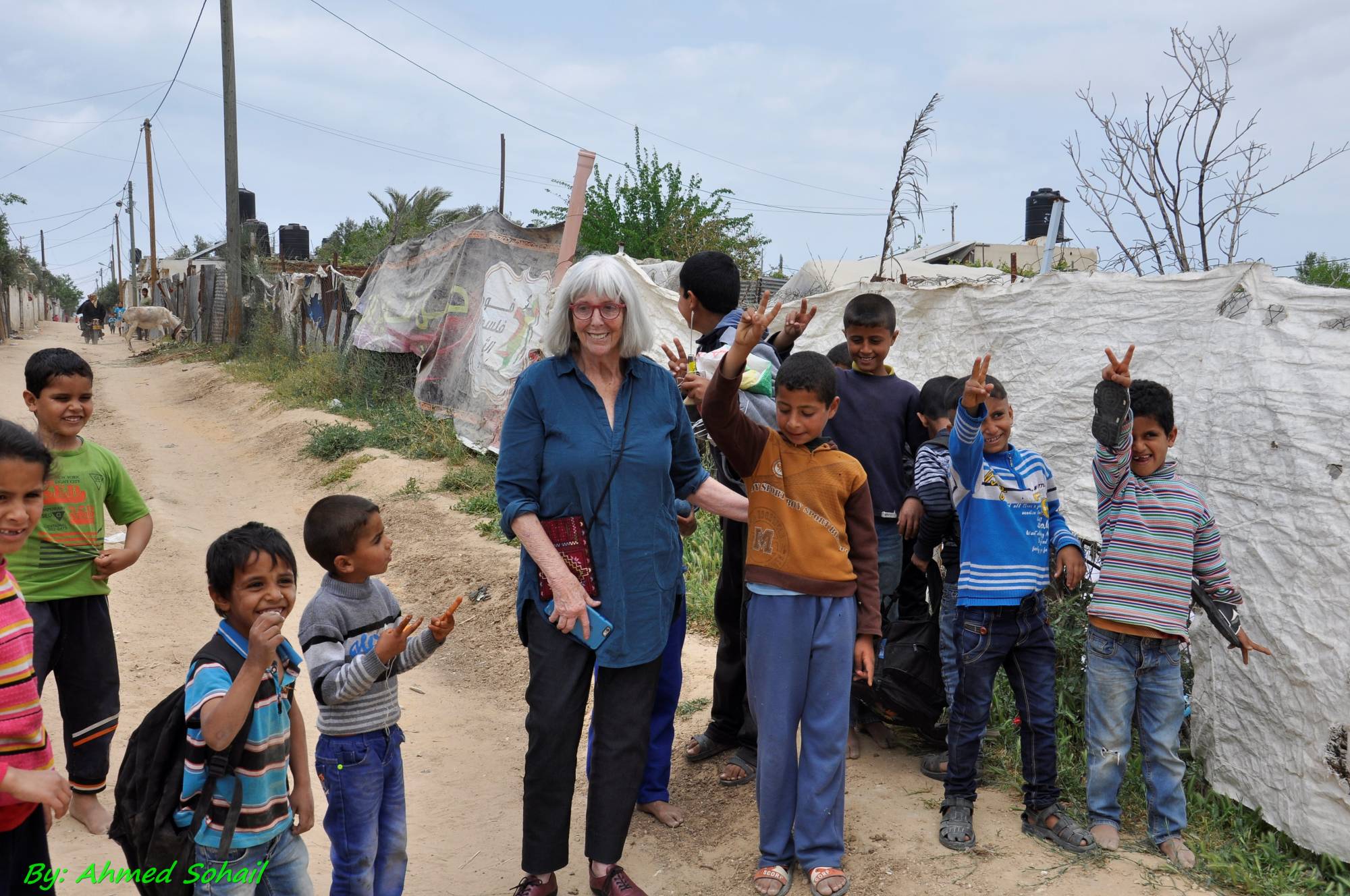
Berkeley’s Barbara Lubin, Longtime Champion of Palestinian Human Rights, Dies at 84
Groundbreaking Journalist Belva Davis Dies at 92
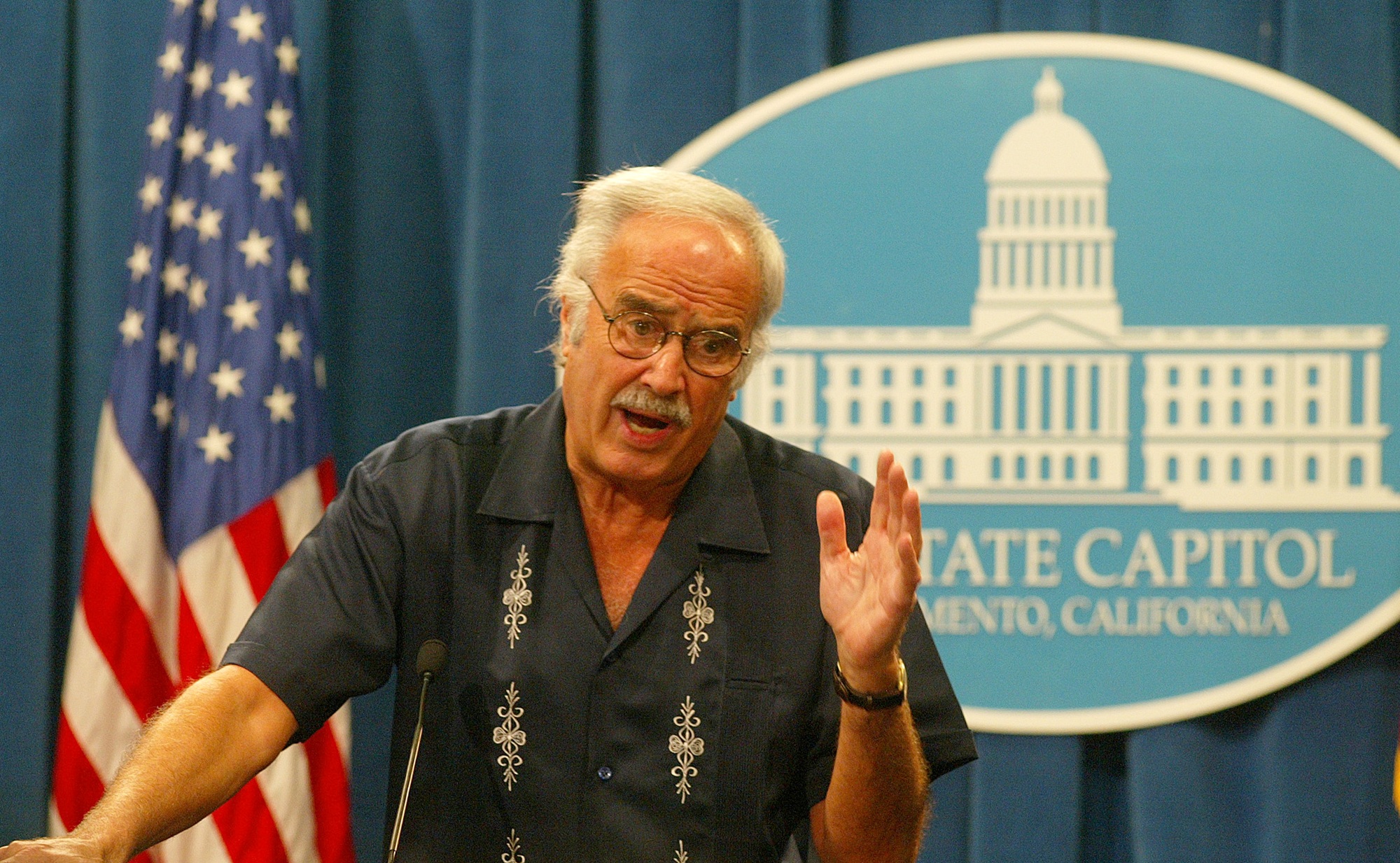
John Burton, Architect of California Democratic Machine, Dies at 92
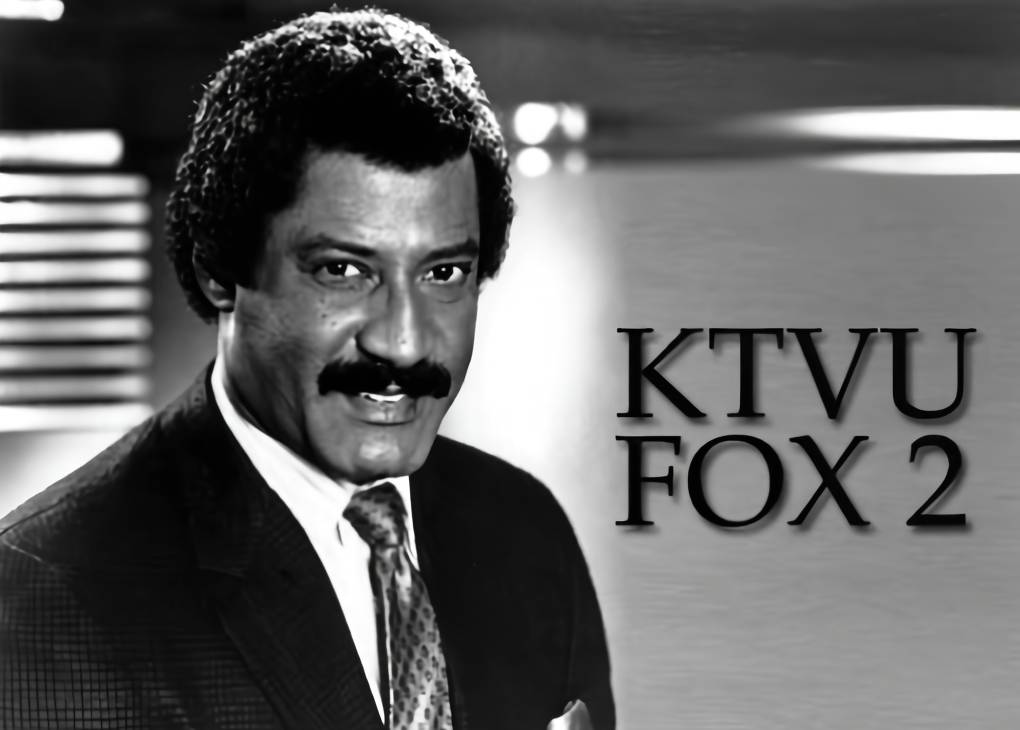
Dennis Richmond, Beloved Former Bay Area News Anchor, Dies at 81
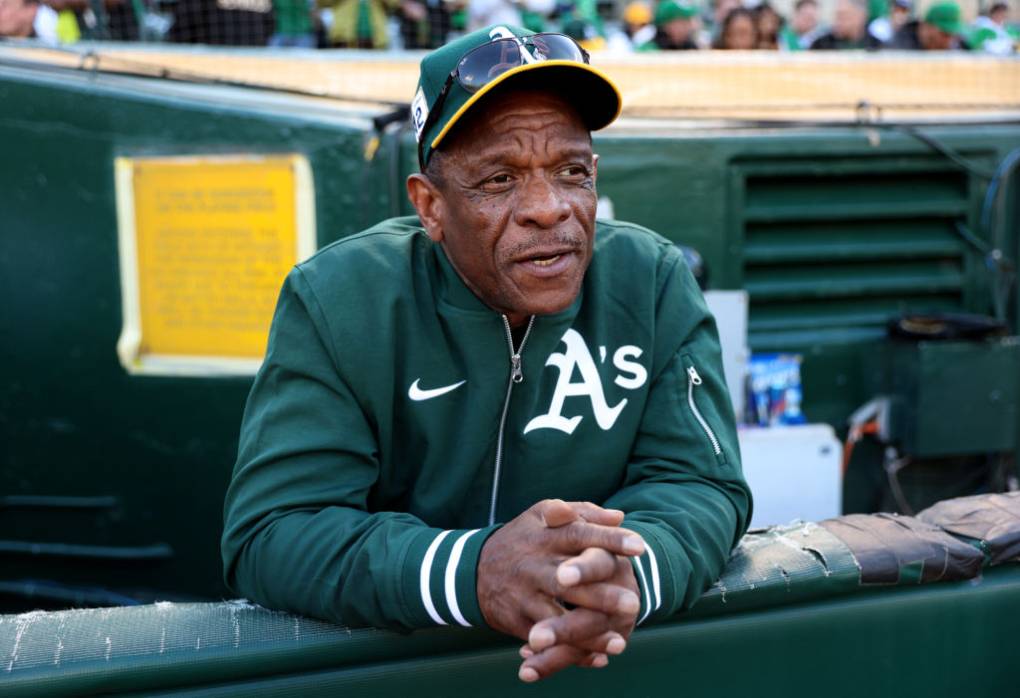
Oakland A's Hall of Famer Rickey Henderson, Baseball's 'Man of Steal,' Dies at Age 65
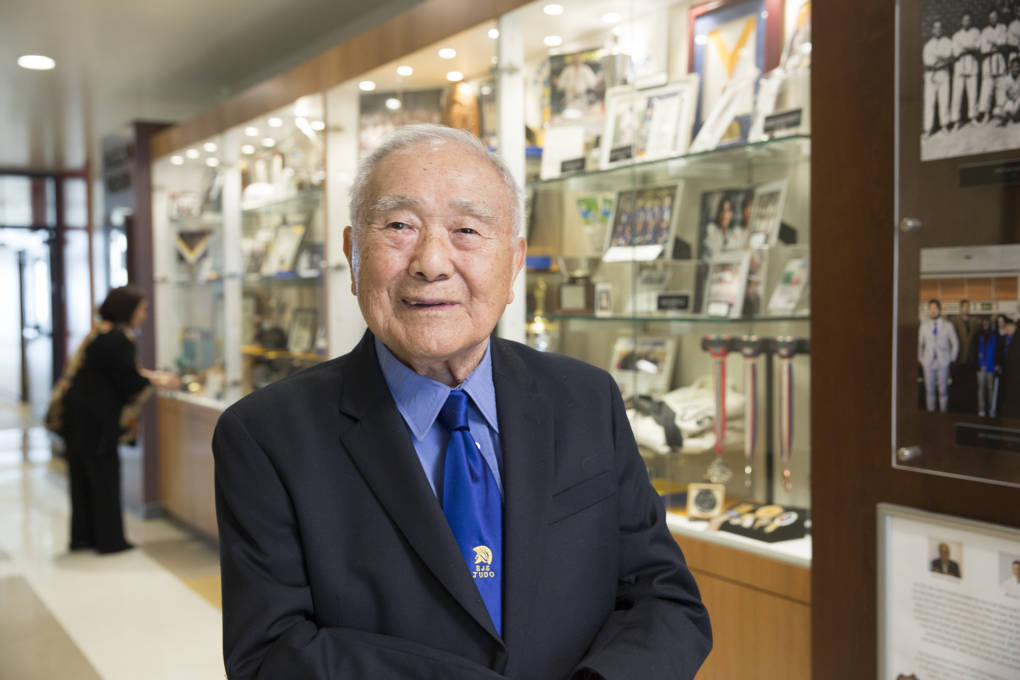
Yoshihiro Uchida, San José State Coach Who Took Judo to Olympic Stage, Dies at 104
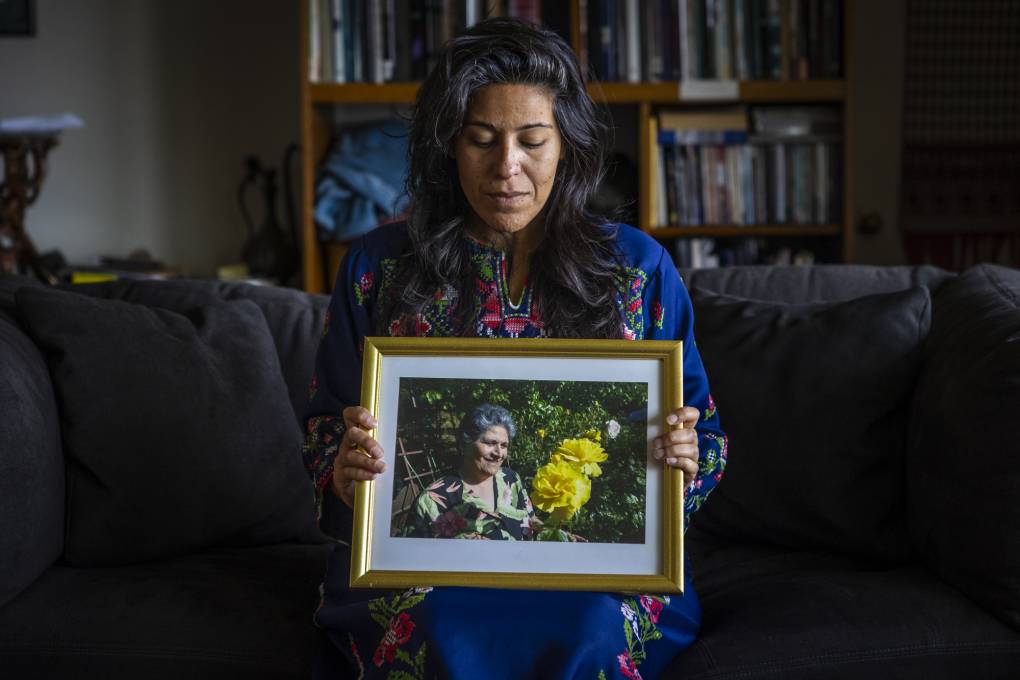
Remembering Nabila Mango, Beloved Palestinian Community Organizer and Choir Founder
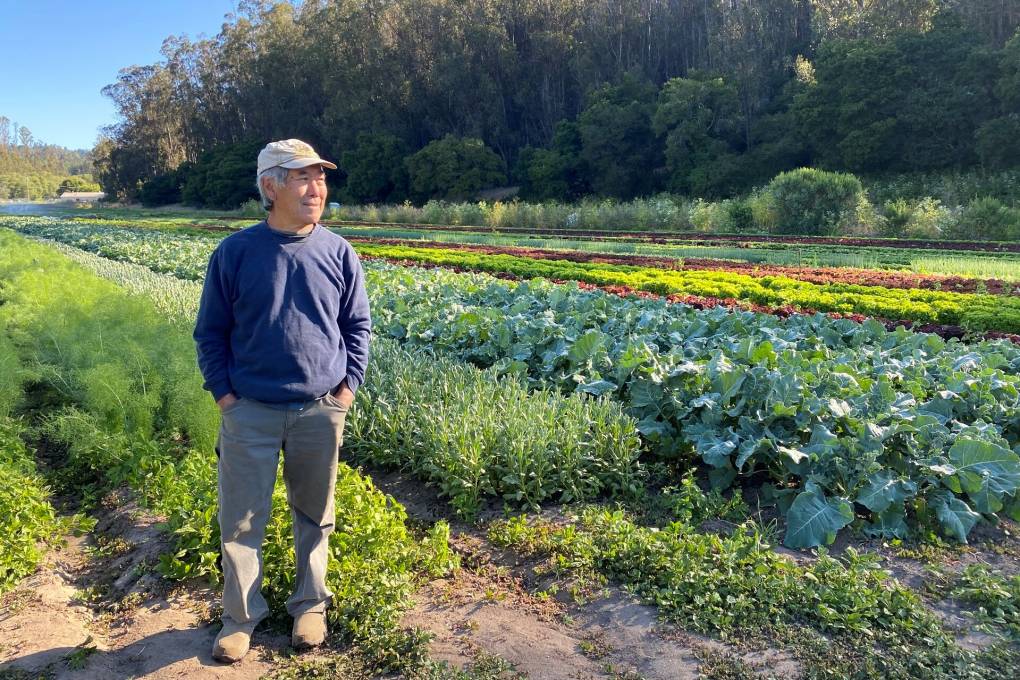
Latinx Artists Promote Covid-19 Vaccination, Saying Goodbye to 'Roadrunner,' Birds Helping CA Farms
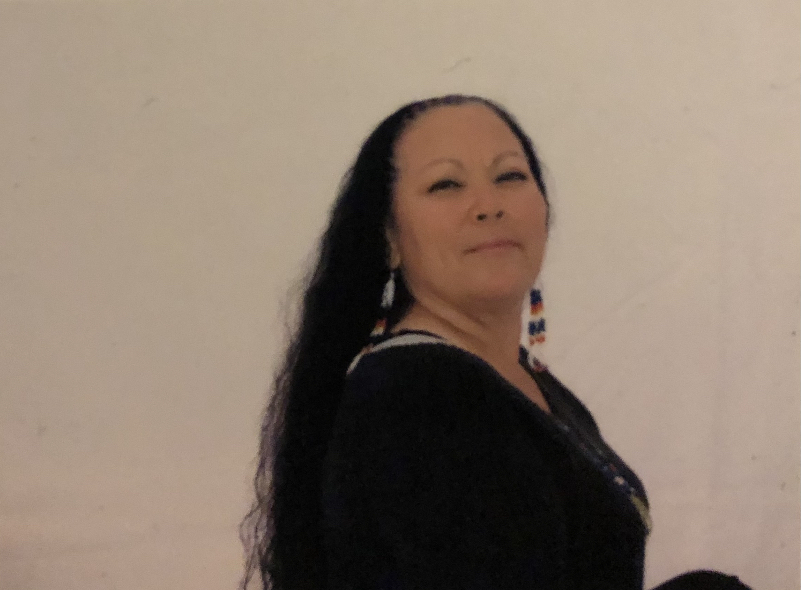
Mom, ER Worker and Mentor to Native Youth: A Family Remembers Sylvia Morton
Sponsored
Player sponsored by
window.__IS_SSR__=true
window.__INITIAL_STATE__={
"attachmentsReducer": {
"audio_0": {
"type": "attachments",
"id": "audio_0",
"imgSizes": {
"kqedFullSize": {
"file": "https://ww2.kqed.org/news/wp-content/themes/KQED-unified/img/audio_bgs/background0.jpg"
}
}
},
"audio_1": {
"type": "attachments",
"id": "audio_1",
"imgSizes": {
"kqedFullSize": {
"file": "https://ww2.kqed.org/news/wp-content/themes/KQED-unified/img/audio_bgs/background1.jpg"
}
}
},
"audio_2": {
"type": "attachments",
"id": "audio_2",
"imgSizes": {
"kqedFullSize": {
"file": "https://ww2.kqed.org/news/wp-content/themes/KQED-unified/img/audio_bgs/background2.jpg"
}
}
},
"audio_3": {
"type": "attachments",
"id": "audio_3",
"imgSizes": {
"kqedFullSize": {
"file": "https://ww2.kqed.org/news/wp-content/themes/KQED-unified/img/audio_bgs/background3.jpg"
}
}
},
"audio_4": {
"type": "attachments",
"id": "audio_4",
"imgSizes": {
"kqedFullSize": {
"file": "https://ww2.kqed.org/news/wp-content/themes/KQED-unified/img/audio_bgs/background4.jpg"
}
}
},
"placeholder": {
"type": "attachments",
"id": "placeholder",
"imgSizes": {
"thumbnail": {
"file": "https://cdn.kqed.org/wp-content/uploads/2024/12/KQED-Default-Image-816638274-2000x1333-1-160x107.jpg",
"width": 160,
"height": 107,
"mimeType": "image/jpeg"
},
"medium": {
"file": "https://cdn.kqed.org/wp-content/uploads/2024/12/KQED-Default-Image-816638274-2000x1333-1-800x533.jpg",
"width": 800,
"height": 533,
"mimeType": "image/jpeg"
},
"medium_large": {
"file": "https://cdn.kqed.org/wp-content/uploads/2024/12/KQED-Default-Image-816638274-2000x1333-1-768x512.jpg",
"width": 768,
"height": 512,
"mimeType": "image/jpeg"
},
"large": {
"file": "https://cdn.kqed.org/wp-content/uploads/2024/12/KQED-Default-Image-816638274-2000x1333-1-1020x680.jpg",
"width": 1020,
"height": 680,
"mimeType": "image/jpeg"
},
"1536x1536": {
"file": "https://cdn.kqed.org/wp-content/uploads/2024/12/KQED-Default-Image-816638274-2000x1333-1-1536x1024.jpg",
"width": 1536,
"height": 1024,
"mimeType": "image/jpeg"
},
"fd-lrg": {
"file": "https://cdn.kqed.org/wp-content/uploads/2024/12/KQED-Default-Image-816638274-2000x1333-1-1536x1024.jpg",
"width": 1536,
"height": 1024,
"mimeType": "image/jpeg"
},
"fd-med": {
"file": "https://cdn.kqed.org/wp-content/uploads/2024/12/KQED-Default-Image-816638274-2000x1333-1-1020x680.jpg",
"width": 1020,
"height": 680,
"mimeType": "image/jpeg"
},
"fd-sm": {
"file": "https://cdn.kqed.org/wp-content/uploads/2024/12/KQED-Default-Image-816638274-2000x1333-1-800x533.jpg",
"width": 800,
"height": 533,
"mimeType": "image/jpeg"
},
"post-thumbnail": {
"file": "https://cdn.kqed.org/wp-content/uploads/2024/12/KQED-Default-Image-816638274-2000x1333-1-672x372.jpg",
"width": 672,
"height": 372,
"mimeType": "image/jpeg"
},
"twentyfourteen-full-width": {
"file": "https://cdn.kqed.org/wp-content/uploads/2024/12/KQED-Default-Image-816638274-2000x1333-1-1038x576.jpg",
"width": 1038,
"height": 576,
"mimeType": "image/jpeg"
},
"xxsmall": {
"file": "https://cdn.kqed.org/wp-content/uploads/2024/12/KQED-Default-Image-816638274-2000x1333-1-160x107.jpg",
"width": 160,
"height": 107,
"mimeType": "image/jpeg"
},
"xsmall": {
"file": "https://cdn.kqed.org/wp-content/uploads/2024/12/KQED-Default-Image-816638274-2000x1333-1-672x372.jpg",
"width": 672,
"height": 372,
"mimeType": "image/jpeg"
},
"small": {
"file": "https://cdn.kqed.org/wp-content/uploads/2024/12/KQED-Default-Image-816638274-2000x1333-1-672x372.jpg",
"width": 672,
"height": 372,
"mimeType": "image/jpeg"
},
"xlarge": {
"file": "https://cdn.kqed.org/wp-content/uploads/2024/12/KQED-Default-Image-816638274-2000x1333-1-1020x680.jpg",
"width": 1020,
"height": 680,
"mimeType": "image/jpeg"
},
"full-width": {
"file": "https://cdn.kqed.org/wp-content/uploads/2024/12/KQED-Default-Image-816638274-2000x1333-1-1920x1280.jpg",
"width": 1920,
"height": 1280,
"mimeType": "image/jpeg"
},
"guest-author-32": {
"file": "https://cdn.kqed.org/wp-content/uploads/2025/01/KQED-Default-Image-816638274-1333x1333-1-160x160.jpg",
"width": 32,
"height": 32,
"mimeType": "image/jpeg"
},
"guest-author-50": {
"file": "https://cdn.kqed.org/wp-content/uploads/2025/01/KQED-Default-Image-816638274-1333x1333-1-160x160.jpg",
"width": 50,
"height": 50,
"mimeType": "image/jpeg"
},
"guest-author-64": {
"file": "https://cdn.kqed.org/wp-content/uploads/2025/01/KQED-Default-Image-816638274-1333x1333-1-160x160.jpg",
"width": 64,
"height": 64,
"mimeType": "image/jpeg"
},
"guest-author-96": {
"file": "https://cdn.kqed.org/wp-content/uploads/2025/01/KQED-Default-Image-816638274-1333x1333-1-160x160.jpg",
"width": 96,
"height": 96,
"mimeType": "image/jpeg"
},
"guest-author-128": {
"file": "https://cdn.kqed.org/wp-content/uploads/2025/01/KQED-Default-Image-816638274-1333x1333-1-160x160.jpg",
"width": 128,
"height": 128,
"mimeType": "image/jpeg"
},
"detail": {
"file": "https://cdn.kqed.org/wp-content/uploads/2025/01/KQED-Default-Image-816638274-1333x1333-1-160x160.jpg",
"width": 160,
"height": 160,
"mimeType": "image/jpeg"
},
"kqedFullSize": {
"file": "https://cdn.kqed.org/wp-content/uploads/2024/12/KQED-Default-Image-816638274-2000x1333-1.jpg",
"width": 2000,
"height": 1333
}
}
},
"news_12067594": {
"type": "attachments",
"id": "news_12067594",
"meta": {
"index": "attachments_1716263798",
"site": "news",
"id": "12067594",
"found": true
},
"title": "Barbara in Gaza",
"publishDate": 1766002310,
"status": "inherit",
"parent": 0,
"modified": 1766002873,
"caption": "Barbara Lubin greets children in Gaza in 2012. Lubin, who co-founded the Middle East Children’s Alliance, was a tireless activist for justice and equity in the East Bay, and across the world.",
"credit": "Couresy of the Middle East Children's Alliance",
"altTag": null,
"description": null,
"imgSizes": {
"medium": {
"file": "https://cdn.kqed.org/wp-content/uploads/sites/10/2025/12/Barbara-in-Gaza-2000x1328.jpg",
"width": 2000,
"height": 1328,
"mimeType": "image/jpeg"
},
"large": {
"file": "https://cdn.kqed.org/wp-content/uploads/sites/10/2025/12/Barbara-in-Gaza-2000x1328.jpg",
"width": 2000,
"height": 1328,
"mimeType": "image/jpeg"
},
"thumbnail": {
"file": "https://cdn.kqed.org/wp-content/uploads/sites/10/2025/12/Barbara-in-Gaza-160x106.jpg",
"width": 160,
"height": 106,
"mimeType": "image/jpeg"
},
"1536x1536": {
"file": "https://cdn.kqed.org/wp-content/uploads/sites/10/2025/12/Barbara-in-Gaza-1536x1020.jpg",
"width": 1536,
"height": 1020,
"mimeType": "image/jpeg"
},
"2048x2048": {
"file": "https://cdn.kqed.org/wp-content/uploads/sites/10/2025/12/Barbara-in-Gaza-2048x1360.jpg",
"width": 2048,
"height": 1360,
"mimeType": "image/jpeg"
},
"post-thumbnail": {
"file": "https://cdn.kqed.org/wp-content/uploads/sites/10/2025/12/Barbara-in-Gaza-672x372.jpg",
"width": 672,
"height": 372,
"mimeType": "image/jpeg"
},
"twentyfourteen-full-width": {
"file": "https://cdn.kqed.org/wp-content/uploads/sites/10/2025/12/Barbara-in-Gaza-1038x576.jpg",
"width": 1038,
"height": 576,
"mimeType": "image/jpeg"
},
"full-width": {
"file": "https://cdn.kqed.org/wp-content/uploads/sites/10/2025/12/Barbara-in-Gaza-2000x1328.jpg",
"width": 2000,
"height": 1328,
"mimeType": "image/jpeg"
},
"npr-cds-wide": {
"file": "https://cdn.kqed.org/wp-content/uploads/sites/10/2025/12/Barbara-in-Gaza-1200x675.jpg",
"width": 1200,
"height": 675,
"mimeType": "image/jpeg"
},
"kqedFullSize": {
"file": "https://cdn.kqed.org/wp-content/uploads/sites/10/2025/12/Barbara-in-Gaza-scaled-e1766005397968.jpg",
"width": 2000,
"height": 1328
}
},
"fetchFailed": false,
"isLoading": false
},
"news_11965489": {
"type": "attachments",
"id": "news_11965489",
"meta": {
"index": "attachments_1716263798",
"site": "news",
"id": "11965489",
"found": true
},
"parent": 0,
"imgSizes": {
"twentyfourteen-full-width": {
"file": "https://ww2.kqed.org/app/uploads/sites/10/2023/10/231024-Belva-Davis-Getty-CAG-KQED-1038x576.jpg",
"width": 1038,
"mimeType": "image/jpeg",
"height": 576
},
"thumbnail": {
"file": "https://ww2.kqed.org/app/uploads/sites/10/2023/10/231024-Belva-Davis-Getty-CAG-KQED-160x105.jpg",
"width": 160,
"mimeType": "image/jpeg",
"height": 105
},
"post-thumbnail": {
"file": "https://ww2.kqed.org/app/uploads/sites/10/2023/10/231024-Belva-Davis-Getty-CAG-KQED-672x372.jpg",
"width": 672,
"mimeType": "image/jpeg",
"height": 372
},
"kqedFullSize": {
"file": "https://ww2.kqed.org/app/uploads/sites/10/2023/10/231024-Belva-Davis-Getty-CAG-KQED.jpg",
"width": 2000,
"height": 1316
},
"large": {
"file": "https://ww2.kqed.org/app/uploads/sites/10/2023/10/231024-Belva-Davis-Getty-CAG-KQED-1020x671.jpg",
"width": 1020,
"mimeType": "image/jpeg",
"height": 671
},
"1536x1536": {
"file": "https://ww2.kqed.org/app/uploads/sites/10/2023/10/231024-Belva-Davis-Getty-CAG-KQED-1536x1011.jpg",
"width": 1536,
"mimeType": "image/jpeg",
"height": 1011
},
"full-width": {
"file": "https://ww2.kqed.org/app/uploads/sites/10/2023/10/231024-Belva-Davis-Getty-CAG-KQED-1920x1263.jpg",
"width": 1920,
"mimeType": "image/jpeg",
"height": 1263
},
"medium": {
"file": "https://ww2.kqed.org/app/uploads/sites/10/2023/10/231024-Belva-Davis-Getty-CAG-KQED-800x526.jpg",
"width": 800,
"mimeType": "image/jpeg",
"height": 526
}
},
"publishDate": 1698191387,
"modified": 1698264052,
"caption": "Belva Davis, a legend of Bay Area journalism and the first Black woman to be hired as a TV journalist on the West Coast, pictured speaking at an event in San Francisco in 2010.",
"description": null,
"title": "Mistress of Ceremonies, Belva Davis, addresses the audience during an event celebrating the life and work of Quentin Easter, founding executive director of the Lorraine Hansberry Theatre who passed away recently.The theater community came together at the",
"credit": "Carlos Avila Gonzalez/The San Francisco Chronicle via Getty Images",
"status": "inherit",
"altTag": "A person with long hair speaks into a set of microphones in a dark room.",
"fetchFailed": false,
"isLoading": false
},
"news_12054912": {
"type": "attachments",
"id": "news_12054912",
"meta": {
"index": "attachments_1716263798",
"site": "news",
"id": "12054912",
"found": true
},
"title": "recall311_mac.jpg John Burton speaks with the media at the State Capital. California Recall. The day after the the recall election a few prominent Democrates hold news conferences to discuss the outcome. State Treasurer Philip Angelides and Senate",
"publishDate": 1757106486,
"status": "inherit",
"parent": 12054886,
"modified": 1757355620,
"caption": "Then-Senate President Pro Tempore John Burton speaks with the media at the California State Capitol on Oct. 8, 2003, the day after the successful recall election that removed Gov. Gray Davis from office and elected Arnold Schwarzenegger as his replacement.",
"credit": "Michael Macor/The San Francisco Chronicle via Getty Images",
"altTag": null,
"description": null,
"imgSizes": {
"thumbnail": {
"file": "https://cdn.kqed.org/wp-content/uploads/sites/10/2025/09/JohnBurtonGetty3-160x99.jpg",
"width": 160,
"height": 99,
"mimeType": "image/jpeg"
},
"1536x1536": {
"file": "https://cdn.kqed.org/wp-content/uploads/sites/10/2025/09/JohnBurtonGetty3-1536x947.jpg",
"width": 1536,
"height": 947,
"mimeType": "image/jpeg"
},
"post-thumbnail": {
"file": "https://cdn.kqed.org/wp-content/uploads/sites/10/2025/09/JohnBurtonGetty3-672x372.jpg",
"width": 672,
"height": 372,
"mimeType": "image/jpeg"
},
"twentyfourteen-full-width": {
"file": "https://cdn.kqed.org/wp-content/uploads/sites/10/2025/09/JohnBurtonGetty3-1038x576.jpg",
"width": 1038,
"height": 576,
"mimeType": "image/jpeg"
},
"kqedFullSize": {
"file": "https://cdn.kqed.org/wp-content/uploads/sites/10/2025/09/JohnBurtonGetty3.jpg",
"width": 2000,
"height": 1233
}
},
"fetchFailed": false,
"isLoading": false
},
"news_12025871": {
"type": "attachments",
"id": "news_12025871",
"meta": {
"index": "attachments_1716263798",
"site": "news",
"id": "12025871",
"found": true
},
"title": "dennis-richmond (1)",
"publishDate": 1738792938,
"status": "inherit",
"parent": 0,
"modified": 1738794691,
"caption": "Fond remembrances poured in Wednesday for Dennis Richmond, the storied KTVU journalist who was one of the nation’s first Black major-market news anchors and worked at the station for four decades.",
"credit": "Courtesy of KTVU",
"altTag": null,
"description": null,
"imgSizes": {
"medium": {
"file": "https://cdn.kqed.org/wp-content/uploads/sites/10/2025/02/dennis-richmond-1-800x573.jpg",
"width": 800,
"height": 573,
"mimeType": "image/jpeg"
},
"large": {
"file": "https://cdn.kqed.org/wp-content/uploads/sites/10/2025/02/dennis-richmond-1-1020x730.jpg",
"width": 1020,
"height": 730,
"mimeType": "image/jpeg"
},
"thumbnail": {
"file": "https://cdn.kqed.org/wp-content/uploads/sites/10/2025/02/dennis-richmond-1-160x115.jpg",
"width": 160,
"height": 115,
"mimeType": "image/jpeg"
},
"1536x1536": {
"file": "https://cdn.kqed.org/wp-content/uploads/sites/10/2025/02/dennis-richmond-1-1536x1100.jpg",
"width": 1536,
"height": 1100,
"mimeType": "image/jpeg"
},
"post-thumbnail": {
"file": "https://cdn.kqed.org/wp-content/uploads/sites/10/2025/02/dennis-richmond-1-672x372.jpg",
"width": 672,
"height": 372,
"mimeType": "image/jpeg"
},
"twentyfourteen-full-width": {
"file": "https://cdn.kqed.org/wp-content/uploads/sites/10/2025/02/dennis-richmond-1-1038x576.jpg",
"width": 1038,
"height": 576,
"mimeType": "image/jpeg"
},
"full-width": {
"file": "https://cdn.kqed.org/wp-content/uploads/sites/10/2025/02/dennis-richmond-1-1920x1375.jpg",
"width": 1920,
"height": 1375,
"mimeType": "image/jpeg"
},
"kqedFullSize": {
"file": "https://cdn.kqed.org/wp-content/uploads/sites/10/2025/02/dennis-richmond-1.jpg?ver=1738794063",
"width": 2000,
"height": 1432
}
},
"fetchFailed": false,
"isLoading": false
},
"news_12019536": {
"type": "attachments",
"id": "news_12019536",
"meta": {
"index": "attachments_1716263798",
"site": "news",
"id": "12019536",
"found": true
},
"title": "St. Louis Cardinals vs. Oakland Athletics",
"publishDate": 1734818308,
"status": "inherit",
"parent": 12019505,
"modified": 1734818350,
"caption": "Former Oakland Athletics' Rickey Henderson before their MLB game against the St. Louis Cardinals at the Coliseum in Oakland on April 15, 2024. ",
"credit": "Jane Tyska/Digital First Media/East Bay Times via Getty Images",
"altTag": null,
"description": null,
"imgSizes": {
"medium": {
"file": "https://cdn.kqed.org/wp-content/uploads/sites/10/2030/12/GettyImages-2149604838-800x548.jpg",
"width": 800,
"height": 548,
"mimeType": "image/jpeg"
},
"large": {
"file": "https://cdn.kqed.org/wp-content/uploads/sites/10/2030/12/GettyImages-2149604838-1020x698.jpg",
"width": 1020,
"height": 698,
"mimeType": "image/jpeg"
},
"thumbnail": {
"file": "https://cdn.kqed.org/wp-content/uploads/sites/10/2030/12/GettyImages-2149604838-160x110.jpg",
"width": 160,
"height": 110,
"mimeType": "image/jpeg"
},
"post-thumbnail": {
"file": "https://cdn.kqed.org/wp-content/uploads/sites/10/2030/12/GettyImages-2149604838-672x372.jpg",
"width": 672,
"height": 372,
"mimeType": "image/jpeg"
},
"twentyfourteen-full-width": {
"file": "https://cdn.kqed.org/wp-content/uploads/sites/10/2030/12/GettyImages-2149604838-1024x576.jpg",
"width": 1024,
"height": 576,
"mimeType": "image/jpeg"
},
"kqedFullSize": {
"file": "https://cdn.kqed.org/wp-content/uploads/sites/10/2030/12/GettyImages-2149604838.jpg",
"width": 1024,
"height": 701
}
},
"fetchFailed": false,
"isLoading": false
},
"news_11660480": {
"type": "attachments",
"id": "news_11660480",
"meta": {
"index": "attachments_1716263798",
"site": "news",
"id": "11660480",
"found": true
},
"title": "RS30329_5D3_9543-qut",
"publishDate": 1523058875,
"status": "inherit",
"parent": 11660424,
"modified": 1719593772,
"caption": "Coach Yoshihiro 'Yosh' Uchida standing in front a case of judo medals outside the dojo in a building named after him at San José State.",
"credit": "Courtesy of David Schmitz",
"altTag": "Coach Yoshihiro \"Yosh\" Uchida standing in front a case of judo medals outside the dojo in a building named after him at San Jose State.",
"description": "Coach Yoshihiro \"Yosh\" Uchida standing in front a case of judo medals outside the dojo in a building named after him at San Jose State.",
"imgSizes": {
"thumbnail": {
"file": "https://cdn.kqed.org/wp-content/uploads/sites/10/2018/04/RS30329_5D3_9543-qut-160x107.jpg",
"width": 160,
"height": 107,
"mimeType": "image/jpeg"
},
"medium": {
"file": "https://cdn.kqed.org/wp-content/uploads/sites/10/2018/04/RS30329_5D3_9543-qut-800x533.jpg",
"width": 800,
"height": 533,
"mimeType": "image/jpeg"
},
"large": {
"file": "https://cdn.kqed.org/wp-content/uploads/sites/10/2018/04/RS30329_5D3_9543-qut-1020x680.jpg",
"width": 1020,
"height": 680,
"mimeType": "image/jpeg"
},
"fd-lrg": {
"file": "https://cdn.kqed.org/wp-content/uploads/sites/10/2018/04/RS30329_5D3_9543-qut-1920x1280.jpg",
"width": 1920,
"height": 1280,
"mimeType": "image/jpeg"
},
"fd-med": {
"file": "https://cdn.kqed.org/wp-content/uploads/sites/10/2018/04/RS30329_5D3_9543-qut-1180x787.jpg",
"width": 1180,
"height": 787,
"mimeType": "image/jpeg"
},
"fd-sm": {
"file": "https://cdn.kqed.org/wp-content/uploads/sites/10/2018/04/RS30329_5D3_9543-qut-960x640.jpg",
"width": 960,
"height": 640,
"mimeType": "image/jpeg"
},
"post-thumbnail": {
"file": "https://cdn.kqed.org/wp-content/uploads/sites/10/2018/04/RS30329_5D3_9543-qut-672x372.jpg",
"width": 672,
"height": 372,
"mimeType": "image/jpeg"
},
"twentyfourteen-full-width": {
"file": "https://cdn.kqed.org/wp-content/uploads/sites/10/2018/04/RS30329_5D3_9543-qut-1038x576.jpg",
"width": 1038,
"height": 576,
"mimeType": "image/jpeg"
},
"xxsmall": {
"file": "https://cdn.kqed.org/wp-content/uploads/sites/10/2018/04/RS30329_5D3_9543-qut-240x160.jpg",
"width": 240,
"height": 160,
"mimeType": "image/jpeg"
},
"xsmall": {
"file": "https://cdn.kqed.org/wp-content/uploads/sites/10/2018/04/RS30329_5D3_9543-qut-375x250.jpg",
"width": 375,
"height": 250,
"mimeType": "image/jpeg"
},
"small": {
"file": "https://cdn.kqed.org/wp-content/uploads/sites/10/2018/04/RS30329_5D3_9543-qut-520x347.jpg",
"width": 520,
"height": 347,
"mimeType": "image/jpeg"
},
"xlarge": {
"file": "https://cdn.kqed.org/wp-content/uploads/sites/10/2018/04/RS30329_5D3_9543-qut-1180x787.jpg",
"width": 1180,
"height": 787,
"mimeType": "image/jpeg"
},
"full-width": {
"file": "https://cdn.kqed.org/wp-content/uploads/sites/10/2018/04/RS30329_5D3_9543-qut-1920x1280.jpg",
"width": 1920,
"height": 1280,
"mimeType": "image/jpeg"
},
"guest-author-32": {
"file": "https://cdn.kqed.org/wp-content/uploads/sites/10/2018/04/RS30329_5D3_9543-qut-32x32.jpg",
"width": 32,
"height": 32,
"mimeType": "image/jpeg"
},
"guest-author-50": {
"file": "https://cdn.kqed.org/wp-content/uploads/sites/10/2018/04/RS30329_5D3_9543-qut-50x50.jpg",
"width": 50,
"height": 50,
"mimeType": "image/jpeg"
},
"guest-author-64": {
"file": "https://cdn.kqed.org/wp-content/uploads/sites/10/2018/04/RS30329_5D3_9543-qut-64x64.jpg",
"width": 64,
"height": 64,
"mimeType": "image/jpeg"
},
"guest-author-96": {
"file": "https://cdn.kqed.org/wp-content/uploads/sites/10/2018/04/RS30329_5D3_9543-qut-96x96.jpg",
"width": 96,
"height": 96,
"mimeType": "image/jpeg"
},
"guest-author-128": {
"file": "https://cdn.kqed.org/wp-content/uploads/sites/10/2018/04/RS30329_5D3_9543-qut-128x128.jpg",
"width": 128,
"height": 128,
"mimeType": "image/jpeg"
},
"detail": {
"file": "https://cdn.kqed.org/wp-content/uploads/sites/10/2018/04/RS30329_5D3_9543-qut-150x150.jpg",
"width": 150,
"height": 150,
"mimeType": "image/jpeg"
},
"kqedFullSize": {
"file": "https://cdn.kqed.org/wp-content/uploads/sites/10/2018/04/RS30329_5D3_9543-qut.jpg",
"width": 1920,
"height": 1280
}
},
"fetchFailed": false,
"isLoading": false
},
"news_11969349": {
"type": "attachments",
"id": "news_11969349",
"meta": {
"index": "attachments_1716263798",
"site": "news",
"id": "11969349",
"found": true
},
"parent": 0,
"imgSizes": {
"twentyfourteen-full-width": {
"file": "https://cdn.kqed.org/wp-content/uploads/sites/10/2023/12/231207-BISAN-SHEHADEH-MD-04-KQED-1038x576.jpg",
"width": 1038,
"mimeType": "image/jpeg",
"height": 576
},
"thumbnail": {
"file": "https://cdn.kqed.org/wp-content/uploads/sites/10/2023/12/231207-BISAN-SHEHADEH-MD-04-KQED-160x107.jpg",
"width": 160,
"mimeType": "image/jpeg",
"height": 107
},
"post-thumbnail": {
"file": "https://cdn.kqed.org/wp-content/uploads/sites/10/2023/12/231207-BISAN-SHEHADEH-MD-04-KQED-672x372.jpg",
"width": 672,
"mimeType": "image/jpeg",
"height": 372
},
"kqedFullSize": {
"file": "https://cdn.kqed.org/wp-content/uploads/sites/10/2023/12/231207-BISAN-SHEHADEH-MD-04-KQED.jpg?ver=1702007526",
"width": 2000,
"height": 1333
},
"large": {
"file": "https://cdn.kqed.org/wp-content/uploads/sites/10/2023/12/231207-BISAN-SHEHADEH-MD-04-KQED-1020x680.jpg",
"width": 1020,
"mimeType": "image/jpeg",
"height": 680
},
"1536x1536": {
"file": "https://cdn.kqed.org/wp-content/uploads/sites/10/2023/12/231207-BISAN-SHEHADEH-MD-04-KQED-1536x1024.jpg",
"width": 1536,
"mimeType": "image/jpeg",
"height": 1024
},
"full-width": {
"file": "https://cdn.kqed.org/wp-content/uploads/sites/10/2023/12/231207-BISAN-SHEHADEH-MD-04-KQED-1920x1280.jpg",
"width": 1920,
"mimeType": "image/jpeg",
"height": 1280
},
"medium": {
"file": "https://cdn.kqed.org/wp-content/uploads/sites/10/2023/12/231207-BISAN-SHEHADEH-MD-04-KQED-800x533.jpg",
"width": 800,
"mimeType": "image/jpeg",
"height": 533
}
},
"publishDate": 1701995189,
"modified": 1702061184,
"caption": "Bisan Shehadeh holds a photo of her mother, Nabila Mango, in her rose garden in Mango's home in San Mateo on Dec. 7, 2023.",
"description": null,
"title": "231207-BISAN SHEHADEH-MD-04-KQED",
"credit": "Martin do Nascimento/KQED",
"status": "inherit",
"altTag": "A person with long hair looks down at a framed photo of a person beside two large yellow roses.",
"fetchFailed": false,
"isLoading": false
},
"news_11880219": {
"type": "attachments",
"id": "news_11880219",
"meta": {
"index": "attachments_1716263798",
"site": "news",
"id": "11880219",
"found": true
},
"parent": 11879719,
"imgSizes": {
"twentyfourteen-full-width": {
"file": "https://ww2.kqed.org/app/uploads/sites/10/2021/07/RS50180_IMG_6868-qut-1038x576.jpg",
"width": 1038,
"mimeType": "image/jpeg",
"height": 576
},
"thumbnail": {
"file": "https://ww2.kqed.org/app/uploads/sites/10/2021/07/RS50180_IMG_6868-qut-160x107.jpg",
"width": 160,
"mimeType": "image/jpeg",
"height": 107
},
"post-thumbnail": {
"file": "https://ww2.kqed.org/app/uploads/sites/10/2021/07/RS50180_IMG_6868-qut-672x372.jpg",
"width": 672,
"mimeType": "image/jpeg",
"height": 372
},
"kqedFullSize": {
"file": "https://ww2.kqed.org/app/uploads/sites/10/2021/07/RS50180_IMG_6868-qut.jpg",
"width": 1919,
"height": 1280
},
"large": {
"file": "https://ww2.kqed.org/app/uploads/sites/10/2021/07/RS50180_IMG_6868-qut-1020x680.jpg",
"width": 1020,
"mimeType": "image/jpeg",
"height": 680
},
"1536x1536": {
"file": "https://ww2.kqed.org/app/uploads/sites/10/2021/07/RS50180_IMG_6868-qut-1536x1025.jpg",
"width": 1536,
"mimeType": "image/jpeg",
"height": 1025
},
"medium": {
"file": "https://ww2.kqed.org/app/uploads/sites/10/2021/07/RS50180_IMG_6868-qut-800x534.jpg",
"width": 800,
"mimeType": "image/jpeg",
"height": 534
}
},
"publishDate": 1625187368,
"modified": 1625187931,
"caption": "Farmer Dennis Tamura stands in one of is farm's fields on June 10, 2021. Tamura says having the barn owls, tree swallows and Western bluebirds nest in boxes on his farm has done more than just offer pest control. They help him see his farm more deeply.",
"description": "Farmer Dennis Tamura stands in one of is farm's fields on June 10, 2021.",
"title": "RS50180_IMG_6868-qut",
"credit": "Lisa Morehouse/KQED",
"status": "inherit",
"altTag": "A person stands in a field looking off camera.",
"fetchFailed": false,
"isLoading": false
},
"news_11870884": {
"type": "attachments",
"id": "news_11870884",
"meta": {
"index": "attachments_1716263798",
"site": "news",
"id": "11870884",
"found": true
},
"parent": 11870867,
"imgSizes": {
"twentyfourteen-full-width": {
"file": "https://ww2.kqed.org/app/uploads/sites/10/2021/04/IMG_3859-801x576.jpeg",
"width": 801,
"mimeType": "image/jpeg",
"height": 576
},
"thumbnail": {
"file": "https://ww2.kqed.org/app/uploads/sites/10/2021/04/IMG_3859-160x118.jpeg",
"width": 160,
"mimeType": "image/jpeg",
"height": 118
},
"post-thumbnail": {
"file": "https://ww2.kqed.org/app/uploads/sites/10/2021/04/IMG_3859-672x372.jpeg",
"width": 672,
"mimeType": "image/jpeg",
"height": 372
},
"kqedFullSize": {
"file": "https://ww2.kqed.org/app/uploads/sites/10/2021/04/IMG_3859.jpeg",
"width": 801,
"height": 590
}
},
"publishDate": 1619194835,
"modified": 1619214748,
"caption": "Sylvia Morton was known for her long black hair, joyful voice and endless love of Selena. She was worked in the emergency department at Riverside Emergency Department before contracting COVID-19.",
"description": null,
"title": "IMG_3859",
"credit": "Courtesy of Yolanda Ballesteros",
"status": "inherit",
"altTag": null,
"fetchFailed": false,
"isLoading": false
}
},
"audioPlayerReducer": {
"postId": "stream_live",
"isPaused": true,
"isPlaying": false,
"pfsActive": false,
"pledgeModalIsOpen": true,
"playerDrawerIsOpen": false
},
"authorsReducer": {
"kqed": {
"type": "authors",
"id": "236",
"meta": {
"index": "authors_1716337520",
"id": "236",
"found": true
},
"name": "KQED News Staff",
"firstName": "KQED News Staff",
"lastName": null,
"slug": "kqed",
"email": "faq@kqed.org",
"display_author_email": false,
"staff_mastheads": [],
"title": null,
"bio": null,
"avatar": "https://secure.gravatar.com/avatar/ef0e801a68c4c54afa9180db14084167?s=600&d=blank&r=g",
"twitter": null,
"facebook": null,
"instagram": null,
"linkedin": null,
"sites": [
{
"site": "arts",
"roles": [
"contributor"
]
},
{
"site": "news",
"roles": [
"editor"
]
},
{
"site": "futureofyou",
"roles": [
"author"
]
}
],
"headData": {
"title": "KQED News Staff | KQED",
"description": null,
"ogImgSrc": "https://secure.gravatar.com/avatar/ef0e801a68c4c54afa9180db14084167?s=600&d=blank&r=g",
"twImgSrc": "https://secure.gravatar.com/avatar/ef0e801a68c4c54afa9180db14084167?s=600&d=blank&r=g"
},
"isLoading": false,
"link": "/author/kqed"
},
"scottshafer": {
"type": "authors",
"id": "255",
"meta": {
"index": "authors_1716337520",
"id": "255",
"found": true
},
"name": "Scott Shafer",
"firstName": "Scott",
"lastName": "Shafer",
"slug": "scottshafer",
"email": "sshafer@kqed.org",
"display_author_email": false,
"staff_mastheads": [
"news"
],
"title": "KQED Contributor",
"bio": "Scott Shafer is a senior editor with the KQED Politics and Government desk. He is co-host of Political Breakdown, the award-winning radio show and podcast with a personal take on the world of politics. Scott came to KQED in 1998 to host the statewide\u003cem> California Report\u003c/em>. Prior to that he had extended stints in politics and government\u003cem>.\u003c/em> He uses that inside experience at KQED in his, reporting, hosting and analysis for the politics desk. Scott collaborated \u003cem>Political Breakdown a\u003c/em>nd on \u003cem>The Political Mind of Jerry Brown, \u003c/em>an eight-part series about the life and extraordinary political career of the former governor. For fun, he plays water polo with the San Francisco Tsunami.",
"avatar": "https://secure.gravatar.com/avatar/a62ebae45b79d7aed1a39a0e3bf68104?s=600&d=blank&r=g",
"twitter": "scottshafer",
"facebook": null,
"instagram": null,
"linkedin": null,
"sites": [
{
"site": "news",
"roles": [
"editor"
]
},
{
"site": "stateofhealth",
"roles": [
"author"
]
},
{
"site": "science",
"roles": [
"author"
]
},
{
"site": "forum",
"roles": [
"subscriber"
]
}
],
"headData": {
"title": "Scott Shafer | KQED",
"description": "KQED Contributor",
"ogImgSrc": "https://secure.gravatar.com/avatar/a62ebae45b79d7aed1a39a0e3bf68104?s=600&d=blank&r=g",
"twImgSrc": "https://secure.gravatar.com/avatar/a62ebae45b79d7aed1a39a0e3bf68104?s=600&d=blank&r=g"
},
"isLoading": false,
"link": "/author/scottshafer"
},
"aehsanipour": {
"type": "authors",
"id": "11580",
"meta": {
"index": "authors_1716337520",
"id": "11580",
"found": true
},
"name": "Asal Ehsanipour",
"firstName": "Asal",
"lastName": "Ehsanipour",
"slug": "aehsanipour",
"email": "aehsanipour@kqed.org",
"display_author_email": false,
"staff_mastheads": [],
"title": "Reporter and Producer",
"bio": "Asal Ehsanipour is a producer and reporter for Rightnowish, Bay Curious and The California Report Magazine. She is also a producer for \u003ca href=\"https://www.thedoubleshift.com/\">The Double Shift\u003c/a>, a podcast about a new generation of working mothers. In 2018, Asal was named an Emerging Journalist Fellow by the Journalism and Women’s Symposium. Her work has appeared on KQED, KALW, PRI’s The World, and in several food and travel publications.",
"avatar": "https://secure.gravatar.com/avatar/c0e210438f5dca1b76921ff9f0eada52?s=600&d=blank&r=g",
"twitter": null,
"facebook": null,
"instagram": null,
"linkedin": null,
"sites": [
{
"site": "arts",
"roles": []
},
{
"site": "news",
"roles": [
"author",
"edit_others_posts"
]
}
],
"headData": {
"title": "Asal Ehsanipour | KQED",
"description": "Reporter and Producer",
"ogImgSrc": "https://secure.gravatar.com/avatar/c0e210438f5dca1b76921ff9f0eada52?s=600&d=blank&r=g",
"twImgSrc": "https://secure.gravatar.com/avatar/c0e210438f5dca1b76921ff9f0eada52?s=600&d=blank&r=g"
},
"isLoading": false,
"link": "/author/aehsanipour"
},
"adahlstromeckman": {
"type": "authors",
"id": "11785",
"meta": {
"index": "authors_1716337520",
"id": "11785",
"found": true
},
"name": "Azul Dahlstrom-Eckman",
"firstName": "Azul",
"lastName": "Dahlstrom-Eckman",
"slug": "adahlstromeckman",
"email": "adahlstrom-eckman@kqed.org",
"display_author_email": true,
"staff_mastheads": [],
"title": "Reporter",
"bio": "Azul is a reporter for KQED who focuses on producing sound-rich audio features for KQED's Morning Edition segment and digital features for KQED's online audiences. He previously worked as the Weekend News Editor at KQED, responsible for overseeing radio and digital news on the weekends. He joined KQED in 2021 as an alumna of KALW's Audio Academy radio journalism training program. He was born and raised on Potrero Hill in San Francisco and holds a B.A. in Environmental Studies from the University of Oregon.",
"avatar": "https://secure.gravatar.com/avatar/99c0cfc680078897572931b34e941e1e?s=600&d=blank&r=g",
"twitter": "@zuliemann",
"facebook": null,
"instagram": null,
"linkedin": null,
"sites": [
{
"site": "arts",
"roles": [
"editor"
]
},
{
"site": "news",
"roles": [
"editor"
]
},
{
"site": "science",
"roles": [
"editor"
]
}
],
"headData": {
"title": "Azul Dahlstrom-Eckman | KQED",
"description": "Reporter",
"ogImgSrc": "https://secure.gravatar.com/avatar/99c0cfc680078897572931b34e941e1e?s=600&d=blank&r=g",
"twImgSrc": "https://secure.gravatar.com/avatar/99c0cfc680078897572931b34e941e1e?s=600&d=blank&r=g"
},
"isLoading": false,
"link": "/author/adahlstromeckman"
},
"sjohnson": {
"type": "authors",
"id": "11840",
"meta": {
"index": "authors_1716337520",
"id": "11840",
"found": true
},
"name": "Sydney Johnson",
"firstName": "Sydney",
"lastName": "Johnson",
"slug": "sjohnson",
"email": "sjohnson@kqed.org",
"display_author_email": false,
"staff_mastheads": [
"news"
],
"title": "KQED Reporter",
"bio": "Sydney Johnson is a general assignment reporter at KQED. She previously reported on public health and city government at the San Francisco Examiner, and before that, she covered statewide education policy for EdSource. Her reporting has won multiple local, state and national awards. Sydney is a graduate of the University of California, Berkeley and lives in San Francisco.",
"avatar": "https://secure.gravatar.com/avatar/97855f2719b72ad6190b7c535fe642c8?s=600&d=blank&r=g",
"twitter": "sydneyfjohnson",
"facebook": null,
"instagram": null,
"linkedin": null,
"sites": [
{
"site": "news",
"roles": [
"editor"
]
}
],
"headData": {
"title": "Sydney Johnson | KQED",
"description": "KQED Reporter",
"ogImgSrc": "https://secure.gravatar.com/avatar/97855f2719b72ad6190b7c535fe642c8?s=600&d=blank&r=g",
"twImgSrc": "https://secure.gravatar.com/avatar/97855f2719b72ad6190b7c535fe642c8?s=600&d=blank&r=g"
},
"isLoading": false,
"link": "/author/sjohnson"
},
"jgeha": {
"type": "authors",
"id": "11906",
"meta": {
"index": "authors_1716337520",
"id": "11906",
"found": true
},
"name": "Joseph Geha",
"firstName": "Joseph",
"lastName": "Geha",
"slug": "jgeha",
"email": "jgeha@kqed.org",
"display_author_email": false,
"staff_mastheads": [
"news",
"science"
],
"title": "KQED Contributor",
"bio": null,
"avatar": "https://secure.gravatar.com/avatar/06334764312afacae9c3d6cd48fd9fd7?s=600&d=blank&r=g",
"twitter": null,
"facebook": null,
"instagram": null,
"linkedin": null,
"sites": [
{
"site": "news",
"roles": [
"editor"
]
},
{
"site": "liveblog",
"roles": [
"author"
]
}
],
"headData": {
"title": "Joseph Geha | KQED",
"description": "KQED Contributor",
"ogImgSrc": "https://secure.gravatar.com/avatar/06334764312afacae9c3d6cd48fd9fd7?s=600&d=blank&r=g",
"twImgSrc": "https://secure.gravatar.com/avatar/06334764312afacae9c3d6cd48fd9fd7?s=600&d=blank&r=g"
},
"isLoading": false,
"link": "/author/jgeha"
},
"emanoukian": {
"type": "authors",
"id": "11925",
"meta": {
"index": "authors_1716337520",
"id": "11925",
"found": true
},
"name": "Elize Manoukian",
"firstName": "Elize",
"lastName": "Manoukian",
"slug": "emanoukian",
"email": "emanoukian@KQED.org",
"display_author_email": false,
"staff_mastheads": [
"news"
],
"title": "KQED Contributor",
"bio": null,
"avatar": "https://secure.gravatar.com/avatar/3ae2b7f374920c4c6bdbb4c21d5d065f?s=600&d=blank&r=g",
"twitter": null,
"facebook": null,
"instagram": null,
"linkedin": null,
"sites": [
{
"site": "arts",
"roles": [
"editor"
]
},
{
"site": "news",
"roles": [
"editor"
]
},
{
"site": "science",
"roles": [
"editor"
]
},
{
"site": "liveblog",
"roles": [
"author"
]
}
],
"headData": {
"title": "Elize Manoukian | KQED",
"description": "KQED Contributor",
"ogImgSrc": "https://secure.gravatar.com/avatar/3ae2b7f374920c4c6bdbb4c21d5d065f?s=600&d=blank&r=g",
"twImgSrc": "https://secure.gravatar.com/avatar/3ae2b7f374920c4c6bdbb4c21d5d065f?s=600&d=blank&r=g"
},
"isLoading": false,
"link": "/author/emanoukian"
}
},
"breakingNewsReducer": {},
"pagesReducer": {},
"postsReducer": {
"stream_live": {
"type": "live",
"id": "stream_live",
"audioUrl": "https://streams.kqed.org/kqedradio",
"title": "Live Stream",
"excerpt": "Live Stream information currently unavailable.",
"link": "/radio",
"featImg": "",
"label": {
"name": "KQED Live",
"link": "/"
}
},
"stream_kqedNewscast": {
"type": "posts",
"id": "stream_kqedNewscast",
"audioUrl": "https://www.kqed.org/.stream/anon/radio/RDnews/newscast.mp3?_=1",
"title": "KQED Newscast",
"featImg": "",
"label": {
"name": "88.5 FM",
"link": "/"
}
},
"news_12067577": {
"type": "posts",
"id": "news_12067577",
"meta": {
"index": "posts_1716263798",
"site": "news",
"id": "12067577",
"score": null,
"sort": [
1766059223000
]
},
"guestAuthors": [],
"slug": "berkeleys-barbara-lubin-longtime-champion-of-palestinian-human-rights-dies-at-84",
"title": "Berkeley’s Barbara Lubin, Longtime Champion of Palestinian Human Rights, Dies at 84",
"publishDate": 1766059223,
"format": "standard",
"headTitle": "Berkeley’s Barbara Lubin, Longtime Champion of Palestinian Human Rights, Dies at 84 | KQED",
"labelTerm": {
"site": "news"
},
"content": "\u003cp>Bay Area activist Barbara Lubin, who worked for more than half a century in support of disability rights, international peace and Palestinian human rights, died on Saturday in \u003ca href=\"https://www.kqed.org/news/tag/berkeley\">Berkeley\u003c/a>, her family said. She was 84.\u003c/p>\n\u003cp>Throughout her life, Lubin’s tireless advocacy brought her from antiwar demonstrations to the Berkeley school board to the streets of the West Bank and Gaza.\u003c/p>\n\u003cp>“Barbara will be remembered as a person who never saw an injustice she didn’t try to right, never saw somebody’s pain that she didn’t try to ease and never turned away when something was in her way that could have made somebody’s life better,” her husband, Howard Levine, told KQED.\u003c/p>\n\u003cp>[ad fullwidth]\u003c/p>\n\u003cp>Lubin was perhaps best known for co-founding the Middle East Children’s Alliance in 1988. As part of her work with MECA, she helped deliver millions of dollars in aid and support hundreds of community projects for children in the occupied Palestinian territories, Iraq and Lebanon.\u003c/p>\n\u003cp>“She started an organization at a time when it was very hard in the United States to do work for Palestine, to be in solidarity,” Zeiad Abbas Shamrouch, MECA’s executive director, told KQED. “For us as Palestinians, in that period, to have an ally in the U.S. supporting local initiatives was huge.”\u003c/p>\n\u003cfigure id=\"attachment_12067595\" class=\"wp-caption aligncenter\" style=\"max-width: 2000px\">\u003cimg loading=\"lazy\" decoding=\"async\" class=\"size-full wp-image-12067595\" src=\"https://cdn.kqed.org/wp-content/uploads/sites/10/2025/12/Barbara-in-Gaza-w-kids-art-scaled-e1766002781624.jpg\" alt=\"\" width=\"2000\" height=\"1328\">\u003cfigcaption class=\"wp-caption-text\">Barbara Lubin visits children making art in Gaza in 2012. \u003ccite>(Courtesy of the Middle East Children's Alliance)\u003c/cite>\u003c/figcaption>\u003c/figure>\n\u003cp>Lubin, who spoke often about her Jewish identity, strove to bridge national, ethnic and religious boundaries in her work, MECA said in a statement announcing her death. She is survived by her husband, Levine, her four children and seven grandchildren.\u003c/p>\n\u003cp>Born in Philadelphia in 1941 to a family that supported Israel, she dropped out of high school after the 10th grade to support her family following the death of her father, her son said.\u003c/p>\n\u003cp>In the late 1960s, Lubin became an anti-Vietnam War activist, dressing as a man to infiltrate military enlistment centers and pass out leaflets. She also worked as a draft counselor, advising young men about their options, and was arrested blocking a naval ship at the Port of Delaware.[aside postID=news_12062192 hero='https://cdn.kqed.org/wp-content/uploads/sites/10/2025/03/uc-berkeley-malak-afaneh-handout_qed-1020x680.jpg']In 1969, her son Charlie was born with Down syndrome. His treatment by his medical providers and his exclusion from education in Berkeley, where the family had moved in 1973, led Lubin to sue the district over their lack of opportunities for students with disabilities. She eventually mounted a successful run for the Berkeley school board.\u003c/p>\n\u003cp>“The moment Charlie came home from the hospital, my mother’s politics really were organized — not necessarily as consciously political, but as attempts to find ways to build a life for Charlie,” Barbara’s son Alex Lubin said.\u003c/p>\n\u003cp>In the early 1980s, Lubin became active in the fight to bring rent control to Berkeley after Ozzie’s Soda Fountain, a restaurant in the \u003ca href=\"https://www.kqed.org/news/11996229/berkeley-first-city-to-sanctify-single-family-zoning-considers-historic-reversal-allowing-small-apartments\">Elmwood neighborhood\u003c/a> that her son Charlie loved, was sold to developers.\u003c/p>\n\u003cp>“The next day, my mother had a table out in front of Ozzie’s,” Alex said. “She started the Elmwood Preservation Society. And she fought the developers, and she worked with other people to draft legislation for the first commercial rent control law in the United States.”\u003c/p>\n\u003cp>The Elmwood rent measure was passed by Berkeley voters in 1982, followed by similar ordinances covering Telegraph Avenue and West Berkeley, before all three were blocked by the California Legislature in 1988, according to research published in \u003ca href=\"https://lawcat.berkeley.edu/record/1113195?v=pdf\">a UC Berkeley law quarterly. \u003c/a>\u003c/p>\n\u003cfigure id=\"attachment_12067597\" class=\"wp-caption aligncenter\" style=\"max-width: 2000px\">\u003cimg loading=\"lazy\" decoding=\"async\" class=\"size-full wp-image-12067597\" src=\"https://cdn.kqed.org/wp-content/uploads/sites/10/2025/12/ambulance-gaza-scaled-e1766002637406.jpg\" alt=\"\" width=\"2000\" height=\"1339\">\u003cfigcaption class=\"wp-caption-text\">Barbara Lubin, co-founder of the Middle East Children’s Alliance, stands in Gaza in 2012 with an ambulance that the organization donated to the Red Crescent Society of the Gaza Strip. \u003ccite>(Courtesy of the Middle East Children's Alliance)\u003c/cite>\u003c/figcaption>\u003c/figure>\n\u003cp>Next, Lubin became active in the movement opposing U.S. military intervention in Central America and joined a group of female peace advocates who barricaded the entrance to Lawrence Livermore National Laboratory in 1984 as part of a nonviolent anti-nuclear proliferation protest.\u003c/p>\n\u003cp>It was in those years that she was approached by a group of Palestinian and Arab students from San Francisco State University, who asked her why, for all of her advocacy in the Bay Area around disability rights and leftist politics, she never took a stand on Palestinian human rights.\u003c/p>\n\u003cp>“My mother’s response to them was, ‘Why would I say anything? I’m Jewish.’ She thought it wasn’t her issue,” Alex said.\u003c/p>\n\u003cp>The students convinced her to join a delegation that included Jeanne Butterfield, a leading immigrant rights attorney, as well as local politicians and interfaith leaders, to visit the occupied Palestinian territories.[aside postID=arts_13893843 hero='https://ww2.kqed.org/app/uploads/sites/2/2021/03/guillaume-de-germain-Z_br8TOcCpE-unsplash-1020x681.jpg']The tour, in early 1988, took place shortly after Palestinian civilians launched an uprising against Israel’s military occupation and documented human rights violations, including home demolitions, forced deportations and the suppression of political and educational activities. The uprising, which included both nonviolent protests and deadly attacks, was met with violent and brutal crackdowns by Israeli forces.\u003c/p>\n\u003cp>“She saw Palestine for the first time, and she saw many of the forests that her family contributed money to develop through the Jewish National Fund when she was a little kid,” Alex said. “And she was appalled. She was sickened by the injustice she saw. She had always believed that what was good enough for Charlie, what was good enough for her kids, was good enough for all kids.”\u003c/p>\n\u003cp>Within a year, Lubin formed the Middle East Children’s Alliance with Levine, a journalist who became Lubin’s husband and partner. The organization’s early board included luminaries such as Edward Said, a Palestinian-born postcolonial academic and literary critic; Sen. James Abourezk, the first Arab to serve in the U.S. Senate; and poets Allen Ginsberg and Maya Angelou.\u003c/p>\n\u003cp>The organization today is one of the leading groups raising funds and awareness for the plight of Palestinian children, as well as children across the Middle East. Under Lubin’s leadership, the alliance built playgrounds and safe water infrastructure in refugee camps in Gaza, donated ambulances, delivered medicine and food, and led dozens of American delegations to the Middle East.\u003c/p>\n\u003cfigure id=\"attachment_12067596\" class=\"wp-caption aligncenter\" style=\"max-width: 2000px\">\u003cimg loading=\"lazy\" decoding=\"async\" class=\"size-full wp-image-12067596\" src=\"https://cdn.kqed.org/wp-content/uploads/sites/10/2025/12/Barbara-in-Gaza-2012-kidsMECA-staff-scaled-e1766002769898.jpg\" alt=\"\" width=\"2000\" height=\"1328\">\u003cfigcaption class=\"wp-caption-text\">Barbara Lubin and other Middle East Children’s Alliance staff pose with children in Gaza in 2012. \u003ccite>(Courtesy of the Middle East Children's Alliance)\u003c/cite>\u003c/figcaption>\u003c/figure>\n\u003cp>In the 1990s, Lubin smuggled food and medicine into Iraq during the U.S.-led international sanctions. In 1999, MECA sponsored the first and only U.S. tour of Ibdaa, an internationally acclaimed youth dance troupe from the West Bank, which introduced thousands of Americans to the stories of Palestinian refugees, farmers and prisoners through traditional dance and choreography. The tour included a performance at the \u003ca href=\"https://www.kqed.org/arts/10161316/alcatrazs-sunrise-ceremony-40-years-of-celebrating-self-determination\">Alcatraz Indigenous Peoples’ Sunrise Ceremony\u003c/a> on Thanksgiving.\u003c/p>\n\u003cp>Abbas, who has helmed MECA since Lubin’s retirement in 2018, recalled meeting her for the first time in the early 1990s, when he was a young man living in Bethlehem’s Dheisheh refugee camp, surrounded by a fence that was “eight meters high.” He was put off at first, he said, by her intense questioning about his and other Palestinians’ circumstances, but he quickly grew to respect and value her fearlessness and pragmatism as she returned time and time again.\u003c/p>\n\u003cp>“She was in no way someone who would take a few steps back,” Abbas said. “All the time, she moved forward. Her legacy will live with us with all the work we are doing.”\u003c/p>\n\u003cp>On May 29, 2018, the Berkeley City Council proclaimed June 4 “Barbara Lubin Day” in Berkeley to honor her decades of extraordinary activism.\u003c/p>\n\u003cp>According to Nora Barrows-Friedman, a friend and journalist who worked with Lubin on her unreleased memoir, much of the work Lubin spearheaded in Gaza — as well as MECA’s ongoing efforts following her retirement — has been destroyed or severely damaged by Israeli military campaigns over the past two years.\u003c/p>\n\u003cp>“I think what carries me on is my anger at injustice,” Lubin said, in a statement shared by MECA. “I know a lot of people say it’s not good to be angry, but in reality, it’s the anger at the unfairness in this world that just spurs me on. When I think something is really wrong, I’m not going to be quiet. I get up, and I fight, and I try and change it.”\u003c/p>\n\u003cp>[ad floatright]\u003c/p>\n",
"blocks": [],
"excerpt": "Lubin, who co-founded the Middle East Children’s Alliance, was a tireless activist for justice and equity in the East Bay and across the world.",
"status": "publish",
"parent": 0,
"modified": 1766082844,
"stats": {
"hasAudio": false,
"hasVideo": false,
"hasChartOrMap": false,
"iframeSrcs": [],
"hasGoogleForm": false,
"hasGallery": false,
"hasHearkenModule": false,
"hasPolis": false,
"paragraphCount": 27,
"wordCount": 1489
},
"headData": {
"title": "Berkeley’s Barbara Lubin, Longtime Champion of Palestinian Human Rights, Dies at 84 | KQED",
"description": "Lubin, who co-founded the Middle East Children’s Alliance, was a tireless activist for justice and equity in the East Bay and across the world.",
"ogTitle": "",
"ogDescription": "",
"ogImgId": "",
"twTitle": "",
"twDescription": "",
"twImgId": "",
"schema": {
"@context": "https://schema.org",
"@type": "NewsArticle",
"headline": "Berkeley’s Barbara Lubin, Longtime Champion of Palestinian Human Rights, Dies at 84",
"datePublished": "2025-12-18T04:00:23-08:00",
"dateModified": "2025-12-18T10:34:04-08:00",
"image": "https://cdn.kqed.org/wp-content/uploads/2020/02/KQED-OG-Image@1x.png",
"isAccessibleForFree": "True",
"publisher": {
"@type": "NewsMediaOrganization",
"@id": "https://www.kqed.org/#organization",
"name": "KQED",
"logo": "https://cdn.kqed.org/wp-content/uploads/2020/02/KQED-OG-Image@1x.png",
"url": "https://www.kqed.org",
"sameAs": [
"https://www.facebook.com/KQED",
"https://twitter.com/KQED",
"https://www.instagram.com/kqed/",
"https://www.tiktok.com/@kqedofficial",
"https://www.linkedin.com/company/kqed",
"https://www.youtube.com/channel/UCeC0IOo7i1P_61zVUWbJ4nw"
]
}
}
},
"primaryCategory": {
"termId": 28250,
"slug": "local",
"name": "Local"
},
"sticky": false,
"nprStoryId": "kqed-12067577",
"templateType": "standard",
"featuredImageType": "standard",
"excludeFromSiteSearch": "Include",
"articleAge": "0",
"path": "/news/12067577/berkeleys-barbara-lubin-longtime-champion-of-palestinian-human-rights-dies-at-84",
"audioTrackLength": null,
"parsedContent": [
{
"type": "contentString",
"content": "\u003cdiv class=\"post-body\">\u003cp>\u003cp>Bay Area activist Barbara Lubin, who worked for more than half a century in support of disability rights, international peace and Palestinian human rights, died on Saturday in \u003ca href=\"https://www.kqed.org/news/tag/berkeley\">Berkeley\u003c/a>, her family said. She was 84.\u003c/p>\n\u003cp>Throughout her life, Lubin’s tireless advocacy brought her from antiwar demonstrations to the Berkeley school board to the streets of the West Bank and Gaza.\u003c/p>\n\u003cp>“Barbara will be remembered as a person who never saw an injustice she didn’t try to right, never saw somebody’s pain that she didn’t try to ease and never turned away when something was in her way that could have made somebody’s life better,” her husband, Howard Levine, told KQED.\u003c/p>\n\u003cp>\u003c/p>\u003c/div>",
"attributes": {
"named": {},
"numeric": []
}
},
{
"type": "component",
"content": "",
"name": "ad",
"attributes": {
"named": {
"label": "fullwidth"
},
"numeric": [
"fullwidth"
]
}
},
{
"type": "contentString",
"content": "\u003cdiv class=\"post-body\">\u003cp>\u003c/p>\n\u003cp>Lubin was perhaps best known for co-founding the Middle East Children’s Alliance in 1988. As part of her work with MECA, she helped deliver millions of dollars in aid and support hundreds of community projects for children in the occupied Palestinian territories, Iraq and Lebanon.\u003c/p>\n\u003cp>“She started an organization at a time when it was very hard in the United States to do work for Palestine, to be in solidarity,” Zeiad Abbas Shamrouch, MECA’s executive director, told KQED. “For us as Palestinians, in that period, to have an ally in the U.S. supporting local initiatives was huge.”\u003c/p>\n\u003cfigure id=\"attachment_12067595\" class=\"wp-caption aligncenter\" style=\"max-width: 2000px\">\u003cimg loading=\"lazy\" decoding=\"async\" class=\"size-full wp-image-12067595\" src=\"https://cdn.kqed.org/wp-content/uploads/sites/10/2025/12/Barbara-in-Gaza-w-kids-art-scaled-e1766002781624.jpg\" alt=\"\" width=\"2000\" height=\"1328\">\u003cfigcaption class=\"wp-caption-text\">Barbara Lubin visits children making art in Gaza in 2012. \u003ccite>(Courtesy of the Middle East Children's Alliance)\u003c/cite>\u003c/figcaption>\u003c/figure>\n\u003cp>Lubin, who spoke often about her Jewish identity, strove to bridge national, ethnic and religious boundaries in her work, MECA said in a statement announcing her death. She is survived by her husband, Levine, her four children and seven grandchildren.\u003c/p>\n\u003cp>Born in Philadelphia in 1941 to a family that supported Israel, she dropped out of high school after the 10th grade to support her family following the death of her father, her son said.\u003c/p>\n\u003cp>In the late 1960s, Lubin became an anti-Vietnam War activist, dressing as a man to infiltrate military enlistment centers and pass out leaflets. She also worked as a draft counselor, advising young men about their options, and was arrested blocking a naval ship at the Port of Delaware.\u003c/p>\u003c/div>",
"attributes": {
"named": {},
"numeric": []
}
},
{
"type": "component",
"content": "",
"name": "aside",
"attributes": {
"named": {
"postid": "news_12062192",
"hero": "https://cdn.kqed.org/wp-content/uploads/sites/10/2025/03/uc-berkeley-malak-afaneh-handout_qed-1020x680.jpg",
"label": ""
},
"numeric": []
}
},
{
"type": "contentString",
"content": "\u003cdiv class=\"post-body\">\u003cp>In 1969, her son Charlie was born with Down syndrome. His treatment by his medical providers and his exclusion from education in Berkeley, where the family had moved in 1973, led Lubin to sue the district over their lack of opportunities for students with disabilities. She eventually mounted a successful run for the Berkeley school board.\u003c/p>\n\u003cp>“The moment Charlie came home from the hospital, my mother’s politics really were organized — not necessarily as consciously political, but as attempts to find ways to build a life for Charlie,” Barbara’s son Alex Lubin said.\u003c/p>\n\u003cp>In the early 1980s, Lubin became active in the fight to bring rent control to Berkeley after Ozzie’s Soda Fountain, a restaurant in the \u003ca href=\"https://www.kqed.org/news/11996229/berkeley-first-city-to-sanctify-single-family-zoning-considers-historic-reversal-allowing-small-apartments\">Elmwood neighborhood\u003c/a> that her son Charlie loved, was sold to developers.\u003c/p>\n\u003cp>“The next day, my mother had a table out in front of Ozzie’s,” Alex said. “She started the Elmwood Preservation Society. And she fought the developers, and she worked with other people to draft legislation for the first commercial rent control law in the United States.”\u003c/p>\n\u003cp>The Elmwood rent measure was passed by Berkeley voters in 1982, followed by similar ordinances covering Telegraph Avenue and West Berkeley, before all three were blocked by the California Legislature in 1988, according to research published in \u003ca href=\"https://lawcat.berkeley.edu/record/1113195?v=pdf\">a UC Berkeley law quarterly. \u003c/a>\u003c/p>\n\u003cfigure id=\"attachment_12067597\" class=\"wp-caption aligncenter\" style=\"max-width: 2000px\">\u003cimg loading=\"lazy\" decoding=\"async\" class=\"size-full wp-image-12067597\" src=\"https://cdn.kqed.org/wp-content/uploads/sites/10/2025/12/ambulance-gaza-scaled-e1766002637406.jpg\" alt=\"\" width=\"2000\" height=\"1339\">\u003cfigcaption class=\"wp-caption-text\">Barbara Lubin, co-founder of the Middle East Children’s Alliance, stands in Gaza in 2012 with an ambulance that the organization donated to the Red Crescent Society of the Gaza Strip. \u003ccite>(Courtesy of the Middle East Children's Alliance)\u003c/cite>\u003c/figcaption>\u003c/figure>\n\u003cp>Next, Lubin became active in the movement opposing U.S. military intervention in Central America and joined a group of female peace advocates who barricaded the entrance to Lawrence Livermore National Laboratory in 1984 as part of a nonviolent anti-nuclear proliferation protest.\u003c/p>\n\u003cp>It was in those years that she was approached by a group of Palestinian and Arab students from San Francisco State University, who asked her why, for all of her advocacy in the Bay Area around disability rights and leftist politics, she never took a stand on Palestinian human rights.\u003c/p>\n\u003cp>“My mother’s response to them was, ‘Why would I say anything? I’m Jewish.’ She thought it wasn’t her issue,” Alex said.\u003c/p>\n\u003cp>The students convinced her to join a delegation that included Jeanne Butterfield, a leading immigrant rights attorney, as well as local politicians and interfaith leaders, to visit the occupied Palestinian territories.\u003c/p>\u003c/div>",
"attributes": {
"named": {},
"numeric": []
}
},
{
"type": "component",
"content": "",
"name": "aside",
"attributes": {
"named": {
"postid": "arts_13893843",
"hero": "https://ww2.kqed.org/app/uploads/sites/2/2021/03/guillaume-de-germain-Z_br8TOcCpE-unsplash-1020x681.jpg",
"label": ""
},
"numeric": []
}
},
{
"type": "contentString",
"content": "\u003cdiv class=\"post-body\">\u003cp>The tour, in early 1988, took place shortly after Palestinian civilians launched an uprising against Israel’s military occupation and documented human rights violations, including home demolitions, forced deportations and the suppression of political and educational activities. The uprising, which included both nonviolent protests and deadly attacks, was met with violent and brutal crackdowns by Israeli forces.\u003c/p>\n\u003cp>“She saw Palestine for the first time, and she saw many of the forests that her family contributed money to develop through the Jewish National Fund when she was a little kid,” Alex said. “And she was appalled. She was sickened by the injustice she saw. She had always believed that what was good enough for Charlie, what was good enough for her kids, was good enough for all kids.”\u003c/p>\n\u003cp>Within a year, Lubin formed the Middle East Children’s Alliance with Levine, a journalist who became Lubin’s husband and partner. The organization’s early board included luminaries such as Edward Said, a Palestinian-born postcolonial academic and literary critic; Sen. James Abourezk, the first Arab to serve in the U.S. Senate; and poets Allen Ginsberg and Maya Angelou.\u003c/p>\n\u003cp>The organization today is one of the leading groups raising funds and awareness for the plight of Palestinian children, as well as children across the Middle East. Under Lubin’s leadership, the alliance built playgrounds and safe water infrastructure in refugee camps in Gaza, donated ambulances, delivered medicine and food, and led dozens of American delegations to the Middle East.\u003c/p>\n\u003cfigure id=\"attachment_12067596\" class=\"wp-caption aligncenter\" style=\"max-width: 2000px\">\u003cimg loading=\"lazy\" decoding=\"async\" class=\"size-full wp-image-12067596\" src=\"https://cdn.kqed.org/wp-content/uploads/sites/10/2025/12/Barbara-in-Gaza-2012-kidsMECA-staff-scaled-e1766002769898.jpg\" alt=\"\" width=\"2000\" height=\"1328\">\u003cfigcaption class=\"wp-caption-text\">Barbara Lubin and other Middle East Children’s Alliance staff pose with children in Gaza in 2012. \u003ccite>(Courtesy of the Middle East Children's Alliance)\u003c/cite>\u003c/figcaption>\u003c/figure>\n\u003cp>In the 1990s, Lubin smuggled food and medicine into Iraq during the U.S.-led international sanctions. In 1999, MECA sponsored the first and only U.S. tour of Ibdaa, an internationally acclaimed youth dance troupe from the West Bank, which introduced thousands of Americans to the stories of Palestinian refugees, farmers and prisoners through traditional dance and choreography. The tour included a performance at the \u003ca href=\"https://www.kqed.org/arts/10161316/alcatrazs-sunrise-ceremony-40-years-of-celebrating-self-determination\">Alcatraz Indigenous Peoples’ Sunrise Ceremony\u003c/a> on Thanksgiving.\u003c/p>\n\u003cp>Abbas, who has helmed MECA since Lubin’s retirement in 2018, recalled meeting her for the first time in the early 1990s, when he was a young man living in Bethlehem’s Dheisheh refugee camp, surrounded by a fence that was “eight meters high.” He was put off at first, he said, by her intense questioning about his and other Palestinians’ circumstances, but he quickly grew to respect and value her fearlessness and pragmatism as she returned time and time again.\u003c/p>\n\u003cp>“She was in no way someone who would take a few steps back,” Abbas said. “All the time, she moved forward. Her legacy will live with us with all the work we are doing.”\u003c/p>\n\u003cp>On May 29, 2018, the Berkeley City Council proclaimed June 4 “Barbara Lubin Day” in Berkeley to honor her decades of extraordinary activism.\u003c/p>\n\u003cp>According to Nora Barrows-Friedman, a friend and journalist who worked with Lubin on her unreleased memoir, much of the work Lubin spearheaded in Gaza — as well as MECA’s ongoing efforts following her retirement — has been destroyed or severely damaged by Israeli military campaigns over the past two years.\u003c/p>\n\u003cp>“I think what carries me on is my anger at injustice,” Lubin said, in a statement shared by MECA. “I know a lot of people say it’s not good to be angry, but in reality, it’s the anger at the unfairness in this world that just spurs me on. When I think something is really wrong, I’m not going to be quiet. I get up, and I fight, and I try and change it.”\u003c/p>\n\u003cp>\u003c/p>\u003c/div>",
"attributes": {
"named": {},
"numeric": []
}
},
{
"type": "component",
"content": "",
"name": "ad",
"attributes": {
"named": {
"label": "floatright"
},
"numeric": [
"floatright"
]
}
},
{
"type": "contentString",
"content": "\u003cdiv class=\"post-body\">\u003cp>\u003c/p>\n\u003c/div>\u003c/p>",
"attributes": {
"named": {},
"numeric": []
}
}
],
"link": "/news/12067577/berkeleys-barbara-lubin-longtime-champion-of-palestinian-human-rights-dies-at-84",
"authors": [
"11925"
],
"categories": [
"news_31795",
"news_28250",
"news_8"
],
"tags": [
"news_21077",
"news_1386",
"news_129",
"news_25262",
"news_27626",
"news_22012",
"news_1773",
"news_33440"
],
"featImg": "news_12067594",
"label": "news"
},
"news_11962918": {
"type": "posts",
"id": "news_11962918",
"meta": {
"index": "posts_1716263798",
"site": "news",
"id": "11962918",
"score": null,
"sort": [
1758763503000
]
},
"guestAuthors": [],
"slug": "groundbreaking-journalist-belva-davis-dies-at-92",
"title": "Groundbreaking Journalist Belva Davis Dies at 92",
"publishDate": 1758763503,
"format": "standard",
"headTitle": "Groundbreaking Journalist Belva Davis Dies at 92 | KQED",
"labelTerm": {
"site": "news"
},
"content": "\u003cp>Belva Davis, an Emmy Award-winning journalist who broke the color barrier in Bay Area radio and television in the 1960s, died Wednesday. She was 92.\u003c/p>\n\u003cp>Davis was the first Black woman to be hired as a television journalist on the West Coast when she took a position with KPIX-TV, the CBS affiliate in San Francisco, in 1966. She remained on the air for nearly five decades at KPIX, KRON and KQED. Davis rose to prominence during an era of pervasive sexism, racism and discrimination.\u003c/p>\n\u003cp>[pullquote size=\"medium\" align=\"right\" citation=\"Pam Moore, former KRON TV anchor\"]‘She is a legend and she was a mentor, a friend, a mom… You don’t work in California and journalism as a person of color and not know about Belva Davis.’[/pullquote]“Her legitimacy as an excellent reporter, her integrity, her professional accomplishments and her personal attributes made her the sort of person that everyone aspired to become,” said Mary Bitterman, who served as KQED’s CEO from 1993 to 2002.\u003c/p>\n\u003cp>“Her reputation as a journalist, reporter and anchor was always highly respected, noted for its fairness and for putting stories into context,” Bitterman noted.\u003c/p>\n\u003cp>Davis was hired by KQED TV in 1977 and continued working there until her retirement in 2012. Among the programs she hosted were KQED Newsroom and This Week in Northern California. She was known as much for her personal kindness and warmth as she was for her deep knowledge of journalism, Bay Area communities and politics.\u003c/p>\n\u003cp>“She is a legend and she was a mentor, a friend, a mom – you know, all of those things. And I just loved her,” said former KRON TV anchor Pam Moore, who met Davis early in her own career. “Certainly you don’t work in California and journalism as a person of color and not know about Belva Davis.”\u003c/p>\n\u003cfigure id=\"attachment_11963630\" class=\"wp-caption aligncenter\" style=\"max-width: 1615px\">\u003cimg loading=\"lazy\" decoding=\"async\" class=\"size-full wp-image-11963630\" src=\"https://ww2.kqed.org/app/uploads/sites/10/2023/10/27_Belva-Davis_TWINC-KQED.jpg\" alt='A person leans on a desk in a TV studio with the words \"This Week in Northern California\" written on the wall behind them.' width=\"1615\" height=\"2000\" srcset=\"https://cdn.kqed.org/wp-content/uploads/sites/10/2023/10/27_Belva-Davis_TWINC-KQED.jpg 1615w, https://cdn.kqed.org/wp-content/uploads/sites/10/2023/10/27_Belva-Davis_TWINC-KQED-800x991.jpg 800w, https://cdn.kqed.org/wp-content/uploads/sites/10/2023/10/27_Belva-Davis_TWINC-KQED-1020x1263.jpg 1020w, https://cdn.kqed.org/wp-content/uploads/sites/10/2023/10/27_Belva-Davis_TWINC-KQED-160x198.jpg 160w, https://cdn.kqed.org/wp-content/uploads/sites/10/2023/10/27_Belva-Davis_TWINC-KQED-1240x1536.jpg 1240w\" sizes=\"auto, (max-width: 1615px) 100vw, 1615px\">\u003cfigcaption class=\"wp-caption-text\">Belva Davis on the set of KQED’s ‘This Week in Northern California.’ \u003ccite>(KQED archives)\u003c/cite>\u003c/figcaption>\u003c/figure>\n\u003cp>Without any formal training, Davis broke into an industry with steep obstacles for Black women. Being hired for media jobs outside community-focused radio stations and newspapers, which aimed their programming and news coverage at predominantly Black audiences, was almost unheard of.\u003c/p>\n\u003cp>Working for radio station KDIA in 1964, Davis covered the Republican National Convention at San Francisco’s Cow Palace, where conservative Barry Goldwater was nominated for president. As one of the few journalists of color at the convention, Davis endured extraordinary abuse and discrimination.\u003c/p>\n\u003cp>[ad fullwidth]\u003c/p>\n\u003cp>During an interview at Google in 2011, Davis recalled the treatment she and others, including her radio news director, Louis Freeman, received that week, such as being denied press passes.\u003c/p>\n\u003cp>“We were in the rafters, sitting quietly, trying to make sure nobody found us,” she recalled. When Davis and Freeman were discovered, convention attendees yelled, “‘What are you [N-word] doing in here anyway?’,” Davis recalled. “We were driven out of that hall as people threw debris at my news director and I.”\u003c/p>\n\u003cp>The incident, \u003ca href=\"https://msmagazine.com/2020/08/24/republican-national-convention-conventional-ignorance-belva-daviss-confrontation-with-violent-racism-at-the-1964-rnc/\">which Davis also wrote about in her 2011 memoir, \u003cem>Never in My Wildest Dreams: A Black Woman’s Life in Journalism\u003c/em>\u003c/a>, shook but did not deter her. In fact, it deepened her resolve to stick with journalism to tell the stories of Black communities and others overlooked by mainstream media.\u003c/p>\n\u003cp>“Journalists were beginning to bring the stories of Black Americans out of the shadows … and into the light of day,” Davis wrote of her thoughts following the RNC incident. “They were reporting on the cross burnings and water hosings, the beatings and lynchings, in vivid details that the public could no longer ignore. I wanted to be one of them.”\u003c/p>\n\u003cp>“She confronted prejudice, confronted every possible barrier, and yet became the journalist who was most trusted and most believed,” former \u003cem>San Francisco Chronicle\u003c/em> and Politico journalist Carla Marinucci said.\u003c/p>\n\u003cp>“She had to put up with being thrown out of press conferences, being called names, being called ethnic slurs. She never let any of that deter her,” Marinucci said.\u003c/p>\n\u003cfigure id=\"attachment_11965647\" class=\"wp-caption aligncenter\" style=\"max-width: 1421px\">\u003cimg loading=\"lazy\" decoding=\"async\" class=\"size-full wp-image-11965647\" src=\"https://ww2.kqed.org/app/uploads/sites/10/2023/10/231025-BELVA-DAVIS-KAMALA-HARRIS-DM-KQED.jpg\" alt='Two people sit at a table talking to each other in front of a TV screen with the words \"This Week in Northern California\" written on it.' width=\"1421\" height=\"945\" srcset=\"https://cdn.kqed.org/wp-content/uploads/sites/10/2023/10/231025-BELVA-DAVIS-KAMALA-HARRIS-DM-KQED.jpg 1421w, https://cdn.kqed.org/wp-content/uploads/sites/10/2023/10/231025-BELVA-DAVIS-KAMALA-HARRIS-DM-KQED-800x532.jpg 800w, https://cdn.kqed.org/wp-content/uploads/sites/10/2023/10/231025-BELVA-DAVIS-KAMALA-HARRIS-DM-KQED-1020x678.jpg 1020w, https://cdn.kqed.org/wp-content/uploads/sites/10/2023/10/231025-BELVA-DAVIS-KAMALA-HARRIS-DM-KQED-160x106.jpg 160w\" sizes=\"auto, (max-width: 1421px) 100vw, 1421px\">\u003cfigcaption class=\"wp-caption-text\">Belva Davis (right) interviews Kamala Harris on This Week in Northern California in 2012. \u003ccite>(David Marks/KQED)\u003c/cite>\u003c/figcaption>\u003c/figure>\n\u003cp>Even as she was the focus of abuse at the RNC, Davis realized that television journalism was where she wanted to be.\u003c/p>\n\u003cp>“It was a bad, terrible incident, but it inspired me to do something that I might not have ever done had that been a pleasant, ordinary, normal convention,” Davis said years later.\u003c/p>\n\u003cp>Two years after that GOP convention, Davis was hired by KPIX TV, becoming the first Black woman to be hired as a full-time journalist on Bay Area television. It was just another step on a journey that began many miles from the Bay Area.\u003c/p>\n\u003cfigure id=\"attachment_11965469\" class=\"wp-caption aligncenter\" style=\"max-width: 1920px\">\u003cimg loading=\"lazy\" decoding=\"async\" class=\"size-full wp-image-11965469\" src=\"https://ww2.kqed.org/app/uploads/sites/10/2030/09/231003-BELVA-DAVIS-Romaine.jpg\" alt=\"A young Black woman smiles at the camera.\" width=\"1920\" height=\"2412\" srcset=\"https://cdn.kqed.org/wp-content/uploads/sites/10/2030/09/231003-BELVA-DAVIS-Romaine.jpg 1920w, https://cdn.kqed.org/wp-content/uploads/sites/10/2030/09/231003-BELVA-DAVIS-Romaine-800x1005.jpg 800w, https://cdn.kqed.org/wp-content/uploads/sites/10/2030/09/231003-BELVA-DAVIS-Romaine-1020x1281.jpg 1020w, https://cdn.kqed.org/wp-content/uploads/sites/10/2030/09/231003-BELVA-DAVIS-Romaine-160x201.jpg 160w, https://cdn.kqed.org/wp-content/uploads/sites/10/2030/09/231003-BELVA-DAVIS-Romaine-1223x1536.jpg 1223w, https://cdn.kqed.org/wp-content/uploads/sites/10/2030/09/231003-BELVA-DAVIS-Romaine-1630x2048.jpg 1630w\" sizes=\"auto, (max-width: 1920px) 100vw, 1920px\">\u003cfigcaption class=\"wp-caption-text\">A young Belva Davis’s first foray into journalism began as a freelancer for Jet Magazine in 1957. \u003ccite>(ROMAINE/KQED archives)\u003c/cite>\u003c/figcaption>\u003c/figure>\n\u003cp>Born Belvagene Melton in 1932 in Monroe, Louisiana, she was the oldest of four children. In the early 1940s, she and her family moved west to Oakland, where she attended public schools. She graduated from Berkeley High School in 1951, becoming the first in her family to get a high school diploma. Although she was accepted to San Francisco State University, she did not attend because her family could not afford the tuition.\u003c/p>\n\u003cp>Her first foray into the world of journalism came in 1957 when she wrote articles as a freelancer for Jet magazine. For the next few years, she wrote for other publications, such as the Sun-Reporter, which covered issues of particular interest to Black communities in the Bay Area.\u003c/p>\n\u003cp>“You know, neither one of us had gone to journalism school,” recalled retired news anchor Barbara Rodgers, who worked with Davis at KPIX. “And in fact, in her case, she always sort of felt she didn’t have everything she needed because she didn’t get to go to college … And I would tell her, you got your J-school education by doing it – the same way I got mine.”\u003c/p>\n\u003cp>Rodgers met Davis in 1979 when she moved to San Francisco from Rochester, New York, where she’d worked in local television. Friends told her to look Davis up when she came to town. Davis was known for hosting parties for the holidays, often inviting people new to the Bay Area who didn’t have a circle of friends.\u003c/p>\n\u003cp>“I went to her house for my first Thanksgiving dinner and almost every Thanksgiving after that, because Belva would put together every year this really eclectic group of people who were just so interesting,” Rodgers recalled.\u003c/p>\n\u003cp>“She was so gracious… She just took me under her wing anytime I had a question or needed some advice. So she became my San Francisco mom.”\u003c/p>\n\u003cp>In fact, Rodgers said, Davis helped pave the way for her and many women who followed her in Bay Area journalism.\u003c/p>\n\u003cp>“I say that Belva kicked open the door, but left her shoe in it,” Rodgers said. “She wanted to prop it open for all the rest of us and really encouraged us.”\u003c/p>\n\u003cp>But first she had to get in the door herself. Davis recalled being turned away by one Bay Area television news director who told her, “We’re not hiring any Negresses.”\u003c/p>\n\u003cp>“That may not sound like a harmful word, but even as a young woman starting out in the business world, that was something that was very hurtful,” she said years later on KQED’s Forum.\u003c/p>\n\u003cp>“It helped me in my resolve to demonstrate that I could do whatever they were doing in that station as well as anybody.”\u003c/p>\n\u003cp>Early in her career at KRON TV, Davis was assigned the title “urban affairs specialist,” but she soon burnished her credentials covering political stories more broadly.\u003c/p>\n\u003cfigure id=\"attachment_11963229\" class=\"wp-caption aligncenter\" style=\"max-width: 2000px\">\u003cimg loading=\"lazy\" decoding=\"async\" class=\"size-full wp-image-11963229\" src=\"https://ww2.kqed.org/app/uploads/sites/10/2023/10/231003-BELVA-DAVIS-04-KQED.jpg\" alt=\"A group of people sit around a large table in a TV studio.\" width=\"2000\" height=\"1296\" srcset=\"https://cdn.kqed.org/wp-content/uploads/sites/10/2023/10/231003-BELVA-DAVIS-04-KQED.jpg 2000w, https://cdn.kqed.org/wp-content/uploads/sites/10/2023/10/231003-BELVA-DAVIS-04-KQED-800x518.jpg 800w, https://cdn.kqed.org/wp-content/uploads/sites/10/2023/10/231003-BELVA-DAVIS-04-KQED-1020x661.jpg 1020w, https://cdn.kqed.org/wp-content/uploads/sites/10/2023/10/231003-BELVA-DAVIS-04-KQED-160x104.jpg 160w, https://cdn.kqed.org/wp-content/uploads/sites/10/2023/10/231003-BELVA-DAVIS-04-KQED-1536x995.jpg 1536w, https://cdn.kqed.org/wp-content/uploads/sites/10/2023/10/231003-BELVA-DAVIS-04-KQED-1920x1244.jpg 1920w\" sizes=\"auto, (max-width: 2000px) 100vw, 2000px\">\u003cfigcaption class=\"wp-caption-text\">Belva Davis leads a roundtable discussion during a 1993 broadcast of KQED’s ‘This Week in Northern California.’ Panelists include Anthony Moor of KRON-TV (far left) and Phil Matier of The San Francisco Chronicle (second from left). \u003ccite>(KQED archives)\u003c/cite>\u003c/figcaption>\u003c/figure>\n\u003cp>At KQED, Davis hosted several TV news-oriented programs that often focused on public affairs and politics. Over the years, she covered some of the most important stories and issues, including the deaths of hundreds of people at the Jonestown cult compound in Guyana, the assassinations of San Francisco Mayor George Moscone and openly gay Supervisor Harvey Milk, and the AIDS crisis, as well as many local, state and national elections. She interviewed some of the most iconic newsmakers, including Muhammad Ali, Coretta Scott King and Fidel Castro, among many others. She also reported early on about deadly use of force by local police.\u003c/p>\n\u003cp>Marinucci, a frequent guest on This Week in Northern California, called Davis “the gold standard for a generation of journalists.”\u003c/p>\n\u003cp>“Belva Davis was a trailblazer like no other. She was a pioneer as an African American woman, but also a mentor to so many of us all throughout the Bay Area and throughout the nation,” Marinucci said.\u003c/p>\n\u003cfigure id=\"attachment_11965466\" class=\"wp-caption aligncenter\" style=\"max-width: 1920px\">\u003cimg loading=\"lazy\" decoding=\"async\" class=\"size-full wp-image-11965466\" src=\"https://ww2.kqed.org/app/uploads/sites/10/2030/09/231003-BELVA-DAVIS-Roszak.jpg\" alt=\"Black and white photo showing a Black woman and white man having a discussion looking at prepared sheets of paper with an old-style CRT television in the background\" width=\"1920\" height=\"1247\" srcset=\"https://cdn.kqed.org/wp-content/uploads/sites/10/2030/09/231003-BELVA-DAVIS-Roszak.jpg 1920w, https://cdn.kqed.org/wp-content/uploads/sites/10/2030/09/231003-BELVA-DAVIS-Roszak-800x520.jpg 800w, https://cdn.kqed.org/wp-content/uploads/sites/10/2030/09/231003-BELVA-DAVIS-Roszak-1020x662.jpg 1020w, https://cdn.kqed.org/wp-content/uploads/sites/10/2030/09/231003-BELVA-DAVIS-Roszak-160x104.jpg 160w, https://cdn.kqed.org/wp-content/uploads/sites/10/2030/09/231003-BELVA-DAVIS-Roszak-1536x998.jpg 1536w\" sizes=\"auto, (max-width: 1920px) 100vw, 1920px\">\u003cfigcaption class=\"wp-caption-text\">Belva Davis and producer John Roszak behind the scenes of a 1993 broadcast of KQED’s ‘This Week in Northern California.’ \u003ccite>(KQED archives)\u003c/cite>\u003c/figcaption>\u003c/figure>\n\u003cp>Davis was also very active with her union, including a stint as vice president of the American Federation of Television and Radio Artists. In addition to the eight Emmy Awards she won from the San Francisco/Northern California chapter, Davis received lifetime achievement awards from the National Association of Black Journalists and American Women in Radio and Television.\u003c/p>\n\u003cp>She was often called upon to serve on boards and commissions in the Bay Area. Former San Francisco Mayor Willie Brown tapped Davis to help head fundraising efforts for the city’s Museum of the African Diaspora, which opened in 2005.\u003c/p>\n\u003cp>Davis’ oft-repeated motto was, “Don’t be afraid of the space between your dreams and reality. If you dream it, you can make it so.”\u003c/p>\n\u003cp>Reflecting on Davis’ professional and personal life, KQED’s Bitterman said, “Belva was always a gentle woman and a strong woman with high standards. And I think her influence will be felt for many years to come … we shall not soon see her like again.”\u003c/p>\n\u003cp>Davis is survived by her second husband, Bill Moore; two children from her first marriage, Darolyn Davis and Steven Davis; and a granddaughter, Sterling Davis.\u003c/p>\n\u003cp>[ad floatright]\u003c/p>\n",
"blocks": [],
"excerpt": "Davis, a legend of Bay Area journalism, was the first Black woman to be hired as a TV journalist on the West Coast.",
"status": "publish",
"parent": 0,
"modified": 1758823506,
"stats": {
"hasAudio": false,
"hasVideo": false,
"hasChartOrMap": false,
"iframeSrcs": [],
"hasGoogleForm": false,
"hasGallery": false,
"hasHearkenModule": false,
"hasPolis": false,
"paragraphCount": 39,
"wordCount": 1794
},
"headData": {
"title": "Groundbreaking Journalist Belva Davis Dies at 92 | KQED",
"description": "Davis, a legend of Bay Area journalism, was the first Black woman to be hired as a TV journalist on the West Coast.",
"ogTitle": "",
"ogDescription": "",
"ogImgId": "",
"twTitle": "",
"twDescription": "",
"twImgId": "",
"schema": {
"@context": "https://schema.org",
"@type": "NewsArticle",
"headline": "Groundbreaking Journalist Belva Davis Dies at 92",
"datePublished": "2025-09-24T18:25:03-07:00",
"dateModified": "2025-09-25T11:05:06-07:00",
"image": "https://cdn.kqed.org/wp-content/uploads/2020/02/KQED-OG-Image@1x.png",
"isAccessibleForFree": "True",
"publisher": {
"@type": "NewsMediaOrganization",
"@id": "https://www.kqed.org/#organization",
"name": "KQED",
"logo": "https://cdn.kqed.org/wp-content/uploads/2020/02/KQED-OG-Image@1x.png",
"url": "https://www.kqed.org",
"sameAs": [
"https://www.facebook.com/KQED",
"https://twitter.com/KQED",
"https://www.instagram.com/kqed/",
"https://www.tiktok.com/@kqedofficial",
"https://www.linkedin.com/company/kqed",
"https://www.youtube.com/channel/UCeC0IOo7i1P_61zVUWbJ4nw"
]
}
}
},
"primaryCategory": {
"termId": 8,
"slug": "news",
"name": "News"
},
"sticky": false,
"templateType": "standard",
"featuredImageType": "standard",
"excludeFromSiteSearch": "Include",
"articleAge": "0",
"path": "/news/11962918/groundbreaking-journalist-belva-davis-dies-at-92",
"audioTrackLength": null,
"parsedContent": [
{
"type": "contentString",
"content": "\u003cdiv class=\"post-body\">\u003cp>\u003cp>Belva Davis, an Emmy Award-winning journalist who broke the color barrier in Bay Area radio and television in the 1960s, died Wednesday. She was 92.\u003c/p>\n\u003cp>Davis was the first Black woman to be hired as a television journalist on the West Coast when she took a position with KPIX-TV, the CBS affiliate in San Francisco, in 1966. She remained on the air for nearly five decades at KPIX, KRON and KQED. Davis rose to prominence during an era of pervasive sexism, racism and discrimination.\u003c/p>\n\u003cp>\u003c/p>\u003c/div>",
"attributes": {
"named": {},
"numeric": []
}
},
{
"type": "component",
"content": "‘She is a legend and she was a mentor, a friend, a mom… You don’t work in California and journalism as a person of color and not know about Belva Davis.’",
"name": "pullquote",
"attributes": {
"named": {
"size": "medium",
"align": "right",
"citation": "Pam Moore, former KRON TV anchor",
"label": ""
},
"numeric": []
}
},
{
"type": "contentString",
"content": "\u003cdiv class=\"post-body\">\u003cp>“Her legitimacy as an excellent reporter, her integrity, her professional accomplishments and her personal attributes made her the sort of person that everyone aspired to become,” said Mary Bitterman, who served as KQED’s CEO from 1993 to 2002.\u003c/p>\n\u003cp>“Her reputation as a journalist, reporter and anchor was always highly respected, noted for its fairness and for putting stories into context,” Bitterman noted.\u003c/p>\n\u003cp>Davis was hired by KQED TV in 1977 and continued working there until her retirement in 2012. Among the programs she hosted were KQED Newsroom and This Week in Northern California. She was known as much for her personal kindness and warmth as she was for her deep knowledge of journalism, Bay Area communities and politics.\u003c/p>\n\u003cp>“She is a legend and she was a mentor, a friend, a mom – you know, all of those things. And I just loved her,” said former KRON TV anchor Pam Moore, who met Davis early in her own career. “Certainly you don’t work in California and journalism as a person of color and not know about Belva Davis.”\u003c/p>\n\u003cfigure id=\"attachment_11963630\" class=\"wp-caption aligncenter\" style=\"max-width: 1615px\">\u003cimg loading=\"lazy\" decoding=\"async\" class=\"size-full wp-image-11963630\" src=\"https://ww2.kqed.org/app/uploads/sites/10/2023/10/27_Belva-Davis_TWINC-KQED.jpg\" alt='A person leans on a desk in a TV studio with the words \"This Week in Northern California\" written on the wall behind them.' width=\"1615\" height=\"2000\" srcset=\"https://cdn.kqed.org/wp-content/uploads/sites/10/2023/10/27_Belva-Davis_TWINC-KQED.jpg 1615w, https://cdn.kqed.org/wp-content/uploads/sites/10/2023/10/27_Belva-Davis_TWINC-KQED-800x991.jpg 800w, https://cdn.kqed.org/wp-content/uploads/sites/10/2023/10/27_Belva-Davis_TWINC-KQED-1020x1263.jpg 1020w, https://cdn.kqed.org/wp-content/uploads/sites/10/2023/10/27_Belva-Davis_TWINC-KQED-160x198.jpg 160w, https://cdn.kqed.org/wp-content/uploads/sites/10/2023/10/27_Belva-Davis_TWINC-KQED-1240x1536.jpg 1240w\" sizes=\"auto, (max-width: 1615px) 100vw, 1615px\">\u003cfigcaption class=\"wp-caption-text\">Belva Davis on the set of KQED’s ‘This Week in Northern California.’ \u003ccite>(KQED archives)\u003c/cite>\u003c/figcaption>\u003c/figure>\n\u003cp>Without any formal training, Davis broke into an industry with steep obstacles for Black women. Being hired for media jobs outside community-focused radio stations and newspapers, which aimed their programming and news coverage at predominantly Black audiences, was almost unheard of.\u003c/p>\n\u003cp>Working for radio station KDIA in 1964, Davis covered the Republican National Convention at San Francisco’s Cow Palace, where conservative Barry Goldwater was nominated for president. As one of the few journalists of color at the convention, Davis endured extraordinary abuse and discrimination.\u003c/p>\n\u003cp>\u003c/p>\u003c/div>",
"attributes": {
"named": {},
"numeric": []
}
},
{
"type": "component",
"content": "",
"name": "ad",
"attributes": {
"named": {
"label": "fullwidth"
},
"numeric": [
"fullwidth"
]
}
},
{
"type": "contentString",
"content": "\u003cdiv class=\"post-body\">\u003cp>\u003c/p>\n\u003cp>During an interview at Google in 2011, Davis recalled the treatment she and others, including her radio news director, Louis Freeman, received that week, such as being denied press passes.\u003c/p>\n\u003cp>“We were in the rafters, sitting quietly, trying to make sure nobody found us,” she recalled. When Davis and Freeman were discovered, convention attendees yelled, “‘What are you [N-word] doing in here anyway?’,” Davis recalled. “We were driven out of that hall as people threw debris at my news director and I.”\u003c/p>\n\u003cp>The incident, \u003ca href=\"https://msmagazine.com/2020/08/24/republican-national-convention-conventional-ignorance-belva-daviss-confrontation-with-violent-racism-at-the-1964-rnc/\">which Davis also wrote about in her 2011 memoir, \u003cem>Never in My Wildest Dreams: A Black Woman’s Life in Journalism\u003c/em>\u003c/a>, shook but did not deter her. In fact, it deepened her resolve to stick with journalism to tell the stories of Black communities and others overlooked by mainstream media.\u003c/p>\n\u003cp>“Journalists were beginning to bring the stories of Black Americans out of the shadows … and into the light of day,” Davis wrote of her thoughts following the RNC incident. “They were reporting on the cross burnings and water hosings, the beatings and lynchings, in vivid details that the public could no longer ignore. I wanted to be one of them.”\u003c/p>\n\u003cp>“She confronted prejudice, confronted every possible barrier, and yet became the journalist who was most trusted and most believed,” former \u003cem>San Francisco Chronicle\u003c/em> and Politico journalist Carla Marinucci said.\u003c/p>\n\u003cp>“She had to put up with being thrown out of press conferences, being called names, being called ethnic slurs. She never let any of that deter her,” Marinucci said.\u003c/p>\n\u003cfigure id=\"attachment_11965647\" class=\"wp-caption aligncenter\" style=\"max-width: 1421px\">\u003cimg loading=\"lazy\" decoding=\"async\" class=\"size-full wp-image-11965647\" src=\"https://ww2.kqed.org/app/uploads/sites/10/2023/10/231025-BELVA-DAVIS-KAMALA-HARRIS-DM-KQED.jpg\" alt='Two people sit at a table talking to each other in front of a TV screen with the words \"This Week in Northern California\" written on it.' width=\"1421\" height=\"945\" srcset=\"https://cdn.kqed.org/wp-content/uploads/sites/10/2023/10/231025-BELVA-DAVIS-KAMALA-HARRIS-DM-KQED.jpg 1421w, https://cdn.kqed.org/wp-content/uploads/sites/10/2023/10/231025-BELVA-DAVIS-KAMALA-HARRIS-DM-KQED-800x532.jpg 800w, https://cdn.kqed.org/wp-content/uploads/sites/10/2023/10/231025-BELVA-DAVIS-KAMALA-HARRIS-DM-KQED-1020x678.jpg 1020w, https://cdn.kqed.org/wp-content/uploads/sites/10/2023/10/231025-BELVA-DAVIS-KAMALA-HARRIS-DM-KQED-160x106.jpg 160w\" sizes=\"auto, (max-width: 1421px) 100vw, 1421px\">\u003cfigcaption class=\"wp-caption-text\">Belva Davis (right) interviews Kamala Harris on This Week in Northern California in 2012. \u003ccite>(David Marks/KQED)\u003c/cite>\u003c/figcaption>\u003c/figure>\n\u003cp>Even as she was the focus of abuse at the RNC, Davis realized that television journalism was where she wanted to be.\u003c/p>\n\u003cp>“It was a bad, terrible incident, but it inspired me to do something that I might not have ever done had that been a pleasant, ordinary, normal convention,” Davis said years later.\u003c/p>\n\u003cp>Two years after that GOP convention, Davis was hired by KPIX TV, becoming the first Black woman to be hired as a full-time journalist on Bay Area television. It was just another step on a journey that began many miles from the Bay Area.\u003c/p>\n\u003cfigure id=\"attachment_11965469\" class=\"wp-caption aligncenter\" style=\"max-width: 1920px\">\u003cimg loading=\"lazy\" decoding=\"async\" class=\"size-full wp-image-11965469\" src=\"https://ww2.kqed.org/app/uploads/sites/10/2030/09/231003-BELVA-DAVIS-Romaine.jpg\" alt=\"A young Black woman smiles at the camera.\" width=\"1920\" height=\"2412\" srcset=\"https://cdn.kqed.org/wp-content/uploads/sites/10/2030/09/231003-BELVA-DAVIS-Romaine.jpg 1920w, https://cdn.kqed.org/wp-content/uploads/sites/10/2030/09/231003-BELVA-DAVIS-Romaine-800x1005.jpg 800w, https://cdn.kqed.org/wp-content/uploads/sites/10/2030/09/231003-BELVA-DAVIS-Romaine-1020x1281.jpg 1020w, https://cdn.kqed.org/wp-content/uploads/sites/10/2030/09/231003-BELVA-DAVIS-Romaine-160x201.jpg 160w, https://cdn.kqed.org/wp-content/uploads/sites/10/2030/09/231003-BELVA-DAVIS-Romaine-1223x1536.jpg 1223w, https://cdn.kqed.org/wp-content/uploads/sites/10/2030/09/231003-BELVA-DAVIS-Romaine-1630x2048.jpg 1630w\" sizes=\"auto, (max-width: 1920px) 100vw, 1920px\">\u003cfigcaption class=\"wp-caption-text\">A young Belva Davis’s first foray into journalism began as a freelancer for Jet Magazine in 1957. \u003ccite>(ROMAINE/KQED archives)\u003c/cite>\u003c/figcaption>\u003c/figure>\n\u003cp>Born Belvagene Melton in 1932 in Monroe, Louisiana, she was the oldest of four children. In the early 1940s, she and her family moved west to Oakland, where she attended public schools. She graduated from Berkeley High School in 1951, becoming the first in her family to get a high school diploma. Although she was accepted to San Francisco State University, she did not attend because her family could not afford the tuition.\u003c/p>\n\u003cp>Her first foray into the world of journalism came in 1957 when she wrote articles as a freelancer for Jet magazine. For the next few years, she wrote for other publications, such as the Sun-Reporter, which covered issues of particular interest to Black communities in the Bay Area.\u003c/p>\n\u003cp>“You know, neither one of us had gone to journalism school,” recalled retired news anchor Barbara Rodgers, who worked with Davis at KPIX. “And in fact, in her case, she always sort of felt she didn’t have everything she needed because she didn’t get to go to college … And I would tell her, you got your J-school education by doing it – the same way I got mine.”\u003c/p>\n\u003cp>Rodgers met Davis in 1979 when she moved to San Francisco from Rochester, New York, where she’d worked in local television. Friends told her to look Davis up when she came to town. Davis was known for hosting parties for the holidays, often inviting people new to the Bay Area who didn’t have a circle of friends.\u003c/p>\n\u003cp>“I went to her house for my first Thanksgiving dinner and almost every Thanksgiving after that, because Belva would put together every year this really eclectic group of people who were just so interesting,” Rodgers recalled.\u003c/p>\n\u003cp>“She was so gracious… She just took me under her wing anytime I had a question or needed some advice. So she became my San Francisco mom.”\u003c/p>\n\u003cp>In fact, Rodgers said, Davis helped pave the way for her and many women who followed her in Bay Area journalism.\u003c/p>\n\u003cp>“I say that Belva kicked open the door, but left her shoe in it,” Rodgers said. “She wanted to prop it open for all the rest of us and really encouraged us.”\u003c/p>\n\u003cp>But first she had to get in the door herself. Davis recalled being turned away by one Bay Area television news director who told her, “We’re not hiring any Negresses.”\u003c/p>\n\u003cp>“That may not sound like a harmful word, but even as a young woman starting out in the business world, that was something that was very hurtful,” she said years later on KQED’s Forum.\u003c/p>\n\u003cp>“It helped me in my resolve to demonstrate that I could do whatever they were doing in that station as well as anybody.”\u003c/p>\n\u003cp>Early in her career at KRON TV, Davis was assigned the title “urban affairs specialist,” but she soon burnished her credentials covering political stories more broadly.\u003c/p>\n\u003cfigure id=\"attachment_11963229\" class=\"wp-caption aligncenter\" style=\"max-width: 2000px\">\u003cimg loading=\"lazy\" decoding=\"async\" class=\"size-full wp-image-11963229\" src=\"https://ww2.kqed.org/app/uploads/sites/10/2023/10/231003-BELVA-DAVIS-04-KQED.jpg\" alt=\"A group of people sit around a large table in a TV studio.\" width=\"2000\" height=\"1296\" srcset=\"https://cdn.kqed.org/wp-content/uploads/sites/10/2023/10/231003-BELVA-DAVIS-04-KQED.jpg 2000w, https://cdn.kqed.org/wp-content/uploads/sites/10/2023/10/231003-BELVA-DAVIS-04-KQED-800x518.jpg 800w, https://cdn.kqed.org/wp-content/uploads/sites/10/2023/10/231003-BELVA-DAVIS-04-KQED-1020x661.jpg 1020w, https://cdn.kqed.org/wp-content/uploads/sites/10/2023/10/231003-BELVA-DAVIS-04-KQED-160x104.jpg 160w, https://cdn.kqed.org/wp-content/uploads/sites/10/2023/10/231003-BELVA-DAVIS-04-KQED-1536x995.jpg 1536w, https://cdn.kqed.org/wp-content/uploads/sites/10/2023/10/231003-BELVA-DAVIS-04-KQED-1920x1244.jpg 1920w\" sizes=\"auto, (max-width: 2000px) 100vw, 2000px\">\u003cfigcaption class=\"wp-caption-text\">Belva Davis leads a roundtable discussion during a 1993 broadcast of KQED’s ‘This Week in Northern California.’ Panelists include Anthony Moor of KRON-TV (far left) and Phil Matier of The San Francisco Chronicle (second from left). \u003ccite>(KQED archives)\u003c/cite>\u003c/figcaption>\u003c/figure>\n\u003cp>At KQED, Davis hosted several TV news-oriented programs that often focused on public affairs and politics. Over the years, she covered some of the most important stories and issues, including the deaths of hundreds of people at the Jonestown cult compound in Guyana, the assassinations of San Francisco Mayor George Moscone and openly gay Supervisor Harvey Milk, and the AIDS crisis, as well as many local, state and national elections. She interviewed some of the most iconic newsmakers, including Muhammad Ali, Coretta Scott King and Fidel Castro, among many others. She also reported early on about deadly use of force by local police.\u003c/p>\n\u003cp>Marinucci, a frequent guest on This Week in Northern California, called Davis “the gold standard for a generation of journalists.”\u003c/p>\n\u003cp>“Belva Davis was a trailblazer like no other. She was a pioneer as an African American woman, but also a mentor to so many of us all throughout the Bay Area and throughout the nation,” Marinucci said.\u003c/p>\n\u003cfigure id=\"attachment_11965466\" class=\"wp-caption aligncenter\" style=\"max-width: 1920px\">\u003cimg loading=\"lazy\" decoding=\"async\" class=\"size-full wp-image-11965466\" src=\"https://ww2.kqed.org/app/uploads/sites/10/2030/09/231003-BELVA-DAVIS-Roszak.jpg\" alt=\"Black and white photo showing a Black woman and white man having a discussion looking at prepared sheets of paper with an old-style CRT television in the background\" width=\"1920\" height=\"1247\" srcset=\"https://cdn.kqed.org/wp-content/uploads/sites/10/2030/09/231003-BELVA-DAVIS-Roszak.jpg 1920w, https://cdn.kqed.org/wp-content/uploads/sites/10/2030/09/231003-BELVA-DAVIS-Roszak-800x520.jpg 800w, https://cdn.kqed.org/wp-content/uploads/sites/10/2030/09/231003-BELVA-DAVIS-Roszak-1020x662.jpg 1020w, https://cdn.kqed.org/wp-content/uploads/sites/10/2030/09/231003-BELVA-DAVIS-Roszak-160x104.jpg 160w, https://cdn.kqed.org/wp-content/uploads/sites/10/2030/09/231003-BELVA-DAVIS-Roszak-1536x998.jpg 1536w\" sizes=\"auto, (max-width: 1920px) 100vw, 1920px\">\u003cfigcaption class=\"wp-caption-text\">Belva Davis and producer John Roszak behind the scenes of a 1993 broadcast of KQED’s ‘This Week in Northern California.’ \u003ccite>(KQED archives)\u003c/cite>\u003c/figcaption>\u003c/figure>\n\u003cp>Davis was also very active with her union, including a stint as vice president of the American Federation of Television and Radio Artists. In addition to the eight Emmy Awards she won from the San Francisco/Northern California chapter, Davis received lifetime achievement awards from the National Association of Black Journalists and American Women in Radio and Television.\u003c/p>\n\u003cp>She was often called upon to serve on boards and commissions in the Bay Area. Former San Francisco Mayor Willie Brown tapped Davis to help head fundraising efforts for the city’s Museum of the African Diaspora, which opened in 2005.\u003c/p>\n\u003cp>Davis’ oft-repeated motto was, “Don’t be afraid of the space between your dreams and reality. If you dream it, you can make it so.”\u003c/p>\n\u003cp>Reflecting on Davis’ professional and personal life, KQED’s Bitterman said, “Belva was always a gentle woman and a strong woman with high standards. And I think her influence will be felt for many years to come … we shall not soon see her like again.”\u003c/p>\n\u003cp>Davis is survived by her second husband, Bill Moore; two children from her first marriage, Darolyn Davis and Steven Davis; and a granddaughter, Sterling Davis.\u003c/p>\n\u003cp>\u003c/p>\u003c/div>",
"attributes": {
"named": {},
"numeric": []
}
},
{
"type": "component",
"content": "",
"name": "ad",
"attributes": {
"named": {
"label": "floatright"
},
"numeric": [
"floatright"
]
}
},
{
"type": "contentString",
"content": "\u003cdiv class=\"post-body\">\u003cp>\u003c/p>\n\u003c/div>\u003c/p>",
"attributes": {
"named": {},
"numeric": []
}
}
],
"link": "/news/11962918/groundbreaking-journalist-belva-davis-dies-at-92",
"authors": [
"255"
],
"categories": [
"news_31795",
"news_8",
"news_13"
],
"tags": [
"news_1698",
"news_18538",
"news_27626",
"news_22012",
"news_17968",
"news_38"
],
"featImg": "news_11965489",
"label": "news"
},
"news_12054886": {
"type": "posts",
"id": "news_12054886",
"meta": {
"index": "posts_1716263798",
"site": "news",
"id": "12054886",
"score": null,
"sort": [
1757265738000
]
},
"guestAuthors": [],
"slug": "john-burton-architect-of-california-democratic-machine-dies-at-92",
"title": "John Burton, Architect of California Democratic Machine, Dies at 92",
"publishDate": 1757265738,
"format": "standard",
"headTitle": "John Burton, Architect of California Democratic Machine, Dies at 92 | KQED",
"labelTerm": {
"site": "news"
},
"content": "\u003cp>John Burton, who with his late brother Phillip created the vaunted “Burton machine” that \u003ca href=\"https://www.kqed.org/news/11465091/democratic-heavyweight-john-burton-exiting-the-political-stage\">dominated San Francisco and California politics\u003c/a> for decades, died Sunday. He was 92 and had been in declining health for years.\u003c/p>\n\u003cp>During a decadeslong career in Sacramento and Washington, D.C., Burton was known for his blunt, plain-spoken style — often laced with trademark obscenities — as he fought for labor unions and the working class.\u003c/p>\n\u003cp>“That’s what Democrats do,” Burton told members of the California Democratic Party as he stepped down as chair in 2017. “There’s a lot of people out there that if we don’t fight for them, nobody’s going to fight for them because they don’t have any power.”\u003c/p>\n\u003cp>[ad fullwidth]\u003c/p>\n\u003cp>Rep. Nancy Pelosi, a protegé of Burton, once said of his salty tongue: “His language is authentic, his purpose is sincere and his effectiveness is undeniable.”\u003c/p>\n\u003cp>“It’s amazing to think about the Bay Area, to think about California politics, to think of aspects of this country that have been profoundly improved because of the Burton family,” then-Lt. Gov. Gavin Newsom said in a 2017 video tribute.\u003c/p>\n\u003cp>“John Burton will go down as the guy who gave life and structure and success to the California Democratic Party,” then-Gov. Jerry Brown said.\u003c/p>\n\u003cp>https://www.youtube.com/watch?v=59n4nsxKCUw\u003c/p>\n\u003cp>When Democrats opened a new Sacramento office in 2014, they named it the John L. Burton Democratic Headquarters in his honor.\u003c/p>\n\u003cp>Former state Sen. Patrick Johnston, who served with Burton in the Assembly and Senate, said his colleague overcame personal problems — including drug addiction — to focus on helping those who needed it most.\u003c/p>\n\u003cp>“Forever chased, John kept outrunning his own demons,” Johnston said. “He managed the state Senate like he was a point guard with a 24-second shot clock. He argued, cajoled, yelled, begged, and inspired us to pass bills — all sorts of bills. But for John, the bills that mattered most were the ones to help the poor, the elderly, the foster kids.”[aside postID=news_12055030 hero='https://cdn.kqed.org/wp-content/uploads/sites/10/2025/09/GettyImages-903380_qed.jpg']Political consultant Shawnda Westly, who worked with Burton for years, said he was an unapologetic liberal.\u003c/p>\n\u003cp>“He used to say, ‘Don’t call me a progressive. I’m a liberal. That’s what I am,’” Westly said. She added that while Burton was gruff and short-tempered, he had a softer side.\u003c/p>\n\u003cp>“His bark was worse than his bite,” Westly said.\u003c/p>\n\u003cp>Though a staunch Democrat, Burton often worked across the aisle with Republican governors and legislators. He counted many Republicans as friends, though it was a different brand of Republicanism then.\u003c/p>\n\u003cp>In a \u003ca href=\"https://capitolweekly.net/wp-content/uploads/2025/07/Burton.P2.Trans_.rbg_.071321.pdf\">2018 oral history\u003c/a> with journalist Jerry Roberts, he praised then-Gov. Ronald Reagan for signing a relatively liberal abortion bill and former GOP Gov. Pete Wilson for raising taxes to balance the budget.\u003c/p>\n\u003cp>“We got the taxes through and then got the state right,” Burton said. “Pete deserves a great amount of credit for that.”\u003c/p>\n\u003cp>In a statement to KQED, Wilson, who served in the Legislature and as governor while Burton was in Sacramento, expressed admiration for his old political adversary.\u003c/p>\n\u003cp>“With respect to legislative leaders, as Democrats, I would say that the combination of John Burton and Willie Brown negotiating budget and policy solutions during a time of crisis in the Reagan Cabinet Room was some of the finest policy and political talent California has ever seen,” Wilson said.\u003c/p>\n\u003cp>He added: “Even though we disagreed on nearly every policy issue, as we engaged in the people’s business over the years, we were able to find accommodation when the state required us to do so.”\u003c/p>\n\u003cp>Even so, Burton occasionally clashed with Democrats. Less than a year into Gray Davis’ tenure as governor, Davis \u003ca href=\"https://www.sfgate.com/politics/article/Davis-Says-He-Calls-All-The-Shots-Legislature-s-2919596.php\">told an editorial board\u003c/a> that the Legislature is “there to implement my vision.” Burton, then Senate president, shot back, “I have an absolutely different view. I believe in checks and balances,” he said.\u003c/p>\n\u003ch2>The rise of the Burton machine\u003c/h2>\n\u003cp>Burton was born in Cincinnati, Ohio, during the Great Depression, but grew up in San Francisco with his brothers Phillip and Bob Burton.\u003c/p>\n\u003cp>Boosted by his powerful older brother Phil, Burton was elected to the California Assembly in 1964, the same year as Brown, his friend and longtime political ally, headed to the Assembly. His brother Phil also won a seat representing San Francisco in Congress that year.\u003c/p>\n\u003cfigure id=\"attachment_12054906\" class=\"wp-caption aligncenter\" style=\"max-width: 2000px\">\u003cimg loading=\"lazy\" decoding=\"async\" class=\"size-full wp-image-12054906\" src=\"https://cdn.kqed.org/wp-content/uploads/sites/10/2025/09/PhilBurtonGetty1.jpg\" alt=\"\" width=\"2000\" height=\"1333\" srcset=\"https://cdn.kqed.org/wp-content/uploads/sites/10/2025/09/PhilBurtonGetty1.jpg 2000w, https://cdn.kqed.org/wp-content/uploads/sites/10/2025/09/PhilBurtonGetty1-160x107.jpg 160w, https://cdn.kqed.org/wp-content/uploads/sites/10/2025/09/PhilBurtonGetty1-1536x1024.jpg 1536w\" sizes=\"auto, (max-width: 2000px) 100vw, 2000px\">\u003cfigcaption class=\"wp-caption-text\">From left: U.S. Reps. George Miller and Phil Burton (1926–1983), with sign language interpreter Jadine Murello (top) & others, during an ad-hoc hearing with disability rights activists during the “Section 504” sit-in at the Federal Office Building in San Francisco, California, on April 15, 1977. \u003ccite>(HolLynn D'Lil/Getty Images)\u003c/cite>\u003c/figcaption>\u003c/figure>\n\u003cp>As John climbed the ladder in California, Phil Burton became a powerhouse in Washington, D.C., mastering the art of reapportionment — using oddly drawn or gerrymandered districts to help elect Democrats.\u003c/p>\n\u003cp>The “Burton machine” united organized labor, Black churches, Asian Americans and the gay community, cementing decades of political dominance.\u003c/p>\n\u003cp>In 1974, amid the Watergate scandal, Burton was elected to represent San Francisco and part of Marin County in Congress. He served until 1982, when he stepped down to address his cocaine addiction.\u003c/p>\n\u003cfigure id=\"attachment_12054908\" class=\"wp-caption aligncenter\" style=\"max-width: 2000px\">\u003cimg loading=\"lazy\" decoding=\"async\" class=\"size-full wp-image-12054908\" src=\"https://cdn.kqed.org/wp-content/uploads/sites/10/2025/09/JohnBurtonGetty2.jpg\" alt=\"\" width=\"2000\" height=\"1749\" srcset=\"https://cdn.kqed.org/wp-content/uploads/sites/10/2025/09/JohnBurtonGetty2.jpg 2000w, https://cdn.kqed.org/wp-content/uploads/sites/10/2025/09/JohnBurtonGetty2-160x140.jpg 160w, https://cdn.kqed.org/wp-content/uploads/sites/10/2025/09/JohnBurtonGetty2-1536x1343.jpg 1536w\" sizes=\"auto, (max-width: 2000px) 100vw, 2000px\">\u003cfigcaption class=\"wp-caption-text\">Nancy Pelosi and John Burton, right, and her husband Paul Pelosi, in the middle, at election headquarters on election night on June 2, 1987. \u003ccite>(Eric Luse/San Francisco Chronicle via Getty Images)\u003c/cite>\u003c/figcaption>\u003c/figure>\n\u003cp>Phil Burton, who fell just short of becoming Democratic majority leader in Congress in 1976, died suddenly of a heart attack in 1983. His widow, Sala Burton, succeeded him and anointed Pelosi as her preferred heir before dying of cancer in 1987.\u003c/p>\n\u003cp>After overcoming addiction, Burton returned to the Assembly in 1988. In 1996, Burton won a state Senate seat, rising to become president pro tem until term limits forced him out in 2004.\u003c/p>\n\u003cp>He is survived by his daughter, Kimiko Burton, and her two children, Mikala and Juan. She also pursued a political career, serving as San Francisco’s public defender after her 2001 appointment by Brown, though she later lost an election to keep the post.\u003c/p>\n\u003ch2>Legacy and controversies\u003c/h2>\n\u003cp>Although Burton enlisted in the Army in 1954, he was strongly anti-war throughout his political career. In addition to championing the working class, Burton helped lead opposition to the Vietnam War and later fought apartheid in South Africa. His legacy includes civil rights laws, environmental protection policies and legislation supporting children in the foster care system.\u003c/p>\n\u003cp>After leaving the Legislature, he chaired the California Democratic Party from 2009 until 2017.\u003c/p>\n\u003cfigure id=\"attachment_12054909\" class=\"wp-caption aligncenter\" style=\"max-width: 1900px\">\u003cimg loading=\"lazy\" decoding=\"async\" class=\"size-full wp-image-12054909\" src=\"https://cdn.kqed.org/wp-content/uploads/sites/10/2025/09/JohnBurtonGetty1.jpg\" alt=\"\" width=\"1900\" height=\"1657\" srcset=\"https://cdn.kqed.org/wp-content/uploads/sites/10/2025/09/JohnBurtonGetty1.jpg 1900w, https://cdn.kqed.org/wp-content/uploads/sites/10/2025/09/JohnBurtonGetty1-160x140.jpg 160w, https://cdn.kqed.org/wp-content/uploads/sites/10/2025/09/JohnBurtonGetty1-1536x1340.jpg 1536w\" sizes=\"auto, (max-width: 1900px) 100vw, 1900px\">\u003cfigcaption class=\"wp-caption-text\">Then-California Gov.-elect Arnold Schwarzenegger walks with state Senate leader John Burton, D-San Francisco, during meetings at the Capitol with various legislative leaders on Oct. 22, 2003, in Sacramento, California. \u003ccite>(Robyn Beck/AFP via Getty Images)\u003c/cite>\u003c/figcaption>\u003c/figure>\n\u003cp>He also founded the John Burton Foundation for Children Without Homes. In 2008, Kathleen Driscoll, the foundation’s executive director, sued him, alleging repeated sexual harassment, including unwanted advances and sexually charged comments. The case was settled under confidential terms.\u003c/p>\n\u003cp>Westly defended him against the allegations.\u003c/p>\n\u003cp>“I just don’t think people understood what he did for all of us,” Westly said. “He gave me my spine. When I worked with him, he helped me believe in myself and the values I had and to stick to them. He always used to say, ‘Women are the ones who get shit done.’”[aside postID=news_12009311 hero='https://cdn.kqed.org/wp-content/uploads/sites/10/2024/10/KamalaHarrisOct4AP-1020x680.jpg']Over the course of his political career, Burton mentored younger staff members, including Barbara Boxer, who worked in the Marin County district office while he was in Congress. When Burton declined to run again in 1982, Boxer won his seat. A decade later, she joined Dianne Feinstein in the U.S. Senate during the so-called “Year of the Woman.”\u003c/p>\n\u003cp>“John Burton was the most authentic elected official I have ever met in my 40 years in public service,” Boxer said in a statement to KQED. “He taught me to never betray my conscience and to stand up against the most powerful to help those without a voice. He was uncensored and unbending in his advocacy for the powerless.”\u003c/p>\n\u003cp>Like all politicians, Burton had detractors. Some Democrats winced at his profanity-laced speech or his acceptance of contributions from industries regarded as unfriendly to liberal causes. But as chair, he helped his party build a formidable majority in the Legislature.\u003c/p>\n\u003cp>His legacy includes the candidates he boosted and his staunch defense of old-fashioned liberal politics — championing women, the working class, farmworkers and other marginalized Californians, while working with Republicans when needed to advance his agenda.\u003c/p>\n\u003cp>[ad floatright]\u003c/p>\n",
"blocks": [],
"excerpt": "John Burton, longtime California legislator and influential Democratic Party leader, shaped Sacramento politics, mentored Nancy Pelosi and Barbara Boxer and championed labor, civil rights and foster care reforms.",
"status": "publish",
"parent": 0,
"modified": 1757357601,
"stats": {
"hasAudio": false,
"hasVideo": true,
"hasChartOrMap": false,
"iframeSrcs": [],
"hasGoogleForm": false,
"hasGallery": false,
"hasHearkenModule": false,
"hasPolis": false,
"paragraphCount": 36,
"wordCount": 1528
},
"headData": {
"title": "John Burton, Architect of California Democratic Machine, Dies at 92 | KQED",
"description": "John Burton, longtime California legislator and influential Democratic Party leader, shaped Sacramento politics, mentored Nancy Pelosi and Barbara Boxer and championed labor, civil rights and foster care reforms.",
"ogTitle": "",
"ogDescription": "",
"ogImgId": "",
"twTitle": "",
"twDescription": "",
"twImgId": "",
"schema": {
"@context": "https://schema.org",
"@type": "NewsArticle",
"headline": "John Burton, Architect of California Democratic Machine, Dies at 92",
"datePublished": "2025-09-07T10:22:18-07:00",
"dateModified": "2025-09-08T11:53:21-07:00",
"image": "https://cdn.kqed.org/wp-content/uploads/2020/02/KQED-OG-Image@1x.png",
"isAccessibleForFree": "True",
"publisher": {
"@type": "NewsMediaOrganization",
"@id": "https://www.kqed.org/#organization",
"name": "KQED",
"logo": "https://cdn.kqed.org/wp-content/uploads/2020/02/KQED-OG-Image@1x.png",
"url": "https://www.kqed.org",
"sameAs": [
"https://www.facebook.com/KQED",
"https://twitter.com/KQED",
"https://www.instagram.com/kqed/",
"https://www.tiktok.com/@kqedofficial",
"https://www.linkedin.com/company/kqed",
"https://www.youtube.com/channel/UCeC0IOo7i1P_61zVUWbJ4nw"
]
}
}
},
"primaryCategory": {
"termId": 13,
"slug": "politics",
"name": "Politics"
},
"audioUrl": "https://traffic.omny.fm/d/clips/0af137ef-751e-4b19-a055-aaef00d2d578/ffca7e9f-6831-41c5-bcaf-aaef00f5a073/85652a54-856f-41f2-850b-b3520113251b/audio.mp3",
"sticky": false,
"nprStoryId": "kqed-12054886",
"templateType": "standard",
"featuredImageType": "standard",
"excludeFromSiteSearch": "Include",
"articleAge": "0",
"path": "/news/12054886/john-burton-architect-of-california-democratic-machine-dies-at-92",
"audioTrackLength": null,
"parsedContent": [
{
"type": "contentString",
"content": "\u003cdiv class=\"post-body\">\u003cp>\u003cp>John Burton, who with his late brother Phillip created the vaunted “Burton machine” that \u003ca href=\"https://www.kqed.org/news/11465091/democratic-heavyweight-john-burton-exiting-the-political-stage\">dominated San Francisco and California politics\u003c/a> for decades, died Sunday. He was 92 and had been in declining health for years.\u003c/p>\n\u003cp>During a decadeslong career in Sacramento and Washington, D.C., Burton was known for his blunt, plain-spoken style — often laced with trademark obscenities — as he fought for labor unions and the working class.\u003c/p>\n\u003cp>“That’s what Democrats do,” Burton told members of the California Democratic Party as he stepped down as chair in 2017. “There’s a lot of people out there that if we don’t fight for them, nobody’s going to fight for them because they don’t have any power.”\u003c/p>\n\u003cp>\u003c/p>\u003c/div>",
"attributes": {
"named": {},
"numeric": []
}
},
{
"type": "component",
"content": "",
"name": "ad",
"attributes": {
"named": {
"label": "fullwidth"
},
"numeric": [
"fullwidth"
]
}
},
{
"type": "contentString",
"content": "\u003cdiv class=\"post-body\">\u003cp>\u003c/p>\n\u003cp>Rep. Nancy Pelosi, a protegé of Burton, once said of his salty tongue: “His language is authentic, his purpose is sincere and his effectiveness is undeniable.”\u003c/p>\n\u003cp>“It’s amazing to think about the Bay Area, to think about California politics, to think of aspects of this country that have been profoundly improved because of the Burton family,” then-Lt. Gov. Gavin Newsom said in a 2017 video tribute.\u003c/p>\n\u003cp>“John Burton will go down as the guy who gave life and structure and success to the California Democratic Party,” then-Gov. Jerry Brown said.\u003c/p>\u003c/p>\u003cp>\u003cspan class='utils-parseShortcode-shortcodes-__youtubeShortcode__embedYoutube'>\n \u003cspan class='utils-parseShortcode-shortcodes-__youtubeShortcode__embedYoutubeInside'>\n \u003ciframe\n loading='lazy'\n class='utils-parseShortcode-shortcodes-__youtubeShortcode__youtubePlayer'\n type='text/html'\n src='//www.youtube.com/embed/59n4nsxKCUw'\n title='//www.youtube.com/embed/59n4nsxKCUw'\n allowfullscreen='true'\n style='border:0;'>\u003c/iframe>\n \u003c/span>\n \u003c/span>\u003c/p>\u003cp>\u003cp>When Democrats opened a new Sacramento office in 2014, they named it the John L. Burton Democratic Headquarters in his honor.\u003c/p>\n\u003cp>Former state Sen. Patrick Johnston, who served with Burton in the Assembly and Senate, said his colleague overcame personal problems — including drug addiction — to focus on helping those who needed it most.\u003c/p>\n\u003cp>“Forever chased, John kept outrunning his own demons,” Johnston said. “He managed the state Senate like he was a point guard with a 24-second shot clock. He argued, cajoled, yelled, begged, and inspired us to pass bills — all sorts of bills. But for John, the bills that mattered most were the ones to help the poor, the elderly, the foster kids.”\u003c/p>\u003c/div>",
"attributes": {
"named": {},
"numeric": []
}
},
{
"type": "component",
"content": "",
"name": "aside",
"attributes": {
"named": {
"postid": "news_12055030",
"hero": "https://cdn.kqed.org/wp-content/uploads/sites/10/2025/09/GettyImages-903380_qed.jpg",
"label": ""
},
"numeric": []
}
},
{
"type": "contentString",
"content": "\u003cdiv class=\"post-body\">\u003cp>Political consultant Shawnda Westly, who worked with Burton for years, said he was an unapologetic liberal.\u003c/p>\n\u003cp>“He used to say, ‘Don’t call me a progressive. I’m a liberal. That’s what I am,’” Westly said. She added that while Burton was gruff and short-tempered, he had a softer side.\u003c/p>\n\u003cp>“His bark was worse than his bite,” Westly said.\u003c/p>\n\u003cp>Though a staunch Democrat, Burton often worked across the aisle with Republican governors and legislators. He counted many Republicans as friends, though it was a different brand of Republicanism then.\u003c/p>\n\u003cp>In a \u003ca href=\"https://capitolweekly.net/wp-content/uploads/2025/07/Burton.P2.Trans_.rbg_.071321.pdf\">2018 oral history\u003c/a> with journalist Jerry Roberts, he praised then-Gov. Ronald Reagan for signing a relatively liberal abortion bill and former GOP Gov. Pete Wilson for raising taxes to balance the budget.\u003c/p>\n\u003cp>“We got the taxes through and then got the state right,” Burton said. “Pete deserves a great amount of credit for that.”\u003c/p>\n\u003cp>In a statement to KQED, Wilson, who served in the Legislature and as governor while Burton was in Sacramento, expressed admiration for his old political adversary.\u003c/p>\n\u003cp>“With respect to legislative leaders, as Democrats, I would say that the combination of John Burton and Willie Brown negotiating budget and policy solutions during a time of crisis in the Reagan Cabinet Room was some of the finest policy and political talent California has ever seen,” Wilson said.\u003c/p>\n\u003cp>He added: “Even though we disagreed on nearly every policy issue, as we engaged in the people’s business over the years, we were able to find accommodation when the state required us to do so.”\u003c/p>\n\u003cp>Even so, Burton occasionally clashed with Democrats. Less than a year into Gray Davis’ tenure as governor, Davis \u003ca href=\"https://www.sfgate.com/politics/article/Davis-Says-He-Calls-All-The-Shots-Legislature-s-2919596.php\">told an editorial board\u003c/a> that the Legislature is “there to implement my vision.” Burton, then Senate president, shot back, “I have an absolutely different view. I believe in checks and balances,” he said.\u003c/p>\n\u003ch2>The rise of the Burton machine\u003c/h2>\n\u003cp>Burton was born in Cincinnati, Ohio, during the Great Depression, but grew up in San Francisco with his brothers Phillip and Bob Burton.\u003c/p>\n\u003cp>Boosted by his powerful older brother Phil, Burton was elected to the California Assembly in 1964, the same year as Brown, his friend and longtime political ally, headed to the Assembly. His brother Phil also won a seat representing San Francisco in Congress that year.\u003c/p>\n\u003cfigure id=\"attachment_12054906\" class=\"wp-caption aligncenter\" style=\"max-width: 2000px\">\u003cimg loading=\"lazy\" decoding=\"async\" class=\"size-full wp-image-12054906\" src=\"https://cdn.kqed.org/wp-content/uploads/sites/10/2025/09/PhilBurtonGetty1.jpg\" alt=\"\" width=\"2000\" height=\"1333\" srcset=\"https://cdn.kqed.org/wp-content/uploads/sites/10/2025/09/PhilBurtonGetty1.jpg 2000w, https://cdn.kqed.org/wp-content/uploads/sites/10/2025/09/PhilBurtonGetty1-160x107.jpg 160w, https://cdn.kqed.org/wp-content/uploads/sites/10/2025/09/PhilBurtonGetty1-1536x1024.jpg 1536w\" sizes=\"auto, (max-width: 2000px) 100vw, 2000px\">\u003cfigcaption class=\"wp-caption-text\">From left: U.S. Reps. George Miller and Phil Burton (1926–1983), with sign language interpreter Jadine Murello (top) & others, during an ad-hoc hearing with disability rights activists during the “Section 504” sit-in at the Federal Office Building in San Francisco, California, on April 15, 1977. \u003ccite>(HolLynn D'Lil/Getty Images)\u003c/cite>\u003c/figcaption>\u003c/figure>\n\u003cp>As John climbed the ladder in California, Phil Burton became a powerhouse in Washington, D.C., mastering the art of reapportionment — using oddly drawn or gerrymandered districts to help elect Democrats.\u003c/p>\n\u003cp>The “Burton machine” united organized labor, Black churches, Asian Americans and the gay community, cementing decades of political dominance.\u003c/p>\n\u003cp>In 1974, amid the Watergate scandal, Burton was elected to represent San Francisco and part of Marin County in Congress. He served until 1982, when he stepped down to address his cocaine addiction.\u003c/p>\n\u003cfigure id=\"attachment_12054908\" class=\"wp-caption aligncenter\" style=\"max-width: 2000px\">\u003cimg loading=\"lazy\" decoding=\"async\" class=\"size-full wp-image-12054908\" src=\"https://cdn.kqed.org/wp-content/uploads/sites/10/2025/09/JohnBurtonGetty2.jpg\" alt=\"\" width=\"2000\" height=\"1749\" srcset=\"https://cdn.kqed.org/wp-content/uploads/sites/10/2025/09/JohnBurtonGetty2.jpg 2000w, https://cdn.kqed.org/wp-content/uploads/sites/10/2025/09/JohnBurtonGetty2-160x140.jpg 160w, https://cdn.kqed.org/wp-content/uploads/sites/10/2025/09/JohnBurtonGetty2-1536x1343.jpg 1536w\" sizes=\"auto, (max-width: 2000px) 100vw, 2000px\">\u003cfigcaption class=\"wp-caption-text\">Nancy Pelosi and John Burton, right, and her husband Paul Pelosi, in the middle, at election headquarters on election night on June 2, 1987. \u003ccite>(Eric Luse/San Francisco Chronicle via Getty Images)\u003c/cite>\u003c/figcaption>\u003c/figure>\n\u003cp>Phil Burton, who fell just short of becoming Democratic majority leader in Congress in 1976, died suddenly of a heart attack in 1983. His widow, Sala Burton, succeeded him and anointed Pelosi as her preferred heir before dying of cancer in 1987.\u003c/p>\n\u003cp>After overcoming addiction, Burton returned to the Assembly in 1988. In 1996, Burton won a state Senate seat, rising to become president pro tem until term limits forced him out in 2004.\u003c/p>\n\u003cp>He is survived by his daughter, Kimiko Burton, and her two children, Mikala and Juan. She also pursued a political career, serving as San Francisco’s public defender after her 2001 appointment by Brown, though she later lost an election to keep the post.\u003c/p>\n\u003ch2>Legacy and controversies\u003c/h2>\n\u003cp>Although Burton enlisted in the Army in 1954, he was strongly anti-war throughout his political career. In addition to championing the working class, Burton helped lead opposition to the Vietnam War and later fought apartheid in South Africa. His legacy includes civil rights laws, environmental protection policies and legislation supporting children in the foster care system.\u003c/p>\n\u003cp>After leaving the Legislature, he chaired the California Democratic Party from 2009 until 2017.\u003c/p>\n\u003cfigure id=\"attachment_12054909\" class=\"wp-caption aligncenter\" style=\"max-width: 1900px\">\u003cimg loading=\"lazy\" decoding=\"async\" class=\"size-full wp-image-12054909\" src=\"https://cdn.kqed.org/wp-content/uploads/sites/10/2025/09/JohnBurtonGetty1.jpg\" alt=\"\" width=\"1900\" height=\"1657\" srcset=\"https://cdn.kqed.org/wp-content/uploads/sites/10/2025/09/JohnBurtonGetty1.jpg 1900w, https://cdn.kqed.org/wp-content/uploads/sites/10/2025/09/JohnBurtonGetty1-160x140.jpg 160w, https://cdn.kqed.org/wp-content/uploads/sites/10/2025/09/JohnBurtonGetty1-1536x1340.jpg 1536w\" sizes=\"auto, (max-width: 1900px) 100vw, 1900px\">\u003cfigcaption class=\"wp-caption-text\">Then-California Gov.-elect Arnold Schwarzenegger walks with state Senate leader John Burton, D-San Francisco, during meetings at the Capitol with various legislative leaders on Oct. 22, 2003, in Sacramento, California. \u003ccite>(Robyn Beck/AFP via Getty Images)\u003c/cite>\u003c/figcaption>\u003c/figure>\n\u003cp>He also founded the John Burton Foundation for Children Without Homes. In 2008, Kathleen Driscoll, the foundation’s executive director, sued him, alleging repeated sexual harassment, including unwanted advances and sexually charged comments. The case was settled under confidential terms.\u003c/p>\n\u003cp>Westly defended him against the allegations.\u003c/p>\n\u003cp>“I just don’t think people understood what he did for all of us,” Westly said. “He gave me my spine. When I worked with him, he helped me believe in myself and the values I had and to stick to them. He always used to say, ‘Women are the ones who get shit done.’”\u003c/p>\u003c/div>",
"attributes": {
"named": {},
"numeric": []
}
},
{
"type": "component",
"content": "",
"name": "aside",
"attributes": {
"named": {
"postid": "news_12009311",
"hero": "https://cdn.kqed.org/wp-content/uploads/sites/10/2024/10/KamalaHarrisOct4AP-1020x680.jpg",
"label": ""
},
"numeric": []
}
},
{
"type": "contentString",
"content": "\u003cdiv class=\"post-body\">\u003cp>Over the course of his political career, Burton mentored younger staff members, including Barbara Boxer, who worked in the Marin County district office while he was in Congress. When Burton declined to run again in 1982, Boxer won his seat. A decade later, she joined Dianne Feinstein in the U.S. Senate during the so-called “Year of the Woman.”\u003c/p>\n\u003cp>“John Burton was the most authentic elected official I have ever met in my 40 years in public service,” Boxer said in a statement to KQED. “He taught me to never betray my conscience and to stand up against the most powerful to help those without a voice. He was uncensored and unbending in his advocacy for the powerless.”\u003c/p>\n\u003cp>Like all politicians, Burton had detractors. Some Democrats winced at his profanity-laced speech or his acceptance of contributions from industries regarded as unfriendly to liberal causes. But as chair, he helped his party build a formidable majority in the Legislature.\u003c/p>\n\u003cp>His legacy includes the candidates he boosted and his staunch defense of old-fashioned liberal politics — championing women, the working class, farmworkers and other marginalized Californians, while working with Republicans when needed to advance his agenda.\u003c/p>\n\u003cp>\u003c/p>\u003c/div>",
"attributes": {
"named": {},
"numeric": []
}
},
{
"type": "component",
"content": "",
"name": "ad",
"attributes": {
"named": {
"label": "floatright"
},
"numeric": [
"floatright"
]
}
},
{
"type": "contentString",
"content": "\u003cdiv class=\"post-body\">\u003cp>\u003c/p>\n\u003c/div>\u003c/p>",
"attributes": {
"named": {},
"numeric": []
}
}
],
"link": "/news/12054886/john-burton-architect-of-california-democratic-machine-dies-at-92",
"authors": [
"255"
],
"categories": [
"news_31795",
"news_13"
],
"tags": [
"news_18538",
"news_26648",
"news_27626",
"news_34377",
"news_22012",
"news_1773",
"news_17968"
],
"featImg": "news_12054912",
"label": "news"
},
"news_12025865": {
"type": "posts",
"id": "news_12025865",
"meta": {
"index": "posts_1716263798",
"site": "news",
"id": "12025865",
"score": null,
"sort": [
1738795426000
]
},
"guestAuthors": [],
"slug": "dennis-richmond-beloved-former-bay-area-news-anchor-dies-at-81",
"title": "Dennis Richmond, Beloved Former Bay Area News Anchor, Dies at 81",
"publishDate": 1738795426,
"format": "standard",
"headTitle": "Dennis Richmond, Beloved Former Bay Area News Anchor, Dies at 81 | KQED",
"labelTerm": {
"site": "news"
},
"content": "\u003cp>Dennis Richmond, the storied journalist who anchored KTVU’s 10 o’clock news for over 30 years with his trademark thick dark mustache and no-nonsense news delivery, died Wednesday, \u003ca href=\"https://www.ktvu.com/news/legendary-ktvu-anchor-dennis-richmond-dies\">according to the station\u003c/a>. He was 81.\u003c/p>\n\u003cp>If you grew up in the \u003ca href=\"https://www.kqed.org/news/tag/bay-area\">Bay Area\u003c/a> or have lived here for a while, then you probably know Richmond. Watching him was a nightly ritual for many — this reporter included.\u003c/p>\n\u003cp>“ Like many of our viewers, I grew up watching Dennis. My whole family watched Dennis. So when I was brought into work here, it was an incredible honor,” KTVU reporter Amber Lee said.\u003c/p>\n\u003cp>[ad fullwidth]\u003c/p>\n\u003cp>After serving in the Army, Richmond started his career at KTVU as a part-time clerk and typist in 1968, eventually becoming one of the nation’s first Black anchors of a major market TV newscast in 1976 — a position he would hold until he retired in 2008.\u003c/p>\n\u003cp>“To the Black community, he was hope; they could turn on the TV, and there was someone who identified with us,” retired KTVU photographer Bill Moore said.\u003c/p>\n\u003cp>Richmond’s steady news delivery was one of his trademarks.\u003c/p>\n\u003cfigure id=\"attachment_12025872\" class=\"wp-caption alignleft\" style=\"max-width: 800px\">\u003cimg loading=\"lazy\" decoding=\"async\" class=\"size-medium wp-image-12025872\" src=\"https://cdn.kqed.org/wp-content/uploads/sites/10/2025/02/dennis-richmond-3-1-800x526.jpg\" alt=\"\" width=\"800\" height=\"526\" srcset=\"https://cdn.kqed.org/wp-content/uploads/sites/10/2025/02/dennis-richmond-3-1-800x526.jpg 800w, https://cdn.kqed.org/wp-content/uploads/sites/10/2025/02/dennis-richmond-3-1-160x105.jpg 160w, https://cdn.kqed.org/wp-content/uploads/sites/10/2025/02/dennis-richmond-3-1.jpg 871w\" sizes=\"auto, (max-width: 800px) 100vw, 800px\">\u003cfigcaption class=\"wp-caption-text\">Legendary KTVU anchor Dennis Richmond, the face of Bay Area journalism for four decades, remained synonymous with Channel 2 long after his retirement. \u003ccite>(Courtesy of KTVU)\u003c/cite>\u003c/figcaption>\u003c/figure>\n\u003cp>“ I initially searched for an anchor voice, and I quickly decided that the best direction was just to be me,” Richmond said in a 2008 interview with KQED. “ When I started, that was during an era where everyone was doing ‘happy talks,’ and I thought it was the goofiest thing in the world. I’m just telling you what’s going on. My opinion is not involved. You won’t see me raising an eyebrow or making any kind of ‘tsk tsk’ noise or anything.”\u003c/p>\n\u003cp>Richmond was the face and voice many Bay Area residents turned to during the region’s most pressing times, including the assassination of San Francisco Mayor George Moscone and Supervisor Harvey Milk in 1978, the Jonestown Massacre that followed later that year, and the Oakland Hills firestorm of 1991.\u003c/p>\n\u003cp>Former colleagues praised his commitment to the highest standards of journalism.\u003c/p>\n\u003cp>“He was a tough bird, man,” said CNN anchor Sara Sidner, who worked with Richmond at KTVU earlier in her career. “ He was a stickler for really sticking with the facts and telling the best story that you possibly could with emotion, with honesty, with integrity. He made me a better journalist.”\u003c/p>\n\u003cp>After San Francisco Supervisor Dan White shot and killed Moscone and Milk, Richmond pulled no punches when interviewing White’s attorney.\u003c/p>\n\u003cfigure id=\"attachment_12025873\" class=\"wp-caption alignright\" style=\"max-width: 800px\">\u003cimg loading=\"lazy\" decoding=\"async\" class=\"size-medium wp-image-12025873\" src=\"https://cdn.kqed.org/wp-content/uploads/sites/10/2025/02/dennis-richmond-10-800x556.jpg\" alt=\"\" width=\"800\" height=\"556\" srcset=\"https://cdn.kqed.org/wp-content/uploads/sites/10/2025/02/dennis-richmond-10-800x556.jpg 800w, https://cdn.kqed.org/wp-content/uploads/sites/10/2025/02/dennis-richmond-10-160x111.jpg 160w, https://cdn.kqed.org/wp-content/uploads/sites/10/2025/02/dennis-richmond-10.jpg 870w\" sizes=\"auto, (max-width: 800px) 100vw, 800px\">\u003cfigcaption class=\"wp-caption-text\">Dennis Richmond, a steadfast presence at KTVU for four decades, was known for his no-nonsense approach and commitment to journalistic integrity. \u003ccite>(Courtesy of KTVU)\u003c/cite>\u003c/figcaption>\u003c/figure>\n\u003cp>“Other supervisors and perhaps other City Hall personnel do carry firearms presently and have carried them in the past,” White’s attorney, Doug Schmidt, said in defense of his client.\u003c/p>\n\u003cp>“Do you know if the other people who carry weapons also carry 10 extra rounds in their pockets?” \u003ca href=\"https://www.youtube.com/watch?v=QB78JMdPK_c&t=138s\">Richmond quipped back without hesitation. \u003c/a>\u003c/p>\n\u003cp>Richmond said retiring from KTVU was one of the most difficult decisions he ever made. At the time, he \u003ca href=\"https://www.youtube.com/watch?v=W7yDF0V__RU\">told longtime co-anchor Julie Haener\u003c/a> he had a message for his fans.\u003c/p>\n\u003cp>“I appreciate every moment that they have spent with us, and I will cherish those moments,” Richmond said.\u003c/p>\n\u003cp>After retirement, he moved to the Sierra foothills town of Grass Valley, California, where he enjoyed playing golf and tennis and occasionally dropped by the KTVU studio for a visit.\u003c/p>\n\u003cp>Richmond suffered a heart attack and fall in December. KTVU reports that he died in Grass Valley with his wife, Deborah, at his side.\u003c/p>\n\u003cp>He leaves behind his wife, daughter, stepson and generations of adoring Bay Area fans who remember his calm, strong presence, which they welcomed into their homes for years.\u003c/p>\n\u003cp>\u003cem>KQED’s \u003c/em>\u003ca href=\"https://www.kqed.org/author/ninathorsen\">\u003cem>Nina Thorsen\u003c/em>\u003c/a>\u003cem> contributed to this report.\u003c/em>\u003c/p>\n\u003cp>\u003c/p>\n",
"blocks": [],
"excerpt": "Fond remembrances poured in Wednesday for the storied KTVU journalist, who was one of the nation’s first Black major-market news anchors and worked at the station for four decades.",
"status": "publish",
"parent": 0,
"modified": 1738797321,
"stats": {
"hasAudio": false,
"hasVideo": false,
"hasChartOrMap": false,
"iframeSrcs": [],
"hasGoogleForm": false,
"hasGallery": false,
"hasHearkenModule": false,
"hasPolis": false,
"paragraphCount": 21,
"wordCount": 691
},
"headData": {
"title": "Dennis Richmond, Beloved Former Bay Area News Anchor, Dies at 81 | KQED",
"description": "Fond remembrances poured in Wednesday for the storied KTVU journalist, who was one of the nation’s first Black major-market news anchors and worked at the station for four decades.",
"ogTitle": "",
"ogDescription": "",
"ogImgId": "",
"twTitle": "",
"twDescription": "",
"twImgId": "",
"schema": {
"@context": "https://schema.org",
"@type": "NewsArticle",
"headline": "Dennis Richmond, Beloved Former Bay Area News Anchor, Dies at 81",
"datePublished": "2025-02-05T14:43:46-08:00",
"dateModified": "2025-02-05T15:15:21-08:00",
"image": "https://cdn.kqed.org/wp-content/uploads/2020/02/KQED-OG-Image@1x.png",
"isAccessibleForFree": "True",
"publisher": {
"@type": "NewsMediaOrganization",
"@id": "https://www.kqed.org/#organization",
"name": "KQED",
"logo": "https://cdn.kqed.org/wp-content/uploads/2020/02/KQED-OG-Image@1x.png",
"url": "https://www.kqed.org",
"sameAs": [
"https://www.facebook.com/KQED",
"https://twitter.com/KQED",
"https://www.instagram.com/kqed/",
"https://www.tiktok.com/@kqedofficial",
"https://www.linkedin.com/company/kqed",
"https://www.youtube.com/channel/UCeC0IOo7i1P_61zVUWbJ4nw"
]
}
}
},
"sticky": false,
"nprStoryId": "kqed-12025865",
"excludeFromSiteSearch": "Include",
"articleAge": "0",
"path": "/news/12025865/dennis-richmond-beloved-former-bay-area-news-anchor-dies-at-81",
"audioTrackLength": null,
"parsedContent": [
{
"type": "contentString",
"content": "\u003cdiv class=\"post-body\">\u003cp>\u003cp>Dennis Richmond, the storied journalist who anchored KTVU’s 10 o’clock news for over 30 years with his trademark thick dark mustache and no-nonsense news delivery, died Wednesday, \u003ca href=\"https://www.ktvu.com/news/legendary-ktvu-anchor-dennis-richmond-dies\">according to the station\u003c/a>. He was 81.\u003c/p>\n\u003cp>If you grew up in the \u003ca href=\"https://www.kqed.org/news/tag/bay-area\">Bay Area\u003c/a> or have lived here for a while, then you probably know Richmond. Watching him was a nightly ritual for many — this reporter included.\u003c/p>\n\u003cp>“ Like many of our viewers, I grew up watching Dennis. My whole family watched Dennis. So when I was brought into work here, it was an incredible honor,” KTVU reporter Amber Lee said.\u003c/p>\n\u003cp>\u003c/p>\u003c/div>",
"attributes": {
"named": {},
"numeric": []
}
},
{
"type": "component",
"content": "",
"name": "ad",
"attributes": {
"named": {
"label": "fullwidth"
},
"numeric": [
"fullwidth"
]
}
},
{
"type": "contentString",
"content": "\u003cdiv class=\"post-body\">\u003cp>\u003c/p>\n\u003cp>After serving in the Army, Richmond started his career at KTVU as a part-time clerk and typist in 1968, eventually becoming one of the nation’s first Black anchors of a major market TV newscast in 1976 — a position he would hold until he retired in 2008.\u003c/p>\n\u003cp>“To the Black community, he was hope; they could turn on the TV, and there was someone who identified with us,” retired KTVU photographer Bill Moore said.\u003c/p>\n\u003cp>Richmond’s steady news delivery was one of his trademarks.\u003c/p>\n\u003cfigure id=\"attachment_12025872\" class=\"wp-caption alignleft\" style=\"max-width: 800px\">\u003cimg loading=\"lazy\" decoding=\"async\" class=\"size-medium wp-image-12025872\" src=\"https://cdn.kqed.org/wp-content/uploads/sites/10/2025/02/dennis-richmond-3-1-800x526.jpg\" alt=\"\" width=\"800\" height=\"526\" srcset=\"https://cdn.kqed.org/wp-content/uploads/sites/10/2025/02/dennis-richmond-3-1-800x526.jpg 800w, https://cdn.kqed.org/wp-content/uploads/sites/10/2025/02/dennis-richmond-3-1-160x105.jpg 160w, https://cdn.kqed.org/wp-content/uploads/sites/10/2025/02/dennis-richmond-3-1.jpg 871w\" sizes=\"auto, (max-width: 800px) 100vw, 800px\">\u003cfigcaption class=\"wp-caption-text\">Legendary KTVU anchor Dennis Richmond, the face of Bay Area journalism for four decades, remained synonymous with Channel 2 long after his retirement. \u003ccite>(Courtesy of KTVU)\u003c/cite>\u003c/figcaption>\u003c/figure>\n\u003cp>“ I initially searched for an anchor voice, and I quickly decided that the best direction was just to be me,” Richmond said in a 2008 interview with KQED. “ When I started, that was during an era where everyone was doing ‘happy talks,’ and I thought it was the goofiest thing in the world. I’m just telling you what’s going on. My opinion is not involved. You won’t see me raising an eyebrow or making any kind of ‘tsk tsk’ noise or anything.”\u003c/p>\n\u003cp>Richmond was the face and voice many Bay Area residents turned to during the region’s most pressing times, including the assassination of San Francisco Mayor George Moscone and Supervisor Harvey Milk in 1978, the Jonestown Massacre that followed later that year, and the Oakland Hills firestorm of 1991.\u003c/p>\n\u003cp>Former colleagues praised his commitment to the highest standards of journalism.\u003c/p>\n\u003cp>“He was a tough bird, man,” said CNN anchor Sara Sidner, who worked with Richmond at KTVU earlier in her career. “ He was a stickler for really sticking with the facts and telling the best story that you possibly could with emotion, with honesty, with integrity. He made me a better journalist.”\u003c/p>\n\u003cp>After San Francisco Supervisor Dan White shot and killed Moscone and Milk, Richmond pulled no punches when interviewing White’s attorney.\u003c/p>\n\u003cfigure id=\"attachment_12025873\" class=\"wp-caption alignright\" style=\"max-width: 800px\">\u003cimg loading=\"lazy\" decoding=\"async\" class=\"size-medium wp-image-12025873\" src=\"https://cdn.kqed.org/wp-content/uploads/sites/10/2025/02/dennis-richmond-10-800x556.jpg\" alt=\"\" width=\"800\" height=\"556\" srcset=\"https://cdn.kqed.org/wp-content/uploads/sites/10/2025/02/dennis-richmond-10-800x556.jpg 800w, https://cdn.kqed.org/wp-content/uploads/sites/10/2025/02/dennis-richmond-10-160x111.jpg 160w, https://cdn.kqed.org/wp-content/uploads/sites/10/2025/02/dennis-richmond-10.jpg 870w\" sizes=\"auto, (max-width: 800px) 100vw, 800px\">\u003cfigcaption class=\"wp-caption-text\">Dennis Richmond, a steadfast presence at KTVU for four decades, was known for his no-nonsense approach and commitment to journalistic integrity. \u003ccite>(Courtesy of KTVU)\u003c/cite>\u003c/figcaption>\u003c/figure>\n\u003cp>“Other supervisors and perhaps other City Hall personnel do carry firearms presently and have carried them in the past,” White’s attorney, Doug Schmidt, said in defense of his client.\u003c/p>\n\u003cp>“Do you know if the other people who carry weapons also carry 10 extra rounds in their pockets?” \u003ca href=\"https://www.youtube.com/watch?v=QB78JMdPK_c&t=138s\">Richmond quipped back without hesitation. \u003c/a>\u003c/p>\n\u003cp>Richmond said retiring from KTVU was one of the most difficult decisions he ever made. At the time, he \u003ca href=\"https://www.youtube.com/watch?v=W7yDF0V__RU\">told longtime co-anchor Julie Haener\u003c/a> he had a message for his fans.\u003c/p>\n\u003cp>“I appreciate every moment that they have spent with us, and I will cherish those moments,” Richmond said.\u003c/p>\n\u003cp>After retirement, he moved to the Sierra foothills town of Grass Valley, California, where he enjoyed playing golf and tennis and occasionally dropped by the KTVU studio for a visit.\u003c/p>\n\u003cp>Richmond suffered a heart attack and fall in December. KTVU reports that he died in Grass Valley with his wife, Deborah, at his side.\u003c/p>\n\u003cp>He leaves behind his wife, daughter, stepson and generations of adoring Bay Area fans who remember his calm, strong presence, which they welcomed into their homes for years.\u003c/p>\n\u003cp>\u003cem>KQED’s \u003c/em>\u003ca href=\"https://www.kqed.org/author/ninathorsen\">\u003cem>Nina Thorsen\u003c/em>\u003c/a>\u003cem> contributed to this report.\u003c/em>\u003c/p>\n\u003cp>\u003c/p>\n\u003c/div>\u003c/p>",
"attributes": {
"named": {},
"numeric": []
}
}
],
"link": "/news/12025865/dennis-richmond-beloved-former-bay-area-news-anchor-dies-at-81",
"authors": [
"11785"
],
"categories": [
"news_31795",
"news_28250",
"news_8"
],
"tags": [
"news_1386",
"news_2670",
"news_779",
"news_22012",
"news_1773"
],
"featImg": "news_12025871",
"label": "news"
},
"news_12019505": {
"type": "posts",
"id": "news_12019505",
"meta": {
"index": "posts_1716263798",
"site": "news",
"id": "12019505",
"score": null,
"sort": [
1734818407000
]
},
"guestAuthors": [],
"slug": "oakland-as-great-rickey-henderson-dies-at-age-65",
"title": "Oakland A's Hall of Famer Rickey Henderson, Baseball's 'Man of Steal,' Dies at Age 65",
"publishDate": 1734818407,
"format": "standard",
"headTitle": "Oakland A’s Hall of Famer Rickey Henderson, Baseball’s ‘Man of Steal,’ Dies at Age 65 | KQED",
"labelTerm": {
"site": "news"
},
"content": "\u003cp>\u003cem>Updated 4:30 p.m., Saturday\u003c/em>\u003c/p>\n\u003cp>Rickey Henderson, an Oakland legend, World Series champion, and one of baseball’s biggest icons, who holds the all-time record for most stolen bases in Major League Baseball history, has died at age 65.\u003c/p>\n\u003cp>Henderson’s wife, Pamela, confirmed his death in a statement Saturday afternoon.\u003c/p>\n\u003cp>“We are deeply grateful for the outpouring of love, support, and heartfelt memories from family, friends, and fans,” she said in the statement. “A legend on and off the field, Rickey was a devoted son, dad, friend, grandfather, brother, uncle, and a truly humble soul.”\u003c/p>\n\u003cp>Henderson died just days before his 66th birthday, which would have been December 25.\u003c/p>\n\u003cp>He was known as The Man of Steal, a reference to his record-setting total of 1,406 stolen bases, far surpassing the second-place player Lou Brock by more than 450 bases.\u003c/p>\n\u003cp>Henderson also holds the modern-era baseball record for most stolen bases in a single season, with 130, which he set in 1982, during the early years of a rip-roaring decade of dominance on the basepaths for him.\u003c/p>\n\u003cp>On May 1, 1991, the day Henderson stole his 939th base, surpassing Brock, Henderson gave a famous on-field speech in the middle of the game, thanking his family and friends for their support, acknowledging Brock, and his own accomplishment.\u003c/p>\n\u003cfigure id=\"attachment_12019514\" class=\"wp-caption aligncenter\" style=\"max-width: 1009px\">\u003cimg loading=\"lazy\" decoding=\"async\" class=\"size-full wp-image-12019514\" src=\"https://cdn.kqed.org/wp-content/uploads/sites/10/2024/12/GettyImages-51549727.jpg\" alt=\"\" width=\"1009\" height=\"671\" srcset=\"https://cdn.kqed.org/wp-content/uploads/sites/10/2024/12/GettyImages-51549727.jpg 1009w, https://cdn.kqed.org/wp-content/uploads/sites/10/2024/12/GettyImages-51549727-800x532.jpg 800w, https://cdn.kqed.org/wp-content/uploads/sites/10/2024/12/GettyImages-51549727-160x106.jpg 160w\" sizes=\"auto, (max-width: 1009px) 100vw, 1009px\">\u003cfigcaption class=\"wp-caption-text\">Toronto Blue Jays’ John Olerud, left, tries to tag out Oakland A’s Rickey Henderson, right, in a pick-off attempt at first base on Oct. 12, 1992, in the 3rd inning of game 5 of the American League Championship Series in Oakland. \u003ccite>(Chris Wilkins/AFP via Getty Images)\u003c/cite>\u003c/figcaption>\u003c/figure>\n\u003cp>“Lou Brock was the symbol of great base stealing,” Henderson said. “But today, I’m the greatest of all time. Thank you.”\u003c/p>\n\u003cp>Henderson was inducted into the National Baseball Hall of Fame in 2009.\u003c/p>\n\u003cp>A player known for his flash and style, Henderson could frequently be seen making snap catches in the outfield, or starting a swaggerful, wide trot to first base after hitting a home run.\u003c/p>\n\u003cp>Howard Bryant, a prominent sports journalist who wrote the 2022 book that dove into Henderson’s life titled \u003cem>Rickey: The Life and Legend of an American Original\u003c/em>, said Henderson was “one of the greatest of all time,” and the greatest leadoff hitter of all time. Henderson also set and holds the record for most leadoff home runs.\u003c/p>\n\u003cp>“The style in which he played, the confidence, just the fearlessness with which he played baseball … he was just such a unique player who could do anything he wanted on a baseball field and you couldn’t keep your eyes off him,” Bryant said \u003ca href=\"https://www.kqed.org/news/12006231/how-oakland-style-empowered-as-great-rickey-henderson-and-other-athletes\">during an interview\u003c/a> with KQED’s Brian Watt earlier this year.\u003c/p>\n\u003cp>Across a 25-season career, Henderson played for nine different clubs, including 14 seasons in Oakland over four different stints, as well as several seasons with the New York Yankees.\u003c/p>\n\u003cp>https://youtu.be/ivV8uc0-tkk?si=3KSB6jGUMPexQExt\u003c/p>\n\u003cp>He won two World Series titles, including one in Oakland in 1989 over the San Francisco Giants. The series was a four game sweep for Oakland, but was interrupted by the deadly Loma Prieta earthquake, which occurred during game three of the series. He won a second title in 1993 with the Toronto Blue Jays.\u003c/p>\n\u003cp>In a statement Saturday, the A’s said “[Henderson] was undoubtedly the most legendary player in Oakland history and made an indelible mark on generations of A’s fans over his 14 seasons wearing the Green and Gold.”\u003c/p>\n\u003cp>Born in Chicago, Henderson spent most of his childhood in Oakland, after he moved to The Town with his mother.\u003c/p>\n\u003cp>A great athlete from a young age, Henderson grew up wanting to be a running back for the Oakland Raiders. He opted to play baseball at the behest of family, friends and teachers, according to Bryant.\u003c/p>\n\u003cp>Henderson attended Oakland Technical High School, one of multiple schools where many prominent athletes began their careers, helping solidify the city as one of the greatest places for athletic talent and development. The locus of talent was heavily influenced by The Second Great Migration, waves of African Americans moving west out of the south and the midwest, many of whom landed in West Oakland.\u003c/p>\n\u003cp>To honor Henderson, the Oakland Athletics in 2017 named the baseball field at the Oakland Coliseum “Rickey Henderson Field.”\u003c/p>\n\u003cp>The field kept the name through the end of the 2024 season, the last year of the Oakland Athletics, with the team’s ownership moving the organization to West Sacramento for at least three seasons beginning in 2025, before planning to ultimately move to Las Vegas.\u003c/p>\n\u003cp>In his Hall of Fame induction speech, Henderson thanked his mother, wife, and daughter for their support and inspiration. He said he played the game until his body told him it was time to hang it up.\u003c/p>\n\u003cp>“When you think of me, I would like you to remember that kid from the inner city that played the game with all his heart, and never took the game for granted,” Henderson said.\u003c/p>\n\u003cp>\u003cem>KQED’s Nina Thorsen contributed to this story.\u003c/em>\u003c/p>\n\u003cp>[ad fullwidth]\u003c/p>\n\u003cp>\u003c/p>\n",
"blocks": [],
"excerpt": "In a Hall of Fame career that rewrote the record book, Henderson became the greatest leadoff hitter in Major League Baseball history. ",
"status": "publish",
"parent": 0,
"modified": 1735850665,
"stats": {
"hasAudio": false,
"hasVideo": false,
"hasChartOrMap": false,
"iframeSrcs": [],
"hasGoogleForm": false,
"hasGallery": false,
"hasHearkenModule": false,
"hasPolis": false,
"paragraphCount": 26,
"wordCount": 879
},
"headData": {
"title": "Oakland A's Hall of Famer Rickey Henderson, Baseball's 'Man of Steal,' Dies at Age 65 | KQED",
"description": "In a Hall of Fame career that rewrote the record book, Henderson became the greatest leadoff hitter in Major League Baseball history. ",
"ogTitle": "",
"ogDescription": "",
"ogImgId": "",
"twTitle": "",
"twDescription": "",
"twImgId": "",
"schema": {
"@context": "https://schema.org",
"@type": "NewsArticle",
"headline": "Oakland A's Hall of Famer Rickey Henderson, Baseball's 'Man of Steal,' Dies at Age 65",
"datePublished": "2024-12-21T14:00:07-08:00",
"dateModified": "2025-01-02T12:44:25-08:00",
"image": "https://cdn.kqed.org/wp-content/uploads/2020/02/KQED-OG-Image@1x.png",
"isAccessibleForFree": "True",
"publisher": {
"@type": "NewsMediaOrganization",
"@id": "https://www.kqed.org/#organization",
"name": "KQED",
"logo": "https://cdn.kqed.org/wp-content/uploads/2020/02/KQED-OG-Image@1x.png",
"url": "https://www.kqed.org",
"sameAs": [
"https://www.facebook.com/KQED",
"https://twitter.com/KQED",
"https://www.instagram.com/kqed/",
"https://www.tiktok.com/@kqedofficial",
"https://www.linkedin.com/company/kqed",
"https://www.youtube.com/channel/UCeC0IOo7i1P_61zVUWbJ4nw"
]
}
}
},
"sticky": false,
"nprStoryId": "kqed-12019505",
"excludeFromSiteSearch": "Include",
"articleAge": "0",
"path": "/news/12019505/oakland-as-great-rickey-henderson-dies-at-age-65",
"audioTrackLength": null,
"parsedContent": [
{
"type": "contentString",
"content": "\u003cdiv class=\"post-body\">\u003cp>\u003cp>\u003cem>Updated 4:30 p.m., Saturday\u003c/em>\u003c/p>\n\u003cp>Rickey Henderson, an Oakland legend, World Series champion, and one of baseball’s biggest icons, who holds the all-time record for most stolen bases in Major League Baseball history, has died at age 65.\u003c/p>\n\u003cp>Henderson’s wife, Pamela, confirmed his death in a statement Saturday afternoon.\u003c/p>\n\u003cp>“We are deeply grateful for the outpouring of love, support, and heartfelt memories from family, friends, and fans,” she said in the statement. “A legend on and off the field, Rickey was a devoted son, dad, friend, grandfather, brother, uncle, and a truly humble soul.”\u003c/p>\n\u003cp>Henderson died just days before his 66th birthday, which would have been December 25.\u003c/p>\n\u003cp>He was known as The Man of Steal, a reference to his record-setting total of 1,406 stolen bases, far surpassing the second-place player Lou Brock by more than 450 bases.\u003c/p>\n\u003cp>Henderson also holds the modern-era baseball record for most stolen bases in a single season, with 130, which he set in 1982, during the early years of a rip-roaring decade of dominance on the basepaths for him.\u003c/p>\n\u003cp>On May 1, 1991, the day Henderson stole his 939th base, surpassing Brock, Henderson gave a famous on-field speech in the middle of the game, thanking his family and friends for their support, acknowledging Brock, and his own accomplishment.\u003c/p>\n\u003cfigure id=\"attachment_12019514\" class=\"wp-caption aligncenter\" style=\"max-width: 1009px\">\u003cimg loading=\"lazy\" decoding=\"async\" class=\"size-full wp-image-12019514\" src=\"https://cdn.kqed.org/wp-content/uploads/sites/10/2024/12/GettyImages-51549727.jpg\" alt=\"\" width=\"1009\" height=\"671\" srcset=\"https://cdn.kqed.org/wp-content/uploads/sites/10/2024/12/GettyImages-51549727.jpg 1009w, https://cdn.kqed.org/wp-content/uploads/sites/10/2024/12/GettyImages-51549727-800x532.jpg 800w, https://cdn.kqed.org/wp-content/uploads/sites/10/2024/12/GettyImages-51549727-160x106.jpg 160w\" sizes=\"auto, (max-width: 1009px) 100vw, 1009px\">\u003cfigcaption class=\"wp-caption-text\">Toronto Blue Jays’ John Olerud, left, tries to tag out Oakland A’s Rickey Henderson, right, in a pick-off attempt at first base on Oct. 12, 1992, in the 3rd inning of game 5 of the American League Championship Series in Oakland. \u003ccite>(Chris Wilkins/AFP via Getty Images)\u003c/cite>\u003c/figcaption>\u003c/figure>\n\u003cp>“Lou Brock was the symbol of great base stealing,” Henderson said. “But today, I’m the greatest of all time. Thank you.”\u003c/p>\n\u003cp>Henderson was inducted into the National Baseball Hall of Fame in 2009.\u003c/p>\n\u003cp>A player known for his flash and style, Henderson could frequently be seen making snap catches in the outfield, or starting a swaggerful, wide trot to first base after hitting a home run.\u003c/p>\n\u003cp>Howard Bryant, a prominent sports journalist who wrote the 2022 book that dove into Henderson’s life titled \u003cem>Rickey: The Life and Legend of an American Original\u003c/em>, said Henderson was “one of the greatest of all time,” and the greatest leadoff hitter of all time. Henderson also set and holds the record for most leadoff home runs.\u003c/p>\n\u003cp>“The style in which he played, the confidence, just the fearlessness with which he played baseball … he was just such a unique player who could do anything he wanted on a baseball field and you couldn’t keep your eyes off him,” Bryant said \u003ca href=\"https://www.kqed.org/news/12006231/how-oakland-style-empowered-as-great-rickey-henderson-and-other-athletes\">during an interview\u003c/a> with KQED’s Brian Watt earlier this year.\u003c/p>\n\u003cp>Across a 25-season career, Henderson played for nine different clubs, including 14 seasons in Oakland over four different stints, as well as several seasons with the New York Yankees.\u003c/p>\u003c/p>\u003cp>\u003cspan class='utils-parseShortcode-shortcodes-__youtubeShortcode__embedYoutube'>\n \u003cspan class='utils-parseShortcode-shortcodes-__youtubeShortcode__embedYoutubeInside'>\n \u003ciframe\n loading='lazy'\n class='utils-parseShortcode-shortcodes-__youtubeShortcode__youtubePlayer'\n type='text/html'\n src='//www.youtube.com/embed/ivV8uc0-tkk'\n title='//www.youtube.com/embed/ivV8uc0-tkk'\n allowfullscreen='true'\n style='border:0;'>\u003c/iframe>\n \u003c/span>\n \u003c/span>\u003c/p>\u003cp>\u003cp>He won two World Series titles, including one in Oakland in 1989 over the San Francisco Giants. The series was a four game sweep for Oakland, but was interrupted by the deadly Loma Prieta earthquake, which occurred during game three of the series. He won a second title in 1993 with the Toronto Blue Jays.\u003c/p>\n\u003cp>In a statement Saturday, the A’s said “[Henderson] was undoubtedly the most legendary player in Oakland history and made an indelible mark on generations of A’s fans over his 14 seasons wearing the Green and Gold.”\u003c/p>\n\u003cp>Born in Chicago, Henderson spent most of his childhood in Oakland, after he moved to The Town with his mother.\u003c/p>\n\u003cp>A great athlete from a young age, Henderson grew up wanting to be a running back for the Oakland Raiders. He opted to play baseball at the behest of family, friends and teachers, according to Bryant.\u003c/p>\n\u003cp>Henderson attended Oakland Technical High School, one of multiple schools where many prominent athletes began their careers, helping solidify the city as one of the greatest places for athletic talent and development. The locus of talent was heavily influenced by The Second Great Migration, waves of African Americans moving west out of the south and the midwest, many of whom landed in West Oakland.\u003c/p>\n\u003cp>To honor Henderson, the Oakland Athletics in 2017 named the baseball field at the Oakland Coliseum “Rickey Henderson Field.”\u003c/p>\n\u003cp>The field kept the name through the end of the 2024 season, the last year of the Oakland Athletics, with the team’s ownership moving the organization to West Sacramento for at least three seasons beginning in 2025, before planning to ultimately move to Las Vegas.\u003c/p>\n\u003cp>In his Hall of Fame induction speech, Henderson thanked his mother, wife, and daughter for their support and inspiration. He said he played the game until his body told him it was time to hang it up.\u003c/p>\n\u003cp>“When you think of me, I would like you to remember that kid from the inner city that played the game with all his heart, and never took the game for granted,” Henderson said.\u003c/p>\n\u003cp>\u003cem>KQED’s Nina Thorsen contributed to this story.\u003c/em>\u003c/p>\n\u003cp>\u003c/p>\u003c/div>",
"attributes": {
"named": {},
"numeric": []
}
},
{
"type": "component",
"content": "",
"name": "ad",
"attributes": {
"named": {
"label": "fullwidth"
},
"numeric": [
"fullwidth"
]
}
},
{
"type": "contentString",
"content": "\u003cdiv class=\"post-body\">\u003cp>\u003c/p>\n\u003cp>\u003c/p>\n\u003c/div>\u003c/p>",
"attributes": {
"named": {},
"numeric": []
}
}
],
"link": "/news/12019505/oakland-as-great-rickey-henderson-dies-at-age-65",
"authors": [
"11906"
],
"categories": [
"news_8",
"news_10"
],
"tags": [
"news_18203",
"news_27626",
"news_22012"
],
"featImg": "news_12019536",
"label": "news"
},
"news_11992373": {
"type": "posts",
"id": "news_11992373",
"meta": {
"index": "posts_1716263798",
"site": "news",
"id": "11992373",
"score": null,
"sort": [
1719607013000
]
},
"guestAuthors": [],
"slug": "yoshihiro-uchida-san-jose-state-coach-who-took-judo-to-olympic-stage-dies-at-104",
"title": "Yoshihiro Uchida, San José State Coach Who Took Judo to Olympic Stage, Dies at 104",
"publishDate": 1719607013,
"format": "standard",
"headTitle": "Yoshihiro Uchida, San José State Coach Who Took Judo to Olympic Stage, Dies at 104 | KQED",
"labelTerm": {
"site": "news"
},
"content": "\u003cp>Yoshihiro Uchida, a \u003ca href=\"https://www.kqed.org/news/11660424/san-joses-own-grandfather-of-judo-still-kicking-at-98\">renowned San José State University and Olympic coach\u003c/a> who helped establish judo as a competitive sport in the U.S., died early Thursday. He was 104.\u003c/p>\n\u003cp>The United States Judo Federation and the judo program at San José State announced Uchida’s death in social media posts Thursday evening.\u003c/p>\n\u003cp>“He’s a pillar of the judo community,” Robert Fukuda, the executive director of the U.S. Judo Federation, told KQED.\u003c/p>\n\u003cp>Fukuda said that until very recently in Uchida’s life, even after passing the century mark, he would regularly attend practices at the San José State athletic hall named after him and watch students closely.\u003c/p>\n\u003cp>[ad fullwidth]\u003c/p>\n\u003cp>“If they weren’t doing something correct, he was out there helping correct them. It was pretty amazing; he was a very remarkable guy,” Fukuda said. “There’ll be a long time before there’s another person like him, I’ll say that.”\u003c/p>\n\u003cp>Under the direction of the man known as Sensei Uchida, Coach Uchida, or more affectionately, “Yosh,” San José State has dominated judo since the early 1950s.\u003c/p>\n\u003cp>When judo made its Olympic debut at the 1964 Tokyo Summer Games, Uchida coached the inaugural U.S. team. Since then, 22 San José State Spartans from several different countries and territories have emerged as Olympians from the school’s judo program, with four collecting medals.\u003c/p>\n\u003cp>“I was so proud to be the first judo coach for the United States, and especially for the Japanese Americans who endured so much. I was glad they were able to see a Japanese American representing the U.S. at such a global event,” Uchida said in a 2018 interview with the California State University system.\u003c/p>\n\u003cp>San José State President Cynthia Teniente-Matson, in a \u003ca href=\"https://pages.sjsu.edu/index.php/email/emailWebview?email=NjYzLVVLUS05OTgAAAGT_voDpLDFY7xsHKQYo03h5k3PzgxZHuNQHVnzx4TVn7YhFHU9_Iuxa1fk87ONFs-91mo9pRbSXLaxZs_vkyrCfd098v5jXKFySQ\">campus-wide message\u003c/a> that included a \u003ca href=\"https://www.google.com/url?q=https://vimeo.com/970267756?share%3Dcopy&sa=D&source=docs&ust=1719617862010387&usg=AOvVaw1LO3ci9uoWXrfKPfOfryMk\">tribute video\u003c/a>, called Uchida “one of the most renowned and accomplished Spartans in the history of the university.”\u003c/p>\n\u003cp>Uchida was born in 1920 in Calexico. He grew up in Garden Grove, and in \u003ca href=\"https://www.kqed.org/news/11660424/san-joses-own-grandfather-of-judo-still-kicking-at-98\">a 2018 interview with KQED\u003c/a>, he said his parents noticed his zeal for American culture. They introduced him to judo as a way to connect him with his heritage.\u003c/p>\n\u003cp>“I was not learning any Japanese culture. They said, ‘We gotta change that!’” Uchida said.\u003c/p>\n\u003cp>As a freshman at San José State in 1940, Uchida obliged a request to teach judo as a student coach, which he did for two years before being drafted into the Army during World War II. While he was on duty, his own family was being separated and put into incarceration camps across the American West.\u003c/p>\n\u003cp>After returning in 1947, he helped San José State organize and sponsor the first nationwide Amateur Athletic Union championship in 1953. Since then, San José State has won more competitions than university clubs in the rest of the country combined.\u003c/p>\n\u003cp>While supporting the growth of judo, Uchida also studied biology at the university, graduating in 1947. He worked as a laboratory technician at O’Connor Hospital and then at San José Hospital and eventually bought a medical lab, growing the business before selling it more than 30 years later, according to the federation.\u003c/p>\n\u003cp>Uchida gave back to his community, helping students when needed and he “became a driving force in investing more than $80 million into housing and commercial businesses to revitalize San José’s Japantown,” Tenitente-Matson said. He also founded the Japanese American Chamber of Silicon Valley in 1996.\u003c/p>\n\u003cp>He founded the \u003ca href=\"https://www.sjbjudo.org/\">San José Buddhist Judo Club\u003c/a> because Japanese Americans were discriminated against and frequently barred from patronizing local gyms and health clubs, Dan Kikuchi, an instructor at the club, told KQED.\u003c/p>\n\u003cp>Kikuchi grew up with Uchida as a neighbor, later becoming his student, family friend and mentee. He worked with him as a judo teacher at the school.\u003c/p>\n\u003cp>“He was all about bringing rights and recognition to a generation that were interned in camps, their own sons had to serve in the U.S. military. And coming out of that, there was so much prejudice against them,” Kikuchi said.\u003c/p>\n\u003cp>Kikuchi recalled when he fought in the 1974 national collegiate championship judo competition. Under Uchida, the San José State team had a 12-year consecutive winning streak on the line, and they were struggling in the final rounds.\u003c/p>\n\u003cp>“All these coaches were yelling and jeering at him saying, ‘You’re finished, you’re done.” Kikuchi began to cry as he remembered feeling like he and his teammates had let Uchida down.\u003c/p>\n\u003cp>But Kikuchi said Uchida proudly ignored the other coaches while walking through the gym, and it inspired Kikuchi and two others to win their matches, catapulting the team into another title.\u003c/p>\n\u003cp>“He’s always kept his head up, always forged ahead and said, ‘You know, we could do this, we could do this.’”\u003c/p>\n\u003cp>Uchida in 2018 said he believes sports can help people grow outside the dojo as well. “As students work out and get better and better, it gives confidence to push forward,” the coach said.\u003c/p>\n\u003cp>Outpourings of love, admiration and respect were spreading across social media on Friday from people who knew Uchida, and who were coached by him.\u003c/p>\n\u003cp>“He has impacted so many aspects of not only USA Judo, but the world wide Judo,” David Williams, a former student of Uchida’s, judo coach, and San José State professor, wrote in an Instagram tribute.\u003c/p>\n\u003cp>“It is okay to be sad to a degree, but I would hope that we would decide it is better to applaud all the wonderful things he has done and the lives that he has influenced and mentored,” Williams wrote.\u003c/p>\n\u003cp>Arash Soofiani, a former student of Uchida and the owner of Westside Judo in Southern California, thanked Uchida in an Instagram post.\u003c/p>\n\u003cp>“What a legendary life. The Father of SJSU Judo and many legacies in the judo community and beyond. He made sure we all put our hearts into our education as well as our judo careers,” Soofiani wrote.\u003c/p>\n\u003cp>Though there is much sadness across the judo community because of Uchida’s death, Fukuda said he and others have great memories with the coach.\u003c/p>\n\u003cp>“He will be terribly missed,” Fukuda said. “He will always be remembered in a wonderful light as a pillar of strength and as a really good person who gave his all for judo because he believed in what judo could and did do for people.”\u003c/p>\n\u003cp>Uchida is survived by his daughters Lydia Uchida-Sakai and Aileen Uchida, grandchildren Michael and Kyle Sakai, and step-grandchildren Abigail and Jared Shapiro, the federation said.\u003c/p>\n\u003cp>[ad floatright]\u003c/p>\n",
"blocks": [],
"excerpt": "Yoshihiro Uchida created the renowned San José State judo program and coached the inaugural U.S. team in the sport’s Olympic debut.",
"status": "publish",
"parent": 0,
"modified": 1719615983,
"stats": {
"hasAudio": false,
"hasVideo": false,
"hasChartOrMap": false,
"iframeSrcs": [],
"hasGoogleForm": false,
"hasGallery": false,
"hasHearkenModule": false,
"hasPolis": false,
"paragraphCount": 33,
"wordCount": 1155
},
"headData": {
"title": "Yoshihiro Uchida, San José State Coach Who Took Judo to Olympic Stage, Dies at 104 | KQED",
"description": "Yoshihiro Uchida created the renowned San José State judo program and coached the inaugural U.S. team in the sport’s Olympic debut.",
"ogTitle": "",
"ogDescription": "",
"ogImgId": "",
"twTitle": "",
"twDescription": "",
"twImgId": "",
"schema": {
"@context": "https://schema.org",
"@type": "NewsArticle",
"headline": "Yoshihiro Uchida, San José State Coach Who Took Judo to Olympic Stage, Dies at 104",
"datePublished": "2024-06-28T13:36:53-07:00",
"dateModified": "2024-06-28T16:06:23-07:00",
"image": "https://cdn.kqed.org/wp-content/uploads/2020/02/KQED-OG-Image@1x.png",
"isAccessibleForFree": "True",
"publisher": {
"@type": "NewsMediaOrganization",
"@id": "https://www.kqed.org/#organization",
"name": "KQED",
"logo": "https://cdn.kqed.org/wp-content/uploads/2020/02/KQED-OG-Image@1x.png",
"url": "https://www.kqed.org",
"sameAs": [
"https://www.facebook.com/KQED",
"https://twitter.com/KQED",
"https://www.instagram.com/kqed/",
"https://www.tiktok.com/@kqedofficial",
"https://www.linkedin.com/company/kqed",
"https://www.youtube.com/channel/UCeC0IOo7i1P_61zVUWbJ4nw"
]
}
}
},
"sticky": false,
"nprStoryId": "kqed-11992373",
"excludeFromSiteSearch": "Include",
"articleAge": "0",
"path": "/news/11992373/yoshihiro-uchida-san-jose-state-coach-who-took-judo-to-olympic-stage-dies-at-104",
"audioTrackLength": null,
"parsedContent": [
{
"type": "contentString",
"content": "\u003cdiv class=\"post-body\">\u003cp>\u003cp>Yoshihiro Uchida, a \u003ca href=\"https://www.kqed.org/news/11660424/san-joses-own-grandfather-of-judo-still-kicking-at-98\">renowned San José State University and Olympic coach\u003c/a> who helped establish judo as a competitive sport in the U.S., died early Thursday. He was 104.\u003c/p>\n\u003cp>The United States Judo Federation and the judo program at San José State announced Uchida’s death in social media posts Thursday evening.\u003c/p>\n\u003cp>“He’s a pillar of the judo community,” Robert Fukuda, the executive director of the U.S. Judo Federation, told KQED.\u003c/p>\n\u003cp>Fukuda said that until very recently in Uchida’s life, even after passing the century mark, he would regularly attend practices at the San José State athletic hall named after him and watch students closely.\u003c/p>\n\u003cp>\u003c/p>\u003c/div>",
"attributes": {
"named": {},
"numeric": []
}
},
{
"type": "component",
"content": "",
"name": "ad",
"attributes": {
"named": {
"label": "fullwidth"
},
"numeric": [
"fullwidth"
]
}
},
{
"type": "contentString",
"content": "\u003cdiv class=\"post-body\">\u003cp>\u003c/p>\n\u003cp>“If they weren’t doing something correct, he was out there helping correct them. It was pretty amazing; he was a very remarkable guy,” Fukuda said. “There’ll be a long time before there’s another person like him, I’ll say that.”\u003c/p>\n\u003cp>Under the direction of the man known as Sensei Uchida, Coach Uchida, or more affectionately, “Yosh,” San José State has dominated judo since the early 1950s.\u003c/p>\n\u003cp>When judo made its Olympic debut at the 1964 Tokyo Summer Games, Uchida coached the inaugural U.S. team. Since then, 22 San José State Spartans from several different countries and territories have emerged as Olympians from the school’s judo program, with four collecting medals.\u003c/p>\n\u003cp>“I was so proud to be the first judo coach for the United States, and especially for the Japanese Americans who endured so much. I was glad they were able to see a Japanese American representing the U.S. at such a global event,” Uchida said in a 2018 interview with the California State University system.\u003c/p>\n\u003cp>San José State President Cynthia Teniente-Matson, in a \u003ca href=\"https://pages.sjsu.edu/index.php/email/emailWebview?email=NjYzLVVLUS05OTgAAAGT_voDpLDFY7xsHKQYo03h5k3PzgxZHuNQHVnzx4TVn7YhFHU9_Iuxa1fk87ONFs-91mo9pRbSXLaxZs_vkyrCfd098v5jXKFySQ\">campus-wide message\u003c/a> that included a \u003ca href=\"https://www.google.com/url?q=https://vimeo.com/970267756?share%3Dcopy&sa=D&source=docs&ust=1719617862010387&usg=AOvVaw1LO3ci9uoWXrfKPfOfryMk\">tribute video\u003c/a>, called Uchida “one of the most renowned and accomplished Spartans in the history of the university.”\u003c/p>\n\u003cp>Uchida was born in 1920 in Calexico. He grew up in Garden Grove, and in \u003ca href=\"https://www.kqed.org/news/11660424/san-joses-own-grandfather-of-judo-still-kicking-at-98\">a 2018 interview with KQED\u003c/a>, he said his parents noticed his zeal for American culture. They introduced him to judo as a way to connect him with his heritage.\u003c/p>\n\u003cp>“I was not learning any Japanese culture. They said, ‘We gotta change that!’” Uchida said.\u003c/p>\n\u003cp>As a freshman at San José State in 1940, Uchida obliged a request to teach judo as a student coach, which he did for two years before being drafted into the Army during World War II. While he was on duty, his own family was being separated and put into incarceration camps across the American West.\u003c/p>\n\u003cp>After returning in 1947, he helped San José State organize and sponsor the first nationwide Amateur Athletic Union championship in 1953. Since then, San José State has won more competitions than university clubs in the rest of the country combined.\u003c/p>\n\u003cp>While supporting the growth of judo, Uchida also studied biology at the university, graduating in 1947. He worked as a laboratory technician at O’Connor Hospital and then at San José Hospital and eventually bought a medical lab, growing the business before selling it more than 30 years later, according to the federation.\u003c/p>\n\u003cp>Uchida gave back to his community, helping students when needed and he “became a driving force in investing more than $80 million into housing and commercial businesses to revitalize San José’s Japantown,” Tenitente-Matson said. He also founded the Japanese American Chamber of Silicon Valley in 1996.\u003c/p>\n\u003cp>He founded the \u003ca href=\"https://www.sjbjudo.org/\">San José Buddhist Judo Club\u003c/a> because Japanese Americans were discriminated against and frequently barred from patronizing local gyms and health clubs, Dan Kikuchi, an instructor at the club, told KQED.\u003c/p>\n\u003cp>Kikuchi grew up with Uchida as a neighbor, later becoming his student, family friend and mentee. He worked with him as a judo teacher at the school.\u003c/p>\n\u003cp>“He was all about bringing rights and recognition to a generation that were interned in camps, their own sons had to serve in the U.S. military. And coming out of that, there was so much prejudice against them,” Kikuchi said.\u003c/p>\n\u003cp>Kikuchi recalled when he fought in the 1974 national collegiate championship judo competition. Under Uchida, the San José State team had a 12-year consecutive winning streak on the line, and they were struggling in the final rounds.\u003c/p>\n\u003cp>“All these coaches were yelling and jeering at him saying, ‘You’re finished, you’re done.” Kikuchi began to cry as he remembered feeling like he and his teammates had let Uchida down.\u003c/p>\n\u003cp>But Kikuchi said Uchida proudly ignored the other coaches while walking through the gym, and it inspired Kikuchi and two others to win their matches, catapulting the team into another title.\u003c/p>\n\u003cp>“He’s always kept his head up, always forged ahead and said, ‘You know, we could do this, we could do this.’”\u003c/p>\n\u003cp>Uchida in 2018 said he believes sports can help people grow outside the dojo as well. “As students work out and get better and better, it gives confidence to push forward,” the coach said.\u003c/p>\n\u003cp>Outpourings of love, admiration and respect were spreading across social media on Friday from people who knew Uchida, and who were coached by him.\u003c/p>\n\u003cp>“He has impacted so many aspects of not only USA Judo, but the world wide Judo,” David Williams, a former student of Uchida’s, judo coach, and San José State professor, wrote in an Instagram tribute.\u003c/p>\n\u003cp>“It is okay to be sad to a degree, but I would hope that we would decide it is better to applaud all the wonderful things he has done and the lives that he has influenced and mentored,” Williams wrote.\u003c/p>\n\u003cp>Arash Soofiani, a former student of Uchida and the owner of Westside Judo in Southern California, thanked Uchida in an Instagram post.\u003c/p>\n\u003cp>“What a legendary life. The Father of SJSU Judo and many legacies in the judo community and beyond. He made sure we all put our hearts into our education as well as our judo careers,” Soofiani wrote.\u003c/p>\n\u003cp>Though there is much sadness across the judo community because of Uchida’s death, Fukuda said he and others have great memories with the coach.\u003c/p>\n\u003cp>“He will be terribly missed,” Fukuda said. “He will always be remembered in a wonderful light as a pillar of strength and as a really good person who gave his all for judo because he believed in what judo could and did do for people.”\u003c/p>\n\u003cp>Uchida is survived by his daughters Lydia Uchida-Sakai and Aileen Uchida, grandchildren Michael and Kyle Sakai, and step-grandchildren Abigail and Jared Shapiro, the federation said.\u003c/p>\n\u003cp>\u003c/p>\u003c/div>",
"attributes": {
"named": {},
"numeric": []
}
},
{
"type": "component",
"content": "",
"name": "ad",
"attributes": {
"named": {
"label": "floatright"
},
"numeric": [
"floatright"
]
}
},
{
"type": "contentString",
"content": "\u003cdiv class=\"post-body\">\u003cp>\u003c/p>\n\u003c/div>\u003c/p>",
"attributes": {
"named": {},
"numeric": []
}
}
],
"link": "/news/11992373/yoshihiro-uchida-san-jose-state-coach-who-took-judo-to-olympic-stage-dies-at-104",
"authors": [
"11906"
],
"categories": [
"news_18540",
"news_8"
],
"tags": [
"news_20013",
"news_22012",
"news_18541",
"news_5711",
"news_2836"
],
"featImg": "news_11660480",
"label": "news"
},
"news_11969370": {
"type": "posts",
"id": "news_11969370",
"meta": {
"index": "posts_1716263798",
"site": "news",
"id": "11969370",
"score": null,
"sort": [
1702065619000
]
},
"parent": 0,
"labelTerm": {
"site": "news"
},
"blocks": [],
"publishDate": 1702065619,
"format": "standard",
"title": "Remembering Nabila Mango, Beloved Palestinian Community Organizer and Choir Founder",
"headTitle": "Remembering Nabila Mango, Beloved Palestinian Community Organizer and Choir Founder | KQED",
"content": "\u003cp>Palestinian activist, therapist and leader among Bay Area Arab communities Nabila Mango died recently after a long battle with cancer. She passed away on Nov. 13 at the age of 80.\u003c/p>\n\u003cp>Throughout her life, Mango touched many people’s lives as a counselor, language instructor, nonprofit leader and culture keeper for the Bay Area’s Palestinian community, said friends and family who spoke to KQED.\u003c/p>\n\u003cp>Mango is survived by her daughter, Bisan Shehadeh, sisters Aida Mango, Khulud Morrar and Souad Mango, brother Fouad Mango and ex-husband, Saber Shehadeh.\u003c/p>\n\u003cp>“The level of action my mom has had on individuals and communities is epic,” Shehadeh, Mango’s daughter, told KQED. “My mom nurtured identities in individuals and built connections into communities that will live on past her.”\u003c/p>\n\u003cp>[ad fullwidth]\u003c/p>\n\u003cp>When drag artist Mama Ganuush first moved to the Bay Area 14 years ago, they struggled to afford housing and scraped by without a steady roof over their head. But their life changed after meeting Mango, who was then working as a therapist at a Tenderloin health clinic in San Francisco.\u003c/p>\n\u003cp>The two bonded over their shared Arab culture, and Mango offered the newcomer a room at her home. There, Mama Ganuush, who uses they/them pronouns, was able to regain their footing after escaping anti-gay hate and violence in their native Cairo, Egypt.\u003c/p>\n\u003cp>“Nabila, she saved my life when I came here,” Mama Ganuush told KQED. “I got a job, I settled down, and I became an executive in tech almost 10 years later.”\u003c/p>\n\u003cfigure id=\"attachment_11969230\" class=\"wp-caption aligncenter\" style=\"max-width: 2000px\">\u003cimg loading=\"lazy\" decoding=\"async\" class=\"size-full wp-image-11969230\" src=\"https://cdn.kqed.org/wp-content/uploads/sites/10/2023/12/231207-Nabila-Mango-Memorial-01-KQED.jpg\" alt=\"Two people pose for a photo together smiling.\" width=\"2000\" height=\"1500\" srcset=\"https://cdn.kqed.org/wp-content/uploads/sites/10/2023/12/231207-Nabila-Mango-Memorial-01-KQED.jpg 2000w, https://cdn.kqed.org/wp-content/uploads/sites/10/2023/12/231207-Nabila-Mango-Memorial-01-KQED-800x600.jpg 800w, https://cdn.kqed.org/wp-content/uploads/sites/10/2023/12/231207-Nabila-Mango-Memorial-01-KQED-1020x765.jpg 1020w, https://cdn.kqed.org/wp-content/uploads/sites/10/2023/12/231207-Nabila-Mango-Memorial-01-KQED-160x120.jpg 160w, https://cdn.kqed.org/wp-content/uploads/sites/10/2023/12/231207-Nabila-Mango-Memorial-01-KQED-1536x1152.jpg 1536w, https://cdn.kqed.org/wp-content/uploads/sites/10/2023/12/231207-Nabila-Mango-Memorial-01-KQED-1920x1440.jpg 1920w\" sizes=\"(max-width: 2000px) 100vw, 2000px\">\u003cfigcaption class=\"wp-caption-text\">Mama Ganuush (left) and Nabila Mango in 2018. \u003ccite>(Courtesy of Mama Ganuush)\u003c/cite>\u003c/figcaption>\u003c/figure>\n\u003cp>In 2000, Mango founded Aswat Ensemble, a multi-ethnic choral ensemble focusing on contemporary and traditional Arabic music. As interest in the group grew, Mango expanded the effort and started a group called \u003ca href=\"https://zawaya.org/site/\">Zawaya\u003c/a> to promote Arabic culture and connections through other art forms and social justice movements.\u003c/p>\n\u003cp>That has included shows like Aswat Ensemble’s \u003ca href=\"https://www.kqed.org/arts/12872252/music-from-seven-muslim-majority-countries-in-notes-against-the-ban\">\u003cem>Notes Against the Ban\u003c/em> performance in 2017\u003c/a> when then-President Donald Trump was attempting to restrict travel from six Muslim-majority countries. The show highlighted music from several affected countries to promote cross-cultural understanding and healing.\u003c/p>\n\u003cp>[aside postID=arts_12872252]Before becoming a pillar for Arab communities in the Bay Area, Mango was born in Jaffa and displaced during the Nakba, which translates to “catastrophe” in Arabic and refers to the mass dispossession and displacement of more than half the Palestinian population during the 1948 Arab-Israeli war.\u003c/p>\n\u003cp>Mango dedicated her life to academics, the arts and activism. In 1965, she emigrated from the Palestinian territories to study library science and work at Harvard University’s Widener Library. She later brought her skills to the University of Chicago’s Rosengarten Library before moving to San Francisco and ultimately settling in San Mateo in 1982, where she continued her work as an Arabic teacher, therapist and leader of arts and cultural nonprofits.\u003c/p>\n\u003cp>In 2011, \u003ca href=\"https://x.com/aaaj_alc/status/1727404602797261115?s=20\">the Asian Law Caucus honored Mango\u003c/a> with the Yuri Kochiyama Lifetime Achievement Award for Bravery and Activism.\u003c/p>\n\u003cp>“I have been to protests since before I could walk. Mama would carry me in a basket. This was a huge part of our lives, always working towards social justice,” Shehadeh said.\u003c/p>\n\u003cfigure id=\"attachment_11969348\" class=\"wp-caption aligncenter\" style=\"max-width: 2000px\">\u003cimg loading=\"lazy\" decoding=\"async\" class=\"size-full wp-image-11969348\" src=\"https://cdn.kqed.org/wp-content/uploads/sites/10/2023/12/231207-BISAN-SHEHADEH-MD-03-KQED.jpg\" alt=\"Two hands hold the photo of a young child being held by a person with glasses.\" width=\"2000\" height=\"1333\" srcset=\"https://cdn.kqed.org/wp-content/uploads/sites/10/2023/12/231207-BISAN-SHEHADEH-MD-03-KQED.jpg 2000w, https://cdn.kqed.org/wp-content/uploads/sites/10/2023/12/231207-BISAN-SHEHADEH-MD-03-KQED-800x533.jpg 800w, https://cdn.kqed.org/wp-content/uploads/sites/10/2023/12/231207-BISAN-SHEHADEH-MD-03-KQED-1020x680.jpg 1020w, https://cdn.kqed.org/wp-content/uploads/sites/10/2023/12/231207-BISAN-SHEHADEH-MD-03-KQED-160x107.jpg 160w, https://cdn.kqed.org/wp-content/uploads/sites/10/2023/12/231207-BISAN-SHEHADEH-MD-03-KQED-1536x1024.jpg 1536w, https://cdn.kqed.org/wp-content/uploads/sites/10/2023/12/231207-BISAN-SHEHADEH-MD-03-KQED-1920x1280.jpg 1920w\" sizes=\"(max-width: 2000px) 100vw, 2000px\">\u003cfigcaption class=\"wp-caption-text\">Bisan Shehadeh holds a photo of her and her mother, Nabila Mango, from 1983. \u003ccite>(Martin do Nascimento/KQED)\u003c/cite>\u003c/figcaption>\u003c/figure>\n\u003cp>Mango earned a reputation as not only a sought-after Arabic language instructor but also a lifeline for countless people from all walks of life and backgrounds in need of support.\u003c/p>\n\u003cp>Duraid Musleh first met Mango while she was teaching Arabic in San Francisco. A mutual friend put them in touch, and Mango invited him to her house for a night of food and music with her students, hoping to enrich their language learning with more hands-on cultural exposure.\u003c/p>\n\u003cp>Over the years, Mango served as an informal sounding board to countless people during challenging periods.\u003c/p>\n\u003cp>“She was a counselor for me personally and others when these difficult times happened. It’s very difficult for us Palestinians,” Musleh told KQED. “We share our plight over the decades and feel what’s happening over there very deeply. She was always someone I could go and share with.”\u003c/p>\n\u003cfigure id=\"attachment_11969231\" class=\"wp-caption aligncenter\" style=\"max-width: 1257px\">\u003cimg loading=\"lazy\" decoding=\"async\" class=\"size-full wp-image-11969231\" src=\"https://cdn.kqed.org/wp-content/uploads/sites/10/2023/12/231207-Nabila-Mango-Memorial-02-KQED.jpg\" alt=\"A large group of people poses for a photo around a table in an indoor setting.\" width=\"1257\" height=\"924\" srcset=\"https://cdn.kqed.org/wp-content/uploads/sites/10/2023/12/231207-Nabila-Mango-Memorial-02-KQED.jpg 1257w, https://cdn.kqed.org/wp-content/uploads/sites/10/2023/12/231207-Nabila-Mango-Memorial-02-KQED-800x588.jpg 800w, https://cdn.kqed.org/wp-content/uploads/sites/10/2023/12/231207-Nabila-Mango-Memorial-02-KQED-1020x750.jpg 1020w, https://cdn.kqed.org/wp-content/uploads/sites/10/2023/12/231207-Nabila-Mango-Memorial-02-KQED-160x118.jpg 160w\" sizes=\"(max-width: 1257px) 100vw, 1257px\">\u003cfigcaption class=\"wp-caption-text\">An early gathering for Aswat members, including Nabila Mango (middle row, far right) and Amina Goodyear (second row, left of Nabila) in 2001. \u003ccite>(Courtesy of Amina Goodyear)\u003c/cite>\u003c/figcaption>\u003c/figure>\n\u003cp>Through music and art, she befriended people like Amina Goodyear, one of the first members of the Aswat Ensemble.\u003c/p>\n\u003cp>“Nabila was one of the most passionate people about building community that I ever knew. Her work in the community brought her to a lot of people who weren’t only Arabs, but other cultures and religions, and they all had personal relationships with Nabila that were just as profound,” said Goodyear, who was born in the Philippines.\u003c/p>\n\u003cp>“She passed before our last concert, and everyone could feel her presence in the room. We still feel Nabila, and we always will.”\u003c/p>\n\u003cp>Friends and family are currently \u003ca href=\"https://islamicscholarshipfund.org/nabila-memorial-scholarship/\">raising $50,000 for an endowed scholarship in Mango’s name\u003c/a>.\u003c/p>\n\u003cp>Separately, information on donating to Zawaya can be found on the \u003ca href=\"https://zawaya.org/site/donate/\">organization’s website\u003c/a>.\u003c/p>\n\u003cp>A \u003ca href=\"https://www.eventbrite.com/e/nabilas-celebration-of-life-tickets-764257072477\">celebration of Mango’s life will take place on Sunday, Dec. 10\u003c/a>, from 3–5 p.m. at the Islamic Cultural Center of Northern California (1433 Madison St., Oakland). It will also be livestreamed \u003ca href=\"https://www.youtube.com/channel/UCARd5F1LlBwLYUX0Ng_h57A/live\">via the Aswat Ensemble’s YouTube account\u003c/a>.\u003c/p>\n\u003cp>\u003c/p>\n",
"stats": {
"hasVideo": false,
"hasChartOrMap": false,
"hasAudio": false,
"hasPolis": false,
"wordCount": 931,
"hasGoogleForm": false,
"hasGallery": false,
"hasHearkenModule": false,
"iframeSrcs": [],
"paragraphCount": 25
},
"modified": 1702403637,
"excerpt": "A pillar for Bay Area Arab communities, Nabila Mango dedicated her life to academics, the arts and activism. She earned a reputation as a lifeline for countless people needing support. She passed away recently at the age of 80.",
"headData": {
"twImgId": "",
"twTitle": "",
"ogTitle": "",
"ogImgId": "",
"twDescription": "",
"description": "A pillar for Bay Area Arab communities, Nabila Mango dedicated her life to academics, the arts and activism. She earned a reputation as a lifeline for countless people needing support. She passed away recently at the age of 80.",
"title": "Remembering Nabila Mango, Beloved Palestinian Community Organizer and Choir Founder | KQED",
"ogDescription": "",
"schema": {
"@context": "https://schema.org",
"@type": "NewsArticle",
"headline": "Remembering Nabila Mango, Beloved Palestinian Community Organizer and Choir Founder",
"datePublished": "2023-12-08T12:00:19-08:00",
"dateModified": "2023-12-12T09:53:57-08:00",
"image": "https://cdn.kqed.org/wp-content/uploads/2020/02/KQED-OG-Image@1x.png",
"isAccessibleForFree": "True",
"publisher": {
"@type": "NewsMediaOrganization",
"@id": "https://www.kqed.org/#organization",
"name": "KQED",
"logo": "https://cdn.kqed.org/wp-content/uploads/2020/02/KQED-OG-Image@1x.png",
"url": "https://www.kqed.org",
"sameAs": [
"https://www.facebook.com/KQED",
"https://twitter.com/KQED",
"https://www.instagram.com/kqed/",
"https://www.tiktok.com/@kqedofficial",
"https://www.linkedin.com/company/kqed",
"https://www.youtube.com/channel/UCeC0IOo7i1P_61zVUWbJ4nw"
]
}
}
},
"guestAuthors": [],
"slug": "remembering-nabila-mango-beloved-palestinian-community-organizer-and-choir-founder",
"status": "publish",
"excludeFromSiteSearch": "Include",
"sticky": false,
"articleAge": "0",
"path": "/news/11969370/remembering-nabila-mango-beloved-palestinian-community-organizer-and-choir-founder",
"audioTrackLength": null,
"parsedContent": [
{
"type": "contentString",
"content": "\u003cdiv class=\"post-body\">\u003cp>\u003cp>Palestinian activist, therapist and leader among Bay Area Arab communities Nabila Mango died recently after a long battle with cancer. She passed away on Nov. 13 at the age of 80.\u003c/p>\n\u003cp>Throughout her life, Mango touched many people’s lives as a counselor, language instructor, nonprofit leader and culture keeper for the Bay Area’s Palestinian community, said friends and family who spoke to KQED.\u003c/p>\n\u003cp>Mango is survived by her daughter, Bisan Shehadeh, sisters Aida Mango, Khulud Morrar and Souad Mango, brother Fouad Mango and ex-husband, Saber Shehadeh.\u003c/p>\n\u003cp>“The level of action my mom has had on individuals and communities is epic,” Shehadeh, Mango’s daughter, told KQED. “My mom nurtured identities in individuals and built connections into communities that will live on past her.”\u003c/p>\n\u003cp>\u003c/p>\u003c/div>",
"attributes": {
"named": {},
"numeric": []
}
},
{
"type": "component",
"content": "",
"name": "ad",
"attributes": {
"named": {
"label": "fullwidth"
},
"numeric": [
"fullwidth"
]
}
},
{
"type": "contentString",
"content": "\u003cdiv class=\"post-body\">\u003cp>\u003c/p>\n\u003cp>When drag artist Mama Ganuush first moved to the Bay Area 14 years ago, they struggled to afford housing and scraped by without a steady roof over their head. But their life changed after meeting Mango, who was then working as a therapist at a Tenderloin health clinic in San Francisco.\u003c/p>\n\u003cp>The two bonded over their shared Arab culture, and Mango offered the newcomer a room at her home. There, Mama Ganuush, who uses they/them pronouns, was able to regain their footing after escaping anti-gay hate and violence in their native Cairo, Egypt.\u003c/p>\n\u003cp>“Nabila, she saved my life when I came here,” Mama Ganuush told KQED. “I got a job, I settled down, and I became an executive in tech almost 10 years later.”\u003c/p>\n\u003cfigure id=\"attachment_11969230\" class=\"wp-caption aligncenter\" style=\"max-width: 2000px\">\u003cimg loading=\"lazy\" decoding=\"async\" class=\"size-full wp-image-11969230\" src=\"https://cdn.kqed.org/wp-content/uploads/sites/10/2023/12/231207-Nabila-Mango-Memorial-01-KQED.jpg\" alt=\"Two people pose for a photo together smiling.\" width=\"2000\" height=\"1500\" srcset=\"https://cdn.kqed.org/wp-content/uploads/sites/10/2023/12/231207-Nabila-Mango-Memorial-01-KQED.jpg 2000w, https://cdn.kqed.org/wp-content/uploads/sites/10/2023/12/231207-Nabila-Mango-Memorial-01-KQED-800x600.jpg 800w, https://cdn.kqed.org/wp-content/uploads/sites/10/2023/12/231207-Nabila-Mango-Memorial-01-KQED-1020x765.jpg 1020w, https://cdn.kqed.org/wp-content/uploads/sites/10/2023/12/231207-Nabila-Mango-Memorial-01-KQED-160x120.jpg 160w, https://cdn.kqed.org/wp-content/uploads/sites/10/2023/12/231207-Nabila-Mango-Memorial-01-KQED-1536x1152.jpg 1536w, https://cdn.kqed.org/wp-content/uploads/sites/10/2023/12/231207-Nabila-Mango-Memorial-01-KQED-1920x1440.jpg 1920w\" sizes=\"(max-width: 2000px) 100vw, 2000px\">\u003cfigcaption class=\"wp-caption-text\">Mama Ganuush (left) and Nabila Mango in 2018. \u003ccite>(Courtesy of Mama Ganuush)\u003c/cite>\u003c/figcaption>\u003c/figure>\n\u003cp>In 2000, Mango founded Aswat Ensemble, a multi-ethnic choral ensemble focusing on contemporary and traditional Arabic music. As interest in the group grew, Mango expanded the effort and started a group called \u003ca href=\"https://zawaya.org/site/\">Zawaya\u003c/a> to promote Arabic culture and connections through other art forms and social justice movements.\u003c/p>\n\u003cp>That has included shows like Aswat Ensemble’s \u003ca href=\"https://www.kqed.org/arts/12872252/music-from-seven-muslim-majority-countries-in-notes-against-the-ban\">\u003cem>Notes Against the Ban\u003c/em> performance in 2017\u003c/a> when then-President Donald Trump was attempting to restrict travel from six Muslim-majority countries. The show highlighted music from several affected countries to promote cross-cultural understanding and healing.\u003c/p>\n\u003cp>\u003c/p>\u003c/div>",
"attributes": {
"named": {},
"numeric": []
}
},
{
"type": "component",
"content": "",
"name": "aside",
"attributes": {
"named": {
"postid": "arts_12872252",
"label": ""
},
"numeric": []
}
},
{
"type": "contentString",
"content": "\u003cdiv class=\"post-body\">\u003cp>Before becoming a pillar for Arab communities in the Bay Area, Mango was born in Jaffa and displaced during the Nakba, which translates to “catastrophe” in Arabic and refers to the mass dispossession and displacement of more than half the Palestinian population during the 1948 Arab-Israeli war.\u003c/p>\n\u003cp>Mango dedicated her life to academics, the arts and activism. In 1965, she emigrated from the Palestinian territories to study library science and work at Harvard University’s Widener Library. She later brought her skills to the University of Chicago’s Rosengarten Library before moving to San Francisco and ultimately settling in San Mateo in 1982, where she continued her work as an Arabic teacher, therapist and leader of arts and cultural nonprofits.\u003c/p>\n\u003cp>In 2011, \u003ca href=\"https://x.com/aaaj_alc/status/1727404602797261115?s=20\">the Asian Law Caucus honored Mango\u003c/a> with the Yuri Kochiyama Lifetime Achievement Award for Bravery and Activism.\u003c/p>\n\u003cp>“I have been to protests since before I could walk. Mama would carry me in a basket. This was a huge part of our lives, always working towards social justice,” Shehadeh said.\u003c/p>\n\u003cfigure id=\"attachment_11969348\" class=\"wp-caption aligncenter\" style=\"max-width: 2000px\">\u003cimg loading=\"lazy\" decoding=\"async\" class=\"size-full wp-image-11969348\" src=\"https://cdn.kqed.org/wp-content/uploads/sites/10/2023/12/231207-BISAN-SHEHADEH-MD-03-KQED.jpg\" alt=\"Two hands hold the photo of a young child being held by a person with glasses.\" width=\"2000\" height=\"1333\" srcset=\"https://cdn.kqed.org/wp-content/uploads/sites/10/2023/12/231207-BISAN-SHEHADEH-MD-03-KQED.jpg 2000w, https://cdn.kqed.org/wp-content/uploads/sites/10/2023/12/231207-BISAN-SHEHADEH-MD-03-KQED-800x533.jpg 800w, https://cdn.kqed.org/wp-content/uploads/sites/10/2023/12/231207-BISAN-SHEHADEH-MD-03-KQED-1020x680.jpg 1020w, https://cdn.kqed.org/wp-content/uploads/sites/10/2023/12/231207-BISAN-SHEHADEH-MD-03-KQED-160x107.jpg 160w, https://cdn.kqed.org/wp-content/uploads/sites/10/2023/12/231207-BISAN-SHEHADEH-MD-03-KQED-1536x1024.jpg 1536w, https://cdn.kqed.org/wp-content/uploads/sites/10/2023/12/231207-BISAN-SHEHADEH-MD-03-KQED-1920x1280.jpg 1920w\" sizes=\"(max-width: 2000px) 100vw, 2000px\">\u003cfigcaption class=\"wp-caption-text\">Bisan Shehadeh holds a photo of her and her mother, Nabila Mango, from 1983. \u003ccite>(Martin do Nascimento/KQED)\u003c/cite>\u003c/figcaption>\u003c/figure>\n\u003cp>Mango earned a reputation as not only a sought-after Arabic language instructor but also a lifeline for countless people from all walks of life and backgrounds in need of support.\u003c/p>\n\u003cp>Duraid Musleh first met Mango while she was teaching Arabic in San Francisco. A mutual friend put them in touch, and Mango invited him to her house for a night of food and music with her students, hoping to enrich their language learning with more hands-on cultural exposure.\u003c/p>\n\u003cp>Over the years, Mango served as an informal sounding board to countless people during challenging periods.\u003c/p>\n\u003cp>“She was a counselor for me personally and others when these difficult times happened. It’s very difficult for us Palestinians,” Musleh told KQED. “We share our plight over the decades and feel what’s happening over there very deeply. She was always someone I could go and share with.”\u003c/p>\n\u003cfigure id=\"attachment_11969231\" class=\"wp-caption aligncenter\" style=\"max-width: 1257px\">\u003cimg loading=\"lazy\" decoding=\"async\" class=\"size-full wp-image-11969231\" src=\"https://cdn.kqed.org/wp-content/uploads/sites/10/2023/12/231207-Nabila-Mango-Memorial-02-KQED.jpg\" alt=\"A large group of people poses for a photo around a table in an indoor setting.\" width=\"1257\" height=\"924\" srcset=\"https://cdn.kqed.org/wp-content/uploads/sites/10/2023/12/231207-Nabila-Mango-Memorial-02-KQED.jpg 1257w, https://cdn.kqed.org/wp-content/uploads/sites/10/2023/12/231207-Nabila-Mango-Memorial-02-KQED-800x588.jpg 800w, https://cdn.kqed.org/wp-content/uploads/sites/10/2023/12/231207-Nabila-Mango-Memorial-02-KQED-1020x750.jpg 1020w, https://cdn.kqed.org/wp-content/uploads/sites/10/2023/12/231207-Nabila-Mango-Memorial-02-KQED-160x118.jpg 160w\" sizes=\"(max-width: 1257px) 100vw, 1257px\">\u003cfigcaption class=\"wp-caption-text\">An early gathering for Aswat members, including Nabila Mango (middle row, far right) and Amina Goodyear (second row, left of Nabila) in 2001. \u003ccite>(Courtesy of Amina Goodyear)\u003c/cite>\u003c/figcaption>\u003c/figure>\n\u003cp>Through music and art, she befriended people like Amina Goodyear, one of the first members of the Aswat Ensemble.\u003c/p>\n\u003cp>“Nabila was one of the most passionate people about building community that I ever knew. Her work in the community brought her to a lot of people who weren’t only Arabs, but other cultures and religions, and they all had personal relationships with Nabila that were just as profound,” said Goodyear, who was born in the Philippines.\u003c/p>\n\u003cp>“She passed before our last concert, and everyone could feel her presence in the room. We still feel Nabila, and we always will.”\u003c/p>\n\u003cp>Friends and family are currently \u003ca href=\"https://islamicscholarshipfund.org/nabila-memorial-scholarship/\">raising $50,000 for an endowed scholarship in Mango’s name\u003c/a>.\u003c/p>\n\u003cp>Separately, information on donating to Zawaya can be found on the \u003ca href=\"https://zawaya.org/site/donate/\">organization’s website\u003c/a>.\u003c/p>\n\u003cp>A \u003ca href=\"https://www.eventbrite.com/e/nabilas-celebration-of-life-tickets-764257072477\">celebration of Mango’s life will take place on Sunday, Dec. 10\u003c/a>, from 3–5 p.m. at the Islamic Cultural Center of Northern California (1433 Madison St., Oakland). It will also be livestreamed \u003ca href=\"https://www.youtube.com/channel/UCARd5F1LlBwLYUX0Ng_h57A/live\">via the Aswat Ensemble’s YouTube account\u003c/a>.\u003c/p>\n\u003cp>\u003c/p>\n\u003c/div>\u003c/p>",
"attributes": {
"named": {},
"numeric": []
}
}
],
"link": "/news/11969370/remembering-nabila-mango-beloved-palestinian-community-organizer-and-choir-founder",
"authors": [
"11840"
],
"categories": [
"news_223",
"news_8"
],
"tags": [
"news_143",
"news_27626",
"news_33617",
"news_22012",
"news_33439",
"news_33440"
],
"featImg": "news_11969349",
"label": "news"
},
"news_11880268": {
"type": "posts",
"id": "news_11880268",
"meta": {
"index": "posts_1716263798",
"site": "news",
"id": "11880268",
"score": null,
"sort": [
1625269227000
]
},
"parent": 0,
"labelTerm": {},
"blocks": [],
"publishDate": 1625269227,
"format": "standard",
"disqusTitle": "Latinx Artists Promote Covid-19 Vaccination, Saying Goodbye to 'Roadrunner,' Birds Helping CA Farms",
"title": "Latinx Artists Promote Covid-19 Vaccination, Saying Goodbye to 'Roadrunner,' Birds Helping CA Farms",
"headTitle": "The California Report Magazine | KQED News",
"content": "\u003cp>\u003cem>\u003ca href=\"http://itunes.apple.com/us/podcast/the-california-report-magazine/id1314750545?mt=2\" target=\"_blank\" rel=\"noopener noreferrer\">Listen to this and more in-depth storytelling by subscribing to The California Report Magazine podcast.\u003c/a>\u003c/em>\u003c/p>\n\u003ch2>\u003ca href=\"https://www.kqed.org/news/11879912/come-on-papi-la-vacuna-a-new-arts-campaign-aims-to-boost-vaccination-rates-in-san-joaquin-valley\">\u003cb>'Come on Papi, La Vacuna!': New Arts Campaign to Boost San Joaquin Valley Vaccine Rates\u003c/b>\u003c/a>\u003c/h2>\n\u003cp>More than 60 percent of Latinos in some Central Valley counties are still not vaccinated. The numbers are even more dramatic for younger folks, especially teens and those in their 20s -- and for indigenous farmworkers. Now former U.S. Poet Laureate Juan Felipe Herrera, along with famed Ranchera singer Carmencristina Moreno and other musical groups, are trying to get the word out through original songs, radio dramas, and poems in Spanish, English, and Mixteco. Sasha talks with Hugo Morales, founder of Radio Bilingüe, and Amy Kitchener, of the Alliance for California Traditional Arts, about the new campaign, with excerpts from the music and poetry.\u003c/p>\n\u003ch2>\u003ca href=\"https://www.kqed.org/news/11880066/he-wanted-to-move-forward-remembering-traveling-notary-athlete-tony-escobar\">\u003cb>‘Always On the Move:’ Remembering Traveling Notary, Athlete Tony Escobar\u003c/b>\u003c/a>\u003c/h2>\n\u003cp>“He was a shark in many ways. He didn't want to move backwards. He just always wanted to move forward.” That’s how Tony Escobar’s son describes his dad, who died of Covid-19 earlier this year. Tony, who immigrated to San Francisco from Nicaragua, was 68 years old. One of his many jobs was as a traveling notary. His family thinks that’s why he got sick. For them, it was heartbreaking to see Tony -- a star athlete from Mission High School, salesman and all-around family man -- forced to stop moving. As part of our ongoing series on remembering Californians who’ve died from Covid-19, KQED’s Brian Watt and Alexander Gonzales bring us the voices of Tony's family members paying tribute to a man they called \"The Energizer Bunny.\"\u003c/p>\n\u003ch2>\u003ca href=\"https://www.kqed.org/news/11879719/owls-swallows-and-bluebirds-the-secret-allies-of-bay-area-farmers\" target=\"_blank\" rel=\"noopener noreferrer\">\u003cb>Owls, Swallows, and Bluebirds: Secret Allies of California Farmers\u003c/b>\u003c/a>\u003c/h2>\n\u003cp>Maybe you’re one of the people who started noticing birds more during the pandemic. A lot of us spent time in our yards, or looking out windows, seeing these creatures in a new way. Even though we’re noticing more, there are fewer birds now than there were 50 years ago. For her series California Foodways, Lisa Morehouse visits farms in Napa and near Watsonville to learn how farmers can help these birds, and some new research that shows how those birds are helping farmers.\u003c/p>\n\u003cp>[ad fullwidth]\u003c/p>\n\u003cp>\u003c/p>\n",
"disqusIdentifier": "11880268 https://ww2.kqed.org/news/?p=11880268",
"disqusUrl": "https://ww2.kqed.org/news/2021/07/02/latinx-artists-promote-covid-19-vaccination-saying-goodbye-to-roadrunner-birds-helping-ca-farms/",
"stats": {
"hasVideo": false,
"hasChartOrMap": false,
"hasAudio": false,
"hasPolis": false,
"wordCount": 395,
"hasGoogleForm": false,
"hasGallery": false,
"hasHearkenModule": false,
"iframeSrcs": [],
"paragraphCount": 6
},
"modified": 1662485012,
"excerpt": null,
"headData": {
"twImgId": "",
"twTitle": "",
"ogTitle": "",
"ogImgId": "",
"twDescription": "",
"description": "Listen to this and more in-depth storytelling by subscribing to The California Report Magazine podcast. ‘Come on Papi, La Vacuna!’: New Arts Campaign to Boost San Joaquin Valley Vaccine Rates More than 60 percent of Latinos in some Central Valley counties are still not vaccinated. The numbers are even more dramatic for younger folks, especially",
"title": "Latinx Artists Promote Covid-19 Vaccination, Saying Goodbye to 'Roadrunner,' Birds Helping CA Farms | KQED",
"ogDescription": "",
"schema": {
"@context": "https://schema.org",
"@type": "NewsArticle",
"headline": "Latinx Artists Promote Covid-19 Vaccination, Saying Goodbye to 'Roadrunner,' Birds Helping CA Farms",
"datePublished": "2021-07-02T16:40:27-07:00",
"dateModified": "2022-09-06T10:23:32-07:00",
"image": "https://cdn.kqed.org/wp-content/uploads/2020/02/KQED-OG-Image@1x.png",
"isAccessibleForFree": "True",
"publisher": {
"@type": "NewsMediaOrganization",
"@id": "https://www.kqed.org/#organization",
"name": "KQED",
"logo": "https://cdn.kqed.org/wp-content/uploads/2020/02/KQED-OG-Image@1x.png",
"url": "https://www.kqed.org",
"sameAs": [
"https://www.facebook.com/KQED",
"https://twitter.com/KQED",
"https://www.instagram.com/kqed/",
"https://www.tiktok.com/@kqedofficial",
"https://www.linkedin.com/company/kqed",
"https://www.youtube.com/channel/UCeC0IOo7i1P_61zVUWbJ4nw"
]
}
}
},
"guestAuthors": [],
"slug": "latinx-artists-promote-covid-19-vaccination-saying-goodbye-to-roadrunner-birds-helping-ca-farms",
"status": "publish",
"sourceUrl": "https://www.kqed.org/news/tag/tcrmag/ ",
"audioUrl": "https://www.podtrac.com/pts/redirect.mp3/traffic.megaphone.fm/KQINC9467356724.mp3?updated=1625267335",
"source": "The California Report Magazine",
"path": "/news/11880268/latinx-artists-promote-covid-19-vaccination-saying-goodbye-to-roadrunner-birds-helping-ca-farms",
"audioTrackLength": null,
"parsedContent": [
{
"type": "contentString",
"content": "\u003cdiv class=\"post-body\">\u003cp>\u003cp>\u003cem>\u003ca href=\"http://itunes.apple.com/us/podcast/the-california-report-magazine/id1314750545?mt=2\" target=\"_blank\" rel=\"noopener noreferrer\">Listen to this and more in-depth storytelling by subscribing to The California Report Magazine podcast.\u003c/a>\u003c/em>\u003c/p>\n\u003ch2>\u003ca href=\"https://www.kqed.org/news/11879912/come-on-papi-la-vacuna-a-new-arts-campaign-aims-to-boost-vaccination-rates-in-san-joaquin-valley\">\u003cb>'Come on Papi, La Vacuna!': New Arts Campaign to Boost San Joaquin Valley Vaccine Rates\u003c/b>\u003c/a>\u003c/h2>\n\u003cp>More than 60 percent of Latinos in some Central Valley counties are still not vaccinated. The numbers are even more dramatic for younger folks, especially teens and those in their 20s -- and for indigenous farmworkers. Now former U.S. Poet Laureate Juan Felipe Herrera, along with famed Ranchera singer Carmencristina Moreno and other musical groups, are trying to get the word out through original songs, radio dramas, and poems in Spanish, English, and Mixteco. Sasha talks with Hugo Morales, founder of Radio Bilingüe, and Amy Kitchener, of the Alliance for California Traditional Arts, about the new campaign, with excerpts from the music and poetry.\u003c/p>\n\u003ch2>\u003ca href=\"https://www.kqed.org/news/11880066/he-wanted-to-move-forward-remembering-traveling-notary-athlete-tony-escobar\">\u003cb>‘Always On the Move:’ Remembering Traveling Notary, Athlete Tony Escobar\u003c/b>\u003c/a>\u003c/h2>\n\u003cp>“He was a shark in many ways. He didn't want to move backwards. He just always wanted to move forward.” That’s how Tony Escobar’s son describes his dad, who died of Covid-19 earlier this year. Tony, who immigrated to San Francisco from Nicaragua, was 68 years old. One of his many jobs was as a traveling notary. His family thinks that’s why he got sick. For them, it was heartbreaking to see Tony -- a star athlete from Mission High School, salesman and all-around family man -- forced to stop moving. As part of our ongoing series on remembering Californians who’ve died from Covid-19, KQED’s Brian Watt and Alexander Gonzales bring us the voices of Tony's family members paying tribute to a man they called \"The Energizer Bunny.\"\u003c/p>\n\u003ch2>\u003ca href=\"https://www.kqed.org/news/11879719/owls-swallows-and-bluebirds-the-secret-allies-of-bay-area-farmers\" target=\"_blank\" rel=\"noopener noreferrer\">\u003cb>Owls, Swallows, and Bluebirds: Secret Allies of California Farmers\u003c/b>\u003c/a>\u003c/h2>\n\u003cp>Maybe you’re one of the people who started noticing birds more during the pandemic. A lot of us spent time in our yards, or looking out windows, seeing these creatures in a new way. Even though we’re noticing more, there are fewer birds now than there were 50 years ago. For her series California Foodways, Lisa Morehouse visits farms in Napa and near Watsonville to learn how farmers can help these birds, and some new research that shows how those birds are helping farmers.\u003c/p>\n\u003cp>\u003c/p>\u003c/div>",
"attributes": {
"named": {},
"numeric": []
}
},
{
"type": "component",
"content": "",
"name": "ad",
"attributes": {
"named": {
"label": "fullwidth"
},
"numeric": [
"fullwidth"
]
}
},
{
"type": "contentString",
"content": "\u003cdiv class=\"post-body\">\u003cp>\u003c/p>\n\u003cp>\u003c/p>\n\u003c/div>\u003c/p>",
"attributes": {
"named": {},
"numeric": []
}
}
],
"link": "/news/11880268/latinx-artists-promote-covid-19-vaccination-saying-goodbye-to-roadrunner-birds-helping-ca-farms",
"authors": [
"236"
],
"programs": [
"news_72",
"news_26731"
],
"categories": [
"news_21291"
],
"tags": [
"news_29216",
"news_2426",
"news_29650",
"news_29566",
"news_29649",
"news_25409",
"news_2520",
"news_22012",
"news_38",
"news_20035"
],
"featImg": "news_11880219",
"label": "source_news_11880268"
},
"news_11870867": {
"type": "posts",
"id": "news_11870867",
"meta": {
"index": "posts_1716263798",
"site": "news",
"id": "11870867",
"score": null,
"sort": [
1619222170000
]
},
"guestAuthors": [],
"slug": "mom-er-worker-and-mentor-to-native-youth-a-family-remembers-sylvia-morton",
"title": "Mom, ER Worker and Mentor to Native Youth: A Family Remembers Sylvia Morton",
"publishDate": 1619222170,
"format": "standard",
"headTitle": "Mom, ER Worker and Mentor to Native Youth: A Family Remembers Sylvia Morton | KQED",
"labelTerm": {
"term": 26731,
"site": "news"
},
"content": "\u003cp>\u003cem>More than 60,000 Californians have died from COVID-19, and \u003ca href=\"https://podcasts.apple.com/us/podcast/the-california-report-magazine/id1314750545?mt=2\">The California Report Magazine\u003c/a> has launched a series to remember some of them. This week, we have a tribute to Sylvia Morton. She worked in the emergency department at Riverside Community Hospital before contracting COVID-19. She died on Jan. 8, 2021 at the age of 61, shortly after losing her son Carlos Jr. to the virus.\u003c/em>\u003c/p>\n\u003cp>If \u003ca href=\"https://www.gofundme.com/f/sylvia-morton-burial-expenses-support-needed?utm_campaign=p_cp_url&utm_medium=os&utm_source=customer\">Sylvia Morton\u003c/a> was working a shift at the hospital, you would know it. Her penetrating voice was loud and joyful.\u003c/p>\n\u003cfigure id=\"attachment_11870886\" class=\"wp-caption alignleft\" style=\"max-width: 315px\">\u003cimg loading=\"lazy\" decoding=\"async\" class=\" wp-image-11870886\" src=\"https://ww2.kqed.org/app/uploads/sites/10/2021/04/IMG_3091-800x1201.jpeg\" alt=\"\" width=\"315\" height=\"473\" srcset=\"https://cdn.kqed.org/wp-content/uploads/sites/10/2021/04/IMG_3091-800x1201.jpeg 800w, https://cdn.kqed.org/wp-content/uploads/sites/10/2021/04/IMG_3091-1020x1531.jpeg 1020w, https://cdn.kqed.org/wp-content/uploads/sites/10/2021/04/IMG_3091-160x240.jpeg 160w, https://cdn.kqed.org/wp-content/uploads/sites/10/2021/04/IMG_3091-1023x1536.jpeg 1023w, https://cdn.kqed.org/wp-content/uploads/sites/10/2021/04/IMG_3091.jpeg 1170w\" sizes=\"(max-width: 315px) 100vw, 315px\">\u003cfigcaption class=\"wp-caption-text\">Sylvia, Marlene “Turtle” and Yolie at Marlene’s baby shower in 2001. \u003ccite>(Courtesy of Yolanda Ballesteros)\u003c/cite>\u003c/figcaption>\u003c/figure>\n\u003cp>“When she was at work she had to wear a button that said, ‘I am loud,’ so that elders knew that she wasn’t trying to talk at them,’ ” said Morton’s daughter, Yolanda Ballesteros, or “Yolie.”\u003c/p>\n\u003cp>Morton was famous around Riverside Community Hospital for her big hair, hand-beaded earrings and her love of Hello Kitty. She wore a Hello Kitty sweater over her scrubs, along with her bedazzled face mask and shield. Her colleagues could often hear Tejano music star Selena blasting from Morton’s office — especially favorites like “Como La Flor” and “Bidi Bidi Bom Bom.”\u003c/p>\n\u003cp>“She would start dancing and singing and flipping her hair back and forth like she was on stage,” Ballesteros said.\u003c/p>\n\u003cp>Morton’s youngest daughter, Marlene Morton, said her mother loved the artist so much that she changed the name on her hospital badge to Selena. “And she told them, ‘OK, my name is Selena. Everybody has to call me Selena,’ ” Marlene said.\u003c/p>\n\u003cp>“She was always happy,” Ballesteros added. “Even at sad times she would always find the silver lining. She was very uplifting.”\u003c/p>\n\u003cp>[ad fullwidth]\u003c/p>\n\u003ch3>Overcoming a Difficult Childhood\u003c/h3>\n\u003cp>Sylvia Morton was born in San Bernardino on May 31,1959. She was a proud member of the Cahuilla Tribe and grew up just south of the San Manuel Indian Reservation.\u003c/p>\n\u003cp>Her mother died when she was just 3 years old. Her father was an alcoholic, so Morton spent her childhood shuttling between relatives’ homes.\u003c/p>\n\u003cp>“Every single day they had beans,” said Ballesteros. “There was always a pot of beans made. And everyone had a ration. And if you were not home in time, then if it was gone, it was gone.”\u003c/p>\n\u003cp>Morton told her daughters about wearing hand-me-downs and borrowing her friends’ dolls. In the absence of the nurturing family she craved, she escaped by watching sitcoms like “Gilligan’s Island” and “The Partridge Family.”\u003c/p>\n\u003cp>“She would sing and be a part of the ‘Partridge Family,’ ” said Ballesteros. “It was someplace happy for her, to be somewhere other than stuck in her reality.”\u003c/p>\n\u003cfigure id=\"attachment_11870870\" class=\"wp-caption alignnone\" style=\"max-width: 800px\">\u003cimg loading=\"lazy\" decoding=\"async\" class=\"wp-image-11870870 size-medium\" src=\"https://ww2.kqed.org/app/uploads/sites/10/2021/04/IMG_0430-e1619194664473-800x712.jpeg\" alt=\"\" width=\"800\" height=\"712\" srcset=\"https://cdn.kqed.org/wp-content/uploads/sites/10/2021/04/IMG_0430-e1619194664473-800x712.jpeg 800w, https://cdn.kqed.org/wp-content/uploads/sites/10/2021/04/IMG_0430-e1619194664473-1020x908.jpeg 1020w, https://cdn.kqed.org/wp-content/uploads/sites/10/2021/04/IMG_0430-e1619194664473-160x142.jpeg 160w, https://cdn.kqed.org/wp-content/uploads/sites/10/2021/04/IMG_0430-e1619194664473-1536x1367.jpeg 1536w, https://cdn.kqed.org/wp-content/uploads/sites/10/2021/04/IMG_0430-e1619194664473.jpeg 1619w\" sizes=\"(max-width: 800px) 100vw, 800px\">\u003cfigcaption class=\"wp-caption-text\">Carlos and Sylvia Morton on April 17, 1975. The newlyweds had just returned from Mexico and were celebrating with family. \u003ccite>(Courtesy of Yolanda Ballesteros)\u003c/cite>\u003c/figcaption>\u003c/figure>\n\u003cp>In junior high school, Morton took refuge at friends’ homes, where she met a tall, green-eyed goofball named Carlos.\u003c/p>\n\u003cp>“From the moment she met him, she said they would laugh and talk,” said Ballesteros. “She said he was so handsome and funny. She was drawn to him like a magnet.”\u003c/p>\n\u003cp>He was drawn to her deep dimples and long black hair. Carlos, who lived with his grandmother, invited Morton for breakfast almost every day so she’d have something to eat before school.\u003c/p>\n\u003cp>“My mother always said that my dad rescued her,” said Ballesteros. “When she was 12 she decided that he was the love of her life and she was going to marry him. And at 15, she did.”\u003c/p>\n\u003ch3>\u003cstrong>Becoming ‘Mom’ at 15\u003c/strong>\u003c/h3>\n\u003cp>With her dad’s blessing, the pair married in Mexico and began growing their family immediately. Morton became a young mom at the age of 15. They had five children.\u003c/p>\n\u003cp>“We kind of grew up together,” said Ballesteros, whose mother had her at 17. She remembered sitting on Morton’s longboard and holding onto her leg while skating downtown for snow cones.\u003c/p>\n\u003cp>“I remember when I was about 4 years old, my mom taught me how to do backflips in our front yard,” said Ballesteros. “And she didn’t instruct me. She actually showed me.”\u003c/p>\n\u003cp>Even as a young mom, Morton was committed to providing her children with more than she had had. Her daughters remember Morton “lining us up like little soldiers” to comb their hair and ensure their clothes were clean.\u003c/p>\n\u003cp>On weekends, the family would pack into their dad’s ’51 Chevy Deluxe lowrider, which he built with Carlos Jr. They would cruise around while blasting oldies like Brenton Wood, Morton’s favorite.\u003c/p>\n\u003ch3>Leaning Into Ambition\u003c/h3>\n\u003cp>At 26, Morton decided to have another baby, “this time as an adult,” said Ballesteros. A few months after giving birth to her baby girl, Marlene, Morton decided to become a certified medical assistant.\u003c/p>\n\u003cp>“She wanted us to be educated, to have good careers, to be self-sufficient, to take care of ourselves,” said Ballesteros. “And she showed us by example how to do that.”\u003c/p>\n\u003cp>Morton’s transition back to school wasn’t always easy on the family. Especially for 8-year-old Yolie, who had been the youngest child up until recently. Now, she had to help her dad care for baby Marlene.\u003c/p>\n\u003cp>“During the graduation ceremony she called me up onstage and she gave me the rose that was given with her certificate,” said Ballesteros, crying. “She told me I earned it as much as she did.”\u003c/p>\n\u003cp>In the years after, Morton rose through the ranks from certified medical assistant to radiology technician. In 1996, she moved the family to Riverside after landing a job at Parkview Community Hospital. She became the director of emergency room admissions within a few years.\u003c/p>\n\u003cp>Throughout her career, Morton encouraged young people in the Native American community to dream big, too. A master beader, she learned from the elders around her, and taught weekly art and music classes at the \u003ca href=\"http://www.sobobatanf.org/\">Soboba Tribal TANF\u003c/a>. Ballesteros recalled her mother packing the auditorium when talking to students from the local Sherman Indian High School.\u003c/p>\n\u003cp>“She would let them know that getting your diploma is great and it’s a necessity to move further in life, but there’s more,” said Ballesteros. “Push yourself to do more.”\u003c/p>\n\u003cfigure id=\"attachment_11870871\" class=\"wp-caption aligncenter\" style=\"max-width: 738px\">\u003cimg loading=\"lazy\" decoding=\"async\" class=\"wp-image-11870871 size-full\" src=\"https://ww2.kqed.org/app/uploads/sites/10/2021/04/IMG_4295.jpeg\" alt=\"\" width=\"738\" height=\"553\" srcset=\"https://cdn.kqed.org/wp-content/uploads/sites/10/2021/04/IMG_4295.jpeg 738w, https://cdn.kqed.org/wp-content/uploads/sites/10/2021/04/IMG_4295-160x120.jpeg 160w\" sizes=\"(max-width: 738px) 100vw, 738px\">\u003cfigcaption class=\"wp-caption-text\">Carlos Sr. and Sylvia attending their son Carlos Jr.’s graduation from Pacific High in San Bernardino in June 1994. \u003ccite>(Courtesy of Yolanda Ballesteros)\u003c/cite>\u003c/figcaption>\u003c/figure>\n\u003cp>Morton mentored Native students and hired them whenever she could. Her ambition rubbed off on her own children, too.\u003c/p>\n\u003cp>“I just knew that she was always happy going to work. She would not ever call off. She always went. If there’s a will, there’s a way,” said Marlene Morton. “Like, in the middle of the night she’d be on call. We would be on a family dinner and my mom would tell my dad, ‘OK, I’m on call. I need to go.’ I wanted to be like my mom.”\u003c/p>\n\u003cp>Almost all of Morton’s family got into the medical field. The baby of the family, Marlene, eventually inherited her mom’s job heading up the ER billing and coding for Parkview Community Hospital.\u003c/p>\n\u003cp>“Now I’m doing a job that my mom created,” said the younger Morton. “I didn’t notice until a few years ago that I actually followed my mom’s footsteps. We do exactly the same thing for work. It feels amazing.”\u003c/p>\n\u003ch3>\u003cstrong>Working on the Front Lines During the COVID-19 Pandemic \u003c/strong>\u003c/h3>\n\u003cp>Morton started planning for the COVID-19 pandemic before the outbreaks in California. She and Yolie got to work early sewing masks.\u003c/p>\n\u003cp>“She’d wear her N95 mask and then she’d wear a bedazzled mask on top of that,” said Ballesteros. “I bought her a shield. She bedazzled the shield.”\u003c/p>\n\u003cp>Morton also moved her Native American art classes to YouTube in a series she called “\u003ca href=\"https://www.youtube.com/channel/UCcCOB0hJQUTFRmGOJ7zbT6w\">Sylvia Morton’s Native Notions\u003c/a>.” Morton enlisted each of her grandchildren to help make the videos. She squeezed in filming sessions between long, grueling nights in the emergency department at Riverside Community Hospital.\u003c/p>\n\u003cp>Her daughters begged her to take time off from work.\u003c/p>\n\u003cp>“At that time that she got COVID, it was like wildfire,” said Ballesteros. “I kept telling her, ‘You have PTO. Use your time off.’ ”\u003c/p>\n\u003cp>Morton insisted on working, explaining that she had a responsibility to help during the COVID-19 crisis.\u003c/p>\n\u003cp>“I felt a little selfish because I was like, ‘Your responsibility is us, your family,’ ” said Ballesteros. “But she continued to go to work.”\u003c/p>\n\u003cp>The entire family gathered together for the last time on Thanksgiving. Soon after, Morton tested positive for COVID-19. Her son, Carlos Jr., who had also recently started working at the hospital, tested positive, too. Ballesteros said her mother and brother were extremely close.\u003c/p>\n\u003cp>“She was 15 when she had him,” Ballesteros said. “He was a natural-born leader. He really picked that up from my mom.”\u003c/p>\n\u003cp>Morton and Carlos Jr. were treated alongside one another in Room #15 at Parkview Community Hospital. Marlene Morton, who was on staff there, rang in the New Year with them. Carlos Jr. died on Jan. 1, just a few hours later.\u003c/p>\n\u003cp>“I feel that it was God giving my mom the last few hours with her son,” said Marlene Morton. “I think my brother felt comfort the moment he saw my mom and knew that she was in the bed next to him. There didn’t have to be words. They could just look at each other.”\u003c/p>\n\u003cp>Morton was moved out of the room just hours before her son passed away.\u003c/p>\n\u003cp>“She said she knew within her body and her heart [that he had died],” said Marlene Morton. “She said she knew from her motherly instincts.”\u003c/p>\n\u003cp>Morton’s health declined rapidly after her son passed away. She died a week later on Jan. 8, 2021, at age 61.\u003c/p>\n\u003cfigure id=\"attachment_11870869\" class=\"wp-caption alignnone\" style=\"max-width: 800px\">\u003cimg loading=\"lazy\" decoding=\"async\" class=\"wp-image-11870869 size-medium\" src=\"https://ww2.kqed.org/app/uploads/sites/10/2021/04/IMG_1641-800x533.jpeg\" alt=\"\" width=\"800\" height=\"533\" srcset=\"https://cdn.kqed.org/wp-content/uploads/sites/10/2021/04/IMG_1641-800x533.jpeg 800w, https://cdn.kqed.org/wp-content/uploads/sites/10/2021/04/IMG_1641-1020x680.jpeg 1020w, https://cdn.kqed.org/wp-content/uploads/sites/10/2021/04/IMG_1641-160x107.jpeg 160w, https://cdn.kqed.org/wp-content/uploads/sites/10/2021/04/IMG_1641-1536x1024.jpeg 1536w, https://cdn.kqed.org/wp-content/uploads/sites/10/2021/04/IMG_1641.jpeg 1920w\" sizes=\"(max-width: 800px) 100vw, 800px\">\u003cfigcaption class=\"wp-caption-text\">The Morton family attends Marlene Morton’s son Fernando’s graduation in May 2019. ‘We are a very loving, supporting and passionate family,’ said Yolanda Ballesteros. ‘We love each other endlessly.’ \u003ccite>(Courtesy of Yolanda Ballesteros)\u003c/cite>\u003c/figcaption>\u003c/figure>\n\u003cp>Since then, Marlene Morton and Ballesteros say their parents’ house feels too quiet. They miss family traditions, like packing the entire family into several cars and caravaning an hour away just to get tacos. But looking back at their mother’s life, there’s one thing her daughters know she’d be proud of: her family.\u003c/p>\n\u003cp>Sylvia Morton is survived by her husband, four children, 11 grandchildren and seven great-grandchildren.\u003c/p>\n\u003cp>“She was an amazing mother for not being able to have her mother growing up,” said Marlene Morton. “You would not believe that this woman could create such a beautiful family.”\u003c/p>\n\u003cp>[ad floatright]\u003c/p>\n",
"blocks": [],
"excerpt": "The daughters of Sylvia Morton, an emergency room worker in Riverside, California, who died from COVID, look back on their mother's life. They say the one thing she would be proud of is her 'beautiful family.' ",
"status": "publish",
"parent": 0,
"modified": 1721132279,
"stats": {
"hasAudio": false,
"hasVideo": false,
"hasChartOrMap": false,
"iframeSrcs": [],
"hasGoogleForm": false,
"hasGallery": false,
"hasHearkenModule": false,
"hasPolis": false,
"paragraphCount": 51,
"wordCount": 1939
},
"headData": {
"title": "Mom, ER Worker and Mentor to Native Youth: A Family Remembers Sylvia Morton | KQED",
"description": "The daughters of Sylvia Morton, an emergency room worker in Riverside, California, who died from COVID, look back on their mother's life. They say the one thing she would be proud of is her 'beautiful family.' ",
"ogTitle": "",
"ogDescription": "",
"ogImgId": "",
"twTitle": "",
"twDescription": "",
"twImgId": "",
"schema": {
"@context": "https://schema.org",
"@type": "NewsArticle",
"headline": "Mom, ER Worker and Mentor to Native Youth: A Family Remembers Sylvia Morton",
"datePublished": "2021-04-23T16:56:10-07:00",
"dateModified": "2024-07-16T05:17:59-07:00",
"image": "https://cdn.kqed.org/wp-content/uploads/2020/02/KQED-OG-Image@1x.png",
"isAccessibleForFree": "True",
"publisher": {
"@type": "NewsMediaOrganization",
"@id": "https://www.kqed.org/#organization",
"name": "KQED",
"logo": "https://cdn.kqed.org/wp-content/uploads/2020/02/KQED-OG-Image@1x.png",
"url": "https://www.kqed.org",
"sameAs": [
"https://www.facebook.com/KQED",
"https://twitter.com/KQED",
"https://www.instagram.com/kqed/",
"https://www.tiktok.com/@kqedofficial",
"https://www.linkedin.com/company/kqed",
"https://www.youtube.com/channel/UCeC0IOo7i1P_61zVUWbJ4nw"
]
}
}
},
"audioUrl": "https://traffic.omny.fm/d/clips/0af137ef-751e-4b19-a055-aaef00d2d578/ffca7e9f-6831-4[…]f-aaef00f5a073/dfd3836c-a4f3-41a7-a39c-ad130188ce41/audio.mp3",
"sticky": false,
"excludeFromSiteSearch": "Include",
"path": "/news/11870867/mom-er-worker-and-mentor-to-native-youth-a-family-remembers-sylvia-morton",
"audioTrackLength": null,
"parsedContent": [
{
"type": "contentString",
"content": "\u003cdiv class=\"post-body\">\u003cp>\u003cp>\u003cem>More than 60,000 Californians have died from COVID-19, and \u003ca href=\"https://podcasts.apple.com/us/podcast/the-california-report-magazine/id1314750545?mt=2\">The California Report Magazine\u003c/a> has launched a series to remember some of them. This week, we have a tribute to Sylvia Morton. She worked in the emergency department at Riverside Community Hospital before contracting COVID-19. She died on Jan. 8, 2021 at the age of 61, shortly after losing her son Carlos Jr. to the virus.\u003c/em>\u003c/p>\n\u003cp>If \u003ca href=\"https://www.gofundme.com/f/sylvia-morton-burial-expenses-support-needed?utm_campaign=p_cp_url&utm_medium=os&utm_source=customer\">Sylvia Morton\u003c/a> was working a shift at the hospital, you would know it. Her penetrating voice was loud and joyful.\u003c/p>\n\u003cfigure id=\"attachment_11870886\" class=\"wp-caption alignleft\" style=\"max-width: 315px\">\u003cimg loading=\"lazy\" decoding=\"async\" class=\" wp-image-11870886\" src=\"https://ww2.kqed.org/app/uploads/sites/10/2021/04/IMG_3091-800x1201.jpeg\" alt=\"\" width=\"315\" height=\"473\" srcset=\"https://cdn.kqed.org/wp-content/uploads/sites/10/2021/04/IMG_3091-800x1201.jpeg 800w, https://cdn.kqed.org/wp-content/uploads/sites/10/2021/04/IMG_3091-1020x1531.jpeg 1020w, https://cdn.kqed.org/wp-content/uploads/sites/10/2021/04/IMG_3091-160x240.jpeg 160w, https://cdn.kqed.org/wp-content/uploads/sites/10/2021/04/IMG_3091-1023x1536.jpeg 1023w, https://cdn.kqed.org/wp-content/uploads/sites/10/2021/04/IMG_3091.jpeg 1170w\" sizes=\"(max-width: 315px) 100vw, 315px\">\u003cfigcaption class=\"wp-caption-text\">Sylvia, Marlene “Turtle” and Yolie at Marlene’s baby shower in 2001. \u003ccite>(Courtesy of Yolanda Ballesteros)\u003c/cite>\u003c/figcaption>\u003c/figure>\n\u003cp>“When she was at work she had to wear a button that said, ‘I am loud,’ so that elders knew that she wasn’t trying to talk at them,’ ” said Morton’s daughter, Yolanda Ballesteros, or “Yolie.”\u003c/p>\n\u003cp>Morton was famous around Riverside Community Hospital for her big hair, hand-beaded earrings and her love of Hello Kitty. She wore a Hello Kitty sweater over her scrubs, along with her bedazzled face mask and shield. Her colleagues could often hear Tejano music star Selena blasting from Morton’s office — especially favorites like “Como La Flor” and “Bidi Bidi Bom Bom.”\u003c/p>\n\u003cp>“She would start dancing and singing and flipping her hair back and forth like she was on stage,” Ballesteros said.\u003c/p>\n\u003cp>Morton’s youngest daughter, Marlene Morton, said her mother loved the artist so much that she changed the name on her hospital badge to Selena. “And she told them, ‘OK, my name is Selena. Everybody has to call me Selena,’ ” Marlene said.\u003c/p>\n\u003cp>“She was always happy,” Ballesteros added. “Even at sad times she would always find the silver lining. She was very uplifting.”\u003c/p>\n\u003cp>\u003c/p>\u003c/div>",
"attributes": {
"named": {},
"numeric": []
}
},
{
"type": "component",
"content": "",
"name": "ad",
"attributes": {
"named": {
"label": "fullwidth"
},
"numeric": [
"fullwidth"
]
}
},
{
"type": "contentString",
"content": "\u003cdiv class=\"post-body\">\u003cp>\u003c/p>\n\u003ch3>Overcoming a Difficult Childhood\u003c/h3>\n\u003cp>Sylvia Morton was born in San Bernardino on May 31,1959. She was a proud member of the Cahuilla Tribe and grew up just south of the San Manuel Indian Reservation.\u003c/p>\n\u003cp>Her mother died when she was just 3 years old. Her father was an alcoholic, so Morton spent her childhood shuttling between relatives’ homes.\u003c/p>\n\u003cp>“Every single day they had beans,” said Ballesteros. “There was always a pot of beans made. And everyone had a ration. And if you were not home in time, then if it was gone, it was gone.”\u003c/p>\n\u003cp>Morton told her daughters about wearing hand-me-downs and borrowing her friends’ dolls. In the absence of the nurturing family she craved, she escaped by watching sitcoms like “Gilligan’s Island” and “The Partridge Family.”\u003c/p>\n\u003cp>“She would sing and be a part of the ‘Partridge Family,’ ” said Ballesteros. “It was someplace happy for her, to be somewhere other than stuck in her reality.”\u003c/p>\n\u003cfigure id=\"attachment_11870870\" class=\"wp-caption alignnone\" style=\"max-width: 800px\">\u003cimg loading=\"lazy\" decoding=\"async\" class=\"wp-image-11870870 size-medium\" src=\"https://ww2.kqed.org/app/uploads/sites/10/2021/04/IMG_0430-e1619194664473-800x712.jpeg\" alt=\"\" width=\"800\" height=\"712\" srcset=\"https://cdn.kqed.org/wp-content/uploads/sites/10/2021/04/IMG_0430-e1619194664473-800x712.jpeg 800w, https://cdn.kqed.org/wp-content/uploads/sites/10/2021/04/IMG_0430-e1619194664473-1020x908.jpeg 1020w, https://cdn.kqed.org/wp-content/uploads/sites/10/2021/04/IMG_0430-e1619194664473-160x142.jpeg 160w, https://cdn.kqed.org/wp-content/uploads/sites/10/2021/04/IMG_0430-e1619194664473-1536x1367.jpeg 1536w, https://cdn.kqed.org/wp-content/uploads/sites/10/2021/04/IMG_0430-e1619194664473.jpeg 1619w\" sizes=\"(max-width: 800px) 100vw, 800px\">\u003cfigcaption class=\"wp-caption-text\">Carlos and Sylvia Morton on April 17, 1975. The newlyweds had just returned from Mexico and were celebrating with family. \u003ccite>(Courtesy of Yolanda Ballesteros)\u003c/cite>\u003c/figcaption>\u003c/figure>\n\u003cp>In junior high school, Morton took refuge at friends’ homes, where she met a tall, green-eyed goofball named Carlos.\u003c/p>\n\u003cp>“From the moment she met him, she said they would laugh and talk,” said Ballesteros. “She said he was so handsome and funny. She was drawn to him like a magnet.”\u003c/p>\n\u003cp>He was drawn to her deep dimples and long black hair. Carlos, who lived with his grandmother, invited Morton for breakfast almost every day so she’d have something to eat before school.\u003c/p>\n\u003cp>“My mother always said that my dad rescued her,” said Ballesteros. “When she was 12 she decided that he was the love of her life and she was going to marry him. And at 15, she did.”\u003c/p>\n\u003ch3>\u003cstrong>Becoming ‘Mom’ at 15\u003c/strong>\u003c/h3>\n\u003cp>With her dad’s blessing, the pair married in Mexico and began growing their family immediately. Morton became a young mom at the age of 15. They had five children.\u003c/p>\n\u003cp>“We kind of grew up together,” said Ballesteros, whose mother had her at 17. She remembered sitting on Morton’s longboard and holding onto her leg while skating downtown for snow cones.\u003c/p>\n\u003cp>“I remember when I was about 4 years old, my mom taught me how to do backflips in our front yard,” said Ballesteros. “And she didn’t instruct me. She actually showed me.”\u003c/p>\n\u003cp>Even as a young mom, Morton was committed to providing her children with more than she had had. Her daughters remember Morton “lining us up like little soldiers” to comb their hair and ensure their clothes were clean.\u003c/p>\n\u003cp>On weekends, the family would pack into their dad’s ’51 Chevy Deluxe lowrider, which he built with Carlos Jr. They would cruise around while blasting oldies like Brenton Wood, Morton’s favorite.\u003c/p>\n\u003ch3>Leaning Into Ambition\u003c/h3>\n\u003cp>At 26, Morton decided to have another baby, “this time as an adult,” said Ballesteros. A few months after giving birth to her baby girl, Marlene, Morton decided to become a certified medical assistant.\u003c/p>\n\u003cp>“She wanted us to be educated, to have good careers, to be self-sufficient, to take care of ourselves,” said Ballesteros. “And she showed us by example how to do that.”\u003c/p>\n\u003cp>Morton’s transition back to school wasn’t always easy on the family. Especially for 8-year-old Yolie, who had been the youngest child up until recently. Now, she had to help her dad care for baby Marlene.\u003c/p>\n\u003cp>“During the graduation ceremony she called me up onstage and she gave me the rose that was given with her certificate,” said Ballesteros, crying. “She told me I earned it as much as she did.”\u003c/p>\n\u003cp>In the years after, Morton rose through the ranks from certified medical assistant to radiology technician. In 1996, she moved the family to Riverside after landing a job at Parkview Community Hospital. She became the director of emergency room admissions within a few years.\u003c/p>\n\u003cp>Throughout her career, Morton encouraged young people in the Native American community to dream big, too. A master beader, she learned from the elders around her, and taught weekly art and music classes at the \u003ca href=\"http://www.sobobatanf.org/\">Soboba Tribal TANF\u003c/a>. Ballesteros recalled her mother packing the auditorium when talking to students from the local Sherman Indian High School.\u003c/p>\n\u003cp>“She would let them know that getting your diploma is great and it’s a necessity to move further in life, but there’s more,” said Ballesteros. “Push yourself to do more.”\u003c/p>\n\u003cfigure id=\"attachment_11870871\" class=\"wp-caption aligncenter\" style=\"max-width: 738px\">\u003cimg loading=\"lazy\" decoding=\"async\" class=\"wp-image-11870871 size-full\" src=\"https://ww2.kqed.org/app/uploads/sites/10/2021/04/IMG_4295.jpeg\" alt=\"\" width=\"738\" height=\"553\" srcset=\"https://cdn.kqed.org/wp-content/uploads/sites/10/2021/04/IMG_4295.jpeg 738w, https://cdn.kqed.org/wp-content/uploads/sites/10/2021/04/IMG_4295-160x120.jpeg 160w\" sizes=\"(max-width: 738px) 100vw, 738px\">\u003cfigcaption class=\"wp-caption-text\">Carlos Sr. and Sylvia attending their son Carlos Jr.’s graduation from Pacific High in San Bernardino in June 1994. \u003ccite>(Courtesy of Yolanda Ballesteros)\u003c/cite>\u003c/figcaption>\u003c/figure>\n\u003cp>Morton mentored Native students and hired them whenever she could. Her ambition rubbed off on her own children, too.\u003c/p>\n\u003cp>“I just knew that she was always happy going to work. She would not ever call off. She always went. If there’s a will, there’s a way,” said Marlene Morton. “Like, in the middle of the night she’d be on call. We would be on a family dinner and my mom would tell my dad, ‘OK, I’m on call. I need to go.’ I wanted to be like my mom.”\u003c/p>\n\u003cp>Almost all of Morton’s family got into the medical field. The baby of the family, Marlene, eventually inherited her mom’s job heading up the ER billing and coding for Parkview Community Hospital.\u003c/p>\n\u003cp>“Now I’m doing a job that my mom created,” said the younger Morton. “I didn’t notice until a few years ago that I actually followed my mom’s footsteps. We do exactly the same thing for work. It feels amazing.”\u003c/p>\n\u003ch3>\u003cstrong>Working on the Front Lines During the COVID-19 Pandemic \u003c/strong>\u003c/h3>\n\u003cp>Morton started planning for the COVID-19 pandemic before the outbreaks in California. She and Yolie got to work early sewing masks.\u003c/p>\n\u003cp>“She’d wear her N95 mask and then she’d wear a bedazzled mask on top of that,” said Ballesteros. “I bought her a shield. She bedazzled the shield.”\u003c/p>\n\u003cp>Morton also moved her Native American art classes to YouTube in a series she called “\u003ca href=\"https://www.youtube.com/channel/UCcCOB0hJQUTFRmGOJ7zbT6w\">Sylvia Morton’s Native Notions\u003c/a>.” Morton enlisted each of her grandchildren to help make the videos. She squeezed in filming sessions between long, grueling nights in the emergency department at Riverside Community Hospital.\u003c/p>\n\u003cp>Her daughters begged her to take time off from work.\u003c/p>\n\u003cp>“At that time that she got COVID, it was like wildfire,” said Ballesteros. “I kept telling her, ‘You have PTO. Use your time off.’ ”\u003c/p>\n\u003cp>Morton insisted on working, explaining that she had a responsibility to help during the COVID-19 crisis.\u003c/p>\n\u003cp>“I felt a little selfish because I was like, ‘Your responsibility is us, your family,’ ” said Ballesteros. “But she continued to go to work.”\u003c/p>\n\u003cp>The entire family gathered together for the last time on Thanksgiving. Soon after, Morton tested positive for COVID-19. Her son, Carlos Jr., who had also recently started working at the hospital, tested positive, too. Ballesteros said her mother and brother were extremely close.\u003c/p>\n\u003cp>“She was 15 when she had him,” Ballesteros said. “He was a natural-born leader. He really picked that up from my mom.”\u003c/p>\n\u003cp>Morton and Carlos Jr. were treated alongside one another in Room #15 at Parkview Community Hospital. Marlene Morton, who was on staff there, rang in the New Year with them. Carlos Jr. died on Jan. 1, just a few hours later.\u003c/p>\n\u003cp>“I feel that it was God giving my mom the last few hours with her son,” said Marlene Morton. “I think my brother felt comfort the moment he saw my mom and knew that she was in the bed next to him. There didn’t have to be words. They could just look at each other.”\u003c/p>\n\u003cp>Morton was moved out of the room just hours before her son passed away.\u003c/p>\n\u003cp>“She said she knew within her body and her heart [that he had died],” said Marlene Morton. “She said she knew from her motherly instincts.”\u003c/p>\n\u003cp>Morton’s health declined rapidly after her son passed away. She died a week later on Jan. 8, 2021, at age 61.\u003c/p>\n\u003cfigure id=\"attachment_11870869\" class=\"wp-caption alignnone\" style=\"max-width: 800px\">\u003cimg loading=\"lazy\" decoding=\"async\" class=\"wp-image-11870869 size-medium\" src=\"https://ww2.kqed.org/app/uploads/sites/10/2021/04/IMG_1641-800x533.jpeg\" alt=\"\" width=\"800\" height=\"533\" srcset=\"https://cdn.kqed.org/wp-content/uploads/sites/10/2021/04/IMG_1641-800x533.jpeg 800w, https://cdn.kqed.org/wp-content/uploads/sites/10/2021/04/IMG_1641-1020x680.jpeg 1020w, https://cdn.kqed.org/wp-content/uploads/sites/10/2021/04/IMG_1641-160x107.jpeg 160w, https://cdn.kqed.org/wp-content/uploads/sites/10/2021/04/IMG_1641-1536x1024.jpeg 1536w, https://cdn.kqed.org/wp-content/uploads/sites/10/2021/04/IMG_1641.jpeg 1920w\" sizes=\"(max-width: 800px) 100vw, 800px\">\u003cfigcaption class=\"wp-caption-text\">The Morton family attends Marlene Morton’s son Fernando’s graduation in May 2019. ‘We are a very loving, supporting and passionate family,’ said Yolanda Ballesteros. ‘We love each other endlessly.’ \u003ccite>(Courtesy of Yolanda Ballesteros)\u003c/cite>\u003c/figcaption>\u003c/figure>\n\u003cp>Since then, Marlene Morton and Ballesteros say their parents’ house feels too quiet. They miss family traditions, like packing the entire family into several cars and caravaning an hour away just to get tacos. But looking back at their mother’s life, there’s one thing her daughters know she’d be proud of: her family.\u003c/p>\n\u003cp>Sylvia Morton is survived by her husband, four children, 11 grandchildren and seven great-grandchildren.\u003c/p>\n\u003cp>“She was an amazing mother for not being able to have her mother growing up,” said Marlene Morton. “You would not believe that this woman could create such a beautiful family.”\u003c/p>\n\u003cp>\u003c/p>\u003c/div>",
"attributes": {
"named": {},
"numeric": []
}
},
{
"type": "component",
"content": "",
"name": "ad",
"attributes": {
"named": {
"label": "floatright"
},
"numeric": [
"floatright"
]
}
},
{
"type": "contentString",
"content": "\u003cdiv class=\"post-body\">\u003cp>\u003c/p>\n\u003c/div>\u003c/p>",
"attributes": {
"named": {},
"numeric": []
}
}
],
"link": "/news/11870867/mom-er-worker-and-mentor-to-native-youth-a-family-remembers-sylvia-morton",
"authors": [
"11580"
],
"programs": [
"news_26731"
],
"categories": [
"news_8"
],
"tags": [
"news_29216",
"news_27504",
"news_28005",
"news_24939",
"news_21512",
"news_22012",
"news_1773",
"news_22732",
"news_2717"
],
"featImg": "news_11870884",
"label": "news_26731"
}
},
"programsReducer": {
"all-things-considered": {
"id": "all-things-considered",
"title": "All Things Considered",
"info": "Every weekday, \u003cem>All Things Considered\u003c/em> hosts Robert Siegel, Audie Cornish, Ari Shapiro, and Kelly McEvers present the program's trademark mix of news, interviews, commentaries, reviews, and offbeat features. Michel Martin hosts on the weekends.",
"airtime": "MON-FRI 1pm-2pm, 4:30pm-6:30pm\u003cbr />SAT-SUN 5pm-6pm",
"imageSrc": "https://cdn.kqed.org/wp-content/uploads/2024/04/All-Things-Considered-Podcast-Tile-360x360-1.jpg",
"officialWebsiteLink": "https://www.npr.org/programs/all-things-considered/",
"meta": {
"site": "news",
"source": "npr"
},
"link": "/radio/program/all-things-considered"
},
"american-suburb-podcast": {
"id": "american-suburb-podcast",
"title": "American Suburb: The Podcast",
"tagline": "The flip side of gentrification, told through one town",
"info": "Gentrification is changing cities across America, forcing people from neighborhoods they have long called home. Call them the displaced. Now those priced out of the Bay Area are looking for a better life in an unlikely place. American Suburb follows this migration to one California town along the Delta, 45 miles from San Francisco. But is this once sleepy suburb ready for them?",
"imageSrc": "https://cdn.kqed.org/wp-content/uploads/2024/04/American-Suburb-Podcast-Tile-703x703-1.jpg",
"officialWebsiteLink": "/news/series/american-suburb-podcast",
"meta": {
"site": "news",
"source": "kqed",
"order": 19
},
"link": "/news/series/american-suburb-podcast/",
"subscribe": {
"npr": "https://rpb3r.app.goo.gl/RBrW",
"apple": "https://itunes.apple.com/WebObjects/MZStore.woa/wa/viewPodcast?mt=2&id=1287748328",
"tuneIn": "https://tunein.com/radio/American-Suburb-p1086805/",
"rss": "https://ww2.kqed.org/news/series/american-suburb-podcast/feed/podcast",
"google": "https://podcasts.google.com/feed/aHR0cHM6Ly9mZWVkcy5tZWdhcGhvbmUuZm0vS1FJTkMzMDExODgxNjA5"
}
},
"baycurious": {
"id": "baycurious",
"title": "Bay Curious",
"tagline": "Exploring the Bay Area, one question at a time",
"info": "KQED’s new podcast, Bay Curious, gets to the bottom of the mysteries — both profound and peculiar — that give the Bay Area its unique identity. And we’ll do it with your help! You ask the questions. You decide what Bay Curious investigates. And you join us on the journey to find the answers.",
"imageSrc": "https://cdn.kqed.org/wp-content/uploads/2024/04/Bay-Curious-Podcast-Tile-703x703-1.jpg",
"imageAlt": "\"KQED Bay Curious",
"officialWebsiteLink": "/news/series/baycurious",
"meta": {
"site": "news",
"source": "kqed",
"order": 3
},
"link": "/podcasts/baycurious",
"subscribe": {
"apple": "https://podcasts.apple.com/us/podcast/bay-curious/id1172473406",
"npr": "https://www.npr.org/podcasts/500557090/bay-curious",
"rss": "https://ww2.kqed.org/news/category/bay-curious-podcast/feed/podcast",
"google": "https://podcasts.google.com/feed/aHR0cHM6Ly93dzIua3FlZC5vcmcvbmV3cy9jYXRlZ29yeS9iYXktY3VyaW91cy1wb2RjYXN0L2ZlZWQvcG9kY2FzdA",
"stitcher": "https://www.stitcher.com/podcast/kqed/bay-curious",
"spotify": "https://open.spotify.com/show/6O76IdmhixfijmhTZLIJ8k"
}
},
"bbc-world-service": {
"id": "bbc-world-service",
"title": "BBC World Service",
"info": "The day's top stories from BBC News compiled twice daily in the week, once at weekends.",
"airtime": "MON-FRI 9pm-10pm, TUE-FRI 1am-2am",
"imageSrc": "https://cdn.kqed.org/wp-content/uploads/2024/04/BBC-World-Service-Podcast-Tile-360x360-1.jpg",
"officialWebsiteLink": "https://www.bbc.co.uk/sounds/play/live:bbc_world_service",
"meta": {
"site": "news",
"source": "BBC World Service"
},
"link": "/radio/program/bbc-world-service",
"subscribe": {
"apple": "https://itunes.apple.com/us/podcast/global-news-podcast/id135067274?mt=2",
"tuneIn": "https://tunein.com/radio/BBC-World-Service-p455581/",
"rss": "https://podcasts.files.bbci.co.uk/p02nq0gn.rss"
}
},
"californiareport": {
"id": "californiareport",
"title": "The California Report",
"tagline": "California, day by day",
"info": "KQED’s statewide radio news program providing daily coverage of issues, trends and public policy decisions.",
"imageSrc": "https://cdn.kqed.org/wp-content/uploads/2024/04/The-California-Report-Podcast-Tile-703x703-1.jpg",
"imageAlt": "KQED The California Report",
"officialWebsiteLink": "/californiareport",
"meta": {
"site": "news",
"source": "kqed",
"order": 8
},
"link": "/californiareport",
"subscribe": {
"apple": "https://podcasts.apple.com/us/podcast/kqeds-the-california-report/id79681292",
"google": "https://podcasts.google.com/feed/aHR0cHM6Ly9mZWVkcy5tZWdhcGhvbmUuZm0vS1FJTkM1MDAyODE4NTgz",
"npr": "https://www.npr.org/podcasts/432285393/the-california-report",
"stitcher": "https://www.stitcher.com/podcast/kqedfm-kqeds-the-california-report-podcast-8838",
"rss": "https://ww2.kqed.org/news/tag/tcram/feed/podcast"
}
},
"californiareportmagazine": {
"id": "californiareportmagazine",
"title": "The California Report Magazine",
"tagline": "Your state, your stories",
"info": "Every week, The California Report Magazine takes you on a road trip for the ears: to visit the places and meet the people who make California unique. The in-depth storytelling podcast from the California Report.",
"airtime": "FRI 4:30pm-5pm, 6:30pm-7pm, 11pm-11:30pm",
"imageSrc": "https://cdn.kqed.org/wp-content/uploads/2024/04/The-California-Report-Magazine-Podcast-Tile-703x703-1.jpg",
"imageAlt": "KQED The California Report Magazine",
"officialWebsiteLink": "/californiareportmagazine",
"meta": {
"site": "news",
"source": "kqed",
"order": 10
},
"link": "/californiareportmagazine",
"subscribe": {
"apple": "https://podcasts.apple.com/us/podcast/the-california-report-magazine/id1314750545",
"google": "https://podcasts.google.com/feed/aHR0cHM6Ly9mZWVkcy5tZWdhcGhvbmUuZm0vS1FJTkM3NjkwNjk1OTAz",
"npr": "https://www.npr.org/podcasts/564733126/the-california-report-magazine",
"stitcher": "https://www.stitcher.com/podcast/kqed/the-california-report-magazine",
"rss": "https://ww2.kqed.org/news/tag/tcrmag/feed/podcast"
}
},
"city-arts": {
"id": "city-arts",
"title": "City Arts & Lectures",
"info": "A one-hour radio program to hear celebrated writers, artists and thinkers address contemporary ideas and values, often discussing the creative process. Please note: tapes or transcripts are not available",
"imageSrc": "https://ww2.kqed.org/radio/wp-content/uploads/sites/50/2018/05/cityartsandlecture-300x300.jpg",
"officialWebsiteLink": "https://www.cityarts.net/",
"airtime": "SUN 1pm-2pm, TUE 10pm, WED 1am",
"meta": {
"site": "news",
"source": "City Arts & Lectures"
},
"link": "https://www.cityarts.net",
"subscribe": {
"tuneIn": "https://tunein.com/radio/City-Arts-and-Lectures-p692/",
"rss": "https://www.cityarts.net/feed/"
}
},
"closealltabs": {
"id": "closealltabs",
"title": "Close All Tabs",
"tagline": "Your irreverent guide to the trends redefining our world",
"info": "Close All Tabs breaks down how digital culture shapes our world through thoughtful insights and irreverent humor.",
"imageSrc": "https://cdn.kqed.org/wp-content/uploads/2025/02/CAT_2_Tile-scaled.jpg",
"imageAlt": "\"KQED Close All Tabs",
"officialWebsiteLink": "/podcasts/closealltabs",
"meta": {
"site": "news",
"source": "kqed",
"order": 1
},
"link": "/podcasts/closealltabs",
"subscribe": {
"apple": "https://podcasts.apple.com/us/podcast/close-all-tabs/id214663465",
"rss": "https://feeds.megaphone.fm/KQINC6993880386",
"amazon": "https://music.amazon.com/podcasts/92d9d4ac-67a3-4eed-b10a-fb45d45b1ef2/close-all-tabs",
"spotify": "https://open.spotify.com/show/6LAJFHnGK1pYXYzv6SIol6?si=deb0cae19813417c"
}
},
"code-switch-life-kit": {
"id": "code-switch-life-kit",
"title": "Code Switch / Life Kit",
"info": "\u003cem>Code Switch\u003c/em>, which listeners will hear in the first part of the hour, has fearless and much-needed conversations about race. Hosted by journalists of color, the show tackles the subject of race head-on, exploring how it impacts every part of society — from politics and pop culture to history, sports and more.\u003cbr />\u003cbr />\u003cem>Life Kit\u003c/em>, which will be in the second part of the hour, guides you through spaces and feelings no one prepares you for — from finances to mental health, from workplace microaggressions to imposter syndrome, from relationships to parenting. The show features experts with real world experience and shares their knowledge. Because everyone needs a little help being human.\u003cbr />\u003cbr />\u003ca href=\"https://www.npr.org/podcasts/510312/codeswitch\">\u003cem>Code Switch\u003c/em> offical site and podcast\u003c/a>\u003cbr />\u003ca href=\"https://www.npr.org/lifekit\">\u003cem>Life Kit\u003c/em> offical site and podcast\u003c/a>\u003cbr />",
"airtime": "SUN 9pm-10pm",
"imageSrc": "https://cdn.kqed.org/wp-content/uploads/2024/04/Code-Switch-Life-Kit-Podcast-Tile-360x360-1.jpg",
"meta": {
"site": "radio",
"source": "npr"
},
"link": "/radio/program/code-switch-life-kit",
"subscribe": {
"apple": "https://podcasts.apple.com/podcast/1112190608?mt=2&at=11l79Y&ct=nprdirectory",
"google": "https://podcasts.google.com/feed/aHR0cHM6Ly93d3cubnByLm9yZy9yc3MvcG9kY2FzdC5waHA_aWQ9NTEwMzEy",
"spotify": "https://open.spotify.com/show/3bExJ9JQpkwNhoHvaIIuyV",
"rss": "https://feeds.npr.org/510312/podcast.xml"
}
},
"commonwealth-club": {
"id": "commonwealth-club",
"title": "Commonwealth Club of California Podcast",
"info": "The Commonwealth Club of California is the nation's oldest and largest public affairs forum. As a non-partisan forum, The Club brings to the public airwaves diverse viewpoints on important topics. The Club's weekly radio broadcast - the oldest in the U.S., dating back to 1924 - is carried across the nation on public radio stations and is now podcasting. Our website archive features audio of our recent programs, as well as selected speeches from our long and distinguished history. This podcast feed is usually updated twice a week and is always un-edited.",
"airtime": "THU 10pm, FRI 1am",
"imageSrc": "https://cdn.kqed.org/wp-content/uploads/2024/04/Commonwealth-Club-Podcast-Tile-360x360-1.jpg",
"officialWebsiteLink": "https://www.commonwealthclub.org/podcasts",
"meta": {
"site": "news",
"source": "Commonwealth Club of California"
},
"link": "/radio/program/commonwealth-club",
"subscribe": {
"apple": "https://itunes.apple.com/us/podcast/commonwealth-club-of-california-podcast/id976334034?mt=2",
"google": "https://podcasts.google.com/feed/aHR0cDovL3d3dy5jb21tb253ZWFsdGhjbHViLm9yZy9hdWRpby9wb2RjYXN0L3dlZWtseS54bWw",
"tuneIn": "https://tunein.com/radio/Commonwealth-Club-of-California-p1060/"
}
},
"forum": {
"id": "forum",
"title": "Forum",
"tagline": "The conversation starts here",
"info": "KQED’s live call-in program discussing local, state, national and international issues, as well as in-depth interviews.",
"airtime": "MON-FRI 9am-11am, 10pm-11pm",
"imageSrc": "https://cdn.kqed.org/wp-content/uploads/2024/04/Forum-Podcast-Tile-703x703-1.jpg",
"imageAlt": "KQED Forum with Mina Kim and Alexis Madrigal",
"officialWebsiteLink": "/forum",
"meta": {
"site": "news",
"source": "kqed",
"order": 9
},
"link": "/forum",
"subscribe": {
"apple": "https://podcasts.apple.com/us/podcast/kqeds-forum/id73329719",
"google": "https://podcasts.google.com/feed/aHR0cHM6Ly9mZWVkcy5tZWdhcGhvbmUuZm0vS1FJTkM5NTU3MzgxNjMz",
"npr": "https://www.npr.org/podcasts/432307980/forum",
"stitcher": "https://www.stitcher.com/podcast/kqedfm-kqeds-forum-podcast",
"rss": "https://feeds.megaphone.fm/KQINC9557381633"
}
},
"freakonomics-radio": {
"id": "freakonomics-radio",
"title": "Freakonomics Radio",
"info": "Freakonomics Radio is a one-hour award-winning podcast and public-radio project hosted by Stephen Dubner, with co-author Steve Levitt as a regular guest. It is produced in partnership with WNYC.",
"imageSrc": "https://ww2.kqed.org/news/wp-content/uploads/sites/10/2018/05/freakonomicsRadio.png",
"officialWebsiteLink": "http://freakonomics.com/",
"airtime": "SUN 1am-2am, SAT 3pm-4pm",
"meta": {
"site": "radio",
"source": "WNYC"
},
"link": "/radio/program/freakonomics-radio",
"subscribe": {
"npr": "https://rpb3r.app.goo.gl/4s8b",
"apple": "https://itunes.apple.com/us/podcast/freakonomics-radio/id354668519",
"tuneIn": "https://tunein.com/podcasts/WNYC-Podcasts/Freakonomics-Radio-p272293/",
"rss": "https://feeds.feedburner.com/freakonomicsradio"
}
},
"fresh-air": {
"id": "fresh-air",
"title": "Fresh Air",
"info": "Hosted by Terry Gross, \u003cem>Fresh Air from WHYY\u003c/em> is the Peabody Award-winning weekday magazine of contemporary arts and issues. One of public radio's most popular programs, Fresh Air features intimate conversations with today's biggest luminaries.",
"airtime": "MON-FRI 7pm-8pm",
"imageSrc": "https://cdn.kqed.org/wp-content/uploads/2024/04/Fresh-Air-Podcast-Tile-360x360-1.jpg",
"officialWebsiteLink": "https://www.npr.org/programs/fresh-air/",
"meta": {
"site": "radio",
"source": "npr"
},
"link": "/radio/program/fresh-air",
"subscribe": {
"npr": "https://rpb3r.app.goo.gl/4s8b",
"apple": "https://itunes.apple.com/WebObjects/MZStore.woa/wa/viewPodcast?s=143441&mt=2&id=214089682&at=11l79Y&ct=nprdirectory",
"tuneIn": "https://tunein.com/radio/Fresh-Air-p17/",
"rss": "https://feeds.npr.org/381444908/podcast.xml"
}
},
"here-and-now": {
"id": "here-and-now",
"title": "Here & Now",
"info": "A live production of NPR and WBUR Boston, in collaboration with stations across the country, Here & Now reflects the fluid world of news as it's happening in the middle of the day, with timely, in-depth news, interviews and conversation. Hosted by Robin Young, Jeremy Hobson and Tonya Mosley.",
"airtime": "MON-THU 11am-12pm",
"imageSrc": "https://cdn.kqed.org/wp-content/uploads/2024/04/Here-And-Now-Podcast-Tile-360x360-1.jpg",
"officialWebsiteLink": "http://www.wbur.org/hereandnow",
"meta": {
"site": "news",
"source": "npr"
},
"link": "/radio/program/here-and-now",
"subsdcribe": {
"apple": "https://itunes.apple.com/WebObjects/MZStore.woa/wa/viewPodcast?mt=2&id=426698661",
"tuneIn": "https://tunein.com/radio/Here--Now-p211/",
"rss": "https://feeds.npr.org/510051/podcast.xml"
}
},
"hidden-brain": {
"id": "hidden-brain",
"title": "Hidden Brain",
"info": "Shankar Vedantam uses science and storytelling to reveal the unconscious patterns that drive human behavior, shape our choices and direct our relationships.",
"imageSrc": "https://ww2.kqed.org/radio/wp-content/uploads/sites/50/2018/05/hiddenbrain.jpg",
"officialWebsiteLink": "https://www.npr.org/series/423302056/hidden-brain",
"airtime": "SUN 7pm-8pm",
"meta": {
"site": "news",
"source": "NPR"
},
"link": "/radio/program/hidden-brain",
"subscribe": {
"apple": "https://itunes.apple.com/us/podcast/hidden-brain/id1028908750?mt=2",
"tuneIn": "https://tunein.com/podcasts/Science-Podcasts/Hidden-Brain-p787503/",
"rss": "https://feeds.npr.org/510308/podcast.xml"
}
},
"how-i-built-this": {
"id": "how-i-built-this",
"title": "How I Built This with Guy Raz",
"info": "Guy Raz dives into the stories behind some of the world's best known companies. How I Built This weaves a narrative journey about innovators, entrepreneurs and idealists—and the movements they built.",
"imageSrc": "https://ww2.kqed.org/news/wp-content/uploads/sites/10/2018/05/howIBuiltThis.png",
"officialWebsiteLink": "https://www.npr.org/podcasts/510313/how-i-built-this",
"airtime": "SUN 7:30pm-8pm",
"meta": {
"site": "news",
"source": "npr"
},
"link": "/radio/program/how-i-built-this",
"subscribe": {
"npr": "https://rpb3r.app.goo.gl/3zxy",
"apple": "https://itunes.apple.com/us/podcast/how-i-built-this-with-guy-raz/id1150510297?mt=2",
"tuneIn": "https://tunein.com/podcasts/Arts--Culture-Podcasts/How-I-Built-This-p910896/",
"rss": "https://feeds.npr.org/510313/podcast.xml"
}
},
"hyphenacion": {
"id": "hyphenacion",
"title": "Hyphenación",
"tagline": "Where conversation and cultura meet",
"info": "What kind of no sabo word is Hyphenación? For us, it’s about living within a hyphenation. Like being a third-gen Mexican-American from the Texas border now living that Bay Area Chicano life. Like Xorje! Each week we bring together a couple of hyphenated Latinos to talk all about personal life choices: family, careers, relationships, belonging … everything is on the table. ",
"imageSrc": "https://cdn.kqed.org/wp-content/uploads/2025/03/Hyphenacion_FinalAssets_PodcastTile.png",
"imageAlt": "KQED Hyphenación",
"officialWebsiteLink": "/podcasts/hyphenacion",
"meta": {
"site": "news",
"source": "kqed",
"order": 15
},
"link": "/podcasts/hyphenacion",
"subscribe": {
"apple": "https://podcasts.apple.com/us/podcast/hyphenaci%C3%B3n/id1191591838",
"spotify": "https://open.spotify.com/show/2p3Fifq96nw9BPcmFdIq0o?si=39209f7b25774f38",
"youtube": "https://www.youtube.com/c/kqedarts",
"amazon": "https://music.amazon.com/podcasts/6c3dd23c-93fb-4aab-97ba-1725fa6315f1/hyphenaci%C3%B3n",
"rss": "https://feeds.megaphone.fm/KQINC2275451163"
}
},
"jerrybrown": {
"id": "jerrybrown",
"title": "The Political Mind of Jerry Brown",
"tagline": "Lessons from a lifetime in politics",
"info": "The Political Mind of Jerry Brown brings listeners the wisdom of the former Governor, Mayor, and presidential candidate. Scott Shafer interviewed Brown for more than 40 hours, covering the former governor's life and half-century in the political game – and Brown has some lessons he'd like to share. ",
"imageSrc": "https://cdn.kqed.org/wp-content/uploads/2024/04/The-Political-Mind-of-Jerry-Brown-Podcast-Tile-703x703-1.jpg",
"imageAlt": "KQED The Political Mind of Jerry Brown",
"officialWebsiteLink": "/podcasts/jerrybrown",
"meta": {
"site": "news",
"source": "kqed",
"order": 18
},
"link": "/podcasts/jerrybrown",
"subscribe": {
"npr": "https://www.npr.org/podcasts/790253322/the-political-mind-of-jerry-brown",
"apple": "https://itunes.apple.com/us/podcast/id1492194549",
"rss": "https://ww2.kqed.org/news/series/jerrybrown/feed/podcast/",
"tuneIn": "http://tun.in/pjGcK",
"stitcher": "https://www.stitcher.com/podcast/kqed/the-political-mind-of-jerry-brown",
"spotify": "https://open.spotify.com/show/54C1dmuyFyKMFttY6X2j6r?si=K8SgRCoISNK6ZbjpXrX5-w",
"google": "https://podcasts.google.com/feed/aHR0cHM6Ly93dzIua3FlZC5vcmcvbmV3cy9zZXJpZXMvamVycnlicm93bi9mZWVkL3BvZGNhc3Qv"
}
},
"latino-usa": {
"id": "latino-usa",
"title": "Latino USA",
"airtime": "MON 1am-2am, SUN 6pm-7pm",
"info": "Latino USA, the radio journal of news and culture, is the only national, English-language radio program produced from a Latino perspective.",
"imageSrc": "https://ww2.kqed.org/radio/wp-content/uploads/sites/50/2018/04/latinoUsa.jpg",
"officialWebsiteLink": "http://latinousa.org/",
"meta": {
"site": "news",
"source": "npr"
},
"link": "/radio/program/latino-usa",
"subscribe": {
"npr": "https://rpb3r.app.goo.gl/xtTd",
"apple": "https://itunes.apple.com/WebObjects/MZStore.woa/wa/viewPodcast?s=143441&mt=2&id=79681317&at=11l79Y&ct=nprdirectory",
"tuneIn": "https://tunein.com/radio/Latino-USA-p621/",
"rss": "https://feeds.npr.org/510016/podcast.xml"
}
},
"marketplace": {
"id": "marketplace",
"title": "Marketplace",
"info": "Our flagship program, helmed by Kai Ryssdal, examines what the day in money delivered, through stories, conversations, newsworthy numbers and more. Updated Monday through Friday at about 3:30 p.m. PT.",
"airtime": "MON-FRI 4pm-4:30pm, MON-WED 6:30pm-7pm",
"imageSrc": "https://cdn.kqed.org/wp-content/uploads/2024/04/Marketplace-Podcast-Tile-360x360-1.jpg",
"officialWebsiteLink": "https://www.marketplace.org/",
"meta": {
"site": "news",
"source": "American Public Media"
},
"link": "/radio/program/marketplace",
"subscribe": {
"apple": "https://itunes.apple.com/WebObjects/MZStore.woa/wa/viewPodcast?s=143441&mt=2&id=201853034&at=11l79Y&ct=nprdirectory",
"tuneIn": "https://tunein.com/radio/APM-Marketplace-p88/",
"rss": "https://feeds.publicradio.org/public_feeds/marketplace-pm/rss/rss"
}
},
"masters-of-scale": {
"id": "masters-of-scale",
"title": "Masters of Scale",
"info": "Masters of Scale is an original podcast in which LinkedIn co-founder and Greylock Partner Reid Hoffman sets out to describe and prove theories that explain how great entrepreneurs take their companies from zero to a gazillion in ingenious fashion.",
"airtime": "Every other Wednesday June 12 through October 16 at 8pm (repeats Thursdays at 2am)",
"imageSrc": "https://cdn.kqed.org/wp-content/uploads/2024/04/Masters-of-Scale-Podcast-Tile-360x360-1.jpg",
"officialWebsiteLink": "https://mastersofscale.com/",
"meta": {
"site": "radio",
"source": "WaitWhat"
},
"link": "/radio/program/masters-of-scale",
"subscribe": {
"apple": "http://mastersofscale.app.link/",
"rss": "https://rss.art19.com/masters-of-scale"
}
},
"mindshift": {
"id": "mindshift",
"title": "MindShift",
"tagline": "A podcast about the future of learning and how we raise our kids",
"info": "The MindShift podcast explores the innovations in education that are shaping how kids learn. Hosts Ki Sung and Katrina Schwartz introduce listeners to educators, researchers, parents and students who are developing effective ways to improve how kids learn. We cover topics like how fed-up administrators are developing surprising tactics to deal with classroom disruptions; how listening to podcasts are helping kids develop reading skills; the consequences of overparenting; and why interdisciplinary learning can engage students on all ends of the traditional achievement spectrum. This podcast is part of the MindShift education site, a division of KQED News. KQED is an NPR/PBS member station based in San Francisco. You can also visit the MindShift website for episodes and supplemental blog posts or tweet us \u003ca href=\"https://twitter.com/MindShiftKQED\">@MindShiftKQED\u003c/a> or visit us at \u003ca href=\"/mindshift\">MindShift.KQED.org\u003c/a>",
"imageSrc": "https://cdn.kqed.org/wp-content/uploads/2024/04/Mindshift-Podcast-Tile-703x703-1.jpg",
"imageAlt": "KQED MindShift: How We Will Learn",
"officialWebsiteLink": "/mindshift/",
"meta": {
"site": "news",
"source": "kqed",
"order": 12
},
"link": "/podcasts/mindshift",
"subscribe": {
"apple": "https://podcasts.apple.com/us/podcast/mindshift-podcast/id1078765985",
"google": "https://podcasts.google.com/feed/aHR0cHM6Ly9mZWVkcy5tZWdhcGhvbmUuZm0vS1FJTkM1NzY0NjAwNDI5",
"npr": "https://www.npr.org/podcasts/464615685/mind-shift-podcast",
"stitcher": "https://www.stitcher.com/podcast/kqed/stories-teachers-share",
"spotify": "https://open.spotify.com/show/0MxSpNYZKNprFLCl7eEtyx"
}
},
"morning-edition": {
"id": "morning-edition",
"title": "Morning Edition",
"info": "\u003cem>Morning Edition\u003c/em> takes listeners around the country and the world with multi-faceted stories and commentaries every weekday. Hosts Steve Inskeep, David Greene and Rachel Martin bring you the latest breaking news and features to prepare you for the day.",
"airtime": "MON-FRI 3am-9am",
"imageSrc": "https://cdn.kqed.org/wp-content/uploads/2024/04/Morning-Edition-Podcast-Tile-360x360-1.jpg",
"officialWebsiteLink": "https://www.npr.org/programs/morning-edition/",
"meta": {
"site": "news",
"source": "npr"
},
"link": "/radio/program/morning-edition"
},
"onourwatch": {
"id": "onourwatch",
"title": "On Our Watch",
"tagline": "Deeply-reported investigative journalism",
"info": "For decades, the process for how police police themselves has been inconsistent – if not opaque. In some states, like California, these proceedings were completely hidden. After a new police transparency law unsealed scores of internal affairs files, our reporters set out to examine these cases and the shadow world of police discipline. On Our Watch brings listeners into the rooms where officers are questioned and witnesses are interrogated to find out who this system is really protecting. Is it the officers, or the public they've sworn to serve?",
"imageSrc": "https://cdn.kqed.org/wp-content/uploads/2024/04/On-Our-Watch-Podcast-Tile-703x703-1.jpg",
"imageAlt": "On Our Watch from NPR and KQED",
"officialWebsiteLink": "/podcasts/onourwatch",
"meta": {
"site": "news",
"source": "kqed",
"order": 11
},
"link": "/podcasts/onourwatch",
"subscribe": {
"apple": "https://podcasts.apple.com/podcast/id1567098962",
"google": "https://podcasts.google.com/feed/aHR0cHM6Ly9mZWVkcy5ucHIub3JnLzUxMDM2MC9wb2RjYXN0LnhtbD9zYz1nb29nbGVwb2RjYXN0cw",
"npr": "https://rpb3r.app.goo.gl/onourwatch",
"spotify": "https://open.spotify.com/show/0OLWoyizopu6tY1XiuX70x",
"tuneIn": "https://tunein.com/radio/On-Our-Watch-p1436229/",
"stitcher": "https://www.stitcher.com/show/on-our-watch",
"rss": "https://feeds.npr.org/510360/podcast.xml"
}
},
"on-the-media": {
"id": "on-the-media",
"title": "On The Media",
"info": "Our weekly podcast explores how the media 'sausage' is made, casts an incisive eye on fluctuations in the marketplace of ideas, and examines threats to the freedom of information and expression in America and abroad. For one hour a week, the show tries to lift the veil from the process of \"making media,\" especially news media, because it's through that lens that we see the world and the world sees us",
"airtime": "SUN 2pm-3pm, MON 12am-1am",
"imageSrc": "https://ww2.kqed.org/radio/wp-content/uploads/sites/50/2018/04/onTheMedia.png",
"officialWebsiteLink": "https://www.wnycstudios.org/shows/otm",
"meta": {
"site": "news",
"source": "wnyc"
},
"link": "/radio/program/on-the-media",
"subscribe": {
"apple": "https://itunes.apple.com/us/podcast/on-the-media/id73330715?mt=2",
"tuneIn": "https://tunein.com/radio/On-the-Media-p69/",
"rss": "http://feeds.wnyc.org/onthemedia"
}
},
"pbs-newshour": {
"id": "pbs-newshour",
"title": "PBS NewsHour",
"info": "Analysis, background reports and updates from the PBS NewsHour putting today's news in context.",
"airtime": "MON-FRI 3pm-4pm",
"imageSrc": "https://cdn.kqed.org/wp-content/uploads/2024/04/PBS-News-Hour-Podcast-Tile-360x360-1.jpg",
"officialWebsiteLink": "https://www.pbs.org/newshour/",
"meta": {
"site": "news",
"source": "pbs"
},
"link": "/radio/program/pbs-newshour",
"subscribe": {
"apple": "https://itunes.apple.com/us/podcast/pbs-newshour-full-show/id394432287?mt=2",
"tuneIn": "https://tunein.com/radio/PBS-NewsHour---Full-Show-p425698/",
"rss": "https://www.pbs.org/newshour/feeds/rss/podcasts/show"
}
},
"perspectives": {
"id": "perspectives",
"title": "Perspectives",
"tagline": "KQED's series of daily listener commentaries since 1991",
"info": "KQED's series of daily listener commentaries since 1991.",
"imageSrc": "https://cdn.kqed.org/wp-content/uploads/2025/01/Perspectives_Tile_Final.jpg",
"officialWebsiteLink": "/perspectives/",
"meta": {
"site": "radio",
"source": "kqed",
"order": 14
},
"link": "/perspectives",
"subscribe": {
"apple": "https://podcasts.apple.com/us/podcast/id73801135",
"npr": "https://www.npr.org/podcasts/432309616/perspectives",
"rss": "https://ww2.kqed.org/perspectives/category/perspectives/feed/",
"google": "https://podcasts.google.com/feed/aHR0cHM6Ly93dzIua3FlZC5vcmcvcGVyc3BlY3RpdmVzL2NhdGVnb3J5L3BlcnNwZWN0aXZlcy9mZWVkLw"
}
},
"planet-money": {
"id": "planet-money",
"title": "Planet Money",
"info": "The economy explained. Imagine you could call up a friend and say, Meet me at the bar and tell me what's going on with the economy. Now imagine that's actually a fun evening.",
"airtime": "SUN 3pm-4pm",
"imageSrc": "https://ww2.kqed.org/radio/wp-content/uploads/sites/50/2018/04/planetmoney.jpg",
"officialWebsiteLink": "https://www.npr.org/sections/money/",
"meta": {
"site": "news",
"source": "npr"
},
"link": "/radio/program/planet-money",
"subscribe": {
"npr": "https://rpb3r.app.goo.gl/M4f5",
"apple": "https://itunes.apple.com/us/podcast/planet-money/id290783428?mt=2",
"tuneIn": "https://tunein.com/podcasts/Business--Economics-Podcasts/Planet-Money-p164680/",
"rss": "https://feeds.npr.org/510289/podcast.xml"
}
},
"politicalbreakdown": {
"id": "politicalbreakdown",
"title": "Political Breakdown",
"tagline": "Politics from a personal perspective",
"info": "Political Breakdown is a new series that explores the political intersection of California and the nation. Each week hosts Scott Shafer and Marisa Lagos are joined with a new special guest to unpack politics -- with personality — and offer an insider’s glimpse at how politics happens.",
"airtime": "THU 6:30pm-7pm",
"imageSrc": "https://cdn.kqed.org/wp-content/uploads/2024/04/Political-Breakdown-2024-Podcast-Tile-703x703-1.jpg",
"imageAlt": "KQED Political Breakdown",
"officialWebsiteLink": "/podcasts/politicalbreakdown",
"meta": {
"site": "radio",
"source": "kqed",
"order": 5
},
"link": "/podcasts/politicalbreakdown",
"subscribe": {
"apple": "https://podcasts.apple.com/us/podcast/political-breakdown/id1327641087",
"google": "https://podcasts.google.com/feed/aHR0cHM6Ly9mZWVkcy5tZWdhcGhvbmUuZm0vS1FJTkM5Nzk2MzI2MTEx",
"npr": "https://www.npr.org/podcasts/572155894/political-breakdown",
"stitcher": "https://www.stitcher.com/podcast/kqed/political-breakdown",
"spotify": "https://open.spotify.com/show/07RVyIjIdk2WDuVehvBMoN",
"rss": "https://ww2.kqed.org/news/tag/political-breakdown/feed/podcast"
}
},
"possible": {
"id": "possible",
"title": "Possible",
"info": "Possible is hosted by entrepreneur Reid Hoffman and writer Aria Finger. Together in Possible, Hoffman and Finger lead enlightening discussions about building a brighter collective future. The show features interviews with visionary guests like Trevor Noah, Sam Altman and Janette Sadik-Khan. Possible paints an optimistic portrait of the world we can create through science, policy, business, art and our shared humanity. It asks: What if everything goes right for once? How can we get there? Each episode also includes a short fiction story generated by advanced AI GPT-4, serving as a thought-provoking springboard to speculate how humanity could leverage technology for good.",
"airtime": "SUN 2pm",
"imageSrc": "https://cdn.kqed.org/wp-content/uploads/2024/04/Possible-Podcast-Tile-360x360-1.jpg",
"officialWebsiteLink": "https://www.possible.fm/",
"meta": {
"site": "news",
"source": "Possible"
},
"link": "/radio/program/possible",
"subscribe": {
"apple": "https://podcasts.apple.com/us/podcast/possible/id1677184070",
"spotify": "https://open.spotify.com/show/730YpdUSNlMyPQwNnyjp4k"
}
},
"pri-the-world": {
"id": "pri-the-world",
"title": "PRI's The World: Latest Edition",
"info": "Each weekday, host Marco Werman and his team of producers bring you the world's most interesting stories in an hour of radio that reminds us just how small our planet really is.",
"airtime": "MON-FRI 2pm-3pm",
"imageSrc": "https://cdn.kqed.org/wp-content/uploads/2024/04/The-World-Podcast-Tile-360x360-1.jpg",
"officialWebsiteLink": "https://www.pri.org/programs/the-world",
"meta": {
"site": "news",
"source": "PRI"
},
"link": "/radio/program/pri-the-world",
"subscribe": {
"apple": "https://itunes.apple.com/us/podcast/pris-the-world-latest-edition/id278196007?mt=2",
"tuneIn": "https://tunein.com/podcasts/News--Politics-Podcasts/PRIs-The-World-p24/",
"rss": "http://feeds.feedburner.com/pri/theworld"
}
},
"radiolab": {
"id": "radiolab",
"title": "Radiolab",
"info": "A two-time Peabody Award-winner, Radiolab is an investigation told through sounds and stories, and centered around one big idea. In the Radiolab world, information sounds like music and science and culture collide. Hosted by Jad Abumrad and Robert Krulwich, the show is designed for listeners who demand skepticism, but appreciate wonder. WNYC Studios is the producer of other leading podcasts including Freakonomics Radio, Death, Sex & Money, On the Media and many more.",
"airtime": "SUN 12am-1am, SAT 2pm-3pm",
"imageSrc": "https://ww2.kqed.org/radio/wp-content/uploads/sites/50/2018/04/radiolab1400.png",
"officialWebsiteLink": "https://www.wnycstudios.org/shows/radiolab/",
"meta": {
"site": "science",
"source": "WNYC"
},
"link": "/radio/program/radiolab",
"subscribe": {
"apple": "https://itunes.apple.com/us/podcast/radiolab/id152249110?mt=2",
"tuneIn": "https://tunein.com/radio/RadioLab-p68032/",
"rss": "https://feeds.wnyc.org/radiolab"
}
},
"reveal": {
"id": "reveal",
"title": "Reveal",
"info": "Created by The Center for Investigative Reporting and PRX, Reveal is public radios first one-hour weekly radio show and podcast dedicated to investigative reporting. Credible, fact based and without a partisan agenda, Reveal combines the power and artistry of driveway moment storytelling with data-rich reporting on critically important issues. The result is stories that inform and inspire, arming our listeners with information to right injustices, hold the powerful accountable and improve lives.Reveal is hosted by Al Letson and showcases the award-winning work of CIR and newsrooms large and small across the nation. In a radio and podcast market crowded with choices, Reveal focuses on important and often surprising stories that illuminate the world for our listeners.",
"airtime": "SAT 4pm-5pm",
"imageSrc": "https://ww2.kqed.org/radio/wp-content/uploads/sites/50/2018/04/reveal300px.png",
"officialWebsiteLink": "https://www.revealnews.org/episodes/",
"meta": {
"site": "news",
"source": "npr"
},
"link": "/radio/program/reveal",
"subscribe": {
"apple": "https://itunes.apple.com/us/podcast/reveal/id886009669",
"tuneIn": "https://tunein.com/radio/Reveal-p679597/",
"rss": "http://feeds.revealradio.org/revealpodcast"
}
},
"rightnowish": {
"id": "rightnowish",
"title": "Rightnowish",
"tagline": "Art is where you find it",
"info": "Rightnowish digs into life in the Bay Area right now… ish. Journalist Pendarvis Harshaw takes us to galleries painted on the sides of liquor stores in West Oakland. We'll dance in warehouses in the Bayview, make smoothies with kids in South Berkeley, and listen to classical music in a 1984 Cutlass Supreme in Richmond. Every week, Pen talks to movers and shakers about how the Bay Area shapes what they create, and how they shape the place we call home.",
"imageSrc": "https://cdn.kqed.org/wp-content/uploads/2024/04/Rightnowish-Podcast-Tile-500x500-1.jpg",
"imageAlt": "KQED Rightnowish with Pendarvis Harshaw",
"officialWebsiteLink": "/podcasts/rightnowish",
"meta": {
"site": "arts",
"source": "kqed",
"order": 16
},
"link": "/podcasts/rightnowish",
"subscribe": {
"npr": "https://www.npr.org/podcasts/721590300/rightnowish",
"rss": "https://ww2.kqed.org/arts/programs/rightnowish/feed/podcast",
"apple": "https://podcasts.apple.com/us/podcast/rightnowish/id1482187648",
"stitcher": "https://www.stitcher.com/podcast/kqed/rightnowish",
"google": "https://podcasts.google.com/feed/aHR0cHM6Ly9mZWVkcy5tZWdhcGhvbmUuZm0vS1FJTkMxMjU5MTY3NDc4",
"spotify": "https://open.spotify.com/show/7kEJuafTzTVan7B78ttz1I"
}
},
"science-friday": {
"id": "science-friday",
"title": "Science Friday",
"info": "Science Friday is a weekly science talk show, broadcast live over public radio stations nationwide. Each week, the show focuses on science topics that are in the news and tries to bring an educated, balanced discussion to bear on the scientific issues at hand. Panels of expert guests join host Ira Flatow, a veteran science journalist, to discuss science and to take questions from listeners during the call-in portion of the program.",
"airtime": "FRI 11am-1pm",
"imageSrc": "https://cdn.kqed.org/wp-content/uploads/2024/04/Science-Friday-Podcast-Tile-360x360-1.jpg",
"officialWebsiteLink": "https://www.wnycstudios.org/shows/science-friday",
"meta": {
"site": "news",
"source": "npr"
},
"link": "/radio/program/science-friday",
"subscribe": {
"apple": "https://itunes.apple.com/WebObjects/MZStore.woa/wa/viewPodcast?s=143441&mt=2&id=73329284&at=11l79Y&ct=nprdirectory",
"tuneIn": "https://tunein.com/radio/Science-Friday-p394/",
"rss": "http://feeds.wnyc.org/science-friday"
}
},
"snap-judgment": {
"id": "snap-judgment",
"title": "Snap Judgment",
"tagline": "Real stories with killer beats",
"info": "The Snap Judgment radio show and podcast mixes real stories with killer beats to produce cinematic, dramatic radio. Snap's musical brand of storytelling dares listeners to see the world through the eyes of another. This is storytelling... with a BEAT!! Snap first aired on public radio stations nationwide in July 2010. Today, Snap Judgment airs on over 450 public radio stations and is brought to the airwaves by KQED & PRX.",
"airtime": "SAT 1pm-2pm, 9pm-10pm",
"imageSrc": "https://cdn.kqed.org/wp-content/uploads/2024/05/Snap-Judgment-Podcast-Tile-703x703-1.jpg",
"officialWebsiteLink": "https://snapjudgment.org",
"meta": {
"site": "arts",
"source": "kqed",
"order": 4
},
"link": "https://snapjudgment.org",
"subscribe": {
"apple": "https://podcasts.apple.com/us/podcast/snap-judgment/id283657561",
"npr": "https://www.npr.org/podcasts/449018144/snap-judgment",
"stitcher": "https://www.pandora.com/podcast/snap-judgment/PC:241?source=stitcher-sunset",
"spotify": "https://open.spotify.com/show/3Cct7ZWmxHNAtLgBTqjC5v",
"rss": "https://snap.feed.snapjudgment.org/"
}
},
"soldout": {
"id": "soldout",
"title": "SOLD OUT: Rethinking Housing in America",
"tagline": "A new future for housing",
"info": "Sold Out: Rethinking Housing in America",
"imageSrc": "https://cdn.kqed.org/wp-content/uploads/2024/04/Sold-Out-Podcast-Tile-703x703-1.jpg",
"imageAlt": "KQED Sold Out: Rethinking Housing in America",
"officialWebsiteLink": "/podcasts/soldout",
"meta": {
"site": "news",
"source": "kqed",
"order": 13
},
"link": "/podcasts/soldout",
"subscribe": {
"npr": "https://www.npr.org/podcasts/911586047/s-o-l-d-o-u-t-a-new-future-for-housing",
"apple": "https://podcasts.apple.com/us/podcast/introducing-sold-out-rethinking-housing-in-america/id1531354937",
"rss": "https://feeds.megaphone.fm/soldout",
"spotify": "https://open.spotify.com/show/38dTBSk2ISFoPiyYNoKn1X",
"stitcher": "https://www.stitcher.com/podcast/kqed/sold-out-rethinking-housing-in-america",
"tunein": "https://tunein.com/radio/SOLD-OUT-Rethinking-Housing-in-America-p1365871/",
"google": "https://podcasts.google.com/feed/aHR0cHM6Ly9mZWVkcy5tZWdhcGhvbmUuZm0vc29sZG91dA"
}
},
"spooked": {
"id": "spooked",
"title": "Spooked",
"tagline": "True-life supernatural stories",
"info": "",
"imageSrc": "https://cdn.kqed.org/wp-content/uploads/2024/10/Spooked-Podcast-Tile-703x703-1.jpg",
"imageAlt": "",
"officialWebsiteLink": "https://spookedpodcast.org/",
"meta": {
"site": "news",
"source": "kqed",
"order": 7
},
"link": "https://spookedpodcast.org/",
"subscribe": {
"apple": "https://podcasts.apple.com/us/podcast/spooked/id1279361017",
"npr": "https://www.npr.org/podcasts/549547848/snap-judgment-presents-spooked",
"spotify": "https://open.spotify.com/show/76571Rfl3m7PLJQZKQIGCT",
"rss": "https://feeds.simplecast.com/TBotaapn"
}
},
"tech-nation": {
"id": "tech-nation",
"title": "Tech Nation Radio Podcast",
"info": "Tech Nation is a weekly public radio program, hosted by Dr. Moira Gunn. Founded in 1993, it has grown from a simple interview show to a multi-faceted production, featuring conversations with noted technology and science leaders, and a weekly science and technology-related commentary.",
"airtime": "FRI 10pm",
"imageSrc": "https://cdn.kqed.org/wp-content/uploads/2024/04/Tech-Nation-Radio-Podcast-Tile-360x360-1.jpg",
"officialWebsiteLink": "http://technation.podomatic.com/",
"meta": {
"site": "science",
"source": "Tech Nation Media"
},
"link": "/radio/program/tech-nation",
"subscribe": {
"rss": "https://technation.podomatic.com/rss2.xml"
}
},
"ted-radio-hour": {
"id": "ted-radio-hour",
"title": "TED Radio Hour",
"info": "The TED Radio Hour is a journey through fascinating ideas, astonishing inventions, fresh approaches to old problems, and new ways to think and create.",
"airtime": "SUN 3pm-4pm, SAT 10pm-11pm",
"imageSrc": "https://ww2.kqed.org/radio/wp-content/uploads/sites/50/2018/04/tedRadioHour.jpg",
"officialWebsiteLink": "https://www.npr.org/programs/ted-radio-hour/?showDate=2018-06-22",
"meta": {
"site": "news",
"source": "npr"
},
"link": "/radio/program/ted-radio-hour",
"subscribe": {
"npr": "https://rpb3r.app.goo.gl/8vsS",
"apple": "https://itunes.apple.com/WebObjects/MZStore.woa/wa/viewPodcast?s=143441&mt=2&id=523121474&at=11l79Y&ct=nprdirectory",
"tuneIn": "https://tunein.com/radio/TED-Radio-Hour-p418021/",
"rss": "https://feeds.npr.org/510298/podcast.xml"
}
},
"thebay": {
"id": "thebay",
"title": "The Bay",
"tagline": "Local news to keep you rooted",
"info": "Host Devin Katayama walks you through the biggest story of the day with reporters and newsmakers.",
"imageSrc": "https://cdn.kqed.org/wp-content/uploads/2024/04/The-Bay-Podcast-Tile-703x703-1.jpg",
"imageAlt": "KQED The Bay",
"officialWebsiteLink": "/podcasts/thebay",
"meta": {
"site": "radio",
"source": "kqed",
"order": 2
},
"link": "/podcasts/thebay",
"subscribe": {
"apple": "https://podcasts.apple.com/us/podcast/the-bay/id1350043452",
"google": "https://podcasts.google.com/feed/aHR0cHM6Ly9mZWVkcy5tZWdhcGhvbmUuZm0vS1FJTkM4MjU5Nzg2MzI3",
"npr": "https://www.npr.org/podcasts/586725995/the-bay",
"stitcher": "https://www.stitcher.com/podcast/kqed/the-bay",
"spotify": "https://open.spotify.com/show/4BIKBKIujizLHlIlBNaAqQ",
"rss": "https://feeds.megaphone.fm/KQINC8259786327"
}
},
"thelatest": {
"id": "thelatest",
"title": "The Latest",
"tagline": "Trusted local news in real time",
"info": "",
"imageSrc": "https://cdn.kqed.org/wp-content/uploads/2025/05/The-Latest-2025-Podcast-Tile-703x703-1.jpg",
"imageAlt": "KQED The Latest",
"officialWebsiteLink": "/thelatest",
"meta": {
"site": "news",
"source": "kqed",
"order": 6
},
"link": "/thelatest",
"subscribe": {
"apple": "https://podcasts.apple.com/us/podcast/the-latest-from-kqed/id1197721799",
"npr": "https://www.npr.org/podcasts/1257949365/the-latest-from-k-q-e-d",
"spotify": "https://open.spotify.com/show/5KIIXMgM9GTi5AepwOYvIZ?si=bd3053fec7244dba",
"rss": "https://feeds.megaphone.fm/KQINC9137121918"
}
},
"theleap": {
"id": "theleap",
"title": "The Leap",
"tagline": "What if you closed your eyes, and jumped?",
"info": "Stories about people making dramatic, risky changes, told by award-winning public radio reporter Judy Campbell.",
"imageSrc": "https://cdn.kqed.org/wp-content/uploads/2024/04/The-Leap-Podcast-Tile-703x703-1.jpg",
"imageAlt": "KQED The Leap",
"officialWebsiteLink": "/podcasts/theleap",
"meta": {
"site": "news",
"source": "kqed",
"order": 17
},
"link": "/podcasts/theleap",
"subscribe": {
"apple": "https://podcasts.apple.com/us/podcast/the-leap/id1046668171",
"google": "https://podcasts.google.com/feed/aHR0cHM6Ly9mZWVkcy5tZWdhcGhvbmUuZm0vS1FJTkM0NTcwODQ2MjY2",
"npr": "https://www.npr.org/podcasts/447248267/the-leap",
"stitcher": "https://www.stitcher.com/podcast/kqed/the-leap",
"spotify": "https://open.spotify.com/show/3sSlVHHzU0ytLwuGs1SD1U",
"rss": "https://ww2.kqed.org/news/programs/the-leap/feed/podcast"
}
},
"the-moth-radio-hour": {
"id": "the-moth-radio-hour",
"title": "The Moth Radio Hour",
"info": "Since its launch in 1997, The Moth has presented thousands of true stories, told live and without notes, to standing-room-only crowds worldwide. Moth storytellers stand alone, under a spotlight, with only a microphone and a roomful of strangers. The storyteller and the audience embark on a high-wire act of shared experience which is both terrifying and exhilarating. Since 2008, The Moth podcast has featured many of our favorite stories told live on Moth stages around the country. For information on all of our programs and live events, visit themoth.org.",
"airtime": "SAT 8pm-9pm and SUN 11am-12pm",
"imageSrc": "https://ww2.kqed.org/radio/wp-content/uploads/sites/50/2018/04/theMoth.jpg",
"officialWebsiteLink": "https://themoth.org/",
"meta": {
"site": "arts",
"source": "prx"
},
"link": "/radio/program/the-moth-radio-hour",
"subscribe": {
"apple": "https://itunes.apple.com/us/podcast/the-moth-podcast/id275699983?mt=2",
"tuneIn": "https://tunein.com/radio/The-Moth-p273888/",
"rss": "http://feeds.themoth.org/themothpodcast"
}
},
"the-new-yorker-radio-hour": {
"id": "the-new-yorker-radio-hour",
"title": "The New Yorker Radio Hour",
"info": "The New Yorker Radio Hour is a weekly program presented by the magazine's editor, David Remnick, and produced by WNYC Studios and The New Yorker. Each episode features a diverse mix of interviews, profiles, storytelling, and an occasional burst of humor inspired by the magazine, and shaped by its writers, artists, and editors. This isn't a radio version of a magazine, but something all its own, reflecting the rich possibilities of audio storytelling and conversation. Theme music for the show was composed and performed by Merrill Garbus of tUnE-YArDs.",
"airtime": "SAT 10am-11am",
"imageSrc": "https://cdn.kqed.org/wp-content/uploads/2024/04/The-New-Yorker-Podcast-Tile-360x360-1.jpg",
"officialWebsiteLink": "https://www.wnycstudios.org/shows/tnyradiohour",
"meta": {
"site": "arts",
"source": "WNYC"
},
"link": "/radio/program/the-new-yorker-radio-hour",
"subscribe": {
"apple": "https://itunes.apple.com/us/podcast/id1050430296",
"tuneIn": "https://tunein.com/podcasts/WNYC-Podcasts/New-Yorker-Radio-Hour-p803804/",
"rss": "https://feeds.feedburner.com/newyorkerradiohour"
}
},
"the-sam-sanders-show": {
"id": "the-sam-sanders-show",
"title": "The Sam Sanders Show",
"info": "One of public radio's most dynamic voices, Sam Sanders helped launch The NPR Politics Podcast and hosted NPR's hit show It's Been A Minute. Now, the award-winning host returns with something brand new, The Sam Sanders Show. Every week, Sam Sanders and friends dig into the culture that shapes our lives: what's driving the biggest trends, how artists really think, and even the memes you can't stop scrolling past. Sam is beloved for his way of unpacking the world and bringing you up close to fresh currents and engaging conversations. The Sam Sanders Show is smart, funny and always a good time.",
"airtime": "FRI 12-1pm AND SAT 11am-12pm",
"imageSrc": "https://cdn.kqed.org/wp-content/uploads/2025/11/The-Sam-Sanders-Show-Podcast-Tile-400x400-1.jpg",
"officialWebsiteLink": "https://www.kcrw.com/shows/the-sam-sanders-show/latest",
"meta": {
"site": "arts",
"source": "KCRW"
},
"link": "https://www.kcrw.com/shows/the-sam-sanders-show/latest",
"subscribe": {
"rss": "https://feed.cdnstream1.com/zjb/feed/download/ac/28/59/ac28594c-e1d0-4231-8728-61865cdc80e8.xml"
}
},
"the-splendid-table": {
"id": "the-splendid-table",
"title": "The Splendid Table",
"info": "\u003cem>The Splendid Table\u003c/em> hosts our nation's conversations about cooking, sustainability and food culture.",
"imageSrc": "https://cdn.kqed.org/wp-content/uploads/2024/04/The-Splendid-Table-Podcast-Tile-360x360-1.jpg",
"officialWebsiteLink": "https://www.splendidtable.org/",
"airtime": "SUN 10-11 pm",
"meta": {
"site": "radio",
"source": "npr"
},
"link": "/radio/program/the-splendid-table"
},
"this-american-life": {
"id": "this-american-life",
"title": "This American Life",
"info": "This American Life is a weekly public radio show, heard by 2.2 million people on more than 500 stations. Another 2.5 million people download the weekly podcast. It is hosted by Ira Glass, produced in collaboration with Chicago Public Media, delivered to stations by PRX The Public Radio Exchange, and has won all of the major broadcasting awards.",
"airtime": "SAT 12pm-1pm, 7pm-8pm",
"imageSrc": "https://ww2.kqed.org/radio/wp-content/uploads/sites/50/2018/04/thisAmericanLife.png",
"officialWebsiteLink": "https://www.thisamericanlife.org/",
"meta": {
"site": "news",
"source": "wbez"
},
"link": "/radio/program/this-american-life",
"subscribe": {
"apple": "https://itunes.apple.com/WebObjects/MZStore.woa/wa/viewPodcast?s=143441&mt=2&id=201671138&at=11l79Y&ct=nprdirectory",
"rss": "https://www.thisamericanlife.org/podcast/rss.xml"
}
},
"tinydeskradio": {
"id": "tinydeskradio",
"title": "Tiny Desk Radio",
"info": "We're bringing the best of Tiny Desk to the airwaves, only on public radio.",
"airtime": "SUN 8pm and SAT 9pm",
"imageSrc": "https://cdn.kqed.org/wp-content/uploads/2025/04/300x300-For-Member-Station-Logo-Tiny-Desk-Radio-@2x.png",
"officialWebsiteLink": "https://www.npr.org/series/g-s1-52030/tiny-desk-radio",
"meta": {
"site": "news",
"source": "npr"
},
"link": "/radio/program/tinydeskradio",
"subscribe": {
"rss": "https://feeds.npr.org/g-s1-52030/rss.xml"
}
},
"wait-wait-dont-tell-me": {
"id": "wait-wait-dont-tell-me",
"title": "Wait Wait... Don't Tell Me!",
"info": "Peter Sagal and Bill Kurtis host the weekly NPR News quiz show alongside some of the best and brightest news and entertainment personalities.",
"airtime": "SUN 10am-11am, SAT 11am-12pm, SAT 6pm-7pm",
"imageSrc": "https://cdn.kqed.org/wp-content/uploads/2024/04/Wait-Wait-Podcast-Tile-300x300-1.jpg",
"officialWebsiteLink": "https://www.npr.org/programs/wait-wait-dont-tell-me/",
"meta": {
"site": "news",
"source": "npr"
},
"link": "/radio/program/wait-wait-dont-tell-me",
"subscribe": {
"npr": "https://rpb3r.app.goo.gl/Xogv",
"apple": "https://itunes.apple.com/WebObjects/MZStore.woa/wa/viewPodcast?s=143441&mt=2&id=121493804&at=11l79Y&ct=nprdirectory",
"tuneIn": "https://tunein.com/radio/Wait-Wait-Dont-Tell-Me-p46/",
"rss": "https://feeds.npr.org/344098539/podcast.xml"
}
},
"weekend-edition-saturday": {
"id": "weekend-edition-saturday",
"title": "Weekend Edition Saturday",
"info": "Weekend Edition Saturday wraps up the week's news and offers a mix of analysis and features on a wide range of topics, including arts, sports, entertainment, and human interest stories. The two-hour program is hosted by NPR's Peabody Award-winning Scott Simon.",
"airtime": "SAT 5am-10am",
"imageSrc": "https://cdn.kqed.org/wp-content/uploads/2024/04/Weekend-Edition-Podcast-Tile-360x360-1.jpg",
"officialWebsiteLink": "https://www.npr.org/programs/weekend-edition-saturday/",
"meta": {
"site": "news",
"source": "npr"
},
"link": "/radio/program/weekend-edition-saturday"
},
"weekend-edition-sunday": {
"id": "weekend-edition-sunday",
"title": "Weekend Edition Sunday",
"info": "Weekend Edition Sunday features interviews with newsmakers, artists, scientists, politicians, musicians, writers, theologians and historians. The program has covered news events from Nelson Mandela's 1990 release from a South African prison to the capture of Saddam Hussein.",
"airtime": "SUN 5am-10am",
"imageSrc": "https://cdn.kqed.org/wp-content/uploads/2024/04/Weekend-Edition-Podcast-Tile-360x360-1.jpg",
"officialWebsiteLink": "https://www.npr.org/programs/weekend-edition-sunday/",
"meta": {
"site": "news",
"source": "npr"
},
"link": "/radio/program/weekend-edition-sunday"
}
},
"racesReducer": {},
"racesGenElectionReducer": {},
"radioSchedulesReducer": {},
"listsReducer": {
"posts/news?tag=obituaries": {
"isFetching": false,
"latestQuery": {
"from": 0,
"postsToRender": 9
},
"tag": null,
"vitalsOnly": true,
"totalRequested": 9,
"isLoading": false,
"isLoadingMore": true,
"total": {
"value": 14,
"relation": "eq"
},
"items": [
"news_12067577",
"news_11962918",
"news_12054886",
"news_12025865",
"news_12019505",
"news_11992373",
"news_11969370",
"news_11880268",
"news_11870867"
]
}
},
"recallGuideReducer": {
"intros": {},
"policy": {},
"candidates": {}
},
"savedArticleReducer": {
"articles": [],
"status": {}
},
"pfsSessionReducer": {},
"subscriptionsReducer": {},
"termsReducer": {
"about": {
"name": "About",
"type": "terms",
"id": "about",
"slug": "about",
"link": "/about",
"taxonomy": "site"
},
"arts": {
"name": "Arts & Culture",
"grouping": [
"arts",
"pop",
"trulyca"
],
"description": "KQED Arts provides daily in-depth coverage of the Bay Area's music, art, film, performing arts, literature and arts news, as well as cultural commentary and criticism.",
"type": "terms",
"id": "arts",
"slug": "arts",
"link": "/arts",
"taxonomy": "site"
},
"artschool": {
"name": "Art School",
"parent": "arts",
"type": "terms",
"id": "artschool",
"slug": "artschool",
"link": "/artschool",
"taxonomy": "site"
},
"bayareabites": {
"name": "KQED food",
"grouping": [
"food",
"bayareabites",
"checkplease"
],
"parent": "food",
"type": "terms",
"id": "bayareabites",
"slug": "bayareabites",
"link": "/food",
"taxonomy": "site"
},
"bayareahiphop": {
"name": "Bay Area Hiphop",
"type": "terms",
"id": "bayareahiphop",
"slug": "bayareahiphop",
"link": "/bayareahiphop",
"taxonomy": "site"
},
"campaign21": {
"name": "Campaign 21",
"type": "terms",
"id": "campaign21",
"slug": "campaign21",
"link": "/campaign21",
"taxonomy": "site"
},
"checkplease": {
"name": "KQED food",
"grouping": [
"food",
"bayareabites",
"checkplease"
],
"parent": "food",
"type": "terms",
"id": "checkplease",
"slug": "checkplease",
"link": "/food",
"taxonomy": "site"
},
"education": {
"name": "Education",
"grouping": [
"education"
],
"type": "terms",
"id": "education",
"slug": "education",
"link": "/education",
"taxonomy": "site"
},
"elections": {
"name": "Elections",
"type": "terms",
"id": "elections",
"slug": "elections",
"link": "/elections",
"taxonomy": "site"
},
"events": {
"name": "Events",
"type": "terms",
"id": "events",
"slug": "events",
"link": "/events",
"taxonomy": "site"
},
"event": {
"name": "Event",
"alias": "events",
"type": "terms",
"id": "event",
"slug": "event",
"link": "/event",
"taxonomy": "site"
},
"filmschoolshorts": {
"name": "Film School Shorts",
"type": "terms",
"id": "filmschoolshorts",
"slug": "filmschoolshorts",
"link": "/filmschoolshorts",
"taxonomy": "site"
},
"food": {
"name": "KQED food",
"grouping": [
"food",
"bayareabites",
"checkplease"
],
"type": "terms",
"id": "food",
"slug": "food",
"link": "/food",
"taxonomy": "site"
},
"forum": {
"name": "Forum",
"relatedContentQuery": "posts/forum?",
"parent": "news",
"type": "terms",
"id": "forum",
"slug": "forum",
"link": "/forum",
"taxonomy": "site"
},
"futureofyou": {
"name": "Future of You",
"grouping": [
"science",
"futureofyou"
],
"parent": "science",
"type": "terms",
"id": "futureofyou",
"slug": "futureofyou",
"link": "/futureofyou",
"taxonomy": "site"
},
"jpepinheart": {
"name": "KQED food",
"relatedContentQuery": "posts/food,bayareabites,checkplease",
"parent": "food",
"type": "terms",
"id": "jpepinheart",
"slug": "jpepinheart",
"link": "/food",
"taxonomy": "site"
},
"liveblog": {
"name": "Live Blog",
"type": "terms",
"id": "liveblog",
"slug": "liveblog",
"link": "/liveblog",
"taxonomy": "site"
},
"livetv": {
"name": "Live TV",
"parent": "tv",
"type": "terms",
"id": "livetv",
"slug": "livetv",
"link": "/livetv",
"taxonomy": "site"
},
"lowdown": {
"name": "The Lowdown",
"relatedContentQuery": "posts/lowdown?",
"parent": "news",
"type": "terms",
"id": "lowdown",
"slug": "lowdown",
"link": "/lowdown",
"taxonomy": "site"
},
"mindshift": {
"name": "Mindshift",
"parent": "news",
"description": "MindShift explores the future of education by highlighting the innovative – and sometimes counterintuitive – ways educators and parents are helping all children succeed.",
"type": "terms",
"id": "mindshift",
"slug": "mindshift",
"link": "/mindshift",
"taxonomy": "site"
},
"news": {
"name": "News",
"grouping": [
"news",
"forum"
],
"type": "terms",
"id": "news",
"slug": "news",
"link": "/news",
"taxonomy": "site"
},
"perspectives": {
"name": "Perspectives",
"parent": "radio",
"type": "terms",
"id": "perspectives",
"slug": "perspectives",
"link": "/perspectives",
"taxonomy": "site"
},
"podcasts": {
"name": "Podcasts",
"type": "terms",
"id": "podcasts",
"slug": "podcasts",
"link": "/podcasts",
"taxonomy": "site"
},
"pop": {
"name": "Pop",
"parent": "arts",
"type": "terms",
"id": "pop",
"slug": "pop",
"link": "/pop",
"taxonomy": "site"
},
"pressroom": {
"name": "Pressroom",
"type": "terms",
"id": "pressroom",
"slug": "pressroom",
"link": "/pressroom",
"taxonomy": "site"
},
"quest": {
"name": "Quest",
"parent": "science",
"type": "terms",
"id": "quest",
"slug": "quest",
"link": "/quest",
"taxonomy": "site"
},
"radio": {
"name": "Radio",
"grouping": [
"forum",
"perspectives"
],
"description": "Listen to KQED Public Radio – home of Forum and The California Report – on 88.5 FM in San Francisco, 89.3 FM in Sacramento, 88.3 FM in Santa Rosa and 88.1 FM in Martinez.",
"type": "terms",
"id": "radio",
"slug": "radio",
"link": "/radio",
"taxonomy": "site"
},
"root": {
"name": "KQED",
"image": "https://ww2.kqed.org/app/uploads/2020/02/KQED-OG-Image@1x.png",
"imageWidth": 1200,
"imageHeight": 630,
"headData": {
"title": "KQED | News, Radio, Podcasts, TV | Public Media for Northern California",
"description": "KQED provides public radio, television, and independent reporting on issues that matter to the Bay Area. We’re the NPR and PBS member station for Northern California."
},
"type": "terms",
"id": "root",
"slug": "root",
"link": "/root",
"taxonomy": "site"
},
"science": {
"name": "Science",
"grouping": [
"science",
"futureofyou"
],
"description": "KQED Science brings you award-winning science and environment coverage from the Bay Area and beyond.",
"type": "terms",
"id": "science",
"slug": "science",
"link": "/science",
"taxonomy": "site"
},
"stateofhealth": {
"name": "State of Health",
"parent": "science",
"type": "terms",
"id": "stateofhealth",
"slug": "stateofhealth",
"link": "/stateofhealth",
"taxonomy": "site"
},
"support": {
"name": "Support",
"type": "terms",
"id": "support",
"slug": "support",
"link": "/support",
"taxonomy": "site"
},
"thedolist": {
"name": "The Do List",
"parent": "arts",
"type": "terms",
"id": "thedolist",
"slug": "thedolist",
"link": "/thedolist",
"taxonomy": "site"
},
"trulyca": {
"name": "Truly CA",
"grouping": [
"arts",
"pop",
"trulyca"
],
"parent": "arts",
"type": "terms",
"id": "trulyca",
"slug": "trulyca",
"link": "/trulyca",
"taxonomy": "site"
},
"tv": {
"name": "TV",
"type": "terms",
"id": "tv",
"slug": "tv",
"link": "/tv",
"taxonomy": "site"
},
"voterguide": {
"name": "Voter Guide",
"parent": "elections",
"alias": "elections",
"type": "terms",
"id": "voterguide",
"slug": "voterguide",
"link": "/voterguide",
"taxonomy": "site"
},
"guiaelectoral": {
"name": "Guia Electoral",
"parent": "elections",
"alias": "elections",
"type": "terms",
"id": "guiaelectoral",
"slug": "guiaelectoral",
"link": "/guiaelectoral",
"taxonomy": "site"
},
"news_22012": {
"type": "terms",
"id": "news_22012",
"meta": {
"index": "terms_1716263798",
"site": "news",
"id": "22012",
"found": true
},
"relationships": {},
"featImg": null,
"name": "obituaries",
"description": null,
"taxonomy": "tag",
"headData": {
"twImgId": null,
"twTitle": null,
"ogTitle": null,
"ogImgId": null,
"twDescription": null,
"description": null,
"title": "obituaries Archives | KQED News",
"ogDescription": null,
"imageData": {
"ogImageSize": {
"file": "https://cdn.kqed.org/wp-content/uploads/2020/02/KQED-OG-Image@1x.png",
"width": 1200,
"height": 630
},
"twImageSize": {
"file": "https://cdn.kqed.org/wp-content/uploads/2020/02/KQED-OG-Image@1x.png"
},
"twitterCard": "summary_large_image"
}
},
"ttid": 22029,
"slug": "obituaries",
"isLoading": false,
"link": "/news/tag/obituaries"
},
"source_news_11880268": {
"type": "terms",
"id": "source_news_11880268",
"meta": {
"override": true
},
"name": "The California Report Magazine",
"link": "https://www.kqed.org/news/tag/tcrmag/ ",
"isLoading": false
},
"news_31795": {
"type": "terms",
"id": "news_31795",
"meta": {
"index": "terms_1716263798",
"site": "news",
"id": "31795",
"found": true
},
"relationships": {},
"featImg": null,
"name": "California",
"description": null,
"taxonomy": "category",
"headData": {
"twImgId": null,
"twTitle": null,
"ogTitle": null,
"ogImgId": null,
"twDescription": null,
"description": null,
"title": "California Archives | KQED News",
"ogDescription": null
},
"ttid": 31812,
"slug": "california",
"isLoading": false,
"link": "/news/category/california"
},
"news_28250": {
"type": "terms",
"id": "news_28250",
"meta": {
"index": "terms_1716263798",
"site": "news",
"id": "28250",
"found": true
},
"relationships": {},
"featImg": null,
"name": "Local",
"description": null,
"taxonomy": "category",
"headData": {
"twImgId": null,
"twTitle": null,
"ogTitle": null,
"ogImgId": null,
"twDescription": null,
"description": null,
"title": "Local Archives | KQED News",
"ogDescription": null
},
"ttid": 28267,
"slug": "local",
"isLoading": false,
"link": "/news/category/local"
},
"news_8": {
"type": "terms",
"id": "news_8",
"meta": {
"index": "terms_1716263798",
"site": "news",
"id": "8",
"found": true
},
"relationships": {},
"featImg": null,
"name": "News",
"description": null,
"taxonomy": "category",
"headData": {
"twImgId": null,
"twTitle": null,
"ogTitle": null,
"ogImgId": null,
"twDescription": null,
"description": null,
"title": "News Archives | KQED News",
"ogDescription": null
},
"ttid": 8,
"slug": "news",
"isLoading": false,
"link": "/news/category/news"
},
"news_21077": {
"type": "terms",
"id": "news_21077",
"meta": {
"index": "terms_1716263798",
"site": "news",
"id": "21077",
"found": true
},
"relationships": {},
"featImg": null,
"name": "activism",
"description": null,
"taxonomy": "tag",
"headData": {
"twImgId": null,
"twTitle": null,
"ogTitle": null,
"ogImgId": null,
"twDescription": null,
"description": null,
"title": "activism Archives | KQED News",
"ogDescription": null
},
"ttid": 21094,
"slug": "activism",
"isLoading": false,
"link": "/news/tag/activism"
},
"news_1386": {
"type": "terms",
"id": "news_1386",
"meta": {
"index": "terms_1716263798",
"site": "news",
"id": "1386",
"found": true
},
"relationships": {},
"featImg": null,
"name": "Bay Area",
"description": null,
"taxonomy": "tag",
"headData": {
"twImgId": null,
"twTitle": null,
"ogTitle": null,
"ogImgId": null,
"twDescription": null,
"description": null,
"title": "Bay Area Archives | KQED News",
"ogDescription": null
},
"ttid": 1398,
"slug": "bay-area",
"isLoading": false,
"link": "/news/tag/bay-area"
},
"news_129": {
"type": "terms",
"id": "news_129",
"meta": {
"index": "terms_1716263798",
"site": "news",
"id": "129",
"found": true
},
"relationships": {},
"featImg": null,
"name": "Berkeley",
"description": null,
"taxonomy": "tag",
"headData": {
"twImgId": null,
"twTitle": null,
"ogTitle": null,
"ogImgId": null,
"twDescription": null,
"description": null,
"title": "Berkeley Archives | KQED News",
"ogDescription": null
},
"ttid": 133,
"slug": "berkeley",
"isLoading": false,
"link": "/news/tag/berkeley"
},
"news_25262": {
"type": "terms",
"id": "news_25262",
"meta": {
"index": "terms_1716263798",
"site": "news",
"id": "25262",
"found": true
},
"relationships": {},
"featImg": null,
"name": "disability rights",
"description": null,
"taxonomy": "tag",
"headData": {
"twImgId": null,
"twTitle": null,
"ogTitle": null,
"ogImgId": null,
"twDescription": null,
"description": null,
"title": "disability rights Archives | KQED News",
"ogDescription": null
},
"ttid": 25279,
"slug": "disability-rights",
"isLoading": false,
"link": "/news/tag/disability-rights"
},
"news_27626": {
"type": "terms",
"id": "news_27626",
"meta": {
"index": "terms_1716263798",
"site": "news",
"id": "27626",
"found": true
},
"relationships": {},
"featImg": null,
"name": "featured-news",
"description": null,
"taxonomy": "tag",
"headData": {
"twImgId": null,
"twTitle": null,
"ogTitle": null,
"ogImgId": null,
"twDescription": null,
"description": null,
"title": "featured-news Archives | KQED News",
"ogDescription": null
},
"ttid": 27643,
"slug": "featured-news",
"isLoading": false,
"link": "/news/tag/featured-news"
},
"news_1773": {
"type": "terms",
"id": "news_1773",
"meta": {
"index": "terms_1716263798",
"site": "news",
"id": "1773",
"found": true
},
"relationships": {},
"featImg": null,
"name": "obituary",
"description": null,
"taxonomy": "tag",
"headData": {
"twImgId": null,
"twTitle": null,
"ogTitle": null,
"ogImgId": null,
"twDescription": null,
"description": null,
"title": "obituary Archives | KQED News",
"ogDescription": null
},
"ttid": 1788,
"slug": "obituary",
"isLoading": false,
"link": "/news/tag/obituary"
},
"news_33440": {
"type": "terms",
"id": "news_33440",
"meta": {
"index": "terms_1716263798",
"site": "news",
"id": "33440",
"found": true
},
"relationships": {},
"featImg": null,
"name": "Palestinians",
"description": null,
"taxonomy": "tag",
"headData": {
"twImgId": null,
"twTitle": null,
"ogTitle": null,
"ogImgId": null,
"twDescription": null,
"description": null,
"title": "Palestinians Archives | KQED News",
"ogDescription": null
},
"ttid": 33457,
"slug": "palestinians",
"isLoading": false,
"link": "/news/tag/palestinians"
},
"news_33742": {
"type": "terms",
"id": "news_33742",
"meta": {
"index": "terms_1716263798",
"site": "news",
"id": "33742",
"found": true
},
"relationships": {},
"featImg": null,
"name": "Berkeley",
"description": null,
"taxonomy": "interest",
"headData": {
"twImgId": null,
"twTitle": null,
"ogTitle": null,
"ogImgId": null,
"twDescription": null,
"description": null,
"title": "Berkeley Archives | KQED News",
"ogDescription": null
},
"ttid": 33759,
"slug": "berkeley",
"isLoading": false,
"link": "/news/interest/berkeley"
},
"news_33741": {
"type": "terms",
"id": "news_33741",
"meta": {
"index": "terms_1716263798",
"site": "news",
"id": "33741",
"found": true
},
"relationships": {},
"featImg": null,
"name": "East Bay",
"description": null,
"taxonomy": "interest",
"headData": {
"twImgId": null,
"twTitle": null,
"ogTitle": null,
"ogImgId": null,
"twDescription": null,
"description": null,
"title": "East Bay Archives | KQED News",
"ogDescription": null
},
"ttid": 33758,
"slug": "east-bay",
"isLoading": false,
"link": "/news/interest/east-bay"
},
"news_33733": {
"type": "terms",
"id": "news_33733",
"meta": {
"index": "terms_1716263798",
"site": "news",
"id": "33733",
"found": true
},
"relationships": {},
"featImg": null,
"name": "News",
"description": null,
"taxonomy": "interest",
"headData": {
"twImgId": null,
"twTitle": null,
"ogTitle": null,
"ogImgId": null,
"twDescription": null,
"description": null,
"title": "News Archives | KQED News",
"ogDescription": null
},
"ttid": 33750,
"slug": "news",
"isLoading": false,
"link": "/news/interest/news"
},
"news_13": {
"type": "terms",
"id": "news_13",
"meta": {
"index": "terms_1716263798",
"site": "news",
"id": "13",
"found": true
},
"relationships": {},
"name": "Politics",
"slug": "politics",
"taxonomy": "category",
"description": null,
"featImg": null,
"headData": {
"title": "Politics | KQED News",
"description": null,
"ogTitle": null,
"ogDescription": null,
"ogImgId": null,
"twTitle": null,
"twDescription": null,
"twImgId": null
},
"ttid": 13,
"isLoading": false,
"link": "/news/category/politics"
},
"news_1698": {
"type": "terms",
"id": "news_1698",
"meta": {
"index": "terms_1716263798",
"site": "news",
"id": "1698",
"found": true
},
"relationships": {},
"featImg": null,
"name": "Belva Davis",
"description": null,
"taxonomy": "tag",
"headData": {
"twImgId": null,
"twTitle": null,
"ogTitle": null,
"ogImgId": null,
"twDescription": null,
"description": null,
"title": "Belva Davis Archives | KQED News",
"ogDescription": null
},
"ttid": 1710,
"slug": "belva-davis",
"isLoading": false,
"link": "/news/tag/belva-davis"
},
"news_18538": {
"type": "terms",
"id": "news_18538",
"meta": {
"index": "terms_1716263798",
"site": "news",
"id": "18538",
"found": true
},
"relationships": {},
"featImg": null,
"name": "California",
"description": null,
"taxonomy": "tag",
"headData": {
"twImgId": null,
"twTitle": null,
"ogTitle": null,
"ogImgId": null,
"twDescription": null,
"description": null,
"title": "California Archives | KQED News",
"ogDescription": null
},
"ttid": 31,
"slug": "california",
"isLoading": false,
"link": "/news/tag/california"
},
"news_17968": {
"type": "terms",
"id": "news_17968",
"meta": {
"index": "terms_1716263798",
"site": "news",
"id": "17968",
"found": true
},
"relationships": {},
"name": "Politics",
"slug": "politics",
"taxonomy": "tag",
"description": null,
"featImg": null,
"headData": {
"title": "Politics | KQED News",
"description": null,
"ogTitle": null,
"ogDescription": null,
"ogImgId": null,
"twTitle": null,
"twDescription": null,
"twImgId": null
},
"ttid": 18002,
"isLoading": false,
"link": "/news/tag/politics"
},
"news_38": {
"type": "terms",
"id": "news_38",
"meta": {
"index": "terms_1716263798",
"site": "news",
"id": "38",
"found": true
},
"relationships": {},
"featImg": null,
"name": "San Francisco",
"description": null,
"taxonomy": "tag",
"headData": {
"twImgId": null,
"twTitle": null,
"ogTitle": null,
"ogImgId": null,
"twDescription": null,
"description": null,
"title": "San Francisco Archives | KQED News",
"ogDescription": null
},
"ttid": 58,
"slug": "san-francisco",
"isLoading": false,
"link": "/news/tag/san-francisco"
},
"news_26648": {
"type": "terms",
"id": "news_26648",
"meta": {
"index": "terms_1716263798",
"site": "news",
"id": "26648",
"found": true
},
"relationships": {},
"featImg": null,
"name": "democratic debate",
"description": null,
"taxonomy": "tag",
"headData": {
"twImgId": null,
"twTitle": null,
"ogTitle": null,
"ogImgId": null,
"twDescription": null,
"description": null,
"title": "democratic debate Archives | KQED News",
"ogDescription": null
},
"ttid": 26665,
"slug": "democratic-debate",
"isLoading": false,
"link": "/news/tag/democratic-debate"
},
"news_34377": {
"type": "terms",
"id": "news_34377",
"meta": {
"index": "terms_1716263798",
"site": "news",
"id": "34377",
"found": true
},
"relationships": {},
"name": "featured-politics",
"slug": "featured-politics",
"taxonomy": "tag",
"description": null,
"featImg": null,
"headData": {
"title": "featured-politics Archives | KQED News",
"description": null,
"ogTitle": null,
"ogDescription": null,
"ogImgId": null,
"twTitle": null,
"twDescription": null,
"twImgId": null
},
"ttid": 34394,
"isLoading": false,
"link": "/news/tag/featured-politics"
},
"news_33738": {
"type": "terms",
"id": "news_33738",
"meta": {
"index": "terms_1716263798",
"site": "news",
"id": "33738",
"found": true
},
"relationships": {},
"featImg": null,
"name": "California",
"description": null,
"taxonomy": "interest",
"headData": {
"twImgId": null,
"twTitle": null,
"ogTitle": null,
"ogImgId": null,
"twDescription": null,
"description": null,
"title": "California Archives | KQED News",
"ogDescription": null
},
"ttid": 33755,
"slug": "california",
"isLoading": false,
"link": "/news/interest/california"
},
"news_33734": {
"type": "terms",
"id": "news_33734",
"meta": {
"index": "terms_1716263798",
"site": "news",
"id": "33734",
"found": true
},
"relationships": {},
"featImg": null,
"name": "Local Politics",
"description": null,
"taxonomy": "interest",
"headData": {
"twImgId": null,
"twTitle": null,
"ogTitle": null,
"ogImgId": null,
"twDescription": null,
"description": null,
"title": "Local Politics Archives | KQED News",
"ogDescription": null
},
"ttid": 33751,
"slug": "local-politics",
"isLoading": false,
"link": "/news/interest/local-politics"
},
"news_2670": {
"type": "terms",
"id": "news_2670",
"meta": {
"index": "terms_1716263798",
"site": "news",
"id": "2670",
"found": true
},
"relationships": {},
"featImg": null,
"name": "journalism",
"description": null,
"taxonomy": "tag",
"headData": {
"twImgId": null,
"twTitle": null,
"ogTitle": null,
"ogImgId": null,
"twDescription": null,
"description": null,
"title": "journalism Archives | KQED News",
"ogDescription": null
},
"ttid": 2687,
"slug": "journalism",
"isLoading": false,
"link": "/news/tag/journalism"
},
"news_779": {
"type": "terms",
"id": "news_779",
"meta": {
"index": "terms_1716263798",
"site": "news",
"id": "779",
"found": true
},
"relationships": {},
"featImg": null,
"name": "KTVU",
"description": null,
"taxonomy": "tag",
"headData": {
"twImgId": null,
"twTitle": null,
"ogTitle": null,
"ogImgId": null,
"twDescription": null,
"description": null,
"title": "KTVU Archives | KQED News",
"ogDescription": null
},
"ttid": 788,
"slug": "ktvu",
"isLoading": false,
"link": "/news/tag/ktvu"
},
"news_33729": {
"type": "terms",
"id": "news_33729",
"meta": {
"index": "terms_1716263798",
"site": "news",
"id": "33729",
"found": true
},
"relationships": {},
"featImg": null,
"name": "San Francisco",
"description": null,
"taxonomy": "interest",
"headData": {
"twImgId": null,
"twTitle": null,
"ogTitle": null,
"ogImgId": null,
"twDescription": null,
"description": null,
"title": "San Francisco Archives | KQED News",
"ogDescription": null
},
"ttid": 33746,
"slug": "san-francisco",
"isLoading": false,
"link": "/news/interest/san-francisco"
},
"news_10": {
"type": "terms",
"id": "news_10",
"meta": {
"index": "terms_1716263798",
"site": "news",
"id": "10",
"found": true
},
"relationships": {},
"featImg": null,
"name": "Sports",
"description": null,
"taxonomy": "category",
"headData": {
"twImgId": null,
"twTitle": null,
"ogTitle": null,
"ogImgId": null,
"twDescription": null,
"description": null,
"title": "Sports Archives | KQED News",
"ogDescription": null
},
"ttid": 10,
"slug": "sports",
"isLoading": false,
"link": "/news/category/sports"
},
"news_18203": {
"type": "terms",
"id": "news_18203",
"meta": {
"index": "terms_1716263798",
"site": "news",
"id": "18203",
"found": true
},
"relationships": {},
"featImg": null,
"name": "baseball",
"description": null,
"taxonomy": "tag",
"headData": {
"twImgId": null,
"twTitle": null,
"ogTitle": null,
"ogImgId": null,
"twDescription": null,
"description": null,
"title": "baseball Archives | KQED News",
"ogDescription": null
},
"ttid": 18237,
"slug": "baseball",
"isLoading": false,
"link": "/news/tag/baseball"
},
"news_33730": {
"type": "terms",
"id": "news_33730",
"meta": {
"index": "terms_1716263798",
"site": "news",
"id": "33730",
"found": true
},
"relationships": {},
"featImg": null,
"name": "Oakland",
"description": null,
"taxonomy": "interest",
"headData": {
"twImgId": null,
"twTitle": null,
"ogTitle": null,
"ogImgId": null,
"twDescription": null,
"description": null,
"title": "Oakland Archives | KQED News",
"ogDescription": null
},
"ttid": 33747,
"slug": "oakland",
"isLoading": false,
"link": "/news/interest/oakland"
},
"news_18540": {
"type": "terms",
"id": "news_18540",
"meta": {
"index": "terms_1716263798",
"site": "news",
"id": "18540",
"found": true
},
"relationships": {},
"featImg": null,
"name": "Education",
"description": null,
"taxonomy": "category",
"headData": {
"twImgId": null,
"twTitle": null,
"ogTitle": null,
"ogImgId": null,
"twDescription": null,
"description": null,
"title": "Education Archives | KQED News",
"ogDescription": null
},
"ttid": 2595,
"slug": "education",
"isLoading": false,
"link": "/news/category/education"
},
"news_20013": {
"type": "terms",
"id": "news_20013",
"meta": {
"index": "terms_1716263798",
"site": "news",
"id": "20013",
"found": true
},
"relationships": {},
"featImg": null,
"name": "education",
"description": null,
"taxonomy": "tag",
"headData": {
"twImgId": null,
"twTitle": null,
"ogTitle": null,
"ogImgId": null,
"twDescription": null,
"description": null,
"title": "education Archives | KQED News",
"ogDescription": null
},
"ttid": 20030,
"slug": "education",
"isLoading": false,
"link": "/news/tag/education"
},
"news_18541": {
"type": "terms",
"id": "news_18541",
"meta": {
"index": "terms_1716263798",
"site": "news",
"id": "18541",
"found": true
},
"relationships": {},
"featImg": null,
"name": "San Jose",
"description": null,
"taxonomy": "tag",
"headData": {
"twImgId": null,
"twTitle": null,
"ogTitle": null,
"ogImgId": null,
"twDescription": null,
"description": null,
"title": "San Jose Archives | KQED News",
"ogDescription": null
},
"ttid": 91,
"slug": "san-jose",
"isLoading": false,
"link": "/news/tag/san-jose"
},
"news_5711": {
"type": "terms",
"id": "news_5711",
"meta": {
"index": "terms_1716263798",
"site": "news",
"id": "5711",
"found": true
},
"relationships": {},
"featImg": null,
"name": "San Jose State University",
"description": null,
"taxonomy": "tag",
"headData": {
"twImgId": null,
"twTitle": null,
"ogTitle": null,
"ogImgId": null,
"twDescription": null,
"description": null,
"title": "San Jose State University Archives | KQED News",
"ogDescription": null
},
"ttid": 5735,
"slug": "san-jose-state-university",
"isLoading": false,
"link": "/news/tag/san-jose-state-university"
},
"news_2836": {
"type": "terms",
"id": "news_2836",
"meta": {
"index": "terms_1716263798",
"site": "news",
"id": "2836",
"found": true
},
"relationships": {},
"name": "Yoshihiro Uchida",
"slug": "yoshihiro-uchida",
"taxonomy": "tag",
"description": null,
"featImg": null,
"headData": {
"title": "Yoshihiro Uchida | KQED News",
"description": null,
"ogTitle": null,
"ogDescription": null,
"ogImgId": null,
"twTitle": null,
"twDescription": null,
"twImgId": null,
"metaRobotsNoIndex": "noindex"
},
"ttid": 2854,
"isLoading": false,
"link": "/news/tag/yoshihiro-uchida"
},
"news_33746": {
"type": "terms",
"id": "news_33746",
"meta": {
"index": "terms_1716263798",
"site": "news",
"id": "33746",
"found": true
},
"relationships": {},
"featImg": null,
"name": "Education",
"description": null,
"taxonomy": "interest",
"headData": {
"twImgId": null,
"twTitle": null,
"ogTitle": null,
"ogImgId": null,
"twDescription": null,
"description": null,
"title": "Education Archives | KQED News",
"ogDescription": null
},
"ttid": 33763,
"slug": "education",
"isLoading": false,
"link": "/news/interest/education"
},
"news_33731": {
"type": "terms",
"id": "news_33731",
"meta": {
"index": "terms_1716263798",
"site": "news",
"id": "33731",
"found": true
},
"relationships": {},
"featImg": null,
"name": "South Bay",
"description": null,
"taxonomy": "interest",
"headData": {
"twImgId": null,
"twTitle": null,
"ogTitle": null,
"ogImgId": null,
"twDescription": null,
"description": null,
"title": "South Bay Archives | KQED News",
"ogDescription": null
},
"ttid": 33748,
"slug": "south-bay",
"isLoading": false,
"link": "/news/interest/south-bay"
},
"news_223": {
"type": "terms",
"id": "news_223",
"meta": {
"index": "terms_1716263798",
"site": "news",
"id": "223",
"found": true
},
"relationships": {},
"featImg": null,
"name": "Arts and Culture",
"description": null,
"taxonomy": "category",
"headData": {
"twImgId": null,
"twTitle": null,
"ogTitle": null,
"ogImgId": null,
"twDescription": null,
"description": null,
"title": "Arts and Culture Archives | KQED News",
"ogDescription": null
},
"ttid": 231,
"slug": "arts-and-culture",
"isLoading": false,
"link": "/news/category/arts-and-culture"
},
"news_143": {
"type": "terms",
"id": "news_143",
"meta": {
"index": "terms_1716263798",
"site": "news",
"id": "143",
"found": true
},
"relationships": {},
"featImg": null,
"name": "Arab Americans",
"description": null,
"taxonomy": "tag",
"headData": {
"twImgId": null,
"twTitle": null,
"ogTitle": null,
"ogImgId": null,
"twDescription": null,
"description": null,
"title": "Arab Americans Archives | KQED News",
"ogDescription": null
},
"ttid": 147,
"slug": "arab-americans",
"isLoading": false,
"link": "/news/tag/arab-americans"
},
"news_33439": {
"type": "terms",
"id": "news_33439",
"meta": {
"index": "terms_1716263798",
"site": "news",
"id": "33439",
"found": true
},
"relationships": {},
"featImg": null,
"name": "Palestinian-Americans",
"description": null,
"taxonomy": "tag",
"headData": {
"twImgId": null,
"twTitle": null,
"ogTitle": null,
"ogImgId": null,
"twDescription": null,
"description": null,
"title": "Palestinian-Americans Archives | KQED News",
"ogDescription": null
},
"ttid": 33456,
"slug": "palestinian-americans",
"isLoading": false,
"link": "/news/tag/palestinian-americans"
},
"news_72": {
"type": "terms",
"id": "news_72",
"meta": {
"index": "terms_1716263798",
"site": "news",
"id": "72",
"found": true
},
"relationships": {},
"featImg": "https://ww2.kqed.org/app/uploads/sites/10/2014/10/TCR-2-Logo-Web-Banners-03.png",
"name": "The California Report",
"description": null,
"taxonomy": "program",
"headData": {
"twImgId": null,
"twTitle": null,
"ogTitle": null,
"ogImgId": null,
"twDescription": null,
"description": null,
"title": "The California Report Archives | KQED News",
"ogDescription": null
},
"ttid": 6969,
"slug": "the-california-report",
"isLoading": false,
"link": "/news/program/the-california-report"
},
"news_26731": {
"type": "terms",
"id": "news_26731",
"meta": {
"index": "terms_1716263798",
"site": "news",
"id": "26731",
"found": true
},
"relationships": {},
"featImg": null,
"name": "The California Report Magazine",
"description": null,
"taxonomy": "program",
"headData": {
"twImgId": null,
"twTitle": null,
"ogTitle": null,
"ogImgId": null,
"twDescription": null,
"description": null,
"title": "The California Report Magazine Archives | KQED News",
"ogDescription": null
},
"ttid": 26748,
"slug": "the-california-report-magazine",
"isLoading": false,
"link": "/news/program/the-california-report-magazine"
},
"news_21291": {
"type": "terms",
"id": "news_21291",
"meta": {
"index": "terms_1716263798",
"site": "news",
"id": "21291",
"found": true
},
"relationships": {},
"featImg": null,
"name": "Uncategorized",
"description": null,
"taxonomy": "category",
"headData": {
"twImgId": null,
"twTitle": null,
"ogTitle": null,
"ogImgId": null,
"twDescription": null,
"description": null,
"title": "Uncategorized Archives | KQED News",
"ogDescription": null
},
"ttid": 21308,
"slug": "uncategorized",
"isLoading": false,
"link": "/news/category/uncategorized"
},
"news_29216": {
"type": "terms",
"id": "news_29216",
"meta": {
"index": "terms_1716263798",
"site": "news",
"id": "29216",
"found": true
},
"relationships": {},
"name": "A Year of COVID",
"slug": "a-year-of-covid",
"taxonomy": "tag",
"description": null,
"featImg": null,
"headData": {
"title": "A Year of COVID | KQED News",
"description": null,
"ogTitle": null,
"ogDescription": null,
"ogImgId": null,
"twTitle": null,
"twDescription": null,
"twImgId": null,
"metaRobotsNoIndex": "noindex"
},
"ttid": 29233,
"isLoading": false,
"link": "/news/tag/a-year-of-covid"
},
"news_2426": {
"type": "terms",
"id": "news_2426",
"meta": {
"index": "terms_1716263798",
"site": "news",
"id": "2426",
"found": true
},
"relationships": {},
"featImg": null,
"name": "birds",
"description": null,
"taxonomy": "tag",
"headData": {
"twImgId": null,
"twTitle": null,
"ogTitle": null,
"ogImgId": null,
"twDescription": null,
"description": null,
"title": "birds Archives | KQED News",
"ogDescription": null
},
"ttid": 2441,
"slug": "birds",
"isLoading": false,
"link": "/news/tag/birds"
},
"news_29566": {
"type": "terms",
"id": "news_29566",
"meta": {
"index": "terms_1716263798",
"site": "news",
"id": "29566",
"found": true
},
"relationships": {},
"featImg": null,
"name": "COVID Deaths",
"description": null,
"taxonomy": "tag",
"headData": {
"twImgId": null,
"twTitle": null,
"ogTitle": null,
"ogImgId": null,
"twDescription": null,
"description": null,
"title": "COVID Deaths Archives | KQED News",
"ogDescription": null
},
"ttid": 29583,
"slug": "covid-deaths",
"isLoading": false,
"link": "/news/tag/covid-deaths"
},
"news_25409": {
"type": "terms",
"id": "news_25409",
"meta": {
"index": "terms_1716263798",
"site": "news",
"id": "25409",
"found": true
},
"relationships": {},
"featImg": null,
"name": "Latinx",
"description": null,
"taxonomy": "tag",
"headData": {
"twImgId": null,
"twTitle": null,
"ogTitle": null,
"ogImgId": null,
"twDescription": null,
"description": null,
"title": "Latinx Archives | KQED News",
"ogDescription": null
},
"ttid": 25426,
"slug": "latinx",
"isLoading": false,
"link": "/news/tag/latinx"
},
"news_2520": {
"type": "terms",
"id": "news_2520",
"meta": {
"index": "terms_1716263798",
"site": "news",
"id": "2520",
"found": true
},
"relationships": {},
"featImg": null,
"name": "Napa",
"description": null,
"taxonomy": "tag",
"headData": {
"twImgId": null,
"twTitle": null,
"ogTitle": null,
"ogImgId": null,
"twDescription": null,
"description": null,
"title": "Napa Archives | KQED News",
"ogDescription": null
},
"ttid": 2535,
"slug": "napa",
"isLoading": false,
"link": "/news/tag/napa"
},
"news_20035": {
"type": "terms",
"id": "news_20035",
"meta": {
"index": "terms_1716263798",
"site": "news",
"id": "20035",
"found": true
},
"relationships": {},
"featImg": null,
"name": "Watsonville",
"description": null,
"taxonomy": "tag",
"headData": {
"twImgId": null,
"twTitle": null,
"ogTitle": null,
"ogImgId": null,
"twDescription": null,
"description": null,
"title": "Watsonville Archives | KQED News",
"ogDescription": null
},
"ttid": 20052,
"slug": "watsonville",
"isLoading": false,
"link": "/news/tag/watsonville"
},
"news_27504": {
"type": "terms",
"id": "news_27504",
"meta": {
"index": "terms_1716263798",
"site": "news",
"id": "27504",
"found": true
},
"relationships": {},
"featImg": null,
"name": "covid-19",
"description": null,
"taxonomy": "tag",
"headData": {
"twImgId": null,
"twTitle": null,
"ogTitle": null,
"ogImgId": null,
"twDescription": null,
"description": null,
"title": "covid-19 Archives | KQED News",
"ogDescription": null
},
"ttid": 27521,
"slug": "covid-19",
"isLoading": false,
"link": "/news/tag/covid-19"
},
"news_28005": {
"type": "terms",
"id": "news_28005",
"meta": {
"index": "terms_1716263798",
"site": "news",
"id": "28005",
"found": true
},
"relationships": {},
"featImg": null,
"name": "covid-19 deaths",
"description": null,
"taxonomy": "tag",
"headData": {
"twImgId": null,
"twTitle": null,
"ogTitle": null,
"ogImgId": null,
"twDescription": null,
"description": null,
"title": "covid-19 deaths Archives | KQED News",
"ogDescription": null
},
"ttid": 28022,
"slug": "covid-19-deaths",
"isLoading": false,
"link": "/news/tag/covid-19-deaths"
},
"news_24939": {
"type": "terms",
"id": "news_24939",
"meta": {
"index": "terms_1716263798",
"site": "news",
"id": "24939",
"found": true
},
"relationships": {},
"featImg": null,
"name": "health care workers",
"description": null,
"taxonomy": "tag",
"headData": {
"twImgId": null,
"twTitle": null,
"ogTitle": null,
"ogImgId": null,
"twDescription": null,
"description": null,
"title": "health care workers Archives | KQED News",
"ogDescription": null
},
"ttid": 24956,
"slug": "health-care-workers",
"isLoading": false,
"link": "/news/tag/health-care-workers"
},
"news_21512": {
"type": "terms",
"id": "news_21512",
"meta": {
"index": "terms_1716263798",
"site": "news",
"id": "21512",
"found": true
},
"relationships": {},
"featImg": null,
"name": "Native American",
"description": null,
"taxonomy": "tag",
"headData": {
"twImgId": null,
"twTitle": null,
"ogTitle": null,
"ogImgId": null,
"twDescription": null,
"description": null,
"title": "Native American Archives | KQED News",
"ogDescription": null
},
"ttid": 21529,
"slug": "native-american",
"isLoading": false,
"link": "/news/tag/native-american"
},
"news_22732": {
"type": "terms",
"id": "news_22732",
"meta": {
"index": "terms_1716263798",
"site": "news",
"id": "22732",
"found": true
},
"relationships": {},
"featImg": null,
"name": "Riverside",
"description": null,
"taxonomy": "tag",
"headData": {
"twImgId": null,
"twTitle": null,
"ogTitle": null,
"ogImgId": null,
"twDescription": null,
"description": null,
"title": "Riverside Archives | KQED News",
"ogDescription": null
},
"ttid": 22749,
"slug": "riverside",
"isLoading": false,
"link": "/news/tag/riverside"
},
"news_2717": {
"type": "terms",
"id": "news_2717",
"meta": {
"index": "terms_1716263798",
"site": "news",
"id": "2717",
"found": true
},
"relationships": {},
"featImg": null,
"name": "San Bernardino",
"description": null,
"taxonomy": "tag",
"headData": {
"twImgId": null,
"twTitle": null,
"ogTitle": null,
"ogImgId": null,
"twDescription": null,
"description": null,
"title": "San Bernardino Archives | KQED News",
"ogDescription": null
},
"ttid": 2735,
"slug": "san-bernardino",
"isLoading": false,
"link": "/news/tag/san-bernardino"
}
},
"userAgentReducer": {
"userAgent": "Mozilla/5.0 AppleWebKit/537.36 (KHTML, like Gecko; compatible; ClaudeBot/1.0; +claudebot@anthropic.com)",
"isBot": true
},
"userPermissionsReducer": {
"wpLoggedIn": false
},
"localStorageReducer": {},
"browserHistoryReducer": [],
"eventsReducer": {},
"fssReducer": {},
"tvDailyScheduleReducer": {},
"tvWeeklyScheduleReducer": {},
"tvPrimetimeScheduleReducer": {},
"tvMonthlyScheduleReducer": {},
"userAccountReducer": {
"user": {
"email": null,
"emailStatus": "EMAIL_UNVALIDATED",
"loggedStatus": "LOGGED_OUT",
"loggingChecked": false,
"articles": [],
"firstName": null,
"lastName": null,
"phoneNumber": null,
"fetchingMembership": false,
"membershipError": false,
"memberships": [
{
"id": null,
"startDate": null,
"firstName": null,
"lastName": null,
"familyNumber": null,
"memberNumber": null,
"memberSince": null,
"expirationDate": null,
"pfsEligible": false,
"isSustaining": false,
"membershipLevel": "Prospect",
"membershipStatus": "Non Member",
"lastGiftDate": null,
"renewalDate": null,
"lastDonationAmount": null
}
]
},
"authModal": {
"isOpen": false,
"view": "LANDING_VIEW"
},
"error": null
},
"youthMediaReducer": {},
"checkPleaseReducer": {
"filterData": {},
"restaurantData": []
},
"location": {
"pathname": "/news/tag/obituaries",
"previousPathname": "/"
}
}