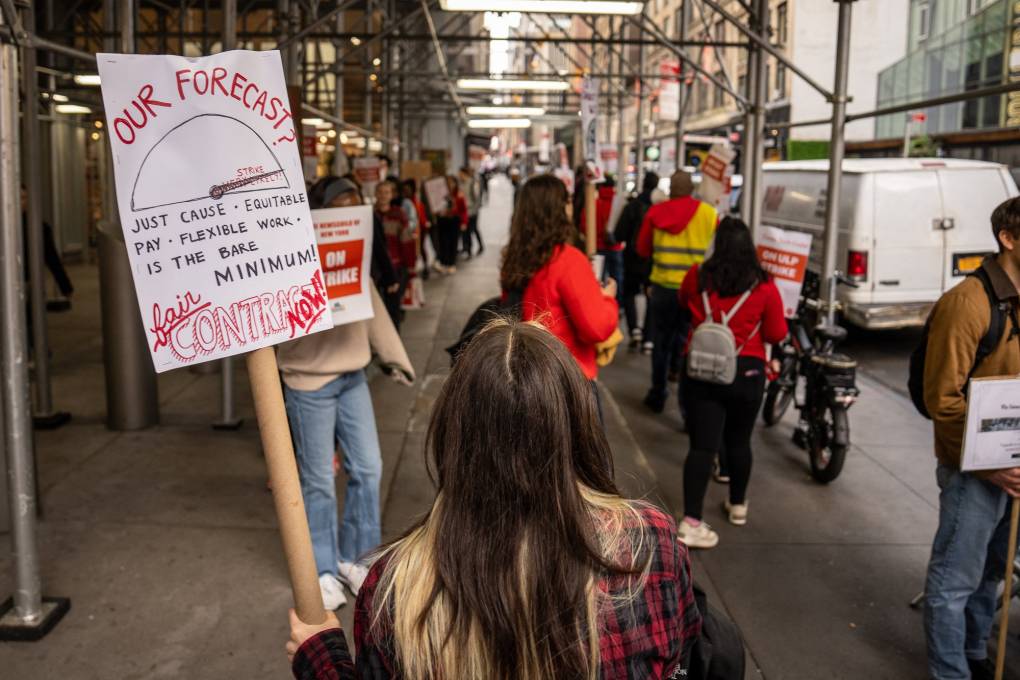
Election Watchers Be Warned: Notorious New York Times Needle Might Not Go Live
Are People and Businesses Leaving the Golden State? | Remembering Bill Russell
The Biggest Tech Unionization Effort Is Happening at the New York Times
Facebook's Terrible, Horrible, No Good, Very Bad Year
Rep. DeSaulnier Calls for Probe Into Trump Finances Following NYT Report
Uber Says It's Banning Use of 'Greyball' Tool to Foil Regulators
Sponsored
Player sponsored by
window.__IS_SSR__=true
window.__INITIAL_STATE__={
"attachmentsReducer": {
"audio_0": {
"type": "attachments",
"id": "audio_0",
"imgSizes": {
"kqedFullSize": {
"file": "https://ww2.kqed.org/news/wp-content/themes/KQED-unified/img/audio_bgs/background0.jpg"
}
}
},
"audio_1": {
"type": "attachments",
"id": "audio_1",
"imgSizes": {
"kqedFullSize": {
"file": "https://ww2.kqed.org/news/wp-content/themes/KQED-unified/img/audio_bgs/background1.jpg"
}
}
},
"audio_2": {
"type": "attachments",
"id": "audio_2",
"imgSizes": {
"kqedFullSize": {
"file": "https://ww2.kqed.org/news/wp-content/themes/KQED-unified/img/audio_bgs/background2.jpg"
}
}
},
"audio_3": {
"type": "attachments",
"id": "audio_3",
"imgSizes": {
"kqedFullSize": {
"file": "https://ww2.kqed.org/news/wp-content/themes/KQED-unified/img/audio_bgs/background3.jpg"
}
}
},
"audio_4": {
"type": "attachments",
"id": "audio_4",
"imgSizes": {
"kqedFullSize": {
"file": "https://ww2.kqed.org/news/wp-content/themes/KQED-unified/img/audio_bgs/background4.jpg"
}
}
},
"placeholder": {
"type": "attachments",
"id": "placeholder",
"imgSizes": {
"thumbnail": {
"file": "https://cdn.kqed.org/wp-content/uploads/2024/12/KQED-Default-Image-816638274-2000x1333-1-160x107.jpg",
"width": 160,
"height": 107,
"mimeType": "image/jpeg"
},
"medium": {
"file": "https://cdn.kqed.org/wp-content/uploads/2024/12/KQED-Default-Image-816638274-2000x1333-1-800x533.jpg",
"width": 800,
"height": 533,
"mimeType": "image/jpeg"
},
"medium_large": {
"file": "https://cdn.kqed.org/wp-content/uploads/2024/12/KQED-Default-Image-816638274-2000x1333-1-768x512.jpg",
"width": 768,
"height": 512,
"mimeType": "image/jpeg"
},
"large": {
"file": "https://cdn.kqed.org/wp-content/uploads/2024/12/KQED-Default-Image-816638274-2000x1333-1-1020x680.jpg",
"width": 1020,
"height": 680,
"mimeType": "image/jpeg"
},
"1536x1536": {
"file": "https://cdn.kqed.org/wp-content/uploads/2024/12/KQED-Default-Image-816638274-2000x1333-1-1536x1024.jpg",
"width": 1536,
"height": 1024,
"mimeType": "image/jpeg"
},
"fd-lrg": {
"file": "https://cdn.kqed.org/wp-content/uploads/2024/12/KQED-Default-Image-816638274-2000x1333-1-1536x1024.jpg",
"width": 1536,
"height": 1024,
"mimeType": "image/jpeg"
},
"fd-med": {
"file": "https://cdn.kqed.org/wp-content/uploads/2024/12/KQED-Default-Image-816638274-2000x1333-1-1020x680.jpg",
"width": 1020,
"height": 680,
"mimeType": "image/jpeg"
},
"fd-sm": {
"file": "https://cdn.kqed.org/wp-content/uploads/2024/12/KQED-Default-Image-816638274-2000x1333-1-800x533.jpg",
"width": 800,
"height": 533,
"mimeType": "image/jpeg"
},
"post-thumbnail": {
"file": "https://cdn.kqed.org/wp-content/uploads/2024/12/KQED-Default-Image-816638274-2000x1333-1-672x372.jpg",
"width": 672,
"height": 372,
"mimeType": "image/jpeg"
},
"twentyfourteen-full-width": {
"file": "https://cdn.kqed.org/wp-content/uploads/2024/12/KQED-Default-Image-816638274-2000x1333-1-1038x576.jpg",
"width": 1038,
"height": 576,
"mimeType": "image/jpeg"
},
"xxsmall": {
"file": "https://cdn.kqed.org/wp-content/uploads/2024/12/KQED-Default-Image-816638274-2000x1333-1-160x107.jpg",
"width": 160,
"height": 107,
"mimeType": "image/jpeg"
},
"xsmall": {
"file": "https://cdn.kqed.org/wp-content/uploads/2024/12/KQED-Default-Image-816638274-2000x1333-1-672x372.jpg",
"width": 672,
"height": 372,
"mimeType": "image/jpeg"
},
"small": {
"file": "https://cdn.kqed.org/wp-content/uploads/2024/12/KQED-Default-Image-816638274-2000x1333-1-672x372.jpg",
"width": 672,
"height": 372,
"mimeType": "image/jpeg"
},
"xlarge": {
"file": "https://cdn.kqed.org/wp-content/uploads/2024/12/KQED-Default-Image-816638274-2000x1333-1-1020x680.jpg",
"width": 1020,
"height": 680,
"mimeType": "image/jpeg"
},
"full-width": {
"file": "https://cdn.kqed.org/wp-content/uploads/2024/12/KQED-Default-Image-816638274-2000x1333-1-1920x1280.jpg",
"width": 1920,
"height": 1280,
"mimeType": "image/jpeg"
},
"guest-author-32": {
"file": "https://cdn.kqed.org/wp-content/uploads/2025/01/KQED-Default-Image-816638274-1333x1333-1-160x160.jpg",
"width": 32,
"height": 32,
"mimeType": "image/jpeg"
},
"guest-author-50": {
"file": "https://cdn.kqed.org/wp-content/uploads/2025/01/KQED-Default-Image-816638274-1333x1333-1-160x160.jpg",
"width": 50,
"height": 50,
"mimeType": "image/jpeg"
},
"guest-author-64": {
"file": "https://cdn.kqed.org/wp-content/uploads/2025/01/KQED-Default-Image-816638274-1333x1333-1-160x160.jpg",
"width": 64,
"height": 64,
"mimeType": "image/jpeg"
},
"guest-author-96": {
"file": "https://cdn.kqed.org/wp-content/uploads/2025/01/KQED-Default-Image-816638274-1333x1333-1-160x160.jpg",
"width": 96,
"height": 96,
"mimeType": "image/jpeg"
},
"guest-author-128": {
"file": "https://cdn.kqed.org/wp-content/uploads/2025/01/KQED-Default-Image-816638274-1333x1333-1-160x160.jpg",
"width": 128,
"height": 128,
"mimeType": "image/jpeg"
},
"detail": {
"file": "https://cdn.kqed.org/wp-content/uploads/2025/01/KQED-Default-Image-816638274-1333x1333-1-160x160.jpg",
"width": 160,
"height": 160,
"mimeType": "image/jpeg"
},
"kqedFullSize": {
"file": "https://cdn.kqed.org/wp-content/uploads/2024/12/KQED-Default-Image-816638274-2000x1333-1.jpg",
"width": 2000,
"height": 1333
}
}
},
"news_12012780": {
"type": "attachments",
"id": "news_12012780",
"meta": {
"index": "attachments_1716263798",
"site": "news",
"id": "12012780",
"found": true
},
"title": "US-LABOR-NEWSPAPER-STRIKE",
"publishDate": 1730845187,
"status": "inherit",
"parent": 12012775,
"modified": 1730845222,
"caption": "Members of The New York Times Tech Guild protest outside of the New York Times headquarters building in New York City on Nov. 4, 2024.",
"credit": "David Dee Delgado/AFP via Getty Images",
"altTag": null,
"description": null,
"imgSizes": {
"medium": {
"file": "https://cdn.kqed.org/wp-content/uploads/sites/10/2024/11/NYTStrikeGetty1-800x533.jpg",
"width": 800,
"height": 533,
"mimeType": "image/jpeg"
},
"large": {
"file": "https://cdn.kqed.org/wp-content/uploads/sites/10/2024/11/NYTStrikeGetty1-1020x680.jpg",
"width": 1020,
"height": 680,
"mimeType": "image/jpeg"
},
"thumbnail": {
"file": "https://cdn.kqed.org/wp-content/uploads/sites/10/2024/11/NYTStrikeGetty1-160x107.jpg",
"width": 160,
"height": 107,
"mimeType": "image/jpeg"
},
"1536x1536": {
"file": "https://cdn.kqed.org/wp-content/uploads/sites/10/2024/11/NYTStrikeGetty1-1536x1024.jpg",
"width": 1536,
"height": 1024,
"mimeType": "image/jpeg"
},
"post-thumbnail": {
"file": "https://cdn.kqed.org/wp-content/uploads/sites/10/2024/11/NYTStrikeGetty1-672x372.jpg",
"width": 672,
"height": 372,
"mimeType": "image/jpeg"
},
"twentyfourteen-full-width": {
"file": "https://cdn.kqed.org/wp-content/uploads/sites/10/2024/11/NYTStrikeGetty1-1038x576.jpg",
"width": 1038,
"height": 576,
"mimeType": "image/jpeg"
},
"full-width": {
"file": "https://cdn.kqed.org/wp-content/uploads/sites/10/2024/11/NYTStrikeGetty1-1920x1280.jpg",
"width": 1920,
"height": 1280,
"mimeType": "image/jpeg"
},
"kqedFullSize": {
"file": "https://cdn.kqed.org/wp-content/uploads/sites/10/2024/11/NYTStrikeGetty1.jpg",
"width": 2000,
"height": 1333
}
},
"fetchFailed": false,
"isLoading": false
},
"news_11921874": {
"type": "attachments",
"id": "news_11921874",
"meta": {
"index": "attachments_1716263798",
"site": "news",
"id": "11921874",
"found": true
},
"parent": 11921871,
"imgSizes": {
"twentyfourteen-full-width": {
"file": "https://ww2.kqed.org/app/uploads/sites/10/2022/08/Image-from-iOS-1038x576.jpg",
"width": 1038,
"mimeType": "image/jpeg",
"height": 576
},
"thumbnail": {
"file": "https://ww2.kqed.org/app/uploads/sites/10/2022/08/Image-from-iOS-160x90.jpg",
"width": 160,
"mimeType": "image/jpeg",
"height": 90
},
"post-thumbnail": {
"file": "https://ww2.kqed.org/app/uploads/sites/10/2022/08/Image-from-iOS-672x372.jpg",
"width": 672,
"mimeType": "image/jpeg",
"height": 372
},
"kqedFullSize": {
"file": "https://ww2.kqed.org/app/uploads/sites/10/2022/08/Image-from-iOS.jpg",
"width": 1918,
"height": 1080
},
"large": {
"file": "https://ww2.kqed.org/app/uploads/sites/10/2022/08/Image-from-iOS-1020x574.jpg",
"width": 1020,
"mimeType": "image/jpeg",
"height": 574
},
"1536x1536": {
"file": "https://ww2.kqed.org/app/uploads/sites/10/2022/08/Image-from-iOS-1536x865.jpg",
"width": 1536,
"mimeType": "image/jpeg",
"height": 865
},
"medium": {
"file": "https://ww2.kqed.org/app/uploads/sites/10/2022/08/Image-from-iOS-800x450.jpg",
"width": 800,
"mimeType": "image/jpeg",
"height": 450
}
},
"publishDate": 1659743551,
"modified": 1659743674,
"caption": "Jeremy C. Owens, Monica Z. Lam, Rachael Myrow, and Abbie Langston.",
"description": null,
"title": "Image-from-iOS",
"credit": "Christopher J Beale",
"status": "inherit",
"altTag": null,
"fetchFailed": false,
"isLoading": false
},
"news_11869198": {
"type": "attachments",
"id": "news_11869198",
"meta": {
"index": "attachments_1716263798",
"site": "news",
"id": "11869198",
"found": true
},
"parent": 11869185,
"imgSizes": {
"twentyfourteen-full-width": {
"file": "https://ww2.kqed.org/app/uploads/sites/10/2021/04/NYTbldg-1038x576.jpg",
"width": 1038,
"mimeType": "image/jpeg",
"height": 576
},
"thumbnail": {
"file": "https://ww2.kqed.org/app/uploads/sites/10/2021/04/NYTbldg-160x102.jpg",
"width": 160,
"mimeType": "image/jpeg",
"height": 102
},
"post-thumbnail": {
"file": "https://ww2.kqed.org/app/uploads/sites/10/2021/04/NYTbldg-672x372.jpg",
"width": 672,
"mimeType": "image/jpeg",
"height": 372
},
"kqedFullSize": {
"file": "https://ww2.kqed.org/app/uploads/sites/10/2021/04/NYTbldg.jpg",
"width": 1920,
"height": 1225
},
"large": {
"file": "https://ww2.kqed.org/app/uploads/sites/10/2021/04/NYTbldg-1020x651.jpg",
"width": 1020,
"mimeType": "image/jpeg",
"height": 651
},
"1536x1536": {
"file": "https://ww2.kqed.org/app/uploads/sites/10/2021/04/NYTbldg-1536x980.jpg",
"width": 1536,
"mimeType": "image/jpeg",
"height": 980
},
"medium": {
"file": "https://ww2.kqed.org/app/uploads/sites/10/2021/04/NYTbldg-800x510.jpg",
"width": 800,
"mimeType": "image/jpeg",
"height": 510
}
},
"publishDate": 1618298726,
"modified": 1618338543,
"caption": "The New York Times building in New York City.",
"description": null,
"title": "NYTbldg",
"credit": "Johannes Eisele/AFP via Getty Images",
"status": "inherit",
"altTag": null,
"fetchFailed": false,
"isLoading": false
},
"news_11714401": {
"type": "attachments",
"id": "news_11714401",
"meta": {
"index": "attachments_1716263798",
"site": "news",
"id": "11714401",
"found": true
},
"parent": 11713801,
"imgSizes": {
"twentyfourteen-full-width": {
"file": "https://ww2.kqed.org/app/uploads/sites/10/2018/12/RS2408_facebook20120516-1038x576.jpg",
"width": 1038,
"mimeType": "image/jpeg",
"height": 576
},
"thumbnail": {
"file": "https://ww2.kqed.org/app/uploads/sites/10/2018/12/RS2408_facebook20120516-160x107.jpg",
"width": 160,
"mimeType": "image/jpeg",
"height": 107
},
"post-thumbnail": {
"file": "https://ww2.kqed.org/app/uploads/sites/10/2018/12/RS2408_facebook20120516-672x372.jpg",
"width": 672,
"mimeType": "image/jpeg",
"height": 372
},
"kqedFullSize": {
"file": "https://ww2.kqed.org/app/uploads/sites/10/2018/12/RS2408_facebook20120516.jpg",
"width": 6144,
"height": 4096
},
"large": {
"file": "https://ww2.kqed.org/app/uploads/sites/10/2018/12/RS2408_facebook20120516-1020x680.jpg",
"width": 1020,
"mimeType": "image/jpeg",
"height": 680
},
"complete_open_graph": {
"file": "https://ww2.kqed.org/app/uploads/sites/10/2018/12/RS2408_facebook20120516-1200x800.jpg",
"width": 1200,
"mimeType": "image/jpeg",
"height": 800
},
"guest-author-50": {
"file": "https://ww2.kqed.org/app/uploads/sites/10/2018/12/RS2408_facebook20120516-50x50.jpg",
"width": 50,
"mimeType": "image/jpeg",
"height": 50
},
"guest-author-96": {
"file": "https://ww2.kqed.org/app/uploads/sites/10/2018/12/RS2408_facebook20120516-96x96.jpg",
"width": 96,
"mimeType": "image/jpeg",
"height": 96
},
"medium": {
"file": "https://ww2.kqed.org/app/uploads/sites/10/2018/12/RS2408_facebook20120516-800x533.jpg",
"width": 800,
"mimeType": "image/jpeg",
"height": 533
},
"guest-author-64": {
"file": "https://ww2.kqed.org/app/uploads/sites/10/2018/12/RS2408_facebook20120516-64x64.jpg",
"width": 64,
"mimeType": "image/jpeg",
"height": 64
},
"guest-author-32": {
"file": "https://ww2.kqed.org/app/uploads/sites/10/2018/12/RS2408_facebook20120516-32x32.jpg",
"width": 32,
"mimeType": "image/jpeg",
"height": 32
},
"full-width": {
"file": "https://ww2.kqed.org/app/uploads/sites/10/2018/12/RS2408_facebook20120516-1920x1280.jpg",
"width": 1920,
"mimeType": "image/jpeg",
"height": 1280
},
"detail": {
"file": "https://ww2.kqed.org/app/uploads/sites/10/2018/12/RS2408_facebook20120516-150x150.jpg",
"width": 150,
"mimeType": "image/jpeg",
"height": 150
},
"guest-author-128": {
"file": "https://ww2.kqed.org/app/uploads/sites/10/2018/12/RS2408_facebook20120516-128x128.jpg",
"width": 128,
"mimeType": "image/jpeg",
"height": 128
}
},
"publishDate": 1545423807,
"modified": 1545935325,
"caption": "2018 is likely to be remembered as the year Facebook lost its \"glow\" with consumers.",
"description": "2018 is likely to be remembered as the year Facebook lost its \"glow\" with consumers after a relentless series of revelations about how little the company values user privacy while privileging the priorities of paying customers (i.e. advertisers and corporate partners).",
"title": "A picture taken on May 14, 2012 in Paris",
"credit": "JOEL SAGET/AFP/GettyImages",
"status": "inherit",
"fetchFailed": false,
"isLoading": false
},
"news_11696416": {
"type": "attachments",
"id": "news_11696416",
"meta": {
"index": "attachments_1716263798",
"site": "news",
"id": "11696416",
"found": true
},
"parent": 11696414,
"imgSizes": {
"small": {
"file": "https://ww2.kqed.org/app/uploads/sites/10/2018/10/RS33032_GettyImages-1044842760-qut-520x336.jpg",
"width": 520,
"mimeType": "image/jpeg",
"height": 336
},
"twentyfourteen-full-width": {
"file": "https://ww2.kqed.org/app/uploads/sites/10/2018/10/RS33032_GettyImages-1044842760-qut-1038x576.jpg",
"width": 1038,
"mimeType": "image/jpeg",
"height": 576
},
"thumbnail": {
"file": "https://ww2.kqed.org/app/uploads/sites/10/2018/10/RS33032_GettyImages-1044842760-qut-160x104.jpg",
"width": 160,
"mimeType": "image/jpeg",
"height": 104
},
"fd-sm": {
"file": "https://ww2.kqed.org/app/uploads/sites/10/2018/10/RS33032_GettyImages-1044842760-qut-960x621.jpg",
"width": 960,
"mimeType": "image/jpeg",
"height": 621
},
"post-thumbnail": {
"file": "https://ww2.kqed.org/app/uploads/sites/10/2018/10/RS33032_GettyImages-1044842760-qut-672x372.jpg",
"width": 672,
"mimeType": "image/jpeg",
"height": 372
},
"xsmall": {
"file": "https://ww2.kqed.org/app/uploads/sites/10/2018/10/RS33032_GettyImages-1044842760-qut-375x243.jpg",
"width": 375,
"mimeType": "image/jpeg",
"height": 243
},
"kqedFullSize": {
"file": "https://ww2.kqed.org/app/uploads/sites/10/2018/10/RS33032_GettyImages-1044842760-qut.jpg",
"width": 1920,
"height": 1242
},
"large": {
"file": "https://ww2.kqed.org/app/uploads/sites/10/2018/10/RS33032_GettyImages-1044842760-qut-1020x660.jpg",
"width": 1020,
"mimeType": "image/jpeg",
"height": 660
},
"xlarge": {
"file": "https://ww2.kqed.org/app/uploads/sites/10/2018/10/RS33032_GettyImages-1044842760-qut-1180x763.jpg",
"width": 1180,
"mimeType": "image/jpeg",
"height": 763
},
"complete_open_graph": {
"file": "https://ww2.kqed.org/app/uploads/sites/10/2018/10/RS33032_GettyImages-1044842760-qut-1200x776.jpg",
"width": 1200,
"mimeType": "image/jpeg",
"height": 776
},
"guest-author-50": {
"file": "https://ww2.kqed.org/app/uploads/sites/10/2018/10/RS33032_GettyImages-1044842760-qut-50x50.jpg",
"width": 50,
"mimeType": "image/jpeg",
"height": 50
},
"guest-author-96": {
"file": "https://ww2.kqed.org/app/uploads/sites/10/2018/10/RS33032_GettyImages-1044842760-qut-96x96.jpg",
"width": 96,
"mimeType": "image/jpeg",
"height": 96
},
"medium": {
"file": "https://ww2.kqed.org/app/uploads/sites/10/2018/10/RS33032_GettyImages-1044842760-qut-800x518.jpg",
"width": 800,
"mimeType": "image/jpeg",
"height": 518
},
"guest-author-64": {
"file": "https://ww2.kqed.org/app/uploads/sites/10/2018/10/RS33032_GettyImages-1044842760-qut-64x64.jpg",
"width": 64,
"mimeType": "image/jpeg",
"height": 64
},
"guest-author-32": {
"file": "https://ww2.kqed.org/app/uploads/sites/10/2018/10/RS33032_GettyImages-1044842760-qut-32x32.jpg",
"width": 32,
"mimeType": "image/jpeg",
"height": 32
},
"fd-lrg": {
"file": "https://ww2.kqed.org/app/uploads/sites/10/2018/10/RS33032_GettyImages-1044842760-qut-1920x1242.jpg",
"width": 1920,
"mimeType": "image/jpeg",
"height": 1242
},
"fd-med": {
"file": "https://ww2.kqed.org/app/uploads/sites/10/2018/10/RS33032_GettyImages-1044842760-qut-1180x763.jpg",
"width": 1180,
"mimeType": "image/jpeg",
"height": 763
},
"full-width": {
"file": "https://ww2.kqed.org/app/uploads/sites/10/2018/10/RS33032_GettyImages-1044842760-qut-1920x1242.jpg",
"width": 1920,
"mimeType": "image/jpeg",
"height": 1242
},
"detail": {
"file": "https://ww2.kqed.org/app/uploads/sites/10/2018/10/RS33032_GettyImages-1044842760-qut-150x150.jpg",
"width": 150,
"mimeType": "image/jpeg",
"height": 150
},
"guest-author-128": {
"file": "https://ww2.kqed.org/app/uploads/sites/10/2018/10/RS33032_GettyImages-1044842760-qut-128x128.jpg",
"width": 128,
"mimeType": "image/jpeg",
"height": 128
},
"xxsmall": {
"file": "https://ww2.kqed.org/app/uploads/sites/10/2018/10/RS33032_GettyImages-1044842760-qut-240x155.jpg",
"width": 240,
"mimeType": "image/jpeg",
"height": 155
}
},
"publishDate": 1538601518,
"modified": 1538601573,
"caption": "President Trump speaks during a \"Make America Great Again\" rally at Landers Center in Southaven, Mississippi, on Oct. 2, 2018.",
"description": null,
"title": "US-POLITICS-TRUMP",
"credit": "Mandel Ngan/AFP/Getty Images",
"status": "inherit",
"fetchFailed": false,
"isLoading": false
},
"news_11351505": {
"type": "attachments",
"id": "news_11351505",
"meta": {
"index": "attachments_1716263798",
"site": "news",
"id": "11351505",
"found": true
},
"parent": 11351499,
"imgSizes": {
"small": {
"file": "https://ww2.kqed.org/app/uploads/sites/10/2017/03/RS16541_IMG_0523-qut-520x347.jpg",
"width": 520,
"mimeType": "image/jpeg",
"height": 347
},
"twentyfourteen-full-width": {
"file": "https://ww2.kqed.org/app/uploads/sites/10/2017/03/RS16541_IMG_0523-qut-1038x576.jpg",
"width": 1038,
"mimeType": "image/jpeg",
"height": 576
},
"thumbnail": {
"file": "https://ww2.kqed.org/app/uploads/sites/10/2017/03/RS16541_IMG_0523-qut-160x107.jpg",
"width": 160,
"mimeType": "image/jpeg",
"height": 107
},
"fd-sm": {
"file": "https://ww2.kqed.org/app/uploads/sites/10/2017/03/RS16541_IMG_0523-qut-960x640.jpg",
"width": 960,
"mimeType": "image/jpeg",
"height": 640
},
"post-thumbnail": {
"file": "https://ww2.kqed.org/app/uploads/sites/10/2017/03/RS16541_IMG_0523-qut-672x372.jpg",
"width": 672,
"mimeType": "image/jpeg",
"height": 372
},
"xsmall": {
"file": "https://ww2.kqed.org/app/uploads/sites/10/2017/03/RS16541_IMG_0523-qut-375x250.jpg",
"width": 375,
"mimeType": "image/jpeg",
"height": 250
},
"kqedFullSize": {
"file": "https://ww2.kqed.org/app/uploads/sites/10/2017/03/RS16541_IMG_0523-qut.jpg",
"width": 1920,
"height": 1280
},
"large": {
"file": "https://ww2.kqed.org/app/uploads/sites/10/2017/03/RS16541_IMG_0523-qut-1020x680.jpg",
"width": 1020,
"mimeType": "image/jpeg",
"height": 680
},
"xlarge": {
"file": "https://ww2.kqed.org/app/uploads/sites/10/2017/03/RS16541_IMG_0523-qut-1180x787.jpg",
"width": 1180,
"mimeType": "image/jpeg",
"height": 787
},
"guest-author-50": {
"file": "https://ww2.kqed.org/app/uploads/sites/10/2017/03/RS16541_IMG_0523-qut-50x50.jpg",
"width": 50,
"mimeType": "image/jpeg",
"height": 50
},
"guest-author-96": {
"file": "https://ww2.kqed.org/app/uploads/sites/10/2017/03/RS16541_IMG_0523-qut-96x96.jpg",
"width": 96,
"mimeType": "image/jpeg",
"height": 96
},
"medium": {
"file": "https://ww2.kqed.org/app/uploads/sites/10/2017/03/RS16541_IMG_0523-qut-800x533.jpg",
"width": 800,
"mimeType": "image/jpeg",
"height": 533
},
"guest-author-64": {
"file": "https://ww2.kqed.org/app/uploads/sites/10/2017/03/RS16541_IMG_0523-qut-64x64.jpg",
"width": 64,
"mimeType": "image/jpeg",
"height": 64
},
"guest-author-32": {
"file": "https://ww2.kqed.org/app/uploads/sites/10/2017/03/RS16541_IMG_0523-qut-32x32.jpg",
"width": 32,
"mimeType": "image/jpeg",
"height": 32
},
"fd-lrg": {
"file": "https://ww2.kqed.org/app/uploads/sites/10/2017/03/RS16541_IMG_0523-qut-1920x1280.jpg",
"width": 1920,
"mimeType": "image/jpeg",
"height": 1280
},
"fd-med": {
"file": "https://ww2.kqed.org/app/uploads/sites/10/2017/03/RS16541_IMG_0523-qut-1180x787.jpg",
"width": 1180,
"mimeType": "image/jpeg",
"height": 787
},
"full-width": {
"file": "https://ww2.kqed.org/app/uploads/sites/10/2017/03/RS16541_IMG_0523-qut-1920x1280.jpg",
"width": 1920,
"mimeType": "image/jpeg",
"height": 1280
},
"detail": {
"file": "https://ww2.kqed.org/app/uploads/sites/10/2017/03/RS16541_IMG_0523-qut-150x150.jpg",
"width": 150,
"mimeType": "image/jpeg",
"height": 150
},
"guest-author-128": {
"file": "https://ww2.kqed.org/app/uploads/sites/10/2017/03/RS16541_IMG_0523-qut-128x128.jpg",
"width": 128,
"mimeType": "image/jpeg",
"height": 128
},
"xxsmall": {
"file": "https://ww2.kqed.org/app/uploads/sites/10/2017/03/RS16541_IMG_0523-qut-240x160.jpg",
"width": 240,
"mimeType": "image/jpeg",
"height": 160
}
},
"publishDate": 1489077823,
"modified": 1489077860,
"caption": "An Uber on the streets of San Francisco in August 2015.",
"description": null,
"title": "RS16541_IMG_0523-qut",
"credit": "Ericka Cruz Guevarra/KQED",
"status": "inherit",
"fetchFailed": false,
"isLoading": false
}
},
"audioPlayerReducer": {
"postId": "stream_live",
"isPaused": true,
"isPlaying": false,
"pfsActive": false,
"pledgeModalIsOpen": true,
"playerDrawerIsOpen": false
},
"authorsReducer": {
"dclyde": {
"type": "authors",
"id": "104",
"meta": {
"index": "authors_1716337520",
"id": "104",
"found": true
},
"name": "Don Clyde",
"firstName": "Don",
"lastName": "Clyde",
"slug": "dclyde",
"email": "dclyde@kqed.org",
"display_author_email": false,
"staff_mastheads": [],
"title": "KQED Contributor",
"bio": "Don Clyde is an online producer, reporter and copy editor for KQED News. Before venturing into journalism, he worked as a medical device engineer and scientist for nearly a decade after earning a degree in physics from UC Berkeley. He loves travel, reading, living in Oakland, and most importantly, a good walk. Email him at dclyde@kqed.org or follow him @clydedon.",
"avatar": "https://secure.gravatar.com/avatar/decd3e640c3eedbd0a574275aebb2d19?s=600&d=blank&r=g",
"twitter": "clydedon",
"facebook": null,
"instagram": null,
"linkedin": null,
"sites": [
{
"site": "artschool",
"roles": [
"editor"
]
},
{
"site": "news",
"roles": [
"administrator"
]
},
{
"site": "futureofyou",
"roles": [
"editor"
]
},
{
"site": "about",
"roles": [
"editor"
]
},
{
"site": "mindshift",
"roles": [
"contributor"
]
},
{
"site": "bayareabites",
"roles": [
"contributor"
]
},
{
"site": "lowdown",
"roles": [
"editor"
]
},
{
"site": "stateofhealth",
"roles": [
"administrator"
]
},
{
"site": "spark",
"roles": [
"administrator"
]
},
{
"site": "trulyca",
"roles": [
"administrator"
]
},
{
"site": "imagemakers",
"roles": [
"administrator"
]
},
{
"site": "science",
"roles": []
},
{
"site": "education",
"roles": [
"editor"
]
},
{
"site": "quest",
"roles": [
"subscriber"
]
},
{
"site": "checkplease",
"roles": [
"subscriber"
]
},
{
"site": "forum",
"roles": [
"editor"
]
},
{
"site": "perspectives",
"roles": [
"editor"
]
}
],
"headData": {
"title": "Don Clyde | KQED",
"description": "KQED Contributor",
"ogImgSrc": "https://secure.gravatar.com/avatar/decd3e640c3eedbd0a574275aebb2d19?s=600&d=blank&r=g",
"twImgSrc": "https://secure.gravatar.com/avatar/decd3e640c3eedbd0a574275aebb2d19?s=600&d=blank&r=g"
},
"isLoading": false,
"link": "/author/dclyde"
},
"danbrekke": {
"type": "authors",
"id": "222",
"meta": {
"index": "authors_1716337520",
"id": "222",
"found": true
},
"name": "Dan Brekke",
"firstName": "Dan",
"lastName": "Brekke",
"slug": "danbrekke",
"email": "dbrekke@kqed.org",
"display_author_email": true,
"staff_mastheads": [
"news",
"science"
],
"title": "KQED Editor and Reporter",
"bio": "Dan Brekke is a reporter and editor for KQED News, responsible for coverage of topics ranging from California water issues to the Bay Area's transportation challenges. In a newsroom career that began in Chicago in 1972, Dan has worked for \u003cem>The San Francisco Examiner,\u003c/em> Wired and TechTV and has been published in The New York Times, The New York Times Magazine, Business 2.0, Salon and elsewhere.\r\n\r\nSince joining KQED in 2007, Dan has reported, edited and produced both radio and online features and breaking news pieces. He has shared as both editor and reporter in four Society of Professional Journalists Norcal Excellence in Journalism awards and one Edward R. Murrow regional award. He was chosen for a spring 2017 residency at the Mesa Refuge to advance his research on California salmon.\r\n\r\nEmail Dan at: \u003ca href=\"mailto:dbrekke@kqed.org\">dbrekke@kqed.org\u003c/a>\r\n\r\n\u003cstrong>Twitter:\u003c/strong> \u003ca href=\"https://twitter.com/danbrekke\" rel=\"noopener noreferrer\">twitter.com/danbrekke\u003c/a>\r\n\u003cstrong>Facebook:\u003c/strong> \u003ca href=\"https://www.facebook.com/danbrekke\" rel=\"noopener noreferrer\">www.facebook.com/danbrekke\u003c/a>\r\n\u003cstrong>LinkedIn:\u003c/strong> \u003ca href=\"https://www.linkedin.com/in/danbrekke\" rel=\"noopener noreferrer\">www.linkedin.com/in/danbrekke\u003c/a>",
"avatar": "https://secure.gravatar.com/avatar/c8126230345efca3f7aa89b1a402be45?s=600&d=mm&r=g",
"twitter": "danbrekke",
"facebook": null,
"instagram": "https://www.instagram.com/dan.brekke/",
"linkedin": "https://www.linkedin.com/in/danbrekke/",
"sites": [
{
"site": "news",
"roles": [
"administrator",
"create_posts"
]
},
{
"site": "stateofhealth",
"roles": [
"editor"
]
},
{
"site": "science",
"roles": [
"editor"
]
},
{
"site": "quest",
"roles": [
"contributor"
]
},
{
"site": "food",
"roles": [
"contributor"
]
},
{
"site": "forum",
"roles": [
"contributor"
]
},
{
"site": "liveblog",
"roles": [
"editor"
]
}
],
"headData": {
"title": "Dan Brekke | KQED",
"description": "KQED Editor and Reporter",
"ogImgSrc": "https://secure.gravatar.com/avatar/c8126230345efca3f7aa89b1a402be45?s=600&d=mm&r=g",
"twImgSrc": "https://secure.gravatar.com/avatar/c8126230345efca3f7aa89b1a402be45?s=600&d=mm&r=g"
},
"isLoading": false,
"link": "/author/danbrekke"
},
"kqednewsstaffandwires": {
"type": "authors",
"id": "237",
"meta": {
"index": "authors_1716337520",
"id": "237",
"found": true
},
"name": "KQED News Staff and Wires",
"firstName": "KQED News Staff and Wires",
"lastName": null,
"slug": "kqednewsstaffandwires",
"email": "onlinenewsstaff@kqed.org",
"display_author_email": false,
"staff_mastheads": [],
"title": null,
"bio": null,
"avatar": "https://secure.gravatar.com/avatar/72295af8ebbfbd19a4948f5271285664?s=600&d=blank&r=g",
"twitter": null,
"facebook": null,
"instagram": null,
"linkedin": null,
"sites": [
{
"site": "arts",
"roles": [
"contributor"
]
},
{
"site": "news",
"roles": [
"contributor"
]
},
{
"site": "lowdown",
"roles": [
"author"
]
},
{
"site": "stateofhealth",
"roles": [
"contributor"
]
},
{
"site": "food",
"roles": [
"author"
]
}
],
"headData": {
"title": "KQED News Staff and Wires | KQED",
"description": null,
"ogImgSrc": "https://secure.gravatar.com/avatar/72295af8ebbfbd19a4948f5271285664?s=600&d=blank&r=g",
"twImgSrc": "https://secure.gravatar.com/avatar/72295af8ebbfbd19a4948f5271285664?s=600&d=blank&r=g"
},
"isLoading": false,
"link": "/author/kqednewsstaffandwires"
},
"mlam": {
"type": "authors",
"id": "244",
"meta": {
"index": "authors_1716337520",
"id": "244",
"found": true
},
"name": "Monica Lam",
"firstName": "Monica Z.",
"lastName": "Lam",
"slug": "mlam",
"email": "mlam@kqed.org",
"display_author_email": true,
"staff_mastheads": [
"news"
],
"title": "KQED Senior Producer",
"bio": "Monica is senior producer of the weekly current affairs program, \"KQED Newsroom.\" She's also served as senior editor of digital content at KQED. She likes to report and edit as well as produce video and take photos.\r\n\r\nBefore joining KQED, Monica worked at the Center for Investigative Reporting, where she examined conditions inside \u003cspan style=\"font-weight: 400;\">maximum security \u003c/span>prisons and abuse in state-run institutions for the developmentally disabled. Prior to that, she produced and directed \u003cem>Journey of the Bonesetter's Daughter,\u003c/em> a documentary that follows novelist Amy Tan as she creates an opera based on her family history.\r\n\r\nMonica's work has been honored with a duPont Award, five Emmys, regional and national Murrow Awards, and has been recognized by Investigative Reporters and Editors, the Society of Professional Journalists, Religion Newswriters Association and the San Francisco Peninsula Press Club. Monica studied urban studies at Stanford University and earned a master's in journalism at University of California at Berkeley. Follow her on twitter: @monicazlam",
"avatar": "https://secure.gravatar.com/avatar/018c474b2b71f43e0e6ca9b15a0ad36f?s=600&d=blank&r=g",
"twitter": "@monicazlam",
"facebook": null,
"instagram": null,
"linkedin": null,
"sites": [
{
"site": "arts",
"roles": [
"administrator"
]
},
{
"site": "news",
"roles": [
"editor"
]
},
{
"site": "trulyca",
"roles": [
"editor"
]
},
{
"site": "science",
"roles": [
"editor"
]
},
{
"site": "breakingnews",
"roles": [
"editor"
]
}
],
"headData": {
"title": "Monica Lam | KQED",
"description": "KQED Senior Producer",
"ogImgSrc": "https://secure.gravatar.com/avatar/018c474b2b71f43e0e6ca9b15a0ad36f?s=600&d=blank&r=g",
"twImgSrc": "https://secure.gravatar.com/avatar/018c474b2b71f43e0e6ca9b15a0ad36f?s=600&d=blank&r=g"
},
"isLoading": false,
"link": "/author/mlam"
},
"petejonshuler": {
"type": "authors",
"id": "248",
"meta": {
"index": "authors_1716337520",
"id": "248",
"found": true
},
"name": "Peter Jon Shuler",
"firstName": "Peter",
"lastName": "Jon Shuler",
"slug": "petejonshuler",
"email": "pshuler@kqed.org",
"display_author_email": false,
"staff_mastheads": [
"news"
],
"title": "KQED Contributor",
"bio": null,
"avatar": "https://secure.gravatar.com/avatar/4bcbeaf7cf49fec98284db283a33a47b?s=600&d=blank&r=g",
"twitter": null,
"facebook": null,
"instagram": null,
"linkedin": null,
"sites": [
{
"site": "news",
"roles": [
"contributor"
]
}
],
"headData": {
"title": "Peter Jon Shuler | KQED",
"description": "KQED Contributor",
"ogImgSrc": "https://secure.gravatar.com/avatar/4bcbeaf7cf49fec98284db283a33a47b?s=600&d=blank&r=g",
"twImgSrc": "https://secure.gravatar.com/avatar/4bcbeaf7cf49fec98284db283a33a47b?s=600&d=blank&r=g"
},
"isLoading": false,
"link": "/author/petejonshuler"
},
"rachael-myrow": {
"type": "authors",
"id": "251",
"meta": {
"index": "authors_1716337520",
"id": "251",
"found": true
},
"name": "Rachael Myrow",
"firstName": "Rachael",
"lastName": "Myrow",
"slug": "rachael-myrow",
"email": "rmyrow@kqed.org",
"display_author_email": false,
"staff_mastheads": [
"news"
],
"title": "Senior Editor of KQED's Silicon Valley News Desk",
"bio": "Rachael Myrow is Senior Editor of KQED's Silicon Valley News Desk, reporting on topics like \u003ca href=\"https://www.kqed.org/news/12023367/what-big-tech-sees-in-donald-trump\">what Big Tech sees in President Trump\u003c/a>, \u003ca href=\"https://www.kqed.org/news/12020857/california-lawmaker-ready-revive-fight-regulating-ai\">California's many, many AI bills\u003c/a>, and the \u003ca href=\"https://www.kqed.org/news/12017713/lost-sounds-of-san-francisco\">lost sounds of San Francisco\u003c/a>. You can hear her work on \u003ca href=\"https://www.npr.org/search?query=Rachael%20Myrow&page=1\">NPR\u003c/a>, \u003ca href=\"https://theworld.org/people/rachael-myrow\">The World\u003c/a>, WBUR's \u003ca href=\"https://www.wbur.org/search?q=Rachael%20Myrow\">\u003ci>Here & Now\u003c/i>\u003c/a> and the BBC. \u003c/i>She also guest hosts for KQED's \u003ci>\u003ca href=\"https://www.kqed.org/forum/tag/rachael-myrow\">Forum\u003c/a>\u003c/i>. Over the years, she's talked with Kamau Bell, David Byrne, Kamala Harris, Tony Kushner, Armistead Maupin, Van Dyke Parks, Arnold Schwarzenegger and Tommie Smith, among others.\r\n\r\nBefore all this, she hosted \u003cem>The California Report\u003c/em> for 7+ years.\r\n\r\nAwards? Sure: Peabody, Edward R. Murrow, Regional Edward R. Murrow, RTNDA, Northern California RTNDA, SPJ Northern California Chapter, LA Press Club, Golden Mic. Prior to joining KQED, Rachael worked in Los Angeles at KPCC and Marketplace. She holds degrees in English and journalism from UC Berkeley (where she got her start in public radio on KALX-FM).\r\n\r\nOutside of the studio, you'll find Rachael hiking Bay Area trails and whipping up Instagram-ready meals in her kitchen. More recently, she's taken up native-forward gardening.",
"avatar": "https://secure.gravatar.com/avatar/87bf8cb5874e045cdff430523a6d48b1?s=600&d=blank&r=g",
"twitter": "rachaelmyrow",
"facebook": null,
"instagram": null,
"linkedin": "https://www.linkedin.com/in/rachaelmyrow/",
"sites": [
{
"site": "arts",
"roles": [
"administrator"
]
},
{
"site": "news",
"roles": [
"edit_others_posts",
"editor"
]
},
{
"site": "futureofyou",
"roles": [
"editor"
]
},
{
"site": "bayareabites",
"roles": [
"editor"
]
},
{
"site": "stateofhealth",
"roles": [
"editor"
]
},
{
"site": "science",
"roles": [
"editor"
]
},
{
"site": "food",
"roles": [
"editor"
]
},
{
"site": "forum",
"roles": [
"editor"
]
},
{
"site": "liveblog",
"roles": [
"author"
]
}
],
"headData": {
"title": "Rachael Myrow | KQED",
"description": "Senior Editor of KQED's Silicon Valley News Desk",
"ogImgSrc": "https://secure.gravatar.com/avatar/87bf8cb5874e045cdff430523a6d48b1?s=600&d=blank&r=g",
"twImgSrc": "https://secure.gravatar.com/avatar/87bf8cb5874e045cdff430523a6d48b1?s=600&d=blank&r=g"
},
"isLoading": false,
"link": "/author/rachael-myrow"
},
"samharnett": {
"type": "authors",
"id": "253",
"meta": {
"index": "authors_1716337520",
"id": "253",
"found": true
},
"name": "Sam Harnett",
"firstName": "Sam",
"lastName": "Harnett",
"slug": "samharnett",
"email": "samharnett@gmail.com",
"display_author_email": false,
"staff_mastheads": [],
"title": "KQED Contributor",
"bio": "Sam Harnett covered tech and work at KQED. He is the co-creator of \u003cem>\u003ca href=\"http://www.theworldaccordingtosound.org\">The World According to Sound\u003c/a>,\u003c/em> a 90-second podcast that features different sounds and the stories behind them.\r\n\r\nBefore coming to KQED, Sam worked as an independent reporter who contributed regularly to \u003cem>The California Report, Marketplace,\u003c/em> \u003cem>The World \u003c/em>and NPR.",
"avatar": "https://secure.gravatar.com/avatar/2538b972ac02f2b9546c7a6c59a0f3d0?s=600&d=blank&r=g",
"twitter": "Samwharnett",
"facebook": null,
"instagram": null,
"linkedin": null,
"sites": [
{
"site": "news",
"roles": [
"edit_others_posts",
"subscriber"
]
},
{
"site": "stateofhealth",
"roles": [
"author"
]
},
{
"site": "science",
"roles": [
"editor"
]
},
{
"site": "quest",
"roles": [
"subscriber"
]
}
],
"headData": {
"title": "Sam Harnett | KQED",
"description": "KQED Contributor",
"ogImgSrc": "https://secure.gravatar.com/avatar/2538b972ac02f2b9546c7a6c59a0f3d0?s=600&d=blank&r=g",
"twImgSrc": "https://secure.gravatar.com/avatar/2538b972ac02f2b9546c7a6c59a0f3d0?s=600&d=blank&r=g"
},
"isLoading": false,
"link": "/author/samharnett"
},
"kdebenedetti": {
"type": "authors",
"id": "11913",
"meta": {
"index": "authors_1716337520",
"id": "11913",
"found": true
},
"name": "Katie DeBenedetti",
"firstName": "Katie",
"lastName": "DeBenedetti",
"slug": "kdebenedetti",
"email": "kdebenedetti@kqed.org",
"display_author_email": false,
"staff_mastheads": [
"news",
"science"
],
"title": "KQED Contributor",
"bio": "Katie DeBenedetti is a digital reporter covering daily news for the Express Desk. Prior to joining KQED as a culture reporting intern in January 2024, she covered education and city government for the Napa Valley Register.",
"avatar": "https://secure.gravatar.com/avatar/6e31073cb8f7e4214ab03f42771d0f45?s=600&d=blank&r=g",
"twitter": null,
"facebook": null,
"instagram": null,
"linkedin": null,
"sites": [
{
"site": "news",
"roles": [
"author"
]
},
{
"site": "science",
"roles": [
"author"
]
},
{
"site": "liveblog",
"roles": [
"author"
]
}
],
"headData": {
"title": "Katie DeBenedetti | KQED",
"description": "KQED Contributor",
"ogImgSrc": "https://secure.gravatar.com/avatar/6e31073cb8f7e4214ab03f42771d0f45?s=600&d=blank&r=g",
"twImgSrc": "https://secure.gravatar.com/avatar/6e31073cb8f7e4214ab03f42771d0f45?s=600&d=blank&r=g"
},
"isLoading": false,
"link": "/author/kdebenedetti"
}
},
"breakingNewsReducer": {},
"pagesReducer": {},
"postsReducer": {
"stream_live": {
"type": "live",
"id": "stream_live",
"audioUrl": "https://streams.kqed.org/kqedradio",
"title": "Live Stream",
"excerpt": "Live Stream information currently unavailable.",
"link": "/radio",
"featImg": "",
"label": {
"name": "KQED Live",
"link": "/"
}
},
"stream_kqedNewscast": {
"type": "posts",
"id": "stream_kqedNewscast",
"audioUrl": "https://www.kqed.org/.stream/anon/radio/RDnews/newscast.mp3?_=1",
"title": "KQED Newscast",
"featImg": "",
"label": {
"name": "88.5 FM",
"link": "/"
}
},
"news_12012775": {
"type": "posts",
"id": "news_12012775",
"meta": {
"index": "posts_1716263798",
"site": "news",
"id": "12012775",
"score": null,
"sort": [
1730845389000
]
},
"guestAuthors": [],
"slug": "election-watchers-warned-new-york-times-needle-might-not-go-live",
"title": "Election Watchers Be Warned: Notorious New York Times Needle Might Not Go Live",
"publishDate": 1730845389,
"format": "standard",
"headTitle": "Election Watchers Be Warned: Notorious New York Times Needle Might Not Go Live | KQED",
"labelTerm": {
"site": "news"
},
"content": "\u003cp>The notorious \u003cem>New York Times \u003c/em>\u003ca href=\"https://www.kqed.org/news/12012418/when-election-results-2024-california-presidential-race\">election\u003c/a> needles are seared into the memories of many voters, but whether these forecast barometers will go live Tuesday evening is unknown due to a strike of tech workers at the publication.\u003c/p>\n\u003cp>As \u003ca href=\"https://x.com/benryanwriter/status/1853856671367348627\">one user on social media platform X \u003c/a>said after chief political analyst \u003ca href=\"https://x.com/Nate_Cohn/status/1853849211432734973\">Nate Cohn announced\u003c/a> he was unsure whether the feature would be on the \u003cem>New York Times \u003c/em>site on election night: “We need a needle on whether there will be a needle.”\u003c/p>\n\u003cp>The \u003cem>New York Times\u003c/em> introduced the needle in 2016 when its dramatic swing away from predicting a likely win for Hillary Clinton induced anxiety and criticism from many following along. In 2020, the state-level prediction for Georgia flipped toward Joe Biden as votes were tallied on election night. The blue-to-red ombre half circle spans from a very likely Democratic win on the left to a very likely Republican victory on the right.\u003c/p>\n\u003cp>[ad fullwidth]\u003c/p>\n\u003cp>As results come in, an algorithm behind the \u003ca href=\"https://www.nytimes.com/article/election-2024-results-needle.html\">needle\u003c/a>, which starts pointing directly upward, uses the hard results, plus information about voter trends, to shift one way or the other, raising heart rates and spurring flurries of page refreshes. It takes into account who tends to vote early versus on Election Day, whether urban or rural counties are reporting higher percentages and other historical trends that can make early vote counts more unreliable on their face.\u003c/p>\n\u003cp>That feature may or may not be available as swing states projecting razor-thin margins start reporting results on Tuesday night.\u003c/p>\n\u003cp>Although the striking tech workers don’t have a hand in the \u003cem>New York Times \u003c/em>prediction model, Cohn said, they usually maintain the algorithmic infrastructure that feeds data to the needle and handle technological issues across all of its other data pages quickly on election nights.\u003c/p>\n\u003cp>[aside label=\"From the 2024 Voter Guide\" link1='https://www.kqed.org/voterguide/president,Learn about the U.S. Presidential Election' hero=https://cdn.kqed.org/wp-content/uploads/sites/80/2024/09/Aside-Presidential-2024-General-Election-1200x1200-1.png]\u003c/p>\n\u003cp>“The needle is a huge data load, it’s more brittle [than results pages], and we’ve only published it a handful of times (v 1000s of results pages),” Cohn wrote on X. “There will be bugs and it could be hard to debug.”\u003c/p>\n\u003cp>He said it could run smoothly, allowing the needles to publish like normal, but added, “There are good reasons to bet against it.” Any bugs will make it likely that the \u003cem>New York Times\u003c/em> won’t turn the needles live, given the tech workers strike.\u003c/p>\n\u003cp>Members of the NYT Tech Guild walked off the job on Monday, about two years into unsuccessful negotiations between union leaders and management on a contract for the employees, \u003ca href=\"https://www.axios.com/2024/09/10/nyt-tech-union-strike-vote\">according to Axios\u003c/a>. They’re alleging unfair labor practices and asking for higher wages as part of the deal.\u003c/p>\n\u003cp>The strategically timed strike comes about two months after the guild, which represents about 600 data analysts, software engineers and designers, authorized a plan to halt work this week.\u003c/p>\n\u003cp>Regardless of whether the needle appears online, the \u003cem>New York Times \u003c/em>has assured readers it plans to periodically \u003ca href=\"https://www.nytimes.com/article/election-2024-results-needle.html\">run the prediction model internally a\u003c/a>nd release written updates on its live blog, reflecting what the needle indicates.\u003c/p>\n\u003cp>Some voters are calling the tool essential to avoid casting doubt on results as they come in.\u003c/p>\n\u003cp>“Will be a lot of misinformation in the absence of a needle,” @SpencerHakimian \u003ca href=\"https://x.com/SpencerHakimian/status/1853849522566553822\">replied\u003c/a> below Cohn’s thread.\u003c/p>\n\u003cp>Others are urging fellow stressed-out voters to avoid content based on the \u003cem>NYT’s\u003c/em> data — including the potential makeshift needle-based updates — to avoid crossing the virtual picket line.\u003c/p>\n\u003cp>“Don’t cross the picket line and look at the @nytimes needle (or the narrative version of the needle if they can’t get it to work),” @Handle4Adam \u003ca href=\"https://x.com/Handle4Adam/status/1853856902964257169\">wrote\u003c/a>.\u003c/p>\n\u003cp>Tech Guild members outside the \u003cem>NYT’s\u003c/em> office on Tuesday are pointing out exactly which functions can’t run without them — and hoping the absence of the elections needle could move the needle on negotiations.\u003c/p>\n\u003cp>“If you want a needle, we need a deal!” signs on the picket line \u003ca href=\"https://x.com/HellGateNY/status/1853896966192627787\">read\u003c/a>.\u003c/p>\n\u003cp>\u003c/p>\n",
"blocks": [],
"excerpt": "A strike by New York Times tech workers, who built and maintain the infrastructure behind the election predictions, could prevent the needle from being published.",
"status": "publish",
"parent": 0,
"modified": 1730846871,
"stats": {
"hasAudio": false,
"hasVideo": false,
"hasChartOrMap": false,
"iframeSrcs": [],
"hasGoogleForm": false,
"hasGallery": false,
"hasHearkenModule": false,
"hasPolis": false,
"paragraphCount": 20,
"wordCount": 716
},
"headData": {
"title": "Election Watchers Be Warned: Notorious New York Times Needle Might Not Go Live | KQED",
"description": "A strike by New York Times tech workers, who built and maintain the infrastructure behind the election predictions, could prevent the needle from being published.",
"ogTitle": "",
"ogDescription": "",
"ogImgId": "",
"twTitle": "",
"twDescription": "",
"twImgId": "",
"schema": {
"@context": "https://schema.org",
"@type": "NewsArticle",
"headline": "Election Watchers Be Warned: Notorious New York Times Needle Might Not Go Live",
"datePublished": "2024-11-05T14:23:09-08:00",
"dateModified": "2024-11-05T14:47:51-08:00",
"image": "https://cdn.kqed.org/wp-content/uploads/2020/02/KQED-OG-Image@1x.png",
"isAccessibleForFree": "True",
"publisher": {
"@type": "NewsMediaOrganization",
"@id": "https://www.kqed.org/#organization",
"name": "KQED",
"logo": "https://cdn.kqed.org/wp-content/uploads/2020/02/KQED-OG-Image@1x.png",
"url": "https://www.kqed.org",
"sameAs": [
"https://www.facebook.com/KQED",
"https://twitter.com/KQED",
"https://www.instagram.com/kqed/",
"https://www.tiktok.com/@kqedofficial",
"https://www.linkedin.com/company/kqed",
"https://www.youtube.com/channel/UCeC0IOo7i1P_61zVUWbJ4nw"
]
}
}
},
"sticky": false,
"nprStoryId": "kqed-12012775",
"excludeFromSiteSearch": "Include",
"articleAge": "0",
"path": "/news/12012775/election-watchers-warned-new-york-times-needle-might-not-go-live",
"audioTrackLength": null,
"parsedContent": [
{
"type": "contentString",
"content": "\u003cdiv class=\"post-body\">\u003cp>\u003cp>The notorious \u003cem>New York Times \u003c/em>\u003ca href=\"https://www.kqed.org/news/12012418/when-election-results-2024-california-presidential-race\">election\u003c/a> needles are seared into the memories of many voters, but whether these forecast barometers will go live Tuesday evening is unknown due to a strike of tech workers at the publication.\u003c/p>\n\u003cp>As \u003ca href=\"https://x.com/benryanwriter/status/1853856671367348627\">one user on social media platform X \u003c/a>said after chief political analyst \u003ca href=\"https://x.com/Nate_Cohn/status/1853849211432734973\">Nate Cohn announced\u003c/a> he was unsure whether the feature would be on the \u003cem>New York Times \u003c/em>site on election night: “We need a needle on whether there will be a needle.”\u003c/p>\n\u003cp>The \u003cem>New York Times\u003c/em> introduced the needle in 2016 when its dramatic swing away from predicting a likely win for Hillary Clinton induced anxiety and criticism from many following along. In 2020, the state-level prediction for Georgia flipped toward Joe Biden as votes were tallied on election night. The blue-to-red ombre half circle spans from a very likely Democratic win on the left to a very likely Republican victory on the right.\u003c/p>\n\u003cp>\u003c/p>\u003c/div>",
"attributes": {
"named": {},
"numeric": []
}
},
{
"type": "component",
"content": "",
"name": "ad",
"attributes": {
"named": {
"label": "fullwidth"
},
"numeric": [
"fullwidth"
]
}
},
{
"type": "contentString",
"content": "\u003cdiv class=\"post-body\">\u003cp>\u003c/p>\n\u003cp>As results come in, an algorithm behind the \u003ca href=\"https://www.nytimes.com/article/election-2024-results-needle.html\">needle\u003c/a>, which starts pointing directly upward, uses the hard results, plus information about voter trends, to shift one way or the other, raising heart rates and spurring flurries of page refreshes. It takes into account who tends to vote early versus on Election Day, whether urban or rural counties are reporting higher percentages and other historical trends that can make early vote counts more unreliable on their face.\u003c/p>\n\u003cp>That feature may or may not be available as swing states projecting razor-thin margins start reporting results on Tuesday night.\u003c/p>\n\u003cp>Although the striking tech workers don’t have a hand in the \u003cem>New York Times \u003c/em>prediction model, Cohn said, they usually maintain the algorithmic infrastructure that feeds data to the needle and handle technological issues across all of its other data pages quickly on election nights.\u003c/p>\n\u003cp>\u003c/p>\u003c/div>",
"attributes": {
"named": {},
"numeric": []
}
},
{
"type": "component",
"content": "",
"name": "aside",
"attributes": {
"named": {
"label": "From the 2024 Voter Guide ",
"link1": "https://www.kqed.org/voterguide/president,Learn about the U.S. Presidential Election",
"hero": "https://cdn.kqed.org/wp-content/uploads/sites/80/2024/09/Aside-Presidential-2024-General-Election-1200x1200-1.png"
},
"numeric": []
}
},
{
"type": "contentString",
"content": "\u003cdiv class=\"post-body\">\u003cp>\u003c/p>\n\u003cp>“The needle is a huge data load, it’s more brittle [than results pages], and we’ve only published it a handful of times (v 1000s of results pages),” Cohn wrote on X. “There will be bugs and it could be hard to debug.”\u003c/p>\n\u003cp>He said it could run smoothly, allowing the needles to publish like normal, but added, “There are good reasons to bet against it.” Any bugs will make it likely that the \u003cem>New York Times\u003c/em> won’t turn the needles live, given the tech workers strike.\u003c/p>\n\u003cp>Members of the NYT Tech Guild walked off the job on Monday, about two years into unsuccessful negotiations between union leaders and management on a contract for the employees, \u003ca href=\"https://www.axios.com/2024/09/10/nyt-tech-union-strike-vote\">according to Axios\u003c/a>. They’re alleging unfair labor practices and asking for higher wages as part of the deal.\u003c/p>\n\u003cp>The strategically timed strike comes about two months after the guild, which represents about 600 data analysts, software engineers and designers, authorized a plan to halt work this week.\u003c/p>\n\u003cp>Regardless of whether the needle appears online, the \u003cem>New York Times \u003c/em>has assured readers it plans to periodically \u003ca href=\"https://www.nytimes.com/article/election-2024-results-needle.html\">run the prediction model internally a\u003c/a>nd release written updates on its live blog, reflecting what the needle indicates.\u003c/p>\n\u003cp>Some voters are calling the tool essential to avoid casting doubt on results as they come in.\u003c/p>\n\u003cp>“Will be a lot of misinformation in the absence of a needle,” @SpencerHakimian \u003ca href=\"https://x.com/SpencerHakimian/status/1853849522566553822\">replied\u003c/a> below Cohn’s thread.\u003c/p>\n\u003cp>Others are urging fellow stressed-out voters to avoid content based on the \u003cem>NYT’s\u003c/em> data — including the potential makeshift needle-based updates — to avoid crossing the virtual picket line.\u003c/p>\n\u003cp>“Don’t cross the picket line and look at the @nytimes needle (or the narrative version of the needle if they can’t get it to work),” @Handle4Adam \u003ca href=\"https://x.com/Handle4Adam/status/1853856902964257169\">wrote\u003c/a>.\u003c/p>\n\u003cp>Tech Guild members outside the \u003cem>NYT’s\u003c/em> office on Tuesday are pointing out exactly which functions can’t run without them — and hoping the absence of the elections needle could move the needle on negotiations.\u003c/p>\n\u003cp>“If you want a needle, we need a deal!” signs on the picket line \u003ca href=\"https://x.com/HellGateNY/status/1853896966192627787\">read\u003c/a>.\u003c/p>\n\u003cp>\u003c/p>\n\u003c/div>\u003c/p>",
"attributes": {
"named": {},
"numeric": []
}
}
],
"link": "/news/12012775/election-watchers-warned-new-york-times-needle-might-not-go-live",
"authors": [
"11913"
],
"categories": [
"news_31795",
"news_8",
"news_13"
],
"tags": [
"news_32839",
"news_34377",
"news_32885",
"news_19904",
"news_24590",
"news_20627",
"news_17968",
"news_29111",
"news_3733"
],
"featImg": "news_12012780",
"label": "news"
},
"news_11921871": {
"type": "posts",
"id": "news_11921871",
"meta": {
"index": "posts_1716263798",
"site": "news",
"id": "11921871",
"score": null,
"sort": [
1659743924000
]
},
"guestAuthors": [],
"slug": "are-people-and-businesses-leaving-the-golden-state-remembering-bill-russell",
"title": "Are People and Businesses Leaving the Golden State? | Remembering Bill Russell",
"publishDate": 1659743924,
"format": "video",
"headTitle": "Are People and Businesses Leaving the Golden State? | Remembering Bill Russell | KQED",
"labelTerm": {
"term": 7052,
"site": "news"
},
"content": "\u003cp>\u003cb>Smithfield Foods Factory Closes\u003c/b>\u003c/p>\n\u003cp>\u003cspan style=\"font-weight: 400\">Last week, the meat-packing giant Smithfield Foods announced it will close its factory in Vernon, CA, citing the high cost of doing business in the Golden State. About 1,800 employees will lose their jobs in February next year, although some could relocate to other Smithfield facilities outside of California.\u003c/span>\u003c/p>\n\u003cp>\u003cspan style=\"font-weight: 400\">We talk to New York Times economics correspondent \u003c/span>\u003cb>Kurtis Lee, \u003c/b>\u003cspan style=\"font-weight: 400\">who reported on the Smithfield Foods story and what it says about doing business in California.\u003c/span>\u003c/p>\n\u003cp>\u003cb>Are People Leaving the Golden State?\u003c/b>\u003c/p>\n\u003cp>\u003cspan style=\"font-weight: 400\">The pandemic and high housing prices are often cited as fueling a wave of departures from the San Francisco Bay area, but are people and businesses actually fleeing in search of better opportunities elsewhere? We look at shifts in the Bay Area’s demographics and workforce. \u003c/span>\u003c/p>\n\u003cp>[ad fullwidth]\u003c/p>\n\u003cp>\u003cspan style=\"font-weight: 400\">Guests:\u003c/span>\u003c/p>\n\u003cul>\n\u003cli style=\"font-weight: 400\">\u003cspan style=\"font-weight: 400\">Abbie Langston, Director of Equitable Economy, PolicyLink\u003c/span>\u003c/li>\n\u003cli style=\"font-weight: 400\">\u003cspan style=\"font-weight: 400\">Rachael Myrow, KQED Silicon Valley Desk senior editor\u003c/span>\u003c/li>\n\u003cli style=\"font-weight: 400\">\u003cspan style=\"font-weight: 400\">Jeremy C. Owens, San Francisco bureau chief, MarketWatch \u003c/span>\u003c/li>\n\u003c/ul>\n\u003cp>\u003cb>Something Beautiful: Bill Russell\u003c/b>\u003c/p>\n\u003cp>\u003c/p>\n\u003cp>\u003cspan style=\"font-weight: 400\">Last Sunday, the Bay Area and the basketball world lost an icon: Bill Russell is arguably the greatest champion the sport has ever seen. Yet, Russell’s legacy off the court is where he really left a mark. This week’s Something Beautiful celebrates Bill Russell’s impact on sports and the civil rights movement. \u003c/span>\u003c/p>\n\n",
"blocks": [],
"excerpt": null,
"status": "publish",
"parent": 0,
"modified": 1721158894,
"stats": {
"hasAudio": false,
"hasVideo": false,
"hasChartOrMap": false,
"iframeSrcs": [],
"hasGoogleForm": false,
"hasGallery": false,
"hasHearkenModule": false,
"hasPolis": false,
"paragraphCount": 10,
"wordCount": 225
},
"headData": {
"title": "Are People and Businesses Leaving the Golden State? | Remembering Bill Russell | KQED",
"description": "Smithfield Foods Factory Closes Last week, the meat-packing giant Smithfield Foods announced it will close its factory in Vernon, CA, citing the high cost of doing business in the Golden State. About 1,800 employees will lose their jobs in February next year, although some could relocate to other Smithfield facilities outside of California. We talk",
"ogTitle": "",
"ogDescription": "",
"ogImgId": "",
"twTitle": "",
"twDescription": "",
"twImgId": "",
"schema": {
"@context": "https://schema.org",
"@type": "NewsArticle",
"headline": "Are People and Businesses Leaving the Golden State? | Remembering Bill Russell",
"datePublished": "2022-08-05T16:58:44-07:00",
"dateModified": "2024-07-16T12:41:34-07:00",
"image": "https://cdn.kqed.org/wp-content/uploads/2020/02/KQED-OG-Image@1x.png",
"isAccessibleForFree": "True",
"publisher": {
"@type": "NewsMediaOrganization",
"@id": "https://www.kqed.org/#organization",
"name": "KQED",
"logo": "https://cdn.kqed.org/wp-content/uploads/2020/02/KQED-OG-Image@1x.png",
"url": "https://www.kqed.org",
"sameAs": [
"https://www.facebook.com/KQED",
"https://twitter.com/KQED",
"https://www.instagram.com/kqed/",
"https://www.tiktok.com/@kqedofficial",
"https://www.linkedin.com/company/kqed",
"https://www.youtube.com/channel/UCeC0IOo7i1P_61zVUWbJ4nw"
]
}
}
},
"videoEmbed": "https://youtu.be/n5m1lXwqcfA",
"sticky": false,
"excludeFromSiteSearch": "Include",
"path": "/news/11921871/are-people-and-businesses-leaving-the-golden-state-remembering-bill-russell",
"audioTrackLength": null,
"parsedContent": [
{
"type": "contentString",
"content": "\u003cdiv class=\"post-body\">\u003cp>\u003cp>\u003cb>Smithfield Foods Factory Closes\u003c/b>\u003c/p>\n\u003cp>\u003cspan style=\"font-weight: 400\">Last week, the meat-packing giant Smithfield Foods announced it will close its factory in Vernon, CA, citing the high cost of doing business in the Golden State. About 1,800 employees will lose their jobs in February next year, although some could relocate to other Smithfield facilities outside of California.\u003c/span>\u003c/p>\n\u003cp>\u003cspan style=\"font-weight: 400\">We talk to New York Times economics correspondent \u003c/span>\u003cb>Kurtis Lee, \u003c/b>\u003cspan style=\"font-weight: 400\">who reported on the Smithfield Foods story and what it says about doing business in California.\u003c/span>\u003c/p>\n\u003cp>\u003cb>Are People Leaving the Golden State?\u003c/b>\u003c/p>\n\u003cp>\u003cspan style=\"font-weight: 400\">The pandemic and high housing prices are often cited as fueling a wave of departures from the San Francisco Bay area, but are people and businesses actually fleeing in search of better opportunities elsewhere? We look at shifts in the Bay Area’s demographics and workforce. \u003c/span>\u003c/p>\n\u003cp>\u003c/p>\u003c/div>",
"attributes": {
"named": {},
"numeric": []
}
},
{
"type": "component",
"content": "",
"name": "ad",
"attributes": {
"named": {
"label": "fullwidth"
},
"numeric": [
"fullwidth"
]
}
},
{
"type": "contentString",
"content": "\u003cdiv class=\"post-body\">\u003cp>\u003c/p>\n\u003cp>\u003cspan style=\"font-weight: 400\">Guests:\u003c/span>\u003c/p>\n\u003cul>\n\u003cli style=\"font-weight: 400\">\u003cspan style=\"font-weight: 400\">Abbie Langston, Director of Equitable Economy, PolicyLink\u003c/span>\u003c/li>\n\u003cli style=\"font-weight: 400\">\u003cspan style=\"font-weight: 400\">Rachael Myrow, KQED Silicon Valley Desk senior editor\u003c/span>\u003c/li>\n\u003cli style=\"font-weight: 400\">\u003cspan style=\"font-weight: 400\">Jeremy C. Owens, San Francisco bureau chief, MarketWatch \u003c/span>\u003c/li>\n\u003c/ul>\n\u003cp>\u003cb>Something Beautiful: Bill Russell\u003c/b>\u003c/p>\n\u003cp>\u003c/p>\n\u003cp>\u003cspan style=\"font-weight: 400\">Last Sunday, the Bay Area and the basketball world lost an icon: Bill Russell is arguably the greatest champion the sport has ever seen. Yet, Russell’s legacy off the court is where he really left a mark. This week’s Something Beautiful celebrates Bill Russell’s impact on sports and the civil rights movement. \u003c/span>\u003c/p>\n\n\u003c/div>\u003c/p>",
"attributes": {
"named": {},
"numeric": []
}
}
],
"link": "/news/11921871/are-people-and-businesses-leaving-the-golden-state-remembering-bill-russell",
"authors": [
"237",
"244"
],
"programs": [
"news_7052"
],
"categories": [
"news_1758",
"news_6266",
"news_1169",
"news_28250",
"news_8",
"news_10"
],
"tags": [
"news_18538",
"news_20627",
"news_2011",
"news_38"
],
"featImg": "news_11921874",
"label": "news_7052"
},
"news_11869185": {
"type": "posts",
"id": "news_11869185",
"meta": {
"index": "posts_1716263798",
"site": "news",
"id": "11869185",
"score": null,
"sort": [
1618324630000
]
},
"guestAuthors": [],
"slug": "the-biggest-tech-unionization-effort-is-happening-at-the-new-york-times",
"title": "The Biggest Tech Unionization Effort Is Happening at the New York Times",
"publishDate": 1618324630,
"format": "standard",
"headTitle": "The Biggest Tech Unionization Effort Is Happening at the New York Times | KQED",
"labelTerm": {
"site": "news"
},
"content": "\u003cp>Thirty years ago, The New York Times did not have a website. Now, the company employs more than 700 tech workers, almost half its number of journalists. On Tuesday, those tech workers \u003ca href=\"https://www.nytimes.com/live/2021/04/13/business/stock-market-today#new-york-times-tech-workers-form-a-union\">announced they want to form a union\u003c/a>.\u003c/p>\n\u003cp>Almost half the Times is already unionized, including most of the journalists, along with more traditional newspaper technologists: the printers. Now, the tech workers want to join the journalists in their union, \u003ca href=\"https://www.nyguild.org/about-the-new-york-times\">The NewsGuild\u003c/a>.\u003c/p>\n\u003cp>The Times’ tech workers include everyone from software engineers and data scientists to designers and project managers. These are the people who develop the apps and website, make tools for journalists, analyze data about traffic, and just like the journalists, work around the clock when there is big news like an election.\u003c/p>\n\u003cp>This is the latest in a series of unionizing efforts by both white collar tech workers and blue collar workers impacted by the internet and digital technology. If the Times workers are successful in their union bid, it will become the largest of any contemporary white collar tech worker organizing effort to be recognized by the National Labor Relations Board.\u003c/p>\n\u003cp>[ad fullwidth]\u003c/p>\n\u003cp>At KQED, we have been covering tech worker union efforts, but this story hits closer to home. My older brother is a programmer at the Times and part of the organizing effort.\u003c/p>\n\u003cp>I would obviously be partial when it comes to any negotiations with management, so I’m not reporting on any of that. Katie Robertson at The New York Times \u003ca href=\"https://www.nytimes.com/live/2021/04/13/business/stock-market-today#new-york-times-tech-workers-form-a-union\">is covering how the union came together and how this union bid is being received\u003c/a>.\u003c/p>\n\u003cp>What is happening at the Times though is a major development in a bigger story I have been reporting on for years: the growing realization among tech workers that they don’t have as much say on the job as they’d wish, and how organizing could be a way to change that.\u003c/p>\n\u003cp>The New York Times is a large media company, but like many remaining big newsrooms it’s also a growing tech company. Some of the tech workers do jobs specific to media, like making sure the story layouts transfer to print or helping journalists create visualizations for data. But there are teams of developers and engineers doing the same kind of work that happens at Google or Facebook: building apps, managing traffic and analyzing user data.\u003c/p>\n\u003cp>I spoke with tech workers at The New York Times about why they wanted to form a union and how they see themselves in relation to other workers in the economy.\u003c/p>\n\u003ch3>Organizing to Make a Different Kind of Tech Company\u003c/h3>\n\u003cp>Senior software engineer Nozlee Samadzadeh helps build the internal site for Times journalists to compose and edit their stories. She got into tech after working as a writer and editor herself. Samadzadeh says it’s important for her to have a say in what she builds and how it is used.\u003c/p>\n\u003cp>Samadzadeh says, “Unionizing is the only way to introduce a democratic process in your workplace, to kind of get a seat at the table with people in charge.”\u003c/p>\n\u003cp>[aside label='More Labor Coverage' tag='labor']Like many of the tech workers at the Times, Samadzadeh says she’s at the company because of the mission. She doesn’t want to work at big tech companies or startups. “I just could not ever, I think, justify that for myself,” she says.\u003c/p>\n\u003cp>Samadzadeh says she couldn’t be somewhere focusing primarily on profit instead of social good. She hopes a union will help workers at the Times advocate for the company to resist that influence from Silicon Valley.\u003c/p>\n\u003cp>Shay Culpepper is an engineer who makes dashboards to track metrics on the Times’ homepage. She feels the same.\u003c/p>\n\u003cp>“I really like going to work every day and not having to sit and contemplate the ethics of the tech I am building,” Culpepper says. “There are definitely ethical considerations, but I am not having cognitive dissonance about the things we are building.”\u003c/p>\n\u003cp>Many of the workers have firsthand experience of doing exactly that in Silicon Valley. Dylan Nugent is a senior software engineer at the Times. He works on tools to take the stories input by journalists and display them across all the Times’ platforms. Before that, he worked at startups in the Bay Area.\u003c/p>\n\u003cp>“A lot of these companies were not very diverse, and did not have an emphasis on diversity and inclusivity,” Nugent says. “A lot of them had the mentality of like: ‘We pay you well so any form of mistreatment or unpaid overtime, well, you shouldn’t have to worry about it because you’re already compensated well.’ ”\u003c/p>\n\u003cp>Nugent says tech workers, and especially white men like him, should organize so they can use their relative privilege to help others in tech, as well as those in industries where workers have less power.\u003c/p>\n\u003cp>“If I have a more powerful voice, let me use it to amplify the concerns of the people who aren’t being listened to,” he says. “Let me use it to help build a democratic workplace.”\u003c/p>\n\u003cp>[pullquote size=\"medium\" align=\"right\" citation=\"Kathy Zhang, New York Times senior analytics manager\"]‘There is this myth of meritocracy that says, ‘If you can work really hard or if you gain these specialized skills, that will set you apart from everyone else and you’ll be able to reap these benefits that other people don’t have.”[/pullquote]Kathy Zhang is senior analytics manager on a team that measures traffic and other data for Times news products. She is excited to be part of a union that can push for diversity and equity in the workplace. She says tech workers need to realize they have something to gain from organizing just like any other worker.\u003c/p>\n\u003cp>“There is this myth of meritocracy that says, ‘If you can work really hard or if you gain these specialized skills, that will set you apart from everyone else and you’ll be able to reap these benefits that other people don’t have,’ ” Zhang says. “But I don’t think of myself as apart from other people. I don’t think that, just because I can write SQL and I can put some dashboards together, that means I should think of myself as exceptional. I don’t make any decisions in front of the board at shareholders meetings, right? I work for a paycheck.”\u003c/p>\n\u003cp>All of the tech workers I spoke with were drawn to the Times by the mission and journalism of the organization.\u003c/p>\n\u003cp>“Allowing citizens around the world to be well-informed and to understand things, I think that sense of purpose is so beautiful,” Culpepper says. On top of that, she says the paper was doing incredible things digitally. She says she was obsessed with the cooking and sudoku apps before she started working there.\u003c/p>\n\u003cp>My brother, Benjamin Harnett, used to read the paper cover to cover when he was a boy, and our mother had to politely ask for him to stop filling in the crossword before she got to it. He has been an engineer at the Times for nine years, disregarding the stream of recruitment emails from companies like Google and Facebook.\u003c/p>\n\u003cp>“The normal thing in the tech industry is to hop from company to company every two years,” he says. “You do a big project, get a promotion and then move on. You can’t build anything meaningful that way.”\u003c/p>\n\u003cp>Samadzadeh sees the union as a way for workers to be more involved and committed to the company. She says, “Everyone at the Times cares so much. The ability to get a chance to be part of making the Times better is just so exciting.”\u003c/p>\n\u003ch3>Tech Workers Are Workers\u003c/h3>\n\u003cp>The tech workers at the Times could get material advantages they currently don’t have by joining The NewsGuild: things like overtime, a pension and a say in their health care through union reps. None of that is typical in Silicon Valley.\u003c/p>\n\u003cp>Guild organizer Marybeth Seitz-Brown says there is an interesting parallel between the tech workers of today and the journalists at The New York Times who first organized back in the 1930s.\u003c/p>\n\u003cp>“Intellectual workers, like journalists, were often identifying as professionals instead of workers that have things in common with the people they work with,” Seitz-Brown says. “In some ways, we are seeing the next wave of that same process that journalists went through.”\u003c/p>\n\u003cp>While tech workers are relatively well paid compared to some other workers in the economy, they have similar concerns over pay and job protection as all workers. Over the decades they have faced the same kinds of attacks by management and owners that KQED detailed in \u003ca href=\"https://www.kqed.org/howwegothere\">a three-hour documentary on the erosion of worker power\u003c/a>.\u003c/p>\n\u003cp>There have been abrupt layoffs of tech workers during economic crises, with the pandemic being the latest example. Hundreds of workers at some companies were fired en masse, \u003ca href=\"https://www.bbc.com/news/technology-52091615\">sometimes over Zoom\u003c/a>.\u003c/p>\n\u003cp>In the 1990s, tech companies pioneered techniques to cut labor costs by outsourcing, contracting and temping workers, \u003ca href=\"https://www.lexisnexis.com/community/casebrief/p/casebrief-vizcaino-v-microsoft-corp\">all of which led to a class-action lawsuit against Microsoft\u003c/a>. Today \u003ca href=\"https://www.kqed.org/news/11741371/two-tiered-caste-system-the-world-of-white-collar-contracting-in-silicon-valley\">there is a distinct two-tiered system in Silicon Valley\u003c/a> of full-time workers with benefits, and part timers and contractors.\u003c/p>\n\u003cp>[aside postID=news_11741371 hero='https://ww2.kqed.org/app/uploads/sites/10/2019/04/04182019_Google-qut-1020x697.jpg']There is a lot of misinformation about the wealth of tech workers. Big payouts can come from stock options, but that’s rare. Most tech workers are not at startups or high up at big tech companies. A majority rely on their wages, which have been relatively \u003ca href=\"https://www.computerworld.com/article/2493845/if-tech-is-so-important--why-are-it-wages-flat-.html\">stagnant for decades\u003c/a> along with everyone else’s.\u003c/p>\n\u003ch3>An Upswing in Organizing Despite Opposition\u003c/h3>\n\u003cp>Big tech companies have made organizing harder for tech workers than it is at media organizations like The New York Times and The Wall Street Journal, where some tech workers are already unionized.\u003c/p>\n\u003cp>For one, the big tech companies are much larger than a media organization like the Times. On top of that, companies like Google and Facebook have divided their workers through contracting and outsourcing all over the globe.\u003c/p>\n\u003cp>Tech giants are also actively fighting unionization efforts at the top and bottom of their workforces. Just last week, Amazon \u003ca href=\"https://www.npr.org/2021/04/09/982139494/its-a-no-amazon-warehouse-workers-vote-against-unionizing-in-historic-election\">defeated efforts to unionize workers\u003c/a> at its warehouse in Bessemer, Alabama.\u003c/p>\n\u003cp>While Amazon stopped the union for blue collar workers, union efforts are growing among white collar tech workers. Over 800 workers at Alphabet, Google’s parent company, \u003ca href=\"https://www.kqed.org/news/11853806/its-not-easy-to-unionize-at-tech-companies-but-google-employees-are-doing-it\">are organizing\u003c/a>. It’s a small fraction of the company’s approximately 250,000 workers – but just a few years ago you would have been hard pressed to find any tech worker in Silicon Valley \u003ca href=\"https://www.kqed.org/news/11679302/in-a-direct-challenge-to-their-employers-tech-workers-begin-to-organize\">who was even talking about organizing\u003c/a>.\u003c/p>\n\u003cp>[pullquote size=\"medium\" align=\"right\" citation=\"Ruth Milkman, City University of New York\"]‘If you look historically at labor movements, they don’t grow incrementally, they grow in spurts. Everyone is wondering at the moment, are we at the early stage at such a spurt?’[/pullquote]The organizing movement in tech has spread from less privileged workers upward. First, service workers at companies like Apple and Facebook joined unions like the Teamsters and SEIU. Uber and Lyft drivers and other gig workers formed groups like \u003ca href=\"https://www.drivers-united.org/\">Rideshare Drivers United\u003c/a>, and \u003ca href=\"https://gigworkersrising.org/\">Gig Workers Rising\u003c/a>.\u003c/p>\n\u003cp>White collar tech worker organizing has been spurred by conflicts with management, but also over issues like a lack of diversity and equity, \u003ca href=\"https://www.kqed.org/news/11714714/time-is-up-employee-unrest-grows-at-silicon-valley-companies\">and more political concerns about what their companies are building and how the products are being used\u003c/a>.\u003c/p>\n\u003cp>Tech workers have formed organizations like the \u003ca href=\"https://techworkerscoalition.org/\">Tech Workers Coalition\u003c/a> and employees at companies like Google and Microsoft have spoken out publicly against contracts with the military and U.S. Immigration and Customs Enforcement.\u003c/p>\n\u003cp>Last year, a group of around 90 subcontracted workers at Google in Pittsburgh joined the United Steelworkers union. \u003ca href=\"https://www.kqed.org/news/11839817/how-a-scrappy-group-of-tech-workers-formed-one-of-the-only-unions-in-the-industry\">Smaller companies like Kickstarter\u003c/a> and \u003ca href=\"https://techcrunch.com/2021/03/02/following-unionization-glitch-signs-collective-bargaining-agreement/\">Glitch\u003c/a> started their own unions. Alongside this organizing, a string of online media organizations \u003ca href=\"https://culturalworkersorganize.org/digital-media-organizing-timeline/\">like Quartz, Vox and Slate have unionized\u003c/a>. The bid for a union at The New York Times is by far the biggest effort.\u003c/p>\n\u003cp>“If you look historically at labor movements, they don’t grow incrementally, they grow in spurts,” says Ruth Milkman, a sociologist who teaches labor studies at the City University of New York. “Everyone is wondering at the moment, are we at the early stage at such a spurt?”\u003c/p>\n\u003cp>Milkman says we’re seeing lots of more privileged, educated workers starting to organize, which bodes well for the labor movement.\u003c/p>\n\u003cp>“Skilled workers, in manufacturing and construction have often been in the vanguard of organizing, not so much out of a sense of, you know, that they can help their coworkers, but partly because they have the leverage,” Milkman says.\u003c/p>\n\u003cp>Today, the future of more and more companies rests on their tech workers. Milkman says the core grievance of workers at The New York Times is simple — and the same as the factory workers of the past — they want more say on the job.\u003c/p>\n\u003cp>[ad floatright]\u003c/p>\n",
"blocks": [],
"excerpt": "A bid by hundreds of New York Times tech workers to unionize would become the largest contemporary white collar tech worker organizing effort to be recognized by the National Labor Relations Board.",
"status": "publish",
"parent": 0,
"modified": 1740180806,
"stats": {
"hasAudio": false,
"hasVideo": false,
"hasChartOrMap": false,
"iframeSrcs": [],
"hasGoogleForm": false,
"hasGallery": false,
"hasHearkenModule": false,
"hasPolis": false,
"paragraphCount": 47,
"wordCount": 2249
},
"headData": {
"title": "The Biggest Tech Unionization Effort Is Happening at the New York Times | KQED",
"description": "A bid by hundreds of New York Times tech workers to unionize would become the largest contemporary white collar tech worker organizing effort to be recognized by the National Labor Relations Board.",
"ogTitle": "",
"ogDescription": "",
"ogImgId": "",
"twTitle": "",
"twDescription": "",
"twImgId": "",
"schema": {
"@context": "https://schema.org",
"@type": "NewsArticle",
"headline": "The Biggest Tech Unionization Effort Is Happening at the New York Times",
"datePublished": "2021-04-13T07:37:10-07:00",
"dateModified": "2025-02-21T15:33:26-08:00",
"image": "https://cdn.kqed.org/wp-content/uploads/2020/02/KQED-OG-Image@1x.png",
"isAccessibleForFree": "True",
"publisher": {
"@type": "NewsMediaOrganization",
"@id": "https://www.kqed.org/#organization",
"name": "KQED",
"logo": "https://cdn.kqed.org/wp-content/uploads/2020/02/KQED-OG-Image@1x.png",
"url": "https://www.kqed.org",
"sameAs": [
"https://www.facebook.com/KQED",
"https://twitter.com/KQED",
"https://www.instagram.com/kqed/",
"https://www.tiktok.com/@kqedofficial",
"https://www.linkedin.com/company/kqed",
"https://www.youtube.com/channel/UCeC0IOo7i1P_61zVUWbJ4nw"
]
}
}
},
"audioUrl": "https://traffic.omny.fm/d/clips/0af137ef-751e-4b19-a055-aaef00d2d578/ffca7e9f-6831-41c5-bcaf-aaef00f5a073/64854d1b-c4f3-4f6d-9e20-ad0901881113/audio.mp3",
"sticky": false,
"path": "/news/11869185/the-biggest-tech-unionization-effort-is-happening-at-the-new-york-times",
"audioTrackLength": null,
"parsedContent": [
{
"type": "contentString",
"content": "\u003cdiv class=\"post-body\">\u003cp>\u003cp>Thirty years ago, The New York Times did not have a website. Now, the company employs more than 700 tech workers, almost half its number of journalists. On Tuesday, those tech workers \u003ca href=\"https://www.nytimes.com/live/2021/04/13/business/stock-market-today#new-york-times-tech-workers-form-a-union\">announced they want to form a union\u003c/a>.\u003c/p>\n\u003cp>Almost half the Times is already unionized, including most of the journalists, along with more traditional newspaper technologists: the printers. Now, the tech workers want to join the journalists in their union, \u003ca href=\"https://www.nyguild.org/about-the-new-york-times\">The NewsGuild\u003c/a>.\u003c/p>\n\u003cp>The Times’ tech workers include everyone from software engineers and data scientists to designers and project managers. These are the people who develop the apps and website, make tools for journalists, analyze data about traffic, and just like the journalists, work around the clock when there is big news like an election.\u003c/p>\n\u003cp>This is the latest in a series of unionizing efforts by both white collar tech workers and blue collar workers impacted by the internet and digital technology. If the Times workers are successful in their union bid, it will become the largest of any contemporary white collar tech worker organizing effort to be recognized by the National Labor Relations Board.\u003c/p>\n\u003cp>\u003c/p>\u003c/div>",
"attributes": {
"named": {},
"numeric": []
}
},
{
"type": "component",
"content": "",
"name": "ad",
"attributes": {
"named": {
"label": "fullwidth"
},
"numeric": [
"fullwidth"
]
}
},
{
"type": "contentString",
"content": "\u003cdiv class=\"post-body\">\u003cp>\u003c/p>\n\u003cp>At KQED, we have been covering tech worker union efforts, but this story hits closer to home. My older brother is a programmer at the Times and part of the organizing effort.\u003c/p>\n\u003cp>I would obviously be partial when it comes to any negotiations with management, so I’m not reporting on any of that. Katie Robertson at The New York Times \u003ca href=\"https://www.nytimes.com/live/2021/04/13/business/stock-market-today#new-york-times-tech-workers-form-a-union\">is covering how the union came together and how this union bid is being received\u003c/a>.\u003c/p>\n\u003cp>What is happening at the Times though is a major development in a bigger story I have been reporting on for years: the growing realization among tech workers that they don’t have as much say on the job as they’d wish, and how organizing could be a way to change that.\u003c/p>\n\u003cp>The New York Times is a large media company, but like many remaining big newsrooms it’s also a growing tech company. Some of the tech workers do jobs specific to media, like making sure the story layouts transfer to print or helping journalists create visualizations for data. But there are teams of developers and engineers doing the same kind of work that happens at Google or Facebook: building apps, managing traffic and analyzing user data.\u003c/p>\n\u003cp>I spoke with tech workers at The New York Times about why they wanted to form a union and how they see themselves in relation to other workers in the economy.\u003c/p>\n\u003ch3>Organizing to Make a Different Kind of Tech Company\u003c/h3>\n\u003cp>Senior software engineer Nozlee Samadzadeh helps build the internal site for Times journalists to compose and edit their stories. She got into tech after working as a writer and editor herself. Samadzadeh says it’s important for her to have a say in what she builds and how it is used.\u003c/p>\n\u003cp>Samadzadeh says, “Unionizing is the only way to introduce a democratic process in your workplace, to kind of get a seat at the table with people in charge.”\u003c/p>\n\u003cp>\u003c/p>\u003c/div>",
"attributes": {
"named": {},
"numeric": []
}
},
{
"type": "component",
"content": "",
"name": "aside",
"attributes": {
"named": {
"label": "More Labor Coverage ",
"tag": "labor"
},
"numeric": []
}
},
{
"type": "contentString",
"content": "\u003cdiv class=\"post-body\">\u003cp>Like many of the tech workers at the Times, Samadzadeh says she’s at the company because of the mission. She doesn’t want to work at big tech companies or startups. “I just could not ever, I think, justify that for myself,” she says.\u003c/p>\n\u003cp>Samadzadeh says she couldn’t be somewhere focusing primarily on profit instead of social good. She hopes a union will help workers at the Times advocate for the company to resist that influence from Silicon Valley.\u003c/p>\n\u003cp>Shay Culpepper is an engineer who makes dashboards to track metrics on the Times’ homepage. She feels the same.\u003c/p>\n\u003cp>“I really like going to work every day and not having to sit and contemplate the ethics of the tech I am building,” Culpepper says. “There are definitely ethical considerations, but I am not having cognitive dissonance about the things we are building.”\u003c/p>\n\u003cp>Many of the workers have firsthand experience of doing exactly that in Silicon Valley. Dylan Nugent is a senior software engineer at the Times. He works on tools to take the stories input by journalists and display them across all the Times’ platforms. Before that, he worked at startups in the Bay Area.\u003c/p>\n\u003cp>“A lot of these companies were not very diverse, and did not have an emphasis on diversity and inclusivity,” Nugent says. “A lot of them had the mentality of like: ‘We pay you well so any form of mistreatment or unpaid overtime, well, you shouldn’t have to worry about it because you’re already compensated well.’ ”\u003c/p>\n\u003cp>Nugent says tech workers, and especially white men like him, should organize so they can use their relative privilege to help others in tech, as well as those in industries where workers have less power.\u003c/p>\n\u003cp>“If I have a more powerful voice, let me use it to amplify the concerns of the people who aren’t being listened to,” he says. “Let me use it to help build a democratic workplace.”\u003c/p>\n\u003cp>\u003c/p>\u003c/div>",
"attributes": {
"named": {},
"numeric": []
}
},
{
"type": "component",
"content": "‘There is this myth of meritocracy that says, ‘If you can work really hard or if you gain these specialized skills, that will set you apart from everyone else and you’ll be able to reap these benefits that other people don’t have.”",
"name": "pullquote",
"attributes": {
"named": {
"size": "medium",
"align": "right",
"citation": "Kathy Zhang, New York Times senior analytics manager",
"label": ""
},
"numeric": []
}
},
{
"type": "contentString",
"content": "\u003cdiv class=\"post-body\">\u003cp>Kathy Zhang is senior analytics manager on a team that measures traffic and other data for Times news products. She is excited to be part of a union that can push for diversity and equity in the workplace. She says tech workers need to realize they have something to gain from organizing just like any other worker.\u003c/p>\n\u003cp>“There is this myth of meritocracy that says, ‘If you can work really hard or if you gain these specialized skills, that will set you apart from everyone else and you’ll be able to reap these benefits that other people don’t have,’ ” Zhang says. “But I don’t think of myself as apart from other people. I don’t think that, just because I can write SQL and I can put some dashboards together, that means I should think of myself as exceptional. I don’t make any decisions in front of the board at shareholders meetings, right? I work for a paycheck.”\u003c/p>\n\u003cp>All of the tech workers I spoke with were drawn to the Times by the mission and journalism of the organization.\u003c/p>\n\u003cp>“Allowing citizens around the world to be well-informed and to understand things, I think that sense of purpose is so beautiful,” Culpepper says. On top of that, she says the paper was doing incredible things digitally. She says she was obsessed with the cooking and sudoku apps before she started working there.\u003c/p>\n\u003cp>My brother, Benjamin Harnett, used to read the paper cover to cover when he was a boy, and our mother had to politely ask for him to stop filling in the crossword before she got to it. He has been an engineer at the Times for nine years, disregarding the stream of recruitment emails from companies like Google and Facebook.\u003c/p>\n\u003cp>“The normal thing in the tech industry is to hop from company to company every two years,” he says. “You do a big project, get a promotion and then move on. You can’t build anything meaningful that way.”\u003c/p>\n\u003cp>Samadzadeh sees the union as a way for workers to be more involved and committed to the company. She says, “Everyone at the Times cares so much. The ability to get a chance to be part of making the Times better is just so exciting.”\u003c/p>\n\u003ch3>Tech Workers Are Workers\u003c/h3>\n\u003cp>The tech workers at the Times could get material advantages they currently don’t have by joining The NewsGuild: things like overtime, a pension and a say in their health care through union reps. None of that is typical in Silicon Valley.\u003c/p>\n\u003cp>Guild organizer Marybeth Seitz-Brown says there is an interesting parallel between the tech workers of today and the journalists at The New York Times who first organized back in the 1930s.\u003c/p>\n\u003cp>“Intellectual workers, like journalists, were often identifying as professionals instead of workers that have things in common with the people they work with,” Seitz-Brown says. “In some ways, we are seeing the next wave of that same process that journalists went through.”\u003c/p>\n\u003cp>While tech workers are relatively well paid compared to some other workers in the economy, they have similar concerns over pay and job protection as all workers. Over the decades they have faced the same kinds of attacks by management and owners that KQED detailed in \u003ca href=\"https://www.kqed.org/howwegothere\">a three-hour documentary on the erosion of worker power\u003c/a>.\u003c/p>\n\u003cp>There have been abrupt layoffs of tech workers during economic crises, with the pandemic being the latest example. Hundreds of workers at some companies were fired en masse, \u003ca href=\"https://www.bbc.com/news/technology-52091615\">sometimes over Zoom\u003c/a>.\u003c/p>\n\u003cp>In the 1990s, tech companies pioneered techniques to cut labor costs by outsourcing, contracting and temping workers, \u003ca href=\"https://www.lexisnexis.com/community/casebrief/p/casebrief-vizcaino-v-microsoft-corp\">all of which led to a class-action lawsuit against Microsoft\u003c/a>. Today \u003ca href=\"https://www.kqed.org/news/11741371/two-tiered-caste-system-the-world-of-white-collar-contracting-in-silicon-valley\">there is a distinct two-tiered system in Silicon Valley\u003c/a> of full-time workers with benefits, and part timers and contractors.\u003c/p>\n\u003cp>\u003c/p>\u003c/div>",
"attributes": {
"named": {},
"numeric": []
}
},
{
"type": "component",
"content": "",
"name": "aside",
"attributes": {
"named": {
"postid": "news_11741371",
"hero": "https://ww2.kqed.org/app/uploads/sites/10/2019/04/04182019_Google-qut-1020x697.jpg",
"label": ""
},
"numeric": []
}
},
{
"type": "contentString",
"content": "\u003cdiv class=\"post-body\">\u003cp>There is a lot of misinformation about the wealth of tech workers. Big payouts can come from stock options, but that’s rare. Most tech workers are not at startups or high up at big tech companies. A majority rely on their wages, which have been relatively \u003ca href=\"https://www.computerworld.com/article/2493845/if-tech-is-so-important--why-are-it-wages-flat-.html\">stagnant for decades\u003c/a> along with everyone else’s.\u003c/p>\n\u003ch3>An Upswing in Organizing Despite Opposition\u003c/h3>\n\u003cp>Big tech companies have made organizing harder for tech workers than it is at media organizations like The New York Times and The Wall Street Journal, where some tech workers are already unionized.\u003c/p>\n\u003cp>For one, the big tech companies are much larger than a media organization like the Times. On top of that, companies like Google and Facebook have divided their workers through contracting and outsourcing all over the globe.\u003c/p>\n\u003cp>Tech giants are also actively fighting unionization efforts at the top and bottom of their workforces. Just last week, Amazon \u003ca href=\"https://www.npr.org/2021/04/09/982139494/its-a-no-amazon-warehouse-workers-vote-against-unionizing-in-historic-election\">defeated efforts to unionize workers\u003c/a> at its warehouse in Bessemer, Alabama.\u003c/p>\n\u003cp>While Amazon stopped the union for blue collar workers, union efforts are growing among white collar tech workers. Over 800 workers at Alphabet, Google’s parent company, \u003ca href=\"https://www.kqed.org/news/11853806/its-not-easy-to-unionize-at-tech-companies-but-google-employees-are-doing-it\">are organizing\u003c/a>. It’s a small fraction of the company’s approximately 250,000 workers – but just a few years ago you would have been hard pressed to find any tech worker in Silicon Valley \u003ca href=\"https://www.kqed.org/news/11679302/in-a-direct-challenge-to-their-employers-tech-workers-begin-to-organize\">who was even talking about organizing\u003c/a>.\u003c/p>\n\u003cp>\u003c/p>\u003c/div>",
"attributes": {
"named": {},
"numeric": []
}
},
{
"type": "component",
"content": "‘If you look historically at labor movements, they don’t grow incrementally, they grow in spurts. Everyone is wondering at the moment, are we at the early stage at such a spurt?’",
"name": "pullquote",
"attributes": {
"named": {
"size": "medium",
"align": "right",
"citation": "Ruth Milkman, City University of New York",
"label": ""
},
"numeric": []
}
},
{
"type": "contentString",
"content": "\u003cdiv class=\"post-body\">\u003cp>The organizing movement in tech has spread from less privileged workers upward. First, service workers at companies like Apple and Facebook joined unions like the Teamsters and SEIU. Uber and Lyft drivers and other gig workers formed groups like \u003ca href=\"https://www.drivers-united.org/\">Rideshare Drivers United\u003c/a>, and \u003ca href=\"https://gigworkersrising.org/\">Gig Workers Rising\u003c/a>.\u003c/p>\n\u003cp>White collar tech worker organizing has been spurred by conflicts with management, but also over issues like a lack of diversity and equity, \u003ca href=\"https://www.kqed.org/news/11714714/time-is-up-employee-unrest-grows-at-silicon-valley-companies\">and more political concerns about what their companies are building and how the products are being used\u003c/a>.\u003c/p>\n\u003cp>Tech workers have formed organizations like the \u003ca href=\"https://techworkerscoalition.org/\">Tech Workers Coalition\u003c/a> and employees at companies like Google and Microsoft have spoken out publicly against contracts with the military and U.S. Immigration and Customs Enforcement.\u003c/p>\n\u003cp>Last year, a group of around 90 subcontracted workers at Google in Pittsburgh joined the United Steelworkers union. \u003ca href=\"https://www.kqed.org/news/11839817/how-a-scrappy-group-of-tech-workers-formed-one-of-the-only-unions-in-the-industry\">Smaller companies like Kickstarter\u003c/a> and \u003ca href=\"https://techcrunch.com/2021/03/02/following-unionization-glitch-signs-collective-bargaining-agreement/\">Glitch\u003c/a> started their own unions. Alongside this organizing, a string of online media organizations \u003ca href=\"https://culturalworkersorganize.org/digital-media-organizing-timeline/\">like Quartz, Vox and Slate have unionized\u003c/a>. The bid for a union at The New York Times is by far the biggest effort.\u003c/p>\n\u003cp>“If you look historically at labor movements, they don’t grow incrementally, they grow in spurts,” says Ruth Milkman, a sociologist who teaches labor studies at the City University of New York. “Everyone is wondering at the moment, are we at the early stage at such a spurt?”\u003c/p>\n\u003cp>Milkman says we’re seeing lots of more privileged, educated workers starting to organize, which bodes well for the labor movement.\u003c/p>\n\u003cp>“Skilled workers, in manufacturing and construction have often been in the vanguard of organizing, not so much out of a sense of, you know, that they can help their coworkers, but partly because they have the leverage,” Milkman says.\u003c/p>\n\u003cp>Today, the future of more and more companies rests on their tech workers. Milkman says the core grievance of workers at The New York Times is simple — and the same as the factory workers of the past — they want more say on the job.\u003c/p>\n\u003cp>\u003c/p>\u003c/div>",
"attributes": {
"named": {},
"numeric": []
}
},
{
"type": "component",
"content": "",
"name": "ad",
"attributes": {
"named": {
"label": "floatright"
},
"numeric": [
"floatright"
]
}
},
{
"type": "contentString",
"content": "\u003cdiv class=\"post-body\">\u003cp>\u003c/p>\n\u003c/div>\u003c/p>",
"attributes": {
"named": {},
"numeric": []
}
}
],
"link": "/news/11869185/the-biggest-tech-unionization-effort-is-happening-at-the-new-york-times",
"authors": [
"253"
],
"categories": [
"news_34551",
"news_8",
"news_248"
],
"tags": [
"news_19904",
"news_20482",
"news_205",
"news_20627",
"news_1631"
],
"featImg": "news_11869198",
"label": "news"
},
"news_11713801": {
"type": "posts",
"id": "news_11713801",
"meta": {
"index": "posts_1716263798",
"site": "news",
"id": "11713801",
"score": null,
"sort": [
1545935332000
]
},
"guestAuthors": [],
"slug": "facebooks-terrible-horrible-no-good-very-bad-year",
"title": "Facebook's Terrible, Horrible, No Good, Very Bad Year",
"publishDate": 1545935332,
"format": "audio",
"headTitle": "Facebook’s Terrible, Horrible, No Good, Very Bad Year | KQED",
"labelTerm": {
"site": "news"
},
"content": "\u003cp>Have you decided to quit Facebook yet?\u003c/p>\n\u003cp>It’s not an idle question. This holiday season, a notable number of my “friends” on the social network are openly contemplating quitting; as if they were making a list of New Year’s resolutions and a clean break from the mesmerizing newsfeed seemed a sensible addition to goals like losing ten pounds and calling mom more often.\u003c/p>\n\u003cp>In 2018, we learned that Facebook’s bid for global growth led it to willfully ignore warnings that the platform was being used to confuse and manipulate users.\u003c/p>\n\u003cp>Also, there were stories about widespread data breaches, political manipulation and even race baiting that led to real world violence. For a company that likes to tout its ability to bring communities together, Facebook has been struggling to maintain the image of a good corporate citizen.\u003c/p>\n\u003cp>When the year began, Facebook was already on the defensive trying to explain why Russian actors were able to attempt to sway voters with such apparent freedom and sophistication during the 2016 presidential election. Then Congress wanted in on the public conversation.\u003c/p>\n\u003cp>[ad fullwidth]\u003c/p>\n\u003cp>Here is \u003ca href=\"https://eshoo.house.gov\" target=\"_blank\" rel=\"noopener\">Anna Eshoo\u003c/a>, one of Silicon Valley’s congressional representatives, grilling Facebook founder and chief executive Mark Zuckerberg back in April.\u003c/p>\n\u003cp>[youtube https://www.youtube.com/watch?v=2CaJoQk9VLc]\u003c/p>\n\u003cp>The congressional hearings followed explosive reports that the British political consulting firm \u003ca href=\"https://cambridgeanalytica.org\" target=\"_blank\" rel=\"noopener\">Cambridge Analytica\u003c/a> had access to detailed, personal information on millions of Facebook users during 2016.\u003c/p>\n\u003cp>But even as that story scandalized the world, it also lifted the curtain on Facebook’s business model, built on offering detailed, personal information to all kinds of advertisers. The pitch is this: more than two billion monthly, active users you can sift through to target specific interest groups.\u003c/p>\n\u003cp>“We’ve known for a long time that these algorithms were at risk of manipulation,” said Kurt Wagner, who covers social media for the technology news outfit \u003ca href=\"https://www.recode.net/authors/kurt-wagner\" target=\"_blank\" rel=\"noopener\">Recode.\u003c/a>\u003c/p>\n\u003cp>“What 2018 did was kind of open everyone’s eyes to the fact that it can also be manipulated for much more sinister purposes, which is what we saw around the 2016 election, trying to turn people against one another by stoking these really important but divisive issues,” Wagner said.\u003c/p>\n\u003cp>The stoking continues, as does the ribbing from comedy shows like \u003ca href=\"https://www.nbc.com/saturday-night-live\" target=\"_blank\" rel=\"noopener\">Saturday Night Live\u003c/a>.\u003c/p>\n\u003cp>[youtube https://www.youtube.com/watch?v=Z8UZn7PmyXc]\u003c/p>\n\u003cp>It was also impossible in 2018 to ignore a growing number of reports about Facebook failing to address race-baiting and even violence in countries like Malaysia and Nigeria, where the social platform has expanded.\u003c/p>\n\u003cp>Facebook has since begun hiring tens of thousands of \u003ca href=\"https://www.kqed.org/news/11702239/why-its-so-hard-to-scrub-hate-speech-off-social-media\" target=\"_blank\" rel=\"noopener\">hate speech screeners\u003c/a> and it works more closely now with third parties to bolster its efforts to clean up its platforms, including WhatsApp and Instagram.\u003c/p>\n\u003cp>“Yes, the companies were caught flat-footed. But they probably shouldn’t have been, given that there were people warning about this for years prior,” said academic researcher \u003ca href=\"http://aviv.me\" target=\"_blank\" rel=\"noopener\">Aviv Ovadya\u003c/a>, who is launching a nonprofit focused on technology’s impact on the information ecosystem.\u003c/p>\n\u003cp>Ovadya argued we’re careening toward a future where the ability to distort reality shakes the foundations of democracy. Also, that Facebook is so big, it might want to think about independent advisory boards for each of its individual products in every geographic region.\u003c/p>\n\u003cfigure id=\"attachment_11714414\" class=\"wp-caption aligncenter\" style=\"max-width: 800px\">\u003cimg loading=\"lazy\" decoding=\"async\" class=\"size-medium wp-image-11714414\" src=\"https://ww2.kqed.org/news/wp-content/uploads/sites/10/2018/12/MaxineW-1180x909-800x616.jpg\" alt='\"87 percent or so of the people who use Facebook are not in North America,\" Maxine Williams, head of global diversity for Facebook, told KQED in July, 2018. \"Think about what the world looks like. It is such an incredibly diverse space. But what we have a responsibility to be is more diverse, more perspectives, more people who can reflect that diversity in the world.\"' width=\"800\" height=\"616\" srcset=\"https://cdn.kqed.org/wp-content/uploads/sites/10/2018/12/MaxineW-1180x909-800x616.jpg 800w, https://cdn.kqed.org/wp-content/uploads/sites/10/2018/12/MaxineW-1180x909-160x123.jpg 160w, https://cdn.kqed.org/wp-content/uploads/sites/10/2018/12/MaxineW-1180x909-1020x786.jpg 1020w, https://cdn.kqed.org/wp-content/uploads/sites/10/2018/12/MaxineW-1180x909.jpg 1180w\" sizes=\"(max-width: 800px) 100vw, 800px\">\u003cfigcaption class=\"wp-caption-text\">“87 percent or so of the people who use Facebook are not in North America,” Maxine Williams, head of global diversity for Facebook, told KQED in July 2018. “Think about what the world looks like. It is such an incredibly diverse space. But what we have a responsibility to be is more diverse, more perspectives, more people who can reflect that diversity in the world.” \u003ccite>(Steve Jennings/Getty Images)\u003c/cite>\u003c/figcaption>\u003c/figure>\n\u003cp>For instance, an advisory board for not only WhatsApp in Malaysia, but also the Rohingya community on WhatsApp in Malaysia.\u003c/p>\n\u003cp>“Companies like Facebook need better ways of interfacing with third parties in order to actually gain advice and contacts about what the impacts of what they’re doing have on the world,” Ovadya said.\u003c/p>\n\u003cp>Ovadya was much gentler in his criticism than the Hungarian businessman George Soros, who reportedly inspired a Facebook smear campaign after he laid into the social media giant at the World Economic Forum in Davos, Switzerland, arguing that Facebook and Google are threatening democratic government.\u003c/p>\n\u003cp>“There could be an alliance between authoritarian states and these large, data-rich IT monopolies that would bring together nascent systems of corporate surveillance with an already developed system of state-sponsored surveillance,” Soros said. “This may well result in a web of totalitarian control the likes of which not even Aldous Huxley or George Orwell could have imagined.”\u003c/p>\n\u003cp>[youtube https://www.youtube.com/watch?v=WaHzUlR2MUg]Soros was simply following in the footsteps of \u003ca href=\"https://www.youtube.com/watch?v=PMotykw0SIk&t=9s\" target=\"_blank\" rel=\"noopener\">Chamath Palihapitiya\u003c/a>, an early senior executive at Facebook, who argued along similar lines in November 2017.\u003c/p>\n\u003cp>As this year winds to a close, media coverage continues to direct the public narrative about Facebook, increasingly with the help of former employees like Palihapitiya.\u003c/p>\n\u003cp>That’s how we learned explosive tidbits like the recent revelation the company allowed other tech giants access to content many Facebook users would find invasive.\u003c/p>\n\u003cp>Netflix and Spotify, for example, were able to read Facebook users’ private messages. Sony, Microsoft, Amazon and were able to glean users’ email addresses through their friends.\u003c/p>\n\u003cp>Some angry users have started a #DeleteFacebook movement. But it’s not clear there are enough people so upset they’d be willing to quit Facebook and Instagram and WhatsApp altogether — that would be the market signal that pressures the company to change in a big way.\u003c/p>\n\u003cp>In the meantime, Facebook and its subsidiaries continue to rake in huge profits from advertising to their global customer base of billions.\u003c/p>\n\u003cfigure id=\"attachment_11714419\" class=\"wp-caption aligncenter\" style=\"max-width: 800px\">\u003cimg loading=\"lazy\" decoding=\"async\" class=\"size-medium wp-image-11714419\" src=\"https://ww2.kqed.org/news/wp-content/uploads/sites/10/2018/12/RS31521_Screen-Shot-2018-06-20-at-1.05.35-PM-qut-800x677.jpg\" alt=\"Still on Instagram? You're still in Facebook's influence-directing orbit, and recent media reports document Instagram is rife with fake ads and Russian trollers.\" width=\"800\" height=\"677\" srcset=\"https://cdn.kqed.org/wp-content/uploads/sites/10/2018/12/RS31521_Screen-Shot-2018-06-20-at-1.05.35-PM-qut-800x677.jpg 800w, https://cdn.kqed.org/wp-content/uploads/sites/10/2018/12/RS31521_Screen-Shot-2018-06-20-at-1.05.35-PM-qut-160x135.jpg 160w, https://cdn.kqed.org/wp-content/uploads/sites/10/2018/12/RS31521_Screen-Shot-2018-06-20-at-1.05.35-PM-qut-1020x864.jpg 1020w, https://cdn.kqed.org/wp-content/uploads/sites/10/2018/12/RS31521_Screen-Shot-2018-06-20-at-1.05.35-PM-qut-1200x1016.jpg 1200w, https://cdn.kqed.org/wp-content/uploads/sites/10/2018/12/RS31521_Screen-Shot-2018-06-20-at-1.05.35-PM-qut.jpg 1396w\" sizes=\"(max-width: 800px) 100vw, 800px\">\u003cfigcaption class=\"wp-caption-text\">Still on Instagram? You’re still in Facebook’s influence-directing orbit, and recent media reports document Instagram is rife with fake ads and Russian trollers. \u003ccite>(Photo: Courtesy of Instagram)\u003c/cite>\u003c/figcaption>\u003c/figure>\n\u003cp>How Facebook will do in 2019 depends on its willingness to become more transparent, Ovadya said. But others, like Wagner of Recode, aren’t so sure. Wagner said Facebook has a consumer trust issue.\u003c/p>\n\u003cp>[ad floatright]\u003c/p>\n\u003cp>“I don’t think it’s the kind of thing that can be fixed with a marketing campaign. I don’t think Mark Zuckerberg can go on the \u003cem>Today Show\u003c/em> and say something really witty that’s going to make people think that he or the company has changed,” he said. “So I think that’s the company’s toughest challenge. How do you regain trust once you’ve lost it? I don’t know if it’s even possible.”\u003c/p>\n\n",
"blocks": [],
"excerpt": "In 2018, exposes of Facebook have destroyed what trust users still clung to that the social media giant respected their privacy.",
"status": "publish",
"parent": 0,
"modified": 1729029008,
"stats": {
"hasAudio": false,
"hasVideo": true,
"hasChartOrMap": false,
"iframeSrcs": [],
"hasGoogleForm": false,
"hasGallery": false,
"hasHearkenModule": false,
"hasPolis": false,
"paragraphCount": 31,
"wordCount": 1162
},
"headData": {
"title": "Facebook's Terrible, Horrible, No Good, Very Bad Year | KQED",
"description": "In 2018, exposes of Facebook have destroyed what trust users still clung to that the social media giant respected their privacy.",
"ogTitle": "",
"ogDescription": "",
"ogImgId": "",
"twTitle": "",
"twDescription": "",
"twImgId": "",
"schema": {
"@context": "https://schema.org",
"@type": "NewsArticle",
"headline": "Facebook's Terrible, Horrible, No Good, Very Bad Year",
"datePublished": "2018-12-27T10:28:52-08:00",
"dateModified": "2024-10-15T14:50:08-07:00",
"image": "https://cdn.kqed.org/wp-content/uploads/2020/02/KQED-OG-Image@1x.png",
"isAccessibleForFree": "True",
"publisher": {
"@type": "NewsMediaOrganization",
"@id": "https://www.kqed.org/#organization",
"name": "KQED",
"logo": "https://cdn.kqed.org/wp-content/uploads/2020/02/KQED-OG-Image@1x.png",
"url": "https://www.kqed.org",
"sameAs": [
"https://www.facebook.com/KQED",
"https://twitter.com/KQED",
"https://www.instagram.com/kqed/",
"https://www.tiktok.com/@kqedofficial",
"https://www.linkedin.com/company/kqed",
"https://www.youtube.com/channel/UCeC0IOo7i1P_61zVUWbJ4nw"
]
}
}
},
"audioUrl": "https://www.kqed.org/.stream/anon/radio/tcr/2019/01/MyrowFacebooksBadYear.mp3",
"sticky": false,
"audioTrackLength": 311,
"path": "/news/11713801/facebooks-terrible-horrible-no-good-very-bad-year",
"parsedContent": [
{
"type": "contentString",
"content": "\u003cdiv class=\"post-body\">\u003cp>\u003cp>Have you decided to quit Facebook yet?\u003c/p>\n\u003cp>It’s not an idle question. This holiday season, a notable number of my “friends” on the social network are openly contemplating quitting; as if they were making a list of New Year’s resolutions and a clean break from the mesmerizing newsfeed seemed a sensible addition to goals like losing ten pounds and calling mom more often.\u003c/p>\n\u003cp>In 2018, we learned that Facebook’s bid for global growth led it to willfully ignore warnings that the platform was being used to confuse and manipulate users.\u003c/p>\n\u003cp>Also, there were stories about widespread data breaches, political manipulation and even race baiting that led to real world violence. For a company that likes to tout its ability to bring communities together, Facebook has been struggling to maintain the image of a good corporate citizen.\u003c/p>\n\u003cp>When the year began, Facebook was already on the defensive trying to explain why Russian actors were able to attempt to sway voters with such apparent freedom and sophistication during the 2016 presidential election. Then Congress wanted in on the public conversation.\u003c/p>\n\u003cp>\u003c/p>\u003c/div>",
"attributes": {
"named": {},
"numeric": []
}
},
{
"type": "component",
"content": "",
"name": "ad",
"attributes": {
"named": {
"label": "fullwidth"
},
"numeric": [
"fullwidth"
]
}
},
{
"type": "contentString",
"content": "\u003cdiv class=\"post-body\">\u003cp>\u003c/p>\n\u003cp>Here is \u003ca href=\"https://eshoo.house.gov\" target=\"_blank\" rel=\"noopener\">Anna Eshoo\u003c/a>, one of Silicon Valley’s congressional representatives, grilling Facebook founder and chief executive Mark Zuckerberg back in April.\u003c/p>\n\u003cp>\u003c/p>\u003cp>\u003cspan class='utils-parseShortcode-shortcodes-__youtubeShortcode__embedYoutube'>\n \u003cspan class='utils-parseShortcode-shortcodes-__youtubeShortcode__embedYoutubeInside'>\n \u003ciframe\n loading='lazy'\n class='utils-parseShortcode-shortcodes-__youtubeShortcode__youtubePlayer'\n type='text/html'\n src='//www.youtube.com/embed/2CaJoQk9VLc'\n title='//www.youtube.com/embed/2CaJoQk9VLc'\n allowfullscreen='true'\n style='border:0;'>\u003c/iframe>\n \u003c/span>\n \u003c/span>\u003c/p>\u003cp>\u003c/p>\n\u003cp>The congressional hearings followed explosive reports that the British political consulting firm \u003ca href=\"https://cambridgeanalytica.org\" target=\"_blank\" rel=\"noopener\">Cambridge Analytica\u003c/a> had access to detailed, personal information on millions of Facebook users during 2016.\u003c/p>\n\u003cp>But even as that story scandalized the world, it also lifted the curtain on Facebook’s business model, built on offering detailed, personal information to all kinds of advertisers. The pitch is this: more than two billion monthly, active users you can sift through to target specific interest groups.\u003c/p>\n\u003cp>“We’ve known for a long time that these algorithms were at risk of manipulation,” said Kurt Wagner, who covers social media for the technology news outfit \u003ca href=\"https://www.recode.net/authors/kurt-wagner\" target=\"_blank\" rel=\"noopener\">Recode.\u003c/a>\u003c/p>\n\u003cp>“What 2018 did was kind of open everyone’s eyes to the fact that it can also be manipulated for much more sinister purposes, which is what we saw around the 2016 election, trying to turn people against one another by stoking these really important but divisive issues,” Wagner said.\u003c/p>\n\u003cp>The stoking continues, as does the ribbing from comedy shows like \u003ca href=\"https://www.nbc.com/saturday-night-live\" target=\"_blank\" rel=\"noopener\">Saturday Night Live\u003c/a>.\u003c/p>\n\u003cp>\u003c/p>\u003cp>\u003cspan class='utils-parseShortcode-shortcodes-__youtubeShortcode__embedYoutube'>\n \u003cspan class='utils-parseShortcode-shortcodes-__youtubeShortcode__embedYoutubeInside'>\n \u003ciframe\n loading='lazy'\n class='utils-parseShortcode-shortcodes-__youtubeShortcode__youtubePlayer'\n type='text/html'\n src='//www.youtube.com/embed/Z8UZn7PmyXc'\n title='//www.youtube.com/embed/Z8UZn7PmyXc'\n allowfullscreen='true'\n style='border:0;'>\u003c/iframe>\n \u003c/span>\n \u003c/span>\u003c/p>\u003cp>\u003c/p>\n\u003cp>It was also impossible in 2018 to ignore a growing number of reports about Facebook failing to address race-baiting and even violence in countries like Malaysia and Nigeria, where the social platform has expanded.\u003c/p>\n\u003cp>Facebook has since begun hiring tens of thousands of \u003ca href=\"https://www.kqed.org/news/11702239/why-its-so-hard-to-scrub-hate-speech-off-social-media\" target=\"_blank\" rel=\"noopener\">hate speech screeners\u003c/a> and it works more closely now with third parties to bolster its efforts to clean up its platforms, including WhatsApp and Instagram.\u003c/p>\n\u003cp>“Yes, the companies were caught flat-footed. But they probably shouldn’t have been, given that there were people warning about this for years prior,” said academic researcher \u003ca href=\"http://aviv.me\" target=\"_blank\" rel=\"noopener\">Aviv Ovadya\u003c/a>, who is launching a nonprofit focused on technology’s impact on the information ecosystem.\u003c/p>\n\u003cp>Ovadya argued we’re careening toward a future where the ability to distort reality shakes the foundations of democracy. Also, that Facebook is so big, it might want to think about independent advisory boards for each of its individual products in every geographic region.\u003c/p>\n\u003cfigure id=\"attachment_11714414\" class=\"wp-caption aligncenter\" style=\"max-width: 800px\">\u003cimg loading=\"lazy\" decoding=\"async\" class=\"size-medium wp-image-11714414\" src=\"https://ww2.kqed.org/news/wp-content/uploads/sites/10/2018/12/MaxineW-1180x909-800x616.jpg\" alt='\"87 percent or so of the people who use Facebook are not in North America,\" Maxine Williams, head of global diversity for Facebook, told KQED in July, 2018. \"Think about what the world looks like. It is such an incredibly diverse space. But what we have a responsibility to be is more diverse, more perspectives, more people who can reflect that diversity in the world.\"' width=\"800\" height=\"616\" srcset=\"https://cdn.kqed.org/wp-content/uploads/sites/10/2018/12/MaxineW-1180x909-800x616.jpg 800w, https://cdn.kqed.org/wp-content/uploads/sites/10/2018/12/MaxineW-1180x909-160x123.jpg 160w, https://cdn.kqed.org/wp-content/uploads/sites/10/2018/12/MaxineW-1180x909-1020x786.jpg 1020w, https://cdn.kqed.org/wp-content/uploads/sites/10/2018/12/MaxineW-1180x909.jpg 1180w\" sizes=\"(max-width: 800px) 100vw, 800px\">\u003cfigcaption class=\"wp-caption-text\">“87 percent or so of the people who use Facebook are not in North America,” Maxine Williams, head of global diversity for Facebook, told KQED in July 2018. “Think about what the world looks like. It is such an incredibly diverse space. But what we have a responsibility to be is more diverse, more perspectives, more people who can reflect that diversity in the world.” \u003ccite>(Steve Jennings/Getty Images)\u003c/cite>\u003c/figcaption>\u003c/figure>\n\u003cp>For instance, an advisory board for not only WhatsApp in Malaysia, but also the Rohingya community on WhatsApp in Malaysia.\u003c/p>\n\u003cp>“Companies like Facebook need better ways of interfacing with third parties in order to actually gain advice and contacts about what the impacts of what they’re doing have on the world,” Ovadya said.\u003c/p>\n\u003cp>Ovadya was much gentler in his criticism than the Hungarian businessman George Soros, who reportedly inspired a Facebook smear campaign after he laid into the social media giant at the World Economic Forum in Davos, Switzerland, arguing that Facebook and Google are threatening democratic government.\u003c/p>\n\u003cp>“There could be an alliance between authoritarian states and these large, data-rich IT monopolies that would bring together nascent systems of corporate surveillance with an already developed system of state-sponsored surveillance,” Soros said. “This may well result in a web of totalitarian control the likes of which not even Aldous Huxley or George Orwell could have imagined.”\u003c/p>\n\u003cp>\u003c/p>\u003cp>\u003cspan class='utils-parseShortcode-shortcodes-__youtubeShortcode__embedYoutube'>\n \u003cspan class='utils-parseShortcode-shortcodes-__youtubeShortcode__embedYoutubeInside'>\n \u003ciframe\n loading='lazy'\n class='utils-parseShortcode-shortcodes-__youtubeShortcode__youtubePlayer'\n type='text/html'\n src='//www.youtube.com/embed/WaHzUlR2MUg'\n title='//www.youtube.com/embed/WaHzUlR2MUg'\n allowfullscreen='true'\n style='border:0;'>\u003c/iframe>\n \u003c/span>\n \u003c/span>\u003c/p>\u003cp>Soros was simply following in the footsteps of \u003ca href=\"https://www.youtube.com/watch?v=PMotykw0SIk&t=9s\" target=\"_blank\" rel=\"noopener\">Chamath Palihapitiya\u003c/a>, an early senior executive at Facebook, who argued along similar lines in November 2017.\u003c/p>\n\u003cp>As this year winds to a close, media coverage continues to direct the public narrative about Facebook, increasingly with the help of former employees like Palihapitiya.\u003c/p>\n\u003cp>That’s how we learned explosive tidbits like the recent revelation the company allowed other tech giants access to content many Facebook users would find invasive.\u003c/p>\n\u003cp>Netflix and Spotify, for example, were able to read Facebook users’ private messages. Sony, Microsoft, Amazon and were able to glean users’ email addresses through their friends.\u003c/p>\n\u003cp>Some angry users have started a #DeleteFacebook movement. But it’s not clear there are enough people so upset they’d be willing to quit Facebook and Instagram and WhatsApp altogether — that would be the market signal that pressures the company to change in a big way.\u003c/p>\n\u003cp>In the meantime, Facebook and its subsidiaries continue to rake in huge profits from advertising to their global customer base of billions.\u003c/p>\n\u003cfigure id=\"attachment_11714419\" class=\"wp-caption aligncenter\" style=\"max-width: 800px\">\u003cimg loading=\"lazy\" decoding=\"async\" class=\"size-medium wp-image-11714419\" src=\"https://ww2.kqed.org/news/wp-content/uploads/sites/10/2018/12/RS31521_Screen-Shot-2018-06-20-at-1.05.35-PM-qut-800x677.jpg\" alt=\"Still on Instagram? You're still in Facebook's influence-directing orbit, and recent media reports document Instagram is rife with fake ads and Russian trollers.\" width=\"800\" height=\"677\" srcset=\"https://cdn.kqed.org/wp-content/uploads/sites/10/2018/12/RS31521_Screen-Shot-2018-06-20-at-1.05.35-PM-qut-800x677.jpg 800w, https://cdn.kqed.org/wp-content/uploads/sites/10/2018/12/RS31521_Screen-Shot-2018-06-20-at-1.05.35-PM-qut-160x135.jpg 160w, https://cdn.kqed.org/wp-content/uploads/sites/10/2018/12/RS31521_Screen-Shot-2018-06-20-at-1.05.35-PM-qut-1020x864.jpg 1020w, https://cdn.kqed.org/wp-content/uploads/sites/10/2018/12/RS31521_Screen-Shot-2018-06-20-at-1.05.35-PM-qut-1200x1016.jpg 1200w, https://cdn.kqed.org/wp-content/uploads/sites/10/2018/12/RS31521_Screen-Shot-2018-06-20-at-1.05.35-PM-qut.jpg 1396w\" sizes=\"(max-width: 800px) 100vw, 800px\">\u003cfigcaption class=\"wp-caption-text\">Still on Instagram? You’re still in Facebook’s influence-directing orbit, and recent media reports document Instagram is rife with fake ads and Russian trollers. \u003ccite>(Photo: Courtesy of Instagram)\u003c/cite>\u003c/figcaption>\u003c/figure>\n\u003cp>How Facebook will do in 2019 depends on its willingness to become more transparent, Ovadya said. But others, like Wagner of Recode, aren’t so sure. Wagner said Facebook has a consumer trust issue.\u003c/p>\n\u003cp>\u003c/p>\u003c/div>",
"attributes": {
"named": {},
"numeric": []
}
},
{
"type": "component",
"content": "",
"name": "ad",
"attributes": {
"named": {
"label": "floatright"
},
"numeric": [
"floatright"
]
}
},
{
"type": "contentString",
"content": "\u003cdiv class=\"post-body\">\u003cp>\u003c/p>\n\u003cp>“I don’t think it’s the kind of thing that can be fixed with a marketing campaign. I don’t think Mark Zuckerberg can go on the \u003cem>Today Show\u003c/em> and say something really witty that’s going to make people think that he or the company has changed,” he said. “So I think that’s the company’s toughest challenge. How do you regain trust once you’ve lost it? I don’t know if it’s even possible.”\u003c/p>\n\n\u003c/div>\u003c/p>",
"attributes": {
"named": {},
"numeric": []
}
}
],
"link": "/news/11713801/facebooks-terrible-horrible-no-good-very-bad-year",
"authors": [
"251"
],
"categories": [
"news_1758",
"news_8",
"news_248"
],
"tags": [
"news_4781",
"news_249",
"news_2451",
"news_250",
"news_20627",
"news_2011",
"news_1631",
"news_5800"
],
"featImg": "news_11714401",
"label": "news"
},
"news_11696414": {
"type": "posts",
"id": "news_11696414",
"meta": {
"index": "posts_1716263798",
"site": "news",
"id": "11696414",
"score": null,
"sort": [
1538675082000
]
},
"parent": 0,
"labelTerm": {
"site": "news",
"term": 72
},
"blocks": [],
"publishDate": 1538675082,
"format": "standard",
"disqusTitle": "Rep. DeSaulnier Calls for Probe Into Trump Finances Following NYT Report",
"title": "Rep. DeSaulnier Calls for Probe Into Trump Finances Following NYT Report",
"headTitle": "The California Report | KQED News",
"content": "\u003cp>East Bay congressman Mark DeSaulnier, D-Concord, is calling for an investigation into allegations in a \u003ca href=\"https://www.nytimes.com/interactive/2018/10/02/us/politics/donald-trump-tax-schemes-fred-trump.html?action=click&module=Top%20Stories&pgtype=Homepage\" target=\"_blank\" rel=\"noopener\">New York Times report\u003c/a> that President Trump engaged in questionable and potentially illegal tax schemes to hide large infusions of cash from his parents.\u003c/p>\n\u003cp>The Times investigation found that Trump had received \"at least $413 million in today’s dollars from his father’s real estate empire, much of it through tax dodges in the 1990s.\"\u003c/p>\n\u003cp>The White House says the Times report is false.\u003c/p>\n\u003cp>\"If the president thinks that the Times is wrong, then OK, let's have an investigation,\" said DeSaulnier, who sits on the House Oversight and Government Reform Committee, in a Wednesday interview with KQED.\u003c/p>\n\u003cp>\"Let's have a nonpartisan investigation and find out what the truth is. And the way you find your way to the truth is to follow the facts,\" he said.\u003c/p>\n\u003cp>[ad fullwidth]\u003c/p>\n\u003cp>DeSaulnier said he doesn't think Republican leadership will pursue an investigation. But if Democrats retake the House in the November elections, he said a congressional investigation would be launched.\u003c/p>\n\u003cp>\"If we get control of the majority, we will. And it will not be Benghazi political theater,\" DeSaulnier said. \"You can't have the president of the United States and have these kind of accusations out there and not have them be fully vetted.\"\u003c/p>\n\u003cp>DeSaulnier said an investigation could take a form similar to his \u003ca href=\"https://www.kqed.org/news/143068/desaulnier-wants-criminal-probe-of-bay-bridge-construction\" target=\"_blank\" rel=\"noopener\">own investigation in 2014 into construction issues on the new eastern span of the Bay Bridge\u003c/a>.\u003c/p>\n\u003cp>\"You start off with the public airing, setting the parameters of the investigation, and then you hire investigators and let them go do their job, and then you have updates to the committee over time, and then you have a final report, which suggests remedies, and that includes referring it to the Justice Department or the IRS or whomever,\" he said.\u003c/p>\n\u003cp>DeSaulnier said if the Times report is correct, then it refutes Trump's claims that his fortunes were self-made.\u003c/p>\n\u003cp>\u003c/p>\n\u003cp>\"He has claimed that he did all this like a Horatio Alger story, and it's more like an Al Capone story,\" he said.\u003c/p>\n\n",
"disqusIdentifier": "11696414 https://ww2.kqed.org/news/?p=11696414",
"disqusUrl": "https://ww2.kqed.org/news/2018/10/04/rep-desaulnier-calls-for-probe-into-trump-finances-following-nyt-report/",
"stats": {
"hasVideo": false,
"hasChartOrMap": false,
"hasAudio": false,
"hasPolis": false,
"wordCount": 355,
"hasGoogleForm": false,
"hasGallery": false,
"hasHearkenModule": false,
"iframeSrcs": [],
"paragraphCount": 13
},
"modified": 1538705110,
"excerpt": "New York Times story claims the president engaged in questionable and potentially illegal tax schemes to hide large infusions of cash from his parents.",
"headData": {
"twImgId": "",
"twTitle": "",
"ogTitle": "",
"ogImgId": "",
"twDescription": "",
"description": "New York Times story claims the president engaged in questionable and potentially illegal tax schemes to hide large infusions of cash from his parents.",
"title": "Rep. DeSaulnier Calls for Probe Into Trump Finances Following NYT Report | KQED",
"ogDescription": "",
"schema": {
"@context": "https://schema.org",
"@type": "NewsArticle",
"headline": "Rep. DeSaulnier Calls for Probe Into Trump Finances Following NYT Report",
"datePublished": "2018-10-04T10:44:42-07:00",
"dateModified": "2018-10-04T19:05:10-07:00",
"image": "https://cdn.kqed.org/wp-content/uploads/2020/02/KQED-OG-Image@1x.png",
"isAccessibleForFree": "True",
"publisher": {
"@type": "NewsMediaOrganization",
"@id": "https://www.kqed.org/#organization",
"name": "KQED",
"logo": "https://cdn.kqed.org/wp-content/uploads/2020/02/KQED-OG-Image@1x.png",
"url": "https://www.kqed.org",
"sameAs": [
"https://www.facebook.com/KQED",
"https://twitter.com/KQED",
"https://www.instagram.com/kqed/",
"https://www.tiktok.com/@kqedofficial",
"https://www.linkedin.com/company/kqed",
"https://www.youtube.com/channel/UCeC0IOo7i1P_61zVUWbJ4nw"
]
}
}
},
"guestAuthors": [],
"slug": "rep-desaulnier-calls-for-probe-into-trump-finances-following-nyt-report",
"status": "publish",
"path": "/news/11696414/rep-desaulnier-calls-for-probe-into-trump-finances-following-nyt-report",
"audioTrackLength": null,
"parsedContent": [
{
"type": "contentString",
"content": "\u003cdiv class=\"post-body\">\u003cp>\u003cp>East Bay congressman Mark DeSaulnier, D-Concord, is calling for an investigation into allegations in a \u003ca href=\"https://www.nytimes.com/interactive/2018/10/02/us/politics/donald-trump-tax-schemes-fred-trump.html?action=click&module=Top%20Stories&pgtype=Homepage\" target=\"_blank\" rel=\"noopener\">New York Times report\u003c/a> that President Trump engaged in questionable and potentially illegal tax schemes to hide large infusions of cash from his parents.\u003c/p>\n\u003cp>The Times investigation found that Trump had received \"at least $413 million in today’s dollars from his father’s real estate empire, much of it through tax dodges in the 1990s.\"\u003c/p>\n\u003cp>The White House says the Times report is false.\u003c/p>\n\u003cp>\"If the president thinks that the Times is wrong, then OK, let's have an investigation,\" said DeSaulnier, who sits on the House Oversight and Government Reform Committee, in a Wednesday interview with KQED.\u003c/p>\n\u003cp>\"Let's have a nonpartisan investigation and find out what the truth is. And the way you find your way to the truth is to follow the facts,\" he said.\u003c/p>\n\u003cp>\u003c/p>\u003c/div>",
"attributes": {
"named": {},
"numeric": []
}
},
{
"type": "component",
"content": "",
"name": "ad",
"attributes": {
"named": {
"label": "fullwidth"
},
"numeric": [
"fullwidth"
]
}
},
{
"type": "contentString",
"content": "\u003cdiv class=\"post-body\">\u003cp>\u003c/p>\n\u003cp>DeSaulnier said he doesn't think Republican leadership will pursue an investigation. But if Democrats retake the House in the November elections, he said a congressional investigation would be launched.\u003c/p>\n\u003cp>\"If we get control of the majority, we will. And it will not be Benghazi political theater,\" DeSaulnier said. \"You can't have the president of the United States and have these kind of accusations out there and not have them be fully vetted.\"\u003c/p>\n\u003cp>DeSaulnier said an investigation could take a form similar to his \u003ca href=\"https://www.kqed.org/news/143068/desaulnier-wants-criminal-probe-of-bay-bridge-construction\" target=\"_blank\" rel=\"noopener\">own investigation in 2014 into construction issues on the new eastern span of the Bay Bridge\u003c/a>.\u003c/p>\n\u003cp>\"You start off with the public airing, setting the parameters of the investigation, and then you hire investigators and let them go do their job, and then you have updates to the committee over time, and then you have a final report, which suggests remedies, and that includes referring it to the Justice Department or the IRS or whomever,\" he said.\u003c/p>\n\u003cp>DeSaulnier said if the Times report is correct, then it refutes Trump's claims that his fortunes were self-made.\u003c/p>\n\u003cp>\u003c/p>\n\u003cp>\"He has claimed that he did all this like a Horatio Alger story, and it's more like an Al Capone story,\" he said.\u003c/p>\n\n\u003c/div>\u003c/p>",
"attributes": {
"named": {},
"numeric": []
}
}
],
"link": "/news/11696414/rep-desaulnier-calls-for-probe-into-trump-finances-following-nyt-report",
"authors": [
"248",
"104"
],
"programs": [
"news_72"
],
"categories": [
"news_6188",
"news_8",
"news_13"
],
"tags": [
"news_1323",
"news_21729",
"news_20627",
"news_17041"
],
"featImg": "news_11696416",
"label": "news_72"
},
"news_11351499": {
"type": "posts",
"id": "news_11351499",
"meta": {
"index": "posts_1716263798",
"site": "news",
"id": "11351499",
"score": null,
"sort": [
1489084382000
]
},
"parent": 0,
"labelTerm": {
"site": "news",
"term": 72
},
"blocks": [],
"publishDate": 1489084382,
"format": "standard",
"disqusTitle": "Uber Says It's Banning Use of 'Greyball' Tool to Foil Regulators",
"title": "Uber Says It's Banning Use of 'Greyball' Tool to Foil Regulators",
"headTitle": "The California Report | KQED News",
"content": "\u003cp>Uber says it's banning the use of a software technique that company employees reportedly used to identify and block regulators in the United States and overseas who were attempting to enforce local taxi laws.\u003c/p>\n\u003cp>The company's \u003ca href=\"https://newsroom.uber.com/an-update-on-greyballing/\" target=\"_blank\">announcement on Wednesday\u003c/a> came six days after \u003ca href=\"https://www.nytimes.com/2017/03/03/technology/uber-greyball-program-evade-authorities.html\" target=\"_blank\">the New York Times exposed\u003c/a> the existence of the technique, involving software called Greyball.\u003c/p>\n\u003cp>The paper detailed how Greyball was used as part of a wide-ranging effort to identify local officials in jurisdictions where the company was not authorized to operate and then thwart their enforcement efforts.\u003c/p>\n\u003cp>The Times, which based its account on information from four former and current Uber employees, said the company went to great lengths to detect accounts that might be associated with regulators. Those measures included monitoring users who frequently opened and closed the Uber app near government buildings, examining users' credit card information and social media profiles, and even trying to identify cellphones that officials had bought in large quantities as part of sting operations.\u003c/p>\n\u003cp>Once suspected regulators were identified, the Times said, the Greyball software would respond to their ride requests by serving up a fake version of the Uber app that would show that no cars were available or display a fleet of ghost cars that would never arrive. In the event a ride request was answered by a real Uber driver, the company would intervene to cancel the trip.\u003c/p>\n\u003cp>[ad fullwidth]\u003c/p>\n\u003cp>The company said in a statement in response to last week's Times story that greyballing had been used to protect drivers against physical harm, to foil competitors seeking to disrupt its operations, and against \"opponents who collude with officials on secret ‘stings’ meant to entrap drivers.\"\u003c/p>\n\u003cp>Uber's statement Wednesday, issued by Chief Security Officer Joe Sullivan, expanded on that explanation but did not explicitly acknowledge that it was Uber's policy to use the technique against regulators.\u003c/p>\n\u003cp>\"We have started a review of the different ways this technology has been used to date,\" Sullivan wrote. \"In addition, we are expressly prohibiting its use to target action by local regulators going forward. Given the way our systems are configured, it will take some time to ensure this prohibition is fully enforced.\"\u003c/p>\n\u003cp>The Times reported that Uber has targeted regulators in Boston, Paris and Las Vegas, among other cities, as well as a litany of countries that include Australia, China, Italy and South Korea. Officials in two jurisdictions -- Portland, Oregon, and the Netherlands -- have called for an investigation of Uber's greyballing program.\u003c/p>\n\u003cp>\u003c/p>\n\u003cp>Has Uber's use of greyball to beat regulators been legal? Here's what the Times offered on that question last week:\u003c/p>\n\u003cblockquote>\u003cp>Outside legal specialists said they were uncertain about the legality of the program. Greyball could be considered a violation of the federal Computer Fraud and Abuse Act, or possibly intentional obstruction of justice, depending on local laws and jurisdictions, said Peter Henning, a law professor at Wayne State University who also writes for The New York Times.\u003c/p>\n\u003cp>“With any type of systematic thwarting of the law, you’re flirting with disaster,” Professor Henning said. “We all take our foot off the gas when we see the police car at the intersection up ahead, and there’s nothing wrong with that. But this goes far beyond avoiding a speed trap.”\u003c/p>\u003c/blockquote>\n\n",
"disqusIdentifier": "11351499 https://ww2.kqed.org/news/?p=11351499",
"disqusUrl": "https://ww2.kqed.org/news/2017/03/09/uber-says-its-banning-use-of-greyball-tool-to-foil-regulators/",
"stats": {
"hasVideo": false,
"hasChartOrMap": false,
"hasAudio": false,
"hasPolis": false,
"wordCount": 558,
"hasGoogleForm": false,
"hasGallery": false,
"hasHearkenModule": false,
"iframeSrcs": [],
"paragraphCount": 14
},
"modified": 1489098635,
"excerpt": "Company says it's prohibiting employees from using a program that sought to identify and evade attempts to enforce local taxi laws. ",
"headData": {
"twImgId": "",
"twTitle": "",
"ogTitle": "",
"ogImgId": "",
"twDescription": "",
"description": "Company says it's prohibiting employees from using a program that sought to identify and evade attempts to enforce local taxi laws. ",
"title": "Uber Says It's Banning Use of 'Greyball' Tool to Foil Regulators | KQED",
"ogDescription": "",
"schema": {
"@context": "https://schema.org",
"@type": "NewsArticle",
"headline": "Uber Says It's Banning Use of 'Greyball' Tool to Foil Regulators",
"datePublished": "2017-03-09T10:33:02-08:00",
"dateModified": "2017-03-09T14:30:35-08:00",
"image": "https://cdn.kqed.org/wp-content/uploads/2020/02/KQED-OG-Image@1x.png",
"isAccessibleForFree": "True",
"publisher": {
"@type": "NewsMediaOrganization",
"@id": "https://www.kqed.org/#organization",
"name": "KQED",
"logo": "https://cdn.kqed.org/wp-content/uploads/2020/02/KQED-OG-Image@1x.png",
"url": "https://www.kqed.org",
"sameAs": [
"https://www.facebook.com/KQED",
"https://twitter.com/KQED",
"https://www.instagram.com/kqed/",
"https://www.tiktok.com/@kqedofficial",
"https://www.linkedin.com/company/kqed",
"https://www.youtube.com/channel/UCeC0IOo7i1P_61zVUWbJ4nw"
]
}
}
},
"guestAuthors": [],
"slug": "uber-says-its-banning-use-of-greyball-tool-to-foil-regulators",
"status": "publish",
"path": "/news/11351499/uber-says-its-banning-use-of-greyball-tool-to-foil-regulators",
"audioTrackLength": null,
"parsedContent": [
{
"type": "contentString",
"content": "\u003cdiv class=\"post-body\">\u003cp>\u003cp>Uber says it's banning the use of a software technique that company employees reportedly used to identify and block regulators in the United States and overseas who were attempting to enforce local taxi laws.\u003c/p>\n\u003cp>The company's \u003ca href=\"https://newsroom.uber.com/an-update-on-greyballing/\" target=\"_blank\">announcement on Wednesday\u003c/a> came six days after \u003ca href=\"https://www.nytimes.com/2017/03/03/technology/uber-greyball-program-evade-authorities.html\" target=\"_blank\">the New York Times exposed\u003c/a> the existence of the technique, involving software called Greyball.\u003c/p>\n\u003cp>The paper detailed how Greyball was used as part of a wide-ranging effort to identify local officials in jurisdictions where the company was not authorized to operate and then thwart their enforcement efforts.\u003c/p>\n\u003cp>The Times, which based its account on information from four former and current Uber employees, said the company went to great lengths to detect accounts that might be associated with regulators. Those measures included monitoring users who frequently opened and closed the Uber app near government buildings, examining users' credit card information and social media profiles, and even trying to identify cellphones that officials had bought in large quantities as part of sting operations.\u003c/p>\n\u003cp>Once suspected regulators were identified, the Times said, the Greyball software would respond to their ride requests by serving up a fake version of the Uber app that would show that no cars were available or display a fleet of ghost cars that would never arrive. In the event a ride request was answered by a real Uber driver, the company would intervene to cancel the trip.\u003c/p>\n\u003cp>\u003c/p>\u003c/div>",
"attributes": {
"named": {},
"numeric": []
}
},
{
"type": "component",
"content": "",
"name": "ad",
"attributes": {
"named": {
"label": "fullwidth"
},
"numeric": [
"fullwidth"
]
}
},
{
"type": "contentString",
"content": "\u003cdiv class=\"post-body\">\u003cp>\u003c/p>\n\u003cp>The company said in a statement in response to last week's Times story that greyballing had been used to protect drivers against physical harm, to foil competitors seeking to disrupt its operations, and against \"opponents who collude with officials on secret ‘stings’ meant to entrap drivers.\"\u003c/p>\n\u003cp>Uber's statement Wednesday, issued by Chief Security Officer Joe Sullivan, expanded on that explanation but did not explicitly acknowledge that it was Uber's policy to use the technique against regulators.\u003c/p>\n\u003cp>\"We have started a review of the different ways this technology has been used to date,\" Sullivan wrote. \"In addition, we are expressly prohibiting its use to target action by local regulators going forward. Given the way our systems are configured, it will take some time to ensure this prohibition is fully enforced.\"\u003c/p>\n\u003cp>The Times reported that Uber has targeted regulators in Boston, Paris and Las Vegas, among other cities, as well as a litany of countries that include Australia, China, Italy and South Korea. Officials in two jurisdictions -- Portland, Oregon, and the Netherlands -- have called for an investigation of Uber's greyballing program.\u003c/p>\n\u003cp>\u003c/p>\n\u003cp>Has Uber's use of greyball to beat regulators been legal? Here's what the Times offered on that question last week:\u003c/p>\n\u003cblockquote>\u003cp>Outside legal specialists said they were uncertain about the legality of the program. Greyball could be considered a violation of the federal Computer Fraud and Abuse Act, or possibly intentional obstruction of justice, depending on local laws and jurisdictions, said Peter Henning, a law professor at Wayne State University who also writes for The New York Times.\u003c/p>\n\u003cp>“With any type of systematic thwarting of the law, you’re flirting with disaster,” Professor Henning said. “We all take our foot off the gas when we see the police car at the intersection up ahead, and there’s nothing wrong with that. But this goes far beyond avoiding a speed trap.”\u003c/p>\u003c/blockquote>\n\n\u003c/div>\u003c/p>",
"attributes": {
"named": {},
"numeric": []
}
}
],
"link": "/news/11351499/uber-says-its-banning-use-of-greyball-tool-to-foil-regulators",
"authors": [
"222"
],
"programs": [
"news_6944",
"news_72"
],
"categories": [
"news_248",
"news_1397"
],
"tags": [
"news_20627",
"news_4523"
],
"featImg": "news_11351505",
"label": "news_72"
}
},
"programsReducer": {
"all-things-considered": {
"id": "all-things-considered",
"title": "All Things Considered",
"info": "Every weekday, \u003cem>All Things Considered\u003c/em> hosts Robert Siegel, Audie Cornish, Ari Shapiro, and Kelly McEvers present the program's trademark mix of news, interviews, commentaries, reviews, and offbeat features. Michel Martin hosts on the weekends.",
"airtime": "MON-FRI 1pm-2pm, 4:30pm-6:30pm\u003cbr />SAT-SUN 5pm-6pm",
"imageSrc": "https://cdn.kqed.org/wp-content/uploads/2024/04/All-Things-Considered-Podcast-Tile-360x360-1.jpg",
"officialWebsiteLink": "https://www.npr.org/programs/all-things-considered/",
"meta": {
"site": "news",
"source": "npr"
},
"link": "/radio/program/all-things-considered"
},
"american-suburb-podcast": {
"id": "american-suburb-podcast",
"title": "American Suburb: The Podcast",
"tagline": "The flip side of gentrification, told through one town",
"info": "Gentrification is changing cities across America, forcing people from neighborhoods they have long called home. Call them the displaced. Now those priced out of the Bay Area are looking for a better life in an unlikely place. American Suburb follows this migration to one California town along the Delta, 45 miles from San Francisco. But is this once sleepy suburb ready for them?",
"imageSrc": "https://cdn.kqed.org/wp-content/uploads/2024/04/American-Suburb-Podcast-Tile-703x703-1.jpg",
"officialWebsiteLink": "/news/series/american-suburb-podcast",
"meta": {
"site": "news",
"source": "kqed",
"order": 19
},
"link": "/news/series/american-suburb-podcast/",
"subscribe": {
"npr": "https://rpb3r.app.goo.gl/RBrW",
"apple": "https://itunes.apple.com/WebObjects/MZStore.woa/wa/viewPodcast?mt=2&id=1287748328",
"tuneIn": "https://tunein.com/radio/American-Suburb-p1086805/",
"rss": "https://ww2.kqed.org/news/series/american-suburb-podcast/feed/podcast",
"google": "https://podcasts.google.com/feed/aHR0cHM6Ly9mZWVkcy5tZWdhcGhvbmUuZm0vS1FJTkMzMDExODgxNjA5"
}
},
"baycurious": {
"id": "baycurious",
"title": "Bay Curious",
"tagline": "Exploring the Bay Area, one question at a time",
"info": "KQED’s new podcast, Bay Curious, gets to the bottom of the mysteries — both profound and peculiar — that give the Bay Area its unique identity. And we’ll do it with your help! You ask the questions. You decide what Bay Curious investigates. And you join us on the journey to find the answers.",
"imageSrc": "https://cdn.kqed.org/wp-content/uploads/2024/04/Bay-Curious-Podcast-Tile-703x703-1.jpg",
"imageAlt": "\"KQED Bay Curious",
"officialWebsiteLink": "/news/series/baycurious",
"meta": {
"site": "news",
"source": "kqed",
"order": 3
},
"link": "/podcasts/baycurious",
"subscribe": {
"apple": "https://podcasts.apple.com/us/podcast/bay-curious/id1172473406",
"npr": "https://www.npr.org/podcasts/500557090/bay-curious",
"rss": "https://ww2.kqed.org/news/category/bay-curious-podcast/feed/podcast",
"google": "https://podcasts.google.com/feed/aHR0cHM6Ly93dzIua3FlZC5vcmcvbmV3cy9jYXRlZ29yeS9iYXktY3VyaW91cy1wb2RjYXN0L2ZlZWQvcG9kY2FzdA",
"stitcher": "https://www.stitcher.com/podcast/kqed/bay-curious",
"spotify": "https://open.spotify.com/show/6O76IdmhixfijmhTZLIJ8k"
}
},
"bbc-world-service": {
"id": "bbc-world-service",
"title": "BBC World Service",
"info": "The day's top stories from BBC News compiled twice daily in the week, once at weekends.",
"airtime": "MON-FRI 9pm-10pm, TUE-FRI 1am-2am",
"imageSrc": "https://cdn.kqed.org/wp-content/uploads/2024/04/BBC-World-Service-Podcast-Tile-360x360-1.jpg",
"officialWebsiteLink": "https://www.bbc.co.uk/sounds/play/live:bbc_world_service",
"meta": {
"site": "news",
"source": "BBC World Service"
},
"link": "/radio/program/bbc-world-service",
"subscribe": {
"apple": "https://itunes.apple.com/us/podcast/global-news-podcast/id135067274?mt=2",
"tuneIn": "https://tunein.com/radio/BBC-World-Service-p455581/",
"rss": "https://podcasts.files.bbci.co.uk/p02nq0gn.rss"
}
},
"californiareport": {
"id": "californiareport",
"title": "The California Report",
"tagline": "California, day by day",
"info": "KQED’s statewide radio news program providing daily coverage of issues, trends and public policy decisions.",
"imageSrc": "https://cdn.kqed.org/wp-content/uploads/2024/04/The-California-Report-Podcast-Tile-703x703-1.jpg",
"imageAlt": "KQED The California Report",
"officialWebsiteLink": "/californiareport",
"meta": {
"site": "news",
"source": "kqed",
"order": 8
},
"link": "/californiareport",
"subscribe": {
"apple": "https://podcasts.apple.com/us/podcast/kqeds-the-california-report/id79681292",
"google": "https://podcasts.google.com/feed/aHR0cHM6Ly9mZWVkcy5tZWdhcGhvbmUuZm0vS1FJTkM1MDAyODE4NTgz",
"npr": "https://www.npr.org/podcasts/432285393/the-california-report",
"stitcher": "https://www.stitcher.com/podcast/kqedfm-kqeds-the-california-report-podcast-8838",
"rss": "https://ww2.kqed.org/news/tag/tcram/feed/podcast"
}
},
"californiareportmagazine": {
"id": "californiareportmagazine",
"title": "The California Report Magazine",
"tagline": "Your state, your stories",
"info": "Every week, The California Report Magazine takes you on a road trip for the ears: to visit the places and meet the people who make California unique. The in-depth storytelling podcast from the California Report.",
"airtime": "FRI 4:30pm-5pm, 6:30pm-7pm, 11pm-11:30pm",
"imageSrc": "https://cdn.kqed.org/wp-content/uploads/2024/04/The-California-Report-Magazine-Podcast-Tile-703x703-1.jpg",
"imageAlt": "KQED The California Report Magazine",
"officialWebsiteLink": "/californiareportmagazine",
"meta": {
"site": "news",
"source": "kqed",
"order": 10
},
"link": "/californiareportmagazine",
"subscribe": {
"apple": "https://podcasts.apple.com/us/podcast/the-california-report-magazine/id1314750545",
"google": "https://podcasts.google.com/feed/aHR0cHM6Ly9mZWVkcy5tZWdhcGhvbmUuZm0vS1FJTkM3NjkwNjk1OTAz",
"npr": "https://www.npr.org/podcasts/564733126/the-california-report-magazine",
"stitcher": "https://www.stitcher.com/podcast/kqed/the-california-report-magazine",
"rss": "https://ww2.kqed.org/news/tag/tcrmag/feed/podcast"
}
},
"city-arts": {
"id": "city-arts",
"title": "City Arts & Lectures",
"info": "A one-hour radio program to hear celebrated writers, artists and thinkers address contemporary ideas and values, often discussing the creative process. Please note: tapes or transcripts are not available",
"imageSrc": "https://ww2.kqed.org/radio/wp-content/uploads/sites/50/2018/05/cityartsandlecture-300x300.jpg",
"officialWebsiteLink": "https://www.cityarts.net/",
"airtime": "SUN 1pm-2pm, TUE 10pm, WED 1am",
"meta": {
"site": "news",
"source": "City Arts & Lectures"
},
"link": "https://www.cityarts.net",
"subscribe": {
"tuneIn": "https://tunein.com/radio/City-Arts-and-Lectures-p692/",
"rss": "https://www.cityarts.net/feed/"
}
},
"closealltabs": {
"id": "closealltabs",
"title": "Close All Tabs",
"tagline": "Your irreverent guide to the trends redefining our world",
"info": "Close All Tabs breaks down how digital culture shapes our world through thoughtful insights and irreverent humor.",
"imageSrc": "https://cdn.kqed.org/wp-content/uploads/2025/02/CAT_2_Tile-scaled.jpg",
"imageAlt": "\"KQED Close All Tabs",
"officialWebsiteLink": "/podcasts/closealltabs",
"meta": {
"site": "news",
"source": "kqed",
"order": 1
},
"link": "/podcasts/closealltabs",
"subscribe": {
"apple": "https://podcasts.apple.com/us/podcast/close-all-tabs/id214663465",
"rss": "https://feeds.megaphone.fm/KQINC6993880386",
"amazon": "https://music.amazon.com/podcasts/92d9d4ac-67a3-4eed-b10a-fb45d45b1ef2/close-all-tabs",
"spotify": "https://open.spotify.com/show/6LAJFHnGK1pYXYzv6SIol6?si=deb0cae19813417c"
}
},
"code-switch-life-kit": {
"id": "code-switch-life-kit",
"title": "Code Switch / Life Kit",
"info": "\u003cem>Code Switch\u003c/em>, which listeners will hear in the first part of the hour, has fearless and much-needed conversations about race. Hosted by journalists of color, the show tackles the subject of race head-on, exploring how it impacts every part of society — from politics and pop culture to history, sports and more.\u003cbr />\u003cbr />\u003cem>Life Kit\u003c/em>, which will be in the second part of the hour, guides you through spaces and feelings no one prepares you for — from finances to mental health, from workplace microaggressions to imposter syndrome, from relationships to parenting. The show features experts with real world experience and shares their knowledge. Because everyone needs a little help being human.\u003cbr />\u003cbr />\u003ca href=\"https://www.npr.org/podcasts/510312/codeswitch\">\u003cem>Code Switch\u003c/em> offical site and podcast\u003c/a>\u003cbr />\u003ca href=\"https://www.npr.org/lifekit\">\u003cem>Life Kit\u003c/em> offical site and podcast\u003c/a>\u003cbr />",
"airtime": "SUN 9pm-10pm",
"imageSrc": "https://cdn.kqed.org/wp-content/uploads/2024/04/Code-Switch-Life-Kit-Podcast-Tile-360x360-1.jpg",
"meta": {
"site": "radio",
"source": "npr"
},
"link": "/radio/program/code-switch-life-kit",
"subscribe": {
"apple": "https://podcasts.apple.com/podcast/1112190608?mt=2&at=11l79Y&ct=nprdirectory",
"google": "https://podcasts.google.com/feed/aHR0cHM6Ly93d3cubnByLm9yZy9yc3MvcG9kY2FzdC5waHA_aWQ9NTEwMzEy",
"spotify": "https://open.spotify.com/show/3bExJ9JQpkwNhoHvaIIuyV",
"rss": "https://feeds.npr.org/510312/podcast.xml"
}
},
"commonwealth-club": {
"id": "commonwealth-club",
"title": "Commonwealth Club of California Podcast",
"info": "The Commonwealth Club of California is the nation's oldest and largest public affairs forum. As a non-partisan forum, The Club brings to the public airwaves diverse viewpoints on important topics. The Club's weekly radio broadcast - the oldest in the U.S., dating back to 1924 - is carried across the nation on public radio stations and is now podcasting. Our website archive features audio of our recent programs, as well as selected speeches from our long and distinguished history. This podcast feed is usually updated twice a week and is always un-edited.",
"airtime": "THU 10pm, FRI 1am",
"imageSrc": "https://cdn.kqed.org/wp-content/uploads/2024/04/Commonwealth-Club-Podcast-Tile-360x360-1.jpg",
"officialWebsiteLink": "https://www.commonwealthclub.org/podcasts",
"meta": {
"site": "news",
"source": "Commonwealth Club of California"
},
"link": "/radio/program/commonwealth-club",
"subscribe": {
"apple": "https://itunes.apple.com/us/podcast/commonwealth-club-of-california-podcast/id976334034?mt=2",
"google": "https://podcasts.google.com/feed/aHR0cDovL3d3dy5jb21tb253ZWFsdGhjbHViLm9yZy9hdWRpby9wb2RjYXN0L3dlZWtseS54bWw",
"tuneIn": "https://tunein.com/radio/Commonwealth-Club-of-California-p1060/"
}
},
"forum": {
"id": "forum",
"title": "Forum",
"tagline": "The conversation starts here",
"info": "KQED’s live call-in program discussing local, state, national and international issues, as well as in-depth interviews.",
"airtime": "MON-FRI 9am-11am, 10pm-11pm",
"imageSrc": "https://cdn.kqed.org/wp-content/uploads/2024/04/Forum-Podcast-Tile-703x703-1.jpg",
"imageAlt": "KQED Forum with Mina Kim and Alexis Madrigal",
"officialWebsiteLink": "/forum",
"meta": {
"site": "news",
"source": "kqed",
"order": 9
},
"link": "/forum",
"subscribe": {
"apple": "https://podcasts.apple.com/us/podcast/kqeds-forum/id73329719",
"google": "https://podcasts.google.com/feed/aHR0cHM6Ly9mZWVkcy5tZWdhcGhvbmUuZm0vS1FJTkM5NTU3MzgxNjMz",
"npr": "https://www.npr.org/podcasts/432307980/forum",
"stitcher": "https://www.stitcher.com/podcast/kqedfm-kqeds-forum-podcast",
"rss": "https://feeds.megaphone.fm/KQINC9557381633"
}
},
"freakonomics-radio": {
"id": "freakonomics-radio",
"title": "Freakonomics Radio",
"info": "Freakonomics Radio is a one-hour award-winning podcast and public-radio project hosted by Stephen Dubner, with co-author Steve Levitt as a regular guest. It is produced in partnership with WNYC.",
"imageSrc": "https://ww2.kqed.org/news/wp-content/uploads/sites/10/2018/05/freakonomicsRadio.png",
"officialWebsiteLink": "http://freakonomics.com/",
"airtime": "SUN 1am-2am, SAT 3pm-4pm",
"meta": {
"site": "radio",
"source": "WNYC"
},
"link": "/radio/program/freakonomics-radio",
"subscribe": {
"npr": "https://rpb3r.app.goo.gl/4s8b",
"apple": "https://itunes.apple.com/us/podcast/freakonomics-radio/id354668519",
"tuneIn": "https://tunein.com/podcasts/WNYC-Podcasts/Freakonomics-Radio-p272293/",
"rss": "https://feeds.feedburner.com/freakonomicsradio"
}
},
"fresh-air": {
"id": "fresh-air",
"title": "Fresh Air",
"info": "Hosted by Terry Gross, \u003cem>Fresh Air from WHYY\u003c/em> is the Peabody Award-winning weekday magazine of contemporary arts and issues. One of public radio's most popular programs, Fresh Air features intimate conversations with today's biggest luminaries.",
"airtime": "MON-FRI 7pm-8pm",
"imageSrc": "https://cdn.kqed.org/wp-content/uploads/2024/04/Fresh-Air-Podcast-Tile-360x360-1.jpg",
"officialWebsiteLink": "https://www.npr.org/programs/fresh-air/",
"meta": {
"site": "radio",
"source": "npr"
},
"link": "/radio/program/fresh-air",
"subscribe": {
"npr": "https://rpb3r.app.goo.gl/4s8b",
"apple": "https://itunes.apple.com/WebObjects/MZStore.woa/wa/viewPodcast?s=143441&mt=2&id=214089682&at=11l79Y&ct=nprdirectory",
"tuneIn": "https://tunein.com/radio/Fresh-Air-p17/",
"rss": "https://feeds.npr.org/381444908/podcast.xml"
}
},
"here-and-now": {
"id": "here-and-now",
"title": "Here & Now",
"info": "A live production of NPR and WBUR Boston, in collaboration with stations across the country, Here & Now reflects the fluid world of news as it's happening in the middle of the day, with timely, in-depth news, interviews and conversation. Hosted by Robin Young, Jeremy Hobson and Tonya Mosley.",
"airtime": "MON-THU 11am-12pm",
"imageSrc": "https://cdn.kqed.org/wp-content/uploads/2024/04/Here-And-Now-Podcast-Tile-360x360-1.jpg",
"officialWebsiteLink": "http://www.wbur.org/hereandnow",
"meta": {
"site": "news",
"source": "npr"
},
"link": "/radio/program/here-and-now",
"subsdcribe": {
"apple": "https://itunes.apple.com/WebObjects/MZStore.woa/wa/viewPodcast?mt=2&id=426698661",
"tuneIn": "https://tunein.com/radio/Here--Now-p211/",
"rss": "https://feeds.npr.org/510051/podcast.xml"
}
},
"hidden-brain": {
"id": "hidden-brain",
"title": "Hidden Brain",
"info": "Shankar Vedantam uses science and storytelling to reveal the unconscious patterns that drive human behavior, shape our choices and direct our relationships.",
"imageSrc": "https://ww2.kqed.org/radio/wp-content/uploads/sites/50/2018/05/hiddenbrain.jpg",
"officialWebsiteLink": "https://www.npr.org/series/423302056/hidden-brain",
"airtime": "SUN 7pm-8pm",
"meta": {
"site": "news",
"source": "NPR"
},
"link": "/radio/program/hidden-brain",
"subscribe": {
"apple": "https://itunes.apple.com/us/podcast/hidden-brain/id1028908750?mt=2",
"tuneIn": "https://tunein.com/podcasts/Science-Podcasts/Hidden-Brain-p787503/",
"rss": "https://feeds.npr.org/510308/podcast.xml"
}
},
"how-i-built-this": {
"id": "how-i-built-this",
"title": "How I Built This with Guy Raz",
"info": "Guy Raz dives into the stories behind some of the world's best known companies. How I Built This weaves a narrative journey about innovators, entrepreneurs and idealists—and the movements they built.",
"imageSrc": "https://ww2.kqed.org/news/wp-content/uploads/sites/10/2018/05/howIBuiltThis.png",
"officialWebsiteLink": "https://www.npr.org/podcasts/510313/how-i-built-this",
"airtime": "SUN 7:30pm-8pm",
"meta": {
"site": "news",
"source": "npr"
},
"link": "/radio/program/how-i-built-this",
"subscribe": {
"npr": "https://rpb3r.app.goo.gl/3zxy",
"apple": "https://itunes.apple.com/us/podcast/how-i-built-this-with-guy-raz/id1150510297?mt=2",
"tuneIn": "https://tunein.com/podcasts/Arts--Culture-Podcasts/How-I-Built-This-p910896/",
"rss": "https://feeds.npr.org/510313/podcast.xml"
}
},
"hyphenacion": {
"id": "hyphenacion",
"title": "Hyphenación",
"tagline": "Where conversation and cultura meet",
"info": "What kind of no sabo word is Hyphenación? For us, it’s about living within a hyphenation. Like being a third-gen Mexican-American from the Texas border now living that Bay Area Chicano life. Like Xorje! Each week we bring together a couple of hyphenated Latinos to talk all about personal life choices: family, careers, relationships, belonging … everything is on the table. ",
"imageSrc": "https://cdn.kqed.org/wp-content/uploads/2025/03/Hyphenacion_FinalAssets_PodcastTile.png",
"imageAlt": "KQED Hyphenación",
"officialWebsiteLink": "/podcasts/hyphenacion",
"meta": {
"site": "news",
"source": "kqed",
"order": 15
},
"link": "/podcasts/hyphenacion",
"subscribe": {
"apple": "https://podcasts.apple.com/us/podcast/hyphenaci%C3%B3n/id1191591838",
"spotify": "https://open.spotify.com/show/2p3Fifq96nw9BPcmFdIq0o?si=39209f7b25774f38",
"youtube": "https://www.youtube.com/c/kqedarts",
"amazon": "https://music.amazon.com/podcasts/6c3dd23c-93fb-4aab-97ba-1725fa6315f1/hyphenaci%C3%B3n",
"rss": "https://feeds.megaphone.fm/KQINC2275451163"
}
},
"jerrybrown": {
"id": "jerrybrown",
"title": "The Political Mind of Jerry Brown",
"tagline": "Lessons from a lifetime in politics",
"info": "The Political Mind of Jerry Brown brings listeners the wisdom of the former Governor, Mayor, and presidential candidate. Scott Shafer interviewed Brown for more than 40 hours, covering the former governor's life and half-century in the political game – and Brown has some lessons he'd like to share. ",
"imageSrc": "https://cdn.kqed.org/wp-content/uploads/2024/04/The-Political-Mind-of-Jerry-Brown-Podcast-Tile-703x703-1.jpg",
"imageAlt": "KQED The Political Mind of Jerry Brown",
"officialWebsiteLink": "/podcasts/jerrybrown",
"meta": {
"site": "news",
"source": "kqed",
"order": 18
},
"link": "/podcasts/jerrybrown",
"subscribe": {
"npr": "https://www.npr.org/podcasts/790253322/the-political-mind-of-jerry-brown",
"apple": "https://itunes.apple.com/us/podcast/id1492194549",
"rss": "https://ww2.kqed.org/news/series/jerrybrown/feed/podcast/",
"tuneIn": "http://tun.in/pjGcK",
"stitcher": "https://www.stitcher.com/podcast/kqed/the-political-mind-of-jerry-brown",
"spotify": "https://open.spotify.com/show/54C1dmuyFyKMFttY6X2j6r?si=K8SgRCoISNK6ZbjpXrX5-w",
"google": "https://podcasts.google.com/feed/aHR0cHM6Ly93dzIua3FlZC5vcmcvbmV3cy9zZXJpZXMvamVycnlicm93bi9mZWVkL3BvZGNhc3Qv"
}
},
"latino-usa": {
"id": "latino-usa",
"title": "Latino USA",
"airtime": "MON 1am-2am, SUN 6pm-7pm",
"info": "Latino USA, the radio journal of news and culture, is the only national, English-language radio program produced from a Latino perspective.",
"imageSrc": "https://ww2.kqed.org/radio/wp-content/uploads/sites/50/2018/04/latinoUsa.jpg",
"officialWebsiteLink": "http://latinousa.org/",
"meta": {
"site": "news",
"source": "npr"
},
"link": "/radio/program/latino-usa",
"subscribe": {
"npr": "https://rpb3r.app.goo.gl/xtTd",
"apple": "https://itunes.apple.com/WebObjects/MZStore.woa/wa/viewPodcast?s=143441&mt=2&id=79681317&at=11l79Y&ct=nprdirectory",
"tuneIn": "https://tunein.com/radio/Latino-USA-p621/",
"rss": "https://feeds.npr.org/510016/podcast.xml"
}
},
"marketplace": {
"id": "marketplace",
"title": "Marketplace",
"info": "Our flagship program, helmed by Kai Ryssdal, examines what the day in money delivered, through stories, conversations, newsworthy numbers and more. Updated Monday through Friday at about 3:30 p.m. PT.",
"airtime": "MON-FRI 4pm-4:30pm, MON-WED 6:30pm-7pm",
"imageSrc": "https://cdn.kqed.org/wp-content/uploads/2024/04/Marketplace-Podcast-Tile-360x360-1.jpg",
"officialWebsiteLink": "https://www.marketplace.org/",
"meta": {
"site": "news",
"source": "American Public Media"
},
"link": "/radio/program/marketplace",
"subscribe": {
"apple": "https://itunes.apple.com/WebObjects/MZStore.woa/wa/viewPodcast?s=143441&mt=2&id=201853034&at=11l79Y&ct=nprdirectory",
"tuneIn": "https://tunein.com/radio/APM-Marketplace-p88/",
"rss": "https://feeds.publicradio.org/public_feeds/marketplace-pm/rss/rss"
}
},
"masters-of-scale": {
"id": "masters-of-scale",
"title": "Masters of Scale",
"info": "Masters of Scale is an original podcast in which LinkedIn co-founder and Greylock Partner Reid Hoffman sets out to describe and prove theories that explain how great entrepreneurs take their companies from zero to a gazillion in ingenious fashion.",
"airtime": "Every other Wednesday June 12 through October 16 at 8pm (repeats Thursdays at 2am)",
"imageSrc": "https://cdn.kqed.org/wp-content/uploads/2024/04/Masters-of-Scale-Podcast-Tile-360x360-1.jpg",
"officialWebsiteLink": "https://mastersofscale.com/",
"meta": {
"site": "radio",
"source": "WaitWhat"
},
"link": "/radio/program/masters-of-scale",
"subscribe": {
"apple": "http://mastersofscale.app.link/",
"rss": "https://rss.art19.com/masters-of-scale"
}
},
"mindshift": {
"id": "mindshift",
"title": "MindShift",
"tagline": "A podcast about the future of learning and how we raise our kids",
"info": "The MindShift podcast explores the innovations in education that are shaping how kids learn. Hosts Ki Sung and Katrina Schwartz introduce listeners to educators, researchers, parents and students who are developing effective ways to improve how kids learn. We cover topics like how fed-up administrators are developing surprising tactics to deal with classroom disruptions; how listening to podcasts are helping kids develop reading skills; the consequences of overparenting; and why interdisciplinary learning can engage students on all ends of the traditional achievement spectrum. This podcast is part of the MindShift education site, a division of KQED News. KQED is an NPR/PBS member station based in San Francisco. You can also visit the MindShift website for episodes and supplemental blog posts or tweet us \u003ca href=\"https://twitter.com/MindShiftKQED\">@MindShiftKQED\u003c/a> or visit us at \u003ca href=\"/mindshift\">MindShift.KQED.org\u003c/a>",
"imageSrc": "https://cdn.kqed.org/wp-content/uploads/2024/04/Mindshift-Podcast-Tile-703x703-1.jpg",
"imageAlt": "KQED MindShift: How We Will Learn",
"officialWebsiteLink": "/mindshift/",
"meta": {
"site": "news",
"source": "kqed",
"order": 12
},
"link": "/podcasts/mindshift",
"subscribe": {
"apple": "https://podcasts.apple.com/us/podcast/mindshift-podcast/id1078765985",
"google": "https://podcasts.google.com/feed/aHR0cHM6Ly9mZWVkcy5tZWdhcGhvbmUuZm0vS1FJTkM1NzY0NjAwNDI5",
"npr": "https://www.npr.org/podcasts/464615685/mind-shift-podcast",
"stitcher": "https://www.stitcher.com/podcast/kqed/stories-teachers-share",
"spotify": "https://open.spotify.com/show/0MxSpNYZKNprFLCl7eEtyx"
}
},
"morning-edition": {
"id": "morning-edition",
"title": "Morning Edition",
"info": "\u003cem>Morning Edition\u003c/em> takes listeners around the country and the world with multi-faceted stories and commentaries every weekday. Hosts Steve Inskeep, David Greene and Rachel Martin bring you the latest breaking news and features to prepare you for the day.",
"airtime": "MON-FRI 3am-9am",
"imageSrc": "https://cdn.kqed.org/wp-content/uploads/2024/04/Morning-Edition-Podcast-Tile-360x360-1.jpg",
"officialWebsiteLink": "https://www.npr.org/programs/morning-edition/",
"meta": {
"site": "news",
"source": "npr"
},
"link": "/radio/program/morning-edition"
},
"onourwatch": {
"id": "onourwatch",
"title": "On Our Watch",
"tagline": "Deeply-reported investigative journalism",
"info": "For decades, the process for how police police themselves has been inconsistent – if not opaque. In some states, like California, these proceedings were completely hidden. After a new police transparency law unsealed scores of internal affairs files, our reporters set out to examine these cases and the shadow world of police discipline. On Our Watch brings listeners into the rooms where officers are questioned and witnesses are interrogated to find out who this system is really protecting. Is it the officers, or the public they've sworn to serve?",
"imageSrc": "https://cdn.kqed.org/wp-content/uploads/2024/04/On-Our-Watch-Podcast-Tile-703x703-1.jpg",
"imageAlt": "On Our Watch from NPR and KQED",
"officialWebsiteLink": "/podcasts/onourwatch",
"meta": {
"site": "news",
"source": "kqed",
"order": 11
},
"link": "/podcasts/onourwatch",
"subscribe": {
"apple": "https://podcasts.apple.com/podcast/id1567098962",
"google": "https://podcasts.google.com/feed/aHR0cHM6Ly9mZWVkcy5ucHIub3JnLzUxMDM2MC9wb2RjYXN0LnhtbD9zYz1nb29nbGVwb2RjYXN0cw",
"npr": "https://rpb3r.app.goo.gl/onourwatch",
"spotify": "https://open.spotify.com/show/0OLWoyizopu6tY1XiuX70x",
"tuneIn": "https://tunein.com/radio/On-Our-Watch-p1436229/",
"stitcher": "https://www.stitcher.com/show/on-our-watch",
"rss": "https://feeds.npr.org/510360/podcast.xml"
}
},
"on-the-media": {
"id": "on-the-media",
"title": "On The Media",
"info": "Our weekly podcast explores how the media 'sausage' is made, casts an incisive eye on fluctuations in the marketplace of ideas, and examines threats to the freedom of information and expression in America and abroad. For one hour a week, the show tries to lift the veil from the process of \"making media,\" especially news media, because it's through that lens that we see the world and the world sees us",
"airtime": "SUN 2pm-3pm, MON 12am-1am",
"imageSrc": "https://ww2.kqed.org/radio/wp-content/uploads/sites/50/2018/04/onTheMedia.png",
"officialWebsiteLink": "https://www.wnycstudios.org/shows/otm",
"meta": {
"site": "news",
"source": "wnyc"
},
"link": "/radio/program/on-the-media",
"subscribe": {
"apple": "https://itunes.apple.com/us/podcast/on-the-media/id73330715?mt=2",
"tuneIn": "https://tunein.com/radio/On-the-Media-p69/",
"rss": "http://feeds.wnyc.org/onthemedia"
}
},
"pbs-newshour": {
"id": "pbs-newshour",
"title": "PBS NewsHour",
"info": "Analysis, background reports and updates from the PBS NewsHour putting today's news in context.",
"airtime": "MON-FRI 3pm-4pm",
"imageSrc": "https://cdn.kqed.org/wp-content/uploads/2024/04/PBS-News-Hour-Podcast-Tile-360x360-1.jpg",
"officialWebsiteLink": "https://www.pbs.org/newshour/",
"meta": {
"site": "news",
"source": "pbs"
},
"link": "/radio/program/pbs-newshour",
"subscribe": {
"apple": "https://itunes.apple.com/us/podcast/pbs-newshour-full-show/id394432287?mt=2",
"tuneIn": "https://tunein.com/radio/PBS-NewsHour---Full-Show-p425698/",
"rss": "https://www.pbs.org/newshour/feeds/rss/podcasts/show"
}
},
"perspectives": {
"id": "perspectives",
"title": "Perspectives",
"tagline": "KQED's series of daily listener commentaries since 1991",
"info": "KQED's series of daily listener commentaries since 1991.",
"imageSrc": "https://cdn.kqed.org/wp-content/uploads/2025/01/Perspectives_Tile_Final.jpg",
"officialWebsiteLink": "/perspectives/",
"meta": {
"site": "radio",
"source": "kqed",
"order": 14
},
"link": "/perspectives",
"subscribe": {
"apple": "https://podcasts.apple.com/us/podcast/id73801135",
"npr": "https://www.npr.org/podcasts/432309616/perspectives",
"rss": "https://ww2.kqed.org/perspectives/category/perspectives/feed/",
"google": "https://podcasts.google.com/feed/aHR0cHM6Ly93dzIua3FlZC5vcmcvcGVyc3BlY3RpdmVzL2NhdGVnb3J5L3BlcnNwZWN0aXZlcy9mZWVkLw"
}
},
"planet-money": {
"id": "planet-money",
"title": "Planet Money",
"info": "The economy explained. Imagine you could call up a friend and say, Meet me at the bar and tell me what's going on with the economy. Now imagine that's actually a fun evening.",
"airtime": "SUN 3pm-4pm",
"imageSrc": "https://ww2.kqed.org/radio/wp-content/uploads/sites/50/2018/04/planetmoney.jpg",
"officialWebsiteLink": "https://www.npr.org/sections/money/",
"meta": {
"site": "news",
"source": "npr"
},
"link": "/radio/program/planet-money",
"subscribe": {
"npr": "https://rpb3r.app.goo.gl/M4f5",
"apple": "https://itunes.apple.com/us/podcast/planet-money/id290783428?mt=2",
"tuneIn": "https://tunein.com/podcasts/Business--Economics-Podcasts/Planet-Money-p164680/",
"rss": "https://feeds.npr.org/510289/podcast.xml"
}
},
"politicalbreakdown": {
"id": "politicalbreakdown",
"title": "Political Breakdown",
"tagline": "Politics from a personal perspective",
"info": "Political Breakdown is a new series that explores the political intersection of California and the nation. Each week hosts Scott Shafer and Marisa Lagos are joined with a new special guest to unpack politics -- with personality — and offer an insider’s glimpse at how politics happens.",
"airtime": "THU 6:30pm-7pm",
"imageSrc": "https://cdn.kqed.org/wp-content/uploads/2024/04/Political-Breakdown-2024-Podcast-Tile-703x703-1.jpg",
"imageAlt": "KQED Political Breakdown",
"officialWebsiteLink": "/podcasts/politicalbreakdown",
"meta": {
"site": "radio",
"source": "kqed",
"order": 5
},
"link": "/podcasts/politicalbreakdown",
"subscribe": {
"apple": "https://podcasts.apple.com/us/podcast/political-breakdown/id1327641087",
"google": "https://podcasts.google.com/feed/aHR0cHM6Ly9mZWVkcy5tZWdhcGhvbmUuZm0vS1FJTkM5Nzk2MzI2MTEx",
"npr": "https://www.npr.org/podcasts/572155894/political-breakdown",
"stitcher": "https://www.stitcher.com/podcast/kqed/political-breakdown",
"spotify": "https://open.spotify.com/show/07RVyIjIdk2WDuVehvBMoN",
"rss": "https://ww2.kqed.org/news/tag/political-breakdown/feed/podcast"
}
},
"possible": {
"id": "possible",
"title": "Possible",
"info": "Possible is hosted by entrepreneur Reid Hoffman and writer Aria Finger. Together in Possible, Hoffman and Finger lead enlightening discussions about building a brighter collective future. The show features interviews with visionary guests like Trevor Noah, Sam Altman and Janette Sadik-Khan. Possible paints an optimistic portrait of the world we can create through science, policy, business, art and our shared humanity. It asks: What if everything goes right for once? How can we get there? Each episode also includes a short fiction story generated by advanced AI GPT-4, serving as a thought-provoking springboard to speculate how humanity could leverage technology for good.",
"airtime": "SUN 2pm",
"imageSrc": "https://cdn.kqed.org/wp-content/uploads/2024/04/Possible-Podcast-Tile-360x360-1.jpg",
"officialWebsiteLink": "https://www.possible.fm/",
"meta": {
"site": "news",
"source": "Possible"
},
"link": "/radio/program/possible",
"subscribe": {
"apple": "https://podcasts.apple.com/us/podcast/possible/id1677184070",
"spotify": "https://open.spotify.com/show/730YpdUSNlMyPQwNnyjp4k"
}
},
"pri-the-world": {
"id": "pri-the-world",
"title": "PRI's The World: Latest Edition",
"info": "Each weekday, host Marco Werman and his team of producers bring you the world's most interesting stories in an hour of radio that reminds us just how small our planet really is.",
"airtime": "MON-FRI 2pm-3pm",
"imageSrc": "https://cdn.kqed.org/wp-content/uploads/2024/04/The-World-Podcast-Tile-360x360-1.jpg",
"officialWebsiteLink": "https://www.pri.org/programs/the-world",
"meta": {
"site": "news",
"source": "PRI"
},
"link": "/radio/program/pri-the-world",
"subscribe": {
"apple": "https://itunes.apple.com/us/podcast/pris-the-world-latest-edition/id278196007?mt=2",
"tuneIn": "https://tunein.com/podcasts/News--Politics-Podcasts/PRIs-The-World-p24/",
"rss": "http://feeds.feedburner.com/pri/theworld"
}
},
"radiolab": {
"id": "radiolab",
"title": "Radiolab",
"info": "A two-time Peabody Award-winner, Radiolab is an investigation told through sounds and stories, and centered around one big idea. In the Radiolab world, information sounds like music and science and culture collide. Hosted by Jad Abumrad and Robert Krulwich, the show is designed for listeners who demand skepticism, but appreciate wonder. WNYC Studios is the producer of other leading podcasts including Freakonomics Radio, Death, Sex & Money, On the Media and many more.",
"airtime": "SUN 12am-1am, SAT 2pm-3pm",
"imageSrc": "https://ww2.kqed.org/radio/wp-content/uploads/sites/50/2018/04/radiolab1400.png",
"officialWebsiteLink": "https://www.wnycstudios.org/shows/radiolab/",
"meta": {
"site": "science",
"source": "WNYC"
},
"link": "/radio/program/radiolab",
"subscribe": {
"apple": "https://itunes.apple.com/us/podcast/radiolab/id152249110?mt=2",
"tuneIn": "https://tunein.com/radio/RadioLab-p68032/",
"rss": "https://feeds.wnyc.org/radiolab"
}
},
"reveal": {
"id": "reveal",
"title": "Reveal",
"info": "Created by The Center for Investigative Reporting and PRX, Reveal is public radios first one-hour weekly radio show and podcast dedicated to investigative reporting. Credible, fact based and without a partisan agenda, Reveal combines the power and artistry of driveway moment storytelling with data-rich reporting on critically important issues. The result is stories that inform and inspire, arming our listeners with information to right injustices, hold the powerful accountable and improve lives.Reveal is hosted by Al Letson and showcases the award-winning work of CIR and newsrooms large and small across the nation. In a radio and podcast market crowded with choices, Reveal focuses on important and often surprising stories that illuminate the world for our listeners.",
"airtime": "SAT 4pm-5pm",
"imageSrc": "https://ww2.kqed.org/radio/wp-content/uploads/sites/50/2018/04/reveal300px.png",
"officialWebsiteLink": "https://www.revealnews.org/episodes/",
"meta": {
"site": "news",
"source": "npr"
},
"link": "/radio/program/reveal",
"subscribe": {
"apple": "https://itunes.apple.com/us/podcast/reveal/id886009669",
"tuneIn": "https://tunein.com/radio/Reveal-p679597/",
"rss": "http://feeds.revealradio.org/revealpodcast"
}
},
"rightnowish": {
"id": "rightnowish",
"title": "Rightnowish",
"tagline": "Art is where you find it",
"info": "Rightnowish digs into life in the Bay Area right now… ish. Journalist Pendarvis Harshaw takes us to galleries painted on the sides of liquor stores in West Oakland. We'll dance in warehouses in the Bayview, make smoothies with kids in South Berkeley, and listen to classical music in a 1984 Cutlass Supreme in Richmond. Every week, Pen talks to movers and shakers about how the Bay Area shapes what they create, and how they shape the place we call home.",
"imageSrc": "https://cdn.kqed.org/wp-content/uploads/2024/04/Rightnowish-Podcast-Tile-500x500-1.jpg",
"imageAlt": "KQED Rightnowish with Pendarvis Harshaw",
"officialWebsiteLink": "/podcasts/rightnowish",
"meta": {
"site": "arts",
"source": "kqed",
"order": 16
},
"link": "/podcasts/rightnowish",
"subscribe": {
"npr": "https://www.npr.org/podcasts/721590300/rightnowish",
"rss": "https://ww2.kqed.org/arts/programs/rightnowish/feed/podcast",
"apple": "https://podcasts.apple.com/us/podcast/rightnowish/id1482187648",
"stitcher": "https://www.stitcher.com/podcast/kqed/rightnowish",
"google": "https://podcasts.google.com/feed/aHR0cHM6Ly9mZWVkcy5tZWdhcGhvbmUuZm0vS1FJTkMxMjU5MTY3NDc4",
"spotify": "https://open.spotify.com/show/7kEJuafTzTVan7B78ttz1I"
}
},
"science-friday": {
"id": "science-friday",
"title": "Science Friday",
"info": "Science Friday is a weekly science talk show, broadcast live over public radio stations nationwide. Each week, the show focuses on science topics that are in the news and tries to bring an educated, balanced discussion to bear on the scientific issues at hand. Panels of expert guests join host Ira Flatow, a veteran science journalist, to discuss science and to take questions from listeners during the call-in portion of the program.",
"airtime": "FRI 11am-1pm",
"imageSrc": "https://cdn.kqed.org/wp-content/uploads/2024/04/Science-Friday-Podcast-Tile-360x360-1.jpg",
"officialWebsiteLink": "https://www.wnycstudios.org/shows/science-friday",
"meta": {
"site": "news",
"source": "npr"
},
"link": "/radio/program/science-friday",
"subscribe": {
"apple": "https://itunes.apple.com/WebObjects/MZStore.woa/wa/viewPodcast?s=143441&mt=2&id=73329284&at=11l79Y&ct=nprdirectory",
"tuneIn": "https://tunein.com/radio/Science-Friday-p394/",
"rss": "http://feeds.wnyc.org/science-friday"
}
},
"snap-judgment": {
"id": "snap-judgment",
"title": "Snap Judgment",
"tagline": "Real stories with killer beats",
"info": "The Snap Judgment radio show and podcast mixes real stories with killer beats to produce cinematic, dramatic radio. Snap's musical brand of storytelling dares listeners to see the world through the eyes of another. This is storytelling... with a BEAT!! Snap first aired on public radio stations nationwide in July 2010. Today, Snap Judgment airs on over 450 public radio stations and is brought to the airwaves by KQED & PRX.",
"airtime": "SAT 1pm-2pm, 9pm-10pm",
"imageSrc": "https://cdn.kqed.org/wp-content/uploads/2024/05/Snap-Judgment-Podcast-Tile-703x703-1.jpg",
"officialWebsiteLink": "https://snapjudgment.org",
"meta": {
"site": "arts",
"source": "kqed",
"order": 4
},
"link": "https://snapjudgment.org",
"subscribe": {
"apple": "https://podcasts.apple.com/us/podcast/snap-judgment/id283657561",
"npr": "https://www.npr.org/podcasts/449018144/snap-judgment",
"stitcher": "https://www.pandora.com/podcast/snap-judgment/PC:241?source=stitcher-sunset",
"spotify": "https://open.spotify.com/show/3Cct7ZWmxHNAtLgBTqjC5v",
"rss": "https://snap.feed.snapjudgment.org/"
}
},
"soldout": {
"id": "soldout",
"title": "SOLD OUT: Rethinking Housing in America",
"tagline": "A new future for housing",
"info": "Sold Out: Rethinking Housing in America",
"imageSrc": "https://cdn.kqed.org/wp-content/uploads/2024/04/Sold-Out-Podcast-Tile-703x703-1.jpg",
"imageAlt": "KQED Sold Out: Rethinking Housing in America",
"officialWebsiteLink": "/podcasts/soldout",
"meta": {
"site": "news",
"source": "kqed",
"order": 13
},
"link": "/podcasts/soldout",
"subscribe": {
"npr": "https://www.npr.org/podcasts/911586047/s-o-l-d-o-u-t-a-new-future-for-housing",
"apple": "https://podcasts.apple.com/us/podcast/introducing-sold-out-rethinking-housing-in-america/id1531354937",
"rss": "https://feeds.megaphone.fm/soldout",
"spotify": "https://open.spotify.com/show/38dTBSk2ISFoPiyYNoKn1X",
"stitcher": "https://www.stitcher.com/podcast/kqed/sold-out-rethinking-housing-in-america",
"tunein": "https://tunein.com/radio/SOLD-OUT-Rethinking-Housing-in-America-p1365871/",
"google": "https://podcasts.google.com/feed/aHR0cHM6Ly9mZWVkcy5tZWdhcGhvbmUuZm0vc29sZG91dA"
}
},
"spooked": {
"id": "spooked",
"title": "Spooked",
"tagline": "True-life supernatural stories",
"info": "",
"imageSrc": "https://cdn.kqed.org/wp-content/uploads/2024/10/Spooked-Podcast-Tile-703x703-1.jpg",
"imageAlt": "",
"officialWebsiteLink": "https://spookedpodcast.org/",
"meta": {
"site": "news",
"source": "kqed",
"order": 7
},
"link": "https://spookedpodcast.org/",
"subscribe": {
"apple": "https://podcasts.apple.com/us/podcast/spooked/id1279361017",
"npr": "https://www.npr.org/podcasts/549547848/snap-judgment-presents-spooked",
"spotify": "https://open.spotify.com/show/76571Rfl3m7PLJQZKQIGCT",
"rss": "https://feeds.simplecast.com/TBotaapn"
}
},
"tech-nation": {
"id": "tech-nation",
"title": "Tech Nation Radio Podcast",
"info": "Tech Nation is a weekly public radio program, hosted by Dr. Moira Gunn. Founded in 1993, it has grown from a simple interview show to a multi-faceted production, featuring conversations with noted technology and science leaders, and a weekly science and technology-related commentary.",
"airtime": "FRI 10pm",
"imageSrc": "https://cdn.kqed.org/wp-content/uploads/2024/04/Tech-Nation-Radio-Podcast-Tile-360x360-1.jpg",
"officialWebsiteLink": "http://technation.podomatic.com/",
"meta": {
"site": "science",
"source": "Tech Nation Media"
},
"link": "/radio/program/tech-nation",
"subscribe": {
"rss": "https://technation.podomatic.com/rss2.xml"
}
},
"ted-radio-hour": {
"id": "ted-radio-hour",
"title": "TED Radio Hour",
"info": "The TED Radio Hour is a journey through fascinating ideas, astonishing inventions, fresh approaches to old problems, and new ways to think and create.",
"airtime": "SUN 3pm-4pm, SAT 10pm-11pm",
"imageSrc": "https://ww2.kqed.org/radio/wp-content/uploads/sites/50/2018/04/tedRadioHour.jpg",
"officialWebsiteLink": "https://www.npr.org/programs/ted-radio-hour/?showDate=2018-06-22",
"meta": {
"site": "news",
"source": "npr"
},
"link": "/radio/program/ted-radio-hour",
"subscribe": {
"npr": "https://rpb3r.app.goo.gl/8vsS",
"apple": "https://itunes.apple.com/WebObjects/MZStore.woa/wa/viewPodcast?s=143441&mt=2&id=523121474&at=11l79Y&ct=nprdirectory",
"tuneIn": "https://tunein.com/radio/TED-Radio-Hour-p418021/",
"rss": "https://feeds.npr.org/510298/podcast.xml"
}
},
"thebay": {
"id": "thebay",
"title": "The Bay",
"tagline": "Local news to keep you rooted",
"info": "Host Devin Katayama walks you through the biggest story of the day with reporters and newsmakers.",
"imageSrc": "https://cdn.kqed.org/wp-content/uploads/2024/04/The-Bay-Podcast-Tile-703x703-1.jpg",
"imageAlt": "KQED The Bay",
"officialWebsiteLink": "/podcasts/thebay",
"meta": {
"site": "radio",
"source": "kqed",
"order": 2
},
"link": "/podcasts/thebay",
"subscribe": {
"apple": "https://podcasts.apple.com/us/podcast/the-bay/id1350043452",
"google": "https://podcasts.google.com/feed/aHR0cHM6Ly9mZWVkcy5tZWdhcGhvbmUuZm0vS1FJTkM4MjU5Nzg2MzI3",
"npr": "https://www.npr.org/podcasts/586725995/the-bay",
"stitcher": "https://www.stitcher.com/podcast/kqed/the-bay",
"spotify": "https://open.spotify.com/show/4BIKBKIujizLHlIlBNaAqQ",
"rss": "https://feeds.megaphone.fm/KQINC8259786327"
}
},
"thelatest": {
"id": "thelatest",
"title": "The Latest",
"tagline": "Trusted local news in real time",
"info": "",
"imageSrc": "https://cdn.kqed.org/wp-content/uploads/2025/05/The-Latest-2025-Podcast-Tile-703x703-1.jpg",
"imageAlt": "KQED The Latest",
"officialWebsiteLink": "/thelatest",
"meta": {
"site": "news",
"source": "kqed",
"order": 6
},
"link": "/thelatest",
"subscribe": {
"apple": "https://podcasts.apple.com/us/podcast/the-latest-from-kqed/id1197721799",
"npr": "https://www.npr.org/podcasts/1257949365/the-latest-from-k-q-e-d",
"spotify": "https://open.spotify.com/show/5KIIXMgM9GTi5AepwOYvIZ?si=bd3053fec7244dba",
"rss": "https://feeds.megaphone.fm/KQINC9137121918"
}
},
"theleap": {
"id": "theleap",
"title": "The Leap",
"tagline": "What if you closed your eyes, and jumped?",
"info": "Stories about people making dramatic, risky changes, told by award-winning public radio reporter Judy Campbell.",
"imageSrc": "https://cdn.kqed.org/wp-content/uploads/2024/04/The-Leap-Podcast-Tile-703x703-1.jpg",
"imageAlt": "KQED The Leap",
"officialWebsiteLink": "/podcasts/theleap",
"meta": {
"site": "news",
"source": "kqed",
"order": 17
},
"link": "/podcasts/theleap",
"subscribe": {
"apple": "https://podcasts.apple.com/us/podcast/the-leap/id1046668171",
"google": "https://podcasts.google.com/feed/aHR0cHM6Ly9mZWVkcy5tZWdhcGhvbmUuZm0vS1FJTkM0NTcwODQ2MjY2",
"npr": "https://www.npr.org/podcasts/447248267/the-leap",
"stitcher": "https://www.stitcher.com/podcast/kqed/the-leap",
"spotify": "https://open.spotify.com/show/3sSlVHHzU0ytLwuGs1SD1U",
"rss": "https://ww2.kqed.org/news/programs/the-leap/feed/podcast"
}
},
"the-moth-radio-hour": {
"id": "the-moth-radio-hour",
"title": "The Moth Radio Hour",
"info": "Since its launch in 1997, The Moth has presented thousands of true stories, told live and without notes, to standing-room-only crowds worldwide. Moth storytellers stand alone, under a spotlight, with only a microphone and a roomful of strangers. The storyteller and the audience embark on a high-wire act of shared experience which is both terrifying and exhilarating. Since 2008, The Moth podcast has featured many of our favorite stories told live on Moth stages around the country. For information on all of our programs and live events, visit themoth.org.",
"airtime": "SAT 8pm-9pm and SUN 11am-12pm",
"imageSrc": "https://ww2.kqed.org/radio/wp-content/uploads/sites/50/2018/04/theMoth.jpg",
"officialWebsiteLink": "https://themoth.org/",
"meta": {
"site": "arts",
"source": "prx"
},
"link": "/radio/program/the-moth-radio-hour",
"subscribe": {
"apple": "https://itunes.apple.com/us/podcast/the-moth-podcast/id275699983?mt=2",
"tuneIn": "https://tunein.com/radio/The-Moth-p273888/",
"rss": "http://feeds.themoth.org/themothpodcast"
}
},
"the-new-yorker-radio-hour": {
"id": "the-new-yorker-radio-hour",
"title": "The New Yorker Radio Hour",
"info": "The New Yorker Radio Hour is a weekly program presented by the magazine's editor, David Remnick, and produced by WNYC Studios and The New Yorker. Each episode features a diverse mix of interviews, profiles, storytelling, and an occasional burst of humor inspired by the magazine, and shaped by its writers, artists, and editors. This isn't a radio version of a magazine, but something all its own, reflecting the rich possibilities of audio storytelling and conversation. Theme music for the show was composed and performed by Merrill Garbus of tUnE-YArDs.",
"airtime": "SAT 10am-11am",
"imageSrc": "https://cdn.kqed.org/wp-content/uploads/2024/04/The-New-Yorker-Podcast-Tile-360x360-1.jpg",
"officialWebsiteLink": "https://www.wnycstudios.org/shows/tnyradiohour",
"meta": {
"site": "arts",
"source": "WNYC"
},
"link": "/radio/program/the-new-yorker-radio-hour",
"subscribe": {
"apple": "https://itunes.apple.com/us/podcast/id1050430296",
"tuneIn": "https://tunein.com/podcasts/WNYC-Podcasts/New-Yorker-Radio-Hour-p803804/",
"rss": "https://feeds.feedburner.com/newyorkerradiohour"
}
},
"the-sam-sanders-show": {
"id": "the-sam-sanders-show",
"title": "The Sam Sanders Show",
"info": "One of public radio's most dynamic voices, Sam Sanders helped launch The NPR Politics Podcast and hosted NPR's hit show It's Been A Minute. Now, the award-winning host returns with something brand new, The Sam Sanders Show. Every week, Sam Sanders and friends dig into the culture that shapes our lives: what's driving the biggest trends, how artists really think, and even the memes you can't stop scrolling past. Sam is beloved for his way of unpacking the world and bringing you up close to fresh currents and engaging conversations. The Sam Sanders Show is smart, funny and always a good time.",
"airtime": "FRI 12-1pm AND SAT 11am-12pm",
"imageSrc": "https://cdn.kqed.org/wp-content/uploads/2025/11/The-Sam-Sanders-Show-Podcast-Tile-400x400-1.jpg",
"officialWebsiteLink": "https://www.kcrw.com/shows/the-sam-sanders-show/latest",
"meta": {
"site": "arts",
"source": "KCRW"
},
"link": "https://www.kcrw.com/shows/the-sam-sanders-show/latest",
"subscribe": {
"rss": "https://feed.cdnstream1.com/zjb/feed/download/ac/28/59/ac28594c-e1d0-4231-8728-61865cdc80e8.xml"
}
},
"the-splendid-table": {
"id": "the-splendid-table",
"title": "The Splendid Table",
"info": "\u003cem>The Splendid Table\u003c/em> hosts our nation's conversations about cooking, sustainability and food culture.",
"imageSrc": "https://cdn.kqed.org/wp-content/uploads/2024/04/The-Splendid-Table-Podcast-Tile-360x360-1.jpg",
"officialWebsiteLink": "https://www.splendidtable.org/",
"airtime": "SUN 10-11 pm",
"meta": {
"site": "radio",
"source": "npr"
},
"link": "/radio/program/the-splendid-table"
},
"this-american-life": {
"id": "this-american-life",
"title": "This American Life",
"info": "This American Life is a weekly public radio show, heard by 2.2 million people on more than 500 stations. Another 2.5 million people download the weekly podcast. It is hosted by Ira Glass, produced in collaboration with Chicago Public Media, delivered to stations by PRX The Public Radio Exchange, and has won all of the major broadcasting awards.",
"airtime": "SAT 12pm-1pm, 7pm-8pm",
"imageSrc": "https://ww2.kqed.org/radio/wp-content/uploads/sites/50/2018/04/thisAmericanLife.png",
"officialWebsiteLink": "https://www.thisamericanlife.org/",
"meta": {
"site": "news",
"source": "wbez"
},
"link": "/radio/program/this-american-life",
"subscribe": {
"apple": "https://itunes.apple.com/WebObjects/MZStore.woa/wa/viewPodcast?s=143441&mt=2&id=201671138&at=11l79Y&ct=nprdirectory",
"rss": "https://www.thisamericanlife.org/podcast/rss.xml"
}
},
"tinydeskradio": {
"id": "tinydeskradio",
"title": "Tiny Desk Radio",
"info": "We're bringing the best of Tiny Desk to the airwaves, only on public radio.",
"airtime": "SUN 8pm and SAT 9pm",
"imageSrc": "https://cdn.kqed.org/wp-content/uploads/2025/04/300x300-For-Member-Station-Logo-Tiny-Desk-Radio-@2x.png",
"officialWebsiteLink": "https://www.npr.org/series/g-s1-52030/tiny-desk-radio",
"meta": {
"site": "news",
"source": "npr"
},
"link": "/radio/program/tinydeskradio",
"subscribe": {
"rss": "https://feeds.npr.org/g-s1-52030/rss.xml"
}
},
"wait-wait-dont-tell-me": {
"id": "wait-wait-dont-tell-me",
"title": "Wait Wait... Don't Tell Me!",
"info": "Peter Sagal and Bill Kurtis host the weekly NPR News quiz show alongside some of the best and brightest news and entertainment personalities.",
"airtime": "SUN 10am-11am, SAT 11am-12pm, SAT 6pm-7pm",
"imageSrc": "https://cdn.kqed.org/wp-content/uploads/2024/04/Wait-Wait-Podcast-Tile-300x300-1.jpg",
"officialWebsiteLink": "https://www.npr.org/programs/wait-wait-dont-tell-me/",
"meta": {
"site": "news",
"source": "npr"
},
"link": "/radio/program/wait-wait-dont-tell-me",
"subscribe": {
"npr": "https://rpb3r.app.goo.gl/Xogv",
"apple": "https://itunes.apple.com/WebObjects/MZStore.woa/wa/viewPodcast?s=143441&mt=2&id=121493804&at=11l79Y&ct=nprdirectory",
"tuneIn": "https://tunein.com/radio/Wait-Wait-Dont-Tell-Me-p46/",
"rss": "https://feeds.npr.org/344098539/podcast.xml"
}
},
"weekend-edition-saturday": {
"id": "weekend-edition-saturday",
"title": "Weekend Edition Saturday",
"info": "Weekend Edition Saturday wraps up the week's news and offers a mix of analysis and features on a wide range of topics, including arts, sports, entertainment, and human interest stories. The two-hour program is hosted by NPR's Peabody Award-winning Scott Simon.",
"airtime": "SAT 5am-10am",
"imageSrc": "https://cdn.kqed.org/wp-content/uploads/2024/04/Weekend-Edition-Podcast-Tile-360x360-1.jpg",
"officialWebsiteLink": "https://www.npr.org/programs/weekend-edition-saturday/",
"meta": {
"site": "news",
"source": "npr"
},
"link": "/radio/program/weekend-edition-saturday"
},
"weekend-edition-sunday": {
"id": "weekend-edition-sunday",
"title": "Weekend Edition Sunday",
"info": "Weekend Edition Sunday features interviews with newsmakers, artists, scientists, politicians, musicians, writers, theologians and historians. The program has covered news events from Nelson Mandela's 1990 release from a South African prison to the capture of Saddam Hussein.",
"airtime": "SUN 5am-10am",
"imageSrc": "https://cdn.kqed.org/wp-content/uploads/2024/04/Weekend-Edition-Podcast-Tile-360x360-1.jpg",
"officialWebsiteLink": "https://www.npr.org/programs/weekend-edition-sunday/",
"meta": {
"site": "news",
"source": "npr"
},
"link": "/radio/program/weekend-edition-sunday"
}
},
"racesReducer": {},
"racesGenElectionReducer": {},
"radioSchedulesReducer": {},
"listsReducer": {
"posts/news?tag=new-york-times": {
"isFetching": false,
"latestQuery": {
"from": 0,
"postsToRender": 9
},
"tag": null,
"vitalsOnly": true,
"totalRequested": 6,
"isLoading": false,
"isLoadingMore": true,
"total": {
"value": 6,
"relation": "eq"
},
"items": [
"news_12012775",
"news_11921871",
"news_11869185",
"news_11713801",
"news_11696414",
"news_11351499"
]
}
},
"recallGuideReducer": {
"intros": {},
"policy": {},
"candidates": {}
},
"savedArticleReducer": {
"articles": [],
"status": {}
},
"pfsSessionReducer": {},
"subscriptionsReducer": {},
"termsReducer": {
"about": {
"name": "About",
"type": "terms",
"id": "about",
"slug": "about",
"link": "/about",
"taxonomy": "site"
},
"arts": {
"name": "Arts & Culture",
"grouping": [
"arts",
"pop",
"trulyca"
],
"description": "KQED Arts provides daily in-depth coverage of the Bay Area's music, art, film, performing arts, literature and arts news, as well as cultural commentary and criticism.",
"type": "terms",
"id": "arts",
"slug": "arts",
"link": "/arts",
"taxonomy": "site"
},
"artschool": {
"name": "Art School",
"parent": "arts",
"type": "terms",
"id": "artschool",
"slug": "artschool",
"link": "/artschool",
"taxonomy": "site"
},
"bayareabites": {
"name": "KQED food",
"grouping": [
"food",
"bayareabites",
"checkplease"
],
"parent": "food",
"type": "terms",
"id": "bayareabites",
"slug": "bayareabites",
"link": "/food",
"taxonomy": "site"
},
"bayareahiphop": {
"name": "Bay Area Hiphop",
"type": "terms",
"id": "bayareahiphop",
"slug": "bayareahiphop",
"link": "/bayareahiphop",
"taxonomy": "site"
},
"campaign21": {
"name": "Campaign 21",
"type": "terms",
"id": "campaign21",
"slug": "campaign21",
"link": "/campaign21",
"taxonomy": "site"
},
"checkplease": {
"name": "KQED food",
"grouping": [
"food",
"bayareabites",
"checkplease"
],
"parent": "food",
"type": "terms",
"id": "checkplease",
"slug": "checkplease",
"link": "/food",
"taxonomy": "site"
},
"education": {
"name": "Education",
"grouping": [
"education"
],
"type": "terms",
"id": "education",
"slug": "education",
"link": "/education",
"taxonomy": "site"
},
"elections": {
"name": "Elections",
"type": "terms",
"id": "elections",
"slug": "elections",
"link": "/elections",
"taxonomy": "site"
},
"events": {
"name": "Events",
"type": "terms",
"id": "events",
"slug": "events",
"link": "/events",
"taxonomy": "site"
},
"event": {
"name": "Event",
"alias": "events",
"type": "terms",
"id": "event",
"slug": "event",
"link": "/event",
"taxonomy": "site"
},
"filmschoolshorts": {
"name": "Film School Shorts",
"type": "terms",
"id": "filmschoolshorts",
"slug": "filmschoolshorts",
"link": "/filmschoolshorts",
"taxonomy": "site"
},
"food": {
"name": "KQED food",
"grouping": [
"food",
"bayareabites",
"checkplease"
],
"type": "terms",
"id": "food",
"slug": "food",
"link": "/food",
"taxonomy": "site"
},
"forum": {
"name": "Forum",
"relatedContentQuery": "posts/forum?",
"parent": "news",
"type": "terms",
"id": "forum",
"slug": "forum",
"link": "/forum",
"taxonomy": "site"
},
"futureofyou": {
"name": "Future of You",
"grouping": [
"science",
"futureofyou"
],
"parent": "science",
"type": "terms",
"id": "futureofyou",
"slug": "futureofyou",
"link": "/futureofyou",
"taxonomy": "site"
},
"jpepinheart": {
"name": "KQED food",
"relatedContentQuery": "posts/food,bayareabites,checkplease",
"parent": "food",
"type": "terms",
"id": "jpepinheart",
"slug": "jpepinheart",
"link": "/food",
"taxonomy": "site"
},
"liveblog": {
"name": "Live Blog",
"type": "terms",
"id": "liveblog",
"slug": "liveblog",
"link": "/liveblog",
"taxonomy": "site"
},
"livetv": {
"name": "Live TV",
"parent": "tv",
"type": "terms",
"id": "livetv",
"slug": "livetv",
"link": "/livetv",
"taxonomy": "site"
},
"lowdown": {
"name": "The Lowdown",
"relatedContentQuery": "posts/lowdown?",
"parent": "news",
"type": "terms",
"id": "lowdown",
"slug": "lowdown",
"link": "/lowdown",
"taxonomy": "site"
},
"mindshift": {
"name": "Mindshift",
"parent": "news",
"description": "MindShift explores the future of education by highlighting the innovative – and sometimes counterintuitive – ways educators and parents are helping all children succeed.",
"type": "terms",
"id": "mindshift",
"slug": "mindshift",
"link": "/mindshift",
"taxonomy": "site"
},
"news": {
"name": "News",
"grouping": [
"news",
"forum"
],
"type": "terms",
"id": "news",
"slug": "news",
"link": "/news",
"taxonomy": "site"
},
"perspectives": {
"name": "Perspectives",
"parent": "radio",
"type": "terms",
"id": "perspectives",
"slug": "perspectives",
"link": "/perspectives",
"taxonomy": "site"
},
"podcasts": {
"name": "Podcasts",
"type": "terms",
"id": "podcasts",
"slug": "podcasts",
"link": "/podcasts",
"taxonomy": "site"
},
"pop": {
"name": "Pop",
"parent": "arts",
"type": "terms",
"id": "pop",
"slug": "pop",
"link": "/pop",
"taxonomy": "site"
},
"pressroom": {
"name": "Pressroom",
"type": "terms",
"id": "pressroom",
"slug": "pressroom",
"link": "/pressroom",
"taxonomy": "site"
},
"quest": {
"name": "Quest",
"parent": "science",
"type": "terms",
"id": "quest",
"slug": "quest",
"link": "/quest",
"taxonomy": "site"
},
"radio": {
"name": "Radio",
"grouping": [
"forum",
"perspectives"
],
"description": "Listen to KQED Public Radio – home of Forum and The California Report – on 88.5 FM in San Francisco, 89.3 FM in Sacramento, 88.3 FM in Santa Rosa and 88.1 FM in Martinez.",
"type": "terms",
"id": "radio",
"slug": "radio",
"link": "/radio",
"taxonomy": "site"
},
"root": {
"name": "KQED",
"image": "https://ww2.kqed.org/app/uploads/2020/02/KQED-OG-Image@1x.png",
"imageWidth": 1200,
"imageHeight": 630,
"headData": {
"title": "KQED | News, Radio, Podcasts, TV | Public Media for Northern California",
"description": "KQED provides public radio, television, and independent reporting on issues that matter to the Bay Area. We’re the NPR and PBS member station for Northern California."
},
"type": "terms",
"id": "root",
"slug": "root",
"link": "/root",
"taxonomy": "site"
},
"science": {
"name": "Science",
"grouping": [
"science",
"futureofyou"
],
"description": "KQED Science brings you award-winning science and environment coverage from the Bay Area and beyond.",
"type": "terms",
"id": "science",
"slug": "science",
"link": "/science",
"taxonomy": "site"
},
"stateofhealth": {
"name": "State of Health",
"parent": "science",
"type": "terms",
"id": "stateofhealth",
"slug": "stateofhealth",
"link": "/stateofhealth",
"taxonomy": "site"
},
"support": {
"name": "Support",
"type": "terms",
"id": "support",
"slug": "support",
"link": "/support",
"taxonomy": "site"
},
"thedolist": {
"name": "The Do List",
"parent": "arts",
"type": "terms",
"id": "thedolist",
"slug": "thedolist",
"link": "/thedolist",
"taxonomy": "site"
},
"trulyca": {
"name": "Truly CA",
"grouping": [
"arts",
"pop",
"trulyca"
],
"parent": "arts",
"type": "terms",
"id": "trulyca",
"slug": "trulyca",
"link": "/trulyca",
"taxonomy": "site"
},
"tv": {
"name": "TV",
"type": "terms",
"id": "tv",
"slug": "tv",
"link": "/tv",
"taxonomy": "site"
},
"voterguide": {
"name": "Voter Guide",
"parent": "elections",
"alias": "elections",
"type": "terms",
"id": "voterguide",
"slug": "voterguide",
"link": "/voterguide",
"taxonomy": "site"
},
"guiaelectoral": {
"name": "Guia Electoral",
"parent": "elections",
"alias": "elections",
"type": "terms",
"id": "guiaelectoral",
"slug": "guiaelectoral",
"link": "/guiaelectoral",
"taxonomy": "site"
},
"news_20627": {
"type": "terms",
"id": "news_20627",
"meta": {
"index": "terms_1716263798",
"site": "news",
"id": "20627",
"found": true
},
"relationships": {},
"featImg": null,
"name": "New York Times",
"description": null,
"taxonomy": "tag",
"headData": {
"twImgId": null,
"twTitle": null,
"ogTitle": null,
"ogImgId": null,
"twDescription": null,
"description": null,
"title": "New York Times Archives | KQED News",
"ogDescription": null,
"imageData": {
"ogImageSize": {
"file": "https://cdn.kqed.org/wp-content/uploads/2020/02/KQED-OG-Image@1x.png",
"width": 1200,
"height": 630
},
"twImageSize": {
"file": "https://cdn.kqed.org/wp-content/uploads/2020/02/KQED-OG-Image@1x.png"
},
"twitterCard": "summary_large_image"
}
},
"ttid": 20644,
"slug": "new-york-times",
"isLoading": false,
"link": "/news/tag/new-york-times"
},
"news_31795": {
"type": "terms",
"id": "news_31795",
"meta": {
"index": "terms_1716263798",
"site": "news",
"id": "31795",
"found": true
},
"relationships": {},
"featImg": null,
"name": "California",
"description": null,
"taxonomy": "category",
"headData": {
"twImgId": null,
"twTitle": null,
"ogTitle": null,
"ogImgId": null,
"twDescription": null,
"description": null,
"title": "California Archives | KQED News",
"ogDescription": null
},
"ttid": 31812,
"slug": "california",
"isLoading": false,
"link": "/news/category/california"
},
"news_8": {
"type": "terms",
"id": "news_8",
"meta": {
"index": "terms_1716263798",
"site": "news",
"id": "8",
"found": true
},
"relationships": {},
"featImg": null,
"name": "News",
"description": null,
"taxonomy": "category",
"headData": {
"twImgId": null,
"twTitle": null,
"ogTitle": null,
"ogImgId": null,
"twDescription": null,
"description": null,
"title": "News Archives | KQED News",
"ogDescription": null
},
"ttid": 8,
"slug": "news",
"isLoading": false,
"link": "/news/category/news"
},
"news_13": {
"type": "terms",
"id": "news_13",
"meta": {
"index": "terms_1716263798",
"site": "news",
"id": "13",
"found": true
},
"relationships": {},
"name": "Politics",
"slug": "politics",
"taxonomy": "category",
"description": null,
"featImg": null,
"headData": {
"title": "Politics | KQED News",
"description": null,
"ogTitle": null,
"ogDescription": null,
"ogImgId": null,
"twTitle": null,
"twDescription": null,
"twImgId": null
},
"ttid": 13,
"isLoading": false,
"link": "/news/category/politics"
},
"news_32839": {
"type": "terms",
"id": "news_32839",
"meta": {
"index": "terms_1716263798",
"site": "news",
"id": "32839",
"found": true
},
"relationships": {},
"featImg": null,
"name": "Election 2024",
"description": null,
"taxonomy": "tag",
"headData": {
"twImgId": null,
"twTitle": null,
"ogTitle": null,
"ogImgId": null,
"twDescription": null,
"description": null,
"title": "Election 2024 Archives | KQED News",
"ogDescription": null
},
"ttid": 32856,
"slug": "election-2024",
"isLoading": false,
"link": "/news/tag/election-2024"
},
"news_34377": {
"type": "terms",
"id": "news_34377",
"meta": {
"index": "terms_1716263798",
"site": "news",
"id": "34377",
"found": true
},
"relationships": {},
"name": "featured-politics",
"slug": "featured-politics",
"taxonomy": "tag",
"description": null,
"featImg": null,
"headData": {
"title": "featured-politics Archives | KQED News",
"description": null,
"ogTitle": null,
"ogDescription": null,
"ogImgId": null,
"twTitle": null,
"twDescription": null,
"twImgId": null
},
"ttid": 34394,
"isLoading": false,
"link": "/news/tag/featured-politics"
},
"news_32885": {
"type": "terms",
"id": "news_32885",
"meta": {
"index": "terms_1716263798",
"site": "news",
"id": "32885",
"found": true
},
"relationships": {},
"featImg": null,
"name": "higher wages",
"description": null,
"taxonomy": "tag",
"headData": {
"twImgId": null,
"twTitle": null,
"ogTitle": null,
"ogImgId": null,
"twDescription": null,
"description": null,
"title": "higher wages Archives | KQED News",
"ogDescription": null
},
"ttid": 32902,
"slug": "higher-wages",
"isLoading": false,
"link": "/news/tag/higher-wages"
},
"news_19904": {
"type": "terms",
"id": "news_19904",
"meta": {
"index": "terms_1716263798",
"site": "news",
"id": "19904",
"found": true
},
"relationships": {},
"name": "Labor",
"slug": "labor",
"taxonomy": "tag",
"description": null,
"featImg": null,
"headData": {
"title": "Labor | KQED News",
"description": null,
"ogTitle": null,
"ogDescription": null,
"ogImgId": null,
"twTitle": null,
"twDescription": null,
"twImgId": null
},
"ttid": 19921,
"isLoading": false,
"link": "/news/tag/labor"
},
"news_24590": {
"type": "terms",
"id": "news_24590",
"meta": {
"index": "terms_1716263798",
"site": "news",
"id": "24590",
"found": true
},
"relationships": {},
"featImg": null,
"name": "labor strikes",
"description": null,
"taxonomy": "tag",
"headData": {
"twImgId": null,
"twTitle": null,
"ogTitle": null,
"ogImgId": null,
"twDescription": null,
"description": null,
"title": "labor strikes Archives | KQED News",
"ogDescription": null
},
"ttid": 24607,
"slug": "labor-strikes",
"isLoading": false,
"link": "/news/tag/labor-strikes"
},
"news_17968": {
"type": "terms",
"id": "news_17968",
"meta": {
"index": "terms_1716263798",
"site": "news",
"id": "17968",
"found": true
},
"relationships": {},
"name": "Politics",
"slug": "politics",
"taxonomy": "tag",
"description": null,
"featImg": null,
"headData": {
"title": "Politics | KQED News",
"description": null,
"ogTitle": null,
"ogDescription": null,
"ogImgId": null,
"twTitle": null,
"twDescription": null,
"twImgId": null
},
"ttid": 18002,
"isLoading": false,
"link": "/news/tag/politics"
},
"news_29111": {
"type": "terms",
"id": "news_29111",
"meta": {
"index": "terms_1716263798",
"site": "news",
"id": "29111",
"found": true
},
"relationships": {},
"name": "Presidential Election",
"slug": "presidential-election",
"taxonomy": "tag",
"description": null,
"featImg": null,
"headData": {
"title": "Presidential Election Archives | KQED News",
"description": null,
"ogTitle": null,
"ogDescription": null,
"ogImgId": null,
"twTitle": null,
"twDescription": null,
"twImgId": null
},
"ttid": 29128,
"isLoading": false,
"link": "/news/tag/presidential-election"
},
"news_3733": {
"type": "terms",
"id": "news_3733",
"meta": {
"index": "terms_1716263798",
"site": "news",
"id": "3733",
"found": true
},
"relationships": {},
"featImg": null,
"name": "wages",
"description": null,
"taxonomy": "tag",
"headData": {
"twImgId": null,
"twTitle": null,
"ogTitle": null,
"ogImgId": null,
"twDescription": null,
"description": null,
"title": "wages Archives | KQED News",
"ogDescription": null
},
"ttid": 3751,
"slug": "wages",
"isLoading": false,
"link": "/news/tag/wages"
},
"news_33738": {
"type": "terms",
"id": "news_33738",
"meta": {
"index": "terms_1716263798",
"site": "news",
"id": "33738",
"found": true
},
"relationships": {},
"featImg": null,
"name": "California",
"description": null,
"taxonomy": "interest",
"headData": {
"twImgId": null,
"twTitle": null,
"ogTitle": null,
"ogImgId": null,
"twDescription": null,
"description": null,
"title": "California Archives | KQED News",
"ogDescription": null
},
"ttid": 33755,
"slug": "california",
"isLoading": false,
"link": "/news/interest/california"
},
"news_33734": {
"type": "terms",
"id": "news_33734",
"meta": {
"index": "terms_1716263798",
"site": "news",
"id": "33734",
"found": true
},
"relationships": {},
"featImg": null,
"name": "Local Politics",
"description": null,
"taxonomy": "interest",
"headData": {
"twImgId": null,
"twTitle": null,
"ogTitle": null,
"ogImgId": null,
"twDescription": null,
"description": null,
"title": "Local Politics Archives | KQED News",
"ogDescription": null
},
"ttid": 33751,
"slug": "local-politics",
"isLoading": false,
"link": "/news/interest/local-politics"
},
"news_33733": {
"type": "terms",
"id": "news_33733",
"meta": {
"index": "terms_1716263798",
"site": "news",
"id": "33733",
"found": true
},
"relationships": {},
"featImg": null,
"name": "News",
"description": null,
"taxonomy": "interest",
"headData": {
"twImgId": null,
"twTitle": null,
"ogTitle": null,
"ogImgId": null,
"twDescription": null,
"description": null,
"title": "News Archives | KQED News",
"ogDescription": null
},
"ttid": 33750,
"slug": "news",
"isLoading": false,
"link": "/news/interest/news"
},
"news_7052": {
"type": "terms",
"id": "news_7052",
"meta": {
"index": "terms_1716263798",
"site": "news",
"id": "7052",
"found": true
},
"relationships": {
"ogImgId": {
"data": {
"type": "attachments",
"id": "news_117396"
}
}
},
"featImg": "https://ww2.kqed.org/app/uploads/sites/10/2014/10/KQED-Newsroom-Logo-Web-Banners-051.png",
"name": "KQED Newsroom",
"description": null,
"taxonomy": "program",
"headData": {
"twImgId": null,
"twTitle": null,
"ogTitle": "KQED Newsroom",
"ogImgId": "news_117396",
"twDescription": null,
"description": "KQED Newsroom airs every Friday on KQED-9",
"title": "KQED Newsroom | KQED Arts",
"ogDescription": "KQED Newsroom is our weekly show highlighting the issues that matter most to the people of Northern California."
},
"ttid": 7078,
"slug": "kqed-newsroom",
"isLoading": false,
"link": "/news/program/kqed-newsroom"
},
"news_1758": {
"type": "terms",
"id": "news_1758",
"meta": {
"index": "terms_1716263798",
"site": "news",
"id": "1758",
"found": true
},
"relationships": {},
"featImg": null,
"name": "Economy",
"description": null,
"taxonomy": "category",
"headData": {
"twImgId": null,
"twTitle": null,
"ogTitle": null,
"ogImgId": null,
"twDescription": null,
"description": "Full coverage of the economy",
"title": "Economy Archives | KQED News",
"ogDescription": null
},
"ttid": 2648,
"slug": "economy",
"isLoading": false,
"link": "/news/category/economy"
},
"news_6266": {
"type": "terms",
"id": "news_6266",
"meta": {
"index": "terms_1716263798",
"site": "news",
"id": "6266",
"found": true
},
"relationships": {},
"featImg": null,
"name": "Housing",
"description": null,
"taxonomy": "category",
"headData": {
"twImgId": null,
"twTitle": null,
"ogTitle": null,
"ogImgId": null,
"twDescription": null,
"description": null,
"title": "Housing Archives | KQED News",
"ogDescription": null
},
"ttid": 6290,
"slug": "housing",
"isLoading": false,
"link": "/news/category/housing"
},
"news_1169": {
"type": "terms",
"id": "news_1169",
"meta": {
"index": "terms_1716263798",
"site": "news",
"id": "1169",
"found": true
},
"relationships": {},
"featImg": null,
"name": "Immigration",
"description": null,
"taxonomy": "category",
"headData": {
"twImgId": null,
"twTitle": null,
"ogTitle": null,
"ogImgId": null,
"twDescription": null,
"description": null,
"title": "Immigration Archives | KQED News",
"ogDescription": null
},
"ttid": 1180,
"slug": "immigration",
"isLoading": false,
"link": "/news/category/immigration"
},
"news_28250": {
"type": "terms",
"id": "news_28250",
"meta": {
"index": "terms_1716263798",
"site": "news",
"id": "28250",
"found": true
},
"relationships": {},
"featImg": null,
"name": "Local",
"description": null,
"taxonomy": "category",
"headData": {
"twImgId": null,
"twTitle": null,
"ogTitle": null,
"ogImgId": null,
"twDescription": null,
"description": null,
"title": "Local Archives | KQED News",
"ogDescription": null
},
"ttid": 28267,
"slug": "local",
"isLoading": false,
"link": "/news/category/local"
},
"news_10": {
"type": "terms",
"id": "news_10",
"meta": {
"index": "terms_1716263798",
"site": "news",
"id": "10",
"found": true
},
"relationships": {},
"featImg": null,
"name": "Sports",
"description": null,
"taxonomy": "category",
"headData": {
"twImgId": null,
"twTitle": null,
"ogTitle": null,
"ogImgId": null,
"twDescription": null,
"description": null,
"title": "Sports Archives | KQED News",
"ogDescription": null
},
"ttid": 10,
"slug": "sports",
"isLoading": false,
"link": "/news/category/sports"
},
"news_18538": {
"type": "terms",
"id": "news_18538",
"meta": {
"index": "terms_1716263798",
"site": "news",
"id": "18538",
"found": true
},
"relationships": {},
"featImg": null,
"name": "California",
"description": null,
"taxonomy": "tag",
"headData": {
"twImgId": null,
"twTitle": null,
"ogTitle": null,
"ogImgId": null,
"twDescription": null,
"description": null,
"title": "California Archives | KQED News",
"ogDescription": null
},
"ttid": 31,
"slug": "california",
"isLoading": false,
"link": "/news/tag/california"
},
"news_2011": {
"type": "terms",
"id": "news_2011",
"meta": {
"index": "terms_1716263798",
"site": "news",
"id": "2011",
"found": true
},
"relationships": {},
"featImg": null,
"name": "Rachael Myrow",
"description": null,
"taxonomy": "tag",
"headData": {
"twImgId": null,
"twTitle": null,
"ogTitle": null,
"ogImgId": null,
"twDescription": null,
"description": null,
"title": "Rachael Myrow Archives | KQED News",
"ogDescription": null
},
"ttid": 2026,
"slug": "rachael-myrow-2",
"isLoading": false,
"link": "/news/tag/rachael-myrow-2"
},
"news_38": {
"type": "terms",
"id": "news_38",
"meta": {
"index": "terms_1716263798",
"site": "news",
"id": "38",
"found": true
},
"relationships": {},
"featImg": null,
"name": "San Francisco",
"description": null,
"taxonomy": "tag",
"headData": {
"twImgId": null,
"twTitle": null,
"ogTitle": null,
"ogImgId": null,
"twDescription": null,
"description": null,
"title": "San Francisco Archives | KQED News",
"ogDescription": null
},
"ttid": 58,
"slug": "san-francisco",
"isLoading": false,
"link": "/news/tag/san-francisco"
},
"news_34551": {
"type": "terms",
"id": "news_34551",
"meta": {
"index": "terms_1716263798",
"site": "news",
"id": "34551",
"found": true
},
"relationships": {},
"name": "Labor",
"slug": "labor",
"taxonomy": "category",
"description": "We examine worker safety, workplace regulation, employment trends and union organizing.",
"featImg": null,
"headData": {
"title": "Labor | KQED News",
"description": "We examine worker safety, workplace regulation, employment trends and union organizing.",
"ogTitle": null,
"ogDescription": null,
"ogImgId": null,
"twTitle": null,
"twDescription": null,
"twImgId": null
},
"ttid": 34568,
"isLoading": false,
"link": "/news/category/labor"
},
"news_248": {
"type": "terms",
"id": "news_248",
"meta": {
"index": "terms_1716263798",
"site": "news",
"id": "248",
"found": true
},
"relationships": {},
"featImg": null,
"name": "Technology",
"description": null,
"taxonomy": "category",
"headData": {
"twImgId": null,
"twTitle": null,
"ogTitle": null,
"ogImgId": null,
"twDescription": null,
"description": null,
"title": "Technology Archives | KQED News",
"ogDescription": null
},
"ttid": 256,
"slug": "technology",
"isLoading": false,
"link": "/news/category/technology"
},
"news_20482": {
"type": "terms",
"id": "news_20482",
"meta": {
"index": "terms_1716263798",
"site": "news",
"id": "20482",
"found": true
},
"relationships": {},
"featImg": null,
"name": "labor unions",
"description": null,
"taxonomy": "tag",
"headData": {
"twImgId": null,
"twTitle": null,
"ogTitle": null,
"ogImgId": null,
"twDescription": null,
"description": null,
"title": "labor unions Archives | KQED News",
"ogDescription": null
},
"ttid": 20499,
"slug": "labor-unions",
"isLoading": false,
"link": "/news/tag/labor-unions"
},
"news_205": {
"type": "terms",
"id": "news_205",
"meta": {
"index": "terms_1716263798",
"site": "news",
"id": "205",
"found": true
},
"relationships": {},
"featImg": null,
"name": "Media",
"description": null,
"taxonomy": "tag",
"headData": {
"twImgId": null,
"twTitle": null,
"ogTitle": null,
"ogImgId": null,
"twDescription": null,
"description": null,
"title": "Media Archives | KQED News",
"ogDescription": null
},
"ttid": 213,
"slug": "media",
"isLoading": false,
"link": "/news/tag/media"
},
"news_1631": {
"type": "terms",
"id": "news_1631",
"meta": {
"index": "terms_1716263798",
"site": "news",
"id": "1631",
"found": true
},
"relationships": {},
"name": "Technology",
"slug": "technology",
"taxonomy": "tag",
"description": null,
"featImg": null,
"headData": {
"title": "Technology | KQED News",
"description": null,
"ogTitle": null,
"ogDescription": null,
"ogImgId": null,
"twTitle": null,
"twDescription": null,
"twImgId": null
},
"ttid": 1643,
"isLoading": false,
"link": "/news/tag/technology"
},
"news_4781": {
"type": "terms",
"id": "news_4781",
"meta": {
"index": "terms_1716263798",
"site": "news",
"id": "4781",
"found": true
},
"relationships": {},
"featImg": null,
"name": "Electronic Frontier Foundation",
"description": null,
"taxonomy": "tag",
"headData": {
"twImgId": null,
"twTitle": null,
"ogTitle": null,
"ogImgId": null,
"twDescription": null,
"description": null,
"title": "Electronic Frontier Foundation Archives | KQED News",
"ogDescription": null
},
"ttid": 4800,
"slug": "electronic-frontier-foundation",
"isLoading": false,
"link": "/news/tag/electronic-frontier-foundation"
},
"news_249": {
"type": "terms",
"id": "news_249",
"meta": {
"index": "terms_1716263798",
"site": "news",
"id": "249",
"found": true
},
"relationships": {},
"featImg": null,
"name": "Facebook",
"description": null,
"taxonomy": "tag",
"headData": {
"twImgId": null,
"twTitle": null,
"ogTitle": null,
"ogImgId": null,
"twDescription": null,
"description": null,
"title": "Facebook Archives | KQED News",
"ogDescription": null
},
"ttid": 257,
"slug": "facebook",
"isLoading": false,
"link": "/news/tag/facebook"
},
"news_2451": {
"type": "terms",
"id": "news_2451",
"meta": {
"index": "terms_1716263798",
"site": "news",
"id": "2451",
"found": true
},
"relationships": {},
"featImg": null,
"name": "Instagram",
"description": null,
"taxonomy": "tag",
"headData": {
"twImgId": null,
"twTitle": null,
"ogTitle": null,
"ogImgId": null,
"twDescription": null,
"description": null,
"title": "Instagram Archives | KQED News",
"ogDescription": null
},
"ttid": 2466,
"slug": "instagram",
"isLoading": false,
"link": "/news/tag/instagram"
},
"news_250": {
"type": "terms",
"id": "news_250",
"meta": {
"index": "terms_1716263798",
"site": "news",
"id": "250",
"found": true
},
"relationships": {},
"featImg": null,
"name": "Mark Zuckerberg",
"description": null,
"taxonomy": "tag",
"headData": {
"twImgId": null,
"twTitle": null,
"ogTitle": null,
"ogImgId": null,
"twDescription": null,
"description": null,
"title": "Mark Zuckerberg Archives | KQED News",
"ogDescription": null
},
"ttid": 258,
"slug": "mark-zuckerberg",
"isLoading": false,
"link": "/news/tag/mark-zuckerberg"
},
"news_5800": {
"type": "terms",
"id": "news_5800",
"meta": {
"index": "terms_1716263798",
"site": "news",
"id": "5800",
"found": true
},
"relationships": {},
"featImg": null,
"name": "Whatsapp",
"description": null,
"taxonomy": "tag",
"headData": {
"twImgId": null,
"twTitle": null,
"ogTitle": null,
"ogImgId": null,
"twDescription": null,
"description": null,
"title": "Whatsapp Archives | KQED News",
"ogDescription": null
},
"ttid": 5824,
"slug": "whatsapp",
"isLoading": false,
"link": "/news/tag/whatsapp"
},
"news_72": {
"type": "terms",
"id": "news_72",
"meta": {
"index": "terms_1716263798",
"site": "news",
"id": "72",
"found": true
},
"relationships": {},
"featImg": "https://ww2.kqed.org/app/uploads/sites/10/2014/10/TCR-2-Logo-Web-Banners-03.png",
"name": "The California Report",
"description": null,
"taxonomy": "program",
"headData": {
"twImgId": null,
"twTitle": null,
"ogTitle": null,
"ogImgId": null,
"twDescription": null,
"description": null,
"title": "The California Report Archives | KQED News",
"ogDescription": null
},
"ttid": 6969,
"slug": "the-california-report",
"isLoading": false,
"link": "/news/program/the-california-report"
},
"news_6188": {
"type": "terms",
"id": "news_6188",
"meta": {
"index": "terms_1716263798",
"site": "news",
"id": "6188",
"found": true
},
"relationships": {},
"featImg": null,
"name": "Law and Justice",
"description": null,
"taxonomy": "category",
"headData": {
"twImgId": null,
"twTitle": null,
"ogTitle": null,
"ogImgId": null,
"twDescription": null,
"description": null,
"title": "Law and Justice Archives | KQED News",
"ogDescription": null
},
"ttid": 6212,
"slug": "law-and-justice",
"isLoading": false,
"link": "/news/category/law-and-justice"
},
"news_1323": {
"type": "terms",
"id": "news_1323",
"meta": {
"index": "terms_1716263798",
"site": "news",
"id": "1323",
"found": true
},
"relationships": {},
"featImg": null,
"name": "Donald Trump",
"description": null,
"taxonomy": "tag",
"headData": {
"twImgId": null,
"twTitle": null,
"ogTitle": null,
"ogImgId": null,
"twDescription": null,
"description": null,
"title": "Donald Trump Archives | KQED News",
"ogDescription": null
},
"ttid": 1335,
"slug": "donald-trump",
"isLoading": false,
"link": "/news/tag/donald-trump"
},
"news_21729": {
"type": "terms",
"id": "news_21729",
"meta": {
"index": "terms_1716263798",
"site": "news",
"id": "21729",
"found": true
},
"relationships": {},
"featImg": null,
"name": "Mark DeSaulnier",
"description": null,
"taxonomy": "tag",
"headData": {
"twImgId": null,
"twTitle": null,
"ogTitle": null,
"ogImgId": null,
"twDescription": null,
"description": null,
"title": "Mark DeSaulnier Archives | KQED News",
"ogDescription": null
},
"ttid": 21746,
"slug": "mark-desaulnier",
"isLoading": false,
"link": "/news/tag/mark-desaulnier"
},
"news_17041": {
"type": "terms",
"id": "news_17041",
"meta": {
"index": "terms_1716263798",
"site": "news",
"id": "17041",
"found": true
},
"relationships": {},
"featImg": null,
"name": "the-california-report-featured",
"description": null,
"taxonomy": "tag",
"headData": {
"twImgId": null,
"twTitle": null,
"ogTitle": null,
"ogImgId": null,
"twDescription": null,
"description": null,
"title": "the-california-report-featured Archives | KQED News",
"ogDescription": null
},
"ttid": 17067,
"slug": "the-california-report-featured",
"isLoading": false,
"link": "/news/tag/the-california-report-featured"
},
"news_6944": {
"type": "terms",
"id": "news_6944",
"meta": {
"index": "terms_1716263798",
"site": "news",
"id": "6944",
"found": true
},
"relationships": {},
"featImg": "https://ww2.kqed.org/app/uploads/sites/10/2014/10/News-Fix-Logo-Web-Banners-04.png",
"name": "News Fix",
"description": null,
"taxonomy": "program",
"headData": {
"twImgId": null,
"twTitle": null,
"ogTitle": null,
"ogImgId": null,
"twDescription": null,
"description": "The News Fix is a daily news podcast from KQED that breaks down the latest headlines and provides in-depth analysis of the stories that matter to the Bay Area.",
"title": "News Fix - Daily Dose of Bay Area News | KQED",
"ogDescription": null
},
"ttid": 6968,
"slug": "news-fix",
"isLoading": false,
"link": "/news/program/news-fix"
},
"news_1397": {
"type": "terms",
"id": "news_1397",
"meta": {
"index": "terms_1716263798",
"site": "news",
"id": "1397",
"found": true
},
"relationships": {},
"featImg": null,
"name": "Transportation",
"description": null,
"taxonomy": "category",
"headData": {
"twImgId": null,
"twTitle": null,
"ogTitle": null,
"ogImgId": null,
"twDescription": null,
"description": null,
"title": "Transportation Archives | KQED News",
"ogDescription": null
},
"ttid": 1409,
"slug": "transportation",
"isLoading": false,
"link": "/news/category/transportation"
},
"news_4523": {
"type": "terms",
"id": "news_4523",
"meta": {
"index": "terms_1716263798",
"site": "news",
"id": "4523",
"found": true
},
"relationships": {},
"featImg": null,
"name": "Uber",
"description": null,
"taxonomy": "tag",
"headData": {
"twImgId": null,
"twTitle": null,
"ogTitle": null,
"ogImgId": null,
"twDescription": null,
"description": null,
"title": "Uber Archives | KQED News",
"ogDescription": null
},
"ttid": 4542,
"slug": "uber",
"isLoading": false,
"link": "/news/tag/uber"
}
},
"userAgentReducer": {
"userAgent": "Mozilla/5.0 AppleWebKit/537.36 (KHTML, like Gecko; compatible; ClaudeBot/1.0; +claudebot@anthropic.com)",
"isBot": true
},
"userPermissionsReducer": {
"wpLoggedIn": false
},
"localStorageReducer": {},
"browserHistoryReducer": [],
"eventsReducer": {},
"fssReducer": {},
"tvDailyScheduleReducer": {},
"tvWeeklyScheduleReducer": {},
"tvPrimetimeScheduleReducer": {},
"tvMonthlyScheduleReducer": {},
"userAccountReducer": {
"user": {
"email": null,
"emailStatus": "EMAIL_UNVALIDATED",
"loggedStatus": "LOGGED_OUT",
"loggingChecked": false,
"articles": [],
"firstName": null,
"lastName": null,
"phoneNumber": null,
"fetchingMembership": false,
"membershipError": false,
"memberships": [
{
"id": null,
"startDate": null,
"firstName": null,
"lastName": null,
"familyNumber": null,
"memberNumber": null,
"memberSince": null,
"expirationDate": null,
"pfsEligible": false,
"isSustaining": false,
"membershipLevel": "Prospect",
"membershipStatus": "Non Member",
"lastGiftDate": null,
"renewalDate": null,
"lastDonationAmount": null
}
]
},
"authModal": {
"isOpen": false,
"view": "LANDING_VIEW"
},
"error": null
},
"youthMediaReducer": {},
"checkPleaseReducer": {
"filterData": {},
"restaurantData": []
},
"location": {
"pathname": "/news/tag/new-york-times",
"previousPathname": "/"
}
}