window.__IS_SSR__=true
window.__INITIAL_STATE__={
"attachmentsReducer": {
"audio_0": {
"type": "attachments",
"id": "audio_0",
"imgSizes": {
"kqedFullSize": {
"file": "https://ww2.kqed.org/news/wp-content/themes/KQED-unified/img/audio_bgs/background0.jpg"
}
}
},
"audio_1": {
"type": "attachments",
"id": "audio_1",
"imgSizes": {
"kqedFullSize": {
"file": "https://ww2.kqed.org/news/wp-content/themes/KQED-unified/img/audio_bgs/background1.jpg"
}
}
},
"audio_2": {
"type": "attachments",
"id": "audio_2",
"imgSizes": {
"kqedFullSize": {
"file": "https://ww2.kqed.org/news/wp-content/themes/KQED-unified/img/audio_bgs/background2.jpg"
}
}
},
"audio_3": {
"type": "attachments",
"id": "audio_3",
"imgSizes": {
"kqedFullSize": {
"file": "https://ww2.kqed.org/news/wp-content/themes/KQED-unified/img/audio_bgs/background3.jpg"
}
}
},
"audio_4": {
"type": "attachments",
"id": "audio_4",
"imgSizes": {
"kqedFullSize": {
"file": "https://ww2.kqed.org/news/wp-content/themes/KQED-unified/img/audio_bgs/background4.jpg"
}
}
},
"placeholder": {
"type": "attachments",
"id": "placeholder",
"imgSizes": {
"thumbnail": {
"file": "https://cdn.kqed.org/wp-content/uploads/2024/12/KQED-Default-Image-816638274-2000x1333-1-160x107.jpg",
"width": 160,
"height": 107,
"mimeType": "image/jpeg"
},
"medium": {
"file": "https://cdn.kqed.org/wp-content/uploads/2024/12/KQED-Default-Image-816638274-2000x1333-1-800x533.jpg",
"width": 800,
"height": 533,
"mimeType": "image/jpeg"
},
"medium_large": {
"file": "https://cdn.kqed.org/wp-content/uploads/2024/12/KQED-Default-Image-816638274-2000x1333-1-768x512.jpg",
"width": 768,
"height": 512,
"mimeType": "image/jpeg"
},
"large": {
"file": "https://cdn.kqed.org/wp-content/uploads/2024/12/KQED-Default-Image-816638274-2000x1333-1-1020x680.jpg",
"width": 1020,
"height": 680,
"mimeType": "image/jpeg"
},
"1536x1536": {
"file": "https://cdn.kqed.org/wp-content/uploads/2024/12/KQED-Default-Image-816638274-2000x1333-1-1536x1024.jpg",
"width": 1536,
"height": 1024,
"mimeType": "image/jpeg"
},
"fd-lrg": {
"file": "https://cdn.kqed.org/wp-content/uploads/2024/12/KQED-Default-Image-816638274-2000x1333-1-1536x1024.jpg",
"width": 1536,
"height": 1024,
"mimeType": "image/jpeg"
},
"fd-med": {
"file": "https://cdn.kqed.org/wp-content/uploads/2024/12/KQED-Default-Image-816638274-2000x1333-1-1020x680.jpg",
"width": 1020,
"height": 680,
"mimeType": "image/jpeg"
},
"fd-sm": {
"file": "https://cdn.kqed.org/wp-content/uploads/2024/12/KQED-Default-Image-816638274-2000x1333-1-800x533.jpg",
"width": 800,
"height": 533,
"mimeType": "image/jpeg"
},
"post-thumbnail": {
"file": "https://cdn.kqed.org/wp-content/uploads/2024/12/KQED-Default-Image-816638274-2000x1333-1-672x372.jpg",
"width": 672,
"height": 372,
"mimeType": "image/jpeg"
},
"twentyfourteen-full-width": {
"file": "https://cdn.kqed.org/wp-content/uploads/2024/12/KQED-Default-Image-816638274-2000x1333-1-1038x576.jpg",
"width": 1038,
"height": 576,
"mimeType": "image/jpeg"
},
"xxsmall": {
"file": "https://cdn.kqed.org/wp-content/uploads/2024/12/KQED-Default-Image-816638274-2000x1333-1-160x107.jpg",
"width": 160,
"height": 107,
"mimeType": "image/jpeg"
},
"xsmall": {
"file": "https://cdn.kqed.org/wp-content/uploads/2024/12/KQED-Default-Image-816638274-2000x1333-1-672x372.jpg",
"width": 672,
"height": 372,
"mimeType": "image/jpeg"
},
"small": {
"file": "https://cdn.kqed.org/wp-content/uploads/2024/12/KQED-Default-Image-816638274-2000x1333-1-672x372.jpg",
"width": 672,
"height": 372,
"mimeType": "image/jpeg"
},
"xlarge": {
"file": "https://cdn.kqed.org/wp-content/uploads/2024/12/KQED-Default-Image-816638274-2000x1333-1-1020x680.jpg",
"width": 1020,
"height": 680,
"mimeType": "image/jpeg"
},
"full-width": {
"file": "https://cdn.kqed.org/wp-content/uploads/2024/12/KQED-Default-Image-816638274-2000x1333-1-1920x1280.jpg",
"width": 1920,
"height": 1280,
"mimeType": "image/jpeg"
},
"guest-author-32": {
"file": "https://cdn.kqed.org/wp-content/uploads/2025/01/KQED-Default-Image-816638274-1333x1333-1-160x160.jpg",
"width": 32,
"height": 32,
"mimeType": "image/jpeg"
},
"guest-author-50": {
"file": "https://cdn.kqed.org/wp-content/uploads/2025/01/KQED-Default-Image-816638274-1333x1333-1-160x160.jpg",
"width": 50,
"height": 50,
"mimeType": "image/jpeg"
},
"guest-author-64": {
"file": "https://cdn.kqed.org/wp-content/uploads/2025/01/KQED-Default-Image-816638274-1333x1333-1-160x160.jpg",
"width": 64,
"height": 64,
"mimeType": "image/jpeg"
},
"guest-author-96": {
"file": "https://cdn.kqed.org/wp-content/uploads/2025/01/KQED-Default-Image-816638274-1333x1333-1-160x160.jpg",
"width": 96,
"height": 96,
"mimeType": "image/jpeg"
},
"guest-author-128": {
"file": "https://cdn.kqed.org/wp-content/uploads/2025/01/KQED-Default-Image-816638274-1333x1333-1-160x160.jpg",
"width": 128,
"height": 128,
"mimeType": "image/jpeg"
},
"detail": {
"file": "https://cdn.kqed.org/wp-content/uploads/2025/01/KQED-Default-Image-816638274-1333x1333-1-160x160.jpg",
"width": 160,
"height": 160,
"mimeType": "image/jpeg"
},
"kqedFullSize": {
"file": "https://cdn.kqed.org/wp-content/uploads/2024/12/KQED-Default-Image-816638274-2000x1333-1.jpg",
"width": 2000,
"height": 1333
}
}
},
"news_12002205": {
"type": "attachments",
"id": "news_12002205",
"meta": {
"index": "attachments_1716263798",
"site": "news",
"id": "12002205",
"found": true
},
"title": "FSA/8b38000/8b382008b38215a.tif",
"publishDate": 1724879482,
"status": "inherit",
"parent": 0,
"modified": 1724884061,
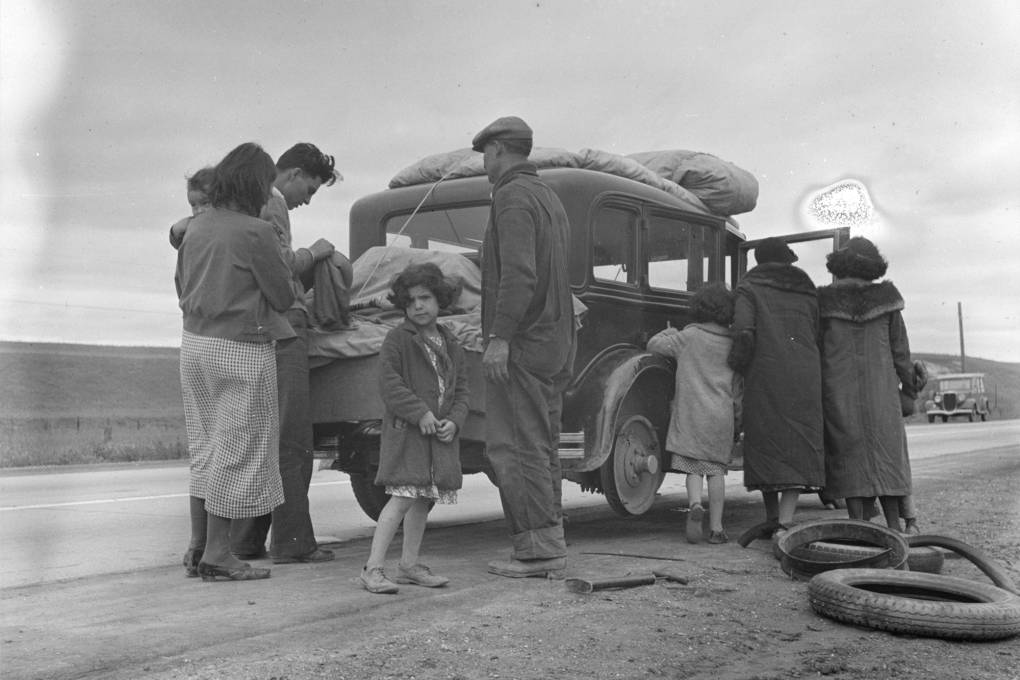
"caption": "Migrants, a family of Mexicans, on the road with tire trouble in California in 1936. Recent lawsuits have alleged — through officer bodycam footage, witnesses and individual testimonies — that agents have denied some people the opportunity to produce proof of legal status during their arrest, speak to an attorney while detained or present their case to an immigration judge before they are deported.",
"credit": "Dorothea Lange/Farm Security Administration",
"altTag": "A vintage black and white image of a family of adults and children standing around and entering a car.",
"description": null,
"imgSizes": {
"medium": {
"file": "https://cdn.kqed.org/wp-content/uploads/sites/10/2024/08/240828-Migrant-Family-DL-KQED-800x534.jpg",
"width": 800,
"height": 534,
"mimeType": "image/jpeg"
},
"large": {
"file": "https://cdn.kqed.org/wp-content/uploads/sites/10/2024/08/240828-Migrant-Family-DL-KQED-1020x680.jpg",
"width": 1020,
"height": 680,
"mimeType": "image/jpeg"
},
"thumbnail": {
"file": "https://cdn.kqed.org/wp-content/uploads/sites/10/2024/08/240828-Migrant-Family-DL-KQED-160x107.jpg",
"width": 160,
"height": 107,
"mimeType": "image/jpeg"
},
"1536x1536": {
"file": "https://cdn.kqed.org/wp-content/uploads/sites/10/2024/08/240828-Migrant-Family-DL-KQED-1536x1025.jpg",
"width": 1536,
"height": 1025,
"mimeType": "image/jpeg"
},
"post-thumbnail": {
"file": "https://cdn.kqed.org/wp-content/uploads/sites/10/2024/08/240828-Migrant-Family-DL-KQED-672x372.jpg",
"width": 672,
"height": 372,
"mimeType": "image/jpeg"
},
"twentyfourteen-full-width": {
"file": "https://cdn.kqed.org/wp-content/uploads/sites/10/2024/08/240828-Migrant-Family-DL-KQED-1038x576.jpg",
"width": 1038,
"height": 576,
"mimeType": "image/jpeg"
},
"full-width": {
"file": "https://cdn.kqed.org/wp-content/uploads/sites/10/2024/08/240828-Migrant-Family-DL-KQED-1920x1281.jpg",
"width": 1920,
"height": 1281,
"mimeType": "image/jpeg"
},
"kqedFullSize": {
"file": "https://cdn.kqed.org/wp-content/uploads/sites/10/2024/08/240828-Migrant-Family-DL-KQED.jpg",
"width": 2000,
"height": 1334
}
},
"isLoading": false,
"fetchFailed": false
},
"news_12073780": {
"type": "attachments",
"id": "news_12073780",
"meta": {
"index": "attachments_1716263798",
"site": "news",
"id": "12073780",
"found": true
},
"title": "ICE Raid At Southern California Farm Sparks Protests",
"publishDate": 1771461614,
"status": "inherit",
"parent": 12073728,
"modified": 1776964377,
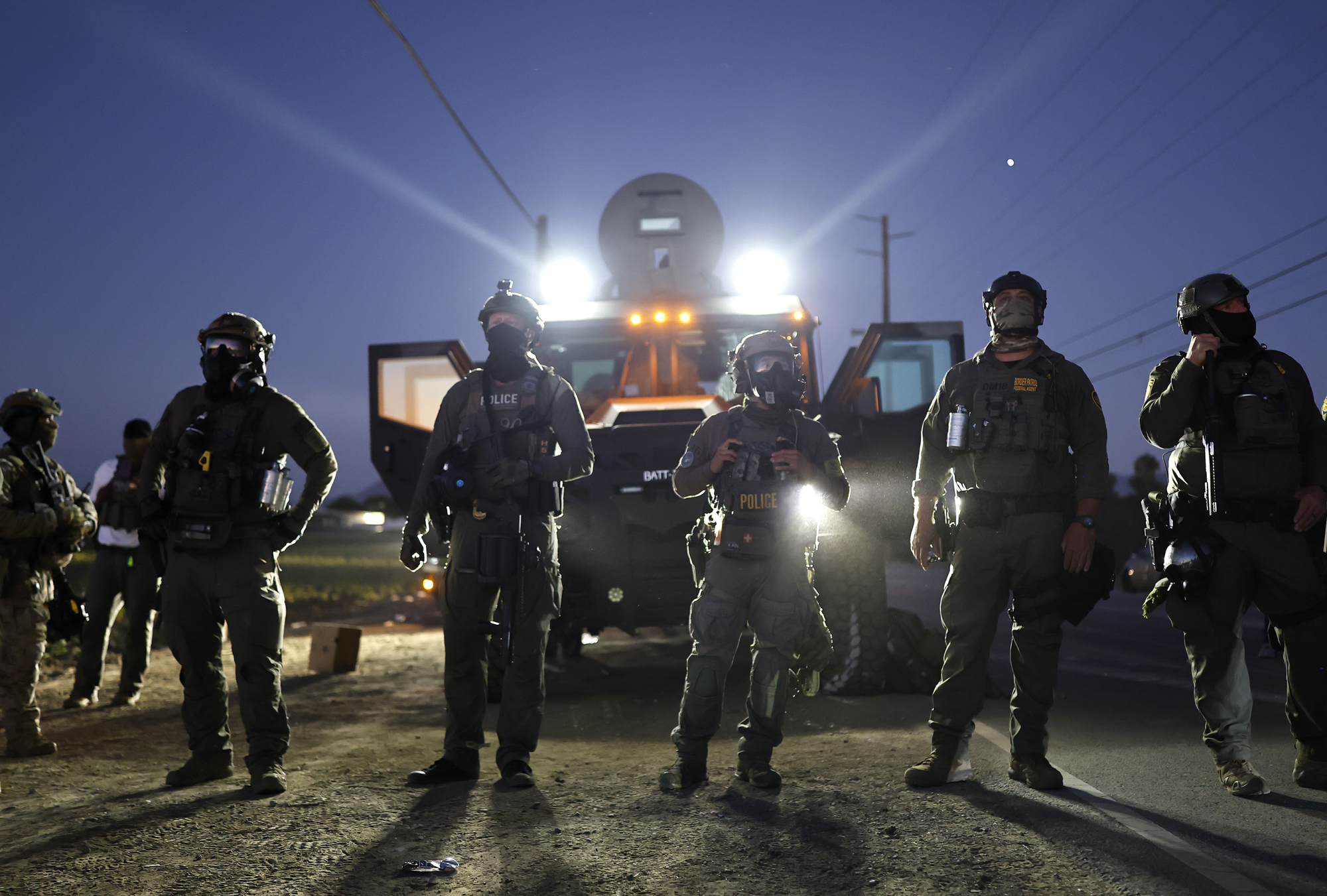
"caption": "Federal agents at an immigration raid near Camarillo in Southern California on July 10, 2025.",
"credit": "Mario Tama/Getty Images",
"altTag": null,
"description": null,
"imgSizes": {
"thumbnail": {
"file": "https://cdn.kqed.org/wp-content/uploads/sites/10/2026/02/GETTYIMAGES-2224603707-KQED-160x108.jpg",
"width": 160,
"height": 108,
"mimeType": "image/jpeg"
},
"1536x1536": {
"file": "https://cdn.kqed.org/wp-content/uploads/sites/10/2026/02/GETTYIMAGES-2224603707-KQED-1536x1038.jpg",
"width": 1536,
"height": 1038,
"mimeType": "image/jpeg"
},
"post-thumbnail": {
"file": "https://cdn.kqed.org/wp-content/uploads/sites/10/2026/02/GETTYIMAGES-2224603707-KQED-672x372.jpg",
"width": 672,
"height": 372,
"mimeType": "image/jpeg"
},
"twentyfourteen-full-width": {
"file": "https://cdn.kqed.org/wp-content/uploads/sites/10/2026/02/GETTYIMAGES-2224603707-KQED-1038x576.jpg",
"width": 1038,
"height": 576,
"mimeType": "image/jpeg"
},
"npr-cds-wide": {
"file": "https://cdn.kqed.org/wp-content/uploads/sites/10/2026/02/GETTYIMAGES-2224603707-KQED-1200x675.jpg",
"width": 1200,
"height": 675,
"mimeType": "image/jpeg"
},
"kqedFullSize": {
"file": "https://cdn.kqed.org/wp-content/uploads/sites/10/2026/02/GETTYIMAGES-2224603707-KQED.jpg",
"width": 2000,
"height": 1351
}
},
"isLoading": false,
"fetchFailed": false
},
"news_11729066": {
"type": "attachments",
"id": "news_11729066",
"meta": {
"index": "attachments_1716263798",
"site": "news",
"id": "11729066",
"found": true
},
"parent": 11728992,
"imgSizes": {
"twentyfourteen-full-width": {
"file": "https://ww2.kqed.org/app/uploads/sites/10/2019/02/GettyImages-450371283-1038x576.jpg",
"width": 1038,
"mimeType": "image/jpeg",
"height": 576
},
"thumbnail": {
"file": "https://ww2.kqed.org/app/uploads/sites/10/2019/02/GettyImages-450371283-160x107.jpg",
"width": 160,
"mimeType": "image/jpeg",
"height": 107
},
"post-thumbnail": {
"file": "https://ww2.kqed.org/app/uploads/sites/10/2019/02/GettyImages-450371283-672x372.jpg",
"width": 672,
"mimeType": "image/jpeg",
"height": 372
},
"kqedFullSize": {
"file": "https://ww2.kqed.org/app/uploads/sites/10/2019/02/GettyImages-450371283.jpg",
"width": 2048,
"height": 1365
},
"large": {
"file": "https://ww2.kqed.org/app/uploads/sites/10/2019/02/GettyImages-450371283-1020x680.jpg",
"width": 1020,
"mimeType": "image/jpeg",
"height": 680
},
"complete_open_graph": {
"file": "https://ww2.kqed.org/app/uploads/sites/10/2019/02/GettyImages-450371283-1200x800.jpg",
"width": 1200,
"mimeType": "image/jpeg",
"height": 800
},
"guest-author-50": {
"file": "https://ww2.kqed.org/app/uploads/sites/10/2019/02/GettyImages-450371283-50x50.jpg",
"width": 50,
"mimeType": "image/jpeg",
"height": 50
},
"guest-author-96": {
"file": "https://ww2.kqed.org/app/uploads/sites/10/2019/02/GettyImages-450371283-96x96.jpg",
"width": 96,
"mimeType": "image/jpeg",
"height": 96
},
"medium": {
"file": "https://ww2.kqed.org/app/uploads/sites/10/2019/02/GettyImages-450371283-800x533.jpg",
"width": 800,
"mimeType": "image/jpeg",
"height": 533
},
"guest-author-64": {
"file": "https://ww2.kqed.org/app/uploads/sites/10/2019/02/GettyImages-450371283-64x64.jpg",
"width": 64,
"mimeType": "image/jpeg",
"height": 64
},
"guest-author-32": {
"file": "https://ww2.kqed.org/app/uploads/sites/10/2019/02/GettyImages-450371283-32x32.jpg",
"width": 32,
"mimeType": "image/jpeg",
"height": 32
},
"full-width": {
"file": "https://ww2.kqed.org/app/uploads/sites/10/2019/02/GettyImages-450371283-1920x1280.jpg",
"width": 1920,
"mimeType": "image/jpeg",
"height": 1280
},
"detail": {
"file": "https://ww2.kqed.org/app/uploads/sites/10/2019/02/GettyImages-450371283-150x150.jpg",
"width": 150,
"mimeType": "image/jpeg",
"height": 150
},
"guest-author-128": {
"file": "https://ww2.kqed.org/app/uploads/sites/10/2019/02/GettyImages-450371283-128x128.jpg",
"width": 128,
"mimeType": "image/jpeg",
"height": 128
}
},
"publishDate": 1551211893,
"modified": 1551211976,
"caption": "Immigration detainees at the facility in Adelanto, California, which houses an average of 1,100 immigrants in custody pending a decision in their immigration cases or awaiting deportation. ",
"description": "Immigration detainees at the facility in Adelanto, California, which houses an average of 1,100 immigrants in custody pending a decision in their immigration cases or awaiting deportation. ",
"title": "ICE Holds Immigrants At Adelanto Detention Facility",
"credit": "John Moore/Getty Images",
"status": "inherit",
"isLoading": false,
"fetchFailed": false
},
"news_12068725": {
"type": "attachments",
"id": "news_12068725",
"meta": {
"index": "attachments_1716263798",
"site": "news",
"id": "12068725",
"found": true
},
"title": "260105-VenezuelaCalifornia-06-BL_qed",
"publishDate": 1767660816,
"status": "inherit",
"parent": 0,
"modified": 1767660832,
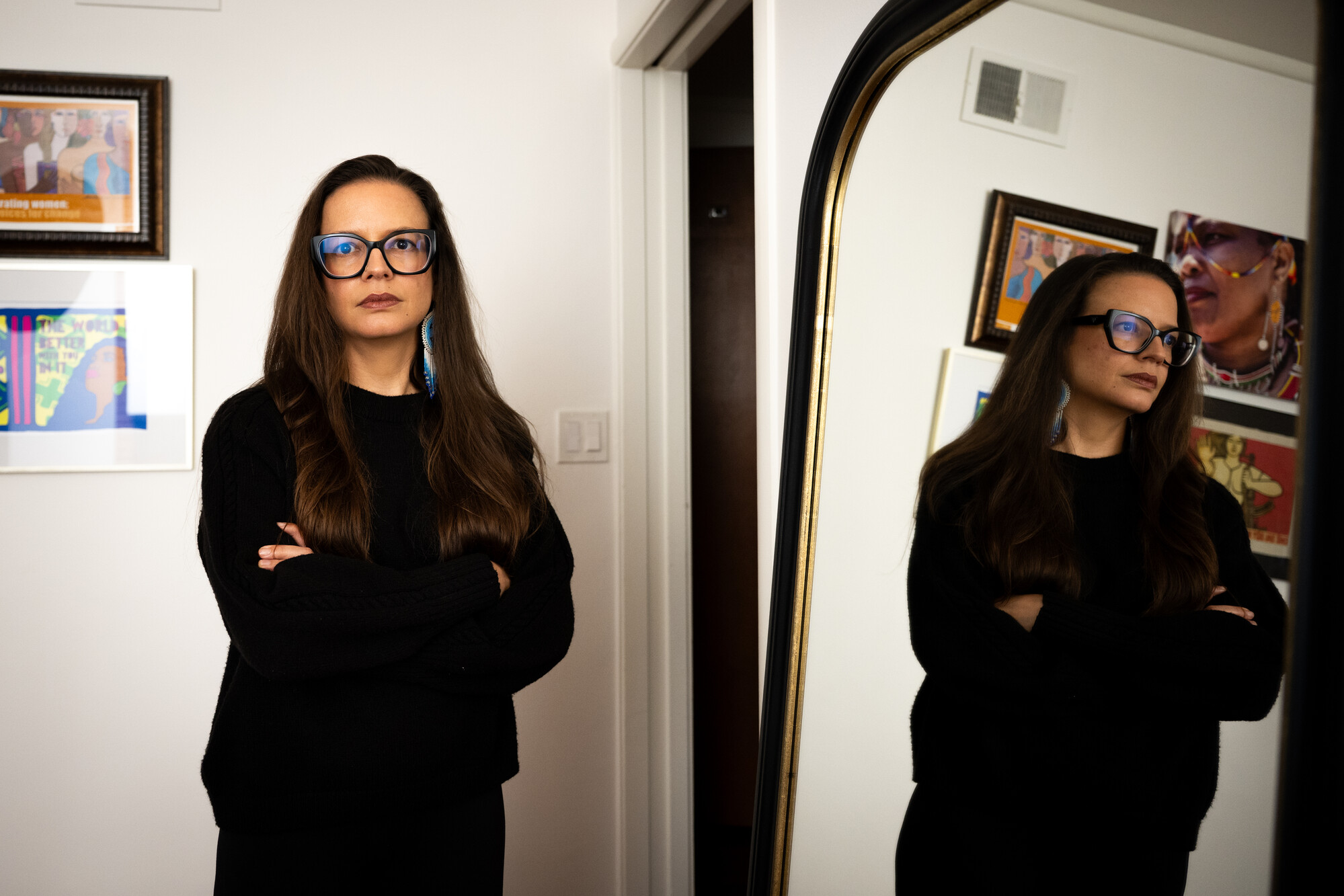
"caption": "Carolina Morales stands in her apartment in San Francisco on Jan. 5, 2026. Morales, a Venezuelan American, is troubled by U.S. military intervention and uncertain about what comes next.",
"credit": "Beth LaBerge/KQED",
"altTag": null,
"description": null,
"imgSizes": {
"thumbnail": {
"file": "https://cdn.kqed.org/wp-content/uploads/sites/10/2026/01/260105-VenezuelaCalifornia-06-BL_qed-160x107.jpg",
"width": 160,
"height": 107,
"mimeType": "image/jpeg"
},
"1536x1536": {
"file": "https://cdn.kqed.org/wp-content/uploads/sites/10/2026/01/260105-VenezuelaCalifornia-06-BL_qed-1536x1024.jpg",
"width": 1536,
"height": 1024,
"mimeType": "image/jpeg"
},
"post-thumbnail": {
"file": "https://cdn.kqed.org/wp-content/uploads/sites/10/2026/01/260105-VenezuelaCalifornia-06-BL_qed-672x372.jpg",
"width": 672,
"height": 372,
"mimeType": "image/jpeg"
},
"twentyfourteen-full-width": {
"file": "https://cdn.kqed.org/wp-content/uploads/sites/10/2026/01/260105-VenezuelaCalifornia-06-BL_qed-1038x576.jpg",
"width": 1038,
"height": 576,
"mimeType": "image/jpeg"
},
"npr-cds-wide": {
"file": "https://cdn.kqed.org/wp-content/uploads/sites/10/2026/01/260105-VenezuelaCalifornia-06-BL_qed-1200x675.jpg",
"width": 1200,
"height": 675,
"mimeType": "image/jpeg"
},
"kqedFullSize": {
"file": "https://cdn.kqed.org/wp-content/uploads/sites/10/2026/01/260105-VenezuelaCalifornia-06-BL_qed.jpg",
"width": 1999,
"height": 1333
}
},
"isLoading": false,
"fetchFailed": false
},
"news_12035874": {
"type": "attachments",
"id": "news_12035874",
"meta": {
"index": "attachments_1716263798",
"site": "news",
"id": "12035874",
"found": true
},
"title": "President Trump Meets With El Salvador President Nayib Bukele At The White House",
"publishDate": 1744653985,
"status": "inherit",
"parent": 12042492,
"modified": 1748970386,
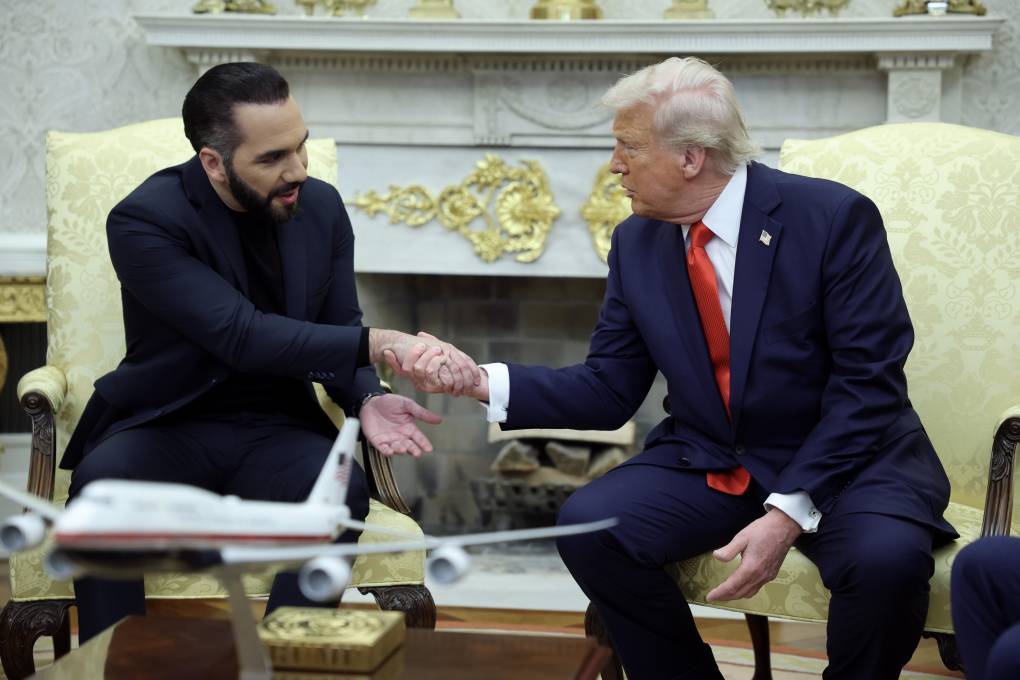
"caption": "President Trump meets with President Nayib Bukele of El Salvador in the Oval Office on April 14, 2025. Trump and Bukele were expected to discuss a range of bilateral issues including the detention of Kilmar Armando Abrego Garcia, who has been held in a prison in El Salvador since March 15. ",
"credit": "Win McNamee/Getty Images",
"altTag": "Two men wearing suits shake hands while seated in chairs.",
"description": "WASHINGTON, DC - APRIL 14: U.S. President Donald Trump meets with President Nayib Bukele of El Salvador in the Oval Office of the White House April 14, 2025 in Washington, DC. Trump and Bukele were expected to discuss a range of bilateral issues including the detention of Kilmar Armando Abrego Garcia, who has been held in a prison in El Salvador since March 15. (Photo by Win McNamee/Getty Images)",
"imgSizes": {
"medium": {
"file": "https://cdn.kqed.org/wp-content/uploads/sites/10/2025/04/gettyimages-2210243092-800x533.jpeg",
"width": 800,
"height": 533,
"mimeType": "image/jpeg"
},
"large": {
"file": "https://cdn.kqed.org/wp-content/uploads/sites/10/2025/04/gettyimages-2210243092-1020x680.jpeg",
"width": 1020,
"height": 680,
"mimeType": "image/jpeg"
},
"thumbnail": {
"file": "https://cdn.kqed.org/wp-content/uploads/sites/10/2025/04/gettyimages-2210243092-160x107.jpeg",
"width": 160,
"height": 107,
"mimeType": "image/jpeg"
},
"1536x1536": {
"file": "https://cdn.kqed.org/wp-content/uploads/sites/10/2025/04/gettyimages-2210243092-1536x1023.jpeg",
"width": 1536,
"height": 1023,
"mimeType": "image/jpeg"
},
"2048x2048": {
"file": "https://cdn.kqed.org/wp-content/uploads/sites/10/2025/04/gettyimages-2210243092-2048x1365.jpeg",
"width": 2048,
"height": 1365,
"mimeType": "image/jpeg"
},
"post-thumbnail": {
"file": "https://cdn.kqed.org/wp-content/uploads/sites/10/2025/04/gettyimages-2210243092-672x372.jpeg",
"width": 672,
"height": 372,
"mimeType": "image/jpeg"
},
"twentyfourteen-full-width": {
"file": "https://cdn.kqed.org/wp-content/uploads/sites/10/2025/04/gettyimages-2210243092-1038x576.jpeg",
"width": 1038,
"height": 576,
"mimeType": "image/jpeg"
},
"full-width": {
"file": "https://cdn.kqed.org/wp-content/uploads/sites/10/2025/04/gettyimages-2210243092-1920x1279.jpeg",
"width": 1920,
"height": 1279,
"mimeType": "image/jpeg"
},
"kqedFullSize": {
"file": "https://cdn.kqed.org/wp-content/uploads/sites/10/2025/04/gettyimages-2210243092-scaled-e1745537471811.jpeg",
"width": 2000,
"height": 1333
}
},
"isLoading": false,
"fetchFailed": false
},
"news_12036838": {
"type": "attachments",
"id": "news_12036838",
"meta": {
"index": "attachments_1716263798",
"site": "news",
"id": "12036838",
"found": true
},
"title": "npr.brightspotcdn copy",
"publishDate": 1745089686,
"status": "inherit",
"parent": 12036835,
"modified": 1745089711,
"caption": "The US Supreme Court is seen near sunset in Washington on Oct. 18, 2018.",
"credit": "Manuel Balce Ceneta/AP",
"altTag": null,
"description": null,
"imgSizes": {
"medium": {
"file": "https://cdn.kqed.org/wp-content/uploads/sites/10/2025/04/npr.brightspotcdn-copy-16-800x533.jpg",
"width": 800,
"height": 533,
"mimeType": "image/jpeg"
},
"large": {
"file": "https://cdn.kqed.org/wp-content/uploads/sites/10/2025/04/npr.brightspotcdn-copy-16-1020x680.jpg",
"width": 1020,
"height": 680,
"mimeType": "image/jpeg"
},
"thumbnail": {
"file": "https://cdn.kqed.org/wp-content/uploads/sites/10/2025/04/npr.brightspotcdn-copy-16-160x107.jpg",
"width": 160,
"height": 107,
"mimeType": "image/jpeg"
},
"1536x1536": {
"file": "https://cdn.kqed.org/wp-content/uploads/sites/10/2025/04/npr.brightspotcdn-copy-16-1536x1023.jpg",
"width": 1536,
"height": 1023,
"mimeType": "image/jpeg"
},
"post-thumbnail": {
"file": "https://cdn.kqed.org/wp-content/uploads/sites/10/2025/04/npr.brightspotcdn-copy-16-672x372.jpg",
"width": 672,
"height": 372,
"mimeType": "image/jpeg"
},
"twentyfourteen-full-width": {
"file": "https://cdn.kqed.org/wp-content/uploads/sites/10/2025/04/npr.brightspotcdn-copy-16-1038x576.jpg",
"width": 1038,
"height": 576,
"mimeType": "image/jpeg"
},
"kqedFullSize": {
"file": "https://cdn.kqed.org/wp-content/uploads/sites/10/2025/04/npr.brightspotcdn-copy-16.jpg",
"width": 1600,
"height": 1066
}
},
"isLoading": false,
"fetchFailed": false
},
"news_12034551": {
"type": "attachments",
"id": "news_12034551",
"meta": {
"index": "attachments_1716263798",
"site": "news",
"id": "12034551",
"found": true
},
"title": "npr.brightspotcdn copy",
"publishDate": 1743795952,
"status": "inherit",
"parent": 12034550,
"modified": 1743795973,
"caption": "Jose Barco in Iraq in 2007.",
"credit": "Courtesy of Tia Barco",
"altTag": null,
"description": null,
"imgSizes": {
"medium": {
"file": "https://cdn.kqed.org/wp-content/uploads/sites/10/2025/04/npr.brightspotcdn-copy-5-800x670.jpg",
"width": 800,
"height": 670,
"mimeType": "image/jpeg"
},
"large": {
"file": "https://cdn.kqed.org/wp-content/uploads/sites/10/2025/04/npr.brightspotcdn-copy-5-1020x854.jpg",
"width": 1020,
"height": 854,
"mimeType": "image/jpeg"
},
"thumbnail": {
"file": "https://cdn.kqed.org/wp-content/uploads/sites/10/2025/04/npr.brightspotcdn-copy-5-160x134.jpg",
"width": 160,
"height": 134,
"mimeType": "image/jpeg"
},
"1536x1536": {
"file": "https://cdn.kqed.org/wp-content/uploads/sites/10/2025/04/npr.brightspotcdn-copy-5-1536x1285.jpg",
"width": 1536,
"height": 1285,
"mimeType": "image/jpeg"
},
"post-thumbnail": {
"file": "https://cdn.kqed.org/wp-content/uploads/sites/10/2025/04/npr.brightspotcdn-copy-5-672x372.jpg",
"width": 672,
"height": 372,
"mimeType": "image/jpeg"
},
"twentyfourteen-full-width": {
"file": "https://cdn.kqed.org/wp-content/uploads/sites/10/2025/04/npr.brightspotcdn-copy-5-1038x576.jpg",
"width": 1038,
"height": 576,
"mimeType": "image/jpeg"
},
"kqedFullSize": {
"file": "https://cdn.kqed.org/wp-content/uploads/sites/10/2025/04/npr.brightspotcdn-copy-5.jpg",
"width": 1600,
"height": 1339
}
},
"isLoading": false,
"fetchFailed": false
},
"news_12033529": {
"type": "attachments",
"id": "news_12033529",
"meta": {
"index": "attachments_1716263798",
"site": "news",
"id": "12033529",
"found": true
},
"title": "npr.brightspotcdn copy",
"publishDate": 1743186464,
"status": "inherit",
"parent": 12033527,
"modified": 1743186488,
"caption": "The US Supreme Court is shown March 17, 2025 in Washington, DC.",
"credit": "Win McNamee/Getty Images",
"altTag": null,
"description": null,
"imgSizes": {
"medium": {
"file": "https://cdn.kqed.org/wp-content/uploads/sites/10/2025/03/npr.brightspotcdn-copy-13-800x534.jpg",
"width": 800,
"height": 534,
"mimeType": "image/jpeg"
},
"large": {
"file": "https://cdn.kqed.org/wp-content/uploads/sites/10/2025/03/npr.brightspotcdn-copy-13-1020x680.jpg",
"width": 1020,
"height": 680,
"mimeType": "image/jpeg"
},
"thumbnail": {
"file": "https://cdn.kqed.org/wp-content/uploads/sites/10/2025/03/npr.brightspotcdn-copy-13-160x107.jpg",
"width": 160,
"height": 107,
"mimeType": "image/jpeg"
},
"1536x1536": {
"file": "https://cdn.kqed.org/wp-content/uploads/sites/10/2025/03/npr.brightspotcdn-copy-13-1536x1024.jpg",
"width": 1536,
"height": 1024,
"mimeType": "image/jpeg"
},
"post-thumbnail": {
"file": "https://cdn.kqed.org/wp-content/uploads/sites/10/2025/03/npr.brightspotcdn-copy-13-672x372.jpg",
"width": 672,
"height": 372,
"mimeType": "image/jpeg"
},
"twentyfourteen-full-width": {
"file": "https://cdn.kqed.org/wp-content/uploads/sites/10/2025/03/npr.brightspotcdn-copy-13-1038x576.jpg",
"width": 1038,
"height": 576,
"mimeType": "image/jpeg"
},
"kqedFullSize": {
"file": "https://cdn.kqed.org/wp-content/uploads/sites/10/2025/03/npr.brightspotcdn-copy-13.jpg",
"width": 1600,
"height": 1067
}
},
"isLoading": false,
"fetchFailed": false
},
"news_12023315": {
"type": "attachments",
"id": "news_12023315",
"meta": {
"index": "attachments_1716263798",
"site": "news",
"id": "12023315",
"found": true
},
"title": "20250115_JapaneseAmericanActivism_GC-28",
"publishDate": 1737490910,
"status": "inherit",
"parent": 12021919,
"modified": 1737591573,
"caption": "Sadako Nimura Kashiwagi, 91, poses for a photo at her home in Berkeley on Jan. 15, 2025. ",
"credit": "Gina Castro/KQED",
"altTag": null,
"description": null,
"imgSizes": {
"medium": {
"file": "https://cdn.kqed.org/wp-content/uploads/sites/10/2025/01/20250115_JapaneseAmericanActivism_GC-28-800x533.jpg",
"width": 800,
"height": 533,
"mimeType": "image/jpeg"
},
"large": {
"file": "https://cdn.kqed.org/wp-content/uploads/sites/10/2025/01/20250115_JapaneseAmericanActivism_GC-28-1020x680.jpg",
"width": 1020,
"height": 680,
"mimeType": "image/jpeg"
},
"thumbnail": {
"file": "https://cdn.kqed.org/wp-content/uploads/sites/10/2025/01/20250115_JapaneseAmericanActivism_GC-28-160x107.jpg",
"width": 160,
"height": 107,
"mimeType": "image/jpeg"
},
"1536x1536": {
"file": "https://cdn.kqed.org/wp-content/uploads/sites/10/2025/01/20250115_JapaneseAmericanActivism_GC-28-1536x1024.jpg",
"width": 1536,
"height": 1024,
"mimeType": "image/jpeg"
},
"post-thumbnail": {
"file": "https://cdn.kqed.org/wp-content/uploads/sites/10/2025/01/20250115_JapaneseAmericanActivism_GC-28-672x372.jpg",
"width": 672,
"height": 372,
"mimeType": "image/jpeg"
},
"twentyfourteen-full-width": {
"file": "https://cdn.kqed.org/wp-content/uploads/sites/10/2025/01/20250115_JapaneseAmericanActivism_GC-28-1038x576.jpg",
"width": 1038,
"height": 576,
"mimeType": "image/jpeg"
},
"full-width": {
"file": "https://cdn.kqed.org/wp-content/uploads/sites/10/2025/01/20250115_JapaneseAmericanActivism_GC-28-1920x1280.jpg",
"width": 1920,
"height": 1280,
"mimeType": "image/jpeg"
},
"kqedFullSize": {
"file": "https://cdn.kqed.org/wp-content/uploads/sites/10/2025/01/20250115_JapaneseAmericanActivism_GC-28.jpg",
"width": 2000,
"height": 1333
}
},
"isLoading": false,
"fetchFailed": false
},
"news_12023545": {
"type": "attachments",
"id": "news_12023545",
"meta": {
"index": "attachments_1716263798",
"site": "news",
"id": "12023545",
"found": true
},
"title": "250122-OaklandImmigrants-28-BL",
"publishDate": 1737580511,
"status": "inherit",
"parent": 12069782,
"modified": 1768439327,
"caption": "Alameda County Supervisor Nikki Fortunato Bas speaks during a press conference with leaders from community groups throughout Alameda County in the Fruitvale neighborhood of Oakland on Jan. 22, 2025, to discuss support for immigrant families in the Bay Area after President Donald Trump promised mass deportations.",
"credit": "Beth LaBerge/KQED",
"altTag": null,
"description": null,
"imgSizes": {
"medium": {
"file": "https://cdn.kqed.org/wp-content/uploads/sites/10/2025/01/250122-OaklandImmigrants-28-BL-800x533.jpg",
"width": 800,
"height": 533,
"mimeType": "image/jpeg"
},
"large": {
"file": "https://cdn.kqed.org/wp-content/uploads/sites/10/2025/01/250122-OaklandImmigrants-28-BL-1020x680.jpg",
"width": 1020,
"height": 680,
"mimeType": "image/jpeg"
},
"thumbnail": {
"file": "https://cdn.kqed.org/wp-content/uploads/sites/10/2025/01/250122-OaklandImmigrants-28-BL-160x107.jpg",
"width": 160,
"height": 107,
"mimeType": "image/jpeg"
},
"1536x1536": {
"file": "https://cdn.kqed.org/wp-content/uploads/sites/10/2025/01/250122-OaklandImmigrants-28-BL-1536x1024.jpg",
"width": 1536,
"height": 1024,
"mimeType": "image/jpeg"
},
"post-thumbnail": {
"file": "https://cdn.kqed.org/wp-content/uploads/sites/10/2025/01/250122-OaklandImmigrants-28-BL-672x372.jpg",
"width": 672,
"height": 372,
"mimeType": "image/jpeg"
},
"twentyfourteen-full-width": {
"file": "https://cdn.kqed.org/wp-content/uploads/sites/10/2025/01/250122-OaklandImmigrants-28-BL-1038x576.jpg",
"width": 1038,
"height": 576,
"mimeType": "image/jpeg"
},
"full-width": {
"file": "https://cdn.kqed.org/wp-content/uploads/sites/10/2025/01/250122-OaklandImmigrants-28-BL-1920x1280.jpg",
"width": 1920,
"height": 1280,
"mimeType": "image/jpeg"
},
"kqedFullSize": {
"file": "https://cdn.kqed.org/wp-content/uploads/sites/10/2025/01/250122-OaklandImmigrants-28-BL.jpg",
"width": 2000,
"height": 1333
}
},
"isLoading": false,
"fetchFailed": false
},
"news_12023080": {
"type": "attachments",
"id": "news_12023080",
"meta": {
"index": "attachments_1716263798",
"site": "news",
"id": "12023080",
"found": true
},
"title": "20250119_AntiTrumpProtest_GC-1",
"publishDate": 1737340245,
"status": "inherit",
"parent": 12023056,
"modified": 1737340468,
"caption": "Thousands gather at Civic Center Plaza during a \"We Fight Back\" rally, ahead of President-elect Donald Trump's inauguration, on Jan. 19, 2025.",
"credit": "Gina Castro/KQED",
"altTag": "Several people in a large crowd hold signs and flags with buildings in the background.",
"description": null,
"imgSizes": {
"medium": {
"file": "https://cdn.kqed.org/wp-content/uploads/sites/10/2025/01/20250119_AntiTrumpProtest_GC-1-800x533.jpg",
"width": 800,
"height": 533,
"mimeType": "image/jpeg"
},
"large": {
"file": "https://cdn.kqed.org/wp-content/uploads/sites/10/2025/01/20250119_AntiTrumpProtest_GC-1-1020x680.jpg",
"width": 1020,
"height": 680,
"mimeType": "image/jpeg"
},
"thumbnail": {
"file": "https://cdn.kqed.org/wp-content/uploads/sites/10/2025/01/20250119_AntiTrumpProtest_GC-1-160x107.jpg",
"width": 160,
"height": 107,
"mimeType": "image/jpeg"
},
"1536x1536": {
"file": "https://cdn.kqed.org/wp-content/uploads/sites/10/2025/01/20250119_AntiTrumpProtest_GC-1-1536x1024.jpg",
"width": 1536,
"height": 1024,
"mimeType": "image/jpeg"
},
"2048x2048": {
"file": "https://cdn.kqed.org/wp-content/uploads/sites/10/2025/01/20250119_AntiTrumpProtest_GC-1-2048x1365.jpg",
"width": 2048,
"height": 1365,
"mimeType": "image/jpeg"
},
"post-thumbnail": {
"file": "https://cdn.kqed.org/wp-content/uploads/sites/10/2025/01/20250119_AntiTrumpProtest_GC-1-672x372.jpg",
"width": 672,
"height": 372,
"mimeType": "image/jpeg"
},
"twentyfourteen-full-width": {
"file": "https://cdn.kqed.org/wp-content/uploads/sites/10/2025/01/20250119_AntiTrumpProtest_GC-1-1038x576.jpg",
"width": 1038,
"height": 576,
"mimeType": "image/jpeg"
},
"full-width": {
"file": "https://cdn.kqed.org/wp-content/uploads/sites/10/2025/01/20250119_AntiTrumpProtest_GC-1-1920x1280.jpg",
"width": 1920,
"height": 1280,
"mimeType": "image/jpeg"
},
"kqedFullSize": {
"file": "https://cdn.kqed.org/wp-content/uploads/sites/10/2025/01/20250119_AntiTrumpProtest_GC-1-scaled.jpg",
"width": 2560,
"height": 1706
}
},
"isLoading": false,
"fetchFailed": false
},
"news_12013191": {
"type": "attachments",
"id": "news_12013191",
"meta": {
"index": "attachments_1716263798",
"site": "news",
"id": "12013191",
"found": true
},
"title": "Donald Trump",
"publishDate": 1730924373,
"status": "inherit",
"parent": 12013186,
"modified": 1730940022,
"caption": "Former U.S. President and Republican presidential nominee Donald Trump waves as he walks with former First Lady Melania Trump at an election night watch party at the Palm Beach Convention Center on Wednesday, Nov. 6, 2024, in West Palm Beach, Florida.",
"credit": "Evan Vucci/AP Photo",
"altTag": null,
"description": null,
"imgSizes": {
"medium": {
"file": "https://cdn.kqed.org/wp-content/uploads/sites/10/2024/11/DonaldTrumpPresElectAP-800x534.jpg",
"width": 800,
"height": 534,
"mimeType": "image/jpeg"
},
"large": {
"file": "https://cdn.kqed.org/wp-content/uploads/sites/10/2024/11/DonaldTrumpPresElectAP-1020x680.jpg",
"width": 1020,
"height": 680,
"mimeType": "image/jpeg"
},
"thumbnail": {
"file": "https://cdn.kqed.org/wp-content/uploads/sites/10/2024/11/DonaldTrumpPresElectAP-160x107.jpg",
"width": 160,
"height": 107,
"mimeType": "image/jpeg"
},
"1536x1536": {
"file": "https://cdn.kqed.org/wp-content/uploads/sites/10/2024/11/DonaldTrumpPresElectAP-1536x1025.jpg",
"width": 1536,
"height": 1025,
"mimeType": "image/jpeg"
},
"post-thumbnail": {
"file": "https://cdn.kqed.org/wp-content/uploads/sites/10/2024/11/DonaldTrumpPresElectAP-672x372.jpg",
"width": 672,
"height": 372,
"mimeType": "image/jpeg"
},
"twentyfourteen-full-width": {
"file": "https://cdn.kqed.org/wp-content/uploads/sites/10/2024/11/DonaldTrumpPresElectAP-1038x576.jpg",
"width": 1038,
"height": 576,
"mimeType": "image/jpeg"
},
"full-width": {
"file": "https://cdn.kqed.org/wp-content/uploads/sites/10/2024/11/DonaldTrumpPresElectAP-1920x1281.jpg",
"width": 1920,
"height": 1281,
"mimeType": "image/jpeg"
},
"kqedFullSize": {
"file": "https://cdn.kqed.org/wp-content/uploads/sites/10/2024/11/DonaldTrumpPresElectAP.jpg",
"width": 2000,
"height": 1334
}
},
"isLoading": false,
"fetchFailed": false
}
},
"audioPlayerReducer": {
"postId": "stream_live",
"isPaused": true,
"isPlaying": false,
"pfsActive": false,
"pledgeModalIsOpen": true,
"playerDrawerIsOpen": false,
"liveAudioPlayStartedAt": 0,
"liveAudioPlayContext": ""
},
"authorsReducer": {
"byline_news_12078084": {
"type": "authors",
"id": "byline_news_12078084",
"meta": {
"override": true
},
"slug": "byline_news_12078084",
"name": "Sergio Olmos, CalMatters",
"isLoading": false
},
"byline_news_12036835": {
"type": "authors",
"id": "byline_news_12036835",
"meta": {
"override": true
},
"slug": "byline_news_12036835",
"name": "\u003ca href=\"https://www.npr.org/people/297147616/jasmine-garsd\">Jasmine Garsd\u003c/a>, NPR",
"isLoading": false
},
"byline_news_12034550": {
"type": "authors",
"id": "byline_news_12034550",
"meta": {
"override": true
},
"slug": "byline_news_12034550",
"name": "\u003ca href=\"https://www.npr.org/people/5457129/tom-bowman\">Tom Bowman\u003c/a> and \u003ca href=\"https://www.npr.org/people/105678418/quil-lawrence\">Quil Lawrence\u003c/a>, NPR",
"isLoading": false
},
"byline_news_12033527": {
"type": "authors",
"id": "byline_news_12033527",
"meta": {
"override": true
},
"slug": "byline_news_12033527",
"name": "\u003ca href=\"https://www.npr.org/people/1241652386/sergio-martinez-beltran\">Sergio Martínez-Beltrán\u003c/a>, NPR",
"isLoading": false
},
"tychehendricks": {
"type": "authors",
"id": "259",
"meta": {
"index": "authors_1716337520",
"id": "259",
"found": true
},
"name": "Tyche Hendricks",
"firstName": "Tyche",
"lastName": "Hendricks",
"slug": "tychehendricks",
"email": "thendricks@kqed.org",
"display_author_email": true,
"staff_mastheads": [
"news"
],
"title": "KQED Senior Editor, Immigration",
"bio": "\u003cspan style=\"font-weight: 400;\">Tyche Hendricks is KQED’s senior editor for immigration, leading coverage of the policy and politics that affect California’s immigrant communities. Her work for KQED’s radio and online audiences is also carried on NPR and other national outlets. She has been recognized with awards from the Radio and Television News Directors Association, the Society for Professional Journalists; the Education Writers Association; the Best of the West and the National Federation of Community Broadcasters. Before joining KQED in 2010, Tyche spent more than a dozen years as a newspaper reporter, notably at the \u003c/span>\u003ci>\u003cspan style=\"font-weight: 400;\">San Francisco Chronicle\u003c/span>\u003c/i>\u003cspan style=\"font-weight: 400;\">. At different times she has covered criminal justice, government and politics and urban planning. Tyche has taught in the MFA Creative Writing program at the University of San Francisco and at UC Berkeley’s Graduate School of Journalism, where she was co-director of a national immigration symposium for professional journalists. She is the author of \u003c/span>\u003ci>\u003cspan style=\"font-weight: 400;\">The Wind Doesn't Need a Passport: Stories from the U.S.-Mexico Borderlands\u003c/span>\u003c/i>\u003cspan style=\"font-weight: 400;\"> (University of California Press). \u003c/span>",
"avatar": "https://secure.gravatar.com/avatar/b8ee458e2731c2d43df86882ce17267e?s=600&d=blank&r=g",
"twitter": "tychehendricks",
"facebook": null,
"instagram": null,
"linkedin": null,
"sites": [
{
"site": "news",
"roles": [
"editor"
]
},
{
"site": "stateofhealth",
"roles": [
"editor"
]
}
],
"headData": {
"title": "Tyche Hendricks | KQED",
"description": "KQED Senior Editor, Immigration",
"ogImgSrc": "https://secure.gravatar.com/avatar/b8ee458e2731c2d43df86882ce17267e?s=600&d=blank&r=g",
"twImgSrc": "https://secure.gravatar.com/avatar/b8ee458e2731c2d43df86882ce17267e?s=600&d=blank&r=g"
},
"isLoading": false,
"link": "/author/tychehendricks"
},
"clei": {
"type": "authors",
"id": "8617",
"meta": {
"index": "authors_1716337520",
"id": "8617",
"found": true
},
"name": "Cecilia Lei",
"firstName": "Cecilia",
"lastName": "Lei",
"slug": "clei",
"email": "clei@KQED.org",
"display_author_email": false,
"staff_mastheads": [],
"title": "KQED Contributor",
"bio": "Cecilia Lei is an on-call host and producer for KQED News and Podcasts. Previously, she was the executive producer and host of the San Francisco Chronicle's daily news podcast, 'Fifth and Mission'. Cecilia is a graduate of UC Berkeley’s Graduate School of Journalism and the former president of the Asian American Journalists Association San Francisco Bay Area chapter.",
"avatar": "https://secure.gravatar.com/avatar/40975f1f88fccf628ee537bf6ffc2af8?s=600&d=blank&r=g",
"twitter": null,
"facebook": null,
"instagram": null,
"linkedin": null,
"sites": [
{
"site": "arts",
"roles": [
"contributor"
]
},
{
"site": "news",
"roles": [
"author",
"read_private_posts"
]
},
{
"site": "about",
"roles": [
"editor"
]
}
],
"headData": {
"title": "Cecilia Lei | KQED",
"description": "KQED Contributor",
"ogImgSrc": "https://secure.gravatar.com/avatar/40975f1f88fccf628ee537bf6ffc2af8?s=600&d=blank&r=g",
"twImgSrc": "https://secure.gravatar.com/avatar/40975f1f88fccf628ee537bf6ffc2af8?s=600&d=blank&r=g"
},
"isLoading": false,
"link": "/author/clei"
},
"ecruzguevarra": {
"type": "authors",
"id": "8654",
"meta": {
"index": "authors_1716337520",
"id": "8654",
"found": true
},
"name": "Ericka Cruz Guevarra",
"firstName": "Ericka",
"lastName": "Cruz Guevarra",
"slug": "ecruzguevarra",
"email": "ecruzguevarra@kqed.org",
"display_author_email": true,
"staff_mastheads": [
"news"
],
"title": "Producer, The Bay Podcast",
"bio": "Ericka Cruz Guevarra is host of \u003ca href=\"https://www.kqed.org/podcasts/thebay\">\u003cem>The Bay\u003c/em>\u003c/a> podcast at KQED. Before host, she was the show’s producer. Her work in that capacity includes a three-part reported series on policing in Vallejo, which won a 2020 excellence in journalism award from the Society of Professional Journalists. Ericka has worked as a breaking news reporter at Oregon Public Broadcasting, helped produce the Code Switch podcast, and was KQED’s inaugural Raul Ramirez Diversity Fund intern. She’s also an alumna of NPR’s Next Generation Radio program. Send her an email if you have strong feelings about whether Fairfield and Suisun City are the Bay. Ericka is represented by SAG-AFTRA.",
"avatar": "https://secure.gravatar.com/avatar/accefc1de4bafc7e234b69bcb9b6f6536c130fd84709bc3069ef11a78787e1bb?s=600&d=blank&r=g",
"twitter": "NotoriousECG",
"bluesky": null,
"facebook": null,
"instagram": null,
"linkedin": null,
"sites": [
{
"site": "arts",
"roles": [
"subscriber"
]
},
{
"site": "news",
"roles": [
"editor",
"manage_categories"
]
},
{
"site": "futureofyou",
"roles": [
"subscriber"
]
},
{
"site": "stateofhealth",
"roles": [
"subscriber"
]
},
{
"site": "science",
"roles": [
"editor"
]
},
{
"site": "forum",
"roles": [
"subscriber"
]
}
],
"headData": {
"title": "Ericka Cruz Guevarra | KQED",
"description": "Producer, The Bay Podcast",
"ogImgSrc": "https://secure.gravatar.com/avatar/accefc1de4bafc7e234b69bcb9b6f6536c130fd84709bc3069ef11a78787e1bb?s=600&d=blank&r=g",
"twImgSrc": "https://secure.gravatar.com/avatar/accefc1de4bafc7e234b69bcb9b6f6536c130fd84709bc3069ef11a78787e1bb?s=600&d=blank&r=g"
},
"isLoading": false,
"link": "/author/ecruzguevarra"
},
"slewis": {
"type": "authors",
"id": "8676",
"meta": {
"index": "authors_1716337520",
"id": "8676",
"found": true
},
"name": "Sukey Lewis",
"firstName": "Sukey",
"lastName": "Lewis",
"slug": "slewis",
"email": "slewis@kqed.org",
"display_author_email": true,
"staff_mastheads": [
"news"
],
"title": "KQED Contributor",
"bio": "Sukey Lewis is a criminal justice reporter and host of \u003cem>On Our Watch\u003c/em>, a new podcast from NPR and KQED about the shadow world of police discipline. In 2018, she co-founded the California Reporting Project, a coalition of newsrooms across the state focused on obtaining previously sealed internal affairs records from law enforcement. In addition to her reporting on police accountability, Sukey has investigated the bail bonds industry, California's wildfires and the high cost of prison phone calls. Sukey earned a master's degree in journalism from the University of California at Berkeley. Send news tips to slewis@kqed.org.",
"avatar": "https://secure.gravatar.com/avatar/03fd6b21024f99d8b0a1966654586de7?s=600&d=blank&r=g",
"twitter": "SukeyLewis",
"facebook": null,
"instagram": null,
"linkedin": null,
"sites": [
{
"site": "news",
"roles": [
"author",
"edit_others_posts"
]
}
],
"headData": {
"title": "Sukey Lewis | KQED",
"description": "KQED Contributor",
"ogImgSrc": "https://secure.gravatar.com/avatar/03fd6b21024f99d8b0a1966654586de7?s=600&d=blank&r=g",
"twImgSrc": "https://secure.gravatar.com/avatar/03fd6b21024f99d8b0a1966654586de7?s=600&d=blank&r=g"
},
"isLoading": false,
"link": "/author/slewis"
},
"amontecillo": {
"type": "authors",
"id": "11649",
"meta": {
"index": "authors_1716337520",
"id": "11649",
"found": true
},
"name": "Alan Montecillo",
"firstName": "Alan",
"lastName": "Montecillo",
"slug": "amontecillo",
"email": "amontecillo@kqed.org",
"display_author_email": false,
"staff_mastheads": [
"news"
],
"title": "KQED Contributor",
"bio": "Alan Montecillo is the senior editor of \u003cem>\u003ca href=\"http://kqed.org/thebay\">The Bay\u003c/a>, \u003c/em> KQED's local news podcast. Before moving to the Bay Area, he worked as a senior talk show producer for WILL in Champaign-Urbana, Illinois and at Oregon Public Broadcasting in Portland, Oregon. He has won journalism awards from the Society of Professional Journalists Northern California, the Public Media Journalists Association, The Signal Awards, and has also received a regional Edward R. Murrow award. Alan is a Filipino American from Hong Kong and a graduate of Reed College.",
"avatar": "https://secure.gravatar.com/avatar/268f53a2066899ea9efdd8a5900218b17c822d9862cbc9326cccec53ef41d349?s=600&d=blank&r=g",
"twitter": "alanmontecillo",
"bluesky": null,
"facebook": null,
"instagram": null,
"linkedin": null,
"sites": [
{
"site": "",
"roles": [
"editor"
]
},
{
"site": "news",
"roles": [
"editor",
"manage_categories"
]
}
],
"headData": {
"title": "Alan Montecillo | KQED",
"description": "KQED Contributor",
"ogImgSrc": "https://secure.gravatar.com/avatar/268f53a2066899ea9efdd8a5900218b17c822d9862cbc9326cccec53ef41d349?s=600&d=blank&r=g",
"twImgSrc": "https://secure.gravatar.com/avatar/268f53a2066899ea9efdd8a5900218b17c822d9862cbc9326cccec53ef41d349?s=600&d=blank&r=g"
},
"isLoading": false,
"link": "/author/amontecillo"
},
"jlara": {
"type": "authors",
"id": "11761",
"meta": {
"index": "authors_1716337520",
"id": "11761",
"found": true
},
"name": "Juan Carlos Lara",
"firstName": "Juan Carlos",
"lastName": "Lara",
"slug": "jlara",
"email": "jlara@kqed.org",
"display_author_email": false,
"staff_mastheads": [],
"title": "KQED Contributor",
"bio": null,
"avatar": "https://secure.gravatar.com/avatar/19e2052b9b05657c5ff2af2121846e9c?s=600&d=blank&r=g",
"twitter": null,
"facebook": null,
"instagram": null,
"linkedin": null,
"sites": [
{
"site": "arts",
"roles": [
"editor"
]
},
{
"site": "news",
"roles": [
"editor"
]
},
{
"site": "forum",
"roles": [
"editor"
]
},
{
"site": "liveblog",
"roles": [
"contributor"
]
}
],
"headData": {
"title": "Juan Carlos Lara | KQED",
"description": "KQED Contributor",
"ogImgSrc": "https://secure.gravatar.com/avatar/19e2052b9b05657c5ff2af2121846e9c?s=600&d=blank&r=g",
"twImgSrc": "https://secure.gravatar.com/avatar/19e2052b9b05657c5ff2af2121846e9c?s=600&d=blank&r=g"
},
"isLoading": false,
"link": "/author/jlara"
},
"jessicakariisa": {
"type": "authors",
"id": "11831",
"meta": {
"index": "authors_1716337520",
"id": "11831",
"found": true
},
"name": "Jessica Kariisa",
"firstName": "Jessica",
"lastName": "Kariisa",
"slug": "jessicakariisa",
"email": "jkariisa@kqed.org",
"display_author_email": false,
"staff_mastheads": [],
"title": "Producer, The Bay",
"bio": "Jessica Kariisa is the producer of The Bay. She first joined KQED as an intern for The California Report Magazine, after which she became an on-call producer. She reported a Bay Curious episode on the use of rap lyrics in criminal trials which won a Society of Professional Journalists award in 2023 for Excellence in Features Journalism and the 2023 Signal Award for Best Conversation Starter. She’s worked on podcasts for Snap Judgment and American Public Media. Before embarking on her audio career, she was a music journalist.\r\n\r\nJessica Kariisa is represented by SAG-AFTRA.",
"avatar": "https://secure.gravatar.com/avatar/522e97b28ac0b3d411621c0fde8f3419c7b71ea2c5c262c57c4bb600963f328c?s=600&d=blank&r=g",
"twitter": null,
"bluesky": null,
"facebook": null,
"instagram": null,
"linkedin": null,
"sites": [
{
"site": "arts",
"roles": [
"author"
]
},
{
"site": "news",
"roles": [
"editor",
"manage_categories"
]
}
],
"headData": {
"title": "Jessica Kariisa | KQED",
"description": "Producer, The Bay",
"ogImgSrc": "https://secure.gravatar.com/avatar/522e97b28ac0b3d411621c0fde8f3419c7b71ea2c5c262c57c4bb600963f328c?s=600&d=blank&r=g",
"twImgSrc": "https://secure.gravatar.com/avatar/522e97b28ac0b3d411621c0fde8f3419c7b71ea2c5c262c57c4bb600963f328c?s=600&d=blank&r=g"
},
"isLoading": false,
"link": "/author/jessicakariisa"
},
"slim": {
"type": "authors",
"id": "11920",
"meta": {
"index": "authors_1716337520",
"id": "11920",
"found": true
},
"name": "Samantha Lim",
"firstName": "Samantha",
"lastName": "Lim",
"slug": "slim",
"email": "slim@KQED.org",
"display_author_email": false,
"staff_mastheads": [],
"title": "KQED Contributor",
"bio": null,
"avatar": "https://secure.gravatar.com/avatar/82e592e6c15fe1a04d385e8ad0fb0b4e?s=600&d=blank&r=g",
"twitter": null,
"facebook": null,
"instagram": null,
"linkedin": null,
"sites": [
{
"site": "news",
"roles": []
}
],
"headData": {
"title": "Samantha Lim | KQED",
"description": "KQED Contributor",
"ogImgSrc": "https://secure.gravatar.com/avatar/82e592e6c15fe1a04d385e8ad0fb0b4e?s=600&d=blank&r=g",
"twImgSrc": "https://secure.gravatar.com/avatar/82e592e6c15fe1a04d385e8ad0fb0b4e?s=600&d=blank&r=g"
},
"isLoading": false,
"link": "/author/slim"
},
"emanoukian": {
"type": "authors",
"id": "11925",
"meta": {
"index": "authors_1716337520",
"id": "11925",
"found": true
},
"name": "Elize Manoukian",
"firstName": "Elize",
"lastName": "Manoukian",
"slug": "emanoukian",
"email": "emanoukian@KQED.org",
"display_author_email": false,
"staff_mastheads": [
"news"
],
"title": "Digital News Editor",
"bio": "Elize Manoukian is an award-winning audio producer and Senior Editor on the Express Desk, KQED's digital news platform. Her work has appeared on KPFA, Interlochen Public Radio, Oregon Public Broadcast, the New York Daily News, LA Times and the San Diego Union-Tribune.",
"avatar": "https://secure.gravatar.com/avatar/4525f1a8e46ccb30933b32653d9772064cfefe3fa655eb45b3b3a80341f6bdad?s=600&d=blank&r=g",
"twitter": null,
"bluesky": null,
"facebook": null,
"instagram": null,
"linkedin": null,
"sites": [
{
"site": "arts",
"roles": [
"editor"
]
},
{
"site": "news",
"roles": [
"editor"
]
},
{
"site": "science",
"roles": [
"editor"
]
}
],
"headData": {
"title": "Elize Manoukian | KQED",
"description": "Digital News Editor",
"ogImgSrc": "https://secure.gravatar.com/avatar/4525f1a8e46ccb30933b32653d9772064cfefe3fa655eb45b3b3a80341f6bdad?s=600&d=blank&r=g",
"twImgSrc": "https://secure.gravatar.com/avatar/4525f1a8e46ccb30933b32653d9772064cfefe3fa655eb45b3b3a80341f6bdad?s=600&d=blank&r=g"
},
"isLoading": false,
"link": "/author/emanoukian"
}
},
"pagesReducer": {
"news_tag_mass-deportations": {
"type": "terms",
"id": "news_34468",
"meta": {
"index": "terms_1716263798",
"site": "news",
"id": "34468",
"score": 10.404648
},
"name": "mass deportations",
"slug": "mass-deportations",
"taxonomy": "tag",
"description": null,
"featImg": null,
"headData": {
"title": "mass deportations | KQED News",
"description": null,
"ogTitle": null,
"ogDescription": null,
"ogImgId": null,
"twTitle": null,
"twDescription": null,
"twImgId": null
},
"ttid": 34485,
"isLoading": false,
"title": "mass deportations",
"pageMeta": {
"site": "news",
"WpPageTemplate": "page-topic-editorial",
"currentPage": 1
},
"blocks": [
{
"blockName": "kqed/post-list",
"attrs": {
"layout": "cardArticle2",
"query": "posts/news?tag=mass-deportations",
"seeMore": false,
"paginated": true,
"page": 1
}
},
{
"blockName": "kqed/ad"
}
]
}
},
"pfsSessionReducer": {},
"postsReducer": {
"stream_live": {
"type": "live",
"id": "stream_live",
"audioUrl": "https://streams.kqed.org/kqedradio",
"title": "Live Stream",
"excerpt": "Live Stream information currently unavailable.",
"link": "/radio",
"featImg": "",
"label": {
"name": "KQED Live",
"link": "/"
}
},
"stream_kqedNewscast": {
"type": "posts",
"id": "stream_kqedNewscast",
"audioUrl": "https://www.kqed.org/.stream/anon/radio/RDnews/newscast.mp3?_=1",
"title": "KQED Newscast",
"featImg": "",
"label": {
"name": "88.5 FM",
"link": "/"
}
},
"news_12100716": {
"type": "posts",
"id": "news_12100716",
"meta": {
"index": "posts_1716263798",
"site": "news",
"id": "12100716",
"score": null,
"sort": [
1790007921000
]
},
"guestAuthors": [],
"slug": "historian-draws-parallels-between-trump-and-1920s-immigration-policy",
"title": "Historian Draws Parallels Between Trump and 1920s Immigration Policy",
"publishDate": 1790007921,
"format": "standard",
"headTitle": "Historian Draws Parallels Between Trump and 1920s Immigration Policy | KQED",
"labelTerm": {
"site": "news"
},
"content": "\n\u003cp>It was a campaign of \u003ca href=\"https://www.kqed.org/news/tag/mass-deportations\">mass deportation\u003c/a>, with immigration authorities engaged in racial profiling and \u003ca href=\"https://www.kqed.org/news/12056762/bay-area-immigrant-advocates-sue-the-trump-administration-to-end-courthouse-arrests\">disregarding the rights\u003c/a> of the people they arrested, many of whom were in the United States legally. \u003c/p>\n\n\n\n\u003cp>That’s a charge that’s been leveled at President Donald Trump’s current enforcement efforts, with agents detaining people they perceived as immigrants without legal status on the streets of cities like Los Angeles and Minneapolis, frequently without warrants and referring to them by racial slurs. \u003c/p>\n\n\n\n\u003cp>It also describes a little-known chapter of U.S. history: the \u003ca href=\"https://www.kqed.org/news/12002189/over-1-million-were-deported-to-mexico-nearly-100-years-ago-most-of-them-were-u-s-citizens\">“Mexican Repatriation” \u003c/a>that began amid rising xenophobia in the 1920s and gained steam during the Great Depression, said historian Marla Ramírez, who spoke about the parallels at UC Berkeley’s Institute for Governmental Studies last week. \u003c/p>\n\n\n\n\u003cfigure class=\"wp-block-image size-full\">\u003cimg loading=\"lazy\" decoding=\"async\" width=\"2000\" height=\"1333\" src=\"https://cdn.kqed.org/wp-content/uploads/sites/10/2026/09/260916-HiddenICESFO-NG-27_qed.jpg\" alt=\"\" class=\"wp-image-12100407\" srcset=\"https://cdn.kqed.org/wp-content/uploads/sites/10/2026/09/260916-HiddenICESFO-NG-27_qed.jpg 2000w, https://cdn.kqed.org/wp-content/uploads/sites/10/2026/09/260916-HiddenICESFO-NG-27_qed-160x107.jpg 160w, https://cdn.kqed.org/wp-content/uploads/sites/10/2026/09/260916-HiddenICESFO-NG-27_qed-1536x1024.jpg 1536w\" sizes=\"auto, (max-width: 2000px) 100vw, 2000px\" />\u003cfigcaption class=\"wp-element-caption\">A demonstrator holds a sign at the departing wing of San Francisco International Airport’s International Terminal where the San Francisco Chronicle has reported that Customs and Border Protection has a hidden detention center where dozens of detainees have been arrested and held for more than a week on Sept. 16, 2026. (Nina Glick/KQED)\u003c/figcaption>\u003c/figure>\n\n\n\n\u003cp>An estimated 1 million people were sent to Mexico in the period between World War I and World War II, and the majority of them were U.S. citizens, according to Ramírez, a professor at the University of Wisconsin and author of \u003ca href=\"https://www.hup.harvard.edu/books/9780674295940\">a recent book\u003c/a>, “Banished Citizens: A History of the Mexican American Women Who Endured Repatriation.”\u003c/p>\n\n\n\n\u003cp>“What happened during the interwar period and what’s happening now is that we have this stereotypical image of an immigrant that’s always rooted in who’s white and who’s not white,” she said. “We see U.S. citizens of non-white phenotypes being questioned, being arrested even, because they’ve been imagined to be immigrants, even when they’re U.S. citizens.”\u003c/p>\n\n\n\n\n\n\u003cp>Recent lawsuits have alleged — through officer bodycam footage, witnesses and individual testimonies — that agents have denied some people the opportunity to produce proof of legal status during their arrest, speak to an attorney while detained or present their case to an immigration judge before they are deported.\u003c/p>\n\n\n\n\u003cp>The current environment echoes the immigration policing of a century ago, Ramírez said, and it poses a danger not only to immigrants but to society as a whole.\u003c/p>\n\n\n\n\u003cp>“Whenever we are willing to turn a blind eye to the civil rights and constitutional rights of a group, it becomes a dangerous, slippery slope,” she said. “It gives [the government] permission to ignore those same rights for other groups.”\u003c/p>\n\n\n\n\u003cp>The Department of Homeland Security has repeatedly \u003ca href=\"https://www.kqed.org/news/12100391/judge-says-immigration-agents-must-stop-the-way-theyre-conducting-warrantless-arrests\">denied violating the rights\u003c/a> of people arrested during immigration enforcement actions.\u003c/p>\n\n\n\n\u003cp>After the UC Berkeley talk, Julia Curry Rodríguez, an emerita professor from San José State University, said Ramírez’s research shows how authorities sometimes disregard policies and laws to make violations against immigrants appear justified. \u003c/p>\n\n\n\n\u003cp>“In the early part of the 20th century, we see a twisting of rules to do things that shouldn’t have been allowed to happen,” she said. “It tells us we have to be astute. … We can’t allow someone to tell us, ‘We have the right,’ when they don’t.”\u003c/p>\n\n\n\n\u003cfigure class=\"wp-block-image size-full\">\u003cimg loading=\"lazy\" decoding=\"async\" width=\"1876\" height=\"1333\" src=\"https://cdn.kqed.org/wp-content/uploads/sites/10/2026/09/260921-Deportation-lessons-KQED.jpg\" alt=\"\" class=\"wp-image-12100817\" srcset=\"https://cdn.kqed.org/wp-content/uploads/sites/10/2026/09/260921-Deportation-lessons-KQED.jpg 1876w, https://cdn.kqed.org/wp-content/uploads/sites/10/2026/09/260921-Deportation-lessons-KQED-160x114.jpg 160w, https://cdn.kqed.org/wp-content/uploads/sites/10/2026/09/260921-Deportation-lessons-KQED-1536x1091.jpg 1536w\" sizes=\"auto, (max-width: 1876px) 100vw, 1876px\" />\u003cfigcaption class=\"wp-element-caption\">Left: The cover of Marla Ramírez’s book “Banished Citizens: A History of The Mexican American Woman who Endured Repatriation.”\u003cbr>Right: Marla Ramírez is an assistant professor of history and Chicano/a studies at the University of Wisconsin, Madison. (Courtesy of Marla Ramírez)\u003c/figcaption>\u003c/figure>\n\n\n\n\u003cp>Ramírez searched the archives of the former Immigration and Naturalization Service (the agency that predated the Department of Homeland Security) and found evidence that the government knew it was expelling U.S. citizens in typed rosters of people deported to Mexico.\u003c/p>\n\n\n\n\u003cp>One list, from July 1939, included 36-year-old Juan Franco, a Mexican national, and his wife, Juana Cuevas, 28, whose nationality is listed as “United States,” as is that of their four children.\u003c/p>\n\n\n\n\u003cp>Another man, Pedro Cruz, 79, a Mexican national, was deported along with his wife, Isabel Martinez, and their seven children, two daughters-in-law, a son-in-law and 12 grandchildren, all of them U.S. nationals, the archival records show.\u003c/p>\n\n\n\n\u003cp>The fact that these women and children were Americans means that “repatriation” and even “deportation” are inaccurate terms, Ramírez said. Instead, she chose to refer to these U.S. citizens as “banished” to Mexico.\u003c/p>\n\n\n\n\u003cp>The government justified the removals with the assumption that men were the breadwinners in a family and if husbands were deported, their wives and children would become dependent on public benefits, or — in the phrasing of an 1882 immigration law — they would be “\u003ca href=\"https://www.kqed.org/news/12100528/applying-for-a-green-card-or-a-visa-what-to-know-about-the-new-public-charge-rule\">public charges\u003c/a>,” she said.\u003c/p>\n\n\n\n\u003cfigure class=\"wp-block-image size-full\">\u003cimg loading=\"lazy\" decoding=\"async\" width=\"2000\" height=\"1334\" src=\"https://cdn.kqed.org/wp-content/uploads/sites/10/2026/05/gettyimages-2238189274-scaled-e1789757180450.jpeg\" alt=\"A federal officer stands in a hallway at New York Federal Plaza Immigration Court inside the Jacob K. Javitz Federal Building in New York in October 2025.\" class=\"wp-image-12085161\"/>\u003cfigcaption class=\"wp-element-caption\">A federal officer stands in a hallway at New York Federal Plaza Immigration Court inside the Jacob K. Javitz Federal Building in New York in October 2025. (Charly Triballeau/AFP via Getty Images)\u003c/figcaption>\u003c/figure>\n\n\n\n\u003cp>Beyond that, she said her research showed that immigration authorities dusted off a 19th-century legal doctrine known as “coverture,” under which a woman’s legal rights were “subsumed,” first by her father and then her husband. But, she said, by the time the “repatriation” began in the 1920s, those laws had long been overturned by the efforts of the women’s suffrage movement. \u003c/p>\n\n\n\n\u003cp>Through mental gymnastics, including in Congressional debates, public officials swept wives and children under a man’s non-citizen status, then applied to them a 1917 law that said immigrants deemed public charges could be deportable, Ramírez said.\u003c/p>\n\n\n\n\u003cp>\u003cstrong>“\u003c/strong>So if the father or husband was to be removed, then the women and children were seen as a public charge,” she said. “Then these U.S. citizens were imagined also as removable even though they were not immigrants.”\u003c/p>\n\n\n\n\u003cp>The impact of these removals rippled across the decades, she found, with families losing generational wealth and women fighting for years to prove their U.S. citizenship. \u003c/p>\n\n\n\n\u003cp>The book documents the experience of Trinidad Rodríguez. Born in Redlands, Calif., to a U.S.-born mother, she was sent to Mexico with her family as a 5-year-old in 1922. As an adult, she spent years trying to return to California to obtain a copy of her birth certificate, which had been confiscated by authorities when she was removed from the U.S. \u003c/p>\n\n\n\n\u003cfigure class=\"wp-block-image size-full\">\u003cimg loading=\"lazy\" decoding=\"async\" width=\"2000\" height=\"1334\" src=\"https://cdn.kqed.org/wp-content/uploads/sites/10/2025/02/GettyImages-2197914000-scaled-e1740613370625.jpg\" alt=\"\" class=\"wp-image-12026832\"/>\u003cfigcaption class=\"wp-element-caption\">A protester waves the national flags of Mexico during a demonstration for immigrants’ rights outside of Los Angeles City Hall on Feb. 5, 2025. (Qian Weizhong/VCG via Getty Images)\u003c/figcaption>\u003c/figure>\n\n\n\n\u003cp>When she finally got it, in 1969, she couldn’t afford the legal fees and applications to establish residency for herself and her family. \u003c/p>\n\n\n\n\u003cp>Her son and his children were entitled to derive citizenship through Rodríguez. But years later, several grandchildren entered the U.S. without authorization and wound up living as immigrants without legal status, Ramírez said.\u003c/p>\n\n\n\n\u003cp>Such stories have relevance not only because they show the history of unjust exclusionary practices of U.S. immigration authorities, said Cristina Mora, co-director of UC Berkeley’s Institute for Governmental Studies, which hosted Ramírez. \u003c/p>\n\n\n\n\u003cp>\u003cstrong>“\u003c/strong>It’s also an example of women’s resilience and their continued fight to obtain their rights,” she said. “Despite all these challenges, we’re still here. Generations of us are still here, still building, still creating and still demanding that this place live up to its values.\u003cem>”\u003c/em>\u003c/p>\n",
"blocks": [
{
"blockName": "core/paragraph",
"attrs": {
"dropCap": false
},
"innerHTML": "\n\u003cp>It was a campaign of \u003ca href=\"https://www.kqed.org/news/tag/mass-deportations\">mass deportation\u003c/a>, with immigration authorities engaged in racial profiling and \u003ca href=\"https://www.kqed.org/news/12056762/bay-area-immigrant-advocates-sue-the-trump-administration-to-end-courthouse-arrests\">disregarding the rights\u003c/a> of the people they arrested, many of whom were in the United States legally. \u003c/p>\n",
"innerContent": [
"\n\u003cp>It was a campaign of \u003ca href=\"https://www.kqed.org/news/tag/mass-deportations\">mass deportation\u003c/a>, with immigration authorities engaged in racial profiling and \u003ca href=\"https://www.kqed.org/news/12056762/bay-area-immigrant-advocates-sue-the-trump-administration-to-end-courthouse-arrests\">disregarding the rights\u003c/a> of the people they arrested, many of whom were in the United States legally. \u003c/p>\n"
],
"innerBlocks": []
},
{
"blockName": "core/paragraph",
"attrs": {
"dropCap": false
},
"innerHTML": "\n\u003cp>That’s a charge that’s been leveled at President Donald Trump’s current enforcement efforts, with agents detaining people they perceived as immigrants without legal status on the streets of cities like Los Angeles and Minneapolis, frequently without warrants and referring to them by racial slurs. \u003c/p>\n",
"innerContent": [
"\n\u003cp>That’s a charge that’s been leveled at President Donald Trump’s current enforcement efforts, with agents detaining people they perceived as immigrants without legal status on the streets of cities like Los Angeles and Minneapolis, frequently without warrants and referring to them by racial slurs. \u003c/p>\n"
],
"innerBlocks": []
},
{
"blockName": "core/paragraph",
"attrs": {
"dropCap": false
},
"innerHTML": "\n\u003cp>It also describes a little-known chapter of U.S. history: the \u003ca href=\"https://www.kqed.org/news/12002189/over-1-million-were-deported-to-mexico-nearly-100-years-ago-most-of-them-were-u-s-citizens\">“Mexican Repatriation” \u003c/a>that began amid rising xenophobia in the 1920s and gained steam during the Great Depression, said historian Marla Ramírez, who spoke about the parallels at UC Berkeley’s Institute for Governmental Studies last week. \u003c/p>\n",
"innerContent": [
"\n\u003cp>It also describes a little-known chapter of U.S. history: the \u003ca href=\"https://www.kqed.org/news/12002189/over-1-million-were-deported-to-mexico-nearly-100-years-ago-most-of-them-were-u-s-citizens\">“Mexican Repatriation” \u003c/a>that began amid rising xenophobia in the 1920s and gained steam during the Great Depression, said historian Marla Ramírez, who spoke about the parallels at UC Berkeley’s Institute for Governmental Studies last week. \u003c/p>\n"
],
"innerBlocks": []
},
{
"blockName": "core/image",
"attrs": {
"id": 12100407,
"sizeSlug": "full",
"linkDestination": "none",
"alt": "",
"srcset": "https://cdn.kqed.org/wp-content/uploads/sites/10/2026/09/260916-HiddenICESFO-NG-27_qed.jpg 2000w, https://cdn.kqed.org/wp-content/uploads/sites/10/2026/09/260916-HiddenICESFO-NG-27_qed-160x107.jpg 160w, https://cdn.kqed.org/wp-content/uploads/sites/10/2026/09/260916-HiddenICESFO-NG-27_qed-1536x1024.jpg 1536w",
"sizes": "(min-width: 992px) min(100vw, 1536px), (min-width: 768px) min(100vw, 1280px), min(100vw, 1020px)"
},
"innerHTML": "\n\u003cfigure class=\"wp-block-image size-full\">\u003cimg src=\"https://cdn.kqed.org/wp-content/uploads/sites/10/2026/09/260916-HiddenICESFO-NG-27_qed.jpg\" alt=\"\" class=\"wp-image-12100407\" srcset=\"https://cdn.kqed.org/wp-content/uploads/sites/10/2026/09/260916-HiddenICESFO-NG-27_qed.jpg 2000w, https://cdn.kqed.org/wp-content/uploads/sites/10/2026/09/260916-HiddenICESFO-NG-27_qed-160x107.jpg 160w, https://cdn.kqed.org/wp-content/uploads/sites/10/2026/09/260916-HiddenICESFO-NG-27_qed-1536x1024.jpg 1536w\" sizes=\"(min-width: 992px) min(100vw, 1536px), (min-width: 768px) min(100vw, 1280px), min(100vw, 1020px)\"/>\u003cfigcaption class=\"wp-element-caption\">A demonstrator holds a sign at the departing wing of San Francisco International Airport’s International Terminal where the San Francisco Chronicle has reported that Customs and Border Protection has a hidden detention center where dozens of detainees have been arrested and held for more than a week on Sept. 16, 2026.\u003ccite class=\"wp-inline-image-credit\"> (Nina Glick/KQED)\u003c/cite>\u003c/figcaption>\u003c/figure>\n",
"innerContent": [
"\n\u003cfigure class=\"wp-block-image size-full\">\u003cimg src=\"https://cdn.kqed.org/wp-content/uploads/sites/10/2026/09/260916-HiddenICESFO-NG-27_qed.jpg\" alt=\"\" class=\"wp-image-12100407\"/>\u003cfigcaption class=\"wp-element-caption\">A demonstrator holds a sign at the departing wing of San Francisco International Airport’s International Terminal where the San Francisco Chronicle has reported that Customs and Border Protection has a hidden detention center where dozens of detainees have been arrested and held for more than a week on Sept. 16, 2026.\u003ccite class=\"wp-inline-image-credit\"> (Nina Glick/KQED)\u003c/cite>\u003c/figcaption>\u003c/figure>\n"
],
"innerBlocks": []
},
{
"blockName": "core/paragraph",
"attrs": {
"dropCap": false
},
"innerHTML": "\n\u003cp>An estimated 1 million people were sent to Mexico in the period between World War I and World War II, and the majority of them were U.S. citizens, according to Ramírez, a professor at the University of Wisconsin and author of \u003ca href=\"https://www.hup.harvard.edu/books/9780674295940\">a recent book\u003c/a>, “Banished Citizens: A History of the Mexican American Women Who Endured Repatriation.”\u003c/p>\n",
"innerContent": [
"\n\u003cp>An estimated 1 million people were sent to Mexico in the period between World War I and World War II, and the majority of them were U.S. citizens, according to Ramírez, a professor at the University of Wisconsin and author of \u003ca href=\"https://www.hup.harvard.edu/books/9780674295940\">a recent book\u003c/a>, “Banished Citizens: A History of the Mexican American Women Who Endured Repatriation.”\u003c/p>\n"
],
"innerBlocks": []
},
{
"blockName": "core/paragraph",
"attrs": {
"dropCap": false
},
"innerHTML": "\n\u003cp>“What happened during the interwar period and what’s happening now is that we have this stereotypical image of an immigrant that’s always rooted in who’s white and who’s not white,” she said. “We see U.S. citizens of non-white phenotypes being questioned, being arrested even, because they’ve been imagined to be immigrants, even when they’re U.S. citizens.”\u003c/p>\n",
"innerContent": [
"\n\u003cp>“What happened during the interwar period and what’s happening now is that we have this stereotypical image of an immigrant that’s always rooted in who’s white and who’s not white,” she said. “We see U.S. citizens of non-white phenotypes being questioned, being arrested even, because they’ve been imagined to be immigrants, even when they’re U.S. citizens.”\u003c/p>\n"
],
"innerBlocks": []
},
{
"blockName": "kqed-v2/related-articles",
"attrs": {
"postIds": [
"news_12100585"
],
"label": "Related Articles",
"maxPosts": 1,
"showImages": false,
"heroImage": "https://cdn.kqed.org/wp-content/uploads/sites/10/2025/12/251210-SFOEATING-87-BL-KQED.jpg",
"query": "",
"labelWasCleared": false,
"heroImageAlt": "",
"heroImageLink": "",
"labelLink": "",
"alignment": "right",
"target": "_self",
"manualLinks": [],
"posts": []
},
"innerHTML": "",
"innerContent": [],
"innerBlocks": []
},
{
"blockName": "core/paragraph",
"attrs": {
"dropCap": false
},
"innerHTML": "\n\u003cp>Recent lawsuits have alleged — through officer bodycam footage, witnesses and individual testimonies — that agents have denied some people the opportunity to produce proof of legal status during their arrest, speak to an attorney while detained or present their case to an immigration judge before they are deported.\u003c/p>\n",
"innerContent": [
"\n\u003cp>Recent lawsuits have alleged — through officer bodycam footage, witnesses and individual testimonies — that agents have denied some people the opportunity to produce proof of legal status during their arrest, speak to an attorney while detained or present their case to an immigration judge before they are deported.\u003c/p>\n"
],
"innerBlocks": []
},
{
"blockName": "core/paragraph",
"attrs": {
"dropCap": false
},
"innerHTML": "\n\u003cp>The current environment echoes the immigration policing of a century ago, Ramírez said, and it poses a danger not only to immigrants but to society as a whole.\u003c/p>\n",
"innerContent": [
"\n\u003cp>The current environment echoes the immigration policing of a century ago, Ramírez said, and it poses a danger not only to immigrants but to society as a whole.\u003c/p>\n"
],
"innerBlocks": []
},
{
"blockName": "core/paragraph",
"attrs": {
"dropCap": false
},
"innerHTML": "\n\u003cp>“Whenever we are willing to turn a blind eye to the civil rights and constitutional rights of a group, it becomes a dangerous, slippery slope,” she said. “It gives [the government] permission to ignore those same rights for other groups.”\u003c/p>\n",
"innerContent": [
"\n\u003cp>“Whenever we are willing to turn a blind eye to the civil rights and constitutional rights of a group, it becomes a dangerous, slippery slope,” she said. “It gives [the government] permission to ignore those same rights for other groups.”\u003c/p>\n"
],
"innerBlocks": []
},
{
"blockName": "core/paragraph",
"attrs": {
"dropCap": false
},
"innerHTML": "\n\u003cp>The Department of Homeland Security has repeatedly \u003ca href=\"https://www.kqed.org/news/12100391/judge-says-immigration-agents-must-stop-the-way-theyre-conducting-warrantless-arrests\">denied violating the rights\u003c/a> of people arrested during immigration enforcement actions.\u003c/p>\n",
"innerContent": [
"\n\u003cp>The Department of Homeland Security has repeatedly \u003ca href=\"https://www.kqed.org/news/12100391/judge-says-immigration-agents-must-stop-the-way-theyre-conducting-warrantless-arrests\">denied violating the rights\u003c/a> of people arrested during immigration enforcement actions.\u003c/p>\n"
],
"innerBlocks": []
},
{
"blockName": "core/paragraph",
"attrs": {
"dropCap": false
},
"innerHTML": "\n\u003cp>After the UC Berkeley talk, Julia Curry Rodríguez, an emerita professor from San José State University, said Ramírez’s research shows how authorities sometimes disregard policies and laws to make violations against immigrants appear justified. \u003c/p>\n",
"innerContent": [
"\n\u003cp>After the UC Berkeley talk, Julia Curry Rodríguez, an emerita professor from San José State University, said Ramírez’s research shows how authorities sometimes disregard policies and laws to make violations against immigrants appear justified. \u003c/p>\n"
],
"innerBlocks": []
},
{
"blockName": "core/paragraph",
"attrs": {
"dropCap": false
},
"innerHTML": "\n\u003cp>“In the early part of the 20th century, we see a twisting of rules to do things that shouldn’t have been allowed to happen,” she said. “It tells us we have to be astute. … We can’t allow someone to tell us, ‘We have the right,’ when they don’t.”\u003c/p>\n",
"innerContent": [
"\n\u003cp>“In the early part of the 20th century, we see a twisting of rules to do things that shouldn’t have been allowed to happen,” she said. “It tells us we have to be astute. … We can’t allow someone to tell us, ‘We have the right,’ when they don’t.”\u003c/p>\n"
],
"innerBlocks": []
},
{
"blockName": "core/image",
"attrs": {
"id": 12100817,
"sizeSlug": "full",
"linkDestination": "none",
"alt": "",
"srcset": "https://cdn.kqed.org/wp-content/uploads/sites/10/2026/09/260921-Deportation-lessons-KQED.jpg 1876w, https://cdn.kqed.org/wp-content/uploads/sites/10/2026/09/260921-Deportation-lessons-KQED-160x114.jpg 160w, https://cdn.kqed.org/wp-content/uploads/sites/10/2026/09/260921-Deportation-lessons-KQED-1536x1091.jpg 1536w",
"sizes": "(min-width: 992px) min(100vw, 1536px), (min-width: 768px) min(100vw, 1280px), min(100vw, 1020px)"
},
"innerHTML": "\n\u003cfigure class=\"wp-block-image size-full\">\u003cimg src=\"https://cdn.kqed.org/wp-content/uploads/sites/10/2026/09/260921-Deportation-lessons-KQED.jpg\" alt=\"\" class=\"wp-image-12100817\" srcset=\"https://cdn.kqed.org/wp-content/uploads/sites/10/2026/09/260921-Deportation-lessons-KQED.jpg 1876w, https://cdn.kqed.org/wp-content/uploads/sites/10/2026/09/260921-Deportation-lessons-KQED-160x114.jpg 160w, https://cdn.kqed.org/wp-content/uploads/sites/10/2026/09/260921-Deportation-lessons-KQED-1536x1091.jpg 1536w\" sizes=\"(min-width: 992px) min(100vw, 1536px), (min-width: 768px) min(100vw, 1280px), min(100vw, 1020px)\"/>\u003cfigcaption class=\"wp-element-caption\">Left: The cover of Marla Ramírez’s book “Banished Citizens: A History of The Mexican American Woman who Endured Repatriation.”\u003cbr>Right: Marla Ramírez is an assistant professor of history and Chicano/a studies at the University of Wisconsin, Madison.\u003ccite class=\"wp-inline-image-credit\"> (Courtesy of Marla Ramírez)\u003c/cite>\u003c/figcaption>\u003c/figure>\n",
"innerContent": [
"\n\u003cfigure class=\"wp-block-image size-full\">\u003cimg src=\"https://cdn.kqed.org/wp-content/uploads/sites/10/2026/09/260921-Deportation-lessons-KQED.jpg\" alt=\"\" class=\"wp-image-12100817\"/>\u003cfigcaption class=\"wp-element-caption\">Left: The cover of Marla Ramírez’s book “Banished Citizens: A History of The Mexican American Woman who Endured Repatriation.”\u003cbr>Right: Marla Ramírez is an assistant professor of history and Chicano/a studies at the University of Wisconsin, Madison.\u003ccite class=\"wp-inline-image-credit\"> (Courtesy of Marla Ramírez)\u003c/cite>\u003c/figcaption>\u003c/figure>\n"
],
"innerBlocks": []
},
{
"blockName": "core/paragraph",
"attrs": {
"dropCap": false
},
"innerHTML": "\n\u003cp>Ramírez searched the archives of the former Immigration and Naturalization Service (the agency that predated the Department of Homeland Security) and found evidence that the government knew it was expelling U.S. citizens in typed rosters of people deported to Mexico.\u003c/p>\n",
"innerContent": [
"\n\u003cp>Ramírez searched the archives of the former Immigration and Naturalization Service (the agency that predated the Department of Homeland Security) and found evidence that the government knew it was expelling U.S. citizens in typed rosters of people deported to Mexico.\u003c/p>\n"
],
"innerBlocks": []
},
{
"blockName": "core/paragraph",
"attrs": {
"dropCap": false
},
"innerHTML": "\n\u003cp>One list, from July 1939, included 36-year-old Juan Franco, a Mexican national, and his wife, Juana Cuevas, 28, whose nationality is listed as “United States,” as is that of their four children.\u003c/p>\n",
"innerContent": [
"\n\u003cp>One list, from July 1939, included 36-year-old Juan Franco, a Mexican national, and his wife, Juana Cuevas, 28, whose nationality is listed as “United States,” as is that of their four children.\u003c/p>\n"
],
"innerBlocks": []
},
{
"blockName": "core/paragraph",
"attrs": {
"dropCap": false
},
"innerHTML": "\n\u003cp>Another man, Pedro Cruz, 79, a Mexican national, was deported along with his wife, Isabel Martinez, and their seven children, two daughters-in-law, a son-in-law and 12 grandchildren, all of them U.S. nationals, the archival records show.\u003c/p>\n",
"innerContent": [
"\n\u003cp>Another man, Pedro Cruz, 79, a Mexican national, was deported along with his wife, Isabel Martinez, and their seven children, two daughters-in-law, a son-in-law and 12 grandchildren, all of them U.S. nationals, the archival records show.\u003c/p>\n"
],
"innerBlocks": []
},
{
"blockName": "core/paragraph",
"attrs": {
"dropCap": false
},
"innerHTML": "\n\u003cp>The fact that these women and children were Americans means that “repatriation” and even “deportation” are inaccurate terms, Ramírez said. Instead, she chose to refer to these U.S. citizens as “banished” to Mexico.\u003c/p>\n",
"innerContent": [
"\n\u003cp>The fact that these women and children were Americans means that “repatriation” and even “deportation” are inaccurate terms, Ramírez said. Instead, she chose to refer to these U.S. citizens as “banished” to Mexico.\u003c/p>\n"
],
"innerBlocks": []
},
{
"blockName": "core/paragraph",
"attrs": {
"dropCap": false
},
"innerHTML": "\n\u003cp>The government justified the removals with the assumption that men were the breadwinners in a family and if husbands were deported, their wives and children would become dependent on public benefits, or — in the phrasing of an 1882 immigration law — they would be “\u003ca href=\"https://www.kqed.org/news/12100528/applying-for-a-green-card-or-a-visa-what-to-know-about-the-new-public-charge-rule\">public charges\u003c/a>,” she said.\u003c/p>\n",
"innerContent": [
"\n\u003cp>The government justified the removals with the assumption that men were the breadwinners in a family and if husbands were deported, their wives and children would become dependent on public benefits, or — in the phrasing of an 1882 immigration law — they would be “\u003ca href=\"https://www.kqed.org/news/12100528/applying-for-a-green-card-or-a-visa-what-to-know-about-the-new-public-charge-rule\">public charges\u003c/a>,” she said.\u003c/p>\n"
],
"innerBlocks": []
},
{
"blockName": "core/image",
"attrs": {
"id": 12085161,
"sizeSlug": "full",
"linkDestination": "none",
"alt": "A federal officer stands in a hallway at New York Federal Plaza Immigration Court inside the Jacob K. Javitz Federal Building in New York in October 2025."
},
"innerHTML": "\n\u003cfigure class=\"wp-block-image size-full\">\u003cimg src=\"https://cdn.kqed.org/wp-content/uploads/sites/10/2026/05/gettyimages-2238189274-scaled-e1789757180450.jpeg\" alt=\"A federal officer stands in a hallway at New York Federal Plaza Immigration Court inside the Jacob K. Javitz Federal Building in New York in October 2025.\" class=\"wp-image-12085161\"/>\u003cfigcaption class=\"wp-element-caption\">A federal officer stands in a hallway at New York Federal Plaza Immigration Court inside the Jacob K. Javitz Federal Building in New York in October 2025.\u003ccite class=\"wp-inline-image-credit\"> (Charly Triballeau/AFP via Getty Images)\u003c/cite>\u003c/figcaption>\u003c/figure>\n",
"innerContent": [
"\n\u003cfigure class=\"wp-block-image size-full\">\u003cimg src=\"https://cdn.kqed.org/wp-content/uploads/sites/10/2026/05/gettyimages-2238189274-scaled-e1789757180450.jpeg\" alt=\"A federal officer stands in a hallway at New York Federal Plaza Immigration Court inside the Jacob K. Javitz Federal Building in New York in October 2025.\" class=\"wp-image-12085161\"/>\u003cfigcaption class=\"wp-element-caption\">A federal officer stands in a hallway at New York Federal Plaza Immigration Court inside the Jacob K. Javitz Federal Building in New York in October 2025.\u003ccite class=\"wp-inline-image-credit\"> (Charly Triballeau/AFP via Getty Images)\u003c/cite>\u003c/figcaption>\u003c/figure>\n"
],
"innerBlocks": []
},
{
"blockName": "core/paragraph",
"attrs": {
"dropCap": false
},
"innerHTML": "\n\u003cp>Beyond that, she said her research showed that immigration authorities dusted off a 19th-century legal doctrine known as “coverture,” under which a woman’s legal rights were “subsumed,” first by her father and then her husband. But, she said, by the time the “repatriation” began in the 1920s, those laws had long been overturned by the efforts of the women’s suffrage movement. \u003c/p>\n",
"innerContent": [
"\n\u003cp>Beyond that, she said her research showed that immigration authorities dusted off a 19th-century legal doctrine known as “coverture,” under which a woman’s legal rights were “subsumed,” first by her father and then her husband. But, she said, by the time the “repatriation” began in the 1920s, those laws had long been overturned by the efforts of the women’s suffrage movement. \u003c/p>\n"
],
"innerBlocks": []
},
{
"blockName": "core/paragraph",
"attrs": {
"dropCap": false
},
"innerHTML": "\n\u003cp>Through mental gymnastics, including in Congressional debates, public officials swept wives and children under a man’s non-citizen status, then applied to them a 1917 law that said immigrants deemed public charges could be deportable, Ramírez said.\u003c/p>\n",
"innerContent": [
"\n\u003cp>Through mental gymnastics, including in Congressional debates, public officials swept wives and children under a man’s non-citizen status, then applied to them a 1917 law that said immigrants deemed public charges could be deportable, Ramírez said.\u003c/p>\n"
],
"innerBlocks": []
},
{
"blockName": "core/paragraph",
"attrs": {
"dropCap": false
},
"innerHTML": "\n\u003cp>\u003cstrong>“\u003c/strong>So if the father or husband was to be removed, then the women and children were seen as a public charge,” she said. “Then these U.S. citizens were imagined also as removable even though they were not immigrants.”\u003c/p>\n",
"innerContent": [
"\n\u003cp>\u003cstrong>“\u003c/strong>So if the father or husband was to be removed, then the women and children were seen as a public charge,” she said. “Then these U.S. citizens were imagined also as removable even though they were not immigrants.”\u003c/p>\n"
],
"innerBlocks": []
},
{
"blockName": "core/paragraph",
"attrs": {
"dropCap": false
},
"innerHTML": "\n\u003cp>The impact of these removals rippled across the decades, she found, with families losing generational wealth and women fighting for years to prove their U.S. citizenship. \u003c/p>\n",
"innerContent": [
"\n\u003cp>The impact of these removals rippled across the decades, she found, with families losing generational wealth and women fighting for years to prove their U.S. citizenship. \u003c/p>\n"
],
"innerBlocks": []
},
{
"blockName": "core/paragraph",
"attrs": {
"dropCap": false
},
"innerHTML": "\n\u003cp>The book documents the experience of Trinidad Rodríguez. Born in Redlands, Calif., to a U.S.-born mother, she was sent to Mexico with her family as a 5-year-old in 1922. As an adult, she spent years trying to return to California to obtain a copy of her birth certificate, which had been confiscated by authorities when she was removed from the U.S. \u003c/p>\n",
"innerContent": [
"\n\u003cp>The book documents the experience of Trinidad Rodríguez. Born in Redlands, Calif., to a U.S.-born mother, she was sent to Mexico with her family as a 5-year-old in 1922. As an adult, she spent years trying to return to California to obtain a copy of her birth certificate, which had been confiscated by authorities when she was removed from the U.S. \u003c/p>\n"
],
"innerBlocks": []
},
{
"blockName": "core/image",
"attrs": {
"id": 12026832,
"sizeSlug": "full",
"linkDestination": "none",
"alt": ""
},
"innerHTML": "\n\u003cfigure class=\"wp-block-image size-full\">\u003cimg src=\"https://cdn.kqed.org/wp-content/uploads/sites/10/2025/02/GettyImages-2197914000-scaled-e1740613370625.jpg\" alt=\"\" class=\"wp-image-12026832\"/>\u003cfigcaption class=\"wp-element-caption\">A protester waves the national flags of Mexico during a demonstration for immigrants’ rights outside of Los Angeles City Hall on Feb. 5, 2025.\u003ccite class=\"wp-inline-image-credit\"> (Qian Weizhong/VCG via Getty Images)\u003c/cite>\u003c/figcaption>\u003c/figure>\n",
"innerContent": [
"\n\u003cfigure class=\"wp-block-image size-full\">\u003cimg src=\"https://cdn.kqed.org/wp-content/uploads/sites/10/2025/02/GettyImages-2197914000-scaled-e1740613370625.jpg\" alt=\"\" class=\"wp-image-12026832\"/>\u003cfigcaption class=\"wp-element-caption\">A protester waves the national flags of Mexico during a demonstration for immigrants’ rights outside of Los Angeles City Hall on Feb. 5, 2025.\u003ccite class=\"wp-inline-image-credit\"> (Qian Weizhong/VCG via Getty Images)\u003c/cite>\u003c/figcaption>\u003c/figure>\n"
],
"innerBlocks": []
},
{
"blockName": "core/paragraph",
"attrs": {
"dropCap": false
},
"innerHTML": "\n\u003cp>When she finally got it, in 1969, she couldn’t afford the legal fees and applications to establish residency for herself and her family. \u003c/p>\n",
"innerContent": [
"\n\u003cp>When she finally got it, in 1969, she couldn’t afford the legal fees and applications to establish residency for herself and her family. \u003c/p>\n"
],
"innerBlocks": []
},
{
"blockName": "core/paragraph",
"attrs": {
"dropCap": false
},
"innerHTML": "\n\u003cp>Her son and his children were entitled to derive citizenship through Rodríguez. But years later, several grandchildren entered the U.S. without authorization and wound up living as immigrants without legal status, Ramírez said.\u003c/p>\n",
"innerContent": [
"\n\u003cp>Her son and his children were entitled to derive citizenship through Rodríguez. But years later, several grandchildren entered the U.S. without authorization and wound up living as immigrants without legal status, Ramírez said.\u003c/p>\n"
],
"innerBlocks": []
},
{
"blockName": "core/paragraph",
"attrs": {
"dropCap": false
},
"innerHTML": "\n\u003cp>Such stories have relevance not only because they show the history of unjust exclusionary practices of U.S. immigration authorities, said Cristina Mora, co-director of UC Berkeley’s Institute for Governmental Studies, which hosted Ramírez. \u003c/p>\n",
"innerContent": [
"\n\u003cp>Such stories have relevance not only because they show the history of unjust exclusionary practices of U.S. immigration authorities, said Cristina Mora, co-director of UC Berkeley’s Institute for Governmental Studies, which hosted Ramírez. \u003c/p>\n"
],
"innerBlocks": []
},
{
"blockName": "core/paragraph",
"attrs": {
"dropCap": false
},
"innerHTML": "\n\u003cp>\u003cstrong>“\u003c/strong>It’s also an example of women’s resilience and their continued fight to obtain their rights,” she said. “Despite all these challenges, we’re still here. Generations of us are still here, still building, still creating and still demanding that this place live up to its values.\u003cem>”\u003c/em>\u003c/p>\n",
"innerContent": [
"\n\u003cp>\u003cstrong>“\u003c/strong>It’s also an example of women’s resilience and their continued fight to obtain their rights,” she said. “Despite all these challenges, we’re still here. Generations of us are still here, still building, still creating and still demanding that this place live up to its values.\u003cem>”\u003c/em>\u003c/p>\n"
],
"innerBlocks": []
}
],
"excerpt": "A new book details a chapter of U.S. history known as Mexican Repatriation. ",
"status": "publish",
"parent": 0,
"modified": 1790102723,
"stats": {
"hasAudio": false,
"hasVideo": false,
"hasChartOrMap": false,
"iframeSrcs": [],
"hasGoogleForm": false,
"hasGallery": false,
"hasHearkenModule": false,
"hasPolis": false,
"paragraphCount": 25,
"wordCount": 1236
},
"headData": {
"title": "Historian Draws Parallels Between Trump and 1920s Immigration Policy | KQED",
"description": "A new book details a chapter of U.S. history known as Mexican Repatriation. ",
"ogTitle": "",
"ogDescription": "",
"ogImgId": "",
"twTitle": "",
"twDescription": "",
"twImgId": "",
"schema": {
"@context": "https://schema.org",
"@type": "NewsArticle",
"headline": "Historian Draws Parallels Between Trump and 1920s Immigration Policy",
"datePublished": "2026-09-21T09:25:21-07:00",
"dateModified": "2026-09-22T11:45:23-07:00",
"image": "https://cdn.kqed.org/wp-content/uploads/2020/02/KQED-OG-Image@1x.png",
"isAccessibleForFree": "True",
"publisher": {
"@type": "NewsMediaOrganization",
"@id": "https://www.kqed.org/#organization",
"name": "KQED",
"logo": "https://cdn.kqed.org/wp-content/uploads/2020/02/KQED-OG-Image@1x.png",
"url": "https://www.kqed.org",
"sameAs": [
"https://www.facebook.com/KQED",
"https://twitter.com/KQED",
"https://www.instagram.com/kqed/",
"https://www.tiktok.com/@kqedofficial",
"https://www.linkedin.com/company/kqed",
"https://www.youtube.com/channel/UCeC0IOo7i1P_61zVUWbJ4nw"
]
}
}
},
"primaryCategory": {
"termId": 1169,
"slug": "immigration",
"name": "Immigration"
},
"audioUrl": "https://traffic.omny.fm/d/clips/0af137ef-751e-4b19-a055-aaef00d2d578/ffca7e9f-6831-41c5-bcaf-aaef00f5a073/4ff2a29b-b130-4132-a47d-b4cd01229070/audio.mp3",
"sticky": false,
"nprStoryId": "kqed-12100716",
"templateType": "standard",
"featuredImageType": "standard",
"excludeFromSiteSearch": "Include",
"articleAge": "0",
"path": "/news/12100716/historian-draws-parallels-between-trump-and-1920s-immigration-policy",
"audioTrackLength": null,
"parsedContent": [
{
"type": "contentString",
"content": "\u003cdiv class=\"post-body\">\u003cp>\n\u003cp>It was a campaign of \u003ca href=\"https://www.kqed.org/news/tag/mass-deportations\">mass deportation\u003c/a>, with immigration authorities engaged in racial profiling and \u003ca href=\"https://www.kqed.org/news/12056762/bay-area-immigrant-advocates-sue-the-trump-administration-to-end-courthouse-arrests\">disregarding the rights\u003c/a> of the people they arrested, many of whom were in the United States legally. \u003c/p>\n\n\n\n\u003cp>That’s a charge that’s been leveled at President Donald Trump’s current enforcement efforts, with agents detaining people they perceived as immigrants without legal status on the streets of cities like Los Angeles and Minneapolis, frequently without warrants and referring to them by racial slurs. \u003c/p>\n\n\n\n\u003cp>It also describes a little-known chapter of U.S. history: the \u003ca href=\"https://www.kqed.org/news/12002189/over-1-million-were-deported-to-mexico-nearly-100-years-ago-most-of-them-were-u-s-citizens\">“Mexican Repatriation” \u003c/a>that began amid rising xenophobia in the 1920s and gained steam during the Great Depression, said historian Marla Ramírez, who spoke about the parallels at UC Berkeley’s Institute for Governmental Studies last week. \u003c/p>\n\n\n\n\u003cfigure class=\"wp-block-image size-full\">\u003cimg loading=\"lazy\" decoding=\"async\" width=\"2000\" height=\"1333\" src=\"https://cdn.kqed.org/wp-content/uploads/sites/10/2026/09/260916-HiddenICESFO-NG-27_qed.jpg\" alt=\"\" class=\"wp-image-12100407\" srcset=\"https://cdn.kqed.org/wp-content/uploads/sites/10/2026/09/260916-HiddenICESFO-NG-27_qed.jpg 2000w, https://cdn.kqed.org/wp-content/uploads/sites/10/2026/09/260916-HiddenICESFO-NG-27_qed-160x107.jpg 160w, https://cdn.kqed.org/wp-content/uploads/sites/10/2026/09/260916-HiddenICESFO-NG-27_qed-1536x1024.jpg 1536w\" sizes=\"auto, (max-width: 2000px) 100vw, 2000px\" />\u003cfigcaption class=\"wp-element-caption\">A demonstrator holds a sign at the departing wing of San Francisco International Airport’s International Terminal where the San Francisco Chronicle has reported that Customs and Border Protection has a hidden detention center where dozens of detainees have been arrested and held for more than a week on Sept. 16, 2026. (Nina Glick/KQED)\u003c/figcaption>\u003c/figure>\n\n\n\n\u003cp>An estimated 1 million people were sent to Mexico in the period between World War I and World War II, and the majority of them were U.S. citizens, according to Ramírez, a professor at the University of Wisconsin and author of \u003ca href=\"https://www.hup.harvard.edu/books/9780674295940\">a recent book\u003c/a>, “Banished Citizens: A History of the Mexican American Women Who Endured Repatriation.”\u003c/p>\n\n\n\n\u003cp>“What happened during the interwar period and what’s happening now is that we have this stereotypical image of an immigrant that’s always rooted in who’s white and who’s not white,” she said. “We see U.S. citizens of non-white phenotypes being questioned, being arrested even, because they’ve been imagined to be immigrants, even when they’re U.S. citizens.”\u003c/p>\n\n\n\n\n\n\u003cp>Recent lawsuits have alleged — through officer bodycam footage, witnesses and individual testimonies — that agents have denied some people the opportunity to produce proof of legal status during their arrest, speak to an attorney while detained or present their case to an immigration judge before they are deported.\u003c/p>\n\n\n\n\u003cp>The current environment echoes the immigration policing of a century ago, Ramírez said, and it poses a danger not only to immigrants but to society as a whole.\u003c/p>\n\n\n\n\u003cp>“Whenever we are willing to turn a blind eye to the civil rights and constitutional rights of a group, it becomes a dangerous, slippery slope,” she said. “It gives [the government] permission to ignore those same rights for other groups.”\u003c/p>\n\n\n\n\u003cp>The Department of Homeland Security has repeatedly \u003ca href=\"https://www.kqed.org/news/12100391/judge-says-immigration-agents-must-stop-the-way-theyre-conducting-warrantless-arrests\">denied violating the rights\u003c/a> of people arrested during immigration enforcement actions.\u003c/p>\n\n\n\n\u003cp>After the UC Berkeley talk, Julia Curry Rodríguez, an emerita professor from San José State University, said Ramírez’s research shows how authorities sometimes disregard policies and laws to make violations against immigrants appear justified. \u003c/p>\n\n\n\n\u003cp>“In the early part of the 20th century, we see a twisting of rules to do things that shouldn’t have been allowed to happen,” she said. “It tells us we have to be astute. … We can’t allow someone to tell us, ‘We have the right,’ when they don’t.”\u003c/p>\n\n\n\n\u003cfigure class=\"wp-block-image size-full\">\u003cimg loading=\"lazy\" decoding=\"async\" width=\"1876\" height=\"1333\" src=\"https://cdn.kqed.org/wp-content/uploads/sites/10/2026/09/260921-Deportation-lessons-KQED.jpg\" alt=\"\" class=\"wp-image-12100817\" srcset=\"https://cdn.kqed.org/wp-content/uploads/sites/10/2026/09/260921-Deportation-lessons-KQED.jpg 1876w, https://cdn.kqed.org/wp-content/uploads/sites/10/2026/09/260921-Deportation-lessons-KQED-160x114.jpg 160w, https://cdn.kqed.org/wp-content/uploads/sites/10/2026/09/260921-Deportation-lessons-KQED-1536x1091.jpg 1536w\" sizes=\"auto, (max-width: 1876px) 100vw, 1876px\" />\u003cfigcaption class=\"wp-element-caption\">Left: The cover of Marla Ramírez’s book “Banished Citizens: A History of The Mexican American Woman who Endured Repatriation.”\u003cbr>Right: Marla Ramírez is an assistant professor of history and Chicano/a studies at the University of Wisconsin, Madison. (Courtesy of Marla Ramírez)\u003c/figcaption>\u003c/figure>\n\n\n\n\u003cp>Ramírez searched the archives of the former Immigration and Naturalization Service (the agency that predated the Department of Homeland Security) and found evidence that the government knew it was expelling U.S. citizens in typed rosters of people deported to Mexico.\u003c/p>\n\n\n\n\u003cp>One list, from July 1939, included 36-year-old Juan Franco, a Mexican national, and his wife, Juana Cuevas, 28, whose nationality is listed as “United States,” as is that of their four children.\u003c/p>\n\n\n\n\u003cp>Another man, Pedro Cruz, 79, a Mexican national, was deported along with his wife, Isabel Martinez, and their seven children, two daughters-in-law, a son-in-law and 12 grandchildren, all of them U.S. nationals, the archival records show.\u003c/p>\n\n\n\n\u003cp>The fact that these women and children were Americans means that “repatriation” and even “deportation” are inaccurate terms, Ramírez said. Instead, she chose to refer to these U.S. citizens as “banished” to Mexico.\u003c/p>\n\n\n\n\u003cp>The government justified the removals with the assumption that men were the breadwinners in a family and if husbands were deported, their wives and children would become dependent on public benefits, or — in the phrasing of an 1882 immigration law — they would be “\u003ca href=\"https://www.kqed.org/news/12100528/applying-for-a-green-card-or-a-visa-what-to-know-about-the-new-public-charge-rule\">public charges\u003c/a>,” she said.\u003c/p>\n\n\n\n\u003cfigure class=\"wp-block-image size-full\">\u003cimg loading=\"lazy\" decoding=\"async\" width=\"2000\" height=\"1334\" src=\"https://cdn.kqed.org/wp-content/uploads/sites/10/2026/05/gettyimages-2238189274-scaled-e1789757180450.jpeg\" alt=\"A federal officer stands in a hallway at New York Federal Plaza Immigration Court inside the Jacob K. Javitz Federal Building in New York in October 2025.\" class=\"wp-image-12085161\"/>\u003cfigcaption class=\"wp-element-caption\">A federal officer stands in a hallway at New York Federal Plaza Immigration Court inside the Jacob K. Javitz Federal Building in New York in October 2025. (Charly Triballeau/AFP via Getty Images)\u003c/figcaption>\u003c/figure>\n\n\n\n\u003cp>Beyond that, she said her research showed that immigration authorities dusted off a 19th-century legal doctrine known as “coverture,” under which a woman’s legal rights were “subsumed,” first by her father and then her husband. But, she said, by the time the “repatriation” began in the 1920s, those laws had long been overturned by the efforts of the women’s suffrage movement. \u003c/p>\n\n\n\n\u003cp>Through mental gymnastics, including in Congressional debates, public officials swept wives and children under a man’s non-citizen status, then applied to them a 1917 law that said immigrants deemed public charges could be deportable, Ramírez said.\u003c/p>\n\n\n\n\u003cp>\u003cstrong>“\u003c/strong>So if the father or husband was to be removed, then the women and children were seen as a public charge,” she said. “Then these U.S. citizens were imagined also as removable even though they were not immigrants.”\u003c/p>\n\n\n\n\u003cp>The impact of these removals rippled across the decades, she found, with families losing generational wealth and women fighting for years to prove their U.S. citizenship. \u003c/p>\n\n\n\n\u003cp>The book documents the experience of Trinidad Rodríguez. Born in Redlands, Calif., to a U.S.-born mother, she was sent to Mexico with her family as a 5-year-old in 1922. As an adult, she spent years trying to return to California to obtain a copy of her birth certificate, which had been confiscated by authorities when she was removed from the U.S. \u003c/p>\n\n\n\n\u003cfigure class=\"wp-block-image size-full\">\u003cimg loading=\"lazy\" decoding=\"async\" width=\"2000\" height=\"1334\" src=\"https://cdn.kqed.org/wp-content/uploads/sites/10/2025/02/GettyImages-2197914000-scaled-e1740613370625.jpg\" alt=\"\" class=\"wp-image-12026832\"/>\u003cfigcaption class=\"wp-element-caption\">A protester waves the national flags of Mexico during a demonstration for immigrants’ rights outside of Los Angeles City Hall on Feb. 5, 2025. (Qian Weizhong/VCG via Getty Images)\u003c/figcaption>\u003c/figure>\n\n\n\n\u003cp>When she finally got it, in 1969, she couldn’t afford the legal fees and applications to establish residency for herself and her family. \u003c/p>\n\n\n\n\u003cp>Her son and his children were entitled to derive citizenship through Rodríguez. But years later, several grandchildren entered the U.S. without authorization and wound up living as immigrants without legal status, Ramírez said.\u003c/p>\n\n\n\n\u003cp>Such stories have relevance not only because they show the history of unjust exclusionary practices of U.S. immigration authorities, said Cristina Mora, co-director of UC Berkeley’s Institute for Governmental Studies, which hosted Ramírez. \u003c/p>\n\n\n\n\u003cp>\u003cstrong>“\u003c/strong>It’s also an example of women’s resilience and their continued fight to obtain their rights,” she said. “Despite all these challenges, we’re still here. Generations of us are still here, still building, still creating and still demanding that this place live up to its values.\u003cem>”\u003c/em>\u003c/p>\n\u003c/div>\u003c/p>",
"attributes": {
"named": {},
"numeric": []
}
}
],
"link": "/news/12100716/historian-draws-parallels-between-trump-and-1920s-immigration-policy",
"authors": [
"259"
],
"categories": [
"news_31795",
"news_1169",
"news_8"
],
"tags": [
"news_24239",
"news_160",
"news_21027",
"news_20579",
"news_20202",
"news_34468",
"news_2403",
"news_35336",
"news_244"
],
"featImg": "news_12002205",
"label": "news"
},
"news_12078084": {
"type": "posts",
"id": "news_12078084",
"meta": {
"index": "posts_1716263798",
"site": "news",
"id": "12078084",
"score": null,
"sort": [
1774976457000
]
},
"guestAuthors": [],
"slug": "agents-of-chaos-border-patrols-year-of-unchecked-force",
"title": "Agents of Chaos: Border Patrol’s Year of Unchecked Force",
"publishDate": 1774976457,
"format": "video",
"headTitle": "Agents of Chaos: Border Patrol’s Year of Unchecked Force | KQED",
"labelTerm": {},
"content": "\u003cp>\u003c!-- Creative Commons Attribution-NonCommercial-NoDerivatives https://creativecommons.org/licenses/by-nc-nd/4.0/ -->\u003c/p>\n\u003cp>\u003cem>This story was originally published by \u003ca href=\"https://calmatters.org/\">CalMatters\u003c/a>. \u003ca href=\"https://calmatters.org/subscribe-to-calmatters/\">Sign up\u003c/a> for their newsletters.\u003c/em>\u003c/p>\n\u003cp>Border Patrol agents have been roving from city to city over the last 15 months, far from their home bases in California and elsewhere along the U.S.-Mexico border, engaged in an \u003ca href=\"https://www.kqed.org/news/tag/ice\">unprecedented mass deportation campaign\u003c/a>.\u003c/p>\n\u003cp>A collaboration between CalMatters, \u003ca href=\"https://www.evidentmedia.org/\">Evident Media\u003c/a> and \u003ca href=\"https://www.bellingcat.com/news/2026/03/17/border-patrol-agents-of-chaos/\">Bellingcat\u003c/a> has tracked these agents, documenting their tactics on the ground and through mountains of video footage, since their first proof-of-concept raid in Bakersfield in January 2025.\u003c/p>\n\u003cp>[ad fullwidth]\u003c/p>\n\u003cp>Exactly one year later, an Immigration and Customs Enforcement agent shot and killed Renée Good in Minneapolis, followed weeks later by the killing of Alex Pretti by a Border Patrol agent.\u003c/p>\n\u003cp>Our investigation shows that, beyond those two shootings, immigration agents engaged in a pattern of force and questionable detention, aggressive tactics that courts have said likely violated the constitution, as they moved from Bakersfield to Los Angeles, and then Chicago and Minneapolis.\u003c/p>\n\u003cfigure id=\"attachment_12068316\" class=\"wp-caption aligncenter\" style=\"max-width: 2000px\">\u003cimg loading=\"lazy\" decoding=\"async\" class=\"size-full wp-image-12068316\" src=\"https://cdn.kqed.org/wp-content/uploads/sites/10/2025/12/BorderPatrolAgentsGetty.jpeg\" alt=\"\" width=\"2000\" height=\"1334\" srcset=\"https://cdn.kqed.org/wp-content/uploads/sites/10/2025/12/BorderPatrolAgentsGetty.jpeg 2000w, https://cdn.kqed.org/wp-content/uploads/sites/10/2025/12/BorderPatrolAgentsGetty-160x107.jpeg 160w, https://cdn.kqed.org/wp-content/uploads/sites/10/2025/12/BorderPatrolAgentsGetty-1536x1025.jpeg 1536w\" sizes=\"auto, (max-width: 2000px) 100vw, 2000px\">\u003cfigcaption class=\"wp-caption-text\">Gregory Bovino, Chief Patrol Agent of the El Centro Sector and Commander-Operation At Large CA (center), marches with federal agents to the Edward R. Roybal Federal Building after US Border Patrol agents produced a show of force outside the Japanese American National Museum where Gov. Newsom was holding a redistricting press conference on Thursday, Aug. 14, 2025 in Los Angeles, CA. \u003ccite>(Carlin Stiehl / Los Angeles Times via Getty Images)\u003c/cite>\u003c/figcaption>\u003c/figure>\n\u003cp>In each city, federal courts stepped in to restrain them from violating civil liberties in that jurisdiction. Agents later deployed to another city. The video evidence suggests that agents’ tactics became more brazen with each stop.\u003c/p>\n\u003cp>Under President Donald Trump, immigration agents have operated without typical public accountability. Many agents wear masks. Incident reports are largely hidden from the public.[aside postID=news_12077581 hero='https://cdn.kqed.org/wp-content/uploads/sites/10/2026/03/GettyImages-2267820367-2000x1333.jpg']“We are in a completely uncharted world now with these masked agents,” said John Roth, who served as inspector general of the Department of Homeland Security under Presidents Obama and Trump.\u003c/p>\n\u003cp>“The first thing that you do when you give an agent a gun and a badge and the authority over American people is to make sure that they follow the Constitution, period,” he said.\u003c/p>\n\u003cp>In this new film, we focus on the activity of five agents from the US-Mexico border whose identities we’ve been able to confirm.\u003c/p>\n\u003cp>We are not aware of any disciplinary action taken against these agents. DHS did not respond to requests for comment; the individual agents either declined to comment or didn’t respond to calls or emails.\u003c/p>\n\u003cp>We showed the incidents to Roth and Steve Bunnell, former DHS general counsel.\u003c/p>\n\u003cp>Both have testified before Congress raising the alarm about what they see as a dismantling of the department’s accountability and credibility. Roth called the incidents “difficult to watch.”\u003c/p>\n\u003cfigure id=\"attachment_12077525\" class=\"wp-caption aligncenter\" style=\"max-width: 2000px\">\u003cimg loading=\"lazy\" decoding=\"async\" class=\"size-full wp-image-12077525\" src=\"https://cdn.kqed.org/wp-content/uploads/sites/10/2026/03/GettyImages-2267556279-scaled-e1774466569963.jpg\" alt=\"\" width=\"2000\" height=\"1334\">\u003cfigcaption class=\"wp-caption-text\">Atlanta Police Department officers look on as travelers stand in long lines at Atlanta Hartsfield-Jackson International Airport on March 23, 2026 in Atlanta, Georgia.The travel disruptions continue as hundreds of TSA agents quit or work without pay during a partial government shutdown. U.S. President Donald Trump said ICE agents will be deployed to U.S. airports on Monday, with border czar Tom Homan in charge of the effort. \u003ccite>(Photo by Megan Varner/Getty Images)\u003c/cite>\u003c/figcaption>\u003c/figure>\n\u003cp>“There are sort of two essential components of DHS and law enforcement generally being effective, and that’s trust and credibility,” Bunnell said. “And they have lost those things to the extent they had them.”\u003c/p>\n\u003cp>\u003cem>This article was \u003ca href=\"https://calmatters.org/investigation/2026/03/agents-of-chaos-border-patrol/\">originally published on CalMatters\u003c/a> and was republished under the \u003ca href=\"https://creativecommons.org/licenses/by-nc-nd/4.0/\">Creative Commons Attribution-NonCommercial-NoDerivatives\u003c/a> license.\u003c/em>\u003c/p>\n\u003cp>\u003c/p>\n",
"blocks": [],
"excerpt": "An investigation shows that over the past 15 months, immigration agents engaged in a pattern of force and questionable detention, aggressive tactics that courts have said likely violated the constitution.",
"status": "publish",
"parent": 0,
"modified": 1774908396,
"stats": {
"hasAudio": false,
"hasVideo": false,
"hasChartOrMap": false,
"iframeSrcs": [],
"hasGoogleForm": false,
"hasGallery": false,
"hasHearkenModule": false,
"hasPolis": false,
"paragraphCount": 17,
"wordCount": 623
},
"headData": {
"title": "Agents of Chaos: Border Patrol’s Year of Unchecked Force | KQED",
"description": "An investigation shows that over the past 15 months, immigration agents engaged in a pattern of force and questionable detention, aggressive tactics that courts have said likely violated the constitution.",
"ogTitle": "",
"ogDescription": "",
"ogImgId": "",
"twTitle": "",
"twDescription": "",
"twImgId": "",
"schema": {
"@context": "https://schema.org",
"@type": "NewsArticle",
"headline": "Agents of Chaos: Border Patrol’s Year of Unchecked Force",
"datePublished": "2026-03-31T10:00:57-07:00",
"dateModified": "2026-03-30T15:06:36-07:00",
"image": "https://cdn.kqed.org/wp-content/uploads/2020/02/KQED-OG-Image@1x.png",
"isAccessibleForFree": "True",
"publisher": {
"@type": "NewsMediaOrganization",
"@id": "https://www.kqed.org/#organization",
"name": "KQED",
"logo": "https://cdn.kqed.org/wp-content/uploads/2020/02/KQED-OG-Image@1x.png",
"url": "https://www.kqed.org",
"sameAs": [
"https://www.facebook.com/KQED",
"https://twitter.com/KQED",
"https://www.instagram.com/kqed/",
"https://www.tiktok.com/@kqedofficial",
"https://www.linkedin.com/company/kqed",
"https://www.youtube.com/channel/UCeC0IOo7i1P_61zVUWbJ4nw"
]
}
}
},
"primaryCategory": {
"termId": 1169,
"slug": "immigration",
"name": "Immigration"
},
"videoEmbed": "youtube.com/watch?v=evADOoRYa90&source_ve_path=MjM4NTE&embeds_referring_euri=https%3A%2F%2Fcalmatters.org%2F",
"source": "CalMatters",
"sourceUrl": "https://calmatters.org/",
"sticky": false,
"nprByline": "Sergio Olmos, CalMatters",
"templateType": "standard",
"featuredImageType": "standard",
"excludeFromSiteSearch": "Include",
"showOnAuthorArchivePages": "No",
"articleAge": "0",
"path": "/news/12078084/agents-of-chaos-border-patrols-year-of-unchecked-force",
"audioTrackLength": null,
"parsedContent": [
{
"type": "contentString",
"content": "\u003cdiv class=\"post-body\">\u003cp>\u003cp>\u003c!-- Creative Commons Attribution-NonCommercial-NoDerivatives https://creativecommons.org/licenses/by-nc-nd/4.0/ -->\u003c/p>\n\u003cp>\u003cem>This story was originally published by \u003ca href=\"https://calmatters.org/\">CalMatters\u003c/a>. \u003ca href=\"https://calmatters.org/subscribe-to-calmatters/\">Sign up\u003c/a> for their newsletters.\u003c/em>\u003c/p>\n\u003cp>Border Patrol agents have been roving from city to city over the last 15 months, far from their home bases in California and elsewhere along the U.S.-Mexico border, engaged in an \u003ca href=\"https://www.kqed.org/news/tag/ice\">unprecedented mass deportation campaign\u003c/a>.\u003c/p>\n\u003cp>A collaboration between CalMatters, \u003ca href=\"https://www.evidentmedia.org/\">Evident Media\u003c/a> and \u003ca href=\"https://www.bellingcat.com/news/2026/03/17/border-patrol-agents-of-chaos/\">Bellingcat\u003c/a> has tracked these agents, documenting their tactics on the ground and through mountains of video footage, since their first proof-of-concept raid in Bakersfield in January 2025.\u003c/p>\n\u003cp>\u003c/p>\u003c/div>",
"attributes": {
"named": {},
"numeric": []
}
},
{
"type": "component",
"content": "",
"name": "ad",
"attributes": {
"named": {
"label": "fullwidth"
},
"numeric": [
"fullwidth"
]
}
},
{
"type": "contentString",
"content": "\u003cdiv class=\"post-body\">\u003cp>\u003c/p>\n\u003cp>Exactly one year later, an Immigration and Customs Enforcement agent shot and killed Renée Good in Minneapolis, followed weeks later by the killing of Alex Pretti by a Border Patrol agent.\u003c/p>\n\u003cp>Our investigation shows that, beyond those two shootings, immigration agents engaged in a pattern of force and questionable detention, aggressive tactics that courts have said likely violated the constitution, as they moved from Bakersfield to Los Angeles, and then Chicago and Minneapolis.\u003c/p>\n\u003cfigure id=\"attachment_12068316\" class=\"wp-caption aligncenter\" style=\"max-width: 2000px\">\u003cimg loading=\"lazy\" decoding=\"async\" class=\"size-full wp-image-12068316\" src=\"https://cdn.kqed.org/wp-content/uploads/sites/10/2025/12/BorderPatrolAgentsGetty.jpeg\" alt=\"\" width=\"2000\" height=\"1334\" srcset=\"https://cdn.kqed.org/wp-content/uploads/sites/10/2025/12/BorderPatrolAgentsGetty.jpeg 2000w, https://cdn.kqed.org/wp-content/uploads/sites/10/2025/12/BorderPatrolAgentsGetty-160x107.jpeg 160w, https://cdn.kqed.org/wp-content/uploads/sites/10/2025/12/BorderPatrolAgentsGetty-1536x1025.jpeg 1536w\" sizes=\"auto, (max-width: 2000px) 100vw, 2000px\">\u003cfigcaption class=\"wp-caption-text\">Gregory Bovino, Chief Patrol Agent of the El Centro Sector and Commander-Operation At Large CA (center), marches with federal agents to the Edward R. Roybal Federal Building after US Border Patrol agents produced a show of force outside the Japanese American National Museum where Gov. Newsom was holding a redistricting press conference on Thursday, Aug. 14, 2025 in Los Angeles, CA. \u003ccite>(Carlin Stiehl / Los Angeles Times via Getty Images)\u003c/cite>\u003c/figcaption>\u003c/figure>\n\u003cp>In each city, federal courts stepped in to restrain them from violating civil liberties in that jurisdiction. Agents later deployed to another city. The video evidence suggests that agents’ tactics became more brazen with each stop.\u003c/p>\n\u003cp>Under President Donald Trump, immigration agents have operated without typical public accountability. Many agents wear masks. Incident reports are largely hidden from the public.\u003c/p>\u003c/div>",
"attributes": {
"named": {},
"numeric": []
}
},
{
"type": "component",
"content": "",
"name": "aside",
"attributes": {
"named": {
"postid": "news_12077581",
"hero": "https://cdn.kqed.org/wp-content/uploads/sites/10/2026/03/GettyImages-2267820367-2000x1333.jpg",
"label": ""
},
"numeric": []
}
},
{
"type": "contentString",
"content": "\u003cdiv class=\"post-body\">\u003cp>“We are in a completely uncharted world now with these masked agents,” said John Roth, who served as inspector general of the Department of Homeland Security under Presidents Obama and Trump.\u003c/p>\n\u003cp>“The first thing that you do when you give an agent a gun and a badge and the authority over American people is to make sure that they follow the Constitution, period,” he said.\u003c/p>\n\u003cp>In this new film, we focus on the activity of five agents from the US-Mexico border whose identities we’ve been able to confirm.\u003c/p>\n\u003cp>We are not aware of any disciplinary action taken against these agents. DHS did not respond to requests for comment; the individual agents either declined to comment or didn’t respond to calls or emails.\u003c/p>\n\u003cp>We showed the incidents to Roth and Steve Bunnell, former DHS general counsel.\u003c/p>\n\u003cp>Both have testified before Congress raising the alarm about what they see as a dismantling of the department’s accountability and credibility. Roth called the incidents “difficult to watch.”\u003c/p>\n\u003cfigure id=\"attachment_12077525\" class=\"wp-caption aligncenter\" style=\"max-width: 2000px\">\u003cimg loading=\"lazy\" decoding=\"async\" class=\"size-full wp-image-12077525\" src=\"https://cdn.kqed.org/wp-content/uploads/sites/10/2026/03/GettyImages-2267556279-scaled-e1774466569963.jpg\" alt=\"\" width=\"2000\" height=\"1334\">\u003cfigcaption class=\"wp-caption-text\">Atlanta Police Department officers look on as travelers stand in long lines at Atlanta Hartsfield-Jackson International Airport on March 23, 2026 in Atlanta, Georgia.The travel disruptions continue as hundreds of TSA agents quit or work without pay during a partial government shutdown. U.S. President Donald Trump said ICE agents will be deployed to U.S. airports on Monday, with border czar Tom Homan in charge of the effort. \u003ccite>(Photo by Megan Varner/Getty Images)\u003c/cite>\u003c/figcaption>\u003c/figure>\n\u003cp>“There are sort of two essential components of DHS and law enforcement generally being effective, and that’s trust and credibility,” Bunnell said. “And they have lost those things to the extent they had them.”\u003c/p>\n\u003cp>\u003cem>This article was \u003ca href=\"https://calmatters.org/investigation/2026/03/agents-of-chaos-border-patrol/\">originally published on CalMatters\u003c/a> and was republished under the \u003ca href=\"https://creativecommons.org/licenses/by-nc-nd/4.0/\">Creative Commons Attribution-NonCommercial-NoDerivatives\u003c/a> license.\u003c/em>\u003c/p>\n\u003cp>\u003c/p>\n\u003c/div>\u003c/p>",
"attributes": {
"named": {},
"numeric": []
}
}
],
"link": "/news/12078084/agents-of-chaos-border-patrols-year-of-unchecked-force",
"authors": [
"byline_news_12078084"
],
"categories": [
"news_1169",
"news_6188",
"news_8"
],
"tags": [
"news_18538",
"news_24239",
"news_1323",
"news_20202",
"news_20857",
"news_34468"
],
"affiliates": [
"news_18481"
],
"featImg": "news_12073780",
"label": "source_news_12078084"
},
"news_12077496": {
"type": "posts",
"id": "news_12077496",
"meta": {
"index": "posts_1716263798",
"site": "news",
"id": "12077496",
"score": null,
"sort": [
1774469806000
]
},
"guestAuthors": [],
"slug": "trumps-mass-deportations-could-cost-the-bay-area-67-billion-a-year-report-says",
"title": "Trump’s Mass Deportations Could Cost the Bay Area $67 Billion a Year, Report Says",
"publishDate": 1774469806,
"format": "standard",
"headTitle": "Trump’s Mass Deportations Could Cost the Bay Area $67 Billion a Year, Report Says | KQED",
"labelTerm": {
"site": "news"
},
"content": "\u003cp>As the Trump administration carries out high-profile \u003ca href=\"https://www.kqed.org/news/12077292/is-ice-at-sfo-heres-what-we-know-about-videos-of-woman-being-forcefully-detained\">detention and deportation efforts\u003c/a> across the country, a new study by Bay Area researchers found that mass immigration raids in the nine counties would cost the local economy up to $67 billion a year.\u003c/p>\n\u003cp>The study published Wednesday by business advocacy group Bay Area Council is the first to examine the consequences of increased enforcement on the region’s roughly 478,000 undocumented immigrants, from fear and uncertainty to potential targeted arrests or widespread raids.\u003c/p>\n\u003cp>Undocumented immigrants make up 5% to 6% of the Bay Area’s economy, one of the largest in the world. The loss of that workforce would be a major blow, said Abby Raisz, vice president of research at the Bay Area Council Economic Institute.\u003c/p>\n\u003cp>[ad fullwidth]\u003c/p>\n\u003cp>“This would be very different than a typical recession,” Raisz said. “This is a loss of productive capacity. You’re removing workers from an economy in a way that’s very difficult to immediately replace, especially in a high-cost region like this one.”\u003c/p>\n\u003cp>Political debate over immigrants’ economic contributions to the U.S. labor market has escalated under the second Trump administration, which \u003ca href=\"https://www.opb.org/article/2024/11/15/trump-mass-deportation-immigration-border/\">promised \u003c/a>the largest deportation campaign in history. Abundant \u003ca href=\"https://www.migrationpolicy.org/content/explainer-immigrants-and-us-economy\">research \u003c/a>has shown that immigrants are a powerful engine for growth and innovation, expanding the workforce and increasing consumer spending, and often paying significantly into public services while frequently being \u003ca href=\"https://taxpolicycenter.org/fiscal-facts/yes-undocumented-immigrants-pay-taxes-and-receive-few-tax-benefits\">excluded \u003c/a>from benefits.\u003c/p>\n\u003cp>Still, proponents of greater restrictions \u003ca href=\"https://www.whitehouse.gov/priorities/border-immigration/\">argue \u003c/a>that unauthorized immigration is a net strain on public resources and depresses wages for American workers, though there is substantial \u003ca href=\"https://www.cato.org/cato-journal/fall-2017/does-immigration-reduce-wages\">disagreement \u003c/a>even among conservatives about whether that is true.\u003c/p>\n\u003cp>Nearly one-third of California’s residents are immigrants, including an estimated 2.28 million undocumented individuals — or around 8% of the workforce. In the Bay Area, 1 in 5 immigrants is undocumented.\u003c/p>\n\u003cp>[aside postID=news_12077372 hero='https://cdn.kqed.org/wp-content/uploads/sites/10/2026/03/005_KQED_630Sansome_02052020_1455_qed.jpg']\u003c/p>\n\u003cp>The researchers behind this week’s report measured deportation’s economic effects by industry, GDP, tax revenue and household impacts on mixed-status families, which includes more than 3 million Californians.\u003c/p>\n\u003cp>The report found that more than half of the Bay Area’s undocumented population has lived there for over a decade, and one-third have lived in the region for more than 20 years.\u003c/p>\n\u003cp>“This is not a marginal population,” Raisz said. “These are folks that are very deeply embedded in the workforce of the Bay Area and the broader economy.”\u003c/p>\n\u003cp>Sanctuary policies and other local constraints could blunt the effects of large-scale enforcement in the Bay Area, the report noted. Still, it said \u003ca href=\"https://www.kqed.org/news/12045243/ice-raids-deportations-could-cripple-californias-economy'\">employers and business owners\u003c/a> across the region have already reported lower foot traffic, higher absenteeism and delays in hiring as \u003ca href=\"https://www.kqed.org/news/12072256/immigration-fears-stilt-vendors-trying-to-make-money-during-super-bowl\">communities with greater immigrant populations\u003c/a> navigate mounting challenges since last year.\u003c/p>\n\u003cp>“The disruption that’s already happening, even without large-scale raids or deportation, also has its own slew of economic impacts,” Raisz said. “And we’re seeing that small-scale enforcement action — the fear and uncertainty that starts to ripple through communities — that alone can have millions of dollars of economic impact.”\u003c/p>\n\u003cp>Fred Blackwell, CEO of the San Francisco Foundation, which commissioned the report, said that much of the conversation surrounding the escalating federal immigration activities in cities such as Los Angeles and Chicago has framed it as a “moral issue and a legal issue.”\u003c/p>\n\u003cp>But what the report highlights, Blackwell said, is that immigration and deportation are also questions of economics.\u003c/p>\n\u003cp>“Economic issues require strategy, and silence is not a strategy,” Blackwell said. “We all need to be speaking up on behalf of these communities and talking about the contributions they make from an economic and cultural point of view.”\u003c/p>\n\u003cfigure id=\"attachment_12055077\" class=\"wp-caption aligncenter\" style=\"max-width: 2000px\">\u003cimg loading=\"lazy\" decoding=\"async\" class=\"size-full wp-image-12055077\" src=\"https://cdn.kqed.org/wp-content/uploads/sites/10/2025/09/250905-ADOPTACORNER_00805_TV-KQED.jpg\" alt=\"\" width=\"2000\" height=\"1333\" srcset=\"https://cdn.kqed.org/wp-content/uploads/sites/10/2025/09/250905-ADOPTACORNER_00805_TV-KQED.jpg 2000w, https://cdn.kqed.org/wp-content/uploads/sites/10/2025/09/250905-ADOPTACORNER_00805_TV-KQED-160x107.jpg 160w, https://cdn.kqed.org/wp-content/uploads/sites/10/2025/09/250905-ADOPTACORNER_00805_TV-KQED-1536x1024.jpg 1536w\" sizes=\"auto, (max-width: 2000px) 100vw, 2000px\">\u003cfigcaption class=\"wp-caption-text\">Day laborers wait for work on International Boulevard at a U-Haul in Oakland on Sept. 5, 2025. \u003ccite>(Tâm Vũ/KQED)\u003c/cite>\u003c/figcaption>\u003c/figure>\n\u003cp>The report showed that undocumented workers earn an estimated $21.5 billion annually in the Bay Area, which generates billions in public revenue each year.\u003c/p>\n\u003cp>Additionally, the removal of a single undocumented primary income earner from a mixed-status household would ripple through the economy and result in average household income losses of 69%. That would be particularly devastating across Santa Clara, Alameda and Contra Costa counties, which have the highest numbers of mixed-status households, according to the report.\u003c/p>\n\u003cp>The study found that the region’s undocumented immigrants are highly active in the workforce — with nearly 75% participation, a higher rate than that of U.S.-born residents. Their removal would have an outsized effect on critical industries such as construction, hospitality and caregiving.\u003c/p>\n\u003cp>Because many of those jobs involve physically demanding work, nonstandard hours or high turnover, the workers are not easily or quickly replaced in an already tight labor market, researchers said. Disruptions in those industries, the report said, could radiate outward through supply chains, consumer spending and public budgets “in ways no sector would escape.”\u003c/p>\n\u003cp>\u003c/p>\n",
"blocks": [],
"excerpt": "Nearly half a million undocumented immigrants live in the Bay Area, and they are “deeply embedded” in the region’s robust economy, according to a new study.",
"status": "publish",
"parent": 0,
"modified": 1774474459,
"stats": {
"hasAudio": false,
"hasVideo": false,
"hasChartOrMap": false,
"iframeSrcs": [],
"hasGoogleForm": false,
"hasGallery": false,
"hasHearkenModule": false,
"hasPolis": false,
"paragraphCount": 22,
"wordCount": 856
},
"headData": {
"title": "Trump’s Mass Deportations Could Cost the Bay Area $67 Billion a Year, Report Says | KQED",
"description": "Nearly half a million undocumented immigrants live in the Bay Area, and they are “deeply embedded” in the region’s robust economy, according to a new study.",
"ogTitle": "",
"ogDescription": "",
"ogImgId": "",
"twTitle": "",
"twDescription": "",
"twImgId": "",
"schema": {
"@context": "https://schema.org",
"@type": "NewsArticle",
"headline": "Trump’s Mass Deportations Could Cost the Bay Area $67 Billion a Year, Report Says",
"datePublished": "2026-03-25T13:16:46-07:00",
"dateModified": "2026-03-25T14:34:19-07:00",
"image": "https://cdn.kqed.org/wp-content/uploads/2020/02/KQED-OG-Image@1x.png",
"isAccessibleForFree": "True",
"publisher": {
"@type": "NewsMediaOrganization",
"@id": "https://www.kqed.org/#organization",
"name": "KQED",
"logo": "https://cdn.kqed.org/wp-content/uploads/2020/02/KQED-OG-Image@1x.png",
"url": "https://www.kqed.org",
"sameAs": [
"https://www.facebook.com/KQED",
"https://twitter.com/KQED",
"https://www.instagram.com/kqed/",
"https://www.tiktok.com/@kqedofficial",
"https://www.linkedin.com/company/kqed",
"https://www.youtube.com/channel/UCeC0IOo7i1P_61zVUWbJ4nw"
]
}
}
},
"primaryCategory": {
"termId": 1169,
"slug": "immigration",
"name": "Immigration"
},
"sticky": false,
"nprStoryId": "kqed-12077496",
"templateType": "standard",
"featuredImageType": "standard",
"excludeFromSiteSearch": "Include",
"articleAge": "0",
"path": "/news/12077496/trumps-mass-deportations-could-cost-the-bay-area-67-billion-a-year-report-says",
"audioTrackLength": null,
"parsedContent": [
{
"type": "contentString",
"content": "\u003cdiv class=\"post-body\">\u003cp>\u003cp>As the Trump administration carries out high-profile \u003ca href=\"https://www.kqed.org/news/12077292/is-ice-at-sfo-heres-what-we-know-about-videos-of-woman-being-forcefully-detained\">detention and deportation efforts\u003c/a> across the country, a new study by Bay Area researchers found that mass immigration raids in the nine counties would cost the local economy up to $67 billion a year.\u003c/p>\n\u003cp>The study published Wednesday by business advocacy group Bay Area Council is the first to examine the consequences of increased enforcement on the region’s roughly 478,000 undocumented immigrants, from fear and uncertainty to potential targeted arrests or widespread raids.\u003c/p>\n\u003cp>Undocumented immigrants make up 5% to 6% of the Bay Area’s economy, one of the largest in the world. The loss of that workforce would be a major blow, said Abby Raisz, vice president of research at the Bay Area Council Economic Institute.\u003c/p>\n\u003cp>\u003c/p>\u003c/div>",
"attributes": {
"named": {},
"numeric": []
}
},
{
"type": "component",
"content": "",
"name": "ad",
"attributes": {
"named": {
"label": "fullwidth"
},
"numeric": [
"fullwidth"
]
}
},
{
"type": "contentString",
"content": "\u003cdiv class=\"post-body\">\u003cp>\u003c/p>\n\u003cp>“This would be very different than a typical recession,” Raisz said. “This is a loss of productive capacity. You’re removing workers from an economy in a way that’s very difficult to immediately replace, especially in a high-cost region like this one.”\u003c/p>\n\u003cp>Political debate over immigrants’ economic contributions to the U.S. labor market has escalated under the second Trump administration, which \u003ca href=\"https://www.opb.org/article/2024/11/15/trump-mass-deportation-immigration-border/\">promised \u003c/a>the largest deportation campaign in history. Abundant \u003ca href=\"https://www.migrationpolicy.org/content/explainer-immigrants-and-us-economy\">research \u003c/a>has shown that immigrants are a powerful engine for growth and innovation, expanding the workforce and increasing consumer spending, and often paying significantly into public services while frequently being \u003ca href=\"https://taxpolicycenter.org/fiscal-facts/yes-undocumented-immigrants-pay-taxes-and-receive-few-tax-benefits\">excluded \u003c/a>from benefits.\u003c/p>\n\u003cp>Still, proponents of greater restrictions \u003ca href=\"https://www.whitehouse.gov/priorities/border-immigration/\">argue \u003c/a>that unauthorized immigration is a net strain on public resources and depresses wages for American workers, though there is substantial \u003ca href=\"https://www.cato.org/cato-journal/fall-2017/does-immigration-reduce-wages\">disagreement \u003c/a>even among conservatives about whether that is true.\u003c/p>\n\u003cp>Nearly one-third of California’s residents are immigrants, including an estimated 2.28 million undocumented individuals — or around 8% of the workforce. In the Bay Area, 1 in 5 immigrants is undocumented.\u003c/p>\n\u003cp>\u003c/p>\u003c/div>",
"attributes": {
"named": {},
"numeric": []
}
},
{
"type": "component",
"content": "",
"name": "aside",
"attributes": {
"named": {
"postid": "news_12077372",
"hero": "https://cdn.kqed.org/wp-content/uploads/sites/10/2026/03/005_KQED_630Sansome_02052020_1455_qed.jpg",
"label": ""
},
"numeric": []
}
},
{
"type": "contentString",
"content": "\u003cdiv class=\"post-body\">\u003cp>\u003c/p>\n\u003cp>The researchers behind this week’s report measured deportation’s economic effects by industry, GDP, tax revenue and household impacts on mixed-status families, which includes more than 3 million Californians.\u003c/p>\n\u003cp>The report found that more than half of the Bay Area’s undocumented population has lived there for over a decade, and one-third have lived in the region for more than 20 years.\u003c/p>\n\u003cp>“This is not a marginal population,” Raisz said. “These are folks that are very deeply embedded in the workforce of the Bay Area and the broader economy.”\u003c/p>\n\u003cp>Sanctuary policies and other local constraints could blunt the effects of large-scale enforcement in the Bay Area, the report noted. Still, it said \u003ca href=\"https://www.kqed.org/news/12045243/ice-raids-deportations-could-cripple-californias-economy'\">employers and business owners\u003c/a> across the region have already reported lower foot traffic, higher absenteeism and delays in hiring as \u003ca href=\"https://www.kqed.org/news/12072256/immigration-fears-stilt-vendors-trying-to-make-money-during-super-bowl\">communities with greater immigrant populations\u003c/a> navigate mounting challenges since last year.\u003c/p>\n\u003cp>“The disruption that’s already happening, even without large-scale raids or deportation, also has its own slew of economic impacts,” Raisz said. “And we’re seeing that small-scale enforcement action — the fear and uncertainty that starts to ripple through communities — that alone can have millions of dollars of economic impact.”\u003c/p>\n\u003cp>Fred Blackwell, CEO of the San Francisco Foundation, which commissioned the report, said that much of the conversation surrounding the escalating federal immigration activities in cities such as Los Angeles and Chicago has framed it as a “moral issue and a legal issue.”\u003c/p>\n\u003cp>But what the report highlights, Blackwell said, is that immigration and deportation are also questions of economics.\u003c/p>\n\u003cp>“Economic issues require strategy, and silence is not a strategy,” Blackwell said. “We all need to be speaking up on behalf of these communities and talking about the contributions they make from an economic and cultural point of view.”\u003c/p>\n\u003cfigure id=\"attachment_12055077\" class=\"wp-caption aligncenter\" style=\"max-width: 2000px\">\u003cimg loading=\"lazy\" decoding=\"async\" class=\"size-full wp-image-12055077\" src=\"https://cdn.kqed.org/wp-content/uploads/sites/10/2025/09/250905-ADOPTACORNER_00805_TV-KQED.jpg\" alt=\"\" width=\"2000\" height=\"1333\" srcset=\"https://cdn.kqed.org/wp-content/uploads/sites/10/2025/09/250905-ADOPTACORNER_00805_TV-KQED.jpg 2000w, https://cdn.kqed.org/wp-content/uploads/sites/10/2025/09/250905-ADOPTACORNER_00805_TV-KQED-160x107.jpg 160w, https://cdn.kqed.org/wp-content/uploads/sites/10/2025/09/250905-ADOPTACORNER_00805_TV-KQED-1536x1024.jpg 1536w\" sizes=\"auto, (max-width: 2000px) 100vw, 2000px\">\u003cfigcaption class=\"wp-caption-text\">Day laborers wait for work on International Boulevard at a U-Haul in Oakland on Sept. 5, 2025. \u003ccite>(Tâm Vũ/KQED)\u003c/cite>\u003c/figcaption>\u003c/figure>\n\u003cp>The report showed that undocumented workers earn an estimated $21.5 billion annually in the Bay Area, which generates billions in public revenue each year.\u003c/p>\n\u003cp>Additionally, the removal of a single undocumented primary income earner from a mixed-status household would ripple through the economy and result in average household income losses of 69%. That would be particularly devastating across Santa Clara, Alameda and Contra Costa counties, which have the highest numbers of mixed-status households, according to the report.\u003c/p>\n\u003cp>The study found that the region’s undocumented immigrants are highly active in the workforce — with nearly 75% participation, a higher rate than that of U.S.-born residents. Their removal would have an outsized effect on critical industries such as construction, hospitality and caregiving.\u003c/p>\n\u003cp>Because many of those jobs involve physically demanding work, nonstandard hours or high turnover, the workers are not easily or quickly replaced in an already tight labor market, researchers said. Disruptions in those industries, the report said, could radiate outward through supply chains, consumer spending and public budgets “in ways no sector would escape.”\u003c/p>\n\u003cp>\u003c/p>\n\u003c/div>\u003c/p>",
"attributes": {
"named": {},
"numeric": []
}
}
],
"link": "/news/12077496/trumps-mass-deportations-could-cost-the-bay-area-67-billion-a-year-report-says",
"authors": [
"11925"
],
"categories": [
"news_31795",
"news_1758",
"news_1169",
"news_8",
"news_13"
],
"tags": [
"news_1386",
"news_18538",
"news_27626",
"news_20202",
"news_34468"
],
"featImg": "news_11729066",
"label": "news"
},
"news_12068663": {
"type": "posts",
"id": "news_12068663",
"meta": {
"index": "posts_1716263798",
"site": "news",
"id": "12068663",
"score": null,
"sort": [
1767735813000
]
},
"guestAuthors": [],
"slug": "a-really-confusing-moment-bay-area-venezuelans-struggle-to-make-sense-of-us-attack",
"title": "‘A Really Confusing Moment’: Bay Area Venezuelans Struggle to Make Sense of US Attack",
"publishDate": 1767735813,
"format": "standard",
"headTitle": "‘A Really Confusing Moment’: Bay Area Venezuelans Struggle to Make Sense of US Attack | KQED",
"labelTerm": {
"site": "news"
},
"content": "\u003cp>At Pica Pica, a Venezuelan restaurant in San Francisco where expatriates have gathered in recent days to make sense of the \u003ca href=\"https://www.kqed.org/news/12068698/7-takeaways-from-trumps-incursion-into-venezuela\">U.S. military attack \u003c/a>on Saturday that removed Venezuela’s President Nicolás Maduro, an employee named Alejandro was taking orders for arepas at the counter and thinking about the news.\u003c/p>\n\u003cp>He said everyone he knows is a jumble of emotions.\u003c/p>\n\u003cp>“We feel joy but also bewilderment. And we’re worried for our families,” he said. “It’s a really confusing moment.”\u003c/p>\n\u003cp>[ad fullwidth]\u003c/p>\n\u003cp>Venezuelans in the Bay Area have been experiencing a wide range of feelings; some rejoiced, others felt outrage, and all had a lot of questions about the future. Worldwide, \u003ca href=\"https://www.migrationpolicy.org/article/venezuelan-immigrants-united-states#distribution\">nearly 8 million displaced Venezuelans live in exile\u003c/a>, after two decades of economic crisis and political repression under Maduro and his predecessor, the late President Hugo Chávez.\u003c/p>\n\u003cp>Alejandro, who didn’t want his last name used because he fears jeopardizing his effort to solidify his temporary immigration status, said he was forced to give up his university studies and leave Venezuela two years ago because of the lack of political space and an economic situation so dire that he sometimes had to choose between eating and paying the bus fare to campus.\u003c/p>\n\u003cfigure id=\"attachment_12068724\" class=\"wp-caption aligncenter\" style=\"max-width: 2000px\">\u003ca href=\"https://cdn.kqed.org/wp-content/uploads/sites/10/2026/01/260105-VenezuelaCalifornia-04-BL_qed.jpg\">\u003cimg loading=\"lazy\" decoding=\"async\" class=\"size-full wp-image-12068724\" src=\"https://cdn.kqed.org/wp-content/uploads/sites/10/2026/01/260105-VenezuelaCalifornia-04-BL_qed.jpg\" alt=\"\" width=\"2000\" height=\"1333\" srcset=\"https://cdn.kqed.org/wp-content/uploads/sites/10/2026/01/260105-VenezuelaCalifornia-04-BL_qed.jpg 2000w, https://cdn.kqed.org/wp-content/uploads/sites/10/2026/01/260105-VenezuelaCalifornia-04-BL_qed-160x107.jpg 160w, https://cdn.kqed.org/wp-content/uploads/sites/10/2026/01/260105-VenezuelaCalifornia-04-BL_qed-1536x1024.jpg 1536w\" sizes=\"auto, (max-width: 2000px) 100vw, 2000px\">\u003c/a>\u003cfigcaption class=\"wp-caption-text\">Carolina Morales holds a photo of her family on a beach in Venezuela in her apartment in San Francisco on Jan. 5, 2026. Morales, a Venezuelan American, is troubled by U.S. military intervention and uncertain about what comes next. \u003ccite>(Beth LaBerge/KQED)\u003c/cite>\u003c/figcaption>\u003c/figure>\n\u003cp>Across San Francisco, Henry, a university maintenance worker, said he was happy that the United States captured Maduro.\u003c/p>\n\u003cp>“This guy is paying now for what was done to so many people,” he said. “They’ve done a lot of damage to the country. It’s an illegitimate government.”\u003c/p>\n\u003cp>Henry said he was imprisoned and tortured by a notorious Venezuelan military unit after joining in a strike for better wages. After a judge exonerated and released him, he said, he fled to the U.S. two years ago and sought asylum.\u003c/p>\n\u003cp>KQED is not using Henry’s full name because his asylum application is pending, and he could be in danger if deported to Venezuela.\u003c/p>\n\u003cp>The number of Venezuelans reaching the U.S. has grown rapidly in recent years. While the vast majority of displaced Venezuelans are elsewhere in Latin America, roughly 10% live in the U.S., often after traveling dangerous overland routes, as Henry did.\u003c/p>\n\u003cp>The Biden administration offered them certain humanitarian protections, which the Trump administration has since withdrawn, leaving hundreds of thousands of Venezuelans vulnerable to deportation. Several thousand are estimated to live in the Bay Area; Florida, on the other hand, is home to nearly half of the Venezuelans in the U.S.[aside postID=news_12068657 hero='https://cdn.kqed.org/wp-content/uploads/sites/10/2026/01/NicolasMaduroGetty.jpg']Carolina Morales, a program officer at a foundation in San Francisco who works to end domestic violence, is not a recent arrival. She’s lived in California for more than two decades, since moving here after high school.\u003c/p>\n\u003cp>Morales, 41, is now a U.S. citizen, and she said her first response to the news of the attack on her native country was horror.\u003c/p>\n\u003cp>“I am horrified and scared and embarrassed, to be honest,” she said. “I’m embarrassed by our government in the United States, and horrified that we, as a nation, are paying for missiles and bombs to be dropped in another country.”\u003c/p>\n\u003cp>The fear she feels is for her family members and friends in Venezuela’s capital, Caracas, she said.\u003c/p>\n\u003cp>“My parents and aunts and uncles and cousins are on standby. They’re wondering what’s going to come next,” she said. “People are concerned. People are confused — as we are here, as well.”\u003c/p>\n\u003cp>In particular, she said, she worries that if the U.S. toughens its blockade, as Trump has promised, essentials that are hard to come by now may get pushed entirely out of reach.\u003c/p>\n\u003cp>“Everyday people in Venezuela need food, need medication,” she said. “My father has cancer. He actually has to start radiation…. What if the consequence of this is actually going to be more suffering?”\u003c/p>\n\u003cfigure id=\"attachment_12068723\" class=\"wp-caption aligncenter\" style=\"max-width: 2000px\">\u003ca href=\"https://cdn.kqed.org/wp-content/uploads/sites/10/2026/01/260105-VenezuelaCalifornia-01-BL_qed.jpg\">\u003cimg loading=\"lazy\" decoding=\"async\" class=\"size-full wp-image-12068723\" src=\"https://cdn.kqed.org/wp-content/uploads/sites/10/2026/01/260105-VenezuelaCalifornia-01-BL_qed.jpg\" alt=\"\" width=\"2000\" height=\"1333\" srcset=\"https://cdn.kqed.org/wp-content/uploads/sites/10/2026/01/260105-VenezuelaCalifornia-01-BL_qed.jpg 2000w, https://cdn.kqed.org/wp-content/uploads/sites/10/2026/01/260105-VenezuelaCalifornia-01-BL_qed-160x107.jpg 160w, https://cdn.kqed.org/wp-content/uploads/sites/10/2026/01/260105-VenezuelaCalifornia-01-BL_qed-1536x1024.jpg 1536w\" sizes=\"auto, (max-width: 2000px) 100vw, 2000px\">\u003c/a>\u003cfigcaption class=\"wp-caption-text\">Carolina Morales sits in her apartment in San Francisco on Jan. 5, 2026. Morales, a Venezuelan American, is troubled by U.S. military intervention and uncertain about what comes next. \u003ccite>(Beth LaBerge/KQED)\u003c/cite>\u003c/figcaption>\u003c/figure>\n\u003cp>Maduro’s ouster comes after years in which he withstood coup attempts and international sanctions, and refused to step down in spite of credible evidence that he lost the 2025 presidential election. He and his wife, Cilia Flores, are now in U.S. custody in New York and face criminal charges of drug trafficking.\u003c/p>\n\u003cp>Many Venezuelans had given up hope that things could change, said Alejandro, the restaurant worker, so even though the Maduro regime remains intact, the president’s capture feels like a first step toward restoring democracy.\u003c/p>\n\u003cp>“It might look to foreign eyes like an aggressive invasion, but we know this is what had to happen for this man to leave,” he said. “The United States is not known as Cinderella’s fairy godmother, granting wishes for peace and happiness. Clearly, the U.S. is operating out of self-interest. But if there’s a price we have to pay for Venezuela to change, then we have to pay it.”[aside postID=news_12068004 hero='https://cdn.kqed.org/wp-content/uploads/sites/10/2025/12/251210-Aging-Immigrants-ICE-MD-01-KQED.jpg']Guillermo Useche, a social studies teacher in Emeryville, said he, too, has been overwhelmed by conflicting feelings, as he’s followed the news on television and in numerous conversations with friends and family.\u003c/p>\n\u003cp>“I went from surprise and anxiety when I saw everything unfolding … and then I was scared,” he said. “Then when Maduro got captured, I definitely felt joy, and somehow relief, a feeling of justice being served.\u003cem>”\u003c/em>\u003c/p>\n\u003cp>Useche, 47, said he had to leave Venezuela 13 years ago after he was “blacklisted” and lost his job over his opposition to the government.\u003c/p>\n\u003cp>But Useche said he’s also disturbed by what he sees as President Donald Trump’s disregard for international law in ordering the attack. And he’s not convinced Trump cares about a democratic future for Venezuela.\u003c/p>\n\u003cp>“We’re not happy with any side. But Trump’s term has an expiration date. [Maduro’s] didn’t,” he said. “And that makes getting rid of Maduro a priority. You’re just choosing the least of two really bad things.”\u003c/p>\n\u003cp>Meanwhile, Useche said, he’s worried for his parents, whose monthly pension check barely covers a dozen eggs and who depend on the money he sends them. And he’s unsettled by reports that the Venezuelan government has unleashed a new crackdown on dissent, arresting journalists and stopping citizens to check their cell phones for messages critical of the ruling party.\u003c/p>\n\u003cp>Morales, the foundation officer, said her knowledge of past U.S. interventions in Latin America and elsewhere — combined with Trump’s aggressive deployment of troops in U.S. cities — leaves her unnerved about the future.\u003c/p>\n\u003cp>“I’m honestly very terrified because I am aware of the history of the United States in other countries and I can see what our federal administration is currently doing within our own borders in the U.S.,” she said. “If there have been very few limits here, I can’t imagine what horrors our peoples in Venezuela might be facing in the coming months or even years.”\u003c/p>\n\u003cp>[ad floatright]\u003c/p>\n",
"blocks": [],
"excerpt": "Joy and relief over the removal of strongman President Nicolás Maduro are tempered by fear for family in Venezuela, anger at the U.S. military incursion and cautious hope for the future.\r\n\r\n",
"status": "publish",
"parent": 0,
"modified": 1767738561,
"stats": {
"hasAudio": false,
"hasVideo": false,
"hasChartOrMap": false,
"iframeSrcs": [],
"hasGoogleForm": false,
"hasGallery": false,
"hasHearkenModule": false,
"hasPolis": false,
"paragraphCount": 29,
"wordCount": 1328
},
"headData": {
"title": "‘A Really Confusing Moment’: Bay Area Venezuelans Struggle to Make Sense of US Attack | KQED",
"description": "Joy and relief over the removal of strongman President Nicolás Maduro are tempered by fear for family in Venezuela, anger at the U.S. military incursion and cautious hope for the future.\r\n\r\n",
"ogTitle": "",
"ogDescription": "",
"ogImgId": "",
"twTitle": "",
"twDescription": "",
"twImgId": "",
"schema": {
"@context": "https://schema.org",
"@type": "NewsArticle",
"headline": "‘A Really Confusing Moment’: Bay Area Venezuelans Struggle to Make Sense of US Attack",
"datePublished": "2026-01-06T13:43:33-08:00",
"dateModified": "2026-01-06T14:29:21-08:00",
"image": "https://cdn.kqed.org/wp-content/uploads/2020/02/KQED-OG-Image@1x.png",
"isAccessibleForFree": "True",
"publisher": {
"@type": "NewsMediaOrganization",
"@id": "https://www.kqed.org/#organization",
"name": "KQED",
"logo": "https://cdn.kqed.org/wp-content/uploads/2020/02/KQED-OG-Image@1x.png",
"url": "https://www.kqed.org",
"sameAs": [
"https://www.facebook.com/KQED",
"https://twitter.com/KQED",
"https://www.instagram.com/kqed/",
"https://www.tiktok.com/@kqedofficial",
"https://www.linkedin.com/company/kqed",
"https://www.youtube.com/channel/UCeC0IOo7i1P_61zVUWbJ4nw"
]
}
}
},
"primaryCategory": {
"termId": 1169,
"slug": "immigration",
"name": "Immigration"
},
"audioUrl": "https://traffic.omny.fm/d/clips/0af137ef-751e-4b19-a055-aaef00d2d578/ffca7e9f-6831-41c5-bcaf-aaef00f5a073/d5405eae-2d38-4f98-a28b-b3ca0125b0ec/audio.mp3",
"sticky": false,
"nprStoryId": "kqed-12068663",
"templateType": "standard",
"featuredImageType": "standard",
"excludeFromSiteSearch": "Include",
"articleAge": "0",
"path": "/news/12068663/a-really-confusing-moment-bay-area-venezuelans-struggle-to-make-sense-of-us-attack",
"audioTrackLength": null,
"parsedContent": [
{
"type": "contentString",
"content": "\u003cdiv class=\"post-body\">\u003cp>\u003cp>At Pica Pica, a Venezuelan restaurant in San Francisco where expatriates have gathered in recent days to make sense of the \u003ca href=\"https://www.kqed.org/news/12068698/7-takeaways-from-trumps-incursion-into-venezuela\">U.S. military attack \u003c/a>on Saturday that removed Venezuela’s President Nicolás Maduro, an employee named Alejandro was taking orders for arepas at the counter and thinking about the news.\u003c/p>\n\u003cp>He said everyone he knows is a jumble of emotions.\u003c/p>\n\u003cp>“We feel joy but also bewilderment. And we’re worried for our families,” he said. “It’s a really confusing moment.”\u003c/p>\n\u003cp>\u003c/p>\u003c/div>",
"attributes": {
"named": {},
"numeric": []
}
},
{
"type": "component",
"content": "",
"name": "ad",
"attributes": {
"named": {
"label": "fullwidth"
},
"numeric": [
"fullwidth"
]
}
},
{
"type": "contentString",
"content": "\u003cdiv class=\"post-body\">\u003cp>\u003c/p>\n\u003cp>Venezuelans in the Bay Area have been experiencing a wide range of feelings; some rejoiced, others felt outrage, and all had a lot of questions about the future. Worldwide, \u003ca href=\"https://www.migrationpolicy.org/article/venezuelan-immigrants-united-states#distribution\">nearly 8 million displaced Venezuelans live in exile\u003c/a>, after two decades of economic crisis and political repression under Maduro and his predecessor, the late President Hugo Chávez.\u003c/p>\n\u003cp>Alejandro, who didn’t want his last name used because he fears jeopardizing his effort to solidify his temporary immigration status, said he was forced to give up his university studies and leave Venezuela two years ago because of the lack of political space and an economic situation so dire that he sometimes had to choose between eating and paying the bus fare to campus.\u003c/p>\n\u003cfigure id=\"attachment_12068724\" class=\"wp-caption aligncenter\" style=\"max-width: 2000px\">\u003ca href=\"https://cdn.kqed.org/wp-content/uploads/sites/10/2026/01/260105-VenezuelaCalifornia-04-BL_qed.jpg\">\u003cimg loading=\"lazy\" decoding=\"async\" class=\"size-full wp-image-12068724\" src=\"https://cdn.kqed.org/wp-content/uploads/sites/10/2026/01/260105-VenezuelaCalifornia-04-BL_qed.jpg\" alt=\"\" width=\"2000\" height=\"1333\" srcset=\"https://cdn.kqed.org/wp-content/uploads/sites/10/2026/01/260105-VenezuelaCalifornia-04-BL_qed.jpg 2000w, https://cdn.kqed.org/wp-content/uploads/sites/10/2026/01/260105-VenezuelaCalifornia-04-BL_qed-160x107.jpg 160w, https://cdn.kqed.org/wp-content/uploads/sites/10/2026/01/260105-VenezuelaCalifornia-04-BL_qed-1536x1024.jpg 1536w\" sizes=\"auto, (max-width: 2000px) 100vw, 2000px\">\u003c/a>\u003cfigcaption class=\"wp-caption-text\">Carolina Morales holds a photo of her family on a beach in Venezuela in her apartment in San Francisco on Jan. 5, 2026. Morales, a Venezuelan American, is troubled by U.S. military intervention and uncertain about what comes next. \u003ccite>(Beth LaBerge/KQED)\u003c/cite>\u003c/figcaption>\u003c/figure>\n\u003cp>Across San Francisco, Henry, a university maintenance worker, said he was happy that the United States captured Maduro.\u003c/p>\n\u003cp>“This guy is paying now for what was done to so many people,” he said. “They’ve done a lot of damage to the country. It’s an illegitimate government.”\u003c/p>\n\u003cp>Henry said he was imprisoned and tortured by a notorious Venezuelan military unit after joining in a strike for better wages. After a judge exonerated and released him, he said, he fled to the U.S. two years ago and sought asylum.\u003c/p>\n\u003cp>KQED is not using Henry’s full name because his asylum application is pending, and he could be in danger if deported to Venezuela.\u003c/p>\n\u003cp>The number of Venezuelans reaching the U.S. has grown rapidly in recent years. While the vast majority of displaced Venezuelans are elsewhere in Latin America, roughly 10% live in the U.S., often after traveling dangerous overland routes, as Henry did.\u003c/p>\n\u003cp>The Biden administration offered them certain humanitarian protections, which the Trump administration has since withdrawn, leaving hundreds of thousands of Venezuelans vulnerable to deportation. Several thousand are estimated to live in the Bay Area; Florida, on the other hand, is home to nearly half of the Venezuelans in the U.S.\u003c/p>\u003c/div>",
"attributes": {
"named": {},
"numeric": []
}
},
{
"type": "component",
"content": "",
"name": "aside",
"attributes": {
"named": {
"postid": "news_12068657",
"hero": "https://cdn.kqed.org/wp-content/uploads/sites/10/2026/01/NicolasMaduroGetty.jpg",
"label": ""
},
"numeric": []
}
},
{
"type": "contentString",
"content": "\u003cdiv class=\"post-body\">\u003cp>Carolina Morales, a program officer at a foundation in San Francisco who works to end domestic violence, is not a recent arrival. She’s lived in California for more than two decades, since moving here after high school.\u003c/p>\n\u003cp>Morales, 41, is now a U.S. citizen, and she said her first response to the news of the attack on her native country was horror.\u003c/p>\n\u003cp>“I am horrified and scared and embarrassed, to be honest,” she said. “I’m embarrassed by our government in the United States, and horrified that we, as a nation, are paying for missiles and bombs to be dropped in another country.”\u003c/p>\n\u003cp>The fear she feels is for her family members and friends in Venezuela’s capital, Caracas, she said.\u003c/p>\n\u003cp>“My parents and aunts and uncles and cousins are on standby. They’re wondering what’s going to come next,” she said. “People are concerned. People are confused — as we are here, as well.”\u003c/p>\n\u003cp>In particular, she said, she worries that if the U.S. toughens its blockade, as Trump has promised, essentials that are hard to come by now may get pushed entirely out of reach.\u003c/p>\n\u003cp>“Everyday people in Venezuela need food, need medication,” she said. “My father has cancer. He actually has to start radiation…. What if the consequence of this is actually going to be more suffering?”\u003c/p>\n\u003cfigure id=\"attachment_12068723\" class=\"wp-caption aligncenter\" style=\"max-width: 2000px\">\u003ca href=\"https://cdn.kqed.org/wp-content/uploads/sites/10/2026/01/260105-VenezuelaCalifornia-01-BL_qed.jpg\">\u003cimg loading=\"lazy\" decoding=\"async\" class=\"size-full wp-image-12068723\" src=\"https://cdn.kqed.org/wp-content/uploads/sites/10/2026/01/260105-VenezuelaCalifornia-01-BL_qed.jpg\" alt=\"\" width=\"2000\" height=\"1333\" srcset=\"https://cdn.kqed.org/wp-content/uploads/sites/10/2026/01/260105-VenezuelaCalifornia-01-BL_qed.jpg 2000w, https://cdn.kqed.org/wp-content/uploads/sites/10/2026/01/260105-VenezuelaCalifornia-01-BL_qed-160x107.jpg 160w, https://cdn.kqed.org/wp-content/uploads/sites/10/2026/01/260105-VenezuelaCalifornia-01-BL_qed-1536x1024.jpg 1536w\" sizes=\"auto, (max-width: 2000px) 100vw, 2000px\">\u003c/a>\u003cfigcaption class=\"wp-caption-text\">Carolina Morales sits in her apartment in San Francisco on Jan. 5, 2026. Morales, a Venezuelan American, is troubled by U.S. military intervention and uncertain about what comes next. \u003ccite>(Beth LaBerge/KQED)\u003c/cite>\u003c/figcaption>\u003c/figure>\n\u003cp>Maduro’s ouster comes after years in which he withstood coup attempts and international sanctions, and refused to step down in spite of credible evidence that he lost the 2025 presidential election. He and his wife, Cilia Flores, are now in U.S. custody in New York and face criminal charges of drug trafficking.\u003c/p>\n\u003cp>Many Venezuelans had given up hope that things could change, said Alejandro, the restaurant worker, so even though the Maduro regime remains intact, the president’s capture feels like a first step toward restoring democracy.\u003c/p>\n\u003cp>“It might look to foreign eyes like an aggressive invasion, but we know this is what had to happen for this man to leave,” he said. “The United States is not known as Cinderella’s fairy godmother, granting wishes for peace and happiness. Clearly, the U.S. is operating out of self-interest. But if there’s a price we have to pay for Venezuela to change, then we have to pay it.”\u003c/p>\u003c/div>",
"attributes": {
"named": {},
"numeric": []
}
},
{
"type": "component",
"content": "",
"name": "aside",
"attributes": {
"named": {
"postid": "news_12068004",
"hero": "https://cdn.kqed.org/wp-content/uploads/sites/10/2025/12/251210-Aging-Immigrants-ICE-MD-01-KQED.jpg",
"label": ""
},
"numeric": []
}
},
{
"type": "contentString",
"content": "\u003cdiv class=\"post-body\">\u003cp>Guillermo Useche, a social studies teacher in Emeryville, said he, too, has been overwhelmed by conflicting feelings, as he’s followed the news on television and in numerous conversations with friends and family.\u003c/p>\n\u003cp>“I went from surprise and anxiety when I saw everything unfolding … and then I was scared,” he said. “Then when Maduro got captured, I definitely felt joy, and somehow relief, a feeling of justice being served.\u003cem>”\u003c/em>\u003c/p>\n\u003cp>Useche, 47, said he had to leave Venezuela 13 years ago after he was “blacklisted” and lost his job over his opposition to the government.\u003c/p>\n\u003cp>But Useche said he’s also disturbed by what he sees as President Donald Trump’s disregard for international law in ordering the attack. And he’s not convinced Trump cares about a democratic future for Venezuela.\u003c/p>\n\u003cp>“We’re not happy with any side. But Trump’s term has an expiration date. [Maduro’s] didn’t,” he said. “And that makes getting rid of Maduro a priority. You’re just choosing the least of two really bad things.”\u003c/p>\n\u003cp>Meanwhile, Useche said, he’s worried for his parents, whose monthly pension check barely covers a dozen eggs and who depend on the money he sends them. And he’s unsettled by reports that the Venezuelan government has unleashed a new crackdown on dissent, arresting journalists and stopping citizens to check their cell phones for messages critical of the ruling party.\u003c/p>\n\u003cp>Morales, the foundation officer, said her knowledge of past U.S. interventions in Latin America and elsewhere — combined with Trump’s aggressive deployment of troops in U.S. cities — leaves her unnerved about the future.\u003c/p>\n\u003cp>“I’m honestly very terrified because I am aware of the history of the United States in other countries and I can see what our federal administration is currently doing within our own borders in the U.S.,” she said. “If there have been very few limits here, I can’t imagine what horrors our peoples in Venezuela might be facing in the coming months or even years.”\u003c/p>\n\u003cp>\u003c/p>\u003c/div>",
"attributes": {
"named": {},
"numeric": []
}
},
{
"type": "component",
"content": "",
"name": "ad",
"attributes": {
"named": {
"label": "floatright"
},
"numeric": [
"floatright"
]
}
},
{
"type": "contentString",
"content": "\u003cdiv class=\"post-body\">\u003cp>\u003c/p>\n\u003c/div>\u003c/p>",
"attributes": {
"named": {},
"numeric": []
}
}
],
"link": "/news/12068663/a-really-confusing-moment-bay-area-venezuelans-struggle-to-make-sense-of-us-attack",
"authors": [
"259"
],
"categories": [
"news_31795",
"news_1169",
"news_8",
"news_13"
],
"tags": [
"news_18538",
"news_18123",
"news_1323",
"news_20202",
"news_34468",
"news_17968"
],
"featImg": "news_12068725",
"label": "news"
},
"news_12038872": {
"type": "posts",
"id": "news_12038872",
"meta": {
"index": "posts_1716263798",
"site": "news",
"id": "12038872",
"score": null,
"sort": [
1746615647000
]
},
"guestAuthors": [],
"slug": "what-us-taxpayers-getting-6-million-deal-salvadoran-mega-prison",
"title": "What Are US Taxpayers Getting in $6 Million Deal With Salvadoran Mega-Prison?",
"publishDate": 1746615647,
"format": "standard",
"headTitle": "What Are US Taxpayers Getting in $6 Million Deal With Salvadoran Mega-Prison? | KQED",
"labelTerm": {
"site": "news"
},
"content": "\u003cp>In an unprecedented deal with a foreign government, the United States has paid millions of dollars to El Salvador for the incarceration of about 300 Venezuelan and Salvadoran nationals — many of whom were labeled terrorists and deported without due process under \u003ca href=\"https://www.kqed.org/news/12021919/bay-area-japanese-americans-draw-on-wwii-trauma-resist-deportation-threats\">the Alien Enemies Act of 1798\u003c/a>, an obscure wartime law.\u003c/p>\n\u003cp>But the exact terms of the controversial arrangement to hold these men in a crowded, foreign mega-prison — one that’s been cited for human rights violations — remain murky, even as lawyers, \u003ca href=\"https://www.foreign.senate.gov/imo/media/doc/shaheen_case_act_letter_to_rubio.pdf\">lawmakers\u003c/a> and the public seek answers.\u003c/p>\n\u003cp>In an email to KQED, a U.S. State Department spokesperson described the payment as “funding for El Salvador’s law enforcement and anticrime needs,” which was “provided in connection with the Government of El Salvador’s offer to receive Venezuelan Tren de Aragua (TdA) gang members removed from the United States.”\u003c/p>\n\u003cp>[ad fullwidth]\u003c/p>\n\u003cp>KQED has filed a Freedom of Information Act request for the agreement, but has yet to receive responsive documents.\u003c/p>\n\u003cp>On Tuesday, 14 media organizations, including NPR, \u003cem>The\u003c/em> \u003cem>New York Times\u003c/em> and the \u003cem>Associated Press\u003c/em>, filed a \u003ca href=\"https://storage.courtlistener.com/recap/gov.uscourts.mdd.578815/gov.uscourts.mdd.578815.108.1.pdf\">motion to intervene\u003c/a> in the case of wrongly-deported Maryland man Kilmar Armando Abrego Garcia, asking the judge to unseal recent filings and release the transcript of an apparently secret proceeding that took place on April 30. KQED is an NPR member station.\u003c/p>\n\u003cfigure id=\"attachment_11937603\" class=\"wp-caption aligncenter\" style=\"max-width: 2560px\">\u003cimg loading=\"lazy\" decoding=\"async\" class=\"wp-image-11937603 size-full\" src=\"https://cdn.kqed.org/wp-content/uploads/sites/10/2023/01/gettyimages-1161630733-c49fd69fe9a132a12a758e5f2ac175c53611ae2c-scaled.jpg\" alt=\"An America flag flies near the Statue of Liberty on Liberty Island.\" width=\"2560\" height=\"1920\" srcset=\"https://cdn.kqed.org/wp-content/uploads/sites/10/2023/01/gettyimages-1161630733-c49fd69fe9a132a12a758e5f2ac175c53611ae2c-scaled.jpg 2560w, https://cdn.kqed.org/wp-content/uploads/sites/10/2023/01/gettyimages-1161630733-c49fd69fe9a132a12a758e5f2ac175c53611ae2c-800x600.jpg 800w, https://cdn.kqed.org/wp-content/uploads/sites/10/2023/01/gettyimages-1161630733-c49fd69fe9a132a12a758e5f2ac175c53611ae2c-1020x765.jpg 1020w, https://cdn.kqed.org/wp-content/uploads/sites/10/2023/01/gettyimages-1161630733-c49fd69fe9a132a12a758e5f2ac175c53611ae2c-160x120.jpg 160w, https://cdn.kqed.org/wp-content/uploads/sites/10/2023/01/gettyimages-1161630733-c49fd69fe9a132a12a758e5f2ac175c53611ae2c-1536x1152.jpg 1536w, https://cdn.kqed.org/wp-content/uploads/sites/10/2023/01/gettyimages-1161630733-c49fd69fe9a132a12a758e5f2ac175c53611ae2c-2048x1536.jpg 2048w, https://cdn.kqed.org/wp-content/uploads/sites/10/2023/01/gettyimages-1161630733-c49fd69fe9a132a12a758e5f2ac175c53611ae2c-1920x1440.jpg 1920w\" sizes=\"auto, (max-width: 2560px) 100vw, 2560px\">\u003cfigcaption class=\"wp-caption-text\">An American flag flies near the Statue of Liberty on Liberty Island on Aug. 14, 2019, in New York City. \u003ccite>(Drew Angerer/Getty Images)\u003c/cite>\u003c/figcaption>\u003c/figure>\n\u003cp>“The case raises profound questions of separation of powers, civil liberties, and foreign relations,” the filing reads. “Such a case requires maximum transparency so that ‘the public [can] participate in and serve as a check upon’ their government.”\u003c/p>\n\u003cp>While much of the dollars-for-detention deal remains mired in secrecy, court filings, government press conferences and officials’ social media statements contain hints about the scope and legality of the unorthodox arrangement. Here’s what to know:\u003c/p>\n\u003ch2>President Nayib Bukele makes an offer\u003c/h2>\n\u003cp>Last July, then-U.S. Rep. Matt Gaetz (R-Florida) lauded the massive maximum-security complex, known as Centro de Confinamiento del Terrorismo, or CECOT, during a visit to El Salvador.\u003c/p>\n\u003cp>“There’s a lot more discipline in this prison than we see in a lot of the prisons in the United States,” Gaetz said in a \u003ca href=\"https://x.com/nayibbukele/status/1815184818683904183\">video\u003c/a> President Nayib Bukele posted on social media platform X. “And there are a lot more murderers\u003cem> here.\u003c/em>”\u003c/p>\n\u003cfigure id=\"attachment_12038931\" class=\"wp-caption aligncenter\" style=\"max-width: 2000px\">\u003cimg loading=\"lazy\" decoding=\"async\" class=\"size-full wp-image-12038931\" src=\"https://cdn.kqed.org/wp-content/uploads/sites/10/2025/05/MattGaetzAP.jpg\" alt=\"\" width=\"2000\" height=\"1333\" srcset=\"https://cdn.kqed.org/wp-content/uploads/sites/10/2025/05/MattGaetzAP.jpg 2000w, https://cdn.kqed.org/wp-content/uploads/sites/10/2025/05/MattGaetzAP-800x533.jpg 800w, https://cdn.kqed.org/wp-content/uploads/sites/10/2025/05/MattGaetzAP-1020x680.jpg 1020w, https://cdn.kqed.org/wp-content/uploads/sites/10/2025/05/MattGaetzAP-160x107.jpg 160w, https://cdn.kqed.org/wp-content/uploads/sites/10/2025/05/MattGaetzAP-1536x1024.jpg 1536w, https://cdn.kqed.org/wp-content/uploads/sites/10/2025/05/MattGaetzAP-1920x1280.jpg 1920w\" sizes=\"auto, (max-width: 2000px) 100vw, 2000px\">\u003cfigcaption class=\"wp-caption-text\">Rep. Matt Gaetz, R-Florida, speaks during the House Judiciary Committee hearing on Oversight of the U.S. Department of Homeland Security on Capitol Hill in Washington, on July 26, 2023. \u003ccite>(Jose Luis Magana/AP Photo)\u003c/cite>\u003c/figcaption>\u003c/figure>\n\u003cp>Gaetz expressed admiration for El Salvador’s “\u003ca href=\"https://www.congress.gov/crs-product/IN12510\">state of exception\u003c/a>,” the legal mechanism Bukele invoked to suspend many constitutional rights for Salvadorans to combat gang violence in the country. The crackdown has led to a sharp reduction in homicides and the \u003ca href=\"https://www.wola.org/analysis/mass-incarceration-and-democratic-deterioration-three-years-of-the-state-of-exception-in-el-salvador/\">mass incarceration\u003c/a> of tens of thousands of people since 2022.\u003c/p>\n\u003cp>“We think the good ideas in El Salvador actually have legs and can go to other places and help other people be safe and secure and hopeful and prosperous,” Gaetz said, the brightly lit bars of prisoners’ cells visible behind him.\u003c/p>\n\u003cp>Then in February, Bukele took to X to offer the United States “the opportunity to outsource part of its prison system.” In this \u003ca href=\"https://x.com/nayibbukele/status/1886606794614587573\">post\u003c/a>, Bukele stated that El Salvador will accept “only convicted criminals (including convicted U.S. citizens)” into CECOT.[aside postID=news_12037889 hero='https://cdn.kqed.org/wp-content/uploads/sites/10/2025/04/TravisAirForceBaseGetty-1020x602.jpg']Secretary of State Marco Rubio was visiting El Salvador at the time and \u003ca href=\"https://www.state.gov/secretary-rubios-meeting-with-salvadoran-president-nayib-bukele/\">met with\u003c/a> Bukele to discuss the offer. Rubio said in a March \u003ca href=\"https://www.state.gov/secretary-of-state-marco-rubio-remarks-to-the-press-3/\">press conference\u003c/a> that the verbal agreement reached during that visit was later finalized.\u003c/p>\n\u003cp>Many of the alleged Tren de Aragua members sent to CECOT had no criminal record, according to court filings. When asked by KQED if this violated the understanding between the two countries, the State Department declined to answer. \u003cem>The\u003c/em> \u003cem>New York Times\u003c/em> has \u003ca href=\"https://www.nytimes.com/2025/04/30/us/politics/trump-deportations-venezuela-el-salvador.html?unlocked_article_code=1.Dk8.tW5w.kzoxheiRdEIK&smid=nytcore-ios-share&referringSource=articleShare\">reported\u003c/a> that Bukele “wanted assurances” that the Venezuelans he’d agreed to lock up really were members of the gang.\u003c/p>\n\u003cp>In court filings, Robert Cerna, an ICE official responsible for removal operations in South Texas, declared that the agency “carefully vetted each individual alien to ensure they were in fact members of TdA.”\u003c/p>\n\u003cp>Family members and attorneys for some of the men have \u003ca href=\"https://storage.courtlistener.com/recap/gov.uscourts.dcd.278436/gov.uscourts.dcd.278436.102.8.pdf\">vehemently denied\u003c/a> their ties to the Venezuelan gang. (U.S. officials have clearly made mistakes in this process, as the related \u003ca href=\"https://www.supremecourt.gov/DocketPDF/24/24A949/354843/20250407103341248_Kristi%20Noem%20application.pdf\">case\u003c/a> of Abrego Garcia demonstrates.)\u003c/p>\n\u003cp>Dr. Doug Specht, who is an expert on\u003ca href=\"https://saisreview.sais.jhu.edu/el-salvadors-controversial-offer-housing-u-s-criminals-in-its-mega-prison/#_edn19\"> Central America, human rights and communications\u003c/a> at the University of Westminster in the United Kingdom, said it is extremely “ unusual for any country to want to — for want of a better phrase — import people who are accused of violent and extreme crimes.”\u003c/p>\n\u003cp>Adding to the irregularity of the arrangement is El Salvador’s willingness to accept deportees who were not Salvadoran, but Venezuelan nationals.\u003c/p>\n\u003cp>“That’s not a repatriation, it’s not an extradition,” Specht said. “That is a movement of human beings beyond their nationality into a state of which they have no rights.”\u003c/p>\n\u003ch2>Price tag: $6 million\u003c/h2>\n\u003cp>In a March 16 \u003ca href=\"https://x.com/nayibbukele/status/1901245427216978290\">post on\u003c/a> X, Bukele touted the arrival of “the first 238 members” of Tren de Aragua from the United States. He said they would be imprisoned in “CECOT, the Terrorism Confinement Center, for a period of one year (renewable). The United States will pay a very low fee for them, but a high one for us.”\u003c/p>\n\u003cp>The next day, White House Press Secretary Karoline Leavitt \u003ca href=\"https://www.youtube.com/watch?v=kB-LdmGd920\">said\u003c/a> in a briefing that “approximately $6 million” had been paid to El Salvador “for the detention of these foreign terrorists.” Leavitt said this fee was “pennies on the dollar” when compared with the cost of housing these individuals in a U.S. maximum security prison.\u003c/p>\n\u003cfigure id=\"attachment_11958277\" class=\"wp-caption aligncenter\" style=\"max-width: 2000px\">\u003cimg loading=\"lazy\" decoding=\"async\" class=\"size-full wp-image-11958277\" src=\"https://cdn.kqed.org/wp-content/uploads/sites/10/2023/08/230815-IMMIGRATION-RALLY-AP-JC-KQED.jpg\" alt=\"People fill a plaza holding signs in front of a large ornate building.\" width=\"2000\" height=\"1397\" srcset=\"https://cdn.kqed.org/wp-content/uploads/sites/10/2023/08/230815-IMMIGRATION-RALLY-AP-JC-KQED.jpg 2000w, https://cdn.kqed.org/wp-content/uploads/sites/10/2023/08/230815-IMMIGRATION-RALLY-AP-JC-KQED-800x559.jpg 800w, https://cdn.kqed.org/wp-content/uploads/sites/10/2023/08/230815-IMMIGRATION-RALLY-AP-JC-KQED-1020x712.jpg 1020w, https://cdn.kqed.org/wp-content/uploads/sites/10/2023/08/230815-IMMIGRATION-RALLY-AP-JC-KQED-160x112.jpg 160w, https://cdn.kqed.org/wp-content/uploads/sites/10/2023/08/230815-IMMIGRATION-RALLY-AP-JC-KQED-1536x1073.jpg 1536w, https://cdn.kqed.org/wp-content/uploads/sites/10/2023/08/230815-IMMIGRATION-RALLY-AP-JC-KQED-1920x1341.jpg 1920w\" sizes=\"auto, (max-width: 2000px) 100vw, 2000px\">\u003cfigcaption class=\"wp-caption-text\">Demonstrators hold signs at a rally held by immigrant and union groups as they march to mark May Day and protest against President Donald Trump’s efforts to boost deportations at the San Francisco City Hall on May 1, 2017. \u003ccite>(Jeff Chiu/AP Photo)\u003c/cite>\u003c/figcaption>\u003c/figure>\n\u003cp>The average annual cost of housing someone in a U.S. federal prison is about $44,000, according to a 2024 report by the \u003ca href=\"https://www.federalregister.gov/documents/2024/12/06/2024-28743/annual-determination-of-average-cost-of-incarceration-fee-coif\">U.S. Bureau of Prisons\u003c/a>. Back-of-the-napkin math shows that $6 million divided by 300 comes to an annual cost of about $20,000 per person.\u003c/p>\n\u003cp>However, without knowing the details of the arrangement, it is difficult to accurately assess any cost savings. The $6 million figure does not include the costs of transportation to El Salvador or the legal costs of defending the government’s arrangement against court challenges.\u003c/p>\n\u003cp>Specht said the U.S. government’s financial motives are secondary to its chief goal. “It’s a power play,” he said.\u003c/p>\n\u003cp>While the administration faces an uphill battle legally; politically, it’s a winning position, Specht said. “You can’t argue back against it without looking like you want to re-import dangerous people.”\u003c/p>\n\u003ch2>‘A tool in our toolkit’\u003c/h2>\n\u003cp>On March 26, U.S. Department of Homeland Security Secretary Kristi Noem also visited CECOT. Her statements in an Instagram \u003ca href=\"https://www.instagram.com/reel/DHrtPr2o311/?hl=en\">reel\u003c/a> underscore the idea that the United States retains a meaningful interest in the detention of the deportees.\u003c/p>\n\u003cp>She characterized their incarceration there as punishment “for the violence that they perpetuated in our communities.” The prison, she said, is now “a tool in our toolkit,” and thus, a part of the machinery of the U.S. detention system.\u003c/p>\n\u003cfigure id=\"attachment_12038928\" class=\"wp-caption aligncenter\" style=\"max-width: 2000px\">\u003cimg loading=\"lazy\" decoding=\"async\" class=\"wp-image-12038928 size-full\" src=\"https://cdn.kqed.org/wp-content/uploads/sites/10/2025/05/CECOTKristiNoemGetty.jpg\" alt=\"\" width=\"2000\" height=\"1333\" srcset=\"https://cdn.kqed.org/wp-content/uploads/sites/10/2025/05/CECOTKristiNoemGetty.jpg 2000w, https://cdn.kqed.org/wp-content/uploads/sites/10/2025/05/CECOTKristiNoemGetty-800x533.jpg 800w, https://cdn.kqed.org/wp-content/uploads/sites/10/2025/05/CECOTKristiNoemGetty-1020x680.jpg 1020w, https://cdn.kqed.org/wp-content/uploads/sites/10/2025/05/CECOTKristiNoemGetty-160x107.jpg 160w, https://cdn.kqed.org/wp-content/uploads/sites/10/2025/05/CECOTKristiNoemGetty-1536x1024.jpg 1536w, https://cdn.kqed.org/wp-content/uploads/sites/10/2025/05/CECOTKristiNoemGetty-1920x1280.jpg 1920w\" sizes=\"auto, (max-width: 2000px) 100vw, 2000px\">\u003cfigcaption class=\"wp-caption-text\">As prisoners stand looking out from a cell, Department of Homeland Security Secretary Kristi Noem speaks during a tour of the Terrorist Confinement Center (CECOT) on March 26, 2025, in Tecoluca, El Salvador. \u003ccite>(Alex Brandon-Pool/Getty Images)\u003c/cite>\u003c/figcaption>\u003c/figure>\n\u003cp>This is important because if the federal government retains custody over the deportees, “it probably would give them the right to bring a habeas corpus here in the United States,” according to Roger Parloff, senior editor of \u003ca href=\"https://www.lawfaremedia.org/about/about-lawfare\">Lawfare\u003c/a>, a nonprofit publication covering national security. He pointed to a 2004 Supreme Court \u003ca href=\"https://www.courtlistener.com/opinion/137000/rasul-v-bush/\">ruling\u003c/a>, which found that detainees at the Guantanamo Bay military base in Cuba had the right to challenge their detention in D.C. courts.\u003c/p>\n\u003cp>Parloff said the ACLU is relying on this ruling to challenge the foreign imprisonment of Venezuelans who were deported and locked up without due process. In \u003ca href=\"https://journaliststudio.google.com/pinpoint/document-view?collection=2250b9975bba72ea&docid=173bf7817af41b48_2250b9975bba72ea&page=1&utm_source=highlight_deep_link&dapvm=1&highlight=4db42fc37d5661c4\">court filings\u003c/a>, the administration has asserted it has no jurisdiction over the individuals held at CECOT.\u003c/p>\n\u003cp>Along with the Venezuelan nationals, 23 Salvadorans — including Abrego Garcia — who the U.S. government alleges are MS-13 gang members were also put on planes to El Salvador. A judge later determined that Abrego Garcia should never have been sent to El Salvador, and on April 10, the Supreme Court largely \u003ca href=\"https://www.supremecourt.gov/opinions/24pdf/24a949_lkhn.pdf\">upheld\u003c/a> the lower court’s ruling that the U.S. government must “facilitate” his return.\u003c/p>\n\u003cp>Four days later, during a \u003ca href=\"https://www.c-span.org/program/white-house-event/president-trump-welcomes-president-of-el-salvador-to-white-house/658588\">meeting\u003c/a> in the Oval Office, Bukele scoffed at the idea he would return Abrego Garcia, a Salvadoran citizen, to the United States: “How can I smuggle a terrorist into the United States?”\u003c/p>\n\u003cp>Both Bukele and Trump administration officials told journalists they lacked the power to return Abrego Garcia.\u003c/p>\n\u003cp>Sen. Jeanne Shaheen (D-New Hampshire), ranking member of the Senate Foreign Relations Committee, \u003ca href=\"https://www.foreign.senate.gov/imo/media/doc/shaheen_case_act_letter_to_rubio.pdf\">noted\u003c/a> the “absurdity” of the administration’s position in a letter to Rubio, given that “the administration is funding these detentions.”\u003c/p>\n\u003ch2>Prisoner swap?\u003c/h2>\n\u003cp>Part of the reason the Venezuelan nationals were sent to El Salvador, rather than their home country, is that Venezuelan President Nicolas Maduro had refused to receive them, according to \u003ca href=\"https://www.c-span.org/program/white-house-event/president-trump-meets-with-president-of-el-salvador/658589\">public statements\u003c/a> from Rubio.\u003c/p>\n\u003cp>Maduro was involved in the “intensive and delicate negotiations” that led to the multimillion-dollar arrangement to send alleged Tren de Aragua members to CECOT, according to a declaration from a senior State Department official.\u003c/p>\n\u003cfigure id=\"attachment_12038944\" class=\"wp-caption aligncenter\" style=\"max-width: 2000px\">\u003cimg loading=\"lazy\" decoding=\"async\" class=\"size-full wp-image-12038944\" src=\"https://cdn.kqed.org/wp-content/uploads/sites/10/2025/05/NicolasMaduroAP.jpg\" alt=\"\" width=\"2000\" height=\"1333\" srcset=\"https://cdn.kqed.org/wp-content/uploads/sites/10/2025/05/NicolasMaduroAP.jpg 2000w, https://cdn.kqed.org/wp-content/uploads/sites/10/2025/05/NicolasMaduroAP-800x533.jpg 800w, https://cdn.kqed.org/wp-content/uploads/sites/10/2025/05/NicolasMaduroAP-1020x680.jpg 1020w, https://cdn.kqed.org/wp-content/uploads/sites/10/2025/05/NicolasMaduroAP-160x107.jpg 160w, https://cdn.kqed.org/wp-content/uploads/sites/10/2025/05/NicolasMaduroAP-1536x1024.jpg 1536w, https://cdn.kqed.org/wp-content/uploads/sites/10/2025/05/NicolasMaduroAP-1920x1280.jpg 1920w\" sizes=\"auto, (max-width: 2000px) 100vw, 2000px\">\u003cfigcaption class=\"wp-caption-text\">Venezuelan President Nicolas Maduro speaks at the Supreme Court in Caracas, Venezuela, on July 31, 2024. \u003ccite>(Fernando Vergara/AP Photo)\u003c/cite>\u003c/figcaption>\u003c/figure>\n\u003cp>But after the outcry and lawsuits over the deportation of Venezuelans under the Alien Enemies Act, Maduro labeled the deportation a “kidnapping” and \u003ca href=\"https://www.cnn.com/2025/03/20/americas/venezuela-el-salvador-us-migrant-deportations-intl-hnk/index.html\">called\u003c/a> on Bukele to return his citizens home. (He also agreed to again receive Venezuelan deportees from the United States.)\u003c/p>\n\u003cp>In response, on April 22, Bukele made a \u003ca href=\"https://x.com/nayibbukele/status/1914802146325004726\">counteroffer\u003c/a> — posted in Spanish on X — proposing a “humanitarian agreement that includes the repatriation of 100% of the 252 Venezuelans who were deported, in exchange for the release and delivery of an identical number (252) of the thousands of political prisoners that you hold.” Bukele asked Maduro to let Venezuelan activists and journalists out of prison and to release about 50 foreign prisoners from the U.S. and two dozen other countries.\u003c/p>\n\u003cp>In an email, a State Department spokesperson said that “while this is a matter for El Salvador and the Maduro regime,” the administration supports the proposal and calls for the immediate release of “all Americans unjustly detained by the Maduro regime.”\u003c/p>\n\u003cp>Maduro’s deeply unpopular authoritarian rule has plunged Venezuela into an economic and civic crisis, according to analysis from the \u003ca href=\"https://2017-2021.state.gov/a-democratic-crisis-in-venezuela/\">State Department\u003c/a> and \u003ca href=\"https://theowp.org/venezuelas-justice-system-perpetuating-human-rights-abuses/\">international organizations\u003c/a>. Specht sees Bukele’s deal with the U.S. as a strategic move to further disrupt Venezuelan politics and expand his own power.\u003c/p>\n\u003cp>“ That kind of influence will ripple across the region,” Specht said. He worries it won’t end with a deal over a few hundred prisoners: “ I’m fearful for what that means for the millions and millions of people who live in these countries who are often just trying to exist.”\u003c/p>\n\u003ch2>Source of funds: ‘Foreign assistance’\u003c/h2>\n\u003cp>While a federal judge has \u003ca href=\"https://www.aclu.org/cases/jav-v-trump?document=ORDER#legal-documents\">blocked\u003c/a> further removals under the Alien Enemies Act, the Trump administration clearly made plans to send more people to the prison, costing taxpayers more money.\u003c/p>\n\u003cp>“Upwards of $15 million in International Narcotics Control and Law Enforcement (INCLE) funds have been set aside to send to El Salvador to house additional detainees,” Shaheen wrote in her letter to Rubio.\u003c/p>\n\u003cp>The Bureau of International Narcotics Control and Law Enforcement “supports counter-drug activities through foreign assistance,” according to the 2019 \u003ca href=\"https://trumpwhitehouse.archives.gov/wp-content/uploads/2019/05/FY-2019-Budget-Summary-FINAL.pdf\">National Drug Control Strategy\u003c/a>. Shaheen called the use of these funds for the foreign detention of unconvicted deportees “unprecedented and inappropriate.”[aside postID=news_12037508 hero='https://cdn.kqed.org/wp-content/uploads/sites/10/2021/12/026_SanJose_Immigration_08232021-1020x680.jpg']There are \u003ca href=\"https://www.govinfo.gov/content/pkg/COMPS-1071/pdf/COMPS-1071.pdf\">legal restrictions\u003c/a> on foreign assistance, including the \u003ca href=\"https://www.state.gov/bureau-of-democracy-human-rights-and-labor/releases/2025/01/leahy-law-fact-sheet\">Leahy Law\u003c/a>, which prohibits the use of federal money for international security forces “where there is credible information implicating that unit in the commission of gross violations of human rights.” A 2022 State Department \u003ca href=\"https://www.state.gov/reports/2022-country-reports-on-human-rights-practices/el-salvador/\">report\u003c/a> on El Salvador found “significant human rights issues,” which included “life-threatening” and inhumane prison conditions.\u003c/p>\n\u003cp>The State Department did not confirm the amount of money that had been set aside for this deal going forward, but said its goal is “to ensure our partners are well-equipped to handle the challenges they face, ultimately contributing to a more stable and secure region,” and that it is following “all applicable laws related to foreign assistance, including the Leahy law.”\u003c/p>\n\u003cp>Specht pointed out that the United States has used foreign assistance money for dubious purposes dating back to the Contra war in Nicaragua and the civil war in El Salvador.\u003c/p>\n\u003cp>“ The idea that this is also being funded through foreign assistance money, rather suggests that the U.S. approach to Latin America hasn’t changed a great deal,” he said.\u003c/p>\n\u003cp>Along with restrictions on the programs and countries eligible for “foreign assistance,” that spending is also supposed to be transparent.\u003c/p>\n\u003ch2>Transparency implications\u003c/h2>\n\u003cp>“Taxpayers have a right to see where and how American dollars are being used overseas,” then-Sen. Rubio \u003ca href=\"https://www.usglc.org/media/2017/04/USGLC-FATAA-Fact-Sheet.pdf\">said\u003c/a> that in 2015, in support of the Foreign Assistance Transparency and Accountability \u003ca href=\"https://www.congress.gov/114/plaws/publ191/PLAW-114publ191.pdf\">Act\u003c/a>, which he co-sponsored.\u003c/p>\n\u003cp>The law, which passed with near-unanimous support, established rigorous reporting and monitoring requirements for foreign assistance, and a public-facing dashboard that the Secretary of State is required to update quarterly to reflect foreign payments.\u003c/p>\n\u003cfigure id=\"attachment_12033556\" class=\"wp-caption aligncenter\" style=\"max-width: 1600px\">\u003cimg loading=\"lazy\" decoding=\"async\" class=\"size-full wp-image-12033556\" src=\"https://cdn.kqed.org/wp-content/uploads/sites/10/2025/03/npr.brightspotcdn-1-copy-2.jpg\" alt=\"\" width=\"1600\" height=\"1067\" srcset=\"https://cdn.kqed.org/wp-content/uploads/sites/10/2025/03/npr.brightspotcdn-1-copy-2.jpg 1600w, https://cdn.kqed.org/wp-content/uploads/sites/10/2025/03/npr.brightspotcdn-1-copy-2-800x534.jpg 800w, https://cdn.kqed.org/wp-content/uploads/sites/10/2025/03/npr.brightspotcdn-1-copy-2-1020x680.jpg 1020w, https://cdn.kqed.org/wp-content/uploads/sites/10/2025/03/npr.brightspotcdn-1-copy-2-160x107.jpg 160w, https://cdn.kqed.org/wp-content/uploads/sites/10/2025/03/npr.brightspotcdn-1-copy-2-1536x1024.jpg 1536w\" sizes=\"auto, (max-width: 1600px) 100vw, 1600px\">\u003cfigcaption class=\"wp-caption-text\">Secretary of State Marco Rubio speaks during his visit to the Yad Vashem Holocaust Memorial museum in Jerusalem on Feb. 16, 2025. \u003ccite>(Evelyn Hockstein/AFP via Getty Images)\u003c/cite>\u003c/figcaption>\u003c/figure>\n\u003cp>As of publication, the \u003ca href=\"https://foreignassistance.gov/\">dashboard\u003c/a> does not reflect a $6 million payment to El Salvador from the Bureau of International Narcotics Control and Law Enforcement this year.\u003c/p>\n\u003cp>Letters to Rubio from Shaheen and \u003ca href=\"https://democrats-foreignaffairs.house.gov/2025/4/meeks-castro-send-letter-to-rubio-demanding-answers-on-el-salvador-agreement\">members\u003c/a> of the House Foreign Affairs Committee also invoked the \u003ca href=\"https://www.state.gov/treaty-negotiation-and-signing#:~:text=The%20Case%2DZablocki%20Act%20(1,agreements%20upon%20entry%20into%20force.\">Case-Zablocki Act\u003c/a>, which requires the Secretary of State to provide Congress with information about all international treaties and agreements.\u003c/p>\n\u003cp>Parloff, the Lawfare editor, said even non-binding agreements are supposed to be shared if “they could reasonably be expected to have a significant impact on the foreign policy of the United States.”[aside postID=news_12021919 hero='https://cdn.kqed.org/wp-content/uploads/sites/10/2025/01/20250115_JapaneseAmericanActivism_GC-47-1020x680.jpg']Rep. Joaquin Castro (D/R-Texas) is among those still pushing for transparency. On April 22, he submitted a \u003ca href=\"https://castro.house.gov/imo/media/doc/roi_42925.pdf\">resolution\u003c/a> which, if passed, would require the administration to turn over all records, transcripts, calls and even artificial intelligence chats related to the negotiations and agreement.\u003c/p>\n\u003cp>The State Department did not answer KQED’s follow-up questions regarding its compliance with transparency laws or the legitimacy of using taxpayer funds to detain people abroad.\u003c/p>\n\u003cp>While complex legal wranglings are still playing out in U.S. courts, Specht said that in the broadest sense, the deal “flies in the face” of how international law has been understood and interpreted across the world. For the people who are in prison in CECOT, he fears that it may not matter.\u003c/p>\n\u003cp>“ They no longer exist as human beings,” he said. Even if a court finds they were removed illegally, “It’s already too late for most of these people. They won’t be found again.”\u003c/p>\n\u003cp>\u003cem>This story was produced with support from \u003c/em>\u003ca href=\"https://www.kqed.org/californianewsroom#:~:text=About%20the%20California%20Newsroom&text=The%20California%20Newsroom%3A&text=provides%20one%2Don%2Done%20mentorship,UC%20Berkeley%20Journalism%20Fellows%20program.\">\u003cem>The California Newsroom\u003c/em>\u003c/a>\u003cem>, a KQED-led collaboration of public media outlets throughout the state, with NPR as its national partner.\u003c/em>\u003c/p>\n\u003cp>[ad floatright]\u003c/p>\n",
"blocks": [],
"excerpt": "The Trump administration has cut an unprecedented deal to send alleged gang members to El Salvador’s notorious prison, but it won’t provide the details about the arrangement. Here’s what to know.",
"status": "publish",
"parent": 0,
"modified": 1746593266,
"stats": {
"hasAudio": false,
"hasVideo": false,
"hasChartOrMap": false,
"iframeSrcs": [],
"hasGoogleForm": false,
"hasGallery": false,
"hasHearkenModule": false,
"hasPolis": false,
"paragraphCount": 57,
"wordCount": 2810
},
"headData": {
"title": "What Are US Taxpayers Getting in $6 Million Deal With Salvadoran Mega-Prison? | KQED",
"description": "The Trump administration has cut an unprecedented deal to send alleged gang members to El Salvador’s notorious prison, but it won’t provide the details about the arrangement. Here’s what to know.",
"ogTitle": "",
"ogDescription": "",
"ogImgId": "",
"twTitle": "",
"twDescription": "",
"twImgId": "",
"schema": {
"@context": "https://schema.org",
"@type": "NewsArticle",
"headline": "What Are US Taxpayers Getting in $6 Million Deal With Salvadoran Mega-Prison?",
"datePublished": "2025-05-07T04:00:47-07:00",
"dateModified": "2025-05-06T21:47:46-07:00",
"image": "https://cdn.kqed.org/wp-content/uploads/2020/02/KQED-OG-Image@1x.png",
"isAccessibleForFree": "True",
"publisher": {
"@type": "NewsMediaOrganization",
"@id": "https://www.kqed.org/#organization",
"name": "KQED",
"logo": "https://cdn.kqed.org/wp-content/uploads/2020/02/KQED-OG-Image@1x.png",
"url": "https://www.kqed.org",
"sameAs": [
"https://www.facebook.com/KQED",
"https://twitter.com/KQED",
"https://www.instagram.com/kqed/",
"https://www.tiktok.com/@kqedofficial",
"https://www.linkedin.com/company/kqed",
"https://www.youtube.com/channel/UCeC0IOo7i1P_61zVUWbJ4nw"
]
}
}
},
"sticky": false,
"templateType": "standard",
"featuredImageType": "standard",
"excludeFromSiteSearch": "Include",
"articleAge": "0",
"path": "/news/12038872/what-us-taxpayers-getting-6-million-deal-salvadoran-mega-prison",
"audioTrackLength": null,
"parsedContent": [
{
"type": "contentString",
"content": "\u003cdiv class=\"post-body\">\u003cp>\u003cp>In an unprecedented deal with a foreign government, the United States has paid millions of dollars to El Salvador for the incarceration of about 300 Venezuelan and Salvadoran nationals — many of whom were labeled terrorists and deported without due process under \u003ca href=\"https://www.kqed.org/news/12021919/bay-area-japanese-americans-draw-on-wwii-trauma-resist-deportation-threats\">the Alien Enemies Act of 1798\u003c/a>, an obscure wartime law.\u003c/p>\n\u003cp>But the exact terms of the controversial arrangement to hold these men in a crowded, foreign mega-prison — one that’s been cited for human rights violations — remain murky, even as lawyers, \u003ca href=\"https://www.foreign.senate.gov/imo/media/doc/shaheen_case_act_letter_to_rubio.pdf\">lawmakers\u003c/a> and the public seek answers.\u003c/p>\n\u003cp>In an email to KQED, a U.S. State Department spokesperson described the payment as “funding for El Salvador’s law enforcement and anticrime needs,” which was “provided in connection with the Government of El Salvador’s offer to receive Venezuelan Tren de Aragua (TdA) gang members removed from the United States.”\u003c/p>\n\u003cp>\u003c/p>\u003c/div>",
"attributes": {
"named": {},
"numeric": []
}
},
{
"type": "component",
"content": "",
"name": "ad",
"attributes": {
"named": {
"label": "fullwidth"
},
"numeric": [
"fullwidth"
]
}
},
{
"type": "contentString",
"content": "\u003cdiv class=\"post-body\">\u003cp>\u003c/p>\n\u003cp>KQED has filed a Freedom of Information Act request for the agreement, but has yet to receive responsive documents.\u003c/p>\n\u003cp>On Tuesday, 14 media organizations, including NPR, \u003cem>The\u003c/em> \u003cem>New York Times\u003c/em> and the \u003cem>Associated Press\u003c/em>, filed a \u003ca href=\"https://storage.courtlistener.com/recap/gov.uscourts.mdd.578815/gov.uscourts.mdd.578815.108.1.pdf\">motion to intervene\u003c/a> in the case of wrongly-deported Maryland man Kilmar Armando Abrego Garcia, asking the judge to unseal recent filings and release the transcript of an apparently secret proceeding that took place on April 30. KQED is an NPR member station.\u003c/p>\n\u003cfigure id=\"attachment_11937603\" class=\"wp-caption aligncenter\" style=\"max-width: 2560px\">\u003cimg loading=\"lazy\" decoding=\"async\" class=\"wp-image-11937603 size-full\" src=\"https://cdn.kqed.org/wp-content/uploads/sites/10/2023/01/gettyimages-1161630733-c49fd69fe9a132a12a758e5f2ac175c53611ae2c-scaled.jpg\" alt=\"An America flag flies near the Statue of Liberty on Liberty Island.\" width=\"2560\" height=\"1920\" srcset=\"https://cdn.kqed.org/wp-content/uploads/sites/10/2023/01/gettyimages-1161630733-c49fd69fe9a132a12a758e5f2ac175c53611ae2c-scaled.jpg 2560w, https://cdn.kqed.org/wp-content/uploads/sites/10/2023/01/gettyimages-1161630733-c49fd69fe9a132a12a758e5f2ac175c53611ae2c-800x600.jpg 800w, https://cdn.kqed.org/wp-content/uploads/sites/10/2023/01/gettyimages-1161630733-c49fd69fe9a132a12a758e5f2ac175c53611ae2c-1020x765.jpg 1020w, https://cdn.kqed.org/wp-content/uploads/sites/10/2023/01/gettyimages-1161630733-c49fd69fe9a132a12a758e5f2ac175c53611ae2c-160x120.jpg 160w, https://cdn.kqed.org/wp-content/uploads/sites/10/2023/01/gettyimages-1161630733-c49fd69fe9a132a12a758e5f2ac175c53611ae2c-1536x1152.jpg 1536w, https://cdn.kqed.org/wp-content/uploads/sites/10/2023/01/gettyimages-1161630733-c49fd69fe9a132a12a758e5f2ac175c53611ae2c-2048x1536.jpg 2048w, https://cdn.kqed.org/wp-content/uploads/sites/10/2023/01/gettyimages-1161630733-c49fd69fe9a132a12a758e5f2ac175c53611ae2c-1920x1440.jpg 1920w\" sizes=\"auto, (max-width: 2560px) 100vw, 2560px\">\u003cfigcaption class=\"wp-caption-text\">An American flag flies near the Statue of Liberty on Liberty Island on Aug. 14, 2019, in New York City. \u003ccite>(Drew Angerer/Getty Images)\u003c/cite>\u003c/figcaption>\u003c/figure>\n\u003cp>“The case raises profound questions of separation of powers, civil liberties, and foreign relations,” the filing reads. “Such a case requires maximum transparency so that ‘the public [can] participate in and serve as a check upon’ their government.”\u003c/p>\n\u003cp>While much of the dollars-for-detention deal remains mired in secrecy, court filings, government press conferences and officials’ social media statements contain hints about the scope and legality of the unorthodox arrangement. Here’s what to know:\u003c/p>\n\u003ch2>President Nayib Bukele makes an offer\u003c/h2>\n\u003cp>Last July, then-U.S. Rep. Matt Gaetz (R-Florida) lauded the massive maximum-security complex, known as Centro de Confinamiento del Terrorismo, or CECOT, during a visit to El Salvador.\u003c/p>\n\u003cp>“There’s a lot more discipline in this prison than we see in a lot of the prisons in the United States,” Gaetz said in a \u003ca href=\"https://x.com/nayibbukele/status/1815184818683904183\">video\u003c/a> President Nayib Bukele posted on social media platform X. “And there are a lot more murderers\u003cem> here.\u003c/em>”\u003c/p>\n\u003cfigure id=\"attachment_12038931\" class=\"wp-caption aligncenter\" style=\"max-width: 2000px\">\u003cimg loading=\"lazy\" decoding=\"async\" class=\"size-full wp-image-12038931\" src=\"https://cdn.kqed.org/wp-content/uploads/sites/10/2025/05/MattGaetzAP.jpg\" alt=\"\" width=\"2000\" height=\"1333\" srcset=\"https://cdn.kqed.org/wp-content/uploads/sites/10/2025/05/MattGaetzAP.jpg 2000w, https://cdn.kqed.org/wp-content/uploads/sites/10/2025/05/MattGaetzAP-800x533.jpg 800w, https://cdn.kqed.org/wp-content/uploads/sites/10/2025/05/MattGaetzAP-1020x680.jpg 1020w, https://cdn.kqed.org/wp-content/uploads/sites/10/2025/05/MattGaetzAP-160x107.jpg 160w, https://cdn.kqed.org/wp-content/uploads/sites/10/2025/05/MattGaetzAP-1536x1024.jpg 1536w, https://cdn.kqed.org/wp-content/uploads/sites/10/2025/05/MattGaetzAP-1920x1280.jpg 1920w\" sizes=\"auto, (max-width: 2000px) 100vw, 2000px\">\u003cfigcaption class=\"wp-caption-text\">Rep. Matt Gaetz, R-Florida, speaks during the House Judiciary Committee hearing on Oversight of the U.S. Department of Homeland Security on Capitol Hill in Washington, on July 26, 2023. \u003ccite>(Jose Luis Magana/AP Photo)\u003c/cite>\u003c/figcaption>\u003c/figure>\n\u003cp>Gaetz expressed admiration for El Salvador’s “\u003ca href=\"https://www.congress.gov/crs-product/IN12510\">state of exception\u003c/a>,” the legal mechanism Bukele invoked to suspend many constitutional rights for Salvadorans to combat gang violence in the country. The crackdown has led to a sharp reduction in homicides and the \u003ca href=\"https://www.wola.org/analysis/mass-incarceration-and-democratic-deterioration-three-years-of-the-state-of-exception-in-el-salvador/\">mass incarceration\u003c/a> of tens of thousands of people since 2022.\u003c/p>\n\u003cp>“We think the good ideas in El Salvador actually have legs and can go to other places and help other people be safe and secure and hopeful and prosperous,” Gaetz said, the brightly lit bars of prisoners’ cells visible behind him.\u003c/p>\n\u003cp>Then in February, Bukele took to X to offer the United States “the opportunity to outsource part of its prison system.” In this \u003ca href=\"https://x.com/nayibbukele/status/1886606794614587573\">post\u003c/a>, Bukele stated that El Salvador will accept “only convicted criminals (including convicted U.S. citizens)” into CECOT.\u003c/p>\u003c/div>",
"attributes": {
"named": {},
"numeric": []
}
},
{
"type": "component",
"content": "",
"name": "aside",
"attributes": {
"named": {
"postid": "news_12037889",
"hero": "https://cdn.kqed.org/wp-content/uploads/sites/10/2025/04/TravisAirForceBaseGetty-1020x602.jpg",
"label": ""
},
"numeric": []
}
},
{
"type": "contentString",
"content": "\u003cdiv class=\"post-body\">\u003cp>Secretary of State Marco Rubio was visiting El Salvador at the time and \u003ca href=\"https://www.state.gov/secretary-rubios-meeting-with-salvadoran-president-nayib-bukele/\">met with\u003c/a> Bukele to discuss the offer. Rubio said in a March \u003ca href=\"https://www.state.gov/secretary-of-state-marco-rubio-remarks-to-the-press-3/\">press conference\u003c/a> that the verbal agreement reached during that visit was later finalized.\u003c/p>\n\u003cp>Many of the alleged Tren de Aragua members sent to CECOT had no criminal record, according to court filings. When asked by KQED if this violated the understanding between the two countries, the State Department declined to answer. \u003cem>The\u003c/em> \u003cem>New York Times\u003c/em> has \u003ca href=\"https://www.nytimes.com/2025/04/30/us/politics/trump-deportations-venezuela-el-salvador.html?unlocked_article_code=1.Dk8.tW5w.kzoxheiRdEIK&smid=nytcore-ios-share&referringSource=articleShare\">reported\u003c/a> that Bukele “wanted assurances” that the Venezuelans he’d agreed to lock up really were members of the gang.\u003c/p>\n\u003cp>In court filings, Robert Cerna, an ICE official responsible for removal operations in South Texas, declared that the agency “carefully vetted each individual alien to ensure they were in fact members of TdA.”\u003c/p>\n\u003cp>Family members and attorneys for some of the men have \u003ca href=\"https://storage.courtlistener.com/recap/gov.uscourts.dcd.278436/gov.uscourts.dcd.278436.102.8.pdf\">vehemently denied\u003c/a> their ties to the Venezuelan gang. (U.S. officials have clearly made mistakes in this process, as the related \u003ca href=\"https://www.supremecourt.gov/DocketPDF/24/24A949/354843/20250407103341248_Kristi%20Noem%20application.pdf\">case\u003c/a> of Abrego Garcia demonstrates.)\u003c/p>\n\u003cp>Dr. Doug Specht, who is an expert on\u003ca href=\"https://saisreview.sais.jhu.edu/el-salvadors-controversial-offer-housing-u-s-criminals-in-its-mega-prison/#_edn19\"> Central America, human rights and communications\u003c/a> at the University of Westminster in the United Kingdom, said it is extremely “ unusual for any country to want to — for want of a better phrase — import people who are accused of violent and extreme crimes.”\u003c/p>\n\u003cp>Adding to the irregularity of the arrangement is El Salvador’s willingness to accept deportees who were not Salvadoran, but Venezuelan nationals.\u003c/p>\n\u003cp>“That’s not a repatriation, it’s not an extradition,” Specht said. “That is a movement of human beings beyond their nationality into a state of which they have no rights.”\u003c/p>\n\u003ch2>Price tag: $6 million\u003c/h2>\n\u003cp>In a March 16 \u003ca href=\"https://x.com/nayibbukele/status/1901245427216978290\">post on\u003c/a> X, Bukele touted the arrival of “the first 238 members” of Tren de Aragua from the United States. He said they would be imprisoned in “CECOT, the Terrorism Confinement Center, for a period of one year (renewable). The United States will pay a very low fee for them, but a high one for us.”\u003c/p>\n\u003cp>The next day, White House Press Secretary Karoline Leavitt \u003ca href=\"https://www.youtube.com/watch?v=kB-LdmGd920\">said\u003c/a> in a briefing that “approximately $6 million” had been paid to El Salvador “for the detention of these foreign terrorists.” Leavitt said this fee was “pennies on the dollar” when compared with the cost of housing these individuals in a U.S. maximum security prison.\u003c/p>\n\u003cfigure id=\"attachment_11958277\" class=\"wp-caption aligncenter\" style=\"max-width: 2000px\">\u003cimg loading=\"lazy\" decoding=\"async\" class=\"size-full wp-image-11958277\" src=\"https://cdn.kqed.org/wp-content/uploads/sites/10/2023/08/230815-IMMIGRATION-RALLY-AP-JC-KQED.jpg\" alt=\"People fill a plaza holding signs in front of a large ornate building.\" width=\"2000\" height=\"1397\" srcset=\"https://cdn.kqed.org/wp-content/uploads/sites/10/2023/08/230815-IMMIGRATION-RALLY-AP-JC-KQED.jpg 2000w, https://cdn.kqed.org/wp-content/uploads/sites/10/2023/08/230815-IMMIGRATION-RALLY-AP-JC-KQED-800x559.jpg 800w, https://cdn.kqed.org/wp-content/uploads/sites/10/2023/08/230815-IMMIGRATION-RALLY-AP-JC-KQED-1020x712.jpg 1020w, https://cdn.kqed.org/wp-content/uploads/sites/10/2023/08/230815-IMMIGRATION-RALLY-AP-JC-KQED-160x112.jpg 160w, https://cdn.kqed.org/wp-content/uploads/sites/10/2023/08/230815-IMMIGRATION-RALLY-AP-JC-KQED-1536x1073.jpg 1536w, https://cdn.kqed.org/wp-content/uploads/sites/10/2023/08/230815-IMMIGRATION-RALLY-AP-JC-KQED-1920x1341.jpg 1920w\" sizes=\"auto, (max-width: 2000px) 100vw, 2000px\">\u003cfigcaption class=\"wp-caption-text\">Demonstrators hold signs at a rally held by immigrant and union groups as they march to mark May Day and protest against President Donald Trump’s efforts to boost deportations at the San Francisco City Hall on May 1, 2017. \u003ccite>(Jeff Chiu/AP Photo)\u003c/cite>\u003c/figcaption>\u003c/figure>\n\u003cp>The average annual cost of housing someone in a U.S. federal prison is about $44,000, according to a 2024 report by the \u003ca href=\"https://www.federalregister.gov/documents/2024/12/06/2024-28743/annual-determination-of-average-cost-of-incarceration-fee-coif\">U.S. Bureau of Prisons\u003c/a>. Back-of-the-napkin math shows that $6 million divided by 300 comes to an annual cost of about $20,000 per person.\u003c/p>\n\u003cp>However, without knowing the details of the arrangement, it is difficult to accurately assess any cost savings. The $6 million figure does not include the costs of transportation to El Salvador or the legal costs of defending the government’s arrangement against court challenges.\u003c/p>\n\u003cp>Specht said the U.S. government’s financial motives are secondary to its chief goal. “It’s a power play,” he said.\u003c/p>\n\u003cp>While the administration faces an uphill battle legally; politically, it’s a winning position, Specht said. “You can’t argue back against it without looking like you want to re-import dangerous people.”\u003c/p>\n\u003ch2>‘A tool in our toolkit’\u003c/h2>\n\u003cp>On March 26, U.S. Department of Homeland Security Secretary Kristi Noem also visited CECOT. Her statements in an Instagram \u003ca href=\"https://www.instagram.com/reel/DHrtPr2o311/?hl=en\">reel\u003c/a> underscore the idea that the United States retains a meaningful interest in the detention of the deportees.\u003c/p>\n\u003cp>She characterized their incarceration there as punishment “for the violence that they perpetuated in our communities.” The prison, she said, is now “a tool in our toolkit,” and thus, a part of the machinery of the U.S. detention system.\u003c/p>\n\u003cfigure id=\"attachment_12038928\" class=\"wp-caption aligncenter\" style=\"max-width: 2000px\">\u003cimg loading=\"lazy\" decoding=\"async\" class=\"wp-image-12038928 size-full\" src=\"https://cdn.kqed.org/wp-content/uploads/sites/10/2025/05/CECOTKristiNoemGetty.jpg\" alt=\"\" width=\"2000\" height=\"1333\" srcset=\"https://cdn.kqed.org/wp-content/uploads/sites/10/2025/05/CECOTKristiNoemGetty.jpg 2000w, https://cdn.kqed.org/wp-content/uploads/sites/10/2025/05/CECOTKristiNoemGetty-800x533.jpg 800w, https://cdn.kqed.org/wp-content/uploads/sites/10/2025/05/CECOTKristiNoemGetty-1020x680.jpg 1020w, https://cdn.kqed.org/wp-content/uploads/sites/10/2025/05/CECOTKristiNoemGetty-160x107.jpg 160w, https://cdn.kqed.org/wp-content/uploads/sites/10/2025/05/CECOTKristiNoemGetty-1536x1024.jpg 1536w, https://cdn.kqed.org/wp-content/uploads/sites/10/2025/05/CECOTKristiNoemGetty-1920x1280.jpg 1920w\" sizes=\"auto, (max-width: 2000px) 100vw, 2000px\">\u003cfigcaption class=\"wp-caption-text\">As prisoners stand looking out from a cell, Department of Homeland Security Secretary Kristi Noem speaks during a tour of the Terrorist Confinement Center (CECOT) on March 26, 2025, in Tecoluca, El Salvador. \u003ccite>(Alex Brandon-Pool/Getty Images)\u003c/cite>\u003c/figcaption>\u003c/figure>\n\u003cp>This is important because if the federal government retains custody over the deportees, “it probably would give them the right to bring a habeas corpus here in the United States,” according to Roger Parloff, senior editor of \u003ca href=\"https://www.lawfaremedia.org/about/about-lawfare\">Lawfare\u003c/a>, a nonprofit publication covering national security. He pointed to a 2004 Supreme Court \u003ca href=\"https://www.courtlistener.com/opinion/137000/rasul-v-bush/\">ruling\u003c/a>, which found that detainees at the Guantanamo Bay military base in Cuba had the right to challenge their detention in D.C. courts.\u003c/p>\n\u003cp>Parloff said the ACLU is relying on this ruling to challenge the foreign imprisonment of Venezuelans who were deported and locked up without due process. In \u003ca href=\"https://journaliststudio.google.com/pinpoint/document-view?collection=2250b9975bba72ea&docid=173bf7817af41b48_2250b9975bba72ea&page=1&utm_source=highlight_deep_link&dapvm=1&highlight=4db42fc37d5661c4\">court filings\u003c/a>, the administration has asserted it has no jurisdiction over the individuals held at CECOT.\u003c/p>\n\u003cp>Along with the Venezuelan nationals, 23 Salvadorans — including Abrego Garcia — who the U.S. government alleges are MS-13 gang members were also put on planes to El Salvador. A judge later determined that Abrego Garcia should never have been sent to El Salvador, and on April 10, the Supreme Court largely \u003ca href=\"https://www.supremecourt.gov/opinions/24pdf/24a949_lkhn.pdf\">upheld\u003c/a> the lower court’s ruling that the U.S. government must “facilitate” his return.\u003c/p>\n\u003cp>Four days later, during a \u003ca href=\"https://www.c-span.org/program/white-house-event/president-trump-welcomes-president-of-el-salvador-to-white-house/658588\">meeting\u003c/a> in the Oval Office, Bukele scoffed at the idea he would return Abrego Garcia, a Salvadoran citizen, to the United States: “How can I smuggle a terrorist into the United States?”\u003c/p>\n\u003cp>Both Bukele and Trump administration officials told journalists they lacked the power to return Abrego Garcia.\u003c/p>\n\u003cp>Sen. Jeanne Shaheen (D-New Hampshire), ranking member of the Senate Foreign Relations Committee, \u003ca href=\"https://www.foreign.senate.gov/imo/media/doc/shaheen_case_act_letter_to_rubio.pdf\">noted\u003c/a> the “absurdity” of the administration’s position in a letter to Rubio, given that “the administration is funding these detentions.”\u003c/p>\n\u003ch2>Prisoner swap?\u003c/h2>\n\u003cp>Part of the reason the Venezuelan nationals were sent to El Salvador, rather than their home country, is that Venezuelan President Nicolas Maduro had refused to receive them, according to \u003ca href=\"https://www.c-span.org/program/white-house-event/president-trump-meets-with-president-of-el-salvador/658589\">public statements\u003c/a> from Rubio.\u003c/p>\n\u003cp>Maduro was involved in the “intensive and delicate negotiations” that led to the multimillion-dollar arrangement to send alleged Tren de Aragua members to CECOT, according to a declaration from a senior State Department official.\u003c/p>\n\u003cfigure id=\"attachment_12038944\" class=\"wp-caption aligncenter\" style=\"max-width: 2000px\">\u003cimg loading=\"lazy\" decoding=\"async\" class=\"size-full wp-image-12038944\" src=\"https://cdn.kqed.org/wp-content/uploads/sites/10/2025/05/NicolasMaduroAP.jpg\" alt=\"\" width=\"2000\" height=\"1333\" srcset=\"https://cdn.kqed.org/wp-content/uploads/sites/10/2025/05/NicolasMaduroAP.jpg 2000w, https://cdn.kqed.org/wp-content/uploads/sites/10/2025/05/NicolasMaduroAP-800x533.jpg 800w, https://cdn.kqed.org/wp-content/uploads/sites/10/2025/05/NicolasMaduroAP-1020x680.jpg 1020w, https://cdn.kqed.org/wp-content/uploads/sites/10/2025/05/NicolasMaduroAP-160x107.jpg 160w, https://cdn.kqed.org/wp-content/uploads/sites/10/2025/05/NicolasMaduroAP-1536x1024.jpg 1536w, https://cdn.kqed.org/wp-content/uploads/sites/10/2025/05/NicolasMaduroAP-1920x1280.jpg 1920w\" sizes=\"auto, (max-width: 2000px) 100vw, 2000px\">\u003cfigcaption class=\"wp-caption-text\">Venezuelan President Nicolas Maduro speaks at the Supreme Court in Caracas, Venezuela, on July 31, 2024. \u003ccite>(Fernando Vergara/AP Photo)\u003c/cite>\u003c/figcaption>\u003c/figure>\n\u003cp>But after the outcry and lawsuits over the deportation of Venezuelans under the Alien Enemies Act, Maduro labeled the deportation a “kidnapping” and \u003ca href=\"https://www.cnn.com/2025/03/20/americas/venezuela-el-salvador-us-migrant-deportations-intl-hnk/index.html\">called\u003c/a> on Bukele to return his citizens home. (He also agreed to again receive Venezuelan deportees from the United States.)\u003c/p>\n\u003cp>In response, on April 22, Bukele made a \u003ca href=\"https://x.com/nayibbukele/status/1914802146325004726\">counteroffer\u003c/a> — posted in Spanish on X — proposing a “humanitarian agreement that includes the repatriation of 100% of the 252 Venezuelans who were deported, in exchange for the release and delivery of an identical number (252) of the thousands of political prisoners that you hold.” Bukele asked Maduro to let Venezuelan activists and journalists out of prison and to release about 50 foreign prisoners from the U.S. and two dozen other countries.\u003c/p>\n\u003cp>In an email, a State Department spokesperson said that “while this is a matter for El Salvador and the Maduro regime,” the administration supports the proposal and calls for the immediate release of “all Americans unjustly detained by the Maduro regime.”\u003c/p>\n\u003cp>Maduro’s deeply unpopular authoritarian rule has plunged Venezuela into an economic and civic crisis, according to analysis from the \u003ca href=\"https://2017-2021.state.gov/a-democratic-crisis-in-venezuela/\">State Department\u003c/a> and \u003ca href=\"https://theowp.org/venezuelas-justice-system-perpetuating-human-rights-abuses/\">international organizations\u003c/a>. Specht sees Bukele’s deal with the U.S. as a strategic move to further disrupt Venezuelan politics and expand his own power.\u003c/p>\n\u003cp>“ That kind of influence will ripple across the region,” Specht said. He worries it won’t end with a deal over a few hundred prisoners: “ I’m fearful for what that means for the millions and millions of people who live in these countries who are often just trying to exist.”\u003c/p>\n\u003ch2>Source of funds: ‘Foreign assistance’\u003c/h2>\n\u003cp>While a federal judge has \u003ca href=\"https://www.aclu.org/cases/jav-v-trump?document=ORDER#legal-documents\">blocked\u003c/a> further removals under the Alien Enemies Act, the Trump administration clearly made plans to send more people to the prison, costing taxpayers more money.\u003c/p>\n\u003cp>“Upwards of $15 million in International Narcotics Control and Law Enforcement (INCLE) funds have been set aside to send to El Salvador to house additional detainees,” Shaheen wrote in her letter to Rubio.\u003c/p>\n\u003cp>The Bureau of International Narcotics Control and Law Enforcement “supports counter-drug activities through foreign assistance,” according to the 2019 \u003ca href=\"https://trumpwhitehouse.archives.gov/wp-content/uploads/2019/05/FY-2019-Budget-Summary-FINAL.pdf\">National Drug Control Strategy\u003c/a>. Shaheen called the use of these funds for the foreign detention of unconvicted deportees “unprecedented and inappropriate.”\u003c/p>\u003c/div>",
"attributes": {
"named": {},
"numeric": []
}
},
{
"type": "component",
"content": "",
"name": "aside",
"attributes": {
"named": {
"postid": "news_12037508",
"hero": "https://cdn.kqed.org/wp-content/uploads/sites/10/2021/12/026_SanJose_Immigration_08232021-1020x680.jpg",
"label": ""
},
"numeric": []
}
},
{
"type": "contentString",
"content": "\u003cdiv class=\"post-body\">\u003cp>There are \u003ca href=\"https://www.govinfo.gov/content/pkg/COMPS-1071/pdf/COMPS-1071.pdf\">legal restrictions\u003c/a> on foreign assistance, including the \u003ca href=\"https://www.state.gov/bureau-of-democracy-human-rights-and-labor/releases/2025/01/leahy-law-fact-sheet\">Leahy Law\u003c/a>, which prohibits the use of federal money for international security forces “where there is credible information implicating that unit in the commission of gross violations of human rights.” A 2022 State Department \u003ca href=\"https://www.state.gov/reports/2022-country-reports-on-human-rights-practices/el-salvador/\">report\u003c/a> on El Salvador found “significant human rights issues,” which included “life-threatening” and inhumane prison conditions.\u003c/p>\n\u003cp>The State Department did not confirm the amount of money that had been set aside for this deal going forward, but said its goal is “to ensure our partners are well-equipped to handle the challenges they face, ultimately contributing to a more stable and secure region,” and that it is following “all applicable laws related to foreign assistance, including the Leahy law.”\u003c/p>\n\u003cp>Specht pointed out that the United States has used foreign assistance money for dubious purposes dating back to the Contra war in Nicaragua and the civil war in El Salvador.\u003c/p>\n\u003cp>“ The idea that this is also being funded through foreign assistance money, rather suggests that the U.S. approach to Latin America hasn’t changed a great deal,” he said.\u003c/p>\n\u003cp>Along with restrictions on the programs and countries eligible for “foreign assistance,” that spending is also supposed to be transparent.\u003c/p>\n\u003ch2>Transparency implications\u003c/h2>\n\u003cp>“Taxpayers have a right to see where and how American dollars are being used overseas,” then-Sen. Rubio \u003ca href=\"https://www.usglc.org/media/2017/04/USGLC-FATAA-Fact-Sheet.pdf\">said\u003c/a> that in 2015, in support of the Foreign Assistance Transparency and Accountability \u003ca href=\"https://www.congress.gov/114/plaws/publ191/PLAW-114publ191.pdf\">Act\u003c/a>, which he co-sponsored.\u003c/p>\n\u003cp>The law, which passed with near-unanimous support, established rigorous reporting and monitoring requirements for foreign assistance, and a public-facing dashboard that the Secretary of State is required to update quarterly to reflect foreign payments.\u003c/p>\n\u003cfigure id=\"attachment_12033556\" class=\"wp-caption aligncenter\" style=\"max-width: 1600px\">\u003cimg loading=\"lazy\" decoding=\"async\" class=\"size-full wp-image-12033556\" src=\"https://cdn.kqed.org/wp-content/uploads/sites/10/2025/03/npr.brightspotcdn-1-copy-2.jpg\" alt=\"\" width=\"1600\" height=\"1067\" srcset=\"https://cdn.kqed.org/wp-content/uploads/sites/10/2025/03/npr.brightspotcdn-1-copy-2.jpg 1600w, https://cdn.kqed.org/wp-content/uploads/sites/10/2025/03/npr.brightspotcdn-1-copy-2-800x534.jpg 800w, https://cdn.kqed.org/wp-content/uploads/sites/10/2025/03/npr.brightspotcdn-1-copy-2-1020x680.jpg 1020w, https://cdn.kqed.org/wp-content/uploads/sites/10/2025/03/npr.brightspotcdn-1-copy-2-160x107.jpg 160w, https://cdn.kqed.org/wp-content/uploads/sites/10/2025/03/npr.brightspotcdn-1-copy-2-1536x1024.jpg 1536w\" sizes=\"auto, (max-width: 1600px) 100vw, 1600px\">\u003cfigcaption class=\"wp-caption-text\">Secretary of State Marco Rubio speaks during his visit to the Yad Vashem Holocaust Memorial museum in Jerusalem on Feb. 16, 2025. \u003ccite>(Evelyn Hockstein/AFP via Getty Images)\u003c/cite>\u003c/figcaption>\u003c/figure>\n\u003cp>As of publication, the \u003ca href=\"https://foreignassistance.gov/\">dashboard\u003c/a> does not reflect a $6 million payment to El Salvador from the Bureau of International Narcotics Control and Law Enforcement this year.\u003c/p>\n\u003cp>Letters to Rubio from Shaheen and \u003ca href=\"https://democrats-foreignaffairs.house.gov/2025/4/meeks-castro-send-letter-to-rubio-demanding-answers-on-el-salvador-agreement\">members\u003c/a> of the House Foreign Affairs Committee also invoked the \u003ca href=\"https://www.state.gov/treaty-negotiation-and-signing#:~:text=The%20Case%2DZablocki%20Act%20(1,agreements%20upon%20entry%20into%20force.\">Case-Zablocki Act\u003c/a>, which requires the Secretary of State to provide Congress with information about all international treaties and agreements.\u003c/p>\n\u003cp>Parloff, the Lawfare editor, said even non-binding agreements are supposed to be shared if “they could reasonably be expected to have a significant impact on the foreign policy of the United States.”\u003c/p>\u003c/div>",
"attributes": {
"named": {},
"numeric": []
}
},
{
"type": "component",
"content": "",
"name": "aside",
"attributes": {
"named": {
"postid": "news_12021919",
"hero": "https://cdn.kqed.org/wp-content/uploads/sites/10/2025/01/20250115_JapaneseAmericanActivism_GC-47-1020x680.jpg",
"label": ""
},
"numeric": []
}
},
{
"type": "contentString",
"content": "\u003cdiv class=\"post-body\">\u003cp>Rep. Joaquin Castro (D/R-Texas) is among those still pushing for transparency. On April 22, he submitted a \u003ca href=\"https://castro.house.gov/imo/media/doc/roi_42925.pdf\">resolution\u003c/a> which, if passed, would require the administration to turn over all records, transcripts, calls and even artificial intelligence chats related to the negotiations and agreement.\u003c/p>\n\u003cp>The State Department did not answer KQED’s follow-up questions regarding its compliance with transparency laws or the legitimacy of using taxpayer funds to detain people abroad.\u003c/p>\n\u003cp>While complex legal wranglings are still playing out in U.S. courts, Specht said that in the broadest sense, the deal “flies in the face” of how international law has been understood and interpreted across the world. For the people who are in prison in CECOT, he fears that it may not matter.\u003c/p>\n\u003cp>“ They no longer exist as human beings,” he said. Even if a court finds they were removed illegally, “It’s already too late for most of these people. They won’t be found again.”\u003c/p>\n\u003cp>\u003cem>This story was produced with support from \u003c/em>\u003ca href=\"https://www.kqed.org/californianewsroom#:~:text=About%20the%20California%20Newsroom&text=The%20California%20Newsroom%3A&text=provides%20one%2Don%2Done%20mentorship,UC%20Berkeley%20Journalism%20Fellows%20program.\">\u003cem>The California Newsroom\u003c/em>\u003c/a>\u003cem>, a KQED-led collaboration of public media outlets throughout the state, with NPR as its national partner.\u003c/em>\u003c/p>\n\u003cp>\u003c/p>\u003c/div>",
"attributes": {
"named": {},
"numeric": []
}
},
{
"type": "component",
"content": "",
"name": "ad",
"attributes": {
"named": {
"label": "floatright"
},
"numeric": [
"floatright"
]
}
},
{
"type": "contentString",
"content": "\u003cdiv class=\"post-body\">\u003cp>\u003c/p>\n\u003c/div>\u003c/p>",
"attributes": {
"named": {},
"numeric": []
}
}
],
"link": "/news/12038872/what-us-taxpayers-getting-6-million-deal-salvadoran-mega-prison",
"authors": [
"8676"
],
"categories": [
"news_1169",
"news_8",
"news_13"
],
"tags": [
"news_18123",
"news_1323",
"news_22334",
"news_27626",
"news_34377",
"news_20202",
"news_20584",
"news_34468",
"news_17968"
],
"featImg": "news_12035874",
"label": "news"
},
"news_12036835": {
"type": "posts",
"id": "news_12036835",
"meta": {
"index": "posts_1716263798",
"site": "news",
"id": "12036835",
"score": null,
"sort": [
1745090212000
]
},
"guestAuthors": [],
"slug": "supreme-court-temporarily-blocks-new-deportations-under-alien-enemies-act",
"title": "Supreme Court Temporarily Blocks New Deportations Under Alien Enemies Act",
"publishDate": 1745090212,
"format": "standard",
"headTitle": "Supreme Court Temporarily Blocks New Deportations Under Alien Enemies Act | KQED",
"labelTerm": {
"term": 253,
"site": "news"
},
"content": "\u003cp>The Supreme Court temporarily blocked the Trump administration from deporting any Venezuelans held in the Bluebonnet Detention Center, in west-central Texas, under the Alien Enemies Act, a rarely used 18th-century wartime law that allows for accelerated removal of foreigners deemed a threat by authorities.\u003c/p>\n\u003cp>“The government is directed not to remove any member of the putative class of detainees from the United States until further order of this court,” the court said in a brief early Saturday note. Justices Clarence Thomas and Samuel Alito dissented.\u003c/p>\n\u003cp>The American Civil Liberties Union late Friday had warned that immigration authorities were moving to quickly restart removals under \u003ca href=\"https://www.npr.org/2025/04/17/1245273514/alien-enemies-act\">the Alien Enemies Act\u003c/a> despite the previous Supreme Court’s restrictions on how it can use the act. Late Thursday a group of Venezuelans detained at the Bluebonnet Detention Center was advised that they would be immediately deported. ACLU lawyer Lee Gelernt told NPR that migrants at the Anson, Texas, facility were being loaded onto buses for removal late Friday.\u003c/p>\n\u003cp>[ad fullwidth]\u003c/p>\n\u003cp>This came despite a recent \u003ca href=\"https://www.npr.org/2025/04/07/nx-s1-5345601/supreme-court-alien-enemies-act\">U.S. Supreme Court ruling\u003c/a> that found the Trump administration could continue deporting under the act — only if detainees are given due process to challenge their removal. The government says 137 migrants accused of being members of the Venezuelan gang Tren de Aragua, including a group of men sent to a prison in El Salvador, have already been deported under the Alien Enemies Act.\u003c/p>\n\u003cp>NPR was unable to independently confirm the number of people who may be deported from the Bluebonnet Detention facility. The U.S. Department of Homeland Security declined to provide details or answer additional questions about the case.\u003c/p>\n\u003cp>“We are not going to reveal the details of counter terrorism operations, and we are complying with the Supreme Court’s ruling,” said Assistant Secretary of Homeland Security Tricia McLaughlin.\u003c/p>\n\u003ch2>ACLU asked Supreme Court and federal judges for emergency injunction\u003c/h2>\n\u003cp>The ACLU late Friday had asked the Supreme Court for an emergency injunction and stay of removal. The group asked that migrants being subjected to the Alien Enemies Act be given at least 30 days advance notice.\u003c/p>\n\u003cp>“The notice the government is providing does not remotely comply with the Supreme Court’s order,” the ACLU argued in the request for an injunction. “At a minimum, the notice must be translated into a language that individuals can understand. Most importantly, there must be sufficient time for individuals to seek review. As during World War II, that notice must be at least 30 days in advance of any attempted removal.”\u003c/p>\n\u003cp>[aside postID=forum_2010101909250 hero='https://cdn.kqed.org/wp-content/uploads/sites/43/2025/03/GettyImages-2205115524-1-1020x574.jpg']\u003c/p>\n\u003cp>The group also unsuccessfully asked a federal judge to halt any new deportations. At an emergency hearing Friday evening federal Judge James Boasberg seemed to agree the forms migrants were asked to sign regarding the Act had no information regarding their right to contest and were inadequate.\u003c/p>\n\u003cp>“It doesn’t say you have the right to contest, you have the right to challenge anything. It’s just telling you here’s the notice, you’re getting removed,” Boasberg told Justice Department attorney Drew Ensign. “That certainly seems problematic to me.”\u003c/p>\n\u003cp>The Justice Department argued that the notice complies with the previous Supreme Court’s guidance on the issue.\u003c/p>\n\u003cp>Federal judges in several districts have blocked the deportation of people using the Alien Enemies Act. The \u003ca href=\"https://www.aclu.org/cases/aarp-v-trump\">ACLU sued\u003c/a> the administration again this week, in order to block deportations at several additional Texas detention centers, including Bluebonnet, a facility in west-central Texas about halfway between Lubbock and Fort Worth.\u003c/p>\n\u003cp>The ACLU alleges that in recent days, many Venezuelan migrants were specifically brought to Bluebonnet for that reason. The government denies this.\u003c/p>\n\u003cp>Boasberg earlier this week \u003ca href=\"https://www.npr.org/2025/04/16/g-s1-60696/judge-contempt-alien-enemies-act\">found probable cause\u003c/a> that the Trump administration committed criminal contempt by disobeying his ruling, only to see the Supreme Court rule that only judges where migrants are being held have jurisdiction to halt their removal.\u003c/p>\n\u003cp>\u003cem>Stella M. Chávez from The Texas Newsroom and NPR’s Ximena Bustillo contributed reporting to this story.\u003c/em>\u003c/p>\n\u003cp>\u003c/p>\n",
"blocks": [],
"excerpt": "The Trump administration has sought to implement the rarely used 18th-century wartime law that allows for accelerated removal of foreigners deemed a threat by authorities.",
"status": "publish",
"parent": 0,
"modified": 1745090212,
"stats": {
"hasAudio": false,
"hasVideo": false,
"hasChartOrMap": false,
"iframeSrcs": [],
"hasGoogleForm": false,
"hasGallery": false,
"hasHearkenModule": false,
"hasPolis": false,
"paragraphCount": 18,
"wordCount": 710
},
"headData": {
"title": "Supreme Court Temporarily Blocks New Deportations Under Alien Enemies Act | KQED",
"description": "The Trump administration has sought to implement the rarely used 18th-century wartime law that allows for accelerated removal of foreigners deemed a threat by authorities.",
"ogTitle": "",
"ogDescription": "",
"ogImgId": "",
"twTitle": "",
"twDescription": "",
"twImgId": "",
"schema": {
"@context": "https://schema.org",
"@type": "NewsArticle",
"headline": "Supreme Court Temporarily Blocks New Deportations Under Alien Enemies Act",
"datePublished": "2025-04-19T12:16:52-07:00",
"dateModified": "2025-04-19T12:16:52-07:00",
"image": "https://cdn.kqed.org/wp-content/uploads/2020/02/KQED-OG-Image@1x.png",
"isAccessibleForFree": "True",
"publisher": {
"@type": "NewsMediaOrganization",
"@id": "https://www.kqed.org/#organization",
"name": "KQED",
"logo": "https://cdn.kqed.org/wp-content/uploads/2020/02/KQED-OG-Image@1x.png",
"url": "https://www.kqed.org",
"sameAs": [
"https://www.facebook.com/KQED",
"https://twitter.com/KQED",
"https://www.instagram.com/kqed/",
"https://www.tiktok.com/@kqedofficial",
"https://www.linkedin.com/company/kqed",
"https://www.youtube.com/channel/UCeC0IOo7i1P_61zVUWbJ4nw"
]
}
}
},
"sticky": false,
"nprByline": "\u003ca href=\"https://www.npr.org/people/297147616/jasmine-garsd\">Jasmine Garsd\u003c/a>, NPR",
"nprStoryId": "kqed-12036835",
"templateType": "standard",
"featuredImageType": "standard",
"excludeFromSiteSearch": "Include",
"showOnAuthorArchivePages": "No",
"articleAge": "0",
"path": "/news/12036835/supreme-court-temporarily-blocks-new-deportations-under-alien-enemies-act",
"audioTrackLength": null,
"parsedContent": [
{
"type": "contentString",
"content": "\u003cdiv class=\"post-body\">\u003cp>\u003cp>The Supreme Court temporarily blocked the Trump administration from deporting any Venezuelans held in the Bluebonnet Detention Center, in west-central Texas, under the Alien Enemies Act, a rarely used 18th-century wartime law that allows for accelerated removal of foreigners deemed a threat by authorities.\u003c/p>\n\u003cp>“The government is directed not to remove any member of the putative class of detainees from the United States until further order of this court,” the court said in a brief early Saturday note. Justices Clarence Thomas and Samuel Alito dissented.\u003c/p>\n\u003cp>The American Civil Liberties Union late Friday had warned that immigration authorities were moving to quickly restart removals under \u003ca href=\"https://www.npr.org/2025/04/17/1245273514/alien-enemies-act\">the Alien Enemies Act\u003c/a> despite the previous Supreme Court’s restrictions on how it can use the act. Late Thursday a group of Venezuelans detained at the Bluebonnet Detention Center was advised that they would be immediately deported. ACLU lawyer Lee Gelernt told NPR that migrants at the Anson, Texas, facility were being loaded onto buses for removal late Friday.\u003c/p>\n\u003cp>\u003c/p>\u003c/div>",
"attributes": {
"named": {},
"numeric": []
}
},
{
"type": "component",
"content": "",
"name": "ad",
"attributes": {
"named": {
"label": "fullwidth"
},
"numeric": [
"fullwidth"
]
}
},
{
"type": "contentString",
"content": "\u003cdiv class=\"post-body\">\u003cp>\u003c/p>\n\u003cp>This came despite a recent \u003ca href=\"https://www.npr.org/2025/04/07/nx-s1-5345601/supreme-court-alien-enemies-act\">U.S. Supreme Court ruling\u003c/a> that found the Trump administration could continue deporting under the act — only if detainees are given due process to challenge their removal. The government says 137 migrants accused of being members of the Venezuelan gang Tren de Aragua, including a group of men sent to a prison in El Salvador, have already been deported under the Alien Enemies Act.\u003c/p>\n\u003cp>NPR was unable to independently confirm the number of people who may be deported from the Bluebonnet Detention facility. The U.S. Department of Homeland Security declined to provide details or answer additional questions about the case.\u003c/p>\n\u003cp>“We are not going to reveal the details of counter terrorism operations, and we are complying with the Supreme Court’s ruling,” said Assistant Secretary of Homeland Security Tricia McLaughlin.\u003c/p>\n\u003ch2>ACLU asked Supreme Court and federal judges for emergency injunction\u003c/h2>\n\u003cp>The ACLU late Friday had asked the Supreme Court for an emergency injunction and stay of removal. The group asked that migrants being subjected to the Alien Enemies Act be given at least 30 days advance notice.\u003c/p>\n\u003cp>“The notice the government is providing does not remotely comply with the Supreme Court’s order,” the ACLU argued in the request for an injunction. “At a minimum, the notice must be translated into a language that individuals can understand. Most importantly, there must be sufficient time for individuals to seek review. As during World War II, that notice must be at least 30 days in advance of any attempted removal.”\u003c/p>\n\u003cp>\u003c/p>\u003c/div>",
"attributes": {
"named": {},
"numeric": []
}
},
{
"type": "component",
"content": "",
"name": "aside",
"attributes": {
"named": {
"postid": "forum_2010101909250",
"hero": "https://cdn.kqed.org/wp-content/uploads/sites/43/2025/03/GettyImages-2205115524-1-1020x574.jpg",
"label": ""
},
"numeric": []
}
},
{
"type": "contentString",
"content": "\u003cdiv class=\"post-body\">\u003cp>\u003c/p>\n\u003cp>The group also unsuccessfully asked a federal judge to halt any new deportations. At an emergency hearing Friday evening federal Judge James Boasberg seemed to agree the forms migrants were asked to sign regarding the Act had no information regarding their right to contest and were inadequate.\u003c/p>\n\u003cp>“It doesn’t say you have the right to contest, you have the right to challenge anything. It’s just telling you here’s the notice, you’re getting removed,” Boasberg told Justice Department attorney Drew Ensign. “That certainly seems problematic to me.”\u003c/p>\n\u003cp>The Justice Department argued that the notice complies with the previous Supreme Court’s guidance on the issue.\u003c/p>\n\u003cp>Federal judges in several districts have blocked the deportation of people using the Alien Enemies Act. The \u003ca href=\"https://www.aclu.org/cases/aarp-v-trump\">ACLU sued\u003c/a> the administration again this week, in order to block deportations at several additional Texas detention centers, including Bluebonnet, a facility in west-central Texas about halfway between Lubbock and Fort Worth.\u003c/p>\n\u003cp>The ACLU alleges that in recent days, many Venezuelan migrants were specifically brought to Bluebonnet for that reason. The government denies this.\u003c/p>\n\u003cp>Boasberg earlier this week \u003ca href=\"https://www.npr.org/2025/04/16/g-s1-60696/judge-contempt-alien-enemies-act\">found probable cause\u003c/a> that the Trump administration committed criminal contempt by disobeying his ruling, only to see the Supreme Court rule that only judges where migrants are being held have jurisdiction to halt their removal.\u003c/p>\n\u003cp>\u003cem>Stella M. Chávez from The Texas Newsroom and NPR’s Ximena Bustillo contributed reporting to this story.\u003c/em>\u003c/p>\n\u003cp>\u003c/p>\n\u003c/div>\u003c/p>",
"attributes": {
"named": {},
"numeric": []
}
}
],
"link": "/news/12036835/supreme-court-temporarily-blocks-new-deportations-under-alien-enemies-act",
"authors": [
"byline_news_12036835"
],
"categories": [
"news_1169",
"news_6188",
"news_8",
"news_13"
],
"tags": [
"news_18123",
"news_1323",
"news_34468",
"news_1172"
],
"affiliates": [
"news_253"
],
"featImg": "news_12036838",
"label": "news_253"
},
"news_12034550": {
"type": "posts",
"id": "news_12034550",
"meta": {
"index": "posts_1716263798",
"site": "news",
"id": "12034550",
"score": null,
"sort": [
1743868826000
]
},
"guestAuthors": [],
"slug": "hes-a-decorated-war-vet-but-a-convicted-criminal-ice-wants-to-deport-him",
"title": "He's a Decorated War Vet but a Convicted Criminal. ICE Wants to Deport Him",
"publishDate": 1743868826,
"format": "standard",
"headTitle": "He’s a Decorated War Vet but a Convicted Criminal. ICE Wants to Deport Him | KQED",
"labelTerm": {
"term": 253,
"site": "news"
},
"content": "\u003cp>This week several dozen Venezuelan nationals were transferred from a U.S. immigration detention center in south Texas and boarded a deportation flight to their home country.\u003c/p>\n\u003cp>Among them was 39-year-old Jose Barco, a decorated American soldier who deployed twice to Iraq, saw horrific combat and received a Purple Heart after an explosion tossed him through the air and left him with a traumatic brain injury.\u003c/p>\n\u003cp>He was just four years old when his family left Venezuela, a country his father fled to after he was being released as a political prisoner in Cuba. Jose Barco’s fellow inmates in Texas, most of them much younger, simply call him “Cuba.”\u003c/p>\n\u003cp>How an American veteran, a father of a 15-year-old daughter, found himself inside this sprawling detention center outside Corpus Christi, Texas, waiting for a flight to a country he barely knows is a tortured tale of battlefield trauma, bureaucratic bumbling and eventually, a serious crime.\u003c/p>\n\u003cp>[ad fullwidth]\u003c/p>\n\u003cp>“His situation is incredibly complex and tragic,” said Anna Stout, a former mayor of Grand Junction, Colo., who is helping his family, told NPR. “It’s the story of multiple failures of the U.S. military when it comes to one of its own soldiers, of a man who fought and bled for the United States believing he was earning his right to be called an American only to find himself in deportation proceedings, and of the tragic intersection of a new age of immigration policy and unfortunate parole timing.”\u003c/p>\n\u003cp>On Thursday Barco’s journey took another unexpected twist: When he arrived in Honduras en route to Venezuela, the Venezuelan authorities there refused to take him. According to his family, the Venezuelan immigration officials didn’t believe Barco’s birth certificate was genuine; they said it looked too new. They said his accent sounded Cuban to them, plus he didn’t know his Venezuelan national identity card number (called a \u003cem>cedula\u003c/em>). One even told Barco it wouldn’t be good for him in Venezuela, because he has no family there.\u003c/p>\n\u003cp>Barco now sits, again, at a U.S. detention center, this time at Port Isabel, near Los Fresnos, Texas, wondering what country will take him — if not the one he risked his life for in Iraq.\u003c/p>\n\u003cp>“I feel very scared for him,” said his wife, Tia. “America should not be sending a decorated veteran to Venezuela.”\u003c/p>\n\u003cp>Now that Venezuela also has rejected him she said, “We have no clue how to navigate this as of now. This whole ordeal has been unimaginable.”\u003c/p>\n\u003ch2>An act of heroism\u003c/h2>\n\u003cp>Barco deployed to Iraq in the summer of 2004 with a unit from Fort Carson in Colorado Springs, Colo. He was a private with Charlie Company, from the 1st Battalion of the 506th Regiment. His unit was in western Iraq, at a time of fierce fighting against insurgent forces and car bombs. While Barco was on patrol in November with his platoon, a car laden with explosives swerved and went airborne, erupting in flames.\u003c/p>\n\u003cfigure id=\"attachment_12034554\" class=\"wp-caption alignright\" style=\"max-width: 800px\">\u003cimg loading=\"lazy\" decoding=\"async\" class=\"size-medium wp-image-12034554\" src=\"https://cdn.kqed.org/wp-content/uploads/sites/10/2025/04/npr.brightspotcdn-1-copy-3-800x1076.jpg\" alt=\"\" width=\"800\" height=\"1076\" srcset=\"https://cdn.kqed.org/wp-content/uploads/sites/10/2025/04/npr.brightspotcdn-1-copy-3-800x1076.jpg 800w, https://cdn.kqed.org/wp-content/uploads/sites/10/2025/04/npr.brightspotcdn-1-copy-3-1020x1371.jpg 1020w, https://cdn.kqed.org/wp-content/uploads/sites/10/2025/04/npr.brightspotcdn-1-copy-3-160x215.jpg 160w, https://cdn.kqed.org/wp-content/uploads/sites/10/2025/04/npr.brightspotcdn-1-copy-3-1143x1536.jpg 1143w, https://cdn.kqed.org/wp-content/uploads/sites/10/2025/04/npr.brightspotcdn-1-copy-3-1523x2048.jpg 1523w, https://cdn.kqed.org/wp-content/uploads/sites/10/2025/04/npr.brightspotcdn-1-copy-3.jpg 1600w\" sizes=\"auto, (max-width: 800px) 100vw, 800px\">\u003cfigcaption class=\"wp-caption-text\">A portrait of Jose Barco when he first enlisted in 2003. \u003ccite>(Courtesy of Tia Barco)\u003c/cite>\u003c/figcaption>\u003c/figure>\n\u003cp>Ryan Krebbs was the company medic. As he was treating a wounded soldier amid the dust and smoke, he spotted Barco lifting the front end of the burning car, which had two soldiers pinned underneath it. “They were unconscious when he pulled them out,” Krebbs remembered. “[Barco] was on fire after lifting the car.”\u003c/p>\n\u003cp>Barco said he remembered none of that, only being thrown against a wall.\u003c/p>\n\u003cp>“I kind of remember the impact of the explosion,” Barco told the PBS series \u003cem>Frontline\u003c/em>, which aired a story in 2010 about his unit called \u003ca href=\"https://www.pbs.org/wgbh/pages/frontline/woundedplatoon/\">\u003cem>The Wounded Platoon\u003c/em>\u003c/a>. “They told me I was just walking around. Walking around in circles or whatever, just cursing out loud. But I don’t remember that.”\u003c/p>\n\u003cp>Barco was treated for burns to his hands and thigh, as well as a lacerated lip. But \u003cem>Frontline\u003c/em> reported there was no record that he lost consciousness for several minutes or any suspicion of a possible brain injury. So Barco soon received further treatment at Brooke Army Medical Center in Texas for burns but no treatment for traumatic brain injury (TBI).\u003c/p>\n\u003cp>Months later, Barco noticed ringing in his ears, and military doctors at Fort Carson realized he had a head injury stemming from the November 2004 explosion, according to \u003cem>Frontline\u003c/em>. He could have received a medical discharge with benefits, but he wanted to go back to Iraq, telling them he was fit for duty.\u003c/p>\n\u003cp>Barco was told that his burns and hearing loss qualified him for an honorable medical retirement from the Army, which would leave him with a lifelong pension and free healthcare with the VA.\u003c/p>\n\u003cp>But Barco pressed his doctors to let him return to his unit,\u003c/p>\n\u003cp>even though he was suffering from nightmares and sleeplessness.\u003c/p>\n\u003cp>[aside postID=forum_2010101909406 hero='https://cdn.kqed.org/wp-content/uploads/sites/43/2025/03/immigration-1020x574.jpg']\u003c/p>\n\u003cp>“I told my doctors, ‘Hey, I want, like, to go back,” Barco said in the documentary. “They were looking at me like, ‘No way, you’re crazy, you should get evaluated, psychologically. They worked with me and they lowered my profile and they dropped everything. Cause, you know, if you want to go, they’re going to let you go, unless you’re paralyzed or something like that. They need people.”\u003c/p>\n\u003cp>Barco made it back to Iraq in the fall of 2006, during the surge of forces meant to tamp down the increasing sectarian violence. A few months before this, on July 6, one of Barco’s commanding officers, Lt. Col. Michael “Hutch” Hutchinson, helped him fill out the forms to become a naturalized citizen. For noncitizens, one of the promises of joining the military is that it’s a path to U.S. citizenship.\u003c/p>\n\u003cp>“I distinctly remember Jose Barco completing and submitting his application for United States citizenship,” Hutchinson wrote in a February 2025 memo for immigration officials. “He was fully eligible and with processing timelines at USCIS at the time should have been approved by the end of calendar year 2006. … At some point the packet was lost and we have not been able to find a chain of custody document.”\u003c/p>\n\u003ch2>Criminal behavior\u003c/h2>\n\u003cp>By the time he returned home in December 2007, Barco’s TBI symptoms worsened after he was exposed to still more explosions in Iraq, telling doctors he felt dazed and had memory problems. He was prescribed a variety of drugs, from Tylenol to Buspar, a psychoactive anti-anxiety drug. Barco said the drugs didn’t help. He was discharged in 2008, when he was 23.\u003c/p>\n\u003cp>Steve Xenakis, a retired Army brigadier general and psychiatrist, said Barco’s injuries happened when the Army had yet to understand these types of hidden wounds.\u003c/p>\n\u003cp>“This was at a time when the Army was not acknowledging the significant effects of blast concussions,” Xenakis said, adding that such a head injury can aggravate PTSD. “You really can’t control your emotions. You become irrational, impulsive.”\u003c/p>\n\u003cp>[aside postID=news_12034004 hero='https://cdn.kqed.org/wp-content/uploads/sites/10/2025/01/250122-OaklandImmigrants-13-BL-1020x680.jpg']\u003c/p>\n\u003cp>What happened next with Barco, Xenakis said, was “not surprising at all.” His mental health problems turned into criminal behavior.\u003c/p>\n\u003cp>In April, 2008, Barco was driving past a house party in Colorado Springs, where he had earlier that night been kicked out for firing a bullet into a basement ceiling.\u003c/p>\n\u003cp>Barco pulled out a handgun and shot into a crowd of teenagers standing on a porch. A bullet struck 19-year-old Ginny Clemens, who was pregnant. It left her with a serious leg injury. Clemens declined to speak with NPR through a relative. Barco has said he has no memory of what happened.\u003c/p>\n\u003cp>Barco was eventually charged with two counts of attempted first-degree murder and one count of menacing. Fourth Judicial District Judge Larry Schwartz sentenced him to 52 years, calling the crime “stunning in its lack of compassion. It brings considerable dishonor upon the uniform you wore,” according to a story in the \u003ca href=\"https://gazette.com/news/ex-soldier-who-wounded-pregnant-woman-sentenced-to-52-years/article_32572acc-123c-529d-8e10-1e2ab5e29d85.html\">\u003cem>Colorado Springs Gazette\u003c/em>\u003c/a>.\u003c/p>\n\u003cp>Barco ended up spending 15 years in prison, where he was a model prisoner, teaching English and math. And for good behavior, his sentence was reduced. A parole board released him on his first hearing. He walked out of prison on Jan. 21, 2025, one day after President Trump was inaugurated where he vowed to crack down on crime and illegal immigration.\u003c/p>\n\u003cp>Barco planned on heading to a family reunion in Florida. Instead he saw agents from Immigration and Customs Enforcement (ICE) waiting for him. He was hustled into a van.\u003c/p>\n\u003cp>“I was shocked. I told my case manager, ‘This is a joke, right? I’m a retired veteran,'” Barco told the \u003cem>Gazette\u003c/em>.\u003c/p>\n\u003cp>Ryan Krebbs, the former Army medic, and Barco’s wife, Tia, said they hired a private lawyer and paid $400 for a consultation, then found a pro bono lawyer in Colorado to help with his case. But when Barco was transferred to Texas they searched in vain for another pro bono immigration lawyer. The ones they contacted were too busy.\u003c/p>\n\u003cp>They reached out to the American Civil Liberties Union but were told the ACLU does not take individual immigration cases.\u003c/p>\n\u003cp>Barco was ordered to be deported to Venezuela by Assistant Chief Immigration Judge Mathew Kaufman in February at Aurora, Colo. Barco said he was not interested in appealing, even though the judge asked, “Are you sure?” Barco later told his brother he was “disillusioned and tired. Send me to a country that will accept me, since my country doesn’t,” according to the \u003cem>Gazette\u003c/em>.\u003c/p>\n\u003cp>“Jose’s spirit’s just broken,” said Krebbs, the medic. “They defeated him for sure.”\u003c/p>\n\u003cp>Krebbs and the other supporters tell NPR they won’t give up. They hope he can maybe get to Mexico where he can get access to better health care and a better life. They are also hoping that Democratic Colorado Gov. Jared Polis will pardon him, opening Barco up again to possible American citizenship. NPR reached out to Polis’ office, which did not comment before publication.\u003c/p>\n\u003cp>“He’s an American and that’s how he sees himself,” Krebbs said. “He’s a disabled combat veteran who saved people that day. In my eyes he’s an American hero.”\u003c/p>\n\u003cp>Krebbs can understand how some, including Ginny Clemens and her family, could find no sympathy for Barco. “What he did was awful. He knows what he did was wrong. He served his time and should be allowed another chance,” Krebbs said.\u003c/p>\n\u003cp>Hutchinson, the Army officer, said in his February memo to immigration authorities that Barco’s “peculiar legal residence status puts him at extreme risk of personal harm if he is extradited.”\u003c/p>\n\u003cp>In an interview with NPR, Hutchinson said, “If you cherry pick the facts of his story we could call him a hero or a villain.”\u003c/p>\n\u003cp>Still, he called Barco an “upstanding person,” who did his time, adding his story is “a symbol of how the prison system is supposed to work.”\u003c/p>\n\u003cp>“It boggles the mind. How you can pin a Purple Heart on someone and not give them citizenship,” said Danitza James with the League of United Latin American Citizens. The organization is tracking some 400 veterans who have been deported or are in that process, going back to the early 1990s.\u003c/p>\n\u003cp>James is\u003cstrong> \u003c/strong>a two-tour combat veteran who served as a gunner on convoys in Iraq. She held a green card at the time, and twice had her citizenship ceremony cancelled because the Army ordered her to redeploy. When she left the military she was still not a citizen, James says, and she was later naturalized when she married another soldier.\u003c/p>\n\u003cp>“ I left the military with an expired green card,” says James.\u003c/p>\n\u003cp>James says LULAC is urging politicians in Texas and Colorado to intervene and let Barco be moved to a VA hospital for medical evaluation.\u003c/p>\n\u003cp>Tia Barco, who is American, said ICE agents earlier this week asked her husband about his citizenship application from 2006.\u003c/p>\n\u003cp>“But he didn’t ask why they were inquiring,” she said.\u003c/p>\n\u003cp>NPR reached out to ICE for comment, but they didn’t respond.\u003c/p>\n\u003cp>[ad floatright]\u003c/p>\n",
"blocks": [],
"excerpt": "The story of how an American veteran, a father of a 15-year-old daughter, found himself inside a sprawling detention center outside Corpus Christi, Texas, waiting for a flight to a country he barely knows.",
"status": "publish",
"parent": 0,
"modified": 1743808406,
"stats": {
"hasAudio": false,
"hasVideo": false,
"hasChartOrMap": false,
"iframeSrcs": [],
"hasGoogleForm": false,
"hasGallery": false,
"hasHearkenModule": false,
"hasPolis": false,
"paragraphCount": 52,
"wordCount": 2144
},
"headData": {
"title": "He's a Decorated War Vet but a Convicted Criminal. ICE Wants to Deport Him | KQED",
"description": "The story of how an American veteran, a father of a 15-year-old daughter, found himself inside a sprawling detention center outside Corpus Christi, Texas, waiting for a flight to a country he barely knows.",
"ogTitle": "",
"ogDescription": "",
"ogImgId": "",
"twTitle": "",
"twDescription": "",
"twImgId": "",
"schema": {
"@context": "https://schema.org",
"@type": "NewsArticle",
"headline": "He's a Decorated War Vet but a Convicted Criminal. ICE Wants to Deport Him",
"datePublished": "2025-04-05T09:00:26-07:00",
"dateModified": "2025-04-04T16:13:26-07:00",
"image": "https://cdn.kqed.org/wp-content/uploads/2020/02/KQED-OG-Image@1x.png",
"isAccessibleForFree": "True",
"publisher": {
"@type": "NewsMediaOrganization",
"@id": "https://www.kqed.org/#organization",
"name": "KQED",
"logo": "https://cdn.kqed.org/wp-content/uploads/2020/02/KQED-OG-Image@1x.png",
"url": "https://www.kqed.org",
"sameAs": [
"https://www.facebook.com/KQED",
"https://twitter.com/KQED",
"https://www.instagram.com/kqed/",
"https://www.tiktok.com/@kqedofficial",
"https://www.linkedin.com/company/kqed",
"https://www.youtube.com/channel/UCeC0IOo7i1P_61zVUWbJ4nw"
]
}
}
},
"sticky": false,
"nprByline": "\u003ca href=\"https://www.npr.org/people/5457129/tom-bowman\">Tom Bowman\u003c/a> and \u003ca href=\"https://www.npr.org/people/105678418/quil-lawrence\">Quil Lawrence\u003c/a>, NPR",
"templateType": "standard",
"featuredImageType": "standard",
"excludeFromSiteSearch": "Include",
"showOnAuthorArchivePages": "No",
"articleAge": "0",
"path": "/news/12034550/hes-a-decorated-war-vet-but-a-convicted-criminal-ice-wants-to-deport-him",
"audioTrackLength": null,
"parsedContent": [
{
"type": "contentString",
"content": "\u003cdiv class=\"post-body\">\u003cp>\u003cp>This week several dozen Venezuelan nationals were transferred from a U.S. immigration detention center in south Texas and boarded a deportation flight to their home country.\u003c/p>\n\u003cp>Among them was 39-year-old Jose Barco, a decorated American soldier who deployed twice to Iraq, saw horrific combat and received a Purple Heart after an explosion tossed him through the air and left him with a traumatic brain injury.\u003c/p>\n\u003cp>He was just four years old when his family left Venezuela, a country his father fled to after he was being released as a political prisoner in Cuba. Jose Barco’s fellow inmates in Texas, most of them much younger, simply call him “Cuba.”\u003c/p>\n\u003cp>How an American veteran, a father of a 15-year-old daughter, found himself inside this sprawling detention center outside Corpus Christi, Texas, waiting for a flight to a country he barely knows is a tortured tale of battlefield trauma, bureaucratic bumbling and eventually, a serious crime.\u003c/p>\n\u003cp>\u003c/p>\u003c/div>",
"attributes": {
"named": {},
"numeric": []
}
},
{
"type": "component",
"content": "",
"name": "ad",
"attributes": {
"named": {
"label": "fullwidth"
},
"numeric": [
"fullwidth"
]
}
},
{
"type": "contentString",
"content": "\u003cdiv class=\"post-body\">\u003cp>\u003c/p>\n\u003cp>“His situation is incredibly complex and tragic,” said Anna Stout, a former mayor of Grand Junction, Colo., who is helping his family, told NPR. “It’s the story of multiple failures of the U.S. military when it comes to one of its own soldiers, of a man who fought and bled for the United States believing he was earning his right to be called an American only to find himself in deportation proceedings, and of the tragic intersection of a new age of immigration policy and unfortunate parole timing.”\u003c/p>\n\u003cp>On Thursday Barco’s journey took another unexpected twist: When he arrived in Honduras en route to Venezuela, the Venezuelan authorities there refused to take him. According to his family, the Venezuelan immigration officials didn’t believe Barco’s birth certificate was genuine; they said it looked too new. They said his accent sounded Cuban to them, plus he didn’t know his Venezuelan national identity card number (called a \u003cem>cedula\u003c/em>). One even told Barco it wouldn’t be good for him in Venezuela, because he has no family there.\u003c/p>\n\u003cp>Barco now sits, again, at a U.S. detention center, this time at Port Isabel, near Los Fresnos, Texas, wondering what country will take him — if not the one he risked his life for in Iraq.\u003c/p>\n\u003cp>“I feel very scared for him,” said his wife, Tia. “America should not be sending a decorated veteran to Venezuela.”\u003c/p>\n\u003cp>Now that Venezuela also has rejected him she said, “We have no clue how to navigate this as of now. This whole ordeal has been unimaginable.”\u003c/p>\n\u003ch2>An act of heroism\u003c/h2>\n\u003cp>Barco deployed to Iraq in the summer of 2004 with a unit from Fort Carson in Colorado Springs, Colo. He was a private with Charlie Company, from the 1st Battalion of the 506th Regiment. His unit was in western Iraq, at a time of fierce fighting against insurgent forces and car bombs. While Barco was on patrol in November with his platoon, a car laden with explosives swerved and went airborne, erupting in flames.\u003c/p>\n\u003cfigure id=\"attachment_12034554\" class=\"wp-caption alignright\" style=\"max-width: 800px\">\u003cimg loading=\"lazy\" decoding=\"async\" class=\"size-medium wp-image-12034554\" src=\"https://cdn.kqed.org/wp-content/uploads/sites/10/2025/04/npr.brightspotcdn-1-copy-3-800x1076.jpg\" alt=\"\" width=\"800\" height=\"1076\" srcset=\"https://cdn.kqed.org/wp-content/uploads/sites/10/2025/04/npr.brightspotcdn-1-copy-3-800x1076.jpg 800w, https://cdn.kqed.org/wp-content/uploads/sites/10/2025/04/npr.brightspotcdn-1-copy-3-1020x1371.jpg 1020w, https://cdn.kqed.org/wp-content/uploads/sites/10/2025/04/npr.brightspotcdn-1-copy-3-160x215.jpg 160w, https://cdn.kqed.org/wp-content/uploads/sites/10/2025/04/npr.brightspotcdn-1-copy-3-1143x1536.jpg 1143w, https://cdn.kqed.org/wp-content/uploads/sites/10/2025/04/npr.brightspotcdn-1-copy-3-1523x2048.jpg 1523w, https://cdn.kqed.org/wp-content/uploads/sites/10/2025/04/npr.brightspotcdn-1-copy-3.jpg 1600w\" sizes=\"auto, (max-width: 800px) 100vw, 800px\">\u003cfigcaption class=\"wp-caption-text\">A portrait of Jose Barco when he first enlisted in 2003. \u003ccite>(Courtesy of Tia Barco)\u003c/cite>\u003c/figcaption>\u003c/figure>\n\u003cp>Ryan Krebbs was the company medic. As he was treating a wounded soldier amid the dust and smoke, he spotted Barco lifting the front end of the burning car, which had two soldiers pinned underneath it. “They were unconscious when he pulled them out,” Krebbs remembered. “[Barco] was on fire after lifting the car.”\u003c/p>\n\u003cp>Barco said he remembered none of that, only being thrown against a wall.\u003c/p>\n\u003cp>“I kind of remember the impact of the explosion,” Barco told the PBS series \u003cem>Frontline\u003c/em>, which aired a story in 2010 about his unit called \u003ca href=\"https://www.pbs.org/wgbh/pages/frontline/woundedplatoon/\">\u003cem>The Wounded Platoon\u003c/em>\u003c/a>. “They told me I was just walking around. Walking around in circles or whatever, just cursing out loud. But I don’t remember that.”\u003c/p>\n\u003cp>Barco was treated for burns to his hands and thigh, as well as a lacerated lip. But \u003cem>Frontline\u003c/em> reported there was no record that he lost consciousness for several minutes or any suspicion of a possible brain injury. So Barco soon received further treatment at Brooke Army Medical Center in Texas for burns but no treatment for traumatic brain injury (TBI).\u003c/p>\n\u003cp>Months later, Barco noticed ringing in his ears, and military doctors at Fort Carson realized he had a head injury stemming from the November 2004 explosion, according to \u003cem>Frontline\u003c/em>. He could have received a medical discharge with benefits, but he wanted to go back to Iraq, telling them he was fit for duty.\u003c/p>\n\u003cp>Barco was told that his burns and hearing loss qualified him for an honorable medical retirement from the Army, which would leave him with a lifelong pension and free healthcare with the VA.\u003c/p>\n\u003cp>But Barco pressed his doctors to let him return to his unit,\u003c/p>\n\u003cp>even though he was suffering from nightmares and sleeplessness.\u003c/p>\n\u003cp>\u003c/p>\u003c/div>",
"attributes": {
"named": {},
"numeric": []
}
},
{
"type": "component",
"content": "",
"name": "aside",
"attributes": {
"named": {
"postid": "forum_2010101909406",
"hero": "https://cdn.kqed.org/wp-content/uploads/sites/43/2025/03/immigration-1020x574.jpg",
"label": ""
},
"numeric": []
}
},
{
"type": "contentString",
"content": "\u003cdiv class=\"post-body\">\u003cp>\u003c/p>\n\u003cp>“I told my doctors, ‘Hey, I want, like, to go back,” Barco said in the documentary. “They were looking at me like, ‘No way, you’re crazy, you should get evaluated, psychologically. They worked with me and they lowered my profile and they dropped everything. Cause, you know, if you want to go, they’re going to let you go, unless you’re paralyzed or something like that. They need people.”\u003c/p>\n\u003cp>Barco made it back to Iraq in the fall of 2006, during the surge of forces meant to tamp down the increasing sectarian violence. A few months before this, on July 6, one of Barco’s commanding officers, Lt. Col. Michael “Hutch” Hutchinson, helped him fill out the forms to become a naturalized citizen. For noncitizens, one of the promises of joining the military is that it’s a path to U.S. citizenship.\u003c/p>\n\u003cp>“I distinctly remember Jose Barco completing and submitting his application for United States citizenship,” Hutchinson wrote in a February 2025 memo for immigration officials. “He was fully eligible and with processing timelines at USCIS at the time should have been approved by the end of calendar year 2006. … At some point the packet was lost and we have not been able to find a chain of custody document.”\u003c/p>\n\u003ch2>Criminal behavior\u003c/h2>\n\u003cp>By the time he returned home in December 2007, Barco’s TBI symptoms worsened after he was exposed to still more explosions in Iraq, telling doctors he felt dazed and had memory problems. He was prescribed a variety of drugs, from Tylenol to Buspar, a psychoactive anti-anxiety drug. Barco said the drugs didn’t help. He was discharged in 2008, when he was 23.\u003c/p>\n\u003cp>Steve Xenakis, a retired Army brigadier general and psychiatrist, said Barco’s injuries happened when the Army had yet to understand these types of hidden wounds.\u003c/p>\n\u003cp>“This was at a time when the Army was not acknowledging the significant effects of blast concussions,” Xenakis said, adding that such a head injury can aggravate PTSD. “You really can’t control your emotions. You become irrational, impulsive.”\u003c/p>\n\u003cp>\u003c/p>\u003c/div>",
"attributes": {
"named": {},
"numeric": []
}
},
{
"type": "component",
"content": "",
"name": "aside",
"attributes": {
"named": {
"postid": "news_12034004",
"hero": "https://cdn.kqed.org/wp-content/uploads/sites/10/2025/01/250122-OaklandImmigrants-13-BL-1020x680.jpg",
"label": ""
},
"numeric": []
}
},
{
"type": "contentString",
"content": "\u003cdiv class=\"post-body\">\u003cp>\u003c/p>\n\u003cp>What happened next with Barco, Xenakis said, was “not surprising at all.” His mental health problems turned into criminal behavior.\u003c/p>\n\u003cp>In April, 2008, Barco was driving past a house party in Colorado Springs, where he had earlier that night been kicked out for firing a bullet into a basement ceiling.\u003c/p>\n\u003cp>Barco pulled out a handgun and shot into a crowd of teenagers standing on a porch. A bullet struck 19-year-old Ginny Clemens, who was pregnant. It left her with a serious leg injury. Clemens declined to speak with NPR through a relative. Barco has said he has no memory of what happened.\u003c/p>\n\u003cp>Barco was eventually charged with two counts of attempted first-degree murder and one count of menacing. Fourth Judicial District Judge Larry Schwartz sentenced him to 52 years, calling the crime “stunning in its lack of compassion. It brings considerable dishonor upon the uniform you wore,” according to a story in the \u003ca href=\"https://gazette.com/news/ex-soldier-who-wounded-pregnant-woman-sentenced-to-52-years/article_32572acc-123c-529d-8e10-1e2ab5e29d85.html\">\u003cem>Colorado Springs Gazette\u003c/em>\u003c/a>.\u003c/p>\n\u003cp>Barco ended up spending 15 years in prison, where he was a model prisoner, teaching English and math. And for good behavior, his sentence was reduced. A parole board released him on his first hearing. He walked out of prison on Jan. 21, 2025, one day after President Trump was inaugurated where he vowed to crack down on crime and illegal immigration.\u003c/p>\n\u003cp>Barco planned on heading to a family reunion in Florida. Instead he saw agents from Immigration and Customs Enforcement (ICE) waiting for him. He was hustled into a van.\u003c/p>\n\u003cp>“I was shocked. I told my case manager, ‘This is a joke, right? I’m a retired veteran,'” Barco told the \u003cem>Gazette\u003c/em>.\u003c/p>\n\u003cp>Ryan Krebbs, the former Army medic, and Barco’s wife, Tia, said they hired a private lawyer and paid $400 for a consultation, then found a pro bono lawyer in Colorado to help with his case. But when Barco was transferred to Texas they searched in vain for another pro bono immigration lawyer. The ones they contacted were too busy.\u003c/p>\n\u003cp>They reached out to the American Civil Liberties Union but were told the ACLU does not take individual immigration cases.\u003c/p>\n\u003cp>Barco was ordered to be deported to Venezuela by Assistant Chief Immigration Judge Mathew Kaufman in February at Aurora, Colo. Barco said he was not interested in appealing, even though the judge asked, “Are you sure?” Barco later told his brother he was “disillusioned and tired. Send me to a country that will accept me, since my country doesn’t,” according to the \u003cem>Gazette\u003c/em>.\u003c/p>\n\u003cp>“Jose’s spirit’s just broken,” said Krebbs, the medic. “They defeated him for sure.”\u003c/p>\n\u003cp>Krebbs and the other supporters tell NPR they won’t give up. They hope he can maybe get to Mexico where he can get access to better health care and a better life. They are also hoping that Democratic Colorado Gov. Jared Polis will pardon him, opening Barco up again to possible American citizenship. NPR reached out to Polis’ office, which did not comment before publication.\u003c/p>\n\u003cp>“He’s an American and that’s how he sees himself,” Krebbs said. “He’s a disabled combat veteran who saved people that day. In my eyes he’s an American hero.”\u003c/p>\n\u003cp>Krebbs can understand how some, including Ginny Clemens and her family, could find no sympathy for Barco. “What he did was awful. He knows what he did was wrong. He served his time and should be allowed another chance,” Krebbs said.\u003c/p>\n\u003cp>Hutchinson, the Army officer, said in his February memo to immigration authorities that Barco’s “peculiar legal residence status puts him at extreme risk of personal harm if he is extradited.”\u003c/p>\n\u003cp>In an interview with NPR, Hutchinson said, “If you cherry pick the facts of his story we could call him a hero or a villain.”\u003c/p>\n\u003cp>Still, he called Barco an “upstanding person,” who did his time, adding his story is “a symbol of how the prison system is supposed to work.”\u003c/p>\n\u003cp>“It boggles the mind. How you can pin a Purple Heart on someone and not give them citizenship,” said Danitza James with the League of United Latin American Citizens. The organization is tracking some 400 veterans who have been deported or are in that process, going back to the early 1990s.\u003c/p>\n\u003cp>James is\u003cstrong> \u003c/strong>a two-tour combat veteran who served as a gunner on convoys in Iraq. She held a green card at the time, and twice had her citizenship ceremony cancelled because the Army ordered her to redeploy. When she left the military she was still not a citizen, James says, and she was later naturalized when she married another soldier.\u003c/p>\n\u003cp>“ I left the military with an expired green card,” says James.\u003c/p>\n\u003cp>James says LULAC is urging politicians in Texas and Colorado to intervene and let Barco be moved to a VA hospital for medical evaluation.\u003c/p>\n\u003cp>Tia Barco, who is American, said ICE agents earlier this week asked her husband about his citizenship application from 2006.\u003c/p>\n\u003cp>“But he didn’t ask why they were inquiring,” she said.\u003c/p>\n\u003cp>NPR reached out to ICE for comment, but they didn’t respond.\u003c/p>\n\u003cp>\u003c/p>\u003c/div>",
"attributes": {
"named": {},
"numeric": []
}
},
{
"type": "component",
"content": "",
"name": "ad",
"attributes": {
"named": {
"label": "floatright"
},
"numeric": [
"floatright"
]
}
},
{
"type": "contentString",
"content": "\u003cdiv class=\"post-body\">\u003cp>\u003c/p>\n\u003c/div>\u003c/p>",
"attributes": {
"named": {},
"numeric": []
}
}
],
"link": "/news/12034550/hes-a-decorated-war-vet-but-a-convicted-criminal-ice-wants-to-deport-him",
"authors": [
"byline_news_12034550"
],
"categories": [
"news_34167",
"news_1169",
"news_8",
"news_13"
],
"tags": [
"news_18123",
"news_20202",
"news_34468",
"news_237"
],
"affiliates": [
"news_253"
],
"featImg": "news_12034551",
"label": "news_253"
},
"news_12033527": {
"type": "posts",
"id": "news_12033527",
"meta": {
"index": "posts_1716263798",
"site": "news",
"id": "12033527",
"score": null,
"sort": [
1743188420000
]
},
"guestAuthors": [],
"slug": "trump-asks-supreme-court-to-allow-deportations-under-alien-enemies-act",
"title": "Trump Asks Supreme Court to Allow Deportations Under Alien Enemies Act",
"publishDate": 1743188420,
"format": "standard",
"headTitle": "Trump Asks Supreme Court to Allow Deportations Under Alien Enemies Act | KQED",
"labelTerm": {
"term": 253,
"site": "news"
},
"content": "\u003cp>President Trump’s administration asked the U.S. Supreme Court on Friday to lift a lower court’s order and allow it to use the Alien Enemies Act to swiftly remove alleged members of a Venezuelan gang.\u003c/p>\n\u003cp>Trump invoked \u003ca href=\"https://www.npr.org/2025/03/16/g-s1-54154/alien-enemies-el-salvador-trump\">the rarely used wartime power earlier this month\u003c/a> when it sent more than 200 Venezuelan men to a maximum security prison in El Salvador. But U.S. District \u003ca href=\"https://www.npr.org/2025/03/18/g-s1-54493/judge-boasberg-trump-deportation-flights\">Judge James Boasberg\u003c/a> temporarily blocked the use of the Alien Enemies Act. And a three-judge panel from the D.C. Circuit Court of Appeals earlier this week in a 2–1 ruling agreed to \u003ca href=\"https://www.npr.org/2025/03/26/g-s1-56392/appeals-circuit-alien-enemies-act\">keep Boasberg’s order in place\u003c/a>.\u003c/p>\n\u003cp>[ad fullwidth]\u003c/p>\n\u003cp>“This case presents fundamental questions about who decides how to conduct sensitive national-security-related operations in this country — the President, through Article II, or the Judiciary,” Acting Solicitor General Sarah Harris \u003ca href=\"https://s3.documentcloud.org/documents/25872801/trump-aea-appeal.pdf\">wrote in the appeal (PDF)\u003c/a> to the Supreme Court. “The Constitution supplies a clear answer: the President. The republic cannot afford a different choice.”\u003c/p>\n\u003cp>She added that Boasberg’s orders “have rebuffed the President’s judgments as to how to protect the Nation against foreign terrorist organizations and risk debilitating effects for delicate foreign negotiations.”\u003c/p>\n\u003cp>[aside postID=news_12032263 hero='https://cdn.kqed.org/wp-content/uploads/sites/10/2025/03/250320-JAPANESEAMERICANSDENOUNCE-03-BL-KQED-1020x680.jpg']\u003c/p>\n\u003cp>The American Civil Liberties Union and Democracy Forward sued the Trump administration over its use of the \u003ca href=\"https://www.npr.org/2025/03/18/nx-s1-5331857/alien-enemies-act-trump-deportations\">Alien Enemies Act\u003c/a>. They said the administration removed people without due process.\u003c/p>\n\u003cp>\u003ca href=\"https://www.npr.org/2025/03/24/nx-s1-5338794/appeals-alien-enemies-act-trump\">Judge Patricia Millett said\u003c/a> seemed to concur during oral arguments at the D.C. Circuit this week. “Nazis got better treatment under the Alien Enemies Act than what has happened here,” she said. “They had hearing boards before they were removed.”\u003c/p>\n\u003cp>The White House has said the Venezuelans removed to El Salvador belonged to Tren de Aragua, a criminal organization designated by the Trump administration as a \u003ca href=\"https://www.state.gov/designation-of-international-cartels/\">foreign terrorist group\u003c/a>. But the administration has provided little evidence to back those claims.\u003c/p>\n\u003cp>In fact, the administration has conceded in court documents that many of the people on these flights to El Salvador didn’t have criminal records in the U.S. But it says that “the lack of specific information about each individual actually highlights the risk they pose.”\u003c/p>\n\u003cp>\u003c/p>\n",
"blocks": [],
"excerpt": "The Trump administration asked the Supreme Court on Friday to lift a lower court's order and allow it to use the Alien Enemies Act to swiftly remove alleged members of a Venezuelan gang.",
"status": "publish",
"parent": 0,
"modified": 1743188907,
"stats": {
"hasAudio": false,
"hasVideo": false,
"hasChartOrMap": false,
"iframeSrcs": [],
"hasGoogleForm": false,
"hasGallery": false,
"hasHearkenModule": false,
"hasPolis": false,
"paragraphCount": 11,
"wordCount": 404
},
"headData": {
"title": "Trump Asks Supreme Court to Allow Deportations Under Alien Enemies Act | KQED",
"description": "The Trump administration asked the Supreme Court on Friday to lift a lower court's order and allow it to use the Alien Enemies Act to swiftly remove alleged members of a Venezuelan gang.",
"ogTitle": "",
"ogDescription": "",
"ogImgId": "",
"twTitle": "",
"twDescription": "",
"twImgId": "",
"schema": {
"@context": "https://schema.org",
"@type": "NewsArticle",
"headline": "Trump Asks Supreme Court to Allow Deportations Under Alien Enemies Act",
"datePublished": "2025-03-28T12:00:20-07:00",
"dateModified": "2025-03-28T12:08:27-07:00",
"image": "https://cdn.kqed.org/wp-content/uploads/2020/02/KQED-OG-Image@1x.png",
"isAccessibleForFree": "True",
"publisher": {
"@type": "NewsMediaOrganization",
"@id": "https://www.kqed.org/#organization",
"name": "KQED",
"logo": "https://cdn.kqed.org/wp-content/uploads/2020/02/KQED-OG-Image@1x.png",
"url": "https://www.kqed.org",
"sameAs": [
"https://www.facebook.com/KQED",
"https://twitter.com/KQED",
"https://www.instagram.com/kqed/",
"https://www.tiktok.com/@kqedofficial",
"https://www.linkedin.com/company/kqed",
"https://www.youtube.com/channel/UCeC0IOo7i1P_61zVUWbJ4nw"
]
}
}
},
"sticky": false,
"nprByline": "\u003ca href=\"https://www.npr.org/people/1241652386/sergio-martinez-beltran\">Sergio Martínez-Beltrán\u003c/a>, NPR",
"nprStoryId": "kqed-12033527",
"templateType": "standard",
"featuredImageType": "standard",
"excludeFromSiteSearch": "Include",
"showOnAuthorArchivePages": "No",
"articleAge": "0",
"path": "/news/12033527/trump-asks-supreme-court-to-allow-deportations-under-alien-enemies-act",
"audioTrackLength": null,
"parsedContent": [
{
"type": "contentString",
"content": "\u003cdiv class=\"post-body\">\u003cp>\u003cp>President Trump’s administration asked the U.S. Supreme Court on Friday to lift a lower court’s order and allow it to use the Alien Enemies Act to swiftly remove alleged members of a Venezuelan gang.\u003c/p>\n\u003cp>Trump invoked \u003ca href=\"https://www.npr.org/2025/03/16/g-s1-54154/alien-enemies-el-salvador-trump\">the rarely used wartime power earlier this month\u003c/a> when it sent more than 200 Venezuelan men to a maximum security prison in El Salvador. But U.S. District \u003ca href=\"https://www.npr.org/2025/03/18/g-s1-54493/judge-boasberg-trump-deportation-flights\">Judge James Boasberg\u003c/a> temporarily blocked the use of the Alien Enemies Act. And a three-judge panel from the D.C. Circuit Court of Appeals earlier this week in a 2–1 ruling agreed to \u003ca href=\"https://www.npr.org/2025/03/26/g-s1-56392/appeals-circuit-alien-enemies-act\">keep Boasberg’s order in place\u003c/a>.\u003c/p>\n\u003cp>\u003c/p>\u003c/div>",
"attributes": {
"named": {},
"numeric": []
}
},
{
"type": "component",
"content": "",
"name": "ad",
"attributes": {
"named": {
"label": "fullwidth"
},
"numeric": [
"fullwidth"
]
}
},
{
"type": "contentString",
"content": "\u003cdiv class=\"post-body\">\u003cp>\u003c/p>\n\u003cp>“This case presents fundamental questions about who decides how to conduct sensitive national-security-related operations in this country — the President, through Article II, or the Judiciary,” Acting Solicitor General Sarah Harris \u003ca href=\"https://s3.documentcloud.org/documents/25872801/trump-aea-appeal.pdf\">wrote in the appeal (PDF)\u003c/a> to the Supreme Court. “The Constitution supplies a clear answer: the President. The republic cannot afford a different choice.”\u003c/p>\n\u003cp>She added that Boasberg’s orders “have rebuffed the President’s judgments as to how to protect the Nation against foreign terrorist organizations and risk debilitating effects for delicate foreign negotiations.”\u003c/p>\n\u003cp>\u003c/p>\u003c/div>",
"attributes": {
"named": {},
"numeric": []
}
},
{
"type": "component",
"content": "",
"name": "aside",
"attributes": {
"named": {
"postid": "news_12032263",
"hero": "https://cdn.kqed.org/wp-content/uploads/sites/10/2025/03/250320-JAPANESEAMERICANSDENOUNCE-03-BL-KQED-1020x680.jpg",
"label": ""
},
"numeric": []
}
},
{
"type": "contentString",
"content": "\u003cdiv class=\"post-body\">\u003cp>\u003c/p>\n\u003cp>The American Civil Liberties Union and Democracy Forward sued the Trump administration over its use of the \u003ca href=\"https://www.npr.org/2025/03/18/nx-s1-5331857/alien-enemies-act-trump-deportations\">Alien Enemies Act\u003c/a>. They said the administration removed people without due process.\u003c/p>\n\u003cp>\u003ca href=\"https://www.npr.org/2025/03/24/nx-s1-5338794/appeals-alien-enemies-act-trump\">Judge Patricia Millett said\u003c/a> seemed to concur during oral arguments at the D.C. Circuit this week. “Nazis got better treatment under the Alien Enemies Act than what has happened here,” she said. “They had hearing boards before they were removed.”\u003c/p>\n\u003cp>The White House has said the Venezuelans removed to El Salvador belonged to Tren de Aragua, a criminal organization designated by the Trump administration as a \u003ca href=\"https://www.state.gov/designation-of-international-cartels/\">foreign terrorist group\u003c/a>. But the administration has provided little evidence to back those claims.\u003c/p>\n\u003cp>In fact, the administration has conceded in court documents that many of the people on these flights to El Salvador didn’t have criminal records in the U.S. But it says that “the lack of specific information about each individual actually highlights the risk they pose.”\u003c/p>\n\u003cp>\u003c/p>\n\u003c/div>\u003c/p>",
"attributes": {
"named": {},
"numeric": []
}
}
],
"link": "/news/12033527/trump-asks-supreme-court-to-allow-deportations-under-alien-enemies-act",
"authors": [
"byline_news_12033527"
],
"categories": [
"news_1169",
"news_8",
"news_13"
],
"tags": [
"news_18123",
"news_1323",
"news_20202",
"news_34468",
"news_20529",
"news_1172"
],
"affiliates": [
"news_253"
],
"featImg": "news_12033529",
"label": "news_253"
},
"news_12025052": {
"type": "posts",
"id": "news_12025052",
"meta": {
"index": "posts_1716263798",
"site": "news",
"id": "12025052",
"score": null,
"sort": [
1738580426000
]
},
"guestAuthors": [],
"slug": "we-really-need-to-fight-japanese-americans-who-remember-internment-vow-to-resist-trump",
"title": "‘We Really Need to Fight’: Japanese Americans Who Remember WWII Imprisonment Vow to Resist Trump",
"publishDate": 1738580426,
"format": "audio",
"headTitle": "‘We Really Need to Fight’: Japanese Americans Who Remember WWII Imprisonment Vow to Resist Trump | KQED",
"labelTerm": {},
"content": "\u003cp>President Donald Trump has vowed to invoke the Alien Enemies Act of 1798 as part of his plans for mass deportations. During World War II, this law was one of several legal tools the government used to imprison nearly 120,000 people of Japanese ancestry. Now, Japanese Americans in the Bay Area are drawing on their stories of trauma and survival to resist the Trump administration’s immigration plans.\u003c/p>\n\u003cp>\u003c!-- iframe plugin v.4.3 wordpress.org/plugins/iframe/ -->\u003cbr>\n\u003ciframe loading=\"lazy\" frameborder=\"0\" height=\"200\" scrolling=\"no\" src=\"https://playlist.megaphone.fm?e=KQINC5500836231&light=true\" width=\"100%\" class=\"iframe-class\">\u003c/iframe>\u003c/p>\n\u003cp>\u003cb>Links:\u003c/b>\u003cb>\u003c/b>\u003c/p>\n\u003cul>\n\u003cli>\u003ca href=\"https://www.kqed.org/news/12021919/bay-area-japanese-americans-draw-on-wwii-trauma-resist-deportation-threats\">Bay Area Japanese Americans Draw on WWII Trauma to Resist Deportation Threats\u003c/a>\u003c/li>\n\u003c/ul>\n\u003cp>\u003cem>This is a computer-generated transcript. While our team has reviewed it, there may be errors.\u003c/em>\u003c/p>\n\u003cp>\u003cstrong>Ericka Cruz Guevarra \u003c/strong>[00:01:21] I wonder if you can actually just start by introducing me to Sadako. Who is she? And where did you go to meet her?\u003c/p>\n\u003cp>[ad fullwidth]\u003c/p>\n\u003cp>\u003cstrong>Cecilia Lei \u003c/strong>[00:01:29] So, Sadako Kashiwagi is a 91 year old Berkeley resident that I met a week before Trump was inaugurated.\u003c/p>\n\u003cp>\u003cstrong>Ericka Cruz Guevarra \u003c/strong>[00:01:37] Cecilia Lei is a reporter and producer who reported this story for KQED.\u003c/p>\n\u003cp>\u003cstrong>Cecilia Lei \u003c/strong>[00:01:42] I met her at J-Sei, which is this Japanese community center in Emeryville. And she was there for this monthly gathering of seniors whose families or they themselves were incarcerated in prison camps during WWII.\u003c/p>\n\u003cp>\u003cstrong>Sadako Kashiwagi \u003c/strong>[00:02:04] I was eight at the time of Pearl Harbor. So you don’t think I remember much, But it’s amazing how much I do remember.\u003c/p>\n\u003cp>\u003cstrong>Cecilia Lei \u003c/strong>[00:02:15] And I sort of immediately noticed that Sadako was the smallest woman in the room. You know, my best guess is she isn’t more than five feet tall. She has this really short, gray hair, and she’s wearing this really stylish purple Japanese shirt. And even though she looked delicate, I kind of quickly realized her voice was one of the loudest in the room. And she spoke with a lot of fiery passion.\u003c/p>\n\u003cp>\u003cstrong>Sadako Kashiwagi \u003c/strong>[00:02:39] You matter. Everyone matters no matter who we are, where we come from.\u003c/p>\n\u003cp>\u003cstrong>Cecilia Lei \u003c/strong>[00:02:48] She was eight years old when she and her family were sent to Tule Lake Segregation Center in Northern California right after Pearl Harbor was attacked.\u003c/p>\n\u003cp>\u003cstrong>Ericka Cruz Guevarra \u003c/strong>[00:02:59] What does she tell you about what she remembers of that time and of life in these camps?\u003c/p>\n\u003cp>\u003cstrong>Cecilia Lei \u003c/strong>[00:03:07] So, you know, Sadako told me she has this really vivid memory of her family just scrambling to leave.\u003c/p>\n\u003cp>\u003cstrong>Sadako Kashiwagi \u003c/strong>[00:03:13] We could take only what we could carry.\u003c/p>\n\u003cp>\u003cstrong>Cecilia Lei \u003c/strong>[00:03:16] And seeing her father in particular standing by the fireplace and tossing his books into the fireplace.\u003c/p>\n\u003cp>\u003cstrong>Sadako Kashiwagi \u003c/strong>[00:03:23] And I remember him pitching — He loved books, pitching his books into the fireplace because it had Japanese written on it.\u003c/p>\n\u003cp>\u003cstrong>Cecilia Lei \u003c/strong>[00:03:41] Sadako was sent to Tule Lake, which was the largest high security prison camp during that time. And she remembers walking in and quickly realizing how different life was going to be.\u003c/p>\n\u003cp>\u003cstrong>Sadako Kashiwagi \u003c/strong>[00:03:54] I looked around, I says, “Papa let’s go up.” Because I knew it wasn’t. Hey, you look up and you’re surrounded by barbed wire and the guards in the guard tower and this kind of thing. And this isn’t home. We didn’t know where we were going, how long we were going to be detained because we didn’t know how long the war was going to last. And I mean, what was going to happen to us after the war? You know, that kind of thing.\u003c/p>\n\u003cp>\u003cstrong>Cecilia Lei \u003c/strong>[00:04:26] You know, her father was born in Japan. And when he was in the camps, you know, the U.S. government asked Japanese people to enlist in the military during that time and to serve in the war for a government that is also holding you inside these prison camps.\u003c/p>\n\u003cp>\u003cstrong>Sadako Kashiwagi \u003c/strong>[00:04:41] When they came in and asked, you know, will you join the army and all that? And my my father objected and went to a meeting and and told them, you know, you’re already just considered disloyal. Why should you, you know, volunteer. Well he was reported to the FBI and so the FBI came in, carted him off.\u003c/p>\n\u003cp>\u003cstrong>Cecilia Lei \u003c/strong>[00:05:02] Andthat led him to being separated from his family for about 18 months or so. And I was listening to Sadako talk about just how traumatizing that was.\u003c/p>\n\u003cp>\u003cstrong>Sadako Kashiwagi \u003c/strong>[00:05:13] What happened was it really broke up the family and that really did a number on my sister. She was close. And to this day, I think much of her problems stemmed from that.\u003c/p>\n\u003cp>\u003cstrong>Ericka Cruz Guevarra \u003c/strong>[00:05:31] Well, Cecilia, we’re talking about this now because President Donald Trump has vowed to invoke the Alien Enemies Act of 1798 as part of his deportation campaign. And this was actually one of the legal authorities used during WWII to incarcerate people of Japanese ancestry, including members of Sadako family. Tell me a little bit more about the Alien Enemies Act and what Trump has said about how he plans to use it.\u003c/p>\n\u003cp>\u003cstrong>Cecilia Lei \u003c/strong>[00:06:04] So the Alien Enemies Act of 1798 is this this act that’s been around for centuries, and it’s only been used three times during a declared war in the United States. And that’s really what the law is most well known for, incarcerating Japanese people during that time. And it gave then President Franklin D. Roosevelt these sweeping powers to detain, relocate or deport foreign nationals from Japan because the country was deemed an enemy of the United States and it specifically targeted the issei or the Japanese immigrant generation, including Sedaka’s father and mother. This specific law focused on foreign nationals, but a majority of the people who were imprisoned were actually American citizens. So Trump, in his inauguration speech, he vowed again to use the Alien Enemies Act.\u003c/p>\n\u003cp>\u003cstrong>President Trump \u003c/strong>[00:06:56] And by invoking the Alien Enemies Act of 1798, I will direct our government to use the full and immense power of federal and state law enforcement to eliminate the presence of all foreign gangs and criminal networks, bringing devastating crime to U.S. soil, including our cities and inner cities.\u003c/p>\n\u003cp>\u003cstrong>Cecilia Lei \u003c/strong>[00:07:25] He said all during his his bid for reelection that he has this mass deportation plan. So, you know, he’s saying as commander in chief, his highest responsibility is to defend the United States from threats and invasions. And he likens immigrants to these threats and invasions.\u003c/p>\n\u003cp>\u003cstrong>Ericka Cruz Guevarra \u003c/strong>[00:07:48] I mean, what was Sadako’s reaction when she heard this?\u003c/p>\n\u003cp>\u003cstrong>Cecilia Lei \u003c/strong>[00:07:53] Sadako and incarceration camp survivors are just really worried about the alien Enemies acts affecting immigrants in the same way as they were with family separations and indefinite detention. But she really talked about wanting to turn that anger into action.\u003c/p>\n\u003cp>\u003cstrong>Sadako Kashiwagi \u003c/strong>[00:08:09] The harm that man has done and could do. And we must stand strong and fight back. We just cannot say, okay, we cannot do that. We cannot do that. Absolutely not.\u003c/p>\n\u003cp>\u003cstrong>Cecilia Lei \u003c/strong>[00:08:25] She’s 91, so she walks slowly with a cane. So she’s limited by her mobility, but she really doesn’t let that discourage her. You know, a lot of the survivors talk about what can we do that’s within our reach. So she feels this responsibility to carry on her family’s legacy of being outspoken.\u003c/p>\n\u003cp>\u003cstrong>Ericka Cruz Guevarra \u003c/strong>[00:08:58] Well, Cecilia, it sounds like Sadako feeling really fired up in this moment. How are other people feeling, especially in these survivor groups?\u003c/p>\n\u003cp>\u003cstrong>Cecilia Lei \u003c/strong>[00:09:17] Right. So every second Monday, Sadako and other survivors of the camps meet in this group called Let’s Talk. They meet at J-Sei the community center I mentioned, and Emeryville. They bring snacks. I think when I was there, there were like spam musubis and bowls of fruit and cookies with each other. So it’s a really cozy space. But there they’re talking about really, really difficult things. One man I met, Alan Maeda, he’s a 77 year old man who lives in Berkeley, and he just talked about being really scared about the division that Trump will continue to create in the country.\u003c/p>\n\u003cp>\u003cstrong>Alan Maeda \u003c/strong>[00:09:56] I fear that my showing up, my being the nail that sticks up is going to get hit down. You know, I feel to speak in opposition or disagreement is dangerous.\u003c/p>\n\u003cp>\u003cstrong>Cecilia Lei \u003c/strong>[00:10:10] And for people like Alan, you know, he actually got emotional.\u003c/p>\n\u003cp>\u003cstrong>Alan Maeda \u003c/strong>[00:10:14] I feel unsafe. My grandfather was in camp because he was a minister. My father fought in the 100th. So it’s like dad proved himself, but that’s not enough.\u003c/p>\n\u003cp>\u003cstrong>Cecilia Lei \u003c/strong>[00:10:32] So there was a lot of disheartened feelings, but the family stories and people sharing it is helping us not really just understand what’s going on today, but to really let people be more intentional and strategic about how to organize and really to stand up in solidarity for other folks.\u003c/p>\n\u003cp>\u003cstrong>Satsuki Ina \u003c/strong>[00:10:51] We know what can happen. We’ve experienced what happens.\u003c/p>\n\u003cp>\u003cstrong>Cecilia Lei \u003c/strong>[00:10:55] The group is made to feel so safe because it’s facilitated by another survivor. Her name is Satsuki Ina.\u003c/p>\n\u003cp>\u003cstrong>Satsuki Ina \u003c/strong>[00:11:02] This is a legacy. This isn’t something that is just going to end when the Trump administration and this is something that we’re going to have to stand guard for across many generations.\u003c/p>\n\u003cp>\u003cstrong>Cecilia Lei \u003c/strong>[00:11:13] She’s the co-founder of a social justice organization called Tsuru for Solidarity, which works to end immigrant detention. And Satsuki is also a licensed psychotherapist. So she really facilitates these these discussions in a really thoughtful way that allows them to talk about their collective community trauma in a productive way.\u003c/p>\n\u003cp>\u003cstrong>Satsuki Ina \u003c/strong>[00:11:36] You know, we’ve been doing these healing circles for survivors and healing circles for other organizations who have reached out to us and said, can you come and train our folk to do healing circles so that we’re taking care of ourselves as we approach highly emotional content experience that we’re going to be facing?\u003c/p>\n\u003cp>\u003cstrong>Ericka Cruz Guevarra \u003c/strong>[00:12:04] I mean, Cecilia, it sounds like many of the Japanese Americans who are at this meeting are really mobilizing in this moment. And I’m wondering how they sort of go from sharing these stories to actual action.\u003c/p>\n\u003cp>\u003cstrong>Cecilia Lei \u003c/strong>[00:12:22] I did check in with Satsuki Ina the facilitator there group, during Trump’s first week in office, just to see what the work looks like now. And, you know, group members have been calling on local counties to ensure that their rapid response systems are in place. You know, there’s even volunteers signing up to offer their homes as safe spaces for undocumented immigrants. And they’re also talking about holding resiliency trainings to provide mental health strategies for for activists and organizers. Tsuru for Solidarity started in 2019 during Trump’s first term, and at that time they were protesting outside of detention centers, and, Psaki said. Their work didn’t get a lot of attention until the elders showed up.\u003c/p>\n\u003cp>\u003cstrong>Satsuki Ina \u003c/strong>[00:13:12] Whenever elders who were actual survivors of the prison camp show up at a demonstration. We’re more likely to get better coverage from the press.\u003c/p>\n\u003cp>\u003cstrong>Cecilia Lei \u003c/strong>[00:13:24] Then when folks showed up in their walkers with their hearing aids and canes, people really, really paid attention to that to understand what is this history and how does it connect to the present day?\u003c/p>\n\u003cp>\u003cstrong>Satsuki Ina \u003c/strong>[00:13:36] You know, when we were first organizing, people were reluctant to protest against the government because culturally that’s just you don’t do that. Because we got the elders to show up in a way, we were able to influence many people.\u003c/p>\n\u003cp>\u003cstrong>Ericka Cruz Guevarra \u003c/strong>[00:13:53] And we’ve been talking, Cecilia, about survivors of these camps. It makes me curious about younger Japanese-Americans who are maybe a little bit further removed from this history. I’m curious how they’re thinking about their role in this particular moment.\u003c/p>\n\u003cp>\u003cstrong>Cecilia Lei \u003c/strong>[00:14:11] Yeah, I spoke to 25 year old KC Mukai, who volunteers also with Tsurufor Solidarity, and she’s also the co-chair of the Japanese American Youth Alliance. She’s a yonsei, or a fourth generation Japanese-American.\u003c/p>\n\u003cp>\u003cstrong>KC Mukai \u003c/strong>[00:14:25] I am the granddaughter of Shinichi and Iko Mukai. And they were both incarcerated when they were young. They lost years of their youth.\u003c/p>\n\u003cp>\u003cstrong>Cecilia Lei \u003c/strong>[00:14:36] And so, you know, she’s part of this generation, as we know, that has this awareness of intergenerational trauma. It’s not like talking to older generations where you have to make them feel comfortable to talk about these things. And I think one thing that really struck me about what she said is that she feels like Japanese Japanese-Americans have been afforded some privilege because they’ve been in this country for several generations, and they should do something with that privilege to help out and be in solidarity with other communities.\u003c/p>\n\u003cp>\u003cstrong>KC Mukai \u003c/strong>[00:15:09] We really want to rally, you know, all Japanese-Americans and everyone part of the nikkei community to come together and educate themselves on know your rights, training, you know how to be a sanctuary people or a sanctuary organization. You know, start really thinking about our role in this. I’m truly, truly hoping that others in my community can can come together and stand up as we’re doing now to demand that we stop repeating history. And I’m prepared to do whatever is possible to respond to that.\u003c/p>\n\u003cp>\u003cstrong>Ericka Cruz Guevarra \u003c/strong>[00:15:45] It seems like there’s a lot of preparation happening. I do wonder how likely it is that Trump will use the Alien Enemies Act again and whether we could actually see what we saw in during World War Two happen again. Like, how possible is that actually?\u003c/p>\n\u003cp>\u003cstrong>Cecilia Lei \u003c/strong>[00:16:06] Yeah, I spoke to a few legal experts about that. You know, all of them said that Trump would likely have to face a lot of legal challenges if he truly wanted to use the Alien Enemies Act again, especially because, you know, it’s only been used during wartime. I spoke to one person, Carl Takei, from the Asian Law Caucus, and he said that Trump would really need to twist the language of the act in order to qualify certain groups as alien enemies. So, you know, he says he hopes that the courts would really interpret the act in its plain language, which would make things really challenging for the Trump administration. But, you know, one legal expert I talked to told me that whether or not the law can actually be used, that’s still effective to just even name check the law saying over and over again alien enemies. Right. Really sort of galvanizes anti-immigration supporters, you know, to really demonize immigrant communities.\u003c/p>\n\u003cp>\u003cstrong>Ericka Cruz Guevarra \u003c/strong>[00:17:12] And to create a real culture of fear among immigrants.\u003c/p>\n\u003cp>\u003cstrong>Cecilia Lei \u003c/strong>[00:17:17] Right. And that’s something that the Japanese-American community knows so well. They were demonized during World War Two. You know, they were seen as not being American enough. So this is all very, very familiar for them.\u003c/p>\n\u003cp>\u003cstrong>Ericka Cruz Guevarra \u003c/strong>[00:17:36] Coming back to Sadako. What’s it like for her to keep fighting this fight in her 90s? I mean, it really does seem like she has a lot of energy. But what’s your sense of how determined she is to keep fighting right now?\u003c/p>\n\u003cp>\u003cstrong>Cecilia Lei \u003c/strong>[00:17:50] Yeah. You know, I think I asked a question of like, isn’t this make you feel tired? Right. Like, you know, you’re at this late stage in your life. You’re talking about something that happened in your childhood and you’re still talking about it and having to reintroduce this history to people over and over again. But, you know, it gives her a sense of purpose and makes her feel active and engaged.\u003c/p>\n\u003cp>\u003cstrong>Sadako Kashiwagi \u003c/strong>[00:18:17] As I said, often tears to my eyes just talking about it. But it’s so important. It’s so important. Eighth graders, you know, I tell them. You matter. Everybody matters.\u003c/p>\n\u003cp>\u003cstrong>Cecilia Lei \u003c/strong>[00:18:34] You know, she, for the past few years has gone to Roosevelt Middle School in Oakland, where she talks to young students. And, you know, she says talking to the youth and being really openly vulnerable is this is this form of fighting.\u003c/p>\n\u003cp>\u003cstrong>Sadako Kashiwagi \u003c/strong>[00:18:52] And I was I’m a children’s librarian. I went to library school where I was 50. I think one of the reasons I became a children’s librarian is that we always try to make things hopeful. So I tell them. Please. Talk to your elders. Ask your grandparent. What were you like as a child? You know what else? You don’t have to say. Was there something dramatic or anything? Just tone. I want to know what your childhood was like. And you learn that language, whatever it is, and be proud of who you are, because we were made to be ashamed of what we were.\u003c/p>\n\u003cp>[ad floatright]\u003c/p>\n\u003cp>\u003cstrong>Cecilia Lei \u003c/strong>[00:19:46] I think it’s been super inspiring to see elders be so courageous to talk about hard things. These elders speaking up. It’s not just sharing their family’s stories. It’s share. It’s sharing with all Americans our collective history.\u003c/p>\n\n\n",
"blocks": [],
"excerpt": "The Alien Enemies Act of 1798 is the same authority used to incarcerate people of Japanese ancestry during World War II",
"status": "publish",
"parent": 0,
"modified": 1738625046,
"stats": {
"hasAudio": true,
"hasVideo": false,
"hasChartOrMap": false,
"iframeSrcs": [],
"hasGoogleForm": false,
"hasGallery": false,
"hasHearkenModule": false,
"hasPolis": false,
"paragraphCount": 64,
"wordCount": 3162
},
"headData": {
"title": "‘We Really Need to Fight’: Japanese Americans Who Remember WWII Imprisonment Vow to Resist Trump | KQED",
"description": "The Alien Enemies Act of 1798 is the same authority used to incarcerate people of Japanese ancestry during World War II",
"ogTitle": "",
"ogDescription": "",
"ogImgId": "",
"twTitle": "",
"twDescription": "",
"twImgId": "",
"schema": {
"@context": "https://schema.org",
"@type": "NewsArticle",
"headline": "‘We Really Need to Fight’: Japanese Americans Who Remember WWII Imprisonment Vow to Resist Trump",
"datePublished": "2025-02-03T03:00:26-08:00",
"dateModified": "2025-02-03T15:24:06-08:00",
"image": "https://cdn.kqed.org/wp-content/uploads/2020/02/KQED-OG-Image@1x.png",
"isAccessibleForFree": "True",
"publisher": {
"@type": "NewsMediaOrganization",
"@id": "https://www.kqed.org/#organization",
"name": "KQED",
"logo": "https://cdn.kqed.org/wp-content/uploads/2020/02/KQED-OG-Image@1x.png",
"url": "https://www.kqed.org",
"sameAs": [
"https://www.facebook.com/KQED",
"https://twitter.com/KQED",
"https://www.instagram.com/kqed/",
"https://www.tiktok.com/@kqedofficial",
"https://www.linkedin.com/company/kqed",
"https://www.youtube.com/channel/UCeC0IOo7i1P_61zVUWbJ4nw"
]
}
}
},
"source": "The Bay",
"sourceUrl": "https://www.kqed.org/podcasts/thebay",
"audioUrl": "https://www.podtrac.com/pts/redirect.mp3/chrt.fm/track/G6C7C3/traffic.megaphone.fm/KQINC5500836231.mp3?updated=1738359077",
"sticky": false,
"nprStoryId": "kqed-12025052",
"excludeFromSiteSearch": "Include",
"articleAge": "0",
"path": "/news/12025052/we-really-need-to-fight-japanese-americans-who-remember-internment-vow-to-resist-trump",
"audioTrackLength": null,
"parsedContent": [
{
"type": "contentString",
"content": "\u003cdiv class=\"post-body\">\u003cp>\u003cp>President Donald Trump has vowed to invoke the Alien Enemies Act of 1798 as part of his plans for mass deportations. During World War II, this law was one of several legal tools the government used to imprison nearly 120,000 people of Japanese ancestry. Now, Japanese Americans in the Bay Area are drawing on their stories of trauma and survival to resist the Trump administration’s immigration plans.\u003c/p>\n\u003cp>\u003c!-- iframe plugin v.4.3 wordpress.org/plugins/iframe/ -->\u003cbr>\n\u003ciframe loading=\"lazy\" frameborder=\"0\" height=\"200\" scrolling=\"no\" src=\"https://playlist.megaphone.fm?e=KQINC5500836231&light=true\" width=\"100%\" class=\"iframe-class\">\u003c/iframe>\u003c/p>\n\u003cp>\u003cb>Links:\u003c/b>\u003cb>\u003c/b>\u003c/p>\n\u003cul>\n\u003cli>\u003ca href=\"https://www.kqed.org/news/12021919/bay-area-japanese-americans-draw-on-wwii-trauma-resist-deportation-threats\">Bay Area Japanese Americans Draw on WWII Trauma to Resist Deportation Threats\u003c/a>\u003c/li>\n\u003c/ul>\n\u003cp>\u003cem>This is a computer-generated transcript. While our team has reviewed it, there may be errors.\u003c/em>\u003c/p>\n\u003cp>\u003cstrong>Ericka Cruz Guevarra \u003c/strong>[00:01:21] I wonder if you can actually just start by introducing me to Sadako. Who is she? And where did you go to meet her?\u003c/p>\n\u003cp>\u003c/p>\u003c/div>",
"attributes": {
"named": {},
"numeric": []
}
},
{
"type": "component",
"content": "",
"name": "ad",
"attributes": {
"named": {
"label": "fullwidth"
},
"numeric": [
"fullwidth"
]
}
},
{
"type": "contentString",
"content": "\u003cdiv class=\"post-body\">\u003cp>\u003c/p>\n\u003cp>\u003cstrong>Cecilia Lei \u003c/strong>[00:01:29] So, Sadako Kashiwagi is a 91 year old Berkeley resident that I met a week before Trump was inaugurated.\u003c/p>\n\u003cp>\u003cstrong>Ericka Cruz Guevarra \u003c/strong>[00:01:37] Cecilia Lei is a reporter and producer who reported this story for KQED.\u003c/p>\n\u003cp>\u003cstrong>Cecilia Lei \u003c/strong>[00:01:42] I met her at J-Sei, which is this Japanese community center in Emeryville. And she was there for this monthly gathering of seniors whose families or they themselves were incarcerated in prison camps during WWII.\u003c/p>\n\u003cp>\u003cstrong>Sadako Kashiwagi \u003c/strong>[00:02:04] I was eight at the time of Pearl Harbor. So you don’t think I remember much, But it’s amazing how much I do remember.\u003c/p>\n\u003cp>\u003cstrong>Cecilia Lei \u003c/strong>[00:02:15] And I sort of immediately noticed that Sadako was the smallest woman in the room. You know, my best guess is she isn’t more than five feet tall. She has this really short, gray hair, and she’s wearing this really stylish purple Japanese shirt. And even though she looked delicate, I kind of quickly realized her voice was one of the loudest in the room. And she spoke with a lot of fiery passion.\u003c/p>\n\u003cp>\u003cstrong>Sadako Kashiwagi \u003c/strong>[00:02:39] You matter. Everyone matters no matter who we are, where we come from.\u003c/p>\n\u003cp>\u003cstrong>Cecilia Lei \u003c/strong>[00:02:48] She was eight years old when she and her family were sent to Tule Lake Segregation Center in Northern California right after Pearl Harbor was attacked.\u003c/p>\n\u003cp>\u003cstrong>Ericka Cruz Guevarra \u003c/strong>[00:02:59] What does she tell you about what she remembers of that time and of life in these camps?\u003c/p>\n\u003cp>\u003cstrong>Cecilia Lei \u003c/strong>[00:03:07] So, you know, Sadako told me she has this really vivid memory of her family just scrambling to leave.\u003c/p>\n\u003cp>\u003cstrong>Sadako Kashiwagi \u003c/strong>[00:03:13] We could take only what we could carry.\u003c/p>\n\u003cp>\u003cstrong>Cecilia Lei \u003c/strong>[00:03:16] And seeing her father in particular standing by the fireplace and tossing his books into the fireplace.\u003c/p>\n\u003cp>\u003cstrong>Sadako Kashiwagi \u003c/strong>[00:03:23] And I remember him pitching — He loved books, pitching his books into the fireplace because it had Japanese written on it.\u003c/p>\n\u003cp>\u003cstrong>Cecilia Lei \u003c/strong>[00:03:41] Sadako was sent to Tule Lake, which was the largest high security prison camp during that time. And she remembers walking in and quickly realizing how different life was going to be.\u003c/p>\n\u003cp>\u003cstrong>Sadako Kashiwagi \u003c/strong>[00:03:54] I looked around, I says, “Papa let’s go up.” Because I knew it wasn’t. Hey, you look up and you’re surrounded by barbed wire and the guards in the guard tower and this kind of thing. And this isn’t home. We didn’t know where we were going, how long we were going to be detained because we didn’t know how long the war was going to last. And I mean, what was going to happen to us after the war? You know, that kind of thing.\u003c/p>\n\u003cp>\u003cstrong>Cecilia Lei \u003c/strong>[00:04:26] You know, her father was born in Japan. And when he was in the camps, you know, the U.S. government asked Japanese people to enlist in the military during that time and to serve in the war for a government that is also holding you inside these prison camps.\u003c/p>\n\u003cp>\u003cstrong>Sadako Kashiwagi \u003c/strong>[00:04:41] When they came in and asked, you know, will you join the army and all that? And my my father objected and went to a meeting and and told them, you know, you’re already just considered disloyal. Why should you, you know, volunteer. Well he was reported to the FBI and so the FBI came in, carted him off.\u003c/p>\n\u003cp>\u003cstrong>Cecilia Lei \u003c/strong>[00:05:02] Andthat led him to being separated from his family for about 18 months or so. And I was listening to Sadako talk about just how traumatizing that was.\u003c/p>\n\u003cp>\u003cstrong>Sadako Kashiwagi \u003c/strong>[00:05:13] What happened was it really broke up the family and that really did a number on my sister. She was close. And to this day, I think much of her problems stemmed from that.\u003c/p>\n\u003cp>\u003cstrong>Ericka Cruz Guevarra \u003c/strong>[00:05:31] Well, Cecilia, we’re talking about this now because President Donald Trump has vowed to invoke the Alien Enemies Act of 1798 as part of his deportation campaign. And this was actually one of the legal authorities used during WWII to incarcerate people of Japanese ancestry, including members of Sadako family. Tell me a little bit more about the Alien Enemies Act and what Trump has said about how he plans to use it.\u003c/p>\n\u003cp>\u003cstrong>Cecilia Lei \u003c/strong>[00:06:04] So the Alien Enemies Act of 1798 is this this act that’s been around for centuries, and it’s only been used three times during a declared war in the United States. And that’s really what the law is most well known for, incarcerating Japanese people during that time. And it gave then President Franklin D. Roosevelt these sweeping powers to detain, relocate or deport foreign nationals from Japan because the country was deemed an enemy of the United States and it specifically targeted the issei or the Japanese immigrant generation, including Sedaka’s father and mother. This specific law focused on foreign nationals, but a majority of the people who were imprisoned were actually American citizens. So Trump, in his inauguration speech, he vowed again to use the Alien Enemies Act.\u003c/p>\n\u003cp>\u003cstrong>President Trump \u003c/strong>[00:06:56] And by invoking the Alien Enemies Act of 1798, I will direct our government to use the full and immense power of federal and state law enforcement to eliminate the presence of all foreign gangs and criminal networks, bringing devastating crime to U.S. soil, including our cities and inner cities.\u003c/p>\n\u003cp>\u003cstrong>Cecilia Lei \u003c/strong>[00:07:25] He said all during his his bid for reelection that he has this mass deportation plan. So, you know, he’s saying as commander in chief, his highest responsibility is to defend the United States from threats and invasions. And he likens immigrants to these threats and invasions.\u003c/p>\n\u003cp>\u003cstrong>Ericka Cruz Guevarra \u003c/strong>[00:07:48] I mean, what was Sadako’s reaction when she heard this?\u003c/p>\n\u003cp>\u003cstrong>Cecilia Lei \u003c/strong>[00:07:53] Sadako and incarceration camp survivors are just really worried about the alien Enemies acts affecting immigrants in the same way as they were with family separations and indefinite detention. But she really talked about wanting to turn that anger into action.\u003c/p>\n\u003cp>\u003cstrong>Sadako Kashiwagi \u003c/strong>[00:08:09] The harm that man has done and could do. And we must stand strong and fight back. We just cannot say, okay, we cannot do that. We cannot do that. Absolutely not.\u003c/p>\n\u003cp>\u003cstrong>Cecilia Lei \u003c/strong>[00:08:25] She’s 91, so she walks slowly with a cane. So she’s limited by her mobility, but she really doesn’t let that discourage her. You know, a lot of the survivors talk about what can we do that’s within our reach. So she feels this responsibility to carry on her family’s legacy of being outspoken.\u003c/p>\n\u003cp>\u003cstrong>Ericka Cruz Guevarra \u003c/strong>[00:08:58] Well, Cecilia, it sounds like Sadako feeling really fired up in this moment. How are other people feeling, especially in these survivor groups?\u003c/p>\n\u003cp>\u003cstrong>Cecilia Lei \u003c/strong>[00:09:17] Right. So every second Monday, Sadako and other survivors of the camps meet in this group called Let’s Talk. They meet at J-Sei the community center I mentioned, and Emeryville. They bring snacks. I think when I was there, there were like spam musubis and bowls of fruit and cookies with each other. So it’s a really cozy space. But there they’re talking about really, really difficult things. One man I met, Alan Maeda, he’s a 77 year old man who lives in Berkeley, and he just talked about being really scared about the division that Trump will continue to create in the country.\u003c/p>\n\u003cp>\u003cstrong>Alan Maeda \u003c/strong>[00:09:56] I fear that my showing up, my being the nail that sticks up is going to get hit down. You know, I feel to speak in opposition or disagreement is dangerous.\u003c/p>\n\u003cp>\u003cstrong>Cecilia Lei \u003c/strong>[00:10:10] And for people like Alan, you know, he actually got emotional.\u003c/p>\n\u003cp>\u003cstrong>Alan Maeda \u003c/strong>[00:10:14] I feel unsafe. My grandfather was in camp because he was a minister. My father fought in the 100th. So it’s like dad proved himself, but that’s not enough.\u003c/p>\n\u003cp>\u003cstrong>Cecilia Lei \u003c/strong>[00:10:32] So there was a lot of disheartened feelings, but the family stories and people sharing it is helping us not really just understand what’s going on today, but to really let people be more intentional and strategic about how to organize and really to stand up in solidarity for other folks.\u003c/p>\n\u003cp>\u003cstrong>Satsuki Ina \u003c/strong>[00:10:51] We know what can happen. We’ve experienced what happens.\u003c/p>\n\u003cp>\u003cstrong>Cecilia Lei \u003c/strong>[00:10:55] The group is made to feel so safe because it’s facilitated by another survivor. Her name is Satsuki Ina.\u003c/p>\n\u003cp>\u003cstrong>Satsuki Ina \u003c/strong>[00:11:02] This is a legacy. This isn’t something that is just going to end when the Trump administration and this is something that we’re going to have to stand guard for across many generations.\u003c/p>\n\u003cp>\u003cstrong>Cecilia Lei \u003c/strong>[00:11:13] She’s the co-founder of a social justice organization called Tsuru for Solidarity, which works to end immigrant detention. And Satsuki is also a licensed psychotherapist. So she really facilitates these these discussions in a really thoughtful way that allows them to talk about their collective community trauma in a productive way.\u003c/p>\n\u003cp>\u003cstrong>Satsuki Ina \u003c/strong>[00:11:36] You know, we’ve been doing these healing circles for survivors and healing circles for other organizations who have reached out to us and said, can you come and train our folk to do healing circles so that we’re taking care of ourselves as we approach highly emotional content experience that we’re going to be facing?\u003c/p>\n\u003cp>\u003cstrong>Ericka Cruz Guevarra \u003c/strong>[00:12:04] I mean, Cecilia, it sounds like many of the Japanese Americans who are at this meeting are really mobilizing in this moment. And I’m wondering how they sort of go from sharing these stories to actual action.\u003c/p>\n\u003cp>\u003cstrong>Cecilia Lei \u003c/strong>[00:12:22] I did check in with Satsuki Ina the facilitator there group, during Trump’s first week in office, just to see what the work looks like now. And, you know, group members have been calling on local counties to ensure that their rapid response systems are in place. You know, there’s even volunteers signing up to offer their homes as safe spaces for undocumented immigrants. And they’re also talking about holding resiliency trainings to provide mental health strategies for for activists and organizers. Tsuru for Solidarity started in 2019 during Trump’s first term, and at that time they were protesting outside of detention centers, and, Psaki said. Their work didn’t get a lot of attention until the elders showed up.\u003c/p>\n\u003cp>\u003cstrong>Satsuki Ina \u003c/strong>[00:13:12] Whenever elders who were actual survivors of the prison camp show up at a demonstration. We’re more likely to get better coverage from the press.\u003c/p>\n\u003cp>\u003cstrong>Cecilia Lei \u003c/strong>[00:13:24] Then when folks showed up in their walkers with their hearing aids and canes, people really, really paid attention to that to understand what is this history and how does it connect to the present day?\u003c/p>\n\u003cp>\u003cstrong>Satsuki Ina \u003c/strong>[00:13:36] You know, when we were first organizing, people were reluctant to protest against the government because culturally that’s just you don’t do that. Because we got the elders to show up in a way, we were able to influence many people.\u003c/p>\n\u003cp>\u003cstrong>Ericka Cruz Guevarra \u003c/strong>[00:13:53] And we’ve been talking, Cecilia, about survivors of these camps. It makes me curious about younger Japanese-Americans who are maybe a little bit further removed from this history. I’m curious how they’re thinking about their role in this particular moment.\u003c/p>\n\u003cp>\u003cstrong>Cecilia Lei \u003c/strong>[00:14:11] Yeah, I spoke to 25 year old KC Mukai, who volunteers also with Tsurufor Solidarity, and she’s also the co-chair of the Japanese American Youth Alliance. She’s a yonsei, or a fourth generation Japanese-American.\u003c/p>\n\u003cp>\u003cstrong>KC Mukai \u003c/strong>[00:14:25] I am the granddaughter of Shinichi and Iko Mukai. And they were both incarcerated when they were young. They lost years of their youth.\u003c/p>\n\u003cp>\u003cstrong>Cecilia Lei \u003c/strong>[00:14:36] And so, you know, she’s part of this generation, as we know, that has this awareness of intergenerational trauma. It’s not like talking to older generations where you have to make them feel comfortable to talk about these things. And I think one thing that really struck me about what she said is that she feels like Japanese Japanese-Americans have been afforded some privilege because they’ve been in this country for several generations, and they should do something with that privilege to help out and be in solidarity with other communities.\u003c/p>\n\u003cp>\u003cstrong>KC Mukai \u003c/strong>[00:15:09] We really want to rally, you know, all Japanese-Americans and everyone part of the nikkei community to come together and educate themselves on know your rights, training, you know how to be a sanctuary people or a sanctuary organization. You know, start really thinking about our role in this. I’m truly, truly hoping that others in my community can can come together and stand up as we’re doing now to demand that we stop repeating history. And I’m prepared to do whatever is possible to respond to that.\u003c/p>\n\u003cp>\u003cstrong>Ericka Cruz Guevarra \u003c/strong>[00:15:45] It seems like there’s a lot of preparation happening. I do wonder how likely it is that Trump will use the Alien Enemies Act again and whether we could actually see what we saw in during World War Two happen again. Like, how possible is that actually?\u003c/p>\n\u003cp>\u003cstrong>Cecilia Lei \u003c/strong>[00:16:06] Yeah, I spoke to a few legal experts about that. You know, all of them said that Trump would likely have to face a lot of legal challenges if he truly wanted to use the Alien Enemies Act again, especially because, you know, it’s only been used during wartime. I spoke to one person, Carl Takei, from the Asian Law Caucus, and he said that Trump would really need to twist the language of the act in order to qualify certain groups as alien enemies. So, you know, he says he hopes that the courts would really interpret the act in its plain language, which would make things really challenging for the Trump administration. But, you know, one legal expert I talked to told me that whether or not the law can actually be used, that’s still effective to just even name check the law saying over and over again alien enemies. Right. Really sort of galvanizes anti-immigration supporters, you know, to really demonize immigrant communities.\u003c/p>\n\u003cp>\u003cstrong>Ericka Cruz Guevarra \u003c/strong>[00:17:12] And to create a real culture of fear among immigrants.\u003c/p>\n\u003cp>\u003cstrong>Cecilia Lei \u003c/strong>[00:17:17] Right. And that’s something that the Japanese-American community knows so well. They were demonized during World War Two. You know, they were seen as not being American enough. So this is all very, very familiar for them.\u003c/p>\n\u003cp>\u003cstrong>Ericka Cruz Guevarra \u003c/strong>[00:17:36] Coming back to Sadako. What’s it like for her to keep fighting this fight in her 90s? I mean, it really does seem like she has a lot of energy. But what’s your sense of how determined she is to keep fighting right now?\u003c/p>\n\u003cp>\u003cstrong>Cecilia Lei \u003c/strong>[00:17:50] Yeah. You know, I think I asked a question of like, isn’t this make you feel tired? Right. Like, you know, you’re at this late stage in your life. You’re talking about something that happened in your childhood and you’re still talking about it and having to reintroduce this history to people over and over again. But, you know, it gives her a sense of purpose and makes her feel active and engaged.\u003c/p>\n\u003cp>\u003cstrong>Sadako Kashiwagi \u003c/strong>[00:18:17] As I said, often tears to my eyes just talking about it. But it’s so important. It’s so important. Eighth graders, you know, I tell them. You matter. Everybody matters.\u003c/p>\n\u003cp>\u003cstrong>Cecilia Lei \u003c/strong>[00:18:34] You know, she, for the past few years has gone to Roosevelt Middle School in Oakland, where she talks to young students. And, you know, she says talking to the youth and being really openly vulnerable is this is this form of fighting.\u003c/p>\n\u003cp>\u003cstrong>Sadako Kashiwagi \u003c/strong>[00:18:52] And I was I’m a children’s librarian. I went to library school where I was 50. I think one of the reasons I became a children’s librarian is that we always try to make things hopeful. So I tell them. Please. Talk to your elders. Ask your grandparent. What were you like as a child? You know what else? You don’t have to say. Was there something dramatic or anything? Just tone. I want to know what your childhood was like. And you learn that language, whatever it is, and be proud of who you are, because we were made to be ashamed of what we were.\u003c/p>\n\u003cp>\u003c/p>\u003c/div>",
"attributes": {
"named": {},
"numeric": []
}
},
{
"type": "component",
"content": "",
"name": "ad",
"attributes": {
"named": {
"label": "floatright"
},
"numeric": [
"floatright"
]
}
},
{
"type": "contentString",
"content": "\u003cdiv class=\"post-body\">\u003cp>\u003c/p>\n\u003cp>\u003cstrong>Cecilia Lei \u003c/strong>[00:19:46] I think it’s been super inspiring to see elders be so courageous to talk about hard things. These elders speaking up. It’s not just sharing their family’s stories. It’s share. It’s sharing with all Americans our collective history.\u003c/p>\n\n\n\u003c/div>\u003c/p>",
"attributes": {
"named": {},
"numeric": []
}
}
],
"link": "/news/12025052/we-really-need-to-fight-japanese-americans-who-remember-internment-vow-to-resist-trump",
"authors": [
"8654",
"8617",
"11649",
"11831"
],
"categories": [
"news_8"
],
"tags": [
"news_20857",
"news_33812",
"news_6431",
"news_34468",
"news_22598"
],
"featImg": "news_12023315",
"label": "source_news_12025052"
},
"news_12023560": {
"type": "posts",
"id": "news_12023560",
"meta": {
"index": "posts_1716263798",
"site": "news",
"id": "12023560",
"score": null,
"sort": [
1737587062000
]
},
"guestAuthors": [],
"slug": "bay-area-officials-vow-uphold-sanctuary-immigrants-despite-threats-from-trump",
"title": "Bay Area Officials Vow to Uphold Sanctuary for Immigrants Despite Threats From Trump",
"publishDate": 1737587062,
"format": "standard",
"headTitle": "Bay Area Officials Vow to Uphold Sanctuary for Immigrants Despite Threats From Trump | KQED",
"labelTerm": {
"site": "news"
},
"content": "\u003cp>With \u003ca href=\"https://www.kqed.org/news/tag/donald-trump\">President Donald Trump\u003c/a> continuing to call for mass deportations and his administration threatening recalcitrant state and local leaders with federal prosecution, officials in sanctuary cities like Oakland and San Francisco are preparing for the worst.\u003c/p>\n\u003cp>Only a few hours after entering the Oval Office on Monday, Trump signed several executive orders on immigration, including one that \u003ca href=\"https://www.kqed.org/news/12023126/california-leaders-to-sue-trump-over-birthright-citizenship-border-policies\">threatens to end birthright citizenship\u003c/a> for children whose parents are living in the U.S. without permanent legal status. Meanwhile, fears of federal raids and deportations have gripped immigrant communities.\u003c/p>\n\u003cp>Despite pressure from the Trump administration, officials in Oakland and San Francisco said they are committed to shielding members of the immigrant community, including those without legal status.\u003c/p>\n\u003cp>[ad fullwidth]\u003c/p>\n\u003cp>“Whatever Trump says or threatens, we are a sanctuary city, and we are a sanctuary state,” state Sen. Jesse Arreguín (D–Berkeley) said Wednesday in Oakland, where officials discussed new initiatives and protections for immigrant families. “We are ready to protect our immigrant families. That’s what Oakland does as a proud sanctuary city and a place of refuge for decades, and the state of California is a committed partner in this work.”\u003c/p>\n\u003cp>Arreguín pointed to bills being \u003ca href=\"https://www.kqed.org/news/12023345/california-legislatures-special-session-fire-aid-trump-lawsuits-faces-1st-test\">considered in a special legislative session\u003c/a> to allocate $25 million to funding litigation against the Trump administration and another $25 million for nonprofit legal aid providers assisting Californians at risk of deportation or detention.\u003c/p>\n\u003cfigure id=\"attachment_12023544\" class=\"wp-caption aligncenter\" style=\"max-width: 2000px\">\u003cimg loading=\"lazy\" decoding=\"async\" class=\"wp-image-12023544 size-full\" src=\"https://cdn.kqed.org/wp-content/uploads/sites/10/2025/01/250122-OaklandImmigrants-22-BL.jpg\" alt=\"\" width=\"2000\" height=\"1333\" srcset=\"https://cdn.kqed.org/wp-content/uploads/sites/10/2025/01/250122-OaklandImmigrants-22-BL.jpg 2000w, https://cdn.kqed.org/wp-content/uploads/sites/10/2025/01/250122-OaklandImmigrants-22-BL-800x533.jpg 800w, https://cdn.kqed.org/wp-content/uploads/sites/10/2025/01/250122-OaklandImmigrants-22-BL-1020x680.jpg 1020w, https://cdn.kqed.org/wp-content/uploads/sites/10/2025/01/250122-OaklandImmigrants-22-BL-160x107.jpg 160w, https://cdn.kqed.org/wp-content/uploads/sites/10/2025/01/250122-OaklandImmigrants-22-BL-1536x1024.jpg 1536w, https://cdn.kqed.org/wp-content/uploads/sites/10/2025/01/250122-OaklandImmigrants-22-BL-1920x1280.jpg 1920w\" sizes=\"auto, (max-width: 2000px) 100vw, 2000px\">\u003cfigcaption class=\"wp-caption-text\">Sen. Jesse Arreguín speaks during a press conference with leaders from community groups throughout Alameda County in the Fruitvale neighborhood of Oakland on Jan. 22, 2025. \u003ccite>(Beth LaBerge/KQED)\u003c/cite>\u003c/figcaption>\u003c/figure>\n\u003cp>The efforts come amid reports of \u003ca href=\"https://www.documentcloud.org/documents/25501043-memorandum-from-the-acting-deputy-attorney-general-01/?mode=document\">a Justice Department memorandum\u003c/a> sent Tuesday directing the FBI’s Joint Terrorism Task Forces to take part in the enforcement of the president’s directives and instructing U.S. attorneys to \u003ca href=\"https://www.politico.com/news/2025/01/22/donald-trump-justice-department-immigration-005783\">pursue prosecutions and legal action\u003c/a> against state and local officials who resist the beefed-up immigration protocol — a veiled threat against states such as California.\u003c/p>\n\u003cp>State officials passed several sanctuary laws during Trump’s first administration and frequently \u003ca href=\"https://kqed.org/news/12023094/california-has-sued-trump-123-times-heres-where-it-won-and-lost\">pushed back\u003c/a> against the president’s anti-immigrant policies.\u003c/p>\n\u003cp>[aside postID=news_12023252 hero='https://cdn.kqed.org/wp-content/uploads/sites/10/2025/01/DonaldTrumpJanuary6PardonsGetty-1020x686.jpg']\u003c/p>\n\u003cp>Joaquín Torres, the elected assessor-recorder in San Francisco, said city officials there are also prepared to defend undocumented residents against the Trump administration’s hostile policies regardless of what federal officials threaten to do.\u003c/p>\n\u003cp>San Francisco is working with community organizations to educate people on their rights and the protections they’re guaranteed through the city’s sanctuary laws, Torres said. He noted that San Francisco County has an \u003ca href=\"https://immigrants.sf.gov/help/rapid-response\">emergency hotline for immigrants\u003c/a> that is monitored 24/7.\u003c/p>\n\u003cp>“We have been preparing and getting information out to communities so that they can know their rights no matter what actions are taken by the federal government,” Torres said.\u003c/p>\n\u003cp>He continued: “We’re not going to fall prey to scare tactics. We are not going to allow fear to divide our communities.”\u003c/p>\n\u003cfigure id=\"attachment_12023542\" class=\"wp-caption aligncenter\" style=\"max-width: 2000px\">\u003cimg loading=\"lazy\" decoding=\"async\" class=\"size-full wp-image-12023542\" src=\"https://cdn.kqed.org/wp-content/uploads/sites/10/2025/01/250122-OaklandImmigrants-13-BL.jpg\" alt=\"\" width=\"2000\" height=\"1333\" srcset=\"https://cdn.kqed.org/wp-content/uploads/sites/10/2025/01/250122-OaklandImmigrants-13-BL.jpg 2000w, https://cdn.kqed.org/wp-content/uploads/sites/10/2025/01/250122-OaklandImmigrants-13-BL-800x533.jpg 800w, https://cdn.kqed.org/wp-content/uploads/sites/10/2025/01/250122-OaklandImmigrants-13-BL-1020x680.jpg 1020w, https://cdn.kqed.org/wp-content/uploads/sites/10/2025/01/250122-OaklandImmigrants-13-BL-160x107.jpg 160w, https://cdn.kqed.org/wp-content/uploads/sites/10/2025/01/250122-OaklandImmigrants-13-BL-1536x1024.jpg 1536w, https://cdn.kqed.org/wp-content/uploads/sites/10/2025/01/250122-OaklandImmigrants-13-BL-1920x1280.jpg 1920w\" sizes=\"auto, (max-width: 2000px) 100vw, 2000px\">\u003cfigcaption class=\"wp-caption-text\">Monique Berlanga, Executive Director for Centro Legal de La Raza, speaks during a press conference with leaders from community groups throughout Alameda County in the Fruitvale neighborhood of Oakland on Jan. 22, 2025. \u003ccite>(Beth LaBerge/KQED)\u003c/cite>\u003c/figcaption>\u003c/figure>\n\u003cp>East Bay officials will also revive a rapid response hotline that residents can use to report Immigration and Customs Enforcement activity or to access legal assistance, they said at Wednesday’s press conference.\u003c/p>\n\u003cp>The hotline will be run by a coalition of community organizations headed by the legal nonprofit Centro Legal de la Raza. According to Monique Berlanga, executive director of the group, the emergency line will be active for the next three years and will cost around $4.5 million.\u003c/p>\n\u003cp>Alameda County Supervisor Nikki Fortunato Bas said at the press conference that the Board of Supervisors has created a committee that specifically focuses on protecting immigrant communities in the county.\u003c/p>\n\u003cp>“We want to make sure that we uphold our collective vision to ensure that everyone, whether you are an immigrant, a resident, undocumented or not, that you are able to go to school safely, able to seek health care services safely and able to go about your daily routine without fear,” Bas said.\u003c/p>\n\u003cp>\u003cem>KQED’s \u003ca href=\"https://www.kqed.org/author/rcooke\">Riley Cooke\u003c/a> contributed to this report.\u003c/em>\u003c/p>\n\u003cp>\u003c/p>\n",
"blocks": [],
"excerpt": "Leaders in sanctuary cities like Oakland and San Francisco outlined efforts to protect immigrant communities, even as they could draw legal action from Trump’s Justice Department.",
"status": "publish",
"parent": 0,
"modified": 1738715688,
"stats": {
"hasAudio": false,
"hasVideo": false,
"hasChartOrMap": false,
"iframeSrcs": [],
"hasGoogleForm": false,
"hasGallery": false,
"hasHearkenModule": false,
"hasPolis": false,
"paragraphCount": 19,
"wordCount": 730
},
"headData": {
"title": "Bay Area Officials Vow to Uphold Sanctuary for Immigrants Despite Threats From Trump | KQED",
"description": "Leaders in sanctuary cities like Oakland and San Francisco outlined efforts to protect immigrant communities, even as they could draw legal action from Trump’s Justice Department.",
"ogTitle": "",
"ogDescription": "",
"ogImgId": "",
"twTitle": "",
"twDescription": "",
"twImgId": "",
"schema": {
"@context": "https://schema.org",
"@type": "NewsArticle",
"headline": "Bay Area Officials Vow to Uphold Sanctuary for Immigrants Despite Threats From Trump",
"datePublished": "2025-01-22T15:04:22-08:00",
"dateModified": "2025-02-04T16:34:48-08:00",
"image": "https://cdn.kqed.org/wp-content/uploads/2020/02/KQED-OG-Image@1x.png",
"isAccessibleForFree": "True",
"publisher": {
"@type": "NewsMediaOrganization",
"@id": "https://www.kqed.org/#organization",
"name": "KQED",
"logo": "https://cdn.kqed.org/wp-content/uploads/2020/02/KQED-OG-Image@1x.png",
"url": "https://www.kqed.org",
"sameAs": [
"https://www.facebook.com/KQED",
"https://twitter.com/KQED",
"https://www.instagram.com/kqed/",
"https://www.tiktok.com/@kqedofficial",
"https://www.linkedin.com/company/kqed",
"https://www.youtube.com/channel/UCeC0IOo7i1P_61zVUWbJ4nw"
]
}
}
},
"sticky": false,
"nprStoryId": "kqed-12023560",
"excludeFromSiteSearch": "Include",
"articleAge": "0",
"path": "/news/12023560/bay-area-officials-vow-uphold-sanctuary-immigrants-despite-threats-from-trump",
"audioTrackLength": null,
"parsedContent": [
{
"type": "contentString",
"content": "\u003cdiv class=\"post-body\">\u003cp>\u003cp>With \u003ca href=\"https://www.kqed.org/news/tag/donald-trump\">President Donald Trump\u003c/a> continuing to call for mass deportations and his administration threatening recalcitrant state and local leaders with federal prosecution, officials in sanctuary cities like Oakland and San Francisco are preparing for the worst.\u003c/p>\n\u003cp>Only a few hours after entering the Oval Office on Monday, Trump signed several executive orders on immigration, including one that \u003ca href=\"https://www.kqed.org/news/12023126/california-leaders-to-sue-trump-over-birthright-citizenship-border-policies\">threatens to end birthright citizenship\u003c/a> for children whose parents are living in the U.S. without permanent legal status. Meanwhile, fears of federal raids and deportations have gripped immigrant communities.\u003c/p>\n\u003cp>Despite pressure from the Trump administration, officials in Oakland and San Francisco said they are committed to shielding members of the immigrant community, including those without legal status.\u003c/p>\n\u003cp>\u003c/p>\u003c/div>",
"attributes": {
"named": {},
"numeric": []
}
},
{
"type": "component",
"content": "",
"name": "ad",
"attributes": {
"named": {
"label": "fullwidth"
},
"numeric": [
"fullwidth"
]
}
},
{
"type": "contentString",
"content": "\u003cdiv class=\"post-body\">\u003cp>\u003c/p>\n\u003cp>“Whatever Trump says or threatens, we are a sanctuary city, and we are a sanctuary state,” state Sen. Jesse Arreguín (D–Berkeley) said Wednesday in Oakland, where officials discussed new initiatives and protections for immigrant families. “We are ready to protect our immigrant families. That’s what Oakland does as a proud sanctuary city and a place of refuge for decades, and the state of California is a committed partner in this work.”\u003c/p>\n\u003cp>Arreguín pointed to bills being \u003ca href=\"https://www.kqed.org/news/12023345/california-legislatures-special-session-fire-aid-trump-lawsuits-faces-1st-test\">considered in a special legislative session\u003c/a> to allocate $25 million to funding litigation against the Trump administration and another $25 million for nonprofit legal aid providers assisting Californians at risk of deportation or detention.\u003c/p>\n\u003cfigure id=\"attachment_12023544\" class=\"wp-caption aligncenter\" style=\"max-width: 2000px\">\u003cimg loading=\"lazy\" decoding=\"async\" class=\"wp-image-12023544 size-full\" src=\"https://cdn.kqed.org/wp-content/uploads/sites/10/2025/01/250122-OaklandImmigrants-22-BL.jpg\" alt=\"\" width=\"2000\" height=\"1333\" srcset=\"https://cdn.kqed.org/wp-content/uploads/sites/10/2025/01/250122-OaklandImmigrants-22-BL.jpg 2000w, https://cdn.kqed.org/wp-content/uploads/sites/10/2025/01/250122-OaklandImmigrants-22-BL-800x533.jpg 800w, https://cdn.kqed.org/wp-content/uploads/sites/10/2025/01/250122-OaklandImmigrants-22-BL-1020x680.jpg 1020w, https://cdn.kqed.org/wp-content/uploads/sites/10/2025/01/250122-OaklandImmigrants-22-BL-160x107.jpg 160w, https://cdn.kqed.org/wp-content/uploads/sites/10/2025/01/250122-OaklandImmigrants-22-BL-1536x1024.jpg 1536w, https://cdn.kqed.org/wp-content/uploads/sites/10/2025/01/250122-OaklandImmigrants-22-BL-1920x1280.jpg 1920w\" sizes=\"auto, (max-width: 2000px) 100vw, 2000px\">\u003cfigcaption class=\"wp-caption-text\">Sen. Jesse Arreguín speaks during a press conference with leaders from community groups throughout Alameda County in the Fruitvale neighborhood of Oakland on Jan. 22, 2025. \u003ccite>(Beth LaBerge/KQED)\u003c/cite>\u003c/figcaption>\u003c/figure>\n\u003cp>The efforts come amid reports of \u003ca href=\"https://www.documentcloud.org/documents/25501043-memorandum-from-the-acting-deputy-attorney-general-01/?mode=document\">a Justice Department memorandum\u003c/a> sent Tuesday directing the FBI’s Joint Terrorism Task Forces to take part in the enforcement of the president’s directives and instructing U.S. attorneys to \u003ca href=\"https://www.politico.com/news/2025/01/22/donald-trump-justice-department-immigration-005783\">pursue prosecutions and legal action\u003c/a> against state and local officials who resist the beefed-up immigration protocol — a veiled threat against states such as California.\u003c/p>\n\u003cp>State officials passed several sanctuary laws during Trump’s first administration and frequently \u003ca href=\"https://kqed.org/news/12023094/california-has-sued-trump-123-times-heres-where-it-won-and-lost\">pushed back\u003c/a> against the president’s anti-immigrant policies.\u003c/p>\n\u003cp>\u003c/p>\u003c/div>",
"attributes": {
"named": {},
"numeric": []
}
},
{
"type": "component",
"content": "",
"name": "aside",
"attributes": {
"named": {
"postid": "news_12023252",
"hero": "https://cdn.kqed.org/wp-content/uploads/sites/10/2025/01/DonaldTrumpJanuary6PardonsGetty-1020x686.jpg",
"label": ""
},
"numeric": []
}
},
{
"type": "contentString",
"content": "\u003cdiv class=\"post-body\">\u003cp>\u003c/p>\n\u003cp>Joaquín Torres, the elected assessor-recorder in San Francisco, said city officials there are also prepared to defend undocumented residents against the Trump administration’s hostile policies regardless of what federal officials threaten to do.\u003c/p>\n\u003cp>San Francisco is working with community organizations to educate people on their rights and the protections they’re guaranteed through the city’s sanctuary laws, Torres said. He noted that San Francisco County has an \u003ca href=\"https://immigrants.sf.gov/help/rapid-response\">emergency hotline for immigrants\u003c/a> that is monitored 24/7.\u003c/p>\n\u003cp>“We have been preparing and getting information out to communities so that they can know their rights no matter what actions are taken by the federal government,” Torres said.\u003c/p>\n\u003cp>He continued: “We’re not going to fall prey to scare tactics. We are not going to allow fear to divide our communities.”\u003c/p>\n\u003cfigure id=\"attachment_12023542\" class=\"wp-caption aligncenter\" style=\"max-width: 2000px\">\u003cimg loading=\"lazy\" decoding=\"async\" class=\"size-full wp-image-12023542\" src=\"https://cdn.kqed.org/wp-content/uploads/sites/10/2025/01/250122-OaklandImmigrants-13-BL.jpg\" alt=\"\" width=\"2000\" height=\"1333\" srcset=\"https://cdn.kqed.org/wp-content/uploads/sites/10/2025/01/250122-OaklandImmigrants-13-BL.jpg 2000w, https://cdn.kqed.org/wp-content/uploads/sites/10/2025/01/250122-OaklandImmigrants-13-BL-800x533.jpg 800w, https://cdn.kqed.org/wp-content/uploads/sites/10/2025/01/250122-OaklandImmigrants-13-BL-1020x680.jpg 1020w, https://cdn.kqed.org/wp-content/uploads/sites/10/2025/01/250122-OaklandImmigrants-13-BL-160x107.jpg 160w, https://cdn.kqed.org/wp-content/uploads/sites/10/2025/01/250122-OaklandImmigrants-13-BL-1536x1024.jpg 1536w, https://cdn.kqed.org/wp-content/uploads/sites/10/2025/01/250122-OaklandImmigrants-13-BL-1920x1280.jpg 1920w\" sizes=\"auto, (max-width: 2000px) 100vw, 2000px\">\u003cfigcaption class=\"wp-caption-text\">Monique Berlanga, Executive Director for Centro Legal de La Raza, speaks during a press conference with leaders from community groups throughout Alameda County in the Fruitvale neighborhood of Oakland on Jan. 22, 2025. \u003ccite>(Beth LaBerge/KQED)\u003c/cite>\u003c/figcaption>\u003c/figure>\n\u003cp>East Bay officials will also revive a rapid response hotline that residents can use to report Immigration and Customs Enforcement activity or to access legal assistance, they said at Wednesday’s press conference.\u003c/p>\n\u003cp>The hotline will be run by a coalition of community organizations headed by the legal nonprofit Centro Legal de la Raza. According to Monique Berlanga, executive director of the group, the emergency line will be active for the next three years and will cost around $4.5 million.\u003c/p>\n\u003cp>Alameda County Supervisor Nikki Fortunato Bas said at the press conference that the Board of Supervisors has created a committee that specifically focuses on protecting immigrant communities in the county.\u003c/p>\n\u003cp>“We want to make sure that we uphold our collective vision to ensure that everyone, whether you are an immigrant, a resident, undocumented or not, that you are able to go to school safely, able to seek health care services safely and able to go about your daily routine without fear,” Bas said.\u003c/p>\n\u003cp>\u003cem>KQED’s \u003ca href=\"https://www.kqed.org/author/rcooke\">Riley Cooke\u003c/a> contributed to this report.\u003c/em>\u003c/p>\n\u003cp>\u003c/p>\n\u003c/div>\u003c/p>",
"attributes": {
"named": {},
"numeric": []
}
}
],
"link": "/news/12023560/bay-area-officials-vow-uphold-sanctuary-immigrants-despite-threats-from-trump",
"authors": [
"11920"
],
"categories": [
"news_31795",
"news_1169",
"news_8",
"news_13"
],
"tags": [
"news_260",
"news_18538",
"news_1323",
"news_27626",
"news_34377",
"news_16",
"news_21027",
"news_20202",
"news_34468",
"news_34054",
"news_17968",
"news_38",
"news_20445"
],
"featImg": "news_12023545",
"label": "news"
},
"news_12023056": {
"type": "posts",
"id": "news_12023056",
"meta": {
"index": "posts_1716263798",
"site": "news",
"id": "12023056",
"score": null,
"sort": [
1737342031000
]
},
"guestAuthors": [],
"slug": "thousands-rally-in-sf-to-protest-trump-ahead-of-inauguration-day",
"title": "Thousands Rally in SF to Protest Trump Ahead of Inauguration Day",
"publishDate": 1737342031,
"format": "standard",
"headTitle": "Thousands Rally in SF to Protest Trump Ahead of Inauguration Day | KQED",
"labelTerm": {
"site": "news"
},
"content": "\u003cp>Thousands of people rallied in San Francisco Sunday, protesting the incoming Trump administration a day before the president-elect is set to be inaugurated.\u003c/p>\n\u003cp>A large crowd sprawled across Civic Center Plaza, dotted with information tents from a few of the dozens of groups that endorsed the “We Fight Back” event. Signs on sticks written in several languages jutted over the masses, advocating for a number of causes from immigrants’ rights, women’s rights and a just end to the war in Gaza.\u003c/p>\n\u003cfigure id=\"attachment_12023081\" class=\"wp-caption aligncenter\" style=\"max-width: 2560px\">\u003ca href=\"https://cdn.kqed.org/wp-content/uploads/sites/10/2025/01/20250119_AntiTrumpProtest_GC-2-scaled.jpg\">\u003cimg loading=\"lazy\" decoding=\"async\" class=\"size-full wp-image-12023081\" src=\"https://cdn.kqed.org/wp-content/uploads/sites/10/2025/01/20250119_AntiTrumpProtest_GC-2-scaled.jpg\" alt=\"Several people in a large crowd hold signs and flags.\" width=\"2560\" height=\"1706\" srcset=\"https://cdn.kqed.org/wp-content/uploads/sites/10/2025/01/20250119_AntiTrumpProtest_GC-2-scaled.jpg 2560w, https://cdn.kqed.org/wp-content/uploads/sites/10/2025/01/20250119_AntiTrumpProtest_GC-2-800x533.jpg 800w, https://cdn.kqed.org/wp-content/uploads/sites/10/2025/01/20250119_AntiTrumpProtest_GC-2-1020x680.jpg 1020w, https://cdn.kqed.org/wp-content/uploads/sites/10/2025/01/20250119_AntiTrumpProtest_GC-2-160x107.jpg 160w, https://cdn.kqed.org/wp-content/uploads/sites/10/2025/01/20250119_AntiTrumpProtest_GC-2-1536x1024.jpg 1536w, https://cdn.kqed.org/wp-content/uploads/sites/10/2025/01/20250119_AntiTrumpProtest_GC-2-2048x1365.jpg 2048w, https://cdn.kqed.org/wp-content/uploads/sites/10/2025/01/20250119_AntiTrumpProtest_GC-2-1920x1280.jpg 1920w\" sizes=\"auto, (max-width: 2560px) 100vw, 2560px\">\u003c/a>\u003cfigcaption class=\"wp-caption-text\">Thousands of protestors march on Grove St. during a “We Fight Back” rally, ahead of President-elect Donald Trump’s inauguration, on Jan. 19, 2025. \u003ccite>(Gina Castro/KQED)\u003c/cite>\u003c/figcaption>\u003c/figure>\n\u003cp>“We’re standing alongside and protecting the rights of our immigrant students and families, of our LGBTQ students and families, and also protecting the rights of workers,” said Yajaira Cuapio, an executive board member with the United Educators of San Francisco.\u003c/p>\n\u003cp>The SFUSD teachers’ union also endorsed the event.\u003c/p>\n\u003cp>“Trump’s coming in and his agenda, his billionaire agenda, does not represent the needs of those in the working class, the majority of us in society,” Cuapio said.\u003c/p>\n\u003cfigure id=\"attachment_12023083\" class=\"wp-caption aligncenter\" style=\"max-width: 889px\">\u003ca href=\"https://cdn.kqed.org/wp-content/uploads/sites/10/2025/01/20250119_AntiTrumpProtest_GC-5_qed.jpg\">\u003cimg loading=\"lazy\" decoding=\"async\" class=\"size-full wp-image-12023083\" src=\"https://cdn.kqed.org/wp-content/uploads/sites/10/2025/01/20250119_AntiTrumpProtest_GC-5_qed.jpg\" alt='A woman holds a sign that says \"Immigrant Power\" near a crowd.' width=\"889\" height=\"1333\" srcset=\"https://cdn.kqed.org/wp-content/uploads/sites/10/2025/01/20250119_AntiTrumpProtest_GC-5_qed.jpg 889w, https://cdn.kqed.org/wp-content/uploads/sites/10/2025/01/20250119_AntiTrumpProtest_GC-5_qed-800x1200.jpg 800w, https://cdn.kqed.org/wp-content/uploads/sites/10/2025/01/20250119_AntiTrumpProtest_GC-5_qed-160x240.jpg 160w\" sizes=\"auto, (max-width: 889px) 100vw, 889px\">\u003c/a>\u003cfigcaption class=\"wp-caption-text\">Sanika Mahajan with Mission Action poses for a photo during a “We Fight Back” rally. \u003ccite>(Gina Castro/KQED)\u003c/cite>\u003c/figcaption>\u003c/figure>\n\u003cp>One of the issues that’s top of mind for Cuapio and the union: mass deportations.\u003c/p>\n\u003cp>[ad fullwidth]\u003c/p>\n\u003cp>“It doesn’t just impact our students, but it also impacts our families. And also, we have some educators as well in the immigrant community,” Cuapio said. “For example, me. I was raised by two undocumented parents.”\u003c/p>\n\u003cfigure id=\"attachment_12023079\" class=\"wp-caption aligncenter\" style=\"max-width: 2560px\">\u003ca href=\"https://cdn.kqed.org/wp-content/uploads/sites/10/2025/01/20250119_AntiTrumpProtest_GC-3-scaled.jpg\">\u003cimg loading=\"lazy\" decoding=\"async\" class=\"size-full wp-image-12023079\" src=\"https://cdn.kqed.org/wp-content/uploads/sites/10/2025/01/20250119_AntiTrumpProtest_GC-3-scaled.jpg\" alt=\"Several people in a large crowd hold signs and flags as they walk down the street.\" width=\"2560\" height=\"1706\" srcset=\"https://cdn.kqed.org/wp-content/uploads/sites/10/2025/01/20250119_AntiTrumpProtest_GC-3-scaled.jpg 2560w, https://cdn.kqed.org/wp-content/uploads/sites/10/2025/01/20250119_AntiTrumpProtest_GC-3-800x533.jpg 800w, https://cdn.kqed.org/wp-content/uploads/sites/10/2025/01/20250119_AntiTrumpProtest_GC-3-1020x680.jpg 1020w, https://cdn.kqed.org/wp-content/uploads/sites/10/2025/01/20250119_AntiTrumpProtest_GC-3-160x107.jpg 160w, https://cdn.kqed.org/wp-content/uploads/sites/10/2025/01/20250119_AntiTrumpProtest_GC-3-1536x1024.jpg 1536w, https://cdn.kqed.org/wp-content/uploads/sites/10/2025/01/20250119_AntiTrumpProtest_GC-3-2048x1365.jpg 2048w, https://cdn.kqed.org/wp-content/uploads/sites/10/2025/01/20250119_AntiTrumpProtest_GC-3-1920x1280.jpg 1920w\" sizes=\"auto, (max-width: 2560px) 100vw, 2560px\">\u003c/a>\u003cfigcaption class=\"wp-caption-text\">Thousands of protestors march on Geary St. during a “We Fight Back” rally. \u003ccite>(Gina Castro/KQED)\u003c/cite>\u003c/figcaption>\u003c/figure>\n\u003cp>[aside postID=\"news_12022830,forum_2010101908347,news_12014627\" label=\"Related Stories\"]One by one, speakers standing on the bed of a large truck took the microphone to voice their concerns about a second Trump administration and the many communities they say may be adversely impacted.\u003c/p>\n\u003cp>Speakers at the event came from a diverse coalition, each sharing one message: those worried about what a second Trump term will bring, should get involved in local activism and start organizing.\u003c/p>\n\u003cp>“Right now, our task is to fight and build our muscles for this ultimate fight,” said Ramsey Robinson, a social worker and an organizer with the Party for Socialism and Liberation. “To do that, we’ve got to be organized because the right wingers [are] organized.”\u003c/p>\n\u003cfigure id=\"attachment_12023082\" class=\"wp-caption aligncenter\" style=\"max-width: 2000px\">\u003ca href=\"https://cdn.kqed.org/wp-content/uploads/sites/10/2025/01/20250119_AntiTrumpProtest_GC-20_qed.jpg\">\u003cimg loading=\"lazy\" decoding=\"async\" class=\"size-full wp-image-12023082\" src=\"https://cdn.kqed.org/wp-content/uploads/sites/10/2025/01/20250119_AntiTrumpProtest_GC-20_qed.jpg\" alt=\"Several people in a large crowd hold signs and flags.\" width=\"2000\" height=\"1333\" srcset=\"https://cdn.kqed.org/wp-content/uploads/sites/10/2025/01/20250119_AntiTrumpProtest_GC-20_qed.jpg 2000w, https://cdn.kqed.org/wp-content/uploads/sites/10/2025/01/20250119_AntiTrumpProtest_GC-20_qed-800x533.jpg 800w, https://cdn.kqed.org/wp-content/uploads/sites/10/2025/01/20250119_AntiTrumpProtest_GC-20_qed-1020x680.jpg 1020w, https://cdn.kqed.org/wp-content/uploads/sites/10/2025/01/20250119_AntiTrumpProtest_GC-20_qed-160x107.jpg 160w, https://cdn.kqed.org/wp-content/uploads/sites/10/2025/01/20250119_AntiTrumpProtest_GC-20_qed-1536x1024.jpg 1536w, https://cdn.kqed.org/wp-content/uploads/sites/10/2025/01/20250119_AntiTrumpProtest_GC-20_qed-1920x1280.jpg 1920w\" sizes=\"auto, (max-width: 2000px) 100vw, 2000px\">\u003c/a>\u003cfigcaption class=\"wp-caption-text\">Thousand of protesters march on Market St. during a “We Fight Back” rally against President-elect Donald Trump. \u003ccite>(Gina Castro/KQED)\u003c/cite>\u003c/figcaption>\u003c/figure>\n\u003cp>Over 100 volunteers passed out flyers, collected donations, and informed people of a meeting planned for later in January, according to organizers with the ANSWER Coalition. At that meeting, which is set to take place in Oakland, activists say they will discuss strategies for pushing back against the incoming administration.\u003c/p>\n\u003cfigure id=\"attachment_12023078\" class=\"wp-caption aligncenter\" style=\"max-width: 2560px\">\u003ca href=\"https://cdn.kqed.org/wp-content/uploads/sites/10/2025/01/20250119_AntiTrumpProtest_GC-4-scaled.jpg\">\u003cimg loading=\"lazy\" decoding=\"async\" class=\"size-full wp-image-12023078\" src=\"https://cdn.kqed.org/wp-content/uploads/sites/10/2025/01/20250119_AntiTrumpProtest_GC-4-scaled.jpg\" alt=\"A man wearing a blue shit raises his right hand in the air as several people walk past him holding signs.\" width=\"2560\" height=\"1706\" srcset=\"https://cdn.kqed.org/wp-content/uploads/sites/10/2025/01/20250119_AntiTrumpProtest_GC-4-scaled.jpg 2560w, https://cdn.kqed.org/wp-content/uploads/sites/10/2025/01/20250119_AntiTrumpProtest_GC-4-800x533.jpg 800w, https://cdn.kqed.org/wp-content/uploads/sites/10/2025/01/20250119_AntiTrumpProtest_GC-4-1020x680.jpg 1020w, https://cdn.kqed.org/wp-content/uploads/sites/10/2025/01/20250119_AntiTrumpProtest_GC-4-160x107.jpg 160w, https://cdn.kqed.org/wp-content/uploads/sites/10/2025/01/20250119_AntiTrumpProtest_GC-4-1536x1024.jpg 1536w, https://cdn.kqed.org/wp-content/uploads/sites/10/2025/01/20250119_AntiTrumpProtest_GC-4-2048x1365.jpg 2048w, https://cdn.kqed.org/wp-content/uploads/sites/10/2025/01/20250119_AntiTrumpProtest_GC-4-1920x1280.jpg 1920w\" sizes=\"auto, (max-width: 2560px) 100vw, 2560px\">\u003c/a>\u003cfigcaption class=\"wp-caption-text\">Thousands of protesters march on Geary St. during a “We Fight Back” rally. \u003ccite>(Gina Castro/KQED)\u003c/cite>\u003c/figcaption>\u003c/figure>\n\u003cp>\u003ca href=\"https://www.sfmta.com/travel-updates/no-trump-protest-sunday-january-19-2025\">The SFMTA issued an alert\u003c/a> to commuters that the march could cause “minor” delays on the 1, 8, 12, 14, 14R, 15, 19, 21, 27, 30, 31 and 45 bus lines.\u003c/p>\n\u003cp>\u003c/p>\n\u003cp>\u003cem>KQED’s Rachael Vasquez, Spencer Whitney and Gina Castro contributed reporting to this story.\u003c/em>\u003c/p>\n\n",
"blocks": [],
"excerpt": "A wide coalition of groups supporting immigrants, workers, Palestinians and more held a rally at the Civic Center Plaza in San Francisco to protest the incoming Trump administration.",
"status": "publish",
"parent": 0,
"modified": 1737342047,
"stats": {
"hasAudio": false,
"hasVideo": false,
"hasChartOrMap": false,
"iframeSrcs": [],
"hasGoogleForm": false,
"hasGallery": false,
"hasHearkenModule": false,
"hasPolis": false,
"paragraphCount": 15,
"wordCount": 566
},
"headData": {
"title": "Thousands Rally in SF to Protest Trump Ahead of Inauguration Day | KQED",
"description": "A wide coalition of groups supporting immigrants, workers, Palestinians and more held a rally at the Civic Center Plaza in San Francisco to protest the incoming Trump administration.",
"ogTitle": "",
"ogDescription": "",
"ogImgId": "",
"twTitle": "",
"twDescription": "",
"twImgId": "",
"schema": {
"@context": "https://schema.org",
"@type": "NewsArticle",
"headline": "Thousands Rally in SF to Protest Trump Ahead of Inauguration Day",
"datePublished": "2025-01-19T19:00:31-08:00",
"dateModified": "2025-01-19T19:00:47-08:00",
"image": "https://cdn.kqed.org/wp-content/uploads/2020/02/KQED-OG-Image@1x.png",
"isAccessibleForFree": "True",
"publisher": {
"@type": "NewsMediaOrganization",
"@id": "https://www.kqed.org/#organization",
"name": "KQED",
"logo": "https://cdn.kqed.org/wp-content/uploads/2020/02/KQED-OG-Image@1x.png",
"url": "https://www.kqed.org",
"sameAs": [
"https://www.facebook.com/KQED",
"https://twitter.com/KQED",
"https://www.instagram.com/kqed/",
"https://www.tiktok.com/@kqedofficial",
"https://www.linkedin.com/company/kqed",
"https://www.youtube.com/channel/UCeC0IOo7i1P_61zVUWbJ4nw"
]
}
}
},
"sticky": false,
"nprStoryId": "kqed-12023056",
"excludeFromSiteSearch": "Include",
"articleAge": "0",
"path": "/news/12023056/thousands-rally-in-sf-to-protest-trump-ahead-of-inauguration-day",
"audioTrackLength": null,
"parsedContent": [
{
"type": "contentString",
"content": "\u003cdiv class=\"post-body\">\u003cp>\u003cp>Thousands of people rallied in San Francisco Sunday, protesting the incoming Trump administration a day before the president-elect is set to be inaugurated.\u003c/p>\n\u003cp>A large crowd sprawled across Civic Center Plaza, dotted with information tents from a few of the dozens of groups that endorsed the “We Fight Back” event. Signs on sticks written in several languages jutted over the masses, advocating for a number of causes from immigrants’ rights, women’s rights and a just end to the war in Gaza.\u003c/p>\n\u003cfigure id=\"attachment_12023081\" class=\"wp-caption aligncenter\" style=\"max-width: 2560px\">\u003ca href=\"https://cdn.kqed.org/wp-content/uploads/sites/10/2025/01/20250119_AntiTrumpProtest_GC-2-scaled.jpg\">\u003cimg loading=\"lazy\" decoding=\"async\" class=\"size-full wp-image-12023081\" src=\"https://cdn.kqed.org/wp-content/uploads/sites/10/2025/01/20250119_AntiTrumpProtest_GC-2-scaled.jpg\" alt=\"Several people in a large crowd hold signs and flags.\" width=\"2560\" height=\"1706\" srcset=\"https://cdn.kqed.org/wp-content/uploads/sites/10/2025/01/20250119_AntiTrumpProtest_GC-2-scaled.jpg 2560w, https://cdn.kqed.org/wp-content/uploads/sites/10/2025/01/20250119_AntiTrumpProtest_GC-2-800x533.jpg 800w, https://cdn.kqed.org/wp-content/uploads/sites/10/2025/01/20250119_AntiTrumpProtest_GC-2-1020x680.jpg 1020w, https://cdn.kqed.org/wp-content/uploads/sites/10/2025/01/20250119_AntiTrumpProtest_GC-2-160x107.jpg 160w, https://cdn.kqed.org/wp-content/uploads/sites/10/2025/01/20250119_AntiTrumpProtest_GC-2-1536x1024.jpg 1536w, https://cdn.kqed.org/wp-content/uploads/sites/10/2025/01/20250119_AntiTrumpProtest_GC-2-2048x1365.jpg 2048w, https://cdn.kqed.org/wp-content/uploads/sites/10/2025/01/20250119_AntiTrumpProtest_GC-2-1920x1280.jpg 1920w\" sizes=\"auto, (max-width: 2560px) 100vw, 2560px\">\u003c/a>\u003cfigcaption class=\"wp-caption-text\">Thousands of protestors march on Grove St. during a “We Fight Back” rally, ahead of President-elect Donald Trump’s inauguration, on Jan. 19, 2025. \u003ccite>(Gina Castro/KQED)\u003c/cite>\u003c/figcaption>\u003c/figure>\n\u003cp>“We’re standing alongside and protecting the rights of our immigrant students and families, of our LGBTQ students and families, and also protecting the rights of workers,” said Yajaira Cuapio, an executive board member with the United Educators of San Francisco.\u003c/p>\n\u003cp>The SFUSD teachers’ union also endorsed the event.\u003c/p>\n\u003cp>“Trump’s coming in and his agenda, his billionaire agenda, does not represent the needs of those in the working class, the majority of us in society,” Cuapio said.\u003c/p>\n\u003cfigure id=\"attachment_12023083\" class=\"wp-caption aligncenter\" style=\"max-width: 889px\">\u003ca href=\"https://cdn.kqed.org/wp-content/uploads/sites/10/2025/01/20250119_AntiTrumpProtest_GC-5_qed.jpg\">\u003cimg loading=\"lazy\" decoding=\"async\" class=\"size-full wp-image-12023083\" src=\"https://cdn.kqed.org/wp-content/uploads/sites/10/2025/01/20250119_AntiTrumpProtest_GC-5_qed.jpg\" alt='A woman holds a sign that says \"Immigrant Power\" near a crowd.' width=\"889\" height=\"1333\" srcset=\"https://cdn.kqed.org/wp-content/uploads/sites/10/2025/01/20250119_AntiTrumpProtest_GC-5_qed.jpg 889w, https://cdn.kqed.org/wp-content/uploads/sites/10/2025/01/20250119_AntiTrumpProtest_GC-5_qed-800x1200.jpg 800w, https://cdn.kqed.org/wp-content/uploads/sites/10/2025/01/20250119_AntiTrumpProtest_GC-5_qed-160x240.jpg 160w\" sizes=\"auto, (max-width: 889px) 100vw, 889px\">\u003c/a>\u003cfigcaption class=\"wp-caption-text\">Sanika Mahajan with Mission Action poses for a photo during a “We Fight Back” rally. \u003ccite>(Gina Castro/KQED)\u003c/cite>\u003c/figcaption>\u003c/figure>\n\u003cp>One of the issues that’s top of mind for Cuapio and the union: mass deportations.\u003c/p>\n\u003cp>\u003c/p>\u003c/div>",
"attributes": {
"named": {},
"numeric": []
}
},
{
"type": "component",
"content": "",
"name": "ad",
"attributes": {
"named": {
"label": "fullwidth"
},
"numeric": [
"fullwidth"
]
}
},
{
"type": "contentString",
"content": "\u003cdiv class=\"post-body\">\u003cp>\u003c/p>\n\u003cp>“It doesn’t just impact our students, but it also impacts our families. And also, we have some educators as well in the immigrant community,” Cuapio said. “For example, me. I was raised by two undocumented parents.”\u003c/p>\n\u003cfigure id=\"attachment_12023079\" class=\"wp-caption aligncenter\" style=\"max-width: 2560px\">\u003ca href=\"https://cdn.kqed.org/wp-content/uploads/sites/10/2025/01/20250119_AntiTrumpProtest_GC-3-scaled.jpg\">\u003cimg loading=\"lazy\" decoding=\"async\" class=\"size-full wp-image-12023079\" src=\"https://cdn.kqed.org/wp-content/uploads/sites/10/2025/01/20250119_AntiTrumpProtest_GC-3-scaled.jpg\" alt=\"Several people in a large crowd hold signs and flags as they walk down the street.\" width=\"2560\" height=\"1706\" srcset=\"https://cdn.kqed.org/wp-content/uploads/sites/10/2025/01/20250119_AntiTrumpProtest_GC-3-scaled.jpg 2560w, https://cdn.kqed.org/wp-content/uploads/sites/10/2025/01/20250119_AntiTrumpProtest_GC-3-800x533.jpg 800w, https://cdn.kqed.org/wp-content/uploads/sites/10/2025/01/20250119_AntiTrumpProtest_GC-3-1020x680.jpg 1020w, https://cdn.kqed.org/wp-content/uploads/sites/10/2025/01/20250119_AntiTrumpProtest_GC-3-160x107.jpg 160w, https://cdn.kqed.org/wp-content/uploads/sites/10/2025/01/20250119_AntiTrumpProtest_GC-3-1536x1024.jpg 1536w, https://cdn.kqed.org/wp-content/uploads/sites/10/2025/01/20250119_AntiTrumpProtest_GC-3-2048x1365.jpg 2048w, https://cdn.kqed.org/wp-content/uploads/sites/10/2025/01/20250119_AntiTrumpProtest_GC-3-1920x1280.jpg 1920w\" sizes=\"auto, (max-width: 2560px) 100vw, 2560px\">\u003c/a>\u003cfigcaption class=\"wp-caption-text\">Thousands of protestors march on Geary St. during a “We Fight Back” rally. \u003ccite>(Gina Castro/KQED)\u003c/cite>\u003c/figcaption>\u003c/figure>\n\u003cp>\u003c/p>\u003c/div>",
"attributes": {
"named": {},
"numeric": []
}
},
{
"type": "component",
"content": "",
"name": "aside",
"attributes": {
"named": {
"postid": "news_12022830,forum_2010101908347,news_12014627",
"label": "Related Stories "
},
"numeric": []
}
},
{
"type": "contentString",
"content": "\u003cdiv class=\"post-body\">\u003cp>One by one, speakers standing on the bed of a large truck took the microphone to voice their concerns about a second Trump administration and the many communities they say may be adversely impacted.\u003c/p>\n\u003cp>Speakers at the event came from a diverse coalition, each sharing one message: those worried about what a second Trump term will bring, should get involved in local activism and start organizing.\u003c/p>\n\u003cp>“Right now, our task is to fight and build our muscles for this ultimate fight,” said Ramsey Robinson, a social worker and an organizer with the Party for Socialism and Liberation. “To do that, we’ve got to be organized because the right wingers [are] organized.”\u003c/p>\n\u003cfigure id=\"attachment_12023082\" class=\"wp-caption aligncenter\" style=\"max-width: 2000px\">\u003ca href=\"https://cdn.kqed.org/wp-content/uploads/sites/10/2025/01/20250119_AntiTrumpProtest_GC-20_qed.jpg\">\u003cimg loading=\"lazy\" decoding=\"async\" class=\"size-full wp-image-12023082\" src=\"https://cdn.kqed.org/wp-content/uploads/sites/10/2025/01/20250119_AntiTrumpProtest_GC-20_qed.jpg\" alt=\"Several people in a large crowd hold signs and flags.\" width=\"2000\" height=\"1333\" srcset=\"https://cdn.kqed.org/wp-content/uploads/sites/10/2025/01/20250119_AntiTrumpProtest_GC-20_qed.jpg 2000w, https://cdn.kqed.org/wp-content/uploads/sites/10/2025/01/20250119_AntiTrumpProtest_GC-20_qed-800x533.jpg 800w, https://cdn.kqed.org/wp-content/uploads/sites/10/2025/01/20250119_AntiTrumpProtest_GC-20_qed-1020x680.jpg 1020w, https://cdn.kqed.org/wp-content/uploads/sites/10/2025/01/20250119_AntiTrumpProtest_GC-20_qed-160x107.jpg 160w, https://cdn.kqed.org/wp-content/uploads/sites/10/2025/01/20250119_AntiTrumpProtest_GC-20_qed-1536x1024.jpg 1536w, https://cdn.kqed.org/wp-content/uploads/sites/10/2025/01/20250119_AntiTrumpProtest_GC-20_qed-1920x1280.jpg 1920w\" sizes=\"auto, (max-width: 2000px) 100vw, 2000px\">\u003c/a>\u003cfigcaption class=\"wp-caption-text\">Thousand of protesters march on Market St. during a “We Fight Back” rally against President-elect Donald Trump. \u003ccite>(Gina Castro/KQED)\u003c/cite>\u003c/figcaption>\u003c/figure>\n\u003cp>Over 100 volunteers passed out flyers, collected donations, and informed people of a meeting planned for later in January, according to organizers with the ANSWER Coalition. At that meeting, which is set to take place in Oakland, activists say they will discuss strategies for pushing back against the incoming administration.\u003c/p>\n\u003cfigure id=\"attachment_12023078\" class=\"wp-caption aligncenter\" style=\"max-width: 2560px\">\u003ca href=\"https://cdn.kqed.org/wp-content/uploads/sites/10/2025/01/20250119_AntiTrumpProtest_GC-4-scaled.jpg\">\u003cimg loading=\"lazy\" decoding=\"async\" class=\"size-full wp-image-12023078\" src=\"https://cdn.kqed.org/wp-content/uploads/sites/10/2025/01/20250119_AntiTrumpProtest_GC-4-scaled.jpg\" alt=\"A man wearing a blue shit raises his right hand in the air as several people walk past him holding signs.\" width=\"2560\" height=\"1706\" srcset=\"https://cdn.kqed.org/wp-content/uploads/sites/10/2025/01/20250119_AntiTrumpProtest_GC-4-scaled.jpg 2560w, https://cdn.kqed.org/wp-content/uploads/sites/10/2025/01/20250119_AntiTrumpProtest_GC-4-800x533.jpg 800w, https://cdn.kqed.org/wp-content/uploads/sites/10/2025/01/20250119_AntiTrumpProtest_GC-4-1020x680.jpg 1020w, https://cdn.kqed.org/wp-content/uploads/sites/10/2025/01/20250119_AntiTrumpProtest_GC-4-160x107.jpg 160w, https://cdn.kqed.org/wp-content/uploads/sites/10/2025/01/20250119_AntiTrumpProtest_GC-4-1536x1024.jpg 1536w, https://cdn.kqed.org/wp-content/uploads/sites/10/2025/01/20250119_AntiTrumpProtest_GC-4-2048x1365.jpg 2048w, https://cdn.kqed.org/wp-content/uploads/sites/10/2025/01/20250119_AntiTrumpProtest_GC-4-1920x1280.jpg 1920w\" sizes=\"auto, (max-width: 2560px) 100vw, 2560px\">\u003c/a>\u003cfigcaption class=\"wp-caption-text\">Thousands of protesters march on Geary St. during a “We Fight Back” rally. \u003ccite>(Gina Castro/KQED)\u003c/cite>\u003c/figcaption>\u003c/figure>\n\u003cp>\u003ca href=\"https://www.sfmta.com/travel-updates/no-trump-protest-sunday-january-19-2025\">The SFMTA issued an alert\u003c/a> to commuters that the march could cause “minor” delays on the 1, 8, 12, 14, 14R, 15, 19, 21, 27, 30, 31 and 45 bus lines.\u003c/p>\n\u003cp>\u003c/p>\n\u003cp>\u003cem>KQED’s Rachael Vasquez, Spencer Whitney and Gina Castro contributed reporting to this story.\u003c/em>\u003c/p>\n\n\u003c/div>\u003c/p>",
"attributes": {
"named": {},
"numeric": []
}
}
],
"link": "/news/12023056/thousands-rally-in-sf-to-protest-trump-ahead-of-inauguration-day",
"authors": [
"11761"
],
"categories": [
"news_8"
],
"tags": [
"news_1323",
"news_27626",
"news_20579",
"news_20222",
"news_33673",
"news_34468",
"news_745"
],
"featImg": "news_12023080",
"label": "news"
},
"news_12017970": {
"type": "posts",
"id": "news_12017970",
"meta": {
"index": "posts_1716263798",
"site": "news",
"id": "12017970",
"score": null,
"sort": [
1734087639000
]
},
"guestAuthors": [],
"slug": "trump-has-promised-mass-deportations-can-california-fight-back",
"title": "Trump Has Promised Mass Deportations. Can California Fight Back?",
"publishDate": 1734087639,
"format": "audio",
"headTitle": "Trump Has Promised Mass Deportations. Can California Fight Back? | KQED",
"labelTerm": {},
"content": "\u003cp>\u003cspan style=\"font-weight: 400\">President-elect Donald Trump has doubled down on his campaign promise to deport millions off undocumented people living in the United States. In turn, California officials have promised to protect the state’s undocumented population. KQED’s Political Breakdown podcast sat immigration senior editor Tyche Hendricks to talk about how far Trump’s deportation plans can go in California, and how immigrant communities and legal advocacy groups are preparing to fight back. \u003c/span>\u003c/p>\n\u003cp>\u003cspan style=\"font-weight: 400\">Links:\u003c/span>\u003c/p>\n\u003cul>\n\u003cli>\u003ca href=\"https://www.kqed.org/news/12016037/california-is-a-sanctuary-state-how-much-protection-will-that-give-immigrants-from-trumps-deportation-plans\">\u003cspan style=\"font-weight: 400\">California Is a Sanctuary State. How Much Will That Protect Immigrants From Trump’s Deportation Plans?\u003c/span>\u003c/a>\u003c/li>\n\u003c/ul>\n\u003cp>[ad fullwidth]\u003c/p>\u003cp>\u003c/p>\n",
"blocks": [],
"excerpt": "Immigration senior editor Tyche Hendricks discusses how far Trump’s deportation plans can go in California, and how immigrant communities and legal advocacy groups are preparing to fight back. ",
"status": "publish",
"parent": 0,
"modified": 1738096053,
"stats": {
"hasAudio": false,
"hasVideo": false,
"hasChartOrMap": false,
"iframeSrcs": [],
"hasGoogleForm": false,
"hasGallery": false,
"hasHearkenModule": false,
"hasPolis": false,
"paragraphCount": 4,
"wordCount": 96
},
"headData": {
"title": "Trump Has Promised Mass Deportations. Can California Fight Back? | KQED",
"description": "Immigration senior editor Tyche Hendricks discusses how far Trump’s deportation plans can go in California, and how immigrant communities and legal advocacy groups are preparing to fight back. ",
"ogTitle": "",
"ogDescription": "",
"ogImgId": "",
"twTitle": "",
"twDescription": "",
"twImgId": "",
"schema": {
"@context": "https://schema.org",
"@type": "NewsArticle",
"headline": "Trump Has Promised Mass Deportations. Can California Fight Back?",
"datePublished": "2024-12-13T03:00:39-08:00",
"dateModified": "2025-01-28T12:27:33-08:00",
"image": "https://cdn.kqed.org/wp-content/uploads/2020/02/KQED-OG-Image@1x.png",
"isAccessibleForFree": "True",
"publisher": {
"@type": "NewsMediaOrganization",
"@id": "https://www.kqed.org/#organization",
"name": "KQED",
"logo": "https://cdn.kqed.org/wp-content/uploads/2020/02/KQED-OG-Image@1x.png",
"url": "https://www.kqed.org",
"sameAs": [
"https://www.facebook.com/KQED",
"https://twitter.com/KQED",
"https://www.instagram.com/kqed/",
"https://www.tiktok.com/@kqedofficial",
"https://www.linkedin.com/company/kqed",
"https://www.youtube.com/channel/UCeC0IOo7i1P_61zVUWbJ4nw"
]
}
}
},
"source": "The Bay",
"sourceUrl": "https://www.kqed.org/podcasts/thebay",
"audioUrl": "https://www.podtrac.com/pts/redirect.mp3/chrt.fm/track/G6C7C3/traffic.megaphone.fm/KQINC2088265670.mp3?updated=1734043105",
"sticky": false,
"excludeFromSiteSearch": "Include",
"articleAge": "0",
"path": "/news/12017970/trump-has-promised-mass-deportations-can-california-fight-back",
"audioTrackLength": null,
"parsedContent": [
{
"type": "contentString",
"content": "\u003cdiv class=\"post-body\">\u003cp>\u003cp>\u003cspan style=\"font-weight: 400\">President-elect Donald Trump has doubled down on his campaign promise to deport millions off undocumented people living in the United States. In turn, California officials have promised to protect the state’s undocumented population. KQED’s Political Breakdown podcast sat immigration senior editor Tyche Hendricks to talk about how far Trump’s deportation plans can go in California, and how immigrant communities and legal advocacy groups are preparing to fight back. \u003c/span>\u003c/p>\n\u003cp>\u003cspan style=\"font-weight: 400\">Links:\u003c/span>\u003c/p>\n\u003cul>\n\u003cli>\u003ca href=\"https://www.kqed.org/news/12016037/california-is-a-sanctuary-state-how-much-protection-will-that-give-immigrants-from-trumps-deportation-plans\">\u003cspan style=\"font-weight: 400\">California Is a Sanctuary State. How Much Will That Protect Immigrants From Trump’s Deportation Plans?\u003c/span>\u003c/a>\u003c/li>\n\u003c/ul>\n\u003cp>\u003c/p>\u003c/div>",
"attributes": {
"named": {},
"numeric": []
}
},
{
"type": "component",
"content": "",
"name": "ad",
"attributes": {
"named": {
"label": "fullwidth"
},
"numeric": [
"fullwidth"
]
}
},
{
"type": "contentString",
"content": "\u003cdiv class=\"post-body\">\u003cp>\u003c/p>\u003cp>\u003c/p>\n\u003c/div>\u003c/p>",
"attributes": {
"named": {},
"numeric": []
}
}
],
"link": "/news/12017970/trump-has-promised-mass-deportations-can-california-fight-back",
"authors": [
"8654",
"11649",
"11831"
],
"categories": [
"news_8"
],
"tags": [
"news_1323",
"news_20202",
"news_33812",
"news_34468",
"news_23272",
"news_22598"
],
"featImg": "news_12013191",
"label": "source_news_12017970"
}
},
"podcastsReducer": {
"isFetching": false,
"fetchFailed": false,
"hasFetched": false,
"podcasts": {}
},
"radioProgramsReducer": {
"isFetching": false,
"fetchFailed": false,
"hasFetched": false,
"radioPrograms": {}
},
"radioSearchSegmentsReducer": {},
"programsReducer": {
"all-things-considered": {
"id": "all-things-considered",
"title": "All Things Considered",
"info": "Every weekday, \u003cem>All Things Considered\u003c/em> hosts Robert Siegel, Audie Cornish, Ari Shapiro, and Kelly McEvers present the program's trademark mix of news, interviews, commentaries, reviews, and offbeat features. Michel Martin hosts on the weekends.",
"airtime": "MON-FRI 1pm-2pm, 4:30pm-6:30pm\u003cbr />SAT-SUN 5pm-6pm",
"imageSrc": "https://cdn.kqed.org/wp-content/uploads/2024/04/All-Things-Considered-Podcast-Tile-360x360-1.jpg",
"officialWebsiteLink": "https://www.npr.org/programs/all-things-considered/",
"meta": {
"site": "news",
"source": "npr"
},
"link": "/radio/program/all-things-considered"
},
"american-suburb-podcast": {
"id": "american-suburb-podcast",
"title": "American Suburb: The Podcast",
"tagline": "The flip side of gentrification, told through one town",
"info": "Gentrification is changing cities across America, forcing people from neighborhoods they have long called home. Call them the displaced. Now those priced out of the Bay Area are looking for a better life in an unlikely place. American Suburb follows this migration to one California town along the Delta, 45 miles from San Francisco. But is this once sleepy suburb ready for them?",
"imageSrc": "https://cdn.kqed.org/wp-content/uploads/2024/04/American-Suburb-Podcast-Tile-703x703-1.jpg",
"officialWebsiteLink": "/news/series/american-suburb-podcast",
"meta": {
"site": "news",
"source": "kqed",
"order": 19
},
"link": "/news/series/american-suburb-podcast/",
"subscribe": {
"npr": "https://rpb3r.app.goo.gl/RBrW",
"apple": "https://itunes.apple.com/WebObjects/MZStore.woa/wa/viewPodcast?mt=2&id=1287748328",
"tuneIn": "https://tunein.com/radio/American-Suburb-p1086805/",
"rss": "https://ww2.kqed.org/news/series/american-suburb-podcast/feed/podcast",
"google": "https://podcasts.google.com/feed/aHR0cHM6Ly9mZWVkcy5tZWdhcGhvbmUuZm0vS1FJTkMzMDExODgxNjA5"
}
},
"baycurious": {
"id": "baycurious",
"title": "Bay Curious",
"tagline": "Exploring the Bay Area, one question at a time",
"info": "KQED’s new podcast, Bay Curious, gets to the bottom of the mysteries — both profound and peculiar — that give the Bay Area its unique identity. And we’ll do it with your help! You ask the questions. You decide what Bay Curious investigates. And you join us on the journey to find the answers.",
"imageSrc": "https://cdn.kqed.org/wp-content/uploads/2024/04/Bay-Curious-Podcast-Tile-703x703-1.jpg",
"imageAlt": "KQED Bay Curious",
"officialWebsiteLink": "/news/series/baycurious",
"meta": {
"site": "news",
"source": "kqed",
"order": 3
},
"link": "/podcasts/baycurious",
"subscribe": {
"apple": "https://podcasts.apple.com/us/podcast/bay-curious/id1172473406",
"npr": "https://www.npr.org/podcasts/500557090/bay-curious",
"rss": "https://ww2.kqed.org/news/category/bay-curious-podcast/feed/podcast",
"amazon": "https://music.amazon.com/podcasts/9a90d476-aa04-455d-9a4c-0871ed6216d4/bay-curious",
"stitcher": "https://www.stitcher.com/podcast/kqed/bay-curious",
"spotify": "https://open.spotify.com/show/6O76IdmhixfijmhTZLIJ8k"
}
},
"bbc-world-service": {
"id": "bbc-world-service",
"title": "BBC World Service",
"info": "The day's top stories from BBC News compiled twice daily in the week, once at weekends.",
"airtime": "MON-FRI 9pm-10pm, TUE-FRI 1am-2am",
"imageSrc": "https://cdn.kqed.org/wp-content/uploads/2024/04/BBC-World-Service-Podcast-Tile-360x360-1.jpg",
"officialWebsiteLink": "https://www.bbc.co.uk/sounds/play/live:bbc_world_service",
"meta": {
"site": "news",
"source": "BBC World Service"
},
"link": "/radio/program/bbc-world-service",
"subscribe": {
"apple": "https://itunes.apple.com/us/podcast/global-news-podcast/id135067274?mt=2",
"tuneIn": "https://tunein.com/radio/BBC-World-Service-p455581/",
"rss": "https://podcasts.files.bbci.co.uk/p02nq0gn.rss"
}
},
"californiareport": {
"id": "californiareport",
"title": "The California Report",
"tagline": "California, day by day",
"info": "KQED’s statewide radio news program providing daily coverage of issues, trends and public policy decisions.",
"imageSrc": "https://cdn.kqed.org/wp-content/uploads/2024/04/The-California-Report-Podcast-Tile-703x703-1.jpg",
"imageAlt": "KQED The California Report",
"officialWebsiteLink": "/californiareport",
"meta": {
"site": "news",
"source": "kqed",
"order": 8
},
"link": "/californiareport",
"subscribe": {
"apple": "https://podcasts.apple.com/us/podcast/kqeds-the-california-report/id79681292",
"amazon": "https://music.amazon.com/podcasts/26099305-72af-4542-9dde-ac1807fe36d5/kqed-s-the-california-report",
"npr": "https://www.npr.org/podcasts/432285393/the-california-report",
"stitcher": "https://www.stitcher.com/podcast/kqedfm-kqeds-the-california-report-podcast-8838",
"rss": "https://ww2.kqed.org/news/tag/tcram/feed/podcast"
}
},
"californiareportmagazine": {
"id": "californiareportmagazine",
"title": "The California Report Magazine",
"tagline": "Your state, your stories",
"info": "Every week, The California Report Magazine takes you on a road trip for the ears: to visit the places and meet the people who make California unique. The in-depth storytelling podcast from the California Report.",
"airtime": "FRI 4:30pm-5pm, 6:30pm-7pm, 11pm-11:30pm",
"imageSrc": "https://cdn.kqed.org/wp-content/uploads/2024/04/The-California-Report-Magazine-Podcast-Tile-703x703-1.jpg",
"imageAlt": "KQED The California Report Magazine",
"officialWebsiteLink": "/californiareportmagazine",
"meta": {
"site": "news",
"source": "kqed",
"order": 10
},
"link": "/californiareportmagazine",
"subscribe": {
"apple": "https://podcasts.apple.com/us/podcast/the-california-report-magazine/id1314750545",
"google": "https://podcasts.google.com/feed/aHR0cHM6Ly9mZWVkcy5tZWdhcGhvbmUuZm0vS1FJTkM3NjkwNjk1OTAz",
"npr": "https://www.npr.org/podcasts/564733126/the-california-report-magazine",
"stitcher": "https://www.stitcher.com/podcast/kqed/the-california-report-magazine",
"rss": "https://ww2.kqed.org/news/tag/tcrmag/feed/podcast"
}
},
"city-arts": {
"id": "city-arts",
"title": "City Arts & Lectures",
"info": "A one-hour radio program to hear celebrated writers, artists and thinkers address contemporary ideas and values, often discussing the creative process. Please note: tapes or transcripts are not available",
"imageSrc": "https://ww2.kqed.org/radio/wp-content/uploads/sites/50/2018/05/cityartsandlecture-300x300.jpg",
"officialWebsiteLink": "https://www.cityarts.net/",
"airtime": "SUN 1pm-2pm, TUE 10pm, WED 1am",
"meta": {
"site": "news",
"source": "City Arts & Lectures"
},
"link": "https://www.cityarts.net",
"subscribe": {
"tuneIn": "https://tunein.com/radio/City-Arts-and-Lectures-p692/",
"rss": "https://www.cityarts.net/feed/"
}
},
"closealltabs": {
"id": "closealltabs",
"title": "Close All Tabs",
"tagline": "Your irreverent guide to the trends redefining our world",
"info": "Close All Tabs breaks down how digital culture shapes our world through thoughtful insights and irreverent humor.",
"imageSrc": "https://cdn.kqed.org/wp-content/uploads/2025/02/CAT_2_Tile-scaled.jpg",
"imageAlt": "KQED Close All Tabs",
"officialWebsiteLink": "/podcasts/closealltabs",
"meta": {
"site": "news",
"source": "kqed",
"order": 1
},
"link": "/podcasts/closealltabs",
"subscribe": {
"apple": "https://podcasts.apple.com/us/podcast/close-all-tabs/id214663465",
"rss": "https://feeds.megaphone.fm/KQINC6993880386",
"amazon": "https://music.amazon.com/podcasts/92d9d4ac-67a3-4eed-b10a-fb45d45b1ef2/close-all-tabs",
"spotify": "https://open.spotify.com/show/6LAJFHnGK1pYXYzv6SIol6?si=deb0cae19813417c"
}
},
"code-switch-life-kit": {
"id": "code-switch-life-kit",
"title": "Code Switch / Life Kit",
"info": "\u003cem>Code Switch\u003c/em>, which listeners will hear in the first part of the hour, has fearless and much-needed conversations about race. Hosted by journalists of color, the show tackles the subject of race head-on, exploring how it impacts every part of society — from politics and pop culture to history, sports and more.\u003cbr />\u003cbr />\u003cem>Life Kit\u003c/em>, which will be in the second part of the hour, guides you through spaces and feelings no one prepares you for — from finances to mental health, from workplace microaggressions to imposter syndrome, from relationships to parenting. The show features experts with real world experience and shares their knowledge. Because everyone needs a little help being human.\u003cbr />\u003cbr />\u003ca href=\"https://www.npr.org/podcasts/510312/codeswitch\">\u003cem>Code Switch\u003c/em> offical site and podcast\u003c/a>\u003cbr />\u003ca href=\"https://www.npr.org/lifekit\">\u003cem>Life Kit\u003c/em> offical site and podcast\u003c/a>\u003cbr />",
"airtime": "SUN 9pm-10pm",
"imageSrc": "https://cdn.kqed.org/wp-content/uploads/2024/04/Code-Switch-Life-Kit-Podcast-Tile-360x360-1.jpg",
"meta": {
"site": "radio",
"source": "npr"
},
"link": "/radio/program/code-switch-life-kit",
"subscribe": {
"apple": "https://podcasts.apple.com/podcast/1112190608?mt=2&at=11l79Y&ct=nprdirectory",
"google": "https://podcasts.google.com/feed/aHR0cHM6Ly93d3cubnByLm9yZy9yc3MvcG9kY2FzdC5waHA_aWQ9NTEwMzEy",
"spotify": "https://open.spotify.com/show/3bExJ9JQpkwNhoHvaIIuyV",
"rss": "https://feeds.npr.org/510312/podcast.xml"
}
},
"commonwealth-club": {
"id": "commonwealth-club",
"title": "Commonwealth Club of California Podcast",
"info": "The Commonwealth Club of California is the nation's oldest and largest public affairs forum. As a non-partisan forum, The Club brings to the public airwaves diverse viewpoints on important topics. The Club's weekly radio broadcast - the oldest in the U.S., dating back to 1924 - is carried across the nation on public radio stations and is now podcasting. Our website archive features audio of our recent programs, as well as selected speeches from our long and distinguished history. This podcast feed is usually updated twice a week and is always un-edited.",
"airtime": "THU 10pm, FRI 1am",
"imageSrc": "https://cdn.kqed.org/wp-content/uploads/2024/04/Commonwealth-Club-Podcast-Tile-360x360-1.jpg",
"officialWebsiteLink": "https://www.commonwealthclub.org/podcasts",
"meta": {
"site": "news",
"source": "Commonwealth Club of California"
},
"link": "/radio/program/commonwealth-club",
"subscribe": {
"apple": "https://itunes.apple.com/us/podcast/commonwealth-club-of-california-podcast/id976334034?mt=2",
"google": "https://podcasts.google.com/feed/aHR0cDovL3d3dy5jb21tb253ZWFsdGhjbHViLm9yZy9hdWRpby9wb2RjYXN0L3dlZWtseS54bWw",
"tuneIn": "https://tunein.com/radio/Commonwealth-Club-of-California-p1060/"
}
},
"forum": {
"id": "forum",
"title": "Forum",
"tagline": "The conversation starts here",
"info": "KQED’s live call-in program discussing local, state, national and international issues, as well as in-depth interviews.",
"airtime": "MON-FRI 9am-11am, 10pm-11pm",
"imageSrc": "https://cdn.kqed.org/wp-content/uploads/2024/04/Forum-Podcast-Tile-703x703-1.jpg",
"imageAlt": "KQED Forum with Mina Kim and Alexis Madrigal",
"officialWebsiteLink": "/forum",
"meta": {
"site": "news",
"source": "kqed",
"order": 9
},
"link": "/forum",
"subscribe": {
"apple": "https://podcasts.apple.com/us/podcast/kqeds-forum/id73329719",
"google": "https://podcasts.google.com/feed/aHR0cHM6Ly9mZWVkcy5tZWdhcGhvbmUuZm0vS1FJTkM5NTU3MzgxNjMz",
"npr": "https://www.npr.org/podcasts/432307980/forum",
"stitcher": "https://www.stitcher.com/podcast/kqedfm-kqeds-forum-podcast",
"rss": "https://feeds.megaphone.fm/KQINC9557381633"
}
},
"freakonomics-radio": {
"id": "freakonomics-radio",
"title": "Freakonomics Radio",
"info": "Freakonomics Radio is a one-hour award-winning podcast and public-radio project hosted by Stephen Dubner, with co-author Steve Levitt as a regular guest. It is produced in partnership with WNYC.",
"imageSrc": "https://ww2.kqed.org/news/wp-content/uploads/sites/10/2018/05/freakonomicsRadio.png",
"officialWebsiteLink": "http://freakonomics.com/",
"airtime": "SUN 1am-2am, SAT 3pm-4pm",
"meta": {
"site": "radio",
"source": "WNYC"
},
"link": "/radio/program/freakonomics-radio",
"subscribe": {
"npr": "https://rpb3r.app.goo.gl/4s8b",
"apple": "https://itunes.apple.com/us/podcast/freakonomics-radio/id354668519",
"tuneIn": "https://tunein.com/podcasts/WNYC-Podcasts/Freakonomics-Radio-p272293/",
"rss": "https://feeds.feedburner.com/freakonomicsradio"
}
},
"fresh-air": {
"id": "fresh-air",
"title": "Fresh Air",
"info": "Hosted by Terry Gross, \u003cem>Fresh Air from WHYY\u003c/em> is the Peabody Award-winning weekday magazine of contemporary arts and issues. One of public radio's most popular programs, Fresh Air features intimate conversations with today's biggest luminaries.",
"airtime": "MON-FRI 7pm-8pm",
"imageSrc": "https://cdn.kqed.org/wp-content/uploads/2024/04/Fresh-Air-Podcast-Tile-360x360-1.jpg",
"officialWebsiteLink": "https://www.npr.org/programs/fresh-air/",
"meta": {
"site": "radio",
"source": "npr"
},
"link": "/radio/program/fresh-air",
"subscribe": {
"npr": "https://rpb3r.app.goo.gl/4s8b",
"apple": "https://itunes.apple.com/WebObjects/MZStore.woa/wa/viewPodcast?s=143441&mt=2&id=214089682&at=11l79Y&ct=nprdirectory",
"tuneIn": "https://tunein.com/radio/Fresh-Air-p17/",
"rss": "https://feeds.npr.org/381444908/podcast.xml"
}
},
"here-and-now": {
"id": "here-and-now",
"title": "Here & Now",
"info": "A live production of NPR and WBUR Boston, in collaboration with stations across the country, Here & Now reflects the fluid world of news as it's happening in the middle of the day, with timely, in-depth news, interviews and conversation. Hosted by Robin Young, Jeremy Hobson and Tonya Mosley.",
"airtime": "MON-THU 11am-12pm",
"imageSrc": "https://cdn.kqed.org/wp-content/uploads/2024/04/Here-And-Now-Podcast-Tile-360x360-1.jpg",
"officialWebsiteLink": "http://www.wbur.org/hereandnow",
"meta": {
"site": "news",
"source": "npr"
},
"link": "/radio/program/here-and-now",
"subsdcribe": {
"apple": "https://itunes.apple.com/WebObjects/MZStore.woa/wa/viewPodcast?mt=2&id=426698661",
"tuneIn": "https://tunein.com/radio/Here--Now-p211/",
"rss": "https://feeds.npr.org/510051/podcast.xml"
}
},
"hidden-brain": {
"id": "hidden-brain",
"title": "Hidden Brain",
"info": "Shankar Vedantam uses science and storytelling to reveal the unconscious patterns that drive human behavior, shape our choices and direct our relationships.",
"imageSrc": "https://ww2.kqed.org/radio/wp-content/uploads/sites/50/2018/05/hiddenbrain.jpg",
"officialWebsiteLink": "https://www.npr.org/series/423302056/hidden-brain",
"airtime": "SUN 7pm-8pm",
"meta": {
"site": "news",
"source": "NPR"
},
"link": "/radio/program/hidden-brain",
"subscribe": {
"apple": "https://itunes.apple.com/us/podcast/hidden-brain/id1028908750?mt=2",
"tuneIn": "https://tunein.com/podcasts/Science-Podcasts/Hidden-Brain-p787503/",
"rss": "https://feeds.npr.org/510308/podcast.xml"
}
},
"how-i-built-this": {
"id": "how-i-built-this",
"title": "How I Built This with Guy Raz",
"info": "Guy Raz dives into the stories behind some of the world's best known companies. How I Built This weaves a narrative journey about innovators, entrepreneurs and idealists—and the movements they built.",
"imageSrc": "https://ww2.kqed.org/news/wp-content/uploads/sites/10/2018/05/howIBuiltThis.png",
"officialWebsiteLink": "https://www.npr.org/podcasts/510313/how-i-built-this",
"airtime": "SUN 7:30pm-8pm",
"meta": {
"site": "news",
"source": "npr"
},
"link": "/radio/program/how-i-built-this",
"subscribe": {
"npr": "https://rpb3r.app.goo.gl/3zxy",
"apple": "https://itunes.apple.com/us/podcast/how-i-built-this-with-guy-raz/id1150510297?mt=2",
"tuneIn": "https://tunein.com/podcasts/Arts--Culture-Podcasts/How-I-Built-This-p910896/",
"rss": "https://feeds.npr.org/510313/podcast.xml"
}
},
"hyphenacion": {
"id": "hyphenacion",
"title": "Hyphenación",
"tagline": "Where conversation and cultura meet",
"info": "What kind of no sabo word is Hyphenación? For us, it’s about living within a hyphenation. Like being a third-gen Mexican-American from the Texas border now living that Bay Area Chicano life. Like Xorje! Each week we bring together a couple of hyphenated Latinos to talk all about personal life choices: family, careers, relationships, belonging … everything is on the table. ",
"imageSrc": "https://cdn.kqed.org/wp-content/uploads/2025/03/Hyphenacion_FinalAssets_PodcastTile.png",
"imageAlt": "KQED Hyphenación",
"officialWebsiteLink": "/podcasts/hyphenacion",
"meta": {
"site": "news",
"source": "kqed",
"order": 15
},
"link": "/podcasts/hyphenacion",
"subscribe": {
"apple": "https://podcasts.apple.com/us/podcast/hyphenaci%C3%B3n/id1191591838",
"spotify": "https://open.spotify.com/show/2p3Fifq96nw9BPcmFdIq0o?si=39209f7b25774f38",
"youtube": "https://www.youtube.com/c/kqedarts",
"amazon": "https://music.amazon.com/podcasts/6c3dd23c-93fb-4aab-97ba-1725fa6315f1/hyphenaci%C3%B3n",
"rss": "https://feeds.megaphone.fm/KQINC2275451163"
}
},
"jerrybrown": {
"id": "jerrybrown",
"title": "The Political Mind of Jerry Brown",
"tagline": "Lessons from a lifetime in politics",
"info": "The Political Mind of Jerry Brown brings listeners the wisdom of the former Governor, Mayor, and presidential candidate. Scott Shafer interviewed Brown for more than 40 hours, covering the former governor's life and half-century in the political game – and Brown has some lessons he'd like to share. ",
"imageSrc": "https://cdn.kqed.org/wp-content/uploads/2024/04/The-Political-Mind-of-Jerry-Brown-Podcast-Tile-703x703-1.jpg",
"imageAlt": "KQED The Political Mind of Jerry Brown",
"officialWebsiteLink": "/podcasts/jerrybrown",
"meta": {
"site": "news",
"source": "kqed",
"order": 18
},
"link": "/podcasts/jerrybrown",
"subscribe": {
"npr": "https://www.npr.org/podcasts/790253322/the-political-mind-of-jerry-brown",
"apple": "https://itunes.apple.com/us/podcast/id1492194549",
"rss": "https://ww2.kqed.org/news/series/jerrybrown/feed/podcast/",
"tuneIn": "http://tun.in/pjGcK",
"stitcher": "https://www.stitcher.com/podcast/kqed/the-political-mind-of-jerry-brown",
"spotify": "https://open.spotify.com/show/54C1dmuyFyKMFttY6X2j6r?si=K8SgRCoISNK6ZbjpXrX5-w",
"amazon": "https://music.amazon.com/podcasts/44420f75-3b0e-4301-ab3b-16da6b09e543/the-political-mind-of-jerry-brown"
}
},
"latino-usa": {
"id": "latino-usa",
"title": "Latino USA",
"airtime": "MON 1am-2am, SUN 6pm-7pm",
"info": "Latino USA, the radio journal of news and culture, is the only national, English-language radio program produced from a Latino perspective.",
"imageSrc": "https://ww2.kqed.org/radio/wp-content/uploads/sites/50/2018/04/latinoUsa.jpg",
"officialWebsiteLink": "http://latinousa.org/",
"meta": {
"site": "news",
"source": "npr"
},
"link": "/radio/program/latino-usa",
"subscribe": {
"npr": "https://rpb3r.app.goo.gl/xtTd",
"apple": "https://itunes.apple.com/WebObjects/MZStore.woa/wa/viewPodcast?s=143441&mt=2&id=79681317&at=11l79Y&ct=nprdirectory",
"tuneIn": "https://tunein.com/radio/Latino-USA-p621/",
"rss": "https://feeds.npr.org/510016/podcast.xml"
}
},
"marketplace": {
"id": "marketplace",
"title": "Marketplace",
"info": "Our flagship program, helmed by Kai Ryssdal, examines what the day in money delivered, through stories, conversations, newsworthy numbers and more. Updated Monday through Friday at about 3:30 p.m. PT.",
"airtime": "MON-FRI 4pm-4:30pm, MON-WED 6:30pm-7pm",
"imageSrc": "https://cdn.kqed.org/wp-content/uploads/2024/04/Marketplace-Podcast-Tile-360x360-1.jpg",
"officialWebsiteLink": "https://www.marketplace.org/",
"meta": {
"site": "news",
"source": "American Public Media"
},
"link": "/radio/program/marketplace",
"subscribe": {
"apple": "https://itunes.apple.com/WebObjects/MZStore.woa/wa/viewPodcast?s=143441&mt=2&id=201853034&at=11l79Y&ct=nprdirectory",
"tuneIn": "https://tunein.com/radio/APM-Marketplace-p88/",
"rss": "https://feeds.publicradio.org/public_feeds/marketplace-pm/rss/rss"
}
},
"masters-of-scale": {
"id": "masters-of-scale",
"title": "Masters of Scale",
"info": "Masters of Scale is an original podcast in which LinkedIn co-founder and Greylock Partner Reid Hoffman sets out to describe and prove theories that explain how great entrepreneurs take their companies from zero to a gazillion in ingenious fashion.",
"airtime": "Every other Wednesday June 12 through October 16 at 8pm (repeats Thursdays at 2am)",
"imageSrc": "https://cdn.kqed.org/wp-content/uploads/2024/04/Masters-of-Scale-Podcast-Tile-360x360-1.jpg",
"officialWebsiteLink": "https://mastersofscale.com/",
"meta": {
"site": "radio",
"source": "WaitWhat"
},
"link": "/radio/program/masters-of-scale",
"subscribe": {
"apple": "http://mastersofscale.app.link/",
"rss": "https://rss.art19.com/masters-of-scale"
}
},
"mindshift": {
"id": "mindshift",
"title": "MindShift",
"tagline": "A podcast about the future of learning and how we raise our kids",
"info": "The MindShift podcast explores the innovations in education that are shaping how kids learn. Hosts Ki Sung and Katrina Schwartz introduce listeners to educators, researchers, parents and students who are developing effective ways to improve how kids learn. We cover topics like how fed-up administrators are developing surprising tactics to deal with classroom disruptions; how listening to podcasts are helping kids develop reading skills; the consequences of overparenting; and why interdisciplinary learning can engage students on all ends of the traditional achievement spectrum. This podcast is part of the MindShift education site, a division of KQED News. KQED is an NPR/PBS member station based in San Francisco. You can also visit the MindShift website for episodes and supplemental blog posts or tweet us \u003ca href=\"https://twitter.com/MindShiftKQED\">@MindShiftKQED\u003c/a> or visit us at \u003ca href=\"/mindshift\">MindShift.KQED.org\u003c/a>",
"imageSrc": "https://cdn.kqed.org/wp-content/uploads/2024/04/Mindshift-Podcast-Tile-703x703-1.jpg",
"imageAlt": "KQED MindShift: How We Will Learn",
"officialWebsiteLink": "/mindshift/",
"meta": {
"site": "news",
"source": "kqed",
"order": 12
},
"link": "/podcasts/mindshift",
"subscribe": {
"apple": "https://podcasts.apple.com/us/podcast/mindshift-podcast/id1078765985",
"google": "https://podcasts.google.com/feed/aHR0cHM6Ly9mZWVkcy5tZWdhcGhvbmUuZm0vS1FJTkM1NzY0NjAwNDI5",
"npr": "https://www.npr.org/podcasts/464615685/mind-shift-podcast",
"stitcher": "https://www.stitcher.com/podcast/kqed/stories-teachers-share",
"spotify": "https://open.spotify.com/show/0MxSpNYZKNprFLCl7eEtyx"
}
},
"morning-edition": {
"id": "morning-edition",
"title": "Morning Edition",
"info": "\u003cem>Morning Edition\u003c/em> takes listeners around the country and the world with multi-faceted stories and commentaries every weekday. Hosts Steve Inskeep, David Greene and Rachel Martin bring you the latest breaking news and features to prepare you for the day.",
"airtime": "MON-FRI 3am-9am",
"imageSrc": "https://cdn.kqed.org/wp-content/uploads/2024/04/Morning-Edition-Podcast-Tile-360x360-1.jpg",
"officialWebsiteLink": "https://www.npr.org/programs/morning-edition/",
"meta": {
"site": "news",
"source": "npr"
},
"link": "/radio/program/morning-edition"
},
"onourwatch": {
"id": "onourwatch",
"title": "On Our Watch",
"tagline": "Deeply-reported investigative journalism",
"info": "For decades, the process for how police police themselves has been inconsistent – if not opaque. In some states, like California, these proceedings were completely hidden. After a new police transparency law unsealed scores of internal affairs files, our reporters set out to examine these cases and the shadow world of police discipline. On Our Watch brings listeners into the rooms where officers are questioned and witnesses are interrogated to find out who this system is really protecting. Is it the officers, or the public they've sworn to serve?",
"imageSrc": "https://cdn.kqed.org/wp-content/uploads/2024/04/On-Our-Watch-Podcast-Tile-703x703-1.jpg",
"imageAlt": "On Our Watch from NPR and KQED",
"officialWebsiteLink": "/podcasts/onourwatch",
"meta": {
"site": "news",
"source": "kqed",
"order": 11
},
"link": "/podcasts/onourwatch",
"subscribe": {
"apple": "https://podcasts.apple.com/podcast/id1567098962",
"google": "https://podcasts.google.com/feed/aHR0cHM6Ly9mZWVkcy5ucHIub3JnLzUxMDM2MC9wb2RjYXN0LnhtbD9zYz1nb29nbGVwb2RjYXN0cw",
"npr": "https://rpb3r.app.goo.gl/onourwatch",
"spotify": "https://open.spotify.com/show/0OLWoyizopu6tY1XiuX70x",
"tuneIn": "https://tunein.com/radio/On-Our-Watch-p1436229/",
"stitcher": "https://www.stitcher.com/show/on-our-watch",
"rss": "https://feeds.npr.org/510360/podcast.xml"
}
},
"on-the-media": {
"id": "on-the-media",
"title": "On The Media",
"info": "Our weekly podcast explores how the media 'sausage' is made, casts an incisive eye on fluctuations in the marketplace of ideas, and examines threats to the freedom of information and expression in America and abroad. For one hour a week, the show tries to lift the veil from the process of \"making media,\" especially news media, because it's through that lens that we see the world and the world sees us",
"airtime": "SUN 2pm-3pm, MON 12am-1am",
"imageSrc": "https://ww2.kqed.org/radio/wp-content/uploads/sites/50/2018/04/onTheMedia.png",
"officialWebsiteLink": "https://www.wnycstudios.org/shows/otm",
"meta": {
"site": "news",
"source": "wnyc"
},
"link": "/radio/program/on-the-media",
"subscribe": {
"apple": "https://itunes.apple.com/us/podcast/on-the-media/id73330715?mt=2",
"tuneIn": "https://tunein.com/radio/On-the-Media-p69/",
"rss": "http://feeds.wnyc.org/onthemedia"
}
},
"pbs-newshour": {
"id": "pbs-newshour",
"title": "PBS NewsHour",
"info": "Analysis, background reports and updates from the PBS NewsHour putting today's news in context.",
"airtime": "MON-FRI 3pm-4pm",
"imageSrc": "https://cdn.kqed.org/wp-content/uploads/2024/04/PBS-News-Hour-Podcast-Tile-360x360-1.jpg",
"officialWebsiteLink": "https://www.pbs.org/newshour/",
"meta": {
"site": "news",
"source": "pbs"
},
"link": "/radio/program/pbs-newshour",
"subscribe": {
"apple": "https://itunes.apple.com/us/podcast/pbs-newshour-full-show/id394432287?mt=2",
"tuneIn": "https://tunein.com/radio/PBS-NewsHour---Full-Show-p425698/",
"rss": "https://www.pbs.org/newshour/feeds/rss/podcasts/show"
}
},
"perspectives": {
"id": "perspectives",
"title": "Perspectives",
"tagline": "KQED's series of daily listener commentaries since 1991",
"info": "KQED's series of daily listener commentaries since 1991.",
"imageSrc": "https://cdn.kqed.org/wp-content/uploads/2025/01/Perspectives_Tile_Final.jpg",
"imageAlt": "KQED Perspectives",
"officialWebsiteLink": "/perspectives/",
"meta": {
"site": "radio",
"source": "kqed",
"order": 14
},
"link": "/perspectives",
"subscribe": {
"apple": "https://podcasts.apple.com/us/podcast/id73801135",
"npr": "https://www.npr.org/podcasts/432309616/perspectives",
"rss": "https://ww2.kqed.org/perspectives/category/perspectives/feed/",
"google": "https://podcasts.google.com/feed/aHR0cHM6Ly93dzIua3FlZC5vcmcvcGVyc3BlY3RpdmVzL2NhdGVnb3J5L3BlcnNwZWN0aXZlcy9mZWVkLw"
}
},
"planet-money": {
"id": "planet-money",
"title": "Planet Money",
"info": "The economy explained. Imagine you could call up a friend and say, Meet me at the bar and tell me what's going on with the economy. Now imagine that's actually a fun evening.",
"airtime": "SUN 3pm-4pm",
"imageSrc": "https://ww2.kqed.org/radio/wp-content/uploads/sites/50/2018/04/planetmoney.jpg",
"officialWebsiteLink": "https://www.npr.org/sections/money/",
"meta": {
"site": "news",
"source": "npr"
},
"link": "/radio/program/planet-money",
"subscribe": {
"npr": "https://rpb3r.app.goo.gl/M4f5",
"apple": "https://itunes.apple.com/us/podcast/planet-money/id290783428?mt=2",
"tuneIn": "https://tunein.com/podcasts/Business--Economics-Podcasts/Planet-Money-p164680/",
"rss": "https://feeds.npr.org/510289/podcast.xml"
}
},
"politicalbreakdown": {
"id": "politicalbreakdown",
"title": "Political Breakdown",
"tagline": "Politics from a personal perspective",
"info": "Political Breakdown is a new series that explores the political intersection of California and the nation. Each week hosts Scott Shafer and Marisa Lagos are joined with a new special guest to unpack politics -- with personality — and offer an insider’s glimpse at how politics happens.",
"airtime": "THU 6:30pm-7pm",
"imageSrc": "https://cdn.kqed.org/wp-content/uploads/2024/04/Political-Breakdown-2024-Podcast-Tile-703x703-1.jpg",
"imageAlt": "KQED Political Breakdown",
"officialWebsiteLink": "/podcasts/politicalbreakdown",
"meta": {
"site": "radio",
"source": "kqed",
"order": 5
},
"link": "/podcasts/politicalbreakdown",
"subscribe": {
"apple": "https://podcasts.apple.com/us/podcast/political-breakdown/id1327641087",
"amazon": "https://music.amazon.com/podcasts/e0c2d153-ad36-4c8d-901d-f1da6a724824/political-breakdown",
"npr": "https://www.npr.org/podcasts/572155894/political-breakdown",
"stitcher": "https://www.stitcher.com/podcast/kqed/political-breakdown",
"spotify": "https://open.spotify.com/show/07RVyIjIdk2WDuVehvBMoN",
"rss": "https://ww2.kqed.org/news/tag/political-breakdown/feed/podcast"
}
},
"possible": {
"id": "possible",
"title": "Possible",
"info": "Possible is hosted by entrepreneur Reid Hoffman and writer Aria Finger. Together in Possible, Hoffman and Finger lead enlightening discussions about building a brighter collective future. The show features interviews with visionary guests like Trevor Noah, Sam Altman and Janette Sadik-Khan. Possible paints an optimistic portrait of the world we can create through science, policy, business, art and our shared humanity. It asks: What if everything goes right for once? How can we get there? Each episode also includes a short fiction story generated by advanced AI GPT-4, serving as a thought-provoking springboard to speculate how humanity could leverage technology for good.",
"airtime": "SUN 2pm",
"imageSrc": "https://cdn.kqed.org/wp-content/uploads/2024/04/Possible-Podcast-Tile-360x360-1.jpg",
"officialWebsiteLink": "https://www.possible.fm/",
"meta": {
"site": "news",
"source": "Possible"
},
"link": "/radio/program/possible",
"subscribe": {
"apple": "https://podcasts.apple.com/us/podcast/possible/id1677184070",
"spotify": "https://open.spotify.com/show/730YpdUSNlMyPQwNnyjp4k"
}
},
"pri-the-world": {
"id": "pri-the-world",
"title": "PRI's The World: Latest Edition",
"info": "Each weekday, host Marco Werman and his team of producers bring you the world's most interesting stories in an hour of radio that reminds us just how small our planet really is.",
"airtime": "MON-FRI 2pm-3pm",
"imageSrc": "https://cdn.kqed.org/wp-content/uploads/2024/04/The-World-Podcast-Tile-360x360-1.jpg",
"officialWebsiteLink": "https://www.pri.org/programs/the-world",
"meta": {
"site": "news",
"source": "PRI"
},
"link": "/radio/program/pri-the-world",
"subscribe": {
"apple": "https://itunes.apple.com/us/podcast/pris-the-world-latest-edition/id278196007?mt=2",
"tuneIn": "https://tunein.com/podcasts/News--Politics-Podcasts/PRIs-The-World-p24/",
"rss": "http://feeds.feedburner.com/pri/theworld"
}
},
"radiolab": {
"id": "radiolab",
"title": "Radiolab",
"info": "A two-time Peabody Award-winner, Radiolab is an investigation told through sounds and stories, and centered around one big idea. In the Radiolab world, information sounds like music and science and culture collide. Hosted by Jad Abumrad and Robert Krulwich, the show is designed for listeners who demand skepticism, but appreciate wonder. WNYC Studios is the producer of other leading podcasts including Freakonomics Radio, Death, Sex & Money, On the Media and many more.",
"airtime": "SUN 12am-1am, SAT 2pm-3pm",
"imageSrc": "https://ww2.kqed.org/radio/wp-content/uploads/sites/50/2018/04/radiolab1400.png",
"officialWebsiteLink": "https://www.wnycstudios.org/shows/radiolab/",
"meta": {
"site": "science",
"source": "WNYC"
},
"link": "/radio/program/radiolab",
"subscribe": {
"apple": "https://itunes.apple.com/us/podcast/radiolab/id152249110?mt=2",
"tuneIn": "https://tunein.com/radio/RadioLab-p68032/",
"rss": "https://feeds.wnyc.org/radiolab"
}
},
"reveal": {
"id": "reveal",
"title": "Reveal",
"info": "Created by The Center for Investigative Reporting and PRX, Reveal is public radios first one-hour weekly radio show and podcast dedicated to investigative reporting. Credible, fact based and without a partisan agenda, Reveal combines the power and artistry of driveway moment storytelling with data-rich reporting on critically important issues. The result is stories that inform and inspire, arming our listeners with information to right injustices, hold the powerful accountable and improve lives.Reveal is hosted by Al Letson and showcases the award-winning work of CIR and newsrooms large and small across the nation. In a radio and podcast market crowded with choices, Reveal focuses on important and often surprising stories that illuminate the world for our listeners.",
"airtime": "SAT 4pm-5pm",
"imageSrc": "https://ww2.kqed.org/radio/wp-content/uploads/sites/50/2018/04/reveal300px.png",
"officialWebsiteLink": "https://www.revealnews.org/episodes/",
"meta": {
"site": "news",
"source": "npr"
},
"link": "/radio/program/reveal",
"subscribe": {
"apple": "https://itunes.apple.com/us/podcast/reveal/id886009669",
"tuneIn": "https://tunein.com/radio/Reveal-p679597/",
"rss": "http://feeds.revealradio.org/revealpodcast"
}
},
"rightnowish": {
"id": "rightnowish",
"title": "Rightnowish",
"tagline": "Art is where you find it",
"info": "Rightnowish digs into life in the Bay Area right now… ish. Journalist Pendarvis Harshaw takes us to galleries painted on the sides of liquor stores in West Oakland. We'll dance in warehouses in the Bayview, make smoothies with kids in South Berkeley, and listen to classical music in a 1984 Cutlass Supreme in Richmond. Every week, Pen talks to movers and shakers about how the Bay Area shapes what they create, and how they shape the place we call home.",
"imageSrc": "https://cdn.kqed.org/wp-content/uploads/2024/04/Rightnowish-Podcast-Tile-500x500-1.jpg",
"imageAlt": "KQED Rightnowish with Pendarvis Harshaw",
"officialWebsiteLink": "/podcasts/rightnowish",
"meta": {
"site": "arts",
"source": "kqed",
"order": 16
},
"link": "/podcasts/rightnowish",
"subscribe": {
"npr": "https://www.npr.org/podcasts/721590300/rightnowish",
"rss": "https://ww2.kqed.org/arts/programs/rightnowish/feed/podcast",
"apple": "https://podcasts.apple.com/us/podcast/rightnowish/id1482187648",
"stitcher": "https://www.stitcher.com/podcast/kqed/rightnowish",
"google": "https://podcasts.google.com/feed/aHR0cHM6Ly9mZWVkcy5tZWdhcGhvbmUuZm0vS1FJTkMxMjU5MTY3NDc4",
"spotify": "https://open.spotify.com/show/7kEJuafTzTVan7B78ttz1I"
}
},
"science-friday": {
"id": "science-friday",
"title": "Science Friday",
"info": "Science Friday is a weekly science talk show, broadcast live over public radio stations nationwide. Each week, the show focuses on science topics that are in the news and tries to bring an educated, balanced discussion to bear on the scientific issues at hand. Panels of expert guests join host Ira Flatow, a veteran science journalist, to discuss science and to take questions from listeners during the call-in portion of the program.",
"airtime": "FRI 11am-1pm",
"imageSrc": "https://cdn.kqed.org/wp-content/uploads/2024/04/Science-Friday-Podcast-Tile-360x360-1.jpg",
"officialWebsiteLink": "https://www.wnycstudios.org/shows/science-friday",
"meta": {
"site": "news",
"source": "npr"
},
"link": "/radio/program/science-friday",
"subscribe": {
"apple": "https://itunes.apple.com/WebObjects/MZStore.woa/wa/viewPodcast?s=143441&mt=2&id=73329284&at=11l79Y&ct=nprdirectory",
"tuneIn": "https://tunein.com/radio/Science-Friday-p394/",
"rss": "http://feeds.wnyc.org/science-friday"
}
},
"snap-judgment": {
"id": "snap-judgment",
"title": "Snap Judgment",
"tagline": "Real stories with killer beats",
"info": "The Snap Judgment radio show and podcast mixes real stories with killer beats to produce cinematic, dramatic radio. Snap's musical brand of storytelling dares listeners to see the world through the eyes of another. This is storytelling... with a BEAT!! Snap first aired on public radio stations nationwide in July 2010. Today, Snap Judgment airs on over 450 public radio stations and is brought to the airwaves by KQED & PRX.",
"airtime": "SAT 1pm-2pm, 9pm-10pm",
"imageSrc": "https://cdn.kqed.org/wp-content/uploads/2024/05/Snap-Judgment-Podcast-Tile-703x703-1.jpg",
"imageAlt": "KQED Snap Judgment",
"officialWebsiteLink": "https://snapjudgment.org",
"meta": {
"site": "arts",
"source": "kqed",
"order": 4
},
"link": "https://snapjudgment.org",
"subscribe": {
"apple": "https://podcasts.apple.com/us/podcast/snap-judgment/id283657561",
"npr": "https://www.npr.org/podcasts/449018144/snap-judgment",
"stitcher": "https://www.pandora.com/podcast/snap-judgment/PC:241?source=stitcher-sunset",
"spotify": "https://open.spotify.com/show/3Cct7ZWmxHNAtLgBTqjC5v",
"rss": "https://snap.feed.snapjudgment.org/"
}
},
"soldout": {
"id": "soldout",
"title": "SOLD OUT: Rethinking Housing in America",
"tagline": "A new future for housing",
"info": "Sold Out: Rethinking Housing in America",
"imageSrc": "https://cdn.kqed.org/wp-content/uploads/2024/04/Sold-Out-Podcast-Tile-703x703-1.jpg",
"imageAlt": "KQED Sold Out: Rethinking Housing in America",
"officialWebsiteLink": "/podcasts/soldout",
"meta": {
"site": "news",
"source": "kqed",
"order": 13
},
"link": "/podcasts/soldout",
"subscribe": {
"npr": "https://www.npr.org/podcasts/911586047/s-o-l-d-o-u-t-a-new-future-for-housing",
"apple": "https://podcasts.apple.com/us/podcast/introducing-sold-out-rethinking-housing-in-america/id1531354937",
"rss": "https://feeds.megaphone.fm/soldout",
"spotify": "https://open.spotify.com/show/38dTBSk2ISFoPiyYNoKn1X",
"stitcher": "https://www.stitcher.com/podcast/kqed/sold-out-rethinking-housing-in-america",
"tunein": "https://tunein.com/radio/SOLD-OUT-Rethinking-Housing-in-America-p1365871/"
}
},
"spooked": {
"id": "spooked",
"title": "Spooked",
"tagline": "True-life supernatural stories",
"info": "",
"imageSrc": "https://cdn.kqed.org/wp-content/uploads/2024/10/Spooked-Podcast-Tile-703x703-1.jpg",
"imageAlt": "KQED Spooked",
"officialWebsiteLink": "https://spookedpodcast.org/",
"meta": {
"site": "news",
"source": "kqed",
"order": 7
},
"link": "https://spookedpodcast.org/",
"subscribe": {
"apple": "https://podcasts.apple.com/us/podcast/spooked/id1279361017",
"npr": "https://www.npr.org/podcasts/549547848/snap-judgment-presents-spooked",
"spotify": "https://open.spotify.com/show/76571Rfl3m7PLJQZKQIGCT",
"rss": "https://feeds.simplecast.com/TBotaapn"
}
},
"tech-nation": {
"id": "tech-nation",
"title": "Tech Nation Radio Podcast",
"info": "Tech Nation is a weekly public radio program, hosted by Dr. Moira Gunn. Founded in 1993, it has grown from a simple interview show to a multi-faceted production, featuring conversations with noted technology and science leaders, and a weekly science and technology-related commentary.",
"airtime": "FRI 10pm",
"imageSrc": "https://cdn.kqed.org/wp-content/uploads/2024/04/Tech-Nation-Radio-Podcast-Tile-360x360-1.jpg",
"officialWebsiteLink": "http://technation.podomatic.com/",
"meta": {
"site": "science",
"source": "Tech Nation Media"
},
"link": "/radio/program/tech-nation",
"subscribe": {
"rss": "https://technation.podomatic.com/rss2.xml"
}
},
"ted-radio-hour": {
"id": "ted-radio-hour",
"title": "TED Radio Hour",
"info": "The TED Radio Hour is a journey through fascinating ideas, astonishing inventions, fresh approaches to old problems, and new ways to think and create.",
"airtime": "SUN 3pm-4pm, SAT 10pm-11pm",
"imageSrc": "https://ww2.kqed.org/radio/wp-content/uploads/sites/50/2018/04/tedRadioHour.jpg",
"officialWebsiteLink": "https://www.npr.org/programs/ted-radio-hour/?showDate=2018-06-22",
"meta": {
"site": "news",
"source": "npr"
},
"link": "/radio/program/ted-radio-hour",
"subscribe": {
"npr": "https://rpb3r.app.goo.gl/8vsS",
"apple": "https://itunes.apple.com/WebObjects/MZStore.woa/wa/viewPodcast?s=143441&mt=2&id=523121474&at=11l79Y&ct=nprdirectory",
"tuneIn": "https://tunein.com/radio/TED-Radio-Hour-p418021/",
"rss": "https://feeds.npr.org/510298/podcast.xml"
}
},
"thebay": {
"id": "thebay",
"title": "The Bay",
"tagline": "Local news to keep you rooted",
"info": "Host Devin Katayama walks you through the biggest story of the day with reporters and newsmakers.",
"imageSrc": "https://cdn.kqed.org/wp-content/uploads/2024/04/The-Bay-Podcast-Tile-703x703-1.jpg",
"imageAlt": "KQED The Bay",
"officialWebsiteLink": "/podcasts/thebay",
"meta": {
"site": "radio",
"source": "kqed",
"order": 2
},
"link": "/podcasts/thebay",
"subscribe": {
"apple": "https://podcasts.apple.com/us/podcast/the-bay/id1350043452",
"amazon": "https://music.amazon.com/podcasts/d800ea4c-7a2c-42f2-b861-edaf78a5db0b/the-bay",
"npr": "https://www.npr.org/podcasts/586725995/the-bay",
"stitcher": "https://www.stitcher.com/podcast/kqed/the-bay",
"spotify": "https://open.spotify.com/show/4BIKBKIujizLHlIlBNaAqQ",
"rss": "https://feeds.megaphone.fm/KQINC8259786327"
}
},
"thelatest": {
"id": "thelatest",
"title": "The Latest",
"tagline": "Trusted local news in real time",
"info": "",
"imageSrc": "https://cdn.kqed.org/wp-content/uploads/2025/05/The-Latest-2025-Podcast-Tile-703x703-1.jpg",
"imageAlt": "KQED The Latest",
"officialWebsiteLink": "/thelatest",
"meta": {
"site": "news",
"source": "kqed",
"order": 6
},
"link": "/thelatest",
"subscribe": {
"apple": "https://podcasts.apple.com/us/podcast/the-latest-from-kqed/id1197721799",
"npr": "https://www.npr.org/podcasts/1257949365/the-latest-from-k-q-e-d",
"spotify": "https://open.spotify.com/show/5KIIXMgM9GTi5AepwOYvIZ?si=bd3053fec7244dba",
"rss": "https://feeds.megaphone.fm/KQINC9137121918"
}
},
"theleap": {
"id": "theleap",
"title": "The Leap",
"tagline": "What if you closed your eyes, and jumped?",
"info": "Stories about people making dramatic, risky changes, told by award-winning public radio reporter Judy Campbell.",
"imageSrc": "https://cdn.kqed.org/wp-content/uploads/2024/04/The-Leap-Podcast-Tile-703x703-1.jpg",
"imageAlt": "KQED The Leap",
"officialWebsiteLink": "/podcasts/theleap",
"meta": {
"site": "news",
"source": "kqed",
"order": 17
},
"link": "/podcasts/theleap",
"subscribe": {
"apple": "https://podcasts.apple.com/us/podcast/the-leap/id1046668171",
"npr": "https://www.npr.org/podcasts/447248267/the-leap",
"stitcher": "https://www.stitcher.com/podcast/kqed/the-leap",
"spotify": "https://open.spotify.com/show/3sSlVHHzU0ytLwuGs1SD1U",
"rss": "https://ww2.kqed.org/news/programs/the-leap/feed/podcast"
}
},
"the-moth-radio-hour": {
"id": "the-moth-radio-hour",
"title": "The Moth Radio Hour",
"info": "Since its launch in 1997, The Moth has presented thousands of true stories, told live and without notes, to standing-room-only crowds worldwide. Moth storytellers stand alone, under a spotlight, with only a microphone and a roomful of strangers. The storyteller and the audience embark on a high-wire act of shared experience which is both terrifying and exhilarating. Since 2008, The Moth podcast has featured many of our favorite stories told live on Moth stages around the country. For information on all of our programs and live events, visit themoth.org.",
"airtime": "SAT 8pm-9pm and SUN 11am-12pm",
"imageSrc": "https://ww2.kqed.org/radio/wp-content/uploads/sites/50/2018/04/theMoth.jpg",
"officialWebsiteLink": "https://themoth.org/",
"meta": {
"site": "arts",
"source": "prx"
},
"link": "/radio/program/the-moth-radio-hour",
"subscribe": {
"apple": "https://itunes.apple.com/us/podcast/the-moth-podcast/id275699983?mt=2",
"tuneIn": "https://tunein.com/radio/The-Moth-p273888/",
"rss": "http://feeds.themoth.org/themothpodcast"
}
},
"the-new-yorker-radio-hour": {
"id": "the-new-yorker-radio-hour",
"title": "The New Yorker Radio Hour",
"info": "The New Yorker Radio Hour is a weekly program presented by the magazine's editor, David Remnick, and produced by WNYC Studios and The New Yorker. Each episode features a diverse mix of interviews, profiles, storytelling, and an occasional burst of humor inspired by the magazine, and shaped by its writers, artists, and editors. This isn't a radio version of a magazine, but something all its own, reflecting the rich possibilities of audio storytelling and conversation. Theme music for the show was composed and performed by Merrill Garbus of tUnE-YArDs.",
"airtime": "SAT 10am-11am",
"imageSrc": "https://cdn.kqed.org/wp-content/uploads/2024/04/The-New-Yorker-Podcast-Tile-360x360-1.jpg",
"officialWebsiteLink": "https://www.wnycstudios.org/shows/tnyradiohour",
"meta": {
"site": "arts",
"source": "WNYC"
},
"link": "/radio/program/the-new-yorker-radio-hour",
"subscribe": {
"apple": "https://itunes.apple.com/us/podcast/id1050430296",
"tuneIn": "https://tunein.com/podcasts/WNYC-Podcasts/New-Yorker-Radio-Hour-p803804/",
"rss": "https://feeds.feedburner.com/newyorkerradiohour"
}
},
"the-sam-sanders-show": {
"id": "the-sam-sanders-show",
"title": "The Sam Sanders Show",
"info": "One of public radio's most dynamic voices, Sam Sanders helped launch The NPR Politics Podcast and hosted NPR's hit show It's Been A Minute. Now, the award-winning host returns with something brand new, The Sam Sanders Show. Every week, Sam Sanders and friends dig into the culture that shapes our lives: what's driving the biggest trends, how artists really think, and even the memes you can't stop scrolling past. Sam is beloved for his way of unpacking the world and bringing you up close to fresh currents and engaging conversations. The Sam Sanders Show is smart, funny and always a good time.",
"airtime": "FRI 12-1pm AND SAT 11am-12pm",
"imageSrc": "https://cdn.kqed.org/wp-content/uploads/2025/11/The-Sam-Sanders-Show-Podcast-Tile-400x400-1.jpg",
"officialWebsiteLink": "https://www.kcrw.com/shows/the-sam-sanders-show/latest",
"meta": {
"site": "arts",
"source": "KCRW"
},
"link": "https://www.kcrw.com/shows/the-sam-sanders-show/latest",
"subscribe": {
"rss": "https://feed.cdnstream1.com/zjb/feed/download/ac/28/59/ac28594c-e1d0-4231-8728-61865cdc80e8.xml"
}
},
"the-splendid-table": {
"id": "the-splendid-table",
"title": "The Splendid Table",
"info": "\u003cem>The Splendid Table\u003c/em> hosts our nation's conversations about cooking, sustainability and food culture.",
"imageSrc": "https://cdn.kqed.org/wp-content/uploads/2024/04/The-Splendid-Table-Podcast-Tile-360x360-1.jpg",
"officialWebsiteLink": "https://www.splendidtable.org/",
"airtime": "SUN 10-11 pm",
"meta": {
"site": "radio",
"source": "npr"
},
"link": "/radio/program/the-splendid-table"
},
"this-american-life": {
"id": "this-american-life",
"title": "This American Life",
"info": "This American Life is a weekly public radio show, heard by 2.2 million people on more than 500 stations. Another 2.5 million people download the weekly podcast. It is hosted by Ira Glass, produced in collaboration with Chicago Public Media, delivered to stations by PRX The Public Radio Exchange, and has won all of the major broadcasting awards.",
"airtime": "SAT 12pm-1pm, 7pm-8pm",
"imageSrc": "https://ww2.kqed.org/radio/wp-content/uploads/sites/50/2018/04/thisAmericanLife.png",
"officialWebsiteLink": "https://www.thisamericanlife.org/",
"meta": {
"site": "news",
"source": "wbez"
},
"link": "/radio/program/this-american-life",
"subscribe": {
"apple": "https://itunes.apple.com/WebObjects/MZStore.woa/wa/viewPodcast?s=143441&mt=2&id=201671138&at=11l79Y&ct=nprdirectory",
"rss": "https://www.thisamericanlife.org/podcast/rss.xml"
}
},
"tinydeskradio": {
"id": "tinydeskradio",
"title": "Tiny Desk Radio",
"info": "We're bringing the best of Tiny Desk to the airwaves, only on public radio.",
"airtime": "SUN 8pm and SAT 9pm",
"imageSrc": "https://cdn.kqed.org/wp-content/uploads/2025/04/300x300-For-Member-Station-Logo-Tiny-Desk-Radio-@2x.png",
"officialWebsiteLink": "https://www.npr.org/series/g-s1-52030/tiny-desk-radio",
"meta": {
"site": "news",
"source": "npr"
},
"link": "/radio/program/tinydeskradio",
"subscribe": {
"rss": "https://feeds.npr.org/g-s1-52030/rss.xml"
}
},
"wait-wait-dont-tell-me": {
"id": "wait-wait-dont-tell-me",
"title": "Wait Wait... Don't Tell Me!",
"info": "Peter Sagal and Bill Kurtis host the weekly NPR News quiz show alongside some of the best and brightest news and entertainment personalities.",
"airtime": "SUN 10am-11am, SAT 11am-12pm, SAT 6pm-7pm",
"imageSrc": "https://cdn.kqed.org/wp-content/uploads/2024/04/Wait-Wait-Podcast-Tile-300x300-1.jpg",
"officialWebsiteLink": "https://www.npr.org/programs/wait-wait-dont-tell-me/",
"meta": {
"site": "news",
"source": "npr"
},
"link": "/radio/program/wait-wait-dont-tell-me",
"subscribe": {
"npr": "https://rpb3r.app.goo.gl/Xogv",
"apple": "https://itunes.apple.com/WebObjects/MZStore.woa/wa/viewPodcast?s=143441&mt=2&id=121493804&at=11l79Y&ct=nprdirectory",
"tuneIn": "https://tunein.com/radio/Wait-Wait-Dont-Tell-Me-p46/",
"rss": "https://feeds.npr.org/344098539/podcast.xml"
}
},
"weekend-edition-saturday": {
"id": "weekend-edition-saturday",
"title": "Weekend Edition Saturday",
"info": "Weekend Edition Saturday wraps up the week's news and offers a mix of analysis and features on a wide range of topics, including arts, sports, entertainment, and human interest stories. The two-hour program is hosted by NPR's Peabody Award-winning Scott Simon.",
"airtime": "SAT 5am-10am",
"imageSrc": "https://cdn.kqed.org/wp-content/uploads/2024/04/Weekend-Edition-Podcast-Tile-360x360-1.jpg",
"officialWebsiteLink": "https://www.npr.org/programs/weekend-edition-saturday/",
"meta": {
"site": "news",
"source": "npr"
},
"link": "/radio/program/weekend-edition-saturday"
},
"weekend-edition-sunday": {
"id": "weekend-edition-sunday",
"title": "Weekend Edition Sunday",
"info": "Weekend Edition Sunday features interviews with newsmakers, artists, scientists, politicians, musicians, writers, theologians and historians. The program has covered news events from Nelson Mandela's 1990 release from a South African prison to the capture of Saddam Hussein.",
"airtime": "SUN 5am-10am",
"imageSrc": "https://cdn.kqed.org/wp-content/uploads/2024/04/Weekend-Edition-Podcast-Tile-360x360-1.jpg",
"officialWebsiteLink": "https://www.npr.org/programs/weekend-edition-sunday/",
"meta": {
"site": "news",
"source": "npr"
},
"link": "/radio/program/weekend-edition-sunday"
}
},
"racesReducer": {},
"racesGenElectionReducer": {},
"racesGenElection2026Reducer": {},
"racesGenElection2026PresidentialReducer": {},
"radioSchedulesReducer": {},
"listsReducer": {
"posts/news?tag=mass-deportations": {
"isFetching": false,
"latestQuery": {
"from": 0,
"size": 12
},
"vitalsOnly": false,
"totalRequested": 12,
"isLoading": false,
"isLoadingMore": true,
"total": {
"value": 16,
"relation": "eq"
},
"items": [
"news_12100716",
"news_12078084",
"news_12077496",
"news_12068663",
"news_12038872",
"news_12036835",
"news_12034550",
"news_12033527",
"news_12025052",
"news_12023560",
"news_12023056",
"news_12017970"
],
"complete": true
}
},
"recallGuideReducer": {
"intros": {},
"policy": {},
"candidates": {}
},
"savedArticleReducer": {
"articles": [],
"status": {}
},
"newslettersReducer": {
"isFetching": false,
"fetchFailed": false,
"hasFetched": false,
"newsletters": {},
"isSubscribing": false,
"isUnsubscribing": false,
"subscribedNewsletters": {}
},
"termsReducer": {
"about": {
"name": "About",
"type": "terms",
"id": "about",
"slug": "about",
"link": "/about",
"taxonomy": "site"
},
"arts": {
"name": "Arts & Culture",
"grouping": [
"arts",
"pop",
"trulyca"
],
"description": "KQED Arts provides daily in-depth coverage of the Bay Area's music, art, film, performing arts, literature and arts news, as well as cultural commentary and criticism.",
"type": "terms",
"id": "arts",
"slug": "arts",
"link": "/arts",
"taxonomy": "site"
},
"artschool": {
"name": "Art School",
"parent": "arts",
"type": "terms",
"id": "artschool",
"slug": "artschool",
"link": "/artschool",
"taxonomy": "site"
},
"bayareabites": {
"name": "KQED food",
"grouping": [
"food",
"bayareabites",
"checkplease"
],
"parent": "food",
"type": "terms",
"id": "bayareabites",
"slug": "bayareabites",
"link": "/food",
"taxonomy": "site"
},
"bayareahiphop": {
"name": "Bay Area Hiphop",
"type": "terms",
"id": "bayareahiphop",
"slug": "bayareahiphop",
"link": "/bayareahiphop",
"taxonomy": "site"
},
"campaign21": {
"name": "Campaign 21",
"type": "terms",
"id": "campaign21",
"slug": "campaign21",
"link": "/campaign21",
"taxonomy": "site"
},
"careers": {
"name": "Careers",
"type": "terms",
"id": "careers",
"slug": "careers",
"link": "/careers",
"taxonomy": "site"
},
"checkplease": {
"name": "KQED food",
"grouping": [
"food",
"bayareabites",
"checkplease"
],
"parent": "food",
"type": "terms",
"id": "checkplease",
"slug": "checkplease",
"link": "/food",
"taxonomy": "site"
},
"education": {
"name": "Education",
"grouping": [
"education"
],
"type": "terms",
"id": "education",
"slug": "education",
"link": "/education",
"taxonomy": "site"
},
"elections": {
"name": "Elections",
"type": "terms",
"id": "elections",
"slug": "elections",
"link": "/elections",
"taxonomy": "site"
},
"events": {
"name": "Events",
"type": "terms",
"id": "events",
"slug": "events",
"link": "/events",
"taxonomy": "site"
},
"event": {
"name": "Event",
"alias": "events",
"type": "terms",
"id": "event",
"slug": "event",
"link": "/event",
"taxonomy": "site"
},
"filmschoolshorts": {
"name": "Film School Shorts",
"type": "terms",
"id": "filmschoolshorts",
"slug": "filmschoolshorts",
"link": "/filmschoolshorts",
"taxonomy": "site"
},
"food": {
"name": "KQED food",
"grouping": [
"food",
"bayareabites",
"checkplease"
],
"type": "terms",
"id": "food",
"slug": "food",
"link": "/food",
"taxonomy": "site"
},
"forum": {
"name": "Forum",
"relatedContentQuery": "posts/forum?",
"parent": "news",
"type": "terms",
"id": "forum",
"slug": "forum",
"link": "/forum",
"taxonomy": "site"
},
"futureofyou": {
"name": "Future of You",
"grouping": [
"science",
"futureofyou"
],
"parent": "science",
"type": "terms",
"id": "futureofyou",
"slug": "futureofyou",
"link": "/futureofyou",
"taxonomy": "site"
},
"jpepinheart": {
"name": "KQED food",
"relatedContentQuery": "posts/food,bayareabites,checkplease",
"parent": "food",
"type": "terms",
"id": "jpepinheart",
"slug": "jpepinheart",
"link": "/food",
"taxonomy": "site"
},
"liveblog": {
"name": "Live Blog",
"type": "terms",
"id": "liveblog",
"slug": "liveblog",
"link": "/liveblog",
"taxonomy": "site"
},
"livetv": {
"name": "Live TV",
"parent": "tv",
"type": "terms",
"id": "livetv",
"slug": "livetv",
"link": "/livetv",
"taxonomy": "site"
},
"lowdown": {
"name": "The Lowdown",
"relatedContentQuery": "posts/lowdown?",
"parent": "news",
"type": "terms",
"id": "lowdown",
"slug": "lowdown",
"link": "/lowdown",
"taxonomy": "site"
},
"mindshift": {
"name": "Mindshift",
"parent": "news",
"description": "MindShift explores the future of education by highlighting the innovative – and sometimes counterintuitive – ways educators and parents are helping all children succeed.",
"type": "terms",
"id": "mindshift",
"slug": "mindshift",
"link": "/mindshift",
"taxonomy": "site"
},
"news": {
"name": "News",
"grouping": [
"news",
"forum"
],
"type": "terms",
"id": "news",
"slug": "news",
"link": "/news",
"taxonomy": "site"
},
"newsletters": {
"name": "newsletters",
"type": "terms",
"id": "newsletters",
"slug": "newsletters",
"link": "/newsletters",
"taxonomy": "site"
},
"perspectives": {
"name": "Perspectives",
"parent": "radio",
"type": "terms",
"id": "perspectives",
"slug": "perspectives",
"link": "/perspectives",
"taxonomy": "site"
},
"podcasts": {
"name": "Podcasts",
"type": "terms",
"id": "podcasts",
"slug": "podcasts",
"link": "/podcasts",
"taxonomy": "site"
},
"pop": {
"name": "Pop",
"parent": "arts",
"type": "terms",
"id": "pop",
"slug": "pop",
"link": "/pop",
"taxonomy": "site"
},
"pressroom": {
"name": "Pressroom",
"type": "terms",
"id": "pressroom",
"slug": "pressroom",
"link": "/pressroom",
"taxonomy": "site"
},
"quest": {
"name": "Quest",
"parent": "science",
"type": "terms",
"id": "quest",
"slug": "quest",
"link": "/quest",
"taxonomy": "site"
},
"radio": {
"name": "Radio",
"grouping": [
"forum",
"perspectives"
],
"description": "Listen to KQED Public Radio – home of Forum and The California Report – on 88.5 FM in San Francisco, 89.3 FM in Sacramento, 88.3 FM in Santa Rosa and 88.1 FM in Martinez.",
"type": "terms",
"id": "radio",
"slug": "radio",
"link": "/radio",
"taxonomy": "site"
},
"root": {
"name": "KQED",
"image": "https://ww2.kqed.org/app/uploads/2020/02/KQED-OG-Image@1x.png",
"imageWidth": 1200,
"imageHeight": 630,
"headData": {
"title": "KQED | News, Radio, Podcasts, TV | Public Media for Northern California",
"description": "KQED provides public radio, television, and independent reporting on issues that matter to the Bay Area. We’re the NPR and PBS member station for Northern California."
},
"type": "terms",
"id": "root",
"slug": "root",
"link": "/root",
"taxonomy": "site"
},
"science": {
"name": "Science",
"grouping": [
"science",
"futureofyou"
],
"description": "KQED Science brings you award-winning science and environment coverage from the Bay Area and beyond.",
"type": "terms",
"id": "science",
"slug": "science",
"link": "/science",
"taxonomy": "site"
},
"stateofhealth": {
"name": "State of Health",
"parent": "science",
"type": "terms",
"id": "stateofhealth",
"slug": "stateofhealth",
"link": "/stateofhealth",
"taxonomy": "site"
},
"support": {
"name": "Support",
"type": "terms",
"id": "support",
"slug": "support",
"link": "/support",
"taxonomy": "site"
},
"thedolist": {
"name": "The Do List",
"parent": "arts",
"type": "terms",
"id": "thedolist",
"slug": "thedolist",
"link": "/thedolist",
"taxonomy": "site"
},
"trulyca": {
"name": "Truly CA",
"grouping": [
"arts",
"pop",
"trulyca"
],
"parent": "arts",
"type": "terms",
"id": "trulyca",
"slug": "trulyca",
"link": "/trulyca",
"taxonomy": "site"
},
"tv": {
"name": "TV",
"type": "terms",
"id": "tv",
"slug": "tv",
"link": "/tv",
"taxonomy": "site"
},
"voterguide": {
"name": "Voter Guide",
"parent": "elections",
"alias": "elections",
"type": "terms",
"id": "voterguide",
"slug": "voterguide",
"link": "/voterguide",
"taxonomy": "site"
},
"guiaelectoral": {
"name": "Guia Electoral",
"parent": "elections",
"alias": "elections",
"type": "terms",
"id": "guiaelectoral",
"slug": "guiaelectoral",
"link": "/guiaelectoral",
"taxonomy": "site"
},
"news_tag_mass-deportations": {
"isLoading": true
},
"news_34468": {
"type": "terms",
"id": "news_34468",
"meta": {
"index": "terms_1716263798",
"site": "news",
"id": "34468",
"found": true
},
"relationships": {},
"name": "mass deportations",
"slug": "mass-deportations",
"taxonomy": "tag",
"description": null,
"featImg": null,
"headData": {
"title": "mass deportations | KQED News",
"description": null,
"ogTitle": null,
"ogDescription": null,
"ogImgId": null,
"twTitle": null,
"twDescription": null,
"twImgId": null
},
"ttid": 34485,
"isLoading": false,
"link": "/news/tag/mass-deportations"
},
"source_news_12078084": {
"type": "terms",
"id": "source_news_12078084",
"meta": {
"override": true
},
"name": "CalMatters",
"link": "https://calmatters.org/",
"isLoading": false
},
"source_news_12025052": {
"type": "terms",
"id": "source_news_12025052",
"meta": {
"override": true
},
"name": "The Bay",
"link": "https://www.kqed.org/podcasts/thebay",
"isLoading": false
},
"source_news_12017970": {
"type": "terms",
"id": "source_news_12017970",
"meta": {
"override": true
},
"name": "The Bay",
"link": "https://www.kqed.org/podcasts/thebay",
"isLoading": false
},
"news_31795": {
"type": "terms",
"id": "news_31795",
"meta": {
"index": "terms_1716263798",
"site": "news",
"id": "31795",
"found": true
},
"relationships": {},
"featImg": null,
"name": "California",
"description": null,
"taxonomy": "category",
"headData": {
"twImgId": null,
"twTitle": null,
"ogTitle": null,
"ogImgId": null,
"twDescription": null,
"description": null,
"title": "California Archives | KQED News",
"ogDescription": null
},
"ttid": 31812,
"slug": "california",
"isLoading": false,
"link": "/news/category/california"
},
"news_1169": {
"type": "terms",
"id": "news_1169",
"meta": {
"index": "terms_1716263798",
"site": "news",
"id": "1169",
"found": true
},
"relationships": {},
"featImg": null,
"name": "Immigration",
"description": null,
"taxonomy": "category",
"headData": {
"twImgId": null,
"twTitle": null,
"ogTitle": null,
"ogImgId": null,
"twDescription": null,
"description": null,
"title": "Immigration Archives | KQED News",
"ogDescription": null
},
"ttid": 1180,
"slug": "immigration",
"isLoading": false,
"link": "/news/category/immigration"
},
"news_8": {
"type": "terms",
"id": "news_8",
"meta": {
"index": "terms_1716263798",
"site": "news",
"id": "8",
"found": true
},
"relationships": {},
"featImg": null,
"name": "News",
"description": null,
"taxonomy": "category",
"headData": {
"twImgId": null,
"twTitle": null,
"ogTitle": null,
"ogImgId": null,
"twDescription": null,
"description": null,
"title": "News Archives | KQED News",
"ogDescription": null
},
"ttid": 8,
"slug": "news",
"isLoading": false,
"link": "/news/category/news"
},
"news_24239": {
"type": "terms",
"id": "news_24239",
"meta": {
"index": "terms_1716263798",
"site": "news",
"id": "24239",
"found": true
},
"relationships": {},
"featImg": null,
"name": "DHS",
"description": null,
"taxonomy": "tag",
"headData": {
"twImgId": null,
"twTitle": null,
"ogTitle": null,
"ogImgId": null,
"twDescription": null,
"description": null,
"title": "DHS Archives | KQED News",
"ogDescription": null
},
"ttid": 24256,
"slug": "dhs",
"isLoading": false,
"link": "/news/tag/dhs"
},
"news_160": {
"type": "terms",
"id": "news_160",
"meta": {
"index": "terms_1716263798",
"site": "news",
"id": "160",
"found": true
},
"relationships": {},
"featImg": null,
"name": "history",
"description": null,
"taxonomy": "tag",
"headData": {
"twImgId": null,
"twTitle": null,
"ogTitle": null,
"ogImgId": null,
"twDescription": null,
"description": null,
"title": "history Archives | KQED News",
"ogDescription": null
},
"ttid": 167,
"slug": "history",
"isLoading": false,
"link": "/news/tag/history"
},
"news_21027": {
"type": "terms",
"id": "news_21027",
"meta": {
"index": "terms_1716263798",
"site": "news",
"id": "21027",
"found": true
},
"relationships": {},
"featImg": null,
"name": "ICE",
"description": null,
"taxonomy": "tag",
"headData": {
"twImgId": null,
"twTitle": null,
"ogTitle": null,
"ogImgId": null,
"twDescription": null,
"description": null,
"title": "ICE Archives | KQED News",
"ogDescription": null
},
"ttid": 21044,
"slug": "ice",
"isLoading": false,
"link": "/news/tag/ice"
},
"news_20579": {
"type": "terms",
"id": "news_20579",
"meta": {
"index": "terms_1716263798",
"site": "news",
"id": "20579",
"found": true
},
"relationships": {},
"featImg": null,
"name": "immigrant rights",
"description": null,
"taxonomy": "tag",
"headData": {
"twImgId": null,
"twTitle": null,
"ogTitle": null,
"ogImgId": null,
"twDescription": null,
"description": null,
"title": "immigrant rights Archives | KQED News",
"ogDescription": null
},
"ttid": 20596,
"slug": "immigrant-rights",
"isLoading": false,
"link": "/news/tag/immigrant-rights"
},
"news_20202": {
"type": "terms",
"id": "news_20202",
"meta": {
"index": "terms_1716263798",
"site": "news",
"id": "20202",
"found": true
},
"relationships": {},
"featImg": null,
"name": "immigration",
"description": null,
"taxonomy": "tag",
"headData": {
"twImgId": null,
"twTitle": null,
"ogTitle": null,
"ogImgId": null,
"twDescription": null,
"description": null,
"title": "immigration Archives | KQED News",
"ogDescription": null
},
"ttid": 20219,
"slug": "immigration",
"isLoading": false,
"link": "/news/tag/immigration"
},
"news_2403": {
"type": "terms",
"id": "news_2403",
"meta": {
"index": "terms_1716263798",
"site": "news",
"id": "2403",
"found": true
},
"relationships": {},
"featImg": null,
"name": "Mexico",
"description": null,
"taxonomy": "tag",
"headData": {
"twImgId": null,
"twTitle": null,
"ogTitle": null,
"ogImgId": null,
"twDescription": null,
"description": null,
"title": "Mexico Archives | KQED News",
"ogDescription": null
},
"ttid": 2418,
"slug": "mexico",
"isLoading": false,
"link": "/news/tag/mexico"
},
"news_35336": {
"type": "terms",
"id": "news_35336",
"meta": {
"index": "terms_1716263798",
"site": "news",
"id": "35336",
"found": true
},
"relationships": {},
"name": "Trump",
"slug": "trump",
"taxonomy": "tag",
"description": null,
"featImg": null,
"headData": {
"title": "Trump | KQED News",
"description": null,
"ogTitle": null,
"ogDescription": null,
"ogImgId": null,
"twTitle": null,
"twDescription": null,
"twImgId": null
},
"ttid": 35353,
"isLoading": false,
"link": "/news/tag/trump"
},
"news_244": {
"type": "terms",
"id": "news_244",
"meta": {
"index": "terms_1716263798",
"site": "news",
"id": "244",
"found": true
},
"relationships": {},
"featImg": null,
"name": "undocumented immigrants",
"description": null,
"taxonomy": "tag",
"headData": {
"twImgId": null,
"twTitle": null,
"ogTitle": null,
"ogImgId": null,
"twDescription": null,
"description": null,
"title": "undocumented immigrants Archives | KQED News",
"ogDescription": null
},
"ttid": 252,
"slug": "undocumented-immigrants",
"isLoading": false,
"link": "/news/tag/undocumented-immigrants"
},
"news_33738": {
"type": "terms",
"id": "news_33738",
"meta": {
"index": "terms_1716263798",
"site": "news",
"id": "33738",
"found": true
},
"relationships": {},
"featImg": null,
"name": "California",
"description": null,
"taxonomy": "interest",
"headData": {
"twImgId": null,
"twTitle": null,
"ogTitle": null,
"ogImgId": null,
"twDescription": null,
"description": null,
"title": "California Archives | KQED News",
"ogDescription": null
},
"ttid": 33755,
"slug": "california",
"isLoading": false,
"link": "/news/interest/california"
},
"news_33748": {
"type": "terms",
"id": "news_33748",
"meta": {
"index": "terms_1716263798",
"site": "news",
"id": "33748",
"found": true
},
"relationships": {},
"featImg": null,
"name": "Immigration",
"description": null,
"taxonomy": "interest",
"headData": {
"twImgId": null,
"twTitle": null,
"ogTitle": null,
"ogImgId": null,
"twDescription": null,
"description": null,
"title": "Immigration Archives | KQED News",
"ogDescription": null
},
"ttid": 33765,
"slug": "immigration",
"isLoading": false,
"link": "/news/interest/immigration"
},
"news_6188": {
"type": "terms",
"id": "news_6188",
"meta": {
"index": "terms_1716263798",
"site": "news",
"id": "6188",
"found": true
},
"relationships": {},
"featImg": null,
"name": "Law and Justice",
"description": null,
"taxonomy": "category",
"headData": {
"twImgId": null,
"twTitle": null,
"ogTitle": null,
"ogImgId": null,
"twDescription": null,
"description": null,
"title": "Law and Justice Archives | KQED News",
"ogDescription": null
},
"ttid": 6212,
"slug": "law-and-justice",
"isLoading": false,
"link": "/news/category/law-and-justice"
},
"news_18538": {
"type": "terms",
"id": "news_18538",
"meta": {
"index": "terms_1716263798",
"site": "news",
"id": "18538",
"found": true
},
"relationships": {},
"featImg": null,
"name": "California",
"description": null,
"taxonomy": "tag",
"headData": {
"twImgId": null,
"twTitle": null,
"ogTitle": null,
"ogImgId": null,
"twDescription": null,
"description": null,
"title": "California Archives | KQED News",
"ogDescription": null
},
"ttid": 31,
"slug": "california",
"isLoading": false,
"link": "/news/tag/california"
},
"news_1323": {
"type": "terms",
"id": "news_1323",
"meta": {
"index": "terms_1716263798",
"site": "news",
"id": "1323",
"found": true
},
"relationships": {},
"featImg": null,
"name": "Donald Trump",
"description": null,
"taxonomy": "tag",
"headData": {
"twImgId": null,
"twTitle": null,
"ogTitle": null,
"ogImgId": null,
"twDescription": null,
"description": null,
"title": "Donald Trump Archives | KQED News",
"ogDescription": null
},
"ttid": 1335,
"slug": "donald-trump",
"isLoading": false,
"link": "/news/tag/donald-trump"
},
"news_20857": {
"type": "terms",
"id": "news_20857",
"meta": {
"index": "terms_1716263798",
"site": "news",
"id": "20857",
"found": true
},
"relationships": {},
"featImg": null,
"name": "Immigration Customs and Enforcement",
"description": null,
"taxonomy": "tag",
"headData": {
"twImgId": null,
"twTitle": null,
"ogTitle": null,
"ogImgId": null,
"twDescription": null,
"description": null,
"title": "Immigration Customs and Enforcement Archives | KQED News",
"ogDescription": null
},
"ttid": 20874,
"slug": "immigration-customs-and-enforcement",
"isLoading": false,
"link": "/news/tag/immigration-customs-and-enforcement"
},
"news_18481": {
"type": "terms",
"id": "news_18481",
"meta": {
"index": "terms_1716263798",
"site": "news",
"id": "18481",
"found": true
},
"relationships": {},
"featImg": null,
"name": "CALmatters",
"description": null,
"taxonomy": "affiliate",
"headData": {
"twImgId": null,
"twTitle": null,
"ogTitle": null,
"ogImgId": null,
"twDescription": null,
"description": null,
"title": "CALmatters Archives | KQED Arts",
"ogDescription": null
},
"ttid": 18515,
"slug": "calmatters",
"isLoading": false,
"link": "/news/affiliate/calmatters"
},
"news_1758": {
"type": "terms",
"id": "news_1758",
"meta": {
"index": "terms_1716263798",
"site": "news",
"id": "1758",
"found": true
},
"relationships": {},
"featImg": null,
"name": "Economy",
"description": null,
"taxonomy": "category",
"headData": {
"twImgId": null,
"twTitle": null,
"ogTitle": null,
"ogImgId": null,
"twDescription": null,
"description": "Full coverage of the economy",
"title": "Economy Archives | KQED News",
"ogDescription": null
},
"ttid": 2648,
"slug": "economy",
"isLoading": false,
"link": "/news/category/economy"
},
"news_13": {
"type": "terms",
"id": "news_13",
"meta": {
"index": "terms_1716263798",
"site": "news",
"id": "13",
"found": true
},
"relationships": {},
"name": "Politics",
"slug": "politics",
"taxonomy": "category",
"description": null,
"featImg": null,
"headData": {
"title": "Politics | KQED News",
"description": null,
"ogTitle": null,
"ogDescription": null,
"ogImgId": null,
"twTitle": null,
"twDescription": null,
"twImgId": null
},
"ttid": 13,
"isLoading": false,
"link": "/news/category/politics"
},
"news_1386": {
"type": "terms",
"id": "news_1386",
"meta": {
"index": "terms_1716263798",
"site": "news",
"id": "1386",
"found": true
},
"relationships": {},
"featImg": null,
"name": "Bay Area",
"description": null,
"taxonomy": "tag",
"headData": {
"twImgId": null,
"twTitle": null,
"ogTitle": null,
"ogImgId": null,
"twDescription": null,
"description": null,
"title": "Bay Area Archives | KQED News",
"ogDescription": null
},
"ttid": 1398,
"slug": "bay-area",
"isLoading": false,
"link": "/news/tag/bay-area"
},
"news_27626": {
"type": "terms",
"id": "news_27626",
"meta": {
"index": "terms_1716263798",
"site": "news",
"id": "27626",
"found": true
},
"relationships": {},
"featImg": null,
"name": "featured-news",
"description": null,
"taxonomy": "tag",
"headData": {
"twImgId": null,
"twTitle": null,
"ogTitle": null,
"ogImgId": null,
"twDescription": null,
"description": null,
"title": "featured-news Archives | KQED News",
"ogDescription": null
},
"ttid": 27643,
"slug": "featured-news",
"isLoading": false,
"link": "/news/tag/featured-news"
},
"news_33733": {
"type": "terms",
"id": "news_33733",
"meta": {
"index": "terms_1716263798",
"site": "news",
"id": "33733",
"found": true
},
"relationships": {},
"featImg": null,
"name": "News",
"description": null,
"taxonomy": "interest",
"headData": {
"twImgId": null,
"twTitle": null,
"ogTitle": null,
"ogImgId": null,
"twDescription": null,
"description": null,
"title": "News Archives | KQED News",
"ogDescription": null
},
"ttid": 33750,
"slug": "news",
"isLoading": false,
"link": "/news/interest/news"
},
"news_18123": {
"type": "terms",
"id": "news_18123",
"meta": {
"index": "terms_1716263798",
"site": "news",
"id": "18123",
"found": true
},
"relationships": {},
"featImg": null,
"name": "deportation",
"description": null,
"taxonomy": "tag",
"headData": {
"twImgId": null,
"twTitle": null,
"ogTitle": null,
"ogImgId": null,
"twDescription": null,
"description": null,
"title": "deportation Archives | KQED News",
"ogDescription": null
},
"ttid": 18157,
"slug": "deportation",
"isLoading": false,
"link": "/news/tag/deportation"
},
"news_17968": {
"type": "terms",
"id": "news_17968",
"meta": {
"index": "terms_1716263798",
"site": "news",
"id": "17968",
"found": true
},
"relationships": {},
"name": "Politics",
"slug": "politics",
"taxonomy": "tag",
"description": null,
"featImg": null,
"headData": {
"title": "Politics | KQED News",
"description": null,
"ogTitle": null,
"ogDescription": null,
"ogImgId": null,
"twTitle": null,
"twDescription": null,
"twImgId": null
},
"ttid": 18002,
"isLoading": false,
"link": "/news/tag/politics"
},
"news_22334": {
"type": "terms",
"id": "news_22334",
"meta": {
"index": "terms_1716263798",
"site": "news",
"id": "22334",
"found": true
},
"relationships": {},
"featImg": null,
"name": "El Salvador",
"description": null,
"taxonomy": "tag",
"headData": {
"twImgId": null,
"twTitle": null,
"ogTitle": null,
"ogImgId": null,
"twDescription": null,
"description": null,
"title": "El Salvador Archives | KQED News",
"ogDescription": null
},
"ttid": 22351,
"slug": "el-salvador",
"isLoading": false,
"link": "/news/tag/el-salvador"
},
"news_34377": {
"type": "terms",
"id": "news_34377",
"meta": {
"index": "terms_1716263798",
"site": "news",
"id": "34377",
"found": true
},
"relationships": {},
"name": "featured-politics",
"slug": "featured-politics",
"taxonomy": "tag",
"description": null,
"featImg": null,
"headData": {
"title": "featured-politics Archives | KQED News",
"description": null,
"ogTitle": null,
"ogDescription": null,
"ogImgId": null,
"twTitle": null,
"twDescription": null,
"twImgId": null
},
"ttid": 34394,
"isLoading": false,
"link": "/news/tag/featured-politics"
},
"news_20584": {
"type": "terms",
"id": "news_20584",
"meta": {
"index": "terms_1716263798",
"site": "news",
"id": "20584",
"found": true
},
"relationships": {},
"featImg": null,
"name": "immigration detention",
"description": null,
"taxonomy": "tag",
"headData": {
"twImgId": null,
"twTitle": null,
"ogTitle": null,
"ogImgId": null,
"twDescription": null,
"description": null,
"title": "immigration detention Archives | KQED News",
"ogDescription": null
},
"ttid": 20601,
"slug": "immigration-detention",
"isLoading": false,
"link": "/news/tag/immigration-detention"
},
"news_33734": {
"type": "terms",
"id": "news_33734",
"meta": {
"index": "terms_1716263798",
"site": "news",
"id": "33734",
"found": true
},
"relationships": {},
"featImg": null,
"name": "Local Politics",
"description": null,
"taxonomy": "interest",
"headData": {
"twImgId": null,
"twTitle": null,
"ogTitle": null,
"ogImgId": null,
"twDescription": null,
"description": null,
"title": "Local Politics Archives | KQED News",
"ogDescription": null
},
"ttid": 33751,
"slug": "local-politics",
"isLoading": false,
"link": "/news/interest/local-politics"
},
"news_1172": {
"type": "terms",
"id": "news_1172",
"meta": {
"index": "terms_1716263798",
"site": "news",
"id": "1172",
"found": true
},
"relationships": {},
"featImg": null,
"name": "U.S. Supreme Court",
"description": null,
"taxonomy": "tag",
"headData": {
"twImgId": null,
"twTitle": null,
"ogTitle": null,
"ogImgId": null,
"twDescription": null,
"description": null,
"title": "U.S. Supreme Court Archives | KQED News",
"ogDescription": null
},
"ttid": 1183,
"slug": "u-s-supreme-court",
"isLoading": false,
"link": "/news/tag/u-s-supreme-court"
},
"news_253": {
"type": "terms",
"id": "news_253",
"meta": {
"index": "terms_1716263798",
"site": "news",
"id": "253",
"found": true
},
"relationships": {},
"featImg": null,
"name": "NPR",
"description": null,
"taxonomy": "affiliate",
"headData": {
"twImgId": null,
"twTitle": null,
"ogTitle": null,
"ogImgId": null,
"twDescription": null,
"description": "KQED is the NPR station for the Bay Area, providing award-winning news, programming, and community engagement.",
"title": "NPR Archives - Get the Latest News and Reports from California | KQED",
"ogDescription": null
},
"ttid": 7083,
"slug": "npr",
"isLoading": false,
"link": "/news/affiliate/npr"
},
"news_34167": {
"type": "terms",
"id": "news_34167",
"meta": {
"index": "terms_1716263798",
"site": "news",
"id": "34167",
"found": true
},
"relationships": {},
"name": "Criminal Justice",
"slug": "criminal-justice",
"taxonomy": "category",
"description": null,
"featImg": null,
"headData": {
"title": "Criminal Justice Archives | KQED News",
"description": null,
"ogTitle": null,
"ogDescription": null,
"ogImgId": null,
"twTitle": null,
"twDescription": null,
"twImgId": null
},
"ttid": 34184,
"isLoading": false,
"link": "/news/category/criminal-justice"
},
"news_237": {
"type": "terms",
"id": "news_237",
"meta": {
"index": "terms_1716263798",
"site": "news",
"id": "237",
"found": true
},
"relationships": {},
"featImg": null,
"name": "veterans",
"description": null,
"taxonomy": "tag",
"headData": {
"twImgId": null,
"twTitle": null,
"ogTitle": null,
"ogImgId": null,
"twDescription": null,
"description": null,
"title": "veterans Archives | KQED News",
"ogDescription": null
},
"ttid": 245,
"slug": "veterans",
"isLoading": false,
"link": "/news/tag/veterans"
},
"news_20529": {
"type": "terms",
"id": "news_20529",
"meta": {
"index": "terms_1716263798",
"site": "news",
"id": "20529",
"found": true
},
"relationships": {},
"featImg": null,
"name": "U.S. Immigration and Customs Enforcement",
"description": null,
"taxonomy": "tag",
"headData": {
"twImgId": null,
"twTitle": null,
"ogTitle": null,
"ogImgId": null,
"twDescription": null,
"description": null,
"title": "U.S. Immigration and Customs Enforcement Archives | KQED News",
"ogDescription": null
},
"ttid": 20546,
"slug": "u-s-immigration-and-customs-enforcement",
"isLoading": false,
"link": "/news/tag/u-s-immigration-and-customs-enforcement"
},
"news_33812": {
"type": "terms",
"id": "news_33812",
"meta": {
"index": "terms_1716263798",
"site": "news",
"id": "33812",
"found": true
},
"relationships": {},
"featImg": null,
"name": "Interests",
"description": null,
"taxonomy": "tag",
"headData": {
"twImgId": null,
"twTitle": null,
"ogTitle": null,
"ogImgId": null,
"twDescription": null,
"description": null,
"title": "Interests Archives | KQED News",
"ogDescription": null
},
"ttid": 33829,
"slug": "interests",
"isLoading": false,
"link": "/news/tag/interests"
},
"news_6431": {
"type": "terms",
"id": "news_6431",
"meta": {
"index": "terms_1716263798",
"site": "news",
"id": "6431",
"found": true
},
"relationships": {},
"featImg": null,
"name": "Japanese American internment",
"description": null,
"taxonomy": "tag",
"headData": {
"twImgId": null,
"twTitle": null,
"ogTitle": null,
"ogImgId": null,
"twDescription": null,
"description": null,
"title": "Japanese American internment Archives | KQED News",
"ogDescription": null
},
"ttid": 6455,
"slug": "japanese-american-internment",
"isLoading": false,
"link": "/news/tag/japanese-american-internment"
},
"news_22598": {
"type": "terms",
"id": "news_22598",
"meta": {
"index": "terms_1716263798",
"site": "news",
"id": "22598",
"found": true
},
"relationships": {},
"featImg": null,
"name": "The Bay",
"description": "\u003cimg class=\"alignnone size-medium wp-image-11638190\" src=\"https://ww2.kqed.org/news/wp-content/uploads/sites/10/2018/02/TheBay_1200x6301.png\" alt=\"\" />\r\n\u003cbr/>\r\n\r\nEvery good story starts local. So that’s where we start. \u003ci>The Bay\u003c/i> is storytelling for daily news. KQED host Devin Katayama talks with reporters to help us make sense of what’s happening in the Bay Area. One story. One conversation. One idea.\r\n\r\n\u003cstrong>Subscribe to The Bay:\u003c/strong>\r\n\r\n\u003ca href=\"https://itunes.apple.com/us/podcast/the-bay/id1350043452?mt=2\">\u003cimg src=\"https://ww2.kqed.org/news/wp-content/uploads/sites/10/2018/01/Listen_on_Apple_Podcasts_sRGB_US-e1515635079510.png\" />\u003c/a>",
"taxonomy": "tag",
"headData": {
"twImgId": null,
"twTitle": null,
"ogTitle": null,
"ogImgId": null,
"twDescription": null,
"description": "Every good story starts local. So that’s where we start. The Bay is storytelling for daily news. KQED host Devin Katayama talks with reporters to help us make sense of what’s happening in the Bay Area. One story. One conversation. One idea. Subscribe to The Bay:",
"title": "The Bay Archives | KQED News",
"ogDescription": null
},
"ttid": 22615,
"slug": "the-bay",
"isLoading": false,
"link": "/news/tag/the-bay"
},
"news_260": {
"type": "terms",
"id": "news_260",
"meta": {
"index": "terms_1716263798",
"site": "news",
"id": "260",
"found": true
},
"relationships": {},
"featImg": null,
"name": "Alameda County",
"description": null,
"taxonomy": "tag",
"headData": {
"twImgId": null,
"twTitle": null,
"ogTitle": null,
"ogImgId": null,
"twDescription": null,
"description": null,
"title": "Alameda County Archives | KQED News",
"ogDescription": null
},
"ttid": 268,
"slug": "alameda-county",
"isLoading": false,
"link": "/news/tag/alameda-county"
},
"news_16": {
"type": "terms",
"id": "news_16",
"meta": {
"index": "terms_1716263798",
"site": "news",
"id": "16",
"found": true
},
"relationships": {},
"featImg": null,
"name": "Gavin Newsom",
"description": null,
"taxonomy": "tag",
"headData": {
"twImgId": null,
"twTitle": null,
"ogTitle": null,
"ogImgId": null,
"twDescription": null,
"description": null,
"title": "Gavin Newsom Archives | KQED News",
"ogDescription": null
},
"ttid": 16,
"slug": "gavin-newsom",
"isLoading": false,
"link": "/news/tag/gavin-newsom"
},
"news_34054": {
"type": "terms",
"id": "news_34054",
"meta": {
"index": "terms_1716263798",
"site": "news",
"id": "34054",
"found": true
},
"relationships": {},
"featImg": null,
"name": "oakland",
"description": null,
"taxonomy": "tag",
"headData": {
"twImgId": null,
"twTitle": null,
"ogTitle": null,
"ogImgId": null,
"twDescription": null,
"description": null,
"title": "oakland Archives | KQED News",
"ogDescription": null
},
"ttid": 34071,
"slug": "oakland",
"isLoading": false,
"link": "/news/tag/oakland"
},
"news_38": {
"type": "terms",
"id": "news_38",
"meta": {
"index": "terms_1716263798",
"site": "news",
"id": "38",
"found": true
},
"relationships": {},
"featImg": null,
"name": "San Francisco",
"description": null,
"taxonomy": "tag",
"headData": {
"twImgId": null,
"twTitle": null,
"ogTitle": null,
"ogImgId": null,
"twDescription": null,
"description": null,
"title": "San Francisco Archives | KQED News",
"ogDescription": null
},
"ttid": 58,
"slug": "san-francisco",
"isLoading": false,
"link": "/news/tag/san-francisco"
},
"news_20445": {
"type": "terms",
"id": "news_20445",
"meta": {
"index": "terms_1716263798",
"site": "news",
"id": "20445",
"found": true
},
"relationships": {},
"featImg": null,
"name": "Sanctuary Cities",
"description": null,
"taxonomy": "tag",
"headData": {
"twImgId": null,
"twTitle": null,
"ogTitle": null,
"ogImgId": null,
"twDescription": null,
"description": null,
"title": "Sanctuary Cities Archives | KQED News",
"ogDescription": null
},
"ttid": 20462,
"slug": "sanctuary-cities",
"isLoading": false,
"link": "/news/tag/sanctuary-cities"
},
"news_33730": {
"type": "terms",
"id": "news_33730",
"meta": {
"index": "terms_1716263798",
"site": "news",
"id": "33730",
"found": true
},
"relationships": {},
"featImg": null,
"name": "Oakland",
"description": null,
"taxonomy": "interest",
"headData": {
"twImgId": null,
"twTitle": null,
"ogTitle": null,
"ogImgId": null,
"twDescription": null,
"description": null,
"title": "Oakland Archives | KQED News",
"ogDescription": null
},
"ttid": 33747,
"slug": "oakland",
"isLoading": false,
"link": "/news/interest/oakland"
},
"news_33729": {
"type": "terms",
"id": "news_33729",
"meta": {
"index": "terms_1716263798",
"site": "news",
"id": "33729",
"found": true
},
"relationships": {},
"featImg": null,
"name": "San Francisco",
"description": null,
"taxonomy": "interest",
"headData": {
"twImgId": null,
"twTitle": null,
"ogTitle": null,
"ogImgId": null,
"twDescription": null,
"description": null,
"title": "San Francisco Archives | KQED News",
"ogDescription": null
},
"ttid": 33746,
"slug": "san-francisco",
"isLoading": false,
"link": "/news/interest/san-francisco"
},
"news_20222": {
"type": "terms",
"id": "news_20222",
"meta": {
"index": "terms_1716263798",
"site": "news",
"id": "20222",
"found": true
},
"relationships": {},
"featImg": null,
"name": "inauguration",
"description": null,
"taxonomy": "tag",
"headData": {
"twImgId": null,
"twTitle": null,
"ogTitle": null,
"ogImgId": null,
"twDescription": null,
"description": null,
"title": "inauguration Archives | KQED News",
"ogDescription": null
},
"ttid": 20239,
"slug": "inauguration",
"isLoading": false,
"link": "/news/tag/inauguration"
},
"news_33673": {
"type": "terms",
"id": "news_33673",
"meta": {
"index": "terms_1716263798",
"site": "news",
"id": "33673",
"found": true
},
"relationships": {},
"featImg": null,
"name": "israel-gaza war",
"description": null,
"taxonomy": "tag",
"headData": {
"twImgId": null,
"twTitle": null,
"ogTitle": null,
"ogImgId": null,
"twDescription": null,
"description": null,
"title": "israel-gaza war Archives | KQED News",
"ogDescription": null
},
"ttid": 33690,
"slug": "israel-gaza-war",
"isLoading": false,
"link": "/news/tag/israel-gaza-war"
},
"news_745": {
"type": "terms",
"id": "news_745",
"meta": {
"index": "terms_1716263798",
"site": "news",
"id": "745",
"found": true
},
"relationships": {},
"featImg": null,
"name": "protests",
"description": null,
"taxonomy": "tag",
"headData": {
"twImgId": null,
"twTitle": null,
"ogTitle": null,
"ogImgId": null,
"twDescription": null,
"description": null,
"title": "protests Archives | KQED News",
"ogDescription": null
},
"ttid": 754,
"slug": "protests",
"isLoading": false,
"link": "/news/tag/protests"
},
"news_23272": {
"type": "terms",
"id": "news_23272",
"meta": {
"index": "terms_1716263798",
"site": "news",
"id": "23272",
"found": true
},
"relationships": {},
"featImg": null,
"name": "Sanctuary State",
"description": null,
"taxonomy": "tag",
"headData": {
"twImgId": null,
"twTitle": null,
"ogTitle": null,
"ogImgId": null,
"twDescription": null,
"description": null,
"title": "Sanctuary State Archives | KQED News",
"ogDescription": null
},
"ttid": 23289,
"slug": "sanctuary-state",
"isLoading": false,
"link": "/news/tag/sanctuary-state"
}
},
"userPermissionsReducer": {
"wpLoggedIn": false
},
"eventsReducer": {},
"fssReducer": {},
"tvDailyScheduleReducer": {},
"tvWeeklyScheduleReducer": {},
"tvPrimetimeScheduleReducer": {},
"tvMonthlyScheduleReducer": {},
"userAccountReducer": {
"user": {
"email": null,
"emailStatus": "EMAIL_UNVALIDATED",
"loggedStatus": "LOGGED_OUT",
"loggingChecked": false,
"articles": [],
"firstName": null,
"lastName": null,
"phoneNumber": null,
"fetchingMembership": false,
"membershipError": false,
"memberships": [
{
"id": null,
"startDate": null,
"firstName": null,
"lastName": null,
"familyNumber": null,
"memberNumber": null,
"memberSince": null,
"expirationDate": null,
"pfsEligible": false,
"isSustaining": false,
"membershipLevel": "Prospect",
"membershipStatus": "Non Member",
"lastGiftDate": null,
"renewalDate": null,
"lastDonationAmount": null
}
]
},
"authModal": {
"isOpen": false,
"view": "LANDING_VIEW"
},
"error": null
},
"youthMediaReducer": {},
"checkPleaseReducer": {
"filterData": {
"region": {
"key": "Restaurant Region",
"filters": [
"Any Region"
]
},
"cuisine": {
"key": "Restaurant Cuisine",
"filters": [
"Any Cuisine"
]
}
},
"restaurantDataById": {},
"restaurantIdsSorted": [],
"error": null
},
"userAgentReducer": {
"userAgent": "Mozilla/5.0 AppleWebKit/537.36 (KHTML, like Gecko; compatible; ClaudeBot/1.0; +claudebot@anthropic.com)",
"isBot": true
},
"requestOutcomesReducer": {
"notFound": []
}
}