window.__IS_SSR__=true
window.__INITIAL_STATE__={
"attachmentsReducer": {
"audio_0": {
"type": "attachments",
"id": "audio_0",
"imgSizes": {
"kqedFullSize": {
"file": "https://ww2.kqed.org/news/wp-content/themes/KQED-unified/img/audio_bgs/background0.jpg"
}
}
},
"audio_1": {
"type": "attachments",
"id": "audio_1",
"imgSizes": {
"kqedFullSize": {
"file": "https://ww2.kqed.org/news/wp-content/themes/KQED-unified/img/audio_bgs/background1.jpg"
}
}
},
"audio_2": {
"type": "attachments",
"id": "audio_2",
"imgSizes": {
"kqedFullSize": {
"file": "https://ww2.kqed.org/news/wp-content/themes/KQED-unified/img/audio_bgs/background2.jpg"
}
}
},
"audio_3": {
"type": "attachments",
"id": "audio_3",
"imgSizes": {
"kqedFullSize": {
"file": "https://ww2.kqed.org/news/wp-content/themes/KQED-unified/img/audio_bgs/background3.jpg"
}
}
},
"audio_4": {
"type": "attachments",
"id": "audio_4",
"imgSizes": {
"kqedFullSize": {
"file": "https://ww2.kqed.org/news/wp-content/themes/KQED-unified/img/audio_bgs/background4.jpg"
}
}
},
"placeholder": {
"type": "attachments",
"id": "placeholder",
"imgSizes": {
"thumbnail": {
"file": "https://cdn.kqed.org/wp-content/uploads/2024/12/KQED-Default-Image-816638274-2000x1333-1-160x107.jpg",
"width": 160,
"height": 107,
"mimeType": "image/jpeg"
},
"medium": {
"file": "https://cdn.kqed.org/wp-content/uploads/2024/12/KQED-Default-Image-816638274-2000x1333-1-800x533.jpg",
"width": 800,
"height": 533,
"mimeType": "image/jpeg"
},
"medium_large": {
"file": "https://cdn.kqed.org/wp-content/uploads/2024/12/KQED-Default-Image-816638274-2000x1333-1-768x512.jpg",
"width": 768,
"height": 512,
"mimeType": "image/jpeg"
},
"large": {
"file": "https://cdn.kqed.org/wp-content/uploads/2024/12/KQED-Default-Image-816638274-2000x1333-1-1020x680.jpg",
"width": 1020,
"height": 680,
"mimeType": "image/jpeg"
},
"1536x1536": {
"file": "https://cdn.kqed.org/wp-content/uploads/2024/12/KQED-Default-Image-816638274-2000x1333-1-1536x1024.jpg",
"width": 1536,
"height": 1024,
"mimeType": "image/jpeg"
},
"fd-lrg": {
"file": "https://cdn.kqed.org/wp-content/uploads/2024/12/KQED-Default-Image-816638274-2000x1333-1-1536x1024.jpg",
"width": 1536,
"height": 1024,
"mimeType": "image/jpeg"
},
"fd-med": {
"file": "https://cdn.kqed.org/wp-content/uploads/2024/12/KQED-Default-Image-816638274-2000x1333-1-1020x680.jpg",
"width": 1020,
"height": 680,
"mimeType": "image/jpeg"
},
"fd-sm": {
"file": "https://cdn.kqed.org/wp-content/uploads/2024/12/KQED-Default-Image-816638274-2000x1333-1-800x533.jpg",
"width": 800,
"height": 533,
"mimeType": "image/jpeg"
},
"post-thumbnail": {
"file": "https://cdn.kqed.org/wp-content/uploads/2024/12/KQED-Default-Image-816638274-2000x1333-1-672x372.jpg",
"width": 672,
"height": 372,
"mimeType": "image/jpeg"
},
"twentyfourteen-full-width": {
"file": "https://cdn.kqed.org/wp-content/uploads/2024/12/KQED-Default-Image-816638274-2000x1333-1-1038x576.jpg",
"width": 1038,
"height": 576,
"mimeType": "image/jpeg"
},
"xxsmall": {
"file": "https://cdn.kqed.org/wp-content/uploads/2024/12/KQED-Default-Image-816638274-2000x1333-1-160x107.jpg",
"width": 160,
"height": 107,
"mimeType": "image/jpeg"
},
"xsmall": {
"file": "https://cdn.kqed.org/wp-content/uploads/2024/12/KQED-Default-Image-816638274-2000x1333-1-672x372.jpg",
"width": 672,
"height": 372,
"mimeType": "image/jpeg"
},
"small": {
"file": "https://cdn.kqed.org/wp-content/uploads/2024/12/KQED-Default-Image-816638274-2000x1333-1-672x372.jpg",
"width": 672,
"height": 372,
"mimeType": "image/jpeg"
},
"xlarge": {
"file": "https://cdn.kqed.org/wp-content/uploads/2024/12/KQED-Default-Image-816638274-2000x1333-1-1020x680.jpg",
"width": 1020,
"height": 680,
"mimeType": "image/jpeg"
},
"full-width": {
"file": "https://cdn.kqed.org/wp-content/uploads/2024/12/KQED-Default-Image-816638274-2000x1333-1-1920x1280.jpg",
"width": 1920,
"height": 1280,
"mimeType": "image/jpeg"
},
"guest-author-32": {
"file": "https://cdn.kqed.org/wp-content/uploads/2025/01/KQED-Default-Image-816638274-1333x1333-1-160x160.jpg",
"width": 32,
"height": 32,
"mimeType": "image/jpeg"
},
"guest-author-50": {
"file": "https://cdn.kqed.org/wp-content/uploads/2025/01/KQED-Default-Image-816638274-1333x1333-1-160x160.jpg",
"width": 50,
"height": 50,
"mimeType": "image/jpeg"
},
"guest-author-64": {
"file": "https://cdn.kqed.org/wp-content/uploads/2025/01/KQED-Default-Image-816638274-1333x1333-1-160x160.jpg",
"width": 64,
"height": 64,
"mimeType": "image/jpeg"
},
"guest-author-96": {
"file": "https://cdn.kqed.org/wp-content/uploads/2025/01/KQED-Default-Image-816638274-1333x1333-1-160x160.jpg",
"width": 96,
"height": 96,
"mimeType": "image/jpeg"
},
"guest-author-128": {
"file": "https://cdn.kqed.org/wp-content/uploads/2025/01/KQED-Default-Image-816638274-1333x1333-1-160x160.jpg",
"width": 128,
"height": 128,
"mimeType": "image/jpeg"
},
"detail": {
"file": "https://cdn.kqed.org/wp-content/uploads/2025/01/KQED-Default-Image-816638274-1333x1333-1-160x160.jpg",
"width": 160,
"height": 160,
"mimeType": "image/jpeg"
},
"kqedFullSize": {
"file": "https://cdn.kqed.org/wp-content/uploads/2024/12/KQED-Default-Image-816638274-2000x1333-1.jpg",
"width": 2000,
"height": 1333
}
}
},
"news_12102548": {
"type": "attachments",
"id": "news_12102548",
"meta": {
"index": "attachments_1716263798",
"site": "news",
"id": "12102548",
"found": true
},
"title": "e-bikes-6abfb6dd0c937",
"publishDate": 1790949307,
"status": "inherit",
"parent": 12102547,
"modified": 1790949503,
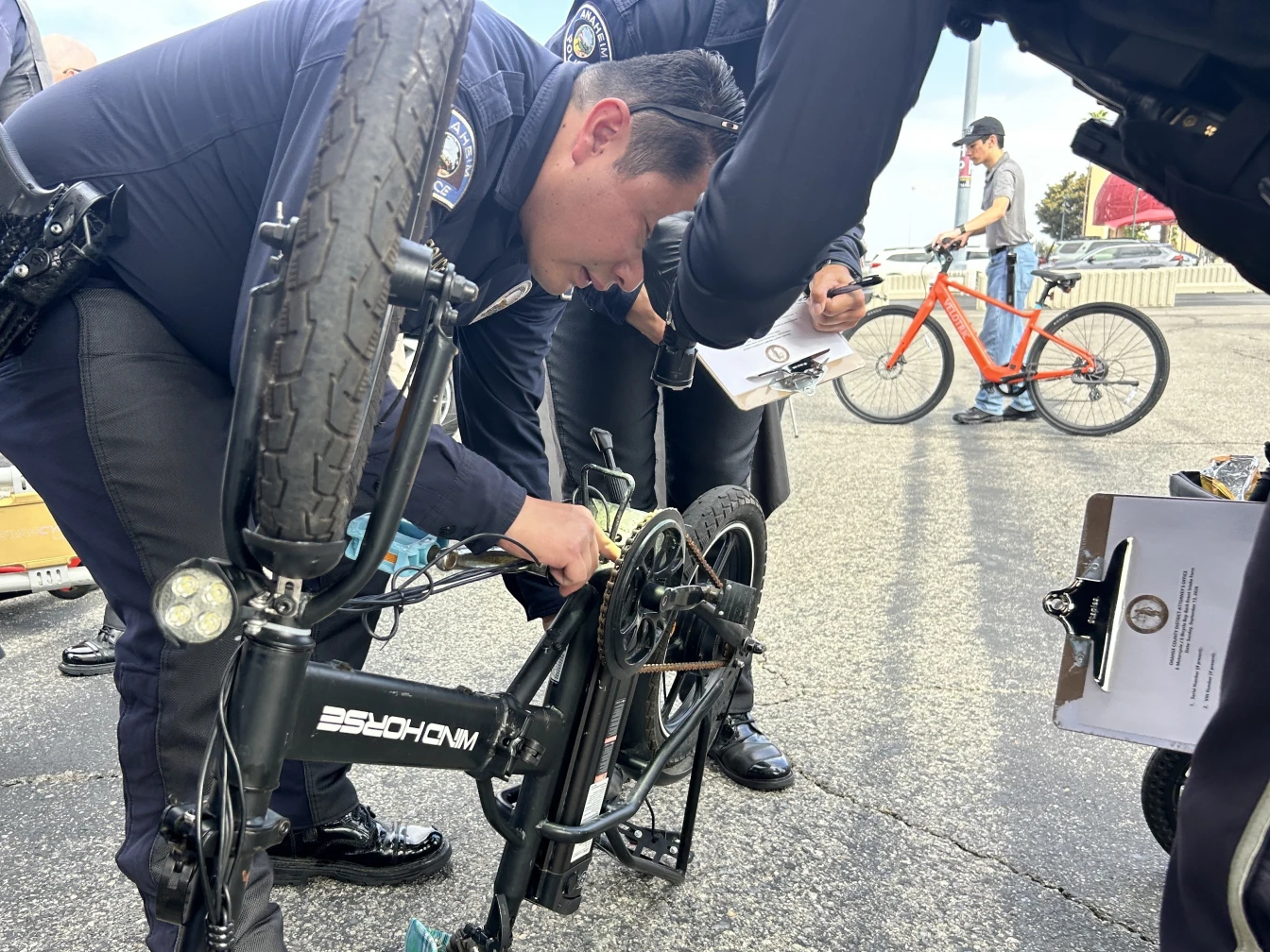
"caption": "Police examine an e-bike at the Orange County District Attorney's buyback event on Sept. 13, 2026 at Angel Stadium.\n",
"credit": "Photo by Jill Replogle/LAist",
"altTag": null,
"description": null,
"imgSizes": {
"thumbnail": {
"file": "https://cdn.kqed.org/wp-content/uploads/sites/10/2026/10/e-bikes-6abfb6dd0c937-160x120.jpg",
"width": 160,
"height": 120,
"mimeType": "image/jpeg"
},
"post-thumbnail": {
"file": "https://cdn.kqed.org/wp-content/uploads/sites/10/2026/10/e-bikes-6abfb6dd0c937-672x372.jpg",
"width": 672,
"height": 372,
"mimeType": "image/jpeg"
},
"twentyfourteen-full-width": {
"file": "https://cdn.kqed.org/wp-content/uploads/sites/10/2026/10/e-bikes-6abfb6dd0c937-1038x576.jpg",
"width": 1038,
"height": 576,
"mimeType": "image/jpeg"
},
"npr-cds-wide": {
"file": "https://cdn.kqed.org/wp-content/uploads/sites/10/2026/10/e-bikes-6abfb6dd0c937-1200x675.jpg",
"width": 1200,
"height": 675,
"mimeType": "image/jpeg"
},
"npr-cds-square": {
"file": "https://cdn.kqed.org/wp-content/uploads/sites/10/2026/10/e-bikes-6abfb6dd0c937-600x600.jpg",
"width": 600,
"height": 600,
"mimeType": "image/jpeg"
},
"kqedFullSize": {
"file": "https://cdn.kqed.org/wp-content/uploads/sites/10/2026/10/e-bikes-6abfb6dd0c937.jpg",
"width": 1344,
"height": 1008
}
},
"isLoading": false,
"fetchFailed": false
},
"news_11928851": {
"type": "attachments",
"id": "news_11928851",
"meta": {
"index": "attachments_1716263798",
"site": "news",
"id": "11928851",
"found": true
},
"parent": 11928844,
"imgSizes": {
"twentyfourteen-full-width": {
"file": "https://ww2.kqed.org/app/uploads/sites/10/2022/10/RS59361_IMG_5929-qut-1038x576.jpg",
"width": 1038,
"mimeType": "image/jpeg",
"height": 576
},
"thumbnail": {
"file": "https://ww2.kqed.org/app/uploads/sites/10/2022/10/RS59361_IMG_5929-qut-160x120.jpg",
"width": 160,
"mimeType": "image/jpeg",
"height": 120
},
"post-thumbnail": {
"file": "https://ww2.kqed.org/app/uploads/sites/10/2022/10/RS59361_IMG_5929-qut-672x372.jpg",
"width": 672,
"mimeType": "image/jpeg",
"height": 372
},
"kqedFullSize": {
"file": "https://ww2.kqed.org/app/uploads/sites/10/2022/10/RS59361_IMG_5929-qut.jpg",
"width": 1920,
"height": 1440
},
"large": {
"file": "https://ww2.kqed.org/app/uploads/sites/10/2022/10/RS59361_IMG_5929-qut-1020x765.jpg",
"width": 1020,
"mimeType": "image/jpeg",
"height": 765
},
"1536x1536": {
"file": "https://ww2.kqed.org/app/uploads/sites/10/2022/10/RS59361_IMG_5929-qut-1536x1152.jpg",
"width": 1536,
"mimeType": "image/jpeg",
"height": 1152
},
"medium": {
"file": "https://ww2.kqed.org/app/uploads/sites/10/2022/10/RS59361_IMG_5929-qut-800x600.jpg",
"width": 800,
"mimeType": "image/jpeg",
"height": 600
}
},
"publishDate": 1665710540,
"modified": 1665711909,
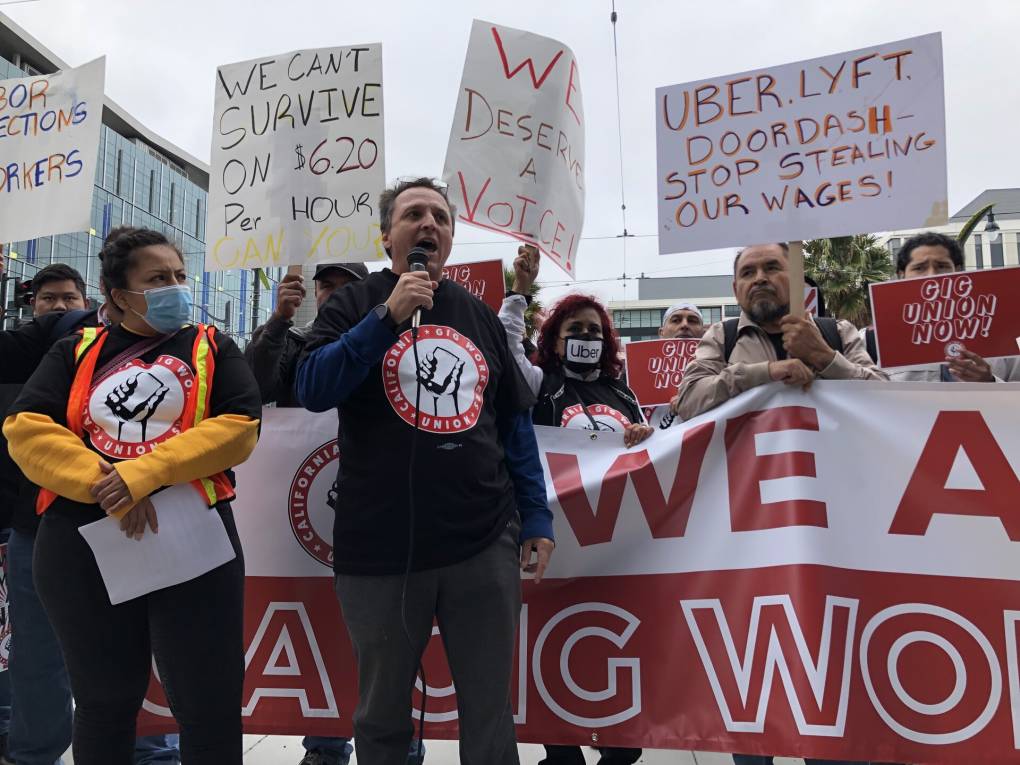
"caption": "Hector Castellanos, an Uber and Lyft driver from Antioch, speaks at a rally to announce the formation of the California Gig Workers Union before Uber's headquarters in San Francisco on Oct. 12, 2022.",
"description": null,
"title": "RS59361_IMG_5929-qut",
"credit": "Farida Jhabvala Romero/KQED",
"status": "inherit",
"altTag": "A man with a microphone speaks while protestors holding signs rally behind him.",
"isLoading": false,
"fetchFailed": false
},
"news_12102341": {
"type": "attachments",
"id": "news_12102341",
"meta": {
"index": "attachments_1716263798",
"site": "news",
"id": "12102341",
"found": true
},
"title": "GavinNewsomGetty",
"publishDate": 1790877562,
"status": "inherit",
"parent": 12102337,
"modified": 1790889609,
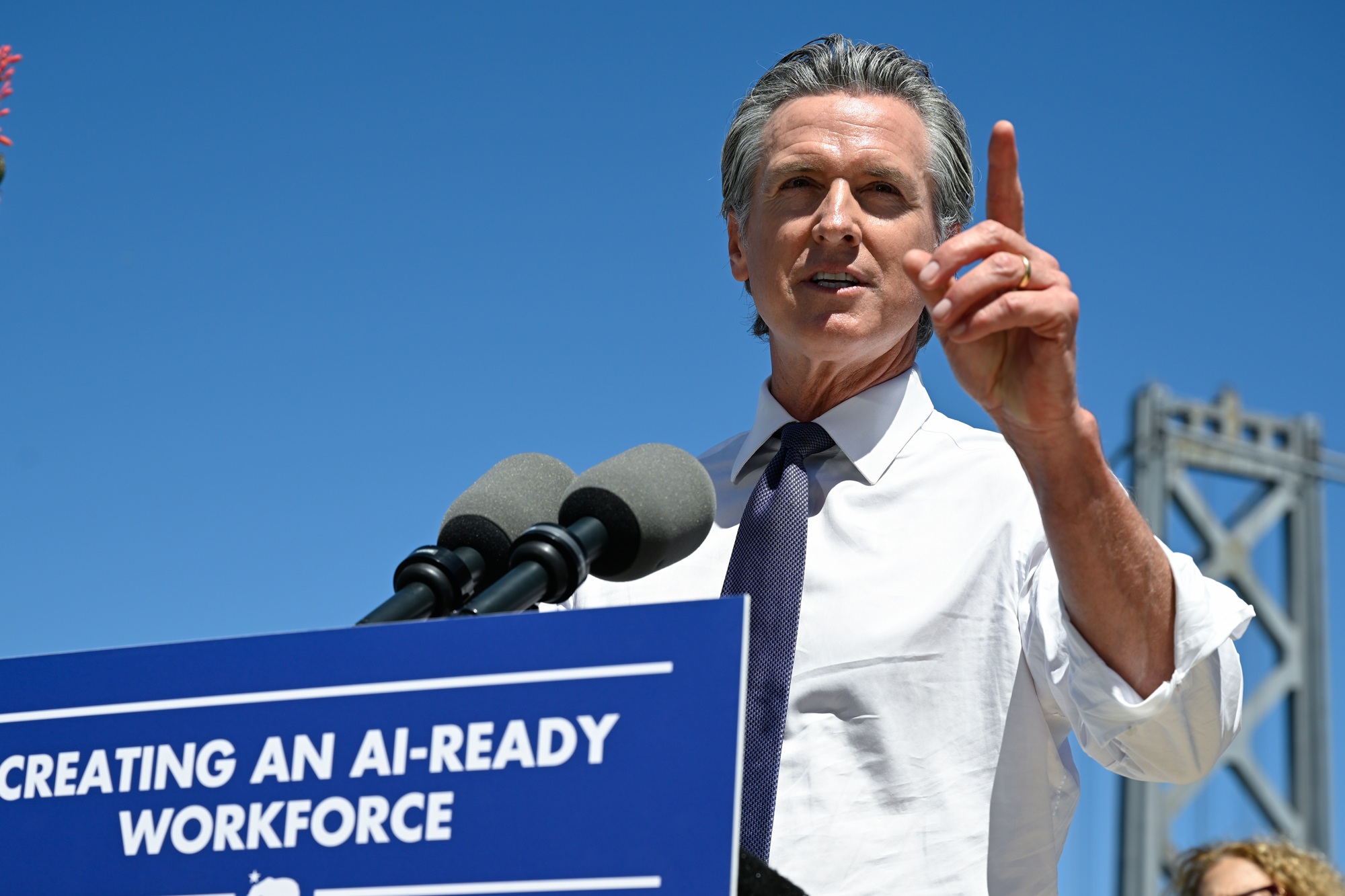
"caption": "Gov. Gavin Newsom speaks at Google's San Francisco office about 'Creating an AI-Ready Workforce' that new joint effort with some of the world's leading tech companies to help better prepare California's students and workers for the next generation of technology, in San Francisco on Aug. 7, 2025.",
"credit": "Tayfun Coskun/Anadolu via Getty Images",
"altTag": null,
"description": null,
"imgSizes": {
"thumbnail": {
"file": "https://cdn.kqed.org/wp-content/uploads/sites/10/2026/10/GavinNewsomGetty-160x107.jpg",
"width": 160,
"height": 107,
"mimeType": "image/jpeg"
},
"1536x1536": {
"file": "https://cdn.kqed.org/wp-content/uploads/sites/10/2026/10/GavinNewsomGetty-1536x1024.jpg",
"width": 1536,
"height": 1024,
"mimeType": "image/jpeg"
},
"post-thumbnail": {
"file": "https://cdn.kqed.org/wp-content/uploads/sites/10/2026/10/GavinNewsomGetty-672x372.jpg",
"width": 672,
"height": 372,
"mimeType": "image/jpeg"
},
"twentyfourteen-full-width": {
"file": "https://cdn.kqed.org/wp-content/uploads/sites/10/2026/10/GavinNewsomGetty-1038x576.jpg",
"width": 1038,
"height": 576,
"mimeType": "image/jpeg"
},
"npr-cds-wide": {
"file": "https://cdn.kqed.org/wp-content/uploads/sites/10/2026/10/GavinNewsomGetty-1200x675.jpg",
"width": 1200,
"height": 675,
"mimeType": "image/jpeg"
},
"npr-cds-square": {
"file": "https://cdn.kqed.org/wp-content/uploads/sites/10/2026/10/GavinNewsomGetty-600x600.jpg",
"width": 600,
"height": 600,
"mimeType": "image/jpeg"
},
"kqedFullSize": {
"file": "https://cdn.kqed.org/wp-content/uploads/sites/10/2026/10/GavinNewsomGetty.jpg",
"width": 2000,
"height": 1333
}
},
"isLoading": false,
"fetchFailed": false
},
"news_11944379": {
"type": "attachments",
"id": "news_11944379",
"meta": {
"index": "attachments_1716263798",
"site": "news",
"id": "11944379",
"found": true
},
"title": "RS16535_IMG_0443.JPG",
"publishDate": 1679513384,
"status": "inherit",
"parent": 11944344,
"modified": 1786382854,
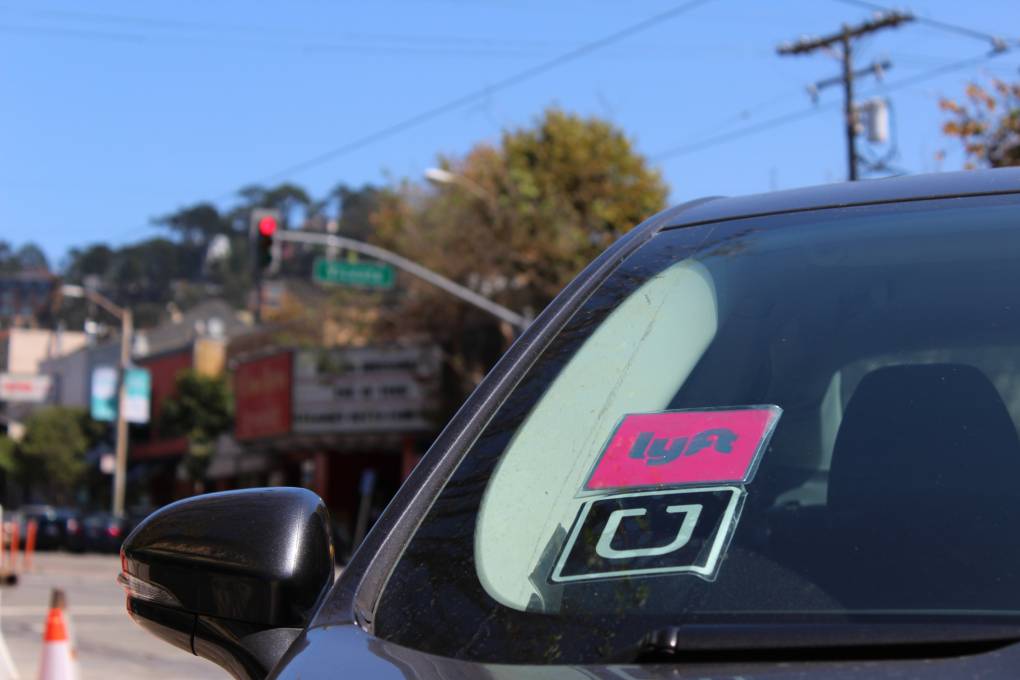
"caption": "Proposition 22 allows gig companies such as Uber, Lyft and the like to classify their drivers as independent contractors rather than employees. ",
"credit": "Ericka Cruz Guevarra/KQED",
"altTag": "A close-up shot of a black vehicle with a pink Lyft sticker and a black-and-white Uber sticker on the left side of its windshield. The vehicle sits idle, waiting to pick up a customer.",
"description": null,
"imgSizes": {
"medium": {
"file": "https://cdn.kqed.org/wp-content/uploads/sites/10/2023/03/RS16535_IMG_0443.JPG-800x533.jpg",
"width": 800,
"height": 533,
"mimeType": "image/jpeg"
},
"large": {
"file": "https://cdn.kqed.org/wp-content/uploads/sites/10/2023/03/RS16535_IMG_0443.JPG-1020x680.jpg",
"width": 1020,
"height": 680,
"mimeType": "image/jpeg"
},
"thumbnail": {
"file": "https://cdn.kqed.org/wp-content/uploads/sites/10/2023/03/RS16535_IMG_0443.JPG-160x107.jpg",
"width": 160,
"height": 107,
"mimeType": "image/jpeg"
},
"1536x1536": {
"file": "https://cdn.kqed.org/wp-content/uploads/sites/10/2023/03/RS16535_IMG_0443.JPG-1536x1024.jpg",
"width": 1536,
"height": 1024,
"mimeType": "image/jpeg"
},
"2048x2048": {
"file": "https://cdn.kqed.org/wp-content/uploads/sites/10/2023/03/RS16535_IMG_0443.JPG-2048x1365.jpg",
"width": 2048,
"height": 1365,
"mimeType": "image/jpeg"
},
"post-thumbnail": {
"file": "https://cdn.kqed.org/wp-content/uploads/sites/10/2023/03/RS16535_IMG_0443.JPG-672x372.jpg",
"width": 672,
"height": 372,
"mimeType": "image/jpeg"
},
"twentyfourteen-full-width": {
"file": "https://cdn.kqed.org/wp-content/uploads/sites/10/2023/03/RS16535_IMG_0443.JPG-1038x576.jpg",
"width": 1038,
"height": 576,
"mimeType": "image/jpeg"
},
"full-width": {
"file": "https://cdn.kqed.org/wp-content/uploads/sites/10/2023/03/RS16535_IMG_0443.JPG-1920x1280.jpg",
"width": 1920,
"height": 1280,
"mimeType": "image/jpeg"
},
"kqedFullSize": {
"file": "https://cdn.kqed.org/wp-content/uploads/sites/10/2023/03/RS16535_IMG_0443.JPG-scaled-e1764810192572.jpg",
"width": 2000,
"height": 1334
}
},
"isLoading": false,
"fetchFailed": false
},
"news_12004750": {
"type": "attachments",
"id": "news_12004750",
"meta": {
"index": "attachments_1716263798",
"site": "news",
"id": "12004750",
"found": true
},
"title": "San Francisco downtown street",
"publishDate": 1726261449,
"status": "inherit",
"parent": 12004742,
"modified": 1726261591,
"caption": "Powell and Market streets in downtown San Francisco. ",
"credit": "Vichie81/Getty Images",
"altTag": null,
"description": null,
"imgSizes": {
"medium": {
"file": "https://cdn.kqed.org/wp-content/uploads/sites/10/2024/09/DowntownSFGetty1-800x533.jpg",
"width": 800,
"height": 533,
"mimeType": "image/jpeg"
},
"large": {
"file": "https://cdn.kqed.org/wp-content/uploads/sites/10/2024/09/DowntownSFGetty1-1020x680.jpg",
"width": 1020,
"height": 680,
"mimeType": "image/jpeg"
},
"thumbnail": {
"file": "https://cdn.kqed.org/wp-content/uploads/sites/10/2024/09/DowntownSFGetty1-160x107.jpg",
"width": 160,
"height": 107,
"mimeType": "image/jpeg"
},
"1536x1536": {
"file": "https://cdn.kqed.org/wp-content/uploads/sites/10/2024/09/DowntownSFGetty1-1536x1024.jpg",
"width": 1536,
"height": 1024,
"mimeType": "image/jpeg"
},
"post-thumbnail": {
"file": "https://cdn.kqed.org/wp-content/uploads/sites/10/2024/09/DowntownSFGetty1-672x372.jpg",
"width": 672,
"height": 372,
"mimeType": "image/jpeg"
},
"twentyfourteen-full-width": {
"file": "https://cdn.kqed.org/wp-content/uploads/sites/10/2024/09/DowntownSFGetty1-1038x576.jpg",
"width": 1038,
"height": 576,
"mimeType": "image/jpeg"
},
"full-width": {
"file": "https://cdn.kqed.org/wp-content/uploads/sites/10/2024/09/DowntownSFGetty1-1920x1280.jpg",
"width": 1920,
"height": 1280,
"mimeType": "image/jpeg"
},
"kqedFullSize": {
"file": "https://cdn.kqed.org/wp-content/uploads/sites/10/2024/09/DowntownSFGetty1.jpg",
"width": 2000,
"height": 1333
}
},
"isLoading": false,
"fetchFailed": false
},
"news_11843813": {
"type": "attachments",
"id": "news_11843813",
"meta": {
"index": "attachments_1716263798",
"site": "news",
"id": "11843813",
"found": true
},
"parent": 11843123,
"imgSizes": {
"apple_news_ca_landscape_5_5": {
"file": "https://ww2.kqed.org/app/uploads/sites/10/2020/10/uber-lyft-protest-sign-1044x783.jpg",
"width": 1044,
"mimeType": "image/jpeg",
"height": 783
},
"apple_news_ca_square_4_0": {
"file": "https://ww2.kqed.org/app/uploads/sites/10/2020/10/uber-lyft-protest-sign-470x470.jpg",
"width": 470,
"mimeType": "image/jpeg",
"height": 470
},
"twentyfourteen-full-width": {
"file": "https://ww2.kqed.org/app/uploads/sites/10/2020/10/uber-lyft-protest-sign-1038x576.jpg",
"width": 1038,
"mimeType": "image/jpeg",
"height": 576
},
"thumbnail": {
"file": "https://ww2.kqed.org/app/uploads/sites/10/2020/10/uber-lyft-protest-sign-160x111.jpg",
"width": 160,
"mimeType": "image/jpeg",
"height": 111
},
"post-thumbnail": {
"file": "https://ww2.kqed.org/app/uploads/sites/10/2020/10/uber-lyft-protest-sign-672x372.jpg",
"width": 672,
"mimeType": "image/jpeg",
"height": 372
},
"kqedFullSize": {
"file": "https://ww2.kqed.org/app/uploads/sites/10/2020/10/uber-lyft-protest-sign.jpg",
"width": 1920,
"height": 1330
},
"apple_news_ca_landscape_4_7": {
"file": "https://ww2.kqed.org/app/uploads/sites/10/2020/10/uber-lyft-protest-sign-632x474.jpg",
"width": 632,
"mimeType": "image/jpeg",
"height": 474
},
"large": {
"file": "https://ww2.kqed.org/app/uploads/sites/10/2020/10/uber-lyft-protest-sign-1020x707.jpg",
"width": 1020,
"mimeType": "image/jpeg",
"height": 707
},
"apple_news_ca_landscape_4_0": {
"file": "https://ww2.kqed.org/app/uploads/sites/10/2020/10/uber-lyft-protest-sign-536x402.jpg",
"width": 536,
"mimeType": "image/jpeg",
"height": 402
},
"apple_news_ca_portrait_12_9": {
"file": "https://ww2.kqed.org/app/uploads/sites/10/2020/10/uber-lyft-protest-sign-1122x1330.jpg",
"width": 1122,
"mimeType": "image/jpeg",
"height": 1330
},
"medium": {
"file": "https://ww2.kqed.org/app/uploads/sites/10/2020/10/uber-lyft-protest-sign-800x554.jpg",
"width": 800,
"mimeType": "image/jpeg",
"height": 554
},
"apple_news_ca_portrait_4_0": {
"file": "https://ww2.kqed.org/app/uploads/sites/10/2020/10/uber-lyft-protest-sign-354x472.jpg",
"width": 354,
"mimeType": "image/jpeg",
"height": 472
},
"apple_news_ca_portrait_9_7": {
"file": "https://ww2.kqed.org/app/uploads/sites/10/2020/10/uber-lyft-protest-sign-840x1120.jpg",
"width": 840,
"mimeType": "image/jpeg",
"height": 1120
},
"apple_news_ca_landscape_12_9": {
"file": "https://ww2.kqed.org/app/uploads/sites/10/2020/10/uber-lyft-protest-sign-1832x1330.jpg",
"width": 1832,
"mimeType": "image/jpeg",
"height": 1330
},
"apple_news_ca_square_9_7": {
"file": "https://ww2.kqed.org/app/uploads/sites/10/2020/10/uber-lyft-protest-sign-1104x1104.jpg",
"width": 1104,
"mimeType": "image/jpeg",
"height": 1104
},
"1536x1536": {
"file": "https://ww2.kqed.org/app/uploads/sites/10/2020/10/uber-lyft-protest-sign-1536x1064.jpg",
"width": 1536,
"mimeType": "image/jpeg",
"height": 1064
},
"apple_news_ca_portrait_4_7": {
"file": "https://ww2.kqed.org/app/uploads/sites/10/2020/10/uber-lyft-protest-sign-414x552.jpg",
"width": 414,
"mimeType": "image/jpeg",
"height": 552
},
"apple_news_ca_square_12_9": {
"file": "https://ww2.kqed.org/app/uploads/sites/10/2020/10/uber-lyft-protest-sign-1472x1330.jpg",
"width": 1472,
"mimeType": "image/jpeg",
"height": 1330
},
"apple_news_ca_portrait_5_5": {
"file": "https://ww2.kqed.org/app/uploads/sites/10/2020/10/uber-lyft-protest-sign-687x916.jpg",
"width": 687,
"mimeType": "image/jpeg",
"height": 916
},
"apple_news_ca_square_4_7": {
"file": "https://ww2.kqed.org/app/uploads/sites/10/2020/10/uber-lyft-protest-sign-550x550.jpg",
"width": 550,
"mimeType": "image/jpeg",
"height": 550
},
"apple_news_ca_landscape_9_7": {
"file": "https://ww2.kqed.org/app/uploads/sites/10/2020/10/uber-lyft-protest-sign-1376x1032.jpg",
"width": 1376,
"mimeType": "image/jpeg",
"height": 1032
},
"apple_news_ca_square_5_5": {
"file": "https://ww2.kqed.org/app/uploads/sites/10/2020/10/uber-lyft-protest-sign-912x912.jpg",
"width": 912,
"mimeType": "image/jpeg",
"height": 912
}
},
"publishDate": 1603753946,
"modified": 1678823724,
"caption": "A supporter of ride-hail drivers holds a sign during a protest in front of Uber headquarters in May 2019. Prop. 22, backed by huge amounts of cash from gig companies, would create a new class of worker in California.",
"description": "A supporter of ride-hail drivers holds a sign during a protest in front of Uber headquarters in May, 2019. Prop. 22, backed by huge amounts of cash from gig companies, would create a new class of worker in California.",
"title": "uber-lyft-protest-sign",
"credit": "Justin Sullivan/Getty Images",
"status": "inherit",
"altTag": "Protesters stand on a sidewalk in front of an office, and next to a car with Lyft and Uber stickers on the back. A woman holds a sign that says: Uber: 'Pay Drivers a Living Wage.'",
"isLoading": false,
"fetchFailed": false
},
"news_11997574": {
"type": "attachments",
"id": "news_11997574",
"meta": {
"index": "attachments_1716263798",
"site": "news",
"id": "11997574",
"found": true
},
"title": "US-DEMONSTRATION-UBER-LYFT",
"publishDate": 1722018786,
"status": "inherit",
"parent": 12033648,
"modified": 1759532393,
"caption": "Members of the Rideshare Drivers United organization protest against Uber and Lyft during a demonstration in Los Angeles, California, on Feb.14, 2024. ",
"credit": "Frederic J. Brown/AFP via Getty Images",
"altTag": null,
"description": null,
"imgSizes": {
"medium": {
"file": "https://cdn.kqed.org/wp-content/uploads/sites/10/2024/07/GettyImages-2003719181-800x534.jpg",
"width": 800,
"height": 534,
"mimeType": "image/jpeg"
},
"large": {
"file": "https://cdn.kqed.org/wp-content/uploads/sites/10/2024/07/GettyImages-2003719181-1020x680.jpg",
"width": 1020,
"height": 680,
"mimeType": "image/jpeg"
},
"thumbnail": {
"file": "https://cdn.kqed.org/wp-content/uploads/sites/10/2024/07/GettyImages-2003719181-160x107.jpg",
"width": 160,
"height": 107,
"mimeType": "image/jpeg"
},
"post-thumbnail": {
"file": "https://cdn.kqed.org/wp-content/uploads/sites/10/2024/07/GettyImages-2003719181-672x372.jpg",
"width": 672,
"height": 372,
"mimeType": "image/jpeg"
},
"twentyfourteen-full-width": {
"file": "https://cdn.kqed.org/wp-content/uploads/sites/10/2024/07/GettyImages-2003719181-1024x576.jpg",
"width": 1024,
"height": 576,
"mimeType": "image/jpeg"
},
"kqedFullSize": {
"file": "https://cdn.kqed.org/wp-content/uploads/sites/10/2024/07/GettyImages-2003719181.jpg",
"width": 1024,
"height": 683
}
},
"isLoading": false,
"fetchFailed": false
},
"news_12053307": {
"type": "attachments",
"id": "news_12053307",
"meta": {
"index": "attachments_1716263798",
"site": "news",
"id": "12053307",
"found": true
},
"title": "231102-DriverlessTaxi-15-BL_qed",
"publishDate": 1755882911,
"status": "inherit",
"parent": 12053305,
"modified": 1755882945,
"caption": "A Waymo driverless taxi drives through Downtown San Francisco, California, on Nov. 2, 2023.",
"credit": "Carlos Avila Gonzalez/SF Chronicle ",
"altTag": null,
"description": null,
"imgSizes": {
"thumbnail": {
"file": "https://cdn.kqed.org/wp-content/uploads/sites/10/2025/08/231102-DriverlessTaxi-15-BL_qed-160x107.jpg",
"width": 160,
"height": 107,
"mimeType": "image/jpeg"
},
"1536x1536": {
"file": "https://cdn.kqed.org/wp-content/uploads/sites/10/2025/08/231102-DriverlessTaxi-15-BL_qed-1536x1024.jpg",
"width": 1536,
"height": 1024,
"mimeType": "image/jpeg"
},
"post-thumbnail": {
"file": "https://cdn.kqed.org/wp-content/uploads/sites/10/2025/08/231102-DriverlessTaxi-15-BL_qed-672x372.jpg",
"width": 672,
"height": 372,
"mimeType": "image/jpeg"
},
"twentyfourteen-full-width": {
"file": "https://cdn.kqed.org/wp-content/uploads/sites/10/2025/08/231102-DriverlessTaxi-15-BL_qed-1038x576.jpg",
"width": 1038,
"height": 576,
"mimeType": "image/jpeg"
},
"kqedFullSize": {
"file": "https://cdn.kqed.org/wp-content/uploads/sites/10/2025/08/231102-DriverlessTaxi-15-BL_qed.jpg",
"width": 2000,
"height": 1333
}
},
"isLoading": false,
"fetchFailed": false
},
"news_12008321": {
"type": "attachments",
"id": "news_12008321",
"meta": {
"index": "attachments_1716263798",
"site": "news",
"id": "12008321",
"found": true
},
"title": "San Francisco Ride Hailing Lawsuit",
"publishDate": 1728334457,
"status": "inherit",
"parent": 12008292,
"modified": 1744762102,
"caption": "A Lyft car crosses Market Street in San Francisco on Feb. 8, 2018. ",
"credit": "Jeff Chiu/AP Photo",
"altTag": null,
"description": null,
"imgSizes": {
"medium": {
"file": "https://cdn.kqed.org/wp-content/uploads/sites/10/2024/10/SFLyftDriverAP-800x496.jpg",
"width": 800,
"height": 496,
"mimeType": "image/jpeg"
},
"large": {
"file": "https://cdn.kqed.org/wp-content/uploads/sites/10/2024/10/SFLyftDriverAP-1020x632.jpg",
"width": 1020,
"height": 632,
"mimeType": "image/jpeg"
},
"thumbnail": {
"file": "https://cdn.kqed.org/wp-content/uploads/sites/10/2024/10/SFLyftDriverAP-160x99.jpg",
"width": 160,
"height": 99,
"mimeType": "image/jpeg"
},
"1536x1536": {
"file": "https://cdn.kqed.org/wp-content/uploads/sites/10/2024/10/SFLyftDriverAP-1536x952.jpg",
"width": 1536,
"height": 952,
"mimeType": "image/jpeg"
},
"post-thumbnail": {
"file": "https://cdn.kqed.org/wp-content/uploads/sites/10/2024/10/SFLyftDriverAP-672x372.jpg",
"width": 672,
"height": 372,
"mimeType": "image/jpeg"
},
"twentyfourteen-full-width": {
"file": "https://cdn.kqed.org/wp-content/uploads/sites/10/2024/10/SFLyftDriverAP-1038x576.jpg",
"width": 1038,
"height": 576,
"mimeType": "image/jpeg"
},
"full-width": {
"file": "https://cdn.kqed.org/wp-content/uploads/sites/10/2024/10/SFLyftDriverAP-1920x1190.jpg",
"width": 1920,
"height": 1190,
"mimeType": "image/jpeg"
},
"kqedFullSize": {
"file": "https://cdn.kqed.org/wp-content/uploads/sites/10/2024/10/SFLyftDriverAP.jpg",
"width": 2000,
"height": 1240
}
},
"isLoading": false,
"fetchFailed": false
},
"news_12003064": {
"type": "attachments",
"id": "news_12003064",
"meta": {
"index": "attachments_1716263798",
"site": "news",
"id": "12003064",
"found": true
},
"title": "052124_Prop-22_JY_CM_12",
"publishDate": 1725481668,
"status": "inherit",
"parent": 12002988,
"modified": 1725481702,
"caption": "Ride-share drivers of the California Gig Workers Union hold a rally outside of the Supreme Court of California to protest Prop. 22 in San Francisco on May 21, 2024. The state Supreme Court later upheld the constitutionality of the measure. \n",
"credit": "Juliana Yamada/CalMatters",
"altTag": null,
"description": null,
"imgSizes": {
"medium": {
"file": "https://cdn.kqed.org/wp-content/uploads/sites/10/2024/09/052124_Prop-22_JY_CM_12-800x533.jpg",
"width": 800,
"height": 533,
"mimeType": "image/jpeg"
},
"large": {
"file": "https://cdn.kqed.org/wp-content/uploads/sites/10/2024/09/052124_Prop-22_JY_CM_12-1020x680.jpg",
"width": 1020,
"height": 680,
"mimeType": "image/jpeg"
},
"thumbnail": {
"file": "https://cdn.kqed.org/wp-content/uploads/sites/10/2024/09/052124_Prop-22_JY_CM_12-160x107.jpg",
"width": 160,
"height": 107,
"mimeType": "image/jpeg"
},
"1536x1536": {
"file": "https://cdn.kqed.org/wp-content/uploads/sites/10/2024/09/052124_Prop-22_JY_CM_12-1536x1024.jpg",
"width": 1536,
"height": 1024,
"mimeType": "image/jpeg"
},
"post-thumbnail": {
"file": "https://cdn.kqed.org/wp-content/uploads/sites/10/2024/09/052124_Prop-22_JY_CM_12-672x372.jpg",
"width": 672,
"height": 372,
"mimeType": "image/jpeg"
},
"twentyfourteen-full-width": {
"file": "https://cdn.kqed.org/wp-content/uploads/sites/10/2024/09/052124_Prop-22_JY_CM_12-1038x576.jpg",
"width": 1038,
"height": 576,
"mimeType": "image/jpeg"
},
"full-width": {
"file": "https://cdn.kqed.org/wp-content/uploads/sites/10/2024/09/052124_Prop-22_JY_CM_12-1920x1280.jpg",
"width": 1920,
"height": 1280,
"mimeType": "image/jpeg"
},
"kqedFullSize": {
"file": "https://cdn.kqed.org/wp-content/uploads/sites/10/2024/09/052124_Prop-22_JY_CM_12.jpg",
"width": 2000,
"height": 1333
}
},
"isLoading": false,
"fetchFailed": false
},
"news_11991941": {
"type": "attachments",
"id": "news_11991941",
"meta": {
"index": "attachments_1716263798",
"site": "news",
"id": "11991941",
"found": true
},
"title": "240625-UBERSANJOSE-JG-3",
"publishDate": 1719356445,
"status": "inherit",
"parent": 11991922,
"modified": 1719356481,
"caption": "San José City Councilmember Peter Ortiz speaks during a rally of Uber drivers and advocates outside the company's driver support center in South San José on June 25, 2024.",
"credit": "Joseph Geha/KQED",
"altTag": null,
"description": null,
"imgSizes": {
"medium": {
"file": "https://cdn.kqed.org/wp-content/uploads/sites/10/2024/06/240625-UBERSANJOSE-JG-3-800x533.jpg",
"width": 800,
"height": 533,
"mimeType": "image/jpeg"
},
"large": {
"file": "https://cdn.kqed.org/wp-content/uploads/sites/10/2024/06/240625-UBERSANJOSE-JG-3-1020x680.jpg",
"width": 1020,
"height": 680,
"mimeType": "image/jpeg"
},
"thumbnail": {
"file": "https://cdn.kqed.org/wp-content/uploads/sites/10/2024/06/240625-UBERSANJOSE-JG-3-160x107.jpg",
"width": 160,
"height": 107,
"mimeType": "image/jpeg"
},
"1536x1536": {
"file": "https://cdn.kqed.org/wp-content/uploads/sites/10/2024/06/240625-UBERSANJOSE-JG-3-1536x1024.jpg",
"width": 1536,
"height": 1024,
"mimeType": "image/jpeg"
},
"post-thumbnail": {
"file": "https://cdn.kqed.org/wp-content/uploads/sites/10/2024/06/240625-UBERSANJOSE-JG-3-672x372.jpg",
"width": 672,
"height": 372,
"mimeType": "image/jpeg"
},
"twentyfourteen-full-width": {
"file": "https://cdn.kqed.org/wp-content/uploads/sites/10/2024/06/240625-UBERSANJOSE-JG-3-1038x576.jpg",
"width": 1038,
"height": 576,
"mimeType": "image/jpeg"
},
"full-width": {
"file": "https://cdn.kqed.org/wp-content/uploads/sites/10/2024/06/240625-UBERSANJOSE-JG-3-1920x1280.jpg",
"width": 1920,
"height": 1280,
"mimeType": "image/jpeg"
},
"kqedFullSize": {
"file": "https://cdn.kqed.org/wp-content/uploads/sites/10/2024/06/240625-UBERSANJOSE-JG-3.jpg",
"width": 2000,
"height": 1333
}
},
"isLoading": false,
"fetchFailed": false
}
},
"audioPlayerReducer": {
"postId": "stream_live",
"isPaused": true,
"isPlaying": false,
"pfsActive": false,
"pledgeModalIsOpen": true,
"playerDrawerIsOpen": false,
"liveAudioPlayStartedAt": 0,
"liveAudioPlayContext": ""
},
"authorsReducer": {
"byline_news_12002988": {
"type": "authors",
"id": "byline_news_12002988",
"meta": {
"override": true
},
"slug": "byline_news_12002988",
"name": "Levi Sumagaysay, CALMatters",
"isLoading": false
},
"rachael-myrow": {
"type": "authors",
"id": "251",
"meta": {
"index": "authors_1716337520",
"id": "251",
"found": true
},
"name": "Rachael Myrow",
"firstName": "Rachael",
"lastName": "Myrow",
"slug": "rachael-myrow",
"email": "rmyrow@kqed.org",
"display_author_email": true,
"staff_mastheads": [
"news"
],
"title": "Senior Editor of KQED's Silicon Valley News Desk",
"bio": "• I write and edit stories about how Silicon Valley power and policies shape everyday life in California. I’m also passionate about making Bay Area history and culture more accessible to a broad public. • I’ve been a journalist for most of my life, starting in high school with The Franklin Press in Los Angeles, where I grew up. While earning my first degree in English at UC Berkeley, I got my start in public radio at KALX-FM. After completing a second degree in journalism at Cal, I landed my first professional job at Marketplace, then moved on to KPCC (now LAist), and then KQED, where I hosted The California Report for more than seven years. • My reporting has appeared on NPR, The World, WBUR’s \u003ci>Here & Now\u003c/i>, and the BBC. I also guest host for KQED’s \u003ci>Forum\u003c/i>, as well as the Commonwealth Club in San Francisco. • I speak periodically on media, democracy and technology issues, and do voiceover work for documentaries and educational video projects. • Outside of the studio, you'll find me hiking Bay Area trails and whipping up Insta-ready meals in my kitchen. • I do not accept gifts, money, or favors from anyone connected to my reporting, I don't pay people for information, and I do not support or donate to political causes. • I strive to treat the people I report on with fairness, honesty, and respect. I also recognize there are often multiple sides to a story and work to verify information through multiple sources and documentation. If I get something wrong, I correct it.",
"avatar": "https://secure.gravatar.com/avatar/3ed8a3c5f26025e4a805ba634cda8cd764906b97438a6d9ce216b044e340da4e?s=600&d=blank&r=g",
"twitter": "rachaelmyrow",
"bluesky": null,
"facebook": null,
"instagram": null,
"linkedin": "https://www.linkedin.com/in/rachaelmyrow/",
"sites": [
{
"site": "arts",
"roles": [
"administrator"
]
},
{
"site": "news",
"roles": [
"edit_others_posts",
"editor"
]
},
{
"site": "futureofyou",
"roles": [
"editor"
]
},
{
"site": "bayareabites",
"roles": [
"editor"
]
},
{
"site": "stateofhealth",
"roles": [
"editor"
]
},
{
"site": "science",
"roles": [
"editor"
]
},
{
"site": "food",
"roles": [
"editor"
]
},
{
"site": "forum",
"roles": [
"editor"
]
},
{
"site": "liveblog",
"roles": [
"author"
]
}
],
"headData": {
"title": "Rachael Myrow | KQED",
"description": "Senior Editor of KQED's Silicon Valley News Desk",
"ogImgSrc": "https://secure.gravatar.com/avatar/3ed8a3c5f26025e4a805ba634cda8cd764906b97438a6d9ce216b044e340da4e?s=600&d=blank&r=g",
"twImgSrc": "https://secure.gravatar.com/avatar/3ed8a3c5f26025e4a805ba634cda8cd764906b97438a6d9ce216b044e340da4e?s=600&d=blank&r=g"
},
"isLoading": false,
"link": "/author/rachael-myrow"
},
"fjhabvala": {
"type": "authors",
"id": "8659",
"meta": {
"index": "authors_1716337520",
"id": "8659",
"found": true
},
"name": "Farida Jhabvala Romero",
"firstName": "Farida",
"lastName": "Jhabvala Romero",
"slug": "fjhabvala",
"email": "fjhabvala@kqed.org",
"display_author_email": true,
"staff_mastheads": [
"news"
],
"title": "KQED Contributor",
"bio": "Farida Jhabvala Romero is a Labor Correspondent for KQED. She previously covered immigration. Farida was \u003ca href=\"https://www.ccnma.org/2022-most-influential-latina-journalists\">named\u003c/a> one of the 10 Most Influential Latina Journalists in California in 2022 by the California Chicano News Media Association. Her work has won awards from the Society of Professional Journalists (Northern California), as well as a national and regional Edward M. Murrow Award for the collaborative reporting projects “Dangerous Air” and “Graying California.” Before joining KQED, Farida worked as a producer at Radio Bilingüe, a national public radio network. Farida earned her master’s degree in journalism from Stanford University.",
"avatar": "https://secure.gravatar.com/avatar/f9f022d4e2609741874222a1e9d41f48fea74011aa7c615eef91d9a50c944ebe?s=600&d=blank&r=g",
"twitter": "FaridaJhabvala",
"bluesky": null,
"facebook": null,
"instagram": null,
"linkedin": "https://www.linkedin.com/in/faridajhabvala/",
"sites": [
{
"site": "news",
"roles": [
"editor"
]
},
{
"site": "stateofhealth",
"roles": [
"author"
]
},
{
"site": "liveblog",
"roles": [
"author"
]
}
],
"headData": {
"title": "Farida Jhabvala Romero | KQED",
"description": "KQED Contributor",
"ogImgSrc": "https://secure.gravatar.com/avatar/f9f022d4e2609741874222a1e9d41f48fea74011aa7c615eef91d9a50c944ebe?s=600&d=blank&r=g",
"twImgSrc": "https://secure.gravatar.com/avatar/f9f022d4e2609741874222a1e9d41f48fea74011aa7c615eef91d9a50c944ebe?s=600&d=blank&r=g"
},
"isLoading": false,
"link": "/author/fjhabvala"
},
"kmizuguchi": {
"type": "authors",
"id": "11739",
"meta": {
"index": "authors_1716337520",
"id": "11739",
"found": true
},
"name": "Keith Mizuguchi",
"firstName": "Keith",
"lastName": "Mizuguchi",
"slug": "kmizuguchi",
"email": "kmizuguchi@kqed.org",
"display_author_email": false,
"staff_mastheads": [],
"title": "KQED Contributor",
"bio": null,
"avatar": "https://secure.gravatar.com/avatar/64d8a7de0723d4099b9fe4e915136103febcc20809abce228ee4415bcb237023?s=600&d=blank&r=g",
"twitter": null,
"bluesky": null,
"facebook": null,
"instagram": null,
"linkedin": null,
"sites": [
{
"site": "news",
"roles": [
"editor"
]
},
{
"site": "science",
"roles": [
"editor"
]
}
],
"headData": {
"title": "Keith Mizuguchi | KQED",
"description": "KQED Contributor",
"ogImgSrc": "https://secure.gravatar.com/avatar/64d8a7de0723d4099b9fe4e915136103febcc20809abce228ee4415bcb237023?s=600&d=blank&r=g",
"twImgSrc": "https://secure.gravatar.com/avatar/64d8a7de0723d4099b9fe4e915136103febcc20809abce228ee4415bcb237023?s=600&d=blank&r=g"
},
"isLoading": false,
"link": "/author/kmizuguchi"
},
"sjohnson": {
"type": "authors",
"id": "11840",
"meta": {
"index": "authors_1716337520",
"id": "11840",
"found": true
},
"name": "Sydney Johnson",
"firstName": "Sydney",
"lastName": "Johnson",
"slug": "sjohnson",
"email": "sjohnson@kqed.org",
"display_author_email": false,
"staff_mastheads": [
"news"
],
"title": "KQED Reporter",
"bio": "Sydney Johnson is a general assignment reporter at KQED. She previously reported on public health and city government at the San Francisco Examiner, and before that, she covered statewide education policy for EdSource. Her reporting has won multiple local, state and national awards. Sydney is a graduate of the University of California, Berkeley and lives in San Francisco.",
"avatar": "https://secure.gravatar.com/avatar/97855f2719b72ad6190b7c535fe642c8?s=600&d=blank&r=g",
"twitter": "sydneyfjohnson",
"facebook": null,
"instagram": null,
"linkedin": null,
"sites": [
{
"site": "news",
"roles": [
"editor"
]
}
],
"headData": {
"title": "Sydney Johnson | KQED",
"description": "KQED Reporter",
"ogImgSrc": "https://secure.gravatar.com/avatar/97855f2719b72ad6190b7c535fe642c8?s=600&d=blank&r=g",
"twImgSrc": "https://secure.gravatar.com/avatar/97855f2719b72ad6190b7c535fe642c8?s=600&d=blank&r=g"
},
"isLoading": false,
"link": "/author/sjohnson"
},
"jgeha": {
"type": "authors",
"id": "11906",
"meta": {
"index": "authors_1716337520",
"id": "11906",
"found": true
},
"name": "Joseph Geha",
"firstName": "Joseph",
"lastName": "Geha",
"slug": "jgeha",
"email": "jgeha@kqed.org",
"display_author_email": false,
"staff_mastheads": [
"news",
"science"
],
"title": "KQED Contributor",
"bio": null,
"avatar": "https://secure.gravatar.com/avatar/ea84d2b6dd93d6369d453edf19dd583f117cd1759d2d9c9c92f9de77017354fe?s=600&d=blank&r=g",
"twitter": null,
"bluesky": null,
"facebook": null,
"instagram": null,
"linkedin": null,
"sites": [
{
"site": "news",
"roles": [
"editor"
]
},
{
"site": "liveblog",
"roles": [
"author"
]
}
],
"headData": {
"title": "Joseph Geha | KQED",
"description": "KQED Contributor",
"ogImgSrc": "https://secure.gravatar.com/avatar/ea84d2b6dd93d6369d453edf19dd583f117cd1759d2d9c9c92f9de77017354fe?s=600&d=blank&r=g",
"twImgSrc": "https://secure.gravatar.com/avatar/ea84d2b6dd93d6369d453edf19dd583f117cd1759d2d9c9c92f9de77017354fe?s=600&d=blank&r=g"
},
"isLoading": false,
"link": "/author/jgeha"
},
"kdebenedetti": {
"type": "authors",
"id": "11913",
"meta": {
"index": "authors_1716337520",
"id": "11913",
"found": true
},
"name": "Katie DeBenedetti",
"firstName": "Katie",
"lastName": "DeBenedetti",
"slug": "kdebenedetti",
"email": "kdebenedetti@kqed.org",
"display_author_email": false,
"staff_mastheads": [
"news",
"science"
],
"title": "KQED Contributor",
"bio": "Katie DeBenedetti is a digital reporter covering daily news for the Express Desk. Prior to joining KQED as a culture reporting intern in January 2024, she covered education and city government for the Napa Valley Register.",
"avatar": "https://secure.gravatar.com/avatar/6e31073cb8f7e4214ab03f42771d0f45?s=600&d=blank&r=g",
"twitter": null,
"facebook": null,
"instagram": null,
"linkedin": null,
"sites": [
{
"site": "news",
"roles": [
"author"
]
},
{
"site": "science",
"roles": [
"author"
]
},
{
"site": "liveblog",
"roles": [
"author"
]
}
],
"headData": {
"title": "Katie DeBenedetti | KQED",
"description": "KQED Contributor",
"ogImgSrc": "https://secure.gravatar.com/avatar/6e31073cb8f7e4214ab03f42771d0f45?s=600&d=blank&r=g",
"twImgSrc": "https://secure.gravatar.com/avatar/6e31073cb8f7e4214ab03f42771d0f45?s=600&d=blank&r=g"
},
"isLoading": false,
"link": "/author/kdebenedetti"
},
"skennedy": {
"type": "authors",
"id": "11935",
"meta": {
"index": "authors_1716337520",
"id": "11935",
"found": true
},
"name": "Samantha Kennedy",
"firstName": "Samantha",
"lastName": "Kennedy",
"slug": "skennedy",
"email": "SKennedy@kqed.org",
"display_author_email": false,
"staff_mastheads": [],
"title": "KQED Contributor",
"bio": null,
"avatar": "https://secure.gravatar.com/avatar/adc7b14bf1e801793202a156ecc864d4ad505b0fd63162a2f3da0e5ba57222d0?s=600&d=blank&r=g",
"twitter": null,
"bluesky": null,
"facebook": null,
"instagram": null,
"linkedin": null,
"sites": [
{
"site": "arts",
"roles": [
"author"
]
},
{
"site": "news",
"roles": [
"editor"
]
},
{
"site": "science",
"roles": [
"editor"
]
}
],
"headData": {
"title": "Samantha Kennedy | KQED",
"description": "KQED Contributor",
"ogImgSrc": "https://secure.gravatar.com/avatar/adc7b14bf1e801793202a156ecc864d4ad505b0fd63162a2f3da0e5ba57222d0?s=600&d=blank&r=g",
"twImgSrc": "https://secure.gravatar.com/avatar/adc7b14bf1e801793202a156ecc864d4ad505b0fd63162a2f3da0e5ba57222d0?s=600&d=blank&r=g"
},
"isLoading": false,
"link": "/author/skennedy"
}
},
"pagesReducer": {
"news_tag_lyft": {
"type": "terms",
"id": "news_4524",
"meta": {
"index": "terms_1716263798",
"site": "news",
"id": "4524",
"score": 9.55733
},
"featImg": null,
"name": "Lyft",
"description": null,
"taxonomy": "tag",
"headData": {
"twImgId": null,
"twTitle": null,
"ogTitle": null,
"ogImgId": null,
"twDescription": null,
"description": null,
"title": "Lyft Archives | KQED News",
"ogDescription": null
},
"ttid": 4543,
"slug": "lyft",
"isLoading": false,
"title": "Lyft",
"pageMeta": {
"site": "news",
"WpPageTemplate": "page-topic-editorial",
"currentPage": 1
},
"blocks": [
{
"blockName": "kqed/post-list",
"attrs": {
"layout": "cardArticle2",
"query": "posts/news?tag=lyft",
"seeMore": false,
"paginated": true,
"page": 1
}
},
{
"blockName": "kqed/ad"
}
]
}
},
"pfsSessionReducer": {},
"postsReducer": {
"stream_live": {
"type": "live",
"id": "stream_live",
"audioUrl": "https://streams.kqed.org/kqedradio",
"title": "Live Stream",
"excerpt": "Live Stream information currently unavailable.",
"link": "/radio",
"featImg": "",
"label": {
"name": "KQED Live",
"link": "/"
}
},
"stream_kqedNewscast": {
"type": "posts",
"id": "stream_kqedNewscast",
"audioUrl": "https://www.kqed.org/.stream/anon/radio/RDnews/newscast.mp3?_=1",
"title": "KQED Newscast",
"featImg": "",
"label": {
"name": "88.5 FM",
"link": "/"
}
},
"news_12102547": {
"type": "posts",
"id": "news_12102547",
"meta": {
"index": "posts_1716263798",
"site": "news",
"id": "12102547",
"score": null,
"sort": [
1790969791000
]
},
"guestAuthors": [],
"slug": "orange-county-community-in-the-heart-of-debate-over-e-bikes",
"title": "Orange County Community in the Heart of Debate Over E-Bikes",
"publishDate": 1790969791,
"format": "standard",
"headTitle": "Orange County Community in the Heart of Debate Over E-Bikes | KQED",
"labelTerm": {},
"content": "\n\u003cp>\u003cstrong>Here are the morning’s top stories on Friday, October 2, 2026\u003c/strong>\u003c/p>\n\n\n\n\u003cul class=\"wp-block-list\">\n\u003cli>Governor Gavin Newsom \u003ca href=\"https://www.kqed.org/news/12102184/california-cracks-down-on-e-motos-youth-e-bike-riders-with-new-laws\">signed three laws this week\u003c/a> aimed at addressing some of the most pressing safety concerns surrounding electric bicycles, as the devices’ popularity continues to rise in California. It was not long ago that the headlines about e-bikes seemed full of promise, as a replacement for gas-guzzling cars, and an affordable, flexible new mode of transportation. Now, \u003ca href=\"https://laist.com/news/orange-county-e-bikes-bicycles-teens-students-school-district-bans-safety\">a lot of the news\u003c/a> is about crashes and serious injuries, often involving kids. \u003c/li>\n\n\n\n\u003cli>Lyft \u003ca href=\"https://www.kqed.org/news/12102378/lyft-agrees-to-272-million-wage-theft-lawsuit-as-uber-fights-on\">has agreed to pay more than $272 million\u003c/a> to settle a state lawsuit alleging it misclassified California drivers as independent contractors, rather than employees, from 2016 to 2020. \u003c/li>\n\n\n\n\u003cli>\u003ca href=\"https://news.ucsc.edu/2026/09/parking-policy-masks-anti-muslim-discrimination/\">A new study\u003c/a> has found that when applying for building permits, mosques face more pushback over parking requirements than churches.\u003c/li>\n\u003c/ul>\n\n\n\n\u003ch2 class=\"wp-block-heading\">\u003cstrong>\u003ca href=\"https://laist.com/news/orange-county-e-bikes-bicycles-teens-students-school-district-bans-safety\">E-bikes are Orange County teens’ ticket to independence. But are they too dangerous?\u003c/a>\u003c/strong>\u003c/h2>\n\n\n\n\u003cp>The bell had already rung on a recent morning at Newport Beach’s Ensign Intermediate School. But two of the school’s students hadn’t made it to class. Instead, they were sitting on a sidewalk across from campus, detained by a police officer for parking their e-bikes on the street.\u003c/p>\n\n\n\n\u003cp>The situation at Ensign has gotten messy since the school district, Newport-Mesa Unified, \u003ca href=\"https://laist.com/news/education/newport-mesa-e-bike-ban-k-8-schools\">\u003cu>voted to ban e-bikes\u003c/u>\u003c/a> from middle and elementary school campuses, citing safety concerns. Many students kept riding their e-bikes to school anyway, parking them in swarms in the surrounding neighborhood. The neighbors did not like this. Shouting matches ensued between students and homeowners. At least one student returned from class to find her tires deflated. The city responded to the tension by putting up “No e-bike parking” signs on several streets.\u003c/p>\n\n\n\n\u003cp>“I wouldn’t want it in my neighborhood either, like, I get it,” said Corey Gulbranson, who got a $100 parking ticket on behalf of his daughter, one of the Ensign students detained for allegedly illegally parking her e-bike. “But at the end of the day, we’re just trying to get our kids to school on a legal mode of transportation.”\u003c/p>\n\n\n\n\u003cp>E-bikes and significantly more powerful e-motorcycles have become very popular in many Orange County suburbs, where the streets are wide, public transit is spotty, and distances are longer than some are willing to pedal on a regular bike. For teens and tweens, e-bikes provide a taste of independence. They also relieve parents of some of their driving duties. Plus, e-bikes can replace polluting cars.\u003c/p>\n\n\n\n\u003cp>But their popularity has brought an alarming increase in serious injuries, especially among young riders. At Providence Mission Hospital in Mission Viejo, e-bike crashes are now sending more kids to the ER than any other cause, according to Dr. Tetsuya Takeuchi, the hospital’s trauma medical director. More than 70% of those patients had some level of head injury, from minor concussions to devastating brain damage, he said, often because they were not wearing a helmet. But even Takeuchi recognizes the nearly irresistible draw of e-bikes. “If you ride one, you realize how easy it is to go everywhere with it,” he said. “I am not by any means surprised at how popular this is, especially amongst kids.”\u003c/p>\n\n\n\n\u003cp>Orange County District Attorney Todd Spitzer has taken some unusual approaches to addressing the e-bike dilemma. To date, he has pressed criminal charges — including for child endangerment — against four parents after their children were involved in collisions, all of them on e-motorcycles, not e-bikes. One of those parents, a woman from Aliso Viejo, was charged with three felonies, including involuntary manslaughter, after her 14-year-old son allegedly \u003ca href=\"https://ocdistrictattorney.gov/press/aliso-viejo-mother-charged-with-felony-child-endangerment-after-vietnam-veteran-critically-injured-when-he-was-hit-by-womans-14-year-old-son-illegally-riding-an-e-motorcycle-16-times-more-po/\" target=\"_blank\" rel=\"noreferrer noopener\">struck and killed an 81-year-old man\u003c/a> while doing wheelies in the street in Lake Forest on an e-motorcycle souped up to reach 60 miles per hour.\u003c/p>\n\n\n\n\u003cp>The DA’s office said it has also sent letters to retailers reminding them of a ban on selling products used to modify e-bikes to go faster than legally allowed. Spitzer recently tried \u003ca href=\"https://laist.com/news/e-bike-e-motorcycle-buyback-event-orange-county-todd-spitzer\">\u003cu>another novel approach\u003c/u>\u003c/a>: buybacks. On a recent Sunday, hundreds of people brought their e-bikes, e-scooters and e-motos to an event at Angel Stadium in Anaheim, hoping to turn them in for up to a thousand dollars in gift cards. The county event was paid for with $100,000 in asset forfeiture funds.\u003c/p>\n\n\n\n\u003ch2 class=\"wp-block-heading\">\u003ca href=\"https://www.kqed.org/news/12102378/lyft-agrees-to-272-million-wage-theft-lawsuit-as-uber-fights-on\">Lyft agrees to $272 million wage theft lawsuit as Uber fights on\u003c/a>\u003c/h2>\n\n\n\n\u003cp>\u003ca href=\"https://www.kqed.org/news/tag/lyft\">Lyft\u003c/a> has agreed to pay more than $272 million to settle a state lawsuit alleging it committed wage theft by misclassifying California drivers as independent contractors, rather than employees, from 2016 to 2020. \u003c/p>\n\n\n\n\u003cp>Attorney General Rob Bonta \u003ca href=\"https://oag.ca.gov/news/press-releases/attorney-general-bonta-city-attorneys-san-francisco-san-diego-and-los-angeles\" target=\"_blank\" rel=\"noreferrer noopener\">announced\u003c/a> the deal on Thursday alongside city attorneys for San Francisco, Los Angeles and San Diego. He said Lyft, which has argued its drivers were always properly classified, spent years trying to push the case into private arbitration. “All the while Lyft grew into a multibillion-dollar company, and a household name. Its success depended on its drivers, many of whom came from immigrant communities and communities of color, and still, Lyft failed to protect those drivers and failed to pay them fairly,” Bonta said.\u003c/p>\n\n\n\n\u003cp>He called it the largest worker misclassification settlement in California history. “The bottom line is that eligible drivers are going to get paid. That’s money in the pockets of the workers who drove this company’s success,” the attorney general said.\u003c/p>\n\n\n\n\u003cp>Most of the money, at least $237 million, is set to go to drivers. “This was rent that didn’t get paid, food that wasn’t there for hungry kids. We’ve waited six years for this,” said Alvaro Bolainez, vice president of Rideshare Drivers United, a union representing over 20,000 drivers, in a statement. “It’s a big settlement — but it’s not big enough to cover the real harm that’s happened to drivers over the years.” \u003c/p>\n\n\n\n\u003cp>The settlement still needs a judge’s approval. In a statement, Lyft said the deal “closes a chapter from a very different time, before Prop 22,” \u003ca href=\"https://www.kqed.org/news/tag/prop-22\">the 2020 ballot measure\u003c/a> that let app-based companies keep treating drivers as contractors. \u003c/p>\n\n\n\n\u003ch2 class=\"wp-block-heading\">\u003cstrong>New research shows mosques face more pushback over parking requirements\u003c/strong>\u003c/h2>\n\n\n\n\u003cp>\u003ca href=\"https://news.ucsc.edu/2026/09/parking-policy-masks-anti-muslim-discrimination/\">A new study\u003c/a> has found that when applying for building permits, mosques face more pushback over parking requirements than churches.\u003c/p>\n\n\n\n\u003cp>The study was published in The Journal of the American Planning Association in September. It found that mosques were 16 to 18% more likely to experience opposition than newly proposed Christian churches. Mark Massoud is a professor at UC Santa Cruz, and coauthor of the study. “ If someone comes to a planning commission hearing, and they say ‘I don’t want Muslims in my neighborhood these people, especially in progressive cities and towns like here in California, will probably not be taken seriously,” he said.\u003c/p>\n\n\n\n\u003cp>But, another tactic is to raise a more legitimate concern like worries over the amount of parking. Massoud said that mosques in general do provide adequate parking, but that they’re still asked to jump through extra hoops. In some cases, approval can be delayed for a decade or more over permitting issues.\u003c/p>\n\n\n\n\u003cp>The report encourages cities to consistently apply zoning standards to all projects as a way to reduce bias.\u003c/p>\n",
"blocks": [
{
"blockName": "core/paragraph",
"attrs": {
"dropCap": false
},
"innerHTML": "\n\u003cp>\u003cstrong>Here are the morning’s top stories on Friday, October 2, 2026\u003c/strong>\u003c/p>\n",
"innerContent": [
"\n\u003cp>\u003cstrong>Here are the morning’s top stories on Friday, October 2, 2026\u003c/strong>\u003c/p>\n"
],
"innerBlocks": []
},
{
"blockName": "core/list",
"attrs": {
"items": [
"Governor Gavin Newsom signed three laws this week aimed at addressing some of the most pressing safety concerns surrounding electric bicycles, as the devices’ popularity continues to rise in California. It was not long ago that the headlines about e-bikes seemed full of promise, as a replacement for gas-guzzling cars, and an affordable, flexible new mode of transportation. Now, a lot of the news is about crashes and serious injuries, often involving kids. ",
"Lyft has agreed to pay more than $272 million to settle a state lawsuit alleging it misclassified California drivers as independent contractors, rather than employees, from 2016 to 2020. ",
"A new study has found that when applying for building permits, mosques face more pushback over parking requirements than churches."
],
"ordered": false,
"values": ""
},
"innerHTML": "\n\u003cul class=\"wp-block-list\">\n\n\n\n\u003c/ul>\n",
"innerContent": [
"\n\u003cul class=\"wp-block-list\">",
null,
"\n\n",
null,
"\n\n",
null,
"\u003c/ul>\n"
],
"innerBlocks": [
{
"blockName": "core/list-item",
"attrs": [],
"innerBlocks": [],
"innerHTML": "\n\u003cli>Governor Gavin Newsom \u003ca href=\"https://www.kqed.org/news/12102184/california-cracks-down-on-e-motos-youth-e-bike-riders-with-new-laws\">signed three laws this week\u003c/a> aimed at addressing some of the most pressing safety concerns surrounding electric bicycles, as the devices’ popularity continues to rise in California. It was not long ago that the headlines about e-bikes seemed full of promise, as a replacement for gas-guzzling cars, and an affordable, flexible new mode of transportation. Now, \u003ca href=\"https://laist.com/news/orange-county-e-bikes-bicycles-teens-students-school-district-bans-safety\">a lot of the news\u003c/a> is about crashes and serious injuries, often involving kids. \u003c/li>\n",
"innerContent": [
"\n\u003cli>Governor Gavin Newsom \u003ca href=\"https://www.kqed.org/news/12102184/california-cracks-down-on-e-motos-youth-e-bike-riders-with-new-laws\">signed three laws this week\u003c/a> aimed at addressing some of the most pressing safety concerns surrounding electric bicycles, as the devices’ popularity continues to rise in California. It was not long ago that the headlines about e-bikes seemed full of promise, as a replacement for gas-guzzling cars, and an affordable, flexible new mode of transportation. Now, \u003ca href=\"https://laist.com/news/orange-county-e-bikes-bicycles-teens-students-school-district-bans-safety\">a lot of the news\u003c/a> is about crashes and serious injuries, often involving kids. \u003c/li>\n"
]
},
{
"blockName": "core/list-item",
"attrs": [],
"innerBlocks": [],
"innerHTML": "\n\u003cli>Lyft \u003ca href=\"https://www.kqed.org/news/12102378/lyft-agrees-to-272-million-wage-theft-lawsuit-as-uber-fights-on\">has agreed to pay more than $272 million\u003c/a> to settle a state lawsuit alleging it misclassified California drivers as independent contractors, rather than employees, from 2016 to 2020. \u003c/li>\n",
"innerContent": [
"\n\u003cli>Lyft \u003ca href=\"https://www.kqed.org/news/12102378/lyft-agrees-to-272-million-wage-theft-lawsuit-as-uber-fights-on\">has agreed to pay more than $272 million\u003c/a> to settle a state lawsuit alleging it misclassified California drivers as independent contractors, rather than employees, from 2016 to 2020. \u003c/li>\n"
]
},
{
"blockName": "core/list-item",
"attrs": [],
"innerBlocks": [],
"innerHTML": "\n\u003cli>\u003ca href=\"https://news.ucsc.edu/2026/09/parking-policy-masks-anti-muslim-discrimination/\">A new study\u003c/a> has found that when applying for building permits, mosques face more pushback over parking requirements than churches.\u003c/li>\n",
"innerContent": [
"\n\u003cli>\u003ca href=\"https://news.ucsc.edu/2026/09/parking-policy-masks-anti-muslim-discrimination/\">A new study\u003c/a> has found that when applying for building permits, mosques face more pushback over parking requirements than churches.\u003c/li>\n"
]
}
]
},
{
"blockName": "core/heading",
"attrs": {
"text": "E-bikes are Orange County teens’ ticket to independence. But are they too dangerous?",
"level": 2
},
"innerHTML": "\n\u003ch2 class=\"wp-block-heading\">\u003cstrong>\u003ca href=\"https://laist.com/news/orange-county-e-bikes-bicycles-teens-students-school-district-bans-safety\">E-bikes are Orange County teens’ ticket to independence. But are they too dangerous?\u003c/a>\u003c/strong>\u003c/h2>\n",
"innerContent": [
"\n\u003ch2 class=\"wp-block-heading\">\u003cstrong>\u003ca href=\"https://laist.com/news/orange-county-e-bikes-bicycles-teens-students-school-district-bans-safety\">E-bikes are Orange County teens’ ticket to independence. But are they too dangerous?\u003c/a>\u003c/strong>\u003c/h2>\n"
],
"innerBlocks": []
},
{
"blockName": "core/paragraph",
"attrs": {
"dropCap": false
},
"innerHTML": "\n\u003cp>The bell had already rung on a recent morning at Newport Beach’s Ensign Intermediate School. But two of the school’s students hadn’t made it to class. Instead, they were sitting on a sidewalk across from campus, detained by a police officer for parking their e-bikes on the street.\u003c/p>\n",
"innerContent": [
"\n\u003cp>The bell had already rung on a recent morning at Newport Beach’s Ensign Intermediate School. But two of the school’s students hadn’t made it to class. Instead, they were sitting on a sidewalk across from campus, detained by a police officer for parking their e-bikes on the street.\u003c/p>\n"
],
"innerBlocks": []
},
{
"blockName": "core/paragraph",
"attrs": {
"dropCap": false
},
"innerHTML": "\n\u003cp>The situation at Ensign has gotten messy since the school district, Newport-Mesa Unified, \u003ca href=\"https://laist.com/news/education/newport-mesa-e-bike-ban-k-8-schools\">\u003cu>voted to ban e-bikes\u003c/u>\u003c/a> from middle and elementary school campuses, citing safety concerns. Many students kept riding their e-bikes to school anyway, parking them in swarms in the surrounding neighborhood. The neighbors did not like this. Shouting matches ensued between students and homeowners. At least one student returned from class to find her tires deflated. The city responded to the tension by putting up “No e-bike parking” signs on several streets.\u003c/p>\n",
"innerContent": [
"\n\u003cp>The situation at Ensign has gotten messy since the school district, Newport-Mesa Unified, \u003ca href=\"https://laist.com/news/education/newport-mesa-e-bike-ban-k-8-schools\">\u003cu>voted to ban e-bikes\u003c/u>\u003c/a> from middle and elementary school campuses, citing safety concerns. Many students kept riding their e-bikes to school anyway, parking them in swarms in the surrounding neighborhood. The neighbors did not like this. Shouting matches ensued between students and homeowners. At least one student returned from class to find her tires deflated. The city responded to the tension by putting up “No e-bike parking” signs on several streets.\u003c/p>\n"
],
"innerBlocks": []
},
{
"blockName": "core/paragraph",
"attrs": {
"dropCap": false
},
"innerHTML": "\n\u003cp>“I wouldn’t want it in my neighborhood either, like, I get it,” said Corey Gulbranson, who got a $100 parking ticket on behalf of his daughter, one of the Ensign students detained for allegedly illegally parking her e-bike. “But at the end of the day, we’re just trying to get our kids to school on a legal mode of transportation.”\u003c/p>\n",
"innerContent": [
"\n\u003cp>“I wouldn’t want it in my neighborhood either, like, I get it,” said Corey Gulbranson, who got a $100 parking ticket on behalf of his daughter, one of the Ensign students detained for allegedly illegally parking her e-bike. “But at the end of the day, we’re just trying to get our kids to school on a legal mode of transportation.”\u003c/p>\n"
],
"innerBlocks": []
},
{
"blockName": "core/paragraph",
"attrs": {
"dropCap": false
},
"innerHTML": "\n\u003cp>E-bikes and significantly more powerful e-motorcycles have become very popular in many Orange County suburbs, where the streets are wide, public transit is spotty, and distances are longer than some are willing to pedal on a regular bike. For teens and tweens, e-bikes provide a taste of independence. They also relieve parents of some of their driving duties. Plus, e-bikes can replace polluting cars.\u003c/p>\n",
"innerContent": [
"\n\u003cp>E-bikes and significantly more powerful e-motorcycles have become very popular in many Orange County suburbs, where the streets are wide, public transit is spotty, and distances are longer than some are willing to pedal on a regular bike. For teens and tweens, e-bikes provide a taste of independence. They also relieve parents of some of their driving duties. Plus, e-bikes can replace polluting cars.\u003c/p>\n"
],
"innerBlocks": []
},
{
"blockName": "core/paragraph",
"attrs": {
"dropCap": false
},
"innerHTML": "\n\u003cp>But their popularity has brought an alarming increase in serious injuries, especially among young riders. At Providence Mission Hospital in Mission Viejo, e-bike crashes are now sending more kids to the ER than any other cause, according to Dr. Tetsuya Takeuchi, the hospital’s trauma medical director. More than 70% of those patients had some level of head injury, from minor concussions to devastating brain damage, he said, often because they were not wearing a helmet. But even Takeuchi recognizes the nearly irresistible draw of e-bikes. “If you ride one, you realize how easy it is to go everywhere with it,” he said. “I am not by any means surprised at how popular this is, especially amongst kids.”\u003c/p>\n",
"innerContent": [
"\n\u003cp>But their popularity has brought an alarming increase in serious injuries, especially among young riders. At Providence Mission Hospital in Mission Viejo, e-bike crashes are now sending more kids to the ER than any other cause, according to Dr. Tetsuya Takeuchi, the hospital’s trauma medical director. More than 70% of those patients had some level of head injury, from minor concussions to devastating brain damage, he said, often because they were not wearing a helmet. But even Takeuchi recognizes the nearly irresistible draw of e-bikes. “If you ride one, you realize how easy it is to go everywhere with it,” he said. “I am not by any means surprised at how popular this is, especially amongst kids.”\u003c/p>\n"
],
"innerBlocks": []
},
{
"blockName": "core/paragraph",
"attrs": {
"dropCap": false
},
"innerHTML": "\n\u003cp>Orange County District Attorney Todd Spitzer has taken some unusual approaches to addressing the e-bike dilemma. To date, he has pressed criminal charges — including for child endangerment — against four parents after their children were involved in collisions, all of them on e-motorcycles, not e-bikes. One of those parents, a woman from Aliso Viejo, was charged with three felonies, including involuntary manslaughter, after her 14-year-old son allegedly \u003ca href=\"https://ocdistrictattorney.gov/press/aliso-viejo-mother-charged-with-felony-child-endangerment-after-vietnam-veteran-critically-injured-when-he-was-hit-by-womans-14-year-old-son-illegally-riding-an-e-motorcycle-16-times-more-po/\" target=\"_blank\" rel=\"noreferrer noopener\">struck and killed an 81-year-old man\u003c/a> while doing wheelies in the street in Lake Forest on an e-motorcycle souped up to reach 60 miles per hour.\u003c/p>\n",
"innerContent": [
"\n\u003cp>Orange County District Attorney Todd Spitzer has taken some unusual approaches to addressing the e-bike dilemma. To date, he has pressed criminal charges — including for child endangerment — against four parents after their children were involved in collisions, all of them on e-motorcycles, not e-bikes. One of those parents, a woman from Aliso Viejo, was charged with three felonies, including involuntary manslaughter, after her 14-year-old son allegedly \u003ca href=\"https://ocdistrictattorney.gov/press/aliso-viejo-mother-charged-with-felony-child-endangerment-after-vietnam-veteran-critically-injured-when-he-was-hit-by-womans-14-year-old-son-illegally-riding-an-e-motorcycle-16-times-more-po/\" target=\"_blank\" rel=\"noreferrer noopener\">struck and killed an 81-year-old man\u003c/a> while doing wheelies in the street in Lake Forest on an e-motorcycle souped up to reach 60 miles per hour.\u003c/p>\n"
],
"innerBlocks": []
},
{
"blockName": "core/paragraph",
"attrs": {
"dropCap": false
},
"innerHTML": "\n\u003cp>The DA’s office said it has also sent letters to retailers reminding them of a ban on selling products used to modify e-bikes to go faster than legally allowed. Spitzer recently tried \u003ca href=\"https://laist.com/news/e-bike-e-motorcycle-buyback-event-orange-county-todd-spitzer\">\u003cu>another novel approach\u003c/u>\u003c/a>: buybacks. On a recent Sunday, hundreds of people brought their e-bikes, e-scooters and e-motos to an event at Angel Stadium in Anaheim, hoping to turn them in for up to a thousand dollars in gift cards. The county event was paid for with $100,000 in asset forfeiture funds.\u003c/p>\n",
"innerContent": [
"\n\u003cp>The DA’s office said it has also sent letters to retailers reminding them of a ban on selling products used to modify e-bikes to go faster than legally allowed. Spitzer recently tried \u003ca href=\"https://laist.com/news/e-bike-e-motorcycle-buyback-event-orange-county-todd-spitzer\">\u003cu>another novel approach\u003c/u>\u003c/a>: buybacks. On a recent Sunday, hundreds of people brought their e-bikes, e-scooters and e-motos to an event at Angel Stadium in Anaheim, hoping to turn them in for up to a thousand dollars in gift cards. The county event was paid for with $100,000 in asset forfeiture funds.\u003c/p>\n"
],
"innerBlocks": []
},
{
"blockName": "core/heading",
"attrs": {
"text": "Lyft agrees to $272 million wage theft lawsuit as Uber fights on",
"level": 2
},
"innerHTML": "\n\u003ch2 class=\"wp-block-heading\">\u003ca href=\"https://www.kqed.org/news/12102378/lyft-agrees-to-272-million-wage-theft-lawsuit-as-uber-fights-on\">Lyft agrees to $272 million wage theft lawsuit as Uber fights on\u003c/a>\u003c/h2>\n",
"innerContent": [
"\n\u003ch2 class=\"wp-block-heading\">\u003ca href=\"https://www.kqed.org/news/12102378/lyft-agrees-to-272-million-wage-theft-lawsuit-as-uber-fights-on\">Lyft agrees to $272 million wage theft lawsuit as Uber fights on\u003c/a>\u003c/h2>\n"
],
"innerBlocks": []
},
{
"blockName": "core/paragraph",
"attrs": {
"dropCap": false
},
"innerHTML": "\n\u003cp>\u003ca href=\"https://www.kqed.org/news/tag/lyft\">Lyft\u003c/a> has agreed to pay more than $272 million to settle a state lawsuit alleging it committed wage theft by misclassifying California drivers as independent contractors, rather than employees, from 2016 to 2020. \u003c/p>\n",
"innerContent": [
"\n\u003cp>\u003ca href=\"https://www.kqed.org/news/tag/lyft\">Lyft\u003c/a> has agreed to pay more than $272 million to settle a state lawsuit alleging it committed wage theft by misclassifying California drivers as independent contractors, rather than employees, from 2016 to 2020. \u003c/p>\n"
],
"innerBlocks": []
},
{
"blockName": "core/paragraph",
"attrs": {
"dropCap": false
},
"innerHTML": "\n\u003cp>Attorney General Rob Bonta \u003ca href=\"https://oag.ca.gov/news/press-releases/attorney-general-bonta-city-attorneys-san-francisco-san-diego-and-los-angeles\" target=\"_blank\" rel=\"noreferrer noopener\">announced\u003c/a> the deal on Thursday alongside city attorneys for San Francisco, Los Angeles and San Diego. He said Lyft, which has argued its drivers were always properly classified, spent years trying to push the case into private arbitration. “All the while Lyft grew into a multibillion-dollar company, and a household name. Its success depended on its drivers, many of whom came from immigrant communities and communities of color, and still, Lyft failed to protect those drivers and failed to pay them fairly,” Bonta said.\u003c/p>\n",
"innerContent": [
"\n\u003cp>Attorney General Rob Bonta \u003ca href=\"https://oag.ca.gov/news/press-releases/attorney-general-bonta-city-attorneys-san-francisco-san-diego-and-los-angeles\" target=\"_blank\" rel=\"noreferrer noopener\">announced\u003c/a> the deal on Thursday alongside city attorneys for San Francisco, Los Angeles and San Diego. He said Lyft, which has argued its drivers were always properly classified, spent years trying to push the case into private arbitration. “All the while Lyft grew into a multibillion-dollar company, and a household name. Its success depended on its drivers, many of whom came from immigrant communities and communities of color, and still, Lyft failed to protect those drivers and failed to pay them fairly,” Bonta said.\u003c/p>\n"
],
"innerBlocks": []
},
{
"blockName": "core/paragraph",
"attrs": {
"dropCap": false
},
"innerHTML": "\n\u003cp>He called it the largest worker misclassification settlement in California history. “The bottom line is that eligible drivers are going to get paid. That’s money in the pockets of the workers who drove this company’s success,” the attorney general said.\u003c/p>\n",
"innerContent": [
"\n\u003cp>He called it the largest worker misclassification settlement in California history. “The bottom line is that eligible drivers are going to get paid. That’s money in the pockets of the workers who drove this company’s success,” the attorney general said.\u003c/p>\n"
],
"innerBlocks": []
},
{
"blockName": "core/paragraph",
"attrs": {
"dropCap": false
},
"innerHTML": "\n\u003cp>Most of the money, at least $237 million, is set to go to drivers. “This was rent that didn’t get paid, food that wasn’t there for hungry kids. We’ve waited six years for this,” said Alvaro Bolainez, vice president of Rideshare Drivers United, a union representing over 20,000 drivers, in a statement. “It’s a big settlement — but it’s not big enough to cover the real harm that’s happened to drivers over the years.” \u003c/p>\n",
"innerContent": [
"\n\u003cp>Most of the money, at least $237 million, is set to go to drivers. “This was rent that didn’t get paid, food that wasn’t there for hungry kids. We’ve waited six years for this,” said Alvaro Bolainez, vice president of Rideshare Drivers United, a union representing over 20,000 drivers, in a statement. “It’s a big settlement — but it’s not big enough to cover the real harm that’s happened to drivers over the years.” \u003c/p>\n"
],
"innerBlocks": []
},
{
"blockName": "core/paragraph",
"attrs": {
"dropCap": false
},
"innerHTML": "\n\u003cp>The settlement still needs a judge’s approval. In a statement, Lyft said the deal “closes a chapter from a very different time, before Prop 22,” \u003ca href=\"https://www.kqed.org/news/tag/prop-22\">the 2020 ballot measure\u003c/a> that let app-based companies keep treating drivers as contractors. \u003c/p>\n",
"innerContent": [
"\n\u003cp>The settlement still needs a judge’s approval. In a statement, Lyft said the deal “closes a chapter from a very different time, before Prop 22,” \u003ca href=\"https://www.kqed.org/news/tag/prop-22\">the 2020 ballot measure\u003c/a> that let app-based companies keep treating drivers as contractors. \u003c/p>\n"
],
"innerBlocks": []
},
{
"blockName": "core/heading",
"attrs": {
"text": "New research shows mosques face more pushback over parking requirements",
"level": 2
},
"innerHTML": "\n\u003ch2 class=\"wp-block-heading\">\u003cstrong>New research shows mosques face more pushback over parking requirements\u003c/strong>\u003c/h2>\n",
"innerContent": [
"\n\u003ch2 class=\"wp-block-heading\">\u003cstrong>New research shows mosques face more pushback over parking requirements\u003c/strong>\u003c/h2>\n"
],
"innerBlocks": []
},
{
"blockName": "core/paragraph",
"attrs": {
"dropCap": false
},
"innerHTML": "\n\u003cp>\u003ca href=\"https://news.ucsc.edu/2026/09/parking-policy-masks-anti-muslim-discrimination/\">A new study\u003c/a> has found that when applying for building permits, mosques face more pushback over parking requirements than churches.\u003c/p>\n",
"innerContent": [
"\n\u003cp>\u003ca href=\"https://news.ucsc.edu/2026/09/parking-policy-masks-anti-muslim-discrimination/\">A new study\u003c/a> has found that when applying for building permits, mosques face more pushback over parking requirements than churches.\u003c/p>\n"
],
"innerBlocks": []
},
{
"blockName": "core/paragraph",
"attrs": {
"dropCap": false
},
"innerHTML": "\n\u003cp>The study was published in The Journal of the American Planning Association in September. It found that mosques were 16 to 18% more likely to experience opposition than newly proposed Christian churches. Mark Massoud is a professor at UC Santa Cruz, and coauthor of the study. “ If someone comes to a planning commission hearing, and they say ‘I don’t want Muslims in my neighborhood these people, especially in progressive cities and towns like here in California, will probably not be taken seriously,” he said.\u003c/p>\n",
"innerContent": [
"\n\u003cp>The study was published in The Journal of the American Planning Association in September. It found that mosques were 16 to 18% more likely to experience opposition than newly proposed Christian churches. Mark Massoud is a professor at UC Santa Cruz, and coauthor of the study. “ If someone comes to a planning commission hearing, and they say ‘I don’t want Muslims in my neighborhood these people, especially in progressive cities and towns like here in California, will probably not be taken seriously,” he said.\u003c/p>\n"
],
"innerBlocks": []
},
{
"blockName": "core/paragraph",
"attrs": {
"dropCap": false
},
"innerHTML": "\n\u003cp>But, another tactic is to raise a more legitimate concern like worries over the amount of parking. Massoud said that mosques in general do provide adequate parking, but that they’re still asked to jump through extra hoops. In some cases, approval can be delayed for a decade or more over permitting issues.\u003c/p>\n",
"innerContent": [
"\n\u003cp>But, another tactic is to raise a more legitimate concern like worries over the amount of parking. Massoud said that mosques in general do provide adequate parking, but that they’re still asked to jump through extra hoops. In some cases, approval can be delayed for a decade or more over permitting issues.\u003c/p>\n"
],
"innerBlocks": []
},
{
"blockName": "core/paragraph",
"attrs": {
"dropCap": false
},
"innerHTML": "\n\u003cp>The report encourages cities to consistently apply zoning standards to all projects as a way to reduce bias.\u003c/p>\n",
"innerContent": [
"\n\u003cp>The report encourages cities to consistently apply zoning standards to all projects as a way to reduce bias.\u003c/p>\n"
],
"innerBlocks": []
}
],
"excerpt": "Their popularity has brought an alarming increase in serious injuries, especially among young riders. ",
"status": "publish",
"parent": 0,
"modified": 1790969801,
"stats": {
"hasAudio": false,
"hasVideo": false,
"hasChartOrMap": false,
"iframeSrcs": [],
"hasGoogleForm": false,
"hasGallery": false,
"hasHearkenModule": false,
"hasPolis": false,
"paragraphCount": 17,
"wordCount": 1217
},
"headData": {
"title": "Orange County Community in the Heart of Debate Over E-Bikes | KQED",
"description": "Their popularity has brought an alarming increase in serious injuries, especially among young riders. ",
"ogTitle": "",
"ogDescription": "",
"ogImgId": "",
"twTitle": "",
"twDescription": "",
"twImgId": "",
"schema": {
"@context": "https://schema.org",
"@type": "NewsArticle",
"headline": "Orange County Community in the Heart of Debate Over E-Bikes",
"datePublished": "2026-10-02T12:36:31-07:00",
"dateModified": "2026-10-02T12:36:41-07:00",
"image": "https://cdn.kqed.org/wp-content/uploads/2020/02/KQED-OG-Image@1x.png",
"isAccessibleForFree": "True",
"publisher": {
"@type": "NewsMediaOrganization",
"@id": "https://www.kqed.org/#organization",
"name": "KQED",
"logo": "https://cdn.kqed.org/wp-content/uploads/2020/02/KQED-OG-Image@1x.png",
"url": "https://www.kqed.org",
"sameAs": [
"https://www.facebook.com/KQED",
"https://twitter.com/KQED",
"https://www.instagram.com/kqed/",
"https://www.tiktok.com/@kqedofficial",
"https://www.linkedin.com/company/kqed",
"https://www.youtube.com/channel/UCeC0IOo7i1P_61zVUWbJ4nw"
]
}
}
},
"primaryCategory": {
"termId": 33520,
"slug": "podcast",
"name": "Podcast"
},
"source": "The California Report",
"sourceUrl": "https://www.kqed.org/news/tag/tcrarchive/",
"audioUrl": "https://www.podtrac.com/pts/redirect.mp3/traffic.megaphone.fm/KQINC5425635182.mp3",
"sticky": false,
"nprStoryId": "kqed-12102547",
"templateType": "standard",
"featuredImageType": "standard",
"excludeFromSiteSearch": "Include",
"articleAge": "0",
"path": "/news/12102547/orange-county-community-in-the-heart-of-debate-over-e-bikes",
"audioTrackLength": null,
"parsedContent": [
{
"type": "contentString",
"content": "\u003cdiv class=\"post-body\">\u003cp>\n\u003cp>\u003cstrong>Here are the morning’s top stories on Friday, October 2, 2026\u003c/strong>\u003c/p>\n\n\n\n\u003cul class=\"wp-block-list\">\n\u003cli>Governor Gavin Newsom \u003ca href=\"https://www.kqed.org/news/12102184/california-cracks-down-on-e-motos-youth-e-bike-riders-with-new-laws\">signed three laws this week\u003c/a> aimed at addressing some of the most pressing safety concerns surrounding electric bicycles, as the devices’ popularity continues to rise in California. It was not long ago that the headlines about e-bikes seemed full of promise, as a replacement for gas-guzzling cars, and an affordable, flexible new mode of transportation. Now, \u003ca href=\"https://laist.com/news/orange-county-e-bikes-bicycles-teens-students-school-district-bans-safety\">a lot of the news\u003c/a> is about crashes and serious injuries, often involving kids. \u003c/li>\n\n\n\n\u003cli>Lyft \u003ca href=\"https://www.kqed.org/news/12102378/lyft-agrees-to-272-million-wage-theft-lawsuit-as-uber-fights-on\">has agreed to pay more than $272 million\u003c/a> to settle a state lawsuit alleging it misclassified California drivers as independent contractors, rather than employees, from 2016 to 2020. \u003c/li>\n\n\n\n\u003cli>\u003ca href=\"https://news.ucsc.edu/2026/09/parking-policy-masks-anti-muslim-discrimination/\">A new study\u003c/a> has found that when applying for building permits, mosques face more pushback over parking requirements than churches.\u003c/li>\n\u003c/ul>\n\n\n\n\u003ch2 class=\"wp-block-heading\">\u003cstrong>\u003ca href=\"https://laist.com/news/orange-county-e-bikes-bicycles-teens-students-school-district-bans-safety\">E-bikes are Orange County teens’ ticket to independence. But are they too dangerous?\u003c/a>\u003c/strong>\u003c/h2>\n\n\n\n\u003cp>The bell had already rung on a recent morning at Newport Beach’s Ensign Intermediate School. But two of the school’s students hadn’t made it to class. Instead, they were sitting on a sidewalk across from campus, detained by a police officer for parking their e-bikes on the street.\u003c/p>\n\n\n\n\u003cp>The situation at Ensign has gotten messy since the school district, Newport-Mesa Unified, \u003ca href=\"https://laist.com/news/education/newport-mesa-e-bike-ban-k-8-schools\">\u003cu>voted to ban e-bikes\u003c/u>\u003c/a> from middle and elementary school campuses, citing safety concerns. Many students kept riding their e-bikes to school anyway, parking them in swarms in the surrounding neighborhood. The neighbors did not like this. Shouting matches ensued between students and homeowners. At least one student returned from class to find her tires deflated. The city responded to the tension by putting up “No e-bike parking” signs on several streets.\u003c/p>\n\n\n\n\u003cp>“I wouldn’t want it in my neighborhood either, like, I get it,” said Corey Gulbranson, who got a $100 parking ticket on behalf of his daughter, one of the Ensign students detained for allegedly illegally parking her e-bike. “But at the end of the day, we’re just trying to get our kids to school on a legal mode of transportation.”\u003c/p>\n\n\n\n\u003cp>E-bikes and significantly more powerful e-motorcycles have become very popular in many Orange County suburbs, where the streets are wide, public transit is spotty, and distances are longer than some are willing to pedal on a regular bike. For teens and tweens, e-bikes provide a taste of independence. They also relieve parents of some of their driving duties. Plus, e-bikes can replace polluting cars.\u003c/p>\n\n\n\n\u003cp>But their popularity has brought an alarming increase in serious injuries, especially among young riders. At Providence Mission Hospital in Mission Viejo, e-bike crashes are now sending more kids to the ER than any other cause, according to Dr. Tetsuya Takeuchi, the hospital’s trauma medical director. More than 70% of those patients had some level of head injury, from minor concussions to devastating brain damage, he said, often because they were not wearing a helmet. But even Takeuchi recognizes the nearly irresistible draw of e-bikes. “If you ride one, you realize how easy it is to go everywhere with it,” he said. “I am not by any means surprised at how popular this is, especially amongst kids.”\u003c/p>\n\n\n\n\u003cp>Orange County District Attorney Todd Spitzer has taken some unusual approaches to addressing the e-bike dilemma. To date, he has pressed criminal charges — including for child endangerment — against four parents after their children were involved in collisions, all of them on e-motorcycles, not e-bikes. One of those parents, a woman from Aliso Viejo, was charged with three felonies, including involuntary manslaughter, after her 14-year-old son allegedly \u003ca href=\"https://ocdistrictattorney.gov/press/aliso-viejo-mother-charged-with-felony-child-endangerment-after-vietnam-veteran-critically-injured-when-he-was-hit-by-womans-14-year-old-son-illegally-riding-an-e-motorcycle-16-times-more-po/\" target=\"_blank\" rel=\"noreferrer noopener\">struck and killed an 81-year-old man\u003c/a> while doing wheelies in the street in Lake Forest on an e-motorcycle souped up to reach 60 miles per hour.\u003c/p>\n\n\n\n\u003cp>The DA’s office said it has also sent letters to retailers reminding them of a ban on selling products used to modify e-bikes to go faster than legally allowed. Spitzer recently tried \u003ca href=\"https://laist.com/news/e-bike-e-motorcycle-buyback-event-orange-county-todd-spitzer\">\u003cu>another novel approach\u003c/u>\u003c/a>: buybacks. On a recent Sunday, hundreds of people brought their e-bikes, e-scooters and e-motos to an event at Angel Stadium in Anaheim, hoping to turn them in for up to a thousand dollars in gift cards. The county event was paid for with $100,000 in asset forfeiture funds.\u003c/p>\n\n\n\n\u003ch2 class=\"wp-block-heading\">\u003ca href=\"https://www.kqed.org/news/12102378/lyft-agrees-to-272-million-wage-theft-lawsuit-as-uber-fights-on\">Lyft agrees to $272 million wage theft lawsuit as Uber fights on\u003c/a>\u003c/h2>\n\n\n\n\u003cp>\u003ca href=\"https://www.kqed.org/news/tag/lyft\">Lyft\u003c/a> has agreed to pay more than $272 million to settle a state lawsuit alleging it committed wage theft by misclassifying California drivers as independent contractors, rather than employees, from 2016 to 2020. \u003c/p>\n\n\n\n\u003cp>Attorney General Rob Bonta \u003ca href=\"https://oag.ca.gov/news/press-releases/attorney-general-bonta-city-attorneys-san-francisco-san-diego-and-los-angeles\" target=\"_blank\" rel=\"noreferrer noopener\">announced\u003c/a> the deal on Thursday alongside city attorneys for San Francisco, Los Angeles and San Diego. He said Lyft, which has argued its drivers were always properly classified, spent years trying to push the case into private arbitration. “All the while Lyft grew into a multibillion-dollar company, and a household name. Its success depended on its drivers, many of whom came from immigrant communities and communities of color, and still, Lyft failed to protect those drivers and failed to pay them fairly,” Bonta said.\u003c/p>\n\n\n\n\u003cp>He called it the largest worker misclassification settlement in California history. “The bottom line is that eligible drivers are going to get paid. That’s money in the pockets of the workers who drove this company’s success,” the attorney general said.\u003c/p>\n\n\n\n\u003cp>Most of the money, at least $237 million, is set to go to drivers. “This was rent that didn’t get paid, food that wasn’t there for hungry kids. We’ve waited six years for this,” said Alvaro Bolainez, vice president of Rideshare Drivers United, a union representing over 20,000 drivers, in a statement. “It’s a big settlement — but it’s not big enough to cover the real harm that’s happened to drivers over the years.” \u003c/p>\n\n\n\n\u003cp>The settlement still needs a judge’s approval. In a statement, Lyft said the deal “closes a chapter from a very different time, before Prop 22,” \u003ca href=\"https://www.kqed.org/news/tag/prop-22\">the 2020 ballot measure\u003c/a> that let app-based companies keep treating drivers as contractors. \u003c/p>\n\n\n\n\u003ch2 class=\"wp-block-heading\">\u003cstrong>New research shows mosques face more pushback over parking requirements\u003c/strong>\u003c/h2>\n\n\n\n\u003cp>\u003ca href=\"https://news.ucsc.edu/2026/09/parking-policy-masks-anti-muslim-discrimination/\">A new study\u003c/a> has found that when applying for building permits, mosques face more pushback over parking requirements than churches.\u003c/p>\n\n\n\n\u003cp>The study was published in The Journal of the American Planning Association in September. It found that mosques were 16 to 18% more likely to experience opposition than newly proposed Christian churches. Mark Massoud is a professor at UC Santa Cruz, and coauthor of the study. “ If someone comes to a planning commission hearing, and they say ‘I don’t want Muslims in my neighborhood these people, especially in progressive cities and towns like here in California, will probably not be taken seriously,” he said.\u003c/p>\n\n\n\n\u003cp>But, another tactic is to raise a more legitimate concern like worries over the amount of parking. Massoud said that mosques in general do provide adequate parking, but that they’re still asked to jump through extra hoops. In some cases, approval can be delayed for a decade or more over permitting issues.\u003c/p>\n\n\n\n\u003cp>The report encourages cities to consistently apply zoning standards to all projects as a way to reduce bias.\u003c/p>\n\u003c/div>\u003c/p>",
"attributes": {
"named": {},
"numeric": []
}
}
],
"link": "/news/12102547/orange-county-community-in-the-heart-of-debate-over-e-bikes",
"authors": [
"11739"
],
"programs": [
"news_72"
],
"categories": [
"news_33520",
"news_34018"
],
"tags": [
"news_37518",
"news_36306",
"news_24862",
"news_37516",
"news_20199",
"news_4524",
"news_37517",
"news_18371",
"news_1159",
"news_35836",
"news_21998",
"news_21268"
],
"featImg": "news_12102548",
"label": "source_news_12102547"
},
"news_12102378": {
"type": "posts",
"id": "news_12102378",
"meta": {
"index": "posts_1716263798",
"site": "news",
"id": "12102378",
"score": null,
"sort": [
1790897058000
]
},
"guestAuthors": [],
"slug": "lyft-agrees-to-272-million-wage-theft-lawsuit-as-uber-fights-on",
"title": "Lyft Agrees to $272 Million Wage Theft Lawsuit as Uber Fights On",
"publishDate": 1790897058,
"format": "standard",
"headTitle": "Lyft Agrees to $272 Million Wage Theft Lawsuit as Uber Fights On | KQED",
"labelTerm": {
"site": "news"
},
"content": "\n\u003cp>\u003ca href=\"https://www.kqed.org/news/tag/lyft\">Lyft\u003c/a> has agreed to pay more than $272 million to settle a state lawsuit alleging it committed wage theft by misclassifying California drivers as independent contractors, rather than employees, from 2016 to 2020. \u003c/p>\n\n\n\n\u003cp>Attorney General Rob Bonta \u003ca href=\"https://oag.ca.gov/news/press-releases/attorney-general-bonta-city-attorneys-san-francisco-san-diego-and-los-angeles\">announced\u003c/a> the deal on Thursday alongside city attorneys for San Francisco, Los Angeles and San Diego. He said Lyft, which has argued its drivers were always properly classified, spent years trying to push the case into private arbitration.\u003c/p>\n\n\n\n\u003cp>“All the while Lyft grew into a multibillion-dollar company, and a household name. Its success depended on its drivers, many of whom came from immigrant communities and communities of color, and still, Lyft failed to protect those drivers and failed to pay them fairly,” Bonta said.\u003c/p>\n\n\n\n\u003cp>He called it the largest worker misclassification settlement in California history. \u003c/p>\n\n\n\n\u003cp>“The bottom line is that eligible drivers are going to get paid. That’s money in the pockets of the workers who drove this company’s success,” the attorney general said.\u003c/p>\n\n\n\n\u003cfigure class=\"wp-block-image size-full\">\u003cimg loading=\"lazy\" decoding=\"async\" width=\"2000\" height=\"1255\" src=\"https://cdn.kqed.org/wp-content/uploads/sites/10/2026/10/M6A2496_qed.jpg\" alt=\"\" class=\"wp-image-12102488\" srcset=\"https://cdn.kqed.org/wp-content/uploads/sites/10/2026/10/M6A2496_qed.jpg 2000w, https://cdn.kqed.org/wp-content/uploads/sites/10/2026/10/M6A2496_qed-160x100.jpg 160w, https://cdn.kqed.org/wp-content/uploads/sites/10/2026/10/M6A2496_qed-1536x964.jpg 1536w\" sizes=\"auto, (max-width: 2000px) 100vw, 2000px\" />\u003cfigcaption class=\"wp-element-caption\">Taking care of his mother and family, Uber and Lyft driver Malik Ali calls on Uber CEO Dara Khosrowshahi to help drivers keep a living wage. “You see one driver, but you don’t see the family behind. At least give us our share. I have to work every day because of the strict rules for the driver, which is ripping us off. I can’t afford to miss days to pay my rent. They don’t see the family behind us.” (Sruti Mamidanna/KQED)\u003c/figcaption>\u003c/figure>\n\n\n\n\u003cp>Most of the money, at least $237 million, is set to go to drivers. \u003c/p>\n\n\n\n\u003cp>“This was rent that didn’t get paid, food that wasn’t there for hungry kids. We’ve waited six years for this,” said Alvaro Bolainez, vice president of Rideshare Drivers United, a union representing over 20,000 drivers, in a statement. “It’s a big settlement — but it’s not big enough to cover the real harm that’s happened to drivers over the years.” \u003c/p>\n\n\n\n\u003cp>The settlement still needs a judge’s approval. In a statement, Lyft said the deal “closes a chapter from a very different time, before Prop 22,” \u003ca href=\"https://www.kqed.org/news/tag/prop-22\">the 2020 ballot measure\u003c/a> that let app-based companies keep treating drivers as contractors. \u003c/p>\n\n\n\n\u003cp>The debate over driver classification has raged in California for more than a decade. As independent contractors, Lyft and Uber drivers don’t get overtime, paid sick leave or unemployment insurance, and the state’s minimum wage doesn’t apply to them. Proposition 22 instead guarantees an earnings floor for time spent on trips, plus some health and accident coverage.\u003c/p>\n\n\n\n\n\n\u003cp>California’s lawsuit against Lyft, joined by the cities of Los Angeles, San Francisco and San Diego, was first brought in 2020. The case was later merged with the Labor Commissioner’s separate suit and with private suits by drivers.\u003c/p>\n\n\n\n\u003cp>With litigation underway, Lyft joined Uber and other gig companies in putting forward the state ballot measure to exempt ride-share and delivery drivers from \u003ca href=\"https://www.kqed.org/news/11774025/which-jobs-will-be-impacted-by-ab-5-californias-landmark-employment-measure\">AB 5\u003c/a>, a state law that would have made many of them employees. \u003c/p>\n\n\n\n\u003cp>In a win for the companies, voters approved the measure in November 2020, and it took effect the following month. That’s why the new settlement only covers work done through Dec. 15, 2020.\u003c/p>\n\n\n\n\u003cp>The companies fought the case at nearly every turn. A state appeals court upheld a 2020 order requiring them to reclassify drivers as employees, though Proposition 22 passed weeks later. In 2024, the U.S. Supreme Court \u003ca href=\"https://www.kqed.org/news/12008292/uber-and-lyfts-appeal-in-california-labor-case-wont-be-heard-by-supreme-court\">declined to hear their bid\u003c/a> to move the state’s claims into private arbitration.\u003c/p>\n\n\n\n\u003cp>Uber, the other defendant in the case, is still fighting. “The job is not done when it comes to protecting drivers here in California who have been misclassified, and Uber is a major violator,” Bonta said.\u003c/p>\n\n\n\n\u003cp>KQED reached out to Uber but did not hear back in time for publication.\u003c/p>\n\n\n\n\u003cp>Silicon Valley’s \u003ca href=\"https://www.kqed.org/news/11898302/how-the-gig-economy-changes-work-one-janitors-story\">gigification\u003c/a> of labor is not limited to ride-share driving. A host of other companies in everything from home services to food delivery treat workers as independent contractors instead of employees with all the benefits that classification would entail. \u003c/p>\n\n\n\n\u003cp>In September, New York Mayor Zohran Mamdani announced a $131.5 million enforcement action \u003ca href=\"https://www.nyc.gov/mayors-office/news/2026/09/mayor-mamdani-wins-record--131-5-million-from-doordash-for-deliv\">against DoorDash\u003c/a> for violations of New York City’s Delivery Worker Laws regarding minimum-pay rules for workers who are contractors by law.\u003c/p>\n",
"blocks": [
{
"blockName": "core/paragraph",
"attrs": {
"dropCap": false
},
"innerHTML": "\n\u003cp>\u003ca href=\"https://www.kqed.org/news/tag/lyft\">Lyft\u003c/a> has agreed to pay more than $272 million to settle a state lawsuit alleging it committed wage theft by misclassifying California drivers as independent contractors, rather than employees, from 2016 to 2020. \u003c/p>\n",
"innerContent": [
"\n\u003cp>\u003ca href=\"https://www.kqed.org/news/tag/lyft\">Lyft\u003c/a> has agreed to pay more than $272 million to settle a state lawsuit alleging it committed wage theft by misclassifying California drivers as independent contractors, rather than employees, from 2016 to 2020. \u003c/p>\n"
],
"innerBlocks": []
},
{
"blockName": "core/paragraph",
"attrs": {
"dropCap": false
},
"innerHTML": "\n\u003cp>Attorney General Rob Bonta \u003ca href=\"https://oag.ca.gov/news/press-releases/attorney-general-bonta-city-attorneys-san-francisco-san-diego-and-los-angeles\">announced\u003c/a> the deal on Thursday alongside city attorneys for San Francisco, Los Angeles and San Diego. He said Lyft, which has argued its drivers were always properly classified, spent years trying to push the case into private arbitration.\u003c/p>\n",
"innerContent": [
"\n\u003cp>Attorney General Rob Bonta \u003ca href=\"https://oag.ca.gov/news/press-releases/attorney-general-bonta-city-attorneys-san-francisco-san-diego-and-los-angeles\">announced\u003c/a> the deal on Thursday alongside city attorneys for San Francisco, Los Angeles and San Diego. He said Lyft, which has argued its drivers were always properly classified, spent years trying to push the case into private arbitration.\u003c/p>\n"
],
"innerBlocks": []
},
{
"blockName": "core/paragraph",
"attrs": {
"dropCap": false
},
"innerHTML": "\n\u003cp>“All the while Lyft grew into a multibillion-dollar company, and a household name. Its success depended on its drivers, many of whom came from immigrant communities and communities of color, and still, Lyft failed to protect those drivers and failed to pay them fairly,” Bonta said.\u003c/p>\n",
"innerContent": [
"\n\u003cp>“All the while Lyft grew into a multibillion-dollar company, and a household name. Its success depended on its drivers, many of whom came from immigrant communities and communities of color, and still, Lyft failed to protect those drivers and failed to pay them fairly,” Bonta said.\u003c/p>\n"
],
"innerBlocks": []
},
{
"blockName": "core/paragraph",
"attrs": {
"dropCap": false
},
"innerHTML": "\n\u003cp>He called it the largest worker misclassification settlement in California history. \u003c/p>\n",
"innerContent": [
"\n\u003cp>He called it the largest worker misclassification settlement in California history. \u003c/p>\n"
],
"innerBlocks": []
},
{
"blockName": "core/paragraph",
"attrs": {
"dropCap": false
},
"innerHTML": "\n\u003cp>“The bottom line is that eligible drivers are going to get paid. That’s money in the pockets of the workers who drove this company’s success,” the attorney general said.\u003c/p>\n",
"innerContent": [
"\n\u003cp>“The bottom line is that eligible drivers are going to get paid. That’s money in the pockets of the workers who drove this company’s success,” the attorney general said.\u003c/p>\n"
],
"innerBlocks": []
},
{
"blockName": "core/image",
"attrs": {
"id": 12102488,
"sizeSlug": "full",
"linkDestination": "none",
"alt": "",
"srcset": "https://cdn.kqed.org/wp-content/uploads/sites/10/2026/10/M6A2496_qed.jpg 2000w, https://cdn.kqed.org/wp-content/uploads/sites/10/2026/10/M6A2496_qed-160x100.jpg 160w, https://cdn.kqed.org/wp-content/uploads/sites/10/2026/10/M6A2496_qed-1536x964.jpg 1536w",
"sizes": "(min-width: 992px) min(100vw, 1536px), (min-width: 768px) min(100vw, 1280px), min(100vw, 1020px)"
},
"innerHTML": "\n\u003cfigure class=\"wp-block-image size-full\">\u003cimg src=\"https://cdn.kqed.org/wp-content/uploads/sites/10/2026/10/M6A2496_qed.jpg\" alt=\"\" class=\"wp-image-12102488\" srcset=\"https://cdn.kqed.org/wp-content/uploads/sites/10/2026/10/M6A2496_qed.jpg 2000w, https://cdn.kqed.org/wp-content/uploads/sites/10/2026/10/M6A2496_qed-160x100.jpg 160w, https://cdn.kqed.org/wp-content/uploads/sites/10/2026/10/M6A2496_qed-1536x964.jpg 1536w\" sizes=\"(min-width: 992px) min(100vw, 1536px), (min-width: 768px) min(100vw, 1280px), min(100vw, 1020px)\"/>\u003cfigcaption class=\"wp-element-caption\">Taking care of his mother and family, Uber and Lyft driver Malik Ali calls on Uber CEO Dara Khosrowshahi to help drivers keep a living wage. “You see one driver, but you don’t see the family behind. At least give us our share. I have to work every day because of the strict rules for the driver, which is ripping us off. I can’t afford to miss days to pay my rent. They don’t see the family behind us.”\u003ccite class=\"wp-inline-image-credit\"> (Sruti Mamidanna/KQED)\u003c/cite>\u003c/figcaption>\u003c/figure>\n",
"innerContent": [
"\n\u003cfigure class=\"wp-block-image size-full\">\u003cimg src=\"https://cdn.kqed.org/wp-content/uploads/sites/10/2026/10/M6A2496_qed.jpg\" alt=\"\" class=\"wp-image-12102488\"/>\u003cfigcaption class=\"wp-element-caption\">Taking care of his mother and family, Uber and Lyft driver Malik Ali calls on Uber CEO Dara Khosrowshahi to help drivers keep a living wage. “You see one driver, but you don’t see the family behind. At least give us our share. I have to work every day because of the strict rules for the driver, which is ripping us off. I can’t afford to miss days to pay my rent. They don’t see the family behind us.”\u003ccite class=\"wp-inline-image-credit\"> (Sruti Mamidanna/KQED)\u003c/cite>\u003c/figcaption>\u003c/figure>\n"
],
"innerBlocks": []
},
{
"blockName": "core/paragraph",
"attrs": {
"dropCap": false
},
"innerHTML": "\n\u003cp>Most of the money, at least $237 million, is set to go to drivers. \u003c/p>\n",
"innerContent": [
"\n\u003cp>Most of the money, at least $237 million, is set to go to drivers. \u003c/p>\n"
],
"innerBlocks": []
},
{
"blockName": "core/paragraph",
"attrs": {
"dropCap": false
},
"innerHTML": "\n\u003cp>“This was rent that didn’t get paid, food that wasn’t there for hungry kids. We’ve waited six years for this,” said Alvaro Bolainez, vice president of Rideshare Drivers United, a union representing over 20,000 drivers, in a statement. “It’s a big settlement — but it’s not big enough to cover the real harm that’s happened to drivers over the years.” \u003c/p>\n",
"innerContent": [
"\n\u003cp>“This was rent that didn’t get paid, food that wasn’t there for hungry kids. We’ve waited six years for this,” said Alvaro Bolainez, vice president of Rideshare Drivers United, a union representing over 20,000 drivers, in a statement. “It’s a big settlement — but it’s not big enough to cover the real harm that’s happened to drivers over the years.” \u003c/p>\n"
],
"innerBlocks": []
},
{
"blockName": "core/paragraph",
"attrs": {
"dropCap": false
},
"innerHTML": "\n\u003cp>The settlement still needs a judge’s approval. In a statement, Lyft said the deal “closes a chapter from a very different time, before Prop 22,” \u003ca href=\"https://www.kqed.org/news/tag/prop-22\">the 2020 ballot measure\u003c/a> that let app-based companies keep treating drivers as contractors. \u003c/p>\n",
"innerContent": [
"\n\u003cp>The settlement still needs a judge’s approval. In a statement, Lyft said the deal “closes a chapter from a very different time, before Prop 22,” \u003ca href=\"https://www.kqed.org/news/tag/prop-22\">the 2020 ballot measure\u003c/a> that let app-based companies keep treating drivers as contractors. \u003c/p>\n"
],
"innerBlocks": []
},
{
"blockName": "core/paragraph",
"attrs": {
"dropCap": false
},
"innerHTML": "\n\u003cp>The debate over driver classification has raged in California for more than a decade. As independent contractors, Lyft and Uber drivers don’t get overtime, paid sick leave or unemployment insurance, and the state’s minimum wage doesn’t apply to them. Proposition 22 instead guarantees an earnings floor for time spent on trips, plus some health and accident coverage.\u003c/p>\n",
"innerContent": [
"\n\u003cp>The debate over driver classification has raged in California for more than a decade. As independent contractors, Lyft and Uber drivers don’t get overtime, paid sick leave or unemployment insurance, and the state’s minimum wage doesn’t apply to them. Proposition 22 instead guarantees an earnings floor for time spent on trips, plus some health and accident coverage.\u003c/p>\n"
],
"innerBlocks": []
},
{
"blockName": "kqed-v2/related-articles",
"attrs": {
"postIds": [
"news_12102337"
],
"label": "Related Articles",
"maxPosts": 1,
"showImages": false,
"heroImage": "https://cdn.kqed.org/wp-content/uploads/sites/10/2026/10/GavinNewsomGetty.jpg",
"query": "",
"labelWasCleared": false,
"heroImageAlt": "",
"heroImageLink": "",
"labelLink": "",
"alignment": "right",
"target": "_self",
"manualLinks": [],
"posts": []
},
"innerHTML": "",
"innerContent": [],
"innerBlocks": []
},
{
"blockName": "core/paragraph",
"attrs": {
"dropCap": false
},
"innerHTML": "\n\u003cp>California’s lawsuit against Lyft, joined by the cities of Los Angeles, San Francisco and San Diego, was first brought in 2020. The case was later merged with the Labor Commissioner’s separate suit and with private suits by drivers.\u003c/p>\n",
"innerContent": [
"\n\u003cp>California’s lawsuit against Lyft, joined by the cities of Los Angeles, San Francisco and San Diego, was first brought in 2020. The case was later merged with the Labor Commissioner’s separate suit and with private suits by drivers.\u003c/p>\n"
],
"innerBlocks": []
},
{
"blockName": "core/paragraph",
"attrs": {
"dropCap": false
},
"innerHTML": "\n\u003cp>With litigation underway, Lyft joined Uber and other gig companies in putting forward the state ballot measure to exempt ride-share and delivery drivers from \u003ca href=\"https://www.kqed.org/news/11774025/which-jobs-will-be-impacted-by-ab-5-californias-landmark-employment-measure\">AB 5\u003c/a>, a state law that would have made many of them employees. \u003c/p>\n",
"innerContent": [
"\n\u003cp>With litigation underway, Lyft joined Uber and other gig companies in putting forward the state ballot measure to exempt ride-share and delivery drivers from \u003ca href=\"https://www.kqed.org/news/11774025/which-jobs-will-be-impacted-by-ab-5-californias-landmark-employment-measure\">AB 5\u003c/a>, a state law that would have made many of them employees. \u003c/p>\n"
],
"innerBlocks": []
},
{
"blockName": "core/paragraph",
"attrs": {
"dropCap": false
},
"innerHTML": "\n\u003cp>In a win for the companies, voters approved the measure in November 2020, and it took effect the following month. That’s why the new settlement only covers work done through Dec. 15, 2020.\u003c/p>\n",
"innerContent": [
"\n\u003cp>In a win for the companies, voters approved the measure in November 2020, and it took effect the following month. That’s why the new settlement only covers work done through Dec. 15, 2020.\u003c/p>\n"
],
"innerBlocks": []
},
{
"blockName": "core/paragraph",
"attrs": {
"dropCap": false
},
"innerHTML": "\n\u003cp>The companies fought the case at nearly every turn. A state appeals court upheld a 2020 order requiring them to reclassify drivers as employees, though Proposition 22 passed weeks later. In 2024, the U.S. Supreme Court \u003ca href=\"https://www.kqed.org/news/12008292/uber-and-lyfts-appeal-in-california-labor-case-wont-be-heard-by-supreme-court\">declined to hear their bid\u003c/a> to move the state’s claims into private arbitration.\u003c/p>\n",
"innerContent": [
"\n\u003cp>The companies fought the case at nearly every turn. A state appeals court upheld a 2020 order requiring them to reclassify drivers as employees, though Proposition 22 passed weeks later. In 2024, the U.S. Supreme Court \u003ca href=\"https://www.kqed.org/news/12008292/uber-and-lyfts-appeal-in-california-labor-case-wont-be-heard-by-supreme-court\">declined to hear their bid\u003c/a> to move the state’s claims into private arbitration.\u003c/p>\n"
],
"innerBlocks": []
},
{
"blockName": "core/paragraph",
"attrs": {
"dropCap": false
},
"innerHTML": "\n\u003cp>Uber, the other defendant in the case, is still fighting. “The job is not done when it comes to protecting drivers here in California who have been misclassified, and Uber is a major violator,” Bonta said.\u003c/p>\n",
"innerContent": [
"\n\u003cp>Uber, the other defendant in the case, is still fighting. “The job is not done when it comes to protecting drivers here in California who have been misclassified, and Uber is a major violator,” Bonta said.\u003c/p>\n"
],
"innerBlocks": []
},
{
"blockName": "core/paragraph",
"attrs": {
"dropCap": false
},
"innerHTML": "\n\u003cp>KQED reached out to Uber but did not hear back in time for publication.\u003c/p>\n",
"innerContent": [
"\n\u003cp>KQED reached out to Uber but did not hear back in time for publication.\u003c/p>\n"
],
"innerBlocks": []
},
{
"blockName": "core/paragraph",
"attrs": {
"dropCap": false
},
"innerHTML": "\n\u003cp>Silicon Valley’s \u003ca href=\"https://www.kqed.org/news/11898302/how-the-gig-economy-changes-work-one-janitors-story\">gigification\u003c/a> of labor is not limited to ride-share driving. A host of other companies in everything from home services to food delivery treat workers as independent contractors instead of employees with all the benefits that classification would entail. \u003c/p>\n",
"innerContent": [
"\n\u003cp>Silicon Valley’s \u003ca href=\"https://www.kqed.org/news/11898302/how-the-gig-economy-changes-work-one-janitors-story\">gigification\u003c/a> of labor is not limited to ride-share driving. A host of other companies in everything from home services to food delivery treat workers as independent contractors instead of employees with all the benefits that classification would entail. \u003c/p>\n"
],
"innerBlocks": []
},
{
"blockName": "core/paragraph",
"attrs": {
"dropCap": false
},
"innerHTML": "\n\u003cp>In September, New York Mayor Zohran Mamdani announced a $131.5 million enforcement action \u003ca href=\"https://www.nyc.gov/mayors-office/news/2026/09/mayor-mamdani-wins-record--131-5-million-from-doordash-for-deliv\">against DoorDash\u003c/a> for violations of New York City’s Delivery Worker Laws regarding minimum-pay rules for workers who are contractors by law.\u003c/p>\n",
"innerContent": [
"\n\u003cp>In September, New York Mayor Zohran Mamdani announced a $131.5 million enforcement action \u003ca href=\"https://www.nyc.gov/mayors-office/news/2026/09/mayor-mamdani-wins-record--131-5-million-from-doordash-for-deliv\">against DoorDash\u003c/a> for violations of New York City’s Delivery Worker Laws regarding minimum-pay rules for workers who are contractors by law.\u003c/p>\n"
],
"innerBlocks": []
}
],
"excerpt": "A state lawsuit alleged the rideshare giant misclassified California drivers as independent contractors for four years. ",
"status": "publish",
"parent": 0,
"modified": 1790899926,
"stats": {
"hasAudio": false,
"hasVideo": false,
"hasChartOrMap": false,
"iframeSrcs": [],
"hasGoogleForm": false,
"hasGallery": false,
"hasHearkenModule": false,
"hasPolis": false,
"paragraphCount": 17,
"wordCount": 730
},
"headData": {
"title": "Lyft Agrees to $272 Million Wage Theft Lawsuit as Uber Fights On | KQED",
"description": "A state lawsuit alleged the rideshare giant misclassified California drivers as independent contractors for four years. ",
"ogTitle": "",
"ogDescription": "",
"ogImgId": "",
"twTitle": "",
"twDescription": "",
"twImgId": "",
"schema": {
"@context": "https://schema.org",
"@type": "NewsArticle",
"headline": "Lyft Agrees to $272 Million Wage Theft Lawsuit as Uber Fights On",
"datePublished": "2026-10-01T16:24:18-07:00",
"dateModified": "2026-10-01T17:12:06-07:00",
"image": "https://cdn.kqed.org/wp-content/uploads/2020/02/KQED-OG-Image@1x.png",
"isAccessibleForFree": "True",
"publisher": {
"@type": "NewsMediaOrganization",
"@id": "https://www.kqed.org/#organization",
"name": "KQED",
"logo": "https://cdn.kqed.org/wp-content/uploads/2020/02/KQED-OG-Image@1x.png",
"url": "https://www.kqed.org",
"sameAs": [
"https://www.facebook.com/KQED",
"https://twitter.com/KQED",
"https://www.instagram.com/kqed/",
"https://www.tiktok.com/@kqedofficial",
"https://www.linkedin.com/company/kqed",
"https://www.youtube.com/channel/UCeC0IOo7i1P_61zVUWbJ4nw"
]
}
}
},
"primaryCategory": {
"termId": 34551,
"slug": "labor",
"name": "Labor"
},
"sticky": false,
"nprStoryId": "kqed-12102378",
"templateType": "standard",
"featuredImageType": "standard",
"excludeFromSiteSearch": "Include",
"articleAge": "0",
"path": "/news/12102378/lyft-agrees-to-272-million-wage-theft-lawsuit-as-uber-fights-on",
"audioTrackLength": null,
"parsedContent": [
{
"type": "contentString",
"content": "\u003cdiv class=\"post-body\">\u003cp>\n\u003cp>\u003ca href=\"https://www.kqed.org/news/tag/lyft\">Lyft\u003c/a> has agreed to pay more than $272 million to settle a state lawsuit alleging it committed wage theft by misclassifying California drivers as independent contractors, rather than employees, from 2016 to 2020. \u003c/p>\n\n\n\n\u003cp>Attorney General Rob Bonta \u003ca href=\"https://oag.ca.gov/news/press-releases/attorney-general-bonta-city-attorneys-san-francisco-san-diego-and-los-angeles\">announced\u003c/a> the deal on Thursday alongside city attorneys for San Francisco, Los Angeles and San Diego. He said Lyft, which has argued its drivers were always properly classified, spent years trying to push the case into private arbitration.\u003c/p>\n\n\n\n\u003cp>“All the while Lyft grew into a multibillion-dollar company, and a household name. Its success depended on its drivers, many of whom came from immigrant communities and communities of color, and still, Lyft failed to protect those drivers and failed to pay them fairly,” Bonta said.\u003c/p>\n\n\n\n\u003cp>He called it the largest worker misclassification settlement in California history. \u003c/p>\n\n\n\n\u003cp>“The bottom line is that eligible drivers are going to get paid. That’s money in the pockets of the workers who drove this company’s success,” the attorney general said.\u003c/p>\n\n\n\n\u003cfigure class=\"wp-block-image size-full\">\u003cimg loading=\"lazy\" decoding=\"async\" width=\"2000\" height=\"1255\" src=\"https://cdn.kqed.org/wp-content/uploads/sites/10/2026/10/M6A2496_qed.jpg\" alt=\"\" class=\"wp-image-12102488\" srcset=\"https://cdn.kqed.org/wp-content/uploads/sites/10/2026/10/M6A2496_qed.jpg 2000w, https://cdn.kqed.org/wp-content/uploads/sites/10/2026/10/M6A2496_qed-160x100.jpg 160w, https://cdn.kqed.org/wp-content/uploads/sites/10/2026/10/M6A2496_qed-1536x964.jpg 1536w\" sizes=\"auto, (max-width: 2000px) 100vw, 2000px\" />\u003cfigcaption class=\"wp-element-caption\">Taking care of his mother and family, Uber and Lyft driver Malik Ali calls on Uber CEO Dara Khosrowshahi to help drivers keep a living wage. “You see one driver, but you don’t see the family behind. At least give us our share. I have to work every day because of the strict rules for the driver, which is ripping us off. I can’t afford to miss days to pay my rent. They don’t see the family behind us.” (Sruti Mamidanna/KQED)\u003c/figcaption>\u003c/figure>\n\n\n\n\u003cp>Most of the money, at least $237 million, is set to go to drivers. \u003c/p>\n\n\n\n\u003cp>“This was rent that didn’t get paid, food that wasn’t there for hungry kids. We’ve waited six years for this,” said Alvaro Bolainez, vice president of Rideshare Drivers United, a union representing over 20,000 drivers, in a statement. “It’s a big settlement — but it’s not big enough to cover the real harm that’s happened to drivers over the years.” \u003c/p>\n\n\n\n\u003cp>The settlement still needs a judge’s approval. In a statement, Lyft said the deal “closes a chapter from a very different time, before Prop 22,” \u003ca href=\"https://www.kqed.org/news/tag/prop-22\">the 2020 ballot measure\u003c/a> that let app-based companies keep treating drivers as contractors. \u003c/p>\n\n\n\n\u003cp>The debate over driver classification has raged in California for more than a decade. As independent contractors, Lyft and Uber drivers don’t get overtime, paid sick leave or unemployment insurance, and the state’s minimum wage doesn’t apply to them. Proposition 22 instead guarantees an earnings floor for time spent on trips, plus some health and accident coverage.\u003c/p>\n\n\n\n\n\n\u003cp>California’s lawsuit against Lyft, joined by the cities of Los Angeles, San Francisco and San Diego, was first brought in 2020. The case was later merged with the Labor Commissioner’s separate suit and with private suits by drivers.\u003c/p>\n\n\n\n\u003cp>With litigation underway, Lyft joined Uber and other gig companies in putting forward the state ballot measure to exempt ride-share and delivery drivers from \u003ca href=\"https://www.kqed.org/news/11774025/which-jobs-will-be-impacted-by-ab-5-californias-landmark-employment-measure\">AB 5\u003c/a>, a state law that would have made many of them employees. \u003c/p>\n\n\n\n\u003cp>In a win for the companies, voters approved the measure in November 2020, and it took effect the following month. That’s why the new settlement only covers work done through Dec. 15, 2020.\u003c/p>\n\n\n\n\u003cp>The companies fought the case at nearly every turn. A state appeals court upheld a 2020 order requiring them to reclassify drivers as employees, though Proposition 22 passed weeks later. In 2024, the U.S. Supreme Court \u003ca href=\"https://www.kqed.org/news/12008292/uber-and-lyfts-appeal-in-california-labor-case-wont-be-heard-by-supreme-court\">declined to hear their bid\u003c/a> to move the state’s claims into private arbitration.\u003c/p>\n\n\n\n\u003cp>Uber, the other defendant in the case, is still fighting. “The job is not done when it comes to protecting drivers here in California who have been misclassified, and Uber is a major violator,” Bonta said.\u003c/p>\n\n\n\n\u003cp>KQED reached out to Uber but did not hear back in time for publication.\u003c/p>\n\n\n\n\u003cp>Silicon Valley’s \u003ca href=\"https://www.kqed.org/news/11898302/how-the-gig-economy-changes-work-one-janitors-story\">gigification\u003c/a> of labor is not limited to ride-share driving. A host of other companies in everything from home services to food delivery treat workers as independent contractors instead of employees with all the benefits that classification would entail. \u003c/p>\n\n\n\n\u003cp>In September, New York Mayor Zohran Mamdani announced a $131.5 million enforcement action \u003ca href=\"https://www.nyc.gov/mayors-office/news/2026/09/mayor-mamdani-wins-record--131-5-million-from-doordash-for-deliv\">against DoorDash\u003c/a> for violations of New York City’s Delivery Worker Laws regarding minimum-pay rules for workers who are contractors by law.\u003c/p>\n\u003c/div>\u003c/p>",
"attributes": {
"named": {},
"numeric": []
}
}
],
"link": "/news/12102378/lyft-agrees-to-272-million-wage-theft-lawsuit-as-uber-fights-on",
"authors": [
"251"
],
"categories": [
"news_31795",
"news_34551",
"news_6188",
"news_8",
"news_1397"
],
"tags": [
"news_18538",
"news_167",
"news_36371",
"news_19904",
"news_19954",
"news_21891",
"news_4524",
"news_35207",
"news_4756",
"news_25675",
"news_4658",
"news_3674",
"news_3064",
"news_20517",
"news_18208"
],
"featImg": "news_11928851",
"label": "news"
},
"news_12102337": {
"type": "posts",
"id": "news_12102337",
"meta": {
"index": "posts_1716263798",
"site": "news",
"id": "12102337",
"score": null,
"sort": [
1790881053000
]
},
"guestAuthors": [],
"slug": "newsom-signs-slate-of-ai-workplace-laws-barring-robo-bosses-and-surveillance",
"title": "Newsom Signs Slate of AI Workplace Laws, Barring ‘Robo Bosses’ and Surveillance",
"publishDate": 1790881053,
"format": "standard",
"headTitle": "Newsom Signs Slate of AI Workplace Laws, Barring ‘Robo Bosses’ and Surveillance | KQED",
"labelTerm": {
"site": "news"
},
"content": "\n\u003cp>Gov. Gavin Newsom signed a bevy of laws on Wednesday aimed at protecting California workers from the threats of \u003ca href=\"https://www.kqed.org/news/category/technology\">artificial intelligence\u003c/a> in the workplace, guarding against automated job loss and surveillance.\u003c/p>\n\n\n\n\u003cp>The laws prohibit employers from using automated systems to fire or discipline employees — so-called “robo bosses” — as well as from monitoring employees in restrooms. They also restrict the use of AI to read workers’ emotions or collect their neural data.\u003c/p>\n\n\n\n\u003cp>The Democratic governor, who has hinted at a presidential run in 2028, also signed an executive order requiring state agencies to continue to refer to the technology as “artificial intelligence” — instead of “Super Intelligence,” the term President Donald Trump recently ordered federal officials to use.\u003c/p>\n\n\n\n\u003cp>“AI should expand opportunity — not come at the expense of workers and families,” Newsom said in a \u003ca href=\"https://www.gov.ca.gov/2026/09/30/californias-nation-leading-ai-framework-just-got-stronger-governor-newsom-signs-more-first-in-the-nation-worker-protections-and-more/\">statement\u003c/a>. “As this technology reshapes the workplace, California is putting people at the center.”\u003c/p>\n\n\n\n\u003cp>Labor unions sounded a triumphant note.\u003c/p>\n\n\n\n\u003cfigure class=\"wp-block-image size-full\">\u003cimg loading=\"lazy\" decoding=\"async\" width=\"2000\" height=\"1333\" src=\"https://cdn.kqed.org/wp-content/uploads/sites/10/2025/03/250310-TRUMP-SF-MD-06-KQED.jpg\" alt=\"\" class=\"wp-image-12030646\" srcset=\"https://cdn.kqed.org/wp-content/uploads/sites/10/2025/03/250310-TRUMP-SF-MD-06-KQED.jpg 2000w, https://cdn.kqed.org/wp-content/uploads/sites/10/2025/03/250310-TRUMP-SF-MD-06-KQED-800x533.jpg 800w, https://cdn.kqed.org/wp-content/uploads/sites/10/2025/03/250310-TRUMP-SF-MD-06-KQED-1020x680.jpg 1020w, https://cdn.kqed.org/wp-content/uploads/sites/10/2025/03/250310-TRUMP-SF-MD-06-KQED-160x107.jpg 160w, https://cdn.kqed.org/wp-content/uploads/sites/10/2025/03/250310-TRUMP-SF-MD-06-KQED-1536x1024.jpg 1536w, https://cdn.kqed.org/wp-content/uploads/sites/10/2025/03/250310-TRUMP-SF-MD-06-KQED-1920x1280.jpg 1920w\" sizes=\"auto, (max-width: 2000px) 100vw, 2000px\" />\u003cfigcaption class=\"wp-element-caption\">San Francisco Mayor Daniel Lurie speaks at the opening of the new OpenAI headquarters in Mission Bay in San Francisco on March 10, 2025. (Martin do Nascimento/KQED)\u003c/figcaption>\u003c/figure>\n\n\n\n\u003cp>“Governor Newsom has shown the country how we can begin to put guardrails on AI at work to ensure human control over this technology, limit surveillance, and put workers first,” said Lorena Gonzalez, president of the California Federation of Labor Unions, AFL-CIO, in a statement. “California’s workers and our unions have changed the national narrative on how Americans can fight back and win against AI taking over our jobs and workplaces.”\u003c/p>\n\n\n\n\u003cp>Nurses also celebrated the enactment of \u003ca href=\"https://calmatters.digitaldemocracy.org/bills/ca_202520260ab1979\">AB 1979\u003c/a>, a law that bars health care entities from using AI to replace the clinical judgment of licensed professionals.\u003c/p>\n\n\n\n\u003cp>“We stood up and said that A.I. must support, not replace, the clinical judgement of the nurses and other health care professionals who care for our patients,” wrote Sandy Reding, RN and president of California Nurses Association in a \u003ca href=\"https://www.nationalnursesunited.org/press/nurses-celebrate-historic-victory-as-gov-newsom-signs-landmark-ai-protection-into-law\">press release\u003c/a>. The law also limits AI to an advisory role and extends medical confidentiality protections to health chatbots.\u003c/p>\n\n\n\n\u003cp>After vetoing \u003ca href=\"https://www.kqed.org/news/12097632/chatbots-data-centers-and-surveillance-5-silicon-valley-bills-land-on-newsoms-desk\">a previous version\u003c/a> of the “robo bosses” legislation last year, Newsom signed a narrower version in \u003ca href=\"https://leginfo.legislature.ca.gov/faces/billNavClient.xhtml?bill_id=202520260SB947\">SB 947\u003c/a>, which takes effect in July of 2027. Meant to counter the “boss-ware” software surging in popularity, the law requires a human to corroborate firing or disciplinary decisions, and workers must be told when such a system was used.\u003c/p>\n\n\n\n\n\n\u003cp>“We need to put a floor and put a marker out there that AI systems really shouldn’t be controlling human society. And this is the one way that it can happen,” said state Sen. Jerry McNerney of Pleasanton, the bill’s author. “Nobody wants to be fired by a machine.”\u003c/p>\n\n\n\n\u003cp>Notably left out of the SB 947 party: \u003ca href=\"https://www.kqed.org/news/12094475/uber-lyft-drivers-prepared-to-form-union\">rideshare drivers\u003c/a>, who are classified as independent contractors under Proposition 22. \u003c/p>\n\n\n\n\u003cp>“Rideshare drivers have been living with AI and algorithmic management long before most workers ever heard those terms,” wrote Nicole Moore, president of Rideshare Drivers United. “An algorithm decides what work we get, what we are paid, how our performance is judged, and too often whether we can work at all.”\u003c/p>\n\n\n\n\u003cp>Looking ahead to the day when autonomous vehicles replace human drivers, Moore said, “Our skills and experience have been turned into data that is now helping power autonomous vehicle technology, without drivers being compensated for the value we helped create or having any meaningful say over how that data is used.”\u003c/p>\n\n\n\n\u003cp>KQED reached out to Uber, Lyft and the California Chamber of Commerce, but did not hear back by publication time.\u003c/p>\n\n\n\n\u003cp>The laws were signed as the Federal Trade Commission \u003ca href=\"https://www.wsj.com/tech/ai/ftc-opens-investigation-of-anthropic-and-openai-a317b617\">investigates\u003c/a> San Francisco-based Anthropic and OpenAI to determine whether they misled consumers about potential harms from their technology, according to the \u003cem>Wall Street Journal\u003c/em>. An FTC spokesperson confirmed the investigation but declined to provide details.\u003c/p>\n\n\n\n\u003cfigure class=\"wp-block-image size-full\">\u003cimg loading=\"lazy\" decoding=\"async\" width=\"2000\" height=\"1334\" src=\"https://cdn.kqed.org/wp-content/uploads/sites/10/2023/03/RS16535_IMG_0443.JPG-scaled-e1764810192572.jpg\" alt=\"A close-up shot of a black vehicle with a pink Lyft sticker and a black-and-white Uber sticker on the left side of its windshield. The vehicle sits idle, waiting to pick up a customer.\" class=\"wp-image-11944379\"/>\u003cfigcaption class=\"wp-element-caption\">A rideshare vehicle with Uber and Lyft stickers displayed on its windshield. (Ericka Cruz Guevarra/KQED)\u003c/figcaption>\u003c/figure>\n\n\n\n\u003cp>But the larger context suggests federal lawmakers and the White House have \u003ca href=\"https://www.kqed.org/news/12102152/experts-urge-federal-lawmakers-to-regulate-ai-will-anyone-heed-their-alarm\">ceded the field\u003c/a> of regulation to Silicon Valley companies: Congress has not passed comprehensive federal AI regulations at a time when industry leaders are warning about the technology’s risks. \u003c/p>\n\n\n\n\u003cp>At the start of the president’s second term, DOGE — the short-lived initiative run by Elon Musk — explicitly used algorithmic tools to identify and terminate employees. Probationary workers were fired via identical template letters generated without individual review.\u003c/p>\n\n\n\n\u003cp>And on Tuesday, Trump announced that top tech leaders signed a voluntary accord to “self-police” AI development. \u003c/p>\n\n\n\n\u003cp>Newsom criticized Trump’s industry-friendly inaction at an hourlong event with reporters on Wednesday, the governor’s last day to sign or veto bills before he terms out in January.\u003c/p>\n\n\n\n\u003cp>He also had harsh words specifically for Trump’s self-regulation accord. \u003c/p>\n\n\n\n\u003cp>“That should scare the hell out of everybody,” \u003ca href=\"https://x.com/GovPressOffice/status/2105377762823573954?s=20\">Newsom said\u003c/a>.\u003c/p>\n\n\n\n\u003ch3 class=\"wp-block-heading\">AI in the workplace: Signed Sept. 30\u003c/h3>\n\n\n\n\u003cul class=\"wp-block-list\">\n\u003cli>\u003cstrong>SB 947\u003c/strong> (McNerney): employers can’t rely solely on an automated decision system to discipline or fire workers. A human has to corroborate the decision, and workers have to be told. Takes effect July 1, 2027.\u003c/li>\n\n\n\n\u003cli>\u003cstrong>SB 951\u003c/strong> (Reyes): employers must give notice when AI causes a mass layoff, relocation or termination. The Transparency Coalition reports a 60-day notice when 25% or more of a workforce is displaced. It also directs the EDD to study AI’s effect on hiring and the workforce.\u003c/li>\n\n\n\n\u003cli>\u003cstrong>AB 1331\u003c/strong> (Elhawary): bans workplace surveillance tools in workplace bathrooms.\u003c/li>\n\n\n\n\u003cli>\u003cstrong>AB 1883\u003c/strong> (Bryan): restricts AI-powered workplace surveillance, including tools that infer workers’ emotional states or collect neural data.\u003c/li>\n\n\n\n\u003cli>\u003cstrong>AB 1979\u003c/strong> (Bonta): AI can’t replace the clinical judgment of licensed health care professionals and stays advisory. It also extends medical confidentiality to health chatbots.\u003c/li>\n\u003c/ul>\n\n\n\n\u003ch3 class=\"wp-block-heading\">AI in the workplace: Vetoed Sept. 30\u003c/h3>\n\n\n\n\u003cul class=\"wp-block-list\">\n\u003cli>\u003cstrong>AB 2656\u003c/strong> (Petrie-Norris): would have required notice to public employees when AI performs work within the scope of their jobs. \u003c/li>\n\n\n\n\u003cli>\u003cstrong>AB 2575\u003c/strong> (Ortega): would have barred health care employers from retaliating against nurses and other workers who override AI recommendations they judge unsafe and would have kept AI developers and health care entities from shifting liability for harm caused by their tools onto those workers.\u003c/li>\n\u003c/ul>\n\n\n\n\u003ch3 class=\"wp-block-heading\">Signed earlier\u003c/h3>\n\n\n\n\u003cp>SB 1050: disclosure of AI-generated performers\u003c/p>\n\n\n\n\u003cp>SB 928: AI can’t replace CSU faculty\u003c/p>\n\n\n\n\u003cp>AB 2148: public school staff must be people\u003c/p>\n\n\n\n\u003cp>AB 1609: a good-faith effort to connect customers to a human within 15 minutes\u003c/p>\n",
"blocks": [
{
"blockName": "core/paragraph",
"attrs": {
"dropCap": false
},
"innerHTML": "\n\u003cp>Gov. Gavin Newsom signed a bevy of laws on Wednesday aimed at protecting California workers from the threats of \u003ca href=\"https://www.kqed.org/news/category/technology\">artificial intelligence\u003c/a> in the workplace, guarding against automated job loss and surveillance.\u003c/p>\n",
"innerContent": [
"\n\u003cp>Gov. Gavin Newsom signed a bevy of laws on Wednesday aimed at protecting California workers from the threats of \u003ca href=\"https://www.kqed.org/news/category/technology\">artificial intelligence\u003c/a> in the workplace, guarding against automated job loss and surveillance.\u003c/p>\n"
],
"innerBlocks": []
},
{
"blockName": "core/paragraph",
"attrs": {
"dropCap": false
},
"innerHTML": "\n\u003cp>The laws prohibit employers from using automated systems to fire or discipline employees — so-called “robo bosses” — as well as from monitoring employees in restrooms. They also restrict the use of AI to read workers’ emotions or collect their neural data.\u003c/p>\n",
"innerContent": [
"\n\u003cp>The laws prohibit employers from using automated systems to fire or discipline employees — so-called “robo bosses” — as well as from monitoring employees in restrooms. They also restrict the use of AI to read workers’ emotions or collect their neural data.\u003c/p>\n"
],
"innerBlocks": []
},
{
"blockName": "core/paragraph",
"attrs": {
"dropCap": false
},
"innerHTML": "\n\u003cp>The Democratic governor, who has hinted at a presidential run in 2028, also signed an executive order requiring state agencies to continue to refer to the technology as “artificial intelligence” — instead of “Super Intelligence,” the term President Donald Trump recently ordered federal officials to use.\u003c/p>\n",
"innerContent": [
"\n\u003cp>The Democratic governor, who has hinted at a presidential run in 2028, also signed an executive order requiring state agencies to continue to refer to the technology as “artificial intelligence” — instead of “Super Intelligence,” the term President Donald Trump recently ordered federal officials to use.\u003c/p>\n"
],
"innerBlocks": []
},
{
"blockName": "core/paragraph",
"attrs": {
"dropCap": false
},
"innerHTML": "\n\u003cp>“AI should expand opportunity — not come at the expense of workers and families,” Newsom said in a \u003ca href=\"https://www.gov.ca.gov/2026/09/30/californias-nation-leading-ai-framework-just-got-stronger-governor-newsom-signs-more-first-in-the-nation-worker-protections-and-more/\">statement\u003c/a>. “As this technology reshapes the workplace, California is putting people at the center.”\u003c/p>\n",
"innerContent": [
"\n\u003cp>“AI should expand opportunity — not come at the expense of workers and families,” Newsom said in a \u003ca href=\"https://www.gov.ca.gov/2026/09/30/californias-nation-leading-ai-framework-just-got-stronger-governor-newsom-signs-more-first-in-the-nation-worker-protections-and-more/\">statement\u003c/a>. “As this technology reshapes the workplace, California is putting people at the center.”\u003c/p>\n"
],
"innerBlocks": []
},
{
"blockName": "core/paragraph",
"attrs": {
"dropCap": false
},
"innerHTML": "\n\u003cp>Labor unions sounded a triumphant note.\u003c/p>\n",
"innerContent": [
"\n\u003cp>Labor unions sounded a triumphant note.\u003c/p>\n"
],
"innerBlocks": []
},
{
"blockName": "core/image",
"attrs": {
"id": 12030646,
"sizeSlug": "full",
"linkDestination": "none",
"alt": "",
"srcset": "https://cdn.kqed.org/wp-content/uploads/sites/10/2025/03/250310-TRUMP-SF-MD-06-KQED.jpg 2000w, https://cdn.kqed.org/wp-content/uploads/sites/10/2025/03/250310-TRUMP-SF-MD-06-KQED-800x533.jpg 800w, https://cdn.kqed.org/wp-content/uploads/sites/10/2025/03/250310-TRUMP-SF-MD-06-KQED-1020x680.jpg 1020w, https://cdn.kqed.org/wp-content/uploads/sites/10/2025/03/250310-TRUMP-SF-MD-06-KQED-160x107.jpg 160w, https://cdn.kqed.org/wp-content/uploads/sites/10/2025/03/250310-TRUMP-SF-MD-06-KQED-1536x1024.jpg 1536w, https://cdn.kqed.org/wp-content/uploads/sites/10/2025/03/250310-TRUMP-SF-MD-06-KQED-1920x1280.jpg 1920w",
"sizes": "(min-width: 992px) min(100vw, 1536px), (min-width: 768px) min(100vw, 1280px), min(100vw, 1020px)"
},
"innerHTML": "\n\u003cfigure class=\"wp-block-image size-full\">\u003cimg src=\"https://cdn.kqed.org/wp-content/uploads/sites/10/2025/03/250310-TRUMP-SF-MD-06-KQED.jpg\" alt=\"\" class=\"wp-image-12030646\" srcset=\"https://cdn.kqed.org/wp-content/uploads/sites/10/2025/03/250310-TRUMP-SF-MD-06-KQED.jpg 2000w, https://cdn.kqed.org/wp-content/uploads/sites/10/2025/03/250310-TRUMP-SF-MD-06-KQED-800x533.jpg 800w, https://cdn.kqed.org/wp-content/uploads/sites/10/2025/03/250310-TRUMP-SF-MD-06-KQED-1020x680.jpg 1020w, https://cdn.kqed.org/wp-content/uploads/sites/10/2025/03/250310-TRUMP-SF-MD-06-KQED-160x107.jpg 160w, https://cdn.kqed.org/wp-content/uploads/sites/10/2025/03/250310-TRUMP-SF-MD-06-KQED-1536x1024.jpg 1536w, https://cdn.kqed.org/wp-content/uploads/sites/10/2025/03/250310-TRUMP-SF-MD-06-KQED-1920x1280.jpg 1920w\" sizes=\"(min-width: 992px) min(100vw, 1536px), (min-width: 768px) min(100vw, 1280px), min(100vw, 1020px)\"/>\u003cfigcaption class=\"wp-element-caption\">San Francisco Mayor Daniel Lurie speaks at the opening of the new OpenAI headquarters in Mission Bay in San Francisco on March 10, 2025.\u003ccite class=\"wp-inline-image-credit\"> (Martin do Nascimento/KQED)\u003c/cite>\u003c/figcaption>\u003c/figure>\n",
"innerContent": [
"\n\u003cfigure class=\"wp-block-image size-full\">\u003cimg src=\"https://cdn.kqed.org/wp-content/uploads/sites/10/2025/03/250310-TRUMP-SF-MD-06-KQED.jpg\" alt=\"\" class=\"wp-image-12030646\"/>\u003cfigcaption class=\"wp-element-caption\">San Francisco Mayor Daniel Lurie speaks at the opening of the new OpenAI headquarters in Mission Bay in San Francisco on March 10, 2025.\u003ccite class=\"wp-inline-image-credit\"> (Martin do Nascimento/KQED)\u003c/cite>\u003c/figcaption>\u003c/figure>\n"
],
"innerBlocks": []
},
{
"blockName": "core/paragraph",
"attrs": {
"dropCap": false
},
"innerHTML": "\n\u003cp>“Governor Newsom has shown the country how we can begin to put guardrails on AI at work to ensure human control over this technology, limit surveillance, and put workers first,” said Lorena Gonzalez, president of the California Federation of Labor Unions, AFL-CIO, in a statement. “California’s workers and our unions have changed the national narrative on how Americans can fight back and win against AI taking over our jobs and workplaces.”\u003c/p>\n",
"innerContent": [
"\n\u003cp>“Governor Newsom has shown the country how we can begin to put guardrails on AI at work to ensure human control over this technology, limit surveillance, and put workers first,” said Lorena Gonzalez, president of the California Federation of Labor Unions, AFL-CIO, in a statement. “California’s workers and our unions have changed the national narrative on how Americans can fight back and win against AI taking over our jobs and workplaces.”\u003c/p>\n"
],
"innerBlocks": []
},
{
"blockName": "core/paragraph",
"attrs": {
"dropCap": false
},
"innerHTML": "\n\u003cp>Nurses also celebrated the enactment of \u003ca href=\"https://calmatters.digitaldemocracy.org/bills/ca_202520260ab1979\">AB 1979\u003c/a>, a law that bars health care entities from using AI to replace the clinical judgment of licensed professionals.\u003c/p>\n",
"innerContent": [
"\n\u003cp>Nurses also celebrated the enactment of \u003ca href=\"https://calmatters.digitaldemocracy.org/bills/ca_202520260ab1979\">AB 1979\u003c/a>, a law that bars health care entities from using AI to replace the clinical judgment of licensed professionals.\u003c/p>\n"
],
"innerBlocks": []
},
{
"blockName": "core/paragraph",
"attrs": {
"dropCap": false
},
"innerHTML": "\n\u003cp>“We stood up and said that A.I. must support, not replace, the clinical judgement of the nurses and other health care professionals who care for our patients,” wrote Sandy Reding, RN and president of California Nurses Association in a \u003ca href=\"https://www.nationalnursesunited.org/press/nurses-celebrate-historic-victory-as-gov-newsom-signs-landmark-ai-protection-into-law\">press release\u003c/a>. The law also limits AI to an advisory role and extends medical confidentiality protections to health chatbots.\u003c/p>\n",
"innerContent": [
"\n\u003cp>“We stood up and said that A.I. must support, not replace, the clinical judgement of the nurses and other health care professionals who care for our patients,” wrote Sandy Reding, RN and president of California Nurses Association in a \u003ca href=\"https://www.nationalnursesunited.org/press/nurses-celebrate-historic-victory-as-gov-newsom-signs-landmark-ai-protection-into-law\">press release\u003c/a>. The law also limits AI to an advisory role and extends medical confidentiality protections to health chatbots.\u003c/p>\n"
],
"innerBlocks": []
},
{
"blockName": "core/paragraph",
"attrs": {
"dropCap": false
},
"innerHTML": "\n\u003cp>After vetoing \u003ca href=\"https://www.kqed.org/news/12097632/chatbots-data-centers-and-surveillance-5-silicon-valley-bills-land-on-newsoms-desk\">a previous version\u003c/a> of the “robo bosses” legislation last year, Newsom signed a narrower version in \u003ca href=\"https://leginfo.legislature.ca.gov/faces/billNavClient.xhtml?bill_id=202520260SB947\">SB 947\u003c/a>, which takes effect in July of 2027. Meant to counter the “boss-ware” software surging in popularity, the law requires a human to corroborate firing or disciplinary decisions, and workers must be told when such a system was used.\u003c/p>\n",
"innerContent": [
"\n\u003cp>After vetoing \u003ca href=\"https://www.kqed.org/news/12097632/chatbots-data-centers-and-surveillance-5-silicon-valley-bills-land-on-newsoms-desk\">a previous version\u003c/a> of the “robo bosses” legislation last year, Newsom signed a narrower version in \u003ca href=\"https://leginfo.legislature.ca.gov/faces/billNavClient.xhtml?bill_id=202520260SB947\">SB 947\u003c/a>, which takes effect in July of 2027. Meant to counter the “boss-ware” software surging in popularity, the law requires a human to corroborate firing or disciplinary decisions, and workers must be told when such a system was used.\u003c/p>\n"
],
"innerBlocks": []
},
{
"blockName": "kqed-v2/related-articles",
"attrs": {
"postIds": [
"news_12101807"
],
"label": "Related Articles",
"maxPosts": 1,
"showImages": false,
"heroImage": "https://cdn.kqed.org/wp-content/uploads/sites/10/2026/09/GavinNewsomAP.jpg",
"query": "",
"labelWasCleared": false,
"heroImageAlt": "",
"heroImageLink": "",
"labelLink": "",
"alignment": "right",
"target": "_self",
"manualLinks": [],
"posts": []
},
"innerHTML": "",
"innerContent": [],
"innerBlocks": []
},
{
"blockName": "core/paragraph",
"attrs": {
"dropCap": false
},
"innerHTML": "\n\u003cp>“We need to put a floor and put a marker out there that AI systems really shouldn’t be controlling human society. And this is the one way that it can happen,” said state Sen. Jerry McNerney of Pleasanton, the bill’s author. “Nobody wants to be fired by a machine.”\u003c/p>\n",
"innerContent": [
"\n\u003cp>“We need to put a floor and put a marker out there that AI systems really shouldn’t be controlling human society. And this is the one way that it can happen,” said state Sen. Jerry McNerney of Pleasanton, the bill’s author. “Nobody wants to be fired by a machine.”\u003c/p>\n"
],
"innerBlocks": []
},
{
"blockName": "core/paragraph",
"attrs": {
"dropCap": false
},
"innerHTML": "\n\u003cp>Notably left out of the SB 947 party: \u003ca href=\"https://www.kqed.org/news/12094475/uber-lyft-drivers-prepared-to-form-union\">rideshare drivers\u003c/a>, who are classified as independent contractors under Proposition 22. \u003c/p>\n",
"innerContent": [
"\n\u003cp>Notably left out of the SB 947 party: \u003ca href=\"https://www.kqed.org/news/12094475/uber-lyft-drivers-prepared-to-form-union\">rideshare drivers\u003c/a>, who are classified as independent contractors under Proposition 22. \u003c/p>\n"
],
"innerBlocks": []
},
{
"blockName": "core/paragraph",
"attrs": {
"dropCap": false
},
"innerHTML": "\n\u003cp>“Rideshare drivers have been living with AI and algorithmic management long before most workers ever heard those terms,” wrote Nicole Moore, president of Rideshare Drivers United. “An algorithm decides what work we get, what we are paid, how our performance is judged, and too often whether we can work at all.”\u003c/p>\n",
"innerContent": [
"\n\u003cp>“Rideshare drivers have been living with AI and algorithmic management long before most workers ever heard those terms,” wrote Nicole Moore, president of Rideshare Drivers United. “An algorithm decides what work we get, what we are paid, how our performance is judged, and too often whether we can work at all.”\u003c/p>\n"
],
"innerBlocks": []
},
{
"blockName": "core/paragraph",
"attrs": {
"dropCap": false
},
"innerHTML": "\n\u003cp>Looking ahead to the day when autonomous vehicles replace human drivers, Moore said, “Our skills and experience have been turned into data that is now helping power autonomous vehicle technology, without drivers being compensated for the value we helped create or having any meaningful say over how that data is used.”\u003c/p>\n",
"innerContent": [
"\n\u003cp>Looking ahead to the day when autonomous vehicles replace human drivers, Moore said, “Our skills and experience have been turned into data that is now helping power autonomous vehicle technology, without drivers being compensated for the value we helped create or having any meaningful say over how that data is used.”\u003c/p>\n"
],
"innerBlocks": []
},
{
"blockName": "core/paragraph",
"attrs": {
"dropCap": false
},
"innerHTML": "\n\u003cp>KQED reached out to Uber, Lyft and the California Chamber of Commerce, but did not hear back by publication time.\u003c/p>\n",
"innerContent": [
"\n\u003cp>KQED reached out to Uber, Lyft and the California Chamber of Commerce, but did not hear back by publication time.\u003c/p>\n"
],
"innerBlocks": []
},
{
"blockName": "core/paragraph",
"attrs": {
"dropCap": false
},
"innerHTML": "\n\u003cp>The laws were signed as the Federal Trade Commission \u003ca href=\"https://www.wsj.com/tech/ai/ftc-opens-investigation-of-anthropic-and-openai-a317b617\">investigates\u003c/a> San Francisco-based Anthropic and OpenAI to determine whether they misled consumers about potential harms from their technology, according to the \u003cem>Wall Street Journal\u003c/em>. An FTC spokesperson confirmed the investigation but declined to provide details.\u003c/p>\n",
"innerContent": [
"\n\u003cp>The laws were signed as the Federal Trade Commission \u003ca href=\"https://www.wsj.com/tech/ai/ftc-opens-investigation-of-anthropic-and-openai-a317b617\">investigates\u003c/a> San Francisco-based Anthropic and OpenAI to determine whether they misled consumers about potential harms from their technology, according to the \u003cem>Wall Street Journal\u003c/em>. An FTC spokesperson confirmed the investigation but declined to provide details.\u003c/p>\n"
],
"innerBlocks": []
},
{
"blockName": "core/image",
"attrs": {
"id": 11944379,
"sizeSlug": "full",
"linkDestination": "none",
"alt": "A close-up shot of a black vehicle with a pink Lyft sticker and a black-and-white Uber sticker on the left side of its windshield. The vehicle sits idle, waiting to pick up a customer."
},
"innerHTML": "\n\u003cfigure class=\"wp-block-image size-full\">\u003cimg src=\"https://cdn.kqed.org/wp-content/uploads/sites/10/2023/03/RS16535_IMG_0443.JPG-scaled-e1764810192572.jpg\" alt=\"A close-up shot of a black vehicle with a pink Lyft sticker and a black-and-white Uber sticker on the left side of its windshield. The vehicle sits idle, waiting to pick up a customer.\" class=\"wp-image-11944379\"/>\u003cfigcaption class=\"wp-element-caption\">A rideshare vehicle with Uber and Lyft stickers displayed on its windshield.\u003ccite class=\"wp-inline-image-credit\"> (Ericka Cruz Guevarra/KQED)\u003c/cite>\u003c/figcaption>\u003c/figure>\n",
"innerContent": [
"\n\u003cfigure class=\"wp-block-image size-full\">\u003cimg src=\"https://cdn.kqed.org/wp-content/uploads/sites/10/2023/03/RS16535_IMG_0443.JPG-scaled-e1764810192572.jpg\" alt=\"A close-up shot of a black vehicle with a pink Lyft sticker and a black-and-white Uber sticker on the left side of its windshield. The vehicle sits idle, waiting to pick up a customer.\" class=\"wp-image-11944379\"/>\u003cfigcaption class=\"wp-element-caption\">A rideshare vehicle with Uber and Lyft stickers displayed on its windshield.\u003ccite class=\"wp-inline-image-credit\"> (Ericka Cruz Guevarra/KQED)\u003c/cite>\u003c/figcaption>\u003c/figure>\n"
],
"innerBlocks": []
},
{
"blockName": "core/paragraph",
"attrs": {
"dropCap": false
},
"innerHTML": "\n\u003cp>But the larger context suggests federal lawmakers and the White House have \u003ca href=\"https://www.kqed.org/news/12102152/experts-urge-federal-lawmakers-to-regulate-ai-will-anyone-heed-their-alarm\">ceded the field\u003c/a> of regulation to Silicon Valley companies: Congress has not passed comprehensive federal AI regulations at a time when industry leaders are warning about the technology’s risks. \u003c/p>\n",
"innerContent": [
"\n\u003cp>But the larger context suggests federal lawmakers and the White House have \u003ca href=\"https://www.kqed.org/news/12102152/experts-urge-federal-lawmakers-to-regulate-ai-will-anyone-heed-their-alarm\">ceded the field\u003c/a> of regulation to Silicon Valley companies: Congress has not passed comprehensive federal AI regulations at a time when industry leaders are warning about the technology’s risks. \u003c/p>\n"
],
"innerBlocks": []
},
{
"blockName": "core/paragraph",
"attrs": {
"dropCap": false
},
"innerHTML": "\n\u003cp>At the start of the president’s second term, DOGE — the short-lived initiative run by Elon Musk — explicitly used algorithmic tools to identify and terminate employees. Probationary workers were fired via identical template letters generated without individual review.\u003c/p>\n",
"innerContent": [
"\n\u003cp>At the start of the president’s second term, DOGE — the short-lived initiative run by Elon Musk — explicitly used algorithmic tools to identify and terminate employees. Probationary workers were fired via identical template letters generated without individual review.\u003c/p>\n"
],
"innerBlocks": []
},
{
"blockName": "core/paragraph",
"attrs": {
"dropCap": false
},
"innerHTML": "\n\u003cp>And on Tuesday, Trump announced that top tech leaders signed a voluntary accord to “self-police” AI development. \u003c/p>\n",
"innerContent": [
"\n\u003cp>And on Tuesday, Trump announced that top tech leaders signed a voluntary accord to “self-police” AI development. \u003c/p>\n"
],
"innerBlocks": []
},
{
"blockName": "core/paragraph",
"attrs": {
"dropCap": false
},
"innerHTML": "\n\u003cp>Newsom criticized Trump’s industry-friendly inaction at an hourlong event with reporters on Wednesday, the governor’s last day to sign or veto bills before he terms out in January.\u003c/p>\n",
"innerContent": [
"\n\u003cp>Newsom criticized Trump’s industry-friendly inaction at an hourlong event with reporters on Wednesday, the governor’s last day to sign or veto bills before he terms out in January.\u003c/p>\n"
],
"innerBlocks": []
},
{
"blockName": "core/paragraph",
"attrs": {
"dropCap": false
},
"innerHTML": "\n\u003cp>He also had harsh words specifically for Trump’s self-regulation accord. \u003c/p>\n",
"innerContent": [
"\n\u003cp>He also had harsh words specifically for Trump’s self-regulation accord. \u003c/p>\n"
],
"innerBlocks": []
},
{
"blockName": "core/paragraph",
"attrs": {
"dropCap": false
},
"innerHTML": "\n\u003cp>“That should scare the hell out of everybody,” \u003ca href=\"https://x.com/GovPressOffice/status/2105377762823573954?s=20\">Newsom said\u003c/a>.\u003c/p>\n",
"innerContent": [
"\n\u003cp>“That should scare the hell out of everybody,” \u003ca href=\"https://x.com/GovPressOffice/status/2105377762823573954?s=20\">Newsom said\u003c/a>.\u003c/p>\n"
],
"innerBlocks": []
},
{
"blockName": "core/heading",
"attrs": {
"level": 3,
"text": "AI in the workplace: Signed Sept. 30"
},
"innerHTML": "\n\u003ch3 class=\"wp-block-heading\">AI in the workplace: Signed Sept. 30\u003c/h3>\n",
"innerContent": [
"\n\u003ch3 class=\"wp-block-heading\">AI in the workplace: Signed Sept. 30\u003c/h3>\n"
],
"innerBlocks": []
},
{
"blockName": "core/list",
"attrs": {
"items": [
"SB 947 (McNerney): employers can’t rely solely on an automated decision system to discipline or fire workers. A human has to corroborate the decision, and workers have to be told. Takes effect July 1, 2027.",
"SB 951 (Reyes): employers must give notice when AI causes a mass layoff, relocation or termination. The Transparency Coalition reports a 60-day notice when 25% or more of a workforce is displaced. It also directs the EDD to study AI’s effect on hiring and the workforce.",
"AB 1331 (Elhawary): bans workplace surveillance tools in workplace bathrooms.",
"AB 1883 (Bryan): restricts AI-powered workplace surveillance, including tools that infer workers’ emotional states or collect neural data.",
"AB 1979 (Bonta): AI can’t replace the clinical judgment of licensed health care professionals and stays advisory. It also extends medical confidentiality to health chatbots."
],
"ordered": false,
"values": ""
},
"innerHTML": "\n\u003cul class=\"wp-block-list\">\n\n\n\n\n\n\n\n\u003c/ul>\n",
"innerContent": [
"\n\u003cul class=\"wp-block-list\">",
null,
"\n\n",
null,
"\n\n",
null,
"\n\n",
null,
"\n\n",
null,
"\u003c/ul>\n"
],
"innerBlocks": [
{
"blockName": "core/list-item",
"attrs": [],
"innerBlocks": [],
"innerHTML": "\n\u003cli>\u003cstrong>SB 947\u003c/strong> (McNerney): employers can’t rely solely on an automated decision system to discipline or fire workers. A human has to corroborate the decision, and workers have to be told. Takes effect July 1, 2027.\u003c/li>\n",
"innerContent": [
"\n\u003cli>\u003cstrong>SB 947\u003c/strong> (McNerney): employers can’t rely solely on an automated decision system to discipline or fire workers. A human has to corroborate the decision, and workers have to be told. Takes effect July 1, 2027.\u003c/li>\n"
]
},
{
"blockName": "core/list-item",
"attrs": [],
"innerBlocks": [],
"innerHTML": "\n\u003cli>\u003cstrong>SB 951\u003c/strong> (Reyes): employers must give notice when AI causes a mass layoff, relocation or termination. The Transparency Coalition reports a 60-day notice when 25% or more of a workforce is displaced. It also directs the EDD to study AI’s effect on hiring and the workforce.\u003c/li>\n",
"innerContent": [
"\n\u003cli>\u003cstrong>SB 951\u003c/strong> (Reyes): employers must give notice when AI causes a mass layoff, relocation or termination. The Transparency Coalition reports a 60-day notice when 25% or more of a workforce is displaced. It also directs the EDD to study AI’s effect on hiring and the workforce.\u003c/li>\n"
]
},
{
"blockName": "core/list-item",
"attrs": [],
"innerBlocks": [],
"innerHTML": "\n\u003cli>\u003cstrong>AB 1331\u003c/strong> (Elhawary): bans workplace surveillance tools in workplace bathrooms.\u003c/li>\n",
"innerContent": [
"\n\u003cli>\u003cstrong>AB 1331\u003c/strong> (Elhawary): bans workplace surveillance tools in workplace bathrooms.\u003c/li>\n"
]
},
{
"blockName": "core/list-item",
"attrs": [],
"innerBlocks": [],
"innerHTML": "\n\u003cli>\u003cstrong>AB 1883\u003c/strong> (Bryan): restricts AI-powered workplace surveillance, including tools that infer workers’ emotional states or collect neural data.\u003c/li>\n",
"innerContent": [
"\n\u003cli>\u003cstrong>AB 1883\u003c/strong> (Bryan): restricts AI-powered workplace surveillance, including tools that infer workers’ emotional states or collect neural data.\u003c/li>\n"
]
},
{
"blockName": "core/list-item",
"attrs": [],
"innerBlocks": [],
"innerHTML": "\n\u003cli>\u003cstrong>AB 1979\u003c/strong> (Bonta): AI can’t replace the clinical judgment of licensed health care professionals and stays advisory. It also extends medical confidentiality to health chatbots.\u003c/li>\n",
"innerContent": [
"\n\u003cli>\u003cstrong>AB 1979\u003c/strong> (Bonta): AI can’t replace the clinical judgment of licensed health care professionals and stays advisory. It also extends medical confidentiality to health chatbots.\u003c/li>\n"
]
}
]
},
{
"blockName": "core/heading",
"attrs": {
"level": 3,
"text": "AI in the workplace: Vetoed Sept. 30"
},
"innerHTML": "\n\u003ch3 class=\"wp-block-heading\">AI in the workplace: Vetoed Sept. 30\u003c/h3>\n",
"innerContent": [
"\n\u003ch3 class=\"wp-block-heading\">AI in the workplace: Vetoed Sept. 30\u003c/h3>\n"
],
"innerBlocks": []
},
{
"blockName": "core/list",
"attrs": {
"items": [
"AB 2656 (Petrie-Norris): would have required notice to public employees when AI performs work within the scope of their jobs. ",
"AB 2575 (Ortega): would have barred health care employers from retaliating against nurses and other workers who override AI recommendations they judge unsafe and would have kept AI developers and health care entities from shifting liability for harm caused by their tools onto those workers."
],
"ordered": false,
"values": ""
},
"innerHTML": "\n\u003cul class=\"wp-block-list\">\n\n\u003c/ul>\n",
"innerContent": [
"\n\u003cul class=\"wp-block-list\">",
null,
"\n\n",
null,
"\u003c/ul>\n"
],
"innerBlocks": [
{
"blockName": "core/list-item",
"attrs": [],
"innerBlocks": [],
"innerHTML": "\n\u003cli>\u003cstrong>AB 2656\u003c/strong> (Petrie-Norris): would have required notice to public employees when AI performs work within the scope of their jobs. \u003c/li>\n",
"innerContent": [
"\n\u003cli>\u003cstrong>AB 2656\u003c/strong> (Petrie-Norris): would have required notice to public employees when AI performs work within the scope of their jobs. \u003c/li>\n"
]
},
{
"blockName": "core/list-item",
"attrs": [],
"innerBlocks": [],
"innerHTML": "\n\u003cli>\u003cstrong>AB 2575\u003c/strong> (Ortega): would have barred health care employers from retaliating against nurses and other workers who override AI recommendations they judge unsafe and would have kept AI developers and health care entities from shifting liability for harm caused by their tools onto those workers.\u003c/li>\n",
"innerContent": [
"\n\u003cli>\u003cstrong>AB 2575\u003c/strong> (Ortega): would have barred health care employers from retaliating against nurses and other workers who override AI recommendations they judge unsafe and would have kept AI developers and health care entities from shifting liability for harm caused by their tools onto those workers.\u003c/li>\n"
]
}
]
},
{
"blockName": "core/heading",
"attrs": {
"level": 3,
"text": "Signed earlier"
},
"innerHTML": "\n\u003ch3 class=\"wp-block-heading\">Signed earlier\u003c/h3>\n",
"innerContent": [
"\n\u003ch3 class=\"wp-block-heading\">Signed earlier\u003c/h3>\n"
],
"innerBlocks": []
},
{
"blockName": "core/paragraph",
"attrs": {
"dropCap": false
},
"innerHTML": "\n\u003cp>SB 1050: disclosure of AI-generated performers\u003c/p>\n",
"innerContent": [
"\n\u003cp>SB 1050: disclosure of AI-generated performers\u003c/p>\n"
],
"innerBlocks": []
},
{
"blockName": "core/paragraph",
"attrs": {
"dropCap": false
},
"innerHTML": "\n\u003cp>SB 928: AI can’t replace CSU faculty\u003c/p>\n",
"innerContent": [
"\n\u003cp>SB 928: AI can’t replace CSU faculty\u003c/p>\n"
],
"innerBlocks": []
},
{
"blockName": "core/paragraph",
"attrs": {
"dropCap": false
},
"innerHTML": "\n\u003cp>AB 2148: public school staff must be people\u003c/p>\n",
"innerContent": [
"\n\u003cp>AB 2148: public school staff must be people\u003c/p>\n"
],
"innerBlocks": []
},
{
"blockName": "core/paragraph",
"attrs": {
"dropCap": false
},
"innerHTML": "\n\u003cp>AB 1609: a good-faith effort to connect customers to a human within 15 minutes\u003c/p>\n",
"innerContent": [
"\n\u003cp>AB 1609: a good-faith effort to connect customers to a human within 15 minutes\u003c/p>\n"
],
"innerBlocks": []
}
],
"excerpt": "The package of new labor-backed California laws limits how employers use AI and strengthens worker protections. ",
"status": "publish",
"parent": 0,
"modified": 1790889618,
"stats": {
"hasAudio": false,
"hasVideo": false,
"hasChartOrMap": false,
"iframeSrcs": [],
"hasGoogleForm": false,
"hasGallery": false,
"hasHearkenModule": false,
"hasPolis": false,
"paragraphCount": 25,
"wordCount": 1073
},
"headData": {
"title": "Newsom Signs Slate of AI Workplace Laws, Barring ‘Robo Bosses’ and Surveillance | KQED",
"description": "The package of new labor-backed California laws limits how employers use AI and strengthens worker protections. ",
"ogTitle": "",
"ogDescription": "",
"ogImgId": "",
"twTitle": "",
"twDescription": "",
"twImgId": "",
"schema": {
"@context": "https://schema.org",
"@type": "NewsArticle",
"headline": "Newsom Signs Slate of AI Workplace Laws, Barring ‘Robo Bosses’ and Surveillance",
"datePublished": "2026-10-01T11:57:33-07:00",
"dateModified": "2026-10-01T14:20:18-07:00",
"image": "https://cdn.kqed.org/wp-content/uploads/2020/02/KQED-OG-Image@1x.png",
"isAccessibleForFree": "True",
"publisher": {
"@type": "NewsMediaOrganization",
"@id": "https://www.kqed.org/#organization",
"name": "KQED",
"logo": "https://cdn.kqed.org/wp-content/uploads/2020/02/KQED-OG-Image@1x.png",
"url": "https://www.kqed.org",
"sameAs": [
"https://www.facebook.com/KQED",
"https://twitter.com/KQED",
"https://www.instagram.com/kqed/",
"https://www.tiktok.com/@kqedofficial",
"https://www.linkedin.com/company/kqed",
"https://www.youtube.com/channel/UCeC0IOo7i1P_61zVUWbJ4nw"
]
}
}
},
"primaryCategory": {
"termId": 34551,
"slug": "labor",
"name": "Labor"
},
"sticky": false,
"nprStoryId": "kqed-12102337",
"templateType": "standard",
"featuredImageType": "standard",
"excludeFromSiteSearch": "Include",
"articleAge": "0",
"path": "/news/12102337/newsom-signs-slate-of-ai-workplace-laws-barring-robo-bosses-and-surveillance",
"audioTrackLength": null,
"parsedContent": [
{
"type": "contentString",
"content": "\u003cdiv class=\"post-body\">\u003cp>\n\u003cp>Gov. Gavin Newsom signed a bevy of laws on Wednesday aimed at protecting California workers from the threats of \u003ca href=\"https://www.kqed.org/news/category/technology\">artificial intelligence\u003c/a> in the workplace, guarding against automated job loss and surveillance.\u003c/p>\n\n\n\n\u003cp>The laws prohibit employers from using automated systems to fire or discipline employees — so-called “robo bosses” — as well as from monitoring employees in restrooms. They also restrict the use of AI to read workers’ emotions or collect their neural data.\u003c/p>\n\n\n\n\u003cp>The Democratic governor, who has hinted at a presidential run in 2028, also signed an executive order requiring state agencies to continue to refer to the technology as “artificial intelligence” — instead of “Super Intelligence,” the term President Donald Trump recently ordered federal officials to use.\u003c/p>\n\n\n\n\u003cp>“AI should expand opportunity — not come at the expense of workers and families,” Newsom said in a \u003ca href=\"https://www.gov.ca.gov/2026/09/30/californias-nation-leading-ai-framework-just-got-stronger-governor-newsom-signs-more-first-in-the-nation-worker-protections-and-more/\">statement\u003c/a>. “As this technology reshapes the workplace, California is putting people at the center.”\u003c/p>\n\n\n\n\u003cp>Labor unions sounded a triumphant note.\u003c/p>\n\n\n\n\u003cfigure class=\"wp-block-image size-full\">\u003cimg loading=\"lazy\" decoding=\"async\" width=\"2000\" height=\"1333\" src=\"https://cdn.kqed.org/wp-content/uploads/sites/10/2025/03/250310-TRUMP-SF-MD-06-KQED.jpg\" alt=\"\" class=\"wp-image-12030646\" srcset=\"https://cdn.kqed.org/wp-content/uploads/sites/10/2025/03/250310-TRUMP-SF-MD-06-KQED.jpg 2000w, https://cdn.kqed.org/wp-content/uploads/sites/10/2025/03/250310-TRUMP-SF-MD-06-KQED-800x533.jpg 800w, https://cdn.kqed.org/wp-content/uploads/sites/10/2025/03/250310-TRUMP-SF-MD-06-KQED-1020x680.jpg 1020w, https://cdn.kqed.org/wp-content/uploads/sites/10/2025/03/250310-TRUMP-SF-MD-06-KQED-160x107.jpg 160w, https://cdn.kqed.org/wp-content/uploads/sites/10/2025/03/250310-TRUMP-SF-MD-06-KQED-1536x1024.jpg 1536w, https://cdn.kqed.org/wp-content/uploads/sites/10/2025/03/250310-TRUMP-SF-MD-06-KQED-1920x1280.jpg 1920w\" sizes=\"auto, (max-width: 2000px) 100vw, 2000px\" />\u003cfigcaption class=\"wp-element-caption\">San Francisco Mayor Daniel Lurie speaks at the opening of the new OpenAI headquarters in Mission Bay in San Francisco on March 10, 2025. (Martin do Nascimento/KQED)\u003c/figcaption>\u003c/figure>\n\n\n\n\u003cp>“Governor Newsom has shown the country how we can begin to put guardrails on AI at work to ensure human control over this technology, limit surveillance, and put workers first,” said Lorena Gonzalez, president of the California Federation of Labor Unions, AFL-CIO, in a statement. “California’s workers and our unions have changed the national narrative on how Americans can fight back and win against AI taking over our jobs and workplaces.”\u003c/p>\n\n\n\n\u003cp>Nurses also celebrated the enactment of \u003ca href=\"https://calmatters.digitaldemocracy.org/bills/ca_202520260ab1979\">AB 1979\u003c/a>, a law that bars health care entities from using AI to replace the clinical judgment of licensed professionals.\u003c/p>\n\n\n\n\u003cp>“We stood up and said that A.I. must support, not replace, the clinical judgement of the nurses and other health care professionals who care for our patients,” wrote Sandy Reding, RN and president of California Nurses Association in a \u003ca href=\"https://www.nationalnursesunited.org/press/nurses-celebrate-historic-victory-as-gov-newsom-signs-landmark-ai-protection-into-law\">press release\u003c/a>. The law also limits AI to an advisory role and extends medical confidentiality protections to health chatbots.\u003c/p>\n\n\n\n\u003cp>After vetoing \u003ca href=\"https://www.kqed.org/news/12097632/chatbots-data-centers-and-surveillance-5-silicon-valley-bills-land-on-newsoms-desk\">a previous version\u003c/a> of the “robo bosses” legislation last year, Newsom signed a narrower version in \u003ca href=\"https://leginfo.legislature.ca.gov/faces/billNavClient.xhtml?bill_id=202520260SB947\">SB 947\u003c/a>, which takes effect in July of 2027. Meant to counter the “boss-ware” software surging in popularity, the law requires a human to corroborate firing or disciplinary decisions, and workers must be told when such a system was used.\u003c/p>\n\n\n\n\n\n\u003cp>“We need to put a floor and put a marker out there that AI systems really shouldn’t be controlling human society. And this is the one way that it can happen,” said state Sen. Jerry McNerney of Pleasanton, the bill’s author. “Nobody wants to be fired by a machine.”\u003c/p>\n\n\n\n\u003cp>Notably left out of the SB 947 party: \u003ca href=\"https://www.kqed.org/news/12094475/uber-lyft-drivers-prepared-to-form-union\">rideshare drivers\u003c/a>, who are classified as independent contractors under Proposition 22. \u003c/p>\n\n\n\n\u003cp>“Rideshare drivers have been living with AI and algorithmic management long before most workers ever heard those terms,” wrote Nicole Moore, president of Rideshare Drivers United. “An algorithm decides what work we get, what we are paid, how our performance is judged, and too often whether we can work at all.”\u003c/p>\n\n\n\n\u003cp>Looking ahead to the day when autonomous vehicles replace human drivers, Moore said, “Our skills and experience have been turned into data that is now helping power autonomous vehicle technology, without drivers being compensated for the value we helped create or having any meaningful say over how that data is used.”\u003c/p>\n\n\n\n\u003cp>KQED reached out to Uber, Lyft and the California Chamber of Commerce, but did not hear back by publication time.\u003c/p>\n\n\n\n\u003cp>The laws were signed as the Federal Trade Commission \u003ca href=\"https://www.wsj.com/tech/ai/ftc-opens-investigation-of-anthropic-and-openai-a317b617\">investigates\u003c/a> San Francisco-based Anthropic and OpenAI to determine whether they misled consumers about potential harms from their technology, according to the \u003cem>Wall Street Journal\u003c/em>. An FTC spokesperson confirmed the investigation but declined to provide details.\u003c/p>\n\n\n\n\u003cfigure class=\"wp-block-image size-full\">\u003cimg loading=\"lazy\" decoding=\"async\" width=\"2000\" height=\"1334\" src=\"https://cdn.kqed.org/wp-content/uploads/sites/10/2023/03/RS16535_IMG_0443.JPG-scaled-e1764810192572.jpg\" alt=\"A close-up shot of a black vehicle with a pink Lyft sticker and a black-and-white Uber sticker on the left side of its windshield. The vehicle sits idle, waiting to pick up a customer.\" class=\"wp-image-11944379\"/>\u003cfigcaption class=\"wp-element-caption\">A rideshare vehicle with Uber and Lyft stickers displayed on its windshield. (Ericka Cruz Guevarra/KQED)\u003c/figcaption>\u003c/figure>\n\n\n\n\u003cp>But the larger context suggests federal lawmakers and the White House have \u003ca href=\"https://www.kqed.org/news/12102152/experts-urge-federal-lawmakers-to-regulate-ai-will-anyone-heed-their-alarm\">ceded the field\u003c/a> of regulation to Silicon Valley companies: Congress has not passed comprehensive federal AI regulations at a time when industry leaders are warning about the technology’s risks. \u003c/p>\n\n\n\n\u003cp>At the start of the president’s second term, DOGE — the short-lived initiative run by Elon Musk — explicitly used algorithmic tools to identify and terminate employees. Probationary workers were fired via identical template letters generated without individual review.\u003c/p>\n\n\n\n\u003cp>And on Tuesday, Trump announced that top tech leaders signed a voluntary accord to “self-police” AI development. \u003c/p>\n\n\n\n\u003cp>Newsom criticized Trump’s industry-friendly inaction at an hourlong event with reporters on Wednesday, the governor’s last day to sign or veto bills before he terms out in January.\u003c/p>\n\n\n\n\u003cp>He also had harsh words specifically for Trump’s self-regulation accord. \u003c/p>\n\n\n\n\u003cp>“That should scare the hell out of everybody,” \u003ca href=\"https://x.com/GovPressOffice/status/2105377762823573954?s=20\">Newsom said\u003c/a>.\u003c/p>\n\n\n\n\u003ch3 class=\"wp-block-heading\">AI in the workplace: Signed Sept. 30\u003c/h3>\n\n\n\n\u003cul class=\"wp-block-list\">\n\u003cli>\u003cstrong>SB 947\u003c/strong> (McNerney): employers can’t rely solely on an automated decision system to discipline or fire workers. A human has to corroborate the decision, and workers have to be told. Takes effect July 1, 2027.\u003c/li>\n\n\n\n\u003cli>\u003cstrong>SB 951\u003c/strong> (Reyes): employers must give notice when AI causes a mass layoff, relocation or termination. The Transparency Coalition reports a 60-day notice when 25% or more of a workforce is displaced. It also directs the EDD to study AI’s effect on hiring and the workforce.\u003c/li>\n\n\n\n\u003cli>\u003cstrong>AB 1331\u003c/strong> (Elhawary): bans workplace surveillance tools in workplace bathrooms.\u003c/li>\n\n\n\n\u003cli>\u003cstrong>AB 1883\u003c/strong> (Bryan): restricts AI-powered workplace surveillance, including tools that infer workers’ emotional states or collect neural data.\u003c/li>\n\n\n\n\u003cli>\u003cstrong>AB 1979\u003c/strong> (Bonta): AI can’t replace the clinical judgment of licensed health care professionals and stays advisory. It also extends medical confidentiality to health chatbots.\u003c/li>\n\u003c/ul>\n\n\n\n\u003ch3 class=\"wp-block-heading\">AI in the workplace: Vetoed Sept. 30\u003c/h3>\n\n\n\n\u003cul class=\"wp-block-list\">\n\u003cli>\u003cstrong>AB 2656\u003c/strong> (Petrie-Norris): would have required notice to public employees when AI performs work within the scope of their jobs. \u003c/li>\n\n\n\n\u003cli>\u003cstrong>AB 2575\u003c/strong> (Ortega): would have barred health care employers from retaliating against nurses and other workers who override AI recommendations they judge unsafe and would have kept AI developers and health care entities from shifting liability for harm caused by their tools onto those workers.\u003c/li>\n\u003c/ul>\n\n\n\n\u003ch3 class=\"wp-block-heading\">Signed earlier\u003c/h3>\n\n\n\n\u003cp>SB 1050: disclosure of AI-generated performers\u003c/p>\n\n\n\n\u003cp>SB 928: AI can’t replace CSU faculty\u003c/p>\n\n\n\n\u003cp>AB 2148: public school staff must be people\u003c/p>\n\n\n\n\u003cp>AB 1609: a good-faith effort to connect customers to a human within 15 minutes\u003c/p>\n\u003c/div>\u003c/p>",
"attributes": {
"named": {},
"numeric": []
}
}
],
"link": "/news/12102337/newsom-signs-slate-of-ai-workplace-laws-barring-robo-bosses-and-surveillance",
"authors": [
"251"
],
"categories": [
"news_31795",
"news_34551",
"news_8",
"news_13"
],
"tags": [
"news_37381",
"news_18538",
"news_16",
"news_19904",
"news_4524",
"news_33542",
"news_17968",
"news_4756",
"news_25675",
"news_34586",
"news_1631",
"news_4523"
],
"featImg": "news_12102341",
"label": "news"
},
"news_12094475": {
"type": "posts",
"id": "news_12094475",
"meta": {
"index": "posts_1716263798",
"site": "news",
"id": "12094475",
"score": null,
"sort": [
1786273200000
]
},
"guestAuthors": [],
"slug": "uber-lyft-drivers-prepared-to-form-union",
"title": "Uber and Lyft Drivers Prepared to Form Union",
"publishDate": 1786273200,
"format": "standard",
"headTitle": "Uber and Lyft Drivers Prepared to Form Union | KQED",
"labelTerm": {
"site": "news"
},
"content": "\u003cp>Hundreds of thousands of independent contractors for ride-hailing companies in California could be part of a union next month, putting to bed \u003ca href=\"https://www.kqed.org/news/12057798/california-gives-uber-lyft-drivers-collective-bargaining-rights\">a yearslong struggle for a place at the bargaining table\u003c/a> to fight for better pay and benefits. \u003c/p>\n\n\n\n\u003cp>The California Gig Workers Union, which represents thousands of app-based drivers in the state, met a required 30% threshold of active drivers who are supportive of the effort, according to the state’s Public Employment Relations Board. Under a state law that went into effect this year, that support sets the stage for state regulators to certify the union within 30 days. \u003c/p>\n\n\n\n\u003cp>Drivers for ride-hailing giants like Uber and Lyft and other companies are classified as independent contractors and don’t qualify for overtime pay and other protections granted under federal law. However, state lawmakers \u003ca href=\"https://www.kqed.org/news/12034860/california-bill-would-allow-uber-lyft-drivers-bargain-collectively\">passed AB 1340 last year\u003c/a>, giving drivers a path to form a union and bargain for protections. \u003c/p>\n\n\n\n\u003cfigure class=\"wp-block-image size-full\">\u003cimg loading=\"lazy\" decoding=\"async\" width=\"1024\" height=\"683\" src=\"https://cdn.kqed.org/wp-content/uploads/sites/10/2024/07/GettyImages-2003719181.jpg\" alt=\"\" class=\"wp-image-11997574\" srcset=\"https://cdn.kqed.org/wp-content/uploads/sites/10/2024/07/GettyImages-2003719181.jpg 1024w, https://cdn.kqed.org/wp-content/uploads/sites/10/2024/07/GettyImages-2003719181-800x534.jpg 800w, https://cdn.kqed.org/wp-content/uploads/sites/10/2024/07/GettyImages-2003719181-1020x680.jpg 1020w, https://cdn.kqed.org/wp-content/uploads/sites/10/2024/07/GettyImages-2003719181-160x107.jpg 160w\" sizes=\"auto, (max-width: 1024px) 100vw, 1024px\">\u003cfigcaption class=\"wp-element-caption\">Members of the Rideshare Drivers United organization protest against Uber and Lyft during a demonstration in Los Angeles, California, on Feb.14, 2024. (Frederic J. Brown/AFP via Getty Images)\u003c/figcaption>\u003c/figure>\n\n\n\n\u003cp>CGWU said it expects the union certification to go through since, according to PERB, “no other driver organization is currently eligible to submit proof of support during [the waiting] period.”\u003c/p>\n\n\n\n\u003cp>If it does, CGWU will become the exclusive bargaining representative for Uber and Lyft drivers. \u003c/p>\n\n\n\n\u003cp>[ad fullwidth]\u003c/p>\n\u003cp>Hector Castellanos, who has been driving for Uber and Lyft for about a dozen years, said that would change the lives of thousands of families. \u003c/p>\n\n\n\n\u003cfigure class=\"wp-block-image size-full\">\u003cimg loading=\"lazy\" decoding=\"async\" width=\"1920\" height=\"1440\" src=\"https://cdn.kqed.org/wp-content/uploads/sites/10/2022/10/RS59361_IMG_5929-qut.jpg\" alt=\"A man with a microphone speaks while protestors holding signs rally behind him.\" class=\"wp-image-11928851\" srcset=\"https://cdn.kqed.org/wp-content/uploads/sites/10/2022/10/RS59361_IMG_5929-qut.jpg 1920w, https://cdn.kqed.org/wp-content/uploads/sites/10/2022/10/RS59361_IMG_5929-qut-800x600.jpg 800w, https://cdn.kqed.org/wp-content/uploads/sites/10/2022/10/RS59361_IMG_5929-qut-1020x765.jpg 1020w, https://cdn.kqed.org/wp-content/uploads/sites/10/2022/10/RS59361_IMG_5929-qut-160x120.jpg 160w, https://cdn.kqed.org/wp-content/uploads/sites/10/2022/10/RS59361_IMG_5929-qut-1536x1152.jpg 1536w\" sizes=\"auto, (max-width: 1920px) 100vw, 1920px\">\u003cfigcaption class=\"wp-element-caption\">Hector Castellanos, an Uber and Lyft driver from Antioch, speaks at a rally to announce the formation of the California Gig Workers Union before Uber’s headquarters in San Francisco on Oct. 12, 2022. (Farida Jhabvala Romero/KQED)\u003c/figcaption>\u003c/figure>\n\n\n\n\u003cp>“It’s so incredible that we’re fighting for so long and finally we’re certified as a union,” Castellanos said. “Exciting, crying, I mean, it’s been that rollercoaster going up and down.” \u003c/p>\n\n\n\n\u003cp>Castellanos said pay and benefits are the top two things drivers will be looking to bargain about with the companies. Drivers said the share that Lyft and Uber take out of fares — that could otherwise go to them — is too much. Lyft said on its website that it caps its own fees at 30% of a fare, with varying external fees.\u003c/p>\n\n\n\n\u003cp>The fight for better driver conditions started long before AB 1340’s passage.\u003c/p>\n\n\n\n\n\n\u003cp>Rideshare drivers, with organizing help from unions like Service Employees International Union Local 1021, have clashed with Uber and Lyft over the independent contractor designation. In 2020, voters across the state approved a measure known as Proposition 22 that confirmed drivers’ classification as contractors instead of employees, leaving them without healthcare and other benefits. \u003c/p>\n\n\n\n\u003cp>Castellanos was one of the plaintiffs who appealed the measure, calling it unconstitutional. The California Supreme Court upheld the measure in 2024. \u003c/p>\n\n\n\n\u003cp>Now, the companies say they look forward to engaging with the drivers.\u003c/p>\n\n\n\n\u003cp>CJ Macklin, a spokesperson for Lyft, said it was committed to doing so in good faith and focused on keeping the service dependable for users. \u003c/p>\n\n\n\n\u003cp>Ramona Prieto, head of Uber public policy and communications in the Western U.S., said the certification was the next step in what she called the “historic compromise” of AB 1340 that gave drivers a path to representation “while preserving the independence and flexibility they’ve consistently said they value most.” \u003c/p>\n\n\n\n\u003cp>The California Gig Workers Union said that if certified, it would be the largest union made up of gig drivers in the world. \u003c/p>\n\n\n\n\u003cp>\u003c/p>\n\u003cp>\u003cem>KQED’s \u003c/em>\u003ca href=\"https://www.kqed.org/author/fjhabvala\">\u003cem>Farida Jhabvala Romero \u003c/em>\u003c/a>\u003cem>contributed to this report.\u003c/em>\u003c/p>\n\n",
"blocks": [
{
"blockName": "core/paragraph",
"attrs": [],
"innerHTML": "\n\u003cp>Hundreds of thousands of independent contractors for ride-hailing companies in California could be part of a union next month, putting to bed \u003ca href=\"https://www.kqed.org/news/12057798/california-gives-uber-lyft-drivers-collective-bargaining-rights\">a yearslong struggle for a place at the bargaining table\u003c/a> to fight for better pay and benefits. \u003c/p>\n",
"innerContent": [
"\n\u003cp>Hundreds of thousands of independent contractors for ride-hailing companies in California could be part of a union next month, putting to bed \u003ca href=\"https://www.kqed.org/news/12057798/california-gives-uber-lyft-drivers-collective-bargaining-rights\">a yearslong struggle for a place at the bargaining table\u003c/a> to fight for better pay and benefits. \u003c/p>\n"
],
"innerBlocks": []
},
{
"blockName": "core/paragraph",
"attrs": [],
"innerHTML": "\n\u003cp>The California Gig Workers Union, which represents thousands of app-based drivers in the state, met a required 30% threshold of active drivers who are supportive of the effort, according to the state’s Public Employment Relations Board. Under a state law that went into effect this year, that support sets the stage for state regulators to certify the union within 30 days. \u003c/p>\n",
"innerContent": [
"\n\u003cp>The California Gig Workers Union, which represents thousands of app-based drivers in the state, met a required 30% threshold of active drivers who are supportive of the effort, according to the state’s Public Employment Relations Board. Under a state law that went into effect this year, that support sets the stage for state regulators to certify the union within 30 days. \u003c/p>\n"
],
"innerBlocks": []
},
{
"blockName": "core/paragraph",
"attrs": [],
"innerHTML": "\n\u003cp>Drivers for ride-hailing giants like Uber and Lyft and other companies are classified as independent contractors and don’t qualify for overtime pay and other protections granted under federal law. However, state lawmakers \u003ca href=\"https://www.kqed.org/news/12034860/california-bill-would-allow-uber-lyft-drivers-bargain-collectively\">passed AB 1340 last year\u003c/a>, giving drivers a path to form a union and bargain for protections. \u003c/p>\n",
"innerContent": [
"\n\u003cp>Drivers for ride-hailing giants like Uber and Lyft and other companies are classified as independent contractors and don’t qualify for overtime pay and other protections granted under federal law. However, state lawmakers \u003ca href=\"https://www.kqed.org/news/12034860/california-bill-would-allow-uber-lyft-drivers-bargain-collectively\">passed AB 1340 last year\u003c/a>, giving drivers a path to form a union and bargain for protections. \u003c/p>\n"
],
"innerBlocks": []
},
{
"blockName": "core/image",
"attrs": {
"id": 11997574,
"sizeSlug": "full",
"linkDestination": "none",
"imageCredit": "Frederic J. Brown/AFP via Getty Images",
"srcset": "https://cdn.kqed.org/wp-content/uploads/sites/10/2024/07/GettyImages-2003719181.jpg 1024w, https://cdn.kqed.org/wp-content/uploads/sites/10/2024/07/GettyImages-2003719181-800x534.jpg 800w, https://cdn.kqed.org/wp-content/uploads/sites/10/2024/07/GettyImages-2003719181-1020x680.jpg 1020w, https://cdn.kqed.org/wp-content/uploads/sites/10/2024/07/GettyImages-2003719181-160x107.jpg 160w",
"sizes": "(min-width: 992px) min(100vw, 1536px), (min-width: 768px) min(100vw, 1280px), min(100vw, 1020px)"
},
"innerHTML": "\n\u003cfigure class=\"wp-block-image size-full\">\u003cimg src=\"https://cdn.kqed.org/wp-content/uploads/sites/10/2024/07/GettyImages-2003719181.jpg\" alt=\"\" class=\"wp-image-11997574\" srcset=\"https://cdn.kqed.org/wp-content/uploads/sites/10/2024/07/GettyImages-2003719181.jpg 1024w, https://cdn.kqed.org/wp-content/uploads/sites/10/2024/07/GettyImages-2003719181-800x534.jpg 800w, https://cdn.kqed.org/wp-content/uploads/sites/10/2024/07/GettyImages-2003719181-1020x680.jpg 1020w, https://cdn.kqed.org/wp-content/uploads/sites/10/2024/07/GettyImages-2003719181-160x107.jpg 160w\" sizes=\"(min-width: 992px) min(100vw, 1536px), (min-width: 768px) min(100vw, 1280px), min(100vw, 1020px)\" />\u003cfigcaption class=\"wp-element-caption\">Members of the Rideshare Drivers United organization protest against Uber and Lyft during a demonstration in Los Angeles, California, on Feb.14, 2024. \u003c/figcaption>\u003c/figure>\n",
"innerContent": [
"\n\u003cfigure class=\"wp-block-image size-full\">\u003cimg src=\"https://cdn.kqed.org/wp-content/uploads/sites/10/2024/07/GettyImages-2003719181.jpg\" alt=\"\" class=\"wp-image-11997574\" />\u003cfigcaption class=\"wp-element-caption\">Members of the Rideshare Drivers United organization protest against Uber and Lyft during a demonstration in Los Angeles, California, on Feb.14, 2024. \u003c/figcaption>\u003c/figure>\n"
],
"innerBlocks": []
},
{
"blockName": "core/paragraph",
"attrs": [],
"innerHTML": "\n\u003cp>CGWU said it expects the union certification to go through since, according to PERB, “no other driver organization is currently eligible to submit proof of support during [the waiting] period.”\u003c/p>\n",
"innerContent": [
"\n\u003cp>CGWU said it expects the union certification to go through since, according to PERB, “no other driver organization is currently eligible to submit proof of support during [the waiting] period.”\u003c/p>\n"
],
"innerBlocks": []
},
{
"blockName": "core/paragraph",
"attrs": [],
"innerHTML": "\n\u003cp>If it does, CGWU will become the exclusive bargaining representative for Uber and Lyft drivers. \u003c/p>\n",
"innerContent": [
"\n\u003cp>If it does, CGWU will become the exclusive bargaining representative for Uber and Lyft drivers. \u003c/p>\n"
],
"innerBlocks": []
},
{
"blockName": "kqed/ad",
"attrs": {
"format": "fullwidth"
},
"innerBlocks": [],
"innerHTML": "",
"innerContent": []
},
{
"blockName": "core/paragraph",
"attrs": [],
"innerHTML": "\n\u003cp>Hector Castellanos, who has been driving for Uber and Lyft for about a dozen years, said that would change the lives of thousands of families. \u003c/p>\n",
"innerContent": [
"\n\u003cp>Hector Castellanos, who has been driving for Uber and Lyft for about a dozen years, said that would change the lives of thousands of families. \u003c/p>\n"
],
"innerBlocks": []
},
{
"blockName": "core/image",
"attrs": {
"id": 11928851,
"sizeSlug": "full",
"linkDestination": "none",
"imageCredit": "Farida Jhabvala Romero/KQED",
"srcset": "https://cdn.kqed.org/wp-content/uploads/sites/10/2022/10/RS59361_IMG_5929-qut.jpg 1920w, https://cdn.kqed.org/wp-content/uploads/sites/10/2022/10/RS59361_IMG_5929-qut-800x600.jpg 800w, https://cdn.kqed.org/wp-content/uploads/sites/10/2022/10/RS59361_IMG_5929-qut-1020x765.jpg 1020w, https://cdn.kqed.org/wp-content/uploads/sites/10/2022/10/RS59361_IMG_5929-qut-160x120.jpg 160w, https://cdn.kqed.org/wp-content/uploads/sites/10/2022/10/RS59361_IMG_5929-qut-1536x1152.jpg 1536w",
"sizes": "(min-width: 992px) min(100vw, 1536px), (min-width: 768px) min(100vw, 1280px), min(100vw, 1020px)"
},
"innerHTML": "\n\u003cfigure class=\"wp-block-image size-full\">\u003cimg src=\"https://cdn.kqed.org/wp-content/uploads/sites/10/2022/10/RS59361_IMG_5929-qut.jpg\" alt=\"A man with a microphone speaks while protestors holding signs rally behind him.\" class=\"wp-image-11928851\" srcset=\"https://cdn.kqed.org/wp-content/uploads/sites/10/2022/10/RS59361_IMG_5929-qut.jpg 1920w, https://cdn.kqed.org/wp-content/uploads/sites/10/2022/10/RS59361_IMG_5929-qut-800x600.jpg 800w, https://cdn.kqed.org/wp-content/uploads/sites/10/2022/10/RS59361_IMG_5929-qut-1020x765.jpg 1020w, https://cdn.kqed.org/wp-content/uploads/sites/10/2022/10/RS59361_IMG_5929-qut-160x120.jpg 160w, https://cdn.kqed.org/wp-content/uploads/sites/10/2022/10/RS59361_IMG_5929-qut-1536x1152.jpg 1536w\" sizes=\"(min-width: 992px) min(100vw, 1536px), (min-width: 768px) min(100vw, 1280px), min(100vw, 1020px)\" />\u003cfigcaption class=\"wp-element-caption\">Hector Castellanos, an Uber and Lyft driver from Antioch, speaks at a rally to announce the formation of the California Gig Workers Union before Uber’s headquarters in San Francisco on Oct. 12, 2022.\u003c/figcaption>\u003c/figure>\n",
"innerContent": [
"\n\u003cfigure class=\"wp-block-image size-full\">\u003cimg src=\"https://cdn.kqed.org/wp-content/uploads/sites/10/2022/10/RS59361_IMG_5929-qut.jpg\" alt=\"A man with a microphone speaks while protestors holding signs rally behind him.\" class=\"wp-image-11928851\" />\u003cfigcaption class=\"wp-element-caption\">Hector Castellanos, an Uber and Lyft driver from Antioch, speaks at a rally to announce the formation of the California Gig Workers Union before Uber’s headquarters in San Francisco on Oct. 12, 2022.\u003c/figcaption>\u003c/figure>\n"
],
"innerBlocks": []
},
{
"blockName": "core/paragraph",
"attrs": [],
"innerHTML": "\n\u003cp>“It’s so incredible that we’re fighting for so long and finally we’re certified as a union,” Castellanos said. “Exciting, crying, I mean, it’s been that rollercoaster going up and down.” \u003c/p>\n",
"innerContent": [
"\n\u003cp>“It’s so incredible that we’re fighting for so long and finally we’re certified as a union,” Castellanos said. “Exciting, crying, I mean, it’s been that rollercoaster going up and down.” \u003c/p>\n"
],
"innerBlocks": []
},
{
"blockName": "core/paragraph",
"attrs": [],
"innerHTML": "\n\u003cp>Castellanos said pay and benefits are the top two things drivers will be looking to bargain about with the companies. Drivers said the share that Lyft and Uber take out of fares — that could otherwise go to them — is too much. Lyft said on its website that it caps its own fees at 30% of a fare, with varying external fees.\u003c/p>\n",
"innerContent": [
"\n\u003cp>Castellanos said pay and benefits are the top two things drivers will be looking to bargain about with the companies. Drivers said the share that Lyft and Uber take out of fares — that could otherwise go to them — is too much. Lyft said on its website that it caps its own fees at 30% of a fare, with varying external fees.\u003c/p>\n"
],
"innerBlocks": []
},
{
"blockName": "core/paragraph",
"attrs": [],
"innerHTML": "\n\u003cp>The fight for better driver conditions started long before AB 1340’s passage.\u003c/p>\n",
"innerContent": [
"\n\u003cp>The fight for better driver conditions started long before AB 1340’s passage.\u003c/p>\n"
],
"innerBlocks": []
},
{
"blockName": "kqed-v2/related-articles",
"attrs": {
"postIds": [
"news_12033648"
],
"label": "Related Articles",
"maxPosts": 1,
"showImages": false,
"heroImage": "https://cdn.kqed.org/wp-content/uploads/sites/10/2025/03/240625-UBERSANJOSE-JG-1-1.jpg"
},
"innerHTML": "",
"innerContent": [],
"innerBlocks": []
},
{
"blockName": "core/paragraph",
"attrs": [],
"innerHTML": "\n\u003cp>Rideshare drivers, with organizing help from unions like Service Employees International Union Local 1021, have clashed with Uber and Lyft over the independent contractor designation. In 2020, voters across the state approved a measure known as Proposition 22 that confirmed drivers’ classification as contractors instead of employees, leaving them without healthcare and other benefits. \u003c/p>\n",
"innerContent": [
"\n\u003cp>Rideshare drivers, with organizing help from unions like Service Employees International Union Local 1021, have clashed with Uber and Lyft over the independent contractor designation. In 2020, voters across the state approved a measure known as Proposition 22 that confirmed drivers’ classification as contractors instead of employees, leaving them without healthcare and other benefits. \u003c/p>\n"
],
"innerBlocks": []
},
{
"blockName": "core/paragraph",
"attrs": [],
"innerHTML": "\n\u003cp>Castellanos was one of the plaintiffs who appealed the measure, calling it unconstitutional. The California Supreme Court upheld the measure in 2024. \u003c/p>\n",
"innerContent": [
"\n\u003cp>Castellanos was one of the plaintiffs who appealed the measure, calling it unconstitutional. The California Supreme Court upheld the measure in 2024. \u003c/p>\n"
],
"innerBlocks": []
},
{
"blockName": "core/paragraph",
"attrs": [],
"innerHTML": "\n\u003cp>Now, the companies say they look forward to engaging with the drivers.\u003c/p>\n",
"innerContent": [
"\n\u003cp>Now, the companies say they look forward to engaging with the drivers.\u003c/p>\n"
],
"innerBlocks": []
},
{
"blockName": "core/paragraph",
"attrs": [],
"innerHTML": "\n\u003cp>CJ Macklin, a spokesperson for Lyft, said it was committed to doing so in good faith and focused on keeping the service dependable for users. \u003c/p>\n",
"innerContent": [
"\n\u003cp>CJ Macklin, a spokesperson for Lyft, said it was committed to doing so in good faith and focused on keeping the service dependable for users. \u003c/p>\n"
],
"innerBlocks": []
},
{
"blockName": "core/paragraph",
"attrs": [],
"innerHTML": "\n\u003cp>Ramona Prieto, head of Uber public policy and communications in the Western U.S., said the certification was the next step in what she called the “historic compromise” of AB 1340 that gave drivers a path to representation “while preserving the independence and flexibility they’ve consistently said they value most.” \u003c/p>\n",
"innerContent": [
"\n\u003cp>Ramona Prieto, head of Uber public policy and communications in the Western U.S., said the certification was the next step in what she called the “historic compromise” of AB 1340 that gave drivers a path to representation “while preserving the independence and flexibility they’ve consistently said they value most.” \u003c/p>\n"
],
"innerBlocks": []
},
{
"blockName": "core/paragraph",
"attrs": [],
"innerHTML": "\n\u003cp>The California Gig Workers Union said that if certified, it would be the largest union made up of gig drivers in the world. \u003c/p>\n",
"innerContent": [
"\n\u003cp>The California Gig Workers Union said that if certified, it would be the largest union made up of gig drivers in the world. \u003c/p>\n"
],
"innerBlocks": []
},
{
"blockName": "kqed/ad",
"attrs": {
"format": "floatright"
},
"innerBlocks": [],
"innerHTML": "",
"innerContent": []
},
{
"blockName": "core/paragraph",
"attrs": [],
"innerHTML": "\n\u003cp>\u003cem>KQED’s \u003c/em>\u003ca href=\"https://www.kqed.org/author/fjhabvala\">\u003cem>Farida Jhabvala Romero \u003c/em>\u003c/a>\u003cem>contributed to this report.\u003c/em>\u003c/p>\n",
"innerContent": [
"\n\u003cp>\u003cem>KQED’s \u003c/em>\u003ca href=\"https://www.kqed.org/author/fjhabvala\">\u003cem>Farida Jhabvala Romero \u003c/em>\u003c/a>\u003cem>contributed to this report.\u003c/em>\u003c/p>\n"
],
"innerBlocks": []
}
],
"excerpt": "The ride-hail drivers would remain independent contractors but would be able to negotiate with the companies for better pay and benefits. ",
"status": "publish",
"parent": 0,
"modified": 1786382868,
"stats": {
"hasAudio": false,
"hasVideo": false,
"hasChartOrMap": false,
"iframeSrcs": [],
"hasGoogleForm": false,
"hasGallery": false,
"hasHearkenModule": false,
"hasPolis": false,
"paragraphCount": 18,
"wordCount": 632
},
"headData": {
"title": "Uber and Lyft Drivers Prepared to Form Union | KQED",
"description": "The ride-hail drivers would remain independent contractors but would be able to negotiate with the companies for better pay and benefits. ",
"ogTitle": "",
"ogDescription": "",
"ogImgId": "",
"twTitle": "",
"twDescription": "",
"twImgId": "",
"schema": {
"@context": "https://schema.org",
"@type": "NewsArticle",
"headline": "Uber and Lyft Drivers Prepared to Form Union",
"datePublished": "2026-08-09T04:00:00-07:00",
"dateModified": "2026-08-10T10:27:48-07:00",
"image": "https://cdn.kqed.org/wp-content/uploads/2020/02/KQED-OG-Image@1x.png",
"isAccessibleForFree": "True",
"publisher": {
"@type": "NewsMediaOrganization",
"@id": "https://www.kqed.org/#organization",
"name": "KQED",
"logo": "https://cdn.kqed.org/wp-content/uploads/2020/02/KQED-OG-Image@1x.png",
"url": "https://www.kqed.org",
"sameAs": [
"https://www.facebook.com/KQED",
"https://twitter.com/KQED",
"https://www.instagram.com/kqed/",
"https://www.tiktok.com/@kqedofficial",
"https://www.linkedin.com/company/kqed",
"https://www.youtube.com/channel/UCeC0IOo7i1P_61zVUWbJ4nw"
]
}
}
},
"primaryCategory": {
"termId": 34551,
"slug": "labor",
"name": "Labor"
},
"sticky": false,
"nprStoryId": "kqed-12094475",
"templateType": "standard",
"featuredImageType": "standard",
"excludeFromSiteSearch": "Include",
"articleAge": "0",
"path": "/news/12094475/uber-lyft-drivers-prepared-to-form-union",
"audioTrackLength": null,
"parsedContent": [
{
"type": "contentString",
"content": "\u003cdiv class=\"post-body\">\u003cp>\u003cp>Hundreds of thousands of independent contractors for ride-hailing companies in California could be part of a union next month, putting to bed \u003ca href=\"https://www.kqed.org/news/12057798/california-gives-uber-lyft-drivers-collective-bargaining-rights\">a yearslong struggle for a place at the bargaining table\u003c/a> to fight for better pay and benefits. \u003c/p>\n\n\n\n\u003cp>The California Gig Workers Union, which represents thousands of app-based drivers in the state, met a required 30% threshold of active drivers who are supportive of the effort, according to the state’s Public Employment Relations Board. Under a state law that went into effect this year, that support sets the stage for state regulators to certify the union within 30 days. \u003c/p>\n\n\n\n\u003cp>Drivers for ride-hailing giants like Uber and Lyft and other companies are classified as independent contractors and don’t qualify for overtime pay and other protections granted under federal law. However, state lawmakers \u003ca href=\"https://www.kqed.org/news/12034860/california-bill-would-allow-uber-lyft-drivers-bargain-collectively\">passed AB 1340 last year\u003c/a>, giving drivers a path to form a union and bargain for protections. \u003c/p>\n\n\n\n\u003cfigure class=\"wp-block-image size-full\">\u003cimg loading=\"lazy\" decoding=\"async\" width=\"1024\" height=\"683\" src=\"https://cdn.kqed.org/wp-content/uploads/sites/10/2024/07/GettyImages-2003719181.jpg\" alt=\"\" class=\"wp-image-11997574\" srcset=\"https://cdn.kqed.org/wp-content/uploads/sites/10/2024/07/GettyImages-2003719181.jpg 1024w, https://cdn.kqed.org/wp-content/uploads/sites/10/2024/07/GettyImages-2003719181-800x534.jpg 800w, https://cdn.kqed.org/wp-content/uploads/sites/10/2024/07/GettyImages-2003719181-1020x680.jpg 1020w, https://cdn.kqed.org/wp-content/uploads/sites/10/2024/07/GettyImages-2003719181-160x107.jpg 160w\" sizes=\"auto, (max-width: 1024px) 100vw, 1024px\">\u003cfigcaption class=\"wp-element-caption\">Members of the Rideshare Drivers United organization protest against Uber and Lyft during a demonstration in Los Angeles, California, on Feb.14, 2024. (Frederic J. Brown/AFP via Getty Images)\u003c/figcaption>\u003c/figure>\n\n\n\n\u003cp>CGWU said it expects the union certification to go through since, according to PERB, “no other driver organization is currently eligible to submit proof of support during [the waiting] period.”\u003c/p>\n\n\n\n\u003cp>If it does, CGWU will become the exclusive bargaining representative for Uber and Lyft drivers. \u003c/p>\n\n\n\n\u003cp>\u003c/p>\u003c/div>",
"attributes": {
"named": {},
"numeric": []
}
},
{
"type": "component",
"content": "",
"name": "ad",
"attributes": {
"named": {
"label": "fullwidth"
},
"numeric": [
"fullwidth"
]
}
},
{
"type": "contentString",
"content": "\u003cdiv class=\"post-body\">\u003cp>\u003c/p>\n\u003cp>Hector Castellanos, who has been driving for Uber and Lyft for about a dozen years, said that would change the lives of thousands of families. \u003c/p>\n\n\n\n\u003cfigure class=\"wp-block-image size-full\">\u003cimg loading=\"lazy\" decoding=\"async\" width=\"1920\" height=\"1440\" src=\"https://cdn.kqed.org/wp-content/uploads/sites/10/2022/10/RS59361_IMG_5929-qut.jpg\" alt=\"A man with a microphone speaks while protestors holding signs rally behind him.\" class=\"wp-image-11928851\" srcset=\"https://cdn.kqed.org/wp-content/uploads/sites/10/2022/10/RS59361_IMG_5929-qut.jpg 1920w, https://cdn.kqed.org/wp-content/uploads/sites/10/2022/10/RS59361_IMG_5929-qut-800x600.jpg 800w, https://cdn.kqed.org/wp-content/uploads/sites/10/2022/10/RS59361_IMG_5929-qut-1020x765.jpg 1020w, https://cdn.kqed.org/wp-content/uploads/sites/10/2022/10/RS59361_IMG_5929-qut-160x120.jpg 160w, https://cdn.kqed.org/wp-content/uploads/sites/10/2022/10/RS59361_IMG_5929-qut-1536x1152.jpg 1536w\" sizes=\"auto, (max-width: 1920px) 100vw, 1920px\">\u003cfigcaption class=\"wp-element-caption\">Hector Castellanos, an Uber and Lyft driver from Antioch, speaks at a rally to announce the formation of the California Gig Workers Union before Uber’s headquarters in San Francisco on Oct. 12, 2022. (Farida Jhabvala Romero/KQED)\u003c/figcaption>\u003c/figure>\n\n\n\n\u003cp>“It’s so incredible that we’re fighting for so long and finally we’re certified as a union,” Castellanos said. “Exciting, crying, I mean, it’s been that rollercoaster going up and down.” \u003c/p>\n\n\n\n\u003cp>Castellanos said pay and benefits are the top two things drivers will be looking to bargain about with the companies. Drivers said the share that Lyft and Uber take out of fares — that could otherwise go to them — is too much. Lyft said on its website that it caps its own fees at 30% of a fare, with varying external fees.\u003c/p>\n\n\n\n\u003cp>The fight for better driver conditions started long before AB 1340’s passage.\u003c/p>\n\n\n\n\n\n\u003cp>Rideshare drivers, with organizing help from unions like Service Employees International Union Local 1021, have clashed with Uber and Lyft over the independent contractor designation. In 2020, voters across the state approved a measure known as Proposition 22 that confirmed drivers’ classification as contractors instead of employees, leaving them without healthcare and other benefits. \u003c/p>\n\n\n\n\u003cp>Castellanos was one of the plaintiffs who appealed the measure, calling it unconstitutional. The California Supreme Court upheld the measure in 2024. \u003c/p>\n\n\n\n\u003cp>Now, the companies say they look forward to engaging with the drivers.\u003c/p>\n\n\n\n\u003cp>CJ Macklin, a spokesperson for Lyft, said it was committed to doing so in good faith and focused on keeping the service dependable for users. \u003c/p>\n\n\n\n\u003cp>Ramona Prieto, head of Uber public policy and communications in the Western U.S., said the certification was the next step in what she called the “historic compromise” of AB 1340 that gave drivers a path to representation “while preserving the independence and flexibility they’ve consistently said they value most.” \u003c/p>\n\n\n\n\u003cp>The California Gig Workers Union said that if certified, it would be the largest union made up of gig drivers in the world. \u003c/p>\n\n\n\n\u003cp>\u003c/p>\n\u003cp>\u003cem>KQED’s \u003c/em>\u003ca href=\"https://www.kqed.org/author/fjhabvala\">\u003cem>Farida Jhabvala Romero \u003c/em>\u003c/a>\u003cem>contributed to this report.\u003c/em>\u003c/p>\n\n\u003c/div>\u003c/p>",
"attributes": {
"named": {},
"numeric": []
}
}
],
"link": "/news/12094475/uber-lyft-drivers-prepared-to-form-union",
"authors": [
"11935"
],
"categories": [
"news_31795",
"news_34551",
"news_8"
],
"tags": [
"news_18538",
"news_19904",
"news_34052",
"news_4524",
"news_17996",
"news_20517",
"news_4523"
],
"featImg": "news_11944379",
"label": "news"
},
"news_12065918": {
"type": "posts",
"id": "news_12065918",
"meta": {
"index": "posts_1716263798",
"site": "news",
"id": "12065918",
"score": null,
"sort": [
1764810273000
]
},
"guestAuthors": [],
"slug": "waymo-uber-lyft-to-expand-on-sfs-market-street-despite-pushback-from-transit-groups",
"title": "Waymo, Uber, Lyft to Expand on SF’s Market Street, Despite Pushback From Transit Groups",
"publishDate": 1764810273,
"format": "standard",
"headTitle": "Waymo, Uber, Lyft to Expand on SF’s Market Street, Despite Pushback From Transit Groups | KQED",
"labelTerm": {
"site": "news"
},
"content": "\u003cp>Ride-hailing companies will be allowed to serve riders on San Francisco’s Market Street 24 hours a day starting later this month, despite pleas from safe streets activists \u003ca href=\"https://www.kqed.org/news/12053305/advocates-warn-of-dangerous-and-chaotic-market-st-as-it-reopens-to-some-cars\">to return to a car-free roadway\u003c/a>.\u003c/p>\n\u003cp>Waymo and select Uber and Lyft vehicles are set to enter the third and final phase of a pilot program to allow the companies to drop off and pick up passengers on the road that’s been shuttered to cars since 2020, San Francisco Municipal Transportation Agency Director Julie Kirschbaum told the organization’s Board of Directors Tuesday.\u003c/p>\n\u003cp>“So far, activity has been fairly limited, and importantly, there have been no detrimental outcomes to our key transportation metrics,” Kirschbaum said. “Based on their findings, I believe this is a good time to shift to the next stage.”\u003c/p>\n\u003cp>[ad fullwidth]\u003c/p>\n\u003cp>In August, the city allowed Waymo, Lyft and Uber Black cars to begin dropping off and picking up riders at seven loading bays along a two-mile stretch of Market Street during limited hours, in accordance with city policy.\u003c/p>\n\u003cp>The commercial vehicles have not been legally obligated to stay off the road under SFMTA traffic regulations, though \u003ca href=\"https://www.kqed.org/news/12035348/mayor-lurie-allows-waymo-on-sfs-car-free-market-street\">Waymo confirmed in April that it had\u003c/a> voluntarily refrained from operating there until the summer.\u003c/p>\n\u003cfigure id=\"attachment_12053385\" class=\"wp-caption aligncenter\" style=\"max-width: 2000px\">\u003cimg loading=\"lazy\" decoding=\"async\" class=\"size-full wp-image-12053385\" src=\"https://cdn.kqed.org/wp-content/uploads/sites/10/2025/08/IMG_0527_qed.jpg\" alt=\"\" width=\"2000\" height=\"1333\" srcset=\"https://cdn.kqed.org/wp-content/uploads/sites/10/2025/08/IMG_0527_qed.jpg 2000w, https://cdn.kqed.org/wp-content/uploads/sites/10/2025/08/IMG_0527_qed-160x107.jpg 160w, https://cdn.kqed.org/wp-content/uploads/sites/10/2025/08/IMG_0527_qed-1536x1024.jpg 1536w\" sizes=\"auto, (max-width: 2000px) 100vw, 2000px\">\u003cfigcaption class=\"wp-caption-text\">An Uber and Lyft driver drops off a customer in San Francisco’s downtown neighborhood on Aug. 31, 2015. \u003ccite>(Ericka Cruz Guevarra/KQED)\u003c/cite>\u003c/figcaption>\u003c/figure>\n\u003cp>Market Street had been completely car-free since January 2020, after more than a decade of advocacy from biking, pedestrian and transit supporters. The move was part of the citywide “Better Market Street” \u003ca href=\"https://bettermarketstreetsf.org/about.html\">proposal\u003c/a>, which aimed to transform the city’s central roadway to “connect the City’s Civic Center with cultural, social, convention, tourism, and retail destinations.”\u003c/p>\n\u003cp>But Mayor Daniel Lurie has said that reopening Market Street to some ride-hailing cars was key to his plan for downtown revitalization.\u003c/p>\n\u003cp>“The Market Street corridor is key to our city’s recovery, and by thoughtfully expanding transportation options, we are going to bring residents and visitors back to enjoy everything Market Street has to offer,” he said in a statement when the pilot launched in August. “We are identifying the tools to get people back to our theaters, hotels, and restaurants, and drive San Francisco’s comeback.”\u003c/p>\n\u003cp>For the past three months, Waymo has been allowed to pick up and drop off passengers at seven locations between Fifth and Eighth streets between 9 a.m. and 4 p.m., and overnight from 7 p.m. to 6 a.m. They’ve had permission to drive on the strip between Van Ness Avenue and Steuart Street.[aside postID=news_12063805 hero='https://cdn.kqed.org/wp-content/uploads/sites/10/2025/11/WaymoSFGetty.jpg']Uber and Lyft Black — or premium line — cars have been allowed to operate at those same locations during the evening and night hours, from 7 p.m. to 6 a.m.\u003c/p>\n\u003cp>So far, Jenny Delumo with SFMTA’s Streets Division said there’s been virtually no impact on travel time along Market, and no decrease in Muni ridership or bike use. She did note, however, that some bikers and pedestrians have raised concerns about the vehicles’ return.\u003c/p>\n\u003cp>Kirschbaum said that SFMTA will continue monitoring impacts as companies scale up their operations. The agency plans to return to the board of directors in mid-2026 with a full evaluation of the pilot program and recommendations for future vehicle access.\u003c/p>\n\u003cp>While the Mid Market Community Benefits District, a nonprofit that promotes local businesses, praised the rideshare expansion and asked SFMTA to reopen Market Street to all traffic, safe street advocacy groups are pushing for the city to reverse course.\u003c/p>\n\u003cp>San Francisco Bicycle Coalition Executive Director Christopher White said the organization’s thousand members are feeling the impact of a more crowded roadway during public comment at SFMTA’s meeting on Tuesday. He also questioned the value of opening the road, claiming that the ride-hailing apps have continued to avoid drop-offs and pick-ups because the seven loading bays are often full.\u003c/p>\n\u003cfigure id=\"attachment_11944379\" class=\"wp-caption aligncenter\" style=\"max-width: 2000px\">\u003cimg loading=\"lazy\" decoding=\"async\" class=\"wp-image-11944379 size-full\" src=\"https://cdn.kqed.org/wp-content/uploads/sites/10/2023/03/RS16535_IMG_0443.JPG-scaled-e1764810192572.jpg\" alt=\"A closeup shot of a black vehicle with a pink Lyft sticker and a black and white Uber sticker on the left side of its windshield. The vehicle sits idle, waiting to pick up a customer.\" width=\"2000\" height=\"1334\">\u003cfigcaption class=\"wp-caption-text\">San Francisco Transit officials greenlit an expansion of rideshare operations to 24-hour-a-day service on San Francisco’s downtown Market Street. \u003ccite>(Ericka Cruz Guevarra/KQED)\u003c/cite>\u003c/figcaption>\u003c/figure>\n\u003cp>At the same time, though, he said the expansion has led to “more private vehicles illegally driving on Market Street.\u003c/p>\n\u003cp>“And who can blame them, when to all appearances, Market Street is back open to cars?” White said.\u003c/p>\n\u003cp>Walk SF Executive Director Jodie Medeiros urged SFMTA to adopt its own community advisory committee’s motion, presented last month, to close the loophole in city policy that allows commercial vehicles to operate. The committee recommended limiting commercial operations to just goods deliveries to businesses.\u003c/p>\n\u003cp>“We can’t go back to a dangerous and chaotic Market Street,” she said. “More autonomous vehicle companies, including Tesla, are coming to San Francisco streets and will bring thousands more trips every day. And they’ll want, or just take, the access that Waymo is getting now.\u003c/p>\n\u003cp>“If it becomes a dangerous, congested mess again, it is going to seriously harm transit service and safety, and it certainly will not help the economic recovery of downtown,” she continued.\u003c/p>\n\u003cp>\u003c/p>\n",
"blocks": [],
"excerpt": "San Francisco Transit officials greenlit an expansion of rideshare operations to 24-hour-a-day service on San Francisco’s downtown Market Street. ",
"status": "publish",
"parent": 0,
"modified": 1764814397,
"stats": {
"hasAudio": false,
"hasVideo": false,
"hasChartOrMap": false,
"iframeSrcs": [],
"hasGoogleForm": false,
"hasGallery": false,
"hasHearkenModule": false,
"hasPolis": false,
"paragraphCount": 20,
"wordCount": 902
},
"headData": {
"title": "Waymo, Uber, Lyft to Expand on SF’s Market Street, Despite Pushback From Transit Groups | KQED",
"description": "San Francisco Transit officials greenlit an expansion of rideshare operations to 24-hour-a-day service on San Francisco’s downtown Market Street. ",
"ogTitle": "",
"ogDescription": "",
"ogImgId": "",
"twTitle": "",
"twDescription": "",
"twImgId": "",
"schema": {
"@context": "https://schema.org",
"@type": "NewsArticle",
"headline": "Waymo, Uber, Lyft to Expand on SF’s Market Street, Despite Pushback From Transit Groups",
"datePublished": "2025-12-03T17:04:33-08:00",
"dateModified": "2025-12-03T18:13:17-08:00",
"image": "https://cdn.kqed.org/wp-content/uploads/2020/02/KQED-OG-Image@1x.png",
"isAccessibleForFree": "True",
"publisher": {
"@type": "NewsMediaOrganization",
"@id": "https://www.kqed.org/#organization",
"name": "KQED",
"logo": "https://cdn.kqed.org/wp-content/uploads/2020/02/KQED-OG-Image@1x.png",
"url": "https://www.kqed.org",
"sameAs": [
"https://www.facebook.com/KQED",
"https://twitter.com/KQED",
"https://www.instagram.com/kqed/",
"https://www.tiktok.com/@kqedofficial",
"https://www.linkedin.com/company/kqed",
"https://www.youtube.com/channel/UCeC0IOo7i1P_61zVUWbJ4nw"
]
}
}
},
"primaryCategory": {
"termId": 1397,
"slug": "transportation",
"name": "Transportation"
},
"sticky": false,
"nprStoryId": "kqed-12065918",
"templateType": "standard",
"featuredImageType": "standard",
"excludeFromSiteSearch": "Include",
"articleAge": "0",
"path": "/news/12065918/waymo-uber-lyft-to-expand-on-sfs-market-street-despite-pushback-from-transit-groups",
"audioTrackLength": null,
"parsedContent": [
{
"type": "contentString",
"content": "\u003cdiv class=\"post-body\">\u003cp>\u003cp>Ride-hailing companies will be allowed to serve riders on San Francisco’s Market Street 24 hours a day starting later this month, despite pleas from safe streets activists \u003ca href=\"https://www.kqed.org/news/12053305/advocates-warn-of-dangerous-and-chaotic-market-st-as-it-reopens-to-some-cars\">to return to a car-free roadway\u003c/a>.\u003c/p>\n\u003cp>Waymo and select Uber and Lyft vehicles are set to enter the third and final phase of a pilot program to allow the companies to drop off and pick up passengers on the road that’s been shuttered to cars since 2020, San Francisco Municipal Transportation Agency Director Julie Kirschbaum told the organization’s Board of Directors Tuesday.\u003c/p>\n\u003cp>“So far, activity has been fairly limited, and importantly, there have been no detrimental outcomes to our key transportation metrics,” Kirschbaum said. “Based on their findings, I believe this is a good time to shift to the next stage.”\u003c/p>\n\u003cp>\u003c/p>\u003c/div>",
"attributes": {
"named": {},
"numeric": []
}
},
{
"type": "component",
"content": "",
"name": "ad",
"attributes": {
"named": {
"label": "fullwidth"
},
"numeric": [
"fullwidth"
]
}
},
{
"type": "contentString",
"content": "\u003cdiv class=\"post-body\">\u003cp>\u003c/p>\n\u003cp>In August, the city allowed Waymo, Lyft and Uber Black cars to begin dropping off and picking up riders at seven loading bays along a two-mile stretch of Market Street during limited hours, in accordance with city policy.\u003c/p>\n\u003cp>The commercial vehicles have not been legally obligated to stay off the road under SFMTA traffic regulations, though \u003ca href=\"https://www.kqed.org/news/12035348/mayor-lurie-allows-waymo-on-sfs-car-free-market-street\">Waymo confirmed in April that it had\u003c/a> voluntarily refrained from operating there until the summer.\u003c/p>\n\u003cfigure id=\"attachment_12053385\" class=\"wp-caption aligncenter\" style=\"max-width: 2000px\">\u003cimg loading=\"lazy\" decoding=\"async\" class=\"size-full wp-image-12053385\" src=\"https://cdn.kqed.org/wp-content/uploads/sites/10/2025/08/IMG_0527_qed.jpg\" alt=\"\" width=\"2000\" height=\"1333\" srcset=\"https://cdn.kqed.org/wp-content/uploads/sites/10/2025/08/IMG_0527_qed.jpg 2000w, https://cdn.kqed.org/wp-content/uploads/sites/10/2025/08/IMG_0527_qed-160x107.jpg 160w, https://cdn.kqed.org/wp-content/uploads/sites/10/2025/08/IMG_0527_qed-1536x1024.jpg 1536w\" sizes=\"auto, (max-width: 2000px) 100vw, 2000px\">\u003cfigcaption class=\"wp-caption-text\">An Uber and Lyft driver drops off a customer in San Francisco’s downtown neighborhood on Aug. 31, 2015. \u003ccite>(Ericka Cruz Guevarra/KQED)\u003c/cite>\u003c/figcaption>\u003c/figure>\n\u003cp>Market Street had been completely car-free since January 2020, after more than a decade of advocacy from biking, pedestrian and transit supporters. The move was part of the citywide “Better Market Street” \u003ca href=\"https://bettermarketstreetsf.org/about.html\">proposal\u003c/a>, which aimed to transform the city’s central roadway to “connect the City’s Civic Center with cultural, social, convention, tourism, and retail destinations.”\u003c/p>\n\u003cp>But Mayor Daniel Lurie has said that reopening Market Street to some ride-hailing cars was key to his plan for downtown revitalization.\u003c/p>\n\u003cp>“The Market Street corridor is key to our city’s recovery, and by thoughtfully expanding transportation options, we are going to bring residents and visitors back to enjoy everything Market Street has to offer,” he said in a statement when the pilot launched in August. “We are identifying the tools to get people back to our theaters, hotels, and restaurants, and drive San Francisco’s comeback.”\u003c/p>\n\u003cp>For the past three months, Waymo has been allowed to pick up and drop off passengers at seven locations between Fifth and Eighth streets between 9 a.m. and 4 p.m., and overnight from 7 p.m. to 6 a.m. They’ve had permission to drive on the strip between Van Ness Avenue and Steuart Street.\u003c/p>\u003c/div>",
"attributes": {
"named": {},
"numeric": []
}
},
{
"type": "component",
"content": "",
"name": "aside",
"attributes": {
"named": {
"postid": "news_12063805",
"hero": "https://cdn.kqed.org/wp-content/uploads/sites/10/2025/11/WaymoSFGetty.jpg",
"label": ""
},
"numeric": []
}
},
{
"type": "contentString",
"content": "\u003cdiv class=\"post-body\">\u003cp>Uber and Lyft Black — or premium line — cars have been allowed to operate at those same locations during the evening and night hours, from 7 p.m. to 6 a.m.\u003c/p>\n\u003cp>So far, Jenny Delumo with SFMTA’s Streets Division said there’s been virtually no impact on travel time along Market, and no decrease in Muni ridership or bike use. She did note, however, that some bikers and pedestrians have raised concerns about the vehicles’ return.\u003c/p>\n\u003cp>Kirschbaum said that SFMTA will continue monitoring impacts as companies scale up their operations. The agency plans to return to the board of directors in mid-2026 with a full evaluation of the pilot program and recommendations for future vehicle access.\u003c/p>\n\u003cp>While the Mid Market Community Benefits District, a nonprofit that promotes local businesses, praised the rideshare expansion and asked SFMTA to reopen Market Street to all traffic, safe street advocacy groups are pushing for the city to reverse course.\u003c/p>\n\u003cp>San Francisco Bicycle Coalition Executive Director Christopher White said the organization’s thousand members are feeling the impact of a more crowded roadway during public comment at SFMTA’s meeting on Tuesday. He also questioned the value of opening the road, claiming that the ride-hailing apps have continued to avoid drop-offs and pick-ups because the seven loading bays are often full.\u003c/p>\n\u003cfigure id=\"attachment_11944379\" class=\"wp-caption aligncenter\" style=\"max-width: 2000px\">\u003cimg loading=\"lazy\" decoding=\"async\" class=\"wp-image-11944379 size-full\" src=\"https://cdn.kqed.org/wp-content/uploads/sites/10/2023/03/RS16535_IMG_0443.JPG-scaled-e1764810192572.jpg\" alt=\"A closeup shot of a black vehicle with a pink Lyft sticker and a black and white Uber sticker on the left side of its windshield. The vehicle sits idle, waiting to pick up a customer.\" width=\"2000\" height=\"1334\">\u003cfigcaption class=\"wp-caption-text\">San Francisco Transit officials greenlit an expansion of rideshare operations to 24-hour-a-day service on San Francisco’s downtown Market Street. \u003ccite>(Ericka Cruz Guevarra/KQED)\u003c/cite>\u003c/figcaption>\u003c/figure>\n\u003cp>At the same time, though, he said the expansion has led to “more private vehicles illegally driving on Market Street.\u003c/p>\n\u003cp>“And who can blame them, when to all appearances, Market Street is back open to cars?” White said.\u003c/p>\n\u003cp>Walk SF Executive Director Jodie Medeiros urged SFMTA to adopt its own community advisory committee’s motion, presented last month, to close the loophole in city policy that allows commercial vehicles to operate. The committee recommended limiting commercial operations to just goods deliveries to businesses.\u003c/p>\n\u003cp>“We can’t go back to a dangerous and chaotic Market Street,” she said. “More autonomous vehicle companies, including Tesla, are coming to San Francisco streets and will bring thousands more trips every day. And they’ll want, or just take, the access that Waymo is getting now.\u003c/p>\n\u003cp>“If it becomes a dangerous, congested mess again, it is going to seriously harm transit service and safety, and it certainly will not help the economic recovery of downtown,” she continued.\u003c/p>\n\u003cp>\u003c/p>\n\u003c/div>\u003c/p>",
"attributes": {
"named": {},
"numeric": []
}
}
],
"link": "/news/12065918/waymo-uber-lyft-to-expand-on-sfs-market-street-despite-pushback-from-transit-groups",
"authors": [
"11913"
],
"categories": [
"news_28250",
"news_8",
"news_248",
"news_1397"
],
"tags": [
"news_34043",
"news_33010",
"news_4524",
"news_17660",
"news_5535",
"news_22456",
"news_23667",
"news_4756",
"news_25675",
"news_4658",
"news_33028",
"news_38",
"news_92",
"news_20517",
"news_4523",
"news_20576"
],
"featImg": "news_12004750",
"label": "news"
},
"news_12061967": {
"type": "posts",
"id": "news_12061967",
"meta": {
"index": "posts_1716263798",
"site": "news",
"id": "12061967",
"score": null,
"sort": [
1761748209000
]
},
"guestAuthors": [],
"slug": "sf-supervisors-propose-tax-on-wealthy-ceos-ride-hailing-companies-for-2026-ballot",
"title": "SF Supervisors Propose Tax on Wealthy CEOs, Ride-Hailing Companies for 2026 Ballot",
"publishDate": 1761748209,
"format": "standard",
"headTitle": "SF Supervisors Propose Tax on Wealthy CEOs, Ride-Hailing Companies for 2026 Ballot | KQED",
"labelTerm": {
"site": "news"
},
"content": "\u003cp>San Francisco supervisors are looking to increase taxes on the city’s wealthiest executives and ride-hailing companies through a \u003ca href=\"https://media.api.sf.gov/documents/20251024_Gross_Receipts_Tax_Increase_for_Certain_Ride_Services.pdf?utm_campaign=power_play&utm_medium=email&utm_source=sfs_newsletter&utm_term=10_26_25\">November 2026 ballot measure\u003c/a>.\u003c/p>\n\u003cp>Supervisor Connie Chan said the move was urgent after Salesforce CEO Marc Benioff’s recent comments supporting President Donald Trump’s threats to send the National Guard to San Francisco, which triggered a \u003ca href=\"https://www.kqed.org/news/12060875/san-francisco-prepares-necessary-legal-action-if-trump-deploys-national-guard\">media firestorm\u003c/a> before Benioff \u003ca href=\"https://www.kqed.org/news/12060384/salesforce-ceo-marc-benioff-walks-back-call-for-national-guard-to-san-francisco\">walked back his remarks\u003c/a> and proved instrumental in getting Trump to abandon his plans for an immigration enforcement surge in the Bay Area.\u003c/p>\n\u003cp>“They make billions in profit off of the backs of workers in San Francisco, then they can have a throwaway line and throw the entire city into turmoil. It’s time to make sure they pay their fair share,” Chan told KQED.\u003c/p>\n\u003cp>[ad fullwidth]\u003c/p>\n\u003cp>Chan’s proposal would ask city voters to reinstate the previous structure of the city’s Overpaid Executive Tax, which imposes a tax on businesses where the highest-paid executive earns more than 100 times the median compensation of San Francisco employees.. In November 2024, voters repealed parts of the executive tax through Proposition M, a comprehensive business tax reform measure. Chan’s proposal allows other changes made in Prop M to remain intact.\u003c/p>\n\u003cp>The plan would also raise taxes on ride-hailing companies, including Uber, Lyft and Waymo, similar to Proposition L on the November 2024 ballot. Although voters approved Prop L, the proposal did not take effect because Prop M included a provision that nullified the ride-share tax.\u003c/p>\n\u003cfigure id=\"attachment_12053307\" class=\"wp-caption aligncenter\" style=\"max-width: 2000px\">\u003cimg loading=\"lazy\" decoding=\"async\" class=\"size-full wp-image-12053307\" src=\"https://cdn.kqed.org/wp-content/uploads/sites/10/2025/08/231102-DriverlessTaxi-15-BL_qed.jpg\" alt=\"\" width=\"2000\" height=\"1333\" srcset=\"https://cdn.kqed.org/wp-content/uploads/sites/10/2025/08/231102-DriverlessTaxi-15-BL_qed.jpg 2000w, https://cdn.kqed.org/wp-content/uploads/sites/10/2025/08/231102-DriverlessTaxi-15-BL_qed-160x107.jpg 160w, https://cdn.kqed.org/wp-content/uploads/sites/10/2025/08/231102-DriverlessTaxi-15-BL_qed-1536x1024.jpg 1536w\" sizes=\"auto, (max-width: 2000px) 100vw, 2000px\">\u003cfigcaption class=\"wp-caption-text\">A Waymo driverless taxi drives through Downtown San Francisco, California, on Nov. 2, 2023. \u003ccite>(Carlos Avila Gonzalez/SF Chronicle )\u003c/cite>\u003c/figcaption>\u003c/figure>\n\u003cp>The ballot measure proposal needs only a 50% majority to pass, and could generate around $150-200 million annually. It has been submitted for a hearing before the Board of Supervisors Rules Committee; however, it automatically qualifies for the November 2026 ballot because four supervisors signed on — Chan, along with Supervisors Shamann Walton, Jackie Fielder and Chyanne Chen.\u003c/p>\n\u003cp>Chan, who represents the Richmond District, said the funding, which would not be earmarked for a specific purpose, is needed as the city weathers cuts from the federal government to healthcare, food benefits and the city’s public transportation system, which is facing a deficit of more than $300 million.\u003c/p>\n\u003cp>“Our city government is being put into an impossible position to step up to the plate, which is to say that this is the time and moment that billionaires need to pay their fair share,” Chan said. “We know that since January, they’ve gotten their way with the Trump administration through tax cuts.”[aside postID=news_12060384 hero='https://cdn.kqed.org/wp-content/uploads/sites/10/2024/02/ap20336794283031_custom-78b2f9039ebb1cd87ba3c4d3edf97a3854590c5a-1020x679.jpg']Other state and local officials have meanwhile put forward other ideas to solve the city’s funding gaps. Mayor Daniel Lurie is backing a \u003ca href=\"https://www.sf.gov/news-mayor-lurie-unveils-heart-of-the-city-executive-directive-to-accelerate-san-franciscos-economic-comeback\">parcel tax that would raise funding\u003c/a> for local public transit. State Sens. Scott Wiener (D-San Francisco) and Jesse Arreguín (D-Berkeley) have put forward a \u003ca href=\"https://www.kqed.org/news/12032607/first-look-at-2026-tax-proposal-to-keep-bay-area-transit-running\">regional sales tax for the November 2026\u003c/a> ballot to fund Bay Area transit agencies.\u003c/p>\n\u003cp>Lurie has not publicly commented on the recent progressive business tax measure.\u003c/p>\n\u003cp>Earlier this year, the mayor moved to \u003ca href=\"https://www.sf.gov/news-mayor-lurie-announces-next-phase-of-waymo-operations-on-market-street-to-drive-downtowns-comeback-with-new-transportation-options-coming-to-market-street-august-26\">allow Waymo’s autonomous vehicles\u003c/a> to drive along the stretch of Market Street where cars are prohibited, stirring backlash from Uber and Lyft, as well as public transportation and bicycle advocates.\u003c/p>\n\u003cp>“This measure would hinder the city’s comeback by making rides more expensive and hurting drivers,” said CJ Macklin, director of communications at Lyft. “This would be particularly devastating for low-income communities who struggle to even access the Muni system and depend on ride-share to get around. It’s the wrong move for San Francisco.”\u003c/p>\n\u003cp>“This TNC tax hits people who most rely on our platform to move and work,” a spokesperson for Uber said in an email. “It is irresponsible and blatantly ignores the city’s affordability crisis, less than a year after voters overwhelmingly approved business tax reform [Prop M] to encourage our city’s recovery.”\u003c/p>\n\u003cp>Waymo did not immediately respond to requests for comment.\u003c/p>\n\u003cp>Supervisor Matt Dorsey, who represents downtown and Mission Bay, where many major companies and ride-share services are based, did not co-sign the paperwork for the proposal.\u003c/p>\n\u003cp>But he said he’s open to a tax on ride-hailing companies to fund public transportation, and supported Prop L in 2024.\u003c/p>\n\u003cp>“My big worry as the downtown supervisor when we ask for funding for our transit service and Muni, in particular, it needs to be a tax that’s fair, reasonable and sufficient to solve the problem,” Dorsey said. “I would like for everybody to get on the same page. Public transit is something that we can’t afford to lose.”\u003c/p>\n\u003cp>\u003c/p>\n",
"blocks": [],
"excerpt": "San Francisco supervisors say recent comments from Salesforce CEO Marc Benioff warrant the proposed hike to the city’s Overpaid Executive Tax.",
"status": "publish",
"parent": 0,
"modified": 1761763045,
"stats": {
"hasAudio": false,
"hasVideo": false,
"hasChartOrMap": false,
"iframeSrcs": [],
"hasGoogleForm": false,
"hasGallery": false,
"hasHearkenModule": false,
"hasPolis": false,
"paragraphCount": 18,
"wordCount": 832
},
"headData": {
"title": "SF Supervisors Propose Tax on Wealthy CEOs, Ride-Hailing Companies for 2026 Ballot | KQED",
"description": "San Francisco supervisors say recent comments from Salesforce CEO Marc Benioff warrant the proposed hike to the city’s Overpaid Executive Tax.",
"ogTitle": "",
"ogDescription": "",
"ogImgId": "",
"twTitle": "",
"twDescription": "",
"twImgId": "",
"schema": {
"@context": "https://schema.org",
"@type": "NewsArticle",
"headline": "SF Supervisors Propose Tax on Wealthy CEOs, Ride-Hailing Companies for 2026 Ballot",
"datePublished": "2025-10-29T07:30:09-07:00",
"dateModified": "2025-10-29T11:37:25-07:00",
"image": "https://cdn.kqed.org/wp-content/uploads/2020/02/KQED-OG-Image@1x.png",
"isAccessibleForFree": "True",
"publisher": {
"@type": "NewsMediaOrganization",
"@id": "https://www.kqed.org/#organization",
"name": "KQED",
"logo": "https://cdn.kqed.org/wp-content/uploads/2020/02/KQED-OG-Image@1x.png",
"url": "https://www.kqed.org",
"sameAs": [
"https://www.facebook.com/KQED",
"https://twitter.com/KQED",
"https://www.instagram.com/kqed/",
"https://www.tiktok.com/@kqedofficial",
"https://www.linkedin.com/company/kqed",
"https://www.youtube.com/channel/UCeC0IOo7i1P_61zVUWbJ4nw"
]
}
}
},
"primaryCategory": {
"termId": 13,
"slug": "politics",
"name": "Politics"
},
"sticky": false,
"nprStoryId": "kqed-12061967",
"templateType": "standard",
"featuredImageType": "standard",
"excludeFromSiteSearch": "Include",
"articleAge": "0",
"path": "/news/12061967/sf-supervisors-propose-tax-on-wealthy-ceos-ride-hailing-companies-for-2026-ballot",
"audioTrackLength": null,
"parsedContent": [
{
"type": "contentString",
"content": "\u003cdiv class=\"post-body\">\u003cp>\u003cp>San Francisco supervisors are looking to increase taxes on the city’s wealthiest executives and ride-hailing companies through a \u003ca href=\"https://media.api.sf.gov/documents/20251024_Gross_Receipts_Tax_Increase_for_Certain_Ride_Services.pdf?utm_campaign=power_play&utm_medium=email&utm_source=sfs_newsletter&utm_term=10_26_25\">November 2026 ballot measure\u003c/a>.\u003c/p>\n\u003cp>Supervisor Connie Chan said the move was urgent after Salesforce CEO Marc Benioff’s recent comments supporting President Donald Trump’s threats to send the National Guard to San Francisco, which triggered a \u003ca href=\"https://www.kqed.org/news/12060875/san-francisco-prepares-necessary-legal-action-if-trump-deploys-national-guard\">media firestorm\u003c/a> before Benioff \u003ca href=\"https://www.kqed.org/news/12060384/salesforce-ceo-marc-benioff-walks-back-call-for-national-guard-to-san-francisco\">walked back his remarks\u003c/a> and proved instrumental in getting Trump to abandon his plans for an immigration enforcement surge in the Bay Area.\u003c/p>\n\u003cp>“They make billions in profit off of the backs of workers in San Francisco, then they can have a throwaway line and throw the entire city into turmoil. It’s time to make sure they pay their fair share,” Chan told KQED.\u003c/p>\n\u003cp>\u003c/p>\u003c/div>",
"attributes": {
"named": {},
"numeric": []
}
},
{
"type": "component",
"content": "",
"name": "ad",
"attributes": {
"named": {
"label": "fullwidth"
},
"numeric": [
"fullwidth"
]
}
},
{
"type": "contentString",
"content": "\u003cdiv class=\"post-body\">\u003cp>\u003c/p>\n\u003cp>Chan’s proposal would ask city voters to reinstate the previous structure of the city’s Overpaid Executive Tax, which imposes a tax on businesses where the highest-paid executive earns more than 100 times the median compensation of San Francisco employees.. In November 2024, voters repealed parts of the executive tax through Proposition M, a comprehensive business tax reform measure. Chan’s proposal allows other changes made in Prop M to remain intact.\u003c/p>\n\u003cp>The plan would also raise taxes on ride-hailing companies, including Uber, Lyft and Waymo, similar to Proposition L on the November 2024 ballot. Although voters approved Prop L, the proposal did not take effect because Prop M included a provision that nullified the ride-share tax.\u003c/p>\n\u003cfigure id=\"attachment_12053307\" class=\"wp-caption aligncenter\" style=\"max-width: 2000px\">\u003cimg loading=\"lazy\" decoding=\"async\" class=\"size-full wp-image-12053307\" src=\"https://cdn.kqed.org/wp-content/uploads/sites/10/2025/08/231102-DriverlessTaxi-15-BL_qed.jpg\" alt=\"\" width=\"2000\" height=\"1333\" srcset=\"https://cdn.kqed.org/wp-content/uploads/sites/10/2025/08/231102-DriverlessTaxi-15-BL_qed.jpg 2000w, https://cdn.kqed.org/wp-content/uploads/sites/10/2025/08/231102-DriverlessTaxi-15-BL_qed-160x107.jpg 160w, https://cdn.kqed.org/wp-content/uploads/sites/10/2025/08/231102-DriverlessTaxi-15-BL_qed-1536x1024.jpg 1536w\" sizes=\"auto, (max-width: 2000px) 100vw, 2000px\">\u003cfigcaption class=\"wp-caption-text\">A Waymo driverless taxi drives through Downtown San Francisco, California, on Nov. 2, 2023. \u003ccite>(Carlos Avila Gonzalez/SF Chronicle )\u003c/cite>\u003c/figcaption>\u003c/figure>\n\u003cp>The ballot measure proposal needs only a 50% majority to pass, and could generate around $150-200 million annually. It has been submitted for a hearing before the Board of Supervisors Rules Committee; however, it automatically qualifies for the November 2026 ballot because four supervisors signed on — Chan, along with Supervisors Shamann Walton, Jackie Fielder and Chyanne Chen.\u003c/p>\n\u003cp>Chan, who represents the Richmond District, said the funding, which would not be earmarked for a specific purpose, is needed as the city weathers cuts from the federal government to healthcare, food benefits and the city’s public transportation system, which is facing a deficit of more than $300 million.\u003c/p>\n\u003cp>“Our city government is being put into an impossible position to step up to the plate, which is to say that this is the time and moment that billionaires need to pay their fair share,” Chan said. “We know that since January, they’ve gotten their way with the Trump administration through tax cuts.”\u003c/p>\u003c/div>",
"attributes": {
"named": {},
"numeric": []
}
},
{
"type": "component",
"content": "",
"name": "aside",
"attributes": {
"named": {
"postid": "news_12060384",
"hero": "https://cdn.kqed.org/wp-content/uploads/sites/10/2024/02/ap20336794283031_custom-78b2f9039ebb1cd87ba3c4d3edf97a3854590c5a-1020x679.jpg",
"label": ""
},
"numeric": []
}
},
{
"type": "contentString",
"content": "\u003cdiv class=\"post-body\">\u003cp>Other state and local officials have meanwhile put forward other ideas to solve the city’s funding gaps. Mayor Daniel Lurie is backing a \u003ca href=\"https://www.sf.gov/news-mayor-lurie-unveils-heart-of-the-city-executive-directive-to-accelerate-san-franciscos-economic-comeback\">parcel tax that would raise funding\u003c/a> for local public transit. State Sens. Scott Wiener (D-San Francisco) and Jesse Arreguín (D-Berkeley) have put forward a \u003ca href=\"https://www.kqed.org/news/12032607/first-look-at-2026-tax-proposal-to-keep-bay-area-transit-running\">regional sales tax for the November 2026\u003c/a> ballot to fund Bay Area transit agencies.\u003c/p>\n\u003cp>Lurie has not publicly commented on the recent progressive business tax measure.\u003c/p>\n\u003cp>Earlier this year, the mayor moved to \u003ca href=\"https://www.sf.gov/news-mayor-lurie-announces-next-phase-of-waymo-operations-on-market-street-to-drive-downtowns-comeback-with-new-transportation-options-coming-to-market-street-august-26\">allow Waymo’s autonomous vehicles\u003c/a> to drive along the stretch of Market Street where cars are prohibited, stirring backlash from Uber and Lyft, as well as public transportation and bicycle advocates.\u003c/p>\n\u003cp>“This measure would hinder the city’s comeback by making rides more expensive and hurting drivers,” said CJ Macklin, director of communications at Lyft. “This would be particularly devastating for low-income communities who struggle to even access the Muni system and depend on ride-share to get around. It’s the wrong move for San Francisco.”\u003c/p>\n\u003cp>“This TNC tax hits people who most rely on our platform to move and work,” a spokesperson for Uber said in an email. “It is irresponsible and blatantly ignores the city’s affordability crisis, less than a year after voters overwhelmingly approved business tax reform [Prop M] to encourage our city’s recovery.”\u003c/p>\n\u003cp>Waymo did not immediately respond to requests for comment.\u003c/p>\n\u003cp>Supervisor Matt Dorsey, who represents downtown and Mission Bay, where many major companies and ride-share services are based, did not co-sign the paperwork for the proposal.\u003c/p>\n\u003cp>But he said he’s open to a tax on ride-hailing companies to fund public transportation, and supported Prop L in 2024.\u003c/p>\n\u003cp>“My big worry as the downtown supervisor when we ask for funding for our transit service and Muni, in particular, it needs to be a tax that’s fair, reasonable and sufficient to solve the problem,” Dorsey said. “I would like for everybody to get on the same page. Public transit is something that we can’t afford to lose.”\u003c/p>\n\u003cp>\u003c/p>\n\u003c/div>\u003c/p>",
"attributes": {
"named": {},
"numeric": []
}
}
],
"link": "/news/12061967/sf-supervisors-propose-tax-on-wealthy-ceos-ride-hailing-companies-for-2026-ballot",
"authors": [
"11840"
],
"categories": [
"news_31795",
"news_1169",
"news_28250",
"news_8",
"news_13"
],
"tags": [
"news_1386",
"news_34061",
"news_20098",
"news_35606",
"news_20202",
"news_4524",
"news_17897",
"news_79",
"news_18183",
"news_23667",
"news_4756",
"news_38",
"news_4523"
],
"featImg": "news_11843813",
"label": "news"
},
"news_12057798": {
"type": "posts",
"id": "news_12057798",
"meta": {
"index": "posts_1716263798",
"site": "news",
"id": "12057798",
"score": null,
"sort": [
1759530538000
]
},
"guestAuthors": [],
"slug": "california-gives-uber-lyft-drivers-collective-bargaining-rights",
"title": "California Gives Uber, Lyft Drivers Collective Bargaining Rights",
"publishDate": 1759530538,
"format": "standard",
"headTitle": "California Gives Uber, Lyft Drivers Collective Bargaining Rights | KQED",
"labelTerm": {
"site": "news"
},
"content": "\u003cp>Hundreds of thousands of ride-hailing app drivers gained a path to \u003ca href=\"https://www.kqed.org/news/12034860/california-bill-would-allow-uber-lyft-drivers-bargain-collectively\">negotiate a first union contract\u003c/a> with Uber and Lyft, even as they remain classified as independent contractors, under legislation signed Friday by Gov. Gavin Newsom.\u003cstrong> \u003c/strong>\u003c/p>\n\u003cp>The law was hailed as a milestone for app-based drivers in their yearslong battle to expand workplace rights, though critics of the measure said drivers will face serious hurdles to convince the tech giants to raise their pay and benefits.\u003c/p>\n\u003cp>“We are now empowered to affect the conditions and the wages of the drivers,” said Joseph Augusto, who has driven for Uber and Lyft in the Bay Area for more than 10 years. “We are looking forward to building a union and trying to negotiate with Uber and Lyft. This is a step forward. It’s going to take a lot more work, but this is the beginning.”\u003c/p>\n\u003cp>[ad fullwidth]\u003c/p>\n\u003cp>Ride-hail drivers in California have \u003ca href=\"https://www.kqed.org/news/11928844/rideshare-drivers-rally-for-rights-announce-new-statewide-union\">formed unions\u003c/a> in the past, but the app-based transportation giants weren’t required to bargain with them. AB 1340 by Assemblymembers Buffy Wicks, D-Oakland, and Marc Berman, D-Menlo Park, will change that starting Jan. 1 for drivers’ unions certified by a state board.\u003c/p>\n\u003cp>Uber, Lyft and other gig companies \u003ca href=\"https://www.kqed.org/news/12034860/california-bill-would-allow-uber-lyft-drivers-bargain-collectively\">successfully fought\u003c/a> to classify drivers as independent contractors in a 2020 California ballot measure. Under federal law, most private sector employees have the right to collectively bargain and receive benefits such as minimum wage and overtime; independent contractors typically do not.\u003c/p>\n\u003cfigure id=\"attachment_12033653\" class=\"wp-caption aligncenter\" style=\"max-width: 2000px\">\u003cimg loading=\"lazy\" decoding=\"async\" class=\"size-full wp-image-12033653\" src=\"https://cdn.kqed.org/wp-content/uploads/sites/10/2025/03/IMG_1196-scaled-e1759530132238.jpg\" alt=\"\" width=\"2000\" height=\"1500\">\u003cfigcaption class=\"wp-caption-text\">Uber’s headquarters in San Francisco’s Mission Bay neighborhood on Oct. 12, 2022. \u003ccite>(Farida Jhabvala Romero/KQED)\u003c/cite>\u003c/figcaption>\u003c/figure>\n\u003cp>The new legislation requires app-based transportation companies and certified unions to negotiate in good faith over issues such as driver deactivations, paid leave and earnings. It also protects gig drivers from retaliation and offers the opportunity to reach an industry-wide contract.\u003c/p>\n\u003cp>The Public Employment Relations Board is set to enforce the provisions, including by overseeing union elections and bargaining, mediating disputes and determining whether any unfair labor practices occurred.\u003c/p>\n\u003cp>Uber and Lyft initially opposed the measure, arguing that it would increase the price of rides and exclude most drivers who don’t work a significant number of hours per week. But the companies changed their stance in August, \u003ca href=\"https://www.gov.ca.gov/2025/08/29/governor-newsom-pro-tem-mcguire-speaker-rivas-announce-support-for-legislation-empowering-gig-workers-improving-rideshare-affordability/\">in exchange\u003c/a> for significant reductions in insurance requirements through another bill, SB 371.\u003c/p>\n\u003cp>Opponents to that bill argued that the concessions, which are expected to save the companies money by lowering the underinsured motorist coverage from $1 million to $60,000 per person, will shift the financial burden from serious accidents to vulnerable Californians and hospitals. The companies said the move will help them reduce the price of ride-hail services.[aside postID=news_12033648 hero='https://cdn.kqed.org/wp-content/uploads/sites/10/2025/03/240625-UBERSANJOSE-JG-1-1-1020x680.jpg']“AB 1340 and SB 371 together represent a compromise that lowers costs for riders while creating stronger voices for drivers — demonstrating how industry, labor, and lawmakers can work together to deliver real solutions,” Ramona Prieto, Uber’s head of public policy for California, said in a statement.\u003c/p>\n\u003cp>According to Uber and Lyft, drivers enjoy the flexibility to set their own schedules and an employee model threatens the companies’ survival. The 2020 ballot measure backed by the companies, Proposition 22, promised drivers would receive at least 120% of the local minimum wage, a health care stipend of up to $426 for those working a certain number of hours and accident insurance.\u003c/p>\n\u003cp>But many ride-hail drivers say they have seen their real wages slip since, while the companies became profitable. Researchers at the UC Berkeley Labor Center \u003ca href=\"https://laborcenter.berkeley.edu/gig-passenger-and-delivery-driver-pay-in-five-metro-areas/\">found\u003c/a> last year that California passenger drivers made less than the state’s minimum wage, after car expenses and excluding tips.\u003c/p>\n\u003cp>AB 1340 restricts the organizations that may be certified to represent drivers to those that have experience negotiating a labor contract or that are affiliated with such a union. Supporters of the measure said the requirements will ensure legitimate organizations have the resources to represent what could become a very large statewide bargaining bloc.\u003c/p>\n\u003cp>Rideshare Drivers United, an organization with more than 20,000 California gig driver members, said the conditions could unduly benefit the Service Employees International Union, a major labor group that sponsored AB 1340 and backed a similar initiative in Massachusetts that voters approved last fall. Jason Munderloh, who began driving for Uber and Lyft in San Francisco 11 years ago, said he is also concerned that the new law \u003ca href=\"https://www.caaa.org/?pg=latestnews&blAction=showEntry&blogEntry=130853#:~:text=AB%201340%20offers%20a%20state,the%20traditional%20workers'%20compensation%20system.\">does not guarantee\u003c/a> the right to strike, a key to union leverage.\u003c/p>\n\u003cfigure id=\"attachment_11986560\" class=\"wp-caption aligncenter\" style=\"max-width: 1920px\">\u003cimg loading=\"lazy\" decoding=\"async\" class=\"size-full wp-image-11986560\" src=\"https://cdn.kqed.org/wp-content/uploads/sites/10/2024/05/001_SanFrancisco_GigWorkersProtest_11032021_qut.jpg\" alt=\"A car with a Lyft sign drives with a black flag in the window.\" width=\"1920\" height=\"1280\" srcset=\"https://cdn.kqed.org/wp-content/uploads/sites/10/2024/05/001_SanFrancisco_GigWorkersProtest_11032021_qut.jpg 1920w, https://cdn.kqed.org/wp-content/uploads/sites/10/2024/05/001_SanFrancisco_GigWorkersProtest_11032021_qut-800x533.jpg 800w, https://cdn.kqed.org/wp-content/uploads/sites/10/2024/05/001_SanFrancisco_GigWorkersProtest_11032021_qut-1020x680.jpg 1020w, https://cdn.kqed.org/wp-content/uploads/sites/10/2024/05/001_SanFrancisco_GigWorkersProtest_11032021_qut-160x107.jpg 160w, https://cdn.kqed.org/wp-content/uploads/sites/10/2024/05/001_SanFrancisco_GigWorkersProtest_11032021_qut-1536x1024.jpg 1536w\" sizes=\"auto, (max-width: 1920px) 100vw, 1920px\">\u003cfigcaption class=\"wp-caption-text\">Rideshare drivers form a row to block the street in front of the DoorDash headquarters in San Francisco on Nov. 3, 2021, during a protest for fair wages and employee protections. \u003ccite>(Beth LaBerge/KQED)\u003c/cite>\u003c/figcaption>\u003c/figure>\n\u003cp>“It’s a missed opportunity,” said Munderloh, who volunteers with Rideshare Drivers United. “We’re going to be in what might be a very long fight. We need to start on the right foot. And we need a very strong [law]. And I just don’t see that that’s the way AB 1340 is.”\u003c/p>\n\u003cp>Munderloh pointed to the difficulties unionized employees covered by the National Labor Relations Act have had in securing a first contract with Starbucks, Amazon and other large corporations. Employer \u003ca href=\"https://www.ilr.cornell.edu/news/research/bronfenbrenner-outlines-employer-anti-union-efforts-congress\">opposition\u003c/a> and the lack of financial penalties for unfair labor practices under that federal law make it difficult for some employees to ever win a first union contract, according to researchers.\u003c/p>\n\u003cp>California’s new legislation allows ride-hail drivers to engage in protected union activities, such as a work stoppage. But the state can’t guarantee the right to strike because of federal antitrust laws, according to Scott Kronland, an attorney with Altshuler Berzon in San Francisco who advised the SEIU on AB 1340.[aside postID=news_12056553 hero='https://cdn.kqed.org/wp-content/uploads/sites/10/2025/09/LegalAide.jpg']It’s yet to be seen whether federal courts could see striking ride-hail drivers as businesses banding together to illegally reduce competition, since they are not employees.\u003c/p>\n\u003cp>“It’s a very complicated bill, but there are significant legal constraints,” said Kronland, who argued a challenge to Proposition 22 on behalf of several drivers and unions. “And basically, this is the best you are going to do with Prop 22 and federal antitrust laws until you can change them.”\u003c/p>\n\u003cp>AB 1340 became possible after the California Court of Appeals in that case struck down language that prevented state lawmakers from authorizing collective bargaining rights.\u003c/p>\n\u003cp>David Weil, a professor of social policy and economics at Brandeis University, said he was skeptical that a deal embraced by the tech giants would significantly benefit drivers in the long run, even if workers can get to the bargaining table. Uber and Lyft control their drivers’ ever-changing rates, what rides they have access to and how much riders will pay by crunching data through an algorithm that works to maximize the companies’ profits, he added.\u003c/p>\n\u003cp>“Uber and Lyft, because of their vast control of information and algorithms, are always in a position where they have the advantage. … To borrow a gambling term, it’s always going to be the house that always wins relative to the drivers,” said Weil, who led the U.S. Department of Labor’s Wage and Hour Division during the Obama administration. “They’re not going to surrender their ability to set prices and their ability to hold all the cards.”\u003c/p>\n\u003cp>This comes as Uber and Lyft continue to \u003ca href=\"https://www.kqed.org/news/12033648/uber-lyft-withheld-billions-in-pay-california-alleges-settlement-talks-are-underway\">negotiate a settlement\u003c/a> with California, as well as the cities of San Francisco, Los Angeles and San Diego, which sued the companies over the alleged withholding of wages for thousands of drivers during a period of time before Proposition 22 passed.\u003c/p>\n\u003cp>Drivers like Munderloh are demanding that the state and cities get an agreement that recoups billions of dollars in back wages and benefits, as well as raises driver pay going forward.\u003c/p>\n\u003cp>“The best way for drivers to improve what we’re being paid is actually the wage theft lawsuit that’s going on,” he said. “And the union struggle that we’re having here with AB 1340 is a longer-term issue.”\u003c/p>\n\u003cp>[ad floatright]\u003c/p>\n",
"blocks": [],
"excerpt": "Critics say the law signed Friday by Gov. Gavin Newsom doesn’t do enough to help level the power imbalance between tech giants and drivers.",
"status": "publish",
"parent": 0,
"modified": 1759533767,
"stats": {
"hasAudio": false,
"hasVideo": false,
"hasChartOrMap": false,
"iframeSrcs": [],
"hasGoogleForm": false,
"hasGallery": false,
"hasHearkenModule": false,
"hasPolis": false,
"paragraphCount": 25,
"wordCount": 1413
},
"headData": {
"title": "California Gives Uber, Lyft Drivers Collective Bargaining Rights | KQED",
"description": "Critics say the law signed Friday by Gov. Gavin Newsom doesn’t do enough to help level the power imbalance between tech giants and drivers.",
"ogTitle": "",
"ogDescription": "",
"ogImgId": "",
"twTitle": "",
"twDescription": "",
"twImgId": "",
"schema": {
"@context": "https://schema.org",
"@type": "NewsArticle",
"headline": "California Gives Uber, Lyft Drivers Collective Bargaining Rights",
"datePublished": "2025-10-03T15:28:58-07:00",
"dateModified": "2025-10-03T16:22:47-07:00",
"image": "https://cdn.kqed.org/wp-content/uploads/2020/02/KQED-OG-Image@1x.png",
"isAccessibleForFree": "True",
"publisher": {
"@type": "NewsMediaOrganization",
"@id": "https://www.kqed.org/#organization",
"name": "KQED",
"logo": "https://cdn.kqed.org/wp-content/uploads/2020/02/KQED-OG-Image@1x.png",
"url": "https://www.kqed.org",
"sameAs": [
"https://www.facebook.com/KQED",
"https://twitter.com/KQED",
"https://www.instagram.com/kqed/",
"https://www.tiktok.com/@kqedofficial",
"https://www.linkedin.com/company/kqed",
"https://www.youtube.com/channel/UCeC0IOo7i1P_61zVUWbJ4nw"
]
}
}
},
"primaryCategory": {
"termId": 34551,
"slug": "labor",
"name": "Labor"
},
"sticky": false,
"nprStoryId": "kqed-12057798",
"templateType": "standard",
"featuredImageType": "standard",
"excludeFromSiteSearch": "Include",
"articleAge": "0",
"path": "/news/12057798/california-gives-uber-lyft-drivers-collective-bargaining-rights",
"audioTrackLength": null,
"parsedContent": [
{
"type": "contentString",
"content": "\u003cdiv class=\"post-body\">\u003cp>\u003cp>Hundreds of thousands of ride-hailing app drivers gained a path to \u003ca href=\"https://www.kqed.org/news/12034860/california-bill-would-allow-uber-lyft-drivers-bargain-collectively\">negotiate a first union contract\u003c/a> with Uber and Lyft, even as they remain classified as independent contractors, under legislation signed Friday by Gov. Gavin Newsom.\u003cstrong> \u003c/strong>\u003c/p>\n\u003cp>The law was hailed as a milestone for app-based drivers in their yearslong battle to expand workplace rights, though critics of the measure said drivers will face serious hurdles to convince the tech giants to raise their pay and benefits.\u003c/p>\n\u003cp>“We are now empowered to affect the conditions and the wages of the drivers,” said Joseph Augusto, who has driven for Uber and Lyft in the Bay Area for more than 10 years. “We are looking forward to building a union and trying to negotiate with Uber and Lyft. This is a step forward. It’s going to take a lot more work, but this is the beginning.”\u003c/p>\n\u003cp>\u003c/p>\u003c/div>",
"attributes": {
"named": {},
"numeric": []
}
},
{
"type": "component",
"content": "",
"name": "ad",
"attributes": {
"named": {
"label": "fullwidth"
},
"numeric": [
"fullwidth"
]
}
},
{
"type": "contentString",
"content": "\u003cdiv class=\"post-body\">\u003cp>\u003c/p>\n\u003cp>Ride-hail drivers in California have \u003ca href=\"https://www.kqed.org/news/11928844/rideshare-drivers-rally-for-rights-announce-new-statewide-union\">formed unions\u003c/a> in the past, but the app-based transportation giants weren’t required to bargain with them. AB 1340 by Assemblymembers Buffy Wicks, D-Oakland, and Marc Berman, D-Menlo Park, will change that starting Jan. 1 for drivers’ unions certified by a state board.\u003c/p>\n\u003cp>Uber, Lyft and other gig companies \u003ca href=\"https://www.kqed.org/news/12034860/california-bill-would-allow-uber-lyft-drivers-bargain-collectively\">successfully fought\u003c/a> to classify drivers as independent contractors in a 2020 California ballot measure. Under federal law, most private sector employees have the right to collectively bargain and receive benefits such as minimum wage and overtime; independent contractors typically do not.\u003c/p>\n\u003cfigure id=\"attachment_12033653\" class=\"wp-caption aligncenter\" style=\"max-width: 2000px\">\u003cimg loading=\"lazy\" decoding=\"async\" class=\"size-full wp-image-12033653\" src=\"https://cdn.kqed.org/wp-content/uploads/sites/10/2025/03/IMG_1196-scaled-e1759530132238.jpg\" alt=\"\" width=\"2000\" height=\"1500\">\u003cfigcaption class=\"wp-caption-text\">Uber’s headquarters in San Francisco’s Mission Bay neighborhood on Oct. 12, 2022. \u003ccite>(Farida Jhabvala Romero/KQED)\u003c/cite>\u003c/figcaption>\u003c/figure>\n\u003cp>The new legislation requires app-based transportation companies and certified unions to negotiate in good faith over issues such as driver deactivations, paid leave and earnings. It also protects gig drivers from retaliation and offers the opportunity to reach an industry-wide contract.\u003c/p>\n\u003cp>The Public Employment Relations Board is set to enforce the provisions, including by overseeing union elections and bargaining, mediating disputes and determining whether any unfair labor practices occurred.\u003c/p>\n\u003cp>Uber and Lyft initially opposed the measure, arguing that it would increase the price of rides and exclude most drivers who don’t work a significant number of hours per week. But the companies changed their stance in August, \u003ca href=\"https://www.gov.ca.gov/2025/08/29/governor-newsom-pro-tem-mcguire-speaker-rivas-announce-support-for-legislation-empowering-gig-workers-improving-rideshare-affordability/\">in exchange\u003c/a> for significant reductions in insurance requirements through another bill, SB 371.\u003c/p>\n\u003cp>Opponents to that bill argued that the concessions, which are expected to save the companies money by lowering the underinsured motorist coverage from $1 million to $60,000 per person, will shift the financial burden from serious accidents to vulnerable Californians and hospitals. The companies said the move will help them reduce the price of ride-hail services.\u003c/p>\u003c/div>",
"attributes": {
"named": {},
"numeric": []
}
},
{
"type": "component",
"content": "",
"name": "aside",
"attributes": {
"named": {
"postid": "news_12033648",
"hero": "https://cdn.kqed.org/wp-content/uploads/sites/10/2025/03/240625-UBERSANJOSE-JG-1-1-1020x680.jpg",
"label": ""
},
"numeric": []
}
},
{
"type": "contentString",
"content": "\u003cdiv class=\"post-body\">\u003cp>“AB 1340 and SB 371 together represent a compromise that lowers costs for riders while creating stronger voices for drivers — demonstrating how industry, labor, and lawmakers can work together to deliver real solutions,” Ramona Prieto, Uber’s head of public policy for California, said in a statement.\u003c/p>\n\u003cp>According to Uber and Lyft, drivers enjoy the flexibility to set their own schedules and an employee model threatens the companies’ survival. The 2020 ballot measure backed by the companies, Proposition 22, promised drivers would receive at least 120% of the local minimum wage, a health care stipend of up to $426 for those working a certain number of hours and accident insurance.\u003c/p>\n\u003cp>But many ride-hail drivers say they have seen their real wages slip since, while the companies became profitable. Researchers at the UC Berkeley Labor Center \u003ca href=\"https://laborcenter.berkeley.edu/gig-passenger-and-delivery-driver-pay-in-five-metro-areas/\">found\u003c/a> last year that California passenger drivers made less than the state’s minimum wage, after car expenses and excluding tips.\u003c/p>\n\u003cp>AB 1340 restricts the organizations that may be certified to represent drivers to those that have experience negotiating a labor contract or that are affiliated with such a union. Supporters of the measure said the requirements will ensure legitimate organizations have the resources to represent what could become a very large statewide bargaining bloc.\u003c/p>\n\u003cp>Rideshare Drivers United, an organization with more than 20,000 California gig driver members, said the conditions could unduly benefit the Service Employees International Union, a major labor group that sponsored AB 1340 and backed a similar initiative in Massachusetts that voters approved last fall. Jason Munderloh, who began driving for Uber and Lyft in San Francisco 11 years ago, said he is also concerned that the new law \u003ca href=\"https://www.caaa.org/?pg=latestnews&blAction=showEntry&blogEntry=130853#:~:text=AB%201340%20offers%20a%20state,the%20traditional%20workers'%20compensation%20system.\">does not guarantee\u003c/a> the right to strike, a key to union leverage.\u003c/p>\n\u003cfigure id=\"attachment_11986560\" class=\"wp-caption aligncenter\" style=\"max-width: 1920px\">\u003cimg loading=\"lazy\" decoding=\"async\" class=\"size-full wp-image-11986560\" src=\"https://cdn.kqed.org/wp-content/uploads/sites/10/2024/05/001_SanFrancisco_GigWorkersProtest_11032021_qut.jpg\" alt=\"A car with a Lyft sign drives with a black flag in the window.\" width=\"1920\" height=\"1280\" srcset=\"https://cdn.kqed.org/wp-content/uploads/sites/10/2024/05/001_SanFrancisco_GigWorkersProtest_11032021_qut.jpg 1920w, https://cdn.kqed.org/wp-content/uploads/sites/10/2024/05/001_SanFrancisco_GigWorkersProtest_11032021_qut-800x533.jpg 800w, https://cdn.kqed.org/wp-content/uploads/sites/10/2024/05/001_SanFrancisco_GigWorkersProtest_11032021_qut-1020x680.jpg 1020w, https://cdn.kqed.org/wp-content/uploads/sites/10/2024/05/001_SanFrancisco_GigWorkersProtest_11032021_qut-160x107.jpg 160w, https://cdn.kqed.org/wp-content/uploads/sites/10/2024/05/001_SanFrancisco_GigWorkersProtest_11032021_qut-1536x1024.jpg 1536w\" sizes=\"auto, (max-width: 1920px) 100vw, 1920px\">\u003cfigcaption class=\"wp-caption-text\">Rideshare drivers form a row to block the street in front of the DoorDash headquarters in San Francisco on Nov. 3, 2021, during a protest for fair wages and employee protections. \u003ccite>(Beth LaBerge/KQED)\u003c/cite>\u003c/figcaption>\u003c/figure>\n\u003cp>“It’s a missed opportunity,” said Munderloh, who volunteers with Rideshare Drivers United. “We’re going to be in what might be a very long fight. We need to start on the right foot. And we need a very strong [law]. And I just don’t see that that’s the way AB 1340 is.”\u003c/p>\n\u003cp>Munderloh pointed to the difficulties unionized employees covered by the National Labor Relations Act have had in securing a first contract with Starbucks, Amazon and other large corporations. Employer \u003ca href=\"https://www.ilr.cornell.edu/news/research/bronfenbrenner-outlines-employer-anti-union-efforts-congress\">opposition\u003c/a> and the lack of financial penalties for unfair labor practices under that federal law make it difficult for some employees to ever win a first union contract, according to researchers.\u003c/p>\n\u003cp>California’s new legislation allows ride-hail drivers to engage in protected union activities, such as a work stoppage. But the state can’t guarantee the right to strike because of federal antitrust laws, according to Scott Kronland, an attorney with Altshuler Berzon in San Francisco who advised the SEIU on AB 1340.\u003c/p>\u003c/div>",
"attributes": {
"named": {},
"numeric": []
}
},
{
"type": "component",
"content": "",
"name": "aside",
"attributes": {
"named": {
"postid": "news_12056553",
"hero": "https://cdn.kqed.org/wp-content/uploads/sites/10/2025/09/LegalAide.jpg",
"label": ""
},
"numeric": []
}
},
{
"type": "contentString",
"content": "\u003cdiv class=\"post-body\">\u003cp>It’s yet to be seen whether federal courts could see striking ride-hail drivers as businesses banding together to illegally reduce competition, since they are not employees.\u003c/p>\n\u003cp>“It’s a very complicated bill, but there are significant legal constraints,” said Kronland, who argued a challenge to Proposition 22 on behalf of several drivers and unions. “And basically, this is the best you are going to do with Prop 22 and federal antitrust laws until you can change them.”\u003c/p>\n\u003cp>AB 1340 became possible after the California Court of Appeals in that case struck down language that prevented state lawmakers from authorizing collective bargaining rights.\u003c/p>\n\u003cp>David Weil, a professor of social policy and economics at Brandeis University, said he was skeptical that a deal embraced by the tech giants would significantly benefit drivers in the long run, even if workers can get to the bargaining table. Uber and Lyft control their drivers’ ever-changing rates, what rides they have access to and how much riders will pay by crunching data through an algorithm that works to maximize the companies’ profits, he added.\u003c/p>\n\u003cp>“Uber and Lyft, because of their vast control of information and algorithms, are always in a position where they have the advantage. … To borrow a gambling term, it’s always going to be the house that always wins relative to the drivers,” said Weil, who led the U.S. Department of Labor’s Wage and Hour Division during the Obama administration. “They’re not going to surrender their ability to set prices and their ability to hold all the cards.”\u003c/p>\n\u003cp>This comes as Uber and Lyft continue to \u003ca href=\"https://www.kqed.org/news/12033648/uber-lyft-withheld-billions-in-pay-california-alleges-settlement-talks-are-underway\">negotiate a settlement\u003c/a> with California, as well as the cities of San Francisco, Los Angeles and San Diego, which sued the companies over the alleged withholding of wages for thousands of drivers during a period of time before Proposition 22 passed.\u003c/p>\n\u003cp>Drivers like Munderloh are demanding that the state and cities get an agreement that recoups billions of dollars in back wages and benefits, as well as raises driver pay going forward.\u003c/p>\n\u003cp>“The best way for drivers to improve what we’re being paid is actually the wage theft lawsuit that’s going on,” he said. “And the union struggle that we’re having here with AB 1340 is a longer-term issue.”\u003c/p>\n\u003cp>\u003c/p>\u003c/div>",
"attributes": {
"named": {},
"numeric": []
}
},
{
"type": "component",
"content": "",
"name": "ad",
"attributes": {
"named": {
"label": "floatright"
},
"numeric": [
"floatright"
]
}
},
{
"type": "contentString",
"content": "\u003cdiv class=\"post-body\">\u003cp>\u003c/p>\n\u003c/div>\u003c/p>",
"attributes": {
"named": {},
"numeric": []
}
}
],
"link": "/news/12057798/california-gives-uber-lyft-drivers-collective-bargaining-rights",
"authors": [
"8659"
],
"categories": [
"news_31795",
"news_1758",
"news_34551",
"news_8",
"news_13",
"news_1397"
],
"tags": [
"news_18538",
"news_27626",
"news_16",
"news_19904",
"news_32652",
"news_4524",
"news_25675",
"news_20517",
"news_4523"
],
"featImg": "news_11997574",
"label": "news"
},
"news_12053305": {
"type": "posts",
"id": "news_12053305",
"meta": {
"index": "posts_1716263798",
"site": "news",
"id": "12053305",
"score": null,
"sort": [
1755893059000
]
},
"guestAuthors": [],
"slug": "advocates-warn-of-dangerous-and-chaotic-market-st-as-it-reopens-to-some-cars",
"title": "Advocates Warn of ‘Dangerous and Chaotic’ Market St. as It Reopens to Some Cars",
"publishDate": 1755893059,
"format": "standard",
"headTitle": "Advocates Warn of ‘Dangerous and Chaotic’ Market St. as It Reopens to Some Cars | KQED",
"labelTerm": {
"site": "news"
},
"content": "\u003cp>\u003cem>Updated 1:57 p.m. Friday\u003c/em>\u003c/p>\n\u003cp>Five years after safe street advocates celebrated San Francisco’s decision to \u003ca href=\"https://www.kqed.org/news/11797529/san-franciscos-market-street-is-going-car-free-next-week-7-things-you-need-to-know\">make Market Street \u003c/a>car-free, cars — both with and \u003ca href=\"https://www.kqed.org/news/12035348/mayor-lurie-allows-waymo-on-sfs-car-free-market-street\">without drivers\u003c/a> — will begin rolling down the thoroughfare on Tuesday.\u003c/p>\n\u003cp>Mayor Daniel Lurie said Wednesday that his office was granting Waymo autonomous vehicles and some Uber and Lyft cars access to the two-mile vehicle-free span of the street as part of his push to revitalize downtown. But Robin Pam, the executive director of Streets for All San Francisco, says the limited, and likely expensive, vehicle expansion will only harm the corridor’s long-desired transformation.\u003c/p>\n\u003cp>“Putting cars back on Market is really a big step backwards, and it’s going to prevent us from making progress toward that vision of a more vibrant people-first space that really will attract more people to come downtown and want to be there,” she told KQED.\u003c/p>\n\u003cp>[ad fullwidth]\u003c/p>\n\u003cp>The pilot phase that the San Francisco Municipal Transportation Agency starts Tuesday will test the impact of Waymo and some Uber and Lyft operations on Market Street outside peak commute hours.\u003c/p>\n\u003cp>The move comes after Lurie gave Waymo permission to begin mapping the street for an expansion in April, which was met with opposition from other ride-hail companies. Since Waymos, as well as Uber and Lyft’s black cars, are categorized as commercial vehicles, they’ve not been legally obligated to stay off the car-free section of Market Street under SFMTA traffic regulations. Waymo confirmed in April that it had voluntarily refrained from operating there.\u003c/p>\n\u003cfigure id=\"attachment_12053385\" class=\"wp-caption aligncenter\" style=\"max-width: 2000px\">\u003cimg loading=\"lazy\" decoding=\"async\" class=\"size-full wp-image-12053385\" src=\"https://cdn.kqed.org/wp-content/uploads/sites/10/2025/08/IMG_0527_qed.jpg\" alt=\"\" width=\"2000\" height=\"1333\" srcset=\"https://cdn.kqed.org/wp-content/uploads/sites/10/2025/08/IMG_0527_qed.jpg 2000w, https://cdn.kqed.org/wp-content/uploads/sites/10/2025/08/IMG_0527_qed-160x107.jpg 160w, https://cdn.kqed.org/wp-content/uploads/sites/10/2025/08/IMG_0527_qed-1536x1024.jpg 1536w\" sizes=\"auto, (max-width: 2000px) 100vw, 2000px\">\u003cfigcaption class=\"wp-caption-text\">An Uber and Lyft driver drops off a customer in San Francisco’s downtown neighborhood on Aug. 31, 2015. \u003ccite>(Ericka Cruz Guevarra/KQED)\u003c/cite>\u003c/figcaption>\u003c/figure>\n\u003cp>Between 9 a.m. and 4 p.m., and overnight from 7 p.m. to 6 a.m., Waymo can drop off and pick up passengers at seven locations along Market Street, between 5th and 8th streets. They’ll be allowed to run on the two-mile strip between Van Ness Avenue and Steuart Street, where cars are barred, according to SFMTA Director Julie Kirschbaum.\u003c/p>\n\u003cp>Uber and Lyft black cars, the apps’ top-line rides that offer a more luxurious experience at a higher price tag, will be allowed to pick up passengers at those locations during the evening and night hours, from 7 p.m. to 6 a.m. Both apps require drivers to meet certain car standards: the cars have to be black, and Lyft prohibits vehicles older than 2018, while Uber requires them to be models made within the last five years.\u003c/p>\n\u003cp>The area where these vehicles will begin operating is a sector of Market Street that has been closed to cars since January 2020, following more than a decade of advocacy to remove cars from the busy downtown road.[aside postID=news_12035348 hero='https://cdn.kqed.org/wp-content/uploads/sites/10/2023/11/230921-TaxiDriver-10-BL-1020x680.jpg']In a statement, Lurie said, “The city will monitor Muni performance, traffic conditions, safety incidents, and Waymo, Uber Black, and Lyft Black’s performance through shared data and street traffic observations,” to decide how best to increase safe transportation through all modes in the future.\u003c/p>\n\u003cp>But Pam said data shows banning cars from the road has already benefited non-drivers. Since 2020, she said, SFMTA found that traffic collisions on the road \u003ca href=\"https://www.sfmta.com/sites/default/files/reports-and-documents/2023/05/san_francisco_collisions_report_2017_2022.pdf\">fell by 40%\u003c/a>.\u003c/p>\n\u003cp>“The people who are going to lose are the hundreds of thousands of people who take Muni, who walk and bike downtown every day, versus a couple dozen people traveling in these luxury vehicles,” she told KQED.\u003c/p>\n\u003cp>Those reliant on Muni to get downtown are already adjusting to \u003ca href=\"https://www.kqed.org/news/12021178/sf-muni-reducing-bus-light-rail-service-amid-fiscal-crisis-more-cuts-loom\">service cuts along Market\u003c/a> that went into effect in June. As the city agency struggles to recover from a plummet in ridership during the COVID-19 pandemic, it’s \u003ca href=\"https://www.kqed.org/news/12014573/sf-muni-dire-need-funding-without-cuts-could-be-devastating\">facing a dire financial crisis\u003c/a> that \u003ca href=\"https://www.kqed.org/news/12041824/bay-area-transit-faces-a-fiscal-crisis-newsoms-budget-plan-could-make-it-worse\">threatens to force even more cuts\u003c/a> in future years.\u003c/p>\n\u003cp>For the last two months, three lines that used to run all the way down to the Embarcadero from various city neighborhoods have begun turning back when they reach Market Street. Two other routes headed toward the Bay from the Inner Sunset and the northeast edge of Golden Gate Park were combined into a new Muni line, which also now ends when it hits the street. After feedback from residents, Muni is \u003ca href=\"https://www.sfmta.com/blog/supporting-trips-school-and-work-muni-service-changes-start-aug-30\">restoring two morning trips\u003c/a> on the 1X California Express and adding one trip on the 30X Marina Express into downtown on Aug. 30.\u003c/p>\n\u003cfigure id=\"attachment_11734349\" class=\"wp-caption aligncenter\" style=\"max-width: 1920px\">\u003cimg loading=\"lazy\" decoding=\"async\" class=\"size-full wp-image-11734349\" src=\"https://cdn.kqed.org/wp-content/uploads/sites/10/2019/03/lyft-getty.jpg\" alt=\"An SUV in San Francisco displaying the Lyft logo in its back window.\" width=\"1920\" height=\"1280\" srcset=\"https://cdn.kqed.org/wp-content/uploads/sites/10/2019/03/lyft-getty.jpg 1920w, https://cdn.kqed.org/wp-content/uploads/sites/10/2019/03/lyft-getty-160x107.jpg 160w, https://cdn.kqed.org/wp-content/uploads/sites/10/2019/03/lyft-getty-800x533.jpg 800w, https://cdn.kqed.org/wp-content/uploads/sites/10/2019/03/lyft-getty-1020x680.jpg 1020w, https://cdn.kqed.org/wp-content/uploads/sites/10/2019/03/lyft-getty-1200x800.jpg 1200w\" sizes=\"auto, (max-width: 1920px) 100vw, 1920px\">\u003cfigcaption class=\"wp-caption-text\">An SUV in San Francisco displays the Lyft logo. \u003ccite>(Justin Sullivan/Getty Images)\u003c/cite>\u003c/figcaption>\u003c/figure>\n\u003cp>“At a time when Muni is facing an enormous fiscal crisis and we’re already cutting service, to make Market more congested with vehicles and slow down Muni and make it less efficient is really not the direction the city needs to go in,” Pam said.\u003c/p>\n\u003cp>While Market Street has wide sidewalks designated for foot traffic, Marta Lindsey, WalkSF’s communications director, said increased vehicle traffic will increase collision risks for pedestrians, especially in crosswalks.\u003c/p>\n\u003cp>“When you’re crossing the street one of the biggest risks is turning vehicles,” she said. “Bringing back vehicles is less of a risk to someone walking on the sidewalk, but it’s bringing back all this intersection chaos and maneuvers that really put pedestrians at risk.”[aside postID=news_12050242 hero='https://cdn.kqed.org/wp-content/uploads/sites/10/2025/08/250805-MARINEBIKES-03-KQED-1.jpg']She said people entering and exiting buses will also have to navigate more cars on the road, and even walking on the sidewalk could become more risky if more bikers migrate off the street.\u003c/p>\n\u003cp>While cycling groups have done copious work to ensure bicyclists don’t use pedestrian-only sidewalks, Christopher White, who heads the San Francisco Bicycle Coalition, said it’s much more difficult when there aren’t designated spaces for people on bikes.\u003c/p>\n\u003cp>East of 8th Street, which accounts for much of the area that’s been car-free, there aren’t separate biking lanes, he said.\u003c/p>\n\u003cp>“We have invested an enormous amount of resources trying to teach people that [the sidewalk] is not where bikes and scooters belong, but it is also the rational choice when people don’t have protected infrastructure,” he said. “More cars will cause people to feel less safe on their bikes and scooters. That is going to drive them onto the sidewalk, and that is going to put in danger people who are walking, particularly seniors, people with disabilities, and children.”\u003c/p>\n\u003cp>The current expansion is fairly limited and doesn’t actually change any city law. Both banning the commercial vehicles outright or allowing all private vehicles back onto the road would need to go through more rigorous channels, but many of the advocates who’ve formed the Keep Market Street Moving coalition to oppose the expansion fear it will only be a matter of time before the road is hopping with cars.\u003c/p>\n\u003cp>Multiple advocates told KQED they already see private vehicles on prohibited parts of the street fairly often, and with some Uber and Lyft operators in standard cars allowed to operate, enforcement of the rules will only become more difficult.\u003c/p>\n\u003cp>“I think people have forgotten how chaotic and dangerous Market was,” Lindsey said. “We cannot go back to how dangerous and chaotic it was, and these changes are opening up the door to going back.”\u003c/p>\n\u003cp>[ad floatright]\u003c/p>\n",
"blocks": [],
"excerpt": "Limited passenger trips by Waymo, Uber and Lyft are set to begin along the two-mile stretch on Tuesday.\r\n",
"status": "publish",
"parent": 0,
"modified": 1755896289,
"stats": {
"hasAudio": false,
"hasVideo": false,
"hasChartOrMap": false,
"iframeSrcs": [],
"hasGoogleForm": false,
"hasGallery": false,
"hasHearkenModule": false,
"hasPolis": false,
"paragraphCount": 24,
"wordCount": 1276
},
"headData": {
"title": "Advocates Warn of ‘Dangerous and Chaotic’ Market St. as It Reopens to Some Cars | KQED",
"description": "Limited passenger trips by Waymo, Uber and Lyft are set to begin along the two-mile stretch on Tuesday.\r\n",
"ogTitle": "",
"ogDescription": "",
"ogImgId": "",
"twTitle": "",
"twDescription": "",
"twImgId": "",
"schema": {
"@context": "https://schema.org",
"@type": "NewsArticle",
"headline": "Advocates Warn of ‘Dangerous and Chaotic’ Market St. as It Reopens to Some Cars",
"datePublished": "2025-08-22T13:04:19-07:00",
"dateModified": "2025-08-22T13:58:09-07:00",
"image": "https://cdn.kqed.org/wp-content/uploads/2020/02/KQED-OG-Image@1x.png",
"isAccessibleForFree": "True",
"publisher": {
"@type": "NewsMediaOrganization",
"@id": "https://www.kqed.org/#organization",
"name": "KQED",
"logo": "https://cdn.kqed.org/wp-content/uploads/2020/02/KQED-OG-Image@1x.png",
"url": "https://www.kqed.org",
"sameAs": [
"https://www.facebook.com/KQED",
"https://twitter.com/KQED",
"https://www.instagram.com/kqed/",
"https://www.tiktok.com/@kqedofficial",
"https://www.linkedin.com/company/kqed",
"https://www.youtube.com/channel/UCeC0IOo7i1P_61zVUWbJ4nw"
]
}
}
},
"primaryCategory": {
"termId": 8,
"slug": "news",
"name": "News"
},
"sticky": false,
"nprStoryId": "kqed-12053305",
"templateType": "standard",
"featuredImageType": "standard",
"excludeFromSiteSearch": "Include",
"articleAge": "0",
"path": "/news/12053305/advocates-warn-of-dangerous-and-chaotic-market-st-as-it-reopens-to-some-cars",
"audioTrackLength": null,
"parsedContent": [
{
"type": "contentString",
"content": "\u003cdiv class=\"post-body\">\u003cp>\u003cp>\u003cem>Updated 1:57 p.m. Friday\u003c/em>\u003c/p>\n\u003cp>Five years after safe street advocates celebrated San Francisco’s decision to \u003ca href=\"https://www.kqed.org/news/11797529/san-franciscos-market-street-is-going-car-free-next-week-7-things-you-need-to-know\">make Market Street \u003c/a>car-free, cars — both with and \u003ca href=\"https://www.kqed.org/news/12035348/mayor-lurie-allows-waymo-on-sfs-car-free-market-street\">without drivers\u003c/a> — will begin rolling down the thoroughfare on Tuesday.\u003c/p>\n\u003cp>Mayor Daniel Lurie said Wednesday that his office was granting Waymo autonomous vehicles and some Uber and Lyft cars access to the two-mile vehicle-free span of the street as part of his push to revitalize downtown. But Robin Pam, the executive director of Streets for All San Francisco, says the limited, and likely expensive, vehicle expansion will only harm the corridor’s long-desired transformation.\u003c/p>\n\u003cp>“Putting cars back on Market is really a big step backwards, and it’s going to prevent us from making progress toward that vision of a more vibrant people-first space that really will attract more people to come downtown and want to be there,” she told KQED.\u003c/p>\n\u003cp>\u003c/p>\u003c/div>",
"attributes": {
"named": {},
"numeric": []
}
},
{
"type": "component",
"content": "",
"name": "ad",
"attributes": {
"named": {
"label": "fullwidth"
},
"numeric": [
"fullwidth"
]
}
},
{
"type": "contentString",
"content": "\u003cdiv class=\"post-body\">\u003cp>\u003c/p>\n\u003cp>The pilot phase that the San Francisco Municipal Transportation Agency starts Tuesday will test the impact of Waymo and some Uber and Lyft operations on Market Street outside peak commute hours.\u003c/p>\n\u003cp>The move comes after Lurie gave Waymo permission to begin mapping the street for an expansion in April, which was met with opposition from other ride-hail companies. Since Waymos, as well as Uber and Lyft’s black cars, are categorized as commercial vehicles, they’ve not been legally obligated to stay off the car-free section of Market Street under SFMTA traffic regulations. Waymo confirmed in April that it had voluntarily refrained from operating there.\u003c/p>\n\u003cfigure id=\"attachment_12053385\" class=\"wp-caption aligncenter\" style=\"max-width: 2000px\">\u003cimg loading=\"lazy\" decoding=\"async\" class=\"size-full wp-image-12053385\" src=\"https://cdn.kqed.org/wp-content/uploads/sites/10/2025/08/IMG_0527_qed.jpg\" alt=\"\" width=\"2000\" height=\"1333\" srcset=\"https://cdn.kqed.org/wp-content/uploads/sites/10/2025/08/IMG_0527_qed.jpg 2000w, https://cdn.kqed.org/wp-content/uploads/sites/10/2025/08/IMG_0527_qed-160x107.jpg 160w, https://cdn.kqed.org/wp-content/uploads/sites/10/2025/08/IMG_0527_qed-1536x1024.jpg 1536w\" sizes=\"auto, (max-width: 2000px) 100vw, 2000px\">\u003cfigcaption class=\"wp-caption-text\">An Uber and Lyft driver drops off a customer in San Francisco’s downtown neighborhood on Aug. 31, 2015. \u003ccite>(Ericka Cruz Guevarra/KQED)\u003c/cite>\u003c/figcaption>\u003c/figure>\n\u003cp>Between 9 a.m. and 4 p.m., and overnight from 7 p.m. to 6 a.m., Waymo can drop off and pick up passengers at seven locations along Market Street, between 5th and 8th streets. They’ll be allowed to run on the two-mile strip between Van Ness Avenue and Steuart Street, where cars are barred, according to SFMTA Director Julie Kirschbaum.\u003c/p>\n\u003cp>Uber and Lyft black cars, the apps’ top-line rides that offer a more luxurious experience at a higher price tag, will be allowed to pick up passengers at those locations during the evening and night hours, from 7 p.m. to 6 a.m. Both apps require drivers to meet certain car standards: the cars have to be black, and Lyft prohibits vehicles older than 2018, while Uber requires them to be models made within the last five years.\u003c/p>\n\u003cp>The area where these vehicles will begin operating is a sector of Market Street that has been closed to cars since January 2020, following more than a decade of advocacy to remove cars from the busy downtown road.\u003c/p>\u003c/div>",
"attributes": {
"named": {},
"numeric": []
}
},
{
"type": "component",
"content": "",
"name": "aside",
"attributes": {
"named": {
"postid": "news_12035348",
"hero": "https://cdn.kqed.org/wp-content/uploads/sites/10/2023/11/230921-TaxiDriver-10-BL-1020x680.jpg",
"label": ""
},
"numeric": []
}
},
{
"type": "contentString",
"content": "\u003cdiv class=\"post-body\">\u003cp>In a statement, Lurie said, “The city will monitor Muni performance, traffic conditions, safety incidents, and Waymo, Uber Black, and Lyft Black’s performance through shared data and street traffic observations,” to decide how best to increase safe transportation through all modes in the future.\u003c/p>\n\u003cp>But Pam said data shows banning cars from the road has already benefited non-drivers. Since 2020, she said, SFMTA found that traffic collisions on the road \u003ca href=\"https://www.sfmta.com/sites/default/files/reports-and-documents/2023/05/san_francisco_collisions_report_2017_2022.pdf\">fell by 40%\u003c/a>.\u003c/p>\n\u003cp>“The people who are going to lose are the hundreds of thousands of people who take Muni, who walk and bike downtown every day, versus a couple dozen people traveling in these luxury vehicles,” she told KQED.\u003c/p>\n\u003cp>Those reliant on Muni to get downtown are already adjusting to \u003ca href=\"https://www.kqed.org/news/12021178/sf-muni-reducing-bus-light-rail-service-amid-fiscal-crisis-more-cuts-loom\">service cuts along Market\u003c/a> that went into effect in June. As the city agency struggles to recover from a plummet in ridership during the COVID-19 pandemic, it’s \u003ca href=\"https://www.kqed.org/news/12014573/sf-muni-dire-need-funding-without-cuts-could-be-devastating\">facing a dire financial crisis\u003c/a> that \u003ca href=\"https://www.kqed.org/news/12041824/bay-area-transit-faces-a-fiscal-crisis-newsoms-budget-plan-could-make-it-worse\">threatens to force even more cuts\u003c/a> in future years.\u003c/p>\n\u003cp>For the last two months, three lines that used to run all the way down to the Embarcadero from various city neighborhoods have begun turning back when they reach Market Street. Two other routes headed toward the Bay from the Inner Sunset and the northeast edge of Golden Gate Park were combined into a new Muni line, which also now ends when it hits the street. After feedback from residents, Muni is \u003ca href=\"https://www.sfmta.com/blog/supporting-trips-school-and-work-muni-service-changes-start-aug-30\">restoring two morning trips\u003c/a> on the 1X California Express and adding one trip on the 30X Marina Express into downtown on Aug. 30.\u003c/p>\n\u003cfigure id=\"attachment_11734349\" class=\"wp-caption aligncenter\" style=\"max-width: 1920px\">\u003cimg loading=\"lazy\" decoding=\"async\" class=\"size-full wp-image-11734349\" src=\"https://cdn.kqed.org/wp-content/uploads/sites/10/2019/03/lyft-getty.jpg\" alt=\"An SUV in San Francisco displaying the Lyft logo in its back window.\" width=\"1920\" height=\"1280\" srcset=\"https://cdn.kqed.org/wp-content/uploads/sites/10/2019/03/lyft-getty.jpg 1920w, https://cdn.kqed.org/wp-content/uploads/sites/10/2019/03/lyft-getty-160x107.jpg 160w, https://cdn.kqed.org/wp-content/uploads/sites/10/2019/03/lyft-getty-800x533.jpg 800w, https://cdn.kqed.org/wp-content/uploads/sites/10/2019/03/lyft-getty-1020x680.jpg 1020w, https://cdn.kqed.org/wp-content/uploads/sites/10/2019/03/lyft-getty-1200x800.jpg 1200w\" sizes=\"auto, (max-width: 1920px) 100vw, 1920px\">\u003cfigcaption class=\"wp-caption-text\">An SUV in San Francisco displays the Lyft logo. \u003ccite>(Justin Sullivan/Getty Images)\u003c/cite>\u003c/figcaption>\u003c/figure>\n\u003cp>“At a time when Muni is facing an enormous fiscal crisis and we’re already cutting service, to make Market more congested with vehicles and slow down Muni and make it less efficient is really not the direction the city needs to go in,” Pam said.\u003c/p>\n\u003cp>While Market Street has wide sidewalks designated for foot traffic, Marta Lindsey, WalkSF’s communications director, said increased vehicle traffic will increase collision risks for pedestrians, especially in crosswalks.\u003c/p>\n\u003cp>“When you’re crossing the street one of the biggest risks is turning vehicles,” she said. “Bringing back vehicles is less of a risk to someone walking on the sidewalk, but it’s bringing back all this intersection chaos and maneuvers that really put pedestrians at risk.”\u003c/p>\u003c/div>",
"attributes": {
"named": {},
"numeric": []
}
},
{
"type": "component",
"content": "",
"name": "aside",
"attributes": {
"named": {
"postid": "news_12050242",
"hero": "https://cdn.kqed.org/wp-content/uploads/sites/10/2025/08/250805-MARINEBIKES-03-KQED-1.jpg",
"label": ""
},
"numeric": []
}
},
{
"type": "contentString",
"content": "\u003cdiv class=\"post-body\">\u003cp>She said people entering and exiting buses will also have to navigate more cars on the road, and even walking on the sidewalk could become more risky if more bikers migrate off the street.\u003c/p>\n\u003cp>While cycling groups have done copious work to ensure bicyclists don’t use pedestrian-only sidewalks, Christopher White, who heads the San Francisco Bicycle Coalition, said it’s much more difficult when there aren’t designated spaces for people on bikes.\u003c/p>\n\u003cp>East of 8th Street, which accounts for much of the area that’s been car-free, there aren’t separate biking lanes, he said.\u003c/p>\n\u003cp>“We have invested an enormous amount of resources trying to teach people that [the sidewalk] is not where bikes and scooters belong, but it is also the rational choice when people don’t have protected infrastructure,” he said. “More cars will cause people to feel less safe on their bikes and scooters. That is going to drive them onto the sidewalk, and that is going to put in danger people who are walking, particularly seniors, people with disabilities, and children.”\u003c/p>\n\u003cp>The current expansion is fairly limited and doesn’t actually change any city law. Both banning the commercial vehicles outright or allowing all private vehicles back onto the road would need to go through more rigorous channels, but many of the advocates who’ve formed the Keep Market Street Moving coalition to oppose the expansion fear it will only be a matter of time before the road is hopping with cars.\u003c/p>\n\u003cp>Multiple advocates told KQED they already see private vehicles on prohibited parts of the street fairly often, and with some Uber and Lyft operators in standard cars allowed to operate, enforcement of the rules will only become more difficult.\u003c/p>\n\u003cp>“I think people have forgotten how chaotic and dangerous Market was,” Lindsey said. “We cannot go back to how dangerous and chaotic it was, and these changes are opening up the door to going back.”\u003c/p>\n\u003cp>\u003c/p>\u003c/div>",
"attributes": {
"named": {},
"numeric": []
}
},
{
"type": "component",
"content": "",
"name": "ad",
"attributes": {
"named": {
"label": "floatright"
},
"numeric": [
"floatright"
]
}
},
{
"type": "contentString",
"content": "\u003cdiv class=\"post-body\">\u003cp>\u003c/p>\n\u003c/div>\u003c/p>",
"attributes": {
"named": {},
"numeric": []
}
}
],
"link": "/news/12053305/advocates-warn-of-dangerous-and-chaotic-market-st-as-it-reopens-to-some-cars",
"authors": [
"11913"
],
"categories": [
"news_28250",
"news_8",
"news_1397"
],
"tags": [
"news_34043",
"news_1386",
"news_34055",
"news_33010",
"news_27626",
"news_4524",
"news_1533",
"news_38",
"news_20517",
"news_4523",
"news_20576"
],
"featImg": "news_12053307",
"label": "news"
},
"news_12034860": {
"type": "posts",
"id": "news_12034860",
"meta": {
"index": "posts_1716263798",
"site": "news",
"id": "12034860",
"score": null,
"sort": [
1744144281000
]
},
"guestAuthors": [],
"slug": "california-bill-would-allow-uber-lyft-drivers-bargain-collectively",
"title": "California Bill Would Allow Uber, Lyft Drivers to Bargain Collectively",
"publishDate": 1744144281,
"format": "standard",
"headTitle": "California Bill Would Allow Uber, Lyft Drivers to Bargain Collectively | KQED",
"labelTerm": {
"site": "news"
},
"content": "\u003cp>\u003cem>Updated 2:23 p.m. Tuesday\u003c/em>\u003c/p>\n\u003cp>California lawmakers are introducing a bill that would allow drivers for ride-hailing apps to bargain collectively over pay and working conditions, even as they remain classified as independent contractors for companies such as \u003ca href=\"https://www.kqed.org/news/12033648/uber-lyft-withheld-billions-in-pay-california-alleges-settlement-talks-are-underway\">Uber and Lyft\u003c/a>.\u003c/p>\n\u003cp>Under the measure, announced Tuesday at a rally with dozens of drivers near the state Capitol, unions that are certified by the state would be able to negotiate with app-based transportation companies on behalf of drivers to resolve disputes and improve working conditions. The California Labor and Workforce Development Agency would enforce the provisions, though details on the process have not yet been worked out, according to a draft of the bill reviewed by KQED.\u003c/p>\n\u003cp>Independent contractors are not entitled to employee benefits such as minimum wage and overtime. They are also excluded from the National Labor Relations Act, a federal law that grants most private-sector employees the right to collectively bargain.\u003c/p>\n\u003cp>[ad fullwidth]\u003c/p>\n\u003cp>The proposed legislation, AB 1340, would not cover delivery drivers.\u003c/p>\n\u003cp>Assemblymembers Buffy Wicks (D-Oakland) and Marc Berman (D-Menlo Park), who are among several Democratic co-authors of the bill, spoke at Tuesday’s rally.\u003c/p>\n\u003cp>“We stand for the right of every worker to truly have a voice,” Wicks told the crowd of people holding signs that read “Gig Drivers Union Now.” “We’re here today to talk about respecting the voices of our rideshare drivers and offering you the choice to build power in your union. To build power for better wages, to build power for better working conditions, to build power for financial stability in your homes.”\u003c/p>\n\u003cfigure id=\"attachment_12033651\" class=\"wp-caption aligncenter\" style=\"max-width: 2000px\">\u003cimg loading=\"lazy\" decoding=\"async\" class=\"size-full wp-image-12033651\" src=\"https://cdn.kqed.org/wp-content/uploads/sites/10/2025/03/240625-UBERSANJOSE-JG-1-1.jpg\" alt=\"\" width=\"2000\" height=\"1333\" srcset=\"https://cdn.kqed.org/wp-content/uploads/sites/10/2025/03/240625-UBERSANJOSE-JG-1-1.jpg 2000w, https://cdn.kqed.org/wp-content/uploads/sites/10/2025/03/240625-UBERSANJOSE-JG-1-1-800x533.jpg 800w, https://cdn.kqed.org/wp-content/uploads/sites/10/2025/03/240625-UBERSANJOSE-JG-1-1-1020x680.jpg 1020w, https://cdn.kqed.org/wp-content/uploads/sites/10/2025/03/240625-UBERSANJOSE-JG-1-1-160x107.jpg 160w, https://cdn.kqed.org/wp-content/uploads/sites/10/2025/03/240625-UBERSANJOSE-JG-1-1-1536x1024.jpg 1536w, https://cdn.kqed.org/wp-content/uploads/sites/10/2025/03/240625-UBERSANJOSE-JG-1-1-1920x1280.jpg 1920w\" sizes=\"auto, (max-width: 2000px) 100vw, 2000px\">\u003cfigcaption class=\"wp-caption-text\">Uber drivers and advocates rally outside the company’s driver support center in South San José on June 25, 2024. \u003ccite>(Joseph Geha/KQED)\u003c/cite>\u003c/figcaption>\u003c/figure>\n\u003cp>The Service Employees International Union, which supports AB 1340, backed a similar initiative in Massachusetts that \u003ca href=\"https://www.reuters.com/business/autos-transportation/massachusetts-voters-allow-uber-lyft-drivers-unionize-2024-11-06/#:~:text=BOSTON%2C%20Nov%206%20(Reuters),based%20companies%20like%20Uber%20(UBER.\">voters approved\u003c/a> last fall.\u003c/p>\n\u003cp>In California, Uber, Lyft and other gig companies spent more than $200 million to back \u003ca href=\"https://www.kqed.org/news/12002988/some-gig-workers-say-they-are-seeing-little-of-prop-22-promises-and-lack-of-enforcement-from-state\">Proposition 22\u003c/a>, a 2020 ballot initiative that exempted them from having to classify their drivers as employees. Studies show employers often save money by hiring independent contractors, as they generally avoid paying for payroll taxes and employee benefits.\u003c/p>\n\u003cp>“Drivers overwhelmingly voted for and continue to support Prop. 22 because it is their preferred way to structure benefits and protections,” a Lyft spokesperson said in a statement. “And for years, we’ve been building upon this framework to roll out new products and features designed to improve the driver experience.”[aside postID=news_12034478 hero='https://cdn.kqed.org/wp-content/uploads/sites/10/2025/04/FederalEmployeeLayoffsGetty-1020x680.jpg']As part of Proposition 22, the gig companies promised that drivers would receive at least 120% of the local minimum wage while giving a ride or doing a delivery, a health care stipend of up to $426 for those that qualified, and accident insurance.\u003c/p>\n\u003cp>An Uber spokesperson said AB 1340, if implemented, would end up increasing the price of rides and suggested that most drivers’ voices may be left out of a union process because only a small proportion work a significant number of hours.\u003c/p>\n\u003cp>They pointed to \u003ca href=\"https://protectdriversandservices.com/wp-content/uploads/2025/01/BRG-Economic-Impact-Analysis_FINAL_1.21.25.pdf\" target=\"_blank\" rel=\"noopener noreferrer\">a report (PDF)\u003c/a> by the Berkeley Research Group, a consulting firm, that found only 7% of drivers for app-based ride and delivery platforms worked more than 20 hours per week. The research was commissioned by Protect App-Based Drivers & Services, a group that counts Uber and Lyft among its members.\u003c/p>\n\u003cp>“Californians are already feeling the squeeze — and this proposal would drive up rideshare costs even more while threatening the flexible jobs thousands depend on,” the Uber spokesperson said. “Drivers have been clear: they want to stay independent and keep the freedom to choose when and how they work, with access to meaningful benefits.”\u003c/p>\n\u003cp>However, at the Sacramento rally, several drivers said their payment for rides has dropped as Uber and Lyft keep a greater share of what customers pay. A \u003ca href=\"https://laborcenter.berkeley.edu/gig-passenger-and-delivery-driver-pay-in-five-metro-areas/\">report by the UC Berkeley Labor Center\u003c/a> last year found that ride-hail drivers in the San Francisco Bay and four other metro areas made less than minimum wage after taking into account expenses and wait times.\u003c/p>\n\u003cfigure id=\"attachment_11770515\" class=\"wp-caption aligncenter\" style=\"max-width: 1920px\">\u003cimg loading=\"lazy\" decoding=\"async\" class=\"size-full wp-image-11770515\" src=\"https://cdn.kqed.org/wp-content/uploads/sites/10/2019/08/RS38759__M6A2447-qut.jpg\" alt=\"\" width=\"1920\" height=\"1457\" srcset=\"https://cdn.kqed.org/wp-content/uploads/sites/10/2019/08/RS38759__M6A2447-qut.jpg 1920w, https://cdn.kqed.org/wp-content/uploads/sites/10/2019/08/RS38759__M6A2447-qut-160x121.jpg 160w, https://cdn.kqed.org/wp-content/uploads/sites/10/2019/08/RS38759__M6A2447-qut-800x607.jpg 800w, https://cdn.kqed.org/wp-content/uploads/sites/10/2019/08/RS38759__M6A2447-qut-1020x774.jpg 1020w, https://cdn.kqed.org/wp-content/uploads/sites/10/2019/08/RS38759__M6A2447-qut-1200x911.jpg 1200w\" sizes=\"auto, (max-width: 1920px) 100vw, 1920px\">\u003cfigcaption class=\"wp-caption-text\">Uber and Lyft drivers rallied at Uber headquarters in San Francisco in August 2019 before heading to Sacramento to push for legislation classifying them as employees. \u003ccite>(Sruti Mamidanna/KQED)\u003c/cite>\u003c/figcaption>\u003c/figure>\n\u003cp>Nick Calabar Jr. of Stockton said that when he started driving for Uber and Lyft 16 years ago, the pay was decent, but now it’s a struggle to survive. During a ride last week that cost the customer $60, Lyft only paid him $14, he said.\u003c/p>\n\u003cp>“How is that fair? I do all the work, pay for the cost of my car payment each month, cost of charging my vehicle, and not to mention taking all the risks,” Calabar said. “Like thousands of rideshare drivers, working for Uber or Lyft isn’t just a side gig, it’s our job.”\u003c/p>\n\u003cp>The effort to carve a new path for ride-hail drivers to collectively bargain in California comes as attorneys for the state and the cities of San Francisco, Los Angeles and San Diego are meeting Tuesday for a closed-door \u003ca href=\"https://www.kqed.org/news/12033648/uber-lyft-withheld-billions-in-pay-california-alleges-settlement-talks-are-underway\">mediation session\u003c/a> with Lyft. Another is planned with Uber for next month.[aside postID=news_12033648 hero='https://cdn.kqed.org/wp-content/uploads/sites/10/2025/03/240625-UBERSANJOSE-JG-1-1-1020x680.jpg']The negotiations stem from yearslong lawsuits by the California labor commissioner’s office, as well as the attorney general’s office and the three cities. Those legal challenges allege Uber and Lyft owe potentially billions of dollars in wages and damages to drivers misclassified as independent contractors before Proposition 22 passed.\u003c/p>\n\u003cp>Last fall, Massachusetts \u003ca href=\"https://www.reuters.com/business/autos-transportation/massachusetts-voters-allow-uber-lyft-drivers-unionize-2024-11-06/#:~:text=BOSTON%2C%20Nov%206%20(Reuters),based%20companies%20like%20Uber%20(UBER.\">became the first state\u003c/a> to allow ride-hail drivers to unionize as independent contractors. The companies did not formally oppose that measure.\u003c/p>\n\u003cp>The Massachusetts Department of Labor is drafting regulations on the nuts and bolts of how the measure will work, including what happens if negotiations break down or what behavior constitutes as an unfair labor practice, said Maria O’Brien, who teaches employment law at Boston University.\u003c/p>\n\u003cp>“Even though Uber and Lyft did not formally oppose this, I would be very surprised if they simply rolled over once the regs are issued,” O’Brien said, pointing to companies’ track record of fighting policies they perceived as threats to their revenue and profits. “It wouldn’t surprise me, depending on what the regulations say, if you were to see lawsuits from Uber and Lyft.”\u003c/p>\n\u003cp>For the estimated 70,000 ride-hail drivers in that state, an option to engage in collective negotiations could build on gains achieved through a \u003ca href=\"https://www.mass.gov/info-details/uber-and-lyft-settlement-information-and-frequently-asked-questions\">settlement \u003c/a>between the Massachusetts attorney general’s office and Uber and Lyft last year, she said.\u003c/p>\n\u003cp>In that deal, the companies agreed to pay a combined total of $175 million, most of it in restitution to drivers who were underpaid. Uber and Lyft must also compensate drivers at least $33.48 per hour for time spent picking up and driving a customer, an amount that will be adjusted annually for inflation.\u003c/p>\n\u003cp>“I think that the drivers themselves view the settlement as a promising first step, but view the union as a mechanism by which they’re going to get increases going forward,” O’Brien said.\u003c/p>\n\u003cp>[ad floatright]\u003c/p>\n",
"blocks": [],
"excerpt": "Under AB 1340, drivers for ride-hailing apps would be able to bargain collectively over pay and working conditions, even as they remain classified as independent contractors.",
"status": "publish",
"parent": 0,
"modified": 1744244222,
"stats": {
"hasAudio": false,
"hasVideo": false,
"hasChartOrMap": false,
"iframeSrcs": [],
"hasGoogleForm": false,
"hasGallery": false,
"hasHearkenModule": false,
"hasPolis": false,
"paragraphCount": 25,
"wordCount": 1258
},
"headData": {
"title": "California Bill Would Allow Uber, Lyft Drivers to Bargain Collectively | KQED",
"description": "Under AB 1340, drivers for ride-hailing apps would be able to bargain collectively over pay and working conditions, even as they remain classified as independent contractors.",
"ogTitle": "",
"ogDescription": "",
"ogImgId": "",
"twTitle": "",
"twDescription": "",
"twImgId": "",
"schema": {
"@context": "https://schema.org",
"@type": "NewsArticle",
"headline": "California Bill Would Allow Uber, Lyft Drivers to Bargain Collectively",
"datePublished": "2025-04-08T13:31:21-07:00",
"dateModified": "2025-04-09T17:17:02-07:00",
"image": "https://cdn.kqed.org/wp-content/uploads/2020/02/KQED-OG-Image@1x.png",
"isAccessibleForFree": "True",
"publisher": {
"@type": "NewsMediaOrganization",
"@id": "https://www.kqed.org/#organization",
"name": "KQED",
"logo": "https://cdn.kqed.org/wp-content/uploads/2020/02/KQED-OG-Image@1x.png",
"url": "https://www.kqed.org",
"sameAs": [
"https://www.facebook.com/KQED",
"https://twitter.com/KQED",
"https://www.instagram.com/kqed/",
"https://www.tiktok.com/@kqedofficial",
"https://www.linkedin.com/company/kqed",
"https://www.youtube.com/channel/UCeC0IOo7i1P_61zVUWbJ4nw"
]
}
}
},
"audioUrl": "https://traffic.omny.fm/d/clips/0af137ef-751e-4b19-a055-aaef00d2d578/ffca7e9f-6831-4[…]f-aaef00f5a073/37ac7ea5-4090-4725-ac3c-b2ba0105a3a2/audio.mp3",
"sticky": false,
"nprStoryId": "kqed-12034860",
"templateType": "standard",
"featuredImageType": "standard",
"excludeFromSiteSearch": "Include",
"articleAge": "0",
"path": "/news/12034860/california-bill-would-allow-uber-lyft-drivers-bargain-collectively",
"audioTrackLength": null,
"parsedContent": [
{
"type": "contentString",
"content": "\u003cdiv class=\"post-body\">\u003cp>\u003cp>\u003cem>Updated 2:23 p.m. Tuesday\u003c/em>\u003c/p>\n\u003cp>California lawmakers are introducing a bill that would allow drivers for ride-hailing apps to bargain collectively over pay and working conditions, even as they remain classified as independent contractors for companies such as \u003ca href=\"https://www.kqed.org/news/12033648/uber-lyft-withheld-billions-in-pay-california-alleges-settlement-talks-are-underway\">Uber and Lyft\u003c/a>.\u003c/p>\n\u003cp>Under the measure, announced Tuesday at a rally with dozens of drivers near the state Capitol, unions that are certified by the state would be able to negotiate with app-based transportation companies on behalf of drivers to resolve disputes and improve working conditions. The California Labor and Workforce Development Agency would enforce the provisions, though details on the process have not yet been worked out, according to a draft of the bill reviewed by KQED.\u003c/p>\n\u003cp>Independent contractors are not entitled to employee benefits such as minimum wage and overtime. They are also excluded from the National Labor Relations Act, a federal law that grants most private-sector employees the right to collectively bargain.\u003c/p>\n\u003cp>\u003c/p>\u003c/div>",
"attributes": {
"named": {},
"numeric": []
}
},
{
"type": "component",
"content": "",
"name": "ad",
"attributes": {
"named": {
"label": "fullwidth"
},
"numeric": [
"fullwidth"
]
}
},
{
"type": "contentString",
"content": "\u003cdiv class=\"post-body\">\u003cp>\u003c/p>\n\u003cp>The proposed legislation, AB 1340, would not cover delivery drivers.\u003c/p>\n\u003cp>Assemblymembers Buffy Wicks (D-Oakland) and Marc Berman (D-Menlo Park), who are among several Democratic co-authors of the bill, spoke at Tuesday’s rally.\u003c/p>\n\u003cp>“We stand for the right of every worker to truly have a voice,” Wicks told the crowd of people holding signs that read “Gig Drivers Union Now.” “We’re here today to talk about respecting the voices of our rideshare drivers and offering you the choice to build power in your union. To build power for better wages, to build power for better working conditions, to build power for financial stability in your homes.”\u003c/p>\n\u003cfigure id=\"attachment_12033651\" class=\"wp-caption aligncenter\" style=\"max-width: 2000px\">\u003cimg loading=\"lazy\" decoding=\"async\" class=\"size-full wp-image-12033651\" src=\"https://cdn.kqed.org/wp-content/uploads/sites/10/2025/03/240625-UBERSANJOSE-JG-1-1.jpg\" alt=\"\" width=\"2000\" height=\"1333\" srcset=\"https://cdn.kqed.org/wp-content/uploads/sites/10/2025/03/240625-UBERSANJOSE-JG-1-1.jpg 2000w, https://cdn.kqed.org/wp-content/uploads/sites/10/2025/03/240625-UBERSANJOSE-JG-1-1-800x533.jpg 800w, https://cdn.kqed.org/wp-content/uploads/sites/10/2025/03/240625-UBERSANJOSE-JG-1-1-1020x680.jpg 1020w, https://cdn.kqed.org/wp-content/uploads/sites/10/2025/03/240625-UBERSANJOSE-JG-1-1-160x107.jpg 160w, https://cdn.kqed.org/wp-content/uploads/sites/10/2025/03/240625-UBERSANJOSE-JG-1-1-1536x1024.jpg 1536w, https://cdn.kqed.org/wp-content/uploads/sites/10/2025/03/240625-UBERSANJOSE-JG-1-1-1920x1280.jpg 1920w\" sizes=\"auto, (max-width: 2000px) 100vw, 2000px\">\u003cfigcaption class=\"wp-caption-text\">Uber drivers and advocates rally outside the company’s driver support center in South San José on June 25, 2024. \u003ccite>(Joseph Geha/KQED)\u003c/cite>\u003c/figcaption>\u003c/figure>\n\u003cp>The Service Employees International Union, which supports AB 1340, backed a similar initiative in Massachusetts that \u003ca href=\"https://www.reuters.com/business/autos-transportation/massachusetts-voters-allow-uber-lyft-drivers-unionize-2024-11-06/#:~:text=BOSTON%2C%20Nov%206%20(Reuters),based%20companies%20like%20Uber%20(UBER.\">voters approved\u003c/a> last fall.\u003c/p>\n\u003cp>In California, Uber, Lyft and other gig companies spent more than $200 million to back \u003ca href=\"https://www.kqed.org/news/12002988/some-gig-workers-say-they-are-seeing-little-of-prop-22-promises-and-lack-of-enforcement-from-state\">Proposition 22\u003c/a>, a 2020 ballot initiative that exempted them from having to classify their drivers as employees. Studies show employers often save money by hiring independent contractors, as they generally avoid paying for payroll taxes and employee benefits.\u003c/p>\n\u003cp>“Drivers overwhelmingly voted for and continue to support Prop. 22 because it is their preferred way to structure benefits and protections,” a Lyft spokesperson said in a statement. “And for years, we’ve been building upon this framework to roll out new products and features designed to improve the driver experience.”\u003c/p>\u003c/div>",
"attributes": {
"named": {},
"numeric": []
}
},
{
"type": "component",
"content": "",
"name": "aside",
"attributes": {
"named": {
"postid": "news_12034478",
"hero": "https://cdn.kqed.org/wp-content/uploads/sites/10/2025/04/FederalEmployeeLayoffsGetty-1020x680.jpg",
"label": ""
},
"numeric": []
}
},
{
"type": "contentString",
"content": "\u003cdiv class=\"post-body\">\u003cp>As part of Proposition 22, the gig companies promised that drivers would receive at least 120% of the local minimum wage while giving a ride or doing a delivery, a health care stipend of up to $426 for those that qualified, and accident insurance.\u003c/p>\n\u003cp>An Uber spokesperson said AB 1340, if implemented, would end up increasing the price of rides and suggested that most drivers’ voices may be left out of a union process because only a small proportion work a significant number of hours.\u003c/p>\n\u003cp>They pointed to \u003ca href=\"https://protectdriversandservices.com/wp-content/uploads/2025/01/BRG-Economic-Impact-Analysis_FINAL_1.21.25.pdf\" target=\"_blank\" rel=\"noopener noreferrer\">a report (PDF)\u003c/a> by the Berkeley Research Group, a consulting firm, that found only 7% of drivers for app-based ride and delivery platforms worked more than 20 hours per week. The research was commissioned by Protect App-Based Drivers & Services, a group that counts Uber and Lyft among its members.\u003c/p>\n\u003cp>“Californians are already feeling the squeeze — and this proposal would drive up rideshare costs even more while threatening the flexible jobs thousands depend on,” the Uber spokesperson said. “Drivers have been clear: they want to stay independent and keep the freedom to choose when and how they work, with access to meaningful benefits.”\u003c/p>\n\u003cp>However, at the Sacramento rally, several drivers said their payment for rides has dropped as Uber and Lyft keep a greater share of what customers pay. A \u003ca href=\"https://laborcenter.berkeley.edu/gig-passenger-and-delivery-driver-pay-in-five-metro-areas/\">report by the UC Berkeley Labor Center\u003c/a> last year found that ride-hail drivers in the San Francisco Bay and four other metro areas made less than minimum wage after taking into account expenses and wait times.\u003c/p>\n\u003cfigure id=\"attachment_11770515\" class=\"wp-caption aligncenter\" style=\"max-width: 1920px\">\u003cimg loading=\"lazy\" decoding=\"async\" class=\"size-full wp-image-11770515\" src=\"https://cdn.kqed.org/wp-content/uploads/sites/10/2019/08/RS38759__M6A2447-qut.jpg\" alt=\"\" width=\"1920\" height=\"1457\" srcset=\"https://cdn.kqed.org/wp-content/uploads/sites/10/2019/08/RS38759__M6A2447-qut.jpg 1920w, https://cdn.kqed.org/wp-content/uploads/sites/10/2019/08/RS38759__M6A2447-qut-160x121.jpg 160w, https://cdn.kqed.org/wp-content/uploads/sites/10/2019/08/RS38759__M6A2447-qut-800x607.jpg 800w, https://cdn.kqed.org/wp-content/uploads/sites/10/2019/08/RS38759__M6A2447-qut-1020x774.jpg 1020w, https://cdn.kqed.org/wp-content/uploads/sites/10/2019/08/RS38759__M6A2447-qut-1200x911.jpg 1200w\" sizes=\"auto, (max-width: 1920px) 100vw, 1920px\">\u003cfigcaption class=\"wp-caption-text\">Uber and Lyft drivers rallied at Uber headquarters in San Francisco in August 2019 before heading to Sacramento to push for legislation classifying them as employees. \u003ccite>(Sruti Mamidanna/KQED)\u003c/cite>\u003c/figcaption>\u003c/figure>\n\u003cp>Nick Calabar Jr. of Stockton said that when he started driving for Uber and Lyft 16 years ago, the pay was decent, but now it’s a struggle to survive. During a ride last week that cost the customer $60, Lyft only paid him $14, he said.\u003c/p>\n\u003cp>“How is that fair? I do all the work, pay for the cost of my car payment each month, cost of charging my vehicle, and not to mention taking all the risks,” Calabar said. “Like thousands of rideshare drivers, working for Uber or Lyft isn’t just a side gig, it’s our job.”\u003c/p>\n\u003cp>The effort to carve a new path for ride-hail drivers to collectively bargain in California comes as attorneys for the state and the cities of San Francisco, Los Angeles and San Diego are meeting Tuesday for a closed-door \u003ca href=\"https://www.kqed.org/news/12033648/uber-lyft-withheld-billions-in-pay-california-alleges-settlement-talks-are-underway\">mediation session\u003c/a> with Lyft. Another is planned with Uber for next month.\u003c/p>\u003c/div>",
"attributes": {
"named": {},
"numeric": []
}
},
{
"type": "component",
"content": "",
"name": "aside",
"attributes": {
"named": {
"postid": "news_12033648",
"hero": "https://cdn.kqed.org/wp-content/uploads/sites/10/2025/03/240625-UBERSANJOSE-JG-1-1-1020x680.jpg",
"label": ""
},
"numeric": []
}
},
{
"type": "contentString",
"content": "\u003cdiv class=\"post-body\">\u003cp>The negotiations stem from yearslong lawsuits by the California labor commissioner’s office, as well as the attorney general’s office and the three cities. Those legal challenges allege Uber and Lyft owe potentially billions of dollars in wages and damages to drivers misclassified as independent contractors before Proposition 22 passed.\u003c/p>\n\u003cp>Last fall, Massachusetts \u003ca href=\"https://www.reuters.com/business/autos-transportation/massachusetts-voters-allow-uber-lyft-drivers-unionize-2024-11-06/#:~:text=BOSTON%2C%20Nov%206%20(Reuters),based%20companies%20like%20Uber%20(UBER.\">became the first state\u003c/a> to allow ride-hail drivers to unionize as independent contractors. The companies did not formally oppose that measure.\u003c/p>\n\u003cp>The Massachusetts Department of Labor is drafting regulations on the nuts and bolts of how the measure will work, including what happens if negotiations break down or what behavior constitutes as an unfair labor practice, said Maria O’Brien, who teaches employment law at Boston University.\u003c/p>\n\u003cp>“Even though Uber and Lyft did not formally oppose this, I would be very surprised if they simply rolled over once the regs are issued,” O’Brien said, pointing to companies’ track record of fighting policies they perceived as threats to their revenue and profits. “It wouldn’t surprise me, depending on what the regulations say, if you were to see lawsuits from Uber and Lyft.”\u003c/p>\n\u003cp>For the estimated 70,000 ride-hail drivers in that state, an option to engage in collective negotiations could build on gains achieved through a \u003ca href=\"https://www.mass.gov/info-details/uber-and-lyft-settlement-information-and-frequently-asked-questions\">settlement \u003c/a>between the Massachusetts attorney general’s office and Uber and Lyft last year, she said.\u003c/p>\n\u003cp>In that deal, the companies agreed to pay a combined total of $175 million, most of it in restitution to drivers who were underpaid. Uber and Lyft must also compensate drivers at least $33.48 per hour for time spent picking up and driving a customer, an amount that will be adjusted annually for inflation.\u003c/p>\n\u003cp>“I think that the drivers themselves view the settlement as a promising first step, but view the union as a mechanism by which they’re going to get increases going forward,” O’Brien said.\u003c/p>\n\u003cp>\u003c/p>\u003c/div>",
"attributes": {
"named": {},
"numeric": []
}
},
{
"type": "component",
"content": "",
"name": "ad",
"attributes": {
"named": {
"label": "floatright"
},
"numeric": [
"floatright"
]
}
},
{
"type": "contentString",
"content": "\u003cdiv class=\"post-body\">\u003cp>\u003c/p>\n\u003c/div>\u003c/p>",
"attributes": {
"named": {},
"numeric": []
}
}
],
"link": "/news/12034860/california-bill-would-allow-uber-lyft-drivers-bargain-collectively",
"authors": [
"8659"
],
"categories": [
"news_31795",
"news_34551",
"news_8"
],
"tags": [
"news_20179",
"news_18538",
"news_34164",
"news_26585",
"news_19904",
"news_4524",
"news_35207",
"news_23667",
"news_4523"
],
"featImg": "news_11944379",
"label": "news"
},
"news_12008292": {
"type": "posts",
"id": "news_12008292",
"meta": {
"index": "posts_1716263798",
"site": "news",
"id": "12008292",
"score": null,
"sort": [
1728335044000
]
},
"guestAuthors": [],
"slug": "uber-and-lyfts-appeal-in-california-labor-case-wont-be-heard-by-supreme-court",
"title": "Uber and Lyft’s Appeal in California Labor Case Won’t Be Heard by Supreme Court",
"publishDate": 1728335044,
"format": "standard",
"headTitle": "Uber and Lyft’s Appeal in California Labor Case Won’t Be Heard by Supreme Court | KQED",
"labelTerm": {
"site": "news"
},
"content": "\u003cp>U.S. Supreme Court justices on Monday declined to hear an appeal from \u003ca href=\"https://www.kqed.org/news/tag/uber\">Uber\u003c/a> and \u003ca href=\"https://www.kqed.org/news/tag/lyft\">Lyft\u003c/a> that sought to block California state labor lawsuits over back pay for drivers.\u003c/p>\n\u003cp>The decision — or lack thereof — let stand a California appeals court ruling from 2023 that allowed the state lawsuits to proceed because state officials never agreed to be bound by employer arbitration agreements.\u003c/p>\n\u003cp>“The California Court of Appeal basically said, look, these state agencies, they get to go into court, and they have the authority to undertake enforcement actions to enforce the law,” said Cheryl Sabnis, who practices employer-side labor law in San Francisco for Vedder Price.\u003c/p>\n\u003cp>“This is not a private dispute necessarily between an individual and a company where you would definitely see a motion to compel arbitration. You know, often those are granted. This is a very different animal,” she added.\u003c/p>\n\u003cp>[ad fullwidth]\u003c/p>\n\u003ch2>Here’s what you need to know:\u003c/h2>\n\u003cp>Four years ago, California Atty. Gen. Rob Bonta and Labor Commissioner Lilia Garcia-Brower sued the ride-hailing companies for the “misclassification of drivers as independent contractors” rather than as employees. The suit sought money “for unpaid wages and penalties owed to workers which will be distributed to all drivers who worked for Uber or Lyft during the time period covered by the lawsuits.”\u003c/p>\n\u003cp>The lawsuit continued even after voters approved Proposition 22 in 2020 to uphold the authority of companies to classify drivers as independent contractors. Uber, Lyft and DoorDash, among other companies, spent more than $200 million to back the ballot measure, which was approved by 59% of voters in November 2020. The initiative was in response to \u003ca href=\"https://www.kqed.org/news/tag/ab5\">Assembly Bill 5\u003c/a>, a state law that made it more difficult to classify drivers as independent contractors.\u003c/p>\n\u003cfigure id=\"attachment_11959050\" class=\"wp-caption aligncenter\" style=\"max-width: 2000px\">\u003cimg loading=\"lazy\" decoding=\"async\" class=\"size-full wp-image-11959050\" src=\"https://cdn.kqed.org/wp-content/uploads/sites/10/2023/08/230824-UBER-Getty-RB-KQED.jpg\" alt='A white bumpersticker with the word \"Uber\" written on it on a car bumper.' width=\"2000\" height=\"1333\" srcset=\"https://cdn.kqed.org/wp-content/uploads/sites/10/2023/08/230824-UBER-Getty-RB-KQED.jpg 2000w, https://cdn.kqed.org/wp-content/uploads/sites/10/2023/08/230824-UBER-Getty-RB-KQED-800x533.jpg 800w, https://cdn.kqed.org/wp-content/uploads/sites/10/2023/08/230824-UBER-Getty-RB-KQED-1020x680.jpg 1020w, https://cdn.kqed.org/wp-content/uploads/sites/10/2023/08/230824-UBER-Getty-RB-KQED-160x107.jpg 160w, https://cdn.kqed.org/wp-content/uploads/sites/10/2023/08/230824-UBER-Getty-RB-KQED-1536x1024.jpg 1536w, https://cdn.kqed.org/wp-content/uploads/sites/10/2023/08/230824-UBER-Getty-RB-KQED-1920x1280.jpg 1920w\" sizes=\"(max-width: 2000px) 100vw, 2000px\">\u003cfigcaption class=\"wp-caption-text\">An Uber sticker is seen on a car on Aug. 20, 2020 in Los Angeles. \u003ccite>(Robyn Beck/AFP via Getty Images)\u003c/cite>\u003c/figcaption>\u003c/figure>\n\u003cp>In its ruling last year, the state appeals court in San Francisco said California officials were not suing on behalf of drivers so much as enforcing state labor laws. “The public officials who brought these actions do not derive their authority from individual drivers but from their independent statutory authority to bring civil enforcement actions,” \u003ca href=\"https://casetext.com/case/in-re-uber-techs-wage-hour-cases\">Justice Jon Streeter wrote\u003c/a> for the California Court of Appeal.\u003c/p>\n\u003cp>In January, the state Supreme Court refused to hear an appeal. Uber and Lyft then asked the U.S. Supreme Court to weigh in.\u003c/p>\n\u003cp>The California attorney general’s office applauded the high court’s move on Monday. “We’re pleased by the U.S. Supreme Court’s decision to deny certiorari in this case, allowing the case to proceed in the California Superior Court,” the office said in a statement, adding that it “remains committed to defending the rights of California workers to receive the benefits and protections to which they are legally entitled.”\u003c/p>\n\u003ch2>Driving the story\u003c/h2>\n\u003cp>Uber and Lyft have been locked in a years-long battle with the state of California over how to classify gig workers. In their\u003ca href=\"https://www.scotusblog.com/case-files/cases/uber-technologies-inc-v-california/\"> appeal to the Supreme Court, lawyers for Uber\u003c/a> and Lyft, joined by a coalition of California employers, contended that the Federal Arbitration Act overrides state laws and blocks state lawsuits seeking money for employees who already agreed to arbitrate claims as individuals.\u003c/p>\n\u003cp>[aside postID=news_12007450 hero='https://ww2.kqed.org/app/uploads/sites/10/2017/10/RS27783_GettyImages-461843616-qut-1180x782.jpg']\u003c/p>\n\u003cp>The U.S. Supreme Court \u003ca href=\"https://www.supremecourt.gov/docket/docketfiles/html/public/23-1130.html\">provided no explanatio\u003c/a>n along with its determination not to hear appeals from\u003ca href=\"https://www.kqed.org/news/tag/uber\"> Uber\u003c/a> and\u003ca href=\"https://www.kqed.org/news/tag/lyft\"> Lyft\u003c/a> asking to block state labor lawsuits over back pay for drivers. That kicks the case back to state courts, but it means there’s a continuing lack of clarity, according to UC Santa Cruz sociology professor Steve McKay, who directs the university’s Center for Labor and Community.\u003c/p>\n\u003cp>“When we have a system where employers pay for a lot of the benefits, who’s covered and how? And that’s actually falling more and more to the state to provide that then if employers aren’t doing it,” McKay said.\u003c/p>\n\u003cp>There’s a lot of money at stake, he explained.\u003c/p>\n\u003cp>“When you’re an independent contractor, you’re not covered by worker protections such as wage and hour laws, anti-discrimination laws, and laws providing the ability for collective bargaining. If you’re a contractor, you don’t receive unemployment benefits. When you’re temporarily jobless, you don’t get worker’s comp if you’re injured, and you’re responsible for paying all the payroll tax,” McKay said.\u003c/p>\n\u003ch2>The company take\u003c/h2>\n\u003cp>Two years ago, the justices struck down part of California state law that\u003ca href=\"https://www.supremecourt.gov/opinions/21pdf/20-1573_8p6h.pdf\"> authorized private attorneys to sue\u003c/a> on behalf of a group of employees, even though they had agreed to be bound by individual arbitration.\u003c/p>\n\u003cp>Theane Evangelis, counsel for Uber, wrote in a statement to KQED, “While the Supreme Court did not take this opportunity to weigh in now, it should do so in the future, holding once again that the FAA preempts state efforts to undermine arbitration agreements.”\u003c/p>\n\u003cp>“It is also important to note that the Supreme Court is still considering our constitutional challenge to AB5,” she continued. “As we explained in detail in our complaint in that case — and to which a three-judge panel of the Ninth Circuit unanimously agreed — in enacting AB5, the California legislature unfairly targeted my clients out of animus rather than reason. We’re asking the U.S. Supreme Court to grant review and give us our day in court.”\u003c/p>\n\u003cp>\u003c/p>\n",
"blocks": [],
"excerpt": "The U.S. Supreme Court declined to hear an appeal from Uber and Lyft, letting a California appeals court decision stand in a labor lawsuit that sought back pay for drivers.",
"status": "publish",
"parent": 0,
"modified": 1729026954,
"stats": {
"hasAudio": false,
"hasVideo": false,
"hasChartOrMap": false,
"iframeSrcs": [],
"hasGoogleForm": false,
"hasGallery": false,
"hasHearkenModule": false,
"hasPolis": false,
"paragraphCount": 20,
"wordCount": 959
},
"headData": {
"title": "Uber and Lyft’s Appeal in California Labor Case Won’t Be Heard by Supreme Court | KQED",
"description": "The U.S. Supreme Court declined to hear an appeal from Uber and Lyft, letting a California appeals court decision stand in a labor lawsuit that sought back pay for drivers.",
"ogTitle": "",
"ogDescription": "",
"ogImgId": "",
"twTitle": "",
"twDescription": "",
"twImgId": "",
"schema": {
"@context": "https://schema.org",
"@type": "NewsArticle",
"headline": "Uber and Lyft’s Appeal in California Labor Case Won’t Be Heard by Supreme Court",
"datePublished": "2024-10-07T14:04:04-07:00",
"dateModified": "2024-10-15T14:15:54-07:00",
"image": "https://cdn.kqed.org/wp-content/uploads/2020/02/KQED-OG-Image@1x.png",
"isAccessibleForFree": "True",
"publisher": {
"@type": "NewsMediaOrganization",
"@id": "https://www.kqed.org/#organization",
"name": "KQED",
"logo": "https://cdn.kqed.org/wp-content/uploads/2020/02/KQED-OG-Image@1x.png",
"url": "https://www.kqed.org",
"sameAs": [
"https://www.facebook.com/KQED",
"https://twitter.com/KQED",
"https://www.instagram.com/kqed/",
"https://www.tiktok.com/@kqedofficial",
"https://www.linkedin.com/company/kqed",
"https://www.youtube.com/channel/UCeC0IOo7i1P_61zVUWbJ4nw"
]
}
}
},
"audioUrl": "https://traffic.omny.fm/d/clips/0af137ef-751e-4b19-a055-aaef00d2d578/ffca7e9f-6831-41c5-bcaf-aaef00f5a073/96a3a249-242b-4d68-9074-b2030109a695/audio.mp3",
"sticky": false,
"nprStoryId": "kqed-12008292",
"excludeFromSiteSearch": "Include",
"articleAge": "0",
"path": "/news/12008292/uber-and-lyfts-appeal-in-california-labor-case-wont-be-heard-by-supreme-court",
"audioTrackLength": null,
"parsedContent": [
{
"type": "contentString",
"content": "\u003cdiv class=\"post-body\">\u003cp>\u003cp>U.S. Supreme Court justices on Monday declined to hear an appeal from \u003ca href=\"https://www.kqed.org/news/tag/uber\">Uber\u003c/a> and \u003ca href=\"https://www.kqed.org/news/tag/lyft\">Lyft\u003c/a> that sought to block California state labor lawsuits over back pay for drivers.\u003c/p>\n\u003cp>The decision — or lack thereof — let stand a California appeals court ruling from 2023 that allowed the state lawsuits to proceed because state officials never agreed to be bound by employer arbitration agreements.\u003c/p>\n\u003cp>“The California Court of Appeal basically said, look, these state agencies, they get to go into court, and they have the authority to undertake enforcement actions to enforce the law,” said Cheryl Sabnis, who practices employer-side labor law in San Francisco for Vedder Price.\u003c/p>\n\u003cp>“This is not a private dispute necessarily between an individual and a company where you would definitely see a motion to compel arbitration. You know, often those are granted. This is a very different animal,” she added.\u003c/p>\n\u003cp>\u003c/p>\u003c/div>",
"attributes": {
"named": {},
"numeric": []
}
},
{
"type": "component",
"content": "",
"name": "ad",
"attributes": {
"named": {
"label": "fullwidth"
},
"numeric": [
"fullwidth"
]
}
},
{
"type": "contentString",
"content": "\u003cdiv class=\"post-body\">\u003cp>\u003c/p>\n\u003ch2>Here’s what you need to know:\u003c/h2>\n\u003cp>Four years ago, California Atty. Gen. Rob Bonta and Labor Commissioner Lilia Garcia-Brower sued the ride-hailing companies for the “misclassification of drivers as independent contractors” rather than as employees. The suit sought money “for unpaid wages and penalties owed to workers which will be distributed to all drivers who worked for Uber or Lyft during the time period covered by the lawsuits.”\u003c/p>\n\u003cp>The lawsuit continued even after voters approved Proposition 22 in 2020 to uphold the authority of companies to classify drivers as independent contractors. Uber, Lyft and DoorDash, among other companies, spent more than $200 million to back the ballot measure, which was approved by 59% of voters in November 2020. The initiative was in response to \u003ca href=\"https://www.kqed.org/news/tag/ab5\">Assembly Bill 5\u003c/a>, a state law that made it more difficult to classify drivers as independent contractors.\u003c/p>\n\u003cfigure id=\"attachment_11959050\" class=\"wp-caption aligncenter\" style=\"max-width: 2000px\">\u003cimg loading=\"lazy\" decoding=\"async\" class=\"size-full wp-image-11959050\" src=\"https://cdn.kqed.org/wp-content/uploads/sites/10/2023/08/230824-UBER-Getty-RB-KQED.jpg\" alt='A white bumpersticker with the word \"Uber\" written on it on a car bumper.' width=\"2000\" height=\"1333\" srcset=\"https://cdn.kqed.org/wp-content/uploads/sites/10/2023/08/230824-UBER-Getty-RB-KQED.jpg 2000w, https://cdn.kqed.org/wp-content/uploads/sites/10/2023/08/230824-UBER-Getty-RB-KQED-800x533.jpg 800w, https://cdn.kqed.org/wp-content/uploads/sites/10/2023/08/230824-UBER-Getty-RB-KQED-1020x680.jpg 1020w, https://cdn.kqed.org/wp-content/uploads/sites/10/2023/08/230824-UBER-Getty-RB-KQED-160x107.jpg 160w, https://cdn.kqed.org/wp-content/uploads/sites/10/2023/08/230824-UBER-Getty-RB-KQED-1536x1024.jpg 1536w, https://cdn.kqed.org/wp-content/uploads/sites/10/2023/08/230824-UBER-Getty-RB-KQED-1920x1280.jpg 1920w\" sizes=\"(max-width: 2000px) 100vw, 2000px\">\u003cfigcaption class=\"wp-caption-text\">An Uber sticker is seen on a car on Aug. 20, 2020 in Los Angeles. \u003ccite>(Robyn Beck/AFP via Getty Images)\u003c/cite>\u003c/figcaption>\u003c/figure>\n\u003cp>In its ruling last year, the state appeals court in San Francisco said California officials were not suing on behalf of drivers so much as enforcing state labor laws. “The public officials who brought these actions do not derive their authority from individual drivers but from their independent statutory authority to bring civil enforcement actions,” \u003ca href=\"https://casetext.com/case/in-re-uber-techs-wage-hour-cases\">Justice Jon Streeter wrote\u003c/a> for the California Court of Appeal.\u003c/p>\n\u003cp>In January, the state Supreme Court refused to hear an appeal. Uber and Lyft then asked the U.S. Supreme Court to weigh in.\u003c/p>\n\u003cp>The California attorney general’s office applauded the high court’s move on Monday. “We’re pleased by the U.S. Supreme Court’s decision to deny certiorari in this case, allowing the case to proceed in the California Superior Court,” the office said in a statement, adding that it “remains committed to defending the rights of California workers to receive the benefits and protections to which they are legally entitled.”\u003c/p>\n\u003ch2>Driving the story\u003c/h2>\n\u003cp>Uber and Lyft have been locked in a years-long battle with the state of California over how to classify gig workers. In their\u003ca href=\"https://www.scotusblog.com/case-files/cases/uber-technologies-inc-v-california/\"> appeal to the Supreme Court, lawyers for Uber\u003c/a> and Lyft, joined by a coalition of California employers, contended that the Federal Arbitration Act overrides state laws and blocks state lawsuits seeking money for employees who already agreed to arbitrate claims as individuals.\u003c/p>\n\u003cp>\u003c/p>\u003c/div>",
"attributes": {
"named": {},
"numeric": []
}
},
{
"type": "component",
"content": "",
"name": "aside",
"attributes": {
"named": {
"postid": "news_12007450",
"hero": "https://ww2.kqed.org/app/uploads/sites/10/2017/10/RS27783_GettyImages-461843616-qut-1180x782.jpg",
"label": ""
},
"numeric": []
}
},
{
"type": "contentString",
"content": "\u003cdiv class=\"post-body\">\u003cp>\u003c/p>\n\u003cp>The U.S. Supreme Court \u003ca href=\"https://www.supremecourt.gov/docket/docketfiles/html/public/23-1130.html\">provided no explanatio\u003c/a>n along with its determination not to hear appeals from\u003ca href=\"https://www.kqed.org/news/tag/uber\"> Uber\u003c/a> and\u003ca href=\"https://www.kqed.org/news/tag/lyft\"> Lyft\u003c/a> asking to block state labor lawsuits over back pay for drivers. That kicks the case back to state courts, but it means there’s a continuing lack of clarity, according to UC Santa Cruz sociology professor Steve McKay, who directs the university’s Center for Labor and Community.\u003c/p>\n\u003cp>“When we have a system where employers pay for a lot of the benefits, who’s covered and how? And that’s actually falling more and more to the state to provide that then if employers aren’t doing it,” McKay said.\u003c/p>\n\u003cp>There’s a lot of money at stake, he explained.\u003c/p>\n\u003cp>“When you’re an independent contractor, you’re not covered by worker protections such as wage and hour laws, anti-discrimination laws, and laws providing the ability for collective bargaining. If you’re a contractor, you don’t receive unemployment benefits. When you’re temporarily jobless, you don’t get worker’s comp if you’re injured, and you’re responsible for paying all the payroll tax,” McKay said.\u003c/p>\n\u003ch2>The company take\u003c/h2>\n\u003cp>Two years ago, the justices struck down part of California state law that\u003ca href=\"https://www.supremecourt.gov/opinions/21pdf/20-1573_8p6h.pdf\"> authorized private attorneys to sue\u003c/a> on behalf of a group of employees, even though they had agreed to be bound by individual arbitration.\u003c/p>\n\u003cp>Theane Evangelis, counsel for Uber, wrote in a statement to KQED, “While the Supreme Court did not take this opportunity to weigh in now, it should do so in the future, holding once again that the FAA preempts state efforts to undermine arbitration agreements.”\u003c/p>\n\u003cp>“It is also important to note that the Supreme Court is still considering our constitutional challenge to AB5,” she continued. “As we explained in detail in our complaint in that case — and to which a three-judge panel of the Ninth Circuit unanimously agreed — in enacting AB5, the California legislature unfairly targeted my clients out of animus rather than reason. We’re asking the U.S. Supreme Court to grant review and give us our day in court.”\u003c/p>\n\u003cp>\u003c/p>\n\u003c/div>\u003c/p>",
"attributes": {
"named": {},
"numeric": []
}
}
],
"link": "/news/12008292/uber-and-lyfts-appeal-in-california-labor-case-wont-be-heard-by-supreme-court",
"authors": [
"251"
],
"categories": [
"news_34551",
"news_8",
"news_248"
],
"tags": [
"news_18538",
"news_27626",
"news_34164",
"news_17994",
"news_26585",
"news_19904",
"news_21891",
"news_4524",
"news_18183",
"news_23667",
"news_201",
"news_34586",
"news_1631",
"news_1172",
"news_4523"
],
"featImg": "news_12008321",
"label": "news"
},
"news_12002988": {
"type": "posts",
"id": "news_12002988",
"meta": {
"index": "posts_1716263798",
"site": "news",
"id": "12002988",
"score": null,
"sort": [
1725485406000
]
},
"guestAuthors": [],
"slug": "some-gig-workers-say-they-are-seeing-little-of-prop-22-promises-and-lack-of-enforcement-from-state",
"title": "Gig Workers Are Seeing Little of Prop. 22 Promises — and Lack of Enforcement From State",
"publishDate": 1725485406,
"format": "standard",
"headTitle": "Gig Workers Are Seeing Little of Prop. 22 Promises — and Lack of Enforcement From State | KQED",
"labelTerm": {},
"content": "\u003cp>Nearly four years after California voters approved better wages and health benefits for ride-hailing drivers and delivery workers, no one is actually ensuring they are provided, according to state agencies, interviews with workers and a review of wage claims filed with the state.\u003c/p>\n\u003cp>Voters mandated the benefits in November 2020 when they approved \u003ca href=\"https://calmatters.org/tag/proposition-22/\">Proposition 22\u003c/a>. The ballot initiative was backed by gig-work companies that wanted to keep their workers classified as independent contractors and were resisting a \u003ca href=\"https://calmatters.org/economy/2024/06/ab-5-california-uber/\">2019 state law\u003c/a> that would have considered them employees. Prop. 22 stipulated that gig workers would remain independent contractors but be treated better.\u003c/p>\n\u003cp>The state Industrial Relations Department, which handles wage claims, now tells CalMatters it does not have jurisdiction to resolve those related to Prop. 22, citing a \u003ca href=\"https://calmatters.org/economy/2024/07/prop-22-california-gig-work-law-upheld/\">July 25 California Supreme Court ruling\u003c/a> that upheld the law and therefore maintains that gig workers are not employees. That effectively passes enforcement responsibility on to the state attorney general, whose office was noncommittal when asked about its plans, saying that it does not adjudicate individual claims but does prosecute companies that systematically violate the law.\u003c/p>\n\u003cp>The lack of enforcement leaves in limbo workers who in many cases have already been waiting for months or years for the state to resolve their complaints. Workers have filed 54 claims related to Prop. 22 since it went into effect in December 2020. At least 32 of them are unresolved, state records obtained by CalMatters show, although at least two of those are due to workers not following through.\u003c/p>\n\u003cp>Of the unresolved claims, one goes back to 2021, several are from 2022 and 2023, and about half are from this year, through May.\u003c/p>\n\u003cp>[ad fullwidth]\u003c/p>\n\u003cp>Emails included with the claims show that the Industrial Relations Department told one worker it was severely understaffed, and seven others, starting in 2022, that it did not have jurisdiction to help them since they were independent contractors rather than employees.\u003c/p>\n\u003cp>Although the number of claims filed with the state represent just a fraction of the more than 1 million gig workers in California, they give a glimpse into what happens when workers turn to the state for help instead of the companies that backed Prop. 22.\u003c/p>\n\u003cp>Workers say in the claims, and in interviews with CalMatters, that companies such as Uber, Lyft and Instacart failed to provide higher wages and health care stipends under the law, and that the companies’ representatives sometimes act confused or take a long time to handle their requests for Prop. 22 benefits. The gig companies have touted the law as something that has boosted pay and benefits, and have said it has helped gig workers hang on to work they can do whenever they want.\u003c/p>\n\u003cp>Laura Robinson is among the workers who have had to aggressively pursue what they believe they’re owed under the law. For the past year, she has filed claims with the state and fought two different gig-work companies for different benefits promised under Prop. 22. \u003c/p>\n\u003cfigure id=\"attachment_12003065\" class=\"wp-caption alignright\" style=\"max-width: 600px\">\u003cimg loading=\"lazy\" decoding=\"async\" src=\"https://cdn.kqed.org/wp-content/uploads/sites/10/2024/09/052024_Laura-Robinson_ZS_CM_09-1-800x1200.jpg\" alt=\"\" width=\"600\" height=\"1000\" class=\"size-medium wp-image-12003065\">\u003cfigcaption class=\"wp-caption-text\">Laura Robinson in her home in Irvine on May 20, 2024. Robinson, who was in a car accident last year while working for Instacart, was recently informed she will receive occupational accident insurance after months of effort. \u003ccite>(Laura Robinson in her home in Irvine on May 20, 2024. Robinson, who was in a car accident last year while working for Instacart, was recently informed she will receive occupational accident insurance after months of effort. Photo by Zaydee Sanchez/CalMatters)\u003c/cite>\u003c/figcaption>\u003c/figure>\n\u003cp> She was making a delivery for Instacart a year ago, she said, when a driver making a U-turn hit her, totaling her car. Now, she said, she has lingering back pain, and has only been able to make a total of a few deliveries over the past several months.\u003c/p>\n\u003cp>Robinson, who lives in Irvine, tried to get Instacart to retroactively provide her with occupational accident insurance as required under Prop. 22.\u003c/p>\n\u003cp>When she first contacted Instacart about the collision, “four or five different (representatives) told me on chat ‘we don’t provide insurance,’ but I told them this is California,” Robinson said. “Finally someone said ‘oh yeah, I know what you’re talking about.’ ” Robinson had some difficulties documenting the accident, because, she said, the responding Torrance Police Department officer rode away on his motorcycle without writing a report. But after about seven months, she finally heard back from Zurich, Instacart’s insurance provider. She received a lump sum, and monthly payments for the time that she has been largely unable to work, according to bank statements and emails from Zurich to her, which she shared with CalMatters.\u003c/p>\n\u003cp>Instacart spokesperson Charlotte Healow said all the company’s shopper support agents should know about “shopper injury protection” and that there is information in the app about how to go about filing claims. But Robinson showed CalMatters several screenshots of her chats with support agents who either thought she was asking about health insurance or who told her someone would email her back about her situation — which eventually happened, though it took a few tries.\u003c/p>\n\u003cp>Robinson said she had also struggled to get a smaller gig platform, food delivery app Curri, to comply with the law. Under Prop. 22, ride-hailing and delivery gig companies are supposed to pay her 120% of minimum wage for the time she spends driving, making up for any shortfall in the pay she receives, but Curri had not done so, she said. Not knowing where to turn, she asked a few different state agencies for help, including the attorney general’s office. She even lodged a complaint with the Federal Motor Carrier Safety Administration’s National Consumer Complaint Database. After several months, the Industrial Relations Department scheduled a hearing for her case for Aug. 29. Last week, the department told her the company decided to settle and pay her what it owed, according to emails and a release she signed that she shared with CalMatters. Curri’s marketing director referred CalMatters to the company’s legal department, which did not return three emailed requests for comment.\u003c/p>\n\u003cp>Robinson saw the upside of Prop. 22 after it passed. She liked being able to continue setting her own hours and saw a bump in her earnings delivering for Grubhub due to the law. But she is now frustrated about how tough it was to figure out who’s supposed to be upholding it.\u003c/p>\n\u003cp>“It’s not helpful if it’s not enforced or applied,” she said. \u003c/p>\n\u003cp>Robinson said the deputy labor commissioner she was in touch with throughout the process of pursuing her claim against Curri told her last week that because Prop. 22 was upheld by the state Supreme Court — effectively ensuring gig workers cannot be considered employees — the department would no longer be handling similar cases because it does not have jurisdiction over independent contractors.\u003c/p>\n\u003ch2>What gig workers are complaining about\u003c/h2>\n\u003cp>The Prop. 22-related wage claims reviewed by CalMatters were part of a larger set of nearly 200 claims that gig workers filed with the Industrial Relations Department since the law took effect in December 2020. Citing the California Public Records Act, CalMatters sought all wage claims in that timeframe involving gig companies, but the state did not provide any claims against DoorDash, which is one of the biggest of the app-based gig companies. A department spokesperson could not explain why.\u003c/p>\n\u003cp>Most of the claimants sought delayed or unpaid wages, including adjustments owed under Prop. 22. Others sought health care stipends required under the gig-work law, and one driver said he sought occupational accident insurance but did not receive it.\u003c/p>\n\u003cp>The claims also shed light on the mechanics of how app companies are allegedly withholding wages. In them, some gig workers claimed that they were deactivated — kicked off or fired by the app — before receiving all their wages. [aside label=\"Related Stories\" tag=\"proposition-22\"]The records also indicate the state had trouble holding app companies to account in a timely fashion. In emails about the claims, some workers frequently asked for updates about their cases and complained about limited communications from the state. This prompted one supervisor in the Industrial Relations Department’s San Francisco office to \u003ca href=\"https://calmatters.org/wp-content/uploads/2024/08/CM-1006930-PRA-HQ-46848.pdf\">respond by email\u003c/a> on May 30, 2024, seemingly noting that gig workers’ complaints were just a fraction of the array of worker complaints the state fields: “I am working with 40% staff shortage. There are over 3,000 cases, most of which are older than yours, and only seven people (total) to handle them.” The department did not respond to requests for comment on whether this shortfall persists.\u003c/p>\n\u003cp>Monetary wage claims ranged from about $2 to nearly $420,000. Most — 54% — were against ride-hailing and delivery giant Uber and 25% were against its rides competitor Lyft. There were 17 claims against grocery-delivery app maker Instacart, seven against food-delivery platform Grubhub, four against Target-owned delivery service Shipt and three against UPS-owned delivery service Roadie.\u003c/p>\n\u003cp>The Industrial Relations Department has long tried to resolve gig workers’ wage disputes. The labor commissioner, who heads the department’s Labor Standards Enforcement Division, still has pending \u003ca href=\"https://www.dir.ca.gov/dlse/Lawsuits-Uber-Lyft.html\">wage-theft lawsuits\u003c/a> against Uber and Lyft that it filed in 2020 on behalf of about 5,000 workers with wage claims going back to 2017.\u003c/p>\n\u003cp>Those cases predate Prop. 22, originating during a period when gig workers were misclassified and should have been considered employees under California law, the labor commissioner argues in the wage-theft suits. After Prop. 22 passed, opponents challenged it and the case ended up before the California Supreme Court, which upheld the law in July, effectively affirming that drivers are independent contractors, not employees. A department spokesperson, Peter Melton, said the ruling means the department can no longer handle claims about missing wage adjustments under the earnings guarantee, unpaid health care stipends or other aspects of the law.\u003c/p>\n\u003cp>Department representatives made similar statements to workers even before Prop. 22 was upheld, the claims records show. An email response, dated March 26, 2024, from the department to an Uber driver \u003ca href=\"https://calmatters.org/wp-content/uploads/2024/08/CM-1007106-PRA-HQ-46848.pdf\">stated\u003c/a>: “The Division of Labor Standards Enforcement enforces employment law. We cannot enforce Prop 22 earnings because they aren’t ‘wages’ earned by ‘employees’.”\u003c/p>\n\u003cp>This echoes the position lawyers for Uber and Lyft took in some of the records when responding to wage claims. They asked the state to dismiss such claims, writing in \u003ca href=\"https://calmatters.org/wp-content/uploads/2024/08/CM-1003300-PRA-HQ-46848.pdf\">one email\u003c/a>: “As of December 16, 2020, drivers using Lyft’s platform are considered independent contractors by statute and, thus, cannot seek relief under the Labor Code.” [aside label=\"More Coverage\" tag=\"gig-economy\"]Now that the department has disavowed responsibility for Prop. 22 claims, the question remains: Who will enforce the law?\u003c/p>\n\u003cp>Scott Kronland, the attorney for Service Employees International Union California who unsuccessfully argued before the state Supreme Court that it should throw out Prop. 22, told CalMatters: “I’ve also heard from drivers that they’re not getting the things they’re promised by Prop. 22.”\u003c/p>\n\u003cp>Kronland said their recourse, after the ruling, is to press local prosecutors or the attorney general, who have the ability to hold companies liable for unlawful business practices under the state’s Unfair Competition Law. Still, he said “enforcement is something the Legislature could clarify.”\u003c/p>\n\u003cp>In an unsigned email response to CalMatters’ questions after the state Supreme Court decision, including whether it planned to pursue Prop.-22-related cases against gig-work companies, the attorney general’s office said gig workers can submit complaints at \u003ca href=\"http://oag.ca.gov/report\">oag.ca.gov/report\u003c/a>. The email added: “Although the Attorney General does not represent individual workers or adjudicate individual complaints by holding administrative hearings like (the Department of Industrial Relations), DOJ brings lawsuits to hold accountable companies that systematically break the law, for example through widespread violations of wage and hour standards. Reports or complaints of employer misconduct are an important part of our work.”\u003c/p>\n\u003cp>When CalMatters previously asked the attorney general’s office for copies of any wage complaints it had received from gig workers thus far, a spokesperson responded that the office was representing the state in its effort to defend \u003ca href=\"https://calmatters.org/economy/2024/05/prop-22-oral-arguments/\">Prop. 22 before the California Supreme Court\u003c/a> — and referred CalMatters back to the Industrial Relations Department.\u003c/p>\n\u003ch3>What gig companies share about Prop. 22’s impact\u003c/h3>\n\u003cp>Gig companies have said that, due in part to the initiative’s earnings guarantee, workers now make more than $30 an hour. But a May study by the UC Berkeley Labor Center found that, for California ride-hailing drivers, average earnings after expenses, not including tips, is about $7.12 an hour, and for delivery workers, $5.93. With tips, drivers’ average hourly earnings are $9.09 an hour, and $13.62 for delivery workers, the study found.\u003c/p>\n\u003cp>To better understand the impact of Prop. 22, CalMatters asked each of the four largest gig companies — Uber, Lyft, DoorDash and Instacart — the following:\u003c/p>\n\u003cul class=\"wp-block-list\">\n\u003cli>How much they have spent on delivering on each of Prop. 22’s four main promises:\n\u003cul class=\"wp-block-list\">\n\u003cli>120% of minimum wage earnings guarantee\u003c/li>\n\u003cli>Health care stipends\u003c/li>\n\u003cli>Occupational accident insurance\u003c/li>\n\u003cli>Accidental death insurance\u003c/li>\n\u003c/ul>\n\u003c/li>\n\u003cli>How many gig workers have received each of the promised benefits.\u003c/li>\n\u003cli>Whether they have passed on costs to consumers, and if so, where they account for those customer fees in their public financial filings.\u003c/li>\n\u003cli>How they handle complaints or issues related to their promises.\u003c/li>\n\u003c/ul>\n\u003cp>Lyft said 85% of California Lyft drivers who have driven for the company since Prop. 22 went into effect have received at least one wage “top up” — the additional money drivers receive under the earnings guarantee — through the end of the fourth quarter of 2023, though spokesperson Shadawn Reddick-Smith would not provide specific numbers of Lyft drivers in the state. None of the other companies would give any information on their delivery of the wage guarantee.\u003c/p>\n\u003cp>Instacart spokesperson Healow said the company has paid out about $40 million in health care subsidies to its delivery workers, which she said number in the tens of thousands in the state. She also said about 11% of California shoppers have become eligible for a health care stipend since Prop. 22 took effect, and that 28% of those eligible shoppers have redeemed their subsidy.\u003c/p>\n\u003cp>To qualify for the health care stipends, workers must work at least 15 hours a week each quarter, and be enrolled in health insurance that is not provided by an employer or the government. Because the gig companies won’t share how many workers have received the stipends, CalMatters asked the state health insurance exchange, Covered California, if it had data that might help shed some light. Seven percent of the 1.6 million people who used Covered California reported doing gig work in a 2023 survey, said a spokesperson for the exchange, Jagdip Dhillon.\u003c/p>\n\u003cp>DoorDash spokesperson Parker Dorrough said that just 11% of eligible couriers used the health care stipend in the fourth quarter of 2023 but that 80% of DoorDash’s delivery workers had health care coverage through another source, such as their full-time job or spouse.\u003c/p>\n\u003cp>None of the other companies would give any information on their delivery of the stipend. Lyft’s Reddick-Smith said 80% of California Lyft drivers already have health care coverage, including 13% who bought their own coverage (this second group is the set of drivers who qualified for the stipend).\u003c/p>\n\u003cfigure id=\"attachment_12003067\" class=\"wp-caption center\" style=\"max-width: 2560px\">\u003cimg loading=\"lazy\" decoding=\"async\" src=\"https://cdn.kqed.org/wp-content/uploads/sites/10/2024/09/GettyImages-1448862196-1-scaled.jpg\" alt=\"\" width=\"2560\" height=\"1721\" class=\"size-full wp-image-12003067\" srcset=\"https://cdn.kqed.org/wp-content/uploads/sites/10/2024/09/GettyImages-1448862196-1-scaled.jpg 2560w, https://cdn.kqed.org/wp-content/uploads/sites/10/2024/09/GettyImages-1448862196-1-800x538.jpg 800w, https://cdn.kqed.org/wp-content/uploads/sites/10/2024/09/GettyImages-1448862196-1-1020x686.jpg 1020w, https://cdn.kqed.org/wp-content/uploads/sites/10/2024/09/GettyImages-1448862196-1-160x108.jpg 160w, https://cdn.kqed.org/wp-content/uploads/sites/10/2024/09/GettyImages-1448862196-1-1536x1033.jpg 1536w, https://cdn.kqed.org/wp-content/uploads/sites/10/2024/09/GettyImages-1448862196-1-2048x1377.jpg 2048w, https://cdn.kqed.org/wp-content/uploads/sites/10/2024/09/GettyImages-1448862196-1-1920x1291.jpg 1920w\" sizes=\"(max-width: 2560px) 100vw, 2560px\">\u003cfigcaption class=\"wp-caption-text\">A sign is posted on a car as gig workers with the California Gig Workers Union stage a rally against Proposition 22 outside of the California First Appellate District Court of Appeal on December 13, 2022 in San Francisco, California. \u003ccite>(Justin Sullivan/Getty Images)\u003c/cite>\u003c/figcaption>\u003c/figure>\n\u003cp>None of the four companies provided the numbers of workers who have used occupational accident or accidental death insurance.\u003c/p>\n\u003cp>None of the companies would disclose how they account for the fees they charge customers for Prop. 22 expenses, nor are the fees included in their publicly available financial filings. Instacart said it does not charge customers for expenses associated with Prop. 22. Lyft said its per-ride service fee includes a 75-cent “California Driver Benefits Fee.” Uber charges customers a “CA Driver Benefits” fee for each ride and delivery in the state and spokesperson Zahid Arab said the company has “invested more than we collected in fees.”\u003c/p>\n\u003cp>Uber published a blog post after CalMatters’ questions, saying it has “invested” more than $1 billion in Prop. 22 benefits. Arab would not break down these benefits further.\u003c/p>\n\u003cp>As for complaints related to the promises, each of the companies said workers should contact support agents, whom they can usually get in touch with in the app; an Instacart spokesperson said workers can make some claims directly in the company’s app.\u003c/p>\n\u003ch3>Seeing little from Prop. 22\u003c/h3>\n\u003cp>Ride-hailing driver Sergio Avedian last year helped raise public awareness of the lack of Prop. 22 enforcement. Specifically, he homed in on one narrow issue: Under the law, gig-work companies were supposed to adjust for inflation each year the reimbursement they pay to drivers for mileage. Avedian said no such adjustment had taken place for two consecutive years. And as a podcaster and contributor to the Rideshare Guy, a popular gig-work blog, he had a high profile. Avedian and a fellow eagle-eyed driver started pestering the state’s treasurer’s office, which had not published the adjusted rates as stipulated under Prop 22. The office eventually did so and, the Los Angeles Times reported, put the state’s gig workers \u003ca href=\"https://www.latimes.com/business/technology/story/2023-06-01/column-uber-david-and-goliath\">on track to get back pay for the mileage expenses\u003c/a> — pay potentially worth hundreds of millions of dollars.\u003c/p>\n\u003cp>Now, a year later, Avedian is curious about gig-company math again. He has asked Uber some of the same questions CalMatters did — including how the company accounts for the driver-benefits fee it adds on to each ride or delivery. The company’s response to him was similar — it provided few specifics.\u003c/p>\n\u003cp>Besides his concern about the issue as a driver, Avedian said “as a consumer who is paying into the Prop. 22 fund on every trip or delivery, I would like to know the accounting of where my money is going.”\u003c/p>\n\u003cp>When the gig companies were campaigning for Prop. 22, they implored voters to “\u003ca href=\"https://www.youtube.com/watch?v=-7QJLgdQaf4\">help create a better path forward for drivers\u003c/a>.”\u003c/p>\n\u003cp>But Avedian and other gig workers in California say their paths have not changed much. Many still complain about low wages, little transparency from the companies and lack of worker protections.\u003c/p>\n\u003cp>Yasha Timenovich said he has worked as a ride-hailing driver for a decade, first with Uber, now with Lyft.\u003c/p>\n\u003cp>“I work 12, 13, 14 hours a day,” said Timenovich, who drives in the Los Angeles area. “But the time I sit and wait at LAX is not accounted for.” He said he has to work long hours to try to make sure he has enough earnings. “We’re not completely independent contractors. We’re not employees. We’re sort of a hybrid model of theirs. We’re pretty much nobody.”\u003c/p>\n\u003cp>He also said he must obtain health insurance through Medi-Cal, California’s health care coverage for low-income residents — which in turn means he doesn’t qualify for the health care stipend. He said every driver he knows “is on Medi-Cal because they can’t afford health insurance. I don’t know anyone who has (the stipend).”\u003c/p>\n\u003cp>[ad floatright]\u003c/p>\n\u003cp>Many drivers voted for Prop. 22, he said. But “what we were told was a lie.”\u003c/p>\n\u003cdiv class=\"wp-block-newspack-blocks-homepage-articles cm-manual-eoa-recirc wpnbha show-image image-alignleft ts-3 is-1 is-landscape cm-manual-eoa-recirc has-text-align-left\">\n\u003cdiv data-posts=\"\" data-current-post-id=\"438437\">\u003c/div>\n\u003c/div>\n\n",
"blocks": [],
"excerpt": "Gig companies pushed for Prop. 22, promising improved pay and benefits for California workers. But when companies fail to deliver, the state isn’t doing much to help push back.",
"status": "publish",
"parent": 0,
"modified": 1725486925,
"stats": {
"hasAudio": false,
"hasVideo": false,
"hasChartOrMap": false,
"iframeSrcs": [],
"hasGoogleForm": false,
"hasGallery": false,
"hasHearkenModule": false,
"hasPolis": false,
"paragraphCount": 51,
"wordCount": 3363
},
"headData": {
"title": "Gig Workers Are Seeing Little of Prop. 22 Promises — and Lack of Enforcement From State | KQED",
"description": "Gig companies pushed for Prop. 22, promising improved pay and benefits for California workers. But when companies fail to deliver, the state isn’t doing much to help push back.",
"ogTitle": "",
"ogDescription": "",
"ogImgId": "",
"twTitle": "",
"twDescription": "",
"twImgId": "",
"schema": {
"@context": "https://schema.org",
"@type": "NewsArticle",
"headline": "Gig Workers Are Seeing Little of Prop. 22 Promises — and Lack of Enforcement From State",
"datePublished": "2024-09-04T14:30:06-07:00",
"dateModified": "2024-09-04T14:55:25-07:00",
"image": "https://cdn.kqed.org/wp-content/uploads/2020/02/KQED-OG-Image@1x.png",
"isAccessibleForFree": "True",
"publisher": {
"@type": "NewsMediaOrganization",
"@id": "https://www.kqed.org/#organization",
"name": "KQED",
"logo": "https://cdn.kqed.org/wp-content/uploads/2020/02/KQED-OG-Image@1x.png",
"url": "https://www.kqed.org",
"sameAs": [
"https://www.facebook.com/KQED",
"https://twitter.com/KQED",
"https://www.instagram.com/kqed/",
"https://www.tiktok.com/@kqedofficial",
"https://www.linkedin.com/company/kqed",
"https://www.youtube.com/channel/UCeC0IOo7i1P_61zVUWbJ4nw"
]
}
}
},
"source": "CalMatters",
"sourceUrl": "https://calmatters.org/economy/2024/09/gig-work-california-prop-22-enforcement/",
"sticky": false,
"nprByline": "Levi Sumagaysay, CALMatters",
"nprStoryId": "kqed-12002988",
"excludeFromSiteSearch": "Include",
"showOnAuthorArchivePages": "No",
"articleAge": "0",
"path": "/news/12002988/some-gig-workers-say-they-are-seeing-little-of-prop-22-promises-and-lack-of-enforcement-from-state",
"audioTrackLength": null,
"parsedContent": [
{
"type": "contentString",
"content": "\u003cdiv class=\"post-body\">\u003cp>\u003cp>Nearly four years after California voters approved better wages and health benefits for ride-hailing drivers and delivery workers, no one is actually ensuring they are provided, according to state agencies, interviews with workers and a review of wage claims filed with the state.\u003c/p>\n\u003cp>Voters mandated the benefits in November 2020 when they approved \u003ca href=\"https://calmatters.org/tag/proposition-22/\">Proposition 22\u003c/a>. The ballot initiative was backed by gig-work companies that wanted to keep their workers classified as independent contractors and were resisting a \u003ca href=\"https://calmatters.org/economy/2024/06/ab-5-california-uber/\">2019 state law\u003c/a> that would have considered them employees. Prop. 22 stipulated that gig workers would remain independent contractors but be treated better.\u003c/p>\n\u003cp>The state Industrial Relations Department, which handles wage claims, now tells CalMatters it does not have jurisdiction to resolve those related to Prop. 22, citing a \u003ca href=\"https://calmatters.org/economy/2024/07/prop-22-california-gig-work-law-upheld/\">July 25 California Supreme Court ruling\u003c/a> that upheld the law and therefore maintains that gig workers are not employees. That effectively passes enforcement responsibility on to the state attorney general, whose office was noncommittal when asked about its plans, saying that it does not adjudicate individual claims but does prosecute companies that systematically violate the law.\u003c/p>\n\u003cp>The lack of enforcement leaves in limbo workers who in many cases have already been waiting for months or years for the state to resolve their complaints. Workers have filed 54 claims related to Prop. 22 since it went into effect in December 2020. At least 32 of them are unresolved, state records obtained by CalMatters show, although at least two of those are due to workers not following through.\u003c/p>\n\u003cp>Of the unresolved claims, one goes back to 2021, several are from 2022 and 2023, and about half are from this year, through May.\u003c/p>\n\u003cp>\u003c/p>\u003c/div>",
"attributes": {
"named": {},
"numeric": []
}
},
{
"type": "component",
"content": "",
"name": "ad",
"attributes": {
"named": {
"label": "fullwidth"
},
"numeric": [
"fullwidth"
]
}
},
{
"type": "contentString",
"content": "\u003cdiv class=\"post-body\">\u003cp>\u003c/p>\n\u003cp>Emails included with the claims show that the Industrial Relations Department told one worker it was severely understaffed, and seven others, starting in 2022, that it did not have jurisdiction to help them since they were independent contractors rather than employees.\u003c/p>\n\u003cp>Although the number of claims filed with the state represent just a fraction of the more than 1 million gig workers in California, they give a glimpse into what happens when workers turn to the state for help instead of the companies that backed Prop. 22.\u003c/p>\n\u003cp>Workers say in the claims, and in interviews with CalMatters, that companies such as Uber, Lyft and Instacart failed to provide higher wages and health care stipends under the law, and that the companies’ representatives sometimes act confused or take a long time to handle their requests for Prop. 22 benefits. The gig companies have touted the law as something that has boosted pay and benefits, and have said it has helped gig workers hang on to work they can do whenever they want.\u003c/p>\n\u003cp>Laura Robinson is among the workers who have had to aggressively pursue what they believe they’re owed under the law. For the past year, she has filed claims with the state and fought two different gig-work companies for different benefits promised under Prop. 22. \u003c/p>\n\u003cfigure id=\"attachment_12003065\" class=\"wp-caption alignright\" style=\"max-width: 600px\">\u003cimg loading=\"lazy\" decoding=\"async\" src=\"https://cdn.kqed.org/wp-content/uploads/sites/10/2024/09/052024_Laura-Robinson_ZS_CM_09-1-800x1200.jpg\" alt=\"\" width=\"600\" height=\"1000\" class=\"size-medium wp-image-12003065\">\u003cfigcaption class=\"wp-caption-text\">Laura Robinson in her home in Irvine on May 20, 2024. Robinson, who was in a car accident last year while working for Instacart, was recently informed she will receive occupational accident insurance after months of effort. \u003ccite>(Laura Robinson in her home in Irvine on May 20, 2024. Robinson, who was in a car accident last year while working for Instacart, was recently informed she will receive occupational accident insurance after months of effort. Photo by Zaydee Sanchez/CalMatters)\u003c/cite>\u003c/figcaption>\u003c/figure>\n\u003cp> She was making a delivery for Instacart a year ago, she said, when a driver making a U-turn hit her, totaling her car. Now, she said, she has lingering back pain, and has only been able to make a total of a few deliveries over the past several months.\u003c/p>\n\u003cp>Robinson, who lives in Irvine, tried to get Instacart to retroactively provide her with occupational accident insurance as required under Prop. 22.\u003c/p>\n\u003cp>When she first contacted Instacart about the collision, “four or five different (representatives) told me on chat ‘we don’t provide insurance,’ but I told them this is California,” Robinson said. “Finally someone said ‘oh yeah, I know what you’re talking about.’ ” Robinson had some difficulties documenting the accident, because, she said, the responding Torrance Police Department officer rode away on his motorcycle without writing a report. But after about seven months, she finally heard back from Zurich, Instacart’s insurance provider. She received a lump sum, and monthly payments for the time that she has been largely unable to work, according to bank statements and emails from Zurich to her, which she shared with CalMatters.\u003c/p>\n\u003cp>Instacart spokesperson Charlotte Healow said all the company’s shopper support agents should know about “shopper injury protection” and that there is information in the app about how to go about filing claims. But Robinson showed CalMatters several screenshots of her chats with support agents who either thought she was asking about health insurance or who told her someone would email her back about her situation — which eventually happened, though it took a few tries.\u003c/p>\n\u003cp>Robinson said she had also struggled to get a smaller gig platform, food delivery app Curri, to comply with the law. Under Prop. 22, ride-hailing and delivery gig companies are supposed to pay her 120% of minimum wage for the time she spends driving, making up for any shortfall in the pay she receives, but Curri had not done so, she said. Not knowing where to turn, she asked a few different state agencies for help, including the attorney general’s office. She even lodged a complaint with the Federal Motor Carrier Safety Administration’s National Consumer Complaint Database. After several months, the Industrial Relations Department scheduled a hearing for her case for Aug. 29. Last week, the department told her the company decided to settle and pay her what it owed, according to emails and a release she signed that she shared with CalMatters. Curri’s marketing director referred CalMatters to the company’s legal department, which did not return three emailed requests for comment.\u003c/p>\n\u003cp>Robinson saw the upside of Prop. 22 after it passed. She liked being able to continue setting her own hours and saw a bump in her earnings delivering for Grubhub due to the law. But she is now frustrated about how tough it was to figure out who’s supposed to be upholding it.\u003c/p>\n\u003cp>“It’s not helpful if it’s not enforced or applied,” she said. \u003c/p>\n\u003cp>Robinson said the deputy labor commissioner she was in touch with throughout the process of pursuing her claim against Curri told her last week that because Prop. 22 was upheld by the state Supreme Court — effectively ensuring gig workers cannot be considered employees — the department would no longer be handling similar cases because it does not have jurisdiction over independent contractors.\u003c/p>\n\u003ch2>What gig workers are complaining about\u003c/h2>\n\u003cp>The Prop. 22-related wage claims reviewed by CalMatters were part of a larger set of nearly 200 claims that gig workers filed with the Industrial Relations Department since the law took effect in December 2020. Citing the California Public Records Act, CalMatters sought all wage claims in that timeframe involving gig companies, but the state did not provide any claims against DoorDash, which is one of the biggest of the app-based gig companies. A department spokesperson could not explain why.\u003c/p>\n\u003cp>Most of the claimants sought delayed or unpaid wages, including adjustments owed under Prop. 22. Others sought health care stipends required under the gig-work law, and one driver said he sought occupational accident insurance but did not receive it.\u003c/p>\n\u003cp>The claims also shed light on the mechanics of how app companies are allegedly withholding wages. In them, some gig workers claimed that they were deactivated — kicked off or fired by the app — before receiving all their wages. \u003c/p>\u003c/div>",
"attributes": {
"named": {},
"numeric": []
}
},
{
"type": "component",
"content": "",
"name": "aside",
"attributes": {
"named": {
"label": "Related Stories ",
"tag": "proposition-22"
},
"numeric": []
}
},
{
"type": "contentString",
"content": "\u003cdiv class=\"post-body\">\u003cp>The records also indicate the state had trouble holding app companies to account in a timely fashion. In emails about the claims, some workers frequently asked for updates about their cases and complained about limited communications from the state. This prompted one supervisor in the Industrial Relations Department’s San Francisco office to \u003ca href=\"https://calmatters.org/wp-content/uploads/2024/08/CM-1006930-PRA-HQ-46848.pdf\">respond by email\u003c/a> on May 30, 2024, seemingly noting that gig workers’ complaints were just a fraction of the array of worker complaints the state fields: “I am working with 40% staff shortage. There are over 3,000 cases, most of which are older than yours, and only seven people (total) to handle them.” The department did not respond to requests for comment on whether this shortfall persists.\u003c/p>\n\u003cp>Monetary wage claims ranged from about $2 to nearly $420,000. Most — 54% — were against ride-hailing and delivery giant Uber and 25% were against its rides competitor Lyft. There were 17 claims against grocery-delivery app maker Instacart, seven against food-delivery platform Grubhub, four against Target-owned delivery service Shipt and three against UPS-owned delivery service Roadie.\u003c/p>\n\u003cp>The Industrial Relations Department has long tried to resolve gig workers’ wage disputes. The labor commissioner, who heads the department’s Labor Standards Enforcement Division, still has pending \u003ca href=\"https://www.dir.ca.gov/dlse/Lawsuits-Uber-Lyft.html\">wage-theft lawsuits\u003c/a> against Uber and Lyft that it filed in 2020 on behalf of about 5,000 workers with wage claims going back to 2017.\u003c/p>\n\u003cp>Those cases predate Prop. 22, originating during a period when gig workers were misclassified and should have been considered employees under California law, the labor commissioner argues in the wage-theft suits. After Prop. 22 passed, opponents challenged it and the case ended up before the California Supreme Court, which upheld the law in July, effectively affirming that drivers are independent contractors, not employees. A department spokesperson, Peter Melton, said the ruling means the department can no longer handle claims about missing wage adjustments under the earnings guarantee, unpaid health care stipends or other aspects of the law.\u003c/p>\n\u003cp>Department representatives made similar statements to workers even before Prop. 22 was upheld, the claims records show. An email response, dated March 26, 2024, from the department to an Uber driver \u003ca href=\"https://calmatters.org/wp-content/uploads/2024/08/CM-1007106-PRA-HQ-46848.pdf\">stated\u003c/a>: “The Division of Labor Standards Enforcement enforces employment law. We cannot enforce Prop 22 earnings because they aren’t ‘wages’ earned by ‘employees’.”\u003c/p>\n\u003cp>This echoes the position lawyers for Uber and Lyft took in some of the records when responding to wage claims. They asked the state to dismiss such claims, writing in \u003ca href=\"https://calmatters.org/wp-content/uploads/2024/08/CM-1003300-PRA-HQ-46848.pdf\">one email\u003c/a>: “As of December 16, 2020, drivers using Lyft’s platform are considered independent contractors by statute and, thus, cannot seek relief under the Labor Code.” \u003c/p>\u003c/div>",
"attributes": {
"named": {},
"numeric": []
}
},
{
"type": "component",
"content": "",
"name": "aside",
"attributes": {
"named": {
"label": "More Coverage ",
"tag": "gig-economy"
},
"numeric": []
}
},
{
"type": "contentString",
"content": "\u003cdiv class=\"post-body\">\u003cp>Now that the department has disavowed responsibility for Prop. 22 claims, the question remains: Who will enforce the law?\u003c/p>\n\u003cp>Scott Kronland, the attorney for Service Employees International Union California who unsuccessfully argued before the state Supreme Court that it should throw out Prop. 22, told CalMatters: “I’ve also heard from drivers that they’re not getting the things they’re promised by Prop. 22.”\u003c/p>\n\u003cp>Kronland said their recourse, after the ruling, is to press local prosecutors or the attorney general, who have the ability to hold companies liable for unlawful business practices under the state’s Unfair Competition Law. Still, he said “enforcement is something the Legislature could clarify.”\u003c/p>\n\u003cp>In an unsigned email response to CalMatters’ questions after the state Supreme Court decision, including whether it planned to pursue Prop.-22-related cases against gig-work companies, the attorney general’s office said gig workers can submit complaints at \u003ca href=\"http://oag.ca.gov/report\">oag.ca.gov/report\u003c/a>. The email added: “Although the Attorney General does not represent individual workers or adjudicate individual complaints by holding administrative hearings like (the Department of Industrial Relations), DOJ brings lawsuits to hold accountable companies that systematically break the law, for example through widespread violations of wage and hour standards. Reports or complaints of employer misconduct are an important part of our work.”\u003c/p>\n\u003cp>When CalMatters previously asked the attorney general’s office for copies of any wage complaints it had received from gig workers thus far, a spokesperson responded that the office was representing the state in its effort to defend \u003ca href=\"https://calmatters.org/economy/2024/05/prop-22-oral-arguments/\">Prop. 22 before the California Supreme Court\u003c/a> — and referred CalMatters back to the Industrial Relations Department.\u003c/p>\n\u003ch3>What gig companies share about Prop. 22’s impact\u003c/h3>\n\u003cp>Gig companies have said that, due in part to the initiative’s earnings guarantee, workers now make more than $30 an hour. But a May study by the UC Berkeley Labor Center found that, for California ride-hailing drivers, average earnings after expenses, not including tips, is about $7.12 an hour, and for delivery workers, $5.93. With tips, drivers’ average hourly earnings are $9.09 an hour, and $13.62 for delivery workers, the study found.\u003c/p>\n\u003cp>To better understand the impact of Prop. 22, CalMatters asked each of the four largest gig companies — Uber, Lyft, DoorDash and Instacart — the following:\u003c/p>\n\u003cul class=\"wp-block-list\">\n\u003cli>How much they have spent on delivering on each of Prop. 22’s four main promises:\n\u003cul class=\"wp-block-list\">\n\u003cli>120% of minimum wage earnings guarantee\u003c/li>\n\u003cli>Health care stipends\u003c/li>\n\u003cli>Occupational accident insurance\u003c/li>\n\u003cli>Accidental death insurance\u003c/li>\n\u003c/ul>\n\u003c/li>\n\u003cli>How many gig workers have received each of the promised benefits.\u003c/li>\n\u003cli>Whether they have passed on costs to consumers, and if so, where they account for those customer fees in their public financial filings.\u003c/li>\n\u003cli>How they handle complaints or issues related to their promises.\u003c/li>\n\u003c/ul>\n\u003cp>Lyft said 85% of California Lyft drivers who have driven for the company since Prop. 22 went into effect have received at least one wage “top up” — the additional money drivers receive under the earnings guarantee — through the end of the fourth quarter of 2023, though spokesperson Shadawn Reddick-Smith would not provide specific numbers of Lyft drivers in the state. None of the other companies would give any information on their delivery of the wage guarantee.\u003c/p>\n\u003cp>Instacart spokesperson Healow said the company has paid out about $40 million in health care subsidies to its delivery workers, which she said number in the tens of thousands in the state. She also said about 11% of California shoppers have become eligible for a health care stipend since Prop. 22 took effect, and that 28% of those eligible shoppers have redeemed their subsidy.\u003c/p>\n\u003cp>To qualify for the health care stipends, workers must work at least 15 hours a week each quarter, and be enrolled in health insurance that is not provided by an employer or the government. Because the gig companies won’t share how many workers have received the stipends, CalMatters asked the state health insurance exchange, Covered California, if it had data that might help shed some light. Seven percent of the 1.6 million people who used Covered California reported doing gig work in a 2023 survey, said a spokesperson for the exchange, Jagdip Dhillon.\u003c/p>\n\u003cp>DoorDash spokesperson Parker Dorrough said that just 11% of eligible couriers used the health care stipend in the fourth quarter of 2023 but that 80% of DoorDash’s delivery workers had health care coverage through another source, such as their full-time job or spouse.\u003c/p>\n\u003cp>None of the other companies would give any information on their delivery of the stipend. Lyft’s Reddick-Smith said 80% of California Lyft drivers already have health care coverage, including 13% who bought their own coverage (this second group is the set of drivers who qualified for the stipend).\u003c/p>\n\u003cfigure id=\"attachment_12003067\" class=\"wp-caption center\" style=\"max-width: 2560px\">\u003cimg loading=\"lazy\" decoding=\"async\" src=\"https://cdn.kqed.org/wp-content/uploads/sites/10/2024/09/GettyImages-1448862196-1-scaled.jpg\" alt=\"\" width=\"2560\" height=\"1721\" class=\"size-full wp-image-12003067\" srcset=\"https://cdn.kqed.org/wp-content/uploads/sites/10/2024/09/GettyImages-1448862196-1-scaled.jpg 2560w, https://cdn.kqed.org/wp-content/uploads/sites/10/2024/09/GettyImages-1448862196-1-800x538.jpg 800w, https://cdn.kqed.org/wp-content/uploads/sites/10/2024/09/GettyImages-1448862196-1-1020x686.jpg 1020w, https://cdn.kqed.org/wp-content/uploads/sites/10/2024/09/GettyImages-1448862196-1-160x108.jpg 160w, https://cdn.kqed.org/wp-content/uploads/sites/10/2024/09/GettyImages-1448862196-1-1536x1033.jpg 1536w, https://cdn.kqed.org/wp-content/uploads/sites/10/2024/09/GettyImages-1448862196-1-2048x1377.jpg 2048w, https://cdn.kqed.org/wp-content/uploads/sites/10/2024/09/GettyImages-1448862196-1-1920x1291.jpg 1920w\" sizes=\"(max-width: 2560px) 100vw, 2560px\">\u003cfigcaption class=\"wp-caption-text\">A sign is posted on a car as gig workers with the California Gig Workers Union stage a rally against Proposition 22 outside of the California First Appellate District Court of Appeal on December 13, 2022 in San Francisco, California. \u003ccite>(Justin Sullivan/Getty Images)\u003c/cite>\u003c/figcaption>\u003c/figure>\n\u003cp>None of the four companies provided the numbers of workers who have used occupational accident or accidental death insurance.\u003c/p>\n\u003cp>None of the companies would disclose how they account for the fees they charge customers for Prop. 22 expenses, nor are the fees included in their publicly available financial filings. Instacart said it does not charge customers for expenses associated with Prop. 22. Lyft said its per-ride service fee includes a 75-cent “California Driver Benefits Fee.” Uber charges customers a “CA Driver Benefits” fee for each ride and delivery in the state and spokesperson Zahid Arab said the company has “invested more than we collected in fees.”\u003c/p>\n\u003cp>Uber published a blog post after CalMatters’ questions, saying it has “invested” more than $1 billion in Prop. 22 benefits. Arab would not break down these benefits further.\u003c/p>\n\u003cp>As for complaints related to the promises, each of the companies said workers should contact support agents, whom they can usually get in touch with in the app; an Instacart spokesperson said workers can make some claims directly in the company’s app.\u003c/p>\n\u003ch3>Seeing little from Prop. 22\u003c/h3>\n\u003cp>Ride-hailing driver Sergio Avedian last year helped raise public awareness of the lack of Prop. 22 enforcement. Specifically, he homed in on one narrow issue: Under the law, gig-work companies were supposed to adjust for inflation each year the reimbursement they pay to drivers for mileage. Avedian said no such adjustment had taken place for two consecutive years. And as a podcaster and contributor to the Rideshare Guy, a popular gig-work blog, he had a high profile. Avedian and a fellow eagle-eyed driver started pestering the state’s treasurer’s office, which had not published the adjusted rates as stipulated under Prop 22. The office eventually did so and, the Los Angeles Times reported, put the state’s gig workers \u003ca href=\"https://www.latimes.com/business/technology/story/2023-06-01/column-uber-david-and-goliath\">on track to get back pay for the mileage expenses\u003c/a> — pay potentially worth hundreds of millions of dollars.\u003c/p>\n\u003cp>Now, a year later, Avedian is curious about gig-company math again. He has asked Uber some of the same questions CalMatters did — including how the company accounts for the driver-benefits fee it adds on to each ride or delivery. The company’s response to him was similar — it provided few specifics.\u003c/p>\n\u003cp>Besides his concern about the issue as a driver, Avedian said “as a consumer who is paying into the Prop. 22 fund on every trip or delivery, I would like to know the accounting of where my money is going.”\u003c/p>\n\u003cp>When the gig companies were campaigning for Prop. 22, they implored voters to “\u003ca href=\"https://www.youtube.com/watch?v=-7QJLgdQaf4\">help create a better path forward for drivers\u003c/a>.”\u003c/p>\n\u003cp>But Avedian and other gig workers in California say their paths have not changed much. Many still complain about low wages, little transparency from the companies and lack of worker protections.\u003c/p>\n\u003cp>Yasha Timenovich said he has worked as a ride-hailing driver for a decade, first with Uber, now with Lyft.\u003c/p>\n\u003cp>“I work 12, 13, 14 hours a day,” said Timenovich, who drives in the Los Angeles area. “But the time I sit and wait at LAX is not accounted for.” He said he has to work long hours to try to make sure he has enough earnings. “We’re not completely independent contractors. We’re not employees. We’re sort of a hybrid model of theirs. We’re pretty much nobody.”\u003c/p>\n\u003cp>He also said he must obtain health insurance through Medi-Cal, California’s health care coverage for low-income residents — which in turn means he doesn’t qualify for the health care stipend. He said every driver he knows “is on Medi-Cal because they can’t afford health insurance. I don’t know anyone who has (the stipend).”\u003c/p>\n\u003cp>\u003c/p>\u003c/div>",
"attributes": {
"named": {},
"numeric": []
}
},
{
"type": "component",
"content": "",
"name": "ad",
"attributes": {
"named": {
"label": "floatright"
},
"numeric": [
"floatright"
]
}
},
{
"type": "contentString",
"content": "\u003cdiv class=\"post-body\">\u003cp>\u003c/p>\n\u003cp>Many drivers voted for Prop. 22, he said. But “what we were told was a lie.”\u003c/p>\n\u003cdiv class=\"wp-block-newspack-blocks-homepage-articles cm-manual-eoa-recirc wpnbha show-image image-alignleft ts-3 is-1 is-landscape cm-manual-eoa-recirc has-text-align-left\">\n\u003cdiv data-posts=\"\" data-current-post-id=\"438437\">\u003c/div>\n\u003c/div>\n\n\u003c/div>\u003c/p>",
"attributes": {
"named": {},
"numeric": []
}
}
],
"link": "/news/12002988/some-gig-workers-say-they-are-seeing-little-of-prop-22-promises-and-lack-of-enforcement-from-state",
"authors": [
"byline_news_12002988"
],
"categories": [
"news_31795",
"news_1758",
"news_8"
],
"tags": [
"news_34164",
"news_17994",
"news_26585",
"news_25039",
"news_4524",
"news_28695",
"news_25675",
"news_4523"
],
"featImg": "news_12003064",
"label": "source_news_12002988"
},
"news_11991922": {
"type": "posts",
"id": "news_11991922",
"meta": {
"index": "posts_1716263798",
"site": "news",
"id": "11991922",
"score": null,
"sort": [
1719357395000
]
},
"guestAuthors": [],
"slug": "uber-drivers-rally-outside-companys-san-jose-facility-to-protest-unfair-deactivations",
"title": "Uber Drivers Rally Outside Company's San José Facility to Protest 'Unfair' Deactivations",
"publishDate": 1719357395,
"format": "standard",
"headTitle": "Uber Drivers Rally Outside Company’s San José Facility to Protest ‘Unfair’ Deactivations | KQED",
"labelTerm": {
"site": "news"
},
"content": "\u003cp>People who drive for Uber are demanding the popular ride-hailing app company increase transparency and support over what they call unfair driver “deactivations.”\u003c/p>\n\u003cp>About three dozen people, including drivers as well as advocates and organizers from Gig Workers Rising, rallied outside the Uber Greenlight driver support center in South San José on Tuesday.\u003c/p>\n\u003cp>“You get up, you get ready for work, you go to turn on your app, and you’re completely deactivated from the application,” Marianna Porras, a driver and organizer with Gig Workers Rising, told KQED. “You’re not able to use the platform, and you can’t speak to anybody about it.”\u003c/p>\n\u003cp>[ad fullwidth]\u003c/p>\n\u003cp>Porras and other drivers said being deactivated costs them their livelihoods for days, weeks or months at a time, putting further financial and emotional strain on workers already feeling exploited by the gig economy.\u003c/p>\n\u003cp>The rally on Tuesday was part of a multi-city effort launching a new campaign called \u003ca href=\"https://activaterespect.com/\">Activate Respect\u003c/a>, calling out the company for processes the group wants revamped and rebalanced so drivers are prioritized more equally with customers.\u003c/p>\n\u003cp>It’s one of the latest campaigns by gig workers to demand better treatment, benefits, pay and protections from the giant companies running these markets, as the companies have pushed \u003ca href=\"https://www.kqed.org/news/11987299/california-supreme-court-appears-hesitant-to-overrule-voters-on-controversial-gig-worker-law\">controversial legislation\u003c/a> to avoid spending more on employee overhead.\u003c/p>\n\u003cp>The deactivations occur for a wide variety of reasons, drivers say, including minor customer complaints, which can sometimes be falsely filed by a rider seeking a discount or free ride from the company.\u003c/p>\n\u003cp>A driver could also be deactivated if the application’s facial recognition software isn’t able to match the driver’s face on a given day to their identification document on file.\u003c/p>\n\u003cp>Drivers said one of the biggest issues they face is not being able to get clear information about why they are being deactivated. They often say they receive boilerplate or vague notices.\u003c/p>\n\u003cp>Once deactivated, “it’s next to impossible to speak to a human being who can fix it,” the campaign’s website says.\u003c/p>\n\u003cp>San José City Councilmember Peter Ortiz, who spoke at the rally in support of the drivers, said workers at most jobs have more rights and clearer processes when mistakes are made.\u003c/p>\n\u003cp>“Your boss has a conversation with you. There’s an opportunity to correct performance, there’s an opportunity to provide feedback, right? You’re not just fired out of nowhere,” Ortiz said. “You don’t just wake up, getting ready to make money for your family, to put food on the table, and find out that your job was stolen from you.”\u003c/p>\n\u003cp>He said Uber is “essentially taking advantage of communities of color and immigrants,” including South Americans who often fill driver roles.\u003c/p>\n\u003cp>Uber declined an interview request from KQED on Tuesday, but in an emailed statement, a spokesperson said the company is “fully committed” to improving how it serves drivers and creating a safe and equitable platform.\u003c/p>\n\u003cp>“Over the years, we’ve implemented significant improvements based on driver feedback, including establishing an appeals process for deactivations and safeguarding drivers from false allegations,” the statement said.\u003c/p>\n\u003cp>On a \u003ca href=\"https://www.uber.com/us/en/drive/driver-app/deactivation-review/\">company webpage\u003c/a>, Uber said when deactivations occur, it “will make every effort to be clear, empathetic, and consistent in our communications and specific and transparent about the reasons behind our decision, except where doing so poses a risk to other users.”\u003c/p>\n\u003cp>It also notes that the company endeavors to give advance notice to drivers but that it’s not always possible, and drivers “should have the ability to request a review of any decision that removes access for more than 7 days and can’t be resolved by the driver or delivery person on their own.”\u003c/p>\n\u003cp>[aside label=\"Related Stories\" postID=\"news_11990750,news_11986533,forum_2010101905828\"]Activate Respect’s website said when customers experience problems with the app, Uber prioritizes addressing it, but that’s not always the case for drivers.\u003c/p>\n\u003cp>“While we struggle to get back into our accounts, Uber’s appeal process is confusing and ineffective for most of us,” the site said.\u003c/p>\n\u003cp>Porras said the problems around deactivations are another form of exploitation by Uber and other gig economy companies that, when taken together, make workers who create the company’s wealth feel like they have little control or job security.\u003c/p>\n\u003cp>“We want investigations to be done before the drivers are deactivated,” Porras said. “Give a fair investigation without taking them off the platform before knowing the details of everything that is about the situation.”\u003c/p>\n\u003cp>Dora Manriquez, a driver and leader with Gig Workers Rising, said she came to the rally to stand up for fellow drivers who are afraid to speak up against the company.\u003c/p>\n\u003cp>“Uber has made them believe that they don’t have rights,” Manriquez said. “We do have the rights even though they make us feel powerless. We do have power together, we have power by being united.”\u003c/p>\n\u003cp>\u003c/p>\n",
"blocks": [],
"excerpt": "Uber Drivers rallied in San José on Tuesday, demanding the company change its 'deactivation' process to be more transparent and fair to drivers.",
"status": "publish",
"parent": 0,
"modified": 1729027153,
"stats": {
"hasAudio": false,
"hasVideo": false,
"hasChartOrMap": false,
"iframeSrcs": [],
"hasGoogleForm": false,
"hasGallery": false,
"hasHearkenModule": false,
"hasPolis": false,
"paragraphCount": 25,
"wordCount": 865
},
"headData": {
"title": "Uber Drivers Rally Outside Company's San José Facility to Protest 'Unfair' Deactivations | KQED",
"description": "Uber Drivers rallied in San José on Tuesday, demanding the company change its 'deactivation' process to be more transparent and fair to drivers.",
"ogTitle": "",
"ogDescription": "",
"ogImgId": "",
"twTitle": "",
"twDescription": "",
"twImgId": "",
"schema": {
"@context": "https://schema.org",
"@type": "NewsArticle",
"headline": "Uber Drivers Rally Outside Company's San José Facility to Protest 'Unfair' Deactivations",
"datePublished": "2024-06-25T16:16:35-07:00",
"dateModified": "2024-10-15T14:19:13-07:00",
"image": "https://cdn.kqed.org/wp-content/uploads/2020/02/KQED-OG-Image@1x.png",
"isAccessibleForFree": "True",
"publisher": {
"@type": "NewsMediaOrganization",
"@id": "https://www.kqed.org/#organization",
"name": "KQED",
"logo": "https://cdn.kqed.org/wp-content/uploads/2020/02/KQED-OG-Image@1x.png",
"url": "https://www.kqed.org",
"sameAs": [
"https://www.facebook.com/KQED",
"https://twitter.com/KQED",
"https://www.instagram.com/kqed/",
"https://www.tiktok.com/@kqedofficial",
"https://www.linkedin.com/company/kqed",
"https://www.youtube.com/channel/UCeC0IOo7i1P_61zVUWbJ4nw"
]
}
}
},
"sticky": false,
"nprStoryId": "kqed-11991922",
"excludeFromSiteSearch": "Include",
"articleAge": "0",
"path": "/news/11991922/uber-drivers-rally-outside-companys-san-jose-facility-to-protest-unfair-deactivations",
"audioTrackLength": null,
"parsedContent": [
{
"type": "contentString",
"content": "\u003cdiv class=\"post-body\">\u003cp>\u003cp>People who drive for Uber are demanding the popular ride-hailing app company increase transparency and support over what they call unfair driver “deactivations.”\u003c/p>\n\u003cp>About three dozen people, including drivers as well as advocates and organizers from Gig Workers Rising, rallied outside the Uber Greenlight driver support center in South San José on Tuesday.\u003c/p>\n\u003cp>“You get up, you get ready for work, you go to turn on your app, and you’re completely deactivated from the application,” Marianna Porras, a driver and organizer with Gig Workers Rising, told KQED. “You’re not able to use the platform, and you can’t speak to anybody about it.”\u003c/p>\n\u003cp>\u003c/p>\u003c/div>",
"attributes": {
"named": {},
"numeric": []
}
},
{
"type": "component",
"content": "",
"name": "ad",
"attributes": {
"named": {
"label": "fullwidth"
},
"numeric": [
"fullwidth"
]
}
},
{
"type": "contentString",
"content": "\u003cdiv class=\"post-body\">\u003cp>\u003c/p>\n\u003cp>Porras and other drivers said being deactivated costs them their livelihoods for days, weeks or months at a time, putting further financial and emotional strain on workers already feeling exploited by the gig economy.\u003c/p>\n\u003cp>The rally on Tuesday was part of a multi-city effort launching a new campaign called \u003ca href=\"https://activaterespect.com/\">Activate Respect\u003c/a>, calling out the company for processes the group wants revamped and rebalanced so drivers are prioritized more equally with customers.\u003c/p>\n\u003cp>It’s one of the latest campaigns by gig workers to demand better treatment, benefits, pay and protections from the giant companies running these markets, as the companies have pushed \u003ca href=\"https://www.kqed.org/news/11987299/california-supreme-court-appears-hesitant-to-overrule-voters-on-controversial-gig-worker-law\">controversial legislation\u003c/a> to avoid spending more on employee overhead.\u003c/p>\n\u003cp>The deactivations occur for a wide variety of reasons, drivers say, including minor customer complaints, which can sometimes be falsely filed by a rider seeking a discount or free ride from the company.\u003c/p>\n\u003cp>A driver could also be deactivated if the application’s facial recognition software isn’t able to match the driver’s face on a given day to their identification document on file.\u003c/p>\n\u003cp>Drivers said one of the biggest issues they face is not being able to get clear information about why they are being deactivated. They often say they receive boilerplate or vague notices.\u003c/p>\n\u003cp>Once deactivated, “it’s next to impossible to speak to a human being who can fix it,” the campaign’s website says.\u003c/p>\n\u003cp>San José City Councilmember Peter Ortiz, who spoke at the rally in support of the drivers, said workers at most jobs have more rights and clearer processes when mistakes are made.\u003c/p>\n\u003cp>“Your boss has a conversation with you. There’s an opportunity to correct performance, there’s an opportunity to provide feedback, right? You’re not just fired out of nowhere,” Ortiz said. “You don’t just wake up, getting ready to make money for your family, to put food on the table, and find out that your job was stolen from you.”\u003c/p>\n\u003cp>He said Uber is “essentially taking advantage of communities of color and immigrants,” including South Americans who often fill driver roles.\u003c/p>\n\u003cp>Uber declined an interview request from KQED on Tuesday, but in an emailed statement, a spokesperson said the company is “fully committed” to improving how it serves drivers and creating a safe and equitable platform.\u003c/p>\n\u003cp>“Over the years, we’ve implemented significant improvements based on driver feedback, including establishing an appeals process for deactivations and safeguarding drivers from false allegations,” the statement said.\u003c/p>\n\u003cp>On a \u003ca href=\"https://www.uber.com/us/en/drive/driver-app/deactivation-review/\">company webpage\u003c/a>, Uber said when deactivations occur, it “will make every effort to be clear, empathetic, and consistent in our communications and specific and transparent about the reasons behind our decision, except where doing so poses a risk to other users.”\u003c/p>\n\u003cp>It also notes that the company endeavors to give advance notice to drivers but that it’s not always possible, and drivers “should have the ability to request a review of any decision that removes access for more than 7 days and can’t be resolved by the driver or delivery person on their own.”\u003c/p>\n\u003cp>\u003c/p>\u003c/div>",
"attributes": {
"named": {},
"numeric": []
}
},
{
"type": "component",
"content": "",
"name": "aside",
"attributes": {
"named": {
"label": "Related Stories ",
"postid": "news_11990750,news_11986533,forum_2010101905828"
},
"numeric": []
}
},
{
"type": "contentString",
"content": "\u003cdiv class=\"post-body\">\u003cp>Activate Respect’s website said when customers experience problems with the app, Uber prioritizes addressing it, but that’s not always the case for drivers.\u003c/p>\n\u003cp>“While we struggle to get back into our accounts, Uber’s appeal process is confusing and ineffective for most of us,” the site said.\u003c/p>\n\u003cp>Porras said the problems around deactivations are another form of exploitation by Uber and other gig economy companies that, when taken together, make workers who create the company’s wealth feel like they have little control or job security.\u003c/p>\n\u003cp>“We want investigations to be done before the drivers are deactivated,” Porras said. “Give a fair investigation without taking them off the platform before knowing the details of everything that is about the situation.”\u003c/p>\n\u003cp>Dora Manriquez, a driver and leader with Gig Workers Rising, said she came to the rally to stand up for fellow drivers who are afraid to speak up against the company.\u003c/p>\n\u003cp>“Uber has made them believe that they don’t have rights,” Manriquez said. “We do have the rights even though they make us feel powerless. We do have power together, we have power by being united.”\u003c/p>\n\u003cp>\u003c/p>\n\u003c/div>\u003c/p>",
"attributes": {
"named": {},
"numeric": []
}
}
],
"link": "/news/11991922/uber-drivers-rally-outside-companys-san-jose-facility-to-protest-unfair-deactivations",
"authors": [
"11906"
],
"categories": [
"news_8",
"news_248",
"news_1397"
],
"tags": [
"news_27626",
"news_26585",
"news_4524",
"news_21285",
"news_1631",
"news_4523"
],
"featImg": "news_11991941",
"label": "news"
}
},
"podcastsReducer": {
"isFetching": false,
"fetchFailed": false,
"hasFetched": false,
"podcasts": {}
},
"radioProgramsReducer": {
"isFetching": false,
"fetchFailed": false,
"hasFetched": false,
"radioPrograms": {}
},
"radioSearchSegmentsReducer": {},
"programsReducer": {
"all-things-considered": {
"id": "all-things-considered",
"title": "All Things Considered",
"info": "Every weekday, \u003cem>All Things Considered\u003c/em> hosts Robert Siegel, Audie Cornish, Ari Shapiro, and Kelly McEvers present the program's trademark mix of news, interviews, commentaries, reviews, and offbeat features. Michel Martin hosts on the weekends.",
"airtime": "MON-FRI 1pm-2pm, 4:30pm-6:30pm\u003cbr />SAT-SUN 5pm-6pm",
"imageSrc": "https://cdn.kqed.org/wp-content/uploads/2024/04/All-Things-Considered-Podcast-Tile-360x360-1.jpg",
"officialWebsiteLink": "https://www.npr.org/programs/all-things-considered/",
"meta": {
"site": "news",
"source": "npr"
},
"link": "/radio/program/all-things-considered"
},
"american-suburb-podcast": {
"id": "american-suburb-podcast",
"title": "American Suburb: The Podcast",
"tagline": "The flip side of gentrification, told through one town",
"info": "Gentrification is changing cities across America, forcing people from neighborhoods they have long called home. Call them the displaced. Now those priced out of the Bay Area are looking for a better life in an unlikely place. American Suburb follows this migration to one California town along the Delta, 45 miles from San Francisco. But is this once sleepy suburb ready for them?",
"imageSrc": "https://cdn.kqed.org/wp-content/uploads/2024/04/American-Suburb-Podcast-Tile-703x703-1.jpg",
"officialWebsiteLink": "/news/series/american-suburb-podcast",
"meta": {
"site": "news",
"source": "kqed",
"order": 19
},
"link": "/news/series/american-suburb-podcast/",
"subscribe": {
"npr": "https://rpb3r.app.goo.gl/RBrW",
"apple": "https://itunes.apple.com/WebObjects/MZStore.woa/wa/viewPodcast?mt=2&id=1287748328",
"tuneIn": "https://tunein.com/radio/American-Suburb-p1086805/",
"rss": "https://ww2.kqed.org/news/series/american-suburb-podcast/feed/podcast",
"google": "https://podcasts.google.com/feed/aHR0cHM6Ly9mZWVkcy5tZWdhcGhvbmUuZm0vS1FJTkMzMDExODgxNjA5"
}
},
"baycurious": {
"id": "baycurious",
"title": "Bay Curious",
"tagline": "Exploring the Bay Area, one question at a time",
"info": "KQED’s new podcast, Bay Curious, gets to the bottom of the mysteries — both profound and peculiar — that give the Bay Area its unique identity. And we’ll do it with your help! You ask the questions. You decide what Bay Curious investigates. And you join us on the journey to find the answers.",
"imageSrc": "https://cdn.kqed.org/wp-content/uploads/2024/04/Bay-Curious-Podcast-Tile-703x703-1.jpg",
"imageAlt": "KQED Bay Curious",
"officialWebsiteLink": "/news/series/baycurious",
"meta": {
"site": "news",
"source": "kqed",
"order": 3
},
"link": "/podcasts/baycurious",
"subscribe": {
"apple": "https://podcasts.apple.com/us/podcast/bay-curious/id1172473406",
"npr": "https://www.npr.org/podcasts/500557090/bay-curious",
"rss": "https://ww2.kqed.org/news/category/bay-curious-podcast/feed/podcast",
"amazon": "https://music.amazon.com/podcasts/9a90d476-aa04-455d-9a4c-0871ed6216d4/bay-curious",
"stitcher": "https://www.stitcher.com/podcast/kqed/bay-curious",
"spotify": "https://open.spotify.com/show/6O76IdmhixfijmhTZLIJ8k"
}
},
"bbc-world-service": {
"id": "bbc-world-service",
"title": "BBC World Service",
"info": "The day's top stories from BBC News compiled twice daily in the week, once at weekends.",
"airtime": "MON-FRI 9pm-10pm, TUE-FRI 1am-2am",
"imageSrc": "https://cdn.kqed.org/wp-content/uploads/2024/04/BBC-World-Service-Podcast-Tile-360x360-1.jpg",
"officialWebsiteLink": "https://www.bbc.co.uk/sounds/play/live:bbc_world_service",
"meta": {
"site": "news",
"source": "BBC World Service"
},
"link": "/radio/program/bbc-world-service",
"subscribe": {
"apple": "https://itunes.apple.com/us/podcast/global-news-podcast/id135067274?mt=2",
"tuneIn": "https://tunein.com/radio/BBC-World-Service-p455581/",
"rss": "https://podcasts.files.bbci.co.uk/p02nq0gn.rss"
}
},
"californiareport": {
"id": "californiareport",
"title": "The California Report",
"tagline": "California, day by day",
"info": "KQED’s statewide radio news program providing daily coverage of issues, trends and public policy decisions.",
"imageSrc": "https://cdn.kqed.org/wp-content/uploads/2024/04/The-California-Report-Podcast-Tile-703x703-1.jpg",
"imageAlt": "KQED The California Report",
"officialWebsiteLink": "/californiareport",
"meta": {
"site": "news",
"source": "kqed",
"order": 8
},
"link": "/californiareport",
"subscribe": {
"apple": "https://podcasts.apple.com/us/podcast/kqeds-the-california-report/id79681292",
"amazon": "https://music.amazon.com/podcasts/26099305-72af-4542-9dde-ac1807fe36d5/kqed-s-the-california-report",
"npr": "https://www.npr.org/podcasts/432285393/the-california-report",
"stitcher": "https://www.stitcher.com/podcast/kqedfm-kqeds-the-california-report-podcast-8838",
"rss": "https://ww2.kqed.org/news/tag/tcram/feed/podcast"
}
},
"californiareportmagazine": {
"id": "californiareportmagazine",
"title": "The California Report Magazine",
"tagline": "Your state, your stories",
"info": "Every week, The California Report Magazine takes you on a road trip for the ears: to visit the places and meet the people who make California unique. The in-depth storytelling podcast from the California Report.",
"airtime": "FRI 4:30pm-5pm, 6:30pm-7pm, 11pm-11:30pm",
"imageSrc": "https://cdn.kqed.org/wp-content/uploads/2024/04/The-California-Report-Magazine-Podcast-Tile-703x703-1.jpg",
"imageAlt": "KQED The California Report Magazine",
"officialWebsiteLink": "/californiareportmagazine",
"meta": {
"site": "news",
"source": "kqed",
"order": 10
},
"link": "/californiareportmagazine",
"subscribe": {
"apple": "https://podcasts.apple.com/us/podcast/the-california-report-magazine/id1314750545",
"google": "https://podcasts.google.com/feed/aHR0cHM6Ly9mZWVkcy5tZWdhcGhvbmUuZm0vS1FJTkM3NjkwNjk1OTAz",
"npr": "https://www.npr.org/podcasts/564733126/the-california-report-magazine",
"stitcher": "https://www.stitcher.com/podcast/kqed/the-california-report-magazine",
"rss": "https://ww2.kqed.org/news/tag/tcrmag/feed/podcast"
}
},
"city-arts": {
"id": "city-arts",
"title": "City Arts & Lectures",
"info": "A one-hour radio program to hear celebrated writers, artists and thinkers address contemporary ideas and values, often discussing the creative process. Please note: tapes or transcripts are not available",
"imageSrc": "https://ww2.kqed.org/radio/wp-content/uploads/sites/50/2018/05/cityartsandlecture-300x300.jpg",
"officialWebsiteLink": "https://www.cityarts.net/",
"airtime": "SUN 1pm-2pm, TUE 10pm, WED 1am",
"meta": {
"site": "news",
"source": "City Arts & Lectures"
},
"link": "https://www.cityarts.net",
"subscribe": {
"tuneIn": "https://tunein.com/radio/City-Arts-and-Lectures-p692/",
"rss": "https://www.cityarts.net/feed/"
}
},
"closealltabs": {
"id": "closealltabs",
"title": "Close All Tabs",
"tagline": "Your irreverent guide to the trends redefining our world",
"info": "Close All Tabs breaks down how digital culture shapes our world through thoughtful insights and irreverent humor.",
"imageSrc": "https://cdn.kqed.org/wp-content/uploads/2025/02/CAT_2_Tile-scaled.jpg",
"imageAlt": "KQED Close All Tabs",
"officialWebsiteLink": "/podcasts/closealltabs",
"meta": {
"site": "news",
"source": "kqed",
"order": 1
},
"link": "/podcasts/closealltabs",
"subscribe": {
"apple": "https://podcasts.apple.com/us/podcast/close-all-tabs/id214663465",
"rss": "https://feeds.megaphone.fm/KQINC6993880386",
"amazon": "https://music.amazon.com/podcasts/92d9d4ac-67a3-4eed-b10a-fb45d45b1ef2/close-all-tabs",
"spotify": "https://open.spotify.com/show/6LAJFHnGK1pYXYzv6SIol6?si=deb0cae19813417c"
}
},
"code-switch-life-kit": {
"id": "code-switch-life-kit",
"title": "Code Switch / Life Kit",
"info": "\u003cem>Code Switch\u003c/em>, which listeners will hear in the first part of the hour, has fearless and much-needed conversations about race. Hosted by journalists of color, the show tackles the subject of race head-on, exploring how it impacts every part of society — from politics and pop culture to history, sports and more.\u003cbr />\u003cbr />\u003cem>Life Kit\u003c/em>, which will be in the second part of the hour, guides you through spaces and feelings no one prepares you for — from finances to mental health, from workplace microaggressions to imposter syndrome, from relationships to parenting. The show features experts with real world experience and shares their knowledge. Because everyone needs a little help being human.\u003cbr />\u003cbr />\u003ca href=\"https://www.npr.org/podcasts/510312/codeswitch\">\u003cem>Code Switch\u003c/em> offical site and podcast\u003c/a>\u003cbr />\u003ca href=\"https://www.npr.org/lifekit\">\u003cem>Life Kit\u003c/em> offical site and podcast\u003c/a>\u003cbr />",
"airtime": "SUN 9pm-10pm",
"imageSrc": "https://cdn.kqed.org/wp-content/uploads/2024/04/Code-Switch-Life-Kit-Podcast-Tile-360x360-1.jpg",
"meta": {
"site": "radio",
"source": "npr"
},
"link": "/radio/program/code-switch-life-kit",
"subscribe": {
"apple": "https://podcasts.apple.com/podcast/1112190608?mt=2&at=11l79Y&ct=nprdirectory",
"google": "https://podcasts.google.com/feed/aHR0cHM6Ly93d3cubnByLm9yZy9yc3MvcG9kY2FzdC5waHA_aWQ9NTEwMzEy",
"spotify": "https://open.spotify.com/show/3bExJ9JQpkwNhoHvaIIuyV",
"rss": "https://feeds.npr.org/510312/podcast.xml"
}
},
"commonwealth-club": {
"id": "commonwealth-club",
"title": "Commonwealth Club of California Podcast",
"info": "The Commonwealth Club of California is the nation's oldest and largest public affairs forum. As a non-partisan forum, The Club brings to the public airwaves diverse viewpoints on important topics. The Club's weekly radio broadcast - the oldest in the U.S., dating back to 1924 - is carried across the nation on public radio stations and is now podcasting. Our website archive features audio of our recent programs, as well as selected speeches from our long and distinguished history. This podcast feed is usually updated twice a week and is always un-edited.",
"airtime": "THU 10pm, FRI 1am",
"imageSrc": "https://cdn.kqed.org/wp-content/uploads/2024/04/Commonwealth-Club-Podcast-Tile-360x360-1.jpg",
"officialWebsiteLink": "https://www.commonwealthclub.org/podcasts",
"meta": {
"site": "news",
"source": "Commonwealth Club of California"
},
"link": "/radio/program/commonwealth-club",
"subscribe": {
"apple": "https://itunes.apple.com/us/podcast/commonwealth-club-of-california-podcast/id976334034?mt=2",
"google": "https://podcasts.google.com/feed/aHR0cDovL3d3dy5jb21tb253ZWFsdGhjbHViLm9yZy9hdWRpby9wb2RjYXN0L3dlZWtseS54bWw",
"tuneIn": "https://tunein.com/radio/Commonwealth-Club-of-California-p1060/"
}
},
"forum": {
"id": "forum",
"title": "Forum",
"tagline": "The conversation starts here",
"info": "KQED’s live call-in program discussing local, state, national and international issues, as well as in-depth interviews.",
"airtime": "MON-FRI 9am-11am, 10pm-11pm",
"imageSrc": "https://cdn.kqed.org/wp-content/uploads/2024/04/Forum-Podcast-Tile-703x703-1.jpg",
"imageAlt": "KQED Forum with Mina Kim and Alexis Madrigal",
"officialWebsiteLink": "/forum",
"meta": {
"site": "news",
"source": "kqed",
"order": 9
},
"link": "/forum",
"subscribe": {
"apple": "https://podcasts.apple.com/us/podcast/kqeds-forum/id73329719",
"google": "https://podcasts.google.com/feed/aHR0cHM6Ly9mZWVkcy5tZWdhcGhvbmUuZm0vS1FJTkM5NTU3MzgxNjMz",
"npr": "https://www.npr.org/podcasts/432307980/forum",
"stitcher": "https://www.stitcher.com/podcast/kqedfm-kqeds-forum-podcast",
"rss": "https://feeds.megaphone.fm/KQINC9557381633"
}
},
"freakonomics-radio": {
"id": "freakonomics-radio",
"title": "Freakonomics Radio",
"info": "Freakonomics Radio is a one-hour award-winning podcast and public-radio project hosted by Stephen Dubner, with co-author Steve Levitt as a regular guest. It is produced in partnership with WNYC.",
"imageSrc": "https://ww2.kqed.org/news/wp-content/uploads/sites/10/2018/05/freakonomicsRadio.png",
"officialWebsiteLink": "http://freakonomics.com/",
"airtime": "SUN 1am-2am, SAT 3pm-4pm",
"meta": {
"site": "radio",
"source": "WNYC"
},
"link": "/radio/program/freakonomics-radio",
"subscribe": {
"npr": "https://rpb3r.app.goo.gl/4s8b",
"apple": "https://itunes.apple.com/us/podcast/freakonomics-radio/id354668519",
"tuneIn": "https://tunein.com/podcasts/WNYC-Podcasts/Freakonomics-Radio-p272293/",
"rss": "https://feeds.feedburner.com/freakonomicsradio"
}
},
"fresh-air": {
"id": "fresh-air",
"title": "Fresh Air",
"info": "Hosted by Terry Gross, \u003cem>Fresh Air from WHYY\u003c/em> is the Peabody Award-winning weekday magazine of contemporary arts and issues. One of public radio's most popular programs, Fresh Air features intimate conversations with today's biggest luminaries.",
"airtime": "MON-FRI 7pm-8pm",
"imageSrc": "https://cdn.kqed.org/wp-content/uploads/2024/04/Fresh-Air-Podcast-Tile-360x360-1.jpg",
"officialWebsiteLink": "https://www.npr.org/programs/fresh-air/",
"meta": {
"site": "radio",
"source": "npr"
},
"link": "/radio/program/fresh-air",
"subscribe": {
"npr": "https://rpb3r.app.goo.gl/4s8b",
"apple": "https://itunes.apple.com/WebObjects/MZStore.woa/wa/viewPodcast?s=143441&mt=2&id=214089682&at=11l79Y&ct=nprdirectory",
"tuneIn": "https://tunein.com/radio/Fresh-Air-p17/",
"rss": "https://feeds.npr.org/381444908/podcast.xml"
}
},
"here-and-now": {
"id": "here-and-now",
"title": "Here & Now",
"info": "A live production of NPR and WBUR Boston, in collaboration with stations across the country, Here & Now reflects the fluid world of news as it's happening in the middle of the day, with timely, in-depth news, interviews and conversation. Hosted by Robin Young, Jeremy Hobson and Tonya Mosley.",
"airtime": "MON-THU 11am-12pm",
"imageSrc": "https://cdn.kqed.org/wp-content/uploads/2024/04/Here-And-Now-Podcast-Tile-360x360-1.jpg",
"officialWebsiteLink": "http://www.wbur.org/hereandnow",
"meta": {
"site": "news",
"source": "npr"
},
"link": "/radio/program/here-and-now",
"subsdcribe": {
"apple": "https://itunes.apple.com/WebObjects/MZStore.woa/wa/viewPodcast?mt=2&id=426698661",
"tuneIn": "https://tunein.com/radio/Here--Now-p211/",
"rss": "https://feeds.npr.org/510051/podcast.xml"
}
},
"hidden-brain": {
"id": "hidden-brain",
"title": "Hidden Brain",
"info": "Shankar Vedantam uses science and storytelling to reveal the unconscious patterns that drive human behavior, shape our choices and direct our relationships.",
"imageSrc": "https://ww2.kqed.org/radio/wp-content/uploads/sites/50/2018/05/hiddenbrain.jpg",
"officialWebsiteLink": "https://www.npr.org/series/423302056/hidden-brain",
"airtime": "SUN 7pm-8pm",
"meta": {
"site": "news",
"source": "NPR"
},
"link": "/radio/program/hidden-brain",
"subscribe": {
"apple": "https://itunes.apple.com/us/podcast/hidden-brain/id1028908750?mt=2",
"tuneIn": "https://tunein.com/podcasts/Science-Podcasts/Hidden-Brain-p787503/",
"rss": "https://feeds.npr.org/510308/podcast.xml"
}
},
"how-i-built-this": {
"id": "how-i-built-this",
"title": "How I Built This with Guy Raz",
"info": "Guy Raz dives into the stories behind some of the world's best known companies. How I Built This weaves a narrative journey about innovators, entrepreneurs and idealists—and the movements they built.",
"imageSrc": "https://ww2.kqed.org/news/wp-content/uploads/sites/10/2018/05/howIBuiltThis.png",
"officialWebsiteLink": "https://www.npr.org/podcasts/510313/how-i-built-this",
"airtime": "SUN 7:30pm-8pm",
"meta": {
"site": "news",
"source": "npr"
},
"link": "/radio/program/how-i-built-this",
"subscribe": {
"npr": "https://rpb3r.app.goo.gl/3zxy",
"apple": "https://itunes.apple.com/us/podcast/how-i-built-this-with-guy-raz/id1150510297?mt=2",
"tuneIn": "https://tunein.com/podcasts/Arts--Culture-Podcasts/How-I-Built-This-p910896/",
"rss": "https://feeds.npr.org/510313/podcast.xml"
}
},
"hyphenacion": {
"id": "hyphenacion",
"title": "Hyphenación",
"tagline": "Where conversation and cultura meet",
"info": "What kind of no sabo word is Hyphenación? For us, it’s about living within a hyphenation. Like being a third-gen Mexican-American from the Texas border now living that Bay Area Chicano life. Like Xorje! Each week we bring together a couple of hyphenated Latinos to talk all about personal life choices: family, careers, relationships, belonging … everything is on the table. ",
"imageSrc": "https://cdn.kqed.org/wp-content/uploads/2025/03/Hyphenacion_FinalAssets_PodcastTile.png",
"imageAlt": "KQED Hyphenación",
"officialWebsiteLink": "/podcasts/hyphenacion",
"meta": {
"site": "news",
"source": "kqed",
"order": 15
},
"link": "/podcasts/hyphenacion",
"subscribe": {
"apple": "https://podcasts.apple.com/us/podcast/hyphenaci%C3%B3n/id1191591838",
"spotify": "https://open.spotify.com/show/2p3Fifq96nw9BPcmFdIq0o?si=39209f7b25774f38",
"youtube": "https://www.youtube.com/c/kqedarts",
"amazon": "https://music.amazon.com/podcasts/6c3dd23c-93fb-4aab-97ba-1725fa6315f1/hyphenaci%C3%B3n",
"rss": "https://feeds.megaphone.fm/KQINC2275451163"
}
},
"jerrybrown": {
"id": "jerrybrown",
"title": "The Political Mind of Jerry Brown",
"tagline": "Lessons from a lifetime in politics",
"info": "The Political Mind of Jerry Brown brings listeners the wisdom of the former Governor, Mayor, and presidential candidate. Scott Shafer interviewed Brown for more than 40 hours, covering the former governor's life and half-century in the political game – and Brown has some lessons he'd like to share. ",
"imageSrc": "https://cdn.kqed.org/wp-content/uploads/2024/04/The-Political-Mind-of-Jerry-Brown-Podcast-Tile-703x703-1.jpg",
"imageAlt": "KQED The Political Mind of Jerry Brown",
"officialWebsiteLink": "/podcasts/jerrybrown",
"meta": {
"site": "news",
"source": "kqed",
"order": 18
},
"link": "/podcasts/jerrybrown",
"subscribe": {
"npr": "https://www.npr.org/podcasts/790253322/the-political-mind-of-jerry-brown",
"apple": "https://itunes.apple.com/us/podcast/id1492194549",
"rss": "https://ww2.kqed.org/news/series/jerrybrown/feed/podcast/",
"tuneIn": "http://tun.in/pjGcK",
"stitcher": "https://www.stitcher.com/podcast/kqed/the-political-mind-of-jerry-brown",
"spotify": "https://open.spotify.com/show/54C1dmuyFyKMFttY6X2j6r?si=K8SgRCoISNK6ZbjpXrX5-w",
"amazon": "https://music.amazon.com/podcasts/44420f75-3b0e-4301-ab3b-16da6b09e543/the-political-mind-of-jerry-brown"
}
},
"latino-usa": {
"id": "latino-usa",
"title": "Latino USA",
"airtime": "MON 1am-2am, SUN 6pm-7pm",
"info": "Latino USA, the radio journal of news and culture, is the only national, English-language radio program produced from a Latino perspective.",
"imageSrc": "https://ww2.kqed.org/radio/wp-content/uploads/sites/50/2018/04/latinoUsa.jpg",
"officialWebsiteLink": "http://latinousa.org/",
"meta": {
"site": "news",
"source": "npr"
},
"link": "/radio/program/latino-usa",
"subscribe": {
"npr": "https://rpb3r.app.goo.gl/xtTd",
"apple": "https://itunes.apple.com/WebObjects/MZStore.woa/wa/viewPodcast?s=143441&mt=2&id=79681317&at=11l79Y&ct=nprdirectory",
"tuneIn": "https://tunein.com/radio/Latino-USA-p621/",
"rss": "https://feeds.npr.org/510016/podcast.xml"
}
},
"marketplace": {
"id": "marketplace",
"title": "Marketplace",
"info": "Our flagship program, helmed by Kai Ryssdal, examines what the day in money delivered, through stories, conversations, newsworthy numbers and more. Updated Monday through Friday at about 3:30 p.m. PT.",
"airtime": "MON-FRI 4pm-4:30pm, MON-WED 6:30pm-7pm",
"imageSrc": "https://cdn.kqed.org/wp-content/uploads/2024/04/Marketplace-Podcast-Tile-360x360-1.jpg",
"officialWebsiteLink": "https://www.marketplace.org/",
"meta": {
"site": "news",
"source": "American Public Media"
},
"link": "/radio/program/marketplace",
"subscribe": {
"apple": "https://itunes.apple.com/WebObjects/MZStore.woa/wa/viewPodcast?s=143441&mt=2&id=201853034&at=11l79Y&ct=nprdirectory",
"tuneIn": "https://tunein.com/radio/APM-Marketplace-p88/",
"rss": "https://feeds.publicradio.org/public_feeds/marketplace-pm/rss/rss"
}
},
"masters-of-scale": {
"id": "masters-of-scale",
"title": "Masters of Scale",
"info": "Masters of Scale is an original podcast in which LinkedIn co-founder and Greylock Partner Reid Hoffman sets out to describe and prove theories that explain how great entrepreneurs take their companies from zero to a gazillion in ingenious fashion.",
"airtime": "Every other Wednesday June 12 through October 16 at 8pm (repeats Thursdays at 2am)",
"imageSrc": "https://cdn.kqed.org/wp-content/uploads/2024/04/Masters-of-Scale-Podcast-Tile-360x360-1.jpg",
"officialWebsiteLink": "https://mastersofscale.com/",
"meta": {
"site": "radio",
"source": "WaitWhat"
},
"link": "/radio/program/masters-of-scale",
"subscribe": {
"apple": "http://mastersofscale.app.link/",
"rss": "https://rss.art19.com/masters-of-scale"
}
},
"mindshift": {
"id": "mindshift",
"title": "MindShift",
"tagline": "A podcast about the future of learning and how we raise our kids",
"info": "The MindShift podcast explores the innovations in education that are shaping how kids learn. Hosts Ki Sung and Katrina Schwartz introduce listeners to educators, researchers, parents and students who are developing effective ways to improve how kids learn. We cover topics like how fed-up administrators are developing surprising tactics to deal with classroom disruptions; how listening to podcasts are helping kids develop reading skills; the consequences of overparenting; and why interdisciplinary learning can engage students on all ends of the traditional achievement spectrum. This podcast is part of the MindShift education site, a division of KQED News. KQED is an NPR/PBS member station based in San Francisco. You can also visit the MindShift website for episodes and supplemental blog posts or tweet us \u003ca href=\"https://twitter.com/MindShiftKQED\">@MindShiftKQED\u003c/a> or visit us at \u003ca href=\"/mindshift\">MindShift.KQED.org\u003c/a>",
"imageSrc": "https://cdn.kqed.org/wp-content/uploads/2024/04/Mindshift-Podcast-Tile-703x703-1.jpg",
"imageAlt": "KQED MindShift: How We Will Learn",
"officialWebsiteLink": "/mindshift/",
"meta": {
"site": "news",
"source": "kqed",
"order": 12
},
"link": "/podcasts/mindshift",
"subscribe": {
"apple": "https://podcasts.apple.com/us/podcast/mindshift-podcast/id1078765985",
"google": "https://podcasts.google.com/feed/aHR0cHM6Ly9mZWVkcy5tZWdhcGhvbmUuZm0vS1FJTkM1NzY0NjAwNDI5",
"npr": "https://www.npr.org/podcasts/464615685/mind-shift-podcast",
"stitcher": "https://www.stitcher.com/podcast/kqed/stories-teachers-share",
"spotify": "https://open.spotify.com/show/0MxSpNYZKNprFLCl7eEtyx"
}
},
"morning-edition": {
"id": "morning-edition",
"title": "Morning Edition",
"info": "\u003cem>Morning Edition\u003c/em> takes listeners around the country and the world with multi-faceted stories and commentaries every weekday. Hosts Steve Inskeep, David Greene and Rachel Martin bring you the latest breaking news and features to prepare you for the day.",
"airtime": "MON-FRI 3am-9am",
"imageSrc": "https://cdn.kqed.org/wp-content/uploads/2024/04/Morning-Edition-Podcast-Tile-360x360-1.jpg",
"officialWebsiteLink": "https://www.npr.org/programs/morning-edition/",
"meta": {
"site": "news",
"source": "npr"
},
"link": "/radio/program/morning-edition"
},
"onourwatch": {
"id": "onourwatch",
"title": "On Our Watch",
"tagline": "Deeply-reported investigative journalism",
"info": "For decades, the process for how police police themselves has been inconsistent – if not opaque. In some states, like California, these proceedings were completely hidden. After a new police transparency law unsealed scores of internal affairs files, our reporters set out to examine these cases and the shadow world of police discipline. On Our Watch brings listeners into the rooms where officers are questioned and witnesses are interrogated to find out who this system is really protecting. Is it the officers, or the public they've sworn to serve?",
"imageSrc": "https://cdn.kqed.org/wp-content/uploads/2024/04/On-Our-Watch-Podcast-Tile-703x703-1.jpg",
"imageAlt": "On Our Watch from NPR and KQED",
"officialWebsiteLink": "/podcasts/onourwatch",
"meta": {
"site": "news",
"source": "kqed",
"order": 11
},
"link": "/podcasts/onourwatch",
"subscribe": {
"apple": "https://podcasts.apple.com/podcast/id1567098962",
"google": "https://podcasts.google.com/feed/aHR0cHM6Ly9mZWVkcy5ucHIub3JnLzUxMDM2MC9wb2RjYXN0LnhtbD9zYz1nb29nbGVwb2RjYXN0cw",
"npr": "https://rpb3r.app.goo.gl/onourwatch",
"spotify": "https://open.spotify.com/show/0OLWoyizopu6tY1XiuX70x",
"tuneIn": "https://tunein.com/radio/On-Our-Watch-p1436229/",
"stitcher": "https://www.stitcher.com/show/on-our-watch",
"rss": "https://feeds.npr.org/510360/podcast.xml"
}
},
"on-the-media": {
"id": "on-the-media",
"title": "On The Media",
"info": "Our weekly podcast explores how the media 'sausage' is made, casts an incisive eye on fluctuations in the marketplace of ideas, and examines threats to the freedom of information and expression in America and abroad. For one hour a week, the show tries to lift the veil from the process of \"making media,\" especially news media, because it's through that lens that we see the world and the world sees us",
"airtime": "SUN 2pm-3pm, MON 12am-1am",
"imageSrc": "https://ww2.kqed.org/radio/wp-content/uploads/sites/50/2018/04/onTheMedia.png",
"officialWebsiteLink": "https://www.wnycstudios.org/shows/otm",
"meta": {
"site": "news",
"source": "wnyc"
},
"link": "/radio/program/on-the-media",
"subscribe": {
"apple": "https://itunes.apple.com/us/podcast/on-the-media/id73330715?mt=2",
"tuneIn": "https://tunein.com/radio/On-the-Media-p69/",
"rss": "http://feeds.wnyc.org/onthemedia"
}
},
"pbs-newshour": {
"id": "pbs-newshour",
"title": "PBS NewsHour",
"info": "Analysis, background reports and updates from the PBS NewsHour putting today's news in context.",
"airtime": "MON-FRI 3pm-4pm",
"imageSrc": "https://cdn.kqed.org/wp-content/uploads/2024/04/PBS-News-Hour-Podcast-Tile-360x360-1.jpg",
"officialWebsiteLink": "https://www.pbs.org/newshour/",
"meta": {
"site": "news",
"source": "pbs"
},
"link": "/radio/program/pbs-newshour",
"subscribe": {
"apple": "https://itunes.apple.com/us/podcast/pbs-newshour-full-show/id394432287?mt=2",
"tuneIn": "https://tunein.com/radio/PBS-NewsHour---Full-Show-p425698/",
"rss": "https://www.pbs.org/newshour/feeds/rss/podcasts/show"
}
},
"perspectives": {
"id": "perspectives",
"title": "Perspectives",
"tagline": "KQED's series of daily listener commentaries since 1991",
"info": "KQED's series of daily listener commentaries since 1991.",
"imageSrc": "https://cdn.kqed.org/wp-content/uploads/2025/01/Perspectives_Tile_Final.jpg",
"imageAlt": "KQED Perspectives",
"officialWebsiteLink": "/perspectives/",
"meta": {
"site": "radio",
"source": "kqed",
"order": 14
},
"link": "/perspectives",
"subscribe": {
"apple": "https://podcasts.apple.com/us/podcast/id73801135",
"npr": "https://www.npr.org/podcasts/432309616/perspectives",
"rss": "https://ww2.kqed.org/perspectives/category/perspectives/feed/",
"google": "https://podcasts.google.com/feed/aHR0cHM6Ly93dzIua3FlZC5vcmcvcGVyc3BlY3RpdmVzL2NhdGVnb3J5L3BlcnNwZWN0aXZlcy9mZWVkLw"
}
},
"planet-money": {
"id": "planet-money",
"title": "Planet Money",
"info": "The economy explained. Imagine you could call up a friend and say, Meet me at the bar and tell me what's going on with the economy. Now imagine that's actually a fun evening.",
"airtime": "SUN 3pm-4pm",
"imageSrc": "https://ww2.kqed.org/radio/wp-content/uploads/sites/50/2018/04/planetmoney.jpg",
"officialWebsiteLink": "https://www.npr.org/sections/money/",
"meta": {
"site": "news",
"source": "npr"
},
"link": "/radio/program/planet-money",
"subscribe": {
"npr": "https://rpb3r.app.goo.gl/M4f5",
"apple": "https://itunes.apple.com/us/podcast/planet-money/id290783428?mt=2",
"tuneIn": "https://tunein.com/podcasts/Business--Economics-Podcasts/Planet-Money-p164680/",
"rss": "https://feeds.npr.org/510289/podcast.xml"
}
},
"politicalbreakdown": {
"id": "politicalbreakdown",
"title": "Political Breakdown",
"tagline": "Politics from a personal perspective",
"info": "Political Breakdown is a new series that explores the political intersection of California and the nation. Each week hosts Scott Shafer and Marisa Lagos are joined with a new special guest to unpack politics -- with personality — and offer an insider’s glimpse at how politics happens.",
"airtime": "THU 6:30pm-7pm",
"imageSrc": "https://cdn.kqed.org/wp-content/uploads/2024/04/Political-Breakdown-2024-Podcast-Tile-703x703-1.jpg",
"imageAlt": "KQED Political Breakdown",
"officialWebsiteLink": "/podcasts/politicalbreakdown",
"meta": {
"site": "radio",
"source": "kqed",
"order": 5
},
"link": "/podcasts/politicalbreakdown",
"subscribe": {
"apple": "https://podcasts.apple.com/us/podcast/political-breakdown/id1327641087",
"amazon": "https://music.amazon.com/podcasts/e0c2d153-ad36-4c8d-901d-f1da6a724824/political-breakdown",
"npr": "https://www.npr.org/podcasts/572155894/political-breakdown",
"stitcher": "https://www.stitcher.com/podcast/kqed/political-breakdown",
"spotify": "https://open.spotify.com/show/07RVyIjIdk2WDuVehvBMoN",
"rss": "https://ww2.kqed.org/news/tag/political-breakdown/feed/podcast"
}
},
"possible": {
"id": "possible",
"title": "Possible",
"info": "Possible is hosted by entrepreneur Reid Hoffman and writer Aria Finger. Together in Possible, Hoffman and Finger lead enlightening discussions about building a brighter collective future. The show features interviews with visionary guests like Trevor Noah, Sam Altman and Janette Sadik-Khan. Possible paints an optimistic portrait of the world we can create through science, policy, business, art and our shared humanity. It asks: What if everything goes right for once? How can we get there? Each episode also includes a short fiction story generated by advanced AI GPT-4, serving as a thought-provoking springboard to speculate how humanity could leverage technology for good.",
"airtime": "SUN 2pm",
"imageSrc": "https://cdn.kqed.org/wp-content/uploads/2024/04/Possible-Podcast-Tile-360x360-1.jpg",
"officialWebsiteLink": "https://www.possible.fm/",
"meta": {
"site": "news",
"source": "Possible"
},
"link": "/radio/program/possible",
"subscribe": {
"apple": "https://podcasts.apple.com/us/podcast/possible/id1677184070",
"spotify": "https://open.spotify.com/show/730YpdUSNlMyPQwNnyjp4k"
}
},
"pri-the-world": {
"id": "pri-the-world",
"title": "PRI's The World: Latest Edition",
"info": "Each weekday, host Marco Werman and his team of producers bring you the world's most interesting stories in an hour of radio that reminds us just how small our planet really is.",
"airtime": "MON-FRI 2pm-3pm",
"imageSrc": "https://cdn.kqed.org/wp-content/uploads/2024/04/The-World-Podcast-Tile-360x360-1.jpg",
"officialWebsiteLink": "https://www.pri.org/programs/the-world",
"meta": {
"site": "news",
"source": "PRI"
},
"link": "/radio/program/pri-the-world",
"subscribe": {
"apple": "https://itunes.apple.com/us/podcast/pris-the-world-latest-edition/id278196007?mt=2",
"tuneIn": "https://tunein.com/podcasts/News--Politics-Podcasts/PRIs-The-World-p24/",
"rss": "http://feeds.feedburner.com/pri/theworld"
}
},
"radiolab": {
"id": "radiolab",
"title": "Radiolab",
"info": "A two-time Peabody Award-winner, Radiolab is an investigation told through sounds and stories, and centered around one big idea. In the Radiolab world, information sounds like music and science and culture collide. Hosted by Jad Abumrad and Robert Krulwich, the show is designed for listeners who demand skepticism, but appreciate wonder. WNYC Studios is the producer of other leading podcasts including Freakonomics Radio, Death, Sex & Money, On the Media and many more.",
"airtime": "SUN 12am-1am, SAT 2pm-3pm",
"imageSrc": "https://ww2.kqed.org/radio/wp-content/uploads/sites/50/2018/04/radiolab1400.png",
"officialWebsiteLink": "https://www.wnycstudios.org/shows/radiolab/",
"meta": {
"site": "science",
"source": "WNYC"
},
"link": "/radio/program/radiolab",
"subscribe": {
"apple": "https://itunes.apple.com/us/podcast/radiolab/id152249110?mt=2",
"tuneIn": "https://tunein.com/radio/RadioLab-p68032/",
"rss": "https://feeds.wnyc.org/radiolab"
}
},
"reveal": {
"id": "reveal",
"title": "Reveal",
"info": "Created by The Center for Investigative Reporting and PRX, Reveal is public radios first one-hour weekly radio show and podcast dedicated to investigative reporting. Credible, fact based and without a partisan agenda, Reveal combines the power and artistry of driveway moment storytelling with data-rich reporting on critically important issues. The result is stories that inform and inspire, arming our listeners with information to right injustices, hold the powerful accountable and improve lives.Reveal is hosted by Al Letson and showcases the award-winning work of CIR and newsrooms large and small across the nation. In a radio and podcast market crowded with choices, Reveal focuses on important and often surprising stories that illuminate the world for our listeners.",
"airtime": "SAT 4pm-5pm",
"imageSrc": "https://ww2.kqed.org/radio/wp-content/uploads/sites/50/2018/04/reveal300px.png",
"officialWebsiteLink": "https://www.revealnews.org/episodes/",
"meta": {
"site": "news",
"source": "npr"
},
"link": "/radio/program/reveal",
"subscribe": {
"apple": "https://itunes.apple.com/us/podcast/reveal/id886009669",
"tuneIn": "https://tunein.com/radio/Reveal-p679597/",
"rss": "http://feeds.revealradio.org/revealpodcast"
}
},
"rightnowish": {
"id": "rightnowish",
"title": "Rightnowish",
"tagline": "Art is where you find it",
"info": "Rightnowish digs into life in the Bay Area right now… ish. Journalist Pendarvis Harshaw takes us to galleries painted on the sides of liquor stores in West Oakland. We'll dance in warehouses in the Bayview, make smoothies with kids in South Berkeley, and listen to classical music in a 1984 Cutlass Supreme in Richmond. Every week, Pen talks to movers and shakers about how the Bay Area shapes what they create, and how they shape the place we call home.",
"imageSrc": "https://cdn.kqed.org/wp-content/uploads/2024/04/Rightnowish-Podcast-Tile-500x500-1.jpg",
"imageAlt": "KQED Rightnowish with Pendarvis Harshaw",
"officialWebsiteLink": "/podcasts/rightnowish",
"meta": {
"site": "arts",
"source": "kqed",
"order": 16
},
"link": "/podcasts/rightnowish",
"subscribe": {
"npr": "https://www.npr.org/podcasts/721590300/rightnowish",
"rss": "https://ww2.kqed.org/arts/programs/rightnowish/feed/podcast",
"apple": "https://podcasts.apple.com/us/podcast/rightnowish/id1482187648",
"stitcher": "https://www.stitcher.com/podcast/kqed/rightnowish",
"google": "https://podcasts.google.com/feed/aHR0cHM6Ly9mZWVkcy5tZWdhcGhvbmUuZm0vS1FJTkMxMjU5MTY3NDc4",
"spotify": "https://open.spotify.com/show/7kEJuafTzTVan7B78ttz1I"
}
},
"science-friday": {
"id": "science-friday",
"title": "Science Friday",
"info": "Science Friday is a weekly science talk show, broadcast live over public radio stations nationwide. Each week, the show focuses on science topics that are in the news and tries to bring an educated, balanced discussion to bear on the scientific issues at hand. Panels of expert guests join host Ira Flatow, a veteran science journalist, to discuss science and to take questions from listeners during the call-in portion of the program.",
"airtime": "FRI 11am-1pm",
"imageSrc": "https://cdn.kqed.org/wp-content/uploads/2024/04/Science-Friday-Podcast-Tile-360x360-1.jpg",
"officialWebsiteLink": "https://www.wnycstudios.org/shows/science-friday",
"meta": {
"site": "news",
"source": "npr"
},
"link": "/radio/program/science-friday",
"subscribe": {
"apple": "https://itunes.apple.com/WebObjects/MZStore.woa/wa/viewPodcast?s=143441&mt=2&id=73329284&at=11l79Y&ct=nprdirectory",
"tuneIn": "https://tunein.com/radio/Science-Friday-p394/",
"rss": "http://feeds.wnyc.org/science-friday"
}
},
"snap-judgment": {
"id": "snap-judgment",
"title": "Snap Judgment",
"tagline": "Real stories with killer beats",
"info": "The Snap Judgment radio show and podcast mixes real stories with killer beats to produce cinematic, dramatic radio. Snap's musical brand of storytelling dares listeners to see the world through the eyes of another. This is storytelling... with a BEAT!! Snap first aired on public radio stations nationwide in July 2010. Today, Snap Judgment airs on over 450 public radio stations and is brought to the airwaves by KQED & PRX.",
"airtime": "SAT 1pm-2pm, 9pm-10pm",
"imageSrc": "https://cdn.kqed.org/wp-content/uploads/2024/05/Snap-Judgment-Podcast-Tile-703x703-1.jpg",
"imageAlt": "KQED Snap Judgment",
"officialWebsiteLink": "https://snapjudgment.org",
"meta": {
"site": "arts",
"source": "kqed",
"order": 4
},
"link": "https://snapjudgment.org",
"subscribe": {
"apple": "https://podcasts.apple.com/us/podcast/snap-judgment/id283657561",
"npr": "https://www.npr.org/podcasts/449018144/snap-judgment",
"stitcher": "https://www.pandora.com/podcast/snap-judgment/PC:241?source=stitcher-sunset",
"spotify": "https://open.spotify.com/show/3Cct7ZWmxHNAtLgBTqjC5v",
"rss": "https://snap.feed.snapjudgment.org/"
}
},
"soldout": {
"id": "soldout",
"title": "SOLD OUT: Rethinking Housing in America",
"tagline": "A new future for housing",
"info": "Sold Out: Rethinking Housing in America",
"imageSrc": "https://cdn.kqed.org/wp-content/uploads/2024/04/Sold-Out-Podcast-Tile-703x703-1.jpg",
"imageAlt": "KQED Sold Out: Rethinking Housing in America",
"officialWebsiteLink": "/podcasts/soldout",
"meta": {
"site": "news",
"source": "kqed",
"order": 13
},
"link": "/podcasts/soldout",
"subscribe": {
"npr": "https://www.npr.org/podcasts/911586047/s-o-l-d-o-u-t-a-new-future-for-housing",
"apple": "https://podcasts.apple.com/us/podcast/introducing-sold-out-rethinking-housing-in-america/id1531354937",
"rss": "https://feeds.megaphone.fm/soldout",
"spotify": "https://open.spotify.com/show/38dTBSk2ISFoPiyYNoKn1X",
"stitcher": "https://www.stitcher.com/podcast/kqed/sold-out-rethinking-housing-in-america",
"tunein": "https://tunein.com/radio/SOLD-OUT-Rethinking-Housing-in-America-p1365871/"
}
},
"spooked": {
"id": "spooked",
"title": "Spooked",
"tagline": "True-life supernatural stories",
"info": "",
"imageSrc": "https://cdn.kqed.org/wp-content/uploads/2024/10/Spooked-Podcast-Tile-703x703-1.jpg",
"imageAlt": "KQED Spooked",
"officialWebsiteLink": "https://spookedpodcast.org/",
"meta": {
"site": "news",
"source": "kqed",
"order": 7
},
"link": "https://spookedpodcast.org/",
"subscribe": {
"apple": "https://podcasts.apple.com/us/podcast/spooked/id1279361017",
"npr": "https://www.npr.org/podcasts/549547848/snap-judgment-presents-spooked",
"spotify": "https://open.spotify.com/show/76571Rfl3m7PLJQZKQIGCT",
"rss": "https://feeds.simplecast.com/TBotaapn"
}
},
"tech-nation": {
"id": "tech-nation",
"title": "Tech Nation Radio Podcast",
"info": "Tech Nation is a weekly public radio program, hosted by Dr. Moira Gunn. Founded in 1993, it has grown from a simple interview show to a multi-faceted production, featuring conversations with noted technology and science leaders, and a weekly science and technology-related commentary.",
"airtime": "FRI 10pm",
"imageSrc": "https://cdn.kqed.org/wp-content/uploads/2024/04/Tech-Nation-Radio-Podcast-Tile-360x360-1.jpg",
"officialWebsiteLink": "http://technation.podomatic.com/",
"meta": {
"site": "science",
"source": "Tech Nation Media"
},
"link": "/radio/program/tech-nation",
"subscribe": {
"rss": "https://technation.podomatic.com/rss2.xml"
}
},
"ted-radio-hour": {
"id": "ted-radio-hour",
"title": "TED Radio Hour",
"info": "The TED Radio Hour is a journey through fascinating ideas, astonishing inventions, fresh approaches to old problems, and new ways to think and create.",
"airtime": "SUN 3pm-4pm, SAT 10pm-11pm",
"imageSrc": "https://ww2.kqed.org/radio/wp-content/uploads/sites/50/2018/04/tedRadioHour.jpg",
"officialWebsiteLink": "https://www.npr.org/programs/ted-radio-hour/?showDate=2018-06-22",
"meta": {
"site": "news",
"source": "npr"
},
"link": "/radio/program/ted-radio-hour",
"subscribe": {
"npr": "https://rpb3r.app.goo.gl/8vsS",
"apple": "https://itunes.apple.com/WebObjects/MZStore.woa/wa/viewPodcast?s=143441&mt=2&id=523121474&at=11l79Y&ct=nprdirectory",
"tuneIn": "https://tunein.com/radio/TED-Radio-Hour-p418021/",
"rss": "https://feeds.npr.org/510298/podcast.xml"
}
},
"thebay": {
"id": "thebay",
"title": "The Bay",
"tagline": "Local news to keep you rooted",
"info": "Host Devin Katayama walks you through the biggest story of the day with reporters and newsmakers.",
"imageSrc": "https://cdn.kqed.org/wp-content/uploads/2024/04/The-Bay-Podcast-Tile-703x703-1.jpg",
"imageAlt": "KQED The Bay",
"officialWebsiteLink": "/podcasts/thebay",
"meta": {
"site": "radio",
"source": "kqed",
"order": 2
},
"link": "/podcasts/thebay",
"subscribe": {
"apple": "https://podcasts.apple.com/us/podcast/the-bay/id1350043452",
"amazon": "https://music.amazon.com/podcasts/d800ea4c-7a2c-42f2-b861-edaf78a5db0b/the-bay",
"npr": "https://www.npr.org/podcasts/586725995/the-bay",
"stitcher": "https://www.stitcher.com/podcast/kqed/the-bay",
"spotify": "https://open.spotify.com/show/4BIKBKIujizLHlIlBNaAqQ",
"rss": "https://feeds.megaphone.fm/KQINC8259786327"
}
},
"thelatest": {
"id": "thelatest",
"title": "The Latest",
"tagline": "Trusted local news in real time",
"info": "",
"imageSrc": "https://cdn.kqed.org/wp-content/uploads/2025/05/The-Latest-2025-Podcast-Tile-703x703-1.jpg",
"imageAlt": "KQED The Latest",
"officialWebsiteLink": "/thelatest",
"meta": {
"site": "news",
"source": "kqed",
"order": 6
},
"link": "/thelatest",
"subscribe": {
"apple": "https://podcasts.apple.com/us/podcast/the-latest-from-kqed/id1197721799",
"npr": "https://www.npr.org/podcasts/1257949365/the-latest-from-k-q-e-d",
"spotify": "https://open.spotify.com/show/5KIIXMgM9GTi5AepwOYvIZ?si=bd3053fec7244dba",
"rss": "https://feeds.megaphone.fm/KQINC9137121918"
}
},
"theleap": {
"id": "theleap",
"title": "The Leap",
"tagline": "What if you closed your eyes, and jumped?",
"info": "Stories about people making dramatic, risky changes, told by award-winning public radio reporter Judy Campbell.",
"imageSrc": "https://cdn.kqed.org/wp-content/uploads/2024/04/The-Leap-Podcast-Tile-703x703-1.jpg",
"imageAlt": "KQED The Leap",
"officialWebsiteLink": "/podcasts/theleap",
"meta": {
"site": "news",
"source": "kqed",
"order": 17
},
"link": "/podcasts/theleap",
"subscribe": {
"apple": "https://podcasts.apple.com/us/podcast/the-leap/id1046668171",
"npr": "https://www.npr.org/podcasts/447248267/the-leap",
"stitcher": "https://www.stitcher.com/podcast/kqed/the-leap",
"spotify": "https://open.spotify.com/show/3sSlVHHzU0ytLwuGs1SD1U",
"rss": "https://ww2.kqed.org/news/programs/the-leap/feed/podcast"
}
},
"the-moth-radio-hour": {
"id": "the-moth-radio-hour",
"title": "The Moth Radio Hour",
"info": "Since its launch in 1997, The Moth has presented thousands of true stories, told live and without notes, to standing-room-only crowds worldwide. Moth storytellers stand alone, under a spotlight, with only a microphone and a roomful of strangers. The storyteller and the audience embark on a high-wire act of shared experience which is both terrifying and exhilarating. Since 2008, The Moth podcast has featured many of our favorite stories told live on Moth stages around the country. For information on all of our programs and live events, visit themoth.org.",
"airtime": "SAT 8pm-9pm and SUN 11am-12pm",
"imageSrc": "https://ww2.kqed.org/radio/wp-content/uploads/sites/50/2018/04/theMoth.jpg",
"officialWebsiteLink": "https://themoth.org/",
"meta": {
"site": "arts",
"source": "prx"
},
"link": "/radio/program/the-moth-radio-hour",
"subscribe": {
"apple": "https://itunes.apple.com/us/podcast/the-moth-podcast/id275699983?mt=2",
"tuneIn": "https://tunein.com/radio/The-Moth-p273888/",
"rss": "http://feeds.themoth.org/themothpodcast"
}
},
"the-new-yorker-radio-hour": {
"id": "the-new-yorker-radio-hour",
"title": "The New Yorker Radio Hour",
"info": "The New Yorker Radio Hour is a weekly program presented by the magazine's editor, David Remnick, and produced by WNYC Studios and The New Yorker. Each episode features a diverse mix of interviews, profiles, storytelling, and an occasional burst of humor inspired by the magazine, and shaped by its writers, artists, and editors. This isn't a radio version of a magazine, but something all its own, reflecting the rich possibilities of audio storytelling and conversation. Theme music for the show was composed and performed by Merrill Garbus of tUnE-YArDs.",
"airtime": "SAT 10am-11am",
"imageSrc": "https://cdn.kqed.org/wp-content/uploads/2024/04/The-New-Yorker-Podcast-Tile-360x360-1.jpg",
"officialWebsiteLink": "https://www.wnycstudios.org/shows/tnyradiohour",
"meta": {
"site": "arts",
"source": "WNYC"
},
"link": "/radio/program/the-new-yorker-radio-hour",
"subscribe": {
"apple": "https://itunes.apple.com/us/podcast/id1050430296",
"tuneIn": "https://tunein.com/podcasts/WNYC-Podcasts/New-Yorker-Radio-Hour-p803804/",
"rss": "https://feeds.feedburner.com/newyorkerradiohour"
}
},
"the-sam-sanders-show": {
"id": "the-sam-sanders-show",
"title": "The Sam Sanders Show",
"info": "One of public radio's most dynamic voices, Sam Sanders helped launch The NPR Politics Podcast and hosted NPR's hit show It's Been A Minute. Now, the award-winning host returns with something brand new, The Sam Sanders Show. Every week, Sam Sanders and friends dig into the culture that shapes our lives: what's driving the biggest trends, how artists really think, and even the memes you can't stop scrolling past. Sam is beloved for his way of unpacking the world and bringing you up close to fresh currents and engaging conversations. The Sam Sanders Show is smart, funny and always a good time.",
"airtime": "FRI 12-1pm AND SAT 11am-12pm",
"imageSrc": "https://cdn.kqed.org/wp-content/uploads/2025/11/The-Sam-Sanders-Show-Podcast-Tile-400x400-1.jpg",
"officialWebsiteLink": "https://www.kcrw.com/shows/the-sam-sanders-show/latest",
"meta": {
"site": "arts",
"source": "KCRW"
},
"link": "https://www.kcrw.com/shows/the-sam-sanders-show/latest",
"subscribe": {
"rss": "https://feed.cdnstream1.com/zjb/feed/download/ac/28/59/ac28594c-e1d0-4231-8728-61865cdc80e8.xml"
}
},
"the-splendid-table": {
"id": "the-splendid-table",
"title": "The Splendid Table",
"info": "\u003cem>The Splendid Table\u003c/em> hosts our nation's conversations about cooking, sustainability and food culture.",
"imageSrc": "https://cdn.kqed.org/wp-content/uploads/2024/04/The-Splendid-Table-Podcast-Tile-360x360-1.jpg",
"officialWebsiteLink": "https://www.splendidtable.org/",
"airtime": "SUN 10-11 pm",
"meta": {
"site": "radio",
"source": "npr"
},
"link": "/radio/program/the-splendid-table"
},
"this-american-life": {
"id": "this-american-life",
"title": "This American Life",
"info": "This American Life is a weekly public radio show, heard by 2.2 million people on more than 500 stations. Another 2.5 million people download the weekly podcast. It is hosted by Ira Glass, produced in collaboration with Chicago Public Media, delivered to stations by PRX The Public Radio Exchange, and has won all of the major broadcasting awards.",
"airtime": "SAT 12pm-1pm, 7pm-8pm",
"imageSrc": "https://ww2.kqed.org/radio/wp-content/uploads/sites/50/2018/04/thisAmericanLife.png",
"officialWebsiteLink": "https://www.thisamericanlife.org/",
"meta": {
"site": "news",
"source": "wbez"
},
"link": "/radio/program/this-american-life",
"subscribe": {
"apple": "https://itunes.apple.com/WebObjects/MZStore.woa/wa/viewPodcast?s=143441&mt=2&id=201671138&at=11l79Y&ct=nprdirectory",
"rss": "https://www.thisamericanlife.org/podcast/rss.xml"
}
},
"tinydeskradio": {
"id": "tinydeskradio",
"title": "Tiny Desk Radio",
"info": "We're bringing the best of Tiny Desk to the airwaves, only on public radio.",
"airtime": "SUN 8pm and SAT 9pm",
"imageSrc": "https://cdn.kqed.org/wp-content/uploads/2025/04/300x300-For-Member-Station-Logo-Tiny-Desk-Radio-@2x.png",
"officialWebsiteLink": "https://www.npr.org/series/g-s1-52030/tiny-desk-radio",
"meta": {
"site": "news",
"source": "npr"
},
"link": "/radio/program/tinydeskradio",
"subscribe": {
"rss": "https://feeds.npr.org/g-s1-52030/rss.xml"
}
},
"wait-wait-dont-tell-me": {
"id": "wait-wait-dont-tell-me",
"title": "Wait Wait... Don't Tell Me!",
"info": "Peter Sagal and Bill Kurtis host the weekly NPR News quiz show alongside some of the best and brightest news and entertainment personalities.",
"airtime": "SUN 10am-11am, SAT 11am-12pm, SAT 6pm-7pm",
"imageSrc": "https://cdn.kqed.org/wp-content/uploads/2024/04/Wait-Wait-Podcast-Tile-300x300-1.jpg",
"officialWebsiteLink": "https://www.npr.org/programs/wait-wait-dont-tell-me/",
"meta": {
"site": "news",
"source": "npr"
},
"link": "/radio/program/wait-wait-dont-tell-me",
"subscribe": {
"npr": "https://rpb3r.app.goo.gl/Xogv",
"apple": "https://itunes.apple.com/WebObjects/MZStore.woa/wa/viewPodcast?s=143441&mt=2&id=121493804&at=11l79Y&ct=nprdirectory",
"tuneIn": "https://tunein.com/radio/Wait-Wait-Dont-Tell-Me-p46/",
"rss": "https://feeds.npr.org/344098539/podcast.xml"
}
},
"weekend-edition-saturday": {
"id": "weekend-edition-saturday",
"title": "Weekend Edition Saturday",
"info": "Weekend Edition Saturday wraps up the week's news and offers a mix of analysis and features on a wide range of topics, including arts, sports, entertainment, and human interest stories. The two-hour program is hosted by NPR's Peabody Award-winning Scott Simon.",
"airtime": "SAT 5am-10am",
"imageSrc": "https://cdn.kqed.org/wp-content/uploads/2024/04/Weekend-Edition-Podcast-Tile-360x360-1.jpg",
"officialWebsiteLink": "https://www.npr.org/programs/weekend-edition-saturday/",
"meta": {
"site": "news",
"source": "npr"
},
"link": "/radio/program/weekend-edition-saturday"
},
"weekend-edition-sunday": {
"id": "weekend-edition-sunday",
"title": "Weekend Edition Sunday",
"info": "Weekend Edition Sunday features interviews with newsmakers, artists, scientists, politicians, musicians, writers, theologians and historians. The program has covered news events from Nelson Mandela's 1990 release from a South African prison to the capture of Saddam Hussein.",
"airtime": "SUN 5am-10am",
"imageSrc": "https://cdn.kqed.org/wp-content/uploads/2024/04/Weekend-Edition-Podcast-Tile-360x360-1.jpg",
"officialWebsiteLink": "https://www.npr.org/programs/weekend-edition-sunday/",
"meta": {
"site": "news",
"source": "npr"
},
"link": "/radio/program/weekend-edition-sunday"
}
},
"racesReducer": {},
"racesGenElectionReducer": {},
"racesGenElection2026Reducer": {},
"racesGenElection2026PresidentialReducer": {},
"radioSchedulesReducer": {},
"listsReducer": {
"posts/news?tag=lyft": {
"isFetching": false,
"latestQuery": {
"from": 0,
"size": 12
},
"vitalsOnly": false,
"totalRequested": 12,
"isLoading": false,
"isLoadingMore": true,
"total": {
"value": 166,
"relation": "eq"
},
"items": [
"news_12102547",
"news_12102378",
"news_12102337",
"news_12094475",
"news_12065918",
"news_12061967",
"news_12057798",
"news_12053305",
"news_12034860",
"news_12008292",
"news_12002988",
"news_11991922"
],
"complete": true
}
},
"recallGuideReducer": {
"intros": {},
"policy": {},
"candidates": {}
},
"savedArticleReducer": {
"articles": [],
"status": {}
},
"newslettersReducer": {
"isFetching": false,
"fetchFailed": false,
"hasFetched": false,
"newsletters": {},
"isSubscribing": false,
"isUnsubscribing": false,
"subscribedNewsletters": {}
},
"termsReducer": {
"about": {
"name": "About",
"type": "terms",
"id": "about",
"slug": "about",
"link": "/about",
"taxonomy": "site"
},
"arts": {
"name": "Arts & Culture",
"grouping": [
"arts",
"pop",
"trulyca"
],
"description": "KQED Arts provides daily in-depth coverage of the Bay Area's music, art, film, performing arts, literature and arts news, as well as cultural commentary and criticism.",
"type": "terms",
"id": "arts",
"slug": "arts",
"link": "/arts",
"taxonomy": "site"
},
"artschool": {
"name": "Art School",
"parent": "arts",
"type": "terms",
"id": "artschool",
"slug": "artschool",
"link": "/artschool",
"taxonomy": "site"
},
"bayareabites": {
"name": "KQED food",
"grouping": [
"food",
"bayareabites",
"checkplease"
],
"parent": "food",
"type": "terms",
"id": "bayareabites",
"slug": "bayareabites",
"link": "/food",
"taxonomy": "site"
},
"bayareahiphop": {
"name": "Bay Area Hiphop",
"type": "terms",
"id": "bayareahiphop",
"slug": "bayareahiphop",
"link": "/bayareahiphop",
"taxonomy": "site"
},
"campaign21": {
"name": "Campaign 21",
"type": "terms",
"id": "campaign21",
"slug": "campaign21",
"link": "/campaign21",
"taxonomy": "site"
},
"careers": {
"name": "Careers",
"type": "terms",
"id": "careers",
"slug": "careers",
"link": "/careers",
"taxonomy": "site"
},
"checkplease": {
"name": "KQED food",
"grouping": [
"food",
"bayareabites",
"checkplease"
],
"parent": "food",
"type": "terms",
"id": "checkplease",
"slug": "checkplease",
"link": "/food",
"taxonomy": "site"
},
"education": {
"name": "Education",
"grouping": [
"education"
],
"type": "terms",
"id": "education",
"slug": "education",
"link": "/education",
"taxonomy": "site"
},
"elections": {
"name": "Elections",
"type": "terms",
"id": "elections",
"slug": "elections",
"link": "/elections",
"taxonomy": "site"
},
"events": {
"name": "Events",
"type": "terms",
"id": "events",
"slug": "events",
"link": "/events",
"taxonomy": "site"
},
"event": {
"name": "Event",
"alias": "events",
"type": "terms",
"id": "event",
"slug": "event",
"link": "/event",
"taxonomy": "site"
},
"filmschoolshorts": {
"name": "Film School Shorts",
"type": "terms",
"id": "filmschoolshorts",
"slug": "filmschoolshorts",
"link": "/filmschoolshorts",
"taxonomy": "site"
},
"food": {
"name": "KQED food",
"grouping": [
"food",
"bayareabites",
"checkplease"
],
"type": "terms",
"id": "food",
"slug": "food",
"link": "/food",
"taxonomy": "site"
},
"forum": {
"name": "Forum",
"relatedContentQuery": "posts/forum?",
"parent": "news",
"type": "terms",
"id": "forum",
"slug": "forum",
"link": "/forum",
"taxonomy": "site"
},
"futureofyou": {
"name": "Future of You",
"grouping": [
"science",
"futureofyou"
],
"parent": "science",
"type": "terms",
"id": "futureofyou",
"slug": "futureofyou",
"link": "/futureofyou",
"taxonomy": "site"
},
"jpepinheart": {
"name": "KQED food",
"relatedContentQuery": "posts/food,bayareabites,checkplease",
"parent": "food",
"type": "terms",
"id": "jpepinheart",
"slug": "jpepinheart",
"link": "/food",
"taxonomy": "site"
},
"liveblog": {
"name": "Live Blog",
"type": "terms",
"id": "liveblog",
"slug": "liveblog",
"link": "/liveblog",
"taxonomy": "site"
},
"livetv": {
"name": "Live TV",
"parent": "tv",
"type": "terms",
"id": "livetv",
"slug": "livetv",
"link": "/livetv",
"taxonomy": "site"
},
"lowdown": {
"name": "The Lowdown",
"relatedContentQuery": "posts/lowdown?",
"parent": "news",
"type": "terms",
"id": "lowdown",
"slug": "lowdown",
"link": "/lowdown",
"taxonomy": "site"
},
"mindshift": {
"name": "Mindshift",
"parent": "news",
"description": "MindShift explores the future of education by highlighting the innovative – and sometimes counterintuitive – ways educators and parents are helping all children succeed.",
"type": "terms",
"id": "mindshift",
"slug": "mindshift",
"link": "/mindshift",
"taxonomy": "site"
},
"news": {
"name": "News",
"grouping": [
"news",
"forum"
],
"type": "terms",
"id": "news",
"slug": "news",
"link": "/news",
"taxonomy": "site"
},
"newsletters": {
"name": "newsletters",
"type": "terms",
"id": "newsletters",
"slug": "newsletters",
"link": "/newsletters",
"taxonomy": "site"
},
"perspectives": {
"name": "Perspectives",
"parent": "radio",
"type": "terms",
"id": "perspectives",
"slug": "perspectives",
"link": "/perspectives",
"taxonomy": "site"
},
"podcasts": {
"name": "Podcasts",
"type": "terms",
"id": "podcasts",
"slug": "podcasts",
"link": "/podcasts",
"taxonomy": "site"
},
"pop": {
"name": "Pop",
"parent": "arts",
"type": "terms",
"id": "pop",
"slug": "pop",
"link": "/pop",
"taxonomy": "site"
},
"pressroom": {
"name": "Pressroom",
"type": "terms",
"id": "pressroom",
"slug": "pressroom",
"link": "/pressroom",
"taxonomy": "site"
},
"quest": {
"name": "Quest",
"parent": "science",
"type": "terms",
"id": "quest",
"slug": "quest",
"link": "/quest",
"taxonomy": "site"
},
"radio": {
"name": "Radio",
"grouping": [
"forum",
"perspectives"
],
"description": "Listen to KQED Public Radio – home of Forum and The California Report – on 88.5 FM in San Francisco, 89.3 FM in Sacramento, 88.3 FM in Santa Rosa and 88.1 FM in Martinez.",
"type": "terms",
"id": "radio",
"slug": "radio",
"link": "/radio",
"taxonomy": "site"
},
"root": {
"name": "KQED",
"image": "https://ww2.kqed.org/app/uploads/2020/02/KQED-OG-Image@1x.png",
"imageWidth": 1200,
"imageHeight": 630,
"headData": {
"title": "KQED | News, Radio, Podcasts, TV | Public Media for Northern California",
"description": "KQED provides public radio, television, and independent reporting on issues that matter to the Bay Area. We’re the NPR and PBS member station for Northern California."
},
"type": "terms",
"id": "root",
"slug": "root",
"link": "/root",
"taxonomy": "site"
},
"science": {
"name": "Science",
"grouping": [
"science",
"futureofyou"
],
"description": "KQED Science brings you award-winning science and environment coverage from the Bay Area and beyond.",
"type": "terms",
"id": "science",
"slug": "science",
"link": "/science",
"taxonomy": "site"
},
"stateofhealth": {
"name": "State of Health",
"parent": "science",
"type": "terms",
"id": "stateofhealth",
"slug": "stateofhealth",
"link": "/stateofhealth",
"taxonomy": "site"
},
"support": {
"name": "Support",
"type": "terms",
"id": "support",
"slug": "support",
"link": "/support",
"taxonomy": "site"
},
"thedolist": {
"name": "The Do List",
"parent": "arts",
"type": "terms",
"id": "thedolist",
"slug": "thedolist",
"link": "/thedolist",
"taxonomy": "site"
},
"trulyca": {
"name": "Truly CA",
"grouping": [
"arts",
"pop",
"trulyca"
],
"parent": "arts",
"type": "terms",
"id": "trulyca",
"slug": "trulyca",
"link": "/trulyca",
"taxonomy": "site"
},
"tv": {
"name": "TV",
"type": "terms",
"id": "tv",
"slug": "tv",
"link": "/tv",
"taxonomy": "site"
},
"voterguide": {
"name": "Voter Guide",
"parent": "elections",
"alias": "elections",
"type": "terms",
"id": "voterguide",
"slug": "voterguide",
"link": "/voterguide",
"taxonomy": "site"
},
"guiaelectoral": {
"name": "Guia Electoral",
"parent": "elections",
"alias": "elections",
"type": "terms",
"id": "guiaelectoral",
"slug": "guiaelectoral",
"link": "/guiaelectoral",
"taxonomy": "site"
},
"news_tag_lyft": {
"isLoading": true
},
"news_4524": {
"type": "terms",
"id": "news_4524",
"meta": {
"index": "terms_1716263798",
"site": "news",
"id": "4524",
"found": true
},
"relationships": {},
"featImg": null,
"name": "Lyft",
"description": null,
"taxonomy": "tag",
"headData": {
"twImgId": null,
"twTitle": null,
"ogTitle": null,
"ogImgId": null,
"twDescription": null,
"description": null,
"title": "Lyft Archives | KQED News",
"ogDescription": null
},
"ttid": 4543,
"slug": "lyft",
"isLoading": false,
"link": "/news/tag/lyft"
},
"source_news_12102547": {
"type": "terms",
"id": "source_news_12102547",
"meta": {
"override": true
},
"name": "The California Report",
"link": "https://www.kqed.org/news/tag/tcrarchive/",
"isLoading": false
},
"source_news_12002988": {
"type": "terms",
"id": "source_news_12002988",
"meta": {
"override": true
},
"name": "CalMatters",
"link": "https://calmatters.org/economy/2024/09/gig-work-california-prop-22-enforcement/",
"isLoading": false
},
"news_72": {
"type": "terms",
"id": "news_72",
"meta": {
"index": "terms_1716263798",
"site": "news",
"id": "72",
"found": true
},
"relationships": {},
"featImg": "https://ww2.kqed.org/app/uploads/sites/10/2014/10/TCR-2-Logo-Web-Banners-03.png",
"name": "The California Report",
"description": null,
"taxonomy": "program",
"headData": {
"twImgId": null,
"twTitle": null,
"ogTitle": null,
"ogImgId": null,
"twDescription": null,
"description": null,
"title": "The California Report Archives | KQED News",
"ogDescription": null
},
"ttid": 6969,
"slug": "the-california-report",
"isLoading": false,
"link": "/news/program/the-california-report"
},
"news_33520": {
"type": "terms",
"id": "news_33520",
"meta": {
"index": "terms_1716263798",
"site": "news",
"id": "33520",
"found": true
},
"relationships": {},
"featImg": null,
"name": "Podcast",
"description": null,
"taxonomy": "category",
"headData": {
"twImgId": null,
"twTitle": null,
"ogTitle": null,
"ogImgId": null,
"twDescription": null,
"description": null,
"title": "Podcast Archives | KQED News",
"ogDescription": null
},
"ttid": 33537,
"slug": "podcast",
"isLoading": false,
"link": "/news/category/podcast"
},
"news_34018": {
"type": "terms",
"id": "news_34018",
"meta": {
"index": "terms_1716263798",
"site": "news",
"id": "34018",
"found": true
},
"relationships": {},
"featImg": null,
"name": "tcr",
"description": null,
"taxonomy": "category",
"headData": {
"twImgId": null,
"twTitle": null,
"ogTitle": null,
"ogImgId": null,
"twDescription": null,
"description": null,
"title": "tcr Archives | KQED News",
"ogDescription": null
},
"ttid": 34035,
"slug": "tcr",
"isLoading": false,
"link": "/news/category/tcr"
},
"news_37518": {
"type": "terms",
"id": "news_37518",
"meta": {
"index": "terms_1716263798",
"site": "news",
"id": "37518",
"found": true
},
"relationships": {},
"name": "building permits",
"slug": "building-permits",
"taxonomy": "tag",
"description": null,
"featImg": null,
"headData": {
"title": "building permits | KQED News",
"description": null,
"ogTitle": null,
"ogDescription": null,
"ogImgId": null,
"twTitle": null,
"twDescription": null,
"twImgId": null
},
"ttid": 37535,
"isLoading": false,
"link": "/news/tag/building-permits"
},
"news_36306": {
"type": "terms",
"id": "news_36306",
"meta": {
"index": "terms_1716263798",
"site": "news",
"id": "36306",
"found": true
},
"relationships": {},
"name": "e-bikes",
"slug": "e-bikes",
"taxonomy": "tag",
"description": null,
"featImg": null,
"headData": {
"title": "e-bikes | KQED News",
"description": null,
"ogTitle": null,
"ogDescription": null,
"ogImgId": null,
"twTitle": null,
"twDescription": null,
"twImgId": null
},
"ttid": 36323,
"isLoading": false,
"link": "/news/tag/e-bikes"
},
"news_24862": {
"type": "terms",
"id": "news_24862",
"meta": {
"index": "terms_1716263798",
"site": "news",
"id": "24862",
"found": true
},
"relationships": {},
"featImg": null,
"name": "independent contractors",
"description": null,
"taxonomy": "tag",
"headData": {
"twImgId": null,
"twTitle": null,
"ogTitle": null,
"ogImgId": null,
"twDescription": null,
"description": null,
"title": "independent contractors Archives | KQED News",
"ogDescription": null
},
"ttid": 24879,
"slug": "independent-contractors",
"isLoading": false,
"link": "/news/tag/independent-contractors"
},
"news_37516": {
"type": "terms",
"id": "news_37516",
"meta": {
"index": "terms_1716263798",
"site": "news",
"id": "37516",
"found": true
},
"relationships": {},
"name": "injuries",
"slug": "injuries",
"taxonomy": "tag",
"description": null,
"featImg": null,
"headData": {
"title": "injuries | KQED News",
"description": null,
"ogTitle": null,
"ogDescription": null,
"ogImgId": null,
"twTitle": null,
"twDescription": null,
"twImgId": null
},
"ttid": 37533,
"isLoading": false,
"link": "/news/tag/injuries"
},
"news_20199": {
"type": "terms",
"id": "news_20199",
"meta": {
"index": "terms_1716263798",
"site": "news",
"id": "20199",
"found": true
},
"relationships": {},
"featImg": null,
"name": "lawsuit",
"description": null,
"taxonomy": "tag",
"headData": {
"twImgId": null,
"twTitle": null,
"ogTitle": null,
"ogImgId": null,
"twDescription": null,
"description": null,
"title": "lawsuit Archives | KQED News",
"ogDescription": null
},
"ttid": 20216,
"slug": "lawsuit",
"isLoading": false,
"link": "/news/tag/lawsuit"
},
"news_37517": {
"type": "terms",
"id": "news_37517",
"meta": {
"index": "terms_1716263798",
"site": "news",
"id": "37517",
"found": true
},
"relationships": {},
"name": "mosques",
"slug": "mosques",
"taxonomy": "tag",
"description": null,
"featImg": null,
"headData": {
"title": "mosques | KQED News",
"description": null,
"ogTitle": null,
"ogDescription": null,
"ogImgId": null,
"twTitle": null,
"twDescription": null,
"twImgId": null
},
"ttid": 37534,
"isLoading": false,
"link": "/news/tag/mosques"
},
"news_18371": {
"type": "terms",
"id": "news_18371",
"meta": {
"index": "terms_1716263798",
"site": "news",
"id": "18371",
"found": true
},
"relationships": {},
"featImg": null,
"name": "orange county",
"description": null,
"taxonomy": "tag",
"headData": {
"twImgId": null,
"twTitle": null,
"ogTitle": null,
"ogImgId": null,
"twDescription": null,
"description": null,
"title": "orange county Archives | KQED News",
"ogDescription": null
},
"ttid": 18405,
"slug": "orange-county",
"isLoading": false,
"link": "/news/tag/orange-county"
},
"news_1159": {
"type": "terms",
"id": "news_1159",
"meta": {
"index": "terms_1716263798",
"site": "news",
"id": "1159",
"found": true
},
"relationships": {},
"featImg": null,
"name": "Parking",
"description": null,
"taxonomy": "tag",
"headData": {
"twImgId": null,
"twTitle": null,
"ogTitle": null,
"ogImgId": null,
"twDescription": null,
"description": null,
"title": "Parking Archives | KQED News",
"ogDescription": null
},
"ttid": 1170,
"slug": "parking",
"isLoading": false,
"link": "/news/tag/parking"
},
"news_35836": {
"type": "terms",
"id": "news_35836",
"meta": {
"index": "terms_1716263798",
"site": "news",
"id": "35836",
"found": true
},
"relationships": {},
"name": "safety",
"slug": "safety",
"taxonomy": "tag",
"description": null,
"featImg": null,
"headData": {
"title": "safety | KQED News",
"description": null,
"ogTitle": null,
"ogDescription": null,
"ogImgId": null,
"twTitle": null,
"twDescription": null,
"twImgId": null
},
"ttid": 35853,
"isLoading": false,
"link": "/news/tag/safety"
},
"news_21998": {
"type": "terms",
"id": "news_21998",
"meta": {
"index": "terms_1716263798",
"site": "news",
"id": "21998",
"found": true
},
"relationships": {},
"featImg": null,
"name": "TCRAM",
"description": null,
"taxonomy": "tag",
"headData": {
"twImgId": null,
"twTitle": null,
"ogTitle": null,
"ogImgId": null,
"twDescription": null,
"description": null,
"title": "TCRAM Archives | KQED News",
"ogDescription": null
},
"ttid": 22015,
"slug": "tcram",
"isLoading": false,
"link": "/news/tag/tcram"
},
"news_21268": {
"type": "terms",
"id": "news_21268",
"meta": {
"index": "terms_1716263798",
"site": "news",
"id": "21268",
"found": true
},
"relationships": {},
"featImg": null,
"name": "tcrarchive",
"description": null,
"taxonomy": "tag",
"headData": {
"twImgId": null,
"twTitle": null,
"ogTitle": null,
"ogImgId": null,
"twDescription": null,
"description": null,
"title": "tcrarchive Archives | KQED News",
"ogDescription": null
},
"ttid": 21285,
"slug": "tcrarchive",
"isLoading": false,
"link": "/news/tag/tcrarchive"
},
"news_31795": {
"type": "terms",
"id": "news_31795",
"meta": {
"index": "terms_1716263798",
"site": "news",
"id": "31795",
"found": true
},
"relationships": {},
"featImg": null,
"name": "California",
"description": null,
"taxonomy": "category",
"headData": {
"twImgId": null,
"twTitle": null,
"ogTitle": null,
"ogImgId": null,
"twDescription": null,
"description": null,
"title": "California Archives | KQED News",
"ogDescription": null
},
"ttid": 31812,
"slug": "california",
"isLoading": false,
"link": "/news/category/california"
},
"news_34551": {
"type": "terms",
"id": "news_34551",
"meta": {
"index": "terms_1716263798",
"site": "news",
"id": "34551",
"found": true
},
"relationships": {},
"name": "Labor",
"slug": "labor",
"taxonomy": "category",
"description": "We examine worker safety, workplace regulation, employment trends and union organizing.",
"featImg": null,
"headData": {
"title": "Labor | KQED News",
"description": "We examine worker safety, workplace regulation, employment trends and union organizing.",
"ogTitle": null,
"ogDescription": null,
"ogImgId": null,
"twTitle": null,
"twDescription": null,
"twImgId": null
},
"ttid": 34568,
"isLoading": false,
"link": "/news/category/labor"
},
"news_6188": {
"type": "terms",
"id": "news_6188",
"meta": {
"index": "terms_1716263798",
"site": "news",
"id": "6188",
"found": true
},
"relationships": {},
"featImg": null,
"name": "Law and Justice",
"description": null,
"taxonomy": "category",
"headData": {
"twImgId": null,
"twTitle": null,
"ogTitle": null,
"ogImgId": null,
"twDescription": null,
"description": null,
"title": "Law and Justice Archives | KQED News",
"ogDescription": null
},
"ttid": 6212,
"slug": "law-and-justice",
"isLoading": false,
"link": "/news/category/law-and-justice"
},
"news_8": {
"type": "terms",
"id": "news_8",
"meta": {
"index": "terms_1716263798",
"site": "news",
"id": "8",
"found": true
},
"relationships": {},
"featImg": null,
"name": "News",
"description": null,
"taxonomy": "category",
"headData": {
"twImgId": null,
"twTitle": null,
"ogTitle": null,
"ogImgId": null,
"twDescription": null,
"description": null,
"title": "News Archives | KQED News",
"ogDescription": null
},
"ttid": 8,
"slug": "news",
"isLoading": false,
"link": "/news/category/news"
},
"news_1397": {
"type": "terms",
"id": "news_1397",
"meta": {
"index": "terms_1716263798",
"site": "news",
"id": "1397",
"found": true
},
"relationships": {},
"featImg": null,
"name": "Transportation",
"description": null,
"taxonomy": "category",
"headData": {
"twImgId": null,
"twTitle": null,
"ogTitle": null,
"ogImgId": null,
"twDescription": null,
"description": null,
"title": "Transportation Archives | KQED News",
"ogDescription": null
},
"ttid": 1409,
"slug": "transportation",
"isLoading": false,
"link": "/news/category/transportation"
},
"news_18538": {
"type": "terms",
"id": "news_18538",
"meta": {
"index": "terms_1716263798",
"site": "news",
"id": "18538",
"found": true
},
"relationships": {},
"featImg": null,
"name": "California",
"description": null,
"taxonomy": "tag",
"headData": {
"twImgId": null,
"twTitle": null,
"ogTitle": null,
"ogImgId": null,
"twDescription": null,
"description": null,
"title": "California Archives | KQED News",
"ogDescription": null
},
"ttid": 31,
"slug": "california",
"isLoading": false,
"link": "/news/tag/california"
},
"news_167": {
"type": "terms",
"id": "news_167",
"meta": {
"index": "terms_1716263798",
"site": "news",
"id": "167",
"found": true
},
"relationships": {},
"featImg": null,
"name": "David Chiu",
"description": null,
"taxonomy": "tag",
"headData": {
"twImgId": null,
"twTitle": null,
"ogTitle": null,
"ogImgId": null,
"twDescription": null,
"description": null,
"title": "David Chiu Archives | KQED News",
"ogDescription": null
},
"ttid": 174,
"slug": "david-chiu",
"isLoading": false,
"link": "/news/tag/david-chiu"
},
"news_36371": {
"type": "terms",
"id": "news_36371",
"meta": {
"index": "terms_1716263798",
"site": "news",
"id": "36371",
"found": true
},
"relationships": {},
"name": "drivers",
"slug": "drivers",
"taxonomy": "tag",
"description": null,
"featImg": null,
"headData": {
"title": "drivers | KQED News",
"description": null,
"ogTitle": null,
"ogDescription": null,
"ogImgId": null,
"twTitle": null,
"twDescription": null,
"twImgId": null
},
"ttid": 36388,
"isLoading": false,
"link": "/news/tag/drivers"
},
"news_19904": {
"type": "terms",
"id": "news_19904",
"meta": {
"index": "terms_1716263798",
"site": "news",
"id": "19904",
"found": true
},
"relationships": {},
"name": "Labor",
"slug": "labor",
"taxonomy": "tag",
"description": null,
"featImg": null,
"headData": {
"title": "Labor | KQED News",
"description": null,
"ogTitle": null,
"ogDescription": null,
"ogImgId": null,
"twTitle": null,
"twDescription": null,
"twImgId": null
},
"ttid": 19921,
"isLoading": false,
"link": "/news/tag/labor"
},
"news_19954": {
"type": "terms",
"id": "news_19954",
"meta": {
"index": "terms_1716263798",
"site": "news",
"id": "19954",
"found": true
},
"relationships": {},
"featImg": null,
"name": "Law and Justice",
"description": null,
"taxonomy": "tag",
"headData": {
"twImgId": null,
"twTitle": null,
"ogTitle": null,
"ogImgId": null,
"twDescription": null,
"description": null,
"title": "Law and Justice Archives | KQED News",
"ogDescription": null
},
"ttid": 19971,
"slug": "law-and-justice",
"isLoading": false,
"link": "/news/tag/law-and-justice"
},
"news_21891": {
"type": "terms",
"id": "news_21891",
"meta": {
"index": "terms_1716263798",
"site": "news",
"id": "21891",
"found": true
},
"relationships": {},
"featImg": null,
"name": "lawsuits",
"description": null,
"taxonomy": "tag",
"headData": {
"twImgId": null,
"twTitle": null,
"ogTitle": null,
"ogImgId": null,
"twDescription": null,
"description": null,
"title": "lawsuits Archives | KQED News",
"ogDescription": null
},
"ttid": 21908,
"slug": "lawsuits",
"isLoading": false,
"link": "/news/tag/lawsuits"
},
"news_35207": {
"type": "terms",
"id": "news_35207",
"meta": {
"index": "terms_1716263798",
"site": "news",
"id": "35207",
"found": true
},
"relationships": {},
"name": "ride hail drivers",
"slug": "ride-hail-drivers",
"taxonomy": "tag",
"description": null,
"featImg": null,
"headData": {
"title": "ride hail drivers | KQED News",
"description": null,
"ogTitle": null,
"ogDescription": null,
"ogImgId": null,
"twTitle": null,
"twDescription": null,
"twImgId": null
},
"ttid": 35224,
"isLoading": false,
"link": "/news/tag/ride-hail-drivers"
},
"news_4756": {
"type": "terms",
"id": "news_4756",
"meta": {
"index": "terms_1716263798",
"site": "news",
"id": "4756",
"found": true
},
"relationships": {},
"featImg": null,
"name": "ride-sharing",
"description": null,
"taxonomy": "tag",
"headData": {
"twImgId": null,
"twTitle": null,
"ogTitle": null,
"ogImgId": null,
"twDescription": null,
"description": null,
"title": "ride-sharing Archives | KQED News",
"ogDescription": null
},
"ttid": 4775,
"slug": "ride-sharing",
"isLoading": false,
"link": "/news/tag/ride-sharing"
},
"news_25675": {
"type": "terms",
"id": "news_25675",
"meta": {
"index": "terms_1716263798",
"site": "news",
"id": "25675",
"found": true
},
"relationships": {},
"featImg": null,
"name": "rideshare",
"description": null,
"taxonomy": "tag",
"headData": {
"twImgId": null,
"twTitle": null,
"ogTitle": null,
"ogImgId": null,
"twDescription": null,
"description": null,
"title": "rideshare Archives | KQED News",
"ogDescription": null
},
"ttid": 25692,
"slug": "rideshare",
"isLoading": false,
"link": "/news/tag/rideshare"
},
"news_4658": {
"type": "terms",
"id": "news_4658",
"meta": {
"index": "terms_1716263798",
"site": "news",
"id": "4658",
"found": true
},
"relationships": {},
"featImg": null,
"name": "ridesharing",
"description": null,
"taxonomy": "tag",
"headData": {
"twImgId": null,
"twTitle": null,
"ogTitle": null,
"ogImgId": null,
"twDescription": null,
"description": null,
"title": "ridesharing Archives | KQED News",
"ogDescription": null
},
"ttid": 4677,
"slug": "ridesharing",
"isLoading": false,
"link": "/news/tag/ridesharing"
},
"news_3674": {
"type": "terms",
"id": "news_3674",
"meta": {
"index": "terms_1716263798",
"site": "news",
"id": "3674",
"found": true
},
"relationships": {},
"featImg": null,
"name": "Rob Bonta",
"description": null,
"taxonomy": "tag",
"headData": {
"twImgId": null,
"twTitle": null,
"ogTitle": null,
"ogImgId": null,
"twDescription": null,
"description": null,
"title": "Rob Bonta Archives | KQED News",
"ogDescription": null
},
"ttid": 3692,
"slug": "rob-bonta",
"isLoading": false,
"link": "/news/tag/rob-bonta"
},
"news_3064": {
"type": "terms",
"id": "news_3064",
"meta": {
"index": "terms_1716263798",
"site": "news",
"id": "3064",
"found": true
},
"relationships": {},
"featImg": null,
"name": "settlement",
"description": null,
"taxonomy": "tag",
"headData": {
"twImgId": null,
"twTitle": null,
"ogTitle": null,
"ogImgId": null,
"twDescription": null,
"description": null,
"title": "settlement Archives | KQED News",
"ogDescription": null
},
"ttid": 3082,
"slug": "settlement",
"isLoading": false,
"link": "/news/tag/settlement"
},
"news_20517": {
"type": "terms",
"id": "news_20517",
"meta": {
"index": "terms_1716263798",
"site": "news",
"id": "20517",
"found": true
},
"relationships": {},
"featImg": null,
"name": "transportation",
"description": null,
"taxonomy": "tag",
"headData": {
"twImgId": null,
"twTitle": null,
"ogTitle": null,
"ogImgId": null,
"twDescription": null,
"description": null,
"title": "transportation Archives | KQED News",
"ogDescription": null
},
"ttid": 20534,
"slug": "transportation",
"isLoading": false,
"link": "/news/tag/transportation"
},
"news_18208": {
"type": "terms",
"id": "news_18208",
"meta": {
"index": "terms_1716263798",
"site": "news",
"id": "18208",
"found": true
},
"relationships": {},
"featImg": null,
"name": "wage theft",
"description": null,
"taxonomy": "tag",
"headData": {
"twImgId": null,
"twTitle": null,
"ogTitle": null,
"ogImgId": null,
"twDescription": null,
"description": null,
"title": "wage theft Archives | KQED News",
"ogDescription": null
},
"ttid": 18242,
"slug": "wage-theft",
"isLoading": false,
"link": "/news/tag/wage-theft"
},
"news_33738": {
"type": "terms",
"id": "news_33738",
"meta": {
"index": "terms_1716263798",
"site": "news",
"id": "33738",
"found": true
},
"relationships": {},
"featImg": null,
"name": "California",
"description": null,
"taxonomy": "interest",
"headData": {
"twImgId": null,
"twTitle": null,
"ogTitle": null,
"ogImgId": null,
"twDescription": null,
"description": null,
"title": "California Archives | KQED News",
"ogDescription": null
},
"ttid": 33755,
"slug": "california",
"isLoading": false,
"link": "/news/interest/california"
},
"news_33733": {
"type": "terms",
"id": "news_33733",
"meta": {
"index": "terms_1716263798",
"site": "news",
"id": "33733",
"found": true
},
"relationships": {},
"featImg": null,
"name": "News",
"description": null,
"taxonomy": "interest",
"headData": {
"twImgId": null,
"twTitle": null,
"ogTitle": null,
"ogImgId": null,
"twDescription": null,
"description": null,
"title": "News Archives | KQED News",
"ogDescription": null
},
"ttid": 33750,
"slug": "news",
"isLoading": false,
"link": "/news/interest/news"
},
"news_13": {
"type": "terms",
"id": "news_13",
"meta": {
"index": "terms_1716263798",
"site": "news",
"id": "13",
"found": true
},
"relationships": {},
"name": "Politics",
"slug": "politics",
"taxonomy": "category",
"description": null,
"featImg": null,
"headData": {
"title": "Politics | KQED News",
"description": null,
"ogTitle": null,
"ogDescription": null,
"ogImgId": null,
"twTitle": null,
"twDescription": null,
"twImgId": null
},
"ttid": 13,
"isLoading": false,
"link": "/news/category/politics"
},
"news_37381": {
"type": "terms",
"id": "news_37381",
"meta": {
"index": "terms_1716263798",
"site": "news",
"id": "37381",
"found": true
},
"relationships": {},
"name": "artificial",
"slug": "artificial",
"taxonomy": "tag",
"description": null,
"featImg": null,
"headData": {
"title": "artificial | KQED News",
"description": null,
"ogTitle": null,
"ogDescription": null,
"ogImgId": null,
"twTitle": null,
"twDescription": null,
"twImgId": null
},
"ttid": 37398,
"isLoading": false,
"link": "/news/tag/artificial"
},
"news_16": {
"type": "terms",
"id": "news_16",
"meta": {
"index": "terms_1716263798",
"site": "news",
"id": "16",
"found": true
},
"relationships": {},
"featImg": null,
"name": "Gavin Newsom",
"description": null,
"taxonomy": "tag",
"headData": {
"twImgId": null,
"twTitle": null,
"ogTitle": null,
"ogImgId": null,
"twDescription": null,
"description": null,
"title": "Gavin Newsom Archives | KQED News",
"ogDescription": null
},
"ttid": 16,
"slug": "gavin-newsom",
"isLoading": false,
"link": "/news/tag/gavin-newsom"
},
"news_33542": {
"type": "terms",
"id": "news_33542",
"meta": {
"index": "terms_1716263798",
"site": "news",
"id": "33542",
"found": true
},
"relationships": {},
"featImg": null,
"name": "OpenAI",
"description": null,
"taxonomy": "tag",
"headData": {
"twImgId": null,
"twTitle": null,
"ogTitle": null,
"ogImgId": null,
"twDescription": null,
"description": null,
"title": "OpenAI Archives | KQED News",
"ogDescription": null
},
"ttid": 33559,
"slug": "openai",
"isLoading": false,
"link": "/news/tag/openai"
},
"news_17968": {
"type": "terms",
"id": "news_17968",
"meta": {
"index": "terms_1716263798",
"site": "news",
"id": "17968",
"found": true
},
"relationships": {},
"name": "Politics",
"slug": "politics",
"taxonomy": "tag",
"description": null,
"featImg": null,
"headData": {
"title": "Politics | KQED News",
"description": null,
"ogTitle": null,
"ogDescription": null,
"ogImgId": null,
"twTitle": null,
"twDescription": null,
"twImgId": null
},
"ttid": 18002,
"isLoading": false,
"link": "/news/tag/politics"
},
"news_34586": {
"type": "terms",
"id": "news_34586",
"meta": {
"index": "terms_1716263798",
"site": "news",
"id": "34586",
"found": true
},
"relationships": {},
"name": "Silicon Valley",
"slug": "silicon-valley",
"taxonomy": "tag",
"description": null,
"featImg": null,
"headData": {
"title": "Silicon Valley | KQED News",
"description": null,
"ogTitle": null,
"ogDescription": null,
"ogImgId": null,
"twTitle": null,
"twDescription": null,
"twImgId": null
},
"ttid": 34603,
"isLoading": false,
"link": "/news/tag/silicon-valley"
},
"news_1631": {
"type": "terms",
"id": "news_1631",
"meta": {
"index": "terms_1716263798",
"site": "news",
"id": "1631",
"found": true
},
"relationships": {},
"name": "Technology",
"slug": "technology",
"taxonomy": "tag",
"description": null,
"featImg": null,
"headData": {
"title": "Technology | KQED News",
"description": null,
"ogTitle": null,
"ogDescription": null,
"ogImgId": null,
"twTitle": null,
"twDescription": null,
"twImgId": null
},
"ttid": 1643,
"isLoading": false,
"link": "/news/tag/technology"
},
"news_4523": {
"type": "terms",
"id": "news_4523",
"meta": {
"index": "terms_1716263798",
"site": "news",
"id": "4523",
"found": true
},
"relationships": {},
"featImg": null,
"name": "Uber",
"description": null,
"taxonomy": "tag",
"headData": {
"twImgId": null,
"twTitle": null,
"ogTitle": null,
"ogImgId": null,
"twDescription": null,
"description": null,
"title": "Uber Archives | KQED News",
"ogDescription": null
},
"ttid": 4542,
"slug": "uber",
"isLoading": false,
"link": "/news/tag/uber"
},
"news_33734": {
"type": "terms",
"id": "news_33734",
"meta": {
"index": "terms_1716263798",
"site": "news",
"id": "33734",
"found": true
},
"relationships": {},
"featImg": null,
"name": "Local Politics",
"description": null,
"taxonomy": "interest",
"headData": {
"twImgId": null,
"twTitle": null,
"ogTitle": null,
"ogImgId": null,
"twDescription": null,
"description": null,
"title": "Local Politics Archives | KQED News",
"ogDescription": null
},
"ttid": 33751,
"slug": "local-politics",
"isLoading": false,
"link": "/news/interest/local-politics"
},
"news_34052": {
"type": "terms",
"id": "news_34052",
"meta": {
"index": "terms_1716263798",
"site": "news",
"id": "34052",
"found": true
},
"relationships": {},
"featImg": null,
"name": "labor union",
"description": null,
"taxonomy": "tag",
"headData": {
"twImgId": null,
"twTitle": null,
"ogTitle": null,
"ogImgId": null,
"twDescription": null,
"description": null,
"title": "labor union Archives | KQED News",
"ogDescription": null
},
"ttid": 34069,
"slug": "labor-union",
"isLoading": false,
"link": "/news/tag/labor-union"
},
"news_17996": {
"type": "terms",
"id": "news_17996",
"meta": {
"index": "terms_1716263798",
"site": "news",
"id": "17996",
"found": true
},
"relationships": {},
"featImg": null,
"name": "News",
"description": null,
"taxonomy": "tag",
"headData": {
"twImgId": null,
"twTitle": null,
"ogTitle": null,
"ogImgId": null,
"twDescription": null,
"description": null,
"title": "News Archives | KQED News",
"ogDescription": null
},
"ttid": 18030,
"slug": "news",
"isLoading": false,
"link": "/news/tag/news"
},
"news_28250": {
"type": "terms",
"id": "news_28250",
"meta": {
"index": "terms_1716263798",
"site": "news",
"id": "28250",
"found": true
},
"relationships": {},
"featImg": null,
"name": "Local",
"description": null,
"taxonomy": "category",
"headData": {
"twImgId": null,
"twTitle": null,
"ogTitle": null,
"ogImgId": null,
"twDescription": null,
"description": null,
"title": "Local Archives | KQED News",
"ogDescription": null
},
"ttid": 28267,
"slug": "local",
"isLoading": false,
"link": "/news/category/local"
},
"news_248": {
"type": "terms",
"id": "news_248",
"meta": {
"index": "terms_1716263798",
"site": "news",
"id": "248",
"found": true
},
"relationships": {},
"featImg": null,
"name": "Technology",
"description": null,
"taxonomy": "category",
"headData": {
"twImgId": null,
"twTitle": null,
"ogTitle": null,
"ogImgId": null,
"twDescription": null,
"description": null,
"title": "Technology Archives | KQED News",
"ogDescription": null
},
"ttid": 256,
"slug": "technology",
"isLoading": false,
"link": "/news/category/technology"
},
"news_34043": {
"type": "terms",
"id": "news_34043",
"meta": {
"index": "terms_1716263798",
"site": "news",
"id": "34043",
"found": true
},
"relationships": {},
"featImg": null,
"name": "autonomous vehicles",
"description": null,
"taxonomy": "tag",
"headData": {
"twImgId": null,
"twTitle": null,
"ogTitle": null,
"ogImgId": null,
"twDescription": null,
"description": null,
"title": "autonomous vehicles Archives | KQED News",
"ogDescription": null
},
"ttid": 34060,
"slug": "autonomous-vehicles",
"isLoading": false,
"link": "/news/tag/autonomous-vehicles"
},
"news_33010": {
"type": "terms",
"id": "news_33010",
"meta": {
"index": "terms_1716263798",
"site": "news",
"id": "33010",
"found": true
},
"relationships": {},
"featImg": null,
"name": "driverless taxis",
"description": null,
"taxonomy": "tag",
"headData": {
"twImgId": null,
"twTitle": null,
"ogTitle": null,
"ogImgId": null,
"twDescription": null,
"description": null,
"title": "driverless taxis Archives | KQED News",
"ogDescription": null
},
"ttid": 33027,
"slug": "driverless-taxis",
"isLoading": false,
"link": "/news/tag/driverless-taxis"
},
"news_17660": {
"type": "terms",
"id": "news_17660",
"meta": {
"index": "terms_1716263798",
"site": "news",
"id": "17660",
"found": true
},
"relationships": {},
"featImg": null,
"name": "Market Street",
"description": null,
"taxonomy": "tag",
"headData": {
"twImgId": null,
"twTitle": null,
"ogTitle": null,
"ogImgId": null,
"twDescription": null,
"description": null,
"title": "Market Street Archives | KQED News",
"ogDescription": null
},
"ttid": 17694,
"slug": "market-street",
"isLoading": false,
"link": "/news/tag/market-street"
},
"news_5535": {
"type": "terms",
"id": "news_5535",
"meta": {
"index": "terms_1716263798",
"site": "news",
"id": "5535",
"found": true
},
"relationships": {},
"featImg": null,
"name": "pedestrian safety",
"description": null,
"taxonomy": "tag",
"headData": {
"twImgId": null,
"twTitle": null,
"ogTitle": null,
"ogImgId": null,
"twDescription": null,
"description": null,
"title": "pedestrian safety Archives | KQED News",
"ogDescription": null
},
"ttid": 5558,
"slug": "pedestrian-safety",
"isLoading": false,
"link": "/news/tag/pedestrian-safety"
},
"news_22456": {
"type": "terms",
"id": "news_22456",
"meta": {
"index": "terms_1716263798",
"site": "news",
"id": "22456",
"found": true
},
"relationships": {},
"featImg": null,
"name": "public safety",
"description": null,
"taxonomy": "tag",
"headData": {
"twImgId": null,
"twTitle": null,
"ogTitle": null,
"ogImgId": null,
"twDescription": null,
"description": null,
"title": "public safety Archives | KQED News",
"ogDescription": null
},
"ttid": 22473,
"slug": "public-safety",
"isLoading": false,
"link": "/news/tag/public-safety"
},
"news_23667": {
"type": "terms",
"id": "news_23667",
"meta": {
"index": "terms_1716263798",
"site": "news",
"id": "23667",
"found": true
},
"relationships": {},
"featImg": null,
"name": "ride-hailing",
"description": null,
"taxonomy": "tag",
"headData": {
"twImgId": null,
"twTitle": null,
"ogTitle": null,
"ogImgId": null,
"twDescription": null,
"description": null,
"title": "ride-hailing Archives | KQED News",
"ogDescription": null
},
"ttid": 23684,
"slug": "ride-hailing",
"isLoading": false,
"link": "/news/tag/ride-hailing"
},
"news_33028": {
"type": "terms",
"id": "news_33028",
"meta": {
"index": "terms_1716263798",
"site": "news",
"id": "33028",
"found": true
},
"relationships": {},
"featImg": null,
"name": "robotaxis",
"description": null,
"taxonomy": "tag",
"headData": {
"twImgId": null,
"twTitle": null,
"ogTitle": null,
"ogImgId": null,
"twDescription": null,
"description": null,
"title": "robotaxis Archives | KQED News",
"ogDescription": null
},
"ttid": 33045,
"slug": "robotaxis",
"isLoading": false,
"link": "/news/tag/robotaxis"
},
"news_38": {
"type": "terms",
"id": "news_38",
"meta": {
"index": "terms_1716263798",
"site": "news",
"id": "38",
"found": true
},
"relationships": {},
"featImg": null,
"name": "San Francisco",
"description": null,
"taxonomy": "tag",
"headData": {
"twImgId": null,
"twTitle": null,
"ogTitle": null,
"ogImgId": null,
"twDescription": null,
"description": null,
"title": "San Francisco Archives | KQED News",
"ogDescription": null
},
"ttid": 58,
"slug": "san-francisco",
"isLoading": false,
"link": "/news/tag/san-francisco"
},
"news_92": {
"type": "terms",
"id": "news_92",
"meta": {
"index": "terms_1716263798",
"site": "news",
"id": "92",
"found": true
},
"relationships": {},
"featImg": null,
"name": "traffic",
"description": null,
"taxonomy": "tag",
"headData": {
"twImgId": null,
"twTitle": null,
"ogTitle": null,
"ogImgId": null,
"twDescription": null,
"description": null,
"title": "traffic Archives | KQED News",
"ogDescription": null
},
"ttid": 95,
"slug": "traffic",
"isLoading": false,
"link": "/news/tag/traffic"
},
"news_20576": {
"type": "terms",
"id": "news_20576",
"meta": {
"index": "terms_1716263798",
"site": "news",
"id": "20576",
"found": true
},
"relationships": {},
"featImg": null,
"name": "Waymo",
"description": null,
"taxonomy": "tag",
"headData": {
"twImgId": null,
"twTitle": null,
"ogTitle": null,
"ogImgId": null,
"twDescription": null,
"description": null,
"title": "Waymo Archives | KQED News",
"ogDescription": null
},
"ttid": 20593,
"slug": "waymo",
"isLoading": false,
"link": "/news/tag/waymo"
},
"news_33729": {
"type": "terms",
"id": "news_33729",
"meta": {
"index": "terms_1716263798",
"site": "news",
"id": "33729",
"found": true
},
"relationships": {},
"featImg": null,
"name": "San Francisco",
"description": null,
"taxonomy": "interest",
"headData": {
"twImgId": null,
"twTitle": null,
"ogTitle": null,
"ogImgId": null,
"twDescription": null,
"description": null,
"title": "San Francisco Archives | KQED News",
"ogDescription": null
},
"ttid": 33746,
"slug": "san-francisco",
"isLoading": false,
"link": "/news/interest/san-francisco"
},
"news_33732": {
"type": "terms",
"id": "news_33732",
"meta": {
"index": "terms_1716263798",
"site": "news",
"id": "33732",
"found": true
},
"relationships": {},
"featImg": null,
"name": "Technology",
"description": null,
"taxonomy": "interest",
"headData": {
"twImgId": null,
"twTitle": null,
"ogTitle": null,
"ogImgId": null,
"twDescription": null,
"description": null,
"title": "Technology Archives | KQED News",
"ogDescription": null
},
"ttid": 33749,
"slug": "technology",
"isLoading": false,
"link": "/news/interest/technology"
},
"news_1169": {
"type": "terms",
"id": "news_1169",
"meta": {
"index": "terms_1716263798",
"site": "news",
"id": "1169",
"found": true
},
"relationships": {},
"featImg": null,
"name": "Immigration",
"description": null,
"taxonomy": "category",
"headData": {
"twImgId": null,
"twTitle": null,
"ogTitle": null,
"ogImgId": null,
"twDescription": null,
"description": null,
"title": "Immigration Archives | KQED News",
"ogDescription": null
},
"ttid": 1180,
"slug": "immigration",
"isLoading": false,
"link": "/news/category/immigration"
},
"news_1386": {
"type": "terms",
"id": "news_1386",
"meta": {
"index": "terms_1716263798",
"site": "news",
"id": "1386",
"found": true
},
"relationships": {},
"featImg": null,
"name": "Bay Area",
"description": null,
"taxonomy": "tag",
"headData": {
"twImgId": null,
"twTitle": null,
"ogTitle": null,
"ogImgId": null,
"twDescription": null,
"description": null,
"title": "Bay Area Archives | KQED News",
"ogDescription": null
},
"ttid": 1398,
"slug": "bay-area",
"isLoading": false,
"link": "/news/tag/bay-area"
},
"news_34061": {
"type": "terms",
"id": "news_34061",
"meta": {
"index": "terms_1716263798",
"site": "news",
"id": "34061",
"found": true
},
"relationships": {},
"featImg": null,
"name": "billionaires",
"description": null,
"taxonomy": "tag",
"headData": {
"twImgId": null,
"twTitle": null,
"ogTitle": null,
"ogImgId": null,
"twDescription": null,
"description": null,
"title": "billionaires Archives | KQED News",
"ogDescription": null
},
"ttid": 34078,
"slug": "billionaires",
"isLoading": false,
"link": "/news/tag/billionaires"
},
"news_20098": {
"type": "terms",
"id": "news_20098",
"meta": {
"index": "terms_1716263798",
"site": "news",
"id": "20098",
"found": true
},
"relationships": {},
"featImg": null,
"name": "California National Guard",
"description": null,
"taxonomy": "tag",
"headData": {
"twImgId": null,
"twTitle": null,
"ogTitle": null,
"ogImgId": null,
"twDescription": null,
"description": null,
"title": "California National Guard Archives | KQED News",
"ogDescription": null
},
"ttid": 20115,
"slug": "california-national-guard",
"isLoading": false,
"link": "/news/tag/california-national-guard"
},
"news_35606": {
"type": "terms",
"id": "news_35606",
"meta": {
"index": "terms_1716263798",
"site": "news",
"id": "35606",
"found": true
},
"relationships": {},
"name": "ICE raids",
"slug": "ice-raids",
"taxonomy": "tag",
"description": null,
"featImg": null,
"headData": {
"title": "ICE raids | KQED News",
"description": null,
"ogTitle": null,
"ogDescription": null,
"ogImgId": null,
"twTitle": null,
"twDescription": null,
"twImgId": null
},
"ttid": 35623,
"isLoading": false,
"link": "/news/tag/ice-raids"
},
"news_20202": {
"type": "terms",
"id": "news_20202",
"meta": {
"index": "terms_1716263798",
"site": "news",
"id": "20202",
"found": true
},
"relationships": {},
"featImg": null,
"name": "immigration",
"description": null,
"taxonomy": "tag",
"headData": {
"twImgId": null,
"twTitle": null,
"ogTitle": null,
"ogImgId": null,
"twDescription": null,
"description": null,
"title": "immigration Archives | KQED News",
"ogDescription": null
},
"ttid": 20219,
"slug": "immigration",
"isLoading": false,
"link": "/news/tag/immigration"
},
"news_17897": {
"type": "terms",
"id": "news_17897",
"meta": {
"index": "terms_1716263798",
"site": "news",
"id": "17897",
"found": true
},
"relationships": {},
"featImg": null,
"name": "Marc Benioff",
"description": null,
"taxonomy": "tag",
"headData": {
"twImgId": null,
"twTitle": null,
"ogTitle": null,
"ogImgId": null,
"twDescription": null,
"description": null,
"title": "Marc Benioff Archives | KQED News",
"ogDescription": null
},
"ttid": 17931,
"slug": "marc-benioff",
"isLoading": false,
"link": "/news/tag/marc-benioff"
},
"news_79": {
"type": "terms",
"id": "news_79",
"meta": {
"index": "terms_1716263798",
"site": "news",
"id": "79",
"found": true
},
"relationships": {},
"featImg": null,
"name": "National Guard",
"description": null,
"taxonomy": "tag",
"headData": {
"twImgId": null,
"twTitle": null,
"ogTitle": null,
"ogImgId": null,
"twDescription": null,
"description": null,
"title": "National Guard Archives | KQED News",
"ogDescription": null
},
"ttid": 80,
"slug": "national-guard",
"isLoading": false,
"link": "/news/tag/national-guard"
},
"news_18183": {
"type": "terms",
"id": "news_18183",
"meta": {
"index": "terms_1716263798",
"site": "news",
"id": "18183",
"found": true
},
"relationships": {},
"featImg": null,
"name": "ride services",
"description": null,
"taxonomy": "tag",
"headData": {
"twImgId": null,
"twTitle": null,
"ogTitle": null,
"ogImgId": null,
"twDescription": null,
"description": null,
"title": "ride services Archives | KQED News",
"ogDescription": null
},
"ttid": 18217,
"slug": "ride-services",
"isLoading": false,
"link": "/news/tag/ride-services"
},
"news_1758": {
"type": "terms",
"id": "news_1758",
"meta": {
"index": "terms_1716263798",
"site": "news",
"id": "1758",
"found": true
},
"relationships": {},
"featImg": null,
"name": "Economy",
"description": null,
"taxonomy": "category",
"headData": {
"twImgId": null,
"twTitle": null,
"ogTitle": null,
"ogImgId": null,
"twDescription": null,
"description": "Full coverage of the economy",
"title": "Economy Archives | KQED News",
"ogDescription": null
},
"ttid": 2648,
"slug": "economy",
"isLoading": false,
"link": "/news/category/economy"
},
"news_27626": {
"type": "terms",
"id": "news_27626",
"meta": {
"index": "terms_1716263798",
"site": "news",
"id": "27626",
"found": true
},
"relationships": {},
"featImg": null,
"name": "featured-news",
"description": null,
"taxonomy": "tag",
"headData": {
"twImgId": null,
"twTitle": null,
"ogTitle": null,
"ogImgId": null,
"twDescription": null,
"description": null,
"title": "featured-news Archives | KQED News",
"ogDescription": null
},
"ttid": 27643,
"slug": "featured-news",
"isLoading": false,
"link": "/news/tag/featured-news"
},
"news_32652": {
"type": "terms",
"id": "news_32652",
"meta": {
"index": "terms_1716263798",
"site": "news",
"id": "32652",
"found": true
},
"relationships": {},
"name": "labor actions",
"slug": "labor-actions",
"taxonomy": "tag",
"description": null,
"featImg": null,
"headData": {
"title": "labor actions | KQED News",
"description": null,
"ogTitle": null,
"ogDescription": null,
"ogImgId": null,
"twTitle": null,
"twDescription": null,
"twImgId": null,
"metaRobotsNoIndex": "noindex"
},
"ttid": 32669,
"isLoading": false,
"link": "/news/tag/labor-actions"
},
"news_34055": {
"type": "terms",
"id": "news_34055",
"meta": {
"index": "terms_1716263798",
"site": "news",
"id": "34055",
"found": true
},
"relationships": {},
"name": "Daniel Lurie",
"slug": "daniel-lurie",
"taxonomy": "tag",
"description": null,
"featImg": null,
"headData": {
"title": "Daniel Lurie | KQED News",
"description": null,
"ogTitle": null,
"ogDescription": null,
"ogImgId": null,
"twTitle": null,
"twDescription": null,
"twImgId": null
},
"ttid": 34072,
"isLoading": false,
"link": "/news/tag/daniel-lurie"
},
"news_1533": {
"type": "terms",
"id": "news_1533",
"meta": {
"index": "terms_1716263798",
"site": "news",
"id": "1533",
"found": true
},
"relationships": {},
"featImg": null,
"name": "public transportation",
"description": null,
"taxonomy": "tag",
"headData": {
"twImgId": null,
"twTitle": null,
"ogTitle": null,
"ogImgId": null,
"twDescription": null,
"description": null,
"title": "public transportation Archives | KQED News",
"ogDescription": null
},
"ttid": 1545,
"slug": "public-transportation",
"isLoading": false,
"link": "/news/tag/public-transportation"
},
"news_20179": {
"type": "terms",
"id": "news_20179",
"meta": {
"index": "terms_1716263798",
"site": "news",
"id": "20179",
"found": true
},
"relationships": {},
"featImg": null,
"name": "Buffy Wicks",
"description": null,
"taxonomy": "tag",
"headData": {
"twImgId": null,
"twTitle": null,
"ogTitle": null,
"ogImgId": null,
"twDescription": null,
"description": null,
"title": "Buffy Wicks Archives | KQED News",
"ogDescription": null
},
"ttid": 20196,
"slug": "buffy-wicks",
"isLoading": false,
"link": "/news/tag/buffy-wicks"
},
"news_34164": {
"type": "terms",
"id": "news_34164",
"meta": {
"index": "terms_1716263798",
"site": "news",
"id": "34164",
"found": true
},
"relationships": {},
"name": "gig companies",
"slug": "gig-companies",
"taxonomy": "tag",
"description": null,
"featImg": null,
"headData": {
"title": "gig companies Archives | KQED News",
"description": null,
"ogTitle": null,
"ogDescription": null,
"ogImgId": null,
"twTitle": null,
"twDescription": null,
"twImgId": null
},
"ttid": 34181,
"isLoading": false,
"link": "/news/tag/gig-companies"
},
"news_26585": {
"type": "terms",
"id": "news_26585",
"meta": {
"index": "terms_1716263798",
"site": "news",
"id": "26585",
"found": true
},
"relationships": {},
"featImg": null,
"name": "gig workers",
"description": null,
"taxonomy": "tag",
"headData": {
"twImgId": null,
"twTitle": null,
"ogTitle": null,
"ogImgId": null,
"twDescription": null,
"description": null,
"title": "gig workers Archives | KQED News",
"ogDescription": null
},
"ttid": 26602,
"slug": "gig-workers",
"isLoading": false,
"link": "/news/tag/gig-workers"
},
"news_33731": {
"type": "terms",
"id": "news_33731",
"meta": {
"index": "terms_1716263798",
"site": "news",
"id": "33731",
"found": true
},
"relationships": {},
"featImg": null,
"name": "South Bay",
"description": null,
"taxonomy": "interest",
"headData": {
"twImgId": null,
"twTitle": null,
"ogTitle": null,
"ogImgId": null,
"twDescription": null,
"description": null,
"title": "South Bay Archives | KQED News",
"ogDescription": null
},
"ttid": 33748,
"slug": "south-bay",
"isLoading": false,
"link": "/news/interest/south-bay"
},
"news_17994": {
"type": "terms",
"id": "news_17994",
"meta": {
"index": "terms_1716263798",
"site": "news",
"id": "17994",
"found": true
},
"relationships": {},
"featImg": null,
"name": "gig economy",
"description": null,
"taxonomy": "tag",
"headData": {
"twImgId": null,
"twTitle": null,
"ogTitle": null,
"ogImgId": null,
"twDescription": null,
"description": null,
"title": "gig economy Archives | KQED News",
"ogDescription": null
},
"ttid": 18028,
"slug": "gig-economy",
"isLoading": false,
"link": "/news/tag/gig-economy"
},
"news_201": {
"type": "terms",
"id": "news_201",
"meta": {
"index": "terms_1716263798",
"site": "news",
"id": "201",
"found": true
},
"relationships": {},
"featImg": null,
"name": "SCOTUS",
"description": null,
"taxonomy": "tag",
"headData": {
"twImgId": null,
"twTitle": null,
"ogTitle": null,
"ogImgId": null,
"twDescription": null,
"description": null,
"title": "SCOTUS Archives | KQED News",
"ogDescription": null
},
"ttid": 209,
"slug": "scotus",
"isLoading": false,
"link": "/news/tag/scotus"
},
"news_1172": {
"type": "terms",
"id": "news_1172",
"meta": {
"index": "terms_1716263798",
"site": "news",
"id": "1172",
"found": true
},
"relationships": {},
"featImg": null,
"name": "U.S. Supreme Court",
"description": null,
"taxonomy": "tag",
"headData": {
"twImgId": null,
"twTitle": null,
"ogTitle": null,
"ogImgId": null,
"twDescription": null,
"description": null,
"title": "U.S. Supreme Court Archives | KQED News",
"ogDescription": null
},
"ttid": 1183,
"slug": "u-s-supreme-court",
"isLoading": false,
"link": "/news/tag/u-s-supreme-court"
},
"news_25039": {
"type": "terms",
"id": "news_25039",
"meta": {
"index": "terms_1716263798",
"site": "news",
"id": "25039",
"found": true
},
"relationships": {},
"featImg": null,
"name": "Instacart",
"description": null,
"taxonomy": "tag",
"headData": {
"twImgId": null,
"twTitle": null,
"ogTitle": null,
"ogImgId": null,
"twDescription": null,
"description": null,
"title": "Instacart Archives | KQED News",
"ogDescription": null
},
"ttid": 25056,
"slug": "instacart",
"isLoading": false,
"link": "/news/tag/instacart"
},
"news_28695": {
"type": "terms",
"id": "news_28695",
"meta": {
"index": "terms_1716263798",
"site": "news",
"id": "28695",
"found": true
},
"relationships": {},
"featImg": null,
"name": "proposition 22",
"description": null,
"taxonomy": "tag",
"headData": {
"twImgId": null,
"twTitle": null,
"ogTitle": null,
"ogImgId": null,
"twDescription": null,
"description": null,
"title": "proposition 22 Archives | KQED News",
"ogDescription": null
},
"ttid": 28712,
"slug": "proposition-22",
"isLoading": false,
"link": "/news/tag/proposition-22"
},
"news_21285": {
"type": "terms",
"id": "news_21285",
"meta": {
"index": "terms_1716263798",
"site": "news",
"id": "21285",
"found": true
},
"relationships": {},
"featImg": null,
"name": "South Bay",
"description": null,
"taxonomy": "tag",
"headData": {
"twImgId": null,
"twTitle": null,
"ogTitle": null,
"ogImgId": null,
"twDescription": null,
"description": null,
"title": "South Bay Archives | KQED News",
"ogDescription": null
},
"ttid": 21302,
"slug": "south-bay",
"isLoading": false,
"link": "/news/tag/south-bay"
}
},
"userPermissionsReducer": {
"wpLoggedIn": false
},
"eventsReducer": {},
"fssReducer": {},
"tvDailyScheduleReducer": {},
"tvWeeklyScheduleReducer": {},
"tvPrimetimeScheduleReducer": {},
"tvMonthlyScheduleReducer": {},
"userAccountReducer": {
"user": {
"email": null,
"emailStatus": "EMAIL_UNVALIDATED",
"loggedStatus": "LOGGED_OUT",
"loggingChecked": false,
"articles": [],
"firstName": null,
"lastName": null,
"phoneNumber": null,
"fetchingMembership": false,
"membershipError": false,
"memberships": [
{
"id": null,
"startDate": null,
"firstName": null,
"lastName": null,
"familyNumber": null,
"memberNumber": null,
"memberSince": null,
"expirationDate": null,
"pfsEligible": false,
"isSustaining": false,
"membershipLevel": "Prospect",
"membershipStatus": "Non Member",
"lastGiftDate": null,
"renewalDate": null,
"lastDonationAmount": null
}
]
},
"authModal": {
"isOpen": false,
"view": "LANDING_VIEW"
},
"error": null
},
"youthMediaReducer": {},
"checkPleaseReducer": {
"filterData": {
"region": {
"key": "Restaurant Region",
"filters": [
"Any Region"
]
},
"cuisine": {
"key": "Restaurant Cuisine",
"filters": [
"Any Cuisine"
]
}
},
"restaurantDataById": {},
"restaurantIdsSorted": [],
"error": null
},
"userAgentReducer": {
"userAgent": "Mozilla/5.0 AppleWebKit/537.36 (KHTML, like Gecko; compatible; ClaudeBot/1.0; +claudebot@anthropic.com)",
"isBot": true
},
"requestOutcomesReducer": {
"notFound": []
}
}