window.__IS_SSR__=true
window.__INITIAL_STATE__={
"attachmentsReducer": {
"audio_0": {
"type": "attachments",
"id": "audio_0",
"imgSizes": {
"kqedFullSize": {
"file": "https://ww2.kqed.org/news/wp-content/themes/KQED-unified/img/audio_bgs/background0.jpg"
}
}
},
"audio_1": {
"type": "attachments",
"id": "audio_1",
"imgSizes": {
"kqedFullSize": {
"file": "https://ww2.kqed.org/news/wp-content/themes/KQED-unified/img/audio_bgs/background1.jpg"
}
}
},
"audio_2": {
"type": "attachments",
"id": "audio_2",
"imgSizes": {
"kqedFullSize": {
"file": "https://ww2.kqed.org/news/wp-content/themes/KQED-unified/img/audio_bgs/background2.jpg"
}
}
},
"audio_3": {
"type": "attachments",
"id": "audio_3",
"imgSizes": {
"kqedFullSize": {
"file": "https://ww2.kqed.org/news/wp-content/themes/KQED-unified/img/audio_bgs/background3.jpg"
}
}
},
"audio_4": {
"type": "attachments",
"id": "audio_4",
"imgSizes": {
"kqedFullSize": {
"file": "https://ww2.kqed.org/news/wp-content/themes/KQED-unified/img/audio_bgs/background4.jpg"
}
}
},
"placeholder": {
"type": "attachments",
"id": "placeholder",
"imgSizes": {
"thumbnail": {
"file": "https://cdn.kqed.org/wp-content/uploads/2024/12/KQED-Default-Image-816638274-2000x1333-1-160x107.jpg",
"width": 160,
"height": 107,
"mimeType": "image/jpeg"
},
"medium": {
"file": "https://cdn.kqed.org/wp-content/uploads/2024/12/KQED-Default-Image-816638274-2000x1333-1-800x533.jpg",
"width": 800,
"height": 533,
"mimeType": "image/jpeg"
},
"medium_large": {
"file": "https://cdn.kqed.org/wp-content/uploads/2024/12/KQED-Default-Image-816638274-2000x1333-1-768x512.jpg",
"width": 768,
"height": 512,
"mimeType": "image/jpeg"
},
"large": {
"file": "https://cdn.kqed.org/wp-content/uploads/2024/12/KQED-Default-Image-816638274-2000x1333-1-1020x680.jpg",
"width": 1020,
"height": 680,
"mimeType": "image/jpeg"
},
"1536x1536": {
"file": "https://cdn.kqed.org/wp-content/uploads/2024/12/KQED-Default-Image-816638274-2000x1333-1-1536x1024.jpg",
"width": 1536,
"height": 1024,
"mimeType": "image/jpeg"
},
"fd-lrg": {
"file": "https://cdn.kqed.org/wp-content/uploads/2024/12/KQED-Default-Image-816638274-2000x1333-1-1536x1024.jpg",
"width": 1536,
"height": 1024,
"mimeType": "image/jpeg"
},
"fd-med": {
"file": "https://cdn.kqed.org/wp-content/uploads/2024/12/KQED-Default-Image-816638274-2000x1333-1-1020x680.jpg",
"width": 1020,
"height": 680,
"mimeType": "image/jpeg"
},
"fd-sm": {
"file": "https://cdn.kqed.org/wp-content/uploads/2024/12/KQED-Default-Image-816638274-2000x1333-1-800x533.jpg",
"width": 800,
"height": 533,
"mimeType": "image/jpeg"
},
"post-thumbnail": {
"file": "https://cdn.kqed.org/wp-content/uploads/2024/12/KQED-Default-Image-816638274-2000x1333-1-672x372.jpg",
"width": 672,
"height": 372,
"mimeType": "image/jpeg"
},
"twentyfourteen-full-width": {
"file": "https://cdn.kqed.org/wp-content/uploads/2024/12/KQED-Default-Image-816638274-2000x1333-1-1038x576.jpg",
"width": 1038,
"height": 576,
"mimeType": "image/jpeg"
},
"xxsmall": {
"file": "https://cdn.kqed.org/wp-content/uploads/2024/12/KQED-Default-Image-816638274-2000x1333-1-160x107.jpg",
"width": 160,
"height": 107,
"mimeType": "image/jpeg"
},
"xsmall": {
"file": "https://cdn.kqed.org/wp-content/uploads/2024/12/KQED-Default-Image-816638274-2000x1333-1-672x372.jpg",
"width": 672,
"height": 372,
"mimeType": "image/jpeg"
},
"small": {
"file": "https://cdn.kqed.org/wp-content/uploads/2024/12/KQED-Default-Image-816638274-2000x1333-1-672x372.jpg",
"width": 672,
"height": 372,
"mimeType": "image/jpeg"
},
"xlarge": {
"file": "https://cdn.kqed.org/wp-content/uploads/2024/12/KQED-Default-Image-816638274-2000x1333-1-1020x680.jpg",
"width": 1020,
"height": 680,
"mimeType": "image/jpeg"
},
"full-width": {
"file": "https://cdn.kqed.org/wp-content/uploads/2024/12/KQED-Default-Image-816638274-2000x1333-1-1920x1280.jpg",
"width": 1920,
"height": 1280,
"mimeType": "image/jpeg"
},
"guest-author-32": {
"file": "https://cdn.kqed.org/wp-content/uploads/2025/01/KQED-Default-Image-816638274-1333x1333-1-160x160.jpg",
"width": 32,
"height": 32,
"mimeType": "image/jpeg"
},
"guest-author-50": {
"file": "https://cdn.kqed.org/wp-content/uploads/2025/01/KQED-Default-Image-816638274-1333x1333-1-160x160.jpg",
"width": 50,
"height": 50,
"mimeType": "image/jpeg"
},
"guest-author-64": {
"file": "https://cdn.kqed.org/wp-content/uploads/2025/01/KQED-Default-Image-816638274-1333x1333-1-160x160.jpg",
"width": 64,
"height": 64,
"mimeType": "image/jpeg"
},
"guest-author-96": {
"file": "https://cdn.kqed.org/wp-content/uploads/2025/01/KQED-Default-Image-816638274-1333x1333-1-160x160.jpg",
"width": 96,
"height": 96,
"mimeType": "image/jpeg"
},
"guest-author-128": {
"file": "https://cdn.kqed.org/wp-content/uploads/2025/01/KQED-Default-Image-816638274-1333x1333-1-160x160.jpg",
"width": 128,
"height": 128,
"mimeType": "image/jpeg"
},
"detail": {
"file": "https://cdn.kqed.org/wp-content/uploads/2025/01/KQED-Default-Image-816638274-1333x1333-1-160x160.jpg",
"width": 160,
"height": 160,
"mimeType": "image/jpeg"
},
"kqedFullSize": {
"file": "https://cdn.kqed.org/wp-content/uploads/2024/12/KQED-Default-Image-816638274-2000x1333-1.jpg",
"width": 2000,
"height": 1333
}
}
},
"news_11874800": {
"type": "attachments",
"id": "news_11874800",
"meta": {
"index": "attachments_1716263798",
"site": "news",
"id": "11874800",
"found": true
},
"parent": 11874691,
"imgSizes": {
"twentyfourteen-full-width": {
"file": "https://ww2.kqed.org/app/uploads/sites/10/2021/05/RS48973_028_Hayward_Promotoras_05102021-1038x576.jpg",
"width": 1038,
"mimeType": "image/jpeg",
"height": 576
},
"thumbnail": {
"file": "https://ww2.kqed.org/app/uploads/sites/10/2021/05/RS48973_028_Hayward_Promotoras_05102021-160x107.jpg",
"width": 160,
"mimeType": "image/jpeg",
"height": 107
},
"post-thumbnail": {
"file": "https://ww2.kqed.org/app/uploads/sites/10/2021/05/RS48973_028_Hayward_Promotoras_05102021-672x372.jpg",
"width": 672,
"mimeType": "image/jpeg",
"height": 372
},
"kqedFullSize": {
"file": "https://ww2.kqed.org/app/uploads/sites/10/2021/05/RS48973_028_Hayward_Promotoras_05102021.jpg",
"width": 1920,
"height": 1280
},
"large": {
"file": "https://ww2.kqed.org/app/uploads/sites/10/2021/05/RS48973_028_Hayward_Promotoras_05102021-1020x680.jpg",
"width": 1020,
"mimeType": "image/jpeg",
"height": 680
},
"1536x1536": {
"file": "https://ww2.kqed.org/app/uploads/sites/10/2021/05/RS48973_028_Hayward_Promotoras_05102021-1536x1024.jpg",
"width": 1536,
"mimeType": "image/jpeg",
"height": 1024
},
"medium": {
"file": "https://ww2.kqed.org/app/uploads/sites/10/2021/05/RS48973_028_Hayward_Promotoras_05102021-800x533.jpg",
"width": 800,
"mimeType": "image/jpeg",
"height": 533
}
},
"publishDate": 1621631894,
"modified": 1621632180,
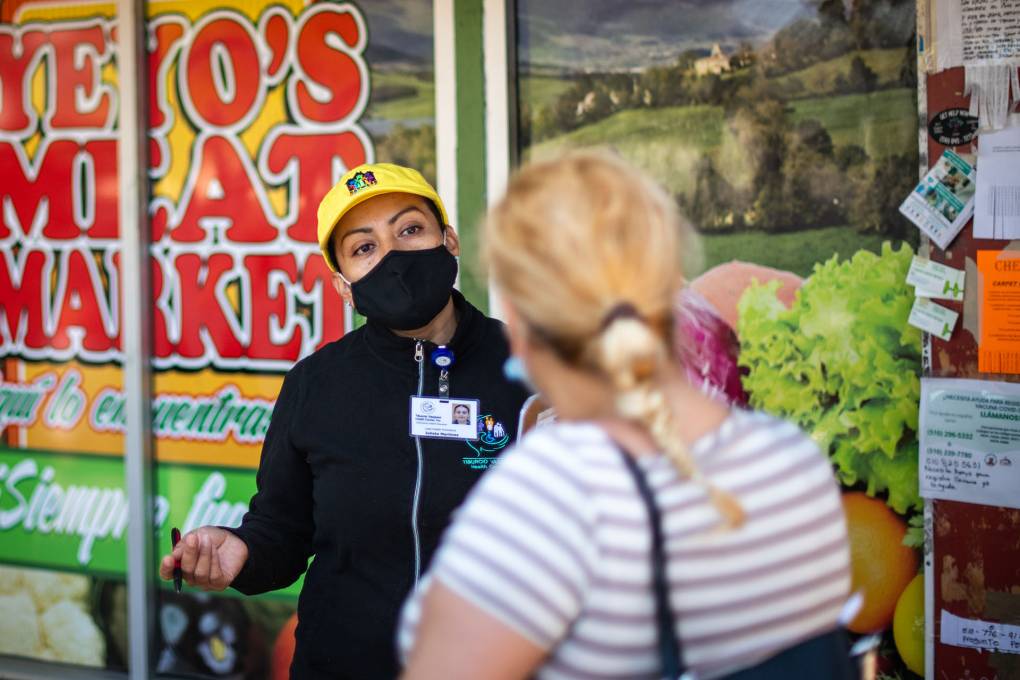
"caption": "Community health worker, or promotora, Julieta Martinez speaks with a customer at Yeyo’s Meat Market about the COVID-19 vaccine during an outreach event in South Hayward on May 10, 2021.",
"description": "Community health worker, or promotora, Julieta Martinez speaks with a customer at Yeyo’s Meat Market about the COVID-19 vaccine during an outreach event in South Hayward on May 10, 2021.",
"title": "RS48973_028_Hayward_Promotoras_05102021",
"credit": "Beth LaBerge/KQED",
"status": "inherit",
"altTag": null,
"isLoading": false,
"fetchFailed": false
},
"news_11850741": {
"type": "attachments",
"id": "news_11850741",
"meta": {
"index": "attachments_1716263798",
"site": "news",
"id": "11850741",
"found": true
},
"parent": 11850740,
"imgSizes": {
"apple_news_ca_landscape_5_5": {
"file": "https://ww2.kqed.org/app/uploads/sites/10/2020/12/paulino-ramos-memorial-2_custom-47807a245af4a29ef8ae713f99d649c35ab0b9bb-1044x783.jpg",
"width": 1044,
"mimeType": "image/jpeg",
"height": 783
},
"apple_news_ca_square_4_0": {
"file": "https://ww2.kqed.org/app/uploads/sites/10/2020/12/paulino-ramos-memorial-2_custom-47807a245af4a29ef8ae713f99d649c35ab0b9bb-470x470.jpg",
"width": 470,
"mimeType": "image/jpeg",
"height": 470
},
"twentyfourteen-full-width": {
"file": "https://ww2.kqed.org/app/uploads/sites/10/2020/12/paulino-ramos-memorial-2_custom-47807a245af4a29ef8ae713f99d649c35ab0b9bb-1038x576.jpg",
"width": 1038,
"mimeType": "image/jpeg",
"height": 576
},
"thumbnail": {
"file": "https://ww2.kqed.org/app/uploads/sites/10/2020/12/paulino-ramos-memorial-2_custom-47807a245af4a29ef8ae713f99d649c35ab0b9bb-160x122.jpg",
"width": 160,
"mimeType": "image/jpeg",
"height": 122
},
"post-thumbnail": {
"file": "https://ww2.kqed.org/app/uploads/sites/10/2020/12/paulino-ramos-memorial-2_custom-47807a245af4a29ef8ae713f99d649c35ab0b9bb-672x372.jpg",
"width": 672,
"mimeType": "image/jpeg",
"height": 372
},
"kqedFullSize": {
"file": "https://ww2.kqed.org/app/uploads/sites/10/2020/12/paulino-ramos-memorial-2_custom-47807a245af4a29ef8ae713f99d649c35ab0b9bb-scaled.jpg",
"width": 2560,
"height": 1958
},
"2048x2048": {
"file": "https://ww2.kqed.org/app/uploads/sites/10/2020/12/paulino-ramos-memorial-2_custom-47807a245af4a29ef8ae713f99d649c35ab0b9bb-2048x1567.jpg",
"width": 2048,
"mimeType": "image/jpeg",
"height": 1567
},
"apple_news_ca_landscape_4_7": {
"file": "https://ww2.kqed.org/app/uploads/sites/10/2020/12/paulino-ramos-memorial-2_custom-47807a245af4a29ef8ae713f99d649c35ab0b9bb-632x474.jpg",
"width": 632,
"mimeType": "image/jpeg",
"height": 474
},
"large": {
"file": "https://ww2.kqed.org/app/uploads/sites/10/2020/12/paulino-ramos-memorial-2_custom-47807a245af4a29ef8ae713f99d649c35ab0b9bb-1020x780.jpg",
"width": 1020,
"mimeType": "image/jpeg",
"height": 780
},
"apple_news_ca_landscape_4_0": {
"file": "https://ww2.kqed.org/app/uploads/sites/10/2020/12/paulino-ramos-memorial-2_custom-47807a245af4a29ef8ae713f99d649c35ab0b9bb-536x402.jpg",
"width": 536,
"mimeType": "image/jpeg",
"height": 402
},
"apple_news_ca_portrait_12_9": {
"file": "https://ww2.kqed.org/app/uploads/sites/10/2020/12/paulino-ramos-memorial-2_custom-47807a245af4a29ef8ae713f99d649c35ab0b9bb-1122x1496.jpg",
"width": 1122,
"mimeType": "image/jpeg",
"height": 1496
},
"medium": {
"file": "https://ww2.kqed.org/app/uploads/sites/10/2020/12/paulino-ramos-memorial-2_custom-47807a245af4a29ef8ae713f99d649c35ab0b9bb-800x612.jpg",
"width": 800,
"mimeType": "image/jpeg",
"height": 612
},
"apple_news_ca_portrait_4_0": {
"file": "https://ww2.kqed.org/app/uploads/sites/10/2020/12/paulino-ramos-memorial-2_custom-47807a245af4a29ef8ae713f99d649c35ab0b9bb-354x472.jpg",
"width": 354,
"mimeType": "image/jpeg",
"height": 472
},
"apple_news_ca_portrait_9_7": {
"file": "https://ww2.kqed.org/app/uploads/sites/10/2020/12/paulino-ramos-memorial-2_custom-47807a245af4a29ef8ae713f99d649c35ab0b9bb-840x1120.jpg",
"width": 840,
"mimeType": "image/jpeg",
"height": 1120
},
"apple_news_ca_landscape_12_9": {
"file": "https://ww2.kqed.org/app/uploads/sites/10/2020/12/paulino-ramos-memorial-2_custom-47807a245af4a29ef8ae713f99d649c35ab0b9bb-1832x1374.jpg",
"width": 1832,
"mimeType": "image/jpeg",
"height": 1374
},
"apple_news_ca_square_9_7": {
"file": "https://ww2.kqed.org/app/uploads/sites/10/2020/12/paulino-ramos-memorial-2_custom-47807a245af4a29ef8ae713f99d649c35ab0b9bb-1104x1104.jpg",
"width": 1104,
"mimeType": "image/jpeg",
"height": 1104
},
"1536x1536": {
"file": "https://ww2.kqed.org/app/uploads/sites/10/2020/12/paulino-ramos-memorial-2_custom-47807a245af4a29ef8ae713f99d649c35ab0b9bb-1536x1175.jpg",
"width": 1536,
"mimeType": "image/jpeg",
"height": 1175
},
"apple_news_ca_portrait_4_7": {
"file": "https://ww2.kqed.org/app/uploads/sites/10/2020/12/paulino-ramos-memorial-2_custom-47807a245af4a29ef8ae713f99d649c35ab0b9bb-414x552.jpg",
"width": 414,
"mimeType": "image/jpeg",
"height": 552
},
"apple_news_ca_square_12_9": {
"file": "https://ww2.kqed.org/app/uploads/sites/10/2020/12/paulino-ramos-memorial-2_custom-47807a245af4a29ef8ae713f99d649c35ab0b9bb-1472x1472.jpg",
"width": 1472,
"mimeType": "image/jpeg",
"height": 1472
},
"apple_news_ca_portrait_5_5": {
"file": "https://ww2.kqed.org/app/uploads/sites/10/2020/12/paulino-ramos-memorial-2_custom-47807a245af4a29ef8ae713f99d649c35ab0b9bb-687x916.jpg",
"width": 687,
"mimeType": "image/jpeg",
"height": 916
},
"full-width": {
"file": "https://ww2.kqed.org/app/uploads/sites/10/2020/12/paulino-ramos-memorial-2_custom-47807a245af4a29ef8ae713f99d649c35ab0b9bb-1920x1469.jpg",
"width": 1920,
"mimeType": "image/jpeg",
"height": 1469
},
"apple_news_ca_square_4_7": {
"file": "https://ww2.kqed.org/app/uploads/sites/10/2020/12/paulino-ramos-memorial-2_custom-47807a245af4a29ef8ae713f99d649c35ab0b9bb-550x550.jpg",
"width": 550,
"mimeType": "image/jpeg",
"height": 550
},
"apple_news_ca_landscape_9_7": {
"file": "https://ww2.kqed.org/app/uploads/sites/10/2020/12/paulino-ramos-memorial-2_custom-47807a245af4a29ef8ae713f99d649c35ab0b9bb-1376x1032.jpg",
"width": 1376,
"mimeType": "image/jpeg",
"height": 1032
},
"apple_news_ca_square_5_5": {
"file": "https://ww2.kqed.org/app/uploads/sites/10/2020/12/paulino-ramos-memorial-2_custom-47807a245af4a29ef8ae713f99d649c35ab0b9bb-912x912.jpg",
"width": 912,
"mimeType": "image/jpeg",
"height": 912
}
},
"publishDate": 1607709244,
"modified": 1607709411,
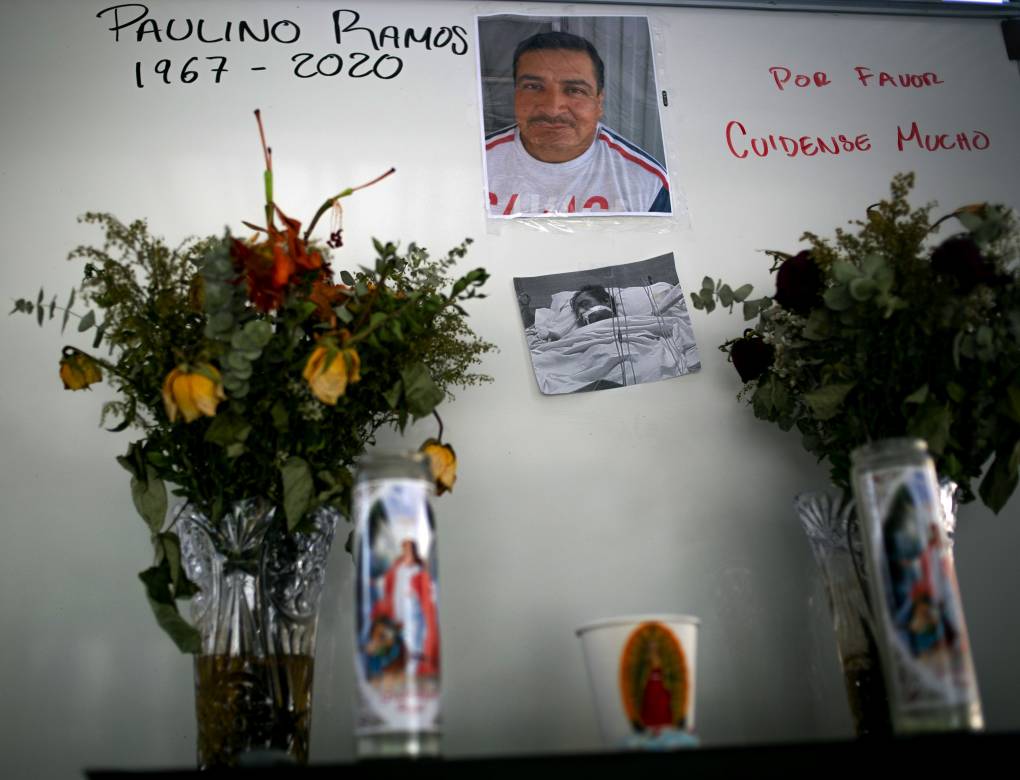
"caption": "Workers at the CARECEN Day Labor Center in Los Angeles constructed a makeshift memorial for fellow worker Paulino Ramos, who died of COVID-19 in September.",
"description": "Workers at the CARECEN Day Labor Center in Los Angeles constructed a makeshift memorial for fellow worker Paulino Ramos, who died of COVID-19 in September.",
"title": "Workers at the CARECEN Day Labor Center in Los Angeles constructed a makeshift memorial for fellow worker Paulino Ramos, who died of COVID-19 in September.",
"credit": "Danny Hajek/NPR",
"status": "inherit",
"altTag": "A memorial for Paulino Ramos",
"isLoading": false,
"fetchFailed": false
},
"news_11846271": {
"type": "attachments",
"id": "news_11846271",
"meta": {
"index": "attachments_1716263798",
"site": "news",
"id": "11846271",
"found": true
},
"parent": 11846266,
"imgSizes": {
"apple_news_ca_landscape_5_5": {
"file": "https://ww2.kqed.org/app/uploads/sites/10/2020/11/latinovote_110620_final-1044x783.png",
"width": 1044,
"mimeType": "image/png",
"height": 783
},
"apple_news_ca_square_4_0": {
"file": "https://ww2.kqed.org/app/uploads/sites/10/2020/11/latinovote_110620_final-470x470.png",
"width": 470,
"mimeType": "image/png",
"height": 470
},
"twentyfourteen-full-width": {
"file": "https://ww2.kqed.org/app/uploads/sites/10/2020/11/latinovote_110620_final-1038x576.png",
"width": 1038,
"mimeType": "image/png",
"height": 576
},
"thumbnail": {
"file": "https://ww2.kqed.org/app/uploads/sites/10/2020/11/latinovote_110620_final-160x107.png",
"width": 160,
"mimeType": "image/png",
"height": 107
},
"post-thumbnail": {
"file": "https://ww2.kqed.org/app/uploads/sites/10/2020/11/latinovote_110620_final-672x372.png",
"width": 672,
"mimeType": "image/png",
"height": 372
},
"kqedFullSize": {
"file": "https://ww2.kqed.org/app/uploads/sites/10/2020/11/latinovote_110620_final.png",
"width": 1920,
"height": 1283
},
"apple_news_ca_landscape_4_7": {
"file": "https://ww2.kqed.org/app/uploads/sites/10/2020/11/latinovote_110620_final-632x474.png",
"width": 632,
"mimeType": "image/png",
"height": 474
},
"large": {
"file": "https://ww2.kqed.org/app/uploads/sites/10/2020/11/latinovote_110620_final-1020x682.png",
"width": 1020,
"mimeType": "image/png",
"height": 682
},
"apple_news_ca_landscape_4_0": {
"file": "https://ww2.kqed.org/app/uploads/sites/10/2020/11/latinovote_110620_final-536x402.png",
"width": 536,
"mimeType": "image/png",
"height": 402
},
"apple_news_ca_portrait_12_9": {
"file": "https://ww2.kqed.org/app/uploads/sites/10/2020/11/latinovote_110620_final-1122x1283.png",
"width": 1122,
"mimeType": "image/png",
"height": 1283
},
"medium": {
"file": "https://ww2.kqed.org/app/uploads/sites/10/2020/11/latinovote_110620_final-800x535.png",
"width": 800,
"mimeType": "image/png",
"height": 535
},
"apple_news_ca_portrait_4_0": {
"file": "https://ww2.kqed.org/app/uploads/sites/10/2020/11/latinovote_110620_final-354x472.png",
"width": 354,
"mimeType": "image/png",
"height": 472
},
"apple_news_ca_portrait_9_7": {
"file": "https://ww2.kqed.org/app/uploads/sites/10/2020/11/latinovote_110620_final-840x1120.png",
"width": 840,
"mimeType": "image/png",
"height": 1120
},
"apple_news_ca_landscape_12_9": {
"file": "https://ww2.kqed.org/app/uploads/sites/10/2020/11/latinovote_110620_final-1832x1283.png",
"width": 1832,
"mimeType": "image/png",
"height": 1283
},
"apple_news_ca_square_9_7": {
"file": "https://ww2.kqed.org/app/uploads/sites/10/2020/11/latinovote_110620_final-1104x1104.png",
"width": 1104,
"mimeType": "image/png",
"height": 1104
},
"1536x1536": {
"file": "https://ww2.kqed.org/app/uploads/sites/10/2020/11/latinovote_110620_final-1536x1026.png",
"width": 1536,
"mimeType": "image/png",
"height": 1026
},
"apple_news_ca_portrait_4_7": {
"file": "https://ww2.kqed.org/app/uploads/sites/10/2020/11/latinovote_110620_final-414x552.png",
"width": 414,
"mimeType": "image/png",
"height": 552
},
"apple_news_ca_square_12_9": {
"file": "https://ww2.kqed.org/app/uploads/sites/10/2020/11/latinovote_110620_final-1472x1283.png",
"width": 1472,
"mimeType": "image/png",
"height": 1283
},
"apple_news_ca_portrait_5_5": {
"file": "https://ww2.kqed.org/app/uploads/sites/10/2020/11/latinovote_110620_final-687x916.png",
"width": 687,
"mimeType": "image/png",
"height": 916
},
"apple_news_ca_square_4_7": {
"file": "https://ww2.kqed.org/app/uploads/sites/10/2020/11/latinovote_110620_final-550x550.png",
"width": 550,
"mimeType": "image/png",
"height": 550
},
"apple_news_ca_landscape_9_7": {
"file": "https://ww2.kqed.org/app/uploads/sites/10/2020/11/latinovote_110620_final-1376x1032.png",
"width": 1376,
"mimeType": "image/png",
"height": 1032
},
"apple_news_ca_square_5_5": {
"file": "https://ww2.kqed.org/app/uploads/sites/10/2020/11/latinovote_110620_final-912x912.png",
"width": 912,
"mimeType": "image/png",
"height": 912
}
},
"publishDate": 1604690470,
"modified": 1604690520,
"caption": null,
"description": null,
"title": "latinovote_110620_final",
"credit": null,
"status": "inherit",
"isLoading": false,
"fetchFailed": false
},
"news_11833128": {
"type": "attachments",
"id": "news_11833128",
"meta": {
"index": "attachments_1716263798",
"site": "news",
"id": "11833128",
"found": true
},
"parent": 11833113,
"imgSizes": {
"apple_news_ca_landscape_5_5": {
"file": "https://ww2.kqed.org/app/uploads/sites/10/2020/08/SanRafaelEssentialWorkersTesting-1044x783.jpg",
"width": 1044,
"mimeType": "image/jpeg",
"height": 783
},
"apple_news_ca_square_4_0": {
"file": "https://ww2.kqed.org/app/uploads/sites/10/2020/08/SanRafaelEssentialWorkersTesting-470x470.jpg",
"width": 470,
"mimeType": "image/jpeg",
"height": 470
},
"twentyfourteen-full-width": {
"file": "https://ww2.kqed.org/app/uploads/sites/10/2020/08/SanRafaelEssentialWorkersTesting-1038x576.jpg",
"width": 1038,
"mimeType": "image/jpeg",
"height": 576
},
"thumbnail": {
"file": "https://ww2.kqed.org/app/uploads/sites/10/2020/08/SanRafaelEssentialWorkersTesting-160x118.jpg",
"width": 160,
"mimeType": "image/jpeg",
"height": 118
},
"post-thumbnail": {
"file": "https://ww2.kqed.org/app/uploads/sites/10/2020/08/SanRafaelEssentialWorkersTesting-672x372.jpg",
"width": 672,
"mimeType": "image/jpeg",
"height": 372
},
"kqedFullSize": {
"file": "https://ww2.kqed.org/app/uploads/sites/10/2020/08/SanRafaelEssentialWorkersTesting.jpg",
"width": 1920,
"height": 1410
},
"apple_news_ca_landscape_4_7": {
"file": "https://ww2.kqed.org/app/uploads/sites/10/2020/08/SanRafaelEssentialWorkersTesting-632x474.jpg",
"width": 632,
"mimeType": "image/jpeg",
"height": 474
},
"large": {
"file": "https://ww2.kqed.org/app/uploads/sites/10/2020/08/SanRafaelEssentialWorkersTesting-1020x749.jpg",
"width": 1020,
"mimeType": "image/jpeg",
"height": 749
},
"apple_news_ca_landscape_4_0": {
"file": "https://ww2.kqed.org/app/uploads/sites/10/2020/08/SanRafaelEssentialWorkersTesting-536x402.jpg",
"width": 536,
"mimeType": "image/jpeg",
"height": 402
},
"apple_news_ca_portrait_12_9": {
"file": "https://ww2.kqed.org/app/uploads/sites/10/2020/08/SanRafaelEssentialWorkersTesting-1122x1410.jpg",
"width": 1122,
"mimeType": "image/jpeg",
"height": 1410
},
"medium": {
"file": "https://ww2.kqed.org/app/uploads/sites/10/2020/08/SanRafaelEssentialWorkersTesting-800x588.jpg",
"width": 800,
"mimeType": "image/jpeg",
"height": 588
},
"apple_news_ca_portrait_4_0": {
"file": "https://ww2.kqed.org/app/uploads/sites/10/2020/08/SanRafaelEssentialWorkersTesting-354x472.jpg",
"width": 354,
"mimeType": "image/jpeg",
"height": 472
},
"apple_news_ca_portrait_9_7": {
"file": "https://ww2.kqed.org/app/uploads/sites/10/2020/08/SanRafaelEssentialWorkersTesting-840x1120.jpg",
"width": 840,
"mimeType": "image/jpeg",
"height": 1120
},
"apple_news_ca_landscape_12_9": {
"file": "https://ww2.kqed.org/app/uploads/sites/10/2020/08/SanRafaelEssentialWorkersTesting-1832x1374.jpg",
"width": 1832,
"mimeType": "image/jpeg",
"height": 1374
},
"apple_news_ca_square_9_7": {
"file": "https://ww2.kqed.org/app/uploads/sites/10/2020/08/SanRafaelEssentialWorkersTesting-1104x1104.jpg",
"width": 1104,
"mimeType": "image/jpeg",
"height": 1104
},
"1536x1536": {
"file": "https://ww2.kqed.org/app/uploads/sites/10/2020/08/SanRafaelEssentialWorkersTesting-1536x1128.jpg",
"width": 1536,
"mimeType": "image/jpeg",
"height": 1128
},
"apple_news_ca_portrait_4_7": {
"file": "https://ww2.kqed.org/app/uploads/sites/10/2020/08/SanRafaelEssentialWorkersTesting-414x552.jpg",
"width": 414,
"mimeType": "image/jpeg",
"height": 552
},
"apple_news_ca_square_12_9": {
"file": "https://ww2.kqed.org/app/uploads/sites/10/2020/08/SanRafaelEssentialWorkersTesting-1472x1410.jpg",
"width": 1472,
"mimeType": "image/jpeg",
"height": 1410
},
"apple_news_ca_portrait_5_5": {
"file": "https://ww2.kqed.org/app/uploads/sites/10/2020/08/SanRafaelEssentialWorkersTesting-687x916.jpg",
"width": 687,
"mimeType": "image/jpeg",
"height": 916
},
"apple_news_ca_square_4_7": {
"file": "https://ww2.kqed.org/app/uploads/sites/10/2020/08/SanRafaelEssentialWorkersTesting-550x550.jpg",
"width": 550,
"mimeType": "image/jpeg",
"height": 550
},
"apple_news_ca_landscape_9_7": {
"file": "https://ww2.kqed.org/app/uploads/sites/10/2020/08/SanRafaelEssentialWorkersTesting-1376x1032.jpg",
"width": 1376,
"mimeType": "image/jpeg",
"height": 1032
},
"apple_news_ca_square_5_5": {
"file": "https://ww2.kqed.org/app/uploads/sites/10/2020/08/SanRafaelEssentialWorkersTesting-912x912.jpg",
"width": 912,
"mimeType": "image/jpeg",
"height": 912
}
},
"publishDate": 1597260456,
"modified": 1597260680,
"caption": "Jennifer Tores, a lifelong resident of San Rafael's Canal neighborhood, waits at a local COVID-19 testing site recently. The neighborhood is one of the most heavily tested communities in the state, say health officials, who are struggling to control the spread of the COVID-19.",
"description": "Jennifer Tores, a lifelong resident of San Rafael's Canal neighborhood, waits at a local COVID-19 testing site recently. The neighborhood is one of the most heavily tested communities in the state, say health officials, who are struggling to control the spread of the COVID-19.",
"title": "SanRafaelEssentialWorkersTesting",
"credit": "Rachel Scheier/California Healthline",
"status": "inherit",
"isLoading": false,
"fetchFailed": false
},
"news_11831116": {
"type": "attachments",
"id": "news_11831116",
"meta": {
"index": "attachments_1716263798",
"site": "news",
"id": "11831116",
"found": true
},
"parent": 11831012,
"imgSizes": {
"apple_news_ca_landscape_5_5": {
"file": "https://ww2.kqed.org/app/uploads/sites/10/2020/07/Enough-is-Enough-COVID-Mask-1044x783.jpg",
"width": 1044,
"mimeType": "image/jpeg",
"height": 783
},
"apple_news_ca_square_4_0": {
"file": "https://ww2.kqed.org/app/uploads/sites/10/2020/07/Enough-is-Enough-COVID-Mask-470x470.jpg",
"width": 470,
"mimeType": "image/jpeg",
"height": 470
},
"twentyfourteen-full-width": {
"file": "https://ww2.kqed.org/app/uploads/sites/10/2020/07/Enough-is-Enough-COVID-Mask-1038x576.jpg",
"width": 1038,
"mimeType": "image/jpeg",
"height": 576
},
"thumbnail": {
"file": "https://ww2.kqed.org/app/uploads/sites/10/2020/07/Enough-is-Enough-COVID-Mask-160x108.jpg",
"width": 160,
"mimeType": "image/jpeg",
"height": 108
},
"post-thumbnail": {
"file": "https://ww2.kqed.org/app/uploads/sites/10/2020/07/Enough-is-Enough-COVID-Mask-672x372.jpg",
"width": 672,
"mimeType": "image/jpeg",
"height": 372
},
"kqedFullSize": {
"file": "https://ww2.kqed.org/app/uploads/sites/10/2020/07/Enough-is-Enough-COVID-Mask.jpg",
"width": 1920,
"height": 1299
},
"apple_news_ca_landscape_4_7": {
"file": "https://ww2.kqed.org/app/uploads/sites/10/2020/07/Enough-is-Enough-COVID-Mask-632x474.jpg",
"width": 632,
"mimeType": "image/jpeg",
"height": 474
},
"large": {
"file": "https://ww2.kqed.org/app/uploads/sites/10/2020/07/Enough-is-Enough-COVID-Mask-1020x690.jpg",
"width": 1020,
"mimeType": "image/jpeg",
"height": 690
},
"apple_news_ca_landscape_4_0": {
"file": "https://ww2.kqed.org/app/uploads/sites/10/2020/07/Enough-is-Enough-COVID-Mask-536x402.jpg",
"width": 536,
"mimeType": "image/jpeg",
"height": 402
},
"apple_news_ca_portrait_12_9": {
"file": "https://ww2.kqed.org/app/uploads/sites/10/2020/07/Enough-is-Enough-COVID-Mask-1122x1299.jpg",
"width": 1122,
"mimeType": "image/jpeg",
"height": 1299
},
"medium": {
"file": "https://ww2.kqed.org/app/uploads/sites/10/2020/07/Enough-is-Enough-COVID-Mask-800x541.jpg",
"width": 800,
"mimeType": "image/jpeg",
"height": 541
},
"apple_news_ca_portrait_4_0": {
"file": "https://ww2.kqed.org/app/uploads/sites/10/2020/07/Enough-is-Enough-COVID-Mask-354x472.jpg",
"width": 354,
"mimeType": "image/jpeg",
"height": 472
},
"apple_news_ca_portrait_9_7": {
"file": "https://ww2.kqed.org/app/uploads/sites/10/2020/07/Enough-is-Enough-COVID-Mask-840x1120.jpg",
"width": 840,
"mimeType": "image/jpeg",
"height": 1120
},
"apple_news_ca_landscape_12_9": {
"file": "https://ww2.kqed.org/app/uploads/sites/10/2020/07/Enough-is-Enough-COVID-Mask-1832x1299.jpg",
"width": 1832,
"mimeType": "image/jpeg",
"height": 1299
},
"apple_news_ca_square_9_7": {
"file": "https://ww2.kqed.org/app/uploads/sites/10/2020/07/Enough-is-Enough-COVID-Mask-1104x1104.jpg",
"width": 1104,
"mimeType": "image/jpeg",
"height": 1104
},
"1536x1536": {
"file": "https://ww2.kqed.org/app/uploads/sites/10/2020/07/Enough-is-Enough-COVID-Mask-1536x1039.jpg",
"width": 1536,
"mimeType": "image/jpeg",
"height": 1039
},
"apple_news_ca_portrait_4_7": {
"file": "https://ww2.kqed.org/app/uploads/sites/10/2020/07/Enough-is-Enough-COVID-Mask-414x552.jpg",
"width": 414,
"mimeType": "image/jpeg",
"height": 552
},
"apple_news_ca_square_12_9": {
"file": "https://ww2.kqed.org/app/uploads/sites/10/2020/07/Enough-is-Enough-COVID-Mask-1472x1299.jpg",
"width": 1472,
"mimeType": "image/jpeg",
"height": 1299
},
"apple_news_ca_portrait_5_5": {
"file": "https://ww2.kqed.org/app/uploads/sites/10/2020/07/Enough-is-Enough-COVID-Mask-687x916.jpg",
"width": 687,
"mimeType": "image/jpeg",
"height": 916
},
"apple_news_ca_square_4_7": {
"file": "https://ww2.kqed.org/app/uploads/sites/10/2020/07/Enough-is-Enough-COVID-Mask-550x550.jpg",
"width": 550,
"mimeType": "image/jpeg",
"height": 550
},
"apple_news_ca_landscape_9_7": {
"file": "https://ww2.kqed.org/app/uploads/sites/10/2020/07/Enough-is-Enough-COVID-Mask-1376x1032.jpg",
"width": 1376,
"mimeType": "image/jpeg",
"height": 1032
},
"apple_news_ca_square_5_5": {
"file": "https://ww2.kqed.org/app/uploads/sites/10/2020/07/Enough-is-Enough-COVID-Mask-912x912.jpg",
"width": 912,
"mimeType": "image/jpeg",
"height": 912
}
},
"publishDate": 1596066070,
"modified": 1596069037,
"caption": "A protester takes part in a Bike Rides for Black Lives demonstration in Los Angeles on July 12. California's Black and Latino voters are the most concerned about the health impacts of COVID-19, pollution and climate change, according to a new PPIC poll.",
"description": "A protester takes part in a Bike Rides for Black Lives demonstration in Los Angeles on July 12. California's Black and Latino voters are the most concerned about the health impacts of COVID-19, pollution and climate change, according to a new PPIC poll.",
"title": "Enough-is-Enough-COVID-Mask",
"credit": "MICHAEL TRAN/AFP via Getty Images",
"status": "inherit",
"isLoading": false,
"fetchFailed": false
},
"news_11826997": {
"type": "attachments",
"id": "news_11826997",
"meta": {
"index": "attachments_1716263798",
"site": "news",
"id": "11826997",
"found": true
},
"parent": 11826950,
"imgSizes": {
"apple_news_ca_square_4_0": {
"file": "https://ww2.kqed.org/app/uploads/sites/10/2020/07/Mission-Latino-Food-Hub_5156_WEB-1-470x470.jpg",
"width": 470,
"mimeType": "image/jpeg",
"height": 470
},
"thumbnail": {
"file": "https://ww2.kqed.org/app/uploads/sites/10/2020/07/Mission-Latino-Food-Hub_5156_WEB-1-160x107.jpg",
"width": 160,
"mimeType": "image/jpeg",
"height": 107
},
"post-thumbnail": {
"file": "https://ww2.kqed.org/app/uploads/sites/10/2020/07/Mission-Latino-Food-Hub_5156_WEB-1-672x372.jpg",
"width": 672,
"mimeType": "image/jpeg",
"height": 372
},
"kqedFullSize": {
"file": "https://ww2.kqed.org/app/uploads/sites/10/2020/07/Mission-Latino-Food-Hub_5156_WEB-1.jpg",
"width": 800,
"height": 534
},
"apple_news_ca_landscape_4_7": {
"file": "https://ww2.kqed.org/app/uploads/sites/10/2020/07/Mission-Latino-Food-Hub_5156_WEB-1-632x474.jpg",
"width": 632,
"mimeType": "image/jpeg",
"height": 474
},
"apple_news_ca_portrait_4_7": {
"file": "https://ww2.kqed.org/app/uploads/sites/10/2020/07/Mission-Latino-Food-Hub_5156_WEB-1-414x534.jpg",
"width": 414,
"mimeType": "image/jpeg",
"height": 534
},
"apple_news_ca_portrait_5_5": {
"file": "https://ww2.kqed.org/app/uploads/sites/10/2020/07/Mission-Latino-Food-Hub_5156_WEB-1-687x534.jpg",
"width": 687,
"mimeType": "image/jpeg",
"height": 534
},
"apple_news_ca_square_4_7": {
"file": "https://ww2.kqed.org/app/uploads/sites/10/2020/07/Mission-Latino-Food-Hub_5156_WEB-1-550x534.jpg",
"width": 550,
"mimeType": "image/jpeg",
"height": 534
},
"apple_news_ca_landscape_4_0": {
"file": "https://ww2.kqed.org/app/uploads/sites/10/2020/07/Mission-Latino-Food-Hub_5156_WEB-1-536x402.jpg",
"width": 536,
"mimeType": "image/jpeg",
"height": 402
},
"apple_news_ca_portrait_4_0": {
"file": "https://ww2.kqed.org/app/uploads/sites/10/2020/07/Mission-Latino-Food-Hub_5156_WEB-1-354x472.jpg",
"width": 354,
"mimeType": "image/jpeg",
"height": 472
}
},
"publishDate": 1593624650,
"modified": 1593630854,
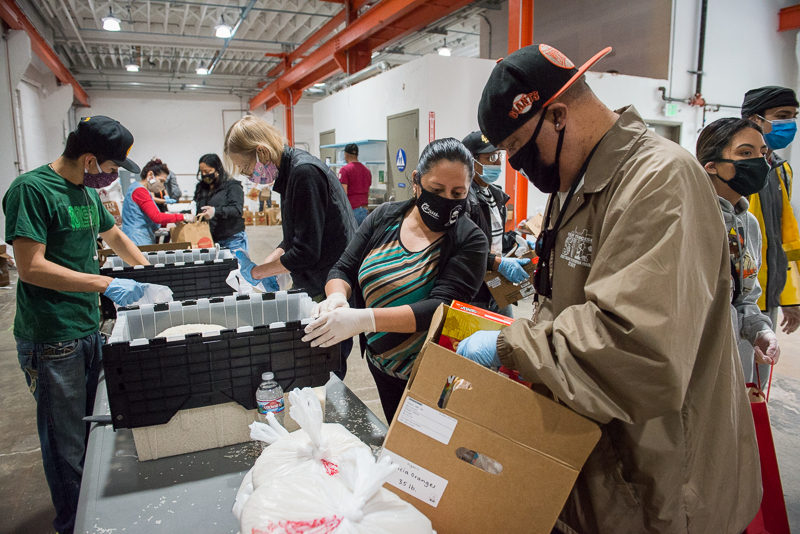
"caption": "Community volunteers put together food packages at what community organizer Roberto Hernandez calls the Mission Latino Food Hub, a warehouse on 701 Alabama Street in San Francisco.",
"description": "Community volunteers put together food packages at what community organizer Roberto Hernandez calls the Mission Latino Food Hub, a warehouse on 701 Alabama Street in San Francisco.",
"title": "Mission Latino Food Hub_5156_WEB",
"credit": "Mabel Jiménez/El Tecolote",
"status": "inherit",
"isLoading": false,
"fetchFailed": false
},
"news_11813975": {
"type": "attachments",
"id": "news_11813975",
"meta": {
"index": "attachments_1716263798",
"site": "news",
"id": "11813975",
"found": true
},
"parent": 11813696,
"imgSizes": {
"apple_news_ca_landscape_5_5": {
"file": "https://ww2.kqed.org/app/uploads/sites/10/2020/04/Mission-Street-pedestrians-1044x783.jpg",
"width": 1044,
"mimeType": "image/jpeg",
"height": 783
},
"apple_news_ca_square_4_0": {
"file": "https://ww2.kqed.org/app/uploads/sites/10/2020/04/Mission-Street-pedestrians-470x470.jpg",
"width": 470,
"mimeType": "image/jpeg",
"height": 470
},
"twentyfourteen-full-width": {
"file": "https://ww2.kqed.org/app/uploads/sites/10/2020/04/Mission-Street-pedestrians-1038x576.jpg",
"width": 1038,
"mimeType": "image/jpeg",
"height": 576
},
"thumbnail": {
"file": "https://ww2.kqed.org/app/uploads/sites/10/2020/04/Mission-Street-pedestrians-160x114.jpg",
"width": 160,
"mimeType": "image/jpeg",
"height": 114
},
"post-thumbnail": {
"file": "https://ww2.kqed.org/app/uploads/sites/10/2020/04/Mission-Street-pedestrians-672x372.jpg",
"width": 672,
"mimeType": "image/jpeg",
"height": 372
},
"kqedFullSize": {
"file": "https://ww2.kqed.org/app/uploads/sites/10/2020/04/Mission-Street-pedestrians.jpg",
"width": 1920,
"height": 1371
},
"apple_news_ca_landscape_4_7": {
"file": "https://ww2.kqed.org/app/uploads/sites/10/2020/04/Mission-Street-pedestrians-632x474.jpg",
"width": 632,
"mimeType": "image/jpeg",
"height": 474
},
"large": {
"file": "https://ww2.kqed.org/app/uploads/sites/10/2020/04/Mission-Street-pedestrians-1020x728.jpg",
"width": 1020,
"mimeType": "image/jpeg",
"height": 728
},
"apple_news_ca_landscape_4_0": {
"file": "https://ww2.kqed.org/app/uploads/sites/10/2020/04/Mission-Street-pedestrians-536x402.jpg",
"width": 536,
"mimeType": "image/jpeg",
"height": 402
},
"apple_news_ca_portrait_12_9": {
"file": "https://ww2.kqed.org/app/uploads/sites/10/2020/04/Mission-Street-pedestrians-1122x1371.jpg",
"width": 1122,
"mimeType": "image/jpeg",
"height": 1371
},
"medium": {
"file": "https://ww2.kqed.org/app/uploads/sites/10/2020/04/Mission-Street-pedestrians-800x571.jpg",
"width": 800,
"mimeType": "image/jpeg",
"height": 571
},
"apple_news_ca_portrait_4_0": {
"file": "https://ww2.kqed.org/app/uploads/sites/10/2020/04/Mission-Street-pedestrians-354x472.jpg",
"width": 354,
"mimeType": "image/jpeg",
"height": 472
},
"apple_news_ca_portrait_9_7": {
"file": "https://ww2.kqed.org/app/uploads/sites/10/2020/04/Mission-Street-pedestrians-840x1120.jpg",
"width": 840,
"mimeType": "image/jpeg",
"height": 1120
},
"apple_news_ca_landscape_12_9": {
"file": "https://ww2.kqed.org/app/uploads/sites/10/2020/04/Mission-Street-pedestrians-1832x1371.jpg",
"width": 1832,
"mimeType": "image/jpeg",
"height": 1371
},
"apple_news_ca_square_9_7": {
"file": "https://ww2.kqed.org/app/uploads/sites/10/2020/04/Mission-Street-pedestrians-1104x1104.jpg",
"width": 1104,
"mimeType": "image/jpeg",
"height": 1104
},
"apple_news_ca_portrait_4_7": {
"file": "https://ww2.kqed.org/app/uploads/sites/10/2020/04/Mission-Street-pedestrians-414x552.jpg",
"width": 414,
"mimeType": "image/jpeg",
"height": 552
},
"apple_news_ca_square_12_9": {
"file": "https://ww2.kqed.org/app/uploads/sites/10/2020/04/Mission-Street-pedestrians-1472x1371.jpg",
"width": 1472,
"mimeType": "image/jpeg",
"height": 1371
},
"apple_news_ca_portrait_5_5": {
"file": "https://ww2.kqed.org/app/uploads/sites/10/2020/04/Mission-Street-pedestrians-687x916.jpg",
"width": 687,
"mimeType": "image/jpeg",
"height": 916
},
"full-width": {
"file": "https://ww2.kqed.org/app/uploads/sites/10/2020/04/Mission-Street-pedestrians-1920x1371.jpg",
"width": 1920,
"mimeType": "image/jpeg",
"height": 1371
},
"apple_news_ca_square_4_7": {
"file": "https://ww2.kqed.org/app/uploads/sites/10/2020/04/Mission-Street-pedestrians-550x550.jpg",
"width": 550,
"mimeType": "image/jpeg",
"height": 550
},
"apple_news_ca_landscape_9_7": {
"file": "https://ww2.kqed.org/app/uploads/sites/10/2020/04/Mission-Street-pedestrians-1376x1032.jpg",
"width": 1376,
"mimeType": "image/jpeg",
"height": 1032
},
"apple_news_ca_square_5_5": {
"file": "https://ww2.kqed.org/app/uploads/sites/10/2020/04/Mission-Street-pedestrians-912x912.jpg",
"width": 912,
"mimeType": "image/jpeg",
"height": 912
}
},
"publishDate": 1587669760,
"modified": 1659982271,
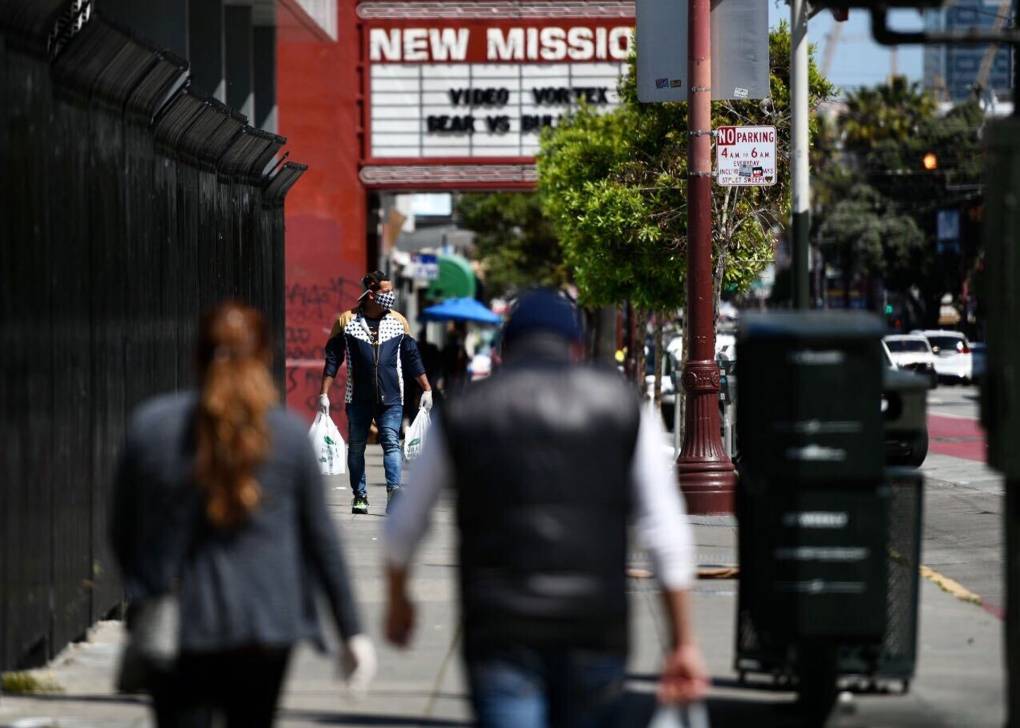
"caption": "Pedestrians walk in San Francisco's Mission District.",
"description": "Pedestrians walk in San Francisco's Mission District.",
"title": "Mission-Street-pedestrians",
"credit": "Beth LaBerge/KQED",
"status": "inherit",
"altTag": "Two people photographed from behind walking down what is recognizably Mission Street in San Francisco, because of the New Mission theater sign in the background, in focus.",
"isLoading": false,
"fetchFailed": false
},
"news_11767282": {
"type": "attachments",
"id": "news_11767282",
"meta": {
"index": "attachments_1716263798",
"site": "news",
"id": "11767282",
"found": true
},
"parent": 11766631,
"imgSizes": {
"apple_news_ca_landscape_5_5": {
"file": "https://ww2.kqed.org/app/uploads/sites/10/2019/08/08132019_el-paso-shooting_mexican-americans_hispanics-qut-1044x783.jpg",
"width": 1044,
"mimeType": "image/jpeg",
"height": 783
},
"apple_news_ca_square_4_0": {
"file": "https://ww2.kqed.org/app/uploads/sites/10/2019/08/08132019_el-paso-shooting_mexican-americans_hispanics-qut-470x470.jpg",
"width": 470,
"mimeType": "image/jpeg",
"height": 470
},
"twentyfourteen-full-width": {
"file": "https://ww2.kqed.org/app/uploads/sites/10/2019/08/08132019_el-paso-shooting_mexican-americans_hispanics-qut-1038x576.jpg",
"width": 1038,
"mimeType": "image/jpeg",
"height": 576
},
"thumbnail": {
"file": "https://ww2.kqed.org/app/uploads/sites/10/2019/08/08132019_el-paso-shooting_mexican-americans_hispanics-qut-160x102.jpg",
"width": 160,
"mimeType": "image/jpeg",
"height": 102
},
"post-thumbnail": {
"file": "https://ww2.kqed.org/app/uploads/sites/10/2019/08/08132019_el-paso-shooting_mexican-americans_hispanics-qut-672x372.jpg",
"width": 672,
"mimeType": "image/jpeg",
"height": 372
},
"kqedFullSize": {
"file": "https://ww2.kqed.org/app/uploads/sites/10/2019/08/08132019_el-paso-shooting_mexican-americans_hispanics-qut.jpg",
"width": 1920,
"height": 1222
},
"apple_news_ca_landscape_4_7": {
"file": "https://ww2.kqed.org/app/uploads/sites/10/2019/08/08132019_el-paso-shooting_mexican-americans_hispanics-qut-632x474.jpg",
"width": 632,
"mimeType": "image/jpeg",
"height": 474
},
"large": {
"file": "https://ww2.kqed.org/app/uploads/sites/10/2019/08/08132019_el-paso-shooting_mexican-americans_hispanics-qut-1020x649.jpg",
"width": 1020,
"mimeType": "image/jpeg",
"height": 649
},
"complete_open_graph": {
"file": "https://ww2.kqed.org/app/uploads/sites/10/2019/08/08132019_el-paso-shooting_mexican-americans_hispanics-qut-1200x764.jpg",
"width": 1200,
"mimeType": "image/jpeg",
"height": 764
},
"apple_news_ca_landscape_4_0": {
"file": "https://ww2.kqed.org/app/uploads/sites/10/2019/08/08132019_el-paso-shooting_mexican-americans_hispanics-qut-536x402.jpg",
"width": 536,
"mimeType": "image/jpeg",
"height": 402
},
"apple_news_ca_portrait_12_9": {
"file": "https://ww2.kqed.org/app/uploads/sites/10/2019/08/08132019_el-paso-shooting_mexican-americans_hispanics-qut-1122x1222.jpg",
"width": 1122,
"mimeType": "image/jpeg",
"height": 1222
},
"medium": {
"file": "https://ww2.kqed.org/app/uploads/sites/10/2019/08/08132019_el-paso-shooting_mexican-americans_hispanics-qut-800x509.jpg",
"width": 800,
"mimeType": "image/jpeg",
"height": 509
},
"apple_news_ca_portrait_4_0": {
"file": "https://ww2.kqed.org/app/uploads/sites/10/2019/08/08132019_el-paso-shooting_mexican-americans_hispanics-qut-354x472.jpg",
"width": 354,
"mimeType": "image/jpeg",
"height": 472
},
"apple_news_ca_portrait_9_7": {
"file": "https://ww2.kqed.org/app/uploads/sites/10/2019/08/08132019_el-paso-shooting_mexican-americans_hispanics-qut-840x1120.jpg",
"width": 840,
"mimeType": "image/jpeg",
"height": 1120
},
"apple_news_ca_landscape_12_9": {
"file": "https://ww2.kqed.org/app/uploads/sites/10/2019/08/08132019_el-paso-shooting_mexican-americans_hispanics-qut-1832x1222.jpg",
"width": 1832,
"mimeType": "image/jpeg",
"height": 1222
},
"apple_news_ca_square_9_7": {
"file": "https://ww2.kqed.org/app/uploads/sites/10/2019/08/08132019_el-paso-shooting_mexican-americans_hispanics-qut-1104x1104.jpg",
"width": 1104,
"mimeType": "image/jpeg",
"height": 1104
},
"apple_news_ca_portrait_4_7": {
"file": "https://ww2.kqed.org/app/uploads/sites/10/2019/08/08132019_el-paso-shooting_mexican-americans_hispanics-qut-414x552.jpg",
"width": 414,
"mimeType": "image/jpeg",
"height": 552
},
"apple_news_ca_square_12_9": {
"file": "https://ww2.kqed.org/app/uploads/sites/10/2019/08/08132019_el-paso-shooting_mexican-americans_hispanics-qut-1472x1222.jpg",
"width": 1472,
"mimeType": "image/jpeg",
"height": 1222
},
"apple_news_ca_portrait_5_5": {
"file": "https://ww2.kqed.org/app/uploads/sites/10/2019/08/08132019_el-paso-shooting_mexican-americans_hispanics-qut-687x916.jpg",
"width": 687,
"mimeType": "image/jpeg",
"height": 916
},
"full-width": {
"file": "https://ww2.kqed.org/app/uploads/sites/10/2019/08/08132019_el-paso-shooting_mexican-americans_hispanics-qut-1920x1222.jpg",
"width": 1920,
"mimeType": "image/jpeg",
"height": 1222
},
"apple_news_ca_square_4_7": {
"file": "https://ww2.kqed.org/app/uploads/sites/10/2019/08/08132019_el-paso-shooting_mexican-americans_hispanics-qut-550x550.jpg",
"width": 550,
"mimeType": "image/jpeg",
"height": 550
},
"apple_news_ca_landscape_9_7": {
"file": "https://ww2.kqed.org/app/uploads/sites/10/2019/08/08132019_el-paso-shooting_mexican-americans_hispanics-qut-1376x1032.jpg",
"width": 1376,
"mimeType": "image/jpeg",
"height": 1032
},
"apple_news_ca_square_5_5": {
"file": "https://ww2.kqed.org/app/uploads/sites/10/2019/08/08132019_el-paso-shooting_mexican-americans_hispanics-qut-912x912.jpg",
"width": 912,
"mimeType": "image/jpeg",
"height": 912
}
},
"publishDate": 1565724416,
"modified": 1565724500,
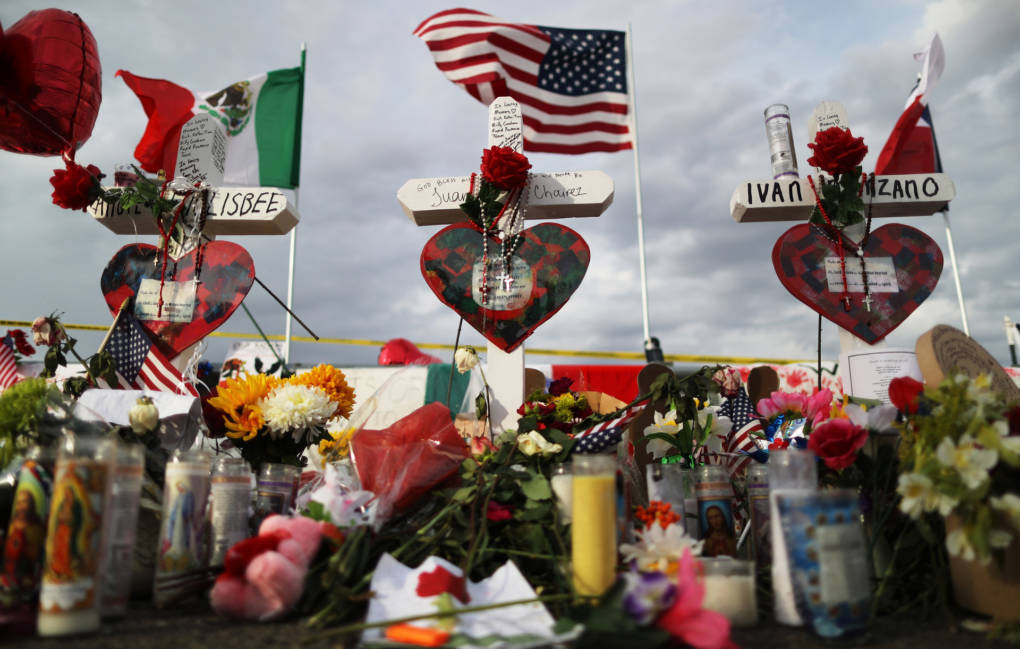
"caption": "The U.S. and Mexican flags fly above a makeshift memorial for victims outside Walmart in El Paso, Texas, on Aug. 6, 2019.",
"description": "The U.S. and Mexican flags fly above a makeshift memorial for victims outside Walmart in El Paso, Texas, on Aug. 6, 2019.",
"title": "El Paso shooting_Hispanics_Latinos",
"credit": "Mario Tama/Getty Images",
"status": "inherit",
"isLoading": false,
"fetchFailed": false
},
"news_11766569": {
"type": "attachments",
"id": "news_11766569",
"meta": {
"index": "attachments_1716263798",
"site": "news",
"id": "11766569",
"found": true
},
"parent": 11766559,
"imgSizes": {
"apple_news_ca_landscape_5_5": {
"file": "https://ww2.kqed.org/app/uploads/sites/10/2019/08/IMG_7619-1044x783.jpg",
"width": 1044,
"mimeType": "image/jpeg",
"height": 783
},
"apple_news_ca_square_4_0": {
"file": "https://ww2.kqed.org/app/uploads/sites/10/2019/08/IMG_7619-470x470.jpg",
"width": 470,
"mimeType": "image/jpeg",
"height": 470
},
"twentyfourteen-full-width": {
"file": "https://ww2.kqed.org/app/uploads/sites/10/2019/08/IMG_7619-1038x576.jpg",
"width": 1038,
"mimeType": "image/jpeg",
"height": 576
},
"thumbnail": {
"file": "https://ww2.kqed.org/app/uploads/sites/10/2019/08/IMG_7619-160x120.jpg",
"width": 160,
"mimeType": "image/jpeg",
"height": 120
},
"post-thumbnail": {
"file": "https://ww2.kqed.org/app/uploads/sites/10/2019/08/IMG_7619-672x372.jpg",
"width": 672,
"mimeType": "image/jpeg",
"height": 372
},
"kqedFullSize": {
"file": "https://ww2.kqed.org/app/uploads/sites/10/2019/08/IMG_7619.jpg",
"width": 2048,
"height": 1536
},
"apple_news_ca_landscape_4_7": {
"file": "https://ww2.kqed.org/app/uploads/sites/10/2019/08/IMG_7619-632x474.jpg",
"width": 632,
"mimeType": "image/jpeg",
"height": 474
},
"large": {
"file": "https://ww2.kqed.org/app/uploads/sites/10/2019/08/IMG_7619-1020x765.jpg",
"width": 1020,
"mimeType": "image/jpeg",
"height": 765
},
"complete_open_graph": {
"file": "https://ww2.kqed.org/app/uploads/sites/10/2019/08/IMG_7619-1200x900.jpg",
"width": 1200,
"mimeType": "image/jpeg",
"height": 900
},
"apple_news_ca_landscape_4_0": {
"file": "https://ww2.kqed.org/app/uploads/sites/10/2019/08/IMG_7619-536x402.jpg",
"width": 536,
"mimeType": "image/jpeg",
"height": 402
},
"apple_news_ca_portrait_12_9": {
"file": "https://ww2.kqed.org/app/uploads/sites/10/2019/08/IMG_7619-1122x1496.jpg",
"width": 1122,
"mimeType": "image/jpeg",
"height": 1496
},
"medium": {
"file": "https://ww2.kqed.org/app/uploads/sites/10/2019/08/IMG_7619-800x600.jpg",
"width": 800,
"mimeType": "image/jpeg",
"height": 600
},
"apple_news_ca_portrait_4_0": {
"file": "https://ww2.kqed.org/app/uploads/sites/10/2019/08/IMG_7619-354x472.jpg",
"width": 354,
"mimeType": "image/jpeg",
"height": 472
},
"apple_news_ca_portrait_9_7": {
"file": "https://ww2.kqed.org/app/uploads/sites/10/2019/08/IMG_7619-840x1120.jpg",
"width": 840,
"mimeType": "image/jpeg",
"height": 1120
},
"apple_news_ca_landscape_12_9": {
"file": "https://ww2.kqed.org/app/uploads/sites/10/2019/08/IMG_7619-1832x1374.jpg",
"width": 1832,
"mimeType": "image/jpeg",
"height": 1374
},
"apple_news_ca_square_9_7": {
"file": "https://ww2.kqed.org/app/uploads/sites/10/2019/08/IMG_7619-1104x1104.jpg",
"width": 1104,
"mimeType": "image/jpeg",
"height": 1104
},
"apple_news_ca_portrait_4_7": {
"file": "https://ww2.kqed.org/app/uploads/sites/10/2019/08/IMG_7619-414x552.jpg",
"width": 414,
"mimeType": "image/jpeg",
"height": 552
},
"apple_news_ca_square_12_9": {
"file": "https://ww2.kqed.org/app/uploads/sites/10/2019/08/IMG_7619-1472x1472.jpg",
"width": 1472,
"mimeType": "image/jpeg",
"height": 1472
},
"apple_news_ca_portrait_5_5": {
"file": "https://ww2.kqed.org/app/uploads/sites/10/2019/08/IMG_7619-687x916.jpg",
"width": 687,
"mimeType": "image/jpeg",
"height": 916
},
"full-width": {
"file": "https://ww2.kqed.org/app/uploads/sites/10/2019/08/IMG_7619-1920x1440.jpg",
"width": 1920,
"mimeType": "image/jpeg",
"height": 1440
},
"apple_news_ca_square_4_7": {
"file": "https://ww2.kqed.org/app/uploads/sites/10/2019/08/IMG_7619-550x550.jpg",
"width": 550,
"mimeType": "image/jpeg",
"height": 550
},
"apple_news_ca_landscape_9_7": {
"file": "https://ww2.kqed.org/app/uploads/sites/10/2019/08/IMG_7619-1376x1032.jpg",
"width": 1376,
"mimeType": "image/jpeg",
"height": 1032
},
"apple_news_ca_square_5_5": {
"file": "https://ww2.kqed.org/app/uploads/sites/10/2019/08/IMG_7619-912x912.jpg",
"width": 912,
"mimeType": "image/jpeg",
"height": 912
}
},
"publishDate": 1565317338,
"modified": 1565317527,
"caption": "David Flores, 27 of Oakland said he is trying to think positive and live a normal life despite the feeling of a threat to Latinos after a gunman in El Paso specifically targeted Latinos and killed 22 people on August 3, 2019.",
"description": "A man stands in a bakery. ",
"title": "IMG_7619",
"credit": "Vianey Alderete Contreras/KQED ",
"status": "inherit",
"isLoading": false,
"fetchFailed": false
},
"news_11761252": {
"type": "attachments",
"id": "news_11761252",
"meta": {
"index": "attachments_1716263798",
"site": "news",
"id": "11761252",
"found": true
},
"parent": 11761244,
"imgSizes": {
"apple_news_ca_landscape_5_5": {
"file": "https://ww2.kqed.org/app/uploads/sites/10/2019/07/IMG_3945-1044x783.jpg",
"width": 1044,
"mimeType": "image/jpeg",
"height": 783
},
"apple_news_ca_square_4_0": {
"file": "https://ww2.kqed.org/app/uploads/sites/10/2019/07/IMG_3945-470x470.jpg",
"width": 470,
"mimeType": "image/jpeg",
"height": 470
},
"twentyfourteen-full-width": {
"file": "https://ww2.kqed.org/app/uploads/sites/10/2019/07/IMG_3945-1038x576.jpg",
"width": 1038,
"mimeType": "image/jpeg",
"height": 576
},
"thumbnail": {
"file": "https://ww2.kqed.org/app/uploads/sites/10/2019/07/IMG_3945-160x120.jpg",
"width": 160,
"mimeType": "image/jpeg",
"height": 120
},
"post-thumbnail": {
"file": "https://ww2.kqed.org/app/uploads/sites/10/2019/07/IMG_3945-672x372.jpg",
"width": 672,
"mimeType": "image/jpeg",
"height": 372
},
"kqedFullSize": {
"file": "https://ww2.kqed.org/app/uploads/sites/10/2019/07/IMG_3945-e1563145278977.jpg",
"width": 1920,
"height": 1440
},
"apple_news_ca_landscape_4_7": {
"file": "https://ww2.kqed.org/app/uploads/sites/10/2019/07/IMG_3945-632x474.jpg",
"width": 632,
"mimeType": "image/jpeg",
"height": 474
},
"large": {
"file": "https://ww2.kqed.org/app/uploads/sites/10/2019/07/IMG_3945-1020x765.jpg",
"width": 1020,
"mimeType": "image/jpeg",
"height": 765
},
"complete_open_graph": {
"file": "https://ww2.kqed.org/app/uploads/sites/10/2019/07/IMG_3945-1200x900.jpg",
"width": 1200,
"mimeType": "image/jpeg",
"height": 900
},
"apple_news_ca_landscape_4_0": {
"file": "https://ww2.kqed.org/app/uploads/sites/10/2019/07/IMG_3945-536x402.jpg",
"width": 536,
"mimeType": "image/jpeg",
"height": 402
},
"apple_news_ca_portrait_12_9": {
"file": "https://ww2.kqed.org/app/uploads/sites/10/2019/07/IMG_3945-1122x1496.jpg",
"width": 1122,
"mimeType": "image/jpeg",
"height": 1496
},
"medium": {
"file": "https://ww2.kqed.org/app/uploads/sites/10/2019/07/IMG_3945-800x600.jpg",
"width": 800,
"mimeType": "image/jpeg",
"height": 600
},
"apple_news_ca_portrait_4_0": {
"file": "https://ww2.kqed.org/app/uploads/sites/10/2019/07/IMG_3945-354x472.jpg",
"width": 354,
"mimeType": "image/jpeg",
"height": 472
},
"apple_news_ca_portrait_9_7": {
"file": "https://ww2.kqed.org/app/uploads/sites/10/2019/07/IMG_3945-840x1120.jpg",
"width": 840,
"mimeType": "image/jpeg",
"height": 1120
},
"apple_news_ca_landscape_12_9": {
"file": "https://ww2.kqed.org/app/uploads/sites/10/2019/07/IMG_3945-1832x1374.jpg",
"width": 1832,
"mimeType": "image/jpeg",
"height": 1374
},
"apple_news_ca_square_9_7": {
"file": "https://ww2.kqed.org/app/uploads/sites/10/2019/07/IMG_3945-1104x1104.jpg",
"width": 1104,
"mimeType": "image/jpeg",
"height": 1104
},
"apple_news_ca_portrait_4_7": {
"file": "https://ww2.kqed.org/app/uploads/sites/10/2019/07/IMG_3945-414x552.jpg",
"width": 414,
"mimeType": "image/jpeg",
"height": 552
},
"apple_news_ca_square_12_9": {
"file": "https://ww2.kqed.org/app/uploads/sites/10/2019/07/IMG_3945-1472x1472.jpg",
"width": 1472,
"mimeType": "image/jpeg",
"height": 1472
},
"apple_news_ca_portrait_5_5": {
"file": "https://ww2.kqed.org/app/uploads/sites/10/2019/07/IMG_3945-687x916.jpg",
"width": 687,
"mimeType": "image/jpeg",
"height": 916
},
"full-width": {
"file": "https://ww2.kqed.org/app/uploads/sites/10/2019/07/IMG_3945-1920x1440.jpg",
"width": 1920,
"mimeType": "image/jpeg",
"height": 1440
},
"apple_news_ca_square_4_7": {
"file": "https://ww2.kqed.org/app/uploads/sites/10/2019/07/IMG_3945-550x550.jpg",
"width": 550,
"mimeType": "image/jpeg",
"height": 550
},
"apple_news_ca_landscape_9_7": {
"file": "https://ww2.kqed.org/app/uploads/sites/10/2019/07/IMG_3945-1376x1032.jpg",
"width": 1376,
"mimeType": "image/jpeg",
"height": 1032
},
"apple_news_ca_square_5_5": {
"file": "https://ww2.kqed.org/app/uploads/sites/10/2019/07/IMG_3945-912x912.jpg",
"width": 912,
"mimeType": "image/jpeg",
"height": 912
}
},
"publishDate": 1563145193,
"modified": 1563153009,
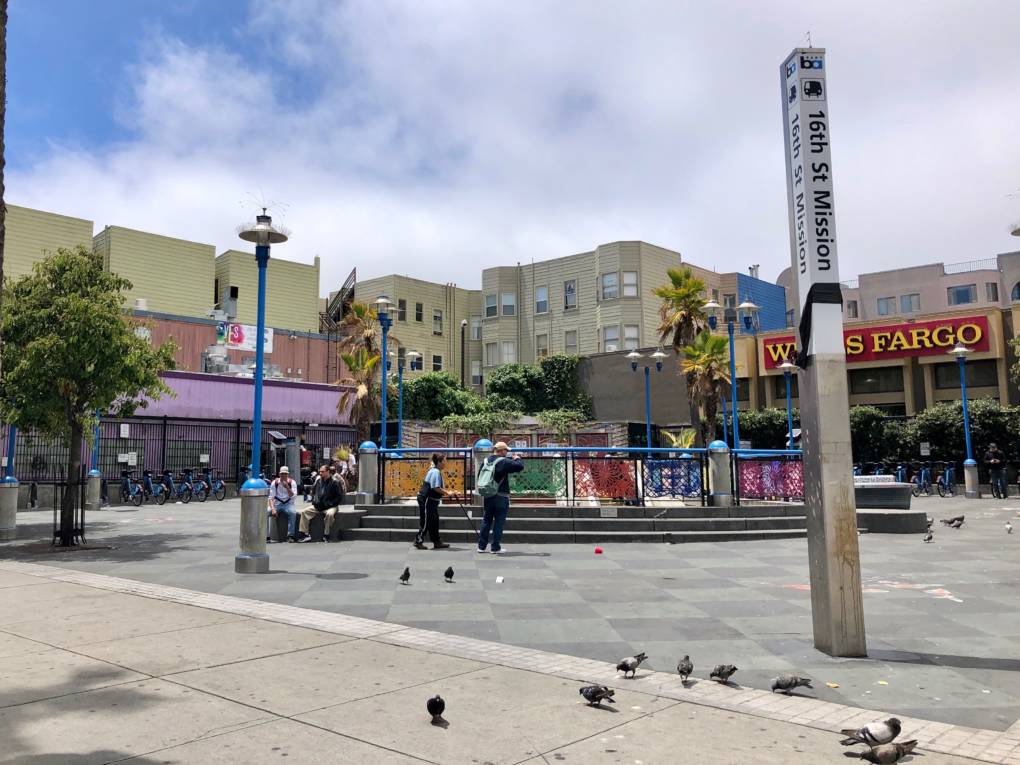
"caption": "The 16th Street BART station is unusually empty on Sunday July 14, 2019 in San Francisco, California.",
"description": null,
"title": "IMG_3945",
"credit": "Audrey Garces/KQED",
"status": "inherit",
"isLoading": false,
"fetchFailed": false
},
"news_11760855": {
"type": "attachments",
"id": "news_11760855",
"meta": {
"index": "attachments_1716263798",
"site": "news",
"id": "11760855",
"found": true
},
"parent": 11760838,
"imgSizes": {
"apple_news_ca_landscape_5_5": {
"file": "https://ww2.kqed.org/app/uploads/sites/10/2019/07/RS38057__DSF3100-qut-1044x783.jpg",
"width": 1044,
"mimeType": "image/jpeg",
"height": 783
},
"apple_news_ca_square_4_0": {
"file": "https://ww2.kqed.org/app/uploads/sites/10/2019/07/RS38057__DSF3100-qut-470x470.jpg",
"width": 470,
"mimeType": "image/jpeg",
"height": 470
},
"twentyfourteen-full-width": {
"file": "https://ww2.kqed.org/app/uploads/sites/10/2019/07/RS38057__DSF3100-qut-1038x576.jpg",
"width": 1038,
"mimeType": "image/jpeg",
"height": 576
},
"thumbnail": {
"file": "https://ww2.kqed.org/app/uploads/sites/10/2019/07/RS38057__DSF3100-qut-160x107.jpg",
"width": 160,
"mimeType": "image/jpeg",
"height": 107
},
"post-thumbnail": {
"file": "https://ww2.kqed.org/app/uploads/sites/10/2019/07/RS38057__DSF3100-qut-672x372.jpg",
"width": 672,
"mimeType": "image/jpeg",
"height": 372
},
"kqedFullSize": {
"file": "https://ww2.kqed.org/app/uploads/sites/10/2019/07/RS38057__DSF3100-qut.jpg",
"width": 1920,
"height": 1280
},
"apple_news_ca_landscape_4_7": {
"file": "https://ww2.kqed.org/app/uploads/sites/10/2019/07/RS38057__DSF3100-qut-632x474.jpg",
"width": 632,
"mimeType": "image/jpeg",
"height": 474
},
"large": {
"file": "https://ww2.kqed.org/app/uploads/sites/10/2019/07/RS38057__DSF3100-qut-1020x680.jpg",
"width": 1020,
"mimeType": "image/jpeg",
"height": 680
},
"complete_open_graph": {
"file": "https://ww2.kqed.org/app/uploads/sites/10/2019/07/RS38057__DSF3100-qut-1200x800.jpg",
"width": 1200,
"mimeType": "image/jpeg",
"height": 800
},
"apple_news_ca_landscape_4_0": {
"file": "https://ww2.kqed.org/app/uploads/sites/10/2019/07/RS38057__DSF3100-qut-536x402.jpg",
"width": 536,
"mimeType": "image/jpeg",
"height": 402
},
"apple_news_ca_portrait_12_9": {
"file": "https://ww2.kqed.org/app/uploads/sites/10/2019/07/RS38057__DSF3100-qut-1122x1280.jpg",
"width": 1122,
"mimeType": "image/jpeg",
"height": 1280
},
"medium": {
"file": "https://ww2.kqed.org/app/uploads/sites/10/2019/07/RS38057__DSF3100-qut-800x533.jpg",
"width": 800,
"mimeType": "image/jpeg",
"height": 533
},
"apple_news_ca_portrait_4_0": {
"file": "https://ww2.kqed.org/app/uploads/sites/10/2019/07/RS38057__DSF3100-qut-354x472.jpg",
"width": 354,
"mimeType": "image/jpeg",
"height": 472
},
"apple_news_ca_portrait_9_7": {
"file": "https://ww2.kqed.org/app/uploads/sites/10/2019/07/RS38057__DSF3100-qut-840x1120.jpg",
"width": 840,
"mimeType": "image/jpeg",
"height": 1120
},
"apple_news_ca_landscape_12_9": {
"file": "https://ww2.kqed.org/app/uploads/sites/10/2019/07/RS38057__DSF3100-qut-1832x1280.jpg",
"width": 1832,
"mimeType": "image/jpeg",
"height": 1280
},
"apple_news_ca_square_9_7": {
"file": "https://ww2.kqed.org/app/uploads/sites/10/2019/07/RS38057__DSF3100-qut-1104x1104.jpg",
"width": 1104,
"mimeType": "image/jpeg",
"height": 1104
},
"apple_news_ca_portrait_4_7": {
"file": "https://ww2.kqed.org/app/uploads/sites/10/2019/07/RS38057__DSF3100-qut-414x552.jpg",
"width": 414,
"mimeType": "image/jpeg",
"height": 552
},
"apple_news_ca_square_12_9": {
"file": "https://ww2.kqed.org/app/uploads/sites/10/2019/07/RS38057__DSF3100-qut-1472x1280.jpg",
"width": 1472,
"mimeType": "image/jpeg",
"height": 1280
},
"apple_news_ca_portrait_5_5": {
"file": "https://ww2.kqed.org/app/uploads/sites/10/2019/07/RS38057__DSF3100-qut-687x916.jpg",
"width": 687,
"mimeType": "image/jpeg",
"height": 916
},
"full-width": {
"file": "https://ww2.kqed.org/app/uploads/sites/10/2019/07/RS38057__DSF3100-qut-1920x1280.jpg",
"width": 1920,
"mimeType": "image/jpeg",
"height": 1280
},
"apple_news_ca_square_4_7": {
"file": "https://ww2.kqed.org/app/uploads/sites/10/2019/07/RS38057__DSF3100-qut-550x550.jpg",
"width": 550,
"mimeType": "image/jpeg",
"height": 550
},
"apple_news_ca_landscape_9_7": {
"file": "https://ww2.kqed.org/app/uploads/sites/10/2019/07/RS38057__DSF3100-qut-1376x1032.jpg",
"width": 1376,
"mimeType": "image/jpeg",
"height": 1032
},
"apple_news_ca_square_5_5": {
"file": "https://ww2.kqed.org/app/uploads/sites/10/2019/07/RS38057__DSF3100-qut-912x912.jpg",
"width": 912,
"mimeType": "image/jpeg",
"height": 912
}
},
"publishDate": 1562964155,
"modified": 1562964279,
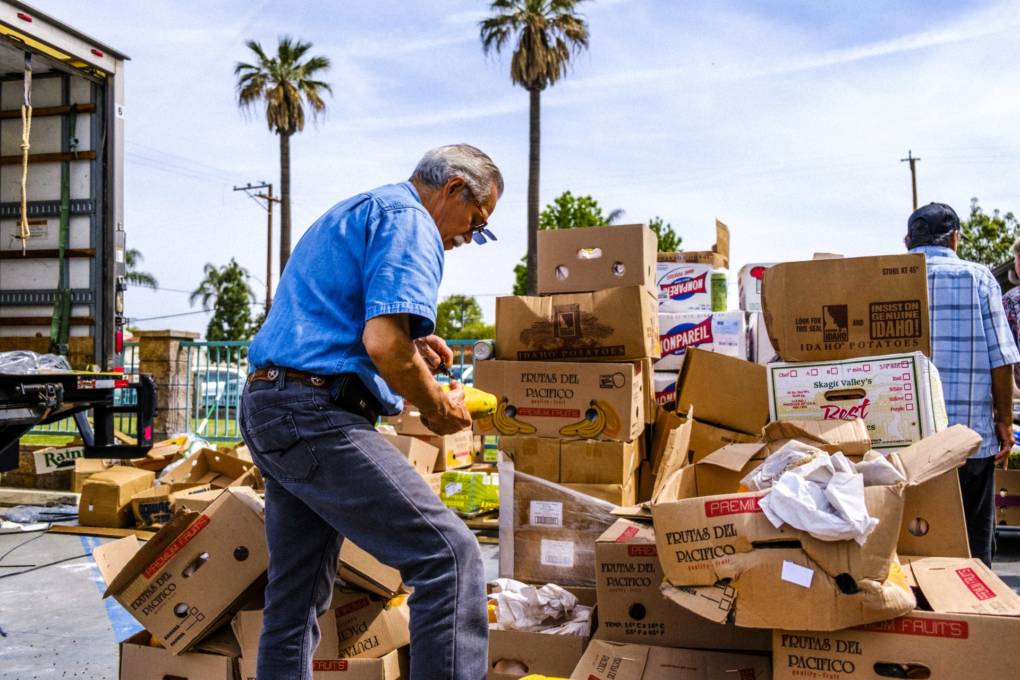
"caption": "A volunteer cuts browning pieces from papaya at the food bank in Downey, Calif. Despite rising incomes and lower poverty rate for Latinos, many Californians continue to struggle to feed their families.",
"description": null,
"title": "Downey Food Bank",
"credit": "Chava Sanchez/LAist",
"status": "inherit",
"isLoading": false,
"fetchFailed": false
},
"news_11759962": {
"type": "attachments",
"id": "news_11759962",
"meta": {
"index": "attachments_1716263798",
"site": "news",
"id": "11759962",
"found": true
},
"parent": 11759939,
"imgSizes": {
"apple_news_ca_landscape_5_5": {
"file": "https://ww2.kqed.org/app/uploads/sites/10/2019/07/RIVERA-FAMILY3-1044x783.jpg",
"width": 1044,
"mimeType": "image/jpeg",
"height": 783
},
"apple_news_ca_square_4_0": {
"file": "https://ww2.kqed.org/app/uploads/sites/10/2019/07/RIVERA-FAMILY3-470x470.jpg",
"width": 470,
"mimeType": "image/jpeg",
"height": 470
},
"twentyfourteen-full-width": {
"file": "https://ww2.kqed.org/app/uploads/sites/10/2019/07/RIVERA-FAMILY3-1038x576.jpg",
"width": 1038,
"mimeType": "image/jpeg",
"height": 576
},
"thumbnail": {
"file": "https://ww2.kqed.org/app/uploads/sites/10/2019/07/RIVERA-FAMILY3-160x116.jpg",
"width": 160,
"mimeType": "image/jpeg",
"height": 116
},
"post-thumbnail": {
"file": "https://ww2.kqed.org/app/uploads/sites/10/2019/07/RIVERA-FAMILY3-672x372.jpg",
"width": 672,
"mimeType": "image/jpeg",
"height": 372
},
"kqedFullSize": {
"file": "https://ww2.kqed.org/app/uploads/sites/10/2019/07/RIVERA-FAMILY3-e1562703462594.jpg",
"width": 1920,
"height": 1388
},
"apple_news_ca_landscape_4_7": {
"file": "https://ww2.kqed.org/app/uploads/sites/10/2019/07/RIVERA-FAMILY3-632x474.jpg",
"width": 632,
"mimeType": "image/jpeg",
"height": 474
},
"large": {
"file": "https://ww2.kqed.org/app/uploads/sites/10/2019/07/RIVERA-FAMILY3-1020x738.jpg",
"width": 1020,
"mimeType": "image/jpeg",
"height": 738
},
"complete_open_graph": {
"file": "https://ww2.kqed.org/app/uploads/sites/10/2019/07/RIVERA-FAMILY3-1200x868.jpg",
"width": 1200,
"mimeType": "image/jpeg",
"height": 868
},
"apple_news_ca_landscape_4_0": {
"file": "https://ww2.kqed.org/app/uploads/sites/10/2019/07/RIVERA-FAMILY3-536x402.jpg",
"width": 536,
"mimeType": "image/jpeg",
"height": 402
},
"apple_news_ca_portrait_12_9": {
"file": "https://ww2.kqed.org/app/uploads/sites/10/2019/07/RIVERA-FAMILY3-1122x1496.jpg",
"width": 1122,
"mimeType": "image/jpeg",
"height": 1496
},
"medium": {
"file": "https://ww2.kqed.org/app/uploads/sites/10/2019/07/RIVERA-FAMILY3-800x578.jpg",
"width": 800,
"mimeType": "image/jpeg",
"height": 578
},
"apple_news_ca_portrait_4_0": {
"file": "https://ww2.kqed.org/app/uploads/sites/10/2019/07/RIVERA-FAMILY3-354x472.jpg",
"width": 354,
"mimeType": "image/jpeg",
"height": 472
},
"apple_news_ca_portrait_9_7": {
"file": "https://ww2.kqed.org/app/uploads/sites/10/2019/07/RIVERA-FAMILY3-840x1120.jpg",
"width": 840,
"mimeType": "image/jpeg",
"height": 1120
},
"apple_news_ca_landscape_12_9": {
"file": "https://ww2.kqed.org/app/uploads/sites/10/2019/07/RIVERA-FAMILY3-1832x1374.jpg",
"width": 1832,
"mimeType": "image/jpeg",
"height": 1374
},
"apple_news_ca_square_9_7": {
"file": "https://ww2.kqed.org/app/uploads/sites/10/2019/07/RIVERA-FAMILY3-1104x1104.jpg",
"width": 1104,
"mimeType": "image/jpeg",
"height": 1104
},
"apple_news_ca_portrait_4_7": {
"file": "https://ww2.kqed.org/app/uploads/sites/10/2019/07/RIVERA-FAMILY3-414x552.jpg",
"width": 414,
"mimeType": "image/jpeg",
"height": 552
},
"apple_news_ca_square_12_9": {
"file": "https://ww2.kqed.org/app/uploads/sites/10/2019/07/RIVERA-FAMILY3-1472x1472.jpg",
"width": 1472,
"mimeType": "image/jpeg",
"height": 1472
},
"apple_news_ca_portrait_5_5": {
"file": "https://ww2.kqed.org/app/uploads/sites/10/2019/07/RIVERA-FAMILY3-687x916.jpg",
"width": 687,
"mimeType": "image/jpeg",
"height": 916
},
"full-width": {
"file": "https://ww2.kqed.org/app/uploads/sites/10/2019/07/RIVERA-FAMILY3-1920x1388.jpg",
"width": 1920,
"mimeType": "image/jpeg",
"height": 1388
},
"apple_news_ca_square_4_7": {
"file": "https://ww2.kqed.org/app/uploads/sites/10/2019/07/RIVERA-FAMILY3-550x550.jpg",
"width": 550,
"mimeType": "image/jpeg",
"height": 550
},
"apple_news_ca_landscape_9_7": {
"file": "https://ww2.kqed.org/app/uploads/sites/10/2019/07/RIVERA-FAMILY3-1376x1032.jpg",
"width": 1376,
"mimeType": "image/jpeg",
"height": 1032
},
"apple_news_ca_square_5_5": {
"file": "https://ww2.kqed.org/app/uploads/sites/10/2019/07/RIVERA-FAMILY3-912x912.jpg",
"width": 912,
"mimeType": "image/jpeg",
"height": 912
}
},
"publishDate": 1562703428,
"modified": 1562716427,
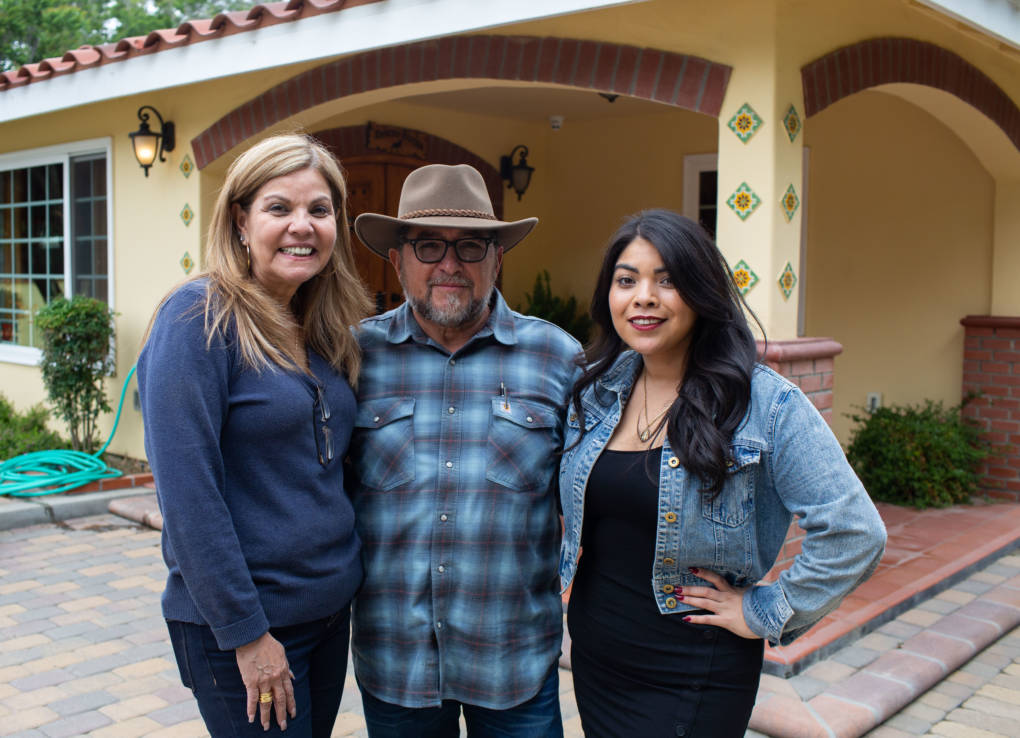
"caption": "Helen, Juan, and Monica Rivera in front of their home, on May 26, 2019 in Chino.",
"description": "Helen, Juan, and Monica Rivera in front of their home, on May 26, 2019 in Chino.",
"title": "RIVERA FAMILY3",
"credit": "James Berna/KPCC",
"status": "inherit",
"isLoading": false,
"fetchFailed": false
}
},
"audioPlayerReducer": {
"postId": "stream_live",
"isPaused": true,
"isPlaying": false,
"pfsActive": false,
"pledgeModalIsOpen": true,
"playerDrawerIsOpen": false,
"liveAudioPlayStartedAt": 0,
"liveAudioPlayContext": ""
},
"authorsReducer": {
"byline_news_11850740": {
"type": "authors",
"id": "byline_news_11850740",
"meta": {
"override": true
},
"slug": "byline_news_11850740",
"name": "\u003ca href=\"https://www.npr.org/people/426314944/daniel-hajek\">Danny Hajek\u003c/a>",
"isLoading": false
},
"byline_news_11833113": {
"type": "authors",
"id": "byline_news_11833113",
"meta": {
"override": true
},
"slug": "byline_news_11833113",
"name": "\u003ca href=\"https://californiahealthline.org/news/author/rachel-scheier/\">Rachel Scheier\u003c/a>",
"isLoading": false
},
"byline_news_11760838": {
"type": "authors",
"id": "byline_news_11760838",
"meta": {
"override": true
},
"slug": "byline_news_11760838",
"name": "Leslie Berestein Rojas \u003cbr>KPCC",
"isLoading": false
},
"byline_news_11759939": {
"type": "authors",
"id": "byline_news_11759939",
"meta": {
"override": true
},
"slug": "byline_news_11759939",
"name": "\u003ca href= \"https://www.scpr.org/about/people/staff/leslie-berestein-rojas\"> Leslie Berestein Rojas \u003ca/>",
"isLoading": false
},
"lisapickoffwhite-2": {
"type": "authors",
"id": "199",
"meta": {
"index": "authors_1716337520",
"id": "199",
"found": true
},
"name": "Lisa Pickoff-White",
"firstName": "Lisa",
"lastName": "Pickoff-White",
"slug": "lisapickoffwhite-2",
"email": "lpickoffwhite@kqed.org",
"display_author_email": false,
"staff_mastheads": [
"news"
],
"title": "Data Journalist, Senior Producer",
"bio": "Lisa Pickoff-White is KQED's data reporter. Lisa specializes in simplifying complex topics and bringing them to life through compelling visuals, including photography and data visualizations. She previously has worked at the Center for Investigative Reporting and other national outlets. Her work has been honored with awards from the Online News Association, Investigative Reporters and Editors, the Society of Professional Journalists and SXSW Interactive. \u003cstrong> \u003c/strong>",
"avatar": "https://secure.gravatar.com/avatar/5513c5f3967df792aa65bee2501e84d6?s=600&d=blank&r=g",
"twitter": "pickoffwhite",
"facebook": null,
"instagram": null,
"linkedin": null,
"sites": [
{
"site": "",
"roles": [
"editor"
]
},
{
"site": "arts",
"roles": []
},
{
"site": "news",
"roles": [
"administrator"
]
},
{
"site": "about",
"roles": [
"editor"
]
},
{
"site": "stateofhealth",
"roles": [
"administrator"
]
},
{
"site": "science",
"roles": [
"editor"
]
},
{
"site": "quest",
"roles": [
"editor"
]
},
{
"site": "forum",
"roles": [
"editor"
]
}
],
"headData": {
"title": "Lisa Pickoff-White | KQED",
"description": "Data Journalist, Senior Producer",
"ogImgSrc": "https://secure.gravatar.com/avatar/5513c5f3967df792aa65bee2501e84d6?s=600&d=blank&r=g",
"twImgSrc": "https://secure.gravatar.com/avatar/5513c5f3967df792aa65bee2501e84d6?s=600&d=blank&r=g"
},
"isLoading": false,
"link": "/author/lisapickoffwhite-2"
},
"markfiore": {
"type": "authors",
"id": "3236",
"meta": {
"index": "authors_1716337520",
"id": "3236",
"found": true
},
"name": "Mark Fiore",
"firstName": "Mark",
"lastName": "Fiore",
"slug": "markfiore",
"email": "mark@markfiore.com",
"display_author_email": false,
"staff_mastheads": [
"news"
],
"title": "KQED News Cartoonist",
"bio": "\u003ca href=\"http://www.MarkFiore.com\">MarkFiore.com\u003c/a> | \u003ca href=\"https://twitter.com/markfiore\">Follow on Twitter\u003c/a> | \u003ca href=\"https://www.facebook.com/pages/Mark-Fiore-Animated-Political-Cartoons/94451707396?ref=bookmarks\">Facebook\u003c/a> | \u003ca href=\"mailto:mark@markfiore.com\">email\u003c/a>\r\n\r\nPulitzer Prize-winner, Mark Fiore, who the Wall Street Journal has called “the undisputed guru of the form,” creates animated political cartoons in San Francisco, where his work has been featured regularly on the San Francisco Chronicle’s web site, SFGate.com. His work has appeared on Newsweek.com, Slate.com, CBSNews.com, MotherJones.com, DailyKos.com and NPR’s web site. Fiore’s political animation has appeared on CNN, Frontline, Bill Moyers Journal, Salon.com and cable and broadcast outlets across the globe.\r\n\r\nBeginning his professional life by drawing traditional political cartoons for newspapers, Fiore’s work appeared in publications ranging from the Washington Post to the Los Angeles Times. In the late 1990s, he began to experiment with animating political cartoons and, after a short stint at the San Jose Mercury News as their staff cartoonist, Fiore devoted all his energies to animation.\r\nGrowing up in California, Fiore also spent a good portion of his life in the backwoods of Idaho. It was this combination that shaped him politically. Mark majored in political science at Colorado College, where, in a perfect send-off for a cartoonist, he received his diploma in 1991 as commencement speaker Dick Cheney smiled approvingly.\r\nMark Fiore was awarded the Pulitzer Prize for political cartooning in 2010, a Robert F. Kennedy Journalism Award in 2004 and has twice received an Online Journalism Award for commentary from the Online News Association (2002, 2008). Fiore has received two awards for his work in new media from the National Cartoonists Society (2001, 2002), and in 2006 received The James Madison Freedom of Information Award from The Society of Professional Journalists.",
"avatar": "https://secure.gravatar.com/avatar/fc4e2a612b15b67bad0c6f0e1db4ca9b?s=600&d=blank&r=g",
"twitter": "MarkFiore",
"facebook": null,
"instagram": "https://www.instagram.com/markfiore/?hl=en",
"linkedin": null,
"sites": [
{
"site": "arts",
"roles": [
"contributor"
]
},
{
"site": "news",
"roles": [
"editor"
]
},
{
"site": "futureofyou",
"roles": [
"editor"
]
},
{
"site": "science",
"roles": [
"editor"
]
}
],
"headData": {
"title": "Mark Fiore | KQED",
"description": "KQED News Cartoonist",
"ogImgSrc": "https://secure.gravatar.com/avatar/fc4e2a612b15b67bad0c6f0e1db4ca9b?s=600&d=blank&r=g",
"twImgSrc": "https://secure.gravatar.com/avatar/fc4e2a612b15b67bad0c6f0e1db4ca9b?s=600&d=blank&r=g"
},
"isLoading": false,
"link": "/author/markfiore"
},
"mlagos": {
"type": "authors",
"id": "3239",
"meta": {
"index": "authors_1716337520",
"id": "3239",
"found": true
},
"name": "Marisa Lagos",
"firstName": "Marisa",
"lastName": "Lagos",
"slug": "mlagos",
"email": "mlagos@kqed.org",
"display_author_email": false,
"staff_mastheads": [
"news"
],
"title": "KQED Contributor",
"bio": "Marisa Lagos is a correspondent for KQED’s California Politics and Government Desk and co-hosts the award-winning show and podcast, Political Breakdown. At KQED, Lagos also conducts reporting, analysis and investigations into state, local and national politics for radio, TV, online and onstage. In 2022, she and co-host, Scott Shafer, moderated the only gubernatorial debate in California. In 2020, the \u003ci>Washington Post\u003c/i> named her one of the top political journalists in California; she was nominated for a Peabody and won several other awards for her work investigating the 2017 California wildfires. She has worked at the \u003ci>San Francisco Chronicle\u003c/i>, \u003ci>San Francisco Examiner\u003c/i> and \u003ci>Los Angeles Times\u003c/i>. A UC Santa Barbara graduate, she lives in San Francisco with her two sons and husband.",
"avatar": "https://secure.gravatar.com/avatar/a261a0d3696fc066871ef96b85b5e7d2?s=600&d=blank&r=g",
"twitter": "@mlagos",
"facebook": null,
"instagram": null,
"linkedin": null,
"sites": [
{
"site": "arts",
"roles": [
"author"
]
},
{
"site": "news",
"roles": [
"editor"
]
},
{
"site": "science",
"roles": [
"editor"
]
},
{
"site": "forum",
"roles": [
"author"
]
},
{
"site": "liveblog",
"roles": [
"author"
]
}
],
"headData": {
"title": "Marisa Lagos | KQED",
"description": "KQED Contributor",
"ogImgSrc": "https://secure.gravatar.com/avatar/a261a0d3696fc066871ef96b85b5e7d2?s=600&d=blank&r=g",
"twImgSrc": "https://secure.gravatar.com/avatar/a261a0d3696fc066871ef96b85b5e7d2?s=600&d=blank&r=g"
},
"isLoading": false,
"link": "/author/mlagos"
},
"fjhabvala": {
"type": "authors",
"id": "8659",
"meta": {
"index": "authors_1716337520",
"id": "8659",
"found": true
},
"name": "Farida Jhabvala Romero",
"firstName": "Farida",
"lastName": "Jhabvala Romero",
"slug": "fjhabvala",
"email": "fjhabvala@kqed.org",
"display_author_email": true,
"staff_mastheads": [
"news"
],
"title": "KQED Contributor",
"bio": "Farida Jhabvala Romero is a Labor Correspondent for KQED. She previously covered immigration. Farida was \u003ca href=\"https://www.ccnma.org/2022-most-influential-latina-journalists\">named\u003c/a> one of the 10 Most Influential Latina Journalists in California in 2022 by the California Chicano News Media Association. Her work has won awards from the Society of Professional Journalists (Northern California), as well as a national and regional Edward M. Murrow Award for the collaborative reporting projects “Dangerous Air” and “Graying California.” Before joining KQED, Farida worked as a producer at Radio Bilingüe, a national public radio network. Farida earned her master’s degree in journalism from Stanford University.",
"avatar": "https://secure.gravatar.com/avatar/f9f022d4e2609741874222a1e9d41f48fea74011aa7c615eef91d9a50c944ebe?s=600&d=blank&r=g",
"twitter": "FaridaJhabvala",
"bluesky": null,
"facebook": null,
"instagram": null,
"linkedin": "https://www.linkedin.com/in/faridajhabvala/",
"sites": [
{
"site": "news",
"roles": [
"editor"
]
},
{
"site": "stateofhealth",
"roles": [
"author"
]
},
{
"site": "liveblog",
"roles": [
"author"
]
}
],
"headData": {
"title": "Farida Jhabvala Romero | KQED",
"description": "KQED Contributor",
"ogImgSrc": "https://secure.gravatar.com/avatar/f9f022d4e2609741874222a1e9d41f48fea74011aa7c615eef91d9a50c944ebe?s=600&d=blank&r=g",
"twImgSrc": "https://secure.gravatar.com/avatar/f9f022d4e2609741874222a1e9d41f48fea74011aa7c615eef91d9a50c944ebe?s=600&d=blank&r=g"
},
"isLoading": false,
"link": "/author/fjhabvala"
},
"agarces": {
"type": "authors",
"id": "11367",
"meta": {
"index": "authors_1716337520",
"id": "11367",
"found": true
},
"name": "Audrey Garces",
"firstName": "Audrey",
"lastName": "Garces",
"slug": "agarces",
"email": "agarces@kqed.org",
"display_author_email": false,
"staff_mastheads": [
"news"
],
"title": "Digital Producer",
"bio": "Audrey is a former digital producer at KQED News. Previously, she was a KQED Raul Ramirez Diversity Fund intern where she developed stories that focused on highlighting diverse voices in journalism. Prior to her work at KQED, she worked as a news intern at the San Francisco Examiner. Audrey graduated from San Francisco State University with a B.A. in journalism and a minor in political science.",
"avatar": "https://secure.gravatar.com/avatar/5211bc2e6a809b9956da169e35ce63d5?s=600&d=blank&r=g",
"twitter": "audgar",
"facebook": null,
"instagram": null,
"linkedin": null,
"sites": [
{
"site": "arts",
"roles": []
},
{
"site": "news",
"roles": [
"subscriber"
]
},
{
"site": "science",
"roles": [
"editor"
]
},
{
"site": "forum",
"roles": [
"editor"
]
},
{
"site": "perspectives",
"roles": [
"administrator"
]
}
],
"headData": {
"title": "Audrey Garces | KQED",
"description": "Digital Producer",
"ogImgSrc": "https://secure.gravatar.com/avatar/5211bc2e6a809b9956da169e35ce63d5?s=600&d=blank&r=g",
"twImgSrc": "https://secure.gravatar.com/avatar/5211bc2e6a809b9956da169e35ce63d5?s=600&d=blank&r=g"
},
"isLoading": false,
"link": "/author/agarces"
},
"eaguilar": {
"type": "authors",
"id": "11382",
"meta": {
"index": "authors_1716337520",
"id": "11382",
"found": true
},
"name": "Erika Aguilar",
"firstName": "Erika",
"lastName": "Aguilar",
"slug": "eaguilar",
"email": "eaa712@gmail.com",
"display_author_email": false,
"staff_mastheads": [],
"title": "KQED Contributor",
"bio": "Erika Aguilar was the director of podcasts at KQED. She was in charge of KQED's portfolio of original podcasts and teams, and sets strategic plans for production and engagement.\r\n\r\nErika helped establish KQED's new housing affordability desk as senior editor. She was also a producer and editor for KQED's local news podcast called \u003cem>The Bay, \u003c/em>and wrote stories about housing in the Bay Area as a reporter for KQED News.\r\n\r\nErika joined KQED in 2017 after producing independent audio projects and podcasts in Southern California. She spent more than a dozen years reporting stories about law enforcement, breaking news, homelessness, government and the environment for KPCC in Los Angeles and KUT in Austin. She also volunteers as an editor and mentor for various journalism training programs.\r\n\r\nErika Aguilar is a proud Tejana from San Antonio. She believes in compromise, optimism and Selena.",
"avatar": "https://secure.gravatar.com/avatar/85bf7bb8dd9af4136525d94cef00f026?s=600&d=blank&r=g",
"twitter": "erikaaaguilar",
"facebook": null,
"instagram": null,
"linkedin": null,
"sites": [
{
"site": "",
"roles": [
"editor"
]
},
{
"site": "news",
"roles": [
"subscriber"
]
},
{
"site": "podcasts",
"roles": [
"editor"
]
}
],
"headData": {
"title": "Erika Aguilar | KQED",
"description": "KQED Contributor",
"ogImgSrc": "https://secure.gravatar.com/avatar/85bf7bb8dd9af4136525d94cef00f026?s=600&d=blank&r=g",
"twImgSrc": "https://secure.gravatar.com/avatar/85bf7bb8dd9af4136525d94cef00f026?s=600&d=blank&r=g"
},
"isLoading": false,
"link": "/author/eaguilar"
},
"ahall": {
"type": "authors",
"id": "11490",
"meta": {
"index": "authors_1716337520",
"id": "11490",
"found": true
},
"name": "Alex Hall",
"firstName": "Alex",
"lastName": "Hall",
"slug": "ahall",
"email": "ahall@kqed.org",
"display_author_email": false,
"staff_mastheads": [
"news"
],
"title": "KQED Enterprise & Accountability Reporter",
"bio": "Alex Hall is KQED's Enterprise and Accountability Reporter. She previously covered the Central Valley for five years from KQED's bureau in Fresno. Before joining KQED, Alex was an investigative reporting fellow at Wisconsin Public Radio and the Wisconsin Center for Investigative Journalism. She has also worked as a bilingual producer for NPR's investigative unit and freelance video producer for Reuters TV on the Latin America desk. She got her start in journalism in South America, where she worked as a radio producer and Spanish-English translator for CNN Chile. Her documentary and investigation into the series of deadly COVID-19 outbreaks at Foster Farms won a national Edward R. Murrow award and was named an Investigative Reporters & Editors award finalist. Alex's reporting for Reveal on the Wisconsin dairy industry's reliance on undocumented immigrant labor was made into a film, Los Lecheros, which won a regional Edward R. Murrow award for best news documentary.",
"avatar": "https://secure.gravatar.com/avatar/defcbeb88b0bf591ff9af41f22644051?s=600&d=blank&r=g",
"twitter": "@chalexhall",
"facebook": null,
"instagram": null,
"linkedin": null,
"sites": [
{
"site": "news",
"roles": [
"editor"
]
},
{
"site": "liveblog",
"roles": [
"author"
]
}
],
"headData": {
"title": "Alex Hall | KQED",
"description": "KQED Enterprise & Accountability Reporter",
"ogImgSrc": "https://secure.gravatar.com/avatar/defcbeb88b0bf591ff9af41f22644051?s=600&d=blank&r=g",
"twImgSrc": "https://secure.gravatar.com/avatar/defcbeb88b0bf591ff9af41f22644051?s=600&d=blank&r=g"
},
"isLoading": false,
"link": "/author/ahall"
},
"valderete": {
"type": "authors",
"id": "11599",
"meta": {
"index": "authors_1716337520",
"id": "11599",
"found": true
},
"name": "Vianey Alderete Contreras",
"firstName": "Vianey",
"lastName": "Alderete Contreras",
"slug": "valderete",
"email": "valderete@kqed.org",
"display_author_email": false,
"staff_mastheads": [],
"title": "KQED Contributor",
"bio": null,
"avatar": "https://secure.gravatar.com/avatar/c3e988b2fce158f2ac7921cb004e618773aaaf263fd052fa76fc3675cb644f91?s=600&d=blank&r=g",
"twitter": null,
"bluesky": null,
"facebook": null,
"instagram": null,
"linkedin": null,
"sites": [
{
"site": "news",
"roles": [
"subscriber"
]
},
{
"site": "bayareabites",
"roles": [
"editor"
]
},
{
"site": "science",
"roles": [
"editor"
]
},
{
"site": "checkplease",
"roles": [
"editor"
]
},
{
"site": "forum",
"roles": [
"administrator"
]
},
{
"site": "perspectives",
"roles": [
"author"
]
}
],
"headData": {
"title": "Vianey Alderete Contreras | KQED",
"description": "KQED Contributor",
"ogImgSrc": "https://secure.gravatar.com/avatar/c3e988b2fce158f2ac7921cb004e618773aaaf263fd052fa76fc3675cb644f91?s=600&d=blank&r=g",
"twImgSrc": "https://secure.gravatar.com/avatar/c3e988b2fce158f2ac7921cb004e618773aaaf263fd052fa76fc3675cb644f91?s=600&d=blank&r=g"
},
"isLoading": false,
"link": "/author/valderete"
},
"amorga": {
"type": "authors",
"id": "11629",
"meta": {
"index": "authors_1716337520",
"id": "11629",
"found": true
},
"name": "Adriana Morga",
"firstName": "Adriana",
"lastName": "Morga",
"slug": "amorga",
"email": "amorga@kqed.org",
"display_author_email": false,
"staff_mastheads": [],
"title": "KQED Contributor",
"bio": "Adriana Morga is an on-call Digital Producer for KQED en Español. She is also completing her journalism degree at San Francisco State University. She has experience working in print and radio. Morga, who was born in Tijuana, Mexico, has spent her developing career covering the Latino community for English and Spanish-language publications including KALW and El Tecolote.",
"avatar": "https://secure.gravatar.com/avatar/9ef1c5a7ff2f2ae1ab05809325f43d03?s=600&d=blank&r=g",
"twitter": null,
"facebook": null,
"instagram": null,
"linkedin": null,
"sites": [
{
"site": "arts",
"roles": []
},
{
"site": "news",
"roles": [
"author"
]
},
{
"site": "science",
"roles": [
"editor"
]
}
],
"headData": {
"title": "Adriana Morga | KQED",
"description": "KQED Contributor",
"ogImgSrc": "https://secure.gravatar.com/avatar/9ef1c5a7ff2f2ae1ab05809325f43d03?s=600&d=blank&r=g",
"twImgSrc": "https://secure.gravatar.com/avatar/9ef1c5a7ff2f2ae1ab05809325f43d03?s=600&d=blank&r=g"
},
"isLoading": false,
"link": "/author/amorga"
}
},
"pagesReducer": {
"news_tag_latinos": {
"type": "terms",
"id": "news_18142",
"meta": {
"index": "terms_1716263798",
"site": "news",
"id": "18142",
"score": 9.304556
},
"featImg": null,
"name": "Latinos",
"description": null,
"taxonomy": "tag",
"headData": {
"twImgId": null,
"twTitle": null,
"ogTitle": null,
"ogImgId": null,
"twDescription": null,
"description": null,
"title": "Latinos Archives | KQED News",
"ogDescription": null
},
"ttid": 18176,
"slug": "latinos",
"isLoading": false,
"title": "Latinos",
"pageMeta": {
"site": "news",
"WpPageTemplate": "page-topic-editorial",
"currentPage": 4
},
"blocks": [
{
"blockName": "kqed/post-list",
"attrs": {
"layout": "cardArticle2",
"query": "posts/news?tag=latinos",
"seeMore": false,
"paginated": true,
"page": 4
}
},
{
"blockName": "kqed/ad"
}
]
}
},
"pfsSessionReducer": {},
"postsReducer": {
"stream_live": {
"type": "live",
"id": "stream_live",
"audioUrl": "https://streams.kqed.org/kqedradio",
"title": "Live Stream",
"excerpt": "Live Stream information currently unavailable.",
"link": "/radio",
"featImg": "",
"label": {
"name": "KQED Live",
"link": "/"
}
},
"stream_kqedNewscast": {
"type": "posts",
"id": "stream_kqedNewscast",
"audioUrl": "https://www.kqed.org/.stream/anon/radio/RDnews/newscast.mp3?_=1",
"title": "KQED Newscast",
"featImg": "",
"label": {
"name": "88.5 FM",
"link": "/"
}
},
"news_11874691": {
"type": "posts",
"id": "news_11874691",
"meta": {
"index": "posts_1716263798",
"site": "news",
"id": "11874691",
"score": null,
"sort": [
1621632431000
]
},
"guestAuthors": [],
"slug": "in-hardest-hit-parts-of-alameda-county-residents-need-more-vaccine-info-access",
"title": "In Hardest-Hit Parts of Alameda County, Residents Need More Vaccine Info, Access",
"publishDate": 1621632431,
"format": "standard",
"headTitle": "In Hardest-Hit Parts of Alameda County, Residents Need More Vaccine Info, Access | KQED",
"labelTerm": {
"site": "news"
},
"content": "\u003cp>In the parking lot of a small supermarket in South Hayward, a handful of volunteers with the Tiburcio Vasquez Health Center asked shoppers in Spanish if they had received the COVID-19 vaccine, and if not, encouraged them to book an appointment.\u003c/p>\n\u003cp>One of the community health workers — known among Latino immigrants as \u003cem>promotoras\u003c/em> — struck up a conversation with a woman who got out of a pickup truck holding a baby and a toddler dressed in pajamas.\u003c/p>\n\u003cp>[pullquote size=\"medium\" align=\"right\" citation=\"Guadalupe Perez, Tiburcio Vasquez Health Center promotora\"]‘Some people say, ‘No, I don’t want to go in, especially because I heard somebody got sick. So I don’t want to get sick and miss work.’’[/pullquote]The woman, Mayra Contreras, said she was still deciding whether to get the shot, and needed more information. But she said her hands are full working as a babysitter and helping her own children keep up with virtual school at home.\u003c/p>\n\u003cp>“I’m going to think about it,” said Contreras, 36, after accepting a bilingual flyer dispelling \u003ca href=\"https://www.cdc.gov/coronavirus/2019-ncov/vaccines/facts.html\">common myths\u003c/a> about the vaccine and explaining how to sign up. “It’s also because of time. Life is just stressful with kids.”\u003c/p>\n\u003cp>Contreras is one of tens of thousands of residents in ZIP Code 94544 who don’t yet have the shot against the deadly disease. South Hayward, as well as East Oakland and other working-class neighborhoods along the I-880 highway, are lagging behind the rest of Alameda County in \u003ca href=\"https://covid-19.acgov.org/data.page\">vaccination rates\u003c/a> even though they are the very places where people have suffered the highest rates of illness and death from COVID-19.\u003c/p>\n\u003cp>As demand for doses dwindled at mega vaccination sites such as at the Oakland Coliseum, which is \u003ca href=\"https://covid-19.acgov.org/covid19-assets/docs/press/press-release-2021.05.05.pdf\">set to close\u003c/a> on Sunday, Bay Area public health officials are shifting strategies to target communities where a greater proportion of eligible people remain unvaccinated.\u003c/p>\n\u003cp>[ad fullwidth]\u003c/p>\n\u003cp>In South Hayward, health workers say, some adults are holding out because of unreliable information they got from friends or social media. But others are busy with two jobs, trying to make up income they lost earlier in the pandemic, and find it challenging to take time off to get the shot and recover from possible \u003ca href=\"https://www.cdc.gov/coronavirus/2019-ncov/vaccines/expect/after.html\">side effects\u003c/a>, said Guadalupe Perez, a long-time \u003cem>promotora\u003c/em> with the Tiburcio Vasquez clinic.\u003c/p>\n\u003cp>“Some people say, ‘No, I don’t want to go in, especially because I heard somebody got sick. So I don’t want to get sick and miss work,’ ” said Perez. She recommends they weigh the risks of getting seriously ill from the coronavirus versus the short-term tiredness and chills they might feel from the vaccine.\u003c/p>\n\u003cfigure id=\"attachment_11874708\" class=\"wp-caption aligncenter\" style=\"max-width: 1920px\">\u003cimg loading=\"lazy\" decoding=\"async\" class=\"size-full wp-image-11874708\" src=\"https://ww2.kqed.org/app/uploads/sites/10/2021/05/RS48958_012_Hayward_Promotoras_05102021-qut.jpg\" alt=\"\" width=\"1920\" height=\"1280\" srcset=\"https://cdn.kqed.org/wp-content/uploads/sites/10/2021/05/RS48958_012_Hayward_Promotoras_05102021-qut.jpg 1920w, https://cdn.kqed.org/wp-content/uploads/sites/10/2021/05/RS48958_012_Hayward_Promotoras_05102021-qut-800x533.jpg 800w, https://cdn.kqed.org/wp-content/uploads/sites/10/2021/05/RS48958_012_Hayward_Promotoras_05102021-qut-1020x680.jpg 1020w, https://cdn.kqed.org/wp-content/uploads/sites/10/2021/05/RS48958_012_Hayward_Promotoras_05102021-qut-160x107.jpg 160w, https://cdn.kqed.org/wp-content/uploads/sites/10/2021/05/RS48958_012_Hayward_Promotoras_05102021-qut-1536x1024.jpg 1536w\" sizes=\"auto, (max-width: 1920px) 100vw, 1920px\">\u003cfigcaption class=\"wp-caption-text\">Health outreach worker Guadalupe Perez speaks with a customer at Yeyo’s Meat Market about the COVID-19 vaccine in South Hayward on May 10, 2021. \u003ccite>(Beth LaBerge/KQED)\u003c/cite>\u003c/figcaption>\u003c/figure>\n\u003cp>In California, all employees who work for more than 30 days in a year for the same employer are entitled to up to 24 hours of \u003ca href=\"https://www.dir.ca.gov/covid/paid-sick-leave.html\">paid sick leave\u003c/a> they can use to get vaccinated and recover, regardless of their immigration status.\u003c/p>\n\u003cp>The state has mandated COVID-19-related sick leave of \u003ca href=\"https://www.dir.ca.gov/dlse/COVID19Resources/FAQ-for-SPSL-2021.html\">up to 80 hours\u003c/a> for larger employers through September. But many low-wage and front-line workers don’t know they have that right, or they fear retaliation if they assert it, according to a recent \u003ca href=\"https://www.kqed.org/news/11870797/low-wage-workers-lack-covid-protections-fear-retaliation-california-survey-shows\">survey\u003c/a> of hundreds of workers in the restaurant, home health care, janitorial and additional industries.\u003c/p>\n\u003cp>Others who are eligible for the COVID-19 vaccine have delayed it because of lingering medical questions.\u003c/p>\n\u003cp>Norma Bernabe, a tortilla factory worker, said she and her family want to get vaccinated, but they are unsure of when to do it safely. She was very ill with the coronavirus in March, she said, and her husband and 13-year-old son were also sick.\u003c/p>\n\u003cp>[aside postID=news_11866749 hero='https://ww2.kqed.org/app/uploads/sites/10/2021/03/LatinoCovidDeaths-1020x689.jpg']“My husband heard we had to wait 90 days, but I don’t know,” said Bernabe, who also lives in South Hayward, before entering Yeyo’s Meat Market on Gading Road. “That’s why we haven’t made an appointment.”\u003c/p>\n\u003cp>The Centers for Disease Control and Prevention \u003ca href=\"https://covid-19.acgov.org/vaccines-faq#medical\">recommends\u003c/a> most infected people get vaccinated as soon as they finish their isolation period and COVID-19 symptoms disappear, but those who were treated with monoclonal antibodies or convalescent plasma should wait 90 days.\u003c/p>\n\u003cp>Perez, the \u003cem>promotora\u003c/em>, suggested Bernabe check with her doctor first, and then sign up for the shot.\u003c/p>\n\u003cp>As of late last month, 121 people residing in ZIP code 94544 had died due to the virus, more than in any other ZIP code in the county, according to the Alameda County Health Department.\u003c/p>\n\u003cp>The next ZIP code over, 94541, which includes the Cherryland neighborhood, registered the second highest number of COVID-19 fatalities in the county: 107. Both of the populous ZIP codes — where more than 40% of residents identify as Latino and more than a third are immigrants — also had the county’s highest rates of coronavirus deaths per capita.\u003c/p>\n\u003cp>Most of those who died were elderly, including residents at more than a dozen long-term care facilities in those ZIP codes. But many of the younger victims were front-line workers — including an airline mechanic, a butcher, a cook, a dishwasher, a registered nurse and a street sweeper, according to county death records obtained by KQED and the \u003ca href=\"https://documentingcovid19.io/\" target=\"_blank\" rel=\"noopener noreferrer\">Documenting COVID-19\u003c/a> project at Columbia University’s Brown Institute for Media Innovation.\u003c/p>\n\u003cp>[aside tag=\"latinos\" label=\"More Latino coverage\"]Despite the death toll in 94544 and 94541, barely half of the residents 16 and older there are fully vaccinated as of this week, compared to nearly 60% for the entire county, and closer to 80% in wealthier ZIP codes in the Berkeley and Oakland hills.\u003c/p>\n\u003cp>“We have a ways to go,” said Dr. Nicholas Moss, Alameda County health officer. “And it’s compounded by the fact that these are often communities that, because of COVID restrictions and the economic impacts, were in a very difficult spot going into the vaccination campaign.”\u003c/p>\n\u003cp>Latinos in the county got a later start getting vaccinated, he said, because they tend to be younger and fewer of them work in health care jobs, so they didn’t qualify for the early tiers of eligibility. In addition, residents who are not fluent in English or face technology barriers, had a harder time signing up for appointments when vaccine supply was limited, he said.\u003c/p>\n\u003cp>“It’s been a confusing process,” said Moss. “The information has been confusing about when you’re eligible and how to sign up and where we go.”\u003c/p>\n\u003cp>But now that there are enough doses and everyone age 12 and older is eligible, county health officials are focusing on building up the vaccination efforts of community clinics, private health care providers and pharmacies in areas officials consider high priority.\u003c/p>\n\u003cfigure id=\"attachment_11874784\" class=\"wp-caption alignnone\" style=\"max-width: 800px\">\u003cimg loading=\"lazy\" decoding=\"async\" class=\"size-medium wp-image-11874784\" src=\"https://ww2.kqed.org/app/uploads/sites/10/2021/05/RS48963_017_Hayward_Promotoras_05102021-qut-800x533.jpg\" alt=\"\" width=\"800\" height=\"533\" srcset=\"https://cdn.kqed.org/wp-content/uploads/sites/10/2021/05/RS48963_017_Hayward_Promotoras_05102021-qut-800x533.jpg 800w, https://cdn.kqed.org/wp-content/uploads/sites/10/2021/05/RS48963_017_Hayward_Promotoras_05102021-qut-1020x680.jpg 1020w, https://cdn.kqed.org/wp-content/uploads/sites/10/2021/05/RS48963_017_Hayward_Promotoras_05102021-qut-160x107.jpg 160w, https://cdn.kqed.org/wp-content/uploads/sites/10/2021/05/RS48963_017_Hayward_Promotoras_05102021-qut-1536x1024.jpg 1536w, https://cdn.kqed.org/wp-content/uploads/sites/10/2021/05/RS48963_017_Hayward_Promotoras_05102021-qut.jpg 1920w\" sizes=\"auto, (max-width: 800px) 100vw, 800px\">\u003cfigcaption class=\"wp-caption-text\">Community health workers, or promotoras, explain how to sign up for the COVID-19 vaccine and dispel common myths at Yeyo’s Meat Market in South Hayward on May 10, 2021. \u003ccite>(Beth LaBerge/KQED)\u003c/cite>\u003c/figcaption>\u003c/figure>\n\u003cp>To protect more people living in 94544, the county plans to launch a new vaccination site there that will stay open after hours and on Sundays, said Kimi Watkins-Tartt, who directs the Alameda County Public Health Department. That will supplement vaccine clinics at local health centers, like Tiburcio Vasquez, where shots are offered mostly during the work day and on Saturdays.\u003c/p>\n\u003cp>[pullquote size=\"medium\" align=\"right\" citation=\"Dr. Nicholas Moss, Alameda County health officer\"]‘These are often communities that, because of COVID restrictions and the economic impacts, were in a very difficult spot going into the vaccination campaign.’[/pullquote]The county also plans to hold several pop-up clinics at events, schools and businesses, said Watkins-Tartt, to give people more opportunities to get their questions answered and feel comfortable about the vaccine.\u003c/p>\n\u003cp>“We are adding to what’s already there,” she said. “We also just want to be in the community and wait for people to get ready, because even though we want people to get vaccinated as quickly as possible, we also know that a lot of this is also building trust.”\u003c/p>\n\u003cp>The county has already opened an inoculation site at the Hayward Adult School, in ZIP code 94541, and held pop-up clinics at local assisted living centers and other housing facilities, as well as at the Muhajireen Mosque in 94544 — all of which have helped to push up vaccination rates, said health officials.\u003c/p>\n\u003cp>With the virus still circulating as the state prepares to fully reopen next month and remove most mask mandates and social distancing requirements for people who are fully vaccinated, county officials plan to be in South Hayward and other impacted neighborhoods “indefinitely,” said Moss, the county health officer.\u003c/p>\n\u003cp>“I’ve come to believe that COVID is not going away any time soon, that people are going to get vaccinated or they’ll get COVID,” he said. “I don’t think people are going to be able to avoid it and avoid vaccination.”\u003c/p>\n\u003cp>[ad floatright]\u003c/p>\n",
"blocks": [],
"excerpt": "South Hayward, East Oakland and other working-class neighborhoods along the I-880 highway are lagging behind the rest of Alameda County in vaccination rates, even though they are the very places where people have suffered the highest rates of illness and death from COVID-19.",
"status": "publish",
"parent": 0,
"modified": 1740699681,
"stats": {
"hasAudio": false,
"hasVideo": false,
"hasChartOrMap": false,
"iframeSrcs": [],
"hasGoogleForm": false,
"hasGallery": false,
"hasHearkenModule": false,
"hasPolis": false,
"paragraphCount": 31,
"wordCount": 1585
},
"headData": {
"title": "In Hardest-Hit Parts of Alameda County, Residents Need More Vaccine Info, Access | KQED",
"description": "South Hayward, East Oakland and other working-class neighborhoods along the I-880 highway are lagging behind the rest of Alameda County in vaccination rates, even though they are the very places where people have suffered the highest rates of illness and death from COVID-19.",
"ogTitle": "",
"ogDescription": "",
"ogImgId": "",
"twTitle": "",
"twDescription": "",
"twImgId": "",
"schema": {
"@context": "https://schema.org",
"@type": "NewsArticle",
"headline": "In Hardest-Hit Parts of Alameda County, Residents Need More Vaccine Info, Access",
"datePublished": "2021-05-21T14:27:11-07:00",
"dateModified": "2025-02-27T15:41:21-08:00",
"image": "https://cdn.kqed.org/wp-content/uploads/2020/02/KQED-OG-Image@1x.png",
"isAccessibleForFree": "True",
"publisher": {
"@type": "NewsMediaOrganization",
"@id": "https://www.kqed.org/#organization",
"name": "KQED",
"logo": "https://cdn.kqed.org/wp-content/uploads/2020/02/KQED-OG-Image@1x.png",
"url": "https://www.kqed.org",
"sameAs": [
"https://www.facebook.com/KQED",
"https://twitter.com/KQED",
"https://www.instagram.com/kqed/",
"https://www.tiktok.com/@kqedofficial",
"https://www.linkedin.com/company/kqed",
"https://www.youtube.com/channel/UCeC0IOo7i1P_61zVUWbJ4nw"
]
}
}
},
"audioUrl": "https://traffic.omny.fm/d/clips/0af137ef-751e-4b19-a055-aaef00d2d578/ffca7e9f-6831-4[…]f-aaef00f5a073/e7b34460-3e7f-439b-afde-ad2e0123260f/audio.mp3",
"sticky": false,
"path": "/news/11874691/in-hardest-hit-parts-of-alameda-county-residents-need-more-vaccine-info-access",
"audioTrackLength": null,
"parsedContent": [
{
"type": "contentString",
"content": "\u003cdiv class=\"post-body\">\u003cp>\u003cp>In the parking lot of a small supermarket in South Hayward, a handful of volunteers with the Tiburcio Vasquez Health Center asked shoppers in Spanish if they had received the COVID-19 vaccine, and if not, encouraged them to book an appointment.\u003c/p>\n\u003cp>One of the community health workers — known among Latino immigrants as \u003cem>promotoras\u003c/em> — struck up a conversation with a woman who got out of a pickup truck holding a baby and a toddler dressed in pajamas.\u003c/p>\n\u003cp>\u003c/p>\u003c/div>",
"attributes": {
"named": {},
"numeric": []
}
},
{
"type": "component",
"content": "‘Some people say, ‘No, I don’t want to go in, especially because I heard somebody got sick. So I don’t want to get sick and miss work.’’",
"name": "pullquote",
"attributes": {
"named": {
"size": "medium",
"align": "right",
"citation": "Guadalupe Perez, Tiburcio Vasquez Health Center promotora",
"label": ""
},
"numeric": []
}
},
{
"type": "contentString",
"content": "\u003cdiv class=\"post-body\">\u003cp>The woman, Mayra Contreras, said she was still deciding whether to get the shot, and needed more information. But she said her hands are full working as a babysitter and helping her own children keep up with virtual school at home.\u003c/p>\n\u003cp>“I’m going to think about it,” said Contreras, 36, after accepting a bilingual flyer dispelling \u003ca href=\"https://www.cdc.gov/coronavirus/2019-ncov/vaccines/facts.html\">common myths\u003c/a> about the vaccine and explaining how to sign up. “It’s also because of time. Life is just stressful with kids.”\u003c/p>\n\u003cp>Contreras is one of tens of thousands of residents in ZIP Code 94544 who don’t yet have the shot against the deadly disease. South Hayward, as well as East Oakland and other working-class neighborhoods along the I-880 highway, are lagging behind the rest of Alameda County in \u003ca href=\"https://covid-19.acgov.org/data.page\">vaccination rates\u003c/a> even though they are the very places where people have suffered the highest rates of illness and death from COVID-19.\u003c/p>\n\u003cp>As demand for doses dwindled at mega vaccination sites such as at the Oakland Coliseum, which is \u003ca href=\"https://covid-19.acgov.org/covid19-assets/docs/press/press-release-2021.05.05.pdf\">set to close\u003c/a> on Sunday, Bay Area public health officials are shifting strategies to target communities where a greater proportion of eligible people remain unvaccinated.\u003c/p>\n\u003cp>\u003c/p>\u003c/div>",
"attributes": {
"named": {},
"numeric": []
}
},
{
"type": "component",
"content": "",
"name": "ad",
"attributes": {
"named": {
"label": "fullwidth"
},
"numeric": [
"fullwidth"
]
}
},
{
"type": "contentString",
"content": "\u003cdiv class=\"post-body\">\u003cp>\u003c/p>\n\u003cp>In South Hayward, health workers say, some adults are holding out because of unreliable information they got from friends or social media. But others are busy with two jobs, trying to make up income they lost earlier in the pandemic, and find it challenging to take time off to get the shot and recover from possible \u003ca href=\"https://www.cdc.gov/coronavirus/2019-ncov/vaccines/expect/after.html\">side effects\u003c/a>, said Guadalupe Perez, a long-time \u003cem>promotora\u003c/em> with the Tiburcio Vasquez clinic.\u003c/p>\n\u003cp>“Some people say, ‘No, I don’t want to go in, especially because I heard somebody got sick. So I don’t want to get sick and miss work,’ ” said Perez. She recommends they weigh the risks of getting seriously ill from the coronavirus versus the short-term tiredness and chills they might feel from the vaccine.\u003c/p>\n\u003cfigure id=\"attachment_11874708\" class=\"wp-caption aligncenter\" style=\"max-width: 1920px\">\u003cimg loading=\"lazy\" decoding=\"async\" class=\"size-full wp-image-11874708\" src=\"https://ww2.kqed.org/app/uploads/sites/10/2021/05/RS48958_012_Hayward_Promotoras_05102021-qut.jpg\" alt=\"\" width=\"1920\" height=\"1280\" srcset=\"https://cdn.kqed.org/wp-content/uploads/sites/10/2021/05/RS48958_012_Hayward_Promotoras_05102021-qut.jpg 1920w, https://cdn.kqed.org/wp-content/uploads/sites/10/2021/05/RS48958_012_Hayward_Promotoras_05102021-qut-800x533.jpg 800w, https://cdn.kqed.org/wp-content/uploads/sites/10/2021/05/RS48958_012_Hayward_Promotoras_05102021-qut-1020x680.jpg 1020w, https://cdn.kqed.org/wp-content/uploads/sites/10/2021/05/RS48958_012_Hayward_Promotoras_05102021-qut-160x107.jpg 160w, https://cdn.kqed.org/wp-content/uploads/sites/10/2021/05/RS48958_012_Hayward_Promotoras_05102021-qut-1536x1024.jpg 1536w\" sizes=\"auto, (max-width: 1920px) 100vw, 1920px\">\u003cfigcaption class=\"wp-caption-text\">Health outreach worker Guadalupe Perez speaks with a customer at Yeyo’s Meat Market about the COVID-19 vaccine in South Hayward on May 10, 2021. \u003ccite>(Beth LaBerge/KQED)\u003c/cite>\u003c/figcaption>\u003c/figure>\n\u003cp>In California, all employees who work for more than 30 days in a year for the same employer are entitled to up to 24 hours of \u003ca href=\"https://www.dir.ca.gov/covid/paid-sick-leave.html\">paid sick leave\u003c/a> they can use to get vaccinated and recover, regardless of their immigration status.\u003c/p>\n\u003cp>The state has mandated COVID-19-related sick leave of \u003ca href=\"https://www.dir.ca.gov/dlse/COVID19Resources/FAQ-for-SPSL-2021.html\">up to 80 hours\u003c/a> for larger employers through September. But many low-wage and front-line workers don’t know they have that right, or they fear retaliation if they assert it, according to a recent \u003ca href=\"https://www.kqed.org/news/11870797/low-wage-workers-lack-covid-protections-fear-retaliation-california-survey-shows\">survey\u003c/a> of hundreds of workers in the restaurant, home health care, janitorial and additional industries.\u003c/p>\n\u003cp>Others who are eligible for the COVID-19 vaccine have delayed it because of lingering medical questions.\u003c/p>\n\u003cp>Norma Bernabe, a tortilla factory worker, said she and her family want to get vaccinated, but they are unsure of when to do it safely. She was very ill with the coronavirus in March, she said, and her husband and 13-year-old son were also sick.\u003c/p>\n\u003cp>\u003c/p>\u003c/div>",
"attributes": {
"named": {},
"numeric": []
}
},
{
"type": "component",
"content": "",
"name": "aside",
"attributes": {
"named": {
"postid": "news_11866749",
"hero": "https://ww2.kqed.org/app/uploads/sites/10/2021/03/LatinoCovidDeaths-1020x689.jpg",
"label": ""
},
"numeric": []
}
},
{
"type": "contentString",
"content": "\u003cdiv class=\"post-body\">\u003cp>“My husband heard we had to wait 90 days, but I don’t know,” said Bernabe, who also lives in South Hayward, before entering Yeyo’s Meat Market on Gading Road. “That’s why we haven’t made an appointment.”\u003c/p>\n\u003cp>The Centers for Disease Control and Prevention \u003ca href=\"https://covid-19.acgov.org/vaccines-faq#medical\">recommends\u003c/a> most infected people get vaccinated as soon as they finish their isolation period and COVID-19 symptoms disappear, but those who were treated with monoclonal antibodies or convalescent plasma should wait 90 days.\u003c/p>\n\u003cp>Perez, the \u003cem>promotora\u003c/em>, suggested Bernabe check with her doctor first, and then sign up for the shot.\u003c/p>\n\u003cp>As of late last month, 121 people residing in ZIP code 94544 had died due to the virus, more than in any other ZIP code in the county, according to the Alameda County Health Department.\u003c/p>\n\u003cp>The next ZIP code over, 94541, which includes the Cherryland neighborhood, registered the second highest number of COVID-19 fatalities in the county: 107. Both of the populous ZIP codes — where more than 40% of residents identify as Latino and more than a third are immigrants — also had the county’s highest rates of coronavirus deaths per capita.\u003c/p>\n\u003cp>Most of those who died were elderly, including residents at more than a dozen long-term care facilities in those ZIP codes. But many of the younger victims were front-line workers — including an airline mechanic, a butcher, a cook, a dishwasher, a registered nurse and a street sweeper, according to county death records obtained by KQED and the \u003ca href=\"https://documentingcovid19.io/\" target=\"_blank\" rel=\"noopener noreferrer\">Documenting COVID-19\u003c/a> project at Columbia University’s Brown Institute for Media Innovation.\u003c/p>\n\u003cp>\u003c/p>\u003c/div>",
"attributes": {
"named": {},
"numeric": []
}
},
{
"type": "component",
"content": "",
"name": "aside",
"attributes": {
"named": {
"tag": "latinos",
"label": "More Latino coverage "
},
"numeric": []
}
},
{
"type": "contentString",
"content": "\u003cdiv class=\"post-body\">\u003cp>Despite the death toll in 94544 and 94541, barely half of the residents 16 and older there are fully vaccinated as of this week, compared to nearly 60% for the entire county, and closer to 80% in wealthier ZIP codes in the Berkeley and Oakland hills.\u003c/p>\n\u003cp>“We have a ways to go,” said Dr. Nicholas Moss, Alameda County health officer. “And it’s compounded by the fact that these are often communities that, because of COVID restrictions and the economic impacts, were in a very difficult spot going into the vaccination campaign.”\u003c/p>\n\u003cp>Latinos in the county got a later start getting vaccinated, he said, because they tend to be younger and fewer of them work in health care jobs, so they didn’t qualify for the early tiers of eligibility. In addition, residents who are not fluent in English or face technology barriers, had a harder time signing up for appointments when vaccine supply was limited, he said.\u003c/p>\n\u003cp>“It’s been a confusing process,” said Moss. “The information has been confusing about when you’re eligible and how to sign up and where we go.”\u003c/p>\n\u003cp>But now that there are enough doses and everyone age 12 and older is eligible, county health officials are focusing on building up the vaccination efforts of community clinics, private health care providers and pharmacies in areas officials consider high priority.\u003c/p>\n\u003cfigure id=\"attachment_11874784\" class=\"wp-caption alignnone\" style=\"max-width: 800px\">\u003cimg loading=\"lazy\" decoding=\"async\" class=\"size-medium wp-image-11874784\" src=\"https://ww2.kqed.org/app/uploads/sites/10/2021/05/RS48963_017_Hayward_Promotoras_05102021-qut-800x533.jpg\" alt=\"\" width=\"800\" height=\"533\" srcset=\"https://cdn.kqed.org/wp-content/uploads/sites/10/2021/05/RS48963_017_Hayward_Promotoras_05102021-qut-800x533.jpg 800w, https://cdn.kqed.org/wp-content/uploads/sites/10/2021/05/RS48963_017_Hayward_Promotoras_05102021-qut-1020x680.jpg 1020w, https://cdn.kqed.org/wp-content/uploads/sites/10/2021/05/RS48963_017_Hayward_Promotoras_05102021-qut-160x107.jpg 160w, https://cdn.kqed.org/wp-content/uploads/sites/10/2021/05/RS48963_017_Hayward_Promotoras_05102021-qut-1536x1024.jpg 1536w, https://cdn.kqed.org/wp-content/uploads/sites/10/2021/05/RS48963_017_Hayward_Promotoras_05102021-qut.jpg 1920w\" sizes=\"auto, (max-width: 800px) 100vw, 800px\">\u003cfigcaption class=\"wp-caption-text\">Community health workers, or promotoras, explain how to sign up for the COVID-19 vaccine and dispel common myths at Yeyo’s Meat Market in South Hayward on May 10, 2021. \u003ccite>(Beth LaBerge/KQED)\u003c/cite>\u003c/figcaption>\u003c/figure>\n\u003cp>To protect more people living in 94544, the county plans to launch a new vaccination site there that will stay open after hours and on Sundays, said Kimi Watkins-Tartt, who directs the Alameda County Public Health Department. That will supplement vaccine clinics at local health centers, like Tiburcio Vasquez, where shots are offered mostly during the work day and on Saturdays.\u003c/p>\n\u003cp>\u003c/p>\u003c/div>",
"attributes": {
"named": {},
"numeric": []
}
},
{
"type": "component",
"content": "‘These are often communities that, because of COVID restrictions and the economic impacts, were in a very difficult spot going into the vaccination campaign.’",
"name": "pullquote",
"attributes": {
"named": {
"size": "medium",
"align": "right",
"citation": "Dr. Nicholas Moss, Alameda County health officer",
"label": ""
},
"numeric": []
}
},
{
"type": "contentString",
"content": "\u003cdiv class=\"post-body\">\u003cp>The county also plans to hold several pop-up clinics at events, schools and businesses, said Watkins-Tartt, to give people more opportunities to get their questions answered and feel comfortable about the vaccine.\u003c/p>\n\u003cp>“We are adding to what’s already there,” she said. “We also just want to be in the community and wait for people to get ready, because even though we want people to get vaccinated as quickly as possible, we also know that a lot of this is also building trust.”\u003c/p>\n\u003cp>The county has already opened an inoculation site at the Hayward Adult School, in ZIP code 94541, and held pop-up clinics at local assisted living centers and other housing facilities, as well as at the Muhajireen Mosque in 94544 — all of which have helped to push up vaccination rates, said health officials.\u003c/p>\n\u003cp>With the virus still circulating as the state prepares to fully reopen next month and remove most mask mandates and social distancing requirements for people who are fully vaccinated, county officials plan to be in South Hayward and other impacted neighborhoods “indefinitely,” said Moss, the county health officer.\u003c/p>\n\u003cp>“I’ve come to believe that COVID is not going away any time soon, that people are going to get vaccinated or they’ll get COVID,” he said. “I don’t think people are going to be able to avoid it and avoid vaccination.”\u003c/p>\n\u003cp>\u003c/p>\u003c/div>",
"attributes": {
"named": {},
"numeric": []
}
},
{
"type": "component",
"content": "",
"name": "ad",
"attributes": {
"named": {
"label": "floatright"
},
"numeric": [
"floatright"
]
}
},
{
"type": "contentString",
"content": "\u003cdiv class=\"post-body\">\u003cp>\u003c/p>\n\u003c/div>\u003c/p>",
"attributes": {
"named": {},
"numeric": []
}
}
],
"link": "/news/11874691/in-hardest-hit-parts-of-alameda-county-residents-need-more-vaccine-info-access",
"authors": [
"8659"
],
"categories": [
"news_457",
"news_1169",
"news_8"
],
"tags": [
"news_260",
"news_27350",
"news_27504",
"news_21405",
"news_27626",
"news_18543",
"news_20202",
"news_18142",
"news_3228",
"news_981"
],
"featImg": "news_11874800",
"label": "news"
},
"news_11850740": {
"type": "posts",
"id": "news_11850740",
"meta": {
"index": "posts_1716263798",
"site": "news",
"id": "11850740",
"score": null,
"sort": [
1607713976000
]
},
"guestAuthors": [],
"slug": "a-day-laborer-who-dreamed-of-returning-home-to-mexico-dies-of-covid-19-in-california",
"title": "A Day Laborer Who Dreamed of Returning Home to Mexico Dies of COVID-19 in California",
"publishDate": 1607713976,
"format": "image",
"headTitle": "A Day Laborer Who Dreamed of Returning Home to Mexico Dies of COVID-19 in California | KQED",
"labelTerm": {},
"content": "\u003cp>Most mornings, Paulino Ramos sat under the small tree at the entrance of a busy Home Depot parking lot near Downtown Los Angeles. Other day laborers hanging around on the corner knew they could find their friend there, waiting in the shade for construction jobs. But in early September, they noticed Ramos, the sturdily built demolition worker, looked weak.\u003c/p>\n\u003cp>“He lost a lot of weight and he looked sad,” says Fernando Sanchez, a day laborer whose main trade is roofing. He stares at the ground as he talks about Ramos. “I think when someone thinks they’re going to die, they know; they can feel it.”\u003c/p>\n\u003cp>On the morning of Sept. 7, Labor Day, Ramos was sitting in his spot under the tree with his head down, hunched over in pain. One worker thought Ramos was having a heart attack.\u003c/p>\n\u003cp>“He was saying, ‘I have pain in my chest,’ and he couldn’t breathe,” says Jorge Nicolás, organizer of the Central American Resource Center of Los Angeles (CARECEN) Day Labor Center, located on the Home Depot parking lot. “One of the workers here took him to the ER. And after that, we never saw him again.”\u003c/p>\n\u003cp>Ramos, a low-wage day laborer desperate to earn a paycheck, became one of the more than 290,000 people who have died from COVID-19 in the United States. The coronavirus pandemic has hit the country’s Latino population especially hard. In Los Angeles County, \u003ca href=\"http://dashboard.publichealth.lacounty.gov/covid19_surveillance_dashboard/\">Latinos make up 51% of COVID-19 deaths,\u003c/a> according to the L.A. Department of Public Health.\u003c/p>\n\u003cp>[ad fullwidth]\u003c/p>\n\u003cp>Ramos was 53. He was alone here in the U.S.; he lived apart from his family in Mexico for many years. He often told Nicolás that he was eager to return home to the state of Puebla to be with his wife and three kids, and his grandkids that he’d never met.\u003c/p>\n\u003cp>He died shortly after he was brought to the ER.\u003c/p>\n\u003cp>“He was a loving father, a loving husband, and he always tried to provide for his family,” says Nicolás. “That’s the reason he came [to the U.S.], to be able to provide a better opportunity for his kids.”\u003c/p>\n\u003cp>Ramos’ story reflects the reality of day laborers on the edge of poverty in this pandemic. The once-abundant construction jobs available in this parking lot have all but dried up since March, and Ramos could no longer afford to pay his rent. Before he died, he received a $300 grant from CARECEN and the National Day Laborer Organizing Network to assist with basic expenses. In a video he recorded for the organizations’ donors, Ramos said: “I am grateful I got help, so at least I can eat.”\u003c/p>\n\u003cp>Inside the tiny, open-air CARECEN Day Labor Center, which provides economic programs for day laborers, workers constructed a makeshift memorial to honor Ramos. There’s a small table with now-wilted flowers, prayer candles and photos. A black-and-white image shows Ramos in the hospital bed, hooked-up to machines and tubes as he battled COVID-19. But the color photograph the workers pinned above the memorial reminds them of the man they all knew: a quiet friend with graying black hair, a mustache and a little smile.\u003c/p>\n\u003cfigure id=\"attachment_11850742\" class=\"wp-caption aligncenter\" style=\"max-width: 1920px\">\u003cimg loading=\"lazy\" decoding=\"async\" src=\"https://ww2.kqed.org/app/uploads/sites/10/2020/12/paulino-ramos-image-df3c7a190381f97c9960cfaaedda98ee545996d8-scaled-e1607709922287.jpg\" alt=\"\" width=\"1920\" height=\"1440\" class=\"size-full wp-image-11850742\">\u003cfigcaption class=\"wp-caption-text\">Ramos, 53, spent over a decade working demolition jobs across L.A. He supported his wife and children in Mexico, and dreamed of one day returning home. \u003ccite>(Danny Hajek/NPR)\u003c/cite>\u003c/figcaption>\u003c/figure>\n\u003cp>There’s worry at this corner of the parking lot that workers like Ramos are more vulnerable to complications from COVID-19. Ramos spent over a decade working demolition jobs across L.A., where he risked exposure to hazardous materials like asbestos, mold and concrete dust.\u003c/p>\n\u003cp>“There are strong chemicals in the old buildings we work in,” says Jesús Monge, one of the workers standing outside The Home Depot. Monge’s been a painter since arriving in the U.S. from El Salvador in 1981. “A lot of workers here have damaged their lungs, including me.”\u003c/p>\n\u003cp>[aside postID=news_11848307,news_11849641,news_11849585 label='Related Coverage']Employers are required to provide protective equipment at job sites, but Monge says they rarely do. Even in a pandemic, he says day laborers often go without personal protective equipment because workers can’t afford the expense.\u003c/p>\n\u003cp>Employers don’t offer health insurance, and day laborers don’t have access to sick pay. There’s pressure to show up to work, even if an individual is overcome by symptoms of COVID-19, like Ramos experienced. And like many day laborers at this parking lot, Ramos was undocumented.\u003c/p>\n\u003cp>Mario Guerra, a welder waiting on the corner, says he wonders if he’ll suffer the same fate as his friend. “I don’t know if I’ll ever go home to El Salvador or if I’ll die here,” he says. “I want to see my mom and my daughter but — that’s life.”\u003c/p>\n\u003cp>\u003c/p>\n\u003cp>Paulino Ramos dreamed of returning home, too. Last week, his remains were sent back to his family in Mexico. \u003c/p>\n\u003cdiv class=\"fullattribution\">Copyright 2020 NPR. To see more, visit \u003ca href=\"https://www.npr.org\">NPR.org\u003c/a>.\u003cimg decoding=\"async\" src=\"https://www.google-analytics.com/__utm.gif?utmac=UA-5828686-4&utmdt=A+Day+Laborer+Who+Dreamed+Of+Returning+Home+To+Mexico+Dies+Of+COVID-19&utme=8(APIKey)9(MDAxOTAwOTE4MDEyMTkxMDAzNjczZDljZA004)\">\u003c/div>\n\n",
"blocks": [],
"excerpt": "Paulino Ramos spent more than a decade working demolition jobs in California to support his family in Mexico. The day laborers he worked with fear they, too, may be more vulnerable to the coronavirus.",
"status": "publish",
"parent": 0,
"modified": 1721128059,
"stats": {
"hasAudio": false,
"hasVideo": false,
"hasChartOrMap": false,
"iframeSrcs": [],
"hasGoogleForm": false,
"hasGallery": false,
"hasHearkenModule": false,
"hasPolis": false,
"paragraphCount": 18,
"wordCount": 899
},
"headData": {
"title": "A Day Laborer Who Dreamed of Returning Home to Mexico Dies of COVID-19 in California | KQED",
"description": "Paulino Ramos spent more than a decade working demolition jobs in California to support his family in Mexico. The day laborers he worked with fear they, too, may be more vulnerable to the coronavirus.",
"ogTitle": "",
"ogDescription": "",
"ogImgId": "",
"twTitle": "",
"twDescription": "",
"twImgId": "",
"schema": {
"@context": "https://schema.org",
"@type": "NewsArticle",
"headline": "A Day Laborer Who Dreamed of Returning Home to Mexico Dies of COVID-19 in California",
"datePublished": "2020-12-11T11:12:56-08:00",
"dateModified": "2024-07-16T04:07:39-07:00",
"image": "https://cdn.kqed.org/wp-content/uploads/2020/02/KQED-OG-Image@1x.png",
"isAccessibleForFree": "True",
"publisher": {
"@type": "NewsMediaOrganization",
"@id": "https://www.kqed.org/#organization",
"name": "KQED",
"logo": "https://cdn.kqed.org/wp-content/uploads/2020/02/KQED-OG-Image@1x.png",
"url": "https://www.kqed.org",
"sameAs": [
"https://www.facebook.com/KQED",
"https://twitter.com/KQED",
"https://www.instagram.com/kqed/",
"https://www.tiktok.com/@kqedofficial",
"https://www.linkedin.com/company/kqed",
"https://www.youtube.com/channel/UCeC0IOo7i1P_61zVUWbJ4nw"
]
}
}
},
"source": "NPR",
"sourceUrl": "https://www.npr.org/",
"sticky": false,
"nprImageCredit": "Danny Hajek",
"nprByline": "\u003ca href=\"https://www.npr.org/people/426314944/daniel-hajek\">Danny Hajek\u003c/a>",
"nprImageAgency": "NPR",
"nprStoryId": "940849379",
"nprApiLink": "http://api.npr.org/query?id=940849379&apiKey=MDAxOTAwOTE4MDEyMTkxMDAzNjczZDljZA004",
"nprHtmlLink": "https://www.npr.org/2020/12/11/940849379/a-day-laborer-who-dreamed-of-returning-home-to-mexico-dies-of-covid-19?ft=nprml&f=940849379",
"nprRetrievedStory": "1",
"nprPubDate": "Fri, 11 Dec 2020 07:27:00 -0500",
"nprStoryDate": "Fri, 11 Dec 2020 05:01:00 -0500",
"nprLastModifiedDate": "Fri, 11 Dec 2020 08:29:28 -0500",
"nprAudio": "https://ondemand.npr.org/anon.npr-mp3/npr/me/2020/12/20201211_me_a_day_laborer_who_dreamed_of_returning_home_to_mexico_dies_of_covid-19.mp3?orgId=1&topicId=1003&aggIds=812054919&d=364&p=3&story=940849379&ft=nprml&f=940849379",
"nprAudioM3u": "http://api.npr.org/m3u/1945339656-04511c.m3u?orgId=1&topicId=1003&aggIds=812054919&d=364&p=3&story=940849379&ft=nprml&f=940849379",
"path": "/news/11850740/a-day-laborer-who-dreamed-of-returning-home-to-mexico-dies-of-covid-19-in-california",
"audioUrl": "https://ondemand.npr.org/anon.npr-mp3/npr/me/2020/12/20201211_me_a_day_laborer_who_dreamed_of_returning_home_to_mexico_dies_of_covid-19.mp3?orgId=1&topicId=1003&aggIds=812054919&d=364&p=3&story=940849379&ft=nprml&f=940849379",
"audioTrackLength": null,
"parsedContent": [
{
"type": "contentString",
"content": "\u003cdiv class=\"post-body\">\u003cp>\u003cp>Most mornings, Paulino Ramos sat under the small tree at the entrance of a busy Home Depot parking lot near Downtown Los Angeles. Other day laborers hanging around on the corner knew they could find their friend there, waiting in the shade for construction jobs. But in early September, they noticed Ramos, the sturdily built demolition worker, looked weak.\u003c/p>\n\u003cp>“He lost a lot of weight and he looked sad,” says Fernando Sanchez, a day laborer whose main trade is roofing. He stares at the ground as he talks about Ramos. “I think when someone thinks they’re going to die, they know; they can feel it.”\u003c/p>\n\u003cp>On the morning of Sept. 7, Labor Day, Ramos was sitting in his spot under the tree with his head down, hunched over in pain. One worker thought Ramos was having a heart attack.\u003c/p>\n\u003cp>“He was saying, ‘I have pain in my chest,’ and he couldn’t breathe,” says Jorge Nicolás, organizer of the Central American Resource Center of Los Angeles (CARECEN) Day Labor Center, located on the Home Depot parking lot. “One of the workers here took him to the ER. And after that, we never saw him again.”\u003c/p>\n\u003cp>Ramos, a low-wage day laborer desperate to earn a paycheck, became one of the more than 290,000 people who have died from COVID-19 in the United States. The coronavirus pandemic has hit the country’s Latino population especially hard. In Los Angeles County, \u003ca href=\"http://dashboard.publichealth.lacounty.gov/covid19_surveillance_dashboard/\">Latinos make up 51% of COVID-19 deaths,\u003c/a> according to the L.A. Department of Public Health.\u003c/p>\n\u003cp>\u003c/p>\u003c/div>",
"attributes": {
"named": {},
"numeric": []
}
},
{
"type": "component",
"content": "",
"name": "ad",
"attributes": {
"named": {
"label": "fullwidth"
},
"numeric": [
"fullwidth"
]
}
},
{
"type": "contentString",
"content": "\u003cdiv class=\"post-body\">\u003cp>\u003c/p>\n\u003cp>Ramos was 53. He was alone here in the U.S.; he lived apart from his family in Mexico for many years. He often told Nicolás that he was eager to return home to the state of Puebla to be with his wife and three kids, and his grandkids that he’d never met.\u003c/p>\n\u003cp>He died shortly after he was brought to the ER.\u003c/p>\n\u003cp>“He was a loving father, a loving husband, and he always tried to provide for his family,” says Nicolás. “That’s the reason he came [to the U.S.], to be able to provide a better opportunity for his kids.”\u003c/p>\n\u003cp>Ramos’ story reflects the reality of day laborers on the edge of poverty in this pandemic. The once-abundant construction jobs available in this parking lot have all but dried up since March, and Ramos could no longer afford to pay his rent. Before he died, he received a $300 grant from CARECEN and the National Day Laborer Organizing Network to assist with basic expenses. In a video he recorded for the organizations’ donors, Ramos said: “I am grateful I got help, so at least I can eat.”\u003c/p>\n\u003cp>Inside the tiny, open-air CARECEN Day Labor Center, which provides economic programs for day laborers, workers constructed a makeshift memorial to honor Ramos. There’s a small table with now-wilted flowers, prayer candles and photos. A black-and-white image shows Ramos in the hospital bed, hooked-up to machines and tubes as he battled COVID-19. But the color photograph the workers pinned above the memorial reminds them of the man they all knew: a quiet friend with graying black hair, a mustache and a little smile.\u003c/p>\n\u003cfigure id=\"attachment_11850742\" class=\"wp-caption aligncenter\" style=\"max-width: 1920px\">\u003cimg loading=\"lazy\" decoding=\"async\" src=\"https://ww2.kqed.org/app/uploads/sites/10/2020/12/paulino-ramos-image-df3c7a190381f97c9960cfaaedda98ee545996d8-scaled-e1607709922287.jpg\" alt=\"\" width=\"1920\" height=\"1440\" class=\"size-full wp-image-11850742\">\u003cfigcaption class=\"wp-caption-text\">Ramos, 53, spent over a decade working demolition jobs across L.A. He supported his wife and children in Mexico, and dreamed of one day returning home. \u003ccite>(Danny Hajek/NPR)\u003c/cite>\u003c/figcaption>\u003c/figure>\n\u003cp>There’s worry at this corner of the parking lot that workers like Ramos are more vulnerable to complications from COVID-19. Ramos spent over a decade working demolition jobs across L.A., where he risked exposure to hazardous materials like asbestos, mold and concrete dust.\u003c/p>\n\u003cp>“There are strong chemicals in the old buildings we work in,” says Jesús Monge, one of the workers standing outside The Home Depot. Monge’s been a painter since arriving in the U.S. from El Salvador in 1981. “A lot of workers here have damaged their lungs, including me.”\u003c/p>\n\u003cp>\u003c/p>\u003c/div>",
"attributes": {
"named": {},
"numeric": []
}
},
{
"type": "component",
"content": "",
"name": "aside",
"attributes": {
"named": {
"postid": "news_11848307,news_11849641,news_11849585",
"label": "Related Coverage "
},
"numeric": []
}
},
{
"type": "contentString",
"content": "\u003cdiv class=\"post-body\">\u003cp>Employers are required to provide protective equipment at job sites, but Monge says they rarely do. Even in a pandemic, he says day laborers often go without personal protective equipment because workers can’t afford the expense.\u003c/p>\n\u003cp>Employers don’t offer health insurance, and day laborers don’t have access to sick pay. There’s pressure to show up to work, even if an individual is overcome by symptoms of COVID-19, like Ramos experienced. And like many day laborers at this parking lot, Ramos was undocumented.\u003c/p>\n\u003cp>Mario Guerra, a welder waiting on the corner, says he wonders if he’ll suffer the same fate as his friend. “I don’t know if I’ll ever go home to El Salvador or if I’ll die here,” he says. “I want to see my mom and my daughter but — that’s life.”\u003c/p>\n\u003cp>\u003c/p>\n\u003cp>Paulino Ramos dreamed of returning home, too. Last week, his remains were sent back to his family in Mexico. \u003c/p>\n\u003cdiv class=\"fullattribution\">Copyright 2020 NPR. To see more, visit \u003ca href=\"https://www.npr.org\">NPR.org\u003c/a>.\u003cimg decoding=\"async\" src=\"https://www.google-analytics.com/__utm.gif?utmac=UA-5828686-4&utmdt=A+Day+Laborer+Who+Dreamed+Of+Returning+Home+To+Mexico+Dies+Of+COVID-19&utme=8(APIKey)9(MDAxOTAwOTE4MDEyMTkxMDAzNjczZDljZA004)\">\u003c/div>\n\n\u003c/div>\u003c/p>",
"attributes": {
"named": {},
"numeric": []
}
}
],
"link": "/news/11850740/a-day-laborer-who-dreamed-of-returning-home-to-mexico-dies-of-covid-19-in-california",
"authors": [
"byline_news_11850740"
],
"categories": [
"news_457",
"news_8"
],
"tags": [
"news_18538",
"news_27350",
"news_27504",
"news_20202",
"news_19904",
"news_18142",
"news_2403"
],
"featImg": "news_11850741",
"label": "source_news_11850740"
},
"news_11846266": {
"type": "posts",
"id": "news_11846266",
"meta": {
"index": "posts_1716263798",
"site": "news",
"id": "11846266",
"score": null,
"sort": [
1604693005000
]
},
"guestAuthors": [],
"slug": "looking-at-the-latino-vote",
"title": "Looking at the 'Latino Vote'",
"publishDate": 1604693005,
"format": "standard",
"headTitle": "Looking at the ‘Latino Vote’ | KQED",
"labelTerm": {
"term": 18515,
"site": "news"
},
"content": "\u003cp>Despite his administration’s family separation policy and history of calling Mexican and Central American immigrants “rapists” and “killers,” President Trump \u003ca href=\"http://bit.ly/fiorelatinovote\">gained ground among Latinos\u003c/a> this election.\u003c/p>\n\u003cp>Even though Latinos in California voted overwhelmingly for Joe Biden, many Democrats and pundits seemed surprised that people of Latin American descent did not vote overwhelmingly as a block against Donald Trump.\u003c/p>\n\u003cp>Whaddya know, just because people share a similar ethnic background doesn’t mean they all think (or vote) the same.\u003c/p>\n\u003cp>While \u003ca href=\"https://www.latimes.com/california/story/2020-11-04/latino-voters-trump-election-day\">conservative Latinos don’t surprise me\u003c/a>, I’m still wrapping my head around how someone who identifies as a homo sapien could vote for a guy \u003ca href=\"https://www.kqed.org/news/11844137/checking-the-boxes\">responsible for torturing children\u003c/a>.\u003c/p>\n\u003cp>[ad fullwidth]\u003c/p>\n\u003cp>\u003c/p>\n",
"blocks": [],
"excerpt": "Whaddya know, just because people share a similar ethnic background doesn't mean they all think (or vote) the same.",
"status": "publish",
"parent": 0,
"modified": 1722892119,
"stats": {
"hasAudio": false,
"hasVideo": false,
"hasChartOrMap": false,
"iframeSrcs": [],
"hasGoogleForm": false,
"hasGallery": false,
"hasHearkenModule": false,
"hasPolis": false,
"paragraphCount": 6,
"wordCount": 120
},
"headData": {
"title": "Looking at the 'Latino Vote' | KQED",
"description": "Whaddya know, just because people share a similar ethnic background doesn't mean they all think (or vote) the same.",
"ogTitle": "",
"ogDescription": "",
"ogImgId": "",
"twTitle": "",
"twDescription": "",
"twImgId": "",
"schema": {
"@context": "https://schema.org",
"@type": "NewsArticle",
"headline": "Looking at the 'Latino Vote'",
"datePublished": "2020-11-06T12:03:25-08:00",
"dateModified": "2024-08-05T14:08:39-07:00",
"image": "https://cdn.kqed.org/wp-content/uploads/2020/02/KQED-OG-Image@1x.png",
"isAccessibleForFree": "True",
"publisher": {
"@type": "NewsMediaOrganization",
"@id": "https://www.kqed.org/#organization",
"name": "KQED",
"logo": "https://cdn.kqed.org/wp-content/uploads/2020/02/KQED-OG-Image@1x.png",
"url": "https://www.kqed.org",
"sameAs": [
"https://www.facebook.com/KQED",
"https://twitter.com/KQED",
"https://www.instagram.com/kqed/",
"https://www.tiktok.com/@kqedofficial",
"https://www.linkedin.com/company/kqed",
"https://www.youtube.com/channel/UCeC0IOo7i1P_61zVUWbJ4nw"
]
}
}
},
"sticky": false,
"path": "/news/11846266/looking-at-the-latino-vote",
"audioTrackLength": null,
"parsedContent": [
{
"type": "contentString",
"content": "\u003cdiv class=\"post-body\">\u003cp>\u003cp>Despite his administration’s family separation policy and history of calling Mexican and Central American immigrants “rapists” and “killers,” President Trump \u003ca href=\"http://bit.ly/fiorelatinovote\">gained ground among Latinos\u003c/a> this election.\u003c/p>\n\u003cp>Even though Latinos in California voted overwhelmingly for Joe Biden, many Democrats and pundits seemed surprised that people of Latin American descent did not vote overwhelmingly as a block against Donald Trump.\u003c/p>\n\u003cp>Whaddya know, just because people share a similar ethnic background doesn’t mean they all think (or vote) the same.\u003c/p>\n\u003cp>While \u003ca href=\"https://www.latimes.com/california/story/2020-11-04/latino-voters-trump-election-day\">conservative Latinos don’t surprise me\u003c/a>, I’m still wrapping my head around how someone who identifies as a homo sapien could vote for a guy \u003ca href=\"https://www.kqed.org/news/11844137/checking-the-boxes\">responsible for torturing children\u003c/a>.\u003c/p>\n\u003cp>\u003c/p>\u003c/div>",
"attributes": {
"named": {},
"numeric": []
}
},
{
"type": "component",
"content": "",
"name": "ad",
"attributes": {
"named": {
"label": "fullwidth"
},
"numeric": [
"fullwidth"
]
}
},
{
"type": "contentString",
"content": "\u003cdiv class=\"post-body\">\u003cp>\u003c/p>\n\u003cp>\u003c/p>\n\u003c/div>\u003c/p>",
"attributes": {
"named": {},
"numeric": []
}
}
],
"link": "/news/11846266/looking-at-the-latino-vote",
"authors": [
"3236"
],
"series": [
"news_18515"
],
"categories": [
"news_13"
],
"tags": [
"news_1323",
"news_28756",
"news_27600",
"news_18142",
"news_20949"
],
"featImg": "news_11846271",
"label": "news_18515"
},
"news_11833113": {
"type": "posts",
"id": "news_11833113",
"meta": {
"index": "posts_1716263798",
"site": "news",
"id": "11833113",
"score": null,
"sort": [
1597262467000
]
},
"parent": 0,
"labelTerm": {},
"blocks": [],
"publishDate": 1597262467,
"format": "standard",
"disqusTitle": "In Health-Conscious Marin County, Virus Runs Rampant Among Latino Essential Workers",
"title": "In Health-Conscious Marin County, Virus Runs Rampant Among Latino Essential Workers",
"headTitle": "KQED News",
"content": "\u003cp>On a warm evening in late June, people flocked to alfresco tables set up along San Rafael's main drag to sip sauvignon blanc and eat wood-oven pizza for Dining Under the Lights, an event to welcome Marin County residents back to one of their favorite pastimes.\u003c/p>\n\u003cp>About a mile away, Crisalia Calderon was hunkered down in her apartment facing a sleepless night as she grappled with the early symptoms of COVID-19.\u003c/p>\n\u003cp>The 29-year-old house cleaner and her husband Henry, a construction worker, both suffered terrible back pain, and she struggled to breathe. \u003c/p>\n\u003cp>“Every time I tried to sleep, I felt like I was drowning,” she said recently, speaking in Spanish through an interpreter.\u003c/p>\n\u003cp>A few days earlier, Henry had called her sobbing from a hospital emergency room after testing positive for the coronavirus. The couple and their three small children share their Canal neighborhood flat with Crisalia’s sister and her four family members. “He didn’t want to come home,” she said. “But what could we do? Where could he go?”\u003c/p>\n\u003cp>[pullquote size=\"medium\" align=\"right\" citation=\"Matt Willis, Marin County public health officer\"]'This is our essential workforce. This isn’t the result of casual socializing at happy hour.'[/pullquote]\u003c/p>\n\u003cp>At home, Henry tried to isolate himself in the top bunk of one of their kids’ beds. But it was too late. Within about a week, all but two of the 10 people in the household had tested positive for COVID-19.\u003c/p>\n\u003cp>Low-income communities of color — especially Latinos — are increasingly bearing the brunt of the coronavirus pandemic in California, where spreading infections among poor service workers living in crowded conditions has highlighted widening racial and economic inequities. These disparities are particularly stark in idyllic Marin, where a surge of new COVID-19 cases concentrated in one crowded neighborhood has helped land the county on the \u003ca href=\"https://www.cdph.ca.gov/Programs/CID/DCDC/Pages/COVID-19/CountyMonitoringDataStep2.aspx\">state’s pandemic watchlist.\u003c/a>\u003c/p>\n\u003cp>[ad fullwidth]\u003c/p>\n\u003cp>Latinos, who comprise 16% of the county’s population, account for 75% of coronavirus infections — closer to 90% since mid-June, according to Dr. Matt Willis, the public health officer for Marin County. After recording only a handful of coronavirus cases in the early months of the pandemic, the county now has the highest per-capita rate in the Bay Area.\u003c/p>\n\u003cp>“This is our essential workforce,” said Willis. “This isn’t the result of casual socializing at happy hour.”\u003c/p>\n\u003cp>The Canal, named for the waterway on its northern border that was once San Rafael’s commercial waterfront, is a flat, densely populated district in a Bay Area suburb famous for its wooded hillside hamlets and multimillion-dollar vistas. The Canal’s 2.5 square miles are dotted by auto shops, scruffy palm trees and rows of low-slung apartment buildings occupied by immigrants from countries such as Mexico, Guatemala and El Salvador. An influx of young Latinos has nearly tripled the neighborhood’s population since the 1990s.\u003c/p>\n\u003cp>“It’s like a Hispanic village where everybody knows everybody else,” said Jennifer Tores, 22, a Canal native who works at a discount clothing store.\u003c/p>\n\u003cp>[aside postID=news_11828620 hero='https://ww2.kqed.org/app/uploads/sites/10/2020/07/GettyImages-1211223326-1-1020x720.jpg']The laborers of the Canal are both a world away from and intimately connected to well-heeled towns like San Anselmo and Tiburon, where they clean mansions, wax Teslas and steam milk for $6 lattes.\u003c/p>\n\u003cp>More than half of families in the neighborhood earn less than $35,000 a year, in a county where the median income is almost triple that. People are often squeezed two or three families to an apartment in order to afford Marin’s infamously high rents. The Calderons live paycheck-to-paycheck to cover their half of the $2,100 monthly rent while also managing to send money back home to relatives in Guatemala.\u003c/p>\n\u003cp>Willis said such living arrangements “can easily translate one case of COVID-19 into five or 10.”\u003c/p>\n\u003cp>Even more contagious than the virus is the misinformation that’s spread quickly through the Latino community, including a rumor that local testing sites were infecting people and claims that beer is a cure.\u003c/p>\n\u003cp>Confused and isolated at home in quarantine for several weeks with her entire family, Crisalia Calderon began to worry. “I was getting really scared,” she said. “We were running out of food and money.”\u003c/p>\n\u003cfigure id=\"attachment_11833135\" class=\"wp-caption aligncenter\" style=\"max-width: 1920px\">\u003cimg src=\"https://ww2.kqed.org/app/uploads/sites/10/2020/08/Calderon-Family.jpg\" alt=\"Crisalia Calderon with her children, Neymar (left), Daisy and Katy. The whole family tested positive for COVID-19 in late June but have since recovered.\" width=\"1920\" height=\"1440\" class=\"size-full wp-image-11833135\" srcset=\"https://ww2.kqed.org/app/uploads/sites/10/2020/08/Calderon-Family.jpg 1920w, https://ww2.kqed.org/app/uploads/sites/10/2020/08/Calderon-Family-800x600.jpg 800w, https://ww2.kqed.org/app/uploads/sites/10/2020/08/Calderon-Family-1020x765.jpg 1020w, https://ww2.kqed.org/app/uploads/sites/10/2020/08/Calderon-Family-160x120.jpg 160w, https://ww2.kqed.org/app/uploads/sites/10/2020/08/Calderon-Family-1536x1152.jpg 1536w, https://ww2.kqed.org/app/uploads/sites/10/2020/08/Calderon-Family-1832x1374.jpg 1832w, https://ww2.kqed.org/app/uploads/sites/10/2020/08/Calderon-Family-1376x1032.jpg 1376w, https://ww2.kqed.org/app/uploads/sites/10/2020/08/Calderon-Family-1044x783.jpg 1044w, https://ww2.kqed.org/app/uploads/sites/10/2020/08/Calderon-Family-632x474.jpg 632w, https://ww2.kqed.org/app/uploads/sites/10/2020/08/Calderon-Family-536x402.jpg 536w\" sizes=\"(max-width: 1920px) 100vw, 1920px\">\u003cfigcaption class=\"wp-caption-text\">Crisalia Calderon with her children, Neymar (left), Daisy and Katy. The whole family tested positive for COVID-19 in late June but have since recovered. \u003ccite>(Rachel Scheier/California Healthline)\u003c/cite>\u003c/figcaption>\u003c/figure>\n\u003cp>She spent hours dialing county officials and local nonprofits, but no one called back. Finally, someone at a community organization promised to deliver meals to the family, but all that arrived the next day was some expired ground meat and a few potatoes.\u003c/p>\n\u003cp>So Calderon turned to the same informal safety net she’d relied on in the rural village she left at 16 to migrate north. A fellow Guatemalan neighbor went to Costco and brought her ibuprofen for the aches and fever, and diapers and PediaSure for the kids, who are aged 5, 3, and 2 years old. Someone else brought vegetables, milk and beans from a Latin American market. After three hours on the phone, Calderon managed to qualify for $500 in state coronavirus aid for undocumented residents.\u003c/p>\n\u003cp>Willis said officials are working with Canal Alliance, a neighborhood group, to provide support to residents who contract the virus — in the form of cash and hotel rooms to isolate the infected. The county is recruiting bilingual contact tracers from the Latino community.\u003c/p>\n\u003ch3>'These People Were in Survival Mode Before COVID-19'\u003c/h3>\n\u003cp>Marin is one of California’s healthiest, wealthiest and best-educated counties, and one of the \u003ca href=\"https://www.racecounts.org/county/marin/\">most segregated\u003c/a>. The county has fiercely preserved its natural beauty and wide-open spaces over the years — often at the cost of public transit and affordable housing.\u003c/p>\n\u003cp>A 2012 \u003ca href=\"http://measureofamerica.org/docs/APOM_Final-SinglePages_12.14.11.pdf\">report on Marin County by the American Human Development Project\u003c/a> showed that fewer than half of adults in the Canal had a high school diploma. It ranked the neighborhood’s nearly 12,000 residents dead-last among the county’s 51 census tracts for community well-being and opportunity.\u003c/p>\n\u003cp>In light of these disparities, it’s not surprising that people like Calderon are falling through the cracks, said Omar Carrera, Canal Alliance’s CEO.\u003c/p>\n\u003cp>“These people were in survival mode before COVID-19,” Carrera said on a recent afternoon, standing before a mural that adorns the group’s headquarters. \u003c/p>\n\u003cp>People had been lining up since 7 a.m. for free coronavirus testing that began at 1 p.m. Health officials are scrambling to keep pace with demand for tests as infections have surged and employers such as gas stations and grocery stores have started requiring workers to be tested regularly.\u003c/p>\n\u003cp>[aside postID=news_11818312 hero='https://ww2.kqed.org/app/uploads/sites/10/2020/03/HaywardCoronavirusTesting-1020x664.jpg']An average of 20% of Canal tests are coming back positive. Some days, the positivity rate has been as high as 40%, said Willis. With many of the infected showing few or no symptoms, the virus has raced through this relatively young community.\u003c/p>\n\u003cp>But people around here have to go to work, so life continues mostly as usual in the Canal. Day laborers still gather in the parking lots at dawn; vendors set up at street corners beneath colorful umbrellas to hawk roasted corn or bags of fruit.\u003c/p>\n\u003cp>Conspiracy theories continue to multiply; one circulating in Spanish on social media holds that the virus was a government conspiracy. Another says local testing sites are reusing dirty test swabs to deliberately infect people. The rumors have fed a climate of fear and silence around the virus.\u003c/p>\n\u003cp>One resident said neighbors painted an “X” on the front door of a friend of her husband’s to warn others he was infected.\u003c/p>\n\u003cp>Crisalia Calderon and her family have all recovered and since tested negative for COVID-19, but still, “there are neighbors who run away from us,” she said. She waits until late at night to do the laundry in her building, when no one else is around.\u003c/p>\n\u003cp>The other day, Calderon decided it was finally time to ask her landlord to come to her apartment to fix a long-festering plumbing problem and some broken burners. But he said he couldn’t come. He was home sick with COVID-19.\u003c/p>\n\u003cp>\u003cem>\u003ca href=\"https://californiahealthline.org/morning-briefing/\">Subscribe\u003c/a> to KHN's free Morning Briefing.\u003c/em>\u003c/p>\n\u003cp>\u003cimg src=\"https://ssl.google-analytics.com/collect?v=1&t=event&ec=Republish&tid=UA-72777370-1&z=1597257004628&cid=640a36bd-3433-4fd0-9e1d-0128c549a9ca&ea=https%3A%2F%2Fcaliforniahealthline.org%2Fnews%2Fin-health-conscious-marin-county-virus-runs-rampant-among-essential-latino-workers%2F&el=In%20Health-Conscious%20Marin%20County%2C%20Virus%20Runs%20Rampant%20Among%20%E2%80%98Essential%E2%80%99%20Latino%20Workers\">\u003c/p>\n\u003cp>[ad floatright]\u003c/p>\n",
"disqusIdentifier": "11833113 https://ww2.kqed.org/news/?p=11833113",
"disqusUrl": "https://ww2.kqed.org/news/2020/08/12/in-health-conscious-marin-county-virus-runs-rampant-among-latino-essential-workers/",
"stats": {
"hasVideo": false,
"hasChartOrMap": false,
"hasAudio": false,
"hasPolis": false,
"wordCount": 1456,
"hasGoogleForm": false,
"hasGallery": false,
"hasHearkenModule": false,
"iframeSrcs": [],
"paragraphCount": 35
},
"modified": 1597269792,
"excerpt": "Low-income communities of color – especially Latinos – are increasingly bearing the brunt of the state's COVID-19 pandemic. Health disparities are particularly stark in idyllic Marin County.",
"headData": {
"twImgId": "",
"twTitle": "",
"ogTitle": "",
"ogImgId": "",
"twDescription": "",
"description": "Low-income communities of color are bearing the brunt of the state's COVID-19 pandemic. Health disparities are particularly stark in idyllic Marin County.",
"title": "In Health-Conscious Marin County, Virus Runs Rampant Among Latino Essential Workers | KQED",
"ogDescription": "",
"schema": {
"@context": "https://schema.org",
"@type": "NewsArticle",
"headline": "In Health-Conscious Marin County, Virus Runs Rampant Among Latino Essential Workers",
"datePublished": "2020-08-12T13:01:07-07:00",
"dateModified": "2020-08-12T15:03:12-07:00",
"image": "https://cdn.kqed.org/wp-content/uploads/2020/02/KQED-OG-Image@1x.png",
"isAccessibleForFree": "True",
"publisher": {
"@type": "NewsMediaOrganization",
"@id": "https://www.kqed.org/#organization",
"name": "KQED",
"logo": "https://cdn.kqed.org/wp-content/uploads/2020/02/KQED-OG-Image@1x.png",
"url": "https://www.kqed.org",
"sameAs": [
"https://www.facebook.com/KQED",
"https://twitter.com/KQED",
"https://www.instagram.com/kqed/",
"https://www.tiktok.com/@kqedofficial",
"https://www.linkedin.com/company/kqed",
"https://www.youtube.com/channel/UCeC0IOo7i1P_61zVUWbJ4nw"
]
}
}
},
"guestAuthors": [],
"slug": "in-health-conscious-marin-county-virus-runs-rampant-among-latino-essential-workers",
"status": "publish",
"sourceUrl": "https://californiahealthline.org/",
"nprByline": "\u003ca href=\"https://californiahealthline.org/news/author/rachel-scheier/\">Rachel Scheier\u003c/a>",
"source": "California Healthline",
"path": "/news/11833113/in-health-conscious-marin-county-virus-runs-rampant-among-latino-essential-workers",
"audioTrackLength": null,
"parsedContent": [
{
"type": "contentString",
"content": "\u003cdiv class=\"post-body\">\u003cp>\u003cp>On a warm evening in late June, people flocked to alfresco tables set up along San Rafael's main drag to sip sauvignon blanc and eat wood-oven pizza for Dining Under the Lights, an event to welcome Marin County residents back to one of their favorite pastimes.\u003c/p>\n\u003cp>About a mile away, Crisalia Calderon was hunkered down in her apartment facing a sleepless night as she grappled with the early symptoms of COVID-19.\u003c/p>\n\u003cp>The 29-year-old house cleaner and her husband Henry, a construction worker, both suffered terrible back pain, and she struggled to breathe. \u003c/p>\n\u003cp>“Every time I tried to sleep, I felt like I was drowning,” she said recently, speaking in Spanish through an interpreter.\u003c/p>\n\u003cp>A few days earlier, Henry had called her sobbing from a hospital emergency room after testing positive for the coronavirus. The couple and their three small children share their Canal neighborhood flat with Crisalia’s sister and her four family members. “He didn’t want to come home,” she said. “But what could we do? Where could he go?”\u003c/p>\n\u003cp>\u003c/p>\u003c/div>",
"attributes": {
"named": {},
"numeric": []
}
},
{
"type": "component",
"content": "'This is our essential workforce. This isn’t the result of casual socializing at happy hour.'",
"name": "pullquote",
"attributes": {
"named": {
"size": "medium",
"align": "right",
"citation": "Matt Willis, Marin County public health officer",
"label": ""
},
"numeric": []
}
},
{
"type": "contentString",
"content": "\u003cdiv class=\"post-body\">\u003cp>\u003c/p>\n\u003cp>At home, Henry tried to isolate himself in the top bunk of one of their kids’ beds. But it was too late. Within about a week, all but two of the 10 people in the household had tested positive for COVID-19.\u003c/p>\n\u003cp>Low-income communities of color — especially Latinos — are increasingly bearing the brunt of the coronavirus pandemic in California, where spreading infections among poor service workers living in crowded conditions has highlighted widening racial and economic inequities. These disparities are particularly stark in idyllic Marin, where a surge of new COVID-19 cases concentrated in one crowded neighborhood has helped land the county on the \u003ca href=\"https://www.cdph.ca.gov/Programs/CID/DCDC/Pages/COVID-19/CountyMonitoringDataStep2.aspx\">state’s pandemic watchlist.\u003c/a>\u003c/p>\n\u003cp>\u003c/p>\u003c/div>",
"attributes": {
"named": {},
"numeric": []
}
},
{
"type": "component",
"content": "",
"name": "ad",
"attributes": {
"named": {
"label": "fullwidth"
},
"numeric": [
"fullwidth"
]
}
},
{
"type": "contentString",
"content": "\u003cdiv class=\"post-body\">\u003cp>\u003c/p>\n\u003cp>Latinos, who comprise 16% of the county’s population, account for 75% of coronavirus infections — closer to 90% since mid-June, according to Dr. Matt Willis, the public health officer for Marin County. After recording only a handful of coronavirus cases in the early months of the pandemic, the county now has the highest per-capita rate in the Bay Area.\u003c/p>\n\u003cp>“This is our essential workforce,” said Willis. “This isn’t the result of casual socializing at happy hour.”\u003c/p>\n\u003cp>The Canal, named for the waterway on its northern border that was once San Rafael’s commercial waterfront, is a flat, densely populated district in a Bay Area suburb famous for its wooded hillside hamlets and multimillion-dollar vistas. The Canal’s 2.5 square miles are dotted by auto shops, scruffy palm trees and rows of low-slung apartment buildings occupied by immigrants from countries such as Mexico, Guatemala and El Salvador. An influx of young Latinos has nearly tripled the neighborhood’s population since the 1990s.\u003c/p>\n\u003cp>“It’s like a Hispanic village where everybody knows everybody else,” said Jennifer Tores, 22, a Canal native who works at a discount clothing store.\u003c/p>\n\u003cp>\u003c/p>\u003c/div>",
"attributes": {
"named": {},
"numeric": []
}
},
{
"type": "component",
"content": "",
"name": "aside",
"attributes": {
"named": {
"postid": "news_11828620",
"hero": "https://ww2.kqed.org/app/uploads/sites/10/2020/07/GettyImages-1211223326-1-1020x720.jpg",
"label": ""
},
"numeric": []
}
},
{
"type": "contentString",
"content": "\u003cdiv class=\"post-body\">\u003cp>The laborers of the Canal are both a world away from and intimately connected to well-heeled towns like San Anselmo and Tiburon, where they clean mansions, wax Teslas and steam milk for $6 lattes.\u003c/p>\n\u003cp>More than half of families in the neighborhood earn less than $35,000 a year, in a county where the median income is almost triple that. People are often squeezed two or three families to an apartment in order to afford Marin’s infamously high rents. The Calderons live paycheck-to-paycheck to cover their half of the $2,100 monthly rent while also managing to send money back home to relatives in Guatemala.\u003c/p>\n\u003cp>Willis said such living arrangements “can easily translate one case of COVID-19 into five or 10.”\u003c/p>\n\u003cp>Even more contagious than the virus is the misinformation that’s spread quickly through the Latino community, including a rumor that local testing sites were infecting people and claims that beer is a cure.\u003c/p>\n\u003cp>Confused and isolated at home in quarantine for several weeks with her entire family, Crisalia Calderon began to worry. “I was getting really scared,” she said. “We were running out of food and money.”\u003c/p>\n\u003cfigure id=\"attachment_11833135\" class=\"wp-caption aligncenter\" style=\"max-width: 1920px\">\u003cimg src=\"https://ww2.kqed.org/app/uploads/sites/10/2020/08/Calderon-Family.jpg\" alt=\"Crisalia Calderon with her children, Neymar (left), Daisy and Katy. The whole family tested positive for COVID-19 in late June but have since recovered.\" width=\"1920\" height=\"1440\" class=\"size-full wp-image-11833135\" srcset=\"https://ww2.kqed.org/app/uploads/sites/10/2020/08/Calderon-Family.jpg 1920w, https://ww2.kqed.org/app/uploads/sites/10/2020/08/Calderon-Family-800x600.jpg 800w, https://ww2.kqed.org/app/uploads/sites/10/2020/08/Calderon-Family-1020x765.jpg 1020w, https://ww2.kqed.org/app/uploads/sites/10/2020/08/Calderon-Family-160x120.jpg 160w, https://ww2.kqed.org/app/uploads/sites/10/2020/08/Calderon-Family-1536x1152.jpg 1536w, https://ww2.kqed.org/app/uploads/sites/10/2020/08/Calderon-Family-1832x1374.jpg 1832w, https://ww2.kqed.org/app/uploads/sites/10/2020/08/Calderon-Family-1376x1032.jpg 1376w, https://ww2.kqed.org/app/uploads/sites/10/2020/08/Calderon-Family-1044x783.jpg 1044w, https://ww2.kqed.org/app/uploads/sites/10/2020/08/Calderon-Family-632x474.jpg 632w, https://ww2.kqed.org/app/uploads/sites/10/2020/08/Calderon-Family-536x402.jpg 536w\" sizes=\"(max-width: 1920px) 100vw, 1920px\">\u003cfigcaption class=\"wp-caption-text\">Crisalia Calderon with her children, Neymar (left), Daisy and Katy. The whole family tested positive for COVID-19 in late June but have since recovered. \u003ccite>(Rachel Scheier/California Healthline)\u003c/cite>\u003c/figcaption>\u003c/figure>\n\u003cp>She spent hours dialing county officials and local nonprofits, but no one called back. Finally, someone at a community organization promised to deliver meals to the family, but all that arrived the next day was some expired ground meat and a few potatoes.\u003c/p>\n\u003cp>So Calderon turned to the same informal safety net she’d relied on in the rural village she left at 16 to migrate north. A fellow Guatemalan neighbor went to Costco and brought her ibuprofen for the aches and fever, and diapers and PediaSure for the kids, who are aged 5, 3, and 2 years old. Someone else brought vegetables, milk and beans from a Latin American market. After three hours on the phone, Calderon managed to qualify for $500 in state coronavirus aid for undocumented residents.\u003c/p>\n\u003cp>Willis said officials are working with Canal Alliance, a neighborhood group, to provide support to residents who contract the virus — in the form of cash and hotel rooms to isolate the infected. The county is recruiting bilingual contact tracers from the Latino community.\u003c/p>\n\u003ch3>'These People Were in Survival Mode Before COVID-19'\u003c/h3>\n\u003cp>Marin is one of California’s healthiest, wealthiest and best-educated counties, and one of the \u003ca href=\"https://www.racecounts.org/county/marin/\">most segregated\u003c/a>. The county has fiercely preserved its natural beauty and wide-open spaces over the years — often at the cost of public transit and affordable housing.\u003c/p>\n\u003cp>A 2012 \u003ca href=\"http://measureofamerica.org/docs/APOM_Final-SinglePages_12.14.11.pdf\">report on Marin County by the American Human Development Project\u003c/a> showed that fewer than half of adults in the Canal had a high school diploma. It ranked the neighborhood’s nearly 12,000 residents dead-last among the county’s 51 census tracts for community well-being and opportunity.\u003c/p>\n\u003cp>In light of these disparities, it’s not surprising that people like Calderon are falling through the cracks, said Omar Carrera, Canal Alliance’s CEO.\u003c/p>\n\u003cp>“These people were in survival mode before COVID-19,” Carrera said on a recent afternoon, standing before a mural that adorns the group’s headquarters. \u003c/p>\n\u003cp>People had been lining up since 7 a.m. for free coronavirus testing that began at 1 p.m. Health officials are scrambling to keep pace with demand for tests as infections have surged and employers such as gas stations and grocery stores have started requiring workers to be tested regularly.\u003c/p>\n\u003cp>\u003c/p>\u003c/div>",
"attributes": {
"named": {},
"numeric": []
}
},
{
"type": "component",
"content": "",
"name": "aside",
"attributes": {
"named": {
"postid": "news_11818312",
"hero": "https://ww2.kqed.org/app/uploads/sites/10/2020/03/HaywardCoronavirusTesting-1020x664.jpg",
"label": ""
},
"numeric": []
}
},
{
"type": "contentString",
"content": "\u003cdiv class=\"post-body\">\u003cp>An average of 20% of Canal tests are coming back positive. Some days, the positivity rate has been as high as 40%, said Willis. With many of the infected showing few or no symptoms, the virus has raced through this relatively young community.\u003c/p>\n\u003cp>But people around here have to go to work, so life continues mostly as usual in the Canal. Day laborers still gather in the parking lots at dawn; vendors set up at street corners beneath colorful umbrellas to hawk roasted corn or bags of fruit.\u003c/p>\n\u003cp>Conspiracy theories continue to multiply; one circulating in Spanish on social media holds that the virus was a government conspiracy. Another says local testing sites are reusing dirty test swabs to deliberately infect people. The rumors have fed a climate of fear and silence around the virus.\u003c/p>\n\u003cp>One resident said neighbors painted an “X” on the front door of a friend of her husband’s to warn others he was infected.\u003c/p>\n\u003cp>Crisalia Calderon and her family have all recovered and since tested negative for COVID-19, but still, “there are neighbors who run away from us,” she said. She waits until late at night to do the laundry in her building, when no one else is around.\u003c/p>\n\u003cp>The other day, Calderon decided it was finally time to ask her landlord to come to her apartment to fix a long-festering plumbing problem and some broken burners. But he said he couldn’t come. He was home sick with COVID-19.\u003c/p>\n\u003cp>\u003cem>\u003ca href=\"https://californiahealthline.org/morning-briefing/\">Subscribe\u003c/a> to KHN's free Morning Briefing.\u003c/em>\u003c/p>\n\u003cp>\u003cimg src=\"https://ssl.google-analytics.com/collect?v=1&t=event&ec=Republish&tid=UA-72777370-1&z=1597257004628&cid=640a36bd-3433-4fd0-9e1d-0128c549a9ca&ea=https%3A%2F%2Fcaliforniahealthline.org%2Fnews%2Fin-health-conscious-marin-county-virus-runs-rampant-among-essential-latino-workers%2F&el=In%20Health-Conscious%20Marin%20County%2C%20Virus%20Runs%20Rampant%20Among%20%E2%80%98Essential%E2%80%99%20Latino%20Workers\">\u003c/p>\n\u003cp>\u003c/p>\u003c/div>",
"attributes": {
"named": {},
"numeric": []
}
},
{
"type": "component",
"content": "",
"name": "ad",
"attributes": {
"named": {
"label": "floatright"
},
"numeric": [
"floatright"
]
}
},
{
"type": "contentString",
"content": "\u003cdiv class=\"post-body\">\u003cp>\u003c/p>\n\u003c/div>\u003c/p>",
"attributes": {
"named": {},
"numeric": []
}
}
],
"link": "/news/11833113/in-health-conscious-marin-county-virus-runs-rampant-among-latino-essential-workers",
"authors": [
"byline_news_11833113"
],
"categories": [
"news_1758",
"news_457",
"news_1169",
"news_8"
],
"tags": [
"news_18538",
"news_27350",
"news_27504",
"news_27698",
"news_18142",
"news_3729",
"news_23515"
],
"featImg": "news_11833128",
"label": "source_news_11833113"
},
"news_11831012": {
"type": "posts",
"id": "news_11831012",
"meta": {
"index": "posts_1716263798",
"site": "news",
"id": "11831012",
"score": null,
"sort": [
1596081619000
]
},
"guestAuthors": [],
"slug": "climate-pollution-and-mask-wearing-the-issues-uniting-californians-in-a-pandemic",
"title": "Climate, Pollution and Masks Unite Californians – But Black and Latino Voters Most Concerned",
"publishDate": 1596081619,
"format": "standard",
"headTitle": "Climate, Pollution and Masks Unite Californians – But Black and Latino Voters Most Concerned | KQED",
"labelTerm": {
"site": "news"
},
"content": "\u003cp>Strong majorities of Californians remain concerned about the impacts of climate change and pollution, \u003ca href=\"http://www.ppic.org/publication/ppic-statewide-survey-californians-and-the-environment-july-2020/\">according to a new poll\u003c/a>, with voters of color more worried about the potential health impacts than white voters.\u003c/p>\n\u003cp>The Public Policy Institute of California survey found that Californians still support state policies aimed at tackling global warming — even in the middle of a global pandemic that 80% of state residents say has has disrupted their lives.\u003c/p>\n\u003cp>That support may derive from Californians’ deep concerns about pollution: Nearly two-thirds of those polled said they view air pollution as a health threat to themselves and their family, while almost half are worried about polluted water.\u003c/p>\n\u003cp>Most concerned about those pollutants and their health impacts were Latino and Black Californians, the poll found.\u003c/p>\n\u003cp>“African Americans and Latinos are more likely than others to say that air and water pollution in their part of California are very serious health threats to themselves and their families,” stated PPIC President Mark Baldassare.\u003c/p>\n\u003cp>Baldassare said Californians place greater importance on addressing climate change than Americans do overall, citing national polls, and that 73% of those polled in the Golden State say they are willing to make major lifestyle changes to address global warming.\u003c/p>\n\u003cp>“In the midst of the unprecedented COVID-19 crisis, Californians are highly supportive of the state’s policies to address global warming,” he said.\u003c/p>\n\u003cp>[ad fullwidth]\u003c/p>\n\u003cp>Those policies include the state law requiring greenhouse gas emissions to be reduced to 40 percent below 1990 levels by 2030; that all commercial trucks sold in California be zero emission by 2045; and that all electricity come from renewable sources by 2045.\u003c/p>\n\u003cp>In all three cases, 77% of poll respondents said they support those policies.\u003c/p>\n\u003ch3>Latinos Most Concerned Over COVID-19, Whites Least Concerned\u003c/h3>\n\u003cp>The poll also found deep concern among voters about getting sick from COVID-19 and about the pandemic’s impact on their personal finances.\u003c/p>\n\u003cp>Latinos are the most concerned about a family member getting sick (61%) and about their financial security (56%), while whites are the least concerned (28% and 22%, respectively).\u003c/p>\n\u003cp>“Latinos, more than any other racial and ethnic group, say they are very worried about the personal health and financial impacts of the COVID-19 crisis,” Baldassare said.\u003c/p>\n\u003cp>That concern is reinforced by \u003ca href=\"https://update.covid19.ca.gov/\">state data\u003c/a>, which show that while Latinos represent 39% of California’s population, they comprise 56% of the state’s COVID-19 cases. Latinos are the only disproportionately represented racial or ethnic group in terms of total cases of the coronavirus.\u003c/p>\n\u003cp>[aside postID=news_11822601 hero='https://ww2.kqed.org/app/uploads/sites/10/2020/06/RS42895_004_KQED_SanFrancisco_Mission_04232020-qut-1020x680.jpg']One area where the poll found broad agreement was around masks: 74% of Californians, including 57% of Republicans, say that people in their community should always wear a mask in public.\u003c/p>\n\u003cp>That included solid majorities across geographic regions, with only 3% of respondents saying people should never wear a mask in public.\u003c/p>\n\u003cp>“An overwhelming majority of Californians say that people in their local area should always wear masks — and few say never — when they go to public places where they may be near others,” Baldassare said.\u003c/p>\n\u003cp>Californians are also more likely to trust state government (53%) to tackle climate change over the federal government (24%); and 83% said a candidates’ environmental positions will have a role in determining who they vote for in November.\u003c/p>\n\u003cp>“When it comes to handling environmental issues, trust in the state government is much higher than the federal government, and approval of Gov. Newsom and the California Legislature is much higher than President Trump and Congress,” Baldassare said. “Eight in ten California likely voters say the presidential candidates’ positions on the environment are important in determining their vote, and seven in 10 say that Joe Biden would do a better job than Donald Trump on environmental issues.”\u003c/p>\n\u003cp>The poll also found overwhelming opposition (73%) to expanding offshore oil drilling, something the Trump administration has been exploring. Baldassare said most Californians believe the conditions of the state’s beaches and oceans are “important to the state’s future.”\u003c/p>\n\u003cp>The poll, conducted between July 8 and 17, surveyed 1,561 California adult residents in both English and Spanish. The margin of error is plus or minus 3.4%.\u003c/p>\n\u003cp>\u003c/p>\n",
"blocks": [],
"excerpt": "California's Black and Latino voters are the most concerned about the health impacts of COVID-19, pollution and climate change, according to a new PPIC poll.",
"status": "publish",
"parent": 0,
"modified": 1726004086,
"stats": {
"hasAudio": false,
"hasVideo": false,
"hasChartOrMap": false,
"iframeSrcs": [],
"hasGoogleForm": false,
"hasGallery": false,
"hasHearkenModule": false,
"hasPolis": false,
"paragraphCount": 22,
"wordCount": 736
},
"headData": {
"title": "Climate, Pollution and Masks Unite Californians – But Black and Latino Voters Most Concerned | KQED",
"description": "Strong majorities of California voters are worried over the impacts of climate change, pollution and COVID-19 - but Black and Latino voters are the most concerned, according to a new poll.",
"ogTitle": "",
"ogDescription": "",
"ogImgId": "",
"twTitle": "",
"twDescription": "",
"twImgId": "",
"socialDescription": "Strong majorities of California voters are worried over the impacts of climate change, pollution and COVID-19 - but Black and Latino voters are the most concerned, according to a new poll.",
"schema": {
"@context": "https://schema.org",
"@type": "NewsArticle",
"headline": "Climate, Pollution and Masks Unite Californians – But Black and Latino Voters Most Concerned",
"datePublished": "2020-07-29T21:00:19-07:00",
"dateModified": "2024-09-10T14:34:46-07:00",
"image": "https://cdn.kqed.org/wp-content/uploads/2020/02/KQED-OG-Image@1x.png",
"isAccessibleForFree": "True",
"publisher": {
"@type": "NewsMediaOrganization",
"@id": "https://www.kqed.org/#organization",
"name": "KQED",
"logo": "https://cdn.kqed.org/wp-content/uploads/2020/02/KQED-OG-Image@1x.png",
"url": "https://www.kqed.org",
"sameAs": [
"https://www.facebook.com/KQED",
"https://twitter.com/KQED",
"https://www.instagram.com/kqed/",
"https://www.tiktok.com/@kqedofficial",
"https://www.linkedin.com/company/kqed",
"https://www.youtube.com/channel/UCeC0IOo7i1P_61zVUWbJ4nw"
]
}
}
},
"sticky": false,
"path": "/news/11831012/climate-pollution-and-mask-wearing-the-issues-uniting-californians-in-a-pandemic",
"audioTrackLength": null,
"parsedContent": [
{
"type": "contentString",
"content": "\u003cdiv class=\"post-body\">\u003cp>\u003cp>Strong majorities of Californians remain concerned about the impacts of climate change and pollution, \u003ca href=\"http://www.ppic.org/publication/ppic-statewide-survey-californians-and-the-environment-july-2020/\">according to a new poll\u003c/a>, with voters of color more worried about the potential health impacts than white voters.\u003c/p>\n\u003cp>The Public Policy Institute of California survey found that Californians still support state policies aimed at tackling global warming — even in the middle of a global pandemic that 80% of state residents say has has disrupted their lives.\u003c/p>\n\u003cp>That support may derive from Californians’ deep concerns about pollution: Nearly two-thirds of those polled said they view air pollution as a health threat to themselves and their family, while almost half are worried about polluted water.\u003c/p>\n\u003cp>Most concerned about those pollutants and their health impacts were Latino and Black Californians, the poll found.\u003c/p>\n\u003cp>“African Americans and Latinos are more likely than others to say that air and water pollution in their part of California are very serious health threats to themselves and their families,” stated PPIC President Mark Baldassare.\u003c/p>\n\u003cp>Baldassare said Californians place greater importance on addressing climate change than Americans do overall, citing national polls, and that 73% of those polled in the Golden State say they are willing to make major lifestyle changes to address global warming.\u003c/p>\n\u003cp>“In the midst of the unprecedented COVID-19 crisis, Californians are highly supportive of the state’s policies to address global warming,” he said.\u003c/p>\n\u003cp>\u003c/p>\u003c/div>",
"attributes": {
"named": {},
"numeric": []
}
},
{
"type": "component",
"content": "",
"name": "ad",
"attributes": {
"named": {
"label": "fullwidth"
},
"numeric": [
"fullwidth"
]
}
},
{
"type": "contentString",
"content": "\u003cdiv class=\"post-body\">\u003cp>\u003c/p>\n\u003cp>Those policies include the state law requiring greenhouse gas emissions to be reduced to 40 percent below 1990 levels by 2030; that all commercial trucks sold in California be zero emission by 2045; and that all electricity come from renewable sources by 2045.\u003c/p>\n\u003cp>In all three cases, 77% of poll respondents said they support those policies.\u003c/p>\n\u003ch3>Latinos Most Concerned Over COVID-19, Whites Least Concerned\u003c/h3>\n\u003cp>The poll also found deep concern among voters about getting sick from COVID-19 and about the pandemic’s impact on their personal finances.\u003c/p>\n\u003cp>Latinos are the most concerned about a family member getting sick (61%) and about their financial security (56%), while whites are the least concerned (28% and 22%, respectively).\u003c/p>\n\u003cp>“Latinos, more than any other racial and ethnic group, say they are very worried about the personal health and financial impacts of the COVID-19 crisis,” Baldassare said.\u003c/p>\n\u003cp>That concern is reinforced by \u003ca href=\"https://update.covid19.ca.gov/\">state data\u003c/a>, which show that while Latinos represent 39% of California’s population, they comprise 56% of the state’s COVID-19 cases. Latinos are the only disproportionately represented racial or ethnic group in terms of total cases of the coronavirus.\u003c/p>\n\u003cp>\u003c/p>\u003c/div>",
"attributes": {
"named": {},
"numeric": []
}
},
{
"type": "component",
"content": "",
"name": "aside",
"attributes": {
"named": {
"postid": "news_11822601",
"hero": "https://ww2.kqed.org/app/uploads/sites/10/2020/06/RS42895_004_KQED_SanFrancisco_Mission_04232020-qut-1020x680.jpg",
"label": ""
},
"numeric": []
}
},
{
"type": "contentString",
"content": "\u003cdiv class=\"post-body\">\u003cp>One area where the poll found broad agreement was around masks: 74% of Californians, including 57% of Republicans, say that people in their community should always wear a mask in public.\u003c/p>\n\u003cp>That included solid majorities across geographic regions, with only 3% of respondents saying people should never wear a mask in public.\u003c/p>\n\u003cp>“An overwhelming majority of Californians say that people in their local area should always wear masks — and few say never — when they go to public places where they may be near others,” Baldassare said.\u003c/p>\n\u003cp>Californians are also more likely to trust state government (53%) to tackle climate change over the federal government (24%); and 83% said a candidates’ environmental positions will have a role in determining who they vote for in November.\u003c/p>\n\u003cp>“When it comes to handling environmental issues, trust in the state government is much higher than the federal government, and approval of Gov. Newsom and the California Legislature is much higher than President Trump and Congress,” Baldassare said. “Eight in ten California likely voters say the presidential candidates’ positions on the environment are important in determining their vote, and seven in 10 say that Joe Biden would do a better job than Donald Trump on environmental issues.”\u003c/p>\n\u003cp>The poll also found overwhelming opposition (73%) to expanding offshore oil drilling, something the Trump administration has been exploring. Baldassare said most Californians believe the conditions of the state’s beaches and oceans are “important to the state’s future.”\u003c/p>\n\u003cp>The poll, conducted between July 8 and 17, surveyed 1,561 California adult residents in both English and Spanish. The margin of error is plus or minus 3.4%.\u003c/p>\n\u003cp>\u003c/p>\n\u003c/div>\u003c/p>",
"attributes": {
"named": {},
"numeric": []
}
}
],
"link": "/news/11831012/climate-pollution-and-mask-wearing-the-issues-uniting-californians-in-a-pandemic",
"authors": [
"3239"
],
"categories": [
"news_34165",
"news_19906",
"news_8",
"news_13",
"news_356"
],
"tags": [
"news_18538",
"news_255",
"news_27350",
"news_27504",
"news_27626",
"news_328",
"news_18142",
"news_17968",
"news_24473",
"news_347"
],
"featImg": "news_11831116",
"label": "news"
},
"news_11826950": {
"type": "posts",
"id": "news_11826950",
"meta": {
"index": "posts_1716263798",
"site": "news",
"id": "11826950",
"score": null,
"sort": [
1593633078000
]
},
"guestAuthors": [],
"slug": "affected-by-covid-19-and-cant-afford-food-start-here",
"title": "Affected by COVID-19 and Can't Afford Food? Start Here",
"publishDate": 1593633078,
"format": "standard",
"headTitle": "Affected by COVID-19 and Can’t Afford Food? Start Here | KQED",
"labelTerm": {},
"content": "\u003cp>\u003ca href=\"#resources\">Here’s Where to Find Free Meals\u003c/a>\u003c/p>\n\u003cp>\u003cem>\u003ca href=\"https://www.kqed.org/news/11826959/usted-fue-afectado-por-covid-19-y-necesita-alimentos-empiece-aqui\">Leer en Español\u003c/a>\u003c/em>\u003c/p>\n\u003cp>The COVID-19 pandemic has economically affected thousands of people—unemployment continues to rise, as does the number of cases. Many people, now more than ever, are in need of resources for their families, and one of them is food.\u003c/p>\n\u003cp>While not all food banks are open due to the pandemic, many have continued the work of helping their communities to survive during these difficult times. Two such San Francisco groups are the Mission Food Hub and the San Francisco Neighbors Solidarity Network.\u003c/p>\n\u003cp>Every Monday, Wednesday and Friday, starting from their location at Alabama Street, the line to receive food from the Mission Food Hub wraps around several streets while people keep their social distance. With their neat organization and feeling of community, the Food Hub has managed to help hundreds of people in the city, who do not shy away from expressing their gratitude.\u003c/p>\n\u003cp>[ad fullwidth]\u003c/p>\n\u003cp>“They are helping the San Francisco community,” said Marisela Veliz, who lost her job as a childcare worker two months ago. “They will not receive anything back from us but maybe someday we can give back the help.”\u003c/p>\n\u003cp>The Mission Food Hub started in the garage of its founder Roberto Hernandez and continued to grow until it filled three rooms of a warehouse in the Mission District. Hernandez started by calling his close friends, asking them if they could donate groceries to families. But when he saw the vast necessity, the project grew.\u003c/p>\n\u003cp>“It’s been like magic. I really believe it has been like a miracle in the Mission. Puro milagro” said Hernadez. The project that started by giving food to 500 families now gives groceries to around 7,000, according to Hernadez.\u003c/p>\n\u003cfigure id=\"attachment_11826995\" class=\"wp-caption aligncenter\" style=\"max-width: 800px\">\u003cimg loading=\"lazy\" decoding=\"async\" class=\"size-full wp-image-11826995\" src=\"https://ww2.kqed.org/app/uploads/sites/10/2020/07/Mission-Latino-Food-Hub_5301_WEB-1.jpg\" alt=\"Roberto Hernandez, who organizes the San Francisco Carnaval, is using the volunteers, resources and sponsors that would normally go to the now cancelled event, towards getting food to those in the community who need it. \" width=\"800\" height=\"534\" srcset=\"https://cdn.kqed.org/wp-content/uploads/sites/10/2020/07/Mission-Latino-Food-Hub_5301_WEB-1.jpg 800w, https://cdn.kqed.org/wp-content/uploads/sites/10/2020/07/Mission-Latino-Food-Hub_5301_WEB-1-160x107.jpg 160w\" sizes=\"(max-width: 800px) 100vw, 800px\">\u003cfigcaption class=\"wp-caption-text\">Roberto Hernandez, who organizes the San Francisco Carnaval, is using the volunteers, resources and sponsors that would normally go to the now-canceled event, towards getting food to those in the community who need it. \u003ccite>(Mabel Jiménez/El Tecolote)\u003c/cite>\u003c/figcaption>\u003c/figure>\n\u003cp>Hernandez, who is the artistic director of Carnaval San Francisco (which was canceled due to COVID-19), used his connections to aid people in the community. The biggest donations have been from Goya Foods and the U.S. Department of Agriculture (USDA). The Mission Food Hub secured a donation of 1,400 boxes of produce every week from the USDA. The effort not only gives food to families – they’re also thinking about the products people need.\u003c/p>\n\u003cp>“I really make sure that the Mission Food Hub is culturally appropriate for our community,” said Hernandez. “Because I believe that we should be able to eat things we like.” For Mission Food Hub, Hernadez realized that base for maize dough (masa) is a highly sought product by families, the majority of whom are Latinos.\u003c/p>\n\u003cp>“They give us what we use most in the kitchen,” said Veliz. “Sometimes they give us products to make tortillas.”\u003c/p>\n\u003cp>Veliz heard about the Mission Food Hub a month ago from her sister and since then, she and her neighbor go to receive food.\u003c/p>\n\u003cp>Aura Cabrera, another visitor to the Food Hub, liked that they give out dairy products because she has a young daughter. “Because of the unemployment, the resources that they give us are a big help,” said Cabrera.\u003c/p>\n\u003cp>Cabrera lost her job as a cook in a Mexican restaurant in the Mission on March 16. She heard about the Food Hub from her daughter’s school and has gone to several other food banks to help feed her family of seven.\u003c/p>\n\u003cfigure id=\"attachment_11827003\" class=\"wp-caption aligncenter\" style=\"max-width: 800px\">\u003cimg loading=\"lazy\" decoding=\"async\" class=\"size-full wp-image-11827003\" src=\"https://ww2.kqed.org/app/uploads/sites/10/2020/07/Mission-Latino-Food-Hub_5297_WEB.jpg\" alt=\"The group starts putting the food boxes together every Tuesday at 9am and food distribution begins at noon, though many arrive hours earlier to make sure they'll get a box. \" width=\"800\" height=\"534\" srcset=\"https://cdn.kqed.org/wp-content/uploads/sites/10/2020/07/Mission-Latino-Food-Hub_5297_WEB.jpg 800w, https://cdn.kqed.org/wp-content/uploads/sites/10/2020/07/Mission-Latino-Food-Hub_5297_WEB-160x107.jpg 160w\" sizes=\"(max-width: 800px) 100vw, 800px\">\u003cfigcaption class=\"wp-caption-text\">The group starts putting the food boxes together every Tuesday at 9am and food distribution begins at noon, though many arrive hours earlier to make sure they’ll get a box. \u003ccite>(Mabel Jiménez/El Tecolote)\u003c/cite>\u003c/figcaption>\u003c/figure>\n\u003cp>Meanwhile, the SF Neighbors Solidarity Network also makes an effort to deliver healthy and organic food, along with other resources such as face masks and hand sanitizer to elderly and homeless people in San Francisco.\u003c/p>\n\u003cp>“We do our shopping ourselves so that we can really make sure the quality of the bags is really high and that people are getting really healthy food,” said Natalia Kresich, organizer of the network.\u003c/p>\n\u003cp>That program has been around for more than 12 weeks, and besides making home deliveries to those who request help, they also help unhoused people in San Francisco by taking their products to shelters and hotels.\u003c/p>\n\u003cp>“What we’re trying to do is basically treat everybody on our list as though they’re one of our neighbors that we’re shopping for,” said Kresich.\u003c/p>\n\u003cp>It all started when Kresich and her friend Shafagh Farnoud began helping their elderly neighbors, for whom it was not safe to go out to shop for supplies. In the process of helping and checking in on their neighbors, the project grew and they currently help more than 80 households in the city.\u003c/p>\n\u003cp>https://twitter.com/Solidarity_SF/status/1275979091867365376\u003c/p>\n\u003cp>To date, SF Neighbors Solidarity Network has been sustained by donations from people in their social media, Kresich estimates that people have donated around $10,000.\u003c/p>\n\u003cp>But both programs would not have been possible without their volunteers.\u003c/p>\n\u003cp>“You get to know these people while you also help the community,” said Ernesto Torres, a volunteer for Mission Food Hub. Torres and his family have also been affected by the COVID-19 pandemic – they all lost their jobs with the exception of his dad, who works in construction.\u003c/p>\n\u003cp>The SF Neighbors Solidarity Network has 10 volunteers that pack and distribute the food. The Mission Food Hub currently has around 115 volunteers.\u003c/p>\n\u003cfigure id=\"attachment_11826994\" class=\"wp-caption aligncenter\" style=\"max-width: 800px\">\u003cimg loading=\"lazy\" decoding=\"async\" class=\"size-full wp-image-11826994\" src=\"https://ww2.kqed.org/app/uploads/sites/10/2020/07/SFNSN-1.jpg\" alt=\"SF Neighbors Solidarity Network makes an effort to deliver healthy and organic food, along with other resources such as face masks and hand sanitizer to the elderly and unhoused people in San Francisco. \" width=\"800\" height=\"572\" srcset=\"https://cdn.kqed.org/wp-content/uploads/sites/10/2020/07/SFNSN-1.jpg 800w, https://cdn.kqed.org/wp-content/uploads/sites/10/2020/07/SFNSN-1-160x114.jpg 160w\" sizes=\"(max-width: 800px) 100vw, 800px\">\u003cfigcaption class=\"wp-caption-text\">SF Neighbors Solidarity Network makes an effort to deliver healthy and organic food, along with other resources such as face masks and hand sanitizer to the elderly and unhoused people in San Francisco. \u003ccite>(San Francisco Neighbors Solidarity Network)\u003c/cite>\u003c/figcaption>\u003c/figure>\n\u003cp>“It was just so beautiful just to see so many people coming out because of the local community,” said Hernandez.\u003c/p>\n\u003cp>The effort from these two programs, along with many others in the city, has helped communities of color that have been disproportionately affected by the COVID-19 pandemic.\u003c/p>\n\u003ch3>\u003cstrong>\u003ca id=\"resources\">\u003c/a>Where to find free meals:\u003c/strong>\u003c/h3>\n\u003cul>\n\u003cli>\u003cstrong>\u003ca href=\"#sf\">San Francisco\u003c/a>\u003c/strong>\u003c/li>\n\u003cli>\u003cstrong>\u003ca href=\"#alameda\">Alameda County\u003c/a>\u003c/strong>\u003c/li>\n\u003cli>\u003cstrong>\u003ca href=\"#sanmateo\">San Mateo County\u003c/a>\u003c/strong>\u003c/li>\n\u003cli>\u003cstrong>\u003ca href=\"#santaclara\">Santa Clara County\u003c/a>\u003c/strong>\u003c/li>\n\u003cli>\u003cstrong>\u003ca href=\"#sanbruno\">San Bruno\u003c/a>\u003c/strong>\u003c/li>\n\u003cli>\u003cstrong>\u003ca href=\"#marin\">Marin County\u003c/a>\u003c/strong>\u003c/li>\n\u003cli>\u003cstrong>\u003ca href=\"#sonoma\">Sonoma County\u003c/a>\u003c/strong>\u003c/li>\n\u003cli>\u003cstrong>\u003ca href=\"#la\">Los Angeles\u003c/a>\u003c/strong>\u003c/li>\n\u003cli>\u003cstrong>\u003ca href=\"#orange\">Orange County\u003c/a>\u003c/strong>\u003c/li>\n\u003cli>\u003cstrong>\u003ca href=\"#kids\">Free food for school-age kids\u003c/a>\u003c/strong>\u003c/li>\n\u003c/ul>\n\u003cp>\u003c!-- iframe plugin v.4.3 wordpress.org/plugins/iframe/ -->\u003cbr>\n\u003ciframe loading=\"lazy\" src=\"https://www.google.com/maps/d/embed?mid=1K0eAjw9vWHjQ4kVAK31ZKvf3S95faLch\" width=\"100%\" height=\"500\" scrolling=\"yes\" class=\"iframe-class\" frameborder=\"0\">\u003c/iframe>\u003c/p>\n\u003ch3>\u003cstrong>\u003ca id=\"sf\">\u003c/a>San Francisco\u003c/strong>\u003c/h3>\n\u003cul>\n\u003cli>\u003ca href=\"https://www.facebook.com/groups/1169152970117653//\">\u003cstrong>Mission Food Hub\u003c/strong>\u003c/a>\u003cbr>\nMondays, Wednesdays and Fridays starting at 10 a.m.\u003cbr>\n(415) 206-0577\u003cbr>\n701 Alabama, San Francisco, CA 94121\u003c/li>\n\u003cli>\u003ca href=\"https://twitter.com/Solidarity_SF\">\u003cstrong>San Francisco Neighbors Solidarity Network\u003c/strong>\u003c/a>\u003cbr>\nDeliveries on Wednesdays\u003cbr>\nsfneighborssolidaritynetwork@gmail.com\u003cbr>\n\u003cem>Service directed to the elderly, people with disabilities and homeless people.\u003c/em>\u003c/li>\n\u003cli>\u003ca href=\"https://richmondsf.org/feeding-the-richmond-district-covid-19/\">\u003cstrong>Richmond Neighborhood Center\u003c/strong>\u003c/a>\u003cbr>\nMondays: 4 p.m. to 5 p.m., Tuesday from 3:30 p.m. to 4:30 p.m. and Thursdays from 2:30 p.m. to 4 p.m.\u003cbr>\n(415) 751-6600\u003cbr>\n741 30th Avenue, San Francisco, CA 94121\u003c/li>\n\u003cli>\u003ca href=\"https://www.sfmfoodbank.org/find-food/\">\u003cstrong>SF Marin Food Bank\u003c/strong>\u003c/a>\u003cbr>\nLocations and hours change every week, access their website to find updated information.\u003c/li>\n\u003cli>\u003ca href=\"https://www.openhand.org/get-meals\">\u003cstrong>Project Open Hand\u003c/strong>\u003c/a>\u003cbr>\nHours change every week\u003cbr>\n(415) 447-2300\u003cbr>\n730 Polk Street San Francisco, CA 94109\u003cbr>\n\u003cem>Only offers services to the elderly\u003c/em>\u003c/li>\n\u003c/ul>\n\u003ch3>\u003ca id=\"alameda\">\u003c/a>Alameda County\u003c/h3>\n\u003cul>\n\u003cli>\u003ca href=\"http://www.telegraphcenter.com/food-pantry/\">\u003cstrong>Telegraph Center\u003c/strong>\u003c/a>\u003cbr>\nMondays and Wednesdays from 10 a.m. to 2 p.m. and Wednesdays 6 p.m. to 7:30 p.m.\u003cbr>\n(510) 961-4385\u003cbr>\n5316 Telegraph Avenue, Oakland, CA 94609\u003c/li>\n\u003cli>\u003ca href=\"https://berkeleyfoodnetwork.org/covid/\">\u003cstrong>Berkeley Food Network\u003c/strong>\u003c/a>\u003cbr>\nMonday to Thursday 10 a.m. to 2 p.m., Monday and Wednesday de 5 p.m. a 7 p.m., first and third Saturday of the month from 10 a.m. to 12 p.m.\u003cbr>\n(510) 616-5383\u003cbr>\n1569 Solano Avenue #243 Berkeley, CA 94707\u003c/li>\n\u003cli>\u003ca href=\"https://oaklandresourceproject.org\">\u003cstrong>Oakland Resource Project\u003c/strong>\u003c/a>\u003cbr>\nTuesday and Thursday from 10 a.m. to 2 p.m.\u003cbr>\n(510) 534-0165\u003cbr>\n1811 11th Avenue, Oakland, CA 94618 (other locations available)\u003c/li>\n\u003cli>\u003ca href=\"http://www.alamedafoodbank.org\">\u003cstrong>Alameda Food Bank\u003c/strong>\u003c/a>\u003cbr>\nMonday,Wednesday and Friday from 12 p.m. to 5 p.m.\u003cbr>\n(510) 523-5850\u003cbr>\n1900 Thau Way, Alameda, CA 94501\u003c/li>\n\u003cli>\u003ca href=\"https://www.tri-cityvolunteers.org/services/\">\u003cstrong>Tri-city Volunteers\u003c/strong>\u003c/a>\u003cbr>\nMonday to Thursday from 10 a.m. to 12:30 p.m.\u003cbr>\n(510) 793-4583\u003cbr>\n37350 Joseph St. Fremont, CA 94536\u003c/li>\n\u003c/ul>\n\u003ch3>\u003ca id=\"sanmateo\">\u003c/a>San Mateo County\u003c/h3>\n\u003cul>\n\u003cli>\u003ca href=\"https://samaritanhousesanmateo.org/service/food/\">\u003cstrong>Samaritan House Pantry\u003c/strong>\u003c/a>\u003cbr>\nMonday to Friday from 9 a.m. to 12 p.m and 1 p.m. to 4 p.m.\u003cbr>\n(650) 341-4081\u003cbr>\n4031 Pacific Blvd, San Mateo, CA 94403\u003cbr>\n\u003cem>To register for the food services, contact the organization directly.\u003c/em>\u003c/li>\n\u003cli>\u003ca href=\"https://www.penvol.org/mealsonwheels/how-to-qualify/\">\u003cstrong>Meals of Wheels\u003c/strong>\u003c/a>\u003cbr>\nHours and locations depend on the program\u003cbr>\n(650) 323-2022\u003cbr>\n\u003cem>Program available for people older than 60 years living in San Mateo County.\u003c/em>\u003c/li>\n\u003cli>\u003ca href=\"https://www.facebook.com/pg/StAnthonysDiningRoom/posts/?ref=page_internal\">\u003cstrong>St. Anthony’s Padua Dining Room\u003c/strong>\u003c/a>\u003cbr>\nMonday to Saturday from 11 a.m. to 1 p.m.\u003cbr>\n(650) 365-9664\u003cbr>\n3500 Middlefield Road Menlo Park, CA 94025\u003c/li>\n\u003cli>\u003ca href=\"https://www.bgcp.org/communitymeals\">\u003cstrong>Boys & Girls Clubs (Redwood City)\u003c/strong>\u003c/a>\u003cbr>\nTo-Go Dinner Service: 5:30-6:30pm, Monday-Friday. Produce Boxes: 5:30-6:30pm, Wednesday. Dry Food Boxes: 5:30-6:30pm, Thursday\u003cbr>\n(650) 646-6140\u003cbr>\n1109 Hilton Avenue, Redwood City\u003c/li>\n\u003cli>\u003ca href=\"https://www.bgcp.org/comidascomunitarias\">\u003cstrong>Boys & Girls Clubs (Este de Palo Alto)\u003c/strong>\u003c/a>\u003cbr>\nTo-Go Dinner Service: 6-7pm, Monday-Thursday & 5-8pm, Friday. Grocery Boxes: 5-8pm, Friday\u003cbr>\n(650) 646-6140\u003cbr>\n2031 Pulgas Avenue, East Palo Alto, CA 94303\u003c/li>\n\u003cli>\u003ca href=\"https://www.wehope.org/programs/family-harvest\">\u003cstrong>WeHOPE\u003c/strong>\u003c/a>\u003cbr>\nTuesdays from 12 p.m. to 2 p.m.\u003cbr>\n(650) 779-4635\u003cbr>\n1852 Bay Road, East Palo Alto, CA 94303\u003c/li>\n\u003c/ul>\n\u003ch3>\u003ca id=\"santaclara\">\u003c/a>Santa Clara County\u003c/h3>\n\u003cul>\n\u003cli>\u003ca href=\"https://www.marthas-kitchen.org\">\u003cstrong>Martha’s Kitchen\u003c/strong>\u003c/a>\u003cbr>\nTuesday and Wednesday from 4 p.m. to 5 p.m.\u003cbr>\n(408) 293-6111\u003cbr>\n311 Willow Street, San Jose, CA 95110\u003c/li>\n\u003c/ul>\n\u003ch3>\u003ca id=\"sanbruno\">\u003c/a>San Bruno\u003c/h3>\n\u003cul>\n\u003cli>\u003ca href=\"http://catholicworkerhospitalityhouse.org/food-shelter/\">\u003cstrong>St. Bruno’s Catholic Church\u003c/strong>\u003c/a>\u003cbr>\nEveryday from 6:30 a.m. to 8:30 a.m.\u003cbr>\n(650) 827-0706\u003cbr>\n555 W. San Bruno Avenue, San Bruno, CA 94066\u003cbr>\n\u003cem>They also offer shelter for unhoused people.\u003c/em>\u003c/li>\n\u003c/ul>\n\u003ch3>\u003ca id=\"marin\">\u003c/a>Marin County\u003c/h3>\n\u003cul>\n\u003cli>\u003ca href=\"https://www.vinnies.org/need-help/hungry/\">\u003cstrong>St. Vincent de Paul\u003c/strong>\u003c/a>\u003cbr>\nEveryday from 6:30 a.m. to 1 p.m.\u003cbr>\n(415) 454-3303\u003cbr>\n820 B Street, San Rafael, CA 94901\u003c/li>\n\u003c/ul>\n\u003ch3>\u003ca id=\"sonoma\">\u003c/a>Sonoma County\u003c/h3>\n\u003cul>\n\u003cli>\u003ca href=\"https://www.facebook.com/CorazonHealdsburg/\">\u003cstrong>Corazón Healdsburg\u003c/strong>\u003c/a>\u003cbr>\nTuesday, hours change every week\u003cbr>\n(707) 996-0111\u003cbr>\n18330 Sonoma Hwy, Sonoma, CA 95476\u003c/li>\n\u003cli>\u003ca href=\"https://www.friendsinsonomahelping.org/help-from-fish.html\">\u003cstrong>Friends in Sonoma Helping\u003c/strong>\u003c/a>\u003cbr>\nMonday to Friday to 9 a.m. to 12 p.m.\u003cbr>\n(707) 996-0111\u003cbr>\n18330 Sonoma Hwy, Sonoma Ca 95476\u003c/li>\n\u003c/ul>\n\u003ch3>\u003ca id=\"la\">\u003c/a>Los Angeles\u003c/h3>\n\u003cul>\n\u003cli>\u003ca href=\"https://www.lafoodbank.org/find-food/pantry-locator/\">\u003cstrong>Los Angeles Regional Food Bank\u003c/strong>\u003c/a>\u003cbr>\nLocation and hours vary, visit their website for updated information.\u003cbr>\n(323) 234-3030\u003c/li>\n\u003c/ul>\n\u003ch3>\u003ca id=\"orange\">\u003c/a>Orange County\u003c/h3>\n\u003cul>\n\u003cli>\u003ca href=\"http://ocfoodhelp.org/orange-county-free-food-map/\">\u003cstrong>Second Harvest Food Bank\u003c/strong>\u003c/a>\u003cbr>\nLocation and hours vary, visit their website for updated information.\u003cbr>\n(949) 653-2900\u003c/li>\n\u003c/ul>\n\u003ch3>\u003ca id=\"kids\">\u003c/a>Free food for school-age children\u003c/h3>\n\u003cul>\n\u003cli>\u003ca href=\"https://www.sfusd.edu/services/health-wellness/nutrition-school-meals\">\u003cstrong>San Francisco\u003c/strong>\u003c/a>\u003c/li>\n\u003cli>\u003ca href=\"https://www.berkeleyschools.net/2020/03/revised-breakfast-and-lunch-distribution-schedule-horario-modificado-acerca-de-la-distribucion-de-desayuno-y-almuerzo/#espanol\">\u003cstrong>Berkeley\u003c/strong>\u003c/a>\u003c/li>\n\u003cli>\u003ca href=\"https://www.ousd.org/Page/19078\">\u003cstrong>Oakland \u003c/strong>\u003c/a>\u003c/li>\n\u003cli>\u003ca href=\"https://www.smcoe.org/other/for-administrators/meals-and-nutritional-services.html\">\u003cstrong>San Mateo \u003c/strong>\u003c/a>\u003c/li>\n\u003cli>\u003ca href=\"https://www.cde.ca.gov/ds/sh/sn/ap/summersites.asp?year=2020&countyname=Marin\">\u003cstrong>Marin\u003c/strong>\u003c/a>\u003c/li>\n\u003cli>\u003ca href=\"https://achieve.lausd.net/resources\">\u003cstrong>Los Angeles\u003c/strong>\u003c/a>\u003c/li>\n\u003cli>\u003ca href=\"https://www.ocps.net/cms/One.aspx?portalId=54703&pageId=1404484\">\u003cstrong>Orange \u003c/strong>\u003c/a>\u003c/li>\n\u003c/ul>\n\u003cp>[ad floatright]\u003c/p>\n\u003cp>\u003cem>\u003cstrong>This story was produced in collaboration with El Tecolote, San Francisco’s Latino bilingual newspaper, now celebrating its 50th Anniversary. Follow their work \u003ca href=\"http://eltecolote.org/content/en/\" target=\"_blank\" rel=\"noopener noreferrer\">here\u003c/a>.\u003c/strong> \u003c/em>\u003c/p>\n\u003cdiv> \u003ca href=\"http://eltecolote.org/content/en/\" target=\"_blank\" rel=\"noopener noreferrer\">\u003cimg decoding=\"async\" class=\"size-medium wp-image-11826973 aligncenter\" src=\"https://ww2.kqed.org/app/uploads/sites/10/2020/07/El-Tecolote-logo_transparent-2-800x166.png\" alt=\"\" width=\"50%\" height=\"50%\" srcset=\"https://cdn.kqed.org/wp-content/uploads/sites/10/2020/07/El-Tecolote-logo_transparent-2-800x166.png 800w, https://cdn.kqed.org/wp-content/uploads/sites/10/2020/07/El-Tecolote-logo_transparent-2-1020x212.png 1020w, https://cdn.kqed.org/wp-content/uploads/sites/10/2020/07/El-Tecolote-logo_transparent-2-160x33.png 160w, https://cdn.kqed.org/wp-content/uploads/sites/10/2020/07/El-Tecolote-logo_transparent-2-1536x320.png 1536w, https://cdn.kqed.org/wp-content/uploads/sites/10/2020/07/El-Tecolote-logo_transparent-2-2048x426.png 2048w, https://cdn.kqed.org/wp-content/uploads/sites/10/2020/07/El-Tecolote-logo_transparent-2-1920x400.png 1920w\" sizes=\"(max-width: 800px) 100vw, 800px\">\u003c/a>\u003c/div>\n\n",
"blocks": [],
"excerpt": "Many people affected by COVID-19 are in greater need of resources for their families – and one of them is food. Here's a guide to free meals and groceries in the Bay Area and beyond.",
"status": "publish",
"parent": 0,
"modified": 1721125536,
"stats": {
"hasAudio": false,
"hasVideo": false,
"hasChartOrMap": true,
"iframeSrcs": [
"https://www.google.com/maps/d/embed"
],
"hasGoogleForm": false,
"hasGallery": false,
"hasHearkenModule": false,
"hasPolis": false,
"paragraphCount": 29,
"wordCount": 1787
},
"headData": {
"title": "Affected by COVID-19 and Can't Afford Food? Start Here | KQED",
"description": "Many people affected by COVID-19 are in greater need of resources for their families – and one of them is food. Here's a guide to free meals and groceries in the Bay Area and beyond.",
"ogTitle": "",
"ogDescription": "",
"ogImgId": "",
"twTitle": "",
"twDescription": "",
"twImgId": "",
"schema": {
"@context": "https://schema.org",
"@type": "NewsArticle",
"headline": "Affected by COVID-19 and Can't Afford Food? Start Here",
"datePublished": "2020-07-01T12:51:18-07:00",
"dateModified": "2024-07-16T03:25:36-07:00",
"image": "https://cdn.kqed.org/wp-content/uploads/2020/02/KQED-OG-Image@1x.png",
"isAccessibleForFree": "True",
"publisher": {
"@type": "NewsMediaOrganization",
"@id": "https://www.kqed.org/#organization",
"name": "KQED",
"logo": "https://cdn.kqed.org/wp-content/uploads/2020/02/KQED-OG-Image@1x.png",
"url": "https://www.kqed.org",
"sameAs": [
"https://www.facebook.com/KQED",
"https://twitter.com/KQED",
"https://www.instagram.com/kqed/",
"https://www.tiktok.com/@kqedofficial",
"https://www.linkedin.com/company/kqed",
"https://www.youtube.com/channel/UCeC0IOo7i1P_61zVUWbJ4nw"
]
}
}
},
"source": "El Tecolote",
"sourceUrl": "http://eltecolote.org/content/en/",
"sticky": false,
"path": "/news/11826950/affected-by-covid-19-and-cant-afford-food-start-here",
"audioTrackLength": null,
"parsedContent": [
{
"type": "contentString",
"content": "\u003cdiv class=\"post-body\">\u003cp>\u003cp>\u003ca href=\"#resources\">Here’s Where to Find Free Meals\u003c/a>\u003c/p>\n\u003cp>\u003cem>\u003ca href=\"https://www.kqed.org/news/11826959/usted-fue-afectado-por-covid-19-y-necesita-alimentos-empiece-aqui\">Leer en Español\u003c/a>\u003c/em>\u003c/p>\n\u003cp>The COVID-19 pandemic has economically affected thousands of people—unemployment continues to rise, as does the number of cases. Many people, now more than ever, are in need of resources for their families, and one of them is food.\u003c/p>\n\u003cp>While not all food banks are open due to the pandemic, many have continued the work of helping their communities to survive during these difficult times. Two such San Francisco groups are the Mission Food Hub and the San Francisco Neighbors Solidarity Network.\u003c/p>\n\u003cp>Every Monday, Wednesday and Friday, starting from their location at Alabama Street, the line to receive food from the Mission Food Hub wraps around several streets while people keep their social distance. With their neat organization and feeling of community, the Food Hub has managed to help hundreds of people in the city, who do not shy away from expressing their gratitude.\u003c/p>\n\u003cp>\u003c/p>\u003c/div>",
"attributes": {
"named": {},
"numeric": []
}
},
{
"type": "component",
"content": "",
"name": "ad",
"attributes": {
"named": {
"label": "fullwidth"
},
"numeric": [
"fullwidth"
]
}
},
{
"type": "contentString",
"content": "\u003cdiv class=\"post-body\">\u003cp>\u003c/p>\n\u003cp>“They are helping the San Francisco community,” said Marisela Veliz, who lost her job as a childcare worker two months ago. “They will not receive anything back from us but maybe someday we can give back the help.”\u003c/p>\n\u003cp>The Mission Food Hub started in the garage of its founder Roberto Hernandez and continued to grow until it filled three rooms of a warehouse in the Mission District. Hernandez started by calling his close friends, asking them if they could donate groceries to families. But when he saw the vast necessity, the project grew.\u003c/p>\n\u003cp>“It’s been like magic. I really believe it has been like a miracle in the Mission. Puro milagro” said Hernadez. The project that started by giving food to 500 families now gives groceries to around 7,000, according to Hernadez.\u003c/p>\n\u003cfigure id=\"attachment_11826995\" class=\"wp-caption aligncenter\" style=\"max-width: 800px\">\u003cimg loading=\"lazy\" decoding=\"async\" class=\"size-full wp-image-11826995\" src=\"https://ww2.kqed.org/app/uploads/sites/10/2020/07/Mission-Latino-Food-Hub_5301_WEB-1.jpg\" alt=\"Roberto Hernandez, who organizes the San Francisco Carnaval, is using the volunteers, resources and sponsors that would normally go to the now cancelled event, towards getting food to those in the community who need it. \" width=\"800\" height=\"534\" srcset=\"https://cdn.kqed.org/wp-content/uploads/sites/10/2020/07/Mission-Latino-Food-Hub_5301_WEB-1.jpg 800w, https://cdn.kqed.org/wp-content/uploads/sites/10/2020/07/Mission-Latino-Food-Hub_5301_WEB-1-160x107.jpg 160w\" sizes=\"(max-width: 800px) 100vw, 800px\">\u003cfigcaption class=\"wp-caption-text\">Roberto Hernandez, who organizes the San Francisco Carnaval, is using the volunteers, resources and sponsors that would normally go to the now-canceled event, towards getting food to those in the community who need it. \u003ccite>(Mabel Jiménez/El Tecolote)\u003c/cite>\u003c/figcaption>\u003c/figure>\n\u003cp>Hernandez, who is the artistic director of Carnaval San Francisco (which was canceled due to COVID-19), used his connections to aid people in the community. The biggest donations have been from Goya Foods and the U.S. Department of Agriculture (USDA). The Mission Food Hub secured a donation of 1,400 boxes of produce every week from the USDA. The effort not only gives food to families – they’re also thinking about the products people need.\u003c/p>\n\u003cp>“I really make sure that the Mission Food Hub is culturally appropriate for our community,” said Hernandez. “Because I believe that we should be able to eat things we like.” For Mission Food Hub, Hernadez realized that base for maize dough (masa) is a highly sought product by families, the majority of whom are Latinos.\u003c/p>\n\u003cp>“They give us what we use most in the kitchen,” said Veliz. “Sometimes they give us products to make tortillas.”\u003c/p>\n\u003cp>Veliz heard about the Mission Food Hub a month ago from her sister and since then, she and her neighbor go to receive food.\u003c/p>\n\u003cp>Aura Cabrera, another visitor to the Food Hub, liked that they give out dairy products because she has a young daughter. “Because of the unemployment, the resources that they give us are a big help,” said Cabrera.\u003c/p>\n\u003cp>Cabrera lost her job as a cook in a Mexican restaurant in the Mission on March 16. She heard about the Food Hub from her daughter’s school and has gone to several other food banks to help feed her family of seven.\u003c/p>\n\u003cfigure id=\"attachment_11827003\" class=\"wp-caption aligncenter\" style=\"max-width: 800px\">\u003cimg loading=\"lazy\" decoding=\"async\" class=\"size-full wp-image-11827003\" src=\"https://ww2.kqed.org/app/uploads/sites/10/2020/07/Mission-Latino-Food-Hub_5297_WEB.jpg\" alt=\"The group starts putting the food boxes together every Tuesday at 9am and food distribution begins at noon, though many arrive hours earlier to make sure they'll get a box. \" width=\"800\" height=\"534\" srcset=\"https://cdn.kqed.org/wp-content/uploads/sites/10/2020/07/Mission-Latino-Food-Hub_5297_WEB.jpg 800w, https://cdn.kqed.org/wp-content/uploads/sites/10/2020/07/Mission-Latino-Food-Hub_5297_WEB-160x107.jpg 160w\" sizes=\"(max-width: 800px) 100vw, 800px\">\u003cfigcaption class=\"wp-caption-text\">The group starts putting the food boxes together every Tuesday at 9am and food distribution begins at noon, though many arrive hours earlier to make sure they’ll get a box. \u003ccite>(Mabel Jiménez/El Tecolote)\u003c/cite>\u003c/figcaption>\u003c/figure>\n\u003cp>Meanwhile, the SF Neighbors Solidarity Network also makes an effort to deliver healthy and organic food, along with other resources such as face masks and hand sanitizer to elderly and homeless people in San Francisco.\u003c/p>\n\u003cp>“We do our shopping ourselves so that we can really make sure the quality of the bags is really high and that people are getting really healthy food,” said Natalia Kresich, organizer of the network.\u003c/p>\n\u003cp>That program has been around for more than 12 weeks, and besides making home deliveries to those who request help, they also help unhoused people in San Francisco by taking their products to shelters and hotels.\u003c/p>\n\u003cp>“What we’re trying to do is basically treat everybody on our list as though they’re one of our neighbors that we’re shopping for,” said Kresich.\u003c/p>\n\u003cp>It all started when Kresich and her friend Shafagh Farnoud began helping their elderly neighbors, for whom it was not safe to go out to shop for supplies. In the process of helping and checking in on their neighbors, the project grew and they currently help more than 80 households in the city.\u003c/p>\u003c/p>\u003c/div>",
"attributes": {
"named": {},
"numeric": []
}
},
{
"type": "component",
"content": "",
"name": "singleTwitterStatus",
"attributes": {
"named": {
"id": "1275979091867365376"
},
"numeric": []
}
},
{
"type": "contentString",
"content": "\u003cdiv class=\"post-body\">\u003cp>\n\u003cp>To date, SF Neighbors Solidarity Network has been sustained by donations from people in their social media, Kresich estimates that people have donated around $10,000.\u003c/p>\n\u003cp>But both programs would not have been possible without their volunteers.\u003c/p>\n\u003cp>“You get to know these people while you also help the community,” said Ernesto Torres, a volunteer for Mission Food Hub. Torres and his family have also been affected by the COVID-19 pandemic – they all lost their jobs with the exception of his dad, who works in construction.\u003c/p>\n\u003cp>The SF Neighbors Solidarity Network has 10 volunteers that pack and distribute the food. The Mission Food Hub currently has around 115 volunteers.\u003c/p>\n\u003cfigure id=\"attachment_11826994\" class=\"wp-caption aligncenter\" style=\"max-width: 800px\">\u003cimg loading=\"lazy\" decoding=\"async\" class=\"size-full wp-image-11826994\" src=\"https://ww2.kqed.org/app/uploads/sites/10/2020/07/SFNSN-1.jpg\" alt=\"SF Neighbors Solidarity Network makes an effort to deliver healthy and organic food, along with other resources such as face masks and hand sanitizer to the elderly and unhoused people in San Francisco. \" width=\"800\" height=\"572\" srcset=\"https://cdn.kqed.org/wp-content/uploads/sites/10/2020/07/SFNSN-1.jpg 800w, https://cdn.kqed.org/wp-content/uploads/sites/10/2020/07/SFNSN-1-160x114.jpg 160w\" sizes=\"(max-width: 800px) 100vw, 800px\">\u003cfigcaption class=\"wp-caption-text\">SF Neighbors Solidarity Network makes an effort to deliver healthy and organic food, along with other resources such as face masks and hand sanitizer to the elderly and unhoused people in San Francisco. \u003ccite>(San Francisco Neighbors Solidarity Network)\u003c/cite>\u003c/figcaption>\u003c/figure>\n\u003cp>“It was just so beautiful just to see so many people coming out because of the local community,” said Hernandez.\u003c/p>\n\u003cp>The effort from these two programs, along with many others in the city, has helped communities of color that have been disproportionately affected by the COVID-19 pandemic.\u003c/p>\n\u003ch3>\u003cstrong>\u003ca id=\"resources\">\u003c/a>Where to find free meals:\u003c/strong>\u003c/h3>\n\u003cul>\n\u003cli>\u003cstrong>\u003ca href=\"#sf\">San Francisco\u003c/a>\u003c/strong>\u003c/li>\n\u003cli>\u003cstrong>\u003ca href=\"#alameda\">Alameda County\u003c/a>\u003c/strong>\u003c/li>\n\u003cli>\u003cstrong>\u003ca href=\"#sanmateo\">San Mateo County\u003c/a>\u003c/strong>\u003c/li>\n\u003cli>\u003cstrong>\u003ca href=\"#santaclara\">Santa Clara County\u003c/a>\u003c/strong>\u003c/li>\n\u003cli>\u003cstrong>\u003ca href=\"#sanbruno\">San Bruno\u003c/a>\u003c/strong>\u003c/li>\n\u003cli>\u003cstrong>\u003ca href=\"#marin\">Marin County\u003c/a>\u003c/strong>\u003c/li>\n\u003cli>\u003cstrong>\u003ca href=\"#sonoma\">Sonoma County\u003c/a>\u003c/strong>\u003c/li>\n\u003cli>\u003cstrong>\u003ca href=\"#la\">Los Angeles\u003c/a>\u003c/strong>\u003c/li>\n\u003cli>\u003cstrong>\u003ca href=\"#orange\">Orange County\u003c/a>\u003c/strong>\u003c/li>\n\u003cli>\u003cstrong>\u003ca href=\"#kids\">Free food for school-age kids\u003c/a>\u003c/strong>\u003c/li>\n\u003c/ul>\n\u003cp>\u003c!-- iframe plugin v.4.3 wordpress.org/plugins/iframe/ -->\u003cbr>\n\u003ciframe loading=\"lazy\" src=\"https://www.google.com/maps/d/embed?mid=1K0eAjw9vWHjQ4kVAK31ZKvf3S95faLch\" width=\"100%\" height=\"500\" scrolling=\"yes\" class=\"iframe-class\" frameborder=\"0\">\u003c/iframe>\u003c/p>\n\u003ch3>\u003cstrong>\u003ca id=\"sf\">\u003c/a>San Francisco\u003c/strong>\u003c/h3>\n\u003cul>\n\u003cli>\u003ca href=\"https://www.facebook.com/groups/1169152970117653//\">\u003cstrong>Mission Food Hub\u003c/strong>\u003c/a>\u003cbr>\nMondays, Wednesdays and Fridays starting at 10 a.m.\u003cbr>\n(415) 206-0577\u003cbr>\n701 Alabama, San Francisco, CA 94121\u003c/li>\n\u003cli>\u003ca href=\"https://twitter.com/Solidarity_SF\">\u003cstrong>San Francisco Neighbors Solidarity Network\u003c/strong>\u003c/a>\u003cbr>\nDeliveries on Wednesdays\u003cbr>\nsfneighborssolidaritynetwork@gmail.com\u003cbr>\n\u003cem>Service directed to the elderly, people with disabilities and homeless people.\u003c/em>\u003c/li>\n\u003cli>\u003ca href=\"https://richmondsf.org/feeding-the-richmond-district-covid-19/\">\u003cstrong>Richmond Neighborhood Center\u003c/strong>\u003c/a>\u003cbr>\nMondays: 4 p.m. to 5 p.m., Tuesday from 3:30 p.m. to 4:30 p.m. and Thursdays from 2:30 p.m. to 4 p.m.\u003cbr>\n(415) 751-6600\u003cbr>\n741 30th Avenue, San Francisco, CA 94121\u003c/li>\n\u003cli>\u003ca href=\"https://www.sfmfoodbank.org/find-food/\">\u003cstrong>SF Marin Food Bank\u003c/strong>\u003c/a>\u003cbr>\nLocations and hours change every week, access their website to find updated information.\u003c/li>\n\u003cli>\u003ca href=\"https://www.openhand.org/get-meals\">\u003cstrong>Project Open Hand\u003c/strong>\u003c/a>\u003cbr>\nHours change every week\u003cbr>\n(415) 447-2300\u003cbr>\n730 Polk Street San Francisco, CA 94109\u003cbr>\n\u003cem>Only offers services to the elderly\u003c/em>\u003c/li>\n\u003c/ul>\n\u003ch3>\u003ca id=\"alameda\">\u003c/a>Alameda County\u003c/h3>\n\u003cul>\n\u003cli>\u003ca href=\"http://www.telegraphcenter.com/food-pantry/\">\u003cstrong>Telegraph Center\u003c/strong>\u003c/a>\u003cbr>\nMondays and Wednesdays from 10 a.m. to 2 p.m. and Wednesdays 6 p.m. to 7:30 p.m.\u003cbr>\n(510) 961-4385\u003cbr>\n5316 Telegraph Avenue, Oakland, CA 94609\u003c/li>\n\u003cli>\u003ca href=\"https://berkeleyfoodnetwork.org/covid/\">\u003cstrong>Berkeley Food Network\u003c/strong>\u003c/a>\u003cbr>\nMonday to Thursday 10 a.m. to 2 p.m., Monday and Wednesday de 5 p.m. a 7 p.m., first and third Saturday of the month from 10 a.m. to 12 p.m.\u003cbr>\n(510) 616-5383\u003cbr>\n1569 Solano Avenue #243 Berkeley, CA 94707\u003c/li>\n\u003cli>\u003ca href=\"https://oaklandresourceproject.org\">\u003cstrong>Oakland Resource Project\u003c/strong>\u003c/a>\u003cbr>\nTuesday and Thursday from 10 a.m. to 2 p.m.\u003cbr>\n(510) 534-0165\u003cbr>\n1811 11th Avenue, Oakland, CA 94618 (other locations available)\u003c/li>\n\u003cli>\u003ca href=\"http://www.alamedafoodbank.org\">\u003cstrong>Alameda Food Bank\u003c/strong>\u003c/a>\u003cbr>\nMonday,Wednesday and Friday from 12 p.m. to 5 p.m.\u003cbr>\n(510) 523-5850\u003cbr>\n1900 Thau Way, Alameda, CA 94501\u003c/li>\n\u003cli>\u003ca href=\"https://www.tri-cityvolunteers.org/services/\">\u003cstrong>Tri-city Volunteers\u003c/strong>\u003c/a>\u003cbr>\nMonday to Thursday from 10 a.m. to 12:30 p.m.\u003cbr>\n(510) 793-4583\u003cbr>\n37350 Joseph St. Fremont, CA 94536\u003c/li>\n\u003c/ul>\n\u003ch3>\u003ca id=\"sanmateo\">\u003c/a>San Mateo County\u003c/h3>\n\u003cul>\n\u003cli>\u003ca href=\"https://samaritanhousesanmateo.org/service/food/\">\u003cstrong>Samaritan House Pantry\u003c/strong>\u003c/a>\u003cbr>\nMonday to Friday from 9 a.m. to 12 p.m and 1 p.m. to 4 p.m.\u003cbr>\n(650) 341-4081\u003cbr>\n4031 Pacific Blvd, San Mateo, CA 94403\u003cbr>\n\u003cem>To register for the food services, contact the organization directly.\u003c/em>\u003c/li>\n\u003cli>\u003ca href=\"https://www.penvol.org/mealsonwheels/how-to-qualify/\">\u003cstrong>Meals of Wheels\u003c/strong>\u003c/a>\u003cbr>\nHours and locations depend on the program\u003cbr>\n(650) 323-2022\u003cbr>\n\u003cem>Program available for people older than 60 years living in San Mateo County.\u003c/em>\u003c/li>\n\u003cli>\u003ca href=\"https://www.facebook.com/pg/StAnthonysDiningRoom/posts/?ref=page_internal\">\u003cstrong>St. Anthony’s Padua Dining Room\u003c/strong>\u003c/a>\u003cbr>\nMonday to Saturday from 11 a.m. to 1 p.m.\u003cbr>\n(650) 365-9664\u003cbr>\n3500 Middlefield Road Menlo Park, CA 94025\u003c/li>\n\u003cli>\u003ca href=\"https://www.bgcp.org/communitymeals\">\u003cstrong>Boys & Girls Clubs (Redwood City)\u003c/strong>\u003c/a>\u003cbr>\nTo-Go Dinner Service: 5:30-6:30pm, Monday-Friday. Produce Boxes: 5:30-6:30pm, Wednesday. Dry Food Boxes: 5:30-6:30pm, Thursday\u003cbr>\n(650) 646-6140\u003cbr>\n1109 Hilton Avenue, Redwood City\u003c/li>\n\u003cli>\u003ca href=\"https://www.bgcp.org/comidascomunitarias\">\u003cstrong>Boys & Girls Clubs (Este de Palo Alto)\u003c/strong>\u003c/a>\u003cbr>\nTo-Go Dinner Service: 6-7pm, Monday-Thursday & 5-8pm, Friday. Grocery Boxes: 5-8pm, Friday\u003cbr>\n(650) 646-6140\u003cbr>\n2031 Pulgas Avenue, East Palo Alto, CA 94303\u003c/li>\n\u003cli>\u003ca href=\"https://www.wehope.org/programs/family-harvest\">\u003cstrong>WeHOPE\u003c/strong>\u003c/a>\u003cbr>\nTuesdays from 12 p.m. to 2 p.m.\u003cbr>\n(650) 779-4635\u003cbr>\n1852 Bay Road, East Palo Alto, CA 94303\u003c/li>\n\u003c/ul>\n\u003ch3>\u003ca id=\"santaclara\">\u003c/a>Santa Clara County\u003c/h3>\n\u003cul>\n\u003cli>\u003ca href=\"https://www.marthas-kitchen.org\">\u003cstrong>Martha’s Kitchen\u003c/strong>\u003c/a>\u003cbr>\nTuesday and Wednesday from 4 p.m. to 5 p.m.\u003cbr>\n(408) 293-6111\u003cbr>\n311 Willow Street, San Jose, CA 95110\u003c/li>\n\u003c/ul>\n\u003ch3>\u003ca id=\"sanbruno\">\u003c/a>San Bruno\u003c/h3>\n\u003cul>\n\u003cli>\u003ca href=\"http://catholicworkerhospitalityhouse.org/food-shelter/\">\u003cstrong>St. Bruno’s Catholic Church\u003c/strong>\u003c/a>\u003cbr>\nEveryday from 6:30 a.m. to 8:30 a.m.\u003cbr>\n(650) 827-0706\u003cbr>\n555 W. San Bruno Avenue, San Bruno, CA 94066\u003cbr>\n\u003cem>They also offer shelter for unhoused people.\u003c/em>\u003c/li>\n\u003c/ul>\n\u003ch3>\u003ca id=\"marin\">\u003c/a>Marin County\u003c/h3>\n\u003cul>\n\u003cli>\u003ca href=\"https://www.vinnies.org/need-help/hungry/\">\u003cstrong>St. Vincent de Paul\u003c/strong>\u003c/a>\u003cbr>\nEveryday from 6:30 a.m. to 1 p.m.\u003cbr>\n(415) 454-3303\u003cbr>\n820 B Street, San Rafael, CA 94901\u003c/li>\n\u003c/ul>\n\u003ch3>\u003ca id=\"sonoma\">\u003c/a>Sonoma County\u003c/h3>\n\u003cul>\n\u003cli>\u003ca href=\"https://www.facebook.com/CorazonHealdsburg/\">\u003cstrong>Corazón Healdsburg\u003c/strong>\u003c/a>\u003cbr>\nTuesday, hours change every week\u003cbr>\n(707) 996-0111\u003cbr>\n18330 Sonoma Hwy, Sonoma, CA 95476\u003c/li>\n\u003cli>\u003ca href=\"https://www.friendsinsonomahelping.org/help-from-fish.html\">\u003cstrong>Friends in Sonoma Helping\u003c/strong>\u003c/a>\u003cbr>\nMonday to Friday to 9 a.m. to 12 p.m.\u003cbr>\n(707) 996-0111\u003cbr>\n18330 Sonoma Hwy, Sonoma Ca 95476\u003c/li>\n\u003c/ul>\n\u003ch3>\u003ca id=\"la\">\u003c/a>Los Angeles\u003c/h3>\n\u003cul>\n\u003cli>\u003ca href=\"https://www.lafoodbank.org/find-food/pantry-locator/\">\u003cstrong>Los Angeles Regional Food Bank\u003c/strong>\u003c/a>\u003cbr>\nLocation and hours vary, visit their website for updated information.\u003cbr>\n(323) 234-3030\u003c/li>\n\u003c/ul>\n\u003ch3>\u003ca id=\"orange\">\u003c/a>Orange County\u003c/h3>\n\u003cul>\n\u003cli>\u003ca href=\"http://ocfoodhelp.org/orange-county-free-food-map/\">\u003cstrong>Second Harvest Food Bank\u003c/strong>\u003c/a>\u003cbr>\nLocation and hours vary, visit their website for updated information.\u003cbr>\n(949) 653-2900\u003c/li>\n\u003c/ul>\n\u003ch3>\u003ca id=\"kids\">\u003c/a>Free food for school-age children\u003c/h3>\n\u003cul>\n\u003cli>\u003ca href=\"https://www.sfusd.edu/services/health-wellness/nutrition-school-meals\">\u003cstrong>San Francisco\u003c/strong>\u003c/a>\u003c/li>\n\u003cli>\u003ca href=\"https://www.berkeleyschools.net/2020/03/revised-breakfast-and-lunch-distribution-schedule-horario-modificado-acerca-de-la-distribucion-de-desayuno-y-almuerzo/#espanol\">\u003cstrong>Berkeley\u003c/strong>\u003c/a>\u003c/li>\n\u003cli>\u003ca href=\"https://www.ousd.org/Page/19078\">\u003cstrong>Oakland \u003c/strong>\u003c/a>\u003c/li>\n\u003cli>\u003ca href=\"https://www.smcoe.org/other/for-administrators/meals-and-nutritional-services.html\">\u003cstrong>San Mateo \u003c/strong>\u003c/a>\u003c/li>\n\u003cli>\u003ca href=\"https://www.cde.ca.gov/ds/sh/sn/ap/summersites.asp?year=2020&countyname=Marin\">\u003cstrong>Marin\u003c/strong>\u003c/a>\u003c/li>\n\u003cli>\u003ca href=\"https://achieve.lausd.net/resources\">\u003cstrong>Los Angeles\u003c/strong>\u003c/a>\u003c/li>\n\u003cli>\u003ca href=\"https://www.ocps.net/cms/One.aspx?portalId=54703&pageId=1404484\">\u003cstrong>Orange \u003c/strong>\u003c/a>\u003c/li>\n\u003c/ul>\n\u003cp>\u003c/p>\u003c/div>",
"attributes": {
"named": {},
"numeric": []
}
},
{
"type": "component",
"content": "",
"name": "ad",
"attributes": {
"named": {
"label": "floatright"
},
"numeric": [
"floatright"
]
}
},
{
"type": "contentString",
"content": "\u003cdiv class=\"post-body\">\u003cp>\u003c/p>\n\u003cp>\u003cem>\u003cstrong>This story was produced in collaboration with El Tecolote, San Francisco’s Latino bilingual newspaper, now celebrating its 50th Anniversary. Follow their work \u003ca href=\"http://eltecolote.org/content/en/\" target=\"_blank\" rel=\"noopener noreferrer\">here\u003c/a>.\u003c/strong> \u003c/em>\u003c/p>\n\u003cdiv> \u003ca href=\"http://eltecolote.org/content/en/\" target=\"_blank\" rel=\"noopener noreferrer\">\u003cimg decoding=\"async\" class=\"size-medium wp-image-11826973 aligncenter\" src=\"https://ww2.kqed.org/app/uploads/sites/10/2020/07/El-Tecolote-logo_transparent-2-800x166.png\" alt=\"\" width=\"50%\" height=\"50%\" srcset=\"https://cdn.kqed.org/wp-content/uploads/sites/10/2020/07/El-Tecolote-logo_transparent-2-800x166.png 800w, https://cdn.kqed.org/wp-content/uploads/sites/10/2020/07/El-Tecolote-logo_transparent-2-1020x212.png 1020w, https://cdn.kqed.org/wp-content/uploads/sites/10/2020/07/El-Tecolote-logo_transparent-2-160x33.png 160w, https://cdn.kqed.org/wp-content/uploads/sites/10/2020/07/El-Tecolote-logo_transparent-2-1536x320.png 1536w, https://cdn.kqed.org/wp-content/uploads/sites/10/2020/07/El-Tecolote-logo_transparent-2-2048x426.png 2048w, https://cdn.kqed.org/wp-content/uploads/sites/10/2020/07/El-Tecolote-logo_transparent-2-1920x400.png 1920w\" sizes=\"(max-width: 800px) 100vw, 800px\">\u003c/a>\u003c/div>\n\n\u003c/div>\u003c/p>",
"attributes": {
"named": {},
"numeric": []
}
}
],
"link": "/news/11826950/affected-by-covid-19-and-cant-afford-food-start-here",
"authors": [
"11629"
],
"categories": [
"news_223",
"news_24114",
"news_457",
"news_8"
],
"tags": [
"news_22960",
"news_27350",
"news_29029",
"news_27504",
"news_333",
"news_20337",
"news_18142",
"news_25409",
"news_5270",
"news_27808",
"news_38",
"news_519"
],
"affiliates": [
"news_28184"
],
"featImg": "news_11826997",
"label": "source_news_11826950"
},
"news_11813696": {
"type": "posts",
"id": "news_11813696",
"meta": {
"index": "posts_1716263798",
"site": "news",
"id": "11813696",
"score": null,
"sort": [
1587670256000
]
},
"parent": 0,
"labelTerm": {},
"blocks": [],
"publishDate": 1587670256,
"format": "standard",
"disqusTitle": "Latinos Around the Bay Area Are Disproportionately Affected by COVID-19",
"title": "Latinos Around the Bay Area Are Disproportionately Affected by COVID-19",
"headTitle": "KQED News",
"content": "\u003cp>\u003ca href=\"https://www.kqed.org/news/11814139/los-latinos-del-area-de-la-bahia-se-ven-desproporcionadamente-afectados-por-covid-19\" target=\"_blank\" rel=\"noopener noreferrer\">\u003cem>Leer en español. \u003c/em>\u003c/a>\u003c/p>\n\u003cp>Local data from public health departments reveal that Latinos are disproportionately affected by the coronavirus in the Bay Area, mirroring initial nationwide findings that the virus is hitting different racial groups unequally.\u003c/p>\n\u003cp>For instance, in San Francisco, Latinos account for 15% of the population, according to \u003ca href=\"https://data.census.gov/cedsci/table?q=San%20Francisco%20County%20%20DP05&g=0500000US06085,06075&tid=ACSDP5Y2018.DP05\">data from the U.S. Census Bureau\u003c/a>, but comprise 25% of confirmed COVID-19 cases, according to \u003ca href=\"https://data.sfgov.org/stories/s/fjki-2fab\">data accessed from the health department\u003c/a> on April 22.\u003c/p>\n\u003cp>In Santa Clara County, Latinos account for \u003ca href=\"https://data.census.gov/cedsci/table?q=Santa%20Clara%20County%20%20DP05&g=0500000US06085&tid=ACSDP5Y2018.DP05\">26% of the population\u003c/a>, and \u003ca href=\"https://www.sccgov.org/sites/covid19/Pages/dashboard.aspx\">36% of confirmed cases\u003c/a>; and in Alameda County, \u003ca href=\"https://data.census.gov/cedsci/table?q=Santa%20Clara%20County%20%20DP05&g=0500000US06085&tid=ACSDP5Y2018.DP05\">22.5% of the population\u003c/a> and \u003ca href=\"https://ac-hcsa.maps.arcgis.com/apps/opsdashboard/index.html#/948c67558cff414dbbee1a78fcbab1c9\">25% of confirmed cases\u003c/a>.\u003c/p>\n\u003cp>These three counties have some of the highest numbers and rates of confirmed cases in the Bay Area. Currently, in the nine-county Bay Area, only \u003ca href=\"https://ac-hcsa.maps.arcgis.com/apps/opsdashboard/index.html#/948c67558cff414dbbee1a78fcbab1c9\">Alameda\u003c/a>, \u003ca href=\"https://data.sfgov.org/stories/s/fjki-2fab\">San Francisco\u003c/a> and \u003ca href=\"https://www.sccgov.org/sites/covid19/Pages/dashboard.aspx\">Santa Clara\u003c/a> counties report detailed racial data. The \u003ca href=\"https://legacy.livestories.com/s/v2/coronavirus-report-for-napa-county-ca/9065d62d-f5a6-445f-b2a9-b7cf30b846dd/\">Napa County Public Health Department\u003c/a> reports cases by \"Hispanic,\" \"Non-Hispanic White,\" \"Other\" and \"Unknown.\"\u003c/p>\n\u003cp>For the purposes of this analysis, the charts below display the language used by each county, and KQED has compared them to the closest matching U.S. Census Bureau fields. The population data come from the 2018 5-year American Community Survey.\u003c/p>\n\u003cdiv>\n\u003c!-- iframe plugin v.4.3 wordpress.org/plugins/iframe/ -->\u003cbr>\n\u003ciframe title=\"Alameda County COVID-19 Cases By Race\" aria-label=\"Bullet Bars\" src=\"//datawrapper.dwcdn.net/qNtyJ/1/\" scrolling=\"no\" frameborder=\"0\" style=\"border: none;\" width=\"600\" height=\"372\" class=\"iframe-class\">\u003c/iframe>\n\u003c/div>\n\u003cp> \u003c/p>\n\u003cdiv>\n\u003c!-- iframe plugin v.4.3 wordpress.org/plugins/iframe/ -->\u003cbr>\n\u003ciframe title=\"San Francisco County COVID-19 Cases By Race\" aria-label=\"Bullet Bars\" src=\"//datawrapper.dwcdn.net/Nw7H4/1/\" scrolling=\"no\" frameborder=\"0\" style=\"border: none;\" width=\"600\" height=\"403\" class=\"iframe-class\">\u003c/iframe>\n\u003c/div>\n\u003cp> \u003c/p>\n\u003cdiv>\n\u003c!-- iframe plugin v.4.3 wordpress.org/plugins/iframe/ -->\u003cbr>\n\u003ciframe title=\"Santa Clara County COVID-19 Cases By Race\" aria-label=\"Bullet Bars\" src=\"//datawrapper.dwcdn.net/DkFBF/1/\" scrolling=\"no\" frameborder=\"0\" style=\"border: none;\" width=\"600\" height=\"310\" class=\"iframe-class\">\u003c/iframe>\n\u003c/div>\n\u003cp>[ad fullwidth]\u003c/p>\n\u003cp>Across the country, public health workers, academics and elected officials are starting to take notice of how COVID-19 is impacting people of color at higher rates.\u003c/p>\n\u003cp>Last week, the \u003ca href=\"https://www.census.gov/acs/www/data/data-tables-and-tools/data-profiles/\">Centers for Disease Control and Prevention released nationwide racial demographic data\u003c/a> that revealed 38% percent of COVID-19 patients are Latino, even though Latinos make up about 18% of the population of the United States. There was also \u003ca href=\"https://www.kqed.org/arts/13878615/on-hypertension-in-a-pandemic-and-health-challenges-for-the-black-community\">a stark difference among black people nationwide\u003c/a>, who comprised 29% of COVID-19 patients, but 13% of the national population.\u003c/p>\n\u003cp>However, there are a lot of gaps in what we know.\u003c/p>\n\u003cp>First, there's just missing information. Most health departments in California are not reporting racial demographic data. And when there are data, there are often a lot of \"unknowns.\" In San Francisco County, 30% of cases have an unknown race, in Alameda County 28% and in Santa Clara County 17%.\u003c/p>\n\u003cp>[aside postID=\"arts_13878615\"]Race and ethnicity are also complex concepts to reduce to basic, consistent data points – and health departments and the U.S. Census Bureau report race and ethnicity differently. For instance, the Alameda County Public Health Department combines \"Native Americans\" and \"multirace,\" whereas the U.S. Census Bureau reports \"American Indian and Alaska Native\" and \"Two or more races.\"\u003c/p>\n\u003cp>There's also the question of how to best \u003ca href=\"https://www.washingtonpost.com/news/monkey-cage/wp/2018/02/06/theres-a-big-problem-with-how-the-census-measures-race/\">collect\u003c/a> and \u003ca href=\"https://www.theatlantic.com/technology/archive/2017/11/how-racial-data-gets-cleaned/541575/\">clean\u003c/a> data on race \u003cem>and\u003c/em> ethnicity. The U.S. Census Bureau considers \"White,\" \"Black or African American,\" \"Asian,\" \"American Indian and Alaska Native\" and \"Native Hawaiian and Other Pacific Islander\" all races, \u003ca href=\"https://www.pewresearch.org/fact-tank/2015/06/15/is-being-hispanic-a-matter-of-race-ethnicity-or-both/\">but \"Hispanic or Latino\" as an ethnicity\u003c/a>. So someone who considers herself to be a white Latina could report her race and ethnicity in many different ways, including as \"White,\" \"Some other race\" or \"Two or more races.\"\u003c/p>\n\u003cp>San Francisco does \u003ca href=\"https://data.sfgov.org/COVID-19/COVID-19-Cases-Summarized-by-Race-and-Ethnicity/vqqm-nsqg\">offer detailed data\u003c/a> using the U.S. Census definitions.\u003c/p>\n\u003cdiv>\n\u003c!-- iframe plugin v.4.3 wordpress.org/plugins/iframe/ -->\u003cbr>\n\u003ciframe title=\"San Francisco Latinos With Confirmed COVID-19 Cases\" aria-label=\"Bar Chart\" src=\"//datawrapper.dwcdn.net/uuG2p/1/\" scrolling=\"no\" frameborder=\"0\" style=\"border: none;\" width=\"600\" height=\"149\" class=\"iframe-class\">\u003c/iframe>\n\u003c/div>\n\u003cp>All of this assumes that someone's race is also being accurately recorded. It's unclear how public health departments are recording someone's race and ethnicity. The \u003ca href=\"https://aspe.hhs.gov/basic-report/hhs-implementation-guidance-data-collection-standards-race-ethnicity-sex-primary-language-and-disability-status\">gold standard\u003c/a> is self-identification, but that's not always possible.\u003c/p>\n\u003cp>Along with examining the demographics of people with confirmed cases of COVID-19, experts say that it will also be important to investigate who is being hospitalized and dying. Currently, even fewer public health departments offer that data.\u003c/p>\n\u003cp>https://www.youtube.com/watch?v=Xgw5MbkGcGo&feature=youtu.be\u003c/p>\n\u003cp>\u003c/p>\n",
"disqusIdentifier": "11813696 https://ww2.kqed.org/news/?p=11813696",
"disqusUrl": "https://ww2.kqed.org/news/2020/04/23/latinos-around-the-bay-area-are-disproportionately-affected-by-covid-19/",
"stats": {
"hasVideo": true,
"hasChartOrMap": false,
"hasAudio": false,
"hasPolis": false,
"wordCount": 599,
"hasGoogleForm": false,
"hasGallery": false,
"hasHearkenModule": false,
"iframeSrcs": [],
"paragraphCount": 17
},
"modified": 1588203800,
"excerpt": "Data show Latinos in Alameda, San Francisco and Santa Clara counties have higher rates of coronavirus infection compared to their population sizes.",
"headData": {
"twImgId": "",
"twTitle": "",
"ogTitle": "",
"ogImgId": "",
"twDescription": "",
"description": "Data show Latinos in Alameda, San Francisco and Santa Clara counties have higher rates of coronavirus infection compared to their population sizes.",
"title": "Latinos Around the Bay Area Are Disproportionately Affected by COVID-19 | KQED",
"ogDescription": "",
"schema": {
"@context": "https://schema.org",
"@type": "NewsArticle",
"headline": "Latinos Around the Bay Area Are Disproportionately Affected by COVID-19",
"datePublished": "2020-04-23T12:30:56-07:00",
"dateModified": "2020-04-29T16:43:20-07:00",
"image": "https://cdn.kqed.org/wp-content/uploads/2020/02/KQED-OG-Image@1x.png",
"isAccessibleForFree": "True",
"publisher": {
"@type": "NewsMediaOrganization",
"@id": "https://www.kqed.org/#organization",
"name": "KQED",
"logo": "https://cdn.kqed.org/wp-content/uploads/2020/02/KQED-OG-Image@1x.png",
"url": "https://www.kqed.org",
"sameAs": [
"https://www.facebook.com/KQED",
"https://twitter.com/KQED",
"https://www.instagram.com/kqed/",
"https://www.tiktok.com/@kqedofficial",
"https://www.linkedin.com/company/kqed",
"https://www.youtube.com/channel/UCeC0IOo7i1P_61zVUWbJ4nw"
]
}
}
},
"guestAuthors": [],
"slug": "latinos-around-the-bay-area-are-disproportionately-affected-by-covid-19",
"status": "publish",
"sourceUrl": "https://www.kqed.org/coronavirus",
"source": "Coronavirus",
"path": "/news/11813696/latinos-around-the-bay-area-are-disproportionately-affected-by-covid-19",
"audioTrackLength": null,
"parsedContent": [
{
"type": "contentString",
"content": "\u003cdiv class=\"post-body\">\u003cp>\u003cp>\u003ca href=\"https://www.kqed.org/news/11814139/los-latinos-del-area-de-la-bahia-se-ven-desproporcionadamente-afectados-por-covid-19\" target=\"_blank\" rel=\"noopener noreferrer\">\u003cem>Leer en español. \u003c/em>\u003c/a>\u003c/p>\n\u003cp>Local data from public health departments reveal that Latinos are disproportionately affected by the coronavirus in the Bay Area, mirroring initial nationwide findings that the virus is hitting different racial groups unequally.\u003c/p>\n\u003cp>For instance, in San Francisco, Latinos account for 15% of the population, according to \u003ca href=\"https://data.census.gov/cedsci/table?q=San%20Francisco%20County%20%20DP05&g=0500000US06085,06075&tid=ACSDP5Y2018.DP05\">data from the U.S. Census Bureau\u003c/a>, but comprise 25% of confirmed COVID-19 cases, according to \u003ca href=\"https://data.sfgov.org/stories/s/fjki-2fab\">data accessed from the health department\u003c/a> on April 22.\u003c/p>\n\u003cp>In Santa Clara County, Latinos account for \u003ca href=\"https://data.census.gov/cedsci/table?q=Santa%20Clara%20County%20%20DP05&g=0500000US06085&tid=ACSDP5Y2018.DP05\">26% of the population\u003c/a>, and \u003ca href=\"https://www.sccgov.org/sites/covid19/Pages/dashboard.aspx\">36% of confirmed cases\u003c/a>; and in Alameda County, \u003ca href=\"https://data.census.gov/cedsci/table?q=Santa%20Clara%20County%20%20DP05&g=0500000US06085&tid=ACSDP5Y2018.DP05\">22.5% of the population\u003c/a> and \u003ca href=\"https://ac-hcsa.maps.arcgis.com/apps/opsdashboard/index.html#/948c67558cff414dbbee1a78fcbab1c9\">25% of confirmed cases\u003c/a>.\u003c/p>\n\u003cp>These three counties have some of the highest numbers and rates of confirmed cases in the Bay Area. Currently, in the nine-county Bay Area, only \u003ca href=\"https://ac-hcsa.maps.arcgis.com/apps/opsdashboard/index.html#/948c67558cff414dbbee1a78fcbab1c9\">Alameda\u003c/a>, \u003ca href=\"https://data.sfgov.org/stories/s/fjki-2fab\">San Francisco\u003c/a> and \u003ca href=\"https://www.sccgov.org/sites/covid19/Pages/dashboard.aspx\">Santa Clara\u003c/a> counties report detailed racial data. The \u003ca href=\"https://legacy.livestories.com/s/v2/coronavirus-report-for-napa-county-ca/9065d62d-f5a6-445f-b2a9-b7cf30b846dd/\">Napa County Public Health Department\u003c/a> reports cases by \"Hispanic,\" \"Non-Hispanic White,\" \"Other\" and \"Unknown.\"\u003c/p>\n\u003cp>For the purposes of this analysis, the charts below display the language used by each county, and KQED has compared them to the closest matching U.S. Census Bureau fields. The population data come from the 2018 5-year American Community Survey.\u003c/p>\n\u003cdiv>\n\u003c!-- iframe plugin v.4.3 wordpress.org/plugins/iframe/ -->\u003cbr>\n\u003ciframe title=\"Alameda County COVID-19 Cases By Race\" aria-label=\"Bullet Bars\" src=\"//datawrapper.dwcdn.net/qNtyJ/1/\" scrolling=\"no\" frameborder=\"0\" style=\"border: none;\" width=\"600\" height=\"372\" class=\"iframe-class\">\u003c/iframe>\n\u003c/div>\n\u003cp> \u003c/p>\n\u003cdiv>\n\u003c!-- iframe plugin v.4.3 wordpress.org/plugins/iframe/ -->\u003cbr>\n\u003ciframe title=\"San Francisco County COVID-19 Cases By Race\" aria-label=\"Bullet Bars\" src=\"//datawrapper.dwcdn.net/Nw7H4/1/\" scrolling=\"no\" frameborder=\"0\" style=\"border: none;\" width=\"600\" height=\"403\" class=\"iframe-class\">\u003c/iframe>\n\u003c/div>\n\u003cp> \u003c/p>\n\u003cdiv>\n\u003c!-- iframe plugin v.4.3 wordpress.org/plugins/iframe/ -->\u003cbr>\n\u003ciframe title=\"Santa Clara County COVID-19 Cases By Race\" aria-label=\"Bullet Bars\" src=\"//datawrapper.dwcdn.net/DkFBF/1/\" scrolling=\"no\" frameborder=\"0\" style=\"border: none;\" width=\"600\" height=\"310\" class=\"iframe-class\">\u003c/iframe>\n\u003c/div>\n\u003cp>\u003c/p>\u003c/div>",
"attributes": {
"named": {},
"numeric": []
}
},
{
"type": "component",
"content": "",
"name": "ad",
"attributes": {
"named": {
"label": "fullwidth"
},
"numeric": [
"fullwidth"
]
}
},
{
"type": "contentString",
"content": "\u003cdiv class=\"post-body\">\u003cp>\u003c/p>\n\u003cp>Across the country, public health workers, academics and elected officials are starting to take notice of how COVID-19 is impacting people of color at higher rates.\u003c/p>\n\u003cp>Last week, the \u003ca href=\"https://www.census.gov/acs/www/data/data-tables-and-tools/data-profiles/\">Centers for Disease Control and Prevention released nationwide racial demographic data\u003c/a> that revealed 38% percent of COVID-19 patients are Latino, even though Latinos make up about 18% of the population of the United States. There was also \u003ca href=\"https://www.kqed.org/arts/13878615/on-hypertension-in-a-pandemic-and-health-challenges-for-the-black-community\">a stark difference among black people nationwide\u003c/a>, who comprised 29% of COVID-19 patients, but 13% of the national population.\u003c/p>\n\u003cp>However, there are a lot of gaps in what we know.\u003c/p>\n\u003cp>First, there's just missing information. Most health departments in California are not reporting racial demographic data. And when there are data, there are often a lot of \"unknowns.\" In San Francisco County, 30% of cases have an unknown race, in Alameda County 28% and in Santa Clara County 17%.\u003c/p>\n\u003cp>\u003c/p>\u003c/div>",
"attributes": {
"named": {},
"numeric": []
}
},
{
"type": "component",
"content": "",
"name": "aside",
"attributes": {
"named": {
"postid": "arts_13878615",
"label": ""
},
"numeric": []
}
},
{
"type": "contentString",
"content": "\u003cdiv class=\"post-body\">\u003cp>Race and ethnicity are also complex concepts to reduce to basic, consistent data points – and health departments and the U.S. Census Bureau report race and ethnicity differently. For instance, the Alameda County Public Health Department combines \"Native Americans\" and \"multirace,\" whereas the U.S. Census Bureau reports \"American Indian and Alaska Native\" and \"Two or more races.\"\u003c/p>\n\u003cp>There's also the question of how to best \u003ca href=\"https://www.washingtonpost.com/news/monkey-cage/wp/2018/02/06/theres-a-big-problem-with-how-the-census-measures-race/\">collect\u003c/a> and \u003ca href=\"https://www.theatlantic.com/technology/archive/2017/11/how-racial-data-gets-cleaned/541575/\">clean\u003c/a> data on race \u003cem>and\u003c/em> ethnicity. The U.S. Census Bureau considers \"White,\" \"Black or African American,\" \"Asian,\" \"American Indian and Alaska Native\" and \"Native Hawaiian and Other Pacific Islander\" all races, \u003ca href=\"https://www.pewresearch.org/fact-tank/2015/06/15/is-being-hispanic-a-matter-of-race-ethnicity-or-both/\">but \"Hispanic or Latino\" as an ethnicity\u003c/a>. So someone who considers herself to be a white Latina could report her race and ethnicity in many different ways, including as \"White,\" \"Some other race\" or \"Two or more races.\"\u003c/p>\n\u003cp>San Francisco does \u003ca href=\"https://data.sfgov.org/COVID-19/COVID-19-Cases-Summarized-by-Race-and-Ethnicity/vqqm-nsqg\">offer detailed data\u003c/a> using the U.S. Census definitions.\u003c/p>\n\u003cdiv>\n\u003c!-- iframe plugin v.4.3 wordpress.org/plugins/iframe/ -->\u003cbr>\n\u003ciframe title=\"San Francisco Latinos With Confirmed COVID-19 Cases\" aria-label=\"Bar Chart\" src=\"//datawrapper.dwcdn.net/uuG2p/1/\" scrolling=\"no\" frameborder=\"0\" style=\"border: none;\" width=\"600\" height=\"149\" class=\"iframe-class\">\u003c/iframe>\n\u003c/div>\n\u003cp>All of this assumes that someone's race is also being accurately recorded. It's unclear how public health departments are recording someone's race and ethnicity. The \u003ca href=\"https://aspe.hhs.gov/basic-report/hhs-implementation-guidance-data-collection-standards-race-ethnicity-sex-primary-language-and-disability-status\">gold standard\u003c/a> is self-identification, but that's not always possible.\u003c/p>\n\u003cp>Along with examining the demographics of people with confirmed cases of COVID-19, experts say that it will also be important to investigate who is being hospitalized and dying. Currently, even fewer public health departments offer that data.\u003c/p>\u003c/p>\u003cp>\u003cspan class='utils-parseShortcode-shortcodes-__youtubeShortcode__embedYoutube'>\n \u003cspan class='utils-parseShortcode-shortcodes-__youtubeShortcode__embedYoutubeInside'>\n \u003ciframe\n loading='lazy'\n class='utils-parseShortcode-shortcodes-__youtubeShortcode__youtubePlayer'\n type='text/html'\n src='//www.youtube.com/embed/Xgw5MbkGcGo'\n title='//www.youtube.com/embed/Xgw5MbkGcGo'\n allowfullscreen='true'\n style='border:0;'>\u003c/iframe>\n \u003c/span>\n \u003c/span>\u003c/p>\u003cp>\u003cp>\u003c/p>\n\u003c/div>\u003c/p>",
"attributes": {
"named": {},
"numeric": []
}
}
],
"link": "/news/11813696/latinos-around-the-bay-area-are-disproportionately-affected-by-covid-19",
"authors": [
"199"
],
"categories": [
"news_457",
"news_8"
],
"tags": [
"news_260",
"news_27350",
"news_27504",
"news_27626",
"news_20605",
"news_18142",
"news_25409",
"news_38",
"news_18188"
],
"featImg": "news_11813975",
"label": "source_news_11813696"
},
"news_11766631": {
"type": "posts",
"id": "news_11766631",
"meta": {
"index": "posts_1716263798",
"site": "news",
"id": "11766631",
"score": null,
"sort": [
1565742237000
]
},
"parent": 0,
"labelTerm": {
"site": "news",
"term": 72
},
"blocks": [],
"publishDate": 1565742237,
"format": "audio",
"disqusTitle": "'An Attack on All of Us’: El Paso Shooting Targeting Latinos Stirs Fear in California Communities",
"title": "'An Attack on All of Us’: El Paso Shooting Targeting Latinos Stirs Fear in California Communities",
"headTitle": "The California Report | KQED News",
"content": "\u003cp>After the mass shooting at a Walmart in El Paso, Texas, where the gunman \u003ca href=\"https://www.kqed.org/news/11766745/police-el-paso-shooting-suspect-said-he-targeted-mexicans\" target=\"_blank\" rel=\"noopener\">told\u003c/a> authorities he was targeting Mexicans, some Latinos in California said they feared for their safety and denounced racial hate fueling such violence.\u003c/p>\n\u003cp>[pullquote size='medium' align='right' citation='Elizabet Reyes, Fresno mother of five']'It’s racial hate, what’s happening.'[/pullquote]Elizabet Reyes, a mother of five who works in the fields outside of Fresno, said she has been scared since the Aug. 3 shooting in El Paso, \u003ca href=\"https://www.nytimes.com/2019/08/04/us/el-paso-shooting-mexico-border.html?module=inline\" target=\"_blank\" rel=\"noopener\">the deadliest anti-Latino attack in modern American history\u003c/a>, where 22 people were killed and about two dozen were injured.\u003c/p>\n\u003cp>“We’re trying not to go out much, as little as possible, because we don’t know what could happen,” Reyes said last Wednesday.\u003c/p>\n\u003cp>Authorities say the El Paso gunman targeted Mexican and Mexican American workers and shoppers — most of the dead had Hispanic last names and eight were Mexican nationals. They said he also wrote in a racist manifesto that he was carrying out the attack in “response to the Hispanic invasion of Texas,” The New York Times \u003ca href=\"https://www.nytimes.com/2019/08/09/us/el-paso-suspect-confession.html\" target=\"_blank\" rel=\"noopener\">reported\u003c/a>.\u003c/p>\n\u003cp>Reyes’ oldest daughters watch the news and follow social media. She said they ask her why people are against them.\u003c/p>\n\u003cp>“I tell them it’s racism. It’s racial hate, what’s happening,” she said, adding she tells them “not to internalize it, as if we’re bad people. Because we are not.”\u003c/p>\n\u003cfigure id=\"attachment_11766648\" class=\"wp-caption alignnone\" style=\"max-width: 800px\">\u003cimg class=\"size-medium wp-image-11766648\" src=\"https://ww2.kqed.org/news/wp-content/uploads/sites/10/2019/08/RS38464_IMG-7930-qut-800x600.jpg\" alt=\"\" width=\"800\" height=\"600\" srcset=\"https://ww2.kqed.org/app/uploads/sites/10/2019/08/RS38464_IMG-7930-qut-800x600.jpg 800w, https://ww2.kqed.org/app/uploads/sites/10/2019/08/RS38464_IMG-7930-qut-160x120.jpg 160w, https://ww2.kqed.org/app/uploads/sites/10/2019/08/RS38464_IMG-7930-qut-1020x765.jpg 1020w, https://ww2.kqed.org/app/uploads/sites/10/2019/08/RS38464_IMG-7930-qut-1200x900.jpg 1200w, https://ww2.kqed.org/app/uploads/sites/10/2019/08/RS38464_IMG-7930-qut.jpg 1920w, https://ww2.kqed.org/app/uploads/sites/10/2019/08/RS38464_IMG-7930-qut-1832x1374.jpg 1832w, https://ww2.kqed.org/app/uploads/sites/10/2019/08/RS38464_IMG-7930-qut-1376x1032.jpg 1376w, https://ww2.kqed.org/app/uploads/sites/10/2019/08/RS38464_IMG-7930-qut-1044x783.jpg 1044w, https://ww2.kqed.org/app/uploads/sites/10/2019/08/RS38464_IMG-7930-qut-632x474.jpg 632w, https://ww2.kqed.org/app/uploads/sites/10/2019/08/RS38464_IMG-7930-qut-536x402.jpg 536w\" sizes=\"(max-width: 800px) 100vw, 800px\">\u003cfigcaption class=\"wp-caption-text\">Manuela Calva and her granddaughter Evelyn Gonzalez stand outside the El Super grocery store in Fresno several days after a gunman targeting immigrants killed 22 people at an El Paso Walmart. “It’s an attack on all of us,\" Gonzales said. \"Not just the victims, but all Latinos.\"\u003c/figcaption>\u003c/figure>\n\u003cp>Manuela Calva, who was with her granddaughter, Evelyn Gonzalez, in the parking lot of El Super parking lot — a grocery store in central Fresno, said she had been watching news coverage of the shooting.\u003c/p>\n\u003cp>[pullquote size='small' align='right' citation='Miguel Ángel Casillas, owner of Delicias Bakery in Fruitvale']'(The El Paso and Gilroy mass shootings) changed our way of thinking. Going to the mall, grocery shopping — you have to think about it twice. You won't go to a place where you can maybe die.'[/pullquote]“We are worried,\" Calva said. \"Because you don’t know if someone could attack us where there are a lot of people. Like in the mall, right? There is a feeling of insecurity. ... And the kids, the schools, everything. We’re worried.”\u003c/p>\n\u003cp>Calva’s granddaughter, Evelyn Gonzalez, said: “It’s an attack on all of us.\u003c/p>\n\u003cp>[aside tag='el-paso-shooting' label='El Paso Shooting']“Not just the victims, but rather all Latinos, not just Mexicans,” she added. “And also all of the people who love us who are not Mexican.”\u003c/p>\n\u003cp>Some people have contemplated getting a gun for safety, like Maira Sosa.\u003c/p>\n\u003cp>“The person who has a gun, nothing happens to them,\" said Sosa, who was shopping with her daughter at El Super. \"But they’re safe because they have one. Is the other person not safe because he does not have a gun? You don’t know whether to ask for there to be more guns, or no guns at all.”\u003c/p>\n\u003cp>Still, Sosa doesn’t think having a gun is a realistic solution and worried about the example it would set for her kids.\u003c/p>\n\u003cfigure id=\"attachment_11767008\" class=\"wp-caption aligncenter\" style=\"max-width: 800px\">\u003cimg class=\"size-medium wp-image-11767008\" src=\"https://ww2.kqed.org/news/wp-content/uploads/sites/10/2019/08/Image-from-iOS-2-800x600.jpg\" alt=\"\" width=\"800\" height=\"600\">\u003cfigcaption class=\"wp-caption-text\">Miguel Ángel Casillas, owner of Delicias Bakery in Oakland, sees the fear within the Latino community from behind the counter of his business. \u003ccite>(Vianey Alderete Contreras)\u003c/cite>\u003c/figcaption>\u003c/figure>\n\u003cp>Similar concerns and fears were found among residents of Oakland's Fruitvale neighborhood, a community that is about 50% Latino.\u003c/p>\n\u003cp>[pullquote size='medium' align='right' citation='Evelyn Gonzalez of Fresno']'It’s an attack on all of us.'[/pullquote]Miguel Ángel Casillas, owner of Delicias Bakery, has seen the impact on the community: “People are frightened.”\u003c/p>\n\u003cp>\"(The El Paso and Gilroy mass shootings) changed our way of thinking. Going to the mall, grocery shopping — you have to think about it twice. You won't go to a place where you can maybe die,\" he said.\u003c/p>\n\u003cp>When asked how he has coped with the attacks and if he has taken the time to lift his spirits, he said his family now avoids such public places.\u003c/p>\n\u003cfigure id=\"attachment_11766996\" class=\"wp-caption aligncenter\" style=\"max-width: 800px\">\u003cimg class=\"size-medium wp-image-11766996\" src=\"https://ww2.kqed.org/news/wp-content/uploads/sites/10/2019/08/Image-from-iOS-3-800x600.jpg\" alt=\"\" width=\"800\" height=\"600\">\u003cfigcaption class=\"wp-caption-text\">David Juarez at the food court where he works. He says his fears are different from those of his parents since they migrated to the United States from Mexico when they were older. \u003ccite>(Vianey Alderete Contreras/KQED)\u003c/cite>\u003c/figcaption>\u003c/figure>\n\u003cp>[aside tag='gilroy-shooting' label='Gilroy Shooting']The current sentiment of Latinos in the Bay Area can depend on people's identity and relationship with their heritage.\u003c/p>\n\u003cp>Placing pan dulce at the glass display of the bakery where he works, David Juarez said that because he was born in the U.S., the attacks did not feel as personal. His parents, who are now citizens, felt it was a direct threat.\u003c/p>\n\u003cp>Juarez said racism has always been around, but things have changed.\u003c/p>\n\u003cp>\"This president does not condemn racism, so people do whatever [violent thing] they want,\" he said.\u003c/p>\n\u003cp>Since the last presidential election, Latinos have been projected to have a greater say in \u003ca href=\"https://www.pewresearch.org/fact-tank/2018/11/09/how-latinos-voted-in-2018-midterms/\">politics\u003c/a>. This idea helps to keep Juarez optimistic about the future.\u003c/p>\n\u003cp>\"You have to vote, or else you're not doing much,\" he said.\u003c/p>\n\u003cp>[ad fullwidth]\u003c/p>\n\u003cp>\u003c/p>\n",
"disqusIdentifier": "11766631 https://ww2.kqed.org/news/?p=11766631",
"disqusUrl": "https://ww2.kqed.org/news/2019/08/13/an-attack-on-all-of-us-el-paso-shooting-targeting-latinos-stirs-fear-in-california-communities/",
"stats": {
"hasVideo": false,
"hasChartOrMap": false,
"hasAudio": false,
"hasPolis": false,
"wordCount": 930,
"hasGoogleForm": false,
"hasGallery": false,
"hasHearkenModule": false,
"iframeSrcs": [],
"paragraphCount": 25
},
"modified": 1565747869,
"excerpt": "After the mass shooting at a Walmart in El Paso, the deadliest anti-Latino attack in modern American history, some Latinos in California said they feared for their safety and denounced racial hate fueling such violence.",
"headData": {
"twImgId": "",
"twTitle": "",
"ogTitle": "",
"ogImgId": "",
"twDescription": "",
"description": "After the mass shooting at a Walmart in El Paso, the deadliest anti-Latino attack in modern American history, some Latinos in California said they feared for their safety and denounced racial hate fueling such violence.",
"title": "'An Attack on All of Us’: El Paso Shooting Targeting Latinos Stirs Fear in California Communities | KQED",
"ogDescription": "",
"schema": {
"@context": "https://schema.org",
"@type": "NewsArticle",
"headline": "'An Attack on All of Us’: El Paso Shooting Targeting Latinos Stirs Fear in California Communities",
"datePublished": "2019-08-13T17:23:57-07:00",
"dateModified": "2019-08-13T18:57:49-07:00",
"image": "https://cdn.kqed.org/wp-content/uploads/2020/02/KQED-OG-Image@1x.png",
"isAccessibleForFree": "True",
"publisher": {
"@type": "NewsMediaOrganization",
"@id": "https://www.kqed.org/#organization",
"name": "KQED",
"logo": "https://cdn.kqed.org/wp-content/uploads/2020/02/KQED-OG-Image@1x.png",
"url": "https://www.kqed.org",
"sameAs": [
"https://www.facebook.com/KQED",
"https://twitter.com/KQED",
"https://www.instagram.com/kqed/",
"https://www.tiktok.com/@kqedofficial",
"https://www.linkedin.com/company/kqed",
"https://www.youtube.com/channel/UCeC0IOo7i1P_61zVUWbJ4nw"
]
}
}
},
"guestAuthors": [],
"slug": "an-attack-on-all-of-us-el-paso-shooting-targeting-latinos-stirs-fear-in-california-communities",
"status": "publish",
"audioUrl": "https://www.kqed.org/.stream/anon/radio/thebay/2019/08/LatinosElPasoMIX1MASTER2.mp3",
"audioTrackLength": 1105,
"path": "/news/11766631/an-attack-on-all-of-us-el-paso-shooting-targeting-latinos-stirs-fear-in-california-communities",
"audioDuration": 1105000,
"parsedContent": [
{
"type": "contentString",
"content": "\u003cdiv class=\"post-body\">\u003cp>\u003cp>After the mass shooting at a Walmart in El Paso, Texas, where the gunman \u003ca href=\"https://www.kqed.org/news/11766745/police-el-paso-shooting-suspect-said-he-targeted-mexicans\" target=\"_blank\" rel=\"noopener\">told\u003c/a> authorities he was targeting Mexicans, some Latinos in California said they feared for their safety and denounced racial hate fueling such violence.\u003c/p>\n\u003cp>\u003c/p>\u003c/div>",
"attributes": {
"named": {},
"numeric": []
}
},
{
"type": "component",
"content": "'It’s racial hate, what’s happening.'",
"name": "pullquote",
"attributes": {
"named": {
"size": "medium",
"align": "right",
"citation": "Elizabet Reyes, Fresno mother of five",
"label": ""
},
"numeric": []
}
},
{
"type": "contentString",
"content": "\u003cdiv class=\"post-body\">\u003cp>Elizabet Reyes, a mother of five who works in the fields outside of Fresno, said she has been scared since the Aug. 3 shooting in El Paso, \u003ca href=\"https://www.nytimes.com/2019/08/04/us/el-paso-shooting-mexico-border.html?module=inline\" target=\"_blank\" rel=\"noopener\">the deadliest anti-Latino attack in modern American history\u003c/a>, where 22 people were killed and about two dozen were injured.\u003c/p>\n\u003cp>“We’re trying not to go out much, as little as possible, because we don’t know what could happen,” Reyes said last Wednesday.\u003c/p>\n\u003cp>Authorities say the El Paso gunman targeted Mexican and Mexican American workers and shoppers — most of the dead had Hispanic last names and eight were Mexican nationals. They said he also wrote in a racist manifesto that he was carrying out the attack in “response to the Hispanic invasion of Texas,” The New York Times \u003ca href=\"https://www.nytimes.com/2019/08/09/us/el-paso-suspect-confession.html\" target=\"_blank\" rel=\"noopener\">reported\u003c/a>.\u003c/p>\n\u003cp>Reyes’ oldest daughters watch the news and follow social media. She said they ask her why people are against them.\u003c/p>\n\u003cp>“I tell them it’s racism. It’s racial hate, what’s happening,” she said, adding she tells them “not to internalize it, as if we’re bad people. Because we are not.”\u003c/p>\n\u003cfigure id=\"attachment_11766648\" class=\"wp-caption alignnone\" style=\"max-width: 800px\">\u003cimg class=\"size-medium wp-image-11766648\" src=\"https://ww2.kqed.org/news/wp-content/uploads/sites/10/2019/08/RS38464_IMG-7930-qut-800x600.jpg\" alt=\"\" width=\"800\" height=\"600\" srcset=\"https://ww2.kqed.org/app/uploads/sites/10/2019/08/RS38464_IMG-7930-qut-800x600.jpg 800w, https://ww2.kqed.org/app/uploads/sites/10/2019/08/RS38464_IMG-7930-qut-160x120.jpg 160w, https://ww2.kqed.org/app/uploads/sites/10/2019/08/RS38464_IMG-7930-qut-1020x765.jpg 1020w, https://ww2.kqed.org/app/uploads/sites/10/2019/08/RS38464_IMG-7930-qut-1200x900.jpg 1200w, https://ww2.kqed.org/app/uploads/sites/10/2019/08/RS38464_IMG-7930-qut.jpg 1920w, https://ww2.kqed.org/app/uploads/sites/10/2019/08/RS38464_IMG-7930-qut-1832x1374.jpg 1832w, https://ww2.kqed.org/app/uploads/sites/10/2019/08/RS38464_IMG-7930-qut-1376x1032.jpg 1376w, https://ww2.kqed.org/app/uploads/sites/10/2019/08/RS38464_IMG-7930-qut-1044x783.jpg 1044w, https://ww2.kqed.org/app/uploads/sites/10/2019/08/RS38464_IMG-7930-qut-632x474.jpg 632w, https://ww2.kqed.org/app/uploads/sites/10/2019/08/RS38464_IMG-7930-qut-536x402.jpg 536w\" sizes=\"(max-width: 800px) 100vw, 800px\">\u003cfigcaption class=\"wp-caption-text\">Manuela Calva and her granddaughter Evelyn Gonzalez stand outside the El Super grocery store in Fresno several days after a gunman targeting immigrants killed 22 people at an El Paso Walmart. “It’s an attack on all of us,\" Gonzales said. \"Not just the victims, but all Latinos.\"\u003c/figcaption>\u003c/figure>\n\u003cp>Manuela Calva, who was with her granddaughter, Evelyn Gonzalez, in the parking lot of El Super parking lot — a grocery store in central Fresno, said she had been watching news coverage of the shooting.\u003c/p>\n\u003cp>\u003c/p>\u003c/div>",
"attributes": {
"named": {},
"numeric": []
}
},
{
"type": "component",
"content": "'(The El Paso and Gilroy mass shootings) changed our way of thinking. Going to the mall, grocery shopping — you have to think about it twice. You won't go to a place where you can maybe die.'",
"name": "pullquote",
"attributes": {
"named": {
"size": "small",
"align": "right",
"citation": "Miguel Ángel Casillas, owner of Delicias Bakery in Fruitvale",
"label": ""
},
"numeric": []
}
},
{
"type": "contentString",
"content": "\u003cdiv class=\"post-body\">\u003cp>“We are worried,\" Calva said. \"Because you don’t know if someone could attack us where there are a lot of people. Like in the mall, right? There is a feeling of insecurity. ... And the kids, the schools, everything. We’re worried.”\u003c/p>\n\u003cp>Calva’s granddaughter, Evelyn Gonzalez, said: “It’s an attack on all of us.\u003c/p>\n\u003cp>\u003c/p>\u003c/div>",
"attributes": {
"named": {},
"numeric": []
}
},
{
"type": "component",
"content": "",
"name": "aside",
"attributes": {
"named": {
"tag": "el-paso-shooting",
"label": "El Paso Shooting "
},
"numeric": []
}
},
{
"type": "contentString",
"content": "\u003cdiv class=\"post-body\">\u003cp>“Not just the victims, but rather all Latinos, not just Mexicans,” she added. “And also all of the people who love us who are not Mexican.”\u003c/p>\n\u003cp>Some people have contemplated getting a gun for safety, like Maira Sosa.\u003c/p>\n\u003cp>“The person who has a gun, nothing happens to them,\" said Sosa, who was shopping with her daughter at El Super. \"But they’re safe because they have one. Is the other person not safe because he does not have a gun? You don’t know whether to ask for there to be more guns, or no guns at all.”\u003c/p>\n\u003cp>Still, Sosa doesn’t think having a gun is a realistic solution and worried about the example it would set for her kids.\u003c/p>\n\u003cfigure id=\"attachment_11767008\" class=\"wp-caption aligncenter\" style=\"max-width: 800px\">\u003cimg class=\"size-medium wp-image-11767008\" src=\"https://ww2.kqed.org/news/wp-content/uploads/sites/10/2019/08/Image-from-iOS-2-800x600.jpg\" alt=\"\" width=\"800\" height=\"600\">\u003cfigcaption class=\"wp-caption-text\">Miguel Ángel Casillas, owner of Delicias Bakery in Oakland, sees the fear within the Latino community from behind the counter of his business. \u003ccite>(Vianey Alderete Contreras)\u003c/cite>\u003c/figcaption>\u003c/figure>\n\u003cp>Similar concerns and fears were found among residents of Oakland's Fruitvale neighborhood, a community that is about 50% Latino.\u003c/p>\n\u003cp>\u003c/p>\u003c/div>",
"attributes": {
"named": {},
"numeric": []
}
},
{
"type": "component",
"content": "'It’s an attack on all of us.'",
"name": "pullquote",
"attributes": {
"named": {
"size": "medium",
"align": "right",
"citation": "Evelyn Gonzalez of Fresno",
"label": ""
},
"numeric": []
}
},
{
"type": "contentString",
"content": "\u003cdiv class=\"post-body\">\u003cp>Miguel Ángel Casillas, owner of Delicias Bakery, has seen the impact on the community: “People are frightened.”\u003c/p>\n\u003cp>\"(The El Paso and Gilroy mass shootings) changed our way of thinking. Going to the mall, grocery shopping — you have to think about it twice. You won't go to a place where you can maybe die,\" he said.\u003c/p>\n\u003cp>When asked how he has coped with the attacks and if he has taken the time to lift his spirits, he said his family now avoids such public places.\u003c/p>\n\u003cfigure id=\"attachment_11766996\" class=\"wp-caption aligncenter\" style=\"max-width: 800px\">\u003cimg class=\"size-medium wp-image-11766996\" src=\"https://ww2.kqed.org/news/wp-content/uploads/sites/10/2019/08/Image-from-iOS-3-800x600.jpg\" alt=\"\" width=\"800\" height=\"600\">\u003cfigcaption class=\"wp-caption-text\">David Juarez at the food court where he works. He says his fears are different from those of his parents since they migrated to the United States from Mexico when they were older. \u003ccite>(Vianey Alderete Contreras/KQED)\u003c/cite>\u003c/figcaption>\u003c/figure>\n\u003cp>\u003c/p>\u003c/div>",
"attributes": {
"named": {},
"numeric": []
}
},
{
"type": "component",
"content": "",
"name": "aside",
"attributes": {
"named": {
"tag": "gilroy-shooting",
"label": "Gilroy Shooting "
},
"numeric": []
}
},
{
"type": "contentString",
"content": "\u003cdiv class=\"post-body\">\u003cp>The current sentiment of Latinos in the Bay Area can depend on people's identity and relationship with their heritage.\u003c/p>\n\u003cp>Placing pan dulce at the glass display of the bakery where he works, David Juarez said that because he was born in the U.S., the attacks did not feel as personal. His parents, who are now citizens, felt it was a direct threat.\u003c/p>\n\u003cp>Juarez said racism has always been around, but things have changed.\u003c/p>\n\u003cp>\"This president does not condemn racism, so people do whatever [violent thing] they want,\" he said.\u003c/p>\n\u003cp>Since the last presidential election, Latinos have been projected to have a greater say in \u003ca href=\"https://www.pewresearch.org/fact-tank/2018/11/09/how-latinos-voted-in-2018-midterms/\">politics\u003c/a>. This idea helps to keep Juarez optimistic about the future.\u003c/p>\n\u003cp>\"You have to vote, or else you're not doing much,\" he said.\u003c/p>\n\u003cp>\u003c/p>\u003c/div>",
"attributes": {
"named": {},
"numeric": []
}
},
{
"type": "component",
"content": "",
"name": "ad",
"attributes": {
"named": {
"label": "fullwidth"
},
"numeric": [
"fullwidth"
]
}
},
{
"type": "contentString",
"content": "\u003cdiv class=\"post-body\">\u003cp>\u003c/p>\n\u003cp>\u003c/p>\n\u003c/div>\u003c/p>",
"attributes": {
"named": {},
"numeric": []
}
}
],
"link": "/news/11766631/an-attack-on-all-of-us-el-paso-shooting-targeting-latinos-stirs-fear-in-california-communities",
"authors": [
"11490",
"11599"
],
"programs": [
"news_72"
],
"categories": [
"news_1169",
"news_6188",
"news_8",
"news_13"
],
"tags": [
"news_26362",
"news_26309",
"news_26310",
"news_18142",
"news_23121",
"news_17041"
],
"featImg": "news_11767282",
"label": "news_72"
},
"news_11766559": {
"type": "posts",
"id": "news_11766559",
"meta": {
"index": "posts_1716263798",
"site": "news",
"id": "11766559",
"score": null,
"sort": [
1565344824000
]
},
"parent": 0,
"labelTerm": {},
"blocks": [],
"publishDate": 1565344824,
"format": "audio",
"title": "From El Paso to the Bay: Latinos Look for Community After Shootings",
"headTitle": "From El Paso to the Bay: Latinos Look for Community After Shootings | KQED",
"content": "\u003cp>Latinos this week have expressed fear, anger and unity after a gunman shot and killed 22 people at a Walmart in El Paso, Texas. The suspect wrote a racist manifesto blaming immigrants and Hispanics for economic changes in the U.S. The massacre in Texas followed the Bay Area’s own mass shooting last month in Gilroy, a city that is majority Hispanic. Since then, many Latinx people have shared how these shootings have changed their lives, including two KQED reporters, both from Texas.\u003c/p>\n\u003cp>Guest: \u003ca href=\"https://twitter.com/vianeyalderete?lang=en\">Vianey Alderete\u003c/a>, KQED reporter\u003c/p>\n\u003cp>\u003cem>Subscribe to \u003ca href=\"https://www.kqed.org/news/tag/the-bay\">The Bay\u003c/a> to hear more local, Bay Area stories like this one. New episodes are released Monday, Wednesday and Friday at 3 a.m. Find The Bay on \u003ca href=\"https://podcasts.apple.com/us/podcast/the-bay/id1350043452?mt=2\">Apple Podcasts\u003c/a>, \u003ca href=\"https://open.spotify.com/show/4BIKBKIujizLHlIlBNaAqQ\">Spotify\u003c/a>, \u003ca href=\"https://www.stitcher.com/podcast/kqed/the-bay\">Stitcher\u003c/a>, NPR One, or via \u003ca href=\"https://www.amazon.com/KQED-The-Bay-Flash-Briefing/dp/B07H6YYV23\">Alexa\u003c/a>. \u003c/em>\u003c/p>\n\u003cp>[ad fullwidth]\u003c/p>\u003cp>\u003c/p>\n",
"stats": {
"hasVideo": false,
"hasChartOrMap": false,
"hasAudio": false,
"hasPolis": false,
"wordCount": 139,
"hasGoogleForm": false,
"hasGallery": false,
"hasHearkenModule": false,
"iframeSrcs": [],
"paragraphCount": 5
},
"modified": 1700695012,
"excerpt": null,
"headData": {
"twImgId": "",
"twTitle": "",
"ogTitle": "",
"ogImgId": "",
"twDescription": "",
"description": "Latinos this week have expressed fear, anger and unity after a gunman shot and killed 22 people at a Walmart in El Paso, Texas. The suspect wrote a racist manifesto blaming immigrants and Hispanics for economic changes in the U.S. The massacre in Texas followed the Bay Area’s own mass shooting last month in Gilroy,",
"title": "From El Paso to the Bay: Latinos Look for Community After Shootings | KQED",
"ogDescription": "",
"schema": {
"@context": "https://schema.org",
"@type": "NewsArticle",
"headline": "From El Paso to the Bay: Latinos Look for Community After Shootings",
"datePublished": "2019-08-09T03:00:24-07:00",
"dateModified": "2023-11-22T15:16:52-08:00",
"image": "https://cdn.kqed.org/wp-content/uploads/2020/02/KQED-OG-Image@1x.png",
"isAccessibleForFree": "True",
"publisher": {
"@type": "NewsMediaOrganization",
"@id": "https://www.kqed.org/#organization",
"name": "KQED",
"logo": "https://cdn.kqed.org/wp-content/uploads/2020/02/KQED-OG-Image@1x.png",
"url": "https://www.kqed.org",
"sameAs": [
"https://www.facebook.com/KQED",
"https://twitter.com/KQED",
"https://www.instagram.com/kqed/",
"https://www.tiktok.com/@kqedofficial",
"https://www.linkedin.com/company/kqed",
"https://www.youtube.com/channel/UCeC0IOo7i1P_61zVUWbJ4nw"
]
}
}
},
"guestAuthors": [],
"slug": "title",
"status": "publish",
"sourceUrl": "https://www.kqed.org/news/tag/the-bay",
"audioUrl": "https://www.kqed.org/.stream/anon/radio/thebay/2019/08/LatinosElPasoMIX1MASTER2.mp3",
"audioTrackLength": 1105,
"source": "The Bay",
"path": "/news/11766559/title",
"audioDuration": 1105000,
"parsedContent": [
{
"type": "contentString",
"content": "\u003cdiv class=\"post-body\">\u003cp>\u003cp>Latinos this week have expressed fear, anger and unity after a gunman shot and killed 22 people at a Walmart in El Paso, Texas. The suspect wrote a racist manifesto blaming immigrants and Hispanics for economic changes in the U.S. The massacre in Texas followed the Bay Area’s own mass shooting last month in Gilroy, a city that is majority Hispanic. Since then, many Latinx people have shared how these shootings have changed their lives, including two KQED reporters, both from Texas.\u003c/p>\n\u003cp>Guest: \u003ca href=\"https://twitter.com/vianeyalderete?lang=en\">Vianey Alderete\u003c/a>, KQED reporter\u003c/p>\n\u003cp>\u003cem>Subscribe to \u003ca href=\"https://www.kqed.org/news/tag/the-bay\">The Bay\u003c/a> to hear more local, Bay Area stories like this one. New episodes are released Monday, Wednesday and Friday at 3 a.m. Find The Bay on \u003ca href=\"https://podcasts.apple.com/us/podcast/the-bay/id1350043452?mt=2\">Apple Podcasts\u003c/a>, \u003ca href=\"https://open.spotify.com/show/4BIKBKIujizLHlIlBNaAqQ\">Spotify\u003c/a>, \u003ca href=\"https://www.stitcher.com/podcast/kqed/the-bay\">Stitcher\u003c/a>, NPR One, or via \u003ca href=\"https://www.amazon.com/KQED-The-Bay-Flash-Briefing/dp/B07H6YYV23\">Alexa\u003c/a>. \u003c/em>\u003c/p>\n\u003cp>\u003c/p>\u003c/div>",
"attributes": {
"named": {},
"numeric": []
}
},
{
"type": "component",
"content": "",
"name": "ad",
"attributes": {
"named": {
"label": "fullwidth"
},
"numeric": [
"fullwidth"
]
}
},
{
"type": "contentString",
"content": "\u003cdiv class=\"post-body\">\u003cp>\u003c/p>\u003cp>\u003c/p>\n\u003c/div>\u003c/p>",
"attributes": {
"named": {},
"numeric": []
}
}
],
"link": "/news/11766559/title",
"authors": [
"11382",
"11599"
],
"programs": [
"news_28779"
],
"categories": [
"news_8",
"news_33520"
],
"tags": [
"news_18142",
"news_22598",
"news_27852"
],
"featImg": "news_11766569",
"label": "source_news_11766559"
},
"news_11761244": {
"type": "posts",
"id": "news_11761244",
"meta": {
"index": "posts_1716263798",
"site": "news",
"id": "11761244",
"score": null,
"sort": [
1563162605000
]
},
"guestAuthors": [],
"slug": "with-anticipated-ice-crackdown-many-bay-area-latinos-stay-out-of-public",
"title": "With Anticipated ICE Crackdown, Many Bay Area Latinos Stay Out of Public Spaces",
"publishDate": 1563162605,
"format": "standard",
"headTitle": "With Anticipated ICE Crackdown, Many Bay Area Latinos Stay Out of Public Spaces | KQED",
"labelTerm": {
"term": 72,
"site": "news"
},
"content": "\u003cp>On a typical Sunday afternoon, the area around the 16th Street BART station is packed. Vendors are making sales, performers are playing music and lots of Latinos are hanging out. The Mission, after all, is the heart of San Francisco’s Mexican-American community.\u003c/p>\n\u003cp>But July 14 wasn’t your typical Sunday — the threat of a \u003ca href=\"https://www.kqed.org/forum/2010101872146/trump-administration-planning-nationwide-sweep-of-thousands-of-undocumented-immigrants\" target=\"_blank\" rel=\"noopener\">nationwide ICE crackdown\u003c/a> loomed large and it appeared that the Bay Area’s Latino communities were keeping out of the public eye.\u003c/p>\n\u003cfigure id=\"attachment_11761284\" class=\"wp-caption alignnone\" style=\"max-width: 1920px\">\u003ca href=\"https://ww2.kqed.org/news/wp-content/uploads/sites/10/2019/07/IMG_2201-1-e1563163089702.jpg\">\u003cimg loading=\"lazy\" decoding=\"async\" class=\"size-full wp-image-11761284\" src=\"https://ww2.kqed.org/news/wp-content/uploads/sites/10/2019/07/IMG_2201-1-e1563163089702.jpg\" alt=\"\" width=\"1920\" height=\"1280\">\u003c/a>\u003cfigcaption class=\"wp-caption-text\">Chirag Bhakta, the community engagement coordinator for Mission Housing, passes out “Know Your Rights” information to people at the Mission District’s Sunday Streets fair on July 14, 2019. \u003ccite>(Audrey Garces/KQED)\u003c/cite>\u003c/figcaption>\u003c/figure>\n\u003cp>Immigrant rights advocates said there weren’t reports of immigration raids in the Bay Area this weekend, yet community organizers and business owners said many people in the Latino community stayed out of public spaces and at home.\u003c/p>\n\u003cp>“The Mission, even post-gentrification, still has a heavy Latinx population, but I didn’t see as many brown people out today as I would’ve hoped,” said Chirag Bhakta, the community engagement coordinator for \u003ca href=\"https://missionhousing.org\" target=\"_blank\" rel=\"noopener\">Mission Housing,\u003c/a> who was at the \u003ca href=\"http://www.sundaystreetssf.com\" target=\"_blank\" rel=\"noopener\">Sunday Streets\u003c/a> neighborhood event on Valencia Street. “There’s a lot of people out, but it’s not necessarily a lot of the community members who are living around the neighborhood.”\u003c/p>\n\u003cp>https://twitter.com/AudreyGarces/status/1150501984807505920\u003c/p>\n\u003cp>One block over, at Aramex restaurant, manager Katrina Rey said the potential threat of ICE raids has impacted Latino businesses on Mission Street more than those on neighboring Valencia Street, which has far fewer Latino businesses.\u003c/p>\n\u003cfigure id=\"attachment_11761253\" class=\"wp-caption alignnone\" style=\"max-width: 1920px\">\u003ca href=\"https://ww2.kqed.org/news/wp-content/uploads/sites/10/2019/07/IMG_4612-e1563152961835.jpg\">\u003cimg loading=\"lazy\" decoding=\"async\" class=\"size-full wp-image-11761253\" src=\"https://ww2.kqed.org/news/wp-content/uploads/sites/10/2019/07/IMG_4612-e1563152961835.jpg\" alt=\"\" width=\"1920\" height=\"1440\">\u003c/a>\u003cfigcaption class=\"wp-caption-text\">Aramex restaurant in the Mission District has seen a decrease in customers over the past month, and even more significantly over the weekend as potential ICE raids loom nationwide. \u003ccite>(Audrey Garces/KQED)\u003c/cite>\u003c/figcaption>\u003c/figure>\n\u003cp>Rey said there’s been an overall decrease in Latino customers over the past month and that decrease was dramatic this weekend.\u003c/p>\n\u003cp>“We’re seeing less and less and less Latins,” Rey said. “People are scared to go out because they don’t know what’s going to happen.”\u003c/p>\n\u003cp>https://twitter.com/AudreyGarces/status/1150500601651793920\u003c/p>\n\u003cp>It’s not just Rey’s restaurant. Surrounding businesses in the area are feeling the effects as well.\u003c/p>\n\u003cp>Further down Mission Street, at the restaurant Castillito Yucateco, Mirna Bueso rang up one of the few customers inside a noticeably empty restaurant. Bueso said she had served about fifteen customers so far that day — much slower than a regular weekend. She said some of the fear keeping customers at home is being driven by misinformation and confusion surrounding ICE raids.\u003c/p>\n\u003cp>“It’s like ‘ICE is here, ICE is there,’” said Bueso, describing the false rumors she’s heard. “Personally, it’s hard.”\u003c/p>\n\u003cp>https://twitter.com/AudreyGarces/status/1150513731643699200\u003c/p>\n\u003cp>San Francisco’s Mission District wasn’t the only Bay Area Latino community feeling the effects of a potential crackdown. At the San Jose flea market, a longtime favorite among the area’s Latino community, just a smattering of families strolled past a produce stand that looked almost untouched.\u003c/p>\n\u003cp>“It’s been decreasing really bad,” said proprietor Ramon Garcia. “I don’t know why Mr. President Trump is doing that kind of stuff, because it’s affecting everybody.”\u003c/p>\n\u003cfigure id=\"attachment_11761257\" class=\"wp-caption alignright\" style=\"max-width: 1280px\">\u003ca href=\"https://ww2.kqed.org/news/wp-content/uploads/sites/10/2019/07/thumbnail_IMG_7650.jpg\">\u003cimg loading=\"lazy\" decoding=\"async\" class=\"size-full wp-image-11761257\" src=\"https://ww2.kqed.org/news/wp-content/uploads/sites/10/2019/07/thumbnail_IMG_7650.jpg\" alt=\"\" width=\"1280\" height=\"853\" srcset=\"https://cdn.kqed.org/wp-content/uploads/sites/10/2019/07/thumbnail_IMG_7650.jpg 1280w, https://cdn.kqed.org/wp-content/uploads/sites/10/2019/07/thumbnail_IMG_7650-160x107.jpg 160w, https://cdn.kqed.org/wp-content/uploads/sites/10/2019/07/thumbnail_IMG_7650-800x533.jpg 800w, https://cdn.kqed.org/wp-content/uploads/sites/10/2019/07/thumbnail_IMG_7650-1020x680.jpg 1020w, https://cdn.kqed.org/wp-content/uploads/sites/10/2019/07/thumbnail_IMG_7650-1200x800.jpg 1200w\" sizes=\"auto, (max-width: 1280px) 100vw, 1280px\">\u003c/a>\u003cfigcaption class=\"wp-caption-text\">Produce vendor Ramon Garcia sells fruit at the San Jose Flea MArket on July 14, 2019. \u003ccite>(Sara Hossaini/KQED)\u003c/cite>\u003c/figcaption>\u003c/figure>\n\u003cp>Since the Trump administration started threatening ICE raids several weeks ago, business has gone down by 75 percent, Garcia said.\u003c/p>\n\u003cp>It’s not just customers that are staying away. Business owners reported that some employees were afraid to come to work.\u003c/p>\n\u003cp>“Many of this kind of business use immigrant workers, so what’s going to happen if the people are scared? Who’s going to work?” Rey said. “This is going to affect the economy, not just for our state, it’s going to affect the whole country.”\u003c/p>\n\u003cp>Rey has assured her customers and employees that if ICE comes knocking on her door, she’ll protect anyone in her restaurant.\u003c/p>\n\u003cp>“If they try to come here I will close the door,” Rey said. “They are not coming here. They won’t take my workers or my customers.”\u003c/p>\n\u003cp>Advocacy organizations say it’s important for people to be aware of their rights in case of an ICE encounter.\u003c/p>\n\u003cp>https://twitter.com/AudreyGarces/status/1150577977056305152\u003c/p>\n\u003cp>At the Mission District’s Sunday Streets fair, Mission Housing passed out “Know Your Rights” pamphlets to passersby.\u003c/p>\n\u003cp>“I think it’s fear; I think it’s not knowing and thinking that if they get stopped they don’t have any rights at all,” said Márcia Contreras, Deputy Executive Director of Mission Housing. “And so they decide to stay indoors versus coming out at all.”\u003c/p>\n\u003cp>The organizations also works to connect people with local resources and legal representation, as well as posts signage directed at law enforcement outside of all their housing complexes.\u003c/p>\n\u003cfigure id=\"attachment_11761250\" class=\"wp-caption alignnone\" style=\"max-width: 1920px\">\u003ca href=\"https://ww2.kqed.org/news/wp-content/uploads/sites/10/2019/07/IMG_2206-e1563153258597.jpg\">\u003cimg loading=\"lazy\" decoding=\"async\" class=\"size-full wp-image-11761250\" src=\"https://ww2.kqed.org/news/wp-content/uploads/sites/10/2019/07/IMG_2206-e1563153258597.jpg\" alt=\"\" width=\"1920\" height=\"1327\">\u003c/a>\u003cfigcaption class=\"wp-caption-text\">Signage posted outside of Mission Housing on July 14, 2019 in San Francisco, California.\u003c/figcaption>\u003c/figure>\n\u003cp>But community members, even those who are here legally, are still feeling at risk, said Contreras.\u003c/p>\n\u003cp>“Especially in this district, we have a lot of Latino families living here, and if they’re not the ones feeling the fear, it could be a friend, it could be a relative.” Contreras said. “It’s almost like a domino effect. It has an impact throughout the community, and I know this community is feeling it.”\u003c/p>\n\u003cp>\u003cem>KQED’s Sara Hossaini contributed to this report.\u003c/em>\u003c/p>\n\u003cp>[ad fullwidth]\u003c/p>\n\u003cp>\u003c/p>\n",
"blocks": [],
"excerpt": "Immigrant rights advocates said there were no reports of immigration raids in the Bay Area this weekend, yet organizers and business owners said many people in the Latino community stayed out of public and at home.",
"status": "publish",
"parent": 0,
"modified": 1738715908,
"stats": {
"hasAudio": false,
"hasVideo": false,
"hasChartOrMap": false,
"iframeSrcs": [],
"hasGoogleForm": false,
"hasGallery": false,
"hasHearkenModule": false,
"hasPolis": false,
"paragraphCount": 26,
"wordCount": 991
},
"headData": {
"title": "With Anticipated ICE Crackdown, Many Bay Area Latinos Stay Out of Public Spaces | KQED",
"description": "Immigrant rights advocates said there were no reports of immigration raids in the Bay Area this weekend, yet organizers and business owners said many people in the Latino community stayed out of public and at home.",
"ogTitle": "",
"ogDescription": "",
"ogImgId": "",
"twTitle": "",
"twDescription": "",
"twImgId": "",
"schema": {
"@context": "https://schema.org",
"@type": "NewsArticle",
"headline": "With Anticipated ICE Crackdown, Many Bay Area Latinos Stay Out of Public Spaces",
"datePublished": "2019-07-14T20:50:05-07:00",
"dateModified": "2025-02-04T16:38:28-08:00",
"image": "https://cdn.kqed.org/wp-content/uploads/2020/02/KQED-OG-Image@1x.png",
"isAccessibleForFree": "True",
"publisher": {
"@type": "NewsMediaOrganization",
"@id": "https://www.kqed.org/#organization",
"name": "KQED",
"logo": "https://cdn.kqed.org/wp-content/uploads/2020/02/KQED-OG-Image@1x.png",
"url": "https://www.kqed.org",
"sameAs": [
"https://www.facebook.com/KQED",
"https://twitter.com/KQED",
"https://www.instagram.com/kqed/",
"https://www.tiktok.com/@kqedofficial",
"https://www.linkedin.com/company/kqed",
"https://www.youtube.com/channel/UCeC0IOo7i1P_61zVUWbJ4nw"
]
}
}
},
"sticky": false,
"path": "/news/11761244/with-anticipated-ice-crackdown-many-bay-area-latinos-stay-out-of-public",
"audioTrackLength": null,
"parsedContent": [
{
"type": "contentString",
"content": "\u003cdiv class=\"post-body\">\u003cp>\u003cp>On a typical Sunday afternoon, the area around the 16th Street BART station is packed. Vendors are making sales, performers are playing music and lots of Latinos are hanging out. The Mission, after all, is the heart of San Francisco’s Mexican-American community.\u003c/p>\n\u003cp>But July 14 wasn’t your typical Sunday — the threat of a \u003ca href=\"https://www.kqed.org/forum/2010101872146/trump-administration-planning-nationwide-sweep-of-thousands-of-undocumented-immigrants\" target=\"_blank\" rel=\"noopener\">nationwide ICE crackdown\u003c/a> loomed large and it appeared that the Bay Area’s Latino communities were keeping out of the public eye.\u003c/p>\n\u003cfigure id=\"attachment_11761284\" class=\"wp-caption alignnone\" style=\"max-width: 1920px\">\u003ca href=\"https://ww2.kqed.org/news/wp-content/uploads/sites/10/2019/07/IMG_2201-1-e1563163089702.jpg\">\u003cimg loading=\"lazy\" decoding=\"async\" class=\"size-full wp-image-11761284\" src=\"https://ww2.kqed.org/news/wp-content/uploads/sites/10/2019/07/IMG_2201-1-e1563163089702.jpg\" alt=\"\" width=\"1920\" height=\"1280\">\u003c/a>\u003cfigcaption class=\"wp-caption-text\">Chirag Bhakta, the community engagement coordinator for Mission Housing, passes out “Know Your Rights” information to people at the Mission District’s Sunday Streets fair on July 14, 2019. \u003ccite>(Audrey Garces/KQED)\u003c/cite>\u003c/figcaption>\u003c/figure>\n\u003cp>Immigrant rights advocates said there weren’t reports of immigration raids in the Bay Area this weekend, yet community organizers and business owners said many people in the Latino community stayed out of public spaces and at home.\u003c/p>\n\u003cp>“The Mission, even post-gentrification, still has a heavy Latinx population, but I didn’t see as many brown people out today as I would’ve hoped,” said Chirag Bhakta, the community engagement coordinator for \u003ca href=\"https://missionhousing.org\" target=\"_blank\" rel=\"noopener\">Mission Housing,\u003c/a> who was at the \u003ca href=\"http://www.sundaystreetssf.com\" target=\"_blank\" rel=\"noopener\">Sunday Streets\u003c/a> neighborhood event on Valencia Street. “There’s a lot of people out, but it’s not necessarily a lot of the community members who are living around the neighborhood.”\u003c/p>\u003c/p>\u003c/div>",
"attributes": {
"named": {},
"numeric": []
}
},
{
"type": "component",
"content": "",
"name": "singleTwitterStatus",
"attributes": {
"named": {
"id": "1150501984807505920"
},
"numeric": []
}
},
{
"type": "contentString",
"content": "\u003cdiv class=\"post-body\">\u003cp>\n\u003cp>One block over, at Aramex restaurant, manager Katrina Rey said the potential threat of ICE raids has impacted Latino businesses on Mission Street more than those on neighboring Valencia Street, which has far fewer Latino businesses.\u003c/p>\n\u003cfigure id=\"attachment_11761253\" class=\"wp-caption alignnone\" style=\"max-width: 1920px\">\u003ca href=\"https://ww2.kqed.org/news/wp-content/uploads/sites/10/2019/07/IMG_4612-e1563152961835.jpg\">\u003cimg loading=\"lazy\" decoding=\"async\" class=\"size-full wp-image-11761253\" src=\"https://ww2.kqed.org/news/wp-content/uploads/sites/10/2019/07/IMG_4612-e1563152961835.jpg\" alt=\"\" width=\"1920\" height=\"1440\">\u003c/a>\u003cfigcaption class=\"wp-caption-text\">Aramex restaurant in the Mission District has seen a decrease in customers over the past month, and even more significantly over the weekend as potential ICE raids loom nationwide. \u003ccite>(Audrey Garces/KQED)\u003c/cite>\u003c/figcaption>\u003c/figure>\n\u003cp>Rey said there’s been an overall decrease in Latino customers over the past month and that decrease was dramatic this weekend.\u003c/p>\n\u003cp>“We’re seeing less and less and less Latins,” Rey said. “People are scared to go out because they don’t know what’s going to happen.”\u003c/p>\u003c/p>\u003c/div>",
"attributes": {
"named": {},
"numeric": []
}
},
{
"type": "component",
"content": "",
"name": "singleTwitterStatus",
"attributes": {
"named": {
"id": "1150500601651793920"
},
"numeric": []
}
},
{
"type": "contentString",
"content": "\u003cdiv class=\"post-body\">\u003cp>\n\u003cp>It’s not just Rey’s restaurant. Surrounding businesses in the area are feeling the effects as well.\u003c/p>\n\u003cp>Further down Mission Street, at the restaurant Castillito Yucateco, Mirna Bueso rang up one of the few customers inside a noticeably empty restaurant. Bueso said she had served about fifteen customers so far that day — much slower than a regular weekend. She said some of the fear keeping customers at home is being driven by misinformation and confusion surrounding ICE raids.\u003c/p>\n\u003cp>“It’s like ‘ICE is here, ICE is there,’” said Bueso, describing the false rumors she’s heard. “Personally, it’s hard.”\u003c/p>\u003c/p>\u003c/div>",
"attributes": {
"named": {},
"numeric": []
}
},
{
"type": "component",
"content": "",
"name": "singleTwitterStatus",
"attributes": {
"named": {
"id": "1150513731643699200"
},
"numeric": []
}
},
{
"type": "contentString",
"content": "\u003cdiv class=\"post-body\">\u003cp>\n\u003cp>San Francisco’s Mission District wasn’t the only Bay Area Latino community feeling the effects of a potential crackdown. At the San Jose flea market, a longtime favorite among the area’s Latino community, just a smattering of families strolled past a produce stand that looked almost untouched.\u003c/p>\n\u003cp>“It’s been decreasing really bad,” said proprietor Ramon Garcia. “I don’t know why Mr. President Trump is doing that kind of stuff, because it’s affecting everybody.”\u003c/p>\n\u003cfigure id=\"attachment_11761257\" class=\"wp-caption alignright\" style=\"max-width: 1280px\">\u003ca href=\"https://ww2.kqed.org/news/wp-content/uploads/sites/10/2019/07/thumbnail_IMG_7650.jpg\">\u003cimg loading=\"lazy\" decoding=\"async\" class=\"size-full wp-image-11761257\" src=\"https://ww2.kqed.org/news/wp-content/uploads/sites/10/2019/07/thumbnail_IMG_7650.jpg\" alt=\"\" width=\"1280\" height=\"853\" srcset=\"https://cdn.kqed.org/wp-content/uploads/sites/10/2019/07/thumbnail_IMG_7650.jpg 1280w, https://cdn.kqed.org/wp-content/uploads/sites/10/2019/07/thumbnail_IMG_7650-160x107.jpg 160w, https://cdn.kqed.org/wp-content/uploads/sites/10/2019/07/thumbnail_IMG_7650-800x533.jpg 800w, https://cdn.kqed.org/wp-content/uploads/sites/10/2019/07/thumbnail_IMG_7650-1020x680.jpg 1020w, https://cdn.kqed.org/wp-content/uploads/sites/10/2019/07/thumbnail_IMG_7650-1200x800.jpg 1200w\" sizes=\"auto, (max-width: 1280px) 100vw, 1280px\">\u003c/a>\u003cfigcaption class=\"wp-caption-text\">Produce vendor Ramon Garcia sells fruit at the San Jose Flea MArket on July 14, 2019. \u003ccite>(Sara Hossaini/KQED)\u003c/cite>\u003c/figcaption>\u003c/figure>\n\u003cp>Since the Trump administration started threatening ICE raids several weeks ago, business has gone down by 75 percent, Garcia said.\u003c/p>\n\u003cp>It’s not just customers that are staying away. Business owners reported that some employees were afraid to come to work.\u003c/p>\n\u003cp>“Many of this kind of business use immigrant workers, so what’s going to happen if the people are scared? Who’s going to work?” Rey said. “This is going to affect the economy, not just for our state, it’s going to affect the whole country.”\u003c/p>\n\u003cp>Rey has assured her customers and employees that if ICE comes knocking on her door, she’ll protect anyone in her restaurant.\u003c/p>\n\u003cp>“If they try to come here I will close the door,” Rey said. “They are not coming here. They won’t take my workers or my customers.”\u003c/p>\n\u003cp>Advocacy organizations say it’s important for people to be aware of their rights in case of an ICE encounter.\u003c/p>\u003c/p>\u003c/div>",
"attributes": {
"named": {},
"numeric": []
}
},
{
"type": "component",
"content": "",
"name": "singleTwitterStatus",
"attributes": {
"named": {
"id": "1150577977056305152"
},
"numeric": []
}
},
{
"type": "contentString",
"content": "\u003cdiv class=\"post-body\">\u003cp>\n\u003cp>At the Mission District’s Sunday Streets fair, Mission Housing passed out “Know Your Rights” pamphlets to passersby.\u003c/p>\n\u003cp>“I think it’s fear; I think it’s not knowing and thinking that if they get stopped they don’t have any rights at all,” said Márcia Contreras, Deputy Executive Director of Mission Housing. “And so they decide to stay indoors versus coming out at all.”\u003c/p>\n\u003cp>The organizations also works to connect people with local resources and legal representation, as well as posts signage directed at law enforcement outside of all their housing complexes.\u003c/p>\n\u003cfigure id=\"attachment_11761250\" class=\"wp-caption alignnone\" style=\"max-width: 1920px\">\u003ca href=\"https://ww2.kqed.org/news/wp-content/uploads/sites/10/2019/07/IMG_2206-e1563153258597.jpg\">\u003cimg loading=\"lazy\" decoding=\"async\" class=\"size-full wp-image-11761250\" src=\"https://ww2.kqed.org/news/wp-content/uploads/sites/10/2019/07/IMG_2206-e1563153258597.jpg\" alt=\"\" width=\"1920\" height=\"1327\">\u003c/a>\u003cfigcaption class=\"wp-caption-text\">Signage posted outside of Mission Housing on July 14, 2019 in San Francisco, California.\u003c/figcaption>\u003c/figure>\n\u003cp>But community members, even those who are here legally, are still feeling at risk, said Contreras.\u003c/p>\n\u003cp>“Especially in this district, we have a lot of Latino families living here, and if they’re not the ones feeling the fear, it could be a friend, it could be a relative.” Contreras said. “It’s almost like a domino effect. It has an impact throughout the community, and I know this community is feeling it.”\u003c/p>\n\u003cp>\u003cem>KQED’s Sara Hossaini contributed to this report.\u003c/em>\u003c/p>\n\u003cp>\u003c/p>\u003c/div>",
"attributes": {
"named": {},
"numeric": []
}
},
{
"type": "component",
"content": "",
"name": "ad",
"attributes": {
"named": {
"label": "fullwidth"
},
"numeric": [
"fullwidth"
]
}
},
{
"type": "contentString",
"content": "\u003cdiv class=\"post-body\">\u003cp>\u003c/p>\n\u003cp>\u003c/p>\n\u003c/div>\u003c/p>",
"attributes": {
"named": {},
"numeric": []
}
}
],
"link": "/news/11761244/with-anticipated-ice-crackdown-many-bay-area-latinos-stay-out-of-public",
"authors": [
"11367"
],
"programs": [
"news_72"
],
"categories": [
"news_1169",
"news_8",
"news_33520",
"news_13"
],
"tags": [
"news_1323",
"news_19542",
"news_21027",
"news_20202",
"news_18142",
"news_23792",
"news_5270",
"news_244"
],
"featImg": "news_11761252",
"label": "news_72"
},
"news_11760838": {
"type": "posts",
"id": "news_11760838",
"meta": {
"index": "posts_1716263798",
"site": "news",
"id": "11760838",
"score": null,
"sort": [
1563048033000
]
},
"guestAuthors": [],
"slug": "despite-a-growing-latino-middle-class-california-families-face-hurdles-getting-there",
"title": "Despite a Growing Latino Middle Class, California Families Face Hurdles Getting There",
"publishDate": 1563048033,
"format": "audio",
"headTitle": "Despite a Growing Latino Middle Class, California Families Face Hurdles Getting There | KQED",
"labelTerm": {},
"content": "\u003cp>[dropcap]O[/dropcap]ne recent Saturday morning, about 100 people sat on folding chairs in a hall at the First Christian Church in Downey. They were there for the church’s weekly food distribution. Volunteers called out names from a list as people waited their turn to get in line for donated groceries. \u003c/p>\n\u003cp>Among those waiting was Janette Perez. She sat in one row of chairs, holding her baby boy in her lap. Her 6-year-old-son played nearby. It was their first time here.\u003c/p>\n\u003cp>[aside postID=news_11759939 label='Related Coverage']\u003c/p>\n\u003cp>“I was told through my job that they were donating food here at the church, so I came by to see what they could give me, since we’re struggling right now,” Perez said.\u003c/p>\n\u003cp>Perez lives with her husband and two young children in South Gate, a short distance away. She and her husband both work. He installs car stereos. She works in nutrition at a Head Start preschool. But even with two incomes, she said, they’re just scraping by. It gets to her. \u003c/p>\n\u003cp>“It’s really difficult,” she said, tearing up. “Our rent is like $1,375, and our car payment is almost $500, so we can’t afford anything right now.” \u003c/p>\n\u003cfigure id=\"attachment_11760864\" class=\"wp-caption aligncenter\" style=\"max-width: 800px\">\u003cimg loading=\"lazy\" decoding=\"async\" class=\"size-medium wp-image-11760864\" src=\"https://ww2.kqed.org/news/wp-content/uploads/sites/10/2019/07/RS38055__DSF3049-qut-800x533.jpg\" alt=\"\" width=\"800\" height=\"533\" srcset=\"https://cdn.kqed.org/wp-content/uploads/sites/10/2019/07/RS38055__DSF3049-qut-800x533.jpg 800w, https://cdn.kqed.org/wp-content/uploads/sites/10/2019/07/RS38055__DSF3049-qut-160x107.jpg 160w, https://cdn.kqed.org/wp-content/uploads/sites/10/2019/07/RS38055__DSF3049-qut-1020x680.jpg 1020w, https://cdn.kqed.org/wp-content/uploads/sites/10/2019/07/RS38055__DSF3049-qut-1200x800.jpg 1200w, https://cdn.kqed.org/wp-content/uploads/sites/10/2019/07/RS38055__DSF3049-qut.jpg 1920w\" sizes=\"auto, (max-width: 800px) 100vw, 800px\">\u003cfigcaption class=\"wp-caption-text\">People arrive to the Downey First Christian Church every Saturday for groceries, pastries, coffee, and a time of community. \u003ccite>(Chava Sanchez/LAist)\u003c/cite>\u003c/figcaption>\u003c/figure>\n\u003cp>Experts say that even as Latinos’ economic fortunes have risen in the U.S., with rising median incomes and the Latino poverty rate \u003cspan style=\"font-weight: 400\">at an all-time low\u003c/span>\u003cspan style=\"font-weight: 400\">, according to census data, many families face a host of obstacles to upward mobility, especially as housing and living costs increase. \u003c/span>\u003c/p>\n\u003cp>Unsteady work hours and a lack of access to banking and credit are among the issues that can get in the way. An education gap persists, despite rising high school graduation rates and college enrollment, according to experts. Filial duty and other family obligations can eat into finances. As for those who lack legal immigration status, opportunities have become increasingly limited. \u003c/p>\n\u003cp>And here, in California, the biggest challenge these days is the cost of housing. \u003c/p>\n\u003cp>Traditionally, saving up and buying property has been one of the main ways that Latino families have built wealth, said Jody Agius Vallejo, a University of Southern California sociologist. \u003c/p>\n\u003cp>But it’s harder to do these days. While the median household income for Latinos in the U.S. is now over $50,000 a year, it doesn’t get you much in California, she said. \u003c/p>\n\u003cp>[aside tag='income-inequality' label='The cost of living in California']\u003cspan style=\"font-weight: 400\">“The high cost of housing in California is something that really threatens economic stability,” Vallejo said. “It’s not just the fact that home ownership costs are high. Even having to pay high rents can prevent people from saving to buy a home.” \u003c/span>\u003c/p>\n\u003cp>The National Association of Hispanic Real Estate Professionals \u003cspan style=\"font-weight: 400\">reported last year \u003c/span>\u003cspan style=\"font-weight: 400\">that Latinos in California have a lower rate of home ownership than in other states where Latinos represent more than 30 percent of the population. This includes states like Texas, New Mexico and Arizona, where Latino median household income is lower than it is in California. Housing affordability is a major factor. \u003c/span>\u003c/p>\n\u003cp>Waiting her turn for groceries at the church, Perez said she and her husband wish they could buy a home, “so that my children have somewhere to live, so they won’t struggle the way we did,” she said. But it seems out of reach. \u003c/p>\n\u003cp>Perez said her mom, a first-generation immigrant from Mexico, owns her home, but she’s struggled to make the payments since Perez’s father died about six years ago, so she can’t offer much help. \u003c/p>\n\u003cp>Right now, Perez said, it’s impossible for them to save any money. Her job doesn’t pay over the summer, and her husband’s hours aren’t steady. \u003c/p>\n\u003cp>“The hours are not the same as they used to be,” Perez said of her husband’s job. “He will work maybe five days out of the week, sometimes four days out of the week.” \u003c/p>\n\u003cfigure id=\"attachment_11760868\" class=\"wp-caption aligncenter\" style=\"max-width: 800px\">\u003cimg loading=\"lazy\" decoding=\"async\" class=\"size-medium wp-image-11760868\" src=\"https://ww2.kqed.org/news/wp-content/uploads/sites/10/2019/07/RS38056__DSF3064-qut-800x533.jpg\" alt=\"\" width=\"800\" height=\"533\" srcset=\"https://cdn.kqed.org/wp-content/uploads/sites/10/2019/07/RS38056__DSF3064-qut-800x533.jpg 800w, https://cdn.kqed.org/wp-content/uploads/sites/10/2019/07/RS38056__DSF3064-qut-160x107.jpg 160w, https://cdn.kqed.org/wp-content/uploads/sites/10/2019/07/RS38056__DSF3064-qut-1020x680.jpg 1020w, https://cdn.kqed.org/wp-content/uploads/sites/10/2019/07/RS38056__DSF3064-qut-1200x800.jpg 1200w, https://cdn.kqed.org/wp-content/uploads/sites/10/2019/07/RS38056__DSF3064-qut.jpg 1920w\" sizes=\"auto, (max-width: 800px) 100vw, 800px\">\u003cfigcaption class=\"wp-caption-text\">Elvira Rodriguez, a volunteer at the food bank, unpacks a box full of orange juice. Volunteers themselves are often going through the same housing-related hardships as the people they serve. \u003ccite>(Chava Sanchez/LAist)\u003c/cite>\u003c/figcaption>\u003c/figure>\n\u003cp>Unreliable hours are a problem for Latinos in lower-earning jobs, said Anthony Alvarez, an economic sociologist at Cal State Fullerton. \u003c/p>\n\u003cp>“We still do see high levels of what we would call income volatility, meaning that you have changes in your income, from week to week or month to month, or even year to year,” Alvarez said. “This oftentimes makes it very difficult to accumulate savings.” \u003c/p>\n\u003cp>While many groups are affected by income volatility, Latinos are \u003cspan style=\"font-weight: 400\">among those hardest hit\u003c/span>\u003cspan style=\"font-weight: 400\">. A 2017 report from Pew Charitable Trusts found that Latinos and people with a high school diploma or less are the most likely to face income losses from unsteady earnings. \u003c/span>\u003c/p>\n\u003cp>[ad fullwidth]\u003c/p>\n\u003cp>A lack of savings and emergency funds also makes it difficult for families to establish good credit, Alvarez said. Adding to this challenge is the fact that while banking rates for Latinos are gradually improving, according to federal data, many remain unbanked or under-banked. \u003cspan style=\"font-weight: 400\">According to the federal FDIC\u003c/span>\u003cspan style=\"font-weight: 400\">, 14 percent of Latinos in 2017 did not use banking services. This is especially true among foreign-born, first-generation immigrants.\u003c/span>\u003c/p>\n\u003cp>As for the second generation, extended-family obligations can be a drag on finances, such as when a parent or other family member needs money for unexpected medical costs or an emergency expense, Alvarez said. \u003c/p>\n\u003cp>“And that makes it more difficult for you to actually meet your own bills,” Alvarez said. “So the next thing you know, you’re late on your credit card bill, or your car loan.” \u003c/p>\n\u003cfigure id=\"attachment_11760880\" class=\"wp-caption aligncenter\" style=\"max-width: 800px\">\u003cimg loading=\"lazy\" decoding=\"async\" class=\"wp-image-11760880 size-medium\" src=\"https://ww2.kqed.org/news/wp-content/uploads/sites/10/2019/07/RS38054__DSF2931-qut-800x533.jpg\" alt=\"\" width=\"800\" height=\"533\" srcset=\"https://cdn.kqed.org/wp-content/uploads/sites/10/2019/07/RS38054__DSF2931-qut-800x533.jpg 800w, https://cdn.kqed.org/wp-content/uploads/sites/10/2019/07/RS38054__DSF2931-qut-160x107.jpg 160w, https://cdn.kqed.org/wp-content/uploads/sites/10/2019/07/RS38054__DSF2931-qut-1020x680.jpg 1020w, https://cdn.kqed.org/wp-content/uploads/sites/10/2019/07/RS38054__DSF2931-qut-1200x800.jpg 1200w, https://cdn.kqed.org/wp-content/uploads/sites/10/2019/07/RS38054__DSF2931-qut.jpg 1920w\" sizes=\"auto, (max-width: 800px) 100vw, 800px\">\u003cfigcaption class=\"wp-caption-text\">A cart loaded with fresh vegetables, eggs, and milk at the Downey Food Bank. Unreliable working hours and low-paying jobs are some of the main drivers of the Latino community’s common struggles. \u003ccite>(Chava Sanchez/LAist)\u003c/cite>\u003c/figcaption>\u003c/figure>\n\u003cp>Also, for some, there’s a very big obstacle: legal status. \u003c/p>\n\u003cp>According to the Pew Research Center, the population of unauthorized immigrants in the U.S. \u003cspan style=\"font-weight: 400\">has declined substantially \u003c/span>\u003cspan style=\"font-weight: 400\">over the past decade or so, from an estimated peak of 12.2 million in 2007 to about 10.5 million in 2017. But recent policies have made it more difficult for people to adjust their immigration status. \u003c/span>\u003c/p>\n\u003cp>At the church in Downey, food bank volunteer Catherine Alvarez said she’s sponsoring her husband for a green card. \u003c/p>\n\u003cp>“He’s undocumented, so it’s really difficult for him to get a job and stay there for the long term,” said Alvarez, a Downey resident who was born in Colombia and is a naturalized U.S. citizen. “As soon as they don’t need him, they just let him go.” \u003c/p>\n\u003cp>Alvarez says her family of four has struggled to stay as renters in Downey, a city that’s long been a draw for middle-class Latinos, with its quiet residential streets and well-regarded schools. They wanted to keep their two teen boys in school there. But in recent years she’s had health problems that have required surgery and kept her from working, she said. \u003c/p>\n\u003cp>Her husband takes all the work he can, from construction to odd jobs: “If he needs to clean a toilet, he’ll do it,” Alvarez said. \u003c/p>\n\u003cp>[pullquote size='large' align='right' citation='Janette Perez, Downey mother of two']‘Our rent is like $1,375, and our car payment is almost $500, so we can’t afford anything right now.’[/pullquote]\u003c/p>\n\u003cp>But at times it hasn’t been enough. About three years ago, when the family was hit with medical bills, they lost the apartment they were living in. They had to stay with friends and sometimes even in their car until they could raise enough to move into a new place, Alvarez said. \u003c/p>\n\u003cp>She’s hopeful that if her husband gets legal status, it could change their fortunes. But she worries: What if he’s denied? \u003c/p>\n\u003cp>“I get sad because I don’t know,” Alvarez said. “I don’t know what’s going to happen.” \u003c/p>\n\u003cp>With the pathways to middle-class status becoming rockier, will future generations of California’s Latino families have a harder time cracking the ceiling? Perhaps, said USC sociologist Vallejo. \u003c/p>\n\u003cfigure id=\"attachment_11760888\" class=\"wp-caption aligncenter\" style=\"max-width: 800px\">\u003cimg loading=\"lazy\" decoding=\"async\" class=\"size-medium wp-image-11760888\" src=\"https://ww2.kqed.org/news/wp-content/uploads/sites/10/2019/07/RS38058_Janette-Perez-qut-800x600.jpg\" alt=\"\" width=\"800\" height=\"600\" srcset=\"https://cdn.kqed.org/wp-content/uploads/sites/10/2019/07/RS38058_Janette-Perez-qut-800x600.jpg 800w, https://cdn.kqed.org/wp-content/uploads/sites/10/2019/07/RS38058_Janette-Perez-qut-160x120.jpg 160w, https://cdn.kqed.org/wp-content/uploads/sites/10/2019/07/RS38058_Janette-Perez-qut-1020x765.jpg 1020w, https://cdn.kqed.org/wp-content/uploads/sites/10/2019/07/RS38058_Janette-Perez-qut-1200x900.jpg 1200w, https://cdn.kqed.org/wp-content/uploads/sites/10/2019/07/RS38058_Janette-Perez-qut.jpg 1920w, https://cdn.kqed.org/wp-content/uploads/sites/10/2019/07/RS38058_Janette-Perez-qut-1832x1374.jpg 1832w, https://cdn.kqed.org/wp-content/uploads/sites/10/2019/07/RS38058_Janette-Perez-qut-1376x1032.jpg 1376w, https://cdn.kqed.org/wp-content/uploads/sites/10/2019/07/RS38058_Janette-Perez-qut-1044x783.jpg 1044w, https://cdn.kqed.org/wp-content/uploads/sites/10/2019/07/RS38058_Janette-Perez-qut-632x474.jpg 632w, https://cdn.kqed.org/wp-content/uploads/sites/10/2019/07/RS38058_Janette-Perez-qut-536x402.jpg 536w\" sizes=\"auto, (max-width: 800px) 100vw, 800px\">\u003cfigcaption class=\"wp-caption-text\">Janette Perez holds her baby at the Downey First Christian Church in this undated photo. Perez said her family is barely scraping by, despite having two incomes. \u003ccite>(Leslie Berestein Rojas/KPCC)\u003c/cite>\u003c/figcaption>\u003c/figure>\n\u003cp>“The California of today does not hold the same kinds of opportunities that it did 30 years ago,” Vallejo said. \u003c/p>\n\u003cp>But she added that there’s also reason for hope: The state has immigrant-friendly laws, she said, and has enacted recent policies like raising the minimum wage and expanding health care, widening the social safety net. \u003c/p>\n\u003cp>“If we can make education accessible for all, if we can…invest in things like access to capital and helping ease people’s housing burdens,” Vallejo said, “all of these things could really help to promote economic stability.” \u003c/p>\n\u003cp>Before she left to collect her donated groceries, Janette Perez mentioned that her mother-in-law lives in Arizona. It’s cheaper there, and the thought of moving has crossed her mind – often. But her mother and siblings are in the Los Angeles area, which makes her reluctant to leave. As they stick it out in California, Perez said she tries to appreciate what they have. \u003c/p>\n\u003cp>“I told my husband, you know what, at least we have somewhere to live,” Perez said. “There’s a lot of people that don’t even have a house. They have to live in someone’s garage or like the homeless, that have to live in the street.” \u003c/p>\n\u003cp>They at least have jobs, she said, and a roof over their heads. \u003c/p>\n\u003cp>And they’re grateful for that. \u003c/p>\n\u003cp>\u003cem>The California Dream series is a statewide media collaboration of CALmatters, KPBS, KPCC, KQED and Capital Public Radio, with support from the Corporation for Public Broadcasting, the James Irvine Foundation and the College Futures Foundation.\u003c/em>\u003c/p>\n\u003cp>\u003ca href=\"https://ww2.kqed.org/news/wp-content/uploads/sites/10/2019/07/CADreamBanner-1-800x219.jpg\">\u003cimg loading=\"lazy\" decoding=\"async\" class=\"alignnone size-full wp-image-11759951\" src=\"https://ww2.kqed.org/news/wp-content/uploads/sites/10/2019/07/CADreamBanner-1-800x219.jpg\" alt=\"\" width=\"800\" height=\"219\" srcset=\"https://cdn.kqed.org/wp-content/uploads/sites/10/2019/07/CADreamBanner-1-800x219.jpg 800w, https://cdn.kqed.org/wp-content/uploads/sites/10/2019/07/CADreamBanner-1-800x219-160x44.jpg 160w\" sizes=\"auto, (max-width: 800px) 100vw, 800px\">\u003c/a>\u003c/p>\n\u003cp>[ad floatright]\u003c/p>\n",
"blocks": [],
"excerpt": "Even as Latinos’ economic fortunes have risen with rising median incomes and an all-time low poverty rate, census data indicates many families face a host of obstacles, especially as housing and living costs climb.",
"status": "publish",
"parent": 0,
"modified": 1740181449,
"stats": {
"hasAudio": false,
"hasVideo": false,
"hasChartOrMap": false,
"iframeSrcs": [],
"hasGoogleForm": false,
"hasGallery": false,
"hasHearkenModule": false,
"hasPolis": false,
"paragraphCount": 45,
"wordCount": 1814
},
"headData": {
"title": "Despite a Growing Latino Middle Class, California Families Face Hurdles Getting There | KQED",
"description": "Even as Latinos’ economic fortunes have risen with rising median incomes and an all-time low poverty rate, census data indicates many families face a host of obstacles, especially as housing and living costs climb.",
"ogTitle": "",
"ogDescription": "",
"ogImgId": "",
"twTitle": "",
"twDescription": "",
"twImgId": "",
"schema": {
"@context": "https://schema.org",
"@type": "NewsArticle",
"headline": "Despite a Growing Latino Middle Class, California Families Face Hurdles Getting There",
"datePublished": "2019-07-13T13:00:33-07:00",
"dateModified": "2025-02-21T15:44:09-08:00",
"image": "https://cdn.kqed.org/wp-content/uploads/2020/02/KQED-OG-Image@1x.png",
"isAccessibleForFree": "True",
"publisher": {
"@type": "NewsMediaOrganization",
"@id": "https://www.kqed.org/#organization",
"name": "KQED",
"logo": "https://cdn.kqed.org/wp-content/uploads/2020/02/KQED-OG-Image@1x.png",
"url": "https://www.kqed.org",
"sameAs": [
"https://www.facebook.com/KQED",
"https://twitter.com/KQED",
"https://www.instagram.com/kqed/",
"https://www.tiktok.com/@kqedofficial",
"https://www.linkedin.com/company/kqed",
"https://www.youtube.com/channel/UCeC0IOo7i1P_61zVUWbJ4nw"
]
}
}
},
"source": "KPCC",
"audioUrl": "https://www.kqed.org/.stream/anon/radio/RDnews/2019/08/CADreamLatinoMiddleClass2.mp3",
"sticky": false,
"nprByline": "Leslie Berestein Rojas \u003cbr>KPCC",
"audioTrackLength": 307,
"path": "/news/11760838/despite-a-growing-latino-middle-class-california-families-face-hurdles-getting-there",
"audioDuration": 307000,
"parsedContent": [
{
"type": "contentString",
"content": "\u003cdiv class=\"post-body\">\u003cp>\u003cp>\u003c/p>\u003cp>\u003cspan class=\"utils-parseShortcode-shortcodes-__dropcapShortcode__dropcap\">O\u003c/span>\u003c/p>\u003cp>ne recent Saturday morning, about 100 people sat on folding chairs in a hall at the First Christian Church in Downey. They were there for the church’s weekly food distribution. Volunteers called out names from a list as people waited their turn to get in line for donated groceries. \u003c/p>\n\u003cp>Among those waiting was Janette Perez. She sat in one row of chairs, holding her baby boy in her lap. Her 6-year-old-son played nearby. It was their first time here.\u003c/p>\n\u003cp>\u003c/p>\u003c/div>",
"attributes": {
"named": {},
"numeric": []
}
},
{
"type": "component",
"content": "",
"name": "aside",
"attributes": {
"named": {
"postid": "news_11759939",
"label": "Related Coverage "
},
"numeric": []
}
},
{
"type": "contentString",
"content": "\u003cdiv class=\"post-body\">\u003cp>\u003c/p>\n\u003cp>“I was told through my job that they were donating food here at the church, so I came by to see what they could give me, since we’re struggling right now,” Perez said.\u003c/p>\n\u003cp>Perez lives with her husband and two young children in South Gate, a short distance away. She and her husband both work. He installs car stereos. She works in nutrition at a Head Start preschool. But even with two incomes, she said, they’re just scraping by. It gets to her. \u003c/p>\n\u003cp>“It’s really difficult,” she said, tearing up. “Our rent is like $1,375, and our car payment is almost $500, so we can’t afford anything right now.” \u003c/p>\n\u003cfigure id=\"attachment_11760864\" class=\"wp-caption aligncenter\" style=\"max-width: 800px\">\u003cimg loading=\"lazy\" decoding=\"async\" class=\"size-medium wp-image-11760864\" src=\"https://ww2.kqed.org/news/wp-content/uploads/sites/10/2019/07/RS38055__DSF3049-qut-800x533.jpg\" alt=\"\" width=\"800\" height=\"533\" srcset=\"https://cdn.kqed.org/wp-content/uploads/sites/10/2019/07/RS38055__DSF3049-qut-800x533.jpg 800w, https://cdn.kqed.org/wp-content/uploads/sites/10/2019/07/RS38055__DSF3049-qut-160x107.jpg 160w, https://cdn.kqed.org/wp-content/uploads/sites/10/2019/07/RS38055__DSF3049-qut-1020x680.jpg 1020w, https://cdn.kqed.org/wp-content/uploads/sites/10/2019/07/RS38055__DSF3049-qut-1200x800.jpg 1200w, https://cdn.kqed.org/wp-content/uploads/sites/10/2019/07/RS38055__DSF3049-qut.jpg 1920w\" sizes=\"auto, (max-width: 800px) 100vw, 800px\">\u003cfigcaption class=\"wp-caption-text\">People arrive to the Downey First Christian Church every Saturday for groceries, pastries, coffee, and a time of community. \u003ccite>(Chava Sanchez/LAist)\u003c/cite>\u003c/figcaption>\u003c/figure>\n\u003cp>Experts say that even as Latinos’ economic fortunes have risen in the U.S., with rising median incomes and the Latino poverty rate \u003cspan style=\"font-weight: 400\">at an all-time low\u003c/span>\u003cspan style=\"font-weight: 400\">, according to census data, many families face a host of obstacles to upward mobility, especially as housing and living costs increase. \u003c/span>\u003c/p>\n\u003cp>Unsteady work hours and a lack of access to banking and credit are among the issues that can get in the way. An education gap persists, despite rising high school graduation rates and college enrollment, according to experts. Filial duty and other family obligations can eat into finances. As for those who lack legal immigration status, opportunities have become increasingly limited. \u003c/p>\n\u003cp>And here, in California, the biggest challenge these days is the cost of housing. \u003c/p>\n\u003cp>Traditionally, saving up and buying property has been one of the main ways that Latino families have built wealth, said Jody Agius Vallejo, a University of Southern California sociologist. \u003c/p>\n\u003cp>But it’s harder to do these days. While the median household income for Latinos in the U.S. is now over $50,000 a year, it doesn’t get you much in California, she said. \u003c/p>\n\u003cp>\u003c/p>\u003c/div>",
"attributes": {
"named": {},
"numeric": []
}
},
{
"type": "component",
"content": "",
"name": "aside",
"attributes": {
"named": {
"tag": "income-inequality",
"label": "The cost of living in California "
},
"numeric": []
}
},
{
"type": "contentString",
"content": "\u003cdiv class=\"post-body\">\u003cp>\u003cspan style=\"font-weight: 400\">“The high cost of housing in California is something that really threatens economic stability,” Vallejo said. “It’s not just the fact that home ownership costs are high. Even having to pay high rents can prevent people from saving to buy a home.” \u003c/span>\u003c/p>\n\u003cp>The National Association of Hispanic Real Estate Professionals \u003cspan style=\"font-weight: 400\">reported last year \u003c/span>\u003cspan style=\"font-weight: 400\">that Latinos in California have a lower rate of home ownership than in other states where Latinos represent more than 30 percent of the population. This includes states like Texas, New Mexico and Arizona, where Latino median household income is lower than it is in California. Housing affordability is a major factor. \u003c/span>\u003c/p>\n\u003cp>Waiting her turn for groceries at the church, Perez said she and her husband wish they could buy a home, “so that my children have somewhere to live, so they won’t struggle the way we did,” she said. But it seems out of reach. \u003c/p>\n\u003cp>Perez said her mom, a first-generation immigrant from Mexico, owns her home, but she’s struggled to make the payments since Perez’s father died about six years ago, so she can’t offer much help. \u003c/p>\n\u003cp>Right now, Perez said, it’s impossible for them to save any money. Her job doesn’t pay over the summer, and her husband’s hours aren’t steady. \u003c/p>\n\u003cp>“The hours are not the same as they used to be,” Perez said of her husband’s job. “He will work maybe five days out of the week, sometimes four days out of the week.” \u003c/p>\n\u003cfigure id=\"attachment_11760868\" class=\"wp-caption aligncenter\" style=\"max-width: 800px\">\u003cimg loading=\"lazy\" decoding=\"async\" class=\"size-medium wp-image-11760868\" src=\"https://ww2.kqed.org/news/wp-content/uploads/sites/10/2019/07/RS38056__DSF3064-qut-800x533.jpg\" alt=\"\" width=\"800\" height=\"533\" srcset=\"https://cdn.kqed.org/wp-content/uploads/sites/10/2019/07/RS38056__DSF3064-qut-800x533.jpg 800w, https://cdn.kqed.org/wp-content/uploads/sites/10/2019/07/RS38056__DSF3064-qut-160x107.jpg 160w, https://cdn.kqed.org/wp-content/uploads/sites/10/2019/07/RS38056__DSF3064-qut-1020x680.jpg 1020w, https://cdn.kqed.org/wp-content/uploads/sites/10/2019/07/RS38056__DSF3064-qut-1200x800.jpg 1200w, https://cdn.kqed.org/wp-content/uploads/sites/10/2019/07/RS38056__DSF3064-qut.jpg 1920w\" sizes=\"auto, (max-width: 800px) 100vw, 800px\">\u003cfigcaption class=\"wp-caption-text\">Elvira Rodriguez, a volunteer at the food bank, unpacks a box full of orange juice. Volunteers themselves are often going through the same housing-related hardships as the people they serve. \u003ccite>(Chava Sanchez/LAist)\u003c/cite>\u003c/figcaption>\u003c/figure>\n\u003cp>Unreliable hours are a problem for Latinos in lower-earning jobs, said Anthony Alvarez, an economic sociologist at Cal State Fullerton. \u003c/p>\n\u003cp>“We still do see high levels of what we would call income volatility, meaning that you have changes in your income, from week to week or month to month, or even year to year,” Alvarez said. “This oftentimes makes it very difficult to accumulate savings.” \u003c/p>\n\u003cp>While many groups are affected by income volatility, Latinos are \u003cspan style=\"font-weight: 400\">among those hardest hit\u003c/span>\u003cspan style=\"font-weight: 400\">. A 2017 report from Pew Charitable Trusts found that Latinos and people with a high school diploma or less are the most likely to face income losses from unsteady earnings. \u003c/span>\u003c/p>\n\u003cp>\u003c/p>\u003c/div>",
"attributes": {
"named": {},
"numeric": []
}
},
{
"type": "component",
"content": "",
"name": "ad",
"attributes": {
"named": {
"label": "fullwidth"
},
"numeric": [
"fullwidth"
]
}
},
{
"type": "contentString",
"content": "\u003cdiv class=\"post-body\">\u003cp>\u003c/p>\n\u003cp>A lack of savings and emergency funds also makes it difficult for families to establish good credit, Alvarez said. Adding to this challenge is the fact that while banking rates for Latinos are gradually improving, according to federal data, many remain unbanked or under-banked. \u003cspan style=\"font-weight: 400\">According to the federal FDIC\u003c/span>\u003cspan style=\"font-weight: 400\">, 14 percent of Latinos in 2017 did not use banking services. This is especially true among foreign-born, first-generation immigrants.\u003c/span>\u003c/p>\n\u003cp>As for the second generation, extended-family obligations can be a drag on finances, such as when a parent or other family member needs money for unexpected medical costs or an emergency expense, Alvarez said. \u003c/p>\n\u003cp>“And that makes it more difficult for you to actually meet your own bills,” Alvarez said. “So the next thing you know, you’re late on your credit card bill, or your car loan.” \u003c/p>\n\u003cfigure id=\"attachment_11760880\" class=\"wp-caption aligncenter\" style=\"max-width: 800px\">\u003cimg loading=\"lazy\" decoding=\"async\" class=\"wp-image-11760880 size-medium\" src=\"https://ww2.kqed.org/news/wp-content/uploads/sites/10/2019/07/RS38054__DSF2931-qut-800x533.jpg\" alt=\"\" width=\"800\" height=\"533\" srcset=\"https://cdn.kqed.org/wp-content/uploads/sites/10/2019/07/RS38054__DSF2931-qut-800x533.jpg 800w, https://cdn.kqed.org/wp-content/uploads/sites/10/2019/07/RS38054__DSF2931-qut-160x107.jpg 160w, https://cdn.kqed.org/wp-content/uploads/sites/10/2019/07/RS38054__DSF2931-qut-1020x680.jpg 1020w, https://cdn.kqed.org/wp-content/uploads/sites/10/2019/07/RS38054__DSF2931-qut-1200x800.jpg 1200w, https://cdn.kqed.org/wp-content/uploads/sites/10/2019/07/RS38054__DSF2931-qut.jpg 1920w\" sizes=\"auto, (max-width: 800px) 100vw, 800px\">\u003cfigcaption class=\"wp-caption-text\">A cart loaded with fresh vegetables, eggs, and milk at the Downey Food Bank. Unreliable working hours and low-paying jobs are some of the main drivers of the Latino community’s common struggles. \u003ccite>(Chava Sanchez/LAist)\u003c/cite>\u003c/figcaption>\u003c/figure>\n\u003cp>Also, for some, there’s a very big obstacle: legal status. \u003c/p>\n\u003cp>According to the Pew Research Center, the population of unauthorized immigrants in the U.S. \u003cspan style=\"font-weight: 400\">has declined substantially \u003c/span>\u003cspan style=\"font-weight: 400\">over the past decade or so, from an estimated peak of 12.2 million in 2007 to about 10.5 million in 2017. But recent policies have made it more difficult for people to adjust their immigration status. \u003c/span>\u003c/p>\n\u003cp>At the church in Downey, food bank volunteer Catherine Alvarez said she’s sponsoring her husband for a green card. \u003c/p>\n\u003cp>“He’s undocumented, so it’s really difficult for him to get a job and stay there for the long term,” said Alvarez, a Downey resident who was born in Colombia and is a naturalized U.S. citizen. “As soon as they don’t need him, they just let him go.” \u003c/p>\n\u003cp>Alvarez says her family of four has struggled to stay as renters in Downey, a city that’s long been a draw for middle-class Latinos, with its quiet residential streets and well-regarded schools. They wanted to keep their two teen boys in school there. But in recent years she’s had health problems that have required surgery and kept her from working, she said. \u003c/p>\n\u003cp>Her husband takes all the work he can, from construction to odd jobs: “If he needs to clean a toilet, he’ll do it,” Alvarez said. \u003c/p>\n\u003cp>\u003c/p>\u003c/div>",
"attributes": {
"named": {},
"numeric": []
}
},
{
"type": "component",
"content": "‘Our rent is like $1,375, and our car payment is almost $500, so we can’t afford anything right now.’",
"name": "pullquote",
"attributes": {
"named": {
"size": "large",
"align": "right",
"citation": "Janette Perez, Downey mother of two",
"label": ""
},
"numeric": []
}
},
{
"type": "contentString",
"content": "\u003cdiv class=\"post-body\">\u003cp>\u003c/p>\n\u003cp>But at times it hasn’t been enough. About three years ago, when the family was hit with medical bills, they lost the apartment they were living in. They had to stay with friends and sometimes even in their car until they could raise enough to move into a new place, Alvarez said. \u003c/p>\n\u003cp>She’s hopeful that if her husband gets legal status, it could change their fortunes. But she worries: What if he’s denied? \u003c/p>\n\u003cp>“I get sad because I don’t know,” Alvarez said. “I don’t know what’s going to happen.” \u003c/p>\n\u003cp>With the pathways to middle-class status becoming rockier, will future generations of California’s Latino families have a harder time cracking the ceiling? Perhaps, said USC sociologist Vallejo. \u003c/p>\n\u003cfigure id=\"attachment_11760888\" class=\"wp-caption aligncenter\" style=\"max-width: 800px\">\u003cimg loading=\"lazy\" decoding=\"async\" class=\"size-medium wp-image-11760888\" src=\"https://ww2.kqed.org/news/wp-content/uploads/sites/10/2019/07/RS38058_Janette-Perez-qut-800x600.jpg\" alt=\"\" width=\"800\" height=\"600\" srcset=\"https://cdn.kqed.org/wp-content/uploads/sites/10/2019/07/RS38058_Janette-Perez-qut-800x600.jpg 800w, https://cdn.kqed.org/wp-content/uploads/sites/10/2019/07/RS38058_Janette-Perez-qut-160x120.jpg 160w, https://cdn.kqed.org/wp-content/uploads/sites/10/2019/07/RS38058_Janette-Perez-qut-1020x765.jpg 1020w, https://cdn.kqed.org/wp-content/uploads/sites/10/2019/07/RS38058_Janette-Perez-qut-1200x900.jpg 1200w, https://cdn.kqed.org/wp-content/uploads/sites/10/2019/07/RS38058_Janette-Perez-qut.jpg 1920w, https://cdn.kqed.org/wp-content/uploads/sites/10/2019/07/RS38058_Janette-Perez-qut-1832x1374.jpg 1832w, https://cdn.kqed.org/wp-content/uploads/sites/10/2019/07/RS38058_Janette-Perez-qut-1376x1032.jpg 1376w, https://cdn.kqed.org/wp-content/uploads/sites/10/2019/07/RS38058_Janette-Perez-qut-1044x783.jpg 1044w, https://cdn.kqed.org/wp-content/uploads/sites/10/2019/07/RS38058_Janette-Perez-qut-632x474.jpg 632w, https://cdn.kqed.org/wp-content/uploads/sites/10/2019/07/RS38058_Janette-Perez-qut-536x402.jpg 536w\" sizes=\"auto, (max-width: 800px) 100vw, 800px\">\u003cfigcaption class=\"wp-caption-text\">Janette Perez holds her baby at the Downey First Christian Church in this undated photo. Perez said her family is barely scraping by, despite having two incomes. \u003ccite>(Leslie Berestein Rojas/KPCC)\u003c/cite>\u003c/figcaption>\u003c/figure>\n\u003cp>“The California of today does not hold the same kinds of opportunities that it did 30 years ago,” Vallejo said. \u003c/p>\n\u003cp>But she added that there’s also reason for hope: The state has immigrant-friendly laws, she said, and has enacted recent policies like raising the minimum wage and expanding health care, widening the social safety net. \u003c/p>\n\u003cp>“If we can make education accessible for all, if we can…invest in things like access to capital and helping ease people’s housing burdens,” Vallejo said, “all of these things could really help to promote economic stability.” \u003c/p>\n\u003cp>Before she left to collect her donated groceries, Janette Perez mentioned that her mother-in-law lives in Arizona. It’s cheaper there, and the thought of moving has crossed her mind – often. But her mother and siblings are in the Los Angeles area, which makes her reluctant to leave. As they stick it out in California, Perez said she tries to appreciate what they have. \u003c/p>\n\u003cp>“I told my husband, you know what, at least we have somewhere to live,” Perez said. “There’s a lot of people that don’t even have a house. They have to live in someone’s garage or like the homeless, that have to live in the street.” \u003c/p>\n\u003cp>They at least have jobs, she said, and a roof over their heads. \u003c/p>\n\u003cp>And they’re grateful for that. \u003c/p>\n\u003cp>\u003cem>The California Dream series is a statewide media collaboration of CALmatters, KPBS, KPCC, KQED and Capital Public Radio, with support from the Corporation for Public Broadcasting, the James Irvine Foundation and the College Futures Foundation.\u003c/em>\u003c/p>\n\u003cp>\u003ca href=\"https://ww2.kqed.org/news/wp-content/uploads/sites/10/2019/07/CADreamBanner-1-800x219.jpg\">\u003cimg loading=\"lazy\" decoding=\"async\" class=\"alignnone size-full wp-image-11759951\" src=\"https://ww2.kqed.org/news/wp-content/uploads/sites/10/2019/07/CADreamBanner-1-800x219.jpg\" alt=\"\" width=\"800\" height=\"219\" srcset=\"https://cdn.kqed.org/wp-content/uploads/sites/10/2019/07/CADreamBanner-1-800x219.jpg 800w, https://cdn.kqed.org/wp-content/uploads/sites/10/2019/07/CADreamBanner-1-800x219-160x44.jpg 160w\" sizes=\"auto, (max-width: 800px) 100vw, 800px\">\u003c/a>\u003c/p>\n\u003cp>\u003c/p>\u003c/div>",
"attributes": {
"named": {},
"numeric": []
}
},
{
"type": "component",
"content": "",
"name": "ad",
"attributes": {
"named": {
"label": "floatright"
},
"numeric": [
"floatright"
]
}
},
{
"type": "contentString",
"content": "\u003cdiv class=\"post-body\">\u003cp>\u003c/p>\n\u003c/div>\u003c/p>",
"attributes": {
"named": {},
"numeric": []
}
}
],
"link": "/news/11760838/despite-a-growing-latino-middle-class-california-families-face-hurdles-getting-there",
"authors": [
"byline_news_11760838"
],
"programs": [
"news_72"
],
"series": [
"news_21879"
],
"categories": [
"news_1758",
"news_24114",
"news_1169",
"news_8",
"news_33520"
],
"tags": [
"news_69",
"news_18545",
"news_20202",
"news_18142"
],
"affiliates": [
"news_7055"
],
"featImg": "news_11760855",
"label": "source_news_11760838"
},
"news_11759939": {
"type": "posts",
"id": "news_11759939",
"meta": {
"index": "posts_1716263798",
"site": "news",
"id": "11759939",
"score": null,
"sort": [
1562765724000
]
},
"guestAuthors": [],
"slug": "a-growing-latino-middle-class-one-familys-journey-from-have-not-to-have",
"title": "A Growing Latino Middle Class: One Family’s Journey From Have-Not to Have",
"publishDate": 1562765724,
"format": "audio",
"headTitle": "A Growing Latino Middle Class: One Family’s Journey From Have-Not to Have | KQED",
"labelTerm": {},
"content": "\u003cp>[dropcap]I[/dropcap]n the real estate firm where she works, Monica Rivera has a window office. At 29, she has a great job, managing a team of agents. She has a degree from USC. The walls of her office are adorned with the awards she’s won and family photos.\u003c/p>\n\u003cp>In the center of one wall is a small, framed photo that stands out. It’s a faded black and white snapshot of a woman with dark hair, seated at a workbench, making something with her hands. Rivera calls her Abuela Nina – her grandmother.\u003c/p>\n\u003cp>[pullquote size='medium' align='right' citation='Jody Agius Vallejo, a University of Southern California sociologist']‘The Latino education gap is closing, although it’s still large, more and more Latinos are entering college than ever before. High school graduation rates have increased significantly. And so there is real progress being made.’[/pullquote]\u003c/p>\n\u003cp>“It’s actually from when she came to the United States and worked in a factory, and she’s making some kind of plastic mold,” said Rivera. “One of my favorite pictures.”\u003c/p>\n\u003cp>The photo was taken about 50 years ago, not long after Rivera’s grandparents set out from the Mexican state of Jalisco in the mid-1960s for Southern California. They found work in a metal foundry that made aircraft parts. At first, their plan was to save up and take their earnings back to Mexico. But after about five years here, they decided to stay.\u003c/p>\n\u003cp>That’s when Abuela Nina had a radical idea: Why not buy property? Doing so was a decision that would change the family’s trajectory.\u003c/p>\n\u003cp>Fast-forward a few decades, and Monica’s family is successful: Her father owns a business. Her mother works for Los Angeles County. Both have profited from real estate investments. And Monica is the first in the family to earn a college degree.\u003c/p>\n\u003cp>Within two generations, the Rivera family has gone from the factory floor to solid middle class. It took lots of hard work and smart financial investments. But their story is rapidly becoming that of a growing number of Latinos in California and throughout the country.\u003c/p>\n\u003cp>[aside label=\"The California Dream Series\" tag=\"california-dream\"]\u003c/p>\n\u003cp>“We’re seeing increases in socioeconomic attainment with each generation since immigration,” said Jody Agius Vallejo, a University of Southern California sociologist who studies the Latino middle class.\u003c/p>\n\u003cp>According to the U.S. Census Bureau, the poverty rate among Latinos in the U.S.\u003ca href=\"https://www.census.gov/library/stories/2019/02/hispanic-poverty-rate-hit-an-all-time-low-in-2017.html\" target=\"_blank\" rel=\"noopener\"> has dropped\u003c/a> to its lowest recorded level in history. It continues to drop in California, too. Meanwhile, the median income for Latinos in the U.S. and in California continues to rise.\u003c/p>\n\u003cp>More Latinos are becoming affluent: Beacon Economics \u003ca href=\"https://www.scpr.org/news/2016/03/24/58901/latinos-make-more-spend-more-in-los-angeles-county/\" target=\"_blank\" rel=\"noopener\">reported\u003c/a> three years ago that in 2014, more than a quarter of Los Angeles County’s Latino households were bringing in between $100,000 to $200,000 a year, compared with 16 percent in 2000.\u003c/p>\n\u003cp>“We’ve seen rates of Latino business ownership increase exponentially,” Vallejo said. “The Latino education gap is closing, although it’s still large, more and more Latinos are entering college than ever before. High school graduation rates have increased significantly. And so there is real progress being made.”\u003c/p>\n\u003cp>Vallejo added, “It absolutely contrasts with the myths and the rhetoric that is out there.”\u003c/p>\n\u003cp>All that said, many Latino families in California are still struggling. In spite of the gains, Latinos are overrepresented among poor Americans, with 17 percent of California’s Latino population living below the federal poverty line, according to census data.\u003c/p>\n\u003cp>And with ever-higher housing and other costs, some of the very opportunities that gave previous generations a leg up toward the middle class in California are becoming ever more elusive.\u003c/p>\n\u003cfigure id=\"attachment_11759964\" class=\"wp-caption aligncenter\" style=\"max-width: 800px\">\u003cimg loading=\"lazy\" decoding=\"async\" src=\"https://ww2.kqed.org/news/wp-content/uploads/sites/10/2019/07/RIVERA-FAMILY12-800x539.jpg\" alt=\"Juan Rivera with one of their horses, photographed on May 26, 2019 in Chino.\" width=\"800\" height=\"539\" class=\"size-medium wp-image-11759964\">\u003cfigcaption class=\"wp-caption-text\">Juan Rivera with one of their horses, photographed on May 26, 2019 in Chino. \u003ccite>(James Bernal/KPCC)\u003c/cite>\u003c/figcaption>\u003c/figure>\n\u003cp>\u003cstrong>From Have-Not to Have\u003c/strong>\u003c/p>\n\u003cp>One recent morning, Rivera joined her parents for breakfast in their spacious home in Chino, a suburb about 30 miles east of Los Angeles.\u003c/p>\n\u003cp>Juan and Helen Rivera designed and built their modern three-bedroom, Spanish-style home a few years ago. It sits on a two-acre equestrian property — the couple loves horses, and they own several of them. Out back are stables and a riding arena, on grounds lush with purple jacaranda. A convertible Mercedes sits in the driveway.\u003c/p>\n\u003cp>It’s the couple’s second horse property. Before this they lived in a five-bedroom home with stables in La Mirada. Helen, an administrator with the L.A. County Health Department, recounted the neighborhood gossip when they moved in.\u003c/p>\n\u003cp>“People, neighbors, just assumed that we were drug lords,” she said, half-laughing. “There was a rumor that came back to us, and I was, like, what?”\u003c/p>\n\u003cp>Neighbors have assumed other things, as well. One neighbor saw Juan working on his new home and thought he was part of the construction crew, asking him where the owner was. Juan simply took off his hat and said “Hi, I’m Juan.”\u003c/p>\n\u003cp>“It’s just an assumption that people will make against us, you know,” Helen said, “that we can’t have anything.”\u003c/p>\n\u003cp>But they do, and they worked for it — as did their parents.\u003c/p>\n\u003cfigure id=\"attachment_11759983\" class=\"wp-caption alignnone\" style=\"max-width: 1920px\">\u003ca href=\"https://ww2.kqed.org/news/wp-content/uploads/sites/10/2019/07/RS38020_RIVERA-FAMILY25-qut.jpg\">\u003cimg loading=\"lazy\" decoding=\"async\" class=\"size-full wp-image-11759983\" src=\"https://ww2.kqed.org/news/wp-content/uploads/sites/10/2019/07/RS38020_RIVERA-FAMILY25-qut.jpg\" alt=\"\" width=\"1920\" height=\"1280\" srcset=\"https://cdn.kqed.org/wp-content/uploads/sites/10/2019/07/RS38020_RIVERA-FAMILY25-qut.jpg 1920w, https://cdn.kqed.org/wp-content/uploads/sites/10/2019/07/RS38020_RIVERA-FAMILY25-qut-160x107.jpg 160w, https://cdn.kqed.org/wp-content/uploads/sites/10/2019/07/RS38020_RIVERA-FAMILY25-qut-800x533.jpg 800w, https://cdn.kqed.org/wp-content/uploads/sites/10/2019/07/RS38020_RIVERA-FAMILY25-qut-1020x680.jpg 1020w, https://cdn.kqed.org/wp-content/uploads/sites/10/2019/07/RS38020_RIVERA-FAMILY25-qut-1200x800.jpg 1200w\" sizes=\"(max-width: 1920px) 100vw, 1920px\">\u003c/a>\u003cfigcaption class=\"wp-caption-text\">Helen Rivera showing a photo of her with her children in the 1990s. Photographed at their home on May 26, 2019 in Chino, California. \u003ccite>(James Bernal/KPCC)\u003c/cite>\u003c/figcaption>\u003c/figure>\n\u003cp>Juan was in his teens when his parents bought that first home in 1971, a triplex in the working-class community of South Gate. They’d been saving and saving, he said, never so much as going out to eat. But his parents didn’t even have legal status then, and they earned little.\u003c/p>\n\u003cp>“When I think about it, I don’t know how they made it, because they were making minimum wage and the down payment was $3,000,” Juan said.\u003c/p>\n\u003cp>But they made it. Pooling their resources, the family bought the units. Juan, his parents and three siblings crammed into the front house, a small two-bedroom.\u003c/p>\n\u003cp>“My mom and my dad slept in one bedroom, then my sisters slept in the other one, and we slept in the living room, the boys,” Juan said.\u003c/p>\n\u003cp>The other units were rented out — and with that, the family began modestly building wealth.\u003c/p>\n\u003cp>Juan, who by then was working as a welder, had pitched in some of his savings for his parents’ purchase. When he was ready to buy his first home as a young man, they helped out.\u003c/p>\n\u003cp>Not long after, he was temporarily laid off.\u003c/p>\n\u003cp>“So then,” Juan said, “I went selling oranges on the street.”\u003c/p>\n\u003cp>And he kept making those mortgage payments and building equity, until he got his job back.\u003c/p>\n\u003cfigure id=\"attachment_11759992\" class=\"wp-caption alignright\" style=\"max-width: 1920px\">\u003ca href=\"https://ww2.kqed.org/news/wp-content/uploads/sites/10/2019/07/RS38021_RIVERA-FAMILY26-qut.jpg\">\u003cimg loading=\"lazy\" decoding=\"async\" class=\"size-full wp-image-11759992\" src=\"https://ww2.kqed.org/news/wp-content/uploads/sites/10/2019/07/RS38021_RIVERA-FAMILY26-qut.jpg\" alt=\"\" width=\"1920\" height=\"1280\" srcset=\"https://cdn.kqed.org/wp-content/uploads/sites/10/2019/07/RS38021_RIVERA-FAMILY26-qut.jpg 1920w, https://cdn.kqed.org/wp-content/uploads/sites/10/2019/07/RS38021_RIVERA-FAMILY26-qut-160x107.jpg 160w, https://cdn.kqed.org/wp-content/uploads/sites/10/2019/07/RS38021_RIVERA-FAMILY26-qut-800x533.jpg 800w, https://cdn.kqed.org/wp-content/uploads/sites/10/2019/07/RS38021_RIVERA-FAMILY26-qut-1020x680.jpg 1020w, https://cdn.kqed.org/wp-content/uploads/sites/10/2019/07/RS38021_RIVERA-FAMILY26-qut-1200x800.jpg 1200w\" sizes=\"(max-width: 1920px) 100vw, 1920px\">\u003c/a>\u003cfigcaption class=\"wp-caption-text\">Helen Rivera with her parrot, Blue Agave, photographed at her home, on May 26, 2019 in Chino, California. \u003ccite>(James Berna/KPCC)\u003c/cite>\u003c/figcaption>\u003c/figure>\n\u003cp>Helen didn’t have it much easier. She grew up Mexican American, the daughter of U.S. citizens, a short distance east of downtown Los Angeles in East L.A. Her father had a union job at a company that made garbage disposals. Things were stable until she was around seven, when her mother became disabled in a devastating car accident.\u003c/p>\n\u003cp>Bills piled up. Then, her dad’s union went on strike. At one point, money got so tight that the family resorted to scrounging for food.\u003c/p>\n\u003cp>“My dad would wake me up early in the morning, and we’d take the bus to the big central market where they have all these trucks, and we would have shopping bags,” Helen remembers. “As a little girl, it was easier for me to go under the trucks and pick up the potatoes that fell under the truck. And then I would come back and get ready for school.”\u003c/p>\n\u003cp>In time, the family got back on its feet. Helen’s dad began earning better pay and, over time, her parents bought a house.\u003c/p>\n\u003cp>“They knew being homeowners that you gain a certain level of respect being a homeowner,” Helen said. “And that was something my dad explained to me at a young age.”\u003c/p>\n\u003cp>While they absorbed these lessons from their parents, both of the Riveras struggled financially as younger adults. Both had children of their own before they met. Helen at one point worked three jobs, including waiting tables.\u003c/p>\n\u003cp>[pullquote size='medium' align='right' citation='Monica Rivera']‘I believe that the American dream is to come to a place where you open up new opportunities not just for yourself, but for your family.’[/pullquote]\u003c/p>\n\u003cp>But they took what opportunities they could. Not long after they married in the mid-1980s, the welding-repair shop where Juan worked went up for sale. With his savings and a little help from relatives, Juan bought it. At first, just paying the bills was a stretch. But as the shop began turning a profit, the couple invested it in real estate.\u003c/p>\n\u003cp>“I read all kinds of books,” Juan said, “On doing foundation, everything to build a house. I also read principles of real estate, all this stuff to do real estate.”\u003c/p>\n\u003cp>They started with some apartments. They did a little flipping. As property values rose, they held off. Then, the housing bubble burst. Juan, who obtained a real estate license in 2007, started going to property auctions. Monica was a teenager then, and she would go along.\u003c/p>\n\u003cp>“I had just gotten my permit to start driving,” Monica said. “So he was basically teaching me how to drive, and we started going to auctions. And we’d literally be in the front of the line, with the bidding paddle and the auctioneer would be auctioning off the property, and he’d let me hold the paddle. And I’d get excited about that.”\u003c/p>\n\u003cp>[ad fullwidth]\u003c/p>\n\u003cp>The properties they bought, sold and refinanced helped put Monica through college. She graduated from USC in 2012 with zero student loans.\u003c/p>\n\u003cp>“I believe that the American dream is to come to a place where you open up new opportunities not just for yourself, but for your family,” Monica said. “Had it not been for the road that was paved by my parents, by my grandmother, by all of our family that came before, I would never have gotten the opportunity to go to college.”\u003c/p>\n\u003cfigure id=\"attachment_11759980\" class=\"wp-caption alignright\" style=\"max-width: 1348px\">\u003ca href=\"https://ww2.kqed.org/news/wp-content/uploads/sites/10/2019/07/RS38019_RIVERA-FAMILY6-qut.jpg\">\u003cimg loading=\"lazy\" decoding=\"async\" class=\"size-full wp-image-11759980\" src=\"https://ww2.kqed.org/news/wp-content/uploads/sites/10/2019/07/RS38019_RIVERA-FAMILY6-qut.jpg\" alt=\"\" width=\"1348\" height=\"2048\" srcset=\"https://cdn.kqed.org/wp-content/uploads/sites/10/2019/07/RS38019_RIVERA-FAMILY6-qut.jpg 1348w, https://cdn.kqed.org/wp-content/uploads/sites/10/2019/07/RS38019_RIVERA-FAMILY6-qut-160x243.jpg 160w, https://cdn.kqed.org/wp-content/uploads/sites/10/2019/07/RS38019_RIVERA-FAMILY6-qut-800x1216.jpg 800w, https://cdn.kqed.org/wp-content/uploads/sites/10/2019/07/RS38019_RIVERA-FAMILY6-qut-1020x1550.jpg 1020w, https://cdn.kqed.org/wp-content/uploads/sites/10/2019/07/RS38019_RIVERA-FAMILY6-qut-790x1200.jpg 790w, https://cdn.kqed.org/wp-content/uploads/sites/10/2019/07/RS38019_RIVERA-FAMILY6-qut-1920x2918.jpg 1920w\" sizes=\"(max-width: 1348px) 100vw, 1348px\">\u003c/a>\u003cfigcaption class=\"wp-caption-text\">A gate cutout depicting Helen Rivera and one their horses under the shaed of a Loquat tree. Photographed at tehe Rivera home on May 26, 2019 in Chino, California. \u003ccite>(James Bernal/KPCC)\u003c/cite>\u003c/figcaption>\u003c/figure>\n\u003cp>\u003cstrong>Planting Seeds\u003c/strong>\u003c/p>\n\u003cp>Today, Monica has her successful career with Keller Williams Realty in Downey, a city that in recent decades has become a magnet for middle-class Latinos and Latino-owned businesses. She and her team work closely with Latino families, including first-time homebuyers.\u003c/p>\n\u003cp>While buying has become increasingly difficult these days, when a family succeeds in closing on their first home, she said, it often makes her think of Abuela Nina, who died a couple of years ago.\u003c/p>\n\u003cp>As Monica sees it, her hard-working family would have made it eventually. But she credits Abuela Nina’s ambitious desire to put down roots as the catalyst that helped push them forward.\u003c/p>\n\u003cp>“She said something that really stuck with me,” Monica said. “’Hay que sembrar para cosechar.’ You have to plant the seeds in order to reap the harvest.”\u003c/p>\n\u003cp>A harvest that families like her grandmother’s hope they can reap someday, too.\u003c/p>\n\u003cp>\u003cem>The California Dream series is a statewide media collaboration of CALmatters, KPBS, KPCC, KQED and Capital Public Radio, with support from the Corporation for Public Broadcasting, the James Irvine Foundation and the College Futures Foundation.\u003c/em>\u003c/p>\n\u003cp>\u003ca href=\"https://ww2.kqed.org/news/wp-content/uploads/sites/10/2019/07/CADreamBanner-1-800x219.jpg\">\u003cimg loading=\"lazy\" decoding=\"async\" class=\"alignnone size-full wp-image-11759951\" src=\"https://ww2.kqed.org/news/wp-content/uploads/sites/10/2019/07/CADreamBanner-1-800x219.jpg\" alt=\"\" width=\"800\" height=\"219\" srcset=\"https://cdn.kqed.org/wp-content/uploads/sites/10/2019/07/CADreamBanner-1-800x219.jpg 800w, https://cdn.kqed.org/wp-content/uploads/sites/10/2019/07/CADreamBanner-1-800x219-160x44.jpg 160w\" sizes=\"(max-width: 800px) 100vw, 800px\">\u003c/a>\u003c/p>\n\u003cp>[ad floatright]\u003c/p>\n",
"blocks": [],
"excerpt": "The median income for Latinos in California continues to rise, but some of the opportunities that gave previous generations a leg up toward the middle class are becoming ever more elusive.",
"status": "publish",
"parent": 0,
"modified": 1721151965,
"stats": {
"hasAudio": false,
"hasVideo": false,
"hasChartOrMap": false,
"iframeSrcs": [],
"hasGoogleForm": false,
"hasGallery": false,
"hasHearkenModule": false,
"hasPolis": false,
"paragraphCount": 56,
"wordCount": 2027
},
"headData": {
"title": "A Growing Latino Middle Class: One Family’s Journey From Have-Not to Have | KQED",
"description": "The median income for Latinos in California continues to rise, but some of the opportunities that gave previous generations a leg up toward the middle class are becoming ever more elusive.",
"ogTitle": "",
"ogDescription": "",
"ogImgId": "",
"twTitle": "",
"twDescription": "",
"twImgId": "",
"schema": {
"@context": "https://schema.org",
"@type": "NewsArticle",
"headline": "A Growing Latino Middle Class: One Family’s Journey From Have-Not to Have",
"datePublished": "2019-07-10T06:35:24-07:00",
"dateModified": "2024-07-16T10:46:05-07:00",
"image": "https://cdn.kqed.org/wp-content/uploads/2020/02/KQED-OG-Image@1x.png",
"isAccessibleForFree": "True",
"publisher": {
"@type": "NewsMediaOrganization",
"@id": "https://www.kqed.org/#organization",
"name": "KQED",
"logo": "https://cdn.kqed.org/wp-content/uploads/2020/02/KQED-OG-Image@1x.png",
"url": "https://www.kqed.org",
"sameAs": [
"https://www.facebook.com/KQED",
"https://twitter.com/KQED",
"https://www.instagram.com/kqed/",
"https://www.tiktok.com/@kqedofficial",
"https://www.linkedin.com/company/kqed",
"https://www.youtube.com/channel/UCeC0IOo7i1P_61zVUWbJ4nw"
]
}
}
},
"source": "KPCC",
"sourceUrl": "https://www.scpr.org",
"audioUrl": "https://www.kqed.org/.stream/anon/radio/RDnews/2019/08/CADreamLatinoMiddleClass1.mp3",
"sticky": false,
"nprByline": "\u003ca href= \"https://www.scpr.org/about/people/staff/leslie-berestein-rojas\"> Leslie Berestein Rojas \u003ca/>",
"audioTrackLength": 302,
"path": "/news/11759939/a-growing-latino-middle-class-one-familys-journey-from-have-not-to-have",
"audioDuration": 302000,
"parsedContent": [
{
"type": "contentString",
"content": "\u003cdiv class=\"post-body\">\u003cp>\u003cp>\u003c/p>\u003cp>\u003cspan class=\"utils-parseShortcode-shortcodes-__dropcapShortcode__dropcap\">I\u003c/span>\u003c/p>\u003cp>n the real estate firm where she works, Monica Rivera has a window office. At 29, she has a great job, managing a team of agents. She has a degree from USC. The walls of her office are adorned with the awards she’s won and family photos.\u003c/p>\n\u003cp>In the center of one wall is a small, framed photo that stands out. It’s a faded black and white snapshot of a woman with dark hair, seated at a workbench, making something with her hands. Rivera calls her Abuela Nina – her grandmother.\u003c/p>\n\u003cp>\u003c/p>\u003c/div>",
"attributes": {
"named": {},
"numeric": []
}
},
{
"type": "component",
"content": "‘The Latino education gap is closing, although it’s still large, more and more Latinos are entering college than ever before. High school graduation rates have increased significantly. And so there is real progress being made.’",
"name": "pullquote",
"attributes": {
"named": {
"size": "medium",
"align": "right",
"citation": "Jody Agius Vallejo, a University of Southern California sociologist",
"label": ""
},
"numeric": []
}
},
{
"type": "contentString",
"content": "\u003cdiv class=\"post-body\">\u003cp>\u003c/p>\n\u003cp>“It’s actually from when she came to the United States and worked in a factory, and she’s making some kind of plastic mold,” said Rivera. “One of my favorite pictures.”\u003c/p>\n\u003cp>The photo was taken about 50 years ago, not long after Rivera’s grandparents set out from the Mexican state of Jalisco in the mid-1960s for Southern California. They found work in a metal foundry that made aircraft parts. At first, their plan was to save up and take their earnings back to Mexico. But after about five years here, they decided to stay.\u003c/p>\n\u003cp>That’s when Abuela Nina had a radical idea: Why not buy property? Doing so was a decision that would change the family’s trajectory.\u003c/p>\n\u003cp>Fast-forward a few decades, and Monica’s family is successful: Her father owns a business. Her mother works for Los Angeles County. Both have profited from real estate investments. And Monica is the first in the family to earn a college degree.\u003c/p>\n\u003cp>Within two generations, the Rivera family has gone from the factory floor to solid middle class. It took lots of hard work and smart financial investments. But their story is rapidly becoming that of a growing number of Latinos in California and throughout the country.\u003c/p>\n\u003cp>\u003c/p>\u003c/div>",
"attributes": {
"named": {},
"numeric": []
}
},
{
"type": "component",
"content": "",
"name": "aside",
"attributes": {
"named": {
"label": "The California Dream Series ",
"tag": "california-dream"
},
"numeric": []
}
},
{
"type": "contentString",
"content": "\u003cdiv class=\"post-body\">\u003cp>\u003c/p>\n\u003cp>“We’re seeing increases in socioeconomic attainment with each generation since immigration,” said Jody Agius Vallejo, a University of Southern California sociologist who studies the Latino middle class.\u003c/p>\n\u003cp>According to the U.S. Census Bureau, the poverty rate among Latinos in the U.S.\u003ca href=\"https://www.census.gov/library/stories/2019/02/hispanic-poverty-rate-hit-an-all-time-low-in-2017.html\" target=\"_blank\" rel=\"noopener\"> has dropped\u003c/a> to its lowest recorded level in history. It continues to drop in California, too. Meanwhile, the median income for Latinos in the U.S. and in California continues to rise.\u003c/p>\n\u003cp>More Latinos are becoming affluent: Beacon Economics \u003ca href=\"https://www.scpr.org/news/2016/03/24/58901/latinos-make-more-spend-more-in-los-angeles-county/\" target=\"_blank\" rel=\"noopener\">reported\u003c/a> three years ago that in 2014, more than a quarter of Los Angeles County’s Latino households were bringing in between $100,000 to $200,000 a year, compared with 16 percent in 2000.\u003c/p>\n\u003cp>“We’ve seen rates of Latino business ownership increase exponentially,” Vallejo said. “The Latino education gap is closing, although it’s still large, more and more Latinos are entering college than ever before. High school graduation rates have increased significantly. And so there is real progress being made.”\u003c/p>\n\u003cp>Vallejo added, “It absolutely contrasts with the myths and the rhetoric that is out there.”\u003c/p>\n\u003cp>All that said, many Latino families in California are still struggling. In spite of the gains, Latinos are overrepresented among poor Americans, with 17 percent of California’s Latino population living below the federal poverty line, according to census data.\u003c/p>\n\u003cp>And with ever-higher housing and other costs, some of the very opportunities that gave previous generations a leg up toward the middle class in California are becoming ever more elusive.\u003c/p>\n\u003cfigure id=\"attachment_11759964\" class=\"wp-caption aligncenter\" style=\"max-width: 800px\">\u003cimg loading=\"lazy\" decoding=\"async\" src=\"https://ww2.kqed.org/news/wp-content/uploads/sites/10/2019/07/RIVERA-FAMILY12-800x539.jpg\" alt=\"Juan Rivera with one of their horses, photographed on May 26, 2019 in Chino.\" width=\"800\" height=\"539\" class=\"size-medium wp-image-11759964\">\u003cfigcaption class=\"wp-caption-text\">Juan Rivera with one of their horses, photographed on May 26, 2019 in Chino. \u003ccite>(James Bernal/KPCC)\u003c/cite>\u003c/figcaption>\u003c/figure>\n\u003cp>\u003cstrong>From Have-Not to Have\u003c/strong>\u003c/p>\n\u003cp>One recent morning, Rivera joined her parents for breakfast in their spacious home in Chino, a suburb about 30 miles east of Los Angeles.\u003c/p>\n\u003cp>Juan and Helen Rivera designed and built their modern three-bedroom, Spanish-style home a few years ago. It sits on a two-acre equestrian property — the couple loves horses, and they own several of them. Out back are stables and a riding arena, on grounds lush with purple jacaranda. A convertible Mercedes sits in the driveway.\u003c/p>\n\u003cp>It’s the couple’s second horse property. Before this they lived in a five-bedroom home with stables in La Mirada. Helen, an administrator with the L.A. County Health Department, recounted the neighborhood gossip when they moved in.\u003c/p>\n\u003cp>“People, neighbors, just assumed that we were drug lords,” she said, half-laughing. “There was a rumor that came back to us, and I was, like, what?”\u003c/p>\n\u003cp>Neighbors have assumed other things, as well. One neighbor saw Juan working on his new home and thought he was part of the construction crew, asking him where the owner was. Juan simply took off his hat and said “Hi, I’m Juan.”\u003c/p>\n\u003cp>“It’s just an assumption that people will make against us, you know,” Helen said, “that we can’t have anything.”\u003c/p>\n\u003cp>But they do, and they worked for it — as did their parents.\u003c/p>\n\u003cfigure id=\"attachment_11759983\" class=\"wp-caption alignnone\" style=\"max-width: 1920px\">\u003ca href=\"https://ww2.kqed.org/news/wp-content/uploads/sites/10/2019/07/RS38020_RIVERA-FAMILY25-qut.jpg\">\u003cimg loading=\"lazy\" decoding=\"async\" class=\"size-full wp-image-11759983\" src=\"https://ww2.kqed.org/news/wp-content/uploads/sites/10/2019/07/RS38020_RIVERA-FAMILY25-qut.jpg\" alt=\"\" width=\"1920\" height=\"1280\" srcset=\"https://cdn.kqed.org/wp-content/uploads/sites/10/2019/07/RS38020_RIVERA-FAMILY25-qut.jpg 1920w, https://cdn.kqed.org/wp-content/uploads/sites/10/2019/07/RS38020_RIVERA-FAMILY25-qut-160x107.jpg 160w, https://cdn.kqed.org/wp-content/uploads/sites/10/2019/07/RS38020_RIVERA-FAMILY25-qut-800x533.jpg 800w, https://cdn.kqed.org/wp-content/uploads/sites/10/2019/07/RS38020_RIVERA-FAMILY25-qut-1020x680.jpg 1020w, https://cdn.kqed.org/wp-content/uploads/sites/10/2019/07/RS38020_RIVERA-FAMILY25-qut-1200x800.jpg 1200w\" sizes=\"(max-width: 1920px) 100vw, 1920px\">\u003c/a>\u003cfigcaption class=\"wp-caption-text\">Helen Rivera showing a photo of her with her children in the 1990s. Photographed at their home on May 26, 2019 in Chino, California. \u003ccite>(James Bernal/KPCC)\u003c/cite>\u003c/figcaption>\u003c/figure>\n\u003cp>Juan was in his teens when his parents bought that first home in 1971, a triplex in the working-class community of South Gate. They’d been saving and saving, he said, never so much as going out to eat. But his parents didn’t even have legal status then, and they earned little.\u003c/p>\n\u003cp>“When I think about it, I don’t know how they made it, because they were making minimum wage and the down payment was $3,000,” Juan said.\u003c/p>\n\u003cp>But they made it. Pooling their resources, the family bought the units. Juan, his parents and three siblings crammed into the front house, a small two-bedroom.\u003c/p>\n\u003cp>“My mom and my dad slept in one bedroom, then my sisters slept in the other one, and we slept in the living room, the boys,” Juan said.\u003c/p>\n\u003cp>The other units were rented out — and with that, the family began modestly building wealth.\u003c/p>\n\u003cp>Juan, who by then was working as a welder, had pitched in some of his savings for his parents’ purchase. When he was ready to buy his first home as a young man, they helped out.\u003c/p>\n\u003cp>Not long after, he was temporarily laid off.\u003c/p>\n\u003cp>“So then,” Juan said, “I went selling oranges on the street.”\u003c/p>\n\u003cp>And he kept making those mortgage payments and building equity, until he got his job back.\u003c/p>\n\u003cfigure id=\"attachment_11759992\" class=\"wp-caption alignright\" style=\"max-width: 1920px\">\u003ca href=\"https://ww2.kqed.org/news/wp-content/uploads/sites/10/2019/07/RS38021_RIVERA-FAMILY26-qut.jpg\">\u003cimg loading=\"lazy\" decoding=\"async\" class=\"size-full wp-image-11759992\" src=\"https://ww2.kqed.org/news/wp-content/uploads/sites/10/2019/07/RS38021_RIVERA-FAMILY26-qut.jpg\" alt=\"\" width=\"1920\" height=\"1280\" srcset=\"https://cdn.kqed.org/wp-content/uploads/sites/10/2019/07/RS38021_RIVERA-FAMILY26-qut.jpg 1920w, https://cdn.kqed.org/wp-content/uploads/sites/10/2019/07/RS38021_RIVERA-FAMILY26-qut-160x107.jpg 160w, https://cdn.kqed.org/wp-content/uploads/sites/10/2019/07/RS38021_RIVERA-FAMILY26-qut-800x533.jpg 800w, https://cdn.kqed.org/wp-content/uploads/sites/10/2019/07/RS38021_RIVERA-FAMILY26-qut-1020x680.jpg 1020w, https://cdn.kqed.org/wp-content/uploads/sites/10/2019/07/RS38021_RIVERA-FAMILY26-qut-1200x800.jpg 1200w\" sizes=\"(max-width: 1920px) 100vw, 1920px\">\u003c/a>\u003cfigcaption class=\"wp-caption-text\">Helen Rivera with her parrot, Blue Agave, photographed at her home, on May 26, 2019 in Chino, California. \u003ccite>(James Berna/KPCC)\u003c/cite>\u003c/figcaption>\u003c/figure>\n\u003cp>Helen didn’t have it much easier. She grew up Mexican American, the daughter of U.S. citizens, a short distance east of downtown Los Angeles in East L.A. Her father had a union job at a company that made garbage disposals. Things were stable until she was around seven, when her mother became disabled in a devastating car accident.\u003c/p>\n\u003cp>Bills piled up. Then, her dad’s union went on strike. At one point, money got so tight that the family resorted to scrounging for food.\u003c/p>\n\u003cp>“My dad would wake me up early in the morning, and we’d take the bus to the big central market where they have all these trucks, and we would have shopping bags,” Helen remembers. “As a little girl, it was easier for me to go under the trucks and pick up the potatoes that fell under the truck. And then I would come back and get ready for school.”\u003c/p>\n\u003cp>In time, the family got back on its feet. Helen’s dad began earning better pay and, over time, her parents bought a house.\u003c/p>\n\u003cp>“They knew being homeowners that you gain a certain level of respect being a homeowner,” Helen said. “And that was something my dad explained to me at a young age.”\u003c/p>\n\u003cp>While they absorbed these lessons from their parents, both of the Riveras struggled financially as younger adults. Both had children of their own before they met. Helen at one point worked three jobs, including waiting tables.\u003c/p>\n\u003cp>\u003c/p>\u003c/div>",
"attributes": {
"named": {},
"numeric": []
}
},
{
"type": "component",
"content": "‘I believe that the American dream is to come to a place where you open up new opportunities not just for yourself, but for your family.’",
"name": "pullquote",
"attributes": {
"named": {
"size": "medium",
"align": "right",
"citation": "Monica Rivera",
"label": ""
},
"numeric": []
}
},
{
"type": "contentString",
"content": "\u003cdiv class=\"post-body\">\u003cp>\u003c/p>\n\u003cp>But they took what opportunities they could. Not long after they married in the mid-1980s, the welding-repair shop where Juan worked went up for sale. With his savings and a little help from relatives, Juan bought it. At first, just paying the bills was a stretch. But as the shop began turning a profit, the couple invested it in real estate.\u003c/p>\n\u003cp>“I read all kinds of books,” Juan said, “On doing foundation, everything to build a house. I also read principles of real estate, all this stuff to do real estate.”\u003c/p>\n\u003cp>They started with some apartments. They did a little flipping. As property values rose, they held off. Then, the housing bubble burst. Juan, who obtained a real estate license in 2007, started going to property auctions. Monica was a teenager then, and she would go along.\u003c/p>\n\u003cp>“I had just gotten my permit to start driving,” Monica said. “So he was basically teaching me how to drive, and we started going to auctions. And we’d literally be in the front of the line, with the bidding paddle and the auctioneer would be auctioning off the property, and he’d let me hold the paddle. And I’d get excited about that.”\u003c/p>\n\u003cp>\u003c/p>\u003c/div>",
"attributes": {
"named": {},
"numeric": []
}
},
{
"type": "component",
"content": "",
"name": "ad",
"attributes": {
"named": {
"label": "fullwidth"
},
"numeric": [
"fullwidth"
]
}
},
{
"type": "contentString",
"content": "\u003cdiv class=\"post-body\">\u003cp>\u003c/p>\n\u003cp>The properties they bought, sold and refinanced helped put Monica through college. She graduated from USC in 2012 with zero student loans.\u003c/p>\n\u003cp>“I believe that the American dream is to come to a place where you open up new opportunities not just for yourself, but for your family,” Monica said. “Had it not been for the road that was paved by my parents, by my grandmother, by all of our family that came before, I would never have gotten the opportunity to go to college.”\u003c/p>\n\u003cfigure id=\"attachment_11759980\" class=\"wp-caption alignright\" style=\"max-width: 1348px\">\u003ca href=\"https://ww2.kqed.org/news/wp-content/uploads/sites/10/2019/07/RS38019_RIVERA-FAMILY6-qut.jpg\">\u003cimg loading=\"lazy\" decoding=\"async\" class=\"size-full wp-image-11759980\" src=\"https://ww2.kqed.org/news/wp-content/uploads/sites/10/2019/07/RS38019_RIVERA-FAMILY6-qut.jpg\" alt=\"\" width=\"1348\" height=\"2048\" srcset=\"https://cdn.kqed.org/wp-content/uploads/sites/10/2019/07/RS38019_RIVERA-FAMILY6-qut.jpg 1348w, https://cdn.kqed.org/wp-content/uploads/sites/10/2019/07/RS38019_RIVERA-FAMILY6-qut-160x243.jpg 160w, https://cdn.kqed.org/wp-content/uploads/sites/10/2019/07/RS38019_RIVERA-FAMILY6-qut-800x1216.jpg 800w, https://cdn.kqed.org/wp-content/uploads/sites/10/2019/07/RS38019_RIVERA-FAMILY6-qut-1020x1550.jpg 1020w, https://cdn.kqed.org/wp-content/uploads/sites/10/2019/07/RS38019_RIVERA-FAMILY6-qut-790x1200.jpg 790w, https://cdn.kqed.org/wp-content/uploads/sites/10/2019/07/RS38019_RIVERA-FAMILY6-qut-1920x2918.jpg 1920w\" sizes=\"(max-width: 1348px) 100vw, 1348px\">\u003c/a>\u003cfigcaption class=\"wp-caption-text\">A gate cutout depicting Helen Rivera and one their horses under the shaed of a Loquat tree. Photographed at tehe Rivera home on May 26, 2019 in Chino, California. \u003ccite>(James Bernal/KPCC)\u003c/cite>\u003c/figcaption>\u003c/figure>\n\u003cp>\u003cstrong>Planting Seeds\u003c/strong>\u003c/p>\n\u003cp>Today, Monica has her successful career with Keller Williams Realty in Downey, a city that in recent decades has become a magnet for middle-class Latinos and Latino-owned businesses. She and her team work closely with Latino families, including first-time homebuyers.\u003c/p>\n\u003cp>While buying has become increasingly difficult these days, when a family succeeds in closing on their first home, she said, it often makes her think of Abuela Nina, who died a couple of years ago.\u003c/p>\n\u003cp>As Monica sees it, her hard-working family would have made it eventually. But she credits Abuela Nina’s ambitious desire to put down roots as the catalyst that helped push them forward.\u003c/p>\n\u003cp>“She said something that really stuck with me,” Monica said. “’Hay que sembrar para cosechar.’ You have to plant the seeds in order to reap the harvest.”\u003c/p>\n\u003cp>A harvest that families like her grandmother’s hope they can reap someday, too.\u003c/p>\n\u003cp>\u003cem>The California Dream series is a statewide media collaboration of CALmatters, KPBS, KPCC, KQED and Capital Public Radio, with support from the Corporation for Public Broadcasting, the James Irvine Foundation and the College Futures Foundation.\u003c/em>\u003c/p>\n\u003cp>\u003ca href=\"https://ww2.kqed.org/news/wp-content/uploads/sites/10/2019/07/CADreamBanner-1-800x219.jpg\">\u003cimg loading=\"lazy\" decoding=\"async\" class=\"alignnone size-full wp-image-11759951\" src=\"https://ww2.kqed.org/news/wp-content/uploads/sites/10/2019/07/CADreamBanner-1-800x219.jpg\" alt=\"\" width=\"800\" height=\"219\" srcset=\"https://cdn.kqed.org/wp-content/uploads/sites/10/2019/07/CADreamBanner-1-800x219.jpg 800w, https://cdn.kqed.org/wp-content/uploads/sites/10/2019/07/CADreamBanner-1-800x219-160x44.jpg 160w\" sizes=\"(max-width: 800px) 100vw, 800px\">\u003c/a>\u003c/p>\n\u003cp>\u003c/p>\u003c/div>",
"attributes": {
"named": {},
"numeric": []
}
},
{
"type": "component",
"content": "",
"name": "ad",
"attributes": {
"named": {
"label": "floatright"
},
"numeric": [
"floatright"
]
}
},
{
"type": "contentString",
"content": "\u003cdiv class=\"post-body\">\u003cp>\u003c/p>\n\u003c/div>\u003c/p>",
"attributes": {
"named": {},
"numeric": []
}
}
],
"link": "/news/11759939/a-growing-latino-middle-class-one-familys-journey-from-have-not-to-have",
"authors": [
"byline_news_11759939"
],
"programs": [
"news_72"
],
"series": [
"news_21879"
],
"categories": [
"news_1758",
"news_1169",
"news_8"
],
"tags": [
"news_21840",
"news_20605",
"news_18142",
"news_4",
"news_17041"
],
"affiliates": [
"news_7055"
],
"featImg": "news_11759962",
"label": "source_news_11759939"
}
},
"podcastsReducer": {
"isFetching": false,
"fetchFailed": false,
"hasFetched": false,
"podcasts": {}
},
"radioProgramsReducer": {
"isFetching": false,
"fetchFailed": false,
"hasFetched": false,
"radioPrograms": {}
},
"radioSearchSegmentsReducer": {},
"programsReducer": {
"all-things-considered": {
"id": "all-things-considered",
"title": "All Things Considered",
"info": "Every weekday, \u003cem>All Things Considered\u003c/em> hosts Robert Siegel, Audie Cornish, Ari Shapiro, and Kelly McEvers present the program's trademark mix of news, interviews, commentaries, reviews, and offbeat features. Michel Martin hosts on the weekends.",
"airtime": "MON-FRI 1pm-2pm, 4:30pm-6:30pm\u003cbr />SAT-SUN 5pm-6pm",
"imageSrc": "https://cdn.kqed.org/wp-content/uploads/2024/04/All-Things-Considered-Podcast-Tile-360x360-1.jpg",
"officialWebsiteLink": "https://www.npr.org/programs/all-things-considered/",
"meta": {
"site": "news",
"source": "npr"
},
"link": "/radio/program/all-things-considered"
},
"american-suburb-podcast": {
"id": "american-suburb-podcast",
"title": "American Suburb: The Podcast",
"tagline": "The flip side of gentrification, told through one town",
"info": "Gentrification is changing cities across America, forcing people from neighborhoods they have long called home. Call them the displaced. Now those priced out of the Bay Area are looking for a better life in an unlikely place. American Suburb follows this migration to one California town along the Delta, 45 miles from San Francisco. But is this once sleepy suburb ready for them?",
"imageSrc": "https://cdn.kqed.org/wp-content/uploads/2024/04/American-Suburb-Podcast-Tile-703x703-1.jpg",
"officialWebsiteLink": "/news/series/american-suburb-podcast",
"meta": {
"site": "news",
"source": "kqed",
"order": 19
},
"link": "/news/series/american-suburb-podcast/",
"subscribe": {
"npr": "https://rpb3r.app.goo.gl/RBrW",
"apple": "https://itunes.apple.com/WebObjects/MZStore.woa/wa/viewPodcast?mt=2&id=1287748328",
"tuneIn": "https://tunein.com/radio/American-Suburb-p1086805/",
"rss": "https://ww2.kqed.org/news/series/american-suburb-podcast/feed/podcast",
"google": "https://podcasts.google.com/feed/aHR0cHM6Ly9mZWVkcy5tZWdhcGhvbmUuZm0vS1FJTkMzMDExODgxNjA5"
}
},
"baycurious": {
"id": "baycurious",
"title": "Bay Curious",
"tagline": "Exploring the Bay Area, one question at a time",
"info": "KQED’s new podcast, Bay Curious, gets to the bottom of the mysteries — both profound and peculiar — that give the Bay Area its unique identity. And we’ll do it with your help! You ask the questions. You decide what Bay Curious investigates. And you join us on the journey to find the answers.",
"imageSrc": "https://cdn.kqed.org/wp-content/uploads/2024/04/Bay-Curious-Podcast-Tile-703x703-1.jpg",
"imageAlt": "KQED Bay Curious",
"officialWebsiteLink": "/news/series/baycurious",
"meta": {
"site": "news",
"source": "kqed",
"order": 3
},
"link": "/podcasts/baycurious",
"subscribe": {
"apple": "https://podcasts.apple.com/us/podcast/bay-curious/id1172473406",
"npr": "https://www.npr.org/podcasts/500557090/bay-curious",
"rss": "https://ww2.kqed.org/news/category/bay-curious-podcast/feed/podcast",
"amazon": "https://music.amazon.com/podcasts/9a90d476-aa04-455d-9a4c-0871ed6216d4/bay-curious",
"stitcher": "https://www.stitcher.com/podcast/kqed/bay-curious",
"spotify": "https://open.spotify.com/show/6O76IdmhixfijmhTZLIJ8k"
}
},
"bbc-world-service": {
"id": "bbc-world-service",
"title": "BBC World Service",
"info": "The day's top stories from BBC News compiled twice daily in the week, once at weekends.",
"airtime": "MON-FRI 9pm-10pm, TUE-FRI 1am-2am",
"imageSrc": "https://cdn.kqed.org/wp-content/uploads/2024/04/BBC-World-Service-Podcast-Tile-360x360-1.jpg",
"officialWebsiteLink": "https://www.bbc.co.uk/sounds/play/live:bbc_world_service",
"meta": {
"site": "news",
"source": "BBC World Service"
},
"link": "/radio/program/bbc-world-service",
"subscribe": {
"apple": "https://itunes.apple.com/us/podcast/global-news-podcast/id135067274?mt=2",
"tuneIn": "https://tunein.com/radio/BBC-World-Service-p455581/",
"rss": "https://podcasts.files.bbci.co.uk/p02nq0gn.rss"
}
},
"californiareport": {
"id": "californiareport",
"title": "The California Report",
"tagline": "California, day by day",
"info": "KQED’s statewide radio news program providing daily coverage of issues, trends and public policy decisions.",
"imageSrc": "https://cdn.kqed.org/wp-content/uploads/2024/04/The-California-Report-Podcast-Tile-703x703-1.jpg",
"imageAlt": "KQED The California Report",
"officialWebsiteLink": "/californiareport",
"meta": {
"site": "news",
"source": "kqed",
"order": 8
},
"link": "/californiareport",
"subscribe": {
"apple": "https://podcasts.apple.com/us/podcast/kqeds-the-california-report/id79681292",
"amazon": "https://music.amazon.com/podcasts/26099305-72af-4542-9dde-ac1807fe36d5/kqed-s-the-california-report",
"npr": "https://www.npr.org/podcasts/432285393/the-california-report",
"stitcher": "https://www.stitcher.com/podcast/kqedfm-kqeds-the-california-report-podcast-8838",
"rss": "https://ww2.kqed.org/news/tag/tcram/feed/podcast"
}
},
"californiareportmagazine": {
"id": "californiareportmagazine",
"title": "The California Report Magazine",
"tagline": "Your state, your stories",
"info": "Every week, The California Report Magazine takes you on a road trip for the ears: to visit the places and meet the people who make California unique. The in-depth storytelling podcast from the California Report.",
"airtime": "FRI 4:30pm-5pm, 6:30pm-7pm, 11pm-11:30pm",
"imageSrc": "https://cdn.kqed.org/wp-content/uploads/2024/04/The-California-Report-Magazine-Podcast-Tile-703x703-1.jpg",
"imageAlt": "KQED The California Report Magazine",
"officialWebsiteLink": "/californiareportmagazine",
"meta": {
"site": "news",
"source": "kqed",
"order": 10
},
"link": "/californiareportmagazine",
"subscribe": {
"apple": "https://podcasts.apple.com/us/podcast/the-california-report-magazine/id1314750545",
"google": "https://podcasts.google.com/feed/aHR0cHM6Ly9mZWVkcy5tZWdhcGhvbmUuZm0vS1FJTkM3NjkwNjk1OTAz",
"npr": "https://www.npr.org/podcasts/564733126/the-california-report-magazine",
"stitcher": "https://www.stitcher.com/podcast/kqed/the-california-report-magazine",
"rss": "https://ww2.kqed.org/news/tag/tcrmag/feed/podcast"
}
},
"city-arts": {
"id": "city-arts",
"title": "City Arts & Lectures",
"info": "A one-hour radio program to hear celebrated writers, artists and thinkers address contemporary ideas and values, often discussing the creative process. Please note: tapes or transcripts are not available",
"imageSrc": "https://ww2.kqed.org/radio/wp-content/uploads/sites/50/2018/05/cityartsandlecture-300x300.jpg",
"officialWebsiteLink": "https://www.cityarts.net/",
"airtime": "SUN 1pm-2pm, TUE 10pm, WED 1am",
"meta": {
"site": "news",
"source": "City Arts & Lectures"
},
"link": "https://www.cityarts.net",
"subscribe": {
"tuneIn": "https://tunein.com/radio/City-Arts-and-Lectures-p692/",
"rss": "https://www.cityarts.net/feed/"
}
},
"closealltabs": {
"id": "closealltabs",
"title": "Close All Tabs",
"tagline": "Your irreverent guide to the trends redefining our world",
"info": "Close All Tabs breaks down how digital culture shapes our world through thoughtful insights and irreverent humor.",
"imageSrc": "https://cdn.kqed.org/wp-content/uploads/2025/02/CAT_2_Tile-scaled.jpg",
"imageAlt": "KQED Close All Tabs",
"officialWebsiteLink": "/podcasts/closealltabs",
"meta": {
"site": "news",
"source": "kqed",
"order": 1
},
"link": "/podcasts/closealltabs",
"subscribe": {
"apple": "https://podcasts.apple.com/us/podcast/close-all-tabs/id214663465",
"rss": "https://feeds.megaphone.fm/KQINC6993880386",
"amazon": "https://music.amazon.com/podcasts/92d9d4ac-67a3-4eed-b10a-fb45d45b1ef2/close-all-tabs",
"spotify": "https://open.spotify.com/show/6LAJFHnGK1pYXYzv6SIol6?si=deb0cae19813417c"
}
},
"code-switch-life-kit": {
"id": "code-switch-life-kit",
"title": "Code Switch / Life Kit",
"info": "\u003cem>Code Switch\u003c/em>, which listeners will hear in the first part of the hour, has fearless and much-needed conversations about race. Hosted by journalists of color, the show tackles the subject of race head-on, exploring how it impacts every part of society — from politics and pop culture to history, sports and more.\u003cbr />\u003cbr />\u003cem>Life Kit\u003c/em>, which will be in the second part of the hour, guides you through spaces and feelings no one prepares you for — from finances to mental health, from workplace microaggressions to imposter syndrome, from relationships to parenting. The show features experts with real world experience and shares their knowledge. Because everyone needs a little help being human.\u003cbr />\u003cbr />\u003ca href=\"https://www.npr.org/podcasts/510312/codeswitch\">\u003cem>Code Switch\u003c/em> offical site and podcast\u003c/a>\u003cbr />\u003ca href=\"https://www.npr.org/lifekit\">\u003cem>Life Kit\u003c/em> offical site and podcast\u003c/a>\u003cbr />",
"airtime": "SUN 9pm-10pm",
"imageSrc": "https://cdn.kqed.org/wp-content/uploads/2024/04/Code-Switch-Life-Kit-Podcast-Tile-360x360-1.jpg",
"meta": {
"site": "radio",
"source": "npr"
},
"link": "/radio/program/code-switch-life-kit",
"subscribe": {
"apple": "https://podcasts.apple.com/podcast/1112190608?mt=2&at=11l79Y&ct=nprdirectory",
"google": "https://podcasts.google.com/feed/aHR0cHM6Ly93d3cubnByLm9yZy9yc3MvcG9kY2FzdC5waHA_aWQ9NTEwMzEy",
"spotify": "https://open.spotify.com/show/3bExJ9JQpkwNhoHvaIIuyV",
"rss": "https://feeds.npr.org/510312/podcast.xml"
}
},
"commonwealth-club": {
"id": "commonwealth-club",
"title": "Commonwealth Club of California Podcast",
"info": "The Commonwealth Club of California is the nation's oldest and largest public affairs forum. As a non-partisan forum, The Club brings to the public airwaves diverse viewpoints on important topics. The Club's weekly radio broadcast - the oldest in the U.S., dating back to 1924 - is carried across the nation on public radio stations and is now podcasting. Our website archive features audio of our recent programs, as well as selected speeches from our long and distinguished history. This podcast feed is usually updated twice a week and is always un-edited.",
"airtime": "THU 10pm, FRI 1am",
"imageSrc": "https://cdn.kqed.org/wp-content/uploads/2024/04/Commonwealth-Club-Podcast-Tile-360x360-1.jpg",
"officialWebsiteLink": "https://www.commonwealthclub.org/podcasts",
"meta": {
"site": "news",
"source": "Commonwealth Club of California"
},
"link": "/radio/program/commonwealth-club",
"subscribe": {
"apple": "https://itunes.apple.com/us/podcast/commonwealth-club-of-california-podcast/id976334034?mt=2",
"google": "https://podcasts.google.com/feed/aHR0cDovL3d3dy5jb21tb253ZWFsdGhjbHViLm9yZy9hdWRpby9wb2RjYXN0L3dlZWtseS54bWw",
"tuneIn": "https://tunein.com/radio/Commonwealth-Club-of-California-p1060/"
}
},
"forum": {
"id": "forum",
"title": "Forum",
"tagline": "The conversation starts here",
"info": "KQED’s live call-in program discussing local, state, national and international issues, as well as in-depth interviews.",
"airtime": "MON-FRI 9am-11am, 10pm-11pm",
"imageSrc": "https://cdn.kqed.org/wp-content/uploads/2024/04/Forum-Podcast-Tile-703x703-1.jpg",
"imageAlt": "KQED Forum with Mina Kim and Alexis Madrigal",
"officialWebsiteLink": "/forum",
"meta": {
"site": "news",
"source": "kqed",
"order": 9
},
"link": "/forum",
"subscribe": {
"apple": "https://podcasts.apple.com/us/podcast/kqeds-forum/id73329719",
"google": "https://podcasts.google.com/feed/aHR0cHM6Ly9mZWVkcy5tZWdhcGhvbmUuZm0vS1FJTkM5NTU3MzgxNjMz",
"npr": "https://www.npr.org/podcasts/432307980/forum",
"stitcher": "https://www.stitcher.com/podcast/kqedfm-kqeds-forum-podcast",
"rss": "https://feeds.megaphone.fm/KQINC9557381633"
}
},
"freakonomics-radio": {
"id": "freakonomics-radio",
"title": "Freakonomics Radio",
"info": "Freakonomics Radio is a one-hour award-winning podcast and public-radio project hosted by Stephen Dubner, with co-author Steve Levitt as a regular guest. It is produced in partnership with WNYC.",
"imageSrc": "https://ww2.kqed.org/news/wp-content/uploads/sites/10/2018/05/freakonomicsRadio.png",
"officialWebsiteLink": "http://freakonomics.com/",
"airtime": "SUN 1am-2am, SAT 3pm-4pm",
"meta": {
"site": "radio",
"source": "WNYC"
},
"link": "/radio/program/freakonomics-radio",
"subscribe": {
"npr": "https://rpb3r.app.goo.gl/4s8b",
"apple": "https://itunes.apple.com/us/podcast/freakonomics-radio/id354668519",
"tuneIn": "https://tunein.com/podcasts/WNYC-Podcasts/Freakonomics-Radio-p272293/",
"rss": "https://feeds.feedburner.com/freakonomicsradio"
}
},
"fresh-air": {
"id": "fresh-air",
"title": "Fresh Air",
"info": "Hosted by Terry Gross, \u003cem>Fresh Air from WHYY\u003c/em> is the Peabody Award-winning weekday magazine of contemporary arts and issues. One of public radio's most popular programs, Fresh Air features intimate conversations with today's biggest luminaries.",
"airtime": "MON-FRI 7pm-8pm",
"imageSrc": "https://cdn.kqed.org/wp-content/uploads/2024/04/Fresh-Air-Podcast-Tile-360x360-1.jpg",
"officialWebsiteLink": "https://www.npr.org/programs/fresh-air/",
"meta": {
"site": "radio",
"source": "npr"
},
"link": "/radio/program/fresh-air",
"subscribe": {
"npr": "https://rpb3r.app.goo.gl/4s8b",
"apple": "https://itunes.apple.com/WebObjects/MZStore.woa/wa/viewPodcast?s=143441&mt=2&id=214089682&at=11l79Y&ct=nprdirectory",
"tuneIn": "https://tunein.com/radio/Fresh-Air-p17/",
"rss": "https://feeds.npr.org/381444908/podcast.xml"
}
},
"here-and-now": {
"id": "here-and-now",
"title": "Here & Now",
"info": "A live production of NPR and WBUR Boston, in collaboration with stations across the country, Here & Now reflects the fluid world of news as it's happening in the middle of the day, with timely, in-depth news, interviews and conversation. Hosted by Robin Young, Jeremy Hobson and Tonya Mosley.",
"airtime": "MON-THU 11am-12pm",
"imageSrc": "https://cdn.kqed.org/wp-content/uploads/2024/04/Here-And-Now-Podcast-Tile-360x360-1.jpg",
"officialWebsiteLink": "http://www.wbur.org/hereandnow",
"meta": {
"site": "news",
"source": "npr"
},
"link": "/radio/program/here-and-now",
"subsdcribe": {
"apple": "https://itunes.apple.com/WebObjects/MZStore.woa/wa/viewPodcast?mt=2&id=426698661",
"tuneIn": "https://tunein.com/radio/Here--Now-p211/",
"rss": "https://feeds.npr.org/510051/podcast.xml"
}
},
"hidden-brain": {
"id": "hidden-brain",
"title": "Hidden Brain",
"info": "Shankar Vedantam uses science and storytelling to reveal the unconscious patterns that drive human behavior, shape our choices and direct our relationships.",
"imageSrc": "https://ww2.kqed.org/radio/wp-content/uploads/sites/50/2018/05/hiddenbrain.jpg",
"officialWebsiteLink": "https://www.npr.org/series/423302056/hidden-brain",
"airtime": "SUN 7pm-8pm",
"meta": {
"site": "news",
"source": "NPR"
},
"link": "/radio/program/hidden-brain",
"subscribe": {
"apple": "https://itunes.apple.com/us/podcast/hidden-brain/id1028908750?mt=2",
"tuneIn": "https://tunein.com/podcasts/Science-Podcasts/Hidden-Brain-p787503/",
"rss": "https://feeds.npr.org/510308/podcast.xml"
}
},
"how-i-built-this": {
"id": "how-i-built-this",
"title": "How I Built This with Guy Raz",
"info": "Guy Raz dives into the stories behind some of the world's best known companies. How I Built This weaves a narrative journey about innovators, entrepreneurs and idealists—and the movements they built.",
"imageSrc": "https://ww2.kqed.org/news/wp-content/uploads/sites/10/2018/05/howIBuiltThis.png",
"officialWebsiteLink": "https://www.npr.org/podcasts/510313/how-i-built-this",
"airtime": "SUN 7:30pm-8pm",
"meta": {
"site": "news",
"source": "npr"
},
"link": "/radio/program/how-i-built-this",
"subscribe": {
"npr": "https://rpb3r.app.goo.gl/3zxy",
"apple": "https://itunes.apple.com/us/podcast/how-i-built-this-with-guy-raz/id1150510297?mt=2",
"tuneIn": "https://tunein.com/podcasts/Arts--Culture-Podcasts/How-I-Built-This-p910896/",
"rss": "https://feeds.npr.org/510313/podcast.xml"
}
},
"hyphenacion": {
"id": "hyphenacion",
"title": "Hyphenación",
"tagline": "Where conversation and cultura meet",
"info": "What kind of no sabo word is Hyphenación? For us, it’s about living within a hyphenation. Like being a third-gen Mexican-American from the Texas border now living that Bay Area Chicano life. Like Xorje! Each week we bring together a couple of hyphenated Latinos to talk all about personal life choices: family, careers, relationships, belonging … everything is on the table. ",
"imageSrc": "https://cdn.kqed.org/wp-content/uploads/2025/03/Hyphenacion_FinalAssets_PodcastTile.png",
"imageAlt": "KQED Hyphenación",
"officialWebsiteLink": "/podcasts/hyphenacion",
"meta": {
"site": "news",
"source": "kqed",
"order": 15
},
"link": "/podcasts/hyphenacion",
"subscribe": {
"apple": "https://podcasts.apple.com/us/podcast/hyphenaci%C3%B3n/id1191591838",
"spotify": "https://open.spotify.com/show/2p3Fifq96nw9BPcmFdIq0o?si=39209f7b25774f38",
"youtube": "https://www.youtube.com/c/kqedarts",
"amazon": "https://music.amazon.com/podcasts/6c3dd23c-93fb-4aab-97ba-1725fa6315f1/hyphenaci%C3%B3n",
"rss": "https://feeds.megaphone.fm/KQINC2275451163"
}
},
"jerrybrown": {
"id": "jerrybrown",
"title": "The Political Mind of Jerry Brown",
"tagline": "Lessons from a lifetime in politics",
"info": "The Political Mind of Jerry Brown brings listeners the wisdom of the former Governor, Mayor, and presidential candidate. Scott Shafer interviewed Brown for more than 40 hours, covering the former governor's life and half-century in the political game – and Brown has some lessons he'd like to share. ",
"imageSrc": "https://cdn.kqed.org/wp-content/uploads/2024/04/The-Political-Mind-of-Jerry-Brown-Podcast-Tile-703x703-1.jpg",
"imageAlt": "KQED The Political Mind of Jerry Brown",
"officialWebsiteLink": "/podcasts/jerrybrown",
"meta": {
"site": "news",
"source": "kqed",
"order": 18
},
"link": "/podcasts/jerrybrown",
"subscribe": {
"npr": "https://www.npr.org/podcasts/790253322/the-political-mind-of-jerry-brown",
"apple": "https://itunes.apple.com/us/podcast/id1492194549",
"rss": "https://ww2.kqed.org/news/series/jerrybrown/feed/podcast/",
"tuneIn": "http://tun.in/pjGcK",
"stitcher": "https://www.stitcher.com/podcast/kqed/the-political-mind-of-jerry-brown",
"spotify": "https://open.spotify.com/show/54C1dmuyFyKMFttY6X2j6r?si=K8SgRCoISNK6ZbjpXrX5-w",
"amazon": "https://music.amazon.com/podcasts/44420f75-3b0e-4301-ab3b-16da6b09e543/the-political-mind-of-jerry-brown"
}
},
"latino-usa": {
"id": "latino-usa",
"title": "Latino USA",
"airtime": "MON 1am-2am, SUN 6pm-7pm",
"info": "Latino USA, the radio journal of news and culture, is the only national, English-language radio program produced from a Latino perspective.",
"imageSrc": "https://ww2.kqed.org/radio/wp-content/uploads/sites/50/2018/04/latinoUsa.jpg",
"officialWebsiteLink": "http://latinousa.org/",
"meta": {
"site": "news",
"source": "npr"
},
"link": "/radio/program/latino-usa",
"subscribe": {
"npr": "https://rpb3r.app.goo.gl/xtTd",
"apple": "https://itunes.apple.com/WebObjects/MZStore.woa/wa/viewPodcast?s=143441&mt=2&id=79681317&at=11l79Y&ct=nprdirectory",
"tuneIn": "https://tunein.com/radio/Latino-USA-p621/",
"rss": "https://feeds.npr.org/510016/podcast.xml"
}
},
"marketplace": {
"id": "marketplace",
"title": "Marketplace",
"info": "Our flagship program, helmed by Kai Ryssdal, examines what the day in money delivered, through stories, conversations, newsworthy numbers and more. Updated Monday through Friday at about 3:30 p.m. PT.",
"airtime": "MON-FRI 4pm-4:30pm, MON-WED 6:30pm-7pm",
"imageSrc": "https://cdn.kqed.org/wp-content/uploads/2024/04/Marketplace-Podcast-Tile-360x360-1.jpg",
"officialWebsiteLink": "https://www.marketplace.org/",
"meta": {
"site": "news",
"source": "American Public Media"
},
"link": "/radio/program/marketplace",
"subscribe": {
"apple": "https://itunes.apple.com/WebObjects/MZStore.woa/wa/viewPodcast?s=143441&mt=2&id=201853034&at=11l79Y&ct=nprdirectory",
"tuneIn": "https://tunein.com/radio/APM-Marketplace-p88/",
"rss": "https://feeds.publicradio.org/public_feeds/marketplace-pm/rss/rss"
}
},
"masters-of-scale": {
"id": "masters-of-scale",
"title": "Masters of Scale",
"info": "Masters of Scale is an original podcast in which LinkedIn co-founder and Greylock Partner Reid Hoffman sets out to describe and prove theories that explain how great entrepreneurs take their companies from zero to a gazillion in ingenious fashion.",
"airtime": "Every other Wednesday June 12 through October 16 at 8pm (repeats Thursdays at 2am)",
"imageSrc": "https://cdn.kqed.org/wp-content/uploads/2024/04/Masters-of-Scale-Podcast-Tile-360x360-1.jpg",
"officialWebsiteLink": "https://mastersofscale.com/",
"meta": {
"site": "radio",
"source": "WaitWhat"
},
"link": "/radio/program/masters-of-scale",
"subscribe": {
"apple": "http://mastersofscale.app.link/",
"rss": "https://rss.art19.com/masters-of-scale"
}
},
"mindshift": {
"id": "mindshift",
"title": "MindShift",
"tagline": "A podcast about the future of learning and how we raise our kids",
"info": "The MindShift podcast explores the innovations in education that are shaping how kids learn. Hosts Ki Sung and Katrina Schwartz introduce listeners to educators, researchers, parents and students who are developing effective ways to improve how kids learn. We cover topics like how fed-up administrators are developing surprising tactics to deal with classroom disruptions; how listening to podcasts are helping kids develop reading skills; the consequences of overparenting; and why interdisciplinary learning can engage students on all ends of the traditional achievement spectrum. This podcast is part of the MindShift education site, a division of KQED News. KQED is an NPR/PBS member station based in San Francisco. You can also visit the MindShift website for episodes and supplemental blog posts or tweet us \u003ca href=\"https://twitter.com/MindShiftKQED\">@MindShiftKQED\u003c/a> or visit us at \u003ca href=\"/mindshift\">MindShift.KQED.org\u003c/a>",
"imageSrc": "https://cdn.kqed.org/wp-content/uploads/2024/04/Mindshift-Podcast-Tile-703x703-1.jpg",
"imageAlt": "KQED MindShift: How We Will Learn",
"officialWebsiteLink": "/mindshift/",
"meta": {
"site": "news",
"source": "kqed",
"order": 12
},
"link": "/podcasts/mindshift",
"subscribe": {
"apple": "https://podcasts.apple.com/us/podcast/mindshift-podcast/id1078765985",
"google": "https://podcasts.google.com/feed/aHR0cHM6Ly9mZWVkcy5tZWdhcGhvbmUuZm0vS1FJTkM1NzY0NjAwNDI5",
"npr": "https://www.npr.org/podcasts/464615685/mind-shift-podcast",
"stitcher": "https://www.stitcher.com/podcast/kqed/stories-teachers-share",
"spotify": "https://open.spotify.com/show/0MxSpNYZKNprFLCl7eEtyx"
}
},
"morning-edition": {
"id": "morning-edition",
"title": "Morning Edition",
"info": "\u003cem>Morning Edition\u003c/em> takes listeners around the country and the world with multi-faceted stories and commentaries every weekday. Hosts Steve Inskeep, David Greene and Rachel Martin bring you the latest breaking news and features to prepare you for the day.",
"airtime": "MON-FRI 3am-9am",
"imageSrc": "https://cdn.kqed.org/wp-content/uploads/2024/04/Morning-Edition-Podcast-Tile-360x360-1.jpg",
"officialWebsiteLink": "https://www.npr.org/programs/morning-edition/",
"meta": {
"site": "news",
"source": "npr"
},
"link": "/radio/program/morning-edition"
},
"onourwatch": {
"id": "onourwatch",
"title": "On Our Watch",
"tagline": "Deeply-reported investigative journalism",
"info": "For decades, the process for how police police themselves has been inconsistent – if not opaque. In some states, like California, these proceedings were completely hidden. After a new police transparency law unsealed scores of internal affairs files, our reporters set out to examine these cases and the shadow world of police discipline. On Our Watch brings listeners into the rooms where officers are questioned and witnesses are interrogated to find out who this system is really protecting. Is it the officers, or the public they've sworn to serve?",
"imageSrc": "https://cdn.kqed.org/wp-content/uploads/2024/04/On-Our-Watch-Podcast-Tile-703x703-1.jpg",
"imageAlt": "On Our Watch from NPR and KQED",
"officialWebsiteLink": "/podcasts/onourwatch",
"meta": {
"site": "news",
"source": "kqed",
"order": 11
},
"link": "/podcasts/onourwatch",
"subscribe": {
"apple": "https://podcasts.apple.com/podcast/id1567098962",
"google": "https://podcasts.google.com/feed/aHR0cHM6Ly9mZWVkcy5ucHIub3JnLzUxMDM2MC9wb2RjYXN0LnhtbD9zYz1nb29nbGVwb2RjYXN0cw",
"npr": "https://rpb3r.app.goo.gl/onourwatch",
"spotify": "https://open.spotify.com/show/0OLWoyizopu6tY1XiuX70x",
"tuneIn": "https://tunein.com/radio/On-Our-Watch-p1436229/",
"stitcher": "https://www.stitcher.com/show/on-our-watch",
"rss": "https://feeds.npr.org/510360/podcast.xml"
}
},
"on-the-media": {
"id": "on-the-media",
"title": "On The Media",
"info": "Our weekly podcast explores how the media 'sausage' is made, casts an incisive eye on fluctuations in the marketplace of ideas, and examines threats to the freedom of information and expression in America and abroad. For one hour a week, the show tries to lift the veil from the process of \"making media,\" especially news media, because it's through that lens that we see the world and the world sees us",
"airtime": "SUN 2pm-3pm, MON 12am-1am",
"imageSrc": "https://ww2.kqed.org/radio/wp-content/uploads/sites/50/2018/04/onTheMedia.png",
"officialWebsiteLink": "https://www.wnycstudios.org/shows/otm",
"meta": {
"site": "news",
"source": "wnyc"
},
"link": "/radio/program/on-the-media",
"subscribe": {
"apple": "https://itunes.apple.com/us/podcast/on-the-media/id73330715?mt=2",
"tuneIn": "https://tunein.com/radio/On-the-Media-p69/",
"rss": "http://feeds.wnyc.org/onthemedia"
}
},
"pbs-newshour": {
"id": "pbs-newshour",
"title": "PBS NewsHour",
"info": "Analysis, background reports and updates from the PBS NewsHour putting today's news in context.",
"airtime": "MON-FRI 3pm-4pm",
"imageSrc": "https://cdn.kqed.org/wp-content/uploads/2024/04/PBS-News-Hour-Podcast-Tile-360x360-1.jpg",
"officialWebsiteLink": "https://www.pbs.org/newshour/",
"meta": {
"site": "news",
"source": "pbs"
},
"link": "/radio/program/pbs-newshour",
"subscribe": {
"apple": "https://itunes.apple.com/us/podcast/pbs-newshour-full-show/id394432287?mt=2",
"tuneIn": "https://tunein.com/radio/PBS-NewsHour---Full-Show-p425698/",
"rss": "https://www.pbs.org/newshour/feeds/rss/podcasts/show"
}
},
"perspectives": {
"id": "perspectives",
"title": "Perspectives",
"tagline": "KQED's series of daily listener commentaries since 1991",
"info": "KQED's series of daily listener commentaries since 1991.",
"imageSrc": "https://cdn.kqed.org/wp-content/uploads/2025/01/Perspectives_Tile_Final.jpg",
"imageAlt": "KQED Perspectives",
"officialWebsiteLink": "/perspectives/",
"meta": {
"site": "radio",
"source": "kqed",
"order": 14
},
"link": "/perspectives",
"subscribe": {
"apple": "https://podcasts.apple.com/us/podcast/id73801135",
"npr": "https://www.npr.org/podcasts/432309616/perspectives",
"rss": "https://ww2.kqed.org/perspectives/category/perspectives/feed/",
"google": "https://podcasts.google.com/feed/aHR0cHM6Ly93dzIua3FlZC5vcmcvcGVyc3BlY3RpdmVzL2NhdGVnb3J5L3BlcnNwZWN0aXZlcy9mZWVkLw"
}
},
"planet-money": {
"id": "planet-money",
"title": "Planet Money",
"info": "The economy explained. Imagine you could call up a friend and say, Meet me at the bar and tell me what's going on with the economy. Now imagine that's actually a fun evening.",
"airtime": "SUN 3pm-4pm",
"imageSrc": "https://ww2.kqed.org/radio/wp-content/uploads/sites/50/2018/04/planetmoney.jpg",
"officialWebsiteLink": "https://www.npr.org/sections/money/",
"meta": {
"site": "news",
"source": "npr"
},
"link": "/radio/program/planet-money",
"subscribe": {
"npr": "https://rpb3r.app.goo.gl/M4f5",
"apple": "https://itunes.apple.com/us/podcast/planet-money/id290783428?mt=2",
"tuneIn": "https://tunein.com/podcasts/Business--Economics-Podcasts/Planet-Money-p164680/",
"rss": "https://feeds.npr.org/510289/podcast.xml"
}
},
"politicalbreakdown": {
"id": "politicalbreakdown",
"title": "Political Breakdown",
"tagline": "Politics from a personal perspective",
"info": "Political Breakdown is a new series that explores the political intersection of California and the nation. Each week hosts Scott Shafer and Marisa Lagos are joined with a new special guest to unpack politics -- with personality — and offer an insider’s glimpse at how politics happens.",
"airtime": "THU 6:30pm-7pm",
"imageSrc": "https://cdn.kqed.org/wp-content/uploads/2024/04/Political-Breakdown-2024-Podcast-Tile-703x703-1.jpg",
"imageAlt": "KQED Political Breakdown",
"officialWebsiteLink": "/podcasts/politicalbreakdown",
"meta": {
"site": "radio",
"source": "kqed",
"order": 5
},
"link": "/podcasts/politicalbreakdown",
"subscribe": {
"apple": "https://podcasts.apple.com/us/podcast/political-breakdown/id1327641087",
"amazon": "https://music.amazon.com/podcasts/e0c2d153-ad36-4c8d-901d-f1da6a724824/political-breakdown",
"npr": "https://www.npr.org/podcasts/572155894/political-breakdown",
"stitcher": "https://www.stitcher.com/podcast/kqed/political-breakdown",
"spotify": "https://open.spotify.com/show/07RVyIjIdk2WDuVehvBMoN",
"rss": "https://ww2.kqed.org/news/tag/political-breakdown/feed/podcast"
}
},
"possible": {
"id": "possible",
"title": "Possible",
"info": "Possible is hosted by entrepreneur Reid Hoffman and writer Aria Finger. Together in Possible, Hoffman and Finger lead enlightening discussions about building a brighter collective future. The show features interviews with visionary guests like Trevor Noah, Sam Altman and Janette Sadik-Khan. Possible paints an optimistic portrait of the world we can create through science, policy, business, art and our shared humanity. It asks: What if everything goes right for once? How can we get there? Each episode also includes a short fiction story generated by advanced AI GPT-4, serving as a thought-provoking springboard to speculate how humanity could leverage technology for good.",
"airtime": "SUN 2pm",
"imageSrc": "https://cdn.kqed.org/wp-content/uploads/2024/04/Possible-Podcast-Tile-360x360-1.jpg",
"officialWebsiteLink": "https://www.possible.fm/",
"meta": {
"site": "news",
"source": "Possible"
},
"link": "/radio/program/possible",
"subscribe": {
"apple": "https://podcasts.apple.com/us/podcast/possible/id1677184070",
"spotify": "https://open.spotify.com/show/730YpdUSNlMyPQwNnyjp4k"
}
},
"pri-the-world": {
"id": "pri-the-world",
"title": "PRI's The World: Latest Edition",
"info": "Each weekday, host Marco Werman and his team of producers bring you the world's most interesting stories in an hour of radio that reminds us just how small our planet really is.",
"airtime": "MON-FRI 2pm-3pm",
"imageSrc": "https://cdn.kqed.org/wp-content/uploads/2024/04/The-World-Podcast-Tile-360x360-1.jpg",
"officialWebsiteLink": "https://www.pri.org/programs/the-world",
"meta": {
"site": "news",
"source": "PRI"
},
"link": "/radio/program/pri-the-world",
"subscribe": {
"apple": "https://itunes.apple.com/us/podcast/pris-the-world-latest-edition/id278196007?mt=2",
"tuneIn": "https://tunein.com/podcasts/News--Politics-Podcasts/PRIs-The-World-p24/",
"rss": "http://feeds.feedburner.com/pri/theworld"
}
},
"radiolab": {
"id": "radiolab",
"title": "Radiolab",
"info": "A two-time Peabody Award-winner, Radiolab is an investigation told through sounds and stories, and centered around one big idea. In the Radiolab world, information sounds like music and science and culture collide. Hosted by Jad Abumrad and Robert Krulwich, the show is designed for listeners who demand skepticism, but appreciate wonder. WNYC Studios is the producer of other leading podcasts including Freakonomics Radio, Death, Sex & Money, On the Media and many more.",
"airtime": "SUN 12am-1am, SAT 2pm-3pm",
"imageSrc": "https://ww2.kqed.org/radio/wp-content/uploads/sites/50/2018/04/radiolab1400.png",
"officialWebsiteLink": "https://www.wnycstudios.org/shows/radiolab/",
"meta": {
"site": "science",
"source": "WNYC"
},
"link": "/radio/program/radiolab",
"subscribe": {
"apple": "https://itunes.apple.com/us/podcast/radiolab/id152249110?mt=2",
"tuneIn": "https://tunein.com/radio/RadioLab-p68032/",
"rss": "https://feeds.wnyc.org/radiolab"
}
},
"reveal": {
"id": "reveal",
"title": "Reveal",
"info": "Created by The Center for Investigative Reporting and PRX, Reveal is public radios first one-hour weekly radio show and podcast dedicated to investigative reporting. Credible, fact based and without a partisan agenda, Reveal combines the power and artistry of driveway moment storytelling with data-rich reporting on critically important issues. The result is stories that inform and inspire, arming our listeners with information to right injustices, hold the powerful accountable and improve lives.Reveal is hosted by Al Letson and showcases the award-winning work of CIR and newsrooms large and small across the nation. In a radio and podcast market crowded with choices, Reveal focuses on important and often surprising stories that illuminate the world for our listeners.",
"airtime": "SAT 4pm-5pm",
"imageSrc": "https://ww2.kqed.org/radio/wp-content/uploads/sites/50/2018/04/reveal300px.png",
"officialWebsiteLink": "https://www.revealnews.org/episodes/",
"meta": {
"site": "news",
"source": "npr"
},
"link": "/radio/program/reveal",
"subscribe": {
"apple": "https://itunes.apple.com/us/podcast/reveal/id886009669",
"tuneIn": "https://tunein.com/radio/Reveal-p679597/",
"rss": "http://feeds.revealradio.org/revealpodcast"
}
},
"rightnowish": {
"id": "rightnowish",
"title": "Rightnowish",
"tagline": "Art is where you find it",
"info": "Rightnowish digs into life in the Bay Area right now… ish. Journalist Pendarvis Harshaw takes us to galleries painted on the sides of liquor stores in West Oakland. We'll dance in warehouses in the Bayview, make smoothies with kids in South Berkeley, and listen to classical music in a 1984 Cutlass Supreme in Richmond. Every week, Pen talks to movers and shakers about how the Bay Area shapes what they create, and how they shape the place we call home.",
"imageSrc": "https://cdn.kqed.org/wp-content/uploads/2024/04/Rightnowish-Podcast-Tile-500x500-1.jpg",
"imageAlt": "KQED Rightnowish with Pendarvis Harshaw",
"officialWebsiteLink": "/podcasts/rightnowish",
"meta": {
"site": "arts",
"source": "kqed",
"order": 16
},
"link": "/podcasts/rightnowish",
"subscribe": {
"npr": "https://www.npr.org/podcasts/721590300/rightnowish",
"rss": "https://ww2.kqed.org/arts/programs/rightnowish/feed/podcast",
"apple": "https://podcasts.apple.com/us/podcast/rightnowish/id1482187648",
"stitcher": "https://www.stitcher.com/podcast/kqed/rightnowish",
"google": "https://podcasts.google.com/feed/aHR0cHM6Ly9mZWVkcy5tZWdhcGhvbmUuZm0vS1FJTkMxMjU5MTY3NDc4",
"spotify": "https://open.spotify.com/show/7kEJuafTzTVan7B78ttz1I"
}
},
"science-friday": {
"id": "science-friday",
"title": "Science Friday",
"info": "Science Friday is a weekly science talk show, broadcast live over public radio stations nationwide. Each week, the show focuses on science topics that are in the news and tries to bring an educated, balanced discussion to bear on the scientific issues at hand. Panels of expert guests join host Ira Flatow, a veteran science journalist, to discuss science and to take questions from listeners during the call-in portion of the program.",
"airtime": "FRI 11am-1pm",
"imageSrc": "https://cdn.kqed.org/wp-content/uploads/2024/04/Science-Friday-Podcast-Tile-360x360-1.jpg",
"officialWebsiteLink": "https://www.wnycstudios.org/shows/science-friday",
"meta": {
"site": "news",
"source": "npr"
},
"link": "/radio/program/science-friday",
"subscribe": {
"apple": "https://itunes.apple.com/WebObjects/MZStore.woa/wa/viewPodcast?s=143441&mt=2&id=73329284&at=11l79Y&ct=nprdirectory",
"tuneIn": "https://tunein.com/radio/Science-Friday-p394/",
"rss": "http://feeds.wnyc.org/science-friday"
}
},
"snap-judgment": {
"id": "snap-judgment",
"title": "Snap Judgment",
"tagline": "Real stories with killer beats",
"info": "The Snap Judgment radio show and podcast mixes real stories with killer beats to produce cinematic, dramatic radio. Snap's musical brand of storytelling dares listeners to see the world through the eyes of another. This is storytelling... with a BEAT!! Snap first aired on public radio stations nationwide in July 2010. Today, Snap Judgment airs on over 450 public radio stations and is brought to the airwaves by KQED & PRX.",
"airtime": "SAT 1pm-2pm, 9pm-10pm",
"imageSrc": "https://cdn.kqed.org/wp-content/uploads/2024/05/Snap-Judgment-Podcast-Tile-703x703-1.jpg",
"imageAlt": "KQED Snap Judgment",
"officialWebsiteLink": "https://snapjudgment.org",
"meta": {
"site": "arts",
"source": "kqed",
"order": 4
},
"link": "https://snapjudgment.org",
"subscribe": {
"apple": "https://podcasts.apple.com/us/podcast/snap-judgment/id283657561",
"npr": "https://www.npr.org/podcasts/449018144/snap-judgment",
"stitcher": "https://www.pandora.com/podcast/snap-judgment/PC:241?source=stitcher-sunset",
"spotify": "https://open.spotify.com/show/3Cct7ZWmxHNAtLgBTqjC5v",
"rss": "https://snap.feed.snapjudgment.org/"
}
},
"soldout": {
"id": "soldout",
"title": "SOLD OUT: Rethinking Housing in America",
"tagline": "A new future for housing",
"info": "Sold Out: Rethinking Housing in America",
"imageSrc": "https://cdn.kqed.org/wp-content/uploads/2024/04/Sold-Out-Podcast-Tile-703x703-1.jpg",
"imageAlt": "KQED Sold Out: Rethinking Housing in America",
"officialWebsiteLink": "/podcasts/soldout",
"meta": {
"site": "news",
"source": "kqed",
"order": 13
},
"link": "/podcasts/soldout",
"subscribe": {
"npr": "https://www.npr.org/podcasts/911586047/s-o-l-d-o-u-t-a-new-future-for-housing",
"apple": "https://podcasts.apple.com/us/podcast/introducing-sold-out-rethinking-housing-in-america/id1531354937",
"rss": "https://feeds.megaphone.fm/soldout",
"spotify": "https://open.spotify.com/show/38dTBSk2ISFoPiyYNoKn1X",
"stitcher": "https://www.stitcher.com/podcast/kqed/sold-out-rethinking-housing-in-america",
"tunein": "https://tunein.com/radio/SOLD-OUT-Rethinking-Housing-in-America-p1365871/"
}
},
"spooked": {
"id": "spooked",
"title": "Spooked",
"tagline": "True-life supernatural stories",
"info": "",
"imageSrc": "https://cdn.kqed.org/wp-content/uploads/2024/10/Spooked-Podcast-Tile-703x703-1.jpg",
"imageAlt": "KQED Spooked",
"officialWebsiteLink": "https://spookedpodcast.org/",
"meta": {
"site": "news",
"source": "kqed",
"order": 7
},
"link": "https://spookedpodcast.org/",
"subscribe": {
"apple": "https://podcasts.apple.com/us/podcast/spooked/id1279361017",
"npr": "https://www.npr.org/podcasts/549547848/snap-judgment-presents-spooked",
"spotify": "https://open.spotify.com/show/76571Rfl3m7PLJQZKQIGCT",
"rss": "https://feeds.simplecast.com/TBotaapn"
}
},
"tech-nation": {
"id": "tech-nation",
"title": "Tech Nation Radio Podcast",
"info": "Tech Nation is a weekly public radio program, hosted by Dr. Moira Gunn. Founded in 1993, it has grown from a simple interview show to a multi-faceted production, featuring conversations with noted technology and science leaders, and a weekly science and technology-related commentary.",
"airtime": "FRI 10pm",
"imageSrc": "https://cdn.kqed.org/wp-content/uploads/2024/04/Tech-Nation-Radio-Podcast-Tile-360x360-1.jpg",
"officialWebsiteLink": "http://technation.podomatic.com/",
"meta": {
"site": "science",
"source": "Tech Nation Media"
},
"link": "/radio/program/tech-nation",
"subscribe": {
"rss": "https://technation.podomatic.com/rss2.xml"
}
},
"ted-radio-hour": {
"id": "ted-radio-hour",
"title": "TED Radio Hour",
"info": "The TED Radio Hour is a journey through fascinating ideas, astonishing inventions, fresh approaches to old problems, and new ways to think and create.",
"airtime": "SUN 3pm-4pm, SAT 10pm-11pm",
"imageSrc": "https://ww2.kqed.org/radio/wp-content/uploads/sites/50/2018/04/tedRadioHour.jpg",
"officialWebsiteLink": "https://www.npr.org/programs/ted-radio-hour/?showDate=2018-06-22",
"meta": {
"site": "news",
"source": "npr"
},
"link": "/radio/program/ted-radio-hour",
"subscribe": {
"npr": "https://rpb3r.app.goo.gl/8vsS",
"apple": "https://itunes.apple.com/WebObjects/MZStore.woa/wa/viewPodcast?s=143441&mt=2&id=523121474&at=11l79Y&ct=nprdirectory",
"tuneIn": "https://tunein.com/radio/TED-Radio-Hour-p418021/",
"rss": "https://feeds.npr.org/510298/podcast.xml"
}
},
"thebay": {
"id": "thebay",
"title": "The Bay",
"tagline": "Local news to keep you rooted",
"info": "Host Devin Katayama walks you through the biggest story of the day with reporters and newsmakers.",
"imageSrc": "https://cdn.kqed.org/wp-content/uploads/2024/04/The-Bay-Podcast-Tile-703x703-1.jpg",
"imageAlt": "KQED The Bay",
"officialWebsiteLink": "/podcasts/thebay",
"meta": {
"site": "radio",
"source": "kqed",
"order": 2
},
"link": "/podcasts/thebay",
"subscribe": {
"apple": "https://podcasts.apple.com/us/podcast/the-bay/id1350043452",
"amazon": "https://music.amazon.com/podcasts/d800ea4c-7a2c-42f2-b861-edaf78a5db0b/the-bay",
"npr": "https://www.npr.org/podcasts/586725995/the-bay",
"stitcher": "https://www.stitcher.com/podcast/kqed/the-bay",
"spotify": "https://open.spotify.com/show/4BIKBKIujizLHlIlBNaAqQ",
"rss": "https://feeds.megaphone.fm/KQINC8259786327"
}
},
"thelatest": {
"id": "thelatest",
"title": "The Latest",
"tagline": "Trusted local news in real time",
"info": "",
"imageSrc": "https://cdn.kqed.org/wp-content/uploads/2025/05/The-Latest-2025-Podcast-Tile-703x703-1.jpg",
"imageAlt": "KQED The Latest",
"officialWebsiteLink": "/thelatest",
"meta": {
"site": "news",
"source": "kqed",
"order": 6
},
"link": "/thelatest",
"subscribe": {
"apple": "https://podcasts.apple.com/us/podcast/the-latest-from-kqed/id1197721799",
"npr": "https://www.npr.org/podcasts/1257949365/the-latest-from-k-q-e-d",
"spotify": "https://open.spotify.com/show/5KIIXMgM9GTi5AepwOYvIZ?si=bd3053fec7244dba",
"rss": "https://feeds.megaphone.fm/KQINC9137121918"
}
},
"theleap": {
"id": "theleap",
"title": "The Leap",
"tagline": "What if you closed your eyes, and jumped?",
"info": "Stories about people making dramatic, risky changes, told by award-winning public radio reporter Judy Campbell.",
"imageSrc": "https://cdn.kqed.org/wp-content/uploads/2024/04/The-Leap-Podcast-Tile-703x703-1.jpg",
"imageAlt": "KQED The Leap",
"officialWebsiteLink": "/podcasts/theleap",
"meta": {
"site": "news",
"source": "kqed",
"order": 17
},
"link": "/podcasts/theleap",
"subscribe": {
"apple": "https://podcasts.apple.com/us/podcast/the-leap/id1046668171",
"npr": "https://www.npr.org/podcasts/447248267/the-leap",
"stitcher": "https://www.stitcher.com/podcast/kqed/the-leap",
"spotify": "https://open.spotify.com/show/3sSlVHHzU0ytLwuGs1SD1U",
"rss": "https://ww2.kqed.org/news/programs/the-leap/feed/podcast"
}
},
"the-moth-radio-hour": {
"id": "the-moth-radio-hour",
"title": "The Moth Radio Hour",
"info": "Since its launch in 1997, The Moth has presented thousands of true stories, told live and without notes, to standing-room-only crowds worldwide. Moth storytellers stand alone, under a spotlight, with only a microphone and a roomful of strangers. The storyteller and the audience embark on a high-wire act of shared experience which is both terrifying and exhilarating. Since 2008, The Moth podcast has featured many of our favorite stories told live on Moth stages around the country. For information on all of our programs and live events, visit themoth.org.",
"airtime": "SAT 8pm-9pm and SUN 11am-12pm",
"imageSrc": "https://ww2.kqed.org/radio/wp-content/uploads/sites/50/2018/04/theMoth.jpg",
"officialWebsiteLink": "https://themoth.org/",
"meta": {
"site": "arts",
"source": "prx"
},
"link": "/radio/program/the-moth-radio-hour",
"subscribe": {
"apple": "https://itunes.apple.com/us/podcast/the-moth-podcast/id275699983?mt=2",
"tuneIn": "https://tunein.com/radio/The-Moth-p273888/",
"rss": "http://feeds.themoth.org/themothpodcast"
}
},
"the-new-yorker-radio-hour": {
"id": "the-new-yorker-radio-hour",
"title": "The New Yorker Radio Hour",
"info": "The New Yorker Radio Hour is a weekly program presented by the magazine's editor, David Remnick, and produced by WNYC Studios and The New Yorker. Each episode features a diverse mix of interviews, profiles, storytelling, and an occasional burst of humor inspired by the magazine, and shaped by its writers, artists, and editors. This isn't a radio version of a magazine, but something all its own, reflecting the rich possibilities of audio storytelling and conversation. Theme music for the show was composed and performed by Merrill Garbus of tUnE-YArDs.",
"airtime": "SAT 10am-11am",
"imageSrc": "https://cdn.kqed.org/wp-content/uploads/2024/04/The-New-Yorker-Podcast-Tile-360x360-1.jpg",
"officialWebsiteLink": "https://www.wnycstudios.org/shows/tnyradiohour",
"meta": {
"site": "arts",
"source": "WNYC"
},
"link": "/radio/program/the-new-yorker-radio-hour",
"subscribe": {
"apple": "https://itunes.apple.com/us/podcast/id1050430296",
"tuneIn": "https://tunein.com/podcasts/WNYC-Podcasts/New-Yorker-Radio-Hour-p803804/",
"rss": "https://feeds.feedburner.com/newyorkerradiohour"
}
},
"the-sam-sanders-show": {
"id": "the-sam-sanders-show",
"title": "The Sam Sanders Show",
"info": "One of public radio's most dynamic voices, Sam Sanders helped launch The NPR Politics Podcast and hosted NPR's hit show It's Been A Minute. Now, the award-winning host returns with something brand new, The Sam Sanders Show. Every week, Sam Sanders and friends dig into the culture that shapes our lives: what's driving the biggest trends, how artists really think, and even the memes you can't stop scrolling past. Sam is beloved for his way of unpacking the world and bringing you up close to fresh currents and engaging conversations. The Sam Sanders Show is smart, funny and always a good time.",
"airtime": "FRI 12-1pm AND SAT 11am-12pm",
"imageSrc": "https://cdn.kqed.org/wp-content/uploads/2025/11/The-Sam-Sanders-Show-Podcast-Tile-400x400-1.jpg",
"officialWebsiteLink": "https://www.kcrw.com/shows/the-sam-sanders-show/latest",
"meta": {
"site": "arts",
"source": "KCRW"
},
"link": "https://www.kcrw.com/shows/the-sam-sanders-show/latest",
"subscribe": {
"rss": "https://feed.cdnstream1.com/zjb/feed/download/ac/28/59/ac28594c-e1d0-4231-8728-61865cdc80e8.xml"
}
},
"the-splendid-table": {
"id": "the-splendid-table",
"title": "The Splendid Table",
"info": "\u003cem>The Splendid Table\u003c/em> hosts our nation's conversations about cooking, sustainability and food culture.",
"imageSrc": "https://cdn.kqed.org/wp-content/uploads/2024/04/The-Splendid-Table-Podcast-Tile-360x360-1.jpg",
"officialWebsiteLink": "https://www.splendidtable.org/",
"airtime": "SUN 10-11 pm",
"meta": {
"site": "radio",
"source": "npr"
},
"link": "/radio/program/the-splendid-table"
},
"this-american-life": {
"id": "this-american-life",
"title": "This American Life",
"info": "This American Life is a weekly public radio show, heard by 2.2 million people on more than 500 stations. Another 2.5 million people download the weekly podcast. It is hosted by Ira Glass, produced in collaboration with Chicago Public Media, delivered to stations by PRX The Public Radio Exchange, and has won all of the major broadcasting awards.",
"airtime": "SAT 12pm-1pm, 7pm-8pm",
"imageSrc": "https://ww2.kqed.org/radio/wp-content/uploads/sites/50/2018/04/thisAmericanLife.png",
"officialWebsiteLink": "https://www.thisamericanlife.org/",
"meta": {
"site": "news",
"source": "wbez"
},
"link": "/radio/program/this-american-life",
"subscribe": {
"apple": "https://itunes.apple.com/WebObjects/MZStore.woa/wa/viewPodcast?s=143441&mt=2&id=201671138&at=11l79Y&ct=nprdirectory",
"rss": "https://www.thisamericanlife.org/podcast/rss.xml"
}
},
"tinydeskradio": {
"id": "tinydeskradio",
"title": "Tiny Desk Radio",
"info": "We're bringing the best of Tiny Desk to the airwaves, only on public radio.",
"airtime": "SUN 8pm and SAT 9pm",
"imageSrc": "https://cdn.kqed.org/wp-content/uploads/2025/04/300x300-For-Member-Station-Logo-Tiny-Desk-Radio-@2x.png",
"officialWebsiteLink": "https://www.npr.org/series/g-s1-52030/tiny-desk-radio",
"meta": {
"site": "news",
"source": "npr"
},
"link": "/radio/program/tinydeskradio",
"subscribe": {
"rss": "https://feeds.npr.org/g-s1-52030/rss.xml"
}
},
"wait-wait-dont-tell-me": {
"id": "wait-wait-dont-tell-me",
"title": "Wait Wait... Don't Tell Me!",
"info": "Peter Sagal and Bill Kurtis host the weekly NPR News quiz show alongside some of the best and brightest news and entertainment personalities.",
"airtime": "SUN 10am-11am, SAT 11am-12pm, SAT 6pm-7pm",
"imageSrc": "https://cdn.kqed.org/wp-content/uploads/2024/04/Wait-Wait-Podcast-Tile-300x300-1.jpg",
"officialWebsiteLink": "https://www.npr.org/programs/wait-wait-dont-tell-me/",
"meta": {
"site": "news",
"source": "npr"
},
"link": "/radio/program/wait-wait-dont-tell-me",
"subscribe": {
"npr": "https://rpb3r.app.goo.gl/Xogv",
"apple": "https://itunes.apple.com/WebObjects/MZStore.woa/wa/viewPodcast?s=143441&mt=2&id=121493804&at=11l79Y&ct=nprdirectory",
"tuneIn": "https://tunein.com/radio/Wait-Wait-Dont-Tell-Me-p46/",
"rss": "https://feeds.npr.org/344098539/podcast.xml"
}
},
"weekend-edition-saturday": {
"id": "weekend-edition-saturday",
"title": "Weekend Edition Saturday",
"info": "Weekend Edition Saturday wraps up the week's news and offers a mix of analysis and features on a wide range of topics, including arts, sports, entertainment, and human interest stories. The two-hour program is hosted by NPR's Peabody Award-winning Scott Simon.",
"airtime": "SAT 5am-10am",
"imageSrc": "https://cdn.kqed.org/wp-content/uploads/2024/04/Weekend-Edition-Podcast-Tile-360x360-1.jpg",
"officialWebsiteLink": "https://www.npr.org/programs/weekend-edition-saturday/",
"meta": {
"site": "news",
"source": "npr"
},
"link": "/radio/program/weekend-edition-saturday"
},
"weekend-edition-sunday": {
"id": "weekend-edition-sunday",
"title": "Weekend Edition Sunday",
"info": "Weekend Edition Sunday features interviews with newsmakers, artists, scientists, politicians, musicians, writers, theologians and historians. The program has covered news events from Nelson Mandela's 1990 release from a South African prison to the capture of Saddam Hussein.",
"airtime": "SUN 5am-10am",
"imageSrc": "https://cdn.kqed.org/wp-content/uploads/2024/04/Weekend-Edition-Podcast-Tile-360x360-1.jpg",
"officialWebsiteLink": "https://www.npr.org/programs/weekend-edition-sunday/",
"meta": {
"site": "news",
"source": "npr"
},
"link": "/radio/program/weekend-edition-sunday"
}
},
"racesReducer": {},
"racesGenElectionReducer": {},
"racesGenElection2026Reducer": {},
"radioSchedulesReducer": {},
"listsReducer": {
"posts/news?tag=latinos": {
"isFetching": false,
"latestQuery": {
"from": 36,
"size": 12
},
"vitalsOnly": false,
"totalRequested": 12,
"isLoading": false,
"isLoadingMore": true,
"total": {
"value": 71,
"relation": "eq"
},
"items": [
"news_11874691",
"news_11850740",
"news_11846266",
"news_11833113",
"news_11831012",
"news_11826950",
"news_11813696",
"news_11766631",
"news_11766559",
"news_11761244",
"news_11760838",
"news_11759939"
],
"complete": true
}
},
"recallGuideReducer": {
"intros": {},
"policy": {},
"candidates": {}
},
"savedArticleReducer": {
"articles": [],
"status": {}
},
"newslettersReducer": {
"isFetching": false,
"fetchFailed": false,
"hasFetched": false,
"newsletters": {},
"isSubscribing": false,
"isUnsubscribing": false,
"subscribedNewsletters": {}
},
"termsReducer": {
"about": {
"name": "About",
"type": "terms",
"id": "about",
"slug": "about",
"link": "/about",
"taxonomy": "site"
},
"arts": {
"name": "Arts & Culture",
"grouping": [
"arts",
"pop",
"trulyca"
],
"description": "KQED Arts provides daily in-depth coverage of the Bay Area's music, art, film, performing arts, literature and arts news, as well as cultural commentary and criticism.",
"type": "terms",
"id": "arts",
"slug": "arts",
"link": "/arts",
"taxonomy": "site"
},
"artschool": {
"name": "Art School",
"parent": "arts",
"type": "terms",
"id": "artschool",
"slug": "artschool",
"link": "/artschool",
"taxonomy": "site"
},
"bayareabites": {
"name": "KQED food",
"grouping": [
"food",
"bayareabites",
"checkplease"
],
"parent": "food",
"type": "terms",
"id": "bayareabites",
"slug": "bayareabites",
"link": "/food",
"taxonomy": "site"
},
"bayareahiphop": {
"name": "Bay Area Hiphop",
"type": "terms",
"id": "bayareahiphop",
"slug": "bayareahiphop",
"link": "/bayareahiphop",
"taxonomy": "site"
},
"campaign21": {
"name": "Campaign 21",
"type": "terms",
"id": "campaign21",
"slug": "campaign21",
"link": "/campaign21",
"taxonomy": "site"
},
"careers": {
"name": "Careers",
"type": "terms",
"id": "careers",
"slug": "careers",
"link": "/careers",
"taxonomy": "site"
},
"checkplease": {
"name": "KQED food",
"grouping": [
"food",
"bayareabites",
"checkplease"
],
"parent": "food",
"type": "terms",
"id": "checkplease",
"slug": "checkplease",
"link": "/food",
"taxonomy": "site"
},
"education": {
"name": "Education",
"grouping": [
"education"
],
"type": "terms",
"id": "education",
"slug": "education",
"link": "/education",
"taxonomy": "site"
},
"elections": {
"name": "Elections",
"type": "terms",
"id": "elections",
"slug": "elections",
"link": "/elections",
"taxonomy": "site"
},
"events": {
"name": "Events",
"type": "terms",
"id": "events",
"slug": "events",
"link": "/events",
"taxonomy": "site"
},
"event": {
"name": "Event",
"alias": "events",
"type": "terms",
"id": "event",
"slug": "event",
"link": "/event",
"taxonomy": "site"
},
"filmschoolshorts": {
"name": "Film School Shorts",
"type": "terms",
"id": "filmschoolshorts",
"slug": "filmschoolshorts",
"link": "/filmschoolshorts",
"taxonomy": "site"
},
"food": {
"name": "KQED food",
"grouping": [
"food",
"bayareabites",
"checkplease"
],
"type": "terms",
"id": "food",
"slug": "food",
"link": "/food",
"taxonomy": "site"
},
"forum": {
"name": "Forum",
"relatedContentQuery": "posts/forum?",
"parent": "news",
"type": "terms",
"id": "forum",
"slug": "forum",
"link": "/forum",
"taxonomy": "site"
},
"futureofyou": {
"name": "Future of You",
"grouping": [
"science",
"futureofyou"
],
"parent": "science",
"type": "terms",
"id": "futureofyou",
"slug": "futureofyou",
"link": "/futureofyou",
"taxonomy": "site"
},
"jpepinheart": {
"name": "KQED food",
"relatedContentQuery": "posts/food,bayareabites,checkplease",
"parent": "food",
"type": "terms",
"id": "jpepinheart",
"slug": "jpepinheart",
"link": "/food",
"taxonomy": "site"
},
"liveblog": {
"name": "Live Blog",
"type": "terms",
"id": "liveblog",
"slug": "liveblog",
"link": "/liveblog",
"taxonomy": "site"
},
"livetv": {
"name": "Live TV",
"parent": "tv",
"type": "terms",
"id": "livetv",
"slug": "livetv",
"link": "/livetv",
"taxonomy": "site"
},
"lowdown": {
"name": "The Lowdown",
"relatedContentQuery": "posts/lowdown?",
"parent": "news",
"type": "terms",
"id": "lowdown",
"slug": "lowdown",
"link": "/lowdown",
"taxonomy": "site"
},
"mindshift": {
"name": "Mindshift",
"parent": "news",
"description": "MindShift explores the future of education by highlighting the innovative – and sometimes counterintuitive – ways educators and parents are helping all children succeed.",
"type": "terms",
"id": "mindshift",
"slug": "mindshift",
"link": "/mindshift",
"taxonomy": "site"
},
"news": {
"name": "News",
"grouping": [
"news",
"forum"
],
"type": "terms",
"id": "news",
"slug": "news",
"link": "/news",
"taxonomy": "site"
},
"newsletters": {
"name": "newsletters",
"type": "terms",
"id": "newsletters",
"slug": "newsletters",
"link": "/newsletters",
"taxonomy": "site"
},
"perspectives": {
"name": "Perspectives",
"parent": "radio",
"type": "terms",
"id": "perspectives",
"slug": "perspectives",
"link": "/perspectives",
"taxonomy": "site"
},
"podcasts": {
"name": "Podcasts",
"type": "terms",
"id": "podcasts",
"slug": "podcasts",
"link": "/podcasts",
"taxonomy": "site"
},
"pop": {
"name": "Pop",
"parent": "arts",
"type": "terms",
"id": "pop",
"slug": "pop",
"link": "/pop",
"taxonomy": "site"
},
"pressroom": {
"name": "Pressroom",
"type": "terms",
"id": "pressroom",
"slug": "pressroom",
"link": "/pressroom",
"taxonomy": "site"
},
"quest": {
"name": "Quest",
"parent": "science",
"type": "terms",
"id": "quest",
"slug": "quest",
"link": "/quest",
"taxonomy": "site"
},
"radio": {
"name": "Radio",
"grouping": [
"forum",
"perspectives"
],
"description": "Listen to KQED Public Radio – home of Forum and The California Report – on 88.5 FM in San Francisco, 89.3 FM in Sacramento, 88.3 FM in Santa Rosa and 88.1 FM in Martinez.",
"type": "terms",
"id": "radio",
"slug": "radio",
"link": "/radio",
"taxonomy": "site"
},
"root": {
"name": "KQED",
"image": "https://ww2.kqed.org/app/uploads/2020/02/KQED-OG-Image@1x.png",
"imageWidth": 1200,
"imageHeight": 630,
"headData": {
"title": "KQED | News, Radio, Podcasts, TV | Public Media for Northern California",
"description": "KQED provides public radio, television, and independent reporting on issues that matter to the Bay Area. We’re the NPR and PBS member station for Northern California."
},
"type": "terms",
"id": "root",
"slug": "root",
"link": "/root",
"taxonomy": "site"
},
"science": {
"name": "Science",
"grouping": [
"science",
"futureofyou"
],
"description": "KQED Science brings you award-winning science and environment coverage from the Bay Area and beyond.",
"type": "terms",
"id": "science",
"slug": "science",
"link": "/science",
"taxonomy": "site"
},
"stateofhealth": {
"name": "State of Health",
"parent": "science",
"type": "terms",
"id": "stateofhealth",
"slug": "stateofhealth",
"link": "/stateofhealth",
"taxonomy": "site"
},
"support": {
"name": "Support",
"type": "terms",
"id": "support",
"slug": "support",
"link": "/support",
"taxonomy": "site"
},
"thedolist": {
"name": "The Do List",
"parent": "arts",
"type": "terms",
"id": "thedolist",
"slug": "thedolist",
"link": "/thedolist",
"taxonomy": "site"
},
"trulyca": {
"name": "Truly CA",
"grouping": [
"arts",
"pop",
"trulyca"
],
"parent": "arts",
"type": "terms",
"id": "trulyca",
"slug": "trulyca",
"link": "/trulyca",
"taxonomy": "site"
},
"tv": {
"name": "TV",
"type": "terms",
"id": "tv",
"slug": "tv",
"link": "/tv",
"taxonomy": "site"
},
"voterguide": {
"name": "Voter Guide",
"parent": "elections",
"alias": "elections",
"type": "terms",
"id": "voterguide",
"slug": "voterguide",
"link": "/voterguide",
"taxonomy": "site"
},
"guiaelectoral": {
"name": "Guia Electoral",
"parent": "elections",
"alias": "elections",
"type": "terms",
"id": "guiaelectoral",
"slug": "guiaelectoral",
"link": "/guiaelectoral",
"taxonomy": "site"
},
"news_tag_latinos": {
"isLoading": true
},
"news_18142": {
"type": "terms",
"id": "news_18142",
"meta": {
"index": "terms_1716263798",
"site": "news",
"id": "18142",
"found": true
},
"relationships": {},
"featImg": null,
"name": "Latinos",
"description": null,
"taxonomy": "tag",
"headData": {
"twImgId": null,
"twTitle": null,
"ogTitle": null,
"ogImgId": null,
"twDescription": null,
"description": null,
"title": "Latinos Archives | KQED News",
"ogDescription": null
},
"ttid": 18176,
"slug": "latinos",
"isLoading": false,
"link": "/news/tag/latinos"
},
"source_news_11850740": {
"type": "terms",
"id": "source_news_11850740",
"meta": {
"override": true
},
"name": "NPR",
"link": "https://www.npr.org/",
"isLoading": false
},
"source_news_11833113": {
"type": "terms",
"id": "source_news_11833113",
"meta": {
"override": true
},
"name": "California Healthline",
"link": "https://californiahealthline.org/",
"isLoading": false
},
"source_news_11826950": {
"type": "terms",
"id": "source_news_11826950",
"meta": {
"override": true
},
"name": "El Tecolote",
"link": "http://eltecolote.org/content/en/",
"isLoading": false
},
"source_news_11813696": {
"type": "terms",
"id": "source_news_11813696",
"meta": {
"override": true
},
"name": "Coronavirus",
"link": "https://www.kqed.org/coronavirus",
"isLoading": false
},
"source_news_11766559": {
"type": "terms",
"id": "source_news_11766559",
"meta": {
"override": true
},
"name": "The Bay",
"link": "https://www.kqed.org/news/tag/the-bay",
"isLoading": false
},
"source_news_11760838": {
"type": "terms",
"id": "source_news_11760838",
"meta": {
"override": true
},
"name": "KPCC",
"isLoading": false
},
"source_news_11759939": {
"type": "terms",
"id": "source_news_11759939",
"meta": {
"override": true
},
"name": "KPCC",
"link": "https://www.scpr.org",
"isLoading": false
},
"news_457": {
"type": "terms",
"id": "news_457",
"meta": {
"index": "terms_1716263798",
"site": "news",
"id": "457",
"found": true
},
"relationships": {},
"featImg": null,
"name": "Health",
"description": null,
"taxonomy": "category",
"headData": {
"twImgId": null,
"twTitle": null,
"ogTitle": null,
"ogImgId": null,
"twDescription": null,
"description": null,
"title": "Health Archives | KQED News",
"ogDescription": null
},
"ttid": 16998,
"slug": "health",
"isLoading": false,
"link": "/news/category/health"
},
"news_1169": {
"type": "terms",
"id": "news_1169",
"meta": {
"index": "terms_1716263798",
"site": "news",
"id": "1169",
"found": true
},
"relationships": {},
"featImg": null,
"name": "Immigration",
"description": null,
"taxonomy": "category",
"headData": {
"twImgId": null,
"twTitle": null,
"ogTitle": null,
"ogImgId": null,
"twDescription": null,
"description": null,
"title": "Immigration Archives | KQED News",
"ogDescription": null
},
"ttid": 1180,
"slug": "immigration",
"isLoading": false,
"link": "/news/category/immigration"
},
"news_8": {
"type": "terms",
"id": "news_8",
"meta": {
"index": "terms_1716263798",
"site": "news",
"id": "8",
"found": true
},
"relationships": {},
"featImg": null,
"name": "News",
"description": null,
"taxonomy": "category",
"headData": {
"twImgId": null,
"twTitle": null,
"ogTitle": null,
"ogImgId": null,
"twDescription": null,
"description": null,
"title": "News Archives | KQED News",
"ogDescription": null
},
"ttid": 8,
"slug": "news",
"isLoading": false,
"link": "/news/category/news"
},
"news_260": {
"type": "terms",
"id": "news_260",
"meta": {
"index": "terms_1716263798",
"site": "news",
"id": "260",
"found": true
},
"relationships": {},
"featImg": null,
"name": "Alameda County",
"description": null,
"taxonomy": "tag",
"headData": {
"twImgId": null,
"twTitle": null,
"ogTitle": null,
"ogImgId": null,
"twDescription": null,
"description": null,
"title": "Alameda County Archives | KQED News",
"ogDescription": null
},
"ttid": 268,
"slug": "alameda-county",
"isLoading": false,
"link": "/news/tag/alameda-county"
},
"news_27350": {
"type": "terms",
"id": "news_27350",
"meta": {
"index": "terms_1716263798",
"site": "news",
"id": "27350",
"found": true
},
"relationships": {},
"featImg": null,
"name": "coronavirus",
"description": null,
"taxonomy": "tag",
"headData": {
"twImgId": null,
"twTitle": null,
"ogTitle": null,
"ogImgId": null,
"twDescription": null,
"description": null,
"title": "coronavirus Archives | KQED News",
"ogDescription": null
},
"ttid": 27367,
"slug": "coronavirus",
"isLoading": false,
"link": "/news/tag/coronavirus"
},
"news_27504": {
"type": "terms",
"id": "news_27504",
"meta": {
"index": "terms_1716263798",
"site": "news",
"id": "27504",
"found": true
},
"relationships": {},
"featImg": null,
"name": "covid-19",
"description": null,
"taxonomy": "tag",
"headData": {
"twImgId": null,
"twTitle": null,
"ogTitle": null,
"ogImgId": null,
"twDescription": null,
"description": null,
"title": "covid-19 Archives | KQED News",
"ogDescription": null
},
"ttid": 27521,
"slug": "covid-19",
"isLoading": false,
"link": "/news/tag/covid-19"
},
"news_21405": {
"type": "terms",
"id": "news_21405",
"meta": {
"index": "terms_1716263798",
"site": "news",
"id": "21405",
"found": true
},
"relationships": {},
"featImg": null,
"name": "equity",
"description": null,
"taxonomy": "tag",
"headData": {
"twImgId": null,
"twTitle": null,
"ogTitle": null,
"ogImgId": null,
"twDescription": null,
"description": null,
"title": "equity Archives | KQED News",
"ogDescription": null
},
"ttid": 21422,
"slug": "equity",
"isLoading": false,
"link": "/news/tag/equity"
},
"news_27626": {
"type": "terms",
"id": "news_27626",
"meta": {
"index": "terms_1716263798",
"site": "news",
"id": "27626",
"found": true
},
"relationships": {},
"featImg": null,
"name": "featured-news",
"description": null,
"taxonomy": "tag",
"headData": {
"twImgId": null,
"twTitle": null,
"ogTitle": null,
"ogImgId": null,
"twDescription": null,
"description": null,
"title": "featured-news Archives | KQED News",
"ogDescription": null
},
"ttid": 27643,
"slug": "featured-news",
"isLoading": false,
"link": "/news/tag/featured-news"
},
"news_18543": {
"type": "terms",
"id": "news_18543",
"meta": {
"index": "terms_1716263798",
"site": "news",
"id": "18543",
"found": true
},
"relationships": {},
"featImg": null,
"name": "Health",
"description": null,
"taxonomy": "tag",
"headData": {
"twImgId": null,
"twTitle": null,
"ogTitle": null,
"ogImgId": null,
"twDescription": null,
"description": null,
"title": "Health Archives | KQED News",
"ogDescription": null
},
"ttid": 466,
"slug": "health",
"isLoading": false,
"link": "/news/tag/health"
},
"news_20202": {
"type": "terms",
"id": "news_20202",
"meta": {
"index": "terms_1716263798",
"site": "news",
"id": "20202",
"found": true
},
"relationships": {},
"featImg": null,
"name": "immigration",
"description": null,
"taxonomy": "tag",
"headData": {
"twImgId": null,
"twTitle": null,
"ogTitle": null,
"ogImgId": null,
"twDescription": null,
"description": null,
"title": "immigration Archives | KQED News",
"ogDescription": null
},
"ttid": 20219,
"slug": "immigration",
"isLoading": false,
"link": "/news/tag/immigration"
},
"news_3228": {
"type": "terms",
"id": "news_3228",
"meta": {
"index": "terms_1716263798",
"site": "news",
"id": "3228",
"found": true
},
"relationships": {},
"featImg": null,
"name": "vaccination",
"description": null,
"taxonomy": "tag",
"headData": {
"twImgId": null,
"twTitle": null,
"ogTitle": null,
"ogImgId": null,
"twDescription": null,
"description": null,
"title": "vaccination Archives | KQED News",
"ogDescription": null
},
"ttid": 3246,
"slug": "vaccination",
"isLoading": false,
"link": "/news/tag/vaccination"
},
"news_981": {
"type": "terms",
"id": "news_981",
"meta": {
"index": "terms_1716263798",
"site": "news",
"id": "981",
"found": true
},
"relationships": {},
"name": "Vaccines",
"slug": "vaccines",
"taxonomy": "tag",
"description": null,
"featImg": null,
"headData": {
"title": "Vaccines | KQED News",
"description": null,
"ogTitle": null,
"ogDescription": null,
"ogImgId": null,
"twTitle": null,
"twDescription": null,
"twImgId": null
},
"ttid": 991,
"isLoading": false,
"link": "/news/tag/vaccines"
},
"news_18538": {
"type": "terms",
"id": "news_18538",
"meta": {
"index": "terms_1716263798",
"site": "news",
"id": "18538",
"found": true
},
"relationships": {},
"featImg": null,
"name": "California",
"description": null,
"taxonomy": "tag",
"headData": {
"twImgId": null,
"twTitle": null,
"ogTitle": null,
"ogImgId": null,
"twDescription": null,
"description": null,
"title": "California Archives | KQED News",
"ogDescription": null
},
"ttid": 31,
"slug": "california",
"isLoading": false,
"link": "/news/tag/california"
},
"news_19904": {
"type": "terms",
"id": "news_19904",
"meta": {
"index": "terms_1716263798",
"site": "news",
"id": "19904",
"found": true
},
"relationships": {},
"name": "Labor",
"slug": "labor",
"taxonomy": "tag",
"description": null,
"featImg": null,
"headData": {
"title": "Labor | KQED News",
"description": null,
"ogTitle": null,
"ogDescription": null,
"ogImgId": null,
"twTitle": null,
"twDescription": null,
"twImgId": null
},
"ttid": 19921,
"isLoading": false,
"link": "/news/tag/labor"
},
"news_2403": {
"type": "terms",
"id": "news_2403",
"meta": {
"index": "terms_1716263798",
"site": "news",
"id": "2403",
"found": true
},
"relationships": {},
"featImg": null,
"name": "Mexico",
"description": null,
"taxonomy": "tag",
"headData": {
"twImgId": null,
"twTitle": null,
"ogTitle": null,
"ogImgId": null,
"twDescription": null,
"description": null,
"title": "Mexico Archives | KQED News",
"ogDescription": null
},
"ttid": 2418,
"slug": "mexico",
"isLoading": false,
"link": "/news/tag/mexico"
},
"news_18515": {
"type": "terms",
"id": "news_18515",
"meta": {
"index": "terms_1716263798",
"site": "news",
"id": "18515",
"found": true
},
"relationships": {},
"featImg": "https://ww2.kqed.org/app/uploads/sites/10/2015/09/DrawnBayHeader.jpg",
"name": "Mark Fiore: Drawn to the Bay",
"description": "\"Mark Fiore: Drawn to the Bay\" is a look at the Bay Area through the eyes of a longtime local cartoonist. Sometimes current, sometimes quirky, always interesting and engaging, you can find Drawn to the Bay here and on KQED’s Facebook, Twitter and Instagram feeds Monday through Friday. Mark Fiore is a Pulitzer Prize-winning political animator and cartoonist who hatched in California before the Intertubes were even invented.\r\n",
"taxonomy": "series",
"headData": {
"twImgId": null,
"twTitle": null,
"ogTitle": null,
"ogImgId": null,
"twDescription": null,
"description": "\"Mark Fiore: Drawn to the Bay\" is a look at the Bay Area through the eyes of a longtime local cartoonist. Sometimes current, sometimes quirky, always interesting and engaging, you can find Drawn to the Bay here and on KQED’s Facebook, Twitter and Instagram feeds Monday through Friday. Mark Fiore is a Pulitzer Prize-winning political animator and cartoonist who hatched in California before the Intertubes were even invented.",
"title": "Mark Fiore: Drawn to the Bay Archives | KQED News",
"ogDescription": null
},
"ttid": 18549,
"slug": "mark-fiore-drawn-to-the-bay",
"isLoading": false,
"link": "/news/series/mark-fiore-drawn-to-the-bay"
},
"news_13": {
"type": "terms",
"id": "news_13",
"meta": {
"index": "terms_1716263798",
"site": "news",
"id": "13",
"found": true
},
"relationships": {},
"name": "Politics",
"slug": "politics",
"taxonomy": "category",
"description": null,
"featImg": null,
"headData": {
"title": "Politics | KQED News",
"description": null,
"ogTitle": null,
"ogDescription": null,
"ogImgId": null,
"twTitle": null,
"twDescription": null,
"twImgId": null
},
"ttid": 13,
"isLoading": false,
"link": "/news/category/politics"
},
"news_1323": {
"type": "terms",
"id": "news_1323",
"meta": {
"index": "terms_1716263798",
"site": "news",
"id": "1323",
"found": true
},
"relationships": {},
"featImg": null,
"name": "Donald Trump",
"description": null,
"taxonomy": "tag",
"headData": {
"twImgId": null,
"twTitle": null,
"ogTitle": null,
"ogImgId": null,
"twDescription": null,
"description": null,
"title": "Donald Trump Archives | KQED News",
"ogDescription": null
},
"ttid": 1335,
"slug": "donald-trump",
"isLoading": false,
"link": "/news/tag/donald-trump"
},
"news_28756": {
"type": "terms",
"id": "news_28756",
"meta": {
"index": "terms_1716263798",
"site": "news",
"id": "28756",
"found": true
},
"relationships": {},
"name": "Election 2020",
"slug": "election-2020",
"taxonomy": "tag",
"description": null,
"featImg": null,
"headData": {
"title": "Election 2020 | KQED News",
"description": null,
"ogTitle": null,
"ogDescription": null,
"ogImgId": null,
"twTitle": null,
"twDescription": null,
"twImgId": null
},
"ttid": 28773,
"isLoading": false,
"link": "/news/tag/election-2020"
},
"news_27600": {
"type": "terms",
"id": "news_27600",
"meta": {
"index": "terms_1716263798",
"site": "news",
"id": "27600",
"found": true
},
"relationships": {},
"featImg": null,
"name": "Latino voters",
"description": null,
"taxonomy": "tag",
"headData": {
"twImgId": null,
"twTitle": null,
"ogTitle": null,
"ogImgId": null,
"twDescription": null,
"description": null,
"title": "Latino voters Archives | KQED News",
"ogDescription": null
},
"ttid": 27617,
"slug": "latino-voters",
"isLoading": false,
"link": "/news/tag/latino-voters"
},
"news_20949": {
"type": "terms",
"id": "news_20949",
"meta": {
"index": "terms_1716263798",
"site": "news",
"id": "20949",
"found": true
},
"relationships": {},
"featImg": null,
"name": "mark-fiore-drawn-to-the-bay-featured",
"description": null,
"taxonomy": "tag",
"headData": {
"twImgId": null,
"twTitle": null,
"ogTitle": null,
"ogImgId": null,
"twDescription": null,
"description": null,
"title": "mark-fiore-drawn-to-the-bay-featured Archives | KQED News",
"ogDescription": null
},
"ttid": 20966,
"slug": "mark-fiore-drawn-to-the-bay-featured",
"isLoading": false,
"link": "/news/tag/mark-fiore-drawn-to-the-bay-featured"
},
"news_1758": {
"type": "terms",
"id": "news_1758",
"meta": {
"index": "terms_1716263798",
"site": "news",
"id": "1758",
"found": true
},
"relationships": {},
"featImg": null,
"name": "Economy",
"description": null,
"taxonomy": "category",
"headData": {
"twImgId": null,
"twTitle": null,
"ogTitle": null,
"ogImgId": null,
"twDescription": null,
"description": "Full coverage of the economy",
"title": "Economy Archives | KQED News",
"ogDescription": null
},
"ttid": 2648,
"slug": "economy",
"isLoading": false,
"link": "/news/category/economy"
},
"news_27698": {
"type": "terms",
"id": "news_27698",
"meta": {
"index": "terms_1716263798",
"site": "news",
"id": "27698",
"found": true
},
"relationships": {},
"featImg": null,
"name": "essential workers",
"description": null,
"taxonomy": "tag",
"headData": {
"twImgId": null,
"twTitle": null,
"ogTitle": null,
"ogImgId": null,
"twDescription": null,
"description": null,
"title": "essential workers Archives | KQED News",
"ogDescription": null
},
"ttid": 27715,
"slug": "essential-workers",
"isLoading": false,
"link": "/news/tag/essential-workers"
},
"news_3729": {
"type": "terms",
"id": "news_3729",
"meta": {
"index": "terms_1716263798",
"site": "news",
"id": "3729",
"found": true
},
"relationships": {},
"featImg": null,
"name": "Marin County",
"description": null,
"taxonomy": "tag",
"headData": {
"twImgId": null,
"twTitle": null,
"ogTitle": null,
"ogImgId": null,
"twDescription": null,
"description": null,
"title": "Marin County Archives | KQED News",
"ogDescription": null
},
"ttid": 3747,
"slug": "marin-county",
"isLoading": false,
"link": "/news/tag/marin-county"
},
"news_23515": {
"type": "terms",
"id": "news_23515",
"meta": {
"index": "terms_1716263798",
"site": "news",
"id": "23515",
"found": true
},
"relationships": {},
"featImg": null,
"name": "San Rafael",
"description": null,
"taxonomy": "tag",
"headData": {
"twImgId": null,
"twTitle": null,
"ogTitle": null,
"ogImgId": null,
"twDescription": null,
"description": null,
"title": "San Rafael Archives | KQED News",
"ogDescription": null
},
"ttid": 23532,
"slug": "san-rafael",
"isLoading": false,
"link": "/news/tag/san-rafael"
},
"news_34165": {
"type": "terms",
"id": "news_34165",
"meta": {
"index": "terms_1716263798",
"site": "news",
"id": "34165",
"found": true
},
"relationships": {},
"name": "Climate",
"slug": "climate",
"taxonomy": "category",
"description": null,
"featImg": null,
"headData": {
"title": "Climate Archives | KQED News",
"description": null,
"ogTitle": null,
"ogDescription": null,
"ogImgId": null,
"twTitle": null,
"twDescription": null,
"twImgId": null
},
"ttid": 34182,
"isLoading": false,
"link": "/news/category/climate"
},
"news_19906": {
"type": "terms",
"id": "news_19906",
"meta": {
"index": "terms_1716263798",
"site": "news",
"id": "19906",
"found": true
},
"relationships": {},
"featImg": null,
"name": "Environment",
"description": null,
"taxonomy": "category",
"headData": {
"twImgId": null,
"twTitle": null,
"ogTitle": null,
"ogImgId": null,
"twDescription": null,
"description": null,
"title": "Environment Archives | KQED News",
"ogDescription": null
},
"ttid": 19923,
"slug": "environment",
"isLoading": false,
"link": "/news/category/environment"
},
"news_356": {
"type": "terms",
"id": "news_356",
"meta": {
"index": "terms_1716263798",
"site": "news",
"id": "356",
"found": true
},
"relationships": {},
"featImg": null,
"name": "Science",
"description": null,
"taxonomy": "category",
"headData": {
"twImgId": null,
"twTitle": null,
"ogTitle": null,
"ogImgId": null,
"twDescription": null,
"description": null,
"title": "Science Archives | KQED News",
"ogDescription": null
},
"ttid": 364,
"slug": "science",
"isLoading": false,
"link": "/news/category/science"
},
"news_255": {
"type": "terms",
"id": "news_255",
"meta": {
"index": "terms_1716263798",
"site": "news",
"id": "255",
"found": true
},
"relationships": {},
"featImg": null,
"name": "climate change",
"description": null,
"taxonomy": "tag",
"headData": {
"twImgId": null,
"twTitle": null,
"ogTitle": null,
"ogImgId": null,
"twDescription": null,
"description": null,
"title": "climate change Archives | KQED News",
"ogDescription": null
},
"ttid": 263,
"slug": "climate-change",
"isLoading": false,
"link": "/news/tag/climate-change"
},
"news_328": {
"type": "terms",
"id": "news_328",
"meta": {
"index": "terms_1716263798",
"site": "news",
"id": "328",
"found": true
},
"relationships": {},
"featImg": null,
"name": "global warming",
"description": null,
"taxonomy": "tag",
"headData": {
"twImgId": null,
"twTitle": null,
"ogTitle": null,
"ogImgId": null,
"twDescription": null,
"description": null,
"title": "global warming Archives | KQED News",
"ogDescription": null
},
"ttid": 336,
"slug": "global-warming",
"isLoading": false,
"link": "/news/tag/global-warming"
},
"news_17968": {
"type": "terms",
"id": "news_17968",
"meta": {
"index": "terms_1716263798",
"site": "news",
"id": "17968",
"found": true
},
"relationships": {},
"name": "Politics",
"slug": "politics",
"taxonomy": "tag",
"description": null,
"featImg": null,
"headData": {
"title": "Politics | KQED News",
"description": null,
"ogTitle": null,
"ogDescription": null,
"ogImgId": null,
"twTitle": null,
"twDescription": null,
"twImgId": null
},
"ttid": 18002,
"isLoading": false,
"link": "/news/tag/politics"
},
"news_24473": {
"type": "terms",
"id": "news_24473",
"meta": {
"index": "terms_1716263798",
"site": "news",
"id": "24473",
"found": true
},
"relationships": {},
"featImg": null,
"name": "polls",
"description": null,
"taxonomy": "tag",
"headData": {
"twImgId": null,
"twTitle": null,
"ogTitle": null,
"ogImgId": null,
"twDescription": null,
"description": null,
"title": "polls Archives | KQED News",
"ogDescription": null
},
"ttid": 24490,
"slug": "polls",
"isLoading": false,
"link": "/news/tag/polls"
},
"news_347": {
"type": "terms",
"id": "news_347",
"meta": {
"index": "terms_1716263798",
"site": "news",
"id": "347",
"found": true
},
"relationships": {},
"featImg": null,
"name": "PPIC",
"description": null,
"taxonomy": "tag",
"headData": {
"twImgId": null,
"twTitle": null,
"ogTitle": null,
"ogImgId": null,
"twDescription": null,
"description": null,
"title": "PPIC Archives | KQED News",
"ogDescription": null
},
"ttid": 355,
"slug": "ppic",
"isLoading": false,
"link": "/news/tag/ppic"
},
"news_223": {
"type": "terms",
"id": "news_223",
"meta": {
"index": "terms_1716263798",
"site": "news",
"id": "223",
"found": true
},
"relationships": {},
"featImg": null,
"name": "Arts and Culture",
"description": null,
"taxonomy": "category",
"headData": {
"twImgId": null,
"twTitle": null,
"ogTitle": null,
"ogImgId": null,
"twDescription": null,
"description": null,
"title": "Arts and Culture Archives | KQED News",
"ogDescription": null
},
"ttid": 231,
"slug": "arts-and-culture",
"isLoading": false,
"link": "/news/category/arts-and-culture"
},
"news_24114": {
"type": "terms",
"id": "news_24114",
"meta": {
"index": "terms_1716263798",
"site": "news",
"id": "24114",
"found": true
},
"relationships": {},
"featImg": null,
"name": "Food",
"description": null,
"taxonomy": "category",
"headData": {
"twImgId": null,
"twTitle": null,
"ogTitle": null,
"ogImgId": null,
"twDescription": null,
"description": null,
"title": "Food Archives | KQED News",
"ogDescription": null
},
"ttid": 24131,
"slug": "food",
"isLoading": false,
"link": "/news/category/food"
},
"news_22960": {
"type": "terms",
"id": "news_22960",
"meta": {
"index": "terms_1716263798",
"site": "news",
"id": "22960",
"found": true
},
"relationships": {},
"featImg": null,
"name": "community",
"description": null,
"taxonomy": "tag",
"headData": {
"twImgId": null,
"twTitle": null,
"ogTitle": null,
"ogImgId": null,
"twDescription": null,
"description": null,
"title": "community Archives | KQED News",
"ogDescription": null
},
"ttid": 22977,
"slug": "community",
"isLoading": false,
"link": "/news/tag/community"
},
"news_29029": {
"type": "terms",
"id": "news_29029",
"meta": {
"index": "terms_1716263798",
"site": "news",
"id": "29029",
"found": true
},
"relationships": {},
"featImg": null,
"name": "Coronavirus Resources and Explainers",
"description": null,
"taxonomy": "tag",
"headData": {
"twImgId": null,
"twTitle": null,
"ogTitle": null,
"ogImgId": null,
"twDescription": null,
"description": null,
"title": "Coronavirus Resources and Explainers Archives | KQED News",
"ogDescription": null
},
"ttid": 29046,
"slug": "coronavirus-resources-and-explainers",
"isLoading": false,
"link": "/news/tag/coronavirus-resources-and-explainers"
},
"news_333": {
"type": "terms",
"id": "news_333",
"meta": {
"index": "terms_1716263798",
"site": "news",
"id": "333",
"found": true
},
"relationships": {},
"featImg": null,
"name": "Food",
"description": null,
"taxonomy": "tag",
"headData": {
"twImgId": null,
"twTitle": null,
"ogTitle": null,
"ogImgId": null,
"twDescription": null,
"description": null,
"title": "Food Archives | KQED News",
"ogDescription": null
},
"ttid": 341,
"slug": "food",
"isLoading": false,
"link": "/news/tag/food"
},
"news_20337": {
"type": "terms",
"id": "news_20337",
"meta": {
"index": "terms_1716263798",
"site": "news",
"id": "20337",
"found": true
},
"relationships": {},
"featImg": null,
"name": "food banks",
"description": null,
"taxonomy": "tag",
"headData": {
"twImgId": null,
"twTitle": null,
"ogTitle": null,
"ogImgId": null,
"twDescription": null,
"description": null,
"title": "food banks Archives | KQED News",
"ogDescription": null
},
"ttid": 20354,
"slug": "food-banks",
"isLoading": false,
"link": "/news/tag/food-banks"
},
"news_25409": {
"type": "terms",
"id": "news_25409",
"meta": {
"index": "terms_1716263798",
"site": "news",
"id": "25409",
"found": true
},
"relationships": {},
"featImg": null,
"name": "Latinx",
"description": null,
"taxonomy": "tag",
"headData": {
"twImgId": null,
"twTitle": null,
"ogTitle": null,
"ogImgId": null,
"twDescription": null,
"description": null,
"title": "Latinx Archives | KQED News",
"ogDescription": null
},
"ttid": 25426,
"slug": "latinx",
"isLoading": false,
"link": "/news/tag/latinx"
},
"news_5270": {
"type": "terms",
"id": "news_5270",
"meta": {
"index": "terms_1716263798",
"site": "news",
"id": "5270",
"found": true
},
"relationships": {},
"featImg": null,
"name": "Mission District",
"description": null,
"taxonomy": "tag",
"headData": {
"twImgId": null,
"twTitle": null,
"ogTitle": null,
"ogImgId": null,
"twDescription": null,
"description": null,
"title": "Mission District Archives | KQED News",
"ogDescription": null
},
"ttid": 5292,
"slug": "mission-district",
"isLoading": false,
"link": "/news/tag/mission-district"
},
"news_27808": {
"type": "terms",
"id": "news_27808",
"meta": {
"index": "terms_1716263798",
"site": "news",
"id": "27808",
"found": true
},
"relationships": {},
"featImg": null,
"name": "resource",
"description": null,
"taxonomy": "tag",
"headData": {
"twImgId": null,
"twTitle": null,
"ogTitle": null,
"ogImgId": null,
"twDescription": null,
"description": null,
"title": "resource Archives | KQED News",
"ogDescription": null
},
"ttid": 27825,
"slug": "resource",
"isLoading": false,
"link": "/news/tag/resource"
},
"news_38": {
"type": "terms",
"id": "news_38",
"meta": {
"index": "terms_1716263798",
"site": "news",
"id": "38",
"found": true
},
"relationships": {},
"featImg": null,
"name": "San Francisco",
"description": null,
"taxonomy": "tag",
"headData": {
"twImgId": null,
"twTitle": null,
"ogTitle": null,
"ogImgId": null,
"twDescription": null,
"description": null,
"title": "San Francisco Archives | KQED News",
"ogDescription": null
},
"ttid": 58,
"slug": "san-francisco",
"isLoading": false,
"link": "/news/tag/san-francisco"
},
"news_519": {
"type": "terms",
"id": "news_519",
"meta": {
"index": "terms_1716263798",
"site": "news",
"id": "519",
"found": true
},
"relationships": {},
"featImg": null,
"name": "the Mission",
"description": null,
"taxonomy": "tag",
"headData": {
"twImgId": null,
"twTitle": null,
"ogTitle": null,
"ogImgId": null,
"twDescription": null,
"description": null,
"title": "the Mission Archives | KQED News",
"ogDescription": null
},
"ttid": 528,
"slug": "the-mission",
"isLoading": false,
"link": "/news/tag/the-mission"
},
"news_28184": {
"type": "terms",
"id": "news_28184",
"meta": {
"index": "terms_1716263798",
"site": "news",
"id": "28184",
"found": true
},
"relationships": {},
"featImg": null,
"name": "El Tecolote",
"description": null,
"taxonomy": "affiliate",
"headData": {
"twImgId": null,
"twTitle": null,
"ogTitle": null,
"ogImgId": null,
"twDescription": null,
"description": null,
"title": "El Tecolote Archives | KQED Arts",
"ogDescription": null
},
"ttid": 28201,
"slug": "el-tecolote",
"isLoading": false,
"link": "/news/affiliate/el-tecolote"
},
"news_20605": {
"type": "terms",
"id": "news_20605",
"meta": {
"index": "terms_1716263798",
"site": "news",
"id": "20605",
"found": true
},
"relationships": {},
"featImg": null,
"name": "Latino",
"description": null,
"taxonomy": "tag",
"headData": {
"twImgId": null,
"twTitle": null,
"ogTitle": null,
"ogImgId": null,
"twDescription": null,
"description": null,
"title": "Latino Archives | KQED News",
"ogDescription": null
},
"ttid": 20622,
"slug": "latino",
"isLoading": false,
"link": "/news/tag/latino"
},
"news_18188": {
"type": "terms",
"id": "news_18188",
"meta": {
"index": "terms_1716263798",
"site": "news",
"id": "18188",
"found": true
},
"relationships": {},
"featImg": null,
"name": "Santa Clara County",
"description": null,
"taxonomy": "tag",
"headData": {
"twImgId": null,
"twTitle": null,
"ogTitle": null,
"ogImgId": null,
"twDescription": null,
"description": null,
"title": "Santa Clara County Archives | KQED News",
"ogDescription": null
},
"ttid": 18222,
"slug": "santa-clara-county",
"isLoading": false,
"link": "/news/tag/santa-clara-county"
},
"news_72": {
"type": "terms",
"id": "news_72",
"meta": {
"index": "terms_1716263798",
"site": "news",
"id": "72",
"found": true
},
"relationships": {},
"featImg": "https://ww2.kqed.org/app/uploads/sites/10/2014/10/TCR-2-Logo-Web-Banners-03.png",
"name": "The California Report",
"description": null,
"taxonomy": "program",
"headData": {
"twImgId": null,
"twTitle": null,
"ogTitle": null,
"ogImgId": null,
"twDescription": null,
"description": null,
"title": "The California Report Archives | KQED News",
"ogDescription": null
},
"ttid": 6969,
"slug": "the-california-report",
"isLoading": false,
"link": "/news/program/the-california-report"
},
"news_6188": {
"type": "terms",
"id": "news_6188",
"meta": {
"index": "terms_1716263798",
"site": "news",
"id": "6188",
"found": true
},
"relationships": {},
"featImg": null,
"name": "Law and Justice",
"description": null,
"taxonomy": "category",
"headData": {
"twImgId": null,
"twTitle": null,
"ogTitle": null,
"ogImgId": null,
"twDescription": null,
"description": null,
"title": "Law and Justice Archives | KQED News",
"ogDescription": null
},
"ttid": 6212,
"slug": "law-and-justice",
"isLoading": false,
"link": "/news/category/law-and-justice"
},
"news_26362": {
"type": "terms",
"id": "news_26362",
"meta": {
"index": "terms_1716263798",
"site": "news",
"id": "26362",
"found": true
},
"relationships": {},
"featImg": null,
"name": "El Paso shooting",
"description": null,
"taxonomy": "tag",
"headData": {
"twImgId": null,
"twTitle": null,
"ogTitle": null,
"ogImgId": null,
"twDescription": null,
"description": null,
"title": "El Paso shooting Archives | KQED News",
"ogDescription": null
},
"ttid": 26379,
"slug": "el-paso-shooting",
"isLoading": false,
"link": "/news/tag/el-paso-shooting"
},
"news_26309": {
"type": "terms",
"id": "news_26309",
"meta": {
"index": "terms_1716263798",
"site": "news",
"id": "26309",
"found": true
},
"relationships": {},
"featImg": null,
"name": "Gilroy Garlic Festival shooting",
"description": null,
"taxonomy": "tag",
"headData": {
"twImgId": null,
"twTitle": null,
"ogTitle": null,
"ogImgId": null,
"twDescription": null,
"description": null,
"title": "Gilroy Garlic Festival shooting Archives | KQED News",
"ogDescription": null
},
"ttid": 26326,
"slug": "gilroy-garlic-festival-shooting",
"isLoading": false,
"link": "/news/tag/gilroy-garlic-festival-shooting"
},
"news_26310": {
"type": "terms",
"id": "news_26310",
"meta": {
"index": "terms_1716263798",
"site": "news",
"id": "26310",
"found": true
},
"relationships": {},
"featImg": null,
"name": "Gilroy shooting",
"description": null,
"taxonomy": "tag",
"headData": {
"twImgId": null,
"twTitle": null,
"ogTitle": null,
"ogImgId": null,
"twDescription": null,
"description": null,
"title": "Gilroy shooting Archives | KQED News",
"ogDescription": null
},
"ttid": 26327,
"slug": "gilroy-shooting",
"isLoading": false,
"link": "/news/tag/gilroy-shooting"
},
"news_23121": {
"type": "terms",
"id": "news_23121",
"meta": {
"index": "terms_1716263798",
"site": "news",
"id": "23121",
"found": true
},
"relationships": {},
"featImg": null,
"name": "Mexican Americans",
"description": null,
"taxonomy": "tag",
"headData": {
"twImgId": null,
"twTitle": null,
"ogTitle": null,
"ogImgId": null,
"twDescription": null,
"description": null,
"title": "Mexican Americans Archives | KQED News",
"ogDescription": null
},
"ttid": 23138,
"slug": "mexican-americans",
"isLoading": false,
"link": "/news/tag/mexican-americans"
},
"news_17041": {
"type": "terms",
"id": "news_17041",
"meta": {
"index": "terms_1716263798",
"site": "news",
"id": "17041",
"found": true
},
"relationships": {},
"featImg": null,
"name": "the-california-report-featured",
"description": null,
"taxonomy": "tag",
"headData": {
"twImgId": null,
"twTitle": null,
"ogTitle": null,
"ogImgId": null,
"twDescription": null,
"description": null,
"title": "the-california-report-featured Archives | KQED News",
"ogDescription": null
},
"ttid": 17067,
"slug": "the-california-report-featured",
"isLoading": false,
"link": "/news/tag/the-california-report-featured"
},
"news_28779": {
"type": "terms",
"id": "news_28779",
"meta": {
"index": "terms_1716263798",
"site": "news",
"id": "28779",
"found": true
},
"relationships": {},
"featImg": null,
"name": "The Bay",
"description": null,
"taxonomy": "program",
"headData": {
"twImgId": null,
"twTitle": null,
"ogTitle": null,
"ogImgId": null,
"twDescription": null,
"description": "The Bay is a daily news and culture program from KQED that covers the latest headlines, trends, and stories that matter to the Bay Area.",
"title": "The Bay Area Archives | KQED",
"ogDescription": null
},
"ttid": 28796,
"slug": "the-bay",
"isLoading": false,
"link": "/news/program/the-bay"
},
"news_33520": {
"type": "terms",
"id": "news_33520",
"meta": {
"index": "terms_1716263798",
"site": "news",
"id": "33520",
"found": true
},
"relationships": {},
"featImg": null,
"name": "Podcast",
"description": null,
"taxonomy": "category",
"headData": {
"twImgId": null,
"twTitle": null,
"ogTitle": null,
"ogImgId": null,
"twDescription": null,
"description": null,
"title": "Podcast Archives | KQED News",
"ogDescription": null
},
"ttid": 33537,
"slug": "podcast",
"isLoading": false,
"link": "/news/category/podcast"
},
"news_22598": {
"type": "terms",
"id": "news_22598",
"meta": {
"index": "terms_1716263798",
"site": "news",
"id": "22598",
"found": true
},
"relationships": {},
"featImg": null,
"name": "The Bay",
"description": "\u003cimg class=\"alignnone size-medium wp-image-11638190\" src=\"https://ww2.kqed.org/news/wp-content/uploads/sites/10/2018/02/TheBay_1200x6301.png\" alt=\"\" />\r\n\u003cbr/>\r\n\r\nEvery good story starts local. So that’s where we start. \u003ci>The Bay\u003c/i> is storytelling for daily news. KQED host Devin Katayama talks with reporters to help us make sense of what’s happening in the Bay Area. One story. One conversation. One idea.\r\n\r\n\u003cstrong>Subscribe to The Bay:\u003c/strong>\r\n\r\n\u003ca href=\"https://itunes.apple.com/us/podcast/the-bay/id1350043452?mt=2\">\u003cimg src=\"https://ww2.kqed.org/news/wp-content/uploads/sites/10/2018/01/Listen_on_Apple_Podcasts_sRGB_US-e1515635079510.png\" />\u003c/a>",
"taxonomy": "tag",
"headData": {
"twImgId": null,
"twTitle": null,
"ogTitle": null,
"ogImgId": null,
"twDescription": null,
"description": "Every good story starts local. So that’s where we start. The Bay is storytelling for daily news. KQED host Devin Katayama talks with reporters to help us make sense of what’s happening in the Bay Area. One story. One conversation. One idea. Subscribe to The Bay:",
"title": "The Bay Archives | KQED News",
"ogDescription": null
},
"ttid": 22615,
"slug": "the-bay",
"isLoading": false,
"link": "/news/tag/the-bay"
},
"news_27852": {
"type": "terms",
"id": "news_27852",
"meta": {
"index": "terms_1716263798",
"site": "news",
"id": "27852",
"found": true
},
"relationships": {},
"featImg": null,
"name": "thebay1b",
"description": null,
"taxonomy": "tag",
"headData": {
"twImgId": null,
"twTitle": null,
"ogTitle": null,
"ogImgId": null,
"twDescription": null,
"description": null,
"title": "thebay1b Archives | KQED News",
"ogDescription": null
},
"ttid": 27869,
"slug": "thebay1b",
"isLoading": false,
"link": "/news/tag/thebay1b"
},
"news_19542": {
"type": "terms",
"id": "news_19542",
"meta": {
"index": "terms_1716263798",
"site": "news",
"id": "19542",
"found": true
},
"relationships": {},
"featImg": null,
"name": "featured",
"description": null,
"taxonomy": "tag",
"headData": {
"twImgId": null,
"twTitle": null,
"ogTitle": null,
"ogImgId": null,
"twDescription": null,
"description": null,
"title": "featured Archives | KQED News",
"ogDescription": null
},
"ttid": 19559,
"slug": "featured",
"isLoading": false,
"link": "/news/tag/featured"
},
"news_21027": {
"type": "terms",
"id": "news_21027",
"meta": {
"index": "terms_1716263798",
"site": "news",
"id": "21027",
"found": true
},
"relationships": {},
"featImg": null,
"name": "ICE",
"description": null,
"taxonomy": "tag",
"headData": {
"twImgId": null,
"twTitle": null,
"ogTitle": null,
"ogImgId": null,
"twDescription": null,
"description": null,
"title": "ICE Archives | KQED News",
"ogDescription": null
},
"ttid": 21044,
"slug": "ice",
"isLoading": false,
"link": "/news/tag/ice"
},
"news_23792": {
"type": "terms",
"id": "news_23792",
"meta": {
"index": "terms_1716263798",
"site": "news",
"id": "23792",
"found": true
},
"relationships": {},
"featImg": null,
"name": "migrant families",
"description": null,
"taxonomy": "tag",
"headData": {
"twImgId": null,
"twTitle": null,
"ogTitle": null,
"ogImgId": null,
"twDescription": null,
"description": null,
"title": "migrant families Archives | KQED News",
"ogDescription": null
},
"ttid": 23809,
"slug": "migrant-families",
"isLoading": false,
"link": "/news/tag/migrant-families"
},
"news_244": {
"type": "terms",
"id": "news_244",
"meta": {
"index": "terms_1716263798",
"site": "news",
"id": "244",
"found": true
},
"relationships": {},
"featImg": null,
"name": "undocumented immigrants",
"description": null,
"taxonomy": "tag",
"headData": {
"twImgId": null,
"twTitle": null,
"ogTitle": null,
"ogImgId": null,
"twDescription": null,
"description": null,
"title": "undocumented immigrants Archives | KQED News",
"ogDescription": null
},
"ttid": 252,
"slug": "undocumented-immigrants",
"isLoading": false,
"link": "/news/tag/undocumented-immigrants"
},
"news_21879": {
"type": "terms",
"id": "news_21879",
"meta": {
"index": "terms_1716263798",
"site": "news",
"id": "21879",
"found": true
},
"relationships": {},
"featImg": "https://ww2.kqed.org/app/uploads/sites/10/2017/10/interstate-1920x1080-tight-crop.jpg",
"name": "The California Dream",
"description": "\u003ch1>The California Dream\u003c/h1>\r\nYou became a Californian because someone in your family believed in a dream. A strong public education. The promise of a job. The weather. (Ahhh, the weather.) In its long history, the California Dream has meant different things to different people. Today, the state’s identity is in marked contrast to the rest of the country. The dream may still be alive, but it’s challenged at every corner.\r\n\r\nWhat does it mean today?\r\n\r\nKQED and mission-driven media organizations around the state will explore the California Dream starting this year. Reporters and producers will tell the personal stories and discuss the ideas that make up the history, future and current state of the California Dream.\r\n\r\nIs the dream still attainable for most people who live here? \u003ca href=\"https://www.kqed.org/news/11671006/what-was-your-familys-california-dream\">\u003cstrong>Tell us your California Dream story\u003c/strong>\u003c/a>.\r\n\r\n\u003ca href=\"https://www.kqed.org/news/11671006/what-was-your-familys-california-dream\">\u003cimg class=\"aligncenter size-medium wp-image-11660152\" src=\"https://ww2.kqed.org/news/wp-content/uploads/sites/10/2018/04/CADreamBanner-1-800x219.jpg\" alt=\"\" width=\"800\" height=\"219\" />\u003c/a>",
"taxonomy": "series",
"headData": {
"twImgId": null,
"twTitle": null,
"ogTitle": null,
"ogImgId": null,
"twDescription": null,
"description": "The California Dream You became a Californian because someone in your family believed in a dream. A strong public education. The promise of a job. The weather. (Ahhh, the weather.) In its long history, the California Dream has meant different things to different people. Today, the state’s identity is in marked contrast to the rest of the country. The dream may still be alive, but it’s challenged at every corner. What does it mean today? KQED and mission-driven media organizations around the state will explore the California Dream starting this year. Reporters and producers will tell the personal stories and discuss the ideas that make up the history, future and current state of the California Dream. Is the dream still attainable for most people who live here? Tell us your California Dream story.",
"title": "The California Dream Archives | KQED News",
"ogDescription": null
},
"ttid": 21896,
"slug": "californiadream",
"isLoading": false,
"link": "/news/series/californiadream"
},
"news_69": {
"type": "terms",
"id": "news_69",
"meta": {
"index": "terms_1716263798",
"site": "news",
"id": "69",
"found": true
},
"relationships": {},
"name": "Banks",
"slug": "banks",
"taxonomy": "tag",
"description": null,
"featImg": null,
"headData": {
"title": "Banks | KQED News",
"description": null,
"ogTitle": null,
"ogDescription": null,
"ogImgId": null,
"twTitle": null,
"twDescription": null,
"twImgId": null
},
"ttid": 70,
"isLoading": false,
"link": "/news/tag/banks"
},
"news_18545": {
"type": "terms",
"id": "news_18545",
"meta": {
"index": "terms_1716263798",
"site": "news",
"id": "18545",
"found": true
},
"relationships": {},
"featImg": null,
"name": "Economy",
"description": null,
"taxonomy": "tag",
"headData": {
"twImgId": null,
"twTitle": null,
"ogTitle": null,
"ogImgId": null,
"twDescription": null,
"description": null,
"title": "Economy Archives | KQED News",
"ogDescription": null
},
"ttid": 1771,
"slug": "economy",
"isLoading": false,
"link": "/news/tag/economy"
},
"news_7055": {
"type": "terms",
"id": "news_7055",
"meta": {
"index": "terms_1716263798",
"site": "news",
"id": "7055",
"found": true
},
"relationships": {},
"featImg": null,
"name": "KPCC",
"description": null,
"taxonomy": "affiliate",
"headData": {
"twImgId": null,
"twTitle": null,
"ogTitle": null,
"ogImgId": null,
"twDescription": null,
"description": null,
"title": "KPCC Archives | KQED Arts",
"ogDescription": null
},
"ttid": 7082,
"slug": "kpcc",
"isLoading": false,
"link": "/news/affiliate/kpcc"
},
"news_21840": {
"type": "terms",
"id": "news_21840",
"meta": {
"index": "terms_1716263798",
"site": "news",
"id": "21840",
"found": true
},
"relationships": {},
"featImg": null,
"name": "California Dream",
"description": null,
"taxonomy": "tag",
"headData": {
"twImgId": null,
"twTitle": null,
"ogTitle": null,
"ogImgId": null,
"twDescription": null,
"description": null,
"title": "California Dream Archives | KQED News",
"ogDescription": null
},
"ttid": 21857,
"slug": "california-dream",
"isLoading": false,
"link": "/news/tag/california-dream"
},
"news_4": {
"type": "terms",
"id": "news_4",
"meta": {
"index": "terms_1716263798",
"site": "news",
"id": "4",
"found": true
},
"relationships": {},
"featImg": null,
"name": "los angeles",
"description": null,
"taxonomy": "tag",
"headData": {
"twImgId": null,
"twTitle": null,
"ogTitle": null,
"ogImgId": null,
"twDescription": null,
"description": null,
"title": "los angeles Archives | KQED News",
"ogDescription": null
},
"ttid": 4,
"slug": "los-angeles",
"isLoading": false,
"link": "/news/tag/los-angeles"
}
},
"userPermissionsReducer": {
"wpLoggedIn": false
},
"eventsReducer": {},
"fssReducer": {},
"tvDailyScheduleReducer": {},
"tvWeeklyScheduleReducer": {},
"tvPrimetimeScheduleReducer": {},
"tvMonthlyScheduleReducer": {},
"userAccountReducer": {
"user": {
"email": null,
"emailStatus": "EMAIL_UNVALIDATED",
"loggedStatus": "LOGGED_OUT",
"loggingChecked": false,
"articles": [],
"firstName": null,
"lastName": null,
"phoneNumber": null,
"fetchingMembership": false,
"membershipError": false,
"memberships": [
{
"id": null,
"startDate": null,
"firstName": null,
"lastName": null,
"familyNumber": null,
"memberNumber": null,
"memberSince": null,
"expirationDate": null,
"pfsEligible": false,
"isSustaining": false,
"membershipLevel": "Prospect",
"membershipStatus": "Non Member",
"lastGiftDate": null,
"renewalDate": null,
"lastDonationAmount": null
}
]
},
"authModal": {
"isOpen": false,
"view": "LANDING_VIEW"
},
"error": null
},
"youthMediaReducer": {},
"checkPleaseReducer": {
"filterData": {
"region": {
"key": "Restaurant Region",
"filters": [
"Any Region"
]
},
"cuisine": {
"key": "Restaurant Cuisine",
"filters": [
"Any Cuisine"
]
}
},
"restaurantDataById": {},
"restaurantIdsSorted": [],
"error": null
},
"userAgentReducer": {
"userAgent": "Mozilla/5.0 AppleWebKit/537.36 (KHTML, like Gecko; compatible; ClaudeBot/1.0; +claudebot@anthropic.com)",
"isBot": true
},
"requestOutcomesReducer": {
"notFound": []
}
}