window.__IS_SSR__=true
window.__INITIAL_STATE__={
"attachmentsReducer": {
"audio_0": {
"type": "attachments",
"id": "audio_0",
"imgSizes": {
"kqedFullSize": {
"file": "https://ww2.kqed.org/news/wp-content/themes/KQED-unified/img/audio_bgs/background0.jpg"
}
}
},
"audio_1": {
"type": "attachments",
"id": "audio_1",
"imgSizes": {
"kqedFullSize": {
"file": "https://ww2.kqed.org/news/wp-content/themes/KQED-unified/img/audio_bgs/background1.jpg"
}
}
},
"audio_2": {
"type": "attachments",
"id": "audio_2",
"imgSizes": {
"kqedFullSize": {
"file": "https://ww2.kqed.org/news/wp-content/themes/KQED-unified/img/audio_bgs/background2.jpg"
}
}
},
"audio_3": {
"type": "attachments",
"id": "audio_3",
"imgSizes": {
"kqedFullSize": {
"file": "https://ww2.kqed.org/news/wp-content/themes/KQED-unified/img/audio_bgs/background3.jpg"
}
}
},
"audio_4": {
"type": "attachments",
"id": "audio_4",
"imgSizes": {
"kqedFullSize": {
"file": "https://ww2.kqed.org/news/wp-content/themes/KQED-unified/img/audio_bgs/background4.jpg"
}
}
},
"placeholder": {
"type": "attachments",
"id": "placeholder",
"imgSizes": {
"thumbnail": {
"file": "https://cdn.kqed.org/wp-content/uploads/2024/12/KQED-Default-Image-816638274-2000x1333-1-160x107.jpg",
"width": 160,
"height": 107,
"mimeType": "image/jpeg"
},
"medium": {
"file": "https://cdn.kqed.org/wp-content/uploads/2024/12/KQED-Default-Image-816638274-2000x1333-1-800x533.jpg",
"width": 800,
"height": 533,
"mimeType": "image/jpeg"
},
"medium_large": {
"file": "https://cdn.kqed.org/wp-content/uploads/2024/12/KQED-Default-Image-816638274-2000x1333-1-768x512.jpg",
"width": 768,
"height": 512,
"mimeType": "image/jpeg"
},
"large": {
"file": "https://cdn.kqed.org/wp-content/uploads/2024/12/KQED-Default-Image-816638274-2000x1333-1-1020x680.jpg",
"width": 1020,
"height": 680,
"mimeType": "image/jpeg"
},
"1536x1536": {
"file": "https://cdn.kqed.org/wp-content/uploads/2024/12/KQED-Default-Image-816638274-2000x1333-1-1536x1024.jpg",
"width": 1536,
"height": 1024,
"mimeType": "image/jpeg"
},
"fd-lrg": {
"file": "https://cdn.kqed.org/wp-content/uploads/2024/12/KQED-Default-Image-816638274-2000x1333-1-1536x1024.jpg",
"width": 1536,
"height": 1024,
"mimeType": "image/jpeg"
},
"fd-med": {
"file": "https://cdn.kqed.org/wp-content/uploads/2024/12/KQED-Default-Image-816638274-2000x1333-1-1020x680.jpg",
"width": 1020,
"height": 680,
"mimeType": "image/jpeg"
},
"fd-sm": {
"file": "https://cdn.kqed.org/wp-content/uploads/2024/12/KQED-Default-Image-816638274-2000x1333-1-800x533.jpg",
"width": 800,
"height": 533,
"mimeType": "image/jpeg"
},
"post-thumbnail": {
"file": "https://cdn.kqed.org/wp-content/uploads/2024/12/KQED-Default-Image-816638274-2000x1333-1-672x372.jpg",
"width": 672,
"height": 372,
"mimeType": "image/jpeg"
},
"twentyfourteen-full-width": {
"file": "https://cdn.kqed.org/wp-content/uploads/2024/12/KQED-Default-Image-816638274-2000x1333-1-1038x576.jpg",
"width": 1038,
"height": 576,
"mimeType": "image/jpeg"
},
"xxsmall": {
"file": "https://cdn.kqed.org/wp-content/uploads/2024/12/KQED-Default-Image-816638274-2000x1333-1-160x107.jpg",
"width": 160,
"height": 107,
"mimeType": "image/jpeg"
},
"xsmall": {
"file": "https://cdn.kqed.org/wp-content/uploads/2024/12/KQED-Default-Image-816638274-2000x1333-1-672x372.jpg",
"width": 672,
"height": 372,
"mimeType": "image/jpeg"
},
"small": {
"file": "https://cdn.kqed.org/wp-content/uploads/2024/12/KQED-Default-Image-816638274-2000x1333-1-672x372.jpg",
"width": 672,
"height": 372,
"mimeType": "image/jpeg"
},
"xlarge": {
"file": "https://cdn.kqed.org/wp-content/uploads/2024/12/KQED-Default-Image-816638274-2000x1333-1-1020x680.jpg",
"width": 1020,
"height": 680,
"mimeType": "image/jpeg"
},
"full-width": {
"file": "https://cdn.kqed.org/wp-content/uploads/2024/12/KQED-Default-Image-816638274-2000x1333-1-1920x1280.jpg",
"width": 1920,
"height": 1280,
"mimeType": "image/jpeg"
},
"guest-author-32": {
"file": "https://cdn.kqed.org/wp-content/uploads/2025/01/KQED-Default-Image-816638274-1333x1333-1-160x160.jpg",
"width": 32,
"height": 32,
"mimeType": "image/jpeg"
},
"guest-author-50": {
"file": "https://cdn.kqed.org/wp-content/uploads/2025/01/KQED-Default-Image-816638274-1333x1333-1-160x160.jpg",
"width": 50,
"height": 50,
"mimeType": "image/jpeg"
},
"guest-author-64": {
"file": "https://cdn.kqed.org/wp-content/uploads/2025/01/KQED-Default-Image-816638274-1333x1333-1-160x160.jpg",
"width": 64,
"height": 64,
"mimeType": "image/jpeg"
},
"guest-author-96": {
"file": "https://cdn.kqed.org/wp-content/uploads/2025/01/KQED-Default-Image-816638274-1333x1333-1-160x160.jpg",
"width": 96,
"height": 96,
"mimeType": "image/jpeg"
},
"guest-author-128": {
"file": "https://cdn.kqed.org/wp-content/uploads/2025/01/KQED-Default-Image-816638274-1333x1333-1-160x160.jpg",
"width": 128,
"height": 128,
"mimeType": "image/jpeg"
},
"detail": {
"file": "https://cdn.kqed.org/wp-content/uploads/2025/01/KQED-Default-Image-816638274-1333x1333-1-160x160.jpg",
"width": 160,
"height": 160,
"mimeType": "image/jpeg"
},
"kqedFullSize": {
"file": "https://cdn.kqed.org/wp-content/uploads/2024/12/KQED-Default-Image-816638274-2000x1333-1.jpg",
"width": 2000,
"height": 1333
}
}
},
"news_12049210": {
"type": "attachments",
"id": "news_12049210",
"meta": {
"index": "attachments_1716263798",
"site": "news",
"id": "12049210",
"found": true
},
"title": "IMG_2512",
"publishDate": 1753213228,
"status": "inherit",
"parent": 12049134,
"modified": 1753213396,
"caption": "A flyer from Unión del Barrio, which trains hundreds of people in community self-defense patrols.",
"credit": "Aisha Wallace-Palomares",
"altTag": null,
"description": null,
"imgSizes": {
"medium": {
"file": "https://cdn.kqed.org/wp-content/uploads/sites/10/2025/07/IMG_2512-2000x2780.jpeg",
"width": 2000,
"height": 2780,
"mimeType": "image/jpeg"
},
"large": {
"file": "https://cdn.kqed.org/wp-content/uploads/sites/10/2025/07/IMG_2512-2000x2780.jpeg",
"width": 2000,
"height": 2780,
"mimeType": "image/jpeg"
},
"thumbnail": {
"file": "https://cdn.kqed.org/wp-content/uploads/sites/10/2025/07/IMG_2512-160x222.jpeg",
"width": 160,
"height": 222,
"mimeType": "image/jpeg"
},
"1536x1536": {
"file": "https://cdn.kqed.org/wp-content/uploads/sites/10/2025/07/IMG_2512-1105x1536.jpeg",
"width": 1105,
"height": 1536,
"mimeType": "image/jpeg"
},
"2048x2048": {
"file": "https://cdn.kqed.org/wp-content/uploads/sites/10/2025/07/IMG_2512-1473x2048.jpeg",
"width": 1473,
"height": 2048,
"mimeType": "image/jpeg"
},
"post-thumbnail": {
"file": "https://cdn.kqed.org/wp-content/uploads/sites/10/2025/07/IMG_2512-672x372.jpeg",
"width": 672,
"height": 372,
"mimeType": "image/jpeg"
},
"twentyfourteen-full-width": {
"file": "https://cdn.kqed.org/wp-content/uploads/sites/10/2025/07/IMG_2512-1038x576.jpeg",
"width": 1038,
"height": 576,
"mimeType": "image/jpeg"
},
"full-width": {
"file": "https://cdn.kqed.org/wp-content/uploads/sites/10/2025/07/IMG_2512-2000x2780.jpeg",
"width": 2000,
"height": 2780,
"mimeType": "image/jpeg"
},
"kqedFullSize": {
"file": "https://cdn.kqed.org/wp-content/uploads/sites/10/2025/07/IMG_2512-scaled.jpeg",
"width": 1842,
"height": 2560
}
},
"isLoading": false,
"fetchFailed": false
},
"news_12048692": {
"type": "attachments",
"id": "news_12048692",
"meta": {
"index": "attachments_1716263798",
"site": "news",
"id": "12048692",
"found": true
},
"title": "CMBorderPatrolSac1",
"publishDate": 1752856858,
"status": "inherit",
"parent": 12048690,
"modified": 1752856914,
"caption": "Andrea Castillo speaks to a relative after her husband, who she said was born in Sacramento, was taken into custody by masked uniformed men from the U.S. Border Patrol at the Home Depot on Florin Road near Highway 99 in south Sacramento on July 17, 2025.",
"credit": "Hector Amezcua/The Sacramento Bee via Reuters",
"altTag": null,
"description": null,
"imgSizes": {
"thumbnail": {
"file": "https://cdn.kqed.org/wp-content/uploads/sites/10/2025/07/CMBorderPatrolSac1-160x109.jpg",
"width": 160,
"height": 109,
"mimeType": "image/jpeg"
},
"1536x1536": {
"file": "https://cdn.kqed.org/wp-content/uploads/sites/10/2025/07/CMBorderPatrolSac1-1536x1045.jpg",
"width": 1536,
"height": 1045,
"mimeType": "image/jpeg"
},
"post-thumbnail": {
"file": "https://cdn.kqed.org/wp-content/uploads/sites/10/2025/07/CMBorderPatrolSac1-672x372.jpg",
"width": 672,
"height": 372,
"mimeType": "image/jpeg"
},
"twentyfourteen-full-width": {
"file": "https://cdn.kqed.org/wp-content/uploads/sites/10/2025/07/CMBorderPatrolSac1-1038x576.jpg",
"width": 1038,
"height": 576,
"mimeType": "image/jpeg"
},
"kqedFullSize": {
"file": "https://cdn.kqed.org/wp-content/uploads/sites/10/2025/07/CMBorderPatrolSac1.jpg",
"width": 2000,
"height": 1361
}
},
"isLoading": false,
"fetchFailed": false
},
"news_12041943": {
"type": "attachments",
"id": "news_12041943",
"meta": {
"index": "attachments_1716263798",
"site": "news",
"id": "12041943",
"found": true
},
"title": "250528-SJSMOKESHOPS-JG-5-KQED",
"publishDate": 1748538909,
"status": "inherit",
"parent": 0,
"modified": 1748539459,
"caption": "Houdini’s Smoke Shop in downtown San José is seen on May 28, 2025. City Councilmember Peter Ortiz is pushing for a temporary ban on all new smoke shop businesses in the city over health equity concerns.",
"credit": "Joseph Geha/KQED",
"altTag": null,
"description": null,
"imgSizes": {
"medium": {
"file": "https://cdn.kqed.org/wp-content/uploads/sites/10/2025/05/250528-SJSMOKESHOPS-JG-5-KQED-800x533.jpg",
"width": 800,
"height": 533,
"mimeType": "image/jpeg"
},
"large": {
"file": "https://cdn.kqed.org/wp-content/uploads/sites/10/2025/05/250528-SJSMOKESHOPS-JG-5-KQED-1020x680.jpg",
"width": 1020,
"height": 680,
"mimeType": "image/jpeg"
},
"thumbnail": {
"file": "https://cdn.kqed.org/wp-content/uploads/sites/10/2025/05/250528-SJSMOKESHOPS-JG-5-KQED-160x107.jpg",
"width": 160,
"height": 107,
"mimeType": "image/jpeg"
},
"1536x1536": {
"file": "https://cdn.kqed.org/wp-content/uploads/sites/10/2025/05/250528-SJSMOKESHOPS-JG-5-KQED-1536x1024.jpg",
"width": 1536,
"height": 1024,
"mimeType": "image/jpeg"
},
"post-thumbnail": {
"file": "https://cdn.kqed.org/wp-content/uploads/sites/10/2025/05/250528-SJSMOKESHOPS-JG-5-KQED-672x372.jpg",
"width": 672,
"height": 372,
"mimeType": "image/jpeg"
},
"twentyfourteen-full-width": {
"file": "https://cdn.kqed.org/wp-content/uploads/sites/10/2025/05/250528-SJSMOKESHOPS-JG-5-KQED-1038x576.jpg",
"width": 1038,
"height": 576,
"mimeType": "image/jpeg"
},
"full-width": {
"file": "https://cdn.kqed.org/wp-content/uploads/sites/10/2025/05/250528-SJSMOKESHOPS-JG-5-KQED-1920x1280.jpg",
"width": 1920,
"height": 1280,
"mimeType": "image/jpeg"
},
"kqedFullSize": {
"file": "https://cdn.kqed.org/wp-content/uploads/sites/10/2025/05/250528-SJSMOKESHOPS-JG-5-KQED.jpg",
"width": 2000,
"height": 1333
}
},
"isLoading": false,
"fetchFailed": false
},
"news_10846895": {
"type": "attachments",
"id": "news_10846895",
"meta": {
"index": "attachments_1716263798",
"site": "news",
"id": "10846895",
"found": true
},
"title": "California Voters Participate In The State's Pivotal Primary",
"publishDate": 1453931158,
"status": "inherit",
"parent": 10845688,
"modified": 1745886676,
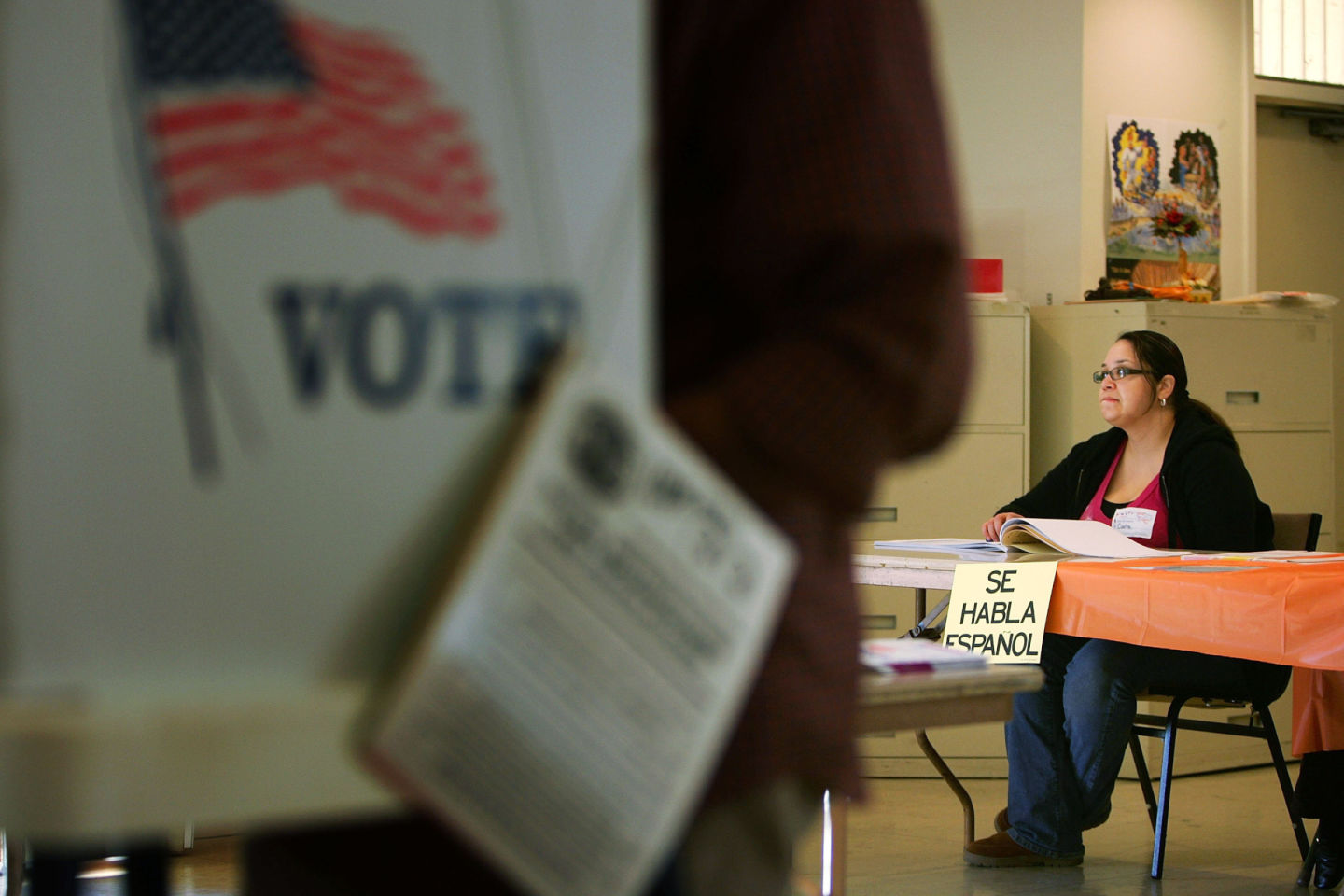
"caption": "A \"Se Habla Español\" sign identifies a bilingual election official in the predominantly Latino neighborhood of Boyle Heights on Feb. 5, 2008, in Los Angeles.",
"credit": "David McNew/Getty Images",
"altTag": "A \"Se Habla Español\" sign identifies a bilingual election official in the predominantly Latino neighborhood of Boyle Heights on Feb. 5, 2008, in Los Angeles.",
"description": "A \"Se habla Espanol\" sign identifies a bilingual election official in the predominantly Latino neighborhood of Boyle Heights on Feb. 5, 2008, in Los Angeles.",
"imgSizes": {
"thumbnail": {
"file": "https://cdn.kqed.org/wp-content/uploads/sites/10/2016/01/3527_transform-400x267.jpg",
"width": 400,
"height": 267,
"mimeType": "image/jpeg"
},
"medium": {
"file": "https://cdn.kqed.org/wp-content/uploads/sites/10/2016/01/3527_transform-800x533.jpg",
"width": 800,
"height": 533,
"mimeType": "image/jpeg"
},
"medium_large": {
"file": "https://cdn.kqed.org/wp-content/uploads/sites/10/2016/01/3527_transform-768x512.jpg",
"width": 768,
"height": 512,
"mimeType": "image/jpeg"
},
"large": {
"file": "https://cdn.kqed.org/wp-content/uploads/sites/10/2016/01/3527_transform-1440x960.jpg",
"width": 1440,
"height": 960,
"mimeType": "image/jpeg"
},
"fd-lrg": {
"file": "https://cdn.kqed.org/wp-content/uploads/sites/10/2016/01/3527_transform-1920x1280.jpg",
"width": 1920,
"height": 1280,
"mimeType": "image/jpeg"
},
"fd-med": {
"file": "https://cdn.kqed.org/wp-content/uploads/sites/10/2016/01/3527_transform-1180x787.jpg",
"width": 1180,
"height": 787,
"mimeType": "image/jpeg"
},
"fd-sm": {
"file": "https://cdn.kqed.org/wp-content/uploads/sites/10/2016/01/3527_transform-960x640.jpg",
"width": 960,
"height": 640,
"mimeType": "image/jpeg"
},
"post-thumbnail": {
"file": "https://cdn.kqed.org/wp-content/uploads/sites/10/2016/01/3527_transform-672x372.jpg",
"width": 672,
"height": 372,
"mimeType": "image/jpeg"
},
"twentyfourteen-full-width": {
"file": "https://cdn.kqed.org/wp-content/uploads/sites/10/2016/01/3527_transform-1038x576.jpg",
"width": 1038,
"height": 576,
"mimeType": "image/jpeg"
},
"guest-author-32": {
"file": "https://cdn.kqed.org/wp-content/uploads/sites/10/2016/01/3527_transform-32x32.jpg",
"width": 32,
"height": 32,
"mimeType": "image/jpeg"
},
"guest-author-64": {
"file": "https://cdn.kqed.org/wp-content/uploads/sites/10/2016/01/3527_transform-64x64.jpg",
"width": 64,
"height": 64,
"mimeType": "image/jpeg"
},
"guest-author-96": {
"file": "https://cdn.kqed.org/wp-content/uploads/sites/10/2016/01/3527_transform-96x96.jpg",
"width": 96,
"height": 96,
"mimeType": "image/jpeg"
},
"guest-author-128": {
"file": "https://cdn.kqed.org/wp-content/uploads/sites/10/2016/01/3527_transform-128x128.jpg",
"width": 128,
"height": 128,
"mimeType": "image/jpeg"
},
"detail": {
"file": "https://cdn.kqed.org/wp-content/uploads/sites/10/2016/01/3527_transform-75x75.jpg",
"width": 75,
"height": 75,
"mimeType": "image/jpeg"
},
"jmtc-small-thumb": {
"file": "https://cdn.kqed.org/wp-content/uploads/sites/10/2016/01/3527_transform-280x150.jpg",
"width": 280,
"height": 150,
"mimeType": "image/jpeg"
},
"kqedFullSize": {
"file": "https://cdn.kqed.org/wp-content/uploads/sites/10/2016/01/3527_transform.jpg",
"width": 1920,
"height": 1280
}
},
"isLoading": false,
"fetchFailed": false
},
"news_12036143": {
"type": "attachments",
"id": "news_12036143",
"meta": {
"index": "attachments_1716263798",
"site": "news",
"id": "12036143",
"found": true
},
"title": "Narcocorridos",
"publishDate": 1744763441,
"status": "inherit",
"parent": 12036107,
"modified": 1744825004,
"caption": "People dance to a band playing corridos at the Lido Club in South Gate, California. One of the most cherished traditions within Mexican regional music, corridos are narrative ballads that tell a story, sometimes about the crime, violence and misogyny that have plagued Mexico for decades.",
"credit": "Gregory Bojorquez/Getty Images",
"altTag": null,
"description": null,
"imgSizes": {
"medium": {
"file": "https://cdn.kqed.org/wp-content/uploads/sites/10/2025/04/GettyImages-1341918465_qed-800x532.jpg",
"width": 800,
"height": 532,
"mimeType": "image/jpeg"
},
"large": {
"file": "https://cdn.kqed.org/wp-content/uploads/sites/10/2025/04/GettyImages-1341918465_qed-1020x678.jpg",
"width": 1020,
"height": 678,
"mimeType": "image/jpeg"
},
"thumbnail": {
"file": "https://cdn.kqed.org/wp-content/uploads/sites/10/2025/04/GettyImages-1341918465_qed-160x106.jpg",
"width": 160,
"height": 106,
"mimeType": "image/jpeg"
},
"1536x1536": {
"file": "https://cdn.kqed.org/wp-content/uploads/sites/10/2025/04/GettyImages-1341918465_qed-1536x1021.jpg",
"width": 1536,
"height": 1021,
"mimeType": "image/jpeg"
},
"post-thumbnail": {
"file": "https://cdn.kqed.org/wp-content/uploads/sites/10/2025/04/GettyImages-1341918465_qed-672x372.jpg",
"width": 672,
"height": 372,
"mimeType": "image/jpeg"
},
"twentyfourteen-full-width": {
"file": "https://cdn.kqed.org/wp-content/uploads/sites/10/2025/04/GettyImages-1341918465_qed-1038x576.jpg",
"width": 1038,
"height": 576,
"mimeType": "image/jpeg"
},
"full-width": {
"file": "https://cdn.kqed.org/wp-content/uploads/sites/10/2025/04/GettyImages-1341918465_qed-1920x1276.jpg",
"width": 1920,
"height": 1276,
"mimeType": "image/jpeg"
},
"kqedFullSize": {
"file": "https://cdn.kqed.org/wp-content/uploads/sites/10/2025/04/GettyImages-1341918465_qed.jpg",
"width": 2000,
"height": 1329
}
},
"isLoading": false,
"fetchFailed": false
},
"news_12033303": {
"type": "attachments",
"id": "news_12033303",
"meta": {
"index": "attachments_1716263798",
"site": "news",
"id": "12033303",
"found": true
},
"title": "stone countertop fabricator's hands are covered in dust",
"publishDate": 1743096258,
"status": "inherit",
"parent": 12033036,
"modified": 1743099792,
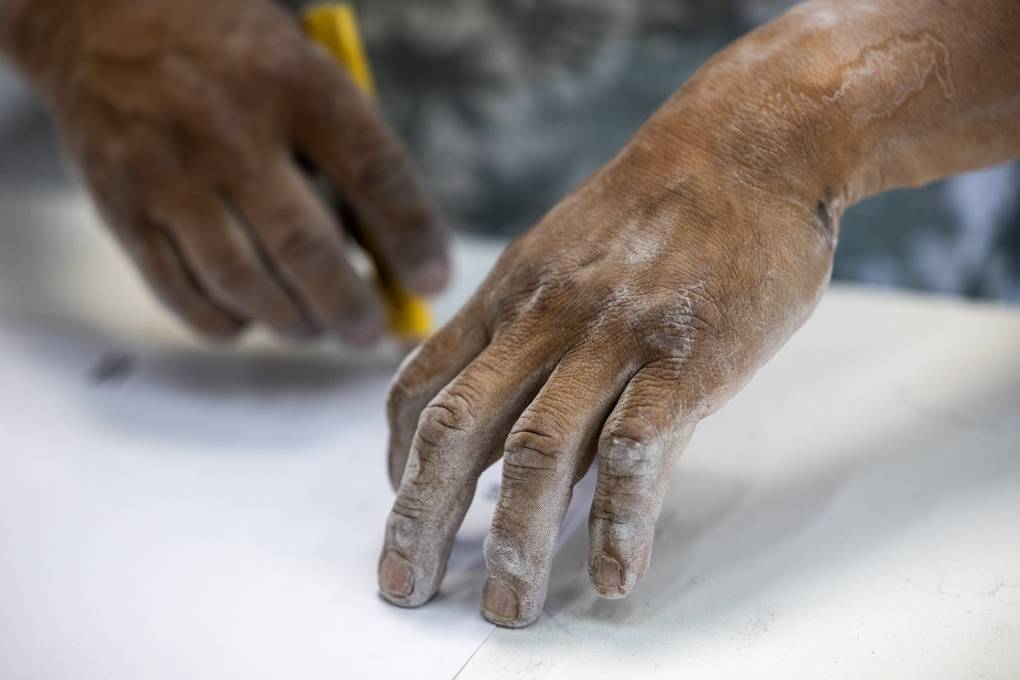
"caption": "A stone countertop fabricator's hands are covered in dust at a shop on Oct. 31, 2023, in Sun Valley, California. Inhaling fine particles can contribute to silicosis.",
"credit": "Brian van der Brug/Los Angeles Times via Getty Images",
"altTag": null,
"description": null,
"imgSizes": {
"medium": {
"file": "https://cdn.kqed.org/wp-content/uploads/sites/10/2025/03/StonecutterGetty-800x533.jpg",
"width": 800,
"height": 533,
"mimeType": "image/jpeg"
},
"large": {
"file": "https://cdn.kqed.org/wp-content/uploads/sites/10/2025/03/StonecutterGetty-1020x680.jpg",
"width": 1020,
"height": 680,
"mimeType": "image/jpeg"
},
"thumbnail": {
"file": "https://cdn.kqed.org/wp-content/uploads/sites/10/2025/03/StonecutterGetty-160x107.jpg",
"width": 160,
"height": 107,
"mimeType": "image/jpeg"
},
"1536x1536": {
"file": "https://cdn.kqed.org/wp-content/uploads/sites/10/2025/03/StonecutterGetty-1536x1024.jpg",
"width": 1536,
"height": 1024,
"mimeType": "image/jpeg"
},
"post-thumbnail": {
"file": "https://cdn.kqed.org/wp-content/uploads/sites/10/2025/03/StonecutterGetty-672x372.jpg",
"width": 672,
"height": 372,
"mimeType": "image/jpeg"
},
"twentyfourteen-full-width": {
"file": "https://cdn.kqed.org/wp-content/uploads/sites/10/2025/03/StonecutterGetty-1038x576.jpg",
"width": 1038,
"height": 576,
"mimeType": "image/jpeg"
},
"full-width": {
"file": "https://cdn.kqed.org/wp-content/uploads/sites/10/2025/03/StonecutterGetty-1920x1280.jpg",
"width": 1920,
"height": 1280,
"mimeType": "image/jpeg"
},
"kqedFullSize": {
"file": "https://cdn.kqed.org/wp-content/uploads/sites/10/2025/03/StonecutterGetty.jpg",
"width": 2000,
"height": 1333
}
},
"isLoading": false,
"fetchFailed": false
},
"news_12030005": {
"type": "attachments",
"id": "news_12030005",
"meta": {
"index": "attachments_1716263798",
"site": "news",
"id": "12030005",
"found": true
},
"title": "250305-Lariza Dugan-Cuadra-MD-07",
"publishDate": 1741261280,
"status": "inherit",
"parent": 0,
"modified": 1741267613,
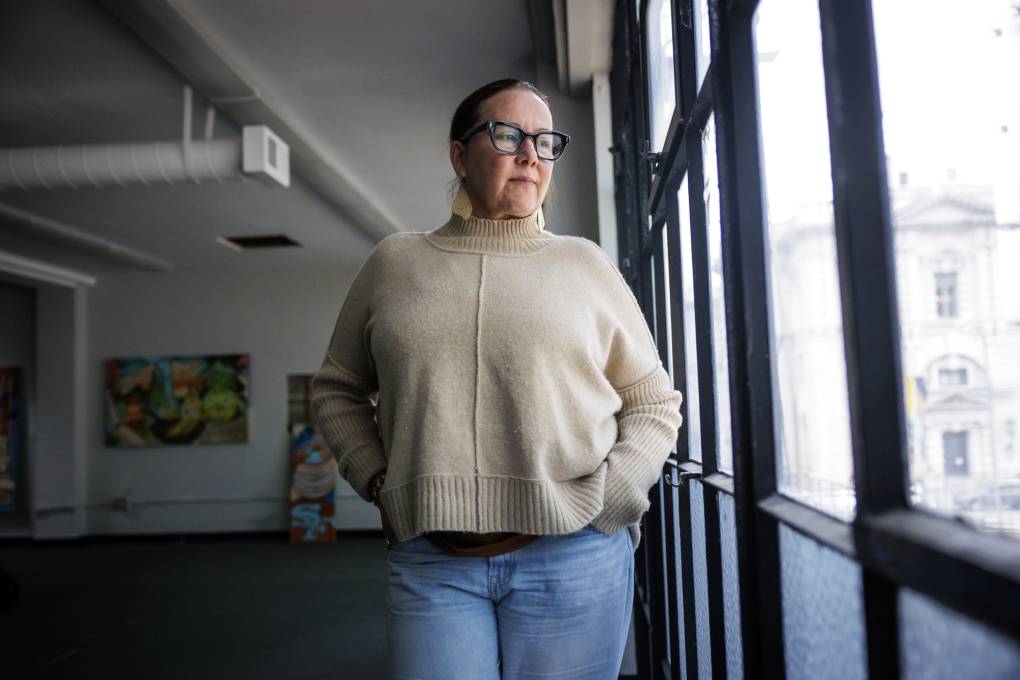
"caption": "Lariza Dugan-Cuadra, Executive Director of CARECEN SF, looks out of the windows at the CARECEN SF offices in San Francisco on March 5, 2025.",
"credit": "Martin do Nascimento/KQED",
"altTag": null,
"description": null,
"imgSizes": {
"medium": {
"file": "https://cdn.kqed.org/wp-content/uploads/sites/10/2025/03/250305-Lariza-Dugan-Cuadra-MD-07-800x533.jpg",
"width": 800,
"height": 533,
"mimeType": "image/jpeg"
},
"large": {
"file": "https://cdn.kqed.org/wp-content/uploads/sites/10/2025/03/250305-Lariza-Dugan-Cuadra-MD-07-1020x680.jpg",
"width": 1020,
"height": 680,
"mimeType": "image/jpeg"
},
"thumbnail": {
"file": "https://cdn.kqed.org/wp-content/uploads/sites/10/2025/03/250305-Lariza-Dugan-Cuadra-MD-07-160x107.jpg",
"width": 160,
"height": 107,
"mimeType": "image/jpeg"
},
"1536x1536": {
"file": "https://cdn.kqed.org/wp-content/uploads/sites/10/2025/03/250305-Lariza-Dugan-Cuadra-MD-07-1536x1024.jpg",
"width": 1536,
"height": 1024,
"mimeType": "image/jpeg"
},
"post-thumbnail": {
"file": "https://cdn.kqed.org/wp-content/uploads/sites/10/2025/03/250305-Lariza-Dugan-Cuadra-MD-07-672x372.jpg",
"width": 672,
"height": 372,
"mimeType": "image/jpeg"
},
"twentyfourteen-full-width": {
"file": "https://cdn.kqed.org/wp-content/uploads/sites/10/2025/03/250305-Lariza-Dugan-Cuadra-MD-07-1038x576.jpg",
"width": 1038,
"height": 576,
"mimeType": "image/jpeg"
},
"full-width": {
"file": "https://cdn.kqed.org/wp-content/uploads/sites/10/2025/03/250305-Lariza-Dugan-Cuadra-MD-07-1920x1280.jpg",
"width": 1920,
"height": 1280,
"mimeType": "image/jpeg"
},
"kqedFullSize": {
"file": "https://cdn.kqed.org/wp-content/uploads/sites/10/2025/03/250305-Lariza-Dugan-Cuadra-MD-07.jpg",
"width": 2000,
"height": 1333
}
},
"isLoading": false,
"fetchFailed": false
},
"news_12029901": {
"type": "attachments",
"id": "news_12029901",
"meta": {
"index": "attachments_1716263798",
"site": "news",
"id": "12029901",
"found": true
},
"title": "20250305_TARIFFSIMPACT_GC-6-KQED",
"publishDate": 1741216483,
"status": "inherit",
"parent": 0,
"modified": 1741288968,
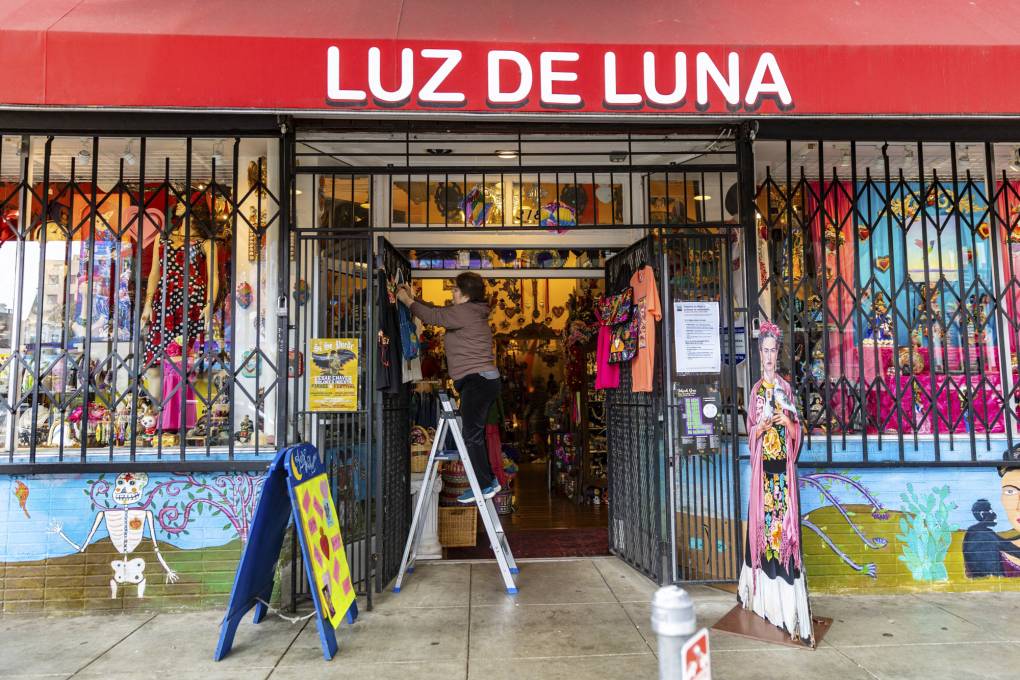
"caption": "An employee, who did not want to be named, hangs up bags for sale at Luz de Luna, a gift store on 24th Street in San Francisco, on March 5, 2025. Owner Denise Gonzales says about 70% of the products sold in her store are imported from Mexico.",
"credit": "Gina Castro/KQED",
"altTag": null,
"description": null,
"imgSizes": {
"medium": {
"file": "https://cdn.kqed.org/wp-content/uploads/sites/10/2025/03/20250305_TARIFFSIMPACT_GC-6-KQED-800x533.jpg",
"width": 800,
"height": 533,
"mimeType": "image/jpeg"
},
"large": {
"file": "https://cdn.kqed.org/wp-content/uploads/sites/10/2025/03/20250305_TARIFFSIMPACT_GC-6-KQED-1020x680.jpg",
"width": 1020,
"height": 680,
"mimeType": "image/jpeg"
},
"thumbnail": {
"file": "https://cdn.kqed.org/wp-content/uploads/sites/10/2025/03/20250305_TARIFFSIMPACT_GC-6-KQED-160x107.jpg",
"width": 160,
"height": 107,
"mimeType": "image/jpeg"
},
"1536x1536": {
"file": "https://cdn.kqed.org/wp-content/uploads/sites/10/2025/03/20250305_TARIFFSIMPACT_GC-6-KQED-1536x1024.jpg",
"width": 1536,
"height": 1024,
"mimeType": "image/jpeg"
},
"post-thumbnail": {
"file": "https://cdn.kqed.org/wp-content/uploads/sites/10/2025/03/20250305_TARIFFSIMPACT_GC-6-KQED-672x372.jpg",
"width": 672,
"height": 372,
"mimeType": "image/jpeg"
},
"twentyfourteen-full-width": {
"file": "https://cdn.kqed.org/wp-content/uploads/sites/10/2025/03/20250305_TARIFFSIMPACT_GC-6-KQED-1038x576.jpg",
"width": 1038,
"height": 576,
"mimeType": "image/jpeg"
},
"full-width": {
"file": "https://cdn.kqed.org/wp-content/uploads/sites/10/2025/03/20250305_TARIFFSIMPACT_GC-6-KQED-1920x1280.jpg",
"width": 1920,
"height": 1280,
"mimeType": "image/jpeg"
},
"kqedFullSize": {
"file": "https://cdn.kqed.org/wp-content/uploads/sites/10/2025/03/20250305_TARIFFSIMPACT_GC-6-KQED.jpg",
"width": 2000,
"height": 1333
}
},
"isLoading": false,
"fetchFailed": false
},
"news_12018719": {
"type": "attachments",
"id": "news_12018719",
"meta": {
"index": "attachments_1716263798",
"site": "news",
"id": "12018719",
"found": true
},
"title": "20241216-KOndaJanuary-JY-009",
"publishDate": 1734480333,
"status": "inherit",
"parent": 0,
"modified": 1736800497,
"caption": "Ayudando Latinos A Soñar (ALAS) founder Dr. Belinda Hernandez-Arriaga poses for a portrait at the ALAS office in Half Moon Bay, California, on Monday, Dec. 16, 2024. Hernandez-Arriaga founded ALAS in 2011 to support the Latino community in Half Moon Bay.",
"credit": "Juliana Yamada/KQED",
"altTag": null,
"description": null,
"imgSizes": {
"medium": {
"file": "https://cdn.kqed.org/wp-content/uploads/sites/10/2024/12/20241216-KOndaJanuary-JY-009-800x533.jpg",
"width": 800,
"height": 533,
"mimeType": "image/jpeg"
},
"large": {
"file": "https://cdn.kqed.org/wp-content/uploads/sites/10/2024/12/20241216-KOndaJanuary-JY-009-1020x680.jpg",
"width": 1020,
"height": 680,
"mimeType": "image/jpeg"
},
"thumbnail": {
"file": "https://cdn.kqed.org/wp-content/uploads/sites/10/2024/12/20241216-KOndaJanuary-JY-009-160x107.jpg",
"width": 160,
"height": 107,
"mimeType": "image/jpeg"
},
"1536x1536": {
"file": "https://cdn.kqed.org/wp-content/uploads/sites/10/2024/12/20241216-KOndaJanuary-JY-009-1536x1024.jpg",
"width": 1536,
"height": 1024,
"mimeType": "image/jpeg"
},
"post-thumbnail": {
"file": "https://cdn.kqed.org/wp-content/uploads/sites/10/2024/12/20241216-KOndaJanuary-JY-009-672x372.jpg",
"width": 672,
"height": 372,
"mimeType": "image/jpeg"
},
"twentyfourteen-full-width": {
"file": "https://cdn.kqed.org/wp-content/uploads/sites/10/2024/12/20241216-KOndaJanuary-JY-009-1038x576.jpg",
"width": 1038,
"height": 576,
"mimeType": "image/jpeg"
},
"full-width": {
"file": "https://cdn.kqed.org/wp-content/uploads/sites/10/2024/12/20241216-KOndaJanuary-JY-009-1920x1280.jpg",
"width": 1920,
"height": 1280,
"mimeType": "image/jpeg"
},
"kqedFullSize": {
"file": "https://cdn.kqed.org/wp-content/uploads/sites/10/2024/12/20241216-KOndaJanuary-JY-009.jpg",
"width": 2000,
"height": 1333
}
},
"isLoading": false,
"fetchFailed": false
},
"news_12020131": {
"type": "attachments",
"id": "news_12020131",
"meta": {
"index": "attachments_1716263798",
"site": "news",
"id": "12020131",
"found": true
},
"title": "OPD Cruiser",
"publishDate": 1735846479,
"status": "inherit",
"parent": 12020124,
"modified": 1735846550,
"caption": "An Oakland Police cruiser at 19th Street and Telegraph Avenue on April 24, 2015.",
"credit": "Alex Emslie/KQED",
"altTag": null,
"description": null,
"imgSizes": {
"medium": {
"file": "https://cdn.kqed.org/wp-content/uploads/sites/10/2025/01/OPD-Cruiser-800x800.jpg",
"width": 800,
"height": 800,
"mimeType": "image/jpeg"
},
"large": {
"file": "https://cdn.kqed.org/wp-content/uploads/sites/10/2025/01/OPD-Cruiser-1020x1020.jpg",
"width": 1020,
"height": 1020,
"mimeType": "image/jpeg"
},
"thumbnail": {
"file": "https://cdn.kqed.org/wp-content/uploads/sites/10/2025/01/OPD-Cruiser-160x160.jpg",
"width": 160,
"height": 160,
"mimeType": "image/jpeg"
},
"1536x1536": {
"file": "https://cdn.kqed.org/wp-content/uploads/sites/10/2025/01/OPD-Cruiser-1536x1536.jpg",
"width": 1536,
"height": 1536,
"mimeType": "image/jpeg"
},
"post-thumbnail": {
"file": "https://cdn.kqed.org/wp-content/uploads/sites/10/2025/01/OPD-Cruiser-672x372.jpg",
"width": 672,
"height": 372,
"mimeType": "image/jpeg"
},
"twentyfourteen-full-width": {
"file": "https://cdn.kqed.org/wp-content/uploads/sites/10/2025/01/OPD-Cruiser-1038x576.jpg",
"width": 1038,
"height": 576,
"mimeType": "image/jpeg"
},
"full-width": {
"file": "https://cdn.kqed.org/wp-content/uploads/sites/10/2025/01/OPD-Cruiser-1920x1920.jpg",
"width": 1920,
"height": 1920,
"mimeType": "image/jpeg"
},
"kqedFullSize": {
"file": "https://cdn.kqed.org/wp-content/uploads/sites/10/2025/01/OPD-Cruiser.jpg",
"width": 2000,
"height": 2000
}
},
"isLoading": false,
"fetchFailed": false
},
"news_12017305": {
"type": "attachments",
"id": "news_12017305",
"meta": {
"index": "attachments_1716263798",
"site": "news",
"id": "12017305",
"found": true
},
"title": "The Snack Sensei, Oscar Cuadra in a povided photo.",
"publishDate": 1733774564,
"status": "inherit",
"parent": 0,
"modified": 1733787270,
"caption": "The Snack Sensei, Oscar Cuadra.",
"credit": "Courtesy of Eva Indigo",
"altTag": null,
"description": null,
"imgSizes": {
"medium": {
"file": "https://cdn.kqed.org/wp-content/uploads/sites/10/2024/12/82914079-D49D-465A-8F32-B10D0AC67EB7-800x533.jpeg",
"width": 800,
"height": 533,
"mimeType": "image/jpeg"
},
"large": {
"file": "https://cdn.kqed.org/wp-content/uploads/sites/10/2024/12/82914079-D49D-465A-8F32-B10D0AC67EB7-1020x680.jpeg",
"width": 1020,
"height": 680,
"mimeType": "image/jpeg"
},
"thumbnail": {
"file": "https://cdn.kqed.org/wp-content/uploads/sites/10/2024/12/82914079-D49D-465A-8F32-B10D0AC67EB7-160x107.jpeg",
"width": 160,
"height": 107,
"mimeType": "image/jpeg"
},
"1536x1536": {
"file": "https://cdn.kqed.org/wp-content/uploads/sites/10/2024/12/82914079-D49D-465A-8F32-B10D0AC67EB7-1536x1024.jpeg",
"width": 1536,
"height": 1024,
"mimeType": "image/jpeg"
},
"post-thumbnail": {
"file": "https://cdn.kqed.org/wp-content/uploads/sites/10/2024/12/82914079-D49D-465A-8F32-B10D0AC67EB7-672x372.jpeg",
"width": 672,
"height": 372,
"mimeType": "image/jpeg"
},
"twentyfourteen-full-width": {
"file": "https://cdn.kqed.org/wp-content/uploads/sites/10/2024/12/82914079-D49D-465A-8F32-B10D0AC67EB7-1038x576.jpeg",
"width": 1038,
"height": 576,
"mimeType": "image/jpeg"
},
"full-width": {
"file": "https://cdn.kqed.org/wp-content/uploads/sites/10/2024/12/82914079-D49D-465A-8F32-B10D0AC67EB7-1920x1280.jpeg",
"width": 1920,
"height": 1280,
"mimeType": "image/jpeg"
},
"kqedFullSize": {
"file": "https://cdn.kqed.org/wp-content/uploads/sites/10/2024/12/82914079-D49D-465A-8F32-B10D0AC67EB7.jpeg",
"width": 2000,
"height": 1333
}
},
"isLoading": false,
"fetchFailed": false
},
"news_12010714": {
"type": "attachments",
"id": "news_12010714",
"meta": {
"index": "attachments_1716263798",
"site": "news",
"id": "12010714",
"found": true
},
"title": "240129-KAMALA HARRIS SAN JOSE-MD-07_qed",
"publishDate": 1729709588,
"status": "inherit",
"parent": 12010706,
"modified": 1729710081,
"caption": "Sen. Alex Padilla speaks at Mexican Heritage Plaza in San José during the 'Fight for Reproductive Freedoms' tour on Jan. 29, 2024.",
"credit": "Martin do Nascimento/KQED",
"altTag": null,
"description": null,
"imgSizes": {
"medium": {
"file": "https://cdn.kqed.org/wp-content/uploads/sites/10/2024/10/240129-KAMALA-HARRIS-SAN-JOSE-MD-07_qed-800x533.jpg",
"width": 800,
"height": 533,
"mimeType": "image/jpeg"
},
"large": {
"file": "https://cdn.kqed.org/wp-content/uploads/sites/10/2024/10/240129-KAMALA-HARRIS-SAN-JOSE-MD-07_qed-1020x680.jpg",
"width": 1020,
"height": 680,
"mimeType": "image/jpeg"
},
"thumbnail": {
"file": "https://cdn.kqed.org/wp-content/uploads/sites/10/2024/10/240129-KAMALA-HARRIS-SAN-JOSE-MD-07_qed-160x107.jpg",
"width": 160,
"height": 107,
"mimeType": "image/jpeg"
},
"1536x1536": {
"file": "https://cdn.kqed.org/wp-content/uploads/sites/10/2024/10/240129-KAMALA-HARRIS-SAN-JOSE-MD-07_qed-1536x1024.jpg",
"width": 1536,
"height": 1024,
"mimeType": "image/jpeg"
},
"post-thumbnail": {
"file": "https://cdn.kqed.org/wp-content/uploads/sites/10/2024/10/240129-KAMALA-HARRIS-SAN-JOSE-MD-07_qed-672x372.jpg",
"width": 672,
"height": 372,
"mimeType": "image/jpeg"
},
"twentyfourteen-full-width": {
"file": "https://cdn.kqed.org/wp-content/uploads/sites/10/2024/10/240129-KAMALA-HARRIS-SAN-JOSE-MD-07_qed-1038x576.jpg",
"width": 1038,
"height": 576,
"mimeType": "image/jpeg"
},
"full-width": {
"file": "https://cdn.kqed.org/wp-content/uploads/sites/10/2024/10/240129-KAMALA-HARRIS-SAN-JOSE-MD-07_qed-1920x1280.jpg",
"width": 1920,
"height": 1280,
"mimeType": "image/jpeg"
},
"kqedFullSize": {
"file": "https://cdn.kqed.org/wp-content/uploads/sites/10/2024/10/240129-KAMALA-HARRIS-SAN-JOSE-MD-07_qed.jpg",
"width": 2000,
"height": 1333
}
},
"isLoading": false,
"fetchFailed": false
}
},
"audioPlayerReducer": {
"postId": "stream_live",
"isPaused": true,
"isPlaying": false,
"pfsActive": false,
"pledgeModalIsOpen": true,
"playerDrawerIsOpen": false,
"liveAudioPlayStartedAt": 0,
"liveAudioPlayContext": ""
},
"authorsReducer": {
"byline_news_12048690": {
"type": "authors",
"id": "byline_news_12048690",
"meta": {
"override": true
},
"slug": "byline_news_12048690",
"name": "Wendy Fry and Sergio Olmos, CalMatters",
"isLoading": false
},
"matthewgreen": {
"type": "authors",
"id": "1263",
"meta": {
"index": "authors_1716337520",
"id": "1263",
"found": true
},
"name": "Matthew Green",
"firstName": "Matthew",
"lastName": "Green",
"slug": "matthewgreen",
"email": "mgreen@kqed.org",
"display_author_email": false,
"staff_mastheads": [],
"title": "KQED Editor/Reporter",
"bio": "Matthew Green is a digital media producer for KQED News. He previously produced \u003ca href=\"http://www.kqed.org/lowdown\">The Lowdown\u003c/a>, KQED’s multimedia news education blog. Matthew's written for numerous Bay Area publications, including the Oakland Tribune and San Francisco Chronicle. He also taught journalism classes at Fremont High School in East Oakland.\r\n\r\nEmail: mgreen@kqed.org; Twitter: @MGreenKQED",
"avatar": "https://secure.gravatar.com/avatar/3bf498d1267ca02c8494f33d8cfc575e?s=600&d=blank&r=g",
"twitter": "MGreenKQED",
"facebook": null,
"instagram": null,
"linkedin": null,
"sites": [
{
"site": "news",
"roles": []
},
{
"site": "lowdown",
"roles": []
},
{
"site": "science",
"roles": []
},
{
"site": "education",
"roles": []
},
{
"site": "quest",
"roles": []
},
{
"site": "liveblog",
"roles": []
}
],
"headData": {
"title": "Matthew Green | KQED",
"description": "KQED Editor/Reporter",
"ogImgSrc": "https://secure.gravatar.com/avatar/3bf498d1267ca02c8494f33d8cfc575e?s=600&d=blank&r=g",
"twImgSrc": "https://secure.gravatar.com/avatar/3bf498d1267ca02c8494f33d8cfc575e?s=600&d=blank&r=g"
},
"isLoading": false,
"link": "/author/matthewgreen"
},
"fjhabvala": {
"type": "authors",
"id": "8659",
"meta": {
"index": "authors_1716337520",
"id": "8659",
"found": true
},
"name": "Farida Jhabvala Romero",
"firstName": "Farida",
"lastName": "Jhabvala Romero",
"slug": "fjhabvala",
"email": "fjhabvala@kqed.org",
"display_author_email": true,
"staff_mastheads": [
"news"
],
"title": "KQED Contributor",
"bio": "Farida Jhabvala Romero is a Labor Correspondent for KQED. She previously covered immigration. Farida was \u003ca href=\"https://www.ccnma.org/2022-most-influential-latina-journalists\">named\u003c/a> one of the 10 Most Influential Latina Journalists in California in 2022 by the California Chicano News Media Association. Her work has won awards from the Society of Professional Journalists (Northern California), as well as a national and regional Edward M. Murrow Award for the collaborative reporting projects “Dangerous Air” and “Graying California.” Before joining KQED, Farida worked as a producer at Radio Bilingüe, a national public radio network. Farida earned her master’s degree in journalism from Stanford University.",
"avatar": "https://secure.gravatar.com/avatar/f9f022d4e2609741874222a1e9d41f48fea74011aa7c615eef91d9a50c944ebe?s=600&d=blank&r=g",
"twitter": "FaridaJhabvala",
"bluesky": null,
"facebook": null,
"instagram": null,
"linkedin": "https://www.linkedin.com/in/faridajhabvala/",
"sites": [
{
"site": "news",
"roles": [
"editor"
]
},
{
"site": "stateofhealth",
"roles": [
"author"
]
},
{
"site": "liveblog",
"roles": [
"author"
]
}
],
"headData": {
"title": "Farida Jhabvala Romero | KQED",
"description": "KQED Contributor",
"ogImgSrc": "https://secure.gravatar.com/avatar/f9f022d4e2609741874222a1e9d41f48fea74011aa7c615eef91d9a50c944ebe?s=600&d=blank&r=g",
"twImgSrc": "https://secure.gravatar.com/avatar/f9f022d4e2609741874222a1e9d41f48fea74011aa7c615eef91d9a50c944ebe?s=600&d=blank&r=g"
},
"isLoading": false,
"link": "/author/fjhabvala"
},
"btorres": {
"type": "authors",
"id": "11666",
"meta": {
"index": "authors_1716337520",
"id": "11666",
"found": true
},
"name": "Blanca Torres",
"firstName": "Blanca",
"lastName": "Torres",
"slug": "btorres",
"email": "btorres@kqed.org",
"display_author_email": true,
"staff_mastheads": [
"news"
],
"title": "Producer, Forum",
"bio": "Blanca Torres brings sharp news judgement and keen sense of lively conversation to her work as producer for Forum. She loves producing shows that leave listeners feeling like they heard distinctive voices, learned something new and gained a fresh perspective.\r\n\r\nShe joined KQED in January of 2020 after 16 years of working as a newspaper reporter most recently at the \u003cem>San Francisco Business Times,\u003c/em> where she wrote about real estate and economic development. Before that, she covered a variety of beats including crime, education, retail, workplace, the economy, consumer issues, and small business for the \u003cem>Contra Costa Times, Baltimore Sun\u003c/em> and\u003cem> The Seattle Times\u003c/em>. In addition to reporting, she worked as an editorial writer and columnist for the \u003cem>Seattle Times\u003c/em>. From 2017 to 2020, Blanca won a total of ten awards from the National Association of Real Estate Editors and won first place for land use reporting from the California News Publishers Association two years in a row. She is also a member and former board member for the National Association of Hispanic Journalists.\r\n\r\nA native of the Pacific Northwest, Blanca earned her bachelor's degree from Vanderbilt University in Nashville and a master's in fine arts in creative writing at Mills College. She lives in the East Bay with her family.",
"avatar": "https://secure.gravatar.com/avatar/50b49d19b14a1eed34f26ebf4681152cdd81574ed21851100871ccd29e578cdc?s=600&d=blank&r=g",
"twitter": "@blancawrites",
"bluesky": null,
"facebook": null,
"instagram": null,
"linkedin": null,
"sites": [
{
"site": "arts",
"roles": [
"editor"
]
},
{
"site": "news",
"roles": [
"editor"
]
},
{
"site": "forum",
"roles": [
"editor"
]
}
],
"headData": {
"title": "Blanca Torres | KQED",
"description": "Producer, Forum",
"ogImgSrc": "https://secure.gravatar.com/avatar/50b49d19b14a1eed34f26ebf4681152cdd81574ed21851100871ccd29e578cdc?s=600&d=blank&r=g",
"twImgSrc": "https://secure.gravatar.com/avatar/50b49d19b14a1eed34f26ebf4681152cdd81574ed21851100871ccd29e578cdc?s=600&d=blank&r=g"
},
"isLoading": false,
"link": "/author/btorres"
},
"kmizuguchi": {
"type": "authors",
"id": "11739",
"meta": {
"index": "authors_1716337520",
"id": "11739",
"found": true
},
"name": "Keith Mizuguchi",
"firstName": "Keith",
"lastName": "Mizuguchi",
"slug": "kmizuguchi",
"email": "kmizuguchi@kqed.org",
"display_author_email": false,
"staff_mastheads": [],
"title": "KQED Contributor",
"bio": null,
"avatar": "https://secure.gravatar.com/avatar/64d8a7de0723d4099b9fe4e915136103febcc20809abce228ee4415bcb237023?s=600&d=blank&r=g",
"twitter": null,
"bluesky": null,
"facebook": null,
"instagram": null,
"linkedin": null,
"sites": [
{
"site": "news",
"roles": [
"editor"
]
},
{
"site": "science",
"roles": [
"editor"
]
}
],
"headData": {
"title": "Keith Mizuguchi | KQED",
"description": "KQED Contributor",
"ogImgSrc": "https://secure.gravatar.com/avatar/64d8a7de0723d4099b9fe4e915136103febcc20809abce228ee4415bcb237023?s=600&d=blank&r=g",
"twImgSrc": "https://secure.gravatar.com/avatar/64d8a7de0723d4099b9fe4e915136103febcc20809abce228ee4415bcb237023?s=600&d=blank&r=g"
},
"isLoading": false,
"link": "/author/kmizuguchi"
},
"sjohnson": {
"type": "authors",
"id": "11840",
"meta": {
"index": "authors_1716337520",
"id": "11840",
"found": true
},
"name": "Sydney Johnson",
"firstName": "Sydney",
"lastName": "Johnson",
"slug": "sjohnson",
"email": "sjohnson@kqed.org",
"display_author_email": false,
"staff_mastheads": [
"news"
],
"title": "KQED Reporter",
"bio": "Sydney Johnson is a general assignment reporter at KQED. She previously reported on public health and city government at the San Francisco Examiner, and before that, she covered statewide education policy for EdSource. Her reporting has won multiple local, state and national awards. Sydney is a graduate of the University of California, Berkeley and lives in San Francisco.",
"avatar": "https://secure.gravatar.com/avatar/97855f2719b72ad6190b7c535fe642c8?s=600&d=blank&r=g",
"twitter": "sydneyfjohnson",
"facebook": null,
"instagram": null,
"linkedin": null,
"sites": [
{
"site": "news",
"roles": [
"editor"
]
}
],
"headData": {
"title": "Sydney Johnson | KQED",
"description": "KQED Reporter",
"ogImgSrc": "https://secure.gravatar.com/avatar/97855f2719b72ad6190b7c535fe642c8?s=600&d=blank&r=g",
"twImgSrc": "https://secure.gravatar.com/avatar/97855f2719b72ad6190b7c535fe642c8?s=600&d=blank&r=g"
},
"isLoading": false,
"link": "/author/sjohnson"
},
"jgeha": {
"type": "authors",
"id": "11906",
"meta": {
"index": "authors_1716337520",
"id": "11906",
"found": true
},
"name": "Joseph Geha",
"firstName": "Joseph",
"lastName": "Geha",
"slug": "jgeha",
"email": "jgeha@kqed.org",
"display_author_email": false,
"staff_mastheads": [
"news",
"science"
],
"title": "KQED Contributor",
"bio": null,
"avatar": "https://secure.gravatar.com/avatar/ea84d2b6dd93d6369d453edf19dd583f117cd1759d2d9c9c92f9de77017354fe?s=600&d=blank&r=g",
"twitter": null,
"bluesky": null,
"facebook": null,
"instagram": null,
"linkedin": null,
"sites": [
{
"site": "news",
"roles": [
"editor"
]
},
{
"site": "liveblog",
"roles": [
"author"
]
}
],
"headData": {
"title": "Joseph Geha | KQED",
"description": "KQED Contributor",
"ogImgSrc": "https://secure.gravatar.com/avatar/ea84d2b6dd93d6369d453edf19dd583f117cd1759d2d9c9c92f9de77017354fe?s=600&d=blank&r=g",
"twImgSrc": "https://secure.gravatar.com/avatar/ea84d2b6dd93d6369d453edf19dd583f117cd1759d2d9c9c92f9de77017354fe?s=600&d=blank&r=g"
},
"isLoading": false,
"link": "/author/jgeha"
},
"kdebenedetti": {
"type": "authors",
"id": "11913",
"meta": {
"index": "authors_1716337520",
"id": "11913",
"found": true
},
"name": "Katie DeBenedetti",
"firstName": "Katie",
"lastName": "DeBenedetti",
"slug": "kdebenedetti",
"email": "kdebenedetti@kqed.org",
"display_author_email": false,
"staff_mastheads": [
"news",
"science"
],
"title": "KQED Contributor",
"bio": "Katie DeBenedetti is a digital reporter covering daily news for the Express Desk. Prior to joining KQED as a culture reporting intern in January 2024, she covered education and city government for the Napa Valley Register.",
"avatar": "https://secure.gravatar.com/avatar/6e31073cb8f7e4214ab03f42771d0f45?s=600&d=blank&r=g",
"twitter": null,
"facebook": null,
"instagram": null,
"linkedin": null,
"sites": [
{
"site": "news",
"roles": [
"author"
]
},
{
"site": "science",
"roles": [
"author"
]
},
{
"site": "liveblog",
"roles": [
"author"
]
}
],
"headData": {
"title": "Katie DeBenedetti | KQED",
"description": "KQED Contributor",
"ogImgSrc": "https://secure.gravatar.com/avatar/6e31073cb8f7e4214ab03f42771d0f45?s=600&d=blank&r=g",
"twImgSrc": "https://secure.gravatar.com/avatar/6e31073cb8f7e4214ab03f42771d0f45?s=600&d=blank&r=g"
},
"isLoading": false,
"link": "/author/kdebenedetti"
}
},
"pagesReducer": {
"news_tag_latinos": {
"type": "terms",
"id": "news_18142",
"meta": {
"index": "terms_1716263798",
"site": "news",
"id": "18142",
"score": 9.304556
},
"featImg": null,
"name": "Latinos",
"description": null,
"taxonomy": "tag",
"headData": {
"twImgId": null,
"twTitle": null,
"ogTitle": null,
"ogImgId": null,
"twDescription": null,
"description": null,
"title": "Latinos Archives | KQED News",
"ogDescription": null
},
"ttid": 18176,
"slug": "latinos",
"isLoading": false,
"title": "Latinos",
"pageMeta": {
"site": "news",
"WpPageTemplate": "page-topic-editorial",
"currentPage": 2
},
"blocks": [
{
"blockName": "kqed/post-list",
"attrs": {
"layout": "cardArticle2",
"query": "posts/news?tag=latinos",
"seeMore": false,
"paginated": true,
"page": 2
}
},
{
"blockName": "kqed/ad"
}
]
}
},
"pfsSessionReducer": {},
"postsReducer": {
"stream_live": {
"type": "live",
"id": "stream_live",
"audioUrl": "https://streams.kqed.org/kqedradio",
"title": "Live Stream",
"excerpt": "Live Stream information currently unavailable.",
"link": "/radio",
"featImg": "",
"label": {
"name": "KQED Live",
"link": "/"
}
},
"stream_kqedNewscast": {
"type": "posts",
"id": "stream_kqedNewscast",
"audioUrl": "https://www.kqed.org/.stream/anon/radio/RDnews/newscast.mp3?_=1",
"title": "KQED Newscast",
"featImg": "",
"label": {
"name": "88.5 FM",
"link": "/"
}
},
"news_12049134": {
"type": "posts",
"id": "news_12049134",
"meta": {
"index": "posts_1716263798",
"site": "news",
"id": "12049134",
"score": null,
"sort": [
1753213529000
]
},
"guestAuthors": [],
"slug": "immigration-enforcement-leads-to-political-activism-among-california-latinos",
"title": "Immigration Enforcement Leads To Political Activism Among California Latinos",
"publishDate": 1753213529,
"format": "audio",
"headTitle": "Immigration Enforcement Leads To Political Activism Among California Latinos | KQED",
"labelTerm": {},
"content": "\u003cp>\u003cb>Here are the morning’s top stories on Tuesday, July 22, 2025…\u003c/b>\u003c/p>\n\u003cul>\n\u003cli style=\"font-weight: 400\">\u003cspan style=\"font-weight: 400\">Could the Trump administration’s aggressive – and some would argue illegal – immigration raids spark the beginnings of a new political movement that unites Latinos? For some in California, it already has.\u003c/span>\u003c/li>\n\u003cli style=\"font-weight: 400\">\u003cspan style=\"font-weight: 400\">A group of Democratic state senators are \u003c/span>\u003ca href=\"https://www.politico.com/news/2025/06/24/californias-signature-climate-policies-face-a-new-foe-democrats-00422373\">\u003cspan style=\"font-weight: 400\">proposing a bill\u003c/span>\u003c/a>\u003cspan style=\"font-weight: 400\"> aimed at stabilizing gas prices, but environmental groups are pushing back. \u003c/span>\u003c/li>\n\u003cli>The Pentagon says it’s \u003ca href=\"https://laist.com/news/politics/pentagon-to-withdraw-marines-from-la-this-week\">pulling 700 Marines\u003c/a> out of Los Angeles.\u003c/li>\n\u003c/ul>\n\u003ch2>\u003cstrong>How Immigration Raids Could Lead To More Activism In California\u003c/strong>\u003c/h2>\n\u003cp>It’s around 6:20 on a Tuesday morning in a parking lot in Escondido, a suburb 45 minutes north of San Diego. Bryan, who didn’t want his last name used for fear of retribution, is on patrol looking for federal immigration agents. It’s organized by Union del Barrio, which trains volunteers to both alert the community and bear witness.\u003c/p>\n\u003cp>Until joining this patrol a couple months ago, Bryan said he went to a few protests, but never got involved in community organizing, even during President Trump’s first administration. “I feel like his administration’s gotten a lot more violent. They have been doing stuff way off the books,” he said. “I mean, in his first administration there were ICE raids, but nothing to what we’re seeing now.”\u003c/p>\n\u003cp>The last time California Latinos were politically activated in mass was in the 1990s. Prop 187 was on the ballot and it threatened to take away all public services – including K-12 schooling – from undocumented immigrants. “The difference between this moment and all of the moments of our past is all of the moments of our past were us working and fighting to say, we are American,” said Mike Madrid, a political strategist and author of the book “Latino Century: How America’s Largest Minority is Transforming Democracy.”\u003c/p>\n\u003cp>Madrid said today, he’s seeing a generation of Mexican-Americans who are citizens and their message is – we’re entitled to certain rights and so is our community. He also sees this moment bringing Latino communities, who don’t always get along, together.\u003c/p>\n\u003ch2>\u003cstrong>Democrats Look To Stabilize Gas Prices\u003c/strong>\u003c/h2>\n\u003cp>A group of Democratic state senators have proposed a bill that they hope will stabilize gas prices in the state. But some environmental groups are pushing back.\u003c/p>\n\u003cp>[ad fullwidth]\u003c/p>\n\u003cp>California only uses a lower-emissions gasoline mixture that is unique to the state. This blend has been used for decades as a way to cut back on car emissions. This bill could change that. Among its proposals is one that would allow the state to use other, less emissions-efficient gasoline blends.\u003c/p>\n\u003cp>Senator Jerry McNerney is one of the legislators who introduced the bill. He sees it as an important measure to pass before two in-state oil refineries shut down next year. “We only have a limited number in California now. And if one of those refinery shuts down, we’ll see an extreme shortage and gas prices will spike,” he said.\u003c/p>\n\u003cp>But environmental groups argue the bill will lead to higher emissions and sacrifice the health of impacted communities.\u003c/p>\n\u003ch2 class=\"ArticlePage-headline\">\u003ca href=\"https://laist.com/news/politics/pentagon-to-withdraw-marines-from-la-this-week\">\u003cstrong>Pentagon To Withdraw Marines From LA This Week\u003c/strong>\u003c/a>\u003c/h2>\n\u003cp>The Pentagon says 700 U.S. Marines sent to Los Angeles by President Donald Trump during immigration protests more than a month ago will be withdrawn from the city.\u003c/p>\n\u003cp>Pentagon Chief Spokesperson Sean Parnell said Secretary of Defense Pete Hegseth ordered the “redeployment” of the Marines and said their presence had sent a message that “lawlessness will not be tolerated.” “Their rapid response, unwavering discipline and unmistakable presence were instrumental in restoring order and upholding the rule of law,” Parnell said.\u003c/p>\n\u003cp>\u003c/p>\n\u003cp>Local political and law enforcement leaders denounced the deployment, saying the show of force was not needed and only inflamed tensions. The members of the military ended up guarding federal buildings in downtown L.A. and Westwood.\u003c/p>\n\n",
"blocks": [],
"excerpt": "Many Latinos, particularly in Southern California, are already getting more involved.",
"status": "publish",
"parent": 0,
"modified": 1753213529,
"stats": {
"hasAudio": false,
"hasVideo": false,
"hasChartOrMap": false,
"iframeSrcs": [],
"hasGoogleForm": false,
"hasGallery": false,
"hasHearkenModule": false,
"hasPolis": false,
"paragraphCount": 14,
"wordCount": 682
},
"headData": {
"title": "Immigration Enforcement Leads To Political Activism Among California Latinos | KQED",
"description": "Many Latinos, particularly in Southern California, are already getting more involved.",
"ogTitle": "",
"ogDescription": "",
"ogImgId": "",
"twTitle": "",
"twDescription": "",
"twImgId": "",
"schema": {
"@context": "https://schema.org",
"@type": "NewsArticle",
"headline": "Immigration Enforcement Leads To Political Activism Among California Latinos",
"datePublished": "2025-07-22T12:45:29-07:00",
"dateModified": "2025-07-22T12:45:29-07:00",
"image": "https://cdn.kqed.org/wp-content/uploads/2020/02/KQED-OG-Image@1x.png",
"isAccessibleForFree": "True",
"publisher": {
"@type": "NewsMediaOrganization",
"@id": "https://www.kqed.org/#organization",
"name": "KQED",
"logo": "https://cdn.kqed.org/wp-content/uploads/2020/02/KQED-OG-Image@1x.png",
"url": "https://www.kqed.org",
"sameAs": [
"https://www.facebook.com/KQED",
"https://twitter.com/KQED",
"https://www.instagram.com/kqed/",
"https://www.tiktok.com/@kqedofficial",
"https://www.linkedin.com/company/kqed",
"https://www.youtube.com/channel/UCeC0IOo7i1P_61zVUWbJ4nw"
]
}
}
},
"primaryCategory": {
"termId": 33520,
"slug": "podcast",
"name": "Podcast"
},
"source": "The California Report",
"sourceUrl": "https://www.kqed.org/news/tag/tcrarchive/",
"audioUrl": "https://www.podtrac.com/pts/redirect.mp3/chrt.fm/track/G6C7C3/traffic.megaphone.fm/KQINC3433476083.mp3?updated=1753193519",
"sticky": false,
"nprStoryId": "kqed-12049134",
"templateType": "standard",
"featuredImageType": "standard",
"excludeFromSiteSearch": "Include",
"articleAge": "0",
"path": "/news/12049134/immigration-enforcement-leads-to-political-activism-among-california-latinos",
"audioTrackLength": null,
"parsedContent": [
{
"type": "contentString",
"content": "\u003cdiv class=\"post-body\">\u003cp>\u003cp>\u003cb>Here are the morning’s top stories on Tuesday, July 22, 2025…\u003c/b>\u003c/p>\n\u003cul>\n\u003cli style=\"font-weight: 400\">\u003cspan style=\"font-weight: 400\">Could the Trump administration’s aggressive – and some would argue illegal – immigration raids spark the beginnings of a new political movement that unites Latinos? For some in California, it already has.\u003c/span>\u003c/li>\n\u003cli style=\"font-weight: 400\">\u003cspan style=\"font-weight: 400\">A group of Democratic state senators are \u003c/span>\u003ca href=\"https://www.politico.com/news/2025/06/24/californias-signature-climate-policies-face-a-new-foe-democrats-00422373\">\u003cspan style=\"font-weight: 400\">proposing a bill\u003c/span>\u003c/a>\u003cspan style=\"font-weight: 400\"> aimed at stabilizing gas prices, but environmental groups are pushing back. \u003c/span>\u003c/li>\n\u003cli>The Pentagon says it’s \u003ca href=\"https://laist.com/news/politics/pentagon-to-withdraw-marines-from-la-this-week\">pulling 700 Marines\u003c/a> out of Los Angeles.\u003c/li>\n\u003c/ul>\n\u003ch2>\u003cstrong>How Immigration Raids Could Lead To More Activism In California\u003c/strong>\u003c/h2>\n\u003cp>It’s around 6:20 on a Tuesday morning in a parking lot in Escondido, a suburb 45 minutes north of San Diego. Bryan, who didn’t want his last name used for fear of retribution, is on patrol looking for federal immigration agents. It’s organized by Union del Barrio, which trains volunteers to both alert the community and bear witness.\u003c/p>\n\u003cp>Until joining this patrol a couple months ago, Bryan said he went to a few protests, but never got involved in community organizing, even during President Trump’s first administration. “I feel like his administration’s gotten a lot more violent. They have been doing stuff way off the books,” he said. “I mean, in his first administration there were ICE raids, but nothing to what we’re seeing now.”\u003c/p>\n\u003cp>The last time California Latinos were politically activated in mass was in the 1990s. Prop 187 was on the ballot and it threatened to take away all public services – including K-12 schooling – from undocumented immigrants. “The difference between this moment and all of the moments of our past is all of the moments of our past were us working and fighting to say, we are American,” said Mike Madrid, a political strategist and author of the book “Latino Century: How America’s Largest Minority is Transforming Democracy.”\u003c/p>\n\u003cp>Madrid said today, he’s seeing a generation of Mexican-Americans who are citizens and their message is – we’re entitled to certain rights and so is our community. He also sees this moment bringing Latino communities, who don’t always get along, together.\u003c/p>\n\u003ch2>\u003cstrong>Democrats Look To Stabilize Gas Prices\u003c/strong>\u003c/h2>\n\u003cp>A group of Democratic state senators have proposed a bill that they hope will stabilize gas prices in the state. But some environmental groups are pushing back.\u003c/p>\n\u003cp>\u003c/p>\u003c/div>",
"attributes": {
"named": {},
"numeric": []
}
},
{
"type": "component",
"content": "",
"name": "ad",
"attributes": {
"named": {
"label": "fullwidth"
},
"numeric": [
"fullwidth"
]
}
},
{
"type": "contentString",
"content": "\u003cdiv class=\"post-body\">\u003cp>\u003c/p>\n\u003cp>California only uses a lower-emissions gasoline mixture that is unique to the state. This blend has been used for decades as a way to cut back on car emissions. This bill could change that. Among its proposals is one that would allow the state to use other, less emissions-efficient gasoline blends.\u003c/p>\n\u003cp>Senator Jerry McNerney is one of the legislators who introduced the bill. He sees it as an important measure to pass before two in-state oil refineries shut down next year. “We only have a limited number in California now. And if one of those refinery shuts down, we’ll see an extreme shortage and gas prices will spike,” he said.\u003c/p>\n\u003cp>But environmental groups argue the bill will lead to higher emissions and sacrifice the health of impacted communities.\u003c/p>\n\u003ch2 class=\"ArticlePage-headline\">\u003ca href=\"https://laist.com/news/politics/pentagon-to-withdraw-marines-from-la-this-week\">\u003cstrong>Pentagon To Withdraw Marines From LA This Week\u003c/strong>\u003c/a>\u003c/h2>\n\u003cp>The Pentagon says 700 U.S. Marines sent to Los Angeles by President Donald Trump during immigration protests more than a month ago will be withdrawn from the city.\u003c/p>\n\u003cp>Pentagon Chief Spokesperson Sean Parnell said Secretary of Defense Pete Hegseth ordered the “redeployment” of the Marines and said their presence had sent a message that “lawlessness will not be tolerated.” “Their rapid response, unwavering discipline and unmistakable presence were instrumental in restoring order and upholding the rule of law,” Parnell said.\u003c/p>\n\u003cp>\u003c/p>\n\u003cp>Local political and law enforcement leaders denounced the deployment, saying the show of force was not needed and only inflamed tensions. The members of the military ended up guarding federal buildings in downtown L.A. and Westwood.\u003c/p>\n\n\u003c/div>\u003c/p>",
"attributes": {
"named": {},
"numeric": []
}
}
],
"link": "/news/12049134/immigration-enforcement-leads-to-political-activism-among-california-latinos",
"authors": [
"11739"
],
"programs": [
"news_72"
],
"categories": [
"news_33520",
"news_34018"
],
"tags": [
"news_641",
"news_35086",
"news_18142",
"news_4",
"news_21708",
"news_35668",
"news_21998",
"news_21268"
],
"featImg": "news_12049210",
"label": "source_news_12049134"
},
"news_12048690": {
"type": "posts",
"id": "news_12048690",
"meta": {
"index": "posts_1716263798",
"site": "news",
"id": "12048690",
"score": null,
"sort": [
1752859846000
]
},
"guestAuthors": [],
"slug": "no-sanctuary-anywhere-border-patrol-raids-strike-heart-of-california-capitol",
"title": "'No Sanctuary Anywhere': Border Patrol Raids Strike Heart of California Capitol",
"publishDate": 1752859846,
"format": "standard",
"headTitle": "‘No Sanctuary Anywhere’: Border Patrol Raids Strike Heart of California Capitol | KQED",
"labelTerm": {},
"content": "\u003cp>\u003cem>This story was originally published by \u003ca href=\"https://calmatters.org/\">CalMatters\u003c/a>. \u003ca href=\"https://calmatters.org/subscribe-to-calmatters/\">Sign up\u003c/a> for their newsletters.\u003c/em>\u003c/p>\n\u003cp>Border Patrol agents moved their operations northward Thursday to California’s capital, targeting a Home Depot in Sacramento, this time more than 500 miles away from the border.\u003c/p>\n\u003cp>On Friday, a judge in Los Angeles \u003ca href=\"https://calmatters.org/justice/2025/07/la-immigration-restraining-order/\">ordered federal immigration agents\u003c/a> to temporarily stop the “roving patrols” in which \u003ca href=\"https://calmatters.org/investigation/2025/07/patterns-in-california-immigration-raids/\">heavily armed agents\u003c/a> have aggressively detained immigrants and U.S. citizens throughout Southern California during a month-long crackdown. They targeted car washes, construction jobs, and Home Depots, arresting mostly Latino men who were longtime residents of Los Angeles.\u003c/p>\n\u003cp>It appeared agents had stopped the warrantless, aggressive sweeps through Los Angeles since the court ruling, which only applied to the state’s Central District. However, Border Patrol has been under a separate court order to stop similar warrantless raids in the state’s Eastern District — which includes Sacramento — after agents raided a Home Depot and other worksites in January.\u003c/p>\n\u003cp>[ad fullwidth]\u003c/p>\n\u003cp>The architect of both the Central Valley and Los Angeles operations, \u003ca href=\"https://calmatters.org/investigation/2025/06/los-angeles-border-patrol-chief/\">Gregory Bovino\u003c/a>, stood in front of the State Capitol Building on Thursday for \u003ca href=\"https://x.com/billmelugin_/status/1945902933813690454?s=46\">an interview with Fox News\u003c/a>.\u003c/p>\n\u003cp>“There is no sanctuary city. Sacramento is not a sanctuary city. The state of California is not a sanctuary state. There is no sanctuary anywhere,” the El Centro sector’s chief patrol agent said. “We’re here to stay. We’re not going anywhere. We’re going to affect this mission and secure the homeland.”\u003c/p>\n\u003cp>Also on Thursday, a federal appeals court denied on procedural grounds the Department of Homeland Security’s request to pause the temporary restraining order won last week by civil rights groups, who argued that the “\u003ca href=\"https://calmatters.org/justice/2025/07/la-immigration-raids-lawsuit/\">brazen, midday kidnappings\u003c/a>” violated the Constitution’s protections against unreasonable searches. The government was illegally \u003ca href=\"https://calmatters.org/investigation/2025/06/taken-la-immigration-raids/\">denying detainees access to an attorney\u003c/a>.\u003c/p>\n\u003cfigure id=\"attachment_12048135\" class=\"wp-caption aligncenter\" style=\"max-width: 2000px\">\u003cimg loading=\"lazy\" decoding=\"async\" class=\"wp-image-12048135 size-full\" src=\"https://cdn.kqed.org/wp-content/uploads/sites/10/2025/07/GettyImages-2220045842-scaled-e1752857672682.jpg\" alt=\"\" width=\"2000\" height=\"1334\">\u003cfigcaption class=\"wp-caption-text\">Federal agents guard outside of a federal building and Immigration and Customs Enforcement (ICE) detention center in downtown Los Angeles as demonstrations continue after a series of immigration raids began last Friday, on June 13, 2025, in Los Angeles, California. Tensions in the city remain high after the Trump administration called in the National Guard and the Marines against the wishes of city leaders. \u003ccite>(Spencer Platt/Getty Images)\u003c/cite>\u003c/figcaption>\u003c/figure>\n\u003cp>In the Kern County case, a federal judge issued a preliminary injunction in April \u003ca href=\"https://calmatters.org/justice/2025/04/border-patrol-injunction/\">barring agents from using racial profiling\u003c/a> in the Eastern District of California, which includes Sacramento.\u003c/p>\n\u003cp>In court paperwork, the federal government maintains that its tactics are legitimate while \u003ca href=\"https://calmatters.org/justice/2025/04/border-patrol-to-retrain-hundreds-of-california-agents-on-how-to-comply-with-the-constitution/\">vowing to retrain agents\u003c/a> on the Fourth and Fifth Amendments of the U.S. Constitution.\u003c/p>\n\u003cp>Bovino publicly said that Border Patrol went after a list of specific criminal targets, but the \u003ca href=\"https://calmatters.org/economy/2025/04/border-patrol-records-kern-county/\">agency’s own documents\u003c/a> later showed that it only had a previous record on one of the 78 people it arrested.\u003c/p>\n\u003cp>After that court ruling, Border Patrol agents moved districts and became more aggressive, fanning out, while wearing masks, across Southern California.[aside postID=news_12048509 hero='https://cdn.kqed.org/wp-content/uploads/sites/10/2025/07/Interior-Secretary-Doug-Burgum.jpg']Not only do Thursday’s activities mark a return to the Eastern District, but they went right to the heart of California’s government.\u003c/p>\n\u003cp>Gov. Gavin Newsom said the Border Patrol is trying to escape a court order, and said they should get out of California.\u003c/p>\n\u003cp>“The Border Patrol should do their jobs — at the border — instead of continuing their tirade statewide of illegal racial profiling and illegal arrests,” said Diana Crofts-Pelayo, a Newsom spokesperson.\u003c/p>\n\u003cp>Agents arrested about 10 people at the Home Depot in Sacramento on Thursday, according to Border Patrol.\u003c/p>\n\u003cp>\u003ca href=\"https://www.kcra.com/article/border-patrol-raid-home-depot-florin-road-sacramento/65440117\">In a video shared by KCRA\u003c/a>, the NBC affiliate in Sacramento, a woman identified as Andrea Castillo can be heard shouting, “Leave him alone! He’s a U.S. citizen!” as masked agents chase a man running across a parking lot. An agent wearing a mask momentarily turns and points a can of mace at the person filming the video. Another armed man, in a full-face mask and wearing a green vest labeled only “police,” could be seen joining in the chase. Castillo continues shouting, “He’s my husband.”\u003c/p>\n\u003cp>Five men surround the man, who is face-down on the blacktop, while screaming at the person filming the video to stay back. “His brother is a Marine Corps officer,” she shouts while several more armed and masked men join in on the arrest. “Stand back or you will be maced,” another agent screams at her. The woman filming asks one of the agents for his badge number, and he responds: “Google me.”\u003c/p>\n\u003cfigure id=\"attachment_12040806\" class=\"wp-caption aligncenter\" style=\"max-width: 2000px\">\u003cimg loading=\"lazy\" decoding=\"async\" class=\"size-full wp-image-12040806\" src=\"https://cdn.kqed.org/wp-content/uploads/sites/10/2025/05/250506-SACRAMENTOFILE-04-BL-KQED.jpg\" alt=\"\" width=\"2000\" height=\"1333\" srcset=\"https://cdn.kqed.org/wp-content/uploads/sites/10/2025/05/250506-SACRAMENTOFILE-04-BL-KQED.jpg 2000w, https://cdn.kqed.org/wp-content/uploads/sites/10/2025/05/250506-SACRAMENTOFILE-04-BL-KQED-800x533.jpg 800w, https://cdn.kqed.org/wp-content/uploads/sites/10/2025/05/250506-SACRAMENTOFILE-04-BL-KQED-1020x680.jpg 1020w, https://cdn.kqed.org/wp-content/uploads/sites/10/2025/05/250506-SACRAMENTOFILE-04-BL-KQED-160x107.jpg 160w, https://cdn.kqed.org/wp-content/uploads/sites/10/2025/05/250506-SACRAMENTOFILE-04-BL-KQED-1536x1024.jpg 1536w, https://cdn.kqed.org/wp-content/uploads/sites/10/2025/05/250506-SACRAMENTOFILE-04-BL-KQED-1920x1280.jpg 1920w\" sizes=\"auto, (max-width: 2000px) 100vw, 2000px\">\u003cfigcaption class=\"wp-caption-text\">The California State Capitol in Sacramento on May 6, 2025. \u003ccite>(Beth LaBerge/KQED)\u003c/cite>\u003c/figcaption>\u003c/figure>\n\u003cp>Another photo shared to social media shows the man — identified in media reports as Jose Castillo — being arrested with a badly stained face, presumably from mace, and what appears to be a bruise under his left eye. His wife told KCRA he is a U.S. citizen. The Border Patrol said he slashed one of their tires in the Home Depot parking lot.\u003c/p>\n\u003cp>The Mexican government interviewed 330 Mexican nationals who were arrested by immigration officials in Los Angeles between June 6 and July 6, finding more than half had lived in the U.S. for at least a decade. One-third had lived here for more than 20 years, and one-third had U.S.-born children, according to the Mexican Consulate of Los Angeles.\u003c/p>\n\u003cp>The vast majority of those arrested were employed in working-class labor-intensive jobs, with 16.4% working at a car wash, 13.3% in construction, 13% had a factory job, and 11.5% worked as landscapers.[aside postID=news_12048357 hero='https://cdn.kqed.org/wp-content/uploads/sites/10/2025/06/250609-SF-IMMIGRATION-PROTESTS-MD-08-KQED-3.jpg']In a motion to dismiss the Kern County lawsuit, the federal government argued agents are using a variety of factors, and not just a person’s skin color, when considering immigration stops, including the type of haircut a person has.\u003c/p>\n\u003cp>“There are a number of factors Border Patrol can consider in assessing reasonable suspicion, including the characteristic appearance of persons who live in Mexico, such as the mode of dress and haircut,” the federal government wrote in their motion to dismiss the lawsuit brought by the American Civil Liberties Union of Northern California on behalf of the United Farm Workers.\u003c/p>\n\u003cp>The government also said in the court filings that agents are considering a “totality of the circumstances, including the agent’s training and experience,” and prior surveillance of locations known to agents as places where undocumented workers congregate.\u003c/p>\n\u003cp>The Border Patrol also issued new guidelines to agents, the government said, to provide detainees with access to legal counsel before they sign “voluntary removal” orders, after being accused of using coercive tactics like brandishing their guns when someone asked to see an immigration judge.\u003c/p>\n\u003cp>\u003cem>This article was \u003ca href=\"https://calmatters.org/justice/2025/07/sacramento-border-patrol-raids/\">originally published on CalMatters\u003c/a> and was republished under the \u003ca href=\"https://creativecommons.org/licenses/by-nc-nd/4.0/\">Creative Commons Attribution-NonCommercial-NoDerivatives\u003c/a> license.\u003c/em>\u003c/p>\n\u003cp>[ad floatright]\u003c/p>\n",
"blocks": [],
"excerpt": "The Border Patrol began conducting operations in Sacramento on Thursday, as two federal court rulings have ordered them to stop warrantless raids.",
"status": "publish",
"parent": 0,
"modified": 1752858051,
"stats": {
"hasAudio": false,
"hasVideo": false,
"hasChartOrMap": false,
"iframeSrcs": [],
"hasGoogleForm": false,
"hasGallery": false,
"hasHearkenModule": false,
"hasPolis": false,
"paragraphCount": 25,
"wordCount": 1214
},
"headData": {
"title": "'No Sanctuary Anywhere': Border Patrol Raids Strike Heart of California Capitol | KQED",
"description": "The Border Patrol began conducting operations in Sacramento on Thursday, as two federal court rulings have ordered them to stop warrantless raids.",
"ogTitle": "",
"ogDescription": "",
"ogImgId": "",
"twTitle": "",
"twDescription": "",
"twImgId": "",
"schema": {
"@context": "https://schema.org",
"@type": "NewsArticle",
"headline": "'No Sanctuary Anywhere': Border Patrol Raids Strike Heart of California Capitol",
"datePublished": "2025-07-18T10:30:46-07:00",
"dateModified": "2025-07-18T10:00:51-07:00",
"image": "https://cdn.kqed.org/wp-content/uploads/2020/02/KQED-OG-Image@1x.png",
"isAccessibleForFree": "True",
"publisher": {
"@type": "NewsMediaOrganization",
"@id": "https://www.kqed.org/#organization",
"name": "KQED",
"logo": "https://cdn.kqed.org/wp-content/uploads/2020/02/KQED-OG-Image@1x.png",
"url": "https://www.kqed.org",
"sameAs": [
"https://www.facebook.com/KQED",
"https://twitter.com/KQED",
"https://www.instagram.com/kqed/",
"https://www.tiktok.com/@kqedofficial",
"https://www.linkedin.com/company/kqed",
"https://www.youtube.com/channel/UCeC0IOo7i1P_61zVUWbJ4nw"
]
}
}
},
"primaryCategory": {
"termId": 8,
"slug": "news",
"name": "News"
},
"source": "CalMatters",
"sourceUrl": "https://calmatters.org/",
"sticky": false,
"nprByline": "Wendy Fry and Sergio Olmos, CalMatters",
"templateType": "standard",
"featuredImageType": "standard",
"excludeFromSiteSearch": "Include",
"showOnAuthorArchivePages": "No",
"articleAge": "0",
"path": "/news/12048690/no-sanctuary-anywhere-border-patrol-raids-strike-heart-of-california-capitol",
"audioTrackLength": null,
"parsedContent": [
{
"type": "contentString",
"content": "\u003cdiv class=\"post-body\">\u003cp>\u003cp>\u003cem>This story was originally published by \u003ca href=\"https://calmatters.org/\">CalMatters\u003c/a>. \u003ca href=\"https://calmatters.org/subscribe-to-calmatters/\">Sign up\u003c/a> for their newsletters.\u003c/em>\u003c/p>\n\u003cp>Border Patrol agents moved their operations northward Thursday to California’s capital, targeting a Home Depot in Sacramento, this time more than 500 miles away from the border.\u003c/p>\n\u003cp>On Friday, a judge in Los Angeles \u003ca href=\"https://calmatters.org/justice/2025/07/la-immigration-restraining-order/\">ordered federal immigration agents\u003c/a> to temporarily stop the “roving patrols” in which \u003ca href=\"https://calmatters.org/investigation/2025/07/patterns-in-california-immigration-raids/\">heavily armed agents\u003c/a> have aggressively detained immigrants and U.S. citizens throughout Southern California during a month-long crackdown. They targeted car washes, construction jobs, and Home Depots, arresting mostly Latino men who were longtime residents of Los Angeles.\u003c/p>\n\u003cp>It appeared agents had stopped the warrantless, aggressive sweeps through Los Angeles since the court ruling, which only applied to the state’s Central District. However, Border Patrol has been under a separate court order to stop similar warrantless raids in the state’s Eastern District — which includes Sacramento — after agents raided a Home Depot and other worksites in January.\u003c/p>\n\u003cp>\u003c/p>\u003c/div>",
"attributes": {
"named": {},
"numeric": []
}
},
{
"type": "component",
"content": "",
"name": "ad",
"attributes": {
"named": {
"label": "fullwidth"
},
"numeric": [
"fullwidth"
]
}
},
{
"type": "contentString",
"content": "\u003cdiv class=\"post-body\">\u003cp>\u003c/p>\n\u003cp>The architect of both the Central Valley and Los Angeles operations, \u003ca href=\"https://calmatters.org/investigation/2025/06/los-angeles-border-patrol-chief/\">Gregory Bovino\u003c/a>, stood in front of the State Capitol Building on Thursday for \u003ca href=\"https://x.com/billmelugin_/status/1945902933813690454?s=46\">an interview with Fox News\u003c/a>.\u003c/p>\n\u003cp>“There is no sanctuary city. Sacramento is not a sanctuary city. The state of California is not a sanctuary state. There is no sanctuary anywhere,” the El Centro sector’s chief patrol agent said. “We’re here to stay. We’re not going anywhere. We’re going to affect this mission and secure the homeland.”\u003c/p>\n\u003cp>Also on Thursday, a federal appeals court denied on procedural grounds the Department of Homeland Security’s request to pause the temporary restraining order won last week by civil rights groups, who argued that the “\u003ca href=\"https://calmatters.org/justice/2025/07/la-immigration-raids-lawsuit/\">brazen, midday kidnappings\u003c/a>” violated the Constitution’s protections against unreasonable searches. The government was illegally \u003ca href=\"https://calmatters.org/investigation/2025/06/taken-la-immigration-raids/\">denying detainees access to an attorney\u003c/a>.\u003c/p>\n\u003cfigure id=\"attachment_12048135\" class=\"wp-caption aligncenter\" style=\"max-width: 2000px\">\u003cimg loading=\"lazy\" decoding=\"async\" class=\"wp-image-12048135 size-full\" src=\"https://cdn.kqed.org/wp-content/uploads/sites/10/2025/07/GettyImages-2220045842-scaled-e1752857672682.jpg\" alt=\"\" width=\"2000\" height=\"1334\">\u003cfigcaption class=\"wp-caption-text\">Federal agents guard outside of a federal building and Immigration and Customs Enforcement (ICE) detention center in downtown Los Angeles as demonstrations continue after a series of immigration raids began last Friday, on June 13, 2025, in Los Angeles, California. Tensions in the city remain high after the Trump administration called in the National Guard and the Marines against the wishes of city leaders. \u003ccite>(Spencer Platt/Getty Images)\u003c/cite>\u003c/figcaption>\u003c/figure>\n\u003cp>In the Kern County case, a federal judge issued a preliminary injunction in April \u003ca href=\"https://calmatters.org/justice/2025/04/border-patrol-injunction/\">barring agents from using racial profiling\u003c/a> in the Eastern District of California, which includes Sacramento.\u003c/p>\n\u003cp>In court paperwork, the federal government maintains that its tactics are legitimate while \u003ca href=\"https://calmatters.org/justice/2025/04/border-patrol-to-retrain-hundreds-of-california-agents-on-how-to-comply-with-the-constitution/\">vowing to retrain agents\u003c/a> on the Fourth and Fifth Amendments of the U.S. Constitution.\u003c/p>\n\u003cp>Bovino publicly said that Border Patrol went after a list of specific criminal targets, but the \u003ca href=\"https://calmatters.org/economy/2025/04/border-patrol-records-kern-county/\">agency’s own documents\u003c/a> later showed that it only had a previous record on one of the 78 people it arrested.\u003c/p>\n\u003cp>After that court ruling, Border Patrol agents moved districts and became more aggressive, fanning out, while wearing masks, across Southern California.\u003c/p>\u003c/div>",
"attributes": {
"named": {},
"numeric": []
}
},
{
"type": "component",
"content": "",
"name": "aside",
"attributes": {
"named": {
"postid": "news_12048509",
"hero": "https://cdn.kqed.org/wp-content/uploads/sites/10/2025/07/Interior-Secretary-Doug-Burgum.jpg",
"label": ""
},
"numeric": []
}
},
{
"type": "contentString",
"content": "\u003cdiv class=\"post-body\">\u003cp>Not only do Thursday’s activities mark a return to the Eastern District, but they went right to the heart of California’s government.\u003c/p>\n\u003cp>Gov. Gavin Newsom said the Border Patrol is trying to escape a court order, and said they should get out of California.\u003c/p>\n\u003cp>“The Border Patrol should do their jobs — at the border — instead of continuing their tirade statewide of illegal racial profiling and illegal arrests,” said Diana Crofts-Pelayo, a Newsom spokesperson.\u003c/p>\n\u003cp>Agents arrested about 10 people at the Home Depot in Sacramento on Thursday, according to Border Patrol.\u003c/p>\n\u003cp>\u003ca href=\"https://www.kcra.com/article/border-patrol-raid-home-depot-florin-road-sacramento/65440117\">In a video shared by KCRA\u003c/a>, the NBC affiliate in Sacramento, a woman identified as Andrea Castillo can be heard shouting, “Leave him alone! He’s a U.S. citizen!” as masked agents chase a man running across a parking lot. An agent wearing a mask momentarily turns and points a can of mace at the person filming the video. Another armed man, in a full-face mask and wearing a green vest labeled only “police,” could be seen joining in the chase. Castillo continues shouting, “He’s my husband.”\u003c/p>\n\u003cp>Five men surround the man, who is face-down on the blacktop, while screaming at the person filming the video to stay back. “His brother is a Marine Corps officer,” she shouts while several more armed and masked men join in on the arrest. “Stand back or you will be maced,” another agent screams at her. The woman filming asks one of the agents for his badge number, and he responds: “Google me.”\u003c/p>\n\u003cfigure id=\"attachment_12040806\" class=\"wp-caption aligncenter\" style=\"max-width: 2000px\">\u003cimg loading=\"lazy\" decoding=\"async\" class=\"size-full wp-image-12040806\" src=\"https://cdn.kqed.org/wp-content/uploads/sites/10/2025/05/250506-SACRAMENTOFILE-04-BL-KQED.jpg\" alt=\"\" width=\"2000\" height=\"1333\" srcset=\"https://cdn.kqed.org/wp-content/uploads/sites/10/2025/05/250506-SACRAMENTOFILE-04-BL-KQED.jpg 2000w, https://cdn.kqed.org/wp-content/uploads/sites/10/2025/05/250506-SACRAMENTOFILE-04-BL-KQED-800x533.jpg 800w, https://cdn.kqed.org/wp-content/uploads/sites/10/2025/05/250506-SACRAMENTOFILE-04-BL-KQED-1020x680.jpg 1020w, https://cdn.kqed.org/wp-content/uploads/sites/10/2025/05/250506-SACRAMENTOFILE-04-BL-KQED-160x107.jpg 160w, https://cdn.kqed.org/wp-content/uploads/sites/10/2025/05/250506-SACRAMENTOFILE-04-BL-KQED-1536x1024.jpg 1536w, https://cdn.kqed.org/wp-content/uploads/sites/10/2025/05/250506-SACRAMENTOFILE-04-BL-KQED-1920x1280.jpg 1920w\" sizes=\"auto, (max-width: 2000px) 100vw, 2000px\">\u003cfigcaption class=\"wp-caption-text\">The California State Capitol in Sacramento on May 6, 2025. \u003ccite>(Beth LaBerge/KQED)\u003c/cite>\u003c/figcaption>\u003c/figure>\n\u003cp>Another photo shared to social media shows the man — identified in media reports as Jose Castillo — being arrested with a badly stained face, presumably from mace, and what appears to be a bruise under his left eye. His wife told KCRA he is a U.S. citizen. The Border Patrol said he slashed one of their tires in the Home Depot parking lot.\u003c/p>\n\u003cp>The Mexican government interviewed 330 Mexican nationals who were arrested by immigration officials in Los Angeles between June 6 and July 6, finding more than half had lived in the U.S. for at least a decade. One-third had lived here for more than 20 years, and one-third had U.S.-born children, according to the Mexican Consulate of Los Angeles.\u003c/p>\n\u003cp>The vast majority of those arrested were employed in working-class labor-intensive jobs, with 16.4% working at a car wash, 13.3% in construction, 13% had a factory job, and 11.5% worked as landscapers.\u003c/p>\u003c/div>",
"attributes": {
"named": {},
"numeric": []
}
},
{
"type": "component",
"content": "",
"name": "aside",
"attributes": {
"named": {
"postid": "news_12048357",
"hero": "https://cdn.kqed.org/wp-content/uploads/sites/10/2025/06/250609-SF-IMMIGRATION-PROTESTS-MD-08-KQED-3.jpg",
"label": ""
},
"numeric": []
}
},
{
"type": "contentString",
"content": "\u003cdiv class=\"post-body\">\u003cp>In a motion to dismiss the Kern County lawsuit, the federal government argued agents are using a variety of factors, and not just a person’s skin color, when considering immigration stops, including the type of haircut a person has.\u003c/p>\n\u003cp>“There are a number of factors Border Patrol can consider in assessing reasonable suspicion, including the characteristic appearance of persons who live in Mexico, such as the mode of dress and haircut,” the federal government wrote in their motion to dismiss the lawsuit brought by the American Civil Liberties Union of Northern California on behalf of the United Farm Workers.\u003c/p>\n\u003cp>The government also said in the court filings that agents are considering a “totality of the circumstances, including the agent’s training and experience,” and prior surveillance of locations known to agents as places where undocumented workers congregate.\u003c/p>\n\u003cp>The Border Patrol also issued new guidelines to agents, the government said, to provide detainees with access to legal counsel before they sign “voluntary removal” orders, after being accused of using coercive tactics like brandishing their guns when someone asked to see an immigration judge.\u003c/p>\n\u003cp>\u003cem>This article was \u003ca href=\"https://calmatters.org/justice/2025/07/sacramento-border-patrol-raids/\">originally published on CalMatters\u003c/a> and was republished under the \u003ca href=\"https://creativecommons.org/licenses/by-nc-nd/4.0/\">Creative Commons Attribution-NonCommercial-NoDerivatives\u003c/a> license.\u003c/em>\u003c/p>\n\u003cp>\u003c/p>\u003c/div>",
"attributes": {
"named": {},
"numeric": []
}
},
{
"type": "component",
"content": "",
"name": "ad",
"attributes": {
"named": {
"label": "floatright"
},
"numeric": [
"floatright"
]
}
},
{
"type": "contentString",
"content": "\u003cdiv class=\"post-body\">\u003cp>\u003c/p>\n\u003c/div>\u003c/p>",
"attributes": {
"named": {},
"numeric": []
}
}
],
"link": "/news/12048690/no-sanctuary-anywhere-border-patrol-raids-strike-heart-of-california-capitol",
"authors": [
"byline_news_12048690"
],
"categories": [
"news_31795",
"news_1169",
"news_8",
"news_13"
],
"tags": [
"news_20595",
"news_18538",
"news_1323",
"news_20466",
"news_16",
"news_17708",
"news_20202",
"news_31420",
"news_18142",
"news_17968",
"news_95",
"news_20529",
"news_244"
],
"affiliates": [
"news_18481"
],
"featImg": "news_12048692",
"label": "source_news_12048690"
},
"news_12041847": {
"type": "posts",
"id": "news_12041847",
"meta": {
"index": "posts_1716263798",
"site": "news",
"id": "12041847",
"score": null,
"sort": [
1748523646000
]
},
"guestAuthors": [],
"slug": "san-jose-could-temporarily-ban-smoke-shops-citing-health-inequities",
"title": "San José Could Temporarily Ban Smoke Shops, Citing Health Inequities",
"publishDate": 1748523646,
"format": "standard",
"headTitle": "San José Could Temporarily Ban Smoke Shops, Citing Health Inequities | KQED",
"labelTerm": {
"site": "news"
},
"content": "\u003cp>San José is taking an initial step toward temporarily banning all new smoke shops, as city leaders hope to redistribute the concentration of such businesses across the city.\u003c/p>\n\u003cp>District 5 Councilmember Peter Ortiz proposed a temporary moratorium on smoke shops to the City Council’s rules committee on Wednesday. Ortiz championed the idea in response to a new county report showing that predominantly Latino areas of the city are heavily saturated with the businesses.\u003c/p>\n\u003cp>“People have been waiting long enough for health justice, and so we’re taking action now,” Ortiz said Wednesday outside City Hall.\u003c/p>\n\u003cp>[ad fullwidth]\u003c/p>\n\u003cp>While Latinos make up about one in every four residents across Santa Clara County, in the southern portions of the county and in East San José, Latinos account for nearly half of the population.\u003c/p>\n\u003cp>Santa Clara County’s recently released 2025 \u003ca href=\"https://files.santaclaracounty.gov/exjcpb1751/2025-05/lhareport-5-05-2025.pdf?VersionId=x29kOMOkTjA3JoztYS5K8tbKUKkgFQrs\">Latino Health Assessment\u003c/a> — the first comprehensive county analysis of Latino living conditions and outcomes in more than a decade — found that tobacco retailers are more than twice as common in East San José, with nearly seven retailers per square mile, compared to three in the county overall.\u003c/p>\n\u003cfigure id=\"attachment_12041917\" class=\"wp-caption aligncenter\" style=\"max-width: 2000px\">\u003cimg loading=\"lazy\" decoding=\"async\" class=\"size-full wp-image-12041917\" src=\"https://cdn.kqed.org/wp-content/uploads/sites/10/2025/05/SmokeShopsJG4.jpg\" alt=\"\" width=\"2000\" height=\"1333\" srcset=\"https://cdn.kqed.org/wp-content/uploads/sites/10/2025/05/SmokeShopsJG4.jpg 2000w, https://cdn.kqed.org/wp-content/uploads/sites/10/2025/05/SmokeShopsJG4-800x533.jpg 800w, https://cdn.kqed.org/wp-content/uploads/sites/10/2025/05/SmokeShopsJG4-1020x680.jpg 1020w, https://cdn.kqed.org/wp-content/uploads/sites/10/2025/05/SmokeShopsJG4-160x107.jpg 160w, https://cdn.kqed.org/wp-content/uploads/sites/10/2025/05/SmokeShopsJG4-1536x1024.jpg 1536w, https://cdn.kqed.org/wp-content/uploads/sites/10/2025/05/SmokeShopsJG4-1920x1280.jpg 1920w\" sizes=\"auto, (max-width: 2000px) 100vw, 2000px\">\u003cfigcaption class=\"wp-caption-text\">San José District 5 City Councilmember Peter Ortiz, right, listens as Santa Clara County Supervisor Sylvia Arenas speaks during a press conference in support of a temporary ban on new smoke shops in San José outside City Hall on May 28, 2025. \u003ccite>(Joseph Geha/KQED)\u003c/cite>\u003c/figcaption>\u003c/figure>\n\u003cp>“Studies have shown that tobacco and alcohol retailers cluster in low-income neighborhoods and neighborhoods that predominantly house residents of color,” the assessment report said. “Living near a large number of alcohol and tobacco retailers increases the risk of drinking and smoking and makes it harder to quit these behaviors.”\u003c/p>\n\u003cp>The assessment also said that neighborhoods with a higher density of alcohol and tobacco retailers have higher rates of assault, injuries and collisions between cars and pedestrians.\u003c/p>\n\u003cp>“These businesses are making it easier for children to access tobacco and vaping products before they even understand the risk,” Pastor Danny Sanchez said Wednesday during a press conference outside City Hall. “In East San José, it’s not uncommon to find two or three smoke shops within a few blocks of a school, but if you go to Los Gatos or Almaden Valley, it is not the same pattern.”\u003c/p>\n\u003cp>[aside postID=news_11983224 hero='https://cdn.kqed.org/wp-content/uploads/sites/10/2024/04/GettyImages-1486127435-1020x680.jpg']Ortiz, who represents a portion of East San José, told KQED he is “pro-business,” and expects any such moratorium wouldn’t need to be in place for more than a year, while the city works to formulate new regulations and programs around how and where tobacco or smoke shops are allowed to open.\u003c/p>\n\u003cp>“There’s not a lack of smoke shops on the East Side or throughout the city of San José,” Ortiz said. “You’re advertising and selling products that will result in health problems to our community, and you’re making money off that. And so we need to have leaders that are willing to stand up to greed and advocate for the health outcomes of our community.”\u003c/p>\n\u003cp>The rules committee asked city staff Wednesday to create an estimate of how much work it would take to craft such a moratorium and other policies to control smoke shops, which the committee will consider on June 11. At that meeting, the committee could also make more specific policy recommendations regarding the moratorium to be reviewed later by the full city council.\u003c/p>\n\u003cfigure id=\"attachment_12041913\" class=\"wp-caption aligncenter\" style=\"max-width: 2000px\">\u003cimg loading=\"lazy\" decoding=\"async\" class=\"size-full wp-image-12041913\" src=\"https://cdn.kqed.org/wp-content/uploads/sites/10/2025/05/SmokeShopsJG1.jpg\" alt=\"\" width=\"2000\" height=\"1333\" srcset=\"https://cdn.kqed.org/wp-content/uploads/sites/10/2025/05/SmokeShopsJG1.jpg 2000w, https://cdn.kqed.org/wp-content/uploads/sites/10/2025/05/SmokeShopsJG1-800x533.jpg 800w, https://cdn.kqed.org/wp-content/uploads/sites/10/2025/05/SmokeShopsJG1-1020x680.jpg 1020w, https://cdn.kqed.org/wp-content/uploads/sites/10/2025/05/SmokeShopsJG1-160x107.jpg 160w, https://cdn.kqed.org/wp-content/uploads/sites/10/2025/05/SmokeShopsJG1-1536x1024.jpg 1536w, https://cdn.kqed.org/wp-content/uploads/sites/10/2025/05/SmokeShopsJG1-1920x1280.jpg 1920w\" sizes=\"auto, (max-width: 2000px) 100vw, 2000px\">\u003cfigcaption class=\"wp-caption-text\">Darcie Green, executive director of health nonprofit Latinas Contra Cancer, speaks in support of a temporary ban on new smoke shops in San José outside City Hall on May 28, 2025. \u003ccite>(Joseph Geha/KQED)\u003c/cite>\u003c/figcaption>\u003c/figure>\n\u003cp>Darcie Green, executive director of health nonprofit Latinas Contra Cancer, was on the steering committee for the county’s report, which she said affirmed much of what Latinos in East San José already knew anecdotally about health, education and opportunities for communities of color and immigrants.\u003c/p>\n\u003cp>She said the call for the moratorium isn’t just about opposing smoke shops, but advocating in favor of healthier environments for everyone.\u003c/p>\n\u003cp>“This moratorium gives us the breathing room to reimagine East San José, not as a place saturated with harm, but as a model of health, justice and care,” she said Wednesday at City Hall.\u003c/p>\n\u003cp>“We deserve to regularly assess the health and quality of life of places where we live, work and play, and to reclaim the right to design our surroundings based on what we know, what we value, and what we envision for our own future,” Green added.\u003c/p>\n\u003cp>The city already has regulations in place for where cannabis dispensaries can operate and how many of them are allowed in a given area — rules which the council softened in 2023. San José also requires retailers to obtain a retail license from the city to sell tobacco products and bans the sale of flavored tobacco and vapes.\u003c/p>\n\u003cfigure id=\"attachment_12041935\" class=\"wp-caption aligncenter\" style=\"max-width: 1999px\">\u003cimg loading=\"lazy\" decoding=\"async\" class=\"size-full wp-image-12041935\" src=\"https://cdn.kqed.org/wp-content/uploads/sites/10/2025/05/250528-SJSMOKESHOPS-JG-3_qed.jpg\" alt=\"\" width=\"1999\" height=\"1333\" srcset=\"https://cdn.kqed.org/wp-content/uploads/sites/10/2025/05/250528-SJSMOKESHOPS-JG-3_qed.jpg 1999w, https://cdn.kqed.org/wp-content/uploads/sites/10/2025/05/250528-SJSMOKESHOPS-JG-3_qed-800x533.jpg 800w, https://cdn.kqed.org/wp-content/uploads/sites/10/2025/05/250528-SJSMOKESHOPS-JG-3_qed-1020x680.jpg 1020w, https://cdn.kqed.org/wp-content/uploads/sites/10/2025/05/250528-SJSMOKESHOPS-JG-3_qed-160x107.jpg 160w, https://cdn.kqed.org/wp-content/uploads/sites/10/2025/05/250528-SJSMOKESHOPS-JG-3_qed-1536x1024.jpg 1536w, https://cdn.kqed.org/wp-content/uploads/sites/10/2025/05/250528-SJSMOKESHOPS-JG-3_qed-1920x1280.jpg 1920w\" sizes=\"auto, (max-width: 1999px) 100vw, 1999px\">\u003cfigcaption class=\"wp-caption-text\">Grizzlys Smoke Shop in the Sunol-Midtown neighborhood of San José on May 28, 2025. San José officials are considering a temporary ban on all new smoke shop businesses in the city after a county report showed they are oversaturated in predominantly Latino areas.\u003c/figcaption>\u003c/figure>\n\u003cp>But some businesses, Ortiz contended, set up as “smoke shops” that don’t sell tobacco, and therefore don’t need a license.\u003c/p>\n\u003cp>“And they’re not necessarily selling tobacco, but they’re selling paraphernalia. And then they’re sending cannabis and mushrooms under the table,” Ortiz said, adding that these loopholes circumvent city efforts to reduce clustering of such shops and to combat illegal sales of drugs.\u003c/p>\n\u003cp>“So we need to make sure that there is an analysis by city staff and then a response through policy,” Ortiz said.\u003c/p>\n\u003cp>The Latino Health Assessment also shows that the community is disproportionately hindered by violence, access to healthcare, social determinants of health such as lower incomes, housing stability and faces increased mental health challenges and systematic barriers, disproportionately hinders the community when compared to the general population.\u003c/p>\n\u003cp>\u003c/p>\n",
"blocks": [],
"excerpt": "San José leaders are advocating for a temporary halt on new smoke shops across the city, following a recent report showing these businesses are overrepresented in predominantly Latino areas of the city. ",
"status": "publish",
"parent": 0,
"modified": 1748539947,
"stats": {
"hasAudio": false,
"hasVideo": false,
"hasChartOrMap": false,
"iframeSrcs": [],
"hasGoogleForm": false,
"hasGallery": false,
"hasHearkenModule": false,
"hasPolis": false,
"paragraphCount": 22,
"wordCount": 1057
},
"headData": {
"title": "San José Could Temporarily Ban Smoke Shops, Citing Health Inequities | KQED",
"description": "San José leaders are advocating for a temporary halt on new smoke shops across the city, following a recent report showing these businesses are overrepresented in predominantly Latino areas of the city. ",
"ogTitle": "",
"ogDescription": "",
"ogImgId": "",
"twTitle": "",
"twDescription": "",
"twImgId": "",
"schema": {
"@context": "https://schema.org",
"@type": "NewsArticle",
"headline": "San José Could Temporarily Ban Smoke Shops, Citing Health Inequities",
"datePublished": "2025-05-29T06:00:46-07:00",
"dateModified": "2025-05-29T10:32:27-07:00",
"image": "https://cdn.kqed.org/wp-content/uploads/2020/02/KQED-OG-Image@1x.png",
"isAccessibleForFree": "True",
"publisher": {
"@type": "NewsMediaOrganization",
"@id": "https://www.kqed.org/#organization",
"name": "KQED",
"logo": "https://cdn.kqed.org/wp-content/uploads/2020/02/KQED-OG-Image@1x.png",
"url": "https://www.kqed.org",
"sameAs": [
"https://www.facebook.com/KQED",
"https://twitter.com/KQED",
"https://www.instagram.com/kqed/",
"https://www.tiktok.com/@kqedofficial",
"https://www.linkedin.com/company/kqed",
"https://www.youtube.com/channel/UCeC0IOo7i1P_61zVUWbJ4nw"
]
}
}
},
"sticky": false,
"nprStoryId": "kqed-12041847",
"templateType": "standard",
"featuredImageType": "standard",
"excludeFromSiteSearch": "Include",
"articleAge": "0",
"path": "/news/12041847/san-jose-could-temporarily-ban-smoke-shops-citing-health-inequities",
"audioTrackLength": null,
"parsedContent": [
{
"type": "contentString",
"content": "\u003cdiv class=\"post-body\">\u003cp>\u003cp>San José is taking an initial step toward temporarily banning all new smoke shops, as city leaders hope to redistribute the concentration of such businesses across the city.\u003c/p>\n\u003cp>District 5 Councilmember Peter Ortiz proposed a temporary moratorium on smoke shops to the City Council’s rules committee on Wednesday. Ortiz championed the idea in response to a new county report showing that predominantly Latino areas of the city are heavily saturated with the businesses.\u003c/p>\n\u003cp>“People have been waiting long enough for health justice, and so we’re taking action now,” Ortiz said Wednesday outside City Hall.\u003c/p>\n\u003cp>\u003c/p>\u003c/div>",
"attributes": {
"named": {},
"numeric": []
}
},
{
"type": "component",
"content": "",
"name": "ad",
"attributes": {
"named": {
"label": "fullwidth"
},
"numeric": [
"fullwidth"
]
}
},
{
"type": "contentString",
"content": "\u003cdiv class=\"post-body\">\u003cp>\u003c/p>\n\u003cp>While Latinos make up about one in every four residents across Santa Clara County, in the southern portions of the county and in East San José, Latinos account for nearly half of the population.\u003c/p>\n\u003cp>Santa Clara County’s recently released 2025 \u003ca href=\"https://files.santaclaracounty.gov/exjcpb1751/2025-05/lhareport-5-05-2025.pdf?VersionId=x29kOMOkTjA3JoztYS5K8tbKUKkgFQrs\">Latino Health Assessment\u003c/a> — the first comprehensive county analysis of Latino living conditions and outcomes in more than a decade — found that tobacco retailers are more than twice as common in East San José, with nearly seven retailers per square mile, compared to three in the county overall.\u003c/p>\n\u003cfigure id=\"attachment_12041917\" class=\"wp-caption aligncenter\" style=\"max-width: 2000px\">\u003cimg loading=\"lazy\" decoding=\"async\" class=\"size-full wp-image-12041917\" src=\"https://cdn.kqed.org/wp-content/uploads/sites/10/2025/05/SmokeShopsJG4.jpg\" alt=\"\" width=\"2000\" height=\"1333\" srcset=\"https://cdn.kqed.org/wp-content/uploads/sites/10/2025/05/SmokeShopsJG4.jpg 2000w, https://cdn.kqed.org/wp-content/uploads/sites/10/2025/05/SmokeShopsJG4-800x533.jpg 800w, https://cdn.kqed.org/wp-content/uploads/sites/10/2025/05/SmokeShopsJG4-1020x680.jpg 1020w, https://cdn.kqed.org/wp-content/uploads/sites/10/2025/05/SmokeShopsJG4-160x107.jpg 160w, https://cdn.kqed.org/wp-content/uploads/sites/10/2025/05/SmokeShopsJG4-1536x1024.jpg 1536w, https://cdn.kqed.org/wp-content/uploads/sites/10/2025/05/SmokeShopsJG4-1920x1280.jpg 1920w\" sizes=\"auto, (max-width: 2000px) 100vw, 2000px\">\u003cfigcaption class=\"wp-caption-text\">San José District 5 City Councilmember Peter Ortiz, right, listens as Santa Clara County Supervisor Sylvia Arenas speaks during a press conference in support of a temporary ban on new smoke shops in San José outside City Hall on May 28, 2025. \u003ccite>(Joseph Geha/KQED)\u003c/cite>\u003c/figcaption>\u003c/figure>\n\u003cp>“Studies have shown that tobacco and alcohol retailers cluster in low-income neighborhoods and neighborhoods that predominantly house residents of color,” the assessment report said. “Living near a large number of alcohol and tobacco retailers increases the risk of drinking and smoking and makes it harder to quit these behaviors.”\u003c/p>\n\u003cp>The assessment also said that neighborhoods with a higher density of alcohol and tobacco retailers have higher rates of assault, injuries and collisions between cars and pedestrians.\u003c/p>\n\u003cp>“These businesses are making it easier for children to access tobacco and vaping products before they even understand the risk,” Pastor Danny Sanchez said Wednesday during a press conference outside City Hall. “In East San José, it’s not uncommon to find two or three smoke shops within a few blocks of a school, but if you go to Los Gatos or Almaden Valley, it is not the same pattern.”\u003c/p>\n\u003cp>\u003c/p>\u003c/div>",
"attributes": {
"named": {},
"numeric": []
}
},
{
"type": "component",
"content": "",
"name": "aside",
"attributes": {
"named": {
"postid": "news_11983224",
"hero": "https://cdn.kqed.org/wp-content/uploads/sites/10/2024/04/GettyImages-1486127435-1020x680.jpg",
"label": ""
},
"numeric": []
}
},
{
"type": "contentString",
"content": "\u003cdiv class=\"post-body\">\u003cp>Ortiz, who represents a portion of East San José, told KQED he is “pro-business,” and expects any such moratorium wouldn’t need to be in place for more than a year, while the city works to formulate new regulations and programs around how and where tobacco or smoke shops are allowed to open.\u003c/p>\n\u003cp>“There’s not a lack of smoke shops on the East Side or throughout the city of San José,” Ortiz said. “You’re advertising and selling products that will result in health problems to our community, and you’re making money off that. And so we need to have leaders that are willing to stand up to greed and advocate for the health outcomes of our community.”\u003c/p>\n\u003cp>The rules committee asked city staff Wednesday to create an estimate of how much work it would take to craft such a moratorium and other policies to control smoke shops, which the committee will consider on June 11. At that meeting, the committee could also make more specific policy recommendations regarding the moratorium to be reviewed later by the full city council.\u003c/p>\n\u003cfigure id=\"attachment_12041913\" class=\"wp-caption aligncenter\" style=\"max-width: 2000px\">\u003cimg loading=\"lazy\" decoding=\"async\" class=\"size-full wp-image-12041913\" src=\"https://cdn.kqed.org/wp-content/uploads/sites/10/2025/05/SmokeShopsJG1.jpg\" alt=\"\" width=\"2000\" height=\"1333\" srcset=\"https://cdn.kqed.org/wp-content/uploads/sites/10/2025/05/SmokeShopsJG1.jpg 2000w, https://cdn.kqed.org/wp-content/uploads/sites/10/2025/05/SmokeShopsJG1-800x533.jpg 800w, https://cdn.kqed.org/wp-content/uploads/sites/10/2025/05/SmokeShopsJG1-1020x680.jpg 1020w, https://cdn.kqed.org/wp-content/uploads/sites/10/2025/05/SmokeShopsJG1-160x107.jpg 160w, https://cdn.kqed.org/wp-content/uploads/sites/10/2025/05/SmokeShopsJG1-1536x1024.jpg 1536w, https://cdn.kqed.org/wp-content/uploads/sites/10/2025/05/SmokeShopsJG1-1920x1280.jpg 1920w\" sizes=\"auto, (max-width: 2000px) 100vw, 2000px\">\u003cfigcaption class=\"wp-caption-text\">Darcie Green, executive director of health nonprofit Latinas Contra Cancer, speaks in support of a temporary ban on new smoke shops in San José outside City Hall on May 28, 2025. \u003ccite>(Joseph Geha/KQED)\u003c/cite>\u003c/figcaption>\u003c/figure>\n\u003cp>Darcie Green, executive director of health nonprofit Latinas Contra Cancer, was on the steering committee for the county’s report, which she said affirmed much of what Latinos in East San José already knew anecdotally about health, education and opportunities for communities of color and immigrants.\u003c/p>\n\u003cp>She said the call for the moratorium isn’t just about opposing smoke shops, but advocating in favor of healthier environments for everyone.\u003c/p>\n\u003cp>“This moratorium gives us the breathing room to reimagine East San José, not as a place saturated with harm, but as a model of health, justice and care,” she said Wednesday at City Hall.\u003c/p>\n\u003cp>“We deserve to regularly assess the health and quality of life of places where we live, work and play, and to reclaim the right to design our surroundings based on what we know, what we value, and what we envision for our own future,” Green added.\u003c/p>\n\u003cp>The city already has regulations in place for where cannabis dispensaries can operate and how many of them are allowed in a given area — rules which the council softened in 2023. San José also requires retailers to obtain a retail license from the city to sell tobacco products and bans the sale of flavored tobacco and vapes.\u003c/p>\n\u003cfigure id=\"attachment_12041935\" class=\"wp-caption aligncenter\" style=\"max-width: 1999px\">\u003cimg loading=\"lazy\" decoding=\"async\" class=\"size-full wp-image-12041935\" src=\"https://cdn.kqed.org/wp-content/uploads/sites/10/2025/05/250528-SJSMOKESHOPS-JG-3_qed.jpg\" alt=\"\" width=\"1999\" height=\"1333\" srcset=\"https://cdn.kqed.org/wp-content/uploads/sites/10/2025/05/250528-SJSMOKESHOPS-JG-3_qed.jpg 1999w, https://cdn.kqed.org/wp-content/uploads/sites/10/2025/05/250528-SJSMOKESHOPS-JG-3_qed-800x533.jpg 800w, https://cdn.kqed.org/wp-content/uploads/sites/10/2025/05/250528-SJSMOKESHOPS-JG-3_qed-1020x680.jpg 1020w, https://cdn.kqed.org/wp-content/uploads/sites/10/2025/05/250528-SJSMOKESHOPS-JG-3_qed-160x107.jpg 160w, https://cdn.kqed.org/wp-content/uploads/sites/10/2025/05/250528-SJSMOKESHOPS-JG-3_qed-1536x1024.jpg 1536w, https://cdn.kqed.org/wp-content/uploads/sites/10/2025/05/250528-SJSMOKESHOPS-JG-3_qed-1920x1280.jpg 1920w\" sizes=\"auto, (max-width: 1999px) 100vw, 1999px\">\u003cfigcaption class=\"wp-caption-text\">Grizzlys Smoke Shop in the Sunol-Midtown neighborhood of San José on May 28, 2025. San José officials are considering a temporary ban on all new smoke shop businesses in the city after a county report showed they are oversaturated in predominantly Latino areas.\u003c/figcaption>\u003c/figure>\n\u003cp>But some businesses, Ortiz contended, set up as “smoke shops” that don’t sell tobacco, and therefore don’t need a license.\u003c/p>\n\u003cp>“And they’re not necessarily selling tobacco, but they’re selling paraphernalia. And then they’re sending cannabis and mushrooms under the table,” Ortiz said, adding that these loopholes circumvent city efforts to reduce clustering of such shops and to combat illegal sales of drugs.\u003c/p>\n\u003cp>“So we need to make sure that there is an analysis by city staff and then a response through policy,” Ortiz said.\u003c/p>\n\u003cp>The Latino Health Assessment also shows that the community is disproportionately hindered by violence, access to healthcare, social determinants of health such as lower incomes, housing stability and faces increased mental health challenges and systematic barriers, disproportionately hinders the community when compared to the general population.\u003c/p>\n\u003cp>\u003c/p>\n\u003c/div>\u003c/p>",
"attributes": {
"named": {},
"numeric": []
}
}
],
"link": "/news/12041847/san-jose-could-temporarily-ban-smoke-shops-citing-health-inequities",
"authors": [
"11906"
],
"categories": [
"news_31795",
"news_457",
"news_8"
],
"tags": [
"news_18538",
"news_27626",
"news_23477",
"news_31420",
"news_18142",
"news_17968",
"news_19960",
"news_18541",
"news_21285",
"news_2629",
"news_22857"
],
"featImg": "news_12041943",
"label": "news"
},
"news_12037900": {
"type": "posts",
"id": "news_12037900",
"meta": {
"index": "posts_1716263798",
"site": "news",
"id": "12037900",
"score": null,
"sort": [
1745931610000
]
},
"guestAuthors": [],
"slug": "latino-voters-say-trump-is-missing-the-mark-in-first-100-days-new-poll-finds",
"title": "Trump Is ‘Missing the Mark’ With Latino Voters in First 100 Days, New Poll Finds",
"publishDate": 1745931610,
"format": "standard",
"headTitle": "Trump Is ‘Missing the Mark’ With Latino Voters in First 100 Days, New Poll Finds | KQED",
"labelTerm": {
"site": "news"
},
"content": "\u003cp>“Worried, angry and afraid.”\u003c/p>\n\u003cp>That’s how most Latino voters say they’re feeling about President Donald Trump’s frenetic first 100 days in office, according to \u003ca href=\"https://latinocf.org/wp-content/uploads/2025/04/FULL-RESULTS_LCF_VL_Poll-Results-1.pdf\">a new nationwide poll\u003c/a> out this week from the San Francisco-based Latino Community Foundation and Voto Latino.\u003c/p>\n\u003cp>“The poll reflects that there’s a lot of anxiety, disappointment, and sometimes anger, especially around the economy,” said Julián Castro, CEO of the Latino Community Foundation. “People feel like the administration has made things worse in a lot of instances. And also they feel like he’s gone too far on immigration enforcement.”\u003c/p>\n\u003cp>[ad fullwidth]\u003c/p>\n\u003cp>The survey — of 1,000 Latino voters across the country who cast ballots in the 2024 election — found inflation and the cost of living to be the top concern (66%), followed by the economy and jobs (50%), and the cost of health care (34%).\u003c/p>\n\u003cp>“Across the board, whether you’re talking about the Latino community or just all Americans, people are giving him low marks for his handling of the economy,” said Castro, a Democratic presidential candidate in 2020, who previously served as U.S. secretary of housing and urban development during President Barack Obama’s second term.\u003c/p>\n\u003cfigure id=\"attachment_12037989\" class=\"wp-caption aligncenter\" style=\"max-width: 2000px\">\u003cimg loading=\"lazy\" decoding=\"async\" class=\"size-full wp-image-12037989\" src=\"https://cdn.kqed.org/wp-content/uploads/sites/10/2025/04/Julian-Castro-AP.jpg\" alt=\"\" width=\"2000\" height=\"1312\" srcset=\"https://cdn.kqed.org/wp-content/uploads/sites/10/2025/04/Julian-Castro-AP.jpg 2000w, https://cdn.kqed.org/wp-content/uploads/sites/10/2025/04/Julian-Castro-AP-800x525.jpg 800w, https://cdn.kqed.org/wp-content/uploads/sites/10/2025/04/Julian-Castro-AP-1020x669.jpg 1020w, https://cdn.kqed.org/wp-content/uploads/sites/10/2025/04/Julian-Castro-AP-160x105.jpg 160w, https://cdn.kqed.org/wp-content/uploads/sites/10/2025/04/Julian-Castro-AP-1536x1008.jpg 1536w, https://cdn.kqed.org/wp-content/uploads/sites/10/2025/04/Julian-Castro-AP-1920x1260.jpg 1920w\" sizes=\"auto, (max-width: 2000px) 100vw, 2000px\">\u003cfigcaption class=\"wp-caption-text\">Former Housing and Urban Development Secretary and Democratic presidential candidate Julian Castro speaks at the Iowa Democratic Wing Ding at the Surf Ballroom on Aug. 9, 2019, in Clear Lake, Iowa. \u003ccite>(John Locher/AP Photo)\u003c/cite>\u003c/figcaption>\u003c/figure>\n\u003cp>The chaos and instability Trump has injected into the economy, through a barrage of tariffs and trade wars, have left voters feeling deeply concerned about “their own pocketbook and their family’s future,” Castro added.\u003c/p>\n\u003cp>“Time and again, when people have said they support him, it was because they believed that he could make the economy better. He’s not doing it. They feel like he’s made the economy worse,” Castro added, noting that continued economic instability could spell serious trouble for Republicans heading into the 2026 midterm elections.\u003c/p>\n\u003cp>The poll, conducted in mid-April, also found that the surge in support for Trump among Latino voters, especially among young men, that helped propel him to the White House in November, had fallen considerably — from 46% in November to under 40%. That roughly tracks with the president’s overall approval rating of just 41%, the lowest for any newly elected president at the 100-day mark in at least seven decades, \u003ca href=\"https://www.cnn.com/2025/04/27/politics/approval-rating-trump-100-days/index.html\">according to CNN\u003c/a>.[aside postID=news_12037247 hero='https://cdn.kqed.org/wp-content/uploads/sites/10/2025/04/download-6808ee26cc542-1020x574.jpg']More than 36 million Hispanic citizens in the U.S. \u003ca href=\"https://www.pewresearch.org/short-reads/2024/01/10/key-facts-about-hispanic-eligible-voters-in-2024/\">were eligible to vote\u003c/a> in 2024 — up 12% since 2020 — accounting for nearly 15% of the electorate.\u003c/p>\n\u003cp>Inflation and the cost of living were a serious concern for Latino voters before the election, and a big reason why many who didn’t vote for Trump in 2020 chose to back him this time around, said Elizabeth Sena of the polling firm GQR, which helped conduct the survey.\u003c/p>\n\u003cp>“The fact that he hasn’t been able to reduce that level of concern, I think, is really a standout issue,” she said. “So he’s very much missing the mark with what Latino voters want.”\u003c/p>\n\u003cp>A significant majority also said they were critical of the Trump administration’s aggressive immigration crackdown, with 63% saying it had gone too far in trying to stop illegal immigration and deport undocumented migrants.\u003c/p>\n\u003cp>More than 1 in 10 people surveyed said they know someone who has been deported since Trump took office, and nearly half said they feared for people in their communities.\u003c/p>\n\u003cp>Despite Trump’s campaign pledge to conduct the largest mass deportation in U.S. history, Castro said most Latino voters thought that the crackdown would be largely focused on people who had committed serious offenses.\u003c/p>\n\u003cp>“They convinced a large segment of the Latino community that who they really meant in terms of deporting people were people who were rapists and murderers and committed major crimes,” he said. “Not that they were going to deport people regardless of what they’ve done, even people that don’t have any kind of criminal record in the United States.”\u003c/p>\n\u003cp>A majority also had negative views of both major political parties, although Democrats fared slightly better, garnering 43% approval, compared to just 37% for Republicans.\u003c/p>\n\u003cp>In reviewing a list of political figures on the national stage, respondents had the most favorable impression of Bernie Sanders, the 83-year-old independent senator from Vermont who has drawn huge crowds across the country on his \u003ca href=\"https://www.nytimes.com/2025/04/16/us/politics/bernie-sanders-aoc-trump-democrats.html\">“Fighting Oligarchy” tour\u003c/a>. More than 50% said they appreciated the self-described democratic socialist and the message he was delivering. (By contrast, just 33% held a favorable view of Vice President JD Vance, 31% of Elon Musk, and 18% of Sen. Minority Leader Chuck Schumer.)\u003c/p>\n\u003cp>“A lot of what Bernie’s talking about resonates with not only Latinos, but [all] Americans these days — about billionaires running the United States at the expense of regular everyday Americans,” Castro said. “Perhaps there’s no politician right now whose message more meets the moment, in some ways, than Bernie Sanders.”\u003c/p>\n\u003cp>\u003c/p>\n",
"blocks": [],
"excerpt": "Latino voters nationwide said inflation, the cost of living and the economy are their top concerns, with many reporting that Trump’s policies have made conditions worse. ",
"status": "publish",
"parent": 0,
"modified": 1745948665,
"stats": {
"hasAudio": false,
"hasVideo": false,
"hasChartOrMap": false,
"iframeSrcs": [],
"hasGoogleForm": false,
"hasGallery": false,
"hasHearkenModule": false,
"hasPolis": false,
"paragraphCount": 19,
"wordCount": 905
},
"headData": {
"title": "Trump Is ‘Missing the Mark’ With Latino Voters in First 100 Days, New Poll Finds | KQED",
"description": "Latino voters nationwide said inflation, the cost of living and the economy are their top concerns, with many reporting that Trump’s policies have made conditions worse. ",
"ogTitle": "",
"ogDescription": "",
"ogImgId": "",
"twTitle": "",
"twDescription": "",
"twImgId": "",
"schema": {
"@context": "https://schema.org",
"@type": "NewsArticle",
"headline": "Trump Is ‘Missing the Mark’ With Latino Voters in First 100 Days, New Poll Finds",
"datePublished": "2025-04-29T06:00:10-07:00",
"dateModified": "2025-04-29T10:44:25-07:00",
"image": "https://cdn.kqed.org/wp-content/uploads/2020/02/KQED-OG-Image@1x.png",
"isAccessibleForFree": "True",
"publisher": {
"@type": "NewsMediaOrganization",
"@id": "https://www.kqed.org/#organization",
"name": "KQED",
"logo": "https://cdn.kqed.org/wp-content/uploads/2020/02/KQED-OG-Image@1x.png",
"url": "https://www.kqed.org",
"sameAs": [
"https://www.facebook.com/KQED",
"https://twitter.com/KQED",
"https://www.instagram.com/kqed/",
"https://www.tiktok.com/@kqedofficial",
"https://www.linkedin.com/company/kqed",
"https://www.youtube.com/channel/UCeC0IOo7i1P_61zVUWbJ4nw"
]
}
}
},
"sticky": false,
"nprStoryId": "kqed-12037900",
"templateType": "standard",
"featuredImageType": "standard",
"excludeFromSiteSearch": "Include",
"articleAge": "0",
"path": "/news/12037900/latino-voters-say-trump-is-missing-the-mark-in-first-100-days-new-poll-finds",
"audioTrackLength": null,
"parsedContent": [
{
"type": "contentString",
"content": "\u003cdiv class=\"post-body\">\u003cp>\u003cp>“Worried, angry and afraid.”\u003c/p>\n\u003cp>That’s how most Latino voters say they’re feeling about President Donald Trump’s frenetic first 100 days in office, according to \u003ca href=\"https://latinocf.org/wp-content/uploads/2025/04/FULL-RESULTS_LCF_VL_Poll-Results-1.pdf\">a new nationwide poll\u003c/a> out this week from the San Francisco-based Latino Community Foundation and Voto Latino.\u003c/p>\n\u003cp>“The poll reflects that there’s a lot of anxiety, disappointment, and sometimes anger, especially around the economy,” said Julián Castro, CEO of the Latino Community Foundation. “People feel like the administration has made things worse in a lot of instances. And also they feel like he’s gone too far on immigration enforcement.”\u003c/p>\n\u003cp>\u003c/p>\u003c/div>",
"attributes": {
"named": {},
"numeric": []
}
},
{
"type": "component",
"content": "",
"name": "ad",
"attributes": {
"named": {
"label": "fullwidth"
},
"numeric": [
"fullwidth"
]
}
},
{
"type": "contentString",
"content": "\u003cdiv class=\"post-body\">\u003cp>\u003c/p>\n\u003cp>The survey — of 1,000 Latino voters across the country who cast ballots in the 2024 election — found inflation and the cost of living to be the top concern (66%), followed by the economy and jobs (50%), and the cost of health care (34%).\u003c/p>\n\u003cp>“Across the board, whether you’re talking about the Latino community or just all Americans, people are giving him low marks for his handling of the economy,” said Castro, a Democratic presidential candidate in 2020, who previously served as U.S. secretary of housing and urban development during President Barack Obama’s second term.\u003c/p>\n\u003cfigure id=\"attachment_12037989\" class=\"wp-caption aligncenter\" style=\"max-width: 2000px\">\u003cimg loading=\"lazy\" decoding=\"async\" class=\"size-full wp-image-12037989\" src=\"https://cdn.kqed.org/wp-content/uploads/sites/10/2025/04/Julian-Castro-AP.jpg\" alt=\"\" width=\"2000\" height=\"1312\" srcset=\"https://cdn.kqed.org/wp-content/uploads/sites/10/2025/04/Julian-Castro-AP.jpg 2000w, https://cdn.kqed.org/wp-content/uploads/sites/10/2025/04/Julian-Castro-AP-800x525.jpg 800w, https://cdn.kqed.org/wp-content/uploads/sites/10/2025/04/Julian-Castro-AP-1020x669.jpg 1020w, https://cdn.kqed.org/wp-content/uploads/sites/10/2025/04/Julian-Castro-AP-160x105.jpg 160w, https://cdn.kqed.org/wp-content/uploads/sites/10/2025/04/Julian-Castro-AP-1536x1008.jpg 1536w, https://cdn.kqed.org/wp-content/uploads/sites/10/2025/04/Julian-Castro-AP-1920x1260.jpg 1920w\" sizes=\"auto, (max-width: 2000px) 100vw, 2000px\">\u003cfigcaption class=\"wp-caption-text\">Former Housing and Urban Development Secretary and Democratic presidential candidate Julian Castro speaks at the Iowa Democratic Wing Ding at the Surf Ballroom on Aug. 9, 2019, in Clear Lake, Iowa. \u003ccite>(John Locher/AP Photo)\u003c/cite>\u003c/figcaption>\u003c/figure>\n\u003cp>The chaos and instability Trump has injected into the economy, through a barrage of tariffs and trade wars, have left voters feeling deeply concerned about “their own pocketbook and their family’s future,” Castro added.\u003c/p>\n\u003cp>“Time and again, when people have said they support him, it was because they believed that he could make the economy better. He’s not doing it. They feel like he’s made the economy worse,” Castro added, noting that continued economic instability could spell serious trouble for Republicans heading into the 2026 midterm elections.\u003c/p>\n\u003cp>The poll, conducted in mid-April, also found that the surge in support for Trump among Latino voters, especially among young men, that helped propel him to the White House in November, had fallen considerably — from 46% in November to under 40%. That roughly tracks with the president’s overall approval rating of just 41%, the lowest for any newly elected president at the 100-day mark in at least seven decades, \u003ca href=\"https://www.cnn.com/2025/04/27/politics/approval-rating-trump-100-days/index.html\">according to CNN\u003c/a>.\u003c/p>\u003c/div>",
"attributes": {
"named": {},
"numeric": []
}
},
{
"type": "component",
"content": "",
"name": "aside",
"attributes": {
"named": {
"postid": "news_12037247",
"hero": "https://cdn.kqed.org/wp-content/uploads/sites/10/2025/04/download-6808ee26cc542-1020x574.jpg",
"label": ""
},
"numeric": []
}
},
{
"type": "contentString",
"content": "\u003cdiv class=\"post-body\">\u003cp>More than 36 million Hispanic citizens in the U.S. \u003ca href=\"https://www.pewresearch.org/short-reads/2024/01/10/key-facts-about-hispanic-eligible-voters-in-2024/\">were eligible to vote\u003c/a> in 2024 — up 12% since 2020 — accounting for nearly 15% of the electorate.\u003c/p>\n\u003cp>Inflation and the cost of living were a serious concern for Latino voters before the election, and a big reason why many who didn’t vote for Trump in 2020 chose to back him this time around, said Elizabeth Sena of the polling firm GQR, which helped conduct the survey.\u003c/p>\n\u003cp>“The fact that he hasn’t been able to reduce that level of concern, I think, is really a standout issue,” she said. “So he’s very much missing the mark with what Latino voters want.”\u003c/p>\n\u003cp>A significant majority also said they were critical of the Trump administration’s aggressive immigration crackdown, with 63% saying it had gone too far in trying to stop illegal immigration and deport undocumented migrants.\u003c/p>\n\u003cp>More than 1 in 10 people surveyed said they know someone who has been deported since Trump took office, and nearly half said they feared for people in their communities.\u003c/p>\n\u003cp>Despite Trump’s campaign pledge to conduct the largest mass deportation in U.S. history, Castro said most Latino voters thought that the crackdown would be largely focused on people who had committed serious offenses.\u003c/p>\n\u003cp>“They convinced a large segment of the Latino community that who they really meant in terms of deporting people were people who were rapists and murderers and committed major crimes,” he said. “Not that they were going to deport people regardless of what they’ve done, even people that don’t have any kind of criminal record in the United States.”\u003c/p>\n\u003cp>A majority also had negative views of both major political parties, although Democrats fared slightly better, garnering 43% approval, compared to just 37% for Republicans.\u003c/p>\n\u003cp>In reviewing a list of political figures on the national stage, respondents had the most favorable impression of Bernie Sanders, the 83-year-old independent senator from Vermont who has drawn huge crowds across the country on his \u003ca href=\"https://www.nytimes.com/2025/04/16/us/politics/bernie-sanders-aoc-trump-democrats.html\">“Fighting Oligarchy” tour\u003c/a>. More than 50% said they appreciated the self-described democratic socialist and the message he was delivering. (By contrast, just 33% held a favorable view of Vice President JD Vance, 31% of Elon Musk, and 18% of Sen. Minority Leader Chuck Schumer.)\u003c/p>\n\u003cp>“A lot of what Bernie’s talking about resonates with not only Latinos, but [all] Americans these days — about billionaires running the United States at the expense of regular everyday Americans,” Castro said. “Perhaps there’s no politician right now whose message more meets the moment, in some ways, than Bernie Sanders.”\u003c/p>\n\u003cp>\u003c/p>\n\u003c/div>\u003c/p>",
"attributes": {
"named": {},
"numeric": []
}
}
],
"link": "/news/12037900/latino-voters-say-trump-is-missing-the-mark-in-first-100-days-new-poll-finds",
"authors": [
"1263"
],
"categories": [
"news_28250",
"news_8",
"news_13"
],
"tags": [
"news_1386",
"news_18538",
"news_1323",
"news_34377",
"news_20202",
"news_31420",
"news_27600",
"news_18142",
"news_25409",
"news_17968",
"news_38"
],
"featImg": "news_10846895",
"label": "news"
},
"news_12036107": {
"type": "posts",
"id": "news_12036107",
"meta": {
"index": "posts_1716263798",
"site": "news",
"id": "12036107",
"score": null,
"sort": [
1744819225000
]
},
"guestAuthors": [],
"slug": "mexican-bands-california-shows-in-jeopardy-after-u-s-revokes-visas-over-narco-imagery",
"title": "Mexican Band’s California Shows in Jeopardy After US Revokes Visas Over Narco Imagery",
"publishDate": 1744819225,
"format": "standard",
"headTitle": "Mexican Band’s California Shows in Jeopardy After US Revokes Visas Over Narco Imagery | KQED",
"labelTerm": {
"site": "news"
},
"content": "\u003cp>Los Alegres del Barranco will likely have to cancel its U.S. tour, including a performance in Morgan Hill, after the State Department revoked the popular Mexican band’s visas for “glorifying [a] drug kingpin.”\u003c/p>\n\u003cp>The band — known for \u003ca href=\"https://www.kqed.org/news/11904539/idolo-why-singer-chalino-sanchez-is-still-a-legend-30-years-after-his-unsolved-murder\">“narco ballads” or narcocorridos\u003c/a> — drew attention from both the U.S. and Mexican governments after projecting an image of a Sinaloa drug cartel leader onto a screen at a recent concert in Mexico.\u003c/p>\n\u003cp>The group, from the Mexican state of Sinaloa, was scheduled to perform at the rodeo grounds of Rancho Grande de Morgan Hill on April 27. The concert promoter has not officially confirmed the cancellation and did not respond to KQED’s request for comment.\u003c/p>\n\u003cp>“I’m a firm believer in freedom of expression, but that doesn’t mean that expression should be free of consequences,” U.S. Deputy Secretary of State Christopher Landau wrote in a \u003ca href=\"https://x.com/DeputySecState/status/1907273733573660813\">post on X\u003c/a>. “In the Trump Administration, we take seriously our responsibility over foreigners’ access to our country. The last thing we need is a welcome mat for people who extol criminals and terrorists.”\u003c/p>\n\u003cp>[ad fullwidth]\u003c/p>\n\u003cp>During its March 29 show in Guadalajara, the band projected the image of Nemesio “El Mencho” Oseguera Ramos of the Jalisco New Generation Cartel, one of the most feared transnational drug trafficking groups.\u003c/p>\n\u003cp>The concert took place just weeks after the \u003ca href=\"https://www.npr.org/2025/03/14/nx-s1-5328058/mexico-disappeared-jalisco-cartel\">remains of dozens of missing people\u003c/a> were found at a remote ranch in the state of Jalisco, an incident that was linked to the cartel.[aside postID=news_12034651 hero='https://cdn.kqed.org/wp-content/uploads/sites/10/2025/04/005_KQEDARTS_ALAMEDA_LADONA_07202021-KQED.jpg']\u003c/p>\n\u003cp>The CJNG is one of eight criminal groups the Trump administration \u003ca href=\"https://www.state.gov/designation-of-international-cartels/\">recently declared\u003c/a> “foreign terrorist organizations” as part of its bid to “ensure the total elimination” of these groups in the U.S.\u003c/p>\n\u003cp>“It was a lack of taste to say the least,” said Juan Carlos Ramirez Pimienta, a professor of border studies at San Diego State University, noting that Mexican leaders, including its president, were quick to publicly condemn the band.\u003c/p>\n\u003cp>In a \u003ca href=\"https://www.facebook.com/photo/?fbid=1193322902157094&set=a.579115136911210\">statement\u003c/a> and \u003ca href=\"https://www.instagram.com/stories/losalegresdelbarranco1/3602310590094574725/\">video\u003c/a> posted in Spanish on social media several days later, the group apologized, claiming “it was never our intention to create controversy, much less cause offense.” The band promised to “take stricter measures” in choosing their visual and narrative content during performances.\u003c/p>\n\u003cp>However, the group, which performs regional Mexican music, also emphasized that its corridos — or ballads — are firmly rooted in Mexican culture and folklore.\u003c/p>\n\u003cp>“We reaffirm that our music is inspired by telling popular stories within Mexican music,” the group wrote.\u003c/p>\n\u003cfigure id=\"attachment_12036153\" class=\"wp-caption aligncenter\" style=\"max-width: 1920px\">\u003cimg loading=\"lazy\" decoding=\"async\" class=\"size-full wp-image-12036153\" src=\"https://cdn.kqed.org/wp-content/uploads/sites/10/2025/04/231013_PesoPluma_EG-59.jpg\" alt=\"\" width=\"1920\" height=\"1280\" srcset=\"https://cdn.kqed.org/wp-content/uploads/sites/10/2025/04/231013_PesoPluma_EG-59.jpg 1920w, https://cdn.kqed.org/wp-content/uploads/sites/10/2025/04/231013_PesoPluma_EG-59-800x533.jpg 800w, https://cdn.kqed.org/wp-content/uploads/sites/10/2025/04/231013_PesoPluma_EG-59-1020x680.jpg 1020w, https://cdn.kqed.org/wp-content/uploads/sites/10/2025/04/231013_PesoPluma_EG-59-160x107.jpg 160w, https://cdn.kqed.org/wp-content/uploads/sites/10/2025/04/231013_PesoPluma_EG-59-1536x1024.jpg 1536w\" sizes=\"auto, (max-width: 1920px) 100vw, 1920px\">\u003cfigcaption class=\"wp-caption-text\">Peso Pluma performs at the SAP Center on Friday, Oct. 13, 2023. \u003ccite>(Estefany Gonzalez for KQED)\u003c/cite>\u003c/figcaption>\u003c/figure>\n\u003cp>The backlash against the band may have an impact on other Mexican performers in the U.S. Junior H, a Mexican singer known for his corridos tumbados — a blend of traditional music with trap and hip-hop elements — avoided performing explicit corridos during his highly anticipated Coachella set last weekend, a year after \u003ca href=\"https://www.kqed.org/arts/13936406/peso-pluma-photos-fans-san-jose\">Peso Pluma\u003c/a> delivered multiple narcocorridos at the same festival.\u003c/p>\n\u003cp>Ramirez Pimienta said he’s not surprised that the U.S. government revoked the band’s work and tourism visas after such a controversial incident. However, he said there also seems to be another, more concerning element at play, given the Trump administration’s broader efforts to crack down on immigration and distance itself from neighboring countries.\u003c/p>\n\u003cp>“I do perceive another element — a political, ideological attack on Mexican-ness, Mexican identity,” he said. “The Mexican population perceives itself as being under siege — under attack — and I think they do so correctly, especially in these times. So that’s part of that whole scenario.”[aside postID=news_11904539 hero='https://cdn.kqed.org/wp-content/uploads/sites/10/2022/02/Chalino-master.jpg']\u003c/p>\n\u003cp>Although corridos and the bands that perform them have become a major industry in Mexico and are often associated with stories about drug cartels, the genre has humble origins, presenting “counternarratives” from common people struggling to survive, said Ramirez Pimienta.\u003c/p>\n\u003cp>“At least at the beginning, before it was a huge industry, they were tales from the underdog in order to make sense of what is happening in their lives,” he said, noting the corridos about migrants mistreated by Texas Rangers in the early 1900s. “I like to emphasize that corridos as a musical genre do not have a set ideology. Intrinsically, they are not one thing.”\u003c/p>\n\u003cp>Los Alegres del Barranco’s \u003ca href=\"https://www.youtube.com/watch?v=0yz_RsgiiN4\">song celebrating El Mencho\u003c/a> is not the only narcocorrido in its repertoire. Another song, “\u003ca href=\"https://www.youtube.com/watch?v=sZ1cdzkHeP8\">El 701\u003c/a>,” tells the story of Joaquín “El Chapo” Guzmán, the former leader of the Sinaloa cartel, who rose from humble beginnings to reach Forbes’ list of the world’s richest people.\u003c/p>\n\u003cp>But Ramirez Pimienta notes that, unlike some other bands in the same genre that explicitly perform corridos — often of the narco variety — Los Alegres del Barranco has a broader repertoire.\u003c/p>\n\u003cp>“Some other performers, if they were prohibited from singing corridos, they would have no act,” he said. “These guys also write love songs and rhythmic songs. So they would be able to give a concert without necessarily having to sing corridos.”\u003c/p>\n\u003cp>\u003c/p>\n",
"blocks": [],
"excerpt": "Los Alegres del Barranco will likely have to cancel its California concerts after the State Department revoked the band’s visas for extolling “criminals and terrorists.”",
"status": "publish",
"parent": 0,
"modified": 1744825246,
"stats": {
"hasAudio": false,
"hasVideo": false,
"hasChartOrMap": false,
"iframeSrcs": [],
"hasGoogleForm": false,
"hasGallery": false,
"hasHearkenModule": false,
"hasPolis": false,
"paragraphCount": 21,
"wordCount": 920
},
"headData": {
"title": "Mexican Band’s California Shows in Jeopardy After US Revokes Visas Over Narco Imagery | KQED",
"description": "Los Alegres del Barranco will likely have to cancel its California concerts after the State Department revoked the band’s visas for extolling “criminals and terrorists.”",
"ogTitle": "",
"ogDescription": "",
"ogImgId": "",
"twTitle": "",
"twDescription": "",
"twImgId": "",
"schema": {
"@context": "https://schema.org",
"@type": "NewsArticle",
"headline": "Mexican Band’s California Shows in Jeopardy After US Revokes Visas Over Narco Imagery",
"datePublished": "2025-04-16T09:00:25-07:00",
"dateModified": "2025-04-16T10:40:46-07:00",
"image": "https://cdn.kqed.org/wp-content/uploads/2020/02/KQED-OG-Image@1x.png",
"isAccessibleForFree": "True",
"publisher": {
"@type": "NewsMediaOrganization",
"@id": "https://www.kqed.org/#organization",
"name": "KQED",
"logo": "https://cdn.kqed.org/wp-content/uploads/2020/02/KQED-OG-Image@1x.png",
"url": "https://www.kqed.org",
"sameAs": [
"https://www.facebook.com/KQED",
"https://twitter.com/KQED",
"https://www.instagram.com/kqed/",
"https://www.tiktok.com/@kqedofficial",
"https://www.linkedin.com/company/kqed",
"https://www.youtube.com/channel/UCeC0IOo7i1P_61zVUWbJ4nw"
]
}
}
},
"sticky": false,
"nprStoryId": "kqed-12036107",
"templateType": "standard",
"featuredImageType": "standard",
"excludeFromSiteSearch": "Include",
"articleAge": "0",
"path": "/news/12036107/mexican-bands-california-shows-in-jeopardy-after-u-s-revokes-visas-over-narco-imagery",
"audioTrackLength": null,
"parsedContent": [
{
"type": "contentString",
"content": "\u003cdiv class=\"post-body\">\u003cp>\u003cp>Los Alegres del Barranco will likely have to cancel its U.S. tour, including a performance in Morgan Hill, after the State Department revoked the popular Mexican band’s visas for “glorifying [a] drug kingpin.”\u003c/p>\n\u003cp>The band — known for \u003ca href=\"https://www.kqed.org/news/11904539/idolo-why-singer-chalino-sanchez-is-still-a-legend-30-years-after-his-unsolved-murder\">“narco ballads” or narcocorridos\u003c/a> — drew attention from both the U.S. and Mexican governments after projecting an image of a Sinaloa drug cartel leader onto a screen at a recent concert in Mexico.\u003c/p>\n\u003cp>The group, from the Mexican state of Sinaloa, was scheduled to perform at the rodeo grounds of Rancho Grande de Morgan Hill on April 27. The concert promoter has not officially confirmed the cancellation and did not respond to KQED’s request for comment.\u003c/p>\n\u003cp>“I’m a firm believer in freedom of expression, but that doesn’t mean that expression should be free of consequences,” U.S. Deputy Secretary of State Christopher Landau wrote in a \u003ca href=\"https://x.com/DeputySecState/status/1907273733573660813\">post on X\u003c/a>. “In the Trump Administration, we take seriously our responsibility over foreigners’ access to our country. The last thing we need is a welcome mat for people who extol criminals and terrorists.”\u003c/p>\n\u003cp>\u003c/p>\u003c/div>",
"attributes": {
"named": {},
"numeric": []
}
},
{
"type": "component",
"content": "",
"name": "ad",
"attributes": {
"named": {
"label": "fullwidth"
},
"numeric": [
"fullwidth"
]
}
},
{
"type": "contentString",
"content": "\u003cdiv class=\"post-body\">\u003cp>\u003c/p>\n\u003cp>During its March 29 show in Guadalajara, the band projected the image of Nemesio “El Mencho” Oseguera Ramos of the Jalisco New Generation Cartel, one of the most feared transnational drug trafficking groups.\u003c/p>\n\u003cp>The concert took place just weeks after the \u003ca href=\"https://www.npr.org/2025/03/14/nx-s1-5328058/mexico-disappeared-jalisco-cartel\">remains of dozens of missing people\u003c/a> were found at a remote ranch in the state of Jalisco, an incident that was linked to the cartel.\u003c/p>\u003c/div>",
"attributes": {
"named": {},
"numeric": []
}
},
{
"type": "component",
"content": "",
"name": "aside",
"attributes": {
"named": {
"postid": "news_12034651",
"hero": "https://cdn.kqed.org/wp-content/uploads/sites/10/2025/04/005_KQEDARTS_ALAMEDA_LADONA_07202021-KQED.jpg",
"label": ""
},
"numeric": []
}
},
{
"type": "contentString",
"content": "\u003cdiv class=\"post-body\">\u003cp>\u003c/p>\n\u003cp>The CJNG is one of eight criminal groups the Trump administration \u003ca href=\"https://www.state.gov/designation-of-international-cartels/\">recently declared\u003c/a> “foreign terrorist organizations” as part of its bid to “ensure the total elimination” of these groups in the U.S.\u003c/p>\n\u003cp>“It was a lack of taste to say the least,” said Juan Carlos Ramirez Pimienta, a professor of border studies at San Diego State University, noting that Mexican leaders, including its president, were quick to publicly condemn the band.\u003c/p>\n\u003cp>In a \u003ca href=\"https://www.facebook.com/photo/?fbid=1193322902157094&set=a.579115136911210\">statement\u003c/a> and \u003ca href=\"https://www.instagram.com/stories/losalegresdelbarranco1/3602310590094574725/\">video\u003c/a> posted in Spanish on social media several days later, the group apologized, claiming “it was never our intention to create controversy, much less cause offense.” The band promised to “take stricter measures” in choosing their visual and narrative content during performances.\u003c/p>\n\u003cp>However, the group, which performs regional Mexican music, also emphasized that its corridos — or ballads — are firmly rooted in Mexican culture and folklore.\u003c/p>\n\u003cp>“We reaffirm that our music is inspired by telling popular stories within Mexican music,” the group wrote.\u003c/p>\n\u003cfigure id=\"attachment_12036153\" class=\"wp-caption aligncenter\" style=\"max-width: 1920px\">\u003cimg loading=\"lazy\" decoding=\"async\" class=\"size-full wp-image-12036153\" src=\"https://cdn.kqed.org/wp-content/uploads/sites/10/2025/04/231013_PesoPluma_EG-59.jpg\" alt=\"\" width=\"1920\" height=\"1280\" srcset=\"https://cdn.kqed.org/wp-content/uploads/sites/10/2025/04/231013_PesoPluma_EG-59.jpg 1920w, https://cdn.kqed.org/wp-content/uploads/sites/10/2025/04/231013_PesoPluma_EG-59-800x533.jpg 800w, https://cdn.kqed.org/wp-content/uploads/sites/10/2025/04/231013_PesoPluma_EG-59-1020x680.jpg 1020w, https://cdn.kqed.org/wp-content/uploads/sites/10/2025/04/231013_PesoPluma_EG-59-160x107.jpg 160w, https://cdn.kqed.org/wp-content/uploads/sites/10/2025/04/231013_PesoPluma_EG-59-1536x1024.jpg 1536w\" sizes=\"auto, (max-width: 1920px) 100vw, 1920px\">\u003cfigcaption class=\"wp-caption-text\">Peso Pluma performs at the SAP Center on Friday, Oct. 13, 2023. \u003ccite>(Estefany Gonzalez for KQED)\u003c/cite>\u003c/figcaption>\u003c/figure>\n\u003cp>The backlash against the band may have an impact on other Mexican performers in the U.S. Junior H, a Mexican singer known for his corridos tumbados — a blend of traditional music with trap and hip-hop elements — avoided performing explicit corridos during his highly anticipated Coachella set last weekend, a year after \u003ca href=\"https://www.kqed.org/arts/13936406/peso-pluma-photos-fans-san-jose\">Peso Pluma\u003c/a> delivered multiple narcocorridos at the same festival.\u003c/p>\n\u003cp>Ramirez Pimienta said he’s not surprised that the U.S. government revoked the band’s work and tourism visas after such a controversial incident. However, he said there also seems to be another, more concerning element at play, given the Trump administration’s broader efforts to crack down on immigration and distance itself from neighboring countries.\u003c/p>\n\u003cp>“I do perceive another element — a political, ideological attack on Mexican-ness, Mexican identity,” he said. “The Mexican population perceives itself as being under siege — under attack — and I think they do so correctly, especially in these times. So that’s part of that whole scenario.”\u003c/p>\u003c/div>",
"attributes": {
"named": {},
"numeric": []
}
},
{
"type": "component",
"content": "",
"name": "aside",
"attributes": {
"named": {
"postid": "news_11904539",
"hero": "https://cdn.kqed.org/wp-content/uploads/sites/10/2022/02/Chalino-master.jpg",
"label": ""
},
"numeric": []
}
},
{
"type": "contentString",
"content": "\u003cdiv class=\"post-body\">\u003cp>\u003c/p>\n\u003cp>Although corridos and the bands that perform them have become a major industry in Mexico and are often associated with stories about drug cartels, the genre has humble origins, presenting “counternarratives” from common people struggling to survive, said Ramirez Pimienta.\u003c/p>\n\u003cp>“At least at the beginning, before it was a huge industry, they were tales from the underdog in order to make sense of what is happening in their lives,” he said, noting the corridos about migrants mistreated by Texas Rangers in the early 1900s. “I like to emphasize that corridos as a musical genre do not have a set ideology. Intrinsically, they are not one thing.”\u003c/p>\n\u003cp>Los Alegres del Barranco’s \u003ca href=\"https://www.youtube.com/watch?v=0yz_RsgiiN4\">song celebrating El Mencho\u003c/a> is not the only narcocorrido in its repertoire. Another song, “\u003ca href=\"https://www.youtube.com/watch?v=sZ1cdzkHeP8\">El 701\u003c/a>,” tells the story of Joaquín “El Chapo” Guzmán, the former leader of the Sinaloa cartel, who rose from humble beginnings to reach Forbes’ list of the world’s richest people.\u003c/p>\n\u003cp>But Ramirez Pimienta notes that, unlike some other bands in the same genre that explicitly perform corridos — often of the narco variety — Los Alegres del Barranco has a broader repertoire.\u003c/p>\n\u003cp>“Some other performers, if they were prohibited from singing corridos, they would have no act,” he said. “These guys also write love songs and rhythmic songs. So they would be able to give a concert without necessarily having to sing corridos.”\u003c/p>\n\u003cp>\u003c/p>\n\u003c/div>\u003c/p>",
"attributes": {
"named": {},
"numeric": []
}
}
],
"link": "/news/12036107/mexican-bands-california-shows-in-jeopardy-after-u-s-revokes-visas-over-narco-imagery",
"authors": [
"1263"
],
"categories": [
"news_31795",
"news_1169",
"news_34551",
"news_28250",
"news_8",
"news_13"
],
"tags": [
"news_32662",
"news_18538",
"news_34270",
"news_18123",
"news_1323",
"news_20466",
"news_34377",
"news_20202",
"news_18142",
"news_25409",
"news_23121",
"news_29283",
"news_1425",
"news_17968"
],
"featImg": "news_12036143",
"label": "news"
},
"news_12033036": {
"type": "posts",
"id": "news_12033036",
"meta": {
"index": "posts_1716263798",
"site": "news",
"id": "12033036",
"score": null,
"sort": [
1743096966000
]
},
"guestAuthors": [],
"slug": "california-bill-moves-forward-protect-stonecutters-deadly-disease",
"title": "California Bill Moves Forward to Protect Stonecutters From Deadly Disease",
"publishDate": 1743096966,
"format": "standard",
"headTitle": "California Bill Moves Forward to Protect Stonecutters From Deadly Disease | KQED",
"labelTerm": {
"site": "news"
},
"content": "\u003cp>A California bill aimed at preventing more stonecutters from \u003ca href=\"https://www.kqed.org/news/11969381/california-regulators-to-vote-on-emergency-rules-for-stonecutters-safety\">contracting a deadly lung disease\u003c/a> on the job cleared its first legislative hurdle on Wednesday.\u003c/p>\n\u003cp>The proposed law, SB 20, seeks to expand regulations to protect workers from inhaling toxic silica particles while power-cutting and polishing slabs of artificial stone for kitchen and bathroom countertops and other products.\u003c/p>\n\u003cp>Artificial stone countertops have exploded in popularity because they are cheaper and easier to clean than natural stone. However, cutting the factory-made slabs without proper protective equipment is linked to a more aggressive form of silicosis, a disease historically associated with miners and stonecutters.\u003c/p>\n\u003cp>[ad fullwidth]\u003c/p>\n\u003cp>Artificial stone is now the top countertop material in the U.S., with a market size of \u003ca href=\"https://www.dir.ca.gov/OSHSB/documents/Respirable-Crystalline-Silica-Emergency-FOE.pdf\">$17.7 billion\u003c/a>, according to a report by state workplace safety regulators. Critics argue that SB 20 won’t be enough to stem a growing public health crisis.\u003c/p>\n\u003cp>In California, health authorities have \u003ca href=\"https://www.cdph.ca.gov/Programs/CCDPHP/DEODC/OHB/Pages/essdashboard.aspx\">tracked\u003c/a> about 260 silicosis cases among mostly Latino countertop fabrication workers since 2019, with Los Angeles County’s San Fernando Valley as the epicenter of the outbreak. At least 15 people have died. Dozens underwent lung transplants.\u003c/p>\n\u003cp>State Sen. Caroline Menjivar (D-San Fernando Valley) introduced SB 20.\u003c/p>\n\u003cfigure id=\"attachment_12033047\" class=\"wp-caption aligncenter\" style=\"max-width: 1999px\">\u003cimg loading=\"lazy\" decoding=\"async\" class=\"size-full wp-image-12033047\" src=\"https://cdn.kqed.org/wp-content/uploads/sites/10/2025/03/231017-StonecutterSilicosis-002-BL_qed.jpg\" alt=\"\" width=\"1999\" height=\"1333\" srcset=\"https://cdn.kqed.org/wp-content/uploads/sites/10/2025/03/231017-StonecutterSilicosis-002-BL_qed.jpg 1999w, https://cdn.kqed.org/wp-content/uploads/sites/10/2025/03/231017-StonecutterSilicosis-002-BL_qed-800x533.jpg 800w, https://cdn.kqed.org/wp-content/uploads/sites/10/2025/03/231017-StonecutterSilicosis-002-BL_qed-1020x680.jpg 1020w, https://cdn.kqed.org/wp-content/uploads/sites/10/2025/03/231017-StonecutterSilicosis-002-BL_qed-160x107.jpg 160w, https://cdn.kqed.org/wp-content/uploads/sites/10/2025/03/231017-StonecutterSilicosis-002-BL_qed-1536x1024.jpg 1536w, https://cdn.kqed.org/wp-content/uploads/sites/10/2025/03/231017-StonecutterSilicosis-002-BL_qed-1920x1280.jpg 1920w\" sizes=\"auto, (max-width: 1999px) 100vw, 1999px\">\u003cfigcaption class=\"wp-caption-text\">A stone fabricator places his hand on a table that he cut at his home in San Francisco on Oct. 17, 2023. \u003ccite>(Beth LaBerge/KQED)\u003c/cite>\u003c/figcaption>\u003c/figure>\n\u003cp>“We need to do better to protect these individuals,” Menjivar told the Senate’s Labor, Public Employment and Retirement Committee at Wednesday’s hearing. “I’ve met someone who was in his early 30s who had a double lung transplant. This is no inexpensive disease. This is life threatening.”\u003c/p>\n\u003cp>Artificial stone, also known as quartz or engineered stone, is \u003ca href=\"https://www.kqed.org/news/11956246/california-fast-tracks-rules-to-protect-stonecutters-from-horrible-deaths\">uniquely hazardous to stonecutters\u003c/a> because it can contain up to 93% silica — significantly more than natural alternatives.\u003c/p>\n\u003cp>California workplace regulators \u003ca href=\"https://www.kqed.org/news/11969846/california-regulators-approve-emergency-rules-to-protect-stonecutters-from-deadly-disease\">approved emergency rules\u003c/a> in December 2023 banning the dry cutting of engineered stone. Fabrication shops must use wet-cutting saws and other tools that submerge slabs under water to suppress dust. Those Cal/OSHA rules \u003ca href=\"https://www.dir.ca.gov/DIRNews/2024/2024-111.html#:~:text=Sacramento%E2%80%94The%20Occupational%20Safety%20and%20Health%20Standards%20Board,stone%20containing%20more%20than%2010%%20crystalline%20silica.\">became permanent\u003c/a> a year later.\u003c/p>\n\u003cp>SB 20 would go further by establishing certification and training requirements for fabrication shops to operate safely while also prohibiting the supply of artificial stone to unlicensed businesses or people after January 2027. The bill, which the labor committee advanced with a unanimous vote, would also require the state to create a public online database that tracks enforcement actions against fabrication businesses. SB 20 heads next to a hearing at the Senate Health Committee.[aside postID=news_11969381 hero='https://ww2.kqed.org/app/uploads/sites/10/2023/10/231017-StonecutterSilicosis-016-BL-KQED-1020x680.jpg']Judy Yee, a legislative advocate with the State Building and Construction Trades Council of California, said many fabrication shops in Los Angeles County are unregulated, often operating out of garages or the backs of trailers. The businesses employ mostly non-unionized undocumented immigrants, who may fear speaking up about unsafe workplace practices.\u003c/p>\n\u003cp>Without proper training, tracking and prevention efforts, the state will continue to see a rise in silicosis cases and deaths, according to Yee and other supporters of Menjivar’s bill at the hearing. Representatives for industry groups and Cosentino, one of the world’s largest manufacturers of engineered stone, also attended.\u003c/p>\n\u003cp>“We believe SB 20 represents a critical step toward complementing California’s recently adopted silica regulations with a well-structured certification program for artificial stone fabricators,” Eric Rose, a spokesperson with the Stone Coalition, which represents manufacturers, distributors and fabricators, said in a statement. “A certification framework — paired with robust oversight and enforcement — will help ensure that all fabricators, particularly bad actors, are held to consistent health and safety standards.”\u003c/p>\n\u003cp>Hundreds of silicosis patients in California are suing the largest engineered stone manufacturers — Cosentino, Caesarstone and Cambria — arguing that the companies failed to adequately label and warn of the hazards of their products, according to James Nevin, one of the attorneys representing workers.\u003c/p>\n\u003cfigure id=\"attachment_11964918\" class=\"wp-caption aligncenter\" style=\"max-width: 2000px\">\u003cimg loading=\"lazy\" decoding=\"async\" class=\"size-full wp-image-11964918\" src=\"https://cdn.kqed.org/wp-content/uploads/sites/10/2023/10/231017-StonecutterSilicosis-003-BL-KQED.jpg\" alt=\"A hand holds a phone showing the photo of a stone fireplace.\" width=\"2000\" height=\"1333\" srcset=\"https://cdn.kqed.org/wp-content/uploads/sites/10/2023/10/231017-StonecutterSilicosis-003-BL-KQED.jpg 2000w, https://cdn.kqed.org/wp-content/uploads/sites/10/2023/10/231017-StonecutterSilicosis-003-BL-KQED-800x533.jpg 800w, https://cdn.kqed.org/wp-content/uploads/sites/10/2023/10/231017-StonecutterSilicosis-003-BL-KQED-1020x680.jpg 1020w, https://cdn.kqed.org/wp-content/uploads/sites/10/2023/10/231017-StonecutterSilicosis-003-BL-KQED-160x107.jpg 160w, https://cdn.kqed.org/wp-content/uploads/sites/10/2023/10/231017-StonecutterSilicosis-003-BL-KQED-1536x1024.jpg 1536w, https://cdn.kqed.org/wp-content/uploads/sites/10/2023/10/231017-StonecutterSilicosis-003-BL-KQED-1920x1280.jpg 1920w\" sizes=\"auto, (max-width: 2000px) 100vw, 2000px\">\u003cfigcaption class=\"wp-caption-text\">A stone fabrication worker shares a photo on his phone of stonecutting work from his job at his home in San Francisco on Oct. 17, 2023. \u003ccite>(Beth LaBerge/KQED)\u003c/cite>\u003c/figcaption>\u003c/figure>\n\u003cp>Nevin and other critics of SB 20 doubt a licensing process will protect most stonecutters. According to Nevin, many fabrication shops will continue operating without certification because they can’t afford the expensive equipment needed to comply with Cal/OSHA rules to handle the material safely.\u003c/p>\n\u003cp>San Francisco resident Jorge Estrella Moreno, one of the workers suing the manufacturers, was diagnosed with silicosis about two years ago. His symptoms — feeling like he can’t get enough air when talking or walking uphill — have worsened, he said.\u003c/p>\n\u003cp>The long-time stonecutter, who prides himself in having raised three kids in the U.S. with the job, continues to work at a fabrication shop that cuts artificial stone slabs dry, exposing him and others to dust clouds, he said.\u003c/p>\n\u003cp>“I don’t have another option. I have to pay bills and rent, and if I don’t work, I don’t have enough to eat,” Estrella Moreno, 49, told KQED in Spanish.[aside postID=news_12022784 hero='https://cdn.kqed.org/wp-content/uploads/sites/10/2025/01/20250117_Safeway-Injuries_DMB_00163-1020x680.jpg']Maegan Ortiz, who directs a labor center that educates countertop fabrication workers in the San Fernando Valley on work hazards, worried that SB 20 would further drive small fabrication shops underground.\u003c/p>\n\u003cp>“The only way to deal with the silicosis crisis is to actually stop the usage of this artificial stone with the high silica content,” said Ortiz, executive director at Instituto de Educación Popular del Sur de California. “Basically, all that this bill does is ensure that big companies and big shops have the above-ground market of artificial stone … As far as we are concerned, SB 20 is a gift to the industry and not a gift to workers.”\u003c/p>\n\u003cp>Australia became the first country to \u003ca href=\"https://www.dewr.gov.au/engineeredstone\">ban the use\u003c/a>, supply and manufacture of engineered stone last year due to a rising silicosis epidemic. Top engineered stone manufacturers hope to avoid that fate in California, where Cal/OSHA officials have suggested a ban may be needed if widespread noncompliance with safety rules continues.\u003c/p>\n\u003cp>Manufacturers maintain that the material is used safely to produce countertops when appropriate measures are followed and that a ban would unnecessarily decimate jobs. Representatives for Cosentino, a company based in Spain, and the Israel-based Caesarstone, told Cal/OSHA in 2023 that they would support creating a licensing program to sell artificial stone only to fabrication shops equipped to handle it safely.\u003c/p>\n\u003cp>SB 20 is nearly identical to a bill Menjivar co-authored last year. That bill’s main author, former Assemblymember Luz Rivas, who was elected to Congress in November, pulled \u003ca href=\"https://leginfo.legislature.ca.gov/faces/billTextClient.xhtml?bill_id=202320240AB3043\">AB 3043\u003c/a>, arguing that state regulators were “not receptive to creating a tracking system to identify licensed fabrication shops.”\u003c/p>\n\u003cp>Estrella Moreno said he would prefer to use safer stone alternatives at work and believes the most effective way to protect workers like himself would be for state regulators to prohibit the use and sale of artificial stone altogether.\u003c/p>\n\u003cp>“A ban would be the best thing for everyone,” he said.\u003c/p>\n\u003cp>[ad floatright]\u003c/p>\n",
"blocks": [],
"excerpt": "Critics question the effectiveness of the bill in combating the silicosis crisis that has affected mostly Latino countertop fabrication workers in California.",
"status": "publish",
"parent": 0,
"modified": 1743101574,
"stats": {
"hasAudio": false,
"hasVideo": false,
"hasChartOrMap": false,
"iframeSrcs": [],
"hasGoogleForm": false,
"hasGallery": false,
"hasHearkenModule": false,
"hasPolis": false,
"paragraphCount": 25,
"wordCount": 1234
},
"headData": {
"title": "California Bill Moves Forward to Protect Stonecutters From Deadly Disease | KQED",
"description": "Critics question the effectiveness of the bill in combating the silicosis crisis that has affected mostly Latino countertop fabrication workers in California.",
"ogTitle": "",
"ogDescription": "",
"ogImgId": "",
"twTitle": "",
"twDescription": "",
"twImgId": "",
"schema": {
"@context": "https://schema.org",
"@type": "NewsArticle",
"headline": "California Bill Moves Forward to Protect Stonecutters From Deadly Disease",
"datePublished": "2025-03-27T10:36:06-07:00",
"dateModified": "2025-03-27T11:52:54-07:00",
"image": "https://cdn.kqed.org/wp-content/uploads/2020/02/KQED-OG-Image@1x.png",
"isAccessibleForFree": "True",
"publisher": {
"@type": "NewsMediaOrganization",
"@id": "https://www.kqed.org/#organization",
"name": "KQED",
"logo": "https://cdn.kqed.org/wp-content/uploads/2020/02/KQED-OG-Image@1x.png",
"url": "https://www.kqed.org",
"sameAs": [
"https://www.facebook.com/KQED",
"https://twitter.com/KQED",
"https://www.instagram.com/kqed/",
"https://www.tiktok.com/@kqedofficial",
"https://www.linkedin.com/company/kqed",
"https://www.youtube.com/channel/UCeC0IOo7i1P_61zVUWbJ4nw"
]
}
}
},
"audioUrl": "https://traffic.omny.fm/d/clips/0af137ef-751e-4b19-a055-aaef00d2d578/ffca7e9f-6831-41c5-bcaf-aaef00f5a073/7617f237-6895-4a63-9eea-b2ad010b37b5/audio.mp3",
"sticky": false,
"nprStoryId": "kqed-12033036",
"templateType": "standard",
"featuredImageType": "standard",
"excludeFromSiteSearch": "Include",
"articleAge": "0",
"path": "/news/12033036/california-bill-moves-forward-protect-stonecutters-deadly-disease",
"audioTrackLength": null,
"parsedContent": [
{
"type": "contentString",
"content": "\u003cdiv class=\"post-body\">\u003cp>\u003cp>A California bill aimed at preventing more stonecutters from \u003ca href=\"https://www.kqed.org/news/11969381/california-regulators-to-vote-on-emergency-rules-for-stonecutters-safety\">contracting a deadly lung disease\u003c/a> on the job cleared its first legislative hurdle on Wednesday.\u003c/p>\n\u003cp>The proposed law, SB 20, seeks to expand regulations to protect workers from inhaling toxic silica particles while power-cutting and polishing slabs of artificial stone for kitchen and bathroom countertops and other products.\u003c/p>\n\u003cp>Artificial stone countertops have exploded in popularity because they are cheaper and easier to clean than natural stone. However, cutting the factory-made slabs without proper protective equipment is linked to a more aggressive form of silicosis, a disease historically associated with miners and stonecutters.\u003c/p>\n\u003cp>\u003c/p>\u003c/div>",
"attributes": {
"named": {},
"numeric": []
}
},
{
"type": "component",
"content": "",
"name": "ad",
"attributes": {
"named": {
"label": "fullwidth"
},
"numeric": [
"fullwidth"
]
}
},
{
"type": "contentString",
"content": "\u003cdiv class=\"post-body\">\u003cp>\u003c/p>\n\u003cp>Artificial stone is now the top countertop material in the U.S., with a market size of \u003ca href=\"https://www.dir.ca.gov/OSHSB/documents/Respirable-Crystalline-Silica-Emergency-FOE.pdf\">$17.7 billion\u003c/a>, according to a report by state workplace safety regulators. Critics argue that SB 20 won’t be enough to stem a growing public health crisis.\u003c/p>\n\u003cp>In California, health authorities have \u003ca href=\"https://www.cdph.ca.gov/Programs/CCDPHP/DEODC/OHB/Pages/essdashboard.aspx\">tracked\u003c/a> about 260 silicosis cases among mostly Latino countertop fabrication workers since 2019, with Los Angeles County’s San Fernando Valley as the epicenter of the outbreak. At least 15 people have died. Dozens underwent lung transplants.\u003c/p>\n\u003cp>State Sen. Caroline Menjivar (D-San Fernando Valley) introduced SB 20.\u003c/p>\n\u003cfigure id=\"attachment_12033047\" class=\"wp-caption aligncenter\" style=\"max-width: 1999px\">\u003cimg loading=\"lazy\" decoding=\"async\" class=\"size-full wp-image-12033047\" src=\"https://cdn.kqed.org/wp-content/uploads/sites/10/2025/03/231017-StonecutterSilicosis-002-BL_qed.jpg\" alt=\"\" width=\"1999\" height=\"1333\" srcset=\"https://cdn.kqed.org/wp-content/uploads/sites/10/2025/03/231017-StonecutterSilicosis-002-BL_qed.jpg 1999w, https://cdn.kqed.org/wp-content/uploads/sites/10/2025/03/231017-StonecutterSilicosis-002-BL_qed-800x533.jpg 800w, https://cdn.kqed.org/wp-content/uploads/sites/10/2025/03/231017-StonecutterSilicosis-002-BL_qed-1020x680.jpg 1020w, https://cdn.kqed.org/wp-content/uploads/sites/10/2025/03/231017-StonecutterSilicosis-002-BL_qed-160x107.jpg 160w, https://cdn.kqed.org/wp-content/uploads/sites/10/2025/03/231017-StonecutterSilicosis-002-BL_qed-1536x1024.jpg 1536w, https://cdn.kqed.org/wp-content/uploads/sites/10/2025/03/231017-StonecutterSilicosis-002-BL_qed-1920x1280.jpg 1920w\" sizes=\"auto, (max-width: 1999px) 100vw, 1999px\">\u003cfigcaption class=\"wp-caption-text\">A stone fabricator places his hand on a table that he cut at his home in San Francisco on Oct. 17, 2023. \u003ccite>(Beth LaBerge/KQED)\u003c/cite>\u003c/figcaption>\u003c/figure>\n\u003cp>“We need to do better to protect these individuals,” Menjivar told the Senate’s Labor, Public Employment and Retirement Committee at Wednesday’s hearing. “I’ve met someone who was in his early 30s who had a double lung transplant. This is no inexpensive disease. This is life threatening.”\u003c/p>\n\u003cp>Artificial stone, also known as quartz or engineered stone, is \u003ca href=\"https://www.kqed.org/news/11956246/california-fast-tracks-rules-to-protect-stonecutters-from-horrible-deaths\">uniquely hazardous to stonecutters\u003c/a> because it can contain up to 93% silica — significantly more than natural alternatives.\u003c/p>\n\u003cp>California workplace regulators \u003ca href=\"https://www.kqed.org/news/11969846/california-regulators-approve-emergency-rules-to-protect-stonecutters-from-deadly-disease\">approved emergency rules\u003c/a> in December 2023 banning the dry cutting of engineered stone. Fabrication shops must use wet-cutting saws and other tools that submerge slabs under water to suppress dust. Those Cal/OSHA rules \u003ca href=\"https://www.dir.ca.gov/DIRNews/2024/2024-111.html#:~:text=Sacramento%E2%80%94The%20Occupational%20Safety%20and%20Health%20Standards%20Board,stone%20containing%20more%20than%2010%%20crystalline%20silica.\">became permanent\u003c/a> a year later.\u003c/p>\n\u003cp>SB 20 would go further by establishing certification and training requirements for fabrication shops to operate safely while also prohibiting the supply of artificial stone to unlicensed businesses or people after January 2027. The bill, which the labor committee advanced with a unanimous vote, would also require the state to create a public online database that tracks enforcement actions against fabrication businesses. SB 20 heads next to a hearing at the Senate Health Committee.\u003c/p>\u003c/div>",
"attributes": {
"named": {},
"numeric": []
}
},
{
"type": "component",
"content": "",
"name": "aside",
"attributes": {
"named": {
"postid": "news_11969381",
"hero": "https://ww2.kqed.org/app/uploads/sites/10/2023/10/231017-StonecutterSilicosis-016-BL-KQED-1020x680.jpg",
"label": ""
},
"numeric": []
}
},
{
"type": "contentString",
"content": "\u003cdiv class=\"post-body\">\u003cp>Judy Yee, a legislative advocate with the State Building and Construction Trades Council of California, said many fabrication shops in Los Angeles County are unregulated, often operating out of garages or the backs of trailers. The businesses employ mostly non-unionized undocumented immigrants, who may fear speaking up about unsafe workplace practices.\u003c/p>\n\u003cp>Without proper training, tracking and prevention efforts, the state will continue to see a rise in silicosis cases and deaths, according to Yee and other supporters of Menjivar’s bill at the hearing. Representatives for industry groups and Cosentino, one of the world’s largest manufacturers of engineered stone, also attended.\u003c/p>\n\u003cp>“We believe SB 20 represents a critical step toward complementing California’s recently adopted silica regulations with a well-structured certification program for artificial stone fabricators,” Eric Rose, a spokesperson with the Stone Coalition, which represents manufacturers, distributors and fabricators, said in a statement. “A certification framework — paired with robust oversight and enforcement — will help ensure that all fabricators, particularly bad actors, are held to consistent health and safety standards.”\u003c/p>\n\u003cp>Hundreds of silicosis patients in California are suing the largest engineered stone manufacturers — Cosentino, Caesarstone and Cambria — arguing that the companies failed to adequately label and warn of the hazards of their products, according to James Nevin, one of the attorneys representing workers.\u003c/p>\n\u003cfigure id=\"attachment_11964918\" class=\"wp-caption aligncenter\" style=\"max-width: 2000px\">\u003cimg loading=\"lazy\" decoding=\"async\" class=\"size-full wp-image-11964918\" src=\"https://cdn.kqed.org/wp-content/uploads/sites/10/2023/10/231017-StonecutterSilicosis-003-BL-KQED.jpg\" alt=\"A hand holds a phone showing the photo of a stone fireplace.\" width=\"2000\" height=\"1333\" srcset=\"https://cdn.kqed.org/wp-content/uploads/sites/10/2023/10/231017-StonecutterSilicosis-003-BL-KQED.jpg 2000w, https://cdn.kqed.org/wp-content/uploads/sites/10/2023/10/231017-StonecutterSilicosis-003-BL-KQED-800x533.jpg 800w, https://cdn.kqed.org/wp-content/uploads/sites/10/2023/10/231017-StonecutterSilicosis-003-BL-KQED-1020x680.jpg 1020w, https://cdn.kqed.org/wp-content/uploads/sites/10/2023/10/231017-StonecutterSilicosis-003-BL-KQED-160x107.jpg 160w, https://cdn.kqed.org/wp-content/uploads/sites/10/2023/10/231017-StonecutterSilicosis-003-BL-KQED-1536x1024.jpg 1536w, https://cdn.kqed.org/wp-content/uploads/sites/10/2023/10/231017-StonecutterSilicosis-003-BL-KQED-1920x1280.jpg 1920w\" sizes=\"auto, (max-width: 2000px) 100vw, 2000px\">\u003cfigcaption class=\"wp-caption-text\">A stone fabrication worker shares a photo on his phone of stonecutting work from his job at his home in San Francisco on Oct. 17, 2023. \u003ccite>(Beth LaBerge/KQED)\u003c/cite>\u003c/figcaption>\u003c/figure>\n\u003cp>Nevin and other critics of SB 20 doubt a licensing process will protect most stonecutters. According to Nevin, many fabrication shops will continue operating without certification because they can’t afford the expensive equipment needed to comply with Cal/OSHA rules to handle the material safely.\u003c/p>\n\u003cp>San Francisco resident Jorge Estrella Moreno, one of the workers suing the manufacturers, was diagnosed with silicosis about two years ago. His symptoms — feeling like he can’t get enough air when talking or walking uphill — have worsened, he said.\u003c/p>\n\u003cp>The long-time stonecutter, who prides himself in having raised three kids in the U.S. with the job, continues to work at a fabrication shop that cuts artificial stone slabs dry, exposing him and others to dust clouds, he said.\u003c/p>\n\u003cp>“I don’t have another option. I have to pay bills and rent, and if I don’t work, I don’t have enough to eat,” Estrella Moreno, 49, told KQED in Spanish.\u003c/p>\u003c/div>",
"attributes": {
"named": {},
"numeric": []
}
},
{
"type": "component",
"content": "",
"name": "aside",
"attributes": {
"named": {
"postid": "news_12022784",
"hero": "https://cdn.kqed.org/wp-content/uploads/sites/10/2025/01/20250117_Safeway-Injuries_DMB_00163-1020x680.jpg",
"label": ""
},
"numeric": []
}
},
{
"type": "contentString",
"content": "\u003cdiv class=\"post-body\">\u003cp>Maegan Ortiz, who directs a labor center that educates countertop fabrication workers in the San Fernando Valley on work hazards, worried that SB 20 would further drive small fabrication shops underground.\u003c/p>\n\u003cp>“The only way to deal with the silicosis crisis is to actually stop the usage of this artificial stone with the high silica content,” said Ortiz, executive director at Instituto de Educación Popular del Sur de California. “Basically, all that this bill does is ensure that big companies and big shops have the above-ground market of artificial stone … As far as we are concerned, SB 20 is a gift to the industry and not a gift to workers.”\u003c/p>\n\u003cp>Australia became the first country to \u003ca href=\"https://www.dewr.gov.au/engineeredstone\">ban the use\u003c/a>, supply and manufacture of engineered stone last year due to a rising silicosis epidemic. Top engineered stone manufacturers hope to avoid that fate in California, where Cal/OSHA officials have suggested a ban may be needed if widespread noncompliance with safety rules continues.\u003c/p>\n\u003cp>Manufacturers maintain that the material is used safely to produce countertops when appropriate measures are followed and that a ban would unnecessarily decimate jobs. Representatives for Cosentino, a company based in Spain, and the Israel-based Caesarstone, told Cal/OSHA in 2023 that they would support creating a licensing program to sell artificial stone only to fabrication shops equipped to handle it safely.\u003c/p>\n\u003cp>SB 20 is nearly identical to a bill Menjivar co-authored last year. That bill’s main author, former Assemblymember Luz Rivas, who was elected to Congress in November, pulled \u003ca href=\"https://leginfo.legislature.ca.gov/faces/billTextClient.xhtml?bill_id=202320240AB3043\">AB 3043\u003c/a>, arguing that state regulators were “not receptive to creating a tracking system to identify licensed fabrication shops.”\u003c/p>\n\u003cp>Estrella Moreno said he would prefer to use safer stone alternatives at work and believes the most effective way to protect workers like himself would be for state regulators to prohibit the use and sale of artificial stone altogether.\u003c/p>\n\u003cp>“A ban would be the best thing for everyone,” he said.\u003c/p>\n\u003cp>\u003c/p>\u003c/div>",
"attributes": {
"named": {},
"numeric": []
}
},
{
"type": "component",
"content": "",
"name": "ad",
"attributes": {
"named": {
"label": "floatright"
},
"numeric": [
"floatright"
]
}
},
{
"type": "contentString",
"content": "\u003cdiv class=\"post-body\">\u003cp>\u003c/p>\n\u003c/div>\u003c/p>",
"attributes": {
"named": {},
"numeric": []
}
}
],
"link": "/news/12033036/california-bill-moves-forward-protect-stonecutters-deadly-disease",
"authors": [
"8659"
],
"categories": [
"news_31795",
"news_34551",
"news_8"
],
"tags": [
"news_18538",
"news_32132",
"news_18543",
"news_19904",
"news_18142",
"news_2215",
"news_38",
"news_32943"
],
"featImg": "news_12033303",
"label": "news"
},
"news_12030170": {
"type": "posts",
"id": "news_12030170",
"meta": {
"index": "posts_1716263798",
"site": "news",
"id": "12030170",
"score": null,
"sort": [
1741698001000
]
},
"guestAuthors": [],
"slug": "carecen-sf-uses-arts-advocacy-empower-bay-area-immigrant-youth",
"title": "CARECEN SF Uses Arts and Advocacy to Empower Bay Area Immigrant Youth",
"publishDate": 1741698001,
"format": "standard",
"headTitle": "CARECEN SF Uses Arts and Advocacy to Empower Bay Area Immigrant Youth | KQED",
"labelTerm": {},
"content": "\u003cp>\u003cem>This story was reported for K Onda KQED, a monthly newsletter focused on the Bay Area’s Latinx community. \u003c/em>\u003ca href=\"https://www.kqed.org/newsletters/k-onda\">\u003cem>Click here to subscribe.\u003c/em>\u003c/a>\u003c/p>\n\u003cp>On Thursdays after school, a group of teenagers arrives at the Mid-Market headquarters of the Central American Resource Center of Northern California, or CARECEN SF, a social services organization for the \u003ca href=\"https://www.kqed.org/forum/2010101885738/system-challenges-ever-present-for-central-american-asylum-seekers\">Bay Area’s Central American communities\u003c/a>.\u003c/p>\n\u003cp>They participate in a drum circle with instructor Victorino Cartagena, who leads them in learning a song inspired by Afro-Brazilian rhythms. Some are experienced drummers who have studied music for years, while others are picking it up for the first time.\u003c/p>\n\u003cp>One student described playing the drums as therapy. Others said it was an escape from daily life and a chance to connect with other musicians.\u003c/p>\n\u003cp>[ad fullwidth]\u003c/p>\n\u003cp>The students typically share a meal, catch up on homework and socialize before they start playing. One student said he discovered CARECEN SF through the drum circle and now views it as a support system.\u003c/p>\n\u003cp>Lariza Dugan-Cuadra, CARECEN SF’s executive director, told me that supporting young people is at the heart of the organization. The mission is more important with an anti-immigrant \u003ca href=\"https://www.kqed.org/news/tag/donald-trump\">Trump administration\u003c/a>.\u003c/p>\n\u003cfigure id=\"attachment_12030653\" class=\"wp-caption aligncenter\" style=\"max-width: 2000px\">\u003cimg loading=\"lazy\" decoding=\"async\" class=\"size-full wp-image-12030653\" src=\"https://cdn.kqed.org/wp-content/uploads/sites/10/2025/03/K-ONDA-CARECEN-01-KQED.jpg\" alt=\"\" width=\"2000\" height=\"1333\" srcset=\"https://cdn.kqed.org/wp-content/uploads/sites/10/2025/03/K-ONDA-CARECEN-01-KQED.jpg 2000w, https://cdn.kqed.org/wp-content/uploads/sites/10/2025/03/K-ONDA-CARECEN-01-KQED-800x533.jpg 800w, https://cdn.kqed.org/wp-content/uploads/sites/10/2025/03/K-ONDA-CARECEN-01-KQED-1020x680.jpg 1020w, https://cdn.kqed.org/wp-content/uploads/sites/10/2025/03/K-ONDA-CARECEN-01-KQED-160x107.jpg 160w, https://cdn.kqed.org/wp-content/uploads/sites/10/2025/03/K-ONDA-CARECEN-01-KQED-1536x1024.jpg 1536w, https://cdn.kqed.org/wp-content/uploads/sites/10/2025/03/K-ONDA-CARECEN-01-KQED-1920x1280.jpg 1920w\" sizes=\"auto, (max-width: 2000px) 100vw, 2000px\">\u003cfigcaption class=\"wp-caption-text\">CARECEN SF runs various arts programs for youth with the goal of affirming culture and identity. \u003ccite>(Courtesy of CARECEN SF)\u003c/cite>\u003c/figcaption>\u003c/figure>\n\u003cp>“We’re really, one, recognizing that there’s fear and there’s pain,” she said. “Second, I’m really trying to create spaces and activities and outlets for young people to harness their power and transform them to action. And so we do that through a lot of culture, and the arts are critical to resilience.”\u003c/p>\n\u003cp>Immigrants come to CARECEN SF seeking legal help to gain residency or citizenship. They come for the organization’s mental health, physical health and wellness programs. Many times, the organization’s clients are struggling with necessities.\u003c/p>\n\u003cp>CARECEN SF takes an intergenerational approach, supporting everyone from recent arrivals to second- and third-generation Americans seeking guidance, community and cultural connection, Dugan-Cuadra said. The organization was founded in 1986 to assist waves of Central American migrants fleeing civil wars and dictatorships with their asylum cases.\u003c/p>\n\u003cp>[aside postID=forum_2010101885738 hero='https://ww2.kqed.org/app/uploads/sites/43/2021/09/GettyImages-1235130060-RESIZED-1020x574.jpg']\u003c/p>\n\u003cp>“The bottom line is that people who migrate from any corner of the globe have continuously faced barriers to access our legal system, our immigration legal system,” Dugan-Cuadra said. “So that has remained the same across different administrations, whether it was Democrats or Republicans.”\u003c/p>\n\u003cp>“What feels very different now is this very overt xenophobic, criminalizing, dehumanizing narrative and speech that just strips people who migrate from their humanity, and it feels really like a psychological warfare,” she continued. “The way politicians talk about immigrants is void of any context other than strict hate. That’s been incredibly damaging to our community.”\u003c/p>\n\u003cp>Dugan-Cuadra said the organization provides youth mental health counseling, summer field trips around the Bay Area to learn about the region, a travel program to connect young with their ancestral homelands and a mentorship program for youth who have had experiences with the criminal justice system.\u003c/p>\n\u003cp>I met with Dugan-Cuadra at CARECEN SF’s Market Street building, which is undergoing a major renovation to transform the 1908 office space into a modern, 20,000-square-foot community center spanning five floors and a basement. The center, near the Civic Center Station, will include meeting rooms, staff offices, event spaces and lounge areas.\u003c/p>\n\u003cp>Dugan-Cuadra said supporting young people is crucial to creating a stronger community. She was born in Connecticut to an Irish father and a Nicaraguan mother who decided to raise her and her sister in Nicaragua. Her mother sent her back to San Francisco at 16, when the civil war made it too dangerous for her to stay in the country.\u003c/p>\n\u003cfigure id=\"attachment_12030654\" class=\"wp-caption aligncenter\" style=\"max-width: 2000px\">\u003cimg loading=\"lazy\" decoding=\"async\" class=\"wp-image-12030654 size-full\" src=\"https://cdn.kqed.org/wp-content/uploads/sites/10/2025/03/K-ONDA-CARECEN-02-KQED.jpg\" alt=\"\" width=\"2000\" height=\"1333\" srcset=\"https://cdn.kqed.org/wp-content/uploads/sites/10/2025/03/K-ONDA-CARECEN-02-KQED.jpg 2000w, https://cdn.kqed.org/wp-content/uploads/sites/10/2025/03/K-ONDA-CARECEN-02-KQED-800x533.jpg 800w, https://cdn.kqed.org/wp-content/uploads/sites/10/2025/03/K-ONDA-CARECEN-02-KQED-1020x680.jpg 1020w, https://cdn.kqed.org/wp-content/uploads/sites/10/2025/03/K-ONDA-CARECEN-02-KQED-160x107.jpg 160w, https://cdn.kqed.org/wp-content/uploads/sites/10/2025/03/K-ONDA-CARECEN-02-KQED-1536x1024.jpg 1536w, https://cdn.kqed.org/wp-content/uploads/sites/10/2025/03/K-ONDA-CARECEN-02-KQED-1920x1280.jpg 1920w\" sizes=\"auto, (max-width: 2000px) 100vw, 2000px\">\u003cfigcaption class=\"wp-caption-text\">CARECEN SF’s executive director, Lariza Dugan-Cuadra, says supporting young people is at the heart of the organization. \u003ccite>(Courtesy of CARECEN SF)\u003c/cite>\u003c/figcaption>\u003c/figure>\n\u003cp>She recalled not speaking English when she arrived in San Francisco, where she met other refugees from Latin America who had fled their countries and ended up in the Mission district.\u003c/p>\n\u003cp>“That was just like a home, in the sense of people who were very social justice-minded and who had sacrificed a lot in their personal lifetimes for these visions of justice,” she said.\u003c/p>\n\u003cp>Before coming to the United States, she thought of it as a place of abundance “where everybody’s happy.”\u003c/p>\n\u003cp>[aside postID=news_12026423 hero='https://cdn.kqed.org/wp-content/uploads/sites/10/2025/02/20250127_K-ONDA_DB_00057-KQED-1020x680.jpg']\u003c/p>\n\u003cp>“And then I came to San Francisco and learned that there was poverty and that there was racism, and that there was social injustice and police brutality,” Dugan-Cuadra said. “And I was like, ‘OK, well, there’s work to be done here.’”\u003c/p>\n\u003cp>Dugan-Cuadra came to CARECEN SF in 2012 after working for the Mayor’s Office of Housing and Community Development managing programs. She also previously worked for KQED on media literacy programs and outreach to the Latino community. The throughline in her career has been a focus on strengthening community and giving people resources to better themselves.\u003c/p>\n\u003cp>At the drumming circle last week, students were concerned about Trump’s threats of mass deportations because, even if they were not directly affected, someone in their family or community might be. One student, who said he doesn’t follow political news, shared that he has seen reports on social media about federal agents \u003ca href=\"https://www.kqed.org/news/12028303/ice-arrest-left-bay-area-man-hospitalized-struggling-breathe-attorney-says\">arresting immigrants in the Bay Area\u003c/a>.\u003c/p>\n\u003cp>“Even though I’m here legally, my parents just got their citizenship,” said one 16-year-old girl whose parents are originally from El Salvador. “It’s still important to stand up for our community and for others, even if it’s not affecting us because one day something could be affecting us, and then there’s no one else standing up for us.\u003c/p>\n\u003cp>“We have to stand up for each other.”\u003c/p>\n\u003cp>CARECEN SF has focused on educating adults and young people on their legal rights to help subdue the fear, anger and confusion many of them are feeling.\u003c/p>\n\u003cp>“We’re trying to build community and bridges and create a space where all young people feel included. They feel seen, they feel welcome,” Dugan-Cuadra said. “We want to offer a place where they can safely explore the challenges that they face, connect to services and then really affirm their vision of what a healthy, thriving adulthood looks like.”\u003c/p>\n\u003cp>[ad floatright]\u003c/p>\n",
"blocks": [],
"excerpt": "Lariza Dugan-Cuadra, CARECEN SF’s executive director, says supporting young people is at the heart of the organization. The mission is more important with an anti-immigrant Trump administration.",
"status": "publish",
"parent": 0,
"modified": 1741795079,
"stats": {
"hasAudio": false,
"hasVideo": false,
"hasChartOrMap": false,
"iframeSrcs": [],
"hasGoogleForm": false,
"hasGallery": false,
"hasHearkenModule": false,
"hasPolis": false,
"paragraphCount": 28,
"wordCount": 1144
},
"headData": {
"title": "CARECEN SF Uses Arts and Advocacy to Empower Bay Area Immigrant Youth | KQED",
"description": "Lariza Dugan-Cuadra, CARECEN SF’s executive director, says supporting young people is at the heart of the organization. The mission is more important with an anti-immigrant Trump administration.",
"ogTitle": "",
"ogDescription": "",
"ogImgId": "",
"twTitle": "",
"twDescription": "",
"twImgId": "",
"schema": {
"@context": "https://schema.org",
"@type": "NewsArticle",
"headline": "CARECEN SF Uses Arts and Advocacy to Empower Bay Area Immigrant Youth",
"datePublished": "2025-03-11T06:00:01-07:00",
"dateModified": "2025-03-12T08:57:59-07:00",
"image": "https://cdn.kqed.org/wp-content/uploads/2020/02/KQED-OG-Image@1x.png",
"isAccessibleForFree": "True",
"publisher": {
"@type": "NewsMediaOrganization",
"@id": "https://www.kqed.org/#organization",
"name": "KQED",
"logo": "https://cdn.kqed.org/wp-content/uploads/2020/02/KQED-OG-Image@1x.png",
"url": "https://www.kqed.org",
"sameAs": [
"https://www.facebook.com/KQED",
"https://twitter.com/KQED",
"https://www.instagram.com/kqed/",
"https://www.tiktok.com/@kqedofficial",
"https://www.linkedin.com/company/kqed",
"https://www.youtube.com/channel/UCeC0IOo7i1P_61zVUWbJ4nw"
]
}
}
},
"source": "Commentary",
"sticky": false,
"nprStoryId": "kqed-12030170",
"templateType": "standard",
"featuredImageType": "standard",
"excludeFromSiteSearch": "Include",
"showOnAuthorArchivePages": "No",
"articleAge": "0",
"path": "/news/12030170/carecen-sf-uses-arts-advocacy-empower-bay-area-immigrant-youth",
"audioTrackLength": null,
"parsedContent": [
{
"type": "contentString",
"content": "\u003cdiv class=\"post-body\">\u003cp>\u003cp>\u003cem>This story was reported for K Onda KQED, a monthly newsletter focused on the Bay Area’s Latinx community. \u003c/em>\u003ca href=\"https://www.kqed.org/newsletters/k-onda\">\u003cem>Click here to subscribe.\u003c/em>\u003c/a>\u003c/p>\n\u003cp>On Thursdays after school, a group of teenagers arrives at the Mid-Market headquarters of the Central American Resource Center of Northern California, or CARECEN SF, a social services organization for the \u003ca href=\"https://www.kqed.org/forum/2010101885738/system-challenges-ever-present-for-central-american-asylum-seekers\">Bay Area’s Central American communities\u003c/a>.\u003c/p>\n\u003cp>They participate in a drum circle with instructor Victorino Cartagena, who leads them in learning a song inspired by Afro-Brazilian rhythms. Some are experienced drummers who have studied music for years, while others are picking it up for the first time.\u003c/p>\n\u003cp>One student described playing the drums as therapy. Others said it was an escape from daily life and a chance to connect with other musicians.\u003c/p>\n\u003cp>\u003c/p>\u003c/div>",
"attributes": {
"named": {},
"numeric": []
}
},
{
"type": "component",
"content": "",
"name": "ad",
"attributes": {
"named": {
"label": "fullwidth"
},
"numeric": [
"fullwidth"
]
}
},
{
"type": "contentString",
"content": "\u003cdiv class=\"post-body\">\u003cp>\u003c/p>\n\u003cp>The students typically share a meal, catch up on homework and socialize before they start playing. One student said he discovered CARECEN SF through the drum circle and now views it as a support system.\u003c/p>\n\u003cp>Lariza Dugan-Cuadra, CARECEN SF’s executive director, told me that supporting young people is at the heart of the organization. The mission is more important with an anti-immigrant \u003ca href=\"https://www.kqed.org/news/tag/donald-trump\">Trump administration\u003c/a>.\u003c/p>\n\u003cfigure id=\"attachment_12030653\" class=\"wp-caption aligncenter\" style=\"max-width: 2000px\">\u003cimg loading=\"lazy\" decoding=\"async\" class=\"size-full wp-image-12030653\" src=\"https://cdn.kqed.org/wp-content/uploads/sites/10/2025/03/K-ONDA-CARECEN-01-KQED.jpg\" alt=\"\" width=\"2000\" height=\"1333\" srcset=\"https://cdn.kqed.org/wp-content/uploads/sites/10/2025/03/K-ONDA-CARECEN-01-KQED.jpg 2000w, https://cdn.kqed.org/wp-content/uploads/sites/10/2025/03/K-ONDA-CARECEN-01-KQED-800x533.jpg 800w, https://cdn.kqed.org/wp-content/uploads/sites/10/2025/03/K-ONDA-CARECEN-01-KQED-1020x680.jpg 1020w, https://cdn.kqed.org/wp-content/uploads/sites/10/2025/03/K-ONDA-CARECEN-01-KQED-160x107.jpg 160w, https://cdn.kqed.org/wp-content/uploads/sites/10/2025/03/K-ONDA-CARECEN-01-KQED-1536x1024.jpg 1536w, https://cdn.kqed.org/wp-content/uploads/sites/10/2025/03/K-ONDA-CARECEN-01-KQED-1920x1280.jpg 1920w\" sizes=\"auto, (max-width: 2000px) 100vw, 2000px\">\u003cfigcaption class=\"wp-caption-text\">CARECEN SF runs various arts programs for youth with the goal of affirming culture and identity. \u003ccite>(Courtesy of CARECEN SF)\u003c/cite>\u003c/figcaption>\u003c/figure>\n\u003cp>“We’re really, one, recognizing that there’s fear and there’s pain,” she said. “Second, I’m really trying to create spaces and activities and outlets for young people to harness their power and transform them to action. And so we do that through a lot of culture, and the arts are critical to resilience.”\u003c/p>\n\u003cp>Immigrants come to CARECEN SF seeking legal help to gain residency or citizenship. They come for the organization’s mental health, physical health and wellness programs. Many times, the organization’s clients are struggling with necessities.\u003c/p>\n\u003cp>CARECEN SF takes an intergenerational approach, supporting everyone from recent arrivals to second- and third-generation Americans seeking guidance, community and cultural connection, Dugan-Cuadra said. The organization was founded in 1986 to assist waves of Central American migrants fleeing civil wars and dictatorships with their asylum cases.\u003c/p>\n\u003cp>\u003c/p>\u003c/div>",
"attributes": {
"named": {},
"numeric": []
}
},
{
"type": "component",
"content": "",
"name": "aside",
"attributes": {
"named": {
"postid": "forum_2010101885738",
"hero": "https://ww2.kqed.org/app/uploads/sites/43/2021/09/GettyImages-1235130060-RESIZED-1020x574.jpg",
"label": ""
},
"numeric": []
}
},
{
"type": "contentString",
"content": "\u003cdiv class=\"post-body\">\u003cp>\u003c/p>\n\u003cp>“The bottom line is that people who migrate from any corner of the globe have continuously faced barriers to access our legal system, our immigration legal system,” Dugan-Cuadra said. “So that has remained the same across different administrations, whether it was Democrats or Republicans.”\u003c/p>\n\u003cp>“What feels very different now is this very overt xenophobic, criminalizing, dehumanizing narrative and speech that just strips people who migrate from their humanity, and it feels really like a psychological warfare,” she continued. “The way politicians talk about immigrants is void of any context other than strict hate. That’s been incredibly damaging to our community.”\u003c/p>\n\u003cp>Dugan-Cuadra said the organization provides youth mental health counseling, summer field trips around the Bay Area to learn about the region, a travel program to connect young with their ancestral homelands and a mentorship program for youth who have had experiences with the criminal justice system.\u003c/p>\n\u003cp>I met with Dugan-Cuadra at CARECEN SF’s Market Street building, which is undergoing a major renovation to transform the 1908 office space into a modern, 20,000-square-foot community center spanning five floors and a basement. The center, near the Civic Center Station, will include meeting rooms, staff offices, event spaces and lounge areas.\u003c/p>\n\u003cp>Dugan-Cuadra said supporting young people is crucial to creating a stronger community. She was born in Connecticut to an Irish father and a Nicaraguan mother who decided to raise her and her sister in Nicaragua. Her mother sent her back to San Francisco at 16, when the civil war made it too dangerous for her to stay in the country.\u003c/p>\n\u003cfigure id=\"attachment_12030654\" class=\"wp-caption aligncenter\" style=\"max-width: 2000px\">\u003cimg loading=\"lazy\" decoding=\"async\" class=\"wp-image-12030654 size-full\" src=\"https://cdn.kqed.org/wp-content/uploads/sites/10/2025/03/K-ONDA-CARECEN-02-KQED.jpg\" alt=\"\" width=\"2000\" height=\"1333\" srcset=\"https://cdn.kqed.org/wp-content/uploads/sites/10/2025/03/K-ONDA-CARECEN-02-KQED.jpg 2000w, https://cdn.kqed.org/wp-content/uploads/sites/10/2025/03/K-ONDA-CARECEN-02-KQED-800x533.jpg 800w, https://cdn.kqed.org/wp-content/uploads/sites/10/2025/03/K-ONDA-CARECEN-02-KQED-1020x680.jpg 1020w, https://cdn.kqed.org/wp-content/uploads/sites/10/2025/03/K-ONDA-CARECEN-02-KQED-160x107.jpg 160w, https://cdn.kqed.org/wp-content/uploads/sites/10/2025/03/K-ONDA-CARECEN-02-KQED-1536x1024.jpg 1536w, https://cdn.kqed.org/wp-content/uploads/sites/10/2025/03/K-ONDA-CARECEN-02-KQED-1920x1280.jpg 1920w\" sizes=\"auto, (max-width: 2000px) 100vw, 2000px\">\u003cfigcaption class=\"wp-caption-text\">CARECEN SF’s executive director, Lariza Dugan-Cuadra, says supporting young people is at the heart of the organization. \u003ccite>(Courtesy of CARECEN SF)\u003c/cite>\u003c/figcaption>\u003c/figure>\n\u003cp>She recalled not speaking English when she arrived in San Francisco, where she met other refugees from Latin America who had fled their countries and ended up in the Mission district.\u003c/p>\n\u003cp>“That was just like a home, in the sense of people who were very social justice-minded and who had sacrificed a lot in their personal lifetimes for these visions of justice,” she said.\u003c/p>\n\u003cp>Before coming to the United States, she thought of it as a place of abundance “where everybody’s happy.”\u003c/p>\n\u003cp>\u003c/p>\u003c/div>",
"attributes": {
"named": {},
"numeric": []
}
},
{
"type": "component",
"content": "",
"name": "aside",
"attributes": {
"named": {
"postid": "news_12026423",
"hero": "https://cdn.kqed.org/wp-content/uploads/sites/10/2025/02/20250127_K-ONDA_DB_00057-KQED-1020x680.jpg",
"label": ""
},
"numeric": []
}
},
{
"type": "contentString",
"content": "\u003cdiv class=\"post-body\">\u003cp>\u003c/p>\n\u003cp>“And then I came to San Francisco and learned that there was poverty and that there was racism, and that there was social injustice and police brutality,” Dugan-Cuadra said. “And I was like, ‘OK, well, there’s work to be done here.’”\u003c/p>\n\u003cp>Dugan-Cuadra came to CARECEN SF in 2012 after working for the Mayor’s Office of Housing and Community Development managing programs. She also previously worked for KQED on media literacy programs and outreach to the Latino community. The throughline in her career has been a focus on strengthening community and giving people resources to better themselves.\u003c/p>\n\u003cp>At the drumming circle last week, students were concerned about Trump’s threats of mass deportations because, even if they were not directly affected, someone in their family or community might be. One student, who said he doesn’t follow political news, shared that he has seen reports on social media about federal agents \u003ca href=\"https://www.kqed.org/news/12028303/ice-arrest-left-bay-area-man-hospitalized-struggling-breathe-attorney-says\">arresting immigrants in the Bay Area\u003c/a>.\u003c/p>\n\u003cp>“Even though I’m here legally, my parents just got their citizenship,” said one 16-year-old girl whose parents are originally from El Salvador. “It’s still important to stand up for our community and for others, even if it’s not affecting us because one day something could be affecting us, and then there’s no one else standing up for us.\u003c/p>\n\u003cp>“We have to stand up for each other.”\u003c/p>\n\u003cp>CARECEN SF has focused on educating adults and young people on their legal rights to help subdue the fear, anger and confusion many of them are feeling.\u003c/p>\n\u003cp>“We’re trying to build community and bridges and create a space where all young people feel included. They feel seen, they feel welcome,” Dugan-Cuadra said. “We want to offer a place where they can safely explore the challenges that they face, connect to services and then really affirm their vision of what a healthy, thriving adulthood looks like.”\u003c/p>\n\u003cp>\u003c/p>\u003c/div>",
"attributes": {
"named": {},
"numeric": []
}
},
{
"type": "component",
"content": "",
"name": "ad",
"attributes": {
"named": {
"label": "floatright"
},
"numeric": [
"floatright"
]
}
},
{
"type": "contentString",
"content": "\u003cdiv class=\"post-body\">\u003cp>\u003c/p>\n\u003c/div>\u003c/p>",
"attributes": {
"named": {},
"numeric": []
}
}
],
"link": "/news/12030170/carecen-sf-uses-arts-advocacy-empower-bay-area-immigrant-youth",
"authors": [
"11666"
],
"categories": [
"news_1169",
"news_8",
"news_13"
],
"tags": [
"news_1386",
"news_18538",
"news_31116",
"news_22973",
"news_1323",
"news_20202",
"news_18142",
"news_25409",
"news_17968",
"news_38",
"news_98"
],
"featImg": "news_12030005",
"label": "source_news_12030170"
},
"news_12029791": {
"type": "posts",
"id": "news_12029791",
"meta": {
"index": "posts_1716263798",
"site": "news",
"id": "12029791",
"score": null,
"sort": [
1741288525000
]
},
"guestAuthors": [],
"slug": "sfs-mission-district-uncertainty-around-trumps-tariffs-shop-owners-edge",
"title": "Trump Suspends Mexico Tariffs, but Anxiety Reigns at SF Mission District Shops",
"publishDate": 1741288525,
"format": "standard",
"headTitle": "Trump Suspends Mexico Tariffs, but Anxiety Reigns at SF Mission District Shops | KQED",
"labelTerm": {
"site": "news"
},
"content": "\u003cp>\u003cem>Updated 12:36 p.m. Thursday\u003c/em>\u003c/p>\n\u003cp>Brightly colored Catrina and Lupita dolls, a mariachi band of skeleton figurines, and clay and wood calaveras and corazóns crowd the shelves at Luz de Luna on 24th Street in \u003ca href=\"https://www.kqed.org/news/tag/san-francisco\">San Francisco\u003c/a>.\u003c/p>\n\u003cp>The Mission District gift shop’s ceiling-length window displays are bursting with goodies for holidays, birthdays and special occasions — items that owner Denise Gonzales said many locals cherish but might not be able to afford if costs increase under \u003ca href=\"https://www.kqed.org/forum/2010101909121/trump-addresses-congress-after-imposing-sweeping-tariffs-halting-ukrainian-aid\">President Trump’s newly announced federal tariffs\u003c/a>. More than two-thirds of the store’s inventory is handmade and imported from Mexico, according to Gonzales.\u003c/p>\n\u003cp>“The items that we sell are not a necessity, they are not like bread and butter,” Gonzales told KQED. “This is a luxury or something that we buy once in a while, so if the prices are going to go up, people won’t be able to afford us anymore, [and] that makes me nervous.”\u003c/p>\n\u003cp>[ad fullwidth]\u003c/p>\n\u003cp>As Trump announced a new 25% tariff on imports from Mexico on Monday, she worried that she would have to raise prices on the woven falsa blankets, fabrics from San Miguel, little girls’ dresses and traditional blouses, and Día de los Muertos artwork that customers rely on her shop for. Then on Thursday, Trump reversed course and suspended the tariffs. Most goods imported from Mexico, including those Gonzales carries, will get \u003ca href=\"https://apnews.com/live/trump-presidency-updates-3-6-2025\">a month-long exemption\u003c/a> — compounding the uncertainty for many businesses.\u003c/p>\n\u003cp>Whether customers will be able to weather higher prices if Trump does instate a tariff in April is a question Gonzales has been asking herself a lot.\u003c/p>\n\u003cfigure id=\"attachment_12030084\" class=\"wp-caption aligncenter\" style=\"max-width: 2000px\">\u003cimg loading=\"lazy\" decoding=\"async\" class=\"wp-image-12030084 size-full\" src=\"https://cdn.kqed.org/wp-content/uploads/sites/10/2025/03/20250305_TariffsImpact_GC-10_qed.jpg\" alt=\"\" width=\"2000\" height=\"1333\" srcset=\"https://cdn.kqed.org/wp-content/uploads/sites/10/2025/03/20250305_TariffsImpact_GC-10_qed.jpg 2000w, https://cdn.kqed.org/wp-content/uploads/sites/10/2025/03/20250305_TariffsImpact_GC-10_qed-800x533.jpg 800w, https://cdn.kqed.org/wp-content/uploads/sites/10/2025/03/20250305_TariffsImpact_GC-10_qed-1020x680.jpg 1020w, https://cdn.kqed.org/wp-content/uploads/sites/10/2025/03/20250305_TariffsImpact_GC-10_qed-160x107.jpg 160w, https://cdn.kqed.org/wp-content/uploads/sites/10/2025/03/20250305_TariffsImpact_GC-10_qed-1536x1024.jpg 1536w, https://cdn.kqed.org/wp-content/uploads/sites/10/2025/03/20250305_TariffsImpact_GC-10_qed-1920x1280.jpg 1920w\" sizes=\"auto, (max-width: 2000px) 100vw, 2000px\">\u003cfigcaption class=\"wp-caption-text\">Dolls for sale at Luz de Luna, a gift store on 24th Street in San Francisco, on March 5, 2025. \u003ccite>(Gina Castro/KQED)\u003c/cite>\u003c/figcaption>\u003c/figure>\n\u003cp>“I have clients that work in restaurants, and they have to [wear] a Mexican shirt,” Gonzales said. “They used to pay $40, are they going to pay $60? Can they afford that?”\u003c/p>\n\u003cp>Tariffs are \u003ca href=\"https://www.pbs.org/newshour/economy/5-things-to-know-about-tariffs-and-how-they-work\">paid by the importer\u003c/a> bringing the goods into the U.S., not the country of origin, despite Trump’s assertions otherwise. Those higher costs are typically passed on to the consumer.\u003c/p>\n\u003cp>Gonzales is still navigating how, and when, she should adjust prices. Since she hadn’t placed any orders since the tariff was announced earlier this week, she didn’t want to raise costs preemptively or risk losing sales.\u003c/p>\n\u003cp>“I want items to keep selling,” she said. “I don’t want to just wait and add 25% because I haven’t paid that.”\u003c/p>\n\u003cp>But she knows that in the coming weeks, she’ll have to do so if the tariffs take effect since continuing to stock the store with authentic items is a priority that will cost her more.\u003c/p>\n\u003cfigure id=\"attachment_12029904\" class=\"wp-caption aligncenter\" style=\"max-width: 2000px\">\u003cimg loading=\"lazy\" decoding=\"async\" class=\"wp-image-12029904 size-full\" src=\"https://cdn.kqed.org/wp-content/uploads/sites/10/2025/03/20250305_TARIFFSIMPACT_GC-15-KQED.jpg\" alt=\"\" width=\"2000\" height=\"1333\" srcset=\"https://cdn.kqed.org/wp-content/uploads/sites/10/2025/03/20250305_TARIFFSIMPACT_GC-15-KQED.jpg 2000w, https://cdn.kqed.org/wp-content/uploads/sites/10/2025/03/20250305_TARIFFSIMPACT_GC-15-KQED-800x533.jpg 800w, https://cdn.kqed.org/wp-content/uploads/sites/10/2025/03/20250305_TARIFFSIMPACT_GC-15-KQED-1020x680.jpg 1020w, https://cdn.kqed.org/wp-content/uploads/sites/10/2025/03/20250305_TARIFFSIMPACT_GC-15-KQED-160x107.jpg 160w, https://cdn.kqed.org/wp-content/uploads/sites/10/2025/03/20250305_TARIFFSIMPACT_GC-15-KQED-1536x1024.jpg 1536w, https://cdn.kqed.org/wp-content/uploads/sites/10/2025/03/20250305_TARIFFSIMPACT_GC-15-KQED-1920x1280.jpg 1920w\" sizes=\"auto, (max-width: 2000px) 100vw, 2000px\">\u003cfigcaption class=\"wp-caption-text\">Denise Gonzales, owner of Luz de Luna, a gift store on 24th Street, poses for a photo at the entrance of the store in San Francisco on March 5, 2025. \u003ccite>(Gina Castro/KQED)\u003c/cite>\u003c/figcaption>\u003c/figure>\n\u003cp>“Everything is handcrafted and made in Mexico and is work by the people. They live out of that money that they create,” she told KQED. “Too many times I see things on the internet, I see things much cheaper in other shops, but they are made somewhere else. They are not authentic, they are just copies.”\u003c/p>\n\u003cp>Karla Dubon Castillo, who owns Tienda de Unica down the street, said many of her customers come to get canned goods, vitamins and supplements from Mexico.\u003c/p>\n\u003cp>“When you buy these things, it feels [like] you’re connected to home, to your family, to what you left behind,” she told KQED in Spanish. Tienda de Unica, which translates to Unique Store, carries items from Mexico, Honduras and Guatemala. “It’s what allows you to live and feel like you are not so far away from home.”\u003c/p>\n\u003cp>She’s also worried about raising prices. Castillo said that since Trump took office, her store has already been quieter. She believes some community members are staying home, worried about increased \u003ca href=\"https://www.kqed.org/news/12029195/border-patrol-slashed-tires-dragged-people-from-cars-bakersfield-raids-aclu-says\">immigration enforcement\u003c/a>.\u003c/p>\n\u003cp>“We don’t sell as we used to sell. It’s slower, and the sales are very low, and that worries us because we have to pay bills,” she told KQED.\u003c/p>\n\u003cfigure id=\"attachment_12029903\" class=\"wp-caption aligncenter\" style=\"max-width: 2000px\">\u003cimg loading=\"lazy\" decoding=\"async\" class=\"wp-image-12029903 size-full\" src=\"https://cdn.kqed.org/wp-content/uploads/sites/10/2025/03/20250305_TARIFFSIMPACT_GC-14-KQED.jpg\" alt=\"\" width=\"2000\" height=\"1333\" srcset=\"https://cdn.kqed.org/wp-content/uploads/sites/10/2025/03/20250305_TARIFFSIMPACT_GC-14-KQED.jpg 2000w, https://cdn.kqed.org/wp-content/uploads/sites/10/2025/03/20250305_TARIFFSIMPACT_GC-14-KQED-800x533.jpg 800w, https://cdn.kqed.org/wp-content/uploads/sites/10/2025/03/20250305_TARIFFSIMPACT_GC-14-KQED-1020x680.jpg 1020w, https://cdn.kqed.org/wp-content/uploads/sites/10/2025/03/20250305_TARIFFSIMPACT_GC-14-KQED-160x107.jpg 160w, https://cdn.kqed.org/wp-content/uploads/sites/10/2025/03/20250305_TARIFFSIMPACT_GC-14-KQED-1536x1024.jpg 1536w, https://cdn.kqed.org/wp-content/uploads/sites/10/2025/03/20250305_TARIFFSIMPACT_GC-14-KQED-1920x1280.jpg 1920w\" sizes=\"auto, (max-width: 2000px) 100vw, 2000px\">\u003cfigcaption class=\"wp-caption-text\">Products for sale at Luz de Luna, a gift store on 24th Street in San Francisco, on March 5, 2025. \u003ccite>(Gina Castro/KQED)\u003c/cite>\u003c/figcaption>\u003c/figure>\n\u003cp>After a month-long delay following widespread pushback from Democrats and economic leaders, Trump \u003ca href=\"https://www.whitehouse.gov/fact-sheets/2025/03/fact-sheet-president-donald-j-trump-proceeds-with-tariffs-on-imports-from-canada-and-mexico/\">levied new 25% tariffs\u003c/a> on goods imported from Mexico and Canada under the International Emergency Economic Powers Act on Monday, saying that the flow of fentanyl and other drugs from the countries “is a national emergency and public health crisis.” The administration also imposed a 20% tariff on goods imported from China and a 10% tariff on Canadian energy products.\u003c/p>\n\u003cp>Days later, he signed executive orders on Thursday to give both Canada and Mexico a temporary exemption for goods that are traded under the U.S.-Mexico-Canada Agreement, which he signed during his first term to replace the North American Free Trade Agreement and covers most imports. The pause will last until April 2; Canada and Mexico can avoid the tariffs longer if they show they have made more progress curbing fentanyl trafficking, a senior administration official told reporters on a conference call ahead of the signing, speaking on condition of anonymity.\u003c/p>\n\u003cp>The back-and-forth about where tariffs stand has been confusing for business owners like Arturo Felix, who manages Casa Lucas Market in the Mission.\u003c/p>\n\u003cfigure id=\"attachment_12029905\" class=\"wp-caption aligncenter\" style=\"max-width: 2000px\">\u003cimg loading=\"lazy\" decoding=\"async\" class=\"size-full wp-image-12029905\" src=\"https://cdn.kqed.org/wp-content/uploads/sites/10/2025/03/20250305_TARIFFSIMPACT_GC-18-KQED.jpg\" alt=\"\" width=\"2000\" height=\"1333\" srcset=\"https://cdn.kqed.org/wp-content/uploads/sites/10/2025/03/20250305_TARIFFSIMPACT_GC-18-KQED.jpg 2000w, https://cdn.kqed.org/wp-content/uploads/sites/10/2025/03/20250305_TARIFFSIMPACT_GC-18-KQED-800x533.jpg 800w, https://cdn.kqed.org/wp-content/uploads/sites/10/2025/03/20250305_TARIFFSIMPACT_GC-18-KQED-1020x680.jpg 1020w, https://cdn.kqed.org/wp-content/uploads/sites/10/2025/03/20250305_TARIFFSIMPACT_GC-18-KQED-160x107.jpg 160w, https://cdn.kqed.org/wp-content/uploads/sites/10/2025/03/20250305_TARIFFSIMPACT_GC-18-KQED-1536x1024.jpg 1536w, https://cdn.kqed.org/wp-content/uploads/sites/10/2025/03/20250305_TARIFFSIMPACT_GC-18-KQED-1920x1280.jpg 1920w\" sizes=\"auto, (max-width: 2000px) 100vw, 2000px\">\u003cfigcaption class=\"wp-caption-text\">Fruit for sale at Casa Lucas Market on 24th Street in San Francisco on March 5, 2025. President Trump recently implemented a 25% additional tariff on products imported from Mexico. \u003ccite>(Gina Castro/KQED)\u003c/cite>\u003c/figcaption>\u003c/figure>\n\u003cp>“Today, I did talk to a couple of shippers, and they did start quoting me higher prices,” he said. “I didn’t even think about that, but right now I’m going back to it — I talked to these guys early in the morning — and they all did quote me like a few more dollars. It probably did hit. But this is like brand new stuff, so it’s all green, and it’s not ready to use yet.”\u003c/p>\n\u003cp>Gov. Gavin Newsom called the tariffs “taxes on American families” that would drive up costs on everyday items like groceries, which Felix said is a daunting thought for customers already seeing sky-high prices.\u003c/p>\n\u003cp>[aside postID=news_12029157 hero='https://cdn.kqed.org/wp-content/uploads/sites/10/2025/02/IMG_1518-1020x765.jpeg']\u003c/p>\n\u003cp>“Tomatoes recently got up to like $3 a pound’ it was so crazy, and demand did go down,” said Felix, whose father has owned the popular Mexican grocery store for more than 40 years. “When it does get too expensive, people will buy less.”\u003c/p>\n\u003cp>Customers streaming through the market on 24th and Florida streets Wednesday afternoon were buying avocados, mangoes, limes and oranges that Felix sources from Mexico for most of the year. A lot of tomatoes also come into California from British Columbia and Vancouver, he said.\u003c/p>\n\u003cp>Felix said sometimes Casa Lucas can absorb price hikes from shippers — as it did when tomato prices rose — but eventually, it becomes unsustainable not to raise the store’s prices.\u003c/p>\n\u003cp>He’s remaining hopeful that the tariffs won’t have a huge impact on essentials like food.\u003c/p>\n\u003cp>“I would think that that would probably affect more high-priced items,” he said. “Food items are cheaper than like a car.\u003c/p>\n\u003cp>“I hope that everything gets settled, because food does get imported a lot from Mexico. You’d be surprised how much stuff comes from there and Canada, too,” Felix said. “Hopefully, everything gets settled up, and we can just work together.”\u003c/p>\n\u003cp>\u003cem>KQED’s \u003c/em>\u003ca href=\"https://www.kqed.org/author/ccabreralomeli\">\u003cem>Carlos Cabrera-Lomelí\u003c/em>\u003c/a>\u003cem> contributed to this report.\u003c/em>\u003c/p>\n\u003cp>[ad floatright]\u003c/p>\n",
"blocks": [],
"excerpt": "Amid a back-and-forth over tariffs on imports from Mexico and Canada, many San Francisco small businesses that sell handmade goods, clothes, food and other items are rattled.",
"status": "publish",
"parent": 0,
"modified": 1743709944,
"stats": {
"hasAudio": false,
"hasVideo": false,
"hasChartOrMap": false,
"iframeSrcs": [],
"hasGoogleForm": false,
"hasGallery": false,
"hasHearkenModule": false,
"hasPolis": false,
"paragraphCount": 31,
"wordCount": 1358
},
"headData": {
"title": "Trump Suspends Mexico Tariffs, but Anxiety Reigns at SF Mission District Shops | KQED",
"description": "Amid a back-and-forth over tariffs on imports from Mexico and Canada, many San Francisco small businesses that sell handmade goods, clothes, food and other items are rattled.",
"ogTitle": "",
"ogDescription": "",
"ogImgId": "",
"twTitle": "",
"twDescription": "",
"twImgId": "",
"schema": {
"@context": "https://schema.org",
"@type": "NewsArticle",
"headline": "Trump Suspends Mexico Tariffs, but Anxiety Reigns at SF Mission District Shops",
"datePublished": "2025-03-06T11:15:25-08:00",
"dateModified": "2025-04-03T12:52:24-07:00",
"image": "https://cdn.kqed.org/wp-content/uploads/2020/02/KQED-OG-Image@1x.png",
"isAccessibleForFree": "True",
"publisher": {
"@type": "NewsMediaOrganization",
"@id": "https://www.kqed.org/#organization",
"name": "KQED",
"logo": "https://cdn.kqed.org/wp-content/uploads/2020/02/KQED-OG-Image@1x.png",
"url": "https://www.kqed.org",
"sameAs": [
"https://www.facebook.com/KQED",
"https://twitter.com/KQED",
"https://www.instagram.com/kqed/",
"https://www.tiktok.com/@kqedofficial",
"https://www.linkedin.com/company/kqed",
"https://www.youtube.com/channel/UCeC0IOo7i1P_61zVUWbJ4nw"
]
}
}
},
"audioUrl": "https://traffic.omny.fm/d/clips/0af137ef-751e-4b19-a055-aaef00d2d578/ffca7e9f-6831-41c5-bcaf-aaef00f5a073/cde1514b-71c5-4cbe-a59e-b29d0108dd20/audio.mp3",
"sticky": false,
"nprStoryId": "kqed-12029791",
"templateType": "standard",
"featuredImageType": "standard",
"excludeFromSiteSearch": "Include",
"articleAge": "0",
"path": "/news/12029791/sfs-mission-district-uncertainty-around-trumps-tariffs-shop-owners-edge",
"audioTrackLength": null,
"parsedContent": [
{
"type": "contentString",
"content": "\u003cdiv class=\"post-body\">\u003cp>\u003cp>\u003cem>Updated 12:36 p.m. Thursday\u003c/em>\u003c/p>\n\u003cp>Brightly colored Catrina and Lupita dolls, a mariachi band of skeleton figurines, and clay and wood calaveras and corazóns crowd the shelves at Luz de Luna on 24th Street in \u003ca href=\"https://www.kqed.org/news/tag/san-francisco\">San Francisco\u003c/a>.\u003c/p>\n\u003cp>The Mission District gift shop’s ceiling-length window displays are bursting with goodies for holidays, birthdays and special occasions — items that owner Denise Gonzales said many locals cherish but might not be able to afford if costs increase under \u003ca href=\"https://www.kqed.org/forum/2010101909121/trump-addresses-congress-after-imposing-sweeping-tariffs-halting-ukrainian-aid\">President Trump’s newly announced federal tariffs\u003c/a>. More than two-thirds of the store’s inventory is handmade and imported from Mexico, according to Gonzales.\u003c/p>\n\u003cp>“The items that we sell are not a necessity, they are not like bread and butter,” Gonzales told KQED. “This is a luxury or something that we buy once in a while, so if the prices are going to go up, people won’t be able to afford us anymore, [and] that makes me nervous.”\u003c/p>\n\u003cp>\u003c/p>\u003c/div>",
"attributes": {
"named": {},
"numeric": []
}
},
{
"type": "component",
"content": "",
"name": "ad",
"attributes": {
"named": {
"label": "fullwidth"
},
"numeric": [
"fullwidth"
]
}
},
{
"type": "contentString",
"content": "\u003cdiv class=\"post-body\">\u003cp>\u003c/p>\n\u003cp>As Trump announced a new 25% tariff on imports from Mexico on Monday, she worried that she would have to raise prices on the woven falsa blankets, fabrics from San Miguel, little girls’ dresses and traditional blouses, and Día de los Muertos artwork that customers rely on her shop for. Then on Thursday, Trump reversed course and suspended the tariffs. Most goods imported from Mexico, including those Gonzales carries, will get \u003ca href=\"https://apnews.com/live/trump-presidency-updates-3-6-2025\">a month-long exemption\u003c/a> — compounding the uncertainty for many businesses.\u003c/p>\n\u003cp>Whether customers will be able to weather higher prices if Trump does instate a tariff in April is a question Gonzales has been asking herself a lot.\u003c/p>\n\u003cfigure id=\"attachment_12030084\" class=\"wp-caption aligncenter\" style=\"max-width: 2000px\">\u003cimg loading=\"lazy\" decoding=\"async\" class=\"wp-image-12030084 size-full\" src=\"https://cdn.kqed.org/wp-content/uploads/sites/10/2025/03/20250305_TariffsImpact_GC-10_qed.jpg\" alt=\"\" width=\"2000\" height=\"1333\" srcset=\"https://cdn.kqed.org/wp-content/uploads/sites/10/2025/03/20250305_TariffsImpact_GC-10_qed.jpg 2000w, https://cdn.kqed.org/wp-content/uploads/sites/10/2025/03/20250305_TariffsImpact_GC-10_qed-800x533.jpg 800w, https://cdn.kqed.org/wp-content/uploads/sites/10/2025/03/20250305_TariffsImpact_GC-10_qed-1020x680.jpg 1020w, https://cdn.kqed.org/wp-content/uploads/sites/10/2025/03/20250305_TariffsImpact_GC-10_qed-160x107.jpg 160w, https://cdn.kqed.org/wp-content/uploads/sites/10/2025/03/20250305_TariffsImpact_GC-10_qed-1536x1024.jpg 1536w, https://cdn.kqed.org/wp-content/uploads/sites/10/2025/03/20250305_TariffsImpact_GC-10_qed-1920x1280.jpg 1920w\" sizes=\"auto, (max-width: 2000px) 100vw, 2000px\">\u003cfigcaption class=\"wp-caption-text\">Dolls for sale at Luz de Luna, a gift store on 24th Street in San Francisco, on March 5, 2025. \u003ccite>(Gina Castro/KQED)\u003c/cite>\u003c/figcaption>\u003c/figure>\n\u003cp>“I have clients that work in restaurants, and they have to [wear] a Mexican shirt,” Gonzales said. “They used to pay $40, are they going to pay $60? Can they afford that?”\u003c/p>\n\u003cp>Tariffs are \u003ca href=\"https://www.pbs.org/newshour/economy/5-things-to-know-about-tariffs-and-how-they-work\">paid by the importer\u003c/a> bringing the goods into the U.S., not the country of origin, despite Trump’s assertions otherwise. Those higher costs are typically passed on to the consumer.\u003c/p>\n\u003cp>Gonzales is still navigating how, and when, she should adjust prices. Since she hadn’t placed any orders since the tariff was announced earlier this week, she didn’t want to raise costs preemptively or risk losing sales.\u003c/p>\n\u003cp>“I want items to keep selling,” she said. “I don’t want to just wait and add 25% because I haven’t paid that.”\u003c/p>\n\u003cp>But she knows that in the coming weeks, she’ll have to do so if the tariffs take effect since continuing to stock the store with authentic items is a priority that will cost her more.\u003c/p>\n\u003cfigure id=\"attachment_12029904\" class=\"wp-caption aligncenter\" style=\"max-width: 2000px\">\u003cimg loading=\"lazy\" decoding=\"async\" class=\"wp-image-12029904 size-full\" src=\"https://cdn.kqed.org/wp-content/uploads/sites/10/2025/03/20250305_TARIFFSIMPACT_GC-15-KQED.jpg\" alt=\"\" width=\"2000\" height=\"1333\" srcset=\"https://cdn.kqed.org/wp-content/uploads/sites/10/2025/03/20250305_TARIFFSIMPACT_GC-15-KQED.jpg 2000w, https://cdn.kqed.org/wp-content/uploads/sites/10/2025/03/20250305_TARIFFSIMPACT_GC-15-KQED-800x533.jpg 800w, https://cdn.kqed.org/wp-content/uploads/sites/10/2025/03/20250305_TARIFFSIMPACT_GC-15-KQED-1020x680.jpg 1020w, https://cdn.kqed.org/wp-content/uploads/sites/10/2025/03/20250305_TARIFFSIMPACT_GC-15-KQED-160x107.jpg 160w, https://cdn.kqed.org/wp-content/uploads/sites/10/2025/03/20250305_TARIFFSIMPACT_GC-15-KQED-1536x1024.jpg 1536w, https://cdn.kqed.org/wp-content/uploads/sites/10/2025/03/20250305_TARIFFSIMPACT_GC-15-KQED-1920x1280.jpg 1920w\" sizes=\"auto, (max-width: 2000px) 100vw, 2000px\">\u003cfigcaption class=\"wp-caption-text\">Denise Gonzales, owner of Luz de Luna, a gift store on 24th Street, poses for a photo at the entrance of the store in San Francisco on March 5, 2025. \u003ccite>(Gina Castro/KQED)\u003c/cite>\u003c/figcaption>\u003c/figure>\n\u003cp>“Everything is handcrafted and made in Mexico and is work by the people. They live out of that money that they create,” she told KQED. “Too many times I see things on the internet, I see things much cheaper in other shops, but they are made somewhere else. They are not authentic, they are just copies.”\u003c/p>\n\u003cp>Karla Dubon Castillo, who owns Tienda de Unica down the street, said many of her customers come to get canned goods, vitamins and supplements from Mexico.\u003c/p>\n\u003cp>“When you buy these things, it feels [like] you’re connected to home, to your family, to what you left behind,” she told KQED in Spanish. Tienda de Unica, which translates to Unique Store, carries items from Mexico, Honduras and Guatemala. “It’s what allows you to live and feel like you are not so far away from home.”\u003c/p>\n\u003cp>She’s also worried about raising prices. Castillo said that since Trump took office, her store has already been quieter. She believes some community members are staying home, worried about increased \u003ca href=\"https://www.kqed.org/news/12029195/border-patrol-slashed-tires-dragged-people-from-cars-bakersfield-raids-aclu-says\">immigration enforcement\u003c/a>.\u003c/p>\n\u003cp>“We don’t sell as we used to sell. It’s slower, and the sales are very low, and that worries us because we have to pay bills,” she told KQED.\u003c/p>\n\u003cfigure id=\"attachment_12029903\" class=\"wp-caption aligncenter\" style=\"max-width: 2000px\">\u003cimg loading=\"lazy\" decoding=\"async\" class=\"wp-image-12029903 size-full\" src=\"https://cdn.kqed.org/wp-content/uploads/sites/10/2025/03/20250305_TARIFFSIMPACT_GC-14-KQED.jpg\" alt=\"\" width=\"2000\" height=\"1333\" srcset=\"https://cdn.kqed.org/wp-content/uploads/sites/10/2025/03/20250305_TARIFFSIMPACT_GC-14-KQED.jpg 2000w, https://cdn.kqed.org/wp-content/uploads/sites/10/2025/03/20250305_TARIFFSIMPACT_GC-14-KQED-800x533.jpg 800w, https://cdn.kqed.org/wp-content/uploads/sites/10/2025/03/20250305_TARIFFSIMPACT_GC-14-KQED-1020x680.jpg 1020w, https://cdn.kqed.org/wp-content/uploads/sites/10/2025/03/20250305_TARIFFSIMPACT_GC-14-KQED-160x107.jpg 160w, https://cdn.kqed.org/wp-content/uploads/sites/10/2025/03/20250305_TARIFFSIMPACT_GC-14-KQED-1536x1024.jpg 1536w, https://cdn.kqed.org/wp-content/uploads/sites/10/2025/03/20250305_TARIFFSIMPACT_GC-14-KQED-1920x1280.jpg 1920w\" sizes=\"auto, (max-width: 2000px) 100vw, 2000px\">\u003cfigcaption class=\"wp-caption-text\">Products for sale at Luz de Luna, a gift store on 24th Street in San Francisco, on March 5, 2025. \u003ccite>(Gina Castro/KQED)\u003c/cite>\u003c/figcaption>\u003c/figure>\n\u003cp>After a month-long delay following widespread pushback from Democrats and economic leaders, Trump \u003ca href=\"https://www.whitehouse.gov/fact-sheets/2025/03/fact-sheet-president-donald-j-trump-proceeds-with-tariffs-on-imports-from-canada-and-mexico/\">levied new 25% tariffs\u003c/a> on goods imported from Mexico and Canada under the International Emergency Economic Powers Act on Monday, saying that the flow of fentanyl and other drugs from the countries “is a national emergency and public health crisis.” The administration also imposed a 20% tariff on goods imported from China and a 10% tariff on Canadian energy products.\u003c/p>\n\u003cp>Days later, he signed executive orders on Thursday to give both Canada and Mexico a temporary exemption for goods that are traded under the U.S.-Mexico-Canada Agreement, which he signed during his first term to replace the North American Free Trade Agreement and covers most imports. The pause will last until April 2; Canada and Mexico can avoid the tariffs longer if they show they have made more progress curbing fentanyl trafficking, a senior administration official told reporters on a conference call ahead of the signing, speaking on condition of anonymity.\u003c/p>\n\u003cp>The back-and-forth about where tariffs stand has been confusing for business owners like Arturo Felix, who manages Casa Lucas Market in the Mission.\u003c/p>\n\u003cfigure id=\"attachment_12029905\" class=\"wp-caption aligncenter\" style=\"max-width: 2000px\">\u003cimg loading=\"lazy\" decoding=\"async\" class=\"size-full wp-image-12029905\" src=\"https://cdn.kqed.org/wp-content/uploads/sites/10/2025/03/20250305_TARIFFSIMPACT_GC-18-KQED.jpg\" alt=\"\" width=\"2000\" height=\"1333\" srcset=\"https://cdn.kqed.org/wp-content/uploads/sites/10/2025/03/20250305_TARIFFSIMPACT_GC-18-KQED.jpg 2000w, https://cdn.kqed.org/wp-content/uploads/sites/10/2025/03/20250305_TARIFFSIMPACT_GC-18-KQED-800x533.jpg 800w, https://cdn.kqed.org/wp-content/uploads/sites/10/2025/03/20250305_TARIFFSIMPACT_GC-18-KQED-1020x680.jpg 1020w, https://cdn.kqed.org/wp-content/uploads/sites/10/2025/03/20250305_TARIFFSIMPACT_GC-18-KQED-160x107.jpg 160w, https://cdn.kqed.org/wp-content/uploads/sites/10/2025/03/20250305_TARIFFSIMPACT_GC-18-KQED-1536x1024.jpg 1536w, https://cdn.kqed.org/wp-content/uploads/sites/10/2025/03/20250305_TARIFFSIMPACT_GC-18-KQED-1920x1280.jpg 1920w\" sizes=\"auto, (max-width: 2000px) 100vw, 2000px\">\u003cfigcaption class=\"wp-caption-text\">Fruit for sale at Casa Lucas Market on 24th Street in San Francisco on March 5, 2025. President Trump recently implemented a 25% additional tariff on products imported from Mexico. \u003ccite>(Gina Castro/KQED)\u003c/cite>\u003c/figcaption>\u003c/figure>\n\u003cp>“Today, I did talk to a couple of shippers, and they did start quoting me higher prices,” he said. “I didn’t even think about that, but right now I’m going back to it — I talked to these guys early in the morning — and they all did quote me like a few more dollars. It probably did hit. But this is like brand new stuff, so it’s all green, and it’s not ready to use yet.”\u003c/p>\n\u003cp>Gov. Gavin Newsom called the tariffs “taxes on American families” that would drive up costs on everyday items like groceries, which Felix said is a daunting thought for customers already seeing sky-high prices.\u003c/p>\n\u003cp>\u003c/p>\u003c/div>",
"attributes": {
"named": {},
"numeric": []
}
},
{
"type": "component",
"content": "",
"name": "aside",
"attributes": {
"named": {
"postid": "news_12029157",
"hero": "https://cdn.kqed.org/wp-content/uploads/sites/10/2025/02/IMG_1518-1020x765.jpeg",
"label": ""
},
"numeric": []
}
},
{
"type": "contentString",
"content": "\u003cdiv class=\"post-body\">\u003cp>\u003c/p>\n\u003cp>“Tomatoes recently got up to like $3 a pound’ it was so crazy, and demand did go down,” said Felix, whose father has owned the popular Mexican grocery store for more than 40 years. “When it does get too expensive, people will buy less.”\u003c/p>\n\u003cp>Customers streaming through the market on 24th and Florida streets Wednesday afternoon were buying avocados, mangoes, limes and oranges that Felix sources from Mexico for most of the year. A lot of tomatoes also come into California from British Columbia and Vancouver, he said.\u003c/p>\n\u003cp>Felix said sometimes Casa Lucas can absorb price hikes from shippers — as it did when tomato prices rose — but eventually, it becomes unsustainable not to raise the store’s prices.\u003c/p>\n\u003cp>He’s remaining hopeful that the tariffs won’t have a huge impact on essentials like food.\u003c/p>\n\u003cp>“I would think that that would probably affect more high-priced items,” he said. “Food items are cheaper than like a car.\u003c/p>\n\u003cp>“I hope that everything gets settled, because food does get imported a lot from Mexico. You’d be surprised how much stuff comes from there and Canada, too,” Felix said. “Hopefully, everything gets settled up, and we can just work together.”\u003c/p>\n\u003cp>\u003cem>KQED’s \u003c/em>\u003ca href=\"https://www.kqed.org/author/ccabreralomeli\">\u003cem>Carlos Cabrera-Lomelí\u003c/em>\u003c/a>\u003cem> contributed to this report.\u003c/em>\u003c/p>\n\u003cp>\u003c/p>\u003c/div>",
"attributes": {
"named": {},
"numeric": []
}
},
{
"type": "component",
"content": "",
"name": "ad",
"attributes": {
"named": {
"label": "floatright"
},
"numeric": [
"floatright"
]
}
},
{
"type": "contentString",
"content": "\u003cdiv class=\"post-body\">\u003cp>\u003c/p>\n\u003c/div>\u003c/p>",
"attributes": {
"named": {},
"numeric": []
}
}
],
"link": "/news/12029791/sfs-mission-district-uncertainty-around-trumps-tariffs-shop-owners-edge",
"authors": [
"11913"
],
"categories": [
"news_31795",
"news_8",
"news_13"
],
"tags": [
"news_1323",
"news_27626",
"news_34377",
"news_20202",
"news_18142",
"news_23121",
"news_5270",
"news_17968",
"news_38",
"news_27734",
"news_23908"
],
"featImg": "news_12029901",
"label": "news"
},
"news_12021877": {
"type": "posts",
"id": "news_12021877",
"meta": {
"index": "posts_1716263798",
"site": "news",
"id": "12021877",
"score": null,
"sort": [
1736863250000
]
},
"guestAuthors": [],
"slug": "california-nonprofit-empowers-half-moon-bay-farmworkers-healing-resources",
"title": "This California Nonprofit Empowers Half Moon Bay Farmworkers With Healing, Resources",
"publishDate": 1736863250,
"format": "standard",
"headTitle": "This California Nonprofit Empowers Half Moon Bay Farmworkers With Healing, Resources | KQED",
"labelTerm": {
"site": "news"
},
"content": "\u003cp>\u003cem>This story was reported for K Onda KQED, a monthly newsletter focused on the Bay Area’s Latinx community. \u003c/em>\u003ca href=\"https://www.kqed.org/newsletters/k-onda\">\u003cem>Click here to subscribe.\u003c/em>\u003c/a>\u003c/p>\n\u003cp>On a rainy morning a few weeks before Christmas, Belinda Hernandez-Arriaga arrived at California Terra Garden, a mushroom farm in \u003ca href=\"https://www.kqed.org/news/tag/half-moon-bay\">Half Moon Bay\u003c/a>, with about two dozen staff and volunteers from the nonprofit \u003ca href=\"https://www.alasdreams.com/\">Ayudando Latinos a Soñar\u003c/a>.\u003c/p>\n\u003cp>The group emerged from the Farmworker Equity Express Bus, a double-decker coach, carrying bags filled with handmade tamales, Christmas gifts and groceries to give out to farmworkers. A priest and a musician played Christmas carols in Spanish.\u003c/p>\n\u003cp>Hernandez-Arriaga donned a green Santa hat to match her green hoodie, which read, “Our veggies are Moon Raised.” The 53-year-old, with bright pink lipstick, imparted the cheerful vibe of the event, a welcome contrast to the history of this farm as the site of \u003ca href=\"https://www.kqed.org/news/11938972/7-killed-in-monday-shooting-massacre-in-half-moon-bay\">a mass shooting in January of 2023. \u003c/a>\u003c/p>\n\u003cp>[ad fullwidth]\u003c/p>\n\u003cp>ALAS brought aid to workers at California Terra Garden for years before the shooting and has continued, undeterred, since. Hernandez-Arriaga founded the organization in 2011 with the mantra “cultura cura,” which means “culture cures.”\u003c/p>\n\u003cp>Everything ALAS does — from distributing basic necessities, putting on events and offering immigration services, music classes for kids and adults and mental health counseling — is infused with Latinx culture to empower the community.\u003c/p>\n\u003cfigure id=\"attachment_12018720\" class=\"wp-caption aligncenter\" style=\"max-width: 2000px\">\u003cimg loading=\"lazy\" decoding=\"async\" class=\"size-full wp-image-12018720\" src=\"https://cdn.kqed.org/wp-content/uploads/sites/10/2024/12/20241216-KOndaJanuary-JY-016.jpg\" alt=\"\" width=\"2000\" height=\"1332\" srcset=\"https://cdn.kqed.org/wp-content/uploads/sites/10/2024/12/20241216-KOndaJanuary-JY-016.jpg 2000w, https://cdn.kqed.org/wp-content/uploads/sites/10/2024/12/20241216-KOndaJanuary-JY-016-800x533.jpg 800w, https://cdn.kqed.org/wp-content/uploads/sites/10/2024/12/20241216-KOndaJanuary-JY-016-1020x679.jpg 1020w, https://cdn.kqed.org/wp-content/uploads/sites/10/2024/12/20241216-KOndaJanuary-JY-016-160x107.jpg 160w, https://cdn.kqed.org/wp-content/uploads/sites/10/2024/12/20241216-KOndaJanuary-JY-016-1536x1023.jpg 1536w, https://cdn.kqed.org/wp-content/uploads/sites/10/2024/12/20241216-KOndaJanuary-JY-016-1920x1279.jpg 1920w\" sizes=\"auto, (max-width: 2000px) 100vw, 2000px\">\u003cfigcaption class=\"wp-caption-text\">Ayudando Latinos A Soñar (ALAS) founder Dr. Belinda Hernandez-Arriaga greets seniors of the Corazones de Oro program during a lunch at the ALAS Community Arts Center in Half Moon Bay, California, on Monday, Dec. 16, 2024. \u003ccite>(Juliana Yamada/KQED)\u003c/cite>\u003c/figcaption>\u003c/figure>\n\u003cp>Hernandez-Arriaga never imagined how vital the healing part of the group’s mission would be after a mass shooting, which thrust Half Moon Bay’s farmworker community into the national spotlight and \u003ca href=\"https://www.kqed.org/news/11939470/deplorable-heartbreaking-officials-pledge-to-investigate-labor-conditions-at-mushroom-farms-targeted-in-half-moon-bay-shootings\">exposed the decrepit living conditions\u003c/a> hundreds of farmworkers are forced to live in.\u003c/p>\n\u003cp>For far too long, Hernandez-Arriaga said, farmworkers in Half Moon Bay have contributed to the region’s economy with their labor but were largely left out of the broader community.\u003c/p>\n\u003cp>“[Latinos] are present in the economic workforce. We’re present in the job industry,” she said. “Farmworkers here are putting food on the tables for our community. Mothers are caring for the children of the community here. We’re not present in the way of cultural citizenship. When traditions are really alive in the community and there are spaces to bring us together, that creates healing and that centers healing and pride and joy and visibility in a collective way.”\u003c/p>\n\u003cp>[aside postID=news_12014006 hero='https://cdn.kqed.org/wp-content/uploads/sites/10/2024/11/Rogelio_Garcia_-_Convivir1-e1731360269373-1020x616.png']\u003c/p>\n\u003cp>I met Hernandez-Arriaga in the fall of 2023 when I reported on a program ALAS created to bring \u003ca href=\"https://www.kqed.org/news/11940252/another-opportunity-to-fight-for-change-half-moon-bay-farmworker-advocate-to-attend-state-of-the-union\">accordion classes to farmworkers as a form of music therapy\u003c/a>. The arts are often treated as just a “tradition or custom,” she said, but it really is what’s known in psychology as “cultural sensory intervention.”\u003c/p>\n\u003cp>“Cultura is our medicine,” she said. “This is not something that I’m developing or that we’re seeing as new.”\u003c/p>\n\u003cp>Hernandez-Arriaga’s background is in social work and counseling. She earned her master’s in social work at Our Lady of the Lake University before moving to the Bay Area nearly 25 years ago to work as a social worker for incarcerated youth in Santa Clara County. She has since earned a doctorate in education from the University of San Francisco.\u003c/p>\n\u003cp>She moved to Half Moon Bay in 2002 with her husband and three daughters — one now 20-year-old college student and 18-year-old twins.\u003c/p>\n\u003cp>She volunteered as a counselor for young people and began to notice a familiar condition — kids feeling embarrassed about their heritage and like outsiders in their community, similar to what she felt growing up in rural Texas.\u003c/p>\n\u003cp>Both of her grandfathers were lifelong farmworkers. Her mother picked cotton and went to segregated schools, Hernandez-Arriaga recalled. Even though she was an award-winning high school student, she felt that she had to be ashamed of her Mexican roots.\u003c/p>\n\u003cfigure id=\"attachment_12018721\" class=\"wp-caption aligncenter\" style=\"max-width: 2000px\">\u003cimg loading=\"lazy\" decoding=\"async\" class=\"size-full wp-image-12018721\" src=\"https://cdn.kqed.org/wp-content/uploads/sites/10/2024/12/20241216-KOndaJanuary-JY-018.jpg\" alt=\"\" width=\"2000\" height=\"1332\" srcset=\"https://cdn.kqed.org/wp-content/uploads/sites/10/2024/12/20241216-KOndaJanuary-JY-018.jpg 2000w, https://cdn.kqed.org/wp-content/uploads/sites/10/2024/12/20241216-KOndaJanuary-JY-018-800x533.jpg 800w, https://cdn.kqed.org/wp-content/uploads/sites/10/2024/12/20241216-KOndaJanuary-JY-018-1020x679.jpg 1020w, https://cdn.kqed.org/wp-content/uploads/sites/10/2024/12/20241216-KOndaJanuary-JY-018-160x107.jpg 160w, https://cdn.kqed.org/wp-content/uploads/sites/10/2024/12/20241216-KOndaJanuary-JY-018-1536x1023.jpg 1536w, https://cdn.kqed.org/wp-content/uploads/sites/10/2024/12/20241216-KOndaJanuary-JY-018-1920x1279.jpg 1920w\" sizes=\"auto, (max-width: 2000px) 100vw, 2000px\">\u003cfigcaption class=\"wp-caption-text\">Ayudando Latinos A Soñar (ALAS) founder Dr. Belinda Hernandez-Arriaga, right, embraces Lorena Acosta, left, of the Corazones de Oro senior program during a lunch at the ALAS Community Arts Center in Half Moon Bay, California, on Monday, Dec. 16, 2024. \u003ccite>(Juliana Yamada/KQED)\u003c/cite>\u003c/figcaption>\u003c/figure>\n\u003cp>“I felt the slow death of the loss of my culture, the loss of being proud of who I was,” she said. “I grew up with a lack of connection to cultura. Although I felt it burning inside of me, on the outside, I had to be very assimilated.”\u003c/p>\n\u003cp>Before moving to Half Moon Bay, Hernandez-Arriaga lived in San Jose, where Latine culture permeates.\u003c/p>\n\u003cp>“I realized after several years that this community of Half Moon Bay was, in many ways, suffering the same experiences that I had growing up in Texas: a lot of racism, discrimination, othering, not being valued for speaking Spanish, looking down upon,” she said. “And, I thought, this cannot be happening.”\u003c/p>\n\u003cp>Hernandez-Arriaga’s comments made me think about what representation really means. BIPOC communities talk about wanting to feel seen, but true representation goes further than that. We want to feel validated, celebrated and respected as integral members of the community.\u003c/p>\n\u003cp>[aside postID=news_12017277 hero='https://cdn.kqed.org/wp-content/uploads/sites/10/2024/12/82914079-D49D-465A-8F32-B10D0AC67EB7-1020x680.jpeg']Her response was to start a nonprofit that would address the needs of the community from food to cultural pride. ALAS’s operating budget grew to \u003ca href=\"https://www.alasdreams.com/impact\">$5.3 million in 2024, up from $232,652 in 2018.\u003c/a>\u003c/p>\n\u003cp>“When the shooting happened, the community came together and said, ‘We need to change living conditions,’” she said.\u003c/p>\n\u003cp>As it turned out, ALAS was already working on a housing development. The group partnered with Mercy Housing, a nonprofit developer, in 2022 to build senior housing on a city-owned lot in downtown Half Moon Bay. The project, \u003ca href=\"https://www.kqed.org/news/11986281/half-moon-bay-farmworker-housing-gains-approval-after-push-by-newsom\">known as 555 Kelly\u003c/a>, calls for 40 apartments in a five-story building with a community center on the ground floor.\u003c/p>\n\u003cp>Hernandez-Arriaga thought that the outpouring of outrage and concern over farmworker housing would translate into urgency for 555 Kelly, but instead, the project was delayed by community opposition.\u003c/p>\n\u003cp>“All of a sudden, we were a year or more into the project, and it came to a really surprising halt when the planning commission and so many in our community said, ‘We do not want this here. We do not want 555 Kelly. We do not want farmworker housing — or we do want it, but not here in our downtown space where you’re proposing,’” she said. “Why are farm workers always hidden in the fields? Why can’t we have them downtown walking to their medical appointments, walking to church, walking to the mercado, walking to the parks?”\u003c/p>\n\u003cp>Criticism of the project included boilerplate opposition to development — the building is too tall and doesn’t have enough parking — but there was also significant pushback against the community center and communal kitchen on the ground floor. However, that space is crucial, Hernandez-Arriaga said, to create a sense of community for the building’s residents.\u003c/p>\n\u003cp>After a stern warning from Gov. Gavin Newsom, Half Moon Bay’s planning commission and city council approved the project last June. It could break ground in 2026 and finally welcome residents in 2028, six years after planning began.\u003c/p>\n\u003cp>“We are not done,” Hernandez-Arriaga said. “ALAS is going to fight this through because our farmworker community deserves that and more.”\u003c/p>\n\u003cp>[ad floatright]\u003c/p>\n",
"blocks": [],
"excerpt": "Half Moon Bay’s farmworker community was thrust into the national spotlight after the January 2023 mass shooting at two mushroom farms. The fight for housing continues. ",
"status": "publish",
"parent": 0,
"modified": 1736806143,
"stats": {
"hasAudio": false,
"hasVideo": false,
"hasChartOrMap": false,
"iframeSrcs": [],
"hasGoogleForm": false,
"hasGallery": false,
"hasHearkenModule": false,
"hasPolis": false,
"paragraphCount": 30,
"wordCount": 1340
},
"headData": {
"title": "This California Nonprofit Empowers Half Moon Bay Farmworkers With Healing, Resources | KQED",
"description": "Half Moon Bay’s farmworker community was thrust into the national spotlight after the January 2023 mass shooting at two mushroom farms. The fight for housing continues. ",
"ogTitle": "",
"ogDescription": "",
"ogImgId": "",
"twTitle": "",
"twDescription": "",
"twImgId": "",
"schema": {
"@context": "https://schema.org",
"@type": "NewsArticle",
"headline": "This California Nonprofit Empowers Half Moon Bay Farmworkers With Healing, Resources",
"datePublished": "2025-01-14T06:00:50-08:00",
"dateModified": "2025-01-13T14:09:03-08:00",
"image": "https://cdn.kqed.org/wp-content/uploads/2020/02/KQED-OG-Image@1x.png",
"isAccessibleForFree": "True",
"publisher": {
"@type": "NewsMediaOrganization",
"@id": "https://www.kqed.org/#organization",
"name": "KQED",
"logo": "https://cdn.kqed.org/wp-content/uploads/2020/02/KQED-OG-Image@1x.png",
"url": "https://www.kqed.org",
"sameAs": [
"https://www.facebook.com/KQED",
"https://twitter.com/KQED",
"https://www.instagram.com/kqed/",
"https://www.tiktok.com/@kqedofficial",
"https://www.linkedin.com/company/kqed",
"https://www.youtube.com/channel/UCeC0IOo7i1P_61zVUWbJ4nw"
]
}
}
},
"sticky": false,
"excludeFromSiteSearch": "Include",
"articleAge": "0",
"path": "/news/12021877/california-nonprofit-empowers-half-moon-bay-farmworkers-healing-resources",
"audioTrackLength": null,
"parsedContent": [
{
"type": "contentString",
"content": "\u003cdiv class=\"post-body\">\u003cp>\u003cp>\u003cem>This story was reported for K Onda KQED, a monthly newsletter focused on the Bay Area’s Latinx community. \u003c/em>\u003ca href=\"https://www.kqed.org/newsletters/k-onda\">\u003cem>Click here to subscribe.\u003c/em>\u003c/a>\u003c/p>\n\u003cp>On a rainy morning a few weeks before Christmas, Belinda Hernandez-Arriaga arrived at California Terra Garden, a mushroom farm in \u003ca href=\"https://www.kqed.org/news/tag/half-moon-bay\">Half Moon Bay\u003c/a>, with about two dozen staff and volunteers from the nonprofit \u003ca href=\"https://www.alasdreams.com/\">Ayudando Latinos a Soñar\u003c/a>.\u003c/p>\n\u003cp>The group emerged from the Farmworker Equity Express Bus, a double-decker coach, carrying bags filled with handmade tamales, Christmas gifts and groceries to give out to farmworkers. A priest and a musician played Christmas carols in Spanish.\u003c/p>\n\u003cp>Hernandez-Arriaga donned a green Santa hat to match her green hoodie, which read, “Our veggies are Moon Raised.” The 53-year-old, with bright pink lipstick, imparted the cheerful vibe of the event, a welcome contrast to the history of this farm as the site of \u003ca href=\"https://www.kqed.org/news/11938972/7-killed-in-monday-shooting-massacre-in-half-moon-bay\">a mass shooting in January of 2023. \u003c/a>\u003c/p>\n\u003cp>\u003c/p>\u003c/div>",
"attributes": {
"named": {},
"numeric": []
}
},
{
"type": "component",
"content": "",
"name": "ad",
"attributes": {
"named": {
"label": "fullwidth"
},
"numeric": [
"fullwidth"
]
}
},
{
"type": "contentString",
"content": "\u003cdiv class=\"post-body\">\u003cp>\u003c/p>\n\u003cp>ALAS brought aid to workers at California Terra Garden for years before the shooting and has continued, undeterred, since. Hernandez-Arriaga founded the organization in 2011 with the mantra “cultura cura,” which means “culture cures.”\u003c/p>\n\u003cp>Everything ALAS does — from distributing basic necessities, putting on events and offering immigration services, music classes for kids and adults and mental health counseling — is infused with Latinx culture to empower the community.\u003c/p>\n\u003cfigure id=\"attachment_12018720\" class=\"wp-caption aligncenter\" style=\"max-width: 2000px\">\u003cimg loading=\"lazy\" decoding=\"async\" class=\"size-full wp-image-12018720\" src=\"https://cdn.kqed.org/wp-content/uploads/sites/10/2024/12/20241216-KOndaJanuary-JY-016.jpg\" alt=\"\" width=\"2000\" height=\"1332\" srcset=\"https://cdn.kqed.org/wp-content/uploads/sites/10/2024/12/20241216-KOndaJanuary-JY-016.jpg 2000w, https://cdn.kqed.org/wp-content/uploads/sites/10/2024/12/20241216-KOndaJanuary-JY-016-800x533.jpg 800w, https://cdn.kqed.org/wp-content/uploads/sites/10/2024/12/20241216-KOndaJanuary-JY-016-1020x679.jpg 1020w, https://cdn.kqed.org/wp-content/uploads/sites/10/2024/12/20241216-KOndaJanuary-JY-016-160x107.jpg 160w, https://cdn.kqed.org/wp-content/uploads/sites/10/2024/12/20241216-KOndaJanuary-JY-016-1536x1023.jpg 1536w, https://cdn.kqed.org/wp-content/uploads/sites/10/2024/12/20241216-KOndaJanuary-JY-016-1920x1279.jpg 1920w\" sizes=\"auto, (max-width: 2000px) 100vw, 2000px\">\u003cfigcaption class=\"wp-caption-text\">Ayudando Latinos A Soñar (ALAS) founder Dr. Belinda Hernandez-Arriaga greets seniors of the Corazones de Oro program during a lunch at the ALAS Community Arts Center in Half Moon Bay, California, on Monday, Dec. 16, 2024. \u003ccite>(Juliana Yamada/KQED)\u003c/cite>\u003c/figcaption>\u003c/figure>\n\u003cp>Hernandez-Arriaga never imagined how vital the healing part of the group’s mission would be after a mass shooting, which thrust Half Moon Bay’s farmworker community into the national spotlight and \u003ca href=\"https://www.kqed.org/news/11939470/deplorable-heartbreaking-officials-pledge-to-investigate-labor-conditions-at-mushroom-farms-targeted-in-half-moon-bay-shootings\">exposed the decrepit living conditions\u003c/a> hundreds of farmworkers are forced to live in.\u003c/p>\n\u003cp>For far too long, Hernandez-Arriaga said, farmworkers in Half Moon Bay have contributed to the region’s economy with their labor but were largely left out of the broader community.\u003c/p>\n\u003cp>“[Latinos] are present in the economic workforce. We’re present in the job industry,” she said. “Farmworkers here are putting food on the tables for our community. Mothers are caring for the children of the community here. We’re not present in the way of cultural citizenship. When traditions are really alive in the community and there are spaces to bring us together, that creates healing and that centers healing and pride and joy and visibility in a collective way.”\u003c/p>\n\u003cp>\u003c/p>\u003c/div>",
"attributes": {
"named": {},
"numeric": []
}
},
{
"type": "component",
"content": "",
"name": "aside",
"attributes": {
"named": {
"postid": "news_12014006",
"hero": "https://cdn.kqed.org/wp-content/uploads/sites/10/2024/11/Rogelio_Garcia_-_Convivir1-e1731360269373-1020x616.png",
"label": ""
},
"numeric": []
}
},
{
"type": "contentString",
"content": "\u003cdiv class=\"post-body\">\u003cp>\u003c/p>\n\u003cp>I met Hernandez-Arriaga in the fall of 2023 when I reported on a program ALAS created to bring \u003ca href=\"https://www.kqed.org/news/11940252/another-opportunity-to-fight-for-change-half-moon-bay-farmworker-advocate-to-attend-state-of-the-union\">accordion classes to farmworkers as a form of music therapy\u003c/a>. The arts are often treated as just a “tradition or custom,” she said, but it really is what’s known in psychology as “cultural sensory intervention.”\u003c/p>\n\u003cp>“Cultura is our medicine,” she said. “This is not something that I’m developing or that we’re seeing as new.”\u003c/p>\n\u003cp>Hernandez-Arriaga’s background is in social work and counseling. She earned her master’s in social work at Our Lady of the Lake University before moving to the Bay Area nearly 25 years ago to work as a social worker for incarcerated youth in Santa Clara County. She has since earned a doctorate in education from the University of San Francisco.\u003c/p>\n\u003cp>She moved to Half Moon Bay in 2002 with her husband and three daughters — one now 20-year-old college student and 18-year-old twins.\u003c/p>\n\u003cp>She volunteered as a counselor for young people and began to notice a familiar condition — kids feeling embarrassed about their heritage and like outsiders in their community, similar to what she felt growing up in rural Texas.\u003c/p>\n\u003cp>Both of her grandfathers were lifelong farmworkers. Her mother picked cotton and went to segregated schools, Hernandez-Arriaga recalled. Even though she was an award-winning high school student, she felt that she had to be ashamed of her Mexican roots.\u003c/p>\n\u003cfigure id=\"attachment_12018721\" class=\"wp-caption aligncenter\" style=\"max-width: 2000px\">\u003cimg loading=\"lazy\" decoding=\"async\" class=\"size-full wp-image-12018721\" src=\"https://cdn.kqed.org/wp-content/uploads/sites/10/2024/12/20241216-KOndaJanuary-JY-018.jpg\" alt=\"\" width=\"2000\" height=\"1332\" srcset=\"https://cdn.kqed.org/wp-content/uploads/sites/10/2024/12/20241216-KOndaJanuary-JY-018.jpg 2000w, https://cdn.kqed.org/wp-content/uploads/sites/10/2024/12/20241216-KOndaJanuary-JY-018-800x533.jpg 800w, https://cdn.kqed.org/wp-content/uploads/sites/10/2024/12/20241216-KOndaJanuary-JY-018-1020x679.jpg 1020w, https://cdn.kqed.org/wp-content/uploads/sites/10/2024/12/20241216-KOndaJanuary-JY-018-160x107.jpg 160w, https://cdn.kqed.org/wp-content/uploads/sites/10/2024/12/20241216-KOndaJanuary-JY-018-1536x1023.jpg 1536w, https://cdn.kqed.org/wp-content/uploads/sites/10/2024/12/20241216-KOndaJanuary-JY-018-1920x1279.jpg 1920w\" sizes=\"auto, (max-width: 2000px) 100vw, 2000px\">\u003cfigcaption class=\"wp-caption-text\">Ayudando Latinos A Soñar (ALAS) founder Dr. Belinda Hernandez-Arriaga, right, embraces Lorena Acosta, left, of the Corazones de Oro senior program during a lunch at the ALAS Community Arts Center in Half Moon Bay, California, on Monday, Dec. 16, 2024. \u003ccite>(Juliana Yamada/KQED)\u003c/cite>\u003c/figcaption>\u003c/figure>\n\u003cp>“I felt the slow death of the loss of my culture, the loss of being proud of who I was,” she said. “I grew up with a lack of connection to cultura. Although I felt it burning inside of me, on the outside, I had to be very assimilated.”\u003c/p>\n\u003cp>Before moving to Half Moon Bay, Hernandez-Arriaga lived in San Jose, where Latine culture permeates.\u003c/p>\n\u003cp>“I realized after several years that this community of Half Moon Bay was, in many ways, suffering the same experiences that I had growing up in Texas: a lot of racism, discrimination, othering, not being valued for speaking Spanish, looking down upon,” she said. “And, I thought, this cannot be happening.”\u003c/p>\n\u003cp>Hernandez-Arriaga’s comments made me think about what representation really means. BIPOC communities talk about wanting to feel seen, but true representation goes further than that. We want to feel validated, celebrated and respected as integral members of the community.\u003c/p>\n\u003cp>\u003c/p>\u003c/div>",
"attributes": {
"named": {},
"numeric": []
}
},
{
"type": "component",
"content": "",
"name": "aside",
"attributes": {
"named": {
"postid": "news_12017277",
"hero": "https://cdn.kqed.org/wp-content/uploads/sites/10/2024/12/82914079-D49D-465A-8F32-B10D0AC67EB7-1020x680.jpeg",
"label": ""
},
"numeric": []
}
},
{
"type": "contentString",
"content": "\u003cdiv class=\"post-body\">\u003cp>Her response was to start a nonprofit that would address the needs of the community from food to cultural pride. ALAS’s operating budget grew to \u003ca href=\"https://www.alasdreams.com/impact\">$5.3 million in 2024, up from $232,652 in 2018.\u003c/a>\u003c/p>\n\u003cp>“When the shooting happened, the community came together and said, ‘We need to change living conditions,’” she said.\u003c/p>\n\u003cp>As it turned out, ALAS was already working on a housing development. The group partnered with Mercy Housing, a nonprofit developer, in 2022 to build senior housing on a city-owned lot in downtown Half Moon Bay. The project, \u003ca href=\"https://www.kqed.org/news/11986281/half-moon-bay-farmworker-housing-gains-approval-after-push-by-newsom\">known as 555 Kelly\u003c/a>, calls for 40 apartments in a five-story building with a community center on the ground floor.\u003c/p>\n\u003cp>Hernandez-Arriaga thought that the outpouring of outrage and concern over farmworker housing would translate into urgency for 555 Kelly, but instead, the project was delayed by community opposition.\u003c/p>\n\u003cp>“All of a sudden, we were a year or more into the project, and it came to a really surprising halt when the planning commission and so many in our community said, ‘We do not want this here. We do not want 555 Kelly. We do not want farmworker housing — or we do want it, but not here in our downtown space where you’re proposing,’” she said. “Why are farm workers always hidden in the fields? Why can’t we have them downtown walking to their medical appointments, walking to church, walking to the mercado, walking to the parks?”\u003c/p>\n\u003cp>Criticism of the project included boilerplate opposition to development — the building is too tall and doesn’t have enough parking — but there was also significant pushback against the community center and communal kitchen on the ground floor. However, that space is crucial, Hernandez-Arriaga said, to create a sense of community for the building’s residents.\u003c/p>\n\u003cp>After a stern warning from Gov. Gavin Newsom, Half Moon Bay’s planning commission and city council approved the project last June. It could break ground in 2026 and finally welcome residents in 2028, six years after planning began.\u003c/p>\n\u003cp>“We are not done,” Hernandez-Arriaga said. “ALAS is going to fight this through because our farmworker community deserves that and more.”\u003c/p>\n\u003cp>\u003c/p>\u003c/div>",
"attributes": {
"named": {},
"numeric": []
}
},
{
"type": "component",
"content": "",
"name": "ad",
"attributes": {
"named": {
"label": "floatright"
},
"numeric": [
"floatright"
]
}
},
{
"type": "contentString",
"content": "\u003cdiv class=\"post-body\">\u003cp>\u003c/p>\n\u003c/div>\u003c/p>",
"attributes": {
"named": {},
"numeric": []
}
}
],
"link": "/news/12021877/california-nonprofit-empowers-half-moon-bay-farmworkers-healing-resources",
"authors": [
"11666"
],
"categories": [
"news_31795",
"news_1169",
"news_8"
],
"tags": [
"news_18538",
"news_18269",
"news_18142",
"news_25409"
],
"featImg": "news_12018719",
"label": "news"
},
"news_12020124": {
"type": "posts",
"id": "news_12020124",
"meta": {
"index": "posts_1716263798",
"site": "news",
"id": "12020124",
"score": null,
"sort": [
1735939851000
]
},
"guestAuthors": [],
"slug": "police-more-likely-use-force-against-young-people-of-color-california-report-finds",
"title": "Police More Likely to Use Force Against Young People of Color, California Report Finds",
"publishDate": 1735939851,
"format": "standard",
"headTitle": "Police More Likely to Use Force Against Young People of Color, California Report Finds | KQED",
"labelTerm": {
"site": "news"
},
"content": "\u003cp>Across \u003ca href=\"https://www.kqed.org/news/tag/california\">California\u003c/a>, police are significantly more likely to use force, handcuff and point a firearm when stopping Black and Native American youth, according to a report released by the attorney general’s office this week.\u003c/p>\n\u003cp>The findings come as the state continues to grapple with \u003ca href=\"https://www.kqed.org/news/12014926/police-more-likely-handcuff-black-children-mental-health-crisis-study-finds\">racial disparities in policing\u003c/a> and unevenly implemented reforms prompted by high-profile police killings nationwide and locally.\u003c/p>\n\u003cp>The \u003ca href=\"https://oag.ca.gov/ab953/board/reports#current\">report\u003c/a>, done by the California Racial and Identity Profiling Advisory Board, analyzed 4.7 million vehicle and pedestrian stops in 2023 across 539 law enforcement agencies in California. The results largely mirrored prior findings from previous iterations of the annual report, showing that police are more likely to stop and use force against Black, Native American and Latino Californians.\u003c/p>\n\u003cp>[ad fullwidth]\u003c/p>\n\u003cp>But the latest report also found those trends persistent across age groups, with police disproportionately stopping, searching and using force against young people of color.\u003c/p>\n\u003cp>“The racial disparities of policing stops, searches and use of force of youth is alarming,” said Andrea Guerrero, co-chair of the RIPA Board and executive director of the community organization Alliance San Diego. “This is California’s version of stop and frisk that causes immeasurable harm to the community and erodes trust in law enforcement from a young age.”\u003c/p>\n\u003cp>\u003c!-- iframe plugin v.4.3 wordpress.org/plugins/iframe/ -->\u003cbr>\n\u003ciframe loading=\"lazy\" title=\"Stop Disparities by Race/Ethnicity in 2023\" aria-label=\"Grouped Bars\" id=\"datawrapper-chart-gKvGj\" src=\"https://datawrapper.dwcdn.net/gKvGj/2/\" scrolling=\"no\" frameborder=\"0\" style=\"border: none;\" width=\"800\" height=\"605\" data-external=\"1\" class=\"iframe-class\">\u003c/iframe>\u003c/p>\n\u003cp>Young Californians who are driving, biking or walking and perceived by officers to be Black, Latino or Native American are more frequently stopped, asked to consent to a search, handcuffed, sat on the curb, put in a police car and questioned for information that is recorded on a field interview card before they are released, Guerrero said.\u003c/p>\n\u003cp>Youth ages 18-24 experienced the highest average number of stops and actions taken by police, while those ages 12-14 were most likely to be searched, handcuffed and detained during a stop. Black and Native American youth were the most likely to be placed in handcuffs by officers or have a firearm pointed at them.\u003c/p>\n\u003cp>[aside postID=news_12014926 hero='https://ww2.kqed.org/app/uploads/sites/10/2023/09/082823_Alameda-Police-Chief_SN_CM_17-1020x680.jpg']\u003c/p>\n\u003cp>In addition, people perceived as transgender were arrested at nearly double the rate of those perceived as cisgender, meaning they identify with the gender they were assigned at birth.\u003c/p>\n\u003cp>Advocates for public safety and racial justice say that the trends are extremely concerning because negative interactions with law enforcement from a young age are associated with lower educational outcomes and a higher likelihood of being involved in the criminal justice system as an adult.\u003c/p>\n\u003cp>The report makes several recommendations for local law enforcement agencies to begin to address some of the longstanding disparities and outcomes in policing. Those include working more closely with community-based organizations to find \u003ca href=\"https://www.kqed.org/news/11985965/we-approach-in-peace-are-barts-outreach-efforts-to-help-people-in-crisis-working\">alternatives to police force\u003c/a> when dealing with youth in particular.\u003c/p>\n\u003cp>“The Legislature, agencies, and municipalities should explore how limiting officer discretion in stops could reduce racial disparities and make specific findings from their study to act on,” the report recommendations read.\u003c/p>\n\u003cp>It also recommends tangible changes like requiring law enforcement officers to regularly complete more specialized training on racial bias and profiling, mandating body-worn cameras and using examples gathered from real cases for training, and improving local and state policies on civilian complaints.\u003c/p>\n\u003cp>“The annual collection of RIPA stop data is one part of our broader effort to increase public safety for all Californians,” said Attorney General Rob Bonta in a statement. “Through the analysis of stop data and recommendations for thoughtful reforms, we’re continuing to strengthen trust between local law enforcement and the communities they serve.”\u003c/p>\n\u003cp>\u003cem>Correction: In the original version of the above chart, population and police-stop data for California’s Asian population were flipped. The error has since been fixed. \u003c/em> \u003c/p>\n\u003cp>\u003c/p>\n",
"blocks": [],
"excerpt": "The racial disparities in police stops, persistent across age groups, raise concerns about the harmful effects of having negative interactions with law enforcement from a young age.",
"status": "publish",
"parent": 0,
"modified": 1736385316,
"stats": {
"hasAudio": false,
"hasVideo": false,
"hasChartOrMap": true,
"iframeSrcs": [
"https://datawrapper.dwcdn.net/gKvGj/2/"
],
"hasGoogleForm": false,
"hasGallery": false,
"hasHearkenModule": false,
"hasPolis": false,
"paragraphCount": 18,
"wordCount": 629
},
"headData": {
"title": "Police More Likely to Use Force Against Young People of Color, California Report Finds | KQED",
"description": "The racial disparities in police stops, persistent across age groups, raise concerns about the harmful effects of having negative interactions with law enforcement from a young age.",
"ogTitle": "",
"ogDescription": "",
"ogImgId": "",
"twTitle": "",
"twDescription": "",
"twImgId": "",
"schema": {
"@context": "https://schema.org",
"@type": "NewsArticle",
"headline": "Police More Likely to Use Force Against Young People of Color, California Report Finds",
"datePublished": "2025-01-03T13:30:51-08:00",
"dateModified": "2025-01-08T17:15:16-08:00",
"image": "https://cdn.kqed.org/wp-content/uploads/2020/02/KQED-OG-Image@1x.png",
"isAccessibleForFree": "True",
"publisher": {
"@type": "NewsMediaOrganization",
"@id": "https://www.kqed.org/#organization",
"name": "KQED",
"logo": "https://cdn.kqed.org/wp-content/uploads/2020/02/KQED-OG-Image@1x.png",
"url": "https://www.kqed.org",
"sameAs": [
"https://www.facebook.com/KQED",
"https://twitter.com/KQED",
"https://www.instagram.com/kqed/",
"https://www.tiktok.com/@kqedofficial",
"https://www.linkedin.com/company/kqed",
"https://www.youtube.com/channel/UCeC0IOo7i1P_61zVUWbJ4nw"
]
}
}
},
"sticky": false,
"nprStoryId": "kqed-12020124",
"excludeFromSiteSearch": "Include",
"articleAge": "0",
"path": "/news/12020124/police-more-likely-use-force-against-young-people-of-color-california-report-finds",
"audioTrackLength": null,
"parsedContent": [
{
"type": "contentString",
"content": "\u003cdiv class=\"post-body\">\u003cp>\u003cp>Across \u003ca href=\"https://www.kqed.org/news/tag/california\">California\u003c/a>, police are significantly more likely to use force, handcuff and point a firearm when stopping Black and Native American youth, according to a report released by the attorney general’s office this week.\u003c/p>\n\u003cp>The findings come as the state continues to grapple with \u003ca href=\"https://www.kqed.org/news/12014926/police-more-likely-handcuff-black-children-mental-health-crisis-study-finds\">racial disparities in policing\u003c/a> and unevenly implemented reforms prompted by high-profile police killings nationwide and locally.\u003c/p>\n\u003cp>The \u003ca href=\"https://oag.ca.gov/ab953/board/reports#current\">report\u003c/a>, done by the California Racial and Identity Profiling Advisory Board, analyzed 4.7 million vehicle and pedestrian stops in 2023 across 539 law enforcement agencies in California. The results largely mirrored prior findings from previous iterations of the annual report, showing that police are more likely to stop and use force against Black, Native American and Latino Californians.\u003c/p>\n\u003cp>\u003c/p>\u003c/div>",
"attributes": {
"named": {},
"numeric": []
}
},
{
"type": "component",
"content": "",
"name": "ad",
"attributes": {
"named": {
"label": "fullwidth"
},
"numeric": [
"fullwidth"
]
}
},
{
"type": "contentString",
"content": "\u003cdiv class=\"post-body\">\u003cp>\u003c/p>\n\u003cp>But the latest report also found those trends persistent across age groups, with police disproportionately stopping, searching and using force against young people of color.\u003c/p>\n\u003cp>“The racial disparities of policing stops, searches and use of force of youth is alarming,” said Andrea Guerrero, co-chair of the RIPA Board and executive director of the community organization Alliance San Diego. “This is California’s version of stop and frisk that causes immeasurable harm to the community and erodes trust in law enforcement from a young age.”\u003c/p>\n\u003cp>\u003c!-- iframe plugin v.4.3 wordpress.org/plugins/iframe/ -->\u003cbr>\n\u003ciframe loading=\"lazy\" title=\"Stop Disparities by Race/Ethnicity in 2023\" aria-label=\"Grouped Bars\" id=\"datawrapper-chart-gKvGj\" src=\"https://datawrapper.dwcdn.net/gKvGj/2/\" scrolling=\"no\" frameborder=\"0\" style=\"border: none;\" width=\"800\" height=\"605\" data-external=\"1\" class=\"iframe-class\">\u003c/iframe>\u003c/p>\n\u003cp>Young Californians who are driving, biking or walking and perceived by officers to be Black, Latino or Native American are more frequently stopped, asked to consent to a search, handcuffed, sat on the curb, put in a police car and questioned for information that is recorded on a field interview card before they are released, Guerrero said.\u003c/p>\n\u003cp>Youth ages 18-24 experienced the highest average number of stops and actions taken by police, while those ages 12-14 were most likely to be searched, handcuffed and detained during a stop. Black and Native American youth were the most likely to be placed in handcuffs by officers or have a firearm pointed at them.\u003c/p>\n\u003cp>\u003c/p>\u003c/div>",
"attributes": {
"named": {},
"numeric": []
}
},
{
"type": "component",
"content": "",
"name": "aside",
"attributes": {
"named": {
"postid": "news_12014926",
"hero": "https://ww2.kqed.org/app/uploads/sites/10/2023/09/082823_Alameda-Police-Chief_SN_CM_17-1020x680.jpg",
"label": ""
},
"numeric": []
}
},
{
"type": "contentString",
"content": "\u003cdiv class=\"post-body\">\u003cp>\u003c/p>\n\u003cp>In addition, people perceived as transgender were arrested at nearly double the rate of those perceived as cisgender, meaning they identify with the gender they were assigned at birth.\u003c/p>\n\u003cp>Advocates for public safety and racial justice say that the trends are extremely concerning because negative interactions with law enforcement from a young age are associated with lower educational outcomes and a higher likelihood of being involved in the criminal justice system as an adult.\u003c/p>\n\u003cp>The report makes several recommendations for local law enforcement agencies to begin to address some of the longstanding disparities and outcomes in policing. Those include working more closely with community-based organizations to find \u003ca href=\"https://www.kqed.org/news/11985965/we-approach-in-peace-are-barts-outreach-efforts-to-help-people-in-crisis-working\">alternatives to police force\u003c/a> when dealing with youth in particular.\u003c/p>\n\u003cp>“The Legislature, agencies, and municipalities should explore how limiting officer discretion in stops could reduce racial disparities and make specific findings from their study to act on,” the report recommendations read.\u003c/p>\n\u003cp>It also recommends tangible changes like requiring law enforcement officers to regularly complete more specialized training on racial bias and profiling, mandating body-worn cameras and using examples gathered from real cases for training, and improving local and state policies on civilian complaints.\u003c/p>\n\u003cp>“The annual collection of RIPA stop data is one part of our broader effort to increase public safety for all Californians,” said Attorney General Rob Bonta in a statement. “Through the analysis of stop data and recommendations for thoughtful reforms, we’re continuing to strengthen trust between local law enforcement and the communities they serve.”\u003c/p>\n\u003cp>\u003cem>Correction: In the original version of the above chart, population and police-stop data for California’s Asian population were flipped. The error has since been fixed. \u003c/em> \u003c/p>\n\u003cp>\u003c/p>\n\u003c/div>\u003c/p>",
"attributes": {
"named": {},
"numeric": []
}
}
],
"link": "/news/12020124/police-more-likely-use-force-against-young-people-of-color-california-report-finds",
"authors": [
"11840"
],
"categories": [
"news_31795",
"news_28250",
"news_8"
],
"tags": [
"news_18538",
"news_32488",
"news_18142",
"news_19903",
"news_27858",
"news_22456",
"news_6501",
"news_19216",
"news_3674",
"news_98"
],
"featImg": "news_12020131",
"label": "news"
},
"news_12017277": {
"type": "posts",
"id": "news_12017277",
"meta": {
"index": "posts_1716263798",
"site": "news",
"id": "12017277",
"score": null,
"sort": [
1733832044000
]
},
"guestAuthors": [],
"slug": "san-franciscos-snack-sensei-dishes-on-journey-from-rapper-food-influencer",
"title": "San Francisco’s Snack Sensei Dishes on Journey From Rapper to Food Influencer",
"publishDate": 1733832044,
"format": "standard",
"headTitle": "San Francisco’s Snack Sensei Dishes on Journey From Rapper to Food Influencer | KQED",
"labelTerm": {},
"content": "\u003cp>\u003cem>This story was reported for K Onda KQED, a monthly newsletter focused on the Bay Area’s Latinx community. \u003c/em>\u003ca href=\"https://www.kqed.org/newsletters/k-onda\">\u003cem>Click here to subscribe.\u003c/em>\u003c/a>\u003c/p>\n\u003cp>In a recent video on social media, Oscar Cuadra demonstrated how to make a holiday cocktail called the “Pinche Abuelito,” which roughly translates to “dang grandpa.” He mixed E.Cuarenta, a Tequila from \u003ca href=\"https://www.kqed.org/news/tag/bay-area\">Bay Area\u003c/a> rapper E-40, with chocolate Baileys, coffee, whipped cream and chocolate candy.\u003c/p>\n\u003cp>“Since it’s called E.Cuarenta, you need 40 shots,” Cuadra said as he poured the Tequila into a cup of ice. “I’m kidding. Forty is crazy, OK? Just four.”\u003c/p>\n\u003cp>He finished with some tongue-in-cheek banter: “Can I stuff your stocking? Can I rein your deer? Can I jingle your bells?”\u003c/p>\n\u003cp>[ad fullwidth]\u003c/p>\n\u003cp>The video is silly, funny and snackable — typical of Cuadra’s style. As the \u003ca href=\"https://www.instagram.com/thesnacksensei/\">Snack Sensei\u003c/a> on social media, he has amassed more than 170,000 followers on Instagram, where he posts cooking demos, snack recommendations and his signature restaurant reviews.\u003c/p>\n\u003cp>His videos regularly go viral. Even in person, his presence draws viewers. When I sat down to talk to him at a cafe in the Presidio, two men sitting at the table next to us wanted to meet him and listened throughout our 45-minute conversation. They patiently waited until we were done to ask for a photo. The men, who said they were visiting from Stockton, had never heard of the Snack Sensei until then.\u003c/p>\n\u003cp>It’s this type of magnetic pull that has propelled Cuadra, a San Francisco native, from driving buses for SamTrans to making social media content full-time.\u003c/p>\n\u003cfigure id=\"attachment_12017306\" class=\"wp-caption aligncenter\" style=\"max-width: 2000px\">\u003cimg loading=\"lazy\" decoding=\"async\" class=\"size-full wp-image-12017306\" src=\"https://cdn.kqed.org/wp-content/uploads/sites/10/2024/12/IMG_5405.jpeg\" alt=\"\" width=\"2000\" height=\"2000\" srcset=\"https://cdn.kqed.org/wp-content/uploads/sites/10/2024/12/IMG_5405.jpeg 2000w, https://cdn.kqed.org/wp-content/uploads/sites/10/2024/12/IMG_5405-800x800.jpeg 800w, https://cdn.kqed.org/wp-content/uploads/sites/10/2024/12/IMG_5405-1020x1020.jpeg 1020w, https://cdn.kqed.org/wp-content/uploads/sites/10/2024/12/IMG_5405-160x160.jpeg 160w, https://cdn.kqed.org/wp-content/uploads/sites/10/2024/12/IMG_5405-1536x1536.jpeg 1536w, https://cdn.kqed.org/wp-content/uploads/sites/10/2024/12/IMG_5405-1920x1920.jpeg 1920w\" sizes=\"auto, (max-width: 2000px) 100vw, 2000px\">\u003cfigcaption class=\"wp-caption-text\">The Snack Sensei, Oscar Cuadra. \u003ccite>(Courtesy of Benny Blanco )\u003c/cite>\u003c/figcaption>\u003c/figure>\n\u003cp>As fun as it might look, Cuadra considers himself an artist above all. He also raps under the name Grand-O. He didn’t have a playbook to follow on how to make it as a social media maven, he said, especially for a Latino in the world of food marketing. As he grows his following, can he raise his profile beyond the Bay Area?\u003c/p>\n\u003cp>“I’m so proud to be a Latino, especially in this space, because we just don’t have too many people doing it at this level,” he said. “And that to me is so important because I know what it’s like to not have anybody, like any real superheroes, that look like you and talk like you.”\u003c/p>\n\u003cp>\u003c!-- iframe plugin v.4.3 wordpress.org/plugins/iframe/ -->\u003cbr>\n\u003ciframe loading=\"lazy\" width=\"800\" height=\"500\" src=\"https://www.youtube.com/embed/SCT1aWtaH8g\" title=\"YouTube video player\" frameborder=\"0\" allow=\"accelerometer; autoplay; clipboard-write; encrypted-media; gyroscope; picture-in-picture; web-share\" scrolling=\"yes\" class=\"iframe-class\">\u003c/iframe>\u003c/p>\n\u003cp>Cuadra was raised by a mother from Mexico and a father from Nicaragua. His childhood was filled with his mom’s cooking and frequent visits to her hometown, Lagos de Moreno, in Jalisco, Mexico. His father, a songwriter, instilled in him a love of music. He picked up rapping when he was a teenager.\u003c/p>\n\u003cp>After graduating from high school, Cuadra tried out college for a year in Santa Barbara before moving home to San Francisco, where he kept working on his music and supported himself with a series of odd jobs, including bus driver. He declined to say how old he is to, as he put it, maintain some mystery about himself.\u003c/p>\n\u003cp>It was during his time driving for SamTrans that he started posting videos of himself eating his favorite snacks. Then he turned to reviewing food trucks and restaurants. He’s lost count of how many establishments he’s reviewed but estimates over 300 in the Bay Area.\u003c/p>\n\u003cp>“We went from doing snacks to food trucks to trying to build out our YouTube to building out Instagram,” he said.\u003c/p>\n\u003cp>The “we” refers to Eva Indigo, his manager and creative director.\u003c/p>\n\u003cp>[aside postID=news_12014006 hero='https://cdn.kqed.org/wp-content/uploads/sites/10/2024/11/Rogelio_Garcia_-_Convivir1-e1731360269373-1020x616.png']\u003c/p>\n\u003cp>“The game always changed, and we just pivoted as it changed,” he said. “But the music came before the snacks. Without the music, there would be no snacks. I’m at a point right now where I’m trying to just merge them together even further. A lot of people know me for the snack stuff, but my real passion is music.”\u003c/p>\n\u003cp>Cuadra makes money by creating content along with sponsorship and brand deals. He also releases music on his \u003ca href=\"https://www.youtube.com/@cityzoo1k\">YouTube channel\u003c/a>.\u003c/p>\n\u003cp>He calls his Snack Sensei reviews “The People’s Palate,” and he’s coined the tagline, “Home of the Smack or Wack.”\u003c/p>\n\u003cp>His videos feature him lifting food to eye level and shimmying as he takes a bite. Then the catchphrases come, including the ubiquitous “bruh.” My personal favorite is “sopale, fool,” which means “blow on it” in Spanish, as in to cool down your food.\u003c/p>\n\u003cp>Cuadra’s fashion style incorporates a lot of sports jerseys, jackets and baseball hats with flashy sneakers. He often wears his long hair in two sleek braids that flow down to his torso.\u003c/p>\n\u003cp>He’s visited more taquerias and Mexican restaurants than he can count but hits up all types of restaurants and cuisines, from taco trucks and sandwich shops to poke bars and sit-down eateries.\u003c/p>\n\u003cp>“Our recommendation list is crazy. You should see our [direct messages],” he said. “We’ve asked ourselves, ‘Like, ‘Bruh, do you think we’re ever going to run out of places?’ No, especially in the Bay Area, everyday things pop up all the time, like new restaurants all the time. So I don’t think we’ll run out.”\u003c/p>\n\u003cp>He’s reached a point where fans recognize him when he’s filming or about to catch a flight. During a recent visit to a school, a 10-year-old boy asked him to sign his shoes.\u003c/p>\n\u003cp>When I asked Cuadra for his advice to other aspiring influencers, his response was similar to what I’ve heard from countless artists, executives and leaders I’ve interviewed: you can do it, too.\u003c/p>\n\u003cp>When people see someone excelling, they want to know how they do it. What is the secret sauce? In other words, can you give me directions to be like you?\u003c/p>\n\u003cp>In essence, we want to be influenced by someone we deem successful. But Cuadra is still trying to map out his blueprint. He’s made it this far not by knowing what to do but instead by following his instincts and infusing his unique style and personality into his brand.\u003c/p>\n\u003cp>As for the future, he said he wants to expand his content beyond the Bay Area and rake in more lucrative partnerships, such as shoe collaboration with a brand like Nike.\u003c/p>\n\u003cp>“I feel like I inspire myself at this point,” he said. “I’m very proud that we kind of can stand on our own. I’m not saying we don’t need anybody else, but we’ve made a name for ourselves off of the work that we put in.”\u003c/p>\n\u003cp>[ad floatright]\u003c/p>\n",
"blocks": [],
"excerpt": "Bay Area foodie influencer Oscar Cuadra, known as the Snack Sensei, turns his love of music and food into viral art. Can his signature style keep captivating fans?",
"status": "publish",
"parent": 0,
"modified": 1733849972,
"stats": {
"hasAudio": false,
"hasVideo": true,
"hasChartOrMap": false,
"iframeSrcs": [],
"hasGoogleForm": false,
"hasGallery": false,
"hasHearkenModule": false,
"hasPolis": false,
"paragraphCount": 31,
"wordCount": 1196
},
"headData": {
"title": "San Francisco’s Snack Sensei Dishes on Journey From Rapper to Food Influencer | KQED",
"description": "Bay Area foodie influencer Oscar Cuadra, known as the Snack Sensei, turns his love of music and food into viral art. Can his signature style keep captivating fans?",
"ogTitle": "",
"ogDescription": "",
"ogImgId": "",
"twTitle": "",
"twDescription": "",
"twImgId": "",
"schema": {
"@context": "https://schema.org",
"@type": "NewsArticle",
"headline": "San Francisco’s Snack Sensei Dishes on Journey From Rapper to Food Influencer",
"datePublished": "2024-12-10T04:00:44-08:00",
"dateModified": "2024-12-10T08:59:32-08:00",
"image": "https://cdn.kqed.org/wp-content/uploads/2020/02/KQED-OG-Image@1x.png",
"isAccessibleForFree": "True",
"publisher": {
"@type": "NewsMediaOrganization",
"@id": "https://www.kqed.org/#organization",
"name": "KQED",
"logo": "https://cdn.kqed.org/wp-content/uploads/2020/02/KQED-OG-Image@1x.png",
"url": "https://www.kqed.org",
"sameAs": [
"https://www.facebook.com/KQED",
"https://twitter.com/KQED",
"https://www.instagram.com/kqed/",
"https://www.tiktok.com/@kqedofficial",
"https://www.linkedin.com/company/kqed",
"https://www.youtube.com/channel/UCeC0IOo7i1P_61zVUWbJ4nw"
]
}
}
},
"source": "Food",
"sourceUrl": "https://www.kqed.org/food",
"sticky": false,
"nprStoryId": "kqed-12017277",
"excludeFromSiteSearch": "Include",
"articleAge": "0",
"path": "/news/12017277/san-franciscos-snack-sensei-dishes-on-journey-from-rapper-food-influencer",
"audioTrackLength": null,
"parsedContent": [
{
"type": "contentString",
"content": "\u003cdiv class=\"post-body\">\u003cp>\u003cp>\u003cem>This story was reported for K Onda KQED, a monthly newsletter focused on the Bay Area’s Latinx community. \u003c/em>\u003ca href=\"https://www.kqed.org/newsletters/k-onda\">\u003cem>Click here to subscribe.\u003c/em>\u003c/a>\u003c/p>\n\u003cp>In a recent video on social media, Oscar Cuadra demonstrated how to make a holiday cocktail called the “Pinche Abuelito,” which roughly translates to “dang grandpa.” He mixed E.Cuarenta, a Tequila from \u003ca href=\"https://www.kqed.org/news/tag/bay-area\">Bay Area\u003c/a> rapper E-40, with chocolate Baileys, coffee, whipped cream and chocolate candy.\u003c/p>\n\u003cp>“Since it’s called E.Cuarenta, you need 40 shots,” Cuadra said as he poured the Tequila into a cup of ice. “I’m kidding. Forty is crazy, OK? Just four.”\u003c/p>\n\u003cp>He finished with some tongue-in-cheek banter: “Can I stuff your stocking? Can I rein your deer? Can I jingle your bells?”\u003c/p>\n\u003cp>\u003c/p>\u003c/div>",
"attributes": {
"named": {},
"numeric": []
}
},
{
"type": "component",
"content": "",
"name": "ad",
"attributes": {
"named": {
"label": "fullwidth"
},
"numeric": [
"fullwidth"
]
}
},
{
"type": "contentString",
"content": "\u003cdiv class=\"post-body\">\u003cp>\u003c/p>\n\u003cp>The video is silly, funny and snackable — typical of Cuadra’s style. As the \u003ca href=\"https://www.instagram.com/thesnacksensei/\">Snack Sensei\u003c/a> on social media, he has amassed more than 170,000 followers on Instagram, where he posts cooking demos, snack recommendations and his signature restaurant reviews.\u003c/p>\n\u003cp>His videos regularly go viral. Even in person, his presence draws viewers. When I sat down to talk to him at a cafe in the Presidio, two men sitting at the table next to us wanted to meet him and listened throughout our 45-minute conversation. They patiently waited until we were done to ask for a photo. The men, who said they were visiting from Stockton, had never heard of the Snack Sensei until then.\u003c/p>\n\u003cp>It’s this type of magnetic pull that has propelled Cuadra, a San Francisco native, from driving buses for SamTrans to making social media content full-time.\u003c/p>\n\u003cfigure id=\"attachment_12017306\" class=\"wp-caption aligncenter\" style=\"max-width: 2000px\">\u003cimg loading=\"lazy\" decoding=\"async\" class=\"size-full wp-image-12017306\" src=\"https://cdn.kqed.org/wp-content/uploads/sites/10/2024/12/IMG_5405.jpeg\" alt=\"\" width=\"2000\" height=\"2000\" srcset=\"https://cdn.kqed.org/wp-content/uploads/sites/10/2024/12/IMG_5405.jpeg 2000w, https://cdn.kqed.org/wp-content/uploads/sites/10/2024/12/IMG_5405-800x800.jpeg 800w, https://cdn.kqed.org/wp-content/uploads/sites/10/2024/12/IMG_5405-1020x1020.jpeg 1020w, https://cdn.kqed.org/wp-content/uploads/sites/10/2024/12/IMG_5405-160x160.jpeg 160w, https://cdn.kqed.org/wp-content/uploads/sites/10/2024/12/IMG_5405-1536x1536.jpeg 1536w, https://cdn.kqed.org/wp-content/uploads/sites/10/2024/12/IMG_5405-1920x1920.jpeg 1920w\" sizes=\"auto, (max-width: 2000px) 100vw, 2000px\">\u003cfigcaption class=\"wp-caption-text\">The Snack Sensei, Oscar Cuadra. \u003ccite>(Courtesy of Benny Blanco )\u003c/cite>\u003c/figcaption>\u003c/figure>\n\u003cp>As fun as it might look, Cuadra considers himself an artist above all. He also raps under the name Grand-O. He didn’t have a playbook to follow on how to make it as a social media maven, he said, especially for a Latino in the world of food marketing. As he grows his following, can he raise his profile beyond the Bay Area?\u003c/p>\n\u003cp>“I’m so proud to be a Latino, especially in this space, because we just don’t have too many people doing it at this level,” he said. “And that to me is so important because I know what it’s like to not have anybody, like any real superheroes, that look like you and talk like you.”\u003c/p>\n\u003cp>\u003c!-- iframe plugin v.4.3 wordpress.org/plugins/iframe/ -->\u003cbr>\n\u003ciframe loading=\"lazy\" width=\"800\" height=\"500\" src=\"https://www.youtube.com/embed/SCT1aWtaH8g\" title=\"YouTube video player\" frameborder=\"0\" allow=\"accelerometer; autoplay; clipboard-write; encrypted-media; gyroscope; picture-in-picture; web-share\" scrolling=\"yes\" class=\"iframe-class\">\u003c/iframe>\u003c/p>\n\u003cp>Cuadra was raised by a mother from Mexico and a father from Nicaragua. His childhood was filled with his mom’s cooking and frequent visits to her hometown, Lagos de Moreno, in Jalisco, Mexico. His father, a songwriter, instilled in him a love of music. He picked up rapping when he was a teenager.\u003c/p>\n\u003cp>After graduating from high school, Cuadra tried out college for a year in Santa Barbara before moving home to San Francisco, where he kept working on his music and supported himself with a series of odd jobs, including bus driver. He declined to say how old he is to, as he put it, maintain some mystery about himself.\u003c/p>\n\u003cp>It was during his time driving for SamTrans that he started posting videos of himself eating his favorite snacks. Then he turned to reviewing food trucks and restaurants. He’s lost count of how many establishments he’s reviewed but estimates over 300 in the Bay Area.\u003c/p>\n\u003cp>“We went from doing snacks to food trucks to trying to build out our YouTube to building out Instagram,” he said.\u003c/p>\n\u003cp>The “we” refers to Eva Indigo, his manager and creative director.\u003c/p>\n\u003cp>\u003c/p>\u003c/div>",
"attributes": {
"named": {},
"numeric": []
}
},
{
"type": "component",
"content": "",
"name": "aside",
"attributes": {
"named": {
"postid": "news_12014006",
"hero": "https://cdn.kqed.org/wp-content/uploads/sites/10/2024/11/Rogelio_Garcia_-_Convivir1-e1731360269373-1020x616.png",
"label": ""
},
"numeric": []
}
},
{
"type": "contentString",
"content": "\u003cdiv class=\"post-body\">\u003cp>\u003c/p>\n\u003cp>“The game always changed, and we just pivoted as it changed,” he said. “But the music came before the snacks. Without the music, there would be no snacks. I’m at a point right now where I’m trying to just merge them together even further. A lot of people know me for the snack stuff, but my real passion is music.”\u003c/p>\n\u003cp>Cuadra makes money by creating content along with sponsorship and brand deals. He also releases music on his \u003ca href=\"https://www.youtube.com/@cityzoo1k\">YouTube channel\u003c/a>.\u003c/p>\n\u003cp>He calls his Snack Sensei reviews “The People’s Palate,” and he’s coined the tagline, “Home of the Smack or Wack.”\u003c/p>\n\u003cp>His videos feature him lifting food to eye level and shimmying as he takes a bite. Then the catchphrases come, including the ubiquitous “bruh.” My personal favorite is “sopale, fool,” which means “blow on it” in Spanish, as in to cool down your food.\u003c/p>\n\u003cp>Cuadra’s fashion style incorporates a lot of sports jerseys, jackets and baseball hats with flashy sneakers. He often wears his long hair in two sleek braids that flow down to his torso.\u003c/p>\n\u003cp>He’s visited more taquerias and Mexican restaurants than he can count but hits up all types of restaurants and cuisines, from taco trucks and sandwich shops to poke bars and sit-down eateries.\u003c/p>\n\u003cp>“Our recommendation list is crazy. You should see our [direct messages],” he said. “We’ve asked ourselves, ‘Like, ‘Bruh, do you think we’re ever going to run out of places?’ No, especially in the Bay Area, everyday things pop up all the time, like new restaurants all the time. So I don’t think we’ll run out.”\u003c/p>\n\u003cp>He’s reached a point where fans recognize him when he’s filming or about to catch a flight. During a recent visit to a school, a 10-year-old boy asked him to sign his shoes.\u003c/p>\n\u003cp>When I asked Cuadra for his advice to other aspiring influencers, his response was similar to what I’ve heard from countless artists, executives and leaders I’ve interviewed: you can do it, too.\u003c/p>\n\u003cp>When people see someone excelling, they want to know how they do it. What is the secret sauce? In other words, can you give me directions to be like you?\u003c/p>\n\u003cp>In essence, we want to be influenced by someone we deem successful. But Cuadra is still trying to map out his blueprint. He’s made it this far not by knowing what to do but instead by following his instincts and infusing his unique style and personality into his brand.\u003c/p>\n\u003cp>As for the future, he said he wants to expand his content beyond the Bay Area and rake in more lucrative partnerships, such as shoe collaboration with a brand like Nike.\u003c/p>\n\u003cp>“I feel like I inspire myself at this point,” he said. “I’m very proud that we kind of can stand on our own. I’m not saying we don’t need anybody else, but we’ve made a name for ourselves off of the work that we put in.”\u003c/p>\n\u003cp>\u003c/p>\u003c/div>",
"attributes": {
"named": {},
"numeric": []
}
},
{
"type": "component",
"content": "",
"name": "ad",
"attributes": {
"named": {
"label": "floatright"
},
"numeric": [
"floatright"
]
}
},
{
"type": "contentString",
"content": "\u003cdiv class=\"post-body\">\u003cp>\u003c/p>\n\u003c/div>\u003c/p>",
"attributes": {
"named": {},
"numeric": []
}
}
],
"link": "/news/12017277/san-franciscos-snack-sensei-dishes-on-journey-from-rapper-food-influencer",
"authors": [
"11666"
],
"categories": [
"news_29992",
"news_223",
"news_24114",
"news_8"
],
"tags": [
"news_19133",
"news_27626",
"news_333",
"news_18142",
"news_25409"
],
"featImg": "news_12017305",
"label": "source_news_12017277"
},
"news_12010706": {
"type": "posts",
"id": "news_12010706",
"meta": {
"index": "posts_1716263798",
"site": "news",
"id": "12010706",
"score": null,
"sort": [
1729710227000
]
},
"guestAuthors": [],
"slug": "latino-voters-key-california-padilla-wants-steer-them-away-from-trump",
"title": "Latino Voters Are Key. California Sen. Padilla Wants to Steer Them Away From Trump",
"publishDate": 1729710227,
"format": "standard",
"headTitle": "Latino Voters Are Key. California Sen. Padilla Wants to Steer Them Away From Trump | KQED",
"labelTerm": {
"site": "news"
},
"content": "\u003cp>With less than two weeks left until \u003ca href=\"https://www.kqed.org/voterguide\">Election Day\u003c/a>, California’s Sen. Alex Padilla is hitting the campaign trail in key swing states to make the Democrats’ case to Latino voters, who will be crucial in deciding the \u003ca href=\"https://www.kqed.org/voterguide/president\">tight presidential race\u003c/a>.\u003c/p>\n\u003cp>Recent polling shows \u003ca href=\"https://www.kqed.org/news/tag/kamala-harris\">Vice President Kamala Harris\u003c/a> with less support from Latinos, specifically men, than President Joe Biden received in 2020. But Padilla, who became \u003ca href=\"https://www.kqed.org/news/11852543/alex-padilla-will-be-californias-first-latino-senator\">California’s first Latino senator\u003c/a> after succeeding Harris when she became vice president, said the case for her presidency is clear.\u003c/p>\n\u003cp>“There are plans for investing in the middle class, making it easier for people to achieve the American dream, better-paying jobs, access to health care, investments in education, everything that Latinos want for their families to be able to get ahead,” he told KQED. “The contrast — what we hear from \u003ca href=\"https://www.kqed.org/news/tag/donald-trump\">Donald Trump\u003c/a> and Republicans — continues to be vindictiveness, bitterness, attacks, anger.”\u003c/p>\n\u003cp>[ad fullwidth]\u003c/p>\n\u003cp>Padilla has visited Nevada, Arizona and Pennsylvania in the last two weeks and plans to hit more swing states in the home stretch. He said that Latino voters, 59% of whom cast their votes for Biden in 2020, according to a \u003ca href=\"https://www.pewresearch.org/politics/2021/06/30/behind-bidens-2020-victory/\">Pew analysis\u003c/a> of validated voters, should not be taken for granted.\u003c/p>\n\u003cp>Both the Harris and Trump campaigns have been \u003ca href=\"https://www.npr.org/2024/10/22/nx-s1-5161557/2024-election-updates-kamala-harris-donald-trump\">ramping up outreach to Latino voters\u003c/a>, and while Harris still leads in the demographic, some polls have shown her underperforming compared to recent Democratic presidential campaigns.\u003c/p>\n\u003cp>[aside label=\"From the 2024 Voter Guide\" link1='https://www.kqed.org/voterguide/president,Learn about the U.S. Presidential Election' hero=https://cdn.kqed.org/wp-content/uploads/sites/80/2024/09/Aside-Presidential-2024-General-Election-1200x1200-1.png]\u003c/p>\n\u003cp>In conversations with potential Trump voters in the swing states, Padilla said he’s been trying to challenge perceptions of the former president, whom he said many have described as a “strong personality” who will make a “firm, strong leader.”\u003c/p>\n\u003cp>“When you stop and say, ‘Well, it may come across that way, but what is he actually saying?’ When you dissect what his positions are, his proposals are, that’s not going to benefit our community,” Padilla said.\u003c/p>\n\u003cp>He pointed to the Biden administration’s \u003ca href=\"https://www.kqed.org/news/11895630/infrastructure-bill-to-bring-jobs-fund-projects-in-california\">bipartisan infrastructure plan\u003c/a>, as well as Harris’ focus on inflation and the rising cost of housing. Padilla is also leaning into discussions about reproductive rights with Latino men.\u003c/p>\n\u003cp>“For men, having a conversation about how to respect our spouses and defend our daughters’ rights into the future — the contrast couldn’t be clearer,” he said.\u003c/p>\n\u003cp>Immigration is also top of mind. Padilla said escalating rhetoric from Trump and Republican candidates down the ballot has had real consequences for Latinos in the U.S.\u003c/p>\n\u003cp>He pointed to the 2019 \u003ca href=\"https://www.kqed.org/news/11766631/an-attack-on-all-of-us-el-paso-shooting-targeting-latinos-stirs-fear-in-california-communities\">mass shooting at a Walmart in El Paso, Texas\u003c/a>, by a man who was targeting Latinos and wrote an anti-immigration manifesto echoing Trump’s rhetoric — “the type of language that he used, the type of anger he demonstrated when he was in office,” Padilla said.\u003c/p>\n\u003cp>“As a Latino father of three school-aged children, I can’t help but take that personally,” he said. “I know the consequences of the type of rhetoric Donald Trump is using.”\u003c/p>\n\u003cfigure id=\"attachment_10629987\" class=\"wp-caption aligncenter\" style=\"max-width: 1920px\">\u003cimg loading=\"lazy\" decoding=\"async\" class=\"size-full wp-image-10629987\" src=\"https://cdn.kqed.org/wp-content/uploads/sites/10/2015/08/3925_transform.jpg\" alt=\"\" width=\"1920\" height=\"1282\" srcset=\"https://cdn.kqed.org/wp-content/uploads/sites/10/2015/08/3925_transform.jpg 1920w, https://cdn.kqed.org/wp-content/uploads/sites/10/2015/08/3925_transform-400x267.jpg 400w, https://cdn.kqed.org/wp-content/uploads/sites/10/2015/08/3925_transform-800x534.jpg 800w, https://cdn.kqed.org/wp-content/uploads/sites/10/2015/08/3925_transform-1440x962.jpg 1440w, https://cdn.kqed.org/wp-content/uploads/sites/10/2015/08/3925_transform-1180x788.jpg 1180w, https://cdn.kqed.org/wp-content/uploads/sites/10/2015/08/3925_transform-960x641.jpg 960w\" sizes=\"(max-width: 1920px) 100vw, 1920px\">\u003cfigcaption class=\"wp-caption-text\">Kamala Harris leads among likely Latino voters in Arizona and Pennsylvania, according to a GQR poll for Voto Latino, but is losing ground in Nevada. Sen. Alex Padilla stressed the importance of tailoring political strategies to each state’s local concerns. \u003ccite>(Brendan Smialowski/AFP/Getty Images)\u003c/cite>\u003c/figcaption>\u003c/figure>\n\u003cp>The presidential race for president remains tight, and while Harris leads in polling of likely Latino voters in \u003ca href=\"https://thehill.com/latino/4944585-harris-leads-trump-battleground-latino-voters-poll/\">Arizona and Pennsylvania\u003c/a>, according to a poll conducted by GQR for the nonprofit Voto Latino, she is losing ground in \u003ca href=\"https://www.usatoday.com/story/news/politics/elections/2024/10/07/harris-trump-latino-voters-nevada-arizona/75530730007/\">Nevada\u003c/a>.\u003c/p>\n\u003cp>Padilla said visiting these states is important because politics is local, and appealing to voters varies between the states.\u003c/p>\n\u003cp>“Latinos are open in large part due to the disinformation that is coming from Donald Trump and his Republican support base and allies,” Padilla told KQED. “It’s been even more imperative for Democrats to get out there and communicate with the voters, answer questions, lay out the plans, lay out the specifics, and make the contrast as clear as it is for anybody who’s paying attention.”\u003c/p>\n\u003cp>\u003cem>KQED’s \u003c/em>\u003ca href=\"https://www.kqed.org/author/nnavarro\">\u003cem>Natalia Navarro\u003c/em>\u003c/a>\u003cem> contributed to this report.\u003c/em>\u003c/p>\n\u003cp>\u003c/p>\n",
"blocks": [],
"excerpt": "Election Day is less than two weeks away, and Sen. Alex Padilla is hitting key swing states to make the case for Vice President Kamala Harris to Latino voters.",
"status": "publish",
"parent": 0,
"modified": 1729718886,
"stats": {
"hasAudio": false,
"hasVideo": false,
"hasChartOrMap": false,
"iframeSrcs": [],
"hasGoogleForm": false,
"hasGallery": false,
"hasHearkenModule": false,
"hasPolis": false,
"paragraphCount": 19,
"wordCount": 752
},
"headData": {
"title": "Latino Voters Are Key. California Sen. Padilla Wants to Steer Them Away From Trump | KQED",
"description": "Election Day is less than two weeks away, and Sen. Alex Padilla is hitting key swing states to make the case for Vice President Kamala Harris to Latino voters.",
"ogTitle": "",
"ogDescription": "",
"ogImgId": "",
"twTitle": "",
"twDescription": "",
"twImgId": "",
"schema": {
"@context": "https://schema.org",
"@type": "NewsArticle",
"headline": "Latino Voters Are Key. California Sen. Padilla Wants to Steer Them Away From Trump",
"datePublished": "2024-10-23T12:03:47-07:00",
"dateModified": "2024-10-23T14:28:06-07:00",
"image": "https://cdn.kqed.org/wp-content/uploads/2020/02/KQED-OG-Image@1x.png",
"isAccessibleForFree": "True",
"publisher": {
"@type": "NewsMediaOrganization",
"@id": "https://www.kqed.org/#organization",
"name": "KQED",
"logo": "https://cdn.kqed.org/wp-content/uploads/2020/02/KQED-OG-Image@1x.png",
"url": "https://www.kqed.org",
"sameAs": [
"https://www.facebook.com/KQED",
"https://twitter.com/KQED",
"https://www.instagram.com/kqed/",
"https://www.tiktok.com/@kqedofficial",
"https://www.linkedin.com/company/kqed",
"https://www.youtube.com/channel/UCeC0IOo7i1P_61zVUWbJ4nw"
]
}
}
},
"audioUrl": "https://traffic.omny.fm/d/clips/0af137ef-751e-4b19-a055-aaef00d2d578/ffca7e9f-6831-41c5-bcaf-aaef00f5a073/be37d0bd-c3c6-49b5-93d8-b21200129b6c/audio.mp3",
"sticky": false,
"nprStoryId": "kqed-12010706",
"excludeFromSiteSearch": "Include",
"articleAge": "0",
"path": "/news/12010706/latino-voters-key-california-padilla-wants-steer-them-away-from-trump",
"audioTrackLength": null,
"parsedContent": [
{
"type": "contentString",
"content": "\u003cdiv class=\"post-body\">\u003cp>\u003cp>With less than two weeks left until \u003ca href=\"https://www.kqed.org/voterguide\">Election Day\u003c/a>, California’s Sen. Alex Padilla is hitting the campaign trail in key swing states to make the Democrats’ case to Latino voters, who will be crucial in deciding the \u003ca href=\"https://www.kqed.org/voterguide/president\">tight presidential race\u003c/a>.\u003c/p>\n\u003cp>Recent polling shows \u003ca href=\"https://www.kqed.org/news/tag/kamala-harris\">Vice President Kamala Harris\u003c/a> with less support from Latinos, specifically men, than President Joe Biden received in 2020. But Padilla, who became \u003ca href=\"https://www.kqed.org/news/11852543/alex-padilla-will-be-californias-first-latino-senator\">California’s first Latino senator\u003c/a> after succeeding Harris when she became vice president, said the case for her presidency is clear.\u003c/p>\n\u003cp>“There are plans for investing in the middle class, making it easier for people to achieve the American dream, better-paying jobs, access to health care, investments in education, everything that Latinos want for their families to be able to get ahead,” he told KQED. “The contrast — what we hear from \u003ca href=\"https://www.kqed.org/news/tag/donald-trump\">Donald Trump\u003c/a> and Republicans — continues to be vindictiveness, bitterness, attacks, anger.”\u003c/p>\n\u003cp>\u003c/p>\u003c/div>",
"attributes": {
"named": {},
"numeric": []
}
},
{
"type": "component",
"content": "",
"name": "ad",
"attributes": {
"named": {
"label": "fullwidth"
},
"numeric": [
"fullwidth"
]
}
},
{
"type": "contentString",
"content": "\u003cdiv class=\"post-body\">\u003cp>\u003c/p>\n\u003cp>Padilla has visited Nevada, Arizona and Pennsylvania in the last two weeks and plans to hit more swing states in the home stretch. He said that Latino voters, 59% of whom cast their votes for Biden in 2020, according to a \u003ca href=\"https://www.pewresearch.org/politics/2021/06/30/behind-bidens-2020-victory/\">Pew analysis\u003c/a> of validated voters, should not be taken for granted.\u003c/p>\n\u003cp>Both the Harris and Trump campaigns have been \u003ca href=\"https://www.npr.org/2024/10/22/nx-s1-5161557/2024-election-updates-kamala-harris-donald-trump\">ramping up outreach to Latino voters\u003c/a>, and while Harris still leads in the demographic, some polls have shown her underperforming compared to recent Democratic presidential campaigns.\u003c/p>\n\u003cp>\u003c/p>\u003c/div>",
"attributes": {
"named": {},
"numeric": []
}
},
{
"type": "component",
"content": "",
"name": "aside",
"attributes": {
"named": {
"label": "From the 2024 Voter Guide ",
"link1": "https://www.kqed.org/voterguide/president,Learn about the U.S. Presidential Election",
"hero": "https://cdn.kqed.org/wp-content/uploads/sites/80/2024/09/Aside-Presidential-2024-General-Election-1200x1200-1.png"
},
"numeric": []
}
},
{
"type": "contentString",
"content": "\u003cdiv class=\"post-body\">\u003cp>\u003c/p>\n\u003cp>In conversations with potential Trump voters in the swing states, Padilla said he’s been trying to challenge perceptions of the former president, whom he said many have described as a “strong personality” who will make a “firm, strong leader.”\u003c/p>\n\u003cp>“When you stop and say, ‘Well, it may come across that way, but what is he actually saying?’ When you dissect what his positions are, his proposals are, that’s not going to benefit our community,” Padilla said.\u003c/p>\n\u003cp>He pointed to the Biden administration’s \u003ca href=\"https://www.kqed.org/news/11895630/infrastructure-bill-to-bring-jobs-fund-projects-in-california\">bipartisan infrastructure plan\u003c/a>, as well as Harris’ focus on inflation and the rising cost of housing. Padilla is also leaning into discussions about reproductive rights with Latino men.\u003c/p>\n\u003cp>“For men, having a conversation about how to respect our spouses and defend our daughters’ rights into the future — the contrast couldn’t be clearer,” he said.\u003c/p>\n\u003cp>Immigration is also top of mind. Padilla said escalating rhetoric from Trump and Republican candidates down the ballot has had real consequences for Latinos in the U.S.\u003c/p>\n\u003cp>He pointed to the 2019 \u003ca href=\"https://www.kqed.org/news/11766631/an-attack-on-all-of-us-el-paso-shooting-targeting-latinos-stirs-fear-in-california-communities\">mass shooting at a Walmart in El Paso, Texas\u003c/a>, by a man who was targeting Latinos and wrote an anti-immigration manifesto echoing Trump’s rhetoric — “the type of language that he used, the type of anger he demonstrated when he was in office,” Padilla said.\u003c/p>\n\u003cp>“As a Latino father of three school-aged children, I can’t help but take that personally,” he said. “I know the consequences of the type of rhetoric Donald Trump is using.”\u003c/p>\n\u003cfigure id=\"attachment_10629987\" class=\"wp-caption aligncenter\" style=\"max-width: 1920px\">\u003cimg loading=\"lazy\" decoding=\"async\" class=\"size-full wp-image-10629987\" src=\"https://cdn.kqed.org/wp-content/uploads/sites/10/2015/08/3925_transform.jpg\" alt=\"\" width=\"1920\" height=\"1282\" srcset=\"https://cdn.kqed.org/wp-content/uploads/sites/10/2015/08/3925_transform.jpg 1920w, https://cdn.kqed.org/wp-content/uploads/sites/10/2015/08/3925_transform-400x267.jpg 400w, https://cdn.kqed.org/wp-content/uploads/sites/10/2015/08/3925_transform-800x534.jpg 800w, https://cdn.kqed.org/wp-content/uploads/sites/10/2015/08/3925_transform-1440x962.jpg 1440w, https://cdn.kqed.org/wp-content/uploads/sites/10/2015/08/3925_transform-1180x788.jpg 1180w, https://cdn.kqed.org/wp-content/uploads/sites/10/2015/08/3925_transform-960x641.jpg 960w\" sizes=\"(max-width: 1920px) 100vw, 1920px\">\u003cfigcaption class=\"wp-caption-text\">Kamala Harris leads among likely Latino voters in Arizona and Pennsylvania, according to a GQR poll for Voto Latino, but is losing ground in Nevada. Sen. Alex Padilla stressed the importance of tailoring political strategies to each state’s local concerns. \u003ccite>(Brendan Smialowski/AFP/Getty Images)\u003c/cite>\u003c/figcaption>\u003c/figure>\n\u003cp>The presidential race for president remains tight, and while Harris leads in polling of likely Latino voters in \u003ca href=\"https://thehill.com/latino/4944585-harris-leads-trump-battleground-latino-voters-poll/\">Arizona and Pennsylvania\u003c/a>, according to a poll conducted by GQR for the nonprofit Voto Latino, she is losing ground in \u003ca href=\"https://www.usatoday.com/story/news/politics/elections/2024/10/07/harris-trump-latino-voters-nevada-arizona/75530730007/\">Nevada\u003c/a>.\u003c/p>\n\u003cp>Padilla said visiting these states is important because politics is local, and appealing to voters varies between the states.\u003c/p>\n\u003cp>“Latinos are open in large part due to the disinformation that is coming from Donald Trump and his Republican support base and allies,” Padilla told KQED. “It’s been even more imperative for Democrats to get out there and communicate with the voters, answer questions, lay out the plans, lay out the specifics, and make the contrast as clear as it is for anybody who’s paying attention.”\u003c/p>\n\u003cp>\u003cem>KQED’s \u003c/em>\u003ca href=\"https://www.kqed.org/author/nnavarro\">\u003cem>Natalia Navarro\u003c/em>\u003c/a>\u003cem> contributed to this report.\u003c/em>\u003c/p>\n\u003cp>\u003c/p>\n\u003c/div>\u003c/p>",
"attributes": {
"named": {},
"numeric": []
}
}
],
"link": "/news/12010706/latino-voters-key-california-padilla-wants-steer-them-away-from-trump",
"authors": [
"11913"
],
"categories": [
"news_31795",
"news_8",
"news_13"
],
"tags": [
"news_18538",
"news_34377",
"news_18142",
"news_25409",
"news_17968"
],
"featImg": "news_12010714",
"label": "news"
}
},
"podcastsReducer": {
"isFetching": false,
"fetchFailed": false,
"hasFetched": false,
"podcasts": {}
},
"radioProgramsReducer": {
"isFetching": false,
"fetchFailed": false,
"hasFetched": false,
"radioPrograms": {}
},
"radioSearchSegmentsReducer": {},
"programsReducer": {
"all-things-considered": {
"id": "all-things-considered",
"title": "All Things Considered",
"info": "Every weekday, \u003cem>All Things Considered\u003c/em> hosts Robert Siegel, Audie Cornish, Ari Shapiro, and Kelly McEvers present the program's trademark mix of news, interviews, commentaries, reviews, and offbeat features. Michel Martin hosts on the weekends.",
"airtime": "MON-FRI 1pm-2pm, 4:30pm-6:30pm\u003cbr />SAT-SUN 5pm-6pm",
"imageSrc": "https://cdn.kqed.org/wp-content/uploads/2024/04/All-Things-Considered-Podcast-Tile-360x360-1.jpg",
"officialWebsiteLink": "https://www.npr.org/programs/all-things-considered/",
"meta": {
"site": "news",
"source": "npr"
},
"link": "/radio/program/all-things-considered"
},
"american-suburb-podcast": {
"id": "american-suburb-podcast",
"title": "American Suburb: The Podcast",
"tagline": "The flip side of gentrification, told through one town",
"info": "Gentrification is changing cities across America, forcing people from neighborhoods they have long called home. Call them the displaced. Now those priced out of the Bay Area are looking for a better life in an unlikely place. American Suburb follows this migration to one California town along the Delta, 45 miles from San Francisco. But is this once sleepy suburb ready for them?",
"imageSrc": "https://cdn.kqed.org/wp-content/uploads/2024/04/American-Suburb-Podcast-Tile-703x703-1.jpg",
"officialWebsiteLink": "/news/series/american-suburb-podcast",
"meta": {
"site": "news",
"source": "kqed",
"order": 19
},
"link": "/news/series/american-suburb-podcast/",
"subscribe": {
"npr": "https://rpb3r.app.goo.gl/RBrW",
"apple": "https://itunes.apple.com/WebObjects/MZStore.woa/wa/viewPodcast?mt=2&id=1287748328",
"tuneIn": "https://tunein.com/radio/American-Suburb-p1086805/",
"rss": "https://ww2.kqed.org/news/series/american-suburb-podcast/feed/podcast",
"google": "https://podcasts.google.com/feed/aHR0cHM6Ly9mZWVkcy5tZWdhcGhvbmUuZm0vS1FJTkMzMDExODgxNjA5"
}
},
"baycurious": {
"id": "baycurious",
"title": "Bay Curious",
"tagline": "Exploring the Bay Area, one question at a time",
"info": "KQED’s new podcast, Bay Curious, gets to the bottom of the mysteries — both profound and peculiar — that give the Bay Area its unique identity. And we’ll do it with your help! You ask the questions. You decide what Bay Curious investigates. And you join us on the journey to find the answers.",
"imageSrc": "https://cdn.kqed.org/wp-content/uploads/2024/04/Bay-Curious-Podcast-Tile-703x703-1.jpg",
"imageAlt": "KQED Bay Curious",
"officialWebsiteLink": "/news/series/baycurious",
"meta": {
"site": "news",
"source": "kqed",
"order": 3
},
"link": "/podcasts/baycurious",
"subscribe": {
"apple": "https://podcasts.apple.com/us/podcast/bay-curious/id1172473406",
"npr": "https://www.npr.org/podcasts/500557090/bay-curious",
"rss": "https://ww2.kqed.org/news/category/bay-curious-podcast/feed/podcast",
"amazon": "https://music.amazon.com/podcasts/9a90d476-aa04-455d-9a4c-0871ed6216d4/bay-curious",
"stitcher": "https://www.stitcher.com/podcast/kqed/bay-curious",
"spotify": "https://open.spotify.com/show/6O76IdmhixfijmhTZLIJ8k"
}
},
"bbc-world-service": {
"id": "bbc-world-service",
"title": "BBC World Service",
"info": "The day's top stories from BBC News compiled twice daily in the week, once at weekends.",
"airtime": "MON-FRI 9pm-10pm, TUE-FRI 1am-2am",
"imageSrc": "https://cdn.kqed.org/wp-content/uploads/2024/04/BBC-World-Service-Podcast-Tile-360x360-1.jpg",
"officialWebsiteLink": "https://www.bbc.co.uk/sounds/play/live:bbc_world_service",
"meta": {
"site": "news",
"source": "BBC World Service"
},
"link": "/radio/program/bbc-world-service",
"subscribe": {
"apple": "https://itunes.apple.com/us/podcast/global-news-podcast/id135067274?mt=2",
"tuneIn": "https://tunein.com/radio/BBC-World-Service-p455581/",
"rss": "https://podcasts.files.bbci.co.uk/p02nq0gn.rss"
}
},
"californiareport": {
"id": "californiareport",
"title": "The California Report",
"tagline": "California, day by day",
"info": "KQED’s statewide radio news program providing daily coverage of issues, trends and public policy decisions.",
"imageSrc": "https://cdn.kqed.org/wp-content/uploads/2024/04/The-California-Report-Podcast-Tile-703x703-1.jpg",
"imageAlt": "KQED The California Report",
"officialWebsiteLink": "/californiareport",
"meta": {
"site": "news",
"source": "kqed",
"order": 8
},
"link": "/californiareport",
"subscribe": {
"apple": "https://podcasts.apple.com/us/podcast/kqeds-the-california-report/id79681292",
"amazon": "https://music.amazon.com/podcasts/26099305-72af-4542-9dde-ac1807fe36d5/kqed-s-the-california-report",
"npr": "https://www.npr.org/podcasts/432285393/the-california-report",
"stitcher": "https://www.stitcher.com/podcast/kqedfm-kqeds-the-california-report-podcast-8838",
"rss": "https://ww2.kqed.org/news/tag/tcram/feed/podcast"
}
},
"californiareportmagazine": {
"id": "californiareportmagazine",
"title": "The California Report Magazine",
"tagline": "Your state, your stories",
"info": "Every week, The California Report Magazine takes you on a road trip for the ears: to visit the places and meet the people who make California unique. The in-depth storytelling podcast from the California Report.",
"airtime": "FRI 4:30pm-5pm, 6:30pm-7pm, 11pm-11:30pm",
"imageSrc": "https://cdn.kqed.org/wp-content/uploads/2024/04/The-California-Report-Magazine-Podcast-Tile-703x703-1.jpg",
"imageAlt": "KQED The California Report Magazine",
"officialWebsiteLink": "/californiareportmagazine",
"meta": {
"site": "news",
"source": "kqed",
"order": 10
},
"link": "/californiareportmagazine",
"subscribe": {
"apple": "https://podcasts.apple.com/us/podcast/the-california-report-magazine/id1314750545",
"google": "https://podcasts.google.com/feed/aHR0cHM6Ly9mZWVkcy5tZWdhcGhvbmUuZm0vS1FJTkM3NjkwNjk1OTAz",
"npr": "https://www.npr.org/podcasts/564733126/the-california-report-magazine",
"stitcher": "https://www.stitcher.com/podcast/kqed/the-california-report-magazine",
"rss": "https://ww2.kqed.org/news/tag/tcrmag/feed/podcast"
}
},
"city-arts": {
"id": "city-arts",
"title": "City Arts & Lectures",
"info": "A one-hour radio program to hear celebrated writers, artists and thinkers address contemporary ideas and values, often discussing the creative process. Please note: tapes or transcripts are not available",
"imageSrc": "https://ww2.kqed.org/radio/wp-content/uploads/sites/50/2018/05/cityartsandlecture-300x300.jpg",
"officialWebsiteLink": "https://www.cityarts.net/",
"airtime": "SUN 1pm-2pm, TUE 10pm, WED 1am",
"meta": {
"site": "news",
"source": "City Arts & Lectures"
},
"link": "https://www.cityarts.net",
"subscribe": {
"tuneIn": "https://tunein.com/radio/City-Arts-and-Lectures-p692/",
"rss": "https://www.cityarts.net/feed/"
}
},
"closealltabs": {
"id": "closealltabs",
"title": "Close All Tabs",
"tagline": "Your irreverent guide to the trends redefining our world",
"info": "Close All Tabs breaks down how digital culture shapes our world through thoughtful insights and irreverent humor.",
"imageSrc": "https://cdn.kqed.org/wp-content/uploads/2025/02/CAT_2_Tile-scaled.jpg",
"imageAlt": "KQED Close All Tabs",
"officialWebsiteLink": "/podcasts/closealltabs",
"meta": {
"site": "news",
"source": "kqed",
"order": 1
},
"link": "/podcasts/closealltabs",
"subscribe": {
"apple": "https://podcasts.apple.com/us/podcast/close-all-tabs/id214663465",
"rss": "https://feeds.megaphone.fm/KQINC6993880386",
"amazon": "https://music.amazon.com/podcasts/92d9d4ac-67a3-4eed-b10a-fb45d45b1ef2/close-all-tabs",
"spotify": "https://open.spotify.com/show/6LAJFHnGK1pYXYzv6SIol6?si=deb0cae19813417c"
}
},
"code-switch-life-kit": {
"id": "code-switch-life-kit",
"title": "Code Switch / Life Kit",
"info": "\u003cem>Code Switch\u003c/em>, which listeners will hear in the first part of the hour, has fearless and much-needed conversations about race. Hosted by journalists of color, the show tackles the subject of race head-on, exploring how it impacts every part of society — from politics and pop culture to history, sports and more.\u003cbr />\u003cbr />\u003cem>Life Kit\u003c/em>, which will be in the second part of the hour, guides you through spaces and feelings no one prepares you for — from finances to mental health, from workplace microaggressions to imposter syndrome, from relationships to parenting. The show features experts with real world experience and shares their knowledge. Because everyone needs a little help being human.\u003cbr />\u003cbr />\u003ca href=\"https://www.npr.org/podcasts/510312/codeswitch\">\u003cem>Code Switch\u003c/em> offical site and podcast\u003c/a>\u003cbr />\u003ca href=\"https://www.npr.org/lifekit\">\u003cem>Life Kit\u003c/em> offical site and podcast\u003c/a>\u003cbr />",
"airtime": "SUN 9pm-10pm",
"imageSrc": "https://cdn.kqed.org/wp-content/uploads/2024/04/Code-Switch-Life-Kit-Podcast-Tile-360x360-1.jpg",
"meta": {
"site": "radio",
"source": "npr"
},
"link": "/radio/program/code-switch-life-kit",
"subscribe": {
"apple": "https://podcasts.apple.com/podcast/1112190608?mt=2&at=11l79Y&ct=nprdirectory",
"google": "https://podcasts.google.com/feed/aHR0cHM6Ly93d3cubnByLm9yZy9yc3MvcG9kY2FzdC5waHA_aWQ9NTEwMzEy",
"spotify": "https://open.spotify.com/show/3bExJ9JQpkwNhoHvaIIuyV",
"rss": "https://feeds.npr.org/510312/podcast.xml"
}
},
"commonwealth-club": {
"id": "commonwealth-club",
"title": "Commonwealth Club of California Podcast",
"info": "The Commonwealth Club of California is the nation's oldest and largest public affairs forum. As a non-partisan forum, The Club brings to the public airwaves diverse viewpoints on important topics. The Club's weekly radio broadcast - the oldest in the U.S., dating back to 1924 - is carried across the nation on public radio stations and is now podcasting. Our website archive features audio of our recent programs, as well as selected speeches from our long and distinguished history. This podcast feed is usually updated twice a week and is always un-edited.",
"airtime": "THU 10pm, FRI 1am",
"imageSrc": "https://cdn.kqed.org/wp-content/uploads/2024/04/Commonwealth-Club-Podcast-Tile-360x360-1.jpg",
"officialWebsiteLink": "https://www.commonwealthclub.org/podcasts",
"meta": {
"site": "news",
"source": "Commonwealth Club of California"
},
"link": "/radio/program/commonwealth-club",
"subscribe": {
"apple": "https://itunes.apple.com/us/podcast/commonwealth-club-of-california-podcast/id976334034?mt=2",
"google": "https://podcasts.google.com/feed/aHR0cDovL3d3dy5jb21tb253ZWFsdGhjbHViLm9yZy9hdWRpby9wb2RjYXN0L3dlZWtseS54bWw",
"tuneIn": "https://tunein.com/radio/Commonwealth-Club-of-California-p1060/"
}
},
"forum": {
"id": "forum",
"title": "Forum",
"tagline": "The conversation starts here",
"info": "KQED’s live call-in program discussing local, state, national and international issues, as well as in-depth interviews.",
"airtime": "MON-FRI 9am-11am, 10pm-11pm",
"imageSrc": "https://cdn.kqed.org/wp-content/uploads/2024/04/Forum-Podcast-Tile-703x703-1.jpg",
"imageAlt": "KQED Forum with Mina Kim and Alexis Madrigal",
"officialWebsiteLink": "/forum",
"meta": {
"site": "news",
"source": "kqed",
"order": 9
},
"link": "/forum",
"subscribe": {
"apple": "https://podcasts.apple.com/us/podcast/kqeds-forum/id73329719",
"google": "https://podcasts.google.com/feed/aHR0cHM6Ly9mZWVkcy5tZWdhcGhvbmUuZm0vS1FJTkM5NTU3MzgxNjMz",
"npr": "https://www.npr.org/podcasts/432307980/forum",
"stitcher": "https://www.stitcher.com/podcast/kqedfm-kqeds-forum-podcast",
"rss": "https://feeds.megaphone.fm/KQINC9557381633"
}
},
"freakonomics-radio": {
"id": "freakonomics-radio",
"title": "Freakonomics Radio",
"info": "Freakonomics Radio is a one-hour award-winning podcast and public-radio project hosted by Stephen Dubner, with co-author Steve Levitt as a regular guest. It is produced in partnership with WNYC.",
"imageSrc": "https://ww2.kqed.org/news/wp-content/uploads/sites/10/2018/05/freakonomicsRadio.png",
"officialWebsiteLink": "http://freakonomics.com/",
"airtime": "SUN 1am-2am, SAT 3pm-4pm",
"meta": {
"site": "radio",
"source": "WNYC"
},
"link": "/radio/program/freakonomics-radio",
"subscribe": {
"npr": "https://rpb3r.app.goo.gl/4s8b",
"apple": "https://itunes.apple.com/us/podcast/freakonomics-radio/id354668519",
"tuneIn": "https://tunein.com/podcasts/WNYC-Podcasts/Freakonomics-Radio-p272293/",
"rss": "https://feeds.feedburner.com/freakonomicsradio"
}
},
"fresh-air": {
"id": "fresh-air",
"title": "Fresh Air",
"info": "Hosted by Terry Gross, \u003cem>Fresh Air from WHYY\u003c/em> is the Peabody Award-winning weekday magazine of contemporary arts and issues. One of public radio's most popular programs, Fresh Air features intimate conversations with today's biggest luminaries.",
"airtime": "MON-FRI 7pm-8pm",
"imageSrc": "https://cdn.kqed.org/wp-content/uploads/2024/04/Fresh-Air-Podcast-Tile-360x360-1.jpg",
"officialWebsiteLink": "https://www.npr.org/programs/fresh-air/",
"meta": {
"site": "radio",
"source": "npr"
},
"link": "/radio/program/fresh-air",
"subscribe": {
"npr": "https://rpb3r.app.goo.gl/4s8b",
"apple": "https://itunes.apple.com/WebObjects/MZStore.woa/wa/viewPodcast?s=143441&mt=2&id=214089682&at=11l79Y&ct=nprdirectory",
"tuneIn": "https://tunein.com/radio/Fresh-Air-p17/",
"rss": "https://feeds.npr.org/381444908/podcast.xml"
}
},
"here-and-now": {
"id": "here-and-now",
"title": "Here & Now",
"info": "A live production of NPR and WBUR Boston, in collaboration with stations across the country, Here & Now reflects the fluid world of news as it's happening in the middle of the day, with timely, in-depth news, interviews and conversation. Hosted by Robin Young, Jeremy Hobson and Tonya Mosley.",
"airtime": "MON-THU 11am-12pm",
"imageSrc": "https://cdn.kqed.org/wp-content/uploads/2024/04/Here-And-Now-Podcast-Tile-360x360-1.jpg",
"officialWebsiteLink": "http://www.wbur.org/hereandnow",
"meta": {
"site": "news",
"source": "npr"
},
"link": "/radio/program/here-and-now",
"subsdcribe": {
"apple": "https://itunes.apple.com/WebObjects/MZStore.woa/wa/viewPodcast?mt=2&id=426698661",
"tuneIn": "https://tunein.com/radio/Here--Now-p211/",
"rss": "https://feeds.npr.org/510051/podcast.xml"
}
},
"hidden-brain": {
"id": "hidden-brain",
"title": "Hidden Brain",
"info": "Shankar Vedantam uses science and storytelling to reveal the unconscious patterns that drive human behavior, shape our choices and direct our relationships.",
"imageSrc": "https://ww2.kqed.org/radio/wp-content/uploads/sites/50/2018/05/hiddenbrain.jpg",
"officialWebsiteLink": "https://www.npr.org/series/423302056/hidden-brain",
"airtime": "SUN 7pm-8pm",
"meta": {
"site": "news",
"source": "NPR"
},
"link": "/radio/program/hidden-brain",
"subscribe": {
"apple": "https://itunes.apple.com/us/podcast/hidden-brain/id1028908750?mt=2",
"tuneIn": "https://tunein.com/podcasts/Science-Podcasts/Hidden-Brain-p787503/",
"rss": "https://feeds.npr.org/510308/podcast.xml"
}
},
"how-i-built-this": {
"id": "how-i-built-this",
"title": "How I Built This with Guy Raz",
"info": "Guy Raz dives into the stories behind some of the world's best known companies. How I Built This weaves a narrative journey about innovators, entrepreneurs and idealists—and the movements they built.",
"imageSrc": "https://ww2.kqed.org/news/wp-content/uploads/sites/10/2018/05/howIBuiltThis.png",
"officialWebsiteLink": "https://www.npr.org/podcasts/510313/how-i-built-this",
"airtime": "SUN 7:30pm-8pm",
"meta": {
"site": "news",
"source": "npr"
},
"link": "/radio/program/how-i-built-this",
"subscribe": {
"npr": "https://rpb3r.app.goo.gl/3zxy",
"apple": "https://itunes.apple.com/us/podcast/how-i-built-this-with-guy-raz/id1150510297?mt=2",
"tuneIn": "https://tunein.com/podcasts/Arts--Culture-Podcasts/How-I-Built-This-p910896/",
"rss": "https://feeds.npr.org/510313/podcast.xml"
}
},
"hyphenacion": {
"id": "hyphenacion",
"title": "Hyphenación",
"tagline": "Where conversation and cultura meet",
"info": "What kind of no sabo word is Hyphenación? For us, it’s about living within a hyphenation. Like being a third-gen Mexican-American from the Texas border now living that Bay Area Chicano life. Like Xorje! Each week we bring together a couple of hyphenated Latinos to talk all about personal life choices: family, careers, relationships, belonging … everything is on the table. ",
"imageSrc": "https://cdn.kqed.org/wp-content/uploads/2025/03/Hyphenacion_FinalAssets_PodcastTile.png",
"imageAlt": "KQED Hyphenación",
"officialWebsiteLink": "/podcasts/hyphenacion",
"meta": {
"site": "news",
"source": "kqed",
"order": 15
},
"link": "/podcasts/hyphenacion",
"subscribe": {
"apple": "https://podcasts.apple.com/us/podcast/hyphenaci%C3%B3n/id1191591838",
"spotify": "https://open.spotify.com/show/2p3Fifq96nw9BPcmFdIq0o?si=39209f7b25774f38",
"youtube": "https://www.youtube.com/c/kqedarts",
"amazon": "https://music.amazon.com/podcasts/6c3dd23c-93fb-4aab-97ba-1725fa6315f1/hyphenaci%C3%B3n",
"rss": "https://feeds.megaphone.fm/KQINC2275451163"
}
},
"jerrybrown": {
"id": "jerrybrown",
"title": "The Political Mind of Jerry Brown",
"tagline": "Lessons from a lifetime in politics",
"info": "The Political Mind of Jerry Brown brings listeners the wisdom of the former Governor, Mayor, and presidential candidate. Scott Shafer interviewed Brown for more than 40 hours, covering the former governor's life and half-century in the political game – and Brown has some lessons he'd like to share. ",
"imageSrc": "https://cdn.kqed.org/wp-content/uploads/2024/04/The-Political-Mind-of-Jerry-Brown-Podcast-Tile-703x703-1.jpg",
"imageAlt": "KQED The Political Mind of Jerry Brown",
"officialWebsiteLink": "/podcasts/jerrybrown",
"meta": {
"site": "news",
"source": "kqed",
"order": 18
},
"link": "/podcasts/jerrybrown",
"subscribe": {
"npr": "https://www.npr.org/podcasts/790253322/the-political-mind-of-jerry-brown",
"apple": "https://itunes.apple.com/us/podcast/id1492194549",
"rss": "https://ww2.kqed.org/news/series/jerrybrown/feed/podcast/",
"tuneIn": "http://tun.in/pjGcK",
"stitcher": "https://www.stitcher.com/podcast/kqed/the-political-mind-of-jerry-brown",
"spotify": "https://open.spotify.com/show/54C1dmuyFyKMFttY6X2j6r?si=K8SgRCoISNK6ZbjpXrX5-w",
"amazon": "https://music.amazon.com/podcasts/44420f75-3b0e-4301-ab3b-16da6b09e543/the-political-mind-of-jerry-brown"
}
},
"latino-usa": {
"id": "latino-usa",
"title": "Latino USA",
"airtime": "MON 1am-2am, SUN 6pm-7pm",
"info": "Latino USA, the radio journal of news and culture, is the only national, English-language radio program produced from a Latino perspective.",
"imageSrc": "https://ww2.kqed.org/radio/wp-content/uploads/sites/50/2018/04/latinoUsa.jpg",
"officialWebsiteLink": "http://latinousa.org/",
"meta": {
"site": "news",
"source": "npr"
},
"link": "/radio/program/latino-usa",
"subscribe": {
"npr": "https://rpb3r.app.goo.gl/xtTd",
"apple": "https://itunes.apple.com/WebObjects/MZStore.woa/wa/viewPodcast?s=143441&mt=2&id=79681317&at=11l79Y&ct=nprdirectory",
"tuneIn": "https://tunein.com/radio/Latino-USA-p621/",
"rss": "https://feeds.npr.org/510016/podcast.xml"
}
},
"marketplace": {
"id": "marketplace",
"title": "Marketplace",
"info": "Our flagship program, helmed by Kai Ryssdal, examines what the day in money delivered, through stories, conversations, newsworthy numbers and more. Updated Monday through Friday at about 3:30 p.m. PT.",
"airtime": "MON-FRI 4pm-4:30pm, MON-WED 6:30pm-7pm",
"imageSrc": "https://cdn.kqed.org/wp-content/uploads/2024/04/Marketplace-Podcast-Tile-360x360-1.jpg",
"officialWebsiteLink": "https://www.marketplace.org/",
"meta": {
"site": "news",
"source": "American Public Media"
},
"link": "/radio/program/marketplace",
"subscribe": {
"apple": "https://itunes.apple.com/WebObjects/MZStore.woa/wa/viewPodcast?s=143441&mt=2&id=201853034&at=11l79Y&ct=nprdirectory",
"tuneIn": "https://tunein.com/radio/APM-Marketplace-p88/",
"rss": "https://feeds.publicradio.org/public_feeds/marketplace-pm/rss/rss"
}
},
"masters-of-scale": {
"id": "masters-of-scale",
"title": "Masters of Scale",
"info": "Masters of Scale is an original podcast in which LinkedIn co-founder and Greylock Partner Reid Hoffman sets out to describe and prove theories that explain how great entrepreneurs take their companies from zero to a gazillion in ingenious fashion.",
"airtime": "Every other Wednesday June 12 through October 16 at 8pm (repeats Thursdays at 2am)",
"imageSrc": "https://cdn.kqed.org/wp-content/uploads/2024/04/Masters-of-Scale-Podcast-Tile-360x360-1.jpg",
"officialWebsiteLink": "https://mastersofscale.com/",
"meta": {
"site": "radio",
"source": "WaitWhat"
},
"link": "/radio/program/masters-of-scale",
"subscribe": {
"apple": "http://mastersofscale.app.link/",
"rss": "https://rss.art19.com/masters-of-scale"
}
},
"mindshift": {
"id": "mindshift",
"title": "MindShift",
"tagline": "A podcast about the future of learning and how we raise our kids",
"info": "The MindShift podcast explores the innovations in education that are shaping how kids learn. Hosts Ki Sung and Katrina Schwartz introduce listeners to educators, researchers, parents and students who are developing effective ways to improve how kids learn. We cover topics like how fed-up administrators are developing surprising tactics to deal with classroom disruptions; how listening to podcasts are helping kids develop reading skills; the consequences of overparenting; and why interdisciplinary learning can engage students on all ends of the traditional achievement spectrum. This podcast is part of the MindShift education site, a division of KQED News. KQED is an NPR/PBS member station based in San Francisco. You can also visit the MindShift website for episodes and supplemental blog posts or tweet us \u003ca href=\"https://twitter.com/MindShiftKQED\">@MindShiftKQED\u003c/a> or visit us at \u003ca href=\"/mindshift\">MindShift.KQED.org\u003c/a>",
"imageSrc": "https://cdn.kqed.org/wp-content/uploads/2024/04/Mindshift-Podcast-Tile-703x703-1.jpg",
"imageAlt": "KQED MindShift: How We Will Learn",
"officialWebsiteLink": "/mindshift/",
"meta": {
"site": "news",
"source": "kqed",
"order": 12
},
"link": "/podcasts/mindshift",
"subscribe": {
"apple": "https://podcasts.apple.com/us/podcast/mindshift-podcast/id1078765985",
"google": "https://podcasts.google.com/feed/aHR0cHM6Ly9mZWVkcy5tZWdhcGhvbmUuZm0vS1FJTkM1NzY0NjAwNDI5",
"npr": "https://www.npr.org/podcasts/464615685/mind-shift-podcast",
"stitcher": "https://www.stitcher.com/podcast/kqed/stories-teachers-share",
"spotify": "https://open.spotify.com/show/0MxSpNYZKNprFLCl7eEtyx"
}
},
"morning-edition": {
"id": "morning-edition",
"title": "Morning Edition",
"info": "\u003cem>Morning Edition\u003c/em> takes listeners around the country and the world with multi-faceted stories and commentaries every weekday. Hosts Steve Inskeep, David Greene and Rachel Martin bring you the latest breaking news and features to prepare you for the day.",
"airtime": "MON-FRI 3am-9am",
"imageSrc": "https://cdn.kqed.org/wp-content/uploads/2024/04/Morning-Edition-Podcast-Tile-360x360-1.jpg",
"officialWebsiteLink": "https://www.npr.org/programs/morning-edition/",
"meta": {
"site": "news",
"source": "npr"
},
"link": "/radio/program/morning-edition"
},
"onourwatch": {
"id": "onourwatch",
"title": "On Our Watch",
"tagline": "Deeply-reported investigative journalism",
"info": "For decades, the process for how police police themselves has been inconsistent – if not opaque. In some states, like California, these proceedings were completely hidden. After a new police transparency law unsealed scores of internal affairs files, our reporters set out to examine these cases and the shadow world of police discipline. On Our Watch brings listeners into the rooms where officers are questioned and witnesses are interrogated to find out who this system is really protecting. Is it the officers, or the public they've sworn to serve?",
"imageSrc": "https://cdn.kqed.org/wp-content/uploads/2024/04/On-Our-Watch-Podcast-Tile-703x703-1.jpg",
"imageAlt": "On Our Watch from NPR and KQED",
"officialWebsiteLink": "/podcasts/onourwatch",
"meta": {
"site": "news",
"source": "kqed",
"order": 11
},
"link": "/podcasts/onourwatch",
"subscribe": {
"apple": "https://podcasts.apple.com/podcast/id1567098962",
"google": "https://podcasts.google.com/feed/aHR0cHM6Ly9mZWVkcy5ucHIub3JnLzUxMDM2MC9wb2RjYXN0LnhtbD9zYz1nb29nbGVwb2RjYXN0cw",
"npr": "https://rpb3r.app.goo.gl/onourwatch",
"spotify": "https://open.spotify.com/show/0OLWoyizopu6tY1XiuX70x",
"tuneIn": "https://tunein.com/radio/On-Our-Watch-p1436229/",
"stitcher": "https://www.stitcher.com/show/on-our-watch",
"rss": "https://feeds.npr.org/510360/podcast.xml"
}
},
"on-the-media": {
"id": "on-the-media",
"title": "On The Media",
"info": "Our weekly podcast explores how the media 'sausage' is made, casts an incisive eye on fluctuations in the marketplace of ideas, and examines threats to the freedom of information and expression in America and abroad. For one hour a week, the show tries to lift the veil from the process of \"making media,\" especially news media, because it's through that lens that we see the world and the world sees us",
"airtime": "SUN 2pm-3pm, MON 12am-1am",
"imageSrc": "https://ww2.kqed.org/radio/wp-content/uploads/sites/50/2018/04/onTheMedia.png",
"officialWebsiteLink": "https://www.wnycstudios.org/shows/otm",
"meta": {
"site": "news",
"source": "wnyc"
},
"link": "/radio/program/on-the-media",
"subscribe": {
"apple": "https://itunes.apple.com/us/podcast/on-the-media/id73330715?mt=2",
"tuneIn": "https://tunein.com/radio/On-the-Media-p69/",
"rss": "http://feeds.wnyc.org/onthemedia"
}
},
"pbs-newshour": {
"id": "pbs-newshour",
"title": "PBS NewsHour",
"info": "Analysis, background reports and updates from the PBS NewsHour putting today's news in context.",
"airtime": "MON-FRI 3pm-4pm",
"imageSrc": "https://cdn.kqed.org/wp-content/uploads/2024/04/PBS-News-Hour-Podcast-Tile-360x360-1.jpg",
"officialWebsiteLink": "https://www.pbs.org/newshour/",
"meta": {
"site": "news",
"source": "pbs"
},
"link": "/radio/program/pbs-newshour",
"subscribe": {
"apple": "https://itunes.apple.com/us/podcast/pbs-newshour-full-show/id394432287?mt=2",
"tuneIn": "https://tunein.com/radio/PBS-NewsHour---Full-Show-p425698/",
"rss": "https://www.pbs.org/newshour/feeds/rss/podcasts/show"
}
},
"perspectives": {
"id": "perspectives",
"title": "Perspectives",
"tagline": "KQED's series of daily listener commentaries since 1991",
"info": "KQED's series of daily listener commentaries since 1991.",
"imageSrc": "https://cdn.kqed.org/wp-content/uploads/2025/01/Perspectives_Tile_Final.jpg",
"imageAlt": "KQED Perspectives",
"officialWebsiteLink": "/perspectives/",
"meta": {
"site": "radio",
"source": "kqed",
"order": 14
},
"link": "/perspectives",
"subscribe": {
"apple": "https://podcasts.apple.com/us/podcast/id73801135",
"npr": "https://www.npr.org/podcasts/432309616/perspectives",
"rss": "https://ww2.kqed.org/perspectives/category/perspectives/feed/",
"google": "https://podcasts.google.com/feed/aHR0cHM6Ly93dzIua3FlZC5vcmcvcGVyc3BlY3RpdmVzL2NhdGVnb3J5L3BlcnNwZWN0aXZlcy9mZWVkLw"
}
},
"planet-money": {
"id": "planet-money",
"title": "Planet Money",
"info": "The economy explained. Imagine you could call up a friend and say, Meet me at the bar and tell me what's going on with the economy. Now imagine that's actually a fun evening.",
"airtime": "SUN 3pm-4pm",
"imageSrc": "https://ww2.kqed.org/radio/wp-content/uploads/sites/50/2018/04/planetmoney.jpg",
"officialWebsiteLink": "https://www.npr.org/sections/money/",
"meta": {
"site": "news",
"source": "npr"
},
"link": "/radio/program/planet-money",
"subscribe": {
"npr": "https://rpb3r.app.goo.gl/M4f5",
"apple": "https://itunes.apple.com/us/podcast/planet-money/id290783428?mt=2",
"tuneIn": "https://tunein.com/podcasts/Business--Economics-Podcasts/Planet-Money-p164680/",
"rss": "https://feeds.npr.org/510289/podcast.xml"
}
},
"politicalbreakdown": {
"id": "politicalbreakdown",
"title": "Political Breakdown",
"tagline": "Politics from a personal perspective",
"info": "Political Breakdown is a new series that explores the political intersection of California and the nation. Each week hosts Scott Shafer and Marisa Lagos are joined with a new special guest to unpack politics -- with personality — and offer an insider’s glimpse at how politics happens.",
"airtime": "THU 6:30pm-7pm",
"imageSrc": "https://cdn.kqed.org/wp-content/uploads/2024/04/Political-Breakdown-2024-Podcast-Tile-703x703-1.jpg",
"imageAlt": "KQED Political Breakdown",
"officialWebsiteLink": "/podcasts/politicalbreakdown",
"meta": {
"site": "radio",
"source": "kqed",
"order": 5
},
"link": "/podcasts/politicalbreakdown",
"subscribe": {
"apple": "https://podcasts.apple.com/us/podcast/political-breakdown/id1327641087",
"amazon": "https://music.amazon.com/podcasts/e0c2d153-ad36-4c8d-901d-f1da6a724824/political-breakdown",
"npr": "https://www.npr.org/podcasts/572155894/political-breakdown",
"stitcher": "https://www.stitcher.com/podcast/kqed/political-breakdown",
"spotify": "https://open.spotify.com/show/07RVyIjIdk2WDuVehvBMoN",
"rss": "https://ww2.kqed.org/news/tag/political-breakdown/feed/podcast"
}
},
"possible": {
"id": "possible",
"title": "Possible",
"info": "Possible is hosted by entrepreneur Reid Hoffman and writer Aria Finger. Together in Possible, Hoffman and Finger lead enlightening discussions about building a brighter collective future. The show features interviews with visionary guests like Trevor Noah, Sam Altman and Janette Sadik-Khan. Possible paints an optimistic portrait of the world we can create through science, policy, business, art and our shared humanity. It asks: What if everything goes right for once? How can we get there? Each episode also includes a short fiction story generated by advanced AI GPT-4, serving as a thought-provoking springboard to speculate how humanity could leverage technology for good.",
"airtime": "SUN 2pm",
"imageSrc": "https://cdn.kqed.org/wp-content/uploads/2024/04/Possible-Podcast-Tile-360x360-1.jpg",
"officialWebsiteLink": "https://www.possible.fm/",
"meta": {
"site": "news",
"source": "Possible"
},
"link": "/radio/program/possible",
"subscribe": {
"apple": "https://podcasts.apple.com/us/podcast/possible/id1677184070",
"spotify": "https://open.spotify.com/show/730YpdUSNlMyPQwNnyjp4k"
}
},
"pri-the-world": {
"id": "pri-the-world",
"title": "PRI's The World: Latest Edition",
"info": "Each weekday, host Marco Werman and his team of producers bring you the world's most interesting stories in an hour of radio that reminds us just how small our planet really is.",
"airtime": "MON-FRI 2pm-3pm",
"imageSrc": "https://cdn.kqed.org/wp-content/uploads/2024/04/The-World-Podcast-Tile-360x360-1.jpg",
"officialWebsiteLink": "https://www.pri.org/programs/the-world",
"meta": {
"site": "news",
"source": "PRI"
},
"link": "/radio/program/pri-the-world",
"subscribe": {
"apple": "https://itunes.apple.com/us/podcast/pris-the-world-latest-edition/id278196007?mt=2",
"tuneIn": "https://tunein.com/podcasts/News--Politics-Podcasts/PRIs-The-World-p24/",
"rss": "http://feeds.feedburner.com/pri/theworld"
}
},
"radiolab": {
"id": "radiolab",
"title": "Radiolab",
"info": "A two-time Peabody Award-winner, Radiolab is an investigation told through sounds and stories, and centered around one big idea. In the Radiolab world, information sounds like music and science and culture collide. Hosted by Jad Abumrad and Robert Krulwich, the show is designed for listeners who demand skepticism, but appreciate wonder. WNYC Studios is the producer of other leading podcasts including Freakonomics Radio, Death, Sex & Money, On the Media and many more.",
"airtime": "SUN 12am-1am, SAT 2pm-3pm",
"imageSrc": "https://ww2.kqed.org/radio/wp-content/uploads/sites/50/2018/04/radiolab1400.png",
"officialWebsiteLink": "https://www.wnycstudios.org/shows/radiolab/",
"meta": {
"site": "science",
"source": "WNYC"
},
"link": "/radio/program/radiolab",
"subscribe": {
"apple": "https://itunes.apple.com/us/podcast/radiolab/id152249110?mt=2",
"tuneIn": "https://tunein.com/radio/RadioLab-p68032/",
"rss": "https://feeds.wnyc.org/radiolab"
}
},
"reveal": {
"id": "reveal",
"title": "Reveal",
"info": "Created by The Center for Investigative Reporting and PRX, Reveal is public radios first one-hour weekly radio show and podcast dedicated to investigative reporting. Credible, fact based and without a partisan agenda, Reveal combines the power and artistry of driveway moment storytelling with data-rich reporting on critically important issues. The result is stories that inform and inspire, arming our listeners with information to right injustices, hold the powerful accountable and improve lives.Reveal is hosted by Al Letson and showcases the award-winning work of CIR and newsrooms large and small across the nation. In a radio and podcast market crowded with choices, Reveal focuses on important and often surprising stories that illuminate the world for our listeners.",
"airtime": "SAT 4pm-5pm",
"imageSrc": "https://ww2.kqed.org/radio/wp-content/uploads/sites/50/2018/04/reveal300px.png",
"officialWebsiteLink": "https://www.revealnews.org/episodes/",
"meta": {
"site": "news",
"source": "npr"
},
"link": "/radio/program/reveal",
"subscribe": {
"apple": "https://itunes.apple.com/us/podcast/reveal/id886009669",
"tuneIn": "https://tunein.com/radio/Reveal-p679597/",
"rss": "http://feeds.revealradio.org/revealpodcast"
}
},
"rightnowish": {
"id": "rightnowish",
"title": "Rightnowish",
"tagline": "Art is where you find it",
"info": "Rightnowish digs into life in the Bay Area right now… ish. Journalist Pendarvis Harshaw takes us to galleries painted on the sides of liquor stores in West Oakland. We'll dance in warehouses in the Bayview, make smoothies with kids in South Berkeley, and listen to classical music in a 1984 Cutlass Supreme in Richmond. Every week, Pen talks to movers and shakers about how the Bay Area shapes what they create, and how they shape the place we call home.",
"imageSrc": "https://cdn.kqed.org/wp-content/uploads/2024/04/Rightnowish-Podcast-Tile-500x500-1.jpg",
"imageAlt": "KQED Rightnowish with Pendarvis Harshaw",
"officialWebsiteLink": "/podcasts/rightnowish",
"meta": {
"site": "arts",
"source": "kqed",
"order": 16
},
"link": "/podcasts/rightnowish",
"subscribe": {
"npr": "https://www.npr.org/podcasts/721590300/rightnowish",
"rss": "https://ww2.kqed.org/arts/programs/rightnowish/feed/podcast",
"apple": "https://podcasts.apple.com/us/podcast/rightnowish/id1482187648",
"stitcher": "https://www.stitcher.com/podcast/kqed/rightnowish",
"google": "https://podcasts.google.com/feed/aHR0cHM6Ly9mZWVkcy5tZWdhcGhvbmUuZm0vS1FJTkMxMjU5MTY3NDc4",
"spotify": "https://open.spotify.com/show/7kEJuafTzTVan7B78ttz1I"
}
},
"science-friday": {
"id": "science-friday",
"title": "Science Friday",
"info": "Science Friday is a weekly science talk show, broadcast live over public radio stations nationwide. Each week, the show focuses on science topics that are in the news and tries to bring an educated, balanced discussion to bear on the scientific issues at hand. Panels of expert guests join host Ira Flatow, a veteran science journalist, to discuss science and to take questions from listeners during the call-in portion of the program.",
"airtime": "FRI 11am-1pm",
"imageSrc": "https://cdn.kqed.org/wp-content/uploads/2024/04/Science-Friday-Podcast-Tile-360x360-1.jpg",
"officialWebsiteLink": "https://www.wnycstudios.org/shows/science-friday",
"meta": {
"site": "news",
"source": "npr"
},
"link": "/radio/program/science-friday",
"subscribe": {
"apple": "https://itunes.apple.com/WebObjects/MZStore.woa/wa/viewPodcast?s=143441&mt=2&id=73329284&at=11l79Y&ct=nprdirectory",
"tuneIn": "https://tunein.com/radio/Science-Friday-p394/",
"rss": "http://feeds.wnyc.org/science-friday"
}
},
"snap-judgment": {
"id": "snap-judgment",
"title": "Snap Judgment",
"tagline": "Real stories with killer beats",
"info": "The Snap Judgment radio show and podcast mixes real stories with killer beats to produce cinematic, dramatic radio. Snap's musical brand of storytelling dares listeners to see the world through the eyes of another. This is storytelling... with a BEAT!! Snap first aired on public radio stations nationwide in July 2010. Today, Snap Judgment airs on over 450 public radio stations and is brought to the airwaves by KQED & PRX.",
"airtime": "SAT 1pm-2pm, 9pm-10pm",
"imageSrc": "https://cdn.kqed.org/wp-content/uploads/2024/05/Snap-Judgment-Podcast-Tile-703x703-1.jpg",
"imageAlt": "KQED Snap Judgment",
"officialWebsiteLink": "https://snapjudgment.org",
"meta": {
"site": "arts",
"source": "kqed",
"order": 4
},
"link": "https://snapjudgment.org",
"subscribe": {
"apple": "https://podcasts.apple.com/us/podcast/snap-judgment/id283657561",
"npr": "https://www.npr.org/podcasts/449018144/snap-judgment",
"stitcher": "https://www.pandora.com/podcast/snap-judgment/PC:241?source=stitcher-sunset",
"spotify": "https://open.spotify.com/show/3Cct7ZWmxHNAtLgBTqjC5v",
"rss": "https://snap.feed.snapjudgment.org/"
}
},
"soldout": {
"id": "soldout",
"title": "SOLD OUT: Rethinking Housing in America",
"tagline": "A new future for housing",
"info": "Sold Out: Rethinking Housing in America",
"imageSrc": "https://cdn.kqed.org/wp-content/uploads/2024/04/Sold-Out-Podcast-Tile-703x703-1.jpg",
"imageAlt": "KQED Sold Out: Rethinking Housing in America",
"officialWebsiteLink": "/podcasts/soldout",
"meta": {
"site": "news",
"source": "kqed",
"order": 13
},
"link": "/podcasts/soldout",
"subscribe": {
"npr": "https://www.npr.org/podcasts/911586047/s-o-l-d-o-u-t-a-new-future-for-housing",
"apple": "https://podcasts.apple.com/us/podcast/introducing-sold-out-rethinking-housing-in-america/id1531354937",
"rss": "https://feeds.megaphone.fm/soldout",
"spotify": "https://open.spotify.com/show/38dTBSk2ISFoPiyYNoKn1X",
"stitcher": "https://www.stitcher.com/podcast/kqed/sold-out-rethinking-housing-in-america",
"tunein": "https://tunein.com/radio/SOLD-OUT-Rethinking-Housing-in-America-p1365871/"
}
},
"spooked": {
"id": "spooked",
"title": "Spooked",
"tagline": "True-life supernatural stories",
"info": "",
"imageSrc": "https://cdn.kqed.org/wp-content/uploads/2024/10/Spooked-Podcast-Tile-703x703-1.jpg",
"imageAlt": "KQED Spooked",
"officialWebsiteLink": "https://spookedpodcast.org/",
"meta": {
"site": "news",
"source": "kqed",
"order": 7
},
"link": "https://spookedpodcast.org/",
"subscribe": {
"apple": "https://podcasts.apple.com/us/podcast/spooked/id1279361017",
"npr": "https://www.npr.org/podcasts/549547848/snap-judgment-presents-spooked",
"spotify": "https://open.spotify.com/show/76571Rfl3m7PLJQZKQIGCT",
"rss": "https://feeds.simplecast.com/TBotaapn"
}
},
"tech-nation": {
"id": "tech-nation",
"title": "Tech Nation Radio Podcast",
"info": "Tech Nation is a weekly public radio program, hosted by Dr. Moira Gunn. Founded in 1993, it has grown from a simple interview show to a multi-faceted production, featuring conversations with noted technology and science leaders, and a weekly science and technology-related commentary.",
"airtime": "FRI 10pm",
"imageSrc": "https://cdn.kqed.org/wp-content/uploads/2024/04/Tech-Nation-Radio-Podcast-Tile-360x360-1.jpg",
"officialWebsiteLink": "http://technation.podomatic.com/",
"meta": {
"site": "science",
"source": "Tech Nation Media"
},
"link": "/radio/program/tech-nation",
"subscribe": {
"rss": "https://technation.podomatic.com/rss2.xml"
}
},
"ted-radio-hour": {
"id": "ted-radio-hour",
"title": "TED Radio Hour",
"info": "The TED Radio Hour is a journey through fascinating ideas, astonishing inventions, fresh approaches to old problems, and new ways to think and create.",
"airtime": "SUN 3pm-4pm, SAT 10pm-11pm",
"imageSrc": "https://ww2.kqed.org/radio/wp-content/uploads/sites/50/2018/04/tedRadioHour.jpg",
"officialWebsiteLink": "https://www.npr.org/programs/ted-radio-hour/?showDate=2018-06-22",
"meta": {
"site": "news",
"source": "npr"
},
"link": "/radio/program/ted-radio-hour",
"subscribe": {
"npr": "https://rpb3r.app.goo.gl/8vsS",
"apple": "https://itunes.apple.com/WebObjects/MZStore.woa/wa/viewPodcast?s=143441&mt=2&id=523121474&at=11l79Y&ct=nprdirectory",
"tuneIn": "https://tunein.com/radio/TED-Radio-Hour-p418021/",
"rss": "https://feeds.npr.org/510298/podcast.xml"
}
},
"thebay": {
"id": "thebay",
"title": "The Bay",
"tagline": "Local news to keep you rooted",
"info": "Host Devin Katayama walks you through the biggest story of the day with reporters and newsmakers.",
"imageSrc": "https://cdn.kqed.org/wp-content/uploads/2024/04/The-Bay-Podcast-Tile-703x703-1.jpg",
"imageAlt": "KQED The Bay",
"officialWebsiteLink": "/podcasts/thebay",
"meta": {
"site": "radio",
"source": "kqed",
"order": 2
},
"link": "/podcasts/thebay",
"subscribe": {
"apple": "https://podcasts.apple.com/us/podcast/the-bay/id1350043452",
"amazon": "https://music.amazon.com/podcasts/d800ea4c-7a2c-42f2-b861-edaf78a5db0b/the-bay",
"npr": "https://www.npr.org/podcasts/586725995/the-bay",
"stitcher": "https://www.stitcher.com/podcast/kqed/the-bay",
"spotify": "https://open.spotify.com/show/4BIKBKIujizLHlIlBNaAqQ",
"rss": "https://feeds.megaphone.fm/KQINC8259786327"
}
},
"thelatest": {
"id": "thelatest",
"title": "The Latest",
"tagline": "Trusted local news in real time",
"info": "",
"imageSrc": "https://cdn.kqed.org/wp-content/uploads/2025/05/The-Latest-2025-Podcast-Tile-703x703-1.jpg",
"imageAlt": "KQED The Latest",
"officialWebsiteLink": "/thelatest",
"meta": {
"site": "news",
"source": "kqed",
"order": 6
},
"link": "/thelatest",
"subscribe": {
"apple": "https://podcasts.apple.com/us/podcast/the-latest-from-kqed/id1197721799",
"npr": "https://www.npr.org/podcasts/1257949365/the-latest-from-k-q-e-d",
"spotify": "https://open.spotify.com/show/5KIIXMgM9GTi5AepwOYvIZ?si=bd3053fec7244dba",
"rss": "https://feeds.megaphone.fm/KQINC9137121918"
}
},
"theleap": {
"id": "theleap",
"title": "The Leap",
"tagline": "What if you closed your eyes, and jumped?",
"info": "Stories about people making dramatic, risky changes, told by award-winning public radio reporter Judy Campbell.",
"imageSrc": "https://cdn.kqed.org/wp-content/uploads/2024/04/The-Leap-Podcast-Tile-703x703-1.jpg",
"imageAlt": "KQED The Leap",
"officialWebsiteLink": "/podcasts/theleap",
"meta": {
"site": "news",
"source": "kqed",
"order": 17
},
"link": "/podcasts/theleap",
"subscribe": {
"apple": "https://podcasts.apple.com/us/podcast/the-leap/id1046668171",
"npr": "https://www.npr.org/podcasts/447248267/the-leap",
"stitcher": "https://www.stitcher.com/podcast/kqed/the-leap",
"spotify": "https://open.spotify.com/show/3sSlVHHzU0ytLwuGs1SD1U",
"rss": "https://ww2.kqed.org/news/programs/the-leap/feed/podcast"
}
},
"the-moth-radio-hour": {
"id": "the-moth-radio-hour",
"title": "The Moth Radio Hour",
"info": "Since its launch in 1997, The Moth has presented thousands of true stories, told live and without notes, to standing-room-only crowds worldwide. Moth storytellers stand alone, under a spotlight, with only a microphone and a roomful of strangers. The storyteller and the audience embark on a high-wire act of shared experience which is both terrifying and exhilarating. Since 2008, The Moth podcast has featured many of our favorite stories told live on Moth stages around the country. For information on all of our programs and live events, visit themoth.org.",
"airtime": "SAT 8pm-9pm and SUN 11am-12pm",
"imageSrc": "https://ww2.kqed.org/radio/wp-content/uploads/sites/50/2018/04/theMoth.jpg",
"officialWebsiteLink": "https://themoth.org/",
"meta": {
"site": "arts",
"source": "prx"
},
"link": "/radio/program/the-moth-radio-hour",
"subscribe": {
"apple": "https://itunes.apple.com/us/podcast/the-moth-podcast/id275699983?mt=2",
"tuneIn": "https://tunein.com/radio/The-Moth-p273888/",
"rss": "http://feeds.themoth.org/themothpodcast"
}
},
"the-new-yorker-radio-hour": {
"id": "the-new-yorker-radio-hour",
"title": "The New Yorker Radio Hour",
"info": "The New Yorker Radio Hour is a weekly program presented by the magazine's editor, David Remnick, and produced by WNYC Studios and The New Yorker. Each episode features a diverse mix of interviews, profiles, storytelling, and an occasional burst of humor inspired by the magazine, and shaped by its writers, artists, and editors. This isn't a radio version of a magazine, but something all its own, reflecting the rich possibilities of audio storytelling and conversation. Theme music for the show was composed and performed by Merrill Garbus of tUnE-YArDs.",
"airtime": "SAT 10am-11am",
"imageSrc": "https://cdn.kqed.org/wp-content/uploads/2024/04/The-New-Yorker-Podcast-Tile-360x360-1.jpg",
"officialWebsiteLink": "https://www.wnycstudios.org/shows/tnyradiohour",
"meta": {
"site": "arts",
"source": "WNYC"
},
"link": "/radio/program/the-new-yorker-radio-hour",
"subscribe": {
"apple": "https://itunes.apple.com/us/podcast/id1050430296",
"tuneIn": "https://tunein.com/podcasts/WNYC-Podcasts/New-Yorker-Radio-Hour-p803804/",
"rss": "https://feeds.feedburner.com/newyorkerradiohour"
}
},
"the-sam-sanders-show": {
"id": "the-sam-sanders-show",
"title": "The Sam Sanders Show",
"info": "One of public radio's most dynamic voices, Sam Sanders helped launch The NPR Politics Podcast and hosted NPR's hit show It's Been A Minute. Now, the award-winning host returns with something brand new, The Sam Sanders Show. Every week, Sam Sanders and friends dig into the culture that shapes our lives: what's driving the biggest trends, how artists really think, and even the memes you can't stop scrolling past. Sam is beloved for his way of unpacking the world and bringing you up close to fresh currents and engaging conversations. The Sam Sanders Show is smart, funny and always a good time.",
"airtime": "FRI 12-1pm AND SAT 11am-12pm",
"imageSrc": "https://cdn.kqed.org/wp-content/uploads/2025/11/The-Sam-Sanders-Show-Podcast-Tile-400x400-1.jpg",
"officialWebsiteLink": "https://www.kcrw.com/shows/the-sam-sanders-show/latest",
"meta": {
"site": "arts",
"source": "KCRW"
},
"link": "https://www.kcrw.com/shows/the-sam-sanders-show/latest",
"subscribe": {
"rss": "https://feed.cdnstream1.com/zjb/feed/download/ac/28/59/ac28594c-e1d0-4231-8728-61865cdc80e8.xml"
}
},
"the-splendid-table": {
"id": "the-splendid-table",
"title": "The Splendid Table",
"info": "\u003cem>The Splendid Table\u003c/em> hosts our nation's conversations about cooking, sustainability and food culture.",
"imageSrc": "https://cdn.kqed.org/wp-content/uploads/2024/04/The-Splendid-Table-Podcast-Tile-360x360-1.jpg",
"officialWebsiteLink": "https://www.splendidtable.org/",
"airtime": "SUN 10-11 pm",
"meta": {
"site": "radio",
"source": "npr"
},
"link": "/radio/program/the-splendid-table"
},
"this-american-life": {
"id": "this-american-life",
"title": "This American Life",
"info": "This American Life is a weekly public radio show, heard by 2.2 million people on more than 500 stations. Another 2.5 million people download the weekly podcast. It is hosted by Ira Glass, produced in collaboration with Chicago Public Media, delivered to stations by PRX The Public Radio Exchange, and has won all of the major broadcasting awards.",
"airtime": "SAT 12pm-1pm, 7pm-8pm",
"imageSrc": "https://ww2.kqed.org/radio/wp-content/uploads/sites/50/2018/04/thisAmericanLife.png",
"officialWebsiteLink": "https://www.thisamericanlife.org/",
"meta": {
"site": "news",
"source": "wbez"
},
"link": "/radio/program/this-american-life",
"subscribe": {
"apple": "https://itunes.apple.com/WebObjects/MZStore.woa/wa/viewPodcast?s=143441&mt=2&id=201671138&at=11l79Y&ct=nprdirectory",
"rss": "https://www.thisamericanlife.org/podcast/rss.xml"
}
},
"tinydeskradio": {
"id": "tinydeskradio",
"title": "Tiny Desk Radio",
"info": "We're bringing the best of Tiny Desk to the airwaves, only on public radio.",
"airtime": "SUN 8pm and SAT 9pm",
"imageSrc": "https://cdn.kqed.org/wp-content/uploads/2025/04/300x300-For-Member-Station-Logo-Tiny-Desk-Radio-@2x.png",
"officialWebsiteLink": "https://www.npr.org/series/g-s1-52030/tiny-desk-radio",
"meta": {
"site": "news",
"source": "npr"
},
"link": "/radio/program/tinydeskradio",
"subscribe": {
"rss": "https://feeds.npr.org/g-s1-52030/rss.xml"
}
},
"wait-wait-dont-tell-me": {
"id": "wait-wait-dont-tell-me",
"title": "Wait Wait... Don't Tell Me!",
"info": "Peter Sagal and Bill Kurtis host the weekly NPR News quiz show alongside some of the best and brightest news and entertainment personalities.",
"airtime": "SUN 10am-11am, SAT 11am-12pm, SAT 6pm-7pm",
"imageSrc": "https://cdn.kqed.org/wp-content/uploads/2024/04/Wait-Wait-Podcast-Tile-300x300-1.jpg",
"officialWebsiteLink": "https://www.npr.org/programs/wait-wait-dont-tell-me/",
"meta": {
"site": "news",
"source": "npr"
},
"link": "/radio/program/wait-wait-dont-tell-me",
"subscribe": {
"npr": "https://rpb3r.app.goo.gl/Xogv",
"apple": "https://itunes.apple.com/WebObjects/MZStore.woa/wa/viewPodcast?s=143441&mt=2&id=121493804&at=11l79Y&ct=nprdirectory",
"tuneIn": "https://tunein.com/radio/Wait-Wait-Dont-Tell-Me-p46/",
"rss": "https://feeds.npr.org/344098539/podcast.xml"
}
},
"weekend-edition-saturday": {
"id": "weekend-edition-saturday",
"title": "Weekend Edition Saturday",
"info": "Weekend Edition Saturday wraps up the week's news and offers a mix of analysis and features on a wide range of topics, including arts, sports, entertainment, and human interest stories. The two-hour program is hosted by NPR's Peabody Award-winning Scott Simon.",
"airtime": "SAT 5am-10am",
"imageSrc": "https://cdn.kqed.org/wp-content/uploads/2024/04/Weekend-Edition-Podcast-Tile-360x360-1.jpg",
"officialWebsiteLink": "https://www.npr.org/programs/weekend-edition-saturday/",
"meta": {
"site": "news",
"source": "npr"
},
"link": "/radio/program/weekend-edition-saturday"
},
"weekend-edition-sunday": {
"id": "weekend-edition-sunday",
"title": "Weekend Edition Sunday",
"info": "Weekend Edition Sunday features interviews with newsmakers, artists, scientists, politicians, musicians, writers, theologians and historians. The program has covered news events from Nelson Mandela's 1990 release from a South African prison to the capture of Saddam Hussein.",
"airtime": "SUN 5am-10am",
"imageSrc": "https://cdn.kqed.org/wp-content/uploads/2024/04/Weekend-Edition-Podcast-Tile-360x360-1.jpg",
"officialWebsiteLink": "https://www.npr.org/programs/weekend-edition-sunday/",
"meta": {
"site": "news",
"source": "npr"
},
"link": "/radio/program/weekend-edition-sunday"
}
},
"racesReducer": {},
"racesGenElectionReducer": {},
"racesGenElection2026Reducer": {},
"radioSchedulesReducer": {},
"listsReducer": {
"posts/news?tag=latinos": {
"isFetching": false,
"latestQuery": {
"from": 12,
"size": 12
},
"vitalsOnly": false,
"totalRequested": 12,
"isLoading": false,
"isLoadingMore": true,
"total": {
"value": 71,
"relation": "eq"
},
"items": [
"news_12049134",
"news_12048690",
"news_12041847",
"news_12037900",
"news_12036107",
"news_12033036",
"news_12030170",
"news_12029791",
"news_12021877",
"news_12020124",
"news_12017277",
"news_12010706"
],
"complete": true
}
},
"recallGuideReducer": {
"intros": {},
"policy": {},
"candidates": {}
},
"savedArticleReducer": {
"articles": [],
"status": {}
},
"newslettersReducer": {
"isFetching": false,
"fetchFailed": false,
"hasFetched": false,
"newsletters": {},
"isSubscribing": false,
"isUnsubscribing": false,
"subscribedNewsletters": {}
},
"termsReducer": {
"about": {
"name": "About",
"type": "terms",
"id": "about",
"slug": "about",
"link": "/about",
"taxonomy": "site"
},
"arts": {
"name": "Arts & Culture",
"grouping": [
"arts",
"pop",
"trulyca"
],
"description": "KQED Arts provides daily in-depth coverage of the Bay Area's music, art, film, performing arts, literature and arts news, as well as cultural commentary and criticism.",
"type": "terms",
"id": "arts",
"slug": "arts",
"link": "/arts",
"taxonomy": "site"
},
"artschool": {
"name": "Art School",
"parent": "arts",
"type": "terms",
"id": "artschool",
"slug": "artschool",
"link": "/artschool",
"taxonomy": "site"
},
"bayareabites": {
"name": "KQED food",
"grouping": [
"food",
"bayareabites",
"checkplease"
],
"parent": "food",
"type": "terms",
"id": "bayareabites",
"slug": "bayareabites",
"link": "/food",
"taxonomy": "site"
},
"bayareahiphop": {
"name": "Bay Area Hiphop",
"type": "terms",
"id": "bayareahiphop",
"slug": "bayareahiphop",
"link": "/bayareahiphop",
"taxonomy": "site"
},
"campaign21": {
"name": "Campaign 21",
"type": "terms",
"id": "campaign21",
"slug": "campaign21",
"link": "/campaign21",
"taxonomy": "site"
},
"careers": {
"name": "Careers",
"type": "terms",
"id": "careers",
"slug": "careers",
"link": "/careers",
"taxonomy": "site"
},
"checkplease": {
"name": "KQED food",
"grouping": [
"food",
"bayareabites",
"checkplease"
],
"parent": "food",
"type": "terms",
"id": "checkplease",
"slug": "checkplease",
"link": "/food",
"taxonomy": "site"
},
"education": {
"name": "Education",
"grouping": [
"education"
],
"type": "terms",
"id": "education",
"slug": "education",
"link": "/education",
"taxonomy": "site"
},
"elections": {
"name": "Elections",
"type": "terms",
"id": "elections",
"slug": "elections",
"link": "/elections",
"taxonomy": "site"
},
"events": {
"name": "Events",
"type": "terms",
"id": "events",
"slug": "events",
"link": "/events",
"taxonomy": "site"
},
"event": {
"name": "Event",
"alias": "events",
"type": "terms",
"id": "event",
"slug": "event",
"link": "/event",
"taxonomy": "site"
},
"filmschoolshorts": {
"name": "Film School Shorts",
"type": "terms",
"id": "filmschoolshorts",
"slug": "filmschoolshorts",
"link": "/filmschoolshorts",
"taxonomy": "site"
},
"food": {
"name": "KQED food",
"grouping": [
"food",
"bayareabites",
"checkplease"
],
"type": "terms",
"id": "food",
"slug": "food",
"link": "/food",
"taxonomy": "site"
},
"forum": {
"name": "Forum",
"relatedContentQuery": "posts/forum?",
"parent": "news",
"type": "terms",
"id": "forum",
"slug": "forum",
"link": "/forum",
"taxonomy": "site"
},
"futureofyou": {
"name": "Future of You",
"grouping": [
"science",
"futureofyou"
],
"parent": "science",
"type": "terms",
"id": "futureofyou",
"slug": "futureofyou",
"link": "/futureofyou",
"taxonomy": "site"
},
"jpepinheart": {
"name": "KQED food",
"relatedContentQuery": "posts/food,bayareabites,checkplease",
"parent": "food",
"type": "terms",
"id": "jpepinheart",
"slug": "jpepinheart",
"link": "/food",
"taxonomy": "site"
},
"liveblog": {
"name": "Live Blog",
"type": "terms",
"id": "liveblog",
"slug": "liveblog",
"link": "/liveblog",
"taxonomy": "site"
},
"livetv": {
"name": "Live TV",
"parent": "tv",
"type": "terms",
"id": "livetv",
"slug": "livetv",
"link": "/livetv",
"taxonomy": "site"
},
"lowdown": {
"name": "The Lowdown",
"relatedContentQuery": "posts/lowdown?",
"parent": "news",
"type": "terms",
"id": "lowdown",
"slug": "lowdown",
"link": "/lowdown",
"taxonomy": "site"
},
"mindshift": {
"name": "Mindshift",
"parent": "news",
"description": "MindShift explores the future of education by highlighting the innovative – and sometimes counterintuitive – ways educators and parents are helping all children succeed.",
"type": "terms",
"id": "mindshift",
"slug": "mindshift",
"link": "/mindshift",
"taxonomy": "site"
},
"news": {
"name": "News",
"grouping": [
"news",
"forum"
],
"type": "terms",
"id": "news",
"slug": "news",
"link": "/news",
"taxonomy": "site"
},
"newsletters": {
"name": "newsletters",
"type": "terms",
"id": "newsletters",
"slug": "newsletters",
"link": "/newsletters",
"taxonomy": "site"
},
"perspectives": {
"name": "Perspectives",
"parent": "radio",
"type": "terms",
"id": "perspectives",
"slug": "perspectives",
"link": "/perspectives",
"taxonomy": "site"
},
"podcasts": {
"name": "Podcasts",
"type": "terms",
"id": "podcasts",
"slug": "podcasts",
"link": "/podcasts",
"taxonomy": "site"
},
"pop": {
"name": "Pop",
"parent": "arts",
"type": "terms",
"id": "pop",
"slug": "pop",
"link": "/pop",
"taxonomy": "site"
},
"pressroom": {
"name": "Pressroom",
"type": "terms",
"id": "pressroom",
"slug": "pressroom",
"link": "/pressroom",
"taxonomy": "site"
},
"quest": {
"name": "Quest",
"parent": "science",
"type": "terms",
"id": "quest",
"slug": "quest",
"link": "/quest",
"taxonomy": "site"
},
"radio": {
"name": "Radio",
"grouping": [
"forum",
"perspectives"
],
"description": "Listen to KQED Public Radio – home of Forum and The California Report – on 88.5 FM in San Francisco, 89.3 FM in Sacramento, 88.3 FM in Santa Rosa and 88.1 FM in Martinez.",
"type": "terms",
"id": "radio",
"slug": "radio",
"link": "/radio",
"taxonomy": "site"
},
"root": {
"name": "KQED",
"image": "https://ww2.kqed.org/app/uploads/2020/02/KQED-OG-Image@1x.png",
"imageWidth": 1200,
"imageHeight": 630,
"headData": {
"title": "KQED | News, Radio, Podcasts, TV | Public Media for Northern California",
"description": "KQED provides public radio, television, and independent reporting on issues that matter to the Bay Area. We’re the NPR and PBS member station for Northern California."
},
"type": "terms",
"id": "root",
"slug": "root",
"link": "/root",
"taxonomy": "site"
},
"science": {
"name": "Science",
"grouping": [
"science",
"futureofyou"
],
"description": "KQED Science brings you award-winning science and environment coverage from the Bay Area and beyond.",
"type": "terms",
"id": "science",
"slug": "science",
"link": "/science",
"taxonomy": "site"
},
"stateofhealth": {
"name": "State of Health",
"parent": "science",
"type": "terms",
"id": "stateofhealth",
"slug": "stateofhealth",
"link": "/stateofhealth",
"taxonomy": "site"
},
"support": {
"name": "Support",
"type": "terms",
"id": "support",
"slug": "support",
"link": "/support",
"taxonomy": "site"
},
"thedolist": {
"name": "The Do List",
"parent": "arts",
"type": "terms",
"id": "thedolist",
"slug": "thedolist",
"link": "/thedolist",
"taxonomy": "site"
},
"trulyca": {
"name": "Truly CA",
"grouping": [
"arts",
"pop",
"trulyca"
],
"parent": "arts",
"type": "terms",
"id": "trulyca",
"slug": "trulyca",
"link": "/trulyca",
"taxonomy": "site"
},
"tv": {
"name": "TV",
"type": "terms",
"id": "tv",
"slug": "tv",
"link": "/tv",
"taxonomy": "site"
},
"voterguide": {
"name": "Voter Guide",
"parent": "elections",
"alias": "elections",
"type": "terms",
"id": "voterguide",
"slug": "voterguide",
"link": "/voterguide",
"taxonomy": "site"
},
"guiaelectoral": {
"name": "Guia Electoral",
"parent": "elections",
"alias": "elections",
"type": "terms",
"id": "guiaelectoral",
"slug": "guiaelectoral",
"link": "/guiaelectoral",
"taxonomy": "site"
},
"news_tag_latinos": {
"isLoading": true
},
"news_18142": {
"type": "terms",
"id": "news_18142",
"meta": {
"index": "terms_1716263798",
"site": "news",
"id": "18142",
"found": true
},
"relationships": {},
"featImg": null,
"name": "Latinos",
"description": null,
"taxonomy": "tag",
"headData": {
"twImgId": null,
"twTitle": null,
"ogTitle": null,
"ogImgId": null,
"twDescription": null,
"description": null,
"title": "Latinos Archives | KQED News",
"ogDescription": null
},
"ttid": 18176,
"slug": "latinos",
"isLoading": false,
"link": "/news/tag/latinos"
},
"source_news_12049134": {
"type": "terms",
"id": "source_news_12049134",
"meta": {
"override": true
},
"name": "The California Report",
"link": "https://www.kqed.org/news/tag/tcrarchive/",
"isLoading": false
},
"source_news_12048690": {
"type": "terms",
"id": "source_news_12048690",
"meta": {
"override": true
},
"name": "CalMatters",
"link": "https://calmatters.org/",
"isLoading": false
},
"source_news_12030170": {
"type": "terms",
"id": "source_news_12030170",
"meta": {
"override": true
},
"name": "Commentary",
"isLoading": false
},
"source_news_12017277": {
"type": "terms",
"id": "source_news_12017277",
"meta": {
"override": true
},
"name": "Food",
"link": "https://www.kqed.org/food",
"isLoading": false
},
"news_72": {
"type": "terms",
"id": "news_72",
"meta": {
"index": "terms_1716263798",
"site": "news",
"id": "72",
"found": true
},
"relationships": {},
"featImg": "https://ww2.kqed.org/app/uploads/sites/10/2014/10/TCR-2-Logo-Web-Banners-03.png",
"name": "The California Report",
"description": null,
"taxonomy": "program",
"headData": {
"twImgId": null,
"twTitle": null,
"ogTitle": null,
"ogImgId": null,
"twDescription": null,
"description": null,
"title": "The California Report Archives | KQED News",
"ogDescription": null
},
"ttid": 6969,
"slug": "the-california-report",
"isLoading": false,
"link": "/news/program/the-california-report"
},
"news_33520": {
"type": "terms",
"id": "news_33520",
"meta": {
"index": "terms_1716263798",
"site": "news",
"id": "33520",
"found": true
},
"relationships": {},
"featImg": null,
"name": "Podcast",
"description": null,
"taxonomy": "category",
"headData": {
"twImgId": null,
"twTitle": null,
"ogTitle": null,
"ogImgId": null,
"twDescription": null,
"description": null,
"title": "Podcast Archives | KQED News",
"ogDescription": null
},
"ttid": 33537,
"slug": "podcast",
"isLoading": false,
"link": "/news/category/podcast"
},
"news_34018": {
"type": "terms",
"id": "news_34018",
"meta": {
"index": "terms_1716263798",
"site": "news",
"id": "34018",
"found": true
},
"relationships": {},
"featImg": null,
"name": "tcr",
"description": null,
"taxonomy": "category",
"headData": {
"twImgId": null,
"twTitle": null,
"ogTitle": null,
"ogImgId": null,
"twDescription": null,
"description": null,
"title": "tcr Archives | KQED News",
"ogDescription": null
},
"ttid": 34035,
"slug": "tcr",
"isLoading": false,
"link": "/news/category/tcr"
},
"news_641": {
"type": "terms",
"id": "news_641",
"meta": {
"index": "terms_1716263798",
"site": "news",
"id": "641",
"found": true
},
"relationships": {},
"featImg": null,
"name": "gas prices",
"description": null,
"taxonomy": "tag",
"headData": {
"twImgId": null,
"twTitle": null,
"ogTitle": null,
"ogImgId": null,
"twDescription": null,
"description": null,
"title": "gas prices Archives | KQED News",
"ogDescription": null
},
"ttid": 650,
"slug": "gas-prices",
"isLoading": false,
"link": "/news/tag/gas-prices"
},
"news_35086": {
"type": "terms",
"id": "news_35086",
"meta": {
"index": "terms_1716263798",
"site": "news",
"id": "35086",
"found": true
},
"relationships": {},
"name": "immigration crackdown",
"slug": "immigration-crackdown",
"taxonomy": "tag",
"description": null,
"featImg": null,
"headData": {
"title": "immigration crackdown | KQED News",
"description": null,
"ogTitle": null,
"ogDescription": null,
"ogImgId": null,
"twTitle": null,
"twDescription": null,
"twImgId": null,
"metaRobotsNoIndex": "noindex"
},
"ttid": 35103,
"isLoading": false,
"link": "/news/tag/immigration-crackdown"
},
"news_4": {
"type": "terms",
"id": "news_4",
"meta": {
"index": "terms_1716263798",
"site": "news",
"id": "4",
"found": true
},
"relationships": {},
"featImg": null,
"name": "los angeles",
"description": null,
"taxonomy": "tag",
"headData": {
"twImgId": null,
"twTitle": null,
"ogTitle": null,
"ogImgId": null,
"twDescription": null,
"description": null,
"title": "los angeles Archives | KQED News",
"ogDescription": null
},
"ttid": 4,
"slug": "los-angeles",
"isLoading": false,
"link": "/news/tag/los-angeles"
},
"news_21708": {
"type": "terms",
"id": "news_21708",
"meta": {
"index": "terms_1716263798",
"site": "news",
"id": "21708",
"found": true
},
"relationships": {},
"featImg": null,
"name": "Marines",
"description": null,
"taxonomy": "tag",
"headData": {
"twImgId": null,
"twTitle": null,
"ogTitle": null,
"ogImgId": null,
"twDescription": null,
"description": null,
"title": "Marines Archives | KQED News",
"ogDescription": null
},
"ttid": 21725,
"slug": "marines",
"isLoading": false,
"link": "/news/tag/marines"
},
"news_35668": {
"type": "terms",
"id": "news_35668",
"meta": {
"index": "terms_1716263798",
"site": "news",
"id": "35668",
"found": true
},
"relationships": {},
"name": "political activism",
"slug": "political-activism",
"taxonomy": "tag",
"description": null,
"featImg": null,
"headData": {
"title": "political activism | KQED News",
"description": null,
"ogTitle": null,
"ogDescription": null,
"ogImgId": null,
"twTitle": null,
"twDescription": null,
"twImgId": null
},
"ttid": 35685,
"isLoading": false,
"link": "/news/tag/political-activism"
},
"news_21998": {
"type": "terms",
"id": "news_21998",
"meta": {
"index": "terms_1716263798",
"site": "news",
"id": "21998",
"found": true
},
"relationships": {},
"featImg": null,
"name": "TCRAM",
"description": null,
"taxonomy": "tag",
"headData": {
"twImgId": null,
"twTitle": null,
"ogTitle": null,
"ogImgId": null,
"twDescription": null,
"description": null,
"title": "TCRAM Archives | KQED News",
"ogDescription": null
},
"ttid": 22015,
"slug": "tcram",
"isLoading": false,
"link": "/news/tag/tcram"
},
"news_21268": {
"type": "terms",
"id": "news_21268",
"meta": {
"index": "terms_1716263798",
"site": "news",
"id": "21268",
"found": true
},
"relationships": {},
"featImg": null,
"name": "tcrarchive",
"description": null,
"taxonomy": "tag",
"headData": {
"twImgId": null,
"twTitle": null,
"ogTitle": null,
"ogImgId": null,
"twDescription": null,
"description": null,
"title": "tcrarchive Archives | KQED News",
"ogDescription": null
},
"ttid": 21285,
"slug": "tcrarchive",
"isLoading": false,
"link": "/news/tag/tcrarchive"
},
"news_31795": {
"type": "terms",
"id": "news_31795",
"meta": {
"index": "terms_1716263798",
"site": "news",
"id": "31795",
"found": true
},
"relationships": {},
"featImg": null,
"name": "California",
"description": null,
"taxonomy": "category",
"headData": {
"twImgId": null,
"twTitle": null,
"ogTitle": null,
"ogImgId": null,
"twDescription": null,
"description": null,
"title": "California Archives | KQED News",
"ogDescription": null
},
"ttid": 31812,
"slug": "california",
"isLoading": false,
"link": "/news/category/california"
},
"news_1169": {
"type": "terms",
"id": "news_1169",
"meta": {
"index": "terms_1716263798",
"site": "news",
"id": "1169",
"found": true
},
"relationships": {},
"featImg": null,
"name": "Immigration",
"description": null,
"taxonomy": "category",
"headData": {
"twImgId": null,
"twTitle": null,
"ogTitle": null,
"ogImgId": null,
"twDescription": null,
"description": null,
"title": "Immigration Archives | KQED News",
"ogDescription": null
},
"ttid": 1180,
"slug": "immigration",
"isLoading": false,
"link": "/news/category/immigration"
},
"news_8": {
"type": "terms",
"id": "news_8",
"meta": {
"index": "terms_1716263798",
"site": "news",
"id": "8",
"found": true
},
"relationships": {},
"featImg": null,
"name": "News",
"description": null,
"taxonomy": "category",
"headData": {
"twImgId": null,
"twTitle": null,
"ogTitle": null,
"ogImgId": null,
"twDescription": null,
"description": null,
"title": "News Archives | KQED News",
"ogDescription": null
},
"ttid": 8,
"slug": "news",
"isLoading": false,
"link": "/news/category/news"
},
"news_13": {
"type": "terms",
"id": "news_13",
"meta": {
"index": "terms_1716263798",
"site": "news",
"id": "13",
"found": true
},
"relationships": {},
"name": "Politics",
"slug": "politics",
"taxonomy": "category",
"description": null,
"featImg": null,
"headData": {
"title": "Politics | KQED News",
"description": null,
"ogTitle": null,
"ogDescription": null,
"ogImgId": null,
"twTitle": null,
"twDescription": null,
"twImgId": null
},
"ttid": 13,
"isLoading": false,
"link": "/news/category/politics"
},
"news_20595": {
"type": "terms",
"id": "news_20595",
"meta": {
"index": "terms_1716263798",
"site": "news",
"id": "20595",
"found": true
},
"relationships": {},
"featImg": null,
"name": "border patrol",
"description": null,
"taxonomy": "tag",
"headData": {
"twImgId": null,
"twTitle": null,
"ogTitle": null,
"ogImgId": null,
"twDescription": null,
"description": null,
"title": "border patrol Archives | KQED News",
"ogDescription": null
},
"ttid": 20612,
"slug": "border-patrol",
"isLoading": false,
"link": "/news/tag/border-patrol"
},
"news_18538": {
"type": "terms",
"id": "news_18538",
"meta": {
"index": "terms_1716263798",
"site": "news",
"id": "18538",
"found": true
},
"relationships": {},
"featImg": null,
"name": "California",
"description": null,
"taxonomy": "tag",
"headData": {
"twImgId": null,
"twTitle": null,
"ogTitle": null,
"ogImgId": null,
"twDescription": null,
"description": null,
"title": "California Archives | KQED News",
"ogDescription": null
},
"ttid": 31,
"slug": "california",
"isLoading": false,
"link": "/news/tag/california"
},
"news_1323": {
"type": "terms",
"id": "news_1323",
"meta": {
"index": "terms_1716263798",
"site": "news",
"id": "1323",
"found": true
},
"relationships": {},
"featImg": null,
"name": "Donald Trump",
"description": null,
"taxonomy": "tag",
"headData": {
"twImgId": null,
"twTitle": null,
"ogTitle": null,
"ogImgId": null,
"twDescription": null,
"description": null,
"title": "Donald Trump Archives | KQED News",
"ogDescription": null
},
"ttid": 1335,
"slug": "donald-trump",
"isLoading": false,
"link": "/news/tag/donald-trump"
},
"news_20466": {
"type": "terms",
"id": "news_20466",
"meta": {
"index": "terms_1716263798",
"site": "news",
"id": "20466",
"found": true
},
"relationships": {},
"featImg": null,
"name": "Executive Order",
"description": null,
"taxonomy": "tag",
"headData": {
"twImgId": null,
"twTitle": null,
"ogTitle": null,
"ogImgId": null,
"twDescription": null,
"description": null,
"title": "Executive Order Archives | KQED News",
"ogDescription": null
},
"ttid": 20483,
"slug": "executive-order",
"isLoading": false,
"link": "/news/tag/executive-order"
},
"news_16": {
"type": "terms",
"id": "news_16",
"meta": {
"index": "terms_1716263798",
"site": "news",
"id": "16",
"found": true
},
"relationships": {},
"featImg": null,
"name": "Gavin Newsom",
"description": null,
"taxonomy": "tag",
"headData": {
"twImgId": null,
"twTitle": null,
"ogTitle": null,
"ogImgId": null,
"twDescription": null,
"description": null,
"title": "Gavin Newsom Archives | KQED News",
"ogDescription": null
},
"ttid": 16,
"slug": "gavin-newsom",
"isLoading": false,
"link": "/news/tag/gavin-newsom"
},
"news_17708": {
"type": "terms",
"id": "news_17708",
"meta": {
"index": "terms_1716263798",
"site": "news",
"id": "17708",
"found": true
},
"relationships": {},
"featImg": null,
"name": "immigrants",
"description": null,
"taxonomy": "tag",
"headData": {
"twImgId": null,
"twTitle": null,
"ogTitle": null,
"ogImgId": null,
"twDescription": null,
"description": null,
"title": "immigrants Archives | KQED News",
"ogDescription": null
},
"ttid": 17742,
"slug": "immigrants",
"isLoading": false,
"link": "/news/tag/immigrants"
},
"news_20202": {
"type": "terms",
"id": "news_20202",
"meta": {
"index": "terms_1716263798",
"site": "news",
"id": "20202",
"found": true
},
"relationships": {},
"featImg": null,
"name": "immigration",
"description": null,
"taxonomy": "tag",
"headData": {
"twImgId": null,
"twTitle": null,
"ogTitle": null,
"ogImgId": null,
"twDescription": null,
"description": null,
"title": "immigration Archives | KQED News",
"ogDescription": null
},
"ttid": 20219,
"slug": "immigration",
"isLoading": false,
"link": "/news/tag/immigration"
},
"news_31420": {
"type": "terms",
"id": "news_31420",
"meta": {
"index": "terms_1716263798",
"site": "news",
"id": "31420",
"found": true
},
"relationships": {},
"featImg": null,
"name": "latino community",
"description": null,
"taxonomy": "tag",
"headData": {
"twImgId": null,
"twTitle": null,
"ogTitle": null,
"ogImgId": null,
"twDescription": null,
"description": null,
"title": "latino community Archives | KQED News",
"ogDescription": null
},
"ttid": 31437,
"slug": "latino-community",
"isLoading": false,
"link": "/news/tag/latino-community"
},
"news_17968": {
"type": "terms",
"id": "news_17968",
"meta": {
"index": "terms_1716263798",
"site": "news",
"id": "17968",
"found": true
},
"relationships": {},
"name": "Politics",
"slug": "politics",
"taxonomy": "tag",
"description": null,
"featImg": null,
"headData": {
"title": "Politics | KQED News",
"description": null,
"ogTitle": null,
"ogDescription": null,
"ogImgId": null,
"twTitle": null,
"twDescription": null,
"twImgId": null
},
"ttid": 18002,
"isLoading": false,
"link": "/news/tag/politics"
},
"news_95": {
"type": "terms",
"id": "news_95",
"meta": {
"index": "terms_1716263798",
"site": "news",
"id": "95",
"found": true
},
"relationships": {},
"featImg": null,
"name": "Sacramento",
"description": null,
"taxonomy": "tag",
"headData": {
"twImgId": null,
"twTitle": null,
"ogTitle": null,
"ogImgId": null,
"twDescription": null,
"description": null,
"title": "Sacramento Archives | KQED News",
"ogDescription": null
},
"ttid": 411,
"slug": "sacramento",
"isLoading": false,
"link": "/news/tag/sacramento"
},
"news_20529": {
"type": "terms",
"id": "news_20529",
"meta": {
"index": "terms_1716263798",
"site": "news",
"id": "20529",
"found": true
},
"relationships": {},
"featImg": null,
"name": "U.S. Immigration and Customs Enforcement",
"description": null,
"taxonomy": "tag",
"headData": {
"twImgId": null,
"twTitle": null,
"ogTitle": null,
"ogImgId": null,
"twDescription": null,
"description": null,
"title": "U.S. Immigration and Customs Enforcement Archives | KQED News",
"ogDescription": null
},
"ttid": 20546,
"slug": "u-s-immigration-and-customs-enforcement",
"isLoading": false,
"link": "/news/tag/u-s-immigration-and-customs-enforcement"
},
"news_244": {
"type": "terms",
"id": "news_244",
"meta": {
"index": "terms_1716263798",
"site": "news",
"id": "244",
"found": true
},
"relationships": {},
"featImg": null,
"name": "undocumented immigrants",
"description": null,
"taxonomy": "tag",
"headData": {
"twImgId": null,
"twTitle": null,
"ogTitle": null,
"ogImgId": null,
"twDescription": null,
"description": null,
"title": "undocumented immigrants Archives | KQED News",
"ogDescription": null
},
"ttid": 252,
"slug": "undocumented-immigrants",
"isLoading": false,
"link": "/news/tag/undocumented-immigrants"
},
"news_18481": {
"type": "terms",
"id": "news_18481",
"meta": {
"index": "terms_1716263798",
"site": "news",
"id": "18481",
"found": true
},
"relationships": {},
"featImg": null,
"name": "CALmatters",
"description": null,
"taxonomy": "affiliate",
"headData": {
"twImgId": null,
"twTitle": null,
"ogTitle": null,
"ogImgId": null,
"twDescription": null,
"description": null,
"title": "CALmatters Archives | KQED Arts",
"ogDescription": null
},
"ttid": 18515,
"slug": "calmatters",
"isLoading": false,
"link": "/news/affiliate/calmatters"
},
"news_33738": {
"type": "terms",
"id": "news_33738",
"meta": {
"index": "terms_1716263798",
"site": "news",
"id": "33738",
"found": true
},
"relationships": {},
"featImg": null,
"name": "California",
"description": null,
"taxonomy": "interest",
"headData": {
"twImgId": null,
"twTitle": null,
"ogTitle": null,
"ogImgId": null,
"twDescription": null,
"description": null,
"title": "California Archives | KQED News",
"ogDescription": null
},
"ttid": 33755,
"slug": "california",
"isLoading": false,
"link": "/news/interest/california"
},
"news_33748": {
"type": "terms",
"id": "news_33748",
"meta": {
"index": "terms_1716263798",
"site": "news",
"id": "33748",
"found": true
},
"relationships": {},
"featImg": null,
"name": "Immigration",
"description": null,
"taxonomy": "interest",
"headData": {
"twImgId": null,
"twTitle": null,
"ogTitle": null,
"ogImgId": null,
"twDescription": null,
"description": null,
"title": "Immigration Archives | KQED News",
"ogDescription": null
},
"ttid": 33765,
"slug": "immigration",
"isLoading": false,
"link": "/news/interest/immigration"
},
"news_33733": {
"type": "terms",
"id": "news_33733",
"meta": {
"index": "terms_1716263798",
"site": "news",
"id": "33733",
"found": true
},
"relationships": {},
"featImg": null,
"name": "News",
"description": null,
"taxonomy": "interest",
"headData": {
"twImgId": null,
"twTitle": null,
"ogTitle": null,
"ogImgId": null,
"twDescription": null,
"description": null,
"title": "News Archives | KQED News",
"ogDescription": null
},
"ttid": 33750,
"slug": "news",
"isLoading": false,
"link": "/news/interest/news"
},
"news_457": {
"type": "terms",
"id": "news_457",
"meta": {
"index": "terms_1716263798",
"site": "news",
"id": "457",
"found": true
},
"relationships": {},
"featImg": null,
"name": "Health",
"description": null,
"taxonomy": "category",
"headData": {
"twImgId": null,
"twTitle": null,
"ogTitle": null,
"ogImgId": null,
"twDescription": null,
"description": null,
"title": "Health Archives | KQED News",
"ogDescription": null
},
"ttid": 16998,
"slug": "health",
"isLoading": false,
"link": "/news/category/health"
},
"news_27626": {
"type": "terms",
"id": "news_27626",
"meta": {
"index": "terms_1716263798",
"site": "news",
"id": "27626",
"found": true
},
"relationships": {},
"featImg": null,
"name": "featured-news",
"description": null,
"taxonomy": "tag",
"headData": {
"twImgId": null,
"twTitle": null,
"ogTitle": null,
"ogImgId": null,
"twDescription": null,
"description": null,
"title": "featured-news Archives | KQED News",
"ogDescription": null
},
"ttid": 27643,
"slug": "featured-news",
"isLoading": false,
"link": "/news/tag/featured-news"
},
"news_23477": {
"type": "terms",
"id": "news_23477",
"meta": {
"index": "terms_1716263798",
"site": "news",
"id": "23477",
"found": true
},
"relationships": {},
"featImg": null,
"name": "flavored tobacco",
"description": null,
"taxonomy": "tag",
"headData": {
"twImgId": null,
"twTitle": null,
"ogTitle": null,
"ogImgId": null,
"twDescription": null,
"description": null,
"title": "flavored tobacco Archives | KQED News",
"ogDescription": null
},
"ttid": 23494,
"slug": "flavored-tobacco",
"isLoading": false,
"link": "/news/tag/flavored-tobacco"
},
"news_19960": {
"type": "terms",
"id": "news_19960",
"meta": {
"index": "terms_1716263798",
"site": "news",
"id": "19960",
"found": true
},
"relationships": {},
"featImg": null,
"name": "public health",
"description": null,
"taxonomy": "tag",
"headData": {
"twImgId": null,
"twTitle": null,
"ogTitle": null,
"ogImgId": null,
"twDescription": null,
"description": null,
"title": "public health Archives | KQED News",
"ogDescription": null
},
"ttid": 19977,
"slug": "public-health",
"isLoading": false,
"link": "/news/tag/public-health"
},
"news_18541": {
"type": "terms",
"id": "news_18541",
"meta": {
"index": "terms_1716263798",
"site": "news",
"id": "18541",
"found": true
},
"relationships": {},
"featImg": null,
"name": "San Jose",
"description": null,
"taxonomy": "tag",
"headData": {
"twImgId": null,
"twTitle": null,
"ogTitle": null,
"ogImgId": null,
"twDescription": null,
"description": null,
"title": "San Jose Archives | KQED News",
"ogDescription": null
},
"ttid": 91,
"slug": "san-jose",
"isLoading": false,
"link": "/news/tag/san-jose"
},
"news_21285": {
"type": "terms",
"id": "news_21285",
"meta": {
"index": "terms_1716263798",
"site": "news",
"id": "21285",
"found": true
},
"relationships": {},
"featImg": null,
"name": "South Bay",
"description": null,
"taxonomy": "tag",
"headData": {
"twImgId": null,
"twTitle": null,
"ogTitle": null,
"ogImgId": null,
"twDescription": null,
"description": null,
"title": "South Bay Archives | KQED News",
"ogDescription": null
},
"ttid": 21302,
"slug": "south-bay",
"isLoading": false,
"link": "/news/tag/south-bay"
},
"news_2629": {
"type": "terms",
"id": "news_2629",
"meta": {
"index": "terms_1716263798",
"site": "news",
"id": "2629",
"found": true
},
"relationships": {},
"featImg": null,
"name": "tobacco",
"description": null,
"taxonomy": "tag",
"headData": {
"twImgId": null,
"twTitle": null,
"ogTitle": null,
"ogImgId": null,
"twDescription": null,
"description": null,
"title": "tobacco Archives | KQED News",
"ogDescription": null
},
"ttid": 2645,
"slug": "tobacco",
"isLoading": false,
"link": "/news/tag/tobacco"
},
"news_22857": {
"type": "terms",
"id": "news_22857",
"meta": {
"index": "terms_1716263798",
"site": "news",
"id": "22857",
"found": true
},
"relationships": {},
"featImg": null,
"name": "vaping",
"description": null,
"taxonomy": "tag",
"headData": {
"twImgId": null,
"twTitle": null,
"ogTitle": null,
"ogImgId": null,
"twDescription": null,
"description": null,
"title": "vaping Archives | KQED News",
"ogDescription": null
},
"ttid": 22874,
"slug": "vaping",
"isLoading": false,
"link": "/news/tag/vaping"
},
"news_33747": {
"type": "terms",
"id": "news_33747",
"meta": {
"index": "terms_1716263798",
"site": "news",
"id": "33747",
"found": true
},
"relationships": {},
"featImg": null,
"name": "Health",
"description": null,
"taxonomy": "interest",
"headData": {
"twImgId": null,
"twTitle": null,
"ogTitle": null,
"ogImgId": null,
"twDescription": null,
"description": null,
"title": "Health Archives | KQED News",
"ogDescription": null
},
"ttid": 33764,
"slug": "health",
"isLoading": false,
"link": "/news/interest/health"
},
"news_33731": {
"type": "terms",
"id": "news_33731",
"meta": {
"index": "terms_1716263798",
"site": "news",
"id": "33731",
"found": true
},
"relationships": {},
"featImg": null,
"name": "South Bay",
"description": null,
"taxonomy": "interest",
"headData": {
"twImgId": null,
"twTitle": null,
"ogTitle": null,
"ogImgId": null,
"twDescription": null,
"description": null,
"title": "South Bay Archives | KQED News",
"ogDescription": null
},
"ttid": 33748,
"slug": "south-bay",
"isLoading": false,
"link": "/news/interest/south-bay"
},
"news_28250": {
"type": "terms",
"id": "news_28250",
"meta": {
"index": "terms_1716263798",
"site": "news",
"id": "28250",
"found": true
},
"relationships": {},
"featImg": null,
"name": "Local",
"description": null,
"taxonomy": "category",
"headData": {
"twImgId": null,
"twTitle": null,
"ogTitle": null,
"ogImgId": null,
"twDescription": null,
"description": null,
"title": "Local Archives | KQED News",
"ogDescription": null
},
"ttid": 28267,
"slug": "local",
"isLoading": false,
"link": "/news/category/local"
},
"news_1386": {
"type": "terms",
"id": "news_1386",
"meta": {
"index": "terms_1716263798",
"site": "news",
"id": "1386",
"found": true
},
"relationships": {},
"featImg": null,
"name": "Bay Area",
"description": null,
"taxonomy": "tag",
"headData": {
"twImgId": null,
"twTitle": null,
"ogTitle": null,
"ogImgId": null,
"twDescription": null,
"description": null,
"title": "Bay Area Archives | KQED News",
"ogDescription": null
},
"ttid": 1398,
"slug": "bay-area",
"isLoading": false,
"link": "/news/tag/bay-area"
},
"news_34377": {
"type": "terms",
"id": "news_34377",
"meta": {
"index": "terms_1716263798",
"site": "news",
"id": "34377",
"found": true
},
"relationships": {},
"name": "featured-politics",
"slug": "featured-politics",
"taxonomy": "tag",
"description": null,
"featImg": null,
"headData": {
"title": "featured-politics Archives | KQED News",
"description": null,
"ogTitle": null,
"ogDescription": null,
"ogImgId": null,
"twTitle": null,
"twDescription": null,
"twImgId": null
},
"ttid": 34394,
"isLoading": false,
"link": "/news/tag/featured-politics"
},
"news_27600": {
"type": "terms",
"id": "news_27600",
"meta": {
"index": "terms_1716263798",
"site": "news",
"id": "27600",
"found": true
},
"relationships": {},
"featImg": null,
"name": "Latino voters",
"description": null,
"taxonomy": "tag",
"headData": {
"twImgId": null,
"twTitle": null,
"ogTitle": null,
"ogImgId": null,
"twDescription": null,
"description": null,
"title": "Latino voters Archives | KQED News",
"ogDescription": null
},
"ttid": 27617,
"slug": "latino-voters",
"isLoading": false,
"link": "/news/tag/latino-voters"
},
"news_25409": {
"type": "terms",
"id": "news_25409",
"meta": {
"index": "terms_1716263798",
"site": "news",
"id": "25409",
"found": true
},
"relationships": {},
"featImg": null,
"name": "Latinx",
"description": null,
"taxonomy": "tag",
"headData": {
"twImgId": null,
"twTitle": null,
"ogTitle": null,
"ogImgId": null,
"twDescription": null,
"description": null,
"title": "Latinx Archives | KQED News",
"ogDescription": null
},
"ttid": 25426,
"slug": "latinx",
"isLoading": false,
"link": "/news/tag/latinx"
},
"news_38": {
"type": "terms",
"id": "news_38",
"meta": {
"index": "terms_1716263798",
"site": "news",
"id": "38",
"found": true
},
"relationships": {},
"featImg": null,
"name": "San Francisco",
"description": null,
"taxonomy": "tag",
"headData": {
"twImgId": null,
"twTitle": null,
"ogTitle": null,
"ogImgId": null,
"twDescription": null,
"description": null,
"title": "San Francisco Archives | KQED News",
"ogDescription": null
},
"ttid": 58,
"slug": "san-francisco",
"isLoading": false,
"link": "/news/tag/san-francisco"
},
"news_33734": {
"type": "terms",
"id": "news_33734",
"meta": {
"index": "terms_1716263798",
"site": "news",
"id": "33734",
"found": true
},
"relationships": {},
"featImg": null,
"name": "Local Politics",
"description": null,
"taxonomy": "interest",
"headData": {
"twImgId": null,
"twTitle": null,
"ogTitle": null,
"ogImgId": null,
"twDescription": null,
"description": null,
"title": "Local Politics Archives | KQED News",
"ogDescription": null
},
"ttid": 33751,
"slug": "local-politics",
"isLoading": false,
"link": "/news/interest/local-politics"
},
"news_33729": {
"type": "terms",
"id": "news_33729",
"meta": {
"index": "terms_1716263798",
"site": "news",
"id": "33729",
"found": true
},
"relationships": {},
"featImg": null,
"name": "San Francisco",
"description": null,
"taxonomy": "interest",
"headData": {
"twImgId": null,
"twTitle": null,
"ogTitle": null,
"ogImgId": null,
"twDescription": null,
"description": null,
"title": "San Francisco Archives | KQED News",
"ogDescription": null
},
"ttid": 33746,
"slug": "san-francisco",
"isLoading": false,
"link": "/news/interest/san-francisco"
},
"news_34551": {
"type": "terms",
"id": "news_34551",
"meta": {
"index": "terms_1716263798",
"site": "news",
"id": "34551",
"found": true
},
"relationships": {},
"name": "Labor",
"slug": "labor",
"taxonomy": "category",
"description": "We examine worker safety, workplace regulation, employment trends and union organizing.",
"featImg": null,
"headData": {
"title": "Labor | KQED News",
"description": "We examine worker safety, workplace regulation, employment trends and union organizing.",
"ogTitle": null,
"ogDescription": null,
"ogImgId": null,
"twTitle": null,
"twDescription": null,
"twImgId": null
},
"ttid": 34568,
"isLoading": false,
"link": "/news/category/labor"
},
"news_32662": {
"type": "terms",
"id": "news_32662",
"meta": {
"index": "terms_1716263798",
"site": "news",
"id": "32662",
"found": true
},
"relationships": {},
"featImg": null,
"name": "arts and culture",
"description": null,
"taxonomy": "tag",
"headData": {
"twImgId": null,
"twTitle": null,
"ogTitle": null,
"ogImgId": null,
"twDescription": null,
"description": null,
"title": "arts and culture Archives | KQED News",
"ogDescription": null
},
"ttid": 32679,
"slug": "arts-and-culture",
"isLoading": false,
"link": "/news/tag/arts-and-culture"
},
"news_34270": {
"type": "terms",
"id": "news_34270",
"meta": {
"index": "terms_1716263798",
"site": "news",
"id": "34270",
"found": true
},
"relationships": {},
"name": "corridos",
"slug": "corridos",
"taxonomy": "tag",
"description": null,
"featImg": null,
"headData": {
"title": "corridos Archives | KQED News",
"description": null,
"ogTitle": null,
"ogDescription": null,
"ogImgId": null,
"twTitle": null,
"twDescription": null,
"twImgId": null
},
"ttid": 34287,
"isLoading": false,
"link": "/news/tag/corridos"
},
"news_18123": {
"type": "terms",
"id": "news_18123",
"meta": {
"index": "terms_1716263798",
"site": "news",
"id": "18123",
"found": true
},
"relationships": {},
"featImg": null,
"name": "deportation",
"description": null,
"taxonomy": "tag",
"headData": {
"twImgId": null,
"twTitle": null,
"ogTitle": null,
"ogImgId": null,
"twDescription": null,
"description": null,
"title": "deportation Archives | KQED News",
"ogDescription": null
},
"ttid": 18157,
"slug": "deportation",
"isLoading": false,
"link": "/news/tag/deportation"
},
"news_23121": {
"type": "terms",
"id": "news_23121",
"meta": {
"index": "terms_1716263798",
"site": "news",
"id": "23121",
"found": true
},
"relationships": {},
"featImg": null,
"name": "Mexican Americans",
"description": null,
"taxonomy": "tag",
"headData": {
"twImgId": null,
"twTitle": null,
"ogTitle": null,
"ogImgId": null,
"twDescription": null,
"description": null,
"title": "Mexican Americans Archives | KQED News",
"ogDescription": null
},
"ttid": 23138,
"slug": "mexican-americans",
"isLoading": false,
"link": "/news/tag/mexican-americans"
},
"news_29283": {
"type": "terms",
"id": "news_29283",
"meta": {
"index": "terms_1716263798",
"site": "news",
"id": "29283",
"found": true
},
"relationships": {},
"featImg": null,
"name": "Mexican music",
"description": null,
"taxonomy": "tag",
"headData": {
"twImgId": null,
"twTitle": null,
"ogTitle": null,
"ogImgId": null,
"twDescription": null,
"description": null,
"title": "Mexican music Archives | KQED News",
"ogDescription": null
},
"ttid": 29300,
"slug": "mexican-music",
"isLoading": false,
"link": "/news/tag/mexican-music"
},
"news_1425": {
"type": "terms",
"id": "news_1425",
"meta": {
"index": "terms_1716263798",
"site": "news",
"id": "1425",
"found": true
},
"relationships": {},
"featImg": null,
"name": "music",
"description": null,
"taxonomy": "tag",
"headData": {
"twImgId": null,
"twTitle": null,
"ogTitle": null,
"ogImgId": null,
"twDescription": null,
"description": null,
"title": "music Archives | KQED News",
"ogDescription": null
},
"ttid": 1437,
"slug": "music",
"isLoading": false,
"link": "/news/tag/music"
},
"news_32132": {
"type": "terms",
"id": "news_32132",
"meta": {
"index": "terms_1716263798",
"site": "news",
"id": "32132",
"found": true
},
"relationships": {},
"featImg": null,
"name": "chronic disease",
"description": null,
"taxonomy": "tag",
"headData": {
"twImgId": null,
"twTitle": null,
"ogTitle": null,
"ogImgId": null,
"twDescription": null,
"description": null,
"title": "chronic disease Archives | KQED News",
"ogDescription": null
},
"ttid": 32149,
"slug": "chronic-disease",
"isLoading": false,
"link": "/news/tag/chronic-disease"
},
"news_18543": {
"type": "terms",
"id": "news_18543",
"meta": {
"index": "terms_1716263798",
"site": "news",
"id": "18543",
"found": true
},
"relationships": {},
"featImg": null,
"name": "Health",
"description": null,
"taxonomy": "tag",
"headData": {
"twImgId": null,
"twTitle": null,
"ogTitle": null,
"ogImgId": null,
"twDescription": null,
"description": null,
"title": "Health Archives | KQED News",
"ogDescription": null
},
"ttid": 466,
"slug": "health",
"isLoading": false,
"link": "/news/tag/health"
},
"news_19904": {
"type": "terms",
"id": "news_19904",
"meta": {
"index": "terms_1716263798",
"site": "news",
"id": "19904",
"found": true
},
"relationships": {},
"name": "Labor",
"slug": "labor",
"taxonomy": "tag",
"description": null,
"featImg": null,
"headData": {
"title": "Labor | KQED News",
"description": null,
"ogTitle": null,
"ogDescription": null,
"ogImgId": null,
"twTitle": null,
"twDescription": null,
"twImgId": null
},
"ttid": 19921,
"isLoading": false,
"link": "/news/tag/labor"
},
"news_2215": {
"type": "terms",
"id": "news_2215",
"meta": {
"index": "terms_1716263798",
"site": "news",
"id": "2215",
"found": true
},
"relationships": {},
"featImg": null,
"name": "lungs",
"description": null,
"taxonomy": "tag",
"headData": {
"twImgId": null,
"twTitle": null,
"ogTitle": null,
"ogImgId": null,
"twDescription": null,
"description": null,
"title": "lungs Archives | KQED News",
"ogDescription": null
},
"ttid": 2230,
"slug": "lungs",
"isLoading": false,
"link": "/news/tag/lungs"
},
"news_32943": {
"type": "terms",
"id": "news_32943",
"meta": {
"index": "terms_1716263798",
"site": "news",
"id": "32943",
"found": true
},
"relationships": {},
"featImg": null,
"name": "silicosis",
"description": null,
"taxonomy": "tag",
"headData": {
"twImgId": null,
"twTitle": null,
"ogTitle": null,
"ogImgId": null,
"twDescription": null,
"description": null,
"title": "silicosis Archives | KQED News",
"ogDescription": null
},
"ttid": 32960,
"slug": "silicosis",
"isLoading": false,
"link": "/news/tag/silicosis"
},
"news_31116": {
"type": "terms",
"id": "news_31116",
"meta": {
"index": "terms_1716263798",
"site": "news",
"id": "31116",
"found": true
},
"relationships": {},
"featImg": null,
"name": "commentary",
"description": null,
"taxonomy": "tag",
"headData": {
"twImgId": null,
"twTitle": null,
"ogTitle": null,
"ogImgId": null,
"twDescription": null,
"description": null,
"title": "commentary Archives | KQED News",
"ogDescription": null
},
"ttid": 31133,
"slug": "commentary",
"isLoading": false,
"link": "/news/tag/commentary"
},
"news_22973": {
"type": "terms",
"id": "news_22973",
"meta": {
"index": "terms_1716263798",
"site": "news",
"id": "22973",
"found": true
},
"relationships": {},
"featImg": null,
"name": "culture",
"description": null,
"taxonomy": "tag",
"headData": {
"twImgId": null,
"twTitle": null,
"ogTitle": null,
"ogImgId": null,
"twDescription": null,
"description": null,
"title": "culture Archives | KQED News",
"ogDescription": null
},
"ttid": 22990,
"slug": "culture",
"isLoading": false,
"link": "/news/tag/culture"
},
"news_98": {
"type": "terms",
"id": "news_98",
"meta": {
"index": "terms_1716263798",
"site": "news",
"id": "98",
"found": true
},
"relationships": {},
"featImg": null,
"name": "Youth",
"description": null,
"taxonomy": "tag",
"headData": {
"twImgId": null,
"twTitle": null,
"ogTitle": null,
"ogImgId": null,
"twDescription": null,
"description": null,
"title": "Youth Archives | KQED News",
"ogDescription": null
},
"ttid": 101,
"slug": "youth",
"isLoading": false,
"link": "/news/tag/youth"
},
"news_5270": {
"type": "terms",
"id": "news_5270",
"meta": {
"index": "terms_1716263798",
"site": "news",
"id": "5270",
"found": true
},
"relationships": {},
"featImg": null,
"name": "Mission District",
"description": null,
"taxonomy": "tag",
"headData": {
"twImgId": null,
"twTitle": null,
"ogTitle": null,
"ogImgId": null,
"twDescription": null,
"description": null,
"title": "Mission District Archives | KQED News",
"ogDescription": null
},
"ttid": 5292,
"slug": "mission-district",
"isLoading": false,
"link": "/news/tag/mission-district"
},
"news_27734": {
"type": "terms",
"id": "news_27734",
"meta": {
"index": "terms_1716263798",
"site": "news",
"id": "27734",
"found": true
},
"relationships": {},
"featImg": null,
"name": "small businesses",
"description": null,
"taxonomy": "tag",
"headData": {
"twImgId": null,
"twTitle": null,
"ogTitle": null,
"ogImgId": null,
"twDescription": null,
"description": null,
"title": "small businesses Archives | KQED News",
"ogDescription": null
},
"ttid": 27751,
"slug": "small-businesses",
"isLoading": false,
"link": "/news/tag/small-businesses"
},
"news_23908": {
"type": "terms",
"id": "news_23908",
"meta": {
"index": "terms_1716263798",
"site": "news",
"id": "23908",
"found": true
},
"relationships": {},
"featImg": null,
"name": "tariffs",
"description": null,
"taxonomy": "tag",
"headData": {
"twImgId": null,
"twTitle": null,
"ogTitle": null,
"ogImgId": null,
"twDescription": null,
"description": null,
"title": "tariffs Archives | KQED News",
"ogDescription": null
},
"ttid": 23925,
"slug": "tariffs",
"isLoading": false,
"link": "/news/tag/tariffs"
},
"news_18269": {
"type": "terms",
"id": "news_18269",
"meta": {
"index": "terms_1716263798",
"site": "news",
"id": "18269",
"found": true
},
"relationships": {},
"featImg": null,
"name": "farmworkers",
"description": null,
"taxonomy": "tag",
"headData": {
"twImgId": null,
"twTitle": null,
"ogTitle": null,
"ogImgId": null,
"twDescription": null,
"description": null,
"title": "farmworkers Archives | KQED News",
"ogDescription": null
},
"ttid": 18303,
"slug": "farmworkers",
"isLoading": false,
"link": "/news/tag/farmworkers"
},
"news_32488": {
"type": "terms",
"id": "news_32488",
"meta": {
"index": "terms_1716263798",
"site": "news",
"id": "32488",
"found": true
},
"relationships": {},
"featImg": null,
"name": "incarcerated youth",
"description": null,
"taxonomy": "tag",
"headData": {
"twImgId": null,
"twTitle": null,
"ogTitle": null,
"ogImgId": null,
"twDescription": null,
"description": null,
"title": "incarcerated youth Archives | KQED News",
"ogDescription": null
},
"ttid": 32505,
"slug": "incarcerated-youth",
"isLoading": false,
"link": "/news/tag/incarcerated-youth"
},
"news_19903": {
"type": "terms",
"id": "news_19903",
"meta": {
"index": "terms_1716263798",
"site": "news",
"id": "19903",
"found": true
},
"relationships": {},
"featImg": null,
"name": "law enforcement",
"description": null,
"taxonomy": "tag",
"headData": {
"twImgId": null,
"twTitle": null,
"ogTitle": null,
"ogImgId": null,
"twDescription": null,
"description": null,
"title": "law enforcement Archives | KQED News",
"ogDescription": null
},
"ttid": 19920,
"slug": "law-enforcement",
"isLoading": false,
"link": "/news/tag/law-enforcement"
},
"news_27858": {
"type": "terms",
"id": "news_27858",
"meta": {
"index": "terms_1716263798",
"site": "news",
"id": "27858",
"found": true
},
"relationships": {},
"featImg": null,
"name": "police use of force",
"description": null,
"taxonomy": "tag",
"headData": {
"twImgId": null,
"twTitle": null,
"ogTitle": null,
"ogImgId": null,
"twDescription": null,
"description": null,
"title": "police use of force Archives | KQED News",
"ogDescription": null
},
"ttid": 27875,
"slug": "police-use-of-force",
"isLoading": false,
"link": "/news/tag/police-use-of-force"
},
"news_22456": {
"type": "terms",
"id": "news_22456",
"meta": {
"index": "terms_1716263798",
"site": "news",
"id": "22456",
"found": true
},
"relationships": {},
"featImg": null,
"name": "public safety",
"description": null,
"taxonomy": "tag",
"headData": {
"twImgId": null,
"twTitle": null,
"ogTitle": null,
"ogImgId": null,
"twDescription": null,
"description": null,
"title": "public safety Archives | KQED News",
"ogDescription": null
},
"ttid": 22473,
"slug": "public-safety",
"isLoading": false,
"link": "/news/tag/public-safety"
},
"news_6501": {
"type": "terms",
"id": "news_6501",
"meta": {
"index": "terms_1716263798",
"site": "news",
"id": "6501",
"found": true
},
"relationships": {},
"featImg": null,
"name": "racial profiling",
"description": null,
"taxonomy": "tag",
"headData": {
"twImgId": null,
"twTitle": null,
"ogTitle": null,
"ogImgId": null,
"twDescription": null,
"description": null,
"title": "racial profiling Archives | KQED News",
"ogDescription": null
},
"ttid": 6525,
"slug": "racial-profiling",
"isLoading": false,
"link": "/news/tag/racial-profiling"
},
"news_19216": {
"type": "terms",
"id": "news_19216",
"meta": {
"index": "terms_1716263798",
"site": "news",
"id": "19216",
"found": true
},
"relationships": {},
"featImg": null,
"name": "racism",
"description": null,
"taxonomy": "tag",
"headData": {
"twImgId": null,
"twTitle": null,
"ogTitle": null,
"ogImgId": null,
"twDescription": null,
"description": null,
"title": "racism Archives | KQED News",
"ogDescription": null
},
"ttid": 19233,
"slug": "racism",
"isLoading": false,
"link": "/news/tag/racism"
},
"news_3674": {
"type": "terms",
"id": "news_3674",
"meta": {
"index": "terms_1716263798",
"site": "news",
"id": "3674",
"found": true
},
"relationships": {},
"featImg": null,
"name": "Rob Bonta",
"description": null,
"taxonomy": "tag",
"headData": {
"twImgId": null,
"twTitle": null,
"ogTitle": null,
"ogImgId": null,
"twDescription": null,
"description": null,
"title": "Rob Bonta Archives | KQED News",
"ogDescription": null
},
"ttid": 3692,
"slug": "rob-bonta",
"isLoading": false,
"link": "/news/tag/rob-bonta"
},
"news_29992": {
"type": "terms",
"id": "news_29992",
"meta": {
"index": "terms_1716263798",
"site": "news",
"id": "29992",
"found": true
},
"relationships": {},
"featImg": null,
"name": "Arts",
"description": null,
"taxonomy": "category",
"headData": {
"twImgId": null,
"twTitle": null,
"ogTitle": null,
"ogImgId": null,
"twDescription": null,
"description": null,
"title": "Arts Archives | KQED News",
"ogDescription": null
},
"ttid": 30009,
"slug": "arts",
"isLoading": false,
"link": "/news/category/arts"
},
"news_223": {
"type": "terms",
"id": "news_223",
"meta": {
"index": "terms_1716263798",
"site": "news",
"id": "223",
"found": true
},
"relationships": {},
"featImg": null,
"name": "Arts and Culture",
"description": null,
"taxonomy": "category",
"headData": {
"twImgId": null,
"twTitle": null,
"ogTitle": null,
"ogImgId": null,
"twDescription": null,
"description": null,
"title": "Arts and Culture Archives | KQED News",
"ogDescription": null
},
"ttid": 231,
"slug": "arts-and-culture",
"isLoading": false,
"link": "/news/category/arts-and-culture"
},
"news_24114": {
"type": "terms",
"id": "news_24114",
"meta": {
"index": "terms_1716263798",
"site": "news",
"id": "24114",
"found": true
},
"relationships": {},
"featImg": null,
"name": "Food",
"description": null,
"taxonomy": "category",
"headData": {
"twImgId": null,
"twTitle": null,
"ogTitle": null,
"ogImgId": null,
"twDescription": null,
"description": null,
"title": "Food Archives | KQED News",
"ogDescription": null
},
"ttid": 24131,
"slug": "food",
"isLoading": false,
"link": "/news/category/food"
},
"news_19133": {
"type": "terms",
"id": "news_19133",
"meta": {
"index": "terms_1716263798",
"site": "news",
"id": "19133",
"found": true
},
"relationships": {},
"featImg": null,
"name": "Arts",
"description": null,
"taxonomy": "tag",
"headData": {
"twImgId": null,
"twTitle": null,
"ogTitle": null,
"ogImgId": null,
"twDescription": null,
"description": null,
"title": "Arts Archives | KQED News",
"ogDescription": null
},
"ttid": 19150,
"slug": "arts",
"isLoading": false,
"link": "/news/tag/arts"
},
"news_333": {
"type": "terms",
"id": "news_333",
"meta": {
"index": "terms_1716263798",
"site": "news",
"id": "333",
"found": true
},
"relationships": {},
"featImg": null,
"name": "Food",
"description": null,
"taxonomy": "tag",
"headData": {
"twImgId": null,
"twTitle": null,
"ogTitle": null,
"ogImgId": null,
"twDescription": null,
"description": null,
"title": "Food Archives | KQED News",
"ogDescription": null
},
"ttid": 341,
"slug": "food",
"isLoading": false,
"link": "/news/tag/food"
},
"news_33735": {
"type": "terms",
"id": "news_33735",
"meta": {
"index": "terms_1716263798",
"site": "news",
"id": "33735",
"found": true
},
"relationships": {},
"featImg": null,
"name": "Food and Drink",
"description": null,
"taxonomy": "interest",
"headData": {
"twImgId": null,
"twTitle": null,
"ogTitle": null,
"ogImgId": null,
"twDescription": null,
"description": null,
"title": "Food and Drink Archives | KQED News",
"ogDescription": null
},
"ttid": 33752,
"slug": "food-and-drink",
"isLoading": false,
"link": "/news/interest/food-and-drink"
}
},
"userPermissionsReducer": {
"wpLoggedIn": false
},
"eventsReducer": {},
"fssReducer": {},
"tvDailyScheduleReducer": {},
"tvWeeklyScheduleReducer": {},
"tvPrimetimeScheduleReducer": {},
"tvMonthlyScheduleReducer": {},
"userAccountReducer": {
"user": {
"email": null,
"emailStatus": "EMAIL_UNVALIDATED",
"loggedStatus": "LOGGED_OUT",
"loggingChecked": false,
"articles": [],
"firstName": null,
"lastName": null,
"phoneNumber": null,
"fetchingMembership": false,
"membershipError": false,
"memberships": [
{
"id": null,
"startDate": null,
"firstName": null,
"lastName": null,
"familyNumber": null,
"memberNumber": null,
"memberSince": null,
"expirationDate": null,
"pfsEligible": false,
"isSustaining": false,
"membershipLevel": "Prospect",
"membershipStatus": "Non Member",
"lastGiftDate": null,
"renewalDate": null,
"lastDonationAmount": null
}
]
},
"authModal": {
"isOpen": false,
"view": "LANDING_VIEW"
},
"error": null
},
"youthMediaReducer": {},
"checkPleaseReducer": {
"filterData": {
"region": {
"key": "Restaurant Region",
"filters": [
"Any Region"
]
},
"cuisine": {
"key": "Restaurant Cuisine",
"filters": [
"Any Cuisine"
]
}
},
"restaurantDataById": {},
"restaurantIdsSorted": [],
"error": null
},
"userAgentReducer": {
"userAgent": "Mozilla/5.0 AppleWebKit/537.36 (KHTML, like Gecko; compatible; ClaudeBot/1.0; +claudebot@anthropic.com)",
"isBot": true
},
"requestOutcomesReducer": {
"notFound": []
}
}