Rise In Robot Workers Leads To Debate Over Future Of Workforce
From Rust to Robots, the East Bay Bids for a High-Tech Revival
San Francisco Job Corps Students Face Uncertain Future
Trump Pauses Job Corps, Leaving San José Trade Students in Turmoil
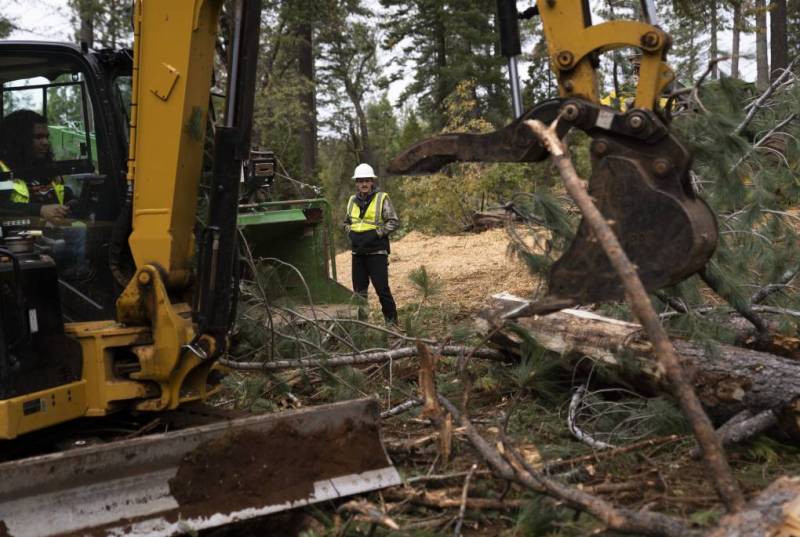
Apprenticeship Program Aims To Help California's Struggling Logging Industry
California Got Millions to Train Workers in Disaster Relief, but It’s Leaving Money on Table
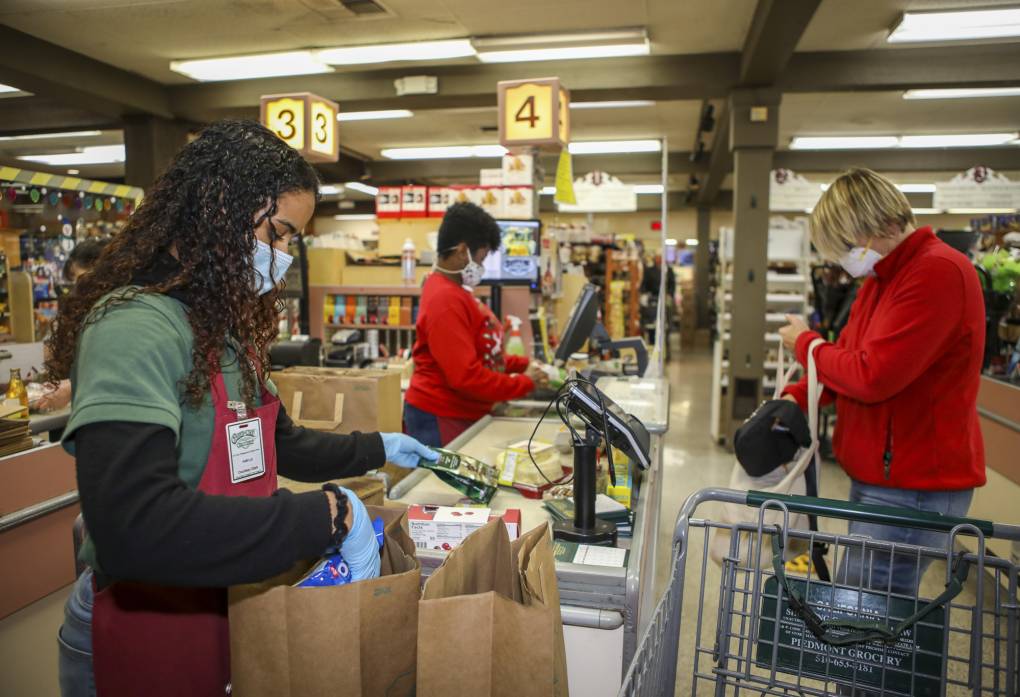
Gavin Newsom Vows to 'Leave No Region Behind' on California Jobs
Proposition 32: Measure to Raise California's Minimum Wage Rejected
California Rolls Out Career Path Grants to Schools — Nearly a Year Late
Sponsored
Player sponsored by
window.__IS_SSR__=true
window.__INITIAL_STATE__={
"attachmentsReducer": {
"audio_0": {
"type": "attachments",
"id": "audio_0",
"imgSizes": {
"kqedFullSize": {
"file": "https://ww2.kqed.org/news/wp-content/themes/KQED-unified/img/audio_bgs/background0.jpg"
}
}
},
"audio_1": {
"type": "attachments",
"id": "audio_1",
"imgSizes": {
"kqedFullSize": {
"file": "https://ww2.kqed.org/news/wp-content/themes/KQED-unified/img/audio_bgs/background1.jpg"
}
}
},
"audio_2": {
"type": "attachments",
"id": "audio_2",
"imgSizes": {
"kqedFullSize": {
"file": "https://ww2.kqed.org/news/wp-content/themes/KQED-unified/img/audio_bgs/background2.jpg"
}
}
},
"audio_3": {
"type": "attachments",
"id": "audio_3",
"imgSizes": {
"kqedFullSize": {
"file": "https://ww2.kqed.org/news/wp-content/themes/KQED-unified/img/audio_bgs/background3.jpg"
}
}
},
"audio_4": {
"type": "attachments",
"id": "audio_4",
"imgSizes": {
"kqedFullSize": {
"file": "https://ww2.kqed.org/news/wp-content/themes/KQED-unified/img/audio_bgs/background4.jpg"
}
}
},
"placeholder": {
"type": "attachments",
"id": "placeholder",
"imgSizes": {
"thumbnail": {
"file": "https://cdn.kqed.org/wp-content/uploads/2024/12/KQED-Default-Image-816638274-2000x1333-1-160x107.jpg",
"width": 160,
"height": 107,
"mimeType": "image/jpeg"
},
"medium": {
"file": "https://cdn.kqed.org/wp-content/uploads/2024/12/KQED-Default-Image-816638274-2000x1333-1-800x533.jpg",
"width": 800,
"height": 533,
"mimeType": "image/jpeg"
},
"medium_large": {
"file": "https://cdn.kqed.org/wp-content/uploads/2024/12/KQED-Default-Image-816638274-2000x1333-1-768x512.jpg",
"width": 768,
"height": 512,
"mimeType": "image/jpeg"
},
"large": {
"file": "https://cdn.kqed.org/wp-content/uploads/2024/12/KQED-Default-Image-816638274-2000x1333-1-1020x680.jpg",
"width": 1020,
"height": 680,
"mimeType": "image/jpeg"
},
"1536x1536": {
"file": "https://cdn.kqed.org/wp-content/uploads/2024/12/KQED-Default-Image-816638274-2000x1333-1-1536x1024.jpg",
"width": 1536,
"height": 1024,
"mimeType": "image/jpeg"
},
"fd-lrg": {
"file": "https://cdn.kqed.org/wp-content/uploads/2024/12/KQED-Default-Image-816638274-2000x1333-1-1536x1024.jpg",
"width": 1536,
"height": 1024,
"mimeType": "image/jpeg"
},
"fd-med": {
"file": "https://cdn.kqed.org/wp-content/uploads/2024/12/KQED-Default-Image-816638274-2000x1333-1-1020x680.jpg",
"width": 1020,
"height": 680,
"mimeType": "image/jpeg"
},
"fd-sm": {
"file": "https://cdn.kqed.org/wp-content/uploads/2024/12/KQED-Default-Image-816638274-2000x1333-1-800x533.jpg",
"width": 800,
"height": 533,
"mimeType": "image/jpeg"
},
"post-thumbnail": {
"file": "https://cdn.kqed.org/wp-content/uploads/2024/12/KQED-Default-Image-816638274-2000x1333-1-672x372.jpg",
"width": 672,
"height": 372,
"mimeType": "image/jpeg"
},
"twentyfourteen-full-width": {
"file": "https://cdn.kqed.org/wp-content/uploads/2024/12/KQED-Default-Image-816638274-2000x1333-1-1038x576.jpg",
"width": 1038,
"height": 576,
"mimeType": "image/jpeg"
},
"xxsmall": {
"file": "https://cdn.kqed.org/wp-content/uploads/2024/12/KQED-Default-Image-816638274-2000x1333-1-160x107.jpg",
"width": 160,
"height": 107,
"mimeType": "image/jpeg"
},
"xsmall": {
"file": "https://cdn.kqed.org/wp-content/uploads/2024/12/KQED-Default-Image-816638274-2000x1333-1-672x372.jpg",
"width": 672,
"height": 372,
"mimeType": "image/jpeg"
},
"small": {
"file": "https://cdn.kqed.org/wp-content/uploads/2024/12/KQED-Default-Image-816638274-2000x1333-1-672x372.jpg",
"width": 672,
"height": 372,
"mimeType": "image/jpeg"
},
"xlarge": {
"file": "https://cdn.kqed.org/wp-content/uploads/2024/12/KQED-Default-Image-816638274-2000x1333-1-1020x680.jpg",
"width": 1020,
"height": 680,
"mimeType": "image/jpeg"
},
"full-width": {
"file": "https://cdn.kqed.org/wp-content/uploads/2024/12/KQED-Default-Image-816638274-2000x1333-1-1920x1280.jpg",
"width": 1920,
"height": 1280,
"mimeType": "image/jpeg"
},
"guest-author-32": {
"file": "https://cdn.kqed.org/wp-content/uploads/2025/01/KQED-Default-Image-816638274-1333x1333-1-160x160.jpg",
"width": 32,
"height": 32,
"mimeType": "image/jpeg"
},
"guest-author-50": {
"file": "https://cdn.kqed.org/wp-content/uploads/2025/01/KQED-Default-Image-816638274-1333x1333-1-160x160.jpg",
"width": 50,
"height": 50,
"mimeType": "image/jpeg"
},
"guest-author-64": {
"file": "https://cdn.kqed.org/wp-content/uploads/2025/01/KQED-Default-Image-816638274-1333x1333-1-160x160.jpg",
"width": 64,
"height": 64,
"mimeType": "image/jpeg"
},
"guest-author-96": {
"file": "https://cdn.kqed.org/wp-content/uploads/2025/01/KQED-Default-Image-816638274-1333x1333-1-160x160.jpg",
"width": 96,
"height": 96,
"mimeType": "image/jpeg"
},
"guest-author-128": {
"file": "https://cdn.kqed.org/wp-content/uploads/2025/01/KQED-Default-Image-816638274-1333x1333-1-160x160.jpg",
"width": 128,
"height": 128,
"mimeType": "image/jpeg"
},
"detail": {
"file": "https://cdn.kqed.org/wp-content/uploads/2025/01/KQED-Default-Image-816638274-1333x1333-1-160x160.jpg",
"width": 160,
"height": 160,
"mimeType": "image/jpeg"
},
"kqedFullSize": {
"file": "https://cdn.kqed.org/wp-content/uploads/2024/12/KQED-Default-Image-816638274-2000x1333-1.jpg",
"width": 2000,
"height": 1333
}
}
},
"news_12065703": {
"type": "attachments",
"id": "news_12065703",
"meta": {
"index": "attachments_1716263798",
"site": "news",
"id": "12065703",
"found": true
},
"title": "robot-workers-692efceb91007",
"publishDate": 1764687128,
"status": "inherit",
"parent": 12065702,
"modified": 1764687324,
"caption": "Carson Tony Roma's General Manager Mithun Chowdhury with two server robots used to shuttle food between the kitchen and dining room.",
"credit": "Megan Jamerson/KCRW",
"altTag": null,
"description": null,
"imgSizes": {
"medium": {
"file": "https://cdn.kqed.org/wp-content/uploads/sites/10/2025/12/robot-workers-692efceb91007-2000x1500.jpg",
"width": 2000,
"height": 1500,
"mimeType": "image/jpeg"
},
"large": {
"file": "https://cdn.kqed.org/wp-content/uploads/sites/10/2025/12/robot-workers-692efceb91007-2000x1500.jpg",
"width": 2000,
"height": 1500,
"mimeType": "image/jpeg"
},
"thumbnail": {
"file": "https://cdn.kqed.org/wp-content/uploads/sites/10/2025/12/robot-workers-692efceb91007-160x120.jpg",
"width": 160,
"height": 120,
"mimeType": "image/jpeg"
},
"1536x1536": {
"file": "https://cdn.kqed.org/wp-content/uploads/sites/10/2025/12/robot-workers-692efceb91007-1536x1152.jpg",
"width": 1536,
"height": 1152,
"mimeType": "image/jpeg"
},
"2048x2048": {
"file": "https://cdn.kqed.org/wp-content/uploads/sites/10/2025/12/robot-workers-692efceb91007-2048x1536.jpg",
"width": 2048,
"height": 1536,
"mimeType": "image/jpeg"
},
"post-thumbnail": {
"file": "https://cdn.kqed.org/wp-content/uploads/sites/10/2025/12/robot-workers-692efceb91007-672x372.jpg",
"width": 672,
"height": 372,
"mimeType": "image/jpeg"
},
"twentyfourteen-full-width": {
"file": "https://cdn.kqed.org/wp-content/uploads/sites/10/2025/12/robot-workers-692efceb91007-1038x576.jpg",
"width": 1038,
"height": 576,
"mimeType": "image/jpeg"
},
"full-width": {
"file": "https://cdn.kqed.org/wp-content/uploads/sites/10/2025/12/robot-workers-692efceb91007-2000x1500.jpg",
"width": 2000,
"height": 1500,
"mimeType": "image/jpeg"
},
"npr-cds-wide": {
"file": "https://cdn.kqed.org/wp-content/uploads/sites/10/2025/12/robot-workers-692efceb91007-1200x675.jpg",
"width": 1200,
"height": 675,
"mimeType": "image/jpeg"
},
"kqedFullSize": {
"file": "https://cdn.kqed.org/wp-content/uploads/sites/10/2025/12/robot-workers-692efceb91007-scaled.jpg",
"width": 2560,
"height": 1920
}
},
"fetchFailed": false,
"isLoading": false
},
"news_12064732": {
"type": "attachments",
"id": "news_12064732",
"meta": {
"index": "attachments_1716263798",
"site": "news",
"id": "12064732",
"found": true
},
"title": "251119-From Rust to Robots-01-KQED",
"publishDate": 1763580131,
"status": "inherit",
"parent": 0,
"modified": 1763580211,
"caption": "A Zoox robo taxi rolls down the assembly line at the company’s manufacturing facility in Hayward. ",
"credit": "Courtesy of Zoox, Inc.",
"altTag": null,
"description": null,
"imgSizes": {
"thumbnail": {
"file": "https://cdn.kqed.org/wp-content/uploads/sites/10/2025/11/251119-From-Rust-to-Robots-01-KQED-160x107.jpg",
"width": 160,
"height": 107,
"mimeType": "image/jpeg"
},
"1536x1536": {
"file": "https://cdn.kqed.org/wp-content/uploads/sites/10/2025/11/251119-From-Rust-to-Robots-01-KQED-1536x1024.jpg",
"width": 1536,
"height": 1024,
"mimeType": "image/jpeg"
},
"post-thumbnail": {
"file": "https://cdn.kqed.org/wp-content/uploads/sites/10/2025/11/251119-From-Rust-to-Robots-01-KQED-672x372.jpg",
"width": 672,
"height": 372,
"mimeType": "image/jpeg"
},
"twentyfourteen-full-width": {
"file": "https://cdn.kqed.org/wp-content/uploads/sites/10/2025/11/251119-From-Rust-to-Robots-01-KQED-1038x576.jpg",
"width": 1038,
"height": 576,
"mimeType": "image/jpeg"
},
"npr-cds-wide": {
"file": "https://cdn.kqed.org/wp-content/uploads/sites/10/2025/11/251119-From-Rust-to-Robots-01-KQED-1200x675.jpg",
"width": 1200,
"height": 675,
"mimeType": "image/jpeg"
},
"kqedFullSize": {
"file": "https://cdn.kqed.org/wp-content/uploads/sites/10/2025/11/251119-From-Rust-to-Robots-01-KQED.jpg",
"width": 1728,
"height": 1152
}
},
"fetchFailed": false,
"isLoading": false
},
"news_12042994": {
"type": "attachments",
"id": "news_12042994",
"meta": {
"index": "attachments_1716263798",
"site": "news",
"id": "12042994",
"found": true
},
"title": "250605-TREASUREISLANDJOBCORPS-29-BL-KQED",
"publishDate": 1749164285,
"status": "inherit",
"parent": 0,
"modified": 1749164354,
"caption": "Isborn Ackerson (center left), in cement construction training, and Ray Moore, carpentry, lead a chant during a with students, staff, and supporters at a protest outside the Treasure Island Job Corps Center in San Francisco on June 5, 2025, protesting the facility’s upcoming closure, which they say could leave at-risk youth homeless.",
"credit": "Beth LaBerge/KQED",
"altTag": null,
"description": null,
"imgSizes": {
"thumbnail": {
"file": "https://cdn.kqed.org/wp-content/uploads/sites/10/2025/06/250605-TREASUREISLANDJOBCORPS-29-BL-KQED-160x107.jpg",
"width": 160,
"height": 107,
"mimeType": "image/jpeg"
},
"1536x1536": {
"file": "https://cdn.kqed.org/wp-content/uploads/sites/10/2025/06/250605-TREASUREISLANDJOBCORPS-29-BL-KQED-1536x1024.jpg",
"width": 1536,
"height": 1024,
"mimeType": "image/jpeg"
},
"post-thumbnail": {
"file": "https://cdn.kqed.org/wp-content/uploads/sites/10/2025/06/250605-TREASUREISLANDJOBCORPS-29-BL-KQED-672x372.jpg",
"width": 672,
"height": 372,
"mimeType": "image/jpeg"
},
"twentyfourteen-full-width": {
"file": "https://cdn.kqed.org/wp-content/uploads/sites/10/2025/06/250605-TREASUREISLANDJOBCORPS-29-BL-KQED-1038x576.jpg",
"width": 1038,
"height": 576,
"mimeType": "image/jpeg"
},
"kqedFullSize": {
"file": "https://cdn.kqed.org/wp-content/uploads/sites/10/2025/06/250605-TREASUREISLANDJOBCORPS-29-BL-KQED.jpg",
"width": 2000,
"height": 1333
}
},
"fetchFailed": false,
"isLoading": false
},
"news_12042131": {
"type": "attachments",
"id": "news_12042131",
"meta": {
"index": "attachments_1716263798",
"site": "news",
"id": "12042131",
"found": true
},
"title": "The Job Corps Center in San Jose on May 29, 2025.",
"publishDate": 1748624058,
"status": "inherit",
"parent": 0,
"modified": 1748624148,
"caption": "The Job Corps Center in San Jose on May 29, 2025.",
"credit": "Beth LaBerge/KQED",
"altTag": null,
"description": null,
"imgSizes": {
"medium": {
"file": "https://cdn.kqed.org/wp-content/uploads/sites/10/2025/05/250529-JOBCORPSCENTER-07-BL-KQED-800x533.jpg",
"width": 800,
"height": 533,
"mimeType": "image/jpeg"
},
"large": {
"file": "https://cdn.kqed.org/wp-content/uploads/sites/10/2025/05/250529-JOBCORPSCENTER-07-BL-KQED-1020x680.jpg",
"width": 1020,
"height": 680,
"mimeType": "image/jpeg"
},
"thumbnail": {
"file": "https://cdn.kqed.org/wp-content/uploads/sites/10/2025/05/250529-JOBCORPSCENTER-07-BL-KQED-160x107.jpg",
"width": 160,
"height": 107,
"mimeType": "image/jpeg"
},
"1536x1536": {
"file": "https://cdn.kqed.org/wp-content/uploads/sites/10/2025/05/250529-JOBCORPSCENTER-07-BL-KQED-1536x1024.jpg",
"width": 1536,
"height": 1024,
"mimeType": "image/jpeg"
},
"post-thumbnail": {
"file": "https://cdn.kqed.org/wp-content/uploads/sites/10/2025/05/250529-JOBCORPSCENTER-07-BL-KQED-672x372.jpg",
"width": 672,
"height": 372,
"mimeType": "image/jpeg"
},
"twentyfourteen-full-width": {
"file": "https://cdn.kqed.org/wp-content/uploads/sites/10/2025/05/250529-JOBCORPSCENTER-07-BL-KQED-1038x576.jpg",
"width": 1038,
"height": 576,
"mimeType": "image/jpeg"
},
"full-width": {
"file": "https://cdn.kqed.org/wp-content/uploads/sites/10/2025/05/250529-JOBCORPSCENTER-07-BL-KQED-1920x1280.jpg",
"width": 1920,
"height": 1280,
"mimeType": "image/jpeg"
},
"kqedFullSize": {
"file": "https://cdn.kqed.org/wp-content/uploads/sites/10/2025/05/250529-JOBCORPSCENTER-07-BL-KQED.jpg",
"width": 2000,
"height": 1333
}
},
"fetchFailed": false,
"isLoading": false
},
"news_12034208": {
"type": "attachments",
"id": "news_12034208",
"meta": {
"index": "attachments_1716263798",
"site": "news",
"id": "12034208",
"found": true
},
"title": "logging",
"publishDate": 1743600463,
"status": "inherit",
"parent": 12034207,
"modified": 1743600496,
"caption": "Talon Gramps-Green, left, and Bryce Shannon make brush into wood chips using a mini-excavator and chipper at a logging site on Wednesday, Oct. 30, 2024, in Shingletown, Calif. ",
"credit": "Minh Connors for The Hechinger Report",
"altTag": null,
"description": null,
"imgSizes": {
"medium": {
"file": "https://cdn.kqed.org/wp-content/uploads/sites/10/2025/04/logging-800x537.jpg",
"width": 800,
"height": 537,
"mimeType": "image/jpeg"
},
"thumbnail": {
"file": "https://cdn.kqed.org/wp-content/uploads/sites/10/2025/04/logging-160x107.jpg",
"width": 160,
"height": 107,
"mimeType": "image/jpeg"
},
"post-thumbnail": {
"file": "https://cdn.kqed.org/wp-content/uploads/sites/10/2025/04/logging-672x372.jpg",
"width": 672,
"height": 372,
"mimeType": "image/jpeg"
},
"twentyfourteen-full-width": {
"file": "https://cdn.kqed.org/wp-content/uploads/sites/10/2025/04/logging-1020x576.jpg",
"width": 1020,
"height": 576,
"mimeType": "image/jpeg"
},
"kqedFullSize": {
"file": "https://cdn.kqed.org/wp-content/uploads/sites/10/2025/04/logging.jpg",
"width": 1020,
"height": 685
}
},
"fetchFailed": false,
"isLoading": false
},
"news_12018365": {
"type": "attachments",
"id": "news_12018365",
"meta": {
"index": "attachments_1716263798",
"site": "news",
"id": "12018365",
"found": true
},
"title": "120424-Porterville-Temp-Work-LV_30 copy",
"publishDate": 1734202426,
"status": "inherit",
"parent": 12018364,
"modified": 1734202450,
"caption": "Temporary worker Demetrius Ensign uses a chainsaw to cut tree branches and trunks in Bartlett Park in Porterville on Dec. 4, 2024. Workers from the National Dislocated Worker Grant, a federally funded jobs program, are helping to clean the park of flood damage.",
"credit": "Larry Valenzuela/CalMatters/CatchLight Local",
"altTag": null,
"description": null,
"imgSizes": {
"medium": {
"file": "https://cdn.kqed.org/wp-content/uploads/sites/10/2024/12/120424-Porterville-Temp-Work-LV_30-copy-800x533.jpg",
"width": 800,
"height": 533,
"mimeType": "image/jpeg"
},
"large": {
"file": "https://cdn.kqed.org/wp-content/uploads/sites/10/2024/12/120424-Porterville-Temp-Work-LV_30-copy-1020x680.jpg",
"width": 1020,
"height": 680,
"mimeType": "image/jpeg"
},
"thumbnail": {
"file": "https://cdn.kqed.org/wp-content/uploads/sites/10/2024/12/120424-Porterville-Temp-Work-LV_30-copy-160x107.jpg",
"width": 160,
"height": 107,
"mimeType": "image/jpeg"
},
"1536x1536": {
"file": "https://cdn.kqed.org/wp-content/uploads/sites/10/2024/12/120424-Porterville-Temp-Work-LV_30-copy-1536x1024.jpg",
"width": 1536,
"height": 1024,
"mimeType": "image/jpeg"
},
"post-thumbnail": {
"file": "https://cdn.kqed.org/wp-content/uploads/sites/10/2024/12/120424-Porterville-Temp-Work-LV_30-copy-672x372.jpg",
"width": 672,
"height": 372,
"mimeType": "image/jpeg"
},
"twentyfourteen-full-width": {
"file": "https://cdn.kqed.org/wp-content/uploads/sites/10/2024/12/120424-Porterville-Temp-Work-LV_30-copy-1038x576.jpg",
"width": 1038,
"height": 576,
"mimeType": "image/jpeg"
},
"full-width": {
"file": "https://cdn.kqed.org/wp-content/uploads/sites/10/2024/12/120424-Porterville-Temp-Work-LV_30-copy-1920x1280.jpg",
"width": 1920,
"height": 1280,
"mimeType": "image/jpeg"
},
"kqedFullSize": {
"file": "https://cdn.kqed.org/wp-content/uploads/sites/10/2024/12/120424-Porterville-Temp-Work-LV_30-copy.jpg",
"width": 2000,
"height": 1333
}
},
"fetchFailed": false,
"isLoading": false
},
"news_12015490": {
"type": "attachments",
"id": "news_12015490",
"meta": {
"index": "attachments_1716263798",
"site": "news",
"id": "12015490",
"found": true
},
"title": "112124-Gavin-Fresno-City-Presser-LV_CM_03 copy",
"publishDate": 1732238409,
"status": "inherit",
"parent": 12015489,
"modified": 1732238448,
"caption": "Gov. Gavin Newsom speaks during a press conference to announce an initiative on job creation in the Central Valley at the West Fresno Center in Fresno on Nov. 21, 2024. ",
"credit": "Larry Valenzuela/CalMatters/CatchLight Local",
"altTag": null,
"description": null,
"imgSizes": {
"medium": {
"file": "https://cdn.kqed.org/wp-content/uploads/sites/10/2024/11/112124-Gavin-Fresno-City-Presser-LV_CM_03-copy-800x533.jpg",
"width": 800,
"height": 533,
"mimeType": "image/jpeg"
},
"large": {
"file": "https://cdn.kqed.org/wp-content/uploads/sites/10/2024/11/112124-Gavin-Fresno-City-Presser-LV_CM_03-copy-1020x680.jpg",
"width": 1020,
"height": 680,
"mimeType": "image/jpeg"
},
"thumbnail": {
"file": "https://cdn.kqed.org/wp-content/uploads/sites/10/2024/11/112124-Gavin-Fresno-City-Presser-LV_CM_03-copy-160x107.jpg",
"width": 160,
"height": 107,
"mimeType": "image/jpeg"
},
"1536x1536": {
"file": "https://cdn.kqed.org/wp-content/uploads/sites/10/2024/11/112124-Gavin-Fresno-City-Presser-LV_CM_03-copy-1536x1024.jpg",
"width": 1536,
"height": 1024,
"mimeType": "image/jpeg"
},
"post-thumbnail": {
"file": "https://cdn.kqed.org/wp-content/uploads/sites/10/2024/11/112124-Gavin-Fresno-City-Presser-LV_CM_03-copy-672x372.jpg",
"width": 672,
"height": 372,
"mimeType": "image/jpeg"
},
"twentyfourteen-full-width": {
"file": "https://cdn.kqed.org/wp-content/uploads/sites/10/2024/11/112124-Gavin-Fresno-City-Presser-LV_CM_03-copy-1038x576.jpg",
"width": 1038,
"height": 576,
"mimeType": "image/jpeg"
},
"full-width": {
"file": "https://cdn.kqed.org/wp-content/uploads/sites/10/2024/11/112124-Gavin-Fresno-City-Presser-LV_CM_03-copy-1920x1280.jpg",
"width": 1920,
"height": 1280,
"mimeType": "image/jpeg"
},
"kqedFullSize": {
"file": "https://cdn.kqed.org/wp-content/uploads/sites/10/2024/11/112124-Gavin-Fresno-City-Presser-LV_CM_03-copy.jpg",
"width": 2000,
"height": 1333
}
},
"fetchFailed": false,
"isLoading": false
},
"news_12011968": {
"type": "attachments",
"id": "news_12011968",
"meta": {
"index": "attachments_1716263798",
"site": "news",
"id": "12011968",
"found": true
},
"title": "SFChronicleVirusHolidays",
"publishDate": 1730405028,
"status": "inherit",
"parent": 0,
"modified": 1730859996,
"caption": "Amelie Hall (left) bags items, as cashier Kimberly Lee (center) rings up Amy Lindahl at Piedmont Grocery on Dec. 23, 2020, in Oakland.",
"credit": "Yalonda M. James/The San Francisco Chronicle via Getty Images",
"altTag": "A bagger in a grocery store bags groceries as customers stand in line.",
"description": null,
"imgSizes": {
"medium": {
"file": "https://cdn.kqed.org/wp-content/uploads/sites/10/2024/10/GETTYIMAGES-1292982945-KQED-800x546.jpg",
"width": 800,
"height": 546,
"mimeType": "image/jpeg"
},
"large": {
"file": "https://cdn.kqed.org/wp-content/uploads/sites/10/2024/10/GETTYIMAGES-1292982945-KQED-1020x697.jpg",
"width": 1020,
"height": 697,
"mimeType": "image/jpeg"
},
"thumbnail": {
"file": "https://cdn.kqed.org/wp-content/uploads/sites/10/2024/10/GETTYIMAGES-1292982945-KQED-160x109.jpg",
"width": 160,
"height": 109,
"mimeType": "image/jpeg"
},
"1536x1536": {
"file": "https://cdn.kqed.org/wp-content/uploads/sites/10/2024/10/GETTYIMAGES-1292982945-KQED-1536x1049.jpg",
"width": 1536,
"height": 1049,
"mimeType": "image/jpeg"
},
"post-thumbnail": {
"file": "https://cdn.kqed.org/wp-content/uploads/sites/10/2024/10/GETTYIMAGES-1292982945-KQED-672x372.jpg",
"width": 672,
"height": 372,
"mimeType": "image/jpeg"
},
"twentyfourteen-full-width": {
"file": "https://cdn.kqed.org/wp-content/uploads/sites/10/2024/10/GETTYIMAGES-1292982945-KQED-1038x576.jpg",
"width": 1038,
"height": 576,
"mimeType": "image/jpeg"
},
"full-width": {
"file": "https://cdn.kqed.org/wp-content/uploads/sites/10/2024/10/GETTYIMAGES-1292982945-KQED-1920x1311.jpg",
"width": 1920,
"height": 1311,
"mimeType": "image/jpeg"
},
"kqedFullSize": {
"file": "https://cdn.kqed.org/wp-content/uploads/sites/10/2024/10/GETTYIMAGES-1292982945-KQED.jpg",
"width": 2000,
"height": 1366
}
},
"fetchFailed": false,
"isLoading": false
},
"news_12005656": {
"type": "attachments",
"id": "news_12005656",
"meta": {
"index": "attachments_1716263798",
"site": "news",
"id": "12005656",
"found": true
},
"title": "033023-Hollister-Hospital-LV_CM_06 copy",
"publishDate": 1726855959,
"status": "inherit",
"parent": 12005655,
"modified": 1726855997,
"caption": "A medical worker pushing a bed through the corridors of Hazel Hawkins Memorial Hospital in Hollister on March 30, 2023. \n",
"credit": "Larry Valenzuela/CalMatters/CatchLight Local",
"altTag": null,
"description": null,
"imgSizes": {
"medium": {
"file": "https://cdn.kqed.org/wp-content/uploads/sites/10/2024/09/033023-Hollister-Hospital-LV_CM_06-copy-800x533.jpg",
"width": 800,
"height": 533,
"mimeType": "image/jpeg"
},
"large": {
"file": "https://cdn.kqed.org/wp-content/uploads/sites/10/2024/09/033023-Hollister-Hospital-LV_CM_06-copy-1020x680.jpg",
"width": 1020,
"height": 680,
"mimeType": "image/jpeg"
},
"thumbnail": {
"file": "https://cdn.kqed.org/wp-content/uploads/sites/10/2024/09/033023-Hollister-Hospital-LV_CM_06-copy-160x107.jpg",
"width": 160,
"height": 107,
"mimeType": "image/jpeg"
},
"1536x1536": {
"file": "https://cdn.kqed.org/wp-content/uploads/sites/10/2024/09/033023-Hollister-Hospital-LV_CM_06-copy-1536x1024.jpg",
"width": 1536,
"height": 1024,
"mimeType": "image/jpeg"
},
"post-thumbnail": {
"file": "https://cdn.kqed.org/wp-content/uploads/sites/10/2024/09/033023-Hollister-Hospital-LV_CM_06-copy-672x372.jpg",
"width": 672,
"height": 372,
"mimeType": "image/jpeg"
},
"twentyfourteen-full-width": {
"file": "https://cdn.kqed.org/wp-content/uploads/sites/10/2024/09/033023-Hollister-Hospital-LV_CM_06-copy-1038x576.jpg",
"width": 1038,
"height": 576,
"mimeType": "image/jpeg"
},
"full-width": {
"file": "https://cdn.kqed.org/wp-content/uploads/sites/10/2024/09/033023-Hollister-Hospital-LV_CM_06-copy-1920x1280.jpg",
"width": 1920,
"height": 1280,
"mimeType": "image/jpeg"
},
"kqedFullSize": {
"file": "https://cdn.kqed.org/wp-content/uploads/sites/10/2024/09/033023-Hollister-Hospital-LV_CM_06-copy.jpg",
"width": 2000,
"height": 1333
}
},
"fetchFailed": false,
"isLoading": false
}
},
"audioPlayerReducer": {
"postId": "stream_live",
"isPaused": true,
"isPlaying": false,
"pfsActive": false,
"pledgeModalIsOpen": true,
"playerDrawerIsOpen": false
},
"authorsReducer": {
"byline_news_12018364": {
"type": "authors",
"id": "byline_news_12018364",
"meta": {
"override": true
},
"slug": "byline_news_12018364",
"name": "\u003ca href=\"https://calmatters.org/author/adam-echelman/\">Adam Echelman\u003c/a>, CalMatters",
"isLoading": false
},
"byline_news_12015489": {
"type": "authors",
"id": "byline_news_12015489",
"meta": {
"override": true
},
"slug": "byline_news_12015489",
"name": "\u003ca href=\"https://calmatters.org/author/levi-sumagaysay/\">Levi Sumagaysay\u003c/a>, CalMatters",
"isLoading": false
},
"byline_news_12005655": {
"type": "authors",
"id": "byline_news_12005655",
"meta": {
"override": true
},
"slug": "byline_news_12005655",
"name": "\u003ca href=\"https://calmatters.org/author/carolyn-jones/\">Carolyn Jones\u003c/a>, CalMatters",
"isLoading": false
},
"rachael-myrow": {
"type": "authors",
"id": "251",
"meta": {
"index": "authors_1716337520",
"id": "251",
"found": true
},
"name": "Rachael Myrow",
"firstName": "Rachael",
"lastName": "Myrow",
"slug": "rachael-myrow",
"email": "rmyrow@kqed.org",
"display_author_email": true,
"staff_mastheads": [
"news"
],
"title": "Senior Editor of KQED's Silicon Valley News Desk",
"bio": "• I write and edit stories about how Silicon Valley power and policies shape everyday life in California. I’m also passionate about making Bay Area history and culture more accessible to a broad public. • I’ve been a journalist for most of my life, starting in high school with The Franklin Press in Los Angeles, where I grew up. While earning my first degree in English at UC Berkeley, I got my start in public radio at KALX-FM. After completing a second degree in journalism at Cal, I landed my first professional job at Marketplace, then moved on to KPCC (now LAist), and then KQED, where I hosted The California Report for more than seven years. • My reporting has appeared on NPR, The World, WBUR’s \u003ci>Here & Now\u003c/i>, and the BBC. I also guest host for KQED’s \u003ci>Forum\u003c/i>, as well as the Commonwealth Club in San Francisco. • I speak periodically on media, democracy and technology issues, and do voiceover work for documentaries and educational video projects. • Outside of the studio, you'll find me hiking Bay Area trails and whipping up Insta-ready meals in my kitchen. • I do not accept gifts, money, or favors from anyone connected to my reporting, I don't pay people for information, and I do not support or donate to political causes. • I strive to treat the people I report on with fairness, honesty, and respect. I also recognize there are often multiple sides to a story and work to verify information through multiple sources and documentation. If I get something wrong, I correct it.",
"avatar": "https://secure.gravatar.com/avatar/87bf8cb5874e045cdff430523a6d48b1?s=600&d=blank&r=g",
"twitter": "rachaelmyrow",
"facebook": null,
"instagram": null,
"linkedin": "https://www.linkedin.com/in/rachaelmyrow/",
"sites": [
{
"site": "arts",
"roles": [
"administrator"
]
},
{
"site": "news",
"roles": [
"edit_others_posts",
"editor"
]
},
{
"site": "futureofyou",
"roles": [
"editor"
]
},
{
"site": "bayareabites",
"roles": [
"editor"
]
},
{
"site": "stateofhealth",
"roles": [
"editor"
]
},
{
"site": "science",
"roles": [
"editor"
]
},
{
"site": "food",
"roles": [
"editor"
]
},
{
"site": "forum",
"roles": [
"editor"
]
},
{
"site": "liveblog",
"roles": [
"author"
]
}
],
"headData": {
"title": "Rachael Myrow | KQED",
"description": "Senior Editor of KQED's Silicon Valley News Desk",
"ogImgSrc": "https://secure.gravatar.com/avatar/87bf8cb5874e045cdff430523a6d48b1?s=600&d=blank&r=g",
"twImgSrc": "https://secure.gravatar.com/avatar/87bf8cb5874e045cdff430523a6d48b1?s=600&d=blank&r=g"
},
"isLoading": false,
"link": "/author/rachael-myrow"
},
"fjhabvala": {
"type": "authors",
"id": "8659",
"meta": {
"index": "authors_1716337520",
"id": "8659",
"found": true
},
"name": "Farida Jhabvala Romero",
"firstName": "Farida",
"lastName": "Jhabvala Romero",
"slug": "fjhabvala",
"email": "fjhabvala@kqed.org",
"display_author_email": true,
"staff_mastheads": [
"news"
],
"title": "KQED Contributor",
"bio": "\u003cspan style=\"font-weight: 400;\">Farida Jhabvala Romero is a Labor Correspondent for KQED. She previously covered immigration. Farida was \u003ca href=\"https://www.ccnma.org/2022-most-influential-latina-journalists\">named\u003c/a> one of the 10 Most Influential Latina Journalists in California in 2022 by the California Chicano News Media Association. Her work has won awards from the Society of Professional Journalists (Northern California), as well as a national and regional Edward M. Murrow Award for the collaborative reporting projects “Dangerous Air” and “Graying California.” \u003c/span>\u003cspan style=\"font-weight: 400;\">Before joining KQED, Farida worked as a producer at Radio Bilingüe, a national public radio network. Farida earned her master’s degree in journalism from Stanford University.\u003c/span>",
"avatar": "https://secure.gravatar.com/avatar/c3ab27c5554b67b478f80971e515aa02?s=600&d=blank&r=g",
"twitter": "FaridaJhabvala",
"facebook": null,
"instagram": null,
"linkedin": "https://www.linkedin.com/in/faridajhabvala/",
"sites": [
{
"site": "news",
"roles": [
"editor"
]
},
{
"site": "stateofhealth",
"roles": [
"author"
]
}
],
"headData": {
"title": "Farida Jhabvala Romero | KQED",
"description": "KQED Contributor",
"ogImgSrc": "https://secure.gravatar.com/avatar/c3ab27c5554b67b478f80971e515aa02?s=600&d=blank&r=g",
"twImgSrc": "https://secure.gravatar.com/avatar/c3ab27c5554b67b478f80971e515aa02?s=600&d=blank&r=g"
},
"isLoading": false,
"link": "/author/fjhabvala"
},
"kmizuguchi": {
"type": "authors",
"id": "11739",
"meta": {
"index": "authors_1716337520",
"id": "11739",
"found": true
},
"name": "Keith Mizuguchi",
"firstName": "Keith",
"lastName": "Mizuguchi",
"slug": "kmizuguchi",
"email": "kmizuguchi@kqed.org",
"display_author_email": false,
"staff_mastheads": [],
"title": "KQED Contributor",
"bio": null,
"avatar": "https://secure.gravatar.com/avatar/ce1182f9924192ae5ea66d39a75cd7d1?s=600&d=blank&r=g",
"twitter": null,
"facebook": null,
"instagram": null,
"linkedin": null,
"sites": [
{
"site": "news",
"roles": [
"editor"
]
},
{
"site": "science",
"roles": [
"editor"
]
}
],
"headData": {
"title": "Keith Mizuguchi | KQED",
"description": "KQED Contributor",
"ogImgSrc": "https://secure.gravatar.com/avatar/ce1182f9924192ae5ea66d39a75cd7d1?s=600&d=blank&r=g",
"twImgSrc": "https://secure.gravatar.com/avatar/ce1182f9924192ae5ea66d39a75cd7d1?s=600&d=blank&r=g"
},
"isLoading": false,
"link": "/author/kmizuguchi"
},
"kdebenedetti": {
"type": "authors",
"id": "11913",
"meta": {
"index": "authors_1716337520",
"id": "11913",
"found": true
},
"name": "Katie DeBenedetti",
"firstName": "Katie",
"lastName": "DeBenedetti",
"slug": "kdebenedetti",
"email": "kdebenedetti@kqed.org",
"display_author_email": false,
"staff_mastheads": [
"news",
"science"
],
"title": "KQED Contributor",
"bio": "Katie DeBenedetti is a digital reporter covering daily news for the Express Desk. Prior to joining KQED as a culture reporting intern in January 2024, she covered education and city government for the Napa Valley Register.",
"avatar": "https://secure.gravatar.com/avatar/6e31073cb8f7e4214ab03f42771d0f45?s=600&d=blank&r=g",
"twitter": null,
"facebook": null,
"instagram": null,
"linkedin": null,
"sites": [
{
"site": "news",
"roles": [
"author"
]
},
{
"site": "science",
"roles": [
"author"
]
},
{
"site": "liveblog",
"roles": [
"author"
]
}
],
"headData": {
"title": "Katie DeBenedetti | KQED",
"description": "KQED Contributor",
"ogImgSrc": "https://secure.gravatar.com/avatar/6e31073cb8f7e4214ab03f42771d0f45?s=600&d=blank&r=g",
"twImgSrc": "https://secure.gravatar.com/avatar/6e31073cb8f7e4214ab03f42771d0f45?s=600&d=blank&r=g"
},
"isLoading": false,
"link": "/author/kdebenedetti"
}
},
"breakingNewsReducer": {},
"pagesReducer": {},
"postsReducer": {
"stream_live": {
"type": "live",
"id": "stream_live",
"audioUrl": "https://streams.kqed.org/kqedradio",
"title": "Live Stream",
"excerpt": "Live Stream information currently unavailable.",
"link": "/radio",
"featImg": "",
"label": {
"name": "KQED Live",
"link": "/"
}
},
"stream_kqedNewscast": {
"type": "posts",
"id": "stream_kqedNewscast",
"audioUrl": "https://www.kqed.org/.stream/anon/radio/RDnews/newscast.mp3?_=1",
"title": "KQED Newscast",
"featImg": "",
"label": {
"name": "88.5 FM",
"link": "/"
}
},
"news_12065702": {
"type": "posts",
"id": "news_12065702",
"meta": {
"index": "posts_1716263798",
"site": "news",
"id": "12065702",
"score": null,
"sort": [
1764706499000
]
},
"guestAuthors": [],
"slug": "rise-in-robot-workers-leads-to-debate-over-future-of-workforce",
"title": "Rise In Robot Workers Leads To Debate Over Future Of Workforce",
"publishDate": 1764706499,
"format": "audio",
"headTitle": "Rise In Robot Workers Leads To Debate Over Future Of Workforce | KQED",
"labelTerm": {},
"content": "\u003cp>\u003cb>Here are the morning’s top stories on Tuesday, December 2, 2025…\u003c/b>\u003c/p>\n\u003cul>\n\u003cli style=\"font-weight: 400\">\u003cspan style=\"font-weight: 400\">Robots have come a long way in the last ten years. They can move parts around a warehouse, clean hotel floors, and deliver food. But they’re still rare in everyday life. \u003c/span>\u003ca href=\"https://www.kcrw.com/shows/kcrw-reports/stories/a-robot-delivers-your-food-at-this-carson-steakhouse\">\u003cspan style=\"font-weight: 400\">This could change\u003c/span>\u003c/a>\u003cspan style=\"font-weight: 400\"> as businesses look to cut rising costs by hiring fewer people. \u003c/span>\u003c/li>\n\u003cli style=\"font-weight: 400\">The \u003ca href=\"https://apnews.com/article/california-shooting-stockton-party-b5694f32ae71d2e6d874641a78f65f4f\">search continues for the suspects\u003c/a> who opened fire at a toddler’s birthday party over the weekend in Stockton, killing four guests and wounding eleven more.\u003c/li>\n\u003c/ul>\n\u003ch2>\u003ca href=\"https://www.kcrw.com/shows/kcrw-reports/stories/a-robot-delivers-your-food-at-this-carson-steakhouse\">\u003cstrong>A Robot Delivers Your Food At This Carson Restaurant \u003c/strong>\u003c/a>\u003c/h2>\n\u003cp>Robots are becoming a bigger part of everyday life. They can move parts around a warehouse, clean hotel floors, and even deliver food in restaurants.\u003c/p>\n\u003cp>Inside the dining room of a Tony’s Roma’s steakhouse in Carson, two robots are used as servers. General Manager Mithun Chowdhury said business fell this summer when immigration raids began in Southern California. “It’s little bit tough, because people are scared to get out. So they don’t come frequently in the restaurant anymore. So the business is hurting little bit,” he said.\u003c/p>\n\u003cp>The robots cost $1100 a month to rent. They run food from the kitchen to tables, and then bring dirty dishes back to the kitchen. “It’s very helpful. I also cut some labor,” Chowdhury said. The robots allowed him to cut some employees’ hours — everyone lost about one shift a week, or about five hours.\u003c/p>\n\u003cp>Robots are not replacing human workers one to one at this restaurant but it’s an example of a future with fewer human employees. Expect to see more of this. Analysts predict the service robot industry will grow to $600 million this year. That could mean not just a loss of jobs, but harder work for the people left behind.\u003c/p>\n\u003ch2 class=\"Page-headline\">\u003ca href=\"https://apnews.com/article/california-shooting-stockton-party-b5694f32ae71d2e6d874641a78f65f4f\">\u003cstrong>California Family Heartbroken By Deadly Shooting At Toddler’s Birthday Party\u003c/strong>\u003c/a>\u003c/h2>\n\u003cp>Family members were getting ready to cut the cake at a toddler’s birthday party when the gunfire started inside a banquet hall packed with relatives and friends over the weekend in Stockton.\u003c/p>\n\u003cp>[ad fullwidth]\u003c/p>\n\u003cp>“I actually thought it was my balloons popping. It was gunshots,” said Patrice Williams, the birthday girl’s mother.\u003c/p>\n\u003cp>Her daughter, who turned 2, was uninjured. But Williams told The Associated Press on Monday that her sister, a cousin and three of her friends were shot in the burst of gunfire Saturday evening in Stockton.\u003c/p>\n\u003cp>\u003c/p>\n\u003cp>Three children ages 8, 9 and 14 and a 21-year-old \u003cspan class=\"LinkEnhancement\">\u003ca class=\"Link AnClick-LinkEnhancement\" href=\"https://apnews.com/article/stockton-california-shooting-b59e32ae53716a0dfe9f28c246552607\" data-gtm-enhancement-style=\"LinkEnhancementA\">were killed\u003c/a>\u003c/span> in the hall where at least 100 people were gathered, San Joaquin County Sheriff Patrick Withrow said. Detectives believe the gunfire continued outside and there may have been multiple shooters. Eleven people were wounded, and at least one is in critical condition, Withrow said. No one is in custody.\u003c/p>\n\n",
"blocks": [],
"excerpt": "Many argue the use of robots could take jobs in industries like hospitality away from people.",
"status": "publish",
"parent": 0,
"modified": 1764706499,
"stats": {
"hasAudio": false,
"hasVideo": false,
"hasChartOrMap": false,
"iframeSrcs": [],
"hasGoogleForm": false,
"hasGallery": false,
"hasHearkenModule": false,
"hasPolis": false,
"paragraphCount": 11,
"wordCount": 490
},
"headData": {
"title": "Rise In Robot Workers Leads To Debate Over Future Of Workforce | KQED",
"description": "Many argue the use of robots could take jobs in industries like hospitality away from people.",
"ogTitle": "",
"ogDescription": "",
"ogImgId": "",
"twTitle": "",
"twDescription": "",
"twImgId": "",
"schema": {
"@context": "https://schema.org",
"@type": "NewsArticle",
"headline": "Rise In Robot Workers Leads To Debate Over Future Of Workforce",
"datePublished": "2025-12-02T12:14:59-08:00",
"dateModified": "2025-12-02T12:14:59-08:00",
"image": "https://cdn.kqed.org/wp-content/uploads/2020/02/KQED-OG-Image@1x.png",
"isAccessibleForFree": "True",
"publisher": {
"@type": "NewsMediaOrganization",
"@id": "https://www.kqed.org/#organization",
"name": "KQED",
"logo": "https://cdn.kqed.org/wp-content/uploads/2020/02/KQED-OG-Image@1x.png",
"url": "https://www.kqed.org",
"sameAs": [
"https://www.facebook.com/KQED",
"https://twitter.com/KQED",
"https://www.instagram.com/kqed/",
"https://www.tiktok.com/@kqedofficial",
"https://www.linkedin.com/company/kqed",
"https://www.youtube.com/channel/UCeC0IOo7i1P_61zVUWbJ4nw"
]
}
}
},
"primaryCategory": {
"termId": 33520,
"slug": "podcast",
"name": "Podcast"
},
"source": "The California Report",
"sourceUrl": "https://www.kqed.org/news/tag/tcrarchive/",
"audioUrl": "https://www.podtrac.com/pts/redirect.mp3/chrt.fm/track/G6C7C3/traffic.megaphone.fm/KQINC6341573679.mp3?updated=1764688649",
"sticky": false,
"nprStoryId": "kqed-12065702",
"templateType": "standard",
"featuredImageType": "standard",
"excludeFromSiteSearch": "Include",
"articleAge": "0",
"path": "/news/12065702/rise-in-robot-workers-leads-to-debate-over-future-of-workforce",
"audioTrackLength": null,
"parsedContent": [
{
"type": "contentString",
"content": "\u003cdiv class=\"post-body\">\u003cp>\u003cp>\u003cb>Here are the morning’s top stories on Tuesday, December 2, 2025…\u003c/b>\u003c/p>\n\u003cul>\n\u003cli style=\"font-weight: 400\">\u003cspan style=\"font-weight: 400\">Robots have come a long way in the last ten years. They can move parts around a warehouse, clean hotel floors, and deliver food. But they’re still rare in everyday life. \u003c/span>\u003ca href=\"https://www.kcrw.com/shows/kcrw-reports/stories/a-robot-delivers-your-food-at-this-carson-steakhouse\">\u003cspan style=\"font-weight: 400\">This could change\u003c/span>\u003c/a>\u003cspan style=\"font-weight: 400\"> as businesses look to cut rising costs by hiring fewer people. \u003c/span>\u003c/li>\n\u003cli style=\"font-weight: 400\">The \u003ca href=\"https://apnews.com/article/california-shooting-stockton-party-b5694f32ae71d2e6d874641a78f65f4f\">search continues for the suspects\u003c/a> who opened fire at a toddler’s birthday party over the weekend in Stockton, killing four guests and wounding eleven more.\u003c/li>\n\u003c/ul>\n\u003ch2>\u003ca href=\"https://www.kcrw.com/shows/kcrw-reports/stories/a-robot-delivers-your-food-at-this-carson-steakhouse\">\u003cstrong>A Robot Delivers Your Food At This Carson Restaurant \u003c/strong>\u003c/a>\u003c/h2>\n\u003cp>Robots are becoming a bigger part of everyday life. They can move parts around a warehouse, clean hotel floors, and even deliver food in restaurants.\u003c/p>\n\u003cp>Inside the dining room of a Tony’s Roma’s steakhouse in Carson, two robots are used as servers. General Manager Mithun Chowdhury said business fell this summer when immigration raids began in Southern California. “It’s little bit tough, because people are scared to get out. So they don’t come frequently in the restaurant anymore. So the business is hurting little bit,” he said.\u003c/p>\n\u003cp>The robots cost $1100 a month to rent. They run food from the kitchen to tables, and then bring dirty dishes back to the kitchen. “It’s very helpful. I also cut some labor,” Chowdhury said. The robots allowed him to cut some employees’ hours — everyone lost about one shift a week, or about five hours.\u003c/p>\n\u003cp>Robots are not replacing human workers one to one at this restaurant but it’s an example of a future with fewer human employees. Expect to see more of this. Analysts predict the service robot industry will grow to $600 million this year. That could mean not just a loss of jobs, but harder work for the people left behind.\u003c/p>\n\u003ch2 class=\"Page-headline\">\u003ca href=\"https://apnews.com/article/california-shooting-stockton-party-b5694f32ae71d2e6d874641a78f65f4f\">\u003cstrong>California Family Heartbroken By Deadly Shooting At Toddler’s Birthday Party\u003c/strong>\u003c/a>\u003c/h2>\n\u003cp>Family members were getting ready to cut the cake at a toddler’s birthday party when the gunfire started inside a banquet hall packed with relatives and friends over the weekend in Stockton.\u003c/p>\n\u003cp>\u003c/p>\u003c/div>",
"attributes": {
"named": {},
"numeric": []
}
},
{
"type": "component",
"content": "",
"name": "ad",
"attributes": {
"named": {
"label": "fullwidth"
},
"numeric": [
"fullwidth"
]
}
},
{
"type": "contentString",
"content": "\u003cdiv class=\"post-body\">\u003cp>\u003c/p>\n\u003cp>“I actually thought it was my balloons popping. It was gunshots,” said Patrice Williams, the birthday girl’s mother.\u003c/p>\n\u003cp>Her daughter, who turned 2, was uninjured. But Williams told The Associated Press on Monday that her sister, a cousin and three of her friends were shot in the burst of gunfire Saturday evening in Stockton.\u003c/p>\n\u003cp>\u003c/p>\n\u003cp>Three children ages 8, 9 and 14 and a 21-year-old \u003cspan class=\"LinkEnhancement\">\u003ca class=\"Link AnClick-LinkEnhancement\" href=\"https://apnews.com/article/stockton-california-shooting-b59e32ae53716a0dfe9f28c246552607\" data-gtm-enhancement-style=\"LinkEnhancementA\">were killed\u003c/a>\u003c/span> in the hall where at least 100 people were gathered, San Joaquin County Sheriff Patrick Withrow said. Detectives believe the gunfire continued outside and there may have been multiple shooters. Eleven people were wounded, and at least one is in critical condition, Withrow said. No one is in custody.\u003c/p>\n\n\u003c/div>\u003c/p>",
"attributes": {
"named": {},
"numeric": []
}
}
],
"link": "/news/12065702/rise-in-robot-workers-leads-to-debate-over-future-of-workforce",
"authors": [
"11739"
],
"programs": [
"news_72"
],
"categories": [
"news_33520",
"news_34018"
],
"tags": [
"news_36166",
"news_1760",
"news_21721",
"news_36165",
"news_21278",
"news_784",
"news_21998",
"news_21268"
],
"featImg": "news_12065703",
"label": "source_news_12065702"
},
"news_12064729": {
"type": "posts",
"id": "news_12064729",
"meta": {
"index": "posts_1716263798",
"site": "news",
"id": "12064729",
"score": null,
"sort": [
1763591999000
]
},
"guestAuthors": [],
"slug": "from-rust-to-robots-the-east-bay-bids-for-a-high-tech-revival",
"title": "From Rust to Robots, the East Bay Bids for a High-Tech Revival",
"publishDate": 1763591999,
"format": "standard",
"headTitle": "From Rust to Robots, the East Bay Bids for a High-Tech Revival | KQED",
"labelTerm": {
"site": "news"
},
"content": "\u003cp>After a year of testing and tooling around \u003ca href=\"https://www.kqed.org/news/tag/san-francisco\">San Francisco\u003c/a> city streets, Zoox announced it is making its robotaxis available to the public, starting with free rides for those who join a waitlist.\u003c/p>\n\u003cp>Zoox’s green vehicles are eye-catching. They aren’t built like cars. They have no steering wheel or pedals, all four seats face inward and some people refer to them as toasters on wheels.\u003c/p>\n\u003cp>They’re notable in another way, too. They’re \u003ca href=\"https://www.youtube.com/watch?v=lfAt803DQMw\">manufactured in Hayward\u003c/a>.\u003c/p>\n\u003cp>[ad fullwidth]\u003c/p>\n\u003cp>As factory jobs continue their decades-long decline across the country, the East Bay is doubling down on precision manufacturing, betting its proximity to Silicon Valley’s labs and talent pools will help lift a slumping industrial base into a new era. Alameda County’s manufacturing sector expanded by 10% over the same period, reaching nearly 94,000 jobs.\u003c/p>\n\u003cp>Old timers will recall that the East Bay has a storied history of building cars, most famously the \u003ca href=\"https://www.kqed.org/forum/201005210900/tesla-and-toyota-at-nummi\">NUMMI\u003c/a> plant in Fremont, taken over by \u003ca href=\"https://www.kqed.org/forum/2010101883541/the-unpredictable-volatile-world-of-elon-musk-and-tesla\">Tesla\u003c/a> in 2010, now operating the biggest auto plant in the United States.\u003c/p>\n\u003cp>But ask anyone at Zoox and they’ll tell you, they’re not building cars. They’re designing robots that happen to carry people.\u003c/p>\n\u003cfigure id=\"attachment_12064734\" class=\"wp-caption aligncenter\" style=\"max-width: 2000px\">\u003cimg loading=\"lazy\" decoding=\"async\" class=\"size-full wp-image-12064734\" src=\"https://cdn.kqed.org/wp-content/uploads/sites/10/2025/11/251119-From-Rust-to-Robots-02-KQED.jpg\" alt=\"\" width=\"2000\" height=\"1125\" srcset=\"https://cdn.kqed.org/wp-content/uploads/sites/10/2025/11/251119-From-Rust-to-Robots-02-KQED.jpg 2000w, https://cdn.kqed.org/wp-content/uploads/sites/10/2025/11/251119-From-Rust-to-Robots-02-KQED-160x90.jpg 160w, https://cdn.kqed.org/wp-content/uploads/sites/10/2025/11/251119-From-Rust-to-Robots-02-KQED-1536x864.jpg 1536w, https://cdn.kqed.org/wp-content/uploads/sites/10/2025/11/251119-From-Rust-to-Robots-02-KQED-1200x675.jpg 1200w\" sizes=\"auto, (max-width: 2000px) 100vw, 2000px\">\u003cfigcaption class=\"wp-caption-text\">A Zoox robo taxi is assembled at the company’s manufacturing facility in Hayward. \u003ccite>(Courtesy of Zoox, Inc.)\u003c/cite>\u003c/figcaption>\u003c/figure>\n\u003cp>“We do not classify ourselves as in the automotive sector. We are in the robotic sector,” said Corrado Lanzone, vice president of manufacturing operations at Zoox, acquired by \u003ca href=\"https://apnews.com/article/amazon-zoox-robotaxis-manufacturing-plant-8c34ae849ccb10eaa7e6e5266d6de8e8\">Amazon\u003c/a> in 2020.\u003c/p>\n\u003cp>Lanzone told KQED that one of Hayward’s biggest benefits is its proximity to Silicon Valley and its \u003ca href=\"https://www.kqed.org/news/11732182/is-the-future-of-automotive-engineering-in-silicon-valley-ask-this-german-auto-giant\">culture of innovation\u003c/a>.\u003c/p>\n\u003cp>That means the mechanical engineers in Hayward have an easier time collaborating with the software engineers at Zoox’s headquarters in Foster City.[aside postID=news_12064374 hero='https://cdn.kqed.org/wp-content/uploads/sites/10/2025/11/TeslaFremontGetty.jpg']Zoox launched its manufacturing operation in a 220,000-square-foot, repurposed \u003ca href=\"https://www.youtube.com/watch?v=-Ds6QiEp9yg\">Gillig bus \u003c/a>manufacturing facility last June, and ultimately hopes to produce up to 10,000 vehicles a year. While about 100 people work for Zoox in Hayward today, the company anticipates hiring more.\u003c/p>\n\u003cp>It’s not just Hayward driving the advanced manufacturing bus in Alameda County. Fremont and Newark are doing it, too, according to the \u003ca href=\"https://www.resilienteastbay.org\">East Bay Economic Development Alliance\u003c/a>, a public-private partnership covering Alameda and Contra Costa counties.\u003c/p>\n\u003cp>Together, the three cities have positioned themselves as an \u003ca href=\"https://www.resilienteastbay.org/map/\">emerging regional hub\u003c/a> for high‑value sectors like advanced transportation, biomedical, food and beverage, climate tech, and, yes, robotics. Fremont hosts Tesla, Applied Materials, and dozens of precision-hardware suppliers. Newark hosts Lucid Motors’ engineering and prototype plant.\u003c/p>\n\u003cp>By protecting industrial land, expediting permits, and modernizing infrastructure, the three cities have drawn a concentration of robotics, electric vehicle, biotech-hardware and clean-tech manufacturers that did not exist at this scale 15 years ago.\u003c/p>\n\u003cfigure id=\"attachment_12064736\" class=\"wp-caption aligncenter\" style=\"max-width: 2000px\">\u003cimg loading=\"lazy\" decoding=\"async\" class=\"size-full wp-image-12064736\" src=\"https://cdn.kqed.org/wp-content/uploads/sites/10/2025/11/250730-WAYMOFILE_00136_TV-KQED.jpg\" alt=\"\" width=\"2000\" height=\"1333\" srcset=\"https://cdn.kqed.org/wp-content/uploads/sites/10/2025/11/250730-WAYMOFILE_00136_TV-KQED.jpg 2000w, https://cdn.kqed.org/wp-content/uploads/sites/10/2025/11/250730-WAYMOFILE_00136_TV-KQED-160x107.jpg 160w, https://cdn.kqed.org/wp-content/uploads/sites/10/2025/11/250730-WAYMOFILE_00136_TV-KQED-1536x1024.jpg 1536w\" sizes=\"auto, (max-width: 2000px) 100vw, 2000px\">\u003cfigcaption class=\"wp-caption-text\">A Zoox autonomous vehicle drives through 16th Street and Potrero in San Francisco on July 22, 2025. \u003ccite>(Tâm Vũ/KQED)\u003c/cite>\u003c/figcaption>\u003c/figure>\n\u003cp>The Bay Area is too expensive to lure most manufacturing work, but because of its established base of technological talent, companies like Zoox find an attractive value proposition in building things close to headquarters, “especially in the early stages of trying to fine tune and commercialize a product that’s going to be made at scale,” said Stephen Baiter, executive director of the East Bay Economic Development Alliance.\u003c/p>\n\u003cp>Baiter calls what’s happening in the region a “convergence effect.” That is to say, companies like Tesla, Applied Materials and Zoox are capitalizing on the regional talent pool, its strong research and development ecosystem, availability of production space, and supportive local economic development policies as reasons why the region is an attractive place to scale operations.\u003c/p>\n\u003cp>While the East Bay’s biggest employers are education, health services, and professional/technical services, manufacturing is a major player, and one that’s growing.\u003c/p>\n\u003cp>“It’s anywhere between 20 to 30% of our gross regional product. Employment-wise, it’s closer to 10%. But still a substantial sector, however you want to slice it,” Baiter said.\u003c/p>\n\u003cp>\u003c/p>\n",
"blocks": [],
"excerpt": "Factories never vanished in the East Bay. They evolved. Now, with Zoox, biotech startups, and clean-tech firms reclaiming old industrial facilities, Alameda County is testing whether it can win a bigger piece of the Silicon Valley employment pie.",
"status": "publish",
"parent": 0,
"modified": 1764010434,
"stats": {
"hasAudio": false,
"hasVideo": false,
"hasChartOrMap": false,
"iframeSrcs": [],
"hasGoogleForm": false,
"hasGallery": false,
"hasHearkenModule": false,
"hasPolis": false,
"paragraphCount": 18,
"wordCount": 713
},
"headData": {
"title": "From Rust to Robots, the East Bay Bids for a High-Tech Revival | KQED",
"description": "Factories never vanished in the East Bay. They evolved. Now, with Zoox, biotech startups, and clean-tech firms reclaiming old industrial facilities, Alameda County is testing whether it can win a bigger piece of the Silicon Valley employment pie.",
"ogTitle": "",
"ogDescription": "",
"ogImgId": "",
"twTitle": "",
"twDescription": "",
"twImgId": "",
"schema": {
"@context": "https://schema.org",
"@type": "NewsArticle",
"headline": "From Rust to Robots, the East Bay Bids for a High-Tech Revival",
"datePublished": "2025-11-19T14:39:59-08:00",
"dateModified": "2025-11-24T10:53:54-08:00",
"image": "https://cdn.kqed.org/wp-content/uploads/2020/02/KQED-OG-Image@1x.png",
"isAccessibleForFree": "True",
"publisher": {
"@type": "NewsMediaOrganization",
"@id": "https://www.kqed.org/#organization",
"name": "KQED",
"logo": "https://cdn.kqed.org/wp-content/uploads/2020/02/KQED-OG-Image@1x.png",
"url": "https://www.kqed.org",
"sameAs": [
"https://www.facebook.com/KQED",
"https://twitter.com/KQED",
"https://www.instagram.com/kqed/",
"https://www.tiktok.com/@kqedofficial",
"https://www.linkedin.com/company/kqed",
"https://www.youtube.com/channel/UCeC0IOo7i1P_61zVUWbJ4nw"
]
}
}
},
"primaryCategory": {
"termId": 248,
"slug": "technology",
"name": "Technology"
},
"audioUrl": "https://traffic.omny.fm/d/clips/0af137ef-751e-4b19-a055-aaef00d2d578/ffca7e9f-6831-41c5-bcaf-aaef00f5a073/0f3bf7fe-2e39-49f8-9aaa-b39f011e3181/audio.mp3",
"sticky": false,
"nprStoryId": "kqed-12064729",
"templateType": "standard",
"featuredImageType": "standard",
"excludeFromSiteSearch": "Include",
"articleAge": "0",
"path": "/news/12064729/from-rust-to-robots-the-east-bay-bids-for-a-high-tech-revival",
"audioTrackLength": null,
"parsedContent": [
{
"type": "contentString",
"content": "\u003cdiv class=\"post-body\">\u003cp>\u003cp>After a year of testing and tooling around \u003ca href=\"https://www.kqed.org/news/tag/san-francisco\">San Francisco\u003c/a> city streets, Zoox announced it is making its robotaxis available to the public, starting with free rides for those who join a waitlist.\u003c/p>\n\u003cp>Zoox’s green vehicles are eye-catching. They aren’t built like cars. They have no steering wheel or pedals, all four seats face inward and some people refer to them as toasters on wheels.\u003c/p>\n\u003cp>They’re notable in another way, too. They’re \u003ca href=\"https://www.youtube.com/watch?v=lfAt803DQMw\">manufactured in Hayward\u003c/a>.\u003c/p>\n\u003cp>\u003c/p>\u003c/div>",
"attributes": {
"named": {},
"numeric": []
}
},
{
"type": "component",
"content": "",
"name": "ad",
"attributes": {
"named": {
"label": "fullwidth"
},
"numeric": [
"fullwidth"
]
}
},
{
"type": "contentString",
"content": "\u003cdiv class=\"post-body\">\u003cp>\u003c/p>\n\u003cp>As factory jobs continue their decades-long decline across the country, the East Bay is doubling down on precision manufacturing, betting its proximity to Silicon Valley’s labs and talent pools will help lift a slumping industrial base into a new era. Alameda County’s manufacturing sector expanded by 10% over the same period, reaching nearly 94,000 jobs.\u003c/p>\n\u003cp>Old timers will recall that the East Bay has a storied history of building cars, most famously the \u003ca href=\"https://www.kqed.org/forum/201005210900/tesla-and-toyota-at-nummi\">NUMMI\u003c/a> plant in Fremont, taken over by \u003ca href=\"https://www.kqed.org/forum/2010101883541/the-unpredictable-volatile-world-of-elon-musk-and-tesla\">Tesla\u003c/a> in 2010, now operating the biggest auto plant in the United States.\u003c/p>\n\u003cp>But ask anyone at Zoox and they’ll tell you, they’re not building cars. They’re designing robots that happen to carry people.\u003c/p>\n\u003cfigure id=\"attachment_12064734\" class=\"wp-caption aligncenter\" style=\"max-width: 2000px\">\u003cimg loading=\"lazy\" decoding=\"async\" class=\"size-full wp-image-12064734\" src=\"https://cdn.kqed.org/wp-content/uploads/sites/10/2025/11/251119-From-Rust-to-Robots-02-KQED.jpg\" alt=\"\" width=\"2000\" height=\"1125\" srcset=\"https://cdn.kqed.org/wp-content/uploads/sites/10/2025/11/251119-From-Rust-to-Robots-02-KQED.jpg 2000w, https://cdn.kqed.org/wp-content/uploads/sites/10/2025/11/251119-From-Rust-to-Robots-02-KQED-160x90.jpg 160w, https://cdn.kqed.org/wp-content/uploads/sites/10/2025/11/251119-From-Rust-to-Robots-02-KQED-1536x864.jpg 1536w, https://cdn.kqed.org/wp-content/uploads/sites/10/2025/11/251119-From-Rust-to-Robots-02-KQED-1200x675.jpg 1200w\" sizes=\"auto, (max-width: 2000px) 100vw, 2000px\">\u003cfigcaption class=\"wp-caption-text\">A Zoox robo taxi is assembled at the company’s manufacturing facility in Hayward. \u003ccite>(Courtesy of Zoox, Inc.)\u003c/cite>\u003c/figcaption>\u003c/figure>\n\u003cp>“We do not classify ourselves as in the automotive sector. We are in the robotic sector,” said Corrado Lanzone, vice president of manufacturing operations at Zoox, acquired by \u003ca href=\"https://apnews.com/article/amazon-zoox-robotaxis-manufacturing-plant-8c34ae849ccb10eaa7e6e5266d6de8e8\">Amazon\u003c/a> in 2020.\u003c/p>\n\u003cp>Lanzone told KQED that one of Hayward’s biggest benefits is its proximity to Silicon Valley and its \u003ca href=\"https://www.kqed.org/news/11732182/is-the-future-of-automotive-engineering-in-silicon-valley-ask-this-german-auto-giant\">culture of innovation\u003c/a>.\u003c/p>\n\u003cp>That means the mechanical engineers in Hayward have an easier time collaborating with the software engineers at Zoox’s headquarters in Foster City.\u003c/p>\u003c/div>",
"attributes": {
"named": {},
"numeric": []
}
},
{
"type": "component",
"content": "",
"name": "aside",
"attributes": {
"named": {
"postid": "news_12064374",
"hero": "https://cdn.kqed.org/wp-content/uploads/sites/10/2025/11/TeslaFremontGetty.jpg",
"label": ""
},
"numeric": []
}
},
{
"type": "contentString",
"content": "\u003cdiv class=\"post-body\">\u003cp>Zoox launched its manufacturing operation in a 220,000-square-foot, repurposed \u003ca href=\"https://www.youtube.com/watch?v=-Ds6QiEp9yg\">Gillig bus \u003c/a>manufacturing facility last June, and ultimately hopes to produce up to 10,000 vehicles a year. While about 100 people work for Zoox in Hayward today, the company anticipates hiring more.\u003c/p>\n\u003cp>It’s not just Hayward driving the advanced manufacturing bus in Alameda County. Fremont and Newark are doing it, too, according to the \u003ca href=\"https://www.resilienteastbay.org\">East Bay Economic Development Alliance\u003c/a>, a public-private partnership covering Alameda and Contra Costa counties.\u003c/p>\n\u003cp>Together, the three cities have positioned themselves as an \u003ca href=\"https://www.resilienteastbay.org/map/\">emerging regional hub\u003c/a> for high‑value sectors like advanced transportation, biomedical, food and beverage, climate tech, and, yes, robotics. Fremont hosts Tesla, Applied Materials, and dozens of precision-hardware suppliers. Newark hosts Lucid Motors’ engineering and prototype plant.\u003c/p>\n\u003cp>By protecting industrial land, expediting permits, and modernizing infrastructure, the three cities have drawn a concentration of robotics, electric vehicle, biotech-hardware and clean-tech manufacturers that did not exist at this scale 15 years ago.\u003c/p>\n\u003cfigure id=\"attachment_12064736\" class=\"wp-caption aligncenter\" style=\"max-width: 2000px\">\u003cimg loading=\"lazy\" decoding=\"async\" class=\"size-full wp-image-12064736\" src=\"https://cdn.kqed.org/wp-content/uploads/sites/10/2025/11/250730-WAYMOFILE_00136_TV-KQED.jpg\" alt=\"\" width=\"2000\" height=\"1333\" srcset=\"https://cdn.kqed.org/wp-content/uploads/sites/10/2025/11/250730-WAYMOFILE_00136_TV-KQED.jpg 2000w, https://cdn.kqed.org/wp-content/uploads/sites/10/2025/11/250730-WAYMOFILE_00136_TV-KQED-160x107.jpg 160w, https://cdn.kqed.org/wp-content/uploads/sites/10/2025/11/250730-WAYMOFILE_00136_TV-KQED-1536x1024.jpg 1536w\" sizes=\"auto, (max-width: 2000px) 100vw, 2000px\">\u003cfigcaption class=\"wp-caption-text\">A Zoox autonomous vehicle drives through 16th Street and Potrero in San Francisco on July 22, 2025. \u003ccite>(Tâm Vũ/KQED)\u003c/cite>\u003c/figcaption>\u003c/figure>\n\u003cp>The Bay Area is too expensive to lure most manufacturing work, but because of its established base of technological talent, companies like Zoox find an attractive value proposition in building things close to headquarters, “especially in the early stages of trying to fine tune and commercialize a product that’s going to be made at scale,” said Stephen Baiter, executive director of the East Bay Economic Development Alliance.\u003c/p>\n\u003cp>Baiter calls what’s happening in the region a “convergence effect.” That is to say, companies like Tesla, Applied Materials and Zoox are capitalizing on the regional talent pool, its strong research and development ecosystem, availability of production space, and supportive local economic development policies as reasons why the region is an attractive place to scale operations.\u003c/p>\n\u003cp>While the East Bay’s biggest employers are education, health services, and professional/technical services, manufacturing is a major player, and one that’s growing.\u003c/p>\n\u003cp>“It’s anywhere between 20 to 30% of our gross regional product. Employment-wise, it’s closer to 10%. But still a substantial sector, however you want to slice it,” Baiter said.\u003c/p>\n\u003cp>\u003c/p>\n\u003c/div>\u003c/p>",
"attributes": {
"named": {},
"numeric": []
}
}
],
"link": "/news/12064729/from-rust-to-robots-the-east-bay-bids-for-a-high-tech-revival",
"authors": [
"251"
],
"categories": [
"news_31795",
"news_34551",
"news_8",
"news_248",
"news_1397"
],
"tags": [
"news_260",
"news_18538",
"news_18352",
"news_18545",
"news_21749",
"news_1760",
"news_19904",
"news_33028",
"news_21278",
"news_34586",
"news_4849",
"news_35940",
"news_1631"
],
"featImg": "news_12064732",
"label": "news"
},
"news_12042895": {
"type": "posts",
"id": "news_12042895",
"meta": {
"index": "posts_1716263798",
"site": "news",
"id": "12042895",
"score": null,
"sort": [
1749207632000
]
},
"guestAuthors": [],
"slug": "san-francisco-job-corps-students-face-uncertain-future",
"title": "San Francisco Job Corps Students Face Uncertain Future",
"publishDate": 1749207632,
"format": "standard",
"headTitle": "San Francisco Job Corps Students Face Uncertain Future | KQED",
"labelTerm": {
"site": "news"
},
"content": "\u003cp>Driving over the Bay Bridge into \u003ca href=\"https://www.kqed.org/news/tag/san-francisco\">San Francisco\u003c/a>, the vast, mostly barren compound that’s home to the Treasure Island Job Corps Center doesn’t look like much.\u003c/p>\n\u003cp>But students gaining certifications in culinary arts, construction, hospitality and other blue-collar careers at the trade school say it has been a lifeline for more than 20 years.\u003c/p>\n\u003cp>Since 1999, thousands of low-income youth and young adults have gotten high school diplomas and trade certifications while living and working at the federally funded site. Now, more than 350 who were enrolled as of last week are at risk of losing that lifeline in the coming weeks, as the Department of Labor plans to pause operations at Job Corps centers across the country.\u003c/p>\n\u003cp>[ad fullwidth]\u003c/p>\n\u003cp>“Many of us have nowhere to go,” said Eddie Lopez, 19, one of dozens of students, staff members and community advocates who gathered Thursday to protest the termination.\u003c/p>\n\u003cp>Lopez came to the center four months ago, after couch surfing in the East Bay and trying to find a job to support himself.\u003c/p>\n\u003cfigure id=\"attachment_12042991\" class=\"wp-caption aligncenter\" style=\"max-width: 2000px\">\u003cimg loading=\"lazy\" decoding=\"async\" class=\"size-full wp-image-12042991\" src=\"https://cdn.kqed.org/wp-content/uploads/sites/10/2025/06/250605-TREASUREISLANDJOBCORPS-14-BL-KQED.jpg\" alt=\"\" width=\"2000\" height=\"1333\" srcset=\"https://cdn.kqed.org/wp-content/uploads/sites/10/2025/06/250605-TREASUREISLANDJOBCORPS-14-BL-KQED.jpg 2000w, https://cdn.kqed.org/wp-content/uploads/sites/10/2025/06/250605-TREASUREISLANDJOBCORPS-14-BL-KQED-160x107.jpg 160w, https://cdn.kqed.org/wp-content/uploads/sites/10/2025/06/250605-TREASUREISLANDJOBCORPS-14-BL-KQED-1536x1024.jpg 1536w\" sizes=\"auto, (max-width: 2000px) 100vw, 2000px\">\u003cfigcaption class=\"wp-caption-text\">Students, staff and supporters rally outside the Treasure Island Job Corps Center in San Francisco on June 5, 2025, protesting the facility’s upcoming closure, which they say could leave at-risk youth homeless. \u003ccite>(Beth LaBerge/KQED)\u003c/cite>\u003c/figcaption>\u003c/figure>\n\u003cp>“We came here with nothing — no job, no home, no support system — and now they expect us to find something in a couple of days. It’s just really heartbreaking and horrifying and inhumane,” he said.\u003c/p>\n\u003cp>Lopez and other students at Treasure Island found out last week that they would need to leave the island after the Department of Labor announced it would indefinitely pause operations at the end of June at the vast majority of its 131 trade schools that offer free schooling, housing and healthcare to low-income 16 to 24 year olds.\u003c/p>\n\u003cp>Department of Labor Secretary Lori Chavez-DeRemer said in a statement that the department had reviewed the program and determined that it was “no longer achieving the intended outcomes that students deserve,” based on a review of serious incident reports at Job Corps sites and the financial impact of the program, which operated with a $140 million deficit in 2024.[aside postID=news_12042125 hero='https://cdn.kqed.org/wp-content/uploads/sites/10/2025/05/250529-JOBCORPSCENTER-07-BL-KQED-1020x680.jpg']About 250 of the 375 students who resided on Treasure Island prior to the DOL’s announcement have already left, and more are preparing to leave by the end of the week, according to Lacy Barnes, a representative for the Union of Teachers and Classified Professionals, which represents the center’s employees.\u003c/p>\n\u003cp>A \u003ca href=\"https://www.kqed.org/news/12042125/trump-pauses-job-corps-leaving-san-jose-trade-students-in-turmoil\">similar exodus\u003c/a> has happened at the San José Job Corps site, where another 350 students found out last Thursday that their program would be shut down, and some were told to pack their bags within days.\u003c/p>\n\u003cp>Other students, including Lopez, plan to stay on campus until they’re forced to leave.\u003c/p>\n\u003cp>On Wednesday, a federal judge granted a temporary restraining order to a trade group representing Job Corps center operators suing the Department of Labor over its abrupt announcement, ordering the department not to pause work or terminate agreements with contractors until a further ruling. The order lasts through June 17, when a hearing is scheduled in the case.\u003c/p>\n\u003cp>Even if U.S. District Judge Andrew Carter grants the contractors an injunction that would extend until the case could be decided in court, Barnes worries that the chaos over the last week cannot be rectified.\u003c/p>\n\u003cfigure id=\"attachment_12042992\" class=\"wp-caption aligncenter\" style=\"max-width: 2000px\">\u003cimg loading=\"lazy\" decoding=\"async\" class=\"size-full wp-image-12042992\" src=\"https://cdn.kqed.org/wp-content/uploads/sites/10/2025/06/250605-TREASUREISLANDJOBCORPS-21-BL-KQED.jpg\" alt=\"\" width=\"2000\" height=\"1333\" srcset=\"https://cdn.kqed.org/wp-content/uploads/sites/10/2025/06/250605-TREASUREISLANDJOBCORPS-21-BL-KQED.jpg 2000w, https://cdn.kqed.org/wp-content/uploads/sites/10/2025/06/250605-TREASUREISLANDJOBCORPS-21-BL-KQED-160x107.jpg 160w, https://cdn.kqed.org/wp-content/uploads/sites/10/2025/06/250605-TREASUREISLANDJOBCORPS-21-BL-KQED-1536x1024.jpg 1536w\" sizes=\"auto, (max-width: 2000px) 100vw, 2000px\">\u003cfigcaption class=\"wp-caption-text\">Frank Lara, executive vice president of United Educators of San Francisco, speaks during a rally outside the Treasure Island Job Corps Center in San Francisco on June 5, 2025, protesting the facility’s upcoming closure, which they say could leave at-risk youth homeless. \u003ccite>(Beth LaBerge/KQED)\u003c/cite>\u003c/figcaption>\u003c/figure>\n\u003cp>“The damage that’s incurred — we can’t recoup that,” she said.\u003c/p>\n\u003cp>Many of the students who come to job corps centers escaped difficult home situations or were previously unhoused, and are at heightened risk if they are forced to return to those circumstances.\u003c/p>\n\u003cp>Isaiah Moncrease, who recently completed the culinary program at Treasure Island, said without it, he isn’t sure he would see a future where he has a legal job.\u003c/p>\n\u003cp>“I got into gang life, I sold drugs, and I almost ended up in jail multiple times,” he said. “This program not only saved my life, but saved the lives of countless other students.”\u003c/p>\n\u003cp>Before coming to Job Corps, Moncrease said he and his siblings had been moved around nine states and more than 50 counties by his mother, who was struggling with drug addiction.\u003c/p>\n\u003cp>“She went wherever the drugs were, and we went with her,” he told KQED.\u003c/p>\n\u003cfigure id=\"attachment_12042990\" class=\"wp-caption aligncenter\" style=\"max-width: 2000px\">\u003cimg loading=\"lazy\" decoding=\"async\" class=\"size-full wp-image-12042990\" src=\"https://cdn.kqed.org/wp-content/uploads/sites/10/2025/06/250605-TREASUREISLANDJOBCORPS-12-BL-KQED.jpg\" alt=\"\" width=\"2000\" height=\"1333\" srcset=\"https://cdn.kqed.org/wp-content/uploads/sites/10/2025/06/250605-TREASUREISLANDJOBCORPS-12-BL-KQED.jpg 2000w, https://cdn.kqed.org/wp-content/uploads/sites/10/2025/06/250605-TREASUREISLANDJOBCORPS-12-BL-KQED-160x107.jpg 160w, https://cdn.kqed.org/wp-content/uploads/sites/10/2025/06/250605-TREASUREISLANDJOBCORPS-12-BL-KQED-1536x1024.jpg 1536w\" sizes=\"auto, (max-width: 2000px) 100vw, 2000px\">\u003cfigcaption class=\"wp-caption-text\">Colleen Jeffers, president of the Council of Classified Employees (CFT), listens to speakers during a rally outside the Treasure Island Job Corps Center in San Francisco on June 5, 2025, protesting the facility’s upcoming closure, which they say could leave at-risk youth homeless. \u003ccite>(Beth LaBerge/KQED)\u003c/cite>\u003c/figcaption>\u003c/figure>\n\u003cp>Eventually, he landed in Antioch with his father, where he said he was abused. Job Corps gave him an escape.\u003c/p>\n\u003cp>“In the last eight months, I have completed my culinary trade, I have got my managers and my food handler certificates, and I’ve been taught how to stand strong and proud and be who I am,” he said.\u003c/p>\n\u003cp>The center also provided a second chance for the Pierson-Jurik family.\u003c/p>\n\u003cp>Annette Pierson and Kathryn Jurik gave their daughter Eren a choice last year: go to Job Corps, or find a place to live on her own, without their help.\u003c/p>\n\u003cp>“We were having family difficulties, and we were trying to help our daughter launch,” Jurik said. “Things were getting really rough, and we gave her the choice.”\u003c/p>\n\u003cp>While Eren’s been at the center, they’ve been able to repair their family relationship. Eren was able to finish her trade program last week, and on Friday, she’s moving back to her parents’ house in Santa Rosa, with new guardrails in place to ensure they can live together healthily.\u003c/p>\n\u003cp>“I have a sign that says, ‘Job Corps saved my family,’ because we were deteriorating,” Jurik said. “Now we can be together, and spend time and talk. … we can sit around and have adult conversations and she can bring her friends home.”\u003c/p>\n\u003cp>She and others hope the program can continue: “It’s priceless. Whatever it costs is priceless for one kid,” she told KQED.\u003c/p>\n\u003cp>[ad floatright]\u003c/p>\n",
"blocks": [],
"excerpt": "The Department of Labor announced it would indefinitely pause operations at most of its Job Corps sites nationwide.",
"status": "publish",
"parent": 0,
"modified": 1749170618,
"stats": {
"hasAudio": false,
"hasVideo": false,
"hasChartOrMap": false,
"iframeSrcs": [],
"hasGoogleForm": false,
"hasGallery": false,
"hasHearkenModule": false,
"hasPolis": false,
"paragraphCount": 28,
"wordCount": 1131
},
"headData": {
"title": "San Francisco Job Corps Students Face Uncertain Future | KQED",
"description": "The Department of Labor announced it would indefinitely pause operations at most of its Job Corps sites nationwide.",
"ogTitle": "",
"ogDescription": "",
"ogImgId": "",
"twTitle": "",
"twDescription": "",
"twImgId": "",
"schema": {
"@context": "https://schema.org",
"@type": "NewsArticle",
"headline": "San Francisco Job Corps Students Face Uncertain Future",
"datePublished": "2025-06-06T04:00:32-07:00",
"dateModified": "2025-06-05T17:43:38-07:00",
"image": "https://cdn.kqed.org/wp-content/uploads/2020/02/KQED-OG-Image@1x.png",
"isAccessibleForFree": "True",
"publisher": {
"@type": "NewsMediaOrganization",
"@id": "https://www.kqed.org/#organization",
"name": "KQED",
"logo": "https://cdn.kqed.org/wp-content/uploads/2020/02/KQED-OG-Image@1x.png",
"url": "https://www.kqed.org",
"sameAs": [
"https://www.facebook.com/KQED",
"https://twitter.com/KQED",
"https://www.instagram.com/kqed/",
"https://www.tiktok.com/@kqedofficial",
"https://www.linkedin.com/company/kqed",
"https://www.youtube.com/channel/UCeC0IOo7i1P_61zVUWbJ4nw"
]
}
}
},
"sticky": false,
"templateType": "standard",
"featuredImageType": "standard",
"excludeFromSiteSearch": "Include",
"articleAge": "0",
"path": "/news/12042895/san-francisco-job-corps-students-face-uncertain-future",
"audioTrackLength": null,
"parsedContent": [
{
"type": "contentString",
"content": "\u003cdiv class=\"post-body\">\u003cp>\u003cp>Driving over the Bay Bridge into \u003ca href=\"https://www.kqed.org/news/tag/san-francisco\">San Francisco\u003c/a>, the vast, mostly barren compound that’s home to the Treasure Island Job Corps Center doesn’t look like much.\u003c/p>\n\u003cp>But students gaining certifications in culinary arts, construction, hospitality and other blue-collar careers at the trade school say it has been a lifeline for more than 20 years.\u003c/p>\n\u003cp>Since 1999, thousands of low-income youth and young adults have gotten high school diplomas and trade certifications while living and working at the federally funded site. Now, more than 350 who were enrolled as of last week are at risk of losing that lifeline in the coming weeks, as the Department of Labor plans to pause operations at Job Corps centers across the country.\u003c/p>\n\u003cp>\u003c/p>\u003c/div>",
"attributes": {
"named": {},
"numeric": []
}
},
{
"type": "component",
"content": "",
"name": "ad",
"attributes": {
"named": {
"label": "fullwidth"
},
"numeric": [
"fullwidth"
]
}
},
{
"type": "contentString",
"content": "\u003cdiv class=\"post-body\">\u003cp>\u003c/p>\n\u003cp>“Many of us have nowhere to go,” said Eddie Lopez, 19, one of dozens of students, staff members and community advocates who gathered Thursday to protest the termination.\u003c/p>\n\u003cp>Lopez came to the center four months ago, after couch surfing in the East Bay and trying to find a job to support himself.\u003c/p>\n\u003cfigure id=\"attachment_12042991\" class=\"wp-caption aligncenter\" style=\"max-width: 2000px\">\u003cimg loading=\"lazy\" decoding=\"async\" class=\"size-full wp-image-12042991\" src=\"https://cdn.kqed.org/wp-content/uploads/sites/10/2025/06/250605-TREASUREISLANDJOBCORPS-14-BL-KQED.jpg\" alt=\"\" width=\"2000\" height=\"1333\" srcset=\"https://cdn.kqed.org/wp-content/uploads/sites/10/2025/06/250605-TREASUREISLANDJOBCORPS-14-BL-KQED.jpg 2000w, https://cdn.kqed.org/wp-content/uploads/sites/10/2025/06/250605-TREASUREISLANDJOBCORPS-14-BL-KQED-160x107.jpg 160w, https://cdn.kqed.org/wp-content/uploads/sites/10/2025/06/250605-TREASUREISLANDJOBCORPS-14-BL-KQED-1536x1024.jpg 1536w\" sizes=\"auto, (max-width: 2000px) 100vw, 2000px\">\u003cfigcaption class=\"wp-caption-text\">Students, staff and supporters rally outside the Treasure Island Job Corps Center in San Francisco on June 5, 2025, protesting the facility’s upcoming closure, which they say could leave at-risk youth homeless. \u003ccite>(Beth LaBerge/KQED)\u003c/cite>\u003c/figcaption>\u003c/figure>\n\u003cp>“We came here with nothing — no job, no home, no support system — and now they expect us to find something in a couple of days. It’s just really heartbreaking and horrifying and inhumane,” he said.\u003c/p>\n\u003cp>Lopez and other students at Treasure Island found out last week that they would need to leave the island after the Department of Labor announced it would indefinitely pause operations at the end of June at the vast majority of its 131 trade schools that offer free schooling, housing and healthcare to low-income 16 to 24 year olds.\u003c/p>\n\u003cp>Department of Labor Secretary Lori Chavez-DeRemer said in a statement that the department had reviewed the program and determined that it was “no longer achieving the intended outcomes that students deserve,” based on a review of serious incident reports at Job Corps sites and the financial impact of the program, which operated with a $140 million deficit in 2024.\u003c/p>\u003c/div>",
"attributes": {
"named": {},
"numeric": []
}
},
{
"type": "component",
"content": "",
"name": "aside",
"attributes": {
"named": {
"postid": "news_12042125",
"hero": "https://cdn.kqed.org/wp-content/uploads/sites/10/2025/05/250529-JOBCORPSCENTER-07-BL-KQED-1020x680.jpg",
"label": ""
},
"numeric": []
}
},
{
"type": "contentString",
"content": "\u003cdiv class=\"post-body\">\u003cp>About 250 of the 375 students who resided on Treasure Island prior to the DOL’s announcement have already left, and more are preparing to leave by the end of the week, according to Lacy Barnes, a representative for the Union of Teachers and Classified Professionals, which represents the center’s employees.\u003c/p>\n\u003cp>A \u003ca href=\"https://www.kqed.org/news/12042125/trump-pauses-job-corps-leaving-san-jose-trade-students-in-turmoil\">similar exodus\u003c/a> has happened at the San José Job Corps site, where another 350 students found out last Thursday that their program would be shut down, and some were told to pack their bags within days.\u003c/p>\n\u003cp>Other students, including Lopez, plan to stay on campus until they’re forced to leave.\u003c/p>\n\u003cp>On Wednesday, a federal judge granted a temporary restraining order to a trade group representing Job Corps center operators suing the Department of Labor over its abrupt announcement, ordering the department not to pause work or terminate agreements with contractors until a further ruling. The order lasts through June 17, when a hearing is scheduled in the case.\u003c/p>\n\u003cp>Even if U.S. District Judge Andrew Carter grants the contractors an injunction that would extend until the case could be decided in court, Barnes worries that the chaos over the last week cannot be rectified.\u003c/p>\n\u003cfigure id=\"attachment_12042992\" class=\"wp-caption aligncenter\" style=\"max-width: 2000px\">\u003cimg loading=\"lazy\" decoding=\"async\" class=\"size-full wp-image-12042992\" src=\"https://cdn.kqed.org/wp-content/uploads/sites/10/2025/06/250605-TREASUREISLANDJOBCORPS-21-BL-KQED.jpg\" alt=\"\" width=\"2000\" height=\"1333\" srcset=\"https://cdn.kqed.org/wp-content/uploads/sites/10/2025/06/250605-TREASUREISLANDJOBCORPS-21-BL-KQED.jpg 2000w, https://cdn.kqed.org/wp-content/uploads/sites/10/2025/06/250605-TREASUREISLANDJOBCORPS-21-BL-KQED-160x107.jpg 160w, https://cdn.kqed.org/wp-content/uploads/sites/10/2025/06/250605-TREASUREISLANDJOBCORPS-21-BL-KQED-1536x1024.jpg 1536w\" sizes=\"auto, (max-width: 2000px) 100vw, 2000px\">\u003cfigcaption class=\"wp-caption-text\">Frank Lara, executive vice president of United Educators of San Francisco, speaks during a rally outside the Treasure Island Job Corps Center in San Francisco on June 5, 2025, protesting the facility’s upcoming closure, which they say could leave at-risk youth homeless. \u003ccite>(Beth LaBerge/KQED)\u003c/cite>\u003c/figcaption>\u003c/figure>\n\u003cp>“The damage that’s incurred — we can’t recoup that,” she said.\u003c/p>\n\u003cp>Many of the students who come to job corps centers escaped difficult home situations or were previously unhoused, and are at heightened risk if they are forced to return to those circumstances.\u003c/p>\n\u003cp>Isaiah Moncrease, who recently completed the culinary program at Treasure Island, said without it, he isn’t sure he would see a future where he has a legal job.\u003c/p>\n\u003cp>“I got into gang life, I sold drugs, and I almost ended up in jail multiple times,” he said. “This program not only saved my life, but saved the lives of countless other students.”\u003c/p>\n\u003cp>Before coming to Job Corps, Moncrease said he and his siblings had been moved around nine states and more than 50 counties by his mother, who was struggling with drug addiction.\u003c/p>\n\u003cp>“She went wherever the drugs were, and we went with her,” he told KQED.\u003c/p>\n\u003cfigure id=\"attachment_12042990\" class=\"wp-caption aligncenter\" style=\"max-width: 2000px\">\u003cimg loading=\"lazy\" decoding=\"async\" class=\"size-full wp-image-12042990\" src=\"https://cdn.kqed.org/wp-content/uploads/sites/10/2025/06/250605-TREASUREISLANDJOBCORPS-12-BL-KQED.jpg\" alt=\"\" width=\"2000\" height=\"1333\" srcset=\"https://cdn.kqed.org/wp-content/uploads/sites/10/2025/06/250605-TREASUREISLANDJOBCORPS-12-BL-KQED.jpg 2000w, https://cdn.kqed.org/wp-content/uploads/sites/10/2025/06/250605-TREASUREISLANDJOBCORPS-12-BL-KQED-160x107.jpg 160w, https://cdn.kqed.org/wp-content/uploads/sites/10/2025/06/250605-TREASUREISLANDJOBCORPS-12-BL-KQED-1536x1024.jpg 1536w\" sizes=\"auto, (max-width: 2000px) 100vw, 2000px\">\u003cfigcaption class=\"wp-caption-text\">Colleen Jeffers, president of the Council of Classified Employees (CFT), listens to speakers during a rally outside the Treasure Island Job Corps Center in San Francisco on June 5, 2025, protesting the facility’s upcoming closure, which they say could leave at-risk youth homeless. \u003ccite>(Beth LaBerge/KQED)\u003c/cite>\u003c/figcaption>\u003c/figure>\n\u003cp>Eventually, he landed in Antioch with his father, where he said he was abused. Job Corps gave him an escape.\u003c/p>\n\u003cp>“In the last eight months, I have completed my culinary trade, I have got my managers and my food handler certificates, and I’ve been taught how to stand strong and proud and be who I am,” he said.\u003c/p>\n\u003cp>The center also provided a second chance for the Pierson-Jurik family.\u003c/p>\n\u003cp>Annette Pierson and Kathryn Jurik gave their daughter Eren a choice last year: go to Job Corps, or find a place to live on her own, without their help.\u003c/p>\n\u003cp>“We were having family difficulties, and we were trying to help our daughter launch,” Jurik said. “Things were getting really rough, and we gave her the choice.”\u003c/p>\n\u003cp>While Eren’s been at the center, they’ve been able to repair their family relationship. Eren was able to finish her trade program last week, and on Friday, she’s moving back to her parents’ house in Santa Rosa, with new guardrails in place to ensure they can live together healthily.\u003c/p>\n\u003cp>“I have a sign that says, ‘Job Corps saved my family,’ because we were deteriorating,” Jurik said. “Now we can be together, and spend time and talk. … we can sit around and have adult conversations and she can bring her friends home.”\u003c/p>\n\u003cp>She and others hope the program can continue: “It’s priceless. Whatever it costs is priceless for one kid,” she told KQED.\u003c/p>\n\u003cp>\u003c/p>\u003c/div>",
"attributes": {
"named": {},
"numeric": []
}
},
{
"type": "component",
"content": "",
"name": "ad",
"attributes": {
"named": {
"label": "floatright"
},
"numeric": [
"floatright"
]
}
},
{
"type": "contentString",
"content": "\u003cdiv class=\"post-body\">\u003cp>\u003c/p>\n\u003c/div>\u003c/p>",
"attributes": {
"named": {},
"numeric": []
}
}
],
"link": "/news/12042895/san-francisco-job-corps-students-face-uncertain-future",
"authors": [
"11913"
],
"categories": [
"news_34551",
"news_8",
"news_13"
],
"tags": [
"news_1386",
"news_18538",
"news_1323",
"news_27626",
"news_35063",
"news_1775",
"news_1760",
"news_19904",
"news_17968",
"news_38",
"news_18541",
"news_21285",
"news_1279",
"news_98"
],
"featImg": "news_12042994",
"label": "news"
},
"news_12042125": {
"type": "posts",
"id": "news_12042125",
"meta": {
"index": "posts_1716263798",
"site": "news",
"id": "12042125",
"score": null,
"sort": [
1748626269000
]
},
"guestAuthors": [],
"slug": "trump-pauses-job-corps-leaving-san-jose-trade-students-in-turmoil",
"title": "Trump Pauses Job Corps, Leaving San José Trade Students in Turmoil",
"publishDate": 1748626269,
"format": "standard",
"headTitle": "Trump Pauses Job Corps, Leaving San José Trade Students in Turmoil | KQED",
"labelTerm": {
"site": "news"
},
"content": "\u003cp>\u003cem>Updated 12:42 p.m. Friday\u003c/em>\u003c/p>\n\u003cp>Last Thursday, the director of \u003ca href=\"https://www.kqed.org/news/tag/san-jose\">San José’\u003c/a>s Job Corps center, Davina Wong, gathered students at the federally funded trade school for an emergency town hall.\u003c/p>\n\u003cp>The site, Wong said, was at serious risk of being shut down by the Trump administration, leaving \u003ca href=\"https://www.careersystems.com/centers/san-jose/#:~:text=Covering%2010%20acres%20near%20Silicon,%2C%20workshops%2C%20and%20recreation%20facilities.\">about 350 students\u003c/a> who study and live there without anywhere to go, according to Brandon Marroquin, who studies mechatronics there. An additional 110 students commute to the center’s technical training programs.\u003c/p>\n\u003cp>The announcement came after months of uncertainty following DOGE-led federal workforce and program cuts. A week later, the Department of Labor announced in a blanket release on May 29 that it would pause operations at 99 out of 131 Job Corps centers, including San José’s, on June 30.\u003c/p>\n\u003cp>[ad fullwidth]\u003c/p>\n\u003cp>“A startling number of serious incident reports and our in-depth fiscal analysis reveal the program is no longer achieving the intended outcomes that students deserve,” DOL Secretary Lori Chavez-DeRemer said in a statement.\u003c/p>\n\u003cp>Marroquin said he was told by staffers at the San José center that they want all students who board at the center to leave by June 6, and for any student who has a home to which they can return to leave “today or in a few days.”\u003c/p>\n\u003cp>“A lot of people on campus don’t have anywhere to go, or they escaped from abusive homes. I am in that category,” Marroquin, 23, told KQED. “If they shut down Job Corps, a good chunk of these students are going to be homeless, are going to go back to their abusive homes. This is going to affect a lot of communities.”\u003c/p>\n\u003cp>He enrolled in a mechatronics program at Silicon Valley Career Technical Education through San José’s Job Corps, which is operated by Career Systems Development Corporation, last summer. Marroquin grew up in Fresno County, where he had been attending community college, but left to escape an abusive home environment.\u003c/p>\n\u003cfigure id=\"attachment_12042130\" class=\"wp-caption aligncenter\" style=\"max-width: 2000px\">\u003cimg loading=\"lazy\" decoding=\"async\" class=\"size-full wp-image-12042130\" src=\"https://cdn.kqed.org/wp-content/uploads/sites/10/2025/05/250529-JOBCORPSCENTER-02-BL-KQED.jpg\" alt=\"\" width=\"2000\" height=\"1333\" srcset=\"https://cdn.kqed.org/wp-content/uploads/sites/10/2025/05/250529-JOBCORPSCENTER-02-BL-KQED.jpg 2000w, https://cdn.kqed.org/wp-content/uploads/sites/10/2025/05/250529-JOBCORPSCENTER-02-BL-KQED-800x533.jpg 800w, https://cdn.kqed.org/wp-content/uploads/sites/10/2025/05/250529-JOBCORPSCENTER-02-BL-KQED-1020x680.jpg 1020w, https://cdn.kqed.org/wp-content/uploads/sites/10/2025/05/250529-JOBCORPSCENTER-02-BL-KQED-160x107.jpg 160w, https://cdn.kqed.org/wp-content/uploads/sites/10/2025/05/250529-JOBCORPSCENTER-02-BL-KQED-1536x1024.jpg 1536w, https://cdn.kqed.org/wp-content/uploads/sites/10/2025/05/250529-JOBCORPSCENTER-02-BL-KQED-1920x1280.jpg 1920w\" sizes=\"auto, (max-width: 2000px) 100vw, 2000px\">\u003cfigcaption class=\"wp-caption-text\">The Job Corps Center in San José on May 29, 2025. \u003ccite>(Beth LaBerge/KQED)\u003c/cite>\u003c/figcaption>\u003c/figure>\n\u003cp>He told KQED that Job Corps was his opportunity to turn over a “new leaf.”\u003c/p>\n\u003cp>“It’s my second chance, my second lease on life,” he said.\u003c/p>\n\u003cp>Job Corps became the central program of President Lyndon B. Johnson’s “War on Poverty” in 1964, offering education and housing to youth who were unemployed through the Department of Labor.\u003c/p>\n\u003cp>Centers offer free enrollment, furnished dormitories, three meals a day and basic medical care for low-income 16- to 24-year-olds who take part in one of its more than 10 technical training programs.\u003c/p>\n\u003cp>It also provides access to recreational activities, books and supplies and bimonthly living allowances, according to its website.[aside postID=news_12041847 hero='https://cdn.kqed.org/wp-content/uploads/sites/10/2025/05/250528-SJSMOKESHOPS-JG-5-KQED-1020x680.jpg']Marroquin plans to complete his basic trade training in an engineering specialty next week. After that, he had hoped to pursue an advanced training program through Job Corps, which provides housing and access to college-level courses in specific fields, including in his engineering field at its New Hampshire site in Manchester.\u003c/p>\n\u003cp>Now, he’s worried he might not even have a place to stay come June.\u003c/p>\n\u003cp>“It’s really unfortunate how I can’t even do my education correctly. I can’t even work [up] the career ladder,” Marroquin said. “I can’t even focus on my future because I’m worried about if I’m not going to have a place to even live or to eat.”\u003c/p>\n\u003cp>San José’s Job Corps personnel were not available for comment in time for this story’s publication.\u003c/p>\n\u003cp>The Job Corps operated with a $140 million deficit in 2024, and that shortfall is expected to balloon to $213 million in 2025, according to the department. It is the most expensive of the Department of Labor’s programs, costing about $1.7 billion in 2024.\u003c/p>\n\u003cp>A 2008 study from Mathematica showed that the program had beneficial impacts on disadvantaged youth and reduced their involvement in criminal activity or need for public assistance programs. But it also showed a lack of long-term earnings impacts for participants.\u003c/p>\n\u003cp>Recent data from the DOL found that participants earn $16,695 per year on average when they leave Job Corps programs.\u003c/p>\n\u003cfigure id=\"attachment_12023747\" class=\"wp-caption aligncenter\" style=\"max-width: 2000px\">\u003cimg loading=\"lazy\" decoding=\"async\" class=\"size-full wp-image-12023747\" src=\"https://cdn.kqed.org/wp-content/uploads/sites/10/2025/01/DonaldTrumpEOGetty.jpg\" alt=\"\" width=\"2000\" height=\"1302\" srcset=\"https://cdn.kqed.org/wp-content/uploads/sites/10/2025/01/DonaldTrumpEOGetty.jpg 2000w, https://cdn.kqed.org/wp-content/uploads/sites/10/2025/01/DonaldTrumpEOGetty-800x521.jpg 800w, https://cdn.kqed.org/wp-content/uploads/sites/10/2025/01/DonaldTrumpEOGetty-1020x664.jpg 1020w, https://cdn.kqed.org/wp-content/uploads/sites/10/2025/01/DonaldTrumpEOGetty-160x104.jpg 160w, https://cdn.kqed.org/wp-content/uploads/sites/10/2025/01/DonaldTrumpEOGetty-1536x1000.jpg 1536w, https://cdn.kqed.org/wp-content/uploads/sites/10/2025/01/DonaldTrumpEOGetty-1920x1250.jpg 1920w\" sizes=\"auto, (max-width: 2000px) 100vw, 2000px\">\u003cfigcaption class=\"wp-caption-text\">U.S. President Donald Trump signs an executive order in the Oval Office of the White House in Washington, D.C., on Jan. 20, 2025. \u003ccite>(Jim Watson/Pool/AFP via Getty Images)\u003c/cite>\u003c/figcaption>\u003c/figure>\n\u003cp>It also shows that in 2023, serious incident reports were written for more than 1,700 acts of violence, about 2,700 instances of drug use and more than 1,160 breaches of security across Job Corps’ roughly 100 sites.\u003c/p>\n\u003cp>“The department’s decision aligns with President [Trump]’s FY 2026 budget proposal and reflects the Administration’s commitment to ensure federal workforce investments deliver meaningful results for both students and taxpayers,” the DOL statement said.\u003c/p>\n\u003cp>Despite apparent issues, Marroquin said his experience over the past 10 months has been positive — barring some issues with declining services, staff and resources since the Trump administration took office in January, during which he enacted a temporary funding freeze and offered a voluntary buy-out to federal employees.[aside postID=news_12041294 hero='https://cdn.kqed.org/wp-content/uploads/sites/10/2025/03/GettyImages-1246387515-1020x680.jpg']“I had a safe place of shelter,” he told KQED. “I’ve learned so much here, not only for my trade but also social skills and going to counselors, going to staff members … Basically, the structure and order has taught me a lot.”\u003c/p>\n\u003cp>He said he’s worried about other students who began their studies early in 2025, before a pause on background checks halted new enrollments around March.\u003c/p>\n\u003cp>“Now, they’re in the middle of doing their trade,” he said. “I feel bad for them now because we don’t know what’s going to happen.”\u003c/p>\n\u003cp>The DOL said it plans to work with state and workforce partners “to assist current students in advancing their training and connecting them with education and employment opportunities.”\u003c/p>\n\u003cp>But Marroquin isn’t counting on the federal government’s help.\u003c/p>\n\u003cp>“If Job Corps shuts down, I will be homeless,” he said.\u003c/p>\n\u003cp>Marroquin added that he’s been asking around campus for places to stay, but is also considering taking out loans to afford to go back to a community college, and holding out some hope that he’ll get to enroll in Job Corps’ advanced program.\u003c/p>\n\u003cp>“I’m at this weird place where not only am I going forward with New Hampshire — if it’s going to go on or not — and I’m also applying for homeless shelters,” he told KQED.\u003c/p>\n\u003cp>[ad floatright]\u003c/p>\n",
"blocks": [],
"excerpt": "The Department of Labor is suspending operations of nearly 100 Job Corps centers, including one in San José. The program provides technical training for disadvantaged youth.",
"status": "publish",
"parent": 0,
"modified": 1748975171,
"stats": {
"hasAudio": false,
"hasVideo": false,
"hasChartOrMap": false,
"iframeSrcs": [],
"hasGoogleForm": false,
"hasGallery": false,
"hasHearkenModule": false,
"hasPolis": false,
"paragraphCount": 31,
"wordCount": 1203
},
"headData": {
"title": "Trump Pauses Job Corps, Leaving San José Trade Students in Turmoil | KQED",
"description": "The Department of Labor is suspending operations of nearly 100 Job Corps centers, including one in San José. The program provides technical training for disadvantaged youth.",
"ogTitle": "",
"ogDescription": "",
"ogImgId": "",
"twTitle": "",
"twDescription": "",
"twImgId": "",
"schema": {
"@context": "https://schema.org",
"@type": "NewsArticle",
"headline": "Trump Pauses Job Corps, Leaving San José Trade Students in Turmoil",
"datePublished": "2025-05-30T10:31:09-07:00",
"dateModified": "2025-06-03T11:26:11-07:00",
"image": "https://cdn.kqed.org/wp-content/uploads/2020/02/KQED-OG-Image@1x.png",
"isAccessibleForFree": "True",
"publisher": {
"@type": "NewsMediaOrganization",
"@id": "https://www.kqed.org/#organization",
"name": "KQED",
"logo": "https://cdn.kqed.org/wp-content/uploads/2020/02/KQED-OG-Image@1x.png",
"url": "https://www.kqed.org",
"sameAs": [
"https://www.facebook.com/KQED",
"https://twitter.com/KQED",
"https://www.instagram.com/kqed/",
"https://www.tiktok.com/@kqedofficial",
"https://www.linkedin.com/company/kqed",
"https://www.youtube.com/channel/UCeC0IOo7i1P_61zVUWbJ4nw"
]
}
}
},
"audioUrl": "https://traffic.omny.fm/d/clips/0af137ef-751e-4b19-a055-aaef00d2d578/ffca7e9f-6831-41c5-bcaf-aaef00f5a073/3e156068-a3bc-4ed7-af45-b2f1010417fc/audio.mp3",
"sticky": false,
"nprStoryId": "kqed-12042125",
"templateType": "standard",
"featuredImageType": "standard",
"excludeFromSiteSearch": "Include",
"articleAge": "0",
"path": "/news/12042125/trump-pauses-job-corps-leaving-san-jose-trade-students-in-turmoil",
"audioTrackLength": null,
"parsedContent": [
{
"type": "contentString",
"content": "\u003cdiv class=\"post-body\">\u003cp>\u003cp>\u003cem>Updated 12:42 p.m. Friday\u003c/em>\u003c/p>\n\u003cp>Last Thursday, the director of \u003ca href=\"https://www.kqed.org/news/tag/san-jose\">San José’\u003c/a>s Job Corps center, Davina Wong, gathered students at the federally funded trade school for an emergency town hall.\u003c/p>\n\u003cp>The site, Wong said, was at serious risk of being shut down by the Trump administration, leaving \u003ca href=\"https://www.careersystems.com/centers/san-jose/#:~:text=Covering%2010%20acres%20near%20Silicon,%2C%20workshops%2C%20and%20recreation%20facilities.\">about 350 students\u003c/a> who study and live there without anywhere to go, according to Brandon Marroquin, who studies mechatronics there. An additional 110 students commute to the center’s technical training programs.\u003c/p>\n\u003cp>The announcement came after months of uncertainty following DOGE-led federal workforce and program cuts. A week later, the Department of Labor announced in a blanket release on May 29 that it would pause operations at 99 out of 131 Job Corps centers, including San José’s, on June 30.\u003c/p>\n\u003cp>\u003c/p>\u003c/div>",
"attributes": {
"named": {},
"numeric": []
}
},
{
"type": "component",
"content": "",
"name": "ad",
"attributes": {
"named": {
"label": "fullwidth"
},
"numeric": [
"fullwidth"
]
}
},
{
"type": "contentString",
"content": "\u003cdiv class=\"post-body\">\u003cp>\u003c/p>\n\u003cp>“A startling number of serious incident reports and our in-depth fiscal analysis reveal the program is no longer achieving the intended outcomes that students deserve,” DOL Secretary Lori Chavez-DeRemer said in a statement.\u003c/p>\n\u003cp>Marroquin said he was told by staffers at the San José center that they want all students who board at the center to leave by June 6, and for any student who has a home to which they can return to leave “today or in a few days.”\u003c/p>\n\u003cp>“A lot of people on campus don’t have anywhere to go, or they escaped from abusive homes. I am in that category,” Marroquin, 23, told KQED. “If they shut down Job Corps, a good chunk of these students are going to be homeless, are going to go back to their abusive homes. This is going to affect a lot of communities.”\u003c/p>\n\u003cp>He enrolled in a mechatronics program at Silicon Valley Career Technical Education through San José’s Job Corps, which is operated by Career Systems Development Corporation, last summer. Marroquin grew up in Fresno County, where he had been attending community college, but left to escape an abusive home environment.\u003c/p>\n\u003cfigure id=\"attachment_12042130\" class=\"wp-caption aligncenter\" style=\"max-width: 2000px\">\u003cimg loading=\"lazy\" decoding=\"async\" class=\"size-full wp-image-12042130\" src=\"https://cdn.kqed.org/wp-content/uploads/sites/10/2025/05/250529-JOBCORPSCENTER-02-BL-KQED.jpg\" alt=\"\" width=\"2000\" height=\"1333\" srcset=\"https://cdn.kqed.org/wp-content/uploads/sites/10/2025/05/250529-JOBCORPSCENTER-02-BL-KQED.jpg 2000w, https://cdn.kqed.org/wp-content/uploads/sites/10/2025/05/250529-JOBCORPSCENTER-02-BL-KQED-800x533.jpg 800w, https://cdn.kqed.org/wp-content/uploads/sites/10/2025/05/250529-JOBCORPSCENTER-02-BL-KQED-1020x680.jpg 1020w, https://cdn.kqed.org/wp-content/uploads/sites/10/2025/05/250529-JOBCORPSCENTER-02-BL-KQED-160x107.jpg 160w, https://cdn.kqed.org/wp-content/uploads/sites/10/2025/05/250529-JOBCORPSCENTER-02-BL-KQED-1536x1024.jpg 1536w, https://cdn.kqed.org/wp-content/uploads/sites/10/2025/05/250529-JOBCORPSCENTER-02-BL-KQED-1920x1280.jpg 1920w\" sizes=\"auto, (max-width: 2000px) 100vw, 2000px\">\u003cfigcaption class=\"wp-caption-text\">The Job Corps Center in San José on May 29, 2025. \u003ccite>(Beth LaBerge/KQED)\u003c/cite>\u003c/figcaption>\u003c/figure>\n\u003cp>He told KQED that Job Corps was his opportunity to turn over a “new leaf.”\u003c/p>\n\u003cp>“It’s my second chance, my second lease on life,” he said.\u003c/p>\n\u003cp>Job Corps became the central program of President Lyndon B. Johnson’s “War on Poverty” in 1964, offering education and housing to youth who were unemployed through the Department of Labor.\u003c/p>\n\u003cp>Centers offer free enrollment, furnished dormitories, three meals a day and basic medical care for low-income 16- to 24-year-olds who take part in one of its more than 10 technical training programs.\u003c/p>\n\u003cp>It also provides access to recreational activities, books and supplies and bimonthly living allowances, according to its website.\u003c/p>\u003c/div>",
"attributes": {
"named": {},
"numeric": []
}
},
{
"type": "component",
"content": "",
"name": "aside",
"attributes": {
"named": {
"postid": "news_12041847",
"hero": "https://cdn.kqed.org/wp-content/uploads/sites/10/2025/05/250528-SJSMOKESHOPS-JG-5-KQED-1020x680.jpg",
"label": ""
},
"numeric": []
}
},
{
"type": "contentString",
"content": "\u003cdiv class=\"post-body\">\u003cp>Marroquin plans to complete his basic trade training in an engineering specialty next week. After that, he had hoped to pursue an advanced training program through Job Corps, which provides housing and access to college-level courses in specific fields, including in his engineering field at its New Hampshire site in Manchester.\u003c/p>\n\u003cp>Now, he’s worried he might not even have a place to stay come June.\u003c/p>\n\u003cp>“It’s really unfortunate how I can’t even do my education correctly. I can’t even work [up] the career ladder,” Marroquin said. “I can’t even focus on my future because I’m worried about if I’m not going to have a place to even live or to eat.”\u003c/p>\n\u003cp>San José’s Job Corps personnel were not available for comment in time for this story’s publication.\u003c/p>\n\u003cp>The Job Corps operated with a $140 million deficit in 2024, and that shortfall is expected to balloon to $213 million in 2025, according to the department. It is the most expensive of the Department of Labor’s programs, costing about $1.7 billion in 2024.\u003c/p>\n\u003cp>A 2008 study from Mathematica showed that the program had beneficial impacts on disadvantaged youth and reduced their involvement in criminal activity or need for public assistance programs. But it also showed a lack of long-term earnings impacts for participants.\u003c/p>\n\u003cp>Recent data from the DOL found that participants earn $16,695 per year on average when they leave Job Corps programs.\u003c/p>\n\u003cfigure id=\"attachment_12023747\" class=\"wp-caption aligncenter\" style=\"max-width: 2000px\">\u003cimg loading=\"lazy\" decoding=\"async\" class=\"size-full wp-image-12023747\" src=\"https://cdn.kqed.org/wp-content/uploads/sites/10/2025/01/DonaldTrumpEOGetty.jpg\" alt=\"\" width=\"2000\" height=\"1302\" srcset=\"https://cdn.kqed.org/wp-content/uploads/sites/10/2025/01/DonaldTrumpEOGetty.jpg 2000w, https://cdn.kqed.org/wp-content/uploads/sites/10/2025/01/DonaldTrumpEOGetty-800x521.jpg 800w, https://cdn.kqed.org/wp-content/uploads/sites/10/2025/01/DonaldTrumpEOGetty-1020x664.jpg 1020w, https://cdn.kqed.org/wp-content/uploads/sites/10/2025/01/DonaldTrumpEOGetty-160x104.jpg 160w, https://cdn.kqed.org/wp-content/uploads/sites/10/2025/01/DonaldTrumpEOGetty-1536x1000.jpg 1536w, https://cdn.kqed.org/wp-content/uploads/sites/10/2025/01/DonaldTrumpEOGetty-1920x1250.jpg 1920w\" sizes=\"auto, (max-width: 2000px) 100vw, 2000px\">\u003cfigcaption class=\"wp-caption-text\">U.S. President Donald Trump signs an executive order in the Oval Office of the White House in Washington, D.C., on Jan. 20, 2025. \u003ccite>(Jim Watson/Pool/AFP via Getty Images)\u003c/cite>\u003c/figcaption>\u003c/figure>\n\u003cp>It also shows that in 2023, serious incident reports were written for more than 1,700 acts of violence, about 2,700 instances of drug use and more than 1,160 breaches of security across Job Corps’ roughly 100 sites.\u003c/p>\n\u003cp>“The department’s decision aligns with President [Trump]’s FY 2026 budget proposal and reflects the Administration’s commitment to ensure federal workforce investments deliver meaningful results for both students and taxpayers,” the DOL statement said.\u003c/p>\n\u003cp>Despite apparent issues, Marroquin said his experience over the past 10 months has been positive — barring some issues with declining services, staff and resources since the Trump administration took office in January, during which he enacted a temporary funding freeze and offered a voluntary buy-out to federal employees.\u003c/p>\u003c/div>",
"attributes": {
"named": {},
"numeric": []
}
},
{
"type": "component",
"content": "",
"name": "aside",
"attributes": {
"named": {
"postid": "news_12041294",
"hero": "https://cdn.kqed.org/wp-content/uploads/sites/10/2025/03/GettyImages-1246387515-1020x680.jpg",
"label": ""
},
"numeric": []
}
},
{
"type": "contentString",
"content": "\u003cdiv class=\"post-body\">\u003cp>“I had a safe place of shelter,” he told KQED. “I’ve learned so much here, not only for my trade but also social skills and going to counselors, going to staff members … Basically, the structure and order has taught me a lot.”\u003c/p>\n\u003cp>He said he’s worried about other students who began their studies early in 2025, before a pause on background checks halted new enrollments around March.\u003c/p>\n\u003cp>“Now, they’re in the middle of doing their trade,” he said. “I feel bad for them now because we don’t know what’s going to happen.”\u003c/p>\n\u003cp>The DOL said it plans to work with state and workforce partners “to assist current students in advancing their training and connecting them with education and employment opportunities.”\u003c/p>\n\u003cp>But Marroquin isn’t counting on the federal government’s help.\u003c/p>\n\u003cp>“If Job Corps shuts down, I will be homeless,” he said.\u003c/p>\n\u003cp>Marroquin added that he’s been asking around campus for places to stay, but is also considering taking out loans to afford to go back to a community college, and holding out some hope that he’ll get to enroll in Job Corps’ advanced program.\u003c/p>\n\u003cp>“I’m at this weird place where not only am I going forward with New Hampshire — if it’s going to go on or not — and I’m also applying for homeless shelters,” he told KQED.\u003c/p>\n\u003cp>\u003c/p>\u003c/div>",
"attributes": {
"named": {},
"numeric": []
}
},
{
"type": "component",
"content": "",
"name": "ad",
"attributes": {
"named": {
"label": "floatright"
},
"numeric": [
"floatright"
]
}
},
{
"type": "contentString",
"content": "\u003cdiv class=\"post-body\">\u003cp>\u003c/p>\n\u003c/div>\u003c/p>",
"attributes": {
"named": {},
"numeric": []
}
}
],
"link": "/news/12042125/trump-pauses-job-corps-leaving-san-jose-trade-students-in-turmoil",
"authors": [
"11913"
],
"categories": [
"news_31795",
"news_34551",
"news_8"
],
"tags": [
"news_18538",
"news_1323",
"news_35063",
"news_1760",
"news_19904",
"news_17968",
"news_18541",
"news_31850",
"news_98"
],
"featImg": "news_12042131",
"label": "news"
},
"news_12034207": {
"type": "posts",
"id": "news_12034207",
"meta": {
"index": "posts_1716263798",
"site": "news",
"id": "12034207",
"score": null,
"sort": [
1743613294000
]
},
"guestAuthors": [],
"slug": "apprenticeship-program-aims-to-help-californias-struggling-logging-industry",
"title": "Apprenticeship Program Aims To Help California's Struggling Logging Industry",
"publishDate": 1743613294,
"format": "audio",
"headTitle": "Apprenticeship Program Aims To Help California’s Struggling Logging Industry | KQED",
"labelTerm": {},
"content": "\u003cp>\u003cb>Here are the morning’s top stories on Wednesday, April 2, 2025…\u003c/b>\u003c/p>\n\u003cul>\n\u003cli style=\"font-weight: 400\">\u003cspan style=\"font-weight: 400\">California’s logging industry has been shrinking for years, with an aging workforce and fewer young people entering the trade. But in Northern California, a community college is stepping in to change that, helping to \u003c/span>\u003ca href=\"https://www.kqed.org/mindshift/65335/apprenticeships-are-bringing-new-workers-to-heritage-industries\">\u003cspan style=\"font-weight: 400\">train the next generation of loggers\u003c/span>\u003c/a>\u003cspan style=\"font-weight: 400\"> through an innovative apprenticeship program. \u003c/span>\u003c/li>\n\u003cli style=\"font-weight: 400\">\u003cspan style=\"font-weight: 400\">The California snowpack is \u003c/span>\u003ca href=\"https://www.kqed.org/news/12033983/late-storms-boost-californias-snowpack-hitting-a-3-year-streak-not-seen-in-decades\">\u003cspan style=\"font-weight: 400\">close to 100 percent\u003c/span>\u003c/a>\u003cspan style=\"font-weight: 400\"> for the third year in a row. That hasn’t happened in three consecutive years since the late 1990s. \u003c/span>\u003c/li>\n\u003cli>State lawmakers \u003ca href=\"https://apnews.com/article/california-transgender-athlete-newsom-students-ban-bc295b65ce04e5f8df7792545263f393\">rejected two bills\u003c/a> Tuesday aimed at banning transgender children from playing sports in California.\u003c/li>\n\u003c/ul>\n\u003ch2 class=\"routes-Site-routes-Post-Title-__Title__title\">\u003ca href=\"https://www.kqed.org/mindshift/65335/apprenticeships-are-bringing-new-workers-to-heritage-industries\">\u003cstrong>Apprenticeships Are Bringing New Workers To Heritage Industries\u003c/strong>\u003c/a>\u003c/h2>\n\u003cp>On a cold morning in October, the sun shone weakly through tall sugar pines and cedars in Shingletown, a small Northern California outpost whose name is a reminder of its history as a logging camp in the 1800s. Up a gravel road banked with iron-rich red soil, Dylan Knight took a break from stacking logs. Knight is one of 10 student loggers at Shasta College training to operate the heavy equipment required for modern-day logging: processors to remove limbs from logs that have just been cut, skidders to pull logs out of the cutting site, loaders to stack and sort the logs by species and masticators to mulch up debris.\u003c/p>\n\u003cp>For centuries, logging was a seasonal, learn-on-the-job trade passed down from father to son. But as climate change and innovations in the industry have changed logging into a year-round business, there aren’t always enough workers to fill jobs. “Our workforce was dying,” said Delbert Gannon, owner of Creekside Logging. “You couldn’t even pick from the bottom of the barrel. It was affecting our production and our ability to haul logs. We felt we had to do something.”\u003c/p>\n\u003cp>Around the country, community colleges are stepping in to run apprenticeship programs for heritage industries, such as logging and aquaculture, which are too small to run. These partnerships help colleges expand the workforce development programs central to their mission. The partnerships also help keep small businesses in small industries alive by managing state and federal grants and providing the equipment, courses and staff to train workers.\u003c/p>\n\u003cp>Retirements have hit Creekside Logging hard. In 2018 Gannon’s company had jobs to do, and the machines to do them, but nobody to do the work. He reached out to Shasta College, which offers certificates and degrees in forestry and heavy equipment operation, to see if there might be a student who could help. That conversation led to a formal partnership between the college and 19 timber companies to create a pre-apprenticeship course in \u003ca href=\"https://www.shastacollege.edu/academics/programs/heavy-equipment-operations/heavy-logging-equipment-operations/\">Heavy Equipment Logging Operations\u003c/a>. Soon after, they formed the \u003ca href=\"https://craftprogram.net/\">California Registered Apprenticeship Forest Training\u003c/a> program. Shasta College used $3.5 million in grant funds to buy the equipment pre-apprentices use.\u003c/p>\n\u003cp>[ad fullwidth]\u003c/p>\n\u003cp>Logging instruction takes place on land owned by Sierra Pacific Industries lumber company — which does not employ its own loggers and so relies on companies like Creekside Lumber to fell and transport logs to mills. Each semester, 10 student loggers like Knight take the pre-apprenticeship course at Shasta College. Nearly all are hired upon completion. Once employed, they continue their work as apprentices in the forest training program, which Shasta College runs in partnership with employers like Gannon. State apprenticeship funds help employers offset the cost of training new workers, as well as the lost productivity of on-the-job mentors.\u003c/p>\n\u003ch2 class=\"routes-Site-routes-Post-Title-__Title__title\">\u003ca href=\"https://www.kqed.org/news/12033983/late-storms-boost-californias-snowpack-hitting-a-3-year-streak-not-seen-in-decades\">\u003cstrong>Late Storms Boost Snowpack, Hitting A 3-Year Streak Not Seen In Decades\u003c/strong>\u003c/a>\u003c/h2>\n\u003cp>After a boost from \u003ca href=\"https://www.kqed.org/news/12033538/trio-of-storms-line-up-to-hit-bay-area-but-will-they-bring-heavy-rain\">late-season storms\u003c/a>, the California snowpack is coming into April at nearly 100% of average for the third year in a row — a streak that hasn’t happened since the end of the 1990s, according to state climatologist Mike Anderson.\u003c/p>\n\u003cp>Farmers and cities across the state rely on this frozen reservoir for water supplies as the snowpack melts in spring and summer.\u003c/p>\n\u003cp>Across the northern Sierra Nevada and southern Cascade peaks, the snowpack is at 118% of the historical April 1 average; it’s 91% and 84% in the central and southern Sierra, respectively. Statewide, it sits at 96% of average.\u003c/p>\n\u003cp>Reservoir levels statewide, meanwhile, are \u003ca href=\"https://cdec.water.ca.gov/resapp/RescondMain\">mostly above average\u003c/a>. Lake Shasta, the state’s largest reservoir and part of the federal Central Valley Project, is at 113% of its average capacity for April 1. Lake Oroville, the biggest reservoir within the State Water Project, is at 121% of average.\u003c/p>\n\u003ch2 class=\"Page-headline\">\u003ca href=\"https://apnews.com/article/california-transgender-athlete-newsom-students-ban-bc295b65ce04e5f8df7792545263f393\">\u003cstrong>CA Lawmakers Reject Bills To Ban Trans Athletes’ Participation In Girls Sports\u003c/strong>\u003c/a>\u003c/h2>\n\u003cp>California lawmakers won’t change state policies allowing transgender kids and teens to play on sports teams consistent with their gender identities amid \u003cspan class=\"LinkEnhancement\">\u003ca class=\"Link AnClick-LinkEnhancement\" href=\"https://apnews.com/article/new-hampshire-transgender-girls-sports-lawsuit-trump-ce80bf62d6174ce2e5e04822befca8da\" data-gtm-enhancement-style=\"LinkEnhancementA\">heated nationwide debates\u003c/a>\u003c/span> over the participation of trans youth in athletics.\u003c/p>\n\u003cp>Democratic lawmakers on the state Assembly’s Committee on Arts, Entertainment, Sports and Tourism rejected two proposals by Republican lawmakers on Tuesday after hours of impassioned debate and commentary.\u003c/p>\n\u003cp>One bill would have required the California Interscholastic Federation, the governing body for high school sports, to adopt rules banning students whose sex was assigned male at birth from participating on a girls school sports team. The other would have reversed a 2013 law allowing students to participate in sex-segregated school programs, including on sports teams, and use bathrooms and other facilities that align with their gender identity. It would have applied to K-12 and college students.\u003c/p>\n\u003cp>\u003c/p>\n\u003cp>The hearing came a day after Transgender Day of Visibility, and weeks after Democratic Gov. Gavin Newsom angered his political allies when he \u003cspan class=\"LinkEnhancement\">\u003ca class=\"Link AnClick-LinkEnhancement\" href=\"https://apnews.com/article/gavin-newsom-transgender-athletes-e28abfe4d507086633e5f83b94b095e6\" data-gtm-enhancement-style=\"LinkEnhancementA\">suggested on his podcast\u003c/a>\u003c/span> it’s unfair for transgender athletes to participate in girls sports.\u003c/p>\n\n",
"blocks": [],
"excerpt": "The program at Shasta College trains potential workers in heritage industries, such as logging and aquaculture.",
"status": "publish",
"parent": 0,
"modified": 1743615917,
"stats": {
"hasAudio": false,
"hasVideo": false,
"hasChartOrMap": false,
"iframeSrcs": [],
"hasGoogleForm": false,
"hasGallery": false,
"hasHearkenModule": false,
"hasPolis": false,
"paragraphCount": 16,
"wordCount": 975
},
"headData": {
"title": "Apprenticeship Program Aims To Help California's Struggling Logging Industry | KQED",
"description": "The program at Shasta College trains potential workers in heritage industries, such as logging and aquaculture.",
"ogTitle": "",
"ogDescription": "",
"ogImgId": "",
"twTitle": "",
"twDescription": "",
"twImgId": "",
"schema": {
"@context": "https://schema.org",
"@type": "NewsArticle",
"headline": "Apprenticeship Program Aims To Help California's Struggling Logging Industry",
"datePublished": "2025-04-02T10:01:34-07:00",
"dateModified": "2025-04-02T10:45:17-07:00",
"image": "https://cdn.kqed.org/wp-content/uploads/2020/02/KQED-OG-Image@1x.png",
"isAccessibleForFree": "True",
"publisher": {
"@type": "NewsMediaOrganization",
"@id": "https://www.kqed.org/#organization",
"name": "KQED",
"logo": "https://cdn.kqed.org/wp-content/uploads/2020/02/KQED-OG-Image@1x.png",
"url": "https://www.kqed.org",
"sameAs": [
"https://www.facebook.com/KQED",
"https://twitter.com/KQED",
"https://www.instagram.com/kqed/",
"https://www.tiktok.com/@kqedofficial",
"https://www.linkedin.com/company/kqed",
"https://www.youtube.com/channel/UCeC0IOo7i1P_61zVUWbJ4nw"
]
}
}
},
"source": "The California Report",
"sourceUrl": "https://www.kqed.org/news/tag/tcrarchive/",
"audioUrl": "https://www.podtrac.com/pts/redirect.mp3/chrt.fm/track/G6C7C3/traffic.megaphone.fm/KQINC4484669760.mp3?updated=1743616054",
"sticky": false,
"nprStoryId": "kqed-12034207",
"templateType": "standard",
"featuredImageType": "standard",
"excludeFromSiteSearch": "Include",
"articleAge": "0",
"path": "/news/12034207/apprenticeship-program-aims-to-help-californias-struggling-logging-industry",
"audioTrackLength": null,
"parsedContent": [
{
"type": "contentString",
"content": "\u003cdiv class=\"post-body\">\u003cp>\u003cp>\u003cb>Here are the morning’s top stories on Wednesday, April 2, 2025…\u003c/b>\u003c/p>\n\u003cul>\n\u003cli style=\"font-weight: 400\">\u003cspan style=\"font-weight: 400\">California’s logging industry has been shrinking for years, with an aging workforce and fewer young people entering the trade. But in Northern California, a community college is stepping in to change that, helping to \u003c/span>\u003ca href=\"https://www.kqed.org/mindshift/65335/apprenticeships-are-bringing-new-workers-to-heritage-industries\">\u003cspan style=\"font-weight: 400\">train the next generation of loggers\u003c/span>\u003c/a>\u003cspan style=\"font-weight: 400\"> through an innovative apprenticeship program. \u003c/span>\u003c/li>\n\u003cli style=\"font-weight: 400\">\u003cspan style=\"font-weight: 400\">The California snowpack is \u003c/span>\u003ca href=\"https://www.kqed.org/news/12033983/late-storms-boost-californias-snowpack-hitting-a-3-year-streak-not-seen-in-decades\">\u003cspan style=\"font-weight: 400\">close to 100 percent\u003c/span>\u003c/a>\u003cspan style=\"font-weight: 400\"> for the third year in a row. That hasn’t happened in three consecutive years since the late 1990s. \u003c/span>\u003c/li>\n\u003cli>State lawmakers \u003ca href=\"https://apnews.com/article/california-transgender-athlete-newsom-students-ban-bc295b65ce04e5f8df7792545263f393\">rejected two bills\u003c/a> Tuesday aimed at banning transgender children from playing sports in California.\u003c/li>\n\u003c/ul>\n\u003ch2 class=\"routes-Site-routes-Post-Title-__Title__title\">\u003ca href=\"https://www.kqed.org/mindshift/65335/apprenticeships-are-bringing-new-workers-to-heritage-industries\">\u003cstrong>Apprenticeships Are Bringing New Workers To Heritage Industries\u003c/strong>\u003c/a>\u003c/h2>\n\u003cp>On a cold morning in October, the sun shone weakly through tall sugar pines and cedars in Shingletown, a small Northern California outpost whose name is a reminder of its history as a logging camp in the 1800s. Up a gravel road banked with iron-rich red soil, Dylan Knight took a break from stacking logs. Knight is one of 10 student loggers at Shasta College training to operate the heavy equipment required for modern-day logging: processors to remove limbs from logs that have just been cut, skidders to pull logs out of the cutting site, loaders to stack and sort the logs by species and masticators to mulch up debris.\u003c/p>\n\u003cp>For centuries, logging was a seasonal, learn-on-the-job trade passed down from father to son. But as climate change and innovations in the industry have changed logging into a year-round business, there aren’t always enough workers to fill jobs. “Our workforce was dying,” said Delbert Gannon, owner of Creekside Logging. “You couldn’t even pick from the bottom of the barrel. It was affecting our production and our ability to haul logs. We felt we had to do something.”\u003c/p>\n\u003cp>Around the country, community colleges are stepping in to run apprenticeship programs for heritage industries, such as logging and aquaculture, which are too small to run. These partnerships help colleges expand the workforce development programs central to their mission. The partnerships also help keep small businesses in small industries alive by managing state and federal grants and providing the equipment, courses and staff to train workers.\u003c/p>\n\u003cp>Retirements have hit Creekside Logging hard. In 2018 Gannon’s company had jobs to do, and the machines to do them, but nobody to do the work. He reached out to Shasta College, which offers certificates and degrees in forestry and heavy equipment operation, to see if there might be a student who could help. That conversation led to a formal partnership between the college and 19 timber companies to create a pre-apprenticeship course in \u003ca href=\"https://www.shastacollege.edu/academics/programs/heavy-equipment-operations/heavy-logging-equipment-operations/\">Heavy Equipment Logging Operations\u003c/a>. Soon after, they formed the \u003ca href=\"https://craftprogram.net/\">California Registered Apprenticeship Forest Training\u003c/a> program. Shasta College used $3.5 million in grant funds to buy the equipment pre-apprentices use.\u003c/p>\n\u003cp>\u003c/p>\u003c/div>",
"attributes": {
"named": {},
"numeric": []
}
},
{
"type": "component",
"content": "",
"name": "ad",
"attributes": {
"named": {
"label": "fullwidth"
},
"numeric": [
"fullwidth"
]
}
},
{
"type": "contentString",
"content": "\u003cdiv class=\"post-body\">\u003cp>\u003c/p>\n\u003cp>Logging instruction takes place on land owned by Sierra Pacific Industries lumber company — which does not employ its own loggers and so relies on companies like Creekside Lumber to fell and transport logs to mills. Each semester, 10 student loggers like Knight take the pre-apprenticeship course at Shasta College. Nearly all are hired upon completion. Once employed, they continue their work as apprentices in the forest training program, which Shasta College runs in partnership with employers like Gannon. State apprenticeship funds help employers offset the cost of training new workers, as well as the lost productivity of on-the-job mentors.\u003c/p>\n\u003ch2 class=\"routes-Site-routes-Post-Title-__Title__title\">\u003ca href=\"https://www.kqed.org/news/12033983/late-storms-boost-californias-snowpack-hitting-a-3-year-streak-not-seen-in-decades\">\u003cstrong>Late Storms Boost Snowpack, Hitting A 3-Year Streak Not Seen In Decades\u003c/strong>\u003c/a>\u003c/h2>\n\u003cp>After a boost from \u003ca href=\"https://www.kqed.org/news/12033538/trio-of-storms-line-up-to-hit-bay-area-but-will-they-bring-heavy-rain\">late-season storms\u003c/a>, the California snowpack is coming into April at nearly 100% of average for the third year in a row — a streak that hasn’t happened since the end of the 1990s, according to state climatologist Mike Anderson.\u003c/p>\n\u003cp>Farmers and cities across the state rely on this frozen reservoir for water supplies as the snowpack melts in spring and summer.\u003c/p>\n\u003cp>Across the northern Sierra Nevada and southern Cascade peaks, the snowpack is at 118% of the historical April 1 average; it’s 91% and 84% in the central and southern Sierra, respectively. Statewide, it sits at 96% of average.\u003c/p>\n\u003cp>Reservoir levels statewide, meanwhile, are \u003ca href=\"https://cdec.water.ca.gov/resapp/RescondMain\">mostly above average\u003c/a>. Lake Shasta, the state’s largest reservoir and part of the federal Central Valley Project, is at 113% of its average capacity for April 1. Lake Oroville, the biggest reservoir within the State Water Project, is at 121% of average.\u003c/p>\n\u003ch2 class=\"Page-headline\">\u003ca href=\"https://apnews.com/article/california-transgender-athlete-newsom-students-ban-bc295b65ce04e5f8df7792545263f393\">\u003cstrong>CA Lawmakers Reject Bills To Ban Trans Athletes’ Participation In Girls Sports\u003c/strong>\u003c/a>\u003c/h2>\n\u003cp>California lawmakers won’t change state policies allowing transgender kids and teens to play on sports teams consistent with their gender identities amid \u003cspan class=\"LinkEnhancement\">\u003ca class=\"Link AnClick-LinkEnhancement\" href=\"https://apnews.com/article/new-hampshire-transgender-girls-sports-lawsuit-trump-ce80bf62d6174ce2e5e04822befca8da\" data-gtm-enhancement-style=\"LinkEnhancementA\">heated nationwide debates\u003c/a>\u003c/span> over the participation of trans youth in athletics.\u003c/p>\n\u003cp>Democratic lawmakers on the state Assembly’s Committee on Arts, Entertainment, Sports and Tourism rejected two proposals by Republican lawmakers on Tuesday after hours of impassioned debate and commentary.\u003c/p>\n\u003cp>One bill would have required the California Interscholastic Federation, the governing body for high school sports, to adopt rules banning students whose sex was assigned male at birth from participating on a girls school sports team. The other would have reversed a 2013 law allowing students to participate in sex-segregated school programs, including on sports teams, and use bathrooms and other facilities that align with their gender identity. It would have applied to K-12 and college students.\u003c/p>\n\u003cp>\u003c/p>\n\u003cp>The hearing came a day after Transgender Day of Visibility, and weeks after Democratic Gov. Gavin Newsom angered his political allies when he \u003cspan class=\"LinkEnhancement\">\u003ca class=\"Link AnClick-LinkEnhancement\" href=\"https://apnews.com/article/gavin-newsom-transgender-athletes-e28abfe4d507086633e5f83b94b095e6\" data-gtm-enhancement-style=\"LinkEnhancementA\">suggested on his podcast\u003c/a>\u003c/span> it’s unfair for transgender athletes to participate in girls sports.\u003c/p>\n\n\u003c/div>\u003c/p>",
"attributes": {
"named": {},
"numeric": []
}
}
],
"link": "/news/12034207/apprenticeship-program-aims-to-help-californias-struggling-logging-industry",
"authors": [
"11739"
],
"programs": [
"news_72"
],
"categories": [
"news_33520",
"news_34018"
],
"tags": [
"news_35230",
"news_1760",
"news_35229",
"news_467",
"news_34078",
"news_21998",
"news_21268",
"news_2486"
],
"featImg": "news_12034208",
"label": "source_news_12034207"
},
"news_12018364": {
"type": "posts",
"id": "news_12018364",
"meta": {
"index": "posts_1716263798",
"site": "news",
"id": "12018364",
"score": null,
"sort": [
1734213619000
]
},
"guestAuthors": [],
"slug": "california-got-millions-to-train-workers-in-disaster-relief-but-its-leaving-money-on-table",
"title": "California Got Millions to Train Workers in Disaster Relief, but It’s Leaving Money on Table",
"publishDate": 1734213619,
"format": "standard",
"headTitle": "California Got Millions to Train Workers in Disaster Relief, but It’s Leaving Money on Table | KQED",
"labelTerm": {
"term": 18481,
"site": "news"
},
"content": "\u003cp>In January 2023, and continuing throughout the spring, rain swelled many of California’s reservoirs and creeks, engulfing homes and businesses and killing 21 people. One federal estimate says it cost the state nearly \u003ca href=\"https://www.ncei.noaa.gov/access/billions/state-summary/CA#:~:text=California%20Flooding,2022%20%2D%20March%202023\">$5 billion\u003c/a>.\u003c/p>\n\u003cp>Now, nearly two years later, it’s Alexis Ramirez’s job to help pick up the pieces, clearing debris from a damaged park. For him, and hundreds of others across the state, the disaster isn’t just about loss — it’s also an opportunity for temporary work. But these cleanup jobs are precarious and difficult, often requiring physical, back-breaking labor in remote areas under extreme conditions. Some government agencies struggle to manage these workers because of administrative hurdles, shifts in the weather that complicate disaster relief, and delays in the grant awards that make this cleanup possible, according to a CalMatters analysis of eight federal grants and interviews with agencies across the state.\u003c/p>\n\u003cp>Ramirez is part of one federal program, known as the National Dislocated Worker Grants, that has pumped over $210 million into California since 2015 to provide temporary, disaster-relief jobs to lower-income and unemployed workers. The money came from 12 grants, each one in response to drought, floods, wildfires, or the COVID-19 pandemic.\u003c/p>\n\u003cp>[ad fullwidth]\u003c/p>\n\u003cp>Of these disaster-relief grants, the state failed to use about 20% of the money that was available, according to a CalMatters analysis of public records. That’s in part because of “bureaucratic hoops,” such as delays in receiving grant money, said Michael Cross, executive director of the Northern Rural Training and Employment Consortium. He said his 11-county program in Northern California has sometimes had to delay or “stop work” on relief projects related to the wildfires and floods because the money was slow to arrive.\u003c/p>\n\u003cfigure id=\"attachment_12018387\" class=\"wp-caption aligncenter\" style=\"max-width: 2500px\">\u003cimg loading=\"lazy\" decoding=\"async\" class=\"size-full wp-image-12018387\" src=\"https://cdn.kqed.org/wp-content/uploads/sites/10/2024/12/Copy-of-KQED-side-by-side-downpage-image-3.jpg\" alt=\"\" width=\"2500\" height=\"833\" srcset=\"https://cdn.kqed.org/wp-content/uploads/sites/10/2024/12/Copy-of-KQED-side-by-side-downpage-image-3.jpg 2500w, https://cdn.kqed.org/wp-content/uploads/sites/10/2024/12/Copy-of-KQED-side-by-side-downpage-image-3-800x267.jpg 800w, https://cdn.kqed.org/wp-content/uploads/sites/10/2024/12/Copy-of-KQED-side-by-side-downpage-image-3-1020x340.jpg 1020w, https://cdn.kqed.org/wp-content/uploads/sites/10/2024/12/Copy-of-KQED-side-by-side-downpage-image-3-160x53.jpg 160w, https://cdn.kqed.org/wp-content/uploads/sites/10/2024/12/Copy-of-KQED-side-by-side-downpage-image-3-1536x512.jpg 1536w, https://cdn.kqed.org/wp-content/uploads/sites/10/2024/12/Copy-of-KQED-side-by-side-downpage-image-3-2048x682.jpg 2048w, https://cdn.kqed.org/wp-content/uploads/sites/10/2024/12/Copy-of-KQED-side-by-side-downpage-image-3-1920x640.jpg 1920w\" sizes=\"auto, (max-width: 2500px) 100vw, 2500px\">\u003cfigcaption class=\"wp-caption-text\">Left: A temporary worker, Alexis Ramirez, walks through his work site with pruning shears under his arm. Right: Ramirez piles tree branches and trunks in Bartlett Park in Porterville on Dec. 4, 2024. \u003ccite>(Larry Valenzuela/CalMatters/CatchLight Local)\u003c/cite>\u003c/figcaption>\u003c/figure>\n\u003cp>Around the start of the COVID-19 pandemic, Ramirez said he got sick and was unable to find steady work that could support himself and his 4-year-old daughter. “I was really in need of a job.” Now, he said he’s making about $21 an hour, almost twice what he made picking blueberries and grapes before the pandemic. But his current job, which began in September, ends in the next few weeks, and he said he has yet to find other work.\u003c/p>\n\u003ch2>Temporary work provides a new start\u003cstrong> \u003c/strong>\u003c/h2>\n\u003cp>California’s Central Valley saw some of the worst flooding during the 2023 winter storms, and small agricultural towns \u003ca href=\"https://calmatters.org/california-divide/2023/08/california-storm-damage/\">were hard hit\u003c/a>. In Tulare County, a local river overflowed its banks in March 2023, washing over homes, roads, and parks near the town of Porterville, population 62,000.\u003c/p>\n\u003cp>Two months later the county received money to hire temporary relief workers, but it was too early, said Priscilla Gonzales-Gray, a career services coordinator with the Tulare County Workforce Investment Board. The initial proposal was to clear debris from Porterville’s waterways, but by the time the money had arrived, winter snowmelt had filled the sloughs with fast-running, deep water. “It was not a safe working environment for employees,” said Gonzales-Gray.\u003c/p>\n\u003cp>The county decided to send workers to a Porterville park instead, which had flooded around the same time as the waterway, leaving a playground completely submerged.\u003c/p>\n\u003cp>It was September 2023 before the waters had receded enough to allow workers to begin clearing out the park. Since work began, Gonzales-Gray said the county has hired 23 people, including Ramirez, all for temporary jobs.\u003c/p>\n\u003cfigure id=\"attachment_12018388\" class=\"wp-caption aligncenter\" style=\"max-width: 2500px\">\u003cimg loading=\"lazy\" decoding=\"async\" class=\"size-full wp-image-12018388\" src=\"https://cdn.kqed.org/wp-content/uploads/sites/10/2024/12/Copy-of-KQED-side-by-side-downpage-image-1-1.jpg\" alt=\"\" width=\"2500\" height=\"833\" srcset=\"https://cdn.kqed.org/wp-content/uploads/sites/10/2024/12/Copy-of-KQED-side-by-side-downpage-image-1-1.jpg 2500w, https://cdn.kqed.org/wp-content/uploads/sites/10/2024/12/Copy-of-KQED-side-by-side-downpage-image-1-1-800x267.jpg 800w, https://cdn.kqed.org/wp-content/uploads/sites/10/2024/12/Copy-of-KQED-side-by-side-downpage-image-1-1-1020x340.jpg 1020w, https://cdn.kqed.org/wp-content/uploads/sites/10/2024/12/Copy-of-KQED-side-by-side-downpage-image-1-1-160x53.jpg 160w, https://cdn.kqed.org/wp-content/uploads/sites/10/2024/12/Copy-of-KQED-side-by-side-downpage-image-1-1-1536x512.jpg 1536w, https://cdn.kqed.org/wp-content/uploads/sites/10/2024/12/Copy-of-KQED-side-by-side-downpage-image-1-1-2048x682.jpg 2048w, https://cdn.kqed.org/wp-content/uploads/sites/10/2024/12/Copy-of-KQED-side-by-side-downpage-image-1-1-1920x640.jpg 1920w\" sizes=\"auto, (max-width: 2500px) 100vw, 2500px\">\u003cfigcaption class=\"wp-caption-text\">Left: Temporary worker Demetrius Ensign uses a chainsaw to cut tree branches and trunks. Right: Temporary workers pile up tree branches and trunks to clean up Bartlett Park in Porterville on Dec. 4, 2024. \u003ccite>(Larry Valenzuela/CalMatters/CatchLight Local)\u003c/cite>\u003c/figcaption>\u003c/figure>\n\u003cp>Ramirez said he arrives at the park at 6 a.m. and works until 2:30 p.m., four days a week, using hand-tools like shovels and rakes to gather broken branches, tree trunks, and rocks. “It’s not a ton of hours,” he said in Spanish, “but it’s helping me start over.”\u003c/p>\n\u003cp>The program’s insurance doesn’t allow workers like Ramirez to use power tools, said Gonzales-Gray, so the county puts workers on a team with the parks department, which is authorized to to use wood-chippers and chainsaws. “That does make the work go a little slower,” she said. “However, it does provide longer opportunities for these temporary employments.”\u003c/p>\n\u003cp>The park is scheduled to open in January, and the county is preparing to hire a new round of temporary workers to repair another park. By the time both parks are complete and open to the public, Gonzales-Gray said the county will have hired about 60 workers from a roughly $1.5 million grant.\u003c/p>\n\u003ch2>Why Merced left money on the table\u003c/h2>\n\u003cp>Like Porterville, the town of Planada in Merced County revolves around agriculture and most residents are Latino. Many are undocumented.\u003c/p>\n\u003cp>In January 2023, floods tore through the town, and Anastacio Rosales, who has lived in Planada for 60 years, was one of many residents whose homes were destroyed. “I have lost all of my most valuable possessions, including family photos and precious keepsakes from my parents,” he wrote in \u003ca href=\"https://calmatters.org/commentary/2023/06/keep-promises-after-planada-flooded/\">an Op-Ed to CalMatters\u003c/a> a few months after the storm. “Sadly, the same can be said for many of my neighbors.”\u003c/p>\n\u003cfigure id=\"attachment_12018389\" class=\"wp-caption aligncenter\" style=\"max-width: 1568px\">\u003cimg loading=\"lazy\" decoding=\"async\" class=\"size-full wp-image-12018389\" src=\"https://cdn.kqed.org/wp-content/uploads/sites/10/2024/12/102723-Planada-Residents-LV_CM_15-copy.jpg\" alt=\"\" width=\"1568\" height=\"1045\" srcset=\"https://cdn.kqed.org/wp-content/uploads/sites/10/2024/12/102723-Planada-Residents-LV_CM_15-copy.jpg 1568w, https://cdn.kqed.org/wp-content/uploads/sites/10/2024/12/102723-Planada-Residents-LV_CM_15-copy-800x533.jpg 800w, https://cdn.kqed.org/wp-content/uploads/sites/10/2024/12/102723-Planada-Residents-LV_CM_15-copy-1020x680.jpg 1020w, https://cdn.kqed.org/wp-content/uploads/sites/10/2024/12/102723-Planada-Residents-LV_CM_15-copy-160x107.jpg 160w, https://cdn.kqed.org/wp-content/uploads/sites/10/2024/12/102723-Planada-Residents-LV_CM_15-copy-1536x1024.jpg 1536w\" sizes=\"auto, (max-width: 1568px) 100vw, 1568px\">\u003cfigcaption class=\"wp-caption-text\">Anastacio Rosales in front of his home, which he renovated after the flood in Planada earlier this year. \u003ccite>(Larry Valenzuela/CalMatters/CatchLight Local)\u003c/cite>\u003c/figcaption>\u003c/figure>\n\u003cp>One study by the University of California, Merced found that more than 80% of Planada’s roughly 4,000 residents \u003ca href=\"https://calmatters.org/california-divide/2023/06/california-flooding-3/\">suffered financial losses\u003c/a> as a result of the storms, such as missed work or property damage.\u003c/p>\n\u003cp>Erick Serrato, Merced County’s director of workforce investment, said the county won’t claim most of the federal money available for temporary disaster-relief jobs. Initially, the county workforce agency planned to hire workers to assist in the town’s reconstruction, such as repairing its community center. But once money arrived in Merced County in May 2023 — five months after the initial flooding — waters had receded and others had already repaired the parks that temporary workers were supposed to fix, Serrato said. “When you have to wait five months to receive the support you need right in the aftermath, it makes it difficult to put those resources to work.”\u003c/p>\n\u003cp>The grant money also comes with restrictions, Serrato said. Temporary workers can’t repair private property, such as homes or businesses; they can only work on public lands, such as parks or waterways. The repairs can only return public lands to their prior conditions — workers can’t make any improvements that weren’t there before the flood.\u003c/p>\n\u003cp>Instead of repairing parks or waterways, which Serrato said were in good condition by May, the workforce board repurposed some of the federal grant money to hire workers to perform other services, such as helping homeowners navigate the state’s reimbursement process. This spring, for instance, the state gave the town of Planada $20 million to support recovery, including reimbursements for homeowners and businesses. That money remains \u003ca href=\"https://calmatters.org/california-divide/2024/11/california-flooding-aid-delay/\">largely unspent\u003c/a> due to the county’s planning process and state rules requiring residents to verify their damages.\u003c/p>\n\u003cp>Rosales acknowledged that the community center is functional again but in a recent interview, he said that other public lands still need repairs. “Around the creeks and canals, they haven’t cleaned them up like they’re supposed to.”\u003c/p>\n\u003cp>He said debris is gathering in the storm drains and waterways once again, and if another storm comes, they could flood.\u003c/p>\n\u003ch2>Moving money around\u003c/h2>\n\u003cp>Following floods in 2017 and dangerous, deadly wildfires in 2018, California’s workforce agencies spent over $80 million in federal funds to hire temporary workers to clean debris. In both cases, the state used more than 90% of the money it was allocated. But after wildfires in 2020 and 2021, the state left around $20 million — about 55% — in federal funds unclaimed.\u003c/p>\n\u003cfigure id=\"attachment_12018391\" class=\"wp-caption aligncenter\" style=\"max-width: 1568px\">\u003cimg loading=\"lazy\" decoding=\"async\" class=\"size-full wp-image-12018391\" src=\"https://cdn.kqed.org/wp-content/uploads/sites/10/2024/12/020823-Planada-Feb-8-LV_CM_11-copy.jpg\" alt=\"\" width=\"1568\" height=\"1045\" srcset=\"https://cdn.kqed.org/wp-content/uploads/sites/10/2024/12/020823-Planada-Feb-8-LV_CM_11-copy.jpg 1568w, https://cdn.kqed.org/wp-content/uploads/sites/10/2024/12/020823-Planada-Feb-8-LV_CM_11-copy-800x533.jpg 800w, https://cdn.kqed.org/wp-content/uploads/sites/10/2024/12/020823-Planada-Feb-8-LV_CM_11-copy-1020x680.jpg 1020w, https://cdn.kqed.org/wp-content/uploads/sites/10/2024/12/020823-Planada-Feb-8-LV_CM_11-copy-160x107.jpg 160w, https://cdn.kqed.org/wp-content/uploads/sites/10/2024/12/020823-Planada-Feb-8-LV_CM_11-copy-1536x1024.jpg 1536w\" sizes=\"auto, (max-width: 1568px) 100vw, 1568px\">\u003cfigcaption class=\"wp-caption-text\">Debris and water damaged furniture on the side of a road in Planada on Feb. 8, 2023. The town was hit by flooding in January after heavy rainstorms rolled through the area. \u003ccite>(Larry Valenzuela/CalMatters/Catchlight Local)\u003c/cite>\u003c/figcaption>\u003c/figure>\n\u003cp>If California doesn’t use all of the money, then the federal government reallocates it to other places that need it, said Monica Vereen, a spokesperson for the U.S. Department of Labor, which provides these disaster relief grants to states. She said it’s common for states not to claim all of the money, but that every dollar ultimately gets used.\u003c/p>\n\u003cp>Greg Lawson, a spokesperson for California’s Employment Development Department, said there are various reasons why federal money goes unclaimed. “The cleanup may not take as much time as initially estimated, the impact on jobs in the area may not end up as big, or people may be able to return to their jobs more quickly,” he said.\u003c/p>\n\u003cp>“These funds weren’t as critical to us as maybe other parts of the state,” Serrato said about the workforce money that Merced County never claimed.\u003c/p>\n\u003cp>Of the federal workforce grant, the county ultimately spent $165,000 — about 16%. Because the state awards the dollars in installments, Merced never had to return any money; it just never asked for the remaining cash.\u003c/p>\n\u003cp>\u003cem>CalMatters reporter Levi Sumagaysay contributed to this story. \u003c/em>\u003cem>Financial support for this story was provided by the Smidt Foundation and The James Irvine Foundation.\u003c/em>\u003c/p>\n\u003cp>[ad floatright]\u003c/p>\n",
"blocks": [],
"excerpt": "When disaster strikes, California gets federal funding to hire temporary workers to clean debris. But the jobs are tough, and some agencies struggle to manage the grants.",
"status": "publish",
"parent": 0,
"modified": 1734276210,
"stats": {
"hasAudio": false,
"hasVideo": false,
"hasChartOrMap": false,
"iframeSrcs": [],
"hasGoogleForm": false,
"hasGallery": false,
"hasHearkenModule": false,
"hasPolis": false,
"paragraphCount": 28,
"wordCount": 1669
},
"headData": {
"title": "California Got Millions to Train Workers in Disaster Relief, but It’s Leaving Money on Table | KQED",
"description": "When disaster strikes, California gets federal funding to hire temporary workers to clean debris. But the jobs are tough, and some agencies struggle to manage the grants.",
"ogTitle": "",
"ogDescription": "",
"ogImgId": "",
"twTitle": "",
"twDescription": "",
"twImgId": "",
"schema": {
"@context": "https://schema.org",
"@type": "NewsArticle",
"headline": "California Got Millions to Train Workers in Disaster Relief, but It’s Leaving Money on Table",
"datePublished": "2024-12-14T14:00:19-08:00",
"dateModified": "2024-12-15T07:23:30-08:00",
"image": "https://cdn.kqed.org/wp-content/uploads/2020/02/KQED-OG-Image@1x.png",
"isAccessibleForFree": "True",
"publisher": {
"@type": "NewsMediaOrganization",
"@id": "https://www.kqed.org/#organization",
"name": "KQED",
"logo": "https://cdn.kqed.org/wp-content/uploads/2020/02/KQED-OG-Image@1x.png",
"url": "https://www.kqed.org",
"sameAs": [
"https://www.facebook.com/KQED",
"https://twitter.com/KQED",
"https://www.instagram.com/kqed/",
"https://www.tiktok.com/@kqedofficial",
"https://www.linkedin.com/company/kqed",
"https://www.youtube.com/channel/UCeC0IOo7i1P_61zVUWbJ4nw"
]
}
}
},
"sticky": false,
"nprByline": "\u003ca href=\"https://calmatters.org/author/adam-echelman/\">Adam Echelman\u003c/a>, CalMatters",
"nprStoryId": "kqed-12018364",
"excludeFromSiteSearch": "Include",
"showOnAuthorArchivePages": "No",
"articleAge": "0",
"path": "/news/12018364/california-got-millions-to-train-workers-in-disaster-relief-but-its-leaving-money-on-table",
"audioTrackLength": null,
"parsedContent": [
{
"type": "contentString",
"content": "\u003cdiv class=\"post-body\">\u003cp>\u003cp>In January 2023, and continuing throughout the spring, rain swelled many of California’s reservoirs and creeks, engulfing homes and businesses and killing 21 people. One federal estimate says it cost the state nearly \u003ca href=\"https://www.ncei.noaa.gov/access/billions/state-summary/CA#:~:text=California%20Flooding,2022%20%2D%20March%202023\">$5 billion\u003c/a>.\u003c/p>\n\u003cp>Now, nearly two years later, it’s Alexis Ramirez’s job to help pick up the pieces, clearing debris from a damaged park. For him, and hundreds of others across the state, the disaster isn’t just about loss — it’s also an opportunity for temporary work. But these cleanup jobs are precarious and difficult, often requiring physical, back-breaking labor in remote areas under extreme conditions. Some government agencies struggle to manage these workers because of administrative hurdles, shifts in the weather that complicate disaster relief, and delays in the grant awards that make this cleanup possible, according to a CalMatters analysis of eight federal grants and interviews with agencies across the state.\u003c/p>\n\u003cp>Ramirez is part of one federal program, known as the National Dislocated Worker Grants, that has pumped over $210 million into California since 2015 to provide temporary, disaster-relief jobs to lower-income and unemployed workers. The money came from 12 grants, each one in response to drought, floods, wildfires, or the COVID-19 pandemic.\u003c/p>\n\u003cp>\u003c/p>\u003c/div>",
"attributes": {
"named": {},
"numeric": []
}
},
{
"type": "component",
"content": "",
"name": "ad",
"attributes": {
"named": {
"label": "fullwidth"
},
"numeric": [
"fullwidth"
]
}
},
{
"type": "contentString",
"content": "\u003cdiv class=\"post-body\">\u003cp>\u003c/p>\n\u003cp>Of these disaster-relief grants, the state failed to use about 20% of the money that was available, according to a CalMatters analysis of public records. That’s in part because of “bureaucratic hoops,” such as delays in receiving grant money, said Michael Cross, executive director of the Northern Rural Training and Employment Consortium. He said his 11-county program in Northern California has sometimes had to delay or “stop work” on relief projects related to the wildfires and floods because the money was slow to arrive.\u003c/p>\n\u003cfigure id=\"attachment_12018387\" class=\"wp-caption aligncenter\" style=\"max-width: 2500px\">\u003cimg loading=\"lazy\" decoding=\"async\" class=\"size-full wp-image-12018387\" src=\"https://cdn.kqed.org/wp-content/uploads/sites/10/2024/12/Copy-of-KQED-side-by-side-downpage-image-3.jpg\" alt=\"\" width=\"2500\" height=\"833\" srcset=\"https://cdn.kqed.org/wp-content/uploads/sites/10/2024/12/Copy-of-KQED-side-by-side-downpage-image-3.jpg 2500w, https://cdn.kqed.org/wp-content/uploads/sites/10/2024/12/Copy-of-KQED-side-by-side-downpage-image-3-800x267.jpg 800w, https://cdn.kqed.org/wp-content/uploads/sites/10/2024/12/Copy-of-KQED-side-by-side-downpage-image-3-1020x340.jpg 1020w, https://cdn.kqed.org/wp-content/uploads/sites/10/2024/12/Copy-of-KQED-side-by-side-downpage-image-3-160x53.jpg 160w, https://cdn.kqed.org/wp-content/uploads/sites/10/2024/12/Copy-of-KQED-side-by-side-downpage-image-3-1536x512.jpg 1536w, https://cdn.kqed.org/wp-content/uploads/sites/10/2024/12/Copy-of-KQED-side-by-side-downpage-image-3-2048x682.jpg 2048w, https://cdn.kqed.org/wp-content/uploads/sites/10/2024/12/Copy-of-KQED-side-by-side-downpage-image-3-1920x640.jpg 1920w\" sizes=\"auto, (max-width: 2500px) 100vw, 2500px\">\u003cfigcaption class=\"wp-caption-text\">Left: A temporary worker, Alexis Ramirez, walks through his work site with pruning shears under his arm. Right: Ramirez piles tree branches and trunks in Bartlett Park in Porterville on Dec. 4, 2024. \u003ccite>(Larry Valenzuela/CalMatters/CatchLight Local)\u003c/cite>\u003c/figcaption>\u003c/figure>\n\u003cp>Around the start of the COVID-19 pandemic, Ramirez said he got sick and was unable to find steady work that could support himself and his 4-year-old daughter. “I was really in need of a job.” Now, he said he’s making about $21 an hour, almost twice what he made picking blueberries and grapes before the pandemic. But his current job, which began in September, ends in the next few weeks, and he said he has yet to find other work.\u003c/p>\n\u003ch2>Temporary work provides a new start\u003cstrong> \u003c/strong>\u003c/h2>\n\u003cp>California’s Central Valley saw some of the worst flooding during the 2023 winter storms, and small agricultural towns \u003ca href=\"https://calmatters.org/california-divide/2023/08/california-storm-damage/\">were hard hit\u003c/a>. In Tulare County, a local river overflowed its banks in March 2023, washing over homes, roads, and parks near the town of Porterville, population 62,000.\u003c/p>\n\u003cp>Two months later the county received money to hire temporary relief workers, but it was too early, said Priscilla Gonzales-Gray, a career services coordinator with the Tulare County Workforce Investment Board. The initial proposal was to clear debris from Porterville’s waterways, but by the time the money had arrived, winter snowmelt had filled the sloughs with fast-running, deep water. “It was not a safe working environment for employees,” said Gonzales-Gray.\u003c/p>\n\u003cp>The county decided to send workers to a Porterville park instead, which had flooded around the same time as the waterway, leaving a playground completely submerged.\u003c/p>\n\u003cp>It was September 2023 before the waters had receded enough to allow workers to begin clearing out the park. Since work began, Gonzales-Gray said the county has hired 23 people, including Ramirez, all for temporary jobs.\u003c/p>\n\u003cfigure id=\"attachment_12018388\" class=\"wp-caption aligncenter\" style=\"max-width: 2500px\">\u003cimg loading=\"lazy\" decoding=\"async\" class=\"size-full wp-image-12018388\" src=\"https://cdn.kqed.org/wp-content/uploads/sites/10/2024/12/Copy-of-KQED-side-by-side-downpage-image-1-1.jpg\" alt=\"\" width=\"2500\" height=\"833\" srcset=\"https://cdn.kqed.org/wp-content/uploads/sites/10/2024/12/Copy-of-KQED-side-by-side-downpage-image-1-1.jpg 2500w, https://cdn.kqed.org/wp-content/uploads/sites/10/2024/12/Copy-of-KQED-side-by-side-downpage-image-1-1-800x267.jpg 800w, https://cdn.kqed.org/wp-content/uploads/sites/10/2024/12/Copy-of-KQED-side-by-side-downpage-image-1-1-1020x340.jpg 1020w, https://cdn.kqed.org/wp-content/uploads/sites/10/2024/12/Copy-of-KQED-side-by-side-downpage-image-1-1-160x53.jpg 160w, https://cdn.kqed.org/wp-content/uploads/sites/10/2024/12/Copy-of-KQED-side-by-side-downpage-image-1-1-1536x512.jpg 1536w, https://cdn.kqed.org/wp-content/uploads/sites/10/2024/12/Copy-of-KQED-side-by-side-downpage-image-1-1-2048x682.jpg 2048w, https://cdn.kqed.org/wp-content/uploads/sites/10/2024/12/Copy-of-KQED-side-by-side-downpage-image-1-1-1920x640.jpg 1920w\" sizes=\"auto, (max-width: 2500px) 100vw, 2500px\">\u003cfigcaption class=\"wp-caption-text\">Left: Temporary worker Demetrius Ensign uses a chainsaw to cut tree branches and trunks. Right: Temporary workers pile up tree branches and trunks to clean up Bartlett Park in Porterville on Dec. 4, 2024. \u003ccite>(Larry Valenzuela/CalMatters/CatchLight Local)\u003c/cite>\u003c/figcaption>\u003c/figure>\n\u003cp>Ramirez said he arrives at the park at 6 a.m. and works until 2:30 p.m., four days a week, using hand-tools like shovels and rakes to gather broken branches, tree trunks, and rocks. “It’s not a ton of hours,” he said in Spanish, “but it’s helping me start over.”\u003c/p>\n\u003cp>The program’s insurance doesn’t allow workers like Ramirez to use power tools, said Gonzales-Gray, so the county puts workers on a team with the parks department, which is authorized to to use wood-chippers and chainsaws. “That does make the work go a little slower,” she said. “However, it does provide longer opportunities for these temporary employments.”\u003c/p>\n\u003cp>The park is scheduled to open in January, and the county is preparing to hire a new round of temporary workers to repair another park. By the time both parks are complete and open to the public, Gonzales-Gray said the county will have hired about 60 workers from a roughly $1.5 million grant.\u003c/p>\n\u003ch2>Why Merced left money on the table\u003c/h2>\n\u003cp>Like Porterville, the town of Planada in Merced County revolves around agriculture and most residents are Latino. Many are undocumented.\u003c/p>\n\u003cp>In January 2023, floods tore through the town, and Anastacio Rosales, who has lived in Planada for 60 years, was one of many residents whose homes were destroyed. “I have lost all of my most valuable possessions, including family photos and precious keepsakes from my parents,” he wrote in \u003ca href=\"https://calmatters.org/commentary/2023/06/keep-promises-after-planada-flooded/\">an Op-Ed to CalMatters\u003c/a> a few months after the storm. “Sadly, the same can be said for many of my neighbors.”\u003c/p>\n\u003cfigure id=\"attachment_12018389\" class=\"wp-caption aligncenter\" style=\"max-width: 1568px\">\u003cimg loading=\"lazy\" decoding=\"async\" class=\"size-full wp-image-12018389\" src=\"https://cdn.kqed.org/wp-content/uploads/sites/10/2024/12/102723-Planada-Residents-LV_CM_15-copy.jpg\" alt=\"\" width=\"1568\" height=\"1045\" srcset=\"https://cdn.kqed.org/wp-content/uploads/sites/10/2024/12/102723-Planada-Residents-LV_CM_15-copy.jpg 1568w, https://cdn.kqed.org/wp-content/uploads/sites/10/2024/12/102723-Planada-Residents-LV_CM_15-copy-800x533.jpg 800w, https://cdn.kqed.org/wp-content/uploads/sites/10/2024/12/102723-Planada-Residents-LV_CM_15-copy-1020x680.jpg 1020w, https://cdn.kqed.org/wp-content/uploads/sites/10/2024/12/102723-Planada-Residents-LV_CM_15-copy-160x107.jpg 160w, https://cdn.kqed.org/wp-content/uploads/sites/10/2024/12/102723-Planada-Residents-LV_CM_15-copy-1536x1024.jpg 1536w\" sizes=\"auto, (max-width: 1568px) 100vw, 1568px\">\u003cfigcaption class=\"wp-caption-text\">Anastacio Rosales in front of his home, which he renovated after the flood in Planada earlier this year. \u003ccite>(Larry Valenzuela/CalMatters/CatchLight Local)\u003c/cite>\u003c/figcaption>\u003c/figure>\n\u003cp>One study by the University of California, Merced found that more than 80% of Planada’s roughly 4,000 residents \u003ca href=\"https://calmatters.org/california-divide/2023/06/california-flooding-3/\">suffered financial losses\u003c/a> as a result of the storms, such as missed work or property damage.\u003c/p>\n\u003cp>Erick Serrato, Merced County’s director of workforce investment, said the county won’t claim most of the federal money available for temporary disaster-relief jobs. Initially, the county workforce agency planned to hire workers to assist in the town’s reconstruction, such as repairing its community center. But once money arrived in Merced County in May 2023 — five months after the initial flooding — waters had receded and others had already repaired the parks that temporary workers were supposed to fix, Serrato said. “When you have to wait five months to receive the support you need right in the aftermath, it makes it difficult to put those resources to work.”\u003c/p>\n\u003cp>The grant money also comes with restrictions, Serrato said. Temporary workers can’t repair private property, such as homes or businesses; they can only work on public lands, such as parks or waterways. The repairs can only return public lands to their prior conditions — workers can’t make any improvements that weren’t there before the flood.\u003c/p>\n\u003cp>Instead of repairing parks or waterways, which Serrato said were in good condition by May, the workforce board repurposed some of the federal grant money to hire workers to perform other services, such as helping homeowners navigate the state’s reimbursement process. This spring, for instance, the state gave the town of Planada $20 million to support recovery, including reimbursements for homeowners and businesses. That money remains \u003ca href=\"https://calmatters.org/california-divide/2024/11/california-flooding-aid-delay/\">largely unspent\u003c/a> due to the county’s planning process and state rules requiring residents to verify their damages.\u003c/p>\n\u003cp>Rosales acknowledged that the community center is functional again but in a recent interview, he said that other public lands still need repairs. “Around the creeks and canals, they haven’t cleaned them up like they’re supposed to.”\u003c/p>\n\u003cp>He said debris is gathering in the storm drains and waterways once again, and if another storm comes, they could flood.\u003c/p>\n\u003ch2>Moving money around\u003c/h2>\n\u003cp>Following floods in 2017 and dangerous, deadly wildfires in 2018, California’s workforce agencies spent over $80 million in federal funds to hire temporary workers to clean debris. In both cases, the state used more than 90% of the money it was allocated. But after wildfires in 2020 and 2021, the state left around $20 million — about 55% — in federal funds unclaimed.\u003c/p>\n\u003cfigure id=\"attachment_12018391\" class=\"wp-caption aligncenter\" style=\"max-width: 1568px\">\u003cimg loading=\"lazy\" decoding=\"async\" class=\"size-full wp-image-12018391\" src=\"https://cdn.kqed.org/wp-content/uploads/sites/10/2024/12/020823-Planada-Feb-8-LV_CM_11-copy.jpg\" alt=\"\" width=\"1568\" height=\"1045\" srcset=\"https://cdn.kqed.org/wp-content/uploads/sites/10/2024/12/020823-Planada-Feb-8-LV_CM_11-copy.jpg 1568w, https://cdn.kqed.org/wp-content/uploads/sites/10/2024/12/020823-Planada-Feb-8-LV_CM_11-copy-800x533.jpg 800w, https://cdn.kqed.org/wp-content/uploads/sites/10/2024/12/020823-Planada-Feb-8-LV_CM_11-copy-1020x680.jpg 1020w, https://cdn.kqed.org/wp-content/uploads/sites/10/2024/12/020823-Planada-Feb-8-LV_CM_11-copy-160x107.jpg 160w, https://cdn.kqed.org/wp-content/uploads/sites/10/2024/12/020823-Planada-Feb-8-LV_CM_11-copy-1536x1024.jpg 1536w\" sizes=\"auto, (max-width: 1568px) 100vw, 1568px\">\u003cfigcaption class=\"wp-caption-text\">Debris and water damaged furniture on the side of a road in Planada on Feb. 8, 2023. The town was hit by flooding in January after heavy rainstorms rolled through the area. \u003ccite>(Larry Valenzuela/CalMatters/Catchlight Local)\u003c/cite>\u003c/figcaption>\u003c/figure>\n\u003cp>If California doesn’t use all of the money, then the federal government reallocates it to other places that need it, said Monica Vereen, a spokesperson for the U.S. Department of Labor, which provides these disaster relief grants to states. She said it’s common for states not to claim all of the money, but that every dollar ultimately gets used.\u003c/p>\n\u003cp>Greg Lawson, a spokesperson for California’s Employment Development Department, said there are various reasons why federal money goes unclaimed. “The cleanup may not take as much time as initially estimated, the impact on jobs in the area may not end up as big, or people may be able to return to their jobs more quickly,” he said.\u003c/p>\n\u003cp>“These funds weren’t as critical to us as maybe other parts of the state,” Serrato said about the workforce money that Merced County never claimed.\u003c/p>\n\u003cp>Of the federal workforce grant, the county ultimately spent $165,000 — about 16%. Because the state awards the dollars in installments, Merced never had to return any money; it just never asked for the remaining cash.\u003c/p>\n\u003cp>\u003cem>CalMatters reporter Levi Sumagaysay contributed to this story. \u003c/em>\u003cem>Financial support for this story was provided by the Smidt Foundation and The James Irvine Foundation.\u003c/em>\u003c/p>\n\u003cp>\u003c/p>\u003c/div>",
"attributes": {
"named": {},
"numeric": []
}
},
{
"type": "component",
"content": "",
"name": "ad",
"attributes": {
"named": {
"label": "floatright"
},
"numeric": [
"floatright"
]
}
},
{
"type": "contentString",
"content": "\u003cdiv class=\"post-body\">\u003cp>\u003c/p>\n\u003c/div>\u003c/p>",
"attributes": {
"named": {},
"numeric": []
}
}
],
"link": "/news/12018364/california-got-millions-to-train-workers-in-disaster-relief-but-its-leaving-money-on-table",
"authors": [
"byline_news_12018364"
],
"categories": [
"news_19906",
"news_34551",
"news_8"
],
"tags": [
"news_25411",
"news_27626",
"news_1760",
"news_3396"
],
"affiliates": [
"news_18481"
],
"featImg": "news_12018365",
"label": "news_18481"
},
"news_12015489": {
"type": "posts",
"id": "news_12015489",
"meta": {
"index": "posts_1716263798",
"site": "news",
"id": "12015489",
"score": null,
"sort": [
1732239754000
]
},
"guestAuthors": [],
"slug": "gavin-newsom-vows-to-leave-no-region-behind-on-california-jobs",
"title": "Gavin Newsom Vows to 'Leave No Region Behind' on California Jobs",
"publishDate": 1732239754,
"format": "standard",
"headTitle": "Gavin Newsom Vows to ‘Leave No Region Behind’ on California Jobs | KQED",
"labelTerm": {
"term": 18481,
"site": "news"
},
"content": "\u003cp>California’s Central Valley will be left behind no more, its leaders and Gov. Gavin Newsom said Thursday as the region became the first in the state to meet with the governor to submit its 20-year economic development plan, which aims to boost its agricultural industry and prepare for a key role in the green economy.\u003c/p>\n\u003cp>The event in West Fresno \u003ca href=\"https://www.gov.ca.gov/2024/11/21/regional-economic-development-plans/\">builds on the governor’s initiative\u003c/a>, which \u003ca href=\"https://www.gov.ca.gov/2024/03/08/california-jobs-first-state-launches-first-of-its-kind-council-to-create-thousands-of-more-jobs-across-all-regions/\">he introduced in March\u003c/a>, to invest in economic and workforce development with a focus on 13 regions as the state tries to help create more opportunities outside of its traditional jobs centers, such as the Bay Area and Los Angeles.\u003c/p>\n\u003cp>“A thriving Sierra San Joaquin region is essential to California’s future,” said Ashley Swearengin, chief executive of the Central Valley Community Foundation, which helped bring together the counties in the region to create the 502-page plan, which was funded by the state. She handed a binder with the plan to Newsom during the press conference.\u003c/p>\n\u003cp>[ad fullwidth]\u003c/p>\n\u003cp>Among other things, the counties of Madera, Fresno, Kings and Tulare are asking for $58 billion in public and private investments in the region over the next couple of decades, according to \u003ca href=\"https://www.s2j2initiative.org/\">a draft of the plan\u003c/a> from August. The region, which produces 25% of the nation’s food supply, has an annual output of $70 billion, the plan says.\u003c/p>\n\u003cp>Despite its agricultural contributions and the major role it’s expected to play in helping generate the state’s renewable energy, 1 in 5 people in the region live below the poverty line, said Swearengin, a former Fresno mayor. “The challenges that confront this region’s families must always be present in our minds.”\u003c/p>\n\u003cp>The governor said he \u003ca href=\"https://x.com/CAgovernor/status/1859747021906903384\">expects to take the other regions’ plans\u003c/a> and release a statewide blueprint in\u003cstrong> \u003c/strong>January. The state has set aside $182 million so far in grants to follow through on the plans.\u003c/p>\n\u003cp>There’s optimism around the state’s focus on regions. Kate Gordon, CEO of California Forward, a nonprofit organization that focuses on the California economy and a former director of the governor’s Office of Planning and Research under Newsom, said “across California, stakeholders are getting together on a thoughtful approach” to creating high-quality jobs.\u003c/p>\n\u003cp>Gordon added that some people “don’t feel themselves as part of the economy right now,” and that the regions working on their own strategies was “an incredibly inclusive process.”\u003c/p>\n\u003cp>Newsom acknowledged what he called economic uneasiness among the state’s residents despite fairly low unemployment.[aside label=\"Related Stories\" postID=\"news_12014595,news_12011869,news_12005655\"]“This is about people feeling on edge,” the governor said, adding that he is “excited” to support grant applications from the region. “It’s not talking about macro conditions, but about micro lived reality.”\u003c/p>\n\u003cp>A common takeaway from this year’s elections is that voters made their decisions partly because of their economic concerns, at least according to exit polls.\u003c/p>\n\u003cp>Newsom, who is heading into his final two years as governor, says \u003ca href=\"https://www.nytimes.com/2024/11/21/us/newsom-california-counties-trump.html\">he’s responding to those concerns\u003c/a>. Republicans continually criticize him for being out of touch with the daily struggles of many Californians. Even as \u003ca href=\"https://calmatters.org/politics/2024/11/gavin-newsom-trump-president/\">his national stature has grown\u003c/a>, the state’s voters are \u003ca href=\"https://calmatters.org/newsletter/california-election-newsom-republicans/\">split on his performance as governor\u003c/a>.\u003c/p>\n\u003cp>The governor made Thursday’s announcement in Fresno County, where 51% of residents voted for Donald Trump and 46% voted for Vice President Kamala Harris, with all but 7,100 votes counted.\u003c/p>\n\u003cp>Fresno County, which has a per capita income of about $50,000 a year, among the lowest in California, has also consistently had among the highest unemployment claims in the state, according to data from the Employment Development Department.\u003c/p>\n\u003cp>California’s unemployment rate inched up in October, to 5.4% from 5.3% the previous month. That’s the second-highest jobless rate in the nation, behind Nevada, while the U.S. unemployment rate is 4.1%.\u003c/p>\n\u003cp>This week, the state’s nonpartisan Legislative Analyst’s office noted in its \u003ca href=\"https://lao.ca.gov/Publications/Report/4939\">fiscal outlook for the next year\u003c/a>: “Outside of government and health care, the state has added no jobs in a year and a half.”\u003c/p>\n\u003cp>\u003c/p>\n",
"blocks": [],
"excerpt": "Gov. Newsom touts the first of 13 regional plans to boost economic development across the state, which will go into a statewide blueprint to be released in January.",
"status": "publish",
"parent": 0,
"modified": 1732239754,
"stats": {
"hasAudio": false,
"hasVideo": false,
"hasChartOrMap": false,
"iframeSrcs": [],
"hasGoogleForm": false,
"hasGallery": false,
"hasHearkenModule": false,
"hasPolis": false,
"paragraphCount": 17,
"wordCount": 738
},
"headData": {
"title": "Gavin Newsom Vows to 'Leave No Region Behind' on California Jobs | KQED",
"description": "Gov. Newsom touts the first of 13 regional plans to boost economic development across the state, which will go into a statewide blueprint to be released in January.",
"ogTitle": "",
"ogDescription": "",
"ogImgId": "",
"twTitle": "",
"twDescription": "",
"twImgId": "",
"schema": {
"@context": "https://schema.org",
"@type": "NewsArticle",
"headline": "Gavin Newsom Vows to 'Leave No Region Behind' on California Jobs",
"datePublished": "2024-11-21T17:42:34-08:00",
"dateModified": "2024-11-21T17:42:34-08:00",
"image": "https://cdn.kqed.org/wp-content/uploads/2020/02/KQED-OG-Image@1x.png",
"isAccessibleForFree": "True",
"publisher": {
"@type": "NewsMediaOrganization",
"@id": "https://www.kqed.org/#organization",
"name": "KQED",
"logo": "https://cdn.kqed.org/wp-content/uploads/2020/02/KQED-OG-Image@1x.png",
"url": "https://www.kqed.org",
"sameAs": [
"https://www.facebook.com/KQED",
"https://twitter.com/KQED",
"https://www.instagram.com/kqed/",
"https://www.tiktok.com/@kqedofficial",
"https://www.linkedin.com/company/kqed",
"https://www.youtube.com/channel/UCeC0IOo7i1P_61zVUWbJ4nw"
]
}
}
},
"sticky": false,
"nprByline": "\u003ca href=\"https://calmatters.org/author/levi-sumagaysay/\">Levi Sumagaysay\u003c/a>, CalMatters",
"nprStoryId": "kqed-12015489",
"excludeFromSiteSearch": "Include",
"showOnAuthorArchivePages": "No",
"articleAge": "0",
"path": "/news/12015489/gavin-newsom-vows-to-leave-no-region-behind-on-california-jobs",
"audioTrackLength": null,
"parsedContent": [
{
"type": "contentString",
"content": "\u003cdiv class=\"post-body\">\u003cp>\u003cp>California’s Central Valley will be left behind no more, its leaders and Gov. Gavin Newsom said Thursday as the region became the first in the state to meet with the governor to submit its 20-year economic development plan, which aims to boost its agricultural industry and prepare for a key role in the green economy.\u003c/p>\n\u003cp>The event in West Fresno \u003ca href=\"https://www.gov.ca.gov/2024/11/21/regional-economic-development-plans/\">builds on the governor’s initiative\u003c/a>, which \u003ca href=\"https://www.gov.ca.gov/2024/03/08/california-jobs-first-state-launches-first-of-its-kind-council-to-create-thousands-of-more-jobs-across-all-regions/\">he introduced in March\u003c/a>, to invest in economic and workforce development with a focus on 13 regions as the state tries to help create more opportunities outside of its traditional jobs centers, such as the Bay Area and Los Angeles.\u003c/p>\n\u003cp>“A thriving Sierra San Joaquin region is essential to California’s future,” said Ashley Swearengin, chief executive of the Central Valley Community Foundation, which helped bring together the counties in the region to create the 502-page plan, which was funded by the state. She handed a binder with the plan to Newsom during the press conference.\u003c/p>\n\u003cp>\u003c/p>\u003c/div>",
"attributes": {
"named": {},
"numeric": []
}
},
{
"type": "component",
"content": "",
"name": "ad",
"attributes": {
"named": {
"label": "fullwidth"
},
"numeric": [
"fullwidth"
]
}
},
{
"type": "contentString",
"content": "\u003cdiv class=\"post-body\">\u003cp>\u003c/p>\n\u003cp>Among other things, the counties of Madera, Fresno, Kings and Tulare are asking for $58 billion in public and private investments in the region over the next couple of decades, according to \u003ca href=\"https://www.s2j2initiative.org/\">a draft of the plan\u003c/a> from August. The region, which produces 25% of the nation’s food supply, has an annual output of $70 billion, the plan says.\u003c/p>\n\u003cp>Despite its agricultural contributions and the major role it’s expected to play in helping generate the state’s renewable energy, 1 in 5 people in the region live below the poverty line, said Swearengin, a former Fresno mayor. “The challenges that confront this region’s families must always be present in our minds.”\u003c/p>\n\u003cp>The governor said he \u003ca href=\"https://x.com/CAgovernor/status/1859747021906903384\">expects to take the other regions’ plans\u003c/a> and release a statewide blueprint in\u003cstrong> \u003c/strong>January. The state has set aside $182 million so far in grants to follow through on the plans.\u003c/p>\n\u003cp>There’s optimism around the state’s focus on regions. Kate Gordon, CEO of California Forward, a nonprofit organization that focuses on the California economy and a former director of the governor’s Office of Planning and Research under Newsom, said “across California, stakeholders are getting together on a thoughtful approach” to creating high-quality jobs.\u003c/p>\n\u003cp>Gordon added that some people “don’t feel themselves as part of the economy right now,” and that the regions working on their own strategies was “an incredibly inclusive process.”\u003c/p>\n\u003cp>Newsom acknowledged what he called economic uneasiness among the state’s residents despite fairly low unemployment.\u003c/p>\u003c/div>",
"attributes": {
"named": {},
"numeric": []
}
},
{
"type": "component",
"content": "",
"name": "aside",
"attributes": {
"named": {
"label": "Related Stories ",
"postid": "news_12014595,news_12011869,news_12005655"
},
"numeric": []
}
},
{
"type": "contentString",
"content": "\u003cdiv class=\"post-body\">\u003cp>“This is about people feeling on edge,” the governor said, adding that he is “excited” to support grant applications from the region. “It’s not talking about macro conditions, but about micro lived reality.”\u003c/p>\n\u003cp>A common takeaway from this year’s elections is that voters made their decisions partly because of their economic concerns, at least according to exit polls.\u003c/p>\n\u003cp>Newsom, who is heading into his final two years as governor, says \u003ca href=\"https://www.nytimes.com/2024/11/21/us/newsom-california-counties-trump.html\">he’s responding to those concerns\u003c/a>. Republicans continually criticize him for being out of touch with the daily struggles of many Californians. Even as \u003ca href=\"https://calmatters.org/politics/2024/11/gavin-newsom-trump-president/\">his national stature has grown\u003c/a>, the state’s voters are \u003ca href=\"https://calmatters.org/newsletter/california-election-newsom-republicans/\">split on his performance as governor\u003c/a>.\u003c/p>\n\u003cp>The governor made Thursday’s announcement in Fresno County, where 51% of residents voted for Donald Trump and 46% voted for Vice President Kamala Harris, with all but 7,100 votes counted.\u003c/p>\n\u003cp>Fresno County, which has a per capita income of about $50,000 a year, among the lowest in California, has also consistently had among the highest unemployment claims in the state, according to data from the Employment Development Department.\u003c/p>\n\u003cp>California’s unemployment rate inched up in October, to 5.4% from 5.3% the previous month. That’s the second-highest jobless rate in the nation, behind Nevada, while the U.S. unemployment rate is 4.1%.\u003c/p>\n\u003cp>This week, the state’s nonpartisan Legislative Analyst’s office noted in its \u003ca href=\"https://lao.ca.gov/Publications/Report/4939\">fiscal outlook for the next year\u003c/a>: “Outside of government and health care, the state has added no jobs in a year and a half.”\u003c/p>\n\u003cp>\u003c/p>\n\u003c/div>\u003c/p>",
"attributes": {
"named": {},
"numeric": []
}
}
],
"link": "/news/12015489/gavin-newsom-vows-to-leave-no-region-behind-on-california-jobs",
"authors": [
"byline_news_12015489"
],
"categories": [
"news_31795",
"news_1758",
"news_34551",
"news_8",
"news_13"
],
"tags": [
"news_311",
"news_16",
"news_1760",
"news_19904"
],
"affiliates": [
"news_18481"
],
"featImg": "news_12015490",
"label": "news_18481"
},
"news_12012798": {
"type": "posts",
"id": "news_12012798",
"meta": {
"index": "posts_1716263798",
"site": "news",
"id": "12012798",
"score": null,
"sort": [
1732071048000
]
},
"guestAuthors": [],
"slug": "prop-32-measure-to-raise-californias-minimum-wage-remains-too-close-to-call",
"title": "Proposition 32: Measure to Raise California's Minimum Wage Rejected",
"publishDate": 1732071048,
"format": "standard",
"headTitle": "Proposition 32: Measure to Raise California’s Minimum Wage Rejected | KQED",
"labelTerm": {
"site": "news"
},
"content": "\u003cp>\u003cem>Updated at 7:30 p.m. Nov. 19\u003c/em>\u003c/p>\n\u003cp>A California ballot measure aimed to modestly increase the statewide minimum wage was denied by voters.\u003c/p>\n\u003cp>Two weeks after the election, the Associated Press declared Proposition 32’s narrow defeat on Tuesday night, with 49.2% voting “yes.”\u003c/p>\n\u003cp>The measure would have provided an estimated 2 million Californians a raise, to $18 an hour by 2026 — up from the current statewide minimum wage of $16 an hour. The increase would’ve benefitted workers in some of the state’s \u003ca href=\"https://lao.ca.gov/Publications/Report/4878/1\">lowest-paid jobs\u003c/a>, including cashiers, farmworkers, food preparers and home health aides.\u003c/p>\n\u003cp>[ad fullwidth]\u003c/p>\n\u003cp>Joe Sanberg, one of the main proponents of Proposition 32, said he and other supporters were disappointed by the results, but saw them only as a “temporary setback.”\u003c/p>\n\u003cp>“This is one bump in the longer term journey to make California a place where everyone who works can afford life’s basic needs, and change doesn’t always occur in a straight line,” said Sanberg, an anti-poverty activist and investor who spent nearly $12 million of his own money to back the measure. “We have to be resilient and keep forward with the mission to end poverty in California.”\u003c/p>\n\u003cdiv align=\"center\">\n\u003c!-- iframe plugin v.4.3 wordpress.org/plugins/iframe/ -->\u003cbr>\n\u003ciframe loading=\"lazy\" title=\"Proposition 32\" aria-label=\"Table\" id=\"datawrapper-chart-LfyXM\" src=\"https://datawrapper.dwcdn.net/LfyXM/1/\" scrolling=\"no\" frameborder=\"0\" style=\"border: none;\" width=\"675\" height=\"215\" data-external=\"1\" class=\"iframe-class\">\u003c/iframe>\n\u003cp>\u003c!-- iframe plugin v.4.3 wordpress.org/plugins/iframe/ -->\u003cbr>\n\u003ciframe loading=\"lazy\" title=\"Proposition 32\" aria-label=\"Map\" id=\"datawrapper-chart-WqLj6\" src=\"https://datawrapper.dwcdn.net/WqLj6/1/\" scrolling=\"no\" frameborder=\"0\" style=\"border: none;\" width=\"600\" height=\"662\" data-external=\"1\" class=\"iframe-class\">\u003c/iframe>\n\u003c/p>\u003c/div>\n\u003cp>Proposition 32 opponents, including the California Restaurant Association and California Grocers Association, among a host of other business trade groups, argued that higher payroll costs would force businesses to cut jobs and increase the price of products and services to stay afloat.\u003c/p>\n\u003cp>Most economic studies show minimum wage raises have little or no impact on jobs overall, although they can lead to small price increases. Researchers at UC Berkeley studying the fast-food minimum wage raise California implemented in April, for instance, \u003ca href=\"https://www.kqed.org/news/12007150/californias-20-fast-food-minimum-wage-sees-no-job-loss-slight-price-hikes\">found\u003c/a> months later that menu prices had risen about 3.7%, but the policy had not adversely affected employment.\u003c/p>\n\u003cp>\u003ca href=\"https://lao.ca.gov/BallotAnalysis/Proposition?number=32&year=2024\">California’s Legislative Analyst’s office found\u003c/a> Proposition 32 could have increased \u003cem>or\u003c/em> decreased costs for state and local governments due to a more expensive payroll, but also yielded savings due to fewer people enrolling in Medi-Cal and other safety net programs.[aside label='More Election Coverage' tag='election-2024']A growing number of voters in blue and red states have \u003ca href=\"https://ballotpedia.org/Minimum_wage_on_the_ballot\">approved\u003c/a> dozens of minimum wage raises in recent decades, a recognition that pay has not sufficiently kept up with the cost of living, according to economists.\u003c/p>\n\u003cp>The U.S. economy has largely rebounded from the pandemic, with a relatively low unemployment rate, according to experts. But inflation remains a top concern for voters.\u003c/p>\n\u003cp>Just weeks before the election, support for the measure hovered at 47%, just short of the majority it needed to pass, \u003ca href=\"https://www.kqed.org/news/12010912/california-minimum-wage-voter-support-falters-as-inflation-worries-linger\">according to two statewide polls\u003c/a>.\u003c/p>\n\u003cp>Enrique Lopezlira, a labor economist at UC Berkeley, said the low-visibility campaign for Proposition 32, including few advertisements, could be playing a role in the results, particularly in an election with 10 state propositions on the ballot.\u003c/p>\n\u003cp>“There’s a lot of competition for people’s attention during elections,” said Lopezlira, who directs the university’s Low-Wage Work program. “It could be that it was just a lack of information about what it would mean to pass the proposition. So I’m not sure that I would attribute it to anything specifically of the minimum wage itself, but more of maybe the strategies the campaigns used during the election cycle.”\u003c/p>\n\u003cp>Two other states with minimum wage raises on the ballot, Alaska and Missouri, approved the hikes.\u003c/p>\n\u003cp>\u003c/p>\n",
"blocks": [],
"excerpt": "The measure would have given an estimated 2 million Californians a raise, to $18 an hour by 2026 — up from the current statewide minimum wage of $16 an hour.",
"status": "publish",
"parent": 0,
"modified": 1732135139,
"stats": {
"hasAudio": false,
"hasVideo": false,
"hasChartOrMap": true,
"iframeSrcs": [
"https://datawrapper.dwcdn.net/LfyXM/1/",
"https://datawrapper.dwcdn.net/WqLj6/1/"
],
"hasGoogleForm": false,
"hasGallery": false,
"hasHearkenModule": false,
"hasPolis": false,
"paragraphCount": 17,
"wordCount": 595
},
"headData": {
"title": "Proposition 32: Measure to Raise California's Minimum Wage Rejected | KQED",
"description": "The measure would have given an estimated 2 million Californians a raise, to $18 an hour by 2026 — up from the current statewide minimum wage of $16 an hour.",
"ogTitle": "",
"ogDescription": "",
"ogImgId": "",
"twTitle": "",
"twDescription": "",
"twImgId": "",
"schema": {
"@context": "https://schema.org",
"@type": "NewsArticle",
"headline": "Proposition 32: Measure to Raise California's Minimum Wage Rejected",
"datePublished": "2024-11-19T18:50:48-08:00",
"dateModified": "2024-11-20T12:38:59-08:00",
"image": "https://cdn.kqed.org/wp-content/uploads/2020/02/KQED-OG-Image@1x.png",
"isAccessibleForFree": "True",
"publisher": {
"@type": "NewsMediaOrganization",
"@id": "https://www.kqed.org/#organization",
"name": "KQED",
"logo": "https://cdn.kqed.org/wp-content/uploads/2020/02/KQED-OG-Image@1x.png",
"url": "https://www.kqed.org",
"sameAs": [
"https://www.facebook.com/KQED",
"https://twitter.com/KQED",
"https://www.instagram.com/kqed/",
"https://www.tiktok.com/@kqedofficial",
"https://www.linkedin.com/company/kqed",
"https://www.youtube.com/channel/UCeC0IOo7i1P_61zVUWbJ4nw"
]
}
}
},
"sticky": false,
"nprStoryId": "kqed-12012798",
"excludeFromSiteSearch": "Include",
"articleAge": "0",
"path": "/news/12012798/prop-32-measure-to-raise-californias-minimum-wage-remains-too-close-to-call",
"audioTrackLength": null,
"parsedContent": [
{
"type": "contentString",
"content": "\u003cdiv class=\"post-body\">\u003cp>\u003cp>\u003cem>Updated at 7:30 p.m. Nov. 19\u003c/em>\u003c/p>\n\u003cp>A California ballot measure aimed to modestly increase the statewide minimum wage was denied by voters.\u003c/p>\n\u003cp>Two weeks after the election, the Associated Press declared Proposition 32’s narrow defeat on Tuesday night, with 49.2% voting “yes.”\u003c/p>\n\u003cp>The measure would have provided an estimated 2 million Californians a raise, to $18 an hour by 2026 — up from the current statewide minimum wage of $16 an hour. The increase would’ve benefitted workers in some of the state’s \u003ca href=\"https://lao.ca.gov/Publications/Report/4878/1\">lowest-paid jobs\u003c/a>, including cashiers, farmworkers, food preparers and home health aides.\u003c/p>\n\u003cp>\u003c/p>\u003c/div>",
"attributes": {
"named": {},
"numeric": []
}
},
{
"type": "component",
"content": "",
"name": "ad",
"attributes": {
"named": {
"label": "fullwidth"
},
"numeric": [
"fullwidth"
]
}
},
{
"type": "contentString",
"content": "\u003cdiv class=\"post-body\">\u003cp>\u003c/p>\n\u003cp>Joe Sanberg, one of the main proponents of Proposition 32, said he and other supporters were disappointed by the results, but saw them only as a “temporary setback.”\u003c/p>\n\u003cp>“This is one bump in the longer term journey to make California a place where everyone who works can afford life’s basic needs, and change doesn’t always occur in a straight line,” said Sanberg, an anti-poverty activist and investor who spent nearly $12 million of his own money to back the measure. “We have to be resilient and keep forward with the mission to end poverty in California.”\u003c/p>\n\u003cdiv align=\"center\">\n\u003c!-- iframe plugin v.4.3 wordpress.org/plugins/iframe/ -->\u003cbr>\n\u003ciframe loading=\"lazy\" title=\"Proposition 32\" aria-label=\"Table\" id=\"datawrapper-chart-LfyXM\" src=\"https://datawrapper.dwcdn.net/LfyXM/1/\" scrolling=\"no\" frameborder=\"0\" style=\"border: none;\" width=\"675\" height=\"215\" data-external=\"1\" class=\"iframe-class\">\u003c/iframe>\n\u003cp>\u003c!-- iframe plugin v.4.3 wordpress.org/plugins/iframe/ -->\u003cbr>\n\u003ciframe loading=\"lazy\" title=\"Proposition 32\" aria-label=\"Map\" id=\"datawrapper-chart-WqLj6\" src=\"https://datawrapper.dwcdn.net/WqLj6/1/\" scrolling=\"no\" frameborder=\"0\" style=\"border: none;\" width=\"600\" height=\"662\" data-external=\"1\" class=\"iframe-class\">\u003c/iframe>\n\u003c/p>\u003c/div>\n\u003cp>Proposition 32 opponents, including the California Restaurant Association and California Grocers Association, among a host of other business trade groups, argued that higher payroll costs would force businesses to cut jobs and increase the price of products and services to stay afloat.\u003c/p>\n\u003cp>Most economic studies show minimum wage raises have little or no impact on jobs overall, although they can lead to small price increases. Researchers at UC Berkeley studying the fast-food minimum wage raise California implemented in April, for instance, \u003ca href=\"https://www.kqed.org/news/12007150/californias-20-fast-food-minimum-wage-sees-no-job-loss-slight-price-hikes\">found\u003c/a> months later that menu prices had risen about 3.7%, but the policy had not adversely affected employment.\u003c/p>\n\u003cp>\u003ca href=\"https://lao.ca.gov/BallotAnalysis/Proposition?number=32&year=2024\">California’s Legislative Analyst’s office found\u003c/a> Proposition 32 could have increased \u003cem>or\u003c/em> decreased costs for state and local governments due to a more expensive payroll, but also yielded savings due to fewer people enrolling in Medi-Cal and other safety net programs.\u003c/p>\u003c/div>",
"attributes": {
"named": {},
"numeric": []
}
},
{
"type": "component",
"content": "",
"name": "aside",
"attributes": {
"named": {
"label": "More Election Coverage ",
"tag": "election-2024"
},
"numeric": []
}
},
{
"type": "contentString",
"content": "\u003cdiv class=\"post-body\">\u003cp>A growing number of voters in blue and red states have \u003ca href=\"https://ballotpedia.org/Minimum_wage_on_the_ballot\">approved\u003c/a> dozens of minimum wage raises in recent decades, a recognition that pay has not sufficiently kept up with the cost of living, according to economists.\u003c/p>\n\u003cp>The U.S. economy has largely rebounded from the pandemic, with a relatively low unemployment rate, according to experts. But inflation remains a top concern for voters.\u003c/p>\n\u003cp>Just weeks before the election, support for the measure hovered at 47%, just short of the majority it needed to pass, \u003ca href=\"https://www.kqed.org/news/12010912/california-minimum-wage-voter-support-falters-as-inflation-worries-linger\">according to two statewide polls\u003c/a>.\u003c/p>\n\u003cp>Enrique Lopezlira, a labor economist at UC Berkeley, said the low-visibility campaign for Proposition 32, including few advertisements, could be playing a role in the results, particularly in an election with 10 state propositions on the ballot.\u003c/p>\n\u003cp>“There’s a lot of competition for people’s attention during elections,” said Lopezlira, who directs the university’s Low-Wage Work program. “It could be that it was just a lack of information about what it would mean to pass the proposition. So I’m not sure that I would attribute it to anything specifically of the minimum wage itself, but more of maybe the strategies the campaigns used during the election cycle.”\u003c/p>\n\u003cp>Two other states with minimum wage raises on the ballot, Alaska and Missouri, approved the hikes.\u003c/p>\n\u003cp>\u003c/p>\n\u003c/div>\u003c/p>",
"attributes": {
"named": {},
"numeric": []
}
}
],
"link": "/news/12012798/prop-32-measure-to-raise-californias-minimum-wage-remains-too-close-to-call",
"authors": [
"8659"
],
"categories": [
"news_8"
],
"tags": [
"news_28778",
"news_18545",
"news_32839",
"news_1760",
"news_2141"
],
"featImg": "news_12011968",
"label": "news"
},
"news_12005655": {
"type": "posts",
"id": "news_12005655",
"meta": {
"index": "posts_1716263798",
"site": "news",
"id": "12005655",
"score": null,
"sort": [
1726866051000
]
},
"guestAuthors": [],
"slug": "california-rolls-out-career-path-grants-to-schools-nearly-a-year-late",
"title": "California Rolls Out Career Path Grants to Schools — Nearly a Year Late",
"publishDate": 1726866051,
"format": "standard",
"headTitle": "California Rolls Out Career Path Grants to Schools — Nearly a Year Late | KQED",
"labelTerm": {
"term": 18481,
"site": "news"
},
"content": "\u003cp>California is poised to announce on Friday which schools will share a windfall to bolster career paths for students — but delays and mishaps have meant that thousands of students missed the opportunity to participate.\u003c/p>\n\u003cp>An estimated 300 K–12 schools will share $450 million to set up internships, boost dual-enrollment programs at community colleges and take other steps to connect students to high-paying jobs in health care, technology, the arts and other fields.\u003c/p>\n\u003cp>The announcement comes after a tumultuous few months for the Golden State Pathways program, which is part of California’s broader effort to \u003ca href=\"https://calmatters.org/education/k-12-education/2024/04/career-pathways/\">bolster career and technical education\u003c/a> at high schools and community colleges. Alongside other investments, the program is intended to ultimately make career training available to every student.\u003c/p>\n\u003cp>[ad fullwidth]\u003c/p>\n\u003cp>Initially \u003ca href=\"https://leginfo.legislature.ca.gov/faces/billNavClient.xhtml?bill_id=202120220AB181\">created by the Legislature\u003c/a> in 2022, the Golden State Pathways Program was supposed to roll out the following year, with schools applying for grants and the state Education Department announcing winners in January 2024.\u003c/p>\n\u003cp>But in spring 2023, a brewing state budget deficit led some legislators to \u003ca href=\"https://calmatters.org/education/higher-education/2023/06/college-career-program-cuts/\">propose delaying the program\u003c/a> and sending the money elsewhere. After protests from school districts and career education advocates, the program survived — then faced more delays when the state pushed back the application deadline.\u003c/p>\n\u003cp>In May, the Education Department announced that 302 school districts won grant money, but \u003ca href=\"https://edsource.org/2024/something-went-wrong-cde-reconsiders-who-will-get-470-million-for-college-and-career-grants/718578\">according to reporting by EdSource\u003c/a>, some of those grants were for far different amounts than what the schools had applied for.\u003c/p>\n\u003cp>In July, the state abruptly revoked the entire roster of grant recipients, saying it needed to review the applications again, given that school districts had flooded it with appeals.\u003c/p>\n\u003cp>“The California Department of Education takes Golden State Pathways, as well as all of California’s investments in workforce-ready educational opportunities, very seriously, and we are committed to ensuring that these funds get to local educational agencies as quickly as possible. We recognize the impact that this (delay) has had on districts, and every effort is underway to ensure that funds are distributed as swiftly as possible,” Elizabeth Sanders, spokesperson for the Education Department, said in an email this week, adding that the agency is working to “ensure that all communication moving forward is clear, responsive, and collaborative.”\u003c/p>\n\u003cp>School districts and career education advocates were irate. The delay meant they could not move forward with plans for this fall, even though many had already committed to programs. In early September, a group of 20 school districts and nonprofits \u003ca href=\"https://docs.google.com/document/d/14gyrzaq72kaJWbDB5yY0cMGGisY8gSQmsVKV9_p__OI/edit\">wrote an urgent letter\u003c/a> to state officials, including Gov. Gavin Newsom, imploring them to speed up the process.\u003c/p>\n\u003cp>“We respectfully ask that you do everything in your power to get promised Golden State Pathways grant dollars flowing, sent, and received to the hundreds of local education agencies that have planned, staffed and set expectations for this funding across California communities,” they wrote. “Time is of the essence for the communities that depend on them.”\u003c/p>\n\u003cp>The delays were especially painful for districts that have been scrambling to help students recover from the COVID-19 pandemic. Since campuses reopened, they’ve grappled with \u003ca href=\"https://calmatters.org/education/k-12-education/2023/09/soaring-chronic-absenteeism-in-california-schools-is-at-pivotal-moment/\">high levels of chronic absenteeism\u003c/a>, \u003ca href=\"https://calmatters.org/education/k-12-education/2023/10/california-student-test-scores/\">lackluster test scores\u003c/a> and an uptick in student misbehavior. Many students, meanwhile, have struggled with \u003ca href=\"https://calmatters.org/commentary/2024/04/california-school-mental-health-unprepared/\">high levels of anxiety and depression\u003c/a>.\u003c/p>\n\u003cp>Career pathways have offered some hope. Students who participate in them \u003ca href=\"https://edpolicyinca.org/publications/career-technical-education-among-california-high-school-graduates#footnote1_Dbk96AMGbpMU3Wv0de2YYYct6eusBzDVB28hfbyDtw_qV0DtDFs2WTG\">tend to have\u003c/a> higher graduation rates, higher rates of college enrollment and higher earnings later in life, according to research compiled by Policy Analysis for California Education, a nonprofit think tank.\u003c/p>\n\u003cp>By improving career paths for students, the state also hopes to spur its own economy by providing skilled workers for growing industries such as health care, technology and climate-related fields.\u003c/p>\n\u003ch2 id=\"h-students-missing-out\" class=\"wp-block-heading\">Students missing out\u003c/h2>\n\u003cp>However, the delays and uncertainty have forced schools and organizations to freeze hiring and planning.\u003c/p>\n\u003cp>“We’re in a holding pattern and the school year has already begun. We’re missing an opportunity to reach more students and help more school districts with their goals,” said Kirk Anne Taylor, executive director of Climate Action Pathways for Schools, a nonprofit that provides paid internships for high school students to work on environmental projects in their schools and communities.\u003c/p>\n\u003cp>[aside label=\"Related Stories\" postID=\"news_12005414,mindshift_64499,news_12002383\"]\u003c/p>\n\u003cp>Porterville Unified in Tulare County is among the districts that risked postponing its career pathways expansion plans. The district was hoping to use Golden State Pathways grant money this year to expand its climate internship program, where students create energy audits of school buildings and recommend ways to save gas and electricity. Over the past three years, the students’ audits have \u003ca href=\"https://pathways.portervilleschools.org/apps/news/article/1553139\">saved the school district\u003c/a> more than $830,000 in energy costs. Students have also worked on green schoolyard projects and a switch to electric buses.\u003c/p>\n\u003cp>Taylor’s organization ended up finding another funding source for Porterville’s program, but other districts weren’t so lucky, she said.\u003c/p>\n\u003cp>“It’s a great program in Porterville, and we’re eager to move forward … there and elsewhere,” Taylor said.\u003c/p>\n\u003cp>In Los Angeles, a nonprofit called UNITE-LA connects schools with local businesses, setting up internships, job shadowing opportunities, mock interviews, professional speakers and other avenues for students to gain career experience. Due to the delays, plans to expand its programs at dozens of Los Angeles County high schools have been scuttled for a year.\u003c/p>\n\u003cp>Career education “really has the power to transform students’ lives,” said Carrie Lemmon, UNITE-LA senior vice president of systems change strategy. “So many students are struggling right now. We’re grateful for the grants, but every year we wait to implement these reforms, we’re losing more students.”\u003c/p>\n\u003cp>\u003c/p>\n",
"blocks": [],
"excerpt": "After delays and mishaps, California rolls out the Golden State Pathways Program that will grant $450 million to 300 high schools, helping connect students to high-paying jobs in various sectors.",
"status": "publish",
"parent": 0,
"modified": 1728597133,
"stats": {
"hasAudio": false,
"hasVideo": false,
"hasChartOrMap": false,
"iframeSrcs": [],
"hasGoogleForm": false,
"hasGallery": false,
"hasHearkenModule": false,
"hasPolis": false,
"paragraphCount": 23,
"wordCount": 979
},
"headData": {
"title": "California Rolls Out Career Path Grants to Schools — Nearly a Year Late | KQED",
"description": "After delays and mishaps, California rolls out the Golden State Pathways Program that will grant $450 million to 300 high schools, helping connect students to high-paying jobs in various sectors.",
"ogTitle": "",
"ogDescription": "",
"ogImgId": "",
"twTitle": "",
"twDescription": "",
"twImgId": "",
"schema": {
"@context": "https://schema.org",
"@type": "NewsArticle",
"headline": "California Rolls Out Career Path Grants to Schools — Nearly a Year Late",
"datePublished": "2024-09-20T14:00:51-07:00",
"dateModified": "2024-10-10T14:52:13-07:00",
"image": "https://cdn.kqed.org/wp-content/uploads/2020/02/KQED-OG-Image@1x.png",
"isAccessibleForFree": "True",
"publisher": {
"@type": "NewsMediaOrganization",
"@id": "https://www.kqed.org/#organization",
"name": "KQED",
"logo": "https://cdn.kqed.org/wp-content/uploads/2020/02/KQED-OG-Image@1x.png",
"url": "https://www.kqed.org",
"sameAs": [
"https://www.facebook.com/KQED",
"https://twitter.com/KQED",
"https://www.instagram.com/kqed/",
"https://www.tiktok.com/@kqedofficial",
"https://www.linkedin.com/company/kqed",
"https://www.youtube.com/channel/UCeC0IOo7i1P_61zVUWbJ4nw"
]
}
}
},
"sticky": false,
"nprByline": "\u003ca href=\"https://calmatters.org/author/carolyn-jones/\">Carolyn Jones\u003c/a>, CalMatters",
"nprStoryId": "kqed-12005655",
"excludeFromSiteSearch": "Include",
"showOnAuthorArchivePages": "No",
"articleAge": "0",
"path": "/news/12005655/california-rolls-out-career-path-grants-to-schools-nearly-a-year-late",
"audioTrackLength": null,
"parsedContent": [
{
"type": "contentString",
"content": "\u003cdiv class=\"post-body\">\u003cp>\u003cp>California is poised to announce on Friday which schools will share a windfall to bolster career paths for students — but delays and mishaps have meant that thousands of students missed the opportunity to participate.\u003c/p>\n\u003cp>An estimated 300 K–12 schools will share $450 million to set up internships, boost dual-enrollment programs at community colleges and take other steps to connect students to high-paying jobs in health care, technology, the arts and other fields.\u003c/p>\n\u003cp>The announcement comes after a tumultuous few months for the Golden State Pathways program, which is part of California’s broader effort to \u003ca href=\"https://calmatters.org/education/k-12-education/2024/04/career-pathways/\">bolster career and technical education\u003c/a> at high schools and community colleges. Alongside other investments, the program is intended to ultimately make career training available to every student.\u003c/p>\n\u003cp>\u003c/p>\u003c/div>",
"attributes": {
"named": {},
"numeric": []
}
},
{
"type": "component",
"content": "",
"name": "ad",
"attributes": {
"named": {
"label": "fullwidth"
},
"numeric": [
"fullwidth"
]
}
},
{
"type": "contentString",
"content": "\u003cdiv class=\"post-body\">\u003cp>\u003c/p>\n\u003cp>Initially \u003ca href=\"https://leginfo.legislature.ca.gov/faces/billNavClient.xhtml?bill_id=202120220AB181\">created by the Legislature\u003c/a> in 2022, the Golden State Pathways Program was supposed to roll out the following year, with schools applying for grants and the state Education Department announcing winners in January 2024.\u003c/p>\n\u003cp>But in spring 2023, a brewing state budget deficit led some legislators to \u003ca href=\"https://calmatters.org/education/higher-education/2023/06/college-career-program-cuts/\">propose delaying the program\u003c/a> and sending the money elsewhere. After protests from school districts and career education advocates, the program survived — then faced more delays when the state pushed back the application deadline.\u003c/p>\n\u003cp>In May, the Education Department announced that 302 school districts won grant money, but \u003ca href=\"https://edsource.org/2024/something-went-wrong-cde-reconsiders-who-will-get-470-million-for-college-and-career-grants/718578\">according to reporting by EdSource\u003c/a>, some of those grants were for far different amounts than what the schools had applied for.\u003c/p>\n\u003cp>In July, the state abruptly revoked the entire roster of grant recipients, saying it needed to review the applications again, given that school districts had flooded it with appeals.\u003c/p>\n\u003cp>“The California Department of Education takes Golden State Pathways, as well as all of California’s investments in workforce-ready educational opportunities, very seriously, and we are committed to ensuring that these funds get to local educational agencies as quickly as possible. We recognize the impact that this (delay) has had on districts, and every effort is underway to ensure that funds are distributed as swiftly as possible,” Elizabeth Sanders, spokesperson for the Education Department, said in an email this week, adding that the agency is working to “ensure that all communication moving forward is clear, responsive, and collaborative.”\u003c/p>\n\u003cp>School districts and career education advocates were irate. The delay meant they could not move forward with plans for this fall, even though many had already committed to programs. In early September, a group of 20 school districts and nonprofits \u003ca href=\"https://docs.google.com/document/d/14gyrzaq72kaJWbDB5yY0cMGGisY8gSQmsVKV9_p__OI/edit\">wrote an urgent letter\u003c/a> to state officials, including Gov. Gavin Newsom, imploring them to speed up the process.\u003c/p>\n\u003cp>“We respectfully ask that you do everything in your power to get promised Golden State Pathways grant dollars flowing, sent, and received to the hundreds of local education agencies that have planned, staffed and set expectations for this funding across California communities,” they wrote. “Time is of the essence for the communities that depend on them.”\u003c/p>\n\u003cp>The delays were especially painful for districts that have been scrambling to help students recover from the COVID-19 pandemic. Since campuses reopened, they’ve grappled with \u003ca href=\"https://calmatters.org/education/k-12-education/2023/09/soaring-chronic-absenteeism-in-california-schools-is-at-pivotal-moment/\">high levels of chronic absenteeism\u003c/a>, \u003ca href=\"https://calmatters.org/education/k-12-education/2023/10/california-student-test-scores/\">lackluster test scores\u003c/a> and an uptick in student misbehavior. Many students, meanwhile, have struggled with \u003ca href=\"https://calmatters.org/commentary/2024/04/california-school-mental-health-unprepared/\">high levels of anxiety and depression\u003c/a>.\u003c/p>\n\u003cp>Career pathways have offered some hope. Students who participate in them \u003ca href=\"https://edpolicyinca.org/publications/career-technical-education-among-california-high-school-graduates#footnote1_Dbk96AMGbpMU3Wv0de2YYYct6eusBzDVB28hfbyDtw_qV0DtDFs2WTG\">tend to have\u003c/a> higher graduation rates, higher rates of college enrollment and higher earnings later in life, according to research compiled by Policy Analysis for California Education, a nonprofit think tank.\u003c/p>\n\u003cp>By improving career paths for students, the state also hopes to spur its own economy by providing skilled workers for growing industries such as health care, technology and climate-related fields.\u003c/p>\n\u003ch2 id=\"h-students-missing-out\" class=\"wp-block-heading\">Students missing out\u003c/h2>\n\u003cp>However, the delays and uncertainty have forced schools and organizations to freeze hiring and planning.\u003c/p>\n\u003cp>“We’re in a holding pattern and the school year has already begun. We’re missing an opportunity to reach more students and help more school districts with their goals,” said Kirk Anne Taylor, executive director of Climate Action Pathways for Schools, a nonprofit that provides paid internships for high school students to work on environmental projects in their schools and communities.\u003c/p>\n\u003cp>\u003c/p>\u003c/div>",
"attributes": {
"named": {},
"numeric": []
}
},
{
"type": "component",
"content": "",
"name": "aside",
"attributes": {
"named": {
"label": "Related Stories ",
"postid": "news_12005414,mindshift_64499,news_12002383"
},
"numeric": []
}
},
{
"type": "contentString",
"content": "\u003cdiv class=\"post-body\">\u003cp>\u003c/p>\n\u003cp>Porterville Unified in Tulare County is among the districts that risked postponing its career pathways expansion plans. The district was hoping to use Golden State Pathways grant money this year to expand its climate internship program, where students create energy audits of school buildings and recommend ways to save gas and electricity. Over the past three years, the students’ audits have \u003ca href=\"https://pathways.portervilleschools.org/apps/news/article/1553139\">saved the school district\u003c/a> more than $830,000 in energy costs. Students have also worked on green schoolyard projects and a switch to electric buses.\u003c/p>\n\u003cp>Taylor’s organization ended up finding another funding source for Porterville’s program, but other districts weren’t so lucky, she said.\u003c/p>\n\u003cp>“It’s a great program in Porterville, and we’re eager to move forward … there and elsewhere,” Taylor said.\u003c/p>\n\u003cp>In Los Angeles, a nonprofit called UNITE-LA connects schools with local businesses, setting up internships, job shadowing opportunities, mock interviews, professional speakers and other avenues for students to gain career experience. Due to the delays, plans to expand its programs at dozens of Los Angeles County high schools have been scuttled for a year.\u003c/p>\n\u003cp>Career education “really has the power to transform students’ lives,” said Carrie Lemmon, UNITE-LA senior vice president of systems change strategy. “So many students are struggling right now. We’re grateful for the grants, but every year we wait to implement these reforms, we’re losing more students.”\u003c/p>\n\u003cp>\u003c/p>\n\u003c/div>\u003c/p>",
"attributes": {
"named": {},
"numeric": []
}
}
],
"link": "/news/12005655/california-rolls-out-career-path-grants-to-schools-nearly-a-year-late",
"authors": [
"byline_news_12005655"
],
"categories": [
"news_18540",
"news_8"
],
"tags": [
"news_18538",
"news_20013",
"news_1760"
],
"affiliates": [
"news_18481"
],
"featImg": "news_12005656",
"label": "news_18481"
}
},
"programsReducer": {
"all-things-considered": {
"id": "all-things-considered",
"title": "All Things Considered",
"info": "Every weekday, \u003cem>All Things Considered\u003c/em> hosts Robert Siegel, Audie Cornish, Ari Shapiro, and Kelly McEvers present the program's trademark mix of news, interviews, commentaries, reviews, and offbeat features. Michel Martin hosts on the weekends.",
"airtime": "MON-FRI 1pm-2pm, 4:30pm-6:30pm\u003cbr />SAT-SUN 5pm-6pm",
"imageSrc": "https://cdn.kqed.org/wp-content/uploads/2024/04/All-Things-Considered-Podcast-Tile-360x360-1.jpg",
"officialWebsiteLink": "https://www.npr.org/programs/all-things-considered/",
"meta": {
"site": "news",
"source": "npr"
},
"link": "/radio/program/all-things-considered"
},
"american-suburb-podcast": {
"id": "american-suburb-podcast",
"title": "American Suburb: The Podcast",
"tagline": "The flip side of gentrification, told through one town",
"info": "Gentrification is changing cities across America, forcing people from neighborhoods they have long called home. Call them the displaced. Now those priced out of the Bay Area are looking for a better life in an unlikely place. American Suburb follows this migration to one California town along the Delta, 45 miles from San Francisco. But is this once sleepy suburb ready for them?",
"imageSrc": "https://cdn.kqed.org/wp-content/uploads/2024/04/American-Suburb-Podcast-Tile-703x703-1.jpg",
"officialWebsiteLink": "/news/series/american-suburb-podcast",
"meta": {
"site": "news",
"source": "kqed",
"order": 19
},
"link": "/news/series/american-suburb-podcast/",
"subscribe": {
"npr": "https://rpb3r.app.goo.gl/RBrW",
"apple": "https://itunes.apple.com/WebObjects/MZStore.woa/wa/viewPodcast?mt=2&id=1287748328",
"tuneIn": "https://tunein.com/radio/American-Suburb-p1086805/",
"rss": "https://ww2.kqed.org/news/series/american-suburb-podcast/feed/podcast",
"google": "https://podcasts.google.com/feed/aHR0cHM6Ly9mZWVkcy5tZWdhcGhvbmUuZm0vS1FJTkMzMDExODgxNjA5"
}
},
"baycurious": {
"id": "baycurious",
"title": "Bay Curious",
"tagline": "Exploring the Bay Area, one question at a time",
"info": "KQED’s new podcast, Bay Curious, gets to the bottom of the mysteries — both profound and peculiar — that give the Bay Area its unique identity. And we’ll do it with your help! You ask the questions. You decide what Bay Curious investigates. And you join us on the journey to find the answers.",
"imageSrc": "https://cdn.kqed.org/wp-content/uploads/2024/04/Bay-Curious-Podcast-Tile-703x703-1.jpg",
"imageAlt": "\"KQED Bay Curious",
"officialWebsiteLink": "/news/series/baycurious",
"meta": {
"site": "news",
"source": "kqed",
"order": 3
},
"link": "/podcasts/baycurious",
"subscribe": {
"apple": "https://podcasts.apple.com/us/podcast/bay-curious/id1172473406",
"npr": "https://www.npr.org/podcasts/500557090/bay-curious",
"rss": "https://ww2.kqed.org/news/category/bay-curious-podcast/feed/podcast",
"google": "https://podcasts.google.com/feed/aHR0cHM6Ly93dzIua3FlZC5vcmcvbmV3cy9jYXRlZ29yeS9iYXktY3VyaW91cy1wb2RjYXN0L2ZlZWQvcG9kY2FzdA",
"stitcher": "https://www.stitcher.com/podcast/kqed/bay-curious",
"spotify": "https://open.spotify.com/show/6O76IdmhixfijmhTZLIJ8k"
}
},
"bbc-world-service": {
"id": "bbc-world-service",
"title": "BBC World Service",
"info": "The day's top stories from BBC News compiled twice daily in the week, once at weekends.",
"airtime": "MON-FRI 9pm-10pm, TUE-FRI 1am-2am",
"imageSrc": "https://cdn.kqed.org/wp-content/uploads/2024/04/BBC-World-Service-Podcast-Tile-360x360-1.jpg",
"officialWebsiteLink": "https://www.bbc.co.uk/sounds/play/live:bbc_world_service",
"meta": {
"site": "news",
"source": "BBC World Service"
},
"link": "/radio/program/bbc-world-service",
"subscribe": {
"apple": "https://itunes.apple.com/us/podcast/global-news-podcast/id135067274?mt=2",
"tuneIn": "https://tunein.com/radio/BBC-World-Service-p455581/",
"rss": "https://podcasts.files.bbci.co.uk/p02nq0gn.rss"
}
},
"californiareport": {
"id": "californiareport",
"title": "The California Report",
"tagline": "California, day by day",
"info": "KQED’s statewide radio news program providing daily coverage of issues, trends and public policy decisions.",
"imageSrc": "https://cdn.kqed.org/wp-content/uploads/2024/04/The-California-Report-Podcast-Tile-703x703-1.jpg",
"imageAlt": "KQED The California Report",
"officialWebsiteLink": "/californiareport",
"meta": {
"site": "news",
"source": "kqed",
"order": 8
},
"link": "/californiareport",
"subscribe": {
"apple": "https://podcasts.apple.com/us/podcast/kqeds-the-california-report/id79681292",
"google": "https://podcasts.google.com/feed/aHR0cHM6Ly9mZWVkcy5tZWdhcGhvbmUuZm0vS1FJTkM1MDAyODE4NTgz",
"npr": "https://www.npr.org/podcasts/432285393/the-california-report",
"stitcher": "https://www.stitcher.com/podcast/kqedfm-kqeds-the-california-report-podcast-8838",
"rss": "https://ww2.kqed.org/news/tag/tcram/feed/podcast"
}
},
"californiareportmagazine": {
"id": "californiareportmagazine",
"title": "The California Report Magazine",
"tagline": "Your state, your stories",
"info": "Every week, The California Report Magazine takes you on a road trip for the ears: to visit the places and meet the people who make California unique. The in-depth storytelling podcast from the California Report.",
"airtime": "FRI 4:30pm-5pm, 6:30pm-7pm, 11pm-11:30pm",
"imageSrc": "https://cdn.kqed.org/wp-content/uploads/2024/04/The-California-Report-Magazine-Podcast-Tile-703x703-1.jpg",
"imageAlt": "KQED The California Report Magazine",
"officialWebsiteLink": "/californiareportmagazine",
"meta": {
"site": "news",
"source": "kqed",
"order": 10
},
"link": "/californiareportmagazine",
"subscribe": {
"apple": "https://podcasts.apple.com/us/podcast/the-california-report-magazine/id1314750545",
"google": "https://podcasts.google.com/feed/aHR0cHM6Ly9mZWVkcy5tZWdhcGhvbmUuZm0vS1FJTkM3NjkwNjk1OTAz",
"npr": "https://www.npr.org/podcasts/564733126/the-california-report-magazine",
"stitcher": "https://www.stitcher.com/podcast/kqed/the-california-report-magazine",
"rss": "https://ww2.kqed.org/news/tag/tcrmag/feed/podcast"
}
},
"city-arts": {
"id": "city-arts",
"title": "City Arts & Lectures",
"info": "A one-hour radio program to hear celebrated writers, artists and thinkers address contemporary ideas and values, often discussing the creative process. Please note: tapes or transcripts are not available",
"imageSrc": "https://ww2.kqed.org/radio/wp-content/uploads/sites/50/2018/05/cityartsandlecture-300x300.jpg",
"officialWebsiteLink": "https://www.cityarts.net/",
"airtime": "SUN 1pm-2pm, TUE 10pm, WED 1am",
"meta": {
"site": "news",
"source": "City Arts & Lectures"
},
"link": "https://www.cityarts.net",
"subscribe": {
"tuneIn": "https://tunein.com/radio/City-Arts-and-Lectures-p692/",
"rss": "https://www.cityarts.net/feed/"
}
},
"closealltabs": {
"id": "closealltabs",
"title": "Close All Tabs",
"tagline": "Your irreverent guide to the trends redefining our world",
"info": "Close All Tabs breaks down how digital culture shapes our world through thoughtful insights and irreverent humor.",
"imageSrc": "https://cdn.kqed.org/wp-content/uploads/2025/02/CAT_2_Tile-scaled.jpg",
"imageAlt": "\"KQED Close All Tabs",
"officialWebsiteLink": "/podcasts/closealltabs",
"meta": {
"site": "news",
"source": "kqed",
"order": 1
},
"link": "/podcasts/closealltabs",
"subscribe": {
"apple": "https://podcasts.apple.com/us/podcast/close-all-tabs/id214663465",
"rss": "https://feeds.megaphone.fm/KQINC6993880386",
"amazon": "https://music.amazon.com/podcasts/92d9d4ac-67a3-4eed-b10a-fb45d45b1ef2/close-all-tabs",
"spotify": "https://open.spotify.com/show/6LAJFHnGK1pYXYzv6SIol6?si=deb0cae19813417c"
}
},
"code-switch-life-kit": {
"id": "code-switch-life-kit",
"title": "Code Switch / Life Kit",
"info": "\u003cem>Code Switch\u003c/em>, which listeners will hear in the first part of the hour, has fearless and much-needed conversations about race. Hosted by journalists of color, the show tackles the subject of race head-on, exploring how it impacts every part of society — from politics and pop culture to history, sports and more.\u003cbr />\u003cbr />\u003cem>Life Kit\u003c/em>, which will be in the second part of the hour, guides you through spaces and feelings no one prepares you for — from finances to mental health, from workplace microaggressions to imposter syndrome, from relationships to parenting. The show features experts with real world experience and shares their knowledge. Because everyone needs a little help being human.\u003cbr />\u003cbr />\u003ca href=\"https://www.npr.org/podcasts/510312/codeswitch\">\u003cem>Code Switch\u003c/em> offical site and podcast\u003c/a>\u003cbr />\u003ca href=\"https://www.npr.org/lifekit\">\u003cem>Life Kit\u003c/em> offical site and podcast\u003c/a>\u003cbr />",
"airtime": "SUN 9pm-10pm",
"imageSrc": "https://cdn.kqed.org/wp-content/uploads/2024/04/Code-Switch-Life-Kit-Podcast-Tile-360x360-1.jpg",
"meta": {
"site": "radio",
"source": "npr"
},
"link": "/radio/program/code-switch-life-kit",
"subscribe": {
"apple": "https://podcasts.apple.com/podcast/1112190608?mt=2&at=11l79Y&ct=nprdirectory",
"google": "https://podcasts.google.com/feed/aHR0cHM6Ly93d3cubnByLm9yZy9yc3MvcG9kY2FzdC5waHA_aWQ9NTEwMzEy",
"spotify": "https://open.spotify.com/show/3bExJ9JQpkwNhoHvaIIuyV",
"rss": "https://feeds.npr.org/510312/podcast.xml"
}
},
"commonwealth-club": {
"id": "commonwealth-club",
"title": "Commonwealth Club of California Podcast",
"info": "The Commonwealth Club of California is the nation's oldest and largest public affairs forum. As a non-partisan forum, The Club brings to the public airwaves diverse viewpoints on important topics. The Club's weekly radio broadcast - the oldest in the U.S., dating back to 1924 - is carried across the nation on public radio stations and is now podcasting. Our website archive features audio of our recent programs, as well as selected speeches from our long and distinguished history. This podcast feed is usually updated twice a week and is always un-edited.",
"airtime": "THU 10pm, FRI 1am",
"imageSrc": "https://cdn.kqed.org/wp-content/uploads/2024/04/Commonwealth-Club-Podcast-Tile-360x360-1.jpg",
"officialWebsiteLink": "https://www.commonwealthclub.org/podcasts",
"meta": {
"site": "news",
"source": "Commonwealth Club of California"
},
"link": "/radio/program/commonwealth-club",
"subscribe": {
"apple": "https://itunes.apple.com/us/podcast/commonwealth-club-of-california-podcast/id976334034?mt=2",
"google": "https://podcasts.google.com/feed/aHR0cDovL3d3dy5jb21tb253ZWFsdGhjbHViLm9yZy9hdWRpby9wb2RjYXN0L3dlZWtseS54bWw",
"tuneIn": "https://tunein.com/radio/Commonwealth-Club-of-California-p1060/"
}
},
"forum": {
"id": "forum",
"title": "Forum",
"tagline": "The conversation starts here",
"info": "KQED’s live call-in program discussing local, state, national and international issues, as well as in-depth interviews.",
"airtime": "MON-FRI 9am-11am, 10pm-11pm",
"imageSrc": "https://cdn.kqed.org/wp-content/uploads/2024/04/Forum-Podcast-Tile-703x703-1.jpg",
"imageAlt": "KQED Forum with Mina Kim and Alexis Madrigal",
"officialWebsiteLink": "/forum",
"meta": {
"site": "news",
"source": "kqed",
"order": 9
},
"link": "/forum",
"subscribe": {
"apple": "https://podcasts.apple.com/us/podcast/kqeds-forum/id73329719",
"google": "https://podcasts.google.com/feed/aHR0cHM6Ly9mZWVkcy5tZWdhcGhvbmUuZm0vS1FJTkM5NTU3MzgxNjMz",
"npr": "https://www.npr.org/podcasts/432307980/forum",
"stitcher": "https://www.stitcher.com/podcast/kqedfm-kqeds-forum-podcast",
"rss": "https://feeds.megaphone.fm/KQINC9557381633"
}
},
"freakonomics-radio": {
"id": "freakonomics-radio",
"title": "Freakonomics Radio",
"info": "Freakonomics Radio is a one-hour award-winning podcast and public-radio project hosted by Stephen Dubner, with co-author Steve Levitt as a regular guest. It is produced in partnership with WNYC.",
"imageSrc": "https://ww2.kqed.org/news/wp-content/uploads/sites/10/2018/05/freakonomicsRadio.png",
"officialWebsiteLink": "http://freakonomics.com/",
"airtime": "SUN 1am-2am, SAT 3pm-4pm",
"meta": {
"site": "radio",
"source": "WNYC"
},
"link": "/radio/program/freakonomics-radio",
"subscribe": {
"npr": "https://rpb3r.app.goo.gl/4s8b",
"apple": "https://itunes.apple.com/us/podcast/freakonomics-radio/id354668519",
"tuneIn": "https://tunein.com/podcasts/WNYC-Podcasts/Freakonomics-Radio-p272293/",
"rss": "https://feeds.feedburner.com/freakonomicsradio"
}
},
"fresh-air": {
"id": "fresh-air",
"title": "Fresh Air",
"info": "Hosted by Terry Gross, \u003cem>Fresh Air from WHYY\u003c/em> is the Peabody Award-winning weekday magazine of contemporary arts and issues. One of public radio's most popular programs, Fresh Air features intimate conversations with today's biggest luminaries.",
"airtime": "MON-FRI 7pm-8pm",
"imageSrc": "https://cdn.kqed.org/wp-content/uploads/2024/04/Fresh-Air-Podcast-Tile-360x360-1.jpg",
"officialWebsiteLink": "https://www.npr.org/programs/fresh-air/",
"meta": {
"site": "radio",
"source": "npr"
},
"link": "/radio/program/fresh-air",
"subscribe": {
"npr": "https://rpb3r.app.goo.gl/4s8b",
"apple": "https://itunes.apple.com/WebObjects/MZStore.woa/wa/viewPodcast?s=143441&mt=2&id=214089682&at=11l79Y&ct=nprdirectory",
"tuneIn": "https://tunein.com/radio/Fresh-Air-p17/",
"rss": "https://feeds.npr.org/381444908/podcast.xml"
}
},
"here-and-now": {
"id": "here-and-now",
"title": "Here & Now",
"info": "A live production of NPR and WBUR Boston, in collaboration with stations across the country, Here & Now reflects the fluid world of news as it's happening in the middle of the day, with timely, in-depth news, interviews and conversation. Hosted by Robin Young, Jeremy Hobson and Tonya Mosley.",
"airtime": "MON-THU 11am-12pm",
"imageSrc": "https://cdn.kqed.org/wp-content/uploads/2024/04/Here-And-Now-Podcast-Tile-360x360-1.jpg",
"officialWebsiteLink": "http://www.wbur.org/hereandnow",
"meta": {
"site": "news",
"source": "npr"
},
"link": "/radio/program/here-and-now",
"subsdcribe": {
"apple": "https://itunes.apple.com/WebObjects/MZStore.woa/wa/viewPodcast?mt=2&id=426698661",
"tuneIn": "https://tunein.com/radio/Here--Now-p211/",
"rss": "https://feeds.npr.org/510051/podcast.xml"
}
},
"hidden-brain": {
"id": "hidden-brain",
"title": "Hidden Brain",
"info": "Shankar Vedantam uses science and storytelling to reveal the unconscious patterns that drive human behavior, shape our choices and direct our relationships.",
"imageSrc": "https://ww2.kqed.org/radio/wp-content/uploads/sites/50/2018/05/hiddenbrain.jpg",
"officialWebsiteLink": "https://www.npr.org/series/423302056/hidden-brain",
"airtime": "SUN 7pm-8pm",
"meta": {
"site": "news",
"source": "NPR"
},
"link": "/radio/program/hidden-brain",
"subscribe": {
"apple": "https://itunes.apple.com/us/podcast/hidden-brain/id1028908750?mt=2",
"tuneIn": "https://tunein.com/podcasts/Science-Podcasts/Hidden-Brain-p787503/",
"rss": "https://feeds.npr.org/510308/podcast.xml"
}
},
"how-i-built-this": {
"id": "how-i-built-this",
"title": "How I Built This with Guy Raz",
"info": "Guy Raz dives into the stories behind some of the world's best known companies. How I Built This weaves a narrative journey about innovators, entrepreneurs and idealists—and the movements they built.",
"imageSrc": "https://ww2.kqed.org/news/wp-content/uploads/sites/10/2018/05/howIBuiltThis.png",
"officialWebsiteLink": "https://www.npr.org/podcasts/510313/how-i-built-this",
"airtime": "SUN 7:30pm-8pm",
"meta": {
"site": "news",
"source": "npr"
},
"link": "/radio/program/how-i-built-this",
"subscribe": {
"npr": "https://rpb3r.app.goo.gl/3zxy",
"apple": "https://itunes.apple.com/us/podcast/how-i-built-this-with-guy-raz/id1150510297?mt=2",
"tuneIn": "https://tunein.com/podcasts/Arts--Culture-Podcasts/How-I-Built-This-p910896/",
"rss": "https://feeds.npr.org/510313/podcast.xml"
}
},
"hyphenacion": {
"id": "hyphenacion",
"title": "Hyphenación",
"tagline": "Where conversation and cultura meet",
"info": "What kind of no sabo word is Hyphenación? For us, it’s about living within a hyphenation. Like being a third-gen Mexican-American from the Texas border now living that Bay Area Chicano life. Like Xorje! Each week we bring together a couple of hyphenated Latinos to talk all about personal life choices: family, careers, relationships, belonging … everything is on the table. ",
"imageSrc": "https://cdn.kqed.org/wp-content/uploads/2025/03/Hyphenacion_FinalAssets_PodcastTile.png",
"imageAlt": "KQED Hyphenación",
"officialWebsiteLink": "/podcasts/hyphenacion",
"meta": {
"site": "news",
"source": "kqed",
"order": 15
},
"link": "/podcasts/hyphenacion",
"subscribe": {
"apple": "https://podcasts.apple.com/us/podcast/hyphenaci%C3%B3n/id1191591838",
"spotify": "https://open.spotify.com/show/2p3Fifq96nw9BPcmFdIq0o?si=39209f7b25774f38",
"youtube": "https://www.youtube.com/c/kqedarts",
"amazon": "https://music.amazon.com/podcasts/6c3dd23c-93fb-4aab-97ba-1725fa6315f1/hyphenaci%C3%B3n",
"rss": "https://feeds.megaphone.fm/KQINC2275451163"
}
},
"jerrybrown": {
"id": "jerrybrown",
"title": "The Political Mind of Jerry Brown",
"tagline": "Lessons from a lifetime in politics",
"info": "The Political Mind of Jerry Brown brings listeners the wisdom of the former Governor, Mayor, and presidential candidate. Scott Shafer interviewed Brown for more than 40 hours, covering the former governor's life and half-century in the political game – and Brown has some lessons he'd like to share. ",
"imageSrc": "https://cdn.kqed.org/wp-content/uploads/2024/04/The-Political-Mind-of-Jerry-Brown-Podcast-Tile-703x703-1.jpg",
"imageAlt": "KQED The Political Mind of Jerry Brown",
"officialWebsiteLink": "/podcasts/jerrybrown",
"meta": {
"site": "news",
"source": "kqed",
"order": 18
},
"link": "/podcasts/jerrybrown",
"subscribe": {
"npr": "https://www.npr.org/podcasts/790253322/the-political-mind-of-jerry-brown",
"apple": "https://itunes.apple.com/us/podcast/id1492194549",
"rss": "https://ww2.kqed.org/news/series/jerrybrown/feed/podcast/",
"tuneIn": "http://tun.in/pjGcK",
"stitcher": "https://www.stitcher.com/podcast/kqed/the-political-mind-of-jerry-brown",
"spotify": "https://open.spotify.com/show/54C1dmuyFyKMFttY6X2j6r?si=K8SgRCoISNK6ZbjpXrX5-w",
"google": "https://podcasts.google.com/feed/aHR0cHM6Ly93dzIua3FlZC5vcmcvbmV3cy9zZXJpZXMvamVycnlicm93bi9mZWVkL3BvZGNhc3Qv"
}
},
"latino-usa": {
"id": "latino-usa",
"title": "Latino USA",
"airtime": "MON 1am-2am, SUN 6pm-7pm",
"info": "Latino USA, the radio journal of news and culture, is the only national, English-language radio program produced from a Latino perspective.",
"imageSrc": "https://ww2.kqed.org/radio/wp-content/uploads/sites/50/2018/04/latinoUsa.jpg",
"officialWebsiteLink": "http://latinousa.org/",
"meta": {
"site": "news",
"source": "npr"
},
"link": "/radio/program/latino-usa",
"subscribe": {
"npr": "https://rpb3r.app.goo.gl/xtTd",
"apple": "https://itunes.apple.com/WebObjects/MZStore.woa/wa/viewPodcast?s=143441&mt=2&id=79681317&at=11l79Y&ct=nprdirectory",
"tuneIn": "https://tunein.com/radio/Latino-USA-p621/",
"rss": "https://feeds.npr.org/510016/podcast.xml"
}
},
"marketplace": {
"id": "marketplace",
"title": "Marketplace",
"info": "Our flagship program, helmed by Kai Ryssdal, examines what the day in money delivered, through stories, conversations, newsworthy numbers and more. Updated Monday through Friday at about 3:30 p.m. PT.",
"airtime": "MON-FRI 4pm-4:30pm, MON-WED 6:30pm-7pm",
"imageSrc": "https://cdn.kqed.org/wp-content/uploads/2024/04/Marketplace-Podcast-Tile-360x360-1.jpg",
"officialWebsiteLink": "https://www.marketplace.org/",
"meta": {
"site": "news",
"source": "American Public Media"
},
"link": "/radio/program/marketplace",
"subscribe": {
"apple": "https://itunes.apple.com/WebObjects/MZStore.woa/wa/viewPodcast?s=143441&mt=2&id=201853034&at=11l79Y&ct=nprdirectory",
"tuneIn": "https://tunein.com/radio/APM-Marketplace-p88/",
"rss": "https://feeds.publicradio.org/public_feeds/marketplace-pm/rss/rss"
}
},
"masters-of-scale": {
"id": "masters-of-scale",
"title": "Masters of Scale",
"info": "Masters of Scale is an original podcast in which LinkedIn co-founder and Greylock Partner Reid Hoffman sets out to describe and prove theories that explain how great entrepreneurs take their companies from zero to a gazillion in ingenious fashion.",
"airtime": "Every other Wednesday June 12 through October 16 at 8pm (repeats Thursdays at 2am)",
"imageSrc": "https://cdn.kqed.org/wp-content/uploads/2024/04/Masters-of-Scale-Podcast-Tile-360x360-1.jpg",
"officialWebsiteLink": "https://mastersofscale.com/",
"meta": {
"site": "radio",
"source": "WaitWhat"
},
"link": "/radio/program/masters-of-scale",
"subscribe": {
"apple": "http://mastersofscale.app.link/",
"rss": "https://rss.art19.com/masters-of-scale"
}
},
"mindshift": {
"id": "mindshift",
"title": "MindShift",
"tagline": "A podcast about the future of learning and how we raise our kids",
"info": "The MindShift podcast explores the innovations in education that are shaping how kids learn. Hosts Ki Sung and Katrina Schwartz introduce listeners to educators, researchers, parents and students who are developing effective ways to improve how kids learn. We cover topics like how fed-up administrators are developing surprising tactics to deal with classroom disruptions; how listening to podcasts are helping kids develop reading skills; the consequences of overparenting; and why interdisciplinary learning can engage students on all ends of the traditional achievement spectrum. This podcast is part of the MindShift education site, a division of KQED News. KQED is an NPR/PBS member station based in San Francisco. You can also visit the MindShift website for episodes and supplemental blog posts or tweet us \u003ca href=\"https://twitter.com/MindShiftKQED\">@MindShiftKQED\u003c/a> or visit us at \u003ca href=\"/mindshift\">MindShift.KQED.org\u003c/a>",
"imageSrc": "https://cdn.kqed.org/wp-content/uploads/2024/04/Mindshift-Podcast-Tile-703x703-1.jpg",
"imageAlt": "KQED MindShift: How We Will Learn",
"officialWebsiteLink": "/mindshift/",
"meta": {
"site": "news",
"source": "kqed",
"order": 12
},
"link": "/podcasts/mindshift",
"subscribe": {
"apple": "https://podcasts.apple.com/us/podcast/mindshift-podcast/id1078765985",
"google": "https://podcasts.google.com/feed/aHR0cHM6Ly9mZWVkcy5tZWdhcGhvbmUuZm0vS1FJTkM1NzY0NjAwNDI5",
"npr": "https://www.npr.org/podcasts/464615685/mind-shift-podcast",
"stitcher": "https://www.stitcher.com/podcast/kqed/stories-teachers-share",
"spotify": "https://open.spotify.com/show/0MxSpNYZKNprFLCl7eEtyx"
}
},
"morning-edition": {
"id": "morning-edition",
"title": "Morning Edition",
"info": "\u003cem>Morning Edition\u003c/em> takes listeners around the country and the world with multi-faceted stories and commentaries every weekday. Hosts Steve Inskeep, David Greene and Rachel Martin bring you the latest breaking news and features to prepare you for the day.",
"airtime": "MON-FRI 3am-9am",
"imageSrc": "https://cdn.kqed.org/wp-content/uploads/2024/04/Morning-Edition-Podcast-Tile-360x360-1.jpg",
"officialWebsiteLink": "https://www.npr.org/programs/morning-edition/",
"meta": {
"site": "news",
"source": "npr"
},
"link": "/radio/program/morning-edition"
},
"onourwatch": {
"id": "onourwatch",
"title": "On Our Watch",
"tagline": "Deeply-reported investigative journalism",
"info": "For decades, the process for how police police themselves has been inconsistent – if not opaque. In some states, like California, these proceedings were completely hidden. After a new police transparency law unsealed scores of internal affairs files, our reporters set out to examine these cases and the shadow world of police discipline. On Our Watch brings listeners into the rooms where officers are questioned and witnesses are interrogated to find out who this system is really protecting. Is it the officers, or the public they've sworn to serve?",
"imageSrc": "https://cdn.kqed.org/wp-content/uploads/2024/04/On-Our-Watch-Podcast-Tile-703x703-1.jpg",
"imageAlt": "On Our Watch from NPR and KQED",
"officialWebsiteLink": "/podcasts/onourwatch",
"meta": {
"site": "news",
"source": "kqed",
"order": 11
},
"link": "/podcasts/onourwatch",
"subscribe": {
"apple": "https://podcasts.apple.com/podcast/id1567098962",
"google": "https://podcasts.google.com/feed/aHR0cHM6Ly9mZWVkcy5ucHIub3JnLzUxMDM2MC9wb2RjYXN0LnhtbD9zYz1nb29nbGVwb2RjYXN0cw",
"npr": "https://rpb3r.app.goo.gl/onourwatch",
"spotify": "https://open.spotify.com/show/0OLWoyizopu6tY1XiuX70x",
"tuneIn": "https://tunein.com/radio/On-Our-Watch-p1436229/",
"stitcher": "https://www.stitcher.com/show/on-our-watch",
"rss": "https://feeds.npr.org/510360/podcast.xml"
}
},
"on-the-media": {
"id": "on-the-media",
"title": "On The Media",
"info": "Our weekly podcast explores how the media 'sausage' is made, casts an incisive eye on fluctuations in the marketplace of ideas, and examines threats to the freedom of information and expression in America and abroad. For one hour a week, the show tries to lift the veil from the process of \"making media,\" especially news media, because it's through that lens that we see the world and the world sees us",
"airtime": "SUN 2pm-3pm, MON 12am-1am",
"imageSrc": "https://ww2.kqed.org/radio/wp-content/uploads/sites/50/2018/04/onTheMedia.png",
"officialWebsiteLink": "https://www.wnycstudios.org/shows/otm",
"meta": {
"site": "news",
"source": "wnyc"
},
"link": "/radio/program/on-the-media",
"subscribe": {
"apple": "https://itunes.apple.com/us/podcast/on-the-media/id73330715?mt=2",
"tuneIn": "https://tunein.com/radio/On-the-Media-p69/",
"rss": "http://feeds.wnyc.org/onthemedia"
}
},
"pbs-newshour": {
"id": "pbs-newshour",
"title": "PBS NewsHour",
"info": "Analysis, background reports and updates from the PBS NewsHour putting today's news in context.",
"airtime": "MON-FRI 3pm-4pm",
"imageSrc": "https://cdn.kqed.org/wp-content/uploads/2024/04/PBS-News-Hour-Podcast-Tile-360x360-1.jpg",
"officialWebsiteLink": "https://www.pbs.org/newshour/",
"meta": {
"site": "news",
"source": "pbs"
},
"link": "/radio/program/pbs-newshour",
"subscribe": {
"apple": "https://itunes.apple.com/us/podcast/pbs-newshour-full-show/id394432287?mt=2",
"tuneIn": "https://tunein.com/radio/PBS-NewsHour---Full-Show-p425698/",
"rss": "https://www.pbs.org/newshour/feeds/rss/podcasts/show"
}
},
"perspectives": {
"id": "perspectives",
"title": "Perspectives",
"tagline": "KQED's series of daily listener commentaries since 1991",
"info": "KQED's series of daily listener commentaries since 1991.",
"imageSrc": "https://cdn.kqed.org/wp-content/uploads/2025/01/Perspectives_Tile_Final.jpg",
"officialWebsiteLink": "/perspectives/",
"meta": {
"site": "radio",
"source": "kqed",
"order": 14
},
"link": "/perspectives",
"subscribe": {
"apple": "https://podcasts.apple.com/us/podcast/id73801135",
"npr": "https://www.npr.org/podcasts/432309616/perspectives",
"rss": "https://ww2.kqed.org/perspectives/category/perspectives/feed/",
"google": "https://podcasts.google.com/feed/aHR0cHM6Ly93dzIua3FlZC5vcmcvcGVyc3BlY3RpdmVzL2NhdGVnb3J5L3BlcnNwZWN0aXZlcy9mZWVkLw"
}
},
"planet-money": {
"id": "planet-money",
"title": "Planet Money",
"info": "The economy explained. Imagine you could call up a friend and say, Meet me at the bar and tell me what's going on with the economy. Now imagine that's actually a fun evening.",
"airtime": "SUN 3pm-4pm",
"imageSrc": "https://ww2.kqed.org/radio/wp-content/uploads/sites/50/2018/04/planetmoney.jpg",
"officialWebsiteLink": "https://www.npr.org/sections/money/",
"meta": {
"site": "news",
"source": "npr"
},
"link": "/radio/program/planet-money",
"subscribe": {
"npr": "https://rpb3r.app.goo.gl/M4f5",
"apple": "https://itunes.apple.com/us/podcast/planet-money/id290783428?mt=2",
"tuneIn": "https://tunein.com/podcasts/Business--Economics-Podcasts/Planet-Money-p164680/",
"rss": "https://feeds.npr.org/510289/podcast.xml"
}
},
"politicalbreakdown": {
"id": "politicalbreakdown",
"title": "Political Breakdown",
"tagline": "Politics from a personal perspective",
"info": "Political Breakdown is a new series that explores the political intersection of California and the nation. Each week hosts Scott Shafer and Marisa Lagos are joined with a new special guest to unpack politics -- with personality — and offer an insider’s glimpse at how politics happens.",
"airtime": "THU 6:30pm-7pm",
"imageSrc": "https://cdn.kqed.org/wp-content/uploads/2024/04/Political-Breakdown-2024-Podcast-Tile-703x703-1.jpg",
"imageAlt": "KQED Political Breakdown",
"officialWebsiteLink": "/podcasts/politicalbreakdown",
"meta": {
"site": "radio",
"source": "kqed",
"order": 5
},
"link": "/podcasts/politicalbreakdown",
"subscribe": {
"apple": "https://podcasts.apple.com/us/podcast/political-breakdown/id1327641087",
"google": "https://podcasts.google.com/feed/aHR0cHM6Ly9mZWVkcy5tZWdhcGhvbmUuZm0vS1FJTkM5Nzk2MzI2MTEx",
"npr": "https://www.npr.org/podcasts/572155894/political-breakdown",
"stitcher": "https://www.stitcher.com/podcast/kqed/political-breakdown",
"spotify": "https://open.spotify.com/show/07RVyIjIdk2WDuVehvBMoN",
"rss": "https://ww2.kqed.org/news/tag/political-breakdown/feed/podcast"
}
},
"possible": {
"id": "possible",
"title": "Possible",
"info": "Possible is hosted by entrepreneur Reid Hoffman and writer Aria Finger. Together in Possible, Hoffman and Finger lead enlightening discussions about building a brighter collective future. The show features interviews with visionary guests like Trevor Noah, Sam Altman and Janette Sadik-Khan. Possible paints an optimistic portrait of the world we can create through science, policy, business, art and our shared humanity. It asks: What if everything goes right for once? How can we get there? Each episode also includes a short fiction story generated by advanced AI GPT-4, serving as a thought-provoking springboard to speculate how humanity could leverage technology for good.",
"airtime": "SUN 2pm",
"imageSrc": "https://cdn.kqed.org/wp-content/uploads/2024/04/Possible-Podcast-Tile-360x360-1.jpg",
"officialWebsiteLink": "https://www.possible.fm/",
"meta": {
"site": "news",
"source": "Possible"
},
"link": "/radio/program/possible",
"subscribe": {
"apple": "https://podcasts.apple.com/us/podcast/possible/id1677184070",
"spotify": "https://open.spotify.com/show/730YpdUSNlMyPQwNnyjp4k"
}
},
"pri-the-world": {
"id": "pri-the-world",
"title": "PRI's The World: Latest Edition",
"info": "Each weekday, host Marco Werman and his team of producers bring you the world's most interesting stories in an hour of radio that reminds us just how small our planet really is.",
"airtime": "MON-FRI 2pm-3pm",
"imageSrc": "https://cdn.kqed.org/wp-content/uploads/2024/04/The-World-Podcast-Tile-360x360-1.jpg",
"officialWebsiteLink": "https://www.pri.org/programs/the-world",
"meta": {
"site": "news",
"source": "PRI"
},
"link": "/radio/program/pri-the-world",
"subscribe": {
"apple": "https://itunes.apple.com/us/podcast/pris-the-world-latest-edition/id278196007?mt=2",
"tuneIn": "https://tunein.com/podcasts/News--Politics-Podcasts/PRIs-The-World-p24/",
"rss": "http://feeds.feedburner.com/pri/theworld"
}
},
"radiolab": {
"id": "radiolab",
"title": "Radiolab",
"info": "A two-time Peabody Award-winner, Radiolab is an investigation told through sounds and stories, and centered around one big idea. In the Radiolab world, information sounds like music and science and culture collide. Hosted by Jad Abumrad and Robert Krulwich, the show is designed for listeners who demand skepticism, but appreciate wonder. WNYC Studios is the producer of other leading podcasts including Freakonomics Radio, Death, Sex & Money, On the Media and many more.",
"airtime": "SUN 12am-1am, SAT 2pm-3pm",
"imageSrc": "https://ww2.kqed.org/radio/wp-content/uploads/sites/50/2018/04/radiolab1400.png",
"officialWebsiteLink": "https://www.wnycstudios.org/shows/radiolab/",
"meta": {
"site": "science",
"source": "WNYC"
},
"link": "/radio/program/radiolab",
"subscribe": {
"apple": "https://itunes.apple.com/us/podcast/radiolab/id152249110?mt=2",
"tuneIn": "https://tunein.com/radio/RadioLab-p68032/",
"rss": "https://feeds.wnyc.org/radiolab"
}
},
"reveal": {
"id": "reveal",
"title": "Reveal",
"info": "Created by The Center for Investigative Reporting and PRX, Reveal is public radios first one-hour weekly radio show and podcast dedicated to investigative reporting. Credible, fact based and without a partisan agenda, Reveal combines the power and artistry of driveway moment storytelling with data-rich reporting on critically important issues. The result is stories that inform and inspire, arming our listeners with information to right injustices, hold the powerful accountable and improve lives.Reveal is hosted by Al Letson and showcases the award-winning work of CIR and newsrooms large and small across the nation. In a radio and podcast market crowded with choices, Reveal focuses on important and often surprising stories that illuminate the world for our listeners.",
"airtime": "SAT 4pm-5pm",
"imageSrc": "https://ww2.kqed.org/radio/wp-content/uploads/sites/50/2018/04/reveal300px.png",
"officialWebsiteLink": "https://www.revealnews.org/episodes/",
"meta": {
"site": "news",
"source": "npr"
},
"link": "/radio/program/reveal",
"subscribe": {
"apple": "https://itunes.apple.com/us/podcast/reveal/id886009669",
"tuneIn": "https://tunein.com/radio/Reveal-p679597/",
"rss": "http://feeds.revealradio.org/revealpodcast"
}
},
"rightnowish": {
"id": "rightnowish",
"title": "Rightnowish",
"tagline": "Art is where you find it",
"info": "Rightnowish digs into life in the Bay Area right now… ish. Journalist Pendarvis Harshaw takes us to galleries painted on the sides of liquor stores in West Oakland. We'll dance in warehouses in the Bayview, make smoothies with kids in South Berkeley, and listen to classical music in a 1984 Cutlass Supreme in Richmond. Every week, Pen talks to movers and shakers about how the Bay Area shapes what they create, and how they shape the place we call home.",
"imageSrc": "https://cdn.kqed.org/wp-content/uploads/2024/04/Rightnowish-Podcast-Tile-500x500-1.jpg",
"imageAlt": "KQED Rightnowish with Pendarvis Harshaw",
"officialWebsiteLink": "/podcasts/rightnowish",
"meta": {
"site": "arts",
"source": "kqed",
"order": 16
},
"link": "/podcasts/rightnowish",
"subscribe": {
"npr": "https://www.npr.org/podcasts/721590300/rightnowish",
"rss": "https://ww2.kqed.org/arts/programs/rightnowish/feed/podcast",
"apple": "https://podcasts.apple.com/us/podcast/rightnowish/id1482187648",
"stitcher": "https://www.stitcher.com/podcast/kqed/rightnowish",
"google": "https://podcasts.google.com/feed/aHR0cHM6Ly9mZWVkcy5tZWdhcGhvbmUuZm0vS1FJTkMxMjU5MTY3NDc4",
"spotify": "https://open.spotify.com/show/7kEJuafTzTVan7B78ttz1I"
}
},
"science-friday": {
"id": "science-friday",
"title": "Science Friday",
"info": "Science Friday is a weekly science talk show, broadcast live over public radio stations nationwide. Each week, the show focuses on science topics that are in the news and tries to bring an educated, balanced discussion to bear on the scientific issues at hand. Panels of expert guests join host Ira Flatow, a veteran science journalist, to discuss science and to take questions from listeners during the call-in portion of the program.",
"airtime": "FRI 11am-1pm",
"imageSrc": "https://cdn.kqed.org/wp-content/uploads/2024/04/Science-Friday-Podcast-Tile-360x360-1.jpg",
"officialWebsiteLink": "https://www.wnycstudios.org/shows/science-friday",
"meta": {
"site": "news",
"source": "npr"
},
"link": "/radio/program/science-friday",
"subscribe": {
"apple": "https://itunes.apple.com/WebObjects/MZStore.woa/wa/viewPodcast?s=143441&mt=2&id=73329284&at=11l79Y&ct=nprdirectory",
"tuneIn": "https://tunein.com/radio/Science-Friday-p394/",
"rss": "http://feeds.wnyc.org/science-friday"
}
},
"snap-judgment": {
"id": "snap-judgment",
"title": "Snap Judgment",
"tagline": "Real stories with killer beats",
"info": "The Snap Judgment radio show and podcast mixes real stories with killer beats to produce cinematic, dramatic radio. Snap's musical brand of storytelling dares listeners to see the world through the eyes of another. This is storytelling... with a BEAT!! Snap first aired on public radio stations nationwide in July 2010. Today, Snap Judgment airs on over 450 public radio stations and is brought to the airwaves by KQED & PRX.",
"airtime": "SAT 1pm-2pm, 9pm-10pm",
"imageSrc": "https://cdn.kqed.org/wp-content/uploads/2024/05/Snap-Judgment-Podcast-Tile-703x703-1.jpg",
"officialWebsiteLink": "https://snapjudgment.org",
"meta": {
"site": "arts",
"source": "kqed",
"order": 4
},
"link": "https://snapjudgment.org",
"subscribe": {
"apple": "https://podcasts.apple.com/us/podcast/snap-judgment/id283657561",
"npr": "https://www.npr.org/podcasts/449018144/snap-judgment",
"stitcher": "https://www.pandora.com/podcast/snap-judgment/PC:241?source=stitcher-sunset",
"spotify": "https://open.spotify.com/show/3Cct7ZWmxHNAtLgBTqjC5v",
"rss": "https://snap.feed.snapjudgment.org/"
}
},
"soldout": {
"id": "soldout",
"title": "SOLD OUT: Rethinking Housing in America",
"tagline": "A new future for housing",
"info": "Sold Out: Rethinking Housing in America",
"imageSrc": "https://cdn.kqed.org/wp-content/uploads/2024/04/Sold-Out-Podcast-Tile-703x703-1.jpg",
"imageAlt": "KQED Sold Out: Rethinking Housing in America",
"officialWebsiteLink": "/podcasts/soldout",
"meta": {
"site": "news",
"source": "kqed",
"order": 13
},
"link": "/podcasts/soldout",
"subscribe": {
"npr": "https://www.npr.org/podcasts/911586047/s-o-l-d-o-u-t-a-new-future-for-housing",
"apple": "https://podcasts.apple.com/us/podcast/introducing-sold-out-rethinking-housing-in-america/id1531354937",
"rss": "https://feeds.megaphone.fm/soldout",
"spotify": "https://open.spotify.com/show/38dTBSk2ISFoPiyYNoKn1X",
"stitcher": "https://www.stitcher.com/podcast/kqed/sold-out-rethinking-housing-in-america",
"tunein": "https://tunein.com/radio/SOLD-OUT-Rethinking-Housing-in-America-p1365871/",
"google": "https://podcasts.google.com/feed/aHR0cHM6Ly9mZWVkcy5tZWdhcGhvbmUuZm0vc29sZG91dA"
}
},
"spooked": {
"id": "spooked",
"title": "Spooked",
"tagline": "True-life supernatural stories",
"info": "",
"imageSrc": "https://cdn.kqed.org/wp-content/uploads/2024/10/Spooked-Podcast-Tile-703x703-1.jpg",
"imageAlt": "",
"officialWebsiteLink": "https://spookedpodcast.org/",
"meta": {
"site": "news",
"source": "kqed",
"order": 7
},
"link": "https://spookedpodcast.org/",
"subscribe": {
"apple": "https://podcasts.apple.com/us/podcast/spooked/id1279361017",
"npr": "https://www.npr.org/podcasts/549547848/snap-judgment-presents-spooked",
"spotify": "https://open.spotify.com/show/76571Rfl3m7PLJQZKQIGCT",
"rss": "https://feeds.simplecast.com/TBotaapn"
}
},
"tech-nation": {
"id": "tech-nation",
"title": "Tech Nation Radio Podcast",
"info": "Tech Nation is a weekly public radio program, hosted by Dr. Moira Gunn. Founded in 1993, it has grown from a simple interview show to a multi-faceted production, featuring conversations with noted technology and science leaders, and a weekly science and technology-related commentary.",
"airtime": "FRI 10pm",
"imageSrc": "https://cdn.kqed.org/wp-content/uploads/2024/04/Tech-Nation-Radio-Podcast-Tile-360x360-1.jpg",
"officialWebsiteLink": "http://technation.podomatic.com/",
"meta": {
"site": "science",
"source": "Tech Nation Media"
},
"link": "/radio/program/tech-nation",
"subscribe": {
"rss": "https://technation.podomatic.com/rss2.xml"
}
},
"ted-radio-hour": {
"id": "ted-radio-hour",
"title": "TED Radio Hour",
"info": "The TED Radio Hour is a journey through fascinating ideas, astonishing inventions, fresh approaches to old problems, and new ways to think and create.",
"airtime": "SUN 3pm-4pm, SAT 10pm-11pm",
"imageSrc": "https://ww2.kqed.org/radio/wp-content/uploads/sites/50/2018/04/tedRadioHour.jpg",
"officialWebsiteLink": "https://www.npr.org/programs/ted-radio-hour/?showDate=2018-06-22",
"meta": {
"site": "news",
"source": "npr"
},
"link": "/radio/program/ted-radio-hour",
"subscribe": {
"npr": "https://rpb3r.app.goo.gl/8vsS",
"apple": "https://itunes.apple.com/WebObjects/MZStore.woa/wa/viewPodcast?s=143441&mt=2&id=523121474&at=11l79Y&ct=nprdirectory",
"tuneIn": "https://tunein.com/radio/TED-Radio-Hour-p418021/",
"rss": "https://feeds.npr.org/510298/podcast.xml"
}
},
"thebay": {
"id": "thebay",
"title": "The Bay",
"tagline": "Local news to keep you rooted",
"info": "Host Devin Katayama walks you through the biggest story of the day with reporters and newsmakers.",
"imageSrc": "https://cdn.kqed.org/wp-content/uploads/2024/04/The-Bay-Podcast-Tile-703x703-1.jpg",
"imageAlt": "KQED The Bay",
"officialWebsiteLink": "/podcasts/thebay",
"meta": {
"site": "radio",
"source": "kqed",
"order": 2
},
"link": "/podcasts/thebay",
"subscribe": {
"apple": "https://podcasts.apple.com/us/podcast/the-bay/id1350043452",
"google": "https://podcasts.google.com/feed/aHR0cHM6Ly9mZWVkcy5tZWdhcGhvbmUuZm0vS1FJTkM4MjU5Nzg2MzI3",
"npr": "https://www.npr.org/podcasts/586725995/the-bay",
"stitcher": "https://www.stitcher.com/podcast/kqed/the-bay",
"spotify": "https://open.spotify.com/show/4BIKBKIujizLHlIlBNaAqQ",
"rss": "https://feeds.megaphone.fm/KQINC8259786327"
}
},
"thelatest": {
"id": "thelatest",
"title": "The Latest",
"tagline": "Trusted local news in real time",
"info": "",
"imageSrc": "https://cdn.kqed.org/wp-content/uploads/2025/05/The-Latest-2025-Podcast-Tile-703x703-1.jpg",
"imageAlt": "KQED The Latest",
"officialWebsiteLink": "/thelatest",
"meta": {
"site": "news",
"source": "kqed",
"order": 6
},
"link": "/thelatest",
"subscribe": {
"apple": "https://podcasts.apple.com/us/podcast/the-latest-from-kqed/id1197721799",
"npr": "https://www.npr.org/podcasts/1257949365/the-latest-from-k-q-e-d",
"spotify": "https://open.spotify.com/show/5KIIXMgM9GTi5AepwOYvIZ?si=bd3053fec7244dba",
"rss": "https://feeds.megaphone.fm/KQINC9137121918"
}
},
"theleap": {
"id": "theleap",
"title": "The Leap",
"tagline": "What if you closed your eyes, and jumped?",
"info": "Stories about people making dramatic, risky changes, told by award-winning public radio reporter Judy Campbell.",
"imageSrc": "https://cdn.kqed.org/wp-content/uploads/2024/04/The-Leap-Podcast-Tile-703x703-1.jpg",
"imageAlt": "KQED The Leap",
"officialWebsiteLink": "/podcasts/theleap",
"meta": {
"site": "news",
"source": "kqed",
"order": 17
},
"link": "/podcasts/theleap",
"subscribe": {
"apple": "https://podcasts.apple.com/us/podcast/the-leap/id1046668171",
"google": "https://podcasts.google.com/feed/aHR0cHM6Ly9mZWVkcy5tZWdhcGhvbmUuZm0vS1FJTkM0NTcwODQ2MjY2",
"npr": "https://www.npr.org/podcasts/447248267/the-leap",
"stitcher": "https://www.stitcher.com/podcast/kqed/the-leap",
"spotify": "https://open.spotify.com/show/3sSlVHHzU0ytLwuGs1SD1U",
"rss": "https://ww2.kqed.org/news/programs/the-leap/feed/podcast"
}
},
"the-moth-radio-hour": {
"id": "the-moth-radio-hour",
"title": "The Moth Radio Hour",
"info": "Since its launch in 1997, The Moth has presented thousands of true stories, told live and without notes, to standing-room-only crowds worldwide. Moth storytellers stand alone, under a spotlight, with only a microphone and a roomful of strangers. The storyteller and the audience embark on a high-wire act of shared experience which is both terrifying and exhilarating. Since 2008, The Moth podcast has featured many of our favorite stories told live on Moth stages around the country. For information on all of our programs and live events, visit themoth.org.",
"airtime": "SAT 8pm-9pm and SUN 11am-12pm",
"imageSrc": "https://ww2.kqed.org/radio/wp-content/uploads/sites/50/2018/04/theMoth.jpg",
"officialWebsiteLink": "https://themoth.org/",
"meta": {
"site": "arts",
"source": "prx"
},
"link": "/radio/program/the-moth-radio-hour",
"subscribe": {
"apple": "https://itunes.apple.com/us/podcast/the-moth-podcast/id275699983?mt=2",
"tuneIn": "https://tunein.com/radio/The-Moth-p273888/",
"rss": "http://feeds.themoth.org/themothpodcast"
}
},
"the-new-yorker-radio-hour": {
"id": "the-new-yorker-radio-hour",
"title": "The New Yorker Radio Hour",
"info": "The New Yorker Radio Hour is a weekly program presented by the magazine's editor, David Remnick, and produced by WNYC Studios and The New Yorker. Each episode features a diverse mix of interviews, profiles, storytelling, and an occasional burst of humor inspired by the magazine, and shaped by its writers, artists, and editors. This isn't a radio version of a magazine, but something all its own, reflecting the rich possibilities of audio storytelling and conversation. Theme music for the show was composed and performed by Merrill Garbus of tUnE-YArDs.",
"airtime": "SAT 10am-11am",
"imageSrc": "https://cdn.kqed.org/wp-content/uploads/2024/04/The-New-Yorker-Podcast-Tile-360x360-1.jpg",
"officialWebsiteLink": "https://www.wnycstudios.org/shows/tnyradiohour",
"meta": {
"site": "arts",
"source": "WNYC"
},
"link": "/radio/program/the-new-yorker-radio-hour",
"subscribe": {
"apple": "https://itunes.apple.com/us/podcast/id1050430296",
"tuneIn": "https://tunein.com/podcasts/WNYC-Podcasts/New-Yorker-Radio-Hour-p803804/",
"rss": "https://feeds.feedburner.com/newyorkerradiohour"
}
},
"the-sam-sanders-show": {
"id": "the-sam-sanders-show",
"title": "The Sam Sanders Show",
"info": "One of public radio's most dynamic voices, Sam Sanders helped launch The NPR Politics Podcast and hosted NPR's hit show It's Been A Minute. Now, the award-winning host returns with something brand new, The Sam Sanders Show. Every week, Sam Sanders and friends dig into the culture that shapes our lives: what's driving the biggest trends, how artists really think, and even the memes you can't stop scrolling past. Sam is beloved for his way of unpacking the world and bringing you up close to fresh currents and engaging conversations. The Sam Sanders Show is smart, funny and always a good time.",
"airtime": "FRI 12-1pm AND SAT 11am-12pm",
"imageSrc": "https://cdn.kqed.org/wp-content/uploads/2025/11/The-Sam-Sanders-Show-Podcast-Tile-400x400-1.jpg",
"officialWebsiteLink": "https://www.kcrw.com/shows/the-sam-sanders-show/latest",
"meta": {
"site": "arts",
"source": "KCRW"
},
"link": "https://www.kcrw.com/shows/the-sam-sanders-show/latest",
"subscribe": {
"rss": "https://feed.cdnstream1.com/zjb/feed/download/ac/28/59/ac28594c-e1d0-4231-8728-61865cdc80e8.xml"
}
},
"the-splendid-table": {
"id": "the-splendid-table",
"title": "The Splendid Table",
"info": "\u003cem>The Splendid Table\u003c/em> hosts our nation's conversations about cooking, sustainability and food culture.",
"imageSrc": "https://cdn.kqed.org/wp-content/uploads/2024/04/The-Splendid-Table-Podcast-Tile-360x360-1.jpg",
"officialWebsiteLink": "https://www.splendidtable.org/",
"airtime": "SUN 10-11 pm",
"meta": {
"site": "radio",
"source": "npr"
},
"link": "/radio/program/the-splendid-table"
},
"this-american-life": {
"id": "this-american-life",
"title": "This American Life",
"info": "This American Life is a weekly public radio show, heard by 2.2 million people on more than 500 stations. Another 2.5 million people download the weekly podcast. It is hosted by Ira Glass, produced in collaboration with Chicago Public Media, delivered to stations by PRX The Public Radio Exchange, and has won all of the major broadcasting awards.",
"airtime": "SAT 12pm-1pm, 7pm-8pm",
"imageSrc": "https://ww2.kqed.org/radio/wp-content/uploads/sites/50/2018/04/thisAmericanLife.png",
"officialWebsiteLink": "https://www.thisamericanlife.org/",
"meta": {
"site": "news",
"source": "wbez"
},
"link": "/radio/program/this-american-life",
"subscribe": {
"apple": "https://itunes.apple.com/WebObjects/MZStore.woa/wa/viewPodcast?s=143441&mt=2&id=201671138&at=11l79Y&ct=nprdirectory",
"rss": "https://www.thisamericanlife.org/podcast/rss.xml"
}
},
"tinydeskradio": {
"id": "tinydeskradio",
"title": "Tiny Desk Radio",
"info": "We're bringing the best of Tiny Desk to the airwaves, only on public radio.",
"airtime": "SUN 8pm and SAT 9pm",
"imageSrc": "https://cdn.kqed.org/wp-content/uploads/2025/04/300x300-For-Member-Station-Logo-Tiny-Desk-Radio-@2x.png",
"officialWebsiteLink": "https://www.npr.org/series/g-s1-52030/tiny-desk-radio",
"meta": {
"site": "news",
"source": "npr"
},
"link": "/radio/program/tinydeskradio",
"subscribe": {
"rss": "https://feeds.npr.org/g-s1-52030/rss.xml"
}
},
"wait-wait-dont-tell-me": {
"id": "wait-wait-dont-tell-me",
"title": "Wait Wait... Don't Tell Me!",
"info": "Peter Sagal and Bill Kurtis host the weekly NPR News quiz show alongside some of the best and brightest news and entertainment personalities.",
"airtime": "SUN 10am-11am, SAT 11am-12pm, SAT 6pm-7pm",
"imageSrc": "https://cdn.kqed.org/wp-content/uploads/2024/04/Wait-Wait-Podcast-Tile-300x300-1.jpg",
"officialWebsiteLink": "https://www.npr.org/programs/wait-wait-dont-tell-me/",
"meta": {
"site": "news",
"source": "npr"
},
"link": "/radio/program/wait-wait-dont-tell-me",
"subscribe": {
"npr": "https://rpb3r.app.goo.gl/Xogv",
"apple": "https://itunes.apple.com/WebObjects/MZStore.woa/wa/viewPodcast?s=143441&mt=2&id=121493804&at=11l79Y&ct=nprdirectory",
"tuneIn": "https://tunein.com/radio/Wait-Wait-Dont-Tell-Me-p46/",
"rss": "https://feeds.npr.org/344098539/podcast.xml"
}
},
"weekend-edition-saturday": {
"id": "weekend-edition-saturday",
"title": "Weekend Edition Saturday",
"info": "Weekend Edition Saturday wraps up the week's news and offers a mix of analysis and features on a wide range of topics, including arts, sports, entertainment, and human interest stories. The two-hour program is hosted by NPR's Peabody Award-winning Scott Simon.",
"airtime": "SAT 5am-10am",
"imageSrc": "https://cdn.kqed.org/wp-content/uploads/2024/04/Weekend-Edition-Podcast-Tile-360x360-1.jpg",
"officialWebsiteLink": "https://www.npr.org/programs/weekend-edition-saturday/",
"meta": {
"site": "news",
"source": "npr"
},
"link": "/radio/program/weekend-edition-saturday"
},
"weekend-edition-sunday": {
"id": "weekend-edition-sunday",
"title": "Weekend Edition Sunday",
"info": "Weekend Edition Sunday features interviews with newsmakers, artists, scientists, politicians, musicians, writers, theologians and historians. The program has covered news events from Nelson Mandela's 1990 release from a South African prison to the capture of Saddam Hussein.",
"airtime": "SUN 5am-10am",
"imageSrc": "https://cdn.kqed.org/wp-content/uploads/2024/04/Weekend-Edition-Podcast-Tile-360x360-1.jpg",
"officialWebsiteLink": "https://www.npr.org/programs/weekend-edition-sunday/",
"meta": {
"site": "news",
"source": "npr"
},
"link": "/radio/program/weekend-edition-sunday"
}
},
"racesReducer": {},
"racesGenElectionReducer": {},
"radioSchedulesReducer": {},
"listsReducer": {
"posts/news?tag=jobs": {
"isFetching": false,
"latestQuery": {
"from": 0,
"postsToRender": 9
},
"tag": null,
"vitalsOnly": true,
"totalRequested": 9,
"isLoading": false,
"isLoadingMore": true,
"total": {
"value": 43,
"relation": "eq"
},
"items": [
"news_12065702",
"news_12064729",
"news_12042895",
"news_12042125",
"news_12034207",
"news_12018364",
"news_12015489",
"news_12012798",
"news_12005655"
]
}
},
"recallGuideReducer": {
"intros": {},
"policy": {},
"candidates": {}
},
"savedArticleReducer": {
"articles": [],
"status": {}
},
"pfsSessionReducer": {},
"subscriptionsReducer": {},
"termsReducer": {
"about": {
"name": "About",
"type": "terms",
"id": "about",
"slug": "about",
"link": "/about",
"taxonomy": "site"
},
"arts": {
"name": "Arts & Culture",
"grouping": [
"arts",
"pop",
"trulyca"
],
"description": "KQED Arts provides daily in-depth coverage of the Bay Area's music, art, film, performing arts, literature and arts news, as well as cultural commentary and criticism.",
"type": "terms",
"id": "arts",
"slug": "arts",
"link": "/arts",
"taxonomy": "site"
},
"artschool": {
"name": "Art School",
"parent": "arts",
"type": "terms",
"id": "artschool",
"slug": "artschool",
"link": "/artschool",
"taxonomy": "site"
},
"bayareabites": {
"name": "KQED food",
"grouping": [
"food",
"bayareabites",
"checkplease"
],
"parent": "food",
"type": "terms",
"id": "bayareabites",
"slug": "bayareabites",
"link": "/food",
"taxonomy": "site"
},
"bayareahiphop": {
"name": "Bay Area Hiphop",
"type": "terms",
"id": "bayareahiphop",
"slug": "bayareahiphop",
"link": "/bayareahiphop",
"taxonomy": "site"
},
"campaign21": {
"name": "Campaign 21",
"type": "terms",
"id": "campaign21",
"slug": "campaign21",
"link": "/campaign21",
"taxonomy": "site"
},
"checkplease": {
"name": "KQED food",
"grouping": [
"food",
"bayareabites",
"checkplease"
],
"parent": "food",
"type": "terms",
"id": "checkplease",
"slug": "checkplease",
"link": "/food",
"taxonomy": "site"
},
"education": {
"name": "Education",
"grouping": [
"education"
],
"type": "terms",
"id": "education",
"slug": "education",
"link": "/education",
"taxonomy": "site"
},
"elections": {
"name": "Elections",
"type": "terms",
"id": "elections",
"slug": "elections",
"link": "/elections",
"taxonomy": "site"
},
"events": {
"name": "Events",
"type": "terms",
"id": "events",
"slug": "events",
"link": "/events",
"taxonomy": "site"
},
"event": {
"name": "Event",
"alias": "events",
"type": "terms",
"id": "event",
"slug": "event",
"link": "/event",
"taxonomy": "site"
},
"filmschoolshorts": {
"name": "Film School Shorts",
"type": "terms",
"id": "filmschoolshorts",
"slug": "filmschoolshorts",
"link": "/filmschoolshorts",
"taxonomy": "site"
},
"food": {
"name": "KQED food",
"grouping": [
"food",
"bayareabites",
"checkplease"
],
"type": "terms",
"id": "food",
"slug": "food",
"link": "/food",
"taxonomy": "site"
},
"forum": {
"name": "Forum",
"relatedContentQuery": "posts/forum?",
"parent": "news",
"type": "terms",
"id": "forum",
"slug": "forum",
"link": "/forum",
"taxonomy": "site"
},
"futureofyou": {
"name": "Future of You",
"grouping": [
"science",
"futureofyou"
],
"parent": "science",
"type": "terms",
"id": "futureofyou",
"slug": "futureofyou",
"link": "/futureofyou",
"taxonomy": "site"
},
"jpepinheart": {
"name": "KQED food",
"relatedContentQuery": "posts/food,bayareabites,checkplease",
"parent": "food",
"type": "terms",
"id": "jpepinheart",
"slug": "jpepinheart",
"link": "/food",
"taxonomy": "site"
},
"liveblog": {
"name": "Live Blog",
"type": "terms",
"id": "liveblog",
"slug": "liveblog",
"link": "/liveblog",
"taxonomy": "site"
},
"livetv": {
"name": "Live TV",
"parent": "tv",
"type": "terms",
"id": "livetv",
"slug": "livetv",
"link": "/livetv",
"taxonomy": "site"
},
"lowdown": {
"name": "The Lowdown",
"relatedContentQuery": "posts/lowdown?",
"parent": "news",
"type": "terms",
"id": "lowdown",
"slug": "lowdown",
"link": "/lowdown",
"taxonomy": "site"
},
"mindshift": {
"name": "Mindshift",
"parent": "news",
"description": "MindShift explores the future of education by highlighting the innovative – and sometimes counterintuitive – ways educators and parents are helping all children succeed.",
"type": "terms",
"id": "mindshift",
"slug": "mindshift",
"link": "/mindshift",
"taxonomy": "site"
},
"news": {
"name": "News",
"grouping": [
"news",
"forum"
],
"type": "terms",
"id": "news",
"slug": "news",
"link": "/news",
"taxonomy": "site"
},
"perspectives": {
"name": "Perspectives",
"parent": "radio",
"type": "terms",
"id": "perspectives",
"slug": "perspectives",
"link": "/perspectives",
"taxonomy": "site"
},
"podcasts": {
"name": "Podcasts",
"type": "terms",
"id": "podcasts",
"slug": "podcasts",
"link": "/podcasts",
"taxonomy": "site"
},
"pop": {
"name": "Pop",
"parent": "arts",
"type": "terms",
"id": "pop",
"slug": "pop",
"link": "/pop",
"taxonomy": "site"
},
"pressroom": {
"name": "Pressroom",
"type": "terms",
"id": "pressroom",
"slug": "pressroom",
"link": "/pressroom",
"taxonomy": "site"
},
"quest": {
"name": "Quest",
"parent": "science",
"type": "terms",
"id": "quest",
"slug": "quest",
"link": "/quest",
"taxonomy": "site"
},
"radio": {
"name": "Radio",
"grouping": [
"forum",
"perspectives"
],
"description": "Listen to KQED Public Radio – home of Forum and The California Report – on 88.5 FM in San Francisco, 89.3 FM in Sacramento, 88.3 FM in Santa Rosa and 88.1 FM in Martinez.",
"type": "terms",
"id": "radio",
"slug": "radio",
"link": "/radio",
"taxonomy": "site"
},
"root": {
"name": "KQED",
"image": "https://ww2.kqed.org/app/uploads/2020/02/KQED-OG-Image@1x.png",
"imageWidth": 1200,
"imageHeight": 630,
"headData": {
"title": "KQED | News, Radio, Podcasts, TV | Public Media for Northern California",
"description": "KQED provides public radio, television, and independent reporting on issues that matter to the Bay Area. We’re the NPR and PBS member station for Northern California."
},
"type": "terms",
"id": "root",
"slug": "root",
"link": "/root",
"taxonomy": "site"
},
"science": {
"name": "Science",
"grouping": [
"science",
"futureofyou"
],
"description": "KQED Science brings you award-winning science and environment coverage from the Bay Area and beyond.",
"type": "terms",
"id": "science",
"slug": "science",
"link": "/science",
"taxonomy": "site"
},
"stateofhealth": {
"name": "State of Health",
"parent": "science",
"type": "terms",
"id": "stateofhealth",
"slug": "stateofhealth",
"link": "/stateofhealth",
"taxonomy": "site"
},
"support": {
"name": "Support",
"type": "terms",
"id": "support",
"slug": "support",
"link": "/support",
"taxonomy": "site"
},
"thedolist": {
"name": "The Do List",
"parent": "arts",
"type": "terms",
"id": "thedolist",
"slug": "thedolist",
"link": "/thedolist",
"taxonomy": "site"
},
"trulyca": {
"name": "Truly CA",
"grouping": [
"arts",
"pop",
"trulyca"
],
"parent": "arts",
"type": "terms",
"id": "trulyca",
"slug": "trulyca",
"link": "/trulyca",
"taxonomy": "site"
},
"tv": {
"name": "TV",
"type": "terms",
"id": "tv",
"slug": "tv",
"link": "/tv",
"taxonomy": "site"
},
"voterguide": {
"name": "Voter Guide",
"parent": "elections",
"alias": "elections",
"type": "terms",
"id": "voterguide",
"slug": "voterguide",
"link": "/voterguide",
"taxonomy": "site"
},
"guiaelectoral": {
"name": "Guia Electoral",
"parent": "elections",
"alias": "elections",
"type": "terms",
"id": "guiaelectoral",
"slug": "guiaelectoral",
"link": "/guiaelectoral",
"taxonomy": "site"
},
"news_1760": {
"type": "terms",
"id": "news_1760",
"meta": {
"index": "terms_1716263798",
"site": "news",
"id": "1760",
"found": true
},
"relationships": {},
"featImg": null,
"name": "Jobs",
"description": null,
"taxonomy": "tag",
"headData": {
"twImgId": null,
"twTitle": null,
"ogTitle": null,
"ogImgId": null,
"twDescription": null,
"description": null,
"title": "Jobs Archives | KQED News",
"ogDescription": null,
"imageData": {
"ogImageSize": {
"file": "https://cdn.kqed.org/wp-content/uploads/2020/02/KQED-OG-Image@1x.png",
"width": 1200,
"height": 630
},
"twImageSize": {
"file": "https://cdn.kqed.org/wp-content/uploads/2020/02/KQED-OG-Image@1x.png"
},
"twitterCard": "summary_large_image"
}
},
"ttid": 1773,
"slug": "jobs",
"isLoading": false,
"link": "/news/tag/jobs"
},
"source_news_12065702": {
"type": "terms",
"id": "source_news_12065702",
"meta": {
"override": true
},
"name": "The California Report",
"link": "https://www.kqed.org/news/tag/tcrarchive/",
"isLoading": false
},
"source_news_12034207": {
"type": "terms",
"id": "source_news_12034207",
"meta": {
"override": true
},
"name": "The California Report",
"link": "https://www.kqed.org/news/tag/tcrarchive/",
"isLoading": false
},
"news_72": {
"type": "terms",
"id": "news_72",
"meta": {
"index": "terms_1716263798",
"site": "news",
"id": "72",
"found": true
},
"relationships": {},
"featImg": "https://ww2.kqed.org/app/uploads/sites/10/2014/10/TCR-2-Logo-Web-Banners-03.png",
"name": "The California Report",
"description": null,
"taxonomy": "program",
"headData": {
"twImgId": null,
"twTitle": null,
"ogTitle": null,
"ogImgId": null,
"twDescription": null,
"description": null,
"title": "The California Report Archives | KQED News",
"ogDescription": null
},
"ttid": 6969,
"slug": "the-california-report",
"isLoading": false,
"link": "/news/program/the-california-report"
},
"news_33520": {
"type": "terms",
"id": "news_33520",
"meta": {
"index": "terms_1716263798",
"site": "news",
"id": "33520",
"found": true
},
"relationships": {},
"featImg": null,
"name": "Podcast",
"description": null,
"taxonomy": "category",
"headData": {
"twImgId": null,
"twTitle": null,
"ogTitle": null,
"ogImgId": null,
"twDescription": null,
"description": null,
"title": "Podcast Archives | KQED News",
"ogDescription": null
},
"ttid": 33537,
"slug": "podcast",
"isLoading": false,
"link": "/news/category/podcast"
},
"news_34018": {
"type": "terms",
"id": "news_34018",
"meta": {
"index": "terms_1716263798",
"site": "news",
"id": "34018",
"found": true
},
"relationships": {},
"featImg": null,
"name": "tcr",
"description": null,
"taxonomy": "category",
"headData": {
"twImgId": null,
"twTitle": null,
"ogTitle": null,
"ogImgId": null,
"twDescription": null,
"description": null,
"title": "tcr Archives | KQED News",
"ogDescription": null
},
"ttid": 34035,
"slug": "tcr",
"isLoading": false,
"link": "/news/category/tcr"
},
"news_36166": {
"type": "terms",
"id": "news_36166",
"meta": {
"index": "terms_1716263798",
"site": "news",
"id": "36166",
"found": true
},
"relationships": {},
"name": "employees",
"slug": "employees",
"taxonomy": "tag",
"description": null,
"featImg": null,
"headData": {
"title": "employees | KQED News",
"description": null,
"ogTitle": null,
"ogDescription": null,
"ogImgId": null,
"twTitle": null,
"twDescription": null,
"twImgId": null
},
"ttid": 36183,
"isLoading": false,
"link": "/news/tag/employees"
},
"news_21721": {
"type": "terms",
"id": "news_21721",
"meta": {
"index": "terms_1716263798",
"site": "news",
"id": "21721",
"found": true
},
"relationships": {},
"featImg": null,
"name": "mass shooting",
"description": null,
"taxonomy": "tag",
"headData": {
"twImgId": null,
"twTitle": null,
"ogTitle": null,
"ogImgId": null,
"twDescription": null,
"description": null,
"title": "mass shooting Archives | KQED News",
"ogDescription": null
},
"ttid": 21738,
"slug": "mass-shooting",
"isLoading": false,
"link": "/news/tag/mass-shooting"
},
"news_36165": {
"type": "terms",
"id": "news_36165",
"meta": {
"index": "terms_1716263798",
"site": "news",
"id": "36165",
"found": true
},
"relationships": {},
"name": "restaurant workers",
"slug": "restaurant-workers",
"taxonomy": "tag",
"description": null,
"featImg": null,
"headData": {
"title": "restaurant workers | KQED News",
"description": null,
"ogTitle": null,
"ogDescription": null,
"ogImgId": null,
"twTitle": null,
"twDescription": null,
"twImgId": null
},
"ttid": 36182,
"isLoading": false,
"link": "/news/tag/restaurant-workers"
},
"news_21278": {
"type": "terms",
"id": "news_21278",
"meta": {
"index": "terms_1716263798",
"site": "news",
"id": "21278",
"found": true
},
"relationships": {},
"featImg": null,
"name": "Robots",
"description": null,
"taxonomy": "tag",
"headData": {
"twImgId": null,
"twTitle": null,
"ogTitle": null,
"ogImgId": null,
"twDescription": null,
"description": null,
"title": "Robots Archives | KQED News",
"ogDescription": null
},
"ttid": 21295,
"slug": "robots",
"isLoading": false,
"link": "/news/tag/robots"
},
"news_784": {
"type": "terms",
"id": "news_784",
"meta": {
"index": "terms_1716263798",
"site": "news",
"id": "784",
"found": true
},
"relationships": {},
"featImg": null,
"name": "Stockton",
"description": null,
"taxonomy": "tag",
"headData": {
"twImgId": null,
"twTitle": null,
"ogTitle": null,
"ogImgId": null,
"twDescription": null,
"description": null,
"title": "Stockton Archives | KQED News",
"ogDescription": null
},
"ttid": 794,
"slug": "stockton",
"isLoading": false,
"link": "/news/tag/stockton"
},
"news_21998": {
"type": "terms",
"id": "news_21998",
"meta": {
"index": "terms_1716263798",
"site": "news",
"id": "21998",
"found": true
},
"relationships": {},
"featImg": null,
"name": "TCRAM",
"description": null,
"taxonomy": "tag",
"headData": {
"twImgId": null,
"twTitle": null,
"ogTitle": null,
"ogImgId": null,
"twDescription": null,
"description": null,
"title": "TCRAM Archives | KQED News",
"ogDescription": null
},
"ttid": 22015,
"slug": "tcram",
"isLoading": false,
"link": "/news/tag/tcram"
},
"news_21268": {
"type": "terms",
"id": "news_21268",
"meta": {
"index": "terms_1716263798",
"site": "news",
"id": "21268",
"found": true
},
"relationships": {},
"featImg": null,
"name": "tcrarchive",
"description": null,
"taxonomy": "tag",
"headData": {
"twImgId": null,
"twTitle": null,
"ogTitle": null,
"ogImgId": null,
"twDescription": null,
"description": null,
"title": "tcrarchive Archives | KQED News",
"ogDescription": null
},
"ttid": 21285,
"slug": "tcrarchive",
"isLoading": false,
"link": "/news/tag/tcrarchive"
},
"news_31795": {
"type": "terms",
"id": "news_31795",
"meta": {
"index": "terms_1716263798",
"site": "news",
"id": "31795",
"found": true
},
"relationships": {},
"featImg": null,
"name": "California",
"description": null,
"taxonomy": "category",
"headData": {
"twImgId": null,
"twTitle": null,
"ogTitle": null,
"ogImgId": null,
"twDescription": null,
"description": null,
"title": "California Archives | KQED News",
"ogDescription": null
},
"ttid": 31812,
"slug": "california",
"isLoading": false,
"link": "/news/category/california"
},
"news_34551": {
"type": "terms",
"id": "news_34551",
"meta": {
"index": "terms_1716263798",
"site": "news",
"id": "34551",
"found": true
},
"relationships": {},
"name": "Labor",
"slug": "labor",
"taxonomy": "category",
"description": "We examine worker safety, workplace regulation, employment trends and union organizing.",
"featImg": null,
"headData": {
"title": "Labor | KQED News",
"description": "We examine worker safety, workplace regulation, employment trends and union organizing.",
"ogTitle": null,
"ogDescription": null,
"ogImgId": null,
"twTitle": null,
"twDescription": null,
"twImgId": null
},
"ttid": 34568,
"isLoading": false,
"link": "/news/category/labor"
},
"news_8": {
"type": "terms",
"id": "news_8",
"meta": {
"index": "terms_1716263798",
"site": "news",
"id": "8",
"found": true
},
"relationships": {},
"featImg": null,
"name": "News",
"description": null,
"taxonomy": "category",
"headData": {
"twImgId": null,
"twTitle": null,
"ogTitle": null,
"ogImgId": null,
"twDescription": null,
"description": null,
"title": "News Archives | KQED News",
"ogDescription": null
},
"ttid": 8,
"slug": "news",
"isLoading": false,
"link": "/news/category/news"
},
"news_248": {
"type": "terms",
"id": "news_248",
"meta": {
"index": "terms_1716263798",
"site": "news",
"id": "248",
"found": true
},
"relationships": {},
"featImg": null,
"name": "Technology",
"description": null,
"taxonomy": "category",
"headData": {
"twImgId": null,
"twTitle": null,
"ogTitle": null,
"ogImgId": null,
"twDescription": null,
"description": null,
"title": "Technology Archives | KQED News",
"ogDescription": null
},
"ttid": 256,
"slug": "technology",
"isLoading": false,
"link": "/news/category/technology"
},
"news_1397": {
"type": "terms",
"id": "news_1397",
"meta": {
"index": "terms_1716263798",
"site": "news",
"id": "1397",
"found": true
},
"relationships": {},
"featImg": null,
"name": "Transportation",
"description": null,
"taxonomy": "category",
"headData": {
"twImgId": null,
"twTitle": null,
"ogTitle": null,
"ogImgId": null,
"twDescription": null,
"description": null,
"title": "Transportation Archives | KQED News",
"ogDescription": null
},
"ttid": 1409,
"slug": "transportation",
"isLoading": false,
"link": "/news/category/transportation"
},
"news_260": {
"type": "terms",
"id": "news_260",
"meta": {
"index": "terms_1716263798",
"site": "news",
"id": "260",
"found": true
},
"relationships": {},
"featImg": null,
"name": "Alameda County",
"description": null,
"taxonomy": "tag",
"headData": {
"twImgId": null,
"twTitle": null,
"ogTitle": null,
"ogImgId": null,
"twDescription": null,
"description": null,
"title": "Alameda County Archives | KQED News",
"ogDescription": null
},
"ttid": 268,
"slug": "alameda-county",
"isLoading": false,
"link": "/news/tag/alameda-county"
},
"news_18538": {
"type": "terms",
"id": "news_18538",
"meta": {
"index": "terms_1716263798",
"site": "news",
"id": "18538",
"found": true
},
"relationships": {},
"featImg": null,
"name": "California",
"description": null,
"taxonomy": "tag",
"headData": {
"twImgId": null,
"twTitle": null,
"ogTitle": null,
"ogImgId": null,
"twDescription": null,
"description": null,
"title": "California Archives | KQED News",
"ogDescription": null
},
"ttid": 31,
"slug": "california",
"isLoading": false,
"link": "/news/tag/california"
},
"news_18352": {
"type": "terms",
"id": "news_18352",
"meta": {
"index": "terms_1716263798",
"site": "news",
"id": "18352",
"found": true
},
"relationships": {},
"featImg": null,
"name": "East Bay",
"description": null,
"taxonomy": "tag",
"headData": {
"twImgId": null,
"twTitle": null,
"ogTitle": null,
"ogImgId": null,
"twDescription": null,
"description": null,
"title": "East Bay Archives | KQED News",
"ogDescription": null
},
"ttid": 18386,
"slug": "east-bay",
"isLoading": false,
"link": "/news/tag/east-bay"
},
"news_18545": {
"type": "terms",
"id": "news_18545",
"meta": {
"index": "terms_1716263798",
"site": "news",
"id": "18545",
"found": true
},
"relationships": {},
"featImg": null,
"name": "Economy",
"description": null,
"taxonomy": "tag",
"headData": {
"twImgId": null,
"twTitle": null,
"ogTitle": null,
"ogImgId": null,
"twDescription": null,
"description": null,
"title": "Economy Archives | KQED News",
"ogDescription": null
},
"ttid": 1771,
"slug": "economy",
"isLoading": false,
"link": "/news/tag/economy"
},
"news_21749": {
"type": "terms",
"id": "news_21749",
"meta": {
"index": "terms_1716263798",
"site": "news",
"id": "21749",
"found": true
},
"relationships": {},
"featImg": null,
"name": "employment",
"description": null,
"taxonomy": "tag",
"headData": {
"twImgId": null,
"twTitle": null,
"ogTitle": null,
"ogImgId": null,
"twDescription": null,
"description": null,
"title": "employment Archives | KQED News",
"ogDescription": null
},
"ttid": 21766,
"slug": "employment",
"isLoading": false,
"link": "/news/tag/employment"
},
"news_19904": {
"type": "terms",
"id": "news_19904",
"meta": {
"index": "terms_1716263798",
"site": "news",
"id": "19904",
"found": true
},
"relationships": {},
"name": "Labor",
"slug": "labor",
"taxonomy": "tag",
"description": null,
"featImg": null,
"headData": {
"title": "Labor | KQED News",
"description": null,
"ogTitle": null,
"ogDescription": null,
"ogImgId": null,
"twTitle": null,
"twDescription": null,
"twImgId": null
},
"ttid": 19921,
"isLoading": false,
"link": "/news/tag/labor"
},
"news_33028": {
"type": "terms",
"id": "news_33028",
"meta": {
"index": "terms_1716263798",
"site": "news",
"id": "33028",
"found": true
},
"relationships": {},
"featImg": null,
"name": "robotaxis",
"description": null,
"taxonomy": "tag",
"headData": {
"twImgId": null,
"twTitle": null,
"ogTitle": null,
"ogImgId": null,
"twDescription": null,
"description": null,
"title": "robotaxis Archives | KQED News",
"ogDescription": null
},
"ttid": 33045,
"slug": "robotaxis",
"isLoading": false,
"link": "/news/tag/robotaxis"
},
"news_34586": {
"type": "terms",
"id": "news_34586",
"meta": {
"index": "terms_1716263798",
"site": "news",
"id": "34586",
"found": true
},
"relationships": {},
"name": "Silicon Valley",
"slug": "silicon-valley",
"taxonomy": "tag",
"description": null,
"featImg": null,
"headData": {
"title": "Silicon Valley | KQED News",
"description": null,
"ogTitle": null,
"ogDescription": null,
"ogImgId": null,
"twTitle": null,
"twDescription": null,
"twImgId": null
},
"ttid": 34603,
"isLoading": false,
"link": "/news/tag/silicon-valley"
},
"news_4849": {
"type": "terms",
"id": "news_4849",
"meta": {
"index": "terms_1716263798",
"site": "news",
"id": "4849",
"found": true
},
"relationships": {},
"featImg": null,
"name": "startups",
"description": null,
"taxonomy": "tag",
"headData": {
"twImgId": null,
"twTitle": null,
"ogTitle": null,
"ogImgId": null,
"twDescription": null,
"description": null,
"title": "startups Archives | KQED News",
"ogDescription": null
},
"ttid": 4868,
"slug": "startups",
"isLoading": false,
"link": "/news/tag/startups"
},
"news_35940": {
"type": "terms",
"id": "news_35940",
"meta": {
"index": "terms_1716263798",
"site": "news",
"id": "35940",
"found": true
},
"relationships": {},
"name": "tech industry",
"slug": "tech-industry",
"taxonomy": "tag",
"description": null,
"featImg": null,
"headData": {
"title": "tech industry | KQED News",
"description": null,
"ogTitle": null,
"ogDescription": null,
"ogImgId": null,
"twTitle": null,
"twDescription": null,
"twImgId": null
},
"ttid": 35957,
"isLoading": false,
"link": "/news/tag/tech-industry"
},
"news_1631": {
"type": "terms",
"id": "news_1631",
"meta": {
"index": "terms_1716263798",
"site": "news",
"id": "1631",
"found": true
},
"relationships": {},
"name": "Technology",
"slug": "technology",
"taxonomy": "tag",
"description": null,
"featImg": null,
"headData": {
"title": "Technology | KQED News",
"description": null,
"ogTitle": null,
"ogDescription": null,
"ogImgId": null,
"twTitle": null,
"twDescription": null,
"twImgId": null
},
"ttid": 1643,
"isLoading": false,
"link": "/news/tag/technology"
},
"news_33741": {
"type": "terms",
"id": "news_33741",
"meta": {
"index": "terms_1716263798",
"site": "news",
"id": "33741",
"found": true
},
"relationships": {},
"featImg": null,
"name": "East Bay",
"description": null,
"taxonomy": "interest",
"headData": {
"twImgId": null,
"twTitle": null,
"ogTitle": null,
"ogImgId": null,
"twDescription": null,
"description": null,
"title": "East Bay Archives | KQED News",
"ogDescription": null
},
"ttid": 33758,
"slug": "east-bay",
"isLoading": false,
"link": "/news/interest/east-bay"
},
"news_33733": {
"type": "terms",
"id": "news_33733",
"meta": {
"index": "terms_1716263798",
"site": "news",
"id": "33733",
"found": true
},
"relationships": {},
"featImg": null,
"name": "News",
"description": null,
"taxonomy": "interest",
"headData": {
"twImgId": null,
"twTitle": null,
"ogTitle": null,
"ogImgId": null,
"twDescription": null,
"description": null,
"title": "News Archives | KQED News",
"ogDescription": null
},
"ttid": 33750,
"slug": "news",
"isLoading": false,
"link": "/news/interest/news"
},
"news_33732": {
"type": "terms",
"id": "news_33732",
"meta": {
"index": "terms_1716263798",
"site": "news",
"id": "33732",
"found": true
},
"relationships": {},
"featImg": null,
"name": "Technology",
"description": null,
"taxonomy": "interest",
"headData": {
"twImgId": null,
"twTitle": null,
"ogTitle": null,
"ogImgId": null,
"twDescription": null,
"description": null,
"title": "Technology Archives | KQED News",
"ogDescription": null
},
"ttid": 33749,
"slug": "technology",
"isLoading": false,
"link": "/news/interest/technology"
},
"news_13": {
"type": "terms",
"id": "news_13",
"meta": {
"index": "terms_1716263798",
"site": "news",
"id": "13",
"found": true
},
"relationships": {},
"name": "Politics",
"slug": "politics",
"taxonomy": "category",
"description": null,
"featImg": null,
"headData": {
"title": "Politics | KQED News",
"description": null,
"ogTitle": null,
"ogDescription": null,
"ogImgId": null,
"twTitle": null,
"twDescription": null,
"twImgId": null
},
"ttid": 13,
"isLoading": false,
"link": "/news/category/politics"
},
"news_1386": {
"type": "terms",
"id": "news_1386",
"meta": {
"index": "terms_1716263798",
"site": "news",
"id": "1386",
"found": true
},
"relationships": {},
"featImg": null,
"name": "Bay Area",
"description": null,
"taxonomy": "tag",
"headData": {
"twImgId": null,
"twTitle": null,
"ogTitle": null,
"ogImgId": null,
"twDescription": null,
"description": null,
"title": "Bay Area Archives | KQED News",
"ogDescription": null
},
"ttid": 1398,
"slug": "bay-area",
"isLoading": false,
"link": "/news/tag/bay-area"
},
"news_1323": {
"type": "terms",
"id": "news_1323",
"meta": {
"index": "terms_1716263798",
"site": "news",
"id": "1323",
"found": true
},
"relationships": {},
"featImg": null,
"name": "Donald Trump",
"description": null,
"taxonomy": "tag",
"headData": {
"twImgId": null,
"twTitle": null,
"ogTitle": null,
"ogImgId": null,
"twDescription": null,
"description": null,
"title": "Donald Trump Archives | KQED News",
"ogDescription": null
},
"ttid": 1335,
"slug": "donald-trump",
"isLoading": false,
"link": "/news/tag/donald-trump"
},
"news_27626": {
"type": "terms",
"id": "news_27626",
"meta": {
"index": "terms_1716263798",
"site": "news",
"id": "27626",
"found": true
},
"relationships": {},
"featImg": null,
"name": "featured-news",
"description": null,
"taxonomy": "tag",
"headData": {
"twImgId": null,
"twTitle": null,
"ogTitle": null,
"ogImgId": null,
"twDescription": null,
"description": null,
"title": "featured-news Archives | KQED News",
"ogDescription": null
},
"ttid": 27643,
"slug": "featured-news",
"isLoading": false,
"link": "/news/tag/featured-news"
},
"news_35063": {
"type": "terms",
"id": "news_35063",
"meta": {
"index": "terms_1716263798",
"site": "news",
"id": "35063",
"found": true
},
"relationships": {},
"name": "federal funding",
"slug": "federal-funding",
"taxonomy": "tag",
"description": null,
"featImg": null,
"headData": {
"title": "federal funding | KQED News",
"description": null,
"ogTitle": null,
"ogDescription": null,
"ogImgId": null,
"twTitle": null,
"twDescription": null,
"twImgId": null
},
"ttid": 35080,
"isLoading": false,
"link": "/news/tag/federal-funding"
},
"news_1775": {
"type": "terms",
"id": "news_1775",
"meta": {
"index": "terms_1716263798",
"site": "news",
"id": "1775",
"found": true
},
"relationships": {},
"featImg": null,
"name": "housing",
"description": null,
"taxonomy": "tag",
"headData": {
"twImgId": null,
"twTitle": null,
"ogTitle": null,
"ogImgId": null,
"twDescription": null,
"description": null,
"title": "housing Archives | KQED News",
"ogDescription": null
},
"ttid": 1790,
"slug": "housing",
"isLoading": false,
"link": "/news/tag/housing"
},
"news_17968": {
"type": "terms",
"id": "news_17968",
"meta": {
"index": "terms_1716263798",
"site": "news",
"id": "17968",
"found": true
},
"relationships": {},
"name": "Politics",
"slug": "politics",
"taxonomy": "tag",
"description": null,
"featImg": null,
"headData": {
"title": "Politics | KQED News",
"description": null,
"ogTitle": null,
"ogDescription": null,
"ogImgId": null,
"twTitle": null,
"twDescription": null,
"twImgId": null
},
"ttid": 18002,
"isLoading": false,
"link": "/news/tag/politics"
},
"news_38": {
"type": "terms",
"id": "news_38",
"meta": {
"index": "terms_1716263798",
"site": "news",
"id": "38",
"found": true
},
"relationships": {},
"featImg": null,
"name": "San Francisco",
"description": null,
"taxonomy": "tag",
"headData": {
"twImgId": null,
"twTitle": null,
"ogTitle": null,
"ogImgId": null,
"twDescription": null,
"description": null,
"title": "San Francisco Archives | KQED News",
"ogDescription": null
},
"ttid": 58,
"slug": "san-francisco",
"isLoading": false,
"link": "/news/tag/san-francisco"
},
"news_18541": {
"type": "terms",
"id": "news_18541",
"meta": {
"index": "terms_1716263798",
"site": "news",
"id": "18541",
"found": true
},
"relationships": {},
"featImg": null,
"name": "San Jose",
"description": null,
"taxonomy": "tag",
"headData": {
"twImgId": null,
"twTitle": null,
"ogTitle": null,
"ogImgId": null,
"twDescription": null,
"description": null,
"title": "San Jose Archives | KQED News",
"ogDescription": null
},
"ttid": 91,
"slug": "san-jose",
"isLoading": false,
"link": "/news/tag/san-jose"
},
"news_21285": {
"type": "terms",
"id": "news_21285",
"meta": {
"index": "terms_1716263798",
"site": "news",
"id": "21285",
"found": true
},
"relationships": {},
"featImg": null,
"name": "South Bay",
"description": null,
"taxonomy": "tag",
"headData": {
"twImgId": null,
"twTitle": null,
"ogTitle": null,
"ogImgId": null,
"twDescription": null,
"description": null,
"title": "South Bay Archives | KQED News",
"ogDescription": null
},
"ttid": 21302,
"slug": "south-bay",
"isLoading": false,
"link": "/news/tag/south-bay"
},
"news_1279": {
"type": "terms",
"id": "news_1279",
"meta": {
"index": "terms_1716263798",
"site": "news",
"id": "1279",
"found": true
},
"relationships": {},
"featImg": null,
"name": "Treasure Island",
"description": null,
"taxonomy": "tag",
"headData": {
"twImgId": null,
"twTitle": null,
"ogTitle": null,
"ogImgId": null,
"twDescription": null,
"description": null,
"title": "Treasure Island Archives | KQED News",
"ogDescription": null
},
"ttid": 1291,
"slug": "treasure-island",
"isLoading": false,
"link": "/news/tag/treasure-island"
},
"news_98": {
"type": "terms",
"id": "news_98",
"meta": {
"index": "terms_1716263798",
"site": "news",
"id": "98",
"found": true
},
"relationships": {},
"featImg": null,
"name": "Youth",
"description": null,
"taxonomy": "tag",
"headData": {
"twImgId": null,
"twTitle": null,
"ogTitle": null,
"ogImgId": null,
"twDescription": null,
"description": null,
"title": "Youth Archives | KQED News",
"ogDescription": null
},
"ttid": 101,
"slug": "youth",
"isLoading": false,
"link": "/news/tag/youth"
},
"news_33738": {
"type": "terms",
"id": "news_33738",
"meta": {
"index": "terms_1716263798",
"site": "news",
"id": "33738",
"found": true
},
"relationships": {},
"featImg": null,
"name": "California",
"description": null,
"taxonomy": "interest",
"headData": {
"twImgId": null,
"twTitle": null,
"ogTitle": null,
"ogImgId": null,
"twDescription": null,
"description": null,
"title": "California Archives | KQED News",
"ogDescription": null
},
"ttid": 33755,
"slug": "california",
"isLoading": false,
"link": "/news/interest/california"
},
"news_33734": {
"type": "terms",
"id": "news_33734",
"meta": {
"index": "terms_1716263798",
"site": "news",
"id": "33734",
"found": true
},
"relationships": {},
"featImg": null,
"name": "Local Politics",
"description": null,
"taxonomy": "interest",
"headData": {
"twImgId": null,
"twTitle": null,
"ogTitle": null,
"ogImgId": null,
"twDescription": null,
"description": null,
"title": "Local Politics Archives | KQED News",
"ogDescription": null
},
"ttid": 33751,
"slug": "local-politics",
"isLoading": false,
"link": "/news/interest/local-politics"
},
"news_31850": {
"type": "terms",
"id": "news_31850",
"meta": {
"index": "terms_1716263798",
"site": "news",
"id": "31850",
"found": true
},
"relationships": {},
"featImg": null,
"name": "U.S. Department of Labor",
"description": null,
"taxonomy": "tag",
"headData": {
"twImgId": null,
"twTitle": null,
"ogTitle": null,
"ogImgId": null,
"twDescription": null,
"description": null,
"title": "U.S. Department of Labor Archives | KQED News",
"ogDescription": null
},
"ttid": 31867,
"slug": "u-s-department-of-labor",
"isLoading": false,
"link": "/news/tag/u-s-department-of-labor"
},
"news_33731": {
"type": "terms",
"id": "news_33731",
"meta": {
"index": "terms_1716263798",
"site": "news",
"id": "33731",
"found": true
},
"relationships": {},
"featImg": null,
"name": "South Bay",
"description": null,
"taxonomy": "interest",
"headData": {
"twImgId": null,
"twTitle": null,
"ogTitle": null,
"ogImgId": null,
"twDescription": null,
"description": null,
"title": "South Bay Archives | KQED News",
"ogDescription": null
},
"ttid": 33748,
"slug": "south-bay",
"isLoading": false,
"link": "/news/interest/south-bay"
},
"news_35230": {
"type": "terms",
"id": "news_35230",
"meta": {
"index": "terms_1716263798",
"site": "news",
"id": "35230",
"found": true
},
"relationships": {},
"name": "apprenticeship",
"slug": "apprenticeship",
"taxonomy": "tag",
"description": null,
"featImg": null,
"headData": {
"title": "apprenticeship | KQED News",
"description": null,
"ogTitle": null,
"ogDescription": null,
"ogImgId": null,
"twTitle": null,
"twDescription": null,
"twImgId": null
},
"ttid": 35247,
"isLoading": false,
"link": "/news/tag/apprenticeship"
},
"news_35229": {
"type": "terms",
"id": "news_35229",
"meta": {
"index": "terms_1716263798",
"site": "news",
"id": "35229",
"found": true
},
"relationships": {},
"name": "logging",
"slug": "logging",
"taxonomy": "tag",
"description": null,
"featImg": null,
"headData": {
"title": "logging | KQED News",
"description": null,
"ogTitle": null,
"ogDescription": null,
"ogImgId": null,
"twTitle": null,
"twDescription": null,
"twImgId": null
},
"ttid": 35246,
"isLoading": false,
"link": "/news/tag/logging"
},
"news_467": {
"type": "terms",
"id": "news_467",
"meta": {
"index": "terms_1716263798",
"site": "news",
"id": "467",
"found": true
},
"relationships": {},
"featImg": null,
"name": "snowpack",
"description": null,
"taxonomy": "tag",
"headData": {
"twImgId": null,
"twTitle": null,
"ogTitle": null,
"ogImgId": null,
"twDescription": null,
"description": null,
"title": "snowpack Archives | KQED News",
"ogDescription": null
},
"ttid": 476,
"slug": "snowpack",
"isLoading": false,
"link": "/news/tag/snowpack"
},
"news_34078": {
"type": "terms",
"id": "news_34078",
"meta": {
"index": "terms_1716263798",
"site": "news",
"id": "34078",
"found": true
},
"relationships": {},
"featImg": null,
"name": "sports",
"description": null,
"taxonomy": "tag",
"headData": {
"twImgId": null,
"twTitle": null,
"ogTitle": null,
"ogImgId": null,
"twDescription": null,
"description": null,
"title": "sports Archives | KQED News",
"ogDescription": null
},
"ttid": 34095,
"slug": "sports",
"isLoading": false,
"link": "/news/tag/sports"
},
"news_2486": {
"type": "terms",
"id": "news_2486",
"meta": {
"index": "terms_1716263798",
"site": "news",
"id": "2486",
"found": true
},
"relationships": {},
"featImg": null,
"name": "transgender",
"description": null,
"taxonomy": "tag",
"headData": {
"twImgId": null,
"twTitle": null,
"ogTitle": null,
"ogImgId": null,
"twDescription": null,
"description": null,
"title": "transgender Archives | KQED News",
"ogDescription": null
},
"ttid": 2501,
"slug": "transgender",
"isLoading": false,
"link": "/news/tag/transgender"
},
"news_19906": {
"type": "terms",
"id": "news_19906",
"meta": {
"index": "terms_1716263798",
"site": "news",
"id": "19906",
"found": true
},
"relationships": {},
"featImg": null,
"name": "Environment",
"description": null,
"taxonomy": "category",
"headData": {
"twImgId": null,
"twTitle": null,
"ogTitle": null,
"ogImgId": null,
"twDescription": null,
"description": null,
"title": "Environment Archives | KQED News",
"ogDescription": null
},
"ttid": 19923,
"slug": "environment",
"isLoading": false,
"link": "/news/category/environment"
},
"news_25411": {
"type": "terms",
"id": "news_25411",
"meta": {
"index": "terms_1716263798",
"site": "news",
"id": "25411",
"found": true
},
"relationships": {},
"featImg": null,
"name": "disaster preparedness",
"description": null,
"taxonomy": "tag",
"headData": {
"twImgId": null,
"twTitle": null,
"ogTitle": null,
"ogImgId": null,
"twDescription": null,
"description": null,
"title": "disaster preparedness Archives | KQED News",
"ogDescription": null
},
"ttid": 25428,
"slug": "disaster-preparedness",
"isLoading": false,
"link": "/news/tag/disaster-preparedness"
},
"news_3396": {
"type": "terms",
"id": "news_3396",
"meta": {
"index": "terms_1716263798",
"site": "news",
"id": "3396",
"found": true
},
"relationships": {},
"featImg": null,
"name": "natural disaster",
"description": null,
"taxonomy": "tag",
"headData": {
"twImgId": null,
"twTitle": null,
"ogTitle": null,
"ogImgId": null,
"twDescription": null,
"description": null,
"title": "natural disaster Archives | KQED News",
"ogDescription": null
},
"ttid": 3414,
"slug": "natural-disaster",
"isLoading": false,
"link": "/news/tag/natural-disaster"
},
"news_18481": {
"type": "terms",
"id": "news_18481",
"meta": {
"index": "terms_1716263798",
"site": "news",
"id": "18481",
"found": true
},
"relationships": {},
"featImg": null,
"name": "CALmatters",
"description": null,
"taxonomy": "affiliate",
"headData": {
"twImgId": null,
"twTitle": null,
"ogTitle": null,
"ogImgId": null,
"twDescription": null,
"description": null,
"title": "CALmatters Archives | KQED Arts",
"ogDescription": null
},
"ttid": 18515,
"slug": "calmatters",
"isLoading": false,
"link": "/news/affiliate/calmatters"
},
"news_1758": {
"type": "terms",
"id": "news_1758",
"meta": {
"index": "terms_1716263798",
"site": "news",
"id": "1758",
"found": true
},
"relationships": {},
"featImg": null,
"name": "Economy",
"description": null,
"taxonomy": "category",
"headData": {
"twImgId": null,
"twTitle": null,
"ogTitle": null,
"ogImgId": null,
"twDescription": null,
"description": "Full coverage of the economy",
"title": "Economy Archives | KQED News",
"ogDescription": null
},
"ttid": 2648,
"slug": "economy",
"isLoading": false,
"link": "/news/category/economy"
},
"news_311": {
"type": "terms",
"id": "news_311",
"meta": {
"index": "terms_1716263798",
"site": "news",
"id": "311",
"found": true
},
"relationships": {},
"featImg": null,
"name": "Central Valley",
"description": null,
"taxonomy": "tag",
"headData": {
"twImgId": null,
"twTitle": null,
"ogTitle": null,
"ogImgId": null,
"twDescription": null,
"description": null,
"title": "Central Valley Archives | KQED News",
"ogDescription": null
},
"ttid": 319,
"slug": "central-valley",
"isLoading": false,
"link": "/news/tag/central-valley"
},
"news_16": {
"type": "terms",
"id": "news_16",
"meta": {
"index": "terms_1716263798",
"site": "news",
"id": "16",
"found": true
},
"relationships": {},
"featImg": null,
"name": "Gavin Newsom",
"description": null,
"taxonomy": "tag",
"headData": {
"twImgId": null,
"twTitle": null,
"ogTitle": null,
"ogImgId": null,
"twDescription": null,
"description": null,
"title": "Gavin Newsom Archives | KQED News",
"ogDescription": null
},
"ttid": 16,
"slug": "gavin-newsom",
"isLoading": false,
"link": "/news/tag/gavin-newsom"
},
"news_28778": {
"type": "terms",
"id": "news_28778",
"meta": {
"index": "terms_1716263798",
"site": "news",
"id": "28778",
"found": true
},
"relationships": {},
"featImg": null,
"name": "california propositions",
"description": null,
"taxonomy": "tag",
"headData": {
"twImgId": null,
"twTitle": null,
"ogTitle": null,
"ogImgId": null,
"twDescription": null,
"description": null,
"title": "california propositions Archives | KQED News",
"ogDescription": null
},
"ttid": 28795,
"slug": "california-propositions",
"isLoading": false,
"link": "/news/tag/california-propositions"
},
"news_32839": {
"type": "terms",
"id": "news_32839",
"meta": {
"index": "terms_1716263798",
"site": "news",
"id": "32839",
"found": true
},
"relationships": {},
"featImg": null,
"name": "Election 2024",
"description": null,
"taxonomy": "tag",
"headData": {
"twImgId": null,
"twTitle": null,
"ogTitle": null,
"ogImgId": null,
"twDescription": null,
"description": null,
"title": "Election 2024 Archives | KQED News",
"ogDescription": null
},
"ttid": 32856,
"slug": "election-2024",
"isLoading": false,
"link": "/news/tag/election-2024"
},
"news_2141": {
"type": "terms",
"id": "news_2141",
"meta": {
"index": "terms_1716263798",
"site": "news",
"id": "2141",
"found": true
},
"relationships": {},
"featImg": null,
"name": "minimum wage",
"description": null,
"taxonomy": "tag",
"headData": {
"twImgId": null,
"twTitle": null,
"ogTitle": null,
"ogImgId": null,
"twDescription": null,
"description": null,
"title": "minimum wage Archives | KQED News",
"ogDescription": null
},
"ttid": 2156,
"slug": "minimum-wage",
"isLoading": false,
"link": "/news/tag/minimum-wage"
},
"news_18540": {
"type": "terms",
"id": "news_18540",
"meta": {
"index": "terms_1716263798",
"site": "news",
"id": "18540",
"found": true
},
"relationships": {},
"featImg": null,
"name": "Education",
"description": null,
"taxonomy": "category",
"headData": {
"twImgId": null,
"twTitle": null,
"ogTitle": null,
"ogImgId": null,
"twDescription": null,
"description": null,
"title": "Education Archives | KQED News",
"ogDescription": null
},
"ttid": 2595,
"slug": "education",
"isLoading": false,
"link": "/news/category/education"
},
"news_20013": {
"type": "terms",
"id": "news_20013",
"meta": {
"index": "terms_1716263798",
"site": "news",
"id": "20013",
"found": true
},
"relationships": {},
"featImg": null,
"name": "education",
"description": null,
"taxonomy": "tag",
"headData": {
"twImgId": null,
"twTitle": null,
"ogTitle": null,
"ogImgId": null,
"twDescription": null,
"description": null,
"title": "education Archives | KQED News",
"ogDescription": null
},
"ttid": 20030,
"slug": "education",
"isLoading": false,
"link": "/news/tag/education"
},
"news_33746": {
"type": "terms",
"id": "news_33746",
"meta": {
"index": "terms_1716263798",
"site": "news",
"id": "33746",
"found": true
},
"relationships": {},
"featImg": null,
"name": "Education",
"description": null,
"taxonomy": "interest",
"headData": {
"twImgId": null,
"twTitle": null,
"ogTitle": null,
"ogImgId": null,
"twDescription": null,
"description": null,
"title": "Education Archives | KQED News",
"ogDescription": null
},
"ttid": 33763,
"slug": "education",
"isLoading": false,
"link": "/news/interest/education"
}
},
"userAgentReducer": {
"userAgent": "Mozilla/5.0 AppleWebKit/537.36 (KHTML, like Gecko; compatible; ClaudeBot/1.0; +claudebot@anthropic.com)",
"isBot": true
},
"userPermissionsReducer": {
"wpLoggedIn": false
},
"localStorageReducer": {},
"browserHistoryReducer": [],
"eventsReducer": {},
"fssReducer": {},
"tvDailyScheduleReducer": {},
"tvWeeklyScheduleReducer": {},
"tvPrimetimeScheduleReducer": {},
"tvMonthlyScheduleReducer": {},
"userAccountReducer": {
"user": {
"email": null,
"emailStatus": "EMAIL_UNVALIDATED",
"loggedStatus": "LOGGED_OUT",
"loggingChecked": false,
"articles": [],
"firstName": null,
"lastName": null,
"phoneNumber": null,
"fetchingMembership": false,
"membershipError": false,
"memberships": [
{
"id": null,
"startDate": null,
"firstName": null,
"lastName": null,
"familyNumber": null,
"memberNumber": null,
"memberSince": null,
"expirationDate": null,
"pfsEligible": false,
"isSustaining": false,
"membershipLevel": "Prospect",
"membershipStatus": "Non Member",
"lastGiftDate": null,
"renewalDate": null,
"lastDonationAmount": null
}
]
},
"authModal": {
"isOpen": false,
"view": "LANDING_VIEW"
},
"error": null
},
"youthMediaReducer": {},
"checkPleaseReducer": {
"filterData": {},
"restaurantData": []
},
"location": {
"pathname": "/news/tag/jobs",
"previousPathname": "/"
}
}