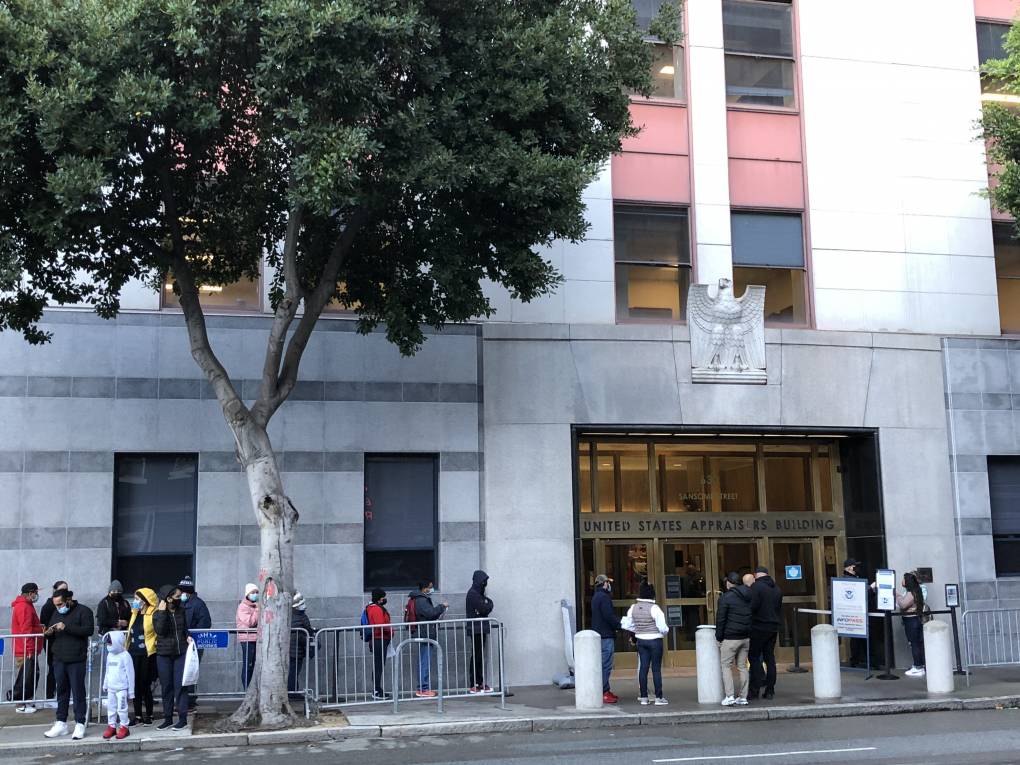
After Trump Fires 5 More SF Immigration Judges, Legal Scholars Fear a More Partisan System
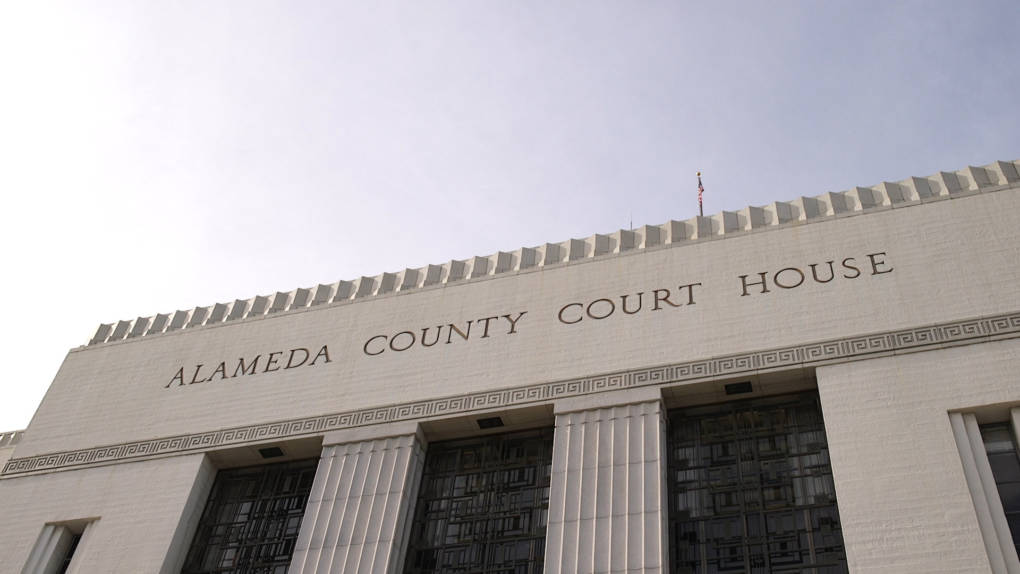
Unprecedented ICE Arrest Inside Oakland Courthouse Draws Backlash
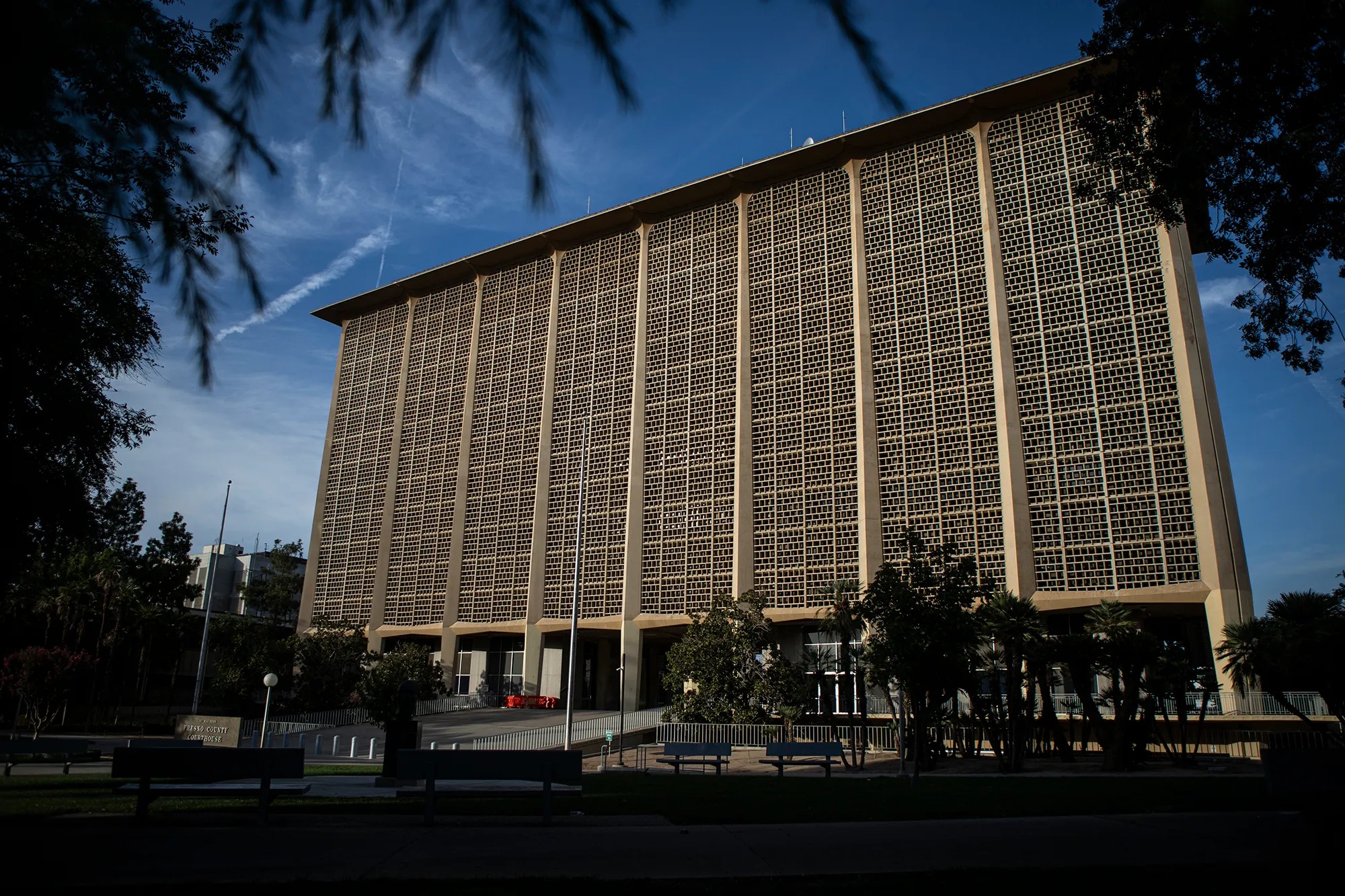
California Law Forbids ICE From Making Arrests at Courthouses. Officers are Showing Up Anyway
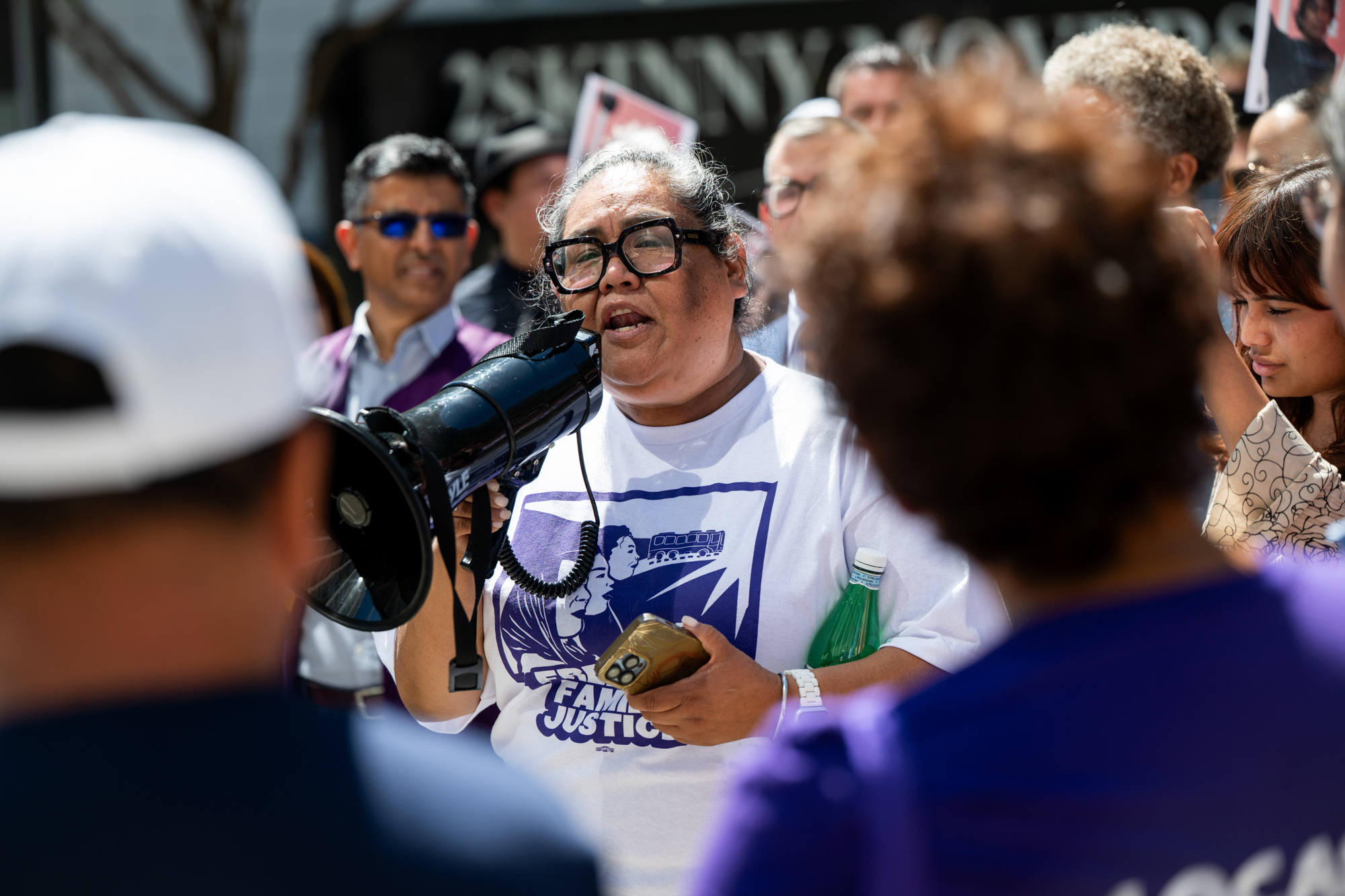
Immigration Activist Says Her Jail Conditions Were 'Barbaric' After Arrest in SF
Bay Area Organizer Gets Extended Reprieve From ICE Detention
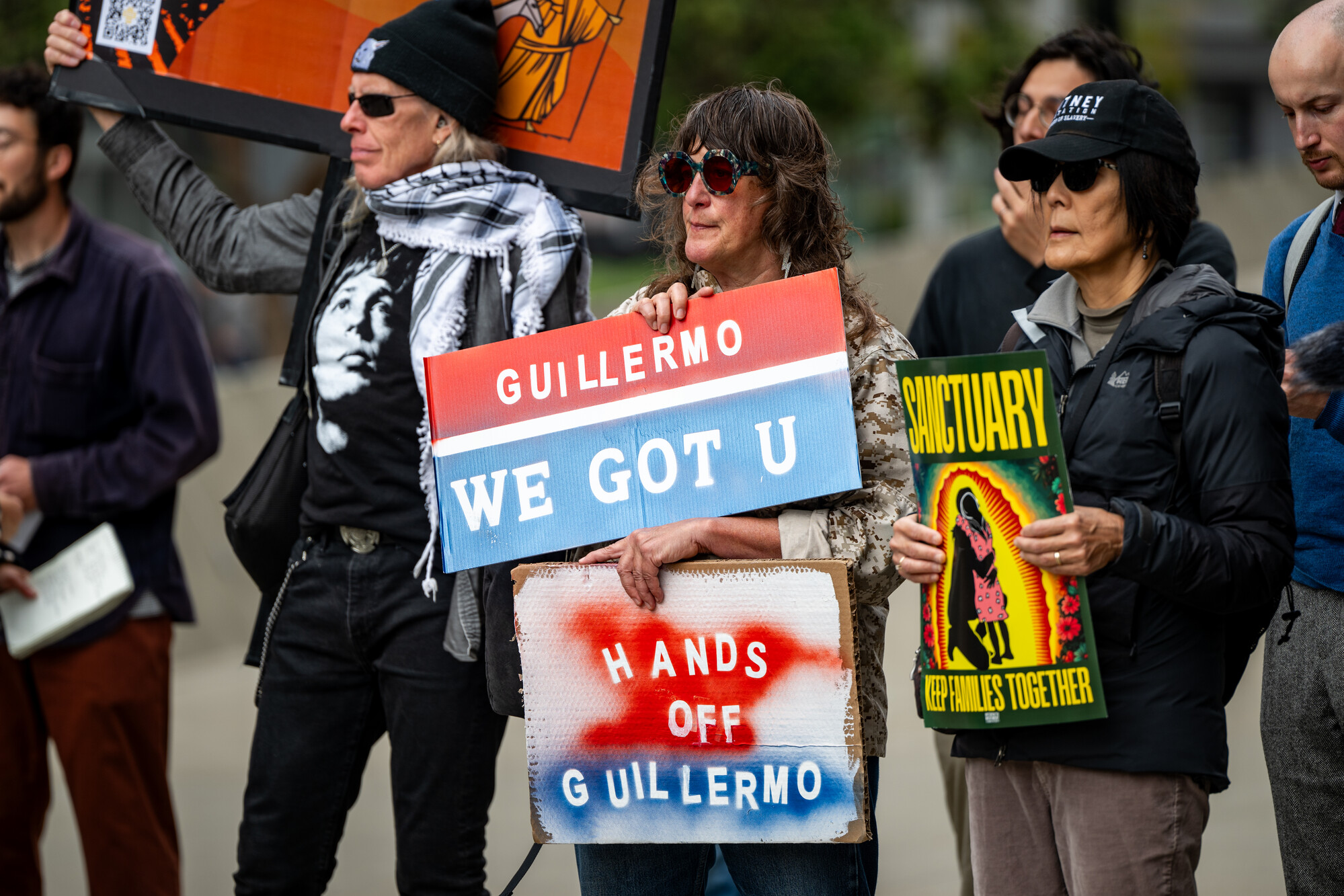
ICE Officers Drive Through Protesters Trying to Stop Arrest at SF Immigration Court
When ICE Is Waiting at Immigration Court, What Can Advocates Do?
Bay Area Lawmaker Demands Answers After ICE Arrests at Immigration Courts
What Is Due Process? Courts Push Back as Trump Moves to Limit This Right
Sponsored
Player sponsored by
window.__IS_SSR__=true
window.__INITIAL_STATE__={
"attachmentsReducer": {
"audio_0": {
"type": "attachments",
"id": "audio_0",
"imgSizes": {
"kqedFullSize": {
"file": "https://ww2.kqed.org/news/wp-content/themes/KQED-unified/img/audio_bgs/background0.jpg"
}
}
},
"audio_1": {
"type": "attachments",
"id": "audio_1",
"imgSizes": {
"kqedFullSize": {
"file": "https://ww2.kqed.org/news/wp-content/themes/KQED-unified/img/audio_bgs/background1.jpg"
}
}
},
"audio_2": {
"type": "attachments",
"id": "audio_2",
"imgSizes": {
"kqedFullSize": {
"file": "https://ww2.kqed.org/news/wp-content/themes/KQED-unified/img/audio_bgs/background2.jpg"
}
}
},
"audio_3": {
"type": "attachments",
"id": "audio_3",
"imgSizes": {
"kqedFullSize": {
"file": "https://ww2.kqed.org/news/wp-content/themes/KQED-unified/img/audio_bgs/background3.jpg"
}
}
},
"audio_4": {
"type": "attachments",
"id": "audio_4",
"imgSizes": {
"kqedFullSize": {
"file": "https://ww2.kqed.org/news/wp-content/themes/KQED-unified/img/audio_bgs/background4.jpg"
}
}
},
"placeholder": {
"type": "attachments",
"id": "placeholder",
"imgSizes": {
"thumbnail": {
"file": "https://cdn.kqed.org/wp-content/uploads/2024/12/KQED-Default-Image-816638274-2000x1333-1-160x107.jpg",
"width": 160,
"height": 107,
"mimeType": "image/jpeg"
},
"medium": {
"file": "https://cdn.kqed.org/wp-content/uploads/2024/12/KQED-Default-Image-816638274-2000x1333-1-800x533.jpg",
"width": 800,
"height": 533,
"mimeType": "image/jpeg"
},
"medium_large": {
"file": "https://cdn.kqed.org/wp-content/uploads/2024/12/KQED-Default-Image-816638274-2000x1333-1-768x512.jpg",
"width": 768,
"height": 512,
"mimeType": "image/jpeg"
},
"large": {
"file": "https://cdn.kqed.org/wp-content/uploads/2024/12/KQED-Default-Image-816638274-2000x1333-1-1020x680.jpg",
"width": 1020,
"height": 680,
"mimeType": "image/jpeg"
},
"1536x1536": {
"file": "https://cdn.kqed.org/wp-content/uploads/2024/12/KQED-Default-Image-816638274-2000x1333-1-1536x1024.jpg",
"width": 1536,
"height": 1024,
"mimeType": "image/jpeg"
},
"fd-lrg": {
"file": "https://cdn.kqed.org/wp-content/uploads/2024/12/KQED-Default-Image-816638274-2000x1333-1-1536x1024.jpg",
"width": 1536,
"height": 1024,
"mimeType": "image/jpeg"
},
"fd-med": {
"file": "https://cdn.kqed.org/wp-content/uploads/2024/12/KQED-Default-Image-816638274-2000x1333-1-1020x680.jpg",
"width": 1020,
"height": 680,
"mimeType": "image/jpeg"
},
"fd-sm": {
"file": "https://cdn.kqed.org/wp-content/uploads/2024/12/KQED-Default-Image-816638274-2000x1333-1-800x533.jpg",
"width": 800,
"height": 533,
"mimeType": "image/jpeg"
},
"post-thumbnail": {
"file": "https://cdn.kqed.org/wp-content/uploads/2024/12/KQED-Default-Image-816638274-2000x1333-1-672x372.jpg",
"width": 672,
"height": 372,
"mimeType": "image/jpeg"
},
"twentyfourteen-full-width": {
"file": "https://cdn.kqed.org/wp-content/uploads/2024/12/KQED-Default-Image-816638274-2000x1333-1-1038x576.jpg",
"width": 1038,
"height": 576,
"mimeType": "image/jpeg"
},
"xxsmall": {
"file": "https://cdn.kqed.org/wp-content/uploads/2024/12/KQED-Default-Image-816638274-2000x1333-1-160x107.jpg",
"width": 160,
"height": 107,
"mimeType": "image/jpeg"
},
"xsmall": {
"file": "https://cdn.kqed.org/wp-content/uploads/2024/12/KQED-Default-Image-816638274-2000x1333-1-672x372.jpg",
"width": 672,
"height": 372,
"mimeType": "image/jpeg"
},
"small": {
"file": "https://cdn.kqed.org/wp-content/uploads/2024/12/KQED-Default-Image-816638274-2000x1333-1-672x372.jpg",
"width": 672,
"height": 372,
"mimeType": "image/jpeg"
},
"xlarge": {
"file": "https://cdn.kqed.org/wp-content/uploads/2024/12/KQED-Default-Image-816638274-2000x1333-1-1020x680.jpg",
"width": 1020,
"height": 680,
"mimeType": "image/jpeg"
},
"full-width": {
"file": "https://cdn.kqed.org/wp-content/uploads/2024/12/KQED-Default-Image-816638274-2000x1333-1-1920x1280.jpg",
"width": 1920,
"height": 1280,
"mimeType": "image/jpeg"
},
"guest-author-32": {
"file": "https://cdn.kqed.org/wp-content/uploads/2025/01/KQED-Default-Image-816638274-1333x1333-1-160x160.jpg",
"width": 32,
"height": 32,
"mimeType": "image/jpeg"
},
"guest-author-50": {
"file": "https://cdn.kqed.org/wp-content/uploads/2025/01/KQED-Default-Image-816638274-1333x1333-1-160x160.jpg",
"width": 50,
"height": 50,
"mimeType": "image/jpeg"
},
"guest-author-64": {
"file": "https://cdn.kqed.org/wp-content/uploads/2025/01/KQED-Default-Image-816638274-1333x1333-1-160x160.jpg",
"width": 64,
"height": 64,
"mimeType": "image/jpeg"
},
"guest-author-96": {
"file": "https://cdn.kqed.org/wp-content/uploads/2025/01/KQED-Default-Image-816638274-1333x1333-1-160x160.jpg",
"width": 96,
"height": 96,
"mimeType": "image/jpeg"
},
"guest-author-128": {
"file": "https://cdn.kqed.org/wp-content/uploads/2025/01/KQED-Default-Image-816638274-1333x1333-1-160x160.jpg",
"width": 128,
"height": 128,
"mimeType": "image/jpeg"
},
"detail": {
"file": "https://cdn.kqed.org/wp-content/uploads/2025/01/KQED-Default-Image-816638274-1333x1333-1-160x160.jpg",
"width": 160,
"height": 160,
"mimeType": "image/jpeg"
},
"kqedFullSize": {
"file": "https://cdn.kqed.org/wp-content/uploads/2024/12/KQED-Default-Image-816638274-2000x1333-1.jpg",
"width": 2000,
"height": 1333
}
}
},
"news_11902344": {
"type": "attachments",
"id": "news_11902344",
"meta": {
"index": "attachments_1716263798",
"site": "news",
"id": "11902344",
"found": true
},
"title": "IMG_4486",
"publishDate": 1642797019,
"status": "inherit",
"parent": 11902290,
"modified": 1764031599,
"caption": "People line up to go through security at 630 Sansome St. in San Francisco on Dec. 15, 2021, where the Executive Office for Immigration Review holds hearings for immigrants held in detention. Legal experts who spoke with KQED worried that sitting judges are now under unprecedented pressure to make decisions that the DOJ agrees with, or face possible termination. ",
"credit": "Tyche Hendricks/KQED",
"altTag": "People stand in line outside of a court building.",
"description": null,
"imgSizes": {
"medium": {
"file": "https://cdn.kqed.org/wp-content/uploads/sites/10/2022/01/IMG_4486-800x600.jpeg",
"width": 800,
"height": 600,
"mimeType": "image/jpeg"
},
"large": {
"file": "https://cdn.kqed.org/wp-content/uploads/sites/10/2022/01/IMG_4486-1020x765.jpeg",
"width": 1020,
"height": 765,
"mimeType": "image/jpeg"
},
"thumbnail": {
"file": "https://cdn.kqed.org/wp-content/uploads/sites/10/2022/01/IMG_4486-160x120.jpeg",
"width": 160,
"height": 120,
"mimeType": "image/jpeg"
},
"1536x1536": {
"file": "https://cdn.kqed.org/wp-content/uploads/sites/10/2022/01/IMG_4486-1536x1152.jpeg",
"width": 1536,
"height": 1152,
"mimeType": "image/jpeg"
},
"2048x2048": {
"file": "https://cdn.kqed.org/wp-content/uploads/sites/10/2022/01/IMG_4486-2048x1536.jpeg",
"width": 2048,
"height": 1536,
"mimeType": "image/jpeg"
},
"post-thumbnail": {
"file": "https://cdn.kqed.org/wp-content/uploads/sites/10/2022/01/IMG_4486-672x372.jpeg",
"width": 672,
"height": 372,
"mimeType": "image/jpeg"
},
"twentyfourteen-full-width": {
"file": "https://cdn.kqed.org/wp-content/uploads/sites/10/2022/01/IMG_4486-1038x576.jpeg",
"width": 1038,
"height": 576,
"mimeType": "image/jpeg"
},
"full-width": {
"file": "https://cdn.kqed.org/wp-content/uploads/sites/10/2022/01/IMG_4486-1920x1440.jpeg",
"width": 1920,
"height": 1440,
"mimeType": "image/jpeg"
},
"kqedFullSize": {
"file": "https://cdn.kqed.org/wp-content/uploads/sites/10/2022/01/IMG_4486-scaled-e1642797113744.jpeg",
"width": 1920,
"height": 1440
}
},
"fetchFailed": false,
"isLoading": false
},
"news_11688236": {
"type": "attachments",
"id": "news_11688236",
"meta": {
"index": "attachments_1716263798",
"site": "news",
"id": "11688236",
"found": true
},
"title": "RS24077_Courthouse closeup-qut",
"publishDate": 1534965497,
"status": "inherit",
"parent": 11688225,
"modified": 1758739783,
"caption": "Immigration officers detained a man inside an Alameda County courthouse for the first time last week, according to the public defender — a move that would appear to break California law.",
"credit": "Adam Grossberg/KQED",
"altTag": "An image of a courthouse's facade.",
"description": null,
"imgSizes": {
"thumbnail": {
"file": "https://cdn.kqed.org/wp-content/uploads/sites/10/2018/08/RS24077_Courthouse-closeup-qut-160x90.jpg",
"width": 160,
"height": 90,
"mimeType": "image/jpeg"
},
"medium": {
"file": "https://cdn.kqed.org/wp-content/uploads/sites/10/2018/08/RS24077_Courthouse-closeup-qut-800x450.jpg",
"width": 800,
"height": 450,
"mimeType": "image/jpeg"
},
"large": {
"file": "https://cdn.kqed.org/wp-content/uploads/sites/10/2018/08/RS24077_Courthouse-closeup-qut-1020x574.jpg",
"width": 1020,
"height": 574,
"mimeType": "image/jpeg"
},
"complete_open_graph": {
"file": "https://cdn.kqed.org/wp-content/uploads/sites/10/2018/08/RS24077_Courthouse-closeup-qut-1200x675.jpg",
"width": 1200,
"height": 675,
"mimeType": "image/jpeg"
},
"fd-lrg": {
"file": "https://cdn.kqed.org/wp-content/uploads/sites/10/2018/08/RS24077_Courthouse-closeup-qut-1920x1080.jpg",
"width": 1920,
"height": 1080,
"mimeType": "image/jpeg"
},
"fd-med": {
"file": "https://cdn.kqed.org/wp-content/uploads/sites/10/2018/08/RS24077_Courthouse-closeup-qut-1180x664.jpg",
"width": 1180,
"height": 664,
"mimeType": "image/jpeg"
},
"fd-sm": {
"file": "https://cdn.kqed.org/wp-content/uploads/sites/10/2018/08/RS24077_Courthouse-closeup-qut-960x540.jpg",
"width": 960,
"height": 540,
"mimeType": "image/jpeg"
},
"post-thumbnail": {
"file": "https://cdn.kqed.org/wp-content/uploads/sites/10/2018/08/RS24077_Courthouse-closeup-qut-672x372.jpg",
"width": 672,
"height": 372,
"mimeType": "image/jpeg"
},
"twentyfourteen-full-width": {
"file": "https://cdn.kqed.org/wp-content/uploads/sites/10/2018/08/RS24077_Courthouse-closeup-qut-1038x576.jpg",
"width": 1038,
"height": 576,
"mimeType": "image/jpeg"
},
"xxsmall": {
"file": "https://cdn.kqed.org/wp-content/uploads/sites/10/2018/08/RS24077_Courthouse-closeup-qut-240x135.jpg",
"width": 240,
"height": 135,
"mimeType": "image/jpeg"
},
"xsmall": {
"file": "https://cdn.kqed.org/wp-content/uploads/sites/10/2018/08/RS24077_Courthouse-closeup-qut-375x211.jpg",
"width": 375,
"height": 211,
"mimeType": "image/jpeg"
},
"small": {
"file": "https://cdn.kqed.org/wp-content/uploads/sites/10/2018/08/RS24077_Courthouse-closeup-qut-520x293.jpg",
"width": 520,
"height": 293,
"mimeType": "image/jpeg"
},
"xlarge": {
"file": "https://cdn.kqed.org/wp-content/uploads/sites/10/2018/08/RS24077_Courthouse-closeup-qut-1180x664.jpg",
"width": 1180,
"height": 664,
"mimeType": "image/jpeg"
},
"full-width": {
"file": "https://cdn.kqed.org/wp-content/uploads/sites/10/2018/08/RS24077_Courthouse-closeup-qut-1920x1080.jpg",
"width": 1920,
"height": 1080,
"mimeType": "image/jpeg"
},
"guest-author-32": {
"file": "https://cdn.kqed.org/wp-content/uploads/sites/10/2018/08/RS24077_Courthouse-closeup-qut-32x32.jpg",
"width": 32,
"height": 32,
"mimeType": "image/jpeg"
},
"guest-author-50": {
"file": "https://cdn.kqed.org/wp-content/uploads/sites/10/2018/08/RS24077_Courthouse-closeup-qut-50x50.jpg",
"width": 50,
"height": 50,
"mimeType": "image/jpeg"
},
"guest-author-64": {
"file": "https://cdn.kqed.org/wp-content/uploads/sites/10/2018/08/RS24077_Courthouse-closeup-qut-64x64.jpg",
"width": 64,
"height": 64,
"mimeType": "image/jpeg"
},
"guest-author-96": {
"file": "https://cdn.kqed.org/wp-content/uploads/sites/10/2018/08/RS24077_Courthouse-closeup-qut-96x96.jpg",
"width": 96,
"height": 96,
"mimeType": "image/jpeg"
},
"guest-author-128": {
"file": "https://cdn.kqed.org/wp-content/uploads/sites/10/2018/08/RS24077_Courthouse-closeup-qut-128x128.jpg",
"width": 128,
"height": 128,
"mimeType": "image/jpeg"
},
"detail": {
"file": "https://cdn.kqed.org/wp-content/uploads/sites/10/2018/08/RS24077_Courthouse-closeup-qut-150x150.jpg",
"width": 150,
"height": 150,
"mimeType": "image/jpeg"
},
"kqedFullSize": {
"file": "https://cdn.kqed.org/wp-content/uploads/sites/10/2018/08/RS24077_Courthouse-closeup-qut.jpg",
"width": 1920,
"height": 1080
}
},
"fetchFailed": false,
"isLoading": false
},
"news_12057283": {
"type": "attachments",
"id": "news_12057283",
"meta": {
"index": "attachments_1716263798",
"site": "news",
"id": "12057283",
"found": true
},
"title": "calmatters_091825_Fresno-Courthouse_LV_10",
"publishDate": 1758654977,
"status": "inherit",
"parent": 12057278,
"modified": 1758655019,
"caption": "The Fresno County Courthouse on Sept. 17, 2025.",
"credit": "Larry Valenzuela, CalMatters/CatchLight Local",
"altTag": null,
"description": null,
"imgSizes": {
"thumbnail": {
"file": "https://cdn.kqed.org/wp-content/uploads/sites/10/2025/09/calmatters_091825_Fresno-Courthouse_LV_10-160x107.jpg",
"width": 160,
"height": 107,
"mimeType": "image/jpeg"
},
"1536x1536": {
"file": "https://cdn.kqed.org/wp-content/uploads/sites/10/2025/09/calmatters_091825_Fresno-Courthouse_LV_10-1536x1024.jpg",
"width": 1536,
"height": 1024,
"mimeType": "image/jpeg"
},
"post-thumbnail": {
"file": "https://cdn.kqed.org/wp-content/uploads/sites/10/2025/09/calmatters_091825_Fresno-Courthouse_LV_10-672x372.jpg",
"width": 672,
"height": 372,
"mimeType": "image/jpeg"
},
"twentyfourteen-full-width": {
"file": "https://cdn.kqed.org/wp-content/uploads/sites/10/2025/09/calmatters_091825_Fresno-Courthouse_LV_10-1038x576.jpg",
"width": 1038,
"height": 576,
"mimeType": "image/jpeg"
},
"kqedFullSize": {
"file": "https://cdn.kqed.org/wp-content/uploads/sites/10/2025/09/calmatters_091825_Fresno-Courthouse_LV_10.jpg",
"width": 2000,
"height": 1333
}
},
"fetchFailed": false,
"isLoading": false
},
"news_12053224": {
"type": "attachments",
"id": "news_12053224",
"meta": {
"index": "attachments_1716263798",
"site": "news",
"id": "12053224",
"found": true
},
"title": "250821-UNIONICE-07-KQED",
"publishDate": 1755812271,
"status": "inherit",
"parent": 0,
"modified": 1755814295,
"caption": "SEIU Local 87 president Olga Miranda speaks during a rally outside the Phillip Burton Federal Building in San Francisco on Aug. 21, 2025, where labor leaders and family members condemned recent ICE raids and awaited the release of detained community organizer Angélica Guerrero.",
"credit": "Beth LaBerge/KQED",
"altTag": null,
"description": null,
"imgSizes": {
"thumbnail": {
"file": "https://cdn.kqed.org/wp-content/uploads/sites/10/2025/08/250821-UNIONICE-07-KQED-160x107.jpg",
"width": 160,
"height": 107,
"mimeType": "image/jpeg"
},
"1536x1536": {
"file": "https://cdn.kqed.org/wp-content/uploads/sites/10/2025/08/250821-UNIONICE-07-KQED-1536x1024.jpg",
"width": 1536,
"height": 1024,
"mimeType": "image/jpeg"
},
"post-thumbnail": {
"file": "https://cdn.kqed.org/wp-content/uploads/sites/10/2025/08/250821-UNIONICE-07-KQED-672x372.jpg",
"width": 672,
"height": 372,
"mimeType": "image/jpeg"
},
"twentyfourteen-full-width": {
"file": "https://cdn.kqed.org/wp-content/uploads/sites/10/2025/08/250821-UNIONICE-07-KQED-1038x576.jpg",
"width": 1038,
"height": 576,
"mimeType": "image/jpeg"
},
"kqedFullSize": {
"file": "https://cdn.kqed.org/wp-content/uploads/sites/10/2025/08/250821-UNIONICE-07-KQED.jpg",
"width": 2000,
"height": 1333
}
},
"fetchFailed": false,
"isLoading": false
},
"news_12048130": {
"type": "attachments",
"id": "news_12048130",
"meta": {
"index": "attachments_1716263798",
"site": "news",
"id": "12048130",
"found": true
},
"title": "250715-ImmigrationCourtProtests-13-BL_qed",
"publishDate": 1752605216,
"status": "inherit",
"parent": 12049326,
"modified": 1753292955,
"caption": "Supporters rally outside the U.S. District Court in San Francisco on July 15, 2025, calling on ICE to release Guillermo Medina Reyes ahead of his preliminary injunction hearing.",
"credit": "Beth LaBerge/KQED",
"altTag": null,
"description": null,
"imgSizes": {
"thumbnail": {
"file": "https://cdn.kqed.org/wp-content/uploads/sites/10/2025/07/250715-ImmigrationCourtProtests-13-BL_qed-160x107.jpg",
"width": 160,
"height": 107,
"mimeType": "image/jpeg"
},
"1536x1536": {
"file": "https://cdn.kqed.org/wp-content/uploads/sites/10/2025/07/250715-ImmigrationCourtProtests-13-BL_qed-1536x1024.jpg",
"width": 1536,
"height": 1024,
"mimeType": "image/jpeg"
},
"post-thumbnail": {
"file": "https://cdn.kqed.org/wp-content/uploads/sites/10/2025/07/250715-ImmigrationCourtProtests-13-BL_qed-672x372.jpg",
"width": 672,
"height": 372,
"mimeType": "image/jpeg"
},
"twentyfourteen-full-width": {
"file": "https://cdn.kqed.org/wp-content/uploads/sites/10/2025/07/250715-ImmigrationCourtProtests-13-BL_qed-1038x576.jpg",
"width": 1038,
"height": 576,
"mimeType": "image/jpeg"
},
"kqedFullSize": {
"file": "https://cdn.kqed.org/wp-content/uploads/sites/10/2025/07/250715-ImmigrationCourtProtests-13-BL_qed.jpg",
"width": 1999,
"height": 1333
}
},
"fetchFailed": false,
"isLoading": false
},
"news_11883278": {
"type": "attachments",
"id": "news_11883278",
"meta": {
"index": "attachments_1716263798",
"site": "news",
"id": "11883278",
"found": true
},
"parent": 11883227,
"imgSizes": {
"twentyfourteen-full-width": {
"file": "https://ww2.kqed.org/app/uploads/sites/10/2021/07/immigration-protest-1038x576.jpeg",
"width": 1038,
"mimeType": "image/jpeg",
"height": 576
},
"thumbnail": {
"file": "https://ww2.kqed.org/app/uploads/sites/10/2021/07/immigration-protest-160x107.jpeg",
"width": 160,
"mimeType": "image/jpeg",
"height": 107
},
"post-thumbnail": {
"file": "https://ww2.kqed.org/app/uploads/sites/10/2021/07/immigration-protest-672x372.jpeg",
"width": 672,
"mimeType": "image/jpeg",
"height": 372
},
"kqedFullSize": {
"file": "https://ww2.kqed.org/app/uploads/sites/10/2021/07/immigration-protest.jpeg",
"width": 1600,
"height": 1067
},
"large": {
"file": "https://ww2.kqed.org/app/uploads/sites/10/2021/07/immigration-protest-1020x680.jpeg",
"width": 1020,
"mimeType": "image/jpeg",
"height": 680
},
"1536x1536": {
"file": "https://ww2.kqed.org/app/uploads/sites/10/2021/07/immigration-protest-1536x1024.jpeg",
"width": 1536,
"mimeType": "image/jpeg",
"height": 1024
},
"medium": {
"file": "https://ww2.kqed.org/app/uploads/sites/10/2021/07/immigration-protest-800x534.jpeg",
"width": 800,
"mimeType": "image/jpeg",
"height": 534
}
},
"publishDate": 1627692006,
"modified": 1627692069,
"caption": "A protester holds up a sign outside of the U.S. Immigration and Customs Enforcement processing center and immigration court at 630 Sansome St. in San Francisco.",
"description": "A protester holds up a sign outside of the U.S. Immigration and Customs Enforcement processing center and immigration court at 630 Sansome St. in San Francisco.",
"title": "immigration-protest",
"credit": "JoeBill Muñoz/KQED",
"status": "inherit",
"altTag": "Protester holds up a sign that says \"everyone is welcome Here\"",
"fetchFailed": false,
"isLoading": false
},
"news_12046907": {
"type": "attachments",
"id": "news_12046907",
"meta": {
"index": "attachments_1716263798",
"site": "news",
"id": "12046907",
"found": true
},
"title": "ICE-immigration-courrt",
"publishDate": 1751493110,
"status": "inherit",
"parent": 12057278,
"modified": 1758656897,
"caption": "With increased ICE presence in immigration courts, how are lawyers, volunteers and advocates responding?",
"credit": "Anna Vignet/KQED",
"altTag": null,
"description": null,
"imgSizes": {
"medium": {
"file": "https://cdn.kqed.org/wp-content/uploads/sites/10/2025/07/IMG_1067-2000x1500.jpg",
"width": 2000,
"height": 1500,
"mimeType": "image/jpeg"
},
"large": {
"file": "https://cdn.kqed.org/wp-content/uploads/sites/10/2025/07/IMG_1067-2000x1500.jpg",
"width": 2000,
"height": 1500,
"mimeType": "image/jpeg"
},
"thumbnail": {
"file": "https://cdn.kqed.org/wp-content/uploads/sites/10/2025/07/IMG_1067-160x120.jpg",
"width": 160,
"height": 120,
"mimeType": "image/jpeg"
},
"1536x1536": {
"file": "https://cdn.kqed.org/wp-content/uploads/sites/10/2025/07/IMG_1067-1536x1152.jpg",
"width": 1536,
"height": 1152,
"mimeType": "image/jpeg"
},
"2048x2048": {
"file": "https://cdn.kqed.org/wp-content/uploads/sites/10/2025/07/IMG_1067-2048x1536.jpg",
"width": 2048,
"height": 1536,
"mimeType": "image/jpeg"
},
"post-thumbnail": {
"file": "https://cdn.kqed.org/wp-content/uploads/sites/10/2025/07/IMG_1067-672x372.jpg",
"width": 672,
"height": 372,
"mimeType": "image/jpeg"
},
"twentyfourteen-full-width": {
"file": "https://cdn.kqed.org/wp-content/uploads/sites/10/2025/07/IMG_1067-1038x576.jpg",
"width": 1038,
"height": 576,
"mimeType": "image/jpeg"
},
"full-width": {
"file": "https://cdn.kqed.org/wp-content/uploads/sites/10/2025/07/IMG_1067-2000x1500.jpg",
"width": 2000,
"height": 1500,
"mimeType": "image/jpeg"
},
"kqedFullSize": {
"file": "https://cdn.kqed.org/wp-content/uploads/sites/10/2025/07/IMG_1067.jpg",
"width": 2560,
"height": 1920
}
},
"fetchFailed": false,
"isLoading": false
},
"news_11975030": {
"type": "attachments",
"id": "news_11975030",
"meta": {
"index": "attachments_1716263798",
"site": "news",
"id": "11975030",
"found": true
},
"parent": 11975904,
"imgSizes": {
"twentyfourteen-full-width": {
"file": "https://cdn.kqed.org/wp-content/uploads/sites/10/2024/02/240206-IMMIGRATIONCOURT-26-BL-KQED-1038x576.jpg",
"width": 1038,
"mimeType": "image/jpeg",
"height": 576
},
"thumbnail": {
"file": "https://cdn.kqed.org/wp-content/uploads/sites/10/2024/02/240206-IMMIGRATIONCOURT-26-BL-KQED-160x107.jpg",
"width": 160,
"mimeType": "image/jpeg",
"height": 107
},
"post-thumbnail": {
"file": "https://cdn.kqed.org/wp-content/uploads/sites/10/2024/02/240206-IMMIGRATIONCOURT-26-BL-KQED-672x372.jpg",
"width": 672,
"mimeType": "image/jpeg",
"height": 372
},
"kqedFullSize": {
"file": "https://cdn.kqed.org/wp-content/uploads/sites/10/2024/02/240206-IMMIGRATIONCOURT-26-BL-KQED.jpg",
"width": 2000,
"height": 1333
},
"large": {
"file": "https://cdn.kqed.org/wp-content/uploads/sites/10/2024/02/240206-IMMIGRATIONCOURT-26-BL-KQED-1020x680.jpg",
"width": 1020,
"mimeType": "image/jpeg",
"height": 680
},
"1536x1536": {
"file": "https://cdn.kqed.org/wp-content/uploads/sites/10/2024/02/240206-IMMIGRATIONCOURT-26-BL-KQED-1536x1024.jpg",
"width": 1536,
"mimeType": "image/jpeg",
"height": 1024
},
"full-width": {
"file": "https://cdn.kqed.org/wp-content/uploads/sites/10/2024/02/240206-IMMIGRATIONCOURT-26-BL-KQED-1920x1280.jpg",
"width": 1920,
"mimeType": "image/jpeg",
"height": 1280
},
"medium": {
"file": "https://cdn.kqed.org/wp-content/uploads/sites/10/2024/02/240206-IMMIGRATIONCOURT-26-BL-KQED-800x533.jpg",
"width": 800,
"mimeType": "image/jpeg",
"height": 533
}
},
"publishDate": 1707340047,
"modified": 1707941989,
"caption": "The site of a new immigration court at 1855 Concord Gateway in Concord on Feb. 6, 2024.",
"description": null,
"title": "240206-IMMIGRATIONCOURT-26-BL-KQED",
"credit": "Beth LaBerge/KQED",
"status": "inherit",
"altTag": "A view looking up at a building.",
"fetchFailed": false,
"isLoading": false
},
"news_12042519": {
"type": "attachments",
"id": "news_12042519",
"meta": {
"index": "attachments_1716263798",
"site": "news",
"id": "12042519",
"found": true
},
"title": "20250501_MayDayRally_GC-11_qed",
"publishDate": 1748973260,
"status": "inherit",
"parent": 12042492,
"modified": 1748973272,
"caption": "Hundreds march during a May Day rally, calling for immigrant rights, on International Workers’ Day, in Santa Rosa on May 1, 2025.",
"credit": "Gina Castro/KQED",
"altTag": null,
"description": null,
"imgSizes": {
"medium": {
"file": "https://cdn.kqed.org/wp-content/uploads/sites/10/2025/06/20250501_MayDayRally_GC-11_qed-800x533.jpg",
"width": 800,
"height": 533,
"mimeType": "image/jpeg"
},
"large": {
"file": "https://cdn.kqed.org/wp-content/uploads/sites/10/2025/06/20250501_MayDayRally_GC-11_qed-1020x680.jpg",
"width": 1020,
"height": 680,
"mimeType": "image/jpeg"
},
"thumbnail": {
"file": "https://cdn.kqed.org/wp-content/uploads/sites/10/2025/06/20250501_MayDayRally_GC-11_qed-160x107.jpg",
"width": 160,
"height": 107,
"mimeType": "image/jpeg"
},
"1536x1536": {
"file": "https://cdn.kqed.org/wp-content/uploads/sites/10/2025/06/20250501_MayDayRally_GC-11_qed-1536x1024.jpg",
"width": 1536,
"height": 1024,
"mimeType": "image/jpeg"
},
"post-thumbnail": {
"file": "https://cdn.kqed.org/wp-content/uploads/sites/10/2025/06/20250501_MayDayRally_GC-11_qed-672x372.jpg",
"width": 672,
"height": 372,
"mimeType": "image/jpeg"
},
"twentyfourteen-full-width": {
"file": "https://cdn.kqed.org/wp-content/uploads/sites/10/2025/06/20250501_MayDayRally_GC-11_qed-1038x576.jpg",
"width": 1038,
"height": 576,
"mimeType": "image/jpeg"
},
"full-width": {
"file": "https://cdn.kqed.org/wp-content/uploads/sites/10/2025/06/20250501_MayDayRally_GC-11_qed-1920x1280.jpg",
"width": 1920,
"height": 1280,
"mimeType": "image/jpeg"
},
"kqedFullSize": {
"file": "https://cdn.kqed.org/wp-content/uploads/sites/10/2025/06/20250501_MayDayRally_GC-11_qed.jpg",
"width": 2000,
"height": 1333
}
},
"fetchFailed": false,
"isLoading": false
}
},
"audioPlayerReducer": {
"postId": "stream_live",
"isPaused": true,
"isPlaying": false,
"pfsActive": false,
"pledgeModalIsOpen": true,
"playerDrawerIsOpen": false
},
"authorsReducer": {
"byline_news_12057278": {
"type": "authors",
"id": "byline_news_12057278",
"meta": {
"override": true
},
"slug": "byline_news_12057278",
"name": "Nigel Duara, CalMatters",
"isLoading": false
},
"ccabreralomeli": {
"type": "authors",
"id": "11708",
"meta": {
"index": "authors_1716337520",
"id": "11708",
"found": true
},
"name": "Carlos Cabrera-Lomelí",
"firstName": "Carlos",
"lastName": "Cabrera-Lomelí",
"slug": "ccabreralomeli",
"email": "ccabreralomeli@KQED.org",
"display_author_email": true,
"staff_mastheads": [
"news"
],
"title": "Community Reporter",
"bio": "Carlos Cabrera-Lomelí is a community reporter with KQED's digital engagement team. He also reports and co-produces for KQED's bilingual news hub KQED en Español. He grew up in San Francisco's Mission District and has previously worked with Univision, 48 Hills and REFORMA in Mexico City.",
"avatar": "https://secure.gravatar.com/avatar/e95ff80bb2eaf18a8f2af4dcf7ffb54b?s=600&d=mm&r=g",
"twitter": "@LomeliCabrera",
"facebook": null,
"instagram": null,
"linkedin": null,
"sites": [
{
"site": "arts",
"roles": [
"editor"
]
},
{
"site": "news",
"roles": [
"editor"
]
},
{
"site": "about",
"roles": [
"editor"
]
},
{
"site": "science",
"roles": [
"editor"
]
},
{
"site": "perspectives",
"roles": [
"editor"
]
},
{
"site": "elections",
"roles": [
"editor"
]
},
{
"site": "liveblog",
"roles": [
"contributor"
]
}
],
"headData": {
"title": "Carlos Cabrera-Lomelí | KQED",
"description": "Community Reporter",
"ogImgSrc": "https://secure.gravatar.com/avatar/e95ff80bb2eaf18a8f2af4dcf7ffb54b?s=600&d=mm&r=g",
"twImgSrc": "https://secure.gravatar.com/avatar/e95ff80bb2eaf18a8f2af4dcf7ffb54b?s=600&d=mm&r=g"
},
"isLoading": false,
"link": "/author/ccabreralomeli"
},
"jlara": {
"type": "authors",
"id": "11761",
"meta": {
"index": "authors_1716337520",
"id": "11761",
"found": true
},
"name": "Juan Carlos Lara",
"firstName": "Juan Carlos",
"lastName": "Lara",
"slug": "jlara",
"email": "jlara@kqed.org",
"display_author_email": false,
"staff_mastheads": [],
"title": "KQED Contributor",
"bio": null,
"avatar": "https://secure.gravatar.com/avatar/19e2052b9b05657c5ff2af2121846e9c?s=600&d=blank&r=g",
"twitter": null,
"facebook": null,
"instagram": null,
"linkedin": null,
"sites": [
{
"site": "arts",
"roles": [
"editor"
]
},
{
"site": "news",
"roles": [
"editor"
]
},
{
"site": "forum",
"roles": [
"editor"
]
},
{
"site": "liveblog",
"roles": [
"contributor"
]
}
],
"headData": {
"title": "Juan Carlos Lara | KQED",
"description": "KQED Contributor",
"ogImgSrc": "https://secure.gravatar.com/avatar/19e2052b9b05657c5ff2af2121846e9c?s=600&d=blank&r=g",
"twImgSrc": "https://secure.gravatar.com/avatar/19e2052b9b05657c5ff2af2121846e9c?s=600&d=blank&r=g"
},
"isLoading": false,
"link": "/author/jlara"
},
"nkhan": {
"type": "authors",
"id": "11867",
"meta": {
"index": "authors_1716337520",
"id": "11867",
"found": true
},
"name": "Nisa Khan",
"firstName": "Nisa",
"lastName": "Khan",
"slug": "nkhan",
"email": "nkhan@kqed.org",
"display_author_email": false,
"staff_mastheads": [],
"title": "KQED Contributor",
"bio": "Nisa Khan is a reporter for KQED's Audience News Desk. She was formerly a data reporter at Michigan Radio. She earned a Bachelor of Science in Information from the University of Michigan and a Master of Arts in Communication from Stanford University.",
"avatar": "https://secure.gravatar.com/avatar/a3bf1efcfbe7658d13a434cc54d0b2e3?s=600&d=blank&r=g",
"twitter": "mnisakhan",
"facebook": null,
"instagram": null,
"linkedin": null,
"sites": [
{
"site": "arts",
"roles": [
"editor"
]
},
{
"site": "news",
"roles": [
"editor"
]
},
{
"site": "forum",
"roles": [
"editor"
]
},
{
"site": "liveblog",
"roles": [
"contributor"
]
}
],
"headData": {
"title": "Nisa Khan | KQED",
"description": "KQED Contributor",
"ogImgSrc": "https://secure.gravatar.com/avatar/a3bf1efcfbe7658d13a434cc54d0b2e3?s=600&d=blank&r=g",
"twImgSrc": "https://secure.gravatar.com/avatar/a3bf1efcfbe7658d13a434cc54d0b2e3?s=600&d=blank&r=g"
},
"isLoading": false,
"link": "/author/nkhan"
},
"kdebenedetti": {
"type": "authors",
"id": "11913",
"meta": {
"index": "authors_1716337520",
"id": "11913",
"found": true
},
"name": "Katie DeBenedetti",
"firstName": "Katie",
"lastName": "DeBenedetti",
"slug": "kdebenedetti",
"email": "kdebenedetti@kqed.org",
"display_author_email": false,
"staff_mastheads": [
"news",
"science"
],
"title": "KQED Contributor",
"bio": "Katie DeBenedetti is a digital reporter covering daily news for the Express Desk. Prior to joining KQED as a culture reporting intern in January 2024, she covered education and city government for the Napa Valley Register.",
"avatar": "https://secure.gravatar.com/avatar/6e31073cb8f7e4214ab03f42771d0f45?s=600&d=blank&r=g",
"twitter": null,
"facebook": null,
"instagram": null,
"linkedin": null,
"sites": [
{
"site": "news",
"roles": [
"author"
]
},
{
"site": "science",
"roles": [
"author"
]
},
{
"site": "liveblog",
"roles": [
"author"
]
}
],
"headData": {
"title": "Katie DeBenedetti | KQED",
"description": "KQED Contributor",
"ogImgSrc": "https://secure.gravatar.com/avatar/6e31073cb8f7e4214ab03f42771d0f45?s=600&d=blank&r=g",
"twImgSrc": "https://secure.gravatar.com/avatar/6e31073cb8f7e4214ab03f42771d0f45?s=600&d=blank&r=g"
},
"isLoading": false,
"link": "/author/kdebenedetti"
},
"slim": {
"type": "authors",
"id": "11920",
"meta": {
"index": "authors_1716337520",
"id": "11920",
"found": true
},
"name": "Samantha Lim",
"firstName": "Samantha",
"lastName": "Lim",
"slug": "slim",
"email": "slim@KQED.org",
"display_author_email": false,
"staff_mastheads": [],
"title": "KQED Contributor",
"bio": null,
"avatar": "https://secure.gravatar.com/avatar/82e592e6c15fe1a04d385e8ad0fb0b4e?s=600&d=blank&r=g",
"twitter": null,
"facebook": null,
"instagram": null,
"linkedin": null,
"sites": [
{
"site": "news",
"roles": []
}
],
"headData": {
"title": "Samantha Lim | KQED",
"description": "KQED Contributor",
"ogImgSrc": "https://secure.gravatar.com/avatar/82e592e6c15fe1a04d385e8ad0fb0b4e?s=600&d=blank&r=g",
"twImgSrc": "https://secure.gravatar.com/avatar/82e592e6c15fe1a04d385e8ad0fb0b4e?s=600&d=blank&r=g"
},
"isLoading": false,
"link": "/author/slim"
},
"bkrans": {
"type": "authors",
"id": "11923",
"meta": {
"index": "authors_1716337520",
"id": "11923",
"found": true
},
"name": "Brian Krans",
"firstName": "Brian",
"lastName": "Krans",
"slug": "bkrans",
"email": "bkrans@kqed.org",
"display_author_email": false,
"staff_mastheads": [
"news"
],
"title": "KQED Contributing Reporter",
"bio": "Brian Krans is an award-winning local news and investigative reporter who has been proudly working as a general assignment reporter for KQED since August 2023. He lives in Richmond, where he also reports on air pollution for Richmondside. He is also a founding member of the Vallejo Sun.",
"avatar": "https://secure.gravatar.com/avatar/d1014d604089314a94807d2c4f2d3e06?s=600&d=blank&r=g",
"twitter": "citizenkrans",
"facebook": null,
"instagram": null,
"linkedin": null,
"sites": [
{
"site": "news",
"roles": [
"editor"
]
}
],
"headData": {
"title": "Brian Krans | KQED",
"description": "KQED Contributing Reporter",
"ogImgSrc": "https://secure.gravatar.com/avatar/d1014d604089314a94807d2c4f2d3e06?s=600&d=blank&r=g",
"twImgSrc": "https://secure.gravatar.com/avatar/d1014d604089314a94807d2c4f2d3e06?s=600&d=blank&r=g"
},
"isLoading": false,
"link": "/author/bkrans"
}
},
"breakingNewsReducer": {},
"pagesReducer": {},
"postsReducer": {
"stream_live": {
"type": "live",
"id": "stream_live",
"audioUrl": "https://streams.kqed.org/kqedradio",
"title": "Live Stream",
"excerpt": "Live Stream information currently unavailable.",
"link": "/radio",
"featImg": "",
"label": {
"name": "KQED Live",
"link": "/"
}
},
"stream_kqedNewscast": {
"type": "posts",
"id": "stream_kqedNewscast",
"audioUrl": "https://www.kqed.org/.stream/anon/radio/RDnews/newscast.mp3?_=1",
"title": "KQED Newscast",
"featImg": "",
"label": {
"name": "88.5 FM",
"link": "/"
}
},
"news_12065240": {
"type": "posts",
"id": "news_12065240",
"meta": {
"index": "posts_1716263798",
"site": "news",
"id": "12065240",
"score": null,
"sort": [
1764031362000
]
},
"guestAuthors": [],
"slug": "after-trump-fires-5-more-sf-immigration-judges-legal-scholars-fear-a-more-partisan-system",
"title": "After Trump Fires 5 More SF Immigration Judges, Legal Scholars Fear a More Partisan System",
"publishDate": 1764031362,
"format": "standard",
"headTitle": "After Trump Fires 5 More SF Immigration Judges, Legal Scholars Fear a More Partisan System | KQED",
"labelTerm": {
"site": "news"
},
"content": "\u003cp>After five federal judges were fired last week in San Francisco, legal scholars and advocates are warning that t\u003ca href=\"https://www.kqed.org/news/tag/donald-trump\">he Trump administration\u003c/a> is taking unprecedented steps to remake the \u003ca href=\"https://www.kqed.org/news/tag/immigration-court\">immigration court system\u003c/a>.\u003c/p>\n\u003cp>Friday’s firings bring the total number of immigration court judges removed by the Trump Administration to 90 across the country, including 12 on the Bay Area’s bench, according to the National Association of Immigration Judges. This overhaul comes amid a nationwide backlog of immigration cases — with about 120,000 currently pending in the Bay Area alone.\u003c/p>\n\u003cp>UC Davis Law Professor Kevin Johnson said that it’s not uncommon for presidents to appoint judges whose philosophy matches their own, but that the current administration appears to be not only at hiring, but firing, the federal judges based on their immigration ideology.\u003c/p>\n\u003cp>“It’s very aggressive, and it’s like nothing we’ve seen in any of the previous five or six administrations. I don’t remember it ever happening in U.S. history,” he told KQED. “But it’s happening now.”\u003c/p>\n\u003cp>[ad fullwidth]\u003c/p>\n\u003cp>On Friday, Judges Amber George, Jeremiah Johnson, Louis Gordon, Shuting Chen and Patrick Savage were fired from San Francisco’s immigration court, which at the start of the year had more than 20 judges, according to Milli Atkinson, the director of the Immigrant Legal Defense Program with the Bar Association of San Francisco.\u003c/p>\n\u003cp>Now, she said, the bench is down to just nine judges.\u003c/p>\n\u003cp>Earlier this year, at least \u003ca href=\"https://www.kqed.org/news/12054620/despite-a-growing-case-backlog-trump-fires-6th-san-francisco-immigration-judge\">seven other Bay Area judges were fired\u003c/a>, including the \u003ca href=\"https://www.kqed.org/news/12055416/trump-fires-san-franciscos-top-immigration-judge\">city’s top judge, Loi McCleskey, who was terminated\u003c/a> after just over a year on the job in September.\u003c/p>\n\u003cfigure id=\"attachment_12063685\" class=\"wp-caption aligncenter\" style=\"max-width: 2000px\">\u003cimg loading=\"lazy\" decoding=\"async\" class=\"size-full wp-image-12063685\" src=\"https://cdn.kqed.org/wp-content/uploads/sites/10/2025/11/20251106_ICE-Vigil_GH-15_qed.jpg\" alt=\"\" width=\"2000\" height=\"1333\" srcset=\"https://cdn.kqed.org/wp-content/uploads/sites/10/2025/11/20251106_ICE-Vigil_GH-15_qed.jpg 2000w, https://cdn.kqed.org/wp-content/uploads/sites/10/2025/11/20251106_ICE-Vigil_GH-15_qed-160x107.jpg 160w, https://cdn.kqed.org/wp-content/uploads/sites/10/2025/11/20251106_ICE-Vigil_GH-15_qed-1536x1024.jpg 1536w\" sizes=\"auto, (max-width: 2000px) 100vw, 2000px\">\u003cfigcaption class=\"wp-caption-text\">A demonstrator holds a sign reading “Santuario: Manteniendo Familias Unidas” (“Sanctuary: Keeping Families United”) during the Faith in Action “Walking Our Faith” vigil outside the San Francisco Immigration Court on Nov. 6, 2025. The multi-faith gathering called for compassion and protection for immigrant families. \u003ccite>(Gustavo Hernandez/KQED)\u003c/cite>\u003c/figcaption>\u003c/figure>\n\u003cp>The firings of longstanding adjudicators have been without explanation from the DOJ, according to Atkinson.\u003c/p>\n\u003cp>“The general belief among the immigration legal community is that they are trying to remove judges who’ve been longstanding civil servants who’ve been very experienced in adjudicating these cases here in San Francisco and filling the bench with judges who are more aligned with the political beliefs of this administration and are going to follow policy memos and directives from the administration,” she said.\u003c/p>\n\u003cp>The Department of Justice did not respond to a request for comment on Monday.\u003c/p>\n\u003cp>San Francisco’s immigration court has historically granted asylum at higher rates than the national average, and 11 of the 12 judges who have lost their jobs have higher-than-average asylum-granting rates. The three San Francisco judges with the highest rates of asylum were all terminated earlier this year.[aside postID=news_12065068 hero='https://cdn.kqed.org/wp-content/uploads/sites/10/2025/11/HooverElementaryGetty.jpg']Attorneys told KQED in September that the discrepancy between rates across jurisdictions is likely due to a multitude of factors, including that asylum seekers in San Francisco are more likely to have representation and required to meet different standards than in some other states.\u003c/p>\n\u003cp>Former immigration judge Dana Leigh Marks told KQED at the time that the firings also appear to be targeting those who have previously worked in immigrant advocacy rights, private practice or public interest law, while others who rose through the ranks as prosecutors for the Immigration and Customs Enforcement Division of the Department of Homeland Security have kept their appointments.\u003c/p>\n\u003cp>“This is an effort to change things by removing people as well as selecting new people who are going to be with their party line,” Professor Kevin Johnson said.\u003c/p>\n\u003cp>Atkinson said that the firings will require a major reshuffling of scheduled proceedings, which will make attorneys’ jobs more difficult, since they usually know how the presiding judge runs proceedings and tailor preparation and testimony and preparation to fit their style.\u003c/p>\n\u003cp>It is also jarring for asylum seekers.\u003c/p>\n\u003cfigure id=\"attachment_12003275\" class=\"wp-caption aligncenter\" style=\"max-width: 2000px\">\u003cimg loading=\"lazy\" decoding=\"async\" class=\"wp-image-12003275 size-full\" src=\"https://cdn.kqed.org/wp-content/uploads/sites/10/2024/09/USDeptofJusticeGetty.jpg\" alt=\"\" width=\"2000\" height=\"1333\" srcset=\"https://cdn.kqed.org/wp-content/uploads/sites/10/2024/09/USDeptofJusticeGetty.jpg 2000w, https://cdn.kqed.org/wp-content/uploads/sites/10/2024/09/USDeptofJusticeGetty-800x533.jpg 800w, https://cdn.kqed.org/wp-content/uploads/sites/10/2024/09/USDeptofJusticeGetty-1020x680.jpg 1020w, https://cdn.kqed.org/wp-content/uploads/sites/10/2024/09/USDeptofJusticeGetty-160x107.jpg 160w, https://cdn.kqed.org/wp-content/uploads/sites/10/2024/09/USDeptofJusticeGetty-1536x1024.jpg 1536w, https://cdn.kqed.org/wp-content/uploads/sites/10/2024/09/USDeptofJusticeGetty-1920x1280.jpg 1920w\" sizes=\"auto, (max-width: 2000px) 100vw, 2000px\">\u003cfigcaption class=\"wp-caption-text\">In August, the U.S. Department of Justice lowered the prerequisites to qualify for temporary judge positions, removing the requirement that candidates have prior experience. \u003ccite>(J. David Ake/Getty Images)\u003c/cite>\u003c/figcaption>\u003c/figure>\n\u003cp>“People are being arrested when they go to their hearings. They’re being arrested when they show up for appointments. So, they’re already terrified,” Atkinson said. “Now, everything that they’d been working towards and kind of building themselves up for mentally to prepare for — to suddenly have that taken out from under them is really challenging.”\u003c/p>\n\u003cp>The shake-up will also add more strain to an overloaded immigration system, especially as temporary judges filling in remotely are no longer required to have a background in immigration law.\u003c/p>\n\u003cp>In August, the DOJ lowered the prerequisites to qualify for temporary judge positions, removing the requirement that candidates have prior experience. The following week, the federal government authorized 600 military lawyers to serve as temporary immigration judges, NPR reported.[aside postID=news_12063980 hero='https://cdn.kqed.org/wp-content/uploads/sites/10/2023/10/231005-TRUCK-GETTY-KQED-1020x680.jpg']Experts who spoke with KQED worried more, though, that in the long term, the firings could be making way for a more partisan immigration court system.\u003c/p>\n\u003cp>“This has just been so extreme that it really is a radical departure from past experiences in terms of people being fired despite good performance,” Marks said.\u003c/p>\n\u003cp>While the court’s enforcement priorities typically shift with each administration, since it is housed within the Department of Justice, Atkinson said sitting judges are now under unprecedented pressure to make decisions that the DOJ agrees with, or face possible termination.\u003c/p>\n\u003cp>New immigration judge job\u003ca href=\"https://join.justice.gov/\"> postings\u003c/a> in San Francisco and other cities, \u003ca href=\"https://x.com/Sec_Noem\">advertised\u003c/a> on social media by Homeland Security Secretary Kristi Noem the day before the firings, seek candidates to apply for roles as “deportation judges,” who would “restore integrity and honor to our Nation’s Immigration Court system” and ensure that “only aliens with legally meritorious claims are allowed to remain.”\u003c/p>\n\u003cp>“I think immigration judges are the canaries in the coal mine of the judicial system in America, they are the early warning system,” Marks said. “I fear that this kind of erratic, irrational and probably illegal behavior by the administration is just starting at the immigration courts. And I worry as to how it’s going to affect the legal system writ large.”\u003c/p>\n\u003cp>\u003cem>KQED’s \u003c/em>\u003ca href=\"https://www.kqed.org/author/wcruz\">\u003cem>Billy Cruz\u003c/em>\u003c/a>\u003cem> contributed to this report.\u003c/em>\u003c/p>\n\u003cp>[ad floatright]\u003c/p>\n",
"blocks": [],
"excerpt": "Legal experts who spoke with KQED worried that sitting judges are now under unprecedented pressure to make decisions that the DOJ agrees with or face possible termination. ",
"status": "publish",
"parent": 0,
"modified": 1764032943,
"stats": {
"hasAudio": false,
"hasVideo": false,
"hasChartOrMap": false,
"iframeSrcs": [],
"hasGoogleForm": false,
"hasGallery": false,
"hasHearkenModule": false,
"hasPolis": false,
"paragraphCount": 25,
"wordCount": 1124
},
"headData": {
"title": "After Trump Fires 5 More SF Immigration Judges, Legal Scholars Fear a More Partisan System | KQED",
"description": "Legal experts who spoke with KQED worried that sitting judges are now under unprecedented pressure to make decisions that the DOJ agrees with or face possible termination. ",
"ogTitle": "",
"ogDescription": "",
"ogImgId": "",
"twTitle": "",
"twDescription": "",
"twImgId": "",
"schema": {
"@context": "https://schema.org",
"@type": "NewsArticle",
"headline": "After Trump Fires 5 More SF Immigration Judges, Legal Scholars Fear a More Partisan System",
"datePublished": "2025-11-24T16:42:42-08:00",
"dateModified": "2025-11-24T17:09:03-08:00",
"image": "https://cdn.kqed.org/wp-content/uploads/2020/02/KQED-OG-Image@1x.png",
"isAccessibleForFree": "True",
"publisher": {
"@type": "NewsMediaOrganization",
"@id": "https://www.kqed.org/#organization",
"name": "KQED",
"logo": "https://cdn.kqed.org/wp-content/uploads/2020/02/KQED-OG-Image@1x.png",
"url": "https://www.kqed.org",
"sameAs": [
"https://www.facebook.com/KQED",
"https://twitter.com/KQED",
"https://www.instagram.com/kqed/",
"https://www.tiktok.com/@kqedofficial",
"https://www.linkedin.com/company/kqed",
"https://www.youtube.com/channel/UCeC0IOo7i1P_61zVUWbJ4nw"
]
}
}
},
"primaryCategory": {
"termId": 1169,
"slug": "immigration",
"name": "Immigration"
},
"sticky": false,
"nprStoryId": "kqed-12065240",
"templateType": "standard",
"featuredImageType": "standard",
"excludeFromSiteSearch": "Include",
"articleAge": "0",
"path": "/news/12065240/after-trump-fires-5-more-sf-immigration-judges-legal-scholars-fear-a-more-partisan-system",
"audioTrackLength": null,
"parsedContent": [
{
"type": "contentString",
"content": "\u003cdiv class=\"post-body\">\u003cp>\u003cp>After five federal judges were fired last week in San Francisco, legal scholars and advocates are warning that t\u003ca href=\"https://www.kqed.org/news/tag/donald-trump\">he Trump administration\u003c/a> is taking unprecedented steps to remake the \u003ca href=\"https://www.kqed.org/news/tag/immigration-court\">immigration court system\u003c/a>.\u003c/p>\n\u003cp>Friday’s firings bring the total number of immigration court judges removed by the Trump Administration to 90 across the country, including 12 on the Bay Area’s bench, according to the National Association of Immigration Judges. This overhaul comes amid a nationwide backlog of immigration cases — with about 120,000 currently pending in the Bay Area alone.\u003c/p>\n\u003cp>UC Davis Law Professor Kevin Johnson said that it’s not uncommon for presidents to appoint judges whose philosophy matches their own, but that the current administration appears to be not only at hiring, but firing, the federal judges based on their immigration ideology.\u003c/p>\n\u003cp>“It’s very aggressive, and it’s like nothing we’ve seen in any of the previous five or six administrations. I don’t remember it ever happening in U.S. history,” he told KQED. “But it’s happening now.”\u003c/p>\n\u003cp>\u003c/p>\u003c/div>",
"attributes": {
"named": {},
"numeric": []
}
},
{
"type": "component",
"content": "",
"name": "ad",
"attributes": {
"named": {
"label": "fullwidth"
},
"numeric": [
"fullwidth"
]
}
},
{
"type": "contentString",
"content": "\u003cdiv class=\"post-body\">\u003cp>\u003c/p>\n\u003cp>On Friday, Judges Amber George, Jeremiah Johnson, Louis Gordon, Shuting Chen and Patrick Savage were fired from San Francisco’s immigration court, which at the start of the year had more than 20 judges, according to Milli Atkinson, the director of the Immigrant Legal Defense Program with the Bar Association of San Francisco.\u003c/p>\n\u003cp>Now, she said, the bench is down to just nine judges.\u003c/p>\n\u003cp>Earlier this year, at least \u003ca href=\"https://www.kqed.org/news/12054620/despite-a-growing-case-backlog-trump-fires-6th-san-francisco-immigration-judge\">seven other Bay Area judges were fired\u003c/a>, including the \u003ca href=\"https://www.kqed.org/news/12055416/trump-fires-san-franciscos-top-immigration-judge\">city’s top judge, Loi McCleskey, who was terminated\u003c/a> after just over a year on the job in September.\u003c/p>\n\u003cfigure id=\"attachment_12063685\" class=\"wp-caption aligncenter\" style=\"max-width: 2000px\">\u003cimg loading=\"lazy\" decoding=\"async\" class=\"size-full wp-image-12063685\" src=\"https://cdn.kqed.org/wp-content/uploads/sites/10/2025/11/20251106_ICE-Vigil_GH-15_qed.jpg\" alt=\"\" width=\"2000\" height=\"1333\" srcset=\"https://cdn.kqed.org/wp-content/uploads/sites/10/2025/11/20251106_ICE-Vigil_GH-15_qed.jpg 2000w, https://cdn.kqed.org/wp-content/uploads/sites/10/2025/11/20251106_ICE-Vigil_GH-15_qed-160x107.jpg 160w, https://cdn.kqed.org/wp-content/uploads/sites/10/2025/11/20251106_ICE-Vigil_GH-15_qed-1536x1024.jpg 1536w\" sizes=\"auto, (max-width: 2000px) 100vw, 2000px\">\u003cfigcaption class=\"wp-caption-text\">A demonstrator holds a sign reading “Santuario: Manteniendo Familias Unidas” (“Sanctuary: Keeping Families United”) during the Faith in Action “Walking Our Faith” vigil outside the San Francisco Immigration Court on Nov. 6, 2025. The multi-faith gathering called for compassion and protection for immigrant families. \u003ccite>(Gustavo Hernandez/KQED)\u003c/cite>\u003c/figcaption>\u003c/figure>\n\u003cp>The firings of longstanding adjudicators have been without explanation from the DOJ, according to Atkinson.\u003c/p>\n\u003cp>“The general belief among the immigration legal community is that they are trying to remove judges who’ve been longstanding civil servants who’ve been very experienced in adjudicating these cases here in San Francisco and filling the bench with judges who are more aligned with the political beliefs of this administration and are going to follow policy memos and directives from the administration,” she said.\u003c/p>\n\u003cp>The Department of Justice did not respond to a request for comment on Monday.\u003c/p>\n\u003cp>San Francisco’s immigration court has historically granted asylum at higher rates than the national average, and 11 of the 12 judges who have lost their jobs have higher-than-average asylum-granting rates. The three San Francisco judges with the highest rates of asylum were all terminated earlier this year.\u003c/p>\u003c/div>",
"attributes": {
"named": {},
"numeric": []
}
},
{
"type": "component",
"content": "",
"name": "aside",
"attributes": {
"named": {
"postid": "news_12065068",
"hero": "https://cdn.kqed.org/wp-content/uploads/sites/10/2025/11/HooverElementaryGetty.jpg",
"label": ""
},
"numeric": []
}
},
{
"type": "contentString",
"content": "\u003cdiv class=\"post-body\">\u003cp>Attorneys told KQED in September that the discrepancy between rates across jurisdictions is likely due to a multitude of factors, including that asylum seekers in San Francisco are more likely to have representation and required to meet different standards than in some other states.\u003c/p>\n\u003cp>Former immigration judge Dana Leigh Marks told KQED at the time that the firings also appear to be targeting those who have previously worked in immigrant advocacy rights, private practice or public interest law, while others who rose through the ranks as prosecutors for the Immigration and Customs Enforcement Division of the Department of Homeland Security have kept their appointments.\u003c/p>\n\u003cp>“This is an effort to change things by removing people as well as selecting new people who are going to be with their party line,” Professor Kevin Johnson said.\u003c/p>\n\u003cp>Atkinson said that the firings will require a major reshuffling of scheduled proceedings, which will make attorneys’ jobs more difficult, since they usually know how the presiding judge runs proceedings and tailor preparation and testimony and preparation to fit their style.\u003c/p>\n\u003cp>It is also jarring for asylum seekers.\u003c/p>\n\u003cfigure id=\"attachment_12003275\" class=\"wp-caption aligncenter\" style=\"max-width: 2000px\">\u003cimg loading=\"lazy\" decoding=\"async\" class=\"wp-image-12003275 size-full\" src=\"https://cdn.kqed.org/wp-content/uploads/sites/10/2024/09/USDeptofJusticeGetty.jpg\" alt=\"\" width=\"2000\" height=\"1333\" srcset=\"https://cdn.kqed.org/wp-content/uploads/sites/10/2024/09/USDeptofJusticeGetty.jpg 2000w, https://cdn.kqed.org/wp-content/uploads/sites/10/2024/09/USDeptofJusticeGetty-800x533.jpg 800w, https://cdn.kqed.org/wp-content/uploads/sites/10/2024/09/USDeptofJusticeGetty-1020x680.jpg 1020w, https://cdn.kqed.org/wp-content/uploads/sites/10/2024/09/USDeptofJusticeGetty-160x107.jpg 160w, https://cdn.kqed.org/wp-content/uploads/sites/10/2024/09/USDeptofJusticeGetty-1536x1024.jpg 1536w, https://cdn.kqed.org/wp-content/uploads/sites/10/2024/09/USDeptofJusticeGetty-1920x1280.jpg 1920w\" sizes=\"auto, (max-width: 2000px) 100vw, 2000px\">\u003cfigcaption class=\"wp-caption-text\">In August, the U.S. Department of Justice lowered the prerequisites to qualify for temporary judge positions, removing the requirement that candidates have prior experience. \u003ccite>(J. David Ake/Getty Images)\u003c/cite>\u003c/figcaption>\u003c/figure>\n\u003cp>“People are being arrested when they go to their hearings. They’re being arrested when they show up for appointments. So, they’re already terrified,” Atkinson said. “Now, everything that they’d been working towards and kind of building themselves up for mentally to prepare for — to suddenly have that taken out from under them is really challenging.”\u003c/p>\n\u003cp>The shake-up will also add more strain to an overloaded immigration system, especially as temporary judges filling in remotely are no longer required to have a background in immigration law.\u003c/p>\n\u003cp>In August, the DOJ lowered the prerequisites to qualify for temporary judge positions, removing the requirement that candidates have prior experience. The following week, the federal government authorized 600 military lawyers to serve as temporary immigration judges, NPR reported.\u003c/p>\u003c/div>",
"attributes": {
"named": {},
"numeric": []
}
},
{
"type": "component",
"content": "",
"name": "aside",
"attributes": {
"named": {
"postid": "news_12063980",
"hero": "https://cdn.kqed.org/wp-content/uploads/sites/10/2023/10/231005-TRUCK-GETTY-KQED-1020x680.jpg",
"label": ""
},
"numeric": []
}
},
{
"type": "contentString",
"content": "\u003cdiv class=\"post-body\">\u003cp>Experts who spoke with KQED worried more, though, that in the long term, the firings could be making way for a more partisan immigration court system.\u003c/p>\n\u003cp>“This has just been so extreme that it really is a radical departure from past experiences in terms of people being fired despite good performance,” Marks said.\u003c/p>\n\u003cp>While the court’s enforcement priorities typically shift with each administration, since it is housed within the Department of Justice, Atkinson said sitting judges are now under unprecedented pressure to make decisions that the DOJ agrees with, or face possible termination.\u003c/p>\n\u003cp>New immigration judge job\u003ca href=\"https://join.justice.gov/\"> postings\u003c/a> in San Francisco and other cities, \u003ca href=\"https://x.com/Sec_Noem\">advertised\u003c/a> on social media by Homeland Security Secretary Kristi Noem the day before the firings, seek candidates to apply for roles as “deportation judges,” who would “restore integrity and honor to our Nation’s Immigration Court system” and ensure that “only aliens with legally meritorious claims are allowed to remain.”\u003c/p>\n\u003cp>“I think immigration judges are the canaries in the coal mine of the judicial system in America, they are the early warning system,” Marks said. “I fear that this kind of erratic, irrational and probably illegal behavior by the administration is just starting at the immigration courts. And I worry as to how it’s going to affect the legal system writ large.”\u003c/p>\n\u003cp>\u003cem>KQED’s \u003c/em>\u003ca href=\"https://www.kqed.org/author/wcruz\">\u003cem>Billy Cruz\u003c/em>\u003c/a>\u003cem> contributed to this report.\u003c/em>\u003c/p>\n\u003cp>\u003c/p>\u003c/div>",
"attributes": {
"named": {},
"numeric": []
}
},
{
"type": "component",
"content": "",
"name": "ad",
"attributes": {
"named": {
"label": "floatright"
},
"numeric": [
"floatright"
]
}
},
{
"type": "contentString",
"content": "\u003cdiv class=\"post-body\">\u003cp>\u003c/p>\n\u003c/div>\u003c/p>",
"attributes": {
"named": {},
"numeric": []
}
}
],
"link": "/news/12065240/after-trump-fires-5-more-sf-immigration-judges-legal-scholars-fear-a-more-partisan-system",
"authors": [
"11913"
],
"categories": [
"news_1169",
"news_6188",
"news_28250",
"news_8"
],
"tags": [
"news_1386",
"news_1323",
"news_35606",
"news_17708",
"news_20202",
"news_6883",
"news_38",
"news_20529",
"news_244"
],
"featImg": "news_11902344",
"label": "news"
},
"news_12057368": {
"type": "posts",
"id": "news_12057368",
"meta": {
"index": "posts_1716263798",
"site": "news",
"id": "12057368",
"score": null,
"sort": [
1758739365000
]
},
"guestAuthors": [],
"slug": "unprecedented-ice-arrest-inside-oakland-courthouse-draws-backlash",
"title": "Unprecedented ICE Arrest Inside Oakland Courthouse Draws Backlash",
"publishDate": 1758739365,
"format": "standard",
"headTitle": "Unprecedented ICE Arrest Inside Oakland Courthouse Draws Backlash | KQED",
"labelTerm": {
"site": "news"
},
"content": "\u003cp>Officials are raising dire concerns after federal \u003ca href=\"https://www.kqed.org/immigration\">immigration\u003c/a> officers detained a man inside an Alameda County courthouse for the first time last week, according to the public defender’s office.\u003c/p>\n\u003cp>The arrest would appear to be illegal under a California law passed during President Trump’s first term. It marks the latest in a series of escalations by an emboldened Immigration and Customs Enforcement as the agency aims to carry out Trump’s mass deportation agenda.\u003c/p>\n\u003cp>“ICE raids at our courthouses must stop immediately,” Public Defender Brendon Woods said in a statement. “People who follow a judge’s orders to attend court should not have to fear federal agents kidnapping them and dragging them away to detention centers. Our democracy cannot function if this continues.”\u003c/p>\n\u003cp>[ad fullwidth]\u003c/p>\n\u003cp>A client of the public defender’s office was detained in the hallways of Wiley Manuel Courthouse in Oakland on Sept. 15, Woods said Monday. Two plainclothes agents who said they worked for ICE reportedly ushered him into an unmarked vehicle and took him to a detention center, where he remains.\u003c/p>\n\u003cp>The public defender’s office did not disclose any details of the client’s pending case or say whether or not the man had legal status in the U.S. He does not appear to have any criminal convictions, according to the office.\u003c/p>\n\u003cfigure id=\"attachment_11357784\" class=\"wp-caption aligncenter\" style=\"max-width: 1920px\">\u003cimg loading=\"lazy\" decoding=\"async\" class=\"size-full wp-image-11357784\" src=\"https://cdn.kqed.org/wp-content/uploads/sites/10/2017/03/RS24598_GettyImages-492659324-qut.jpg\" alt=\"\" width=\"1920\" height=\"1280\" srcset=\"https://cdn.kqed.org/wp-content/uploads/sites/10/2017/03/RS24598_GettyImages-492659324-qut.jpg 1920w, https://cdn.kqed.org/wp-content/uploads/sites/10/2017/03/RS24598_GettyImages-492659324-qut-160x107.jpg 160w, https://cdn.kqed.org/wp-content/uploads/sites/10/2017/03/RS24598_GettyImages-492659324-qut-800x533.jpg 800w, https://cdn.kqed.org/wp-content/uploads/sites/10/2017/03/RS24598_GettyImages-492659324-qut-1020x680.jpg 1020w, https://cdn.kqed.org/wp-content/uploads/sites/10/2017/03/RS24598_GettyImages-492659324-qut-1180x787.jpg 1180w, https://cdn.kqed.org/wp-content/uploads/sites/10/2017/03/RS24598_GettyImages-492659324-qut-960x640.jpg 960w, https://cdn.kqed.org/wp-content/uploads/sites/10/2017/03/RS24598_GettyImages-492659324-qut-240x160.jpg 240w, https://cdn.kqed.org/wp-content/uploads/sites/10/2017/03/RS24598_GettyImages-492659324-qut-375x250.jpg 375w, https://cdn.kqed.org/wp-content/uploads/sites/10/2017/03/RS24598_GettyImages-492659324-qut-520x347.jpg 520w\" sizes=\"auto, (max-width: 1920px) 100vw, 1920px\">\u003cfigcaption class=\"wp-caption-text\">A man is detained by Immigration and Customs Enforcement (ICE) agents early on Oct. 14, 2015, in Los Angeles. \u003ccite>(John Moore/Getty Images)\u003c/cite>\u003c/figcaption>\u003c/figure>\n\u003cp>ICE has been making \u003ca href=\"https://www.kqed.org/news/12041473/unprecedented-ice-officers-operating-inside-bay-area-immigration-courts-lawyers-say\">previously unprecedented arrests\u003c/a> at California’s immigration courthouses — controlled by the federal government — since the spring, but arrests in state courts are still much more rare and, in most cases, illegal.\u003c/p>\n\u003cp>California legislators barred immigration enforcement officers from conducting arrests inside state courthouses in most cases in 2019.\u003c/p>\n\u003cp>A \u003ca href=\"https://www.kqed.org/news/12057278/california-law-forbids-ice-from-making-arrests-at-courthouses-officers-are-showing-up-anyway\">\u003cem>CalMatters\u003c/em> report\u003c/a> found that in some jurisdictions, ICE has been skirting these rules in recent months by waiting just outside the buildings, where the legality of conducting an arrest is more hazy. But Tuesday’s arrest inside the Alameda County Superior Court building is a clearer violation.\u003c/p>\n\u003cp>After a judge called the man’s case and issued him a new court date, he reportedly stepped into the hall while his public defender remained inside the courtroom. He was arrested in the hallway, according to the public defender’s office.[aside postID=news_12057278 hero='https://cdn.kqed.org/wp-content/uploads/sites/10/2025/09/calmatters_091825_Fresno-Courthouse_LV_10.jpg']There’s only been one other known instance of an arrest inside a courthouse in California this year, according to the \u003cem>CalMatters \u003c/em>report. ICE agents arrested a person inside the Oroville courthouse in Butte County on July 28.\u003c/p>\n\u003cp>Both actions appear to directly violate the 2019 law, which says that if people fear they will be arrested while attending judicial proceedings, they will be less likely to show up, threatening the function of California’s government and Californians’ rights.\u003c/p>\n\u003cp>During the immigration crackdown of Trump’s first term, the state prohibited law enforcement agencies from making civil arrests, including immigration arrests, in courthouses when people are attending a court proceeding or conducting other legal business.\u003c/p>\n\u003cp>“No one should be punished for obeying a court’s request for a personal appearance,” said Alameda County deputy public defender Raha Jorjani, who supervises the office’s immigration unit. “By appearing before the criminal court, our client was obeying the rules. This is about more than one arrest. It’s about whether we are building a system rooted in justice — or one rooted in fear.”\u003c/p>\n\u003cp>It wasn’t immediately clear what legal action the state or county could take over the apparent violation of California law, but Woods said he would work with the sheriff, district attorney and local judges to protect the county’s courts from future ICE action.\u003c/p>\n\u003cp>He called on the agencies to commit to not cooperating with ICE and notifying each other if they learn of planned enforcement near a courthouse or jail in the county — policies included in many local sanctuary ordinances.\u003c/p>\n\u003cp>While Alameda County does not have a countywide ordinance, it adheres to California’s sanctuary state law, and multiple cities, including Oakland, have their own sanctuary ordinances.\u003c/p>\n\u003cp>Woods also asked that the county post signage requiring ICE and law enforcement officers to identify themselves upon entering courthouses.\u003c/p>\n\u003cp>“We cannot allow a racist, authoritarian regime to interfere with our local courts like this,” he said. “It’s time to pick a side. Either you allow this to happen to members of our community, or you take action to prevent it.”\u003c/p>\n\u003cp>\u003c/p>\n",
"blocks": [],
"excerpt": "Immigration officers detained a man inside an Alameda County courthouse for the first time last week, according to the public defender — a move that would appear to break California law.",
"status": "publish",
"parent": 0,
"modified": 1758740444,
"stats": {
"hasAudio": false,
"hasVideo": false,
"hasChartOrMap": false,
"iframeSrcs": [],
"hasGoogleForm": false,
"hasGallery": false,
"hasHearkenModule": false,
"hasPolis": false,
"paragraphCount": 19,
"wordCount": 794
},
"headData": {
"title": "Unprecedented ICE Arrest Inside Oakland Courthouse Draws Backlash | KQED",
"description": "Immigration officers detained a man inside an Alameda County courthouse for the first time last week, according to the public defender — a move that would appear to break California law.",
"ogTitle": "",
"ogDescription": "",
"ogImgId": "",
"twTitle": "",
"twDescription": "",
"twImgId": "",
"schema": {
"@context": "https://schema.org",
"@type": "NewsArticle",
"headline": "Unprecedented ICE Arrest Inside Oakland Courthouse Draws Backlash",
"datePublished": "2025-09-24T11:42:45-07:00",
"dateModified": "2025-09-24T12:00:44-07:00",
"image": "https://cdn.kqed.org/wp-content/uploads/2020/02/KQED-OG-Image@1x.png",
"isAccessibleForFree": "True",
"publisher": {
"@type": "NewsMediaOrganization",
"@id": "https://www.kqed.org/#organization",
"name": "KQED",
"logo": "https://cdn.kqed.org/wp-content/uploads/2020/02/KQED-OG-Image@1x.png",
"url": "https://www.kqed.org",
"sameAs": [
"https://www.facebook.com/KQED",
"https://twitter.com/KQED",
"https://www.instagram.com/kqed/",
"https://www.tiktok.com/@kqedofficial",
"https://www.linkedin.com/company/kqed",
"https://www.youtube.com/channel/UCeC0IOo7i1P_61zVUWbJ4nw"
]
}
}
},
"primaryCategory": {
"termId": 1169,
"slug": "immigration",
"name": "Immigration"
},
"sticky": false,
"nprStoryId": "kqed-12057368",
"templateType": "standard",
"featuredImageType": "standard",
"excludeFromSiteSearch": "Include",
"articleAge": "0",
"path": "/news/12057368/unprecedented-ice-arrest-inside-oakland-courthouse-draws-backlash",
"audioTrackLength": null,
"parsedContent": [
{
"type": "contentString",
"content": "\u003cdiv class=\"post-body\">\u003cp>\u003cp>Officials are raising dire concerns after federal \u003ca href=\"https://www.kqed.org/immigration\">immigration\u003c/a> officers detained a man inside an Alameda County courthouse for the first time last week, according to the public defender’s office.\u003c/p>\n\u003cp>The arrest would appear to be illegal under a California law passed during President Trump’s first term. It marks the latest in a series of escalations by an emboldened Immigration and Customs Enforcement as the agency aims to carry out Trump’s mass deportation agenda.\u003c/p>\n\u003cp>“ICE raids at our courthouses must stop immediately,” Public Defender Brendon Woods said in a statement. “People who follow a judge’s orders to attend court should not have to fear federal agents kidnapping them and dragging them away to detention centers. Our democracy cannot function if this continues.”\u003c/p>\n\u003cp>\u003c/p>\u003c/div>",
"attributes": {
"named": {},
"numeric": []
}
},
{
"type": "component",
"content": "",
"name": "ad",
"attributes": {
"named": {
"label": "fullwidth"
},
"numeric": [
"fullwidth"
]
}
},
{
"type": "contentString",
"content": "\u003cdiv class=\"post-body\">\u003cp>\u003c/p>\n\u003cp>A client of the public defender’s office was detained in the hallways of Wiley Manuel Courthouse in Oakland on Sept. 15, Woods said Monday. Two plainclothes agents who said they worked for ICE reportedly ushered him into an unmarked vehicle and took him to a detention center, where he remains.\u003c/p>\n\u003cp>The public defender’s office did not disclose any details of the client’s pending case or say whether or not the man had legal status in the U.S. He does not appear to have any criminal convictions, according to the office.\u003c/p>\n\u003cfigure id=\"attachment_11357784\" class=\"wp-caption aligncenter\" style=\"max-width: 1920px\">\u003cimg loading=\"lazy\" decoding=\"async\" class=\"size-full wp-image-11357784\" src=\"https://cdn.kqed.org/wp-content/uploads/sites/10/2017/03/RS24598_GettyImages-492659324-qut.jpg\" alt=\"\" width=\"1920\" height=\"1280\" srcset=\"https://cdn.kqed.org/wp-content/uploads/sites/10/2017/03/RS24598_GettyImages-492659324-qut.jpg 1920w, https://cdn.kqed.org/wp-content/uploads/sites/10/2017/03/RS24598_GettyImages-492659324-qut-160x107.jpg 160w, https://cdn.kqed.org/wp-content/uploads/sites/10/2017/03/RS24598_GettyImages-492659324-qut-800x533.jpg 800w, https://cdn.kqed.org/wp-content/uploads/sites/10/2017/03/RS24598_GettyImages-492659324-qut-1020x680.jpg 1020w, https://cdn.kqed.org/wp-content/uploads/sites/10/2017/03/RS24598_GettyImages-492659324-qut-1180x787.jpg 1180w, https://cdn.kqed.org/wp-content/uploads/sites/10/2017/03/RS24598_GettyImages-492659324-qut-960x640.jpg 960w, https://cdn.kqed.org/wp-content/uploads/sites/10/2017/03/RS24598_GettyImages-492659324-qut-240x160.jpg 240w, https://cdn.kqed.org/wp-content/uploads/sites/10/2017/03/RS24598_GettyImages-492659324-qut-375x250.jpg 375w, https://cdn.kqed.org/wp-content/uploads/sites/10/2017/03/RS24598_GettyImages-492659324-qut-520x347.jpg 520w\" sizes=\"auto, (max-width: 1920px) 100vw, 1920px\">\u003cfigcaption class=\"wp-caption-text\">A man is detained by Immigration and Customs Enforcement (ICE) agents early on Oct. 14, 2015, in Los Angeles. \u003ccite>(John Moore/Getty Images)\u003c/cite>\u003c/figcaption>\u003c/figure>\n\u003cp>ICE has been making \u003ca href=\"https://www.kqed.org/news/12041473/unprecedented-ice-officers-operating-inside-bay-area-immigration-courts-lawyers-say\">previously unprecedented arrests\u003c/a> at California’s immigration courthouses — controlled by the federal government — since the spring, but arrests in state courts are still much more rare and, in most cases, illegal.\u003c/p>\n\u003cp>California legislators barred immigration enforcement officers from conducting arrests inside state courthouses in most cases in 2019.\u003c/p>\n\u003cp>A \u003ca href=\"https://www.kqed.org/news/12057278/california-law-forbids-ice-from-making-arrests-at-courthouses-officers-are-showing-up-anyway\">\u003cem>CalMatters\u003c/em> report\u003c/a> found that in some jurisdictions, ICE has been skirting these rules in recent months by waiting just outside the buildings, where the legality of conducting an arrest is more hazy. But Tuesday’s arrest inside the Alameda County Superior Court building is a clearer violation.\u003c/p>\n\u003cp>After a judge called the man’s case and issued him a new court date, he reportedly stepped into the hall while his public defender remained inside the courtroom. He was arrested in the hallway, according to the public defender’s office.\u003c/p>\u003c/div>",
"attributes": {
"named": {},
"numeric": []
}
},
{
"type": "component",
"content": "",
"name": "aside",
"attributes": {
"named": {
"postid": "news_12057278",
"hero": "https://cdn.kqed.org/wp-content/uploads/sites/10/2025/09/calmatters_091825_Fresno-Courthouse_LV_10.jpg",
"label": ""
},
"numeric": []
}
},
{
"type": "contentString",
"content": "\u003cdiv class=\"post-body\">\u003cp>There’s only been one other known instance of an arrest inside a courthouse in California this year, according to the \u003cem>CalMatters \u003c/em>report. ICE agents arrested a person inside the Oroville courthouse in Butte County on July 28.\u003c/p>\n\u003cp>Both actions appear to directly violate the 2019 law, which says that if people fear they will be arrested while attending judicial proceedings, they will be less likely to show up, threatening the function of California’s government and Californians’ rights.\u003c/p>\n\u003cp>During the immigration crackdown of Trump’s first term, the state prohibited law enforcement agencies from making civil arrests, including immigration arrests, in courthouses when people are attending a court proceeding or conducting other legal business.\u003c/p>\n\u003cp>“No one should be punished for obeying a court’s request for a personal appearance,” said Alameda County deputy public defender Raha Jorjani, who supervises the office’s immigration unit. “By appearing before the criminal court, our client was obeying the rules. This is about more than one arrest. It’s about whether we are building a system rooted in justice — or one rooted in fear.”\u003c/p>\n\u003cp>It wasn’t immediately clear what legal action the state or county could take over the apparent violation of California law, but Woods said he would work with the sheriff, district attorney and local judges to protect the county’s courts from future ICE action.\u003c/p>\n\u003cp>He called on the agencies to commit to not cooperating with ICE and notifying each other if they learn of planned enforcement near a courthouse or jail in the county — policies included in many local sanctuary ordinances.\u003c/p>\n\u003cp>While Alameda County does not have a countywide ordinance, it adheres to California’s sanctuary state law, and multiple cities, including Oakland, have their own sanctuary ordinances.\u003c/p>\n\u003cp>Woods also asked that the county post signage requiring ICE and law enforcement officers to identify themselves upon entering courthouses.\u003c/p>\n\u003cp>“We cannot allow a racist, authoritarian regime to interfere with our local courts like this,” he said. “It’s time to pick a side. Either you allow this to happen to members of our community, or you take action to prevent it.”\u003c/p>\n\u003cp>\u003c/p>\n\u003c/div>\u003c/p>",
"attributes": {
"named": {},
"numeric": []
}
}
],
"link": "/news/12057368/unprecedented-ice-arrest-inside-oakland-courthouse-draws-backlash",
"authors": [
"11913"
],
"categories": [
"news_1169",
"news_6188",
"news_8"
],
"tags": [
"news_260",
"news_20202",
"news_35766",
"news_6883",
"news_20857"
],
"featImg": "news_11688236",
"label": "news"
},
"news_12057278": {
"type": "posts",
"id": "news_12057278",
"meta": {
"index": "posts_1716263798",
"site": "news",
"id": "12057278",
"score": null,
"sort": [
1758733252000
]
},
"guestAuthors": [],
"slug": "california-law-forbids-ice-from-making-arrests-at-courthouses-officers-are-showing-up-anyway",
"title": "California Law Forbids ICE From Making Arrests at Courthouses. Officers are Showing Up Anyway",
"publishDate": 1758733252,
"format": "standard",
"headTitle": "California Law Forbids ICE From Making Arrests at Courthouses. Officers are Showing Up Anyway | KQED",
"labelTerm": {},
"content": "\u003cp>\u003cem>This story was originally published by \u003ca href=\"https://calmatters.org/\">CalMatters\u003c/a>. \u003ca href=\"https://calmatters.org/subscribe-to-calmatters/\">Sign up\u003c/a> for their newsletters.\u003c/em>\u003c/p>\n\u003cp>Jennifer isn’t saying her brother is a saint. Far from it. He was convicted of domestic violence last year and entered a one-year intervention program. He graduated on July 23 in a \u003ca href=\"https://www.kqed.org/news/tag/fresno\">Fresno\u003c/a> County courtroom, where a judge told him he had done a good job.\u003c/p>\n\u003cp>Minutes later, while leaving the courthouse, five men and one woman in plain clothes approached him.\u003c/p>\n\u003cp>“Someone came up to him, got in his face and said his name,” said Jennifer, who did not want CalMatters to use her last name because she was concerned about immigration enforcement agents targeting other relatives. “And they grabbed him, and I tried to get between them.”\u003c/p>\n\u003cp>[ad fullwidth]\u003c/p>\n\u003cp>Her brother, who is undocumented, didn’t provide them with an identification.\u003c/p>\n\u003cp>“They shoved him in this car, which was a plain, beat-up van,” Jennifer said. “Then one of them asked if they should wait for ‘the other guy,’ and a different person said ‘we’re good with this one,’ like he was just part of their quota that day.”\u003c/p>\n\u003cp>Her brother is already back in Mexico.\u003c/p>\n\u003cfigure id=\"attachment_11658200\" class=\"wp-caption aligncenter\" style=\"max-width: 1920px\">\u003cimg loading=\"lazy\" decoding=\"async\" class=\"wp-image-11658200 size-full\" src=\"https://cdn.kqed.org/wp-content/uploads/sites/10/2018/03/RS24379_GettyImages-492659304-qut.jpg\" alt=\"A man is detained by Immigration and Customs Enforcement (ICE), agents early on October 14, 2015 in Los Angeles, California.\" width=\"1920\" height=\"1280\" srcset=\"https://cdn.kqed.org/wp-content/uploads/sites/10/2018/03/RS24379_GettyImages-492659304-qut.jpg 1920w, https://cdn.kqed.org/wp-content/uploads/sites/10/2018/03/RS24379_GettyImages-492659304-qut-160x107.jpg 160w, https://cdn.kqed.org/wp-content/uploads/sites/10/2018/03/RS24379_GettyImages-492659304-qut-800x533.jpg 800w, https://cdn.kqed.org/wp-content/uploads/sites/10/2018/03/RS24379_GettyImages-492659304-qut-1020x680.jpg 1020w, https://cdn.kqed.org/wp-content/uploads/sites/10/2018/03/RS24379_GettyImages-492659304-qut-1180x787.jpg 1180w, https://cdn.kqed.org/wp-content/uploads/sites/10/2018/03/RS24379_GettyImages-492659304-qut-960x640.jpg 960w, https://cdn.kqed.org/wp-content/uploads/sites/10/2018/03/RS24379_GettyImages-492659304-qut-240x160.jpg 240w, https://cdn.kqed.org/wp-content/uploads/sites/10/2018/03/RS24379_GettyImages-492659304-qut-375x250.jpg 375w, https://cdn.kqed.org/wp-content/uploads/sites/10/2018/03/RS24379_GettyImages-492659304-qut-520x347.jpg 520w\" sizes=\"auto, (max-width: 1920px) 100vw, 1920px\">\u003cfigcaption class=\"wp-caption-text\">A man is detained by Immigration and Customs Enforcement (ICE) agents early on Oct. 14, 2015, in Los Angeles, California. \u003ccite>(John Moore/Getty Images)\u003c/cite>\u003c/figcaption>\u003c/figure>\n\u003cp>Social media is awash with videos of federal agents making arrests at immigration court hearings, which are on federal property, inside federal courthouses.\u003c/p>\n\u003cp>What’s different about the detention of Jennifer’s brother is that it took place on the grounds of a state courthouse. Local media have reported the detention of at least two dozen other people on the grounds of California court buildings in \u003ca href=\"https://www.modbee.com/news/local/article311886762.html\">Stanislaus\u003c/a>, \u003ca href=\"https://www.sacbee.com/news/politics-government/capitol-alert/article311556058.html\">Glenn\u003c/a>, \u003ca href=\"https://www.cbsnews.com/losangeles/news/la-county-judge-denounces-ice-arrest-outside-downtown-courthouse/\">Los Angeles\u003c/a> and Fresno counties, and \u003ca href=\"https://www.npr.org/2025/08/08/nx-s1-5496530/legal-experts-ice-criminal-courts-a-slower-path-to-justice\">NPR reports\u003c/a> federal immigration detentions in state courthouses across the country, from the Chicago suburbs to a county south of Boston.\u003c/p>\n\u003cp>During the last Trump administration, California Democrats were so concerned about ICE making arrests at superior court buildings and potentially discouraging witnesses from testifying that they \u003ca href=\"https://leginfo.legislature.ca.gov/faces/billTextClient.xhtml?bill_id=201920200AB668\">passed a law to forbid that kind of enforcement\u003c/a>.[aside postID=news_12055651 hero='https://cdn.kqed.org/wp-content/uploads/sites/10/2025/04/TravisAirForceBaseGetty3-1020x603.jpg']Picking people up at a courthouse can have a “potential chilling effect” on witnesses, victims and even suspects who are afraid to show up for court, California Supreme Court Chief Justice Patricia Guerrero \u003ca href=\"https://newsroom.courts.ca.gov/news/california-chief-justice-issues-statement-immigration-enforcement-california-courthouses\">said earlier this summer.\u003c/a>\u003c/p>\n\u003cp>“Making courthouses a focus of immigration enforcement hinders, rather than helps, the administration of justice by deterring witnesses and victims from coming forward and discouraging individuals from asserting their rights,” Guerrero said.\u003c/p>\n\u003cp>By waiting outside the courthouse, immigration agents appear to be complying with California law, though it’s unclear whether the word “courthouse” in the law includes the grounds outside the courthouse. Attorney General Rob Bonta’s office wouldn’t provide what it a spokesperson called “legal analysis” of those actions when CalMatters asked about them.\u003c/p>\n\u003cp>But at least one immigration enforcement action was a clear violation of state law.\u003c/p>\n\u003cp>In Butte County, immigration enforcement agents conducted an operation inside the county’s Oroville courthouse on July 28. State law forbids civil arrests “in a courthouse while attending a court proceeding or having legal business in the courthouse.”\u003c/p>\n\u003cfigure id=\"attachment_12056765\" class=\"wp-caption aligncenter\" style=\"max-width: 2000px\">\u003cimg loading=\"lazy\" decoding=\"async\" class=\"wp-image-12056765 size-full\" src=\"https://cdn.kqed.org/wp-content/uploads/sites/10/2025/09/250715-ImmigrationCourtProtests-16-BL_qed.jpg\" alt=\"\" width=\"2000\" height=\"1333\" srcset=\"https://cdn.kqed.org/wp-content/uploads/sites/10/2025/09/250715-ImmigrationCourtProtests-16-BL_qed.jpg 2000w, https://cdn.kqed.org/wp-content/uploads/sites/10/2025/09/250715-ImmigrationCourtProtests-16-BL_qed-160x107.jpg 160w, https://cdn.kqed.org/wp-content/uploads/sites/10/2025/09/250715-ImmigrationCourtProtests-16-BL_qed-1536x1024.jpg 1536w\" sizes=\"auto, (max-width: 2000px) 100vw, 2000px\">\u003cfigcaption class=\"wp-caption-text\">Supporters rally outside the U.S. District Court in San Francisco on July 15, 2025, calling on ICE to release a person ahead of a preliminary injunction hearing. \u003ccite>(Beth LaBerge/KQED)\u003c/cite>\u003c/figcaption>\u003c/figure>\n\u003cp>“As far as the court is aware, ICE had not conducted enforcement actions inside one of its courthouses prior to Monday, July 28th,” Butte County Superior Court executive officer Sharif Elmallah said in a statement.\u003c/p>\n\u003cp>“The court is concerned by the potential chilling effect and other potential adverse impacts on participation in the legal system that may occur due to these enforcement actions being conducted in and around courthouses.”\u003c/p>\n\u003cp>As with the \u003ca href=\"https://calmatters.org/justice/2025/09/newsom-new-immigration-laws/\">package of bills\u003c/a> Gov. Gavin Newsom signed Saturday meant to keep immigration enforcement agents out of schools and hospitals, it’s unclear what California law enforcement can actually do to enforce the law forbidding immigration agents from making arrests inside courthouses.\u003c/p>\n\u003cp>The state Justice Department’s \u003ca href=\"https://oag.ca.gov/immigrant#resources\">guidance to state courthouses\u003c/a> provides some latitude to immigration enforcement agents. They may make arrests inside a courthouse if the case involves a national security threat, someone’s life is in danger, evidence is in danger or agents are in “hot pursuit.”\u003c/p>\n\u003cp>Failing all of that, under California law, immigration agents can enter a courthouse to detain someone whom they believe poses a danger to public safety if they can’t find an alternate location and they have the approval of a federal immigration enforcement supervisor.\u003c/p>\n\u003ch2>ICE defends courthouse arrests\u003c/h2>\n\u003cp>Jennifer believes immigration agents ran her brother’s name through their own database when it was posted on the Fresno County Superior Court’s public online court docket, then waited for him to appear.\u003c/p>\n\u003cp>In response to questions from CalMatters, U.S. Immigration and Customs Enforcement responded with a July quote from a Department of Homeland Security spokesperson, which asserted the agency’s right to make arrests of “a lawbreaker where you find them.” The spokesperson also said the arrests are safer for immigration agents, since the people they’re arresting have been through security.\u003c/p>\n\u003cfigure id=\"attachment_12046907\" class=\"wp-caption aligncenter\" style=\"max-width: 2560px\">\u003cimg loading=\"lazy\" decoding=\"async\" class=\"wp-image-12046907 size-full\" src=\"https://cdn.kqed.org/wp-content/uploads/sites/10/2025/07/IMG_1067.jpg\" alt=\"\" width=\"2560\" height=\"1920\" srcset=\"https://cdn.kqed.org/wp-content/uploads/sites/10/2025/07/IMG_1067.jpg 2560w, https://cdn.kqed.org/wp-content/uploads/sites/10/2025/07/IMG_1067-2000x1500.jpg 2000w, https://cdn.kqed.org/wp-content/uploads/sites/10/2025/07/IMG_1067-160x120.jpg 160w, https://cdn.kqed.org/wp-content/uploads/sites/10/2025/07/IMG_1067-1536x1152.jpg 1536w, https://cdn.kqed.org/wp-content/uploads/sites/10/2025/07/IMG_1067-2048x1536.jpg 2048w\" sizes=\"auto, (max-width: 2560px) 100vw, 2560px\">\u003cfigcaption class=\"wp-caption-text\">ICE presence in immigration courts. \u003ccite>(Anna Vignet/KQED)\u003c/cite>\u003c/figcaption>\u003c/figure>\n\u003cp>Policies on courthouse arrests have seesawed through Democratic and Republican administrations.\u003c/p>\n\u003cp>The Obama administration in 2011 \u003ca href=\"https://www.ice.gov/doclib/ero-outreach/pdf/10029.2-policy.pdf\">designated schools, hospitals and religious buildings\u003c/a> as “sensitive locations” where immigration agents need permission to operate. ICE at the time said the list of sensitive locations was longer than those three types of places and urged agents to get permission from higher-ups before making arrests at any organization assisting “victims of crime.”\u003c/p>\n\u003cp>Trump undid that policy in 2018 with a directive instructing ICE agents to make arrests at state and local courthouses. They proceeded to do so, \u003ca href=\"https://apnews.com/56303dd4fea7b23d9375c1400d997364\">even in California\u003c/a>. In 2021, the Biden administration \u003ca href=\"https://www.dhs.gov/archive/news/2021/04/27/dhs-announces-new-guidance-limit-ice-and-cbp-civil-enforcement-actions-or-near\">reversed that guidance\u003c/a>, putting courthouses mostly off-limits. In May, Wired reported that the new Trump administration went even further than its 2018 directive, \u003ca href=\"https://www.wired.com/story/ice-quietly-scales-back-rules-for-courthouse-raids/\">explicitly removing instructions\u003c/a> to agents that they should respect local laws that would prevent them from arresting people.\u003c/p>\n\u003ch2>Are immigrants avoiding court?\u003c/h2>\n\u003cp>Jennifer said word has already gotten out among the immigrant community in Fresno to stop attending court. Family members even tried to discourage her brother from appearing on the day he was detained.\u003c/p>\n\u003cp>“In general, people are just avoiding going to the courthouse, even after meeting with groups who inform them that there’s consequences to not showing up,” said Nora Zaragoza-Yáñez, a program manager for the Valley Watch Network, an immigrant rights group.\u003c/p>\n\u003cfigure id=\"attachment_12043437\" class=\"wp-caption aligncenter\" style=\"max-width: 2000px\">\u003cimg loading=\"lazy\" decoding=\"async\" class=\"wp-image-12043437 size-full\" src=\"https://cdn.kqed.org/wp-content/uploads/sites/10/2025/06/250609-SEIUPROTESTS-22-BL-KQED.jpg\" alt=\"\" width=\"2000\" height=\"1333\" srcset=\"https://cdn.kqed.org/wp-content/uploads/sites/10/2025/06/250609-SEIUPROTESTS-22-BL-KQED.jpg 2000w, https://cdn.kqed.org/wp-content/uploads/sites/10/2025/06/250609-SEIUPROTESTS-22-BL-KQED-160x107.jpg 160w, https://cdn.kqed.org/wp-content/uploads/sites/10/2025/06/250609-SEIUPROTESTS-22-BL-KQED-1536x1024.jpg 1536w\" sizes=\"auto, (max-width: 2000px) 100vw, 2000px\">\u003cfigcaption class=\"wp-caption-text\">Demonstrators rally outside the California State Building in San Francisco on June 9, 2025. \u003ccite>(Beth LaBerge/KQED)\u003c/cite>\u003c/figcaption>\u003c/figure>\n\u003cp>A Fresno County Superior Court spokesperson said the court hasn’t seen a change in the number of people appearing, but noted that in a county of 1 million people, such shifts among a relatively small population would be hard to notice.\u003c/p>\n\u003cp>The state Department of Justice said it’s aware of the courthouse arrests. As a former member of the Assembly, Bonta, now the state attorney general, was a co-author of the law that was meant to deter immigration enforcement at California courthouses.\u003c/p>\n\u003cp>“We are very concerned with the Trump administration’s actions, which make our communities less safe by deterring victims or witnesses of crimes from coming forward out of fear of getting caught up in the President’s mass deportation dragnet,” the California Department of Justice said in an unsigned statement to CalMatters.\u003c/p>\n\u003cp>\u003cem>This article was \u003ca href=\"https://calmatters.org/justice/2025/09/ice-courthouse-arrests/\">originally published on CalMatters\u003c/a> and was republished under the \u003ca href=\"https://creativecommons.org/licenses/by-nc-nd/4.0/\">Creative Commons Attribution-NonCommercial-NoDerivatives\u003c/a> license.\u003c/em>\u003c/p>\n\u003cp>[ad floatright]\u003c/p>\n",
"blocks": [],
"excerpt": "A California law bans immigration enforcement at courthouses. ICE under the Trump administration is detaining people there, anyway, arguing it’s a safe place to apprehend someone.",
"status": "publish",
"parent": 0,
"modified": 1758733557,
"stats": {
"hasAudio": false,
"hasVideo": false,
"hasChartOrMap": false,
"iframeSrcs": [],
"hasGoogleForm": false,
"hasGallery": false,
"hasHearkenModule": false,
"hasPolis": false,
"paragraphCount": 32,
"wordCount": 1343
},
"headData": {
"title": "California Law Forbids ICE From Making Arrests at Courthouses. Officers are Showing Up Anyway | KQED",
"description": "A California law bans immigration enforcement at courthouses. ICE under the Trump administration is detaining people there, anyway, arguing it’s a safe place to apprehend someone.",
"ogTitle": "",
"ogDescription": "",
"ogImgId": "",
"twTitle": "",
"twDescription": "",
"twImgId": "",
"schema": {
"@context": "https://schema.org",
"@type": "NewsArticle",
"headline": "California Law Forbids ICE From Making Arrests at Courthouses. Officers are Showing Up Anyway",
"datePublished": "2025-09-24T10:00:52-07:00",
"dateModified": "2025-09-24T10:05:57-07:00",
"image": "https://cdn.kqed.org/wp-content/uploads/2020/02/KQED-OG-Image@1x.png",
"isAccessibleForFree": "True",
"publisher": {
"@type": "NewsMediaOrganization",
"@id": "https://www.kqed.org/#organization",
"name": "KQED",
"logo": "https://cdn.kqed.org/wp-content/uploads/2020/02/KQED-OG-Image@1x.png",
"url": "https://www.kqed.org",
"sameAs": [
"https://www.facebook.com/KQED",
"https://twitter.com/KQED",
"https://www.instagram.com/kqed/",
"https://www.tiktok.com/@kqedofficial",
"https://www.linkedin.com/company/kqed",
"https://www.youtube.com/channel/UCeC0IOo7i1P_61zVUWbJ4nw"
]
}
}
},
"primaryCategory": {
"termId": 1169,
"slug": "immigration",
"name": "Immigration"
},
"source": "CalMatters",
"sourceUrl": "http://calmatters.org",
"sticky": false,
"nprByline": "Nigel Duara, CalMatters",
"nprStoryId": "kqed-12057278",
"templateType": "standard",
"featuredImageType": "standard",
"excludeFromSiteSearch": "Include",
"showOnAuthorArchivePages": "No",
"articleAge": "0",
"path": "/news/12057278/california-law-forbids-ice-from-making-arrests-at-courthouses-officers-are-showing-up-anyway",
"audioTrackLength": null,
"parsedContent": [
{
"type": "contentString",
"content": "\u003cdiv class=\"post-body\">\u003cp>\u003cp>\u003cem>This story was originally published by \u003ca href=\"https://calmatters.org/\">CalMatters\u003c/a>. \u003ca href=\"https://calmatters.org/subscribe-to-calmatters/\">Sign up\u003c/a> for their newsletters.\u003c/em>\u003c/p>\n\u003cp>Jennifer isn’t saying her brother is a saint. Far from it. He was convicted of domestic violence last year and entered a one-year intervention program. He graduated on July 23 in a \u003ca href=\"https://www.kqed.org/news/tag/fresno\">Fresno\u003c/a> County courtroom, where a judge told him he had done a good job.\u003c/p>\n\u003cp>Minutes later, while leaving the courthouse, five men and one woman in plain clothes approached him.\u003c/p>\n\u003cp>“Someone came up to him, got in his face and said his name,” said Jennifer, who did not want CalMatters to use her last name because she was concerned about immigration enforcement agents targeting other relatives. “And they grabbed him, and I tried to get between them.”\u003c/p>\n\u003cp>\u003c/p>\u003c/div>",
"attributes": {
"named": {},
"numeric": []
}
},
{
"type": "component",
"content": "",
"name": "ad",
"attributes": {
"named": {
"label": "fullwidth"
},
"numeric": [
"fullwidth"
]
}
},
{
"type": "contentString",
"content": "\u003cdiv class=\"post-body\">\u003cp>\u003c/p>\n\u003cp>Her brother, who is undocumented, didn’t provide them with an identification.\u003c/p>\n\u003cp>“They shoved him in this car, which was a plain, beat-up van,” Jennifer said. “Then one of them asked if they should wait for ‘the other guy,’ and a different person said ‘we’re good with this one,’ like he was just part of their quota that day.”\u003c/p>\n\u003cp>Her brother is already back in Mexico.\u003c/p>\n\u003cfigure id=\"attachment_11658200\" class=\"wp-caption aligncenter\" style=\"max-width: 1920px\">\u003cimg loading=\"lazy\" decoding=\"async\" class=\"wp-image-11658200 size-full\" src=\"https://cdn.kqed.org/wp-content/uploads/sites/10/2018/03/RS24379_GettyImages-492659304-qut.jpg\" alt=\"A man is detained by Immigration and Customs Enforcement (ICE), agents early on October 14, 2015 in Los Angeles, California.\" width=\"1920\" height=\"1280\" srcset=\"https://cdn.kqed.org/wp-content/uploads/sites/10/2018/03/RS24379_GettyImages-492659304-qut.jpg 1920w, https://cdn.kqed.org/wp-content/uploads/sites/10/2018/03/RS24379_GettyImages-492659304-qut-160x107.jpg 160w, https://cdn.kqed.org/wp-content/uploads/sites/10/2018/03/RS24379_GettyImages-492659304-qut-800x533.jpg 800w, https://cdn.kqed.org/wp-content/uploads/sites/10/2018/03/RS24379_GettyImages-492659304-qut-1020x680.jpg 1020w, https://cdn.kqed.org/wp-content/uploads/sites/10/2018/03/RS24379_GettyImages-492659304-qut-1180x787.jpg 1180w, https://cdn.kqed.org/wp-content/uploads/sites/10/2018/03/RS24379_GettyImages-492659304-qut-960x640.jpg 960w, https://cdn.kqed.org/wp-content/uploads/sites/10/2018/03/RS24379_GettyImages-492659304-qut-240x160.jpg 240w, https://cdn.kqed.org/wp-content/uploads/sites/10/2018/03/RS24379_GettyImages-492659304-qut-375x250.jpg 375w, https://cdn.kqed.org/wp-content/uploads/sites/10/2018/03/RS24379_GettyImages-492659304-qut-520x347.jpg 520w\" sizes=\"auto, (max-width: 1920px) 100vw, 1920px\">\u003cfigcaption class=\"wp-caption-text\">A man is detained by Immigration and Customs Enforcement (ICE) agents early on Oct. 14, 2015, in Los Angeles, California. \u003ccite>(John Moore/Getty Images)\u003c/cite>\u003c/figcaption>\u003c/figure>\n\u003cp>Social media is awash with videos of federal agents making arrests at immigration court hearings, which are on federal property, inside federal courthouses.\u003c/p>\n\u003cp>What’s different about the detention of Jennifer’s brother is that it took place on the grounds of a state courthouse. Local media have reported the detention of at least two dozen other people on the grounds of California court buildings in \u003ca href=\"https://www.modbee.com/news/local/article311886762.html\">Stanislaus\u003c/a>, \u003ca href=\"https://www.sacbee.com/news/politics-government/capitol-alert/article311556058.html\">Glenn\u003c/a>, \u003ca href=\"https://www.cbsnews.com/losangeles/news/la-county-judge-denounces-ice-arrest-outside-downtown-courthouse/\">Los Angeles\u003c/a> and Fresno counties, and \u003ca href=\"https://www.npr.org/2025/08/08/nx-s1-5496530/legal-experts-ice-criminal-courts-a-slower-path-to-justice\">NPR reports\u003c/a> federal immigration detentions in state courthouses across the country, from the Chicago suburbs to a county south of Boston.\u003c/p>\n\u003cp>During the last Trump administration, California Democrats were so concerned about ICE making arrests at superior court buildings and potentially discouraging witnesses from testifying that they \u003ca href=\"https://leginfo.legislature.ca.gov/faces/billTextClient.xhtml?bill_id=201920200AB668\">passed a law to forbid that kind of enforcement\u003c/a>.\u003c/p>\u003c/div>",
"attributes": {
"named": {},
"numeric": []
}
},
{
"type": "component",
"content": "",
"name": "aside",
"attributes": {
"named": {
"postid": "news_12055651",
"hero": "https://cdn.kqed.org/wp-content/uploads/sites/10/2025/04/TravisAirForceBaseGetty3-1020x603.jpg",
"label": ""
},
"numeric": []
}
},
{
"type": "contentString",
"content": "\u003cdiv class=\"post-body\">\u003cp>Picking people up at a courthouse can have a “potential chilling effect” on witnesses, victims and even suspects who are afraid to show up for court, California Supreme Court Chief Justice Patricia Guerrero \u003ca href=\"https://newsroom.courts.ca.gov/news/california-chief-justice-issues-statement-immigration-enforcement-california-courthouses\">said earlier this summer.\u003c/a>\u003c/p>\n\u003cp>“Making courthouses a focus of immigration enforcement hinders, rather than helps, the administration of justice by deterring witnesses and victims from coming forward and discouraging individuals from asserting their rights,” Guerrero said.\u003c/p>\n\u003cp>By waiting outside the courthouse, immigration agents appear to be complying with California law, though it’s unclear whether the word “courthouse” in the law includes the grounds outside the courthouse. Attorney General Rob Bonta’s office wouldn’t provide what it a spokesperson called “legal analysis” of those actions when CalMatters asked about them.\u003c/p>\n\u003cp>But at least one immigration enforcement action was a clear violation of state law.\u003c/p>\n\u003cp>In Butte County, immigration enforcement agents conducted an operation inside the county’s Oroville courthouse on July 28. State law forbids civil arrests “in a courthouse while attending a court proceeding or having legal business in the courthouse.”\u003c/p>\n\u003cfigure id=\"attachment_12056765\" class=\"wp-caption aligncenter\" style=\"max-width: 2000px\">\u003cimg loading=\"lazy\" decoding=\"async\" class=\"wp-image-12056765 size-full\" src=\"https://cdn.kqed.org/wp-content/uploads/sites/10/2025/09/250715-ImmigrationCourtProtests-16-BL_qed.jpg\" alt=\"\" width=\"2000\" height=\"1333\" srcset=\"https://cdn.kqed.org/wp-content/uploads/sites/10/2025/09/250715-ImmigrationCourtProtests-16-BL_qed.jpg 2000w, https://cdn.kqed.org/wp-content/uploads/sites/10/2025/09/250715-ImmigrationCourtProtests-16-BL_qed-160x107.jpg 160w, https://cdn.kqed.org/wp-content/uploads/sites/10/2025/09/250715-ImmigrationCourtProtests-16-BL_qed-1536x1024.jpg 1536w\" sizes=\"auto, (max-width: 2000px) 100vw, 2000px\">\u003cfigcaption class=\"wp-caption-text\">Supporters rally outside the U.S. District Court in San Francisco on July 15, 2025, calling on ICE to release a person ahead of a preliminary injunction hearing. \u003ccite>(Beth LaBerge/KQED)\u003c/cite>\u003c/figcaption>\u003c/figure>\n\u003cp>“As far as the court is aware, ICE had not conducted enforcement actions inside one of its courthouses prior to Monday, July 28th,” Butte County Superior Court executive officer Sharif Elmallah said in a statement.\u003c/p>\n\u003cp>“The court is concerned by the potential chilling effect and other potential adverse impacts on participation in the legal system that may occur due to these enforcement actions being conducted in and around courthouses.”\u003c/p>\n\u003cp>As with the \u003ca href=\"https://calmatters.org/justice/2025/09/newsom-new-immigration-laws/\">package of bills\u003c/a> Gov. Gavin Newsom signed Saturday meant to keep immigration enforcement agents out of schools and hospitals, it’s unclear what California law enforcement can actually do to enforce the law forbidding immigration agents from making arrests inside courthouses.\u003c/p>\n\u003cp>The state Justice Department’s \u003ca href=\"https://oag.ca.gov/immigrant#resources\">guidance to state courthouses\u003c/a> provides some latitude to immigration enforcement agents. They may make arrests inside a courthouse if the case involves a national security threat, someone’s life is in danger, evidence is in danger or agents are in “hot pursuit.”\u003c/p>\n\u003cp>Failing all of that, under California law, immigration agents can enter a courthouse to detain someone whom they believe poses a danger to public safety if they can’t find an alternate location and they have the approval of a federal immigration enforcement supervisor.\u003c/p>\n\u003ch2>ICE defends courthouse arrests\u003c/h2>\n\u003cp>Jennifer believes immigration agents ran her brother’s name through their own database when it was posted on the Fresno County Superior Court’s public online court docket, then waited for him to appear.\u003c/p>\n\u003cp>In response to questions from CalMatters, U.S. Immigration and Customs Enforcement responded with a July quote from a Department of Homeland Security spokesperson, which asserted the agency’s right to make arrests of “a lawbreaker where you find them.” The spokesperson also said the arrests are safer for immigration agents, since the people they’re arresting have been through security.\u003c/p>\n\u003cfigure id=\"attachment_12046907\" class=\"wp-caption aligncenter\" style=\"max-width: 2560px\">\u003cimg loading=\"lazy\" decoding=\"async\" class=\"wp-image-12046907 size-full\" src=\"https://cdn.kqed.org/wp-content/uploads/sites/10/2025/07/IMG_1067.jpg\" alt=\"\" width=\"2560\" height=\"1920\" srcset=\"https://cdn.kqed.org/wp-content/uploads/sites/10/2025/07/IMG_1067.jpg 2560w, https://cdn.kqed.org/wp-content/uploads/sites/10/2025/07/IMG_1067-2000x1500.jpg 2000w, https://cdn.kqed.org/wp-content/uploads/sites/10/2025/07/IMG_1067-160x120.jpg 160w, https://cdn.kqed.org/wp-content/uploads/sites/10/2025/07/IMG_1067-1536x1152.jpg 1536w, https://cdn.kqed.org/wp-content/uploads/sites/10/2025/07/IMG_1067-2048x1536.jpg 2048w\" sizes=\"auto, (max-width: 2560px) 100vw, 2560px\">\u003cfigcaption class=\"wp-caption-text\">ICE presence in immigration courts. \u003ccite>(Anna Vignet/KQED)\u003c/cite>\u003c/figcaption>\u003c/figure>\n\u003cp>Policies on courthouse arrests have seesawed through Democratic and Republican administrations.\u003c/p>\n\u003cp>The Obama administration in 2011 \u003ca href=\"https://www.ice.gov/doclib/ero-outreach/pdf/10029.2-policy.pdf\">designated schools, hospitals and religious buildings\u003c/a> as “sensitive locations” where immigration agents need permission to operate. ICE at the time said the list of sensitive locations was longer than those three types of places and urged agents to get permission from higher-ups before making arrests at any organization assisting “victims of crime.”\u003c/p>\n\u003cp>Trump undid that policy in 2018 with a directive instructing ICE agents to make arrests at state and local courthouses. They proceeded to do so, \u003ca href=\"https://apnews.com/56303dd4fea7b23d9375c1400d997364\">even in California\u003c/a>. In 2021, the Biden administration \u003ca href=\"https://www.dhs.gov/archive/news/2021/04/27/dhs-announces-new-guidance-limit-ice-and-cbp-civil-enforcement-actions-or-near\">reversed that guidance\u003c/a>, putting courthouses mostly off-limits. In May, Wired reported that the new Trump administration went even further than its 2018 directive, \u003ca href=\"https://www.wired.com/story/ice-quietly-scales-back-rules-for-courthouse-raids/\">explicitly removing instructions\u003c/a> to agents that they should respect local laws that would prevent them from arresting people.\u003c/p>\n\u003ch2>Are immigrants avoiding court?\u003c/h2>\n\u003cp>Jennifer said word has already gotten out among the immigrant community in Fresno to stop attending court. Family members even tried to discourage her brother from appearing on the day he was detained.\u003c/p>\n\u003cp>“In general, people are just avoiding going to the courthouse, even after meeting with groups who inform them that there’s consequences to not showing up,” said Nora Zaragoza-Yáñez, a program manager for the Valley Watch Network, an immigrant rights group.\u003c/p>\n\u003cfigure id=\"attachment_12043437\" class=\"wp-caption aligncenter\" style=\"max-width: 2000px\">\u003cimg loading=\"lazy\" decoding=\"async\" class=\"wp-image-12043437 size-full\" src=\"https://cdn.kqed.org/wp-content/uploads/sites/10/2025/06/250609-SEIUPROTESTS-22-BL-KQED.jpg\" alt=\"\" width=\"2000\" height=\"1333\" srcset=\"https://cdn.kqed.org/wp-content/uploads/sites/10/2025/06/250609-SEIUPROTESTS-22-BL-KQED.jpg 2000w, https://cdn.kqed.org/wp-content/uploads/sites/10/2025/06/250609-SEIUPROTESTS-22-BL-KQED-160x107.jpg 160w, https://cdn.kqed.org/wp-content/uploads/sites/10/2025/06/250609-SEIUPROTESTS-22-BL-KQED-1536x1024.jpg 1536w\" sizes=\"auto, (max-width: 2000px) 100vw, 2000px\">\u003cfigcaption class=\"wp-caption-text\">Demonstrators rally outside the California State Building in San Francisco on June 9, 2025. \u003ccite>(Beth LaBerge/KQED)\u003c/cite>\u003c/figcaption>\u003c/figure>\n\u003cp>A Fresno County Superior Court spokesperson said the court hasn’t seen a change in the number of people appearing, but noted that in a county of 1 million people, such shifts among a relatively small population would be hard to notice.\u003c/p>\n\u003cp>The state Department of Justice said it’s aware of the courthouse arrests. As a former member of the Assembly, Bonta, now the state attorney general, was a co-author of the law that was meant to deter immigration enforcement at California courthouses.\u003c/p>\n\u003cp>“We are very concerned with the Trump administration’s actions, which make our communities less safe by deterring victims or witnesses of crimes from coming forward out of fear of getting caught up in the President’s mass deportation dragnet,” the California Department of Justice said in an unsigned statement to CalMatters.\u003c/p>\n\u003cp>\u003cem>This article was \u003ca href=\"https://calmatters.org/justice/2025/09/ice-courthouse-arrests/\">originally published on CalMatters\u003c/a> and was republished under the \u003ca href=\"https://creativecommons.org/licenses/by-nc-nd/4.0/\">Creative Commons Attribution-NonCommercial-NoDerivatives\u003c/a> license.\u003c/em>\u003c/p>\n\u003cp>\u003c/p>\u003c/div>",
"attributes": {
"named": {},
"numeric": []
}
},
{
"type": "component",
"content": "",
"name": "ad",
"attributes": {
"named": {
"label": "floatright"
},
"numeric": [
"floatright"
]
}
},
{
"type": "contentString",
"content": "\u003cdiv class=\"post-body\">\u003cp>\u003c/p>\n\u003c/div>\u003c/p>",
"attributes": {
"named": {},
"numeric": []
}
}
],
"link": "/news/12057278/california-law-forbids-ice-from-making-arrests-at-courthouses-officers-are-showing-up-anyway",
"authors": [
"byline_news_12057278"
],
"categories": [
"news_31795",
"news_1169",
"news_34551",
"news_6188",
"news_8"
],
"tags": [
"news_18538",
"news_21216",
"news_20202",
"news_35766",
"news_6883",
"news_20857",
"news_21791"
],
"affiliates": [
"news_18481"
],
"featImg": "news_12057283",
"label": "source_news_12057278"
},
"news_12053144": {
"type": "posts",
"id": "news_12053144",
"meta": {
"index": "posts_1716263798",
"site": "news",
"id": "12053144",
"score": null,
"sort": [
1755820167000
]
},
"guestAuthors": [],
"slug": "immigration-activist-says-her-jail-conditions-were-barbaric-after-arrest-in-sf",
"title": "Immigration Activist Says Her Jail Conditions Were 'Barbaric' After Arrest in SF",
"publishDate": 1755820167,
"format": "standard",
"headTitle": "Immigration Activist Says Her Jail Conditions Were ‘Barbaric’ After Arrest in SF | KQED",
"labelTerm": {
"site": "news"
},
"content": "\u003cp>After a third \u003ca href=\"https://www.kqed.org/news/12052975/federal-officers-detain-protester-after-clash-outside-san-francisco-ice-office\">U.S. citizen protesting federal immigration enforcement\u003c/a> was detained in San Francisco this month, a coalition of labor unions is warning that the recent actions mark yet another escalation in Immigration and Customs Enforcement activity.\u003c/p>\n\u003cp>Representatives of more than five local unions rallied outside the federal courthouse where Angélica Guerrero was arraigned Thursday. Federal law enforcement agents arrested Guerrero on Wednesday amid an altercation outside the city’s ICE field office following the detention of an immigrant attending an asylum hearing.\u003c/p>\n\u003cp>“This is a union household. These are not the damn criminals this administration is talking about that they’re trying to clean the country of,” said Olga Miranda, who heads the Service Employees International Union chapter that represents janitors in downtown San Francisco. “These are hard-working people, taxpayers, Americans. This means that we all have a target on our backs.”\u003c/p>\n\u003cp>[ad fullwidth]\u003c/p>\n\u003cp>Family and friends gathered Thursday said Guerrero has been an integral presence at protests in San Francisco opposing \u003ca href=\"https://www.kqed.org/news/12041473/unprecedented-ice-officers-operating-inside-bay-area-immigration-courts-lawyers-say\">unprecedented ICE detentions\u003c/a> at local \u003ca href=\"https://www.kqed.org/news/12047397/ice-officers-drive-through-protesters-trying-to-stop-arrest-at-sf-immigration-court\">immigration courts and field offices\u003c/a>, where officers have taken to arresting people attending mandatory status hearings and check-in appointments.\u003c/p>\n\u003cp>She was among a group of a few dozen protesters who faced off with federal officers on Wednesday, first at the immigration court on Montgomery Street, where they attempted to block ICE’s path to transfer the detained man the half-mile to their office on Sansome Street. Protesters initially blocked the court’s door, and later stood in the surrounding streets, urging drivers to stall their cars to halt their vans.\u003c/p>\n\u003cfigure id=\"attachment_12053231\" class=\"wp-caption aligncenter\" style=\"max-width: 2000px\">\u003cimg loading=\"lazy\" decoding=\"async\" class=\"size-full wp-image-12053231\" src=\"https://cdn.kqed.org/wp-content/uploads/sites/10/2025/08/250821-UNIONICE-JCL-01-KQED-KQED.jpg\" alt=\"\" width=\"2000\" height=\"1500\" srcset=\"https://cdn.kqed.org/wp-content/uploads/sites/10/2025/08/250821-UNIONICE-JCL-01-KQED-KQED.jpg 2000w, https://cdn.kqed.org/wp-content/uploads/sites/10/2025/08/250821-UNIONICE-JCL-01-KQED-KQED-160x120.jpg 160w, https://cdn.kqed.org/wp-content/uploads/sites/10/2025/08/250821-UNIONICE-JCL-01-KQED-KQED-1536x1152.jpg 1536w\" sizes=\"auto, (max-width: 2000px) 100vw, 2000px\">\u003cfigcaption class=\"wp-caption-text\">Angélica Guerrero reunites with her parents after her arraignment in federal court on Aug. 21, 2025, more than 24 hours after being arrested by federal agents. \u003ccite>(Juan Carlos Lara/KQED)\u003c/cite>\u003c/figcaption>\u003c/figure>\n\u003cp>A few minutes later, after federal officers and about a dozen protesters traveled on foot to the immigration office, Guerrero was tackled, pepper-sprayed, zip-tied and taken inside.\u003c/p>\n\u003cp>Advocates say they gathered at the Sansome Street office late into the night Wednesday, but did not hear about Guerrero’s whereabouts until about midnight, when they found out that she had been taken to Santa Rita Jail in the East Bay.\u003c/p>\n\u003cp>“Those holding cells in Santa Rita Jail are barbaric,” Guerrero said after her release. “The walls where I was meant to sleep were covered in feces and blood.”[aside postID=news_12052975 hero='https://cdn.kqed.org/wp-content/uploads/sites/10/2025/08/250820-ICE-ACTIVITY-JCL-03-KQED.jpg']This morning, their first contact with her was at her arraignment.\u003c/p>\n\u003cp>“I was taken back and forth to different agencies over the last 24 hours,” Guerrero said. “Without a phone call, without being able to contact a lawyer. They could have shipped me to Louisiana; nobody would have even known about it until charges were filed.”\u003c/p>\n\u003cp>Just moments before Guerrero exited the courthouse to cheers and sighs of relief, her father, Ernesto, spoke about immigrating to the U.S. more than four decades ago.\u003c/p>\n\u003cp>“I am the good story of America,” he said through tears. “This is not the America I met 40 years ago. And I believe that this is not a perfect place, but a place where you still have a chance to raise up a good family, have a decent life. But I am shocked at what has happened these last six months.”\u003c/p>\n\u003cp>Guerrero’s mother said that her fight was not over, but said she was overwhelmed with gratitude for the people who worked for her daughter’s release.\u003c/p>\n\u003cp>Whether arrests like Guerrero’s are legal under federal law is murky.\u003c/p>\n\u003cfigure id=\"attachment_12053226\" class=\"wp-caption aligncenter\" style=\"max-width: 2000px\">\u003cimg loading=\"lazy\" decoding=\"async\" class=\"size-full wp-image-12053226\" src=\"https://cdn.kqed.org/wp-content/uploads/sites/10/2025/08/250821-UNIONICE-10-KQED.jpg\" alt=\"\" width=\"2000\" height=\"1333\" srcset=\"https://cdn.kqed.org/wp-content/uploads/sites/10/2025/08/250821-UNIONICE-10-KQED.jpg 2000w, https://cdn.kqed.org/wp-content/uploads/sites/10/2025/08/250821-UNIONICE-10-KQED-160x107.jpg 160w, https://cdn.kqed.org/wp-content/uploads/sites/10/2025/08/250821-UNIONICE-10-KQED-1536x1024.jpg 1536w\" sizes=\"auto, (max-width: 2000px) 100vw, 2000px\">\u003cfigcaption class=\"wp-caption-text\">Maria Guerrero, the mother of Angélica Guerrero, speaks during a rally outside the Phillip Burton Federal Building in San Francisco on Aug. 21, 2025, where labor leaders and family members condemned recent ICE raids and awaited the release of Guerrero. \u003ccite>(Beth LaBerge/KQED)\u003c/cite>\u003c/figcaption>\u003c/figure>\n\u003cp>While ICE is \u003ca href=\"https://www.ice.gov/sites/default/files/documents/Document/2017/16001.2.pdf\">barred from arresting\u003c/a> U.S. citizens, it has a \u003ca href=\"https://www.law.cornell.edu/uscode/text/8/1357\">directive\u003c/a> that allows officers to arrest any person who they believe is committing a felony “if the officer or employee is performing duties relating to the enforcement of the immigration laws at the time of the arrest.”\u003c/p>\n\u003cp>ICE did not answer inquiries for more information about the arrest.\u003c/p>\n\u003cp>In recent months, federal officers have \u003ca href=\"https://www.latimes.com/california/story/2025-07-23/protester-charges-essayli\">arrested citizens amid similar protests in Los Angeles\u003c/a>, and two weeks ago, two citizens were detained and held for hours after a separate protest at San Francisco’s immigration court.\u003c/p>\n\u003cp>During Wednesday’s protest, officers also pepper-sprayed two people, including a reporter, who said it was unprovoked.\u003c/p>\n\u003cp>“They don’t care about your citizenship status, they don’t care about whether or not you break the law,” Guerrero said after her release, referring to federal immigration officers. “At the end of the day, those with power do what they want, and the rest of us have to deal with it unless we organize and fight back.”\u003c/p>\n\u003cp>\u003c/p>\n",
"blocks": [],
"excerpt": "A Thursday rally with supporters follows the latest standoff between protesters and federal immigration agents.",
"status": "publish",
"parent": 0,
"modified": 1755825487,
"stats": {
"hasAudio": false,
"hasVideo": false,
"hasChartOrMap": false,
"iframeSrcs": [],
"hasGoogleForm": false,
"hasGallery": false,
"hasHearkenModule": false,
"hasPolis": false,
"paragraphCount": 20,
"wordCount": 854
},
"headData": {
"title": "Immigration Activist Says Her Jail Conditions Were 'Barbaric' After Arrest in SF | KQED",
"description": "A Thursday rally with supporters follows the latest standoff between protesters and federal immigration agents.",
"ogTitle": "",
"ogDescription": "",
"ogImgId": "",
"twTitle": "",
"twDescription": "",
"twImgId": "",
"schema": {
"@context": "https://schema.org",
"@type": "NewsArticle",
"headline": "Immigration Activist Says Her Jail Conditions Were 'Barbaric' After Arrest in SF",
"datePublished": "2025-08-21T16:49:27-07:00",
"dateModified": "2025-08-21T18:18:07-07:00",
"image": "https://cdn.kqed.org/wp-content/uploads/2020/02/KQED-OG-Image@1x.png",
"isAccessibleForFree": "True",
"publisher": {
"@type": "NewsMediaOrganization",
"@id": "https://www.kqed.org/#organization",
"name": "KQED",
"logo": "https://cdn.kqed.org/wp-content/uploads/2020/02/KQED-OG-Image@1x.png",
"url": "https://www.kqed.org",
"sameAs": [
"https://www.facebook.com/KQED",
"https://twitter.com/KQED",
"https://www.instagram.com/kqed/",
"https://www.tiktok.com/@kqedofficial",
"https://www.linkedin.com/company/kqed",
"https://www.youtube.com/channel/UCeC0IOo7i1P_61zVUWbJ4nw"
]
}
}
},
"primaryCategory": {
"termId": 8,
"slug": "news",
"name": "News"
},
"sticky": false,
"nprStoryId": "kqed-12053144",
"templateType": "standard",
"featuredImageType": "standard",
"excludeFromSiteSearch": "Include",
"articleAge": "0",
"path": "/news/12053144/immigration-activist-says-her-jail-conditions-were-barbaric-after-arrest-in-sf",
"audioTrackLength": null,
"parsedContent": [
{
"type": "contentString",
"content": "\u003cdiv class=\"post-body\">\u003cp>\u003cp>After a third \u003ca href=\"https://www.kqed.org/news/12052975/federal-officers-detain-protester-after-clash-outside-san-francisco-ice-office\">U.S. citizen protesting federal immigration enforcement\u003c/a> was detained in San Francisco this month, a coalition of labor unions is warning that the recent actions mark yet another escalation in Immigration and Customs Enforcement activity.\u003c/p>\n\u003cp>Representatives of more than five local unions rallied outside the federal courthouse where Angélica Guerrero was arraigned Thursday. Federal law enforcement agents arrested Guerrero on Wednesday amid an altercation outside the city’s ICE field office following the detention of an immigrant attending an asylum hearing.\u003c/p>\n\u003cp>“This is a union household. These are not the damn criminals this administration is talking about that they’re trying to clean the country of,” said Olga Miranda, who heads the Service Employees International Union chapter that represents janitors in downtown San Francisco. “These are hard-working people, taxpayers, Americans. This means that we all have a target on our backs.”\u003c/p>\n\u003cp>\u003c/p>\u003c/div>",
"attributes": {
"named": {},
"numeric": []
}
},
{
"type": "component",
"content": "",
"name": "ad",
"attributes": {
"named": {
"label": "fullwidth"
},
"numeric": [
"fullwidth"
]
}
},
{
"type": "contentString",
"content": "\u003cdiv class=\"post-body\">\u003cp>\u003c/p>\n\u003cp>Family and friends gathered Thursday said Guerrero has been an integral presence at protests in San Francisco opposing \u003ca href=\"https://www.kqed.org/news/12041473/unprecedented-ice-officers-operating-inside-bay-area-immigration-courts-lawyers-say\">unprecedented ICE detentions\u003c/a> at local \u003ca href=\"https://www.kqed.org/news/12047397/ice-officers-drive-through-protesters-trying-to-stop-arrest-at-sf-immigration-court\">immigration courts and field offices\u003c/a>, where officers have taken to arresting people attending mandatory status hearings and check-in appointments.\u003c/p>\n\u003cp>She was among a group of a few dozen protesters who faced off with federal officers on Wednesday, first at the immigration court on Montgomery Street, where they attempted to block ICE’s path to transfer the detained man the half-mile to their office on Sansome Street. Protesters initially blocked the court’s door, and later stood in the surrounding streets, urging drivers to stall their cars to halt their vans.\u003c/p>\n\u003cfigure id=\"attachment_12053231\" class=\"wp-caption aligncenter\" style=\"max-width: 2000px\">\u003cimg loading=\"lazy\" decoding=\"async\" class=\"size-full wp-image-12053231\" src=\"https://cdn.kqed.org/wp-content/uploads/sites/10/2025/08/250821-UNIONICE-JCL-01-KQED-KQED.jpg\" alt=\"\" width=\"2000\" height=\"1500\" srcset=\"https://cdn.kqed.org/wp-content/uploads/sites/10/2025/08/250821-UNIONICE-JCL-01-KQED-KQED.jpg 2000w, https://cdn.kqed.org/wp-content/uploads/sites/10/2025/08/250821-UNIONICE-JCL-01-KQED-KQED-160x120.jpg 160w, https://cdn.kqed.org/wp-content/uploads/sites/10/2025/08/250821-UNIONICE-JCL-01-KQED-KQED-1536x1152.jpg 1536w\" sizes=\"auto, (max-width: 2000px) 100vw, 2000px\">\u003cfigcaption class=\"wp-caption-text\">Angélica Guerrero reunites with her parents after her arraignment in federal court on Aug. 21, 2025, more than 24 hours after being arrested by federal agents. \u003ccite>(Juan Carlos Lara/KQED)\u003c/cite>\u003c/figcaption>\u003c/figure>\n\u003cp>A few minutes later, after federal officers and about a dozen protesters traveled on foot to the immigration office, Guerrero was tackled, pepper-sprayed, zip-tied and taken inside.\u003c/p>\n\u003cp>Advocates say they gathered at the Sansome Street office late into the night Wednesday, but did not hear about Guerrero’s whereabouts until about midnight, when they found out that she had been taken to Santa Rita Jail in the East Bay.\u003c/p>\n\u003cp>“Those holding cells in Santa Rita Jail are barbaric,” Guerrero said after her release. “The walls where I was meant to sleep were covered in feces and blood.”\u003c/p>\u003c/div>",
"attributes": {
"named": {},
"numeric": []
}
},
{
"type": "component",
"content": "",
"name": "aside",
"attributes": {
"named": {
"postid": "news_12052975",
"hero": "https://cdn.kqed.org/wp-content/uploads/sites/10/2025/08/250820-ICE-ACTIVITY-JCL-03-KQED.jpg",
"label": ""
},
"numeric": []
}
},
{
"type": "contentString",
"content": "\u003cdiv class=\"post-body\">\u003cp>This morning, their first contact with her was at her arraignment.\u003c/p>\n\u003cp>“I was taken back and forth to different agencies over the last 24 hours,” Guerrero said. “Without a phone call, without being able to contact a lawyer. They could have shipped me to Louisiana; nobody would have even known about it until charges were filed.”\u003c/p>\n\u003cp>Just moments before Guerrero exited the courthouse to cheers and sighs of relief, her father, Ernesto, spoke about immigrating to the U.S. more than four decades ago.\u003c/p>\n\u003cp>“I am the good story of America,” he said through tears. “This is not the America I met 40 years ago. And I believe that this is not a perfect place, but a place where you still have a chance to raise up a good family, have a decent life. But I am shocked at what has happened these last six months.”\u003c/p>\n\u003cp>Guerrero’s mother said that her fight was not over, but said she was overwhelmed with gratitude for the people who worked for her daughter’s release.\u003c/p>\n\u003cp>Whether arrests like Guerrero’s are legal under federal law is murky.\u003c/p>\n\u003cfigure id=\"attachment_12053226\" class=\"wp-caption aligncenter\" style=\"max-width: 2000px\">\u003cimg loading=\"lazy\" decoding=\"async\" class=\"size-full wp-image-12053226\" src=\"https://cdn.kqed.org/wp-content/uploads/sites/10/2025/08/250821-UNIONICE-10-KQED.jpg\" alt=\"\" width=\"2000\" height=\"1333\" srcset=\"https://cdn.kqed.org/wp-content/uploads/sites/10/2025/08/250821-UNIONICE-10-KQED.jpg 2000w, https://cdn.kqed.org/wp-content/uploads/sites/10/2025/08/250821-UNIONICE-10-KQED-160x107.jpg 160w, https://cdn.kqed.org/wp-content/uploads/sites/10/2025/08/250821-UNIONICE-10-KQED-1536x1024.jpg 1536w\" sizes=\"auto, (max-width: 2000px) 100vw, 2000px\">\u003cfigcaption class=\"wp-caption-text\">Maria Guerrero, the mother of Angélica Guerrero, speaks during a rally outside the Phillip Burton Federal Building in San Francisco on Aug. 21, 2025, where labor leaders and family members condemned recent ICE raids and awaited the release of Guerrero. \u003ccite>(Beth LaBerge/KQED)\u003c/cite>\u003c/figcaption>\u003c/figure>\n\u003cp>While ICE is \u003ca href=\"https://www.ice.gov/sites/default/files/documents/Document/2017/16001.2.pdf\">barred from arresting\u003c/a> U.S. citizens, it has a \u003ca href=\"https://www.law.cornell.edu/uscode/text/8/1357\">directive\u003c/a> that allows officers to arrest any person who they believe is committing a felony “if the officer or employee is performing duties relating to the enforcement of the immigration laws at the time of the arrest.”\u003c/p>\n\u003cp>ICE did not answer inquiries for more information about the arrest.\u003c/p>\n\u003cp>In recent months, federal officers have \u003ca href=\"https://www.latimes.com/california/story/2025-07-23/protester-charges-essayli\">arrested citizens amid similar protests in Los Angeles\u003c/a>, and two weeks ago, two citizens were detained and held for hours after a separate protest at San Francisco’s immigration court.\u003c/p>\n\u003cp>During Wednesday’s protest, officers also pepper-sprayed two people, including a reporter, who said it was unprovoked.\u003c/p>\n\u003cp>“They don’t care about your citizenship status, they don’t care about whether or not you break the law,” Guerrero said after her release, referring to federal immigration officers. “At the end of the day, those with power do what they want, and the rest of us have to deal with it unless we organize and fight back.”\u003c/p>\n\u003cp>\u003c/p>\n\u003c/div>\u003c/p>",
"attributes": {
"named": {},
"numeric": []
}
}
],
"link": "/news/12053144/immigration-activist-says-her-jail-conditions-were-barbaric-after-arrest-in-sf",
"authors": [
"11913",
"11761"
],
"categories": [
"news_31795",
"news_1169",
"news_28250",
"news_8",
"news_13"
],
"tags": [
"news_35606",
"news_20202",
"news_35766",
"news_6883",
"news_17968",
"news_38",
"news_20529"
],
"featImg": "news_12053224",
"label": "news"
},
"news_12047875": {
"type": "posts",
"id": "news_12047875",
"meta": {
"index": "posts_1716263798",
"site": "news",
"id": "12047875",
"score": null,
"sort": [
1752862985000
]
},
"guestAuthors": [],
"slug": "bay-area-organizer-gets-temporary-reprieve-from-ice-detention",
"title": "Bay Area Organizer Gets Extended Reprieve From ICE Detention",
"publishDate": 1752862985,
"format": "standard",
"headTitle": "Bay Area Organizer Gets Extended Reprieve From ICE Detention | KQED",
"labelTerm": {
"site": "news"
},
"content": "\u003cp>\u003cem>Updated 11:23 a.m. Friday\u003c/em>\u003c/p>\n\u003cp>A \u003ca href=\"https://www.kqed.org/news/tag/san-francisco\">San Francisco\u003c/a> judge ruled Thursday that ICE cannot redetain a man without the approval of a neutral third party, keeping Bay Area community organizer Guillermo Medina Reyes out of custody until his case can be heard in front of a judge.\u003c/p>\n\u003cp>U.S. District Judge Rita F. Lin granted a preliminary injunction barring Immigration and Customs Enforcement officials from detaining Reyes, a San José tattoo artist who has lived in the U.S. since he was 6 years old, until a judge can decide on the agency’s argument that he is a flight risk or danger to the community.\u003c/p>\n\u003cp>That came after a Tuesday order extending his temporary reprieve on the day it was set to expire.\u003c/p>\n\u003cp>[ad fullwidth]\u003c/p>\n\u003cp>“ICE is sort of saying that they have complete unilateral authority to detain anyone and that it doesn’t matter who the person is, how deserving the person is,” said Pete Weiss, co-director of Pangea Legal Services, which is representing him. “We are asking the court to basically say that [ICE] cannot detain him until he actually has a court hearing where somebody besides ICE should be making this decision.”\u003c/p>\n\u003cp>Advocates with the Interfaith Movement for Human Integrity, California Collaborative for Immigrant Justice and other local groups rallied outside of the federal courthouse and packed the courtroom for Medina Reyes’ preliminary injunction hearing amid \u003ca href=\"https://www.kqed.org/news/12047397/ice-officers-drive-through-protesters-trying-to-stop-arrest-at-sf-immigration-court\">escalating clashes\u003c/a> between ICE and protesters in San Francisco. Last Tuesday, in one of the\u003ca href=\"https://www.kqed.org/news/12047397/ice-officers-drive-through-protesters-trying-to-stop-arrest-at-sf-immigration-court\"> most violent altercations to date\u003c/a>, about a dozen people outside the city’s immigration court faced off with agents as they tried to detain a man following a hearing.\u003c/p>\n\u003cfigure id=\"attachment_12048132\" class=\"wp-caption aligncenter\" style=\"max-width: 2000px\">\u003cimg loading=\"lazy\" decoding=\"async\" class=\"size-full wp-image-12048132\" src=\"https://cdn.kqed.org/wp-content/uploads/sites/10/2025/07/250715-ImmigrationCourtProtests-19-BL_qed.jpg\" alt=\"\" width=\"2000\" height=\"1333\" srcset=\"https://cdn.kqed.org/wp-content/uploads/sites/10/2025/07/250715-ImmigrationCourtProtests-19-BL_qed.jpg 2000w, https://cdn.kqed.org/wp-content/uploads/sites/10/2025/07/250715-ImmigrationCourtProtests-19-BL_qed-160x107.jpg 160w, https://cdn.kqed.org/wp-content/uploads/sites/10/2025/07/250715-ImmigrationCourtProtests-19-BL_qed-1536x1024.jpg 1536w\" sizes=\"auto, (max-width: 2000px) 100vw, 2000px\">\u003cfigcaption class=\"wp-caption-text\">Author Rebecca Solnit (right) joins supporters during a rally outside the U.S. District Court in San Francisco on July 15, 2025, calling on ICE to release Guillermo Medina Reyes ahead of his preliminary injunction hearing. \u003ccite>(Beth LaBerge/KQED)\u003c/cite>\u003c/figcaption>\u003c/figure>\n\u003cp>Protesters attempted to barricade the agents inside and block their path to a waiting van. They continued to stand in their way as they put the handcuffed man into the vehicle and began to drive away. Video footage captured by journalists and protesters showed people banging on the sides of the van and being shoved in the street by agents.\u003c/p>\n\u003cp>One protester, who dove onto the hood of the unmarked black van, clung on for nearly half a block before falling from the vehicle into an intersection.\u003c/p>\n\u003cp>Outside the Montgomery Street court this week, a much larger group gathered, prepared to intervene in the event of ICE action.[aside postID=news_12047506 hero='https://cdn.kqed.org/wp-content/uploads/sites/10/2025/07/250609-SEIUProtests-07-BL_qed.jpg']Weiss said Medina Reyes is one of many immigrants who have been targeted in recent months amid ramped-up ICE enforcement at Bay Area immigration courts and regional office check-in appointments. Since May, officials have begun arresting people following mandatory asylum case hearings — a practice immigration attorneys \u003ca href=\"https://www.kqed.org/news/12041473/unprecedented-ice-officers-operating-inside-bay-area-immigration-courts-lawyers-say\">previously called unprecedented\u003c/a>.\u003c/p>\n\u003cp>Asylum seekers who don’t show up to these court dates risk automatically losing their cases and being deported in absentia, attorneys told KQED at the time. People who don’t appear at check-in appointments would likely be detained, according to Weiss.\u003c/p>\n\u003cp>Medina Reyes, 31, has been arguing for “withholding of removal” — a protection from deportation that is similar to asylum — for more than two years.\u003c/p>\n\u003cp>He came to San José with his mother as a child and lived in Santa Clara County until he was convicted of attempted murder as a teen. Medina Reyes spent more than a decade in prison, during which time he focused on rehabilitation and committed to advocating for other immigrants and incarcerated people, Weiss said.\u003c/p>\n\u003cp>When he was released on parole in 2021, Medina Reyes was transferred to ICE custody.\u003c/p>\n\u003cfigure id=\"attachment_12048129\" class=\"wp-caption aligncenter\" style=\"max-width: 2000px\">\u003cimg loading=\"lazy\" decoding=\"async\" class=\"size-full wp-image-12048129\" src=\"https://cdn.kqed.org/wp-content/uploads/sites/10/2025/07/250715-ImmigrationCourtProtests-10-BL_qed.jpg\" alt=\"\" width=\"2000\" height=\"1333\" srcset=\"https://cdn.kqed.org/wp-content/uploads/sites/10/2025/07/250715-ImmigrationCourtProtests-10-BL_qed.jpg 2000w, https://cdn.kqed.org/wp-content/uploads/sites/10/2025/07/250715-ImmigrationCourtProtests-10-BL_qed-160x107.jpg 160w, https://cdn.kqed.org/wp-content/uploads/sites/10/2025/07/250715-ImmigrationCourtProtests-10-BL_qed-1536x1024.jpg 1536w\" sizes=\"auto, (max-width: 2000px) 100vw, 2000px\">\u003cfigcaption class=\"wp-caption-text\">Supporters rally outside the U.S. District Court in San Francisco on July 15, 2025, calling on ICE to release Guillermo Medina Reyes ahead of his preliminary injunction hearing. \u003ccite>(Beth LaBerge/KQED)\u003c/cite>\u003c/figcaption>\u003c/figure>\n\u003cp>“ICE didn’t really care about any of that,” Weiss said. “They basically punished him all over again, and said basically, ‘Okay, now it’s our turn.’”\u003c/p>\n\u003cp>After opening a case for withholding of deportation, Medina Reyes was released from detention by an immigration judge in 2023.\u003c/p>\n\u003cp>Weiss said the legal team hasn’t been given an explicit reason for ICE’s renewed interest in detaining Medina Reyes this spring, though he was arrested and charged with vandalism in May following a mental health incident.[aside postID=news_12047018 hero='https://cdn.kqed.org/wp-content/uploads/sites/10/2025/07/IMG_1067.jpg']“An immigration judge already has found that he’s not dangerous and that he is not a flight risk,” he said. The attorneys are arguing “that it would be illegal to re-detain him without another judge reviewing that determination.”\u003c/p>\n\u003cp>During the hearing, U.S. Department of Justice attorney Pam Johann argued that Media Reyes’ re-detainment would be justified because of his May arrest, which she said changed the circumstances of his release and violated its terms. She said that both when Medina Reyes was convicted of attempted murder as a teen and when he was arrested in May, he had been in possession of a knife.\u003c/p>\n\u003cp>But Lin asked Johann to explain why ICE should have the authority to decide that circumstances had changed — likening the agency’s position to a parole officer who can send a parolee back to jail without a hearing.\u003c/p>\n\u003cp>The terms of supervision that Johann said Medina Reyes violated come from ICE, not the immigration court that granted his release.\u003c/p>\n\u003cp>At Medina Reyes’ preliminary injunction hearing, Lin set a two-week deadline for him and the government’s attorneys to submit a timeline to hear the merits of his withholding of removal case, accelerating a final decision on whether he will gain legal status.\u003c/p>\n\u003cfigure id=\"attachment_12048131\" class=\"wp-caption aligncenter\" style=\"max-width: 2000px\">\u003cimg loading=\"lazy\" decoding=\"async\" class=\"size-full wp-image-12048131\" src=\"https://cdn.kqed.org/wp-content/uploads/sites/10/2025/07/250715-ImmigrationCourtProtests-16-BL_qed.jpg\" alt=\"\" width=\"2000\" height=\"1333\" srcset=\"https://cdn.kqed.org/wp-content/uploads/sites/10/2025/07/250715-ImmigrationCourtProtests-16-BL_qed.jpg 2000w, https://cdn.kqed.org/wp-content/uploads/sites/10/2025/07/250715-ImmigrationCourtProtests-16-BL_qed-160x107.jpg 160w, https://cdn.kqed.org/wp-content/uploads/sites/10/2025/07/250715-ImmigrationCourtProtests-16-BL_qed-1536x1024.jpg 1536w\" sizes=\"auto, (max-width: 2000px) 100vw, 2000px\">\u003cfigcaption class=\"wp-caption-text\">Supporters rally outside the U.S. District Court in San Francisco on July 15, 2025, calling on ICE to release Guillermo Medina Reyes ahead of his preliminary injunction hearing. \u003ccite>(Beth LaBerge/KQED)\u003c/cite>\u003c/figcaption>\u003c/figure>\n\u003cp>Medina Reyes said after the hearing that he felt relief, but that his case is not over.\u003c/p>\n\u003cp>“It was a mission to build all of this support. It was a bigger mission even … just to get out of that place,” he told reporters. “Some people do spend two years, three years [in detention], and they still get deported. I still may get deported.\u003c/p>\n\u003cp>“I would hope that everybody keeps on fighting and pushing. It’s not just for me, but it’s for the people that are going to come, generation after generation, because if we don’t put a stop to it now, it’s going to get worse,” he said.\u003c/p>\n\u003cp>In June, protesters \u003ca href=\"https://www.kqed.org/news/12043596/protesters-swarm-sf-immigration-court-after-more-ice-arrests\">shut the court down early\u003c/a> after more than 100 rallied outside the downtown building to oppose two arrests made using the novel tactic. Two weeks later, ICE’s office in San Francisco similarly closed early after a protest broke out as agents transferred two people who had been detained that morning in Concord that morning into holding cells, \u003ca href=\"https://missionlocal.org/2025/06/sf-protests-clash-ice-immigration-arrests/\">\u003cem>Mission Local \u003c/em>reported\u003c/a>.\u003c/p>\n\u003cp>At least 29 people have been detained at San Francisco’s immigration courthouse and ICE office since May, according to Milli Atkinson, director of the Immigrant Legal Defense Program at the San Francisco Bar Association.\u003c/p>\n\u003cp>Weiss said that so far in 2025, Rapid Response Networks in San Mateo and \u003ca href=\"https://www.kqed.org/news/12045336/growing-south-bay-ice-fears-lead-to-surge-in-immigrant-hotline-calls\">Santa Clara\u003c/a> counties have recorded at least 28 and 45 detentions, respectively.\u003c/p>\n\u003cp>[ad floatright]\u003c/p>\n",
"blocks": [],
"excerpt": "Bay Area immigrant and community organizer Guillermo Medina Reyes wins a temporary reprieve from ICE detention as a federal judge reviews his case amid increased immigration enforcement and protests in San Francisco.",
"status": "publish",
"parent": 0,
"modified": 1752863013,
"stats": {
"hasAudio": false,
"hasVideo": false,
"hasChartOrMap": false,
"iframeSrcs": [],
"hasGoogleForm": false,
"hasGallery": false,
"hasHearkenModule": false,
"hasPolis": false,
"paragraphCount": 28,
"wordCount": 1298
},
"headData": {
"title": "Bay Area Organizer Gets Extended Reprieve From ICE Detention | KQED",
"description": "Bay Area immigrant and community organizer Guillermo Medina Reyes wins a temporary reprieve from ICE detention as a federal judge reviews his case amid increased immigration enforcement and protests in San Francisco.",
"ogTitle": "",
"ogDescription": "",
"ogImgId": "",
"twTitle": "",
"twDescription": "",
"twImgId": "",
"schema": {
"@context": "https://schema.org",
"@type": "NewsArticle",
"headline": "Bay Area Organizer Gets Extended Reprieve From ICE Detention",
"datePublished": "2025-07-18T11:23:05-07:00",
"dateModified": "2025-07-18T11:23:33-07:00",
"image": "https://cdn.kqed.org/wp-content/uploads/2020/02/KQED-OG-Image@1x.png",
"isAccessibleForFree": "True",
"publisher": {
"@type": "NewsMediaOrganization",
"@id": "https://www.kqed.org/#organization",
"name": "KQED",
"logo": "https://cdn.kqed.org/wp-content/uploads/2020/02/KQED-OG-Image@1x.png",
"url": "https://www.kqed.org",
"sameAs": [
"https://www.facebook.com/KQED",
"https://twitter.com/KQED",
"https://www.instagram.com/kqed/",
"https://www.tiktok.com/@kqedofficial",
"https://www.linkedin.com/company/kqed",
"https://www.youtube.com/channel/UCeC0IOo7i1P_61zVUWbJ4nw"
]
}
}
},
"primaryCategory": {
"termId": 8,
"slug": "news",
"name": "News"
},
"sticky": false,
"nprStoryId": "kqed-12047875",
"templateType": "standard",
"featuredImageType": "standard",
"excludeFromSiteSearch": "Include",
"articleAge": "0",
"path": "/news/12047875/bay-area-organizer-gets-temporary-reprieve-from-ice-detention",
"audioTrackLength": null,
"parsedContent": [
{
"type": "contentString",
"content": "\u003cdiv class=\"post-body\">\u003cp>\u003cp>\u003cem>Updated 11:23 a.m. Friday\u003c/em>\u003c/p>\n\u003cp>A \u003ca href=\"https://www.kqed.org/news/tag/san-francisco\">San Francisco\u003c/a> judge ruled Thursday that ICE cannot redetain a man without the approval of a neutral third party, keeping Bay Area community organizer Guillermo Medina Reyes out of custody until his case can be heard in front of a judge.\u003c/p>\n\u003cp>U.S. District Judge Rita F. Lin granted a preliminary injunction barring Immigration and Customs Enforcement officials from detaining Reyes, a San José tattoo artist who has lived in the U.S. since he was 6 years old, until a judge can decide on the agency’s argument that he is a flight risk or danger to the community.\u003c/p>\n\u003cp>That came after a Tuesday order extending his temporary reprieve on the day it was set to expire.\u003c/p>\n\u003cp>\u003c/p>\u003c/div>",
"attributes": {
"named": {},
"numeric": []
}
},
{
"type": "component",
"content": "",
"name": "ad",
"attributes": {
"named": {
"label": "fullwidth"
},
"numeric": [
"fullwidth"
]
}
},
{
"type": "contentString",
"content": "\u003cdiv class=\"post-body\">\u003cp>\u003c/p>\n\u003cp>“ICE is sort of saying that they have complete unilateral authority to detain anyone and that it doesn’t matter who the person is, how deserving the person is,” said Pete Weiss, co-director of Pangea Legal Services, which is representing him. “We are asking the court to basically say that [ICE] cannot detain him until he actually has a court hearing where somebody besides ICE should be making this decision.”\u003c/p>\n\u003cp>Advocates with the Interfaith Movement for Human Integrity, California Collaborative for Immigrant Justice and other local groups rallied outside of the federal courthouse and packed the courtroom for Medina Reyes’ preliminary injunction hearing amid \u003ca href=\"https://www.kqed.org/news/12047397/ice-officers-drive-through-protesters-trying-to-stop-arrest-at-sf-immigration-court\">escalating clashes\u003c/a> between ICE and protesters in San Francisco. Last Tuesday, in one of the\u003ca href=\"https://www.kqed.org/news/12047397/ice-officers-drive-through-protesters-trying-to-stop-arrest-at-sf-immigration-court\"> most violent altercations to date\u003c/a>, about a dozen people outside the city’s immigration court faced off with agents as they tried to detain a man following a hearing.\u003c/p>\n\u003cfigure id=\"attachment_12048132\" class=\"wp-caption aligncenter\" style=\"max-width: 2000px\">\u003cimg loading=\"lazy\" decoding=\"async\" class=\"size-full wp-image-12048132\" src=\"https://cdn.kqed.org/wp-content/uploads/sites/10/2025/07/250715-ImmigrationCourtProtests-19-BL_qed.jpg\" alt=\"\" width=\"2000\" height=\"1333\" srcset=\"https://cdn.kqed.org/wp-content/uploads/sites/10/2025/07/250715-ImmigrationCourtProtests-19-BL_qed.jpg 2000w, https://cdn.kqed.org/wp-content/uploads/sites/10/2025/07/250715-ImmigrationCourtProtests-19-BL_qed-160x107.jpg 160w, https://cdn.kqed.org/wp-content/uploads/sites/10/2025/07/250715-ImmigrationCourtProtests-19-BL_qed-1536x1024.jpg 1536w\" sizes=\"auto, (max-width: 2000px) 100vw, 2000px\">\u003cfigcaption class=\"wp-caption-text\">Author Rebecca Solnit (right) joins supporters during a rally outside the U.S. District Court in San Francisco on July 15, 2025, calling on ICE to release Guillermo Medina Reyes ahead of his preliminary injunction hearing. \u003ccite>(Beth LaBerge/KQED)\u003c/cite>\u003c/figcaption>\u003c/figure>\n\u003cp>Protesters attempted to barricade the agents inside and block their path to a waiting van. They continued to stand in their way as they put the handcuffed man into the vehicle and began to drive away. Video footage captured by journalists and protesters showed people banging on the sides of the van and being shoved in the street by agents.\u003c/p>\n\u003cp>One protester, who dove onto the hood of the unmarked black van, clung on for nearly half a block before falling from the vehicle into an intersection.\u003c/p>\n\u003cp>Outside the Montgomery Street court this week, a much larger group gathered, prepared to intervene in the event of ICE action.\u003c/p>\u003c/div>",
"attributes": {
"named": {},
"numeric": []
}
},
{
"type": "component",
"content": "",
"name": "aside",
"attributes": {
"named": {
"postid": "news_12047506",
"hero": "https://cdn.kqed.org/wp-content/uploads/sites/10/2025/07/250609-SEIUProtests-07-BL_qed.jpg",
"label": ""
},
"numeric": []
}
},
{
"type": "contentString",
"content": "\u003cdiv class=\"post-body\">\u003cp>Weiss said Medina Reyes is one of many immigrants who have been targeted in recent months amid ramped-up ICE enforcement at Bay Area immigration courts and regional office check-in appointments. Since May, officials have begun arresting people following mandatory asylum case hearings — a practice immigration attorneys \u003ca href=\"https://www.kqed.org/news/12041473/unprecedented-ice-officers-operating-inside-bay-area-immigration-courts-lawyers-say\">previously called unprecedented\u003c/a>.\u003c/p>\n\u003cp>Asylum seekers who don’t show up to these court dates risk automatically losing their cases and being deported in absentia, attorneys told KQED at the time. People who don’t appear at check-in appointments would likely be detained, according to Weiss.\u003c/p>\n\u003cp>Medina Reyes, 31, has been arguing for “withholding of removal” — a protection from deportation that is similar to asylum — for more than two years.\u003c/p>\n\u003cp>He came to San José with his mother as a child and lived in Santa Clara County until he was convicted of attempted murder as a teen. Medina Reyes spent more than a decade in prison, during which time he focused on rehabilitation and committed to advocating for other immigrants and incarcerated people, Weiss said.\u003c/p>\n\u003cp>When he was released on parole in 2021, Medina Reyes was transferred to ICE custody.\u003c/p>\n\u003cfigure id=\"attachment_12048129\" class=\"wp-caption aligncenter\" style=\"max-width: 2000px\">\u003cimg loading=\"lazy\" decoding=\"async\" class=\"size-full wp-image-12048129\" src=\"https://cdn.kqed.org/wp-content/uploads/sites/10/2025/07/250715-ImmigrationCourtProtests-10-BL_qed.jpg\" alt=\"\" width=\"2000\" height=\"1333\" srcset=\"https://cdn.kqed.org/wp-content/uploads/sites/10/2025/07/250715-ImmigrationCourtProtests-10-BL_qed.jpg 2000w, https://cdn.kqed.org/wp-content/uploads/sites/10/2025/07/250715-ImmigrationCourtProtests-10-BL_qed-160x107.jpg 160w, https://cdn.kqed.org/wp-content/uploads/sites/10/2025/07/250715-ImmigrationCourtProtests-10-BL_qed-1536x1024.jpg 1536w\" sizes=\"auto, (max-width: 2000px) 100vw, 2000px\">\u003cfigcaption class=\"wp-caption-text\">Supporters rally outside the U.S. District Court in San Francisco on July 15, 2025, calling on ICE to release Guillermo Medina Reyes ahead of his preliminary injunction hearing. \u003ccite>(Beth LaBerge/KQED)\u003c/cite>\u003c/figcaption>\u003c/figure>\n\u003cp>“ICE didn’t really care about any of that,” Weiss said. “They basically punished him all over again, and said basically, ‘Okay, now it’s our turn.’”\u003c/p>\n\u003cp>After opening a case for withholding of deportation, Medina Reyes was released from detention by an immigration judge in 2023.\u003c/p>\n\u003cp>Weiss said the legal team hasn’t been given an explicit reason for ICE’s renewed interest in detaining Medina Reyes this spring, though he was arrested and charged with vandalism in May following a mental health incident.\u003c/p>\u003c/div>",
"attributes": {
"named": {},
"numeric": []
}
},
{
"type": "component",
"content": "",
"name": "aside",
"attributes": {
"named": {
"postid": "news_12047018",
"hero": "https://cdn.kqed.org/wp-content/uploads/sites/10/2025/07/IMG_1067.jpg",
"label": ""
},
"numeric": []
}
},
{
"type": "contentString",
"content": "\u003cdiv class=\"post-body\">\u003cp>“An immigration judge already has found that he’s not dangerous and that he is not a flight risk,” he said. The attorneys are arguing “that it would be illegal to re-detain him without another judge reviewing that determination.”\u003c/p>\n\u003cp>During the hearing, U.S. Department of Justice attorney Pam Johann argued that Media Reyes’ re-detainment would be justified because of his May arrest, which she said changed the circumstances of his release and violated its terms. She said that both when Medina Reyes was convicted of attempted murder as a teen and when he was arrested in May, he had been in possession of a knife.\u003c/p>\n\u003cp>But Lin asked Johann to explain why ICE should have the authority to decide that circumstances had changed — likening the agency’s position to a parole officer who can send a parolee back to jail without a hearing.\u003c/p>\n\u003cp>The terms of supervision that Johann said Medina Reyes violated come from ICE, not the immigration court that granted his release.\u003c/p>\n\u003cp>At Medina Reyes’ preliminary injunction hearing, Lin set a two-week deadline for him and the government’s attorneys to submit a timeline to hear the merits of his withholding of removal case, accelerating a final decision on whether he will gain legal status.\u003c/p>\n\u003cfigure id=\"attachment_12048131\" class=\"wp-caption aligncenter\" style=\"max-width: 2000px\">\u003cimg loading=\"lazy\" decoding=\"async\" class=\"size-full wp-image-12048131\" src=\"https://cdn.kqed.org/wp-content/uploads/sites/10/2025/07/250715-ImmigrationCourtProtests-16-BL_qed.jpg\" alt=\"\" width=\"2000\" height=\"1333\" srcset=\"https://cdn.kqed.org/wp-content/uploads/sites/10/2025/07/250715-ImmigrationCourtProtests-16-BL_qed.jpg 2000w, https://cdn.kqed.org/wp-content/uploads/sites/10/2025/07/250715-ImmigrationCourtProtests-16-BL_qed-160x107.jpg 160w, https://cdn.kqed.org/wp-content/uploads/sites/10/2025/07/250715-ImmigrationCourtProtests-16-BL_qed-1536x1024.jpg 1536w\" sizes=\"auto, (max-width: 2000px) 100vw, 2000px\">\u003cfigcaption class=\"wp-caption-text\">Supporters rally outside the U.S. District Court in San Francisco on July 15, 2025, calling on ICE to release Guillermo Medina Reyes ahead of his preliminary injunction hearing. \u003ccite>(Beth LaBerge/KQED)\u003c/cite>\u003c/figcaption>\u003c/figure>\n\u003cp>Medina Reyes said after the hearing that he felt relief, but that his case is not over.\u003c/p>\n\u003cp>“It was a mission to build all of this support. It was a bigger mission even … just to get out of that place,” he told reporters. “Some people do spend two years, three years [in detention], and they still get deported. I still may get deported.\u003c/p>\n\u003cp>“I would hope that everybody keeps on fighting and pushing. It’s not just for me, but it’s for the people that are going to come, generation after generation, because if we don’t put a stop to it now, it’s going to get worse,” he said.\u003c/p>\n\u003cp>In June, protesters \u003ca href=\"https://www.kqed.org/news/12043596/protesters-swarm-sf-immigration-court-after-more-ice-arrests\">shut the court down early\u003c/a> after more than 100 rallied outside the downtown building to oppose two arrests made using the novel tactic. Two weeks later, ICE’s office in San Francisco similarly closed early after a protest broke out as agents transferred two people who had been detained that morning in Concord that morning into holding cells, \u003ca href=\"https://missionlocal.org/2025/06/sf-protests-clash-ice-immigration-arrests/\">\u003cem>Mission Local \u003c/em>reported\u003c/a>.\u003c/p>\n\u003cp>At least 29 people have been detained at San Francisco’s immigration courthouse and ICE office since May, according to Milli Atkinson, director of the Immigrant Legal Defense Program at the San Francisco Bar Association.\u003c/p>\n\u003cp>Weiss said that so far in 2025, Rapid Response Networks in San Mateo and \u003ca href=\"https://www.kqed.org/news/12045336/growing-south-bay-ice-fears-lead-to-surge-in-immigrant-hotline-calls\">Santa Clara\u003c/a> counties have recorded at least 28 and 45 detentions, respectively.\u003c/p>\n\u003cp>\u003c/p>\u003c/div>",
"attributes": {
"named": {},
"numeric": []
}
},
{
"type": "component",
"content": "",
"name": "ad",
"attributes": {
"named": {
"label": "floatright"
},
"numeric": [
"floatright"
]
}
},
{
"type": "contentString",
"content": "\u003cdiv class=\"post-body\">\u003cp>\u003c/p>\n\u003c/div>\u003c/p>",
"attributes": {
"named": {},
"numeric": []
}
}
],
"link": "/news/12047875/bay-area-organizer-gets-temporary-reprieve-from-ice-detention",
"authors": [
"11913"
],
"categories": [
"news_31795",
"news_1169",
"news_8"
],
"tags": [
"news_1386",
"news_18538",
"news_4750",
"news_1323",
"news_35606",
"news_20202",
"news_6883",
"news_35278",
"news_38",
"news_20445",
"news_18775",
"news_20529",
"news_244"
],
"featImg": "news_12048130",
"label": "news"
},
"news_12047397": {
"type": "posts",
"id": "news_12047397",
"meta": {
"index": "posts_1716263798",
"site": "news",
"id": "12047397",
"score": null,
"sort": [
1752015485000
]
},
"guestAuthors": [],
"slug": "ice-officers-drive-through-protesters-trying-to-stop-arrest-at-sf-immigration-court",
"title": "ICE Officers Drive Through Protesters Trying to Stop Arrest at SF Immigration Court",
"publishDate": 1752015485,
"format": "standard",
"headTitle": "ICE Officers Drive Through Protesters Trying to Stop Arrest at SF Immigration Court | KQED",
"labelTerm": {
"site": "news"
},
"content": "\u003cp>Federal officials drove through a group of protesters outside San Francisco’s \u003ca href=\"https://www.kqed.org/news/12047018/how-legal-experts-advocates-are-responding-to-the-detention-of-asylum-seekers\">immigration court\u003c/a> on Tuesday after violent clashes between the officers and demonstrators at the downtown office building.\u003c/p>\n\u003cp>In \u003ca href=\"https://www.instagram.com/p/DL2-Y7zB-Hr/\">videos captured by protesters and journalists\u003c/a>, about a dozen protesters faced off with immigration enforcement officials trying to move a man who had been detained inside the courthouse into a van waiting outside. When they appeared to try to block the van from driving away, it accelerated through the group, dragging one protester who was clinging to the hood.\u003c/p>\n\u003cp>Immigration and Customs Enforcement officials were not immediately available to comment.\u003c/p>\n\u003cp>[ad fullwidth]\u003c/p>\n\u003cp>Over the last month, immigration officials began making frequent appearances at the city’s immigration court on Montgomery Street and \u003ca href=\"https://www.kqed.org/news/12044592/bay-area-lawmaker-demands-answers-after-ice-arrests-at-immigration-courts\">arresting people\u003c/a> after court-mandated asylum hearings. About 25 people have been detained there since May, according to Milli Atkinson, the director of the Immigrant Legal Defense Program at the San Francisco Bar Association.\u003c/p>\n\u003cp>In response, protesters have made a habit of gathering outside the building, where there have been multiple altercations between immigration officials and community members, including one that led the court to \u003ca href=\"https://www.kqed.org/news/12043596/protesters-swarm-sf-immigration-court-after-more-ice-arrests\">shut down early one day last month\u003c/a>.\u003c/p>\n\u003cp>One of the most violent altercations to date came after about 10 ICE officers arrived in unmarked vans at the Montgomery Street courthouse around 11:20 a.m. Tuesday, \u003ca href=\"https://missionlocal.org/2025/07/video-ice-agents-brandish-rifles-drive-through-protesters-at-s-f-immigration-court/\">according to \u003cem>Mission Local\u003c/em>\u003c/a>. They tried to enter the building to aid another group of officers inside who were blocked by a group of protesters after detaining a man, the local news nonprofit reported.[aside postID=news_12047018 hero='https://cdn.kqed.org/wp-content/uploads/sites/10/2025/07/IMG_1067-2000x1500.jpg']In videos, the protesters can be seen standing in front of the glass doors and using bikes to block the sidewalk between the building and waiting vehicles.\u003c/p>\n\u003cp>The officers, wearing masks and green “ICE Police” vests, yell “Get back” and “Fuck you” at protesters as they try to push through the crowd and clear the path to the front doors, grabbing onto multiple people’s bicycles and pushing others away from the doors. Protesters can be heard shrieking and yelling, “Shame on you.”\u003c/p>\n\u003cp>After about a minute, the ICE officers who were inside exited the building, surrounding a man in handcuffs. As they lead him to one of the waiting vans, protesters grab at the group, with one even reaching for the man in handcuffs, trying to pull him away from agents.\u003c/p>\n\u003cp>After the man is forced into the back of one of the waiting vans, video footage shows protesters continuing to yell and bang on the doors and sides of the vehicle. Officers try to pull them off the van, shoving one person with a bicycle and throwing another onto a non-ICE vehicle stopped in the next lane.\u003c/p>\n\u003cp>As the van pulls away from the courthouse, at least half a dozen people stand in front of it and jump on its hood to block its path. After most of the protesters clear the lane, one person continues hanging onto the van’s hood as it breaks away from the crowd. In videos, the person can be seen falling from the side of the vehicle seconds later as it crosses an intersection about half a block away from the court.\u003c/p>\n\u003cp>Atkinson, the Immigrant Legal Defense Program director, confirmed the arrest made on Tuesday, adding that an attorney with the Rapid Response Network was meeting with the person.\u003c/p>\n\u003cp>\u003c/p>\n",
"blocks": [],
"excerpt": "Videos captured by protesters and journalists showed violent clashes between federal officers and demonstrators outside the downtown San Francisco immigration court.",
"status": "publish",
"parent": 0,
"modified": 1752016706,
"stats": {
"hasAudio": false,
"hasVideo": false,
"hasChartOrMap": false,
"iframeSrcs": [],
"hasGoogleForm": false,
"hasGallery": false,
"hasHearkenModule": false,
"hasPolis": false,
"paragraphCount": 13,
"wordCount": 585
},
"headData": {
"title": "ICE Officers Drive Through Protesters Trying to Stop Arrest at SF Immigration Court | KQED",
"description": "Videos captured by protesters and journalists showed violent clashes between federal officers and demonstrators outside the downtown San Francisco immigration court.",
"ogTitle": "",
"ogDescription": "",
"ogImgId": "",
"twTitle": "",
"twDescription": "",
"twImgId": "",
"schema": {
"@context": "https://schema.org",
"@type": "NewsArticle",
"headline": "ICE Officers Drive Through Protesters Trying to Stop Arrest at SF Immigration Court",
"datePublished": "2025-07-08T15:58:05-07:00",
"dateModified": "2025-07-08T16:18:26-07:00",
"image": "https://cdn.kqed.org/wp-content/uploads/2020/02/KQED-OG-Image@1x.png",
"isAccessibleForFree": "True",
"publisher": {
"@type": "NewsMediaOrganization",
"@id": "https://www.kqed.org/#organization",
"name": "KQED",
"logo": "https://cdn.kqed.org/wp-content/uploads/2020/02/KQED-OG-Image@1x.png",
"url": "https://www.kqed.org",
"sameAs": [
"https://www.facebook.com/KQED",
"https://twitter.com/KQED",
"https://www.instagram.com/kqed/",
"https://www.tiktok.com/@kqedofficial",
"https://www.linkedin.com/company/kqed",
"https://www.youtube.com/channel/UCeC0IOo7i1P_61zVUWbJ4nw"
]
}
}
},
"primaryCategory": {
"termId": 8,
"slug": "news",
"name": "News"
},
"sticky": false,
"nprStoryId": "kqed-12047397",
"templateType": "standard",
"featuredImageType": "standard",
"excludeFromSiteSearch": "Include",
"articleAge": "0",
"path": "/news/12047397/ice-officers-drive-through-protesters-trying-to-stop-arrest-at-sf-immigration-court",
"audioTrackLength": null,
"parsedContent": [
{
"type": "contentString",
"content": "\u003cdiv class=\"post-body\">\u003cp>\u003cp>Federal officials drove through a group of protesters outside San Francisco’s \u003ca href=\"https://www.kqed.org/news/12047018/how-legal-experts-advocates-are-responding-to-the-detention-of-asylum-seekers\">immigration court\u003c/a> on Tuesday after violent clashes between the officers and demonstrators at the downtown office building.\u003c/p>\n\u003cp>In \u003ca href=\"https://www.instagram.com/p/DL2-Y7zB-Hr/\">videos captured by protesters and journalists\u003c/a>, about a dozen protesters faced off with immigration enforcement officials trying to move a man who had been detained inside the courthouse into a van waiting outside. When they appeared to try to block the van from driving away, it accelerated through the group, dragging one protester who was clinging to the hood.\u003c/p>\n\u003cp>Immigration and Customs Enforcement officials were not immediately available to comment.\u003c/p>\n\u003cp>\u003c/p>\u003c/div>",
"attributes": {
"named": {},
"numeric": []
}
},
{
"type": "component",
"content": "",
"name": "ad",
"attributes": {
"named": {
"label": "fullwidth"
},
"numeric": [
"fullwidth"
]
}
},
{
"type": "contentString",
"content": "\u003cdiv class=\"post-body\">\u003cp>\u003c/p>\n\u003cp>Over the last month, immigration officials began making frequent appearances at the city’s immigration court on Montgomery Street and \u003ca href=\"https://www.kqed.org/news/12044592/bay-area-lawmaker-demands-answers-after-ice-arrests-at-immigration-courts\">arresting people\u003c/a> after court-mandated asylum hearings. About 25 people have been detained there since May, according to Milli Atkinson, the director of the Immigrant Legal Defense Program at the San Francisco Bar Association.\u003c/p>\n\u003cp>In response, protesters have made a habit of gathering outside the building, where there have been multiple altercations between immigration officials and community members, including one that led the court to \u003ca href=\"https://www.kqed.org/news/12043596/protesters-swarm-sf-immigration-court-after-more-ice-arrests\">shut down early one day last month\u003c/a>.\u003c/p>\n\u003cp>One of the most violent altercations to date came after about 10 ICE officers arrived in unmarked vans at the Montgomery Street courthouse around 11:20 a.m. Tuesday, \u003ca href=\"https://missionlocal.org/2025/07/video-ice-agents-brandish-rifles-drive-through-protesters-at-s-f-immigration-court/\">according to \u003cem>Mission Local\u003c/em>\u003c/a>. They tried to enter the building to aid another group of officers inside who were blocked by a group of protesters after detaining a man, the local news nonprofit reported.\u003c/p>\u003c/div>",
"attributes": {
"named": {},
"numeric": []
}
},
{
"type": "component",
"content": "",
"name": "aside",
"attributes": {
"named": {
"postid": "news_12047018",
"hero": "https://cdn.kqed.org/wp-content/uploads/sites/10/2025/07/IMG_1067-2000x1500.jpg",
"label": ""
},
"numeric": []
}
},
{
"type": "contentString",
"content": "\u003cdiv class=\"post-body\">\u003cp>In videos, the protesters can be seen standing in front of the glass doors and using bikes to block the sidewalk between the building and waiting vehicles.\u003c/p>\n\u003cp>The officers, wearing masks and green “ICE Police” vests, yell “Get back” and “Fuck you” at protesters as they try to push through the crowd and clear the path to the front doors, grabbing onto multiple people’s bicycles and pushing others away from the doors. Protesters can be heard shrieking and yelling, “Shame on you.”\u003c/p>\n\u003cp>After about a minute, the ICE officers who were inside exited the building, surrounding a man in handcuffs. As they lead him to one of the waiting vans, protesters grab at the group, with one even reaching for the man in handcuffs, trying to pull him away from agents.\u003c/p>\n\u003cp>After the man is forced into the back of one of the waiting vans, video footage shows protesters continuing to yell and bang on the doors and sides of the vehicle. Officers try to pull them off the van, shoving one person with a bicycle and throwing another onto a non-ICE vehicle stopped in the next lane.\u003c/p>\n\u003cp>As the van pulls away from the courthouse, at least half a dozen people stand in front of it and jump on its hood to block its path. After most of the protesters clear the lane, one person continues hanging onto the van’s hood as it breaks away from the crowd. In videos, the person can be seen falling from the side of the vehicle seconds later as it crosses an intersection about half a block away from the court.\u003c/p>\n\u003cp>Atkinson, the Immigrant Legal Defense Program director, confirmed the arrest made on Tuesday, adding that an attorney with the Rapid Response Network was meeting with the person.\u003c/p>\n\u003cp>\u003c/p>\n\u003c/div>\u003c/p>",
"attributes": {
"named": {},
"numeric": []
}
}
],
"link": "/news/12047397/ice-officers-drive-through-protesters-trying-to-stop-arrest-at-sf-immigration-court",
"authors": [
"11913"
],
"categories": [
"news_31795",
"news_1169",
"news_8",
"news_13"
],
"tags": [
"news_1323",
"news_27626",
"news_34377",
"news_20579",
"news_20202",
"news_6883",
"news_17968",
"news_38",
"news_20529",
"news_244"
],
"featImg": "news_11883278",
"label": "news"
},
"news_12047018": {
"type": "posts",
"id": "news_12047018",
"meta": {
"index": "posts_1716263798",
"site": "news",
"id": "12047018",
"score": null,
"sort": [
1751900436000
]
},
"guestAuthors": [],
"slug": "how-legal-experts-advocates-are-responding-to-the-detention-of-asylum-seekers",
"title": "When ICE Is Waiting at Immigration Court, What Can Advocates Do?",
"publishDate": 1751900436,
"format": "standard",
"headTitle": "When ICE Is Waiting at Immigration Court, What Can Advocates Do? | KQED",
"labelTerm": {
"site": "news"
},
"content": "\u003cp>President Donald Trump’s administration has directed U.S. Immigration and Customs Enforcement to increase immigration arrests and raids to meet a quota of \u003ca href=\"https://www.npr.org/2025/06/12/nx-s1-5409403/trump-immigration-courts-arrests\">3,000 arrests per day\u003c/a> — with a stated special focus on \u003ca href=\"https://www.kqed.org/news/12043346/sf-rallies-for-david-huerta-california-union-leader-arrested-in-la-immigration-raid\">Democratic-led cities like Los Angeles\u003c/a>.\u003c/p>\n\u003cp>\u003ca href=\"https://www.npr.org/2025/06/12/nx-s1-5409403/trump-immigration-courts-arrests\">And according to NPR and local attorneys\u003c/a>, one strategy ICE agents have used to meet those demands is to arrest people — or fast-track their removal — at \u003ca href=\"https://www.kqed.org/news/12041473/unprecedented-ice-officers-operating-inside-bay-area-immigration-courts-lawyers-say\">their immigration court hearings\u003c/a>.\u003c/p>\n\u003cp>The Bay Area is no exception. In San Francisco, \u003ca href=\"https://missionlocal.org/2025/06/sf-ice-arrests-tracker/\">at least six people\u003c/a> have been arrested and detained at the city’s immigration court since June — prompting protests by activists that \u003ca href=\"https://www.kqed.org/news/12043596/protesters-swarm-sf-immigration-court-after-more-ice-arrests\">shut down the building for a day\u003c/a>.\u003c/p>\n\u003cp>[ad fullwidth]\u003c/p>\n\u003cp>“I’ve been [in] immigration law for over 10 years, and I’ve never seen anything like this,” said Jordan Weiner, the legal director of the Removal Defense Program at \u003ca href=\"https://www.lrcl.org/\">La Raza Centro Legal\u003c/a> in San Francisco.\u003c/p>\n\u003cp>Risk levels for deportation are always changing, Weiner said. But currently, the most vulnerable immigrant groups she’s seeing are people who have received deportation orders, those who’ve been deported then returned and people who’ve been in the U.S. for less than two years.\u003c/p>\n\u003cp>[aside postID=forum_2010101910383 hero='https://cdn.kqed.org/wp-content/uploads/sites/43/2025/06/immigrationupdate.png']\u003c/p>\n\u003cp>According to the \u003ca href=\"https://deportationdata.org/about.html\">Deportation Data Project\u003c/a>, a database led by a UC Berkeley law professor, ICE has \u003ca href=\"https://www.nytimes.com/interactive/2025/06/27/us/ice-arrests-trump.html\">arrested over 5,800 immigrants statewide\u003c/a> since the inauguration — \u003ca href=\"https://www.nytimes.com/interactive/2025/06/27/us/ice-arrests-trump.html?smid=url-share&rsrc=deeplink#ice_arrests_California\">a 123% increase\u003c/a> from 2024 — in locations ranging from private homes and bus stops to job sites and store parking lots.\u003c/p>\n\u003cp>The crackdowns have especially sparked a \u003ca href=\"https://www.kqed.org/news/12045336/growing-south-bay-ice-fears-lead-to-surge-in-immigrant-hotline-calls\">wave of fear\u003c/a> and \u003ca href=\"https://www.kqed.org/news/12044426/no-kings-protests-draw-thousands-across-the-bay-area-to-rally-against-president-trump\">anger\u003c/a> across California, the state with \u003ca href=\"https://www.ppic.org/publication/immigrants-in-california/\">the largest share of immigrants in the country\u003c/a>. According to \u003ca href=\"https://www.ppic.org/publication/immigrants-in-california/\">a Public Policy Institute of California report\u003c/a>, more than a quarter of California’s population is foreign-born, and nearly half of California’s children have at least one immigrant parent.\u003c/p>\n\u003ch2>\u003cstrong>‘An impossible decision’\u003c/strong>\u003c/h2>\n\u003cp>Showing up for immigration court is a routine reality for many, including those who entered the United States to apply for asylum for reasons including fear of persecution in their home country. Immigration court proceedings are already a stressful process that can take years, especially in a place like San Francisco, where the court faces a backlog of \u003ca href=\"https://tracreports.org/phptools/immigration/backlog/\">over 123,000 pending cases\u003c/a>.\u003c/p>\n\u003cp>But in recent weeks, ICE appears to be \u003ca href=\"https://www.npr.org/2025/06/12/nx-s1-5409403/trump-immigration-courts-arrests\">collaborating with Department of Homeland Security lawyers\u003c/a> to get judges to dismiss asylum cases, Weiner said. If the applicant has been in the United States for less than two years, having their case dismissed this way makes them immediately subject to expedited removal — deportation without the right to see a judge.\u003c/p>\n\u003cfigure id=\"attachment_12046556\" class=\"wp-caption aligncenter\" style=\"max-width: 1999px\">\u003cimg loading=\"lazy\" decoding=\"async\" class=\"size-full wp-image-12046556\" src=\"https://cdn.kqed.org/wp-content/uploads/sites/10/2025/06/250629-IMMIGRANT-ADVOCATES-MD-6_qed.jpg\" alt=\"\" width=\"1999\" height=\"1333\" srcset=\"https://cdn.kqed.org/wp-content/uploads/sites/10/2025/06/250629-IMMIGRANT-ADVOCATES-MD-6_qed.jpg 1999w, https://cdn.kqed.org/wp-content/uploads/sites/10/2025/06/250629-IMMIGRANT-ADVOCATES-MD-6_qed-160x107.jpg 160w, https://cdn.kqed.org/wp-content/uploads/sites/10/2025/06/250629-IMMIGRANT-ADVOCATES-MD-6_qed-1536x1024.jpg 1536w\" sizes=\"auto, (max-width: 1999px) 100vw, 1999px\">\u003cfigcaption class=\"wp-caption-text\">Jordan Weiner at Centro Legal de la Raza in San Francisco on June 29, 2025. \u003ccite>(Martin do Nascimento/KQED)\u003c/cite>\u003c/figcaption>\u003c/figure>\n\u003cp>Homeland Security lawyers will “ask the immigration judge to dismiss their case in the courtroom,” Weiner said. “And if the judge agrees, the person will walk out in the hallway and ICE is waiting there for them to arrest them.”\u003c/p>\n\u003cp>In some cases, judges have given applicants at least 10 days to respond to ICE’s request to dismiss. However, the impact is already apparent, Weiner said. Her office is also receiving fewer calls from prospective asylum applicants.\u003c/p>\n\u003cp>“If people have to decide between fighting their asylum case and potentially getting deported to a country where they fear persecution, or just missing court and living in the shadows — that’s an impossible decision,” she said.\u003c/p>\n\u003cp>“Immigration court is just over,” Weiner said. “I don’t know how the institution can recover from this.”\u003c/p>\n\u003ch2>\u003cstrong>Amid fear, volunteers show up\u003c/strong>\u003c/h2>\n\u003cp>Milli Atkinson, the director of the Immigrant Legal Defense Program with the Bar Association of San Francisco, said the organization has observers in the courtroom “every day.”\u003c/p>\n\u003cp>Nonetheless, Atkinson said they have also anecdotally observed “a marked increase in the number of individuals not appearing for their hearings at the hearings we are able to cover.”\u003c/p>\n\u003cp>In these cases, time is of the essence. Since immigration courts are generally open to the public, an extra pair of eyes from a volunteer can help lawyers form a quick response plan, said Autumn Gonzalez, a Sacramento-based lawyer who volunteers with \u003ca href=\"https://www.norcalresist.org/\">NorCal Resist\u003c/a>, a nonprofit that organizes bail funds, food distribution and asylum workshops.[aside postID=news_12044592 hero='https://cdn.kqed.org/wp-content/uploads/sites/10/2024/02/240206-IMMIGRATIONCOURT-26-BL-KQED-1020x680.jpg']“Those instances where people are going in for their usual check-in, and not being released — having someone there accompanying you means that we can immediately request legal assistance,” Gonzalez said. “We can make sure your family knows what happened to you … and hopefully prevent expedited deportations.”\u003c/p>\n\u003cp>Alison Maciejewski Cortez is one of those volunteers. After 13 years outside the United States, she moved to Sacramento last September and almost immediately began volunteering for NorCal Resist.\u003c/p>\n\u003cp>“Coming back this time, I knew the political climate was going to be scary for my community,” said Maciejewski Cortez, who has experience working with Latin American, immigrant and refugee organizations. “I wanted to make sure that I had a way to give back.”\u003c/p>\n\u003cp>As an American citizen who is fluent in several languages, including English, Spanish and Thai, Maciejewski Cortez particularly works with people going through the asylum-seeking process. Primed by NorCal Resist on what the organization calls “accompaniment training,” Maciejewski Cortez helps people with the administrative side of court hearings, including translating, going through paperwork and taking notes.\u003c/p>\n\u003cp>“I just want to make sure that they have the best chance at being heard,” Maciejewski Cortez said. “I have perfect English and \u003cem>I\u003c/em> still find some of these forms and terminology to be confusing and complicated.”\u003c/p>\n\u003cp>In addition to supporting court logistics, accompaniment volunteers like Maciejewski Cortez also help provide a sense of protection and safety for the asylum seeker.\u003c/p>\n\u003cp>“I’ve been in a lot of immigration offices around the world, and it’s really scary to go alone,” she said. “I can’t imagine how somebody, who has recently arrived and has lived through a traumatic life experience, [is] trying to navigate this system,” she said.\u003c/p>\n\u003cfigure id=\"attachment_12046555\" class=\"wp-caption aligncenter\" style=\"max-width: 1998px\">\u003cimg loading=\"lazy\" decoding=\"async\" class=\"size-full wp-image-12046555\" src=\"https://cdn.kqed.org/wp-content/uploads/sites/10/2025/06/250629-IMMIGRANT-ADVOCATES-MD-3_qed.jpg\" alt=\"\" width=\"1998\" height=\"1333\" srcset=\"https://cdn.kqed.org/wp-content/uploads/sites/10/2025/06/250629-IMMIGRANT-ADVOCATES-MD-3_qed.jpg 1998w, https://cdn.kqed.org/wp-content/uploads/sites/10/2025/06/250629-IMMIGRANT-ADVOCATES-MD-3_qed-160x107.jpg 160w, https://cdn.kqed.org/wp-content/uploads/sites/10/2025/06/250629-IMMIGRANT-ADVOCATES-MD-3_qed-1536x1025.jpg 1536w\" sizes=\"auto, (max-width: 1998px) 100vw, 1998px\">\u003cfigcaption class=\"wp-caption-text\">The Centro Legal de la Raza offices in San Francisco on June 29, 2025. \u003ccite>(Martin do Nascimento/KQED)\u003c/cite>\u003c/figcaption>\u003c/figure>\n\u003ch2>\u003cstrong>‘I don’t know what would have happened to him’\u003c/strong>\u003c/h2>\n\u003cp>The idea of accompaniment work grew from faith communities in the 1980s, Gonzalez said. Volunteers would help new immigrants and refugees find apartments and enroll their kids into schools — supporting every step of settling into a new country.\u003c/p>\n\u003cp>Now, accompaniment to immigration court — and to check-ins with ICE — has become the primary need, Gonzalez said. And in recent months, volunteers have found themselves with an increasingly important extra role: keeping watch on applicants in the event that ICE detains a person.\u003c/p>\n\u003cp>At that point, the volunteer then immediately alerts the person’s legal support team or \u003ca href=\"https://www.kqed.org/news/12024332/ice-raids-in-california-how-to-sort-fact-from-rumor-online\">a local Rapid Response Network\u003c/a>, a separate group of dedicated volunteers and attorneys who respond to reports of possible ICE activity around the clock.\u003c/p>\n\u003cp>“Hopefully, the fact that we have folks there with their eyes on what’s going on will provide deterrence to ICE from taking these actions,” Gonzalez said.\u003c/p>\n\u003cp>This is something Maciejewski Cortez witnessed. In mid-June, while accompanying an applicant to immigration court in Sacramento, she saw ICE agents walking down the hall with handcuffs “hanging off their side.” After turning to follow them, she watched them apprehend a man whose case had been dismissed.\u003c/p>\n\u003cp>Maciejewski Cortez immediately tracked down the man’s details and alerted the local Rapid Response network. A pro bono lawyer with NorCal Resist promptly arrived at the courthouse and met with the detainee “and they both were out of the courthouse in two hours,” she said.\u003c/p>\n\u003cp>“If I hadn’t seen who it was or caught the name of the man in the court, I don’t know what would have happened to him,” she said. “I don’t know how long he would have been in their custody.”\u003c/p>\n\u003cfigure id=\"attachment_12043500\" class=\"wp-caption aligncenter\" style=\"max-width: 2000px\">\u003cimg loading=\"lazy\" decoding=\"async\" class=\"size-full wp-image-12043500\" src=\"https://cdn.kqed.org/wp-content/uploads/sites/10/2025/06/250609-SF-IMMIGRATION-PROTESTS-MD-17-KQED.jpg\" alt=\"\" width=\"2000\" height=\"1334\" srcset=\"https://cdn.kqed.org/wp-content/uploads/sites/10/2025/06/250609-SF-IMMIGRATION-PROTESTS-MD-17-KQED.jpg 2000w, https://cdn.kqed.org/wp-content/uploads/sites/10/2025/06/250609-SF-IMMIGRATION-PROTESTS-MD-17-KQED-160x107.jpg 160w, https://cdn.kqed.org/wp-content/uploads/sites/10/2025/06/250609-SF-IMMIGRATION-PROTESTS-MD-17-KQED-1536x1025.jpg 1536w\" sizes=\"auto, (max-width: 2000px) 100vw, 2000px\">\u003cfigcaption class=\"wp-caption-text\">Protesters march down Mission Street in San Francisco in opposition to the Trump Administration’s immigration policy and enforcement on June 9, 2025. \u003ccite>(Martin do Nascimento/KQED)\u003c/cite>\u003c/figcaption>\u003c/figure>\n\u003ch2>\u003cstrong>Access and alternatives\u003c/strong>\u003c/h2>\n\u003cp>Some advocates are now reporting they’re having trouble even accessing courtrooms to accompany immigrants.\u003c/p>\n\u003cp>Immigration court hearings are “generally open to the public but can be closed or held with limited attendance at any time,” according to a representative of the federal Department of Justice’s \u003ca href=\"https://www.justice.gov/eoir\">Executive Office for Immigration Review\u003c/a>. Scenarios where \u003ca href=\"https://www.justice.gov/eoir/media/1333591/dl?inline\">proceedings can be closed\u003c/a> include cases involving protective orders or domestic abuse.\u003c/p>\n\u003cp>Gonzalez said that the court in Sacramento has had “inconsistent rules regarding our access.” Maciejewski Cortez said she’d experienced being denied access to the Sacramento immigration courtroom in late June during the start of a hearing after court staff told her the courtroom would be full. Despite this, she said she saw empty seats still available.[aside postID=news_12043596 hero='https://cdn.kqed.org/wp-content/uploads/sites/10/2025/06/250609-SF-IMMIGRATION-PROTESTS-MD-12-KQED.jpg']“This arbitrary restriction makes it difficult to catch important information announced by the judge within the early minutes of proceedings, such as the name of the DHS attorney or the respondents to be addressed first,” Maciejewski Cortez said.\u003c/p>\n\u003cp>Amid this uncertainty and the anxiety caused by in-person appearances, lawyers are scrambling to find other ways to support their clients and \u003ca href=\"https://www.kqed.org/news/12025647/what-to-do-if-you-encounter-ice\">remind them of their civil rights\u003c/a>.\u003c/p>\n\u003cp>La Raza Centro Legal’s Weiner said her “first line of defense” is to file motions for all of her cases to be heard online, rather than at the courthouse.\u003c/p>\n\u003cp>Moving a case online — using \u003ca href=\"https://help.asylumadvocacy.org/virtual-hearings-in-immigration-court/\">the Zoom-like application WebEx —\u003c/a> is actually something anyone with an immigration court hearing can do, Weiner said, by filing \u003ca href=\"https://nipnlg.org/sites/default/files/2025-06/pro-se-web.pdf\">a “Motion to Change Hearing Format\u003c/a>” and mailing it to their court. Applicants can work with a nonprofit to help them fill out this legal document. (KQED has a guide to seeking \u003ca href=\"https://www.kqed.org/news/12013522/free-legal-aid-in-the-bay-area-how-it-works-where-to-find-it\">free legal aid in the Bay Area\u003c/a>.)\u003c/p>\n\u003cp>Just filing the motion isn’t enough to get a person’s hearing moved online, Weiner said— an applicant still needs to wait for the judge’s decision to grant it or not. While “you don’t need a special reason to ask for your hearing to be online,” Weiner recommended that applicants still provide one — which could include a \u003ca href=\"https://missionlocal.org/2025/06/asylum-video-court-heari/\">lack of child care or transportation\u003c/a> — “because it gives the judge more of a reason to say yes.”\u003c/p>\n\u003cp>If an applicant \u003cem>is \u003c/em>detained at court and ICE immediately begins the expedited removal process, the applicant should ask the immigration officer for a “\u003ca href=\"https://www.uscis.gov/humanitarian/refugees-and-asylum/asylum/questions-and-answers-credible-fear-screening\">credible fear interview\u003c/a>” — loudly and clearly, since \u003ca href=\"https://humanrightsfirst.org/library/human-rights-first-analysis-of-the-trump-administrations-initial-immigration-executive-actions/\">the officer may not ask if they want one\u003c/a>, Weiner said.\u003c/p>\n\u003cp>The applicant will have to prove they are afraid to return to their country for safety reasons, either due to persecution or torture.\u003c/p>\n\u003cp>“If they can pass that interview, then they may be able to see a judge again,” Weiner said. “They might be detained during that process, but at least they just won’t be quickly deported.”\u003c/p>\n\u003cfigure id=\"attachment_12047029\" class=\"wp-caption aligncenter\" style=\"max-width: 1999px\">\u003cimg loading=\"lazy\" decoding=\"async\" class=\"size-full wp-image-12047029\" src=\"https://cdn.kqed.org/wp-content/uploads/sites/10/2025/07/250629-IMMIGRANT-ADVOCATES-MD-1_qed.jpg\" alt=\"\" width=\"1999\" height=\"1333\" srcset=\"https://cdn.kqed.org/wp-content/uploads/sites/10/2025/07/250629-IMMIGRANT-ADVOCATES-MD-1_qed.jpg 1999w, https://cdn.kqed.org/wp-content/uploads/sites/10/2025/07/250629-IMMIGRANT-ADVOCATES-MD-1_qed-160x107.jpg 160w, https://cdn.kqed.org/wp-content/uploads/sites/10/2025/07/250629-IMMIGRANT-ADVOCATES-MD-1_qed-1536x1024.jpg 1536w\" sizes=\"auto, (max-width: 1999px) 100vw, 1999px\">\u003cfigcaption class=\"wp-caption-text\">Pamphlets at Centro Legal de la Raza in San Francisco on June 29, 2025. \u003ccite>(Martin do Nascimento/KQED)\u003c/cite>\u003c/figcaption>\u003c/figure>\n\u003ch2>\u003cstrong>‘Hope for the best and prepare for the worst’\u003c/strong>\u003c/h2>\n\u003cp>Weiner said that while she didn’t want to “be part of scaring people from going to court,” immigrants should nonetheless be as prepared as possible before heading to any court appearance — not just for their individual asylum case, but also for the very real risk of detention.\u003c/p>\n\u003cp>This includes having a plan for any children they may have, key phone numbers for lawyers and family on hand or memorized, and leaving copies of all of their documents with their lawyer. (KQED has \u003ca href=\"https://www.kqed.org/news/12026817/ice-schools-and-children-what-families-should-know\">a thorough guide on how to create a family preparedness plan\u003c/a> in the event that a parent is deported.)\u003c/p>\n\u003cp>It’s a scenario Maciejewski Cortez said terrifies the people she works with. They often ask her, “‘Can ICE do this? I read in the news that this happened. Is that allowed? Can that happen to me?’” she said.\u003c/p>\n\u003cp>“I feel awful because I’d love to tell them, ‘No, that’s not going to happen to you. You have a current case status. You’ve already submitted your application for asylum. You’re in good standing. You have no criminal history,’” she said. “None of these things matter.”\u003c/p>\n\u003cp>She continued: “And so I have to tell them, ‘Honestly, anything can happen. But we will be there in case it does.’ We’re going to hope for the best and prepare for the worst.”\u003c/p>\n\u003cp>[ad floatright]\u003c/p>\n",
"blocks": [],
"excerpt": "At least six people have been arrested and detained at immigration courts in San Francisco since June, prompting protests by activists that shut down the building for a day.",
"status": "publish",
"parent": 0,
"modified": 1752613384,
"stats": {
"hasAudio": false,
"hasVideo": false,
"hasChartOrMap": false,
"iframeSrcs": [],
"hasGoogleForm": false,
"hasGallery": false,
"hasHearkenModule": false,
"hasPolis": false,
"paragraphCount": 47,
"wordCount": 2247
},
"headData": {
"title": "When ICE Is Waiting at Immigration Court, What Can Advocates Do? | KQED",
"description": "At least six people have been arrested and detained at immigration courts in San Francisco since June, prompting protests by activists that shut down the building for a day.",
"ogTitle": "",
"ogDescription": "",
"ogImgId": "",
"twTitle": "",
"twDescription": "",
"twImgId": "",
"schema": {
"@context": "https://schema.org",
"@type": "NewsArticle",
"headline": "When ICE Is Waiting at Immigration Court, What Can Advocates Do?",
"datePublished": "2025-07-07T08:00:36-07:00",
"dateModified": "2025-07-15T14:03:04-07:00",
"image": "https://cdn.kqed.org/wp-content/uploads/2020/02/KQED-OG-Image@1x.png",
"isAccessibleForFree": "True",
"publisher": {
"@type": "NewsMediaOrganization",
"@id": "https://www.kqed.org/#organization",
"name": "KQED",
"logo": "https://cdn.kqed.org/wp-content/uploads/2020/02/KQED-OG-Image@1x.png",
"url": "https://www.kqed.org",
"sameAs": [
"https://www.facebook.com/KQED",
"https://twitter.com/KQED",
"https://www.instagram.com/kqed/",
"https://www.tiktok.com/@kqedofficial",
"https://www.linkedin.com/company/kqed",
"https://www.youtube.com/channel/UCeC0IOo7i1P_61zVUWbJ4nw"
]
}
}
},
"primaryCategory": {
"termId": 8,
"slug": "news",
"name": "News"
},
"sticky": false,
"nprStoryId": "kqed-12047018",
"templateType": "standard",
"featuredImageType": "standard",
"excludeFromSiteSearch": "Include",
"articleAge": "0",
"path": "/news/12047018/how-legal-experts-advocates-are-responding-to-the-detention-of-asylum-seekers",
"audioTrackLength": null,
"parsedContent": [
{
"type": "contentString",
"content": "\u003cdiv class=\"post-body\">\u003cp>\u003cp>President Donald Trump’s administration has directed U.S. Immigration and Customs Enforcement to increase immigration arrests and raids to meet a quota of \u003ca href=\"https://www.npr.org/2025/06/12/nx-s1-5409403/trump-immigration-courts-arrests\">3,000 arrests per day\u003c/a> — with a stated special focus on \u003ca href=\"https://www.kqed.org/news/12043346/sf-rallies-for-david-huerta-california-union-leader-arrested-in-la-immigration-raid\">Democratic-led cities like Los Angeles\u003c/a>.\u003c/p>\n\u003cp>\u003ca href=\"https://www.npr.org/2025/06/12/nx-s1-5409403/trump-immigration-courts-arrests\">And according to NPR and local attorneys\u003c/a>, one strategy ICE agents have used to meet those demands is to arrest people — or fast-track their removal — at \u003ca href=\"https://www.kqed.org/news/12041473/unprecedented-ice-officers-operating-inside-bay-area-immigration-courts-lawyers-say\">their immigration court hearings\u003c/a>.\u003c/p>\n\u003cp>The Bay Area is no exception. In San Francisco, \u003ca href=\"https://missionlocal.org/2025/06/sf-ice-arrests-tracker/\">at least six people\u003c/a> have been arrested and detained at the city’s immigration court since June — prompting protests by activists that \u003ca href=\"https://www.kqed.org/news/12043596/protesters-swarm-sf-immigration-court-after-more-ice-arrests\">shut down the building for a day\u003c/a>.\u003c/p>\n\u003cp>\u003c/p>\u003c/div>",
"attributes": {
"named": {},
"numeric": []
}
},
{
"type": "component",
"content": "",
"name": "ad",
"attributes": {
"named": {
"label": "fullwidth"
},
"numeric": [
"fullwidth"
]
}
},
{
"type": "contentString",
"content": "\u003cdiv class=\"post-body\">\u003cp>\u003c/p>\n\u003cp>“I’ve been [in] immigration law for over 10 years, and I’ve never seen anything like this,” said Jordan Weiner, the legal director of the Removal Defense Program at \u003ca href=\"https://www.lrcl.org/\">La Raza Centro Legal\u003c/a> in San Francisco.\u003c/p>\n\u003cp>Risk levels for deportation are always changing, Weiner said. But currently, the most vulnerable immigrant groups she’s seeing are people who have received deportation orders, those who’ve been deported then returned and people who’ve been in the U.S. for less than two years.\u003c/p>\n\u003cp>\u003c/p>\u003c/div>",
"attributes": {
"named": {},
"numeric": []
}
},
{
"type": "component",
"content": "",
"name": "aside",
"attributes": {
"named": {
"postid": "forum_2010101910383",
"hero": "https://cdn.kqed.org/wp-content/uploads/sites/43/2025/06/immigrationupdate.png",
"label": ""
},
"numeric": []
}
},
{
"type": "contentString",
"content": "\u003cdiv class=\"post-body\">\u003cp>\u003c/p>\n\u003cp>According to the \u003ca href=\"https://deportationdata.org/about.html\">Deportation Data Project\u003c/a>, a database led by a UC Berkeley law professor, ICE has \u003ca href=\"https://www.nytimes.com/interactive/2025/06/27/us/ice-arrests-trump.html\">arrested over 5,800 immigrants statewide\u003c/a> since the inauguration — \u003ca href=\"https://www.nytimes.com/interactive/2025/06/27/us/ice-arrests-trump.html?smid=url-share&rsrc=deeplink#ice_arrests_California\">a 123% increase\u003c/a> from 2024 — in locations ranging from private homes and bus stops to job sites and store parking lots.\u003c/p>\n\u003cp>The crackdowns have especially sparked a \u003ca href=\"https://www.kqed.org/news/12045336/growing-south-bay-ice-fears-lead-to-surge-in-immigrant-hotline-calls\">wave of fear\u003c/a> and \u003ca href=\"https://www.kqed.org/news/12044426/no-kings-protests-draw-thousands-across-the-bay-area-to-rally-against-president-trump\">anger\u003c/a> across California, the state with \u003ca href=\"https://www.ppic.org/publication/immigrants-in-california/\">the largest share of immigrants in the country\u003c/a>. According to \u003ca href=\"https://www.ppic.org/publication/immigrants-in-california/\">a Public Policy Institute of California report\u003c/a>, more than a quarter of California’s population is foreign-born, and nearly half of California’s children have at least one immigrant parent.\u003c/p>\n\u003ch2>\u003cstrong>‘An impossible decision’\u003c/strong>\u003c/h2>\n\u003cp>Showing up for immigration court is a routine reality for many, including those who entered the United States to apply for asylum for reasons including fear of persecution in their home country. Immigration court proceedings are already a stressful process that can take years, especially in a place like San Francisco, where the court faces a backlog of \u003ca href=\"https://tracreports.org/phptools/immigration/backlog/\">over 123,000 pending cases\u003c/a>.\u003c/p>\n\u003cp>But in recent weeks, ICE appears to be \u003ca href=\"https://www.npr.org/2025/06/12/nx-s1-5409403/trump-immigration-courts-arrests\">collaborating with Department of Homeland Security lawyers\u003c/a> to get judges to dismiss asylum cases, Weiner said. If the applicant has been in the United States for less than two years, having their case dismissed this way makes them immediately subject to expedited removal — deportation without the right to see a judge.\u003c/p>\n\u003cfigure id=\"attachment_12046556\" class=\"wp-caption aligncenter\" style=\"max-width: 1999px\">\u003cimg loading=\"lazy\" decoding=\"async\" class=\"size-full wp-image-12046556\" src=\"https://cdn.kqed.org/wp-content/uploads/sites/10/2025/06/250629-IMMIGRANT-ADVOCATES-MD-6_qed.jpg\" alt=\"\" width=\"1999\" height=\"1333\" srcset=\"https://cdn.kqed.org/wp-content/uploads/sites/10/2025/06/250629-IMMIGRANT-ADVOCATES-MD-6_qed.jpg 1999w, https://cdn.kqed.org/wp-content/uploads/sites/10/2025/06/250629-IMMIGRANT-ADVOCATES-MD-6_qed-160x107.jpg 160w, https://cdn.kqed.org/wp-content/uploads/sites/10/2025/06/250629-IMMIGRANT-ADVOCATES-MD-6_qed-1536x1024.jpg 1536w\" sizes=\"auto, (max-width: 1999px) 100vw, 1999px\">\u003cfigcaption class=\"wp-caption-text\">Jordan Weiner at Centro Legal de la Raza in San Francisco on June 29, 2025. \u003ccite>(Martin do Nascimento/KQED)\u003c/cite>\u003c/figcaption>\u003c/figure>\n\u003cp>Homeland Security lawyers will “ask the immigration judge to dismiss their case in the courtroom,” Weiner said. “And if the judge agrees, the person will walk out in the hallway and ICE is waiting there for them to arrest them.”\u003c/p>\n\u003cp>In some cases, judges have given applicants at least 10 days to respond to ICE’s request to dismiss. However, the impact is already apparent, Weiner said. Her office is also receiving fewer calls from prospective asylum applicants.\u003c/p>\n\u003cp>“If people have to decide between fighting their asylum case and potentially getting deported to a country where they fear persecution, or just missing court and living in the shadows — that’s an impossible decision,” she said.\u003c/p>\n\u003cp>“Immigration court is just over,” Weiner said. “I don’t know how the institution can recover from this.”\u003c/p>\n\u003ch2>\u003cstrong>Amid fear, volunteers show up\u003c/strong>\u003c/h2>\n\u003cp>Milli Atkinson, the director of the Immigrant Legal Defense Program with the Bar Association of San Francisco, said the organization has observers in the courtroom “every day.”\u003c/p>\n\u003cp>Nonetheless, Atkinson said they have also anecdotally observed “a marked increase in the number of individuals not appearing for their hearings at the hearings we are able to cover.”\u003c/p>\n\u003cp>In these cases, time is of the essence. Since immigration courts are generally open to the public, an extra pair of eyes from a volunteer can help lawyers form a quick response plan, said Autumn Gonzalez, a Sacramento-based lawyer who volunteers with \u003ca href=\"https://www.norcalresist.org/\">NorCal Resist\u003c/a>, a nonprofit that organizes bail funds, food distribution and asylum workshops.\u003c/p>\u003c/div>",
"attributes": {
"named": {},
"numeric": []
}
},
{
"type": "component",
"content": "",
"name": "aside",
"attributes": {
"named": {
"postid": "news_12044592",
"hero": "https://cdn.kqed.org/wp-content/uploads/sites/10/2024/02/240206-IMMIGRATIONCOURT-26-BL-KQED-1020x680.jpg",
"label": ""
},
"numeric": []
}
},
{
"type": "contentString",
"content": "\u003cdiv class=\"post-body\">\u003cp>“Those instances where people are going in for their usual check-in, and not being released — having someone there accompanying you means that we can immediately request legal assistance,” Gonzalez said. “We can make sure your family knows what happened to you … and hopefully prevent expedited deportations.”\u003c/p>\n\u003cp>Alison Maciejewski Cortez is one of those volunteers. After 13 years outside the United States, she moved to Sacramento last September and almost immediately began volunteering for NorCal Resist.\u003c/p>\n\u003cp>“Coming back this time, I knew the political climate was going to be scary for my community,” said Maciejewski Cortez, who has experience working with Latin American, immigrant and refugee organizations. “I wanted to make sure that I had a way to give back.”\u003c/p>\n\u003cp>As an American citizen who is fluent in several languages, including English, Spanish and Thai, Maciejewski Cortez particularly works with people going through the asylum-seeking process. Primed by NorCal Resist on what the organization calls “accompaniment training,” Maciejewski Cortez helps people with the administrative side of court hearings, including translating, going through paperwork and taking notes.\u003c/p>\n\u003cp>“I just want to make sure that they have the best chance at being heard,” Maciejewski Cortez said. “I have perfect English and \u003cem>I\u003c/em> still find some of these forms and terminology to be confusing and complicated.”\u003c/p>\n\u003cp>In addition to supporting court logistics, accompaniment volunteers like Maciejewski Cortez also help provide a sense of protection and safety for the asylum seeker.\u003c/p>\n\u003cp>“I’ve been in a lot of immigration offices around the world, and it’s really scary to go alone,” she said. “I can’t imagine how somebody, who has recently arrived and has lived through a traumatic life experience, [is] trying to navigate this system,” she said.\u003c/p>\n\u003cfigure id=\"attachment_12046555\" class=\"wp-caption aligncenter\" style=\"max-width: 1998px\">\u003cimg loading=\"lazy\" decoding=\"async\" class=\"size-full wp-image-12046555\" src=\"https://cdn.kqed.org/wp-content/uploads/sites/10/2025/06/250629-IMMIGRANT-ADVOCATES-MD-3_qed.jpg\" alt=\"\" width=\"1998\" height=\"1333\" srcset=\"https://cdn.kqed.org/wp-content/uploads/sites/10/2025/06/250629-IMMIGRANT-ADVOCATES-MD-3_qed.jpg 1998w, https://cdn.kqed.org/wp-content/uploads/sites/10/2025/06/250629-IMMIGRANT-ADVOCATES-MD-3_qed-160x107.jpg 160w, https://cdn.kqed.org/wp-content/uploads/sites/10/2025/06/250629-IMMIGRANT-ADVOCATES-MD-3_qed-1536x1025.jpg 1536w\" sizes=\"auto, (max-width: 1998px) 100vw, 1998px\">\u003cfigcaption class=\"wp-caption-text\">The Centro Legal de la Raza offices in San Francisco on June 29, 2025. \u003ccite>(Martin do Nascimento/KQED)\u003c/cite>\u003c/figcaption>\u003c/figure>\n\u003ch2>\u003cstrong>‘I don’t know what would have happened to him’\u003c/strong>\u003c/h2>\n\u003cp>The idea of accompaniment work grew from faith communities in the 1980s, Gonzalez said. Volunteers would help new immigrants and refugees find apartments and enroll their kids into schools — supporting every step of settling into a new country.\u003c/p>\n\u003cp>Now, accompaniment to immigration court — and to check-ins with ICE — has become the primary need, Gonzalez said. And in recent months, volunteers have found themselves with an increasingly important extra role: keeping watch on applicants in the event that ICE detains a person.\u003c/p>\n\u003cp>At that point, the volunteer then immediately alerts the person’s legal support team or \u003ca href=\"https://www.kqed.org/news/12024332/ice-raids-in-california-how-to-sort-fact-from-rumor-online\">a local Rapid Response Network\u003c/a>, a separate group of dedicated volunteers and attorneys who respond to reports of possible ICE activity around the clock.\u003c/p>\n\u003cp>“Hopefully, the fact that we have folks there with their eyes on what’s going on will provide deterrence to ICE from taking these actions,” Gonzalez said.\u003c/p>\n\u003cp>This is something Maciejewski Cortez witnessed. In mid-June, while accompanying an applicant to immigration court in Sacramento, she saw ICE agents walking down the hall with handcuffs “hanging off their side.” After turning to follow them, she watched them apprehend a man whose case had been dismissed.\u003c/p>\n\u003cp>Maciejewski Cortez immediately tracked down the man’s details and alerted the local Rapid Response network. A pro bono lawyer with NorCal Resist promptly arrived at the courthouse and met with the detainee “and they both were out of the courthouse in two hours,” she said.\u003c/p>\n\u003cp>“If I hadn’t seen who it was or caught the name of the man in the court, I don’t know what would have happened to him,” she said. “I don’t know how long he would have been in their custody.”\u003c/p>\n\u003cfigure id=\"attachment_12043500\" class=\"wp-caption aligncenter\" style=\"max-width: 2000px\">\u003cimg loading=\"lazy\" decoding=\"async\" class=\"size-full wp-image-12043500\" src=\"https://cdn.kqed.org/wp-content/uploads/sites/10/2025/06/250609-SF-IMMIGRATION-PROTESTS-MD-17-KQED.jpg\" alt=\"\" width=\"2000\" height=\"1334\" srcset=\"https://cdn.kqed.org/wp-content/uploads/sites/10/2025/06/250609-SF-IMMIGRATION-PROTESTS-MD-17-KQED.jpg 2000w, https://cdn.kqed.org/wp-content/uploads/sites/10/2025/06/250609-SF-IMMIGRATION-PROTESTS-MD-17-KQED-160x107.jpg 160w, https://cdn.kqed.org/wp-content/uploads/sites/10/2025/06/250609-SF-IMMIGRATION-PROTESTS-MD-17-KQED-1536x1025.jpg 1536w\" sizes=\"auto, (max-width: 2000px) 100vw, 2000px\">\u003cfigcaption class=\"wp-caption-text\">Protesters march down Mission Street in San Francisco in opposition to the Trump Administration’s immigration policy and enforcement on June 9, 2025. \u003ccite>(Martin do Nascimento/KQED)\u003c/cite>\u003c/figcaption>\u003c/figure>\n\u003ch2>\u003cstrong>Access and alternatives\u003c/strong>\u003c/h2>\n\u003cp>Some advocates are now reporting they’re having trouble even accessing courtrooms to accompany immigrants.\u003c/p>\n\u003cp>Immigration court hearings are “generally open to the public but can be closed or held with limited attendance at any time,” according to a representative of the federal Department of Justice’s \u003ca href=\"https://www.justice.gov/eoir\">Executive Office for Immigration Review\u003c/a>. Scenarios where \u003ca href=\"https://www.justice.gov/eoir/media/1333591/dl?inline\">proceedings can be closed\u003c/a> include cases involving protective orders or domestic abuse.\u003c/p>\n\u003cp>Gonzalez said that the court in Sacramento has had “inconsistent rules regarding our access.” Maciejewski Cortez said she’d experienced being denied access to the Sacramento immigration courtroom in late June during the start of a hearing after court staff told her the courtroom would be full. Despite this, she said she saw empty seats still available.\u003c/p>\u003c/div>",
"attributes": {
"named": {},
"numeric": []
}
},
{
"type": "component",
"content": "",
"name": "aside",
"attributes": {
"named": {
"postid": "news_12043596",
"hero": "https://cdn.kqed.org/wp-content/uploads/sites/10/2025/06/250609-SF-IMMIGRATION-PROTESTS-MD-12-KQED.jpg",
"label": ""
},
"numeric": []
}
},
{
"type": "contentString",
"content": "\u003cdiv class=\"post-body\">\u003cp>“This arbitrary restriction makes it difficult to catch important information announced by the judge within the early minutes of proceedings, such as the name of the DHS attorney or the respondents to be addressed first,” Maciejewski Cortez said.\u003c/p>\n\u003cp>Amid this uncertainty and the anxiety caused by in-person appearances, lawyers are scrambling to find other ways to support their clients and \u003ca href=\"https://www.kqed.org/news/12025647/what-to-do-if-you-encounter-ice\">remind them of their civil rights\u003c/a>.\u003c/p>\n\u003cp>La Raza Centro Legal’s Weiner said her “first line of defense” is to file motions for all of her cases to be heard online, rather than at the courthouse.\u003c/p>\n\u003cp>Moving a case online — using \u003ca href=\"https://help.asylumadvocacy.org/virtual-hearings-in-immigration-court/\">the Zoom-like application WebEx —\u003c/a> is actually something anyone with an immigration court hearing can do, Weiner said, by filing \u003ca href=\"https://nipnlg.org/sites/default/files/2025-06/pro-se-web.pdf\">a “Motion to Change Hearing Format\u003c/a>” and mailing it to their court. Applicants can work with a nonprofit to help them fill out this legal document. (KQED has a guide to seeking \u003ca href=\"https://www.kqed.org/news/12013522/free-legal-aid-in-the-bay-area-how-it-works-where-to-find-it\">free legal aid in the Bay Area\u003c/a>.)\u003c/p>\n\u003cp>Just filing the motion isn’t enough to get a person’s hearing moved online, Weiner said— an applicant still needs to wait for the judge’s decision to grant it or not. While “you don’t need a special reason to ask for your hearing to be online,” Weiner recommended that applicants still provide one — which could include a \u003ca href=\"https://missionlocal.org/2025/06/asylum-video-court-heari/\">lack of child care or transportation\u003c/a> — “because it gives the judge more of a reason to say yes.”\u003c/p>\n\u003cp>If an applicant \u003cem>is \u003c/em>detained at court and ICE immediately begins the expedited removal process, the applicant should ask the immigration officer for a “\u003ca href=\"https://www.uscis.gov/humanitarian/refugees-and-asylum/asylum/questions-and-answers-credible-fear-screening\">credible fear interview\u003c/a>” — loudly and clearly, since \u003ca href=\"https://humanrightsfirst.org/library/human-rights-first-analysis-of-the-trump-administrations-initial-immigration-executive-actions/\">the officer may not ask if they want one\u003c/a>, Weiner said.\u003c/p>\n\u003cp>The applicant will have to prove they are afraid to return to their country for safety reasons, either due to persecution or torture.\u003c/p>\n\u003cp>“If they can pass that interview, then they may be able to see a judge again,” Weiner said. “They might be detained during that process, but at least they just won’t be quickly deported.”\u003c/p>\n\u003cfigure id=\"attachment_12047029\" class=\"wp-caption aligncenter\" style=\"max-width: 1999px\">\u003cimg loading=\"lazy\" decoding=\"async\" class=\"size-full wp-image-12047029\" src=\"https://cdn.kqed.org/wp-content/uploads/sites/10/2025/07/250629-IMMIGRANT-ADVOCATES-MD-1_qed.jpg\" alt=\"\" width=\"1999\" height=\"1333\" srcset=\"https://cdn.kqed.org/wp-content/uploads/sites/10/2025/07/250629-IMMIGRANT-ADVOCATES-MD-1_qed.jpg 1999w, https://cdn.kqed.org/wp-content/uploads/sites/10/2025/07/250629-IMMIGRANT-ADVOCATES-MD-1_qed-160x107.jpg 160w, https://cdn.kqed.org/wp-content/uploads/sites/10/2025/07/250629-IMMIGRANT-ADVOCATES-MD-1_qed-1536x1024.jpg 1536w\" sizes=\"auto, (max-width: 1999px) 100vw, 1999px\">\u003cfigcaption class=\"wp-caption-text\">Pamphlets at Centro Legal de la Raza in San Francisco on June 29, 2025. \u003ccite>(Martin do Nascimento/KQED)\u003c/cite>\u003c/figcaption>\u003c/figure>\n\u003ch2>\u003cstrong>‘Hope for the best and prepare for the worst’\u003c/strong>\u003c/h2>\n\u003cp>Weiner said that while she didn’t want to “be part of scaring people from going to court,” immigrants should nonetheless be as prepared as possible before heading to any court appearance — not just for their individual asylum case, but also for the very real risk of detention.\u003c/p>\n\u003cp>This includes having a plan for any children they may have, key phone numbers for lawyers and family on hand or memorized, and leaving copies of all of their documents with their lawyer. (KQED has \u003ca href=\"https://www.kqed.org/news/12026817/ice-schools-and-children-what-families-should-know\">a thorough guide on how to create a family preparedness plan\u003c/a> in the event that a parent is deported.)\u003c/p>\n\u003cp>It’s a scenario Maciejewski Cortez said terrifies the people she works with. They often ask her, “‘Can ICE do this? I read in the news that this happened. Is that allowed? Can that happen to me?’” she said.\u003c/p>\n\u003cp>“I feel awful because I’d love to tell them, ‘No, that’s not going to happen to you. You have a current case status. You’ve already submitted your application for asylum. You’re in good standing. You have no criminal history,’” she said. “None of these things matter.”\u003c/p>\n\u003cp>She continued: “And so I have to tell them, ‘Honestly, anything can happen. But we will be there in case it does.’ We’re going to hope for the best and prepare for the worst.”\u003c/p>\n\u003cp>\u003c/p>\u003c/div>",
"attributes": {
"named": {},
"numeric": []
}
},
{
"type": "component",
"content": "",
"name": "ad",
"attributes": {
"named": {
"label": "floatright"
},
"numeric": [
"floatright"
]
}
},
{
"type": "contentString",
"content": "\u003cdiv class=\"post-body\">\u003cp>\u003c/p>\n\u003c/div>\u003c/p>",
"attributes": {
"named": {},
"numeric": []
}
}
],
"link": "/news/12047018/how-legal-experts-advocates-are-responding-to-the-detention-of-asylum-seekers",
"authors": [
"11867"
],
"categories": [
"news_34168",
"news_1169",
"news_6188",
"news_8",
"news_13"
],
"tags": [
"news_23087",
"news_26233",
"news_32707",
"news_1323",
"news_27626",
"news_20202",
"news_6883",
"news_35086",
"news_38",
"news_35256",
"news_20529"
],
"featImg": "news_12046907",
"label": "news"
},
"news_12044592": {
"type": "posts",
"id": "news_12044592",
"meta": {
"index": "posts_1716263798",
"site": "news",
"id": "12044592",
"score": null,
"sort": [
1750118244000
]
},
"guestAuthors": [],
"slug": "bay-area-lawmaker-demands-answers-after-ice-arrests-at-immigration-courts",
"title": "Bay Area Lawmaker Demands Answers After ICE Arrests at Immigration Courts",
"publishDate": 1750118244,
"format": "standard",
"headTitle": "Bay Area Lawmaker Demands Answers After ICE Arrests at Immigration Courts | KQED",
"labelTerm": {
"site": "news"
},
"content": "\u003cp>Inside an \u003ca href=\"https://www.kqed.org/news/12041473/unprecedented-ice-officers-operating-inside-bay-area-immigration-courts-lawyers-say\">immigration courtroom\u003c/a> in \u003ca href=\"https://www.kqed.org/news/tag/concord\">Concord\u003c/a> on Monday, Judge Jacob Stender called the hearing to order.\u003c/p>\n\u003cp>The room, located inside a nondescript office building on Gateway Boulevard, contained nearly two dozen people. About half a dozen were accused of being in the United States unlawfully.\u003c/p>\n\u003cp>Some of them were alone and others had children — one mother had to gently shush her wiggly toddler several times. All of them had claimed asylum, a distinction given to immigrants who fear persecution if they return to their countries of origin.\u003c/p>\n\u003cp>[ad fullwidth]\u003c/p>\n\u003cp>Last week, several \u003ca href=\"https://www.kqed.org/news/12043596/protesters-swarm-sf-immigration-court-after-more-ice-arrests\">asylum seekers\u003c/a> at the Concord Immigration Court were unexpectedly arrested by Immigration and Customs Enforcement agents after they appeared at their regularly scheduled hearings. The same thing happened at an immigration court in San Francisco, and hundreds of people rallied in opposition. Both courts were \u003ca href=\"https://www.kqed.org/news/12043596/protesters-swarm-sf-immigration-court-after-more-ice-arrests\">shut down because of the demonstrations\u003c/a>.\u003c/p>\n\u003cp>In a letter issued a few days later, U.S. Rep. \u003ca href=\"https://www.kqed.org/news/tag/mark-desaulnier\">Mark DeSaulnier\u003c/a> (D-Concord) demanded that ICE provide his office with answers about its activity in Concord, including the number of people who have been arrested at the Concord Immigration Court and where they are currently being held.\u003c/p>\n\u003cp>“I want to make sure [immigration enforcement is] following the law,” DeSaulnier, who attended the hearing, told KQED. “I only know what I’ve heard from advocates and the press. ICE has not contacted my office in four or five months.”[aside postID=news_12044570 hero='https://cdn.kqed.org/wp-content/uploads/sites/10/2025/06/GETTYIMAGES-1243313067-KQED.jpg']An ICE spokesperson said in a statement that the people being detained are under active judges’ orders for removal from the country due to noncompliance with the legal process. People who have been \u003ca href=\"https://www.kqed.org/news/12044426/no-kings-protests-draw-thousands-across-the-bay-area-to-rally-against-president-trump\">protesting immigration raids\u003c/a> argue that the fact they are being arrested at courthouses is evidence of compliance.\u003c/p>\n\u003cp>According to DeSaulnier, his priority is to hold immigration agents accountable.\u003c/p>\n\u003cp>Some federal immigration officers will \u003ca href=\"https://www.kqed.org/news/12044570/california-bill-would-prohibit-ice-officers-from-wearing-masks-in-the-state\">wear masks or plain clothes\u003c/a> during their raids, and it can be difficult for people to determine the officer’s true identity, he said. It is totally unacceptable, DeSaulnier added.\u003c/p>\n\u003cp>On Monday, DeSaulnier sat in Stender’s courtroom and listened to the asylum process.\u003c/p>\n\u003cp>“I saw people gathering in an American court to be part of the American judicial system,” DeSaulnier said. “All those stories behind each of those individual lives … inspiring.”\u003c/p>\n\u003cp>As more reports of ICE activity in the city emerge, DeSaulnier said he’s concerned that the agency’s courthouse operations could further deter people from attending scheduled immigration proceedings.\u003c/p>\n\u003cp>“As many individuals who need to use these courts are already living in fear, we should be encouraging immigrants to attend court as instructed, not making them even more afraid to appear,” DeSaulnier wrote in his letter to ICE’s acting director.\u003c/p>\n\u003cp>“These kinds of underhanded enforcement actions also call into question the [Trump administration’s] commitment to the American ideals of law and order and the right to due process.”\u003c/p>\n\u003cp>Back in the courtroom, Stender finished explaining what responsibilities and paperwork the asylum seekers needed to complete. An attorney remained to offer them free legal advice.\u003c/p>\n\u003cp>A few seconds before he closed the hearing, Stender reminded the room one more time: “Attend your next court date, no matter what.”\u003c/p>\n\u003cp>\u003c/p>\n",
"blocks": [],
"excerpt": "In a letter, Mark DeSaulnier demanded that ICE provide answers about its activity in Concord. On Monday, he attended an immigration hearing in the East Bay city.",
"status": "publish",
"parent": 0,
"modified": 1750118868,
"stats": {
"hasAudio": false,
"hasVideo": false,
"hasChartOrMap": false,
"iframeSrcs": [],
"hasGoogleForm": false,
"hasGallery": false,
"hasHearkenModule": false,
"hasPolis": false,
"paragraphCount": 17,
"wordCount": 566
},
"headData": {
"title": "Bay Area Lawmaker Demands Answers After ICE Arrests at Immigration Courts | KQED",
"description": "In a letter, Mark DeSaulnier demanded that ICE provide answers about its activity in Concord. On Monday, he attended an immigration hearing in the East Bay city.",
"ogTitle": "",
"ogDescription": "",
"ogImgId": "",
"twTitle": "",
"twDescription": "",
"twImgId": "",
"schema": {
"@context": "https://schema.org",
"@type": "NewsArticle",
"headline": "Bay Area Lawmaker Demands Answers After ICE Arrests at Immigration Courts",
"datePublished": "2025-06-16T16:57:24-07:00",
"dateModified": "2025-06-16T17:07:48-07:00",
"image": "https://cdn.kqed.org/wp-content/uploads/2020/02/KQED-OG-Image@1x.png",
"isAccessibleForFree": "True",
"publisher": {
"@type": "NewsMediaOrganization",
"@id": "https://www.kqed.org/#organization",
"name": "KQED",
"logo": "https://cdn.kqed.org/wp-content/uploads/2020/02/KQED-OG-Image@1x.png",
"url": "https://www.kqed.org",
"sameAs": [
"https://www.facebook.com/KQED",
"https://twitter.com/KQED",
"https://www.instagram.com/kqed/",
"https://www.tiktok.com/@kqedofficial",
"https://www.linkedin.com/company/kqed",
"https://www.youtube.com/channel/UCeC0IOo7i1P_61zVUWbJ4nw"
]
}
}
},
"sticky": false,
"nprStoryId": "kqed-12044592",
"templateType": "standard",
"featuredImageType": "standard",
"excludeFromSiteSearch": "Include",
"articleAge": "0",
"path": "/news/12044592/bay-area-lawmaker-demands-answers-after-ice-arrests-at-immigration-courts",
"audioTrackLength": null,
"parsedContent": [
{
"type": "contentString",
"content": "\u003cdiv class=\"post-body\">\u003cp>\u003cp>Inside an \u003ca href=\"https://www.kqed.org/news/12041473/unprecedented-ice-officers-operating-inside-bay-area-immigration-courts-lawyers-say\">immigration courtroom\u003c/a> in \u003ca href=\"https://www.kqed.org/news/tag/concord\">Concord\u003c/a> on Monday, Judge Jacob Stender called the hearing to order.\u003c/p>\n\u003cp>The room, located inside a nondescript office building on Gateway Boulevard, contained nearly two dozen people. About half a dozen were accused of being in the United States unlawfully.\u003c/p>\n\u003cp>Some of them were alone and others had children — one mother had to gently shush her wiggly toddler several times. All of them had claimed asylum, a distinction given to immigrants who fear persecution if they return to their countries of origin.\u003c/p>\n\u003cp>\u003c/p>\u003c/div>",
"attributes": {
"named": {},
"numeric": []
}
},
{
"type": "component",
"content": "",
"name": "ad",
"attributes": {
"named": {
"label": "fullwidth"
},
"numeric": [
"fullwidth"
]
}
},
{
"type": "contentString",
"content": "\u003cdiv class=\"post-body\">\u003cp>\u003c/p>\n\u003cp>Last week, several \u003ca href=\"https://www.kqed.org/news/12043596/protesters-swarm-sf-immigration-court-after-more-ice-arrests\">asylum seekers\u003c/a> at the Concord Immigration Court were unexpectedly arrested by Immigration and Customs Enforcement agents after they appeared at their regularly scheduled hearings. The same thing happened at an immigration court in San Francisco, and hundreds of people rallied in opposition. Both courts were \u003ca href=\"https://www.kqed.org/news/12043596/protesters-swarm-sf-immigration-court-after-more-ice-arrests\">shut down because of the demonstrations\u003c/a>.\u003c/p>\n\u003cp>In a letter issued a few days later, U.S. Rep. \u003ca href=\"https://www.kqed.org/news/tag/mark-desaulnier\">Mark DeSaulnier\u003c/a> (D-Concord) demanded that ICE provide his office with answers about its activity in Concord, including the number of people who have been arrested at the Concord Immigration Court and where they are currently being held.\u003c/p>\n\u003cp>“I want to make sure [immigration enforcement is] following the law,” DeSaulnier, who attended the hearing, told KQED. “I only know what I’ve heard from advocates and the press. ICE has not contacted my office in four or five months.”\u003c/p>\u003c/div>",
"attributes": {
"named": {},
"numeric": []
}
},
{
"type": "component",
"content": "",
"name": "aside",
"attributes": {
"named": {
"postid": "news_12044570",
"hero": "https://cdn.kqed.org/wp-content/uploads/sites/10/2025/06/GETTYIMAGES-1243313067-KQED.jpg",
"label": ""
},
"numeric": []
}
},
{
"type": "contentString",
"content": "\u003cdiv class=\"post-body\">\u003cp>An ICE spokesperson said in a statement that the people being detained are under active judges’ orders for removal from the country due to noncompliance with the legal process. People who have been \u003ca href=\"https://www.kqed.org/news/12044426/no-kings-protests-draw-thousands-across-the-bay-area-to-rally-against-president-trump\">protesting immigration raids\u003c/a> argue that the fact they are being arrested at courthouses is evidence of compliance.\u003c/p>\n\u003cp>According to DeSaulnier, his priority is to hold immigration agents accountable.\u003c/p>\n\u003cp>Some federal immigration officers will \u003ca href=\"https://www.kqed.org/news/12044570/california-bill-would-prohibit-ice-officers-from-wearing-masks-in-the-state\">wear masks or plain clothes\u003c/a> during their raids, and it can be difficult for people to determine the officer’s true identity, he said. It is totally unacceptable, DeSaulnier added.\u003c/p>\n\u003cp>On Monday, DeSaulnier sat in Stender’s courtroom and listened to the asylum process.\u003c/p>\n\u003cp>“I saw people gathering in an American court to be part of the American judicial system,” DeSaulnier said. “All those stories behind each of those individual lives … inspiring.”\u003c/p>\n\u003cp>As more reports of ICE activity in the city emerge, DeSaulnier said he’s concerned that the agency’s courthouse operations could further deter people from attending scheduled immigration proceedings.\u003c/p>\n\u003cp>“As many individuals who need to use these courts are already living in fear, we should be encouraging immigrants to attend court as instructed, not making them even more afraid to appear,” DeSaulnier wrote in his letter to ICE’s acting director.\u003c/p>\n\u003cp>“These kinds of underhanded enforcement actions also call into question the [Trump administration’s] commitment to the American ideals of law and order and the right to due process.”\u003c/p>\n\u003cp>Back in the courtroom, Stender finished explaining what responsibilities and paperwork the asylum seekers needed to complete. An attorney remained to offer them free legal advice.\u003c/p>\n\u003cp>A few seconds before he closed the hearing, Stender reminded the room one more time: “Attend your next court date, no matter what.”\u003c/p>\n\u003cp>\u003c/p>\n\u003c/div>\u003c/p>",
"attributes": {
"named": {},
"numeric": []
}
}
],
"link": "/news/12044592/bay-area-lawmaker-demands-answers-after-ice-arrests-at-immigration-courts",
"authors": [
"11920",
"11923"
],
"categories": [
"news_1169",
"news_8",
"news_13"
],
"tags": [
"news_1386",
"news_18538",
"news_18053",
"news_1467",
"news_1323",
"news_18352",
"news_34377",
"news_20202",
"news_6883",
"news_21729",
"news_17968",
"news_20529"
],
"featImg": "news_11975030",
"label": "news"
},
"news_12042492": {
"type": "posts",
"id": "news_12042492",
"meta": {
"index": "posts_1716263798",
"site": "news",
"id": "12042492",
"score": null,
"sort": [
1749045637000
]
},
"guestAuthors": [],
"slug": "what-is-due-process-habeas-corpus-definition-courts-push-back-trump-moves-limit-this-right",
"title": "What Is Due Process? Courts Push Back as Trump Moves to Limit This Right",
"publishDate": 1749045637,
"format": "standard",
"headTitle": "What Is Due Process? Courts Push Back as Trump Moves to Limit This Right | KQED",
"labelTerm": {
"site": "news"
},
"content": "\u003cp>In President Donald Trump’s second term, one phrase \u003ca href=\"https://www.kqed.org/news/12038481/may-day-thousands-bay-area-take-streets-immigrant-worker-rights\">keeps showing up\u003c/a>: “due process.”\u003c/p>\n\u003cp>Many of Trump’s critics claim that many actions taken by his administration violate due process, including \u003ca href=\"https://www.govexec.com/workforce/2025/02/oversight-agency-finds-trumps-federal-worker-firings-unlawful-asks-some-employees-be-reinstated/403218/\">terminating federal workers\u003c/a>, \u003ca href=\"https://www.npr.org/2025/04/22/nx-s1-5372214/harvard-sues-trump-administration-research\">freezing federal grants for universities\u003c/a> and \u003ca href=\"https://www.npr.org/2025/05/02/nx-s1-5385355/perkins-coie-trump-executive-order-law-firms\">targeting law firms the White House sees as its enemies\u003c/a>.\u003c/p>\n\u003cp>But the president is testing his ability to challenge due process most frequently \u003ca href=\"https://www.npr.org/2025/04/29/g-s1-63187/trump-courts-immigration-judges-due-process\">in the area of immigration\u003c/a>. The administration has \u003ca href=\"https://www.bbc.com/news/articles/cy871w21d3vo\">invoked a wartime power\u003c/a> to rush deportations of alleged gang members, \u003ca href=\"https://www.kqed.org/news/12034742/california-students-visa-cancellations-sue-trump-administration\">stripped thousands of foreign students of their visas\u003c/a> and is quietly \u003ca href=\"https://www.kqed.org/news/12041326/this-ethiopian-woman-was-tortured-by-her-government-the-us-is-sending-her-home-anyway\">whittling away legal protections for torture survivors\u003c/a>.\u003c/p>\n\u003cp>Both legal scholars and immigration advocates say that disregarding due process for immigrants could have serious consequences for the civil liberties of everyone else, and potentially, \u003ca href=\"https://www.theatlantic.com/politics/archive/2025/04/trump-constitution-abrego-garcia/682487/\">the country’s democracy\u003c/a>.\u003c/p>\n\u003cp>[ad fullwidth]\u003c/p>\n\u003ch2>So what exactly is due process?\u003c/h2>\n\u003cp>The U.S. Constitution — the document that establishes \u003ca href=\"https://www.kqed.org/news/12028351/what-happens-if-the-president-disobeys-the-courts-a-constitutional-crisis-experts-say\">the powers and limitations of government\u003c/a> — first mentions \u003ca href=\"https://constitutioncenter.org/the-constitution/amendments/amendment-v\">due process in the Fifth Amendment\u003c/a>: “No person shall … be deprived of life, liberty, or property, without due process of law.”\u003c/p>\n\u003cp>“What this simply means is that the government can’t impose harm on somebody unless there are fair procedures,” said Erwin Chemerinsky, dean of the School of Law at UC Berkeley.\u003c/p>\n\u003cfigure id=\"attachment_12042500\" class=\"wp-caption aligncenter\" style=\"max-width: 2000px\">\u003cimg loading=\"lazy\" decoding=\"async\" class=\"size-full wp-image-12042500\" src=\"https://cdn.kqed.org/wp-content/uploads/sites/10/2025/06/ErwinChemerinskyGetty.jpg\" alt=\"\" width=\"2000\" height=\"1373\" srcset=\"https://cdn.kqed.org/wp-content/uploads/sites/10/2025/06/ErwinChemerinskyGetty.jpg 2000w, https://cdn.kqed.org/wp-content/uploads/sites/10/2025/06/ErwinChemerinskyGetty-800x549.jpg 800w, https://cdn.kqed.org/wp-content/uploads/sites/10/2025/06/ErwinChemerinskyGetty-1020x700.jpg 1020w, https://cdn.kqed.org/wp-content/uploads/sites/10/2025/06/ErwinChemerinskyGetty-160x110.jpg 160w, https://cdn.kqed.org/wp-content/uploads/sites/10/2025/06/ErwinChemerinskyGetty-1536x1054.jpg 1536w, https://cdn.kqed.org/wp-content/uploads/sites/10/2025/06/ErwinChemerinskyGetty-1920x1318.jpg 1920w\" sizes=\"auto, (max-width: 2000px) 100vw, 2000px\">\u003cfigcaption class=\"wp-caption-text\">UC Berkeley law school dean Erwin Chemerinsky at his home in Oakland, California, on Jan. 19, 2021. \u003ccite>(Carlos Avila Gonzalez/The San Francisco Chronicle via Getty Images)\u003c/cite>\u003c/figcaption>\u003c/figure>\n\u003cp>“The government has tremendous power: the power to take away somebody’s property, their freedom, even their life,” he said — but due process of law dictates that “the government shouldn’t be able to do that without notice, hearings, a fair decision maker, appeals.”\u003c/p>\n\u003cp>Yet recent declarations by \u003ca href=\"https://www.npr.org/2025/05/01/nx-s1-5382400/dhs-spokesperson-tricia-mclaughlin-deporations\">several White House officials\u003c/a> and \u003ca href=\"https://www.nbcnews.com/politics/trump-administration/read-full-transcript-president-donald-trump-interviewed-meet-press-mod-rcna203514\">even Trump himself\u003c/a> suggest that this administration believes some immigrants are not actually entitled to due process. If the government believes an individual is undocumented or part of a gang or terrorist organization, due process “is going to look different,” a top spokesperson for the Department of Homeland Security \u003ca href=\"https://www.npr.org/2025/05/01/nx-s1-5382400/dhs-spokesperson-tricia-mclaughlin-deporations\">told NPR\u003c/a>.\u003c/p>\n\u003ch2>Who does due process actually protect?\u003c/h2>\n\u003cp>In the federal government, it’s the Supreme Court that is tasked with \u003ca href=\"https://www.supremecourt.gov/about/constitutional.aspx\">interpreting the Constitution\u003c/a> — not the White House.\u003c/p>\n\u003cp>And the Supreme Court has established multiple times that every person \u003ca href=\"https://www.britannica.com/event/Boumediene-v-Bush\">on U.S. soil\u003c/a> — regardless of their immigration status — is entitled to due process. In the 1976 case, \u003ca href=\"https://supreme.justia.com/cases/federal/us/426/67/\">\u003cem>Mathews v. Diaz\u003c/em>\u003c/a>, the court declared that the Constitution’s Fifth Amendment protects the millions of non-citizens living in the U.S. “from deprivation of life, liberty, or property without due process of law.”\u003c/p>\n\u003ch2>The Trump administration and due process\u003c/h2>\n\u003cp>Despite these rulings from the Supreme Court, the White House insists on its own definition of due process. The case of Kilmar Abrego García — a Salvadoran citizen who lived in Maryland and \u003ca href=\"https://www.npr.org/2025/04/20/g-s1-61475/trump-faces-bipartisan-criticism-over-abrego-garcia-deportation\">was deported to a prison in El Salvador last April\u003c/a> — shows what can happen when the administration’s interpretation is put into practice.\u003c/p>\n\u003cp>On March 15, Immigration and Customs Enforcement (ICE) agents \u003ca href=\"https://www.npr.org/2025/04/10/nx-s1-5358421/supreme-court-abrego-garcia-deportation-decision\">pulled over Abrego García\u003c/a> on his way home from work in Baltimore. At the time, Abrego García was living in the U.S. with a legal status protecting him from deportation, but when ICE officials detained him, they told his family \u003ca href=\"https://www.nbcnews.com/news/us-news/kilmar-abrego-garcia-deported-el-salvador-trump-immigration-what-know-rcna201708\">that his “status had changed.”\u003c/a>\u003c/p>\n\u003cfigure id=\"attachment_12035874\" class=\"wp-caption aligncenter\" style=\"max-width: 2000px\">\u003cimg loading=\"lazy\" decoding=\"async\" class=\"size-full wp-image-12035874\" src=\"https://cdn.kqed.org/wp-content/uploads/sites/10/2025/04/gettyimages-2210243092-scaled-e1745537471811.jpeg\" alt=\"Two men wearing suits shake hands while seated in chairs.\" width=\"2000\" height=\"1333\">\u003cfigcaption class=\"wp-caption-text\">President Trump meets with President Nayib Bukele of El Salvador in the Oval Office on April 14, 2025. Trump and Bukele were expected to discuss a range of bilateral issues, including the detention of Kilmar Armando Abrego Garcia, who has been held in a prison in El Salvador since March 15. \u003ccite>(Win McNamee/Getty Images)\u003c/cite>\u003c/figcaption>\u003c/figure>\n\u003cp>Three days later, the administration placed Abrego García on a deportation flight to El Salvador — before a judge could actually hold a new hearing to review his immigration status. The Salvadoran government now \u003ca href=\"https://www.nbcnews.com/news/us-news/kilmar-abrego-garcia-el-salvador-prison-rcna203429\">has custody over Abrego García\u003c/a> and has refused to return him to the U.S.\u003c/p>\n\u003cp>The White House, for its part, acknowledged that Abrego García’s deportation \u003ca href=\"https://apnews.com/article/kilmar-abrego-garcia-deportation-mistake-el-salvador-ed94130580412b81d5ff5c86aea5c0c7\">was an “administrative error,”\u003c/a> but has since then insisted he was \u003ca href=\"https://www.npr.org/2025/04/07/g-s1-58709/trump-immigration-dhs-maryland-el-salvador\">involved with the gang MS-13\u003c/a> — something his lawyers \u003ca href=\"https://www.cbsnews.com/news/kilmar-abrego-garcia-case-trump-state-secrets-privilege/\">have repeatedly denied\u003c/a>. Trump and Bukele were expected to discuss a range of bilateral issues, including the detention of Kilmar Armando Abrego Garcia, who has been held in a prison in El Salvador since March 15.[aside postID=news_12034742 hero='https://cdn.kqed.org/wp-content/uploads/sites/10/2025/04/20250129_UCBerkeleyRally_GC-72_qed-1020x680.jpg']On social media, Deputy Chief of Staff Stephen Miller \u003ca href=\"https://x.com/StephenM/status/1919377123266937140\">wrote that\u003c/a> due process “guarantees the rights of a criminal defendant facing prosecution, not an illegal alien facing deportation.” But the Supreme Court \u003ca href=\"https://www.supremecourt.gov/opinions/24pdf/24a949_lkhn.pdf\">has criticized the administration’s actions\u003c/a> and stated that the government “must comply with its obligation to provide Abrego Garcia with ‘due process of law,’ including notice and an opportunity to be heard, in any future proceedings.”\u003c/p>\n\u003cp>When asked \u003ca href=\"https://www.nbcnews.com/politics/trump-administration/read-full-transcript-president-donald-trump-interviewed-meet-press-mod-rcna203514\">by NBC journalist Kristen Welker\u003c/a> if he thought citizens and non-citizens alike deserve due process, Trump said, “I’m not a lawyer. I don’t know.” Welker then reminded the president that due process was enshrined by the Fifth Amendment, to which Trump replied, “It might say that, but if you’re talking about that, then we’d have to have a million or two million or three million trials.”\u003c/p>\n\u003cp>But having too many legal cases is not a good enough reason to ignore due process, said Matt Coles, professor of practice at UC Law San Francisco.\u003c/p>\n\u003cp>“The due process clause results in a lot of cases all the time,” he said. “Every single criminal case we have in the United States in a sense exists because we require due process.”\u003c/p>\n\u003ch2>Habeas corpus: The White House’s latest focus\u003c/h2>\n\u003cp>In the past few weeks, judges around the country \u003ca href=\"https://www.nytimes.com/2025/05/17/us/politics/courts-immigrants-venezuelans-garcia-trump.html\">have frozen many of the White House’s immigration plans\u003c/a>, slowing down what \u003ca href=\"https://www.theguardian.com/us-news/article/2024/may/03/trump-mass-deportations-detention-camps-military-migrants\">Trump promised to be\u003c/a> “the largest domestic deportation operation in American history.”\u003c/p>\n\u003cp>In response, the White House has become even more defiant.\u003c/p>\n\u003cp>In May, Miller \u003ca href=\"https://www.bbc.com/news/articles/c0qgz18glljo\">told reporters\u003c/a> that the administration is considering suspending habeas corpus: a legal right that allows individuals held by the government to \u003ca href=\"https://apnews.com/article/habeas-corpus-trump-migrants-deportations-constitution-28a598363d03bfc9448b5132c72f2b3d\">challenge their detention\u003c/a> in court. This term originally comes from the Latin phrase “you should have the body” because the detained person has to be brought to court so a court can review their situation — \u003ca href=\"https://www.npr.org/2025/05/23/1253043762/can-trump-suspend-habeas-corpus\">a form of due process\u003c/a>.\u003c/p>\n\u003cfigure id=\"attachment_12019937\" class=\"wp-caption aligncenter\" style=\"max-width: 2000px\">\u003cimg loading=\"lazy\" decoding=\"async\" class=\"size-full wp-image-12019937\" src=\"https://cdn.kqed.org/wp-content/uploads/sites/10/2024/12/122724-Stephen-Miller-MB-REUTERS-01-copy.jpg\" alt=\"\" width=\"2000\" height=\"1333\" srcset=\"https://cdn.kqed.org/wp-content/uploads/sites/10/2024/12/122724-Stephen-Miller-MB-REUTERS-01-copy.jpg 2000w, https://cdn.kqed.org/wp-content/uploads/sites/10/2024/12/122724-Stephen-Miller-MB-REUTERS-01-copy-800x533.jpg 800w, https://cdn.kqed.org/wp-content/uploads/sites/10/2024/12/122724-Stephen-Miller-MB-REUTERS-01-copy-1020x680.jpg 1020w, https://cdn.kqed.org/wp-content/uploads/sites/10/2024/12/122724-Stephen-Miller-MB-REUTERS-01-copy-160x107.jpg 160w, https://cdn.kqed.org/wp-content/uploads/sites/10/2024/12/122724-Stephen-Miller-MB-REUTERS-01-copy-1536x1024.jpg 1536w, https://cdn.kqed.org/wp-content/uploads/sites/10/2024/12/122724-Stephen-Miller-MB-REUTERS-01-copy-1920x1280.jpg 1920w\" sizes=\"auto, (max-width: 2000px) 100vw, 2000px\">\u003cfigcaption class=\"wp-caption-text\">Stephen Miller, an adviser to President-elect Donald Trump who is expected to join the incoming administration, speaks during a rally for the president-elect in Coachella on Oct. 12, 2024. \u003ccite>(Mike Blake/Reuters)\u003c/cite>\u003c/figcaption>\u003c/figure>\n\u003cp>Through habeas corpus, multiple individuals detained by ICE \u003ca href=\"https://www.bbc.com/news/articles/cp3nd0dwlpgo\">have been able to regain their freedom\u003c/a> and avoid deportation after a court decided the federal government broke the law when arresting them. Without habeas corpus, the administration could move even faster with certain deportations.\u003c/p>\n\u003cp>But even as the administration eyes this new target, some officials have shown a lack of knowledge about what habeas corpus actually entails.\u003c/p>\n\u003cp>At \u003ca href=\"https://apnews.com/article/noem-homeland-security-habeas-corpus-trump-338604206f40fed32c2790608d3e5da6\">a congressional hearing last month\u003c/a>, Secretary of Homeland Security Kristi Noem stated that habeas corpus allows “the president has to be able to remove people from this country and suspend their rights.”[aside postID=news_12025647 hero='https://cdn.kqed.org/wp-content/uploads/sites/10/2025/01/GettyImages-1243312873-1020x680.jpg']Democratic Senator Maggie Hassan of New Hampshire quickly pushed back and described habeas corpus as “the foundational right that separates free societies like America from police states like North Korea.”\u003c/p>\n\u003cp>“The writ of habeas corpus is available to anyone who’s been held by the government and who says that they’re being held illegally,” said UC Berkeley’s Chemerinsky, who added that the Constitution \u003ca href=\"https://constitution.congress.gov/constitution/article-1/\">only allows one part of government to suspend habeas corpus\u003c/a>: Congress — not the president — and only when “cases of rebellion or invasion the public safety may require it.”\u003c/p>\n\u003cp>The Trump administration, however, insists that \u003ca href=\"https://www.cnbc.com/2025/05/20/kristi-noem-habeas-corpus-immigration.html\">there is a historical precedent\u003c/a> for the president to freeze habeas corpus: In 1861, Abraham Lincoln suspended habeas corpus without permission from Congress during the Civil War. And although Lincoln argued that this only impacted suspected Confederate spies and sympathizers, the courts soon decided that the president’s actions were unconstitutional.\u003c/p>\n\u003cp>“Lincoln had no authority to suspend the writ of habeas corpus,” Chemerinsky said. “The fact that this was a constitutional violation back in the mid-19th century certainly doesn’t justify one now in the early 21st century.”\u003c/p>\n\u003ch2>Due process: A final failsafe\u003c/h2>\n\u003cp>In March, Trump \u003ca href=\"https://www.whitehouse.gov/presidential-actions/2025/03/invocation-of-the-alien-enemies-act-regarding-the-invasion-of-the-united-states-by-tren-de-aragua/\">signed a proclamation\u003c/a> claiming that the gang Tren de Aragua — founded in a Venezuelan prison in 2011 — is cooperating with the regime of Nicolás Maduro to perpetrate “an invasion of and predatory incursion” into the U.S. Any Venezuelan immigrant the administration believes to be a TDA member, according to the proclamation, is “liable to be apprehended, restrained, secured, and removed” from the country.\u003c/p>\n\u003cp>Behind this aggressive deportation policy is the \u003ca href=\"https://www.archives.gov/milestone-documents/alien-and-sedition-acts#:~:text=Be%20it%20enacted%20by%20the%20Senate%20and%20House%20of%20Representatives,attempted%2C%20or%20threatened%20against%20the\">Alien Enemies Act of 1798\u003c/a> — a law that’s only been invoked before when the U.S. was at war with a foreign nation. On April 7, the Supreme Court \u003ca href=\"https://www.supremecourt.gov/opinions/24pdf/24a931_2c83.pdf\">ruled that the administration could move forward\u003c/a> with its plan as long as suspected gang members were given “reasonable time” to challenge their deportations in court — due process.\u003c/p>\n\u003cfigure id=\"attachment_11958277\" class=\"wp-caption aligncenter\" style=\"max-width: 2000px\">\u003cimg loading=\"lazy\" decoding=\"async\" class=\"size-full wp-image-11958277\" src=\"https://cdn.kqed.org/wp-content/uploads/sites/10/2023/08/230815-IMMIGRATION-RALLY-AP-JC-KQED.jpg\" alt=\"People fill a plaza holding signs in front of a large ornate building.\" width=\"2000\" height=\"1397\" srcset=\"https://cdn.kqed.org/wp-content/uploads/sites/10/2023/08/230815-IMMIGRATION-RALLY-AP-JC-KQED.jpg 2000w, https://cdn.kqed.org/wp-content/uploads/sites/10/2023/08/230815-IMMIGRATION-RALLY-AP-JC-KQED-800x559.jpg 800w, https://cdn.kqed.org/wp-content/uploads/sites/10/2023/08/230815-IMMIGRATION-RALLY-AP-JC-KQED-1020x712.jpg 1020w, https://cdn.kqed.org/wp-content/uploads/sites/10/2023/08/230815-IMMIGRATION-RALLY-AP-JC-KQED-160x112.jpg 160w, https://cdn.kqed.org/wp-content/uploads/sites/10/2023/08/230815-IMMIGRATION-RALLY-AP-JC-KQED-1536x1073.jpg 1536w, https://cdn.kqed.org/wp-content/uploads/sites/10/2023/08/230815-IMMIGRATION-RALLY-AP-JC-KQED-1920x1341.jpg 1920w\" sizes=\"auto, (max-width: 2000px) 100vw, 2000px\">\u003cfigcaption class=\"wp-caption-text\">Demonstrators hold signs at a rally held by immigrant and union groups as they march to mark May Day and protest against President Donald Trump’s efforts to boost deportations at the San Francisco City Hall on May 1, 2017. \u003ccite>(Jeff Chiu/AP Photo)\u003c/cite>\u003c/figcaption>\u003c/figure>\n\u003cp>But by the time the court announced its ruling, the administration \u003ca href=\"https://apnews.com/article/supreme-court-trump-deportations-el-salvador-9988b667199e1b02fc0a6a83570225c1\">had already deported hundreds of Venezuelan citizens\u003c/a> without a hearing. Many of these individuals are now held in prisons in El Salvador, per an agreement \u003ca href=\"https://www.kqed.org/news/12038872/what-us-taxpayers-getting-6-million-deal-salvadoran-mega-prison\">between the U.S. and the government of Nayib Bukele\u003c/a>.\u003c/p>\n\u003cp>A recent study from the Cato Institute, a libertarian think tank, found that 50 Venezuelan men deported to El Salvador’s maximum security CECOT prison \u003ca href=\"https://www.cato.org/blog/50-venezuelans-imprisoned-el-salvador-came-us-legally-never-violated-immigration-law\">came to the U.S. legally, with advanced government permission\u003c/a>. “Because these men were denied due process, the public had no opportunity to obtain a real accounting of any evidence against them,” the Cato Institute report said.\u003c/p>\n\u003cp>New evidence also puts into question Trump’s claim that the Venezuelan government is collaborating with TDA. The Freedom of the Press Foundation \u003ca href=\"https://media.freedom.press/media/documents/SOCM_2025-11374_Redacted.pdf\">obtained last month an internal memo\u003c/a> from the administration’s own intelligence agencies that states the Maduro regime “probably does not have a policy of cooperating with TDA and is not directing TDA movement” into the U.S.\u003c/p>\n\u003cp>Government can still make mistakes, Chemerinsky said. “The only way we can check the government is to have a fair process.”\u003c/p>\n\u003cp>Rewriting — or eliminating completely due process — for one group could make everyone else vulnerable in the future, added Coles. “The guarantees of individual rights are only meaningful if the government doesn’t get to pick and choose who’s got the rights,” he said.\u003c/p>\n\u003cp>[ad floatright]\u003c/p>\n",
"blocks": [],
"excerpt": "The courts are pushing back against the White House and affirming that everyone is entitled to due process and habeas corpus — regardless of immigration status.",
"status": "publish",
"parent": 0,
"modified": 1749247702,
"stats": {
"hasAudio": false,
"hasVideo": false,
"hasChartOrMap": false,
"iframeSrcs": [],
"hasGoogleForm": false,
"hasGallery": false,
"hasHearkenModule": false,
"hasPolis": false,
"paragraphCount": 35,
"wordCount": 1935
},
"headData": {
"title": "What Is Due Process? Courts Push Back as Trump Moves to Limit This Right | KQED",
"description": "The courts are pushing back against the White House and affirming that everyone is entitled to due process and habeas corpus — regardless of immigration status.",
"ogTitle": "",
"ogDescription": "",
"ogImgId": "",
"twTitle": "",
"twDescription": "",
"twImgId": "",
"schema": {
"@context": "https://schema.org",
"@type": "NewsArticle",
"headline": "What Is Due Process? Courts Push Back as Trump Moves to Limit This Right",
"datePublished": "2025-06-04T07:00:37-07:00",
"dateModified": "2025-06-06T15:08:22-07:00",
"image": "https://cdn.kqed.org/wp-content/uploads/2020/02/KQED-OG-Image@1x.png",
"isAccessibleForFree": "True",
"publisher": {
"@type": "NewsMediaOrganization",
"@id": "https://www.kqed.org/#organization",
"name": "KQED",
"logo": "https://cdn.kqed.org/wp-content/uploads/2020/02/KQED-OG-Image@1x.png",
"url": "https://www.kqed.org",
"sameAs": [
"https://www.facebook.com/KQED",
"https://twitter.com/KQED",
"https://www.instagram.com/kqed/",
"https://www.tiktok.com/@kqedofficial",
"https://www.linkedin.com/company/kqed",
"https://www.youtube.com/channel/UCeC0IOo7i1P_61zVUWbJ4nw"
]
}
}
},
"sticky": false,
"nprStoryId": "kqed-12042492",
"templateType": "standard",
"featuredImageType": "standard",
"excludeFromSiteSearch": "Include",
"articleAge": "0",
"path": "/news/12042492/what-is-due-process-habeas-corpus-definition-courts-push-back-trump-moves-limit-this-right",
"audioTrackLength": null,
"parsedContent": [
{
"type": "contentString",
"content": "\u003cdiv class=\"post-body\">\u003cp>\u003cp>In President Donald Trump’s second term, one phrase \u003ca href=\"https://www.kqed.org/news/12038481/may-day-thousands-bay-area-take-streets-immigrant-worker-rights\">keeps showing up\u003c/a>: “due process.”\u003c/p>\n\u003cp>Many of Trump’s critics claim that many actions taken by his administration violate due process, including \u003ca href=\"https://www.govexec.com/workforce/2025/02/oversight-agency-finds-trumps-federal-worker-firings-unlawful-asks-some-employees-be-reinstated/403218/\">terminating federal workers\u003c/a>, \u003ca href=\"https://www.npr.org/2025/04/22/nx-s1-5372214/harvard-sues-trump-administration-research\">freezing federal grants for universities\u003c/a> and \u003ca href=\"https://www.npr.org/2025/05/02/nx-s1-5385355/perkins-coie-trump-executive-order-law-firms\">targeting law firms the White House sees as its enemies\u003c/a>.\u003c/p>\n\u003cp>But the president is testing his ability to challenge due process most frequently \u003ca href=\"https://www.npr.org/2025/04/29/g-s1-63187/trump-courts-immigration-judges-due-process\">in the area of immigration\u003c/a>. The administration has \u003ca href=\"https://www.bbc.com/news/articles/cy871w21d3vo\">invoked a wartime power\u003c/a> to rush deportations of alleged gang members, \u003ca href=\"https://www.kqed.org/news/12034742/california-students-visa-cancellations-sue-trump-administration\">stripped thousands of foreign students of their visas\u003c/a> and is quietly \u003ca href=\"https://www.kqed.org/news/12041326/this-ethiopian-woman-was-tortured-by-her-government-the-us-is-sending-her-home-anyway\">whittling away legal protections for torture survivors\u003c/a>.\u003c/p>\n\u003cp>Both legal scholars and immigration advocates say that disregarding due process for immigrants could have serious consequences for the civil liberties of everyone else, and potentially, \u003ca href=\"https://www.theatlantic.com/politics/archive/2025/04/trump-constitution-abrego-garcia/682487/\">the country’s democracy\u003c/a>.\u003c/p>\n\u003cp>\u003c/p>\u003c/div>",
"attributes": {
"named": {},
"numeric": []
}
},
{
"type": "component",
"content": "",
"name": "ad",
"attributes": {
"named": {
"label": "fullwidth"
},
"numeric": [
"fullwidth"
]
}
},
{
"type": "contentString",
"content": "\u003cdiv class=\"post-body\">\u003cp>\u003c/p>\n\u003ch2>So what exactly is due process?\u003c/h2>\n\u003cp>The U.S. Constitution — the document that establishes \u003ca href=\"https://www.kqed.org/news/12028351/what-happens-if-the-president-disobeys-the-courts-a-constitutional-crisis-experts-say\">the powers and limitations of government\u003c/a> — first mentions \u003ca href=\"https://constitutioncenter.org/the-constitution/amendments/amendment-v\">due process in the Fifth Amendment\u003c/a>: “No person shall … be deprived of life, liberty, or property, without due process of law.”\u003c/p>\n\u003cp>“What this simply means is that the government can’t impose harm on somebody unless there are fair procedures,” said Erwin Chemerinsky, dean of the School of Law at UC Berkeley.\u003c/p>\n\u003cfigure id=\"attachment_12042500\" class=\"wp-caption aligncenter\" style=\"max-width: 2000px\">\u003cimg loading=\"lazy\" decoding=\"async\" class=\"size-full wp-image-12042500\" src=\"https://cdn.kqed.org/wp-content/uploads/sites/10/2025/06/ErwinChemerinskyGetty.jpg\" alt=\"\" width=\"2000\" height=\"1373\" srcset=\"https://cdn.kqed.org/wp-content/uploads/sites/10/2025/06/ErwinChemerinskyGetty.jpg 2000w, https://cdn.kqed.org/wp-content/uploads/sites/10/2025/06/ErwinChemerinskyGetty-800x549.jpg 800w, https://cdn.kqed.org/wp-content/uploads/sites/10/2025/06/ErwinChemerinskyGetty-1020x700.jpg 1020w, https://cdn.kqed.org/wp-content/uploads/sites/10/2025/06/ErwinChemerinskyGetty-160x110.jpg 160w, https://cdn.kqed.org/wp-content/uploads/sites/10/2025/06/ErwinChemerinskyGetty-1536x1054.jpg 1536w, https://cdn.kqed.org/wp-content/uploads/sites/10/2025/06/ErwinChemerinskyGetty-1920x1318.jpg 1920w\" sizes=\"auto, (max-width: 2000px) 100vw, 2000px\">\u003cfigcaption class=\"wp-caption-text\">UC Berkeley law school dean Erwin Chemerinsky at his home in Oakland, California, on Jan. 19, 2021. \u003ccite>(Carlos Avila Gonzalez/The San Francisco Chronicle via Getty Images)\u003c/cite>\u003c/figcaption>\u003c/figure>\n\u003cp>“The government has tremendous power: the power to take away somebody’s property, their freedom, even their life,” he said — but due process of law dictates that “the government shouldn’t be able to do that without notice, hearings, a fair decision maker, appeals.”\u003c/p>\n\u003cp>Yet recent declarations by \u003ca href=\"https://www.npr.org/2025/05/01/nx-s1-5382400/dhs-spokesperson-tricia-mclaughlin-deporations\">several White House officials\u003c/a> and \u003ca href=\"https://www.nbcnews.com/politics/trump-administration/read-full-transcript-president-donald-trump-interviewed-meet-press-mod-rcna203514\">even Trump himself\u003c/a> suggest that this administration believes some immigrants are not actually entitled to due process. If the government believes an individual is undocumented or part of a gang or terrorist organization, due process “is going to look different,” a top spokesperson for the Department of Homeland Security \u003ca href=\"https://www.npr.org/2025/05/01/nx-s1-5382400/dhs-spokesperson-tricia-mclaughlin-deporations\">told NPR\u003c/a>.\u003c/p>\n\u003ch2>Who does due process actually protect?\u003c/h2>\n\u003cp>In the federal government, it’s the Supreme Court that is tasked with \u003ca href=\"https://www.supremecourt.gov/about/constitutional.aspx\">interpreting the Constitution\u003c/a> — not the White House.\u003c/p>\n\u003cp>And the Supreme Court has established multiple times that every person \u003ca href=\"https://www.britannica.com/event/Boumediene-v-Bush\">on U.S. soil\u003c/a> — regardless of their immigration status — is entitled to due process. In the 1976 case, \u003ca href=\"https://supreme.justia.com/cases/federal/us/426/67/\">\u003cem>Mathews v. Diaz\u003c/em>\u003c/a>, the court declared that the Constitution’s Fifth Amendment protects the millions of non-citizens living in the U.S. “from deprivation of life, liberty, or property without due process of law.”\u003c/p>\n\u003ch2>The Trump administration and due process\u003c/h2>\n\u003cp>Despite these rulings from the Supreme Court, the White House insists on its own definition of due process. The case of Kilmar Abrego García — a Salvadoran citizen who lived in Maryland and \u003ca href=\"https://www.npr.org/2025/04/20/g-s1-61475/trump-faces-bipartisan-criticism-over-abrego-garcia-deportation\">was deported to a prison in El Salvador last April\u003c/a> — shows what can happen when the administration’s interpretation is put into practice.\u003c/p>\n\u003cp>On March 15, Immigration and Customs Enforcement (ICE) agents \u003ca href=\"https://www.npr.org/2025/04/10/nx-s1-5358421/supreme-court-abrego-garcia-deportation-decision\">pulled over Abrego García\u003c/a> on his way home from work in Baltimore. At the time, Abrego García was living in the U.S. with a legal status protecting him from deportation, but when ICE officials detained him, they told his family \u003ca href=\"https://www.nbcnews.com/news/us-news/kilmar-abrego-garcia-deported-el-salvador-trump-immigration-what-know-rcna201708\">that his “status had changed.”\u003c/a>\u003c/p>\n\u003cfigure id=\"attachment_12035874\" class=\"wp-caption aligncenter\" style=\"max-width: 2000px\">\u003cimg loading=\"lazy\" decoding=\"async\" class=\"size-full wp-image-12035874\" src=\"https://cdn.kqed.org/wp-content/uploads/sites/10/2025/04/gettyimages-2210243092-scaled-e1745537471811.jpeg\" alt=\"Two men wearing suits shake hands while seated in chairs.\" width=\"2000\" height=\"1333\">\u003cfigcaption class=\"wp-caption-text\">President Trump meets with President Nayib Bukele of El Salvador in the Oval Office on April 14, 2025. Trump and Bukele were expected to discuss a range of bilateral issues, including the detention of Kilmar Armando Abrego Garcia, who has been held in a prison in El Salvador since March 15. \u003ccite>(Win McNamee/Getty Images)\u003c/cite>\u003c/figcaption>\u003c/figure>\n\u003cp>Three days later, the administration placed Abrego García on a deportation flight to El Salvador — before a judge could actually hold a new hearing to review his immigration status. The Salvadoran government now \u003ca href=\"https://www.nbcnews.com/news/us-news/kilmar-abrego-garcia-el-salvador-prison-rcna203429\">has custody over Abrego García\u003c/a> and has refused to return him to the U.S.\u003c/p>\n\u003cp>The White House, for its part, acknowledged that Abrego García’s deportation \u003ca href=\"https://apnews.com/article/kilmar-abrego-garcia-deportation-mistake-el-salvador-ed94130580412b81d5ff5c86aea5c0c7\">was an “administrative error,”\u003c/a> but has since then insisted he was \u003ca href=\"https://www.npr.org/2025/04/07/g-s1-58709/trump-immigration-dhs-maryland-el-salvador\">involved with the gang MS-13\u003c/a> — something his lawyers \u003ca href=\"https://www.cbsnews.com/news/kilmar-abrego-garcia-case-trump-state-secrets-privilege/\">have repeatedly denied\u003c/a>. Trump and Bukele were expected to discuss a range of bilateral issues, including the detention of Kilmar Armando Abrego Garcia, who has been held in a prison in El Salvador since March 15.\u003c/p>\u003c/div>",
"attributes": {
"named": {},
"numeric": []
}
},
{
"type": "component",
"content": "",
"name": "aside",
"attributes": {
"named": {
"postid": "news_12034742",
"hero": "https://cdn.kqed.org/wp-content/uploads/sites/10/2025/04/20250129_UCBerkeleyRally_GC-72_qed-1020x680.jpg",
"label": ""
},
"numeric": []
}
},
{
"type": "contentString",
"content": "\u003cdiv class=\"post-body\">\u003cp>On social media, Deputy Chief of Staff Stephen Miller \u003ca href=\"https://x.com/StephenM/status/1919377123266937140\">wrote that\u003c/a> due process “guarantees the rights of a criminal defendant facing prosecution, not an illegal alien facing deportation.” But the Supreme Court \u003ca href=\"https://www.supremecourt.gov/opinions/24pdf/24a949_lkhn.pdf\">has criticized the administration’s actions\u003c/a> and stated that the government “must comply with its obligation to provide Abrego Garcia with ‘due process of law,’ including notice and an opportunity to be heard, in any future proceedings.”\u003c/p>\n\u003cp>When asked \u003ca href=\"https://www.nbcnews.com/politics/trump-administration/read-full-transcript-president-donald-trump-interviewed-meet-press-mod-rcna203514\">by NBC journalist Kristen Welker\u003c/a> if he thought citizens and non-citizens alike deserve due process, Trump said, “I’m not a lawyer. I don’t know.” Welker then reminded the president that due process was enshrined by the Fifth Amendment, to which Trump replied, “It might say that, but if you’re talking about that, then we’d have to have a million or two million or three million trials.”\u003c/p>\n\u003cp>But having too many legal cases is not a good enough reason to ignore due process, said Matt Coles, professor of practice at UC Law San Francisco.\u003c/p>\n\u003cp>“The due process clause results in a lot of cases all the time,” he said. “Every single criminal case we have in the United States in a sense exists because we require due process.”\u003c/p>\n\u003ch2>Habeas corpus: The White House’s latest focus\u003c/h2>\n\u003cp>In the past few weeks, judges around the country \u003ca href=\"https://www.nytimes.com/2025/05/17/us/politics/courts-immigrants-venezuelans-garcia-trump.html\">have frozen many of the White House’s immigration plans\u003c/a>, slowing down what \u003ca href=\"https://www.theguardian.com/us-news/article/2024/may/03/trump-mass-deportations-detention-camps-military-migrants\">Trump promised to be\u003c/a> “the largest domestic deportation operation in American history.”\u003c/p>\n\u003cp>In response, the White House has become even more defiant.\u003c/p>\n\u003cp>In May, Miller \u003ca href=\"https://www.bbc.com/news/articles/c0qgz18glljo\">told reporters\u003c/a> that the administration is considering suspending habeas corpus: a legal right that allows individuals held by the government to \u003ca href=\"https://apnews.com/article/habeas-corpus-trump-migrants-deportations-constitution-28a598363d03bfc9448b5132c72f2b3d\">challenge their detention\u003c/a> in court. This term originally comes from the Latin phrase “you should have the body” because the detained person has to be brought to court so a court can review their situation — \u003ca href=\"https://www.npr.org/2025/05/23/1253043762/can-trump-suspend-habeas-corpus\">a form of due process\u003c/a>.\u003c/p>\n\u003cfigure id=\"attachment_12019937\" class=\"wp-caption aligncenter\" style=\"max-width: 2000px\">\u003cimg loading=\"lazy\" decoding=\"async\" class=\"size-full wp-image-12019937\" src=\"https://cdn.kqed.org/wp-content/uploads/sites/10/2024/12/122724-Stephen-Miller-MB-REUTERS-01-copy.jpg\" alt=\"\" width=\"2000\" height=\"1333\" srcset=\"https://cdn.kqed.org/wp-content/uploads/sites/10/2024/12/122724-Stephen-Miller-MB-REUTERS-01-copy.jpg 2000w, https://cdn.kqed.org/wp-content/uploads/sites/10/2024/12/122724-Stephen-Miller-MB-REUTERS-01-copy-800x533.jpg 800w, https://cdn.kqed.org/wp-content/uploads/sites/10/2024/12/122724-Stephen-Miller-MB-REUTERS-01-copy-1020x680.jpg 1020w, https://cdn.kqed.org/wp-content/uploads/sites/10/2024/12/122724-Stephen-Miller-MB-REUTERS-01-copy-160x107.jpg 160w, https://cdn.kqed.org/wp-content/uploads/sites/10/2024/12/122724-Stephen-Miller-MB-REUTERS-01-copy-1536x1024.jpg 1536w, https://cdn.kqed.org/wp-content/uploads/sites/10/2024/12/122724-Stephen-Miller-MB-REUTERS-01-copy-1920x1280.jpg 1920w\" sizes=\"auto, (max-width: 2000px) 100vw, 2000px\">\u003cfigcaption class=\"wp-caption-text\">Stephen Miller, an adviser to President-elect Donald Trump who is expected to join the incoming administration, speaks during a rally for the president-elect in Coachella on Oct. 12, 2024. \u003ccite>(Mike Blake/Reuters)\u003c/cite>\u003c/figcaption>\u003c/figure>\n\u003cp>Through habeas corpus, multiple individuals detained by ICE \u003ca href=\"https://www.bbc.com/news/articles/cp3nd0dwlpgo\">have been able to regain their freedom\u003c/a> and avoid deportation after a court decided the federal government broke the law when arresting them. Without habeas corpus, the administration could move even faster with certain deportations.\u003c/p>\n\u003cp>But even as the administration eyes this new target, some officials have shown a lack of knowledge about what habeas corpus actually entails.\u003c/p>\n\u003cp>At \u003ca href=\"https://apnews.com/article/noem-homeland-security-habeas-corpus-trump-338604206f40fed32c2790608d3e5da6\">a congressional hearing last month\u003c/a>, Secretary of Homeland Security Kristi Noem stated that habeas corpus allows “the president has to be able to remove people from this country and suspend their rights.”\u003c/p>\u003c/div>",
"attributes": {
"named": {},
"numeric": []
}
},
{
"type": "component",
"content": "",
"name": "aside",
"attributes": {
"named": {
"postid": "news_12025647",
"hero": "https://cdn.kqed.org/wp-content/uploads/sites/10/2025/01/GettyImages-1243312873-1020x680.jpg",
"label": ""
},
"numeric": []
}
},
{
"type": "contentString",
"content": "\u003cdiv class=\"post-body\">\u003cp>Democratic Senator Maggie Hassan of New Hampshire quickly pushed back and described habeas corpus as “the foundational right that separates free societies like America from police states like North Korea.”\u003c/p>\n\u003cp>“The writ of habeas corpus is available to anyone who’s been held by the government and who says that they’re being held illegally,” said UC Berkeley’s Chemerinsky, who added that the Constitution \u003ca href=\"https://constitution.congress.gov/constitution/article-1/\">only allows one part of government to suspend habeas corpus\u003c/a>: Congress — not the president — and only when “cases of rebellion or invasion the public safety may require it.”\u003c/p>\n\u003cp>The Trump administration, however, insists that \u003ca href=\"https://www.cnbc.com/2025/05/20/kristi-noem-habeas-corpus-immigration.html\">there is a historical precedent\u003c/a> for the president to freeze habeas corpus: In 1861, Abraham Lincoln suspended habeas corpus without permission from Congress during the Civil War. And although Lincoln argued that this only impacted suspected Confederate spies and sympathizers, the courts soon decided that the president’s actions were unconstitutional.\u003c/p>\n\u003cp>“Lincoln had no authority to suspend the writ of habeas corpus,” Chemerinsky said. “The fact that this was a constitutional violation back in the mid-19th century certainly doesn’t justify one now in the early 21st century.”\u003c/p>\n\u003ch2>Due process: A final failsafe\u003c/h2>\n\u003cp>In March, Trump \u003ca href=\"https://www.whitehouse.gov/presidential-actions/2025/03/invocation-of-the-alien-enemies-act-regarding-the-invasion-of-the-united-states-by-tren-de-aragua/\">signed a proclamation\u003c/a> claiming that the gang Tren de Aragua — founded in a Venezuelan prison in 2011 — is cooperating with the regime of Nicolás Maduro to perpetrate “an invasion of and predatory incursion” into the U.S. Any Venezuelan immigrant the administration believes to be a TDA member, according to the proclamation, is “liable to be apprehended, restrained, secured, and removed” from the country.\u003c/p>\n\u003cp>Behind this aggressive deportation policy is the \u003ca href=\"https://www.archives.gov/milestone-documents/alien-and-sedition-acts#:~:text=Be%20it%20enacted%20by%20the%20Senate%20and%20House%20of%20Representatives,attempted%2C%20or%20threatened%20against%20the\">Alien Enemies Act of 1798\u003c/a> — a law that’s only been invoked before when the U.S. was at war with a foreign nation. On April 7, the Supreme Court \u003ca href=\"https://www.supremecourt.gov/opinions/24pdf/24a931_2c83.pdf\">ruled that the administration could move forward\u003c/a> with its plan as long as suspected gang members were given “reasonable time” to challenge their deportations in court — due process.\u003c/p>\n\u003cfigure id=\"attachment_11958277\" class=\"wp-caption aligncenter\" style=\"max-width: 2000px\">\u003cimg loading=\"lazy\" decoding=\"async\" class=\"size-full wp-image-11958277\" src=\"https://cdn.kqed.org/wp-content/uploads/sites/10/2023/08/230815-IMMIGRATION-RALLY-AP-JC-KQED.jpg\" alt=\"People fill a plaza holding signs in front of a large ornate building.\" width=\"2000\" height=\"1397\" srcset=\"https://cdn.kqed.org/wp-content/uploads/sites/10/2023/08/230815-IMMIGRATION-RALLY-AP-JC-KQED.jpg 2000w, https://cdn.kqed.org/wp-content/uploads/sites/10/2023/08/230815-IMMIGRATION-RALLY-AP-JC-KQED-800x559.jpg 800w, https://cdn.kqed.org/wp-content/uploads/sites/10/2023/08/230815-IMMIGRATION-RALLY-AP-JC-KQED-1020x712.jpg 1020w, https://cdn.kqed.org/wp-content/uploads/sites/10/2023/08/230815-IMMIGRATION-RALLY-AP-JC-KQED-160x112.jpg 160w, https://cdn.kqed.org/wp-content/uploads/sites/10/2023/08/230815-IMMIGRATION-RALLY-AP-JC-KQED-1536x1073.jpg 1536w, https://cdn.kqed.org/wp-content/uploads/sites/10/2023/08/230815-IMMIGRATION-RALLY-AP-JC-KQED-1920x1341.jpg 1920w\" sizes=\"auto, (max-width: 2000px) 100vw, 2000px\">\u003cfigcaption class=\"wp-caption-text\">Demonstrators hold signs at a rally held by immigrant and union groups as they march to mark May Day and protest against President Donald Trump’s efforts to boost deportations at the San Francisco City Hall on May 1, 2017. \u003ccite>(Jeff Chiu/AP Photo)\u003c/cite>\u003c/figcaption>\u003c/figure>\n\u003cp>But by the time the court announced its ruling, the administration \u003ca href=\"https://apnews.com/article/supreme-court-trump-deportations-el-salvador-9988b667199e1b02fc0a6a83570225c1\">had already deported hundreds of Venezuelan citizens\u003c/a> without a hearing. Many of these individuals are now held in prisons in El Salvador, per an agreement \u003ca href=\"https://www.kqed.org/news/12038872/what-us-taxpayers-getting-6-million-deal-salvadoran-mega-prison\">between the U.S. and the government of Nayib Bukele\u003c/a>.\u003c/p>\n\u003cp>A recent study from the Cato Institute, a libertarian think tank, found that 50 Venezuelan men deported to El Salvador’s maximum security CECOT prison \u003ca href=\"https://www.cato.org/blog/50-venezuelans-imprisoned-el-salvador-came-us-legally-never-violated-immigration-law\">came to the U.S. legally, with advanced government permission\u003c/a>. “Because these men were denied due process, the public had no opportunity to obtain a real accounting of any evidence against them,” the Cato Institute report said.\u003c/p>\n\u003cp>New evidence also puts into question Trump’s claim that the Venezuelan government is collaborating with TDA. The Freedom of the Press Foundation \u003ca href=\"https://media.freedom.press/media/documents/SOCM_2025-11374_Redacted.pdf\">obtained last month an internal memo\u003c/a> from the administration’s own intelligence agencies that states the Maduro regime “probably does not have a policy of cooperating with TDA and is not directing TDA movement” into the U.S.\u003c/p>\n\u003cp>Government can still make mistakes, Chemerinsky said. “The only way we can check the government is to have a fair process.”\u003c/p>\n\u003cp>Rewriting — or eliminating completely due process — for one group could make everyone else vulnerable in the future, added Coles. “The guarantees of individual rights are only meaningful if the government doesn’t get to pick and choose who’s got the rights,” he said.\u003c/p>\n\u003cp>\u003c/p>\u003c/div>",
"attributes": {
"named": {},
"numeric": []
}
},
{
"type": "component",
"content": "",
"name": "ad",
"attributes": {
"named": {
"label": "floatright"
},
"numeric": [
"floatright"
]
}
},
{
"type": "contentString",
"content": "\u003cdiv class=\"post-body\">\u003cp>\u003c/p>\n\u003c/div>\u003c/p>",
"attributes": {
"named": {},
"numeric": []
}
}
],
"link": "/news/12042492/what-is-due-process-habeas-corpus-definition-courts-push-back-trump-moves-limit-this-right",
"authors": [
"11708"
],
"categories": [
"news_34168",
"news_1169",
"news_8",
"news_13"
],
"tags": [
"news_32707",
"news_1386",
"news_18538",
"news_4750",
"news_1323",
"news_20579",
"news_20202",
"news_6883",
"news_20529",
"news_244"
],
"featImg": "news_12042519",
"label": "news"
}
},
"programsReducer": {
"all-things-considered": {
"id": "all-things-considered",
"title": "All Things Considered",
"info": "Every weekday, \u003cem>All Things Considered\u003c/em> hosts Robert Siegel, Audie Cornish, Ari Shapiro, and Kelly McEvers present the program's trademark mix of news, interviews, commentaries, reviews, and offbeat features. Michel Martin hosts on the weekends.",
"airtime": "MON-FRI 1pm-2pm, 4:30pm-6:30pm\u003cbr />SAT-SUN 5pm-6pm",
"imageSrc": "https://cdn.kqed.org/wp-content/uploads/2024/04/All-Things-Considered-Podcast-Tile-360x360-1.jpg",
"officialWebsiteLink": "https://www.npr.org/programs/all-things-considered/",
"meta": {
"site": "news",
"source": "npr"
},
"link": "/radio/program/all-things-considered"
},
"american-suburb-podcast": {
"id": "american-suburb-podcast",
"title": "American Suburb: The Podcast",
"tagline": "The flip side of gentrification, told through one town",
"info": "Gentrification is changing cities across America, forcing people from neighborhoods they have long called home. Call them the displaced. Now those priced out of the Bay Area are looking for a better life in an unlikely place. American Suburb follows this migration to one California town along the Delta, 45 miles from San Francisco. But is this once sleepy suburb ready for them?",
"imageSrc": "https://cdn.kqed.org/wp-content/uploads/2024/04/American-Suburb-Podcast-Tile-703x703-1.jpg",
"officialWebsiteLink": "/news/series/american-suburb-podcast",
"meta": {
"site": "news",
"source": "kqed",
"order": 19
},
"link": "/news/series/american-suburb-podcast/",
"subscribe": {
"npr": "https://rpb3r.app.goo.gl/RBrW",
"apple": "https://itunes.apple.com/WebObjects/MZStore.woa/wa/viewPodcast?mt=2&id=1287748328",
"tuneIn": "https://tunein.com/radio/American-Suburb-p1086805/",
"rss": "https://ww2.kqed.org/news/series/american-suburb-podcast/feed/podcast",
"google": "https://podcasts.google.com/feed/aHR0cHM6Ly9mZWVkcy5tZWdhcGhvbmUuZm0vS1FJTkMzMDExODgxNjA5"
}
},
"baycurious": {
"id": "baycurious",
"title": "Bay Curious",
"tagline": "Exploring the Bay Area, one question at a time",
"info": "KQED’s new podcast, Bay Curious, gets to the bottom of the mysteries — both profound and peculiar — that give the Bay Area its unique identity. And we’ll do it with your help! You ask the questions. You decide what Bay Curious investigates. And you join us on the journey to find the answers.",
"imageSrc": "https://cdn.kqed.org/wp-content/uploads/2024/04/Bay-Curious-Podcast-Tile-703x703-1.jpg",
"imageAlt": "\"KQED Bay Curious",
"officialWebsiteLink": "/news/series/baycurious",
"meta": {
"site": "news",
"source": "kqed",
"order": 3
},
"link": "/podcasts/baycurious",
"subscribe": {
"apple": "https://podcasts.apple.com/us/podcast/bay-curious/id1172473406",
"npr": "https://www.npr.org/podcasts/500557090/bay-curious",
"rss": "https://ww2.kqed.org/news/category/bay-curious-podcast/feed/podcast",
"google": "https://podcasts.google.com/feed/aHR0cHM6Ly93dzIua3FlZC5vcmcvbmV3cy9jYXRlZ29yeS9iYXktY3VyaW91cy1wb2RjYXN0L2ZlZWQvcG9kY2FzdA",
"stitcher": "https://www.stitcher.com/podcast/kqed/bay-curious",
"spotify": "https://open.spotify.com/show/6O76IdmhixfijmhTZLIJ8k"
}
},
"bbc-world-service": {
"id": "bbc-world-service",
"title": "BBC World Service",
"info": "The day's top stories from BBC News compiled twice daily in the week, once at weekends.",
"airtime": "MON-FRI 9pm-10pm, TUE-FRI 1am-2am",
"imageSrc": "https://cdn.kqed.org/wp-content/uploads/2024/04/BBC-World-Service-Podcast-Tile-360x360-1.jpg",
"officialWebsiteLink": "https://www.bbc.co.uk/sounds/play/live:bbc_world_service",
"meta": {
"site": "news",
"source": "BBC World Service"
},
"link": "/radio/program/bbc-world-service",
"subscribe": {
"apple": "https://itunes.apple.com/us/podcast/global-news-podcast/id135067274?mt=2",
"tuneIn": "https://tunein.com/radio/BBC-World-Service-p455581/",
"rss": "https://podcasts.files.bbci.co.uk/p02nq0gn.rss"
}
},
"californiareport": {
"id": "californiareport",
"title": "The California Report",
"tagline": "California, day by day",
"info": "KQED’s statewide radio news program providing daily coverage of issues, trends and public policy decisions.",
"imageSrc": "https://cdn.kqed.org/wp-content/uploads/2024/04/The-California-Report-Podcast-Tile-703x703-1.jpg",
"imageAlt": "KQED The California Report",
"officialWebsiteLink": "/californiareport",
"meta": {
"site": "news",
"source": "kqed",
"order": 8
},
"link": "/californiareport",
"subscribe": {
"apple": "https://podcasts.apple.com/us/podcast/kqeds-the-california-report/id79681292",
"google": "https://podcasts.google.com/feed/aHR0cHM6Ly9mZWVkcy5tZWdhcGhvbmUuZm0vS1FJTkM1MDAyODE4NTgz",
"npr": "https://www.npr.org/podcasts/432285393/the-california-report",
"stitcher": "https://www.stitcher.com/podcast/kqedfm-kqeds-the-california-report-podcast-8838",
"rss": "https://ww2.kqed.org/news/tag/tcram/feed/podcast"
}
},
"californiareportmagazine": {
"id": "californiareportmagazine",
"title": "The California Report Magazine",
"tagline": "Your state, your stories",
"info": "Every week, The California Report Magazine takes you on a road trip for the ears: to visit the places and meet the people who make California unique. The in-depth storytelling podcast from the California Report.",
"airtime": "FRI 4:30pm-5pm, 6:30pm-7pm, 11pm-11:30pm",
"imageSrc": "https://cdn.kqed.org/wp-content/uploads/2024/04/The-California-Report-Magazine-Podcast-Tile-703x703-1.jpg",
"imageAlt": "KQED The California Report Magazine",
"officialWebsiteLink": "/californiareportmagazine",
"meta": {
"site": "news",
"source": "kqed",
"order": 10
},
"link": "/californiareportmagazine",
"subscribe": {
"apple": "https://podcasts.apple.com/us/podcast/the-california-report-magazine/id1314750545",
"google": "https://podcasts.google.com/feed/aHR0cHM6Ly9mZWVkcy5tZWdhcGhvbmUuZm0vS1FJTkM3NjkwNjk1OTAz",
"npr": "https://www.npr.org/podcasts/564733126/the-california-report-magazine",
"stitcher": "https://www.stitcher.com/podcast/kqed/the-california-report-magazine",
"rss": "https://ww2.kqed.org/news/tag/tcrmag/feed/podcast"
}
},
"city-arts": {
"id": "city-arts",
"title": "City Arts & Lectures",
"info": "A one-hour radio program to hear celebrated writers, artists and thinkers address contemporary ideas and values, often discussing the creative process. Please note: tapes or transcripts are not available",
"imageSrc": "https://ww2.kqed.org/radio/wp-content/uploads/sites/50/2018/05/cityartsandlecture-300x300.jpg",
"officialWebsiteLink": "https://www.cityarts.net/",
"airtime": "SUN 1pm-2pm, TUE 10pm, WED 1am",
"meta": {
"site": "news",
"source": "City Arts & Lectures"
},
"link": "https://www.cityarts.net",
"subscribe": {
"tuneIn": "https://tunein.com/radio/City-Arts-and-Lectures-p692/",
"rss": "https://www.cityarts.net/feed/"
}
},
"closealltabs": {
"id": "closealltabs",
"title": "Close All Tabs",
"tagline": "Your irreverent guide to the trends redefining our world",
"info": "Close All Tabs breaks down how digital culture shapes our world through thoughtful insights and irreverent humor.",
"imageSrc": "https://cdn.kqed.org/wp-content/uploads/2025/02/CAT_2_Tile-scaled.jpg",
"imageAlt": "\"KQED Close All Tabs",
"officialWebsiteLink": "/podcasts/closealltabs",
"meta": {
"site": "news",
"source": "kqed",
"order": 1
},
"link": "/podcasts/closealltabs",
"subscribe": {
"apple": "https://podcasts.apple.com/us/podcast/close-all-tabs/id214663465",
"rss": "https://feeds.megaphone.fm/KQINC6993880386",
"amazon": "https://music.amazon.com/podcasts/92d9d4ac-67a3-4eed-b10a-fb45d45b1ef2/close-all-tabs",
"spotify": "https://open.spotify.com/show/6LAJFHnGK1pYXYzv6SIol6?si=deb0cae19813417c"
}
},
"code-switch-life-kit": {
"id": "code-switch-life-kit",
"title": "Code Switch / Life Kit",
"info": "\u003cem>Code Switch\u003c/em>, which listeners will hear in the first part of the hour, has fearless and much-needed conversations about race. Hosted by journalists of color, the show tackles the subject of race head-on, exploring how it impacts every part of society — from politics and pop culture to history, sports and more.\u003cbr />\u003cbr />\u003cem>Life Kit\u003c/em>, which will be in the second part of the hour, guides you through spaces and feelings no one prepares you for — from finances to mental health, from workplace microaggressions to imposter syndrome, from relationships to parenting. The show features experts with real world experience and shares their knowledge. Because everyone needs a little help being human.\u003cbr />\u003cbr />\u003ca href=\"https://www.npr.org/podcasts/510312/codeswitch\">\u003cem>Code Switch\u003c/em> offical site and podcast\u003c/a>\u003cbr />\u003ca href=\"https://www.npr.org/lifekit\">\u003cem>Life Kit\u003c/em> offical site and podcast\u003c/a>\u003cbr />",
"airtime": "SUN 9pm-10pm",
"imageSrc": "https://cdn.kqed.org/wp-content/uploads/2024/04/Code-Switch-Life-Kit-Podcast-Tile-360x360-1.jpg",
"meta": {
"site": "radio",
"source": "npr"
},
"link": "/radio/program/code-switch-life-kit",
"subscribe": {
"apple": "https://podcasts.apple.com/podcast/1112190608?mt=2&at=11l79Y&ct=nprdirectory",
"google": "https://podcasts.google.com/feed/aHR0cHM6Ly93d3cubnByLm9yZy9yc3MvcG9kY2FzdC5waHA_aWQ9NTEwMzEy",
"spotify": "https://open.spotify.com/show/3bExJ9JQpkwNhoHvaIIuyV",
"rss": "https://feeds.npr.org/510312/podcast.xml"
}
},
"commonwealth-club": {
"id": "commonwealth-club",
"title": "Commonwealth Club of California Podcast",
"info": "The Commonwealth Club of California is the nation's oldest and largest public affairs forum. As a non-partisan forum, The Club brings to the public airwaves diverse viewpoints on important topics. The Club's weekly radio broadcast - the oldest in the U.S., dating back to 1924 - is carried across the nation on public radio stations and is now podcasting. Our website archive features audio of our recent programs, as well as selected speeches from our long and distinguished history. This podcast feed is usually updated twice a week and is always un-edited.",
"airtime": "THU 10pm, FRI 1am",
"imageSrc": "https://cdn.kqed.org/wp-content/uploads/2024/04/Commonwealth-Club-Podcast-Tile-360x360-1.jpg",
"officialWebsiteLink": "https://www.commonwealthclub.org/podcasts",
"meta": {
"site": "news",
"source": "Commonwealth Club of California"
},
"link": "/radio/program/commonwealth-club",
"subscribe": {
"apple": "https://itunes.apple.com/us/podcast/commonwealth-club-of-california-podcast/id976334034?mt=2",
"google": "https://podcasts.google.com/feed/aHR0cDovL3d3dy5jb21tb253ZWFsdGhjbHViLm9yZy9hdWRpby9wb2RjYXN0L3dlZWtseS54bWw",
"tuneIn": "https://tunein.com/radio/Commonwealth-Club-of-California-p1060/"
}
},
"forum": {
"id": "forum",
"title": "Forum",
"tagline": "The conversation starts here",
"info": "KQED’s live call-in program discussing local, state, national and international issues, as well as in-depth interviews.",
"airtime": "MON-FRI 9am-11am, 10pm-11pm",
"imageSrc": "https://cdn.kqed.org/wp-content/uploads/2024/04/Forum-Podcast-Tile-703x703-1.jpg",
"imageAlt": "KQED Forum with Mina Kim and Alexis Madrigal",
"officialWebsiteLink": "/forum",
"meta": {
"site": "news",
"source": "kqed",
"order": 9
},
"link": "/forum",
"subscribe": {
"apple": "https://podcasts.apple.com/us/podcast/kqeds-forum/id73329719",
"google": "https://podcasts.google.com/feed/aHR0cHM6Ly9mZWVkcy5tZWdhcGhvbmUuZm0vS1FJTkM5NTU3MzgxNjMz",
"npr": "https://www.npr.org/podcasts/432307980/forum",
"stitcher": "https://www.stitcher.com/podcast/kqedfm-kqeds-forum-podcast",
"rss": "https://feeds.megaphone.fm/KQINC9557381633"
}
},
"freakonomics-radio": {
"id": "freakonomics-radio",
"title": "Freakonomics Radio",
"info": "Freakonomics Radio is a one-hour award-winning podcast and public-radio project hosted by Stephen Dubner, with co-author Steve Levitt as a regular guest. It is produced in partnership with WNYC.",
"imageSrc": "https://ww2.kqed.org/news/wp-content/uploads/sites/10/2018/05/freakonomicsRadio.png",
"officialWebsiteLink": "http://freakonomics.com/",
"airtime": "SUN 1am-2am, SAT 3pm-4pm",
"meta": {
"site": "radio",
"source": "WNYC"
},
"link": "/radio/program/freakonomics-radio",
"subscribe": {
"npr": "https://rpb3r.app.goo.gl/4s8b",
"apple": "https://itunes.apple.com/us/podcast/freakonomics-radio/id354668519",
"tuneIn": "https://tunein.com/podcasts/WNYC-Podcasts/Freakonomics-Radio-p272293/",
"rss": "https://feeds.feedburner.com/freakonomicsradio"
}
},
"fresh-air": {
"id": "fresh-air",
"title": "Fresh Air",
"info": "Hosted by Terry Gross, \u003cem>Fresh Air from WHYY\u003c/em> is the Peabody Award-winning weekday magazine of contemporary arts and issues. One of public radio's most popular programs, Fresh Air features intimate conversations with today's biggest luminaries.",
"airtime": "MON-FRI 7pm-8pm",
"imageSrc": "https://cdn.kqed.org/wp-content/uploads/2024/04/Fresh-Air-Podcast-Tile-360x360-1.jpg",
"officialWebsiteLink": "https://www.npr.org/programs/fresh-air/",
"meta": {
"site": "radio",
"source": "npr"
},
"link": "/radio/program/fresh-air",
"subscribe": {
"npr": "https://rpb3r.app.goo.gl/4s8b",
"apple": "https://itunes.apple.com/WebObjects/MZStore.woa/wa/viewPodcast?s=143441&mt=2&id=214089682&at=11l79Y&ct=nprdirectory",
"tuneIn": "https://tunein.com/radio/Fresh-Air-p17/",
"rss": "https://feeds.npr.org/381444908/podcast.xml"
}
},
"here-and-now": {
"id": "here-and-now",
"title": "Here & Now",
"info": "A live production of NPR and WBUR Boston, in collaboration with stations across the country, Here & Now reflects the fluid world of news as it's happening in the middle of the day, with timely, in-depth news, interviews and conversation. Hosted by Robin Young, Jeremy Hobson and Tonya Mosley.",
"airtime": "MON-THU 11am-12pm",
"imageSrc": "https://cdn.kqed.org/wp-content/uploads/2024/04/Here-And-Now-Podcast-Tile-360x360-1.jpg",
"officialWebsiteLink": "http://www.wbur.org/hereandnow",
"meta": {
"site": "news",
"source": "npr"
},
"link": "/radio/program/here-and-now",
"subsdcribe": {
"apple": "https://itunes.apple.com/WebObjects/MZStore.woa/wa/viewPodcast?mt=2&id=426698661",
"tuneIn": "https://tunein.com/radio/Here--Now-p211/",
"rss": "https://feeds.npr.org/510051/podcast.xml"
}
},
"hidden-brain": {
"id": "hidden-brain",
"title": "Hidden Brain",
"info": "Shankar Vedantam uses science and storytelling to reveal the unconscious patterns that drive human behavior, shape our choices and direct our relationships.",
"imageSrc": "https://ww2.kqed.org/radio/wp-content/uploads/sites/50/2018/05/hiddenbrain.jpg",
"officialWebsiteLink": "https://www.npr.org/series/423302056/hidden-brain",
"airtime": "SUN 7pm-8pm",
"meta": {
"site": "news",
"source": "NPR"
},
"link": "/radio/program/hidden-brain",
"subscribe": {
"apple": "https://itunes.apple.com/us/podcast/hidden-brain/id1028908750?mt=2",
"tuneIn": "https://tunein.com/podcasts/Science-Podcasts/Hidden-Brain-p787503/",
"rss": "https://feeds.npr.org/510308/podcast.xml"
}
},
"how-i-built-this": {
"id": "how-i-built-this",
"title": "How I Built This with Guy Raz",
"info": "Guy Raz dives into the stories behind some of the world's best known companies. How I Built This weaves a narrative journey about innovators, entrepreneurs and idealists—and the movements they built.",
"imageSrc": "https://ww2.kqed.org/news/wp-content/uploads/sites/10/2018/05/howIBuiltThis.png",
"officialWebsiteLink": "https://www.npr.org/podcasts/510313/how-i-built-this",
"airtime": "SUN 7:30pm-8pm",
"meta": {
"site": "news",
"source": "npr"
},
"link": "/radio/program/how-i-built-this",
"subscribe": {
"npr": "https://rpb3r.app.goo.gl/3zxy",
"apple": "https://itunes.apple.com/us/podcast/how-i-built-this-with-guy-raz/id1150510297?mt=2",
"tuneIn": "https://tunein.com/podcasts/Arts--Culture-Podcasts/How-I-Built-This-p910896/",
"rss": "https://feeds.npr.org/510313/podcast.xml"
}
},
"hyphenacion": {
"id": "hyphenacion",
"title": "Hyphenación",
"tagline": "Where conversation and cultura meet",
"info": "What kind of no sabo word is Hyphenación? For us, it’s about living within a hyphenation. Like being a third-gen Mexican-American from the Texas border now living that Bay Area Chicano life. Like Xorje! Each week we bring together a couple of hyphenated Latinos to talk all about personal life choices: family, careers, relationships, belonging … everything is on the table. ",
"imageSrc": "https://cdn.kqed.org/wp-content/uploads/2025/03/Hyphenacion_FinalAssets_PodcastTile.png",
"imageAlt": "KQED Hyphenación",
"officialWebsiteLink": "/podcasts/hyphenacion",
"meta": {
"site": "news",
"source": "kqed",
"order": 15
},
"link": "/podcasts/hyphenacion",
"subscribe": {
"apple": "https://podcasts.apple.com/us/podcast/hyphenaci%C3%B3n/id1191591838",
"spotify": "https://open.spotify.com/show/2p3Fifq96nw9BPcmFdIq0o?si=39209f7b25774f38",
"youtube": "https://www.youtube.com/c/kqedarts",
"amazon": "https://music.amazon.com/podcasts/6c3dd23c-93fb-4aab-97ba-1725fa6315f1/hyphenaci%C3%B3n",
"rss": "https://feeds.megaphone.fm/KQINC2275451163"
}
},
"jerrybrown": {
"id": "jerrybrown",
"title": "The Political Mind of Jerry Brown",
"tagline": "Lessons from a lifetime in politics",
"info": "The Political Mind of Jerry Brown brings listeners the wisdom of the former Governor, Mayor, and presidential candidate. Scott Shafer interviewed Brown for more than 40 hours, covering the former governor's life and half-century in the political game – and Brown has some lessons he'd like to share. ",
"imageSrc": "https://cdn.kqed.org/wp-content/uploads/2024/04/The-Political-Mind-of-Jerry-Brown-Podcast-Tile-703x703-1.jpg",
"imageAlt": "KQED The Political Mind of Jerry Brown",
"officialWebsiteLink": "/podcasts/jerrybrown",
"meta": {
"site": "news",
"source": "kqed",
"order": 18
},
"link": "/podcasts/jerrybrown",
"subscribe": {
"npr": "https://www.npr.org/podcasts/790253322/the-political-mind-of-jerry-brown",
"apple": "https://itunes.apple.com/us/podcast/id1492194549",
"rss": "https://ww2.kqed.org/news/series/jerrybrown/feed/podcast/",
"tuneIn": "http://tun.in/pjGcK",
"stitcher": "https://www.stitcher.com/podcast/kqed/the-political-mind-of-jerry-brown",
"spotify": "https://open.spotify.com/show/54C1dmuyFyKMFttY6X2j6r?si=K8SgRCoISNK6ZbjpXrX5-w",
"google": "https://podcasts.google.com/feed/aHR0cHM6Ly93dzIua3FlZC5vcmcvbmV3cy9zZXJpZXMvamVycnlicm93bi9mZWVkL3BvZGNhc3Qv"
}
},
"latino-usa": {
"id": "latino-usa",
"title": "Latino USA",
"airtime": "MON 1am-2am, SUN 6pm-7pm",
"info": "Latino USA, the radio journal of news and culture, is the only national, English-language radio program produced from a Latino perspective.",
"imageSrc": "https://ww2.kqed.org/radio/wp-content/uploads/sites/50/2018/04/latinoUsa.jpg",
"officialWebsiteLink": "http://latinousa.org/",
"meta": {
"site": "news",
"source": "npr"
},
"link": "/radio/program/latino-usa",
"subscribe": {
"npr": "https://rpb3r.app.goo.gl/xtTd",
"apple": "https://itunes.apple.com/WebObjects/MZStore.woa/wa/viewPodcast?s=143441&mt=2&id=79681317&at=11l79Y&ct=nprdirectory",
"tuneIn": "https://tunein.com/radio/Latino-USA-p621/",
"rss": "https://feeds.npr.org/510016/podcast.xml"
}
},
"marketplace": {
"id": "marketplace",
"title": "Marketplace",
"info": "Our flagship program, helmed by Kai Ryssdal, examines what the day in money delivered, through stories, conversations, newsworthy numbers and more. Updated Monday through Friday at about 3:30 p.m. PT.",
"airtime": "MON-FRI 4pm-4:30pm, MON-WED 6:30pm-7pm",
"imageSrc": "https://cdn.kqed.org/wp-content/uploads/2024/04/Marketplace-Podcast-Tile-360x360-1.jpg",
"officialWebsiteLink": "https://www.marketplace.org/",
"meta": {
"site": "news",
"source": "American Public Media"
},
"link": "/radio/program/marketplace",
"subscribe": {
"apple": "https://itunes.apple.com/WebObjects/MZStore.woa/wa/viewPodcast?s=143441&mt=2&id=201853034&at=11l79Y&ct=nprdirectory",
"tuneIn": "https://tunein.com/radio/APM-Marketplace-p88/",
"rss": "https://feeds.publicradio.org/public_feeds/marketplace-pm/rss/rss"
}
},
"masters-of-scale": {
"id": "masters-of-scale",
"title": "Masters of Scale",
"info": "Masters of Scale is an original podcast in which LinkedIn co-founder and Greylock Partner Reid Hoffman sets out to describe and prove theories that explain how great entrepreneurs take their companies from zero to a gazillion in ingenious fashion.",
"airtime": "Every other Wednesday June 12 through October 16 at 8pm (repeats Thursdays at 2am)",
"imageSrc": "https://cdn.kqed.org/wp-content/uploads/2024/04/Masters-of-Scale-Podcast-Tile-360x360-1.jpg",
"officialWebsiteLink": "https://mastersofscale.com/",
"meta": {
"site": "radio",
"source": "WaitWhat"
},
"link": "/radio/program/masters-of-scale",
"subscribe": {
"apple": "http://mastersofscale.app.link/",
"rss": "https://rss.art19.com/masters-of-scale"
}
},
"mindshift": {
"id": "mindshift",
"title": "MindShift",
"tagline": "A podcast about the future of learning and how we raise our kids",
"info": "The MindShift podcast explores the innovations in education that are shaping how kids learn. Hosts Ki Sung and Katrina Schwartz introduce listeners to educators, researchers, parents and students who are developing effective ways to improve how kids learn. We cover topics like how fed-up administrators are developing surprising tactics to deal with classroom disruptions; how listening to podcasts are helping kids develop reading skills; the consequences of overparenting; and why interdisciplinary learning can engage students on all ends of the traditional achievement spectrum. This podcast is part of the MindShift education site, a division of KQED News. KQED is an NPR/PBS member station based in San Francisco. You can also visit the MindShift website for episodes and supplemental blog posts or tweet us \u003ca href=\"https://twitter.com/MindShiftKQED\">@MindShiftKQED\u003c/a> or visit us at \u003ca href=\"/mindshift\">MindShift.KQED.org\u003c/a>",
"imageSrc": "https://cdn.kqed.org/wp-content/uploads/2024/04/Mindshift-Podcast-Tile-703x703-1.jpg",
"imageAlt": "KQED MindShift: How We Will Learn",
"officialWebsiteLink": "/mindshift/",
"meta": {
"site": "news",
"source": "kqed",
"order": 12
},
"link": "/podcasts/mindshift",
"subscribe": {
"apple": "https://podcasts.apple.com/us/podcast/mindshift-podcast/id1078765985",
"google": "https://podcasts.google.com/feed/aHR0cHM6Ly9mZWVkcy5tZWdhcGhvbmUuZm0vS1FJTkM1NzY0NjAwNDI5",
"npr": "https://www.npr.org/podcasts/464615685/mind-shift-podcast",
"stitcher": "https://www.stitcher.com/podcast/kqed/stories-teachers-share",
"spotify": "https://open.spotify.com/show/0MxSpNYZKNprFLCl7eEtyx"
}
},
"morning-edition": {
"id": "morning-edition",
"title": "Morning Edition",
"info": "\u003cem>Morning Edition\u003c/em> takes listeners around the country and the world with multi-faceted stories and commentaries every weekday. Hosts Steve Inskeep, David Greene and Rachel Martin bring you the latest breaking news and features to prepare you for the day.",
"airtime": "MON-FRI 3am-9am",
"imageSrc": "https://cdn.kqed.org/wp-content/uploads/2024/04/Morning-Edition-Podcast-Tile-360x360-1.jpg",
"officialWebsiteLink": "https://www.npr.org/programs/morning-edition/",
"meta": {
"site": "news",
"source": "npr"
},
"link": "/radio/program/morning-edition"
},
"onourwatch": {
"id": "onourwatch",
"title": "On Our Watch",
"tagline": "Deeply-reported investigative journalism",
"info": "For decades, the process for how police police themselves has been inconsistent – if not opaque. In some states, like California, these proceedings were completely hidden. After a new police transparency law unsealed scores of internal affairs files, our reporters set out to examine these cases and the shadow world of police discipline. On Our Watch brings listeners into the rooms where officers are questioned and witnesses are interrogated to find out who this system is really protecting. Is it the officers, or the public they've sworn to serve?",
"imageSrc": "https://cdn.kqed.org/wp-content/uploads/2024/04/On-Our-Watch-Podcast-Tile-703x703-1.jpg",
"imageAlt": "On Our Watch from NPR and KQED",
"officialWebsiteLink": "/podcasts/onourwatch",
"meta": {
"site": "news",
"source": "kqed",
"order": 11
},
"link": "/podcasts/onourwatch",
"subscribe": {
"apple": "https://podcasts.apple.com/podcast/id1567098962",
"google": "https://podcasts.google.com/feed/aHR0cHM6Ly9mZWVkcy5ucHIub3JnLzUxMDM2MC9wb2RjYXN0LnhtbD9zYz1nb29nbGVwb2RjYXN0cw",
"npr": "https://rpb3r.app.goo.gl/onourwatch",
"spotify": "https://open.spotify.com/show/0OLWoyizopu6tY1XiuX70x",
"tuneIn": "https://tunein.com/radio/On-Our-Watch-p1436229/",
"stitcher": "https://www.stitcher.com/show/on-our-watch",
"rss": "https://feeds.npr.org/510360/podcast.xml"
}
},
"on-the-media": {
"id": "on-the-media",
"title": "On The Media",
"info": "Our weekly podcast explores how the media 'sausage' is made, casts an incisive eye on fluctuations in the marketplace of ideas, and examines threats to the freedom of information and expression in America and abroad. For one hour a week, the show tries to lift the veil from the process of \"making media,\" especially news media, because it's through that lens that we see the world and the world sees us",
"airtime": "SUN 2pm-3pm, MON 12am-1am",
"imageSrc": "https://ww2.kqed.org/radio/wp-content/uploads/sites/50/2018/04/onTheMedia.png",
"officialWebsiteLink": "https://www.wnycstudios.org/shows/otm",
"meta": {
"site": "news",
"source": "wnyc"
},
"link": "/radio/program/on-the-media",
"subscribe": {
"apple": "https://itunes.apple.com/us/podcast/on-the-media/id73330715?mt=2",
"tuneIn": "https://tunein.com/radio/On-the-Media-p69/",
"rss": "http://feeds.wnyc.org/onthemedia"
}
},
"pbs-newshour": {
"id": "pbs-newshour",
"title": "PBS NewsHour",
"info": "Analysis, background reports and updates from the PBS NewsHour putting today's news in context.",
"airtime": "MON-FRI 3pm-4pm",
"imageSrc": "https://cdn.kqed.org/wp-content/uploads/2024/04/PBS-News-Hour-Podcast-Tile-360x360-1.jpg",
"officialWebsiteLink": "https://www.pbs.org/newshour/",
"meta": {
"site": "news",
"source": "pbs"
},
"link": "/radio/program/pbs-newshour",
"subscribe": {
"apple": "https://itunes.apple.com/us/podcast/pbs-newshour-full-show/id394432287?mt=2",
"tuneIn": "https://tunein.com/radio/PBS-NewsHour---Full-Show-p425698/",
"rss": "https://www.pbs.org/newshour/feeds/rss/podcasts/show"
}
},
"perspectives": {
"id": "perspectives",
"title": "Perspectives",
"tagline": "KQED's series of daily listener commentaries since 1991",
"info": "KQED's series of daily listener commentaries since 1991.",
"imageSrc": "https://cdn.kqed.org/wp-content/uploads/2025/01/Perspectives_Tile_Final.jpg",
"officialWebsiteLink": "/perspectives/",
"meta": {
"site": "radio",
"source": "kqed",
"order": 14
},
"link": "/perspectives",
"subscribe": {
"apple": "https://podcasts.apple.com/us/podcast/id73801135",
"npr": "https://www.npr.org/podcasts/432309616/perspectives",
"rss": "https://ww2.kqed.org/perspectives/category/perspectives/feed/",
"google": "https://podcasts.google.com/feed/aHR0cHM6Ly93dzIua3FlZC5vcmcvcGVyc3BlY3RpdmVzL2NhdGVnb3J5L3BlcnNwZWN0aXZlcy9mZWVkLw"
}
},
"planet-money": {
"id": "planet-money",
"title": "Planet Money",
"info": "The economy explained. Imagine you could call up a friend and say, Meet me at the bar and tell me what's going on with the economy. Now imagine that's actually a fun evening.",
"airtime": "SUN 3pm-4pm",
"imageSrc": "https://ww2.kqed.org/radio/wp-content/uploads/sites/50/2018/04/planetmoney.jpg",
"officialWebsiteLink": "https://www.npr.org/sections/money/",
"meta": {
"site": "news",
"source": "npr"
},
"link": "/radio/program/planet-money",
"subscribe": {
"npr": "https://rpb3r.app.goo.gl/M4f5",
"apple": "https://itunes.apple.com/us/podcast/planet-money/id290783428?mt=2",
"tuneIn": "https://tunein.com/podcasts/Business--Economics-Podcasts/Planet-Money-p164680/",
"rss": "https://feeds.npr.org/510289/podcast.xml"
}
},
"politicalbreakdown": {
"id": "politicalbreakdown",
"title": "Political Breakdown",
"tagline": "Politics from a personal perspective",
"info": "Political Breakdown is a new series that explores the political intersection of California and the nation. Each week hosts Scott Shafer and Marisa Lagos are joined with a new special guest to unpack politics -- with personality — and offer an insider’s glimpse at how politics happens.",
"airtime": "THU 6:30pm-7pm",
"imageSrc": "https://cdn.kqed.org/wp-content/uploads/2024/04/Political-Breakdown-2024-Podcast-Tile-703x703-1.jpg",
"imageAlt": "KQED Political Breakdown",
"officialWebsiteLink": "/podcasts/politicalbreakdown",
"meta": {
"site": "radio",
"source": "kqed",
"order": 5
},
"link": "/podcasts/politicalbreakdown",
"subscribe": {
"apple": "https://podcasts.apple.com/us/podcast/political-breakdown/id1327641087",
"google": "https://podcasts.google.com/feed/aHR0cHM6Ly9mZWVkcy5tZWdhcGhvbmUuZm0vS1FJTkM5Nzk2MzI2MTEx",
"npr": "https://www.npr.org/podcasts/572155894/political-breakdown",
"stitcher": "https://www.stitcher.com/podcast/kqed/political-breakdown",
"spotify": "https://open.spotify.com/show/07RVyIjIdk2WDuVehvBMoN",
"rss": "https://ww2.kqed.org/news/tag/political-breakdown/feed/podcast"
}
},
"possible": {
"id": "possible",
"title": "Possible",
"info": "Possible is hosted by entrepreneur Reid Hoffman and writer Aria Finger. Together in Possible, Hoffman and Finger lead enlightening discussions about building a brighter collective future. The show features interviews with visionary guests like Trevor Noah, Sam Altman and Janette Sadik-Khan. Possible paints an optimistic portrait of the world we can create through science, policy, business, art and our shared humanity. It asks: What if everything goes right for once? How can we get there? Each episode also includes a short fiction story generated by advanced AI GPT-4, serving as a thought-provoking springboard to speculate how humanity could leverage technology for good.",
"airtime": "SUN 2pm",
"imageSrc": "https://cdn.kqed.org/wp-content/uploads/2024/04/Possible-Podcast-Tile-360x360-1.jpg",
"officialWebsiteLink": "https://www.possible.fm/",
"meta": {
"site": "news",
"source": "Possible"
},
"link": "/radio/program/possible",
"subscribe": {
"apple": "https://podcasts.apple.com/us/podcast/possible/id1677184070",
"spotify": "https://open.spotify.com/show/730YpdUSNlMyPQwNnyjp4k"
}
},
"pri-the-world": {
"id": "pri-the-world",
"title": "PRI's The World: Latest Edition",
"info": "Each weekday, host Marco Werman and his team of producers bring you the world's most interesting stories in an hour of radio that reminds us just how small our planet really is.",
"airtime": "MON-FRI 2pm-3pm",
"imageSrc": "https://cdn.kqed.org/wp-content/uploads/2024/04/The-World-Podcast-Tile-360x360-1.jpg",
"officialWebsiteLink": "https://www.pri.org/programs/the-world",
"meta": {
"site": "news",
"source": "PRI"
},
"link": "/radio/program/pri-the-world",
"subscribe": {
"apple": "https://itunes.apple.com/us/podcast/pris-the-world-latest-edition/id278196007?mt=2",
"tuneIn": "https://tunein.com/podcasts/News--Politics-Podcasts/PRIs-The-World-p24/",
"rss": "http://feeds.feedburner.com/pri/theworld"
}
},
"radiolab": {
"id": "radiolab",
"title": "Radiolab",
"info": "A two-time Peabody Award-winner, Radiolab is an investigation told through sounds and stories, and centered around one big idea. In the Radiolab world, information sounds like music and science and culture collide. Hosted by Jad Abumrad and Robert Krulwich, the show is designed for listeners who demand skepticism, but appreciate wonder. WNYC Studios is the producer of other leading podcasts including Freakonomics Radio, Death, Sex & Money, On the Media and many more.",
"airtime": "SUN 12am-1am, SAT 2pm-3pm",
"imageSrc": "https://ww2.kqed.org/radio/wp-content/uploads/sites/50/2018/04/radiolab1400.png",
"officialWebsiteLink": "https://www.wnycstudios.org/shows/radiolab/",
"meta": {
"site": "science",
"source": "WNYC"
},
"link": "/radio/program/radiolab",
"subscribe": {
"apple": "https://itunes.apple.com/us/podcast/radiolab/id152249110?mt=2",
"tuneIn": "https://tunein.com/radio/RadioLab-p68032/",
"rss": "https://feeds.wnyc.org/radiolab"
}
},
"reveal": {
"id": "reveal",
"title": "Reveal",
"info": "Created by The Center for Investigative Reporting and PRX, Reveal is public radios first one-hour weekly radio show and podcast dedicated to investigative reporting. Credible, fact based and without a partisan agenda, Reveal combines the power and artistry of driveway moment storytelling with data-rich reporting on critically important issues. The result is stories that inform and inspire, arming our listeners with information to right injustices, hold the powerful accountable and improve lives.Reveal is hosted by Al Letson and showcases the award-winning work of CIR and newsrooms large and small across the nation. In a radio and podcast market crowded with choices, Reveal focuses on important and often surprising stories that illuminate the world for our listeners.",
"airtime": "SAT 4pm-5pm",
"imageSrc": "https://ww2.kqed.org/radio/wp-content/uploads/sites/50/2018/04/reveal300px.png",
"officialWebsiteLink": "https://www.revealnews.org/episodes/",
"meta": {
"site": "news",
"source": "npr"
},
"link": "/radio/program/reveal",
"subscribe": {
"apple": "https://itunes.apple.com/us/podcast/reveal/id886009669",
"tuneIn": "https://tunein.com/radio/Reveal-p679597/",
"rss": "http://feeds.revealradio.org/revealpodcast"
}
},
"rightnowish": {
"id": "rightnowish",
"title": "Rightnowish",
"tagline": "Art is where you find it",
"info": "Rightnowish digs into life in the Bay Area right now… ish. Journalist Pendarvis Harshaw takes us to galleries painted on the sides of liquor stores in West Oakland. We'll dance in warehouses in the Bayview, make smoothies with kids in South Berkeley, and listen to classical music in a 1984 Cutlass Supreme in Richmond. Every week, Pen talks to movers and shakers about how the Bay Area shapes what they create, and how they shape the place we call home.",
"imageSrc": "https://cdn.kqed.org/wp-content/uploads/2024/04/Rightnowish-Podcast-Tile-500x500-1.jpg",
"imageAlt": "KQED Rightnowish with Pendarvis Harshaw",
"officialWebsiteLink": "/podcasts/rightnowish",
"meta": {
"site": "arts",
"source": "kqed",
"order": 16
},
"link": "/podcasts/rightnowish",
"subscribe": {
"npr": "https://www.npr.org/podcasts/721590300/rightnowish",
"rss": "https://ww2.kqed.org/arts/programs/rightnowish/feed/podcast",
"apple": "https://podcasts.apple.com/us/podcast/rightnowish/id1482187648",
"stitcher": "https://www.stitcher.com/podcast/kqed/rightnowish",
"google": "https://podcasts.google.com/feed/aHR0cHM6Ly9mZWVkcy5tZWdhcGhvbmUuZm0vS1FJTkMxMjU5MTY3NDc4",
"spotify": "https://open.spotify.com/show/7kEJuafTzTVan7B78ttz1I"
}
},
"science-friday": {
"id": "science-friday",
"title": "Science Friday",
"info": "Science Friday is a weekly science talk show, broadcast live over public radio stations nationwide. Each week, the show focuses on science topics that are in the news and tries to bring an educated, balanced discussion to bear on the scientific issues at hand. Panels of expert guests join host Ira Flatow, a veteran science journalist, to discuss science and to take questions from listeners during the call-in portion of the program.",
"airtime": "FRI 11am-1pm",
"imageSrc": "https://cdn.kqed.org/wp-content/uploads/2024/04/Science-Friday-Podcast-Tile-360x360-1.jpg",
"officialWebsiteLink": "https://www.wnycstudios.org/shows/science-friday",
"meta": {
"site": "news",
"source": "npr"
},
"link": "/radio/program/science-friday",
"subscribe": {
"apple": "https://itunes.apple.com/WebObjects/MZStore.woa/wa/viewPodcast?s=143441&mt=2&id=73329284&at=11l79Y&ct=nprdirectory",
"tuneIn": "https://tunein.com/radio/Science-Friday-p394/",
"rss": "http://feeds.wnyc.org/science-friday"
}
},
"snap-judgment": {
"id": "snap-judgment",
"title": "Snap Judgment",
"tagline": "Real stories with killer beats",
"info": "The Snap Judgment radio show and podcast mixes real stories with killer beats to produce cinematic, dramatic radio. Snap's musical brand of storytelling dares listeners to see the world through the eyes of another. This is storytelling... with a BEAT!! Snap first aired on public radio stations nationwide in July 2010. Today, Snap Judgment airs on over 450 public radio stations and is brought to the airwaves by KQED & PRX.",
"airtime": "SAT 1pm-2pm, 9pm-10pm",
"imageSrc": "https://cdn.kqed.org/wp-content/uploads/2024/05/Snap-Judgment-Podcast-Tile-703x703-1.jpg",
"officialWebsiteLink": "https://snapjudgment.org",
"meta": {
"site": "arts",
"source": "kqed",
"order": 4
},
"link": "https://snapjudgment.org",
"subscribe": {
"apple": "https://podcasts.apple.com/us/podcast/snap-judgment/id283657561",
"npr": "https://www.npr.org/podcasts/449018144/snap-judgment",
"stitcher": "https://www.pandora.com/podcast/snap-judgment/PC:241?source=stitcher-sunset",
"spotify": "https://open.spotify.com/show/3Cct7ZWmxHNAtLgBTqjC5v",
"rss": "https://snap.feed.snapjudgment.org/"
}
},
"soldout": {
"id": "soldout",
"title": "SOLD OUT: Rethinking Housing in America",
"tagline": "A new future for housing",
"info": "Sold Out: Rethinking Housing in America",
"imageSrc": "https://cdn.kqed.org/wp-content/uploads/2024/04/Sold-Out-Podcast-Tile-703x703-1.jpg",
"imageAlt": "KQED Sold Out: Rethinking Housing in America",
"officialWebsiteLink": "/podcasts/soldout",
"meta": {
"site": "news",
"source": "kqed",
"order": 13
},
"link": "/podcasts/soldout",
"subscribe": {
"npr": "https://www.npr.org/podcasts/911586047/s-o-l-d-o-u-t-a-new-future-for-housing",
"apple": "https://podcasts.apple.com/us/podcast/introducing-sold-out-rethinking-housing-in-america/id1531354937",
"rss": "https://feeds.megaphone.fm/soldout",
"spotify": "https://open.spotify.com/show/38dTBSk2ISFoPiyYNoKn1X",
"stitcher": "https://www.stitcher.com/podcast/kqed/sold-out-rethinking-housing-in-america",
"tunein": "https://tunein.com/radio/SOLD-OUT-Rethinking-Housing-in-America-p1365871/",
"google": "https://podcasts.google.com/feed/aHR0cHM6Ly9mZWVkcy5tZWdhcGhvbmUuZm0vc29sZG91dA"
}
},
"spooked": {
"id": "spooked",
"title": "Spooked",
"tagline": "True-life supernatural stories",
"info": "",
"imageSrc": "https://cdn.kqed.org/wp-content/uploads/2024/10/Spooked-Podcast-Tile-703x703-1.jpg",
"imageAlt": "",
"officialWebsiteLink": "https://spookedpodcast.org/",
"meta": {
"site": "news",
"source": "kqed",
"order": 7
},
"link": "https://spookedpodcast.org/",
"subscribe": {
"apple": "https://podcasts.apple.com/us/podcast/spooked/id1279361017",
"npr": "https://www.npr.org/podcasts/549547848/snap-judgment-presents-spooked",
"spotify": "https://open.spotify.com/show/76571Rfl3m7PLJQZKQIGCT",
"rss": "https://feeds.simplecast.com/TBotaapn"
}
},
"tech-nation": {
"id": "tech-nation",
"title": "Tech Nation Radio Podcast",
"info": "Tech Nation is a weekly public radio program, hosted by Dr. Moira Gunn. Founded in 1993, it has grown from a simple interview show to a multi-faceted production, featuring conversations with noted technology and science leaders, and a weekly science and technology-related commentary.",
"airtime": "FRI 10pm",
"imageSrc": "https://cdn.kqed.org/wp-content/uploads/2024/04/Tech-Nation-Radio-Podcast-Tile-360x360-1.jpg",
"officialWebsiteLink": "http://technation.podomatic.com/",
"meta": {
"site": "science",
"source": "Tech Nation Media"
},
"link": "/radio/program/tech-nation",
"subscribe": {
"rss": "https://technation.podomatic.com/rss2.xml"
}
},
"ted-radio-hour": {
"id": "ted-radio-hour",
"title": "TED Radio Hour",
"info": "The TED Radio Hour is a journey through fascinating ideas, astonishing inventions, fresh approaches to old problems, and new ways to think and create.",
"airtime": "SUN 3pm-4pm, SAT 10pm-11pm",
"imageSrc": "https://ww2.kqed.org/radio/wp-content/uploads/sites/50/2018/04/tedRadioHour.jpg",
"officialWebsiteLink": "https://www.npr.org/programs/ted-radio-hour/?showDate=2018-06-22",
"meta": {
"site": "news",
"source": "npr"
},
"link": "/radio/program/ted-radio-hour",
"subscribe": {
"npr": "https://rpb3r.app.goo.gl/8vsS",
"apple": "https://itunes.apple.com/WebObjects/MZStore.woa/wa/viewPodcast?s=143441&mt=2&id=523121474&at=11l79Y&ct=nprdirectory",
"tuneIn": "https://tunein.com/radio/TED-Radio-Hour-p418021/",
"rss": "https://feeds.npr.org/510298/podcast.xml"
}
},
"thebay": {
"id": "thebay",
"title": "The Bay",
"tagline": "Local news to keep you rooted",
"info": "Host Devin Katayama walks you through the biggest story of the day with reporters and newsmakers.",
"imageSrc": "https://cdn.kqed.org/wp-content/uploads/2024/04/The-Bay-Podcast-Tile-703x703-1.jpg",
"imageAlt": "KQED The Bay",
"officialWebsiteLink": "/podcasts/thebay",
"meta": {
"site": "radio",
"source": "kqed",
"order": 2
},
"link": "/podcasts/thebay",
"subscribe": {
"apple": "https://podcasts.apple.com/us/podcast/the-bay/id1350043452",
"google": "https://podcasts.google.com/feed/aHR0cHM6Ly9mZWVkcy5tZWdhcGhvbmUuZm0vS1FJTkM4MjU5Nzg2MzI3",
"npr": "https://www.npr.org/podcasts/586725995/the-bay",
"stitcher": "https://www.stitcher.com/podcast/kqed/the-bay",
"spotify": "https://open.spotify.com/show/4BIKBKIujizLHlIlBNaAqQ",
"rss": "https://feeds.megaphone.fm/KQINC8259786327"
}
},
"thelatest": {
"id": "thelatest",
"title": "The Latest",
"tagline": "Trusted local news in real time",
"info": "",
"imageSrc": "https://cdn.kqed.org/wp-content/uploads/2025/05/The-Latest-2025-Podcast-Tile-703x703-1.jpg",
"imageAlt": "KQED The Latest",
"officialWebsiteLink": "/thelatest",
"meta": {
"site": "news",
"source": "kqed",
"order": 6
},
"link": "/thelatest",
"subscribe": {
"apple": "https://podcasts.apple.com/us/podcast/the-latest-from-kqed/id1197721799",
"npr": "https://www.npr.org/podcasts/1257949365/the-latest-from-k-q-e-d",
"spotify": "https://open.spotify.com/show/5KIIXMgM9GTi5AepwOYvIZ?si=bd3053fec7244dba",
"rss": "https://feeds.megaphone.fm/KQINC9137121918"
}
},
"theleap": {
"id": "theleap",
"title": "The Leap",
"tagline": "What if you closed your eyes, and jumped?",
"info": "Stories about people making dramatic, risky changes, told by award-winning public radio reporter Judy Campbell.",
"imageSrc": "https://cdn.kqed.org/wp-content/uploads/2024/04/The-Leap-Podcast-Tile-703x703-1.jpg",
"imageAlt": "KQED The Leap",
"officialWebsiteLink": "/podcasts/theleap",
"meta": {
"site": "news",
"source": "kqed",
"order": 17
},
"link": "/podcasts/theleap",
"subscribe": {
"apple": "https://podcasts.apple.com/us/podcast/the-leap/id1046668171",
"google": "https://podcasts.google.com/feed/aHR0cHM6Ly9mZWVkcy5tZWdhcGhvbmUuZm0vS1FJTkM0NTcwODQ2MjY2",
"npr": "https://www.npr.org/podcasts/447248267/the-leap",
"stitcher": "https://www.stitcher.com/podcast/kqed/the-leap",
"spotify": "https://open.spotify.com/show/3sSlVHHzU0ytLwuGs1SD1U",
"rss": "https://ww2.kqed.org/news/programs/the-leap/feed/podcast"
}
},
"the-moth-radio-hour": {
"id": "the-moth-radio-hour",
"title": "The Moth Radio Hour",
"info": "Since its launch in 1997, The Moth has presented thousands of true stories, told live and without notes, to standing-room-only crowds worldwide. Moth storytellers stand alone, under a spotlight, with only a microphone and a roomful of strangers. The storyteller and the audience embark on a high-wire act of shared experience which is both terrifying and exhilarating. Since 2008, The Moth podcast has featured many of our favorite stories told live on Moth stages around the country. For information on all of our programs and live events, visit themoth.org.",
"airtime": "SAT 8pm-9pm and SUN 11am-12pm",
"imageSrc": "https://ww2.kqed.org/radio/wp-content/uploads/sites/50/2018/04/theMoth.jpg",
"officialWebsiteLink": "https://themoth.org/",
"meta": {
"site": "arts",
"source": "prx"
},
"link": "/radio/program/the-moth-radio-hour",
"subscribe": {
"apple": "https://itunes.apple.com/us/podcast/the-moth-podcast/id275699983?mt=2",
"tuneIn": "https://tunein.com/radio/The-Moth-p273888/",
"rss": "http://feeds.themoth.org/themothpodcast"
}
},
"the-new-yorker-radio-hour": {
"id": "the-new-yorker-radio-hour",
"title": "The New Yorker Radio Hour",
"info": "The New Yorker Radio Hour is a weekly program presented by the magazine's editor, David Remnick, and produced by WNYC Studios and The New Yorker. Each episode features a diverse mix of interviews, profiles, storytelling, and an occasional burst of humor inspired by the magazine, and shaped by its writers, artists, and editors. This isn't a radio version of a magazine, but something all its own, reflecting the rich possibilities of audio storytelling and conversation. Theme music for the show was composed and performed by Merrill Garbus of tUnE-YArDs.",
"airtime": "SAT 10am-11am",
"imageSrc": "https://cdn.kqed.org/wp-content/uploads/2024/04/The-New-Yorker-Podcast-Tile-360x360-1.jpg",
"officialWebsiteLink": "https://www.wnycstudios.org/shows/tnyradiohour",
"meta": {
"site": "arts",
"source": "WNYC"
},
"link": "/radio/program/the-new-yorker-radio-hour",
"subscribe": {
"apple": "https://itunes.apple.com/us/podcast/id1050430296",
"tuneIn": "https://tunein.com/podcasts/WNYC-Podcasts/New-Yorker-Radio-Hour-p803804/",
"rss": "https://feeds.feedburner.com/newyorkerradiohour"
}
},
"the-sam-sanders-show": {
"id": "the-sam-sanders-show",
"title": "The Sam Sanders Show",
"info": "One of public radio's most dynamic voices, Sam Sanders helped launch The NPR Politics Podcast and hosted NPR's hit show It's Been A Minute. Now, the award-winning host returns with something brand new, The Sam Sanders Show. Every week, Sam Sanders and friends dig into the culture that shapes our lives: what's driving the biggest trends, how artists really think, and even the memes you can't stop scrolling past. Sam is beloved for his way of unpacking the world and bringing you up close to fresh currents and engaging conversations. The Sam Sanders Show is smart, funny and always a good time.",
"airtime": "FRI 12-1pm AND SAT 11am-12pm",
"imageSrc": "https://cdn.kqed.org/wp-content/uploads/2025/11/The-Sam-Sanders-Show-Podcast-Tile-400x400-1.jpg",
"officialWebsiteLink": "https://www.kcrw.com/shows/the-sam-sanders-show/latest",
"meta": {
"site": "arts",
"source": "KCRW"
},
"link": "https://www.kcrw.com/shows/the-sam-sanders-show/latest",
"subscribe": {
"rss": "https://feed.cdnstream1.com/zjb/feed/download/ac/28/59/ac28594c-e1d0-4231-8728-61865cdc80e8.xml"
}
},
"the-splendid-table": {
"id": "the-splendid-table",
"title": "The Splendid Table",
"info": "\u003cem>The Splendid Table\u003c/em> hosts our nation's conversations about cooking, sustainability and food culture.",
"imageSrc": "https://cdn.kqed.org/wp-content/uploads/2024/04/The-Splendid-Table-Podcast-Tile-360x360-1.jpg",
"officialWebsiteLink": "https://www.splendidtable.org/",
"airtime": "SUN 10-11 pm",
"meta": {
"site": "radio",
"source": "npr"
},
"link": "/radio/program/the-splendid-table"
},
"this-american-life": {
"id": "this-american-life",
"title": "This American Life",
"info": "This American Life is a weekly public radio show, heard by 2.2 million people on more than 500 stations. Another 2.5 million people download the weekly podcast. It is hosted by Ira Glass, produced in collaboration with Chicago Public Media, delivered to stations by PRX The Public Radio Exchange, and has won all of the major broadcasting awards.",
"airtime": "SAT 12pm-1pm, 7pm-8pm",
"imageSrc": "https://ww2.kqed.org/radio/wp-content/uploads/sites/50/2018/04/thisAmericanLife.png",
"officialWebsiteLink": "https://www.thisamericanlife.org/",
"meta": {
"site": "news",
"source": "wbez"
},
"link": "/radio/program/this-american-life",
"subscribe": {
"apple": "https://itunes.apple.com/WebObjects/MZStore.woa/wa/viewPodcast?s=143441&mt=2&id=201671138&at=11l79Y&ct=nprdirectory",
"rss": "https://www.thisamericanlife.org/podcast/rss.xml"
}
},
"tinydeskradio": {
"id": "tinydeskradio",
"title": "Tiny Desk Radio",
"info": "We're bringing the best of Tiny Desk to the airwaves, only on public radio.",
"airtime": "SUN 8pm and SAT 9pm",
"imageSrc": "https://cdn.kqed.org/wp-content/uploads/2025/04/300x300-For-Member-Station-Logo-Tiny-Desk-Radio-@2x.png",
"officialWebsiteLink": "https://www.npr.org/series/g-s1-52030/tiny-desk-radio",
"meta": {
"site": "news",
"source": "npr"
},
"link": "/radio/program/tinydeskradio",
"subscribe": {
"rss": "https://feeds.npr.org/g-s1-52030/rss.xml"
}
},
"wait-wait-dont-tell-me": {
"id": "wait-wait-dont-tell-me",
"title": "Wait Wait... Don't Tell Me!",
"info": "Peter Sagal and Bill Kurtis host the weekly NPR News quiz show alongside some of the best and brightest news and entertainment personalities.",
"airtime": "SUN 10am-11am, SAT 11am-12pm, SAT 6pm-7pm",
"imageSrc": "https://cdn.kqed.org/wp-content/uploads/2024/04/Wait-Wait-Podcast-Tile-300x300-1.jpg",
"officialWebsiteLink": "https://www.npr.org/programs/wait-wait-dont-tell-me/",
"meta": {
"site": "news",
"source": "npr"
},
"link": "/radio/program/wait-wait-dont-tell-me",
"subscribe": {
"npr": "https://rpb3r.app.goo.gl/Xogv",
"apple": "https://itunes.apple.com/WebObjects/MZStore.woa/wa/viewPodcast?s=143441&mt=2&id=121493804&at=11l79Y&ct=nprdirectory",
"tuneIn": "https://tunein.com/radio/Wait-Wait-Dont-Tell-Me-p46/",
"rss": "https://feeds.npr.org/344098539/podcast.xml"
}
},
"weekend-edition-saturday": {
"id": "weekend-edition-saturday",
"title": "Weekend Edition Saturday",
"info": "Weekend Edition Saturday wraps up the week's news and offers a mix of analysis and features on a wide range of topics, including arts, sports, entertainment, and human interest stories. The two-hour program is hosted by NPR's Peabody Award-winning Scott Simon.",
"airtime": "SAT 5am-10am",
"imageSrc": "https://cdn.kqed.org/wp-content/uploads/2024/04/Weekend-Edition-Podcast-Tile-360x360-1.jpg",
"officialWebsiteLink": "https://www.npr.org/programs/weekend-edition-saturday/",
"meta": {
"site": "news",
"source": "npr"
},
"link": "/radio/program/weekend-edition-saturday"
},
"weekend-edition-sunday": {
"id": "weekend-edition-sunday",
"title": "Weekend Edition Sunday",
"info": "Weekend Edition Sunday features interviews with newsmakers, artists, scientists, politicians, musicians, writers, theologians and historians. The program has covered news events from Nelson Mandela's 1990 release from a South African prison to the capture of Saddam Hussein.",
"airtime": "SUN 5am-10am",
"imageSrc": "https://cdn.kqed.org/wp-content/uploads/2024/04/Weekend-Edition-Podcast-Tile-360x360-1.jpg",
"officialWebsiteLink": "https://www.npr.org/programs/weekend-edition-sunday/",
"meta": {
"site": "news",
"source": "npr"
},
"link": "/radio/program/weekend-edition-sunday"
}
},
"racesReducer": {},
"racesGenElectionReducer": {},
"radioSchedulesReducer": {},
"listsReducer": {
"posts/news?tag=immigration-courts": {
"isFetching": false,
"latestQuery": {
"from": 0,
"postsToRender": 9
},
"tag": null,
"vitalsOnly": true,
"totalRequested": 9,
"isLoading": false,
"isLoadingMore": true,
"total": {
"value": 30,
"relation": "eq"
},
"items": [
"news_12065240",
"news_12057368",
"news_12057278",
"news_12053144",
"news_12047875",
"news_12047397",
"news_12047018",
"news_12044592",
"news_12042492"
]
}
},
"recallGuideReducer": {
"intros": {},
"policy": {},
"candidates": {}
},
"savedArticleReducer": {
"articles": [],
"status": {}
},
"pfsSessionReducer": {},
"subscriptionsReducer": {},
"termsReducer": {
"about": {
"name": "About",
"type": "terms",
"id": "about",
"slug": "about",
"link": "/about",
"taxonomy": "site"
},
"arts": {
"name": "Arts & Culture",
"grouping": [
"arts",
"pop",
"trulyca"
],
"description": "KQED Arts provides daily in-depth coverage of the Bay Area's music, art, film, performing arts, literature and arts news, as well as cultural commentary and criticism.",
"type": "terms",
"id": "arts",
"slug": "arts",
"link": "/arts",
"taxonomy": "site"
},
"artschool": {
"name": "Art School",
"parent": "arts",
"type": "terms",
"id": "artschool",
"slug": "artschool",
"link": "/artschool",
"taxonomy": "site"
},
"bayareabites": {
"name": "KQED food",
"grouping": [
"food",
"bayareabites",
"checkplease"
],
"parent": "food",
"type": "terms",
"id": "bayareabites",
"slug": "bayareabites",
"link": "/food",
"taxonomy": "site"
},
"bayareahiphop": {
"name": "Bay Area Hiphop",
"type": "terms",
"id": "bayareahiphop",
"slug": "bayareahiphop",
"link": "/bayareahiphop",
"taxonomy": "site"
},
"campaign21": {
"name": "Campaign 21",
"type": "terms",
"id": "campaign21",
"slug": "campaign21",
"link": "/campaign21",
"taxonomy": "site"
},
"checkplease": {
"name": "KQED food",
"grouping": [
"food",
"bayareabites",
"checkplease"
],
"parent": "food",
"type": "terms",
"id": "checkplease",
"slug": "checkplease",
"link": "/food",
"taxonomy": "site"
},
"education": {
"name": "Education",
"grouping": [
"education"
],
"type": "terms",
"id": "education",
"slug": "education",
"link": "/education",
"taxonomy": "site"
},
"elections": {
"name": "Elections",
"type": "terms",
"id": "elections",
"slug": "elections",
"link": "/elections",
"taxonomy": "site"
},
"events": {
"name": "Events",
"type": "terms",
"id": "events",
"slug": "events",
"link": "/events",
"taxonomy": "site"
},
"event": {
"name": "Event",
"alias": "events",
"type": "terms",
"id": "event",
"slug": "event",
"link": "/event",
"taxonomy": "site"
},
"filmschoolshorts": {
"name": "Film School Shorts",
"type": "terms",
"id": "filmschoolshorts",
"slug": "filmschoolshorts",
"link": "/filmschoolshorts",
"taxonomy": "site"
},
"food": {
"name": "KQED food",
"grouping": [
"food",
"bayareabites",
"checkplease"
],
"type": "terms",
"id": "food",
"slug": "food",
"link": "/food",
"taxonomy": "site"
},
"forum": {
"name": "Forum",
"relatedContentQuery": "posts/forum?",
"parent": "news",
"type": "terms",
"id": "forum",
"slug": "forum",
"link": "/forum",
"taxonomy": "site"
},
"futureofyou": {
"name": "Future of You",
"grouping": [
"science",
"futureofyou"
],
"parent": "science",
"type": "terms",
"id": "futureofyou",
"slug": "futureofyou",
"link": "/futureofyou",
"taxonomy": "site"
},
"jpepinheart": {
"name": "KQED food",
"relatedContentQuery": "posts/food,bayareabites,checkplease",
"parent": "food",
"type": "terms",
"id": "jpepinheart",
"slug": "jpepinheart",
"link": "/food",
"taxonomy": "site"
},
"liveblog": {
"name": "Live Blog",
"type": "terms",
"id": "liveblog",
"slug": "liveblog",
"link": "/liveblog",
"taxonomy": "site"
},
"livetv": {
"name": "Live TV",
"parent": "tv",
"type": "terms",
"id": "livetv",
"slug": "livetv",
"link": "/livetv",
"taxonomy": "site"
},
"lowdown": {
"name": "The Lowdown",
"relatedContentQuery": "posts/lowdown?",
"parent": "news",
"type": "terms",
"id": "lowdown",
"slug": "lowdown",
"link": "/lowdown",
"taxonomy": "site"
},
"mindshift": {
"name": "Mindshift",
"parent": "news",
"description": "MindShift explores the future of education by highlighting the innovative – and sometimes counterintuitive – ways educators and parents are helping all children succeed.",
"type": "terms",
"id": "mindshift",
"slug": "mindshift",
"link": "/mindshift",
"taxonomy": "site"
},
"news": {
"name": "News",
"grouping": [
"news",
"forum"
],
"type": "terms",
"id": "news",
"slug": "news",
"link": "/news",
"taxonomy": "site"
},
"perspectives": {
"name": "Perspectives",
"parent": "radio",
"type": "terms",
"id": "perspectives",
"slug": "perspectives",
"link": "/perspectives",
"taxonomy": "site"
},
"podcasts": {
"name": "Podcasts",
"type": "terms",
"id": "podcasts",
"slug": "podcasts",
"link": "/podcasts",
"taxonomy": "site"
},
"pop": {
"name": "Pop",
"parent": "arts",
"type": "terms",
"id": "pop",
"slug": "pop",
"link": "/pop",
"taxonomy": "site"
},
"pressroom": {
"name": "Pressroom",
"type": "terms",
"id": "pressroom",
"slug": "pressroom",
"link": "/pressroom",
"taxonomy": "site"
},
"quest": {
"name": "Quest",
"parent": "science",
"type": "terms",
"id": "quest",
"slug": "quest",
"link": "/quest",
"taxonomy": "site"
},
"radio": {
"name": "Radio",
"grouping": [
"forum",
"perspectives"
],
"description": "Listen to KQED Public Radio – home of Forum and The California Report – on 88.5 FM in San Francisco, 89.3 FM in Sacramento, 88.3 FM in Santa Rosa and 88.1 FM in Martinez.",
"type": "terms",
"id": "radio",
"slug": "radio",
"link": "/radio",
"taxonomy": "site"
},
"root": {
"name": "KQED",
"image": "https://ww2.kqed.org/app/uploads/2020/02/KQED-OG-Image@1x.png",
"imageWidth": 1200,
"imageHeight": 630,
"headData": {
"title": "KQED | News, Radio, Podcasts, TV | Public Media for Northern California",
"description": "KQED provides public radio, television, and independent reporting on issues that matter to the Bay Area. We’re the NPR and PBS member station for Northern California."
},
"type": "terms",
"id": "root",
"slug": "root",
"link": "/root",
"taxonomy": "site"
},
"science": {
"name": "Science",
"grouping": [
"science",
"futureofyou"
],
"description": "KQED Science brings you award-winning science and environment coverage from the Bay Area and beyond.",
"type": "terms",
"id": "science",
"slug": "science",
"link": "/science",
"taxonomy": "site"
},
"stateofhealth": {
"name": "State of Health",
"parent": "science",
"type": "terms",
"id": "stateofhealth",
"slug": "stateofhealth",
"link": "/stateofhealth",
"taxonomy": "site"
},
"support": {
"name": "Support",
"type": "terms",
"id": "support",
"slug": "support",
"link": "/support",
"taxonomy": "site"
},
"thedolist": {
"name": "The Do List",
"parent": "arts",
"type": "terms",
"id": "thedolist",
"slug": "thedolist",
"link": "/thedolist",
"taxonomy": "site"
},
"trulyca": {
"name": "Truly CA",
"grouping": [
"arts",
"pop",
"trulyca"
],
"parent": "arts",
"type": "terms",
"id": "trulyca",
"slug": "trulyca",
"link": "/trulyca",
"taxonomy": "site"
},
"tv": {
"name": "TV",
"type": "terms",
"id": "tv",
"slug": "tv",
"link": "/tv",
"taxonomy": "site"
},
"voterguide": {
"name": "Voter Guide",
"parent": "elections",
"alias": "elections",
"type": "terms",
"id": "voterguide",
"slug": "voterguide",
"link": "/voterguide",
"taxonomy": "site"
},
"guiaelectoral": {
"name": "Guia Electoral",
"parent": "elections",
"alias": "elections",
"type": "terms",
"id": "guiaelectoral",
"slug": "guiaelectoral",
"link": "/guiaelectoral",
"taxonomy": "site"
},
"news_6883": {
"type": "terms",
"id": "news_6883",
"meta": {
"index": "terms_1716263798",
"site": "news",
"id": "6883",
"found": true
},
"relationships": {},
"featImg": null,
"name": "immigration courts",
"description": null,
"taxonomy": "tag",
"headData": {
"twImgId": null,
"twTitle": null,
"ogTitle": null,
"ogImgId": null,
"twDescription": null,
"description": null,
"title": "immigration courts Archives | KQED News",
"ogDescription": null,
"imageData": {
"ogImageSize": {
"file": "https://cdn.kqed.org/wp-content/uploads/2020/02/KQED-OG-Image@1x.png",
"width": 1200,
"height": 630
},
"twImageSize": {
"file": "https://cdn.kqed.org/wp-content/uploads/2020/02/KQED-OG-Image@1x.png"
},
"twitterCard": "summary_large_image"
}
},
"ttid": 6907,
"slug": "immigration-courts",
"isLoading": false,
"link": "/news/tag/immigration-courts"
},
"source_news_12057278": {
"type": "terms",
"id": "source_news_12057278",
"meta": {
"override": true
},
"name": "CalMatters",
"link": "http://calmatters.org",
"isLoading": false
},
"news_1169": {
"type": "terms",
"id": "news_1169",
"meta": {
"index": "terms_1716263798",
"site": "news",
"id": "1169",
"found": true
},
"relationships": {},
"featImg": null,
"name": "Immigration",
"description": null,
"taxonomy": "category",
"headData": {
"twImgId": null,
"twTitle": null,
"ogTitle": null,
"ogImgId": null,
"twDescription": null,
"description": null,
"title": "Immigration Archives | KQED News",
"ogDescription": null
},
"ttid": 1180,
"slug": "immigration",
"isLoading": false,
"link": "/news/category/immigration"
},
"news_6188": {
"type": "terms",
"id": "news_6188",
"meta": {
"index": "terms_1716263798",
"site": "news",
"id": "6188",
"found": true
},
"relationships": {},
"featImg": null,
"name": "Law and Justice",
"description": null,
"taxonomy": "category",
"headData": {
"twImgId": null,
"twTitle": null,
"ogTitle": null,
"ogImgId": null,
"twDescription": null,
"description": null,
"title": "Law and Justice Archives | KQED News",
"ogDescription": null
},
"ttid": 6212,
"slug": "law-and-justice",
"isLoading": false,
"link": "/news/category/law-and-justice"
},
"news_28250": {
"type": "terms",
"id": "news_28250",
"meta": {
"index": "terms_1716263798",
"site": "news",
"id": "28250",
"found": true
},
"relationships": {},
"featImg": null,
"name": "Local",
"description": null,
"taxonomy": "category",
"headData": {
"twImgId": null,
"twTitle": null,
"ogTitle": null,
"ogImgId": null,
"twDescription": null,
"description": null,
"title": "Local Archives | KQED News",
"ogDescription": null
},
"ttid": 28267,
"slug": "local",
"isLoading": false,
"link": "/news/category/local"
},
"news_8": {
"type": "terms",
"id": "news_8",
"meta": {
"index": "terms_1716263798",
"site": "news",
"id": "8",
"found": true
},
"relationships": {},
"featImg": null,
"name": "News",
"description": null,
"taxonomy": "category",
"headData": {
"twImgId": null,
"twTitle": null,
"ogTitle": null,
"ogImgId": null,
"twDescription": null,
"description": null,
"title": "News Archives | KQED News",
"ogDescription": null
},
"ttid": 8,
"slug": "news",
"isLoading": false,
"link": "/news/category/news"
},
"news_1386": {
"type": "terms",
"id": "news_1386",
"meta": {
"index": "terms_1716263798",
"site": "news",
"id": "1386",
"found": true
},
"relationships": {},
"featImg": null,
"name": "Bay Area",
"description": null,
"taxonomy": "tag",
"headData": {
"twImgId": null,
"twTitle": null,
"ogTitle": null,
"ogImgId": null,
"twDescription": null,
"description": null,
"title": "Bay Area Archives | KQED News",
"ogDescription": null
},
"ttid": 1398,
"slug": "bay-area",
"isLoading": false,
"link": "/news/tag/bay-area"
},
"news_1323": {
"type": "terms",
"id": "news_1323",
"meta": {
"index": "terms_1716263798",
"site": "news",
"id": "1323",
"found": true
},
"relationships": {},
"featImg": null,
"name": "Donald Trump",
"description": null,
"taxonomy": "tag",
"headData": {
"twImgId": null,
"twTitle": null,
"ogTitle": null,
"ogImgId": null,
"twDescription": null,
"description": null,
"title": "Donald Trump Archives | KQED News",
"ogDescription": null
},
"ttid": 1335,
"slug": "donald-trump",
"isLoading": false,
"link": "/news/tag/donald-trump"
},
"news_35606": {
"type": "terms",
"id": "news_35606",
"meta": {
"index": "terms_1716263798",
"site": "news",
"id": "35606",
"found": true
},
"relationships": {},
"name": "ICE raids",
"slug": "ice-raids",
"taxonomy": "tag",
"description": null,
"featImg": null,
"headData": {
"title": "ICE raids | KQED News",
"description": null,
"ogTitle": null,
"ogDescription": null,
"ogImgId": null,
"twTitle": null,
"twDescription": null,
"twImgId": null
},
"ttid": 35623,
"isLoading": false,
"link": "/news/tag/ice-raids"
},
"news_17708": {
"type": "terms",
"id": "news_17708",
"meta": {
"index": "terms_1716263798",
"site": "news",
"id": "17708",
"found": true
},
"relationships": {},
"featImg": null,
"name": "immigrants",
"description": null,
"taxonomy": "tag",
"headData": {
"twImgId": null,
"twTitle": null,
"ogTitle": null,
"ogImgId": null,
"twDescription": null,
"description": null,
"title": "immigrants Archives | KQED News",
"ogDescription": null
},
"ttid": 17742,
"slug": "immigrants",
"isLoading": false,
"link": "/news/tag/immigrants"
},
"news_20202": {
"type": "terms",
"id": "news_20202",
"meta": {
"index": "terms_1716263798",
"site": "news",
"id": "20202",
"found": true
},
"relationships": {},
"featImg": null,
"name": "immigration",
"description": null,
"taxonomy": "tag",
"headData": {
"twImgId": null,
"twTitle": null,
"ogTitle": null,
"ogImgId": null,
"twDescription": null,
"description": null,
"title": "immigration Archives | KQED News",
"ogDescription": null
},
"ttid": 20219,
"slug": "immigration",
"isLoading": false,
"link": "/news/tag/immigration"
},
"news_38": {
"type": "terms",
"id": "news_38",
"meta": {
"index": "terms_1716263798",
"site": "news",
"id": "38",
"found": true
},
"relationships": {},
"featImg": null,
"name": "San Francisco",
"description": null,
"taxonomy": "tag",
"headData": {
"twImgId": null,
"twTitle": null,
"ogTitle": null,
"ogImgId": null,
"twDescription": null,
"description": null,
"title": "San Francisco Archives | KQED News",
"ogDescription": null
},
"ttid": 58,
"slug": "san-francisco",
"isLoading": false,
"link": "/news/tag/san-francisco"
},
"news_20529": {
"type": "terms",
"id": "news_20529",
"meta": {
"index": "terms_1716263798",
"site": "news",
"id": "20529",
"found": true
},
"relationships": {},
"featImg": null,
"name": "U.S. Immigration and Customs Enforcement",
"description": null,
"taxonomy": "tag",
"headData": {
"twImgId": null,
"twTitle": null,
"ogTitle": null,
"ogImgId": null,
"twDescription": null,
"description": null,
"title": "U.S. Immigration and Customs Enforcement Archives | KQED News",
"ogDescription": null
},
"ttid": 20546,
"slug": "u-s-immigration-and-customs-enforcement",
"isLoading": false,
"link": "/news/tag/u-s-immigration-and-customs-enforcement"
},
"news_244": {
"type": "terms",
"id": "news_244",
"meta": {
"index": "terms_1716263798",
"site": "news",
"id": "244",
"found": true
},
"relationships": {},
"featImg": null,
"name": "undocumented immigrants",
"description": null,
"taxonomy": "tag",
"headData": {
"twImgId": null,
"twTitle": null,
"ogTitle": null,
"ogImgId": null,
"twDescription": null,
"description": null,
"title": "undocumented immigrants Archives | KQED News",
"ogDescription": null
},
"ttid": 252,
"slug": "undocumented-immigrants",
"isLoading": false,
"link": "/news/tag/undocumented-immigrants"
},
"news_33748": {
"type": "terms",
"id": "news_33748",
"meta": {
"index": "terms_1716263798",
"site": "news",
"id": "33748",
"found": true
},
"relationships": {},
"featImg": null,
"name": "Immigration",
"description": null,
"taxonomy": "interest",
"headData": {
"twImgId": null,
"twTitle": null,
"ogTitle": null,
"ogImgId": null,
"twDescription": null,
"description": null,
"title": "Immigration Archives | KQED News",
"ogDescription": null
},
"ttid": 33765,
"slug": "immigration",
"isLoading": false,
"link": "/news/interest/immigration"
},
"news_33733": {
"type": "terms",
"id": "news_33733",
"meta": {
"index": "terms_1716263798",
"site": "news",
"id": "33733",
"found": true
},
"relationships": {},
"featImg": null,
"name": "News",
"description": null,
"taxonomy": "interest",
"headData": {
"twImgId": null,
"twTitle": null,
"ogTitle": null,
"ogImgId": null,
"twDescription": null,
"description": null,
"title": "News Archives | KQED News",
"ogDescription": null
},
"ttid": 33750,
"slug": "news",
"isLoading": false,
"link": "/news/interest/news"
},
"news_33729": {
"type": "terms",
"id": "news_33729",
"meta": {
"index": "terms_1716263798",
"site": "news",
"id": "33729",
"found": true
},
"relationships": {},
"featImg": null,
"name": "San Francisco",
"description": null,
"taxonomy": "interest",
"headData": {
"twImgId": null,
"twTitle": null,
"ogTitle": null,
"ogImgId": null,
"twDescription": null,
"description": null,
"title": "San Francisco Archives | KQED News",
"ogDescription": null
},
"ttid": 33746,
"slug": "san-francisco",
"isLoading": false,
"link": "/news/interest/san-francisco"
},
"news_260": {
"type": "terms",
"id": "news_260",
"meta": {
"index": "terms_1716263798",
"site": "news",
"id": "260",
"found": true
},
"relationships": {},
"featImg": null,
"name": "Alameda County",
"description": null,
"taxonomy": "tag",
"headData": {
"twImgId": null,
"twTitle": null,
"ogTitle": null,
"ogImgId": null,
"twDescription": null,
"description": null,
"title": "Alameda County Archives | KQED News",
"ogDescription": null
},
"ttid": 268,
"slug": "alameda-county",
"isLoading": false,
"link": "/news/tag/alameda-county"
},
"news_35766": {
"type": "terms",
"id": "news_35766",
"meta": {
"index": "terms_1716263798",
"site": "news",
"id": "35766",
"found": true
},
"relationships": {},
"name": "immigration arrest",
"slug": "immigration-arrest",
"taxonomy": "tag",
"description": null,
"featImg": null,
"headData": {
"title": "immigration arrest | KQED News",
"description": null,
"ogTitle": null,
"ogDescription": null,
"ogImgId": null,
"twTitle": null,
"twDescription": null,
"twImgId": null
},
"ttid": 35783,
"isLoading": false,
"link": "/news/tag/immigration-arrest"
},
"news_20857": {
"type": "terms",
"id": "news_20857",
"meta": {
"index": "terms_1716263798",
"site": "news",
"id": "20857",
"found": true
},
"relationships": {},
"featImg": null,
"name": "Immigration Customs and Enforcement",
"description": null,
"taxonomy": "tag",
"headData": {
"twImgId": null,
"twTitle": null,
"ogTitle": null,
"ogImgId": null,
"twDescription": null,
"description": null,
"title": "Immigration Customs and Enforcement Archives | KQED News",
"ogDescription": null
},
"ttid": 20874,
"slug": "immigration-customs-and-enforcement",
"isLoading": false,
"link": "/news/tag/immigration-customs-and-enforcement"
},
"news_33745": {
"type": "terms",
"id": "news_33745",
"meta": {
"index": "terms_1716263798",
"site": "news",
"id": "33745",
"found": true
},
"relationships": {},
"featImg": null,
"name": "Criminal Justice",
"description": null,
"taxonomy": "interest",
"headData": {
"twImgId": null,
"twTitle": null,
"ogTitle": null,
"ogImgId": null,
"twDescription": null,
"description": null,
"title": "Criminal Justice Archives | KQED News",
"ogDescription": null
},
"ttid": 33762,
"slug": "criminal-justice",
"isLoading": false,
"link": "/news/interest/criminal-justice"
},
"news_31795": {
"type": "terms",
"id": "news_31795",
"meta": {
"index": "terms_1716263798",
"site": "news",
"id": "31795",
"found": true
},
"relationships": {},
"featImg": null,
"name": "California",
"description": null,
"taxonomy": "category",
"headData": {
"twImgId": null,
"twTitle": null,
"ogTitle": null,
"ogImgId": null,
"twDescription": null,
"description": null,
"title": "California Archives | KQED News",
"ogDescription": null
},
"ttid": 31812,
"slug": "california",
"isLoading": false,
"link": "/news/category/california"
},
"news_34551": {
"type": "terms",
"id": "news_34551",
"meta": {
"index": "terms_1716263798",
"site": "news",
"id": "34551",
"found": true
},
"relationships": {},
"name": "Labor",
"slug": "labor",
"taxonomy": "category",
"description": "We examine worker safety, workplace regulation, employment trends and union organizing.",
"featImg": null,
"headData": {
"title": "Labor | KQED News",
"description": "We examine worker safety, workplace regulation, employment trends and union organizing.",
"ogTitle": null,
"ogDescription": null,
"ogImgId": null,
"twTitle": null,
"twDescription": null,
"twImgId": null
},
"ttid": 34568,
"isLoading": false,
"link": "/news/category/labor"
},
"news_18538": {
"type": "terms",
"id": "news_18538",
"meta": {
"index": "terms_1716263798",
"site": "news",
"id": "18538",
"found": true
},
"relationships": {},
"featImg": null,
"name": "California",
"description": null,
"taxonomy": "tag",
"headData": {
"twImgId": null,
"twTitle": null,
"ogTitle": null,
"ogImgId": null,
"twDescription": null,
"description": null,
"title": "California Archives | KQED News",
"ogDescription": null
},
"ttid": 31,
"slug": "california",
"isLoading": false,
"link": "/news/tag/california"
},
"news_21216": {
"type": "terms",
"id": "news_21216",
"meta": {
"index": "terms_1716263798",
"site": "news",
"id": "21216",
"found": true
},
"relationships": {},
"featImg": null,
"name": "Fresno County",
"description": null,
"taxonomy": "tag",
"headData": {
"twImgId": null,
"twTitle": null,
"ogTitle": null,
"ogImgId": null,
"twDescription": null,
"description": null,
"title": "Fresno County Archives | KQED News",
"ogDescription": null
},
"ttid": 21233,
"slug": "fresno-county",
"isLoading": false,
"link": "/news/tag/fresno-county"
},
"news_21791": {
"type": "terms",
"id": "news_21791",
"meta": {
"index": "terms_1716263798",
"site": "news",
"id": "21791",
"found": true
},
"relationships": {},
"featImg": null,
"name": "immigration enforcement",
"description": null,
"taxonomy": "tag",
"headData": {
"twImgId": null,
"twTitle": null,
"ogTitle": null,
"ogImgId": null,
"twDescription": null,
"description": null,
"title": "immigration enforcement Archives | KQED News",
"ogDescription": null
},
"ttid": 21808,
"slug": "immigration-enforcement",
"isLoading": false,
"link": "/news/tag/immigration-enforcement"
},
"news_18481": {
"type": "terms",
"id": "news_18481",
"meta": {
"index": "terms_1716263798",
"site": "news",
"id": "18481",
"found": true
},
"relationships": {},
"featImg": null,
"name": "CALmatters",
"description": null,
"taxonomy": "affiliate",
"headData": {
"twImgId": null,
"twTitle": null,
"ogTitle": null,
"ogImgId": null,
"twDescription": null,
"description": null,
"title": "CALmatters Archives | KQED Arts",
"ogDescription": null
},
"ttid": 18515,
"slug": "calmatters",
"isLoading": false,
"link": "/news/affiliate/calmatters"
},
"news_33738": {
"type": "terms",
"id": "news_33738",
"meta": {
"index": "terms_1716263798",
"site": "news",
"id": "33738",
"found": true
},
"relationships": {},
"featImg": null,
"name": "California",
"description": null,
"taxonomy": "interest",
"headData": {
"twImgId": null,
"twTitle": null,
"ogTitle": null,
"ogImgId": null,
"twDescription": null,
"description": null,
"title": "California Archives | KQED News",
"ogDescription": null
},
"ttid": 33755,
"slug": "california",
"isLoading": false,
"link": "/news/interest/california"
},
"news_13": {
"type": "terms",
"id": "news_13",
"meta": {
"index": "terms_1716263798",
"site": "news",
"id": "13",
"found": true
},
"relationships": {},
"name": "Politics",
"slug": "politics",
"taxonomy": "category",
"description": null,
"featImg": null,
"headData": {
"title": "Politics | KQED News",
"description": null,
"ogTitle": null,
"ogDescription": null,
"ogImgId": null,
"twTitle": null,
"twDescription": null,
"twImgId": null
},
"ttid": 13,
"isLoading": false,
"link": "/news/category/politics"
},
"news_17968": {
"type": "terms",
"id": "news_17968",
"meta": {
"index": "terms_1716263798",
"site": "news",
"id": "17968",
"found": true
},
"relationships": {},
"name": "Politics",
"slug": "politics",
"taxonomy": "tag",
"description": null,
"featImg": null,
"headData": {
"title": "Politics | KQED News",
"description": null,
"ogTitle": null,
"ogDescription": null,
"ogImgId": null,
"twTitle": null,
"twDescription": null,
"twImgId": null
},
"ttid": 18002,
"isLoading": false,
"link": "/news/tag/politics"
},
"news_4750": {
"type": "terms",
"id": "news_4750",
"meta": {
"index": "terms_1716263798",
"site": "news",
"id": "4750",
"found": true
},
"relationships": {},
"featImg": null,
"name": "civil rights",
"description": null,
"taxonomy": "tag",
"headData": {
"twImgId": null,
"twTitle": null,
"ogTitle": null,
"ogImgId": null,
"twDescription": null,
"description": null,
"title": "civil rights Archives | KQED News",
"ogDescription": null
},
"ttid": 4769,
"slug": "civil-rights",
"isLoading": false,
"link": "/news/tag/civil-rights"
},
"news_35278": {
"type": "terms",
"id": "news_35278",
"meta": {
"index": "terms_1716263798",
"site": "news",
"id": "35278",
"found": true
},
"relationships": {},
"name": "Immigration Raids",
"slug": "immigration-raids",
"taxonomy": "tag",
"description": null,
"featImg": null,
"headData": {
"title": "Immigration Raids | KQED News",
"description": null,
"ogTitle": null,
"ogDescription": null,
"ogImgId": null,
"twTitle": null,
"twDescription": null,
"twImgId": null
},
"ttid": 35295,
"isLoading": false,
"link": "/news/tag/immigration-raids"
},
"news_20445": {
"type": "terms",
"id": "news_20445",
"meta": {
"index": "terms_1716263798",
"site": "news",
"id": "20445",
"found": true
},
"relationships": {},
"featImg": null,
"name": "Sanctuary Cities",
"description": null,
"taxonomy": "tag",
"headData": {
"twImgId": null,
"twTitle": null,
"ogTitle": null,
"ogImgId": null,
"twDescription": null,
"description": null,
"title": "Sanctuary Cities Archives | KQED News",
"ogDescription": null
},
"ttid": 20462,
"slug": "sanctuary-cities",
"isLoading": false,
"link": "/news/tag/sanctuary-cities"
},
"news_18775": {
"type": "terms",
"id": "news_18775",
"meta": {
"index": "terms_1716263798",
"site": "news",
"id": "18775",
"found": true
},
"relationships": {},
"featImg": null,
"name": "sanctuary city",
"description": null,
"taxonomy": "tag",
"headData": {
"twImgId": null,
"twTitle": null,
"ogTitle": null,
"ogImgId": null,
"twDescription": null,
"description": null,
"title": "sanctuary city Archives | KQED News",
"ogDescription": null
},
"ttid": 18792,
"slug": "sanctuary-city",
"isLoading": false,
"link": "/news/tag/sanctuary-city"
},
"news_27626": {
"type": "terms",
"id": "news_27626",
"meta": {
"index": "terms_1716263798",
"site": "news",
"id": "27626",
"found": true
},
"relationships": {},
"featImg": null,
"name": "featured-news",
"description": null,
"taxonomy": "tag",
"headData": {
"twImgId": null,
"twTitle": null,
"ogTitle": null,
"ogImgId": null,
"twDescription": null,
"description": null,
"title": "featured-news Archives | KQED News",
"ogDescription": null
},
"ttid": 27643,
"slug": "featured-news",
"isLoading": false,
"link": "/news/tag/featured-news"
},
"news_34377": {
"type": "terms",
"id": "news_34377",
"meta": {
"index": "terms_1716263798",
"site": "news",
"id": "34377",
"found": true
},
"relationships": {},
"name": "featured-politics",
"slug": "featured-politics",
"taxonomy": "tag",
"description": null,
"featImg": null,
"headData": {
"title": "featured-politics Archives | KQED News",
"description": null,
"ogTitle": null,
"ogDescription": null,
"ogImgId": null,
"twTitle": null,
"twDescription": null,
"twImgId": null
},
"ttid": 34394,
"isLoading": false,
"link": "/news/tag/featured-politics"
},
"news_20579": {
"type": "terms",
"id": "news_20579",
"meta": {
"index": "terms_1716263798",
"site": "news",
"id": "20579",
"found": true
},
"relationships": {},
"featImg": null,
"name": "immigrant rights",
"description": null,
"taxonomy": "tag",
"headData": {
"twImgId": null,
"twTitle": null,
"ogTitle": null,
"ogImgId": null,
"twDescription": null,
"description": null,
"title": "immigrant rights Archives | KQED News",
"ogDescription": null
},
"ttid": 20596,
"slug": "immigrant-rights",
"isLoading": false,
"link": "/news/tag/immigrant-rights"
},
"news_34168": {
"type": "terms",
"id": "news_34168",
"meta": {
"index": "terms_1716263798",
"site": "news",
"id": "34168",
"found": true
},
"relationships": {},
"name": "Guides and Explainers",
"slug": "guides-and-explainers",
"taxonomy": "category",
"description": null,
"featImg": null,
"headData": {
"title": "Guides and Explainers Archives | KQED News",
"description": null,
"ogTitle": null,
"ogDescription": null,
"ogImgId": null,
"twTitle": null,
"twDescription": null,
"twImgId": null
},
"ttid": 34185,
"isLoading": false,
"link": "/news/category/guides-and-explainers"
},
"news_23087": {
"type": "terms",
"id": "news_23087",
"meta": {
"index": "terms_1716263798",
"site": "news",
"id": "23087",
"found": true
},
"relationships": {},
"featImg": null,
"name": "Asylum",
"description": null,
"taxonomy": "tag",
"headData": {
"twImgId": null,
"twTitle": null,
"ogTitle": null,
"ogImgId": null,
"twDescription": null,
"description": null,
"title": "Asylum Archives | KQED News",
"ogDescription": null
},
"ttid": 23104,
"slug": "asylum",
"isLoading": false,
"link": "/news/tag/asylum"
},
"news_26233": {
"type": "terms",
"id": "news_26233",
"meta": {
"index": "terms_1716263798",
"site": "news",
"id": "26233",
"found": true
},
"relationships": {},
"featImg": null,
"name": "asylum seeker",
"description": null,
"taxonomy": "tag",
"headData": {
"twImgId": null,
"twTitle": null,
"ogTitle": null,
"ogImgId": null,
"twDescription": null,
"description": null,
"title": "asylum seeker Archives | KQED News",
"ogDescription": null
},
"ttid": 26250,
"slug": "asylum-seeker",
"isLoading": false,
"link": "/news/tag/asylum-seeker"
},
"news_32707": {
"type": "terms",
"id": "news_32707",
"meta": {
"index": "terms_1716263798",
"site": "news",
"id": "32707",
"found": true
},
"relationships": {},
"featImg": null,
"name": "audience-news",
"description": null,
"taxonomy": "tag",
"headData": {
"twImgId": null,
"twTitle": null,
"ogTitle": null,
"ogImgId": null,
"twDescription": null,
"description": null,
"title": "audience-news Archives | KQED News",
"ogDescription": null
},
"ttid": 32724,
"slug": "audience-news",
"isLoading": false,
"link": "/news/tag/audience-news"
},
"news_35086": {
"type": "terms",
"id": "news_35086",
"meta": {
"index": "terms_1716263798",
"site": "news",
"id": "35086",
"found": true
},
"relationships": {},
"name": "immigration crackdown",
"slug": "immigration-crackdown",
"taxonomy": "tag",
"description": null,
"featImg": null,
"headData": {
"title": "immigration crackdown | KQED News",
"description": null,
"ogTitle": null,
"ogDescription": null,
"ogImgId": null,
"twTitle": null,
"twDescription": null,
"twImgId": null,
"metaRobotsNoIndex": "noindex"
},
"ttid": 35103,
"isLoading": false,
"link": "/news/tag/immigration-crackdown"
},
"news_35256": {
"type": "terms",
"id": "news_35256",
"meta": {
"index": "terms_1716263798",
"site": "news",
"id": "35256",
"found": true
},
"relationships": {},
"name": "Trump Administration",
"slug": "trump-administration",
"taxonomy": "tag",
"description": null,
"featImg": null,
"headData": {
"title": "Trump Administration | KQED News",
"description": null,
"ogTitle": null,
"ogDescription": null,
"ogImgId": null,
"twTitle": null,
"twDescription": null,
"twImgId": null
},
"ttid": 35273,
"isLoading": false,
"link": "/news/tag/trump-administration"
},
"news_18053": {
"type": "terms",
"id": "news_18053",
"meta": {
"index": "terms_1716263798",
"site": "news",
"id": "18053",
"found": true
},
"relationships": {},
"featImg": null,
"name": "Concord",
"description": null,
"taxonomy": "tag",
"headData": {
"twImgId": null,
"twTitle": null,
"ogTitle": null,
"ogImgId": null,
"twDescription": null,
"description": null,
"title": "Concord Archives | KQED News",
"ogDescription": null
},
"ttid": 18087,
"slug": "concord",
"isLoading": false,
"link": "/news/tag/concord"
},
"news_1467": {
"type": "terms",
"id": "news_1467",
"meta": {
"index": "terms_1716263798",
"site": "news",
"id": "1467",
"found": true
},
"relationships": {},
"featImg": null,
"name": "Contra Costa County",
"description": null,
"taxonomy": "tag",
"headData": {
"twImgId": null,
"twTitle": null,
"ogTitle": null,
"ogImgId": null,
"twDescription": null,
"description": null,
"title": "Contra Costa County Archives | KQED News",
"ogDescription": null
},
"ttid": 1479,
"slug": "contra-costa-county",
"isLoading": false,
"link": "/news/tag/contra-costa-county"
},
"news_18352": {
"type": "terms",
"id": "news_18352",
"meta": {
"index": "terms_1716263798",
"site": "news",
"id": "18352",
"found": true
},
"relationships": {},
"featImg": null,
"name": "East Bay",
"description": null,
"taxonomy": "tag",
"headData": {
"twImgId": null,
"twTitle": null,
"ogTitle": null,
"ogImgId": null,
"twDescription": null,
"description": null,
"title": "East Bay Archives | KQED News",
"ogDescription": null
},
"ttid": 18386,
"slug": "east-bay",
"isLoading": false,
"link": "/news/tag/east-bay"
},
"news_21729": {
"type": "terms",
"id": "news_21729",
"meta": {
"index": "terms_1716263798",
"site": "news",
"id": "21729",
"found": true
},
"relationships": {},
"featImg": null,
"name": "Mark DeSaulnier",
"description": null,
"taxonomy": "tag",
"headData": {
"twImgId": null,
"twTitle": null,
"ogTitle": null,
"ogImgId": null,
"twDescription": null,
"description": null,
"title": "Mark DeSaulnier Archives | KQED News",
"ogDescription": null
},
"ttid": 21746,
"slug": "mark-desaulnier",
"isLoading": false,
"link": "/news/tag/mark-desaulnier"
},
"news_33734": {
"type": "terms",
"id": "news_33734",
"meta": {
"index": "terms_1716263798",
"site": "news",
"id": "33734",
"found": true
},
"relationships": {},
"featImg": null,
"name": "Local Politics",
"description": null,
"taxonomy": "interest",
"headData": {
"twImgId": null,
"twTitle": null,
"ogTitle": null,
"ogImgId": null,
"twDescription": null,
"description": null,
"title": "Local Politics Archives | KQED News",
"ogDescription": null
},
"ttid": 33751,
"slug": "local-politics",
"isLoading": false,
"link": "/news/interest/local-politics"
}
},
"userAgentReducer": {
"userAgent": "Mozilla/5.0 AppleWebKit/537.36 (KHTML, like Gecko; compatible; ClaudeBot/1.0; +claudebot@anthropic.com)",
"isBot": true
},
"userPermissionsReducer": {
"wpLoggedIn": false
},
"localStorageReducer": {},
"browserHistoryReducer": [],
"eventsReducer": {},
"fssReducer": {},
"tvDailyScheduleReducer": {},
"tvWeeklyScheduleReducer": {},
"tvPrimetimeScheduleReducer": {},
"tvMonthlyScheduleReducer": {},
"userAccountReducer": {
"user": {
"email": null,
"emailStatus": "EMAIL_UNVALIDATED",
"loggedStatus": "LOGGED_OUT",
"loggingChecked": false,
"articles": [],
"firstName": null,
"lastName": null,
"phoneNumber": null,
"fetchingMembership": false,
"membershipError": false,
"memberships": [
{
"id": null,
"startDate": null,
"firstName": null,
"lastName": null,
"familyNumber": null,
"memberNumber": null,
"memberSince": null,
"expirationDate": null,
"pfsEligible": false,
"isSustaining": false,
"membershipLevel": "Prospect",
"membershipStatus": "Non Member",
"lastGiftDate": null,
"renewalDate": null,
"lastDonationAmount": null
}
]
},
"authModal": {
"isOpen": false,
"view": "LANDING_VIEW"
},
"error": null
},
"youthMediaReducer": {},
"checkPleaseReducer": {
"filterData": {},
"restaurantData": []
},
"location": {
"pathname": "/news/tag/immigration-courts",
"previousPathname": "/"
}
}