window.__IS_SSR__=true
window.__INITIAL_STATE__={
"attachmentsReducer": {
"audio_0": {
"type": "attachments",
"id": "audio_0",
"imgSizes": {
"kqedFullSize": {
"file": "https://ww2.kqed.org/news/wp-content/themes/KQED-unified/img/audio_bgs/background0.jpg"
}
}
},
"audio_1": {
"type": "attachments",
"id": "audio_1",
"imgSizes": {
"kqedFullSize": {
"file": "https://ww2.kqed.org/news/wp-content/themes/KQED-unified/img/audio_bgs/background1.jpg"
}
}
},
"audio_2": {
"type": "attachments",
"id": "audio_2",
"imgSizes": {
"kqedFullSize": {
"file": "https://ww2.kqed.org/news/wp-content/themes/KQED-unified/img/audio_bgs/background2.jpg"
}
}
},
"audio_3": {
"type": "attachments",
"id": "audio_3",
"imgSizes": {
"kqedFullSize": {
"file": "https://ww2.kqed.org/news/wp-content/themes/KQED-unified/img/audio_bgs/background3.jpg"
}
}
},
"audio_4": {
"type": "attachments",
"id": "audio_4",
"imgSizes": {
"kqedFullSize": {
"file": "https://ww2.kqed.org/news/wp-content/themes/KQED-unified/img/audio_bgs/background4.jpg"
}
}
},
"placeholder": {
"type": "attachments",
"id": "placeholder",
"imgSizes": {
"thumbnail": {
"file": "https://cdn.kqed.org/wp-content/uploads/2024/12/KQED-Default-Image-816638274-2000x1333-1-160x107.jpg",
"width": 160,
"height": 107,
"mimeType": "image/jpeg"
},
"medium": {
"file": "https://cdn.kqed.org/wp-content/uploads/2024/12/KQED-Default-Image-816638274-2000x1333-1-800x533.jpg",
"width": 800,
"height": 533,
"mimeType": "image/jpeg"
},
"medium_large": {
"file": "https://cdn.kqed.org/wp-content/uploads/2024/12/KQED-Default-Image-816638274-2000x1333-1-768x512.jpg",
"width": 768,
"height": 512,
"mimeType": "image/jpeg"
},
"large": {
"file": "https://cdn.kqed.org/wp-content/uploads/2024/12/KQED-Default-Image-816638274-2000x1333-1-1020x680.jpg",
"width": 1020,
"height": 680,
"mimeType": "image/jpeg"
},
"1536x1536": {
"file": "https://cdn.kqed.org/wp-content/uploads/2024/12/KQED-Default-Image-816638274-2000x1333-1-1536x1024.jpg",
"width": 1536,
"height": 1024,
"mimeType": "image/jpeg"
},
"fd-lrg": {
"file": "https://cdn.kqed.org/wp-content/uploads/2024/12/KQED-Default-Image-816638274-2000x1333-1-1536x1024.jpg",
"width": 1536,
"height": 1024,
"mimeType": "image/jpeg"
},
"fd-med": {
"file": "https://cdn.kqed.org/wp-content/uploads/2024/12/KQED-Default-Image-816638274-2000x1333-1-1020x680.jpg",
"width": 1020,
"height": 680,
"mimeType": "image/jpeg"
},
"fd-sm": {
"file": "https://cdn.kqed.org/wp-content/uploads/2024/12/KQED-Default-Image-816638274-2000x1333-1-800x533.jpg",
"width": 800,
"height": 533,
"mimeType": "image/jpeg"
},
"post-thumbnail": {
"file": "https://cdn.kqed.org/wp-content/uploads/2024/12/KQED-Default-Image-816638274-2000x1333-1-672x372.jpg",
"width": 672,
"height": 372,
"mimeType": "image/jpeg"
},
"twentyfourteen-full-width": {
"file": "https://cdn.kqed.org/wp-content/uploads/2024/12/KQED-Default-Image-816638274-2000x1333-1-1038x576.jpg",
"width": 1038,
"height": 576,
"mimeType": "image/jpeg"
},
"xxsmall": {
"file": "https://cdn.kqed.org/wp-content/uploads/2024/12/KQED-Default-Image-816638274-2000x1333-1-160x107.jpg",
"width": 160,
"height": 107,
"mimeType": "image/jpeg"
},
"xsmall": {
"file": "https://cdn.kqed.org/wp-content/uploads/2024/12/KQED-Default-Image-816638274-2000x1333-1-672x372.jpg",
"width": 672,
"height": 372,
"mimeType": "image/jpeg"
},
"small": {
"file": "https://cdn.kqed.org/wp-content/uploads/2024/12/KQED-Default-Image-816638274-2000x1333-1-672x372.jpg",
"width": 672,
"height": 372,
"mimeType": "image/jpeg"
},
"xlarge": {
"file": "https://cdn.kqed.org/wp-content/uploads/2024/12/KQED-Default-Image-816638274-2000x1333-1-1020x680.jpg",
"width": 1020,
"height": 680,
"mimeType": "image/jpeg"
},
"full-width": {
"file": "https://cdn.kqed.org/wp-content/uploads/2024/12/KQED-Default-Image-816638274-2000x1333-1-1920x1280.jpg",
"width": 1920,
"height": 1280,
"mimeType": "image/jpeg"
},
"guest-author-32": {
"file": "https://cdn.kqed.org/wp-content/uploads/2025/01/KQED-Default-Image-816638274-1333x1333-1-160x160.jpg",
"width": 32,
"height": 32,
"mimeType": "image/jpeg"
},
"guest-author-50": {
"file": "https://cdn.kqed.org/wp-content/uploads/2025/01/KQED-Default-Image-816638274-1333x1333-1-160x160.jpg",
"width": 50,
"height": 50,
"mimeType": "image/jpeg"
},
"guest-author-64": {
"file": "https://cdn.kqed.org/wp-content/uploads/2025/01/KQED-Default-Image-816638274-1333x1333-1-160x160.jpg",
"width": 64,
"height": 64,
"mimeType": "image/jpeg"
},
"guest-author-96": {
"file": "https://cdn.kqed.org/wp-content/uploads/2025/01/KQED-Default-Image-816638274-1333x1333-1-160x160.jpg",
"width": 96,
"height": 96,
"mimeType": "image/jpeg"
},
"guest-author-128": {
"file": "https://cdn.kqed.org/wp-content/uploads/2025/01/KQED-Default-Image-816638274-1333x1333-1-160x160.jpg",
"width": 128,
"height": 128,
"mimeType": "image/jpeg"
},
"detail": {
"file": "https://cdn.kqed.org/wp-content/uploads/2025/01/KQED-Default-Image-816638274-1333x1333-1-160x160.jpg",
"width": 160,
"height": 160,
"mimeType": "image/jpeg"
},
"kqedFullSize": {
"file": "https://cdn.kqed.org/wp-content/uploads/2024/12/KQED-Default-Image-816638274-2000x1333-1.jpg",
"width": 2000,
"height": 1333
}
}
},
"news_12092017": {
"type": "attachments",
"id": "news_12092017",
"meta": {
"index": "attachments_1716263798",
"site": "news",
"id": "12092017",
"found": true
},
"title": "260721-PARIVAR FUNDING-MD-05-KQED",
"publishDate": 1784666260,
"status": "inherit",
"parent": 0,
"modified": 1784742523,
"caption": "Parivar Bay Area's office in San Francisco on July 21, 2026. Facing closure, Parivar Bay Area this week received an emergency injection of funding from city officials.",
"credit": "Martin do Nascimento/KQED",
"altTag": null,
"description": null,
"imgSizes": {
"thumbnail": {
"file": "https://cdn.kqed.org/wp-content/uploads/sites/10/2026/07/260721-PARIVAR-FUNDING-MD-05-KQED-160x107.jpg",
"width": 160,
"height": 107,
"mimeType": "image/jpeg"
},
"1536x1536": {
"file": "https://cdn.kqed.org/wp-content/uploads/sites/10/2026/07/260721-PARIVAR-FUNDING-MD-05-KQED-1536x1025.jpg",
"width": 1536,
"height": 1025,
"mimeType": "image/jpeg"
},
"post-thumbnail": {
"file": "https://cdn.kqed.org/wp-content/uploads/sites/10/2026/07/260721-PARIVAR-FUNDING-MD-05-KQED-672x372.jpg",
"width": 672,
"height": 372,
"mimeType": "image/jpeg"
},
"twentyfourteen-full-width": {
"file": "https://cdn.kqed.org/wp-content/uploads/sites/10/2026/07/260721-PARIVAR-FUNDING-MD-05-KQED-1038x576.jpg",
"width": 1038,
"height": 576,
"mimeType": "image/jpeg"
},
"npr-cds-wide": {
"file": "https://cdn.kqed.org/wp-content/uploads/sites/10/2026/07/260721-PARIVAR-FUNDING-MD-05-KQED-1200x675.jpg",
"width": 1200,
"height": 675,
"mimeType": "image/jpeg"
},
"npr-cds-square": {
"file": "https://cdn.kqed.org/wp-content/uploads/sites/10/2026/07/260721-PARIVAR-FUNDING-MD-05-KQED-600x600.jpg",
"width": 600,
"height": 600,
"mimeType": "image/jpeg"
},
"kqedFullSize": {
"file": "https://cdn.kqed.org/wp-content/uploads/sites/10/2026/07/260721-PARIVAR-FUNDING-MD-05-KQED.jpg",
"width": 2000,
"height": 1334
}
},
"isLoading": false,
"fetchFailed": false
},
"news_12060760": {
"type": "attachments",
"id": "news_12060760",
"meta": {
"index": "attachments_1716263798",
"site": "news",
"id": "12060760",
"found": true
},
"title": "California Plastic Bags",
"publishDate": 1760996023,
"status": "inherit",
"parent": 12060755,
"modified": 1760996052,
"caption": "California Attorney General Rob Bonta comments on the Supreme Court's ruling overturning a federal judge's limits on \"roving patrols\" and enforcement stops by ICE agents in Southern California, during a news conference on Monday, Sept. 8, 2025.",
"credit": "Damian Dovarganes/AP Photo",
"altTag": null,
"description": null,
"imgSizes": {
"thumbnail": {
"file": "https://cdn.kqed.org/wp-content/uploads/sites/10/2025/10/RobBontaAP-160x107.jpg",
"width": 160,
"height": 107,
"mimeType": "image/jpeg"
},
"1536x1536": {
"file": "https://cdn.kqed.org/wp-content/uploads/sites/10/2025/10/RobBontaAP-1536x1024.jpg",
"width": 1536,
"height": 1024,
"mimeType": "image/jpeg"
},
"post-thumbnail": {
"file": "https://cdn.kqed.org/wp-content/uploads/sites/10/2025/10/RobBontaAP-672x372.jpg",
"width": 672,
"height": 372,
"mimeType": "image/jpeg"
},
"twentyfourteen-full-width": {
"file": "https://cdn.kqed.org/wp-content/uploads/sites/10/2025/10/RobBontaAP-1038x576.jpg",
"width": 1038,
"height": 576,
"mimeType": "image/jpeg"
},
"kqedFullSize": {
"file": "https://cdn.kqed.org/wp-content/uploads/sites/10/2025/10/RobBontaAP.jpg",
"width": 2000,
"height": 1333
}
},
"isLoading": false,
"fetchFailed": false
},
"news_12096570": {
"type": "attachments",
"id": "news_12096570",
"meta": {
"index": "attachments_1716263798",
"site": "news",
"id": "12096570",
"found": true
},
"title": "ICEGetty",
"publishDate": 1787600939,
"status": "inherit",
"parent": 12096562,
"modified": 1787688378,
"caption": "U.S. Border Patrol produced a show of force outside the Japanese American National Museum where Gov. Gavin Newsom was holding a redistricting press conference on Aug. 14, 2025, in Los Angeles, California. ",
"credit": "Carlin Stiehl/Los Angeles Times via Getty Images",
"altTag": null,
"description": null,
"imgSizes": {
"thumbnail": {
"file": "https://cdn.kqed.org/wp-content/uploads/sites/10/2026/08/ICEGetty-160x107.jpg",
"width": 160,
"height": 107,
"mimeType": "image/jpeg"
},
"1536x1536": {
"file": "https://cdn.kqed.org/wp-content/uploads/sites/10/2026/08/ICEGetty-1536x1024.jpg",
"width": 1536,
"height": 1024,
"mimeType": "image/jpeg"
},
"post-thumbnail": {
"file": "https://cdn.kqed.org/wp-content/uploads/sites/10/2026/08/ICEGetty-672x372.jpg",
"width": 672,
"height": 372,
"mimeType": "image/jpeg"
},
"twentyfourteen-full-width": {
"file": "https://cdn.kqed.org/wp-content/uploads/sites/10/2026/08/ICEGetty-1038x576.jpg",
"width": 1038,
"height": 576,
"mimeType": "image/jpeg"
},
"npr-cds-wide": {
"file": "https://cdn.kqed.org/wp-content/uploads/sites/10/2026/08/ICEGetty-1200x675.jpg",
"width": 1200,
"height": 675,
"mimeType": "image/jpeg"
},
"npr-cds-square": {
"file": "https://cdn.kqed.org/wp-content/uploads/sites/10/2026/08/ICEGetty-600x600.jpg",
"width": 600,
"height": 600,
"mimeType": "image/jpeg"
},
"kqedFullSize": {
"file": "https://cdn.kqed.org/wp-content/uploads/sites/10/2026/08/ICEGetty.jpg",
"width": 2000,
"height": 1333
}
},
"isLoading": false,
"fetchFailed": false
},
"news_12092015": {
"type": "attachments",
"id": "news_12092015",
"meta": {
"index": "attachments_1716263798",
"site": "news",
"id": "12092015",
"found": true
},
"title": "Anjali Rimi at the Parivar Bay Aria offices in San Francisco on July 21, 2026.",
"publishDate": 1784666250,
"status": "inherit",
"parent": 0,
"modified": 1784725968,
"caption": "Anjali Rimi at the Parivar Bay Area offices in San Francisco on July 21, 2026. Less than a year since it opened, the organization is struggling to keep its doors open.",
"credit": "Martin do Nascimento/KQED",
"altTag": null,
"description": null,
"imgSizes": {
"thumbnail": {
"file": "https://cdn.kqed.org/wp-content/uploads/sites/10/2026/07/260721-PARIVAR-FUNDING-MD-02-KQED-160x107.jpg",
"width": 160,
"height": 107,
"mimeType": "image/jpeg"
},
"1536x1536": {
"file": "https://cdn.kqed.org/wp-content/uploads/sites/10/2026/07/260721-PARIVAR-FUNDING-MD-02-KQED-1536x1025.jpg",
"width": 1536,
"height": 1025,
"mimeType": "image/jpeg"
},
"post-thumbnail": {
"file": "https://cdn.kqed.org/wp-content/uploads/sites/10/2026/07/260721-PARIVAR-FUNDING-MD-02-KQED-672x372.jpg",
"width": 672,
"height": 372,
"mimeType": "image/jpeg"
},
"twentyfourteen-full-width": {
"file": "https://cdn.kqed.org/wp-content/uploads/sites/10/2026/07/260721-PARIVAR-FUNDING-MD-02-KQED-1038x576.jpg",
"width": 1038,
"height": 576,
"mimeType": "image/jpeg"
},
"npr-cds-wide": {
"file": "https://cdn.kqed.org/wp-content/uploads/sites/10/2026/07/260721-PARIVAR-FUNDING-MD-02-KQED-1200x675.jpg",
"width": 1200,
"height": 675,
"mimeType": "image/jpeg"
},
"npr-cds-square": {
"file": "https://cdn.kqed.org/wp-content/uploads/sites/10/2026/07/260721-PARIVAR-FUNDING-MD-02-KQED-600x600.jpg",
"width": 600,
"height": 600,
"mimeType": "image/jpeg"
},
"kqedFullSize": {
"file": "https://cdn.kqed.org/wp-content/uploads/sites/10/2026/07/260721-PARIVAR-FUNDING-MD-02-KQED.jpg",
"width": 2000,
"height": 1334
}
},
"isLoading": false,
"fetchFailed": false
},
"news_12089257": {
"type": "attachments",
"id": "news_12089257",
"meta": {
"index": "attachments_1716263798",
"site": "news",
"id": "12089257",
"found": true
},
"title": "062426TCR Mag Forgotten Flowers_GH_012-KQED",
"publishDate": 1782770322,
"status": "inherit",
"parent": 12090069,
"modified": 1783553465,
"caption": "George Chin sits on his backyard patio beside chrysanthemums at his home in Cupertino on June 24, 2026.",
"credit": "Gustavo Hernandez/KQED",
"altTag": null,
"description": null,
"imgSizes": {
"thumbnail": {
"file": "https://cdn.kqed.org/wp-content/uploads/sites/10/2026/06/062426TCR-Mag-Forgotten-Flowers_GH_012-KQED-160x107.jpg",
"width": 160,
"height": 107,
"mimeType": "image/jpeg"
},
"1536x1536": {
"file": "https://cdn.kqed.org/wp-content/uploads/sites/10/2026/06/062426TCR-Mag-Forgotten-Flowers_GH_012-KQED-1536x1024.jpg",
"width": 1536,
"height": 1024,
"mimeType": "image/jpeg"
},
"post-thumbnail": {
"file": "https://cdn.kqed.org/wp-content/uploads/sites/10/2026/06/062426TCR-Mag-Forgotten-Flowers_GH_012-KQED-672x372.jpg",
"width": 672,
"height": 372,
"mimeType": "image/jpeg"
},
"twentyfourteen-full-width": {
"file": "https://cdn.kqed.org/wp-content/uploads/sites/10/2026/06/062426TCR-Mag-Forgotten-Flowers_GH_012-KQED-1038x576.jpg",
"width": 1038,
"height": 576,
"mimeType": "image/jpeg"
},
"npr-cds-wide": {
"file": "https://cdn.kqed.org/wp-content/uploads/sites/10/2026/06/062426TCR-Mag-Forgotten-Flowers_GH_012-KQED-1200x675.jpg",
"width": 1200,
"height": 675,
"mimeType": "image/jpeg"
},
"npr-cds-square": {
"file": "https://cdn.kqed.org/wp-content/uploads/sites/10/2026/06/062426TCR-Mag-Forgotten-Flowers_GH_012-KQED-600x600.jpg",
"width": 600,
"height": 600,
"mimeType": "image/jpeg"
},
"kqedFullSize": {
"file": "https://cdn.kqed.org/wp-content/uploads/sites/10/2026/06/062426TCR-Mag-Forgotten-Flowers_GH_012-KQED.jpg",
"width": 2000,
"height": 1333
}
},
"isLoading": false,
"fetchFailed": false
},
"news_12058864": {
"type": "attachments",
"id": "news_12058864",
"meta": {
"index": "attachments_1716263798",
"site": "news",
"id": "12058864",
"found": true
},
"title": "1497898_me-bonta-office-behind-the-scenes_AJS",
"publishDate": 1759794181,
"status": "inherit",
"parent": 12058799,
"modified": 1759794302,
"caption": "California Attorney General Rob Bonta is briefed by members of his Civil Rights Enforcement Section on litigation challenging the Trump administration at his offices in downtown Los Angeles, California, on March 11, 2025. ",
"credit": "Allen J. Schaben/Los Angeles Times via Getty Images",
"altTag": null,
"description": null,
"imgSizes": {
"thumbnail": {
"file": "https://cdn.kqed.org/wp-content/uploads/sites/10/2025/10/RobBontaTrumpGetty-160x107.jpg",
"width": 160,
"height": 107,
"mimeType": "image/jpeg"
},
"1536x1536": {
"file": "https://cdn.kqed.org/wp-content/uploads/sites/10/2025/10/RobBontaTrumpGetty-1536x1024.jpg",
"width": 1536,
"height": 1024,
"mimeType": "image/jpeg"
},
"post-thumbnail": {
"file": "https://cdn.kqed.org/wp-content/uploads/sites/10/2025/10/RobBontaTrumpGetty-672x372.jpg",
"width": 672,
"height": 372,
"mimeType": "image/jpeg"
},
"twentyfourteen-full-width": {
"file": "https://cdn.kqed.org/wp-content/uploads/sites/10/2025/10/RobBontaTrumpGetty-1038x576.jpg",
"width": 1038,
"height": 576,
"mimeType": "image/jpeg"
},
"kqedFullSize": {
"file": "https://cdn.kqed.org/wp-content/uploads/sites/10/2025/10/RobBontaTrumpGetty.jpg",
"width": 2000,
"height": 1333
}
},
"isLoading": false,
"fetchFailed": false
},
"news_12087349": {
"type": "attachments",
"id": "news_12087349",
"meta": {
"index": "attachments_1716263798",
"site": "news",
"id": "12087349",
"found": true
},
"title": "260611-OAKLANDAIRPORTWORKERS-05-BL-KQED",
"publishDate": 1781284271,
"status": "inherit",
"parent": 12089491,
"modified": 1782924811,
"caption": "Keiana Vernon (center) talks with fellow residents who have become friends outside Fairmont Skilled Nursing and Rehabilitation Center in San Leandro on June 11, 2026. Vernon suffered a workplace injury while working for an airport services contractor and is now living at the long-term care facility after developing chronic injuries and mobility limitations.",
"credit": "Beth LaBerge/KQED",
"altTag": null,
"description": null,
"imgSizes": {
"thumbnail": {
"file": "https://cdn.kqed.org/wp-content/uploads/sites/10/2026/06/260611-OAKLANDAIRPORTWORKERS-05-BL-KQED-160x107.jpg",
"width": 160,
"height": 107,
"mimeType": "image/jpeg"
},
"1536x1536": {
"file": "https://cdn.kqed.org/wp-content/uploads/sites/10/2026/06/260611-OAKLANDAIRPORTWORKERS-05-BL-KQED-1536x1024.jpg",
"width": 1536,
"height": 1024,
"mimeType": "image/jpeg"
},
"post-thumbnail": {
"file": "https://cdn.kqed.org/wp-content/uploads/sites/10/2026/06/260611-OAKLANDAIRPORTWORKERS-05-BL-KQED-672x372.jpg",
"width": 672,
"height": 372,
"mimeType": "image/jpeg"
},
"twentyfourteen-full-width": {
"file": "https://cdn.kqed.org/wp-content/uploads/sites/10/2026/06/260611-OAKLANDAIRPORTWORKERS-05-BL-KQED-1038x576.jpg",
"width": 1038,
"height": 576,
"mimeType": "image/jpeg"
},
"npr-cds-wide": {
"file": "https://cdn.kqed.org/wp-content/uploads/sites/10/2026/06/260611-OAKLANDAIRPORTWORKERS-05-BL-KQED-1200x675.jpg",
"width": 1200,
"height": 675,
"mimeType": "image/jpeg"
},
"npr-cds-square": {
"file": "https://cdn.kqed.org/wp-content/uploads/sites/10/2026/06/260611-OAKLANDAIRPORTWORKERS-05-BL-KQED-600x600.jpg",
"width": 600,
"height": 600,
"mimeType": "image/jpeg"
},
"kqedFullSize": {
"file": "https://cdn.kqed.org/wp-content/uploads/sites/10/2026/06/260611-OAKLANDAIRPORTWORKERS-05-BL-KQED.jpg",
"width": 2000,
"height": 1333
}
},
"isLoading": false,
"fetchFailed": false
},
"news_12089296": {
"type": "attachments",
"id": "news_12089296",
"meta": {
"index": "attachments_1716263798",
"site": "news",
"id": "12089296",
"found": true
},
"title": "Birthright Citizenship Fact Focus",
"publishDate": 1782832102,
"status": "inherit",
"parent": 12086891,
"modified": 1782842740,
"caption": "Hannah Liu, 26, of Washington, holds up a sign in support of birthright citizenship on May 15, 2025, outside of the Supreme Court in Washington. ",
"credit": "Jacquelyn Martin/AP Photo",
"altTag": null,
"description": null,
"imgSizes": {
"thumbnail": {
"file": "https://cdn.kqed.org/wp-content/uploads/sites/10/2026/06/BirthrightCitizenshipAP-160x107.jpg",
"width": 160,
"height": 107,
"mimeType": "image/jpeg"
},
"1536x1536": {
"file": "https://cdn.kqed.org/wp-content/uploads/sites/10/2026/06/BirthrightCitizenshipAP-1536x1024.jpg",
"width": 1536,
"height": 1024,
"mimeType": "image/jpeg"
},
"post-thumbnail": {
"file": "https://cdn.kqed.org/wp-content/uploads/sites/10/2026/06/BirthrightCitizenshipAP-672x372.jpg",
"width": 672,
"height": 372,
"mimeType": "image/jpeg"
},
"twentyfourteen-full-width": {
"file": "https://cdn.kqed.org/wp-content/uploads/sites/10/2026/06/BirthrightCitizenshipAP-1038x576.jpg",
"width": 1038,
"height": 576,
"mimeType": "image/jpeg"
},
"npr-cds-wide": {
"file": "https://cdn.kqed.org/wp-content/uploads/sites/10/2026/06/BirthrightCitizenshipAP-1200x675.jpg",
"width": 1200,
"height": 675,
"mimeType": "image/jpeg"
},
"npr-cds-square": {
"file": "https://cdn.kqed.org/wp-content/uploads/sites/10/2026/06/BirthrightCitizenshipAP-600x600.jpg",
"width": 600,
"height": 600,
"mimeType": "image/jpeg"
},
"kqedFullSize": {
"file": "https://cdn.kqed.org/wp-content/uploads/sites/10/2026/06/BirthrightCitizenshipAP.jpg",
"width": 2000,
"height": 1333
}
},
"isLoading": false,
"fetchFailed": false
},
"news_12088944": {
"type": "attachments",
"id": "news_12088944",
"meta": {
"index": "attachments_1716263798",
"site": "news",
"id": "12088944",
"found": true
},
"title": "US-POLITICS-SUPREME COURT",
"publishDate": 1782427289,
"status": "inherit",
"parent": 12088898,
"modified": 1782427345,
"caption": "Members of the National TPS Alliance rally at the U.S. Supreme Court in Washington, D.C., on April 29, 2026. ",
"credit": "Alex Wroblewski/AFP via Getty Images",
"altTag": null,
"description": null,
"imgSizes": {
"thumbnail": {
"file": "https://cdn.kqed.org/wp-content/uploads/sites/10/2026/06/TPSSCOTUSGetty-160x108.jpg",
"width": 160,
"height": 108,
"mimeType": "image/jpeg"
},
"1536x1536": {
"file": "https://cdn.kqed.org/wp-content/uploads/sites/10/2026/06/TPSSCOTUSGetty-1536x1033.jpg",
"width": 1536,
"height": 1033,
"mimeType": "image/jpeg"
},
"post-thumbnail": {
"file": "https://cdn.kqed.org/wp-content/uploads/sites/10/2026/06/TPSSCOTUSGetty-672x372.jpg",
"width": 672,
"height": 372,
"mimeType": "image/jpeg"
},
"twentyfourteen-full-width": {
"file": "https://cdn.kqed.org/wp-content/uploads/sites/10/2026/06/TPSSCOTUSGetty-1038x576.jpg",
"width": 1038,
"height": 576,
"mimeType": "image/jpeg"
},
"npr-cds-wide": {
"file": "https://cdn.kqed.org/wp-content/uploads/sites/10/2026/06/TPSSCOTUSGetty-1200x675.jpg",
"width": 1200,
"height": 675,
"mimeType": "image/jpeg"
},
"npr-cds-square": {
"file": "https://cdn.kqed.org/wp-content/uploads/sites/10/2026/06/TPSSCOTUSGetty-600x600.jpg",
"width": 600,
"height": 600,
"mimeType": "image/jpeg"
},
"kqedFullSize": {
"file": "https://cdn.kqed.org/wp-content/uploads/sites/10/2026/06/TPSSCOTUSGetty.jpg",
"width": 2000,
"height": 1345
}
},
"isLoading": false,
"fetchFailed": false
},
"news_12088937": {
"type": "attachments",
"id": "news_12088937",
"meta": {
"index": "attachments_1716263798",
"site": "news",
"id": "12088937",
"found": true
},
"title": "US-POLITICS-IMMIGRATION-COURT-HAITI",
"publishDate": 1782425108,
"status": "inherit",
"parent": 12088898,
"modified": 1782427896,
"caption": "A protester holds a sign calling on the U.S. Supreme Court to uphold Temporary Protected Status (TPS) for Haitian refugees in front of the court in Washington, D.C., on March 16, 2026. The U.S. Supreme Court agreed on Monday to consider the Trump administration's bid to strip Haitians and Syrians of temporary deportation protections. The Department of Homeland Security (DHS) has announced plans to end so-called Temporary Protected Status (TPS) for some 350,000 Haitians and 6,000 Syrians. ",
"credit": "Roberto Schmidt/AFP via Getty Images",
"altTag": null,
"description": null,
"imgSizes": {
"thumbnail": {
"file": "https://cdn.kqed.org/wp-content/uploads/sites/10/2026/06/TPSGetty-1-160x106.jpg",
"width": 160,
"height": 106,
"mimeType": "image/jpeg"
},
"1536x1536": {
"file": "https://cdn.kqed.org/wp-content/uploads/sites/10/2026/06/TPSGetty-1-1536x1022.jpg",
"width": 1536,
"height": 1022,
"mimeType": "image/jpeg"
},
"post-thumbnail": {
"file": "https://cdn.kqed.org/wp-content/uploads/sites/10/2026/06/TPSGetty-1-672x372.jpg",
"width": 672,
"height": 372,
"mimeType": "image/jpeg"
},
"twentyfourteen-full-width": {
"file": "https://cdn.kqed.org/wp-content/uploads/sites/10/2026/06/TPSGetty-1-1038x576.jpg",
"width": 1038,
"height": 576,
"mimeType": "image/jpeg"
},
"npr-cds-wide": {
"file": "https://cdn.kqed.org/wp-content/uploads/sites/10/2026/06/TPSGetty-1-1200x675.jpg",
"width": 1200,
"height": 675,
"mimeType": "image/jpeg"
},
"npr-cds-square": {
"file": "https://cdn.kqed.org/wp-content/uploads/sites/10/2026/06/TPSGetty-1-600x600.jpg",
"width": 600,
"height": 600,
"mimeType": "image/jpeg"
},
"kqedFullSize": {
"file": "https://cdn.kqed.org/wp-content/uploads/sites/10/2026/06/TPSGetty-1.jpg",
"width": 2000,
"height": 1331
}
},
"isLoading": false,
"fetchFailed": false
},
"news_12040331": {
"type": "attachments",
"id": "news_12040331",
"meta": {
"index": "attachments_1716263798",
"site": "news",
"id": "12040331",
"found": true
},
"title": "Supreme Court Issues Opinions",
"publishDate": 1747332410,
"status": "inherit",
"parent": 12040330,
"modified": 1775005046,
"caption": "The U.S. Supreme Court heard arguments on Thursday in a case challenging the Trump administration's effort to limit who gets birthright citizenship.",
"credit": "Andrew Harnik/Getty Images",
"altTag": null,
"description": "WASHINGTON, DC - JUNE 20: An exterior view of the Supreme Court on June 20, 2024 in Washington, DC. The Supreme Court is about to issue rulings on a variety of high profile cases dealing with abortion rights, gun rights, and former President Donald Trump's immunity claim, putting the court at the center of many hot political topics during an election year. (Photo by Andrew Harnik/Getty Images)",
"imgSizes": {
"medium": {
"file": "https://cdn.kqed.org/wp-content/uploads/sites/10/2025/05/gettyimages-2157829281-11-800x533.jpeg",
"width": 800,
"height": 533,
"mimeType": "image/jpeg"
},
"large": {
"file": "https://cdn.kqed.org/wp-content/uploads/sites/10/2025/05/gettyimages-2157829281-11-1020x680.jpeg",
"width": 1020,
"height": 680,
"mimeType": "image/jpeg"
},
"thumbnail": {
"file": "https://cdn.kqed.org/wp-content/uploads/sites/10/2025/05/gettyimages-2157829281-11-160x107.jpeg",
"width": 160,
"height": 107,
"mimeType": "image/jpeg"
},
"1536x1536": {
"file": "https://cdn.kqed.org/wp-content/uploads/sites/10/2025/05/gettyimages-2157829281-11-1536x1024.jpeg",
"width": 1536,
"height": 1024,
"mimeType": "image/jpeg"
},
"2048x2048": {
"file": "https://cdn.kqed.org/wp-content/uploads/sites/10/2025/05/gettyimages-2157829281-11-2048x1365.jpeg",
"width": 2048,
"height": 1365,
"mimeType": "image/jpeg"
},
"post-thumbnail": {
"file": "https://cdn.kqed.org/wp-content/uploads/sites/10/2025/05/gettyimages-2157829281-11-672x372.jpeg",
"width": 672,
"height": 372,
"mimeType": "image/jpeg"
},
"twentyfourteen-full-width": {
"file": "https://cdn.kqed.org/wp-content/uploads/sites/10/2025/05/gettyimages-2157829281-11-1038x576.jpeg",
"width": 1038,
"height": 576,
"mimeType": "image/jpeg"
},
"full-width": {
"file": "https://cdn.kqed.org/wp-content/uploads/sites/10/2025/05/gettyimages-2157829281-11-1920x1280.jpeg",
"width": 1920,
"height": 1280,
"mimeType": "image/jpeg"
},
"kqedFullSize": {
"file": "https://cdn.kqed.org/wp-content/uploads/sites/10/2025/05/gettyimages-2157829281-11-scaled-e1775001710822.jpeg",
"width": 2000,
"height": 1334
}
},
"isLoading": false,
"fetchFailed": false
},
"news_12088821": {
"type": "attachments",
"id": "news_12088821",
"meta": {
"index": "attachments_1716263798",
"site": "news",
"id": "12088821",
"found": true
},
"title": "Supreme Court TPS Rally",
"publishDate": 1782342598,
"status": "inherit",
"parent": 12088417,
"modified": 1782342625,
"caption": "Temporary Protected Status holders along with union leaders and advocates rally as the Supreme Court prepares to hear oral arguments in Mullin v. Doe on Wednesday, April 29, 2026. The case will determine whether the Trump Administration may terminate the TPS designations. ",
"credit": "Bill Clark/CQ-Roll Call, Inc via Getty Images",
"altTag": null,
"description": null,
"imgSizes": {
"thumbnail": {
"file": "https://cdn.kqed.org/wp-content/uploads/sites/10/2026/06/TPSGetty-160x107.jpg",
"width": 160,
"height": 107,
"mimeType": "image/jpeg"
},
"1536x1536": {
"file": "https://cdn.kqed.org/wp-content/uploads/sites/10/2026/06/TPSGetty-1536x1024.jpg",
"width": 1536,
"height": 1024,
"mimeType": "image/jpeg"
},
"post-thumbnail": {
"file": "https://cdn.kqed.org/wp-content/uploads/sites/10/2026/06/TPSGetty-672x372.jpg",
"width": 672,
"height": 372,
"mimeType": "image/jpeg"
},
"twentyfourteen-full-width": {
"file": "https://cdn.kqed.org/wp-content/uploads/sites/10/2026/06/TPSGetty-1038x576.jpg",
"width": 1038,
"height": 576,
"mimeType": "image/jpeg"
},
"npr-cds-wide": {
"file": "https://cdn.kqed.org/wp-content/uploads/sites/10/2026/06/TPSGetty-1200x675.jpg",
"width": 1200,
"height": 675,
"mimeType": "image/jpeg"
},
"npr-cds-square": {
"file": "https://cdn.kqed.org/wp-content/uploads/sites/10/2026/06/TPSGetty-600x600.jpg",
"width": 600,
"height": 600,
"mimeType": "image/jpeg"
},
"kqedFullSize": {
"file": "https://cdn.kqed.org/wp-content/uploads/sites/10/2026/06/TPSGetty.jpg",
"width": 2000,
"height": 1333
}
},
"isLoading": false,
"fetchFailed": false
}
},
"audioPlayerReducer": {
"postId": "stream_live",
"isPaused": true,
"isPlaying": false,
"pfsActive": false,
"pledgeModalIsOpen": true,
"playerDrawerIsOpen": false,
"liveAudioPlayStartedAt": 0,
"liveAudioPlayContext": ""
},
"authorsReducer": {
"tychehendricks": {
"type": "authors",
"id": "259",
"meta": {
"index": "authors_1716337520",
"id": "259",
"found": true
},
"name": "Tyche Hendricks",
"firstName": "Tyche",
"lastName": "Hendricks",
"slug": "tychehendricks",
"email": "thendricks@kqed.org",
"display_author_email": true,
"staff_mastheads": [
"news"
],
"title": "KQED Senior Editor, Immigration",
"bio": "\u003cspan style=\"font-weight: 400;\">Tyche Hendricks is KQED’s senior editor for immigration, leading coverage of the policy and politics that affect California’s immigrant communities. Her work for KQED’s radio and online audiences is also carried on NPR and other national outlets. She has been recognized with awards from the Radio and Television News Directors Association, the Society for Professional Journalists; the Education Writers Association; the Best of the West and the National Federation of Community Broadcasters. Before joining KQED in 2010, Tyche spent more than a dozen years as a newspaper reporter, notably at the \u003c/span>\u003ci>\u003cspan style=\"font-weight: 400;\">San Francisco Chronicle\u003c/span>\u003c/i>\u003cspan style=\"font-weight: 400;\">. At different times she has covered criminal justice, government and politics and urban planning. Tyche has taught in the MFA Creative Writing program at the University of San Francisco and at UC Berkeley’s Graduate School of Journalism, where she was co-director of a national immigration symposium for professional journalists. She is the author of \u003c/span>\u003ci>\u003cspan style=\"font-weight: 400;\">The Wind Doesn't Need a Passport: Stories from the U.S.-Mexico Borderlands\u003c/span>\u003c/i>\u003cspan style=\"font-weight: 400;\"> (University of California Press). \u003c/span>",
"avatar": "https://secure.gravatar.com/avatar/b8ee458e2731c2d43df86882ce17267e?s=600&d=blank&r=g",
"twitter": "tychehendricks",
"facebook": null,
"instagram": null,
"linkedin": null,
"sites": [
{
"site": "news",
"roles": [
"editor"
]
},
{
"site": "stateofhealth",
"roles": [
"editor"
]
}
],
"headData": {
"title": "Tyche Hendricks | KQED",
"description": "KQED Senior Editor, Immigration",
"ogImgSrc": "https://secure.gravatar.com/avatar/b8ee458e2731c2d43df86882ce17267e?s=600&d=blank&r=g",
"twImgSrc": "https://secure.gravatar.com/avatar/b8ee458e2731c2d43df86882ce17267e?s=600&d=blank&r=g"
},
"isLoading": false,
"link": "/author/tychehendricks"
},
"lakshmi": {
"type": "authors",
"id": "3245",
"meta": {
"index": "authors_1716337520",
"id": "3245",
"found": true
},
"name": "Lakshmi Sarah",
"firstName": "Lakshmi",
"lastName": "Sarah",
"slug": "lakshmi",
"email": "lakisarah@gmail.com",
"display_author_email": false,
"staff_mastheads": [],
"title": null,
"bio": "Born and raised in California, Lakshmi is an educator and journalist with a focus on South Asia, gender, race and the arts. Over the past few years, she has worked with newspapers, radio and magazines from Botswana to Los Angeles. She has written and produced for various audiences, including Mic, Global Voices, Al Jazeera Online, AJ+ and KQED Arts. Lakshmi is a graduate of Pitzer College where she studied Global Communications and Studio Arts.",
"avatar": "https://secure.gravatar.com/avatar/30f520a9238d29ba9187c2a405e0f85d?s=600&d=blank&r=g",
"twitter": "lakitalki",
"facebook": null,
"instagram": null,
"linkedin": null,
"sites": [
{
"site": "arts",
"roles": [
"editor"
]
},
{
"site": "pop",
"roles": [
"contributor"
]
},
{
"site": "science",
"roles": [
"editor"
]
}
],
"headData": {
"title": "Lakshmi Sarah | KQED",
"description": null,
"ogImgSrc": "https://secure.gravatar.com/avatar/30f520a9238d29ba9187c2a405e0f85d?s=600&d=blank&r=g",
"twImgSrc": "https://secure.gravatar.com/avatar/30f520a9238d29ba9187c2a405e0f85d?s=600&d=blank&r=g"
},
"isLoading": false,
"link": "/author/lakshmi"
},
"fjhabvala": {
"type": "authors",
"id": "8659",
"meta": {
"index": "authors_1716337520",
"id": "8659",
"found": true
},
"name": "Farida Jhabvala Romero",
"firstName": "Farida",
"lastName": "Jhabvala Romero",
"slug": "fjhabvala",
"email": "fjhabvala@kqed.org",
"display_author_email": true,
"staff_mastheads": [
"news"
],
"title": "KQED Contributor",
"bio": "Farida Jhabvala Romero is a Labor Correspondent for KQED. She previously covered immigration. Farida was \u003ca href=\"https://www.ccnma.org/2022-most-influential-latina-journalists\">named\u003c/a> one of the 10 Most Influential Latina Journalists in California in 2022 by the California Chicano News Media Association. Her work has won awards from the Society of Professional Journalists (Northern California), as well as a national and regional Edward M. Murrow Award for the collaborative reporting projects “Dangerous Air” and “Graying California.” Before joining KQED, Farida worked as a producer at Radio Bilingüe, a national public radio network. Farida earned her master’s degree in journalism from Stanford University.",
"avatar": "https://secure.gravatar.com/avatar/f9f022d4e2609741874222a1e9d41f48fea74011aa7c615eef91d9a50c944ebe?s=600&d=blank&r=g",
"twitter": "FaridaJhabvala",
"bluesky": null,
"facebook": null,
"instagram": null,
"linkedin": "https://www.linkedin.com/in/faridajhabvala/",
"sites": [
{
"site": "news",
"roles": [
"editor"
]
},
{
"site": "stateofhealth",
"roles": [
"author"
]
},
{
"site": "liveblog",
"roles": [
"author"
]
}
],
"headData": {
"title": "Farida Jhabvala Romero | KQED",
"description": "KQED Contributor",
"ogImgSrc": "https://secure.gravatar.com/avatar/f9f022d4e2609741874222a1e9d41f48fea74011aa7c615eef91d9a50c944ebe?s=600&d=blank&r=g",
"twImgSrc": "https://secure.gravatar.com/avatar/f9f022d4e2609741874222a1e9d41f48fea74011aa7c615eef91d9a50c944ebe?s=600&d=blank&r=g"
},
"isLoading": false,
"link": "/author/fjhabvala"
},
"kmizuguchi": {
"type": "authors",
"id": "11739",
"meta": {
"index": "authors_1716337520",
"id": "11739",
"found": true
},
"name": "Keith Mizuguchi",
"firstName": "Keith",
"lastName": "Mizuguchi",
"slug": "kmizuguchi",
"email": "kmizuguchi@kqed.org",
"display_author_email": false,
"staff_mastheads": [],
"title": "KQED Contributor",
"bio": null,
"avatar": "https://secure.gravatar.com/avatar/64d8a7de0723d4099b9fe4e915136103febcc20809abce228ee4415bcb237023?s=600&d=blank&r=g",
"twitter": null,
"bluesky": null,
"facebook": null,
"instagram": null,
"linkedin": null,
"sites": [
{
"site": "news",
"roles": [
"editor"
]
},
{
"site": "science",
"roles": [
"editor"
]
}
],
"headData": {
"title": "Keith Mizuguchi | KQED",
"description": "KQED Contributor",
"ogImgSrc": "https://secure.gravatar.com/avatar/64d8a7de0723d4099b9fe4e915136103febcc20809abce228ee4415bcb237023?s=600&d=blank&r=g",
"twImgSrc": "https://secure.gravatar.com/avatar/64d8a7de0723d4099b9fe4e915136103febcc20809abce228ee4415bcb237023?s=600&d=blank&r=g"
},
"isLoading": false,
"link": "/author/kmizuguchi"
},
"nkhan": {
"type": "authors",
"id": "11867",
"meta": {
"index": "authors_1716337520",
"id": "11867",
"found": true
},
"name": "Nisa Khan",
"firstName": "Nisa",
"lastName": "Khan",
"slug": "nkhan",
"email": "nkhan@kqed.org",
"display_author_email": false,
"staff_mastheads": [],
"title": "KQED Contributor",
"bio": "Nisa Khan is a reporter for KQED's Audience News Desk. She was formerly a data reporter at Michigan Radio. She earned a Bachelor of Science in Information from the University of Michigan and a Master of Arts in Communication from Stanford University.",
"avatar": "https://secure.gravatar.com/avatar/8720459eef081ff64582b3506b124d58523e80e120704a0cbd9892533c914991?s=600&d=blank&r=g",
"twitter": "mnisakhan",
"bluesky": null,
"facebook": null,
"instagram": null,
"linkedin": null,
"sites": [
{
"site": "arts",
"roles": [
"editor"
]
},
{
"site": "news",
"roles": [
"editor"
]
},
{
"site": "science",
"roles": [
"editor",
"author"
]
},
{
"site": "forum",
"roles": [
"editor"
]
},
{
"site": "liveblog",
"roles": [
"contributor"
]
}
],
"headData": {
"title": "Nisa Khan | KQED",
"description": "KQED Contributor",
"ogImgSrc": "https://secure.gravatar.com/avatar/8720459eef081ff64582b3506b124d58523e80e120704a0cbd9892533c914991?s=600&d=blank&r=g",
"twImgSrc": "https://secure.gravatar.com/avatar/8720459eef081ff64582b3506b124d58523e80e120704a0cbd9892533c914991?s=600&d=blank&r=g"
},
"isLoading": false,
"link": "/author/nkhan"
},
"kdebenedetti": {
"type": "authors",
"id": "11913",
"meta": {
"index": "authors_1716337520",
"id": "11913",
"found": true
},
"name": "Katie DeBenedetti",
"firstName": "Katie",
"lastName": "DeBenedetti",
"slug": "kdebenedetti",
"email": "kdebenedetti@kqed.org",
"display_author_email": false,
"staff_mastheads": [
"news",
"science"
],
"title": "KQED Contributor",
"bio": "Katie DeBenedetti is a digital reporter covering daily news for the Express Desk. Prior to joining KQED as a culture reporting intern in January 2024, she covered education and city government for the Napa Valley Register.",
"avatar": "https://secure.gravatar.com/avatar/6e31073cb8f7e4214ab03f42771d0f45?s=600&d=blank&r=g",
"twitter": null,
"facebook": null,
"instagram": null,
"linkedin": null,
"sites": [
{
"site": "news",
"roles": [
"author"
]
},
{
"site": "science",
"roles": [
"author"
]
},
{
"site": "liveblog",
"roles": [
"author"
]
}
],
"headData": {
"title": "Katie DeBenedetti | KQED",
"description": "KQED Contributor",
"ogImgSrc": "https://secure.gravatar.com/avatar/6e31073cb8f7e4214ab03f42771d0f45?s=600&d=blank&r=g",
"twImgSrc": "https://secure.gravatar.com/avatar/6e31073cb8f7e4214ab03f42771d0f45?s=600&d=blank&r=g"
},
"isLoading": false,
"link": "/author/kdebenedetti"
},
"emanoukian": {
"type": "authors",
"id": "11925",
"meta": {
"index": "authors_1716337520",
"id": "11925",
"found": true
},
"name": "Elize Manoukian",
"firstName": "Elize",
"lastName": "Manoukian",
"slug": "emanoukian",
"email": "emanoukian@KQED.org",
"display_author_email": false,
"staff_mastheads": [
"news"
],
"title": "Digital News Editor",
"bio": "Elize Manoukian is an award-winning audio producer and Senior Editor on the Express Desk, KQED's digital news platform. Her work has appeared on KPFA, Interlochen Public Radio, Oregon Public Broadcast, the New York Daily News, LA Times and the San Diego Union-Tribune.",
"avatar": "https://secure.gravatar.com/avatar/4525f1a8e46ccb30933b32653d9772064cfefe3fa655eb45b3b3a80341f6bdad?s=600&d=blank&r=g",
"twitter": null,
"bluesky": null,
"facebook": null,
"instagram": null,
"linkedin": null,
"sites": [
{
"site": "arts",
"roles": [
"editor"
]
},
{
"site": "news",
"roles": [
"editor"
]
},
{
"site": "science",
"roles": [
"editor"
]
}
],
"headData": {
"title": "Elize Manoukian | KQED",
"description": "Digital News Editor",
"ogImgSrc": "https://secure.gravatar.com/avatar/4525f1a8e46ccb30933b32653d9772064cfefe3fa655eb45b3b3a80341f6bdad?s=600&d=blank&r=g",
"twImgSrc": "https://secure.gravatar.com/avatar/4525f1a8e46ccb30933b32653d9772064cfefe3fa655eb45b3b3a80341f6bdad?s=600&d=blank&r=g"
},
"isLoading": false,
"link": "/author/emanoukian"
},
"gglueck": {
"type": "authors",
"id": "11946",
"meta": {
"index": "authors_1716337520",
"id": "11946",
"found": true
},
"name": "Gabriela Glueck",
"firstName": "Gabriela",
"lastName": "Glueck",
"slug": "gglueck",
"email": "gglueck@kqed.org",
"display_author_email": false,
"staff_mastheads": [
"news"
],
"title": "KQED Contributor",
"bio": null,
"avatar": "https://secure.gravatar.com/avatar/ec62b7e3f7727ce1070cc7046dde80271d1e63cf2178d6194f68bb8d1440f841?s=600&d=blank&r=g",
"twitter": null,
"bluesky": null,
"facebook": null,
"instagram": null,
"linkedin": null,
"sites": [
{
"site": "news",
"roles": [
"editor"
]
}
],
"headData": {
"title": "Gabriela Glueck | KQED",
"description": "KQED Contributor",
"ogImgSrc": "https://secure.gravatar.com/avatar/ec62b7e3f7727ce1070cc7046dde80271d1e63cf2178d6194f68bb8d1440f841?s=600&d=blank&r=g",
"twImgSrc": "https://secure.gravatar.com/avatar/ec62b7e3f7727ce1070cc7046dde80271d1e63cf2178d6194f68bb8d1440f841?s=600&d=blank&r=g"
},
"isLoading": false,
"link": "/author/gglueck"
},
"aaliahmad": {
"type": "authors",
"id": "11986",
"meta": {
"index": "authors_1716337520",
"id": "11986",
"found": true
},
"name": "Ayah Ali-Ahmad",
"firstName": "Ayah",
"lastName": "Ali-Ahmad",
"slug": "aaliahmad",
"email": "aaliahmad@KQED.org",
"display_author_email": false,
"staff_mastheads": [],
"title": "KQED Contributor",
"bio": null,
"avatar": "https://secure.gravatar.com/avatar/1cf54f187a5e1064b2cfef3f3d2f1e4f93e453395d56912aca6382a6071ec3ed?s=600&d=blank&r=g",
"twitter": "ayahaliahmad",
"bluesky": null,
"facebook": null,
"instagram": null,
"linkedin": null,
"sites": [
{
"site": "news",
"roles": [
"subscriber"
]
}
],
"headData": {
"title": "Ayah Ali-Ahmad | KQED",
"description": "KQED Contributor",
"ogImgSrc": "https://secure.gravatar.com/avatar/1cf54f187a5e1064b2cfef3f3d2f1e4f93e453395d56912aca6382a6071ec3ed?s=600&d=blank&r=g",
"twImgSrc": "https://secure.gravatar.com/avatar/1cf54f187a5e1064b2cfef3f3d2f1e4f93e453395d56912aca6382a6071ec3ed?s=600&d=blank&r=g"
},
"isLoading": false,
"link": "/author/aaliahmad"
}
},
"pagesReducer": {
"news_tag_immigrants": {
"type": "terms",
"id": "news_17708",
"meta": {
"index": "terms_1716263798",
"site": "news",
"id": "17708",
"score": 8.670046
},
"featImg": null,
"name": "immigrants",
"description": null,
"taxonomy": "tag",
"headData": {
"twImgId": null,
"twTitle": null,
"ogTitle": null,
"ogImgId": null,
"twDescription": null,
"description": null,
"title": "immigrants Archives | KQED News",
"ogDescription": null
},
"ttid": 17742,
"slug": "immigrants",
"isLoading": false,
"title": "immigrants",
"pageMeta": {
"site": "news",
"WpPageTemplate": "page-topic-editorial",
"currentPage": 1
},
"blocks": [
{
"blockName": "kqed/post-list",
"attrs": {
"layout": "cardArticle2",
"query": "posts/news?tag=immigrants",
"seeMore": false,
"paginated": true,
"page": 1
}
},
{
"blockName": "kqed/ad"
}
]
}
},
"pfsSessionReducer": {},
"postsReducer": {
"stream_live": {
"type": "live",
"id": "stream_live",
"audioUrl": "https://streams.kqed.org/kqedradio",
"title": "Live Stream",
"excerpt": "Live Stream information currently unavailable.",
"link": "/radio",
"featImg": "",
"label": {
"name": "KQED Live",
"link": "/"
}
},
"stream_kqedNewscast": {
"type": "posts",
"id": "stream_kqedNewscast",
"audioUrl": "https://www.kqed.org/.stream/anon/radio/RDnews/newscast.mp3?_=1",
"title": "KQED Newscast",
"featImg": "",
"label": {
"name": "88.5 FM",
"link": "/"
}
},
"news_12100375": {
"type": "posts",
"id": "news_12100375",
"meta": {
"index": "posts_1716263798",
"site": "news",
"id": "12100375",
"score": null,
"sort": [
1790785696000
]
},
"guestAuthors": [],
"slug": "a-lifeline-san-francisco-trans-led-space-finds-new-home",
"title": "‘A Lifeline’: San Francisco Trans-Led Space Finds New Home",
"publishDate": 1790785696,
"format": "standard",
"headTitle": "‘A Lifeline’: San Francisco Trans-Led Space Finds New Home | KQED",
"labelTerm": {
"site": "news"
},
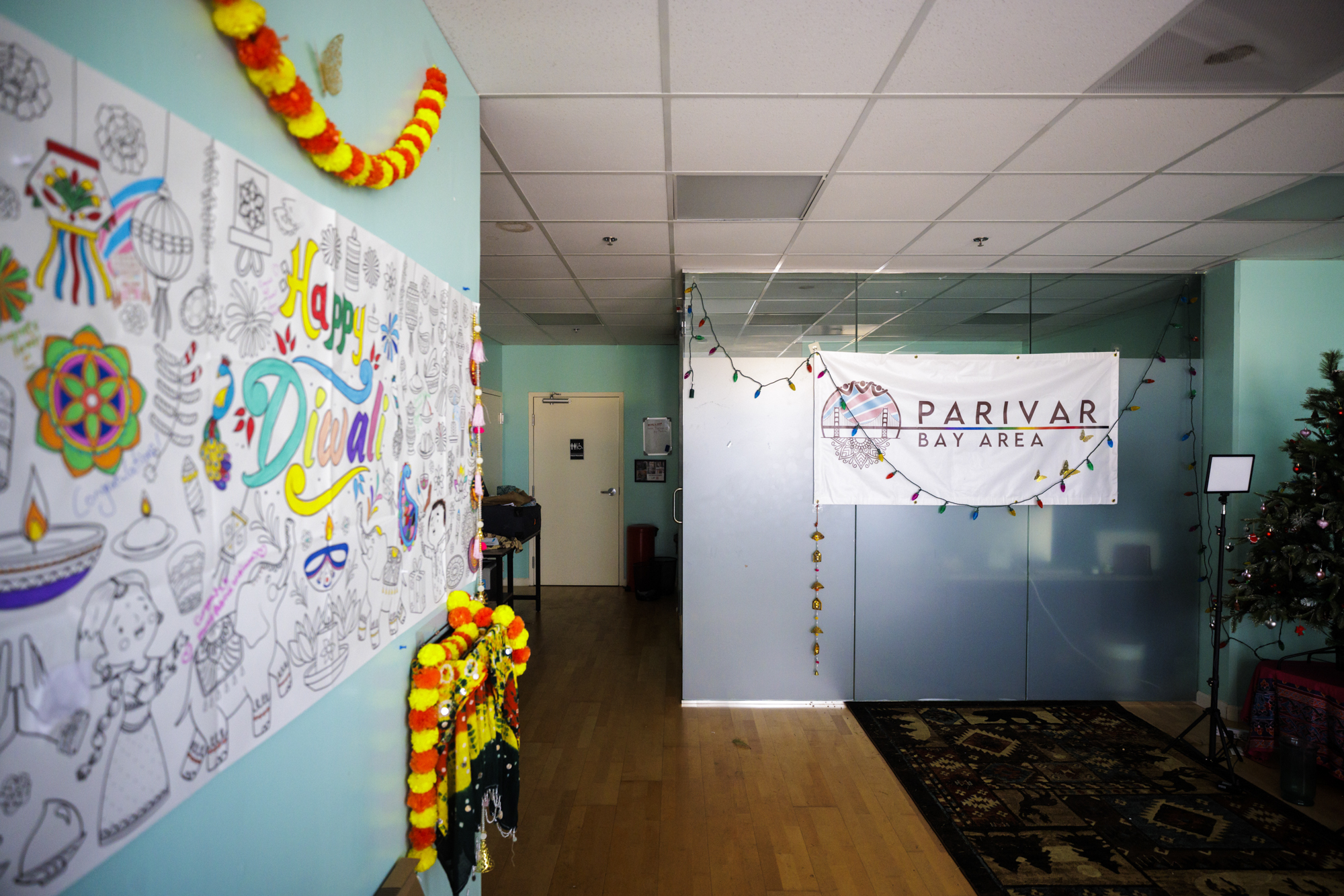
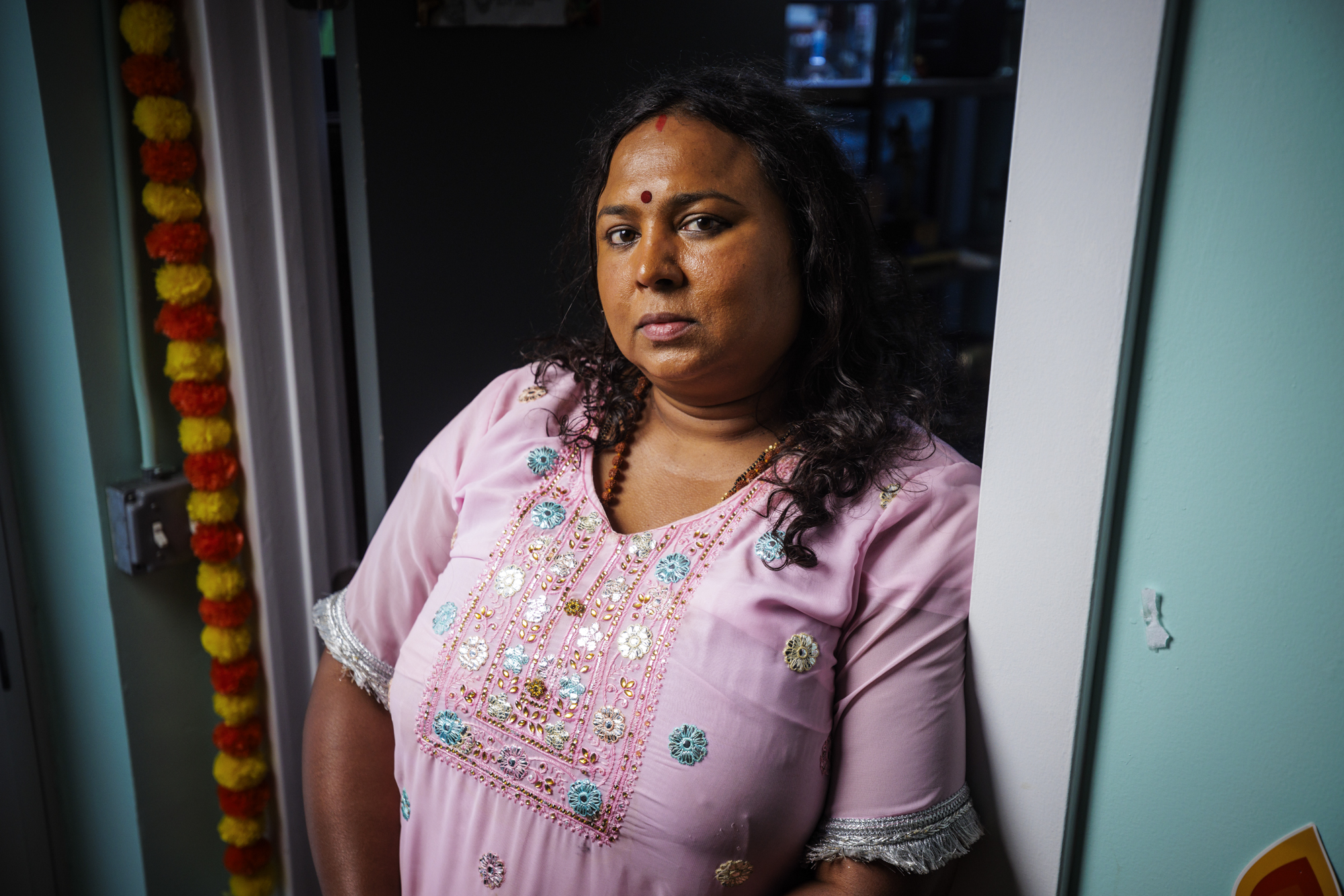
"content": "\n\u003cp>This summer, Parivar Bay Area — an organization dedicated to supporting trans immigrants — \u003ca href=\"https://www.kqed.org/news/12091922/san-francisco-trans-led-space-fears-closure-9-months-after-opening\">made a plea\u003c/a> to San Francisco officials: Help us keep our doors open.\u003c/p>\n\n\n\n\u003cp>The space was established just nine months prior, during \u003ca href=\"https://www.kqed.org/news/12060818/we-are-home-center-supporting-transgender-immigrants-opens-in-sf-during-diwali\">a colorful Diwali \u003c/a>event attended by leaders like Supervisor Rafael Mandelman and director of the city’s Office of Transgender Initiatives Honey Mahogany.\u003c/p>\n\n\n\n\u003cp>But funding was running out, and co-founder Anjali Rimi began sounding the alarm that Parivar Bay Area was at risk of losing its downtown San Francisco location entirely. Its programming — including immigration support and leadership development — had already been halted.\u003c/p>\n\n\n\n\u003cp>But since then, things for Rimi and her organization have turned around: This week, the city’s Board of Supervisors \u003ca href=\"https://sanfrancisco.granicus.com/player/clip/53261?view_id=10&redirect=true\">unanimously approved\u003c/a> a resolution to \u003ca href=\"https://media.api.sf.gov/documents/bag092926_agenda.pdf\">allocate\u003c/a> $150,000 to Parivar Bay Area through its fiscal sponsor, \u003ca href=\"https://www.transcanwork.org/\">TransCanWork\u003c/a>. \u003c/p>\n\n\n\n\u003cfigure class=\"wp-block-image size-full\">\u003cimg loading=\"lazy\" decoding=\"async\" width=\"2000\" height=\"1333\" src=\"https://cdn.kqed.org/wp-content/uploads/sites/10/2025/10/251021-DIWALI-PARIVAR-NK-04-KQED.jpg\" alt=\"\" class=\"wp-image-12060836\" srcset=\"https://cdn.kqed.org/wp-content/uploads/sites/10/2025/10/251021-DIWALI-PARIVAR-NK-04-KQED.jpg 2000w, https://cdn.kqed.org/wp-content/uploads/sites/10/2025/10/251021-DIWALI-PARIVAR-NK-04-KQED-160x107.jpg 160w, https://cdn.kqed.org/wp-content/uploads/sites/10/2025/10/251021-DIWALI-PARIVAR-NK-04-KQED-1536x1024.jpg 1536w\" sizes=\"auto, (max-width: 2000px) 100vw, 2000px\" />\u003cfigcaption class=\"wp-element-caption\">Kaj (left) dances during the Diwali celebrations at Parivar Bay Area in San Francisco on Oct. 20, 2025. (Nisa Khan/KQED)\u003c/figcaption>\u003c/figure>\n\n\n\n\u003cp>Rimi said the money is a “lifeline” and that she was “extremely relieved and eternally grateful for the City and County of \u003ca href=\"https://www.kqed.org/news/tag/san-francisco\">San Francisco\u003c/a> for truly coming through in these times and helping us rebuild.”\u003c/p>\n\n\n\n\u003cp>“We are staying in San Francisco, we’re rebuilding, and we’re opening our doors again,” she said. \u003c/p>\n\n\n\n\u003cp>The resolution was \u003ca href=\"https://sfgov.legistar.com/LegislationDetail.aspx?ID=8145043&GUID=ECF08B98-28F2-4B32-82DB-7516AF0277AF\">sponsored\u003c/a> by supervisors Mandelman, Connie Chan, Matt Dorsey and Bilal Mahmood. It will now head to Mayor Daniel Lurie’s desk to be signed and approved. \u003c/p>\n\n\n\n\u003cp>“Parivar Bay Area fills a role no other organization does — it’s the only trans-led group focused on South Asian and Global South trans immigrants,” Mandelman said \u003ca href=\"https://www.kqed.org/news/12091922/san-francisco-trans-led-space-fears-closure-9-months-after-opening\">in a July statement to KQED\u003c/a>. “Building that kind of trust and infrastructure took years, and it’s important to do what we can to keep it in place.”\u003c/p>\n\n\n\n\n\n\u003cp>While Parivar Bay Area did \u003ca href=\"https://www.kqed.org/news/12060818/we-are-home-center-supporting-transgender-immigrants-opens-in-sf-during-diwali\">lose its original community space\u003c/a> in downtown San Francisco, Rimi said it has moved to an office at \u003ca href=\"https://stmarkssquare.org/\">St. Mark’s Square\u003c/a> near Japantown. \u003c/p>\n\n\n\n\u003cp>She added that Parivar aims to start bringing back its programming early to mid-October, with a Diwali celebration slated for November. \u003c/p>\n\n\n\n\u003cp>“The Diwali [celebration] is kind of the testament of what it symbolizes — which is light over darkness, and saying, ‘This is now us getting back to doing the work,’” she said. \u003c/p>\n\n\n\n\u003cp>However, Rimi said that the full breadth of Parivar’s programming may not be able to return to its original scale. For example, Parivar may not be able to provide direct immigration and legal navigation support but switch to referrals. \u003c/p>\n\n\n\n\u003cp>“We can’t bring everything back overnight,” she said. “But most important is that we have a physical space. We have a dot on the map in San Francisco … where one can walk through the doors during our opening hours and find support, culture and belonging.”\u003c/p>\n\n\n\n\u003cp>Rimi said she saw ways the San Francisco community came to support Parivar — the organization \u003ca href=\"https://www.zeffy.com/en-US/donation-form/saveparivar\">received over $5,000 in donations\u003c/a> — but the experience highlighted to her that “impact alone doesn’t guarantee sustainability” and that the long-term future “cannot depend on one source of funding.”\u003c/p>\n\n\n\n\u003cp>“Community shouldn’t have to lose an institution or a grassroots organization like Parivar to realize how much they need it,” she said. “Because these services are sometimes not deemed as core services, but they’re the only services offered anywhere.”\u003c/p>\n",
"blocks": [
{
"blockName": "core/paragraph",
"attrs": {
"dropCap": false
},
"innerHTML": "\n\u003cp>This summer, Parivar Bay Area — an organization dedicated to supporting trans immigrants — \u003ca href=\"https://www.kqed.org/news/12091922/san-francisco-trans-led-space-fears-closure-9-months-after-opening\">made a plea\u003c/a> to San Francisco officials: Help us keep our doors open.\u003c/p>\n",
"innerContent": [
"\n\u003cp>This summer, Parivar Bay Area — an organization dedicated to supporting trans immigrants — \u003ca href=\"https://www.kqed.org/news/12091922/san-francisco-trans-led-space-fears-closure-9-months-after-opening\">made a plea\u003c/a> to San Francisco officials: Help us keep our doors open.\u003c/p>\n"
],
"innerBlocks": []
},
{
"blockName": "core/paragraph",
"attrs": {
"dropCap": false
},
"innerHTML": "\n\u003cp>The space was established just nine months prior, during \u003ca href=\"https://www.kqed.org/news/12060818/we-are-home-center-supporting-transgender-immigrants-opens-in-sf-during-diwali\">a colorful Diwali \u003c/a>event attended by leaders like Supervisor Rafael Mandelman and director of the city’s Office of Transgender Initiatives Honey Mahogany.\u003c/p>\n",
"innerContent": [
"\n\u003cp>The space was established just nine months prior, during \u003ca href=\"https://www.kqed.org/news/12060818/we-are-home-center-supporting-transgender-immigrants-opens-in-sf-during-diwali\">a colorful Diwali \u003c/a>event attended by leaders like Supervisor Rafael Mandelman and director of the city’s Office of Transgender Initiatives Honey Mahogany.\u003c/p>\n"
],
"innerBlocks": []
},
{
"blockName": "core/paragraph",
"attrs": {
"dropCap": false
},
"innerHTML": "\n\u003cp>But funding was running out, and co-founder Anjali Rimi began sounding the alarm that Parivar Bay Area was at risk of losing its downtown San Francisco location entirely. Its programming — including immigration support and leadership development — had already been halted.\u003c/p>\n",
"innerContent": [
"\n\u003cp>But funding was running out, and co-founder Anjali Rimi began sounding the alarm that Parivar Bay Area was at risk of losing its downtown San Francisco location entirely. Its programming — including immigration support and leadership development — had already been halted.\u003c/p>\n"
],
"innerBlocks": []
},
{
"blockName": "core/paragraph",
"attrs": {
"dropCap": false
},
"innerHTML": "\n\u003cp>But since then, things for Rimi and her organization have turned around: This week, the city’s Board of Supervisors \u003ca href=\"https://sanfrancisco.granicus.com/player/clip/53261?view_id=10&redirect=true\">unanimously approved\u003c/a> a resolution to \u003ca href=\"https://media.api.sf.gov/documents/bag092926_agenda.pdf\">allocate\u003c/a> $150,000 to Parivar Bay Area through its fiscal sponsor, \u003ca href=\"https://www.transcanwork.org/\">TransCanWork\u003c/a>. \u003c/p>\n",
"innerContent": [
"\n\u003cp>But since then, things for Rimi and her organization have turned around: This week, the city’s Board of Supervisors \u003ca href=\"https://sanfrancisco.granicus.com/player/clip/53261?view_id=10&redirect=true\">unanimously approved\u003c/a> a resolution to \u003ca href=\"https://media.api.sf.gov/documents/bag092926_agenda.pdf\">allocate\u003c/a> $150,000 to Parivar Bay Area through its fiscal sponsor, \u003ca href=\"https://www.transcanwork.org/\">TransCanWork\u003c/a>. \u003c/p>\n"
],
"innerBlocks": []
},
{
"blockName": "core/image",
"attrs": {
"id": 12060836,
"sizeSlug": "full",
"linkDestination": "none",
"alt": "",
"srcset": "https://cdn.kqed.org/wp-content/uploads/sites/10/2025/10/251021-DIWALI-PARIVAR-NK-04-KQED.jpg 2000w, https://cdn.kqed.org/wp-content/uploads/sites/10/2025/10/251021-DIWALI-PARIVAR-NK-04-KQED-160x107.jpg 160w, https://cdn.kqed.org/wp-content/uploads/sites/10/2025/10/251021-DIWALI-PARIVAR-NK-04-KQED-1536x1024.jpg 1536w",
"sizes": "(min-width: 992px) min(100vw, 1536px), (min-width: 768px) min(100vw, 1280px), min(100vw, 1020px)"
},
"innerHTML": "\n\u003cfigure class=\"wp-block-image size-full\">\u003cimg src=\"https://cdn.kqed.org/wp-content/uploads/sites/10/2025/10/251021-DIWALI-PARIVAR-NK-04-KQED.jpg\" alt=\"\" class=\"wp-image-12060836\" srcset=\"https://cdn.kqed.org/wp-content/uploads/sites/10/2025/10/251021-DIWALI-PARIVAR-NK-04-KQED.jpg 2000w, https://cdn.kqed.org/wp-content/uploads/sites/10/2025/10/251021-DIWALI-PARIVAR-NK-04-KQED-160x107.jpg 160w, https://cdn.kqed.org/wp-content/uploads/sites/10/2025/10/251021-DIWALI-PARIVAR-NK-04-KQED-1536x1024.jpg 1536w\" sizes=\"(min-width: 992px) min(100vw, 1536px), (min-width: 768px) min(100vw, 1280px), min(100vw, 1020px)\"/>\u003cfigcaption class=\"wp-element-caption\">Kaj (left) dances during the Diwali celebrations at Parivar Bay Area in San Francisco on Oct. 20, 2025.\u003ccite class=\"wp-inline-image-credit\"> (Nisa Khan/KQED)\u003c/cite>\u003c/figcaption>\u003c/figure>\n",
"innerContent": [
"\n\u003cfigure class=\"wp-block-image size-full\">\u003cimg src=\"https://cdn.kqed.org/wp-content/uploads/sites/10/2025/10/251021-DIWALI-PARIVAR-NK-04-KQED.jpg\" alt=\"\" class=\"wp-image-12060836\"/>\u003cfigcaption class=\"wp-element-caption\">Kaj (left) dances during the Diwali celebrations at Parivar Bay Area in San Francisco on Oct. 20, 2025.\u003ccite class=\"wp-inline-image-credit\"> (Nisa Khan/KQED)\u003c/cite>\u003c/figcaption>\u003c/figure>\n"
],
"innerBlocks": []
},
{
"blockName": "core/paragraph",
"attrs": {
"dropCap": false
},
"innerHTML": "\n\u003cp>Rimi said the money is a “lifeline” and that she was “extremely relieved and eternally grateful for the City and County of \u003ca href=\"https://www.kqed.org/news/tag/san-francisco\">San Francisco\u003c/a> for truly coming through in these times and helping us rebuild.”\u003c/p>\n",
"innerContent": [
"\n\u003cp>Rimi said the money is a “lifeline” and that she was “extremely relieved and eternally grateful for the City and County of \u003ca href=\"https://www.kqed.org/news/tag/san-francisco\">San Francisco\u003c/a> for truly coming through in these times and helping us rebuild.”\u003c/p>\n"
],
"innerBlocks": []
},
{
"blockName": "core/paragraph",
"attrs": {
"dropCap": false
},
"innerHTML": "\n\u003cp>“We are staying in San Francisco, we’re rebuilding, and we’re opening our doors again,” she said. \u003c/p>\n",
"innerContent": [
"\n\u003cp>“We are staying in San Francisco, we’re rebuilding, and we’re opening our doors again,” she said. \u003c/p>\n"
],
"innerBlocks": []
},
{
"blockName": "core/paragraph",
"attrs": {
"dropCap": false
},
"innerHTML": "\n\u003cp>The resolution was \u003ca href=\"https://sfgov.legistar.com/LegislationDetail.aspx?ID=8145043&GUID=ECF08B98-28F2-4B32-82DB-7516AF0277AF\">sponsored\u003c/a> by supervisors Mandelman, Connie Chan, Matt Dorsey and Bilal Mahmood. It will now head to Mayor Daniel Lurie’s desk to be signed and approved. \u003c/p>\n",
"innerContent": [
"\n\u003cp>The resolution was \u003ca href=\"https://sfgov.legistar.com/LegislationDetail.aspx?ID=8145043&GUID=ECF08B98-28F2-4B32-82DB-7516AF0277AF\">sponsored\u003c/a> by supervisors Mandelman, Connie Chan, Matt Dorsey and Bilal Mahmood. It will now head to Mayor Daniel Lurie’s desk to be signed and approved. \u003c/p>\n"
],
"innerBlocks": []
},
{
"blockName": "core/paragraph",
"attrs": {
"dropCap": false
},
"innerHTML": "\n\u003cp>“Parivar Bay Area fills a role no other organization does — it’s the only trans-led group focused on South Asian and Global South trans immigrants,” Mandelman said \u003ca href=\"https://www.kqed.org/news/12091922/san-francisco-trans-led-space-fears-closure-9-months-after-opening\">in a July statement to KQED\u003c/a>. “Building that kind of trust and infrastructure took years, and it’s important to do what we can to keep it in place.”\u003c/p>\n",
"innerContent": [
"\n\u003cp>“Parivar Bay Area fills a role no other organization does — it’s the only trans-led group focused on South Asian and Global South trans immigrants,” Mandelman said \u003ca href=\"https://www.kqed.org/news/12091922/san-francisco-trans-led-space-fears-closure-9-months-after-opening\">in a July statement to KQED\u003c/a>. “Building that kind of trust and infrastructure took years, and it’s important to do what we can to keep it in place.”\u003c/p>\n"
],
"innerBlocks": []
},
{
"blockName": "kqed-v2/related-articles",
"attrs": {
"postIds": [
"news_12091922"
],
"label": "Related Articles",
"maxPosts": 1,
"showImages": false,
"heroImage": "https://cdn.kqed.org/wp-content/uploads/sites/10/2026/07/260721-PARIVAR-FUNDING-MD-02-KQED.jpg",
"query": "",
"labelWasCleared": false,
"heroImageAlt": "",
"heroImageLink": "",
"labelLink": "",
"alignment": "right",
"target": "_self",
"manualLinks": [],
"posts": []
},
"innerHTML": "",
"innerContent": [],
"innerBlocks": []
},
{
"blockName": "core/paragraph",
"attrs": {
"dropCap": false
},
"innerHTML": "\n\u003cp>While Parivar Bay Area did \u003ca href=\"https://www.kqed.org/news/12060818/we-are-home-center-supporting-transgender-immigrants-opens-in-sf-during-diwali\">lose its original community space\u003c/a> in downtown San Francisco, Rimi said it has moved to an office at \u003ca href=\"https://stmarkssquare.org/\">St. Mark’s Square\u003c/a> near Japantown. \u003c/p>\n",
"innerContent": [
"\n\u003cp>While Parivar Bay Area did \u003ca href=\"https://www.kqed.org/news/12060818/we-are-home-center-supporting-transgender-immigrants-opens-in-sf-during-diwali\">lose its original community space\u003c/a> in downtown San Francisco, Rimi said it has moved to an office at \u003ca href=\"https://stmarkssquare.org/\">St. Mark’s Square\u003c/a> near Japantown. \u003c/p>\n"
],
"innerBlocks": []
},
{
"blockName": "core/paragraph",
"attrs": {
"dropCap": false
},
"innerHTML": "\n\u003cp>She added that Parivar aims to start bringing back its programming early to mid-October, with a Diwali celebration slated for November. \u003c/p>\n",
"innerContent": [
"\n\u003cp>She added that Parivar aims to start bringing back its programming early to mid-October, with a Diwali celebration slated for November. \u003c/p>\n"
],
"innerBlocks": []
},
{
"blockName": "core/paragraph",
"attrs": {
"dropCap": false
},
"innerHTML": "\n\u003cp>“The Diwali [celebration] is kind of the testament of what it symbolizes — which is light over darkness, and saying, ‘This is now us getting back to doing the work,’” she said. \u003c/p>\n",
"innerContent": [
"\n\u003cp>“The Diwali [celebration] is kind of the testament of what it symbolizes — which is light over darkness, and saying, ‘This is now us getting back to doing the work,’” she said. \u003c/p>\n"
],
"innerBlocks": []
},
{
"blockName": "core/paragraph",
"attrs": {
"dropCap": false
},
"innerHTML": "\n\u003cp>However, Rimi said that the full breadth of Parivar’s programming may not be able to return to its original scale. For example, Parivar may not be able to provide direct immigration and legal navigation support but switch to referrals. \u003c/p>\n",
"innerContent": [
"\n\u003cp>However, Rimi said that the full breadth of Parivar’s programming may not be able to return to its original scale. For example, Parivar may not be able to provide direct immigration and legal navigation support but switch to referrals. \u003c/p>\n"
],
"innerBlocks": []
},
{
"blockName": "core/paragraph",
"attrs": {
"dropCap": false
},
"innerHTML": "\n\u003cp>“We can’t bring everything back overnight,” she said. “But most important is that we have a physical space. We have a dot on the map in San Francisco … where one can walk through the doors during our opening hours and find support, culture and belonging.”\u003c/p>\n",
"innerContent": [
"\n\u003cp>“We can’t bring everything back overnight,” she said. “But most important is that we have a physical space. We have a dot on the map in San Francisco … where one can walk through the doors during our opening hours and find support, culture and belonging.”\u003c/p>\n"
],
"innerBlocks": []
},
{
"blockName": "core/paragraph",
"attrs": {
"dropCap": false
},
"innerHTML": "\n\u003cp>Rimi said she saw ways the San Francisco community came to support Parivar — the organization \u003ca href=\"https://www.zeffy.com/en-US/donation-form/saveparivar\">received over $5,000 in donations\u003c/a> — but the experience highlighted to her that “impact alone doesn’t guarantee sustainability” and that the long-term future “cannot depend on one source of funding.”\u003c/p>\n",
"innerContent": [
"\n\u003cp>Rimi said she saw ways the San Francisco community came to support Parivar — the organization \u003ca href=\"https://www.zeffy.com/en-US/donation-form/saveparivar\">received over $5,000 in donations\u003c/a> — but the experience highlighted to her that “impact alone doesn’t guarantee sustainability” and that the long-term future “cannot depend on one source of funding.”\u003c/p>\n"
],
"innerBlocks": []
},
{
"blockName": "core/paragraph",
"attrs": {
"dropCap": false
},
"innerHTML": "\n\u003cp>“Community shouldn’t have to lose an institution or a grassroots organization like Parivar to realize how much they need it,” she said. “Because these services are sometimes not deemed as core services, but they’re the only services offered anywhere.”\u003c/p>\n",
"innerContent": [
"\n\u003cp>“Community shouldn’t have to lose an institution or a grassroots organization like Parivar to realize how much they need it,” she said. “Because these services are sometimes not deemed as core services, but they’re the only services offered anywhere.”\u003c/p>\n"
],
"innerBlocks": []
}
],
"excerpt": "San Francisco’s Board of Supervisors voted this week to sustain Parivar Bay Area, a nonprofit dedicated to supporting trans immigrants.",
"status": "publish",
"parent": 0,
"modified": 1790790253,
"stats": {
"hasAudio": false,
"hasVideo": false,
"hasChartOrMap": false,
"iframeSrcs": [],
"hasGoogleForm": false,
"hasGallery": false,
"hasHearkenModule": false,
"hasPolis": false,
"paragraphCount": 15,
"wordCount": 563
},
"headData": {
"title": "‘A Lifeline’: San Francisco Trans-Led Space Finds New Home | KQED",
"description": "San Francisco’s Board of Supervisors voted this week to sustain Parivar Bay Area, a nonprofit dedicated to supporting trans immigrants.",
"ogTitle": "",
"ogDescription": "",
"ogImgId": "",
"twTitle": "",
"twDescription": "",
"twImgId": "",
"schema": {
"@context": "https://schema.org",
"@type": "NewsArticle",
"headline": "‘A Lifeline’: San Francisco Trans-Led Space Finds New Home",
"datePublished": "2026-09-30T09:28:16-07:00",
"dateModified": "2026-09-30T10:44:13-07:00",
"image": "https://cdn.kqed.org/wp-content/uploads/2020/02/KQED-OG-Image@1x.png",
"isAccessibleForFree": "True",
"publisher": {
"@type": "NewsMediaOrganization",
"@id": "https://www.kqed.org/#organization",
"name": "KQED",
"logo": "https://cdn.kqed.org/wp-content/uploads/2020/02/KQED-OG-Image@1x.png",
"url": "https://www.kqed.org",
"sameAs": [
"https://www.facebook.com/KQED",
"https://twitter.com/KQED",
"https://www.instagram.com/kqed/",
"https://www.tiktok.com/@kqedofficial",
"https://www.linkedin.com/company/kqed",
"https://www.youtube.com/channel/UCeC0IOo7i1P_61zVUWbJ4nw"
]
}
}
},
"primaryCategory": {
"termId": 28250,
"slug": "local",
"name": "Local"
},
"sticky": false,
"nprStoryId": "kqed-12100375",
"templateType": "standard",
"featuredImageType": "standard",
"excludeFromSiteSearch": "Include",
"articleAge": "0",
"path": "/news/12100375/a-lifeline-san-francisco-trans-led-space-finds-new-home",
"audioTrackLength": null,
"parsedContent": [
{
"type": "contentString",
"content": "\u003cdiv class=\"post-body\">\u003cp>\n\u003cp>This summer, Parivar Bay Area — an organization dedicated to supporting trans immigrants — \u003ca href=\"https://www.kqed.org/news/12091922/san-francisco-trans-led-space-fears-closure-9-months-after-opening\">made a plea\u003c/a> to San Francisco officials: Help us keep our doors open.\u003c/p>\n\n\n\n\u003cp>The space was established just nine months prior, during \u003ca href=\"https://www.kqed.org/news/12060818/we-are-home-center-supporting-transgender-immigrants-opens-in-sf-during-diwali\">a colorful Diwali \u003c/a>event attended by leaders like Supervisor Rafael Mandelman and director of the city’s Office of Transgender Initiatives Honey Mahogany.\u003c/p>\n\n\n\n\u003cp>But funding was running out, and co-founder Anjali Rimi began sounding the alarm that Parivar Bay Area was at risk of losing its downtown San Francisco location entirely. Its programming — including immigration support and leadership development — had already been halted.\u003c/p>\n\n\n\n\u003cp>But since then, things for Rimi and her organization have turned around: This week, the city’s Board of Supervisors \u003ca href=\"https://sanfrancisco.granicus.com/player/clip/53261?view_id=10&redirect=true\">unanimously approved\u003c/a> a resolution to \u003ca href=\"https://media.api.sf.gov/documents/bag092926_agenda.pdf\">allocate\u003c/a> $150,000 to Parivar Bay Area through its fiscal sponsor, \u003ca href=\"https://www.transcanwork.org/\">TransCanWork\u003c/a>. \u003c/p>\n\n\n\n\u003cfigure class=\"wp-block-image size-full\">\u003cimg loading=\"lazy\" decoding=\"async\" width=\"2000\" height=\"1333\" src=\"https://cdn.kqed.org/wp-content/uploads/sites/10/2025/10/251021-DIWALI-PARIVAR-NK-04-KQED.jpg\" alt=\"\" class=\"wp-image-12060836\" srcset=\"https://cdn.kqed.org/wp-content/uploads/sites/10/2025/10/251021-DIWALI-PARIVAR-NK-04-KQED.jpg 2000w, https://cdn.kqed.org/wp-content/uploads/sites/10/2025/10/251021-DIWALI-PARIVAR-NK-04-KQED-160x107.jpg 160w, https://cdn.kqed.org/wp-content/uploads/sites/10/2025/10/251021-DIWALI-PARIVAR-NK-04-KQED-1536x1024.jpg 1536w\" sizes=\"auto, (max-width: 2000px) 100vw, 2000px\" />\u003cfigcaption class=\"wp-element-caption\">Kaj (left) dances during the Diwali celebrations at Parivar Bay Area in San Francisco on Oct. 20, 2025. (Nisa Khan/KQED)\u003c/figcaption>\u003c/figure>\n\n\n\n\u003cp>Rimi said the money is a “lifeline” and that she was “extremely relieved and eternally grateful for the City and County of \u003ca href=\"https://www.kqed.org/news/tag/san-francisco\">San Francisco\u003c/a> for truly coming through in these times and helping us rebuild.”\u003c/p>\n\n\n\n\u003cp>“We are staying in San Francisco, we’re rebuilding, and we’re opening our doors again,” she said. \u003c/p>\n\n\n\n\u003cp>The resolution was \u003ca href=\"https://sfgov.legistar.com/LegislationDetail.aspx?ID=8145043&GUID=ECF08B98-28F2-4B32-82DB-7516AF0277AF\">sponsored\u003c/a> by supervisors Mandelman, Connie Chan, Matt Dorsey and Bilal Mahmood. It will now head to Mayor Daniel Lurie’s desk to be signed and approved. \u003c/p>\n\n\n\n\u003cp>“Parivar Bay Area fills a role no other organization does — it’s the only trans-led group focused on South Asian and Global South trans immigrants,” Mandelman said \u003ca href=\"https://www.kqed.org/news/12091922/san-francisco-trans-led-space-fears-closure-9-months-after-opening\">in a July statement to KQED\u003c/a>. “Building that kind of trust and infrastructure took years, and it’s important to do what we can to keep it in place.”\u003c/p>\n\n\n\n\n\n\u003cp>While Parivar Bay Area did \u003ca href=\"https://www.kqed.org/news/12060818/we-are-home-center-supporting-transgender-immigrants-opens-in-sf-during-diwali\">lose its original community space\u003c/a> in downtown San Francisco, Rimi said it has moved to an office at \u003ca href=\"https://stmarkssquare.org/\">St. Mark’s Square\u003c/a> near Japantown. \u003c/p>\n\n\n\n\u003cp>She added that Parivar aims to start bringing back its programming early to mid-October, with a Diwali celebration slated for November. \u003c/p>\n\n\n\n\u003cp>“The Diwali [celebration] is kind of the testament of what it symbolizes — which is light over darkness, and saying, ‘This is now us getting back to doing the work,’” she said. \u003c/p>\n\n\n\n\u003cp>However, Rimi said that the full breadth of Parivar’s programming may not be able to return to its original scale. For example, Parivar may not be able to provide direct immigration and legal navigation support but switch to referrals. \u003c/p>\n\n\n\n\u003cp>“We can’t bring everything back overnight,” she said. “But most important is that we have a physical space. We have a dot on the map in San Francisco … where one can walk through the doors during our opening hours and find support, culture and belonging.”\u003c/p>\n\n\n\n\u003cp>Rimi said she saw ways the San Francisco community came to support Parivar — the organization \u003ca href=\"https://www.zeffy.com/en-US/donation-form/saveparivar\">received over $5,000 in donations\u003c/a> — but the experience highlighted to her that “impact alone doesn’t guarantee sustainability” and that the long-term future “cannot depend on one source of funding.”\u003c/p>\n\n\n\n\u003cp>“Community shouldn’t have to lose an institution or a grassroots organization like Parivar to realize how much they need it,” she said. “Because these services are sometimes not deemed as core services, but they’re the only services offered anywhere.”\u003c/p>\n\u003c/div>\u003c/p>",
"attributes": {
"named": {},
"numeric": []
}
}
],
"link": "/news/12100375/a-lifeline-san-francisco-trans-led-space-finds-new-home",
"authors": [
"11867"
],
"categories": [
"news_1169",
"news_28250",
"news_8"
],
"tags": [
"news_17708",
"news_35547",
"news_20004",
"news_38",
"news_2486"
],
"featImg": "news_12092017",
"label": "news"
},
"news_12099578": {
"type": "posts",
"id": "news_12099578",
"meta": {
"index": "posts_1716263798",
"site": "news",
"id": "12099578",
"score": null,
"sort": [
1789420632000
]
},
"guestAuthors": [],
"slug": "california-joins-suit-over-trump-rule-making-it-harder-for-immigrants-to-get-green-cards",
"title": "California Joins Suit Over Trump Rule Making It Harder for Immigrants to Get Green Cards",
"publishDate": 1789420632,
"format": "standard",
"headTitle": "California Joins Suit Over Trump Rule Making It Harder for Immigrants to Get Green Cards | KQED",
"labelTerm": {
"site": "news"
},
"content": "\n\u003cp>California and Bay Area counties sued the \u003ca href=\"https://www.kqed.org/news/tag/president-donald-trump\">Trump administration\u003c/a> Monday over its latest attempt to restrict immigration by expanding the ability of enforcement agents to deny entry into the U.S. based on wealth.\u003c/p>\n\n\n\n\u003cp>Companion lawsuits filed in New York federal court Monday by a nationwide coalition of state and local law enforcement officials allege that a rule change set to take effect Friday would unlawfully upend years of immigration policy, and could have reverberating negative effects on local medical systems, schools and economies.\u003c/p>\n\n\n\n\u003cp>“This is a cruel policy designed to force immigrant families to forgo healthcare and food assistance programs out of fear that using them could jeopardize their immigration status,” California Attorney General Rob Bonta said, announcing the suits alongside San Francisco City Attorney David Chiu and Santa Clara County Counsel Tony LoPresti. “The Trump administration cannot take this unlawful action.”\u003c/p>\n\n\n\n\u003cfigure class=\"wp-block-image size-full\">\u003cimg loading=\"lazy\" decoding=\"async\" width=\"2000\" height=\"1333\" src=\"https://cdn.kqed.org/wp-content/uploads/sites/10/2025/11/RobBontaAP.jpg\" alt=\"\" class=\"wp-image-12063671\" srcset=\"https://cdn.kqed.org/wp-content/uploads/sites/10/2025/11/RobBontaAP.jpg 2000w, https://cdn.kqed.org/wp-content/uploads/sites/10/2025/11/RobBontaAP-160x107.jpg 160w, https://cdn.kqed.org/wp-content/uploads/sites/10/2025/11/RobBontaAP-1536x1024.jpg 1536w\" sizes=\"auto, (max-width: 2000px) 100vw, 2000px\" />\u003cfigcaption class=\"wp-element-caption\">California Attorney General Rob Bonta speaks to reporters as Arizona Attorney General Kris Mayes, left, and Oregon Attorney General Dan Rayfield, right, listen outside the Supreme Court in Washington, D.C., on Nov. 5, 2025. (Mark Schiefelbein/AP Photo)\u003c/figcaption>\u003c/figure>\n\n\n\n\u003cp>The lawsuits challenge the Department of Homeland Security’s expansion of whom it deems a “public charge,” a term used to describe a noncitizen who relies primarily on government benefits. U.S. immigration law allows the government to deny a visa or green card based on that policy.\u003c/p>\n\n\n\n\u003cp>In public charge determinations historically, DHS has been able to consider only cash-assistance programs and long-term institutional care through Medi-Cal. Under the new “public charge” rule \u003ca href=\"https://www.federalregister.gov/documents/2026/07/20/2026-14539/public-charge-ground-of-inadmissibility\">issued\u003c/a> in July, however, they’ll also be able to account for income-based benefits, like Medicaid, food and housing assistance, and free and reduced-price school lunch programs.\u003c/p>\n\n\n\n\n\n\u003cp>The Trump administration tried to similarly expand the scope of public benefits it considered in 2019, but that effort was blocked by courts across the country until the Biden administration rescinded the rule in 2022.\u003c/p>\n\n\n\n\u003cp>More than 20 states and Washington, D.C, joined the suit brought by Bonta and New York state Attorney Letitia James, while New York City Mayor Zohran Mamdani is leading a separate lawsuit brought by a coalition of cities including San Francisco, Chicago and Seattle, as well as Santa Clara, California, and King County, Washington.\u003c/p>\n\n\n\n\u003cp>Bonta said Monday that the expanded rule could allow immigration officials to unlawfully consider whether children who are citizens in mixed-status families receive Medicaid or food benefits such as free or reduced-price school lunch when deciding if their parent is a “public charge.”\u003c/p>\n\n\n\n\u003cp>“The rule treats all of these as a reason to deny immigrants a green card, and it goes even further,” Bonta said. “The benefits that child lawfully receives can be held against their parents. The administration wants to punish immigrant families for using benefits that their children are legally entitled to, that their children rely on, are eligible for.”\u003c/p>\n\n\n\n\u003cp>DHS has \u003ca href=\"https://www.federalregister.gov/d/2026-14539/p-1537\">predicted\u003c/a> that at least 10% of people in mixed-status households will disenroll from public benefit programs as a result. \u003c/p>\n\n\n\n\u003cfigure class=\"wp-block-image size-full\">\u003cimg loading=\"lazy\" decoding=\"async\" width=\"2000\" height=\"1333\" src=\"https://cdn.kqed.org/wp-content/uploads/sites/10/2026/05/20260511-YICKWOCOMMEMORATION-JY-05-KQED.jpg\" alt=\"\" class=\"wp-image-12083331\" srcset=\"https://cdn.kqed.org/wp-content/uploads/sites/10/2026/05/20260511-YICKWOCOMMEMORATION-JY-05-KQED.jpg 2000w, https://cdn.kqed.org/wp-content/uploads/sites/10/2026/05/20260511-YICKWOCOMMEMORATION-JY-05-KQED-160x107.jpg 160w, https://cdn.kqed.org/wp-content/uploads/sites/10/2026/05/20260511-YICKWOCOMMEMORATION-JY-05-KQED-1536x1024.jpg 1536w\" sizes=\"auto, (max-width: 2000px) 100vw, 2000px\" />\u003cfigcaption class=\"wp-element-caption\">City Attorney David Chiu speaks during a press conference at the parking lot on 3rd and Harrison streets in San Francisco on May 11, 2026, to commemorate the 140th anniversary of the landmark Supreme Court case Yick Wo v. Hopkins. (Juliana Yamada for KQED)\u003c/figcaption>\u003c/figure>\n\n\n\n\u003cp>If thousands leave Medi-Cal, SNAP and CalFresh programs, it could cost San Francisco millions in federal reimbursements alone, Chiu said Monday.\u003c/p>\n\n\n\n\u003cp>“This rule will strain San Francisco’s Human Services Agency, our Department of Public Health, Disability and Aging Services, and other city departments who serve our most vulnerable,” Chiu said. “We are asking the court to vacate this rule, to permanently block its enforcement, and to affirm what the law has long made clear.\u003c/p>\n\n\n\n\u003cp>“San Francisco will always welcome immigrants from every corner of the world,” he continued. “We will always defend their right to live here safely, with dignity, and without fear.” \u003c/p>\n\n\n\n\u003cp>\u003cem>KQED’s \u003c/em>\u003ca href=\"https://www.kqed.org/author/jsmall\">\u003cem>Julie Small\u003c/em>\u003c/a> \u003cem>contributed to this report.\u003c/em>\u003c/p>\n",
"blocks": [
{
"blockName": "core/paragraph",
"attrs": {
"dropCap": false
},
"innerHTML": "\n\u003cp>California and Bay Area counties sued the \u003ca href=\"https://www.kqed.org/news/tag/president-donald-trump\">Trump administration\u003c/a> Monday over its latest attempt to restrict immigration by expanding the ability of enforcement agents to deny entry into the U.S. based on wealth.\u003c/p>\n",
"innerContent": [
"\n\u003cp>California and Bay Area counties sued the \u003ca href=\"https://www.kqed.org/news/tag/president-donald-trump\">Trump administration\u003c/a> Monday over its latest attempt to restrict immigration by expanding the ability of enforcement agents to deny entry into the U.S. based on wealth.\u003c/p>\n"
],
"innerBlocks": []
},
{
"blockName": "core/paragraph",
"attrs": {
"dropCap": false
},
"innerHTML": "\n\u003cp>Companion lawsuits filed in New York federal court Monday by a nationwide coalition of state and local law enforcement officials allege that a rule change set to take effect Friday would unlawfully upend years of immigration policy, and could have reverberating negative effects on local medical systems, schools and economies.\u003c/p>\n",
"innerContent": [
"\n\u003cp>Companion lawsuits filed in New York federal court Monday by a nationwide coalition of state and local law enforcement officials allege that a rule change set to take effect Friday would unlawfully upend years of immigration policy, and could have reverberating negative effects on local medical systems, schools and economies.\u003c/p>\n"
],
"innerBlocks": []
},
{
"blockName": "core/paragraph",
"attrs": {
"dropCap": false
},
"innerHTML": "\n\u003cp>“This is a cruel policy designed to force immigrant families to forgo healthcare and food assistance programs out of fear that using them could jeopardize their immigration status,” California Attorney General Rob Bonta said, announcing the suits alongside San Francisco City Attorney David Chiu and Santa Clara County Counsel Tony LoPresti. “The Trump administration cannot take this unlawful action.”\u003c/p>\n",
"innerContent": [
"\n\u003cp>“This is a cruel policy designed to force immigrant families to forgo healthcare and food assistance programs out of fear that using them could jeopardize their immigration status,” California Attorney General Rob Bonta said, announcing the suits alongside San Francisco City Attorney David Chiu and Santa Clara County Counsel Tony LoPresti. “The Trump administration cannot take this unlawful action.”\u003c/p>\n"
],
"innerBlocks": []
},
{
"blockName": "core/image",
"attrs": {
"id": 12063671,
"sizeSlug": "full",
"linkDestination": "none",
"alt": "",
"srcset": "https://cdn.kqed.org/wp-content/uploads/sites/10/2025/11/RobBontaAP.jpg 2000w, https://cdn.kqed.org/wp-content/uploads/sites/10/2025/11/RobBontaAP-160x107.jpg 160w, https://cdn.kqed.org/wp-content/uploads/sites/10/2025/11/RobBontaAP-1536x1024.jpg 1536w",
"sizes": "(min-width: 992px) min(100vw, 1536px), (min-width: 768px) min(100vw, 1280px), min(100vw, 1020px)"
},
"innerHTML": "\n\u003cfigure class=\"wp-block-image size-full\">\u003cimg src=\"https://cdn.kqed.org/wp-content/uploads/sites/10/2025/11/RobBontaAP.jpg\" alt=\"\" class=\"wp-image-12063671\" srcset=\"https://cdn.kqed.org/wp-content/uploads/sites/10/2025/11/RobBontaAP.jpg 2000w, https://cdn.kqed.org/wp-content/uploads/sites/10/2025/11/RobBontaAP-160x107.jpg 160w, https://cdn.kqed.org/wp-content/uploads/sites/10/2025/11/RobBontaAP-1536x1024.jpg 1536w\" sizes=\"(min-width: 992px) min(100vw, 1536px), (min-width: 768px) min(100vw, 1280px), min(100vw, 1020px)\" />\u003cfigcaption class=\"wp-element-caption\">California Attorney General Rob Bonta speaks to reporters as Arizona Attorney General Kris Mayes, left, and Oregon Attorney General Dan Rayfield, right, listen outside the Supreme Court in Washington, D.C., on Nov. 5, 2025.\u003ccite class=\"wp-inline-image-credit\"> (Mark Schiefelbein/AP Photo)\u003c/cite>\u003c/figcaption>\u003c/figure>\n",
"innerContent": [
"\n\u003cfigure class=\"wp-block-image size-full\">\u003cimg src=\"https://cdn.kqed.org/wp-content/uploads/sites/10/2025/11/RobBontaAP.jpg\" alt=\"\" class=\"wp-image-12063671\" />\u003cfigcaption class=\"wp-element-caption\">California Attorney General Rob Bonta speaks to reporters as Arizona Attorney General Kris Mayes, left, and Oregon Attorney General Dan Rayfield, right, listen outside the Supreme Court in Washington, D.C., on Nov. 5, 2025.\u003ccite class=\"wp-inline-image-credit\"> (Mark Schiefelbein/AP Photo)\u003c/cite>\u003c/figcaption>\u003c/figure>\n"
],
"innerBlocks": []
},
{
"blockName": "core/paragraph",
"attrs": {
"dropCap": false
},
"innerHTML": "\n\u003cp>The lawsuits challenge the Department of Homeland Security’s expansion of whom it deems a “public charge,” a term used to describe a noncitizen who relies primarily on government benefits. U.S. immigration law allows the government to deny a visa or green card based on that policy.\u003c/p>\n",
"innerContent": [
"\n\u003cp>The lawsuits challenge the Department of Homeland Security’s expansion of whom it deems a “public charge,” a term used to describe a noncitizen who relies primarily on government benefits. U.S. immigration law allows the government to deny a visa or green card based on that policy.\u003c/p>\n"
],
"innerBlocks": []
},
{
"blockName": "core/paragraph",
"attrs": {
"dropCap": false
},
"innerHTML": "\n\u003cp>In public charge determinations historically, DHS has been able to consider only cash-assistance programs and long-term institutional care through Medi-Cal. Under the new “public charge” rule \u003ca href=\"https://www.federalregister.gov/documents/2026/07/20/2026-14539/public-charge-ground-of-inadmissibility\">issued\u003c/a> in July, however, they’ll also be able to account for income-based benefits, like Medicaid, food and housing assistance, and free and reduced-price school lunch programs.\u003c/p>\n",
"innerContent": [
"\n\u003cp>In public charge determinations historically, DHS has been able to consider only cash-assistance programs and long-term institutional care through Medi-Cal. Under the new “public charge” rule \u003ca href=\"https://www.federalregister.gov/documents/2026/07/20/2026-14539/public-charge-ground-of-inadmissibility\">issued\u003c/a> in July, however, they’ll also be able to account for income-based benefits, like Medicaid, food and housing assistance, and free and reduced-price school lunch programs.\u003c/p>\n"
],
"innerBlocks": []
},
{
"blockName": "kqed-v2/related-articles",
"attrs": {
"postIds": [
"news_12099177"
],
"label": "Related Articles",
"maxPosts": 1,
"showImages": false,
"heroImage": "https://cdn.kqed.org/wp-content/uploads/sites/10/2026/08/20260826_UCSFStudy_GC-3-KQED.jpg",
"query": "",
"labelWasCleared": false,
"heroImageAlt": "",
"heroImageLink": "",
"labelLink": "",
"alignment": "right",
"target": "_self",
"manualLinks": [],
"posts": []
},
"innerHTML": "",
"innerContent": [],
"innerBlocks": []
},
{
"blockName": "core/paragraph",
"attrs": {
"dropCap": false
},
"innerHTML": "\n\u003cp>The Trump administration tried to similarly expand the scope of public benefits it considered in 2019, but that effort was blocked by courts across the country until the Biden administration rescinded the rule in 2022.\u003c/p>\n",
"innerContent": [
"\n\u003cp>The Trump administration tried to similarly expand the scope of public benefits it considered in 2019, but that effort was blocked by courts across the country until the Biden administration rescinded the rule in 2022.\u003c/p>\n"
],
"innerBlocks": []
},
{
"blockName": "core/paragraph",
"attrs": {
"dropCap": false
},
"innerHTML": "\n\u003cp>More than 20 states and Washington, D.C, joined the suit brought by Bonta and New York state Attorney Letitia James, while New York City Mayor Zohran Mamdani is leading a separate lawsuit brought by a coalition of cities including San Francisco, Chicago and Seattle, as well as Santa Clara, California, and King County, Washington.\u003c/p>\n",
"innerContent": [
"\n\u003cp>More than 20 states and Washington, D.C, joined the suit brought by Bonta and New York state Attorney Letitia James, while New York City Mayor Zohran Mamdani is leading a separate lawsuit brought by a coalition of cities including San Francisco, Chicago and Seattle, as well as Santa Clara, California, and King County, Washington.\u003c/p>\n"
],
"innerBlocks": []
},
{
"blockName": "core/paragraph",
"attrs": {
"dropCap": false
},
"innerHTML": "\n\u003cp>Bonta said Monday that the expanded rule could allow immigration officials to unlawfully consider whether children who are citizens in mixed-status families receive Medicaid or food benefits such as free or reduced-price school lunch when deciding if their parent is a “public charge.”\u003c/p>\n",
"innerContent": [
"\n\u003cp>Bonta said Monday that the expanded rule could allow immigration officials to unlawfully consider whether children who are citizens in mixed-status families receive Medicaid or food benefits such as free or reduced-price school lunch when deciding if their parent is a “public charge.”\u003c/p>\n"
],
"innerBlocks": []
},
{
"blockName": "core/paragraph",
"attrs": {
"dropCap": false
},
"innerHTML": "\n\u003cp>“The rule treats all of these as a reason to deny immigrants a green card, and it goes even further,” Bonta said. “The benefits that child lawfully receives can be held against their parents. The administration wants to punish immigrant families for using benefits that their children are legally entitled to, that their children rely on, are eligible for.”\u003c/p>\n",
"innerContent": [
"\n\u003cp>“The rule treats all of these as a reason to deny immigrants a green card, and it goes even further,” Bonta said. “The benefits that child lawfully receives can be held against their parents. The administration wants to punish immigrant families for using benefits that their children are legally entitled to, that their children rely on, are eligible for.”\u003c/p>\n"
],
"innerBlocks": []
},
{
"blockName": "core/paragraph",
"attrs": {
"dropCap": false
},
"innerHTML": "\n\u003cp>DHS has \u003ca href=\"https://www.federalregister.gov/d/2026-14539/p-1537\">predicted\u003c/a> that at least 10% of people in mixed-status households will disenroll from public benefit programs as a result. \u003c/p>\n",
"innerContent": [
"\n\u003cp>DHS has \u003ca href=\"https://www.federalregister.gov/d/2026-14539/p-1537\">predicted\u003c/a> that at least 10% of people in mixed-status households will disenroll from public benefit programs as a result. \u003c/p>\n"
],
"innerBlocks": []
},
{
"blockName": "core/image",
"attrs": {
"id": 12083331,
"sizeSlug": "full",
"linkDestination": "none",
"alt": "",
"srcset": "https://cdn.kqed.org/wp-content/uploads/sites/10/2026/05/20260511-YICKWOCOMMEMORATION-JY-05-KQED.jpg 2000w, https://cdn.kqed.org/wp-content/uploads/sites/10/2026/05/20260511-YICKWOCOMMEMORATION-JY-05-KQED-160x107.jpg 160w, https://cdn.kqed.org/wp-content/uploads/sites/10/2026/05/20260511-YICKWOCOMMEMORATION-JY-05-KQED-1536x1024.jpg 1536w",
"sizes": "(min-width: 992px) min(100vw, 1536px), (min-width: 768px) min(100vw, 1280px), min(100vw, 1020px)"
},
"innerHTML": "\n\u003cfigure class=\"wp-block-image size-full\">\u003cimg src=\"https://cdn.kqed.org/wp-content/uploads/sites/10/2026/05/20260511-YICKWOCOMMEMORATION-JY-05-KQED.jpg\" alt=\"\" class=\"wp-image-12083331\" srcset=\"https://cdn.kqed.org/wp-content/uploads/sites/10/2026/05/20260511-YICKWOCOMMEMORATION-JY-05-KQED.jpg 2000w, https://cdn.kqed.org/wp-content/uploads/sites/10/2026/05/20260511-YICKWOCOMMEMORATION-JY-05-KQED-160x107.jpg 160w, https://cdn.kqed.org/wp-content/uploads/sites/10/2026/05/20260511-YICKWOCOMMEMORATION-JY-05-KQED-1536x1024.jpg 1536w\" sizes=\"(min-width: 992px) min(100vw, 1536px), (min-width: 768px) min(100vw, 1280px), min(100vw, 1020px)\" />\u003cfigcaption class=\"wp-element-caption\">City Attorney David Chiu speaks during a press conference at the parking lot on 3rd and Harrison streets in San Francisco on May 11, 2026, to commemorate the 140th anniversary of the landmark Supreme Court case Yick Wo v. Hopkins.\u003ccite class=\"wp-inline-image-credit\"> (Juliana Yamada for KQED)\u003c/cite>\u003c/figcaption>\u003c/figure>\n",
"innerContent": [
"\n\u003cfigure class=\"wp-block-image size-full\">\u003cimg src=\"https://cdn.kqed.org/wp-content/uploads/sites/10/2026/05/20260511-YICKWOCOMMEMORATION-JY-05-KQED.jpg\" alt=\"\" class=\"wp-image-12083331\" />\u003cfigcaption class=\"wp-element-caption\">City Attorney David Chiu speaks during a press conference at the parking lot on 3rd and Harrison streets in San Francisco on May 11, 2026, to commemorate the 140th anniversary of the landmark Supreme Court case Yick Wo v. Hopkins.\u003ccite class=\"wp-inline-image-credit\"> (Juliana Yamada for KQED)\u003c/cite>\u003c/figcaption>\u003c/figure>\n"
],
"innerBlocks": []
},
{
"blockName": "core/paragraph",
"attrs": {
"dropCap": false
},
"innerHTML": "\n\u003cp>If thousands leave Medi-Cal, SNAP and CalFresh programs, it could cost San Francisco millions in federal reimbursements alone, Chiu said Monday.\u003c/p>\n",
"innerContent": [
"\n\u003cp>If thousands leave Medi-Cal, SNAP and CalFresh programs, it could cost San Francisco millions in federal reimbursements alone, Chiu said Monday.\u003c/p>\n"
],
"innerBlocks": []
},
{
"blockName": "core/paragraph",
"attrs": {
"dropCap": false
},
"innerHTML": "\n\u003cp>“This rule will strain San Francisco’s Human Services Agency, our Department of Public Health, Disability and Aging Services, and other city departments who serve our most vulnerable,” Chiu said. “We are asking the court to vacate this rule, to permanently block its enforcement, and to affirm what the law has long made clear.\u003c/p>\n",
"innerContent": [
"\n\u003cp>“This rule will strain San Francisco’s Human Services Agency, our Department of Public Health, Disability and Aging Services, and other city departments who serve our most vulnerable,” Chiu said. “We are asking the court to vacate this rule, to permanently block its enforcement, and to affirm what the law has long made clear.\u003c/p>\n"
],
"innerBlocks": []
},
{
"blockName": "core/paragraph",
"attrs": {
"dropCap": false
},
"innerHTML": "\n\u003cp>“San Francisco will always welcome immigrants from every corner of the world,” he continued. “We will always defend their right to live here safely, with dignity, and without fear.” \u003c/p>\n",
"innerContent": [
"\n\u003cp>“San Francisco will always welcome immigrants from every corner of the world,” he continued. “We will always defend their right to live here safely, with dignity, and without fear.” \u003c/p>\n"
],
"innerBlocks": []
},
{
"blockName": "core/paragraph",
"attrs": {
"dropCap": false
},
"innerHTML": "\n\u003cp>\u003cem>KQED’s \u003c/em>\u003ca href=\"https://www.kqed.org/author/jsmall\">\u003cem>Julie Small\u003c/em>\u003c/a> \u003cem>contributed to this report.\u003c/em>\u003c/p>\n",
"innerContent": [
"\n\u003cp>\u003cem>KQED’s \u003c/em>\u003ca href=\"https://www.kqed.org/author/jsmall\">\u003cem>Julie Small\u003c/em>\u003c/a> \u003cem>contributed to this report.\u003c/em>\u003c/p>\n"
],
"innerBlocks": []
}
],
"excerpt": "California officials say expanded public-charge rules could affect immigrant families, healthcare and schools.",
"status": "publish",
"parent": 0,
"modified": 1789422014,
"stats": {
"hasAudio": false,
"hasVideo": false,
"hasChartOrMap": false,
"iframeSrcs": [],
"hasGoogleForm": false,
"hasGallery": false,
"hasHearkenModule": false,
"hasPolis": false,
"paragraphCount": 14,
"wordCount": 664
},
"headData": {
"title": "California Joins Suit Over Trump Rule Making It Harder for Immigrants to Get Green Cards | KQED",
"description": "California officials say expanded public-charge rules could affect immigrant families, healthcare and schools.",
"ogTitle": "",
"ogDescription": "",
"ogImgId": "",
"twTitle": "",
"twDescription": "",
"twImgId": "",
"schema": {
"@context": "https://schema.org",
"@type": "NewsArticle",
"headline": "California Joins Suit Over Trump Rule Making It Harder for Immigrants to Get Green Cards",
"datePublished": "2026-09-14T14:17:12-07:00",
"dateModified": "2026-09-14T14:40:14-07:00",
"image": "https://cdn.kqed.org/wp-content/uploads/2020/02/KQED-OG-Image@1x.png",
"isAccessibleForFree": "True",
"publisher": {
"@type": "NewsMediaOrganization",
"@id": "https://www.kqed.org/#organization",
"name": "KQED",
"logo": "https://cdn.kqed.org/wp-content/uploads/2020/02/KQED-OG-Image@1x.png",
"url": "https://www.kqed.org",
"sameAs": [
"https://www.facebook.com/KQED",
"https://twitter.com/KQED",
"https://www.instagram.com/kqed/",
"https://www.tiktok.com/@kqedofficial",
"https://www.linkedin.com/company/kqed",
"https://www.youtube.com/channel/UCeC0IOo7i1P_61zVUWbJ4nw"
]
}
}
},
"primaryCategory": {
"termId": 1169,
"slug": "immigration",
"name": "Immigration"
},
"sticky": false,
"nprStoryId": "kqed-12099578",
"templateType": "standard",
"featuredImageType": "standard",
"excludeFromSiteSearch": "Include",
"articleAge": "0",
"path": "/news/12099578/california-joins-suit-over-trump-rule-making-it-harder-for-immigrants-to-get-green-cards",
"audioTrackLength": null,
"parsedContent": [
{
"type": "contentString",
"content": "\u003cdiv class=\"post-body\">\u003cp>\n\u003cp>California and Bay Area counties sued the \u003ca href=\"https://www.kqed.org/news/tag/president-donald-trump\">Trump administration\u003c/a> Monday over its latest attempt to restrict immigration by expanding the ability of enforcement agents to deny entry into the U.S. based on wealth.\u003c/p>\n\n\n\n\u003cp>Companion lawsuits filed in New York federal court Monday by a nationwide coalition of state and local law enforcement officials allege that a rule change set to take effect Friday would unlawfully upend years of immigration policy, and could have reverberating negative effects on local medical systems, schools and economies.\u003c/p>\n\n\n\n\u003cp>“This is a cruel policy designed to force immigrant families to forgo healthcare and food assistance programs out of fear that using them could jeopardize their immigration status,” California Attorney General Rob Bonta said, announcing the suits alongside San Francisco City Attorney David Chiu and Santa Clara County Counsel Tony LoPresti. “The Trump administration cannot take this unlawful action.”\u003c/p>\n\n\n\n\u003cfigure class=\"wp-block-image size-full\">\u003cimg loading=\"lazy\" decoding=\"async\" width=\"2000\" height=\"1333\" src=\"https://cdn.kqed.org/wp-content/uploads/sites/10/2025/11/RobBontaAP.jpg\" alt=\"\" class=\"wp-image-12063671\" srcset=\"https://cdn.kqed.org/wp-content/uploads/sites/10/2025/11/RobBontaAP.jpg 2000w, https://cdn.kqed.org/wp-content/uploads/sites/10/2025/11/RobBontaAP-160x107.jpg 160w, https://cdn.kqed.org/wp-content/uploads/sites/10/2025/11/RobBontaAP-1536x1024.jpg 1536w\" sizes=\"auto, (max-width: 2000px) 100vw, 2000px\" />\u003cfigcaption class=\"wp-element-caption\">California Attorney General Rob Bonta speaks to reporters as Arizona Attorney General Kris Mayes, left, and Oregon Attorney General Dan Rayfield, right, listen outside the Supreme Court in Washington, D.C., on Nov. 5, 2025. (Mark Schiefelbein/AP Photo)\u003c/figcaption>\u003c/figure>\n\n\n\n\u003cp>The lawsuits challenge the Department of Homeland Security’s expansion of whom it deems a “public charge,” a term used to describe a noncitizen who relies primarily on government benefits. U.S. immigration law allows the government to deny a visa or green card based on that policy.\u003c/p>\n\n\n\n\u003cp>In public charge determinations historically, DHS has been able to consider only cash-assistance programs and long-term institutional care through Medi-Cal. Under the new “public charge” rule \u003ca href=\"https://www.federalregister.gov/documents/2026/07/20/2026-14539/public-charge-ground-of-inadmissibility\">issued\u003c/a> in July, however, they’ll also be able to account for income-based benefits, like Medicaid, food and housing assistance, and free and reduced-price school lunch programs.\u003c/p>\n\n\n\n\n\n\u003cp>The Trump administration tried to similarly expand the scope of public benefits it considered in 2019, but that effort was blocked by courts across the country until the Biden administration rescinded the rule in 2022.\u003c/p>\n\n\n\n\u003cp>More than 20 states and Washington, D.C, joined the suit brought by Bonta and New York state Attorney Letitia James, while New York City Mayor Zohran Mamdani is leading a separate lawsuit brought by a coalition of cities including San Francisco, Chicago and Seattle, as well as Santa Clara, California, and King County, Washington.\u003c/p>\n\n\n\n\u003cp>Bonta said Monday that the expanded rule could allow immigration officials to unlawfully consider whether children who are citizens in mixed-status families receive Medicaid or food benefits such as free or reduced-price school lunch when deciding if their parent is a “public charge.”\u003c/p>\n\n\n\n\u003cp>“The rule treats all of these as a reason to deny immigrants a green card, and it goes even further,” Bonta said. “The benefits that child lawfully receives can be held against their parents. The administration wants to punish immigrant families for using benefits that their children are legally entitled to, that their children rely on, are eligible for.”\u003c/p>\n\n\n\n\u003cp>DHS has \u003ca href=\"https://www.federalregister.gov/d/2026-14539/p-1537\">predicted\u003c/a> that at least 10% of people in mixed-status households will disenroll from public benefit programs as a result. \u003c/p>\n\n\n\n\u003cfigure class=\"wp-block-image size-full\">\u003cimg loading=\"lazy\" decoding=\"async\" width=\"2000\" height=\"1333\" src=\"https://cdn.kqed.org/wp-content/uploads/sites/10/2026/05/20260511-YICKWOCOMMEMORATION-JY-05-KQED.jpg\" alt=\"\" class=\"wp-image-12083331\" srcset=\"https://cdn.kqed.org/wp-content/uploads/sites/10/2026/05/20260511-YICKWOCOMMEMORATION-JY-05-KQED.jpg 2000w, https://cdn.kqed.org/wp-content/uploads/sites/10/2026/05/20260511-YICKWOCOMMEMORATION-JY-05-KQED-160x107.jpg 160w, https://cdn.kqed.org/wp-content/uploads/sites/10/2026/05/20260511-YICKWOCOMMEMORATION-JY-05-KQED-1536x1024.jpg 1536w\" sizes=\"auto, (max-width: 2000px) 100vw, 2000px\" />\u003cfigcaption class=\"wp-element-caption\">City Attorney David Chiu speaks during a press conference at the parking lot on 3rd and Harrison streets in San Francisco on May 11, 2026, to commemorate the 140th anniversary of the landmark Supreme Court case Yick Wo v. Hopkins. (Juliana Yamada for KQED)\u003c/figcaption>\u003c/figure>\n\n\n\n\u003cp>If thousands leave Medi-Cal, SNAP and CalFresh programs, it could cost San Francisco millions in federal reimbursements alone, Chiu said Monday.\u003c/p>\n\n\n\n\u003cp>“This rule will strain San Francisco’s Human Services Agency, our Department of Public Health, Disability and Aging Services, and other city departments who serve our most vulnerable,” Chiu said. “We are asking the court to vacate this rule, to permanently block its enforcement, and to affirm what the law has long made clear.\u003c/p>\n\n\n\n\u003cp>“San Francisco will always welcome immigrants from every corner of the world,” he continued. “We will always defend their right to live here safely, with dignity, and without fear.” \u003c/p>\n\n\n\n\u003cp>\u003cem>KQED’s \u003c/em>\u003ca href=\"https://www.kqed.org/author/jsmall\">\u003cem>Julie Small\u003c/em>\u003c/a> \u003cem>contributed to this report.\u003c/em>\u003c/p>\n\u003c/div>\u003c/p>",
"attributes": {
"named": {},
"numeric": []
}
}
],
"link": "/news/12099578/california-joins-suit-over-trump-rule-making-it-harder-for-immigrants-to-get-green-cards",
"authors": [
"11913"
],
"categories": [
"news_457",
"news_1169",
"news_8",
"news_13"
],
"tags": [
"news_31080",
"news_18538",
"news_27626",
"news_18543",
"news_17708",
"news_20202",
"news_20199",
"news_17968",
"news_3674",
"news_35336"
],
"featImg": "news_12060760",
"label": "news"
},
"news_12096562": {
"type": "posts",
"id": "news_12096562",
"meta": {
"index": "posts_1716263798",
"site": "news",
"id": "12096562",
"score": null,
"sort": [
1787687041000
]
},
"guestAuthors": [],
"slug": "trump-administration-nixes-longstanding-deal-to-help-investigate-labor-abuses",
"title": "Trump Administration Nixes Longstanding Deal to Help Investigate Labor Abuses",
"publishDate": 1787687041,
"format": "standard",
"headTitle": "Trump Administration Nixes Longstanding Deal to Help Investigate Labor Abuses | KQED",
"labelTerm": {
"site": "news"
},
"content": "\u003cp>The Trump administration has ended a longstanding agreement that kept immigration authorities largely out of workplaces that the U.S. Department of Labor was actively investigating for potential abuses, KQED has learned. The move, the latest in a federal rollback of immigrant worker protections, could further undermine efforts to \u003ca href=\"https://www.kqed.org/news/12081923/california-wage-theft-law-needs-more-enforcement-muscle-advocates-say\">uphold minimum wage\u003c/a>, child labor and other laws covering most employees regardless of immigration status, according to worker advocates. \u003c/p>\n\n\n\n\u003cp>The government has long recognized that non-citizens living in the U.S. without permanent legal status are less likely to complain about wage theft or unsafe job conditions if they fear their employer will retaliate by reporting them to Immigration and Customs Enforcement (ICE). That understanding prompted the U.S. Department of Homeland Security (DHS), which oversees ICE, and the Labor Department \u003ca href=\"https://www.dol.gov/sites/dolgov/files/OASP/DHS-DOL-MOU_4.19.18.pdf\">to agree\u003c/a> more than a decade ago to essentially separate their enforcement activities and share information to combat abusive employment practices. The goal was to avoid jeopardizing pending labor cases, which often require speaking with witnesses. \u003c/p>\n\n\n\n\u003cp>“This agreement served as an important, if imperfect, backstop to say employers can’t use ICE as a weapon to protect their labor violations,” said Josh Rosenthal, who directs the workers’ rights program at the Asian Law Caucus in San Francisco. \u003c/p>\n\n\n\n\u003cfigure class=\"wp-block-image size-full\">\u003cimg loading=\"lazy\" decoding=\"async\" width=\"2560\" height=\"1707\" src=\"https://cdn.kqed.org/wp-content/uploads/sites/10/2025/07/AP25192726071193-1-scaled.jpg\" alt='A man wearing a white-brimmed hat that says \"Mexico\" embraces three children and a woman outside in front of a red van.' class=\"wp-image-12047862\" srcset=\"https://cdn.kqed.org/wp-content/uploads/sites/10/2025/07/AP25192726071193-1-scaled.jpg 2560w, https://cdn.kqed.org/wp-content/uploads/sites/10/2025/07/AP25192726071193-1-2000x1333.jpg 2000w, https://cdn.kqed.org/wp-content/uploads/sites/10/2025/07/AP25192726071193-1-160x107.jpg 160w, https://cdn.kqed.org/wp-content/uploads/sites/10/2025/07/AP25192726071193-1-1536x1024.jpg 1536w, https://cdn.kqed.org/wp-content/uploads/sites/10/2025/07/AP25192726071193-1-2048x1365.jpg 2048w\" sizes=\"auto, (max-width: 2560px) 100vw, 2560px\">\u003cfigcaption class=\"wp-element-caption\">People embrace outside of Glass House Farms, a day after an immigration raid on the facility, on July 11, 2025, in Camarillo, California. (Damian Dovarganes/The Associated Press)\u003c/figcaption>\u003c/figure>\n\n\n\n\u003cp>“There have been instances where, especially before this agreement, an employer would call ICE in the middle of a labor investigation and get all of the workers who had complained arrested or otherwise create trouble for their immigration situation,” he said. \u003c/p>\n\n\n\n\u003cp>Under the deal between the two federal agencies, first signed in December 2011 during President Barack Obama’s first term, ICE committed to refrain from auditing or making arrests at businesses that were the subject of existing labor probes, with some exceptions. Federal labor regulators have told workers for years that they have the right to minimum wage, safe job sites and other safeguards, no matter their citizenship status.\u003c/p>\n\n\n\n\u003cp>[ad fullwidth]\u003c/p>\n\u003cp>The memorandum of understanding “concerning enforcement activities at worksites” was later \u003ca href=\"https://www.dol.gov/sites/dolgov/files/OASP/MOU-Addendum_4.19.18.pdf\">expanded in 2016\u003c/a> to include the National Labor Relations Board and the Equal Employment Opportunity Commission, agencies tasked with protecting employees’ rights to unionize and be free from discrimination. \u003c/p>\n\n\n\n\u003cp>But the agreement has quietly been terminated, a Labor Department spokesperson confirmed to KQED. They declined to answer follow-up questions about when the change took place and why. \u003c/p>\n\n\n\n\u003cp>Until last week, several employment attorneys in California, as well as former federal labor officials, doubted the worksite enforcement deal was still being vigorously enforced, but believed the administration had not officially rescinded it. \u003c/p>\n\n\n\n\u003cfigure class=\"wp-block-image size-full\">\u003cimg loading=\"lazy\" decoding=\"async\" width=\"1024\" height=\"733\" src=\"https://cdn.kqed.org/wp-content/uploads/sites/10/2025/11/GettyImages-2130942018.jpg\" alt=\"\" class=\"wp-image-12013823\" srcset=\"https://cdn.kqed.org/wp-content/uploads/sites/10/2025/11/GettyImages-2130942018.jpg 1024w, https://cdn.kqed.org/wp-content/uploads/sites/10/2025/11/GettyImages-2130942018-800x573.jpg 800w, https://cdn.kqed.org/wp-content/uploads/sites/10/2025/11/GettyImages-2130942018-1020x730.jpg 1020w, https://cdn.kqed.org/wp-content/uploads/sites/10/2025/11/GettyImages-2130942018-160x115.jpg 160w\" sizes=\"auto, (max-width: 1024px) 100vw, 1024px\">\u003cfigcaption class=\"wp-element-caption\">Workers fill food orders at a Chipotle restaurant on April 1, 2024, in San Rafael. (Justin Sullivan/Getty Images)\u003c/figcaption>\u003c/figure>\n\n\n\n\u003cp>“The referenced MOU is not currently in effect,” the spokesperson wrote in an email. “The Department of Labor enforces the Fair Labor Standards Act and other federal labor laws for all employees and employers covered by such laws.”\u003c/p>\n\n\n\n\u003cp>DHS did not respond to a request for comment.\u003c/p>\n\n\n\n\u003cp>The shift comes as reports of employers threatening workers with ICE arrest — in what worker advocates say is an attempt to chill complaints — have risen in California, according to legal aid groups and worker organizations. At the same time, workers are taking these threats more seriously, given the Trump administration’s intensified immigration enforcement, including by conducting worksite raids that were previously rare. \u003c/p>\n\n\n\n\u003cp>Retaliation is unlawful under state and federal laws. California lawmakers are advancing \u003ca href=\"https://leginfo.legislature.ca.gov/faces/billNavClient.xhtml?bill_id=202520260AB2495\">a bill\u003c/a> that would clarify that it is also illegal to threaten employees with immigration consequences to dissuade them from exercising their rights. Employers could be liable for up to $10,000 in civil penalties per violation. \u003c/p>\n\n\n\n\n\n\u003cp>The Biden administration went a step further by offering temporary protection from deportation and work authorization to people who came forward to report labor violations and cooperated with investigations, through the \u003ca href=\"https://www.uscis.gov/archive/dhs-support-of-the-enforcement-of-labor-and-employment-laws\">Deferred Action for Labor Enforcement\u003c/a> program, launched in 2023. But that program was rescinded shortly after President Donald Trump took office in 2025.\u003c/p>\n\n\n\n\u003cp>Paul DeCamp, who led the Labor Department’s wage and hour division from 2006 to 2007 during the George W. Bush administration, said he wasn’t surprised by the termination of the worksite enforcement deal.\u003c/p>\n\n\n\n\u003cp>“Given the current administration’s heavy emphasis on immigration enforcement, I think that the MOU was seen in some respects as holding back a bit on immigration enforcement. The writing was on the wall,” said DeCamp, who represents employers with the firm Epstein, Becker, Green in Washington, D.C. \u003c/p>\n\n\n\n\u003cp>“The immigration laws are, in some respects, in tension with the labor laws in terms of how they play out for the workers. It is difficult to enforce one vigorously without causing some damage on the other front,” he said. “What we see now is a prioritization that emphasizes immigration enforcement, even if that does come at some increased risk with respect to the wage and hour enforcement.” \u003c/p>\n\n\n\n\u003cp>In California, employees can report immigration-related threats by employers to the state’s Labor Commissioner’s Office, which also investigates allegations of wage theft. But other states that rely more on the federal government to protect worker rights, such as Tennessee and Texas, could feel a bigger impact, Rosenthal, with the Asian Law Caucus, said.\u003c/p>\n\n\n\n\u003cp>\u003c/p>\n\u003cp>“When immigrant workers are protected under our workplace laws, everyone is protected because it keeps bad actors from exploiting vulnerable workers on the basis of their immigration status,” he said. “The administration is weakening the rights of all workers. U.S. Citizens, green card holders and others.”\u003c/p>\n\n",
"blocks": [
{
"blockName": "core/paragraph",
"attrs": {
"dropCap": false
},
"innerHTML": "\n\u003cp>The Trump administration has ended a longstanding agreement that kept immigration authorities largely out of workplaces that the U.S. Department of Labor was actively investigating for potential abuses, KQED has learned. The move, the latest in a federal rollback of immigrant worker protections, could further undermine efforts to \u003ca href=\"https://www.kqed.org/news/12081923/california-wage-theft-law-needs-more-enforcement-muscle-advocates-say\">uphold minimum wage\u003c/a>, child labor and other laws covering most employees regardless of immigration status, according to worker advocates. \u003c/p>\n",
"innerContent": [
"\n\u003cp>The Trump administration has ended a longstanding agreement that kept immigration authorities largely out of workplaces that the U.S. Department of Labor was actively investigating for potential abuses, KQED has learned. The move, the latest in a federal rollback of immigrant worker protections, could further undermine efforts to \u003ca href=\"https://www.kqed.org/news/12081923/california-wage-theft-law-needs-more-enforcement-muscle-advocates-say\">uphold minimum wage\u003c/a>, child labor and other laws covering most employees regardless of immigration status, according to worker advocates. \u003c/p>\n"
],
"innerBlocks": []
},
{
"blockName": "core/paragraph",
"attrs": {
"dropCap": false
},
"innerHTML": "\n\u003cp>The government has long recognized that non-citizens living in the U.S. without permanent legal status are less likely to complain about wage theft or unsafe job conditions if they fear their employer will retaliate by reporting them to Immigration and Customs Enforcement (ICE). That understanding prompted the U.S. Department of Homeland Security (DHS), which oversees ICE, and the Labor Department \u003ca href=\"https://www.dol.gov/sites/dolgov/files/OASP/DHS-DOL-MOU_4.19.18.pdf\">to agree\u003c/a> more than a decade ago to essentially separate their enforcement activities and share information to combat abusive employment practices. The goal was to avoid jeopardizing pending labor cases, which often require speaking with witnesses. \u003c/p>\n",
"innerContent": [
"\n\u003cp>The government has long recognized that non-citizens living in the U.S. without permanent legal status are less likely to complain about wage theft or unsafe job conditions if they fear their employer will retaliate by reporting them to Immigration and Customs Enforcement (ICE). That understanding prompted the U.S. Department of Homeland Security (DHS), which oversees ICE, and the Labor Department \u003ca href=\"https://www.dol.gov/sites/dolgov/files/OASP/DHS-DOL-MOU_4.19.18.pdf\">to agree\u003c/a> more than a decade ago to essentially separate their enforcement activities and share information to combat abusive employment practices. The goal was to avoid jeopardizing pending labor cases, which often require speaking with witnesses. \u003c/p>\n"
],
"innerBlocks": []
},
{
"blockName": "core/paragraph",
"attrs": {
"dropCap": false
},
"innerHTML": "\n\u003cp>“This agreement served as an important, if imperfect, backstop to say employers can’t use ICE as a weapon to protect their labor violations,” said Josh Rosenthal, who directs the workers’ rights program at the Asian Law Caucus in San Francisco. \u003c/p>\n",
"innerContent": [
"\n\u003cp>“This agreement served as an important, if imperfect, backstop to say employers can’t use ICE as a weapon to protect their labor violations,” said Josh Rosenthal, who directs the workers’ rights program at the Asian Law Caucus in San Francisco. \u003c/p>\n"
],
"innerBlocks": []
},
{
"blockName": "core/image",
"attrs": {
"id": 12047862,
"sizeSlug": "full",
"linkDestination": "none",
"imageCredit": "Damian Dovarganes/The Associated Press",
"srcset": "https://cdn.kqed.org/wp-content/uploads/sites/10/2025/07/AP25192726071193-1-scaled.jpg 2560w, https://cdn.kqed.org/wp-content/uploads/sites/10/2025/07/AP25192726071193-1-2000x1333.jpg 2000w, https://cdn.kqed.org/wp-content/uploads/sites/10/2025/07/AP25192726071193-1-160x107.jpg 160w, https://cdn.kqed.org/wp-content/uploads/sites/10/2025/07/AP25192726071193-1-1536x1024.jpg 1536w, https://cdn.kqed.org/wp-content/uploads/sites/10/2025/07/AP25192726071193-1-2048x1365.jpg 2048w",
"sizes": "(min-width: 992px) min(100vw, 1536px), (min-width: 768px) min(100vw, 1280px), min(100vw, 1020px)",
"alt": ""
},
"innerHTML": "\n\u003cfigure class=\"wp-block-image size-full\">\u003cimg src=\"https://cdn.kqed.org/wp-content/uploads/sites/10/2025/07/AP25192726071193-1-scaled.jpg\" alt=\"A man wearing a white-brimmed hat that says "Mexico" embraces three children and a woman outside in front of a red van.\" class=\"wp-image-12047862\" srcset=\"https://cdn.kqed.org/wp-content/uploads/sites/10/2025/07/AP25192726071193-1-scaled.jpg 2560w, https://cdn.kqed.org/wp-content/uploads/sites/10/2025/07/AP25192726071193-1-2000x1333.jpg 2000w, https://cdn.kqed.org/wp-content/uploads/sites/10/2025/07/AP25192726071193-1-160x107.jpg 160w, https://cdn.kqed.org/wp-content/uploads/sites/10/2025/07/AP25192726071193-1-1536x1024.jpg 1536w, https://cdn.kqed.org/wp-content/uploads/sites/10/2025/07/AP25192726071193-1-2048x1365.jpg 2048w\" sizes=\"(min-width: 992px) min(100vw, 1536px), (min-width: 768px) min(100vw, 1280px), min(100vw, 1020px)\"/>\u003cfigcaption class=\"wp-element-caption\">People embrace outside of Glass House Farms, a day after an immigration raid on the facility, on July 11, 2025, in Camarillo, California.\u003c/figcaption>\u003c/figure>\n",
"innerContent": [
"\n\u003cfigure class=\"wp-block-image size-full\">\u003cimg src=\"https://cdn.kqed.org/wp-content/uploads/sites/10/2025/07/AP25192726071193-1-scaled.jpg\" alt=\"A man wearing a white-brimmed hat that says "Mexico" embraces three children and a woman outside in front of a red van.\" class=\"wp-image-12047862\"/>\u003cfigcaption class=\"wp-element-caption\">People embrace outside of Glass House Farms, a day after an immigration raid on the facility, on July 11, 2025, in Camarillo, California.\u003c/figcaption>\u003c/figure>\n"
],
"innerBlocks": []
},
{
"blockName": "core/paragraph",
"attrs": {
"dropCap": false
},
"innerHTML": "\n\u003cp>“There have been instances where, especially before this agreement, an employer would call ICE in the middle of a labor investigation and get all of the workers who had complained arrested or otherwise create trouble for their immigration situation,” he said. \u003c/p>\n",
"innerContent": [
"\n\u003cp>“There have been instances where, especially before this agreement, an employer would call ICE in the middle of a labor investigation and get all of the workers who had complained arrested or otherwise create trouble for their immigration situation,” he said. \u003c/p>\n"
],
"innerBlocks": []
},
{
"blockName": "core/paragraph",
"attrs": {
"dropCap": false
},
"innerHTML": "\n\u003cp>Under the deal between the two federal agencies, first signed in December 2011 during President Barack Obama’s first term, ICE committed to refrain from auditing or making arrests at businesses that were the subject of existing labor probes, with some exceptions. Federal labor regulators have told workers for years that they have the right to minimum wage, safe job sites and other safeguards, no matter their citizenship status.\u003c/p>\n",
"innerContent": [
"\n\u003cp>Under the deal between the two federal agencies, first signed in December 2011 during President Barack Obama’s first term, ICE committed to refrain from auditing or making arrests at businesses that were the subject of existing labor probes, with some exceptions. Federal labor regulators have told workers for years that they have the right to minimum wage, safe job sites and other safeguards, no matter their citizenship status.\u003c/p>\n"
],
"innerBlocks": []
},
{
"blockName": "kqed/ad",
"attrs": {
"format": "fullwidth"
},
"innerBlocks": [],
"innerHTML": "",
"innerContent": []
},
{
"blockName": "core/paragraph",
"attrs": {
"dropCap": false
},
"innerHTML": "\n\u003cp>The memorandum of understanding “concerning enforcement activities at worksites” was later \u003ca href=\"https://www.dol.gov/sites/dolgov/files/OASP/MOU-Addendum_4.19.18.pdf\">expanded in 2016\u003c/a> to include the National Labor Relations Board and the Equal Employment Opportunity Commission, agencies tasked with protecting employees’ rights to unionize and be free from discrimination. \u003c/p>\n",
"innerContent": [
"\n\u003cp>The memorandum of understanding “concerning enforcement activities at worksites” was later \u003ca href=\"https://www.dol.gov/sites/dolgov/files/OASP/MOU-Addendum_4.19.18.pdf\">expanded in 2016\u003c/a> to include the National Labor Relations Board and the Equal Employment Opportunity Commission, agencies tasked with protecting employees’ rights to unionize and be free from discrimination. \u003c/p>\n"
],
"innerBlocks": []
},
{
"blockName": "core/paragraph",
"attrs": {
"dropCap": false
},
"innerHTML": "\n\u003cp>But the agreement has quietly been terminated, a Labor Department spokesperson confirmed to KQED. They declined to answer follow-up questions about when the change took place and why. \u003c/p>\n",
"innerContent": [
"\n\u003cp>But the agreement has quietly been terminated, a Labor Department spokesperson confirmed to KQED. They declined to answer follow-up questions about when the change took place and why. \u003c/p>\n"
],
"innerBlocks": []
},
{
"blockName": "core/paragraph",
"attrs": {
"dropCap": false
},
"innerHTML": "\n\u003cp>Until last week, several employment attorneys in California, as well as former federal labor officials, doubted the worksite enforcement deal was still being vigorously enforced, but believed the administration had not officially rescinded it. \u003c/p>\n",
"innerContent": [
"\n\u003cp>Until last week, several employment attorneys in California, as well as former federal labor officials, doubted the worksite enforcement deal was still being vigorously enforced, but believed the administration had not officially rescinded it. \u003c/p>\n"
],
"innerBlocks": []
},
{
"blockName": "core/image",
"attrs": {
"id": 12013823,
"sizeSlug": "full",
"linkDestination": "none",
"imageCredit": "Justin Sullivan/Getty Images",
"srcset": "https://cdn.kqed.org/wp-content/uploads/sites/10/2025/11/GettyImages-2130942018.jpg 1024w, https://cdn.kqed.org/wp-content/uploads/sites/10/2025/11/GettyImages-2130942018-800x573.jpg 800w, https://cdn.kqed.org/wp-content/uploads/sites/10/2025/11/GettyImages-2130942018-1020x730.jpg 1020w, https://cdn.kqed.org/wp-content/uploads/sites/10/2025/11/GettyImages-2130942018-160x115.jpg 160w",
"sizes": "(min-width: 992px) min(100vw, 1536px), (min-width: 768px) min(100vw, 1280px), min(100vw, 1020px)",
"alt": ""
},
"innerHTML": "\n\u003cfigure class=\"wp-block-image size-full\">\u003cimg src=\"https://cdn.kqed.org/wp-content/uploads/sites/10/2025/11/GettyImages-2130942018.jpg\" alt=\"\" class=\"wp-image-12013823\" srcset=\"https://cdn.kqed.org/wp-content/uploads/sites/10/2025/11/GettyImages-2130942018.jpg 1024w, https://cdn.kqed.org/wp-content/uploads/sites/10/2025/11/GettyImages-2130942018-800x573.jpg 800w, https://cdn.kqed.org/wp-content/uploads/sites/10/2025/11/GettyImages-2130942018-1020x730.jpg 1020w, https://cdn.kqed.org/wp-content/uploads/sites/10/2025/11/GettyImages-2130942018-160x115.jpg 160w\" sizes=\"(min-width: 992px) min(100vw, 1536px), (min-width: 768px) min(100vw, 1280px), min(100vw, 1020px)\"/>\u003cfigcaption class=\"wp-element-caption\">Workers fill food orders at a Chipotle restaurant on April 1, 2024, in San Rafael.\u003c/figcaption>\u003c/figure>\n",
"innerContent": [
"\n\u003cfigure class=\"wp-block-image size-full\">\u003cimg src=\"https://cdn.kqed.org/wp-content/uploads/sites/10/2025/11/GettyImages-2130942018.jpg\" alt=\"\" class=\"wp-image-12013823\"/>\u003cfigcaption class=\"wp-element-caption\">Workers fill food orders at a Chipotle restaurant on April 1, 2024, in San Rafael.\u003c/figcaption>\u003c/figure>\n"
],
"innerBlocks": []
},
{
"blockName": "core/paragraph",
"attrs": {
"dropCap": false
},
"innerHTML": "\n\u003cp>“The referenced MOU is not currently in effect,” the spokesperson wrote in an email. “The Department of Labor enforces the Fair Labor Standards Act and other federal labor laws for all employees and employers covered by such laws.”\u003c/p>\n",
"innerContent": [
"\n\u003cp>“The referenced MOU is not currently in effect,” the spokesperson wrote in an email. “The Department of Labor enforces the Fair Labor Standards Act and other federal labor laws for all employees and employers covered by such laws.”\u003c/p>\n"
],
"innerBlocks": []
},
{
"blockName": "core/paragraph",
"attrs": {
"dropCap": false
},
"innerHTML": "\n\u003cp>DHS did not respond to a request for comment.\u003c/p>\n",
"innerContent": [
"\n\u003cp>DHS did not respond to a request for comment.\u003c/p>\n"
],
"innerBlocks": []
},
{
"blockName": "core/paragraph",
"attrs": {
"dropCap": false
},
"innerHTML": "\n\u003cp>The shift comes as reports of employers threatening workers with ICE arrest — in what worker advocates say is an attempt to chill complaints — have risen in California, according to legal aid groups and worker organizations. At the same time, workers are taking these threats more seriously, given the Trump administration’s intensified immigration enforcement, including by conducting worksite raids that were previously rare. \u003c/p>\n",
"innerContent": [
"\n\u003cp>The shift comes as reports of employers threatening workers with ICE arrest — in what worker advocates say is an attempt to chill complaints — have risen in California, according to legal aid groups and worker organizations. At the same time, workers are taking these threats more seriously, given the Trump administration’s intensified immigration enforcement, including by conducting worksite raids that were previously rare. \u003c/p>\n"
],
"innerBlocks": []
},
{
"blockName": "core/paragraph",
"attrs": {
"dropCap": false
},
"innerHTML": "\n\u003cp>Retaliation is unlawful under state and federal laws. California lawmakers are advancing \u003ca href=\"https://leginfo.legislature.ca.gov/faces/billNavClient.xhtml?bill_id=202520260AB2495\">a bill\u003c/a> that would clarify that it is also illegal to threaten employees with immigration consequences to dissuade them from exercising their rights. Employers could be liable for up to $10,000 in civil penalties per violation. \u003c/p>\n",
"innerContent": [
"\n\u003cp>Retaliation is unlawful under state and federal laws. California lawmakers are advancing \u003ca href=\"https://leginfo.legislature.ca.gov/faces/billNavClient.xhtml?bill_id=202520260AB2495\">a bill\u003c/a> that would clarify that it is also illegal to threaten employees with immigration consequences to dissuade them from exercising their rights. Employers could be liable for up to $10,000 in civil penalties per violation. \u003c/p>\n"
],
"innerBlocks": []
},
{
"blockName": "kqed-v2/related-articles",
"attrs": {
"postIds": [
"news_12096450"
],
"label": "Related Articles",
"maxPosts": 1,
"showImages": false,
"heroImage": "https://cdn.kqed.org/wp-content/uploads/sites/10/2026/08/DeMaio.jpg",
"query": "",
"labelWasCleared": false,
"heroImageAlt": "",
"heroImageLink": "",
"labelLink": "",
"alignment": "right",
"target": "_self",
"manualLinks": [],
"posts": []
},
"innerHTML": "",
"innerContent": [],
"innerBlocks": []
},
{
"blockName": "core/paragraph",
"attrs": {
"dropCap": false
},
"innerHTML": "\n\u003cp>The Biden administration went a step further by offering temporary protection from deportation and work authorization to people who came forward to report labor violations and cooperated with investigations, through the \u003ca href=\"https://www.uscis.gov/archive/dhs-support-of-the-enforcement-of-labor-and-employment-laws\">Deferred Action for Labor Enforcement\u003c/a> program, launched in 2023. But that program was rescinded shortly after President Donald Trump took office in 2025.\u003c/p>\n",
"innerContent": [
"\n\u003cp>The Biden administration went a step further by offering temporary protection from deportation and work authorization to people who came forward to report labor violations and cooperated with investigations, through the \u003ca href=\"https://www.uscis.gov/archive/dhs-support-of-the-enforcement-of-labor-and-employment-laws\">Deferred Action for Labor Enforcement\u003c/a> program, launched in 2023. But that program was rescinded shortly after President Donald Trump took office in 2025.\u003c/p>\n"
],
"innerBlocks": []
},
{
"blockName": "core/paragraph",
"attrs": {
"dropCap": false
},
"innerHTML": "\n\u003cp>Paul DeCamp, who led the Labor Department’s wage and hour division from 2006 to 2007 during the George W. Bush administration, said he wasn’t surprised by the termination of the worksite enforcement deal.\u003c/p>\n",
"innerContent": [
"\n\u003cp>Paul DeCamp, who led the Labor Department’s wage and hour division from 2006 to 2007 during the George W. Bush administration, said he wasn’t surprised by the termination of the worksite enforcement deal.\u003c/p>\n"
],
"innerBlocks": []
},
{
"blockName": "core/paragraph",
"attrs": {
"dropCap": false
},
"innerHTML": "\n\u003cp>“Given the current administration’s heavy emphasis on immigration enforcement, I think that the MOU was seen in some respects as holding back a bit on immigration enforcement. The writing was on the wall,” said DeCamp, who represents employers with the firm Epstein, Becker, Green in Washington, D.C. \u003c/p>\n",
"innerContent": [
"\n\u003cp>“Given the current administration’s heavy emphasis on immigration enforcement, I think that the MOU was seen in some respects as holding back a bit on immigration enforcement. The writing was on the wall,” said DeCamp, who represents employers with the firm Epstein, Becker, Green in Washington, D.C. \u003c/p>\n"
],
"innerBlocks": []
},
{
"blockName": "core/paragraph",
"attrs": {
"dropCap": false
},
"innerHTML": "\n\u003cp>“The immigration laws are, in some respects, in tension with the labor laws in terms of how they play out for the workers. It is difficult to enforce one vigorously without causing some damage on the other front,” he said. “What we see now is a prioritization that emphasizes immigration enforcement, even if that does come at some increased risk with respect to the wage and hour enforcement.” \u003c/p>\n",
"innerContent": [
"\n\u003cp>“The immigration laws are, in some respects, in tension with the labor laws in terms of how they play out for the workers. It is difficult to enforce one vigorously without causing some damage on the other front,” he said. “What we see now is a prioritization that emphasizes immigration enforcement, even if that does come at some increased risk with respect to the wage and hour enforcement.” \u003c/p>\n"
],
"innerBlocks": []
},
{
"blockName": "core/paragraph",
"attrs": {
"dropCap": false
},
"innerHTML": "\n\u003cp>In California, employees can report immigration-related threats by employers to the state’s Labor Commissioner’s Office, which also investigates allegations of wage theft. But other states that rely more on the federal government to protect worker rights, such as Tennessee and Texas, could feel a bigger impact, Rosenthal, with the Asian Law Caucus, said.\u003c/p>\n",
"innerContent": [
"\n\u003cp>In California, employees can report immigration-related threats by employers to the state’s Labor Commissioner’s Office, which also investigates allegations of wage theft. But other states that rely more on the federal government to protect worker rights, such as Tennessee and Texas, could feel a bigger impact, Rosenthal, with the Asian Law Caucus, said.\u003c/p>\n"
],
"innerBlocks": []
},
{
"blockName": "kqed/ad",
"attrs": {
"format": "floatright"
},
"innerBlocks": [],
"innerHTML": "",
"innerContent": []
},
{
"blockName": "core/paragraph",
"attrs": {
"dropCap": false
},
"innerHTML": "\n\u003cp>“When immigrant workers are protected under our workplace laws, everyone is protected because it keeps bad actors from exploiting vulnerable workers on the basis of their immigration status,” he said. “The administration is weakening the rights of all workers. U.S. Citizens, green card holders and others.”\u003c/p>\n",
"innerContent": [
"\n\u003cp>“When immigrant workers are protected under our workplace laws, everyone is protected because it keeps bad actors from exploiting vulnerable workers on the basis of their immigration status,” he said. “The administration is weakening the rights of all workers. U.S. Citizens, green card holders and others.”\u003c/p>\n"
],
"innerBlocks": []
}
],
"excerpt": "The formal agreement between federal labor and immigration authorities, in place since 2011, aimed to encourage non-citizen workers to speak up about wage theft and other potential problems.",
"status": "publish",
"parent": 0,
"modified": 1787692345,
"stats": {
"hasAudio": false,
"hasVideo": false,
"hasChartOrMap": false,
"iframeSrcs": [],
"hasGoogleForm": false,
"hasGallery": false,
"hasHearkenModule": false,
"hasPolis": false,
"paragraphCount": 20,
"wordCount": 982
},
"headData": {
"title": "Trump Administration Nixes Longstanding Deal to Help Investigate Labor Abuses | KQED",
"description": "The formal agreement between federal labor and immigration authorities, in place since 2011, aimed to encourage non-citizen workers to speak up about wage theft and other potential problems.",
"ogTitle": "",
"ogDescription": "",
"ogImgId": "",
"twTitle": "",
"twDescription": "",
"twImgId": "",
"schema": {
"@context": "https://schema.org",
"@type": "NewsArticle",
"headline": "Trump Administration Nixes Longstanding Deal to Help Investigate Labor Abuses",
"datePublished": "2026-08-25T12:44:01-07:00",
"dateModified": "2026-08-25T14:12:25-07:00",
"image": "https://cdn.kqed.org/wp-content/uploads/2020/02/KQED-OG-Image@1x.png",
"isAccessibleForFree": "True",
"publisher": {
"@type": "NewsMediaOrganization",
"@id": "https://www.kqed.org/#organization",
"name": "KQED",
"logo": "https://cdn.kqed.org/wp-content/uploads/2020/02/KQED-OG-Image@1x.png",
"url": "https://www.kqed.org",
"sameAs": [
"https://www.facebook.com/KQED",
"https://twitter.com/KQED",
"https://www.instagram.com/kqed/",
"https://www.tiktok.com/@kqedofficial",
"https://www.linkedin.com/company/kqed",
"https://www.youtube.com/channel/UCeC0IOo7i1P_61zVUWbJ4nw"
]
}
}
},
"primaryCategory": {
"termId": 34551,
"slug": "labor",
"name": "Labor"
},
"audioUrl": "https://traffic.omny.fm/d/clips/0af137ef-751e-4b19-a055-aaef00d2d578/ffca7e9f-6831-41c5-bcaf-aaef00f5a073/b4dc9d38-2036-4fbd-9359-b4b1010fcb87/audio.mp3",
"sticky": false,
"nprStoryId": "kqed-12096562",
"templateType": "standard",
"featuredImageType": "standard",
"excludeFromSiteSearch": "Include",
"articleAge": "0",
"path": "/news/12096562/trump-administration-nixes-longstanding-deal-to-help-investigate-labor-abuses",
"audioTrackLength": null,
"parsedContent": [
{
"type": "contentString",
"content": "\u003cdiv class=\"post-body\">\u003cp>\u003cp>The Trump administration has ended a longstanding agreement that kept immigration authorities largely out of workplaces that the U.S. Department of Labor was actively investigating for potential abuses, KQED has learned. The move, the latest in a federal rollback of immigrant worker protections, could further undermine efforts to \u003ca href=\"https://www.kqed.org/news/12081923/california-wage-theft-law-needs-more-enforcement-muscle-advocates-say\">uphold minimum wage\u003c/a>, child labor and other laws covering most employees regardless of immigration status, according to worker advocates. \u003c/p>\n\n\n\n\u003cp>The government has long recognized that non-citizens living in the U.S. without permanent legal status are less likely to complain about wage theft or unsafe job conditions if they fear their employer will retaliate by reporting them to Immigration and Customs Enforcement (ICE). That understanding prompted the U.S. Department of Homeland Security (DHS), which oversees ICE, and the Labor Department \u003ca href=\"https://www.dol.gov/sites/dolgov/files/OASP/DHS-DOL-MOU_4.19.18.pdf\">to agree\u003c/a> more than a decade ago to essentially separate their enforcement activities and share information to combat abusive employment practices. The goal was to avoid jeopardizing pending labor cases, which often require speaking with witnesses. \u003c/p>\n\n\n\n\u003cp>“This agreement served as an important, if imperfect, backstop to say employers can’t use ICE as a weapon to protect their labor violations,” said Josh Rosenthal, who directs the workers’ rights program at the Asian Law Caucus in San Francisco. \u003c/p>\n\n\n\n\u003cfigure class=\"wp-block-image size-full\">\u003cimg loading=\"lazy\" decoding=\"async\" width=\"2560\" height=\"1707\" src=\"https://cdn.kqed.org/wp-content/uploads/sites/10/2025/07/AP25192726071193-1-scaled.jpg\" alt='A man wearing a white-brimmed hat that says \"Mexico\" embraces three children and a woman outside in front of a red van.' class=\"wp-image-12047862\" srcset=\"https://cdn.kqed.org/wp-content/uploads/sites/10/2025/07/AP25192726071193-1-scaled.jpg 2560w, https://cdn.kqed.org/wp-content/uploads/sites/10/2025/07/AP25192726071193-1-2000x1333.jpg 2000w, https://cdn.kqed.org/wp-content/uploads/sites/10/2025/07/AP25192726071193-1-160x107.jpg 160w, https://cdn.kqed.org/wp-content/uploads/sites/10/2025/07/AP25192726071193-1-1536x1024.jpg 1536w, https://cdn.kqed.org/wp-content/uploads/sites/10/2025/07/AP25192726071193-1-2048x1365.jpg 2048w\" sizes=\"auto, (max-width: 2560px) 100vw, 2560px\">\u003cfigcaption class=\"wp-element-caption\">People embrace outside of Glass House Farms, a day after an immigration raid on the facility, on July 11, 2025, in Camarillo, California. (Damian Dovarganes/The Associated Press)\u003c/figcaption>\u003c/figure>\n\n\n\n\u003cp>“There have been instances where, especially before this agreement, an employer would call ICE in the middle of a labor investigation and get all of the workers who had complained arrested or otherwise create trouble for their immigration situation,” he said. \u003c/p>\n\n\n\n\u003cp>Under the deal between the two federal agencies, first signed in December 2011 during President Barack Obama’s first term, ICE committed to refrain from auditing or making arrests at businesses that were the subject of existing labor probes, with some exceptions. Federal labor regulators have told workers for years that they have the right to minimum wage, safe job sites and other safeguards, no matter their citizenship status.\u003c/p>\n\n\n\n\u003cp>\u003c/p>\u003c/div>",
"attributes": {
"named": {},
"numeric": []
}
},
{
"type": "component",
"content": "",
"name": "ad",
"attributes": {
"named": {
"label": "fullwidth"
},
"numeric": [
"fullwidth"
]
}
},
{
"type": "contentString",
"content": "\u003cdiv class=\"post-body\">\u003cp>\u003c/p>\n\u003cp>The memorandum of understanding “concerning enforcement activities at worksites” was later \u003ca href=\"https://www.dol.gov/sites/dolgov/files/OASP/MOU-Addendum_4.19.18.pdf\">expanded in 2016\u003c/a> to include the National Labor Relations Board and the Equal Employment Opportunity Commission, agencies tasked with protecting employees’ rights to unionize and be free from discrimination. \u003c/p>\n\n\n\n\u003cp>But the agreement has quietly been terminated, a Labor Department spokesperson confirmed to KQED. They declined to answer follow-up questions about when the change took place and why. \u003c/p>\n\n\n\n\u003cp>Until last week, several employment attorneys in California, as well as former federal labor officials, doubted the worksite enforcement deal was still being vigorously enforced, but believed the administration had not officially rescinded it. \u003c/p>\n\n\n\n\u003cfigure class=\"wp-block-image size-full\">\u003cimg loading=\"lazy\" decoding=\"async\" width=\"1024\" height=\"733\" src=\"https://cdn.kqed.org/wp-content/uploads/sites/10/2025/11/GettyImages-2130942018.jpg\" alt=\"\" class=\"wp-image-12013823\" srcset=\"https://cdn.kqed.org/wp-content/uploads/sites/10/2025/11/GettyImages-2130942018.jpg 1024w, https://cdn.kqed.org/wp-content/uploads/sites/10/2025/11/GettyImages-2130942018-800x573.jpg 800w, https://cdn.kqed.org/wp-content/uploads/sites/10/2025/11/GettyImages-2130942018-1020x730.jpg 1020w, https://cdn.kqed.org/wp-content/uploads/sites/10/2025/11/GettyImages-2130942018-160x115.jpg 160w\" sizes=\"auto, (max-width: 1024px) 100vw, 1024px\">\u003cfigcaption class=\"wp-element-caption\">Workers fill food orders at a Chipotle restaurant on April 1, 2024, in San Rafael. (Justin Sullivan/Getty Images)\u003c/figcaption>\u003c/figure>\n\n\n\n\u003cp>“The referenced MOU is not currently in effect,” the spokesperson wrote in an email. “The Department of Labor enforces the Fair Labor Standards Act and other federal labor laws for all employees and employers covered by such laws.”\u003c/p>\n\n\n\n\u003cp>DHS did not respond to a request for comment.\u003c/p>\n\n\n\n\u003cp>The shift comes as reports of employers threatening workers with ICE arrest — in what worker advocates say is an attempt to chill complaints — have risen in California, according to legal aid groups and worker organizations. At the same time, workers are taking these threats more seriously, given the Trump administration’s intensified immigration enforcement, including by conducting worksite raids that were previously rare. \u003c/p>\n\n\n\n\u003cp>Retaliation is unlawful under state and federal laws. California lawmakers are advancing \u003ca href=\"https://leginfo.legislature.ca.gov/faces/billNavClient.xhtml?bill_id=202520260AB2495\">a bill\u003c/a> that would clarify that it is also illegal to threaten employees with immigration consequences to dissuade them from exercising their rights. Employers could be liable for up to $10,000 in civil penalties per violation. \u003c/p>\n\n\n\n\n\n\u003cp>The Biden administration went a step further by offering temporary protection from deportation and work authorization to people who came forward to report labor violations and cooperated with investigations, through the \u003ca href=\"https://www.uscis.gov/archive/dhs-support-of-the-enforcement-of-labor-and-employment-laws\">Deferred Action for Labor Enforcement\u003c/a> program, launched in 2023. But that program was rescinded shortly after President Donald Trump took office in 2025.\u003c/p>\n\n\n\n\u003cp>Paul DeCamp, who led the Labor Department’s wage and hour division from 2006 to 2007 during the George W. Bush administration, said he wasn’t surprised by the termination of the worksite enforcement deal.\u003c/p>\n\n\n\n\u003cp>“Given the current administration’s heavy emphasis on immigration enforcement, I think that the MOU was seen in some respects as holding back a bit on immigration enforcement. The writing was on the wall,” said DeCamp, who represents employers with the firm Epstein, Becker, Green in Washington, D.C. \u003c/p>\n\n\n\n\u003cp>“The immigration laws are, in some respects, in tension with the labor laws in terms of how they play out for the workers. It is difficult to enforce one vigorously without causing some damage on the other front,” he said. “What we see now is a prioritization that emphasizes immigration enforcement, even if that does come at some increased risk with respect to the wage and hour enforcement.” \u003c/p>\n\n\n\n\u003cp>In California, employees can report immigration-related threats by employers to the state’s Labor Commissioner’s Office, which also investigates allegations of wage theft. But other states that rely more on the federal government to protect worker rights, such as Tennessee and Texas, could feel a bigger impact, Rosenthal, with the Asian Law Caucus, said.\u003c/p>\n\n\n\n\u003cp>\u003c/p>\n\u003cp>“When immigrant workers are protected under our workplace laws, everyone is protected because it keeps bad actors from exploiting vulnerable workers on the basis of their immigration status,” he said. “The administration is weakening the rights of all workers. U.S. Citizens, green card holders and others.”\u003c/p>\n\n\u003c/div>\u003c/p>",
"attributes": {
"named": {},
"numeric": []
}
}
],
"link": "/news/12096562/trump-administration-nixes-longstanding-deal-to-help-investigate-labor-abuses",
"authors": [
"8659"
],
"categories": [
"news_31795",
"news_1169",
"news_34551",
"news_8"
],
"tags": [
"news_18538",
"news_4750",
"news_36298",
"news_20579",
"news_35825",
"news_17708",
"news_19904",
"news_20529",
"news_23063"
],
"featImg": "news_12096570",
"label": "news"
},
"news_12091922": {
"type": "posts",
"id": "news_12091922",
"meta": {
"index": "posts_1716263798",
"site": "news",
"id": "12091922",
"score": null,
"sort": [
1784746800000
]
},
"guestAuthors": [],
"slug": "san-francisco-trans-led-space-fears-closure-9-months-after-opening",
"title": "San Francisco Trans-Led Space Fears Closure, 9 Months After Opening",
"publishDate": 1784746800,
"format": "standard",
"headTitle": "San Francisco Trans-Led Space Fears Closure, 9 Months After Opening | KQED",
"labelTerm": {
"site": "news"
},
"content": "\u003cp>In October, Parivar Bay Area — an organization dedicated to supporting trans immigrants — \u003ca href=\"https://www.kqed.org/news/12060818/we-are-home-center-supporting-transgender-immigrants-opens-in-sf-during-diwali\">opened its doors during Diwali\u003c/a>.\u003c/p>\n\n\n\n\u003cp>The brightly decorated office in downtown San Francisco was packed with friends, supporters and several elected officials, including Supervisor Rafael Mandelman, director of the city’s Office of Transgender Initiatives Honey Mahogany and representatives from Supervisor Bilal Mahmood and Mayor Daniel Lurie’s offices. \u003c/p>\n\n\n\n\u003cp>Nine months later, Parivar is struggling to keep its doors open. \u003c/p>\n\n\n\n\u003cp>In past years, much of the organization’s funding had come from the city and the state’s Department of Social Services, co-founder Anjali Rimi said.\n\u003c/p>\n\n\n\n\u003cp>San Francisco’s Human Rights Commission awarded Parivar in 2023 as part of its \u003ca href=\"https://media.api.sf.gov/documents/RFP_85__LGBTQI__and_Various_Communities_-_Intent_to_Award_List.pdf\">“LGBTQI+ and Various Communities Grants.”\u003c/a> Parivar also received funds through a 2024-2025 city grant and a two-year state grant administered to The LGBT Asylum Project through the Mayor’s Office of Housing and Community Development, according to spokesperson Anne Stanley.\u003c/p>\n\n\n\n\u003cp>[ad fullwidth]\u003c/p>\n\u003cp>However, the group did not receive financial support from the city last year or this year, and now, funding has been “exhausted fully,” Rimi said.\u003c/p>\n\n\n\n\u003cp>“I have poured my blood, sweat, tears and taken on so much hate and so much love at the same time,” she said. “I’m hurting. I’m grieving.” \u003c/p>\n\n\n\n\u003cfigure class=\"wp-block-image size-full\">\u003cimg loading=\"lazy\" decoding=\"async\" width=\"2000\" height=\"1334\" src=\"https://cdn.kqed.org/wp-content/uploads/sites/10/2026/07/260721-PARIVAR-FUNDING-MD-04-KQED.jpg\" alt=\"\" class=\"wp-image-12092016\" srcset=\"https://cdn.kqed.org/wp-content/uploads/sites/10/2026/07/260721-PARIVAR-FUNDING-MD-04-KQED.jpg 2000w, https://cdn.kqed.org/wp-content/uploads/sites/10/2026/07/260721-PARIVAR-FUNDING-MD-04-KQED-160x107.jpg 160w, https://cdn.kqed.org/wp-content/uploads/sites/10/2026/07/260721-PARIVAR-FUNDING-MD-04-KQED-1536x1025.jpg 1536w\" sizes=\"auto, (max-width: 2000px) 100vw, 2000px\">\u003cfigcaption class=\"wp-element-caption\">Decorations from Parivar Bay Area’s inaugural Diwali celebration in October hang in the organization’s office in San Francisco on July 21, 2026. (Martin do Nascimento/KQED)\u003c/figcaption>\u003c/figure>\n\n\n\n\u003cp>The organization has been in operation since 2018, and \u003ca href=\"https://www.parivarbayarea.net/\">describes itself\u003c/a> as a trans-led organization centering Indian, South Asian and Global South transgender, gender-diverse and intersex immigrants and asylees. Among its services are immigration and resettlement support, legal clinics partnered with \u003ca href=\"https://okanlaw.com/\">Okan Law\u003c/a> and a leadership development program that has over 200 graduates. \u003c/p>\n\n\n\n\u003cp>But all of those programs have “been at a standstill” since April, according to Rimi. \u003c/p>\n\n\n\n\u003cp>“The hardest part is not that Parivar Bay Area wasn’t funded,” she said. “It’s knowing what the decision means for people who depend on us.\u003c/p>\n\n\n\n\u003cp>“With a rent increase from our space, we are looking like we need to move out if the place gets sold or we are told to move out,” Rimi said.\u003c/p>\n\n\n\n\u003cp>Parivar Bay Area, she said, had been advocating early in the year for city support. Though Rimi acknowledged that the state of public funding “is very tight these days” — especially for LGBTQ+ organizations, which saw \u003ca href=\"https://www.kqed.org/news/12089007/san-fran\">some funding restored\u003c/a> during the budget process — she said that Parivar Bay Area did not get a sufficient chance to make its case to leaders.\u003c/p>\n\n\n\n\n\n\u003cp>During \u003ca href=\"https://www.instagram.com/p/CNvtYXjHC-8/\">Trans Advocacy Week\u003c/a> in April — an annual opportunity for organizations serving trans people in San Francisco to speak with elected officials through meetings and roundtables — organizers from the group who were best positioned to advocate for funding were dealing with serious immigration issues, Rimi said.\u003c/p>\n\n\n\n\u003cp>“What happened is that during this very critical time window of budget advocacy, our own leaders, including myself, were facing severe immigration challenges,” Rimi said. “We’re not assigning blame … It’s to ensure that everybody recognizes that communities we serve are not left without support.”\u003c/p>\n\n\n\n\u003cp>Instead, J Jha, a community adviser with Parivar Bay Area, said they were then asked to represent the organization on behalf of others. \u003c/p>\n\n\n\n\u003cp>While they were happy to support the organization, Jha said they haven’t been as involved as they have been in its founding years, and \u003ca href=\"https://www.kqed.org/immigration\">stringent immigrant policies\u003c/a> have prevented the right person from making it to the meetings. \u003c/p>\n\n\n\n\u003cp>Jha said among the 12 to 15 groups serving trans people — like youth support nonprofit LYRIC Center for LGBTQQ+ Youth — Parivar Bay Area was the only one that did not receive funding.\u003c/p>\n\n\n\n\u003cp>“I felt shocked,” Jha said.\u003c/p>\n\n\n\n\u003cp>A spokesperson from the city’s HRC, Devi Zinzuvadia, confirmed that a representative from Parivar took part in meetings. \u003c/p>\n\n\n\n\u003cp>Zinzuvadia said this period saw “critical funding gains and other positive outcomes for many trans-led and trans-serving organizations across San Francisco. \u003c/p>\n\n\n\n\u003cp>“OTI continues to work with all partners — including Parivar, the mayor’s office, the Board of Supervisors and city departments — to best serve and advocate for the needs of trans residents,” Zinzuvadia said.\u003c/p>\n\n\n\n\u003cfigure class=\"wp-block-image size-full\">\u003cimg loading=\"lazy\" decoding=\"async\" width=\"2000\" height=\"1334\" src=\"https://cdn.kqed.org/wp-content/uploads/sites/10/2026/07/260721-PARIVAR-FUNDING-MD-05-KQED.jpg\" alt=\"\" class=\"wp-image-12092017\" srcset=\"https://cdn.kqed.org/wp-content/uploads/sites/10/2026/07/260721-PARIVAR-FUNDING-MD-05-KQED.jpg 2000w, https://cdn.kqed.org/wp-content/uploads/sites/10/2026/07/260721-PARIVAR-FUNDING-MD-05-KQED-160x107.jpg 160w, https://cdn.kqed.org/wp-content/uploads/sites/10/2026/07/260721-PARIVAR-FUNDING-MD-05-KQED-1536x1025.jpg 1536w\" sizes=\"auto, (max-width: 2000px) 100vw, 2000px\">\u003cfigcaption class=\"wp-element-caption\">Parivar Bay Area’s office in San Francisco on July 21, 2026. (Martin do Nascimento/KQED)\u003c/figcaption>\u003c/figure>\n\n\n\n\u003cp>Stanley echoed this statement, saying that “MOHCD remains committed to supporting transgender and immigrant communities and will continue working with partner organizations to ensure essential services remain available.”\u003c/p>\n\n\n\n\u003cp>Rimi said right now, Parivar is seeking $1.1 million — or \u003ca href=\"https://www.parivarbayarea.net/\">at least $675,000\u003c/a> — and is reaching out to public officials like Lurie, philanthropists, corporate partners and other nonprofits for support. The group is also seeking help \u003ca href=\"https://www.zeffy.com/en-US/donation-form/parivar-bay-area\">from the community\u003c/a>, and will be fundraising at events like \u003ca href=\"https://www.bhangraandbeats.com/\">Bhangra & Beats\u003c/a> Night Market, selling jewelry, saris and other accessories. \u003c/p>\n\n\n\n\u003cp>“We remain hopeful that Mayor Lurie will do right by us as well as he has done right by many, many organizations,” Rimi said. She added that officials like Mandelman, who also serves as the Board’s President, have been supportive during this time.\u003c/p>\n\n\n\n\u003cp>“Parivar Bay Area fills a role no other organization does — it’s the only trans-led group focused on South Asian and Global South trans immigrants,” Mandelman said in a statement to KQED. “Building that kind of trust and infrastructure took years, and it’s important to do what we can to keep it in place.”\u003c/p>\n\n\n\n\n\n\u003cp>In a statement, Lurie spokesperson Charles Lutvak said the mayor’s office is “working right now with the Board of Supervisors to secure additional funding to support the work Parivar has been doing, and we would welcome them applying for funding in the future.”\u003c/p>\n\n\n\n\u003cp>Though Parivar’s programs are currently suspended, staff is still trying to connect people to resources. \u003c/p>\n\n\n\n\u003cp>“All of our services have been put on hold,” she said. “If there is a community member who reaches out to us with immense threat, with immense danger, with immense need for support … we will connect them with other partners who may not be essentially the same sphere, who may not be … affirming, completely, of their gender journey or identity.” \u003c/p>\n\n\n\n\u003cp>While other organizations may provide similar support, Rimi said that Parivar Bay Area has an understanding of background and gender identity that can specifically serve trans immigrants because its leaders have those very “lived experiences,” Rimi said. \u003c/p>\n\n\n\n\u003cp>“That helps us build trust,” she said. “That cannot be easily replicated by any other organization that may have those services”\u003c/p>\n\n\n\n\u003cp>Jha said the experience of an asylum seeker can be isolating and “extremely soul-crushing.”\u003c/p>\n\n\n\n\u003cp>“This land — which is supposedly a land of opportunity and liberation, but really everybody is rowing their own canoe in waters that are murky and dangerous,” they said. “You are crushed in this absolutely confusing and terrifying maze of legality which can completely upend your life in a second, as you can see with this administration.\u003c/p>\n\n\n\n\u003cp>“On top of that is the fact that you don’t see anyone like you,” they said. “There’s no one around you. Who do you talk to about the stories you’ve left behind?” \u003c/p>\n\n\n\n\u003cp>Parivar’s work, and Rimi herself, have been recognized and awarded many times by the city — including during the opening Diwali ceremony in October. \u003c/p>\n\n\n\n\u003cp>And while “that visibility is meaningful,” Rimi said, “that’s not matched for the investment that happens for these particular intersectional folks who need support.\u003c/p>\n\n\n\n\u003cp>[ad floatright]\u003c/p>\n\u003cp>“We’re not asking to be remembered after we are gone,” she said. “We’re asking for the chance to keep serving those vulnerable folks while we’re still here.”\u003c/p>\n\n",
"blocks": [
{
"blockName": "core/paragraph",
"attrs": [],
"innerHTML": "\n\u003cp>In October, Parivar Bay Area — an organization dedicated to supporting trans immigrants — \u003ca href=\"https://www.kqed.org/news/12060818/we-are-home-center-supporting-transgender-immigrants-opens-in-sf-during-diwali\">opened its doors during Diwali\u003c/a>.\u003c/p>\n",
"innerContent": [
"\n\u003cp>In October, Parivar Bay Area — an organization dedicated to supporting trans immigrants — \u003ca href=\"https://www.kqed.org/news/12060818/we-are-home-center-supporting-transgender-immigrants-opens-in-sf-during-diwali\">opened its doors during Diwali\u003c/a>.\u003c/p>\n"
],
"innerBlocks": []
},
{
"blockName": "core/paragraph",
"attrs": [],
"innerHTML": "\n\u003cp>The brightly decorated office in downtown San Francisco was packed with friends, supporters and several elected officials, including Supervisor Rafael Mandelman, director of the city’s Office of Transgender Initiatives Honey Mahogany and representatives from Supervisor Bilal Mahmood and Mayor Daniel Lurie’s offices. \u003c/p>\n",
"innerContent": [
"\n\u003cp>The brightly decorated office in downtown San Francisco was packed with friends, supporters and several elected officials, including Supervisor Rafael Mandelman, director of the city’s Office of Transgender Initiatives Honey Mahogany and representatives from Supervisor Bilal Mahmood and Mayor Daniel Lurie’s offices. \u003c/p>\n"
],
"innerBlocks": []
},
{
"blockName": "core/paragraph",
"attrs": [],
"innerHTML": "\n\u003cp>Nine months later, Parivar is struggling to keep its doors open. \u003c/p>\n",
"innerContent": [
"\n\u003cp>Nine months later, Parivar is struggling to keep its doors open. \u003c/p>\n"
],
"innerBlocks": []
},
{
"blockName": "core/paragraph",
"attrs": [],
"innerHTML": "\n\u003cp>In past years, much of the organization’s funding had come from the city and the state’s Department of Social Services, co-founder Anjali Rimi said.\n\u003c/p>\n",
"innerContent": [
"\n\u003cp>In past years, much of the organization’s funding had come from the city and the state’s Department of Social Services, co-founder Anjali Rimi said.\n\u003c/p>\n"
],
"innerBlocks": []
},
{
"blockName": "core/paragraph",
"attrs": [],
"innerHTML": "\n\u003cp>San Francisco’s Human Rights Commission awarded Parivar in 2023 as part of its \u003ca href=\"https://media.api.sf.gov/documents/RFP_85__LGBTQI__and_Various_Communities_-_Intent_to_Award_List.pdf\">“LGBTQI+ and Various Communities Grants.”\u003c/a> Parivar also received funds through a 2024-2025 city grant and a two-year state grant administered to The LGBT Asylum Project through the Mayor’s Office of Housing and Community Development, according to spokesperson Anne Stanley.\u003c/p>\n",
"innerContent": [
"\n\u003cp>San Francisco’s Human Rights Commission awarded Parivar in 2023 as part of its \u003ca href=\"https://media.api.sf.gov/documents/RFP_85__LGBTQI__and_Various_Communities_-_Intent_to_Award_List.pdf\">“LGBTQI+ and Various Communities Grants.”\u003c/a> Parivar also received funds through a 2024-2025 city grant and a two-year state grant administered to The LGBT Asylum Project through the Mayor’s Office of Housing and Community Development, according to spokesperson Anne Stanley.\u003c/p>\n"
],
"innerBlocks": []
},
{
"blockName": "kqed/ad",
"attrs": {
"format": "fullwidth"
},
"innerBlocks": [],
"innerHTML": "",
"innerContent": []
},
{
"blockName": "core/paragraph",
"attrs": [],
"innerHTML": "\n\u003cp>However, the group did not receive financial support from the city last year or this year, and now, funding has been “exhausted fully,” Rimi said.\u003c/p>\n",
"innerContent": [
"\n\u003cp>However, the group did not receive financial support from the city last year or this year, and now, funding has been “exhausted fully,” Rimi said.\u003c/p>\n"
],
"innerBlocks": []
},
{
"blockName": "core/paragraph",
"attrs": [],
"innerHTML": "\n\u003cp>“I have poured my blood, sweat, tears and taken on so much hate and so much love at the same time,” she said. “I’m hurting. I’m grieving.” \u003c/p>\n",
"innerContent": [
"\n\u003cp>“I have poured my blood, sweat, tears and taken on so much hate and so much love at the same time,” she said. “I’m hurting. I’m grieving.” \u003c/p>\n"
],
"innerBlocks": []
},
{
"blockName": "core/image",
"attrs": {
"id": 12092016,
"sizeSlug": "full",
"linkDestination": "none",
"imageCredit": "Martin do Nascimento/KQED",
"srcset": "https://cdn.kqed.org/wp-content/uploads/sites/10/2026/07/260721-PARIVAR-FUNDING-MD-04-KQED.jpg 2000w, https://cdn.kqed.org/wp-content/uploads/sites/10/2026/07/260721-PARIVAR-FUNDING-MD-04-KQED-160x107.jpg 160w, https://cdn.kqed.org/wp-content/uploads/sites/10/2026/07/260721-PARIVAR-FUNDING-MD-04-KQED-1536x1025.jpg 1536w",
"sizes": "(min-width: 992px) min(100vw, 1536px), (min-width: 768px) min(100vw, 1280px), min(100vw, 1020px)"
},
"innerHTML": "\n\u003cfigure class=\"wp-block-image size-full\">\u003cimg src=\"https://cdn.kqed.org/wp-content/uploads/sites/10/2026/07/260721-PARIVAR-FUNDING-MD-04-KQED.jpg\" alt=\"\" class=\"wp-image-12092016\" srcset=\"https://cdn.kqed.org/wp-content/uploads/sites/10/2026/07/260721-PARIVAR-FUNDING-MD-04-KQED.jpg 2000w, https://cdn.kqed.org/wp-content/uploads/sites/10/2026/07/260721-PARIVAR-FUNDING-MD-04-KQED-160x107.jpg 160w, https://cdn.kqed.org/wp-content/uploads/sites/10/2026/07/260721-PARIVAR-FUNDING-MD-04-KQED-1536x1025.jpg 1536w\" sizes=\"(min-width: 992px) min(100vw, 1536px), (min-width: 768px) min(100vw, 1280px), min(100vw, 1020px)\" />\u003cfigcaption class=\"wp-element-caption\">Decorations from Parivar Bay Area’s inaugural Diwali celebration in October hang in the organization’s office in San Francisco on July 21, 2026. \u003c/figcaption>\u003c/figure>\n",
"innerContent": [
"\n\u003cfigure class=\"wp-block-image size-full\">\u003cimg src=\"https://cdn.kqed.org/wp-content/uploads/sites/10/2026/07/260721-PARIVAR-FUNDING-MD-04-KQED.jpg\" alt=\"\" class=\"wp-image-12092016\" />\u003cfigcaption class=\"wp-element-caption\">Decorations from Parivar Bay Area’s inaugural Diwali celebration in October hang in the organization’s office in San Francisco on July 21, 2026. \u003c/figcaption>\u003c/figure>\n"
],
"innerBlocks": []
},
{
"blockName": "core/paragraph",
"attrs": [],
"innerHTML": "\n\u003cp>The organization has been in operation since 2018, and \u003ca href=\"https://www.parivarbayarea.net/\">describes itself\u003c/a> as a trans-led organization centering Indian, South Asian and Global South transgender, gender-diverse and intersex immigrants and asylees. Among its services are immigration and resettlement support, legal clinics partnered with \u003ca href=\"https://okanlaw.com/\">Okan Law\u003c/a> and a leadership development program that has over 200 graduates. \u003c/p>\n",
"innerContent": [
"\n\u003cp>The organization has been in operation since 2018, and \u003ca href=\"https://www.parivarbayarea.net/\">describes itself\u003c/a> as a trans-led organization centering Indian, South Asian and Global South transgender, gender-diverse and intersex immigrants and asylees. Among its services are immigration and resettlement support, legal clinics partnered with \u003ca href=\"https://okanlaw.com/\">Okan Law\u003c/a> and a leadership development program that has over 200 graduates. \u003c/p>\n"
],
"innerBlocks": []
},
{
"blockName": "core/paragraph",
"attrs": [],
"innerHTML": "\n\u003cp>But all of those programs have “been at a standstill” since April, according to Rimi. \u003c/p>\n",
"innerContent": [
"\n\u003cp>But all of those programs have “been at a standstill” since April, according to Rimi. \u003c/p>\n"
],
"innerBlocks": []
},
{
"blockName": "core/paragraph",
"attrs": [],
"innerHTML": "\n\u003cp>“The hardest part is not that Parivar Bay Area wasn’t funded,” she said. “It’s knowing what the decision means for people who depend on us.\u003c/p>\n",
"innerContent": [
"\n\u003cp>“The hardest part is not that Parivar Bay Area wasn’t funded,” she said. “It’s knowing what the decision means for people who depend on us.\u003c/p>\n"
],
"innerBlocks": []
},
{
"blockName": "core/paragraph",
"attrs": [],
"innerHTML": "\n\u003cp>“With a rent increase from our space, we are looking like we need to move out if the place gets sold or we are told to move out,” Rimi said.\u003c/p>\n",
"innerContent": [
"\n\u003cp>“With a rent increase from our space, we are looking like we need to move out if the place gets sold or we are told to move out,” Rimi said.\u003c/p>\n"
],
"innerBlocks": []
},
{
"blockName": "core/paragraph",
"attrs": [],
"innerHTML": "\n\u003cp>Parivar Bay Area, she said, had been advocating early in the year for city support. Though Rimi acknowledged that the state of public funding “is very tight these days” — especially for LGBTQ+ organizations, which saw \u003ca href=\"https://www.kqed.org/news/12089007/san-fran\">some funding restored\u003c/a> during the budget process — she said that Parivar Bay Area did not get a sufficient chance to make its case to leaders.\u003c/p>\n",
"innerContent": [
"\n\u003cp>Parivar Bay Area, she said, had been advocating early in the year for city support. Though Rimi acknowledged that the state of public funding “is very tight these days” — especially for LGBTQ+ organizations, which saw \u003ca href=\"https://www.kqed.org/news/12089007/san-fran\">some funding restored\u003c/a> during the budget process — she said that Parivar Bay Area did not get a sufficient chance to make its case to leaders.\u003c/p>\n"
],
"innerBlocks": []
},
{
"blockName": "kqed-v2/related-articles",
"attrs": {
"postIds": [
"news_12060818"
],
"label": "Related Articles",
"maxPosts": 1,
"showImages": false,
"heroImage": "https://cdn.kqed.org/wp-content/uploads/sites/10/2025/10/251021-DIWALI-PARIVAR-NK-04-KQED.jpg"
},
"innerHTML": "",
"innerContent": [],
"innerBlocks": []
},
{
"blockName": "core/paragraph",
"attrs": [],
"innerHTML": "\n\u003cp>During \u003ca href=\"https://www.instagram.com/p/CNvtYXjHC-8/\">Trans Advocacy Week\u003c/a> in April — an annual opportunity for organizations serving trans people in San Francisco to speak with elected officials through meetings and roundtables — organizers from the group who were best positioned to advocate for funding were dealing with serious immigration issues, Rimi said.\u003c/p>\n",
"innerContent": [
"\n\u003cp>During \u003ca href=\"https://www.instagram.com/p/CNvtYXjHC-8/\">Trans Advocacy Week\u003c/a> in April — an annual opportunity for organizations serving trans people in San Francisco to speak with elected officials through meetings and roundtables — organizers from the group who were best positioned to advocate for funding were dealing with serious immigration issues, Rimi said.\u003c/p>\n"
],
"innerBlocks": []
},
{
"blockName": "core/paragraph",
"attrs": [],
"innerHTML": "\n\u003cp>“What happened is that during this very critical time window of budget advocacy, our own leaders, including myself, were facing severe immigration challenges,” Rimi said. “We’re not assigning blame … It’s to ensure that everybody recognizes that communities we serve are not left without support.”\u003c/p>\n",
"innerContent": [
"\n\u003cp>“What happened is that during this very critical time window of budget advocacy, our own leaders, including myself, were facing severe immigration challenges,” Rimi said. “We’re not assigning blame … It’s to ensure that everybody recognizes that communities we serve are not left without support.”\u003c/p>\n"
],
"innerBlocks": []
},
{
"blockName": "core/paragraph",
"attrs": [],
"innerHTML": "\n\u003cp>Instead, J Jha, a community adviser with Parivar Bay Area, said they were then asked to represent the organization on behalf of others. \u003c/p>\n",
"innerContent": [
"\n\u003cp>Instead, J Jha, a community adviser with Parivar Bay Area, said they were then asked to represent the organization on behalf of others. \u003c/p>\n"
],
"innerBlocks": []
},
{
"blockName": "core/paragraph",
"attrs": [],
"innerHTML": "\n\u003cp>While they were happy to support the organization, Jha said they haven’t been as involved as they have been in its founding years, and \u003ca href=\"https://www.kqed.org/immigration\">stringent immigrant policies\u003c/a> have prevented the right person from making it to the meetings. \u003c/p>\n",
"innerContent": [
"\n\u003cp>While they were happy to support the organization, Jha said they haven’t been as involved as they have been in its founding years, and \u003ca href=\"https://www.kqed.org/immigration\">stringent immigrant policies\u003c/a> have prevented the right person from making it to the meetings. \u003c/p>\n"
],
"innerBlocks": []
},
{
"blockName": "core/paragraph",
"attrs": [],
"innerHTML": "\n\u003cp>Jha said among the 12 to 15 groups serving trans people — like youth support nonprofit LYRIC Center for LGBTQQ+ Youth — Parivar Bay Area was the only one that did not receive funding.\u003c/p>\n",
"innerContent": [
"\n\u003cp>Jha said among the 12 to 15 groups serving trans people — like youth support nonprofit LYRIC Center for LGBTQQ+ Youth — Parivar Bay Area was the only one that did not receive funding.\u003c/p>\n"
],
"innerBlocks": []
},
{
"blockName": "core/paragraph",
"attrs": [],
"innerHTML": "\n\u003cp>“I felt shocked,” Jha said.\u003c/p>\n",
"innerContent": [
"\n\u003cp>“I felt shocked,” Jha said.\u003c/p>\n"
],
"innerBlocks": []
},
{
"blockName": "core/paragraph",
"attrs": [],
"innerHTML": "\n\u003cp>A spokesperson from the city’s HRC, Devi Zinzuvadia, confirmed that a representative from Parivar took part in meetings. \u003c/p>\n",
"innerContent": [
"\n\u003cp>A spokesperson from the city’s HRC, Devi Zinzuvadia, confirmed that a representative from Parivar took part in meetings. \u003c/p>\n"
],
"innerBlocks": []
},
{
"blockName": "core/paragraph",
"attrs": [],
"innerHTML": "\n\u003cp>Zinzuvadia said this period saw “critical funding gains and other positive outcomes for many trans-led and trans-serving organizations across San Francisco. \u003c/p>\n",
"innerContent": [
"\n\u003cp>Zinzuvadia said this period saw “critical funding gains and other positive outcomes for many trans-led and trans-serving organizations across San Francisco. \u003c/p>\n"
],
"innerBlocks": []
},
{
"blockName": "core/paragraph",
"attrs": [],
"innerHTML": "\n\u003cp>“OTI continues to work with all partners — including Parivar, the mayor’s office, the Board of Supervisors and city departments — to best serve and advocate for the needs of trans residents,” Zinzuvadia said.\u003c/p>\n",
"innerContent": [
"\n\u003cp>“OTI continues to work with all partners — including Parivar, the mayor’s office, the Board of Supervisors and city departments — to best serve and advocate for the needs of trans residents,” Zinzuvadia said.\u003c/p>\n"
],
"innerBlocks": []
},
{
"blockName": "core/image",
"attrs": {
"id": 12092017,
"sizeSlug": "full",
"linkDestination": "none",
"imageCredit": "Martin do Nascimento/KQED",
"srcset": "https://cdn.kqed.org/wp-content/uploads/sites/10/2026/07/260721-PARIVAR-FUNDING-MD-05-KQED.jpg 2000w, https://cdn.kqed.org/wp-content/uploads/sites/10/2026/07/260721-PARIVAR-FUNDING-MD-05-KQED-160x107.jpg 160w, https://cdn.kqed.org/wp-content/uploads/sites/10/2026/07/260721-PARIVAR-FUNDING-MD-05-KQED-1536x1025.jpg 1536w",
"sizes": "(min-width: 992px) min(100vw, 1536px), (min-width: 768px) min(100vw, 1280px), min(100vw, 1020px)"
},
"innerHTML": "\n\u003cfigure class=\"wp-block-image size-full\">\u003cimg src=\"https://cdn.kqed.org/wp-content/uploads/sites/10/2026/07/260721-PARIVAR-FUNDING-MD-05-KQED.jpg\" alt=\"\" class=\"wp-image-12092017\" srcset=\"https://cdn.kqed.org/wp-content/uploads/sites/10/2026/07/260721-PARIVAR-FUNDING-MD-05-KQED.jpg 2000w, https://cdn.kqed.org/wp-content/uploads/sites/10/2026/07/260721-PARIVAR-FUNDING-MD-05-KQED-160x107.jpg 160w, https://cdn.kqed.org/wp-content/uploads/sites/10/2026/07/260721-PARIVAR-FUNDING-MD-05-KQED-1536x1025.jpg 1536w\" sizes=\"(min-width: 992px) min(100vw, 1536px), (min-width: 768px) min(100vw, 1280px), min(100vw, 1020px)\" />\u003cfigcaption class=\"wp-element-caption\">Parivar Bay Area’s office in San Francisco on July 21, 2026. \u003c/figcaption>\u003c/figure>\n",
"innerContent": [
"\n\u003cfigure class=\"wp-block-image size-full\">\u003cimg src=\"https://cdn.kqed.org/wp-content/uploads/sites/10/2026/07/260721-PARIVAR-FUNDING-MD-05-KQED.jpg\" alt=\"\" class=\"wp-image-12092017\" />\u003cfigcaption class=\"wp-element-caption\">Parivar Bay Area’s office in San Francisco on July 21, 2026. \u003c/figcaption>\u003c/figure>\n"
],
"innerBlocks": []
},
{
"blockName": "core/paragraph",
"attrs": [],
"innerHTML": "\n\u003cp>Stanley echoed this statement, saying that “MOHCD remains committed to supporting transgender and immigrant communities and will continue working with partner organizations to ensure essential services remain available.”\u003c/p>\n",
"innerContent": [
"\n\u003cp>Stanley echoed this statement, saying that “MOHCD remains committed to supporting transgender and immigrant communities and will continue working with partner organizations to ensure essential services remain available.”\u003c/p>\n"
],
"innerBlocks": []
},
{
"blockName": "core/paragraph",
"attrs": [],
"innerHTML": "\n\u003cp>Rimi said right now, Parivar is seeking $1.1 million — or \u003ca href=\"https://www.parivarbayarea.net/\">at least $675,000\u003c/a> — and is reaching out to public officials like Lurie, philanthropists, corporate partners and other nonprofits for support. The group is also seeking help \u003ca href=\"https://www.zeffy.com/en-US/donation-form/parivar-bay-area\">from the community\u003c/a>, and will be fundraising at events like \u003ca href=\"https://www.bhangraandbeats.com/\">Bhangra & Beats\u003c/a> Night Market, selling jewelry, saris and other accessories. \u003c/p>\n",
"innerContent": [
"\n\u003cp>Rimi said right now, Parivar is seeking $1.1 million — or \u003ca href=\"https://www.parivarbayarea.net/\">at least $675,000\u003c/a> — and is reaching out to public officials like Lurie, philanthropists, corporate partners and other nonprofits for support. The group is also seeking help \u003ca href=\"https://www.zeffy.com/en-US/donation-form/parivar-bay-area\">from the community\u003c/a>, and will be fundraising at events like \u003ca href=\"https://www.bhangraandbeats.com/\">Bhangra & Beats\u003c/a> Night Market, selling jewelry, saris and other accessories. \u003c/p>\n"
],
"innerBlocks": []
},
{
"blockName": "core/paragraph",
"attrs": [],
"innerHTML": "\n\u003cp>“We remain hopeful that Mayor Lurie will do right by us as well as he has done right by many, many organizations,” Rimi said. She added that officials like Mandelman, who also serves as the Board’s President, have been supportive during this time.\u003c/p>\n",
"innerContent": [
"\n\u003cp>“We remain hopeful that Mayor Lurie will do right by us as well as he has done right by many, many organizations,” Rimi said. She added that officials like Mandelman, who also serves as the Board’s President, have been supportive during this time.\u003c/p>\n"
],
"innerBlocks": []
},
{
"blockName": "core/paragraph",
"attrs": [],
"innerHTML": "\n\u003cp>“Parivar Bay Area fills a role no other organization does — it’s the only trans-led group focused on South Asian and Global South trans immigrants,” Mandelman said in a statement to KQED. “Building that kind of trust and infrastructure took years, and it’s important to do what we can to keep it in place.”\u003c/p>\n",
"innerContent": [
"\n\u003cp>“Parivar Bay Area fills a role no other organization does — it’s the only trans-led group focused on South Asian and Global South trans immigrants,” Mandelman said in a statement to KQED. “Building that kind of trust and infrastructure took years, and it’s important to do what we can to keep it in place.”\u003c/p>\n"
],
"innerBlocks": []
},
{
"blockName": "kqed-v2/related-articles",
"attrs": {
"postIds": [
"news_12090380"
],
"label": "Related Articles",
"maxPosts": 1,
"showImages": false,
"heroImage": "https://cdn.kqed.org/wp-content/uploads/sites/10/2026/07/DSC8290-1-scaled-e1783703649667.jpg"
},
"innerHTML": "",
"innerContent": [],
"innerBlocks": []
},
{
"blockName": "core/paragraph",
"attrs": [],
"innerHTML": "\n\u003cp>In a statement, Lurie spokesperson Charles Lutvak said the mayor’s office is “working right now with the Board of Supervisors to secure additional funding to support the work Parivar has been doing, and we would welcome them applying for funding in the future.”\u003c/p>\n",
"innerContent": [
"\n\u003cp>In a statement, Lurie spokesperson Charles Lutvak said the mayor’s office is “working right now with the Board of Supervisors to secure additional funding to support the work Parivar has been doing, and we would welcome them applying for funding in the future.”\u003c/p>\n"
],
"innerBlocks": []
},
{
"blockName": "core/paragraph",
"attrs": [],
"innerHTML": "\n\u003cp>Though Parivar’s programs are currently suspended, staff is still trying to connect people to resources. \u003c/p>\n",
"innerContent": [
"\n\u003cp>Though Parivar’s programs are currently suspended, staff is still trying to connect people to resources. \u003c/p>\n"
],
"innerBlocks": []
},
{
"blockName": "core/paragraph",
"attrs": [],
"innerHTML": "\n\u003cp>“All of our services have been put on hold,” she said. “If there is a community member who reaches out to us with immense threat, with immense danger, with immense need for support … we will connect them with other partners who may not be essentially the same sphere, who may not be … affirming, completely, of their gender journey or identity.” \u003c/p>\n",
"innerContent": [
"\n\u003cp>“All of our services have been put on hold,” she said. “If there is a community member who reaches out to us with immense threat, with immense danger, with immense need for support … we will connect them with other partners who may not be essentially the same sphere, who may not be … affirming, completely, of their gender journey or identity.” \u003c/p>\n"
],
"innerBlocks": []
},
{
"blockName": "core/paragraph",
"attrs": [],
"innerHTML": "\n\u003cp>While other organizations may provide similar support, Rimi said that Parivar Bay Area has an understanding of background and gender identity that can specifically serve trans immigrants because its leaders have those very “lived experiences,” Rimi said. \u003c/p>\n",
"innerContent": [
"\n\u003cp>While other organizations may provide similar support, Rimi said that Parivar Bay Area has an understanding of background and gender identity that can specifically serve trans immigrants because its leaders have those very “lived experiences,” Rimi said. \u003c/p>\n"
],
"innerBlocks": []
},
{
"blockName": "core/paragraph",
"attrs": [],
"innerHTML": "\n\u003cp>“That helps us build trust,” she said. “That cannot be easily replicated by any other organization that may have those services”\u003c/p>\n",
"innerContent": [
"\n\u003cp>“That helps us build trust,” she said. “That cannot be easily replicated by any other organization that may have those services”\u003c/p>\n"
],
"innerBlocks": []
},
{
"blockName": "core/paragraph",
"attrs": [],
"innerHTML": "\n\u003cp>Jha said the experience of an asylum seeker can be isolating and “extremely soul-crushing.”\u003c/p>\n",
"innerContent": [
"\n\u003cp>Jha said the experience of an asylum seeker can be isolating and “extremely soul-crushing.”\u003c/p>\n"
],
"innerBlocks": []
},
{
"blockName": "core/paragraph",
"attrs": [],
"innerHTML": "\n\u003cp>“This land — which is supposedly a land of opportunity and liberation, but really everybody is rowing their own canoe in waters that are murky and dangerous,” they said. “You are crushed in this absolutely confusing and terrifying maze of legality which can completely upend your life in a second, as you can see with this administration.\u003c/p>\n",
"innerContent": [
"\n\u003cp>“This land — which is supposedly a land of opportunity and liberation, but really everybody is rowing their own canoe in waters that are murky and dangerous,” they said. “You are crushed in this absolutely confusing and terrifying maze of legality which can completely upend your life in a second, as you can see with this administration.\u003c/p>\n"
],
"innerBlocks": []
},
{
"blockName": "core/paragraph",
"attrs": [],
"innerHTML": "\n\u003cp>“On top of that is the fact that you don’t see anyone like you,” they said. “There’s no one around you. Who do you talk to about the stories you’ve left behind?” \u003c/p>\n",
"innerContent": [
"\n\u003cp>“On top of that is the fact that you don’t see anyone like you,” they said. “There’s no one around you. Who do you talk to about the stories you’ve left behind?” \u003c/p>\n"
],
"innerBlocks": []
},
{
"blockName": "core/paragraph",
"attrs": [],
"innerHTML": "\n\u003cp>Parivar’s work, and Rimi herself, have been recognized and awarded many times by the city — including during the opening Diwali ceremony in October. \u003c/p>\n",
"innerContent": [
"\n\u003cp>Parivar’s work, and Rimi herself, have been recognized and awarded many times by the city — including during the opening Diwali ceremony in October. \u003c/p>\n"
],
"innerBlocks": []
},
{
"blockName": "core/paragraph",
"attrs": [],
"innerHTML": "\n\u003cp>And while “that visibility is meaningful,” Rimi said, “that’s not matched for the investment that happens for these particular intersectional folks who need support.\u003c/p>\n",
"innerContent": [
"\n\u003cp>And while “that visibility is meaningful,” Rimi said, “that’s not matched for the investment that happens for these particular intersectional folks who need support.\u003c/p>\n"
],
"innerBlocks": []
},
{
"blockName": "kqed/ad",
"attrs": {
"format": "floatright"
},
"innerBlocks": [],
"innerHTML": "",
"innerContent": []
},
{
"blockName": "core/paragraph",
"attrs": [],
"innerHTML": "\n\u003cp>“We’re not asking to be remembered after we are gone,” she said. “We’re asking for the chance to keep serving those vulnerable folks while we’re still here.”\u003c/p>\n",
"innerContent": [
"\n\u003cp>“We’re not asking to be remembered after we are gone,” she said. “We’re asking for the chance to keep serving those vulnerable folks while we’re still here.”\u003c/p>\n"
],
"innerBlocks": []
}
],
"excerpt": "Parivar Bay Area — an organization dedicated to supporting South Asian gender-diverse immigrants — may be forced to shut its doors in two weeks, a co-founder says.",
"status": "publish",
"parent": 0,
"modified": 1784917657,
"stats": {
"hasAudio": false,
"hasVideo": false,
"hasChartOrMap": false,
"iframeSrcs": [],
"hasGoogleForm": false,
"hasGallery": false,
"hasHearkenModule": false,
"hasPolis": false,
"paragraphCount": 38,
"wordCount": 1387
},
"headData": {
"title": "San Francisco Trans-Led Space Fears Closure, 9 Months After Opening | KQED",
"description": "Parivar Bay Area — an organization dedicated to supporting South Asian gender-diverse immigrants — may be forced to shut its doors in two weeks, a co-founder says.",
"ogTitle": "",
"ogDescription": "",
"ogImgId": "",
"twTitle": "",
"twDescription": "",
"twImgId": "",
"schema": {
"@context": "https://schema.org",
"@type": "NewsArticle",
"headline": "San Francisco Trans-Led Space Fears Closure, 9 Months After Opening",
"datePublished": "2026-07-22T12:00:00-07:00",
"dateModified": "2026-07-24T11:27:37-07:00",
"image": "https://cdn.kqed.org/wp-content/uploads/2020/02/KQED-OG-Image@1x.png",
"isAccessibleForFree": "True",
"publisher": {
"@type": "NewsMediaOrganization",
"@id": "https://www.kqed.org/#organization",
"name": "KQED",
"logo": "https://cdn.kqed.org/wp-content/uploads/2020/02/KQED-OG-Image@1x.png",
"url": "https://www.kqed.org",
"sameAs": [
"https://www.facebook.com/KQED",
"https://twitter.com/KQED",
"https://www.instagram.com/kqed/",
"https://www.tiktok.com/@kqedofficial",
"https://www.linkedin.com/company/kqed",
"https://www.youtube.com/channel/UCeC0IOo7i1P_61zVUWbJ4nw"
]
}
}
},
"primaryCategory": {
"termId": 28250,
"slug": "local",
"name": "Local"
},
"audioUrl": "https://traffic.omny.fm/d/clips/0af137ef-751e-4b19-a055-aaef00d2d578/ffca7e9f-6831-41c5-bcaf-aaef00f5a073/dd3323a2-4c60-4484-95bb-b4910121884b/audio.mp3",
"sticky": false,
"nprStoryId": "kqed-12091922",
"templateType": "standard",
"featuredImageType": "standard",
"excludeFromSiteSearch": "Include",
"articleAge": "0",
"path": "/news/12091922/san-francisco-trans-led-space-fears-closure-9-months-after-opening",
"audioTrackLength": null,
"parsedContent": [
{
"type": "contentString",
"content": "\u003cdiv class=\"post-body\">\u003cp>\u003cp>In October, Parivar Bay Area — an organization dedicated to supporting trans immigrants — \u003ca href=\"https://www.kqed.org/news/12060818/we-are-home-center-supporting-transgender-immigrants-opens-in-sf-during-diwali\">opened its doors during Diwali\u003c/a>.\u003c/p>\n\n\n\n\u003cp>The brightly decorated office in downtown San Francisco was packed with friends, supporters and several elected officials, including Supervisor Rafael Mandelman, director of the city’s Office of Transgender Initiatives Honey Mahogany and representatives from Supervisor Bilal Mahmood and Mayor Daniel Lurie’s offices. \u003c/p>\n\n\n\n\u003cp>Nine months later, Parivar is struggling to keep its doors open. \u003c/p>\n\n\n\n\u003cp>In past years, much of the organization’s funding had come from the city and the state’s Department of Social Services, co-founder Anjali Rimi said.\n\u003c/p>\n\n\n\n\u003cp>San Francisco’s Human Rights Commission awarded Parivar in 2023 as part of its \u003ca href=\"https://media.api.sf.gov/documents/RFP_85__LGBTQI__and_Various_Communities_-_Intent_to_Award_List.pdf\">“LGBTQI+ and Various Communities Grants.”\u003c/a> Parivar also received funds through a 2024-2025 city grant and a two-year state grant administered to The LGBT Asylum Project through the Mayor’s Office of Housing and Community Development, according to spokesperson Anne Stanley.\u003c/p>\n\n\n\n\u003cp>\u003c/p>\u003c/div>",
"attributes": {
"named": {},
"numeric": []
}
},
{
"type": "component",
"content": "",
"name": "ad",
"attributes": {
"named": {
"label": "fullwidth"
},
"numeric": [
"fullwidth"
]
}
},
{
"type": "contentString",
"content": "\u003cdiv class=\"post-body\">\u003cp>\u003c/p>\n\u003cp>However, the group did not receive financial support from the city last year or this year, and now, funding has been “exhausted fully,” Rimi said.\u003c/p>\n\n\n\n\u003cp>“I have poured my blood, sweat, tears and taken on so much hate and so much love at the same time,” she said. “I’m hurting. I’m grieving.” \u003c/p>\n\n\n\n\u003cfigure class=\"wp-block-image size-full\">\u003cimg loading=\"lazy\" decoding=\"async\" width=\"2000\" height=\"1334\" src=\"https://cdn.kqed.org/wp-content/uploads/sites/10/2026/07/260721-PARIVAR-FUNDING-MD-04-KQED.jpg\" alt=\"\" class=\"wp-image-12092016\" srcset=\"https://cdn.kqed.org/wp-content/uploads/sites/10/2026/07/260721-PARIVAR-FUNDING-MD-04-KQED.jpg 2000w, https://cdn.kqed.org/wp-content/uploads/sites/10/2026/07/260721-PARIVAR-FUNDING-MD-04-KQED-160x107.jpg 160w, https://cdn.kqed.org/wp-content/uploads/sites/10/2026/07/260721-PARIVAR-FUNDING-MD-04-KQED-1536x1025.jpg 1536w\" sizes=\"auto, (max-width: 2000px) 100vw, 2000px\">\u003cfigcaption class=\"wp-element-caption\">Decorations from Parivar Bay Area’s inaugural Diwali celebration in October hang in the organization’s office in San Francisco on July 21, 2026. (Martin do Nascimento/KQED)\u003c/figcaption>\u003c/figure>\n\n\n\n\u003cp>The organization has been in operation since 2018, and \u003ca href=\"https://www.parivarbayarea.net/\">describes itself\u003c/a> as a trans-led organization centering Indian, South Asian and Global South transgender, gender-diverse and intersex immigrants and asylees. Among its services are immigration and resettlement support, legal clinics partnered with \u003ca href=\"https://okanlaw.com/\">Okan Law\u003c/a> and a leadership development program that has over 200 graduates. \u003c/p>\n\n\n\n\u003cp>But all of those programs have “been at a standstill” since April, according to Rimi. \u003c/p>\n\n\n\n\u003cp>“The hardest part is not that Parivar Bay Area wasn’t funded,” she said. “It’s knowing what the decision means for people who depend on us.\u003c/p>\n\n\n\n\u003cp>“With a rent increase from our space, we are looking like we need to move out if the place gets sold or we are told to move out,” Rimi said.\u003c/p>\n\n\n\n\u003cp>Parivar Bay Area, she said, had been advocating early in the year for city support. Though Rimi acknowledged that the state of public funding “is very tight these days” — especially for LGBTQ+ organizations, which saw \u003ca href=\"https://www.kqed.org/news/12089007/san-fran\">some funding restored\u003c/a> during the budget process — she said that Parivar Bay Area did not get a sufficient chance to make its case to leaders.\u003c/p>\n\n\n\n\n\n\u003cp>During \u003ca href=\"https://www.instagram.com/p/CNvtYXjHC-8/\">Trans Advocacy Week\u003c/a> in April — an annual opportunity for organizations serving trans people in San Francisco to speak with elected officials through meetings and roundtables — organizers from the group who were best positioned to advocate for funding were dealing with serious immigration issues, Rimi said.\u003c/p>\n\n\n\n\u003cp>“What happened is that during this very critical time window of budget advocacy, our own leaders, including myself, were facing severe immigration challenges,” Rimi said. “We’re not assigning blame … It’s to ensure that everybody recognizes that communities we serve are not left without support.”\u003c/p>\n\n\n\n\u003cp>Instead, J Jha, a community adviser with Parivar Bay Area, said they were then asked to represent the organization on behalf of others. \u003c/p>\n\n\n\n\u003cp>While they were happy to support the organization, Jha said they haven’t been as involved as they have been in its founding years, and \u003ca href=\"https://www.kqed.org/immigration\">stringent immigrant policies\u003c/a> have prevented the right person from making it to the meetings. \u003c/p>\n\n\n\n\u003cp>Jha said among the 12 to 15 groups serving trans people — like youth support nonprofit LYRIC Center for LGBTQQ+ Youth — Parivar Bay Area was the only one that did not receive funding.\u003c/p>\n\n\n\n\u003cp>“I felt shocked,” Jha said.\u003c/p>\n\n\n\n\u003cp>A spokesperson from the city’s HRC, Devi Zinzuvadia, confirmed that a representative from Parivar took part in meetings. \u003c/p>\n\n\n\n\u003cp>Zinzuvadia said this period saw “critical funding gains and other positive outcomes for many trans-led and trans-serving organizations across San Francisco. \u003c/p>\n\n\n\n\u003cp>“OTI continues to work with all partners — including Parivar, the mayor’s office, the Board of Supervisors and city departments — to best serve and advocate for the needs of trans residents,” Zinzuvadia said.\u003c/p>\n\n\n\n\u003cfigure class=\"wp-block-image size-full\">\u003cimg loading=\"lazy\" decoding=\"async\" width=\"2000\" height=\"1334\" src=\"https://cdn.kqed.org/wp-content/uploads/sites/10/2026/07/260721-PARIVAR-FUNDING-MD-05-KQED.jpg\" alt=\"\" class=\"wp-image-12092017\" srcset=\"https://cdn.kqed.org/wp-content/uploads/sites/10/2026/07/260721-PARIVAR-FUNDING-MD-05-KQED.jpg 2000w, https://cdn.kqed.org/wp-content/uploads/sites/10/2026/07/260721-PARIVAR-FUNDING-MD-05-KQED-160x107.jpg 160w, https://cdn.kqed.org/wp-content/uploads/sites/10/2026/07/260721-PARIVAR-FUNDING-MD-05-KQED-1536x1025.jpg 1536w\" sizes=\"auto, (max-width: 2000px) 100vw, 2000px\">\u003cfigcaption class=\"wp-element-caption\">Parivar Bay Area’s office in San Francisco on July 21, 2026. (Martin do Nascimento/KQED)\u003c/figcaption>\u003c/figure>\n\n\n\n\u003cp>Stanley echoed this statement, saying that “MOHCD remains committed to supporting transgender and immigrant communities and will continue working with partner organizations to ensure essential services remain available.”\u003c/p>\n\n\n\n\u003cp>Rimi said right now, Parivar is seeking $1.1 million — or \u003ca href=\"https://www.parivarbayarea.net/\">at least $675,000\u003c/a> — and is reaching out to public officials like Lurie, philanthropists, corporate partners and other nonprofits for support. The group is also seeking help \u003ca href=\"https://www.zeffy.com/en-US/donation-form/parivar-bay-area\">from the community\u003c/a>, and will be fundraising at events like \u003ca href=\"https://www.bhangraandbeats.com/\">Bhangra & Beats\u003c/a> Night Market, selling jewelry, saris and other accessories. \u003c/p>\n\n\n\n\u003cp>“We remain hopeful that Mayor Lurie will do right by us as well as he has done right by many, many organizations,” Rimi said. She added that officials like Mandelman, who also serves as the Board’s President, have been supportive during this time.\u003c/p>\n\n\n\n\u003cp>“Parivar Bay Area fills a role no other organization does — it’s the only trans-led group focused on South Asian and Global South trans immigrants,” Mandelman said in a statement to KQED. “Building that kind of trust and infrastructure took years, and it’s important to do what we can to keep it in place.”\u003c/p>\n\n\n\n\n\n\u003cp>In a statement, Lurie spokesperson Charles Lutvak said the mayor’s office is “working right now with the Board of Supervisors to secure additional funding to support the work Parivar has been doing, and we would welcome them applying for funding in the future.”\u003c/p>\n\n\n\n\u003cp>Though Parivar’s programs are currently suspended, staff is still trying to connect people to resources. \u003c/p>\n\n\n\n\u003cp>“All of our services have been put on hold,” she said. “If there is a community member who reaches out to us with immense threat, with immense danger, with immense need for support … we will connect them with other partners who may not be essentially the same sphere, who may not be … affirming, completely, of their gender journey or identity.” \u003c/p>\n\n\n\n\u003cp>While other organizations may provide similar support, Rimi said that Parivar Bay Area has an understanding of background and gender identity that can specifically serve trans immigrants because its leaders have those very “lived experiences,” Rimi said. \u003c/p>\n\n\n\n\u003cp>“That helps us build trust,” she said. “That cannot be easily replicated by any other organization that may have those services”\u003c/p>\n\n\n\n\u003cp>Jha said the experience of an asylum seeker can be isolating and “extremely soul-crushing.”\u003c/p>\n\n\n\n\u003cp>“This land — which is supposedly a land of opportunity and liberation, but really everybody is rowing their own canoe in waters that are murky and dangerous,” they said. “You are crushed in this absolutely confusing and terrifying maze of legality which can completely upend your life in a second, as you can see with this administration.\u003c/p>\n\n\n\n\u003cp>“On top of that is the fact that you don’t see anyone like you,” they said. “There’s no one around you. Who do you talk to about the stories you’ve left behind?” \u003c/p>\n\n\n\n\u003cp>Parivar’s work, and Rimi herself, have been recognized and awarded many times by the city — including during the opening Diwali ceremony in October. \u003c/p>\n\n\n\n\u003cp>And while “that visibility is meaningful,” Rimi said, “that’s not matched for the investment that happens for these particular intersectional folks who need support.\u003c/p>\n\n\n\n\u003cp>\u003c/p>\u003c/div>",
"attributes": {
"named": {},
"numeric": []
}
},
{
"type": "component",
"content": "",
"name": "ad",
"attributes": {
"named": {
"label": "floatright"
},
"numeric": [
"floatright"
]
}
},
{
"type": "contentString",
"content": "\u003cdiv class=\"post-body\">\u003cp>\u003c/p>\n\u003cp>“We’re not asking to be remembered after we are gone,” she said. “We’re asking for the chance to keep serving those vulnerable folks while we’re still here.”\u003c/p>\n\n\u003c/div>\u003c/p>",
"attributes": {
"named": {},
"numeric": []
}
}
],
"link": "/news/12091922/san-francisco-trans-led-space-fears-closure-9-months-after-opening",
"authors": [
"11867"
],
"categories": [
"news_28250",
"news_8"
],
"tags": [
"news_1386",
"news_27626",
"news_34388",
"news_17708",
"news_20004",
"news_20003",
"news_3424",
"news_38",
"news_28528",
"news_2486",
"news_35628"
],
"featImg": "news_12092015",
"label": "news"
},
"news_12090069": {
"type": "posts",
"id": "news_12090069",
"meta": {
"index": "posts_1716263798",
"site": "news",
"id": "12090069",
"score": null,
"sort": [
1783714390000
]
},
"guestAuthors": [],
"slug": "when-chinese-flower-growers-helped-the-bay-area-bloom",
"title": "When Chinese Flower Growers Helped the Bay Area Bloom",
"publishDate": 1783714390,
"format": "standard",
"headTitle": "When Chinese Flower Growers Helped the Bay Area Bloom | KQED",
"labelTerm": {},
"content": "\u003cp>\u003ca href=\"https://www.kqed.org/news/tag/stanford-university\">Stanford University\u003c/a> archaeologist Laura Jones wasn’t looking for flower farms — at least not at first.\u003c/p>\n\u003cp>She was researching the school’s early land-leasing practices when a retiring colleague gave her some maps of Stanford from the 1950s.\u003c/p>\n\u003cp>As Jones looked closer, she noticed familiar areas — where Stanford Shopping Center, the school’s research park and graduate student housing are today — shaded in with what seemed like colored pencil.\u003c/p>\n\u003cp>“They’re coded for what flower is being grown,” she said.\u003c/p>\n\u003cp>[ad fullwidth]\u003c/p>\n\u003cp>Jones cross-checked the map with aerial photographs from the time. What emerged were patterns — clear outlines of fields in bloom. The layouts of the plots were similar, recognizable in terms of shape and size. Plus, Jones said, there was usually a small greenhouse on each field.\u003c/p>\n\u003cp>To Jones, the parcels were notable for another reason, too.\u003c/p>\n\u003cp>“Next to the colors, in … dark black pencil, are the names of the farmers, and they’re all Chinese and Japanese,” Jones said.\u003c/p>\n\u003cp>Flower fields. Asian American growers. She wanted to know more.\u003c/p>\n\u003ch2>Flowers in Santa Clara Valley\u003c/h2>\n\u003cp>For much of the 20th century, this stretch of the Peninsula was home to seas of chrysanthemums, asters and irises.\u003c/p>\n\u003cp>According to a 1948 issue of the University of California’s \u003cem>California Agriculture\u003c/em> journal, about 200 acres of chrysanthemums — imagine roughly 150 football fields — were grown in San Mateo and Santa Clara counties at the time. The total valuation of the crop amounted to roughly $2 million.\u003c/p>\n\u003cfigure id=\"attachment_12089258\" class=\"wp-caption aligncenter\" style=\"max-width: 2000px\">\u003cimg loading=\"lazy\" decoding=\"async\" class=\"size-full wp-image-12089258\" src=\"https://cdn.kqed.org/wp-content/uploads/sites/10/2026/06/260629_ForgottenFlowers_01-KQED.jpg\" alt=\"\" width=\"2000\" height=\"1333\" srcset=\"https://cdn.kqed.org/wp-content/uploads/sites/10/2026/06/260629_ForgottenFlowers_01-KQED.jpg 2000w, https://cdn.kqed.org/wp-content/uploads/sites/10/2026/06/260629_ForgottenFlowers_01-KQED-160x107.jpg 160w, https://cdn.kqed.org/wp-content/uploads/sites/10/2026/06/260629_ForgottenFlowers_01-KQED-1536x1024.jpg 1536w\" sizes=\"auto, (max-width: 2000px) 100vw, 2000px\">\u003cfigcaption class=\"wp-caption-text\">The corsage-making workshop was held at the O’Donohue Family Stanford Educational Farm. The event was put on in collaboration with the Bay Area Chrysanthemum Growers Association, the Chinatown History and Culture Association, the Chinese Historical and Cultural Project, and the Asian American Research Center at Stanford. \u003ccite>(Courtesy of Diego Bustamante)\u003c/cite>\u003c/figcaption>\u003c/figure>\n\u003cp>The industry was shaped in large part by Japanese, Italian and Chinese farmers. Some of these flowers were grown on Stanford lands between the 1890s and 1960s, in plots leased to Asian American farmers.\u003c/p>\n\u003cp>In her research, Jones has uncovered more about the contributions of Chinese American growers in particular. Many got their start on Stanford lands, establishing a model of farming that spread throughout the community.\u003c/p>\n\u003cp>Much of this history was never formally documented, something Jones is hoping to change with her \u003ca href=\"https://news.stanford.edu/stories/2026/01/forgotten-flowers-project-asian-american-flower-growers-history-bay-area\">Forgotten Flowers\u003c/a> research project. She’s collaborating with community organizations, including the Bay Area Chrysanthemum Growers Association, to help clarify the history.\u003c/p>\n\u003ch2>A business intertwined with immigrant history\u003c/h2>\n\u003cp>At a time when discriminatory laws made land ownership a challenge, leasing land was a common option for many immigrants. Leland and Jane Stanford, Jones said, were willing landlords.\u003c/p>\n\u003cp>Jim Mok was one such lessee. He spent much of his American life in the Stanfords’ orbit, carving out a path that many Chinese immigrants on the Peninsula would later follow.\u003c/p>\n\u003cp>Hailing from Guangdong Province, Mok worked as a foreman on the Stanfords’ land, leading a team of Chinese workers in planting the \u003ca href=\"https://stanforddaily.com/2022/05/31/from-the-community-stanfords-history-is-inextricably-linked-with-asian-american-history/\">emblematic 166 palms\u003c/a> lining the approach to the university.\u003c/p>\n\u003cfigure id=\"attachment_12089254\" class=\"wp-caption aligncenter\" style=\"max-width: 2000px\">\u003cimg loading=\"lazy\" decoding=\"async\" class=\"size-full wp-image-12089254\" src=\"https://cdn.kqed.org/wp-content/uploads/sites/10/2026/06/062426TCR-Mag-Forgotten-Flowers_GH_001-KQED.jpg\" alt=\"\" width=\"2000\" height=\"1333\" srcset=\"https://cdn.kqed.org/wp-content/uploads/sites/10/2026/06/062426TCR-Mag-Forgotten-Flowers_GH_001-KQED.jpg 2000w, https://cdn.kqed.org/wp-content/uploads/sites/10/2026/06/062426TCR-Mag-Forgotten-Flowers_GH_001-KQED-160x107.jpg 160w, https://cdn.kqed.org/wp-content/uploads/sites/10/2026/06/062426TCR-Mag-Forgotten-Flowers_GH_001-KQED-1536x1024.jpg 1536w\" sizes=\"auto, (max-width: 2000px) 100vw, 2000px\">\u003cfigcaption class=\"wp-caption-text\">George Chin, head of San Francisco’s Chinatown History & Culture Association, looks over a display of family photographs, newspaper clippings and historical materials documenting the Chinese American flower-growing industry in the Santa Clara Valley at his home in Cupertino on June 24, 2026. \u003ccite>(Gustavo Hernandez/KQED)\u003c/cite>\u003c/figcaption>\u003c/figure>\n\u003cp>Founding Director of San Francisco’s Chinatown History & Culture Association George Chin said Mok was also a leader in the local Chinese community.\u003c/p>\n\u003cp>“Because he’s a foreman,” Chin said, “he employed some of his fellow clansmen, relatives and whatnot.” In the end, Chin said, most of the Stanfords’ Chinese workers ended up coming from Guangdong as well.\u003c/p>\n\u003cp>Chin believes that Mok initially learned the business of commercial flower growing from Japanese immigrants. After modeling the practice in his own community, Chin said other Chinese immigrants followed suit.\u003c/p>\n\u003cp>“When he started growing commercially,” Chin said, “he recruited his fellow relatives, villagers and people that he knew from the same region.”\u003c/p>\n\u003cfigure id=\"attachment_12089255\" class=\"wp-caption aligncenter\" style=\"max-width: 2000px\">\u003cimg loading=\"lazy\" decoding=\"async\" class=\"size-full wp-image-12089255\" src=\"https://cdn.kqed.org/wp-content/uploads/sites/10/2026/06/062426TCR-Mag-Forgotten-Flowers_GH_003-KQED.jpg\" alt=\"\" width=\"2000\" height=\"1333\" srcset=\"https://cdn.kqed.org/wp-content/uploads/sites/10/2026/06/062426TCR-Mag-Forgotten-Flowers_GH_003-KQED.jpg 2000w, https://cdn.kqed.org/wp-content/uploads/sites/10/2026/06/062426TCR-Mag-Forgotten-Flowers_GH_003-KQED-160x107.jpg 160w, https://cdn.kqed.org/wp-content/uploads/sites/10/2026/06/062426TCR-Mag-Forgotten-Flowers_GH_003-KQED-1536x1024.jpg 1536w\" sizes=\"auto, (max-width: 2000px) 100vw, 2000px\">\u003cfigcaption class=\"wp-caption-text\">George Chin with his brother and sister at their family nursery, c. 1960s, in Baron Park of Palo Alto, part of a working flower-growing environment. The photograph is displayed at Chin’s home in Cupertino on June 24, 2026. \u003ccite>(Gustavo Hernandez/KQED)\u003c/cite>\u003c/figcaption>\u003c/figure>\n\u003cp>Chinese growers were an important part of the shift towards flower cultivation, but they were not alone. \u003ca href=\"https://sfstandard.com/2023/07/22/japanese-flower-market-history/\">Japanese\u003c/a> and Italian immigrant farmers had been building flower operations across the Bay Area too, creating a patchwork industry.\u003c/p>\n\u003cp>It was a gradual transition, taking shape around the early 1900s, as the demand for cut flowers started to accelerate. “They discovered that they can sell flowers in San Francisco and make much more profit compared to vegetables,” Chin said.\u003c/p>\n\u003cp>For researchers like Jones, talking with the families of growers has proved one of the best ways to better understand this story.\u003c/p>\n\u003ch2>Growing up on the flower farm\u003c/h2>\n\u003cp>Chin, of the Chinatown History & Culture Association, grew up on a Palo Alto flower farm in the 1960s and ‘70s. His dad, Arthur Y. Chin, came to the U.S. in 1923 and quickly found his way into the flower business, following in Mok’s footsteps.\u003c/p>\n\u003cp>Looking back, Chin said the farm was the center of family life.\u003c/p>\n\u003cp>His mother was the backbone of it all — working the fields, preparing cut flowers for sale, cooking meals for the crew and raising three children who chipped in too.\u003c/p>\n\u003cfigure id=\"attachment_12089256\" class=\"wp-caption aligncenter\" style=\"max-width: 2000px\">\u003cimg loading=\"lazy\" decoding=\"async\" class=\"size-full wp-image-12089256\" src=\"https://cdn.kqed.org/wp-content/uploads/sites/10/2026/06/062426TCR-Mag-Forgotten-Flowers_GH_009-KQED.jpg\" alt=\"\" width=\"2000\" height=\"1333\" srcset=\"https://cdn.kqed.org/wp-content/uploads/sites/10/2026/06/062426TCR-Mag-Forgotten-Flowers_GH_009-KQED.jpg 2000w, https://cdn.kqed.org/wp-content/uploads/sites/10/2026/06/062426TCR-Mag-Forgotten-Flowers_GH_009-KQED-160x107.jpg 160w, https://cdn.kqed.org/wp-content/uploads/sites/10/2026/06/062426TCR-Mag-Forgotten-Flowers_GH_009-KQED-1536x1024.jpg 1536w\" sizes=\"auto, (max-width: 2000px) 100vw, 2000px\">\u003cfigcaption class=\"wp-caption-text\">George Chin sits on his backyard patio beside chrysanthemums at his home in Cupertino on June 24, 2026. \u003ccite>(Gustavo Hernandez/KQED)\u003c/cite>\u003c/figcaption>\u003c/figure>\n\u003cp>“When I was a teenager, there was a little bit of resentment,” Chin said. “I cannot join the sports club or after-school activities because I have to be home working.”\u003c/p>\n\u003cp>Wanda Ching remembers her childhood similarly. She grew up on an East Palo Alto flower farm on land her parents owned from the late 1940s to the mid-1960s, where she spent her childhood summers working alongside her brothers. It was precision work, where nimble children’s fingers proved a big help.\u003c/p>\n\u003cp>“So to get the big chrysanthemum, you had to use the thumbs and pick off what they call the little suckers, so that there was only one big flower,” she said.\u003c/p>\n\u003cp>By the end of the summer, her nails were packed with dirt.\u003c/p>\n\u003cp>While her parents worked late into the evening, Ching and her brothers slept nearby. “I never knew a babysitter,” she said. “They put bedding into the barn area so that when we got tired, we’d just sleep on the bedded area.”\u003c/p>\n\u003cfigure id=\"attachment_12089260\" class=\"wp-caption alignleft\" style=\"max-width: 1056px\">\u003cimg loading=\"lazy\" decoding=\"async\" class=\"size-full wp-image-12089260\" src=\"https://cdn.kqed.org/wp-content/uploads/sites/10/2026/06/260629_ForgottenFlowers_03-KQED.jpg\" alt=\"\" width=\"1056\" height=\"869\" srcset=\"https://cdn.kqed.org/wp-content/uploads/sites/10/2026/06/260629_ForgottenFlowers_03-KQED.jpg 1056w, https://cdn.kqed.org/wp-content/uploads/sites/10/2026/06/260629_ForgottenFlowers_03-KQED-160x132.jpg 160w\" sizes=\"auto, (max-width: 1056px) 100vw, 1056px\">\u003cfigcaption class=\"wp-caption-text\">Wanda Ching stands with her mother, Toi Lonnie Yee Young, in front of their family flower shop in East Palo Alto, circa 1952. \u003ccite>(Courtesy of Wanda Ching and the Young Family )\u003c/cite>\u003c/figcaption>\u003c/figure>\n\u003cp>At harvest time, Ching remembers her parents gathering the cut chrysanthemums into bundles to prepare for shipping.\u003c/p>\n\u003cp>“They would tie it at the end and then put it on the newspaper and roll it, so they protected the flower and were able to make deliveries,” she said.\u003c/p>\n\u003cp>Ching said many of the flowers were shipped across the country. About 75% of cut blooms from San Mateo and Santa Clara counties were shipped east, according to \u003cem>California Agriculture\u003c/em>.\u003c/p>\n\u003cp>The rest were sold locally, and Ching said her family sold their flowers at their own store and at the San Francisco Flower Market.\u003c/p>\n\u003cp>“My father would have to leave at 3 o’clock in the morning [to head to market],” Ching said. She only occasionally made the trip.\u003c/p>\n\u003cp>Chin said he remembers his dad packing up their family truck with fresh-cut flowers to sell at the wholesaler. He’d also collect some other farmer’s flowers to take with him. It was just one of many ways this group of Chinese American growers looked out for each other.\u003c/p>\n\u003cp>“In order to protect each other and fight against the competition, the Chinese growers … formed a Bay Area Chrysanthemum Growers Association,” Chin said. The Association, founded in 1956, offered a sense of support and community.\u003c/p>\n\u003cp>By the late 1970s, one report shows that the Association had grown to nearly 140 Chinese growers. Italian and Japanese growers formed their own associations. Jones’ project, focusing on Stanford lands, highlights the contributions of Asian American growers.\u003c/p>\n\u003cp>“These growers had essentially self-organized into cooperatives,” Jones said, “so that they could, in fact, afford mass shipping.”\u003c/p>\n\u003ch2>A boom, then bust\u003c/h2>\n\u003cp>At its peak, California’s flower industry was massive. In 1947, commercial cut flower production in the state’s largest flower-growing counties was valued at more than $25,000,000.\u003c/p>\n\u003cp>The small plots of land Jones saw on her map are part of that story and speak to that demand. But why flowers?\u003c/p>\n\u003cp>“In large part for corsages, which is a tradition we don’t really follow as much anymore,” Jones said. “It’s really rare, but it was huge between 1920 and about 1960.”\u003c/p>\n\u003cfigure id=\"attachment_12089259\" class=\"wp-caption aligncenter\" style=\"max-width: 2000px\">\u003cimg loading=\"lazy\" decoding=\"async\" class=\"size-full wp-image-12089259\" src=\"https://cdn.kqed.org/wp-content/uploads/sites/10/2026/06/260629_ForgottenFlowers_02-KQED.jpg\" alt=\"\" width=\"2000\" height=\"1333\" srcset=\"https://cdn.kqed.org/wp-content/uploads/sites/10/2026/06/260629_ForgottenFlowers_02-KQED.jpg 2000w, https://cdn.kqed.org/wp-content/uploads/sites/10/2026/06/260629_ForgottenFlowers_02-KQED-160x107.jpg 160w, https://cdn.kqed.org/wp-content/uploads/sites/10/2026/06/260629_ForgottenFlowers_02-KQED-1536x1024.jpg 1536w\" sizes=\"auto, (max-width: 2000px) 100vw, 2000px\">\u003cfigcaption class=\"wp-caption-text\">Participants at a corsage-making event at Stanford University revive a historic tradition. \u003ccite>(Courtesy of Diego Bustamante)\u003c/cite>\u003c/figcaption>\u003c/figure>\n\u003cp>Old photographs of Cal vs. Stanford football games serve as evidence of this flower-mania. Spectators often wore elaborate corsages. Stanford fans chose white chrysanthemums with red pipe cleaners shaped into an “S.” Cal fans opted for similar designs in blue and yellow.\u003c/p>\n\u003cp>At every step, Chinese growers worked together to tackle new business opportunities.\u003c/p>\n\u003cp>“One of the things that’s interesting about flower growing and also true about vegetable farms is that you can make a living with a fairly small acreage,” Jones said. “That’s a real opportunity for immigrants to come in and start something for their families.”\u003c/p>\n\u003cp>For Chin and Ching, flower farming offered their families a chance at upward mobility. “They actually want[ed] us to go get a better education,” Ching said, “so that we wouldn’t have to be farming.”\u003c/p>\n\u003cp>In the latter half of the 20th century, the flower industry began to decline. By the 1980s, it became more economical to ship cut flowers from South America. At the same time, Bay Area real estate was starting to boom alongside the technology industry.\u003c/p>\n\u003cfigure id=\"attachment_12089261\" class=\"wp-caption aligncenter\" style=\"max-width: 2000px\">\u003cimg loading=\"lazy\" decoding=\"async\" class=\"size-full wp-image-12089261\" src=\"https://cdn.kqed.org/wp-content/uploads/sites/10/2026/06/260629_ForgottenFlowers_05-KQED.jpg\" alt=\"\" width=\"2000\" height=\"1333\" srcset=\"https://cdn.kqed.org/wp-content/uploads/sites/10/2026/06/260629_ForgottenFlowers_05-KQED.jpg 2000w, https://cdn.kqed.org/wp-content/uploads/sites/10/2026/06/260629_ForgottenFlowers_05-KQED-160x107.jpg 160w, https://cdn.kqed.org/wp-content/uploads/sites/10/2026/06/260629_ForgottenFlowers_05-KQED-1536x1024.jpg 1536w\" sizes=\"auto, (max-width: 2000px) 100vw, 2000px\">\u003cfigcaption class=\"wp-caption-text\">A Stanford-themed corsage made during the workshop. \u003ccite>(Courtesy of Diego Bustamante)\u003c/cite>\u003c/figcaption>\u003c/figure>\n\u003cp>“Flower growers were starting to sell their land,” Ching said. “They closed down the farms, and cashed in and they made the money and invested it elsewhere.”\u003c/p>\n\u003cp>The farm Ching grew up on is now home to a 7-11, among other buildings. Chin’s childhood stomping ground is now a condo.\u003c/p>\n\u003cp>For Chin, it’s all the more reason to keep this history alive, and Jones’ Forgotten Flowers Project is working to do just that.\u003c/p>\n\u003cp>Last year, Jones and Chin helped organize a \u003ca href=\"https://news.stanford.edu/stories/2024/11/vintage-big-game-fashion-makes-a-comeback\">corsage-making event on Stanford’s campus\u003c/a>. They brought in corsage kits from San Francisco’s Chinatown, and about 200 participants showed up to take part.\u003c/p>\n\u003cp>“It was kind of exciting because you are seeing people really intensely learning from the past,” Chin said. “That history is still alive, the tradition is still alive.”\u003c/p>\n\u003cp>[ad floatright]\u003c/p>\n",
"blocks": [],
"excerpt": "Before Silicon Valley, immigrant farmers tended flowers across San Mateo and Santa Clara counties. New research uncovers their history.",
"status": "publish",
"parent": 0,
"modified": 1783718897,
"stats": {
"hasAudio": false,
"hasVideo": false,
"hasChartOrMap": false,
"iframeSrcs": [],
"hasGoogleForm": false,
"hasGallery": false,
"hasHearkenModule": false,
"hasPolis": false,
"paragraphCount": 55,
"wordCount": 1922
},
"headData": {
"title": "When Chinese Flower Growers Helped the Bay Area Bloom | KQED",
"description": "Before Silicon Valley, immigrant farmers tended flowers across San Mateo and Santa Clara counties. New research uncovers their history.",
"ogTitle": "",
"ogDescription": "",
"ogImgId": "",
"twTitle": "",
"twDescription": "",
"twImgId": "",
"schema": {
"@context": "https://schema.org",
"@type": "NewsArticle",
"headline": "When Chinese Flower Growers Helped the Bay Area Bloom",
"datePublished": "2026-07-10T13:13:10-07:00",
"dateModified": "2026-07-10T14:28:17-07:00",
"image": "https://cdn.kqed.org/wp-content/uploads/2020/02/KQED-OG-Image@1x.png",
"isAccessibleForFree": "True",
"publisher": {
"@type": "NewsMediaOrganization",
"@id": "https://www.kqed.org/#organization",
"name": "KQED",
"logo": "https://cdn.kqed.org/wp-content/uploads/2020/02/KQED-OG-Image@1x.png",
"url": "https://www.kqed.org",
"sameAs": [
"https://www.facebook.com/KQED",
"https://twitter.com/KQED",
"https://www.instagram.com/kqed/",
"https://www.tiktok.com/@kqedofficial",
"https://www.linkedin.com/company/kqed",
"https://www.youtube.com/channel/UCeC0IOo7i1P_61zVUWbJ4nw"
]
}
}
},
"primaryCategory": {
"termId": 31795,
"slug": "california",
"name": "California"
},
"source": "The California Report Magazine",
"sourceUrl": "https://www.kqed.org/californiareportmagazine",
"audioUrl": "https://traffic.omny.fm/d/clips/0af137ef-751e-4b19-a055-aaef00d2d578/ffca7e9f-6831-41c5-bcaf-aaef00f5a073/9757d31f-9da4-4471-a90f-b482013b8339/audio.mp3",
"sticky": false,
"nprStoryId": "kqed-12090069",
"templateType": "standard",
"featuredImageType": "standard",
"excludeFromSiteSearch": "Include",
"articleAge": "0",
"path": "/news/12090069/when-chinese-flower-growers-helped-the-bay-area-bloom",
"audioTrackLength": null,
"parsedContent": [
{
"type": "contentString",
"content": "\u003cdiv class=\"post-body\">\u003cp>\u003cp>\u003ca href=\"https://www.kqed.org/news/tag/stanford-university\">Stanford University\u003c/a> archaeologist Laura Jones wasn’t looking for flower farms — at least not at first.\u003c/p>\n\u003cp>She was researching the school’s early land-leasing practices when a retiring colleague gave her some maps of Stanford from the 1950s.\u003c/p>\n\u003cp>As Jones looked closer, she noticed familiar areas — where Stanford Shopping Center, the school’s research park and graduate student housing are today — shaded in with what seemed like colored pencil.\u003c/p>\n\u003cp>“They’re coded for what flower is being grown,” she said.\u003c/p>\n\u003cp>\u003c/p>\u003c/div>",
"attributes": {
"named": {},
"numeric": []
}
},
{
"type": "component",
"content": "",
"name": "ad",
"attributes": {
"named": {
"label": "fullwidth"
},
"numeric": [
"fullwidth"
]
}
},
{
"type": "contentString",
"content": "\u003cdiv class=\"post-body\">\u003cp>\u003c/p>\n\u003cp>Jones cross-checked the map with aerial photographs from the time. What emerged were patterns — clear outlines of fields in bloom. The layouts of the plots were similar, recognizable in terms of shape and size. Plus, Jones said, there was usually a small greenhouse on each field.\u003c/p>\n\u003cp>To Jones, the parcels were notable for another reason, too.\u003c/p>\n\u003cp>“Next to the colors, in … dark black pencil, are the names of the farmers, and they’re all Chinese and Japanese,” Jones said.\u003c/p>\n\u003cp>Flower fields. Asian American growers. She wanted to know more.\u003c/p>\n\u003ch2>Flowers in Santa Clara Valley\u003c/h2>\n\u003cp>For much of the 20th century, this stretch of the Peninsula was home to seas of chrysanthemums, asters and irises.\u003c/p>\n\u003cp>According to a 1948 issue of the University of California’s \u003cem>California Agriculture\u003c/em> journal, about 200 acres of chrysanthemums — imagine roughly 150 football fields — were grown in San Mateo and Santa Clara counties at the time. The total valuation of the crop amounted to roughly $2 million.\u003c/p>\n\u003cfigure id=\"attachment_12089258\" class=\"wp-caption aligncenter\" style=\"max-width: 2000px\">\u003cimg loading=\"lazy\" decoding=\"async\" class=\"size-full wp-image-12089258\" src=\"https://cdn.kqed.org/wp-content/uploads/sites/10/2026/06/260629_ForgottenFlowers_01-KQED.jpg\" alt=\"\" width=\"2000\" height=\"1333\" srcset=\"https://cdn.kqed.org/wp-content/uploads/sites/10/2026/06/260629_ForgottenFlowers_01-KQED.jpg 2000w, https://cdn.kqed.org/wp-content/uploads/sites/10/2026/06/260629_ForgottenFlowers_01-KQED-160x107.jpg 160w, https://cdn.kqed.org/wp-content/uploads/sites/10/2026/06/260629_ForgottenFlowers_01-KQED-1536x1024.jpg 1536w\" sizes=\"auto, (max-width: 2000px) 100vw, 2000px\">\u003cfigcaption class=\"wp-caption-text\">The corsage-making workshop was held at the O’Donohue Family Stanford Educational Farm. The event was put on in collaboration with the Bay Area Chrysanthemum Growers Association, the Chinatown History and Culture Association, the Chinese Historical and Cultural Project, and the Asian American Research Center at Stanford. \u003ccite>(Courtesy of Diego Bustamante)\u003c/cite>\u003c/figcaption>\u003c/figure>\n\u003cp>The industry was shaped in large part by Japanese, Italian and Chinese farmers. Some of these flowers were grown on Stanford lands between the 1890s and 1960s, in plots leased to Asian American farmers.\u003c/p>\n\u003cp>In her research, Jones has uncovered more about the contributions of Chinese American growers in particular. Many got their start on Stanford lands, establishing a model of farming that spread throughout the community.\u003c/p>\n\u003cp>Much of this history was never formally documented, something Jones is hoping to change with her \u003ca href=\"https://news.stanford.edu/stories/2026/01/forgotten-flowers-project-asian-american-flower-growers-history-bay-area\">Forgotten Flowers\u003c/a> research project. She’s collaborating with community organizations, including the Bay Area Chrysanthemum Growers Association, to help clarify the history.\u003c/p>\n\u003ch2>A business intertwined with immigrant history\u003c/h2>\n\u003cp>At a time when discriminatory laws made land ownership a challenge, leasing land was a common option for many immigrants. Leland and Jane Stanford, Jones said, were willing landlords.\u003c/p>\n\u003cp>Jim Mok was one such lessee. He spent much of his American life in the Stanfords’ orbit, carving out a path that many Chinese immigrants on the Peninsula would later follow.\u003c/p>\n\u003cp>Hailing from Guangdong Province, Mok worked as a foreman on the Stanfords’ land, leading a team of Chinese workers in planting the \u003ca href=\"https://stanforddaily.com/2022/05/31/from-the-community-stanfords-history-is-inextricably-linked-with-asian-american-history/\">emblematic 166 palms\u003c/a> lining the approach to the university.\u003c/p>\n\u003cfigure id=\"attachment_12089254\" class=\"wp-caption aligncenter\" style=\"max-width: 2000px\">\u003cimg loading=\"lazy\" decoding=\"async\" class=\"size-full wp-image-12089254\" src=\"https://cdn.kqed.org/wp-content/uploads/sites/10/2026/06/062426TCR-Mag-Forgotten-Flowers_GH_001-KQED.jpg\" alt=\"\" width=\"2000\" height=\"1333\" srcset=\"https://cdn.kqed.org/wp-content/uploads/sites/10/2026/06/062426TCR-Mag-Forgotten-Flowers_GH_001-KQED.jpg 2000w, https://cdn.kqed.org/wp-content/uploads/sites/10/2026/06/062426TCR-Mag-Forgotten-Flowers_GH_001-KQED-160x107.jpg 160w, https://cdn.kqed.org/wp-content/uploads/sites/10/2026/06/062426TCR-Mag-Forgotten-Flowers_GH_001-KQED-1536x1024.jpg 1536w\" sizes=\"auto, (max-width: 2000px) 100vw, 2000px\">\u003cfigcaption class=\"wp-caption-text\">George Chin, head of San Francisco’s Chinatown History & Culture Association, looks over a display of family photographs, newspaper clippings and historical materials documenting the Chinese American flower-growing industry in the Santa Clara Valley at his home in Cupertino on June 24, 2026. \u003ccite>(Gustavo Hernandez/KQED)\u003c/cite>\u003c/figcaption>\u003c/figure>\n\u003cp>Founding Director of San Francisco’s Chinatown History & Culture Association George Chin said Mok was also a leader in the local Chinese community.\u003c/p>\n\u003cp>“Because he’s a foreman,” Chin said, “he employed some of his fellow clansmen, relatives and whatnot.” In the end, Chin said, most of the Stanfords’ Chinese workers ended up coming from Guangdong as well.\u003c/p>\n\u003cp>Chin believes that Mok initially learned the business of commercial flower growing from Japanese immigrants. After modeling the practice in his own community, Chin said other Chinese immigrants followed suit.\u003c/p>\n\u003cp>“When he started growing commercially,” Chin said, “he recruited his fellow relatives, villagers and people that he knew from the same region.”\u003c/p>\n\u003cfigure id=\"attachment_12089255\" class=\"wp-caption aligncenter\" style=\"max-width: 2000px\">\u003cimg loading=\"lazy\" decoding=\"async\" class=\"size-full wp-image-12089255\" src=\"https://cdn.kqed.org/wp-content/uploads/sites/10/2026/06/062426TCR-Mag-Forgotten-Flowers_GH_003-KQED.jpg\" alt=\"\" width=\"2000\" height=\"1333\" srcset=\"https://cdn.kqed.org/wp-content/uploads/sites/10/2026/06/062426TCR-Mag-Forgotten-Flowers_GH_003-KQED.jpg 2000w, https://cdn.kqed.org/wp-content/uploads/sites/10/2026/06/062426TCR-Mag-Forgotten-Flowers_GH_003-KQED-160x107.jpg 160w, https://cdn.kqed.org/wp-content/uploads/sites/10/2026/06/062426TCR-Mag-Forgotten-Flowers_GH_003-KQED-1536x1024.jpg 1536w\" sizes=\"auto, (max-width: 2000px) 100vw, 2000px\">\u003cfigcaption class=\"wp-caption-text\">George Chin with his brother and sister at their family nursery, c. 1960s, in Baron Park of Palo Alto, part of a working flower-growing environment. The photograph is displayed at Chin’s home in Cupertino on June 24, 2026. \u003ccite>(Gustavo Hernandez/KQED)\u003c/cite>\u003c/figcaption>\u003c/figure>\n\u003cp>Chinese growers were an important part of the shift towards flower cultivation, but they were not alone. \u003ca href=\"https://sfstandard.com/2023/07/22/japanese-flower-market-history/\">Japanese\u003c/a> and Italian immigrant farmers had been building flower operations across the Bay Area too, creating a patchwork industry.\u003c/p>\n\u003cp>It was a gradual transition, taking shape around the early 1900s, as the demand for cut flowers started to accelerate. “They discovered that they can sell flowers in San Francisco and make much more profit compared to vegetables,” Chin said.\u003c/p>\n\u003cp>For researchers like Jones, talking with the families of growers has proved one of the best ways to better understand this story.\u003c/p>\n\u003ch2>Growing up on the flower farm\u003c/h2>\n\u003cp>Chin, of the Chinatown History & Culture Association, grew up on a Palo Alto flower farm in the 1960s and ‘70s. His dad, Arthur Y. Chin, came to the U.S. in 1923 and quickly found his way into the flower business, following in Mok’s footsteps.\u003c/p>\n\u003cp>Looking back, Chin said the farm was the center of family life.\u003c/p>\n\u003cp>His mother was the backbone of it all — working the fields, preparing cut flowers for sale, cooking meals for the crew and raising three children who chipped in too.\u003c/p>\n\u003cfigure id=\"attachment_12089256\" class=\"wp-caption aligncenter\" style=\"max-width: 2000px\">\u003cimg loading=\"lazy\" decoding=\"async\" class=\"size-full wp-image-12089256\" src=\"https://cdn.kqed.org/wp-content/uploads/sites/10/2026/06/062426TCR-Mag-Forgotten-Flowers_GH_009-KQED.jpg\" alt=\"\" width=\"2000\" height=\"1333\" srcset=\"https://cdn.kqed.org/wp-content/uploads/sites/10/2026/06/062426TCR-Mag-Forgotten-Flowers_GH_009-KQED.jpg 2000w, https://cdn.kqed.org/wp-content/uploads/sites/10/2026/06/062426TCR-Mag-Forgotten-Flowers_GH_009-KQED-160x107.jpg 160w, https://cdn.kqed.org/wp-content/uploads/sites/10/2026/06/062426TCR-Mag-Forgotten-Flowers_GH_009-KQED-1536x1024.jpg 1536w\" sizes=\"auto, (max-width: 2000px) 100vw, 2000px\">\u003cfigcaption class=\"wp-caption-text\">George Chin sits on his backyard patio beside chrysanthemums at his home in Cupertino on June 24, 2026. \u003ccite>(Gustavo Hernandez/KQED)\u003c/cite>\u003c/figcaption>\u003c/figure>\n\u003cp>“When I was a teenager, there was a little bit of resentment,” Chin said. “I cannot join the sports club or after-school activities because I have to be home working.”\u003c/p>\n\u003cp>Wanda Ching remembers her childhood similarly. She grew up on an East Palo Alto flower farm on land her parents owned from the late 1940s to the mid-1960s, where she spent her childhood summers working alongside her brothers. It was precision work, where nimble children’s fingers proved a big help.\u003c/p>\n\u003cp>“So to get the big chrysanthemum, you had to use the thumbs and pick off what they call the little suckers, so that there was only one big flower,” she said.\u003c/p>\n\u003cp>By the end of the summer, her nails were packed with dirt.\u003c/p>\n\u003cp>While her parents worked late into the evening, Ching and her brothers slept nearby. “I never knew a babysitter,” she said. “They put bedding into the barn area so that when we got tired, we’d just sleep on the bedded area.”\u003c/p>\n\u003cfigure id=\"attachment_12089260\" class=\"wp-caption alignleft\" style=\"max-width: 1056px\">\u003cimg loading=\"lazy\" decoding=\"async\" class=\"size-full wp-image-12089260\" src=\"https://cdn.kqed.org/wp-content/uploads/sites/10/2026/06/260629_ForgottenFlowers_03-KQED.jpg\" alt=\"\" width=\"1056\" height=\"869\" srcset=\"https://cdn.kqed.org/wp-content/uploads/sites/10/2026/06/260629_ForgottenFlowers_03-KQED.jpg 1056w, https://cdn.kqed.org/wp-content/uploads/sites/10/2026/06/260629_ForgottenFlowers_03-KQED-160x132.jpg 160w\" sizes=\"auto, (max-width: 1056px) 100vw, 1056px\">\u003cfigcaption class=\"wp-caption-text\">Wanda Ching stands with her mother, Toi Lonnie Yee Young, in front of their family flower shop in East Palo Alto, circa 1952. \u003ccite>(Courtesy of Wanda Ching and the Young Family )\u003c/cite>\u003c/figcaption>\u003c/figure>\n\u003cp>At harvest time, Ching remembers her parents gathering the cut chrysanthemums into bundles to prepare for shipping.\u003c/p>\n\u003cp>“They would tie it at the end and then put it on the newspaper and roll it, so they protected the flower and were able to make deliveries,” she said.\u003c/p>\n\u003cp>Ching said many of the flowers were shipped across the country. About 75% of cut blooms from San Mateo and Santa Clara counties were shipped east, according to \u003cem>California Agriculture\u003c/em>.\u003c/p>\n\u003cp>The rest were sold locally, and Ching said her family sold their flowers at their own store and at the San Francisco Flower Market.\u003c/p>\n\u003cp>“My father would have to leave at 3 o’clock in the morning [to head to market],” Ching said. She only occasionally made the trip.\u003c/p>\n\u003cp>Chin said he remembers his dad packing up their family truck with fresh-cut flowers to sell at the wholesaler. He’d also collect some other farmer’s flowers to take with him. It was just one of many ways this group of Chinese American growers looked out for each other.\u003c/p>\n\u003cp>“In order to protect each other and fight against the competition, the Chinese growers … formed a Bay Area Chrysanthemum Growers Association,” Chin said. The Association, founded in 1956, offered a sense of support and community.\u003c/p>\n\u003cp>By the late 1970s, one report shows that the Association had grown to nearly 140 Chinese growers. Italian and Japanese growers formed their own associations. Jones’ project, focusing on Stanford lands, highlights the contributions of Asian American growers.\u003c/p>\n\u003cp>“These growers had essentially self-organized into cooperatives,” Jones said, “so that they could, in fact, afford mass shipping.”\u003c/p>\n\u003ch2>A boom, then bust\u003c/h2>\n\u003cp>At its peak, California’s flower industry was massive. In 1947, commercial cut flower production in the state’s largest flower-growing counties was valued at more than $25,000,000.\u003c/p>\n\u003cp>The small plots of land Jones saw on her map are part of that story and speak to that demand. But why flowers?\u003c/p>\n\u003cp>“In large part for corsages, which is a tradition we don’t really follow as much anymore,” Jones said. “It’s really rare, but it was huge between 1920 and about 1960.”\u003c/p>\n\u003cfigure id=\"attachment_12089259\" class=\"wp-caption aligncenter\" style=\"max-width: 2000px\">\u003cimg loading=\"lazy\" decoding=\"async\" class=\"size-full wp-image-12089259\" src=\"https://cdn.kqed.org/wp-content/uploads/sites/10/2026/06/260629_ForgottenFlowers_02-KQED.jpg\" alt=\"\" width=\"2000\" height=\"1333\" srcset=\"https://cdn.kqed.org/wp-content/uploads/sites/10/2026/06/260629_ForgottenFlowers_02-KQED.jpg 2000w, https://cdn.kqed.org/wp-content/uploads/sites/10/2026/06/260629_ForgottenFlowers_02-KQED-160x107.jpg 160w, https://cdn.kqed.org/wp-content/uploads/sites/10/2026/06/260629_ForgottenFlowers_02-KQED-1536x1024.jpg 1536w\" sizes=\"auto, (max-width: 2000px) 100vw, 2000px\">\u003cfigcaption class=\"wp-caption-text\">Participants at a corsage-making event at Stanford University revive a historic tradition. \u003ccite>(Courtesy of Diego Bustamante)\u003c/cite>\u003c/figcaption>\u003c/figure>\n\u003cp>Old photographs of Cal vs. Stanford football games serve as evidence of this flower-mania. Spectators often wore elaborate corsages. Stanford fans chose white chrysanthemums with red pipe cleaners shaped into an “S.” Cal fans opted for similar designs in blue and yellow.\u003c/p>\n\u003cp>At every step, Chinese growers worked together to tackle new business opportunities.\u003c/p>\n\u003cp>“One of the things that’s interesting about flower growing and also true about vegetable farms is that you can make a living with a fairly small acreage,” Jones said. “That’s a real opportunity for immigrants to come in and start something for their families.”\u003c/p>\n\u003cp>For Chin and Ching, flower farming offered their families a chance at upward mobility. “They actually want[ed] us to go get a better education,” Ching said, “so that we wouldn’t have to be farming.”\u003c/p>\n\u003cp>In the latter half of the 20th century, the flower industry began to decline. By the 1980s, it became more economical to ship cut flowers from South America. At the same time, Bay Area real estate was starting to boom alongside the technology industry.\u003c/p>\n\u003cfigure id=\"attachment_12089261\" class=\"wp-caption aligncenter\" style=\"max-width: 2000px\">\u003cimg loading=\"lazy\" decoding=\"async\" class=\"size-full wp-image-12089261\" src=\"https://cdn.kqed.org/wp-content/uploads/sites/10/2026/06/260629_ForgottenFlowers_05-KQED.jpg\" alt=\"\" width=\"2000\" height=\"1333\" srcset=\"https://cdn.kqed.org/wp-content/uploads/sites/10/2026/06/260629_ForgottenFlowers_05-KQED.jpg 2000w, https://cdn.kqed.org/wp-content/uploads/sites/10/2026/06/260629_ForgottenFlowers_05-KQED-160x107.jpg 160w, https://cdn.kqed.org/wp-content/uploads/sites/10/2026/06/260629_ForgottenFlowers_05-KQED-1536x1024.jpg 1536w\" sizes=\"auto, (max-width: 2000px) 100vw, 2000px\">\u003cfigcaption class=\"wp-caption-text\">A Stanford-themed corsage made during the workshop. \u003ccite>(Courtesy of Diego Bustamante)\u003c/cite>\u003c/figcaption>\u003c/figure>\n\u003cp>“Flower growers were starting to sell their land,” Ching said. “They closed down the farms, and cashed in and they made the money and invested it elsewhere.”\u003c/p>\n\u003cp>The farm Ching grew up on is now home to a 7-11, among other buildings. Chin’s childhood stomping ground is now a condo.\u003c/p>\n\u003cp>For Chin, it’s all the more reason to keep this history alive, and Jones’ Forgotten Flowers Project is working to do just that.\u003c/p>\n\u003cp>Last year, Jones and Chin helped organize a \u003ca href=\"https://news.stanford.edu/stories/2024/11/vintage-big-game-fashion-makes-a-comeback\">corsage-making event on Stanford’s campus\u003c/a>. They brought in corsage kits from San Francisco’s Chinatown, and about 200 participants showed up to take part.\u003c/p>\n\u003cp>“It was kind of exciting because you are seeing people really intensely learning from the past,” Chin said. “That history is still alive, the tradition is still alive.”\u003c/p>\n\u003cp>\u003c/p>\u003c/div>",
"attributes": {
"named": {},
"numeric": []
}
},
{
"type": "component",
"content": "",
"name": "ad",
"attributes": {
"named": {
"label": "floatright"
},
"numeric": [
"floatright"
]
}
},
{
"type": "contentString",
"content": "\u003cdiv class=\"post-body\">\u003cp>\u003c/p>\n\u003c/div>\u003c/p>",
"attributes": {
"named": {},
"numeric": []
}
}
],
"link": "/news/12090069/when-chinese-flower-growers-helped-the-bay-area-bloom",
"authors": [
"11946"
],
"programs": [
"news_26731"
],
"categories": [
"news_31795",
"news_1169",
"news_33520"
],
"tags": [
"news_1386",
"news_18538",
"news_28519",
"news_35267",
"news_27626",
"news_17708",
"news_38",
"news_19192",
"news_551",
"news_18188",
"news_34586",
"news_30162",
"news_20730"
],
"featImg": "news_12089257",
"label": "source_news_12090069"
},
"news_12089597": {
"type": "posts",
"id": "news_12089597",
"meta": {
"index": "posts_1716263798",
"site": "news",
"id": "12089597",
"score": null,
"sort": [
1783377233000
]
},
"guestAuthors": [],
"slug": "california-says-homicide-is-down-but-anti-trans-anti-immigrant-hate-crimes-are-peaking",
"title": "California Sees Historic Crime Rate Drops in Every Category, Except This One",
"publishDate": 1783377233,
"format": "standard",
"headTitle": "California Sees Historic Crime Rate Drops in Every Category, Except This One | KQED",
"labelTerm": {
"site": "news"
},
"content": "\u003cp>While overall crime dropped in \u003ca href=\"https://www.kqed.org/news/tag/california\">California\u003c/a> in 2025, hate crimes related to citizenship and gender spiked — a trend that \u003ca href=\"https://www.kqed.org/news/tag/rob-bonta\">Attorney General Rob Bonta\u003c/a> linked to the Trump administration’s crackdowns and rhetoric.\u003c/p>\n\u003cp>According to new \u003ca href=\"https://oag.ca.gov/news/press-releases/attorney-general-bonta-releases-2025-hate-crime-report-calls-renewed-commitment\">data\u003c/a> released by the state attorney general’s office Wednesday, anti-citizenship status bias events more than \u003ca href=\"https://data-openjustice.doj.ca.gov/sites/default/files/2026-07/Hate%20Crime%20In%20CA%202025f.pdf\">doubled\u003c/a>, while attacks targeting transgender people rose 23%. Anti-Hispanic and anti-Latino hate crimes also rose by more than 30%.\u003c/p>\n\u003cp>“It matters how leaders speak and what they say,” Bonta said during a press conference announcing the crime trends Wednesday. “When our president and administration and members of his party continue to spout racist, xenophobic and transphobic rhetoric; When the people leading our country spread misinformation and fan the flames of division, we can’t be all too surprised to see the numbers that follow.”\u003c/p>\n\u003cp>[ad fullwidth]\u003c/p>\n\u003cp>Arne Johnson, an advocate for the Bay Area-based group Rainbow Families Action, said he’s seen a sharp increase in anti-trans hate in California since 2024.\u003c/p>\n\u003cp>“The primary thing we’ve noticed is just how the rhetoric, laws and executive orders have emboldened hateful action and words on every level — things that previously would’ve been shameful or said privately,” he said.\u003c/p>\n\u003cp>Johnson said that while efforts to pass legislation that harms trans students haven’t succeeded in the Bay Area, their consideration “opens up opportunities for hateful rhetoric to be spoken in the presence of our families.”\u003c/p>\n\u003cfigure id=\"attachment_12067258\" class=\"wp-caption aligncenter\" style=\"max-width: 2000px\">\u003cimg loading=\"lazy\" decoding=\"async\" class=\"size-full wp-image-12067258\" src=\"https://cdn.kqed.org/wp-content/uploads/sites/10/2025/12/250331-TRANS-NEWSOM-RALLY-AC-67-KQED.jpg\" alt=\"\" width=\"2000\" height=\"1334\" srcset=\"https://cdn.kqed.org/wp-content/uploads/sites/10/2025/12/250331-TRANS-NEWSOM-RALLY-AC-67-KQED.jpg 2000w, https://cdn.kqed.org/wp-content/uploads/sites/10/2025/12/250331-TRANS-NEWSOM-RALLY-AC-67-KQED-160x107.jpg 160w, https://cdn.kqed.org/wp-content/uploads/sites/10/2025/12/250331-TRANS-NEWSOM-RALLY-AC-67-KQED-1536x1025.jpg 1536w\" sizes=\"auto, (max-width: 2000px) 100vw, 2000px\">\u003cfigcaption class=\"wp-caption-text\">Will Lohf bears an LGBTQ+ flag during a march for trans youth in Kentfield on March 31, 2025. \u003ccite>(Aryk Copley for KQED)\u003c/cite>\u003c/figcaption>\u003c/figure>\n\u003cp>The report comes on the heels of the Supreme Court’s decision affirming \u003ca href=\"https://www.kqed.org/news/12086891/supreme-court-upholds-birthright-citizenship\">birthright citizenship\u003c/a>, after President Donald Trump tried to end the practice, and a \u003ca href=\"https://www.kqed.org/news/12088215/states-can-ban-trans-girls-from-sports-competition-supreme-court-rules\">ruling upholding states’ bans\u003c/a> preventing transgender girls from playing on women’s school sports teams.\u003c/p>\n\u003cp>California state law includes protections for transgender children and student-athletes, but anti-trans controversy has surrounded the state’s recent \u003ca href=\"https://www.kqed.org/news/12081357/they-picked-on-the-wrong-kid-how-families-are-speaking-up-for-trans-athletes\">interscholastic federation meetings\u003c/a>, \u003ca href=\"https://www.kqed.org/news/12084083/california-quietly-brings-back-controversial-scoring-policy-for-trans-student-athletes\">track-and-field championships\u003c/a>, and collegiate volleyball after San José State University’s team \u003ca href=\"https://www.kqed.org/news/12071407/trump-officials-say-san-jose-state-broke-civil-rights-law-by-letting-trans-athlete-play\">included a transgender athlete\u003c/a> in 2024.\u003c/p>\n\u003cp>Gov. Gavin Newsom has repeatedly questioned the fairness of trans girls’ participation in women’s sports and suggested that state law should be changed to clarify when they can play on gendered teams. Sonja Shaw, one of the candidates who advanced to the runoff for the role of Superintendent of Public Instruction in November, has focused her campaign on parental rights and “protect[ing] our daughters.”[aside postID=news_12089236 hero='https://cdn.kqed.org/wp-content/uploads/sites/10/2026/04/GroceriesAP.jpg']According to Pew Research Center \u003ca href=\"https://www.pewresearch.org/short-reads/2025/02/26/americans-have-grown-more-supportive-of-restrictions-for-trans-people-in-recent-years/\">data \u003c/a>collected in 2025, Americans have become more supportive of laws restricting trans rights, including limiting the sports teams they can play on and gender-affirming care for minors, in recent years.\u003c/p>\n\u003cp>In March, a United Nations watchdog committee \u003ca href=\"https://www.ohchr.org/en/press-releases/2026/03/usa-racial-profiling-and-racist-hate-speech-political-leaders-heightened\">warned\u003c/a> that “racist hate speech” by Trump and other political leaders, along with the administration’s immigration crackdowns, “sparked grave human rights violations,” including growing use of derogatory and dehumanizing language and stereotyping.\u003c/p>\n\u003cp>“Portraying them as criminals or as a burden, by politicians and influential public figures at the highest level, particularly the President,” the U.N. committee said, “may incite racial discrimination and hate crimes.”\u003c/p>\n\u003cp>California has been at the forefront of fighting Trump’s immigration crackdown, with Bonta leading multiple high-profile legal challenges to policies that withhold \u003ca href=\"https://www.kqed.org/news/12039912/california-sues-trump-over-efforts-link-federal-grants-immigration-enforcement\">federal funding over immigration enforcement\u003c/a>.\u003c/p>\n\u003cp>Despite the increases in some targeted hate incidents, overall hate crime incidents in the state decreased, along with other major crime levels.\u003c/p>\n\u003cp>Bonta said Wednesday that last year was the “safest on record” in terms of homicides and shootings since the state began collecting data in 1966.\u003c/p>\n\u003cfigure id=\"attachment_12084253\" class=\"wp-caption aligncenter\" style=\"max-width: 2000px\">\u003cimg loading=\"lazy\" decoding=\"async\" class=\"size-full wp-image-12084253\" src=\"https://cdn.kqed.org/wp-content/uploads/sites/10/2026/05/OaklandPoliceCarKQED.jpg\" alt=\"\" width=\"2000\" height=\"1333\" srcset=\"https://cdn.kqed.org/wp-content/uploads/sites/10/2026/05/OaklandPoliceCarKQED.jpg 2000w, https://cdn.kqed.org/wp-content/uploads/sites/10/2026/05/OaklandPoliceCarKQED-160x107.jpg 160w, https://cdn.kqed.org/wp-content/uploads/sites/10/2026/05/OaklandPoliceCarKQED-1536x1024.jpg 1536w\" sizes=\"auto, (max-width: 2000px) 100vw, 2000px\">\u003cfigcaption class=\"wp-caption-text\">An Oakland Police vehicle in Oakland, California, on Nov. 5, 2025. \u003ccite>(Smith Collection/Gado via Getty Images)\u003c/cite>\u003c/figcaption>\u003c/figure>\n\u003cp>The homicide rate decreased 18%, while violent crime was down 10.2%.\u003c/p>\n\u003cp>Property crime also dropped, spurred by a 25% decline in motor vehicle theft.\u003c/p>\n\u003cp>Bonta said the downward trends are in line with national progress, but are especially significant in the state. He credited improved law enforcement and state policy changes for the success.\u003c/p>\n\u003cp>“We’re holding more people accountable, and we’re deterring potential crimes,” Bonta said.\u003c/p>\n\u003cp>“These historic results show that when we invest in our communities, support law enforcement, crack down on organized crime, and expand prevention and intervention efforts, we can save lives and improve public safety,” Newsom said in a statement. “California is proving that smart, sustained investments are making a real difference for families across our state.”\u003c/p>\n\u003cp>\u003c/p>\n",
"blocks": [],
"excerpt": "Homicides and car thefts have dropped, but officials said anti-citizenship status bias incidents have doubled. ",
"status": "publish",
"parent": 0,
"modified": 1783377197,
"stats": {
"hasAudio": false,
"hasVideo": false,
"hasChartOrMap": false,
"iframeSrcs": [],
"hasGoogleForm": false,
"hasGallery": false,
"hasHearkenModule": false,
"hasPolis": false,
"paragraphCount": 21,
"wordCount": 804
},
"headData": {
"title": "California Sees Historic Crime Rate Drops in Every Category, Except This One | KQED",
"description": "Homicides and car thefts have dropped, but officials said anti-citizenship status bias incidents have doubled. ",
"ogTitle": "",
"ogDescription": "",
"ogImgId": "",
"twTitle": "",
"twDescription": "",
"twImgId": "",
"schema": {
"@context": "https://schema.org",
"@type": "NewsArticle",
"headline": "California Sees Historic Crime Rate Drops in Every Category, Except This One",
"datePublished": "2026-07-06T15:33:53-07:00",
"dateModified": "2026-07-06T15:33:17-07:00",
"image": "https://cdn.kqed.org/wp-content/uploads/2020/02/KQED-OG-Image@1x.png",
"isAccessibleForFree": "True",
"publisher": {
"@type": "NewsMediaOrganization",
"@id": "https://www.kqed.org/#organization",
"name": "KQED",
"logo": "https://cdn.kqed.org/wp-content/uploads/2020/02/KQED-OG-Image@1x.png",
"url": "https://www.kqed.org",
"sameAs": [
"https://www.facebook.com/KQED",
"https://twitter.com/KQED",
"https://www.instagram.com/kqed/",
"https://www.tiktok.com/@kqedofficial",
"https://www.linkedin.com/company/kqed",
"https://www.youtube.com/channel/UCeC0IOo7i1P_61zVUWbJ4nw"
]
}
}
},
"primaryCategory": {
"termId": 31795,
"slug": "california",
"name": "California"
},
"sticky": false,
"nprStoryId": "kqed-12089597",
"templateType": "standard",
"featuredImageType": "standard",
"excludeFromSiteSearch": "Include",
"articleAge": "0",
"path": "/news/12089597/california-says-homicide-is-down-but-anti-trans-anti-immigrant-hate-crimes-are-peaking",
"audioTrackLength": null,
"parsedContent": [
{
"type": "contentString",
"content": "\u003cdiv class=\"post-body\">\u003cp>\u003cp>While overall crime dropped in \u003ca href=\"https://www.kqed.org/news/tag/california\">California\u003c/a> in 2025, hate crimes related to citizenship and gender spiked — a trend that \u003ca href=\"https://www.kqed.org/news/tag/rob-bonta\">Attorney General Rob Bonta\u003c/a> linked to the Trump administration’s crackdowns and rhetoric.\u003c/p>\n\u003cp>According to new \u003ca href=\"https://oag.ca.gov/news/press-releases/attorney-general-bonta-releases-2025-hate-crime-report-calls-renewed-commitment\">data\u003c/a> released by the state attorney general’s office Wednesday, anti-citizenship status bias events more than \u003ca href=\"https://data-openjustice.doj.ca.gov/sites/default/files/2026-07/Hate%20Crime%20In%20CA%202025f.pdf\">doubled\u003c/a>, while attacks targeting transgender people rose 23%. Anti-Hispanic and anti-Latino hate crimes also rose by more than 30%.\u003c/p>\n\u003cp>“It matters how leaders speak and what they say,” Bonta said during a press conference announcing the crime trends Wednesday. “When our president and administration and members of his party continue to spout racist, xenophobic and transphobic rhetoric; When the people leading our country spread misinformation and fan the flames of division, we can’t be all too surprised to see the numbers that follow.”\u003c/p>\n\u003cp>\u003c/p>\u003c/div>",
"attributes": {
"named": {},
"numeric": []
}
},
{
"type": "component",
"content": "",
"name": "ad",
"attributes": {
"named": {
"label": "fullwidth"
},
"numeric": [
"fullwidth"
]
}
},
{
"type": "contentString",
"content": "\u003cdiv class=\"post-body\">\u003cp>\u003c/p>\n\u003cp>Arne Johnson, an advocate for the Bay Area-based group Rainbow Families Action, said he’s seen a sharp increase in anti-trans hate in California since 2024.\u003c/p>\n\u003cp>“The primary thing we’ve noticed is just how the rhetoric, laws and executive orders have emboldened hateful action and words on every level — things that previously would’ve been shameful or said privately,” he said.\u003c/p>\n\u003cp>Johnson said that while efforts to pass legislation that harms trans students haven’t succeeded in the Bay Area, their consideration “opens up opportunities for hateful rhetoric to be spoken in the presence of our families.”\u003c/p>\n\u003cfigure id=\"attachment_12067258\" class=\"wp-caption aligncenter\" style=\"max-width: 2000px\">\u003cimg loading=\"lazy\" decoding=\"async\" class=\"size-full wp-image-12067258\" src=\"https://cdn.kqed.org/wp-content/uploads/sites/10/2025/12/250331-TRANS-NEWSOM-RALLY-AC-67-KQED.jpg\" alt=\"\" width=\"2000\" height=\"1334\" srcset=\"https://cdn.kqed.org/wp-content/uploads/sites/10/2025/12/250331-TRANS-NEWSOM-RALLY-AC-67-KQED.jpg 2000w, https://cdn.kqed.org/wp-content/uploads/sites/10/2025/12/250331-TRANS-NEWSOM-RALLY-AC-67-KQED-160x107.jpg 160w, https://cdn.kqed.org/wp-content/uploads/sites/10/2025/12/250331-TRANS-NEWSOM-RALLY-AC-67-KQED-1536x1025.jpg 1536w\" sizes=\"auto, (max-width: 2000px) 100vw, 2000px\">\u003cfigcaption class=\"wp-caption-text\">Will Lohf bears an LGBTQ+ flag during a march for trans youth in Kentfield on March 31, 2025. \u003ccite>(Aryk Copley for KQED)\u003c/cite>\u003c/figcaption>\u003c/figure>\n\u003cp>The report comes on the heels of the Supreme Court’s decision affirming \u003ca href=\"https://www.kqed.org/news/12086891/supreme-court-upholds-birthright-citizenship\">birthright citizenship\u003c/a>, after President Donald Trump tried to end the practice, and a \u003ca href=\"https://www.kqed.org/news/12088215/states-can-ban-trans-girls-from-sports-competition-supreme-court-rules\">ruling upholding states’ bans\u003c/a> preventing transgender girls from playing on women’s school sports teams.\u003c/p>\n\u003cp>California state law includes protections for transgender children and student-athletes, but anti-trans controversy has surrounded the state’s recent \u003ca href=\"https://www.kqed.org/news/12081357/they-picked-on-the-wrong-kid-how-families-are-speaking-up-for-trans-athletes\">interscholastic federation meetings\u003c/a>, \u003ca href=\"https://www.kqed.org/news/12084083/california-quietly-brings-back-controversial-scoring-policy-for-trans-student-athletes\">track-and-field championships\u003c/a>, and collegiate volleyball after San José State University’s team \u003ca href=\"https://www.kqed.org/news/12071407/trump-officials-say-san-jose-state-broke-civil-rights-law-by-letting-trans-athlete-play\">included a transgender athlete\u003c/a> in 2024.\u003c/p>\n\u003cp>Gov. Gavin Newsom has repeatedly questioned the fairness of trans girls’ participation in women’s sports and suggested that state law should be changed to clarify when they can play on gendered teams. Sonja Shaw, one of the candidates who advanced to the runoff for the role of Superintendent of Public Instruction in November, has focused her campaign on parental rights and “protect[ing] our daughters.”\u003c/p>\u003c/div>",
"attributes": {
"named": {},
"numeric": []
}
},
{
"type": "component",
"content": "",
"name": "aside",
"attributes": {
"named": {
"postid": "news_12089236",
"hero": "https://cdn.kqed.org/wp-content/uploads/sites/10/2026/04/GroceriesAP.jpg",
"label": ""
},
"numeric": []
}
},
{
"type": "contentString",
"content": "\u003cdiv class=\"post-body\">\u003cp>According to Pew Research Center \u003ca href=\"https://www.pewresearch.org/short-reads/2025/02/26/americans-have-grown-more-supportive-of-restrictions-for-trans-people-in-recent-years/\">data \u003c/a>collected in 2025, Americans have become more supportive of laws restricting trans rights, including limiting the sports teams they can play on and gender-affirming care for minors, in recent years.\u003c/p>\n\u003cp>In March, a United Nations watchdog committee \u003ca href=\"https://www.ohchr.org/en/press-releases/2026/03/usa-racial-profiling-and-racist-hate-speech-political-leaders-heightened\">warned\u003c/a> that “racist hate speech” by Trump and other political leaders, along with the administration’s immigration crackdowns, “sparked grave human rights violations,” including growing use of derogatory and dehumanizing language and stereotyping.\u003c/p>\n\u003cp>“Portraying them as criminals or as a burden, by politicians and influential public figures at the highest level, particularly the President,” the U.N. committee said, “may incite racial discrimination and hate crimes.”\u003c/p>\n\u003cp>California has been at the forefront of fighting Trump’s immigration crackdown, with Bonta leading multiple high-profile legal challenges to policies that withhold \u003ca href=\"https://www.kqed.org/news/12039912/california-sues-trump-over-efforts-link-federal-grants-immigration-enforcement\">federal funding over immigration enforcement\u003c/a>.\u003c/p>\n\u003cp>Despite the increases in some targeted hate incidents, overall hate crime incidents in the state decreased, along with other major crime levels.\u003c/p>\n\u003cp>Bonta said Wednesday that last year was the “safest on record” in terms of homicides and shootings since the state began collecting data in 1966.\u003c/p>\n\u003cfigure id=\"attachment_12084253\" class=\"wp-caption aligncenter\" style=\"max-width: 2000px\">\u003cimg loading=\"lazy\" decoding=\"async\" class=\"size-full wp-image-12084253\" src=\"https://cdn.kqed.org/wp-content/uploads/sites/10/2026/05/OaklandPoliceCarKQED.jpg\" alt=\"\" width=\"2000\" height=\"1333\" srcset=\"https://cdn.kqed.org/wp-content/uploads/sites/10/2026/05/OaklandPoliceCarKQED.jpg 2000w, https://cdn.kqed.org/wp-content/uploads/sites/10/2026/05/OaklandPoliceCarKQED-160x107.jpg 160w, https://cdn.kqed.org/wp-content/uploads/sites/10/2026/05/OaklandPoliceCarKQED-1536x1024.jpg 1536w\" sizes=\"auto, (max-width: 2000px) 100vw, 2000px\">\u003cfigcaption class=\"wp-caption-text\">An Oakland Police vehicle in Oakland, California, on Nov. 5, 2025. \u003ccite>(Smith Collection/Gado via Getty Images)\u003c/cite>\u003c/figcaption>\u003c/figure>\n\u003cp>The homicide rate decreased 18%, while violent crime was down 10.2%.\u003c/p>\n\u003cp>Property crime also dropped, spurred by a 25% decline in motor vehicle theft.\u003c/p>\n\u003cp>Bonta said the downward trends are in line with national progress, but are especially significant in the state. He credited improved law enforcement and state policy changes for the success.\u003c/p>\n\u003cp>“We’re holding more people accountable, and we’re deterring potential crimes,” Bonta said.\u003c/p>\n\u003cp>“These historic results show that when we invest in our communities, support law enforcement, crack down on organized crime, and expand prevention and intervention efforts, we can save lives and improve public safety,” Newsom said in a statement. “California is proving that smart, sustained investments are making a real difference for families across our state.”\u003c/p>\n\u003cp>\u003c/p>\n\u003c/div>\u003c/p>",
"attributes": {
"named": {},
"numeric": []
}
}
],
"link": "/news/12089597/california-says-homicide-is-down-but-anti-trans-anti-immigrant-hate-crimes-are-peaking",
"authors": [
"11913"
],
"categories": [
"news_31795",
"news_34167",
"news_8"
],
"tags": [
"news_34903",
"news_18538",
"news_17626",
"news_27626",
"news_4273",
"news_1393",
"news_36434",
"news_17708",
"news_20004",
"news_20003",
"news_22456",
"news_3674",
"news_2486"
],
"featImg": "news_12058864",
"label": "news"
},
"news_12089472": {
"type": "posts",
"id": "news_12089472",
"meta": {
"index": "posts_1716263798",
"site": "news",
"id": "12089472",
"score": null,
"sort": [
1782935830000
]
},
"guestAuthors": [],
"slug": "oakland-airport-worker-says-workers-comp-system-failing-her",
"title": "Oakland Airport Worker Says Workers' Comp System Failing Her",
"publishDate": 1782935830,
"format": "standard",
"headTitle": "Oakland Airport Worker Says Workers’ Comp System Failing Her | KQED",
"labelTerm": {},
"content": "\u003cp>\u003cb>Here are the morning’s top stories on Wednesday, July 1, 2026\u003c/b>\u003c/p>\n\u003cul>\n\u003cli style=\"font-weight: 400\">\u003cspan style=\"font-weight: 400\">Workers’ compensation benefits are intended to help people injured on the job. But sometimes, they \u003ca href=\"https://www.kqed.org/news/12089491/oakland-airport-skycap-says-workplace-injury-left-her-homeless\">fall through the cracks. \u003c/a>\u003c/span>\u003c/li>\n\u003cli style=\"font-weight: 400\">\u003cspan style=\"font-weight: 400\">California civil rights leaders are expressing relief and gratitude. That’s after the Supreme Court ruled Tuesday that all children born on US soil are US citizens, regardless of their parents’ immigration status.\u003c/span>\u003c/li>\n\u003c/ul>\n\u003ch2 class=\"routes-Site-routes-Post-Title-__Title__title\">\u003cstrong>\u003ca href=\"https://www.kqed.org/news/12089491/oakland-airport-skycap-says-workplace-injury-left-her-homeless\">Oakland airport skycap says workplace injury left her homeless\u003c/a>\u003c/strong>\u003c/h2>\n\u003cp>On the morning of Jan. 1, 2025, Oakland airport skycap Keiana Vernon collapsed while helping passengers check luggage outside Terminal 2. Coworkers rushed to lift her to her feet, but she could barely walk. Pain radiated from the right side of her body, where she said she felt the impact most. Her supervisors were alerted.\u003c/p>\n\u003cp>“I was in excruciating pain,” Vernon, 47, said. “It was very painful to walk on my leg because I lost a lot of movement in my right leg. And that’s what’s bothering me to this day.”\u003c/p>\n\u003cp>The incident and her employer’s response became a turning point that unraveled her life. The once-active Oakland native now spends her days in a wheelchair, living at an Alameda County skilled nursing facility with no income. Vernon blames her employer, Prospect Airport Services, for allegedly failing to follow California’s requirements for responding to workplace injuries. As weeks passed without her returning to work, Vernon’s job was terminated.\u003c/p>\n\u003cp>California’s workers’ compensation system is intended to ensure employees injured on the job quickly receive medical care while claims are investigated. Benefits may also include partial wage replacement during recovery. But interviews with Vernon, several coworkers and a former supervisor suggest those protections may have broken down in her case, illustrating how workers can fall through the system’s cracks with devastating financial and medical consequences.\u003c/p>\n\u003cp>[ad fullwidth]\u003c/p>\n\u003cp>Vernon lost her housing, car and life’s savings after 22 years of working for airline services contractors at the Oakland airport, she said, including five years as a Prospect employee. “It’s unfair. I needed a lot of help throughout the process, and I felt like they failed me. I didn’t know where to begin as far as medical coverage, how to seek any type of support,” Vernon said. “I hit rock bottom. I became homeless because of that.”\u003c/p>\n\u003cp>Most California employers are responsible for arranging prompt medical attention for a work-related injury. State law also required the company to give Vernon a workers’ compensation claim form within a day and report the incident to its insurance company within five days, both critical steps to beginning the benefits process. None of that happened, according to Vernon and a former supervisor. Instead, Vernon said her manager, Salesh Prasad, told her to go home shortly after her fall. He directed a coworker to drive her to the airport employee parking lot, where she was left alone in her car, with no clear guidance about medical care. She tried contacting Prasad in the days that followed, but he became unresponsive, she said, finally asking her to turn in her security badge. Attempts to reach Prospect Airport Services were unsuccessful. Unifi Aviation, which owns Prospect, declined several requests for comment. Unifi, North America’s largest provider of aviation services, operates at more than 240 airports. The Atlanta-based\u003ca href=\"https://www.carlyle.com/media-room/news-release-archive/carlyle-announces-strategic-financing-unifi-aviation\"> company\u003c/a>, which generates about $2 billion in revenue, is a subsidiary of the privately held Argenbright Holdings, its majority owner, and Delta Air Lines.\u003c/p>\n\u003cp>It’s unclear whether the company’s alleged failure to respond to Vernon’s injury as required by law was an isolated incident or part of a broader pattern. Failures to follow workers’ compensation laws are often the result of employers not properly training or overseeing their managers, said Jason Marcus, former president of the California Applicants’ Attorneys Association, whose members represent injured workers in the workers’ compensation system. “I’ve certainly seen my fair share of what we kind of refer to as horror stories,” said Marcus, who has nearly two decades of experience. “Somebody gets hurt, suffers a serious injury, and is kind of left to their own devices without any real help or guidance from their employer. And that’s just not how it’s supposed to work.”\u003c/p>\n\u003ch2 class=\"routes-Site-routes-Post-Title-__Title__title\">\u003cstrong>\u003ca href=\"https://www.kqed.org/news/12089306/birthright-citizenship-is-the-story-of-san-francisco-advocates-celebrate-ruling\">‘Birthright citizenship is the story of San Francisco’: advocates celebrate ruling\u003c/a>\u003c/strong>\u003c/h2>\n\u003cp>For the first time in months, \u003ca href=\"https://www.kqed.org/news/12033789/lets-fight-back-127-years-after-momentous-supreme-court-ruling-san-francisco-honors-wong-kim-ark\">Norman Wong\u003c/a> breathed a sigh of relief. The Bay Area resident and great-grandson of \u003ca href=\"https://www.kqed.org/news/12088125/as-america-turns-250-san-franciscos-role-in-defining-citizenship-endures\">Wong Kim Ark\u003c/a> — a San Francisco-born Chinese American cook whose case helped establish birthright citizenship 128 years ago — spent the last year crisscrossing the country, defending a right he couldn’t believe was in jeopardy.\u003c/p>\n\u003cp>When the Supreme Court \u003ca href=\"https://www.kqed.org/news/12086891/supreme-court-upholds-birthright-citizenship\">rejected President Donald Trump’s efforts\u003c/a> to undo the right with a 2025 executive order, Norman Wong allowed himself a rare moment of celebration. “It’s nice not to be mad. It is nice to be happy,” Norman Wong said. “I don’t consider it a personal victory. I consider it a victory for America.”\u003c/p>\n\u003cp>The ruling in \u003cem>Trump v. Barbara\u003c/em> preserved a constitutional right that has stood for more than a century: that nearly anyone born on U.S. soil is a citizen. For Norman Wong and other immigrants-rights advocates, and local officials who helped challenge Trump’s order, the decision was a vindication and a warning. While they hailed the ruling as an affirmation of the 14th Amendment, some noted that the ideological divide on the court and a broad wave of restrictive immigration rulings signaled the fight was far from over.\u003c/p>\n\u003cp>San Francisco was the first city in the country to sue over Trump’s order, filing within 24 hours of his second inauguration, according to City Attorney David Chiu — a birthright citizen and the first Asian American to lead the office. “I know my place in this country is possible because of the 14th Amendment and the courage of Wong Kim Ark 128 years ago, and immigrants like my parents,” said Chiu, whose parents immigrated from Taiwan in the 1960s. The story of birthright citizenship, he said, “is the story of San Francisco.”\u003c/p>\n\u003cp>Winnie Kao, senior counsel at the Asian Law Caucus and part of the legal team for the plaintiffs, said the executive order “felt very personal.” Wong Kim Ark “was born just blocks from our Chinatown office.” She noted that the Wong Kim Ark ruling came during a period of extreme hostility toward Chinese immigrants. Wong’s victory came at the height of the Chinese Exclusion Act, the 1882 law restricting Chinese immigration.\u003c/p>\n\u003cp>[ad floatright]\u003c/p>\n\u003cp>Though legal scholars described the decision as decisive on the law, questions were left open about whether birthright citizenship could ever not be constitutionally guaranteed. Huy Tran, executive director of the San José immigrant rights group SIREN, noted that in Justice Brett Kavanaugh’s opinion, he concluded that Congress could amend laws to create exceptions to birthright citizenship. “This is one of those cases that should have been a slam dunk,” Tran said. “Instead, what we have now is that Justice Kavanaugh has basically rolled out a blueprint for how birthright citizenship can be challenged again in the future.” But for now, the ruling continues to cover almost anyone born in the territory of the U.S.\u003c/p>\n\n",
"blocks": [],
"excerpt": "Long-time baggage handler accused her former employer of violating California workers’ compensation laws. ",
"status": "publish",
"parent": 0,
"modified": 1782935830,
"stats": {
"hasAudio": false,
"hasVideo": false,
"hasChartOrMap": false,
"iframeSrcs": [],
"hasGoogleForm": false,
"hasGallery": false,
"hasHearkenModule": false,
"hasPolis": false,
"paragraphCount": 16,
"wordCount": 1295
},
"headData": {
"title": "Oakland Airport Worker Says Workers' Comp System Failing Her | KQED",
"description": "Long-time baggage handler accused her former employer of violating California workers’ compensation laws. ",
"ogTitle": "",
"ogDescription": "",
"ogImgId": "",
"twTitle": "",
"twDescription": "",
"twImgId": "",
"schema": {
"@context": "https://schema.org",
"@type": "NewsArticle",
"headline": "Oakland Airport Worker Says Workers' Comp System Failing Her",
"datePublished": "2026-07-01T12:57:10-07:00",
"dateModified": "2026-07-01T12:57:10-07:00",
"image": "https://cdn.kqed.org/wp-content/uploads/2020/02/KQED-OG-Image@1x.png",
"isAccessibleForFree": "True",
"publisher": {
"@type": "NewsMediaOrganization",
"@id": "https://www.kqed.org/#organization",
"name": "KQED",
"logo": "https://cdn.kqed.org/wp-content/uploads/2020/02/KQED-OG-Image@1x.png",
"url": "https://www.kqed.org",
"sameAs": [
"https://www.facebook.com/KQED",
"https://twitter.com/KQED",
"https://www.instagram.com/kqed/",
"https://www.tiktok.com/@kqedofficial",
"https://www.linkedin.com/company/kqed",
"https://www.youtube.com/channel/UCeC0IOo7i1P_61zVUWbJ4nw"
]
}
}
},
"primaryCategory": {
"termId": 33520,
"slug": "podcast",
"name": "Podcast"
},
"source": "The California Report",
"sourceUrl": "https://www.kqed.org/news/tag/tcrarchive/",
"audioUrl": "https://www.podtrac.com/pts/redirect.mp3/traffic.megaphone.fm/KQINC6892578254.mp3",
"sticky": false,
"nprStoryId": "kqed-12089472",
"templateType": "standard",
"featuredImageType": "standard",
"excludeFromSiteSearch": "Include",
"articleAge": "0",
"path": "/news/12089472/oakland-airport-worker-says-workers-comp-system-failing-her",
"audioTrackLength": null,
"parsedContent": [
{
"type": "contentString",
"content": "\u003cdiv class=\"post-body\">\u003cp>\u003cp>\u003cb>Here are the morning’s top stories on Wednesday, July 1, 2026\u003c/b>\u003c/p>\n\u003cul>\n\u003cli style=\"font-weight: 400\">\u003cspan style=\"font-weight: 400\">Workers’ compensation benefits are intended to help people injured on the job. But sometimes, they \u003ca href=\"https://www.kqed.org/news/12089491/oakland-airport-skycap-says-workplace-injury-left-her-homeless\">fall through the cracks. \u003c/a>\u003c/span>\u003c/li>\n\u003cli style=\"font-weight: 400\">\u003cspan style=\"font-weight: 400\">California civil rights leaders are expressing relief and gratitude. That’s after the Supreme Court ruled Tuesday that all children born on US soil are US citizens, regardless of their parents’ immigration status.\u003c/span>\u003c/li>\n\u003c/ul>\n\u003ch2 class=\"routes-Site-routes-Post-Title-__Title__title\">\u003cstrong>\u003ca href=\"https://www.kqed.org/news/12089491/oakland-airport-skycap-says-workplace-injury-left-her-homeless\">Oakland airport skycap says workplace injury left her homeless\u003c/a>\u003c/strong>\u003c/h2>\n\u003cp>On the morning of Jan. 1, 2025, Oakland airport skycap Keiana Vernon collapsed while helping passengers check luggage outside Terminal 2. Coworkers rushed to lift her to her feet, but she could barely walk. Pain radiated from the right side of her body, where she said she felt the impact most. Her supervisors were alerted.\u003c/p>\n\u003cp>“I was in excruciating pain,” Vernon, 47, said. “It was very painful to walk on my leg because I lost a lot of movement in my right leg. And that’s what’s bothering me to this day.”\u003c/p>\n\u003cp>The incident and her employer’s response became a turning point that unraveled her life. The once-active Oakland native now spends her days in a wheelchair, living at an Alameda County skilled nursing facility with no income. Vernon blames her employer, Prospect Airport Services, for allegedly failing to follow California’s requirements for responding to workplace injuries. As weeks passed without her returning to work, Vernon’s job was terminated.\u003c/p>\n\u003cp>California’s workers’ compensation system is intended to ensure employees injured on the job quickly receive medical care while claims are investigated. Benefits may also include partial wage replacement during recovery. But interviews with Vernon, several coworkers and a former supervisor suggest those protections may have broken down in her case, illustrating how workers can fall through the system’s cracks with devastating financial and medical consequences.\u003c/p>\n\u003cp>\u003c/p>\u003c/div>",
"attributes": {
"named": {},
"numeric": []
}
},
{
"type": "component",
"content": "",
"name": "ad",
"attributes": {
"named": {
"label": "fullwidth"
},
"numeric": [
"fullwidth"
]
}
},
{
"type": "contentString",
"content": "\u003cdiv class=\"post-body\">\u003cp>\u003c/p>\n\u003cp>Vernon lost her housing, car and life’s savings after 22 years of working for airline services contractors at the Oakland airport, she said, including five years as a Prospect employee. “It’s unfair. I needed a lot of help throughout the process, and I felt like they failed me. I didn’t know where to begin as far as medical coverage, how to seek any type of support,” Vernon said. “I hit rock bottom. I became homeless because of that.”\u003c/p>\n\u003cp>Most California employers are responsible for arranging prompt medical attention for a work-related injury. State law also required the company to give Vernon a workers’ compensation claim form within a day and report the incident to its insurance company within five days, both critical steps to beginning the benefits process. None of that happened, according to Vernon and a former supervisor. Instead, Vernon said her manager, Salesh Prasad, told her to go home shortly after her fall. He directed a coworker to drive her to the airport employee parking lot, where she was left alone in her car, with no clear guidance about medical care. She tried contacting Prasad in the days that followed, but he became unresponsive, she said, finally asking her to turn in her security badge. Attempts to reach Prospect Airport Services were unsuccessful. Unifi Aviation, which owns Prospect, declined several requests for comment. Unifi, North America’s largest provider of aviation services, operates at more than 240 airports. The Atlanta-based\u003ca href=\"https://www.carlyle.com/media-room/news-release-archive/carlyle-announces-strategic-financing-unifi-aviation\"> company\u003c/a>, which generates about $2 billion in revenue, is a subsidiary of the privately held Argenbright Holdings, its majority owner, and Delta Air Lines.\u003c/p>\n\u003cp>It’s unclear whether the company’s alleged failure to respond to Vernon’s injury as required by law was an isolated incident or part of a broader pattern. Failures to follow workers’ compensation laws are often the result of employers not properly training or overseeing their managers, said Jason Marcus, former president of the California Applicants’ Attorneys Association, whose members represent injured workers in the workers’ compensation system. “I’ve certainly seen my fair share of what we kind of refer to as horror stories,” said Marcus, who has nearly two decades of experience. “Somebody gets hurt, suffers a serious injury, and is kind of left to their own devices without any real help or guidance from their employer. And that’s just not how it’s supposed to work.”\u003c/p>\n\u003ch2 class=\"routes-Site-routes-Post-Title-__Title__title\">\u003cstrong>\u003ca href=\"https://www.kqed.org/news/12089306/birthright-citizenship-is-the-story-of-san-francisco-advocates-celebrate-ruling\">‘Birthright citizenship is the story of San Francisco’: advocates celebrate ruling\u003c/a>\u003c/strong>\u003c/h2>\n\u003cp>For the first time in months, \u003ca href=\"https://www.kqed.org/news/12033789/lets-fight-back-127-years-after-momentous-supreme-court-ruling-san-francisco-honors-wong-kim-ark\">Norman Wong\u003c/a> breathed a sigh of relief. The Bay Area resident and great-grandson of \u003ca href=\"https://www.kqed.org/news/12088125/as-america-turns-250-san-franciscos-role-in-defining-citizenship-endures\">Wong Kim Ark\u003c/a> — a San Francisco-born Chinese American cook whose case helped establish birthright citizenship 128 years ago — spent the last year crisscrossing the country, defending a right he couldn’t believe was in jeopardy.\u003c/p>\n\u003cp>When the Supreme Court \u003ca href=\"https://www.kqed.org/news/12086891/supreme-court-upholds-birthright-citizenship\">rejected President Donald Trump’s efforts\u003c/a> to undo the right with a 2025 executive order, Norman Wong allowed himself a rare moment of celebration. “It’s nice not to be mad. It is nice to be happy,” Norman Wong said. “I don’t consider it a personal victory. I consider it a victory for America.”\u003c/p>\n\u003cp>The ruling in \u003cem>Trump v. Barbara\u003c/em> preserved a constitutional right that has stood for more than a century: that nearly anyone born on U.S. soil is a citizen. For Norman Wong and other immigrants-rights advocates, and local officials who helped challenge Trump’s order, the decision was a vindication and a warning. While they hailed the ruling as an affirmation of the 14th Amendment, some noted that the ideological divide on the court and a broad wave of restrictive immigration rulings signaled the fight was far from over.\u003c/p>\n\u003cp>San Francisco was the first city in the country to sue over Trump’s order, filing within 24 hours of his second inauguration, according to City Attorney David Chiu — a birthright citizen and the first Asian American to lead the office. “I know my place in this country is possible because of the 14th Amendment and the courage of Wong Kim Ark 128 years ago, and immigrants like my parents,” said Chiu, whose parents immigrated from Taiwan in the 1960s. The story of birthright citizenship, he said, “is the story of San Francisco.”\u003c/p>\n\u003cp>Winnie Kao, senior counsel at the Asian Law Caucus and part of the legal team for the plaintiffs, said the executive order “felt very personal.” Wong Kim Ark “was born just blocks from our Chinatown office.” She noted that the Wong Kim Ark ruling came during a period of extreme hostility toward Chinese immigrants. Wong’s victory came at the height of the Chinese Exclusion Act, the 1882 law restricting Chinese immigration.\u003c/p>\n\u003cp>\u003c/p>\u003c/div>",
"attributes": {
"named": {},
"numeric": []
}
},
{
"type": "component",
"content": "",
"name": "ad",
"attributes": {
"named": {
"label": "floatright"
},
"numeric": [
"floatright"
]
}
},
{
"type": "contentString",
"content": "\u003cdiv class=\"post-body\">\u003cp>\u003c/p>\n\u003cp>Though legal scholars described the decision as decisive on the law, questions were left open about whether birthright citizenship could ever not be constitutionally guaranteed. Huy Tran, executive director of the San José immigrant rights group SIREN, noted that in Justice Brett Kavanaugh’s opinion, he concluded that Congress could amend laws to create exceptions to birthright citizenship. “This is one of those cases that should have been a slam dunk,” Tran said. “Instead, what we have now is that Justice Kavanaugh has basically rolled out a blueprint for how birthright citizenship can be challenged again in the future.” But for now, the ruling continues to cover almost anyone born in the territory of the U.S.\u003c/p>\n\n\u003c/div>\u003c/p>",
"attributes": {
"named": {},
"numeric": []
}
}
],
"link": "/news/12089472/oakland-airport-worker-says-workers-comp-system-failing-her",
"authors": [
"11739"
],
"programs": [
"news_72"
],
"categories": [
"news_33520",
"news_34018"
],
"tags": [
"news_31080",
"news_34903",
"news_17708",
"news_37120",
"news_33915",
"news_932",
"news_21998",
"news_21268",
"news_24100",
"news_37121"
],
"featImg": "news_12087349",
"label": "source_news_12089472"
},
"news_12086891": {
"type": "posts",
"id": "news_12086891",
"meta": {
"index": "posts_1716263798",
"site": "news",
"id": "12086891",
"score": null,
"sort": [
1782832336000
]
},
"guestAuthors": [],
"slug": "supreme-court-upholds-birthright-citizenship",
"title": "Supreme Court Upholds Birthright Citizenship in Case With San Francisco Roots",
"publishDate": 1782832336,
"format": "standard",
"headTitle": "Supreme Court Upholds Birthright Citizenship in Case With San Francisco Roots | KQED",
"labelTerm": {
"site": "news"
},
"content": "\u003cp>The \u003ca href=\"https://www.kqed.org/news/tag/supreme-court-of-the-united-states\">Supreme Court\u003c/a> upheld equal citizenship for all born on American soil on Tuesday, in a landmark victory for the country’s immigrant communities.\u003c/p>\n\u003cp>The long-awaited decision in \u003cem>Trump v. Barbara\u003c/em> delivers a huge blow to the immigration agenda of President Donald Trump, who issued an executive order challenging birthright citizenship on his first day in office. The court rejected the administration’s argument that children whose parents aren’t citizens or permanent legal residents aren’t subject to the 14th Amendment.\u003c/p>\n\u003cp>“Citizenship, then and now,” Chief Justice John Roberts concluded, “was the right to have rights–to freely participate in our political community. The Framers of the Fourteenth Amendment extended that promise to ‘every free-born person in this land.’ We keep that promise today.”\u003c/p>\n\u003cp>[ad fullwidth]\u003c/p>\n\u003cp>The case was largely decided along ideological lines. Justices Clarence Thomas, Neil M. Gorsuch and Samuel A. Alito Jr. dissented. In Alito’s dissent, he wrote: “[t]his is one of the most important decisions in the history of the Court, and in my judgment, the Court has made a serious mistake.”\u003c/p>\n\u003cp>Justice Brett Kavanaugh agreed in the decision but under different reasoning.\u003c/p>\n\u003cp>For more than a century, babies born in the U.S. have been granted citizenship based on the 14th Amendment, which says that “all persons born or naturalized in the United States, and subject to the jurisdiction thereof, are citizens of the United States.”[aside postID=news_12088125 hero='https://cdn.kqed.org/wp-content/uploads/sites/10/2026/06/20260614-ChinatownActivism-JY-02.jpg']Initially introduced in response to laws in Southern states restricting the rights of formerly enslaved Black Americans after the Civil War, the Supreme Court ruled in 1898 that the 14th Amendment applies to all children born in the U.S. to parents “domiciled” within the country. This case was brought by Wong Kim Ark, \u003ca href=\"https://www.kqed.org/news/12015449/a-129-year-old-san-francisco-lawsuit-could-stop-trump-from-ending-birthright-citizenship\">a San Francisco-born man\u003c/a> who successfully defended his claim to citizenship — after officials claimed that the fact that his parents were Chinese nationals at the time of his birth disqualified him.\u003c/p>\n\u003cp>Until now, only narrow exceptions existed for children whose parents were high-ranking foreign diplomats or were in the U.S. as an invading army.\u003c/p>\n\u003cp>In its \u003ca href=\"https://www.supremecourt.gov/DocketPDF/25/25-365/383785/20251106155818044_25-365%20Trump%20v.%20Barbara.pdf\">case briefs\u003c/a>, the Trump administration argued that the 14th Amendment was never intended to be extended to “the children of aliens illegally or temporarily” in the U.S. \u003cem>United States v. Wong Kim Ark\u003c/em>, they argued, involved a child with parents who had “permanent domicil and residence,” and therefore Trump’s order is lawful and constitutional.\u003c/p>\n\u003cp>The court held that, in\u003cem> Wong Kim Ark\u003c/em>, the 14th Amendment was “‘declaratory’ of the ‘fundamental rule of citizenship by birth’ that prevailed at common law … Under that understanding, aliens who traveled to the United States for ‘business or pleasure’ received no ‘exemption from the jurisdiction of the country.’”\u003c/p>\n\u003cp>“To the contrary, they were subject to that jurisdiction for as long as they remained here — and any children born to them were American citizens under the Fourteenth Amendment.”\u003c/p>\n\u003cp>More than 100 cities across the U.S., including San José and San Francisco, filed briefs with the court in support of birthright citizenship. San José Mayor Matt Mahan, a former public school teacher, said a ruling in the opposite direction would have created immense uncertainty for many local school children whose parents are undocumented or are on temporary visas.\u003c/p>\n\u003cp>“This would have opened the question of are they, in fact, citizens or not,” Mahan said. “And imagine the fear of being someone who was born here as a U.S. Citizen, as per the Constitution, now having that questioned and what the consequences of that could be… It’s horrific that we’re even contemplating that.”\u003c/p>\n\u003cp>\u003cem>KQED’s \u003ca href=\"https://www.kqed.org/author/fjhabvala\">Farida Jhabvala Romero\u003c/a> contributed to this report. \u003c/em>\u003c/p>\n\u003cp>\u003c/p>\n",
"blocks": [],
"excerpt": "For more than a century, babies born in the U.S. have been granted citizenship based on the 14th Amendment, thanks to a prior ruling in favor of a Chinese American man born in the Bay Area. ",
"status": "publish",
"parent": 0,
"modified": 1782918504,
"stats": {
"hasAudio": false,
"hasVideo": false,
"hasChartOrMap": false,
"iframeSrcs": [],
"hasGoogleForm": false,
"hasGallery": false,
"hasHearkenModule": false,
"hasPolis": false,
"paragraphCount": 15,
"wordCount": 677
},
"headData": {
"title": "Supreme Court Upholds Birthright Citizenship in Case With San Francisco Roots | KQED",
"description": "For more than a century, babies born in the U.S. have been granted citizenship based on the 14th Amendment, thanks to a prior ruling in favor of a Chinese American man born in the Bay Area. ",
"ogTitle": "",
"ogDescription": "",
"ogImgId": "",
"twTitle": "",
"twDescription": "",
"twImgId": "",
"schema": {
"@context": "https://schema.org",
"@type": "NewsArticle",
"headline": "Supreme Court Upholds Birthright Citizenship in Case With San Francisco Roots",
"datePublished": "2026-06-30T08:12:16-07:00",
"dateModified": "2026-07-01T08:08:24-07:00",
"image": "https://cdn.kqed.org/wp-content/uploads/2020/02/KQED-OG-Image@1x.png",
"isAccessibleForFree": "True",
"publisher": {
"@type": "NewsMediaOrganization",
"@id": "https://www.kqed.org/#organization",
"name": "KQED",
"logo": "https://cdn.kqed.org/wp-content/uploads/2020/02/KQED-OG-Image@1x.png",
"url": "https://www.kqed.org",
"sameAs": [
"https://www.facebook.com/KQED",
"https://twitter.com/KQED",
"https://www.instagram.com/kqed/",
"https://www.tiktok.com/@kqedofficial",
"https://www.linkedin.com/company/kqed",
"https://www.youtube.com/channel/UCeC0IOo7i1P_61zVUWbJ4nw"
]
}
}
},
"primaryCategory": {
"termId": 13,
"slug": "politics",
"name": "Politics"
},
"sticky": false,
"nprStoryId": "kqed-12086891",
"templateType": "standard",
"featuredImageType": "standard",
"excludeFromSiteSearch": "Include",
"articleAge": "0",
"path": "/news/12086891/supreme-court-upholds-birthright-citizenship",
"audioTrackLength": null,
"parsedContent": [
{
"type": "contentString",
"content": "\u003cdiv class=\"post-body\">\u003cp>\u003cp>The \u003ca href=\"https://www.kqed.org/news/tag/supreme-court-of-the-united-states\">Supreme Court\u003c/a> upheld equal citizenship for all born on American soil on Tuesday, in a landmark victory for the country’s immigrant communities.\u003c/p>\n\u003cp>The long-awaited decision in \u003cem>Trump v. Barbara\u003c/em> delivers a huge blow to the immigration agenda of President Donald Trump, who issued an executive order challenging birthright citizenship on his first day in office. The court rejected the administration’s argument that children whose parents aren’t citizens or permanent legal residents aren’t subject to the 14th Amendment.\u003c/p>\n\u003cp>“Citizenship, then and now,” Chief Justice John Roberts concluded, “was the right to have rights–to freely participate in our political community. The Framers of the Fourteenth Amendment extended that promise to ‘every free-born person in this land.’ We keep that promise today.”\u003c/p>\n\u003cp>\u003c/p>\u003c/div>",
"attributes": {
"named": {},
"numeric": []
}
},
{
"type": "component",
"content": "",
"name": "ad",
"attributes": {
"named": {
"label": "fullwidth"
},
"numeric": [
"fullwidth"
]
}
},
{
"type": "contentString",
"content": "\u003cdiv class=\"post-body\">\u003cp>\u003c/p>\n\u003cp>The case was largely decided along ideological lines. Justices Clarence Thomas, Neil M. Gorsuch and Samuel A. Alito Jr. dissented. In Alito’s dissent, he wrote: “[t]his is one of the most important decisions in the history of the Court, and in my judgment, the Court has made a serious mistake.”\u003c/p>\n\u003cp>Justice Brett Kavanaugh agreed in the decision but under different reasoning.\u003c/p>\n\u003cp>For more than a century, babies born in the U.S. have been granted citizenship based on the 14th Amendment, which says that “all persons born or naturalized in the United States, and subject to the jurisdiction thereof, are citizens of the United States.”\u003c/p>\u003c/div>",
"attributes": {
"named": {},
"numeric": []
}
},
{
"type": "component",
"content": "",
"name": "aside",
"attributes": {
"named": {
"postid": "news_12088125",
"hero": "https://cdn.kqed.org/wp-content/uploads/sites/10/2026/06/20260614-ChinatownActivism-JY-02.jpg",
"label": ""
},
"numeric": []
}
},
{
"type": "contentString",
"content": "\u003cdiv class=\"post-body\">\u003cp>Initially introduced in response to laws in Southern states restricting the rights of formerly enslaved Black Americans after the Civil War, the Supreme Court ruled in 1898 that the 14th Amendment applies to all children born in the U.S. to parents “domiciled” within the country. This case was brought by Wong Kim Ark, \u003ca href=\"https://www.kqed.org/news/12015449/a-129-year-old-san-francisco-lawsuit-could-stop-trump-from-ending-birthright-citizenship\">a San Francisco-born man\u003c/a> who successfully defended his claim to citizenship — after officials claimed that the fact that his parents were Chinese nationals at the time of his birth disqualified him.\u003c/p>\n\u003cp>Until now, only narrow exceptions existed for children whose parents were high-ranking foreign diplomats or were in the U.S. as an invading army.\u003c/p>\n\u003cp>In its \u003ca href=\"https://www.supremecourt.gov/DocketPDF/25/25-365/383785/20251106155818044_25-365%20Trump%20v.%20Barbara.pdf\">case briefs\u003c/a>, the Trump administration argued that the 14th Amendment was never intended to be extended to “the children of aliens illegally or temporarily” in the U.S. \u003cem>United States v. Wong Kim Ark\u003c/em>, they argued, involved a child with parents who had “permanent domicil and residence,” and therefore Trump’s order is lawful and constitutional.\u003c/p>\n\u003cp>The court held that, in\u003cem> Wong Kim Ark\u003c/em>, the 14th Amendment was “‘declaratory’ of the ‘fundamental rule of citizenship by birth’ that prevailed at common law … Under that understanding, aliens who traveled to the United States for ‘business or pleasure’ received no ‘exemption from the jurisdiction of the country.’”\u003c/p>\n\u003cp>“To the contrary, they were subject to that jurisdiction for as long as they remained here — and any children born to them were American citizens under the Fourteenth Amendment.”\u003c/p>\n\u003cp>More than 100 cities across the U.S., including San José and San Francisco, filed briefs with the court in support of birthright citizenship. San José Mayor Matt Mahan, a former public school teacher, said a ruling in the opposite direction would have created immense uncertainty for many local school children whose parents are undocumented or are on temporary visas.\u003c/p>\n\u003cp>“This would have opened the question of are they, in fact, citizens or not,” Mahan said. “And imagine the fear of being someone who was born here as a U.S. Citizen, as per the Constitution, now having that questioned and what the consequences of that could be… It’s horrific that we’re even contemplating that.”\u003c/p>\n\u003cp>\u003cem>KQED’s \u003ca href=\"https://www.kqed.org/author/fjhabvala\">Farida Jhabvala Romero\u003c/a> contributed to this report. \u003c/em>\u003c/p>\n\u003cp>\u003c/p>\n\u003c/div>\u003c/p>",
"attributes": {
"named": {},
"numeric": []
}
}
],
"link": "/news/12086891/supreme-court-upholds-birthright-citizenship",
"authors": [
"11925",
"11913"
],
"categories": [
"news_1169",
"news_8",
"news_13"
],
"tags": [
"news_34903",
"news_1323",
"news_27626",
"news_34377",
"news_6904",
"news_35558",
"news_17708",
"news_20202",
"news_17968"
],
"featImg": "news_12089296",
"label": "news"
},
"news_12088988": {
"type": "posts",
"id": "news_12088988",
"meta": {
"index": "posts_1716263798",
"site": "news",
"id": "12088988",
"score": null,
"sort": [
1782496580000
]
},
"guestAuthors": [],
"slug": "on-tps-in-california-what-you-should-know-after-the-supreme-court-ruling",
"title": "On TPS in California? What You Should Know After the Supreme Court Ruling",
"publishDate": 1782496580,
"format": "standard",
"headTitle": "On TPS in California? What You Should Know After the Supreme Court Ruling | KQED",
"labelTerm": {
"site": "news"
},
"content": "\u003cp>The Supreme Court has given the Trump administration the power to end \u003ca href=\"https://www.kqed.org/news/12088417/supreme-court-immigration-decision-leaves-thousands-of-californians-in-limbo\">Temporary Protected Status\u003c/a> for hundreds of thousands of Haitians and Syrians without court oversight, threatening a decades-old federal program that allows people to stay in the U.S. for humanitarian reasons.\u003c/p>\n\u003cp>Thursday’s 6-3 \u003ca href=\"https://www.supremecourt.gov/opinions/25pdf/25-1083_f204.pdf\">ruling\u003c/a> concluded in general, “federal courts have no power to review” \u003ca href=\"https://www.dhs.gov/news/2026/06/25/dhs-issues-statement-following-multiple-supreme-court-wins\">the U.S. Department of Homeland Security’s\u003c/a> decision-making when it comes to TPS, said Ahilan Arulanantham, a UCLA law professor and an attorney for Syrian plaintiffs in the Supreme Court case.\u003c/p>\n\u003cp>[ad fullwidth]\u003c/p>\n\u003cul>\n\u003cli>\u003cstrong>Jump straight to: \u003ca href=\"#AreyouaffectedbythisTPSruling\">Are you affected by this TPS ruling?\u003c/a>\u003c/strong>\u003c/li>\n\u003c/ul>\n\u003cp>“We’d successfully stopped the first Trump administration’s attempts to end TPS illegally in 2018,” he said. “Even though it has been a consistently hostile Supreme Court when it comes to major immigration cases, it still was — at some level — shocking to see this decision.”\u003c/p>\n\u003cp>The decision may also jeopardize the status of individuals from other TPS-designated countries, like Venezuela and Nepal. According to federal data from early last year, nearly \u003ca href=\"https://www.congress.gov/crs-product/RS20844\">1.3 million people \u003c/a>from 17 different countries are TPS holders, with almost 80,000 of those in California alone.\u003c/p>\n\u003cfigure id=\"attachment_12089031\" class=\"wp-caption aligncenter\" style=\"max-width: 1980px\">\u003cimg loading=\"lazy\" decoding=\"async\" class=\"size-full wp-image-12089031\" src=\"https://cdn.kqed.org/wp-content/uploads/sites/10/2026/06/GettyImages-2283313221.jpg\" alt=\"\" width=\"1980\" height=\"1320\" srcset=\"https://cdn.kqed.org/wp-content/uploads/sites/10/2026/06/GettyImages-2283313221.jpg 1980w, https://cdn.kqed.org/wp-content/uploads/sites/10/2026/06/GettyImages-2283313221-160x107.jpg 160w, https://cdn.kqed.org/wp-content/uploads/sites/10/2026/06/GettyImages-2283313221-1536x1024.jpg 1536w\" sizes=\"auto, (max-width: 1980px) 100vw, 1980px\">\u003cfigcaption class=\"wp-caption-text\">Haitian flags are displayed on a store on June 25, 2026, in the Little Haiti neighborhood of the Brooklyn borough in New York City. In a 6-3 ruling, the Supreme Court ruled in favor of the Trump administration’s effort to strip temporary protected status (TPS) from hundreds of thousands of Haitians and Syrians, who were legally in the U.S. and protected from deportation, including many who have lived legally in the country for years. \u003ccite>( Michael M. Santiago/Getty Images)\u003c/cite>\u003c/figcaption>\u003c/figure>\n\u003cp>Emi MacLean, a senior staff attorney at the ACLU of Northern California and co-counsel in the case, called the decision “a deeply painful blow” to these residents.\u003c/p>\n\u003cp>“They are more afraid, more at risk, and far more vulnerable than they have been,” she said. “What the decision means today is that the Supreme Court is rubber-stamping lawless actions by the administration.”\u003c/p>\n\u003cp>While the situation for TPS holders is quickly changing, read more to see what advocates and experts are telling people impacted by the ruling.\u003c/p>\n\u003cp>Please keep in mind that this article is not legal advice, and it’s always best to consult with an immigration attorney about your specific situation.\u003c/p>\n\u003ch2>\u003ca id=\"AreyouaffectedbythisTPSruling\">\u003c/a>Who is most affected by this TPS ruling?\u003c/h2>\n\u003cp>\u003cem>Mullin v. Doe \u003c/em>specifically focused on reviewing TPS designation for people from Haiti and Syria.\u003c/p>\n\u003cp>More than 300,000 Haitians have been living in the U.S. since \u003ca href=\"https://apnews.com/article/immigration-supreme-court-haiti-syria-tps-1bbbf8115f984a0d53336656924e989d\">2010\u003c/a>, after the catastrophic earthquake that year that killed \u003ca href=\"https://www.ngdc.noaa.gov/hazel/view/hazards/earthquake/event-more-info/8732\">hundreds of thousands\u003c/a> of people.\u003c/p>\n\u003cp>More than 3,5000 Syrians have also held TPS since 2012, due to the country’s deadly \u003ca href=\"https://apnews.com/article/syria-hts-assad-aleppo-fighting-2be43ee530b7932b123a0f26b158ac22\">civil war\u003c/a>.\u003c/p>\n\u003cfigure id=\"attachment_12089033\" class=\"wp-caption aligncenter\" style=\"max-width: 1980px\">\u003cimg loading=\"lazy\" decoding=\"async\" class=\"size-full wp-image-12089033\" src=\"https://cdn.kqed.org/wp-content/uploads/sites/10/2026/06/GettyImages-180135991.jpg\" alt=\"\" width=\"1980\" height=\"1320\" srcset=\"https://cdn.kqed.org/wp-content/uploads/sites/10/2026/06/GettyImages-180135991.jpg 1980w, https://cdn.kqed.org/wp-content/uploads/sites/10/2026/06/GettyImages-180135991-160x107.jpg 160w, https://cdn.kqed.org/wp-content/uploads/sites/10/2026/06/GettyImages-180135991-1536x1024.jpg 1536w\" sizes=\"auto, (max-width: 1980px) 100vw, 1980px\">\u003cfigcaption class=\"wp-caption-text\">Protestors rally in support of possible U.S. military action in Syria, on Capitol Hill, on Sept. 9, 2013 in Washington, D.C. \u003ccite>(Drew Angerer/Getty Images)\u003c/cite>\u003c/figcaption>\u003c/figure>\n\u003cp>President Donald Trump’s administration has, in the past, announced \u003ca href=\"https://forumtogether.org/article/temporary-protected-status-fact-sheet/\">its intent\u003c/a> to remove the TPS status of several countries, including:\u003c/p>\n\u003cul>\n\u003cli>Afghanistan\u003c/li>\n\u003cli>Cameroon\u003c/li>\n\u003cli>South Sudan\u003c/li>\n\u003cli>Burma\u003c/li>\n\u003cli>Ethiopia\u003c/li>\n\u003cli>Somalia\u003c/li>\n\u003cli>Yemen\u003c/li>\n\u003cli>Venezuela\u003c/li>\n\u003cli>Nepal\u003c/li>\n\u003cli>Honduras\u003c/li>\n\u003cli>Nicaragua\u003c/li>\n\u003c/ul>\n\u003cp>Arulanantham said there are some countries for which no decision has been made yet around TPS holders, like El Salvador and Ukraine. Both of their statuses, however, are \u003ca href=\"https://www.uscis.gov/humanitarian/temporary-protected-status/TPS-Ukraine\">set to expire\u003c/a> this fall.\u003c/p>\n\u003ch2>When does the Supreme Court’s TPS decision take effect?\u003c/h2>\n\u003cp>In the TPS cases involving Syria and Haiti, it will likely take effect “in a little over a month,” Arulanantham said. “But there’s no fixed deadline for that. That’s usually what happens.”\u003c/p>\n\u003cp>The question is harder to answer for the timeline of other countries like Venezuela and Honduras, he said.\u003c/p>\n\u003cp>“It will depend on when the government attempts to apply these rulings to those cases and then also when those courts respond,” he said. “I think it’s fair to say that in something like weeks or a few months, we’ll see the devastating effects of this decision on TPS communities around the country.”\u003c/p>\n\u003ch2>What happens when TPS expires?\u003c/h2>\n\u003cp>According to immigration advocacy group \u003ca href=\"https://forumtogether.org/article/temporary-protected-status-fact-sheet/\">The Forum\u003c/a>, once a TPS designation ends and the person does not acquire a new immigration status, the person \u003ca href=\"https://www.americanimmigrationcouncil.org/fact-sheet/temporary-protected-status-tps-overview/\">reverts \u003c/a>to their previous status.\u003c/p>\n\u003cp>Meaning, for those without a legal status, they would be considered undocumented again, and “potentially be subject to removal proceedings.”\u003c/p>\n\u003cp>KQED has a thorough guide on your rights when \u003ca href=\"https://www.kqed.org/news/12025647/what-to-do-if-you-encounter-ice\">interacting with immigration officers\u003c/a>.\u003c/p>\n\u003ch2>What should TPS holders do right now?\u003c/h2>\n\u003cp>\u003cstrong>Look into other protections ASAP\u003c/strong>\u003c/p>\n\u003cp>Legal experts like MacLean have advised TPS holders for years that they “should seek any other form of relief because of the vulnerability” of the program, and “because TPS on its own does not provide a path to status.”\u003c/p>\n\u003cp>“If there’s any other paths to legal status for TPS holders, they should seek it,” she said.\u003c/p>\n\u003cp>TPS is meant to “exist alongside other forms of protection,” like asylum status, which can potentially prevent the government from detaining or deporting you, Arulanantham said.\u003c/p>\n\u003cfigure id=\"attachment_12088821\" class=\"wp-caption aligncenter\" style=\"max-width: 2000px\">\u003cimg loading=\"lazy\" decoding=\"async\" class=\"size-full wp-image-12088821\" src=\"https://cdn.kqed.org/wp-content/uploads/sites/10/2026/06/TPSGetty.jpg\" alt=\"\" width=\"2000\" height=\"1333\" srcset=\"https://cdn.kqed.org/wp-content/uploads/sites/10/2026/06/TPSGetty.jpg 2000w, https://cdn.kqed.org/wp-content/uploads/sites/10/2026/06/TPSGetty-160x107.jpg 160w, https://cdn.kqed.org/wp-content/uploads/sites/10/2026/06/TPSGetty-1536x1024.jpg 1536w\" sizes=\"auto, (max-width: 2000px) 100vw, 2000px\">\u003cfigcaption class=\"wp-caption-text\">Temporary Protected Status holders along with union leaders and advocates rally as the Supreme Court prepares to hear oral arguments in Mullin v. Doe on Wednesday, April 29, 2026. The case will determine whether the Trump Administration may terminate the TPS designations. \u003ccite>(Bill Clark/CQ-Roll Call, Inc via Getty Images)\u003c/cite>\u003c/figcaption>\u003c/figure>\n\u003cp>Now, “is definitely a good time” to consult with an immigration lawyer about those other options, he said.\u003c/p>\n\u003cp>“That being said,” he said. “The reason why TPS is such a powerful and effective form of protection is that it often is available to people who do not have any other form of immigration status.\u003c/p>\n\u003cp>“That’s just part of the cruelty of the decision the Supreme Court has made.”\u003c/p>\n\u003cp>\u003cstrong>Follow this developing situation around TPS\u003c/strong>\u003c/p>\n\u003cp>Impacted individuals should follow the news to see if new legal avenues for protection arise in the aftermath of the Supreme Court decision. Arulanantham said the Supreme Court “closed a lot of doors, but they didn’t necessarily close every door.”[aside postID=news_12088898 hero='https://cdn.kqed.org/wp-content/uploads/sites/10/2026/06/TPSGetty-1.jpg']Organizations to follow include the \u003ca href=\"https://asaptogether.org/en/temporary-protected-status/\">Asylum Seeker Advocacy Project\u003c/a> and the \u003ca href=\"https://www.nationaltpsalliance.org/\">National TPS Alliance\u003c/a>.\u003c/p>\n\u003ch2>What should TPS holders not do right now?\u003c/h2>\n\u003cp>\u003cstrong>Avoid international travel\u003c/strong>\u003c/p>\n\u003cp>International travel for any TPS holder is “very risky,” Arulanantham said. However, this may be familiar guidance, since even before the decision, “a TPS holder could not travel without something called TPS travel authorization.\u003c/p>\n\u003cp>“Even domestic travel, you have to make sure that it’s an airport where people are not likely to check for anything other than a driver’s license,” he said.\u003c/p>\n\u003cp>\u003cstrong>Do not make a panic decision, like leaving your job\u003c/strong>\u003c/p>\n\u003cp>Arulanantham also said people should not “preemptively quit” their jobs.\u003c/p>\n\u003cp>The \u003ca href=\"https://www.dir.ca.gov/dlse/AB_450_QA.pdf\">Immigrant Worker Protection Act from 2018\u003c/a> “prohibits employers from reverifying immigration status for employment purposes, unless federal law requires that they do that,” he said.\u003c/p>\n\u003cp>For example, there is no rule saying “that everybody has to have their employment status reverified every month or every six months,” Arulanantham said.\u003c/p>\n\u003ch2>What can Congress do to protect TPS holders?\u003c/h2>\n\u003cp>There are some ways for Congress to step up for TPS holders — but it might be a difficult avenue, considering it would need to get a vote and be signed off on by Trump.\u003c/p>\n\u003cp>In April, the House passed legislation to \u003ca href=\"https://pressley.house.gov/2026/04/16/breaking-house-passes-pressley-led-measure-to-extend-temporary-protected-status-for-haiti-now-heads-to-senate/\">extend TPS \u003c/a>for Haitians for the next three years, and the legislation’s author, Rep. Ayanna Pressley (D-Massachusetts), pointed to it as a possible safety net for TPS holders.\u003c/p>\n\u003cfigure id=\"attachment_12089027\" class=\"wp-caption aligncenter\" style=\"max-width: 1980px\">\u003cimg loading=\"lazy\" decoding=\"async\" class=\"size-full wp-image-12089027\" src=\"https://cdn.kqed.org/wp-content/uploads/sites/10/2026/06/GettyImages-1357950242.jpg\" alt=\"\" width=\"1980\" height=\"1402\" srcset=\"https://cdn.kqed.org/wp-content/uploads/sites/10/2026/06/GettyImages-1357950242.jpg 1980w, https://cdn.kqed.org/wp-content/uploads/sites/10/2026/06/GettyImages-1357950242-160x113.jpg 160w, https://cdn.kqed.org/wp-content/uploads/sites/10/2026/06/GettyImages-1357950242-1536x1088.jpg 1536w\" sizes=\"auto, (max-width: 1980px) 100vw, 1980px\">\u003cfigcaption class=\"wp-caption-text\">U.S. Rep. Ayanna Pressley (D-MA) speaks as Rep. Jamaal Bowman (D-NY) listens during a news conference at the U.S. Capitol Dec. 8, 2021 in Washington, D.C. \u003ccite>(Alex Wong/Getty Images)\u003c/cite>\u003c/figcaption>\u003c/figure>\n\u003cp>“This fight is not over, and the Senate should take this bill up — our discharge petition that passed the House on April 16 — should take this up immediately and save lives,” said Pressley, who is also co-chair of the House Haiti Caucus.\u003c/p>\n\u003cp>In the Senate, another piece of legislation called \u003ca href=\"https://www.vanhollen.senate.gov/imo/media/doc/TPS.pdf\">the Safe Environment from Countries Under Repression and in Emergency (SECURE) Act \u003c/a>aims to provide TPS holders who have been in the country for at least three years the chance to apply for legal permanent residency.\u003c/p>\n\u003ch2>Are there any immigration-specific resources in the Bay Area to help TPS holders?\u003c/h2>\n\u003cp>KQED has a guide to free \u003ca href=\"https://www.kqed.org/news/12013522/free-legal-aid-in-the-bay-area-how-it-works-where-to-find-it\">legal aid support in the Bay Area\u003c/a>.\u003c/p>\n\u003cp>Here are some key organizations to connect with immigration lawyers or experts:\u003c/p>\n\u003cul>\n\u003cli>\u003ca href=\"https://www.centrolegal.org/\">Centro Legal de la Raza\u003c/a>\u003c/li>\n\u003cli>\u003ca href=\"https://www.aansf.org/\">African Advocacy Network\u003c/a>\u003c/li>\n\u003cli>\u003ca href=\"https://www.araborganizing.org/\">Arab Resource and Organizing Center\u003c/a>\u003c/li>\n\u003cli>\u003ca href=\"https://carecensf.org/programs/immigration-legal-program/\">Carecen SF\u003c/a>\u003c/li>\n\u003cli>\u003ca href=\"https://www.larazacrc.org/\">La Raza Community\u003c/a>\u003c/li>\n\u003cli>\u003ca href=\"https://www.missionaction.org/find-services/\">Mission Action\u003c/a>\u003c/li>\n\u003cli>\u003ca href=\"https://mujeresunidas.net/en/programas/\">Mujeres Unidas y Activas\u003c/a>\u003c/li>\n\u003cli>\u003ca href=\"https://www.asianlawcaucus.org/\">Asian Law Center\u003c/a>\u003c/li>\n\u003cli>\u003ca href=\"https://immigrantsrising.org/\">Immigrants Rising\u003c/a>\u003c/li>\n\u003cli>\u003ca href=\"https://unitedwedream.org/our-work/undocuhealth-wellness/\">UndocuHealth\u003c/a>\u003c/li>\n\u003cli>\u003ca href=\"https://iibayarea.org/get-involved/\">Immigration Institute of the Bay Area\u003c/a>\u003c/li>\n\u003cli>\u003ca href=\"https://www.chirla.org/\">Coalition for Humane Immigrant Rights\u003c/a>\u003c/li>\n\u003cli>\u003ca href=\"https://www.sfbar.org/jdc/immigrant-legal-defense/attorney-of-the-day-resources-for-our-immigrant-community/\">Bar Association of San Francisco\u003c/a>\u003c/li>\n\u003cli>\u003ca href=\"https://www.immigrationadvocates.org/nonprofit/legaldirectory/search?state=CA\">National Immigration Legal Services Directory for California\u003c/a>\u003c/li>\n\u003cli>\u003ca href=\"https://www.informedimmigrant.com/help/\">Informed Immigrant\u003c/a>\u003c/li>\n\u003cli>\u003ca href=\"https://help.asylumadvocacy.org/private-attorneys/\">Private immigration lawyer look-up\u003c/a>\u003c/li>\n\u003cli>\u003ca href=\"https://www.jfcs.org/find-help/emigres/\">Jewish Family and Children’s Services\u003c/a>\u003c/li>\n\u003cli>\u003ca href=\"https://clsepa.org/\">Community Legal Services in East Palo Alto\u003c/a>\u003c/li>\n\u003c/ul>\n\u003cp>[ad floatright]\u003c/p>\n",
"blocks": [],
"excerpt": "Here’s what experts and advocates are saying to TPS holders after the Supreme Court dealt the humanitarian program a blow this week.",
"status": "publish",
"parent": 0,
"modified": 1782501532,
"stats": {
"hasAudio": false,
"hasVideo": false,
"hasChartOrMap": false,
"iframeSrcs": [],
"hasGoogleForm": false,
"hasGallery": false,
"hasHearkenModule": false,
"hasPolis": false,
"paragraphCount": 43,
"wordCount": 1569
},
"headData": {
"title": "On TPS in California? What You Should Know After the Supreme Court Ruling | KQED",
"description": "Here’s what experts and advocates are saying to TPS holders after the Supreme Court dealt the humanitarian program a blow this week.",
"ogTitle": "",
"ogDescription": "",
"ogImgId": "",
"twTitle": "",
"twDescription": "",
"twImgId": "",
"schema": {
"@context": "https://schema.org",
"@type": "NewsArticle",
"headline": "On TPS in California? What You Should Know After the Supreme Court Ruling",
"datePublished": "2026-06-26T10:56:20-07:00",
"dateModified": "2026-06-26T12:18:52-07:00",
"image": "https://cdn.kqed.org/wp-content/uploads/2020/02/KQED-OG-Image@1x.png",
"isAccessibleForFree": "True",
"publisher": {
"@type": "NewsMediaOrganization",
"@id": "https://www.kqed.org/#organization",
"name": "KQED",
"logo": "https://cdn.kqed.org/wp-content/uploads/2020/02/KQED-OG-Image@1x.png",
"url": "https://www.kqed.org",
"sameAs": [
"https://www.facebook.com/KQED",
"https://twitter.com/KQED",
"https://www.instagram.com/kqed/",
"https://www.tiktok.com/@kqedofficial",
"https://www.linkedin.com/company/kqed",
"https://www.youtube.com/channel/UCeC0IOo7i1P_61zVUWbJ4nw"
]
}
}
},
"primaryCategory": {
"termId": 34168,
"slug": "guides-and-explainers",
"name": "Guides and Explainers"
},
"sticky": false,
"nprStoryId": "kqed-12088988",
"templateType": "standard",
"featuredImageType": "standard",
"excludeFromSiteSearch": "Include",
"articleAge": "0",
"path": "/news/12088988/on-tps-in-california-what-you-should-know-after-the-supreme-court-ruling",
"audioTrackLength": null,
"parsedContent": [
{
"type": "contentString",
"content": "\u003cdiv class=\"post-body\">\u003cp>\u003cp>The Supreme Court has given the Trump administration the power to end \u003ca href=\"https://www.kqed.org/news/12088417/supreme-court-immigration-decision-leaves-thousands-of-californians-in-limbo\">Temporary Protected Status\u003c/a> for hundreds of thousands of Haitians and Syrians without court oversight, threatening a decades-old federal program that allows people to stay in the U.S. for humanitarian reasons.\u003c/p>\n\u003cp>Thursday’s 6-3 \u003ca href=\"https://www.supremecourt.gov/opinions/25pdf/25-1083_f204.pdf\">ruling\u003c/a> concluded in general, “federal courts have no power to review” \u003ca href=\"https://www.dhs.gov/news/2026/06/25/dhs-issues-statement-following-multiple-supreme-court-wins\">the U.S. Department of Homeland Security’s\u003c/a> decision-making when it comes to TPS, said Ahilan Arulanantham, a UCLA law professor and an attorney for Syrian plaintiffs in the Supreme Court case.\u003c/p>\n\u003cp>\u003c/p>\u003c/div>",
"attributes": {
"named": {},
"numeric": []
}
},
{
"type": "component",
"content": "",
"name": "ad",
"attributes": {
"named": {
"label": "fullwidth"
},
"numeric": [
"fullwidth"
]
}
},
{
"type": "contentString",
"content": "\u003cdiv class=\"post-body\">\u003cp>\u003c/p>\n\u003cul>\n\u003cli>\u003cstrong>Jump straight to: \u003ca href=\"#AreyouaffectedbythisTPSruling\">Are you affected by this TPS ruling?\u003c/a>\u003c/strong>\u003c/li>\n\u003c/ul>\n\u003cp>“We’d successfully stopped the first Trump administration’s attempts to end TPS illegally in 2018,” he said. “Even though it has been a consistently hostile Supreme Court when it comes to major immigration cases, it still was — at some level — shocking to see this decision.”\u003c/p>\n\u003cp>The decision may also jeopardize the status of individuals from other TPS-designated countries, like Venezuela and Nepal. According to federal data from early last year, nearly \u003ca href=\"https://www.congress.gov/crs-product/RS20844\">1.3 million people \u003c/a>from 17 different countries are TPS holders, with almost 80,000 of those in California alone.\u003c/p>\n\u003cfigure id=\"attachment_12089031\" class=\"wp-caption aligncenter\" style=\"max-width: 1980px\">\u003cimg loading=\"lazy\" decoding=\"async\" class=\"size-full wp-image-12089031\" src=\"https://cdn.kqed.org/wp-content/uploads/sites/10/2026/06/GettyImages-2283313221.jpg\" alt=\"\" width=\"1980\" height=\"1320\" srcset=\"https://cdn.kqed.org/wp-content/uploads/sites/10/2026/06/GettyImages-2283313221.jpg 1980w, https://cdn.kqed.org/wp-content/uploads/sites/10/2026/06/GettyImages-2283313221-160x107.jpg 160w, https://cdn.kqed.org/wp-content/uploads/sites/10/2026/06/GettyImages-2283313221-1536x1024.jpg 1536w\" sizes=\"auto, (max-width: 1980px) 100vw, 1980px\">\u003cfigcaption class=\"wp-caption-text\">Haitian flags are displayed on a store on June 25, 2026, in the Little Haiti neighborhood of the Brooklyn borough in New York City. In a 6-3 ruling, the Supreme Court ruled in favor of the Trump administration’s effort to strip temporary protected status (TPS) from hundreds of thousands of Haitians and Syrians, who were legally in the U.S. and protected from deportation, including many who have lived legally in the country for years. \u003ccite>( Michael M. Santiago/Getty Images)\u003c/cite>\u003c/figcaption>\u003c/figure>\n\u003cp>Emi MacLean, a senior staff attorney at the ACLU of Northern California and co-counsel in the case, called the decision “a deeply painful blow” to these residents.\u003c/p>\n\u003cp>“They are more afraid, more at risk, and far more vulnerable than they have been,” she said. “What the decision means today is that the Supreme Court is rubber-stamping lawless actions by the administration.”\u003c/p>\n\u003cp>While the situation for TPS holders is quickly changing, read more to see what advocates and experts are telling people impacted by the ruling.\u003c/p>\n\u003cp>Please keep in mind that this article is not legal advice, and it’s always best to consult with an immigration attorney about your specific situation.\u003c/p>\n\u003ch2>\u003ca id=\"AreyouaffectedbythisTPSruling\">\u003c/a>Who is most affected by this TPS ruling?\u003c/h2>\n\u003cp>\u003cem>Mullin v. Doe \u003c/em>specifically focused on reviewing TPS designation for people from Haiti and Syria.\u003c/p>\n\u003cp>More than 300,000 Haitians have been living in the U.S. since \u003ca href=\"https://apnews.com/article/immigration-supreme-court-haiti-syria-tps-1bbbf8115f984a0d53336656924e989d\">2010\u003c/a>, after the catastrophic earthquake that year that killed \u003ca href=\"https://www.ngdc.noaa.gov/hazel/view/hazards/earthquake/event-more-info/8732\">hundreds of thousands\u003c/a> of people.\u003c/p>\n\u003cp>More than 3,5000 Syrians have also held TPS since 2012, due to the country’s deadly \u003ca href=\"https://apnews.com/article/syria-hts-assad-aleppo-fighting-2be43ee530b7932b123a0f26b158ac22\">civil war\u003c/a>.\u003c/p>\n\u003cfigure id=\"attachment_12089033\" class=\"wp-caption aligncenter\" style=\"max-width: 1980px\">\u003cimg loading=\"lazy\" decoding=\"async\" class=\"size-full wp-image-12089033\" src=\"https://cdn.kqed.org/wp-content/uploads/sites/10/2026/06/GettyImages-180135991.jpg\" alt=\"\" width=\"1980\" height=\"1320\" srcset=\"https://cdn.kqed.org/wp-content/uploads/sites/10/2026/06/GettyImages-180135991.jpg 1980w, https://cdn.kqed.org/wp-content/uploads/sites/10/2026/06/GettyImages-180135991-160x107.jpg 160w, https://cdn.kqed.org/wp-content/uploads/sites/10/2026/06/GettyImages-180135991-1536x1024.jpg 1536w\" sizes=\"auto, (max-width: 1980px) 100vw, 1980px\">\u003cfigcaption class=\"wp-caption-text\">Protestors rally in support of possible U.S. military action in Syria, on Capitol Hill, on Sept. 9, 2013 in Washington, D.C. \u003ccite>(Drew Angerer/Getty Images)\u003c/cite>\u003c/figcaption>\u003c/figure>\n\u003cp>President Donald Trump’s administration has, in the past, announced \u003ca href=\"https://forumtogether.org/article/temporary-protected-status-fact-sheet/\">its intent\u003c/a> to remove the TPS status of several countries, including:\u003c/p>\n\u003cul>\n\u003cli>Afghanistan\u003c/li>\n\u003cli>Cameroon\u003c/li>\n\u003cli>South Sudan\u003c/li>\n\u003cli>Burma\u003c/li>\n\u003cli>Ethiopia\u003c/li>\n\u003cli>Somalia\u003c/li>\n\u003cli>Yemen\u003c/li>\n\u003cli>Venezuela\u003c/li>\n\u003cli>Nepal\u003c/li>\n\u003cli>Honduras\u003c/li>\n\u003cli>Nicaragua\u003c/li>\n\u003c/ul>\n\u003cp>Arulanantham said there are some countries for which no decision has been made yet around TPS holders, like El Salvador and Ukraine. Both of their statuses, however, are \u003ca href=\"https://www.uscis.gov/humanitarian/temporary-protected-status/TPS-Ukraine\">set to expire\u003c/a> this fall.\u003c/p>\n\u003ch2>When does the Supreme Court’s TPS decision take effect?\u003c/h2>\n\u003cp>In the TPS cases involving Syria and Haiti, it will likely take effect “in a little over a month,” Arulanantham said. “But there’s no fixed deadline for that. That’s usually what happens.”\u003c/p>\n\u003cp>The question is harder to answer for the timeline of other countries like Venezuela and Honduras, he said.\u003c/p>\n\u003cp>“It will depend on when the government attempts to apply these rulings to those cases and then also when those courts respond,” he said. “I think it’s fair to say that in something like weeks or a few months, we’ll see the devastating effects of this decision on TPS communities around the country.”\u003c/p>\n\u003ch2>What happens when TPS expires?\u003c/h2>\n\u003cp>According to immigration advocacy group \u003ca href=\"https://forumtogether.org/article/temporary-protected-status-fact-sheet/\">The Forum\u003c/a>, once a TPS designation ends and the person does not acquire a new immigration status, the person \u003ca href=\"https://www.americanimmigrationcouncil.org/fact-sheet/temporary-protected-status-tps-overview/\">reverts \u003c/a>to their previous status.\u003c/p>\n\u003cp>Meaning, for those without a legal status, they would be considered undocumented again, and “potentially be subject to removal proceedings.”\u003c/p>\n\u003cp>KQED has a thorough guide on your rights when \u003ca href=\"https://www.kqed.org/news/12025647/what-to-do-if-you-encounter-ice\">interacting with immigration officers\u003c/a>.\u003c/p>\n\u003ch2>What should TPS holders do right now?\u003c/h2>\n\u003cp>\u003cstrong>Look into other protections ASAP\u003c/strong>\u003c/p>\n\u003cp>Legal experts like MacLean have advised TPS holders for years that they “should seek any other form of relief because of the vulnerability” of the program, and “because TPS on its own does not provide a path to status.”\u003c/p>\n\u003cp>“If there’s any other paths to legal status for TPS holders, they should seek it,” she said.\u003c/p>\n\u003cp>TPS is meant to “exist alongside other forms of protection,” like asylum status, which can potentially prevent the government from detaining or deporting you, Arulanantham said.\u003c/p>\n\u003cfigure id=\"attachment_12088821\" class=\"wp-caption aligncenter\" style=\"max-width: 2000px\">\u003cimg loading=\"lazy\" decoding=\"async\" class=\"size-full wp-image-12088821\" src=\"https://cdn.kqed.org/wp-content/uploads/sites/10/2026/06/TPSGetty.jpg\" alt=\"\" width=\"2000\" height=\"1333\" srcset=\"https://cdn.kqed.org/wp-content/uploads/sites/10/2026/06/TPSGetty.jpg 2000w, https://cdn.kqed.org/wp-content/uploads/sites/10/2026/06/TPSGetty-160x107.jpg 160w, https://cdn.kqed.org/wp-content/uploads/sites/10/2026/06/TPSGetty-1536x1024.jpg 1536w\" sizes=\"auto, (max-width: 2000px) 100vw, 2000px\">\u003cfigcaption class=\"wp-caption-text\">Temporary Protected Status holders along with union leaders and advocates rally as the Supreme Court prepares to hear oral arguments in Mullin v. Doe on Wednesday, April 29, 2026. The case will determine whether the Trump Administration may terminate the TPS designations. \u003ccite>(Bill Clark/CQ-Roll Call, Inc via Getty Images)\u003c/cite>\u003c/figcaption>\u003c/figure>\n\u003cp>Now, “is definitely a good time” to consult with an immigration lawyer about those other options, he said.\u003c/p>\n\u003cp>“That being said,” he said. “The reason why TPS is such a powerful and effective form of protection is that it often is available to people who do not have any other form of immigration status.\u003c/p>\n\u003cp>“That’s just part of the cruelty of the decision the Supreme Court has made.”\u003c/p>\n\u003cp>\u003cstrong>Follow this developing situation around TPS\u003c/strong>\u003c/p>\n\u003cp>Impacted individuals should follow the news to see if new legal avenues for protection arise in the aftermath of the Supreme Court decision. Arulanantham said the Supreme Court “closed a lot of doors, but they didn’t necessarily close every door.”\u003c/p>\u003c/div>",
"attributes": {
"named": {},
"numeric": []
}
},
{
"type": "component",
"content": "",
"name": "aside",
"attributes": {
"named": {
"postid": "news_12088898",
"hero": "https://cdn.kqed.org/wp-content/uploads/sites/10/2026/06/TPSGetty-1.jpg",
"label": ""
},
"numeric": []
}
},
{
"type": "contentString",
"content": "\u003cdiv class=\"post-body\">\u003cp>Organizations to follow include the \u003ca href=\"https://asaptogether.org/en/temporary-protected-status/\">Asylum Seeker Advocacy Project\u003c/a> and the \u003ca href=\"https://www.nationaltpsalliance.org/\">National TPS Alliance\u003c/a>.\u003c/p>\n\u003ch2>What should TPS holders not do right now?\u003c/h2>\n\u003cp>\u003cstrong>Avoid international travel\u003c/strong>\u003c/p>\n\u003cp>International travel for any TPS holder is “very risky,” Arulanantham said. However, this may be familiar guidance, since even before the decision, “a TPS holder could not travel without something called TPS travel authorization.\u003c/p>\n\u003cp>“Even domestic travel, you have to make sure that it’s an airport where people are not likely to check for anything other than a driver’s license,” he said.\u003c/p>\n\u003cp>\u003cstrong>Do not make a panic decision, like leaving your job\u003c/strong>\u003c/p>\n\u003cp>Arulanantham also said people should not “preemptively quit” their jobs.\u003c/p>\n\u003cp>The \u003ca href=\"https://www.dir.ca.gov/dlse/AB_450_QA.pdf\">Immigrant Worker Protection Act from 2018\u003c/a> “prohibits employers from reverifying immigration status for employment purposes, unless federal law requires that they do that,” he said.\u003c/p>\n\u003cp>For example, there is no rule saying “that everybody has to have their employment status reverified every month or every six months,” Arulanantham said.\u003c/p>\n\u003ch2>What can Congress do to protect TPS holders?\u003c/h2>\n\u003cp>There are some ways for Congress to step up for TPS holders — but it might be a difficult avenue, considering it would need to get a vote and be signed off on by Trump.\u003c/p>\n\u003cp>In April, the House passed legislation to \u003ca href=\"https://pressley.house.gov/2026/04/16/breaking-house-passes-pressley-led-measure-to-extend-temporary-protected-status-for-haiti-now-heads-to-senate/\">extend TPS \u003c/a>for Haitians for the next three years, and the legislation’s author, Rep. Ayanna Pressley (D-Massachusetts), pointed to it as a possible safety net for TPS holders.\u003c/p>\n\u003cfigure id=\"attachment_12089027\" class=\"wp-caption aligncenter\" style=\"max-width: 1980px\">\u003cimg loading=\"lazy\" decoding=\"async\" class=\"size-full wp-image-12089027\" src=\"https://cdn.kqed.org/wp-content/uploads/sites/10/2026/06/GettyImages-1357950242.jpg\" alt=\"\" width=\"1980\" height=\"1402\" srcset=\"https://cdn.kqed.org/wp-content/uploads/sites/10/2026/06/GettyImages-1357950242.jpg 1980w, https://cdn.kqed.org/wp-content/uploads/sites/10/2026/06/GettyImages-1357950242-160x113.jpg 160w, https://cdn.kqed.org/wp-content/uploads/sites/10/2026/06/GettyImages-1357950242-1536x1088.jpg 1536w\" sizes=\"auto, (max-width: 1980px) 100vw, 1980px\">\u003cfigcaption class=\"wp-caption-text\">U.S. Rep. Ayanna Pressley (D-MA) speaks as Rep. Jamaal Bowman (D-NY) listens during a news conference at the U.S. Capitol Dec. 8, 2021 in Washington, D.C. \u003ccite>(Alex Wong/Getty Images)\u003c/cite>\u003c/figcaption>\u003c/figure>\n\u003cp>“This fight is not over, and the Senate should take this bill up — our discharge petition that passed the House on April 16 — should take this up immediately and save lives,” said Pressley, who is also co-chair of the House Haiti Caucus.\u003c/p>\n\u003cp>In the Senate, another piece of legislation called \u003ca href=\"https://www.vanhollen.senate.gov/imo/media/doc/TPS.pdf\">the Safe Environment from Countries Under Repression and in Emergency (SECURE) Act \u003c/a>aims to provide TPS holders who have been in the country for at least three years the chance to apply for legal permanent residency.\u003c/p>\n\u003ch2>Are there any immigration-specific resources in the Bay Area to help TPS holders?\u003c/h2>\n\u003cp>KQED has a guide to free \u003ca href=\"https://www.kqed.org/news/12013522/free-legal-aid-in-the-bay-area-how-it-works-where-to-find-it\">legal aid support in the Bay Area\u003c/a>.\u003c/p>\n\u003cp>Here are some key organizations to connect with immigration lawyers or experts:\u003c/p>\n\u003cul>\n\u003cli>\u003ca href=\"https://www.centrolegal.org/\">Centro Legal de la Raza\u003c/a>\u003c/li>\n\u003cli>\u003ca href=\"https://www.aansf.org/\">African Advocacy Network\u003c/a>\u003c/li>\n\u003cli>\u003ca href=\"https://www.araborganizing.org/\">Arab Resource and Organizing Center\u003c/a>\u003c/li>\n\u003cli>\u003ca href=\"https://carecensf.org/programs/immigration-legal-program/\">Carecen SF\u003c/a>\u003c/li>\n\u003cli>\u003ca href=\"https://www.larazacrc.org/\">La Raza Community\u003c/a>\u003c/li>\n\u003cli>\u003ca href=\"https://www.missionaction.org/find-services/\">Mission Action\u003c/a>\u003c/li>\n\u003cli>\u003ca href=\"https://mujeresunidas.net/en/programas/\">Mujeres Unidas y Activas\u003c/a>\u003c/li>\n\u003cli>\u003ca href=\"https://www.asianlawcaucus.org/\">Asian Law Center\u003c/a>\u003c/li>\n\u003cli>\u003ca href=\"https://immigrantsrising.org/\">Immigrants Rising\u003c/a>\u003c/li>\n\u003cli>\u003ca href=\"https://unitedwedream.org/our-work/undocuhealth-wellness/\">UndocuHealth\u003c/a>\u003c/li>\n\u003cli>\u003ca href=\"https://iibayarea.org/get-involved/\">Immigration Institute of the Bay Area\u003c/a>\u003c/li>\n\u003cli>\u003ca href=\"https://www.chirla.org/\">Coalition for Humane Immigrant Rights\u003c/a>\u003c/li>\n\u003cli>\u003ca href=\"https://www.sfbar.org/jdc/immigrant-legal-defense/attorney-of-the-day-resources-for-our-immigrant-community/\">Bar Association of San Francisco\u003c/a>\u003c/li>\n\u003cli>\u003ca href=\"https://www.immigrationadvocates.org/nonprofit/legaldirectory/search?state=CA\">National Immigration Legal Services Directory for California\u003c/a>\u003c/li>\n\u003cli>\u003ca href=\"https://www.informedimmigrant.com/help/\">Informed Immigrant\u003c/a>\u003c/li>\n\u003cli>\u003ca href=\"https://help.asylumadvocacy.org/private-attorneys/\">Private immigration lawyer look-up\u003c/a>\u003c/li>\n\u003cli>\u003ca href=\"https://www.jfcs.org/find-help/emigres/\">Jewish Family and Children’s Services\u003c/a>\u003c/li>\n\u003cli>\u003ca href=\"https://clsepa.org/\">Community Legal Services in East Palo Alto\u003c/a>\u003c/li>\n\u003c/ul>\n\u003cp>\u003c/p>\u003c/div>",
"attributes": {
"named": {},
"numeric": []
}
},
{
"type": "component",
"content": "",
"name": "ad",
"attributes": {
"named": {
"label": "floatright"
},
"numeric": [
"floatright"
]
}
},
{
"type": "contentString",
"content": "\u003cdiv class=\"post-body\">\u003cp>\u003c/p>\n\u003c/div>\u003c/p>",
"attributes": {
"named": {},
"numeric": []
}
}
],
"link": "/news/12088988/on-tps-in-california-what-you-should-know-after-the-supreme-court-ruling",
"authors": [
"11867",
"3245"
],
"categories": [
"news_34168",
"news_1169",
"news_8"
],
"tags": [
"news_32707",
"news_1323",
"news_35888",
"news_17708",
"news_20202",
"news_22335"
],
"featImg": "news_12088944",
"label": "news"
},
"news_12088898": {
"type": "posts",
"id": "news_12088898",
"meta": {
"index": "posts_1716263798",
"site": "news",
"id": "12088898",
"score": null,
"sort": [
1782482444000
]
},
"guestAuthors": [],
"slug": "supreme-court-ruling-leaves-tps-holders-confronting-an-uncertain-future",
"title": "Supreme Court Ruling Leaves TPS Holders Confronting an Uncertain Future",
"publishDate": 1782482444,
"format": "standard",
"headTitle": "Supreme Court Ruling Leaves TPS Holders Confronting an Uncertain Future | KQED",
"labelTerm": {
"site": "news"
},
"content": "\u003cp>A Haitian nurse who has spent three decades \u003ca href=\"https://www.kqed.org/news/tag/immigration\">in the United States\u003c/a> couldn’t get out of bed for most of Thursday. By late afternoon, she had finally showered and eaten something and was ready to crawl back under the covers.\u003c/p>\n\u003cp>That morning, Harlaine, who asked to be identified only by her first name, learned that the U.S. Supreme Court had cleared the way for the Trump administration to end Temporary Protected Status for hundreds of thousands of people from Haiti and Syria.\u003c/p>\n\u003cp>“I’m hurting for my loved ones, for so many other people. I’m mourning for them, and I’m scared for them,” said Harlaine, who has held TPS status since the 2010 Haiti earthquake.\u003c/p>\n\u003cp>[ad fullwidth]\u003c/p>\n\u003cp>The Supreme Court’s \u003ca href=\"https://www.kqed.org/news/12088417/supreme-court-immigration-decision-leaves-thousands-of-californians-in-limbo\">6-3 ruling\u003c/a> means that as soon as next month, people like Harlaine could lose their work permits — the protection that has shielded them from deportation.\u003c/p>\n\u003cp>“The only thing we ask for is the ability to work so we can eat,” she said. “Even if deportation doesn’t come first, they’re starving us out.”\u003c/p>\n\u003cp>She left Haiti at age five and came to the U.S. in 1995 when she was seven, growing up in South Florida. Harlaine’s \u003ca href=\"https://www.kqed.org/immigration\">immigration\u003c/a> status barred her from attending college despite being offered a nearly full-ride scholarship, so she paid out of pocket. Taking one class per semester, she was forced to pause repeatedly when her work permit expired between terms.\u003c/p>\n\u003cfigure id=\"attachment_12082399\" class=\"wp-caption aligncenter\" style=\"max-width: 2000px\">\u003cimg loading=\"lazy\" decoding=\"async\" class=\"size-full wp-image-12082399\" src=\"https://cdn.kqed.org/wp-content/uploads/sites/10/2026/05/GettyImages-2273951119-scaled-e1781111182660.jpg\" alt=\"\" width=\"2000\" height=\"1334\">\u003cfigcaption class=\"wp-caption-text\">The U.S. Supreme Court building on May 4, 2026, in Washington, D.C. \u003ccite>(Andrew Harnik/Getty Images)\u003c/cite>\u003c/figcaption>\u003c/figure>\n\u003cp>Prerequisites that took most students a year took Harlaine seven. She earned her associate degree in 2019 and has worked the front lines ever since: during COVID, as a traveling nurse in underserved hospitals, in cardiac care, the ICU and now the emergency room, with an oncology certificate to administer chemotherapy to cancer patients. Last year, she had a son, a U.S. citizen.\u003c/p>\n\u003cp>If Harlaine is forced to leave, she fears she’ll lose him. “My issue is separation. I would be separated from my young son if I had to leave this country,” she said. “Leaving with him is not even an option.”\u003c/p>\n\u003cp>Congress established TPS as part of the Immigration Act of 1990, for immigrants already in the U.S. whose home countries are experiencing armed conflict, natural disasters or other “extraordinary conditions.” It provides a shield from deportation and a work permit, but not permanent legal status. Protections last six to 18 months and can be renewed or terminated, depending on conditions back home.[aside postID=news_12088417 hero='https://cdn.kqed.org/wp-content/uploads/sites/10/2026/06/TPSGetty.jpg']In the cases decided Thursday, the court ruled that a provision of the TPS statute bars courts from reviewing whether the administration followed the law when it ended protections for Haiti and Syria. According to Ahilan Arulanantham, co-director of UCLA’s Center for Immigration Law and Policy and an attorney on the Syrian case, the decision does not say the terminations were lawful, only that judges have no power to check them.\u003c/p>\n\u003cp>Lupe Aguirre, deputy director of U.S. litigation for the International Refugee Assistance Project, called it potentially the largest “de-documentation effort in history.”\u003c/p>\n\u003cp>The decision takes effect in 32 days, Arulanantham said. At that point, unless a lower court intervenes, Haitians and Syrians who held work authorization through TPS will most likely lose it. As many as 350,000 Haitians and 6,000 Syrians in the U.S. could be affected.\u003c/p>\n\u003cp>The ruling did not directly touch the roughly 170,000 Salvadorans whose protections are due for review in September. Until recently, Cristina Morales was one of them. A Bay Area educator, Morales held TPS for over two decades before becoming a permanent resident in March. She and her daughter, Crista Ramos, were \u003ca href=\"https://www.kqed.org/news/11714388/california-teen-leads-suit-to-keep-hundreds-of-thousands-of-immigrants-in-u-s\">named plaintiffs\u003c/a> in a 2018 lawsuit that staved off TPS termination during Trump’s first term.\u003c/p>\n\u003cp>Even with her own status secure, Morales said the ruling left her shaken. “There’s a lot of agony, and there’s a lot of people feeling in limbo,” she said. Many longtime holders are nearing retirement and could lose access to their benefits. “We need Congress to do something for the families. We need permanent residency.”\u003c/p>\n\u003cfigure id=\"attachment_11714405\" class=\"wp-caption aligncenter\" style=\"max-width: 1920px\">\u003cimg loading=\"lazy\" decoding=\"async\" class=\"size-full wp-image-11714405\" src=\"https://cdn.kqed.org/wp-content/uploads/sites/10/2018/12/RS34533_IMG_2059-qut.jpg\" alt=\"\" width=\"1920\" height=\"1280\" srcset=\"https://cdn.kqed.org/wp-content/uploads/sites/10/2018/12/RS34533_IMG_2059-qut.jpg 1920w, https://cdn.kqed.org/wp-content/uploads/sites/10/2018/12/RS34533_IMG_2059-qut-160x107.jpg 160w, https://cdn.kqed.org/wp-content/uploads/sites/10/2018/12/RS34533_IMG_2059-qut-800x533.jpg 800w, https://cdn.kqed.org/wp-content/uploads/sites/10/2018/12/RS34533_IMG_2059-qut-1020x680.jpg 1020w, https://cdn.kqed.org/wp-content/uploads/sites/10/2018/12/RS34533_IMG_2059-qut-1200x800.jpg 1200w\" sizes=\"auto, (max-width: 1920px) 100vw, 1920px\">\u003cfigcaption class=\"wp-caption-text\">Crista Ramos sits on a park bench with her dad Edgar Ramos (left), brother Diego and mom Cristina Morales in Richmond, California, on Nov. 4, 2018. \u003ccite>(Farida Jhabvala Romero/KQED)\u003c/cite>\u003c/figcaption>\u003c/figure>\n\u003cp>The TPS decision did not arrive in isolation. The same day, the court issued a separate ruling allowing the administration to sharply limit who can seek asylum at the southern border. A day earlier, it gave border officers more power to detain \u003ca href=\"https://www.kqed.org/news/12088676/supreme-court-ruling-brings-new-challenges-for-green-card-holders-advocates-warn\">returning green card holders\u003c/a>. And still pending is a decision on \u003ca href=\"https://www.kqed.org/news/tag/birthright-citizenship\">birthright citizenship\u003c/a> — the constitutional guarantee that virtually anyone born on U.S. soil is a citizen.\u003c/p>\n\u003cp>To Arulanantham, the cases form a pattern. The administration “wanted to kill off the TPS statute,” he said, and “this victory allows them to accomplish much the same result without having to go through Congress.”\u003c/p>\n\u003cp>But advocates and analysts caution against assuming the birthright case will follow suit. Theresa Cardinal Brown, an immigration policy expert and nonresident fellow at Cornell Law School, said the TPS, asylum and green card rulings all relied on interpretations of existing immigration statutes — while birthright citizenship “is a fundamentally constitutional question,” requiring the court to overturn an over century-old precedent rooted in the 14th Amendment.\u003c/p>\n\u003cp>“Most people that I know, including people who would like to see birthright go away, think it’s a long shot,” Brown said.\u003c/p>\n\u003cfigure id=\"attachment_12088944\" class=\"wp-caption aligncenter\" style=\"max-width: 2000px\">\u003cimg loading=\"lazy\" decoding=\"async\" class=\"size-full wp-image-12088944\" src=\"https://cdn.kqed.org/wp-content/uploads/sites/10/2026/06/TPSSCOTUSGetty.jpg\" alt=\"\" width=\"2000\" height=\"1345\" srcset=\"https://cdn.kqed.org/wp-content/uploads/sites/10/2026/06/TPSSCOTUSGetty.jpg 2000w, https://cdn.kqed.org/wp-content/uploads/sites/10/2026/06/TPSSCOTUSGetty-160x108.jpg 160w, https://cdn.kqed.org/wp-content/uploads/sites/10/2026/06/TPSSCOTUSGetty-1536x1033.jpg 1536w\" sizes=\"auto, (max-width: 2000px) 100vw, 2000px\">\u003cfigcaption class=\"wp-caption-text\">Members of the National TPS Alliance rally at the U.S. Supreme Court in Washington, D.C., on April 29, 2026. \u003ccite>(Alex Wroblewski/AFP via Getty Images)\u003c/cite>\u003c/figcaption>\u003c/figure>\n\u003cp>What the rulings share in common, Brown said, is their target: people living in the U.S. under discretionary protections.\u003c/p>\n\u003cp>“A lot of people who have spent a lot of time in the United States in these kinds of discretionary statuses — whether it’s humanitarian parole, deferred action, temporary protected status — are all at risk,” Brown said. Her advice is to “find competent immigration counsel” and explore other options rather than wait on litigation.\u003c/p>\n\u003cp>For Harlaine, the hardest part is the gap between how she is classified and the life she’s built.\u003c/p>\n\u003cp>“The idea that they have about us, that we’re all criminals, that we’re using resources from this country. All of that is inaccurate,” she said. “This country does not give me anything.”\u003c/p>\n\u003cp>Harlaine and her family own their home and pay taxes, she said, money that funds the very hospitals and police she counts as neighbors. “We’re actually who you would probably want to have around, because we uplift, not destroy.”\u003c/p>\n\u003cp>[ad floatright]\u003c/p>\n",
"blocks": [],
"excerpt": "The Supreme Court’s decision to strip deportation protections from hundreds of thousands of immigrants is one of several rulings reshaping who is allowed to stay in the country.",
"status": "publish",
"parent": 0,
"modified": 1782428594,
"stats": {
"hasAudio": false,
"hasVideo": false,
"hasChartOrMap": false,
"iframeSrcs": [],
"hasGoogleForm": false,
"hasGallery": false,
"hasHearkenModule": false,
"hasPolis": false,
"paragraphCount": 24,
"wordCount": 1196
},
"headData": {
"title": "Supreme Court Ruling Leaves TPS Holders Confronting an Uncertain Future | KQED",
"description": "The Supreme Court’s decision to strip deportation protections from hundreds of thousands of immigrants is one of several rulings reshaping who is allowed to stay in the country.",
"ogTitle": "",
"ogDescription": "",
"ogImgId": "",
"twTitle": "",
"twDescription": "",
"twImgId": "",
"schema": {
"@context": "https://schema.org",
"@type": "NewsArticle",
"headline": "Supreme Court Ruling Leaves TPS Holders Confronting an Uncertain Future",
"datePublished": "2026-06-26T07:00:44-07:00",
"dateModified": "2026-06-25T16:03:14-07:00",
"image": "https://cdn.kqed.org/wp-content/uploads/2020/02/KQED-OG-Image@1x.png",
"isAccessibleForFree": "True",
"publisher": {
"@type": "NewsMediaOrganization",
"@id": "https://www.kqed.org/#organization",
"name": "KQED",
"logo": "https://cdn.kqed.org/wp-content/uploads/2020/02/KQED-OG-Image@1x.png",
"url": "https://www.kqed.org",
"sameAs": [
"https://www.facebook.com/KQED",
"https://twitter.com/KQED",
"https://www.instagram.com/kqed/",
"https://www.tiktok.com/@kqedofficial",
"https://www.linkedin.com/company/kqed",
"https://www.youtube.com/channel/UCeC0IOo7i1P_61zVUWbJ4nw"
]
}
}
},
"primaryCategory": {
"termId": 1169,
"slug": "immigration",
"name": "Immigration"
},
"sticky": false,
"templateType": "standard",
"featuredImageType": "standard",
"excludeFromSiteSearch": "Include",
"articleAge": "0",
"path": "/news/12088898/supreme-court-ruling-leaves-tps-holders-confronting-an-uncertain-future",
"audioTrackLength": null,
"parsedContent": [
{
"type": "contentString",
"content": "\u003cdiv class=\"post-body\">\u003cp>\u003cp>A Haitian nurse who has spent three decades \u003ca href=\"https://www.kqed.org/news/tag/immigration\">in the United States\u003c/a> couldn’t get out of bed for most of Thursday. By late afternoon, she had finally showered and eaten something and was ready to crawl back under the covers.\u003c/p>\n\u003cp>That morning, Harlaine, who asked to be identified only by her first name, learned that the U.S. Supreme Court had cleared the way for the Trump administration to end Temporary Protected Status for hundreds of thousands of people from Haiti and Syria.\u003c/p>\n\u003cp>“I’m hurting for my loved ones, for so many other people. I’m mourning for them, and I’m scared for them,” said Harlaine, who has held TPS status since the 2010 Haiti earthquake.\u003c/p>\n\u003cp>\u003c/p>\u003c/div>",
"attributes": {
"named": {},
"numeric": []
}
},
{
"type": "component",
"content": "",
"name": "ad",
"attributes": {
"named": {
"label": "fullwidth"
},
"numeric": [
"fullwidth"
]
}
},
{
"type": "contentString",
"content": "\u003cdiv class=\"post-body\">\u003cp>\u003c/p>\n\u003cp>The Supreme Court’s \u003ca href=\"https://www.kqed.org/news/12088417/supreme-court-immigration-decision-leaves-thousands-of-californians-in-limbo\">6-3 ruling\u003c/a> means that as soon as next month, people like Harlaine could lose their work permits — the protection that has shielded them from deportation.\u003c/p>\n\u003cp>“The only thing we ask for is the ability to work so we can eat,” she said. “Even if deportation doesn’t come first, they’re starving us out.”\u003c/p>\n\u003cp>She left Haiti at age five and came to the U.S. in 1995 when she was seven, growing up in South Florida. Harlaine’s \u003ca href=\"https://www.kqed.org/immigration\">immigration\u003c/a> status barred her from attending college despite being offered a nearly full-ride scholarship, so she paid out of pocket. Taking one class per semester, she was forced to pause repeatedly when her work permit expired between terms.\u003c/p>\n\u003cfigure id=\"attachment_12082399\" class=\"wp-caption aligncenter\" style=\"max-width: 2000px\">\u003cimg loading=\"lazy\" decoding=\"async\" class=\"size-full wp-image-12082399\" src=\"https://cdn.kqed.org/wp-content/uploads/sites/10/2026/05/GettyImages-2273951119-scaled-e1781111182660.jpg\" alt=\"\" width=\"2000\" height=\"1334\">\u003cfigcaption class=\"wp-caption-text\">The U.S. Supreme Court building on May 4, 2026, in Washington, D.C. \u003ccite>(Andrew Harnik/Getty Images)\u003c/cite>\u003c/figcaption>\u003c/figure>\n\u003cp>Prerequisites that took most students a year took Harlaine seven. She earned her associate degree in 2019 and has worked the front lines ever since: during COVID, as a traveling nurse in underserved hospitals, in cardiac care, the ICU and now the emergency room, with an oncology certificate to administer chemotherapy to cancer patients. Last year, she had a son, a U.S. citizen.\u003c/p>\n\u003cp>If Harlaine is forced to leave, she fears she’ll lose him. “My issue is separation. I would be separated from my young son if I had to leave this country,” she said. “Leaving with him is not even an option.”\u003c/p>\n\u003cp>Congress established TPS as part of the Immigration Act of 1990, for immigrants already in the U.S. whose home countries are experiencing armed conflict, natural disasters or other “extraordinary conditions.” It provides a shield from deportation and a work permit, but not permanent legal status. Protections last six to 18 months and can be renewed or terminated, depending on conditions back home.\u003c/p>\u003c/div>",
"attributes": {
"named": {},
"numeric": []
}
},
{
"type": "component",
"content": "",
"name": "aside",
"attributes": {
"named": {
"postid": "news_12088417",
"hero": "https://cdn.kqed.org/wp-content/uploads/sites/10/2026/06/TPSGetty.jpg",
"label": ""
},
"numeric": []
}
},
{
"type": "contentString",
"content": "\u003cdiv class=\"post-body\">\u003cp>In the cases decided Thursday, the court ruled that a provision of the TPS statute bars courts from reviewing whether the administration followed the law when it ended protections for Haiti and Syria. According to Ahilan Arulanantham, co-director of UCLA’s Center for Immigration Law and Policy and an attorney on the Syrian case, the decision does not say the terminations were lawful, only that judges have no power to check them.\u003c/p>\n\u003cp>Lupe Aguirre, deputy director of U.S. litigation for the International Refugee Assistance Project, called it potentially the largest “de-documentation effort in history.”\u003c/p>\n\u003cp>The decision takes effect in 32 days, Arulanantham said. At that point, unless a lower court intervenes, Haitians and Syrians who held work authorization through TPS will most likely lose it. As many as 350,000 Haitians and 6,000 Syrians in the U.S. could be affected.\u003c/p>\n\u003cp>The ruling did not directly touch the roughly 170,000 Salvadorans whose protections are due for review in September. Until recently, Cristina Morales was one of them. A Bay Area educator, Morales held TPS for over two decades before becoming a permanent resident in March. She and her daughter, Crista Ramos, were \u003ca href=\"https://www.kqed.org/news/11714388/california-teen-leads-suit-to-keep-hundreds-of-thousands-of-immigrants-in-u-s\">named plaintiffs\u003c/a> in a 2018 lawsuit that staved off TPS termination during Trump’s first term.\u003c/p>\n\u003cp>Even with her own status secure, Morales said the ruling left her shaken. “There’s a lot of agony, and there’s a lot of people feeling in limbo,” she said. Many longtime holders are nearing retirement and could lose access to their benefits. “We need Congress to do something for the families. We need permanent residency.”\u003c/p>\n\u003cfigure id=\"attachment_11714405\" class=\"wp-caption aligncenter\" style=\"max-width: 1920px\">\u003cimg loading=\"lazy\" decoding=\"async\" class=\"size-full wp-image-11714405\" src=\"https://cdn.kqed.org/wp-content/uploads/sites/10/2018/12/RS34533_IMG_2059-qut.jpg\" alt=\"\" width=\"1920\" height=\"1280\" srcset=\"https://cdn.kqed.org/wp-content/uploads/sites/10/2018/12/RS34533_IMG_2059-qut.jpg 1920w, https://cdn.kqed.org/wp-content/uploads/sites/10/2018/12/RS34533_IMG_2059-qut-160x107.jpg 160w, https://cdn.kqed.org/wp-content/uploads/sites/10/2018/12/RS34533_IMG_2059-qut-800x533.jpg 800w, https://cdn.kqed.org/wp-content/uploads/sites/10/2018/12/RS34533_IMG_2059-qut-1020x680.jpg 1020w, https://cdn.kqed.org/wp-content/uploads/sites/10/2018/12/RS34533_IMG_2059-qut-1200x800.jpg 1200w\" sizes=\"auto, (max-width: 1920px) 100vw, 1920px\">\u003cfigcaption class=\"wp-caption-text\">Crista Ramos sits on a park bench with her dad Edgar Ramos (left), brother Diego and mom Cristina Morales in Richmond, California, on Nov. 4, 2018. \u003ccite>(Farida Jhabvala Romero/KQED)\u003c/cite>\u003c/figcaption>\u003c/figure>\n\u003cp>The TPS decision did not arrive in isolation. The same day, the court issued a separate ruling allowing the administration to sharply limit who can seek asylum at the southern border. A day earlier, it gave border officers more power to detain \u003ca href=\"https://www.kqed.org/news/12088676/supreme-court-ruling-brings-new-challenges-for-green-card-holders-advocates-warn\">returning green card holders\u003c/a>. And still pending is a decision on \u003ca href=\"https://www.kqed.org/news/tag/birthright-citizenship\">birthright citizenship\u003c/a> — the constitutional guarantee that virtually anyone born on U.S. soil is a citizen.\u003c/p>\n\u003cp>To Arulanantham, the cases form a pattern. The administration “wanted to kill off the TPS statute,” he said, and “this victory allows them to accomplish much the same result without having to go through Congress.”\u003c/p>\n\u003cp>But advocates and analysts caution against assuming the birthright case will follow suit. Theresa Cardinal Brown, an immigration policy expert and nonresident fellow at Cornell Law School, said the TPS, asylum and green card rulings all relied on interpretations of existing immigration statutes — while birthright citizenship “is a fundamentally constitutional question,” requiring the court to overturn an over century-old precedent rooted in the 14th Amendment.\u003c/p>\n\u003cp>“Most people that I know, including people who would like to see birthright go away, think it’s a long shot,” Brown said.\u003c/p>\n\u003cfigure id=\"attachment_12088944\" class=\"wp-caption aligncenter\" style=\"max-width: 2000px\">\u003cimg loading=\"lazy\" decoding=\"async\" class=\"size-full wp-image-12088944\" src=\"https://cdn.kqed.org/wp-content/uploads/sites/10/2026/06/TPSSCOTUSGetty.jpg\" alt=\"\" width=\"2000\" height=\"1345\" srcset=\"https://cdn.kqed.org/wp-content/uploads/sites/10/2026/06/TPSSCOTUSGetty.jpg 2000w, https://cdn.kqed.org/wp-content/uploads/sites/10/2026/06/TPSSCOTUSGetty-160x108.jpg 160w, https://cdn.kqed.org/wp-content/uploads/sites/10/2026/06/TPSSCOTUSGetty-1536x1033.jpg 1536w\" sizes=\"auto, (max-width: 2000px) 100vw, 2000px\">\u003cfigcaption class=\"wp-caption-text\">Members of the National TPS Alliance rally at the U.S. Supreme Court in Washington, D.C., on April 29, 2026. \u003ccite>(Alex Wroblewski/AFP via Getty Images)\u003c/cite>\u003c/figcaption>\u003c/figure>\n\u003cp>What the rulings share in common, Brown said, is their target: people living in the U.S. under discretionary protections.\u003c/p>\n\u003cp>“A lot of people who have spent a lot of time in the United States in these kinds of discretionary statuses — whether it’s humanitarian parole, deferred action, temporary protected status — are all at risk,” Brown said. Her advice is to “find competent immigration counsel” and explore other options rather than wait on litigation.\u003c/p>\n\u003cp>For Harlaine, the hardest part is the gap between how she is classified and the life she’s built.\u003c/p>\n\u003cp>“The idea that they have about us, that we’re all criminals, that we’re using resources from this country. All of that is inaccurate,” she said. “This country does not give me anything.”\u003c/p>\n\u003cp>Harlaine and her family own their home and pay taxes, she said, money that funds the very hospitals and police she counts as neighbors. “We’re actually who you would probably want to have around, because we uplift, not destroy.”\u003c/p>\n\u003cp>\u003c/p>\u003c/div>",
"attributes": {
"named": {},
"numeric": []
}
},
{
"type": "component",
"content": "",
"name": "ad",
"attributes": {
"named": {
"label": "floatright"
},
"numeric": [
"floatright"
]
}
},
{
"type": "contentString",
"content": "\u003cdiv class=\"post-body\">\u003cp>\u003c/p>\n\u003c/div>\u003c/p>",
"attributes": {
"named": {},
"numeric": []
}
}
],
"link": "/news/12088898/supreme-court-ruling-leaves-tps-holders-confronting-an-uncertain-future",
"authors": [
"11986"
],
"categories": [
"news_1169",
"news_8",
"news_13"
],
"tags": [
"news_1323",
"news_27626",
"news_17708",
"news_20202",
"news_17968",
"news_932",
"news_18037",
"news_22335",
"news_1172"
],
"featImg": "news_12088937",
"label": "news"
},
"news_12088676": {
"type": "posts",
"id": "news_12088676",
"meta": {
"index": "posts_1716263798",
"site": "news",
"id": "12088676",
"score": null,
"sort": [
1782414069000
]
},
"guestAuthors": [],
"slug": "supreme-court-ruling-brings-new-challenges-for-green-card-holders-advocates-warn",
"title": "Supreme Court Ruling Brings New Challenges for Green Card Holders, Advocates Warn",
"publishDate": 1782414069,
"format": "standard",
"headTitle": "Supreme Court Ruling Brings New Challenges for Green Card Holders, Advocates Warn | KQED",
"labelTerm": {
"site": "news"
},
"content": "\u003cp>Bay Area immigrant advocates say that a recent \u003ca href=\"https://www.kqed.org/news/tag/supreme-court\">Supreme Court\u003c/a> decision will bring new risks for green card holders at the border and abroad.\u003c/p>\n\u003cp>On Tuesday, the Court ruled 6-3 in Blanche v. Lau that border officers do not need “clear and convincing evidence” that a returning green card holder committed a crime before treating them as someone “seeking admission” to the country. That temporary status provides far fewer protections that can lead to detention, parole or being turned away.\u003c/p>\n\u003cp>“The Supreme Court decided to give border officials a lot more power and less oversight to decide who can and cannot safely come back into the country,” said Evelyn Wiese, director of the Immigrant Justice Program at the Asian Law Caucus in San Francisco. “And this really erodes the due process rights of lawful permanent residents.”\u003c/p>\n\u003cp>[ad fullwidth]\u003c/p>\n\u003cp>The case centered on Muk Choi Lau, a longtime green card holder who briefly traveled to China while facing a New Jersey charge for selling counterfeit goods. When he returned, a border officer placed him on parole based on that pending charge.\u003c/p>\n\u003cp>As Lau hadn’t been convicted yet on these charges, Wiese said that the border patrol officers are unqualified to make these decisions.\u003c/p>\n\u003cp>“Border officials are not lawyers. Border officials are oftentimes not deeply steeped in immigration law, and they get it wrong,” Wiese said. “Giving them more power and less of a requirement that they have any level of proof really increases the risk of lawful permanent residents being wrongfully detained.”[aside postID=news_12088417 hero='https://cdn.kqed.org/wp-content/uploads/sites/10/2026/06/TPSGetty.jpg']Maddie Boyd, a staff attorney at the Immigrant Legal Resource Center, said the ruling does not affect every green card holder — rather, those with criminal charges or past offenses that could qualify as what the law vaguely calls a “crime involving moral turpitude.” She urged anyone with a pending case or criminal history to consult a lawyer before traveling.\u003c/p>\n\u003cp>Boyd said the deeper problem is that the ruling allows the government to supply evidence of a crime after the fact, rather than at the border. “It erodes the presumption of innocence,” she said.\u003c/p>\n\u003cp>The stakes are especially high in California, where roughly three million green card holders reside. Mariam Arif, director of communications and development at SIREN in San José, said the timing is especially painful for South Bay families.\u003c/p>\n\u003cp>“A lot of the immigrant families or community, we often travel to our home countries to visit family, to attend a loved one’s funeral or just simply to reunite with our loved ones,” Arif said.\u003c/p>\n\u003cp>Arif said the ruling compounds fears that already run high amid increased \u003ca href=\"https://www.kqed.org/news/tag/ice-raids\">immigration enforcement\u003c/a> and \u003ca href=\"https://www.kqed.org/news/tag/u-s-immigration-and-customs-enforcement\">proposed detention sites\u003c/a> in the region.\u003c/p>\n\u003cp>For Wiese, the green card case cannot be understood in isolation. She pointed to the \u003ca href=\"https://www.kqed.org/news/12088650/how-chinese-immigrants-from-san-francisco-helped-establish-birthright-citizenship\">birthright citizenship case\u003c/a> still pending before the Court and \u003ca href=\"https://www.kqed.org/news/12084545/bay-area-democrats-demand-answers-on-daca-processing-backlog\">ongoing DACA renewal delays\u003c/a> as pieces of the same picture.\u003c/p>\n\u003cp>“These cases are kind of tied together, and they really are part of this broader project of this administration to define who belongs and who doesn’t belong,” Wiese said. “This isn’t just a case about green card holders at the border. This is a case about due process rights.”\u003c/p>\n\u003cp>Advocates urged any green card holder with a criminal record, regardless of how dated or seemingly minor, to seek legal advice before leaving the country.\u003c/p>\n\u003cp>\u003c/p>\n",
"blocks": [],
"excerpt": "A recent Supreme Court decision gives border officers more authority on decisions to detain returning green card holders. ",
"status": "publish",
"parent": 0,
"modified": 1782417314,
"stats": {
"hasAudio": false,
"hasVideo": false,
"hasChartOrMap": false,
"iframeSrcs": [],
"hasGoogleForm": false,
"hasGallery": false,
"hasHearkenModule": false,
"hasPolis": false,
"paragraphCount": 15,
"wordCount": 595
},
"headData": {
"title": "Supreme Court Ruling Brings New Challenges for Green Card Holders, Advocates Warn | KQED",
"description": "A recent Supreme Court decision gives border officers more authority on decisions to detain returning green card holders. ",
"ogTitle": "",
"ogDescription": "",
"ogImgId": "",
"twTitle": "",
"twDescription": "",
"twImgId": "",
"schema": {
"@context": "https://schema.org",
"@type": "NewsArticle",
"headline": "Supreme Court Ruling Brings New Challenges for Green Card Holders, Advocates Warn",
"datePublished": "2026-06-25T12:01:09-07:00",
"dateModified": "2026-06-25T12:55:14-07:00",
"image": "https://cdn.kqed.org/wp-content/uploads/2020/02/KQED-OG-Image@1x.png",
"isAccessibleForFree": "True",
"publisher": {
"@type": "NewsMediaOrganization",
"@id": "https://www.kqed.org/#organization",
"name": "KQED",
"logo": "https://cdn.kqed.org/wp-content/uploads/2020/02/KQED-OG-Image@1x.png",
"url": "https://www.kqed.org",
"sameAs": [
"https://www.facebook.com/KQED",
"https://twitter.com/KQED",
"https://www.instagram.com/kqed/",
"https://www.tiktok.com/@kqedofficial",
"https://www.linkedin.com/company/kqed",
"https://www.youtube.com/channel/UCeC0IOo7i1P_61zVUWbJ4nw"
]
}
}
},
"primaryCategory": {
"termId": 1169,
"slug": "immigration",
"name": "Immigration"
},
"sticky": false,
"nprStoryId": "kqed-12088676",
"templateType": "standard",
"featuredImageType": "standard",
"excludeFromSiteSearch": "Include",
"articleAge": "0",
"path": "/news/12088676/supreme-court-ruling-brings-new-challenges-for-green-card-holders-advocates-warn",
"audioTrackLength": null,
"parsedContent": [
{
"type": "contentString",
"content": "\u003cdiv class=\"post-body\">\u003cp>\u003cp>Bay Area immigrant advocates say that a recent \u003ca href=\"https://www.kqed.org/news/tag/supreme-court\">Supreme Court\u003c/a> decision will bring new risks for green card holders at the border and abroad.\u003c/p>\n\u003cp>On Tuesday, the Court ruled 6-3 in Blanche v. Lau that border officers do not need “clear and convincing evidence” that a returning green card holder committed a crime before treating them as someone “seeking admission” to the country. That temporary status provides far fewer protections that can lead to detention, parole or being turned away.\u003c/p>\n\u003cp>“The Supreme Court decided to give border officials a lot more power and less oversight to decide who can and cannot safely come back into the country,” said Evelyn Wiese, director of the Immigrant Justice Program at the Asian Law Caucus in San Francisco. “And this really erodes the due process rights of lawful permanent residents.”\u003c/p>\n\u003cp>\u003c/p>\u003c/div>",
"attributes": {
"named": {},
"numeric": []
}
},
{
"type": "component",
"content": "",
"name": "ad",
"attributes": {
"named": {
"label": "fullwidth"
},
"numeric": [
"fullwidth"
]
}
},
{
"type": "contentString",
"content": "\u003cdiv class=\"post-body\">\u003cp>\u003c/p>\n\u003cp>The case centered on Muk Choi Lau, a longtime green card holder who briefly traveled to China while facing a New Jersey charge for selling counterfeit goods. When he returned, a border officer placed him on parole based on that pending charge.\u003c/p>\n\u003cp>As Lau hadn’t been convicted yet on these charges, Wiese said that the border patrol officers are unqualified to make these decisions.\u003c/p>\n\u003cp>“Border officials are not lawyers. Border officials are oftentimes not deeply steeped in immigration law, and they get it wrong,” Wiese said. “Giving them more power and less of a requirement that they have any level of proof really increases the risk of lawful permanent residents being wrongfully detained.”\u003c/p>\u003c/div>",
"attributes": {
"named": {},
"numeric": []
}
},
{
"type": "component",
"content": "",
"name": "aside",
"attributes": {
"named": {
"postid": "news_12088417",
"hero": "https://cdn.kqed.org/wp-content/uploads/sites/10/2026/06/TPSGetty.jpg",
"label": ""
},
"numeric": []
}
},
{
"type": "contentString",
"content": "\u003cdiv class=\"post-body\">\u003cp>Maddie Boyd, a staff attorney at the Immigrant Legal Resource Center, said the ruling does not affect every green card holder — rather, those with criminal charges or past offenses that could qualify as what the law vaguely calls a “crime involving moral turpitude.” She urged anyone with a pending case or criminal history to consult a lawyer before traveling.\u003c/p>\n\u003cp>Boyd said the deeper problem is that the ruling allows the government to supply evidence of a crime after the fact, rather than at the border. “It erodes the presumption of innocence,” she said.\u003c/p>\n\u003cp>The stakes are especially high in California, where roughly three million green card holders reside. Mariam Arif, director of communications and development at SIREN in San José, said the timing is especially painful for South Bay families.\u003c/p>\n\u003cp>“A lot of the immigrant families or community, we often travel to our home countries to visit family, to attend a loved one’s funeral or just simply to reunite with our loved ones,” Arif said.\u003c/p>\n\u003cp>Arif said the ruling compounds fears that already run high amid increased \u003ca href=\"https://www.kqed.org/news/tag/ice-raids\">immigration enforcement\u003c/a> and \u003ca href=\"https://www.kqed.org/news/tag/u-s-immigration-and-customs-enforcement\">proposed detention sites\u003c/a> in the region.\u003c/p>\n\u003cp>For Wiese, the green card case cannot be understood in isolation. She pointed to the \u003ca href=\"https://www.kqed.org/news/12088650/how-chinese-immigrants-from-san-francisco-helped-establish-birthright-citizenship\">birthright citizenship case\u003c/a> still pending before the Court and \u003ca href=\"https://www.kqed.org/news/12084545/bay-area-democrats-demand-answers-on-daca-processing-backlog\">ongoing DACA renewal delays\u003c/a> as pieces of the same picture.\u003c/p>\n\u003cp>“These cases are kind of tied together, and they really are part of this broader project of this administration to define who belongs and who doesn’t belong,” Wiese said. “This isn’t just a case about green card holders at the border. This is a case about due process rights.”\u003c/p>\n\u003cp>Advocates urged any green card holder with a criminal record, regardless of how dated or seemingly minor, to seek legal advice before leaving the country.\u003c/p>\n\u003cp>\u003c/p>\n\u003c/div>\u003c/p>",
"attributes": {
"named": {},
"numeric": []
}
}
],
"link": "/news/12088676/supreme-court-ruling-brings-new-challenges-for-green-card-holders-advocates-warn",
"authors": [
"11986"
],
"categories": [
"news_1169",
"news_8",
"news_13"
],
"tags": [
"news_1323",
"news_20829",
"news_17708",
"news_20202",
"news_18037",
"news_22335",
"news_21038",
"news_1172"
],
"featImg": "news_12040331",
"label": "news"
},
"news_12088417": {
"type": "posts",
"id": "news_12088417",
"meta": {
"index": "posts_1716263798",
"site": "news",
"id": "12088417",
"score": null,
"sort": [
1782409352000
]
},
"guestAuthors": [],
"slug": "supreme-court-immigration-decision-leaves-thousands-of-californians-in-limbo",
"title": "Supreme Court Immigration Decision Leaves Thousands of Californians in Limbo",
"publishDate": 1782409352,
"format": "standard",
"headTitle": "Supreme Court Immigration Decision Leaves Thousands of Californians in Limbo | KQED",
"labelTerm": {
"site": "news"
},
"content": "\u003cp>Thousands of \u003ca href=\"https://www.kqed.org/news/tag/bay-area\">Bay Area\u003c/a> residents who have relied on longstanding immigration protections may now face deportation after the U.S. Supreme Court ruled Thursday that the Trump administration has the power to terminate \u003ca href=\"https://www.kqed.org/news/12020620/thebay-tps-trump\">Temporary Protected Status\u003c/a> without court oversight.\u003c/p>\n\u003cp>In a 6-3 decision, the court cleared the way for the administration to end TPS for hundreds of thousands of people from Haiti and Syria.\u003c/p>\n\u003cp>Lupe Aguirre, deputy director of U.S. Litigation for the International Refugee Assistance Project, described the move as potentially the largest “de-documentation effort in history.” The decision came as a shock for immigrants who, for years or even decades, have been allowed to live and work lawfully in the U.S.\u003c/p>\n\u003cp>[ad fullwidth]\u003c/p>\n\u003cp>“After you’ve been here for like 20 years, it’s not temporary anymore. It’s part of who you are,” said Cristina Morales, a Bay Area educator from El Salvador who was \u003ca href=\"https://www.kqed.org/news/11714388/california-teen-leads-suit-to-keep-hundreds-of-thousands-of-immigrants-in-u-s\">protected under TPS\u003c/a> for over two decades until March, when she became a permanent resident.\u003c/p>\n\u003cp>Even with her own status now secure, she said the ruling left her shaken: “It made me feel so broken, because not many people have the opportunity to adjust their status.”\u003c/p>\n\u003cp>\u003ca href=\"https://www.congress.gov/bill/101st-congress/senate-bill/358\">Congress\u003c/a> established the program as part of the Immigration Act of 1990, for immigrants already living in the U.S. whose home countries are experiencing armed conflict, natural disasters or other “extraordinary conditions.”\u003c/p>\n\u003cfigure id=\"attachment_12082399\" class=\"wp-caption aligncenter\" style=\"max-width: 2000px\">\u003cimg loading=\"lazy\" decoding=\"async\" class=\"size-full wp-image-12082399\" src=\"https://cdn.kqed.org/wp-content/uploads/sites/10/2026/05/GettyImages-2273951119-scaled-e1781111182660.jpg\" alt=\"\" width=\"2000\" height=\"1334\">\u003cfigcaption class=\"wp-caption-text\">The U.S. Supreme Court building on May 4, 2026, in Washington, D.C. \u003ccite>(Andrew Harnik/Getty Images)\u003c/cite>\u003c/figcaption>\u003c/figure>\n\u003cp>Both Democratic and Republican administrations have granted these protections to people from countries in crisis — including many who live in the U.S. without authorization.\u003c/p>\n\u003cp>The decision takes effect in 32 days, said Ahilan Arulanantham, co-director of UCLA’s Center for Immigration Law and Policy and an attorney who presented the case on behalf of the Syrian refugees. At that point, Haitians and Syrians who held work authorization through TPS will most likely lose it — unless a district court intervenes.[aside postID=news_12084545 hero='https://cdn.kqed.org/wp-content/uploads/sites/10/2025/12/20250129_UCBERKELEYRALLY_GC-44-KQED.jpg']TPS provides a shield from deportation and a work permit, but it doesn’t represent permanent legal status.\u003c/p>\n\u003cp>Protections last from six to 18 months, and the government can renew them repeatedly — or terminate them — depending on country conditions.\u003c/p>\n\u003cp>Federal data shows that as of March 2025, \u003ca href=\"https://crsreports.congress.gov/product/pdf/RS/RS20844/79\">roughly 1.3 million people from 17 countries\u003c/a>, ranging from Venezuela and Honduras to Afghanistan and Nepal, have held TPS. Since then, the Trump administration has ended, or tried to end, TPS designations for 13 of those countries, which could expose 1 million people to deportation.\u003c/p>\n\u003cp>The \u003ca href=\"https://www.scotusblog.com/2026/04/court-considers-whether-trump-administration-properly-ended-temporary-protected-status-for-haiti/\">two cases\u003c/a> before the Supreme Court involved \u003ca href=\"https://www.npr.org/2026/04/29/nx-s1-5794042/supeme-court-tps\">migrants from Haiti and Syria\u003c/a>. More than 300,000 Haitians have been living legally in the U.S. since a 2010 earthquake.\u003c/p>\n\u003cp>The U.S. has repeatedly extended their TPS, in light of a cholera epidemic and a political collapse that involved the assassination of Haiti’s president and widespread gang violence.\u003c/p>\n\u003cp>Syrians were first granted TPS in 2012, during a crackdown on dissent by former Syrian dictator Bashar al-Assad. \u003ca href=\"https://www.congress.gov/crs-product/RS20844#_Ref202881937\">Roughly 3,800\u003c/a> Syrians still hold the protections.\u003c/p>\n\u003cfigure id=\"attachment_12055174\" class=\"wp-caption aligncenter\" style=\"max-width: 2000px\">\u003cimg loading=\"lazy\" decoding=\"async\" class=\"size-full wp-image-12055174\" src=\"https://cdn.kqed.org/wp-content/uploads/sites/10/2025/09/Brett-Kavanaugh-Getty.jpg\" alt=\"\" width=\"2000\" height=\"1333\" srcset=\"https://cdn.kqed.org/wp-content/uploads/sites/10/2025/09/Brett-Kavanaugh-Getty.jpg 2000w, https://cdn.kqed.org/wp-content/uploads/sites/10/2025/09/Brett-Kavanaugh-Getty-160x107.jpg 160w, https://cdn.kqed.org/wp-content/uploads/sites/10/2025/09/Brett-Kavanaugh-Getty-1536x1024.jpg 1536w\" sizes=\"auto, (max-width: 2000px) 100vw, 2000px\">\u003cfigcaption class=\"wp-caption-text\">Left to right: Chief Justice of the Supreme Court John Roberts, Justice Elena Kagan, Justice Brett Kavanaugh, Justice Amy Coney Barrett, and retired Justice Anthony Kennedy attend U.S. President Donald Trump’s address to a joint session of Congress at the U.S. Capitol on March 04, 2025 in Washington, D.C. President Trump was expected to address Congress on his early achievements of his presidency and his upcoming legislative agenda. \u003ccite>(Win McNamee/Getty Images)\u003c/cite>\u003c/figcaption>\u003c/figure>\n\u003cp>The Syrian and Haitian lawsuits are among \u003ca href=\"https://www.aila.org/library/practice-alert-tps-and-parole-status-updates-chart\">several\u003c/a> filed by TPS holders challenging Trump administration terminations, on the grounds that the government had not followed proper procedures and, in the Haitian case, that it was motivated by an illegal racial animus toward immigrants from Haiti.\u003c/p>\n\u003cp>The two cases before the high court challenged the way DHS terminated the TPS designations for Syrians and Haitians.\u003c/p>\n\u003cp>The Trump administration argued that it had made those decisions properly, and it went much further, insisting that the courts had no authority to determine whether it was implementing the program as Congress intended. And most justices agreed.\u003c/p>\n\u003cp>Writing for the majority, Justice Samuel Alito wrote that the administration’s statements were not “overtly racial,” and that the language of the TPS statute prohibiting judicial review “is clear, and its plain meaning is very broad.”\u003c/p>\n\u003cp>In a blistering dissent led by Justice Elena Kagan, she wrote that the Haitian and Syrian TPS beneficiaries “ask for only one thing: that they may stay in this country while they continue to litigate their claims. … [T]hey are entitled to that relief, and should not instead be consigned to devastating, and indeed life-threatening, injury.”\u003c/p>\n\u003cfigure id=\"attachment_12088878\" class=\"wp-caption aligncenter\" style=\"max-width: 1980px\">\u003cimg loading=\"lazy\" decoding=\"async\" class=\"size-full wp-image-12088878\" src=\"https://cdn.kqed.org/wp-content/uploads/sites/10/2026/06/GettyImages-2273115711.jpg\" alt=\"\" width=\"1980\" height=\"1312\" srcset=\"https://cdn.kqed.org/wp-content/uploads/sites/10/2026/06/GettyImages-2273115711.jpg 1980w, https://cdn.kqed.org/wp-content/uploads/sites/10/2026/06/GettyImages-2273115711-160x106.jpg 160w, https://cdn.kqed.org/wp-content/uploads/sites/10/2026/06/GettyImages-2273115711-1536x1018.jpg 1536w\" sizes=\"auto, (max-width: 1980px) 100vw, 1980px\">\u003cfigcaption class=\"wp-caption-text\">Members of the National TPS Alliance rally at the U.S. Supreme Court in Washington, D.C., on April 29, 2026. The Supreme Court is examining the revocation of Temporary Protected Status (TPS) for Haitian and Syrian migrants. \u003ccite>(Alex Wroblewski/AFP via Getty Images)\u003c/cite>\u003c/figcaption>\u003c/figure>\n\u003cp>Today’s ruling could essentially give the administration carte blanche to swiftly end TPS for every country — without any judicial review of whether it was complying with the process Congress laid out.\u003c/p>\n\u003cp>“It’s worth understanding this administration is obviously trying to extend its discretionary authority to the broadest extent,” said Theresa Cardinal Brown, an immigration policy expert and nonresident fellow and scholar at Cornell Law School. “And a lot of people who have spent a lot of time in the U.S. in these kinds of discretionary statuses — whether it’s humanitarian parole, deferred action, temporary protected status — are all at risk.”\u003c/p>\n\u003cp>Brown said that people who are in the U.S. under discretionary status “should be thinking and talking to immigration attorneys about what options they may have under the law to try to stay and not necessarily wait on litigation to save them.”\u003c/p>\n\u003cp>The high court’s ruling is not the end of the road for advocates defending the rights of TPS holders to remain in the U.S. lawfully, Arulanantham said. Because the ruling sends the cases back to the lower courts rather than striking the protections outright, a judge must still issue an order before the terminations take effect — though courts could act sooner.\u003c/p>\n\u003cp>Hundreds of thousands of TPS holders nationwide could lose their work permits, forcing their employers to choose between keeping them on illegally or letting them go. And those TPS holders now face the possibility of immigration officers arresting and deporting them at any time.\u003c/p>\n\u003cp>Though the ruling didn’t address El Salvador, the country’s protections cover roughly 170,000 people, and are up for review in September. Some 100,000 Ukrainians have TPS until October. Many of those immigrants, Brown said, will lose their TPS status if they haven’t already, and will have to find other means to stay in the country legally.\u003c/p>\n\u003cp>Morales, who along with her daughter was a plaintiff in a 2018 case to protect \u003ca href=\"https://www.kqed.org/news/12020620/thebay-tps-trump\">TPS during the first Trump administration\u003c/a>, said many in the community feel caught in limbo.\u003c/p>\n\u003cp>“That shadow of deportation, that shadow that family can split; it’s been like a big umbrella around TPS families,” Morales said. “It feels so powerful. But we can pick it up. We have to hold on.”\u003c/p>\n\u003cp>[ad floatright]\u003c/p>\n",
"blocks": [],
"excerpt": "The court allowed President Donald Trump to end Temporary Protected Status, which provides humanitarian relief for hundreds of thousands living and working legally in the U.S.",
"status": "publish",
"parent": 0,
"modified": 1782428290,
"stats": {
"hasAudio": false,
"hasVideo": false,
"hasChartOrMap": false,
"iframeSrcs": [],
"hasGoogleForm": false,
"hasGallery": false,
"hasHearkenModule": false,
"hasPolis": false,
"paragraphCount": 28,
"wordCount": 1277
},
"headData": {
"title": "Supreme Court Immigration Decision Leaves Thousands of Californians in Limbo | KQED",
"description": "The court allowed President Donald Trump to end Temporary Protected Status, which provides humanitarian relief for hundreds of thousands living and working legally in the U.S.",
"ogTitle": "",
"ogDescription": "",
"ogImgId": "",
"twTitle": "",
"twDescription": "",
"twImgId": "",
"schema": {
"@context": "https://schema.org",
"@type": "NewsArticle",
"headline": "Supreme Court Immigration Decision Leaves Thousands of Californians in Limbo",
"datePublished": "2026-06-25T10:42:32-07:00",
"dateModified": "2026-06-25T15:58:10-07:00",
"image": "https://cdn.kqed.org/wp-content/uploads/2020/02/KQED-OG-Image@1x.png",
"isAccessibleForFree": "True",
"publisher": {
"@type": "NewsMediaOrganization",
"@id": "https://www.kqed.org/#organization",
"name": "KQED",
"logo": "https://cdn.kqed.org/wp-content/uploads/2020/02/KQED-OG-Image@1x.png",
"url": "https://www.kqed.org",
"sameAs": [
"https://www.facebook.com/KQED",
"https://twitter.com/KQED",
"https://www.instagram.com/kqed/",
"https://www.tiktok.com/@kqedofficial",
"https://www.linkedin.com/company/kqed",
"https://www.youtube.com/channel/UCeC0IOo7i1P_61zVUWbJ4nw"
]
}
}
},
"primaryCategory": {
"termId": 1169,
"slug": "immigration",
"name": "Immigration"
},
"sticky": false,
"nprStoryId": "kqed-12088417",
"templateType": "standard",
"featuredImageType": "standard",
"excludeFromSiteSearch": "Include",
"articleAge": "0",
"path": "/news/12088417/supreme-court-immigration-decision-leaves-thousands-of-californians-in-limbo",
"audioTrackLength": null,
"parsedContent": [
{
"type": "contentString",
"content": "\u003cdiv class=\"post-body\">\u003cp>\u003cp>Thousands of \u003ca href=\"https://www.kqed.org/news/tag/bay-area\">Bay Area\u003c/a> residents who have relied on longstanding immigration protections may now face deportation after the U.S. Supreme Court ruled Thursday that the Trump administration has the power to terminate \u003ca href=\"https://www.kqed.org/news/12020620/thebay-tps-trump\">Temporary Protected Status\u003c/a> without court oversight.\u003c/p>\n\u003cp>In a 6-3 decision, the court cleared the way for the administration to end TPS for hundreds of thousands of people from Haiti and Syria.\u003c/p>\n\u003cp>Lupe Aguirre, deputy director of U.S. Litigation for the International Refugee Assistance Project, described the move as potentially the largest “de-documentation effort in history.” The decision came as a shock for immigrants who, for years or even decades, have been allowed to live and work lawfully in the U.S.\u003c/p>\n\u003cp>\u003c/p>\u003c/div>",
"attributes": {
"named": {},
"numeric": []
}
},
{
"type": "component",
"content": "",
"name": "ad",
"attributes": {
"named": {
"label": "fullwidth"
},
"numeric": [
"fullwidth"
]
}
},
{
"type": "contentString",
"content": "\u003cdiv class=\"post-body\">\u003cp>\u003c/p>\n\u003cp>“After you’ve been here for like 20 years, it’s not temporary anymore. It’s part of who you are,” said Cristina Morales, a Bay Area educator from El Salvador who was \u003ca href=\"https://www.kqed.org/news/11714388/california-teen-leads-suit-to-keep-hundreds-of-thousands-of-immigrants-in-u-s\">protected under TPS\u003c/a> for over two decades until March, when she became a permanent resident.\u003c/p>\n\u003cp>Even with her own status now secure, she said the ruling left her shaken: “It made me feel so broken, because not many people have the opportunity to adjust their status.”\u003c/p>\n\u003cp>\u003ca href=\"https://www.congress.gov/bill/101st-congress/senate-bill/358\">Congress\u003c/a> established the program as part of the Immigration Act of 1990, for immigrants already living in the U.S. whose home countries are experiencing armed conflict, natural disasters or other “extraordinary conditions.”\u003c/p>\n\u003cfigure id=\"attachment_12082399\" class=\"wp-caption aligncenter\" style=\"max-width: 2000px\">\u003cimg loading=\"lazy\" decoding=\"async\" class=\"size-full wp-image-12082399\" src=\"https://cdn.kqed.org/wp-content/uploads/sites/10/2026/05/GettyImages-2273951119-scaled-e1781111182660.jpg\" alt=\"\" width=\"2000\" height=\"1334\">\u003cfigcaption class=\"wp-caption-text\">The U.S. Supreme Court building on May 4, 2026, in Washington, D.C. \u003ccite>(Andrew Harnik/Getty Images)\u003c/cite>\u003c/figcaption>\u003c/figure>\n\u003cp>Both Democratic and Republican administrations have granted these protections to people from countries in crisis — including many who live in the U.S. without authorization.\u003c/p>\n\u003cp>The decision takes effect in 32 days, said Ahilan Arulanantham, co-director of UCLA’s Center for Immigration Law and Policy and an attorney who presented the case on behalf of the Syrian refugees. At that point, Haitians and Syrians who held work authorization through TPS will most likely lose it — unless a district court intervenes.\u003c/p>\u003c/div>",
"attributes": {
"named": {},
"numeric": []
}
},
{
"type": "component",
"content": "",
"name": "aside",
"attributes": {
"named": {
"postid": "news_12084545",
"hero": "https://cdn.kqed.org/wp-content/uploads/sites/10/2025/12/20250129_UCBERKELEYRALLY_GC-44-KQED.jpg",
"label": ""
},
"numeric": []
}
},
{
"type": "contentString",
"content": "\u003cdiv class=\"post-body\">\u003cp>TPS provides a shield from deportation and a work permit, but it doesn’t represent permanent legal status.\u003c/p>\n\u003cp>Protections last from six to 18 months, and the government can renew them repeatedly — or terminate them — depending on country conditions.\u003c/p>\n\u003cp>Federal data shows that as of March 2025, \u003ca href=\"https://crsreports.congress.gov/product/pdf/RS/RS20844/79\">roughly 1.3 million people from 17 countries\u003c/a>, ranging from Venezuela and Honduras to Afghanistan and Nepal, have held TPS. Since then, the Trump administration has ended, or tried to end, TPS designations for 13 of those countries, which could expose 1 million people to deportation.\u003c/p>\n\u003cp>The \u003ca href=\"https://www.scotusblog.com/2026/04/court-considers-whether-trump-administration-properly-ended-temporary-protected-status-for-haiti/\">two cases\u003c/a> before the Supreme Court involved \u003ca href=\"https://www.npr.org/2026/04/29/nx-s1-5794042/supeme-court-tps\">migrants from Haiti and Syria\u003c/a>. More than 300,000 Haitians have been living legally in the U.S. since a 2010 earthquake.\u003c/p>\n\u003cp>The U.S. has repeatedly extended their TPS, in light of a cholera epidemic and a political collapse that involved the assassination of Haiti’s president and widespread gang violence.\u003c/p>\n\u003cp>Syrians were first granted TPS in 2012, during a crackdown on dissent by former Syrian dictator Bashar al-Assad. \u003ca href=\"https://www.congress.gov/crs-product/RS20844#_Ref202881937\">Roughly 3,800\u003c/a> Syrians still hold the protections.\u003c/p>\n\u003cfigure id=\"attachment_12055174\" class=\"wp-caption aligncenter\" style=\"max-width: 2000px\">\u003cimg loading=\"lazy\" decoding=\"async\" class=\"size-full wp-image-12055174\" src=\"https://cdn.kqed.org/wp-content/uploads/sites/10/2025/09/Brett-Kavanaugh-Getty.jpg\" alt=\"\" width=\"2000\" height=\"1333\" srcset=\"https://cdn.kqed.org/wp-content/uploads/sites/10/2025/09/Brett-Kavanaugh-Getty.jpg 2000w, https://cdn.kqed.org/wp-content/uploads/sites/10/2025/09/Brett-Kavanaugh-Getty-160x107.jpg 160w, https://cdn.kqed.org/wp-content/uploads/sites/10/2025/09/Brett-Kavanaugh-Getty-1536x1024.jpg 1536w\" sizes=\"auto, (max-width: 2000px) 100vw, 2000px\">\u003cfigcaption class=\"wp-caption-text\">Left to right: Chief Justice of the Supreme Court John Roberts, Justice Elena Kagan, Justice Brett Kavanaugh, Justice Amy Coney Barrett, and retired Justice Anthony Kennedy attend U.S. President Donald Trump’s address to a joint session of Congress at the U.S. Capitol on March 04, 2025 in Washington, D.C. President Trump was expected to address Congress on his early achievements of his presidency and his upcoming legislative agenda. \u003ccite>(Win McNamee/Getty Images)\u003c/cite>\u003c/figcaption>\u003c/figure>\n\u003cp>The Syrian and Haitian lawsuits are among \u003ca href=\"https://www.aila.org/library/practice-alert-tps-and-parole-status-updates-chart\">several\u003c/a> filed by TPS holders challenging Trump administration terminations, on the grounds that the government had not followed proper procedures and, in the Haitian case, that it was motivated by an illegal racial animus toward immigrants from Haiti.\u003c/p>\n\u003cp>The two cases before the high court challenged the way DHS terminated the TPS designations for Syrians and Haitians.\u003c/p>\n\u003cp>The Trump administration argued that it had made those decisions properly, and it went much further, insisting that the courts had no authority to determine whether it was implementing the program as Congress intended. And most justices agreed.\u003c/p>\n\u003cp>Writing for the majority, Justice Samuel Alito wrote that the administration’s statements were not “overtly racial,” and that the language of the TPS statute prohibiting judicial review “is clear, and its plain meaning is very broad.”\u003c/p>\n\u003cp>In a blistering dissent led by Justice Elena Kagan, she wrote that the Haitian and Syrian TPS beneficiaries “ask for only one thing: that they may stay in this country while they continue to litigate their claims. … [T]hey are entitled to that relief, and should not instead be consigned to devastating, and indeed life-threatening, injury.”\u003c/p>\n\u003cfigure id=\"attachment_12088878\" class=\"wp-caption aligncenter\" style=\"max-width: 1980px\">\u003cimg loading=\"lazy\" decoding=\"async\" class=\"size-full wp-image-12088878\" src=\"https://cdn.kqed.org/wp-content/uploads/sites/10/2026/06/GettyImages-2273115711.jpg\" alt=\"\" width=\"1980\" height=\"1312\" srcset=\"https://cdn.kqed.org/wp-content/uploads/sites/10/2026/06/GettyImages-2273115711.jpg 1980w, https://cdn.kqed.org/wp-content/uploads/sites/10/2026/06/GettyImages-2273115711-160x106.jpg 160w, https://cdn.kqed.org/wp-content/uploads/sites/10/2026/06/GettyImages-2273115711-1536x1018.jpg 1536w\" sizes=\"auto, (max-width: 1980px) 100vw, 1980px\">\u003cfigcaption class=\"wp-caption-text\">Members of the National TPS Alliance rally at the U.S. Supreme Court in Washington, D.C., on April 29, 2026. The Supreme Court is examining the revocation of Temporary Protected Status (TPS) for Haitian and Syrian migrants. \u003ccite>(Alex Wroblewski/AFP via Getty Images)\u003c/cite>\u003c/figcaption>\u003c/figure>\n\u003cp>Today’s ruling could essentially give the administration carte blanche to swiftly end TPS for every country — without any judicial review of whether it was complying with the process Congress laid out.\u003c/p>\n\u003cp>“It’s worth understanding this administration is obviously trying to extend its discretionary authority to the broadest extent,” said Theresa Cardinal Brown, an immigration policy expert and nonresident fellow and scholar at Cornell Law School. “And a lot of people who have spent a lot of time in the U.S. in these kinds of discretionary statuses — whether it’s humanitarian parole, deferred action, temporary protected status — are all at risk.”\u003c/p>\n\u003cp>Brown said that people who are in the U.S. under discretionary status “should be thinking and talking to immigration attorneys about what options they may have under the law to try to stay and not necessarily wait on litigation to save them.”\u003c/p>\n\u003cp>The high court’s ruling is not the end of the road for advocates defending the rights of TPS holders to remain in the U.S. lawfully, Arulanantham said. Because the ruling sends the cases back to the lower courts rather than striking the protections outright, a judge must still issue an order before the terminations take effect — though courts could act sooner.\u003c/p>\n\u003cp>Hundreds of thousands of TPS holders nationwide could lose their work permits, forcing their employers to choose between keeping them on illegally or letting them go. And those TPS holders now face the possibility of immigration officers arresting and deporting them at any time.\u003c/p>\n\u003cp>Though the ruling didn’t address El Salvador, the country’s protections cover roughly 170,000 people, and are up for review in September. Some 100,000 Ukrainians have TPS until October. Many of those immigrants, Brown said, will lose their TPS status if they haven’t already, and will have to find other means to stay in the country legally.\u003c/p>\n\u003cp>Morales, who along with her daughter was a plaintiff in a 2018 case to protect \u003ca href=\"https://www.kqed.org/news/12020620/thebay-tps-trump\">TPS during the first Trump administration\u003c/a>, said many in the community feel caught in limbo.\u003c/p>\n\u003cp>“That shadow of deportation, that shadow that family can split; it’s been like a big umbrella around TPS families,” Morales said. “It feels so powerful. But we can pick it up. We have to hold on.”\u003c/p>\n\u003cp>\u003c/p>\u003c/div>",
"attributes": {
"named": {},
"numeric": []
}
},
{
"type": "component",
"content": "",
"name": "ad",
"attributes": {
"named": {
"label": "floatright"
},
"numeric": [
"floatright"
]
}
},
{
"type": "contentString",
"content": "\u003cdiv class=\"post-body\">\u003cp>\u003c/p>\n\u003c/div>\u003c/p>",
"attributes": {
"named": {},
"numeric": []
}
}
],
"link": "/news/12088417/supreme-court-immigration-decision-leaves-thousands-of-californians-in-limbo",
"authors": [
"259",
"11925",
"11986"
],
"categories": [
"news_31795",
"news_1169",
"news_8",
"news_13"
],
"tags": [
"news_34903",
"news_18538",
"news_22883",
"news_27626",
"news_17708",
"news_20202",
"news_17968",
"news_18037",
"news_1172"
],
"featImg": "news_12088821",
"label": "news"
}
},
"podcastsReducer": {
"isFetching": false,
"fetchFailed": false,
"hasFetched": false,
"podcasts": {}
},
"radioProgramsReducer": {
"isFetching": false,
"fetchFailed": false,
"hasFetched": false,
"radioPrograms": {}
},
"radioSearchSegmentsReducer": {},
"programsReducer": {
"all-things-considered": {
"id": "all-things-considered",
"title": "All Things Considered",
"info": "Every weekday, \u003cem>All Things Considered\u003c/em> hosts Robert Siegel, Audie Cornish, Ari Shapiro, and Kelly McEvers present the program's trademark mix of news, interviews, commentaries, reviews, and offbeat features. Michel Martin hosts on the weekends.",
"airtime": "MON-FRI 1pm-2pm, 4:30pm-6:30pm\u003cbr />SAT-SUN 5pm-6pm",
"imageSrc": "https://cdn.kqed.org/wp-content/uploads/2024/04/All-Things-Considered-Podcast-Tile-360x360-1.jpg",
"officialWebsiteLink": "https://www.npr.org/programs/all-things-considered/",
"meta": {
"site": "news",
"source": "npr"
},
"link": "/radio/program/all-things-considered"
},
"american-suburb-podcast": {
"id": "american-suburb-podcast",
"title": "American Suburb: The Podcast",
"tagline": "The flip side of gentrification, told through one town",
"info": "Gentrification is changing cities across America, forcing people from neighborhoods they have long called home. Call them the displaced. Now those priced out of the Bay Area are looking for a better life in an unlikely place. American Suburb follows this migration to one California town along the Delta, 45 miles from San Francisco. But is this once sleepy suburb ready for them?",
"imageSrc": "https://cdn.kqed.org/wp-content/uploads/2024/04/American-Suburb-Podcast-Tile-703x703-1.jpg",
"officialWebsiteLink": "/news/series/american-suburb-podcast",
"meta": {
"site": "news",
"source": "kqed",
"order": 19
},
"link": "/news/series/american-suburb-podcast/",
"subscribe": {
"npr": "https://rpb3r.app.goo.gl/RBrW",
"apple": "https://itunes.apple.com/WebObjects/MZStore.woa/wa/viewPodcast?mt=2&id=1287748328",
"tuneIn": "https://tunein.com/radio/American-Suburb-p1086805/",
"rss": "https://ww2.kqed.org/news/series/american-suburb-podcast/feed/podcast",
"google": "https://podcasts.google.com/feed/aHR0cHM6Ly9mZWVkcy5tZWdhcGhvbmUuZm0vS1FJTkMzMDExODgxNjA5"
}
},
"baycurious": {
"id": "baycurious",
"title": "Bay Curious",
"tagline": "Exploring the Bay Area, one question at a time",
"info": "KQED’s new podcast, Bay Curious, gets to the bottom of the mysteries — both profound and peculiar — that give the Bay Area its unique identity. And we’ll do it with your help! You ask the questions. You decide what Bay Curious investigates. And you join us on the journey to find the answers.",
"imageSrc": "https://cdn.kqed.org/wp-content/uploads/2024/04/Bay-Curious-Podcast-Tile-703x703-1.jpg",
"imageAlt": "KQED Bay Curious",
"officialWebsiteLink": "/news/series/baycurious",
"meta": {
"site": "news",
"source": "kqed",
"order": 3
},
"link": "/podcasts/baycurious",
"subscribe": {
"apple": "https://podcasts.apple.com/us/podcast/bay-curious/id1172473406",
"npr": "https://www.npr.org/podcasts/500557090/bay-curious",
"rss": "https://ww2.kqed.org/news/category/bay-curious-podcast/feed/podcast",
"amazon": "https://music.amazon.com/podcasts/9a90d476-aa04-455d-9a4c-0871ed6216d4/bay-curious",
"stitcher": "https://www.stitcher.com/podcast/kqed/bay-curious",
"spotify": "https://open.spotify.com/show/6O76IdmhixfijmhTZLIJ8k"
}
},
"bbc-world-service": {
"id": "bbc-world-service",
"title": "BBC World Service",
"info": "The day's top stories from BBC News compiled twice daily in the week, once at weekends.",
"airtime": "MON-FRI 9pm-10pm, TUE-FRI 1am-2am",
"imageSrc": "https://cdn.kqed.org/wp-content/uploads/2024/04/BBC-World-Service-Podcast-Tile-360x360-1.jpg",
"officialWebsiteLink": "https://www.bbc.co.uk/sounds/play/live:bbc_world_service",
"meta": {
"site": "news",
"source": "BBC World Service"
},
"link": "/radio/program/bbc-world-service",
"subscribe": {
"apple": "https://itunes.apple.com/us/podcast/global-news-podcast/id135067274?mt=2",
"tuneIn": "https://tunein.com/radio/BBC-World-Service-p455581/",
"rss": "https://podcasts.files.bbci.co.uk/p02nq0gn.rss"
}
},
"californiareport": {
"id": "californiareport",
"title": "The California Report",
"tagline": "California, day by day",
"info": "KQED’s statewide radio news program providing daily coverage of issues, trends and public policy decisions.",
"imageSrc": "https://cdn.kqed.org/wp-content/uploads/2024/04/The-California-Report-Podcast-Tile-703x703-1.jpg",
"imageAlt": "KQED The California Report",
"officialWebsiteLink": "/californiareport",
"meta": {
"site": "news",
"source": "kqed",
"order": 8
},
"link": "/californiareport",
"subscribe": {
"apple": "https://podcasts.apple.com/us/podcast/kqeds-the-california-report/id79681292",
"amazon": "https://music.amazon.com/podcasts/26099305-72af-4542-9dde-ac1807fe36d5/kqed-s-the-california-report",
"npr": "https://www.npr.org/podcasts/432285393/the-california-report",
"stitcher": "https://www.stitcher.com/podcast/kqedfm-kqeds-the-california-report-podcast-8838",
"rss": "https://ww2.kqed.org/news/tag/tcram/feed/podcast"
}
},
"californiareportmagazine": {
"id": "californiareportmagazine",
"title": "The California Report Magazine",
"tagline": "Your state, your stories",
"info": "Every week, The California Report Magazine takes you on a road trip for the ears: to visit the places and meet the people who make California unique. The in-depth storytelling podcast from the California Report.",
"airtime": "FRI 4:30pm-5pm, 6:30pm-7pm, 11pm-11:30pm",
"imageSrc": "https://cdn.kqed.org/wp-content/uploads/2024/04/The-California-Report-Magazine-Podcast-Tile-703x703-1.jpg",
"imageAlt": "KQED The California Report Magazine",
"officialWebsiteLink": "/californiareportmagazine",
"meta": {
"site": "news",
"source": "kqed",
"order": 10
},
"link": "/californiareportmagazine",
"subscribe": {
"apple": "https://podcasts.apple.com/us/podcast/the-california-report-magazine/id1314750545",
"google": "https://podcasts.google.com/feed/aHR0cHM6Ly9mZWVkcy5tZWdhcGhvbmUuZm0vS1FJTkM3NjkwNjk1OTAz",
"npr": "https://www.npr.org/podcasts/564733126/the-california-report-magazine",
"stitcher": "https://www.stitcher.com/podcast/kqed/the-california-report-magazine",
"rss": "https://ww2.kqed.org/news/tag/tcrmag/feed/podcast"
}
},
"city-arts": {
"id": "city-arts",
"title": "City Arts & Lectures",
"info": "A one-hour radio program to hear celebrated writers, artists and thinkers address contemporary ideas and values, often discussing the creative process. Please note: tapes or transcripts are not available",
"imageSrc": "https://ww2.kqed.org/radio/wp-content/uploads/sites/50/2018/05/cityartsandlecture-300x300.jpg",
"officialWebsiteLink": "https://www.cityarts.net/",
"airtime": "SUN 1pm-2pm, TUE 10pm, WED 1am",
"meta": {
"site": "news",
"source": "City Arts & Lectures"
},
"link": "https://www.cityarts.net",
"subscribe": {
"tuneIn": "https://tunein.com/radio/City-Arts-and-Lectures-p692/",
"rss": "https://www.cityarts.net/feed/"
}
},
"closealltabs": {
"id": "closealltabs",
"title": "Close All Tabs",
"tagline": "Your irreverent guide to the trends redefining our world",
"info": "Close All Tabs breaks down how digital culture shapes our world through thoughtful insights and irreverent humor.",
"imageSrc": "https://cdn.kqed.org/wp-content/uploads/2025/02/CAT_2_Tile-scaled.jpg",
"imageAlt": "KQED Close All Tabs",
"officialWebsiteLink": "/podcasts/closealltabs",
"meta": {
"site": "news",
"source": "kqed",
"order": 1
},
"link": "/podcasts/closealltabs",
"subscribe": {
"apple": "https://podcasts.apple.com/us/podcast/close-all-tabs/id214663465",
"rss": "https://feeds.megaphone.fm/KQINC6993880386",
"amazon": "https://music.amazon.com/podcasts/92d9d4ac-67a3-4eed-b10a-fb45d45b1ef2/close-all-tabs",
"spotify": "https://open.spotify.com/show/6LAJFHnGK1pYXYzv6SIol6?si=deb0cae19813417c"
}
},
"code-switch-life-kit": {
"id": "code-switch-life-kit",
"title": "Code Switch / Life Kit",
"info": "\u003cem>Code Switch\u003c/em>, which listeners will hear in the first part of the hour, has fearless and much-needed conversations about race. Hosted by journalists of color, the show tackles the subject of race head-on, exploring how it impacts every part of society — from politics and pop culture to history, sports and more.\u003cbr />\u003cbr />\u003cem>Life Kit\u003c/em>, which will be in the second part of the hour, guides you through spaces and feelings no one prepares you for — from finances to mental health, from workplace microaggressions to imposter syndrome, from relationships to parenting. The show features experts with real world experience and shares their knowledge. Because everyone needs a little help being human.\u003cbr />\u003cbr />\u003ca href=\"https://www.npr.org/podcasts/510312/codeswitch\">\u003cem>Code Switch\u003c/em> offical site and podcast\u003c/a>\u003cbr />\u003ca href=\"https://www.npr.org/lifekit\">\u003cem>Life Kit\u003c/em> offical site and podcast\u003c/a>\u003cbr />",
"airtime": "SUN 9pm-10pm",
"imageSrc": "https://cdn.kqed.org/wp-content/uploads/2024/04/Code-Switch-Life-Kit-Podcast-Tile-360x360-1.jpg",
"meta": {
"site": "radio",
"source": "npr"
},
"link": "/radio/program/code-switch-life-kit",
"subscribe": {
"apple": "https://podcasts.apple.com/podcast/1112190608?mt=2&at=11l79Y&ct=nprdirectory",
"google": "https://podcasts.google.com/feed/aHR0cHM6Ly93d3cubnByLm9yZy9yc3MvcG9kY2FzdC5waHA_aWQ9NTEwMzEy",
"spotify": "https://open.spotify.com/show/3bExJ9JQpkwNhoHvaIIuyV",
"rss": "https://feeds.npr.org/510312/podcast.xml"
}
},
"commonwealth-club": {
"id": "commonwealth-club",
"title": "Commonwealth Club of California Podcast",
"info": "The Commonwealth Club of California is the nation's oldest and largest public affairs forum. As a non-partisan forum, The Club brings to the public airwaves diverse viewpoints on important topics. The Club's weekly radio broadcast - the oldest in the U.S., dating back to 1924 - is carried across the nation on public radio stations and is now podcasting. Our website archive features audio of our recent programs, as well as selected speeches from our long and distinguished history. This podcast feed is usually updated twice a week and is always un-edited.",
"airtime": "THU 10pm, FRI 1am",
"imageSrc": "https://cdn.kqed.org/wp-content/uploads/2024/04/Commonwealth-Club-Podcast-Tile-360x360-1.jpg",
"officialWebsiteLink": "https://www.commonwealthclub.org/podcasts",
"meta": {
"site": "news",
"source": "Commonwealth Club of California"
},
"link": "/radio/program/commonwealth-club",
"subscribe": {
"apple": "https://itunes.apple.com/us/podcast/commonwealth-club-of-california-podcast/id976334034?mt=2",
"google": "https://podcasts.google.com/feed/aHR0cDovL3d3dy5jb21tb253ZWFsdGhjbHViLm9yZy9hdWRpby9wb2RjYXN0L3dlZWtseS54bWw",
"tuneIn": "https://tunein.com/radio/Commonwealth-Club-of-California-p1060/"
}
},
"forum": {
"id": "forum",
"title": "Forum",
"tagline": "The conversation starts here",
"info": "KQED’s live call-in program discussing local, state, national and international issues, as well as in-depth interviews.",
"airtime": "MON-FRI 9am-11am, 10pm-11pm",
"imageSrc": "https://cdn.kqed.org/wp-content/uploads/2024/04/Forum-Podcast-Tile-703x703-1.jpg",
"imageAlt": "KQED Forum with Mina Kim and Alexis Madrigal",
"officialWebsiteLink": "/forum",
"meta": {
"site": "news",
"source": "kqed",
"order": 9
},
"link": "/forum",
"subscribe": {
"apple": "https://podcasts.apple.com/us/podcast/kqeds-forum/id73329719",
"google": "https://podcasts.google.com/feed/aHR0cHM6Ly9mZWVkcy5tZWdhcGhvbmUuZm0vS1FJTkM5NTU3MzgxNjMz",
"npr": "https://www.npr.org/podcasts/432307980/forum",
"stitcher": "https://www.stitcher.com/podcast/kqedfm-kqeds-forum-podcast",
"rss": "https://feeds.megaphone.fm/KQINC9557381633"
}
},
"freakonomics-radio": {
"id": "freakonomics-radio",
"title": "Freakonomics Radio",
"info": "Freakonomics Radio is a one-hour award-winning podcast and public-radio project hosted by Stephen Dubner, with co-author Steve Levitt as a regular guest. It is produced in partnership with WNYC.",
"imageSrc": "https://ww2.kqed.org/news/wp-content/uploads/sites/10/2018/05/freakonomicsRadio.png",
"officialWebsiteLink": "http://freakonomics.com/",
"airtime": "SUN 1am-2am, SAT 3pm-4pm",
"meta": {
"site": "radio",
"source": "WNYC"
},
"link": "/radio/program/freakonomics-radio",
"subscribe": {
"npr": "https://rpb3r.app.goo.gl/4s8b",
"apple": "https://itunes.apple.com/us/podcast/freakonomics-radio/id354668519",
"tuneIn": "https://tunein.com/podcasts/WNYC-Podcasts/Freakonomics-Radio-p272293/",
"rss": "https://feeds.feedburner.com/freakonomicsradio"
}
},
"fresh-air": {
"id": "fresh-air",
"title": "Fresh Air",
"info": "Hosted by Terry Gross, \u003cem>Fresh Air from WHYY\u003c/em> is the Peabody Award-winning weekday magazine of contemporary arts and issues. One of public radio's most popular programs, Fresh Air features intimate conversations with today's biggest luminaries.",
"airtime": "MON-FRI 7pm-8pm",
"imageSrc": "https://cdn.kqed.org/wp-content/uploads/2024/04/Fresh-Air-Podcast-Tile-360x360-1.jpg",
"officialWebsiteLink": "https://www.npr.org/programs/fresh-air/",
"meta": {
"site": "radio",
"source": "npr"
},
"link": "/radio/program/fresh-air",
"subscribe": {
"npr": "https://rpb3r.app.goo.gl/4s8b",
"apple": "https://itunes.apple.com/WebObjects/MZStore.woa/wa/viewPodcast?s=143441&mt=2&id=214089682&at=11l79Y&ct=nprdirectory",
"tuneIn": "https://tunein.com/radio/Fresh-Air-p17/",
"rss": "https://feeds.npr.org/381444908/podcast.xml"
}
},
"here-and-now": {
"id": "here-and-now",
"title": "Here & Now",
"info": "A live production of NPR and WBUR Boston, in collaboration with stations across the country, Here & Now reflects the fluid world of news as it's happening in the middle of the day, with timely, in-depth news, interviews and conversation. Hosted by Robin Young, Jeremy Hobson and Tonya Mosley.",
"airtime": "MON-THU 11am-12pm",
"imageSrc": "https://cdn.kqed.org/wp-content/uploads/2024/04/Here-And-Now-Podcast-Tile-360x360-1.jpg",
"officialWebsiteLink": "http://www.wbur.org/hereandnow",
"meta": {
"site": "news",
"source": "npr"
},
"link": "/radio/program/here-and-now",
"subsdcribe": {
"apple": "https://itunes.apple.com/WebObjects/MZStore.woa/wa/viewPodcast?mt=2&id=426698661",
"tuneIn": "https://tunein.com/radio/Here--Now-p211/",
"rss": "https://feeds.npr.org/510051/podcast.xml"
}
},
"hidden-brain": {
"id": "hidden-brain",
"title": "Hidden Brain",
"info": "Shankar Vedantam uses science and storytelling to reveal the unconscious patterns that drive human behavior, shape our choices and direct our relationships.",
"imageSrc": "https://ww2.kqed.org/radio/wp-content/uploads/sites/50/2018/05/hiddenbrain.jpg",
"officialWebsiteLink": "https://www.npr.org/series/423302056/hidden-brain",
"airtime": "SUN 7pm-8pm",
"meta": {
"site": "news",
"source": "NPR"
},
"link": "/radio/program/hidden-brain",
"subscribe": {
"apple": "https://itunes.apple.com/us/podcast/hidden-brain/id1028908750?mt=2",
"tuneIn": "https://tunein.com/podcasts/Science-Podcasts/Hidden-Brain-p787503/",
"rss": "https://feeds.npr.org/510308/podcast.xml"
}
},
"how-i-built-this": {
"id": "how-i-built-this",
"title": "How I Built This with Guy Raz",
"info": "Guy Raz dives into the stories behind some of the world's best known companies. How I Built This weaves a narrative journey about innovators, entrepreneurs and idealists—and the movements they built.",
"imageSrc": "https://ww2.kqed.org/news/wp-content/uploads/sites/10/2018/05/howIBuiltThis.png",
"officialWebsiteLink": "https://www.npr.org/podcasts/510313/how-i-built-this",
"airtime": "SUN 7:30pm-8pm",
"meta": {
"site": "news",
"source": "npr"
},
"link": "/radio/program/how-i-built-this",
"subscribe": {
"npr": "https://rpb3r.app.goo.gl/3zxy",
"apple": "https://itunes.apple.com/us/podcast/how-i-built-this-with-guy-raz/id1150510297?mt=2",
"tuneIn": "https://tunein.com/podcasts/Arts--Culture-Podcasts/How-I-Built-This-p910896/",
"rss": "https://feeds.npr.org/510313/podcast.xml"
}
},
"hyphenacion": {
"id": "hyphenacion",
"title": "Hyphenación",
"tagline": "Where conversation and cultura meet",
"info": "What kind of no sabo word is Hyphenación? For us, it’s about living within a hyphenation. Like being a third-gen Mexican-American from the Texas border now living that Bay Area Chicano life. Like Xorje! Each week we bring together a couple of hyphenated Latinos to talk all about personal life choices: family, careers, relationships, belonging … everything is on the table. ",
"imageSrc": "https://cdn.kqed.org/wp-content/uploads/2025/03/Hyphenacion_FinalAssets_PodcastTile.png",
"imageAlt": "KQED Hyphenación",
"officialWebsiteLink": "/podcasts/hyphenacion",
"meta": {
"site": "news",
"source": "kqed",
"order": 15
},
"link": "/podcasts/hyphenacion",
"subscribe": {
"apple": "https://podcasts.apple.com/us/podcast/hyphenaci%C3%B3n/id1191591838",
"spotify": "https://open.spotify.com/show/2p3Fifq96nw9BPcmFdIq0o?si=39209f7b25774f38",
"youtube": "https://www.youtube.com/c/kqedarts",
"amazon": "https://music.amazon.com/podcasts/6c3dd23c-93fb-4aab-97ba-1725fa6315f1/hyphenaci%C3%B3n",
"rss": "https://feeds.megaphone.fm/KQINC2275451163"
}
},
"jerrybrown": {
"id": "jerrybrown",
"title": "The Political Mind of Jerry Brown",
"tagline": "Lessons from a lifetime in politics",
"info": "The Political Mind of Jerry Brown brings listeners the wisdom of the former Governor, Mayor, and presidential candidate. Scott Shafer interviewed Brown for more than 40 hours, covering the former governor's life and half-century in the political game – and Brown has some lessons he'd like to share. ",
"imageSrc": "https://cdn.kqed.org/wp-content/uploads/2024/04/The-Political-Mind-of-Jerry-Brown-Podcast-Tile-703x703-1.jpg",
"imageAlt": "KQED The Political Mind of Jerry Brown",
"officialWebsiteLink": "/podcasts/jerrybrown",
"meta": {
"site": "news",
"source": "kqed",
"order": 18
},
"link": "/podcasts/jerrybrown",
"subscribe": {
"npr": "https://www.npr.org/podcasts/790253322/the-political-mind-of-jerry-brown",
"apple": "https://itunes.apple.com/us/podcast/id1492194549",
"rss": "https://ww2.kqed.org/news/series/jerrybrown/feed/podcast/",
"tuneIn": "http://tun.in/pjGcK",
"stitcher": "https://www.stitcher.com/podcast/kqed/the-political-mind-of-jerry-brown",
"spotify": "https://open.spotify.com/show/54C1dmuyFyKMFttY6X2j6r?si=K8SgRCoISNK6ZbjpXrX5-w",
"amazon": "https://music.amazon.com/podcasts/44420f75-3b0e-4301-ab3b-16da6b09e543/the-political-mind-of-jerry-brown"
}
},
"latino-usa": {
"id": "latino-usa",
"title": "Latino USA",
"airtime": "MON 1am-2am, SUN 6pm-7pm",
"info": "Latino USA, the radio journal of news and culture, is the only national, English-language radio program produced from a Latino perspective.",
"imageSrc": "https://ww2.kqed.org/radio/wp-content/uploads/sites/50/2018/04/latinoUsa.jpg",
"officialWebsiteLink": "http://latinousa.org/",
"meta": {
"site": "news",
"source": "npr"
},
"link": "/radio/program/latino-usa",
"subscribe": {
"npr": "https://rpb3r.app.goo.gl/xtTd",
"apple": "https://itunes.apple.com/WebObjects/MZStore.woa/wa/viewPodcast?s=143441&mt=2&id=79681317&at=11l79Y&ct=nprdirectory",
"tuneIn": "https://tunein.com/radio/Latino-USA-p621/",
"rss": "https://feeds.npr.org/510016/podcast.xml"
}
},
"marketplace": {
"id": "marketplace",
"title": "Marketplace",
"info": "Our flagship program, helmed by Kai Ryssdal, examines what the day in money delivered, through stories, conversations, newsworthy numbers and more. Updated Monday through Friday at about 3:30 p.m. PT.",
"airtime": "MON-FRI 4pm-4:30pm, MON-WED 6:30pm-7pm",
"imageSrc": "https://cdn.kqed.org/wp-content/uploads/2024/04/Marketplace-Podcast-Tile-360x360-1.jpg",
"officialWebsiteLink": "https://www.marketplace.org/",
"meta": {
"site": "news",
"source": "American Public Media"
},
"link": "/radio/program/marketplace",
"subscribe": {
"apple": "https://itunes.apple.com/WebObjects/MZStore.woa/wa/viewPodcast?s=143441&mt=2&id=201853034&at=11l79Y&ct=nprdirectory",
"tuneIn": "https://tunein.com/radio/APM-Marketplace-p88/",
"rss": "https://feeds.publicradio.org/public_feeds/marketplace-pm/rss/rss"
}
},
"masters-of-scale": {
"id": "masters-of-scale",
"title": "Masters of Scale",
"info": "Masters of Scale is an original podcast in which LinkedIn co-founder and Greylock Partner Reid Hoffman sets out to describe and prove theories that explain how great entrepreneurs take their companies from zero to a gazillion in ingenious fashion.",
"airtime": "Every other Wednesday June 12 through October 16 at 8pm (repeats Thursdays at 2am)",
"imageSrc": "https://cdn.kqed.org/wp-content/uploads/2024/04/Masters-of-Scale-Podcast-Tile-360x360-1.jpg",
"officialWebsiteLink": "https://mastersofscale.com/",
"meta": {
"site": "radio",
"source": "WaitWhat"
},
"link": "/radio/program/masters-of-scale",
"subscribe": {
"apple": "http://mastersofscale.app.link/",
"rss": "https://rss.art19.com/masters-of-scale"
}
},
"mindshift": {
"id": "mindshift",
"title": "MindShift",
"tagline": "A podcast about the future of learning and how we raise our kids",
"info": "The MindShift podcast explores the innovations in education that are shaping how kids learn. Hosts Ki Sung and Katrina Schwartz introduce listeners to educators, researchers, parents and students who are developing effective ways to improve how kids learn. We cover topics like how fed-up administrators are developing surprising tactics to deal with classroom disruptions; how listening to podcasts are helping kids develop reading skills; the consequences of overparenting; and why interdisciplinary learning can engage students on all ends of the traditional achievement spectrum. This podcast is part of the MindShift education site, a division of KQED News. KQED is an NPR/PBS member station based in San Francisco. You can also visit the MindShift website for episodes and supplemental blog posts or tweet us \u003ca href=\"https://twitter.com/MindShiftKQED\">@MindShiftKQED\u003c/a> or visit us at \u003ca href=\"/mindshift\">MindShift.KQED.org\u003c/a>",
"imageSrc": "https://cdn.kqed.org/wp-content/uploads/2024/04/Mindshift-Podcast-Tile-703x703-1.jpg",
"imageAlt": "KQED MindShift: How We Will Learn",
"officialWebsiteLink": "/mindshift/",
"meta": {
"site": "news",
"source": "kqed",
"order": 12
},
"link": "/podcasts/mindshift",
"subscribe": {
"apple": "https://podcasts.apple.com/us/podcast/mindshift-podcast/id1078765985",
"google": "https://podcasts.google.com/feed/aHR0cHM6Ly9mZWVkcy5tZWdhcGhvbmUuZm0vS1FJTkM1NzY0NjAwNDI5",
"npr": "https://www.npr.org/podcasts/464615685/mind-shift-podcast",
"stitcher": "https://www.stitcher.com/podcast/kqed/stories-teachers-share",
"spotify": "https://open.spotify.com/show/0MxSpNYZKNprFLCl7eEtyx"
}
},
"morning-edition": {
"id": "morning-edition",
"title": "Morning Edition",
"info": "\u003cem>Morning Edition\u003c/em> takes listeners around the country and the world with multi-faceted stories and commentaries every weekday. Hosts Steve Inskeep, David Greene and Rachel Martin bring you the latest breaking news and features to prepare you for the day.",
"airtime": "MON-FRI 3am-9am",
"imageSrc": "https://cdn.kqed.org/wp-content/uploads/2024/04/Morning-Edition-Podcast-Tile-360x360-1.jpg",
"officialWebsiteLink": "https://www.npr.org/programs/morning-edition/",
"meta": {
"site": "news",
"source": "npr"
},
"link": "/radio/program/morning-edition"
},
"onourwatch": {
"id": "onourwatch",
"title": "On Our Watch",
"tagline": "Deeply-reported investigative journalism",
"info": "For decades, the process for how police police themselves has been inconsistent – if not opaque. In some states, like California, these proceedings were completely hidden. After a new police transparency law unsealed scores of internal affairs files, our reporters set out to examine these cases and the shadow world of police discipline. On Our Watch brings listeners into the rooms where officers are questioned and witnesses are interrogated to find out who this system is really protecting. Is it the officers, or the public they've sworn to serve?",
"imageSrc": "https://cdn.kqed.org/wp-content/uploads/2024/04/On-Our-Watch-Podcast-Tile-703x703-1.jpg",
"imageAlt": "On Our Watch from NPR and KQED",
"officialWebsiteLink": "/podcasts/onourwatch",
"meta": {
"site": "news",
"source": "kqed",
"order": 11
},
"link": "/podcasts/onourwatch",
"subscribe": {
"apple": "https://podcasts.apple.com/podcast/id1567098962",
"google": "https://podcasts.google.com/feed/aHR0cHM6Ly9mZWVkcy5ucHIub3JnLzUxMDM2MC9wb2RjYXN0LnhtbD9zYz1nb29nbGVwb2RjYXN0cw",
"npr": "https://rpb3r.app.goo.gl/onourwatch",
"spotify": "https://open.spotify.com/show/0OLWoyizopu6tY1XiuX70x",
"tuneIn": "https://tunein.com/radio/On-Our-Watch-p1436229/",
"stitcher": "https://www.stitcher.com/show/on-our-watch",
"rss": "https://feeds.npr.org/510360/podcast.xml"
}
},
"on-the-media": {
"id": "on-the-media",
"title": "On The Media",
"info": "Our weekly podcast explores how the media 'sausage' is made, casts an incisive eye on fluctuations in the marketplace of ideas, and examines threats to the freedom of information and expression in America and abroad. For one hour a week, the show tries to lift the veil from the process of \"making media,\" especially news media, because it's through that lens that we see the world and the world sees us",
"airtime": "SUN 2pm-3pm, MON 12am-1am",
"imageSrc": "https://ww2.kqed.org/radio/wp-content/uploads/sites/50/2018/04/onTheMedia.png",
"officialWebsiteLink": "https://www.wnycstudios.org/shows/otm",
"meta": {
"site": "news",
"source": "wnyc"
},
"link": "/radio/program/on-the-media",
"subscribe": {
"apple": "https://itunes.apple.com/us/podcast/on-the-media/id73330715?mt=2",
"tuneIn": "https://tunein.com/radio/On-the-Media-p69/",
"rss": "http://feeds.wnyc.org/onthemedia"
}
},
"pbs-newshour": {
"id": "pbs-newshour",
"title": "PBS NewsHour",
"info": "Analysis, background reports and updates from the PBS NewsHour putting today's news in context.",
"airtime": "MON-FRI 3pm-4pm",
"imageSrc": "https://cdn.kqed.org/wp-content/uploads/2024/04/PBS-News-Hour-Podcast-Tile-360x360-1.jpg",
"officialWebsiteLink": "https://www.pbs.org/newshour/",
"meta": {
"site": "news",
"source": "pbs"
},
"link": "/radio/program/pbs-newshour",
"subscribe": {
"apple": "https://itunes.apple.com/us/podcast/pbs-newshour-full-show/id394432287?mt=2",
"tuneIn": "https://tunein.com/radio/PBS-NewsHour---Full-Show-p425698/",
"rss": "https://www.pbs.org/newshour/feeds/rss/podcasts/show"
}
},
"perspectives": {
"id": "perspectives",
"title": "Perspectives",
"tagline": "KQED's series of daily listener commentaries since 1991",
"info": "KQED's series of daily listener commentaries since 1991.",
"imageSrc": "https://cdn.kqed.org/wp-content/uploads/2025/01/Perspectives_Tile_Final.jpg",
"imageAlt": "KQED Perspectives",
"officialWebsiteLink": "/perspectives/",
"meta": {
"site": "radio",
"source": "kqed",
"order": 14
},
"link": "/perspectives",
"subscribe": {
"apple": "https://podcasts.apple.com/us/podcast/id73801135",
"npr": "https://www.npr.org/podcasts/432309616/perspectives",
"rss": "https://ww2.kqed.org/perspectives/category/perspectives/feed/",
"google": "https://podcasts.google.com/feed/aHR0cHM6Ly93dzIua3FlZC5vcmcvcGVyc3BlY3RpdmVzL2NhdGVnb3J5L3BlcnNwZWN0aXZlcy9mZWVkLw"
}
},
"planet-money": {
"id": "planet-money",
"title": "Planet Money",
"info": "The economy explained. Imagine you could call up a friend and say, Meet me at the bar and tell me what's going on with the economy. Now imagine that's actually a fun evening.",
"airtime": "SUN 3pm-4pm",
"imageSrc": "https://ww2.kqed.org/radio/wp-content/uploads/sites/50/2018/04/planetmoney.jpg",
"officialWebsiteLink": "https://www.npr.org/sections/money/",
"meta": {
"site": "news",
"source": "npr"
},
"link": "/radio/program/planet-money",
"subscribe": {
"npr": "https://rpb3r.app.goo.gl/M4f5",
"apple": "https://itunes.apple.com/us/podcast/planet-money/id290783428?mt=2",
"tuneIn": "https://tunein.com/podcasts/Business--Economics-Podcasts/Planet-Money-p164680/",
"rss": "https://feeds.npr.org/510289/podcast.xml"
}
},
"politicalbreakdown": {
"id": "politicalbreakdown",
"title": "Political Breakdown",
"tagline": "Politics from a personal perspective",
"info": "Political Breakdown is a new series that explores the political intersection of California and the nation. Each week hosts Scott Shafer and Marisa Lagos are joined with a new special guest to unpack politics -- with personality — and offer an insider’s glimpse at how politics happens.",
"airtime": "THU 6:30pm-7pm",
"imageSrc": "https://cdn.kqed.org/wp-content/uploads/2024/04/Political-Breakdown-2024-Podcast-Tile-703x703-1.jpg",
"imageAlt": "KQED Political Breakdown",
"officialWebsiteLink": "/podcasts/politicalbreakdown",
"meta": {
"site": "radio",
"source": "kqed",
"order": 5
},
"link": "/podcasts/politicalbreakdown",
"subscribe": {
"apple": "https://podcasts.apple.com/us/podcast/political-breakdown/id1327641087",
"amazon": "https://music.amazon.com/podcasts/e0c2d153-ad36-4c8d-901d-f1da6a724824/political-breakdown",
"npr": "https://www.npr.org/podcasts/572155894/political-breakdown",
"stitcher": "https://www.stitcher.com/podcast/kqed/political-breakdown",
"spotify": "https://open.spotify.com/show/07RVyIjIdk2WDuVehvBMoN",
"rss": "https://ww2.kqed.org/news/tag/political-breakdown/feed/podcast"
}
},
"possible": {
"id": "possible",
"title": "Possible",
"info": "Possible is hosted by entrepreneur Reid Hoffman and writer Aria Finger. Together in Possible, Hoffman and Finger lead enlightening discussions about building a brighter collective future. The show features interviews with visionary guests like Trevor Noah, Sam Altman and Janette Sadik-Khan. Possible paints an optimistic portrait of the world we can create through science, policy, business, art and our shared humanity. It asks: What if everything goes right for once? How can we get there? Each episode also includes a short fiction story generated by advanced AI GPT-4, serving as a thought-provoking springboard to speculate how humanity could leverage technology for good.",
"airtime": "SUN 2pm",
"imageSrc": "https://cdn.kqed.org/wp-content/uploads/2024/04/Possible-Podcast-Tile-360x360-1.jpg",
"officialWebsiteLink": "https://www.possible.fm/",
"meta": {
"site": "news",
"source": "Possible"
},
"link": "/radio/program/possible",
"subscribe": {
"apple": "https://podcasts.apple.com/us/podcast/possible/id1677184070",
"spotify": "https://open.spotify.com/show/730YpdUSNlMyPQwNnyjp4k"
}
},
"pri-the-world": {
"id": "pri-the-world",
"title": "PRI's The World: Latest Edition",
"info": "Each weekday, host Marco Werman and his team of producers bring you the world's most interesting stories in an hour of radio that reminds us just how small our planet really is.",
"airtime": "MON-FRI 2pm-3pm",
"imageSrc": "https://cdn.kqed.org/wp-content/uploads/2024/04/The-World-Podcast-Tile-360x360-1.jpg",
"officialWebsiteLink": "https://www.pri.org/programs/the-world",
"meta": {
"site": "news",
"source": "PRI"
},
"link": "/radio/program/pri-the-world",
"subscribe": {
"apple": "https://itunes.apple.com/us/podcast/pris-the-world-latest-edition/id278196007?mt=2",
"tuneIn": "https://tunein.com/podcasts/News--Politics-Podcasts/PRIs-The-World-p24/",
"rss": "http://feeds.feedburner.com/pri/theworld"
}
},
"radiolab": {
"id": "radiolab",
"title": "Radiolab",
"info": "A two-time Peabody Award-winner, Radiolab is an investigation told through sounds and stories, and centered around one big idea. In the Radiolab world, information sounds like music and science and culture collide. Hosted by Jad Abumrad and Robert Krulwich, the show is designed for listeners who demand skepticism, but appreciate wonder. WNYC Studios is the producer of other leading podcasts including Freakonomics Radio, Death, Sex & Money, On the Media and many more.",
"airtime": "SUN 12am-1am, SAT 2pm-3pm",
"imageSrc": "https://ww2.kqed.org/radio/wp-content/uploads/sites/50/2018/04/radiolab1400.png",
"officialWebsiteLink": "https://www.wnycstudios.org/shows/radiolab/",
"meta": {
"site": "science",
"source": "WNYC"
},
"link": "/radio/program/radiolab",
"subscribe": {
"apple": "https://itunes.apple.com/us/podcast/radiolab/id152249110?mt=2",
"tuneIn": "https://tunein.com/radio/RadioLab-p68032/",
"rss": "https://feeds.wnyc.org/radiolab"
}
},
"reveal": {
"id": "reveal",
"title": "Reveal",
"info": "Created by The Center for Investigative Reporting and PRX, Reveal is public radios first one-hour weekly radio show and podcast dedicated to investigative reporting. Credible, fact based and without a partisan agenda, Reveal combines the power and artistry of driveway moment storytelling with data-rich reporting on critically important issues. The result is stories that inform and inspire, arming our listeners with information to right injustices, hold the powerful accountable and improve lives.Reveal is hosted by Al Letson and showcases the award-winning work of CIR and newsrooms large and small across the nation. In a radio and podcast market crowded with choices, Reveal focuses on important and often surprising stories that illuminate the world for our listeners.",
"airtime": "SAT 4pm-5pm",
"imageSrc": "https://ww2.kqed.org/radio/wp-content/uploads/sites/50/2018/04/reveal300px.png",
"officialWebsiteLink": "https://www.revealnews.org/episodes/",
"meta": {
"site": "news",
"source": "npr"
},
"link": "/radio/program/reveal",
"subscribe": {
"apple": "https://itunes.apple.com/us/podcast/reveal/id886009669",
"tuneIn": "https://tunein.com/radio/Reveal-p679597/",
"rss": "http://feeds.revealradio.org/revealpodcast"
}
},
"rightnowish": {
"id": "rightnowish",
"title": "Rightnowish",
"tagline": "Art is where you find it",
"info": "Rightnowish digs into life in the Bay Area right now… ish. Journalist Pendarvis Harshaw takes us to galleries painted on the sides of liquor stores in West Oakland. We'll dance in warehouses in the Bayview, make smoothies with kids in South Berkeley, and listen to classical music in a 1984 Cutlass Supreme in Richmond. Every week, Pen talks to movers and shakers about how the Bay Area shapes what they create, and how they shape the place we call home.",
"imageSrc": "https://cdn.kqed.org/wp-content/uploads/2024/04/Rightnowish-Podcast-Tile-500x500-1.jpg",
"imageAlt": "KQED Rightnowish with Pendarvis Harshaw",
"officialWebsiteLink": "/podcasts/rightnowish",
"meta": {
"site": "arts",
"source": "kqed",
"order": 16
},
"link": "/podcasts/rightnowish",
"subscribe": {
"npr": "https://www.npr.org/podcasts/721590300/rightnowish",
"rss": "https://ww2.kqed.org/arts/programs/rightnowish/feed/podcast",
"apple": "https://podcasts.apple.com/us/podcast/rightnowish/id1482187648",
"stitcher": "https://www.stitcher.com/podcast/kqed/rightnowish",
"google": "https://podcasts.google.com/feed/aHR0cHM6Ly9mZWVkcy5tZWdhcGhvbmUuZm0vS1FJTkMxMjU5MTY3NDc4",
"spotify": "https://open.spotify.com/show/7kEJuafTzTVan7B78ttz1I"
}
},
"science-friday": {
"id": "science-friday",
"title": "Science Friday",
"info": "Science Friday is a weekly science talk show, broadcast live over public radio stations nationwide. Each week, the show focuses on science topics that are in the news and tries to bring an educated, balanced discussion to bear on the scientific issues at hand. Panels of expert guests join host Ira Flatow, a veteran science journalist, to discuss science and to take questions from listeners during the call-in portion of the program.",
"airtime": "FRI 11am-1pm",
"imageSrc": "https://cdn.kqed.org/wp-content/uploads/2024/04/Science-Friday-Podcast-Tile-360x360-1.jpg",
"officialWebsiteLink": "https://www.wnycstudios.org/shows/science-friday",
"meta": {
"site": "news",
"source": "npr"
},
"link": "/radio/program/science-friday",
"subscribe": {
"apple": "https://itunes.apple.com/WebObjects/MZStore.woa/wa/viewPodcast?s=143441&mt=2&id=73329284&at=11l79Y&ct=nprdirectory",
"tuneIn": "https://tunein.com/radio/Science-Friday-p394/",
"rss": "http://feeds.wnyc.org/science-friday"
}
},
"snap-judgment": {
"id": "snap-judgment",
"title": "Snap Judgment",
"tagline": "Real stories with killer beats",
"info": "The Snap Judgment radio show and podcast mixes real stories with killer beats to produce cinematic, dramatic radio. Snap's musical brand of storytelling dares listeners to see the world through the eyes of another. This is storytelling... with a BEAT!! Snap first aired on public radio stations nationwide in July 2010. Today, Snap Judgment airs on over 450 public radio stations and is brought to the airwaves by KQED & PRX.",
"airtime": "SAT 1pm-2pm, 9pm-10pm",
"imageSrc": "https://cdn.kqed.org/wp-content/uploads/2024/05/Snap-Judgment-Podcast-Tile-703x703-1.jpg",
"imageAlt": "KQED Snap Judgment",
"officialWebsiteLink": "https://snapjudgment.org",
"meta": {
"site": "arts",
"source": "kqed",
"order": 4
},
"link": "https://snapjudgment.org",
"subscribe": {
"apple": "https://podcasts.apple.com/us/podcast/snap-judgment/id283657561",
"npr": "https://www.npr.org/podcasts/449018144/snap-judgment",
"stitcher": "https://www.pandora.com/podcast/snap-judgment/PC:241?source=stitcher-sunset",
"spotify": "https://open.spotify.com/show/3Cct7ZWmxHNAtLgBTqjC5v",
"rss": "https://snap.feed.snapjudgment.org/"
}
},
"soldout": {
"id": "soldout",
"title": "SOLD OUT: Rethinking Housing in America",
"tagline": "A new future for housing",
"info": "Sold Out: Rethinking Housing in America",
"imageSrc": "https://cdn.kqed.org/wp-content/uploads/2024/04/Sold-Out-Podcast-Tile-703x703-1.jpg",
"imageAlt": "KQED Sold Out: Rethinking Housing in America",
"officialWebsiteLink": "/podcasts/soldout",
"meta": {
"site": "news",
"source": "kqed",
"order": 13
},
"link": "/podcasts/soldout",
"subscribe": {
"npr": "https://www.npr.org/podcasts/911586047/s-o-l-d-o-u-t-a-new-future-for-housing",
"apple": "https://podcasts.apple.com/us/podcast/introducing-sold-out-rethinking-housing-in-america/id1531354937",
"rss": "https://feeds.megaphone.fm/soldout",
"spotify": "https://open.spotify.com/show/38dTBSk2ISFoPiyYNoKn1X",
"stitcher": "https://www.stitcher.com/podcast/kqed/sold-out-rethinking-housing-in-america",
"tunein": "https://tunein.com/radio/SOLD-OUT-Rethinking-Housing-in-America-p1365871/"
}
},
"spooked": {
"id": "spooked",
"title": "Spooked",
"tagline": "True-life supernatural stories",
"info": "",
"imageSrc": "https://cdn.kqed.org/wp-content/uploads/2024/10/Spooked-Podcast-Tile-703x703-1.jpg",
"imageAlt": "KQED Spooked",
"officialWebsiteLink": "https://spookedpodcast.org/",
"meta": {
"site": "news",
"source": "kqed",
"order": 7
},
"link": "https://spookedpodcast.org/",
"subscribe": {
"apple": "https://podcasts.apple.com/us/podcast/spooked/id1279361017",
"npr": "https://www.npr.org/podcasts/549547848/snap-judgment-presents-spooked",
"spotify": "https://open.spotify.com/show/76571Rfl3m7PLJQZKQIGCT",
"rss": "https://feeds.simplecast.com/TBotaapn"
}
},
"tech-nation": {
"id": "tech-nation",
"title": "Tech Nation Radio Podcast",
"info": "Tech Nation is a weekly public radio program, hosted by Dr. Moira Gunn. Founded in 1993, it has grown from a simple interview show to a multi-faceted production, featuring conversations with noted technology and science leaders, and a weekly science and technology-related commentary.",
"airtime": "FRI 10pm",
"imageSrc": "https://cdn.kqed.org/wp-content/uploads/2024/04/Tech-Nation-Radio-Podcast-Tile-360x360-1.jpg",
"officialWebsiteLink": "http://technation.podomatic.com/",
"meta": {
"site": "science",
"source": "Tech Nation Media"
},
"link": "/radio/program/tech-nation",
"subscribe": {
"rss": "https://technation.podomatic.com/rss2.xml"
}
},
"ted-radio-hour": {
"id": "ted-radio-hour",
"title": "TED Radio Hour",
"info": "The TED Radio Hour is a journey through fascinating ideas, astonishing inventions, fresh approaches to old problems, and new ways to think and create.",
"airtime": "SUN 3pm-4pm, SAT 10pm-11pm",
"imageSrc": "https://ww2.kqed.org/radio/wp-content/uploads/sites/50/2018/04/tedRadioHour.jpg",
"officialWebsiteLink": "https://www.npr.org/programs/ted-radio-hour/?showDate=2018-06-22",
"meta": {
"site": "news",
"source": "npr"
},
"link": "/radio/program/ted-radio-hour",
"subscribe": {
"npr": "https://rpb3r.app.goo.gl/8vsS",
"apple": "https://itunes.apple.com/WebObjects/MZStore.woa/wa/viewPodcast?s=143441&mt=2&id=523121474&at=11l79Y&ct=nprdirectory",
"tuneIn": "https://tunein.com/radio/TED-Radio-Hour-p418021/",
"rss": "https://feeds.npr.org/510298/podcast.xml"
}
},
"thebay": {
"id": "thebay",
"title": "The Bay",
"tagline": "Local news to keep you rooted",
"info": "Host Devin Katayama walks you through the biggest story of the day with reporters and newsmakers.",
"imageSrc": "https://cdn.kqed.org/wp-content/uploads/2024/04/The-Bay-Podcast-Tile-703x703-1.jpg",
"imageAlt": "KQED The Bay",
"officialWebsiteLink": "/podcasts/thebay",
"meta": {
"site": "radio",
"source": "kqed",
"order": 2
},
"link": "/podcasts/thebay",
"subscribe": {
"apple": "https://podcasts.apple.com/us/podcast/the-bay/id1350043452",
"amazon": "https://music.amazon.com/podcasts/d800ea4c-7a2c-42f2-b861-edaf78a5db0b/the-bay",
"npr": "https://www.npr.org/podcasts/586725995/the-bay",
"stitcher": "https://www.stitcher.com/podcast/kqed/the-bay",
"spotify": "https://open.spotify.com/show/4BIKBKIujizLHlIlBNaAqQ",
"rss": "https://feeds.megaphone.fm/KQINC8259786327"
}
},
"thelatest": {
"id": "thelatest",
"title": "The Latest",
"tagline": "Trusted local news in real time",
"info": "",
"imageSrc": "https://cdn.kqed.org/wp-content/uploads/2025/05/The-Latest-2025-Podcast-Tile-703x703-1.jpg",
"imageAlt": "KQED The Latest",
"officialWebsiteLink": "/thelatest",
"meta": {
"site": "news",
"source": "kqed",
"order": 6
},
"link": "/thelatest",
"subscribe": {
"apple": "https://podcasts.apple.com/us/podcast/the-latest-from-kqed/id1197721799",
"npr": "https://www.npr.org/podcasts/1257949365/the-latest-from-k-q-e-d",
"spotify": "https://open.spotify.com/show/5KIIXMgM9GTi5AepwOYvIZ?si=bd3053fec7244dba",
"rss": "https://feeds.megaphone.fm/KQINC9137121918"
}
},
"theleap": {
"id": "theleap",
"title": "The Leap",
"tagline": "What if you closed your eyes, and jumped?",
"info": "Stories about people making dramatic, risky changes, told by award-winning public radio reporter Judy Campbell.",
"imageSrc": "https://cdn.kqed.org/wp-content/uploads/2024/04/The-Leap-Podcast-Tile-703x703-1.jpg",
"imageAlt": "KQED The Leap",
"officialWebsiteLink": "/podcasts/theleap",
"meta": {
"site": "news",
"source": "kqed",
"order": 17
},
"link": "/podcasts/theleap",
"subscribe": {
"apple": "https://podcasts.apple.com/us/podcast/the-leap/id1046668171",
"npr": "https://www.npr.org/podcasts/447248267/the-leap",
"stitcher": "https://www.stitcher.com/podcast/kqed/the-leap",
"spotify": "https://open.spotify.com/show/3sSlVHHzU0ytLwuGs1SD1U",
"rss": "https://ww2.kqed.org/news/programs/the-leap/feed/podcast"
}
},
"the-moth-radio-hour": {
"id": "the-moth-radio-hour",
"title": "The Moth Radio Hour",
"info": "Since its launch in 1997, The Moth has presented thousands of true stories, told live and without notes, to standing-room-only crowds worldwide. Moth storytellers stand alone, under a spotlight, with only a microphone and a roomful of strangers. The storyteller and the audience embark on a high-wire act of shared experience which is both terrifying and exhilarating. Since 2008, The Moth podcast has featured many of our favorite stories told live on Moth stages around the country. For information on all of our programs and live events, visit themoth.org.",
"airtime": "SAT 8pm-9pm and SUN 11am-12pm",
"imageSrc": "https://ww2.kqed.org/radio/wp-content/uploads/sites/50/2018/04/theMoth.jpg",
"officialWebsiteLink": "https://themoth.org/",
"meta": {
"site": "arts",
"source": "prx"
},
"link": "/radio/program/the-moth-radio-hour",
"subscribe": {
"apple": "https://itunes.apple.com/us/podcast/the-moth-podcast/id275699983?mt=2",
"tuneIn": "https://tunein.com/radio/The-Moth-p273888/",
"rss": "http://feeds.themoth.org/themothpodcast"
}
},
"the-new-yorker-radio-hour": {
"id": "the-new-yorker-radio-hour",
"title": "The New Yorker Radio Hour",
"info": "The New Yorker Radio Hour is a weekly program presented by the magazine's editor, David Remnick, and produced by WNYC Studios and The New Yorker. Each episode features a diverse mix of interviews, profiles, storytelling, and an occasional burst of humor inspired by the magazine, and shaped by its writers, artists, and editors. This isn't a radio version of a magazine, but something all its own, reflecting the rich possibilities of audio storytelling and conversation. Theme music for the show was composed and performed by Merrill Garbus of tUnE-YArDs.",
"airtime": "SAT 10am-11am",
"imageSrc": "https://cdn.kqed.org/wp-content/uploads/2024/04/The-New-Yorker-Podcast-Tile-360x360-1.jpg",
"officialWebsiteLink": "https://www.wnycstudios.org/shows/tnyradiohour",
"meta": {
"site": "arts",
"source": "WNYC"
},
"link": "/radio/program/the-new-yorker-radio-hour",
"subscribe": {
"apple": "https://itunes.apple.com/us/podcast/id1050430296",
"tuneIn": "https://tunein.com/podcasts/WNYC-Podcasts/New-Yorker-Radio-Hour-p803804/",
"rss": "https://feeds.feedburner.com/newyorkerradiohour"
}
},
"the-sam-sanders-show": {
"id": "the-sam-sanders-show",
"title": "The Sam Sanders Show",
"info": "One of public radio's most dynamic voices, Sam Sanders helped launch The NPR Politics Podcast and hosted NPR's hit show It's Been A Minute. Now, the award-winning host returns with something brand new, The Sam Sanders Show. Every week, Sam Sanders and friends dig into the culture that shapes our lives: what's driving the biggest trends, how artists really think, and even the memes you can't stop scrolling past. Sam is beloved for his way of unpacking the world and bringing you up close to fresh currents and engaging conversations. The Sam Sanders Show is smart, funny and always a good time.",
"airtime": "FRI 12-1pm AND SAT 11am-12pm",
"imageSrc": "https://cdn.kqed.org/wp-content/uploads/2025/11/The-Sam-Sanders-Show-Podcast-Tile-400x400-1.jpg",
"officialWebsiteLink": "https://www.kcrw.com/shows/the-sam-sanders-show/latest",
"meta": {
"site": "arts",
"source": "KCRW"
},
"link": "https://www.kcrw.com/shows/the-sam-sanders-show/latest",
"subscribe": {
"rss": "https://feed.cdnstream1.com/zjb/feed/download/ac/28/59/ac28594c-e1d0-4231-8728-61865cdc80e8.xml"
}
},
"the-splendid-table": {
"id": "the-splendid-table",
"title": "The Splendid Table",
"info": "\u003cem>The Splendid Table\u003c/em> hosts our nation's conversations about cooking, sustainability and food culture.",
"imageSrc": "https://cdn.kqed.org/wp-content/uploads/2024/04/The-Splendid-Table-Podcast-Tile-360x360-1.jpg",
"officialWebsiteLink": "https://www.splendidtable.org/",
"airtime": "SUN 10-11 pm",
"meta": {
"site": "radio",
"source": "npr"
},
"link": "/radio/program/the-splendid-table"
},
"this-american-life": {
"id": "this-american-life",
"title": "This American Life",
"info": "This American Life is a weekly public radio show, heard by 2.2 million people on more than 500 stations. Another 2.5 million people download the weekly podcast. It is hosted by Ira Glass, produced in collaboration with Chicago Public Media, delivered to stations by PRX The Public Radio Exchange, and has won all of the major broadcasting awards.",
"airtime": "SAT 12pm-1pm, 7pm-8pm",
"imageSrc": "https://ww2.kqed.org/radio/wp-content/uploads/sites/50/2018/04/thisAmericanLife.png",
"officialWebsiteLink": "https://www.thisamericanlife.org/",
"meta": {
"site": "news",
"source": "wbez"
},
"link": "/radio/program/this-american-life",
"subscribe": {
"apple": "https://itunes.apple.com/WebObjects/MZStore.woa/wa/viewPodcast?s=143441&mt=2&id=201671138&at=11l79Y&ct=nprdirectory",
"rss": "https://www.thisamericanlife.org/podcast/rss.xml"
}
},
"tinydeskradio": {
"id": "tinydeskradio",
"title": "Tiny Desk Radio",
"info": "We're bringing the best of Tiny Desk to the airwaves, only on public radio.",
"airtime": "SUN 8pm and SAT 9pm",
"imageSrc": "https://cdn.kqed.org/wp-content/uploads/2025/04/300x300-For-Member-Station-Logo-Tiny-Desk-Radio-@2x.png",
"officialWebsiteLink": "https://www.npr.org/series/g-s1-52030/tiny-desk-radio",
"meta": {
"site": "news",
"source": "npr"
},
"link": "/radio/program/tinydeskradio",
"subscribe": {
"rss": "https://feeds.npr.org/g-s1-52030/rss.xml"
}
},
"wait-wait-dont-tell-me": {
"id": "wait-wait-dont-tell-me",
"title": "Wait Wait... Don't Tell Me!",
"info": "Peter Sagal and Bill Kurtis host the weekly NPR News quiz show alongside some of the best and brightest news and entertainment personalities.",
"airtime": "SUN 10am-11am, SAT 11am-12pm, SAT 6pm-7pm",
"imageSrc": "https://cdn.kqed.org/wp-content/uploads/2024/04/Wait-Wait-Podcast-Tile-300x300-1.jpg",
"officialWebsiteLink": "https://www.npr.org/programs/wait-wait-dont-tell-me/",
"meta": {
"site": "news",
"source": "npr"
},
"link": "/radio/program/wait-wait-dont-tell-me",
"subscribe": {
"npr": "https://rpb3r.app.goo.gl/Xogv",
"apple": "https://itunes.apple.com/WebObjects/MZStore.woa/wa/viewPodcast?s=143441&mt=2&id=121493804&at=11l79Y&ct=nprdirectory",
"tuneIn": "https://tunein.com/radio/Wait-Wait-Dont-Tell-Me-p46/",
"rss": "https://feeds.npr.org/344098539/podcast.xml"
}
},
"weekend-edition-saturday": {
"id": "weekend-edition-saturday",
"title": "Weekend Edition Saturday",
"info": "Weekend Edition Saturday wraps up the week's news and offers a mix of analysis and features on a wide range of topics, including arts, sports, entertainment, and human interest stories. The two-hour program is hosted by NPR's Peabody Award-winning Scott Simon.",
"airtime": "SAT 5am-10am",
"imageSrc": "https://cdn.kqed.org/wp-content/uploads/2024/04/Weekend-Edition-Podcast-Tile-360x360-1.jpg",
"officialWebsiteLink": "https://www.npr.org/programs/weekend-edition-saturday/",
"meta": {
"site": "news",
"source": "npr"
},
"link": "/radio/program/weekend-edition-saturday"
},
"weekend-edition-sunday": {
"id": "weekend-edition-sunday",
"title": "Weekend Edition Sunday",
"info": "Weekend Edition Sunday features interviews with newsmakers, artists, scientists, politicians, musicians, writers, theologians and historians. The program has covered news events from Nelson Mandela's 1990 release from a South African prison to the capture of Saddam Hussein.",
"airtime": "SUN 5am-10am",
"imageSrc": "https://cdn.kqed.org/wp-content/uploads/2024/04/Weekend-Edition-Podcast-Tile-360x360-1.jpg",
"officialWebsiteLink": "https://www.npr.org/programs/weekend-edition-sunday/",
"meta": {
"site": "news",
"source": "npr"
},
"link": "/radio/program/weekend-edition-sunday"
}
},
"racesReducer": {},
"racesGenElectionReducer": {},
"racesGenElection2026Reducer": {},
"racesGenElection2026PresidentialReducer": {},
"radioSchedulesReducer": {},
"listsReducer": {
"posts/news?tag=immigrants": {
"isFetching": false,
"latestQuery": {
"from": 0,
"size": 12
},
"vitalsOnly": false,
"totalRequested": 12,
"isLoading": false,
"isLoadingMore": true,
"total": {
"value": 111,
"relation": "eq"
},
"items": [
"news_12100375",
"news_12099578",
"news_12096562",
"news_12091922",
"news_12090069",
"news_12089597",
"news_12089472",
"news_12086891",
"news_12088988",
"news_12088898",
"news_12088676",
"news_12088417"
],
"complete": true
}
},
"recallGuideReducer": {
"intros": {},
"policy": {},
"candidates": {}
},
"savedArticleReducer": {
"articles": [],
"status": {}
},
"newslettersReducer": {
"isFetching": false,
"fetchFailed": false,
"hasFetched": false,
"newsletters": {},
"isSubscribing": false,
"isUnsubscribing": false,
"subscribedNewsletters": {}
},
"termsReducer": {
"about": {
"name": "About",
"type": "terms",
"id": "about",
"slug": "about",
"link": "/about",
"taxonomy": "site"
},
"arts": {
"name": "Arts & Culture",
"grouping": [
"arts",
"pop",
"trulyca"
],
"description": "KQED Arts provides daily in-depth coverage of the Bay Area's music, art, film, performing arts, literature and arts news, as well as cultural commentary and criticism.",
"type": "terms",
"id": "arts",
"slug": "arts",
"link": "/arts",
"taxonomy": "site"
},
"artschool": {
"name": "Art School",
"parent": "arts",
"type": "terms",
"id": "artschool",
"slug": "artschool",
"link": "/artschool",
"taxonomy": "site"
},
"bayareabites": {
"name": "KQED food",
"grouping": [
"food",
"bayareabites",
"checkplease"
],
"parent": "food",
"type": "terms",
"id": "bayareabites",
"slug": "bayareabites",
"link": "/food",
"taxonomy": "site"
},
"bayareahiphop": {
"name": "Bay Area Hiphop",
"type": "terms",
"id": "bayareahiphop",
"slug": "bayareahiphop",
"link": "/bayareahiphop",
"taxonomy": "site"
},
"campaign21": {
"name": "Campaign 21",
"type": "terms",
"id": "campaign21",
"slug": "campaign21",
"link": "/campaign21",
"taxonomy": "site"
},
"careers": {
"name": "Careers",
"type": "terms",
"id": "careers",
"slug": "careers",
"link": "/careers",
"taxonomy": "site"
},
"checkplease": {
"name": "KQED food",
"grouping": [
"food",
"bayareabites",
"checkplease"
],
"parent": "food",
"type": "terms",
"id": "checkplease",
"slug": "checkplease",
"link": "/food",
"taxonomy": "site"
},
"education": {
"name": "Education",
"grouping": [
"education"
],
"type": "terms",
"id": "education",
"slug": "education",
"link": "/education",
"taxonomy": "site"
},
"elections": {
"name": "Elections",
"type": "terms",
"id": "elections",
"slug": "elections",
"link": "/elections",
"taxonomy": "site"
},
"events": {
"name": "Events",
"type": "terms",
"id": "events",
"slug": "events",
"link": "/events",
"taxonomy": "site"
},
"event": {
"name": "Event",
"alias": "events",
"type": "terms",
"id": "event",
"slug": "event",
"link": "/event",
"taxonomy": "site"
},
"filmschoolshorts": {
"name": "Film School Shorts",
"type": "terms",
"id": "filmschoolshorts",
"slug": "filmschoolshorts",
"link": "/filmschoolshorts",
"taxonomy": "site"
},
"food": {
"name": "KQED food",
"grouping": [
"food",
"bayareabites",
"checkplease"
],
"type": "terms",
"id": "food",
"slug": "food",
"link": "/food",
"taxonomy": "site"
},
"forum": {
"name": "Forum",
"relatedContentQuery": "posts/forum?",
"parent": "news",
"type": "terms",
"id": "forum",
"slug": "forum",
"link": "/forum",
"taxonomy": "site"
},
"futureofyou": {
"name": "Future of You",
"grouping": [
"science",
"futureofyou"
],
"parent": "science",
"type": "terms",
"id": "futureofyou",
"slug": "futureofyou",
"link": "/futureofyou",
"taxonomy": "site"
},
"jpepinheart": {
"name": "KQED food",
"relatedContentQuery": "posts/food,bayareabites,checkplease",
"parent": "food",
"type": "terms",
"id": "jpepinheart",
"slug": "jpepinheart",
"link": "/food",
"taxonomy": "site"
},
"liveblog": {
"name": "Live Blog",
"type": "terms",
"id": "liveblog",
"slug": "liveblog",
"link": "/liveblog",
"taxonomy": "site"
},
"livetv": {
"name": "Live TV",
"parent": "tv",
"type": "terms",
"id": "livetv",
"slug": "livetv",
"link": "/livetv",
"taxonomy": "site"
},
"lowdown": {
"name": "The Lowdown",
"relatedContentQuery": "posts/lowdown?",
"parent": "news",
"type": "terms",
"id": "lowdown",
"slug": "lowdown",
"link": "/lowdown",
"taxonomy": "site"
},
"mindshift": {
"name": "Mindshift",
"parent": "news",
"description": "MindShift explores the future of education by highlighting the innovative – and sometimes counterintuitive – ways educators and parents are helping all children succeed.",
"type": "terms",
"id": "mindshift",
"slug": "mindshift",
"link": "/mindshift",
"taxonomy": "site"
},
"news": {
"name": "News",
"grouping": [
"news",
"forum"
],
"type": "terms",
"id": "news",
"slug": "news",
"link": "/news",
"taxonomy": "site"
},
"newsletters": {
"name": "newsletters",
"type": "terms",
"id": "newsletters",
"slug": "newsletters",
"link": "/newsletters",
"taxonomy": "site"
},
"perspectives": {
"name": "Perspectives",
"parent": "radio",
"type": "terms",
"id": "perspectives",
"slug": "perspectives",
"link": "/perspectives",
"taxonomy": "site"
},
"podcasts": {
"name": "Podcasts",
"type": "terms",
"id": "podcasts",
"slug": "podcasts",
"link": "/podcasts",
"taxonomy": "site"
},
"pop": {
"name": "Pop",
"parent": "arts",
"type": "terms",
"id": "pop",
"slug": "pop",
"link": "/pop",
"taxonomy": "site"
},
"pressroom": {
"name": "Pressroom",
"type": "terms",
"id": "pressroom",
"slug": "pressroom",
"link": "/pressroom",
"taxonomy": "site"
},
"quest": {
"name": "Quest",
"parent": "science",
"type": "terms",
"id": "quest",
"slug": "quest",
"link": "/quest",
"taxonomy": "site"
},
"radio": {
"name": "Radio",
"grouping": [
"forum",
"perspectives"
],
"description": "Listen to KQED Public Radio – home of Forum and The California Report – on 88.5 FM in San Francisco, 89.3 FM in Sacramento, 88.3 FM in Santa Rosa and 88.1 FM in Martinez.",
"type": "terms",
"id": "radio",
"slug": "radio",
"link": "/radio",
"taxonomy": "site"
},
"root": {
"name": "KQED",
"image": "https://ww2.kqed.org/app/uploads/2020/02/KQED-OG-Image@1x.png",
"imageWidth": 1200,
"imageHeight": 630,
"headData": {
"title": "KQED | News, Radio, Podcasts, TV | Public Media for Northern California",
"description": "KQED provides public radio, television, and independent reporting on issues that matter to the Bay Area. We’re the NPR and PBS member station for Northern California."
},
"type": "terms",
"id": "root",
"slug": "root",
"link": "/root",
"taxonomy": "site"
},
"science": {
"name": "Science",
"grouping": [
"science",
"futureofyou"
],
"description": "KQED Science brings you award-winning science and environment coverage from the Bay Area and beyond.",
"type": "terms",
"id": "science",
"slug": "science",
"link": "/science",
"taxonomy": "site"
},
"stateofhealth": {
"name": "State of Health",
"parent": "science",
"type": "terms",
"id": "stateofhealth",
"slug": "stateofhealth",
"link": "/stateofhealth",
"taxonomy": "site"
},
"support": {
"name": "Support",
"type": "terms",
"id": "support",
"slug": "support",
"link": "/support",
"taxonomy": "site"
},
"thedolist": {
"name": "The Do List",
"parent": "arts",
"type": "terms",
"id": "thedolist",
"slug": "thedolist",
"link": "/thedolist",
"taxonomy": "site"
},
"trulyca": {
"name": "Truly CA",
"grouping": [
"arts",
"pop",
"trulyca"
],
"parent": "arts",
"type": "terms",
"id": "trulyca",
"slug": "trulyca",
"link": "/trulyca",
"taxonomy": "site"
},
"tv": {
"name": "TV",
"type": "terms",
"id": "tv",
"slug": "tv",
"link": "/tv",
"taxonomy": "site"
},
"voterguide": {
"name": "Voter Guide",
"parent": "elections",
"alias": "elections",
"type": "terms",
"id": "voterguide",
"slug": "voterguide",
"link": "/voterguide",
"taxonomy": "site"
},
"guiaelectoral": {
"name": "Guia Electoral",
"parent": "elections",
"alias": "elections",
"type": "terms",
"id": "guiaelectoral",
"slug": "guiaelectoral",
"link": "/guiaelectoral",
"taxonomy": "site"
},
"news_tag_immigrants": {
"isLoading": true
},
"news_17708": {
"type": "terms",
"id": "news_17708",
"meta": {
"index": "terms_1716263798",
"site": "news",
"id": "17708",
"found": true
},
"relationships": {},
"featImg": null,
"name": "immigrants",
"description": null,
"taxonomy": "tag",
"headData": {
"twImgId": null,
"twTitle": null,
"ogTitle": null,
"ogImgId": null,
"twDescription": null,
"description": null,
"title": "immigrants Archives | KQED News",
"ogDescription": null
},
"ttid": 17742,
"slug": "immigrants",
"isLoading": false,
"link": "/news/tag/immigrants"
},
"source_news_12090069": {
"type": "terms",
"id": "source_news_12090069",
"meta": {
"override": true
},
"name": "The California Report Magazine",
"link": "https://www.kqed.org/californiareportmagazine",
"isLoading": false
},
"source_news_12089472": {
"type": "terms",
"id": "source_news_12089472",
"meta": {
"override": true
},
"name": "The California Report",
"link": "https://www.kqed.org/news/tag/tcrarchive/",
"isLoading": false
},
"news_1169": {
"type": "terms",
"id": "news_1169",
"meta": {
"index": "terms_1716263798",
"site": "news",
"id": "1169",
"found": true
},
"relationships": {},
"featImg": null,
"name": "Immigration",
"description": null,
"taxonomy": "category",
"headData": {
"twImgId": null,
"twTitle": null,
"ogTitle": null,
"ogImgId": null,
"twDescription": null,
"description": null,
"title": "Immigration Archives | KQED News",
"ogDescription": null
},
"ttid": 1180,
"slug": "immigration",
"isLoading": false,
"link": "/news/category/immigration"
},
"news_28250": {
"type": "terms",
"id": "news_28250",
"meta": {
"index": "terms_1716263798",
"site": "news",
"id": "28250",
"found": true
},
"relationships": {},
"featImg": null,
"name": "Local",
"description": null,
"taxonomy": "category",
"headData": {
"twImgId": null,
"twTitle": null,
"ogTitle": null,
"ogImgId": null,
"twDescription": null,
"description": null,
"title": "Local Archives | KQED News",
"ogDescription": null
},
"ttid": 28267,
"slug": "local",
"isLoading": false,
"link": "/news/category/local"
},
"news_8": {
"type": "terms",
"id": "news_8",
"meta": {
"index": "terms_1716263798",
"site": "news",
"id": "8",
"found": true
},
"relationships": {},
"featImg": null,
"name": "News",
"description": null,
"taxonomy": "category",
"headData": {
"twImgId": null,
"twTitle": null,
"ogTitle": null,
"ogImgId": null,
"twDescription": null,
"description": null,
"title": "News Archives | KQED News",
"ogDescription": null
},
"ttid": 8,
"slug": "news",
"isLoading": false,
"link": "/news/category/news"
},
"news_35547": {
"type": "terms",
"id": "news_35547",
"meta": {
"index": "terms_1716263798",
"site": "news",
"id": "35547",
"found": true
},
"relationships": {},
"name": "legal aid",
"slug": "legal-aid",
"taxonomy": "tag",
"description": null,
"featImg": null,
"headData": {
"title": "legal aid | KQED News",
"description": null,
"ogTitle": null,
"ogDescription": null,
"ogImgId": null,
"twTitle": null,
"twDescription": null,
"twImgId": null
},
"ttid": 35564,
"isLoading": false,
"link": "/news/tag/legal-aid"
},
"news_20004": {
"type": "terms",
"id": "news_20004",
"meta": {
"index": "terms_1716263798",
"site": "news",
"id": "20004",
"found": true
},
"relationships": {},
"featImg": null,
"name": "LGBTQ",
"description": null,
"taxonomy": "tag",
"headData": {
"twImgId": null,
"twTitle": null,
"ogTitle": null,
"ogImgId": null,
"twDescription": null,
"description": null,
"title": "LGBTQ Archives | KQED News",
"ogDescription": null
},
"ttid": 20021,
"slug": "lgbtq",
"isLoading": false,
"link": "/news/tag/lgbtq"
},
"news_38": {
"type": "terms",
"id": "news_38",
"meta": {
"index": "terms_1716263798",
"site": "news",
"id": "38",
"found": true
},
"relationships": {},
"featImg": null,
"name": "San Francisco",
"description": null,
"taxonomy": "tag",
"headData": {
"twImgId": null,
"twTitle": null,
"ogTitle": null,
"ogImgId": null,
"twDescription": null,
"description": null,
"title": "San Francisco Archives | KQED News",
"ogDescription": null
},
"ttid": 58,
"slug": "san-francisco",
"isLoading": false,
"link": "/news/tag/san-francisco"
},
"news_2486": {
"type": "terms",
"id": "news_2486",
"meta": {
"index": "terms_1716263798",
"site": "news",
"id": "2486",
"found": true
},
"relationships": {},
"featImg": null,
"name": "transgender",
"description": null,
"taxonomy": "tag",
"headData": {
"twImgId": null,
"twTitle": null,
"ogTitle": null,
"ogImgId": null,
"twDescription": null,
"description": null,
"title": "transgender Archives | KQED News",
"ogDescription": null
},
"ttid": 2501,
"slug": "transgender",
"isLoading": false,
"link": "/news/tag/transgender"
},
"news_33733": {
"type": "terms",
"id": "news_33733",
"meta": {
"index": "terms_1716263798",
"site": "news",
"id": "33733",
"found": true
},
"relationships": {},
"featImg": null,
"name": "News",
"description": null,
"taxonomy": "interest",
"headData": {
"twImgId": null,
"twTitle": null,
"ogTitle": null,
"ogImgId": null,
"twDescription": null,
"description": null,
"title": "News Archives | KQED News",
"ogDescription": null
},
"ttid": 33750,
"slug": "news",
"isLoading": false,
"link": "/news/interest/news"
},
"news_33729": {
"type": "terms",
"id": "news_33729",
"meta": {
"index": "terms_1716263798",
"site": "news",
"id": "33729",
"found": true
},
"relationships": {},
"featImg": null,
"name": "San Francisco",
"description": null,
"taxonomy": "interest",
"headData": {
"twImgId": null,
"twTitle": null,
"ogTitle": null,
"ogImgId": null,
"twDescription": null,
"description": null,
"title": "San Francisco Archives | KQED News",
"ogDescription": null
},
"ttid": 33746,
"slug": "san-francisco",
"isLoading": false,
"link": "/news/interest/san-francisco"
},
"news_457": {
"type": "terms",
"id": "news_457",
"meta": {
"index": "terms_1716263798",
"site": "news",
"id": "457",
"found": true
},
"relationships": {},
"featImg": null,
"name": "Health",
"description": null,
"taxonomy": "category",
"headData": {
"twImgId": null,
"twTitle": null,
"ogTitle": null,
"ogImgId": null,
"twDescription": null,
"description": null,
"title": "Health Archives | KQED News",
"ogDescription": null
},
"ttid": 16998,
"slug": "health",
"isLoading": false,
"link": "/news/category/health"
},
"news_13": {
"type": "terms",
"id": "news_13",
"meta": {
"index": "terms_1716263798",
"site": "news",
"id": "13",
"found": true
},
"relationships": {},
"name": "Politics",
"slug": "politics",
"taxonomy": "category",
"description": null,
"featImg": null,
"headData": {
"title": "Politics | KQED News",
"description": null,
"ogTitle": null,
"ogDescription": null,
"ogImgId": null,
"twTitle": null,
"twDescription": null,
"twImgId": null
},
"ttid": 13,
"isLoading": false,
"link": "/news/category/politics"
},
"news_31080": {
"type": "terms",
"id": "news_31080",
"meta": {
"index": "terms_1716263798",
"site": "news",
"id": "31080",
"found": true
},
"relationships": {},
"featImg": null,
"name": "benefits",
"description": null,
"taxonomy": "tag",
"headData": {
"twImgId": null,
"twTitle": null,
"ogTitle": null,
"ogImgId": null,
"twDescription": null,
"description": null,
"title": "benefits Archives | KQED News",
"ogDescription": null
},
"ttid": 31097,
"slug": "benefits",
"isLoading": false,
"link": "/news/tag/benefits"
},
"news_18538": {
"type": "terms",
"id": "news_18538",
"meta": {
"index": "terms_1716263798",
"site": "news",
"id": "18538",
"found": true
},
"relationships": {},
"featImg": null,
"name": "California",
"description": null,
"taxonomy": "tag",
"headData": {
"twImgId": null,
"twTitle": null,
"ogTitle": null,
"ogImgId": null,
"twDescription": null,
"description": null,
"title": "California Archives | KQED News",
"ogDescription": null
},
"ttid": 31,
"slug": "california",
"isLoading": false,
"link": "/news/tag/california"
},
"news_27626": {
"type": "terms",
"id": "news_27626",
"meta": {
"index": "terms_1716263798",
"site": "news",
"id": "27626",
"found": true
},
"relationships": {},
"featImg": null,
"name": "featured-news",
"description": null,
"taxonomy": "tag",
"headData": {
"twImgId": null,
"twTitle": null,
"ogTitle": null,
"ogImgId": null,
"twDescription": null,
"description": null,
"title": "featured-news Archives | KQED News",
"ogDescription": null
},
"ttid": 27643,
"slug": "featured-news",
"isLoading": false,
"link": "/news/tag/featured-news"
},
"news_18543": {
"type": "terms",
"id": "news_18543",
"meta": {
"index": "terms_1716263798",
"site": "news",
"id": "18543",
"found": true
},
"relationships": {},
"featImg": null,
"name": "Health",
"description": null,
"taxonomy": "tag",
"headData": {
"twImgId": null,
"twTitle": null,
"ogTitle": null,
"ogImgId": null,
"twDescription": null,
"description": null,
"title": "Health Archives | KQED News",
"ogDescription": null
},
"ttid": 466,
"slug": "health",
"isLoading": false,
"link": "/news/tag/health"
},
"news_20202": {
"type": "terms",
"id": "news_20202",
"meta": {
"index": "terms_1716263798",
"site": "news",
"id": "20202",
"found": true
},
"relationships": {},
"featImg": null,
"name": "immigration",
"description": null,
"taxonomy": "tag",
"headData": {
"twImgId": null,
"twTitle": null,
"ogTitle": null,
"ogImgId": null,
"twDescription": null,
"description": null,
"title": "immigration Archives | KQED News",
"ogDescription": null
},
"ttid": 20219,
"slug": "immigration",
"isLoading": false,
"link": "/news/tag/immigration"
},
"news_20199": {
"type": "terms",
"id": "news_20199",
"meta": {
"index": "terms_1716263798",
"site": "news",
"id": "20199",
"found": true
},
"relationships": {},
"featImg": null,
"name": "lawsuit",
"description": null,
"taxonomy": "tag",
"headData": {
"twImgId": null,
"twTitle": null,
"ogTitle": null,
"ogImgId": null,
"twDescription": null,
"description": null,
"title": "lawsuit Archives | KQED News",
"ogDescription": null
},
"ttid": 20216,
"slug": "lawsuit",
"isLoading": false,
"link": "/news/tag/lawsuit"
},
"news_17968": {
"type": "terms",
"id": "news_17968",
"meta": {
"index": "terms_1716263798",
"site": "news",
"id": "17968",
"found": true
},
"relationships": {},
"name": "Politics",
"slug": "politics",
"taxonomy": "tag",
"description": null,
"featImg": null,
"headData": {
"title": "Politics | KQED News",
"description": null,
"ogTitle": null,
"ogDescription": null,
"ogImgId": null,
"twTitle": null,
"twDescription": null,
"twImgId": null
},
"ttid": 18002,
"isLoading": false,
"link": "/news/tag/politics"
},
"news_3674": {
"type": "terms",
"id": "news_3674",
"meta": {
"index": "terms_1716263798",
"site": "news",
"id": "3674",
"found": true
},
"relationships": {},
"featImg": null,
"name": "Rob Bonta",
"description": null,
"taxonomy": "tag",
"headData": {
"twImgId": null,
"twTitle": null,
"ogTitle": null,
"ogImgId": null,
"twDescription": null,
"description": null,
"title": "Rob Bonta Archives | KQED News",
"ogDescription": null
},
"ttid": 3692,
"slug": "rob-bonta",
"isLoading": false,
"link": "/news/tag/rob-bonta"
},
"news_35336": {
"type": "terms",
"id": "news_35336",
"meta": {
"index": "terms_1716263798",
"site": "news",
"id": "35336",
"found": true
},
"relationships": {},
"name": "Trump",
"slug": "trump",
"taxonomy": "tag",
"description": null,
"featImg": null,
"headData": {
"title": "Trump | KQED News",
"description": null,
"ogTitle": null,
"ogDescription": null,
"ogImgId": null,
"twTitle": null,
"twDescription": null,
"twImgId": null
},
"ttid": 35353,
"isLoading": false,
"link": "/news/tag/trump"
},
"news_33738": {
"type": "terms",
"id": "news_33738",
"meta": {
"index": "terms_1716263798",
"site": "news",
"id": "33738",
"found": true
},
"relationships": {},
"featImg": null,
"name": "California",
"description": null,
"taxonomy": "interest",
"headData": {
"twImgId": null,
"twTitle": null,
"ogTitle": null,
"ogImgId": null,
"twDescription": null,
"description": null,
"title": "California Archives | KQED News",
"ogDescription": null
},
"ttid": 33755,
"slug": "california",
"isLoading": false,
"link": "/news/interest/california"
},
"news_33734": {
"type": "terms",
"id": "news_33734",
"meta": {
"index": "terms_1716263798",
"site": "news",
"id": "33734",
"found": true
},
"relationships": {},
"featImg": null,
"name": "Local Politics",
"description": null,
"taxonomy": "interest",
"headData": {
"twImgId": null,
"twTitle": null,
"ogTitle": null,
"ogImgId": null,
"twDescription": null,
"description": null,
"title": "Local Politics Archives | KQED News",
"ogDescription": null
},
"ttid": 33751,
"slug": "local-politics",
"isLoading": false,
"link": "/news/interest/local-politics"
},
"news_31795": {
"type": "terms",
"id": "news_31795",
"meta": {
"index": "terms_1716263798",
"site": "news",
"id": "31795",
"found": true
},
"relationships": {},
"featImg": null,
"name": "California",
"description": null,
"taxonomy": "category",
"headData": {
"twImgId": null,
"twTitle": null,
"ogTitle": null,
"ogImgId": null,
"twDescription": null,
"description": null,
"title": "California Archives | KQED News",
"ogDescription": null
},
"ttid": 31812,
"slug": "california",
"isLoading": false,
"link": "/news/category/california"
},
"news_34551": {
"type": "terms",
"id": "news_34551",
"meta": {
"index": "terms_1716263798",
"site": "news",
"id": "34551",
"found": true
},
"relationships": {},
"name": "Labor",
"slug": "labor",
"taxonomy": "category",
"description": "We examine worker safety, workplace regulation, employment trends and union organizing.",
"featImg": null,
"headData": {
"title": "Labor | KQED News",
"description": "We examine worker safety, workplace regulation, employment trends and union organizing.",
"ogTitle": null,
"ogDescription": null,
"ogImgId": null,
"twTitle": null,
"twDescription": null,
"twImgId": null
},
"ttid": 34568,
"isLoading": false,
"link": "/news/category/labor"
},
"news_4750": {
"type": "terms",
"id": "news_4750",
"meta": {
"index": "terms_1716263798",
"site": "news",
"id": "4750",
"found": true
},
"relationships": {},
"featImg": null,
"name": "civil rights",
"description": null,
"taxonomy": "tag",
"headData": {
"twImgId": null,
"twTitle": null,
"ogTitle": null,
"ogImgId": null,
"twDescription": null,
"description": null,
"title": "civil rights Archives | KQED News",
"ogDescription": null
},
"ttid": 4769,
"slug": "civil-rights",
"isLoading": false,
"link": "/news/tag/civil-rights"
},
"news_36298": {
"type": "terms",
"id": "news_36298",
"meta": {
"index": "terms_1716263798",
"site": "news",
"id": "36298",
"found": true
},
"relationships": {},
"name": "ICE arrests",
"slug": "ice-arrests",
"taxonomy": "tag",
"description": null,
"featImg": null,
"headData": {
"title": "ICE arrests | KQED News",
"description": null,
"ogTitle": null,
"ogDescription": null,
"ogImgId": null,
"twTitle": null,
"twDescription": null,
"twImgId": null
},
"ttid": 36315,
"isLoading": false,
"link": "/news/tag/ice-arrests"
},
"news_20579": {
"type": "terms",
"id": "news_20579",
"meta": {
"index": "terms_1716263798",
"site": "news",
"id": "20579",
"found": true
},
"relationships": {},
"featImg": null,
"name": "immigrant rights",
"description": null,
"taxonomy": "tag",
"headData": {
"twImgId": null,
"twTitle": null,
"ogTitle": null,
"ogImgId": null,
"twDescription": null,
"description": null,
"title": "immigrant rights Archives | KQED News",
"ogDescription": null
},
"ttid": 20596,
"slug": "immigrant-rights",
"isLoading": false,
"link": "/news/tag/immigrant-rights"
},
"news_35825": {
"type": "terms",
"id": "news_35825",
"meta": {
"index": "terms_1716263798",
"site": "news",
"id": "35825",
"found": true
},
"relationships": {},
"name": "immigrant workers",
"slug": "immigrant-workers",
"taxonomy": "tag",
"description": null,
"featImg": null,
"headData": {
"title": "immigrant workers | KQED News",
"description": null,
"ogTitle": null,
"ogDescription": null,
"ogImgId": null,
"twTitle": null,
"twDescription": null,
"twImgId": null
},
"ttid": 35842,
"isLoading": false,
"link": "/news/tag/immigrant-workers"
},
"news_19904": {
"type": "terms",
"id": "news_19904",
"meta": {
"index": "terms_1716263798",
"site": "news",
"id": "19904",
"found": true
},
"relationships": {},
"name": "Labor",
"slug": "labor",
"taxonomy": "tag",
"description": null,
"featImg": null,
"headData": {
"title": "Labor | KQED News",
"description": null,
"ogTitle": null,
"ogDescription": null,
"ogImgId": null,
"twTitle": null,
"twDescription": null,
"twImgId": null
},
"ttid": 19921,
"isLoading": false,
"link": "/news/tag/labor"
},
"news_20529": {
"type": "terms",
"id": "news_20529",
"meta": {
"index": "terms_1716263798",
"site": "news",
"id": "20529",
"found": true
},
"relationships": {},
"featImg": null,
"name": "U.S. Immigration and Customs Enforcement",
"description": null,
"taxonomy": "tag",
"headData": {
"twImgId": null,
"twTitle": null,
"ogTitle": null,
"ogImgId": null,
"twDescription": null,
"description": null,
"title": "U.S. Immigration and Customs Enforcement Archives | KQED News",
"ogDescription": null
},
"ttid": 20546,
"slug": "u-s-immigration-and-customs-enforcement",
"isLoading": false,
"link": "/news/tag/u-s-immigration-and-customs-enforcement"
},
"news_23063": {
"type": "terms",
"id": "news_23063",
"meta": {
"index": "terms_1716263798",
"site": "news",
"id": "23063",
"found": true
},
"relationships": {},
"featImg": null,
"name": "workplace safety",
"description": null,
"taxonomy": "tag",
"headData": {
"twImgId": null,
"twTitle": null,
"ogTitle": null,
"ogImgId": null,
"twDescription": null,
"description": null,
"title": "workplace safety Archives | KQED News",
"ogDescription": null
},
"ttid": 23080,
"slug": "workplace-safety",
"isLoading": false,
"link": "/news/tag/workplace-safety"
},
"news_33748": {
"type": "terms",
"id": "news_33748",
"meta": {
"index": "terms_1716263798",
"site": "news",
"id": "33748",
"found": true
},
"relationships": {},
"featImg": null,
"name": "Immigration",
"description": null,
"taxonomy": "interest",
"headData": {
"twImgId": null,
"twTitle": null,
"ogTitle": null,
"ogImgId": null,
"twDescription": null,
"description": null,
"title": "Immigration Archives | KQED News",
"ogDescription": null
},
"ttid": 33765,
"slug": "immigration",
"isLoading": false,
"link": "/news/interest/immigration"
},
"news_1386": {
"type": "terms",
"id": "news_1386",
"meta": {
"index": "terms_1716263798",
"site": "news",
"id": "1386",
"found": true
},
"relationships": {},
"featImg": null,
"name": "Bay Area",
"description": null,
"taxonomy": "tag",
"headData": {
"twImgId": null,
"twTitle": null,
"ogTitle": null,
"ogImgId": null,
"twDescription": null,
"description": null,
"title": "Bay Area Archives | KQED News",
"ogDescription": null
},
"ttid": 1398,
"slug": "bay-area",
"isLoading": false,
"link": "/news/tag/bay-area"
},
"news_34388": {
"type": "terms",
"id": "news_34388",
"meta": {
"index": "terms_1716263798",
"site": "news",
"id": "34388",
"found": true
},
"relationships": {},
"name": "funding",
"slug": "funding",
"taxonomy": "tag",
"description": null,
"featImg": null,
"headData": {
"title": "funding Archives | KQED News",
"description": null,
"ogTitle": null,
"ogDescription": null,
"ogImgId": null,
"twTitle": null,
"twDescription": null,
"twImgId": null
},
"ttid": 34405,
"isLoading": false,
"link": "/news/tag/funding"
},
"news_20003": {
"type": "terms",
"id": "news_20003",
"meta": {
"index": "terms_1716263798",
"site": "news",
"id": "20003",
"found": true
},
"relationships": {},
"featImg": null,
"name": "LGBTQ community",
"description": null,
"taxonomy": "tag",
"headData": {
"twImgId": null,
"twTitle": null,
"ogTitle": null,
"ogImgId": null,
"twDescription": null,
"description": null,
"title": "LGBTQ community Archives | KQED News",
"ogDescription": null
},
"ttid": 20020,
"slug": "lgbtq-community",
"isLoading": false,
"link": "/news/tag/lgbtq-community"
},
"news_3424": {
"type": "terms",
"id": "news_3424",
"meta": {
"index": "terms_1716263798",
"site": "news",
"id": "3424",
"found": true
},
"relationships": {},
"featImg": null,
"name": "nonprofits",
"description": null,
"taxonomy": "tag",
"headData": {
"twImgId": null,
"twTitle": null,
"ogTitle": null,
"ogImgId": null,
"twDescription": null,
"description": null,
"title": "nonprofits Archives | KQED News",
"ogDescription": null
},
"ttid": 3442,
"slug": "nonprofits",
"isLoading": false,
"link": "/news/tag/nonprofits"
},
"news_28528": {
"type": "terms",
"id": "news_28528",
"meta": {
"index": "terms_1716263798",
"site": "news",
"id": "28528",
"found": true
},
"relationships": {},
"featImg": null,
"name": "south asian",
"description": null,
"taxonomy": "tag",
"headData": {
"twImgId": null,
"twTitle": null,
"ogTitle": null,
"ogImgId": null,
"twDescription": null,
"description": null,
"title": "south asian Archives | KQED News",
"ogDescription": null
},
"ttid": 28545,
"slug": "south-asian",
"isLoading": false,
"link": "/news/tag/south-asian"
},
"news_35628": {
"type": "terms",
"id": "news_35628",
"meta": {
"index": "terms_1716263798",
"site": "news",
"id": "35628",
"found": true
},
"relationships": {},
"name": "transgender rights",
"slug": "transgender-rights",
"taxonomy": "tag",
"description": null,
"featImg": null,
"headData": {
"title": "transgender rights | KQED News",
"description": null,
"ogTitle": null,
"ogDescription": null,
"ogImgId": null,
"twTitle": null,
"twDescription": null,
"twImgId": null
},
"ttid": 35645,
"isLoading": false,
"link": "/news/tag/transgender-rights"
},
"news_26731": {
"type": "terms",
"id": "news_26731",
"meta": {
"index": "terms_1716263798",
"site": "news",
"id": "26731",
"found": true
},
"relationships": {},
"featImg": null,
"name": "The California Report Magazine",
"description": null,
"taxonomy": "program",
"headData": {
"twImgId": null,
"twTitle": null,
"ogTitle": null,
"ogImgId": null,
"twDescription": null,
"description": null,
"title": "The California Report Magazine Archives | KQED News",
"ogDescription": null
},
"ttid": 26748,
"slug": "the-california-report-magazine",
"isLoading": false,
"link": "/news/program/the-california-report-magazine"
},
"news_33520": {
"type": "terms",
"id": "news_33520",
"meta": {
"index": "terms_1716263798",
"site": "news",
"id": "33520",
"found": true
},
"relationships": {},
"featImg": null,
"name": "Podcast",
"description": null,
"taxonomy": "category",
"headData": {
"twImgId": null,
"twTitle": null,
"ogTitle": null,
"ogImgId": null,
"twDescription": null,
"description": null,
"title": "Podcast Archives | KQED News",
"ogDescription": null
},
"ttid": 33537,
"slug": "podcast",
"isLoading": false,
"link": "/news/category/podcast"
},
"news_28519": {
"type": "terms",
"id": "news_28519",
"meta": {
"index": "terms_1716263798",
"site": "news",
"id": "28519",
"found": true
},
"relationships": {},
"featImg": null,
"name": "California Report Magazine",
"description": null,
"taxonomy": "tag",
"headData": {
"twImgId": null,
"twTitle": null,
"ogTitle": null,
"ogImgId": null,
"twDescription": null,
"description": null,
"title": "California Report Magazine Archives | KQED News",
"ogDescription": null
},
"ttid": 28536,
"slug": "california-report-magazine",
"isLoading": false,
"link": "/news/tag/california-report-magazine"
},
"news_35267": {
"type": "terms",
"id": "news_35267",
"meta": {
"index": "terms_1716263798",
"site": "news",
"id": "35267",
"found": true
},
"relationships": {},
"name": "Desert",
"slug": "desert",
"taxonomy": "tag",
"description": null,
"featImg": null,
"headData": {
"title": "Desert | KQED News",
"description": null,
"ogTitle": null,
"ogDescription": null,
"ogImgId": null,
"twTitle": null,
"twDescription": null,
"twImgId": null
},
"ttid": 35284,
"isLoading": false,
"link": "/news/tag/desert"
},
"news_19192": {
"type": "terms",
"id": "news_19192",
"meta": {
"index": "terms_1716263798",
"site": "news",
"id": "19192",
"found": true
},
"relationships": {},
"featImg": null,
"name": "San Mateo",
"description": null,
"taxonomy": "tag",
"headData": {
"twImgId": null,
"twTitle": null,
"ogTitle": null,
"ogImgId": null,
"twDescription": null,
"description": null,
"title": "San Mateo Archives | KQED News",
"ogDescription": null
},
"ttid": 19209,
"slug": "san-mateo",
"isLoading": false,
"link": "/news/tag/san-mateo"
},
"news_551": {
"type": "terms",
"id": "news_551",
"meta": {
"index": "terms_1716263798",
"site": "news",
"id": "551",
"found": true
},
"relationships": {},
"featImg": null,
"name": "San Mateo County",
"description": null,
"taxonomy": "tag",
"headData": {
"twImgId": null,
"twTitle": null,
"ogTitle": null,
"ogImgId": null,
"twDescription": null,
"description": null,
"title": "San Mateo County Archives | KQED News",
"ogDescription": null
},
"ttid": 560,
"slug": "san-mateo-county",
"isLoading": false,
"link": "/news/tag/san-mateo-county"
},
"news_18188": {
"type": "terms",
"id": "news_18188",
"meta": {
"index": "terms_1716263798",
"site": "news",
"id": "18188",
"found": true
},
"relationships": {},
"featImg": null,
"name": "Santa Clara County",
"description": null,
"taxonomy": "tag",
"headData": {
"twImgId": null,
"twTitle": null,
"ogTitle": null,
"ogImgId": null,
"twDescription": null,
"description": null,
"title": "Santa Clara County Archives | KQED News",
"ogDescription": null
},
"ttid": 18222,
"slug": "santa-clara-county",
"isLoading": false,
"link": "/news/tag/santa-clara-county"
},
"news_34586": {
"type": "terms",
"id": "news_34586",
"meta": {
"index": "terms_1716263798",
"site": "news",
"id": "34586",
"found": true
},
"relationships": {},
"name": "Silicon Valley",
"slug": "silicon-valley",
"taxonomy": "tag",
"description": null,
"featImg": null,
"headData": {
"title": "Silicon Valley | KQED News",
"description": null,
"ogTitle": null,
"ogDescription": null,
"ogImgId": null,
"twTitle": null,
"twDescription": null,
"twImgId": null
},
"ttid": 34603,
"isLoading": false,
"link": "/news/tag/silicon-valley"
},
"news_30162": {
"type": "terms",
"id": "news_30162",
"meta": {
"index": "terms_1716263798",
"site": "news",
"id": "30162",
"found": true
},
"relationships": {},
"featImg": null,
"name": "The California Report Magazine",
"description": null,
"taxonomy": "tag",
"headData": {
"twImgId": null,
"twTitle": null,
"ogTitle": null,
"ogImgId": null,
"twDescription": null,
"description": null,
"title": "The California Report Magazine Archives | KQED News",
"ogDescription": null
},
"ttid": 30179,
"slug": "the-california-report-magazine",
"isLoading": false,
"link": "/news/tag/the-california-report-magazine"
},
"news_20730": {
"type": "terms",
"id": "news_20730",
"meta": {
"index": "terms_1716263798",
"site": "news",
"id": "20730",
"found": true
},
"relationships": {},
"featImg": null,
"name": "wildflowers",
"description": null,
"taxonomy": "tag",
"headData": {
"twImgId": null,
"twTitle": null,
"ogTitle": null,
"ogImgId": null,
"twDescription": null,
"description": null,
"title": "wildflowers Archives | KQED News",
"ogDescription": null
},
"ttid": 20747,
"slug": "wildflowers",
"isLoading": false,
"link": "/news/tag/wildflowers"
},
"news_34167": {
"type": "terms",
"id": "news_34167",
"meta": {
"index": "terms_1716263798",
"site": "news",
"id": "34167",
"found": true
},
"relationships": {},
"name": "Criminal Justice",
"slug": "criminal-justice",
"taxonomy": "category",
"description": null,
"featImg": null,
"headData": {
"title": "Criminal Justice Archives | KQED News",
"description": null,
"ogTitle": null,
"ogDescription": null,
"ogImgId": null,
"twTitle": null,
"twDescription": null,
"twImgId": null
},
"ttid": 34184,
"isLoading": false,
"link": "/news/category/criminal-justice"
},
"news_34903": {
"type": "terms",
"id": "news_34903",
"meta": {
"index": "terms_1716263798",
"site": "news",
"id": "34903",
"found": true
},
"relationships": {},
"name": "birthright citizenship",
"slug": "birthright-citizenship",
"taxonomy": "tag",
"description": null,
"featImg": null,
"headData": {
"title": "birthright citizenship | KQED News",
"description": null,
"ogTitle": null,
"ogDescription": null,
"ogImgId": null,
"twTitle": null,
"twDescription": null,
"twImgId": null
},
"ttid": 34920,
"isLoading": false,
"link": "/news/tag/birthright-citizenship"
},
"news_17626": {
"type": "terms",
"id": "news_17626",
"meta": {
"index": "terms_1716263798",
"site": "news",
"id": "17626",
"found": true
},
"relationships": {},
"featImg": null,
"name": "crime",
"description": null,
"taxonomy": "tag",
"headData": {
"twImgId": null,
"twTitle": null,
"ogTitle": null,
"ogImgId": null,
"twDescription": null,
"description": null,
"title": "crime Archives | KQED News",
"ogDescription": null
},
"ttid": 17660,
"slug": "crime",
"isLoading": false,
"link": "/news/tag/crime"
},
"news_4273": {
"type": "terms",
"id": "news_4273",
"meta": {
"index": "terms_1716263798",
"site": "news",
"id": "4273",
"found": true
},
"relationships": {},
"featImg": null,
"name": "hate crimes",
"description": null,
"taxonomy": "tag",
"headData": {
"twImgId": null,
"twTitle": null,
"ogTitle": null,
"ogImgId": null,
"twDescription": null,
"description": null,
"title": "hate crimes Archives | KQED News",
"ogDescription": null
},
"ttid": 4292,
"slug": "hate-crimes",
"isLoading": false,
"link": "/news/tag/hate-crimes"
},
"news_1393": {
"type": "terms",
"id": "news_1393",
"meta": {
"index": "terms_1716263798",
"site": "news",
"id": "1393",
"found": true
},
"relationships": {},
"featImg": null,
"name": "homicide",
"description": null,
"taxonomy": "tag",
"headData": {
"twImgId": null,
"twTitle": null,
"ogTitle": null,
"ogImgId": null,
"twDescription": null,
"description": null,
"title": "homicide Archives | KQED News",
"ogDescription": null
},
"ttid": 1405,
"slug": "homicide",
"isLoading": false,
"link": "/news/tag/homicide"
},
"news_36434": {
"type": "terms",
"id": "news_36434",
"meta": {
"index": "terms_1716263798",
"site": "news",
"id": "36434",
"found": true
},
"relationships": {},
"name": "homicide rates",
"slug": "homicide-rates",
"taxonomy": "tag",
"description": null,
"featImg": null,
"headData": {
"title": "homicide rates | KQED News",
"description": null,
"ogTitle": null,
"ogDescription": null,
"ogImgId": null,
"twTitle": null,
"twDescription": null,
"twImgId": null
},
"ttid": 36451,
"isLoading": false,
"link": "/news/tag/homicide-rates"
},
"news_22456": {
"type": "terms",
"id": "news_22456",
"meta": {
"index": "terms_1716263798",
"site": "news",
"id": "22456",
"found": true
},
"relationships": {},
"featImg": null,
"name": "public safety",
"description": null,
"taxonomy": "tag",
"headData": {
"twImgId": null,
"twTitle": null,
"ogTitle": null,
"ogImgId": null,
"twDescription": null,
"description": null,
"title": "public safety Archives | KQED News",
"ogDescription": null
},
"ttid": 22473,
"slug": "public-safety",
"isLoading": false,
"link": "/news/tag/public-safety"
},
"news_33745": {
"type": "terms",
"id": "news_33745",
"meta": {
"index": "terms_1716263798",
"site": "news",
"id": "33745",
"found": true
},
"relationships": {},
"featImg": null,
"name": "Criminal Justice",
"description": null,
"taxonomy": "interest",
"headData": {
"twImgId": null,
"twTitle": null,
"ogTitle": null,
"ogImgId": null,
"twDescription": null,
"description": null,
"title": "Criminal Justice Archives | KQED News",
"ogDescription": null
},
"ttid": 33762,
"slug": "criminal-justice",
"isLoading": false,
"link": "/news/interest/criminal-justice"
},
"news_72": {
"type": "terms",
"id": "news_72",
"meta": {
"index": "terms_1716263798",
"site": "news",
"id": "72",
"found": true
},
"relationships": {},
"featImg": "https://ww2.kqed.org/app/uploads/sites/10/2014/10/TCR-2-Logo-Web-Banners-03.png",
"name": "The California Report",
"description": null,
"taxonomy": "program",
"headData": {
"twImgId": null,
"twTitle": null,
"ogTitle": null,
"ogImgId": null,
"twDescription": null,
"description": null,
"title": "The California Report Archives | KQED News",
"ogDescription": null
},
"ttid": 6969,
"slug": "the-california-report",
"isLoading": false,
"link": "/news/program/the-california-report"
},
"news_34018": {
"type": "terms",
"id": "news_34018",
"meta": {
"index": "terms_1716263798",
"site": "news",
"id": "34018",
"found": true
},
"relationships": {},
"featImg": null,
"name": "tcr",
"description": null,
"taxonomy": "category",
"headData": {
"twImgId": null,
"twTitle": null,
"ogTitle": null,
"ogImgId": null,
"twDescription": null,
"description": null,
"title": "tcr Archives | KQED News",
"ogDescription": null
},
"ttid": 34035,
"slug": "tcr",
"isLoading": false,
"link": "/news/category/tcr"
},
"news_37120": {
"type": "terms",
"id": "news_37120",
"meta": {
"index": "terms_1716263798",
"site": "news",
"id": "37120",
"found": true
},
"relationships": {},
"name": "injury",
"slug": "injury",
"taxonomy": "tag",
"description": null,
"featImg": null,
"headData": {
"title": "injury | KQED News",
"description": null,
"ogTitle": null,
"ogDescription": null,
"ogImgId": null,
"twTitle": null,
"twDescription": null,
"twImgId": null
},
"ttid": 37137,
"isLoading": false,
"link": "/news/tag/injury"
},
"news_33915": {
"type": "terms",
"id": "news_33915",
"meta": {
"index": "terms_1716263798",
"site": "news",
"id": "33915",
"found": true
},
"relationships": {},
"featImg": null,
"name": "Oakland Airport",
"description": null,
"taxonomy": "tag",
"headData": {
"twImgId": null,
"twTitle": null,
"ogTitle": null,
"ogImgId": null,
"twDescription": null,
"description": null,
"title": "Oakland Airport Archives | KQED News",
"ogDescription": null
},
"ttid": 33932,
"slug": "oakland-airport",
"isLoading": false,
"link": "/news/tag/oakland-airport"
},
"news_932": {
"type": "terms",
"id": "news_932",
"meta": {
"index": "terms_1716263798",
"site": "news",
"id": "932",
"found": true
},
"relationships": {},
"featImg": null,
"name": "supreme court",
"description": null,
"taxonomy": "tag",
"headData": {
"twImgId": null,
"twTitle": null,
"ogTitle": null,
"ogImgId": null,
"twDescription": null,
"description": null,
"title": "supreme court Archives | KQED News",
"ogDescription": null
},
"ttid": 942,
"slug": "supreme-court",
"isLoading": false,
"link": "/news/tag/supreme-court"
},
"news_21998": {
"type": "terms",
"id": "news_21998",
"meta": {
"index": "terms_1716263798",
"site": "news",
"id": "21998",
"found": true
},
"relationships": {},
"featImg": null,
"name": "TCRAM",
"description": null,
"taxonomy": "tag",
"headData": {
"twImgId": null,
"twTitle": null,
"ogTitle": null,
"ogImgId": null,
"twDescription": null,
"description": null,
"title": "TCRAM Archives | KQED News",
"ogDescription": null
},
"ttid": 22015,
"slug": "tcram",
"isLoading": false,
"link": "/news/tag/tcram"
},
"news_21268": {
"type": "terms",
"id": "news_21268",
"meta": {
"index": "terms_1716263798",
"site": "news",
"id": "21268",
"found": true
},
"relationships": {},
"featImg": null,
"name": "tcrarchive",
"description": null,
"taxonomy": "tag",
"headData": {
"twImgId": null,
"twTitle": null,
"ogTitle": null,
"ogImgId": null,
"twDescription": null,
"description": null,
"title": "tcrarchive Archives | KQED News",
"ogDescription": null
},
"ttid": 21285,
"slug": "tcrarchive",
"isLoading": false,
"link": "/news/tag/tcrarchive"
},
"news_24100": {
"type": "terms",
"id": "news_24100",
"meta": {
"index": "terms_1716263798",
"site": "news",
"id": "24100",
"found": true
},
"relationships": {},
"featImg": null,
"name": "workers' compensation",
"description": null,
"taxonomy": "tag",
"headData": {
"twImgId": null,
"twTitle": null,
"ogTitle": null,
"ogImgId": null,
"twDescription": null,
"description": null,
"title": "workers' compensation Archives | KQED News",
"ogDescription": null
},
"ttid": 24117,
"slug": "workers-compensation",
"isLoading": false,
"link": "/news/tag/workers-compensation"
},
"news_37121": {
"type": "terms",
"id": "news_37121",
"meta": {
"index": "terms_1716263798",
"site": "news",
"id": "37121",
"found": true
},
"relationships": {},
"name": "workplace injuries",
"slug": "workplace-injuries",
"taxonomy": "tag",
"description": null,
"featImg": null,
"headData": {
"title": "workplace injuries | KQED News",
"description": null,
"ogTitle": null,
"ogDescription": null,
"ogImgId": null,
"twTitle": null,
"twDescription": null,
"twImgId": null
},
"ttid": 37138,
"isLoading": false,
"link": "/news/tag/workplace-injuries"
},
"news_1323": {
"type": "terms",
"id": "news_1323",
"meta": {
"index": "terms_1716263798",
"site": "news",
"id": "1323",
"found": true
},
"relationships": {},
"featImg": null,
"name": "Donald Trump",
"description": null,
"taxonomy": "tag",
"headData": {
"twImgId": null,
"twTitle": null,
"ogTitle": null,
"ogImgId": null,
"twDescription": null,
"description": null,
"title": "Donald Trump Archives | KQED News",
"ogDescription": null
},
"ttid": 1335,
"slug": "donald-trump",
"isLoading": false,
"link": "/news/tag/donald-trump"
},
"news_34377": {
"type": "terms",
"id": "news_34377",
"meta": {
"index": "terms_1716263798",
"site": "news",
"id": "34377",
"found": true
},
"relationships": {},
"name": "featured-politics",
"slug": "featured-politics",
"taxonomy": "tag",
"description": null,
"featImg": null,
"headData": {
"title": "featured-politics Archives | KQED News",
"description": null,
"ogTitle": null,
"ogDescription": null,
"ogImgId": null,
"twTitle": null,
"twDescription": null,
"twImgId": null
},
"ttid": 34394,
"isLoading": false,
"link": "/news/tag/featured-politics"
},
"news_6904": {
"type": "terms",
"id": "news_6904",
"meta": {
"index": "terms_1716263798",
"site": "news",
"id": "6904",
"found": true
},
"relationships": {},
"featImg": null,
"name": "immigrant children",
"description": null,
"taxonomy": "tag",
"headData": {
"twImgId": null,
"twTitle": null,
"ogTitle": null,
"ogImgId": null,
"twDescription": null,
"description": null,
"title": "immigrant children Archives | KQED News",
"ogDescription": null
},
"ttid": 6928,
"slug": "immigrant-children",
"isLoading": false,
"link": "/news/tag/immigrant-children"
},
"news_35558": {
"type": "terms",
"id": "news_35558",
"meta": {
"index": "terms_1716263798",
"site": "news",
"id": "35558",
"found": true
},
"relationships": {},
"name": "immigrant families",
"slug": "immigrant-families",
"taxonomy": "tag",
"description": null,
"featImg": null,
"headData": {
"title": "immigrant families | KQED News",
"description": null,
"ogTitle": null,
"ogDescription": null,
"ogImgId": null,
"twTitle": null,
"twDescription": null,
"twImgId": null
},
"ttid": 35575,
"isLoading": false,
"link": "/news/tag/immigrant-families"
},
"news_34168": {
"type": "terms",
"id": "news_34168",
"meta": {
"index": "terms_1716263798",
"site": "news",
"id": "34168",
"found": true
},
"relationships": {},
"name": "Guides and Explainers",
"slug": "guides-and-explainers",
"taxonomy": "category",
"description": null,
"featImg": null,
"headData": {
"title": "Guides and Explainers Archives | KQED News",
"description": null,
"ogTitle": null,
"ogDescription": null,
"ogImgId": null,
"twTitle": null,
"twDescription": null,
"twImgId": null
},
"ttid": 34185,
"isLoading": false,
"link": "/news/category/guides-and-explainers"
},
"news_32707": {
"type": "terms",
"id": "news_32707",
"meta": {
"index": "terms_1716263798",
"site": "news",
"id": "32707",
"found": true
},
"relationships": {},
"featImg": null,
"name": "audience-news",
"description": null,
"taxonomy": "tag",
"headData": {
"twImgId": null,
"twTitle": null,
"ogTitle": null,
"ogImgId": null,
"twDescription": null,
"description": null,
"title": "audience-news Archives | KQED News",
"ogDescription": null
},
"ttid": 32724,
"slug": "audience-news",
"isLoading": false,
"link": "/news/tag/audience-news"
},
"news_35888": {
"type": "terms",
"id": "news_35888",
"meta": {
"index": "terms_1716263798",
"site": "news",
"id": "35888",
"found": true
},
"relationships": {},
"name": "featured-audience-news",
"slug": "featured-audience-news",
"taxonomy": "tag",
"description": null,
"featImg": null,
"headData": {
"title": "featured-audience-news | KQED News",
"description": null,
"ogTitle": null,
"ogDescription": null,
"ogImgId": null,
"twTitle": null,
"twDescription": null,
"twImgId": null
},
"ttid": 35905,
"isLoading": false,
"link": "/news/tag/featured-audience-news"
},
"news_22335": {
"type": "terms",
"id": "news_22335",
"meta": {
"index": "terms_1716263798",
"site": "news",
"id": "22335",
"found": true
},
"relationships": {},
"featImg": null,
"name": "Temporary Protected Status",
"description": null,
"taxonomy": "tag",
"headData": {
"twImgId": null,
"twTitle": null,
"ogTitle": null,
"ogImgId": null,
"twDescription": null,
"description": null,
"title": "Temporary Protected Status Archives | KQED News",
"ogDescription": null
},
"ttid": 22352,
"slug": "temporary-protected-status",
"isLoading": false,
"link": "/news/tag/temporary-protected-status"
},
"news_18037": {
"type": "terms",
"id": "news_18037",
"meta": {
"index": "terms_1716263798",
"site": "news",
"id": "18037",
"found": true
},
"relationships": {},
"featImg": null,
"name": "Supreme Court of the United States",
"description": null,
"taxonomy": "tag",
"headData": {
"twImgId": null,
"twTitle": null,
"ogTitle": null,
"ogImgId": null,
"twDescription": null,
"description": null,
"title": "Supreme Court of the United States Archives | KQED News",
"ogDescription": null
},
"ttid": 18071,
"slug": "supreme-court-of-the-united-states",
"isLoading": false,
"link": "/news/tag/supreme-court-of-the-united-states"
},
"news_1172": {
"type": "terms",
"id": "news_1172",
"meta": {
"index": "terms_1716263798",
"site": "news",
"id": "1172",
"found": true
},
"relationships": {},
"featImg": null,
"name": "U.S. Supreme Court",
"description": null,
"taxonomy": "tag",
"headData": {
"twImgId": null,
"twTitle": null,
"ogTitle": null,
"ogImgId": null,
"twDescription": null,
"description": null,
"title": "U.S. Supreme Court Archives | KQED News",
"ogDescription": null
},
"ttid": 1183,
"slug": "u-s-supreme-court",
"isLoading": false,
"link": "/news/tag/u-s-supreme-court"
},
"news_20829": {
"type": "terms",
"id": "news_20829",
"meta": {
"index": "terms_1716263798",
"site": "news",
"id": "20829",
"found": true
},
"relationships": {},
"featImg": null,
"name": "green card",
"description": null,
"taxonomy": "tag",
"headData": {
"twImgId": null,
"twTitle": null,
"ogTitle": null,
"ogImgId": null,
"twDescription": null,
"description": null,
"title": "green card Archives | KQED News",
"ogDescription": null
},
"ttid": 20846,
"slug": "green-card",
"isLoading": false,
"link": "/news/tag/green-card"
},
"news_21038": {
"type": "terms",
"id": "news_21038",
"meta": {
"index": "terms_1716263798",
"site": "news",
"id": "21038",
"found": true
},
"relationships": {},
"featImg": null,
"name": "U.S. Mexico border",
"description": null,
"taxonomy": "tag",
"headData": {
"twImgId": null,
"twTitle": null,
"ogTitle": null,
"ogImgId": null,
"twDescription": null,
"description": null,
"title": "U.S. Mexico border Archives | KQED News",
"ogDescription": null
},
"ttid": 21055,
"slug": "u-s-mexico-border",
"isLoading": false,
"link": "/news/tag/u-s-mexico-border"
},
"news_22883": {
"type": "terms",
"id": "news_22883",
"meta": {
"index": "terms_1716263798",
"site": "news",
"id": "22883",
"found": true
},
"relationships": {},
"featImg": null,
"name": "citizenship",
"description": null,
"taxonomy": "tag",
"headData": {
"twImgId": null,
"twTitle": null,
"ogTitle": null,
"ogImgId": null,
"twDescription": null,
"description": null,
"title": "citizenship Archives | KQED News",
"ogDescription": null
},
"ttid": 22900,
"slug": "citizenship",
"isLoading": false,
"link": "/news/tag/citizenship"
}
},
"userPermissionsReducer": {
"wpLoggedIn": false
},
"eventsReducer": {},
"fssReducer": {},
"tvDailyScheduleReducer": {},
"tvWeeklyScheduleReducer": {},
"tvPrimetimeScheduleReducer": {},
"tvMonthlyScheduleReducer": {},
"userAccountReducer": {
"user": {
"email": null,
"emailStatus": "EMAIL_UNVALIDATED",
"loggedStatus": "LOGGED_OUT",
"loggingChecked": false,
"articles": [],
"firstName": null,
"lastName": null,
"phoneNumber": null,
"fetchingMembership": false,
"membershipError": false,
"memberships": [
{
"id": null,
"startDate": null,
"firstName": null,
"lastName": null,
"familyNumber": null,
"memberNumber": null,
"memberSince": null,
"expirationDate": null,
"pfsEligible": false,
"isSustaining": false,
"membershipLevel": "Prospect",
"membershipStatus": "Non Member",
"lastGiftDate": null,
"renewalDate": null,
"lastDonationAmount": null
}
]
},
"authModal": {
"isOpen": false,
"view": "LANDING_VIEW"
},
"error": null
},
"youthMediaReducer": {},
"checkPleaseReducer": {
"filterData": {
"region": {
"key": "Restaurant Region",
"filters": [
"Any Region"
]
},
"cuisine": {
"key": "Restaurant Cuisine",
"filters": [
"Any Cuisine"
]
}
},
"restaurantDataById": {},
"restaurantIdsSorted": [],
"error": null
},
"userAgentReducer": {
"userAgent": "Mozilla/5.0 AppleWebKit/537.36 (KHTML, like Gecko; compatible; ClaudeBot/1.0; +claudebot@anthropic.com)",
"isBot": true
},
"requestOutcomesReducer": {
"notFound": []
}
}