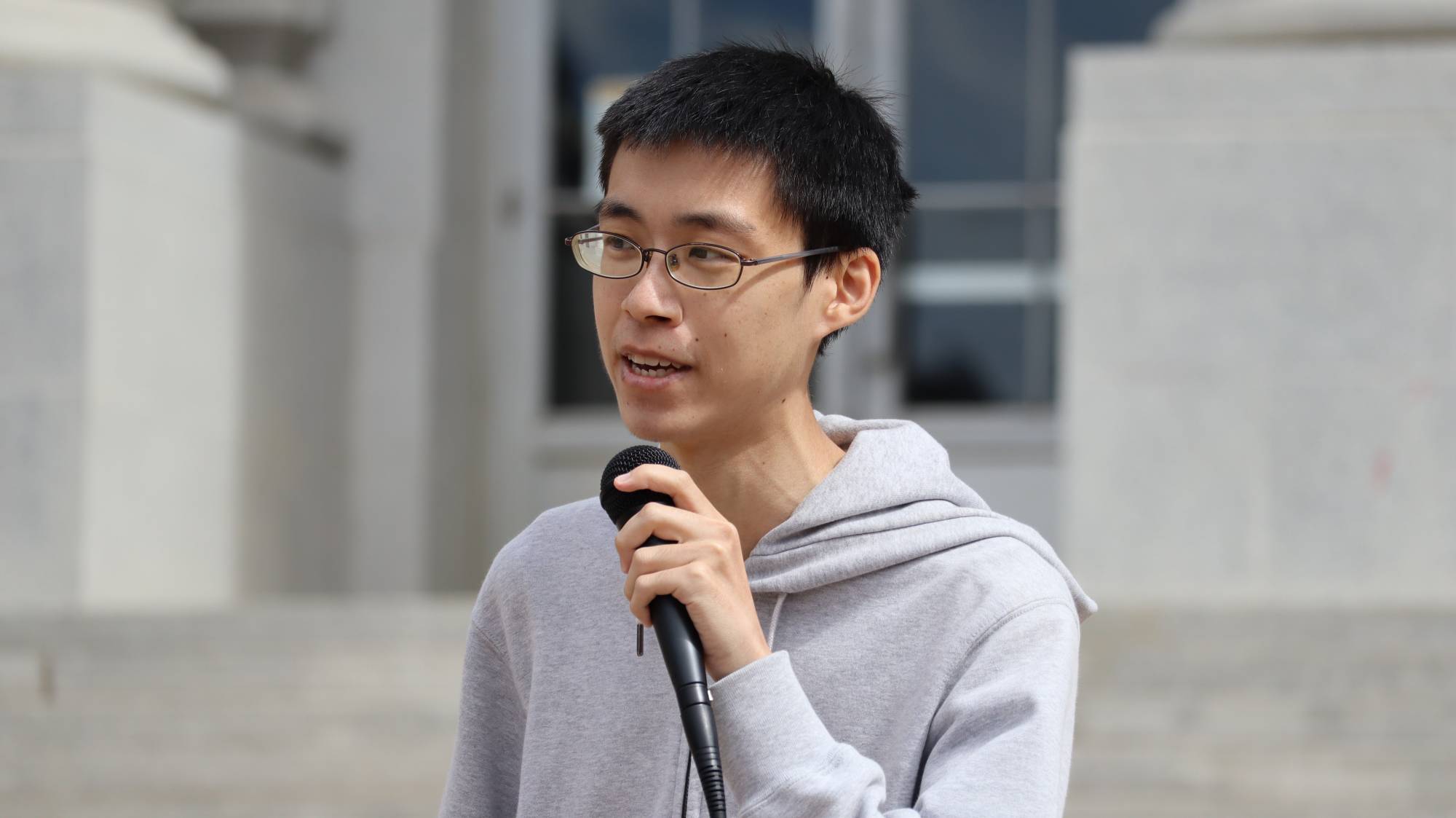
‘Your Free Speech Does Not Apply’: Suspended UC Berkeley Lecturer Speaks Out
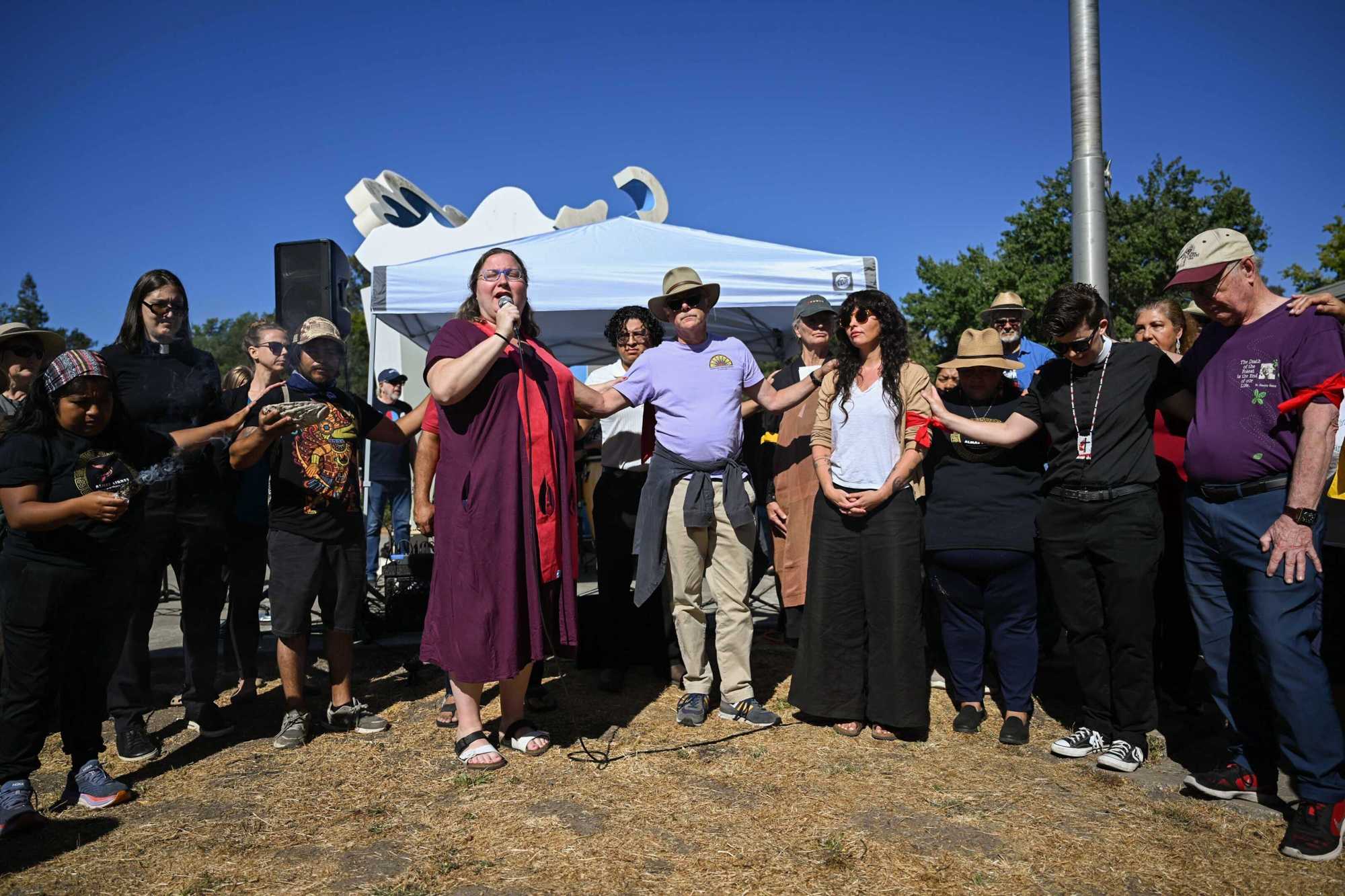
Activists Declare Hunger Strike, Demanding Sanctuary Status for Sonoma County
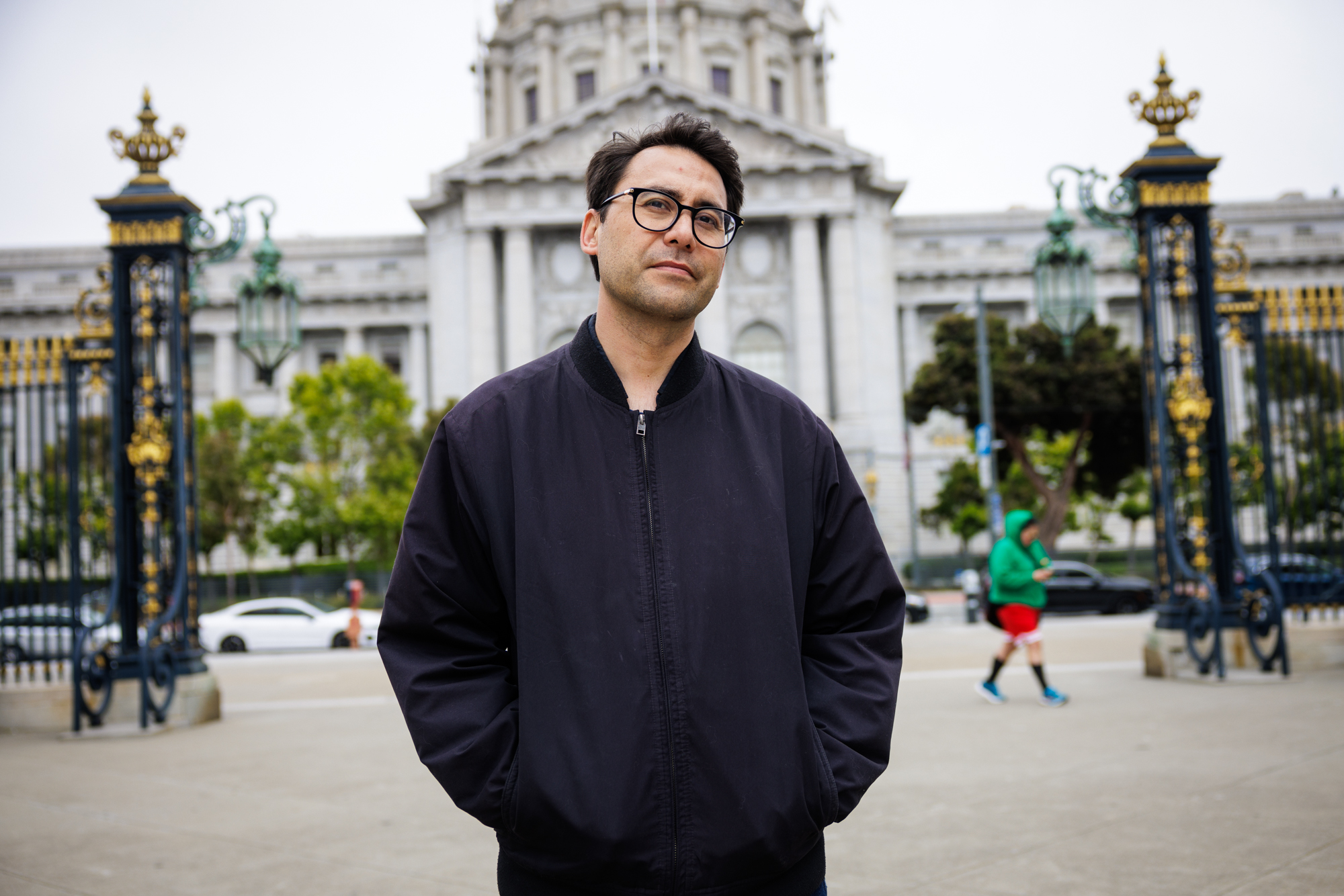
He Says Legal Aid Fights Poverty in SF. Now He’s Starting a Hunger Strike
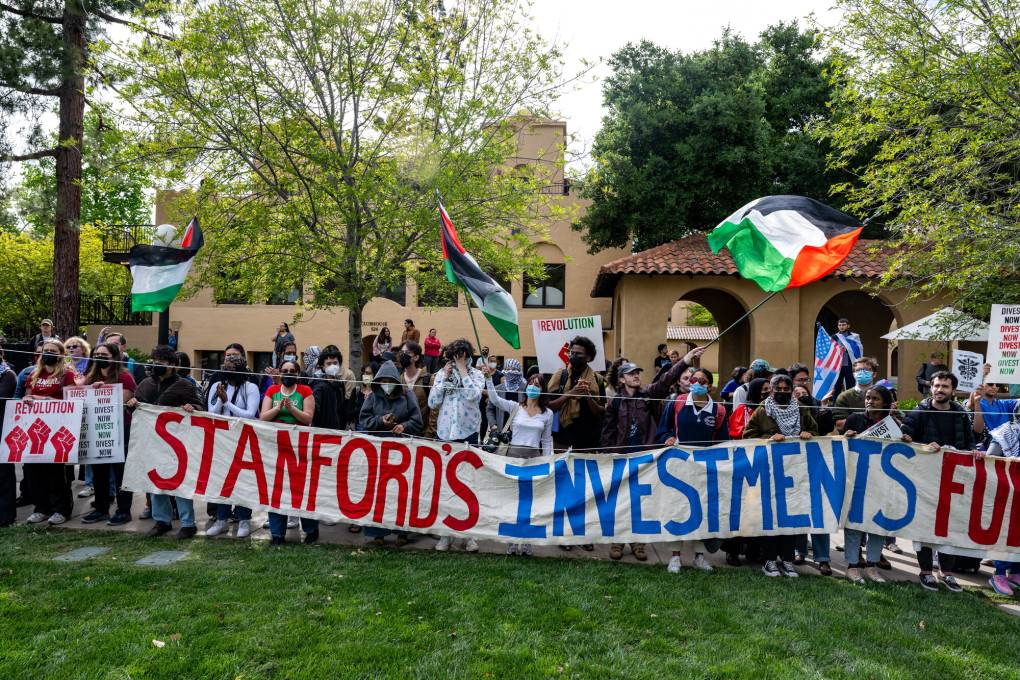
As Stanford Hunger Strike Over Gaza Ends, Students Say Protests Will Resume Next Year
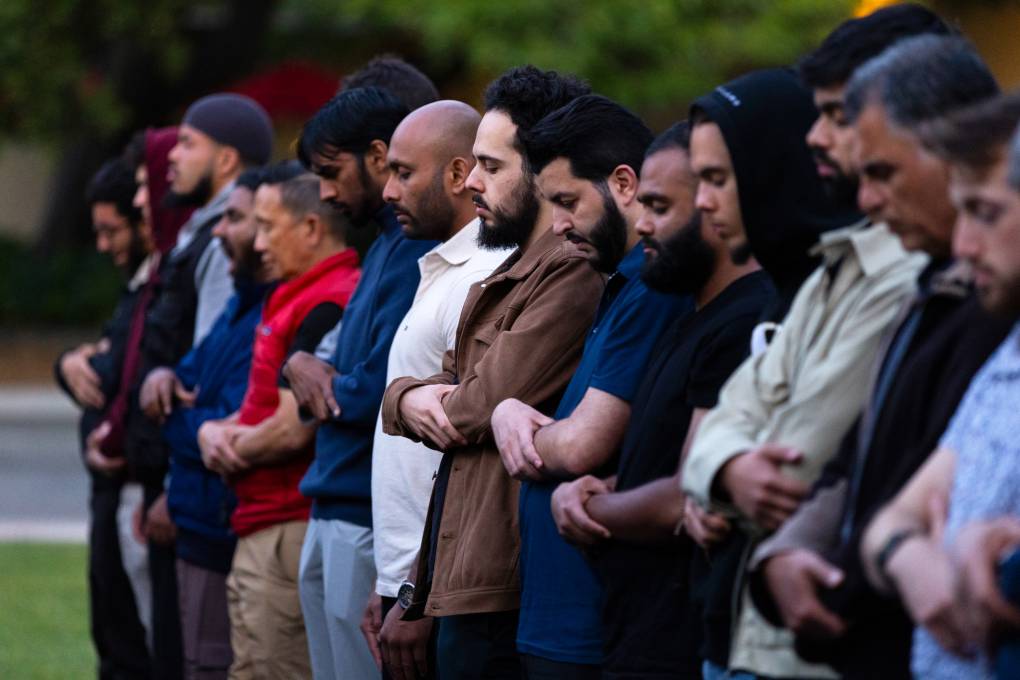
At Stanford, a Growing Pro-Palestinian Hunger Strike Gets Silence From the University
California Students’ Hunger Strike for Gaza Spreads to Stanford
Student Hunger Strikers Want SF State’s Divestment Deal to Spread Across CSU System
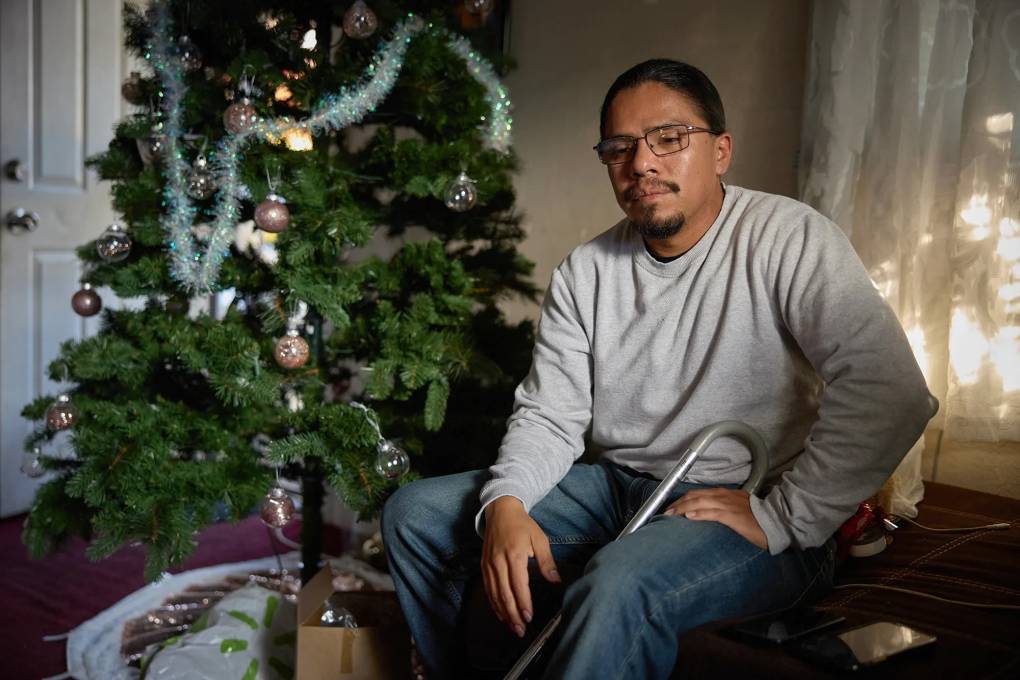
Californian Who Joined Hunger Strike in ICE Detention Seeks $1 million in Complaint
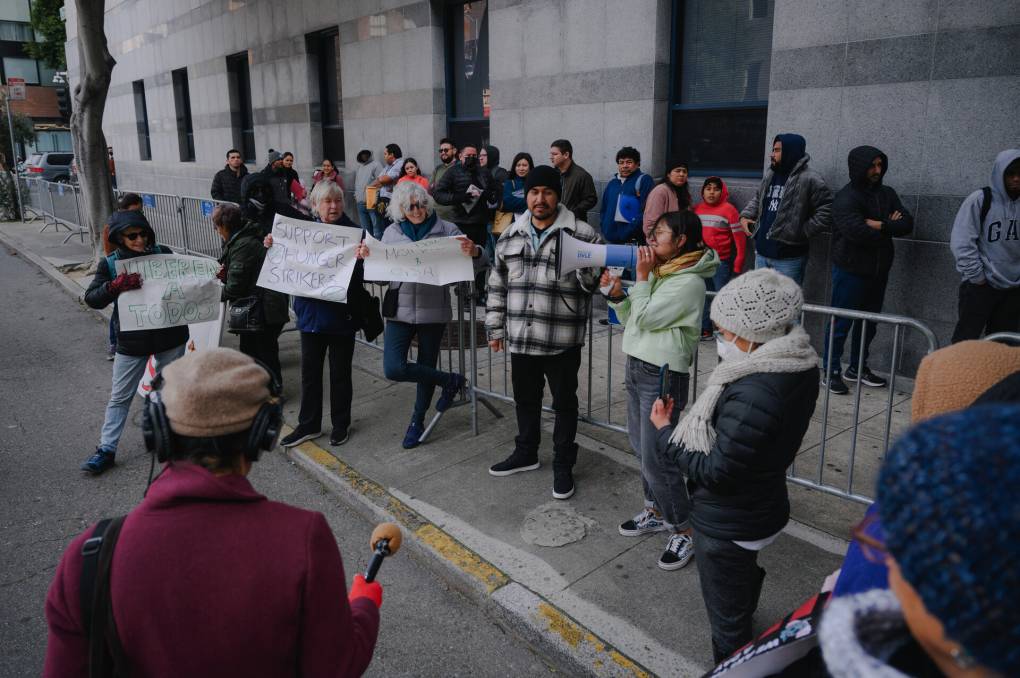
With Detainee Hunger Strike in Third Week, ICE Is Failing to Review Requests for Freedom, Advocates Say
Sponsored
Player sponsored by
window.__IS_SSR__=true
window.__INITIAL_STATE__={
"attachmentsReducer": {
"audio_0": {
"type": "attachments",
"id": "audio_0",
"imgSizes": {
"kqedFullSize": {
"file": "https://ww2.kqed.org/news/wp-content/themes/KQED-unified/img/audio_bgs/background0.jpg"
}
}
},
"audio_1": {
"type": "attachments",
"id": "audio_1",
"imgSizes": {
"kqedFullSize": {
"file": "https://ww2.kqed.org/news/wp-content/themes/KQED-unified/img/audio_bgs/background1.jpg"
}
}
},
"audio_2": {
"type": "attachments",
"id": "audio_2",
"imgSizes": {
"kqedFullSize": {
"file": "https://ww2.kqed.org/news/wp-content/themes/KQED-unified/img/audio_bgs/background2.jpg"
}
}
},
"audio_3": {
"type": "attachments",
"id": "audio_3",
"imgSizes": {
"kqedFullSize": {
"file": "https://ww2.kqed.org/news/wp-content/themes/KQED-unified/img/audio_bgs/background3.jpg"
}
}
},
"audio_4": {
"type": "attachments",
"id": "audio_4",
"imgSizes": {
"kqedFullSize": {
"file": "https://ww2.kqed.org/news/wp-content/themes/KQED-unified/img/audio_bgs/background4.jpg"
}
}
},
"placeholder": {
"type": "attachments",
"id": "placeholder",
"imgSizes": {
"thumbnail": {
"file": "https://cdn.kqed.org/wp-content/uploads/2024/12/KQED-Default-Image-816638274-2000x1333-1-160x107.jpg",
"width": 160,
"height": 107,
"mimeType": "image/jpeg"
},
"medium": {
"file": "https://cdn.kqed.org/wp-content/uploads/2024/12/KQED-Default-Image-816638274-2000x1333-1-800x533.jpg",
"width": 800,
"height": 533,
"mimeType": "image/jpeg"
},
"medium_large": {
"file": "https://cdn.kqed.org/wp-content/uploads/2024/12/KQED-Default-Image-816638274-2000x1333-1-768x512.jpg",
"width": 768,
"height": 512,
"mimeType": "image/jpeg"
},
"large": {
"file": "https://cdn.kqed.org/wp-content/uploads/2024/12/KQED-Default-Image-816638274-2000x1333-1-1020x680.jpg",
"width": 1020,
"height": 680,
"mimeType": "image/jpeg"
},
"1536x1536": {
"file": "https://cdn.kqed.org/wp-content/uploads/2024/12/KQED-Default-Image-816638274-2000x1333-1-1536x1024.jpg",
"width": 1536,
"height": 1024,
"mimeType": "image/jpeg"
},
"fd-lrg": {
"file": "https://cdn.kqed.org/wp-content/uploads/2024/12/KQED-Default-Image-816638274-2000x1333-1-1536x1024.jpg",
"width": 1536,
"height": 1024,
"mimeType": "image/jpeg"
},
"fd-med": {
"file": "https://cdn.kqed.org/wp-content/uploads/2024/12/KQED-Default-Image-816638274-2000x1333-1-1020x680.jpg",
"width": 1020,
"height": 680,
"mimeType": "image/jpeg"
},
"fd-sm": {
"file": "https://cdn.kqed.org/wp-content/uploads/2024/12/KQED-Default-Image-816638274-2000x1333-1-800x533.jpg",
"width": 800,
"height": 533,
"mimeType": "image/jpeg"
},
"post-thumbnail": {
"file": "https://cdn.kqed.org/wp-content/uploads/2024/12/KQED-Default-Image-816638274-2000x1333-1-672x372.jpg",
"width": 672,
"height": 372,
"mimeType": "image/jpeg"
},
"twentyfourteen-full-width": {
"file": "https://cdn.kqed.org/wp-content/uploads/2024/12/KQED-Default-Image-816638274-2000x1333-1-1038x576.jpg",
"width": 1038,
"height": 576,
"mimeType": "image/jpeg"
},
"xxsmall": {
"file": "https://cdn.kqed.org/wp-content/uploads/2024/12/KQED-Default-Image-816638274-2000x1333-1-160x107.jpg",
"width": 160,
"height": 107,
"mimeType": "image/jpeg"
},
"xsmall": {
"file": "https://cdn.kqed.org/wp-content/uploads/2024/12/KQED-Default-Image-816638274-2000x1333-1-672x372.jpg",
"width": 672,
"height": 372,
"mimeType": "image/jpeg"
},
"small": {
"file": "https://cdn.kqed.org/wp-content/uploads/2024/12/KQED-Default-Image-816638274-2000x1333-1-672x372.jpg",
"width": 672,
"height": 372,
"mimeType": "image/jpeg"
},
"xlarge": {
"file": "https://cdn.kqed.org/wp-content/uploads/2024/12/KQED-Default-Image-816638274-2000x1333-1-1020x680.jpg",
"width": 1020,
"height": 680,
"mimeType": "image/jpeg"
},
"full-width": {
"file": "https://cdn.kqed.org/wp-content/uploads/2024/12/KQED-Default-Image-816638274-2000x1333-1-1920x1280.jpg",
"width": 1920,
"height": 1280,
"mimeType": "image/jpeg"
},
"guest-author-32": {
"file": "https://cdn.kqed.org/wp-content/uploads/2025/01/KQED-Default-Image-816638274-1333x1333-1-160x160.jpg",
"width": 32,
"height": 32,
"mimeType": "image/jpeg"
},
"guest-author-50": {
"file": "https://cdn.kqed.org/wp-content/uploads/2025/01/KQED-Default-Image-816638274-1333x1333-1-160x160.jpg",
"width": 50,
"height": 50,
"mimeType": "image/jpeg"
},
"guest-author-64": {
"file": "https://cdn.kqed.org/wp-content/uploads/2025/01/KQED-Default-Image-816638274-1333x1333-1-160x160.jpg",
"width": 64,
"height": 64,
"mimeType": "image/jpeg"
},
"guest-author-96": {
"file": "https://cdn.kqed.org/wp-content/uploads/2025/01/KQED-Default-Image-816638274-1333x1333-1-160x160.jpg",
"width": 96,
"height": 96,
"mimeType": "image/jpeg"
},
"guest-author-128": {
"file": "https://cdn.kqed.org/wp-content/uploads/2025/01/KQED-Default-Image-816638274-1333x1333-1-160x160.jpg",
"width": 128,
"height": 128,
"mimeType": "image/jpeg"
},
"detail": {
"file": "https://cdn.kqed.org/wp-content/uploads/2025/01/KQED-Default-Image-816638274-1333x1333-1-160x160.jpg",
"width": 160,
"height": 160,
"mimeType": "image/jpeg"
},
"kqedFullSize": {
"file": "https://cdn.kqed.org/wp-content/uploads/2024/12/KQED-Default-Image-816638274-2000x1333-1.jpg",
"width": 2000,
"height": 1333
}
}
},
"news_12066690": {
"type": "attachments",
"id": "news_12066690",
"meta": {
"index": "attachments_1716263798",
"site": "news",
"id": "12066690",
"found": true
},
"title": "Peyrin Kao 1 (2)",
"publishDate": 1765401563,
"status": "inherit",
"parent": 0,
"modified": 1765414249,
"caption": "Peyrin Kao, a lecturer in the electrical engineering and computer sciences department, has been an outspoken advocate for Palestinian rights. Kao was disciplined over his discussions of his pro-Palestinian activism in the classroom, raising questions about academic freedom and its limits on campus.\r\n",
"credit": "Courtesy of Peyrin Kao",
"altTag": null,
"description": null,
"imgSizes": {
"medium": {
"file": "https://cdn.kqed.org/wp-content/uploads/sites/10/2025/12/Peyrin-Kao-1-2-2000x1123.jpg",
"width": 2000,
"height": 1123,
"mimeType": "image/jpeg"
},
"large": {
"file": "https://cdn.kqed.org/wp-content/uploads/sites/10/2025/12/Peyrin-Kao-1-2-2000x1123.jpg",
"width": 2000,
"height": 1123,
"mimeType": "image/jpeg"
},
"thumbnail": {
"file": "https://cdn.kqed.org/wp-content/uploads/sites/10/2025/12/Peyrin-Kao-1-2-160x90.jpg",
"width": 160,
"height": 90,
"mimeType": "image/jpeg"
},
"1536x1536": {
"file": "https://cdn.kqed.org/wp-content/uploads/sites/10/2025/12/Peyrin-Kao-1-2-1536x862.jpg",
"width": 1536,
"height": 862,
"mimeType": "image/jpeg"
},
"2048x2048": {
"file": "https://cdn.kqed.org/wp-content/uploads/sites/10/2025/12/Peyrin-Kao-1-2-2048x1150.jpg",
"width": 2048,
"height": 1150,
"mimeType": "image/jpeg"
},
"post-thumbnail": {
"file": "https://cdn.kqed.org/wp-content/uploads/sites/10/2025/12/Peyrin-Kao-1-2-672x372.jpg",
"width": 672,
"height": 372,
"mimeType": "image/jpeg"
},
"twentyfourteen-full-width": {
"file": "https://cdn.kqed.org/wp-content/uploads/sites/10/2025/12/Peyrin-Kao-1-2-1038x576.jpg",
"width": 1038,
"height": 576,
"mimeType": "image/jpeg"
},
"full-width": {
"file": "https://cdn.kqed.org/wp-content/uploads/sites/10/2025/12/Peyrin-Kao-1-2-2000x1123.jpg",
"width": 2000,
"height": 1123,
"mimeType": "image/jpeg"
},
"npr-cds-wide": {
"file": "https://cdn.kqed.org/wp-content/uploads/sites/10/2025/12/Peyrin-Kao-1-2-1200x675.jpg",
"width": 1200,
"height": 675,
"mimeType": "image/jpeg"
},
"kqedFullSize": {
"file": "https://cdn.kqed.org/wp-content/uploads/sites/10/2025/12/Peyrin-Kao-1-2-scaled-e1765401857443.jpg",
"width": 2000,
"height": 1123
}
},
"fetchFailed": false,
"isLoading": false
},
"news_12050965": {
"type": "attachments",
"id": "news_12050965",
"meta": {
"index": "attachments_1716263798",
"site": "news",
"id": "12050965",
"found": true
},
"title": "250805-SONOMA HUNGER STRIKE-BL-01-KQED",
"publishDate": 1754420780,
"status": "inherit",
"parent": 0,
"modified": 1754421014,
"caption": "Rev Aija Simpson-Newbury speaks to faith leaders, congregation members, immigrant rights groups and allies outside of the Sonoma County Board of Supervisors offices in Santa Rosa on Aug. 5, 2025, during a rally to launch an indefinite hunger strike urging the county to adopt a sanctuary law.",
"credit": "Beth LaBerge/KQED",
"altTag": null,
"description": null,
"imgSizes": {
"thumbnail": {
"file": "https://cdn.kqed.org/wp-content/uploads/sites/10/2025/08/250805-SONOMA-HUNGER-STRIKE-BL-01-KQED-160x107.jpg",
"width": 160,
"height": 107,
"mimeType": "image/jpeg"
},
"1536x1536": {
"file": "https://cdn.kqed.org/wp-content/uploads/sites/10/2025/08/250805-SONOMA-HUNGER-STRIKE-BL-01-KQED-1536x1024.jpg",
"width": 1536,
"height": 1024,
"mimeType": "image/jpeg"
},
"post-thumbnail": {
"file": "https://cdn.kqed.org/wp-content/uploads/sites/10/2025/08/250805-SONOMA-HUNGER-STRIKE-BL-01-KQED-672x372.jpg",
"width": 672,
"height": 372,
"mimeType": "image/jpeg"
},
"twentyfourteen-full-width": {
"file": "https://cdn.kqed.org/wp-content/uploads/sites/10/2025/08/250805-SONOMA-HUNGER-STRIKE-BL-01-KQED-1038x576.jpg",
"width": 1038,
"height": 576,
"mimeType": "image/jpeg"
},
"kqedFullSize": {
"file": "https://cdn.kqed.org/wp-content/uploads/sites/10/2025/08/250805-SONOMA-HUNGER-STRIKE-BL-01-KQED.jpg",
"width": 2000,
"height": 1333
}
},
"fetchFailed": false,
"isLoading": false
},
"news_12043660": {
"type": "attachments",
"id": "news_12043660",
"meta": {
"index": "attachments_1716263798",
"site": "news",
"id": "12043660",
"found": true
},
"title": "Adrian Tirtanadi stands outside of City Hall in San Francisco on June 10, 2025.",
"publishDate": 1749599453,
"status": "inherit",
"parent": 12043582,
"modified": 1749665017,
"caption": "Adrian Tirtanadi stands outside City Hall in San Francisco on June 10, 2025.",
"credit": "Martin do Nasicmento/KQED",
"altTag": null,
"description": null,
"imgSizes": {
"thumbnail": {
"file": "https://cdn.kqed.org/wp-content/uploads/sites/10/2025/06/250610-LEGAL-AID-HUNGER-STRIKE-MD-01-KQED-160x107.jpg",
"width": 160,
"height": 107,
"mimeType": "image/jpeg"
},
"1536x1536": {
"file": "https://cdn.kqed.org/wp-content/uploads/sites/10/2025/06/250610-LEGAL-AID-HUNGER-STRIKE-MD-01-KQED-1536x1025.jpg",
"width": 1536,
"height": 1025,
"mimeType": "image/jpeg"
},
"post-thumbnail": {
"file": "https://cdn.kqed.org/wp-content/uploads/sites/10/2025/06/250610-LEGAL-AID-HUNGER-STRIKE-MD-01-KQED-672x372.jpg",
"width": 672,
"height": 372,
"mimeType": "image/jpeg"
},
"twentyfourteen-full-width": {
"file": "https://cdn.kqed.org/wp-content/uploads/sites/10/2025/06/250610-LEGAL-AID-HUNGER-STRIKE-MD-01-KQED-1038x576.jpg",
"width": 1038,
"height": 576,
"mimeType": "image/jpeg"
},
"kqedFullSize": {
"file": "https://cdn.kqed.org/wp-content/uploads/sites/10/2025/06/250610-LEGAL-AID-HUNGER-STRIKE-MD-01-KQED.jpg",
"width": 2000,
"height": 1334
}
},
"fetchFailed": false,
"isLoading": false
},
"news_12042885": {
"type": "attachments",
"id": "news_12042885",
"meta": {
"index": "attachments_1716263798",
"site": "news",
"id": "12042885",
"found": true
},
"title": "Stanford University Hunger Strike",
"publishDate": 1749144329,
"status": "inherit",
"parent": 12042881,
"modified": 1749150182,
"caption": "Owen Martin, right, listens to Shaykh Alauddin Elbakri speak at White Memorial Plaza in Stanford, California, on Monday, May 19, 2025. Several Stanford University students have been on a hunger strike for more than a week, pledging not to eat until the university agrees to divest from companies that they say are supporting Israel’s war in Gaza.",
"credit": "Estefany Gonzalez for KQED",
"altTag": null,
"description": null,
"imgSizes": {
"medium": {
"file": "https://cdn.kqed.org/wp-content/uploads/sites/10/2025/06/05192025_StanfordHungerStrike_EG030_qed-800x533.jpg",
"width": 800,
"height": 533,
"mimeType": "image/jpeg"
},
"large": {
"file": "https://cdn.kqed.org/wp-content/uploads/sites/10/2025/06/05192025_StanfordHungerStrike_EG030_qed-1020x680.jpg",
"width": 1020,
"height": 680,
"mimeType": "image/jpeg"
},
"thumbnail": {
"file": "https://cdn.kqed.org/wp-content/uploads/sites/10/2025/06/05192025_StanfordHungerStrike_EG030_qed-160x107.jpg",
"width": 160,
"height": 107,
"mimeType": "image/jpeg"
},
"1536x1536": {
"file": "https://cdn.kqed.org/wp-content/uploads/sites/10/2025/06/05192025_StanfordHungerStrike_EG030_qed-1536x1024.jpg",
"width": 1536,
"height": 1024,
"mimeType": "image/jpeg"
},
"post-thumbnail": {
"file": "https://cdn.kqed.org/wp-content/uploads/sites/10/2025/06/05192025_StanfordHungerStrike_EG030_qed-672x372.jpg",
"width": 672,
"height": 372,
"mimeType": "image/jpeg"
},
"twentyfourteen-full-width": {
"file": "https://cdn.kqed.org/wp-content/uploads/sites/10/2025/06/05192025_StanfordHungerStrike_EG030_qed-1038x576.jpg",
"width": 1038,
"height": 576,
"mimeType": "image/jpeg"
},
"full-width": {
"file": "https://cdn.kqed.org/wp-content/uploads/sites/10/2025/06/05192025_StanfordHungerStrike_EG030_qed-1920x1280.jpg",
"width": 1920,
"height": 1280,
"mimeType": "image/jpeg"
},
"kqedFullSize": {
"file": "https://cdn.kqed.org/wp-content/uploads/sites/10/2025/06/05192025_StanfordHungerStrike_EG030_qed.jpg",
"width": 2000,
"height": 1333
}
},
"fetchFailed": false,
"isLoading": false
},
"news_12040877": {
"type": "attachments",
"id": "news_12040877",
"meta": {
"index": "attachments_1716263798",
"site": "news",
"id": "12040877",
"found": true
},
"title": "Stanford University Hunger Strike",
"publishDate": 1747759054,
"status": "inherit",
"parent": 0,
"modified": 1747773632,
"caption": "People listen as Shaykh Alauddin Elbakri leads a prayer at White Memorial Plaza in Stanford, California, on Monday, May 19, 2025. Several Stanford University students have been on a hunger strike for more than a week, pledging not to eat until the university agrees to divest from companies that they say are supporting Israel’s war in Gaza.",
"credit": "Estefany Gonzalez for KQED",
"altTag": null,
"description": null,
"imgSizes": {
"medium": {
"file": "https://cdn.kqed.org/wp-content/uploads/sites/10/2025/05/05192025_STANFORDHUNGERSTRIKE_EG044-KQED-800x533.jpg",
"width": 800,
"height": 533,
"mimeType": "image/jpeg"
},
"large": {
"file": "https://cdn.kqed.org/wp-content/uploads/sites/10/2025/05/05192025_STANFORDHUNGERSTRIKE_EG044-KQED-1020x680.jpg",
"width": 1020,
"height": 680,
"mimeType": "image/jpeg"
},
"thumbnail": {
"file": "https://cdn.kqed.org/wp-content/uploads/sites/10/2025/05/05192025_STANFORDHUNGERSTRIKE_EG044-KQED-160x107.jpg",
"width": 160,
"height": 107,
"mimeType": "image/jpeg"
},
"1536x1536": {
"file": "https://cdn.kqed.org/wp-content/uploads/sites/10/2025/05/05192025_STANFORDHUNGERSTRIKE_EG044-KQED-1536x1024.jpg",
"width": 1536,
"height": 1024,
"mimeType": "image/jpeg"
},
"post-thumbnail": {
"file": "https://cdn.kqed.org/wp-content/uploads/sites/10/2025/05/05192025_STANFORDHUNGERSTRIKE_EG044-KQED-672x372.jpg",
"width": 672,
"height": 372,
"mimeType": "image/jpeg"
},
"twentyfourteen-full-width": {
"file": "https://cdn.kqed.org/wp-content/uploads/sites/10/2025/05/05192025_STANFORDHUNGERSTRIKE_EG044-KQED-1038x576.jpg",
"width": 1038,
"height": 576,
"mimeType": "image/jpeg"
},
"full-width": {
"file": "https://cdn.kqed.org/wp-content/uploads/sites/10/2025/05/05192025_STANFORDHUNGERSTRIKE_EG044-KQED-1920x1280.jpg",
"width": 1920,
"height": 1280,
"mimeType": "image/jpeg"
},
"kqedFullSize": {
"file": "https://cdn.kqed.org/wp-content/uploads/sites/10/2025/05/05192025_STANFORDHUNGERSTRIKE_EG044-KQED.jpg",
"width": 2000,
"height": 1333
}
},
"fetchFailed": false,
"isLoading": false
},
"news_12039736": {
"type": "attachments",
"id": "news_12039736",
"meta": {
"index": "attachments_1716263798",
"site": "news",
"id": "12039736",
"found": true
},
"title": "240425-StanfordGazaProtest-036-BL_qed",
"publishDate": 1747068429,
"status": "inherit",
"parent": 0,
"modified": 1747085064,
"caption": "Pro-Palestinian demonstrators hold the perimeter while a tent encampment is set up during a protest on the Stanford University campus in Stanford, California, on April 25, 2024, calling for the university to divest from Israel. ",
"credit": "Beth LaBerge/KQED",
"altTag": null,
"description": null,
"imgSizes": {
"medium": {
"file": "https://cdn.kqed.org/wp-content/uploads/sites/10/2025/05/240425-StanfordGazaProtest-036-BL_qed-800x533.jpg",
"width": 800,
"height": 533,
"mimeType": "image/jpeg"
},
"large": {
"file": "https://cdn.kqed.org/wp-content/uploads/sites/10/2025/05/240425-StanfordGazaProtest-036-BL_qed-1020x680.jpg",
"width": 1020,
"height": 680,
"mimeType": "image/jpeg"
},
"thumbnail": {
"file": "https://cdn.kqed.org/wp-content/uploads/sites/10/2025/05/240425-StanfordGazaProtest-036-BL_qed-160x107.jpg",
"width": 160,
"height": 107,
"mimeType": "image/jpeg"
},
"1536x1536": {
"file": "https://cdn.kqed.org/wp-content/uploads/sites/10/2025/05/240425-StanfordGazaProtest-036-BL_qed-1536x1024.jpg",
"width": 1536,
"height": 1024,
"mimeType": "image/jpeg"
},
"post-thumbnail": {
"file": "https://cdn.kqed.org/wp-content/uploads/sites/10/2025/05/240425-StanfordGazaProtest-036-BL_qed-672x372.jpg",
"width": 672,
"height": 372,
"mimeType": "image/jpeg"
},
"twentyfourteen-full-width": {
"file": "https://cdn.kqed.org/wp-content/uploads/sites/10/2025/05/240425-StanfordGazaProtest-036-BL_qed-1038x576.jpg",
"width": 1038,
"height": 576,
"mimeType": "image/jpeg"
},
"full-width": {
"file": "https://cdn.kqed.org/wp-content/uploads/sites/10/2025/05/240425-StanfordGazaProtest-036-BL_qed-1920x1280.jpg",
"width": 1920,
"height": 1280,
"mimeType": "image/jpeg"
},
"kqedFullSize": {
"file": "https://cdn.kqed.org/wp-content/uploads/sites/10/2025/05/240425-StanfordGazaProtest-036-BL_qed.jpg",
"width": 2000,
"height": 1333
}
},
"fetchFailed": false,
"isLoading": false
},
"news_12002402": {
"type": "attachments",
"id": "news_12002402",
"meta": {
"index": "attachments_1716263798",
"site": "news",
"id": "12002402",
"found": true
},
"title": "20240829-SFSUGazarally-JY-001",
"publishDate": 1724966210,
"status": "inherit",
"parent": 0,
"modified": 1746564580,
"caption": "Signs are placed around the stage as San Francisco State University Students for Gaza holds a press conference and rally announcing the university’s divestments from weapons manufacturers at Malcolm X Plaza on the SFSU campus on Aug. 29, 2024. ",
"credit": "Juliana Yamada/KQED",
"altTag": null,
"description": null,
"imgSizes": {
"medium": {
"file": "https://cdn.kqed.org/wp-content/uploads/sites/10/2024/08/20240829-SFSUGazarally-JY-001-800x533.jpg",
"width": 800,
"height": 533,
"mimeType": "image/jpeg"
},
"large": {
"file": "https://cdn.kqed.org/wp-content/uploads/sites/10/2024/08/20240829-SFSUGazarally-JY-001-1020x680.jpg",
"width": 1020,
"height": 680,
"mimeType": "image/jpeg"
},
"thumbnail": {
"file": "https://cdn.kqed.org/wp-content/uploads/sites/10/2024/08/20240829-SFSUGazarally-JY-001-160x107.jpg",
"width": 160,
"height": 107,
"mimeType": "image/jpeg"
},
"1536x1536": {
"file": "https://cdn.kqed.org/wp-content/uploads/sites/10/2024/08/20240829-SFSUGazarally-JY-001-1536x1024.jpg",
"width": 1536,
"height": 1024,
"mimeType": "image/jpeg"
},
"2048x2048": {
"file": "https://cdn.kqed.org/wp-content/uploads/sites/10/2024/08/20240829-SFSUGazarally-JY-001-2048x1365.jpg",
"width": 2048,
"height": 1365,
"mimeType": "image/jpeg"
},
"post-thumbnail": {
"file": "https://cdn.kqed.org/wp-content/uploads/sites/10/2024/08/20240829-SFSUGazarally-JY-001-672x372.jpg",
"width": 672,
"height": 372,
"mimeType": "image/jpeg"
},
"twentyfourteen-full-width": {
"file": "https://cdn.kqed.org/wp-content/uploads/sites/10/2024/08/20240829-SFSUGazarally-JY-001-1038x576.jpg",
"width": 1038,
"height": 576,
"mimeType": "image/jpeg"
},
"full-width": {
"file": "https://cdn.kqed.org/wp-content/uploads/sites/10/2024/08/20240829-SFSUGazarally-JY-001-1920x1280.jpg",
"width": 1920,
"height": 1280,
"mimeType": "image/jpeg"
},
"kqedFullSize": {
"file": "https://cdn.kqed.org/wp-content/uploads/sites/10/2024/08/20240829-SFSUGazarally-JY-001-scaled.jpg",
"width": 2560,
"height": 1707
}
},
"fetchFailed": false,
"isLoading": false
},
"news_11970820": {
"type": "attachments",
"id": "news_11970820",
"meta": {
"index": "attachments_1716263798",
"site": "news",
"id": "11970820",
"found": true
},
"parent": 11970816,
"imgSizes": {
"twentyfourteen-full-width": {
"file": "https://cdn.kqed.org/wp-content/uploads/sites/10/2023/12/121923-Jose-Ruben-Hunger-Strike-FG-CM-09-copy-1038x576.jpg",
"width": 1038,
"mimeType": "image/jpeg",
"height": 576
},
"thumbnail": {
"file": "https://cdn.kqed.org/wp-content/uploads/sites/10/2023/12/121923-Jose-Ruben-Hunger-Strike-FG-CM-09-copy-160x107.jpg",
"width": 160,
"mimeType": "image/jpeg",
"height": 107
},
"post-thumbnail": {
"file": "https://cdn.kqed.org/wp-content/uploads/sites/10/2023/12/121923-Jose-Ruben-Hunger-Strike-FG-CM-09-copy-672x372.jpg",
"width": 672,
"mimeType": "image/jpeg",
"height": 372
},
"kqedFullSize": {
"file": "https://cdn.kqed.org/wp-content/uploads/sites/10/2023/12/121923-Jose-Ruben-Hunger-Strike-FG-CM-09-copy.jpg",
"width": 2000,
"height": 1334
},
"large": {
"file": "https://cdn.kqed.org/wp-content/uploads/sites/10/2023/12/121923-Jose-Ruben-Hunger-Strike-FG-CM-09-copy-1020x680.jpg",
"width": 1020,
"mimeType": "image/jpeg",
"height": 680
},
"1536x1536": {
"file": "https://cdn.kqed.org/wp-content/uploads/sites/10/2023/12/121923-Jose-Ruben-Hunger-Strike-FG-CM-09-copy-1536x1025.jpg",
"width": 1536,
"mimeType": "image/jpeg",
"height": 1025
},
"full-width": {
"file": "https://cdn.kqed.org/wp-content/uploads/sites/10/2023/12/121923-Jose-Ruben-Hunger-Strike-FG-CM-09-copy-1920x1281.jpg",
"width": 1920,
"mimeType": "image/jpeg",
"height": 1281
},
"medium": {
"file": "https://cdn.kqed.org/wp-content/uploads/sites/10/2023/12/121923-Jose-Ruben-Hunger-Strike-FG-CM-09-copy-800x534.jpg",
"width": 800,
"mimeType": "image/jpeg",
"height": 534
}
},
"publishDate": 1703370502,
"modified": 1703370570,
"caption": "Jose Ruben Hernandez Gomez at his home in Lodi on Dec. 13, 2023. He was one of the hunger strikers at the Mesa Verde ICE detention facility and has filed a federal complaint alleging medical neglect and abuse.",
"description": null,
"title": "121923-Jose-Ruben-Hunger-Strike-FG-CM-09 copy",
"credit": "Fred Greaves for CalMatters",
"status": "inherit",
"altTag": "A Latino man with glasses sits next to a Christmas tree in a living room.",
"fetchFailed": false,
"isLoading": false
},
"news_11942419": {
"type": "attachments",
"id": "news_11942419",
"meta": {
"index": "attachments_1716263798",
"site": "news",
"id": "11942419",
"found": true
},
"parent": 11942414,
"imgSizes": {
"twentyfourteen-full-width": {
"file": "https://ww2.kqed.org/app/uploads/sites/10/2023/03/RS63136_02222023_detaineehungerstrike-348-qut-1038x576.jpg",
"width": 1038,
"mimeType": "image/jpeg",
"height": 576
},
"thumbnail": {
"file": "https://ww2.kqed.org/app/uploads/sites/10/2023/03/RS63136_02222023_detaineehungerstrike-348-qut-160x106.jpg",
"width": 160,
"mimeType": "image/jpeg",
"height": 106
},
"post-thumbnail": {
"file": "https://ww2.kqed.org/app/uploads/sites/10/2023/03/RS63136_02222023_detaineehungerstrike-348-qut-672x372.jpg",
"width": 672,
"mimeType": "image/jpeg",
"height": 372
},
"kqedFullSize": {
"file": "https://ww2.kqed.org/app/uploads/sites/10/2023/03/RS63136_02222023_detaineehungerstrike-348-qut.jpg",
"width": 1920,
"height": 1277
},
"large": {
"file": "https://ww2.kqed.org/app/uploads/sites/10/2023/03/RS63136_02222023_detaineehungerstrike-348-qut-1020x678.jpg",
"width": 1020,
"mimeType": "image/jpeg",
"height": 678
},
"1536x1536": {
"file": "https://ww2.kqed.org/app/uploads/sites/10/2023/03/RS63136_02222023_detaineehungerstrike-348-qut-1536x1022.jpg",
"width": 1536,
"mimeType": "image/jpeg",
"height": 1022
},
"medium": {
"file": "https://ww2.kqed.org/app/uploads/sites/10/2023/03/RS63136_02222023_detaineehungerstrike-348-qut-800x532.jpg",
"width": 800,
"mimeType": "image/jpeg",
"height": 532
}
},
"publishDate": 1677814023,
"modified": 1677883511,
"caption": "Pangea Legal Services organizer Esperanza Cuautle, 30, speaks during a protest in support of an ongoing hunger strike in US Immigration and Customs Enforcement detention facilities outside the ICE field office in downtown San Francisco on Feb. 22, 2023. Three weeks ago, 84 detainees launched the strike to protest unpaid labor and inhumane conditions inside ICE facilities.",
"description": null,
"title": "RS63136_02222023_detaineehungerstrike 348-qut",
"credit": "Kori Suzuki/KQED",
"status": "inherit",
"altTag": "A crowd of protestors outside a building on a downtown street.",
"fetchFailed": false,
"isLoading": false
}
},
"audioPlayerReducer": {
"postId": "stream_live",
"isPaused": true,
"isPlaying": false,
"pfsActive": false,
"pledgeModalIsOpen": true,
"playerDrawerIsOpen": false
},
"authorsReducer": {
"byline_news_12043582": {
"type": "authors",
"id": "byline_news_12043582",
"meta": {
"override": true
},
"slug": "byline_news_12043582",
"name": "Cami Dominguez ",
"isLoading": false
},
"byline_news_11970816": {
"type": "authors",
"id": "byline_news_11970816",
"meta": {
"override": true
},
"slug": "byline_news_11970816",
"name": "\u003ca href=\"https://calmatters.org/author/kervy-robles/\">Justo Robles\u003c/a>",
"isLoading": false
},
"tychehendricks": {
"type": "authors",
"id": "259",
"meta": {
"index": "authors_1716337520",
"id": "259",
"found": true
},
"name": "Tyche Hendricks",
"firstName": "Tyche",
"lastName": "Hendricks",
"slug": "tychehendricks",
"email": "thendricks@kqed.org",
"display_author_email": true,
"staff_mastheads": [
"news"
],
"title": "KQED Senior Editor, Immigration",
"bio": "\u003cspan style=\"font-weight: 400;\">Tyche Hendricks is KQED’s senior editor for immigration, leading coverage of the policy and politics that affect California’s immigrant communities. Her work for KQED’s radio and online audiences is also carried on NPR and other national outlets. She has been recognized with awards from the Radio and Television News Directors Association, the Society for Professional Journalists; the Education Writers Association; the Best of the West and the National Federation of Community Broadcasters. Before joining KQED in 2010, Tyche spent more than a dozen years as a newspaper reporter, notably at the \u003c/span>\u003ci>\u003cspan style=\"font-weight: 400;\">San Francisco Chronicle\u003c/span>\u003c/i>\u003cspan style=\"font-weight: 400;\">. At different times she has covered criminal justice, government and politics and urban planning. Tyche has taught in the MFA Creative Writing program at the University of San Francisco and at UC Berkeley’s Graduate School of Journalism, where she was co-director of a national immigration symposium for professional journalists. She is the author of \u003c/span>\u003ci>\u003cspan style=\"font-weight: 400;\">The Wind Doesn't Need a Passport: Stories from the U.S.-Mexico Borderlands\u003c/span>\u003c/i>\u003cspan style=\"font-weight: 400;\"> (University of California Press). \u003c/span>",
"avatar": "https://secure.gravatar.com/avatar/b8ee458e2731c2d43df86882ce17267e?s=600&d=blank&r=g",
"twitter": "tychehendricks",
"facebook": null,
"instagram": null,
"linkedin": null,
"sites": [
{
"site": "news",
"roles": [
"editor"
]
},
{
"site": "stateofhealth",
"roles": [
"editor"
]
}
],
"headData": {
"title": "Tyche Hendricks | KQED",
"description": "KQED Senior Editor, Immigration",
"ogImgSrc": "https://secure.gravatar.com/avatar/b8ee458e2731c2d43df86882ce17267e?s=600&d=blank&r=g",
"twImgSrc": "https://secure.gravatar.com/avatar/b8ee458e2731c2d43df86882ce17267e?s=600&d=blank&r=g"
},
"isLoading": false,
"link": "/author/tychehendricks"
},
"kdebenedetti": {
"type": "authors",
"id": "11913",
"meta": {
"index": "authors_1716337520",
"id": "11913",
"found": true
},
"name": "Katie DeBenedetti",
"firstName": "Katie",
"lastName": "DeBenedetti",
"slug": "kdebenedetti",
"email": "kdebenedetti@kqed.org",
"display_author_email": false,
"staff_mastheads": [
"news",
"science"
],
"title": "KQED Contributor",
"bio": "Katie DeBenedetti is a digital reporter covering daily news for the Express Desk. Prior to joining KQED as a culture reporting intern in January 2024, she covered education and city government for the Napa Valley Register.",
"avatar": "https://secure.gravatar.com/avatar/6e31073cb8f7e4214ab03f42771d0f45?s=600&d=blank&r=g",
"twitter": null,
"facebook": null,
"instagram": null,
"linkedin": null,
"sites": [
{
"site": "news",
"roles": [
"author"
]
},
{
"site": "science",
"roles": [
"author"
]
},
{
"site": "liveblog",
"roles": [
"author"
]
}
],
"headData": {
"title": "Katie DeBenedetti | KQED",
"description": "KQED Contributor",
"ogImgSrc": "https://secure.gravatar.com/avatar/6e31073cb8f7e4214ab03f42771d0f45?s=600&d=blank&r=g",
"twImgSrc": "https://secure.gravatar.com/avatar/6e31073cb8f7e4214ab03f42771d0f45?s=600&d=blank&r=g"
},
"isLoading": false,
"link": "/author/kdebenedetti"
},
"emanoukian": {
"type": "authors",
"id": "11925",
"meta": {
"index": "authors_1716337520",
"id": "11925",
"found": true
},
"name": "Elize Manoukian",
"firstName": "Elize",
"lastName": "Manoukian",
"slug": "emanoukian",
"email": "emanoukian@KQED.org",
"display_author_email": false,
"staff_mastheads": [
"news"
],
"title": "KQED Contributor",
"bio": null,
"avatar": "https://secure.gravatar.com/avatar/3ae2b7f374920c4c6bdbb4c21d5d065f?s=600&d=blank&r=g",
"twitter": null,
"facebook": null,
"instagram": null,
"linkedin": null,
"sites": [
{
"site": "arts",
"roles": [
"editor"
]
},
{
"site": "news",
"roles": [
"editor"
]
},
{
"site": "science",
"roles": [
"editor"
]
},
{
"site": "liveblog",
"roles": [
"author"
]
}
],
"headData": {
"title": "Elize Manoukian | KQED",
"description": "KQED Contributor",
"ogImgSrc": "https://secure.gravatar.com/avatar/3ae2b7f374920c4c6bdbb4c21d5d065f?s=600&d=blank&r=g",
"twImgSrc": "https://secure.gravatar.com/avatar/3ae2b7f374920c4c6bdbb4c21d5d065f?s=600&d=blank&r=g"
},
"isLoading": false,
"link": "/author/emanoukian"
}
},
"breakingNewsReducer": {},
"pagesReducer": {},
"postsReducer": {
"stream_live": {
"type": "live",
"id": "stream_live",
"audioUrl": "https://streams.kqed.org/kqedradio",
"title": "Live Stream",
"excerpt": "Live Stream information currently unavailable.",
"link": "/radio",
"featImg": "",
"label": {
"name": "KQED Live",
"link": "/"
}
},
"stream_kqedNewscast": {
"type": "posts",
"id": "stream_kqedNewscast",
"audioUrl": "https://www.kqed.org/.stream/anon/radio/RDnews/newscast.mp3?_=1",
"title": "KQED Newscast",
"featImg": "",
"label": {
"name": "88.5 FM",
"link": "/"
}
},
"news_12066489": {
"type": "posts",
"id": "news_12066489",
"meta": {
"index": "posts_1716263798",
"site": "news",
"id": "12066489",
"score": null,
"sort": [
1765410855000
]
},
"guestAuthors": [],
"slug": "your-free-speech-does-not-apply-suspended-uc-berkeley-lecturer-speaks-out",
"title": "‘Your Free Speech Does Not Apply’: Suspended UC Berkeley Lecturer Speaks Out",
"publishDate": 1765410855,
"format": "standard",
"headTitle": "‘Your Free Speech Does Not Apply’: Suspended UC Berkeley Lecturer Speaks Out | KQED",
"labelTerm": {
"site": "news"
},
"content": "\u003cp>The suspension of a UC Berkeley computer science lecturer \u003ca href=\"https://www.kqed.org/news/12059351/the-cal-lecturer-who-went-on-a-38-day-hunger-strike-for-gaza\">who went on a hunger strike over the war in Gaza\u003c/a> and made pro-Palestinian remarks in the classroom has raised questions about free speech and the scope of academic freedom on the Bay Area campus.\u003c/p>\n\u003cp>Late last week, UC Berkeley administrators notified Peyrin Kao, 26, of his six-month unpaid suspension, effective Jan. 1, 2026. The suspension, handed down at a time of \u003ca href=\"https://www.kqed.org/news/12032030/uc-berkeley-faculty-rally-to-defend-free-speech-and-protest-cuts\">heightened tensions over free speech on campus\u003c/a>, drew criticism from groups and faculty advocates, who immediately called for his reinstatement and launched a hunger strike in solidarity on Wednesday.\u003c/p>\n\u003cp>Some argued that the university’s decision was a blatant violation of Kao’s First Amendment rights and part of a broader effort to chill pro-Palestinian speech on campus.\u003c/p>\n\u003cp>[ad fullwidth]\u003c/p>\n\u003cp>According to \u003ca href=\"https://drive.google.com/file/d/1nxdR0hTEkSqv4LcHqp3t7SNU1BcWbrI0/view\">an October letter\u003c/a> from UC Berkeley Executive Vice Chancellor and Provost Benjamin Hermalin, Kao misused the classroom “by distorting the instructional process” and deviated from “the responsibilities inherent in academic freedom” during the spring 2024 and fall 2025 semesters.\u003c/p>\n\u003cp>Kao maintains that he followed university policy by making the comments outside of official class time. He said his suspension is part of what’s called “\u003ca href=\"https://read.dukeupress.edu/critical-times/article/8/1/1/400618/Beyond-the-Palestine-Exception\">the Palestine exception\u003c/a>,” or the selective enforcement of rules to restrict Palestinian advocacy. Kao questioned whether he would have been suspended if he criticized the U.S. government or international issues that have drawn \u003ca href=\"https://news.berkeley.edu/2024/09/23/with-3-million-gift-berkeley-prepares-to-build-premier-ukrainian-studies-program/\">condemnation\u003c/a> by the university, such as the Russian invasion of Ukraine.\u003c/p>\n\u003cfigure id=\"attachment_12066692\" class=\"wp-caption aligncenter\" style=\"max-width: 1920px\">\u003cimg loading=\"lazy\" decoding=\"async\" class=\"wp-image-12066692 size-full\" src=\"https://cdn.kqed.org/wp-content/uploads/sites/10/2025/12/Peyrin-at-Regents-meeting-still.png\" alt=\"\" width=\"1920\" height=\"1080\" srcset=\"https://cdn.kqed.org/wp-content/uploads/sites/10/2025/12/Peyrin-at-Regents-meeting-still.png 1920w, https://cdn.kqed.org/wp-content/uploads/sites/10/2025/12/Peyrin-at-Regents-meeting-still-160x90.png 160w, https://cdn.kqed.org/wp-content/uploads/sites/10/2025/12/Peyrin-at-Regents-meeting-still-1536x864.png 1536w, https://cdn.kqed.org/wp-content/uploads/sites/10/2025/12/Peyrin-at-Regents-meeting-still-1200x675.png 1200w\" sizes=\"auto, (max-width: 1920px) 100vw, 1920px\">\u003cfigcaption class=\"wp-caption-text\">Peyrin Kao speaking at a UC Regents meeting on Sept. 17, 2025, at UCSF Mission Bay. \u003ccite>(Courtesy of Peyrin Kao )\u003c/cite>\u003c/figcaption>\u003c/figure>\n\u003cp>“There’s this gaping exception in this so-called free speech that our university and our country champions,” Kao told KQED. “The university loves to talk about how they are ‘the free speech university,’ ‘the home of the free speech movement,’ … but when it comes to Palestine: ‘Sorry, we’re drawing the line, your free speech does not apply.’”\u003c/p>\n\u003cp>UC Berkeley spokesperson Janet Gilmore declined to comment, saying the university doesn’t comment on confidential personnel matters.\u003c/p>\n\u003cp>In Hermalin’s report, Kao was accused of twice violating Regents’ Policy 2301, a \u003ca href=\"https://evcp.berkeley.edu/news/political-advocacy-academic-freedom-and-instruction\">rule\u003c/a> that explicitly prohibits “political indoctrination” as misuse of the classroom and has been frequently cited by the university to regulate campus protest in the wake of Israel’s military campaign in Gaza.\u003c/p>\n\u003cp>A recent analysis by \u003ca href=\"https://www.kqed.org/news/12062192/uc-berkeley-law-school-says-school-likely-violated-civil-rights-of-pro-palestinian-protesters\">Berkeley law students found that the university’s administration\u003c/a> enforces the rule more harshly against faculty who speak in support of Palestinians, and Zahra Billoo, executive director of the Council on American-Islamic Relations’ Bay Area office, said the policy’s vague language lends itself to weaponization against Palestine advocacy.[aside postID=news_12062192 hero='https://cdn.kqed.org/wp-content/uploads/sites/10/2025/03/uc-berkeley-malak-afaneh-handout_qed-1020x680.jpg']“One very important question: Is the policy being enforced in an even-handed way?” said Eugene Volokh, a former First Amendment law scholar at UCLA. “I do think that people ought to be asking, well, are you doing this fairly with regard to all viewpoints?”\u003c/p>\n\u003cp>Volokh and other free speech advocates, however, questioned whether an argument for pedagogical autonomy works in this case, and argued that Kao’s use of the classroom to advocate for his political beliefs may have gone a step too far.\u003c/p>\n\u003cp>In general, the protection of free speech and academic freedom of students and faculty is essential to providing for the education of students and teaching them how to think — the university’s chief role, Volokh said.\u003c/p>\n\u003cp>“At the same time, we have to recognize that in order for the educational process to work, there have to be limits on what is said in the classroom,” he continued. “In a classroom, I’m talking to a captive audience of students who are there to learn a particular subject, presumably not for political indoctrination.”\u003c/p>\n\u003cp>The suspension is not Kao’s first brush with the administration over his vocal support for Palestinian human rights: the letter notes a 2023 censure by a former chair of the Department of Electrical Engineering and Computer Sciences over the school’s anti-advocacy policy.\u003c/p>\n\u003cp>At the beginning of the school year, Kao’s name appeared on a list of \u003ca href=\"https://www.kqed.org/news/12055827/uc-berkeley-gives-trump-administration-160-names-in-antisemitism-investigation\">160 staff and faculty members whose identities UC Berkeley disclosed to the federal Department of Education\u003c/a> as part of what the university described as an antisemitism investigation. Around the same time, Kao began a 38-day hunger strike to protest the war and “how our tech is being to fuel genocide in Gaza,” the lecturer told KQED’s The Bay in October.\u003c/p>\n\u003cfigure id=\"attachment_12058103\" class=\"wp-caption aligncenter\" style=\"max-width: 2000px\">\u003cimg loading=\"lazy\" decoding=\"async\" class=\"size-full wp-image-12058103\" src=\"https://cdn.kqed.org/wp-content/uploads/sites/10/2025/09/20250929_UCBERKELEY_GC-11-KQED.jpg\" alt=\"\" width=\"2000\" height=\"1333\" srcset=\"https://cdn.kqed.org/wp-content/uploads/sites/10/2025/09/20250929_UCBERKELEY_GC-11-KQED.jpg 2000w, https://cdn.kqed.org/wp-content/uploads/sites/10/2025/09/20250929_UCBERKELEY_GC-11-KQED-160x107.jpg 160w, https://cdn.kqed.org/wp-content/uploads/sites/10/2025/09/20250929_UCBERKELEY_GC-11-KQED-1536x1024.jpg 1536w\" sizes=\"auto, (max-width: 2000px) 100vw, 2000px\">\u003cfigcaption class=\"wp-caption-text\">Sather Tower at UC Berkeley in Berkeley on Sept. 29, 2025. \u003ccite>(Gina Castro/KQED)\u003c/cite>\u003c/figcaption>\u003c/figure>\n\u003cp>In April 2024, after dismissing students of an introductory computer science course at the end of his last lecture of the semester, Kao spoke for about four minutes about ethics in technology — using Google’s collaboration with the Israeli military as an example — and expressed solidarity with fellow educators in Gaza, according to the university’s report.\u003c/p>\n\u003cp>Kao made those comments after the end of class, and prefaced his remarks by saying that students were free to leave.\u003c/p>\n\u003cp>“But again, if you want to go, then I don’t take any offense. It’s all good. And I will try not to waste too much of your time because it’s after 2 [pm],” Kao said, according to a transcription created by the university.\u003c/p>\n\u003cp>More recently, Kao drew attention to his hunger strike in class, informing students that he was in poor health due to his activism — without explicitly stating that the act was in protest of the war in Gaza.[aside postID=news_12066592 hero='https://cdn.kqed.org/wp-content/uploads/sites/10/2025/12/251209-STANFORDTRIAL-JG-9_qed.jpg']“Just a heads up that the lectures I give may be a little bit wobbly and poor quality,” Kao allegedly said during a class in the fall.\u003c/p>\n\u003cp>Based on these statements, the university determined that Kao “misused” his authority over students. Even without explicit acknowledgement of the advocacy during class time, the “visible toll” of the hunger strike, and Kao’s own admission that the strike may have affected his teaching, was enough for the university to determine it a violation of policy, Hermalin wrote.\u003c/p>\n\u003cp>The University Council–American Federation of Teachers, the union that represents lecturers, filed a grievance against the “wrongful discipline” of Kao, said field representative Jessica Conte. And \u003ca href=\"https://www.stem4pal.org/\">STEM 4 Palestine\u003c/a>, a campus group that Kao co-founded, announced a hunger strike beginning Wednesday, in solidarity with Kao and other “repressed academics.”\u003c/p>\n\u003cp>“Peyrin is known as a committed educator. He is not just committed to students at Berkeley,” the group told KQED by email. “Putting his own body on the line, he demonstrated public commitment to the students of Palestine, whose universities have been bombed into rubble using technology our university builds.”\u003c/p>\n\u003cp>Kao maintained that all of the discussions in question took place outside of official class time, during an optional lecture that many students elected not to attend, and that the hunger strike took place entirely outside of the classroom.\u003c/p>\n\u003cp>“We were very careful not to talk about it in class with any of our students or any of my students or my staff. And it was something that I think is totally protected by the First Amendment, because I’m doing it in my own capacity,” Kao said.\u003c/p>\n\u003cfigure id=\"attachment_12030970\" class=\"wp-caption aligncenter\" style=\"max-width: 2000px\">\u003cimg loading=\"lazy\" decoding=\"async\" class=\"size-full wp-image-12030970\" src=\"https://cdn.kqed.org/wp-content/uploads/sites/10/2025/03/GettyImages-2149730456.jpg\" alt=\"\" width=\"2000\" height=\"1358\" srcset=\"https://cdn.kqed.org/wp-content/uploads/sites/10/2025/03/GettyImages-2149730456.jpg 2000w, https://cdn.kqed.org/wp-content/uploads/sites/10/2025/03/GettyImages-2149730456-800x543.jpg 800w, https://cdn.kqed.org/wp-content/uploads/sites/10/2025/03/GettyImages-2149730456-1020x693.jpg 1020w, https://cdn.kqed.org/wp-content/uploads/sites/10/2025/03/GettyImages-2149730456-160x109.jpg 160w, https://cdn.kqed.org/wp-content/uploads/sites/10/2025/03/GettyImages-2149730456-1536x1043.jpg 1536w, https://cdn.kqed.org/wp-content/uploads/sites/10/2025/03/GettyImages-2149730456-1920x1304.jpg 1920w\" sizes=\"auto, (max-width: 2000px) 100vw, 2000px\">\u003cfigcaption class=\"wp-caption-text\">Pro-Palestinian protesters set up a tent encampment in front of Sproul Hall on the UC Berkeley campus on April 22, 2024, in Berkeley, California. \u003ccite>(Justin Sullivan/Getty Images)\u003c/cite>\u003c/figcaption>\u003c/figure>\n\u003cp>He also pushed back against the university’s claims that his ethics discussion — and his presentation on cloud-computing contracts between Google and Amazon with Israel — was not germane to the classroom.\u003c/p>\n\u003cp>“These are companies that our students are going to work for. We’re giving our students the tools that they’re then going to use to go and work for these companies and others that are complicit in this ongoing American-Israeli genocide in Gaza,” Kao said. “When you don’t talk about this, that is also making a political decision.”\u003c/p>\n\u003cp>Academic freedom enshrined in the First Amendment protects a professor’s right to discuss pedagogically relevant material during class, and allows some breathing room — as long as it’s furthering the purpose of the course, said Zach Greenberg, director of the \u003ca href=\"https://www.thefire.org/defending-your-rights/legal-support/faculty-legal-defense-fund\">Faculty Legal Defense Fund\u003c/a> at advocacy group FIRE. However, the university has some leeway to limit free speech of faculty within the bounds of the institution’s own academic freedom and, ultimately, to make the judgment call.\u003c/p>\n\u003cp>“The question that we always ask when it comes to political speech is, what’s related to the class and what were they speaking as a professor or as a private citizen?” Greenberg said. “And if you’re going on tangents during class or expressing a political advocacy to students during class as a professor, you’re on company time.”\u003c/p>\n\u003cp>As a California state employee, Kao was entitled to a Skelly hearing, in which the proposed disciplinary action is reviewed by a third party. The lecturer met with Eric Meyer, the dean of UC Berkeley’s School of Information, but his appeal was denied, Kao said.\u003c/p>\n\u003cp>He’s currently working to \u003ca href=\"https://chuffed.org/project/157643-make-back-peyrins-salary\">fundraise\u003c/a> the salary he will lose for the next semester, about $68,000, Kao said, which he vowed to donate to mutual-aid efforts in Gaza.\u003c/p>\n\u003cp>\u003cem>KQED’s \u003c/em>\u003ca href=\"https://www.kqed.org/author/tgoldberg\">\u003cem>Ted Goldberg\u003c/em>\u003c/a>\u003cem> contributed to this report.\u003c/em>\u003c/p>\n\u003cp>[ad floatright]\u003c/p>\n",
"blocks": [],
"excerpt": "Peyrin Kao, a computer science instructor, was disciplined over his discussions of his pro-Palestinian activism in the classroom, raising questions about academic freedom and its limits on campus.",
"status": "publish",
"parent": 0,
"modified": 1765415868,
"stats": {
"hasAudio": false,
"hasVideo": false,
"hasChartOrMap": false,
"iframeSrcs": [],
"hasGoogleForm": false,
"hasGallery": false,
"hasHearkenModule": false,
"hasPolis": false,
"paragraphCount": 32,
"wordCount": 1683
},
"headData": {
"title": "‘Your Free Speech Does Not Apply’: Suspended UC Berkeley Lecturer Speaks Out | KQED",
"description": "Peyrin Kao, a computer science instructor, was disciplined over his discussions of his pro-Palestinian activism in the classroom, raising questions about academic freedom and its limits on campus.",
"ogTitle": "",
"ogDescription": "",
"ogImgId": "",
"twTitle": "",
"twDescription": "",
"twImgId": "",
"schema": {
"@context": "https://schema.org",
"@type": "NewsArticle",
"headline": "‘Your Free Speech Does Not Apply’: Suspended UC Berkeley Lecturer Speaks Out",
"datePublished": "2025-12-10T15:54:15-08:00",
"dateModified": "2025-12-10T17:17:48-08:00",
"image": "https://cdn.kqed.org/wp-content/uploads/2020/02/KQED-OG-Image@1x.png",
"isAccessibleForFree": "True",
"publisher": {
"@type": "NewsMediaOrganization",
"@id": "https://www.kqed.org/#organization",
"name": "KQED",
"logo": "https://cdn.kqed.org/wp-content/uploads/2020/02/KQED-OG-Image@1x.png",
"url": "https://www.kqed.org",
"sameAs": [
"https://www.facebook.com/KQED",
"https://twitter.com/KQED",
"https://www.instagram.com/kqed/",
"https://www.tiktok.com/@kqedofficial",
"https://www.linkedin.com/company/kqed",
"https://www.youtube.com/channel/UCeC0IOo7i1P_61zVUWbJ4nw"
]
}
}
},
"primaryCategory": {
"termId": 18540,
"slug": "education",
"name": "Education"
},
"sticky": false,
"nprStoryId": "kqed-12066489",
"templateType": "standard",
"featuredImageType": "standard",
"excludeFromSiteSearch": "Include",
"articleAge": "0",
"path": "/news/12066489/your-free-speech-does-not-apply-suspended-uc-berkeley-lecturer-speaks-out",
"audioTrackLength": null,
"parsedContent": [
{
"type": "contentString",
"content": "\u003cdiv class=\"post-body\">\u003cp>\u003cp>The suspension of a UC Berkeley computer science lecturer \u003ca href=\"https://www.kqed.org/news/12059351/the-cal-lecturer-who-went-on-a-38-day-hunger-strike-for-gaza\">who went on a hunger strike over the war in Gaza\u003c/a> and made pro-Palestinian remarks in the classroom has raised questions about free speech and the scope of academic freedom on the Bay Area campus.\u003c/p>\n\u003cp>Late last week, UC Berkeley administrators notified Peyrin Kao, 26, of his six-month unpaid suspension, effective Jan. 1, 2026. The suspension, handed down at a time of \u003ca href=\"https://www.kqed.org/news/12032030/uc-berkeley-faculty-rally-to-defend-free-speech-and-protest-cuts\">heightened tensions over free speech on campus\u003c/a>, drew criticism from groups and faculty advocates, who immediately called for his reinstatement and launched a hunger strike in solidarity on Wednesday.\u003c/p>\n\u003cp>Some argued that the university’s decision was a blatant violation of Kao’s First Amendment rights and part of a broader effort to chill pro-Palestinian speech on campus.\u003c/p>\n\u003cp>\u003c/p>\u003c/div>",
"attributes": {
"named": {},
"numeric": []
}
},
{
"type": "component",
"content": "",
"name": "ad",
"attributes": {
"named": {
"label": "fullwidth"
},
"numeric": [
"fullwidth"
]
}
},
{
"type": "contentString",
"content": "\u003cdiv class=\"post-body\">\u003cp>\u003c/p>\n\u003cp>According to \u003ca href=\"https://drive.google.com/file/d/1nxdR0hTEkSqv4LcHqp3t7SNU1BcWbrI0/view\">an October letter\u003c/a> from UC Berkeley Executive Vice Chancellor and Provost Benjamin Hermalin, Kao misused the classroom “by distorting the instructional process” and deviated from “the responsibilities inherent in academic freedom” during the spring 2024 and fall 2025 semesters.\u003c/p>\n\u003cp>Kao maintains that he followed university policy by making the comments outside of official class time. He said his suspension is part of what’s called “\u003ca href=\"https://read.dukeupress.edu/critical-times/article/8/1/1/400618/Beyond-the-Palestine-Exception\">the Palestine exception\u003c/a>,” or the selective enforcement of rules to restrict Palestinian advocacy. Kao questioned whether he would have been suspended if he criticized the U.S. government or international issues that have drawn \u003ca href=\"https://news.berkeley.edu/2024/09/23/with-3-million-gift-berkeley-prepares-to-build-premier-ukrainian-studies-program/\">condemnation\u003c/a> by the university, such as the Russian invasion of Ukraine.\u003c/p>\n\u003cfigure id=\"attachment_12066692\" class=\"wp-caption aligncenter\" style=\"max-width: 1920px\">\u003cimg loading=\"lazy\" decoding=\"async\" class=\"wp-image-12066692 size-full\" src=\"https://cdn.kqed.org/wp-content/uploads/sites/10/2025/12/Peyrin-at-Regents-meeting-still.png\" alt=\"\" width=\"1920\" height=\"1080\" srcset=\"https://cdn.kqed.org/wp-content/uploads/sites/10/2025/12/Peyrin-at-Regents-meeting-still.png 1920w, https://cdn.kqed.org/wp-content/uploads/sites/10/2025/12/Peyrin-at-Regents-meeting-still-160x90.png 160w, https://cdn.kqed.org/wp-content/uploads/sites/10/2025/12/Peyrin-at-Regents-meeting-still-1536x864.png 1536w, https://cdn.kqed.org/wp-content/uploads/sites/10/2025/12/Peyrin-at-Regents-meeting-still-1200x675.png 1200w\" sizes=\"auto, (max-width: 1920px) 100vw, 1920px\">\u003cfigcaption class=\"wp-caption-text\">Peyrin Kao speaking at a UC Regents meeting on Sept. 17, 2025, at UCSF Mission Bay. \u003ccite>(Courtesy of Peyrin Kao )\u003c/cite>\u003c/figcaption>\u003c/figure>\n\u003cp>“There’s this gaping exception in this so-called free speech that our university and our country champions,” Kao told KQED. “The university loves to talk about how they are ‘the free speech university,’ ‘the home of the free speech movement,’ … but when it comes to Palestine: ‘Sorry, we’re drawing the line, your free speech does not apply.’”\u003c/p>\n\u003cp>UC Berkeley spokesperson Janet Gilmore declined to comment, saying the university doesn’t comment on confidential personnel matters.\u003c/p>\n\u003cp>In Hermalin’s report, Kao was accused of twice violating Regents’ Policy 2301, a \u003ca href=\"https://evcp.berkeley.edu/news/political-advocacy-academic-freedom-and-instruction\">rule\u003c/a> that explicitly prohibits “political indoctrination” as misuse of the classroom and has been frequently cited by the university to regulate campus protest in the wake of Israel’s military campaign in Gaza.\u003c/p>\n\u003cp>A recent analysis by \u003ca href=\"https://www.kqed.org/news/12062192/uc-berkeley-law-school-says-school-likely-violated-civil-rights-of-pro-palestinian-protesters\">Berkeley law students found that the university’s administration\u003c/a> enforces the rule more harshly against faculty who speak in support of Palestinians, and Zahra Billoo, executive director of the Council on American-Islamic Relations’ Bay Area office, said the policy’s vague language lends itself to weaponization against Palestine advocacy.\u003c/p>\u003c/div>",
"attributes": {
"named": {},
"numeric": []
}
},
{
"type": "component",
"content": "",
"name": "aside",
"attributes": {
"named": {
"postid": "news_12062192",
"hero": "https://cdn.kqed.org/wp-content/uploads/sites/10/2025/03/uc-berkeley-malak-afaneh-handout_qed-1020x680.jpg",
"label": ""
},
"numeric": []
}
},
{
"type": "contentString",
"content": "\u003cdiv class=\"post-body\">\u003cp>“One very important question: Is the policy being enforced in an even-handed way?” said Eugene Volokh, a former First Amendment law scholar at UCLA. “I do think that people ought to be asking, well, are you doing this fairly with regard to all viewpoints?”\u003c/p>\n\u003cp>Volokh and other free speech advocates, however, questioned whether an argument for pedagogical autonomy works in this case, and argued that Kao’s use of the classroom to advocate for his political beliefs may have gone a step too far.\u003c/p>\n\u003cp>In general, the protection of free speech and academic freedom of students and faculty is essential to providing for the education of students and teaching them how to think — the university’s chief role, Volokh said.\u003c/p>\n\u003cp>“At the same time, we have to recognize that in order for the educational process to work, there have to be limits on what is said in the classroom,” he continued. “In a classroom, I’m talking to a captive audience of students who are there to learn a particular subject, presumably not for political indoctrination.”\u003c/p>\n\u003cp>The suspension is not Kao’s first brush with the administration over his vocal support for Palestinian human rights: the letter notes a 2023 censure by a former chair of the Department of Electrical Engineering and Computer Sciences over the school’s anti-advocacy policy.\u003c/p>\n\u003cp>At the beginning of the school year, Kao’s name appeared on a list of \u003ca href=\"https://www.kqed.org/news/12055827/uc-berkeley-gives-trump-administration-160-names-in-antisemitism-investigation\">160 staff and faculty members whose identities UC Berkeley disclosed to the federal Department of Education\u003c/a> as part of what the university described as an antisemitism investigation. Around the same time, Kao began a 38-day hunger strike to protest the war and “how our tech is being to fuel genocide in Gaza,” the lecturer told KQED’s The Bay in October.\u003c/p>\n\u003cfigure id=\"attachment_12058103\" class=\"wp-caption aligncenter\" style=\"max-width: 2000px\">\u003cimg loading=\"lazy\" decoding=\"async\" class=\"size-full wp-image-12058103\" src=\"https://cdn.kqed.org/wp-content/uploads/sites/10/2025/09/20250929_UCBERKELEY_GC-11-KQED.jpg\" alt=\"\" width=\"2000\" height=\"1333\" srcset=\"https://cdn.kqed.org/wp-content/uploads/sites/10/2025/09/20250929_UCBERKELEY_GC-11-KQED.jpg 2000w, https://cdn.kqed.org/wp-content/uploads/sites/10/2025/09/20250929_UCBERKELEY_GC-11-KQED-160x107.jpg 160w, https://cdn.kqed.org/wp-content/uploads/sites/10/2025/09/20250929_UCBERKELEY_GC-11-KQED-1536x1024.jpg 1536w\" sizes=\"auto, (max-width: 2000px) 100vw, 2000px\">\u003cfigcaption class=\"wp-caption-text\">Sather Tower at UC Berkeley in Berkeley on Sept. 29, 2025. \u003ccite>(Gina Castro/KQED)\u003c/cite>\u003c/figcaption>\u003c/figure>\n\u003cp>In April 2024, after dismissing students of an introductory computer science course at the end of his last lecture of the semester, Kao spoke for about four minutes about ethics in technology — using Google’s collaboration with the Israeli military as an example — and expressed solidarity with fellow educators in Gaza, according to the university’s report.\u003c/p>\n\u003cp>Kao made those comments after the end of class, and prefaced his remarks by saying that students were free to leave.\u003c/p>\n\u003cp>“But again, if you want to go, then I don’t take any offense. It’s all good. And I will try not to waste too much of your time because it’s after 2 [pm],” Kao said, according to a transcription created by the university.\u003c/p>\n\u003cp>More recently, Kao drew attention to his hunger strike in class, informing students that he was in poor health due to his activism — without explicitly stating that the act was in protest of the war in Gaza.\u003c/p>\u003c/div>",
"attributes": {
"named": {},
"numeric": []
}
},
{
"type": "component",
"content": "",
"name": "aside",
"attributes": {
"named": {
"postid": "news_12066592",
"hero": "https://cdn.kqed.org/wp-content/uploads/sites/10/2025/12/251209-STANFORDTRIAL-JG-9_qed.jpg",
"label": ""
},
"numeric": []
}
},
{
"type": "contentString",
"content": "\u003cdiv class=\"post-body\">\u003cp>“Just a heads up that the lectures I give may be a little bit wobbly and poor quality,” Kao allegedly said during a class in the fall.\u003c/p>\n\u003cp>Based on these statements, the university determined that Kao “misused” his authority over students. Even without explicit acknowledgement of the advocacy during class time, the “visible toll” of the hunger strike, and Kao’s own admission that the strike may have affected his teaching, was enough for the university to determine it a violation of policy, Hermalin wrote.\u003c/p>\n\u003cp>The University Council–American Federation of Teachers, the union that represents lecturers, filed a grievance against the “wrongful discipline” of Kao, said field representative Jessica Conte. And \u003ca href=\"https://www.stem4pal.org/\">STEM 4 Palestine\u003c/a>, a campus group that Kao co-founded, announced a hunger strike beginning Wednesday, in solidarity with Kao and other “repressed academics.”\u003c/p>\n\u003cp>“Peyrin is known as a committed educator. He is not just committed to students at Berkeley,” the group told KQED by email. “Putting his own body on the line, he demonstrated public commitment to the students of Palestine, whose universities have been bombed into rubble using technology our university builds.”\u003c/p>\n\u003cp>Kao maintained that all of the discussions in question took place outside of official class time, during an optional lecture that many students elected not to attend, and that the hunger strike took place entirely outside of the classroom.\u003c/p>\n\u003cp>“We were very careful not to talk about it in class with any of our students or any of my students or my staff. And it was something that I think is totally protected by the First Amendment, because I’m doing it in my own capacity,” Kao said.\u003c/p>\n\u003cfigure id=\"attachment_12030970\" class=\"wp-caption aligncenter\" style=\"max-width: 2000px\">\u003cimg loading=\"lazy\" decoding=\"async\" class=\"size-full wp-image-12030970\" src=\"https://cdn.kqed.org/wp-content/uploads/sites/10/2025/03/GettyImages-2149730456.jpg\" alt=\"\" width=\"2000\" height=\"1358\" srcset=\"https://cdn.kqed.org/wp-content/uploads/sites/10/2025/03/GettyImages-2149730456.jpg 2000w, https://cdn.kqed.org/wp-content/uploads/sites/10/2025/03/GettyImages-2149730456-800x543.jpg 800w, https://cdn.kqed.org/wp-content/uploads/sites/10/2025/03/GettyImages-2149730456-1020x693.jpg 1020w, https://cdn.kqed.org/wp-content/uploads/sites/10/2025/03/GettyImages-2149730456-160x109.jpg 160w, https://cdn.kqed.org/wp-content/uploads/sites/10/2025/03/GettyImages-2149730456-1536x1043.jpg 1536w, https://cdn.kqed.org/wp-content/uploads/sites/10/2025/03/GettyImages-2149730456-1920x1304.jpg 1920w\" sizes=\"auto, (max-width: 2000px) 100vw, 2000px\">\u003cfigcaption class=\"wp-caption-text\">Pro-Palestinian protesters set up a tent encampment in front of Sproul Hall on the UC Berkeley campus on April 22, 2024, in Berkeley, California. \u003ccite>(Justin Sullivan/Getty Images)\u003c/cite>\u003c/figcaption>\u003c/figure>\n\u003cp>He also pushed back against the university’s claims that his ethics discussion — and his presentation on cloud-computing contracts between Google and Amazon with Israel — was not germane to the classroom.\u003c/p>\n\u003cp>“These are companies that our students are going to work for. We’re giving our students the tools that they’re then going to use to go and work for these companies and others that are complicit in this ongoing American-Israeli genocide in Gaza,” Kao said. “When you don’t talk about this, that is also making a political decision.”\u003c/p>\n\u003cp>Academic freedom enshrined in the First Amendment protects a professor’s right to discuss pedagogically relevant material during class, and allows some breathing room — as long as it’s furthering the purpose of the course, said Zach Greenberg, director of the \u003ca href=\"https://www.thefire.org/defending-your-rights/legal-support/faculty-legal-defense-fund\">Faculty Legal Defense Fund\u003c/a> at advocacy group FIRE. However, the university has some leeway to limit free speech of faculty within the bounds of the institution’s own academic freedom and, ultimately, to make the judgment call.\u003c/p>\n\u003cp>“The question that we always ask when it comes to political speech is, what’s related to the class and what were they speaking as a professor or as a private citizen?” Greenberg said. “And if you’re going on tangents during class or expressing a political advocacy to students during class as a professor, you’re on company time.”\u003c/p>\n\u003cp>As a California state employee, Kao was entitled to a Skelly hearing, in which the proposed disciplinary action is reviewed by a third party. The lecturer met with Eric Meyer, the dean of UC Berkeley’s School of Information, but his appeal was denied, Kao said.\u003c/p>\n\u003cp>He’s currently working to \u003ca href=\"https://chuffed.org/project/157643-make-back-peyrins-salary\">fundraise\u003c/a> the salary he will lose for the next semester, about $68,000, Kao said, which he vowed to donate to mutual-aid efforts in Gaza.\u003c/p>\n\u003cp>\u003cem>KQED’s \u003c/em>\u003ca href=\"https://www.kqed.org/author/tgoldberg\">\u003cem>Ted Goldberg\u003c/em>\u003c/a>\u003cem> contributed to this report.\u003c/em>\u003c/p>\n\u003cp>\u003c/p>\u003c/div>",
"attributes": {
"named": {},
"numeric": []
}
},
{
"type": "component",
"content": "",
"name": "ad",
"attributes": {
"named": {
"label": "floatright"
},
"numeric": [
"floatright"
]
}
},
{
"type": "contentString",
"content": "\u003cdiv class=\"post-body\">\u003cp>\u003c/p>\n\u003c/div>\u003c/p>",
"attributes": {
"named": {},
"numeric": []
}
}
],
"link": "/news/12066489/your-free-speech-does-not-apply-suspended-uc-berkeley-lecturer-speaks-out",
"authors": [
"11925"
],
"categories": [
"news_31795",
"news_18540",
"news_34551",
"news_28250",
"news_8",
"news_13"
],
"tags": [
"news_1386",
"news_129",
"news_4750",
"news_20013",
"news_27626",
"news_23960",
"news_6631",
"news_1925",
"news_33333",
"news_19904",
"news_17968",
"news_33647",
"news_17597"
],
"featImg": "news_12066690",
"label": "news"
},
"news_12050872": {
"type": "posts",
"id": "news_12050872",
"meta": {
"index": "posts_1716263798",
"site": "news",
"id": "12050872",
"score": null,
"sort": [
1754421406000
]
},
"guestAuthors": [],
"slug": "activists-declare-hunger-strike-demanding-sanctuary-status-for-sonoma-county",
"title": "Activists Declare Hunger Strike, Demanding Sanctuary Status for Sonoma County",
"publishDate": 1754421406,
"format": "standard",
"headTitle": "Activists Declare Hunger Strike, Demanding Sanctuary Status for Sonoma County | KQED",
"labelTerm": {
"site": "news"
},
"content": "\u003cp>A group of faith leaders and activists set up camp outside of \u003ca href=\"https://www.kqed.org/news/tag/sonoma-county\">Sonoma County\u003c/a>’s office in Santa Rosa on Tuesday, vowing not to eat or leave until the jurisdiction declares itself a sanctuary for undocumented immigrants.\u003c/p>\n\u003cp>About a dozen people, coordinated by the Sonoma County Sanctuary Coalition, a group of local faith-based and immigrants’ rights organizers, plan to hunger strike outside of the county’s Board of Supervisors’ chamber until the county agrees to pass a resolution protecting immigrants from federal Immigration and Customs Enforcement.\u003c/p>\n\u003cp>“With the large immigrant community that [Sonoma County] has — immigrant workers who sustain the wine industry and the hospitality and tourism industries — it really is a slap in the face that the Board of Supervisors has not yet passed this law,” said Renee Saucedo, a community organizer with environmental group Raizes Collective and one of the strikers.\u003c/p>\n\u003cp>[ad fullwidth]\u003c/p>\n\u003cp>“We’re going to camp all day, every day, and we’re not going to give up until Sonoma County minimally passes a sanctuary ordinance so that people can feel safe that local law enforcement will not report them to ICE,” she continued.\u003c/p>\n\u003cp>Saucedo said that activists have urged the county to pass a sanctuary policy for years, but that the need has become increasingly pressing in recent months as ICE enforcement has escalated throughout California and after the agency received a federal budget boost.\u003c/p>\n\u003cfigure id=\"attachment_12050969\" class=\"wp-caption aligncenter\" style=\"max-width: 2000px\">\u003cimg loading=\"lazy\" decoding=\"async\" class=\"size-full wp-image-12050969\" src=\"https://cdn.kqed.org/wp-content/uploads/sites/10/2025/08/250805-SONOMA-HUNGER-STRIKE-BL-05-KQED.jpg\" alt=\"\" width=\"2000\" height=\"1333\" srcset=\"https://cdn.kqed.org/wp-content/uploads/sites/10/2025/08/250805-SONOMA-HUNGER-STRIKE-BL-05-KQED.jpg 2000w, https://cdn.kqed.org/wp-content/uploads/sites/10/2025/08/250805-SONOMA-HUNGER-STRIKE-BL-05-KQED-160x107.jpg 160w, https://cdn.kqed.org/wp-content/uploads/sites/10/2025/08/250805-SONOMA-HUNGER-STRIKE-BL-05-KQED-1536x1024.jpg 1536w\" sizes=\"auto, (max-width: 2000px) 100vw, 2000px\">\u003cfigcaption class=\"wp-caption-text\">Miguel Trujillo listens to speakers alongside leaders, immigrant rights groups and allies outside of the Sonoma County Board of Supervisors offices in Santa Rosa on Aug. 5, 2025, during a rally to launch an indefinite hunger strike urging the county to adopt a sanctuary law. \u003ccite>(Beth LaBerge/KQED)\u003c/cite>\u003c/figcaption>\u003c/figure>\n\u003cp>She said the Sanctuary Coalition, which formed after President Trump’s election in November, is worried that Sonoma could begin to see more widespread raids like those occurring at farms, hardware stores and gas stations in \u003ca href=\"https://www.kqed.org/news/12043885/increased-ice-raids-send-shock-waves-through-farm-worker-community\">Southern California\u003c/a>, and more recently, \u003ca href=\"https://www.kqed.org/news/12048690/no-sanctuary-anywhere-border-patrol-raids-strike-heart-of-california-capitol\">Sacramento\u003c/a>.\u003c/p>\n\u003cp>Sonoma County is one of four Bay Area counties that does not have a local ordinance declaring itself a sanctuary for undocumented people, but in January, supervisors did pass a resolution pledging to protect immigrants’ civil rights.\u003c/p>\n\u003cp>Sonoma County Supervisor Lynda Hopkins said the resolution — which is less forceful than an ordinance — directed county departments to safeguard immigrants’ sensitive information and ensure they can continue to access services. The resolution also calls for the county to comply with a \u003ca href=\"https://www.kqed.org/news/12016037/california-is-a-sanctuary-state-how-much-protection-will-that-give-immigrants-from-trumps-deportation-plans\">trio of California sanctuary laws\u003c/a> that limit how local law enforcement agencies interact with ICE.[aside postID=news_12050403 hero='https://cdn.kqed.org/wp-content/uploads/sites/10/2025/10/GettyImages-2180061713_qed-1020x680.jpg']Hopkins, who chairs the board, said she and Vice Chair Rebecca Hermosillo met with the Sanctuary Coalition earlier this summer, and have another discussion set for later this month. Hopkins said she respects their pledge to strike, and believes the activists and county largely have the same priorities for protecting immigrants.\u003c/p>\n\u003cp>In her opinion, however, a sanctuary ordinance would do little to expand actual protections for undocumented people, while peddling false hope.\u003c/p>\n\u003cp>“We, at this point, can’t actually create a sanctuary county,” Hopkins said. “Even if we called ourselves a sanctuary county, ICE is still able to come in here and, honestly, take folks anytime, anywhere. That’s a really alarming reality that we’re facing.”\u003c/p>\n\u003cp>She also reiterated a fear expressed by \u003ca href=\"https://www.pressdemocrat.com/article/napa/immigration-napa-ice-state-california/\">Napa police\u003c/a> officials in January when discussing why they had not passed local sanctuary laws: that doing so could draw scrutiny from the federal government.\u003c/p>\n\u003cp>“It might actually put a target on the backs of our immigrant community and lead to increased ICE action and ICE presence in our community,” Hopkins said.\u003c/p>\n\u003cfigure id=\"attachment_12050967\" class=\"wp-caption aligncenter\" style=\"max-width: 2000px\">\u003cimg loading=\"lazy\" decoding=\"async\" class=\"size-full wp-image-12050967\" src=\"https://cdn.kqed.org/wp-content/uploads/sites/10/2025/08/250805-SONOMA-HUNGER-STRIKE-BL-03-KQED.jpg\" alt=\"\" width=\"2000\" height=\"1333\" srcset=\"https://cdn.kqed.org/wp-content/uploads/sites/10/2025/08/250805-SONOMA-HUNGER-STRIKE-BL-03-KQED.jpg 2000w, https://cdn.kqed.org/wp-content/uploads/sites/10/2025/08/250805-SONOMA-HUNGER-STRIKE-BL-03-KQED-160x107.jpg 160w, https://cdn.kqed.org/wp-content/uploads/sites/10/2025/08/250805-SONOMA-HUNGER-STRIKE-BL-03-KQED-1536x1024.jpg 1536w\" sizes=\"auto, (max-width: 2000px) 100vw, 2000px\">\u003cfigcaption class=\"wp-caption-text\">Faith leaders, immigrant rights groups and allies gather outside of the Sonoma County Board of Supervisors offices in Santa Rosa on Aug. 5, 2025, during a rally to launch an indefinite hunger strike urging the county to adopt a sanctuary law. \u003ccite>(Beth LaBerge/KQED)\u003c/cite>\u003c/figcaption>\u003c/figure>\n\u003cp>Along with Napa and Sonoma, Contra Costa and Marin counties also lack express sanctuary laws. Contra Costa County has said it follows state law and supports immigrants in the East Bay county.\u003c/p>\n\u003cp>In Marin County, a tense, hourslong debate at a Board of Supervisors meeting in 2020 \u003ca href=\"https://web.archive.org/web/20220527210637/https://www.marinij.com/2020/09/16/marin-supervisors-reject-call-for-sanctuary-county/\">ended without a sanctuary ordinance\u003c/a>. The supervisors at the time passed a resolution calling on the Sheriff’s Office to greatly reduce its correspondence with ICE, but stopped short of declaring a sanctuary county, citing disagreements with the sheriff over what he should report.\u003c/p>\n\u003cp>Unlike cities, whose councils directly oversee their police chiefs, county officials do not have authority over sheriff’s offices beyond approving their budgets.\u003c/p>\n\u003cp>Then-Marin County Sheriff Robert Doyle defended sharing information — like when some incarcerated people will be released — with ICE, according to reporting from the \u003cem>Marin Independent Journal\u003c/em> at the time. Supervisors passed a resolution urging Doyle to limit publicly posting release dates, limit reporting released to ICE to only undocumented people with serious or violent felony convictions, and notify ICE if someone facing pending charges for a serious crime is undocumented, only if a judge determines there is probable cause at a preliminary hearing.\u003c/p>\n\u003cfigure id=\"attachment_12050966\" class=\"wp-caption aligncenter\" style=\"max-width: 2000px\">\u003cimg loading=\"lazy\" decoding=\"async\" class=\"size-full wp-image-12050966\" src=\"https://cdn.kqed.org/wp-content/uploads/sites/10/2025/08/250805-SONOMA-HUNGER-STRIKE-BL-02-KQED.jpg\" alt=\"\" width=\"2000\" height=\"1333\" srcset=\"https://cdn.kqed.org/wp-content/uploads/sites/10/2025/08/250805-SONOMA-HUNGER-STRIKE-BL-02-KQED.jpg 2000w, https://cdn.kqed.org/wp-content/uploads/sites/10/2025/08/250805-SONOMA-HUNGER-STRIKE-BL-02-KQED-160x107.jpg 160w, https://cdn.kqed.org/wp-content/uploads/sites/10/2025/08/250805-SONOMA-HUNGER-STRIKE-BL-02-KQED-1536x1024.jpg 1536w\" sizes=\"auto, (max-width: 2000px) 100vw, 2000px\">\u003cfigcaption class=\"wp-caption-text\">Gabriela Hernandez, from Almas Libres, leads a cleansing for hunger strikers during a rally to launch an indefinite hunger strike urging the county to adopt a sanctuary law outside of the Sonoma County Board of Supervisors offices in Santa Rosa on Aug. 5, 2025. \u003ccite>(Beth LaBerge/KQED)\u003c/cite>\u003c/figcaption>\u003c/figure>\n\u003cp>While Saucedo said she believes Sonoma’s sheriff is complying with ICE, Hopkins believes California law already prevents the Sonoma County Sheriff’s Office from sharing personal information, like immigration status, with ICE unless it is subpoenaed.\u003c/p>\n\u003cp>She said the Sheriff’s Office doesn’t ask people their immigration status, and if ICE were to subpoena their data collection system, the records would not include that information.\u003c/p>\n\u003cp>“He’s actually going above and beyond [California law] in terms of noncooperation with ICE or non-notification based on ICE requests,” Hopkins told KQED.\u003c/p>\n\u003cp>Sheriff’s Office spokesperson Juan Valencia told KQED that the department doesn’t proactively contact ICE, and only responds to its information requests when it seeks public intel or is legally required to.\u003c/p>\n\u003cp>The department will only hold a person being released for immigration officials if they receive a warrant.\u003c/p>\n\u003cfigure id=\"attachment_12050968\" class=\"wp-caption aligncenter\" style=\"max-width: 2000px\">\u003cimg loading=\"lazy\" decoding=\"async\" class=\"size-full wp-image-12050968\" src=\"https://cdn.kqed.org/wp-content/uploads/sites/10/2025/08/250805-SONOMA-HUNGER-STRIKE-BL-04-KQED.jpg\" alt=\"\" width=\"2000\" height=\"1333\" srcset=\"https://cdn.kqed.org/wp-content/uploads/sites/10/2025/08/250805-SONOMA-HUNGER-STRIKE-BL-04-KQED.jpg 2000w, https://cdn.kqed.org/wp-content/uploads/sites/10/2025/08/250805-SONOMA-HUNGER-STRIKE-BL-04-KQED-160x107.jpg 160w, https://cdn.kqed.org/wp-content/uploads/sites/10/2025/08/250805-SONOMA-HUNGER-STRIKE-BL-04-KQED-1536x1024.jpg 1536w\" sizes=\"auto, (max-width: 2000px) 100vw, 2000px\">\u003cfigcaption class=\"wp-caption-text\">Faith leaders, immigrant rights groups and allies gather outside of the Sonoma County Board of Supervisors offices in Santa Rosa on Aug. 5, 2025, during a rally to launch an indefinite hunger strike urging the county to adopt a sanctuary law. \u003ccite>(Beth LaBerge/KQED)\u003c/cite>\u003c/figcaption>\u003c/figure>\n\u003cp>“We don’t actually do any enforcement at all of immigration, that’s not our job,” Valencia said.\u003c/p>\n\u003cp>Even with the state law, Saucedo said several other Bay Area counties, including San Francisco, San Mateo, Santa Clara and Alameda, have passed local ordinances expanding sanctuary protections.\u003c/p>\n\u003cp>She also pointed out that Humboldt County in Northern California — “which,” she said, “is not considered to be the bastion of radical politics” — has one of the state’s strongest laws against ICE.\u003c/p>\n\u003cp>“It really is unforgivable,” she told KQED, that Sonoma has not followed suit.\u003c/p>\n\u003cp>She and a group of 10 to 15 strikers began their action on Tuesday at 9 a.m., pitching tents and holding a ceremonial opening with dozens more activists and faith leaders. Throughout the week, Saucedo said people plan to join the core group of strikers for a day of fasting or support, but only a small group will remain camped outside the county office.\u003c/p>\n\u003cp>“We’re holding this hunger strike to convey the message to the Board of Supervisors and to the community at large that we won’t stop until our law passes, and immigrant communities are safer,” Saucedo said.\u003c/p>\n\u003cp>\u003cem>KQED’s \u003c/em>\u003ca href=\"https://www.kqed.org/author/carlysevern\">\u003cem>Carly Severn\u003c/em>\u003c/a>\u003cem> contributed to this report.\u003c/em>\u003c/p>\n\u003cp>[ad floatright]\u003c/p>\n",
"blocks": [],
"excerpt": "Faith leaders and community organizers said they would not end their strike until Sonoma County passes a sanctuary ordinance, enshrining protections against immigration enforcement. ",
"status": "publish",
"parent": 0,
"modified": 1754421406,
"stats": {
"hasAudio": false,
"hasVideo": false,
"hasChartOrMap": false,
"iframeSrcs": [],
"hasGoogleForm": false,
"hasGallery": false,
"hasHearkenModule": false,
"hasPolis": false,
"paragraphCount": 30,
"wordCount": 1346
},
"headData": {
"title": "Activists Declare Hunger Strike, Demanding Sanctuary Status for Sonoma County | KQED",
"description": "Faith leaders and community organizers said they would not end their strike until Sonoma County passes a sanctuary ordinance, enshrining protections against immigration enforcement. ",
"ogTitle": "",
"ogDescription": "",
"ogImgId": "",
"twTitle": "",
"twDescription": "",
"twImgId": "",
"schema": {
"@context": "https://schema.org",
"@type": "NewsArticle",
"headline": "Activists Declare Hunger Strike, Demanding Sanctuary Status for Sonoma County",
"datePublished": "2025-08-05T12:16:46-07:00",
"dateModified": "2025-08-05T12:16:46-07:00",
"image": "https://cdn.kqed.org/wp-content/uploads/2020/02/KQED-OG-Image@1x.png",
"isAccessibleForFree": "True",
"publisher": {
"@type": "NewsMediaOrganization",
"@id": "https://www.kqed.org/#organization",
"name": "KQED",
"logo": "https://cdn.kqed.org/wp-content/uploads/2020/02/KQED-OG-Image@1x.png",
"url": "https://www.kqed.org",
"sameAs": [
"https://www.facebook.com/KQED",
"https://twitter.com/KQED",
"https://www.instagram.com/kqed/",
"https://www.tiktok.com/@kqedofficial",
"https://www.linkedin.com/company/kqed",
"https://www.youtube.com/channel/UCeC0IOo7i1P_61zVUWbJ4nw"
]
}
}
},
"primaryCategory": {
"termId": 8,
"slug": "news",
"name": "News"
},
"sticky": false,
"nprStoryId": "kqed-12050872",
"templateType": "standard",
"featuredImageType": "standard",
"excludeFromSiteSearch": "Include",
"articleAge": "0",
"path": "/news/12050872/activists-declare-hunger-strike-demanding-sanctuary-status-for-sonoma-county",
"audioTrackLength": null,
"parsedContent": [
{
"type": "contentString",
"content": "\u003cdiv class=\"post-body\">\u003cp>\u003cp>A group of faith leaders and activists set up camp outside of \u003ca href=\"https://www.kqed.org/news/tag/sonoma-county\">Sonoma County\u003c/a>’s office in Santa Rosa on Tuesday, vowing not to eat or leave until the jurisdiction declares itself a sanctuary for undocumented immigrants.\u003c/p>\n\u003cp>About a dozen people, coordinated by the Sonoma County Sanctuary Coalition, a group of local faith-based and immigrants’ rights organizers, plan to hunger strike outside of the county’s Board of Supervisors’ chamber until the county agrees to pass a resolution protecting immigrants from federal Immigration and Customs Enforcement.\u003c/p>\n\u003cp>“With the large immigrant community that [Sonoma County] has — immigrant workers who sustain the wine industry and the hospitality and tourism industries — it really is a slap in the face that the Board of Supervisors has not yet passed this law,” said Renee Saucedo, a community organizer with environmental group Raizes Collective and one of the strikers.\u003c/p>\n\u003cp>\u003c/p>\u003c/div>",
"attributes": {
"named": {},
"numeric": []
}
},
{
"type": "component",
"content": "",
"name": "ad",
"attributes": {
"named": {
"label": "fullwidth"
},
"numeric": [
"fullwidth"
]
}
},
{
"type": "contentString",
"content": "\u003cdiv class=\"post-body\">\u003cp>\u003c/p>\n\u003cp>“We’re going to camp all day, every day, and we’re not going to give up until Sonoma County minimally passes a sanctuary ordinance so that people can feel safe that local law enforcement will not report them to ICE,” she continued.\u003c/p>\n\u003cp>Saucedo said that activists have urged the county to pass a sanctuary policy for years, but that the need has become increasingly pressing in recent months as ICE enforcement has escalated throughout California and after the agency received a federal budget boost.\u003c/p>\n\u003cfigure id=\"attachment_12050969\" class=\"wp-caption aligncenter\" style=\"max-width: 2000px\">\u003cimg loading=\"lazy\" decoding=\"async\" class=\"size-full wp-image-12050969\" src=\"https://cdn.kqed.org/wp-content/uploads/sites/10/2025/08/250805-SONOMA-HUNGER-STRIKE-BL-05-KQED.jpg\" alt=\"\" width=\"2000\" height=\"1333\" srcset=\"https://cdn.kqed.org/wp-content/uploads/sites/10/2025/08/250805-SONOMA-HUNGER-STRIKE-BL-05-KQED.jpg 2000w, https://cdn.kqed.org/wp-content/uploads/sites/10/2025/08/250805-SONOMA-HUNGER-STRIKE-BL-05-KQED-160x107.jpg 160w, https://cdn.kqed.org/wp-content/uploads/sites/10/2025/08/250805-SONOMA-HUNGER-STRIKE-BL-05-KQED-1536x1024.jpg 1536w\" sizes=\"auto, (max-width: 2000px) 100vw, 2000px\">\u003cfigcaption class=\"wp-caption-text\">Miguel Trujillo listens to speakers alongside leaders, immigrant rights groups and allies outside of the Sonoma County Board of Supervisors offices in Santa Rosa on Aug. 5, 2025, during a rally to launch an indefinite hunger strike urging the county to adopt a sanctuary law. \u003ccite>(Beth LaBerge/KQED)\u003c/cite>\u003c/figcaption>\u003c/figure>\n\u003cp>She said the Sanctuary Coalition, which formed after President Trump’s election in November, is worried that Sonoma could begin to see more widespread raids like those occurring at farms, hardware stores and gas stations in \u003ca href=\"https://www.kqed.org/news/12043885/increased-ice-raids-send-shock-waves-through-farm-worker-community\">Southern California\u003c/a>, and more recently, \u003ca href=\"https://www.kqed.org/news/12048690/no-sanctuary-anywhere-border-patrol-raids-strike-heart-of-california-capitol\">Sacramento\u003c/a>.\u003c/p>\n\u003cp>Sonoma County is one of four Bay Area counties that does not have a local ordinance declaring itself a sanctuary for undocumented people, but in January, supervisors did pass a resolution pledging to protect immigrants’ civil rights.\u003c/p>\n\u003cp>Sonoma County Supervisor Lynda Hopkins said the resolution — which is less forceful than an ordinance — directed county departments to safeguard immigrants’ sensitive information and ensure they can continue to access services. The resolution also calls for the county to comply with a \u003ca href=\"https://www.kqed.org/news/12016037/california-is-a-sanctuary-state-how-much-protection-will-that-give-immigrants-from-trumps-deportation-plans\">trio of California sanctuary laws\u003c/a> that limit how local law enforcement agencies interact with ICE.\u003c/p>\u003c/div>",
"attributes": {
"named": {},
"numeric": []
}
},
{
"type": "component",
"content": "",
"name": "aside",
"attributes": {
"named": {
"postid": "news_12050403",
"hero": "https://cdn.kqed.org/wp-content/uploads/sites/10/2025/10/GettyImages-2180061713_qed-1020x680.jpg",
"label": ""
},
"numeric": []
}
},
{
"type": "contentString",
"content": "\u003cdiv class=\"post-body\">\u003cp>Hopkins, who chairs the board, said she and Vice Chair Rebecca Hermosillo met with the Sanctuary Coalition earlier this summer, and have another discussion set for later this month. Hopkins said she respects their pledge to strike, and believes the activists and county largely have the same priorities for protecting immigrants.\u003c/p>\n\u003cp>In her opinion, however, a sanctuary ordinance would do little to expand actual protections for undocumented people, while peddling false hope.\u003c/p>\n\u003cp>“We, at this point, can’t actually create a sanctuary county,” Hopkins said. “Even if we called ourselves a sanctuary county, ICE is still able to come in here and, honestly, take folks anytime, anywhere. That’s a really alarming reality that we’re facing.”\u003c/p>\n\u003cp>She also reiterated a fear expressed by \u003ca href=\"https://www.pressdemocrat.com/article/napa/immigration-napa-ice-state-california/\">Napa police\u003c/a> officials in January when discussing why they had not passed local sanctuary laws: that doing so could draw scrutiny from the federal government.\u003c/p>\n\u003cp>“It might actually put a target on the backs of our immigrant community and lead to increased ICE action and ICE presence in our community,” Hopkins said.\u003c/p>\n\u003cfigure id=\"attachment_12050967\" class=\"wp-caption aligncenter\" style=\"max-width: 2000px\">\u003cimg loading=\"lazy\" decoding=\"async\" class=\"size-full wp-image-12050967\" src=\"https://cdn.kqed.org/wp-content/uploads/sites/10/2025/08/250805-SONOMA-HUNGER-STRIKE-BL-03-KQED.jpg\" alt=\"\" width=\"2000\" height=\"1333\" srcset=\"https://cdn.kqed.org/wp-content/uploads/sites/10/2025/08/250805-SONOMA-HUNGER-STRIKE-BL-03-KQED.jpg 2000w, https://cdn.kqed.org/wp-content/uploads/sites/10/2025/08/250805-SONOMA-HUNGER-STRIKE-BL-03-KQED-160x107.jpg 160w, https://cdn.kqed.org/wp-content/uploads/sites/10/2025/08/250805-SONOMA-HUNGER-STRIKE-BL-03-KQED-1536x1024.jpg 1536w\" sizes=\"auto, (max-width: 2000px) 100vw, 2000px\">\u003cfigcaption class=\"wp-caption-text\">Faith leaders, immigrant rights groups and allies gather outside of the Sonoma County Board of Supervisors offices in Santa Rosa on Aug. 5, 2025, during a rally to launch an indefinite hunger strike urging the county to adopt a sanctuary law. \u003ccite>(Beth LaBerge/KQED)\u003c/cite>\u003c/figcaption>\u003c/figure>\n\u003cp>Along with Napa and Sonoma, Contra Costa and Marin counties also lack express sanctuary laws. Contra Costa County has said it follows state law and supports immigrants in the East Bay county.\u003c/p>\n\u003cp>In Marin County, a tense, hourslong debate at a Board of Supervisors meeting in 2020 \u003ca href=\"https://web.archive.org/web/20220527210637/https://www.marinij.com/2020/09/16/marin-supervisors-reject-call-for-sanctuary-county/\">ended without a sanctuary ordinance\u003c/a>. The supervisors at the time passed a resolution calling on the Sheriff’s Office to greatly reduce its correspondence with ICE, but stopped short of declaring a sanctuary county, citing disagreements with the sheriff over what he should report.\u003c/p>\n\u003cp>Unlike cities, whose councils directly oversee their police chiefs, county officials do not have authority over sheriff’s offices beyond approving their budgets.\u003c/p>\n\u003cp>Then-Marin County Sheriff Robert Doyle defended sharing information — like when some incarcerated people will be released — with ICE, according to reporting from the \u003cem>Marin Independent Journal\u003c/em> at the time. Supervisors passed a resolution urging Doyle to limit publicly posting release dates, limit reporting released to ICE to only undocumented people with serious or violent felony convictions, and notify ICE if someone facing pending charges for a serious crime is undocumented, only if a judge determines there is probable cause at a preliminary hearing.\u003c/p>\n\u003cfigure id=\"attachment_12050966\" class=\"wp-caption aligncenter\" style=\"max-width: 2000px\">\u003cimg loading=\"lazy\" decoding=\"async\" class=\"size-full wp-image-12050966\" src=\"https://cdn.kqed.org/wp-content/uploads/sites/10/2025/08/250805-SONOMA-HUNGER-STRIKE-BL-02-KQED.jpg\" alt=\"\" width=\"2000\" height=\"1333\" srcset=\"https://cdn.kqed.org/wp-content/uploads/sites/10/2025/08/250805-SONOMA-HUNGER-STRIKE-BL-02-KQED.jpg 2000w, https://cdn.kqed.org/wp-content/uploads/sites/10/2025/08/250805-SONOMA-HUNGER-STRIKE-BL-02-KQED-160x107.jpg 160w, https://cdn.kqed.org/wp-content/uploads/sites/10/2025/08/250805-SONOMA-HUNGER-STRIKE-BL-02-KQED-1536x1024.jpg 1536w\" sizes=\"auto, (max-width: 2000px) 100vw, 2000px\">\u003cfigcaption class=\"wp-caption-text\">Gabriela Hernandez, from Almas Libres, leads a cleansing for hunger strikers during a rally to launch an indefinite hunger strike urging the county to adopt a sanctuary law outside of the Sonoma County Board of Supervisors offices in Santa Rosa on Aug. 5, 2025. \u003ccite>(Beth LaBerge/KQED)\u003c/cite>\u003c/figcaption>\u003c/figure>\n\u003cp>While Saucedo said she believes Sonoma’s sheriff is complying with ICE, Hopkins believes California law already prevents the Sonoma County Sheriff’s Office from sharing personal information, like immigration status, with ICE unless it is subpoenaed.\u003c/p>\n\u003cp>She said the Sheriff’s Office doesn’t ask people their immigration status, and if ICE were to subpoena their data collection system, the records would not include that information.\u003c/p>\n\u003cp>“He’s actually going above and beyond [California law] in terms of noncooperation with ICE or non-notification based on ICE requests,” Hopkins told KQED.\u003c/p>\n\u003cp>Sheriff’s Office spokesperson Juan Valencia told KQED that the department doesn’t proactively contact ICE, and only responds to its information requests when it seeks public intel or is legally required to.\u003c/p>\n\u003cp>The department will only hold a person being released for immigration officials if they receive a warrant.\u003c/p>\n\u003cfigure id=\"attachment_12050968\" class=\"wp-caption aligncenter\" style=\"max-width: 2000px\">\u003cimg loading=\"lazy\" decoding=\"async\" class=\"size-full wp-image-12050968\" src=\"https://cdn.kqed.org/wp-content/uploads/sites/10/2025/08/250805-SONOMA-HUNGER-STRIKE-BL-04-KQED.jpg\" alt=\"\" width=\"2000\" height=\"1333\" srcset=\"https://cdn.kqed.org/wp-content/uploads/sites/10/2025/08/250805-SONOMA-HUNGER-STRIKE-BL-04-KQED.jpg 2000w, https://cdn.kqed.org/wp-content/uploads/sites/10/2025/08/250805-SONOMA-HUNGER-STRIKE-BL-04-KQED-160x107.jpg 160w, https://cdn.kqed.org/wp-content/uploads/sites/10/2025/08/250805-SONOMA-HUNGER-STRIKE-BL-04-KQED-1536x1024.jpg 1536w\" sizes=\"auto, (max-width: 2000px) 100vw, 2000px\">\u003cfigcaption class=\"wp-caption-text\">Faith leaders, immigrant rights groups and allies gather outside of the Sonoma County Board of Supervisors offices in Santa Rosa on Aug. 5, 2025, during a rally to launch an indefinite hunger strike urging the county to adopt a sanctuary law. \u003ccite>(Beth LaBerge/KQED)\u003c/cite>\u003c/figcaption>\u003c/figure>\n\u003cp>“We don’t actually do any enforcement at all of immigration, that’s not our job,” Valencia said.\u003c/p>\n\u003cp>Even with the state law, Saucedo said several other Bay Area counties, including San Francisco, San Mateo, Santa Clara and Alameda, have passed local ordinances expanding sanctuary protections.\u003c/p>\n\u003cp>She also pointed out that Humboldt County in Northern California — “which,” she said, “is not considered to be the bastion of radical politics” — has one of the state’s strongest laws against ICE.\u003c/p>\n\u003cp>“It really is unforgivable,” she told KQED, that Sonoma has not followed suit.\u003c/p>\n\u003cp>She and a group of 10 to 15 strikers began their action on Tuesday at 9 a.m., pitching tents and holding a ceremonial opening with dozens more activists and faith leaders. Throughout the week, Saucedo said people plan to join the core group of strikers for a day of fasting or support, but only a small group will remain camped outside the county office.\u003c/p>\n\u003cp>“We’re holding this hunger strike to convey the message to the Board of Supervisors and to the community at large that we won’t stop until our law passes, and immigrant communities are safer,” Saucedo said.\u003c/p>\n\u003cp>\u003cem>KQED’s \u003c/em>\u003ca href=\"https://www.kqed.org/author/carlysevern\">\u003cem>Carly Severn\u003c/em>\u003c/a>\u003cem> contributed to this report.\u003c/em>\u003c/p>\n\u003cp>\u003c/p>\u003c/div>",
"attributes": {
"named": {},
"numeric": []
}
},
{
"type": "component",
"content": "",
"name": "ad",
"attributes": {
"named": {
"label": "floatright"
},
"numeric": [
"floatright"
]
}
},
{
"type": "contentString",
"content": "\u003cdiv class=\"post-body\">\u003cp>\u003c/p>\n\u003c/div>\u003c/p>",
"attributes": {
"named": {},
"numeric": []
}
}
],
"link": "/news/12050872/activists-declare-hunger-strike-demanding-sanctuary-status-for-sonoma-county",
"authors": [
"11913"
],
"categories": [
"news_31795",
"news_1169",
"news_8",
"news_13"
],
"tags": [
"news_1386",
"news_18538",
"news_1323",
"news_27626",
"news_34377",
"news_1925",
"news_35606",
"news_20202",
"news_17968",
"news_20445",
"news_18775",
"news_474",
"news_21766",
"news_20529"
],
"featImg": "news_12050965",
"label": "news"
},
"news_12043582": {
"type": "posts",
"id": "news_12043582",
"meta": {
"index": "posts_1716263798",
"site": "news",
"id": "12043582",
"score": null,
"sort": [
1749646801000
]
},
"guestAuthors": [],
"slug": "he-says-legal-aid-fights-poverty-in-sf-now-hes-starting-a-hunger-strike",
"title": "He Says Legal Aid Fights Poverty in SF. Now He’s Starting a Hunger Strike",
"publishDate": 1749646801,
"format": "standard",
"headTitle": "He Says Legal Aid Fights Poverty in SF. Now He’s Starting a Hunger Strike | KQED",
"labelTerm": {
"site": "news"
},
"content": "\u003cp>A prominent San Francisco nonprofit leader is starting a hunger strike in June, in protest of a proposed budget cut that threatens to strangle \u003ca href=\"https://www.kqed.org/news/12035360/sf-could-see-homelessness-spike-with-legal-aid-cuts-advocates-warn\">civil legal services in the city\u003c/a>.\u003c/p>\n\u003cp>Adrian Tirtanadi is the founder of Open Door Legal, which provides legal services for San Francisco’s low-income residents. Access to these services, Tirtanadi said, can help build a bridge out of poverty in America.\u003c/p>\n\u003cp>[ad fullwidth]\u003c/p>\n\u003cp>“Since people don’t have access to legal services in the U.S., hundreds of billions of dollars in assets and lost income are stolen from poor and working-class Americans every year. If we could just change that one thing about our country, it would be so much more equitable,” Tirtanadi said.\u003c/p>\n\u003cp>Following news of Mayor Daniel Lurie’s new proposed budget, announced late May, general civil legal services in San Francisco are looking at a grim $4.2 million cut in funding. Open Door Legal stands to lose a potential $2.2 million loss in revenue, “at least” 15 staff members, one of the nonprofit’s four offices and a reduced caseload of roughly 900 fewer clients served each year.\u003c/p>\n\u003cfigure id=\"attachment_12042747\" class=\"wp-caption aligncenter\" style=\"max-width: 2000px\">\u003ca href=\"https://cdn.kqed.org/wp-content/uploads/sites/10/2025/06/20250604_SFBUDGETLABOR_GC-2-KQED.jpg\">\u003cimg loading=\"lazy\" decoding=\"async\" class=\"size-full wp-image-12042747\" src=\"https://cdn.kqed.org/wp-content/uploads/sites/10/2025/06/20250604_SFBUDGETLABOR_GC-2-KQED.jpg\" alt=\"\" width=\"2000\" height=\"1333\" srcset=\"https://cdn.kqed.org/wp-content/uploads/sites/10/2025/06/20250604_SFBUDGETLABOR_GC-2-KQED.jpg 2000w, https://cdn.kqed.org/wp-content/uploads/sites/10/2025/06/20250604_SFBUDGETLABOR_GC-2-KQED-800x533.jpg 800w, https://cdn.kqed.org/wp-content/uploads/sites/10/2025/06/20250604_SFBUDGETLABOR_GC-2-KQED-1020x680.jpg 1020w, https://cdn.kqed.org/wp-content/uploads/sites/10/2025/06/20250604_SFBUDGETLABOR_GC-2-KQED-160x107.jpg 160w, https://cdn.kqed.org/wp-content/uploads/sites/10/2025/06/20250604_SFBUDGETLABOR_GC-2-KQED-1536x1024.jpg 1536w, https://cdn.kqed.org/wp-content/uploads/sites/10/2025/06/20250604_SFBUDGETLABOR_GC-2-KQED-1920x1280.jpg 1920w\" sizes=\"auto, (max-width: 2000px) 100vw, 2000px\">\u003c/a>\u003cfigcaption class=\"wp-caption-text\">An individual holds a sign reading “protect public services, no cuts no layoffs” at a rally in front of City Hall, where thousands of labor unions and community organizations are demanding an alternative to Mayor Lurie’s proposed budget cuts, on June 4, 2025. \u003ccite>(Gina Castro/KQED)\u003c/cite>\u003c/figcaption>\u003c/figure>\n\u003cp>Tirtanadi said he met with Lurie “several times” and pleaded with him not to make the cuts, which will impact six other legal aid nonprofits and target “general civil legal services,” or legal assistance outside immediate eviction threat, immigration and gender-based violence.\u003c/p>\n\u003cp>“I think injustice is easy to dismiss or to not fund because it’s basically invisible, right? It happens behind closed doors,” Tirtanadi said. “I think this [hunger strike] is the best way to highlight the harm, because it makes the suffering public.”\u003c/p>\n\u003cp>Since 2013, with the opening of the first location in the Bayview, Open Door Legal was founded with the idea that general civil legal services are the city’s “most cost-effective program at addressing poverty and homelessness.”\u003c/p>\n\u003cp>The nonprofit offers legal services around immigration, homelessness, housing and other civil legal issues to lower-income and vulnerable communities who may not have access to private forms of legal representation. According to a study conducted by Open Door Legal, 60% of people at risk of homelessness have general legal issues and 46% of people at risk of becoming homeless were able to stay housed because of free legal services.\u003c/p>\n\u003cp>Over the past 10 years, 20% of the Bayview’s population had turned to them for help, roughly five to 10 families on every block.[aside postID=news_12035360 hero='https://ww2.kqed.org/app/uploads/sites/10/2019/12/RS31143_GettyImages-514351304-qut-1020x674.jpg']For years, Tirtanadi pushed himself both physically and physiologically, working 80-hour weeks after seeing how much the community benefited from Open Door Legal’s resources.\u003c/p>\n\u003cp>“I remember this client who broke down crying when we told her we would help her, because she had been to so many places — she had even been to, like abandoned buildings looking for legal help,” Tirtanadi said.\u003c/p>\n\u003cp>I remember people who had their assets stolen, their wages stolen, who got locked out of their homes by their landlord or sent into homelessness by abusers,” he continued.\u003c/p>\n\u003cp>Tirtanadi will begin his hunger strike on June 11 during a rally in front of City Hall with other legal aid groups and their supporters, as well as nine out of 11 supervisors.\u003c/p>\n\u003cp>Open Door Legal is just one nonprofit left spiraling after Lurie announced he was “doubling down” to face the city’s $800 million deficit head-on.\u003c/p>\n\u003cp>“A crisis of this magnitude means we cannot avoid painful decisions, and I am prepared to make those decisions,” Lurie said in a statement. “When I say core services, I am talking about police, firefighters, emergency personnel, nurses, street cleaners, Muni operators and more — all the things that keep people safe and support our long-term economic growth.”[aside postID=news_12042881 hero='https://cdn.kqed.org/wp-content/uploads/sites/10/2025/06/05192025_StanfordHungerStrike_EG030_qed-1020x680.jpg']At least one organization, the Bar Association of San Francisco’s Justice & Diversity Center, is facing elimination of all of its general civil services due to a $684,000 loss in funding.\u003c/p>\n\u003cp>To continue providing services, which include benefits for homeless and low-income individuals, bilingual family law services and pre-eviction tenant legal services, the organization needs a financial injection of around $880,000.\u003c/p>\n\u003cp>William Ryland, a granting contracts manager at the Justice and Diversity Center, called the decision to “flat out” eliminate civil legal services as a funding category a shock.\u003c/p>\n\u003cp>“The civil legal services in San Francisco are an ecosystem, the safety net,” Ryland said. “These services form the connective glue that makes our service system comprehensive. Without these services to fill in the gaps between the very specific and restricted services that are funded, the community will fall through the gaps.”\u003c/p>\n\u003cp>\u003c/p>\n",
"blocks": [],
"excerpt": "Adrian Tirtanadi, a San Francisco nonprofit leader, is striking against Mayor Daniel Lurie’s cuts to legal services in the city. ",
"status": "publish",
"parent": 0,
"modified": 1749665225,
"stats": {
"hasAudio": false,
"hasVideo": false,
"hasChartOrMap": false,
"iframeSrcs": [],
"hasGoogleForm": false,
"hasGallery": false,
"hasHearkenModule": false,
"hasPolis": false,
"paragraphCount": 19,
"wordCount": 893
},
"headData": {
"title": "He Says Legal Aid Fights Poverty in SF. Now He’s Starting a Hunger Strike | KQED",
"description": "Adrian Tirtanadi, a San Francisco nonprofit leader, is striking against Mayor Daniel Lurie’s cuts to legal services in the city. ",
"ogTitle": "",
"ogDescription": "",
"ogImgId": "",
"twTitle": "",
"twDescription": "",
"twImgId": "",
"schema": {
"@context": "https://schema.org",
"@type": "NewsArticle",
"headline": "He Says Legal Aid Fights Poverty in SF. Now He’s Starting a Hunger Strike",
"datePublished": "2025-06-11T06:00:01-07:00",
"dateModified": "2025-06-11T11:07:05-07:00",
"image": "https://cdn.kqed.org/wp-content/uploads/2020/02/KQED-OG-Image@1x.png",
"isAccessibleForFree": "True",
"publisher": {
"@type": "NewsMediaOrganization",
"@id": "https://www.kqed.org/#organization",
"name": "KQED",
"logo": "https://cdn.kqed.org/wp-content/uploads/2020/02/KQED-OG-Image@1x.png",
"url": "https://www.kqed.org",
"sameAs": [
"https://www.facebook.com/KQED",
"https://twitter.com/KQED",
"https://www.instagram.com/kqed/",
"https://www.tiktok.com/@kqedofficial",
"https://www.linkedin.com/company/kqed",
"https://www.youtube.com/channel/UCeC0IOo7i1P_61zVUWbJ4nw"
]
}
}
},
"sticky": false,
"nprByline": "Cami Dominguez ",
"nprStoryId": "kqed-12043582",
"templateType": "standard",
"featuredImageType": "standard",
"excludeFromSiteSearch": "Include",
"showOnAuthorArchivePages": "No",
"articleAge": "0",
"path": "/news/12043582/he-says-legal-aid-fights-poverty-in-sf-now-hes-starting-a-hunger-strike",
"audioTrackLength": null,
"parsedContent": [
{
"type": "contentString",
"content": "\u003cdiv class=\"post-body\">\u003cp>\u003cp>A prominent San Francisco nonprofit leader is starting a hunger strike in June, in protest of a proposed budget cut that threatens to strangle \u003ca href=\"https://www.kqed.org/news/12035360/sf-could-see-homelessness-spike-with-legal-aid-cuts-advocates-warn\">civil legal services in the city\u003c/a>.\u003c/p>\n\u003cp>Adrian Tirtanadi is the founder of Open Door Legal, which provides legal services for San Francisco’s low-income residents. Access to these services, Tirtanadi said, can help build a bridge out of poverty in America.\u003c/p>\n\u003cp>\u003c/p>\u003c/div>",
"attributes": {
"named": {},
"numeric": []
}
},
{
"type": "component",
"content": "",
"name": "ad",
"attributes": {
"named": {
"label": "fullwidth"
},
"numeric": [
"fullwidth"
]
}
},
{
"type": "contentString",
"content": "\u003cdiv class=\"post-body\">\u003cp>\u003c/p>\n\u003cp>“Since people don’t have access to legal services in the U.S., hundreds of billions of dollars in assets and lost income are stolen from poor and working-class Americans every year. If we could just change that one thing about our country, it would be so much more equitable,” Tirtanadi said.\u003c/p>\n\u003cp>Following news of Mayor Daniel Lurie’s new proposed budget, announced late May, general civil legal services in San Francisco are looking at a grim $4.2 million cut in funding. Open Door Legal stands to lose a potential $2.2 million loss in revenue, “at least” 15 staff members, one of the nonprofit’s four offices and a reduced caseload of roughly 900 fewer clients served each year.\u003c/p>\n\u003cfigure id=\"attachment_12042747\" class=\"wp-caption aligncenter\" style=\"max-width: 2000px\">\u003ca href=\"https://cdn.kqed.org/wp-content/uploads/sites/10/2025/06/20250604_SFBUDGETLABOR_GC-2-KQED.jpg\">\u003cimg loading=\"lazy\" decoding=\"async\" class=\"size-full wp-image-12042747\" src=\"https://cdn.kqed.org/wp-content/uploads/sites/10/2025/06/20250604_SFBUDGETLABOR_GC-2-KQED.jpg\" alt=\"\" width=\"2000\" height=\"1333\" srcset=\"https://cdn.kqed.org/wp-content/uploads/sites/10/2025/06/20250604_SFBUDGETLABOR_GC-2-KQED.jpg 2000w, https://cdn.kqed.org/wp-content/uploads/sites/10/2025/06/20250604_SFBUDGETLABOR_GC-2-KQED-800x533.jpg 800w, https://cdn.kqed.org/wp-content/uploads/sites/10/2025/06/20250604_SFBUDGETLABOR_GC-2-KQED-1020x680.jpg 1020w, https://cdn.kqed.org/wp-content/uploads/sites/10/2025/06/20250604_SFBUDGETLABOR_GC-2-KQED-160x107.jpg 160w, https://cdn.kqed.org/wp-content/uploads/sites/10/2025/06/20250604_SFBUDGETLABOR_GC-2-KQED-1536x1024.jpg 1536w, https://cdn.kqed.org/wp-content/uploads/sites/10/2025/06/20250604_SFBUDGETLABOR_GC-2-KQED-1920x1280.jpg 1920w\" sizes=\"auto, (max-width: 2000px) 100vw, 2000px\">\u003c/a>\u003cfigcaption class=\"wp-caption-text\">An individual holds a sign reading “protect public services, no cuts no layoffs” at a rally in front of City Hall, where thousands of labor unions and community organizations are demanding an alternative to Mayor Lurie’s proposed budget cuts, on June 4, 2025. \u003ccite>(Gina Castro/KQED)\u003c/cite>\u003c/figcaption>\u003c/figure>\n\u003cp>Tirtanadi said he met with Lurie “several times” and pleaded with him not to make the cuts, which will impact six other legal aid nonprofits and target “general civil legal services,” or legal assistance outside immediate eviction threat, immigration and gender-based violence.\u003c/p>\n\u003cp>“I think injustice is easy to dismiss or to not fund because it’s basically invisible, right? It happens behind closed doors,” Tirtanadi said. “I think this [hunger strike] is the best way to highlight the harm, because it makes the suffering public.”\u003c/p>\n\u003cp>Since 2013, with the opening of the first location in the Bayview, Open Door Legal was founded with the idea that general civil legal services are the city’s “most cost-effective program at addressing poverty and homelessness.”\u003c/p>\n\u003cp>The nonprofit offers legal services around immigration, homelessness, housing and other civil legal issues to lower-income and vulnerable communities who may not have access to private forms of legal representation. According to a study conducted by Open Door Legal, 60% of people at risk of homelessness have general legal issues and 46% of people at risk of becoming homeless were able to stay housed because of free legal services.\u003c/p>\n\u003cp>Over the past 10 years, 20% of the Bayview’s population had turned to them for help, roughly five to 10 families on every block.\u003c/p>\u003c/div>",
"attributes": {
"named": {},
"numeric": []
}
},
{
"type": "component",
"content": "",
"name": "aside",
"attributes": {
"named": {
"postid": "news_12035360",
"hero": "https://ww2.kqed.org/app/uploads/sites/10/2019/12/RS31143_GettyImages-514351304-qut-1020x674.jpg",
"label": ""
},
"numeric": []
}
},
{
"type": "contentString",
"content": "\u003cdiv class=\"post-body\">\u003cp>For years, Tirtanadi pushed himself both physically and physiologically, working 80-hour weeks after seeing how much the community benefited from Open Door Legal’s resources.\u003c/p>\n\u003cp>“I remember this client who broke down crying when we told her we would help her, because she had been to so many places — she had even been to, like abandoned buildings looking for legal help,” Tirtanadi said.\u003c/p>\n\u003cp>I remember people who had their assets stolen, their wages stolen, who got locked out of their homes by their landlord or sent into homelessness by abusers,” he continued.\u003c/p>\n\u003cp>Tirtanadi will begin his hunger strike on June 11 during a rally in front of City Hall with other legal aid groups and their supporters, as well as nine out of 11 supervisors.\u003c/p>\n\u003cp>Open Door Legal is just one nonprofit left spiraling after Lurie announced he was “doubling down” to face the city’s $800 million deficit head-on.\u003c/p>\n\u003cp>“A crisis of this magnitude means we cannot avoid painful decisions, and I am prepared to make those decisions,” Lurie said in a statement. “When I say core services, I am talking about police, firefighters, emergency personnel, nurses, street cleaners, Muni operators and more — all the things that keep people safe and support our long-term economic growth.”\u003c/p>\u003c/div>",
"attributes": {
"named": {},
"numeric": []
}
},
{
"type": "component",
"content": "",
"name": "aside",
"attributes": {
"named": {
"postid": "news_12042881",
"hero": "https://cdn.kqed.org/wp-content/uploads/sites/10/2025/06/05192025_StanfordHungerStrike_EG030_qed-1020x680.jpg",
"label": ""
},
"numeric": []
}
},
{
"type": "contentString",
"content": "\u003cdiv class=\"post-body\">\u003cp>At least one organization, the Bar Association of San Francisco’s Justice & Diversity Center, is facing elimination of all of its general civil services due to a $684,000 loss in funding.\u003c/p>\n\u003cp>To continue providing services, which include benefits for homeless and low-income individuals, bilingual family law services and pre-eviction tenant legal services, the organization needs a financial injection of around $880,000.\u003c/p>\n\u003cp>William Ryland, a granting contracts manager at the Justice and Diversity Center, called the decision to “flat out” eliminate civil legal services as a funding category a shock.\u003c/p>\n\u003cp>“The civil legal services in San Francisco are an ecosystem, the safety net,” Ryland said. “These services form the connective glue that makes our service system comprehensive. Without these services to fill in the gaps between the very specific and restricted services that are funded, the community will fall through the gaps.”\u003c/p>\n\u003cp>\u003c/p>\n\u003c/div>\u003c/p>",
"attributes": {
"named": {},
"numeric": []
}
}
],
"link": "/news/12043582/he-says-legal-aid-fights-poverty-in-sf-now-hes-starting-a-hunger-strike",
"authors": [
"byline_news_12043582"
],
"categories": [
"news_31795",
"news_8",
"news_13"
],
"tags": [
"news_3854",
"news_32983",
"news_34055",
"news_1925",
"news_17968",
"news_38"
],
"featImg": "news_12043660",
"label": "news"
},
"news_12042881": {
"type": "posts",
"id": "news_12042881",
"meta": {
"index": "posts_1716263798",
"site": "news",
"id": "12042881",
"score": null,
"sort": [
1749150017000
]
},
"guestAuthors": [],
"slug": "as-stanford-hunger-strike-over-gaza-ends-students-say-protests-will-resume-next-year",
"title": "As Stanford Hunger Strike Over Gaza Ends, Students Say Protests Will Resume Next Year",
"publishDate": 1749150017,
"format": "standard",
"headTitle": "As Stanford Hunger Strike Over Gaza Ends, Students Say Protests Will Resume Next Year | KQED",
"labelTerm": {
"site": "news"
},
"content": "\u003cp>Students at \u003ca href=\"https://www.kqed.org/news/tag/stanford\">Stanford University\u003c/a> have ended what they say is the longest university \u003ca href=\"https://www.kqed.org/news/12040753/at-stanford-growing-pro-palestinian-hunger-strike-silence-from-university\">hunger strike in solidarity with Palestine\u003c/a> in U.S. history.\u003c/p>\n\u003cp>More than three dozen students, staff and alumni have participated in the 24-day effort, which was launched in May in \u003ca href=\"https://www.kqed.org/news/12039733/california-students-hunger-strike-gaza-spreads-stanford\">solidarity with Palestinians at risk of starving in Gaza\u003c/a> due to Israel’s \u003ca href=\"https://www.npr.org/2025/05/11/nx-s1-5389740/10-weeks-into-israels-aid-blockade-in-gaza-desperate-families-grind-lentils-for-flour\">monthslong blockade of aid\u003c/a> to the region.\u003c/p>\n\u003cp>The strike began after \u003ca href=\"https://www.kqed.org/news/12038896/student-hunger-strikers-want-sf-states-divestment-deal-to-spread-across-csu-system\">similar movements took root across California State University\u003c/a> campuses in the Bay Area, calling for university leaders to meet protesters’ demands to divest from companies they say fund Israel’s war in Gaza and take actions meant to ensure campus free speech.\u003c/p>\n\u003cp>[ad fullwidth]\u003c/p>\n\u003cp>Despite a goal to continue until administrators agreed to negotiate, the protesters announced they would end their effort following the final day of classes, calling the school’s failure to meet with them “shameful.”\u003c/p>\n\u003cp>“We are stopping the hunger strike, but that doesn’t mean we’re going to stop pushing for what we want in general,” said Yousef Helal, a first-year master’s student who participated in the strike. “It just means we’re going to seek different methods and we’ll do whatever we need to do until we meet our demands and until we can guarantee peace and safety for every Palestinian.”\u003c/p>\n\u003cfigure id=\"attachment_12042883\" class=\"wp-caption aligncenter\" style=\"max-width: 2000px\">\u003cimg loading=\"lazy\" decoding=\"async\" class=\"size-full wp-image-12042883\" src=\"https://cdn.kqed.org/wp-content/uploads/sites/10/2025/06/05192025_StanfordHungerStrike_EG004_qed.jpg\" alt=\"\" width=\"2000\" height=\"1333\" srcset=\"https://cdn.kqed.org/wp-content/uploads/sites/10/2025/06/05192025_StanfordHungerStrike_EG004_qed.jpg 2000w, https://cdn.kqed.org/wp-content/uploads/sites/10/2025/06/05192025_StanfordHungerStrike_EG004_qed-800x533.jpg 800w, https://cdn.kqed.org/wp-content/uploads/sites/10/2025/06/05192025_StanfordHungerStrike_EG004_qed-1020x680.jpg 1020w, https://cdn.kqed.org/wp-content/uploads/sites/10/2025/06/05192025_StanfordHungerStrike_EG004_qed-160x107.jpg 160w, https://cdn.kqed.org/wp-content/uploads/sites/10/2025/06/05192025_StanfordHungerStrike_EG004_qed-1536x1024.jpg 1536w, https://cdn.kqed.org/wp-content/uploads/sites/10/2025/06/05192025_StanfordHungerStrike_EG004_qed-1920x1280.jpg 1920w\" sizes=\"auto, (max-width: 2000px) 100vw, 2000px\">\u003cfigcaption class=\"wp-caption-text\">A person writes “Gaza is starving” at White Memorial Plaza in Stanford, California, on May 19, 2025. Several Stanford University students have been on a hunger strike for more than a week, pledging not to eat until the university agrees to divest from companies that they say are supporting Israel’s war in Gaza. \u003ccite>(Estefany Gonzalez for KQED)\u003c/cite>\u003c/figcaption>\u003c/figure>\n\u003cp>In addition to making Stanford’s investments public and divesting from companies that provide surveillance technology and weapons to Israel, the hunger strikers also called for the school to roll back strict protest regulations put in place last fall, to urge the Santa Clara County district attorney to drop charges against a dozen people linked to a protest on campus last June and to denounce the Trump administration’s targeting of pro-Palestinian student activists.\u003c/p>\n\u003cp>The strike took place in waves, with about a dozen protesters at a time refusing food for about a week in solidarity. Some participated for at least 10 days, Helal said. Others had to end their protest early due to severe health impacts, according to a health professional supporting the strikers.\u003c/p>\n\u003cp>Throughout, “the administration has refused to talk to us at all,” Helal said. “Their students are literally at their doorsteps, two minutes away from the president’s office, starving, suffering … It’s very shameful.”[aside postID=news_12040753 hero='https://cdn.kqed.org/wp-content/uploads/sites/10/2025/05/05192025_STANFORDHUNGERSTRIKE_EG044-KQED-1020x680.jpg']In a statement last month, Stanford spokesperson Luisa Rapport said the university respects the rights of students to express their views in ways “within the limits of the university’s viewpoint-neutral time, place, and manner rules.”\u003c/p>\n\u003cp>“We have urged them to consider forms of expression that do not jeopardize their health and well-being,” she said via email.\u003c/p>\n\u003cp>The end of the strike reflects a year of growing hostility between pro-Palestinian protesters and administrators on Stanford’s campus, strikers said.\u003c/p>\n\u003cp>Stanford was among more than 130 schools across the country whose students spent weeks \u003ca href=\"https://www.kqed.org/news/11984203/pro-palestinian-protests-sweep-california-college-campuses-amid-israel-hamas-war\">camped out on their campuses last spring\u003c/a>, bringing attention to U.S. support for Israel and pressuring their universities to pull financial investments from companies that supply weapons or surveillance technology to the country.\u003c/p>\n\u003cp>After a group of protesters\u003ca href=\"https://www.kqed.org/news/11989050/pro-palestinian-stanford-protesters-detained-after-occupying-presidents-office\"> occupied the university president’s office\u003c/a> in June and refused to leave until they were arrested, administrators shut down Stanford’s encampment.\u003c/p>\n\u003cp>Twelve of the protesters face\u003ca href=\"https://www.kqed.org/news/12035346/santa-clara-da-charges-12-pro-palestinian-protesters-took-over-stanford-university-presidents-office\"> felony vandalism and trespassing charges\u003c/a>. (In March, the Santa Clara County district attorney \u003ca href=\"https://www.kqed.org/news/12030271/stanford-journalist-can-finally-breathe-after-avoiding-charges-for-reporting-on-protest\">declined to charge a student journalist\u003c/a> who was also arrested while covering the demonstration.)\u003c/p>\n\u003cfigure id=\"attachment_12042884\" class=\"wp-caption aligncenter\" style=\"max-width: 2000px\">\u003cimg loading=\"lazy\" decoding=\"async\" class=\"size-full wp-image-12042884\" src=\"https://cdn.kqed.org/wp-content/uploads/sites/10/2025/06/05192025_StanfordHungerStrike_EG008_qed.jpg\" alt=\"\" width=\"2000\" height=\"1333\" srcset=\"https://cdn.kqed.org/wp-content/uploads/sites/10/2025/06/05192025_StanfordHungerStrike_EG008_qed.jpg 2000w, https://cdn.kqed.org/wp-content/uploads/sites/10/2025/06/05192025_StanfordHungerStrike_EG008_qed-800x533.jpg 800w, https://cdn.kqed.org/wp-content/uploads/sites/10/2025/06/05192025_StanfordHungerStrike_EG008_qed-1020x680.jpg 1020w, https://cdn.kqed.org/wp-content/uploads/sites/10/2025/06/05192025_StanfordHungerStrike_EG008_qed-160x107.jpg 160w, https://cdn.kqed.org/wp-content/uploads/sites/10/2025/06/05192025_StanfordHungerStrike_EG008_qed-1536x1024.jpg 1536w, https://cdn.kqed.org/wp-content/uploads/sites/10/2025/06/05192025_StanfordHungerStrike_EG008_qed-1920x1280.jpg 1920w\" sizes=\"auto, (max-width: 2000px) 100vw, 2000px\">\u003cfigcaption class=\"wp-caption-text\">Mark Allen Cu, 21, a third-year student at Stanford University, stands for a portrait at White Memorial Plaza in Stanford, California, on Monday, May 19, 2025. Cu is one of the several Stanford University students participating in a hunger strike, pledging not to eat until the university agrees to divest from companies that they say are supporting Israel’s war in Gaza. \u003ccite>(Estefany Gonzalez for KQED)\u003c/cite>\u003c/figcaption>\u003c/figure>\n\u003cp>Just before the current academic year began, the university announced updated “freedom of expression” policies, including a new requirement that demonstrators remove face coverings when asked and a clarification of their camping policy, requiring that tents and structures be removed overnight regardless of whether people are present.\u003c/p>\n\u003cp>“We’ve had one major rally where we marched here from White Plaza around the main quad and back, and within five minutes, you saw administrators swarming, asking us to disperse, threatening to send the police to come and disperse us,” first-year Owen Martin told KQED in May. He said the relationship between the protesters and the school had changed since the previous spring, when he visited the encampment during a campus tour.[aside postID=news_12042393 hero='https://cdn.kqed.org/wp-content/uploads/sites/10/2025/06/BoulderColoradoAttackGetty-1020x680.jpg']Other students said they felt like the protests were held to a “double standard” by the school.\u003c/p>\n\u003cp>In the fall, the university also declined to take action on students’ requests to make its investments public and divest from companies protesters have said were benefiting Israel’s war in Gaza, citing their interest that the school’s massive endowment remain unpolitical and confidential.\u003c/p>\n\u003cp>“Just as the University does not take positions on partisan or political issues, the Trustees maintain a strong presumption against using the endowment as an instrument to advance any particular social or political agenda,” the Board of Trustees’ Special Committee on Investment Responsibility said in a statement in October.\u003c/p>\n\u003cp>Helal said Stanford Students for Justice in Palestine plans to find new ways to put pressure on the administration next fall. Throughout the summer, Stanford’s Students for Justice in Palestine will be holding an online “summer school” focused on the history of the Israeli-Palestinian conflict and U.S. involvement.\u003c/p>\n\u003cp>“We’re really trying to keep the energy high,” he said. “While maybe the hunger strike wasn’t as effective as we had hoped, that only means that we have to find other methods, and we will continue to push. We will not stop, we will not be scared into silence.”\u003c/p>\n\u003cp>[ad floatright]\u003c/p>\n",
"blocks": [],
"excerpt": "Three dozen students and staff ended their Stanford hunger strike in solidarity with Palestinians at risk of starving in Gaza, after the university refused to negotiate.",
"status": "publish",
"parent": 0,
"modified": 1749152362,
"stats": {
"hasAudio": false,
"hasVideo": false,
"hasChartOrMap": false,
"iframeSrcs": [],
"hasGoogleForm": false,
"hasGallery": false,
"hasHearkenModule": false,
"hasPolis": false,
"paragraphCount": 21,
"wordCount": 1124
},
"headData": {
"title": "As Stanford Hunger Strike Over Gaza Ends, Students Say Protests Will Resume Next Year | KQED",
"description": "Three dozen students and staff ended their Stanford hunger strike in solidarity with Palestinians at risk of starving in Gaza, after the university refused to negotiate.",
"ogTitle": "",
"ogDescription": "",
"ogImgId": "",
"twTitle": "",
"twDescription": "",
"twImgId": "",
"schema": {
"@context": "https://schema.org",
"@type": "NewsArticle",
"headline": "As Stanford Hunger Strike Over Gaza Ends, Students Say Protests Will Resume Next Year",
"datePublished": "2025-06-05T12:00:17-07:00",
"dateModified": "2025-06-05T12:39:22-07:00",
"image": "https://cdn.kqed.org/wp-content/uploads/2020/02/KQED-OG-Image@1x.png",
"isAccessibleForFree": "True",
"publisher": {
"@type": "NewsMediaOrganization",
"@id": "https://www.kqed.org/#organization",
"name": "KQED",
"logo": "https://cdn.kqed.org/wp-content/uploads/2020/02/KQED-OG-Image@1x.png",
"url": "https://www.kqed.org",
"sameAs": [
"https://www.facebook.com/KQED",
"https://twitter.com/KQED",
"https://www.instagram.com/kqed/",
"https://www.tiktok.com/@kqedofficial",
"https://www.linkedin.com/company/kqed",
"https://www.youtube.com/channel/UCeC0IOo7i1P_61zVUWbJ4nw"
]
}
}
},
"sticky": false,
"nprStoryId": "kqed-12042881",
"templateType": "standard",
"featuredImageType": "standard",
"excludeFromSiteSearch": "Include",
"articleAge": "0",
"path": "/news/12042881/as-stanford-hunger-strike-over-gaza-ends-students-say-protests-will-resume-next-year",
"audioTrackLength": null,
"parsedContent": [
{
"type": "contentString",
"content": "\u003cdiv class=\"post-body\">\u003cp>\u003cp>Students at \u003ca href=\"https://www.kqed.org/news/tag/stanford\">Stanford University\u003c/a> have ended what they say is the longest university \u003ca href=\"https://www.kqed.org/news/12040753/at-stanford-growing-pro-palestinian-hunger-strike-silence-from-university\">hunger strike in solidarity with Palestine\u003c/a> in U.S. history.\u003c/p>\n\u003cp>More than three dozen students, staff and alumni have participated in the 24-day effort, which was launched in May in \u003ca href=\"https://www.kqed.org/news/12039733/california-students-hunger-strike-gaza-spreads-stanford\">solidarity with Palestinians at risk of starving in Gaza\u003c/a> due to Israel’s \u003ca href=\"https://www.npr.org/2025/05/11/nx-s1-5389740/10-weeks-into-israels-aid-blockade-in-gaza-desperate-families-grind-lentils-for-flour\">monthslong blockade of aid\u003c/a> to the region.\u003c/p>\n\u003cp>The strike began after \u003ca href=\"https://www.kqed.org/news/12038896/student-hunger-strikers-want-sf-states-divestment-deal-to-spread-across-csu-system\">similar movements took root across California State University\u003c/a> campuses in the Bay Area, calling for university leaders to meet protesters’ demands to divest from companies they say fund Israel’s war in Gaza and take actions meant to ensure campus free speech.\u003c/p>\n\u003cp>\u003c/p>\u003c/div>",
"attributes": {
"named": {},
"numeric": []
}
},
{
"type": "component",
"content": "",
"name": "ad",
"attributes": {
"named": {
"label": "fullwidth"
},
"numeric": [
"fullwidth"
]
}
},
{
"type": "contentString",
"content": "\u003cdiv class=\"post-body\">\u003cp>\u003c/p>\n\u003cp>Despite a goal to continue until administrators agreed to negotiate, the protesters announced they would end their effort following the final day of classes, calling the school’s failure to meet with them “shameful.”\u003c/p>\n\u003cp>“We are stopping the hunger strike, but that doesn’t mean we’re going to stop pushing for what we want in general,” said Yousef Helal, a first-year master’s student who participated in the strike. “It just means we’re going to seek different methods and we’ll do whatever we need to do until we meet our demands and until we can guarantee peace and safety for every Palestinian.”\u003c/p>\n\u003cfigure id=\"attachment_12042883\" class=\"wp-caption aligncenter\" style=\"max-width: 2000px\">\u003cimg loading=\"lazy\" decoding=\"async\" class=\"size-full wp-image-12042883\" src=\"https://cdn.kqed.org/wp-content/uploads/sites/10/2025/06/05192025_StanfordHungerStrike_EG004_qed.jpg\" alt=\"\" width=\"2000\" height=\"1333\" srcset=\"https://cdn.kqed.org/wp-content/uploads/sites/10/2025/06/05192025_StanfordHungerStrike_EG004_qed.jpg 2000w, https://cdn.kqed.org/wp-content/uploads/sites/10/2025/06/05192025_StanfordHungerStrike_EG004_qed-800x533.jpg 800w, https://cdn.kqed.org/wp-content/uploads/sites/10/2025/06/05192025_StanfordHungerStrike_EG004_qed-1020x680.jpg 1020w, https://cdn.kqed.org/wp-content/uploads/sites/10/2025/06/05192025_StanfordHungerStrike_EG004_qed-160x107.jpg 160w, https://cdn.kqed.org/wp-content/uploads/sites/10/2025/06/05192025_StanfordHungerStrike_EG004_qed-1536x1024.jpg 1536w, https://cdn.kqed.org/wp-content/uploads/sites/10/2025/06/05192025_StanfordHungerStrike_EG004_qed-1920x1280.jpg 1920w\" sizes=\"auto, (max-width: 2000px) 100vw, 2000px\">\u003cfigcaption class=\"wp-caption-text\">A person writes “Gaza is starving” at White Memorial Plaza in Stanford, California, on May 19, 2025. Several Stanford University students have been on a hunger strike for more than a week, pledging not to eat until the university agrees to divest from companies that they say are supporting Israel’s war in Gaza. \u003ccite>(Estefany Gonzalez for KQED)\u003c/cite>\u003c/figcaption>\u003c/figure>\n\u003cp>In addition to making Stanford’s investments public and divesting from companies that provide surveillance technology and weapons to Israel, the hunger strikers also called for the school to roll back strict protest regulations put in place last fall, to urge the Santa Clara County district attorney to drop charges against a dozen people linked to a protest on campus last June and to denounce the Trump administration’s targeting of pro-Palestinian student activists.\u003c/p>\n\u003cp>The strike took place in waves, with about a dozen protesters at a time refusing food for about a week in solidarity. Some participated for at least 10 days, Helal said. Others had to end their protest early due to severe health impacts, according to a health professional supporting the strikers.\u003c/p>\n\u003cp>Throughout, “the administration has refused to talk to us at all,” Helal said. “Their students are literally at their doorsteps, two minutes away from the president’s office, starving, suffering … It’s very shameful.”\u003c/p>\u003c/div>",
"attributes": {
"named": {},
"numeric": []
}
},
{
"type": "component",
"content": "",
"name": "aside",
"attributes": {
"named": {
"postid": "news_12040753",
"hero": "https://cdn.kqed.org/wp-content/uploads/sites/10/2025/05/05192025_STANFORDHUNGERSTRIKE_EG044-KQED-1020x680.jpg",
"label": ""
},
"numeric": []
}
},
{
"type": "contentString",
"content": "\u003cdiv class=\"post-body\">\u003cp>In a statement last month, Stanford spokesperson Luisa Rapport said the university respects the rights of students to express their views in ways “within the limits of the university’s viewpoint-neutral time, place, and manner rules.”\u003c/p>\n\u003cp>“We have urged them to consider forms of expression that do not jeopardize their health and well-being,” she said via email.\u003c/p>\n\u003cp>The end of the strike reflects a year of growing hostility between pro-Palestinian protesters and administrators on Stanford’s campus, strikers said.\u003c/p>\n\u003cp>Stanford was among more than 130 schools across the country whose students spent weeks \u003ca href=\"https://www.kqed.org/news/11984203/pro-palestinian-protests-sweep-california-college-campuses-amid-israel-hamas-war\">camped out on their campuses last spring\u003c/a>, bringing attention to U.S. support for Israel and pressuring their universities to pull financial investments from companies that supply weapons or surveillance technology to the country.\u003c/p>\n\u003cp>After a group of protesters\u003ca href=\"https://www.kqed.org/news/11989050/pro-palestinian-stanford-protesters-detained-after-occupying-presidents-office\"> occupied the university president’s office\u003c/a> in June and refused to leave until they were arrested, administrators shut down Stanford’s encampment.\u003c/p>\n\u003cp>Twelve of the protesters face\u003ca href=\"https://www.kqed.org/news/12035346/santa-clara-da-charges-12-pro-palestinian-protesters-took-over-stanford-university-presidents-office\"> felony vandalism and trespassing charges\u003c/a>. (In March, the Santa Clara County district attorney \u003ca href=\"https://www.kqed.org/news/12030271/stanford-journalist-can-finally-breathe-after-avoiding-charges-for-reporting-on-protest\">declined to charge a student journalist\u003c/a> who was also arrested while covering the demonstration.)\u003c/p>\n\u003cfigure id=\"attachment_12042884\" class=\"wp-caption aligncenter\" style=\"max-width: 2000px\">\u003cimg loading=\"lazy\" decoding=\"async\" class=\"size-full wp-image-12042884\" src=\"https://cdn.kqed.org/wp-content/uploads/sites/10/2025/06/05192025_StanfordHungerStrike_EG008_qed.jpg\" alt=\"\" width=\"2000\" height=\"1333\" srcset=\"https://cdn.kqed.org/wp-content/uploads/sites/10/2025/06/05192025_StanfordHungerStrike_EG008_qed.jpg 2000w, https://cdn.kqed.org/wp-content/uploads/sites/10/2025/06/05192025_StanfordHungerStrike_EG008_qed-800x533.jpg 800w, https://cdn.kqed.org/wp-content/uploads/sites/10/2025/06/05192025_StanfordHungerStrike_EG008_qed-1020x680.jpg 1020w, https://cdn.kqed.org/wp-content/uploads/sites/10/2025/06/05192025_StanfordHungerStrike_EG008_qed-160x107.jpg 160w, https://cdn.kqed.org/wp-content/uploads/sites/10/2025/06/05192025_StanfordHungerStrike_EG008_qed-1536x1024.jpg 1536w, https://cdn.kqed.org/wp-content/uploads/sites/10/2025/06/05192025_StanfordHungerStrike_EG008_qed-1920x1280.jpg 1920w\" sizes=\"auto, (max-width: 2000px) 100vw, 2000px\">\u003cfigcaption class=\"wp-caption-text\">Mark Allen Cu, 21, a third-year student at Stanford University, stands for a portrait at White Memorial Plaza in Stanford, California, on Monday, May 19, 2025. Cu is one of the several Stanford University students participating in a hunger strike, pledging not to eat until the university agrees to divest from companies that they say are supporting Israel’s war in Gaza. \u003ccite>(Estefany Gonzalez for KQED)\u003c/cite>\u003c/figcaption>\u003c/figure>\n\u003cp>Just before the current academic year began, the university announced updated “freedom of expression” policies, including a new requirement that demonstrators remove face coverings when asked and a clarification of their camping policy, requiring that tents and structures be removed overnight regardless of whether people are present.\u003c/p>\n\u003cp>“We’ve had one major rally where we marched here from White Plaza around the main quad and back, and within five minutes, you saw administrators swarming, asking us to disperse, threatening to send the police to come and disperse us,” first-year Owen Martin told KQED in May. He said the relationship between the protesters and the school had changed since the previous spring, when he visited the encampment during a campus tour.\u003c/p>\u003c/div>",
"attributes": {
"named": {},
"numeric": []
}
},
{
"type": "component",
"content": "",
"name": "aside",
"attributes": {
"named": {
"postid": "news_12042393",
"hero": "https://cdn.kqed.org/wp-content/uploads/sites/10/2025/06/BoulderColoradoAttackGetty-1020x680.jpg",
"label": ""
},
"numeric": []
}
},
{
"type": "contentString",
"content": "\u003cdiv class=\"post-body\">\u003cp>Other students said they felt like the protests were held to a “double standard” by the school.\u003c/p>\n\u003cp>In the fall, the university also declined to take action on students’ requests to make its investments public and divest from companies protesters have said were benefiting Israel’s war in Gaza, citing their interest that the school’s massive endowment remain unpolitical and confidential.\u003c/p>\n\u003cp>“Just as the University does not take positions on partisan or political issues, the Trustees maintain a strong presumption against using the endowment as an instrument to advance any particular social or political agenda,” the Board of Trustees’ Special Committee on Investment Responsibility said in a statement in October.\u003c/p>\n\u003cp>Helal said Stanford Students for Justice in Palestine plans to find new ways to put pressure on the administration next fall. Throughout the summer, Stanford’s Students for Justice in Palestine will be holding an online “summer school” focused on the history of the Israeli-Palestinian conflict and U.S. involvement.\u003c/p>\n\u003cp>“We’re really trying to keep the energy high,” he said. “While maybe the hunger strike wasn’t as effective as we had hoped, that only means that we have to find other methods, and we will continue to push. We will not stop, we will not be scared into silence.”\u003c/p>\n\u003cp>\u003c/p>\u003c/div>",
"attributes": {
"named": {},
"numeric": []
}
},
{
"type": "component",
"content": "",
"name": "ad",
"attributes": {
"named": {
"label": "floatright"
},
"numeric": [
"floatright"
]
}
},
{
"type": "contentString",
"content": "\u003cdiv class=\"post-body\">\u003cp>\u003c/p>\n\u003c/div>\u003c/p>",
"attributes": {
"named": {},
"numeric": []
}
}
],
"link": "/news/12042881/as-stanford-hunger-strike-over-gaza-ends-students-say-protests-will-resume-next-year",
"authors": [
"11913"
],
"categories": [
"news_18540",
"news_28250",
"news_8",
"news_13"
],
"tags": [
"news_1386",
"news_20013",
"news_27626",
"news_6631",
"news_1925",
"news_33333",
"news_17968",
"news_33647",
"news_178",
"news_1928",
"news_2759"
],
"featImg": "news_12042885",
"label": "news"
},
"news_12040753": {
"type": "posts",
"id": "news_12040753",
"meta": {
"index": "posts_1716263798",
"site": "news",
"id": "12040753",
"score": null,
"sort": [
1747832417000
]
},
"guestAuthors": [],
"slug": "at-stanford-growing-pro-palestinian-hunger-strike-silence-from-university",
"title": "At Stanford, a Growing Pro-Palestinian Hunger Strike Gets Silence From the University",
"publishDate": 1747832417,
"format": "standard",
"headTitle": "At Stanford, a Growing Pro-Palestinian Hunger Strike Gets Silence From the University | KQED",
"labelTerm": {
"site": "news"
},
"content": "\u003cp>In the center of \u003ca href=\"https://www.kqed.org/news/tag/stanford\">Stanford\u003c/a>’s campus on Monday evening, students biked to and from class, lounged outside the coffeehouse and passed through in white dresses and red sashes, taking pictures to commemorate graduation in a few short weeks.\u003c/p>\n\u003cp>Among them, 100 or so students, faculty, staff and community members wrapped in keffiyehs gathered to support a growing group of protesters on a\u003ca href=\"https://www.kqed.org/news/12039733/california-students-hunger-strike-gaza-spreads-stanford\"> hunger strike\u003c/a> in solidarity with Palestinians at risk of starving in Gaza.\u003c/p>\n\u003cp>The movement started with 15 students, faculty and staff members who pledged May 12 to stop eating until Stanford’s administration meets their demands, \u003ca href=\"https://www.kqed.org/news/12038896/student-hunger-strikers-want-sf-states-divestment-deal-to-spread-across-csu-system\">following a hunger strike\u003c/a> that spread across the California State University system the week prior. A dozen more joined the Stanford strike this week, pushing the university to divest from companies that they say are supporting Israel’s war in Gaza and take actions to ensure campus free speech.\u003c/p>\n\u003cp>[ad fullwidth]\u003c/p>\n\u003cp>So far, the university has said it does not plan to negotiate with the strikers. In the fall, it declined to meet students’ divestment demands, and it said it keeps specific investments and endowment strategies private to ensure “continued and robust financial support.”\u003c/p>\n\u003cp>The protesters gather nightly on the grassy White Plaza, which has become the \u003ca href=\"https://www.kqed.org/news/11984203/pro-palestinian-protests-sweep-california-college-campuses-amid-israel-hamas-war\">de facto home base for pro-Palestinian campus demonstrations\u003c/a> since October 2023. This escalation from the protests that Stanford students have held since the war began comes at the tail end of a school year that many told KQED has been wrought with increasing hostility from the university’s administration.\u003c/p>\n\u003cp>Enforcement of new protest guidelines, the Santa Clara County district attorney’s felony charges against Stanford protesters and a lack of movement on their divestment demands have pushed hunger strikers to this point of desperation, they said.\u003c/p>\n\u003cfigure id=\"attachment_12040872\" class=\"wp-caption aligncenter\" style=\"max-width: 2000px\">\u003cimg loading=\"lazy\" decoding=\"async\" class=\"wp-image-12040872 size-full\" src=\"https://cdn.kqed.org/wp-content/uploads/sites/10/2025/05/05192025_STANFORDHUNGERSTRIKE_EG007-KQED.jpg\" alt=\"\" width=\"2000\" height=\"1333\" srcset=\"https://cdn.kqed.org/wp-content/uploads/sites/10/2025/05/05192025_STANFORDHUNGERSTRIKE_EG007-KQED.jpg 2000w, https://cdn.kqed.org/wp-content/uploads/sites/10/2025/05/05192025_STANFORDHUNGERSTRIKE_EG007-KQED-800x533.jpg 800w, https://cdn.kqed.org/wp-content/uploads/sites/10/2025/05/05192025_STANFORDHUNGERSTRIKE_EG007-KQED-1020x680.jpg 1020w, https://cdn.kqed.org/wp-content/uploads/sites/10/2025/05/05192025_STANFORDHUNGERSTRIKE_EG007-KQED-160x107.jpg 160w, https://cdn.kqed.org/wp-content/uploads/sites/10/2025/05/05192025_STANFORDHUNGERSTRIKE_EG007-KQED-1536x1024.jpg 1536w, https://cdn.kqed.org/wp-content/uploads/sites/10/2025/05/05192025_STANFORDHUNGERSTRIKE_EG007-KQED-1920x1280.jpg 1920w\" sizes=\"auto, (max-width: 2000px) 100vw, 2000px\">\u003cfigcaption class=\"wp-caption-text\">A sign with student demands is displayed at the intake table at White Memorial Plaza in Stanford, California, on Monday, May 19, 2025. \u003ccite>(Estefany Gonzalez for KQED)\u003c/cite>\u003c/figcaption>\u003c/figure>\n\u003cp>“The university seems to think that they can put their fingers in their ears and ignore us, but we’re here to show them that they can’t do that,” said Owen Martin, a first-year student who has been part of the strike since last week. “Clearly, Stanford doesn’t seem to care that the companies they’re investing in are causing the mass starvation and death of thousands upon thousands of people, but maybe they’ll care that students are starving on their campus.”\u003c/p>\n\u003cp>Martin said he felt called to join the hunger strike because of its parallel to Israel’s 11-week blockade of food and aid to Gaza. Israeli officials \u003ca href=\"https://www.bbc.com/news/articles/c3d4kz8p00eo\">announced Monday\u003c/a> amid mounting international pressure that they had allowed five aid trucks into Gaza to prevent starvation, but the United Nations said it would only be a “drop in [the] ocean.”\u003c/p>\n\u003cp>“I sort of think of my own ancestors,” said Martin, who is Irish American. “We came here during the most severe man-made famine in history at the time, the Great Irish Famine, and now the same thing is happening to our brothers and sisters in Gaza.”[aside postID=news_12039733 hero='https://cdn.kqed.org/wp-content/uploads/sites/10/2025/05/240425-StanfordGazaProtest-036-BL_qed-1020x680.jpg']Since last week, Martin said he has lost more than 10% of his body weight and experienced extreme dips in his blood glucose levels. On Monday, medical staffers supplied him and other strikers with a plastic bag full of vitamins and a 10-gram glucose tablet, with instructions to take it in an emergency situation.\u003c/p>\n\u003cp>“I don’t want to have to do any permanent damage to my body … but I’m prepared to stand for my brothers and sisters,” Martin told KQED.\u003c/p>\n\u003cp>Last spring, Stanford was among more than 130 schools across the country whose students built nests of tents, tarps, blankets, Palestinian flags and large banners and spent weeks camped out on their campuses, bringing attention to U.S. support for Israel and pressuring their universities to pull financial investments from companies that supply weapons or surveillance technology to the country.\u003c/p>\n\u003cp>After a group of protesters \u003ca href=\"https://www.kqed.org/news/11989050/pro-palestinian-stanford-protesters-detained-after-occupying-presidents-office\">occupied the university president’s office\u003c/a> in June and refused to leave until they were arrested, administrators shut down Stanford’s encampment and later updated “freedom of expression” policies with a new policy requiring demonstrators to remove face coverings when asked a clarification of the camping policy, requiring that tents and structures be removed overnight regardless of whether people are present.\u003c/p>\n\u003cfigure id=\"attachment_12040875\" class=\"wp-caption aligncenter\" style=\"max-width: 2000px\">\u003cimg loading=\"lazy\" decoding=\"async\" class=\"wp-image-12040875 size-full\" src=\"https://cdn.kqed.org/wp-content/uploads/sites/10/2025/05/05192025_STANFORDHUNGERSTRIKE_EG037-KQED.jpg\" alt=\"\" width=\"2000\" height=\"1333\" srcset=\"https://cdn.kqed.org/wp-content/uploads/sites/10/2025/05/05192025_STANFORDHUNGERSTRIKE_EG037-KQED.jpg 2000w, https://cdn.kqed.org/wp-content/uploads/sites/10/2025/05/05192025_STANFORDHUNGERSTRIKE_EG037-KQED-800x533.jpg 800w, https://cdn.kqed.org/wp-content/uploads/sites/10/2025/05/05192025_STANFORDHUNGERSTRIKE_EG037-KQED-1020x680.jpg 1020w, https://cdn.kqed.org/wp-content/uploads/sites/10/2025/05/05192025_STANFORDHUNGERSTRIKE_EG037-KQED-160x107.jpg 160w, https://cdn.kqed.org/wp-content/uploads/sites/10/2025/05/05192025_STANFORDHUNGERSTRIKE_EG037-KQED-1536x1024.jpg 1536w, https://cdn.kqed.org/wp-content/uploads/sites/10/2025/05/05192025_STANFORDHUNGERSTRIKE_EG037-KQED-1920x1280.jpg 1920w\" sizes=\"auto, (max-width: 2000px) 100vw, 2000px\">\u003cfigcaption class=\"wp-caption-text\">Shaykh Alauddin Elbakri leads a prayer at White Memorial Plaza in Stanford, California, on May 19, 2025. \u003ccite>(Estefany Gonzalez for KQED)\u003c/cite>\u003c/figcaption>\u003c/figure>\n\u003cp>Now, 12 protesters face felony charges for the occupation of the president’s office, and other student activists have rallied around them.\u003c/p>\n\u003cp>Martin said that since he arrived on campus in the fall, there’s been a feeling of hostility between protesters and the administration.\u003c/p>\n\u003cp>“We’ve had one major rally where we marched here from White Plaza around the main quad and back, and within five minutes, you saw administrators swarming, asking us to disperse, threatening to send the police to come and disperse us,” he said.\u003c/p>\n\u003cp>Brian Liu, a graduate student studying computational and mathematical engineering, has also felt a shift.\u003c/p>\n\u003cp>“I’ve felt more of a double standard,” he told KQED on Monday.\u003c/p>\n\u003cfigure id=\"attachment_12040871\" class=\"wp-caption aligncenter\" style=\"max-width: 2000px\">\u003cimg loading=\"lazy\" decoding=\"async\" class=\"size-full wp-image-12040871\" src=\"https://cdn.kqed.org/wp-content/uploads/sites/10/2025/05/05192025_STANFORDHUNGERSTRIKE_EG003-KQED.jpg\" alt=\"\" width=\"2000\" height=\"1333\" srcset=\"https://cdn.kqed.org/wp-content/uploads/sites/10/2025/05/05192025_STANFORDHUNGERSTRIKE_EG003-KQED.jpg 2000w, https://cdn.kqed.org/wp-content/uploads/sites/10/2025/05/05192025_STANFORDHUNGERSTRIKE_EG003-KQED-800x533.jpg 800w, https://cdn.kqed.org/wp-content/uploads/sites/10/2025/05/05192025_STANFORDHUNGERSTRIKE_EG003-KQED-1020x680.jpg 1020w, https://cdn.kqed.org/wp-content/uploads/sites/10/2025/05/05192025_STANFORDHUNGERSTRIKE_EG003-KQED-160x107.jpg 160w, https://cdn.kqed.org/wp-content/uploads/sites/10/2025/05/05192025_STANFORDHUNGERSTRIKE_EG003-KQED-1536x1024.jpg 1536w, https://cdn.kqed.org/wp-content/uploads/sites/10/2025/05/05192025_STANFORDHUNGERSTRIKE_EG003-KQED-1920x1280.jpg 1920w\" sizes=\"auto, (max-width: 2000px) 100vw, 2000px\">\u003cfigcaption class=\"wp-caption-text\">Brian Liu, 25, a second-year graduate student at Stanford University, stands for a portrait at White Memorial Plaza on May 19, 2025. Liu is one of the several Stanford University students who have been on a hunger strike, pledging not to eat until the university agrees to divest from companies that they say are supporting Israel’s war in Gaza. \u003ccite>(Estefany Gonzalez for KQED)\u003c/cite>\u003c/figcaption>\u003c/figure>\n\u003cp>While Liu said he’s often seen party details or advocacy messages chalked by fraternities and clubs stay on campus bike paths for weeks, “whenever [it’s] something that we talk about Palestine and bringing attention to the people whom Israel kills in Palestine, there’s immediate suspicion if there’s any university agent who walks over.”\u003c/p>\n\u003cp>“And even if no one asks immediately, [the messages] usually get washed away or erased within just a few days,” Liu said.\u003c/p>\n\u003cp>On Monday evening, students kneeled on the sidewalks surrounding White Plaza, drawing Palestinian flags and writing messages in colorful chalk. One student wrote “There is no clean water in Gaza” in block letters.\u003c/p>\n\u003cp>Liu, who has also been a part of the strike since last week, said that as a member of Stanford’s Graduate Student Council, he’s been invited to have discussions with administrators about the ongoing conflict, and has been told repeatedly that they welcome engagement from students. Now, he said, they’re refusing.\u003c/p>\n\u003cfigure id=\"attachment_12040873\" class=\"wp-caption aligncenter\" style=\"max-width: 2000px\">\u003cimg loading=\"lazy\" decoding=\"async\" class=\"wp-image-12040873 size-full\" src=\"https://cdn.kqed.org/wp-content/uploads/sites/10/2025/05/05192025_STANFORDHUNGERSTRIKE_EG013-KQED.jpg\" alt=\"\" width=\"2000\" height=\"1333\" srcset=\"https://cdn.kqed.org/wp-content/uploads/sites/10/2025/05/05192025_STANFORDHUNGERSTRIKE_EG013-KQED.jpg 2000w, https://cdn.kqed.org/wp-content/uploads/sites/10/2025/05/05192025_STANFORDHUNGERSTRIKE_EG013-KQED-800x533.jpg 800w, https://cdn.kqed.org/wp-content/uploads/sites/10/2025/05/05192025_STANFORDHUNGERSTRIKE_EG013-KQED-1020x680.jpg 1020w, https://cdn.kqed.org/wp-content/uploads/sites/10/2025/05/05192025_STANFORDHUNGERSTRIKE_EG013-KQED-160x107.jpg 160w, https://cdn.kqed.org/wp-content/uploads/sites/10/2025/05/05192025_STANFORDHUNGERSTRIKE_EG013-KQED-1536x1024.jpg 1536w, https://cdn.kqed.org/wp-content/uploads/sites/10/2025/05/05192025_STANFORDHUNGERSTRIKE_EG013-KQED-1920x1280.jpg 1920w\" sizes=\"auto, (max-width: 2000px) 100vw, 2000px\">\u003cfigcaption class=\"wp-caption-text\">Brian Liu holds a packet of supplements medical staff provided after getting his blood pressure checked at a pop-up station at White Memorial Plaza on May 19, 2025. \u003ccite>(Estefany Gonzalez for KQED)\u003c/cite>\u003c/figcaption>\u003c/figure>\n\u003cp>“So far, they’ve been taking a completely opposite stance, and that’s very hypocritical,” Liu said. “We want them to apply the same standards to us and allow us to engage with them as well.”\u003c/p>\n\u003cp>Liu said Stanford has a history of sit-ins against the Vietnam War and apartheid South Africa that led to \u003ca href=\"https://www.kqed.org/news/12039733/california-students-hunger-strike-gaza-spreads-stanford\">campus policy changes\u003c/a> — and added that choosing not to see the June action as the same is shortsighted.\u003c/p>\n\u003cp>“Today, we celebrate those protests of the past,” he said. “We hope that the university can learn its lessons from the past, and not wait until decades later to celebrate things that happened like last year’s occupation of the president’s office, but really take action now.”[aside postID=news_12035346 hero='https://cdn.kqed.org/wp-content/uploads/sites/10/2024/06/240605-STANFORD-JG-10-KQED-1020x680.jpg']On Monday, another dozen students joined Liu, Martin and others who are continuing their action into a second week. Some of the original participants have had to end their strikes because of medical reasons.\u003c/p>\n\u003cp>“I’ve been really galvanized by seeing so many people make that sacrifice for their bodies to really call [administration] to the forefront,” Max Allen Cu, a third-year student joining the strike this week, told KQED.\u003c/p>\n\u003cp>Cu said the university can feel very insulated, and students often don’t see all of the issues happening outside of their inner world on campus.\u003c/p>\n\u003cp>“There is such an important reason to bring this fight to campus because I really do believe that Gaza and Palestine are our campus,” he said. “We really want everyone here at Stanford’s campus to understand that Gaza and Palestine are the center of not only our education, but also the ways that we look at life and politics.”\u003c/p>\n\u003cp>He and other strikers plan to continue to meet at White Plaza just before sunset each day that the strike continues. As of now, there doesn’t seem to be an end in sight.\u003c/p>\n\u003cp>“We all want to end the hunger strike, but we know that our hunger for justice for our siblings in Palestine is greater than the hunger we are feeling physically,” Liu said. “Looking back, you don’t want to say that you were silent in the face of a genocide.”\u003c/p>\n\u003cp>[ad floatright]\u003c/p>\n",
"blocks": [],
"excerpt": "A dozen more protesters have joined the Stanford hunger strike in solidarity with Palestinians at risk of starving in Gaza. So far, the university has said it does not plan to negotiate.",
"status": "publish",
"parent": 0,
"modified": 1747790214,
"stats": {
"hasAudio": false,
"hasVideo": false,
"hasChartOrMap": false,
"iframeSrcs": [],
"hasGoogleForm": false,
"hasGallery": false,
"hasHearkenModule": false,
"hasPolis": false,
"paragraphCount": 31,
"wordCount": 1615
},
"headData": {
"title": "At Stanford, a Growing Pro-Palestinian Hunger Strike Gets Silence From the University | KQED",
"description": "A dozen more protesters have joined the Stanford hunger strike in solidarity with Palestinians at risk of starving in Gaza. So far, the university has said it does not plan to negotiate.",
"ogTitle": "",
"ogDescription": "",
"ogImgId": "",
"twTitle": "",
"twDescription": "",
"twImgId": "",
"schema": {
"@context": "https://schema.org",
"@type": "NewsArticle",
"headline": "At Stanford, a Growing Pro-Palestinian Hunger Strike Gets Silence From the University",
"datePublished": "2025-05-21T06:00:17-07:00",
"dateModified": "2025-05-20T18:16:54-07:00",
"image": "https://cdn.kqed.org/wp-content/uploads/2020/02/KQED-OG-Image@1x.png",
"isAccessibleForFree": "True",
"publisher": {
"@type": "NewsMediaOrganization",
"@id": "https://www.kqed.org/#organization",
"name": "KQED",
"logo": "https://cdn.kqed.org/wp-content/uploads/2020/02/KQED-OG-Image@1x.png",
"url": "https://www.kqed.org",
"sameAs": [
"https://www.facebook.com/KQED",
"https://twitter.com/KQED",
"https://www.instagram.com/kqed/",
"https://www.tiktok.com/@kqedofficial",
"https://www.linkedin.com/company/kqed",
"https://www.youtube.com/channel/UCeC0IOo7i1P_61zVUWbJ4nw"
]
}
}
},
"sticky": false,
"templateType": "standard",
"featuredImageType": "standard",
"excludeFromSiteSearch": "Include",
"articleAge": "0",
"path": "/news/12040753/at-stanford-growing-pro-palestinian-hunger-strike-silence-from-university",
"audioTrackLength": null,
"parsedContent": [
{
"type": "contentString",
"content": "\u003cdiv class=\"post-body\">\u003cp>\u003cp>In the center of \u003ca href=\"https://www.kqed.org/news/tag/stanford\">Stanford\u003c/a>’s campus on Monday evening, students biked to and from class, lounged outside the coffeehouse and passed through in white dresses and red sashes, taking pictures to commemorate graduation in a few short weeks.\u003c/p>\n\u003cp>Among them, 100 or so students, faculty, staff and community members wrapped in keffiyehs gathered to support a growing group of protesters on a\u003ca href=\"https://www.kqed.org/news/12039733/california-students-hunger-strike-gaza-spreads-stanford\"> hunger strike\u003c/a> in solidarity with Palestinians at risk of starving in Gaza.\u003c/p>\n\u003cp>The movement started with 15 students, faculty and staff members who pledged May 12 to stop eating until Stanford’s administration meets their demands, \u003ca href=\"https://www.kqed.org/news/12038896/student-hunger-strikers-want-sf-states-divestment-deal-to-spread-across-csu-system\">following a hunger strike\u003c/a> that spread across the California State University system the week prior. A dozen more joined the Stanford strike this week, pushing the university to divest from companies that they say are supporting Israel’s war in Gaza and take actions to ensure campus free speech.\u003c/p>\n\u003cp>\u003c/p>\u003c/div>",
"attributes": {
"named": {},
"numeric": []
}
},
{
"type": "component",
"content": "",
"name": "ad",
"attributes": {
"named": {
"label": "fullwidth"
},
"numeric": [
"fullwidth"
]
}
},
{
"type": "contentString",
"content": "\u003cdiv class=\"post-body\">\u003cp>\u003c/p>\n\u003cp>So far, the university has said it does not plan to negotiate with the strikers. In the fall, it declined to meet students’ divestment demands, and it said it keeps specific investments and endowment strategies private to ensure “continued and robust financial support.”\u003c/p>\n\u003cp>The protesters gather nightly on the grassy White Plaza, which has become the \u003ca href=\"https://www.kqed.org/news/11984203/pro-palestinian-protests-sweep-california-college-campuses-amid-israel-hamas-war\">de facto home base for pro-Palestinian campus demonstrations\u003c/a> since October 2023. This escalation from the protests that Stanford students have held since the war began comes at the tail end of a school year that many told KQED has been wrought with increasing hostility from the university’s administration.\u003c/p>\n\u003cp>Enforcement of new protest guidelines, the Santa Clara County district attorney’s felony charges against Stanford protesters and a lack of movement on their divestment demands have pushed hunger strikers to this point of desperation, they said.\u003c/p>\n\u003cfigure id=\"attachment_12040872\" class=\"wp-caption aligncenter\" style=\"max-width: 2000px\">\u003cimg loading=\"lazy\" decoding=\"async\" class=\"wp-image-12040872 size-full\" src=\"https://cdn.kqed.org/wp-content/uploads/sites/10/2025/05/05192025_STANFORDHUNGERSTRIKE_EG007-KQED.jpg\" alt=\"\" width=\"2000\" height=\"1333\" srcset=\"https://cdn.kqed.org/wp-content/uploads/sites/10/2025/05/05192025_STANFORDHUNGERSTRIKE_EG007-KQED.jpg 2000w, https://cdn.kqed.org/wp-content/uploads/sites/10/2025/05/05192025_STANFORDHUNGERSTRIKE_EG007-KQED-800x533.jpg 800w, https://cdn.kqed.org/wp-content/uploads/sites/10/2025/05/05192025_STANFORDHUNGERSTRIKE_EG007-KQED-1020x680.jpg 1020w, https://cdn.kqed.org/wp-content/uploads/sites/10/2025/05/05192025_STANFORDHUNGERSTRIKE_EG007-KQED-160x107.jpg 160w, https://cdn.kqed.org/wp-content/uploads/sites/10/2025/05/05192025_STANFORDHUNGERSTRIKE_EG007-KQED-1536x1024.jpg 1536w, https://cdn.kqed.org/wp-content/uploads/sites/10/2025/05/05192025_STANFORDHUNGERSTRIKE_EG007-KQED-1920x1280.jpg 1920w\" sizes=\"auto, (max-width: 2000px) 100vw, 2000px\">\u003cfigcaption class=\"wp-caption-text\">A sign with student demands is displayed at the intake table at White Memorial Plaza in Stanford, California, on Monday, May 19, 2025. \u003ccite>(Estefany Gonzalez for KQED)\u003c/cite>\u003c/figcaption>\u003c/figure>\n\u003cp>“The university seems to think that they can put their fingers in their ears and ignore us, but we’re here to show them that they can’t do that,” said Owen Martin, a first-year student who has been part of the strike since last week. “Clearly, Stanford doesn’t seem to care that the companies they’re investing in are causing the mass starvation and death of thousands upon thousands of people, but maybe they’ll care that students are starving on their campus.”\u003c/p>\n\u003cp>Martin said he felt called to join the hunger strike because of its parallel to Israel’s 11-week blockade of food and aid to Gaza. Israeli officials \u003ca href=\"https://www.bbc.com/news/articles/c3d4kz8p00eo\">announced Monday\u003c/a> amid mounting international pressure that they had allowed five aid trucks into Gaza to prevent starvation, but the United Nations said it would only be a “drop in [the] ocean.”\u003c/p>\n\u003cp>“I sort of think of my own ancestors,” said Martin, who is Irish American. “We came here during the most severe man-made famine in history at the time, the Great Irish Famine, and now the same thing is happening to our brothers and sisters in Gaza.”\u003c/p>\u003c/div>",
"attributes": {
"named": {},
"numeric": []
}
},
{
"type": "component",
"content": "",
"name": "aside",
"attributes": {
"named": {
"postid": "news_12039733",
"hero": "https://cdn.kqed.org/wp-content/uploads/sites/10/2025/05/240425-StanfordGazaProtest-036-BL_qed-1020x680.jpg",
"label": ""
},
"numeric": []
}
},
{
"type": "contentString",
"content": "\u003cdiv class=\"post-body\">\u003cp>Since last week, Martin said he has lost more than 10% of his body weight and experienced extreme dips in his blood glucose levels. On Monday, medical staffers supplied him and other strikers with a plastic bag full of vitamins and a 10-gram glucose tablet, with instructions to take it in an emergency situation.\u003c/p>\n\u003cp>“I don’t want to have to do any permanent damage to my body … but I’m prepared to stand for my brothers and sisters,” Martin told KQED.\u003c/p>\n\u003cp>Last spring, Stanford was among more than 130 schools across the country whose students built nests of tents, tarps, blankets, Palestinian flags and large banners and spent weeks camped out on their campuses, bringing attention to U.S. support for Israel and pressuring their universities to pull financial investments from companies that supply weapons or surveillance technology to the country.\u003c/p>\n\u003cp>After a group of protesters \u003ca href=\"https://www.kqed.org/news/11989050/pro-palestinian-stanford-protesters-detained-after-occupying-presidents-office\">occupied the university president’s office\u003c/a> in June and refused to leave until they were arrested, administrators shut down Stanford’s encampment and later updated “freedom of expression” policies with a new policy requiring demonstrators to remove face coverings when asked a clarification of the camping policy, requiring that tents and structures be removed overnight regardless of whether people are present.\u003c/p>\n\u003cfigure id=\"attachment_12040875\" class=\"wp-caption aligncenter\" style=\"max-width: 2000px\">\u003cimg loading=\"lazy\" decoding=\"async\" class=\"wp-image-12040875 size-full\" src=\"https://cdn.kqed.org/wp-content/uploads/sites/10/2025/05/05192025_STANFORDHUNGERSTRIKE_EG037-KQED.jpg\" alt=\"\" width=\"2000\" height=\"1333\" srcset=\"https://cdn.kqed.org/wp-content/uploads/sites/10/2025/05/05192025_STANFORDHUNGERSTRIKE_EG037-KQED.jpg 2000w, https://cdn.kqed.org/wp-content/uploads/sites/10/2025/05/05192025_STANFORDHUNGERSTRIKE_EG037-KQED-800x533.jpg 800w, https://cdn.kqed.org/wp-content/uploads/sites/10/2025/05/05192025_STANFORDHUNGERSTRIKE_EG037-KQED-1020x680.jpg 1020w, https://cdn.kqed.org/wp-content/uploads/sites/10/2025/05/05192025_STANFORDHUNGERSTRIKE_EG037-KQED-160x107.jpg 160w, https://cdn.kqed.org/wp-content/uploads/sites/10/2025/05/05192025_STANFORDHUNGERSTRIKE_EG037-KQED-1536x1024.jpg 1536w, https://cdn.kqed.org/wp-content/uploads/sites/10/2025/05/05192025_STANFORDHUNGERSTRIKE_EG037-KQED-1920x1280.jpg 1920w\" sizes=\"auto, (max-width: 2000px) 100vw, 2000px\">\u003cfigcaption class=\"wp-caption-text\">Shaykh Alauddin Elbakri leads a prayer at White Memorial Plaza in Stanford, California, on May 19, 2025. \u003ccite>(Estefany Gonzalez for KQED)\u003c/cite>\u003c/figcaption>\u003c/figure>\n\u003cp>Now, 12 protesters face felony charges for the occupation of the president’s office, and other student activists have rallied around them.\u003c/p>\n\u003cp>Martin said that since he arrived on campus in the fall, there’s been a feeling of hostility between protesters and the administration.\u003c/p>\n\u003cp>“We’ve had one major rally where we marched here from White Plaza around the main quad and back, and within five minutes, you saw administrators swarming, asking us to disperse, threatening to send the police to come and disperse us,” he said.\u003c/p>\n\u003cp>Brian Liu, a graduate student studying computational and mathematical engineering, has also felt a shift.\u003c/p>\n\u003cp>“I’ve felt more of a double standard,” he told KQED on Monday.\u003c/p>\n\u003cfigure id=\"attachment_12040871\" class=\"wp-caption aligncenter\" style=\"max-width: 2000px\">\u003cimg loading=\"lazy\" decoding=\"async\" class=\"size-full wp-image-12040871\" src=\"https://cdn.kqed.org/wp-content/uploads/sites/10/2025/05/05192025_STANFORDHUNGERSTRIKE_EG003-KQED.jpg\" alt=\"\" width=\"2000\" height=\"1333\" srcset=\"https://cdn.kqed.org/wp-content/uploads/sites/10/2025/05/05192025_STANFORDHUNGERSTRIKE_EG003-KQED.jpg 2000w, https://cdn.kqed.org/wp-content/uploads/sites/10/2025/05/05192025_STANFORDHUNGERSTRIKE_EG003-KQED-800x533.jpg 800w, https://cdn.kqed.org/wp-content/uploads/sites/10/2025/05/05192025_STANFORDHUNGERSTRIKE_EG003-KQED-1020x680.jpg 1020w, https://cdn.kqed.org/wp-content/uploads/sites/10/2025/05/05192025_STANFORDHUNGERSTRIKE_EG003-KQED-160x107.jpg 160w, https://cdn.kqed.org/wp-content/uploads/sites/10/2025/05/05192025_STANFORDHUNGERSTRIKE_EG003-KQED-1536x1024.jpg 1536w, https://cdn.kqed.org/wp-content/uploads/sites/10/2025/05/05192025_STANFORDHUNGERSTRIKE_EG003-KQED-1920x1280.jpg 1920w\" sizes=\"auto, (max-width: 2000px) 100vw, 2000px\">\u003cfigcaption class=\"wp-caption-text\">Brian Liu, 25, a second-year graduate student at Stanford University, stands for a portrait at White Memorial Plaza on May 19, 2025. Liu is one of the several Stanford University students who have been on a hunger strike, pledging not to eat until the university agrees to divest from companies that they say are supporting Israel’s war in Gaza. \u003ccite>(Estefany Gonzalez for KQED)\u003c/cite>\u003c/figcaption>\u003c/figure>\n\u003cp>While Liu said he’s often seen party details or advocacy messages chalked by fraternities and clubs stay on campus bike paths for weeks, “whenever [it’s] something that we talk about Palestine and bringing attention to the people whom Israel kills in Palestine, there’s immediate suspicion if there’s any university agent who walks over.”\u003c/p>\n\u003cp>“And even if no one asks immediately, [the messages] usually get washed away or erased within just a few days,” Liu said.\u003c/p>\n\u003cp>On Monday evening, students kneeled on the sidewalks surrounding White Plaza, drawing Palestinian flags and writing messages in colorful chalk. One student wrote “There is no clean water in Gaza” in block letters.\u003c/p>\n\u003cp>Liu, who has also been a part of the strike since last week, said that as a member of Stanford’s Graduate Student Council, he’s been invited to have discussions with administrators about the ongoing conflict, and has been told repeatedly that they welcome engagement from students. Now, he said, they’re refusing.\u003c/p>\n\u003cfigure id=\"attachment_12040873\" class=\"wp-caption aligncenter\" style=\"max-width: 2000px\">\u003cimg loading=\"lazy\" decoding=\"async\" class=\"wp-image-12040873 size-full\" src=\"https://cdn.kqed.org/wp-content/uploads/sites/10/2025/05/05192025_STANFORDHUNGERSTRIKE_EG013-KQED.jpg\" alt=\"\" width=\"2000\" height=\"1333\" srcset=\"https://cdn.kqed.org/wp-content/uploads/sites/10/2025/05/05192025_STANFORDHUNGERSTRIKE_EG013-KQED.jpg 2000w, https://cdn.kqed.org/wp-content/uploads/sites/10/2025/05/05192025_STANFORDHUNGERSTRIKE_EG013-KQED-800x533.jpg 800w, https://cdn.kqed.org/wp-content/uploads/sites/10/2025/05/05192025_STANFORDHUNGERSTRIKE_EG013-KQED-1020x680.jpg 1020w, https://cdn.kqed.org/wp-content/uploads/sites/10/2025/05/05192025_STANFORDHUNGERSTRIKE_EG013-KQED-160x107.jpg 160w, https://cdn.kqed.org/wp-content/uploads/sites/10/2025/05/05192025_STANFORDHUNGERSTRIKE_EG013-KQED-1536x1024.jpg 1536w, https://cdn.kqed.org/wp-content/uploads/sites/10/2025/05/05192025_STANFORDHUNGERSTRIKE_EG013-KQED-1920x1280.jpg 1920w\" sizes=\"auto, (max-width: 2000px) 100vw, 2000px\">\u003cfigcaption class=\"wp-caption-text\">Brian Liu holds a packet of supplements medical staff provided after getting his blood pressure checked at a pop-up station at White Memorial Plaza on May 19, 2025. \u003ccite>(Estefany Gonzalez for KQED)\u003c/cite>\u003c/figcaption>\u003c/figure>\n\u003cp>“So far, they’ve been taking a completely opposite stance, and that’s very hypocritical,” Liu said. “We want them to apply the same standards to us and allow us to engage with them as well.”\u003c/p>\n\u003cp>Liu said Stanford has a history of sit-ins against the Vietnam War and apartheid South Africa that led to \u003ca href=\"https://www.kqed.org/news/12039733/california-students-hunger-strike-gaza-spreads-stanford\">campus policy changes\u003c/a> — and added that choosing not to see the June action as the same is shortsighted.\u003c/p>\n\u003cp>“Today, we celebrate those protests of the past,” he said. “We hope that the university can learn its lessons from the past, and not wait until decades later to celebrate things that happened like last year’s occupation of the president’s office, but really take action now.”\u003c/p>\u003c/div>",
"attributes": {
"named": {},
"numeric": []
}
},
{
"type": "component",
"content": "",
"name": "aside",
"attributes": {
"named": {
"postid": "news_12035346",
"hero": "https://cdn.kqed.org/wp-content/uploads/sites/10/2024/06/240605-STANFORD-JG-10-KQED-1020x680.jpg",
"label": ""
},
"numeric": []
}
},
{
"type": "contentString",
"content": "\u003cdiv class=\"post-body\">\u003cp>On Monday, another dozen students joined Liu, Martin and others who are continuing their action into a second week. Some of the original participants have had to end their strikes because of medical reasons.\u003c/p>\n\u003cp>“I’ve been really galvanized by seeing so many people make that sacrifice for their bodies to really call [administration] to the forefront,” Max Allen Cu, a third-year student joining the strike this week, told KQED.\u003c/p>\n\u003cp>Cu said the university can feel very insulated, and students often don’t see all of the issues happening outside of their inner world on campus.\u003c/p>\n\u003cp>“There is such an important reason to bring this fight to campus because I really do believe that Gaza and Palestine are our campus,” he said. “We really want everyone here at Stanford’s campus to understand that Gaza and Palestine are the center of not only our education, but also the ways that we look at life and politics.”\u003c/p>\n\u003cp>He and other strikers plan to continue to meet at White Plaza just before sunset each day that the strike continues. As of now, there doesn’t seem to be an end in sight.\u003c/p>\n\u003cp>“We all want to end the hunger strike, but we know that our hunger for justice for our siblings in Palestine is greater than the hunger we are feeling physically,” Liu said. “Looking back, you don’t want to say that you were silent in the face of a genocide.”\u003c/p>\n\u003cp>\u003c/p>\u003c/div>",
"attributes": {
"named": {},
"numeric": []
}
},
{
"type": "component",
"content": "",
"name": "ad",
"attributes": {
"named": {
"label": "floatright"
},
"numeric": [
"floatright"
]
}
},
{
"type": "contentString",
"content": "\u003cdiv class=\"post-body\">\u003cp>\u003c/p>\n\u003c/div>\u003c/p>",
"attributes": {
"named": {},
"numeric": []
}
}
],
"link": "/news/12040753/at-stanford-growing-pro-palestinian-hunger-strike-silence-from-university",
"authors": [
"11913"
],
"categories": [
"news_31795",
"news_18540",
"news_8",
"news_13"
],
"tags": [
"news_18538",
"news_20013",
"news_27626",
"news_6631",
"news_1925",
"news_33333",
"news_17968",
"news_33647",
"news_178",
"news_1928",
"news_2792"
],
"featImg": "news_12040877",
"label": "news"
},
"news_12039733": {
"type": "posts",
"id": "news_12039733",
"meta": {
"index": "posts_1716263798",
"site": "news",
"id": "12039733",
"score": null,
"sort": [
1747085281000
]
},
"guestAuthors": [],
"slug": "california-students-hunger-strike-gaza-spreads-stanford",
"title": "California Students’ Hunger Strike for Gaza Spreads to Stanford",
"publishDate": 1747085281,
"format": "standard",
"headTitle": "California Students’ Hunger Strike for Gaza Spreads to Stanford | KQED",
"labelTerm": {
"site": "news"
},
"content": "\u003cp>A group of at least 10 \u003ca href=\"https://www.kqed.org/news/tag/stanford-university\">Stanford\u003c/a> students and three staff members on Monday joined campus protesters across California in \u003ca href=\"https://www.kqed.org/news/12038896/student-hunger-strikers-want-sf-states-divestment-deal-to-spread-across-csu-system\">a hunger strike\u003c/a>, pledging not to eat until the university agrees to divest from companies that they say are supporting Israel’s war in Gaza.\u003c/p>\n\u003cp>One of the strikers, Maryama Salam, said students have been pushed to use the “dangerous tactic” after more than a year of protesting hasn’t yielded any policy changes.\u003c/p>\n\u003cp>“We know what a hunger strike does to the body, and we have felt pressured after so much repression and lack of movement, or even listening from [the administration], to take such a drastic measure,” she told KQED. “We’re here because the people of Gaza have been starving, and we recognize our privilege as students in a very wealthy and elite institution, taking on this tactic.”\u003c/p>\n\u003cp>[ad fullwidth]\u003c/p>\n\u003cp>Over the weekend, the Stanford students sent a letter to campus administrators calling on the school to divest from companies that supply weapons and surveillance technology to Israel, including Chevron, big data analytics firm Palantir Technologies and military contractor Lockheed Martin.\u003c/p>\n\u003cp>The action comes days after students at four California State University schools began a unified hunger strike last week, later joined by activists at Cal State East Bay. They said they are acting in solidarity with Palestinians who are at increasing risk of starvation as \u003ca href=\"https://www.npr.org/2025/05/11/nx-s1-5389740/10-weeks-into-israels-aid-blockade-in-gaza-desperate-families-grind-lentils-for-flour\">Israel’s blockade on food and aid\u003c/a> entering Gaza stretches into its third month.\u003c/p>\n\u003cfigure id=\"attachment_12023603\" class=\"wp-caption aligncenter\" style=\"max-width: 2000px\">\u003cimg loading=\"lazy\" decoding=\"async\" class=\"size-full wp-image-12023603\" src=\"https://cdn.kqed.org/wp-content/uploads/sites/10/2025/01/StanfordUniversity.jpg\" alt=\"\" width=\"2000\" height=\"1499\" srcset=\"https://cdn.kqed.org/wp-content/uploads/sites/10/2025/01/StanfordUniversity.jpg 2000w, https://cdn.kqed.org/wp-content/uploads/sites/10/2025/01/StanfordUniversity-800x600.jpg 800w, https://cdn.kqed.org/wp-content/uploads/sites/10/2025/01/StanfordUniversity-1020x764.jpg 1020w, https://cdn.kqed.org/wp-content/uploads/sites/10/2025/01/StanfordUniversity-160x120.jpg 160w, https://cdn.kqed.org/wp-content/uploads/sites/10/2025/01/StanfordUniversity-1536x1151.jpg 1536w, https://cdn.kqed.org/wp-content/uploads/sites/10/2025/01/StanfordUniversity-1920x1439.jpg 1920w\" sizes=\"auto, (max-width: 2000px) 100vw, 2000px\">\u003cfigcaption class=\"wp-caption-text\">Hoover Tower on the Stanford University campus on April 9, 2019. \u003ccite>(Rachael Myrow/KQED)\u003c/cite>\u003c/figcaption>\u003c/figure>\n\u003cp>“We’re inspired by the CSU and we thought that what they were doing was super courageous … and saw this as a tactic we can take on as well,” Salam said. “We are talking to those organizers. We are in close work with those organizers … and we’re really proud of their work, and we want to bring that to our campus as well.”\u003c/p>\n\u003cp>In addition to divestment demands, Stanford students are also urging the school to roll back stricter protest regulations, call on the Santa Clara County district attorney to drop charges against a dozen students linked to a June demonstration, and denounce the Trump administration’s targeting of pro-Palestinian student activists.\u003c/p>\n\u003cp>Salam said that as of Monday morning, the group had not heard back from university officials. Stanford did not respond to a request for comment by KQED.\u003c/p>\n\u003cp>Stanford students held one of the longest-standing pro-Palestinian encampments last fall and winter, which stood on the school’s central White Plaza for more than 100 days before it was taken down for violating overnight camping restrictions.[aside postID=news_12034707 hero='https://cdn.kqed.org/wp-content/uploads/sites/10/2024/10/241008-UCB-CAMPUS-WALKOUT-MD-04-KQED-1020x680.jpg']A second encampment emerged in the spring as the protest movement swept more U.S. campuses, but it was removed again after students occupied the university president’s office in June, leading to 13 arrests.\u003c/p>\n\u003cp>In the fall, Stanford administrators tightened a campus ban on overnight camping, began requiring registration for large demonstrations and designated zones where protests can occur.\u003c/p>\n\u003cp>Last month, 12 of the students arrested in June \u003ca href=\"https://www.kqed.org/news/12035346/santa-clara-da-charges-12-pro-palestinian-protesters-took-over-stanford-university-presidents-office\">were charged\u003c/a> with felony vandalism and conspiracy to trespass. (In March, the Santa Clara County district attorney \u003ca href=\"https://www.kqed.org/news/12030271/stanford-journalist-can-finally-breathe-after-avoiding-charges-for-reporting-on-protest\">declined to charge a student journalist\u003c/a> who was also arrested while covering the demonstration.)\u003c/p>\n\u003cp>The strikers are demanding that the school repeal those protest limits and publicly oppose the charges brought by District Attorney Jeff Rosen.\u003c/p>\n\u003cp>“We want the school to recommit to their free expression in support of students protesting,” Salam said.\u003c/p>\n\u003cp>She pointed to campus protests in 1969 and 1977 that led to the end of classified military research at the university and the adoption of an ethical investment policy related to apartheid South Africa.\u003c/p>\n\u003cfigure id=\"attachment_12005204\" class=\"wp-caption aligncenter\" style=\"max-width: 1999px\">\u003cimg loading=\"lazy\" decoding=\"async\" class=\"size-full wp-image-12005204\" src=\"https://cdn.kqed.org/wp-content/uploads/sites/10/2024/09/240425-StanfordGazaProtest-018-BL_qed.jpg\" alt=\"\" width=\"1999\" height=\"1333\" srcset=\"https://cdn.kqed.org/wp-content/uploads/sites/10/2024/09/240425-StanfordGazaProtest-018-BL_qed.jpg 1999w, https://cdn.kqed.org/wp-content/uploads/sites/10/2024/09/240425-StanfordGazaProtest-018-BL_qed-800x533.jpg 800w, https://cdn.kqed.org/wp-content/uploads/sites/10/2024/09/240425-StanfordGazaProtest-018-BL_qed-1020x680.jpg 1020w, https://cdn.kqed.org/wp-content/uploads/sites/10/2024/09/240425-StanfordGazaProtest-018-BL_qed-160x107.jpg 160w, https://cdn.kqed.org/wp-content/uploads/sites/10/2024/09/240425-StanfordGazaProtest-018-BL_qed-1536x1024.jpg 1536w, https://cdn.kqed.org/wp-content/uploads/sites/10/2024/09/240425-StanfordGazaProtest-018-BL_qed-1920x1280.jpg 1920w\" sizes=\"auto, (max-width: 1999px) 100vw, 1999px\">\u003cfigcaption class=\"wp-caption-text\">Pro-Palestinian demonstrators march through the Stanford University campus in Stanford, California, on April 25, 2024. \u003ccite>(Beth LaBerge/KQED)\u003c/cite>\u003c/figcaption>\u003c/figure>\n\u003cp>This time around, Salam said students feel like the university’s stance toward the charges against students “chills and represses political expression and Stanford’s rich history of sit-ins.”\u003c/p>\n\u003cp>The students are also asking Stanford President Jonathan Levin to \u003ca href=\"https://www.pbs.org/newshour/education/read-the-full-letter-from-universities-opposing-government-intrusion\">sign an open letter\u003c/a> released by the American Association of Colleges and Universities denouncing what it believes is government overreach by the Trump administration.\u003c/p>\n\u003cp>Since Trump took office, multiple international students studying in the U.S. \u003ca href=\"https://www.npr.org/2025/04/08/nx-s1-5349472/students-protest-trump-free-speech-arrests-deportation-gaza\">have been detained \u003c/a>by immigration officials, and they believe their outspoken support for Gaza made them targets.\u003c/p>\n\u003cp>In March, the Trump administration \u003ca href=\"https://www.npr.org/2025/03/07/nx-s1-5321326/trump-administration-columbia-university-400-million-cancelled\">pulled back $400 million in federal funding\u003c/a> from Columbia University, one of 10 schools it said it is investigating for “failing to protect Jewish students.”\u003c/p>\n\u003cp>Salam said that while Stanford has not yet faced such funding cuts, she and other student activists feel that the school is trying to appease the Trump administration.\u003c/p>\n\u003cp>“They’ve already chosen what side they’re on, and we’re demanding that they reconsider and join this coalition of schools denouncing what’s happening rather than complying preemptively,” she told KQED.\u003c/p>\n\u003cp>Stanford President Jonathan Levin and Provost Jenny Martinez did release a statement in support of Harvard after it refused to make certain changes in the face of funding cuts, the \u003ca href=\"https://stanforddaily.com/2025/04/15/levin-martinez-back-harvard-president/\">\u003cem>Stanford Daily\u003c/em> reported\u003c/a>.\u003c/p>\n\u003cp>Beginning Monday, striking students and staff plan to gather each day from 6 p.m. to 8 p.m. along with members of Stanford’s Muslim community and pro-Palestinian activist groups, who will be fasting in solidarity, according to Salam.\u003c/p>\n\u003cp>“We want Stanford to come to the table,” she said. “We want them to uphold the values that they always claimed to have, which is a commitment to open inquiry, a commitment to ethical investment.”\u003c/p>\n\u003cp>\u003c/p>\n",
"blocks": [],
"excerpt": "A group of Stanford students and staff members joined a movement that began with four California State University campuses last week as Israel’s Gaza blockade continues.",
"status": "publish",
"parent": 0,
"modified": 1747087443,
"stats": {
"hasAudio": false,
"hasVideo": false,
"hasChartOrMap": false,
"iframeSrcs": [],
"hasGoogleForm": false,
"hasGallery": false,
"hasHearkenModule": false,
"hasPolis": false,
"paragraphCount": 25,
"wordCount": 986
},
"headData": {
"title": "California Students’ Hunger Strike for Gaza Spreads to Stanford | KQED",
"description": "A group of Stanford students and staff members joined a movement that began with four California State University campuses last week as Israel’s Gaza blockade continues.",
"ogTitle": "",
"ogDescription": "",
"ogImgId": "",
"twTitle": "",
"twDescription": "",
"twImgId": "",
"schema": {
"@context": "https://schema.org",
"@type": "NewsArticle",
"headline": "California Students’ Hunger Strike for Gaza Spreads to Stanford",
"datePublished": "2025-05-12T14:28:01-07:00",
"dateModified": "2025-05-12T15:04:03-07:00",
"image": "https://cdn.kqed.org/wp-content/uploads/2020/02/KQED-OG-Image@1x.png",
"isAccessibleForFree": "True",
"publisher": {
"@type": "NewsMediaOrganization",
"@id": "https://www.kqed.org/#organization",
"name": "KQED",
"logo": "https://cdn.kqed.org/wp-content/uploads/2020/02/KQED-OG-Image@1x.png",
"url": "https://www.kqed.org",
"sameAs": [
"https://www.facebook.com/KQED",
"https://twitter.com/KQED",
"https://www.instagram.com/kqed/",
"https://www.tiktok.com/@kqedofficial",
"https://www.linkedin.com/company/kqed",
"https://www.youtube.com/channel/UCeC0IOo7i1P_61zVUWbJ4nw"
]
}
}
},
"sticky": false,
"nprStoryId": "kqed-12039733",
"templateType": "standard",
"featuredImageType": "standard",
"excludeFromSiteSearch": "Include",
"articleAge": "0",
"path": "/news/12039733/california-students-hunger-strike-gaza-spreads-stanford",
"audioTrackLength": null,
"parsedContent": [
{
"type": "contentString",
"content": "\u003cdiv class=\"post-body\">\u003cp>\u003cp>A group of at least 10 \u003ca href=\"https://www.kqed.org/news/tag/stanford-university\">Stanford\u003c/a> students and three staff members on Monday joined campus protesters across California in \u003ca href=\"https://www.kqed.org/news/12038896/student-hunger-strikers-want-sf-states-divestment-deal-to-spread-across-csu-system\">a hunger strike\u003c/a>, pledging not to eat until the university agrees to divest from companies that they say are supporting Israel’s war in Gaza.\u003c/p>\n\u003cp>One of the strikers, Maryama Salam, said students have been pushed to use the “dangerous tactic” after more than a year of protesting hasn’t yielded any policy changes.\u003c/p>\n\u003cp>“We know what a hunger strike does to the body, and we have felt pressured after so much repression and lack of movement, or even listening from [the administration], to take such a drastic measure,” she told KQED. “We’re here because the people of Gaza have been starving, and we recognize our privilege as students in a very wealthy and elite institution, taking on this tactic.”\u003c/p>\n\u003cp>\u003c/p>\u003c/div>",
"attributes": {
"named": {},
"numeric": []
}
},
{
"type": "component",
"content": "",
"name": "ad",
"attributes": {
"named": {
"label": "fullwidth"
},
"numeric": [
"fullwidth"
]
}
},
{
"type": "contentString",
"content": "\u003cdiv class=\"post-body\">\u003cp>\u003c/p>\n\u003cp>Over the weekend, the Stanford students sent a letter to campus administrators calling on the school to divest from companies that supply weapons and surveillance technology to Israel, including Chevron, big data analytics firm Palantir Technologies and military contractor Lockheed Martin.\u003c/p>\n\u003cp>The action comes days after students at four California State University schools began a unified hunger strike last week, later joined by activists at Cal State East Bay. They said they are acting in solidarity with Palestinians who are at increasing risk of starvation as \u003ca href=\"https://www.npr.org/2025/05/11/nx-s1-5389740/10-weeks-into-israels-aid-blockade-in-gaza-desperate-families-grind-lentils-for-flour\">Israel’s blockade on food and aid\u003c/a> entering Gaza stretches into its third month.\u003c/p>\n\u003cfigure id=\"attachment_12023603\" class=\"wp-caption aligncenter\" style=\"max-width: 2000px\">\u003cimg loading=\"lazy\" decoding=\"async\" class=\"size-full wp-image-12023603\" src=\"https://cdn.kqed.org/wp-content/uploads/sites/10/2025/01/StanfordUniversity.jpg\" alt=\"\" width=\"2000\" height=\"1499\" srcset=\"https://cdn.kqed.org/wp-content/uploads/sites/10/2025/01/StanfordUniversity.jpg 2000w, https://cdn.kqed.org/wp-content/uploads/sites/10/2025/01/StanfordUniversity-800x600.jpg 800w, https://cdn.kqed.org/wp-content/uploads/sites/10/2025/01/StanfordUniversity-1020x764.jpg 1020w, https://cdn.kqed.org/wp-content/uploads/sites/10/2025/01/StanfordUniversity-160x120.jpg 160w, https://cdn.kqed.org/wp-content/uploads/sites/10/2025/01/StanfordUniversity-1536x1151.jpg 1536w, https://cdn.kqed.org/wp-content/uploads/sites/10/2025/01/StanfordUniversity-1920x1439.jpg 1920w\" sizes=\"auto, (max-width: 2000px) 100vw, 2000px\">\u003cfigcaption class=\"wp-caption-text\">Hoover Tower on the Stanford University campus on April 9, 2019. \u003ccite>(Rachael Myrow/KQED)\u003c/cite>\u003c/figcaption>\u003c/figure>\n\u003cp>“We’re inspired by the CSU and we thought that what they were doing was super courageous … and saw this as a tactic we can take on as well,” Salam said. “We are talking to those organizers. We are in close work with those organizers … and we’re really proud of their work, and we want to bring that to our campus as well.”\u003c/p>\n\u003cp>In addition to divestment demands, Stanford students are also urging the school to roll back stricter protest regulations, call on the Santa Clara County district attorney to drop charges against a dozen students linked to a June demonstration, and denounce the Trump administration’s targeting of pro-Palestinian student activists.\u003c/p>\n\u003cp>Salam said that as of Monday morning, the group had not heard back from university officials. Stanford did not respond to a request for comment by KQED.\u003c/p>\n\u003cp>Stanford students held one of the longest-standing pro-Palestinian encampments last fall and winter, which stood on the school’s central White Plaza for more than 100 days before it was taken down for violating overnight camping restrictions.\u003c/p>\u003c/div>",
"attributes": {
"named": {},
"numeric": []
}
},
{
"type": "component",
"content": "",
"name": "aside",
"attributes": {
"named": {
"postid": "news_12034707",
"hero": "https://cdn.kqed.org/wp-content/uploads/sites/10/2024/10/241008-UCB-CAMPUS-WALKOUT-MD-04-KQED-1020x680.jpg",
"label": ""
},
"numeric": []
}
},
{
"type": "contentString",
"content": "\u003cdiv class=\"post-body\">\u003cp>A second encampment emerged in the spring as the protest movement swept more U.S. campuses, but it was removed again after students occupied the university president’s office in June, leading to 13 arrests.\u003c/p>\n\u003cp>In the fall, Stanford administrators tightened a campus ban on overnight camping, began requiring registration for large demonstrations and designated zones where protests can occur.\u003c/p>\n\u003cp>Last month, 12 of the students arrested in June \u003ca href=\"https://www.kqed.org/news/12035346/santa-clara-da-charges-12-pro-palestinian-protesters-took-over-stanford-university-presidents-office\">were charged\u003c/a> with felony vandalism and conspiracy to trespass. (In March, the Santa Clara County district attorney \u003ca href=\"https://www.kqed.org/news/12030271/stanford-journalist-can-finally-breathe-after-avoiding-charges-for-reporting-on-protest\">declined to charge a student journalist\u003c/a> who was also arrested while covering the demonstration.)\u003c/p>\n\u003cp>The strikers are demanding that the school repeal those protest limits and publicly oppose the charges brought by District Attorney Jeff Rosen.\u003c/p>\n\u003cp>“We want the school to recommit to their free expression in support of students protesting,” Salam said.\u003c/p>\n\u003cp>She pointed to campus protests in 1969 and 1977 that led to the end of classified military research at the university and the adoption of an ethical investment policy related to apartheid South Africa.\u003c/p>\n\u003cfigure id=\"attachment_12005204\" class=\"wp-caption aligncenter\" style=\"max-width: 1999px\">\u003cimg loading=\"lazy\" decoding=\"async\" class=\"size-full wp-image-12005204\" src=\"https://cdn.kqed.org/wp-content/uploads/sites/10/2024/09/240425-StanfordGazaProtest-018-BL_qed.jpg\" alt=\"\" width=\"1999\" height=\"1333\" srcset=\"https://cdn.kqed.org/wp-content/uploads/sites/10/2024/09/240425-StanfordGazaProtest-018-BL_qed.jpg 1999w, https://cdn.kqed.org/wp-content/uploads/sites/10/2024/09/240425-StanfordGazaProtest-018-BL_qed-800x533.jpg 800w, https://cdn.kqed.org/wp-content/uploads/sites/10/2024/09/240425-StanfordGazaProtest-018-BL_qed-1020x680.jpg 1020w, https://cdn.kqed.org/wp-content/uploads/sites/10/2024/09/240425-StanfordGazaProtest-018-BL_qed-160x107.jpg 160w, https://cdn.kqed.org/wp-content/uploads/sites/10/2024/09/240425-StanfordGazaProtest-018-BL_qed-1536x1024.jpg 1536w, https://cdn.kqed.org/wp-content/uploads/sites/10/2024/09/240425-StanfordGazaProtest-018-BL_qed-1920x1280.jpg 1920w\" sizes=\"auto, (max-width: 1999px) 100vw, 1999px\">\u003cfigcaption class=\"wp-caption-text\">Pro-Palestinian demonstrators march through the Stanford University campus in Stanford, California, on April 25, 2024. \u003ccite>(Beth LaBerge/KQED)\u003c/cite>\u003c/figcaption>\u003c/figure>\n\u003cp>This time around, Salam said students feel like the university’s stance toward the charges against students “chills and represses political expression and Stanford’s rich history of sit-ins.”\u003c/p>\n\u003cp>The students are also asking Stanford President Jonathan Levin to \u003ca href=\"https://www.pbs.org/newshour/education/read-the-full-letter-from-universities-opposing-government-intrusion\">sign an open letter\u003c/a> released by the American Association of Colleges and Universities denouncing what it believes is government overreach by the Trump administration.\u003c/p>\n\u003cp>Since Trump took office, multiple international students studying in the U.S. \u003ca href=\"https://www.npr.org/2025/04/08/nx-s1-5349472/students-protest-trump-free-speech-arrests-deportation-gaza\">have been detained \u003c/a>by immigration officials, and they believe their outspoken support for Gaza made them targets.\u003c/p>\n\u003cp>In March, the Trump administration \u003ca href=\"https://www.npr.org/2025/03/07/nx-s1-5321326/trump-administration-columbia-university-400-million-cancelled\">pulled back $400 million in federal funding\u003c/a> from Columbia University, one of 10 schools it said it is investigating for “failing to protect Jewish students.”\u003c/p>\n\u003cp>Salam said that while Stanford has not yet faced such funding cuts, she and other student activists feel that the school is trying to appease the Trump administration.\u003c/p>\n\u003cp>“They’ve already chosen what side they’re on, and we’re demanding that they reconsider and join this coalition of schools denouncing what’s happening rather than complying preemptively,” she told KQED.\u003c/p>\n\u003cp>Stanford President Jonathan Levin and Provost Jenny Martinez did release a statement in support of Harvard after it refused to make certain changes in the face of funding cuts, the \u003ca href=\"https://stanforddaily.com/2025/04/15/levin-martinez-back-harvard-president/\">\u003cem>Stanford Daily\u003c/em> reported\u003c/a>.\u003c/p>\n\u003cp>Beginning Monday, striking students and staff plan to gather each day from 6 p.m. to 8 p.m. along with members of Stanford’s Muslim community and pro-Palestinian activist groups, who will be fasting in solidarity, according to Salam.\u003c/p>\n\u003cp>“We want Stanford to come to the table,” she said. “We want them to uphold the values that they always claimed to have, which is a commitment to open inquiry, a commitment to ethical investment.”\u003c/p>\n\u003cp>\u003c/p>\n\u003c/div>\u003c/p>",
"attributes": {
"named": {},
"numeric": []
}
}
],
"link": "/news/12039733/california-students-hunger-strike-gaza-spreads-stanford",
"authors": [
"11913"
],
"categories": [
"news_18540",
"news_8",
"news_13"
],
"tags": [
"news_20013",
"news_6631",
"news_1925",
"news_33333",
"news_17968",
"news_33647",
"news_178",
"news_1928"
],
"featImg": "news_12039736",
"label": "news"
},
"news_12038896": {
"type": "posts",
"id": "news_12038896",
"meta": {
"index": "posts_1716263798",
"site": "news",
"id": "12038896",
"score": null,
"sort": [
1746564914000
]
},
"guestAuthors": [],
"slug": "student-hunger-strikers-want-sf-states-divestment-deal-to-spread-across-csu-system",
"title": "Student Hunger Strikers Want SF State’s Divestment Deal to Spread Across CSU System",
"publishDate": 1746564914,
"format": "standard",
"headTitle": "Student Hunger Strikers Want SF State’s Divestment Deal to Spread Across CSU System | KQED",
"labelTerm": {
"site": "news"
},
"content": "\u003cp>\u003cem>Updated 4:20 p.m. Tuesday\u003c/em>\u003c/p>\n\u003cp>Two dozen pro-Palestinian student activists are on a hunger strike calling for California State University to follow its San Francisco and Sacramento campuses in \u003ca href=\"https://www.kqed.org/news/12002307/san-francisco-state-divests-from-weapons-makers-after-working-with-student-activists\">divesting from companies\u003c/a> that supply weapons and surveillance technology to Israel.\u003c/p>\n\u003cp>The historic deal between activists and officials at San Francisco State University, which came as a result of the \u003ca href=\"https://www.kqed.org/news/11984403/sfsu-pro-palestinian-encampment-established-as-students-rally-for-divestment\">pro-Palestinian encampment that was set up on campus last spring\u003c/a>, pulled investments from weapons manufacturers Lockheed Martin and Leonardo, data analysis company and military contractor Palantir, and construction equipment maker Caterpillar.\u003c/p>\n\u003cp>Twenty-five hunger strikers at the Cal State campuses in San Francisco, Sacramento, San José and Long Beach are calling on San José and Long Beach to follow suit, along with the entire university system. The hunger strike includes seven students at San José State and six in San Francisco.\u003c/p>\n\u003cp>[ad fullwidth]\u003c/p>\n\u003cp>They said they are striving to raise awareness of Palestinians’ increasing risk of starvation more than two months into an Israeli blockade that has \u003ca href=\"https://www.npr.org/2025/05/05/nx-s1-5386511/israel-gaza-food-supplies-hamas-palestinians\">banned food and aid from entering Gaza\u003c/a>, a year and a half after Israel launched its offensive following Hamas’ attacks on Oct. 7, 2023.\u003c/p>\n\u003cp>“The California State University system remains complicit in the genocide of the Palestinian people through millions of dollars invested in defense companies and weapons manufacturers,” said Max Flynt, a member of the General Union of Palestine Students at San Francisco State University. “This act of solidarity aims to shed light on what exactly the people of Gaza are facing, and make it inescapable for the administrations of these universities.”\u003c/p>\n\u003cfigure id=\"attachment_12018066\" class=\"wp-caption aligncenter\" style=\"max-width: 2000px\">\u003cimg loading=\"lazy\" decoding=\"async\" class=\"size-full wp-image-12018066\" src=\"https://cdn.kqed.org/wp-content/uploads/sites/10/2024/12/20241212-SFSUInvestmentVote-JY-002.jpg\" alt=\"\" width=\"2000\" height=\"1332\" srcset=\"https://cdn.kqed.org/wp-content/uploads/sites/10/2024/12/20241212-SFSUInvestmentVote-JY-002.jpg 2000w, https://cdn.kqed.org/wp-content/uploads/sites/10/2024/12/20241212-SFSUInvestmentVote-JY-002-800x533.jpg 800w, https://cdn.kqed.org/wp-content/uploads/sites/10/2024/12/20241212-SFSUInvestmentVote-JY-002-1020x679.jpg 1020w, https://cdn.kqed.org/wp-content/uploads/sites/10/2024/12/20241212-SFSUInvestmentVote-JY-002-160x107.jpg 160w, https://cdn.kqed.org/wp-content/uploads/sites/10/2024/12/20241212-SFSUInvestmentVote-JY-002-1536x1023.jpg 1536w, https://cdn.kqed.org/wp-content/uploads/sites/10/2024/12/20241212-SFSUInvestmentVote-JY-002-1920x1279.jpg 1920w\" sizes=\"auto, (max-width: 2000px) 100vw, 2000px\">\u003cfigcaption class=\"wp-caption-text\">Max Flynt, an SF State student, makes a public comment during the SF State Foundation Board meeting to discuss investment in weapons manufacturing companies at the Seven Hills Conference Center on campus in San Francisco on Dec. 12, 2024. \u003ccite>(Juliana Yamada/KQED)\u003c/cite>\u003c/figcaption>\u003c/figure>\n\u003cp>Under the agreement between student activists and the SF State Foundation, an organization that supports the school by investing donations, \u003ca href=\"https://www.kqed.org/news/12017889/sf-state-limits-investments-weapons-manufacturers-after-student-activists-push\">investments are screened\u003c/a> to identify companies that earn more than 5% of their revenue from weapons manufacturing on an ongoing basis.\u003c/p>\n\u003cp>Potential investment targets that surpass the threshold would not be added to the foundation’s portfolio, and any existing holdings whose revenues change to cross the limit would be screened out, according to university spokesperson Bobby King.\u003c/p>\n\u003cp>The policy does not apply only to companies that supply weapons or surveillance technology to Israel. It says the foundation will “strive not to invest in companies that consistently, knowingly, and directly facilitate or enable severe violations of international law and human rights.”[aside postID=news_12038385 hero='https://cdn.kqed.org/wp-content/uploads/sites/10/2024/08/240821-GAZACAMPUSPROTESTS-09-BL-KQED-1020x680.jpg']The activists at all four universities are also calling on the Cal State system to divest from all companies that supply weapons, military and surveillance technology and infrastructure, as well as any other companies that “conduct activity that violates human rights” under international law. They mention Lockheed Martin, Caterpillar, Palantir and Leonardo by name.\u003c/p>\n\u003cp>Last week, the private University of San Francisco announced its own\u003ca href=\"https://www.kqed.org/news/12038385/usf-divests-from-defense-companies-tied-to-israel-after-pressure-from-students\"> plans to divest\u003c/a> from four U.S. defense companies, including Palantir, that have contracts with the Israeli military.\u003c/p>\n\u003cp>Cal State protesters said the school system has “millions of dollars invested in defense companies and weapons manufacturers.” In a letter to the campus community last spring, San José State University said that its philanthropic partner organization, the Tower Foundation, did not have any direct investments in specific companies that its academic senate wanted to divest from.\u003c/p>\n\u003cp>Some San José State-affiliated organizations had “nominal investments” in some of the companies, which are embedded in diversified mutual funds, according to the letter.\u003c/p>\n\u003cp>The hunger strikers are also calling for the Cal State system to end its international program at the University of Haifa in Israel, as well as any other study abroad programs with Israeli institutions.\u003c/p>\n\u003cfigure id=\"attachment_12002404\" class=\"wp-caption aligncenter\" style=\"max-width: 2560px\">\u003cimg loading=\"lazy\" decoding=\"async\" class=\"size-full wp-image-12002404\" src=\"https://cdn.kqed.org/wp-content/uploads/sites/10/2024/08/20240829-SFSUGazarally-JY-005-scaled.jpg\" alt=\"\" width=\"2560\" height=\"1707\" srcset=\"https://cdn.kqed.org/wp-content/uploads/sites/10/2024/08/20240829-SFSUGazarally-JY-005-scaled.jpg 2560w, https://cdn.kqed.org/wp-content/uploads/sites/10/2024/08/20240829-SFSUGazarally-JY-005-800x533.jpg 800w, https://cdn.kqed.org/wp-content/uploads/sites/10/2024/08/20240829-SFSUGazarally-JY-005-1020x680.jpg 1020w, https://cdn.kqed.org/wp-content/uploads/sites/10/2024/08/20240829-SFSUGazarally-JY-005-160x107.jpg 160w, https://cdn.kqed.org/wp-content/uploads/sites/10/2024/08/20240829-SFSUGazarally-JY-005-1536x1024.jpg 1536w, https://cdn.kqed.org/wp-content/uploads/sites/10/2024/08/20240829-SFSUGazarally-JY-005-2048x1365.jpg 2048w, https://cdn.kqed.org/wp-content/uploads/sites/10/2024/08/20240829-SFSUGazarally-JY-005-1920x1280.jpg 1920w\" sizes=\"auto, (max-width: 2560px) 100vw, 2560px\">\u003cfigcaption class=\"wp-caption-text\">Students gather for a San Francisco State University Students for Gaza press conference and rally to announce the university’s divestments from weapons manufacturers on SFSU’s campus on Aug. 29, 2024. \u003ccite>(Juliana Yamada/KQED)\u003c/cite>\u003c/figcaption>\u003c/figure>\n\u003cp>San José State spokesperson Michelle Smith McDonald said in an email that the school hasn’t had a student enrolled in the program at the University of Haifa in more than a decade, and that the program was not currently on the Cal State system’s list of available programs.\u003c/p>\n\u003cp>SF State also has no students currently studying abroad in Israel, according to King, but he said that the school does not support academic boycotts.\u003c/p>\n\u003cp>“They can have a negative effect on academic freedom, as the CSU experienced when California’s well-intentioned travel ban actually \u003ca href=\"https://www.capradio.org/articles/2023/07/25/california-democrats-want-to-reverse-a-travel-ban-to-anti-lgbtq-states-has-it-had-its-intended-effect/\">impeded important LGBTQ+ research\u003c/a>,” he said in a statement, referring to a California law that banned state-funded travel to states with discriminatory laws from 2016 to 2023.\u003c/p>\n\u003cp>Both universities confirmed that they are meeting with students in response to notifications about the hunger strike.\u003c/p>\n\u003cp>Haddy Barghouti, a student striking at San José State, said he hopes the demonstration will put pressure on his campus to reach a deal with students.\u003c/p>\n\u003cp>“We want our money to go to things that can help our campus and not towards weapons manufacturers,” he told KQED. “We wanted a way to use our voices and stop all of this.”\u003c/p>\n\u003cp>\u003cem>KQED’s \u003c/em>\u003ca href=\"https://www.kqed.org/author/adahlstromeckman\">\u003cem>Azul Dahlstrom-Eckman\u003c/em>\u003c/a>\u003cem> contributed to this report.\u003c/em>\u003c/p>\n\u003cp>\u003c/p>\n",
"blocks": [],
"excerpt": "Two dozen pro-Palestinian student activists launched a hunger strike to call on other California State University campuses to divest from companies that supply weapons to Israel.",
"status": "publish",
"parent": 0,
"modified": 1746573667,
"stats": {
"hasAudio": false,
"hasVideo": false,
"hasChartOrMap": false,
"iframeSrcs": [],
"hasGoogleForm": false,
"hasGallery": false,
"hasHearkenModule": false,
"hasPolis": false,
"paragraphCount": 22,
"wordCount": 925
},
"headData": {
"title": "Student Hunger Strikers Want SF State’s Divestment Deal to Spread Across CSU System | KQED",
"description": "Two dozen pro-Palestinian student activists launched a hunger strike to call on other California State University campuses to divest from companies that supply weapons to Israel.",
"ogTitle": "",
"ogDescription": "",
"ogImgId": "",
"twTitle": "",
"twDescription": "",
"twImgId": "",
"schema": {
"@context": "https://schema.org",
"@type": "NewsArticle",
"headline": "Student Hunger Strikers Want SF State’s Divestment Deal to Spread Across CSU System",
"datePublished": "2025-05-06T13:55:14-07:00",
"dateModified": "2025-05-06T16:21:07-07:00",
"image": "https://cdn.kqed.org/wp-content/uploads/2020/02/KQED-OG-Image@1x.png",
"isAccessibleForFree": "True",
"publisher": {
"@type": "NewsMediaOrganization",
"@id": "https://www.kqed.org/#organization",
"name": "KQED",
"logo": "https://cdn.kqed.org/wp-content/uploads/2020/02/KQED-OG-Image@1x.png",
"url": "https://www.kqed.org",
"sameAs": [
"https://www.facebook.com/KQED",
"https://twitter.com/KQED",
"https://www.instagram.com/kqed/",
"https://www.tiktok.com/@kqedofficial",
"https://www.linkedin.com/company/kqed",
"https://www.youtube.com/channel/UCeC0IOo7i1P_61zVUWbJ4nw"
]
}
}
},
"sticky": false,
"nprStoryId": "kqed-12038896",
"templateType": "standard",
"featuredImageType": "standard",
"excludeFromSiteSearch": "Include",
"articleAge": "0",
"path": "/news/12038896/student-hunger-strikers-want-sf-states-divestment-deal-to-spread-across-csu-system",
"audioTrackLength": null,
"parsedContent": [
{
"type": "contentString",
"content": "\u003cdiv class=\"post-body\">\u003cp>\u003cp>\u003cem>Updated 4:20 p.m. Tuesday\u003c/em>\u003c/p>\n\u003cp>Two dozen pro-Palestinian student activists are on a hunger strike calling for California State University to follow its San Francisco and Sacramento campuses in \u003ca href=\"https://www.kqed.org/news/12002307/san-francisco-state-divests-from-weapons-makers-after-working-with-student-activists\">divesting from companies\u003c/a> that supply weapons and surveillance technology to Israel.\u003c/p>\n\u003cp>The historic deal between activists and officials at San Francisco State University, which came as a result of the \u003ca href=\"https://www.kqed.org/news/11984403/sfsu-pro-palestinian-encampment-established-as-students-rally-for-divestment\">pro-Palestinian encampment that was set up on campus last spring\u003c/a>, pulled investments from weapons manufacturers Lockheed Martin and Leonardo, data analysis company and military contractor Palantir, and construction equipment maker Caterpillar.\u003c/p>\n\u003cp>Twenty-five hunger strikers at the Cal State campuses in San Francisco, Sacramento, San José and Long Beach are calling on San José and Long Beach to follow suit, along with the entire university system. The hunger strike includes seven students at San José State and six in San Francisco.\u003c/p>\n\u003cp>\u003c/p>\u003c/div>",
"attributes": {
"named": {},
"numeric": []
}
},
{
"type": "component",
"content": "",
"name": "ad",
"attributes": {
"named": {
"label": "fullwidth"
},
"numeric": [
"fullwidth"
]
}
},
{
"type": "contentString",
"content": "\u003cdiv class=\"post-body\">\u003cp>\u003c/p>\n\u003cp>They said they are striving to raise awareness of Palestinians’ increasing risk of starvation more than two months into an Israeli blockade that has \u003ca href=\"https://www.npr.org/2025/05/05/nx-s1-5386511/israel-gaza-food-supplies-hamas-palestinians\">banned food and aid from entering Gaza\u003c/a>, a year and a half after Israel launched its offensive following Hamas’ attacks on Oct. 7, 2023.\u003c/p>\n\u003cp>“The California State University system remains complicit in the genocide of the Palestinian people through millions of dollars invested in defense companies and weapons manufacturers,” said Max Flynt, a member of the General Union of Palestine Students at San Francisco State University. “This act of solidarity aims to shed light on what exactly the people of Gaza are facing, and make it inescapable for the administrations of these universities.”\u003c/p>\n\u003cfigure id=\"attachment_12018066\" class=\"wp-caption aligncenter\" style=\"max-width: 2000px\">\u003cimg loading=\"lazy\" decoding=\"async\" class=\"size-full wp-image-12018066\" src=\"https://cdn.kqed.org/wp-content/uploads/sites/10/2024/12/20241212-SFSUInvestmentVote-JY-002.jpg\" alt=\"\" width=\"2000\" height=\"1332\" srcset=\"https://cdn.kqed.org/wp-content/uploads/sites/10/2024/12/20241212-SFSUInvestmentVote-JY-002.jpg 2000w, https://cdn.kqed.org/wp-content/uploads/sites/10/2024/12/20241212-SFSUInvestmentVote-JY-002-800x533.jpg 800w, https://cdn.kqed.org/wp-content/uploads/sites/10/2024/12/20241212-SFSUInvestmentVote-JY-002-1020x679.jpg 1020w, https://cdn.kqed.org/wp-content/uploads/sites/10/2024/12/20241212-SFSUInvestmentVote-JY-002-160x107.jpg 160w, https://cdn.kqed.org/wp-content/uploads/sites/10/2024/12/20241212-SFSUInvestmentVote-JY-002-1536x1023.jpg 1536w, https://cdn.kqed.org/wp-content/uploads/sites/10/2024/12/20241212-SFSUInvestmentVote-JY-002-1920x1279.jpg 1920w\" sizes=\"auto, (max-width: 2000px) 100vw, 2000px\">\u003cfigcaption class=\"wp-caption-text\">Max Flynt, an SF State student, makes a public comment during the SF State Foundation Board meeting to discuss investment in weapons manufacturing companies at the Seven Hills Conference Center on campus in San Francisco on Dec. 12, 2024. \u003ccite>(Juliana Yamada/KQED)\u003c/cite>\u003c/figcaption>\u003c/figure>\n\u003cp>Under the agreement between student activists and the SF State Foundation, an organization that supports the school by investing donations, \u003ca href=\"https://www.kqed.org/news/12017889/sf-state-limits-investments-weapons-manufacturers-after-student-activists-push\">investments are screened\u003c/a> to identify companies that earn more than 5% of their revenue from weapons manufacturing on an ongoing basis.\u003c/p>\n\u003cp>Potential investment targets that surpass the threshold would not be added to the foundation’s portfolio, and any existing holdings whose revenues change to cross the limit would be screened out, according to university spokesperson Bobby King.\u003c/p>\n\u003cp>The policy does not apply only to companies that supply weapons or surveillance technology to Israel. It says the foundation will “strive not to invest in companies that consistently, knowingly, and directly facilitate or enable severe violations of international law and human rights.”\u003c/p>\u003c/div>",
"attributes": {
"named": {},
"numeric": []
}
},
{
"type": "component",
"content": "",
"name": "aside",
"attributes": {
"named": {
"postid": "news_12038385",
"hero": "https://cdn.kqed.org/wp-content/uploads/sites/10/2024/08/240821-GAZACAMPUSPROTESTS-09-BL-KQED-1020x680.jpg",
"label": ""
},
"numeric": []
}
},
{
"type": "contentString",
"content": "\u003cdiv class=\"post-body\">\u003cp>The activists at all four universities are also calling on the Cal State system to divest from all companies that supply weapons, military and surveillance technology and infrastructure, as well as any other companies that “conduct activity that violates human rights” under international law. They mention Lockheed Martin, Caterpillar, Palantir and Leonardo by name.\u003c/p>\n\u003cp>Last week, the private University of San Francisco announced its own\u003ca href=\"https://www.kqed.org/news/12038385/usf-divests-from-defense-companies-tied-to-israel-after-pressure-from-students\"> plans to divest\u003c/a> from four U.S. defense companies, including Palantir, that have contracts with the Israeli military.\u003c/p>\n\u003cp>Cal State protesters said the school system has “millions of dollars invested in defense companies and weapons manufacturers.” In a letter to the campus community last spring, San José State University said that its philanthropic partner organization, the Tower Foundation, did not have any direct investments in specific companies that its academic senate wanted to divest from.\u003c/p>\n\u003cp>Some San José State-affiliated organizations had “nominal investments” in some of the companies, which are embedded in diversified mutual funds, according to the letter.\u003c/p>\n\u003cp>The hunger strikers are also calling for the Cal State system to end its international program at the University of Haifa in Israel, as well as any other study abroad programs with Israeli institutions.\u003c/p>\n\u003cfigure id=\"attachment_12002404\" class=\"wp-caption aligncenter\" style=\"max-width: 2560px\">\u003cimg loading=\"lazy\" decoding=\"async\" class=\"size-full wp-image-12002404\" src=\"https://cdn.kqed.org/wp-content/uploads/sites/10/2024/08/20240829-SFSUGazarally-JY-005-scaled.jpg\" alt=\"\" width=\"2560\" height=\"1707\" srcset=\"https://cdn.kqed.org/wp-content/uploads/sites/10/2024/08/20240829-SFSUGazarally-JY-005-scaled.jpg 2560w, https://cdn.kqed.org/wp-content/uploads/sites/10/2024/08/20240829-SFSUGazarally-JY-005-800x533.jpg 800w, https://cdn.kqed.org/wp-content/uploads/sites/10/2024/08/20240829-SFSUGazarally-JY-005-1020x680.jpg 1020w, https://cdn.kqed.org/wp-content/uploads/sites/10/2024/08/20240829-SFSUGazarally-JY-005-160x107.jpg 160w, https://cdn.kqed.org/wp-content/uploads/sites/10/2024/08/20240829-SFSUGazarally-JY-005-1536x1024.jpg 1536w, https://cdn.kqed.org/wp-content/uploads/sites/10/2024/08/20240829-SFSUGazarally-JY-005-2048x1365.jpg 2048w, https://cdn.kqed.org/wp-content/uploads/sites/10/2024/08/20240829-SFSUGazarally-JY-005-1920x1280.jpg 1920w\" sizes=\"auto, (max-width: 2560px) 100vw, 2560px\">\u003cfigcaption class=\"wp-caption-text\">Students gather for a San Francisco State University Students for Gaza press conference and rally to announce the university’s divestments from weapons manufacturers on SFSU’s campus on Aug. 29, 2024. \u003ccite>(Juliana Yamada/KQED)\u003c/cite>\u003c/figcaption>\u003c/figure>\n\u003cp>San José State spokesperson Michelle Smith McDonald said in an email that the school hasn’t had a student enrolled in the program at the University of Haifa in more than a decade, and that the program was not currently on the Cal State system’s list of available programs.\u003c/p>\n\u003cp>SF State also has no students currently studying abroad in Israel, according to King, but he said that the school does not support academic boycotts.\u003c/p>\n\u003cp>“They can have a negative effect on academic freedom, as the CSU experienced when California’s well-intentioned travel ban actually \u003ca href=\"https://www.capradio.org/articles/2023/07/25/california-democrats-want-to-reverse-a-travel-ban-to-anti-lgbtq-states-has-it-had-its-intended-effect/\">impeded important LGBTQ+ research\u003c/a>,” he said in a statement, referring to a California law that banned state-funded travel to states with discriminatory laws from 2016 to 2023.\u003c/p>\n\u003cp>Both universities confirmed that they are meeting with students in response to notifications about the hunger strike.\u003c/p>\n\u003cp>Haddy Barghouti, a student striking at San José State, said he hopes the demonstration will put pressure on his campus to reach a deal with students.\u003c/p>\n\u003cp>“We want our money to go to things that can help our campus and not towards weapons manufacturers,” he told KQED. “We wanted a way to use our voices and stop all of this.”\u003c/p>\n\u003cp>\u003cem>KQED’s \u003c/em>\u003ca href=\"https://www.kqed.org/author/adahlstromeckman\">\u003cem>Azul Dahlstrom-Eckman\u003c/em>\u003c/a>\u003cem> contributed to this report.\u003c/em>\u003c/p>\n\u003cp>\u003c/p>\n\u003c/div>\u003c/p>",
"attributes": {
"named": {},
"numeric": []
}
}
],
"link": "/news/12038896/student-hunger-strikers-want-sf-states-divestment-deal-to-spread-across-csu-system",
"authors": [
"11913"
],
"categories": [
"news_31795",
"news_8",
"news_13"
],
"tags": [
"news_1386",
"news_18538",
"news_34377",
"news_6631",
"news_1925",
"news_33333",
"news_17968",
"news_33647",
"news_38",
"news_1260",
"news_2200",
"news_1405",
"news_5711"
],
"featImg": "news_12002402",
"label": "news"
},
"news_11970816": {
"type": "posts",
"id": "news_11970816",
"meta": {
"index": "posts_1716263798",
"site": "news",
"id": "11970816",
"score": null,
"sort": [
1703431815000
]
},
"parent": 0,
"labelTerm": {
"site": "news",
"term": 18481
},
"blocks": [],
"publishDate": 1703431815,
"format": "standard",
"title": "Californian Who Joined Hunger Strike in ICE Detention Seeks $1 million in Complaint",
"headTitle": "Californian Who Joined Hunger Strike in ICE Detention Seeks $1 million in Complaint | KQED",
"content": "\u003cp>After 16 months in immigration detention facilities in California and Texas, Jose Ruben Hernandez Gomez returned to his family home in Lodi in April, walking with a cane and saying he suffers from neurological problems and persistent nightmares.\u003c/p>\n\u003cp>The 33-year-old Mexican-born man — who from toddler age has been a permanent legal resident of California — has reported enduring abuse, unsanitary conditions and threats of force-feeding before his release from immigration detention in April.\u003c/p>\n\u003cp>“I have nightmares of being dragged … that they are going to force-feed me. Then it wakes me up and I’m sweating,” he said during an interview at the home he grew up in. “It’s not an easy thing to process.”\u003c/p>\n\u003cp>[aside postID=news_11943030 hero='https://ww2.kqed.org/app/uploads/sites/10/2023/03/GettyImages-1210114326-1020x680.jpg']This week attorneys helped him file an \u003ca href=\"https://help.cbp.gov/s/article/Article-178?language=en_US\">administrative tort complaint\u003c/a>, a precursor to a potential lawsuit, against Immigration and Customs Enforcement, the federal agency overseeing immigrant detention.\u003c/p>\n\u003cp>\u003ca href=\"https://www.advancingjustice-alc.org/media/Programs/Immigrant-Rights/Form95andSupplement_ICEAdminComplaint_IR_12202023_Redacted.pdf\">His complaint (PDF)\u003c/a> seeks at least $1 million in personal injury damages.\u003c/p>\n\u003cp>It states that in March, while he and other detainees were staging a hunger strike to protest conditions at the Mesa Verde ICE Processing Center in Bakersfield, agents from the U.S. Immigration and Customs Enforcement (ICE) “violently dragged” him and several others and transported them to an immigration detention facility in Texas where he was shackled and a doctor threatened to seek a court order to insert a tube down his nose to his stomach to force-feed him.\u003c/p>\n\u003cp>Afraid, Hernandez Gomez agreed to end his hunger strike, which had gone 21 days, the complaint said. He suffered serious medical consequences anyway, his complaint says, after immigration agents made him immediately eat solid food and initially delayed medical treatment when he fell ill.\u003c/p>\n\u003ch2>Challenging ICE\u003c/h2>\n\u003cp>His complaint follows a class-action lawsuit he and eight other detainees filed in 2022 \u003ca href=\"https://www.classaction.org/media/gomez-et-al-v-the-geo-group-inc.pdf\">alleging forced labor (PDF)\u003c/a> by GEO Group, a corporation operating immigration detention facilities for the federal government. Also several Congress members from California have demanded an investigation or closure of the facilities.\u003c/p>\n\u003cp>“While I keenly understand challenges with ongoing litigation and the separation of powers, there is no excuse for the extremely limited replies and, at times, unresponsiveness from ICE,” said Zoe Lofgren, chair of the California Democratic Congressional Delegation.\u003c/p>\n\u003cp>“Members of Congress need more information about these serious matters occurring in our state. Relatedly, I reiterate my call for the closure of privately-owned ICE facilities today, including these two detention centers, because they too often have abusive conditions and are a rip-off to taxpayers.”\u003c/p>\n\u003cfigure id=\"attachment_11970821\" class=\"wp-caption alignnone\" style=\"max-width: 1568px\">\u003cimg loading=\"lazy\" decoding=\"async\" class=\"size-full wp-image-11970821\" src=\"https://cdn.kqed.org/wp-content/uploads/sites/10/2023/12/121823-Mesa-Verde-LV_CM_06-copy.jpg\" alt=\"A sign that says GEO outside a building with a lawn.\" width=\"1568\" height=\"1045\" srcset=\"https://cdn.kqed.org/wp-content/uploads/sites/10/2023/12/121823-Mesa-Verde-LV_CM_06-copy.jpg 1568w, https://cdn.kqed.org/wp-content/uploads/sites/10/2023/12/121823-Mesa-Verde-LV_CM_06-copy-800x533.jpg 800w, https://cdn.kqed.org/wp-content/uploads/sites/10/2023/12/121823-Mesa-Verde-LV_CM_06-copy-1020x680.jpg 1020w, https://cdn.kqed.org/wp-content/uploads/sites/10/2023/12/121823-Mesa-Verde-LV_CM_06-copy-160x107.jpg 160w, https://cdn.kqed.org/wp-content/uploads/sites/10/2023/12/121823-Mesa-Verde-LV_CM_06-copy-1536x1024.jpg 1536w\" sizes=\"(max-width: 1568px) 100vw, 1568px\">\u003cfigcaption class=\"wp-caption-text\">Mesa Verde Detention Center in Bakersfield on Dec. 15, 2023. \u003ccite>(Larry Valenzuela, CalMatters/CatchLight Local)\u003c/cite>\u003c/figcaption>\u003c/figure>\n\u003cp>According to American Civil Liberties Union Northern California’s \u003ca href=\"https://www.aclunc.org/CA_database#:~:text=On%20June%2023%2C%202023%2C%20ACLU,our%20state's%20immigration%20detention%20facilities.\">database\u003c/a>, the federal contract to operate Mesa Verde in Bakersfield and Golden State Annex in McFarland is worth more than $1.5 billion over 15 years, or $105.4 million per year. The payment is for 560 beds regardless of the actual population count.\u003c/p>\n\u003cp>Gov. Gavin Newsom in 2019 \u003ca href=\"https://www.gov.ca.gov/2019/10/11/governor-newsom-signs-ab-32-to-halt-private-for-profit-prisons-and-immigration-detention-facilities-in-california/\">signed a bill\u003c/a> banning private prisons and immigration detention facilities from operating in the state, but the U.S. Ninth Circuit Court of Appeals determined the new \u003ca href=\"https://cdn.ca9.uscourts.gov/datastore/opinions/2022/09/26/20-56172.pdf\">law was unconstitutional (PDF)\u003c/a>, saying “California cannot exert this level of control over the federal government’s detention operations.”\u003c/p>\n\u003cp>ICE officials did not answer questions from CalMatters, and GEO Group officials referred questions about the allegations to ICE officials. A spokesperson for the U.S. Department of Homeland Security, which oversees ICE, provided a statement about the agency’s grievance process but did not answer other questions by deadline.\u003c/p>\n\u003cp>[ad fullwidth]\u003c/p>\n\u003cp>“The agency takes allegations of misconduct very seriously,” said Leticia Zamarripa, a public affairs officer for Homeland Security. “Personnel are held to the highest standards of professional and ethical behavior, and when a complaint is received, it is investigated thoroughly to determine veracity and ensure comprehensive standards are strictly maintained and enforced.”\u003c/p>\n\u003ch2>Prison to immigration detention\u003c/h2>\n\u003cp>Recently, with the help of a metal cane, Hernandez Gomez walked around his living room, pointing to family photographs. But after a couple of minutes, he sat down and apologized for having to take a break.\u003c/p>\n\u003cp>“I am still surrounded by these feelings,” he said, “a combination of a whole lot: not being able to perform the way I used to perform, everything I used to enjoy and now I don’t.”\u003c/p>\n\u003cp>His family emigrated from Guanajuato, in central Mexico. As a teen Hernandez Gomez attended Lodi High in San Joaquin County, where he planned to become an electrician. But some arrests followed, he said, and he was convicted of assault and imprisoned at age 27.\u003c/p>\n\u003cfigure id=\"attachment_11970822\" class=\"wp-caption alignnone\" style=\"max-width: 1568px\">\u003cimg loading=\"lazy\" decoding=\"async\" class=\"size-full wp-image-11970822\" src=\"https://cdn.kqed.org/wp-content/uploads/sites/10/2023/12/121923-Jose-Ruben-Hunger-Strike-FG-CM-13-copy.jpg\" alt=\"A photo of a Latino child in a picture frame.\" width=\"1568\" height=\"1046\" srcset=\"https://cdn.kqed.org/wp-content/uploads/sites/10/2023/12/121923-Jose-Ruben-Hunger-Strike-FG-CM-13-copy.jpg 1568w, https://cdn.kqed.org/wp-content/uploads/sites/10/2023/12/121923-Jose-Ruben-Hunger-Strike-FG-CM-13-copy-800x534.jpg 800w, https://cdn.kqed.org/wp-content/uploads/sites/10/2023/12/121923-Jose-Ruben-Hunger-Strike-FG-CM-13-copy-1020x680.jpg 1020w, https://cdn.kqed.org/wp-content/uploads/sites/10/2023/12/121923-Jose-Ruben-Hunger-Strike-FG-CM-13-copy-160x107.jpg 160w, https://cdn.kqed.org/wp-content/uploads/sites/10/2023/12/121923-Jose-Ruben-Hunger-Strike-FG-CM-13-copy-1536x1025.jpg 1536w\" sizes=\"(max-width: 1568px) 100vw, 1568px\">\u003cfigcaption class=\"wp-caption-text\">A photo of Jose Ruben Hernandez Gomez as a child hangs in the living room of his home in Lodi on Dec. 13, 2023. Hernandez Gomez was one of the hunger strikers at the Mesa Verde detention facility earlier this year. \u003ccite>(Fred Greaves for CalMatters)\u003c/cite>\u003c/figcaption>\u003c/figure>\n\u003cp>Hernandez Gomez said he made better choices while incarcerated. He volunteered in a fire fighting camp program and participated in a self-help group and vocational classes, which helped shave two years off his six-year sentence. He was released in November 2021.\u003c/p>\n\u003cp>But he couldn’t go home. He was transferred to federal custody to await legal proceedings that could eventually deport him. He was placed in removal proceedings because of his criminal history and is fighting to stay in the United States.\u003c/p>\n\u003cp>He was detained at Golden State Annex in McFarland for two months, then Mesa Verde for more than a year. He said the place was infested with mold, water beetles and cockroaches, and the inmates drank rust-colored water from the faucets.\u003c/p>\n\u003cp>The ACLU NorCal database tallied the complaints detainees filed with ICE and shared with the ACLU. From January through October there were nearly 400 complaints and more than half were about living conditions and mistreatment. The ACLU’s foundation has sued ICE for information on complaints in California facilities.\u003c/p>\n\u003ch2>A show of force\u003c/h2>\n\u003cp>Last February dozens of the detainees started hunger strikes to protest conditions, Hernandez Gomez among them. He said GEO Group and ICE officers retaliated against the hunger strikers.\u003c/p>\n\u003cp>“We were placed in solitary confinement,” he said. “We were threatened with being transferred to a different state.”\u003c/p>\n\u003cp>The complaint says, “On March 7, 2023, at about 6:00 a.m., multiple GEO officers dressed in riot gear entered Mr. Hernandez Gomez’s dorm. They disconnected the dorm’s phones so detained individuals could not call their attorneys or family members. They forcibly removed one of Mr. Hernandez Gomez’s dormmates from the dorm. A short time later, ICE officers dressed in military gear, holding batons, pepper spray, and what looked like automatic rifles, entered the dorm. They ordered Mr. Hernandez Gomez and other detained individuals to get on the floor. The officers did not state the reason for their orders. Instead, without notice or explanation, officers zeroed in on Mr. Hernandez Gomez and surrounded him. He asked to speak with his immigration attorney, but his plea went unanswered.”\u003c/p>\n\u003cfigure id=\"attachment_11970823\" class=\"wp-caption alignnone\" style=\"max-width: 1568px\">\u003cimg loading=\"lazy\" decoding=\"async\" class=\"size-full wp-image-11970823\" src=\"https://cdn.kqed.org/wp-content/uploads/sites/10/2023/12/121823-Mesa-Verde-LV_CM_04-copy.jpg\" alt=\"A gate and fencing outside a detention facility.\" width=\"1568\" height=\"1045\" srcset=\"https://cdn.kqed.org/wp-content/uploads/sites/10/2023/12/121823-Mesa-Verde-LV_CM_04-copy.jpg 1568w, https://cdn.kqed.org/wp-content/uploads/sites/10/2023/12/121823-Mesa-Verde-LV_CM_04-copy-800x533.jpg 800w, https://cdn.kqed.org/wp-content/uploads/sites/10/2023/12/121823-Mesa-Verde-LV_CM_04-copy-1020x680.jpg 1020w, https://cdn.kqed.org/wp-content/uploads/sites/10/2023/12/121823-Mesa-Verde-LV_CM_04-copy-160x107.jpg 160w, https://cdn.kqed.org/wp-content/uploads/sites/10/2023/12/121823-Mesa-Verde-LV_CM_04-copy-1536x1024.jpg 1536w\" sizes=\"(max-width: 1568px) 100vw, 1568px\">\u003cfigcaption class=\"wp-caption-text\">A gate opens at the Mesa Verde Detention Center in Bakersfield on Dec. 15, 2023. \u003ccite>(Larry Valenzuela, CalMatters/CatchLight Local)\u003c/cite>\u003c/figcaption>\u003c/figure>\n\u003cp>The complaint said officers “threw Mr. Hernandez Gomez on the ground, causing him to strike his shoulder and chest against the ground.” One officer said, “Either you are going to walk, or we are going to drag you,” according to the complaint.\u003c/p>\n\u003cp>Officers cuffed and shackled him and eventually put him in a van with several other detainees, ultimately driving “many hours” to a private airstrip. Despite Hernandez Gomez requesting to go to a hospital because he felt dizzy, according to his complaint, he was placed on a chartered plane that later landed in Texas.\u003c/p>\n\u003cp>ICE has four pages of written standards for \u003ca href=\"https://www.ice.gov/doclib/detention-standards/2011/4-2.pdf\">handling detainees on hunger strike (PDF)\u003c/a>, stating “if medically necessary, the detainee may be transferred to a community hospital or a detention facility appropriately equipped for treatment;” there’s no mention of transferring detainees to an ICE facility out of state.\u003c/p>\n\u003cp>Before boarding the plane, Hernandez Gomez said in the complaint that he endured a sexually abusive pat-down search that included his inner thigh, buttocks and genitals.\u003c/p>\n\u003cp>“Nobody should be touching anybody in any place at any given time, no matter how long, no matter if it’s a millisecond,” he told CalMatters.\u003c/p>\n\u003ch2>‘Second hell’\u003c/h2>\n\u003cp>The detainees were driven to ICE’s El Paso Service Processing Center, where the complaint says a Dr. Iglesias informed them that she could seek a court order to force-feed them.\u003c/p>\n\u003cp>\u003ca href=\"https://www.ncbi.nlm.nih.gov/books/NBK385298/#:~:text=Force%2Dfeeding%20(or%20forcible%2D,eventually%20arriving%20in%20the%20stomach.\">Force-feeding\u003c/a> involves inserting a tube into a patient’s nose, down their throat and esophagus, and into their stomach, then pouring liquid food through the tube. Sometimes it causes patients to gag, choke or vomit.\u003c/p>\n\u003cp>[aside label=\"Related Stories\" postID=\"news_11942414,news_11941677,news_11962387\"]Force-feeding is legal but controversial. The American Medical Association has said force-feeding prisoners is unethical, while the World Medical Association \u003ca href=\"https://www.wma.net/policy-tags/forced-feeding/\">recently called it torture.\u003c/a> \u003ca href=\"https://www.wma.net/policy-tags/forced-feeding/\">Some judges have said it could be done to keep patients alive.\u003c/a>\u003c/p>\n\u003cp>In 2019 Dr. Michelle Iglesias, an ICE contract physician with a family practice in El Paso, \u003ca href=\"https://www.texasmonthly.com/news-politics/ice-doctor-force-feeding-detainees-on-hunger-strike/\">testified in federal court\u003c/a> that ICE requires force-feeding if hunger strikers endanger themselves. The judge granted a court order in that case. Iglesias oversaw multiple forced feedings, according to Texas Monthly.\u003c/p>\n\u003cp>CalMatters left phone messages at Iglesias’ family practice office and emailed her practice but got no response. In 2022, Homeland Security shared a \u003ca href=\"https://youtube.com/shorts/StEpSn5CX6M?feature=share\">video on social media\u003c/a> featuring Iglesias describing her medical experience and motivations for working at Homeland Security.\u003c/p>\n\u003cp>Afraid of being force-fed and after being placed in solitary confinement, Hernandez Gomez informed health care staff he would break his 21-day hunger strike. But instead of honoring his request to start with vitamins and electrolytes, they gave him two cold cheeseburgers and fries, the complaint said.\u003c/p>\n\u003cp>Hernandez Gomez added, “When I consumed that, after 21 days, I just started feeling dizzy. That was the beginning of my second hell.”\u003c/p>\n\u003ch2>Refeeding syndrome\u003c/h2>\n\u003cp>Dizziness, disorientation are common symptoms of refeeding syndrome — “potentially fatal shifts in fluids and electrolytes that may occur in malnourished patients receiving artificial refeeding,” \u003ca href=\"https://www.ncbi.nlm.nih.gov/pmc/articles/PMC2440847/\">according to medical research\u003c/a>.\u003c/p>\n\u003cp>Hernandez Gomez said he felt disoriented and his vision deteriorated so much he had to wear glasses, but he didn’t receive treatment for his symptoms.\u003c/p>\n\u003cp>[pullquote align=\"right\" size=\"medium\" citation=\"Jose Ruben Hernandez Gomez\"]‘I am not free, because I’m always having these flashbacks. At times, I cry myself to sleep. And even though it hurts, I don’t want others to go through that any longer.’[/pullquote]On March 14, Hernandez Gomez was flown back to Mesa Verde. That day, he recalled, he continued experiencing headaches and dizziness, so the medical staff at Mesa Verde gave him a cane and a wheelchair. He was later treated at a hospital emergency room in Bakersfield where, for the first time, he was evaluated for refeeding syndrome, the complaint said.\u003c/p>\n\u003cp>The symptoms worsened, the complaint said. Hernandez Gomez was sent to another hospital and hospitalized for five days, with his waist, arms and legs shackled to a bed.\u003c/p>\n\u003cp>“I shed tears, because how are they getting away with all this? I am a human being, I shouldn’t be treated that way” Hernandez Gomez said.\u003c/p>\n\u003cp>Weeks later a federal court ordered ICE to a bond hearing, where attorneys representing Hernandez Gomez submitted evidence of neglect and medical mistreatment. An immigration judge found Hernandez Gomez was not a danger to society and ordered his release with a $5,000 bond.\u003c/p>\n\u003cp>But on April 14, Hernandez Gomez didn’t walk out of Mesa Verde. He was wheeled out in a wheelchair. It was the first time he saw his father cry, he said.\u003c/p>\n\u003cp>“I am not free,” he said recently, “because I’m always having these flashbacks. At times, I cry myself to sleep. And even though it hurts, I don’t want others to go through that any longer.”\u003c/p>\n\u003cp>[ad floatright]\u003c/p>\n",
"stats": {
"hasVideo": false,
"hasChartOrMap": false,
"hasAudio": false,
"hasPolis": false,
"wordCount": 2101,
"hasGoogleForm": false,
"hasGallery": false,
"hasHearkenModule": false,
"iframeSrcs": [],
"paragraphCount": 46
},
"modified": 1703372132,
"excerpt": "Detainee says ICE officers flew him to Texas, where he was threatened with force-feeding and was made to end his fast with solid foods, causing illness.",
"headData": {
"twImgId": "",
"twTitle": "",
"ogTitle": "",
"ogImgId": "",
"twDescription": "",
"description": "Detainee says ICE officers flew him to Texas, where he was threatened with force-feeding and was made to end his fast with solid foods, causing illness.",
"title": "Californian Who Joined Hunger Strike in ICE Detention Seeks $1 million in Complaint | KQED",
"ogDescription": "",
"schema": {
"@context": "https://schema.org",
"@type": "NewsArticle",
"headline": "Californian Who Joined Hunger Strike in ICE Detention Seeks $1 million in Complaint",
"datePublished": "2023-12-24T07:30:15-08:00",
"dateModified": "2023-12-23T14:55:32-08:00",
"image": "https://cdn.kqed.org/wp-content/uploads/2020/02/KQED-OG-Image@1x.png",
"isAccessibleForFree": "True",
"publisher": {
"@type": "NewsMediaOrganization",
"@id": "https://www.kqed.org/#organization",
"name": "KQED",
"logo": "https://cdn.kqed.org/wp-content/uploads/2020/02/KQED-OG-Image@1x.png",
"url": "https://www.kqed.org",
"sameAs": [
"https://www.facebook.com/KQED",
"https://twitter.com/KQED",
"https://www.instagram.com/kqed/",
"https://www.tiktok.com/@kqedofficial",
"https://www.linkedin.com/company/kqed",
"https://www.youtube.com/channel/UCeC0IOo7i1P_61zVUWbJ4nw"
]
}
}
},
"guestAuthors": [],
"slug": "californian-who-joined-hunger-strike-in-ice-detention-seeks-1-million-in-complaint",
"status": "publish",
"nprByline": "\u003ca href=\"https://calmatters.org/author/kervy-robles/\">Justo Robles\u003c/a>",
"excludeFromSiteSearch": "Include",
"sticky": false,
"showOnAuthorArchivePages": "No",
"articleAge": "0",
"path": "/news/11970816/californian-who-joined-hunger-strike-in-ice-detention-seeks-1-million-in-complaint",
"audioTrackLength": null,
"parsedContent": [
{
"type": "contentString",
"content": "\u003cdiv class=\"post-body\">\u003cp>\u003cp>After 16 months in immigration detention facilities in California and Texas, Jose Ruben Hernandez Gomez returned to his family home in Lodi in April, walking with a cane and saying he suffers from neurological problems and persistent nightmares.\u003c/p>\n\u003cp>The 33-year-old Mexican-born man — who from toddler age has been a permanent legal resident of California — has reported enduring abuse, unsanitary conditions and threats of force-feeding before his release from immigration detention in April.\u003c/p>\n\u003cp>“I have nightmares of being dragged … that they are going to force-feed me. Then it wakes me up and I’m sweating,” he said during an interview at the home he grew up in. “It’s not an easy thing to process.”\u003c/p>\n\u003cp>\u003c/p>\u003c/div>",
"attributes": {
"named": {},
"numeric": []
}
},
{
"type": "component",
"content": "",
"name": "aside",
"attributes": {
"named": {
"postid": "news_11943030",
"hero": "https://ww2.kqed.org/app/uploads/sites/10/2023/03/GettyImages-1210114326-1020x680.jpg",
"label": ""
},
"numeric": []
}
},
{
"type": "contentString",
"content": "\u003cdiv class=\"post-body\">\u003cp>This week attorneys helped him file an \u003ca href=\"https://help.cbp.gov/s/article/Article-178?language=en_US\">administrative tort complaint\u003c/a>, a precursor to a potential lawsuit, against Immigration and Customs Enforcement, the federal agency overseeing immigrant detention.\u003c/p>\n\u003cp>\u003ca href=\"https://www.advancingjustice-alc.org/media/Programs/Immigrant-Rights/Form95andSupplement_ICEAdminComplaint_IR_12202023_Redacted.pdf\">His complaint (PDF)\u003c/a> seeks at least $1 million in personal injury damages.\u003c/p>\n\u003cp>It states that in March, while he and other detainees were staging a hunger strike to protest conditions at the Mesa Verde ICE Processing Center in Bakersfield, agents from the U.S. Immigration and Customs Enforcement (ICE) “violently dragged” him and several others and transported them to an immigration detention facility in Texas where he was shackled and a doctor threatened to seek a court order to insert a tube down his nose to his stomach to force-feed him.\u003c/p>\n\u003cp>Afraid, Hernandez Gomez agreed to end his hunger strike, which had gone 21 days, the complaint said. He suffered serious medical consequences anyway, his complaint says, after immigration agents made him immediately eat solid food and initially delayed medical treatment when he fell ill.\u003c/p>\n\u003ch2>Challenging ICE\u003c/h2>\n\u003cp>His complaint follows a class-action lawsuit he and eight other detainees filed in 2022 \u003ca href=\"https://www.classaction.org/media/gomez-et-al-v-the-geo-group-inc.pdf\">alleging forced labor (PDF)\u003c/a> by GEO Group, a corporation operating immigration detention facilities for the federal government. Also several Congress members from California have demanded an investigation or closure of the facilities.\u003c/p>\n\u003cp>“While I keenly understand challenges with ongoing litigation and the separation of powers, there is no excuse for the extremely limited replies and, at times, unresponsiveness from ICE,” said Zoe Lofgren, chair of the California Democratic Congressional Delegation.\u003c/p>\n\u003cp>“Members of Congress need more information about these serious matters occurring in our state. Relatedly, I reiterate my call for the closure of privately-owned ICE facilities today, including these two detention centers, because they too often have abusive conditions and are a rip-off to taxpayers.”\u003c/p>\n\u003cfigure id=\"attachment_11970821\" class=\"wp-caption alignnone\" style=\"max-width: 1568px\">\u003cimg loading=\"lazy\" decoding=\"async\" class=\"size-full wp-image-11970821\" src=\"https://cdn.kqed.org/wp-content/uploads/sites/10/2023/12/121823-Mesa-Verde-LV_CM_06-copy.jpg\" alt=\"A sign that says GEO outside a building with a lawn.\" width=\"1568\" height=\"1045\" srcset=\"https://cdn.kqed.org/wp-content/uploads/sites/10/2023/12/121823-Mesa-Verde-LV_CM_06-copy.jpg 1568w, https://cdn.kqed.org/wp-content/uploads/sites/10/2023/12/121823-Mesa-Verde-LV_CM_06-copy-800x533.jpg 800w, https://cdn.kqed.org/wp-content/uploads/sites/10/2023/12/121823-Mesa-Verde-LV_CM_06-copy-1020x680.jpg 1020w, https://cdn.kqed.org/wp-content/uploads/sites/10/2023/12/121823-Mesa-Verde-LV_CM_06-copy-160x107.jpg 160w, https://cdn.kqed.org/wp-content/uploads/sites/10/2023/12/121823-Mesa-Verde-LV_CM_06-copy-1536x1024.jpg 1536w\" sizes=\"(max-width: 1568px) 100vw, 1568px\">\u003cfigcaption class=\"wp-caption-text\">Mesa Verde Detention Center in Bakersfield on Dec. 15, 2023. \u003ccite>(Larry Valenzuela, CalMatters/CatchLight Local)\u003c/cite>\u003c/figcaption>\u003c/figure>\n\u003cp>According to American Civil Liberties Union Northern California’s \u003ca href=\"https://www.aclunc.org/CA_database#:~:text=On%20June%2023%2C%202023%2C%20ACLU,our%20state's%20immigration%20detention%20facilities.\">database\u003c/a>, the federal contract to operate Mesa Verde in Bakersfield and Golden State Annex in McFarland is worth more than $1.5 billion over 15 years, or $105.4 million per year. The payment is for 560 beds regardless of the actual population count.\u003c/p>\n\u003cp>Gov. Gavin Newsom in 2019 \u003ca href=\"https://www.gov.ca.gov/2019/10/11/governor-newsom-signs-ab-32-to-halt-private-for-profit-prisons-and-immigration-detention-facilities-in-california/\">signed a bill\u003c/a> banning private prisons and immigration detention facilities from operating in the state, but the U.S. Ninth Circuit Court of Appeals determined the new \u003ca href=\"https://cdn.ca9.uscourts.gov/datastore/opinions/2022/09/26/20-56172.pdf\">law was unconstitutional (PDF)\u003c/a>, saying “California cannot exert this level of control over the federal government’s detention operations.”\u003c/p>\n\u003cp>ICE officials did not answer questions from CalMatters, and GEO Group officials referred questions about the allegations to ICE officials. A spokesperson for the U.S. Department of Homeland Security, which oversees ICE, provided a statement about the agency’s grievance process but did not answer other questions by deadline.\u003c/p>\n\u003cp>\u003c/p>\u003c/div>",
"attributes": {
"named": {},
"numeric": []
}
},
{
"type": "component",
"content": "",
"name": "ad",
"attributes": {
"named": {
"label": "fullwidth"
},
"numeric": [
"fullwidth"
]
}
},
{
"type": "contentString",
"content": "\u003cdiv class=\"post-body\">\u003cp>\u003c/p>\n\u003cp>“The agency takes allegations of misconduct very seriously,” said Leticia Zamarripa, a public affairs officer for Homeland Security. “Personnel are held to the highest standards of professional and ethical behavior, and when a complaint is received, it is investigated thoroughly to determine veracity and ensure comprehensive standards are strictly maintained and enforced.”\u003c/p>\n\u003ch2>Prison to immigration detention\u003c/h2>\n\u003cp>Recently, with the help of a metal cane, Hernandez Gomez walked around his living room, pointing to family photographs. But after a couple of minutes, he sat down and apologized for having to take a break.\u003c/p>\n\u003cp>“I am still surrounded by these feelings,” he said, “a combination of a whole lot: not being able to perform the way I used to perform, everything I used to enjoy and now I don’t.”\u003c/p>\n\u003cp>His family emigrated from Guanajuato, in central Mexico. As a teen Hernandez Gomez attended Lodi High in San Joaquin County, where he planned to become an electrician. But some arrests followed, he said, and he was convicted of assault and imprisoned at age 27.\u003c/p>\n\u003cfigure id=\"attachment_11970822\" class=\"wp-caption alignnone\" style=\"max-width: 1568px\">\u003cimg loading=\"lazy\" decoding=\"async\" class=\"size-full wp-image-11970822\" src=\"https://cdn.kqed.org/wp-content/uploads/sites/10/2023/12/121923-Jose-Ruben-Hunger-Strike-FG-CM-13-copy.jpg\" alt=\"A photo of a Latino child in a picture frame.\" width=\"1568\" height=\"1046\" srcset=\"https://cdn.kqed.org/wp-content/uploads/sites/10/2023/12/121923-Jose-Ruben-Hunger-Strike-FG-CM-13-copy.jpg 1568w, https://cdn.kqed.org/wp-content/uploads/sites/10/2023/12/121923-Jose-Ruben-Hunger-Strike-FG-CM-13-copy-800x534.jpg 800w, https://cdn.kqed.org/wp-content/uploads/sites/10/2023/12/121923-Jose-Ruben-Hunger-Strike-FG-CM-13-copy-1020x680.jpg 1020w, https://cdn.kqed.org/wp-content/uploads/sites/10/2023/12/121923-Jose-Ruben-Hunger-Strike-FG-CM-13-copy-160x107.jpg 160w, https://cdn.kqed.org/wp-content/uploads/sites/10/2023/12/121923-Jose-Ruben-Hunger-Strike-FG-CM-13-copy-1536x1025.jpg 1536w\" sizes=\"(max-width: 1568px) 100vw, 1568px\">\u003cfigcaption class=\"wp-caption-text\">A photo of Jose Ruben Hernandez Gomez as a child hangs in the living room of his home in Lodi on Dec. 13, 2023. Hernandez Gomez was one of the hunger strikers at the Mesa Verde detention facility earlier this year. \u003ccite>(Fred Greaves for CalMatters)\u003c/cite>\u003c/figcaption>\u003c/figure>\n\u003cp>Hernandez Gomez said he made better choices while incarcerated. He volunteered in a fire fighting camp program and participated in a self-help group and vocational classes, which helped shave two years off his six-year sentence. He was released in November 2021.\u003c/p>\n\u003cp>But he couldn’t go home. He was transferred to federal custody to await legal proceedings that could eventually deport him. He was placed in removal proceedings because of his criminal history and is fighting to stay in the United States.\u003c/p>\n\u003cp>He was detained at Golden State Annex in McFarland for two months, then Mesa Verde for more than a year. He said the place was infested with mold, water beetles and cockroaches, and the inmates drank rust-colored water from the faucets.\u003c/p>\n\u003cp>The ACLU NorCal database tallied the complaints detainees filed with ICE and shared with the ACLU. From January through October there were nearly 400 complaints and more than half were about living conditions and mistreatment. The ACLU’s foundation has sued ICE for information on complaints in California facilities.\u003c/p>\n\u003ch2>A show of force\u003c/h2>\n\u003cp>Last February dozens of the detainees started hunger strikes to protest conditions, Hernandez Gomez among them. He said GEO Group and ICE officers retaliated against the hunger strikers.\u003c/p>\n\u003cp>“We were placed in solitary confinement,” he said. “We were threatened with being transferred to a different state.”\u003c/p>\n\u003cp>The complaint says, “On March 7, 2023, at about 6:00 a.m., multiple GEO officers dressed in riot gear entered Mr. Hernandez Gomez’s dorm. They disconnected the dorm’s phones so detained individuals could not call their attorneys or family members. They forcibly removed one of Mr. Hernandez Gomez’s dormmates from the dorm. A short time later, ICE officers dressed in military gear, holding batons, pepper spray, and what looked like automatic rifles, entered the dorm. They ordered Mr. Hernandez Gomez and other detained individuals to get on the floor. The officers did not state the reason for their orders. Instead, without notice or explanation, officers zeroed in on Mr. Hernandez Gomez and surrounded him. He asked to speak with his immigration attorney, but his plea went unanswered.”\u003c/p>\n\u003cfigure id=\"attachment_11970823\" class=\"wp-caption alignnone\" style=\"max-width: 1568px\">\u003cimg loading=\"lazy\" decoding=\"async\" class=\"size-full wp-image-11970823\" src=\"https://cdn.kqed.org/wp-content/uploads/sites/10/2023/12/121823-Mesa-Verde-LV_CM_04-copy.jpg\" alt=\"A gate and fencing outside a detention facility.\" width=\"1568\" height=\"1045\" srcset=\"https://cdn.kqed.org/wp-content/uploads/sites/10/2023/12/121823-Mesa-Verde-LV_CM_04-copy.jpg 1568w, https://cdn.kqed.org/wp-content/uploads/sites/10/2023/12/121823-Mesa-Verde-LV_CM_04-copy-800x533.jpg 800w, https://cdn.kqed.org/wp-content/uploads/sites/10/2023/12/121823-Mesa-Verde-LV_CM_04-copy-1020x680.jpg 1020w, https://cdn.kqed.org/wp-content/uploads/sites/10/2023/12/121823-Mesa-Verde-LV_CM_04-copy-160x107.jpg 160w, https://cdn.kqed.org/wp-content/uploads/sites/10/2023/12/121823-Mesa-Verde-LV_CM_04-copy-1536x1024.jpg 1536w\" sizes=\"(max-width: 1568px) 100vw, 1568px\">\u003cfigcaption class=\"wp-caption-text\">A gate opens at the Mesa Verde Detention Center in Bakersfield on Dec. 15, 2023. \u003ccite>(Larry Valenzuela, CalMatters/CatchLight Local)\u003c/cite>\u003c/figcaption>\u003c/figure>\n\u003cp>The complaint said officers “threw Mr. Hernandez Gomez on the ground, causing him to strike his shoulder and chest against the ground.” One officer said, “Either you are going to walk, or we are going to drag you,” according to the complaint.\u003c/p>\n\u003cp>Officers cuffed and shackled him and eventually put him in a van with several other detainees, ultimately driving “many hours” to a private airstrip. Despite Hernandez Gomez requesting to go to a hospital because he felt dizzy, according to his complaint, he was placed on a chartered plane that later landed in Texas.\u003c/p>\n\u003cp>ICE has four pages of written standards for \u003ca href=\"https://www.ice.gov/doclib/detention-standards/2011/4-2.pdf\">handling detainees on hunger strike (PDF)\u003c/a>, stating “if medically necessary, the detainee may be transferred to a community hospital or a detention facility appropriately equipped for treatment;” there’s no mention of transferring detainees to an ICE facility out of state.\u003c/p>\n\u003cp>Before boarding the plane, Hernandez Gomez said in the complaint that he endured a sexually abusive pat-down search that included his inner thigh, buttocks and genitals.\u003c/p>\n\u003cp>“Nobody should be touching anybody in any place at any given time, no matter how long, no matter if it’s a millisecond,” he told CalMatters.\u003c/p>\n\u003ch2>‘Second hell’\u003c/h2>\n\u003cp>The detainees were driven to ICE’s El Paso Service Processing Center, where the complaint says a Dr. Iglesias informed them that she could seek a court order to force-feed them.\u003c/p>\n\u003cp>\u003ca href=\"https://www.ncbi.nlm.nih.gov/books/NBK385298/#:~:text=Force%2Dfeeding%20(or%20forcible%2D,eventually%20arriving%20in%20the%20stomach.\">Force-feeding\u003c/a> involves inserting a tube into a patient’s nose, down their throat and esophagus, and into their stomach, then pouring liquid food through the tube. Sometimes it causes patients to gag, choke or vomit.\u003c/p>\n\u003cp>\u003c/p>\u003c/div>",
"attributes": {
"named": {},
"numeric": []
}
},
{
"type": "component",
"content": "",
"name": "aside",
"attributes": {
"named": {
"label": "Related Stories ",
"postid": "news_11942414,news_11941677,news_11962387"
},
"numeric": []
}
},
{
"type": "contentString",
"content": "\u003cdiv class=\"post-body\">\u003cp>Force-feeding is legal but controversial. The American Medical Association has said force-feeding prisoners is unethical, while the World Medical Association \u003ca href=\"https://www.wma.net/policy-tags/forced-feeding/\">recently called it torture.\u003c/a> \u003ca href=\"https://www.wma.net/policy-tags/forced-feeding/\">Some judges have said it could be done to keep patients alive.\u003c/a>\u003c/p>\n\u003cp>In 2019 Dr. Michelle Iglesias, an ICE contract physician with a family practice in El Paso, \u003ca href=\"https://www.texasmonthly.com/news-politics/ice-doctor-force-feeding-detainees-on-hunger-strike/\">testified in federal court\u003c/a> that ICE requires force-feeding if hunger strikers endanger themselves. The judge granted a court order in that case. Iglesias oversaw multiple forced feedings, according to Texas Monthly.\u003c/p>\n\u003cp>CalMatters left phone messages at Iglesias’ family practice office and emailed her practice but got no response. In 2022, Homeland Security shared a \u003ca href=\"https://youtube.com/shorts/StEpSn5CX6M?feature=share\">video on social media\u003c/a> featuring Iglesias describing her medical experience and motivations for working at Homeland Security.\u003c/p>\n\u003cp>Afraid of being force-fed and after being placed in solitary confinement, Hernandez Gomez informed health care staff he would break his 21-day hunger strike. But instead of honoring his request to start with vitamins and electrolytes, they gave him two cold cheeseburgers and fries, the complaint said.\u003c/p>\n\u003cp>Hernandez Gomez added, “When I consumed that, after 21 days, I just started feeling dizzy. That was the beginning of my second hell.”\u003c/p>\n\u003ch2>Refeeding syndrome\u003c/h2>\n\u003cp>Dizziness, disorientation are common symptoms of refeeding syndrome — “potentially fatal shifts in fluids and electrolytes that may occur in malnourished patients receiving artificial refeeding,” \u003ca href=\"https://www.ncbi.nlm.nih.gov/pmc/articles/PMC2440847/\">according to medical research\u003c/a>.\u003c/p>\n\u003cp>Hernandez Gomez said he felt disoriented and his vision deteriorated so much he had to wear glasses, but he didn’t receive treatment for his symptoms.\u003c/p>\n\u003cp>\u003c/p>\u003c/div>",
"attributes": {
"named": {},
"numeric": []
}
},
{
"type": "component",
"content": "‘I am not free, because I’m always having these flashbacks. At times, I cry myself to sleep. And even though it hurts, I don’t want others to go through that any longer.’",
"name": "pullquote",
"attributes": {
"named": {
"align": "right",
"size": "medium",
"citation": "Jose Ruben Hernandez Gomez",
"label": ""
},
"numeric": []
}
},
{
"type": "contentString",
"content": "\u003cdiv class=\"post-body\">\u003cp>On March 14, Hernandez Gomez was flown back to Mesa Verde. That day, he recalled, he continued experiencing headaches and dizziness, so the medical staff at Mesa Verde gave him a cane and a wheelchair. He was later treated at a hospital emergency room in Bakersfield where, for the first time, he was evaluated for refeeding syndrome, the complaint said.\u003c/p>\n\u003cp>The symptoms worsened, the complaint said. Hernandez Gomez was sent to another hospital and hospitalized for five days, with his waist, arms and legs shackled to a bed.\u003c/p>\n\u003cp>“I shed tears, because how are they getting away with all this? I am a human being, I shouldn’t be treated that way” Hernandez Gomez said.\u003c/p>\n\u003cp>Weeks later a federal court ordered ICE to a bond hearing, where attorneys representing Hernandez Gomez submitted evidence of neglect and medical mistreatment. An immigration judge found Hernandez Gomez was not a danger to society and ordered his release with a $5,000 bond.\u003c/p>\n\u003cp>But on April 14, Hernandez Gomez didn’t walk out of Mesa Verde. He was wheeled out in a wheelchair. It was the first time he saw his father cry, he said.\u003c/p>\n\u003cp>“I am not free,” he said recently, “because I’m always having these flashbacks. At times, I cry myself to sleep. And even though it hurts, I don’t want others to go through that any longer.”\u003c/p>\n\u003cp>\u003c/p>\u003c/div>",
"attributes": {
"named": {},
"numeric": []
}
},
{
"type": "component",
"content": "",
"name": "ad",
"attributes": {
"named": {
"label": "floatright"
},
"numeric": [
"floatright"
]
}
},
{
"type": "contentString",
"content": "\u003cdiv class=\"post-body\">\u003cp>\u003c/p>\n\u003c/div>\u003c/p>",
"attributes": {
"named": {},
"numeric": []
}
}
],
"link": "/news/11970816/californian-who-joined-hunger-strike-in-ice-detention-seeks-1-million-in-complaint",
"authors": [
"byline_news_11970816"
],
"categories": [
"news_1169",
"news_8"
],
"tags": [
"news_27626",
"news_1925",
"news_21027",
"news_20202"
],
"affiliates": [
"news_18481"
],
"featImg": "news_11970820",
"label": "news_18481"
},
"news_11942414": {
"type": "posts",
"id": "news_11942414",
"meta": {
"index": "posts_1716263798",
"site": "news",
"id": "11942414",
"score": null,
"sort": [
1677872414000
]
},
"parent": 0,
"labelTerm": {
"site": "news"
},
"blocks": [],
"publishDate": 1677872414,
"format": "standard",
"title": "With Detainee Hunger Strike in Third Week, ICE Is Failing to Review Requests for Freedom, Advocates Say",
"headTitle": "KQED News",
"content": "\u003cp>A hunger strike at two California immigration detention centers is entering its third week, and immigrant advocates say U.S. Immigration and Customs Enforcement is failing to properly consider the strikers’ requests to be released.\u003c/p>\n\u003cp>In \u003ca href=\"https://drive.google.com/file/d/1Qh8crond_WqElmsVd5K5WQAcXTRQ3El-/view\">a letter to ICE leadership\u003c/a> Wednesday, more than 100 faith-based groups, civil rights organizations and legal service providers charged that ICE is violating its own policies by not giving a thorough individual review to each detainee’s request to be released.\u003c/p>\n\u003cp>The \u003ca href=\"https://sites.google.com/ccijustice.org/mv-gsahungerstrike/home-eng?authuser=0#h.8gvmu8x9j0xs\">hunger strike began Feb. 17 with 84 men held at two for-profit detention centers\u003c/a> in Kern County, the Mesa Verde ICE Processing Center in Bakersfield and the nearby Golden State Annex in McFarland, according to advocates in close touch with the detainees.\u003c/p>\n\u003cp>The men are protesting what they call “soul-crushing” living and working conditions, and launched the hunger strike as an escalation of a 10-month-long labor strike, over $1-per-day pay for janitorial work. They also complain of black mold, spoiled food, sexually abusive pat-downs and the use of solitary confinement as retaliation.\u003c/p>\n\u003cp>An ICE spokesperson last week confirmed the hunger strike, saying it became official under agency policy as of the evening of Feb. 19, after detainees had missed nine consecutive meals. Under ICE standards, \u003ca href=\"https://www.ice.gov/doclib/detention-standards/2019/4_2.pdf\">medical staff are required to carefully monitor the health of hunger strikers in detention (PDF)\u003c/a>.\u003c/p>\n\u003cp>ICE officials declined to comment for this story or to say how many people it considers to be on hunger strike at the two facilities.[pullquote align=\"right\" size=\"medium\" citation=\"Aseem Mehta, attorney, Asian Law Caucus\"]'For almost one year now, the individuals in these facilities have been attempting to negotiate with ICE for better treatment ... And ICE and GEO have stonewalled them all along the way.'[/pullquote]On Thursday, roughly 40 of the men were continuing to refuse food and had only consumed liquids for 14 days, according to Aseem Mehta, attorney with the Asian Law Caucus in San Francisco who is representing the hunger strikers in \u003ca href=\"https://www.kqed.org/news/11941677/until-we-drop-hunger-strike-enters-second-week-as-immigrants-in-ice-detention-protest-conditions\">a lawsuit filed last week\u003c/a>.\u003c/p>\n\u003cp>The class-action suit alleges that ICE and The GEO Group, the company that owns and operates the prisons, have \u003ca href=\"https://www.aclunc.org/sites/default/files/Mendez_v._ICE_Complaint.pdf\">tried to punish the hunger strikers (PDF)\u003c/a> by placing them in solitary confinement and denying them family visits, yard time and access to church and the law library. The retaliation violates the detainees’ First Amendment right to protest their conditions, according to the complaint.\u003c/p>\n\u003cp>“It didn't have to get to this point,” said Mehta. “For almost one year now, the individuals in these facilities have been attempting to negotiate with ICE for better treatment, better conditions and better care at the facilities. And ICE and GEO have stonewalled them all along the way.”\u003c/p>\n\u003cp>The men ultimately decided that the only thing they would accept is release from detention and that they would stop eating until they are released, he said.\u003c/p>\n\u003cp>Accordingly, 38 of the men have filed petitions with the help of lawyers — and dozens of others submitted them on their own — asking to be released while their cases proceed through the immigration courts, said Mehta.\u003c/p>\n\u003cp>Under U.S. law, certain asylum seekers, and noncitizens convicted of certain crimes, are subject to \u003ca href=\"https://crsreports.congress.gov/product/pdf/IF/IF11343\">mandatory detention while they are in deportation proceedings (PDF)\u003c/a>. But immigration attorneys argue — and ICE's own guidance states — that \u003ca href=\"https://www.ice.gov/about-ice/opla/prosecutorial-discretion\">ICE has inherent “prosecutorial discretion” to release individuals on a case-by-case basis\u003c/a>.[aside label=\"Related Stories\" postID=\"news_11941677,news_11938736\"]“ICE has the discretion and the authority to release every single one of these individuals,” said Mehta.\u003c/p>\n\u003cp>In their letter to ICE, the advocates asserted that the agency “can and must use its professional judgment to evaluate enforcement decisions in every individual case.” But they say ICE has denied nearly all of the hunger strikers’ release requests, so quickly, in many cases, that ICE could not have reviewed the evidence submitted.\u003c/p>\n\u003cp>In one example given, an individual submitted more than 200 pages of evidence in favor of release, but the request was denied just 19 minutes after it was filed. In another, a request was denied after 77 minutes, despite the fact that it included more than 100 pages of documentation.\u003c/p>\n\u003cp>“ICE has summarily denied or ignored every one of those requests, and this letter is calling upon ICE to follow the law and follow their own guidance to take an individualized review of every single request that's made to them,” said Mehta. “At bottom [ICE detainees] have a constitutional right to fair treatment and due process, and that right overrides any other consideration under the immigration laws.”\u003c/p>\n\u003cp>Meanwhile, in Louisiana, an estimated 300 immigrants detained at the Central Louisiana ICE Processing Center launched a hunger strike Thursday, demanding improved conditions and calling for their own release, according to Detention Watch Network, a coalition that seeks to end ICE detention. The detainees allege the facility, which is operated by The GEO Group, is moldy and unsanitary, and that they are not provided sufficient hygiene supplies such as toilet paper and toothpaste, according to the coalition.\u003c/p>\n\u003cp>\u003cem>KQED's Farida Jhabvala Romero contributed to this report.\u003c/em>\u003c/p>\n\u003cp>[ad fullwidth]\u003c/p>\n\u003cp>\u003c/p>\n",
"stats": {
"hasVideo": false,
"hasChartOrMap": false,
"hasAudio": false,
"hasPolis": false,
"wordCount": 875,
"hasGoogleForm": false,
"hasGallery": false,
"hasHearkenModule": false,
"iframeSrcs": [],
"paragraphCount": 18
},
"modified": 1677883865,
"excerpt": "About 40 men at two California detention centers are on their 15th day without food, advocates say. In a letter to ICE this week, they accuse ICE of violating its own policies by not giving each release request a thorough, individual review.",
"headData": {
"twImgId": "",
"twTitle": "",
"ogTitle": "",
"ogImgId": "",
"twDescription": "",
"description": "About 40 men at two California detention centers are on their 15th day without food, advocates say. In a letter to ICE this week, they accuse ICE of violating its own policies by not giving each release request a thorough, individual review.",
"title": "With Detainee Hunger Strike in Third Week, ICE Is Failing to Review Requests for Freedom, Advocates Say | KQED",
"ogDescription": "",
"schema": {
"@context": "https://schema.org",
"@type": "NewsArticle",
"headline": "With Detainee Hunger Strike in Third Week, ICE Is Failing to Review Requests for Freedom, Advocates Say",
"datePublished": "2023-03-03T11:40:14-08:00",
"dateModified": "2023-03-03T14:51:05-08:00",
"image": "https://cdn.kqed.org/wp-content/uploads/2020/02/KQED-OG-Image@1x.png",
"isAccessibleForFree": "True",
"publisher": {
"@type": "NewsMediaOrganization",
"@id": "https://www.kqed.org/#organization",
"name": "KQED",
"logo": "https://cdn.kqed.org/wp-content/uploads/2020/02/KQED-OG-Image@1x.png",
"url": "https://www.kqed.org",
"sameAs": [
"https://www.facebook.com/KQED",
"https://twitter.com/KQED",
"https://www.instagram.com/kqed/",
"https://www.tiktok.com/@kqedofficial",
"https://www.linkedin.com/company/kqed",
"https://www.youtube.com/channel/UCeC0IOo7i1P_61zVUWbJ4nw"
]
}
}
},
"guestAuthors": [],
"slug": "with-detainee-hunger-strike-in-third-week-ice-is-failing-to-review-requests-for-freedom-advocates-say",
"status": "publish",
"audioUrl": "https://traffic.omny.fm/d/clips/0af137ef-751e-4b19-a055-aaef00d2d578/ffca7e9f-6831-4[…]f-aaef00f5a073/5e401b0d-a164-47a0-950c-afba01385075/audio.mp3",
"excludeFromSiteSearch": "Include",
"articleAge": "0",
"path": "/news/11942414/with-detainee-hunger-strike-in-third-week-ice-is-failing-to-review-requests-for-freedom-advocates-say",
"audioTrackLength": null,
"parsedContent": [
{
"type": "contentString",
"content": "\u003cdiv class=\"post-body\">\u003cp>\u003cp>A hunger strike at two California immigration detention centers is entering its third week, and immigrant advocates say U.S. Immigration and Customs Enforcement is failing to properly consider the strikers’ requests to be released.\u003c/p>\n\u003cp>In \u003ca href=\"https://drive.google.com/file/d/1Qh8crond_WqElmsVd5K5WQAcXTRQ3El-/view\">a letter to ICE leadership\u003c/a> Wednesday, more than 100 faith-based groups, civil rights organizations and legal service providers charged that ICE is violating its own policies by not giving a thorough individual review to each detainee’s request to be released.\u003c/p>\n\u003cp>The \u003ca href=\"https://sites.google.com/ccijustice.org/mv-gsahungerstrike/home-eng?authuser=0#h.8gvmu8x9j0xs\">hunger strike began Feb. 17 with 84 men held at two for-profit detention centers\u003c/a> in Kern County, the Mesa Verde ICE Processing Center in Bakersfield and the nearby Golden State Annex in McFarland, according to advocates in close touch with the detainees.\u003c/p>\n\u003cp>The men are protesting what they call “soul-crushing” living and working conditions, and launched the hunger strike as an escalation of a 10-month-long labor strike, over $1-per-day pay for janitorial work. They also complain of black mold, spoiled food, sexually abusive pat-downs and the use of solitary confinement as retaliation.\u003c/p>\n\u003cp>An ICE spokesperson last week confirmed the hunger strike, saying it became official under agency policy as of the evening of Feb. 19, after detainees had missed nine consecutive meals. Under ICE standards, \u003ca href=\"https://www.ice.gov/doclib/detention-standards/2019/4_2.pdf\">medical staff are required to carefully monitor the health of hunger strikers in detention (PDF)\u003c/a>.\u003c/p>\n\u003cp>ICE officials declined to comment for this story or to say how many people it considers to be on hunger strike at the two facilities.\u003c/p>\u003c/div>",
"attributes": {
"named": {},
"numeric": []
}
},
{
"type": "component",
"content": "'For almost one year now, the individuals in these facilities have been attempting to negotiate with ICE for better treatment ... And ICE and GEO have stonewalled them all along the way.'",
"name": "pullquote",
"attributes": {
"named": {
"align": "right",
"size": "medium",
"citation": "Aseem Mehta, attorney, Asian Law Caucus",
"label": ""
},
"numeric": []
}
},
{
"type": "contentString",
"content": "\u003cdiv class=\"post-body\">\u003cp>On Thursday, roughly 40 of the men were continuing to refuse food and had only consumed liquids for 14 days, according to Aseem Mehta, attorney with the Asian Law Caucus in San Francisco who is representing the hunger strikers in \u003ca href=\"https://www.kqed.org/news/11941677/until-we-drop-hunger-strike-enters-second-week-as-immigrants-in-ice-detention-protest-conditions\">a lawsuit filed last week\u003c/a>.\u003c/p>\n\u003cp>The class-action suit alleges that ICE and The GEO Group, the company that owns and operates the prisons, have \u003ca href=\"https://www.aclunc.org/sites/default/files/Mendez_v._ICE_Complaint.pdf\">tried to punish the hunger strikers (PDF)\u003c/a> by placing them in solitary confinement and denying them family visits, yard time and access to church and the law library. The retaliation violates the detainees’ First Amendment right to protest their conditions, according to the complaint.\u003c/p>\n\u003cp>“It didn't have to get to this point,” said Mehta. “For almost one year now, the individuals in these facilities have been attempting to negotiate with ICE for better treatment, better conditions and better care at the facilities. And ICE and GEO have stonewalled them all along the way.”\u003c/p>\n\u003cp>The men ultimately decided that the only thing they would accept is release from detention and that they would stop eating until they are released, he said.\u003c/p>\n\u003cp>Accordingly, 38 of the men have filed petitions with the help of lawyers — and dozens of others submitted them on their own — asking to be released while their cases proceed through the immigration courts, said Mehta.\u003c/p>\n\u003cp>Under U.S. law, certain asylum seekers, and noncitizens convicted of certain crimes, are subject to \u003ca href=\"https://crsreports.congress.gov/product/pdf/IF/IF11343\">mandatory detention while they are in deportation proceedings (PDF)\u003c/a>. But immigration attorneys argue — and ICE's own guidance states — that \u003ca href=\"https://www.ice.gov/about-ice/opla/prosecutorial-discretion\">ICE has inherent “prosecutorial discretion” to release individuals on a case-by-case basis\u003c/a>.\u003c/p>\u003c/div>",
"attributes": {
"named": {},
"numeric": []
}
},
{
"type": "component",
"content": "",
"name": "aside",
"attributes": {
"named": {
"label": "Related Stories ",
"postid": "news_11941677,news_11938736"
},
"numeric": []
}
},
{
"type": "contentString",
"content": "\u003cdiv class=\"post-body\">\u003cp>“ICE has the discretion and the authority to release every single one of these individuals,” said Mehta.\u003c/p>\n\u003cp>In their letter to ICE, the advocates asserted that the agency “can and must use its professional judgment to evaluate enforcement decisions in every individual case.” But they say ICE has denied nearly all of the hunger strikers’ release requests, so quickly, in many cases, that ICE could not have reviewed the evidence submitted.\u003c/p>\n\u003cp>In one example given, an individual submitted more than 200 pages of evidence in favor of release, but the request was denied just 19 minutes after it was filed. In another, a request was denied after 77 minutes, despite the fact that it included more than 100 pages of documentation.\u003c/p>\n\u003cp>“ICE has summarily denied or ignored every one of those requests, and this letter is calling upon ICE to follow the law and follow their own guidance to take an individualized review of every single request that's made to them,” said Mehta. “At bottom [ICE detainees] have a constitutional right to fair treatment and due process, and that right overrides any other consideration under the immigration laws.”\u003c/p>\n\u003cp>Meanwhile, in Louisiana, an estimated 300 immigrants detained at the Central Louisiana ICE Processing Center launched a hunger strike Thursday, demanding improved conditions and calling for their own release, according to Detention Watch Network, a coalition that seeks to end ICE detention. The detainees allege the facility, which is operated by The GEO Group, is moldy and unsanitary, and that they are not provided sufficient hygiene supplies such as toilet paper and toothpaste, according to the coalition.\u003c/p>\n\u003cp>\u003cem>KQED's Farida Jhabvala Romero contributed to this report.\u003c/em>\u003c/p>\n\u003cp>\u003c/p>\u003c/div>",
"attributes": {
"named": {},
"numeric": []
}
},
{
"type": "component",
"content": "",
"name": "ad",
"attributes": {
"named": {
"label": "fullwidth"
},
"numeric": [
"fullwidth"
]
}
},
{
"type": "contentString",
"content": "\u003cdiv class=\"post-body\">\u003cp>\u003c/p>\n\u003cp>\u003c/p>\n\u003c/div>\u003c/p>",
"attributes": {
"named": {},
"numeric": []
}
}
],
"link": "/news/11942414/with-detainee-hunger-strike-in-third-week-ice-is-failing-to-review-requests-for-freedom-advocates-say",
"authors": [
"259"
],
"categories": [
"news_1169",
"news_8"
],
"tags": [
"news_24238",
"news_1925",
"news_21027",
"news_32476"
],
"featImg": "news_11942419",
"label": "news"
}
},
"programsReducer": {
"all-things-considered": {
"id": "all-things-considered",
"title": "All Things Considered",
"info": "Every weekday, \u003cem>All Things Considered\u003c/em> hosts Robert Siegel, Audie Cornish, Ari Shapiro, and Kelly McEvers present the program's trademark mix of news, interviews, commentaries, reviews, and offbeat features. Michel Martin hosts on the weekends.",
"airtime": "MON-FRI 1pm-2pm, 4:30pm-6:30pm\u003cbr />SAT-SUN 5pm-6pm",
"imageSrc": "https://cdn.kqed.org/wp-content/uploads/2024/04/All-Things-Considered-Podcast-Tile-360x360-1.jpg",
"officialWebsiteLink": "https://www.npr.org/programs/all-things-considered/",
"meta": {
"site": "news",
"source": "npr"
},
"link": "/radio/program/all-things-considered"
},
"american-suburb-podcast": {
"id": "american-suburb-podcast",
"title": "American Suburb: The Podcast",
"tagline": "The flip side of gentrification, told through one town",
"info": "Gentrification is changing cities across America, forcing people from neighborhoods they have long called home. Call them the displaced. Now those priced out of the Bay Area are looking for a better life in an unlikely place. American Suburb follows this migration to one California town along the Delta, 45 miles from San Francisco. But is this once sleepy suburb ready for them?",
"imageSrc": "https://cdn.kqed.org/wp-content/uploads/2024/04/American-Suburb-Podcast-Tile-703x703-1.jpg",
"officialWebsiteLink": "/news/series/american-suburb-podcast",
"meta": {
"site": "news",
"source": "kqed",
"order": 19
},
"link": "/news/series/american-suburb-podcast/",
"subscribe": {
"npr": "https://rpb3r.app.goo.gl/RBrW",
"apple": "https://itunes.apple.com/WebObjects/MZStore.woa/wa/viewPodcast?mt=2&id=1287748328",
"tuneIn": "https://tunein.com/radio/American-Suburb-p1086805/",
"rss": "https://ww2.kqed.org/news/series/american-suburb-podcast/feed/podcast",
"google": "https://podcasts.google.com/feed/aHR0cHM6Ly9mZWVkcy5tZWdhcGhvbmUuZm0vS1FJTkMzMDExODgxNjA5"
}
},
"baycurious": {
"id": "baycurious",
"title": "Bay Curious",
"tagline": "Exploring the Bay Area, one question at a time",
"info": "KQED’s new podcast, Bay Curious, gets to the bottom of the mysteries — both profound and peculiar — that give the Bay Area its unique identity. And we’ll do it with your help! You ask the questions. You decide what Bay Curious investigates. And you join us on the journey to find the answers.",
"imageSrc": "https://cdn.kqed.org/wp-content/uploads/2024/04/Bay-Curious-Podcast-Tile-703x703-1.jpg",
"imageAlt": "\"KQED Bay Curious",
"officialWebsiteLink": "/news/series/baycurious",
"meta": {
"site": "news",
"source": "kqed",
"order": 3
},
"link": "/podcasts/baycurious",
"subscribe": {
"apple": "https://podcasts.apple.com/us/podcast/bay-curious/id1172473406",
"npr": "https://www.npr.org/podcasts/500557090/bay-curious",
"rss": "https://ww2.kqed.org/news/category/bay-curious-podcast/feed/podcast",
"google": "https://podcasts.google.com/feed/aHR0cHM6Ly93dzIua3FlZC5vcmcvbmV3cy9jYXRlZ29yeS9iYXktY3VyaW91cy1wb2RjYXN0L2ZlZWQvcG9kY2FzdA",
"stitcher": "https://www.stitcher.com/podcast/kqed/bay-curious",
"spotify": "https://open.spotify.com/show/6O76IdmhixfijmhTZLIJ8k"
}
},
"bbc-world-service": {
"id": "bbc-world-service",
"title": "BBC World Service",
"info": "The day's top stories from BBC News compiled twice daily in the week, once at weekends.",
"airtime": "MON-FRI 9pm-10pm, TUE-FRI 1am-2am",
"imageSrc": "https://cdn.kqed.org/wp-content/uploads/2024/04/BBC-World-Service-Podcast-Tile-360x360-1.jpg",
"officialWebsiteLink": "https://www.bbc.co.uk/sounds/play/live:bbc_world_service",
"meta": {
"site": "news",
"source": "BBC World Service"
},
"link": "/radio/program/bbc-world-service",
"subscribe": {
"apple": "https://itunes.apple.com/us/podcast/global-news-podcast/id135067274?mt=2",
"tuneIn": "https://tunein.com/radio/BBC-World-Service-p455581/",
"rss": "https://podcasts.files.bbci.co.uk/p02nq0gn.rss"
}
},
"californiareport": {
"id": "californiareport",
"title": "The California Report",
"tagline": "California, day by day",
"info": "KQED’s statewide radio news program providing daily coverage of issues, trends and public policy decisions.",
"imageSrc": "https://cdn.kqed.org/wp-content/uploads/2024/04/The-California-Report-Podcast-Tile-703x703-1.jpg",
"imageAlt": "KQED The California Report",
"officialWebsiteLink": "/californiareport",
"meta": {
"site": "news",
"source": "kqed",
"order": 8
},
"link": "/californiareport",
"subscribe": {
"apple": "https://podcasts.apple.com/us/podcast/kqeds-the-california-report/id79681292",
"google": "https://podcasts.google.com/feed/aHR0cHM6Ly9mZWVkcy5tZWdhcGhvbmUuZm0vS1FJTkM1MDAyODE4NTgz",
"npr": "https://www.npr.org/podcasts/432285393/the-california-report",
"stitcher": "https://www.stitcher.com/podcast/kqedfm-kqeds-the-california-report-podcast-8838",
"rss": "https://ww2.kqed.org/news/tag/tcram/feed/podcast"
}
},
"californiareportmagazine": {
"id": "californiareportmagazine",
"title": "The California Report Magazine",
"tagline": "Your state, your stories",
"info": "Every week, The California Report Magazine takes you on a road trip for the ears: to visit the places and meet the people who make California unique. The in-depth storytelling podcast from the California Report.",
"airtime": "FRI 4:30pm-5pm, 6:30pm-7pm, 11pm-11:30pm",
"imageSrc": "https://cdn.kqed.org/wp-content/uploads/2024/04/The-California-Report-Magazine-Podcast-Tile-703x703-1.jpg",
"imageAlt": "KQED The California Report Magazine",
"officialWebsiteLink": "/californiareportmagazine",
"meta": {
"site": "news",
"source": "kqed",
"order": 10
},
"link": "/californiareportmagazine",
"subscribe": {
"apple": "https://podcasts.apple.com/us/podcast/the-california-report-magazine/id1314750545",
"google": "https://podcasts.google.com/feed/aHR0cHM6Ly9mZWVkcy5tZWdhcGhvbmUuZm0vS1FJTkM3NjkwNjk1OTAz",
"npr": "https://www.npr.org/podcasts/564733126/the-california-report-magazine",
"stitcher": "https://www.stitcher.com/podcast/kqed/the-california-report-magazine",
"rss": "https://ww2.kqed.org/news/tag/tcrmag/feed/podcast"
}
},
"city-arts": {
"id": "city-arts",
"title": "City Arts & Lectures",
"info": "A one-hour radio program to hear celebrated writers, artists and thinkers address contemporary ideas and values, often discussing the creative process. Please note: tapes or transcripts are not available",
"imageSrc": "https://ww2.kqed.org/radio/wp-content/uploads/sites/50/2018/05/cityartsandlecture-300x300.jpg",
"officialWebsiteLink": "https://www.cityarts.net/",
"airtime": "SUN 1pm-2pm, TUE 10pm, WED 1am",
"meta": {
"site": "news",
"source": "City Arts & Lectures"
},
"link": "https://www.cityarts.net",
"subscribe": {
"tuneIn": "https://tunein.com/radio/City-Arts-and-Lectures-p692/",
"rss": "https://www.cityarts.net/feed/"
}
},
"closealltabs": {
"id": "closealltabs",
"title": "Close All Tabs",
"tagline": "Your irreverent guide to the trends redefining our world",
"info": "Close All Tabs breaks down how digital culture shapes our world through thoughtful insights and irreverent humor.",
"imageSrc": "https://cdn.kqed.org/wp-content/uploads/2025/02/CAT_2_Tile-scaled.jpg",
"imageAlt": "\"KQED Close All Tabs",
"officialWebsiteLink": "/podcasts/closealltabs",
"meta": {
"site": "news",
"source": "kqed",
"order": 1
},
"link": "/podcasts/closealltabs",
"subscribe": {
"apple": "https://podcasts.apple.com/us/podcast/close-all-tabs/id214663465",
"rss": "https://feeds.megaphone.fm/KQINC6993880386",
"amazon": "https://music.amazon.com/podcasts/92d9d4ac-67a3-4eed-b10a-fb45d45b1ef2/close-all-tabs",
"spotify": "https://open.spotify.com/show/6LAJFHnGK1pYXYzv6SIol6?si=deb0cae19813417c"
}
},
"code-switch-life-kit": {
"id": "code-switch-life-kit",
"title": "Code Switch / Life Kit",
"info": "\u003cem>Code Switch\u003c/em>, which listeners will hear in the first part of the hour, has fearless and much-needed conversations about race. Hosted by journalists of color, the show tackles the subject of race head-on, exploring how it impacts every part of society — from politics and pop culture to history, sports and more.\u003cbr />\u003cbr />\u003cem>Life Kit\u003c/em>, which will be in the second part of the hour, guides you through spaces and feelings no one prepares you for — from finances to mental health, from workplace microaggressions to imposter syndrome, from relationships to parenting. The show features experts with real world experience and shares their knowledge. Because everyone needs a little help being human.\u003cbr />\u003cbr />\u003ca href=\"https://www.npr.org/podcasts/510312/codeswitch\">\u003cem>Code Switch\u003c/em> offical site and podcast\u003c/a>\u003cbr />\u003ca href=\"https://www.npr.org/lifekit\">\u003cem>Life Kit\u003c/em> offical site and podcast\u003c/a>\u003cbr />",
"airtime": "SUN 9pm-10pm",
"imageSrc": "https://cdn.kqed.org/wp-content/uploads/2024/04/Code-Switch-Life-Kit-Podcast-Tile-360x360-1.jpg",
"meta": {
"site": "radio",
"source": "npr"
},
"link": "/radio/program/code-switch-life-kit",
"subscribe": {
"apple": "https://podcasts.apple.com/podcast/1112190608?mt=2&at=11l79Y&ct=nprdirectory",
"google": "https://podcasts.google.com/feed/aHR0cHM6Ly93d3cubnByLm9yZy9yc3MvcG9kY2FzdC5waHA_aWQ9NTEwMzEy",
"spotify": "https://open.spotify.com/show/3bExJ9JQpkwNhoHvaIIuyV",
"rss": "https://feeds.npr.org/510312/podcast.xml"
}
},
"commonwealth-club": {
"id": "commonwealth-club",
"title": "Commonwealth Club of California Podcast",
"info": "The Commonwealth Club of California is the nation's oldest and largest public affairs forum. As a non-partisan forum, The Club brings to the public airwaves diverse viewpoints on important topics. The Club's weekly radio broadcast - the oldest in the U.S., dating back to 1924 - is carried across the nation on public radio stations and is now podcasting. Our website archive features audio of our recent programs, as well as selected speeches from our long and distinguished history. This podcast feed is usually updated twice a week and is always un-edited.",
"airtime": "THU 10pm, FRI 1am",
"imageSrc": "https://cdn.kqed.org/wp-content/uploads/2024/04/Commonwealth-Club-Podcast-Tile-360x360-1.jpg",
"officialWebsiteLink": "https://www.commonwealthclub.org/podcasts",
"meta": {
"site": "news",
"source": "Commonwealth Club of California"
},
"link": "/radio/program/commonwealth-club",
"subscribe": {
"apple": "https://itunes.apple.com/us/podcast/commonwealth-club-of-california-podcast/id976334034?mt=2",
"google": "https://podcasts.google.com/feed/aHR0cDovL3d3dy5jb21tb253ZWFsdGhjbHViLm9yZy9hdWRpby9wb2RjYXN0L3dlZWtseS54bWw",
"tuneIn": "https://tunein.com/radio/Commonwealth-Club-of-California-p1060/"
}
},
"forum": {
"id": "forum",
"title": "Forum",
"tagline": "The conversation starts here",
"info": "KQED’s live call-in program discussing local, state, national and international issues, as well as in-depth interviews.",
"airtime": "MON-FRI 9am-11am, 10pm-11pm",
"imageSrc": "https://cdn.kqed.org/wp-content/uploads/2024/04/Forum-Podcast-Tile-703x703-1.jpg",
"imageAlt": "KQED Forum with Mina Kim and Alexis Madrigal",
"officialWebsiteLink": "/forum",
"meta": {
"site": "news",
"source": "kqed",
"order": 9
},
"link": "/forum",
"subscribe": {
"apple": "https://podcasts.apple.com/us/podcast/kqeds-forum/id73329719",
"google": "https://podcasts.google.com/feed/aHR0cHM6Ly9mZWVkcy5tZWdhcGhvbmUuZm0vS1FJTkM5NTU3MzgxNjMz",
"npr": "https://www.npr.org/podcasts/432307980/forum",
"stitcher": "https://www.stitcher.com/podcast/kqedfm-kqeds-forum-podcast",
"rss": "https://feeds.megaphone.fm/KQINC9557381633"
}
},
"freakonomics-radio": {
"id": "freakonomics-radio",
"title": "Freakonomics Radio",
"info": "Freakonomics Radio is a one-hour award-winning podcast and public-radio project hosted by Stephen Dubner, with co-author Steve Levitt as a regular guest. It is produced in partnership with WNYC.",
"imageSrc": "https://ww2.kqed.org/news/wp-content/uploads/sites/10/2018/05/freakonomicsRadio.png",
"officialWebsiteLink": "http://freakonomics.com/",
"airtime": "SUN 1am-2am, SAT 3pm-4pm",
"meta": {
"site": "radio",
"source": "WNYC"
},
"link": "/radio/program/freakonomics-radio",
"subscribe": {
"npr": "https://rpb3r.app.goo.gl/4s8b",
"apple": "https://itunes.apple.com/us/podcast/freakonomics-radio/id354668519",
"tuneIn": "https://tunein.com/podcasts/WNYC-Podcasts/Freakonomics-Radio-p272293/",
"rss": "https://feeds.feedburner.com/freakonomicsradio"
}
},
"fresh-air": {
"id": "fresh-air",
"title": "Fresh Air",
"info": "Hosted by Terry Gross, \u003cem>Fresh Air from WHYY\u003c/em> is the Peabody Award-winning weekday magazine of contemporary arts and issues. One of public radio's most popular programs, Fresh Air features intimate conversations with today's biggest luminaries.",
"airtime": "MON-FRI 7pm-8pm",
"imageSrc": "https://cdn.kqed.org/wp-content/uploads/2024/04/Fresh-Air-Podcast-Tile-360x360-1.jpg",
"officialWebsiteLink": "https://www.npr.org/programs/fresh-air/",
"meta": {
"site": "radio",
"source": "npr"
},
"link": "/radio/program/fresh-air",
"subscribe": {
"npr": "https://rpb3r.app.goo.gl/4s8b",
"apple": "https://itunes.apple.com/WebObjects/MZStore.woa/wa/viewPodcast?s=143441&mt=2&id=214089682&at=11l79Y&ct=nprdirectory",
"tuneIn": "https://tunein.com/radio/Fresh-Air-p17/",
"rss": "https://feeds.npr.org/381444908/podcast.xml"
}
},
"here-and-now": {
"id": "here-and-now",
"title": "Here & Now",
"info": "A live production of NPR and WBUR Boston, in collaboration with stations across the country, Here & Now reflects the fluid world of news as it's happening in the middle of the day, with timely, in-depth news, interviews and conversation. Hosted by Robin Young, Jeremy Hobson and Tonya Mosley.",
"airtime": "MON-THU 11am-12pm",
"imageSrc": "https://cdn.kqed.org/wp-content/uploads/2024/04/Here-And-Now-Podcast-Tile-360x360-1.jpg",
"officialWebsiteLink": "http://www.wbur.org/hereandnow",
"meta": {
"site": "news",
"source": "npr"
},
"link": "/radio/program/here-and-now",
"subsdcribe": {
"apple": "https://itunes.apple.com/WebObjects/MZStore.woa/wa/viewPodcast?mt=2&id=426698661",
"tuneIn": "https://tunein.com/radio/Here--Now-p211/",
"rss": "https://feeds.npr.org/510051/podcast.xml"
}
},
"hidden-brain": {
"id": "hidden-brain",
"title": "Hidden Brain",
"info": "Shankar Vedantam uses science and storytelling to reveal the unconscious patterns that drive human behavior, shape our choices and direct our relationships.",
"imageSrc": "https://ww2.kqed.org/radio/wp-content/uploads/sites/50/2018/05/hiddenbrain.jpg",
"officialWebsiteLink": "https://www.npr.org/series/423302056/hidden-brain",
"airtime": "SUN 7pm-8pm",
"meta": {
"site": "news",
"source": "NPR"
},
"link": "/radio/program/hidden-brain",
"subscribe": {
"apple": "https://itunes.apple.com/us/podcast/hidden-brain/id1028908750?mt=2",
"tuneIn": "https://tunein.com/podcasts/Science-Podcasts/Hidden-Brain-p787503/",
"rss": "https://feeds.npr.org/510308/podcast.xml"
}
},
"how-i-built-this": {
"id": "how-i-built-this",
"title": "How I Built This with Guy Raz",
"info": "Guy Raz dives into the stories behind some of the world's best known companies. How I Built This weaves a narrative journey about innovators, entrepreneurs and idealists—and the movements they built.",
"imageSrc": "https://ww2.kqed.org/news/wp-content/uploads/sites/10/2018/05/howIBuiltThis.png",
"officialWebsiteLink": "https://www.npr.org/podcasts/510313/how-i-built-this",
"airtime": "SUN 7:30pm-8pm",
"meta": {
"site": "news",
"source": "npr"
},
"link": "/radio/program/how-i-built-this",
"subscribe": {
"npr": "https://rpb3r.app.goo.gl/3zxy",
"apple": "https://itunes.apple.com/us/podcast/how-i-built-this-with-guy-raz/id1150510297?mt=2",
"tuneIn": "https://tunein.com/podcasts/Arts--Culture-Podcasts/How-I-Built-This-p910896/",
"rss": "https://feeds.npr.org/510313/podcast.xml"
}
},
"hyphenacion": {
"id": "hyphenacion",
"title": "Hyphenación",
"tagline": "Where conversation and cultura meet",
"info": "What kind of no sabo word is Hyphenación? For us, it’s about living within a hyphenation. Like being a third-gen Mexican-American from the Texas border now living that Bay Area Chicano life. Like Xorje! Each week we bring together a couple of hyphenated Latinos to talk all about personal life choices: family, careers, relationships, belonging … everything is on the table. ",
"imageSrc": "https://cdn.kqed.org/wp-content/uploads/2025/03/Hyphenacion_FinalAssets_PodcastTile.png",
"imageAlt": "KQED Hyphenación",
"officialWebsiteLink": "/podcasts/hyphenacion",
"meta": {
"site": "news",
"source": "kqed",
"order": 15
},
"link": "/podcasts/hyphenacion",
"subscribe": {
"apple": "https://podcasts.apple.com/us/podcast/hyphenaci%C3%B3n/id1191591838",
"spotify": "https://open.spotify.com/show/2p3Fifq96nw9BPcmFdIq0o?si=39209f7b25774f38",
"youtube": "https://www.youtube.com/c/kqedarts",
"amazon": "https://music.amazon.com/podcasts/6c3dd23c-93fb-4aab-97ba-1725fa6315f1/hyphenaci%C3%B3n",
"rss": "https://feeds.megaphone.fm/KQINC2275451163"
}
},
"jerrybrown": {
"id": "jerrybrown",
"title": "The Political Mind of Jerry Brown",
"tagline": "Lessons from a lifetime in politics",
"info": "The Political Mind of Jerry Brown brings listeners the wisdom of the former Governor, Mayor, and presidential candidate. Scott Shafer interviewed Brown for more than 40 hours, covering the former governor's life and half-century in the political game – and Brown has some lessons he'd like to share. ",
"imageSrc": "https://cdn.kqed.org/wp-content/uploads/2024/04/The-Political-Mind-of-Jerry-Brown-Podcast-Tile-703x703-1.jpg",
"imageAlt": "KQED The Political Mind of Jerry Brown",
"officialWebsiteLink": "/podcasts/jerrybrown",
"meta": {
"site": "news",
"source": "kqed",
"order": 18
},
"link": "/podcasts/jerrybrown",
"subscribe": {
"npr": "https://www.npr.org/podcasts/790253322/the-political-mind-of-jerry-brown",
"apple": "https://itunes.apple.com/us/podcast/id1492194549",
"rss": "https://ww2.kqed.org/news/series/jerrybrown/feed/podcast/",
"tuneIn": "http://tun.in/pjGcK",
"stitcher": "https://www.stitcher.com/podcast/kqed/the-political-mind-of-jerry-brown",
"spotify": "https://open.spotify.com/show/54C1dmuyFyKMFttY6X2j6r?si=K8SgRCoISNK6ZbjpXrX5-w",
"google": "https://podcasts.google.com/feed/aHR0cHM6Ly93dzIua3FlZC5vcmcvbmV3cy9zZXJpZXMvamVycnlicm93bi9mZWVkL3BvZGNhc3Qv"
}
},
"latino-usa": {
"id": "latino-usa",
"title": "Latino USA",
"airtime": "MON 1am-2am, SUN 6pm-7pm",
"info": "Latino USA, the radio journal of news and culture, is the only national, English-language radio program produced from a Latino perspective.",
"imageSrc": "https://ww2.kqed.org/radio/wp-content/uploads/sites/50/2018/04/latinoUsa.jpg",
"officialWebsiteLink": "http://latinousa.org/",
"meta": {
"site": "news",
"source": "npr"
},
"link": "/radio/program/latino-usa",
"subscribe": {
"npr": "https://rpb3r.app.goo.gl/xtTd",
"apple": "https://itunes.apple.com/WebObjects/MZStore.woa/wa/viewPodcast?s=143441&mt=2&id=79681317&at=11l79Y&ct=nprdirectory",
"tuneIn": "https://tunein.com/radio/Latino-USA-p621/",
"rss": "https://feeds.npr.org/510016/podcast.xml"
}
},
"marketplace": {
"id": "marketplace",
"title": "Marketplace",
"info": "Our flagship program, helmed by Kai Ryssdal, examines what the day in money delivered, through stories, conversations, newsworthy numbers and more. Updated Monday through Friday at about 3:30 p.m. PT.",
"airtime": "MON-FRI 4pm-4:30pm, MON-WED 6:30pm-7pm",
"imageSrc": "https://cdn.kqed.org/wp-content/uploads/2024/04/Marketplace-Podcast-Tile-360x360-1.jpg",
"officialWebsiteLink": "https://www.marketplace.org/",
"meta": {
"site": "news",
"source": "American Public Media"
},
"link": "/radio/program/marketplace",
"subscribe": {
"apple": "https://itunes.apple.com/WebObjects/MZStore.woa/wa/viewPodcast?s=143441&mt=2&id=201853034&at=11l79Y&ct=nprdirectory",
"tuneIn": "https://tunein.com/radio/APM-Marketplace-p88/",
"rss": "https://feeds.publicradio.org/public_feeds/marketplace-pm/rss/rss"
}
},
"masters-of-scale": {
"id": "masters-of-scale",
"title": "Masters of Scale",
"info": "Masters of Scale is an original podcast in which LinkedIn co-founder and Greylock Partner Reid Hoffman sets out to describe and prove theories that explain how great entrepreneurs take their companies from zero to a gazillion in ingenious fashion.",
"airtime": "Every other Wednesday June 12 through October 16 at 8pm (repeats Thursdays at 2am)",
"imageSrc": "https://cdn.kqed.org/wp-content/uploads/2024/04/Masters-of-Scale-Podcast-Tile-360x360-1.jpg",
"officialWebsiteLink": "https://mastersofscale.com/",
"meta": {
"site": "radio",
"source": "WaitWhat"
},
"link": "/radio/program/masters-of-scale",
"subscribe": {
"apple": "http://mastersofscale.app.link/",
"rss": "https://rss.art19.com/masters-of-scale"
}
},
"mindshift": {
"id": "mindshift",
"title": "MindShift",
"tagline": "A podcast about the future of learning and how we raise our kids",
"info": "The MindShift podcast explores the innovations in education that are shaping how kids learn. Hosts Ki Sung and Katrina Schwartz introduce listeners to educators, researchers, parents and students who are developing effective ways to improve how kids learn. We cover topics like how fed-up administrators are developing surprising tactics to deal with classroom disruptions; how listening to podcasts are helping kids develop reading skills; the consequences of overparenting; and why interdisciplinary learning can engage students on all ends of the traditional achievement spectrum. This podcast is part of the MindShift education site, a division of KQED News. KQED is an NPR/PBS member station based in San Francisco. You can also visit the MindShift website for episodes and supplemental blog posts or tweet us \u003ca href=\"https://twitter.com/MindShiftKQED\">@MindShiftKQED\u003c/a> or visit us at \u003ca href=\"/mindshift\">MindShift.KQED.org\u003c/a>",
"imageSrc": "https://cdn.kqed.org/wp-content/uploads/2024/04/Mindshift-Podcast-Tile-703x703-1.jpg",
"imageAlt": "KQED MindShift: How We Will Learn",
"officialWebsiteLink": "/mindshift/",
"meta": {
"site": "news",
"source": "kqed",
"order": 12
},
"link": "/podcasts/mindshift",
"subscribe": {
"apple": "https://podcasts.apple.com/us/podcast/mindshift-podcast/id1078765985",
"google": "https://podcasts.google.com/feed/aHR0cHM6Ly9mZWVkcy5tZWdhcGhvbmUuZm0vS1FJTkM1NzY0NjAwNDI5",
"npr": "https://www.npr.org/podcasts/464615685/mind-shift-podcast",
"stitcher": "https://www.stitcher.com/podcast/kqed/stories-teachers-share",
"spotify": "https://open.spotify.com/show/0MxSpNYZKNprFLCl7eEtyx"
}
},
"morning-edition": {
"id": "morning-edition",
"title": "Morning Edition",
"info": "\u003cem>Morning Edition\u003c/em> takes listeners around the country and the world with multi-faceted stories and commentaries every weekday. Hosts Steve Inskeep, David Greene and Rachel Martin bring you the latest breaking news and features to prepare you for the day.",
"airtime": "MON-FRI 3am-9am",
"imageSrc": "https://cdn.kqed.org/wp-content/uploads/2024/04/Morning-Edition-Podcast-Tile-360x360-1.jpg",
"officialWebsiteLink": "https://www.npr.org/programs/morning-edition/",
"meta": {
"site": "news",
"source": "npr"
},
"link": "/radio/program/morning-edition"
},
"onourwatch": {
"id": "onourwatch",
"title": "On Our Watch",
"tagline": "Deeply-reported investigative journalism",
"info": "For decades, the process for how police police themselves has been inconsistent – if not opaque. In some states, like California, these proceedings were completely hidden. After a new police transparency law unsealed scores of internal affairs files, our reporters set out to examine these cases and the shadow world of police discipline. On Our Watch brings listeners into the rooms where officers are questioned and witnesses are interrogated to find out who this system is really protecting. Is it the officers, or the public they've sworn to serve?",
"imageSrc": "https://cdn.kqed.org/wp-content/uploads/2024/04/On-Our-Watch-Podcast-Tile-703x703-1.jpg",
"imageAlt": "On Our Watch from NPR and KQED",
"officialWebsiteLink": "/podcasts/onourwatch",
"meta": {
"site": "news",
"source": "kqed",
"order": 11
},
"link": "/podcasts/onourwatch",
"subscribe": {
"apple": "https://podcasts.apple.com/podcast/id1567098962",
"google": "https://podcasts.google.com/feed/aHR0cHM6Ly9mZWVkcy5ucHIub3JnLzUxMDM2MC9wb2RjYXN0LnhtbD9zYz1nb29nbGVwb2RjYXN0cw",
"npr": "https://rpb3r.app.goo.gl/onourwatch",
"spotify": "https://open.spotify.com/show/0OLWoyizopu6tY1XiuX70x",
"tuneIn": "https://tunein.com/radio/On-Our-Watch-p1436229/",
"stitcher": "https://www.stitcher.com/show/on-our-watch",
"rss": "https://feeds.npr.org/510360/podcast.xml"
}
},
"on-the-media": {
"id": "on-the-media",
"title": "On The Media",
"info": "Our weekly podcast explores how the media 'sausage' is made, casts an incisive eye on fluctuations in the marketplace of ideas, and examines threats to the freedom of information and expression in America and abroad. For one hour a week, the show tries to lift the veil from the process of \"making media,\" especially news media, because it's through that lens that we see the world and the world sees us",
"airtime": "SUN 2pm-3pm, MON 12am-1am",
"imageSrc": "https://ww2.kqed.org/radio/wp-content/uploads/sites/50/2018/04/onTheMedia.png",
"officialWebsiteLink": "https://www.wnycstudios.org/shows/otm",
"meta": {
"site": "news",
"source": "wnyc"
},
"link": "/radio/program/on-the-media",
"subscribe": {
"apple": "https://itunes.apple.com/us/podcast/on-the-media/id73330715?mt=2",
"tuneIn": "https://tunein.com/radio/On-the-Media-p69/",
"rss": "http://feeds.wnyc.org/onthemedia"
}
},
"pbs-newshour": {
"id": "pbs-newshour",
"title": "PBS NewsHour",
"info": "Analysis, background reports and updates from the PBS NewsHour putting today's news in context.",
"airtime": "MON-FRI 3pm-4pm",
"imageSrc": "https://cdn.kqed.org/wp-content/uploads/2024/04/PBS-News-Hour-Podcast-Tile-360x360-1.jpg",
"officialWebsiteLink": "https://www.pbs.org/newshour/",
"meta": {
"site": "news",
"source": "pbs"
},
"link": "/radio/program/pbs-newshour",
"subscribe": {
"apple": "https://itunes.apple.com/us/podcast/pbs-newshour-full-show/id394432287?mt=2",
"tuneIn": "https://tunein.com/radio/PBS-NewsHour---Full-Show-p425698/",
"rss": "https://www.pbs.org/newshour/feeds/rss/podcasts/show"
}
},
"perspectives": {
"id": "perspectives",
"title": "Perspectives",
"tagline": "KQED's series of daily listener commentaries since 1991",
"info": "KQED's series of daily listener commentaries since 1991.",
"imageSrc": "https://cdn.kqed.org/wp-content/uploads/2025/01/Perspectives_Tile_Final.jpg",
"officialWebsiteLink": "/perspectives/",
"meta": {
"site": "radio",
"source": "kqed",
"order": 14
},
"link": "/perspectives",
"subscribe": {
"apple": "https://podcasts.apple.com/us/podcast/id73801135",
"npr": "https://www.npr.org/podcasts/432309616/perspectives",
"rss": "https://ww2.kqed.org/perspectives/category/perspectives/feed/",
"google": "https://podcasts.google.com/feed/aHR0cHM6Ly93dzIua3FlZC5vcmcvcGVyc3BlY3RpdmVzL2NhdGVnb3J5L3BlcnNwZWN0aXZlcy9mZWVkLw"
}
},
"planet-money": {
"id": "planet-money",
"title": "Planet Money",
"info": "The economy explained. Imagine you could call up a friend and say, Meet me at the bar and tell me what's going on with the economy. Now imagine that's actually a fun evening.",
"airtime": "SUN 3pm-4pm",
"imageSrc": "https://ww2.kqed.org/radio/wp-content/uploads/sites/50/2018/04/planetmoney.jpg",
"officialWebsiteLink": "https://www.npr.org/sections/money/",
"meta": {
"site": "news",
"source": "npr"
},
"link": "/radio/program/planet-money",
"subscribe": {
"npr": "https://rpb3r.app.goo.gl/M4f5",
"apple": "https://itunes.apple.com/us/podcast/planet-money/id290783428?mt=2",
"tuneIn": "https://tunein.com/podcasts/Business--Economics-Podcasts/Planet-Money-p164680/",
"rss": "https://feeds.npr.org/510289/podcast.xml"
}
},
"politicalbreakdown": {
"id": "politicalbreakdown",
"title": "Political Breakdown",
"tagline": "Politics from a personal perspective",
"info": "Political Breakdown is a new series that explores the political intersection of California and the nation. Each week hosts Scott Shafer and Marisa Lagos are joined with a new special guest to unpack politics -- with personality — and offer an insider’s glimpse at how politics happens.",
"airtime": "THU 6:30pm-7pm",
"imageSrc": "https://cdn.kqed.org/wp-content/uploads/2024/04/Political-Breakdown-2024-Podcast-Tile-703x703-1.jpg",
"imageAlt": "KQED Political Breakdown",
"officialWebsiteLink": "/podcasts/politicalbreakdown",
"meta": {
"site": "radio",
"source": "kqed",
"order": 5
},
"link": "/podcasts/politicalbreakdown",
"subscribe": {
"apple": "https://podcasts.apple.com/us/podcast/political-breakdown/id1327641087",
"google": "https://podcasts.google.com/feed/aHR0cHM6Ly9mZWVkcy5tZWdhcGhvbmUuZm0vS1FJTkM5Nzk2MzI2MTEx",
"npr": "https://www.npr.org/podcasts/572155894/political-breakdown",
"stitcher": "https://www.stitcher.com/podcast/kqed/political-breakdown",
"spotify": "https://open.spotify.com/show/07RVyIjIdk2WDuVehvBMoN",
"rss": "https://ww2.kqed.org/news/tag/political-breakdown/feed/podcast"
}
},
"possible": {
"id": "possible",
"title": "Possible",
"info": "Possible is hosted by entrepreneur Reid Hoffman and writer Aria Finger. Together in Possible, Hoffman and Finger lead enlightening discussions about building a brighter collective future. The show features interviews with visionary guests like Trevor Noah, Sam Altman and Janette Sadik-Khan. Possible paints an optimistic portrait of the world we can create through science, policy, business, art and our shared humanity. It asks: What if everything goes right for once? How can we get there? Each episode also includes a short fiction story generated by advanced AI GPT-4, serving as a thought-provoking springboard to speculate how humanity could leverage technology for good.",
"airtime": "SUN 2pm",
"imageSrc": "https://cdn.kqed.org/wp-content/uploads/2024/04/Possible-Podcast-Tile-360x360-1.jpg",
"officialWebsiteLink": "https://www.possible.fm/",
"meta": {
"site": "news",
"source": "Possible"
},
"link": "/radio/program/possible",
"subscribe": {
"apple": "https://podcasts.apple.com/us/podcast/possible/id1677184070",
"spotify": "https://open.spotify.com/show/730YpdUSNlMyPQwNnyjp4k"
}
},
"pri-the-world": {
"id": "pri-the-world",
"title": "PRI's The World: Latest Edition",
"info": "Each weekday, host Marco Werman and his team of producers bring you the world's most interesting stories in an hour of radio that reminds us just how small our planet really is.",
"airtime": "MON-FRI 2pm-3pm",
"imageSrc": "https://cdn.kqed.org/wp-content/uploads/2024/04/The-World-Podcast-Tile-360x360-1.jpg",
"officialWebsiteLink": "https://www.pri.org/programs/the-world",
"meta": {
"site": "news",
"source": "PRI"
},
"link": "/radio/program/pri-the-world",
"subscribe": {
"apple": "https://itunes.apple.com/us/podcast/pris-the-world-latest-edition/id278196007?mt=2",
"tuneIn": "https://tunein.com/podcasts/News--Politics-Podcasts/PRIs-The-World-p24/",
"rss": "http://feeds.feedburner.com/pri/theworld"
}
},
"radiolab": {
"id": "radiolab",
"title": "Radiolab",
"info": "A two-time Peabody Award-winner, Radiolab is an investigation told through sounds and stories, and centered around one big idea. In the Radiolab world, information sounds like music and science and culture collide. Hosted by Jad Abumrad and Robert Krulwich, the show is designed for listeners who demand skepticism, but appreciate wonder. WNYC Studios is the producer of other leading podcasts including Freakonomics Radio, Death, Sex & Money, On the Media and many more.",
"airtime": "SUN 12am-1am, SAT 2pm-3pm",
"imageSrc": "https://ww2.kqed.org/radio/wp-content/uploads/sites/50/2018/04/radiolab1400.png",
"officialWebsiteLink": "https://www.wnycstudios.org/shows/radiolab/",
"meta": {
"site": "science",
"source": "WNYC"
},
"link": "/radio/program/radiolab",
"subscribe": {
"apple": "https://itunes.apple.com/us/podcast/radiolab/id152249110?mt=2",
"tuneIn": "https://tunein.com/radio/RadioLab-p68032/",
"rss": "https://feeds.wnyc.org/radiolab"
}
},
"reveal": {
"id": "reveal",
"title": "Reveal",
"info": "Created by The Center for Investigative Reporting and PRX, Reveal is public radios first one-hour weekly radio show and podcast dedicated to investigative reporting. Credible, fact based and without a partisan agenda, Reveal combines the power and artistry of driveway moment storytelling with data-rich reporting on critically important issues. The result is stories that inform and inspire, arming our listeners with information to right injustices, hold the powerful accountable and improve lives.Reveal is hosted by Al Letson and showcases the award-winning work of CIR and newsrooms large and small across the nation. In a radio and podcast market crowded with choices, Reveal focuses on important and often surprising stories that illuminate the world for our listeners.",
"airtime": "SAT 4pm-5pm",
"imageSrc": "https://ww2.kqed.org/radio/wp-content/uploads/sites/50/2018/04/reveal300px.png",
"officialWebsiteLink": "https://www.revealnews.org/episodes/",
"meta": {
"site": "news",
"source": "npr"
},
"link": "/radio/program/reveal",
"subscribe": {
"apple": "https://itunes.apple.com/us/podcast/reveal/id886009669",
"tuneIn": "https://tunein.com/radio/Reveal-p679597/",
"rss": "http://feeds.revealradio.org/revealpodcast"
}
},
"rightnowish": {
"id": "rightnowish",
"title": "Rightnowish",
"tagline": "Art is where you find it",
"info": "Rightnowish digs into life in the Bay Area right now… ish. Journalist Pendarvis Harshaw takes us to galleries painted on the sides of liquor stores in West Oakland. We'll dance in warehouses in the Bayview, make smoothies with kids in South Berkeley, and listen to classical music in a 1984 Cutlass Supreme in Richmond. Every week, Pen talks to movers and shakers about how the Bay Area shapes what they create, and how they shape the place we call home.",
"imageSrc": "https://cdn.kqed.org/wp-content/uploads/2024/04/Rightnowish-Podcast-Tile-500x500-1.jpg",
"imageAlt": "KQED Rightnowish with Pendarvis Harshaw",
"officialWebsiteLink": "/podcasts/rightnowish",
"meta": {
"site": "arts",
"source": "kqed",
"order": 16
},
"link": "/podcasts/rightnowish",
"subscribe": {
"npr": "https://www.npr.org/podcasts/721590300/rightnowish",
"rss": "https://ww2.kqed.org/arts/programs/rightnowish/feed/podcast",
"apple": "https://podcasts.apple.com/us/podcast/rightnowish/id1482187648",
"stitcher": "https://www.stitcher.com/podcast/kqed/rightnowish",
"google": "https://podcasts.google.com/feed/aHR0cHM6Ly9mZWVkcy5tZWdhcGhvbmUuZm0vS1FJTkMxMjU5MTY3NDc4",
"spotify": "https://open.spotify.com/show/7kEJuafTzTVan7B78ttz1I"
}
},
"science-friday": {
"id": "science-friday",
"title": "Science Friday",
"info": "Science Friday is a weekly science talk show, broadcast live over public radio stations nationwide. Each week, the show focuses on science topics that are in the news and tries to bring an educated, balanced discussion to bear on the scientific issues at hand. Panels of expert guests join host Ira Flatow, a veteran science journalist, to discuss science and to take questions from listeners during the call-in portion of the program.",
"airtime": "FRI 11am-1pm",
"imageSrc": "https://cdn.kqed.org/wp-content/uploads/2024/04/Science-Friday-Podcast-Tile-360x360-1.jpg",
"officialWebsiteLink": "https://www.wnycstudios.org/shows/science-friday",
"meta": {
"site": "news",
"source": "npr"
},
"link": "/radio/program/science-friday",
"subscribe": {
"apple": "https://itunes.apple.com/WebObjects/MZStore.woa/wa/viewPodcast?s=143441&mt=2&id=73329284&at=11l79Y&ct=nprdirectory",
"tuneIn": "https://tunein.com/radio/Science-Friday-p394/",
"rss": "http://feeds.wnyc.org/science-friday"
}
},
"snap-judgment": {
"id": "snap-judgment",
"title": "Snap Judgment",
"tagline": "Real stories with killer beats",
"info": "The Snap Judgment radio show and podcast mixes real stories with killer beats to produce cinematic, dramatic radio. Snap's musical brand of storytelling dares listeners to see the world through the eyes of another. This is storytelling... with a BEAT!! Snap first aired on public radio stations nationwide in July 2010. Today, Snap Judgment airs on over 450 public radio stations and is brought to the airwaves by KQED & PRX.",
"airtime": "SAT 1pm-2pm, 9pm-10pm",
"imageSrc": "https://cdn.kqed.org/wp-content/uploads/2024/05/Snap-Judgment-Podcast-Tile-703x703-1.jpg",
"officialWebsiteLink": "https://snapjudgment.org",
"meta": {
"site": "arts",
"source": "kqed",
"order": 4
},
"link": "https://snapjudgment.org",
"subscribe": {
"apple": "https://podcasts.apple.com/us/podcast/snap-judgment/id283657561",
"npr": "https://www.npr.org/podcasts/449018144/snap-judgment",
"stitcher": "https://www.pandora.com/podcast/snap-judgment/PC:241?source=stitcher-sunset",
"spotify": "https://open.spotify.com/show/3Cct7ZWmxHNAtLgBTqjC5v",
"rss": "https://snap.feed.snapjudgment.org/"
}
},
"soldout": {
"id": "soldout",
"title": "SOLD OUT: Rethinking Housing in America",
"tagline": "A new future for housing",
"info": "Sold Out: Rethinking Housing in America",
"imageSrc": "https://cdn.kqed.org/wp-content/uploads/2024/04/Sold-Out-Podcast-Tile-703x703-1.jpg",
"imageAlt": "KQED Sold Out: Rethinking Housing in America",
"officialWebsiteLink": "/podcasts/soldout",
"meta": {
"site": "news",
"source": "kqed",
"order": 13
},
"link": "/podcasts/soldout",
"subscribe": {
"npr": "https://www.npr.org/podcasts/911586047/s-o-l-d-o-u-t-a-new-future-for-housing",
"apple": "https://podcasts.apple.com/us/podcast/introducing-sold-out-rethinking-housing-in-america/id1531354937",
"rss": "https://feeds.megaphone.fm/soldout",
"spotify": "https://open.spotify.com/show/38dTBSk2ISFoPiyYNoKn1X",
"stitcher": "https://www.stitcher.com/podcast/kqed/sold-out-rethinking-housing-in-america",
"tunein": "https://tunein.com/radio/SOLD-OUT-Rethinking-Housing-in-America-p1365871/",
"google": "https://podcasts.google.com/feed/aHR0cHM6Ly9mZWVkcy5tZWdhcGhvbmUuZm0vc29sZG91dA"
}
},
"spooked": {
"id": "spooked",
"title": "Spooked",
"tagline": "True-life supernatural stories",
"info": "",
"imageSrc": "https://cdn.kqed.org/wp-content/uploads/2024/10/Spooked-Podcast-Tile-703x703-1.jpg",
"imageAlt": "",
"officialWebsiteLink": "https://spookedpodcast.org/",
"meta": {
"site": "news",
"source": "kqed",
"order": 7
},
"link": "https://spookedpodcast.org/",
"subscribe": {
"apple": "https://podcasts.apple.com/us/podcast/spooked/id1279361017",
"npr": "https://www.npr.org/podcasts/549547848/snap-judgment-presents-spooked",
"spotify": "https://open.spotify.com/show/76571Rfl3m7PLJQZKQIGCT",
"rss": "https://feeds.simplecast.com/TBotaapn"
}
},
"tech-nation": {
"id": "tech-nation",
"title": "Tech Nation Radio Podcast",
"info": "Tech Nation is a weekly public radio program, hosted by Dr. Moira Gunn. Founded in 1993, it has grown from a simple interview show to a multi-faceted production, featuring conversations with noted technology and science leaders, and a weekly science and technology-related commentary.",
"airtime": "FRI 10pm",
"imageSrc": "https://cdn.kqed.org/wp-content/uploads/2024/04/Tech-Nation-Radio-Podcast-Tile-360x360-1.jpg",
"officialWebsiteLink": "http://technation.podomatic.com/",
"meta": {
"site": "science",
"source": "Tech Nation Media"
},
"link": "/radio/program/tech-nation",
"subscribe": {
"rss": "https://technation.podomatic.com/rss2.xml"
}
},
"ted-radio-hour": {
"id": "ted-radio-hour",
"title": "TED Radio Hour",
"info": "The TED Radio Hour is a journey through fascinating ideas, astonishing inventions, fresh approaches to old problems, and new ways to think and create.",
"airtime": "SUN 3pm-4pm, SAT 10pm-11pm",
"imageSrc": "https://ww2.kqed.org/radio/wp-content/uploads/sites/50/2018/04/tedRadioHour.jpg",
"officialWebsiteLink": "https://www.npr.org/programs/ted-radio-hour/?showDate=2018-06-22",
"meta": {
"site": "news",
"source": "npr"
},
"link": "/radio/program/ted-radio-hour",
"subscribe": {
"npr": "https://rpb3r.app.goo.gl/8vsS",
"apple": "https://itunes.apple.com/WebObjects/MZStore.woa/wa/viewPodcast?s=143441&mt=2&id=523121474&at=11l79Y&ct=nprdirectory",
"tuneIn": "https://tunein.com/radio/TED-Radio-Hour-p418021/",
"rss": "https://feeds.npr.org/510298/podcast.xml"
}
},
"thebay": {
"id": "thebay",
"title": "The Bay",
"tagline": "Local news to keep you rooted",
"info": "Host Devin Katayama walks you through the biggest story of the day with reporters and newsmakers.",
"imageSrc": "https://cdn.kqed.org/wp-content/uploads/2024/04/The-Bay-Podcast-Tile-703x703-1.jpg",
"imageAlt": "KQED The Bay",
"officialWebsiteLink": "/podcasts/thebay",
"meta": {
"site": "radio",
"source": "kqed",
"order": 2
},
"link": "/podcasts/thebay",
"subscribe": {
"apple": "https://podcasts.apple.com/us/podcast/the-bay/id1350043452",
"google": "https://podcasts.google.com/feed/aHR0cHM6Ly9mZWVkcy5tZWdhcGhvbmUuZm0vS1FJTkM4MjU5Nzg2MzI3",
"npr": "https://www.npr.org/podcasts/586725995/the-bay",
"stitcher": "https://www.stitcher.com/podcast/kqed/the-bay",
"spotify": "https://open.spotify.com/show/4BIKBKIujizLHlIlBNaAqQ",
"rss": "https://feeds.megaphone.fm/KQINC8259786327"
}
},
"thelatest": {
"id": "thelatest",
"title": "The Latest",
"tagline": "Trusted local news in real time",
"info": "",
"imageSrc": "https://cdn.kqed.org/wp-content/uploads/2025/05/The-Latest-2025-Podcast-Tile-703x703-1.jpg",
"imageAlt": "KQED The Latest",
"officialWebsiteLink": "/thelatest",
"meta": {
"site": "news",
"source": "kqed",
"order": 6
},
"link": "/thelatest",
"subscribe": {
"apple": "https://podcasts.apple.com/us/podcast/the-latest-from-kqed/id1197721799",
"npr": "https://www.npr.org/podcasts/1257949365/the-latest-from-k-q-e-d",
"spotify": "https://open.spotify.com/show/5KIIXMgM9GTi5AepwOYvIZ?si=bd3053fec7244dba",
"rss": "https://feeds.megaphone.fm/KQINC9137121918"
}
},
"theleap": {
"id": "theleap",
"title": "The Leap",
"tagline": "What if you closed your eyes, and jumped?",
"info": "Stories about people making dramatic, risky changes, told by award-winning public radio reporter Judy Campbell.",
"imageSrc": "https://cdn.kqed.org/wp-content/uploads/2024/04/The-Leap-Podcast-Tile-703x703-1.jpg",
"imageAlt": "KQED The Leap",
"officialWebsiteLink": "/podcasts/theleap",
"meta": {
"site": "news",
"source": "kqed",
"order": 17
},
"link": "/podcasts/theleap",
"subscribe": {
"apple": "https://podcasts.apple.com/us/podcast/the-leap/id1046668171",
"google": "https://podcasts.google.com/feed/aHR0cHM6Ly9mZWVkcy5tZWdhcGhvbmUuZm0vS1FJTkM0NTcwODQ2MjY2",
"npr": "https://www.npr.org/podcasts/447248267/the-leap",
"stitcher": "https://www.stitcher.com/podcast/kqed/the-leap",
"spotify": "https://open.spotify.com/show/3sSlVHHzU0ytLwuGs1SD1U",
"rss": "https://ww2.kqed.org/news/programs/the-leap/feed/podcast"
}
},
"the-moth-radio-hour": {
"id": "the-moth-radio-hour",
"title": "The Moth Radio Hour",
"info": "Since its launch in 1997, The Moth has presented thousands of true stories, told live and without notes, to standing-room-only crowds worldwide. Moth storytellers stand alone, under a spotlight, with only a microphone and a roomful of strangers. The storyteller and the audience embark on a high-wire act of shared experience which is both terrifying and exhilarating. Since 2008, The Moth podcast has featured many of our favorite stories told live on Moth stages around the country. For information on all of our programs and live events, visit themoth.org.",
"airtime": "SAT 8pm-9pm and SUN 11am-12pm",
"imageSrc": "https://ww2.kqed.org/radio/wp-content/uploads/sites/50/2018/04/theMoth.jpg",
"officialWebsiteLink": "https://themoth.org/",
"meta": {
"site": "arts",
"source": "prx"
},
"link": "/radio/program/the-moth-radio-hour",
"subscribe": {
"apple": "https://itunes.apple.com/us/podcast/the-moth-podcast/id275699983?mt=2",
"tuneIn": "https://tunein.com/radio/The-Moth-p273888/",
"rss": "http://feeds.themoth.org/themothpodcast"
}
},
"the-new-yorker-radio-hour": {
"id": "the-new-yorker-radio-hour",
"title": "The New Yorker Radio Hour",
"info": "The New Yorker Radio Hour is a weekly program presented by the magazine's editor, David Remnick, and produced by WNYC Studios and The New Yorker. Each episode features a diverse mix of interviews, profiles, storytelling, and an occasional burst of humor inspired by the magazine, and shaped by its writers, artists, and editors. This isn't a radio version of a magazine, but something all its own, reflecting the rich possibilities of audio storytelling and conversation. Theme music for the show was composed and performed by Merrill Garbus of tUnE-YArDs.",
"airtime": "SAT 10am-11am",
"imageSrc": "https://cdn.kqed.org/wp-content/uploads/2024/04/The-New-Yorker-Podcast-Tile-360x360-1.jpg",
"officialWebsiteLink": "https://www.wnycstudios.org/shows/tnyradiohour",
"meta": {
"site": "arts",
"source": "WNYC"
},
"link": "/radio/program/the-new-yorker-radio-hour",
"subscribe": {
"apple": "https://itunes.apple.com/us/podcast/id1050430296",
"tuneIn": "https://tunein.com/podcasts/WNYC-Podcasts/New-Yorker-Radio-Hour-p803804/",
"rss": "https://feeds.feedburner.com/newyorkerradiohour"
}
},
"the-sam-sanders-show": {
"id": "the-sam-sanders-show",
"title": "The Sam Sanders Show",
"info": "One of public radio's most dynamic voices, Sam Sanders helped launch The NPR Politics Podcast and hosted NPR's hit show It's Been A Minute. Now, the award-winning host returns with something brand new, The Sam Sanders Show. Every week, Sam Sanders and friends dig into the culture that shapes our lives: what's driving the biggest trends, how artists really think, and even the memes you can't stop scrolling past. Sam is beloved for his way of unpacking the world and bringing you up close to fresh currents and engaging conversations. The Sam Sanders Show is smart, funny and always a good time.",
"airtime": "FRI 12-1pm AND SAT 11am-12pm",
"imageSrc": "https://cdn.kqed.org/wp-content/uploads/2025/11/The-Sam-Sanders-Show-Podcast-Tile-400x400-1.jpg",
"officialWebsiteLink": "https://www.kcrw.com/shows/the-sam-sanders-show/latest",
"meta": {
"site": "arts",
"source": "KCRW"
},
"link": "https://www.kcrw.com/shows/the-sam-sanders-show/latest",
"subscribe": {
"rss": "https://feed.cdnstream1.com/zjb/feed/download/ac/28/59/ac28594c-e1d0-4231-8728-61865cdc80e8.xml"
}
},
"the-splendid-table": {
"id": "the-splendid-table",
"title": "The Splendid Table",
"info": "\u003cem>The Splendid Table\u003c/em> hosts our nation's conversations about cooking, sustainability and food culture.",
"imageSrc": "https://cdn.kqed.org/wp-content/uploads/2024/04/The-Splendid-Table-Podcast-Tile-360x360-1.jpg",
"officialWebsiteLink": "https://www.splendidtable.org/",
"airtime": "SUN 10-11 pm",
"meta": {
"site": "radio",
"source": "npr"
},
"link": "/radio/program/the-splendid-table"
},
"this-american-life": {
"id": "this-american-life",
"title": "This American Life",
"info": "This American Life is a weekly public radio show, heard by 2.2 million people on more than 500 stations. Another 2.5 million people download the weekly podcast. It is hosted by Ira Glass, produced in collaboration with Chicago Public Media, delivered to stations by PRX The Public Radio Exchange, and has won all of the major broadcasting awards.",
"airtime": "SAT 12pm-1pm, 7pm-8pm",
"imageSrc": "https://ww2.kqed.org/radio/wp-content/uploads/sites/50/2018/04/thisAmericanLife.png",
"officialWebsiteLink": "https://www.thisamericanlife.org/",
"meta": {
"site": "news",
"source": "wbez"
},
"link": "/radio/program/this-american-life",
"subscribe": {
"apple": "https://itunes.apple.com/WebObjects/MZStore.woa/wa/viewPodcast?s=143441&mt=2&id=201671138&at=11l79Y&ct=nprdirectory",
"rss": "https://www.thisamericanlife.org/podcast/rss.xml"
}
},
"tinydeskradio": {
"id": "tinydeskradio",
"title": "Tiny Desk Radio",
"info": "We're bringing the best of Tiny Desk to the airwaves, only on public radio.",
"airtime": "SUN 8pm and SAT 9pm",
"imageSrc": "https://cdn.kqed.org/wp-content/uploads/2025/04/300x300-For-Member-Station-Logo-Tiny-Desk-Radio-@2x.png",
"officialWebsiteLink": "https://www.npr.org/series/g-s1-52030/tiny-desk-radio",
"meta": {
"site": "news",
"source": "npr"
},
"link": "/radio/program/tinydeskradio",
"subscribe": {
"rss": "https://feeds.npr.org/g-s1-52030/rss.xml"
}
},
"wait-wait-dont-tell-me": {
"id": "wait-wait-dont-tell-me",
"title": "Wait Wait... Don't Tell Me!",
"info": "Peter Sagal and Bill Kurtis host the weekly NPR News quiz show alongside some of the best and brightest news and entertainment personalities.",
"airtime": "SUN 10am-11am, SAT 11am-12pm, SAT 6pm-7pm",
"imageSrc": "https://cdn.kqed.org/wp-content/uploads/2024/04/Wait-Wait-Podcast-Tile-300x300-1.jpg",
"officialWebsiteLink": "https://www.npr.org/programs/wait-wait-dont-tell-me/",
"meta": {
"site": "news",
"source": "npr"
},
"link": "/radio/program/wait-wait-dont-tell-me",
"subscribe": {
"npr": "https://rpb3r.app.goo.gl/Xogv",
"apple": "https://itunes.apple.com/WebObjects/MZStore.woa/wa/viewPodcast?s=143441&mt=2&id=121493804&at=11l79Y&ct=nprdirectory",
"tuneIn": "https://tunein.com/radio/Wait-Wait-Dont-Tell-Me-p46/",
"rss": "https://feeds.npr.org/344098539/podcast.xml"
}
},
"weekend-edition-saturday": {
"id": "weekend-edition-saturday",
"title": "Weekend Edition Saturday",
"info": "Weekend Edition Saturday wraps up the week's news and offers a mix of analysis and features on a wide range of topics, including arts, sports, entertainment, and human interest stories. The two-hour program is hosted by NPR's Peabody Award-winning Scott Simon.",
"airtime": "SAT 5am-10am",
"imageSrc": "https://cdn.kqed.org/wp-content/uploads/2024/04/Weekend-Edition-Podcast-Tile-360x360-1.jpg",
"officialWebsiteLink": "https://www.npr.org/programs/weekend-edition-saturday/",
"meta": {
"site": "news",
"source": "npr"
},
"link": "/radio/program/weekend-edition-saturday"
},
"weekend-edition-sunday": {
"id": "weekend-edition-sunday",
"title": "Weekend Edition Sunday",
"info": "Weekend Edition Sunday features interviews with newsmakers, artists, scientists, politicians, musicians, writers, theologians and historians. The program has covered news events from Nelson Mandela's 1990 release from a South African prison to the capture of Saddam Hussein.",
"airtime": "SUN 5am-10am",
"imageSrc": "https://cdn.kqed.org/wp-content/uploads/2024/04/Weekend-Edition-Podcast-Tile-360x360-1.jpg",
"officialWebsiteLink": "https://www.npr.org/programs/weekend-edition-sunday/",
"meta": {
"site": "news",
"source": "npr"
},
"link": "/radio/program/weekend-edition-sunday"
}
},
"racesReducer": {},
"racesGenElectionReducer": {},
"radioSchedulesReducer": {},
"listsReducer": {
"posts/news?tag=hunger-strike": {
"isFetching": false,
"latestQuery": {
"from": 0,
"postsToRender": 9
},
"tag": null,
"vitalsOnly": true,
"totalRequested": 9,
"isLoading": false,
"isLoadingMore": true,
"total": {
"value": 18,
"relation": "eq"
},
"items": [
"news_12066489",
"news_12050872",
"news_12043582",
"news_12042881",
"news_12040753",
"news_12039733",
"news_12038896",
"news_11970816",
"news_11942414"
]
}
},
"recallGuideReducer": {
"intros": {},
"policy": {},
"candidates": {}
},
"savedArticleReducer": {
"articles": [],
"status": {}
},
"pfsSessionReducer": {},
"subscriptionsReducer": {},
"termsReducer": {
"about": {
"name": "About",
"type": "terms",
"id": "about",
"slug": "about",
"link": "/about",
"taxonomy": "site"
},
"arts": {
"name": "Arts & Culture",
"grouping": [
"arts",
"pop",
"trulyca"
],
"description": "KQED Arts provides daily in-depth coverage of the Bay Area's music, art, film, performing arts, literature and arts news, as well as cultural commentary and criticism.",
"type": "terms",
"id": "arts",
"slug": "arts",
"link": "/arts",
"taxonomy": "site"
},
"artschool": {
"name": "Art School",
"parent": "arts",
"type": "terms",
"id": "artschool",
"slug": "artschool",
"link": "/artschool",
"taxonomy": "site"
},
"bayareabites": {
"name": "KQED food",
"grouping": [
"food",
"bayareabites",
"checkplease"
],
"parent": "food",
"type": "terms",
"id": "bayareabites",
"slug": "bayareabites",
"link": "/food",
"taxonomy": "site"
},
"bayareahiphop": {
"name": "Bay Area Hiphop",
"type": "terms",
"id": "bayareahiphop",
"slug": "bayareahiphop",
"link": "/bayareahiphop",
"taxonomy": "site"
},
"campaign21": {
"name": "Campaign 21",
"type": "terms",
"id": "campaign21",
"slug": "campaign21",
"link": "/campaign21",
"taxonomy": "site"
},
"checkplease": {
"name": "KQED food",
"grouping": [
"food",
"bayareabites",
"checkplease"
],
"parent": "food",
"type": "terms",
"id": "checkplease",
"slug": "checkplease",
"link": "/food",
"taxonomy": "site"
},
"education": {
"name": "Education",
"grouping": [
"education"
],
"type": "terms",
"id": "education",
"slug": "education",
"link": "/education",
"taxonomy": "site"
},
"elections": {
"name": "Elections",
"type": "terms",
"id": "elections",
"slug": "elections",
"link": "/elections",
"taxonomy": "site"
},
"events": {
"name": "Events",
"type": "terms",
"id": "events",
"slug": "events",
"link": "/events",
"taxonomy": "site"
},
"event": {
"name": "Event",
"alias": "events",
"type": "terms",
"id": "event",
"slug": "event",
"link": "/event",
"taxonomy": "site"
},
"filmschoolshorts": {
"name": "Film School Shorts",
"type": "terms",
"id": "filmschoolshorts",
"slug": "filmschoolshorts",
"link": "/filmschoolshorts",
"taxonomy": "site"
},
"food": {
"name": "KQED food",
"grouping": [
"food",
"bayareabites",
"checkplease"
],
"type": "terms",
"id": "food",
"slug": "food",
"link": "/food",
"taxonomy": "site"
},
"forum": {
"name": "Forum",
"relatedContentQuery": "posts/forum?",
"parent": "news",
"type": "terms",
"id": "forum",
"slug": "forum",
"link": "/forum",
"taxonomy": "site"
},
"futureofyou": {
"name": "Future of You",
"grouping": [
"science",
"futureofyou"
],
"parent": "science",
"type": "terms",
"id": "futureofyou",
"slug": "futureofyou",
"link": "/futureofyou",
"taxonomy": "site"
},
"jpepinheart": {
"name": "KQED food",
"relatedContentQuery": "posts/food,bayareabites,checkplease",
"parent": "food",
"type": "terms",
"id": "jpepinheart",
"slug": "jpepinheart",
"link": "/food",
"taxonomy": "site"
},
"liveblog": {
"name": "Live Blog",
"type": "terms",
"id": "liveblog",
"slug": "liveblog",
"link": "/liveblog",
"taxonomy": "site"
},
"livetv": {
"name": "Live TV",
"parent": "tv",
"type": "terms",
"id": "livetv",
"slug": "livetv",
"link": "/livetv",
"taxonomy": "site"
},
"lowdown": {
"name": "The Lowdown",
"relatedContentQuery": "posts/lowdown?",
"parent": "news",
"type": "terms",
"id": "lowdown",
"slug": "lowdown",
"link": "/lowdown",
"taxonomy": "site"
},
"mindshift": {
"name": "Mindshift",
"parent": "news",
"description": "MindShift explores the future of education by highlighting the innovative – and sometimes counterintuitive – ways educators and parents are helping all children succeed.",
"type": "terms",
"id": "mindshift",
"slug": "mindshift",
"link": "/mindshift",
"taxonomy": "site"
},
"news": {
"name": "News",
"grouping": [
"news",
"forum"
],
"type": "terms",
"id": "news",
"slug": "news",
"link": "/news",
"taxonomy": "site"
},
"perspectives": {
"name": "Perspectives",
"parent": "radio",
"type": "terms",
"id": "perspectives",
"slug": "perspectives",
"link": "/perspectives",
"taxonomy": "site"
},
"podcasts": {
"name": "Podcasts",
"type": "terms",
"id": "podcasts",
"slug": "podcasts",
"link": "/podcasts",
"taxonomy": "site"
},
"pop": {
"name": "Pop",
"parent": "arts",
"type": "terms",
"id": "pop",
"slug": "pop",
"link": "/pop",
"taxonomy": "site"
},
"pressroom": {
"name": "Pressroom",
"type": "terms",
"id": "pressroom",
"slug": "pressroom",
"link": "/pressroom",
"taxonomy": "site"
},
"quest": {
"name": "Quest",
"parent": "science",
"type": "terms",
"id": "quest",
"slug": "quest",
"link": "/quest",
"taxonomy": "site"
},
"radio": {
"name": "Radio",
"grouping": [
"forum",
"perspectives"
],
"description": "Listen to KQED Public Radio – home of Forum and The California Report – on 88.5 FM in San Francisco, 89.3 FM in Sacramento, 88.3 FM in Santa Rosa and 88.1 FM in Martinez.",
"type": "terms",
"id": "radio",
"slug": "radio",
"link": "/radio",
"taxonomy": "site"
},
"root": {
"name": "KQED",
"image": "https://ww2.kqed.org/app/uploads/2020/02/KQED-OG-Image@1x.png",
"imageWidth": 1200,
"imageHeight": 630,
"headData": {
"title": "KQED | News, Radio, Podcasts, TV | Public Media for Northern California",
"description": "KQED provides public radio, television, and independent reporting on issues that matter to the Bay Area. We’re the NPR and PBS member station for Northern California."
},
"type": "terms",
"id": "root",
"slug": "root",
"link": "/root",
"taxonomy": "site"
},
"science": {
"name": "Science",
"grouping": [
"science",
"futureofyou"
],
"description": "KQED Science brings you award-winning science and environment coverage from the Bay Area and beyond.",
"type": "terms",
"id": "science",
"slug": "science",
"link": "/science",
"taxonomy": "site"
},
"stateofhealth": {
"name": "State of Health",
"parent": "science",
"type": "terms",
"id": "stateofhealth",
"slug": "stateofhealth",
"link": "/stateofhealth",
"taxonomy": "site"
},
"support": {
"name": "Support",
"type": "terms",
"id": "support",
"slug": "support",
"link": "/support",
"taxonomy": "site"
},
"thedolist": {
"name": "The Do List",
"parent": "arts",
"type": "terms",
"id": "thedolist",
"slug": "thedolist",
"link": "/thedolist",
"taxonomy": "site"
},
"trulyca": {
"name": "Truly CA",
"grouping": [
"arts",
"pop",
"trulyca"
],
"parent": "arts",
"type": "terms",
"id": "trulyca",
"slug": "trulyca",
"link": "/trulyca",
"taxonomy": "site"
},
"tv": {
"name": "TV",
"type": "terms",
"id": "tv",
"slug": "tv",
"link": "/tv",
"taxonomy": "site"
},
"voterguide": {
"name": "Voter Guide",
"parent": "elections",
"alias": "elections",
"type": "terms",
"id": "voterguide",
"slug": "voterguide",
"link": "/voterguide",
"taxonomy": "site"
},
"guiaelectoral": {
"name": "Guia Electoral",
"parent": "elections",
"alias": "elections",
"type": "terms",
"id": "guiaelectoral",
"slug": "guiaelectoral",
"link": "/guiaelectoral",
"taxonomy": "site"
},
"news_1925": {
"type": "terms",
"id": "news_1925",
"meta": {
"index": "terms_1716263798",
"site": "news",
"id": "1925",
"found": true
},
"relationships": {},
"featImg": null,
"name": "hunger strike",
"description": null,
"taxonomy": "tag",
"headData": {
"twImgId": null,
"twTitle": null,
"ogTitle": null,
"ogImgId": null,
"twDescription": null,
"description": null,
"title": "hunger strike Archives | KQED News",
"ogDescription": null,
"imageData": {
"ogImageSize": {
"file": "https://cdn.kqed.org/wp-content/uploads/2020/02/KQED-OG-Image@1x.png",
"width": 1200,
"height": 630
},
"twImageSize": {
"file": "https://cdn.kqed.org/wp-content/uploads/2020/02/KQED-OG-Image@1x.png"
},
"twitterCard": "summary_large_image"
}
},
"ttid": 1940,
"slug": "hunger-strike",
"isLoading": false,
"link": "/news/tag/hunger-strike"
},
"news_31795": {
"type": "terms",
"id": "news_31795",
"meta": {
"index": "terms_1716263798",
"site": "news",
"id": "31795",
"found": true
},
"relationships": {},
"featImg": null,
"name": "California",
"description": null,
"taxonomy": "category",
"headData": {
"twImgId": null,
"twTitle": null,
"ogTitle": null,
"ogImgId": null,
"twDescription": null,
"description": null,
"title": "California Archives | KQED News",
"ogDescription": null
},
"ttid": 31812,
"slug": "california",
"isLoading": false,
"link": "/news/category/california"
},
"news_18540": {
"type": "terms",
"id": "news_18540",
"meta": {
"index": "terms_1716263798",
"site": "news",
"id": "18540",
"found": true
},
"relationships": {},
"featImg": null,
"name": "Education",
"description": null,
"taxonomy": "category",
"headData": {
"twImgId": null,
"twTitle": null,
"ogTitle": null,
"ogImgId": null,
"twDescription": null,
"description": null,
"title": "Education Archives | KQED News",
"ogDescription": null
},
"ttid": 2595,
"slug": "education",
"isLoading": false,
"link": "/news/category/education"
},
"news_34551": {
"type": "terms",
"id": "news_34551",
"meta": {
"index": "terms_1716263798",
"site": "news",
"id": "34551",
"found": true
},
"relationships": {},
"name": "Labor",
"slug": "labor",
"taxonomy": "category",
"description": "We examine worker safety, workplace regulation, employment trends and union organizing.",
"featImg": null,
"headData": {
"title": "Labor | KQED News",
"description": "We examine worker safety, workplace regulation, employment trends and union organizing.",
"ogTitle": null,
"ogDescription": null,
"ogImgId": null,
"twTitle": null,
"twDescription": null,
"twImgId": null
},
"ttid": 34568,
"isLoading": false,
"link": "/news/category/labor"
},
"news_28250": {
"type": "terms",
"id": "news_28250",
"meta": {
"index": "terms_1716263798",
"site": "news",
"id": "28250",
"found": true
},
"relationships": {},
"featImg": null,
"name": "Local",
"description": null,
"taxonomy": "category",
"headData": {
"twImgId": null,
"twTitle": null,
"ogTitle": null,
"ogImgId": null,
"twDescription": null,
"description": null,
"title": "Local Archives | KQED News",
"ogDescription": null
},
"ttid": 28267,
"slug": "local",
"isLoading": false,
"link": "/news/category/local"
},
"news_8": {
"type": "terms",
"id": "news_8",
"meta": {
"index": "terms_1716263798",
"site": "news",
"id": "8",
"found": true
},
"relationships": {},
"featImg": null,
"name": "News",
"description": null,
"taxonomy": "category",
"headData": {
"twImgId": null,
"twTitle": null,
"ogTitle": null,
"ogImgId": null,
"twDescription": null,
"description": null,
"title": "News Archives | KQED News",
"ogDescription": null
},
"ttid": 8,
"slug": "news",
"isLoading": false,
"link": "/news/category/news"
},
"news_13": {
"type": "terms",
"id": "news_13",
"meta": {
"index": "terms_1716263798",
"site": "news",
"id": "13",
"found": true
},
"relationships": {},
"name": "Politics",
"slug": "politics",
"taxonomy": "category",
"description": null,
"featImg": null,
"headData": {
"title": "Politics | KQED News",
"description": null,
"ogTitle": null,
"ogDescription": null,
"ogImgId": null,
"twTitle": null,
"twDescription": null,
"twImgId": null
},
"ttid": 13,
"isLoading": false,
"link": "/news/category/politics"
},
"news_1386": {
"type": "terms",
"id": "news_1386",
"meta": {
"index": "terms_1716263798",
"site": "news",
"id": "1386",
"found": true
},
"relationships": {},
"featImg": null,
"name": "Bay Area",
"description": null,
"taxonomy": "tag",
"headData": {
"twImgId": null,
"twTitle": null,
"ogTitle": null,
"ogImgId": null,
"twDescription": null,
"description": null,
"title": "Bay Area Archives | KQED News",
"ogDescription": null
},
"ttid": 1398,
"slug": "bay-area",
"isLoading": false,
"link": "/news/tag/bay-area"
},
"news_129": {
"type": "terms",
"id": "news_129",
"meta": {
"index": "terms_1716263798",
"site": "news",
"id": "129",
"found": true
},
"relationships": {},
"featImg": null,
"name": "Berkeley",
"description": null,
"taxonomy": "tag",
"headData": {
"twImgId": null,
"twTitle": null,
"ogTitle": null,
"ogImgId": null,
"twDescription": null,
"description": null,
"title": "Berkeley Archives | KQED News",
"ogDescription": null
},
"ttid": 133,
"slug": "berkeley",
"isLoading": false,
"link": "/news/tag/berkeley"
},
"news_4750": {
"type": "terms",
"id": "news_4750",
"meta": {
"index": "terms_1716263798",
"site": "news",
"id": "4750",
"found": true
},
"relationships": {},
"featImg": null,
"name": "civil rights",
"description": null,
"taxonomy": "tag",
"headData": {
"twImgId": null,
"twTitle": null,
"ogTitle": null,
"ogImgId": null,
"twDescription": null,
"description": null,
"title": "civil rights Archives | KQED News",
"ogDescription": null
},
"ttid": 4769,
"slug": "civil-rights",
"isLoading": false,
"link": "/news/tag/civil-rights"
},
"news_20013": {
"type": "terms",
"id": "news_20013",
"meta": {
"index": "terms_1716263798",
"site": "news",
"id": "20013",
"found": true
},
"relationships": {},
"featImg": null,
"name": "education",
"description": null,
"taxonomy": "tag",
"headData": {
"twImgId": null,
"twTitle": null,
"ogTitle": null,
"ogImgId": null,
"twDescription": null,
"description": null,
"title": "education Archives | KQED News",
"ogDescription": null
},
"ttid": 20030,
"slug": "education",
"isLoading": false,
"link": "/news/tag/education"
},
"news_27626": {
"type": "terms",
"id": "news_27626",
"meta": {
"index": "terms_1716263798",
"site": "news",
"id": "27626",
"found": true
},
"relationships": {},
"featImg": null,
"name": "featured-news",
"description": null,
"taxonomy": "tag",
"headData": {
"twImgId": null,
"twTitle": null,
"ogTitle": null,
"ogImgId": null,
"twDescription": null,
"description": null,
"title": "featured-news Archives | KQED News",
"ogDescription": null
},
"ttid": 27643,
"slug": "featured-news",
"isLoading": false,
"link": "/news/tag/featured-news"
},
"news_23960": {
"type": "terms",
"id": "news_23960",
"meta": {
"index": "terms_1716263798",
"site": "news",
"id": "23960",
"found": true
},
"relationships": {},
"featImg": null,
"name": "First Amendment",
"description": null,
"taxonomy": "tag",
"headData": {
"twImgId": null,
"twTitle": null,
"ogTitle": null,
"ogImgId": null,
"twDescription": null,
"description": null,
"title": "First Amendment Archives | KQED News",
"ogDescription": null
},
"ttid": 23977,
"slug": "first-amendment",
"isLoading": false,
"link": "/news/tag/first-amendment"
},
"news_6631": {
"type": "terms",
"id": "news_6631",
"meta": {
"index": "terms_1716263798",
"site": "news",
"id": "6631",
"found": true
},
"relationships": {},
"featImg": null,
"name": "Gaza",
"description": null,
"taxonomy": "tag",
"headData": {
"twImgId": null,
"twTitle": null,
"ogTitle": null,
"ogImgId": null,
"twDescription": null,
"description": null,
"title": "Gaza Archives | KQED News",
"ogDescription": null
},
"ttid": 6655,
"slug": "gaza",
"isLoading": false,
"link": "/news/tag/gaza"
},
"news_33333": {
"type": "terms",
"id": "news_33333",
"meta": {
"index": "terms_1716263798",
"site": "news",
"id": "33333",
"found": true
},
"relationships": {},
"featImg": null,
"name": "Israel-Hamas War",
"description": null,
"taxonomy": "tag",
"headData": {
"twImgId": null,
"twTitle": null,
"ogTitle": null,
"ogImgId": null,
"twDescription": null,
"description": null,
"title": "Israel-Hamas War Archives | KQED News",
"ogDescription": null
},
"ttid": 33350,
"slug": "israel-hamas-war",
"isLoading": false,
"link": "/news/tag/israel-hamas-war"
},
"news_19904": {
"type": "terms",
"id": "news_19904",
"meta": {
"index": "terms_1716263798",
"site": "news",
"id": "19904",
"found": true
},
"relationships": {},
"name": "Labor",
"slug": "labor",
"taxonomy": "tag",
"description": null,
"featImg": null,
"headData": {
"title": "Labor | KQED News",
"description": null,
"ogTitle": null,
"ogDescription": null,
"ogImgId": null,
"twTitle": null,
"twDescription": null,
"twImgId": null
},
"ttid": 19921,
"isLoading": false,
"link": "/news/tag/labor"
},
"news_17968": {
"type": "terms",
"id": "news_17968",
"meta": {
"index": "terms_1716263798",
"site": "news",
"id": "17968",
"found": true
},
"relationships": {},
"name": "Politics",
"slug": "politics",
"taxonomy": "tag",
"description": null,
"featImg": null,
"headData": {
"title": "Politics | KQED News",
"description": null,
"ogTitle": null,
"ogDescription": null,
"ogImgId": null,
"twTitle": null,
"twDescription": null,
"twImgId": null
},
"ttid": 18002,
"isLoading": false,
"link": "/news/tag/politics"
},
"news_33647": {
"type": "terms",
"id": "news_33647",
"meta": {
"index": "terms_1716263798",
"site": "news",
"id": "33647",
"found": true
},
"relationships": {},
"featImg": null,
"name": "pro-palestinian protest",
"description": null,
"taxonomy": "tag",
"headData": {
"twImgId": null,
"twTitle": null,
"ogTitle": null,
"ogImgId": null,
"twDescription": null,
"description": null,
"title": "pro-palestinian protest Archives | KQED News",
"ogDescription": null
},
"ttid": 33664,
"slug": "pro-palestinian-protest",
"isLoading": false,
"link": "/news/tag/pro-palestinian-protest"
},
"news_17597": {
"type": "terms",
"id": "news_17597",
"meta": {
"index": "terms_1716263798",
"site": "news",
"id": "17597",
"found": true
},
"relationships": {},
"featImg": null,
"name": "UC Berkeley",
"description": null,
"taxonomy": "tag",
"headData": {
"twImgId": null,
"twTitle": null,
"ogTitle": null,
"ogImgId": null,
"twDescription": null,
"description": null,
"title": "UC Berkeley Archives | KQED News",
"ogDescription": null
},
"ttid": 17631,
"slug": "uc-berkeley",
"isLoading": false,
"link": "/news/tag/uc-berkeley"
},
"news_33742": {
"type": "terms",
"id": "news_33742",
"meta": {
"index": "terms_1716263798",
"site": "news",
"id": "33742",
"found": true
},
"relationships": {},
"featImg": null,
"name": "Berkeley",
"description": null,
"taxonomy": "interest",
"headData": {
"twImgId": null,
"twTitle": null,
"ogTitle": null,
"ogImgId": null,
"twDescription": null,
"description": null,
"title": "Berkeley Archives | KQED News",
"ogDescription": null
},
"ttid": 33759,
"slug": "berkeley",
"isLoading": false,
"link": "/news/interest/berkeley"
},
"news_33746": {
"type": "terms",
"id": "news_33746",
"meta": {
"index": "terms_1716263798",
"site": "news",
"id": "33746",
"found": true
},
"relationships": {},
"featImg": null,
"name": "Education",
"description": null,
"taxonomy": "interest",
"headData": {
"twImgId": null,
"twTitle": null,
"ogTitle": null,
"ogImgId": null,
"twDescription": null,
"description": null,
"title": "Education Archives | KQED News",
"ogDescription": null
},
"ttid": 33763,
"slug": "education",
"isLoading": false,
"link": "/news/interest/education"
},
"news_33733": {
"type": "terms",
"id": "news_33733",
"meta": {
"index": "terms_1716263798",
"site": "news",
"id": "33733",
"found": true
},
"relationships": {},
"featImg": null,
"name": "News",
"description": null,
"taxonomy": "interest",
"headData": {
"twImgId": null,
"twTitle": null,
"ogTitle": null,
"ogImgId": null,
"twDescription": null,
"description": null,
"title": "News Archives | KQED News",
"ogDescription": null
},
"ttid": 33750,
"slug": "news",
"isLoading": false,
"link": "/news/interest/news"
},
"news_1169": {
"type": "terms",
"id": "news_1169",
"meta": {
"index": "terms_1716263798",
"site": "news",
"id": "1169",
"found": true
},
"relationships": {},
"featImg": null,
"name": "Immigration",
"description": null,
"taxonomy": "category",
"headData": {
"twImgId": null,
"twTitle": null,
"ogTitle": null,
"ogImgId": null,
"twDescription": null,
"description": null,
"title": "Immigration Archives | KQED News",
"ogDescription": null
},
"ttid": 1180,
"slug": "immigration",
"isLoading": false,
"link": "/news/category/immigration"
},
"news_18538": {
"type": "terms",
"id": "news_18538",
"meta": {
"index": "terms_1716263798",
"site": "news",
"id": "18538",
"found": true
},
"relationships": {},
"featImg": null,
"name": "California",
"description": null,
"taxonomy": "tag",
"headData": {
"twImgId": null,
"twTitle": null,
"ogTitle": null,
"ogImgId": null,
"twDescription": null,
"description": null,
"title": "California Archives | KQED News",
"ogDescription": null
},
"ttid": 31,
"slug": "california",
"isLoading": false,
"link": "/news/tag/california"
},
"news_1323": {
"type": "terms",
"id": "news_1323",
"meta": {
"index": "terms_1716263798",
"site": "news",
"id": "1323",
"found": true
},
"relationships": {},
"featImg": null,
"name": "Donald Trump",
"description": null,
"taxonomy": "tag",
"headData": {
"twImgId": null,
"twTitle": null,
"ogTitle": null,
"ogImgId": null,
"twDescription": null,
"description": null,
"title": "Donald Trump Archives | KQED News",
"ogDescription": null
},
"ttid": 1335,
"slug": "donald-trump",
"isLoading": false,
"link": "/news/tag/donald-trump"
},
"news_34377": {
"type": "terms",
"id": "news_34377",
"meta": {
"index": "terms_1716263798",
"site": "news",
"id": "34377",
"found": true
},
"relationships": {},
"name": "featured-politics",
"slug": "featured-politics",
"taxonomy": "tag",
"description": null,
"featImg": null,
"headData": {
"title": "featured-politics Archives | KQED News",
"description": null,
"ogTitle": null,
"ogDescription": null,
"ogImgId": null,
"twTitle": null,
"twDescription": null,
"twImgId": null
},
"ttid": 34394,
"isLoading": false,
"link": "/news/tag/featured-politics"
},
"news_35606": {
"type": "terms",
"id": "news_35606",
"meta": {
"index": "terms_1716263798",
"site": "news",
"id": "35606",
"found": true
},
"relationships": {},
"name": "ICE raids",
"slug": "ice-raids",
"taxonomy": "tag",
"description": null,
"featImg": null,
"headData": {
"title": "ICE raids | KQED News",
"description": null,
"ogTitle": null,
"ogDescription": null,
"ogImgId": null,
"twTitle": null,
"twDescription": null,
"twImgId": null
},
"ttid": 35623,
"isLoading": false,
"link": "/news/tag/ice-raids"
},
"news_20202": {
"type": "terms",
"id": "news_20202",
"meta": {
"index": "terms_1716263798",
"site": "news",
"id": "20202",
"found": true
},
"relationships": {},
"featImg": null,
"name": "immigration",
"description": null,
"taxonomy": "tag",
"headData": {
"twImgId": null,
"twTitle": null,
"ogTitle": null,
"ogImgId": null,
"twDescription": null,
"description": null,
"title": "immigration Archives | KQED News",
"ogDescription": null
},
"ttid": 20219,
"slug": "immigration",
"isLoading": false,
"link": "/news/tag/immigration"
},
"news_20445": {
"type": "terms",
"id": "news_20445",
"meta": {
"index": "terms_1716263798",
"site": "news",
"id": "20445",
"found": true
},
"relationships": {},
"featImg": null,
"name": "Sanctuary Cities",
"description": null,
"taxonomy": "tag",
"headData": {
"twImgId": null,
"twTitle": null,
"ogTitle": null,
"ogImgId": null,
"twDescription": null,
"description": null,
"title": "Sanctuary Cities Archives | KQED News",
"ogDescription": null
},
"ttid": 20462,
"slug": "sanctuary-cities",
"isLoading": false,
"link": "/news/tag/sanctuary-cities"
},
"news_18775": {
"type": "terms",
"id": "news_18775",
"meta": {
"index": "terms_1716263798",
"site": "news",
"id": "18775",
"found": true
},
"relationships": {},
"featImg": null,
"name": "sanctuary city",
"description": null,
"taxonomy": "tag",
"headData": {
"twImgId": null,
"twTitle": null,
"ogTitle": null,
"ogImgId": null,
"twDescription": null,
"description": null,
"title": "sanctuary city Archives | KQED News",
"ogDescription": null
},
"ttid": 18792,
"slug": "sanctuary-city",
"isLoading": false,
"link": "/news/tag/sanctuary-city"
},
"news_474": {
"type": "terms",
"id": "news_474",
"meta": {
"index": "terms_1716263798",
"site": "news",
"id": "474",
"found": true
},
"relationships": {},
"featImg": null,
"name": "Santa Rosa",
"description": null,
"taxonomy": "tag",
"headData": {
"twImgId": null,
"twTitle": null,
"ogTitle": null,
"ogImgId": null,
"twDescription": null,
"description": null,
"title": "Santa Rosa Archives | KQED News",
"ogDescription": null
},
"ttid": 483,
"slug": "santa-rosa",
"isLoading": false,
"link": "/news/tag/santa-rosa"
},
"news_21766": {
"type": "terms",
"id": "news_21766",
"meta": {
"index": "terms_1716263798",
"site": "news",
"id": "21766",
"found": true
},
"relationships": {},
"featImg": null,
"name": "Sonoma",
"description": null,
"taxonomy": "tag",
"headData": {
"twImgId": null,
"twTitle": null,
"ogTitle": null,
"ogImgId": null,
"twDescription": null,
"description": null,
"title": "Sonoma Archives | KQED News",
"ogDescription": null
},
"ttid": 21783,
"slug": "sonoma",
"isLoading": false,
"link": "/news/tag/sonoma"
},
"news_20529": {
"type": "terms",
"id": "news_20529",
"meta": {
"index": "terms_1716263798",
"site": "news",
"id": "20529",
"found": true
},
"relationships": {},
"featImg": null,
"name": "U.S. Immigration and Customs Enforcement",
"description": null,
"taxonomy": "tag",
"headData": {
"twImgId": null,
"twTitle": null,
"ogTitle": null,
"ogImgId": null,
"twDescription": null,
"description": null,
"title": "U.S. Immigration and Customs Enforcement Archives | KQED News",
"ogDescription": null
},
"ttid": 20546,
"slug": "u-s-immigration-and-customs-enforcement",
"isLoading": false,
"link": "/news/tag/u-s-immigration-and-customs-enforcement"
},
"news_33748": {
"type": "terms",
"id": "news_33748",
"meta": {
"index": "terms_1716263798",
"site": "news",
"id": "33748",
"found": true
},
"relationships": {},
"featImg": null,
"name": "Immigration",
"description": null,
"taxonomy": "interest",
"headData": {
"twImgId": null,
"twTitle": null,
"ogTitle": null,
"ogImgId": null,
"twDescription": null,
"description": null,
"title": "Immigration Archives | KQED News",
"ogDescription": null
},
"ttid": 33765,
"slug": "immigration",
"isLoading": false,
"link": "/news/interest/immigration"
},
"news_33734": {
"type": "terms",
"id": "news_33734",
"meta": {
"index": "terms_1716263798",
"site": "news",
"id": "33734",
"found": true
},
"relationships": {},
"featImg": null,
"name": "Local Politics",
"description": null,
"taxonomy": "interest",
"headData": {
"twImgId": null,
"twTitle": null,
"ogTitle": null,
"ogImgId": null,
"twDescription": null,
"description": null,
"title": "Local Politics Archives | KQED News",
"ogDescription": null
},
"ttid": 33751,
"slug": "local-politics",
"isLoading": false,
"link": "/news/interest/local-politics"
},
"news_3854": {
"type": "terms",
"id": "news_3854",
"meta": {
"index": "terms_1716263798",
"site": "news",
"id": "3854",
"found": true
},
"relationships": {},
"featImg": null,
"name": "budget cuts",
"description": null,
"taxonomy": "tag",
"headData": {
"twImgId": null,
"twTitle": null,
"ogTitle": null,
"ogImgId": null,
"twDescription": null,
"description": null,
"title": "budget cuts Archives | KQED News",
"ogDescription": null
},
"ttid": 3873,
"slug": "budget-cuts",
"isLoading": false,
"link": "/news/tag/budget-cuts"
},
"news_32983": {
"type": "terms",
"id": "news_32983",
"meta": {
"index": "terms_1716263798",
"site": "news",
"id": "32983",
"found": true
},
"relationships": {},
"featImg": null,
"name": "city budgets",
"description": null,
"taxonomy": "tag",
"headData": {
"twImgId": null,
"twTitle": null,
"ogTitle": null,
"ogImgId": null,
"twDescription": null,
"description": null,
"title": "city budgets Archives | KQED News",
"ogDescription": null
},
"ttid": 33000,
"slug": "city-budgets",
"isLoading": false,
"link": "/news/tag/city-budgets"
},
"news_34055": {
"type": "terms",
"id": "news_34055",
"meta": {
"index": "terms_1716263798",
"site": "news",
"id": "34055",
"found": true
},
"relationships": {},
"name": "Daniel Lurie",
"slug": "daniel-lurie",
"taxonomy": "tag",
"description": null,
"featImg": null,
"headData": {
"title": "Daniel Lurie | KQED News",
"description": null,
"ogTitle": null,
"ogDescription": null,
"ogImgId": null,
"twTitle": null,
"twDescription": null,
"twImgId": null
},
"ttid": 34072,
"isLoading": false,
"link": "/news/tag/daniel-lurie"
},
"news_38": {
"type": "terms",
"id": "news_38",
"meta": {
"index": "terms_1716263798",
"site": "news",
"id": "38",
"found": true
},
"relationships": {},
"featImg": null,
"name": "San Francisco",
"description": null,
"taxonomy": "tag",
"headData": {
"twImgId": null,
"twTitle": null,
"ogTitle": null,
"ogImgId": null,
"twDescription": null,
"description": null,
"title": "San Francisco Archives | KQED News",
"ogDescription": null
},
"ttid": 58,
"slug": "san-francisco",
"isLoading": false,
"link": "/news/tag/san-francisco"
},
"news_33729": {
"type": "terms",
"id": "news_33729",
"meta": {
"index": "terms_1716263798",
"site": "news",
"id": "33729",
"found": true
},
"relationships": {},
"featImg": null,
"name": "San Francisco",
"description": null,
"taxonomy": "interest",
"headData": {
"twImgId": null,
"twTitle": null,
"ogTitle": null,
"ogImgId": null,
"twDescription": null,
"description": null,
"title": "San Francisco Archives | KQED News",
"ogDescription": null
},
"ttid": 33746,
"slug": "san-francisco",
"isLoading": false,
"link": "/news/interest/san-francisco"
},
"news_178": {
"type": "terms",
"id": "news_178",
"meta": {
"index": "terms_1716263798",
"site": "news",
"id": "178",
"found": true
},
"relationships": {},
"featImg": null,
"name": "Stanford",
"description": null,
"taxonomy": "tag",
"headData": {
"twImgId": null,
"twTitle": null,
"ogTitle": null,
"ogImgId": null,
"twDescription": null,
"description": null,
"title": "Stanford Archives | KQED News",
"ogDescription": null
},
"ttid": 185,
"slug": "stanford",
"isLoading": false,
"link": "/news/tag/stanford"
},
"news_1928": {
"type": "terms",
"id": "news_1928",
"meta": {
"index": "terms_1716263798",
"site": "news",
"id": "1928",
"found": true
},
"relationships": {},
"featImg": null,
"name": "Stanford University",
"description": null,
"taxonomy": "tag",
"headData": {
"twImgId": null,
"twTitle": null,
"ogTitle": null,
"ogImgId": null,
"twDescription": null,
"description": null,
"title": "Stanford University Archives | KQED News",
"ogDescription": null
},
"ttid": 1943,
"slug": "stanford-university",
"isLoading": false,
"link": "/news/tag/stanford-university"
},
"news_2759": {
"type": "terms",
"id": "news_2759",
"meta": {
"index": "terms_1716263798",
"site": "news",
"id": "2759",
"found": true
},
"relationships": {},
"featImg": null,
"name": "Strike",
"description": null,
"taxonomy": "tag",
"headData": {
"twImgId": null,
"twTitle": null,
"ogTitle": null,
"ogImgId": null,
"twDescription": null,
"description": null,
"title": "Strike Archives | KQED News",
"ogDescription": null
},
"ttid": 2777,
"slug": "strike",
"isLoading": false,
"link": "/news/tag/strike"
},
"news_33731": {
"type": "terms",
"id": "news_33731",
"meta": {
"index": "terms_1716263798",
"site": "news",
"id": "33731",
"found": true
},
"relationships": {},
"featImg": null,
"name": "South Bay",
"description": null,
"taxonomy": "interest",
"headData": {
"twImgId": null,
"twTitle": null,
"ogTitle": null,
"ogImgId": null,
"twDescription": null,
"description": null,
"title": "South Bay Archives | KQED News",
"ogDescription": null
},
"ttid": 33748,
"slug": "south-bay",
"isLoading": false,
"link": "/news/interest/south-bay"
},
"news_2792": {
"type": "terms",
"id": "news_2792",
"meta": {
"index": "terms_1716263798",
"site": "news",
"id": "2792",
"found": true
},
"relationships": {},
"featImg": null,
"name": "UCLA",
"description": null,
"taxonomy": "tag",
"headData": {
"twImgId": null,
"twTitle": null,
"ogTitle": null,
"ogImgId": null,
"twDescription": null,
"description": null,
"title": "UCLA Archives | KQED News",
"ogDescription": null
},
"ttid": 2810,
"slug": "ucla",
"isLoading": false,
"link": "/news/tag/ucla"
},
"news_1260": {
"type": "terms",
"id": "news_1260",
"meta": {
"index": "terms_1716263798",
"site": "news",
"id": "1260",
"found": true
},
"relationships": {},
"featImg": null,
"name": "San Francisco State",
"description": null,
"taxonomy": "tag",
"headData": {
"twImgId": null,
"twTitle": null,
"ogTitle": null,
"ogImgId": null,
"twDescription": null,
"description": null,
"title": "San Francisco State Archives | KQED News",
"ogDescription": null
},
"ttid": 1272,
"slug": "san-francisco-state",
"isLoading": false,
"link": "/news/tag/san-francisco-state"
},
"news_2200": {
"type": "terms",
"id": "news_2200",
"meta": {
"index": "terms_1716263798",
"site": "news",
"id": "2200",
"found": true
},
"relationships": {},
"featImg": null,
"name": "San Francisco State University",
"description": null,
"taxonomy": "tag",
"headData": {
"twImgId": null,
"twTitle": null,
"ogTitle": null,
"ogImgId": null,
"twDescription": null,
"description": null,
"title": "San Francisco State University Archives | KQED News",
"ogDescription": null
},
"ttid": 2215,
"slug": "san-francisco-state-university",
"isLoading": false,
"link": "/news/tag/san-francisco-state-university"
},
"news_1405": {
"type": "terms",
"id": "news_1405",
"meta": {
"index": "terms_1716263798",
"site": "news",
"id": "1405",
"found": true
},
"relationships": {},
"featImg": null,
"name": "San Jose State",
"description": null,
"taxonomy": "tag",
"headData": {
"twImgId": null,
"twTitle": null,
"ogTitle": null,
"ogImgId": null,
"twDescription": null,
"description": null,
"title": "San Jose State Archives | KQED News",
"ogDescription": null
},
"ttid": 1417,
"slug": "san-jose-state",
"isLoading": false,
"link": "/news/tag/san-jose-state"
},
"news_5711": {
"type": "terms",
"id": "news_5711",
"meta": {
"index": "terms_1716263798",
"site": "news",
"id": "5711",
"found": true
},
"relationships": {},
"featImg": null,
"name": "San Jose State University",
"description": null,
"taxonomy": "tag",
"headData": {
"twImgId": null,
"twTitle": null,
"ogTitle": null,
"ogImgId": null,
"twDescription": null,
"description": null,
"title": "San Jose State University Archives | KQED News",
"ogDescription": null
},
"ttid": 5735,
"slug": "san-jose-state-university",
"isLoading": false,
"link": "/news/tag/san-jose-state-university"
},
"news_33738": {
"type": "terms",
"id": "news_33738",
"meta": {
"index": "terms_1716263798",
"site": "news",
"id": "33738",
"found": true
},
"relationships": {},
"featImg": null,
"name": "California",
"description": null,
"taxonomy": "interest",
"headData": {
"twImgId": null,
"twTitle": null,
"ogTitle": null,
"ogImgId": null,
"twDescription": null,
"description": null,
"title": "California Archives | KQED News",
"ogDescription": null
},
"ttid": 33755,
"slug": "california",
"isLoading": false,
"link": "/news/interest/california"
},
"news_21027": {
"type": "terms",
"id": "news_21027",
"meta": {
"index": "terms_1716263798",
"site": "news",
"id": "21027",
"found": true
},
"relationships": {},
"featImg": null,
"name": "ICE",
"description": null,
"taxonomy": "tag",
"headData": {
"twImgId": null,
"twTitle": null,
"ogTitle": null,
"ogImgId": null,
"twDescription": null,
"description": null,
"title": "ICE Archives | KQED News",
"ogDescription": null
},
"ttid": 21044,
"slug": "ice",
"isLoading": false,
"link": "/news/tag/ice"
},
"news_18481": {
"type": "terms",
"id": "news_18481",
"meta": {
"index": "terms_1716263798",
"site": "news",
"id": "18481",
"found": true
},
"relationships": {},
"featImg": null,
"name": "CALmatters",
"description": null,
"taxonomy": "affiliate",
"headData": {
"twImgId": null,
"twTitle": null,
"ogTitle": null,
"ogImgId": null,
"twDescription": null,
"description": null,
"title": "CALmatters Archives | KQED Arts",
"ogDescription": null
},
"ttid": 18515,
"slug": "calmatters",
"isLoading": false,
"link": "/news/affiliate/calmatters"
},
"news_24238": {
"type": "terms",
"id": "news_24238",
"meta": {
"index": "terms_1716263798",
"site": "news",
"id": "24238",
"found": true
},
"relationships": {},
"featImg": null,
"name": "GEO Group",
"description": null,
"taxonomy": "tag",
"headData": {
"twImgId": null,
"twTitle": null,
"ogTitle": null,
"ogImgId": null,
"twDescription": null,
"description": null,
"title": "GEO Group Archives | KQED News",
"ogDescription": null
},
"ttid": 24255,
"slug": "geo-group",
"isLoading": false,
"link": "/news/tag/geo-group"
}
},
"userAgentReducer": {
"userAgent": "Mozilla/5.0 AppleWebKit/537.36 (KHTML, like Gecko; compatible; ClaudeBot/1.0; +claudebot@anthropic.com)",
"isBot": true
},
"userPermissionsReducer": {
"wpLoggedIn": false
},
"localStorageReducer": {},
"browserHistoryReducer": [],
"eventsReducer": {},
"fssReducer": {},
"tvDailyScheduleReducer": {},
"tvWeeklyScheduleReducer": {},
"tvPrimetimeScheduleReducer": {},
"tvMonthlyScheduleReducer": {},
"userAccountReducer": {
"user": {
"email": null,
"emailStatus": "EMAIL_UNVALIDATED",
"loggedStatus": "LOGGED_OUT",
"loggingChecked": false,
"articles": [],
"firstName": null,
"lastName": null,
"phoneNumber": null,
"fetchingMembership": false,
"membershipError": false,
"memberships": [
{
"id": null,
"startDate": null,
"firstName": null,
"lastName": null,
"familyNumber": null,
"memberNumber": null,
"memberSince": null,
"expirationDate": null,
"pfsEligible": false,
"isSustaining": false,
"membershipLevel": "Prospect",
"membershipStatus": "Non Member",
"lastGiftDate": null,
"renewalDate": null,
"lastDonationAmount": null
}
]
},
"authModal": {
"isOpen": false,
"view": "LANDING_VIEW"
},
"error": null
},
"youthMediaReducer": {},
"checkPleaseReducer": {
"filterData": {},
"restaurantData": []
},
"location": {
"pathname": "/news/tag/hunger-strike",
"previousPathname": "/"
}
}