Tracking Newsom’s Record on Pro-LGBTQ+ Laws Signed and Vetoed This Session
California Lawmakers Push to Protect Free HIV Prevention Amid Legal Threats
SF Reports Latinx Majority in New HIV Diagnoses Despite Overall Drop
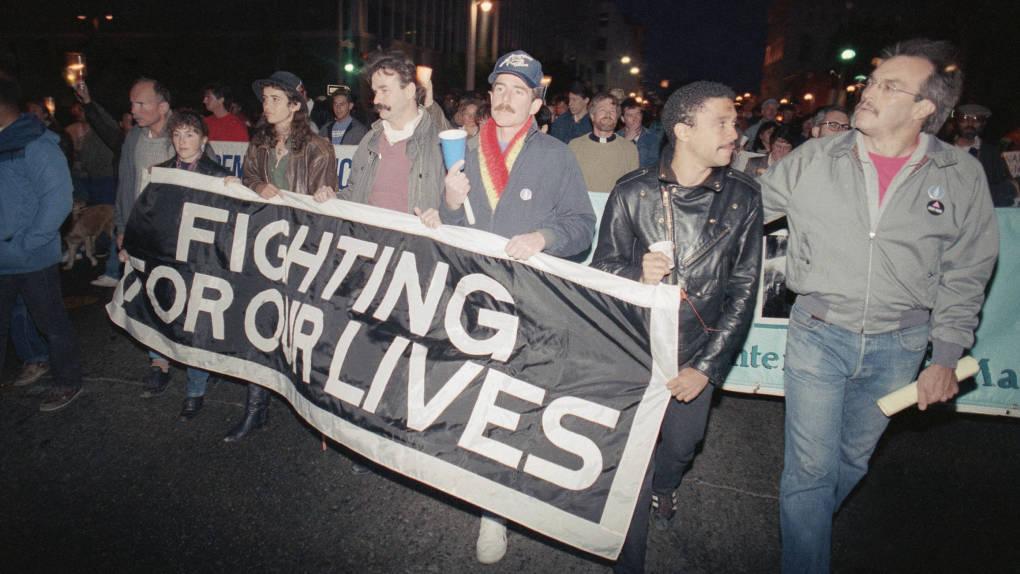
The Pandemic Feels Like Déjà Vu For Some Survivors of the HIV/AIDS Crisis
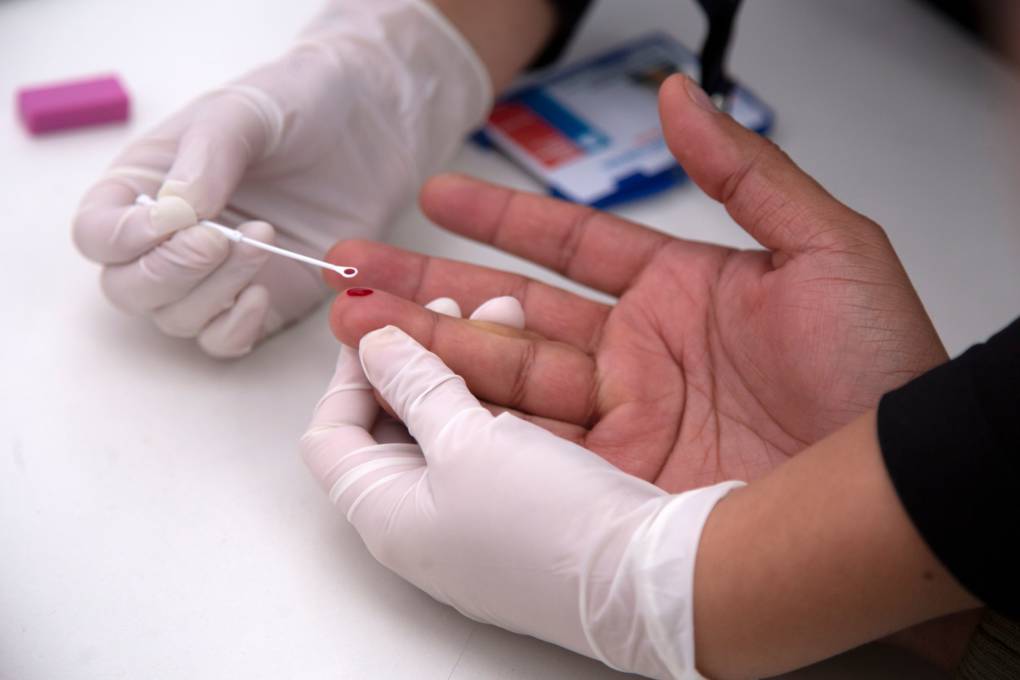
LGBTQ Groups Call on Facebook to Remove Misleading Ads About HIV Prevention Drugs
Documentary '5B' Introduces The Heroes Of SF General's First Dedicated AIDs Ward
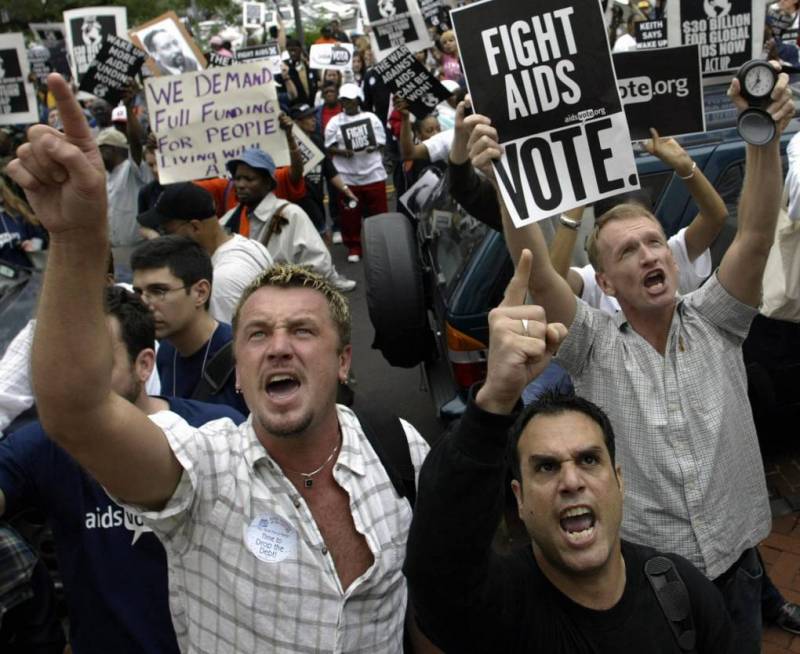
S.F. AIDS Treatment Pioneer Cautious — But Hopeful — on Trump's Plan to End HIV Transmission
Is the End of HIV Transmission in the U.S. Near?
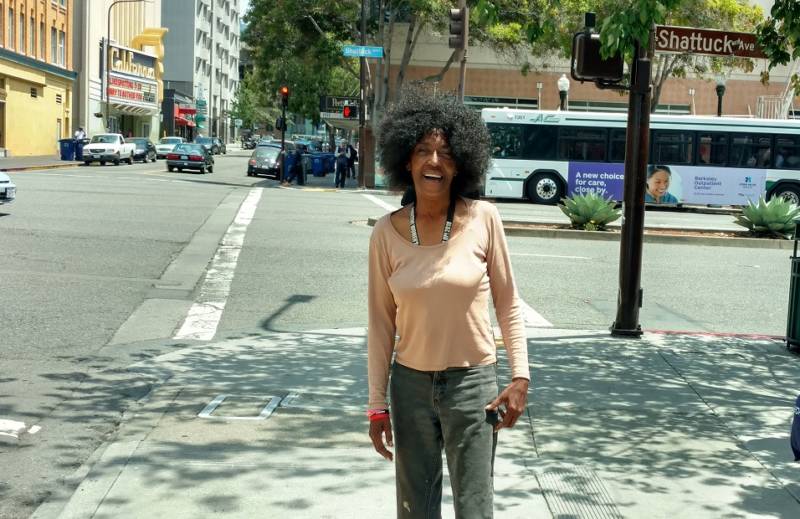
HIV-Positive With No Money? This Woman's Been There and Wants to Help
Sponsored
Player sponsored by
window.__IS_SSR__=true
window.__INITIAL_STATE__={
"attachmentsReducer": {
"audio_0": {
"type": "attachments",
"id": "audio_0",
"imgSizes": {
"kqedFullSize": {
"file": "https://ww2.kqed.org/news/wp-content/themes/KQED-unified/img/audio_bgs/background0.jpg"
}
}
},
"audio_1": {
"type": "attachments",
"id": "audio_1",
"imgSizes": {
"kqedFullSize": {
"file": "https://ww2.kqed.org/news/wp-content/themes/KQED-unified/img/audio_bgs/background1.jpg"
}
}
},
"audio_2": {
"type": "attachments",
"id": "audio_2",
"imgSizes": {
"kqedFullSize": {
"file": "https://ww2.kqed.org/news/wp-content/themes/KQED-unified/img/audio_bgs/background2.jpg"
}
}
},
"audio_3": {
"type": "attachments",
"id": "audio_3",
"imgSizes": {
"kqedFullSize": {
"file": "https://ww2.kqed.org/news/wp-content/themes/KQED-unified/img/audio_bgs/background3.jpg"
}
}
},
"audio_4": {
"type": "attachments",
"id": "audio_4",
"imgSizes": {
"kqedFullSize": {
"file": "https://ww2.kqed.org/news/wp-content/themes/KQED-unified/img/audio_bgs/background4.jpg"
}
}
},
"placeholder": {
"type": "attachments",
"id": "placeholder",
"imgSizes": {
"thumbnail": {
"file": "https://cdn.kqed.org/wp-content/uploads/2024/12/KQED-Default-Image-816638274-2000x1333-1-160x107.jpg",
"width": 160,
"height": 107,
"mimeType": "image/jpeg"
},
"medium": {
"file": "https://cdn.kqed.org/wp-content/uploads/2024/12/KQED-Default-Image-816638274-2000x1333-1-800x533.jpg",
"width": 800,
"height": 533,
"mimeType": "image/jpeg"
},
"medium_large": {
"file": "https://cdn.kqed.org/wp-content/uploads/2024/12/KQED-Default-Image-816638274-2000x1333-1-768x512.jpg",
"width": 768,
"height": 512,
"mimeType": "image/jpeg"
},
"large": {
"file": "https://cdn.kqed.org/wp-content/uploads/2024/12/KQED-Default-Image-816638274-2000x1333-1-1020x680.jpg",
"width": 1020,
"height": 680,
"mimeType": "image/jpeg"
},
"1536x1536": {
"file": "https://cdn.kqed.org/wp-content/uploads/2024/12/KQED-Default-Image-816638274-2000x1333-1-1536x1024.jpg",
"width": 1536,
"height": 1024,
"mimeType": "image/jpeg"
},
"fd-lrg": {
"file": "https://cdn.kqed.org/wp-content/uploads/2024/12/KQED-Default-Image-816638274-2000x1333-1-1536x1024.jpg",
"width": 1536,
"height": 1024,
"mimeType": "image/jpeg"
},
"fd-med": {
"file": "https://cdn.kqed.org/wp-content/uploads/2024/12/KQED-Default-Image-816638274-2000x1333-1-1020x680.jpg",
"width": 1020,
"height": 680,
"mimeType": "image/jpeg"
},
"fd-sm": {
"file": "https://cdn.kqed.org/wp-content/uploads/2024/12/KQED-Default-Image-816638274-2000x1333-1-800x533.jpg",
"width": 800,
"height": 533,
"mimeType": "image/jpeg"
},
"post-thumbnail": {
"file": "https://cdn.kqed.org/wp-content/uploads/2024/12/KQED-Default-Image-816638274-2000x1333-1-672x372.jpg",
"width": 672,
"height": 372,
"mimeType": "image/jpeg"
},
"twentyfourteen-full-width": {
"file": "https://cdn.kqed.org/wp-content/uploads/2024/12/KQED-Default-Image-816638274-2000x1333-1-1038x576.jpg",
"width": 1038,
"height": 576,
"mimeType": "image/jpeg"
},
"xxsmall": {
"file": "https://cdn.kqed.org/wp-content/uploads/2024/12/KQED-Default-Image-816638274-2000x1333-1-160x107.jpg",
"width": 160,
"height": 107,
"mimeType": "image/jpeg"
},
"xsmall": {
"file": "https://cdn.kqed.org/wp-content/uploads/2024/12/KQED-Default-Image-816638274-2000x1333-1-672x372.jpg",
"width": 672,
"height": 372,
"mimeType": "image/jpeg"
},
"small": {
"file": "https://cdn.kqed.org/wp-content/uploads/2024/12/KQED-Default-Image-816638274-2000x1333-1-672x372.jpg",
"width": 672,
"height": 372,
"mimeType": "image/jpeg"
},
"xlarge": {
"file": "https://cdn.kqed.org/wp-content/uploads/2024/12/KQED-Default-Image-816638274-2000x1333-1-1020x680.jpg",
"width": 1020,
"height": 680,
"mimeType": "image/jpeg"
},
"full-width": {
"file": "https://cdn.kqed.org/wp-content/uploads/2024/12/KQED-Default-Image-816638274-2000x1333-1-1920x1280.jpg",
"width": 1920,
"height": 1280,
"mimeType": "image/jpeg"
},
"guest-author-32": {
"file": "https://cdn.kqed.org/wp-content/uploads/2025/01/KQED-Default-Image-816638274-1333x1333-1-160x160.jpg",
"width": 32,
"height": 32,
"mimeType": "image/jpeg"
},
"guest-author-50": {
"file": "https://cdn.kqed.org/wp-content/uploads/2025/01/KQED-Default-Image-816638274-1333x1333-1-160x160.jpg",
"width": 50,
"height": 50,
"mimeType": "image/jpeg"
},
"guest-author-64": {
"file": "https://cdn.kqed.org/wp-content/uploads/2025/01/KQED-Default-Image-816638274-1333x1333-1-160x160.jpg",
"width": 64,
"height": 64,
"mimeType": "image/jpeg"
},
"guest-author-96": {
"file": "https://cdn.kqed.org/wp-content/uploads/2025/01/KQED-Default-Image-816638274-1333x1333-1-160x160.jpg",
"width": 96,
"height": 96,
"mimeType": "image/jpeg"
},
"guest-author-128": {
"file": "https://cdn.kqed.org/wp-content/uploads/2025/01/KQED-Default-Image-816638274-1333x1333-1-160x160.jpg",
"width": 128,
"height": 128,
"mimeType": "image/jpeg"
},
"detail": {
"file": "https://cdn.kqed.org/wp-content/uploads/2025/01/KQED-Default-Image-816638274-1333x1333-1-160x160.jpg",
"width": 160,
"height": 160,
"mimeType": "image/jpeg"
},
"kqedFullSize": {
"file": "https://cdn.kqed.org/wp-content/uploads/2024/12/KQED-Default-Image-816638274-2000x1333-1.jpg",
"width": 2000,
"height": 1333
}
}
},
"news_12009337": {
"type": "attachments",
"id": "news_12009337",
"meta": {
"index": "attachments_1716263798",
"site": "news",
"id": "12009337",
"found": true
},
"title": "California Budget",
"publishDate": 1728925641,
"status": "inherit",
"parent": 12009333,
"modified": 1728950262,
"caption": "California Gov. Gavin Newsom answers a reporter's question about his revised 2024-25 state budget during a news conference in Sacramento on May 10, 2024. KQED tracked some noteworthy bills proposed by California’s LGBTQ+ advocates to see how Gov. Newsom’s approach might change this year. ",
"credit": "Rich Pedroncelli/AP Photo",
"altTag": null,
"description": null,
"imgSizes": {
"medium": {
"file": "https://cdn.kqed.org/wp-content/uploads/sites/10/2024/10/GavinNewsom2024AP-800x533.jpg",
"width": 800,
"height": 533,
"mimeType": "image/jpeg"
},
"large": {
"file": "https://cdn.kqed.org/wp-content/uploads/sites/10/2024/10/GavinNewsom2024AP-1020x680.jpg",
"width": 1020,
"height": 680,
"mimeType": "image/jpeg"
},
"thumbnail": {
"file": "https://cdn.kqed.org/wp-content/uploads/sites/10/2024/10/GavinNewsom2024AP-160x107.jpg",
"width": 160,
"height": 107,
"mimeType": "image/jpeg"
},
"1536x1536": {
"file": "https://cdn.kqed.org/wp-content/uploads/sites/10/2024/10/GavinNewsom2024AP-1536x1024.jpg",
"width": 1536,
"height": 1024,
"mimeType": "image/jpeg"
},
"post-thumbnail": {
"file": "https://cdn.kqed.org/wp-content/uploads/sites/10/2024/10/GavinNewsom2024AP-672x372.jpg",
"width": 672,
"height": 372,
"mimeType": "image/jpeg"
},
"twentyfourteen-full-width": {
"file": "https://cdn.kqed.org/wp-content/uploads/sites/10/2024/10/GavinNewsom2024AP-1038x576.jpg",
"width": 1038,
"height": 576,
"mimeType": "image/jpeg"
},
"full-width": {
"file": "https://cdn.kqed.org/wp-content/uploads/sites/10/2024/10/GavinNewsom2024AP-1920x1280.jpg",
"width": 1920,
"height": 1280,
"mimeType": "image/jpeg"
},
"kqedFullSize": {
"file": "https://cdn.kqed.org/wp-content/uploads/sites/10/2024/10/GavinNewsom2024AP.jpg",
"width": 2000,
"height": 1333
}
},
"fetchFailed": false,
"isLoading": false
},
"news_11993605": {
"type": "attachments",
"id": "news_11993605",
"meta": {
"index": "attachments_1716263798",
"site": "news",
"id": "11993605",
"found": true
},
"title": "013_SanFrancisco_CCAStrike_02082022",
"publishDate": 1720715147,
"status": "inherit",
"parent": 11993603,
"modified": 1720808080,
"caption": "California’s political watchdog agency is investigating potential violations of state law by the campaign of Assemblymember Matt Haney.",
"credit": "Beth LaBerge/KQED",
"altTag": null,
"description": null,
"imgSizes": {
"medium": {
"file": "https://cdn.kqed.org/wp-content/uploads/sites/10/2024/07/013_SanFrancisco_CCAStrike_02082022-800x533.jpg",
"width": 800,
"height": 533,
"mimeType": "image/jpeg"
},
"large": {
"file": "https://cdn.kqed.org/wp-content/uploads/sites/10/2024/07/013_SanFrancisco_CCAStrike_02082022-1020x680.jpg",
"width": 1020,
"height": 680,
"mimeType": "image/jpeg"
},
"thumbnail": {
"file": "https://cdn.kqed.org/wp-content/uploads/sites/10/2024/07/013_SanFrancisco_CCAStrike_02082022-160x107.jpg",
"width": 160,
"height": 107,
"mimeType": "image/jpeg"
},
"1536x1536": {
"file": "https://cdn.kqed.org/wp-content/uploads/sites/10/2024/07/013_SanFrancisco_CCAStrike_02082022-1536x1024.jpg",
"width": 1536,
"height": 1024,
"mimeType": "image/jpeg"
},
"post-thumbnail": {
"file": "https://cdn.kqed.org/wp-content/uploads/sites/10/2024/07/013_SanFrancisco_CCAStrike_02082022-672x372.jpg",
"width": 672,
"height": 372,
"mimeType": "image/jpeg"
},
"twentyfourteen-full-width": {
"file": "https://cdn.kqed.org/wp-content/uploads/sites/10/2024/07/013_SanFrancisco_CCAStrike_02082022-1038x576.jpg",
"width": 1038,
"height": 576,
"mimeType": "image/jpeg"
},
"full-width": {
"file": "https://cdn.kqed.org/wp-content/uploads/sites/10/2024/07/013_SanFrancisco_CCAStrike_02082022-1920x1280.jpg",
"width": 1920,
"height": 1280,
"mimeType": "image/jpeg"
},
"kqedFullSize": {
"file": "https://cdn.kqed.org/wp-content/uploads/sites/10/2024/07/013_SanFrancisco_CCAStrike_02082022.jpg",
"width": 2000,
"height": 1333
}
},
"fetchFailed": false,
"isLoading": false
},
"news_11969002": {
"type": "attachments",
"id": "news_11969002",
"meta": {
"index": "attachments_1716263798",
"site": "news",
"id": "11969002",
"found": true
},
"parent": 0,
"imgSizes": {
"twentyfourteen-full-width": {
"file": "https://ww2.kqed.org/app/uploads/sites/10/2023/12/231204-WORLD-AIDS-DAY-GETTY-JS-KQED-1038x576.jpg",
"width": 1038,
"mimeType": "image/jpeg",
"height": 576
},
"thumbnail": {
"file": "https://ww2.kqed.org/app/uploads/sites/10/2023/12/231204-WORLD-AIDS-DAY-GETTY-JS-KQED-160x101.jpg",
"width": 160,
"mimeType": "image/jpeg",
"height": 101
},
"post-thumbnail": {
"file": "https://ww2.kqed.org/app/uploads/sites/10/2023/12/231204-WORLD-AIDS-DAY-GETTY-JS-KQED-672x372.jpg",
"width": 672,
"mimeType": "image/jpeg",
"height": 372
},
"kqedFullSize": {
"file": "https://ww2.kqed.org/app/uploads/sites/10/2023/12/231204-WORLD-AIDS-DAY-GETTY-JS-KQED.jpg",
"width": 2000,
"height": 1265
},
"large": {
"file": "https://ww2.kqed.org/app/uploads/sites/10/2023/12/231204-WORLD-AIDS-DAY-GETTY-JS-KQED-1020x645.jpg",
"width": 1020,
"mimeType": "image/jpeg",
"height": 645
},
"1536x1536": {
"file": "https://ww2.kqed.org/app/uploads/sites/10/2023/12/231204-WORLD-AIDS-DAY-GETTY-JS-KQED-1536x972.jpg",
"width": 1536,
"mimeType": "image/jpeg",
"height": 972
},
"full-width": {
"file": "https://ww2.kqed.org/app/uploads/sites/10/2023/12/231204-WORLD-AIDS-DAY-GETTY-JS-KQED-1920x1214.jpg",
"width": 1920,
"mimeType": "image/jpeg",
"height": 1214
},
"medium": {
"file": "https://ww2.kqed.org/app/uploads/sites/10/2023/12/231204-WORLD-AIDS-DAY-GETTY-JS-KQED-800x506.jpg",
"width": 800,
"mimeType": "image/jpeg",
"height": 506
}
},
"publishDate": 1701736984,
"modified": 1701751509,
"caption": "The names of the victims of AIDS are seen written in chalk on Castro Street in San Francisco on Dec. 1, 2023.",
"description": null,
"title": "World Aids Day Marked In San Francisco",
"credit": "Justin Sullivan/Getty Images",
"status": "inherit",
"altTag": "A large red ribbon and several names are written in chalk on a sidewalk.",
"fetchFailed": false,
"isLoading": false
},
"news_11833412": {
"type": "attachments",
"id": "news_11833412",
"meta": {
"index": "attachments_1716263798",
"site": "news",
"id": "11833412",
"found": true
},
"parent": 11833410,
"imgSizes": {
"apple_news_ca_landscape_5_5": {
"file": "https://ww2.kqed.org/app/uploads/sites/10/2020/08/GettyImages-50861211-1020x834-1-1020x783.jpg",
"width": 1020,
"mimeType": "image/jpeg",
"height": 783
},
"apple_news_ca_square_4_0": {
"file": "https://ww2.kqed.org/app/uploads/sites/10/2020/08/GettyImages-50861211-1020x834-1-470x470.jpg",
"width": 470,
"mimeType": "image/jpeg",
"height": 470
},
"twentyfourteen-full-width": {
"file": "https://ww2.kqed.org/app/uploads/sites/10/2020/08/GettyImages-50861211-1020x834-1-1020x576.jpg",
"width": 1020,
"mimeType": "image/jpeg",
"height": 576
},
"thumbnail": {
"file": "https://ww2.kqed.org/app/uploads/sites/10/2020/08/GettyImages-50861211-1020x834-1-160x131.jpg",
"width": 160,
"mimeType": "image/jpeg",
"height": 131
},
"post-thumbnail": {
"file": "https://ww2.kqed.org/app/uploads/sites/10/2020/08/GettyImages-50861211-1020x834-1-672x372.jpg",
"width": 672,
"mimeType": "image/jpeg",
"height": 372
},
"kqedFullSize": {
"file": "https://ww2.kqed.org/app/uploads/sites/10/2020/08/GettyImages-50861211-1020x834-1.jpg",
"width": 1020,
"height": 834
},
"apple_news_ca_landscape_4_7": {
"file": "https://ww2.kqed.org/app/uploads/sites/10/2020/08/GettyImages-50861211-1020x834-1-632x474.jpg",
"width": 632,
"mimeType": "image/jpeg",
"height": 474
},
"apple_news_ca_landscape_4_0": {
"file": "https://ww2.kqed.org/app/uploads/sites/10/2020/08/GettyImages-50861211-1020x834-1-536x402.jpg",
"width": 536,
"mimeType": "image/jpeg",
"height": 402
},
"medium": {
"file": "https://ww2.kqed.org/app/uploads/sites/10/2020/08/GettyImages-50861211-1020x834-1-800x654.jpg",
"width": 800,
"mimeType": "image/jpeg",
"height": 654
},
"apple_news_ca_portrait_4_0": {
"file": "https://ww2.kqed.org/app/uploads/sites/10/2020/08/GettyImages-50861211-1020x834-1-354x472.jpg",
"width": 354,
"mimeType": "image/jpeg",
"height": 472
},
"apple_news_ca_portrait_9_7": {
"file": "https://ww2.kqed.org/app/uploads/sites/10/2020/08/GettyImages-50861211-1020x834-1-840x834.jpg",
"width": 840,
"mimeType": "image/jpeg",
"height": 834
},
"apple_news_ca_portrait_4_7": {
"file": "https://ww2.kqed.org/app/uploads/sites/10/2020/08/GettyImages-50861211-1020x834-1-414x552.jpg",
"width": 414,
"mimeType": "image/jpeg",
"height": 552
},
"apple_news_ca_portrait_5_5": {
"file": "https://ww2.kqed.org/app/uploads/sites/10/2020/08/GettyImages-50861211-1020x834-1-687x834.jpg",
"width": 687,
"mimeType": "image/jpeg",
"height": 834
},
"apple_news_ca_square_4_7": {
"file": "https://ww2.kqed.org/app/uploads/sites/10/2020/08/GettyImages-50861211-1020x834-1-550x550.jpg",
"width": 550,
"mimeType": "image/jpeg",
"height": 550
},
"apple_news_ca_square_5_5": {
"file": "https://ww2.kqed.org/app/uploads/sites/10/2020/08/GettyImages-50861211-1020x834-1-912x834.jpg",
"width": 912,
"mimeType": "image/jpeg",
"height": 834
}
},
"publishDate": 1597433626,
"modified": 1597433654,
"caption": "ACT-UP protesters march through the streets surrounding the U.S. Capitol and shout \"shame\" outside the office of the Republican National Committee on May 20, 2004, in Washington, D.C.",
"description": null,
"title": "GettyImages-50861211-1020x834",
"credit": "TIM SLOAN/AFP via Getty Images",
"status": "inherit",
"fetchFailed": false,
"isLoading": false
},
"news_11724773": {
"type": "attachments",
"id": "news_11724773",
"meta": {
"index": "attachments_1716263798",
"site": "news",
"id": "11724773",
"found": true
},
"parent": 11724586,
"imgSizes": {
"twentyfourteen-full-width": {
"file": "https://ww2.kqed.org/app/uploads/sites/10/2019/02/Truvada-1038x576.jpg",
"width": 1038,
"mimeType": "image/jpeg",
"height": 576
},
"thumbnail": {
"file": "https://ww2.kqed.org/app/uploads/sites/10/2019/02/Truvada-160x104.jpg",
"width": 160,
"mimeType": "image/jpeg",
"height": 104
},
"post-thumbnail": {
"file": "https://ww2.kqed.org/app/uploads/sites/10/2019/02/Truvada-672x372.jpg",
"width": 672,
"mimeType": "image/jpeg",
"height": 372
},
"kqedFullSize": {
"file": "https://ww2.kqed.org/app/uploads/sites/10/2019/02/Truvada.jpg",
"width": 1920,
"height": 1244
},
"large": {
"file": "https://ww2.kqed.org/app/uploads/sites/10/2019/02/Truvada-1020x661.jpg",
"width": 1020,
"mimeType": "image/jpeg",
"height": 661
},
"complete_open_graph": {
"file": "https://ww2.kqed.org/app/uploads/sites/10/2019/02/Truvada-1200x778.jpg",
"width": 1200,
"mimeType": "image/jpeg",
"height": 778
},
"guest-author-50": {
"file": "https://ww2.kqed.org/app/uploads/sites/10/2019/02/Truvada-50x50.jpg",
"width": 50,
"mimeType": "image/jpeg",
"height": 50
},
"guest-author-96": {
"file": "https://ww2.kqed.org/app/uploads/sites/10/2019/02/Truvada-96x96.jpg",
"width": 96,
"mimeType": "image/jpeg",
"height": 96
},
"medium": {
"file": "https://ww2.kqed.org/app/uploads/sites/10/2019/02/Truvada-800x518.jpg",
"width": 800,
"mimeType": "image/jpeg",
"height": 518
},
"guest-author-64": {
"file": "https://ww2.kqed.org/app/uploads/sites/10/2019/02/Truvada-64x64.jpg",
"width": 64,
"mimeType": "image/jpeg",
"height": 64
},
"guest-author-32": {
"file": "https://ww2.kqed.org/app/uploads/sites/10/2019/02/Truvada-32x32.jpg",
"width": 32,
"mimeType": "image/jpeg",
"height": 32
},
"full-width": {
"file": "https://ww2.kqed.org/app/uploads/sites/10/2019/02/Truvada-1920x1244.jpg",
"width": 1920,
"mimeType": "image/jpeg",
"height": 1244
},
"detail": {
"file": "https://ww2.kqed.org/app/uploads/sites/10/2019/02/Truvada-150x150.jpg",
"width": 150,
"mimeType": "image/jpeg",
"height": 150
},
"guest-author-128": {
"file": "https://ww2.kqed.org/app/uploads/sites/10/2019/02/Truvada-128x128.jpg",
"width": 128,
"mimeType": "image/jpeg",
"height": 128
}
},
"publishDate": 1549661168,
"modified": 1549661209,
"caption": "Bottles of the antiretroviral drug Truvada.",
"description": "Bottles of the antiretroviral drug Truvada.",
"title": "Truvada",
"credit": "Justin Sullivan/Getty Images",
"status": "inherit",
"fetchFailed": false,
"isLoading": false
},
"pop_112567": {
"type": "attachments",
"id": "pop_112567",
"meta": {
"index": "attachments_1716263798",
"site": "pop",
"id": "112567",
"found": true
},
"parent": 112566,
"imgSizes": {
"twentyfourteen-full-width": {
"file": "https://ww2.kqed.org/app/uploads/sites/12/2019/06/ap_8905290360_wide-a88dc38518f6d1c881bf2f3ed08fa11c48fabc3f-1038x576.jpg",
"width": 1038,
"mimeType": "image/jpeg",
"height": 576
},
"thumbnail": {
"file": "https://ww2.kqed.org/app/uploads/sites/12/2019/06/ap_8905290360_wide-a88dc38518f6d1c881bf2f3ed08fa11c48fabc3f-160x90.jpg",
"width": 160,
"mimeType": "image/jpeg",
"height": 90
},
"post-thumbnail": {
"file": "https://ww2.kqed.org/app/uploads/sites/12/2019/06/ap_8905290360_wide-a88dc38518f6d1c881bf2f3ed08fa11c48fabc3f-672x372.jpg",
"width": 672,
"mimeType": "image/jpeg",
"height": 372
},
"kqedFullSize": {
"file": "https://ww2.kqed.org/app/uploads/sites/12/2019/06/ap_8905290360_wide-a88dc38518f6d1c881bf2f3ed08fa11c48fabc3f.jpg",
"width": 2048,
"height": 1152
},
"large": {
"file": "https://ww2.kqed.org/app/uploads/sites/12/2019/06/ap_8905290360_wide-a88dc38518f6d1c881bf2f3ed08fa11c48fabc3f-1020x574.jpg",
"width": 1020,
"mimeType": "image/jpeg",
"height": 574
},
"complete_open_graph": {
"file": "https://ww2.kqed.org/app/uploads/sites/12/2019/06/ap_8905290360_wide-a88dc38518f6d1c881bf2f3ed08fa11c48fabc3f-1200x675.jpg",
"width": 1200,
"mimeType": "image/jpeg",
"height": 675
},
"full-width": {
"file": "https://ww2.kqed.org/app/uploads/sites/12/2019/06/ap_8905290360_wide-a88dc38518f6d1c881bf2f3ed08fa11c48fabc3f-1920x1080.jpg",
"width": 1920,
"mimeType": "image/jpeg",
"height": 1080
},
"medium": {
"file": "https://ww2.kqed.org/app/uploads/sites/12/2019/06/ap_8905290360_wide-a88dc38518f6d1c881bf2f3ed08fa11c48fabc3f-800x450.jpg",
"width": 800,
"mimeType": "image/jpeg",
"height": 450
},
"medium_large": {
"file": "https://ww2.kqed.org/app/uploads/sites/12/2019/06/ap_8905290360_wide-a88dc38518f6d1c881bf2f3ed08fa11c48fabc3f-768x432.jpg",
"width": 768,
"mimeType": "image/jpeg",
"height": 432
}
},
"publishDate": 1561590399,
"modified": 1561591959,
"caption": "Marchers at a candlelight vigil in San Francisco carry a banner to call attention to the continuing battle against AIDS on May 29, 1989. ",
"description": "Marchers at a candlelight vigil in San Francisco carry a banner to call attention to the continuing battle against AIDS on May 29, 1989. ",
"title": "Marchers at a candlelight vigil in San Francisco carry a banner to call attention to the continuing battle against AIDS on May 29, 1989.",
"credit": "Jason M. Grow/AP",
"status": "inherit",
"fetchFailed": false,
"isLoading": false
},
"futureofyou_444626": {
"type": "attachments",
"id": "futureofyou_444626",
"meta": {
"index": "attachments_1716263798",
"site": "futureofyou",
"id": "444626",
"found": true
},
"parent": 444621,
"imgSizes": {
"small": {
"file": "https://ww2.kqed.org/app/uploads/sites/13/2018/09/GettyImages-982303062-1-520x347.jpg",
"width": 520,
"mimeType": "image/jpeg",
"height": 347
},
"twentyfourteen-full-width": {
"file": "https://ww2.kqed.org/app/uploads/sites/13/2018/09/GettyImages-982303062-1-1038x576.jpg",
"width": 1038,
"mimeType": "image/jpeg",
"height": 576
},
"thumbnail": {
"file": "https://ww2.kqed.org/app/uploads/sites/13/2018/09/GettyImages-982303062-1-160x107.jpg",
"width": 160,
"mimeType": "image/jpeg",
"height": 107
},
"fd-sm": {
"file": "https://ww2.kqed.org/app/uploads/sites/13/2018/09/GettyImages-982303062-1-960x640.jpg",
"width": 960,
"mimeType": "image/jpeg",
"height": 640
},
"post-thumbnail": {
"file": "https://ww2.kqed.org/app/uploads/sites/13/2018/09/GettyImages-982303062-1-672x372.jpg",
"width": 672,
"mimeType": "image/jpeg",
"height": 372
},
"xsmall": {
"file": "https://ww2.kqed.org/app/uploads/sites/13/2018/09/GettyImages-982303062-1-375x250.jpg",
"width": 375,
"mimeType": "image/jpeg",
"height": 250
},
"kqedFullSize": {
"file": "https://ww2.kqed.org/app/uploads/sites/13/2018/09/GettyImages-982303062-1.jpg",
"width": 5141,
"height": 3427
},
"large": {
"file": "https://ww2.kqed.org/app/uploads/sites/13/2018/09/GettyImages-982303062-1-1020x680.jpg",
"width": 1020,
"mimeType": "image/jpeg",
"height": 680
},
"xlarge": {
"file": "https://ww2.kqed.org/app/uploads/sites/13/2018/09/GettyImages-982303062-1-1180x787.jpg",
"width": 1180,
"mimeType": "image/jpeg",
"height": 787
},
"complete_open_graph": {
"file": "https://ww2.kqed.org/app/uploads/sites/13/2018/09/GettyImages-982303062-1-1200x800.jpg",
"width": 1200,
"mimeType": "image/jpeg",
"height": 800
},
"guest-author-50": {
"file": "https://ww2.kqed.org/app/uploads/sites/13/2018/09/GettyImages-982303062-1-50x50.jpg",
"width": 50,
"mimeType": "image/jpeg",
"height": 50
},
"guest-author-96": {
"file": "https://ww2.kqed.org/app/uploads/sites/13/2018/09/GettyImages-982303062-1-96x96.jpg",
"width": 96,
"mimeType": "image/jpeg",
"height": 96
},
"medium": {
"file": "https://ww2.kqed.org/app/uploads/sites/13/2018/09/GettyImages-982303062-1-800x533.jpg",
"width": 800,
"mimeType": "image/jpeg",
"height": 533
},
"guest-author-64": {
"file": "https://ww2.kqed.org/app/uploads/sites/13/2018/09/GettyImages-982303062-1-64x64.jpg",
"width": 64,
"mimeType": "image/jpeg",
"height": 64
},
"guest-author-32": {
"file": "https://ww2.kqed.org/app/uploads/sites/13/2018/09/GettyImages-982303062-1-32x32.jpg",
"width": 32,
"mimeType": "image/jpeg",
"height": 32
},
"fd-lrg": {
"file": "https://ww2.kqed.org/app/uploads/sites/13/2018/09/GettyImages-982303062-1-1920x1280.jpg",
"width": 1920,
"mimeType": "image/jpeg",
"height": 1280
},
"fd-med": {
"file": "https://ww2.kqed.org/app/uploads/sites/13/2018/09/GettyImages-982303062-1-1180x787.jpg",
"width": 1180,
"mimeType": "image/jpeg",
"height": 787
},
"full-width": {
"file": "https://ww2.kqed.org/app/uploads/sites/13/2018/09/GettyImages-982303062-1-1920x1280.jpg",
"width": 1920,
"mimeType": "image/jpeg",
"height": 1280
},
"detail": {
"file": "https://ww2.kqed.org/app/uploads/sites/13/2018/09/GettyImages-982303062-1-150x150.jpg",
"width": 150,
"mimeType": "image/jpeg",
"height": 150
},
"medium_large": {
"file": "https://ww2.kqed.org/app/uploads/sites/13/2018/09/GettyImages-982303062-1-768x512.jpg",
"width": 768,
"mimeType": "image/jpeg",
"height": 512
},
"guest-author-128": {
"file": "https://ww2.kqed.org/app/uploads/sites/13/2018/09/GettyImages-982303062-1-128x128.jpg",
"width": 128,
"mimeType": "image/jpeg",
"height": 128
},
"xxsmall": {
"file": "https://ww2.kqed.org/app/uploads/sites/13/2018/09/GettyImages-982303062-1-240x160.jpg",
"width": 240,
"mimeType": "image/jpeg",
"height": 160
}
},
"publishDate": 1538000195,
"modified": 1538000325,
"caption": "A man undergoes a rapid VIH test during the Gay Pride Parade in Santiago on June 23, 2018. ",
"description": null,
"title": "DOUNIAMAG-CHILE-GAY-PRIDE-PARADE-AIDS-TEST",
"credit": "CLAUDIO REYES/AFP/Getty Images",
"status": "inherit",
"fetchFailed": false,
"isLoading": false
},
"futureofyou_443946": {
"type": "attachments",
"id": "futureofyou_443946",
"meta": {
"index": "attachments_1716263798",
"site": "futureofyou",
"id": "443946",
"found": true
},
"parent": 443936,
"imgSizes": {
"small": {
"file": "https://ww2.kqed.org/app/uploads/sites/13/2018/08/Loren-Jones-featured2-520x337.jpg",
"width": 520,
"mimeType": "image/jpeg",
"height": 337
},
"twentyfourteen-full-width": {
"file": "https://ww2.kqed.org/app/uploads/sites/13/2018/08/Loren-Jones-featured2-956x576.jpg",
"width": 956,
"mimeType": "image/jpeg",
"height": 576
},
"thumbnail": {
"file": "https://ww2.kqed.org/app/uploads/sites/13/2018/08/Loren-Jones-featured2-160x104.jpg",
"width": 160,
"mimeType": "image/jpeg",
"height": 104
},
"post-thumbnail": {
"file": "https://ww2.kqed.org/app/uploads/sites/13/2018/08/Loren-Jones-featured2-672x372.jpg",
"width": 672,
"mimeType": "image/jpeg",
"height": 372
},
"xsmall": {
"file": "https://ww2.kqed.org/app/uploads/sites/13/2018/08/Loren-Jones-featured2-375x243.jpg",
"width": 375,
"mimeType": "image/jpeg",
"height": 243
},
"kqedFullSize": {
"file": "https://ww2.kqed.org/app/uploads/sites/13/2018/08/Loren-Jones-featured2.jpg",
"width": 956,
"height": 620
},
"guest-author-50": {
"file": "https://ww2.kqed.org/app/uploads/sites/13/2018/08/Loren-Jones-featured2-50x50.jpg",
"width": 50,
"mimeType": "image/jpeg",
"height": 50
},
"guest-author-96": {
"file": "https://ww2.kqed.org/app/uploads/sites/13/2018/08/Loren-Jones-featured2-96x96.jpg",
"width": 96,
"mimeType": "image/jpeg",
"height": 96
},
"medium": {
"file": "https://ww2.kqed.org/app/uploads/sites/13/2018/08/Loren-Jones-featured2-800x519.jpg",
"width": 800,
"mimeType": "image/jpeg",
"height": 519
},
"guest-author-64": {
"file": "https://ww2.kqed.org/app/uploads/sites/13/2018/08/Loren-Jones-featured2-64x64.jpg",
"width": 64,
"mimeType": "image/jpeg",
"height": 64
},
"guest-author-32": {
"file": "https://ww2.kqed.org/app/uploads/sites/13/2018/08/Loren-Jones-featured2-32x32.jpg",
"width": 32,
"mimeType": "image/jpeg",
"height": 32
},
"detail": {
"file": "https://ww2.kqed.org/app/uploads/sites/13/2018/08/Loren-Jones-featured2-150x150.jpg",
"width": 150,
"mimeType": "image/jpeg",
"height": 150
},
"medium_large": {
"file": "https://ww2.kqed.org/app/uploads/sites/13/2018/08/Loren-Jones-featured2-768x498.jpg",
"width": 768,
"mimeType": "image/jpeg",
"height": 498
},
"guest-author-128": {
"file": "https://ww2.kqed.org/app/uploads/sites/13/2018/08/Loren-Jones-featured2-128x128.jpg",
"width": 128,
"mimeType": "image/jpeg",
"height": 128
},
"xxsmall": {
"file": "https://ww2.kqed.org/app/uploads/sites/13/2018/08/Loren-Jones-featured2-240x156.jpg",
"width": 240,
"mimeType": "image/jpeg",
"height": 156
}
},
"publishDate": 1534203465,
"modified": 1534203509,
"caption": "As a volunteer on the community advisory board for the amfAR Institute for HIV Cure Research, Loren Jones advises women on clinical studies that may help them get proper medical care.",
"description": "As a volunteer on the community advisory board for the amfAR Institute for HIV Cure Research, Loren Jones advises women on clinical studies that may help them get proper medical care.",
"title": "Loren Jones featured2",
"credit": "Anne-christine d'Adesky/KQED",
"status": "inherit",
"fetchFailed": false,
"isLoading": false
}
},
"audioPlayerReducer": {
"postId": "stream_live",
"isPaused": true,
"isPlaying": false,
"pfsActive": false,
"pledgeModalIsOpen": true,
"playerDrawerIsOpen": false
},
"authorsReducer": {
"byline_pop_112566": {
"type": "authors",
"id": "byline_pop_112566",
"meta": {
"override": true
},
"slug": "byline_pop_112566",
"name": "Terry Gross",
"isLoading": false
},
"byline_futureofyou_444621": {
"type": "authors",
"id": "byline_futureofyou_444621",
"meta": {
"override": true
},
"slug": "byline_futureofyou_444621",
"name": "Helen Branswell\u003cbr />STAT",
"isLoading": false
},
"byline_futureofyou_443936": {
"type": "authors",
"id": "byline_futureofyou_443936",
"meta": {
"override": true
},
"slug": "byline_futureofyou_443936",
"name": "Anne-christine d'Adesky",
"isLoading": false
},
"kqednewsstaffandwires": {
"type": "authors",
"id": "237",
"meta": {
"index": "authors_1716337520",
"id": "237",
"found": true
},
"name": "KQED News Staff and Wires",
"firstName": "KQED News Staff and Wires",
"lastName": null,
"slug": "kqednewsstaffandwires",
"email": "onlinenewsstaff@kqed.org",
"display_author_email": false,
"staff_mastheads": [],
"title": null,
"bio": null,
"avatar": "https://secure.gravatar.com/avatar/72295af8ebbfbd19a4948f5271285664?s=600&d=blank&r=g",
"twitter": null,
"facebook": null,
"instagram": null,
"linkedin": null,
"sites": [
{
"site": "arts",
"roles": [
"contributor"
]
},
{
"site": "news",
"roles": [
"contributor"
]
},
{
"site": "lowdown",
"roles": [
"author"
]
},
{
"site": "stateofhealth",
"roles": [
"contributor"
]
},
{
"site": "food",
"roles": [
"author"
]
}
],
"headData": {
"title": "KQED News Staff and Wires | KQED",
"description": null,
"ogImgSrc": "https://secure.gravatar.com/avatar/72295af8ebbfbd19a4948f5271285664?s=600&d=blank&r=g",
"twImgSrc": "https://secure.gravatar.com/avatar/72295af8ebbfbd19a4948f5271285664?s=600&d=blank&r=g"
},
"isLoading": false,
"link": "/author/kqednewsstaffandwires"
},
"rachael-myrow": {
"type": "authors",
"id": "251",
"meta": {
"index": "authors_1716337520",
"id": "251",
"found": true
},
"name": "Rachael Myrow",
"firstName": "Rachael",
"lastName": "Myrow",
"slug": "rachael-myrow",
"email": "rmyrow@kqed.org",
"display_author_email": false,
"staff_mastheads": [
"news"
],
"title": "Senior Editor of KQED's Silicon Valley News Desk",
"bio": "Rachael Myrow is Senior Editor of KQED's Silicon Valley News Desk, reporting on topics like \u003ca href=\"https://www.kqed.org/news/12023367/what-big-tech-sees-in-donald-trump\">what Big Tech sees in President Trump\u003c/a>, \u003ca href=\"https://www.kqed.org/news/12020857/california-lawmaker-ready-revive-fight-regulating-ai\">California's many, many AI bills\u003c/a>, and the \u003ca href=\"https://www.kqed.org/news/12017713/lost-sounds-of-san-francisco\">lost sounds of San Francisco\u003c/a>. You can hear her work on \u003ca href=\"https://www.npr.org/search?query=Rachael%20Myrow&page=1\">NPR\u003c/a>, \u003ca href=\"https://theworld.org/people/rachael-myrow\">The World\u003c/a>, WBUR's \u003ca href=\"https://www.wbur.org/search?q=Rachael%20Myrow\">\u003ci>Here & Now\u003c/i>\u003c/a> and the BBC. \u003c/i>She also guest hosts for KQED's \u003ci>\u003ca href=\"https://www.kqed.org/forum/tag/rachael-myrow\">Forum\u003c/a>\u003c/i>. Over the years, she's talked with Kamau Bell, David Byrne, Kamala Harris, Tony Kushner, Armistead Maupin, Van Dyke Parks, Arnold Schwarzenegger and Tommie Smith, among others.\r\n\r\nBefore all this, she hosted \u003cem>The California Report\u003c/em> for 7+ years.\r\n\r\nAwards? Sure: Peabody, Edward R. Murrow, Regional Edward R. Murrow, RTNDA, Northern California RTNDA, SPJ Northern California Chapter, LA Press Club, Golden Mic. Prior to joining KQED, Rachael worked in Los Angeles at KPCC and Marketplace. She holds degrees in English and journalism from UC Berkeley (where she got her start in public radio on KALX-FM).\r\n\r\nOutside of the studio, you'll find Rachael hiking Bay Area trails and whipping up Instagram-ready meals in her kitchen. More recently, she's taken up native-forward gardening.",
"avatar": "https://secure.gravatar.com/avatar/87bf8cb5874e045cdff430523a6d48b1?s=600&d=blank&r=g",
"twitter": "rachaelmyrow",
"facebook": null,
"instagram": null,
"linkedin": "https://www.linkedin.com/in/rachaelmyrow/",
"sites": [
{
"site": "arts",
"roles": [
"administrator"
]
},
{
"site": "news",
"roles": [
"edit_others_posts",
"editor"
]
},
{
"site": "futureofyou",
"roles": [
"editor"
]
},
{
"site": "bayareabites",
"roles": [
"editor"
]
},
{
"site": "stateofhealth",
"roles": [
"editor"
]
},
{
"site": "science",
"roles": [
"editor"
]
},
{
"site": "food",
"roles": [
"editor"
]
},
{
"site": "forum",
"roles": [
"editor"
]
},
{
"site": "liveblog",
"roles": [
"author"
]
}
],
"headData": {
"title": "Rachael Myrow | KQED",
"description": "Senior Editor of KQED's Silicon Valley News Desk",
"ogImgSrc": "https://secure.gravatar.com/avatar/87bf8cb5874e045cdff430523a6d48b1?s=600&d=blank&r=g",
"twImgSrc": "https://secure.gravatar.com/avatar/87bf8cb5874e045cdff430523a6d48b1?s=600&d=blank&r=g"
},
"isLoading": false,
"link": "/author/rachael-myrow"
},
"dkatayama": {
"type": "authors",
"id": "7240",
"meta": {
"index": "authors_1716337520",
"id": "7240",
"found": true
},
"name": "Devin Katayama",
"firstName": "Devin",
"lastName": "Katayama",
"slug": "dkatayama",
"email": "dkatayama@kqed.org",
"display_author_email": true,
"staff_mastheads": [
"news"
],
"title": "Editor of Talent and Development",
"bio": "Devin Katayama is former Editor of Talent and Development for KQED. He supported our internship program and on-call staff by looking for equitable opportunities to improve the newsroom.\r\n\r\nHe previously hosted The Bay and American Suburb podcasts from KQED News. Prior to returning to the Bay Area in 2015, Devin was the education reporter for WFPL in Louisville and worked as a producer with radio stations in Chicago and Portland, OR. His work has appeared on NPR’s \u003cem>Morning Edition, All Things Considered, The Takeaway\u003c/em> and \u003cem>Here and Now.\u003c/em>\r\n\r\nDevin earned his MA in Journalism from Columbia College Chicago, where he was a Follett Fellow and the recipient of the 2011 Studs Terkel Community Media Workshop Scholarship for his story on Chicago's homeless youth. He won WBUR's 2014 Daniel Schorr award and a regional RTNDA Edward R. Murrow Award for his documentary \"At Risk\" that looked at issues facing some of Louisville's students. Devin has also received numerous local awards from the Associated Press and the Society of Professional Journalists.",
"avatar": "https://secure.gravatar.com/avatar/d0d2978a31002fb2de107921a8e18405?s=600&d=blank&r=g",
"twitter": "RadioDevin",
"facebook": null,
"instagram": null,
"linkedin": null,
"sites": [
{
"site": "arts",
"roles": []
},
{
"site": "news",
"roles": [
"author"
]
},
{
"site": "stateofhealth",
"roles": [
"author"
]
},
{
"site": "forum",
"roles": [
"editor"
]
},
{
"site": "perspectives",
"roles": [
"editor"
]
}
],
"headData": {
"title": "Devin Katayama | KQED",
"description": "Editor of Talent and Development",
"ogImgSrc": "https://secure.gravatar.com/avatar/d0d2978a31002fb2de107921a8e18405?s=600&d=blank&r=g",
"twImgSrc": "https://secure.gravatar.com/avatar/d0d2978a31002fb2de107921a8e18405?s=600&d=blank&r=g"
},
"isLoading": false,
"link": "/author/dkatayama"
},
"ecruzguevarra": {
"type": "authors",
"id": "8654",
"meta": {
"index": "authors_1716337520",
"id": "8654",
"found": true
},
"name": "Ericka Cruz Guevarra",
"firstName": "Ericka",
"lastName": "Cruz Guevarra",
"slug": "ecruzguevarra",
"email": "ecruzguevarra@kqed.org",
"display_author_email": true,
"staff_mastheads": [
"news"
],
"title": "Producer, The Bay Podcast",
"bio": "Ericka Cruz Guevarra is host of \u003ca href=\"https://www.kqed.org/podcasts/thebay\">\u003cem>The Bay\u003c/em>\u003c/a> podcast at KQED. Before host, she was the show’s producer. Her work in that capacity includes a three-part reported series on policing in Vallejo, which won a 2020 excellence in journalism award from the Society of Professional Journalists. Ericka has worked as a breaking news reporter at Oregon Public Broadcasting, helped produce the Code Switch podcast, and was KQED’s inaugural Raul Ramirez Diversity Fund intern. She’s also an alumna of NPR’s Next Generation Radio program. Send her an email if you have strong feelings about whether Fairfield and Suisun City are the Bay. Ericka is represented by SAG-AFTRA.",
"avatar": "https://secure.gravatar.com/avatar/25e5ab8d3d53fad2dcc7bb2b5c506b1a?s=600&d=blank&r=g",
"twitter": "NotoriousECG",
"facebook": null,
"instagram": null,
"linkedin": null,
"sites": [
{
"site": "arts",
"roles": [
"subscriber"
]
},
{
"site": "news",
"roles": [
"editor",
"manage_categories"
]
},
{
"site": "futureofyou",
"roles": [
"subscriber"
]
},
{
"site": "stateofhealth",
"roles": [
"subscriber"
]
},
{
"site": "science",
"roles": [
"editor"
]
},
{
"site": "forum",
"roles": [
"subscriber"
]
}
],
"headData": {
"title": "Ericka Cruz Guevarra | KQED",
"description": "Producer, The Bay Podcast",
"ogImgSrc": "https://secure.gravatar.com/avatar/25e5ab8d3d53fad2dcc7bb2b5c506b1a?s=600&d=blank&r=g",
"twImgSrc": "https://secure.gravatar.com/avatar/25e5ab8d3d53fad2dcc7bb2b5c506b1a?s=600&d=blank&r=g"
},
"isLoading": false,
"link": "/author/ecruzguevarra"
},
"lesleymcclurg": {
"type": "authors",
"id": "11229",
"meta": {
"index": "authors_1716337520",
"id": "11229",
"found": true
},
"name": "Lesley McClurg",
"firstName": "Lesley",
"lastName": "McClurg",
"slug": "lesleymcclurg",
"email": "lmcclurg@KQED.org",
"display_author_email": false,
"staff_mastheads": [
"news",
"science"
],
"title": "KQED Health Correspondent",
"bio": "Lesley McClurg is a health correspondent and fill-in host whose work is regularly rebroadcast on NPR and PBS programs. She’s earned multiple regional Emmy awards, a national and a regional Edward R. Murrow award, and was named Best Beat Reporter by the Association of Health Care Journalists. The Society of Professional Journalists has recognized her work several times, and the Society of Environmental Journalists spotlighted her coverage of California’s historic drought.\r\n\r\nBefore joining KQED in 2016, Lesley covered food and sustainability for Capital Public Radio, environmental issues for Colorado Public Radio, and reported for KUOW and KCTS 9 in Seattle. Away from the newsroom, she loves skiing with her daughter, mountain biking with her partner, and playing with Ollie, the family’s goldendoodle. On deadline, she runs almost entirely on chocolate chips.\r\n\r\n ",
"avatar": "https://secure.gravatar.com/avatar/3fb78e873af3312f34d0bc1d60a07c7f?s=600&d=blank&r=g",
"twitter": "lesleywmcclurg",
"facebook": null,
"instagram": null,
"linkedin": null,
"sites": [
{
"site": "arts",
"roles": [
"author"
]
},
{
"site": "news",
"roles": [
"editor"
]
},
{
"site": "futureofyou",
"roles": [
"editor"
]
},
{
"site": "stateofhealth",
"roles": [
"author"
]
},
{
"site": "science",
"roles": [
"editor"
]
},
{
"site": "quest",
"roles": [
"subscriber"
]
},
{
"site": "forum",
"roles": [
"administrator"
]
},
{
"site": "liveblog",
"roles": [
"author"
]
}
],
"headData": {
"title": "Lesley McClurg | KQED",
"description": "KQED Health Correspondent",
"ogImgSrc": "https://secure.gravatar.com/avatar/3fb78e873af3312f34d0bc1d60a07c7f?s=600&d=blank&r=g",
"twImgSrc": "https://secure.gravatar.com/avatar/3fb78e873af3312f34d0bc1d60a07c7f?s=600&d=blank&r=g"
},
"isLoading": false,
"link": "/author/lesleymcclurg"
},
"amontecillo": {
"type": "authors",
"id": "11649",
"meta": {
"index": "authors_1716337520",
"id": "11649",
"found": true
},
"name": "Alan Montecillo",
"firstName": "Alan",
"lastName": "Montecillo",
"slug": "amontecillo",
"email": "amontecillo@kqed.org",
"display_author_email": false,
"staff_mastheads": [
"news"
],
"title": "KQED Contributor",
"bio": "Alan Montecillo is the senior editor of \u003cem>\u003ca href=\"http://kqed.org/thebay\">The Bay\u003c/a>, \u003c/em> KQED's local news podcast. Before moving to the Bay Area, he worked as a senior talk show producer for WILL in Champaign-Urbana, Illinois and at Oregon Public Broadcasting in Portland, Oregon. He has won journalism awards from the Society of Professional Journalists Northern California, the Public Media Journalists Association, The Signal Awards, and has also received a regional Edward R. Murrow award. Alan is a Filipino American from Hong Kong and a graduate of Reed College.",
"avatar": "https://secure.gravatar.com/avatar/d5e4e7a76481969ccba76f4e2b5ccabc?s=600&d=blank&r=g",
"twitter": "alanmontecillo",
"facebook": null,
"instagram": null,
"linkedin": null,
"sites": [
{
"site": "",
"roles": [
"editor"
]
},
{
"site": "news",
"roles": [
"editor",
"manage_categories"
]
}
],
"headData": {
"title": "Alan Montecillo | KQED",
"description": "KQED Contributor",
"ogImgSrc": "https://secure.gravatar.com/avatar/d5e4e7a76481969ccba76f4e2b5ccabc?s=600&d=blank&r=g",
"twImgSrc": "https://secure.gravatar.com/avatar/d5e4e7a76481969ccba76f4e2b5ccabc?s=600&d=blank&r=g"
},
"isLoading": false,
"link": "/author/amontecillo"
},
"nnavarro": {
"type": "authors",
"id": "11756",
"meta": {
"index": "authors_1716337520",
"id": "11756",
"found": true
},
"name": "Natalia Navarro",
"firstName": "Natalia",
"lastName": "Navarro",
"slug": "nnavarro",
"email": "nnavarro@kqed.org",
"display_author_email": true,
"staff_mastheads": [
"news"
],
"title": "Afternoon News Anchor",
"bio": "Natalia Navarro is KQED's afternoon radio news anchor. She came to KQED in 2021 from Colorado Public Radio, where she was a reporter and host. She has received several awards for her work covering daily and breaking news from professional organizations such as the San Francisco Press Club, Society of Professional Journalists and the Colorado Broadcasters Association. Natalia is originally from Tucson, Arizona, where she got her start in journalism writing for the Arizona Daily Star, Arizona Public Media and the Tucson Weekly. Natalia earned her bachelor's degree in journalism and economics, and her master's degree in journalism from the University of Arizona.",
"avatar": "https://secure.gravatar.com/avatar/45f866ea8b5c52bf1fa4c236dd0c03c2?s=600&d=blank&r=g",
"twitter": "@NataliaVNavarro",
"facebook": null,
"instagram": null,
"linkedin": null,
"sites": [
{
"site": "news",
"roles": [
"editor"
]
}
],
"headData": {
"title": "Natalia Navarro | KQED",
"description": "Afternoon News Anchor",
"ogImgSrc": "https://secure.gravatar.com/avatar/45f866ea8b5c52bf1fa4c236dd0c03c2?s=600&d=blank&r=g",
"twImgSrc": "https://secure.gravatar.com/avatar/45f866ea8b5c52bf1fa4c236dd0c03c2?s=600&d=blank&r=g"
},
"isLoading": false,
"link": "/author/nnavarro"
},
"jlara": {
"type": "authors",
"id": "11761",
"meta": {
"index": "authors_1716337520",
"id": "11761",
"found": true
},
"name": "Juan Carlos Lara",
"firstName": "Juan Carlos",
"lastName": "Lara",
"slug": "jlara",
"email": "jlara@kqed.org",
"display_author_email": false,
"staff_mastheads": [],
"title": "KQED Contributor",
"bio": null,
"avatar": "https://secure.gravatar.com/avatar/19e2052b9b05657c5ff2af2121846e9c?s=600&d=blank&r=g",
"twitter": null,
"facebook": null,
"instagram": null,
"linkedin": null,
"sites": [
{
"site": "arts",
"roles": [
"editor"
]
},
{
"site": "news",
"roles": [
"editor"
]
},
{
"site": "forum",
"roles": [
"editor"
]
},
{
"site": "liveblog",
"roles": [
"contributor"
]
}
],
"headData": {
"title": "Juan Carlos Lara | KQED",
"description": "KQED Contributor",
"ogImgSrc": "https://secure.gravatar.com/avatar/19e2052b9b05657c5ff2af2121846e9c?s=600&d=blank&r=g",
"twImgSrc": "https://secure.gravatar.com/avatar/19e2052b9b05657c5ff2af2121846e9c?s=600&d=blank&r=g"
},
"isLoading": false,
"link": "/author/jlara"
},
"sjohnson": {
"type": "authors",
"id": "11840",
"meta": {
"index": "authors_1716337520",
"id": "11840",
"found": true
},
"name": "Sydney Johnson",
"firstName": "Sydney",
"lastName": "Johnson",
"slug": "sjohnson",
"email": "sjohnson@kqed.org",
"display_author_email": false,
"staff_mastheads": [
"news"
],
"title": "KQED Reporter",
"bio": "Sydney Johnson is a general assignment reporter at KQED. She previously reported on public health and city government at the San Francisco Examiner, and before that, she covered statewide education policy for EdSource. Her reporting has won multiple local, state and national awards. Sydney is a graduate of the University of California, Berkeley and lives in San Francisco.",
"avatar": "https://secure.gravatar.com/avatar/97855f2719b72ad6190b7c535fe642c8?s=600&d=blank&r=g",
"twitter": "sydneyfjohnson",
"facebook": null,
"instagram": null,
"linkedin": null,
"sites": [
{
"site": "news",
"roles": [
"editor"
]
}
],
"headData": {
"title": "Sydney Johnson | KQED",
"description": "KQED Reporter",
"ogImgSrc": "https://secure.gravatar.com/avatar/97855f2719b72ad6190b7c535fe642c8?s=600&d=blank&r=g",
"twImgSrc": "https://secure.gravatar.com/avatar/97855f2719b72ad6190b7c535fe642c8?s=600&d=blank&r=g"
},
"isLoading": false,
"link": "/author/sjohnson"
}
},
"breakingNewsReducer": {},
"pagesReducer": {},
"postsReducer": {
"stream_live": {
"type": "live",
"id": "stream_live",
"audioUrl": "https://streams.kqed.org/kqedradio",
"title": "Live Stream",
"excerpt": "Live Stream information currently unavailable.",
"link": "/radio",
"featImg": "",
"label": {
"name": "KQED Live",
"link": "/"
}
},
"stream_kqedNewscast": {
"type": "posts",
"id": "stream_kqedNewscast",
"audioUrl": "https://www.kqed.org/.stream/anon/radio/RDnews/newscast.mp3?_=1",
"title": "KQED Newscast",
"featImg": "",
"label": {
"name": "88.5 FM",
"link": "/"
}
},
"news_12060369": {
"type": "posts",
"id": "news_12060369",
"meta": {
"index": "posts_1716263798",
"site": "news",
"id": "12060369",
"score": null,
"sort": [
1761151759000
]
},
"guestAuthors": [],
"slug": "tracking-newsoms-record-on-pro-lgbtq-laws-signed-and-vetoed-this-session",
"title": "Tracking Newsom’s Record on Pro-LGBTQ+ Laws Signed and Vetoed This Session",
"publishDate": 1761151759,
"format": "standard",
"headTitle": "Tracking Newsom’s Record on Pro-LGBTQ+ Laws Signed and Vetoed This Session | KQED",
"labelTerm": {
"site": "news"
},
"content": "\u003cp>As \u003ca href=\"https://www.kqed.org/news/tag/gavin-newsom\">Gov. Gavin Newsom\u003c/a>’s national profile rises and as he considers a presidential campaign, some LGBTQ+ advocates\u003ca href=\"https://www.kqed.org/news/12033818/lgbtq-activists-rally-at-newsoms-home-demand-stronger-trans-rights-commitment\"> have questioned the governor’s commitment\u003c/a> to queer and transgender constituents.\u003c/p>\n\u003cp>That’s given statements about transgender people on his podcast, \u003ca href=\"https://www.youtube.com/watch?v=9XJ6rQDRKGA\">\u003cem>This is Gavin Newsom\u003c/em>\u003c/a>, and a conversation with the late conservative activist Charlie Kirk, in which Newsom called it “deeply unfair” to allow transgender athletes to participate in girls’ sports.\u003c/p>\n\u003cp>But Evan Low, former assemblymember and CEO of the LGBTQ+ Victory Fund, a political PAC promoting LGBTQ+ progressives, says Newsom is still a staunch ally of the community, one who helped secure marriage equality in the state as well as civil rights protections for adoption, hospital visitation and the workplace.\u003c/p>\n\u003cp>[ad fullwidth]\u003c/p>\n\u003cp>“He has that track record and that history and that should not be lost on members of the community,” Low said. “All of these things happened because we were able to build bridges [and] build coalitions versus that of an overly simplistic polarization of infighting.”\u003c/p>\n\u003cp>So, what was Newsom’s record in this latest legislative update?\u003c/p>\n\u003ch2>What legislation did Newsom sign supporting LGBTQ+ Californians?\u003c/h2>\n\u003col>\n\u003cli>\u003ca href=\"https://leginfo.legislature.ca.gov/faces/billNavClient.xhtml?bill_id=202520260AB82\">AB 82\u003c/a>: This law expands current privacy protections for reproductive health care providers and patients to also include gender-affirming health care providers and patients. California won’t assist other states in investigating patients or doctors for providing reproductive health care like abortion or gender‑affirming care.\u003c/li>\n\u003cli>\u003ca href=\"https://leginfo.legislature.ca.gov/faces/billNavClient.xhtml?bill_id=202520260AB678\">AB 678\u003c/a>: This new law makes a change to a group that recommends solutions to homelessness to the state government. The Interagency Council on Homelessness now must coordinate with representatives from LGBTQ+ communities to better serve queer people experiencing homelessness.\u003c/li>\n\u003cli>\u003ca href=\"https://leginfo.legislature.ca.gov/faces/billNavClient.xhtml?bill_id=202520260AB727\">AB 727\u003c/a> An existing law, which went into effect this summer, requires schools to print the 988 Suicide and Crisis Lifeline on student ID cards for grades 7 and up. This law will expand that rule to include the phone number and text line for the LGBTQ+ suicide-prevention hotline from the Trevor Project.\u003c/li>\n\u003cli>\u003ca href=\"https://leginfo.legislature.ca.gov/faces/billNavClient.xhtml?bill_id=202520260AB822\">AB 822\u003c/a> This new law extends the Commission on the State of Hate for an additional four years. It is intended to help state agencies, law enforcement and the public stay informed about hate crime trends.\u003c/li>\n\u003cli>\u003ca href=\"https://leginfo.legislature.ca.gov/faces/billNavClient.xhtml?bill_id=202520260AB1084\">AB 1084\u003c/a> The law makes the process of changing legal documents (name, gender or sex identifier) faster and less burdensome, especially for adults. For minors who want to change their name or gender marker on their birth certificate or ID, as long as all living parents sign forms, there doesn’t need to be a hearing to approve it.\u003c/li>\n\u003cli>\u003ca href=\"https://leginfo.legislature.ca.gov/faces/billNavClient.xhtml?bill_id=202520260AB1487\">AB 1487\u003c/a> The bill renames a fund that offers grants for programs aimed at improving health care access for gender nonconforming people. It also broadens its scope to serve younger people and immigrants.\u003c/li>\n\u003cli>\u003ca href=\"https://leginfo.legislature.ca.gov/faces/billNavClient.xhtml?bill_id=202520260SB59\">SB 59\u003c/a> This means that when someone files a legal petition to change their name or their gender marker on an official document in California, the court records are kept confidential. Previously, those protections applied only to minors, but this law immediately extends them, with the goal of minimizing the risk that court records could be used to out someone.\u003c/li>\n\u003cli>\u003ca href=\"https://leginfo.legislature.ca.gov/faces/billNavClient.xhtml?bill_id=202520260SB278\">SB 278\u003c/a> The bill allows health care providers to share some anonymized HIV test results without written consent. The administrators of Medi-Cal plans say they need the data in order to identify gaps in care. Patients can opt out.\u003c/li>\n\u003cli>\u003ca href=\"https://leginfo.legislature.ca.gov/faces/billNavClient.xhtml?bill_id=202520260SB450\">SB 450\u003c/a> The law protects adoption rights for LGBTQ+ parents. It means LGBTQ+ adoptive parents who leave California for a state with less inclusive adoption laws won’t lose their parental rights to children born in California.\u003c/li>\n\u003cli>\u003ca href=\"https://leginfo.legislature.ca.gov/faces/billNavClient.xhtml?bill_id=202520260SB497\">SB 497\u003c/a> The law bans health care providers from disclosing medical records related to gender‑affirming care services in response to civil or criminal actions under other states’ laws.\u003c/li>\n\u003cli>\u003ca href=\"https://leginfo.legislature.ca.gov/faces/billNavClient.xhtml?bill_id=202520260SB504\">SB 504\u003c/a> aims to improve how quickly HIV cases are tracked and treated in California by allowing health care providers to share identifying information about a person with HIV with local public health agencies — when necessary — to connect the person with care. It still limits who can access this information and specifies when sharing the information is actually necessary.\u003c/li>\n\u003cli>\u003ca href=\"https://leginfo.legislature.ca.gov/faces/billNavClient.xhtml?bill_id=202520260SB590\">SB 590\u003c/a> expands existing laws around paid family leave to include chosen family members. That means LGBTQ+ people can designate a non-blood-related person to be considered a family member so they can receive benefits while caring for that person.\u003c/li>\n\u003c/ol>\n\u003ch2>What bills did Newsom veto?\u003c/h2>\n\u003cp>Newsom vetoed two notable health care access bills, including one — \u003ca href=\"https://leginfo.legislature.ca.gov/faces/billNavClient.xhtml?bill_id=202520260SB418\">SB 418\u003c/a> — which would have offered an additional safeguard for people who receive hormone therapy to access treatments without disruption, amid federal attacks on gender affirming care.\u003c/p>\n\u003cp>“At a time when transgender people are being singled out for targeted discrimination, removal of their health care, and denial of their existence, it is heartbreaking that this bill was vetoed,” said state Sen. Caroline Menjivar, D-San Fernando, who wrote the bill, in a statement. “SB 418 was the most tangible and effective legislative tool introduced this year to help [Transgender Gender Diverse, and Intersex] folks weather this political storm.”\u003c/p>\n\u003cfigure id=\"attachment_12050964\" class=\"wp-caption aligncenter\" style=\"max-width: 2000px\">\u003cimg loading=\"lazy\" decoding=\"async\" class=\"size-full wp-image-12050964\" src=\"https://cdn.kqed.org/wp-content/uploads/sites/10/2025/08/20250725_KaiserTransProtest_GC-1_qed.jpg\" alt=\"\" width=\"2000\" height=\"1333\" srcset=\"https://cdn.kqed.org/wp-content/uploads/sites/10/2025/08/20250725_KaiserTransProtest_GC-1_qed.jpg 2000w, https://cdn.kqed.org/wp-content/uploads/sites/10/2025/08/20250725_KaiserTransProtest_GC-1_qed-160x107.jpg 160w, https://cdn.kqed.org/wp-content/uploads/sites/10/2025/08/20250725_KaiserTransProtest_GC-1_qed-1536x1024.jpg 1536w\" sizes=\"auto, (max-width: 2000px) 100vw, 2000px\">\u003cfigcaption class=\"wp-caption-text\">Union nurses and community supporters rally outside of Kaiser Permanente, honoring transgender patients affected by Kaiser’s decision to halt gender-affirming care to minors, on July 25, 2025. \u003ccite>(Gina Castro/KQED)\u003c/cite>\u003c/figcaption>\u003c/figure>\n\u003cp>In Newsom’s veto statement, he said he supported the intent of protecting access to treatment, but thought the bill risked raising already high health insurance premiums. Craig Pulsipher, legislative director for Equality California, a co-sponsor of both vetoed bills, pushed back against the governor’s answer.\u003c/p>\n\u003cp>“The data and analysis on this bill show that the impact on health insurance premiums would be negligible,” Pulsipher said.[aside postID=news_12025068 hero='https://cdn.kqed.org/wp-content/uploads/sites/10/2025/01/IMG_5742-1020x680.jpg']“The governor’s decision leaves trans Californians and many others who rely on hormone therapy vulnerable to treatment disruptions at a time when they are facing really extreme attacks from the federal government.”\u003c/p>\n\u003cp>Newsom rejected \u003ca href=\"https://leginfo.legislature.ca.gov/faces/billTextClient.xhtml?bill_id=202520260AB554\">AB 554\u003c/a> for a similar reason. It would have required most private health plans in California to cover antiretroviral drugs, devices, or products like PrEP without delays in access caused by plans requiring prior authorization, step therapy, or cost‑sharing.\u003c/p>\n\u003cp>Medi-Cal managed care plans would have been exempt, but in his veto message, Newsom raised concerns about increased costs to health plans under cost-sharing provisions in the Affordable Care Act.\u003c/p>\n\u003cp>“We have seen many attacks from the Trump administration, including from the U.S. Health Secretary RFK Jr., threatening to fire members of a federal body that makes recommendations around preventive healthcare,” Pulsipher said. “We are extremely concerned about the impact of those actions in California on access to PrEP, which is a really important medication to prevent HIV.”\u003c/p>\n\u003cp>Pulsipher said he plans to address the governor’s concerns and reintroduce both bills next legislative session.\u003c/p>\n\u003cp>[ad floatright]\u003c/p>\n",
"blocks": [],
"excerpt": "KQED tracked some noteworthy bills proposed by California’s LGBTQ+ advocates to see how Gov. Gavin Newsom’s approach might change this year. ",
"status": "publish",
"parent": 0,
"modified": 1761171239,
"stats": {
"hasAudio": false,
"hasVideo": false,
"hasChartOrMap": false,
"iframeSrcs": [],
"hasGoogleForm": false,
"hasGallery": false,
"hasHearkenModule": false,
"hasPolis": false,
"paragraphCount": 15,
"wordCount": 1175
},
"headData": {
"title": "Tracking Newsom’s Record on Pro-LGBTQ+ Laws Signed and Vetoed This Session | KQED",
"description": "KQED tracked some noteworthy bills proposed by California’s LGBTQ+ advocates to see how Gov. Gavin Newsom’s approach might change this year. ",
"ogTitle": "",
"ogDescription": "",
"ogImgId": "",
"twTitle": "",
"twDescription": "",
"twImgId": "",
"schema": {
"@context": "https://schema.org",
"@type": "NewsArticle",
"headline": "Tracking Newsom’s Record on Pro-LGBTQ+ Laws Signed and Vetoed This Session",
"datePublished": "2025-10-22T09:49:19-07:00",
"dateModified": "2025-10-22T15:13:59-07:00",
"image": "https://cdn.kqed.org/wp-content/uploads/2020/02/KQED-OG-Image@1x.png",
"isAccessibleForFree": "True",
"publisher": {
"@type": "NewsMediaOrganization",
"@id": "https://www.kqed.org/#organization",
"name": "KQED",
"logo": "https://cdn.kqed.org/wp-content/uploads/2020/02/KQED-OG-Image@1x.png",
"url": "https://www.kqed.org",
"sameAs": [
"https://www.facebook.com/KQED",
"https://twitter.com/KQED",
"https://www.instagram.com/kqed/",
"https://www.tiktok.com/@kqedofficial",
"https://www.linkedin.com/company/kqed",
"https://www.youtube.com/channel/UCeC0IOo7i1P_61zVUWbJ4nw"
]
}
}
},
"primaryCategory": {
"termId": 13,
"slug": "politics",
"name": "Politics"
},
"sticky": false,
"nprStoryId": "kqed-12060369",
"templateType": "standard",
"featuredImageType": "standard",
"excludeFromSiteSearch": "Include",
"articleAge": "0",
"path": "/news/12060369/tracking-newsoms-record-on-pro-lgbtq-laws-signed-and-vetoed-this-session",
"audioTrackLength": null,
"parsedContent": [
{
"type": "contentString",
"content": "\u003cdiv class=\"post-body\">\u003cp>\u003cp>As \u003ca href=\"https://www.kqed.org/news/tag/gavin-newsom\">Gov. Gavin Newsom\u003c/a>’s national profile rises and as he considers a presidential campaign, some LGBTQ+ advocates\u003ca href=\"https://www.kqed.org/news/12033818/lgbtq-activists-rally-at-newsoms-home-demand-stronger-trans-rights-commitment\"> have questioned the governor’s commitment\u003c/a> to queer and transgender constituents.\u003c/p>\n\u003cp>That’s given statements about transgender people on his podcast, \u003ca href=\"https://www.youtube.com/watch?v=9XJ6rQDRKGA\">\u003cem>This is Gavin Newsom\u003c/em>\u003c/a>, and a conversation with the late conservative activist Charlie Kirk, in which Newsom called it “deeply unfair” to allow transgender athletes to participate in girls’ sports.\u003c/p>\n\u003cp>But Evan Low, former assemblymember and CEO of the LGBTQ+ Victory Fund, a political PAC promoting LGBTQ+ progressives, says Newsom is still a staunch ally of the community, one who helped secure marriage equality in the state as well as civil rights protections for adoption, hospital visitation and the workplace.\u003c/p>\n\u003cp>\u003c/p>\u003c/div>",
"attributes": {
"named": {},
"numeric": []
}
},
{
"type": "component",
"content": "",
"name": "ad",
"attributes": {
"named": {
"label": "fullwidth"
},
"numeric": [
"fullwidth"
]
}
},
{
"type": "contentString",
"content": "\u003cdiv class=\"post-body\">\u003cp>\u003c/p>\n\u003cp>“He has that track record and that history and that should not be lost on members of the community,” Low said. “All of these things happened because we were able to build bridges [and] build coalitions versus that of an overly simplistic polarization of infighting.”\u003c/p>\n\u003cp>So, what was Newsom’s record in this latest legislative update?\u003c/p>\n\u003ch2>What legislation did Newsom sign supporting LGBTQ+ Californians?\u003c/h2>\n\u003col>\n\u003cli>\u003ca href=\"https://leginfo.legislature.ca.gov/faces/billNavClient.xhtml?bill_id=202520260AB82\">AB 82\u003c/a>: This law expands current privacy protections for reproductive health care providers and patients to also include gender-affirming health care providers and patients. California won’t assist other states in investigating patients or doctors for providing reproductive health care like abortion or gender‑affirming care.\u003c/li>\n\u003cli>\u003ca href=\"https://leginfo.legislature.ca.gov/faces/billNavClient.xhtml?bill_id=202520260AB678\">AB 678\u003c/a>: This new law makes a change to a group that recommends solutions to homelessness to the state government. The Interagency Council on Homelessness now must coordinate with representatives from LGBTQ+ communities to better serve queer people experiencing homelessness.\u003c/li>\n\u003cli>\u003ca href=\"https://leginfo.legislature.ca.gov/faces/billNavClient.xhtml?bill_id=202520260AB727\">AB 727\u003c/a> An existing law, which went into effect this summer, requires schools to print the 988 Suicide and Crisis Lifeline on student ID cards for grades 7 and up. This law will expand that rule to include the phone number and text line for the LGBTQ+ suicide-prevention hotline from the Trevor Project.\u003c/li>\n\u003cli>\u003ca href=\"https://leginfo.legislature.ca.gov/faces/billNavClient.xhtml?bill_id=202520260AB822\">AB 822\u003c/a> This new law extends the Commission on the State of Hate for an additional four years. It is intended to help state agencies, law enforcement and the public stay informed about hate crime trends.\u003c/li>\n\u003cli>\u003ca href=\"https://leginfo.legislature.ca.gov/faces/billNavClient.xhtml?bill_id=202520260AB1084\">AB 1084\u003c/a> The law makes the process of changing legal documents (name, gender or sex identifier) faster and less burdensome, especially for adults. For minors who want to change their name or gender marker on their birth certificate or ID, as long as all living parents sign forms, there doesn’t need to be a hearing to approve it.\u003c/li>\n\u003cli>\u003ca href=\"https://leginfo.legislature.ca.gov/faces/billNavClient.xhtml?bill_id=202520260AB1487\">AB 1487\u003c/a> The bill renames a fund that offers grants for programs aimed at improving health care access for gender nonconforming people. It also broadens its scope to serve younger people and immigrants.\u003c/li>\n\u003cli>\u003ca href=\"https://leginfo.legislature.ca.gov/faces/billNavClient.xhtml?bill_id=202520260SB59\">SB 59\u003c/a> This means that when someone files a legal petition to change their name or their gender marker on an official document in California, the court records are kept confidential. Previously, those protections applied only to minors, but this law immediately extends them, with the goal of minimizing the risk that court records could be used to out someone.\u003c/li>\n\u003cli>\u003ca href=\"https://leginfo.legislature.ca.gov/faces/billNavClient.xhtml?bill_id=202520260SB278\">SB 278\u003c/a> The bill allows health care providers to share some anonymized HIV test results without written consent. The administrators of Medi-Cal plans say they need the data in order to identify gaps in care. Patients can opt out.\u003c/li>\n\u003cli>\u003ca href=\"https://leginfo.legislature.ca.gov/faces/billNavClient.xhtml?bill_id=202520260SB450\">SB 450\u003c/a> The law protects adoption rights for LGBTQ+ parents. It means LGBTQ+ adoptive parents who leave California for a state with less inclusive adoption laws won’t lose their parental rights to children born in California.\u003c/li>\n\u003cli>\u003ca href=\"https://leginfo.legislature.ca.gov/faces/billNavClient.xhtml?bill_id=202520260SB497\">SB 497\u003c/a> The law bans health care providers from disclosing medical records related to gender‑affirming care services in response to civil or criminal actions under other states’ laws.\u003c/li>\n\u003cli>\u003ca href=\"https://leginfo.legislature.ca.gov/faces/billNavClient.xhtml?bill_id=202520260SB504\">SB 504\u003c/a> aims to improve how quickly HIV cases are tracked and treated in California by allowing health care providers to share identifying information about a person with HIV with local public health agencies — when necessary — to connect the person with care. It still limits who can access this information and specifies when sharing the information is actually necessary.\u003c/li>\n\u003cli>\u003ca href=\"https://leginfo.legislature.ca.gov/faces/billNavClient.xhtml?bill_id=202520260SB590\">SB 590\u003c/a> expands existing laws around paid family leave to include chosen family members. That means LGBTQ+ people can designate a non-blood-related person to be considered a family member so they can receive benefits while caring for that person.\u003c/li>\n\u003c/ol>\n\u003ch2>What bills did Newsom veto?\u003c/h2>\n\u003cp>Newsom vetoed two notable health care access bills, including one — \u003ca href=\"https://leginfo.legislature.ca.gov/faces/billNavClient.xhtml?bill_id=202520260SB418\">SB 418\u003c/a> — which would have offered an additional safeguard for people who receive hormone therapy to access treatments without disruption, amid federal attacks on gender affirming care.\u003c/p>\n\u003cp>“At a time when transgender people are being singled out for targeted discrimination, removal of their health care, and denial of their existence, it is heartbreaking that this bill was vetoed,” said state Sen. Caroline Menjivar, D-San Fernando, who wrote the bill, in a statement. “SB 418 was the most tangible and effective legislative tool introduced this year to help [Transgender Gender Diverse, and Intersex] folks weather this political storm.”\u003c/p>\n\u003cfigure id=\"attachment_12050964\" class=\"wp-caption aligncenter\" style=\"max-width: 2000px\">\u003cimg loading=\"lazy\" decoding=\"async\" class=\"size-full wp-image-12050964\" src=\"https://cdn.kqed.org/wp-content/uploads/sites/10/2025/08/20250725_KaiserTransProtest_GC-1_qed.jpg\" alt=\"\" width=\"2000\" height=\"1333\" srcset=\"https://cdn.kqed.org/wp-content/uploads/sites/10/2025/08/20250725_KaiserTransProtest_GC-1_qed.jpg 2000w, https://cdn.kqed.org/wp-content/uploads/sites/10/2025/08/20250725_KaiserTransProtest_GC-1_qed-160x107.jpg 160w, https://cdn.kqed.org/wp-content/uploads/sites/10/2025/08/20250725_KaiserTransProtest_GC-1_qed-1536x1024.jpg 1536w\" sizes=\"auto, (max-width: 2000px) 100vw, 2000px\">\u003cfigcaption class=\"wp-caption-text\">Union nurses and community supporters rally outside of Kaiser Permanente, honoring transgender patients affected by Kaiser’s decision to halt gender-affirming care to minors, on July 25, 2025. \u003ccite>(Gina Castro/KQED)\u003c/cite>\u003c/figcaption>\u003c/figure>\n\u003cp>In Newsom’s veto statement, he said he supported the intent of protecting access to treatment, but thought the bill risked raising already high health insurance premiums. Craig Pulsipher, legislative director for Equality California, a co-sponsor of both vetoed bills, pushed back against the governor’s answer.\u003c/p>\n\u003cp>“The data and analysis on this bill show that the impact on health insurance premiums would be negligible,” Pulsipher said.\u003c/p>\u003c/div>",
"attributes": {
"named": {},
"numeric": []
}
},
{
"type": "component",
"content": "",
"name": "aside",
"attributes": {
"named": {
"postid": "news_12025068",
"hero": "https://cdn.kqed.org/wp-content/uploads/sites/10/2025/01/IMG_5742-1020x680.jpg",
"label": ""
},
"numeric": []
}
},
{
"type": "contentString",
"content": "\u003cdiv class=\"post-body\">\u003cp>“The governor’s decision leaves trans Californians and many others who rely on hormone therapy vulnerable to treatment disruptions at a time when they are facing really extreme attacks from the federal government.”\u003c/p>\n\u003cp>Newsom rejected \u003ca href=\"https://leginfo.legislature.ca.gov/faces/billTextClient.xhtml?bill_id=202520260AB554\">AB 554\u003c/a> for a similar reason. It would have required most private health plans in California to cover antiretroviral drugs, devices, or products like PrEP without delays in access caused by plans requiring prior authorization, step therapy, or cost‑sharing.\u003c/p>\n\u003cp>Medi-Cal managed care plans would have been exempt, but in his veto message, Newsom raised concerns about increased costs to health plans under cost-sharing provisions in the Affordable Care Act.\u003c/p>\n\u003cp>“We have seen many attacks from the Trump administration, including from the U.S. Health Secretary RFK Jr., threatening to fire members of a federal body that makes recommendations around preventive healthcare,” Pulsipher said. “We are extremely concerned about the impact of those actions in California on access to PrEP, which is a really important medication to prevent HIV.”\u003c/p>\n\u003cp>Pulsipher said he plans to address the governor’s concerns and reintroduce both bills next legislative session.\u003c/p>\n\u003cp>\u003c/p>\u003c/div>",
"attributes": {
"named": {},
"numeric": []
}
},
{
"type": "component",
"content": "",
"name": "ad",
"attributes": {
"named": {
"label": "floatright"
},
"numeric": [
"floatright"
]
}
},
{
"type": "contentString",
"content": "\u003cdiv class=\"post-body\">\u003cp>\u003c/p>\n\u003c/div>\u003c/p>",
"attributes": {
"named": {},
"numeric": []
}
}
],
"link": "/news/12060369/tracking-newsoms-record-on-pro-lgbtq-laws-signed-and-vetoed-this-session",
"authors": [
"11756"
],
"categories": [
"news_31795",
"news_34168",
"news_457",
"news_6188",
"news_8",
"news_13"
],
"tags": [
"news_32707",
"news_1323",
"news_16",
"news_35118",
"news_34036",
"news_2960",
"news_20004",
"news_19345",
"news_17996",
"news_29111"
],
"featImg": "news_12009337",
"label": "news"
},
"news_12026891": {
"type": "posts",
"id": "news_12026891",
"meta": {
"index": "posts_1716263798",
"site": "news",
"id": "12026891",
"score": null,
"sort": [
1739543411000
]
},
"guestAuthors": [],
"slug": "california-lawmakers-push-protect-free-hiv-prevention-amid-legal-threats",
"title": "California Lawmakers Push to Protect Free HIV Prevention Amid Legal Threats",
"publishDate": 1739543411,
"format": "standard",
"headTitle": "California Lawmakers Push to Protect Free HIV Prevention Amid Legal Threats | KQED",
"labelTerm": {
"site": "news"
},
"content": "\u003cp>More than 40 years after the national HIV/AIDS epidemic began, San Francisco still holds the reminders — in memorials, in murals, in the stories of survivors and in the voids left by the tens of thousands of deaths — of the deep loss suffered during that time.\u003c/p>\n\u003cp>“I came of age as a gay man in the late 1980s during the absolute worst period in the AIDS crisis, with gay men and others having a mass die-off,” state Sen. Scott Wiener said. “It was absolutely terrifying.”\u003c/p>\n\u003cp>That story is not just one of loss but also eventual triumph. Medical advancements mean that people with HIV can live longer with minimal to no risk of transmitting the disease to partners. And highly effective preventative treatments like preexposure prophylaxis, better known as PrEP, help people avoid contracting HIV.\u003c/p>\n\u003cp>[ad fullwidth]\u003c/p>\n\u003cp>“When PrEP came around, for me and for so many other people, it was a game changer that we actually had a tool to protect our health and to stay negative,” said Wiener, who was the first elected official to publicly acknowledge being on the medication. “PrEP is an absolutely essential part of any strategy to end new HIV infections.”\u003c/p>\n\u003cp>Public health experts now hope to dramatically reduce the number of HIV transmissions by the end of the decade, but a lawsuit filed by a business in Texas against parts of the Affordable Care Act could derail ambitions.\u003c/p>\n\u003cfigure id=\"attachment_12004484\" class=\"wp-caption aligncenter\" style=\"max-width: 2000px\">\u003cimg loading=\"lazy\" decoding=\"async\" class=\"size-full wp-image-12004484\" src=\"https://cdn.kqed.org/wp-content/uploads/sites/10/2024/09/AIDSLifecycleGetty1.jpg\" alt=\"\" width=\"2000\" height=\"1271\" srcset=\"https://cdn.kqed.org/wp-content/uploads/sites/10/2024/09/AIDSLifecycleGetty1.jpg 2000w, https://cdn.kqed.org/wp-content/uploads/sites/10/2024/09/AIDSLifecycleGetty1-800x508.jpg 800w, https://cdn.kqed.org/wp-content/uploads/sites/10/2024/09/AIDSLifecycleGetty1-1020x648.jpg 1020w, https://cdn.kqed.org/wp-content/uploads/sites/10/2024/09/AIDSLifecycleGetty1-160x102.jpg 160w, https://cdn.kqed.org/wp-content/uploads/sites/10/2024/09/AIDSLifecycleGetty1-1536x976.jpg 1536w, https://cdn.kqed.org/wp-content/uploads/sites/10/2024/09/AIDSLifecycleGetty1-1920x1220.jpg 1920w\" sizes=\"auto, (max-width: 2000px) 100vw, 2000px\">\u003cfigcaption class=\"wp-caption-text\">A crowd cheers on cyclists at the beginning of the second annual AIDS/LifeCycle event on June 8, 2003, in San Francisco, California. More than 1,500 cyclists are taking part in a 585-mile tour from San Francisco to Los Angeles over seven days to raise money for AIDS and HIV services. \u003ccite>(Justin Sullivan/Getty Images)\u003c/cite>\u003c/figcaption>\u003c/figure>\n\u003cp>The lawsuit, currently under review by the Supreme Court, questions the constitutionality of a mandate requiring that health care providers offer some preventative care, including for HIV, at no cost. In response, Bay Area legislators are pushing to enshrine the no-cost mandate for HIV prevention medication in state law.\u003c/p>\n\u003cp>Wiener and Assemblymember Matt Haney introduced legislation in the state Assembly on Thursday that seeks to protect the no-cost-sharing requirement for existing HIV prevention treatments — and for treatments that could become publicly available in the coming years.\u003c/p>\n\u003cp>“There are so many people who have lost their lives, who have lost loved ones over a number of decades,” Haney said. “California, I think, has a responsibility — certainly San Francisco does as well, to step up and say this medication needs to be protected. It needs to be made available for all who need it.”\u003c/p>\n\u003cp>[aside postID=news_11968984 hero='https://ww2.kqed.org/app/uploads/sites/10/2023/12/231204-WORLD-AIDS-DAY-GETTY-JS-KQED-1020x645.jpg']\u003c/p>\n\u003ch2>A Promising Future for PrEP\u003c/h2>\n\u003cp>In 1987, San Francisco reported roughly 5,000 new HIV cases per year. In recent years, that figure has fallen below 200 and is trending downward.\u003c/p>\n\u003cp>Public health experts attribute that drop in large part to the development of preventative treatments like PrEP. The medication most commonly comes in pill form and is taken daily or before sexual activity to reduce transmission risk. Postexposure prophylaxis, known as PEP, is taken in the hours after sexual activity for the same purpose.\u003c/p>\n\u003cp>The Food and Drug Administration approved PrEP in 2012. In the years since, San Francisco has seen a 67% decline in new HIV diagnoses, according to Susan Buchbinder, director of Bridge HIV, an HIV prevention research unit within the San Francisco Department of Public Health.\u003c/p>\n\u003cp>“The U.S. Preventive Services Task Force gave PrEP an A rating, which means that there’s really substantial evidence that it makes a dramatic difference in prevention of HIV acquisition,” Buchbinder said. “So it should be covered for everyone, free of charge. That’s not always the case, but it should be the case. And it really would make a huge difference.”\u003c/p>\n\u003cp>An injectable version of PrEP requires a shot every two months, and a dosage that lasts six months is currently under FDA review. The proposed legislation would require healthcare providers to offer an option for oral medication and different injection cycles.\u003c/p>\n\u003cfigure id=\"attachment_12010450\" class=\"wp-caption aligncenter\" style=\"max-width: 2000px\">\u003cimg loading=\"lazy\" decoding=\"async\" class=\"size-full wp-image-12010450\" src=\"https://cdn.kqed.org/wp-content/uploads/sites/10/2024/10/241021-SFUSD-BREED-STATE-PRESSER-MD-09-KQED.jpg\" alt=\"\" width=\"2000\" height=\"1333\" srcset=\"https://cdn.kqed.org/wp-content/uploads/sites/10/2024/10/241021-SFUSD-BREED-STATE-PRESSER-MD-09-KQED.jpg 2000w, https://cdn.kqed.org/wp-content/uploads/sites/10/2024/10/241021-SFUSD-BREED-STATE-PRESSER-MD-09-KQED-800x533.jpg 800w, https://cdn.kqed.org/wp-content/uploads/sites/10/2024/10/241021-SFUSD-BREED-STATE-PRESSER-MD-09-KQED-1020x680.jpg 1020w, https://cdn.kqed.org/wp-content/uploads/sites/10/2024/10/241021-SFUSD-BREED-STATE-PRESSER-MD-09-KQED-160x107.jpg 160w, https://cdn.kqed.org/wp-content/uploads/sites/10/2024/10/241021-SFUSD-BREED-STATE-PRESSER-MD-09-KQED-1536x1024.jpg 1536w, https://cdn.kqed.org/wp-content/uploads/sites/10/2024/10/241021-SFUSD-BREED-STATE-PRESSER-MD-09-KQED-1920x1280.jpg 1920w\" sizes=\"auto, (max-width: 2000px) 100vw, 2000px\">\u003cfigcaption class=\"wp-caption-text\">State Sen. Scott Wiener speaks at a press event in front of the SFUSD offices in San Francisco on Oct. 21, 2024. \u003ccite>(Martin do Nascimento/KQED)\u003c/cite>\u003c/figcaption>\u003c/figure>\n\u003cp>“What we want to do is not only ensure that insurance providers in California cover this critical preventative care that can help us eliminate HIV transmissions,” Haney said. “But also that we cover these new forms of medication that will be even more effective because they cover people for longer periods of time.”\u003c/p>\n\u003cp>Buchbinder believes the six-month version of PrEP will be enticing.\u003c/p>\n\u003cp>“We know that an every-six-month injectable will appeal to some people and could really make a difference in increasing the number of people who are on PrEP because, for some people, taking a daily pill isn’t very practical,” Buchbinder said.\u003c/p>\n\u003cp>Working Toward Zero HIV Transmissions Eradicating HIV in the United States has been a goal for many since the epidemic first broke out. In 2019, President Donald Trump set a deadline to end the disease within a decade.\u003c/p>\n\u003cp>“Scientific breakthroughs have brought a once-distant dream within reach. My budget will ask Democrats and Republicans to make the needed commitment to eliminate the HIV epidemic in the United States within 10 years,” Trump said during his State of the Union address.[aside postID=forum_2010101883856 hero='https://ww2.kqed.org/app/uploads/sites/43/2021/06/GettyImages-72693997-1-1020x574.jpg']An initiative led by the U.S. Department of Health and Human Services, Ending the HIV Epidemic in the U.S., set out to decrease transmissions by 75% by 2025 and 90% by 2030. However, 2023 had more than 38,000 cases nationwide, according to preliminary data. That’s up from the more than 36,000 documented cases in 2019, the year Trump made his pledge.\u003c/p>\n\u003cp>Locally, things look more hopeful. Not only are new yearly transmissions in the low hundreds, but other data points look promising as well. Of the people who have HIV in San Francisco, 95% are estimated to be aware of their status, and more than 90% receive care within one month of diagnosis, according to federal data.\u003c/p>\n\u003cp>“So many people have not only dreamed but have worked towards this reality that we are now able to actualize,” Haney said. “Because of this medication, we can actually get to zero new transmissions a year, and there are so many people who have lost their lives, who have lost loved ones over a number of decades who have dreamed of this moment.”\u003c/p>\n\u003cp>Buchbinder acknowledged it is an aggressive target.\u003c/p>\n\u003cp>“We are really working hard on that goal here in San Francisco … We think that there need to be additional tools that would help get us towards that goal.”\u003c/p>\n\u003cp>While Buchbinder did not express confidence that new cases could be all but eliminated by the turn of the decade, she was confident that keeping the medication affordable and accessible is key to continuing current trends.\u003c/p>\n\u003cp>“Cost is always an issue, particularly for preventive treatments,” she said. “People often don’t have the funds to pay for PrEP, and so having government coverage of that and having insurance coverage of that is really a key part of [the] rollout of PrEP.\u003c/p>\n\u003cp>“We know that when people lose their insurance coverage, they often go off of PrEP, and that’s when they may be vulnerable to acquiring HIV.”\u003c/p>\n\u003cp>[ad floatright]\u003c/p>\n",
"blocks": [],
"excerpt": "State Sen. Scott Wiener and Assemblymember Matt Haney introduced legislation on Thursday that would protect the no-cost-sharing requirement for existing HIV prevention treatments.",
"status": "publish",
"parent": 0,
"modified": 1739906676,
"stats": {
"hasAudio": false,
"hasVideo": false,
"hasChartOrMap": false,
"iframeSrcs": [],
"hasGoogleForm": false,
"hasGallery": false,
"hasHearkenModule": false,
"hasPolis": false,
"paragraphCount": 28,
"wordCount": 1304
},
"headData": {
"title": "California Lawmakers Push to Protect Free HIV Prevention Amid Legal Threats | KQED",
"description": "State Sen. Scott Wiener and Assemblymember Matt Haney introduced legislation on Thursday that would protect the no-cost-sharing requirement for existing HIV prevention treatments.",
"ogTitle": "",
"ogDescription": "",
"ogImgId": "",
"twTitle": "",
"twDescription": "",
"twImgId": "",
"schema": {
"@context": "https://schema.org",
"@type": "NewsArticle",
"headline": "California Lawmakers Push to Protect Free HIV Prevention Amid Legal Threats",
"datePublished": "2025-02-14T06:30:11-08:00",
"dateModified": "2025-02-18T11:24:36-08:00",
"image": "https://cdn.kqed.org/wp-content/uploads/2020/02/KQED-OG-Image@1x.png",
"isAccessibleForFree": "True",
"publisher": {
"@type": "NewsMediaOrganization",
"@id": "https://www.kqed.org/#organization",
"name": "KQED",
"logo": "https://cdn.kqed.org/wp-content/uploads/2020/02/KQED-OG-Image@1x.png",
"url": "https://www.kqed.org",
"sameAs": [
"https://www.facebook.com/KQED",
"https://twitter.com/KQED",
"https://www.instagram.com/kqed/",
"https://www.tiktok.com/@kqedofficial",
"https://www.linkedin.com/company/kqed",
"https://www.youtube.com/channel/UCeC0IOo7i1P_61zVUWbJ4nw"
]
}
}
},
"audioUrl": "https://traffic.omny.fm/d/clips/0af137ef-751e-4b19-a055-aaef00d2d578/ffca7e9f-6831-41c5-bcaf-aaef00f5a073/275e3b89-9c2e-4ccc-a60f-b283011ae02e/audio.mp3",
"sticky": false,
"nprStoryId": "kqed-12026891",
"excludeFromSiteSearch": "Include",
"articleAge": "0",
"path": "/news/12026891/california-lawmakers-push-protect-free-hiv-prevention-amid-legal-threats",
"audioTrackLength": null,
"parsedContent": [
{
"type": "contentString",
"content": "\u003cdiv class=\"post-body\">\u003cp>\u003cp>More than 40 years after the national HIV/AIDS epidemic began, San Francisco still holds the reminders — in memorials, in murals, in the stories of survivors and in the voids left by the tens of thousands of deaths — of the deep loss suffered during that time.\u003c/p>\n\u003cp>“I came of age as a gay man in the late 1980s during the absolute worst period in the AIDS crisis, with gay men and others having a mass die-off,” state Sen. Scott Wiener said. “It was absolutely terrifying.”\u003c/p>\n\u003cp>That story is not just one of loss but also eventual triumph. Medical advancements mean that people with HIV can live longer with minimal to no risk of transmitting the disease to partners. And highly effective preventative treatments like preexposure prophylaxis, better known as PrEP, help people avoid contracting HIV.\u003c/p>\n\u003cp>\u003c/p>\u003c/div>",
"attributes": {
"named": {},
"numeric": []
}
},
{
"type": "component",
"content": "",
"name": "ad",
"attributes": {
"named": {
"label": "fullwidth"
},
"numeric": [
"fullwidth"
]
}
},
{
"type": "contentString",
"content": "\u003cdiv class=\"post-body\">\u003cp>\u003c/p>\n\u003cp>“When PrEP came around, for me and for so many other people, it was a game changer that we actually had a tool to protect our health and to stay negative,” said Wiener, who was the first elected official to publicly acknowledge being on the medication. “PrEP is an absolutely essential part of any strategy to end new HIV infections.”\u003c/p>\n\u003cp>Public health experts now hope to dramatically reduce the number of HIV transmissions by the end of the decade, but a lawsuit filed by a business in Texas against parts of the Affordable Care Act could derail ambitions.\u003c/p>\n\u003cfigure id=\"attachment_12004484\" class=\"wp-caption aligncenter\" style=\"max-width: 2000px\">\u003cimg loading=\"lazy\" decoding=\"async\" class=\"size-full wp-image-12004484\" src=\"https://cdn.kqed.org/wp-content/uploads/sites/10/2024/09/AIDSLifecycleGetty1.jpg\" alt=\"\" width=\"2000\" height=\"1271\" srcset=\"https://cdn.kqed.org/wp-content/uploads/sites/10/2024/09/AIDSLifecycleGetty1.jpg 2000w, https://cdn.kqed.org/wp-content/uploads/sites/10/2024/09/AIDSLifecycleGetty1-800x508.jpg 800w, https://cdn.kqed.org/wp-content/uploads/sites/10/2024/09/AIDSLifecycleGetty1-1020x648.jpg 1020w, https://cdn.kqed.org/wp-content/uploads/sites/10/2024/09/AIDSLifecycleGetty1-160x102.jpg 160w, https://cdn.kqed.org/wp-content/uploads/sites/10/2024/09/AIDSLifecycleGetty1-1536x976.jpg 1536w, https://cdn.kqed.org/wp-content/uploads/sites/10/2024/09/AIDSLifecycleGetty1-1920x1220.jpg 1920w\" sizes=\"auto, (max-width: 2000px) 100vw, 2000px\">\u003cfigcaption class=\"wp-caption-text\">A crowd cheers on cyclists at the beginning of the second annual AIDS/LifeCycle event on June 8, 2003, in San Francisco, California. More than 1,500 cyclists are taking part in a 585-mile tour from San Francisco to Los Angeles over seven days to raise money for AIDS and HIV services. \u003ccite>(Justin Sullivan/Getty Images)\u003c/cite>\u003c/figcaption>\u003c/figure>\n\u003cp>The lawsuit, currently under review by the Supreme Court, questions the constitutionality of a mandate requiring that health care providers offer some preventative care, including for HIV, at no cost. In response, Bay Area legislators are pushing to enshrine the no-cost mandate for HIV prevention medication in state law.\u003c/p>\n\u003cp>Wiener and Assemblymember Matt Haney introduced legislation in the state Assembly on Thursday that seeks to protect the no-cost-sharing requirement for existing HIV prevention treatments — and for treatments that could become publicly available in the coming years.\u003c/p>\n\u003cp>“There are so many people who have lost their lives, who have lost loved ones over a number of decades,” Haney said. “California, I think, has a responsibility — certainly San Francisco does as well, to step up and say this medication needs to be protected. It needs to be made available for all who need it.”\u003c/p>\n\u003cp>\u003c/p>\u003c/div>",
"attributes": {
"named": {},
"numeric": []
}
},
{
"type": "component",
"content": "",
"name": "aside",
"attributes": {
"named": {
"postid": "news_11968984",
"hero": "https://ww2.kqed.org/app/uploads/sites/10/2023/12/231204-WORLD-AIDS-DAY-GETTY-JS-KQED-1020x645.jpg",
"label": ""
},
"numeric": []
}
},
{
"type": "contentString",
"content": "\u003cdiv class=\"post-body\">\u003cp>\u003c/p>\n\u003ch2>A Promising Future for PrEP\u003c/h2>\n\u003cp>In 1987, San Francisco reported roughly 5,000 new HIV cases per year. In recent years, that figure has fallen below 200 and is trending downward.\u003c/p>\n\u003cp>Public health experts attribute that drop in large part to the development of preventative treatments like PrEP. The medication most commonly comes in pill form and is taken daily or before sexual activity to reduce transmission risk. Postexposure prophylaxis, known as PEP, is taken in the hours after sexual activity for the same purpose.\u003c/p>\n\u003cp>The Food and Drug Administration approved PrEP in 2012. In the years since, San Francisco has seen a 67% decline in new HIV diagnoses, according to Susan Buchbinder, director of Bridge HIV, an HIV prevention research unit within the San Francisco Department of Public Health.\u003c/p>\n\u003cp>“The U.S. Preventive Services Task Force gave PrEP an A rating, which means that there’s really substantial evidence that it makes a dramatic difference in prevention of HIV acquisition,” Buchbinder said. “So it should be covered for everyone, free of charge. That’s not always the case, but it should be the case. And it really would make a huge difference.”\u003c/p>\n\u003cp>An injectable version of PrEP requires a shot every two months, and a dosage that lasts six months is currently under FDA review. The proposed legislation would require healthcare providers to offer an option for oral medication and different injection cycles.\u003c/p>\n\u003cfigure id=\"attachment_12010450\" class=\"wp-caption aligncenter\" style=\"max-width: 2000px\">\u003cimg loading=\"lazy\" decoding=\"async\" class=\"size-full wp-image-12010450\" src=\"https://cdn.kqed.org/wp-content/uploads/sites/10/2024/10/241021-SFUSD-BREED-STATE-PRESSER-MD-09-KQED.jpg\" alt=\"\" width=\"2000\" height=\"1333\" srcset=\"https://cdn.kqed.org/wp-content/uploads/sites/10/2024/10/241021-SFUSD-BREED-STATE-PRESSER-MD-09-KQED.jpg 2000w, https://cdn.kqed.org/wp-content/uploads/sites/10/2024/10/241021-SFUSD-BREED-STATE-PRESSER-MD-09-KQED-800x533.jpg 800w, https://cdn.kqed.org/wp-content/uploads/sites/10/2024/10/241021-SFUSD-BREED-STATE-PRESSER-MD-09-KQED-1020x680.jpg 1020w, https://cdn.kqed.org/wp-content/uploads/sites/10/2024/10/241021-SFUSD-BREED-STATE-PRESSER-MD-09-KQED-160x107.jpg 160w, https://cdn.kqed.org/wp-content/uploads/sites/10/2024/10/241021-SFUSD-BREED-STATE-PRESSER-MD-09-KQED-1536x1024.jpg 1536w, https://cdn.kqed.org/wp-content/uploads/sites/10/2024/10/241021-SFUSD-BREED-STATE-PRESSER-MD-09-KQED-1920x1280.jpg 1920w\" sizes=\"auto, (max-width: 2000px) 100vw, 2000px\">\u003cfigcaption class=\"wp-caption-text\">State Sen. Scott Wiener speaks at a press event in front of the SFUSD offices in San Francisco on Oct. 21, 2024. \u003ccite>(Martin do Nascimento/KQED)\u003c/cite>\u003c/figcaption>\u003c/figure>\n\u003cp>“What we want to do is not only ensure that insurance providers in California cover this critical preventative care that can help us eliminate HIV transmissions,” Haney said. “But also that we cover these new forms of medication that will be even more effective because they cover people for longer periods of time.”\u003c/p>\n\u003cp>Buchbinder believes the six-month version of PrEP will be enticing.\u003c/p>\n\u003cp>“We know that an every-six-month injectable will appeal to some people and could really make a difference in increasing the number of people who are on PrEP because, for some people, taking a daily pill isn’t very practical,” Buchbinder said.\u003c/p>\n\u003cp>Working Toward Zero HIV Transmissions Eradicating HIV in the United States has been a goal for many since the epidemic first broke out. In 2019, President Donald Trump set a deadline to end the disease within a decade.\u003c/p>\n\u003cp>“Scientific breakthroughs have brought a once-distant dream within reach. My budget will ask Democrats and Republicans to make the needed commitment to eliminate the HIV epidemic in the United States within 10 years,” Trump said during his State of the Union address.\u003c/p>\u003c/div>",
"attributes": {
"named": {},
"numeric": []
}
},
{
"type": "component",
"content": "",
"name": "aside",
"attributes": {
"named": {
"postid": "forum_2010101883856",
"hero": "https://ww2.kqed.org/app/uploads/sites/43/2021/06/GettyImages-72693997-1-1020x574.jpg",
"label": ""
},
"numeric": []
}
},
{
"type": "contentString",
"content": "\u003cdiv class=\"post-body\">\u003cp>An initiative led by the U.S. Department of Health and Human Services, Ending the HIV Epidemic in the U.S., set out to decrease transmissions by 75% by 2025 and 90% by 2030. However, 2023 had more than 38,000 cases nationwide, according to preliminary data. That’s up from the more than 36,000 documented cases in 2019, the year Trump made his pledge.\u003c/p>\n\u003cp>Locally, things look more hopeful. Not only are new yearly transmissions in the low hundreds, but other data points look promising as well. Of the people who have HIV in San Francisco, 95% are estimated to be aware of their status, and more than 90% receive care within one month of diagnosis, according to federal data.\u003c/p>\n\u003cp>“So many people have not only dreamed but have worked towards this reality that we are now able to actualize,” Haney said. “Because of this medication, we can actually get to zero new transmissions a year, and there are so many people who have lost their lives, who have lost loved ones over a number of decades who have dreamed of this moment.”\u003c/p>\n\u003cp>Buchbinder acknowledged it is an aggressive target.\u003c/p>\n\u003cp>“We are really working hard on that goal here in San Francisco … We think that there need to be additional tools that would help get us towards that goal.”\u003c/p>\n\u003cp>While Buchbinder did not express confidence that new cases could be all but eliminated by the turn of the decade, she was confident that keeping the medication affordable and accessible is key to continuing current trends.\u003c/p>\n\u003cp>“Cost is always an issue, particularly for preventive treatments,” she said. “People often don’t have the funds to pay for PrEP, and so having government coverage of that and having insurance coverage of that is really a key part of [the] rollout of PrEP.\u003c/p>\n\u003cp>“We know that when people lose their insurance coverage, they often go off of PrEP, and that’s when they may be vulnerable to acquiring HIV.”\u003c/p>\n\u003cp>\u003c/p>\u003c/div>",
"attributes": {
"named": {},
"numeric": []
}
},
{
"type": "component",
"content": "",
"name": "ad",
"attributes": {
"named": {
"label": "floatright"
},
"numeric": [
"floatright"
]
}
},
{
"type": "contentString",
"content": "\u003cdiv class=\"post-body\">\u003cp>\u003c/p>\n\u003c/div>\u003c/p>",
"attributes": {
"named": {},
"numeric": []
}
}
],
"link": "/news/12026891/california-lawmakers-push-protect-free-hiv-prevention-amid-legal-threats",
"authors": [
"11761"
],
"categories": [
"news_457",
"news_8",
"news_13"
],
"tags": [
"news_18538",
"news_548",
"news_1323",
"news_27626",
"news_34377",
"news_18543",
"news_1054",
"news_34036",
"news_29548",
"news_25468",
"news_17968",
"news_19960",
"news_38",
"news_1217"
],
"featImg": "news_11993605",
"label": "news"
},
"news_11968984": {
"type": "posts",
"id": "news_11968984",
"meta": {
"index": "posts_1716263798",
"site": "news",
"id": "11968984",
"score": null,
"sort": [
1701799285000
]
},
"parent": 0,
"labelTerm": {
"site": "news"
},
"blocks": [],
"publishDate": 1701799285,
"format": "standard",
"title": "SF Reports Latinx Majority in New HIV Diagnoses Despite Overall Drop",
"headTitle": "SF Reports Latinx Majority in New HIV Diagnoses Despite Overall Drop | KQED",
"content": "\u003cp>San Francisco’s wide embrace of HIV prevention has led to a staggering decrease in new cases of the virus, which attacks the body’s immune system. But research released Tuesday by the San Francisco Department of Public Health shows the Latinx community is bearing the brunt of new diagnoses.\u003c/p>\n\u003cp>Testing for HIV has slightly recovered after a sharp decline in 2020 during the COVID-19 pandemic. As the city works to maintain its decades-long progress on HIV, public health officials are noticing slight demographic shifts among populations that are most at risk — and adapting their response as a result. [pullquote size=\"medium\" align=\"right\" citation=\"Dr. Susan Buchbinder, co-chair, Getting to Zero Steering Committee\"]‘We are trying to understand ‘why’ as much as we can, and who within the Latinx community is most affected. It does seem to be men.’[/pullquote]“We are seeing an increase in new infections in the Latinx community,” Dr. Susan Buchbinder told KQED in an interview. Buchbinder is the co-chair of the Getting to Zero Steering Committee, an effort launched in 2013 to prevent any new HIV infections in San Francisco. “We are trying to understand ‘why’ as much as we can, and who within the Latinx community is most affected. It does seem to be men.”\u003c/p>\n\u003cp>The report found there were 157 new HIV diagnoses in San Francisco in 2022, a slight decrease from 2021 when there was a modest uptick. Overall, today’s new case rate for HIV infections is staggeringly lower than years and decades prior and has been largely on a downward trend.\u003c/p>\n\u003cp>Annual HIV diagnoses among Latinx people started to exceed all other racial groups in 2018. But in 2022, the year data for the recent study was gathered, Latino cis men in particular had more new diagnoses than any other group for the first time.\u003c/p>\n\u003cp>[ad fullwidth]\u003c/p>\n\u003cp>It’s not easy to \u003ca href=\"https://www.kqed.org/news/11965937/as-hiv-rates-fall-nationally-latinx-communities-remain-disproportionately-impacted-why#:~:text=Esperanza%20Macias%2C%20policy%20and%20communications,would%20face%20harassment%20and%20assault.\">attribute the shift\u003c/a> to any one cause, Buchbinder said, but factors include access to housing and health care, as well as place of origin and whether prevention was available before arriving in San Francisco.\u003c/p>\n\u003cp>Claudia Cabrera-Lara, program director for HIV services at Instituto Familiar de la Raza, said that concerns around sharing one’s immigration status are another barrier for many undocumented immigrants who could benefit from HIV preventative care.\u003c/p>\n\u003cp>“Many of the clients we work with are undocumented, and even though San Francisco is a sanctuary city, there is a fear that their information could be disclosed,” Cabrera-Lara told KQED. “That’s why so many people aren’t getting access to prep in the Latinx community.”\u003c/p>\n\u003cp>Other marginalized social groups that experienced disproportionate rates of new HIV diagnoses include people who are homeless, which accounted for one in every five new cases in 2022.\u003c/p>\n\u003cp>“We will not be satisfied until we get to zero new infections, and more must be done,” said SFDPH Director of Health Dr. Grant Colfax, in a press release about the new report. “Breaking down barriers to provide stigma-free care that reaches the community is key, and working together across San Francisco’s robust HIV care and prevention infrastructure, we will do just that.”\u003c/p>\n\u003cfigure id=\"attachment_11969006\" class=\"wp-caption aligncenter\" style=\"max-width: 1450px\">\u003cimg decoding=\"async\" loading=\"lazy\" class=\"size-full wp-image-11969006\" src=\"https://ww2.kqed.org/app/uploads/sites/10/2023/12/AnnualReport2022_Page_068-1.jpg\" alt=\"A chart that illustrated figures from a report that studies HIV cases diagnosed by race and ethnicity.\" width=\"1450\" height=\"843\" srcset=\"https://ww2.kqed.org/app/uploads/sites/10/2023/12/AnnualReport2022_Page_068-1.jpg 1450w, https://ww2.kqed.org/app/uploads/sites/10/2023/12/AnnualReport2022_Page_068-1-800x465.jpg 800w, https://ww2.kqed.org/app/uploads/sites/10/2023/12/AnnualReport2022_Page_068-1-1020x593.jpg 1020w, https://ww2.kqed.org/app/uploads/sites/10/2023/12/AnnualReport2022_Page_068-1-160x93.jpg 160w\" sizes=\"(max-width: 1450px) 100vw, 1450px\">\u003cfigcaption class=\"wp-caption-text\">Testing for HIV has slightly recovered after a sharp decline in 2020 during the COVID-19 pandemic. As the city works to maintain its decades-long progress on HIV, public health officials are noticing slight demographic shifts among populations that are most at risk — and adapting their response as a result. \u003ccite>(Courtesy of the San Francisco Department of Public Health)\u003c/cite>\u003c/figcaption>\u003c/figure>\n\u003cp>In July, the Department of Public Health opened seven sites, called Health Access Points, focusing on increasing HIV prevention and treatment services for the Latinx community, African Americans, and other priority populations including people who use drugs, trans women and people who are homeless.\u003c/p>\n\u003cp>At the sites, people can get free testing for HIV and other sexually transmitted diseases, as well as treatment services and support with overdose prevention in a low-barrier setting, meaning they don’t need to prove any insurance or residence. The \u003ca href=\"https://learnsfdph.org/programs/health-access-point-hap/\">access points are located\u003c/a> within community-based nonprofits, such as the Rafiki Coalition, the San Francisco AIDS Foundation and the Instituto Familiar de la Raza. [aside postID=news_11965263 hero='https://ww2.kqed.org/app/uploads/sites/10/2023/10/231022-AIDSMemorialGrove-046-BL-KQED-1020x680.jpg']“We are excited to see the recent launch of the HAPs, which provide equitable access to HIV prevention, care and treatment services,” said Health Officer Dr. Susan Philip in the press announcement. “Providing comprehensive, whole-person care delivered by expert community service providers to those who have traditionally experienced barriers will help us address disparities and reduce new HIV diagnoses.”\u003c/p>\n\u003cp>The total number of people living with HIV who died in 2022 increased from 279 in 2021 to 312 in 2022, the report shows. Many of those deaths, however, were from causes not directly tied to HIV, and the number of late-stage HIV-related deaths has decreased.\u003c/p>\n\u003cp>That is, in part, because San Francisco’s population of people living with HIV is getting older and dying of other causes. They might also be at a higher risk of cardiovascular disease or rectal cancer, Buchbinder said.\u003c/p>\n\u003cp>“HIV prevention is not just using condoms or prep but also the many psycho-social issues affecting this population, like housing, employment, immigration and so on,” said Cabrera-Lara. “In order for people to take care of themselves, they need to take care of these other needs. That’s sometimes forgotten in the prevention effort.”\u003c/p>\n\u003cp>About 73% of people living with HIV in San Francisco are 50 or older, according to the report, and about 25% are 65 and older. Diagnoses among people aged 50 and older have also increased in recent years.\u003c/p>\n\u003cp>“We need to improve the quality of life for people living with HIV,” Buchbinder said. “They have health and psycho-social needs. It’s a large population in San Francisco, and we see deaths go up as the population ages. But we need to get rid of preventable causes of death to help them live as healthy of a life as possible.”\u003c/p>\n\u003cp>\u003c/p>\n",
"stats": {
"hasVideo": false,
"hasChartOrMap": false,
"hasAudio": false,
"hasPolis": false,
"wordCount": 1066,
"hasGoogleForm": false,
"hasGallery": false,
"hasHearkenModule": false,
"iframeSrcs": [],
"paragraphCount": 18
},
"modified": 1701803648,
"excerpt": "San Francisco’s annual HIV report shows a dip in cases overall, but also disparities among where new cases are detected.",
"headData": {
"twImgId": "",
"twTitle": "",
"ogTitle": "",
"ogImgId": "",
"twDescription": "",
"description": "San Francisco’s annual HIV report shows a dip in cases overall, but also disparities among where new cases are detected.",
"title": "SF Reports Latinx Majority in New HIV Diagnoses Despite Overall Drop | KQED",
"ogDescription": "",
"schema": {
"@context": "https://schema.org",
"@type": "NewsArticle",
"headline": "SF Reports Latinx Majority in New HIV Diagnoses Despite Overall Drop",
"datePublished": "2023-12-05T10:01:25-08:00",
"dateModified": "2023-12-05T11:14:08-08:00",
"image": "https://cdn.kqed.org/wp-content/uploads/2020/02/KQED-OG-Image@1x.png",
"isAccessibleForFree": "True",
"publisher": {
"@type": "NewsMediaOrganization",
"@id": "https://www.kqed.org/#organization",
"name": "KQED",
"logo": "https://cdn.kqed.org/wp-content/uploads/2020/02/KQED-OG-Image@1x.png",
"url": "https://www.kqed.org",
"sameAs": [
"https://www.facebook.com/KQED",
"https://twitter.com/KQED",
"https://www.instagram.com/kqed/",
"https://www.tiktok.com/@kqedofficial",
"https://www.linkedin.com/company/kqed",
"https://www.youtube.com/channel/UCeC0IOo7i1P_61zVUWbJ4nw"
]
}
}
},
"guestAuthors": [],
"slug": "sf-reports-latinx-majority-in-new-hiv-diagnoses-despite-overall-drop",
"status": "publish",
"excludeFromSiteSearch": "Include",
"articleAge": "0",
"path": "/news/11968984/sf-reports-latinx-majority-in-new-hiv-diagnoses-despite-overall-drop",
"audioTrackLength": null,
"parsedContent": [
{
"type": "contentString",
"content": "\u003cdiv class=\"post-body\">\u003cp>\u003cp>San Francisco’s wide embrace of HIV prevention has led to a staggering decrease in new cases of the virus, which attacks the body’s immune system. But research released Tuesday by the San Francisco Department of Public Health shows the Latinx community is bearing the brunt of new diagnoses.\u003c/p>\n\u003cp>Testing for HIV has slightly recovered after a sharp decline in 2020 during the COVID-19 pandemic. As the city works to maintain its decades-long progress on HIV, public health officials are noticing slight demographic shifts among populations that are most at risk — and adapting their response as a result. \u003c/p>\u003c/div>",
"attributes": {
"named": {},
"numeric": []
}
},
{
"type": "component",
"content": "‘We are trying to understand ‘why’ as much as we can, and who within the Latinx community is most affected. It does seem to be men.’",
"name": "pullquote",
"attributes": {
"named": {
"size": "medium",
"align": "right",
"citation": "Dr. Susan Buchbinder, co-chair, Getting to Zero Steering Committee",
"label": ""
},
"numeric": []
}
},
{
"type": "contentString",
"content": "\u003cdiv class=\"post-body\">\u003cp>“We are seeing an increase in new infections in the Latinx community,” Dr. Susan Buchbinder told KQED in an interview. Buchbinder is the co-chair of the Getting to Zero Steering Committee, an effort launched in 2013 to prevent any new HIV infections in San Francisco. “We are trying to understand ‘why’ as much as we can, and who within the Latinx community is most affected. It does seem to be men.”\u003c/p>\n\u003cp>The report found there were 157 new HIV diagnoses in San Francisco in 2022, a slight decrease from 2021 when there was a modest uptick. Overall, today’s new case rate for HIV infections is staggeringly lower than years and decades prior and has been largely on a downward trend.\u003c/p>\n\u003cp>Annual HIV diagnoses among Latinx people started to exceed all other racial groups in 2018. But in 2022, the year data for the recent study was gathered, Latino cis men in particular had more new diagnoses than any other group for the first time.\u003c/p>\n\u003cp>\u003c/p>\u003c/div>",
"attributes": {
"named": {},
"numeric": []
}
},
{
"type": "component",
"content": "",
"name": "ad",
"attributes": {
"named": {
"label": "fullwidth"
},
"numeric": [
"fullwidth"
]
}
},
{
"type": "contentString",
"content": "\u003cdiv class=\"post-body\">\u003cp>\u003c/p>\n\u003cp>It’s not easy to \u003ca href=\"https://www.kqed.org/news/11965937/as-hiv-rates-fall-nationally-latinx-communities-remain-disproportionately-impacted-why#:~:text=Esperanza%20Macias%2C%20policy%20and%20communications,would%20face%20harassment%20and%20assault.\">attribute the shift\u003c/a> to any one cause, Buchbinder said, but factors include access to housing and health care, as well as place of origin and whether prevention was available before arriving in San Francisco.\u003c/p>\n\u003cp>Claudia Cabrera-Lara, program director for HIV services at Instituto Familiar de la Raza, said that concerns around sharing one’s immigration status are another barrier for many undocumented immigrants who could benefit from HIV preventative care.\u003c/p>\n\u003cp>“Many of the clients we work with are undocumented, and even though San Francisco is a sanctuary city, there is a fear that their information could be disclosed,” Cabrera-Lara told KQED. “That’s why so many people aren’t getting access to prep in the Latinx community.”\u003c/p>\n\u003cp>Other marginalized social groups that experienced disproportionate rates of new HIV diagnoses include people who are homeless, which accounted for one in every five new cases in 2022.\u003c/p>\n\u003cp>“We will not be satisfied until we get to zero new infections, and more must be done,” said SFDPH Director of Health Dr. Grant Colfax, in a press release about the new report. “Breaking down barriers to provide stigma-free care that reaches the community is key, and working together across San Francisco’s robust HIV care and prevention infrastructure, we will do just that.”\u003c/p>\n\u003cfigure id=\"attachment_11969006\" class=\"wp-caption aligncenter\" style=\"max-width: 1450px\">\u003cimg decoding=\"async\" loading=\"lazy\" class=\"size-full wp-image-11969006\" src=\"https://ww2.kqed.org/app/uploads/sites/10/2023/12/AnnualReport2022_Page_068-1.jpg\" alt=\"A chart that illustrated figures from a report that studies HIV cases diagnosed by race and ethnicity.\" width=\"1450\" height=\"843\" srcset=\"https://ww2.kqed.org/app/uploads/sites/10/2023/12/AnnualReport2022_Page_068-1.jpg 1450w, https://ww2.kqed.org/app/uploads/sites/10/2023/12/AnnualReport2022_Page_068-1-800x465.jpg 800w, https://ww2.kqed.org/app/uploads/sites/10/2023/12/AnnualReport2022_Page_068-1-1020x593.jpg 1020w, https://ww2.kqed.org/app/uploads/sites/10/2023/12/AnnualReport2022_Page_068-1-160x93.jpg 160w\" sizes=\"(max-width: 1450px) 100vw, 1450px\">\u003cfigcaption class=\"wp-caption-text\">Testing for HIV has slightly recovered after a sharp decline in 2020 during the COVID-19 pandemic. As the city works to maintain its decades-long progress on HIV, public health officials are noticing slight demographic shifts among populations that are most at risk — and adapting their response as a result. \u003ccite>(Courtesy of the San Francisco Department of Public Health)\u003c/cite>\u003c/figcaption>\u003c/figure>\n\u003cp>In July, the Department of Public Health opened seven sites, called Health Access Points, focusing on increasing HIV prevention and treatment services for the Latinx community, African Americans, and other priority populations including people who use drugs, trans women and people who are homeless.\u003c/p>\n\u003cp>At the sites, people can get free testing for HIV and other sexually transmitted diseases, as well as treatment services and support with overdose prevention in a low-barrier setting, meaning they don’t need to prove any insurance or residence. The \u003ca href=\"https://learnsfdph.org/programs/health-access-point-hap/\">access points are located\u003c/a> within community-based nonprofits, such as the Rafiki Coalition, the San Francisco AIDS Foundation and the Instituto Familiar de la Raza. \u003c/p>\u003c/div>",
"attributes": {
"named": {},
"numeric": []
}
},
{
"type": "component",
"content": "",
"name": "aside",
"attributes": {
"named": {
"postid": "news_11965263",
"hero": "https://ww2.kqed.org/app/uploads/sites/10/2023/10/231022-AIDSMemorialGrove-046-BL-KQED-1020x680.jpg",
"label": ""
},
"numeric": []
}
},
{
"type": "contentString",
"content": "\u003cdiv class=\"post-body\">\u003cp>“We are excited to see the recent launch of the HAPs, which provide equitable access to HIV prevention, care and treatment services,” said Health Officer Dr. Susan Philip in the press announcement. “Providing comprehensive, whole-person care delivered by expert community service providers to those who have traditionally experienced barriers will help us address disparities and reduce new HIV diagnoses.”\u003c/p>\n\u003cp>The total number of people living with HIV who died in 2022 increased from 279 in 2021 to 312 in 2022, the report shows. Many of those deaths, however, were from causes not directly tied to HIV, and the number of late-stage HIV-related deaths has decreased.\u003c/p>\n\u003cp>That is, in part, because San Francisco’s population of people living with HIV is getting older and dying of other causes. They might also be at a higher risk of cardiovascular disease or rectal cancer, Buchbinder said.\u003c/p>\n\u003cp>“HIV prevention is not just using condoms or prep but also the many psycho-social issues affecting this population, like housing, employment, immigration and so on,” said Cabrera-Lara. “In order for people to take care of themselves, they need to take care of these other needs. That’s sometimes forgotten in the prevention effort.”\u003c/p>\n\u003cp>About 73% of people living with HIV in San Francisco are 50 or older, according to the report, and about 25% are 65 and older. Diagnoses among people aged 50 and older have also increased in recent years.\u003c/p>\n\u003cp>“We need to improve the quality of life for people living with HIV,” Buchbinder said. “They have health and psycho-social needs. It’s a large population in San Francisco, and we see deaths go up as the population ages. But we need to get rid of preventable causes of death to help them live as healthy of a life as possible.”\u003c/p>\n\u003cp>\u003c/p>\n\u003c/div>\u003c/p>",
"attributes": {
"named": {},
"numeric": []
}
}
],
"link": "/news/11968984/sf-reports-latinx-majority-in-new-hiv-diagnoses-despite-overall-drop",
"authors": [
"11840"
],
"categories": [
"news_457",
"news_8"
],
"tags": [
"news_27626",
"news_1511",
"news_29548",
"news_19960",
"news_38"
],
"featImg": "news_11969002",
"label": "news"
},
"news_11833410": {
"type": "posts",
"id": "news_11833410",
"meta": {
"index": "posts_1716263798",
"site": "news",
"id": "11833410",
"score": null,
"sort": [
1597658455000
]
},
"parent": 0,
"labelTerm": {},
"blocks": [],
"publishDate": 1597658455,
"format": "audio",
"title": "The Pandemic Feels Like Déjà Vu For Some Survivors of the HIV/AIDS Crisis",
"headTitle": "The Pandemic Feels Like Déjà Vu For Some Survivors of the HIV/AIDS Crisis | KQED",
"content": "\u003cp>At the beginning of the COVID-19 pandemic, Jesus Guillen overheard a woman ask why those being held on the Grand Princess cruise ship docked at the Oakland Port with COVID-19 couldn’t just be sent to an island somewhere. It reminded him immediately of another crisis he lived through: the HIV/AIDS epidemic of the 1980s, where discrimination and stigma were made worse by the government’s inadequate response.\u003c/p>\n\u003cp>\u003cstrong>Guest\u003c/strong>: \u003ca href=\"https://www.kqed.org/author/lesleymcclurg\">Lesley McClurg\u003c/a>, KQED science reporter\u003c/p>\n\u003cp>\u003cem>You can read Lesley’s \u003ca href=\"https://www.kqed.org/science/1966675/as-with-covid-19-uncertainty-and-stigma-marked-the-outbreak-of-hiv-now-these-men-navigate-a-new-pandemic\">full story here.\u003c/a>\u003c/em>\u003c/p>\n\u003cp>[ad fullwidth]\u003c/p>\u003cp>\u003c/p>\n",
"stats": {
"hasVideo": false,
"hasChartOrMap": false,
"hasAudio": false,
"hasPolis": false,
"wordCount": 90,
"hasGoogleForm": false,
"hasGallery": false,
"hasHearkenModule": false,
"iframeSrcs": [],
"paragraphCount": 5
},
"modified": 1700693997,
"excerpt": null,
"headData": {
"twImgId": "",
"twTitle": "",
"ogTitle": "",
"ogImgId": "",
"twDescription": "",
"description": "At the beginning of the COVID-19 pandemic, Jesus Guillen overheard a woman ask why those being held on the Grand Princess cruise ship docked at the Oakland Port with COVID-19 couldn’t just be sent to an island somewhere. It reminded him immediately of another crisis he lived through: the HIV/AIDS epidemic of the 1980s, where",
"title": "The Pandemic Feels Like Déjà Vu For Some Survivors of the HIV/AIDS Crisis | KQED",
"ogDescription": "",
"schema": {
"@context": "https://schema.org",
"@type": "NewsArticle",
"headline": "The Pandemic Feels Like Déjà Vu For Some Survivors of the HIV/AIDS Crisis",
"datePublished": "2020-08-17T03:00:55-07:00",
"dateModified": "2023-11-22T14:59:57-08:00",
"image": "https://cdn.kqed.org/wp-content/uploads/2020/02/KQED-OG-Image@1x.png",
"isAccessibleForFree": "True",
"publisher": {
"@type": "NewsMediaOrganization",
"@id": "https://www.kqed.org/#organization",
"name": "KQED",
"logo": "https://cdn.kqed.org/wp-content/uploads/2020/02/KQED-OG-Image@1x.png",
"url": "https://www.kqed.org",
"sameAs": [
"https://www.facebook.com/KQED",
"https://twitter.com/KQED",
"https://www.instagram.com/kqed/",
"https://www.tiktok.com/@kqedofficial",
"https://www.linkedin.com/company/kqed",
"https://www.youtube.com/channel/UCeC0IOo7i1P_61zVUWbJ4nw"
]
}
}
},
"guestAuthors": [],
"slug": "the-pandemic-is-deja-vu-for-some-survivors-of-the-hiv-crisis",
"status": "publish",
"sourceUrl": "https://www.kqed.org/podcasts/thebay",
"audioUrl": "https://www.podtrac.com/pts/redirect.mp3/traffic.megaphone.fm/KQINC1685516642.mp3",
"source": "The Bay",
"path": "/news/11833410/the-pandemic-is-deja-vu-for-some-survivors-of-the-hiv-crisis",
"audioTrackLength": null,
"parsedContent": [
{
"type": "contentString",
"content": "\u003cdiv class=\"post-body\">\u003cp>\u003cp>At the beginning of the COVID-19 pandemic, Jesus Guillen overheard a woman ask why those being held on the Grand Princess cruise ship docked at the Oakland Port with COVID-19 couldn’t just be sent to an island somewhere. It reminded him immediately of another crisis he lived through: the HIV/AIDS epidemic of the 1980s, where discrimination and stigma were made worse by the government’s inadequate response.\u003c/p>\n\u003cp>\u003cstrong>Guest\u003c/strong>: \u003ca href=\"https://www.kqed.org/author/lesleymcclurg\">Lesley McClurg\u003c/a>, KQED science reporter\u003c/p>\n\u003cp>\u003cem>You can read Lesley’s \u003ca href=\"https://www.kqed.org/science/1966675/as-with-covid-19-uncertainty-and-stigma-marked-the-outbreak-of-hiv-now-these-men-navigate-a-new-pandemic\">full story here.\u003c/a>\u003c/em>\u003c/p>\n\u003cp>\u003c/p>\u003c/div>",
"attributes": {
"named": {},
"numeric": []
}
},
{
"type": "component",
"content": "",
"name": "ad",
"attributes": {
"named": {
"label": "fullwidth"
},
"numeric": [
"fullwidth"
]
}
},
{
"type": "contentString",
"content": "\u003cdiv class=\"post-body\">\u003cp>\u003c/p>\u003cp>\u003c/p>\n\u003c/div>\u003c/p>",
"attributes": {
"named": {},
"numeric": []
}
}
],
"link": "/news/11833410/the-pandemic-is-deja-vu-for-some-survivors-of-the-hiv-crisis",
"authors": [
"7240",
"11229",
"8654",
"11649"
],
"programs": [
"news_28779"
],
"categories": [
"news_8",
"news_33520"
],
"tags": [
"news_27350",
"news_1511",
"news_20004",
"news_22598"
],
"featImg": "news_11833412",
"label": "source_news_11833410"
},
"news_11790482": {
"type": "posts",
"id": "news_11790482",
"meta": {
"index": "posts_1716263798",
"site": "news",
"id": "11790482",
"score": null,
"sort": [
1576022933000
]
},
"guestAuthors": [],
"slug": "lgbtq-groups-call-on-facebook-to-remove-misleading-ads-about-hiv-prevention-drugs",
"title": "LGBTQ Groups Call on Facebook to Remove Misleading Ads About HIV Prevention Drugs",
"publishDate": 1576022933,
"format": "standard",
"headTitle": "LGBTQ Groups Call on Facebook to Remove Misleading Ads About HIV Prevention Drugs | KQED",
"labelTerm": {},
"content": "\u003cp>Nearly 60 LGBTQ and public health groups have signed an open letter accusing Facebook of running misleading ads about medication aimed to prevent the transmission of HIV. The ads, paid for by personal injury attorneys, claim so-called pre-exposure prophylaxis (PrEP) medications like Truvada can have serious side effects.\u003c/p>\n\u003cp>\u003ca href=\"https://www.washingtonpost.com/technology/2019/12/09/facebook-ads-are-pushing-misinformation-about-hiv-prevention-drugs-lgbt-activists-say-harming-public-health/\" target=\"_blank\" rel=\"noopener noreferrer\">The Washington Post\u003c/a> found one Facebook page called “\u003ca href=\"https://www.facebook.com/acaseforwomen/\" target=\"_blank\" rel=\"noopener noreferrer\">A Case For Women\u003c/a>,” which ran ads last fall that said, “Truvada and other HIV prevention medications have been linked to serious bone and kidney problems.”\u003c/p>\n\u003cp>Foster City-based Gilead Sciences makes two HIV prevention medications, the older Truvada and the newer Descovy. Studies indicate Descovy may cause fewer side effects than Truvada, which has been shown to negatively affect kidney and bone health, because of differences in the drugs’ active ingredients. But if an ad doesn’t specify which drug it’s referring to, or if it only mentions Truvada, it can sound like all PrEP treatments are potentially detrimental.\u003c/p>\n\u003cp>In an \u003ca href=\"https://www.glaad.org/blog/open-letter-facebook\" target=\"_blank\" rel=\"noopener noreferrer\">open letter\u003c/a>, 58 groups — including the Desmond Tutu HIV Foundation in South Africa and the San Francisco AIDS Foundation — argue Facebook is ignoring their concerns that these ads put “people’s lives in imminent danger” because they scare people away from medications that prevent HIV transmission.\u003c/p>\n\u003cblockquote>\u003cp>This issue goes beyond misinformation, as it puts real people’s lives in imminent danger. The U.S. Centers for Disease Control and Prevention reports that when taken daily, PrEP is highly effective for preventing HIV from sex or injection drug use. The CDC states: “Studies have shown that PrEP reduces the risk of getting HIV from sex by about 99% when taken daily.” The World Health Organization recommends that “people at substantial risk of HIV infection should be offered PrEP as an additional prevention choice, as part of comprehensive prevention.”\u003c/p>\u003c/blockquote>\n\u003cp>“There are many, many people out there who aren’t on it that should be,” said social psychology professor \u003ca href=\"https://www.philliphammack.com\" target=\"_blank\" rel=\"noopener noreferrer\">Phillip Hammack\u003c/a>, who directs the Sexual and Gender Diversity Laboratory at UC Santa Cruz.\u003c/p>\n\u003cp>[aside postID=\"news_11764275,news_11787003,news_11783864\" label=\"More on Facebook\"]“We have a moral obligation to ensure that the messaging about public health is not misleading. Pre-exposure prophylaxis (PrEP) has been an extremely effective way of addressing the spread of HIV among many populations, including gay and bisexual men,” Hammack added.\u003c/p>\n\u003cp>Ironically, the open letter was published on \u003ca href=\"https://www.glaad.org\" target=\"_blank\" rel=\"noopener noreferrer\">GLAAD’s website\u003c/a>, which \u003ca href=\"https://www.facebook.com/help/202924156415780\" target=\"_blank\" rel=\"noopener noreferrer\">advises Facebook\u003c/a> on LGBT issues.\u003c/p>\n\u003cp>In a statement, Facebook countered, “We value our work with LGBTQ groups and constantly seek their input. While these ads do not violate our ad policies nor have they been rated false by third-party fact-checkers, we’re always examining ways to improve and help these key groups better understand how we apply our policies.”\u003c/p>\n\u003cp>While he doesn’t use Facebook, long-term HIV+ patient \u003ca href=\"http://www.sjsu.edu/hsr/about/faculty/lecturers/kevinroe/index.html\" target=\"_blank\" rel=\"noopener noreferrer\">Kevin Roe\u003c/a>, a lecturer at San Jose State’s Department of Public Health and Recreation, said he “fully supports anti PreP (Truvada) ads.” After about ten years on Truvada, Roe developed “moderate kidney disease and a large kidney stone that had to be cut out and was 95% Truvada isolates.”\u003c/p>\n\u003cp>This isn’t the first time Facebook’s assessment of controversial advertisements put the social media giant in the crosshairs of public opinion.\u003c/p>\n\u003cp>Facebook CEO Mark Zuckerberg has experienced a great deal of blowback following his attempts to frame the conversation as one about free speech, including at this event hosted by Georgetown University:\u003c/p>\n\u003cp>[youtube https://www.youtube.com/watch?v=nP–X4GhuP4]There’s no legislation that requires social media platforms ban misleading or controversial content. But Facebook can choose to carve out a particular exemption — and it has, in the case of \u003ca href=\"https://about.fb.com/news/2019/03/combatting-vaccine-misinformation/\" target=\"_blank\" rel=\"noopener noreferrer\">anti-vaccine content\u003c/a> as recently as last March.\u003c/p>\n\u003cp>Just last week, Facebook \u003ca href=\"https://about.fb.com/news/2019/12/taking-action-against-ad-fraud/\" target=\"_blank\" rel=\"noopener noreferrer\">announced a lawsuit\u003c/a> against advertisers that encouraged people to install malware that “enabled the defendants to compromise people’s Facebook accounts and run deceptive ads promoting items such as counterfeit goods and diet pills.”\u003c/p>\n\u003cp>The vast majority of Facebook’s revenues are \u003ca href=\"https://investor.fb.com/investor-news/press-release-details/2019/Facebook-Reports-Third-Quarter-2019-Results/default.aspx\" target=\"_blank\" rel=\"noopener noreferrer\">driven by advertising\u003c/a>.\u003c/p>\n\u003cp>“Any kind of deterrent to this medication is not in the interest of public health,” said UCSC’s Hammack. “That’s the delicate balance, weighing the financial interests of a few and the larger, collective good for us all.”\u003c/p>\n\u003cp>[ad fullwidth]\u003c/p>\n\u003cp>\u003c/p>\n",
"blocks": [],
"excerpt": "Facebook refuses to remove ads claiming PrEP is dangerous, claiming the ads have not been \"rated false by third-party fact-checkers.\"",
"status": "publish",
"parent": 0,
"modified": 1729028652,
"stats": {
"hasAudio": false,
"hasVideo": true,
"hasChartOrMap": false,
"iframeSrcs": [],
"hasGoogleForm": false,
"hasGallery": false,
"hasHearkenModule": false,
"hasPolis": false,
"paragraphCount": 18,
"wordCount": 759
},
"headData": {
"title": "LGBTQ Groups Call on Facebook to Remove Misleading Ads About HIV Prevention Drugs | KQED",
"description": "Facebook refuses to remove ads claiming PrEP is dangerous, claiming the ads have not been "rated false by third-party fact-checkers."",
"ogTitle": "",
"ogDescription": "",
"ogImgId": "",
"twTitle": "",
"twDescription": "",
"twImgId": "",
"schema": {
"@context": "https://schema.org",
"@type": "NewsArticle",
"headline": "LGBTQ Groups Call on Facebook to Remove Misleading Ads About HIV Prevention Drugs",
"datePublished": "2019-12-10T16:08:53-08:00",
"dateModified": "2024-10-15T14:44:12-07:00",
"image": "https://cdn.kqed.org/wp-content/uploads/2020/02/KQED-OG-Image@1x.png",
"isAccessibleForFree": "True",
"publisher": {
"@type": "NewsMediaOrganization",
"@id": "https://www.kqed.org/#organization",
"name": "KQED",
"logo": "https://cdn.kqed.org/wp-content/uploads/2020/02/KQED-OG-Image@1x.png",
"url": "https://www.kqed.org",
"sameAs": [
"https://www.facebook.com/KQED",
"https://twitter.com/KQED",
"https://www.instagram.com/kqed/",
"https://www.tiktok.com/@kqedofficial",
"https://www.linkedin.com/company/kqed",
"https://www.youtube.com/channel/UCeC0IOo7i1P_61zVUWbJ4nw"
]
}
}
},
"source": "News",
"sourceUrl": "http://www.kqed.org/news/",
"sticky": false,
"audioTrackLength": 87,
"path": "/news/11790482/lgbtq-groups-call-on-facebook-to-remove-misleading-ads-about-hiv-prevention-drugs",
"parsedContent": [
{
"type": "contentString",
"content": "\u003cdiv class=\"post-body\">\u003cp>\u003cp>Nearly 60 LGBTQ and public health groups have signed an open letter accusing Facebook of running misleading ads about medication aimed to prevent the transmission of HIV. The ads, paid for by personal injury attorneys, claim so-called pre-exposure prophylaxis (PrEP) medications like Truvada can have serious side effects.\u003c/p>\n\u003cp>\u003ca href=\"https://www.washingtonpost.com/technology/2019/12/09/facebook-ads-are-pushing-misinformation-about-hiv-prevention-drugs-lgbt-activists-say-harming-public-health/\" target=\"_blank\" rel=\"noopener noreferrer\">The Washington Post\u003c/a> found one Facebook page called “\u003ca href=\"https://www.facebook.com/acaseforwomen/\" target=\"_blank\" rel=\"noopener noreferrer\">A Case For Women\u003c/a>,” which ran ads last fall that said, “Truvada and other HIV prevention medications have been linked to serious bone and kidney problems.”\u003c/p>\n\u003cp>Foster City-based Gilead Sciences makes two HIV prevention medications, the older Truvada and the newer Descovy. Studies indicate Descovy may cause fewer side effects than Truvada, which has been shown to negatively affect kidney and bone health, because of differences in the drugs’ active ingredients. But if an ad doesn’t specify which drug it’s referring to, or if it only mentions Truvada, it can sound like all PrEP treatments are potentially detrimental.\u003c/p>\n\u003cp>In an \u003ca href=\"https://www.glaad.org/blog/open-letter-facebook\" target=\"_blank\" rel=\"noopener noreferrer\">open letter\u003c/a>, 58 groups — including the Desmond Tutu HIV Foundation in South Africa and the San Francisco AIDS Foundation — argue Facebook is ignoring their concerns that these ads put “people’s lives in imminent danger” because they scare people away from medications that prevent HIV transmission.\u003c/p>\n\u003cblockquote>\u003cp>This issue goes beyond misinformation, as it puts real people’s lives in imminent danger. The U.S. Centers for Disease Control and Prevention reports that when taken daily, PrEP is highly effective for preventing HIV from sex or injection drug use. The CDC states: “Studies have shown that PrEP reduces the risk of getting HIV from sex by about 99% when taken daily.” The World Health Organization recommends that “people at substantial risk of HIV infection should be offered PrEP as an additional prevention choice, as part of comprehensive prevention.”\u003c/p>\u003c/blockquote>\n\u003cp>“There are many, many people out there who aren’t on it that should be,” said social psychology professor \u003ca href=\"https://www.philliphammack.com\" target=\"_blank\" rel=\"noopener noreferrer\">Phillip Hammack\u003c/a>, who directs the Sexual and Gender Diversity Laboratory at UC Santa Cruz.\u003c/p>\n\u003cp>\u003c/p>\u003c/div>",
"attributes": {
"named": {},
"numeric": []
}
},
{
"type": "component",
"content": "",
"name": "aside",
"attributes": {
"named": {
"postid": "news_11764275,news_11787003,news_11783864",
"label": "More on Facebook "
},
"numeric": []
}
},
{
"type": "contentString",
"content": "\u003cdiv class=\"post-body\">\u003cp>“We have a moral obligation to ensure that the messaging about public health is not misleading. Pre-exposure prophylaxis (PrEP) has been an extremely effective way of addressing the spread of HIV among many populations, including gay and bisexual men,” Hammack added.\u003c/p>\n\u003cp>Ironically, the open letter was published on \u003ca href=\"https://www.glaad.org\" target=\"_blank\" rel=\"noopener noreferrer\">GLAAD’s website\u003c/a>, which \u003ca href=\"https://www.facebook.com/help/202924156415780\" target=\"_blank\" rel=\"noopener noreferrer\">advises Facebook\u003c/a> on LGBT issues.\u003c/p>\n\u003cp>In a statement, Facebook countered, “We value our work with LGBTQ groups and constantly seek their input. While these ads do not violate our ad policies nor have they been rated false by third-party fact-checkers, we’re always examining ways to improve and help these key groups better understand how we apply our policies.”\u003c/p>\n\u003cp>While he doesn’t use Facebook, long-term HIV+ patient \u003ca href=\"http://www.sjsu.edu/hsr/about/faculty/lecturers/kevinroe/index.html\" target=\"_blank\" rel=\"noopener noreferrer\">Kevin Roe\u003c/a>, a lecturer at San Jose State’s Department of Public Health and Recreation, said he “fully supports anti PreP (Truvada) ads.” After about ten years on Truvada, Roe developed “moderate kidney disease and a large kidney stone that had to be cut out and was 95% Truvada isolates.”\u003c/p>\n\u003cp>This isn’t the first time Facebook’s assessment of controversial advertisements put the social media giant in the crosshairs of public opinion.\u003c/p>\n\u003cp>Facebook CEO Mark Zuckerberg has experienced a great deal of blowback following his attempts to frame the conversation as one about free speech, including at this event hosted by Georgetown University:\u003c/p>\n\u003cp>\u003c/p>\u003cp>\u003cspan class='utils-parseShortcode-shortcodes-__youtubeShortcode__embedYoutube'>\n \u003cspan class='utils-parseShortcode-shortcodes-__youtubeShortcode__embedYoutubeInside'>\n \u003ciframe\n loading='lazy'\n class='utils-parseShortcode-shortcodes-__youtubeShortcode__youtubePlayer'\n type='text/html'\n src='//www.youtube.com/embed/nP'\n title='//www.youtube.com/embed/nP'\n allowfullscreen='true'\n style='border:0;'>\u003c/iframe>\n \u003c/span>\n \u003c/span>\u003c/p>\u003cp>There’s no legislation that requires social media platforms ban misleading or controversial content. But Facebook can choose to carve out a particular exemption — and it has, in the case of \u003ca href=\"https://about.fb.com/news/2019/03/combatting-vaccine-misinformation/\" target=\"_blank\" rel=\"noopener noreferrer\">anti-vaccine content\u003c/a> as recently as last March.\u003c/p>\n\u003cp>Just last week, Facebook \u003ca href=\"https://about.fb.com/news/2019/12/taking-action-against-ad-fraud/\" target=\"_blank\" rel=\"noopener noreferrer\">announced a lawsuit\u003c/a> against advertisers that encouraged people to install malware that “enabled the defendants to compromise people’s Facebook accounts and run deceptive ads promoting items such as counterfeit goods and diet pills.”\u003c/p>\n\u003cp>The vast majority of Facebook’s revenues are \u003ca href=\"https://investor.fb.com/investor-news/press-release-details/2019/Facebook-Reports-Third-Quarter-2019-Results/default.aspx\" target=\"_blank\" rel=\"noopener noreferrer\">driven by advertising\u003c/a>.\u003c/p>\n\u003cp>“Any kind of deterrent to this medication is not in the interest of public health,” said UCSC’s Hammack. “That’s the delicate balance, weighing the financial interests of a few and the larger, collective good for us all.”\u003c/p>\n\u003cp>\u003c/p>\u003c/div>",
"attributes": {
"named": {},
"numeric": []
}
},
{
"type": "component",
"content": "",
"name": "ad",
"attributes": {
"named": {
"label": "fullwidth"
},
"numeric": [
"fullwidth"
]
}
},
{
"type": "contentString",
"content": "\u003cdiv class=\"post-body\">\u003cp>\u003c/p>\n\u003cp>\u003c/p>\n\u003c/div>\u003c/p>",
"attributes": {
"named": {},
"numeric": []
}
}
],
"link": "/news/11790482/lgbtq-groups-call-on-facebook-to-remove-misleading-ads-about-hiv-prevention-drugs",
"authors": [
"251"
],
"programs": [
"news_72"
],
"categories": [
"news_457",
"news_8",
"news_33520",
"news_248"
],
"tags": [
"news_249",
"news_18543",
"news_34036",
"news_2451",
"news_20004",
"news_2011",
"news_26775",
"news_1631",
"news_5800"
],
"featImg": "news_11724773",
"label": "source_news_11790482"
},
"pop_112566": {
"type": "posts",
"id": "pop_112566",
"meta": {
"index": "posts_1716263798",
"site": "pop",
"id": "112566",
"score": null,
"sort": [
1561591904000
]
},
"parent": 0,
"labelTerm": {
"site": "pop"
},
"blocks": [],
"publishDate": 1561591904,
"format": "standard",
"disqusTitle": "Documentary '5B' Introduces The Heroes Of SF General's First Dedicated AIDs Ward",
"title": "Documentary '5B' Introduces The Heroes Of SF General's First Dedicated AIDs Ward",
"headTitle": "KQED Pop | KQED Arts",
"content": "\u003cp>Today, antiretroviral medicines allow people with HIV, the virus that causes AIDS, to live long, productive lives. But at the onset of the AIDS epidemic in the early 1980s, the disease was considered a death sentence. No one was sure \u003ca href=\"https://www.nejm.org/doi/full/10.1056/NEJMp038194\">what caused it\u003c/a> or how it was spread. Some doctors and nurses refused to treat patients with the disease; others protected themselves by wearing full body suits.\u003c/p>\n\u003cp>\u003ca href=\"https://hab.hrsa.gov/livinghistory/voices/morrison.htm\">Cliff Morrison\u003c/a>, a nurse at San Francisco General Hospital at the time, remembers being appalled by what he was seeing: \"I would go in patients' rooms and you could tell that they hadn't had a bath,\" he says. \"They weren't being taken care of.\"\u003c/p>\n\u003cp>In 1983, Morrison organized a team of healthcare providers to open Ward 5B, an in-patient AIDS special care unit at San Francisco General Hospital. The medical team on the unit encouraged patients to make their rooms like home, and allowed families and partners to visit whenever they could. They comforted patients by touching them, and would even sneak in pets.\u003c/p>\n\u003cp>5B was the first unit of its kind in the nation—and it became a model for AIDS treatment, both in the U. S. and overseas. Now, a new documentary, called \u003cem>5B,\u003c/em> tells the story of the doctors and nurses who cared for patients on the ward.\u003c/p>\n\u003cp>https://www.youtube.com/watch?v=d3D7IWTohps\u003c/p>\n\u003cp>[ad fullwidth]\u003c/p>\n\u003cp>\u003ca href=\"https://cfar.ucsf.edu/people/paul-volberding\">Dr. Paul Volberding\u003c/a> was a doctor on Ward 5B and went on to co-create an AIDS clinic at the hospital, which was one of the first in the country. He emphasizes how critically ill the patients on the unit were.\u003c/p>\n\u003cp>\"These were people that were really, sometimes literally, dying when they came into the hospital, so whatever we could do to make them more comfortable was really important,\" he says.\u003c/p>\n\u003cp>The work on 5B was emotionally draining, and death was a constant reality. Still, Volberding describes his time there as a \"blessing.\"\u003c/p>\n\u003cp>\"The care that patients were getting was really special and very different than the rest of the hospital,\" he says. \"It was always a complete privilege to do this work.\"\u003c/p>\n\u003cp>Morrison adds, \"I had some really wonderful experiences with people in their passing, and they taught me a great deal. It really put in perspective the fact that life is on a continuum, and death is just part of that continuum. I saw people have beautiful deaths, and that was wonderful.\"\u003c/p>\n\u003chr>\n\u003cp>\u003cstrong>Interview highlights\u003c/strong>\u003c/p>\n\u003cp>\u003cstrong>On how everyone who came into the hospital with the virus in the early 1980s died\u003c/strong>\u003c/p>\n\u003cp>\u003cstrong>Volberding:\u003c/strong> I don't think most people can understand today how devastating a disease AIDS was back in those days. ... It's just impossible to appreciate that HIV, if it's untreated, kills essentially 100 percent of the people. It's much worse than \u003ca href=\"https://www.npr.org/tags/147820238/ebola\">Ebola\u003c/a>, much worse than smallpox. So, everyone died. Every patient that was sick enough to come to us to look for medical care would die from this disease. And people knew that there was a lot of education to be done, but they knew that this was a really bad situation.\u003c/p>\n\u003cp>\u003cstrong>On how they didn't know if what they were seeing was infectious when the first patients came in with the rare cancer, Kaposi's sarcoma, which ended up being one of the symptoms of the as-yet-unknown AIDS virus\u003c/strong>\u003c/p>\n\u003cfigure id=\"attachment_112568\" class=\"wp-caption alignright\" style=\"max-width: 800px\">\u003cimg class=\"size-medium wp-image-112568\" src=\"https://ww2.kqed.org/pop/wp-content/uploads/sites/12/2019/06/volberding_custom-f293e3227c8627ea60036b96d678fd3887a96f27-800x892.jpg\" alt='\"It was always a complete privilege to do this work,\" Dr. Paul Volberding says of treating patients on 5B.' width=\"800\" height=\"892\" srcset=\"https://ww2.kqed.org/app/uploads/sites/12/2019/06/volberding_custom-f293e3227c8627ea60036b96d678fd3887a96f27-800x892.jpg 800w, https://ww2.kqed.org/app/uploads/sites/12/2019/06/volberding_custom-f293e3227c8627ea60036b96d678fd3887a96f27-160x178.jpg 160w, https://ww2.kqed.org/app/uploads/sites/12/2019/06/volberding_custom-f293e3227c8627ea60036b96d678fd3887a96f27-768x857.jpg 768w, https://ww2.kqed.org/app/uploads/sites/12/2019/06/volberding_custom-f293e3227c8627ea60036b96d678fd3887a96f27-1020x1138.jpg 1020w, https://ww2.kqed.org/app/uploads/sites/12/2019/06/volberding_custom-f293e3227c8627ea60036b96d678fd3887a96f27-1076x1200.jpg 1076w, https://ww2.kqed.org/app/uploads/sites/12/2019/06/volberding_custom-f293e3227c8627ea60036b96d678fd3887a96f27-1920x2141.jpg 1920w, https://ww2.kqed.org/app/uploads/sites/12/2019/06/volberding_custom-f293e3227c8627ea60036b96d678fd3887a96f27.jpg 1836w\" sizes=\"(max-width: 800px) 100vw, 800px\">\u003cfigcaption class=\"wp-caption-text\">\"It was always a complete privilege to do this work,\" Dr. Paul Volberding says of treating patients on 5B. \u003ccite>(Courtesy of Paul Volberding)\u003c/cite>\u003c/figcaption>\u003c/figure>\n\u003cp>\u003cstrong>Volberding:\u003c/strong> I wasn't worried about catching anything from the patients because that's not what I expected in taking care of cancer patients. I didn't expect to be worried about anything, and wasn't really. But the care that the patients were getting was pretty spotty in the hospital. I think that was one of the things that led Cliff and the others to really put together the nursing unit.\u003c/p>\n\u003cp>\u003cstrong>Morrison:\u003c/strong> In my experience, in already what had been seen and what I was hearing from the specialists around us with the information that was coming out, was that I wasn't at risk providing care to people by touching people. And everybody around us was saying, \"Oh you're just being cavalier. This is really not what you should be doing, and you're giving the wrong message.\" And our response always was, \"We're giving the right message.\" So we were dealing with a lot of hysteria and misinformation and just outright discrimination, I think, very early on.\u003c/p>\n\u003cp>\u003cstrong>On expanding the hospital's family and visitors' policy for Ward 5B\u003c/strong>\u003c/p>\n\u003cp>\u003cstrong>Morrison:\u003c/strong> We also noticed right away ... that we needed to really look at issues around family and visitation, because healthcare was very rigid and was really stuck on this whole idea [regarding] visiting hours that it could only be immediate family. Most of our patients didn't have family around. ... We almost immediately began talking about, in all of these regular meetings and sessions that we had, that maybe we needed to start letting our patients tell us who their family was, and that we needed to kind of move away from this whole idea of traditional family and biological family.\u003c/p>\n\u003cp>\u003cstrong>Volberding:\u003c/strong> I think that the patients were so sick—and they were so in need of support — that the idea of visiting hours and keeping people away didn't make sense.\u003c/p>\n\u003cp>\u003cstrong>Morrison: \u003c/strong>There were times when they were alone in their rooms and they always needed something. They were very anxious. It not only made them more comfortable, it made our lives a lot easier having people that were there in the rooms most of the time.\u003c/p>\n\u003cp>\u003cstrong>On the bond that existed among 5B staff members\u003c/strong>\u003c/p>\n\u003cp>\u003cstrong>Volberding: \u003c/strong>It was a family. The physicians, the staff and the clinic and in the inpatient unit—we all worked so closely together because those were our patients. As physicians, those were our patients. And we were on the unit every day seeing our patients, and it was, again, a very special group of people.\u003c/p>\n\u003cp>\u003cstrong>On how the homophobia of the time influenced patient care\u003c/strong>\u003c/p>\n\u003cfigure id=\"attachment_112569\" class=\"wp-caption alignright\" style=\"max-width: 800px\">\u003cimg class=\"size-medium wp-image-112569\" src=\"https://ww2.kqed.org/pop/wp-content/uploads/sites/12/2019/06/cliff_morrison-31d31b26f723b22c4c3edae6109665e9077ccb9a-800x600.jpe\" alt=\"Appalled by the way patients with AIDS were being treated by hospital personnel, nurse Cliff Morrison decided to create a dedicated unit within SF General that would emphasize compassionate care.\" width=\"800\" height=\"600\" srcset=\"https://ww2.kqed.org/app/uploads/sites/12/2019/06/cliff_morrison-31d31b26f723b22c4c3edae6109665e9077ccb9a-800x600.jpe 800w, https://ww2.kqed.org/app/uploads/sites/12/2019/06/cliff_morrison-31d31b26f723b22c4c3edae6109665e9077ccb9a-160x120.jpe 160w, https://ww2.kqed.org/app/uploads/sites/12/2019/06/cliff_morrison-31d31b26f723b22c4c3edae6109665e9077ccb9a-768x576.jpe 768w, https://ww2.kqed.org/app/uploads/sites/12/2019/06/cliff_morrison-31d31b26f723b22c4c3edae6109665e9077ccb9a-1020x765.jpe 1020w, https://ww2.kqed.org/app/uploads/sites/12/2019/06/cliff_morrison-31d31b26f723b22c4c3edae6109665e9077ccb9a-1200x900.jpe 1200w, https://ww2.kqed.org/app/uploads/sites/12/2019/06/cliff_morrison-31d31b26f723b22c4c3edae6109665e9077ccb9a.jpe 1511w\" sizes=\"(max-width: 800px) 100vw, 800px\">\u003cfigcaption class=\"wp-caption-text\">Appalled by the way patients with AIDS were being treated by hospital personnel, nurse Cliff Morrison decided to create a dedicated unit within SF General that would emphasize compassionate care. \u003ccite>(Verizon Media)\u003c/cite>\u003c/figcaption>\u003c/figure>\n\u003cp>\u003cstrong>Morrison: \u003c/strong>That was, I think, probably the most glaring reality of the situation. Even in San Francisco—which, even at that time was considered the gay mecca—gay people had very established careers and homes and families, and yet all of that started coming apart. And it really was centered around homophobia. There were people in the hospital that should have known better. ... There was a group of nurses that basically said that what we were doing was crazy and that we were putting all of them at risk. It went before the labor board—but that was all homophobia.\u003c/p>\n\u003cp>\u003cstrong>On the evolution of AIDS treatment\u003c/strong>\u003c/p>\n\u003cp>\u003cstrong>Volberding:\u003c/strong> In 1987 we began to have some drugs that were doing something. ... And then, by 1996, the so-called triple therapy was developed and that was really a turning point in the epidemic. We could suddenly start seeing some of our patients actually get better—not just die more slowly, but actually get better.\u003c/p>\n\u003cp>And some of those people are still alive today. The effort since '96 has been to take those potent drugs and make them less toxic and more convenient. Today, we treat this very typically with what we call \u003ca href=\"https://www.ncbi.nlm.nih.gov/pmc/articles/PMC4296592/\">single tab regimens\u003c/a>—one pill taken once a day that contains two, three or even four drugs—all in the same pill. Many of my patients don't have any side effects at all from the medicines they're taking. The change from the early days, and seeing the drugs being developed, and now seeing that this is truly a chronic condition is, I think, one of the most amazing stories we'll ever hear from in medicine.\u003c/p>\n\u003cp>[ad floatright]\u003c/p>\n\u003cp>\u003cem>Amy Salit and Mooj Zadie produced and edited the audio of this interview. Bridget Bentz, Molly Seavy-Nesper and Deborah Franklin adapted it for the Web.\u003c/em>\u003c/p>\n\u003cdiv class=\"fullattribution\">\u003cem>Copyright 2019 Fresh Air. To see more, visit \u003ca href=\"http://www.npr.org/programs/fresh-air/\">Fresh Air\u003c/a>.\u003cimg src=\"https://www.google-analytics.com/__utm.gif?utmac=UA-5828686-4&utmdt=1st+AIDS+Ward+%275B%27+Fought+To+Give+Patients+Compassionate+Care%2C+Dignified+Deaths&utme=8(APIKey)9(MDAxOTAwOTE4MDEyMTkxMDAzNjczZDljZA004)\">\u003c/em>\u003c/div>\n\n",
"disqusIdentifier": "112566 https://ww2.kqed.org/pop/?p=112566",
"disqusUrl": "https://ww2.kqed.org/pop/2019/06/26/documentary-5b-introduces-the-heroes-of-sf-generals-first-dedicated-aids-ward/",
"stats": {
"hasVideo": true,
"hasChartOrMap": false,
"hasAudio": false,
"hasPolis": false,
"wordCount": 1375,
"hasGoogleForm": false,
"hasGallery": false,
"hasHearkenModule": false,
"iframeSrcs": [],
"paragraphCount": 29
},
"modified": 1561592893,
"excerpt": "The new movie tells the story of Ward 5B—an inpatient unit that went on to be the model for similar care centers around the world. ",
"headData": {
"twImgId": "",
"twTitle": "",
"ogTitle": "",
"ogImgId": "",
"twDescription": "",
"description": "The new movie tells the story of Ward 5B—an inpatient unit that went on to be the model for similar care centers around the world. ",
"title": "Documentary '5B' Introduces The Heroes Of SF General's First Dedicated AIDs Ward | KQED",
"ogDescription": "",
"schema": {
"@context": "https://schema.org",
"@type": "Article",
"headline": "Documentary '5B' Introduces The Heroes Of SF General's First Dedicated AIDs Ward",
"datePublished": "2019-06-26T16:31:44-07:00",
"dateModified": "2019-06-26T16:48:13-07:00",
"image": "https://cdn.kqed.org/wp-content/uploads/2020/02/KQED-OG-Image@1x.png"
}
},
"guestAuthors": [],
"slug": "documentary-5b-introduces-the-heroes-of-sf-generals-first-dedicated-aids-ward",
"status": "publish",
"nprApiLink": "http://api.npr.org/query?id=736060834&apiKey=MDAxOTAwOTE4MDEyMTkxMDAzNjczZDljZA004",
"nprStoryDate": "Wed, 26 Jun 2019 14:21:00 -0400",
"nprLastModifiedDate": "Wed, 26 Jun 2019 14:47:00 -0400",
"nprHtmlLink": "https://www.npr.org/sections/health-shots/2019/06/26/736060834/1st-aids-ward-5b-fought-to-give-patients-compassionate-care-dignified-deaths?ft=nprml&f=736060834",
"nprAudio": "https://ondemand.npr.org/anon.npr-mp3/npr/fa/2019/06/20190626_fa_01.mp3?orgId=427869011&topicId=1128&d=2502&p=13&story=736060834&ft=nprml&f=736060834",
"nprImageAgency": "AP",
"nprAudioM3u": "http://api.npr.org/m3u/1736301271-361cfd.m3u?orgId=427869011&topicId=1128&d=2502&p=13&story=736060834&ft=nprml&f=736060834",
"nprStoryId": "736060834",
"nprByline": "Terry Gross",
"audioTrackLength": 2503,
"nprImageCredit": "Jason M. Grow",
"nprRetrievedStory": "1",
"nprPubDate": "Wed, 26 Jun 2019 14:48:00 -0400",
"path": "/pop/112566/documentary-5b-introduces-the-heroes-of-sf-generals-first-dedicated-aids-ward",
"audioUrl": "https://ondemand.npr.org/anon.npr-mp3/npr/fa/2019/06/20190626_fa_01.mp3?orgId=427869011&topicId=1128&d=2502&p=13&story=736060834&ft=nprml&f=736060834",
"parsedContent": [
{
"type": "contentString",
"content": "\u003cdiv class=\"post-body\">\u003cp>\u003cp>Today, antiretroviral medicines allow people with HIV, the virus that causes AIDS, to live long, productive lives. But at the onset of the AIDS epidemic in the early 1980s, the disease was considered a death sentence. No one was sure \u003ca href=\"https://www.nejm.org/doi/full/10.1056/NEJMp038194\">what caused it\u003c/a> or how it was spread. Some doctors and nurses refused to treat patients with the disease; others protected themselves by wearing full body suits.\u003c/p>\n\u003cp>\u003ca href=\"https://hab.hrsa.gov/livinghistory/voices/morrison.htm\">Cliff Morrison\u003c/a>, a nurse at San Francisco General Hospital at the time, remembers being appalled by what he was seeing: \"I would go in patients' rooms and you could tell that they hadn't had a bath,\" he says. \"They weren't being taken care of.\"\u003c/p>\n\u003cp>In 1983, Morrison organized a team of healthcare providers to open Ward 5B, an in-patient AIDS special care unit at San Francisco General Hospital. The medical team on the unit encouraged patients to make their rooms like home, and allowed families and partners to visit whenever they could. They comforted patients by touching them, and would even sneak in pets.\u003c/p>\n\u003cp>5B was the first unit of its kind in the nation—and it became a model for AIDS treatment, both in the U. S. and overseas. Now, a new documentary, called \u003cem>5B,\u003c/em> tells the story of the doctors and nurses who cared for patients on the ward.\u003c/p>\u003c/p>\u003cp>\u003cspan class='utils-parseShortcode-shortcodes-__youtubeShortcode__embedYoutube'>\n \u003cspan class='utils-parseShortcode-shortcodes-__youtubeShortcode__embedYoutubeInside'>\n \u003ciframe\n loading='lazy'\n class='utils-parseShortcode-shortcodes-__youtubeShortcode__youtubePlayer'\n type='text/html'\n src='//www.youtube.com/embed/d3D7IWTohps'\n title='//www.youtube.com/embed/d3D7IWTohps'\n allowfullscreen='true'\n style='border:0;'>\u003c/iframe>\n \u003c/span>\n \u003c/span>\u003c/p>\u003cp>\u003cp>\u003c/p>\u003c/div>",
"attributes": {
"named": {},
"numeric": []
}
},
{
"type": "component",
"content": "",
"name": "ad",
"attributes": {
"named": {
"label": "fullwidth"
},
"numeric": [
"fullwidth"
]
}
},
{
"type": "contentString",
"content": "\u003cdiv class=\"post-body\">\u003cp>\u003c/p>\n\u003cp>\u003ca href=\"https://cfar.ucsf.edu/people/paul-volberding\">Dr. Paul Volberding\u003c/a> was a doctor on Ward 5B and went on to co-create an AIDS clinic at the hospital, which was one of the first in the country. He emphasizes how critically ill the patients on the unit were.\u003c/p>\n\u003cp>\"These were people that were really, sometimes literally, dying when they came into the hospital, so whatever we could do to make them more comfortable was really important,\" he says.\u003c/p>\n\u003cp>The work on 5B was emotionally draining, and death was a constant reality. Still, Volberding describes his time there as a \"blessing.\"\u003c/p>\n\u003cp>\"The care that patients were getting was really special and very different than the rest of the hospital,\" he says. \"It was always a complete privilege to do this work.\"\u003c/p>\n\u003cp>Morrison adds, \"I had some really wonderful experiences with people in their passing, and they taught me a great deal. It really put in perspective the fact that life is on a continuum, and death is just part of that continuum. I saw people have beautiful deaths, and that was wonderful.\"\u003c/p>\n\u003chr>\n\u003cp>\u003cstrong>Interview highlights\u003c/strong>\u003c/p>\n\u003cp>\u003cstrong>On how everyone who came into the hospital with the virus in the early 1980s died\u003c/strong>\u003c/p>\n\u003cp>\u003cstrong>Volberding:\u003c/strong> I don't think most people can understand today how devastating a disease AIDS was back in those days. ... It's just impossible to appreciate that HIV, if it's untreated, kills essentially 100 percent of the people. It's much worse than \u003ca href=\"https://www.npr.org/tags/147820238/ebola\">Ebola\u003c/a>, much worse than smallpox. So, everyone died. Every patient that was sick enough to come to us to look for medical care would die from this disease. And people knew that there was a lot of education to be done, but they knew that this was a really bad situation.\u003c/p>\n\u003cp>\u003cstrong>On how they didn't know if what they were seeing was infectious when the first patients came in with the rare cancer, Kaposi's sarcoma, which ended up being one of the symptoms of the as-yet-unknown AIDS virus\u003c/strong>\u003c/p>\n\u003cfigure id=\"attachment_112568\" class=\"wp-caption alignright\" style=\"max-width: 800px\">\u003cimg class=\"size-medium wp-image-112568\" src=\"https://ww2.kqed.org/pop/wp-content/uploads/sites/12/2019/06/volberding_custom-f293e3227c8627ea60036b96d678fd3887a96f27-800x892.jpg\" alt='\"It was always a complete privilege to do this work,\" Dr. Paul Volberding says of treating patients on 5B.' width=\"800\" height=\"892\" srcset=\"https://ww2.kqed.org/app/uploads/sites/12/2019/06/volberding_custom-f293e3227c8627ea60036b96d678fd3887a96f27-800x892.jpg 800w, https://ww2.kqed.org/app/uploads/sites/12/2019/06/volberding_custom-f293e3227c8627ea60036b96d678fd3887a96f27-160x178.jpg 160w, https://ww2.kqed.org/app/uploads/sites/12/2019/06/volberding_custom-f293e3227c8627ea60036b96d678fd3887a96f27-768x857.jpg 768w, https://ww2.kqed.org/app/uploads/sites/12/2019/06/volberding_custom-f293e3227c8627ea60036b96d678fd3887a96f27-1020x1138.jpg 1020w, https://ww2.kqed.org/app/uploads/sites/12/2019/06/volberding_custom-f293e3227c8627ea60036b96d678fd3887a96f27-1076x1200.jpg 1076w, https://ww2.kqed.org/app/uploads/sites/12/2019/06/volberding_custom-f293e3227c8627ea60036b96d678fd3887a96f27-1920x2141.jpg 1920w, https://ww2.kqed.org/app/uploads/sites/12/2019/06/volberding_custom-f293e3227c8627ea60036b96d678fd3887a96f27.jpg 1836w\" sizes=\"(max-width: 800px) 100vw, 800px\">\u003cfigcaption class=\"wp-caption-text\">\"It was always a complete privilege to do this work,\" Dr. Paul Volberding says of treating patients on 5B. \u003ccite>(Courtesy of Paul Volberding)\u003c/cite>\u003c/figcaption>\u003c/figure>\n\u003cp>\u003cstrong>Volberding:\u003c/strong> I wasn't worried about catching anything from the patients because that's not what I expected in taking care of cancer patients. I didn't expect to be worried about anything, and wasn't really. But the care that the patients were getting was pretty spotty in the hospital. I think that was one of the things that led Cliff and the others to really put together the nursing unit.\u003c/p>\n\u003cp>\u003cstrong>Morrison:\u003c/strong> In my experience, in already what had been seen and what I was hearing from the specialists around us with the information that was coming out, was that I wasn't at risk providing care to people by touching people. And everybody around us was saying, \"Oh you're just being cavalier. This is really not what you should be doing, and you're giving the wrong message.\" And our response always was, \"We're giving the right message.\" So we were dealing with a lot of hysteria and misinformation and just outright discrimination, I think, very early on.\u003c/p>\n\u003cp>\u003cstrong>On expanding the hospital's family and visitors' policy for Ward 5B\u003c/strong>\u003c/p>\n\u003cp>\u003cstrong>Morrison:\u003c/strong> We also noticed right away ... that we needed to really look at issues around family and visitation, because healthcare was very rigid and was really stuck on this whole idea [regarding] visiting hours that it could only be immediate family. Most of our patients didn't have family around. ... We almost immediately began talking about, in all of these regular meetings and sessions that we had, that maybe we needed to start letting our patients tell us who their family was, and that we needed to kind of move away from this whole idea of traditional family and biological family.\u003c/p>\n\u003cp>\u003cstrong>Volberding:\u003c/strong> I think that the patients were so sick—and they were so in need of support — that the idea of visiting hours and keeping people away didn't make sense.\u003c/p>\n\u003cp>\u003cstrong>Morrison: \u003c/strong>There were times when they were alone in their rooms and they always needed something. They were very anxious. It not only made them more comfortable, it made our lives a lot easier having people that were there in the rooms most of the time.\u003c/p>\n\u003cp>\u003cstrong>On the bond that existed among 5B staff members\u003c/strong>\u003c/p>\n\u003cp>\u003cstrong>Volberding: \u003c/strong>It was a family. The physicians, the staff and the clinic and in the inpatient unit—we all worked so closely together because those were our patients. As physicians, those were our patients. And we were on the unit every day seeing our patients, and it was, again, a very special group of people.\u003c/p>\n\u003cp>\u003cstrong>On how the homophobia of the time influenced patient care\u003c/strong>\u003c/p>\n\u003cfigure id=\"attachment_112569\" class=\"wp-caption alignright\" style=\"max-width: 800px\">\u003cimg class=\"size-medium wp-image-112569\" src=\"https://ww2.kqed.org/pop/wp-content/uploads/sites/12/2019/06/cliff_morrison-31d31b26f723b22c4c3edae6109665e9077ccb9a-800x600.jpe\" alt=\"Appalled by the way patients with AIDS were being treated by hospital personnel, nurse Cliff Morrison decided to create a dedicated unit within SF General that would emphasize compassionate care.\" width=\"800\" height=\"600\" srcset=\"https://ww2.kqed.org/app/uploads/sites/12/2019/06/cliff_morrison-31d31b26f723b22c4c3edae6109665e9077ccb9a-800x600.jpe 800w, https://ww2.kqed.org/app/uploads/sites/12/2019/06/cliff_morrison-31d31b26f723b22c4c3edae6109665e9077ccb9a-160x120.jpe 160w, https://ww2.kqed.org/app/uploads/sites/12/2019/06/cliff_morrison-31d31b26f723b22c4c3edae6109665e9077ccb9a-768x576.jpe 768w, https://ww2.kqed.org/app/uploads/sites/12/2019/06/cliff_morrison-31d31b26f723b22c4c3edae6109665e9077ccb9a-1020x765.jpe 1020w, https://ww2.kqed.org/app/uploads/sites/12/2019/06/cliff_morrison-31d31b26f723b22c4c3edae6109665e9077ccb9a-1200x900.jpe 1200w, https://ww2.kqed.org/app/uploads/sites/12/2019/06/cliff_morrison-31d31b26f723b22c4c3edae6109665e9077ccb9a.jpe 1511w\" sizes=\"(max-width: 800px) 100vw, 800px\">\u003cfigcaption class=\"wp-caption-text\">Appalled by the way patients with AIDS were being treated by hospital personnel, nurse Cliff Morrison decided to create a dedicated unit within SF General that would emphasize compassionate care. \u003ccite>(Verizon Media)\u003c/cite>\u003c/figcaption>\u003c/figure>\n\u003cp>\u003cstrong>Morrison: \u003c/strong>That was, I think, probably the most glaring reality of the situation. Even in San Francisco—which, even at that time was considered the gay mecca—gay people had very established careers and homes and families, and yet all of that started coming apart. And it really was centered around homophobia. There were people in the hospital that should have known better. ... There was a group of nurses that basically said that what we were doing was crazy and that we were putting all of them at risk. It went before the labor board—but that was all homophobia.\u003c/p>\n\u003cp>\u003cstrong>On the evolution of AIDS treatment\u003c/strong>\u003c/p>\n\u003cp>\u003cstrong>Volberding:\u003c/strong> In 1987 we began to have some drugs that were doing something. ... And then, by 1996, the so-called triple therapy was developed and that was really a turning point in the epidemic. We could suddenly start seeing some of our patients actually get better—not just die more slowly, but actually get better.\u003c/p>\n\u003cp>And some of those people are still alive today. The effort since '96 has been to take those potent drugs and make them less toxic and more convenient. Today, we treat this very typically with what we call \u003ca href=\"https://www.ncbi.nlm.nih.gov/pmc/articles/PMC4296592/\">single tab regimens\u003c/a>—one pill taken once a day that contains two, three or even four drugs—all in the same pill. Many of my patients don't have any side effects at all from the medicines they're taking. The change from the early days, and seeing the drugs being developed, and now seeing that this is truly a chronic condition is, I think, one of the most amazing stories we'll ever hear from in medicine.\u003c/p>\n\u003cp>\u003c/p>\u003c/div>",
"attributes": {
"named": {},
"numeric": []
}
},
{
"type": "component",
"content": "",
"name": "ad",
"attributes": {
"named": {
"label": "floatright"
},
"numeric": [
"floatright"
]
}
},
{
"type": "contentString",
"content": "\u003cdiv class=\"post-body\">\u003cp>\u003c/p>\n\u003cp>\u003cem>Amy Salit and Mooj Zadie produced and edited the audio of this interview. Bridget Bentz, Molly Seavy-Nesper and Deborah Franklin adapted it for the Web.\u003c/em>\u003c/p>\n\u003cdiv class=\"fullattribution\">\u003cem>Copyright 2019 Fresh Air. To see more, visit \u003ca href=\"http://www.npr.org/programs/fresh-air/\">Fresh Air\u003c/a>.\u003cimg src=\"https://www.google-analytics.com/__utm.gif?utmac=UA-5828686-4&utmdt=1st+AIDS+Ward+%275B%27+Fought+To+Give+Patients+Compassionate+Care%2C+Dignified+Deaths&utme=8(APIKey)9(MDAxOTAwOTE4MDEyMTkxMDAzNjczZDljZA004)\">\u003c/em>\u003c/div>\n\n\u003c/div>\u003c/p>",
"attributes": {
"named": {},
"numeric": []
}
}
],
"link": "/pop/112566/documentary-5b-introduces-the-heroes-of-sf-generals-first-dedicated-aids-ward",
"authors": [
"byline_pop_112566"
],
"categories": [
"pop_131",
"pop_2937",
"pop_51",
"pop_1536",
"pop_46"
],
"tags": [
"pop_3721",
"pop_1168",
"pop_3174",
"pop_764",
"pop_3722"
],
"featImg": "pop_112567",
"label": "pop"
},
"news_11724586": {
"type": "posts",
"id": "news_11724586",
"meta": {
"index": "posts_1716263798",
"site": "news",
"id": "11724586",
"score": null,
"sort": [
1549638024000
]
},
"parent": 0,
"labelTerm": {
"site": "news",
"term": 72
},
"blocks": [],
"publishDate": 1549638024,
"format": "audio",
"disqusTitle": "S.F. AIDS Treatment Pioneer Cautious — But Hopeful — on Trump's Plan to End HIV Transmission",
"title": "S.F. AIDS Treatment Pioneer Cautious — But Hopeful — on Trump's Plan to End HIV Transmission",
"headTitle": "The California Report | KQED News",
"content": "\u003cp>President Trump is launching a campaign to end the HIV epidemic in the U.S. by 2030, targeting areas where new infections happen and getting highly effective drugs to people most at risk.\u003c/p>\n\u003cp>A San Francisco doctor who pioneered the treatment of HIV/AIDS is cautiously optimistic about the plan.\u003c/p>\n\u003cp>\"The idea of targeting does make a lot of sense. Go to those places where there's a lot of transmission. Try to do a better job of getting those people into care,\" said Dr. Paul Volberding. \u003c/p>\n\u003cp>Volberding opened the first HIV/AIDS clinic at San Francisco General Hospital in 1983. Back then he never imagined AIDS would be treatable. But now he says antiretroviral medications have made HIV — the virus that can lead to AIDS — into a survivable disease, and new daily medications can prevent its spread.\u003c/p>\n\u003cfigure id=\"attachment_11724630\" class=\"wp-caption alignright\" style=\"max-width: 160px\">\u003ca href=\"https://ww2.kqed.org/news/wp-content/uploads/sites/10/2019/02/volberding-new.png\">\u003cimg src=\"https://ww2.kqed.org/news/wp-content/uploads/sites/10/2019/02/volberding-new.png\" alt=\"\" width=\"160\" height=\"184\" class=\"size-full wp-image-11724630\">\u003c/a>\u003cfigcaption class=\"wp-caption-text\">Paul Volberding \u003ccite>(Courtesy of UCSF)\u003c/cite>\u003c/figcaption>\u003c/figure>\n\u003cp>The fact that doctors have the tools to stop the spread of the disease is precisely what makes Volberding and others hopeful about the president's plan. \u003c/p>\n\u003cp>\"I think having this kind of a goal makes a lot of sense, because we do have the tools now. Treatment works. Treatment works as prevention as well,\" Volberding said.\u003c/p>\n\u003cp>Health and Human Services Secretary Alex Azar and senior public health officials said the effort will target the 48 counties with the highest rates of transmission, as well as Puerto Rico, Washington, D.C., and seven states with at-risk rural residents. \u003c/p>\n\u003cp>\"We've never had that kind of 'this is the target,' \" said Dr. Anthony Fauci, the government's pre-eminent AIDS warrior and head of the National Institute of Allergy and Infectious Diseases. The government has \"been trying to address HIV, but never in such a focused way.\"\u003c/p>\n\u003cp>[ad fullwidth]\u003c/p>\n\u003cp>Trump mentioned the initiative in \u003ca href=\"https://www.kqed.org/news/11723738/watch-live-trump-delivers-state-of-the-union-after-shutdown\" rel=\"noopener\" target=\"_blank\">his State of the Union speech on Tuesday\u003c/a>. \u003c/p>\n\u003cp>\"Together, we will defeat AIDS in America and beyond,\" Trump said in the speech, but he didn't say how much would be dedicated in funding in his upcoming budget.\u003c/p>\n\u003cp>\"It's going to be expensive, but I think it's certainly worthwhile,\" said Volberding, noting there's been in increase in HIV infections in cities in the southeast. \u003c/p>\n\u003cp>However, health officials warn money can't be pulled from other existing programs without public health consequences. And anti-AIDS activists say they're ready to work with the White House, but are wary because of Trump's previous efforts to slash Medicaid health care for low-income people, and his administration's ongoing drive to roll back newly won acceptance for LGBTQ people.\u003c/p>\n\u003cp>\"To date, this administration's actions speak louder than words and have moved us in the wrong direction,\" said AIDS United, which funds and advocates policies to combat AIDS.\u003c/p>\n\u003cp>While HHS Secretary Azar said significant new funding would be included in the president's budget, he also emphasized that the campaign is about making more efficient use of existing resources like the Ryan White HIV/AIDS Program, which provides medical care and support services.\u003c/p>\n\u003cp>\"The tools are there,\" Azar said. \"This is about execution.\"\u003c/p>\n\u003caside class=\"pullquote alignright\">'I think San Francisco really can be held up as a model.'\u003ccite>Dr. Paul Volberding\u003c/cite>\u003c/aside>\n\u003cp>That's where Volberding and other doctors agree. Today's HIV treatments work so well they not only can give people with the AIDS virus \u003ca href=\"https://www.kqed.org/futureofyou/389212/life-expectancy-for-some-people-with-hiv-now-almost-normal-study\" rel=\"noopener\" target=\"_blank\">a near-normal life expectancy\u003c/a>, they offer a double whammy — making those patients less likely to infect other people.\u003c/p>\n\u003cp>At the same time, a longtime HIV medication named Truvada can prevent infection if taken daily by healthy people who are at risk from their infected sexual partners, a strategy known as \"pre-exposure prophylaxis\" or PreP.\u003c/p>\n\u003cp>Azar said the administration's campaign would rely on public health workers to identify people at risk for HIV/AIDS, get them tested, and get them on medication. The 48 counties they're focusing on are mainly metro areas. The states are Alabama, Arkansas, Kentucky, Mississippi, Missouri, Oklahoma and South Carolina.\u003c/p>\n\u003cp>The initial goal is to reduce new HIV infections by 75 percent in five years. There are about 40,000 new cases of HIV infections a year in the U.S. That's a dramatic reduction from the crisis years of the AIDS epidemic, but progress has stalled. More than 1 million Americans live with the disease.\u003c/p>\n\u003cp>Volberding has seen how the epidemic swept through the Bay Area in the 1980s and 90s, and how San Francisco responded with a coalition of public and private resources working to get infection rates down. \"I think San Francisco really can be held up as a model,\" he said, for the rest of the country to now follow.\u003c/p>\n\u003cp>\u003cem>KQED's Raquel Maria Dillon and the Associated Press contributed to this report.\u003c/em>\u003c/p>\n\u003cp>\u003c/p>\n",
"disqusIdentifier": "11724586 https://ww2.kqed.org/news/?p=11724586",
"disqusUrl": "https://ww2.kqed.org/news/2019/02/08/aids-treatment-pioneer-cautious-but-hopeful-about-trumps-plan-to-end-hiv-transmissions/",
"stats": {
"hasVideo": false,
"hasChartOrMap": false,
"hasAudio": false,
"hasPolis": false,
"wordCount": 790,
"hasGoogleForm": false,
"hasGallery": false,
"hasHearkenModule": false,
"iframeSrcs": [],
"paragraphCount": 23
},
"modified": 1549661261,
"excerpt": "'The idea of targeting does make a lot of sense. Go to those places where there's a lot of transmission. Try to do a better job of getting those people into care,' said Dr. Paul Volberding. \r\n",
"headData": {
"twImgId": "",
"twTitle": "",
"ogTitle": "",
"ogImgId": "",
"twDescription": "",
"description": "'The idea of targeting does make a lot of sense. Go to those places where there's a lot of transmission. Try to do a better job of getting those people into care,' said Dr. Paul Volberding. \r\n",
"title": "S.F. AIDS Treatment Pioneer Cautious — But Hopeful — on Trump's Plan to End HIV Transmission | KQED",
"ogDescription": "",
"schema": {
"@context": "https://schema.org",
"@type": "NewsArticle",
"headline": "S.F. AIDS Treatment Pioneer Cautious — But Hopeful — on Trump's Plan to End HIV Transmission",
"datePublished": "2019-02-08T07:00:24-08:00",
"dateModified": "2019-02-08T13:27:41-08:00",
"image": "https://cdn.kqed.org/wp-content/uploads/2020/02/KQED-OG-Image@1x.png",
"isAccessibleForFree": "True",
"publisher": {
"@type": "NewsMediaOrganization",
"@id": "https://www.kqed.org/#organization",
"name": "KQED",
"logo": "https://cdn.kqed.org/wp-content/uploads/2020/02/KQED-OG-Image@1x.png",
"url": "https://www.kqed.org",
"sameAs": [
"https://www.facebook.com/KQED",
"https://twitter.com/KQED",
"https://www.instagram.com/kqed/",
"https://www.tiktok.com/@kqedofficial",
"https://www.linkedin.com/company/kqed",
"https://www.youtube.com/channel/UCeC0IOo7i1P_61zVUWbJ4nw"
]
}
}
},
"guestAuthors": [],
"slug": "aids-treatment-pioneer-cautious-but-hopeful-about-trumps-plan-to-end-hiv-transmissions",
"status": "publish",
"audioUrl": "https://www.kqed.org/.stream/anon/radio/RDnews/2019/02/DillonHIVDoc.mp3",
"audioTrackLength": 74,
"path": "/news/11724586/aids-treatment-pioneer-cautious-but-hopeful-about-trumps-plan-to-end-hiv-transmissions",
"parsedContent": [
{
"type": "contentString",
"content": "\u003cdiv class=\"post-body\">\u003cp>\u003cp>President Trump is launching a campaign to end the HIV epidemic in the U.S. by 2030, targeting areas where new infections happen and getting highly effective drugs to people most at risk.\u003c/p>\n\u003cp>A San Francisco doctor who pioneered the treatment of HIV/AIDS is cautiously optimistic about the plan.\u003c/p>\n\u003cp>\"The idea of targeting does make a lot of sense. Go to those places where there's a lot of transmission. Try to do a better job of getting those people into care,\" said Dr. Paul Volberding. \u003c/p>\n\u003cp>Volberding opened the first HIV/AIDS clinic at San Francisco General Hospital in 1983. Back then he never imagined AIDS would be treatable. But now he says antiretroviral medications have made HIV — the virus that can lead to AIDS — into a survivable disease, and new daily medications can prevent its spread.\u003c/p>\n\u003cfigure id=\"attachment_11724630\" class=\"wp-caption alignright\" style=\"max-width: 160px\">\u003ca href=\"https://ww2.kqed.org/news/wp-content/uploads/sites/10/2019/02/volberding-new.png\">\u003cimg src=\"https://ww2.kqed.org/news/wp-content/uploads/sites/10/2019/02/volberding-new.png\" alt=\"\" width=\"160\" height=\"184\" class=\"size-full wp-image-11724630\">\u003c/a>\u003cfigcaption class=\"wp-caption-text\">Paul Volberding \u003ccite>(Courtesy of UCSF)\u003c/cite>\u003c/figcaption>\u003c/figure>\n\u003cp>The fact that doctors have the tools to stop the spread of the disease is precisely what makes Volberding and others hopeful about the president's plan. \u003c/p>\n\u003cp>\"I think having this kind of a goal makes a lot of sense, because we do have the tools now. Treatment works. Treatment works as prevention as well,\" Volberding said.\u003c/p>\n\u003cp>Health and Human Services Secretary Alex Azar and senior public health officials said the effort will target the 48 counties with the highest rates of transmission, as well as Puerto Rico, Washington, D.C., and seven states with at-risk rural residents. \u003c/p>\n\u003cp>\"We've never had that kind of 'this is the target,' \" said Dr. Anthony Fauci, the government's pre-eminent AIDS warrior and head of the National Institute of Allergy and Infectious Diseases. The government has \"been trying to address HIV, but never in such a focused way.\"\u003c/p>\n\u003cp>\u003c/p>\u003c/div>",
"attributes": {
"named": {},
"numeric": []
}
},
{
"type": "component",
"content": "",
"name": "ad",
"attributes": {
"named": {
"label": "fullwidth"
},
"numeric": [
"fullwidth"
]
}
},
{
"type": "contentString",
"content": "\u003cdiv class=\"post-body\">\u003cp>\u003c/p>\n\u003cp>Trump mentioned the initiative in \u003ca href=\"https://www.kqed.org/news/11723738/watch-live-trump-delivers-state-of-the-union-after-shutdown\" rel=\"noopener\" target=\"_blank\">his State of the Union speech on Tuesday\u003c/a>. \u003c/p>\n\u003cp>\"Together, we will defeat AIDS in America and beyond,\" Trump said in the speech, but he didn't say how much would be dedicated in funding in his upcoming budget.\u003c/p>\n\u003cp>\"It's going to be expensive, but I think it's certainly worthwhile,\" said Volberding, noting there's been in increase in HIV infections in cities in the southeast. \u003c/p>\n\u003cp>However, health officials warn money can't be pulled from other existing programs without public health consequences. And anti-AIDS activists say they're ready to work with the White House, but are wary because of Trump's previous efforts to slash Medicaid health care for low-income people, and his administration's ongoing drive to roll back newly won acceptance for LGBTQ people.\u003c/p>\n\u003cp>\"To date, this administration's actions speak louder than words and have moved us in the wrong direction,\" said AIDS United, which funds and advocates policies to combat AIDS.\u003c/p>\n\u003cp>While HHS Secretary Azar said significant new funding would be included in the president's budget, he also emphasized that the campaign is about making more efficient use of existing resources like the Ryan White HIV/AIDS Program, which provides medical care and support services.\u003c/p>\n\u003cp>\"The tools are there,\" Azar said. \"This is about execution.\"\u003c/p>\n\u003caside class=\"pullquote alignright\">'I think San Francisco really can be held up as a model.'\u003ccite>Dr. Paul Volberding\u003c/cite>\u003c/aside>\n\u003cp>That's where Volberding and other doctors agree. Today's HIV treatments work so well they not only can give people with the AIDS virus \u003ca href=\"https://www.kqed.org/futureofyou/389212/life-expectancy-for-some-people-with-hiv-now-almost-normal-study\" rel=\"noopener\" target=\"_blank\">a near-normal life expectancy\u003c/a>, they offer a double whammy — making those patients less likely to infect other people.\u003c/p>\n\u003cp>At the same time, a longtime HIV medication named Truvada can prevent infection if taken daily by healthy people who are at risk from their infected sexual partners, a strategy known as \"pre-exposure prophylaxis\" or PreP.\u003c/p>\n\u003cp>Azar said the administration's campaign would rely on public health workers to identify people at risk for HIV/AIDS, get them tested, and get them on medication. The 48 counties they're focusing on are mainly metro areas. The states are Alabama, Arkansas, Kentucky, Mississippi, Missouri, Oklahoma and South Carolina.\u003c/p>\n\u003cp>The initial goal is to reduce new HIV infections by 75 percent in five years. There are about 40,000 new cases of HIV infections a year in the U.S. That's a dramatic reduction from the crisis years of the AIDS epidemic, but progress has stalled. More than 1 million Americans live with the disease.\u003c/p>\n\u003cp>Volberding has seen how the epidemic swept through the Bay Area in the 1980s and 90s, and how San Francisco responded with a coalition of public and private resources working to get infection rates down. \"I think San Francisco really can be held up as a model,\" he said, for the rest of the country to now follow.\u003c/p>\n\u003cp>\u003cem>KQED's Raquel Maria Dillon and the Associated Press contributed to this report.\u003c/em>\u003c/p>\n\u003cp>\u003c/p>\n\u003c/div>\u003c/p>",
"attributes": {
"named": {},
"numeric": []
}
}
],
"link": "/news/11724586/aids-treatment-pioneer-cautious-but-hopeful-about-trumps-plan-to-end-hiv-transmissions",
"authors": [
"237"
],
"programs": [
"news_72"
],
"categories": [
"news_457",
"news_8",
"news_13"
],
"tags": [
"news_1510",
"news_1323",
"news_1511"
],
"featImg": "news_11724773",
"label": "news_72"
},
"futureofyou_444621": {
"type": "posts",
"id": "futureofyou_444621",
"meta": {
"index": "posts_1716263798",
"site": "futureofyou",
"id": "444621",
"score": null,
"sort": [
1538001170000
]
},
"parent": 0,
"labelTerm": {},
"blocks": [],
"publishDate": 1538001170,
"format": "standard",
"disqusTitle": "Is the End of HIV Transmission in the U.S. Near?",
"title": "Is the End of HIV Transmission in the U.S. Near?",
"headTitle": "KQED Future of You | KQED Science",
"content": "\u003cp class=\"danger-zone\">\u003cspan class=\"big-cap-wrap\">\u003cspan class=\"big-cap\">A \u003c/span>\u003c/span>mere decade ago, 45,000 Americans a year were contracting HIV. Since the Centers for Disease Control and Prevention started collecting data on HIV-related deaths just over 30 years ago, more than half a million of those people have died from AIDS.[contextly_sidebar id=\"lO0syDiO3AlElegX7fRdQulfH7k681UG\"]\u003c/p>\n\u003cp class=\"danger-zone\">And yet, today, the struggle against HIV may be undergoing a sea change.\u003c/p>\n\u003cp class=\"danger-zone\">U.S. health officials and HIV experts are beginning to talk about a future \u003ca href=\"https://www.statnews.com/2018/03/29/cdc-director-hiv-remarks/\" target=\"_blank\" rel=\"noopener\">in which transmission in the United States could be halted\u003c/a>. And that future, they say, could come not within a generation, but in the span of just a few years.\u003c/p>\n\u003cp class=\"\">“We have the science to solve the AIDS epidemic,” Dr. Robert Redfield, the director of the CDC, himself a longtime HIV researcher and clinician, told STAT in a recent interview. “We’ve invested in it. Let’s put it into action.‘’\u003c/p>\n\u003cp class=\"\">Other leaders in the HIV field have been musing about the idea, buoyed by the astonishing impact effective HIV medications have wrought, both on the lives of people infected with or at risk of contracting the virus, and on the trajectory of the epidemic.\u003c/p>\n\u003cp class=\"\">“It’s certainly doable in the United States,” said Dr. Anthony Fauci, director of the National Institute of Allergy and Infectious Diseases and a researcher whose study focused on HIV from the earliest days of the AIDS epidemic.\u003c/p>\n\u003cp>Fauci and other health experts are quick to point out that the goal of stopping transmission entirely is largely theoretical. There will always be some new cases, and the barriers to providing treatment to existing cases remain significant. There are still just under 40,000 people in the U.S. each year contracting HIV. As Fauci put it: “We live in a real world, we don’t live in a theoretical world.”\u003c/p>\n\u003cp>But “if we implement all the tools that we have and if we can theoretically, conceptually, get everybody who’s HIV infected on antiretroviral drug so that they will not transmit the infection to anyone else, theoretically you could end the epidemic tomorrow by doing that,” he added.[contextly_sidebar id=\"wauS1YFripUOWbpsTIa7lXm8j8pGcJjw\"]\u003c/p>\n\u003cp>In the absence of a highly effective vaccine — and likely, even, in the presence of one — consigning the global HIV/AIDS epidemic to the history books would be impossible. And at the moment, that’s moot: Despite decades of research on HIV vaccines, the holy grail of HIV control remains an unmet goal.\u003c/p>\n\u003cp>Still, even without a vaccine, experts believe transmission could be largely stopped in this country — a goal that until the past few years would have been unthinkable.\u003c/p>\n\u003cp>In March, Redfield told CDC staff that he believed HIV transmission in the United States \u003ca href=\"https://www.statnews.com/2018/03/29/cdc-director-hiv-remarks/\" target=\"_blank\" rel=\"noopener\">could be halted over the next three to seven years\u003c/a>.\u003c/p>\n\u003cp>The foundation of the dream is the realization that, if taken correctly, today’s potent antiretroviral drugs will drive down the amount of virus in an HIV-infected person’s system to undetectable levels. People who reach that state, known as viral suppression, are not contagious — even, it seems, if they have unprotected sex.\u003c/p>\n\u003cp>Accumulated data from several studies show that in nearly 80,000 condomless sex acts between pairs of men who had discordant HIV status — one was negative, the other was positive, but virally suppressed — not a single new infection occurred.\u003c/p>\n\u003cp>In the HIV world, that finding has given rise to a slogan: U = U, or undetectable equals untransmissible. To maximize the benefits of viral suppression, though, people must know their HIV status and start treatment if they are infected. Currently the CDC estimates that 15 percent of infected Americans are unaware they are HIV positive.\u003c/p>\n\u003cp>“People with HIV infection need to be diagnosed, getting care, stay in care, get on antiretrovirals, and get their viral load down to undetectable,” Redfield said.\u003c/p>\n\u003cp>Pairing the power of viral suppression with another tool further increases the chances of stopping spread of the virus. That other tool is \u003ca href=\"https://www.statnews.com/2018/07/24/digital-pill-prep-truvada/\">PrEP\u003c/a>, pre-exposure prophylaxis — antiretroviral drugs used to prevent infection in people who are at high risk of contracting the virus.\u003c/p>\n\u003cp>Taken correctly, PrEP reduces the risk of contracting HIV from an infected partner by 95 percent. If the infected partner is virally suppressed, the risk is lower still.\u003c/p>\n\u003cp>But the benefits of PrEP can only be reaped if people use it. Currently too few do. The CDC estimates that about 1.1 million people in the U.S. should be taking PrEP, including men who have sex with men, sex workers, and transgender women, a population with a highly elevated risk of contracting HIV. But only about 200,000 are actually using it, Redfield said.[contextly_sidebar id=\"cMA1JnuuPTnJDbxO5uh5Kz0WejZJ8v2u\"]\u003c/p>\n\u003cp>Paradoxically, doctors bear part of the blame for that gap.\u003c/p>\n\u003cp>“There is a large number of people who are not comfortable prescribing PrEP or have not been taught how to prescribe PrEP, whether it be in their residency, fellowship, or post-graduate training,” said Dr. Robert Goldstein, medical director of the transgender health program at Massachusetts General Hospital and an instructor at Harvard Medical School.\u003c/p>\n\u003cp>“We’re limited by stigma within the medical community and within the LGBT community. We’re limited by lack of provider knowledge. We’re limited by awareness among those at highest risk of HIV infection,” Goldstein said. “And those limitations result in rising rates of new HIV infections in men who have sex with men while we see across the country actually dropping rates of new HIV infections year after year.”\u003c/p>\n\u003cp>In some cases, the problem of too little PrEP prescribing is due to a lack of training, and in other cases, something else may be at play, suggested Dr. Demetre Daskalakis, the New York Department of Health’s deputy commissioner of disease control.\u003c/p>\n\u003cp>“We still have to sell this to [clinicians] who are like, ‘Why would I be offering people PrEP, if it’s going to encourage them to have condomless sex?’” he said. “And our answer tends to be, ‘They’re already having condomless sex and this prevents HIV.’”\u003c/p>\n\u003cp>New York is one of several cities — San Francisco and Washington, D.C., among them — that have moved aggressively to harness the power of the treatment and prevention, working to actively identify people who are HIV-positive but who haven’t yet been tested, or haven’t yet started taking antiretroviral drugs, as well as people who should be using PrEP, but are not.\u003c/p>\n\u003cp>New York has expanded the remit of its sexual health clinics to help identify these patients and get them into treatment, said Daskalakis, who explained it’s about “snagging” the people most at risk “where they come for service.”\u003c/p>\n\u003cp>Anyone who is newly diagnosed with HIV is offered antiretroviral drugs immediately. No waiting for a follow-up appointment, which increases the possibility the patient won’t return. And it’s working “with just staggering success,” said Daskalakis.\u003c/p>\n\u003cp>“What we’re finding is that they get virally suppressed faster,” he said. “It’s sort of the dream, that when you start people on medicines for infections they have on the day of their diagnosis, all of a sudden you see that they’re interested in connecting to care and actually follow through.”\u003c/p>\n\u003cp>Likewise, people who test negative for HIV but who are deemed at risk of becoming infected are offered a starter pack of PrEP. The efforts led to a sharp upswing in the number of people taking PrEP — and a swift decline in the number of new HIV diagnoses. In 2016, new infections dropped 10 percent overall, and 15 percent among men who have sex with men, Daskalakis said.\u003c/p>\n\u003cp>The cost of PrEP is steep — $1,500 a month without insurance or assistance from the manufacturer. But New York state has an assistance program that helps with the cost of the medical care PrEP use requires, and there’s a patient assistance program for those who can’t pay for the drug. At the end of the day, Daskalakis said, with a combination of programs, most patients can access PrEP.\u003c/p>\n\u003cp>“In New York, the answer is yes. But I would be more worried about talking to someone in Mississippi,” he said.\u003c/p>\n\u003cp>That isn’t an insignificant consideration. The epidemic in the United States is currently being driven, in large part, by infections among African-American and Latino men who have sex with men in several Southern states.\u003c/p>\n\u003cp>Fauci is a believer in the active style of HIV interventions New York and other cities are employing. “You can’t do business as usual,” he said. “You’ve got to have an aggressive approach.”\u003c/p>\n\u003cp>But he’s always cognizant that translating the successes of Washington or New York to less urban settings — where access to care is more limited and stigma may be greater — likely won’t be as simple as changing some wording on some brochures.\u003c/p>\n\u003cp>“Is that going to work in Alabama? In Georgia? In Mississippi and Louisiana? That’s where we’ve got to put the focus on,” Fauci said.\u003c/p>\n\u003cp>Another challenge that likely won’t be easily overcome relates to the opioid epidemic. The growth in the use of injectable drugs — specifically the sharing of syringes — has driven up HIV and hepatitis C rates in people using illicit substances.\u003c/p>\n\u003cp>Research shows that needle exchange programs reduce those infections. Separately, a number of cities — San Francisco, Philadelphia, New York, and Seattle, among them— have been exploring opening \u003ca href=\"https://www.statnews.com/2017/12/13/supervised-injection-facilities-doctor/\" target=\"_blank\" rel=\"noopener\">safe injection sites\u003c/a>.\u003c/p>\n\u003cp>But just as some doctors associate PrEP prescription with enabling unsafe behavior, the notion of sanctioned injection sites and syringe programs draws the ire of people who believe they encourage illegal activity.\u003c/p>\n\u003cp>In an opinion piece in the New York Times, Deputy Attorney General Rod Rosenstein warned the Department of Justice would take swift action against cities that open such facilities, calling them illegal.\u003c/p>\n\u003cp>“Americans struggling with addiction need treatment and reduced access to deadly drugs. They do not need a taxpayer-sponsored haven to shoot up,” he wrote.\u003c/p>\n\u003cp>Public health experts counter that criminalizing drug use hasn’t worked. Officials can’t “punish people into getting well,” said Dr. Sarah Wakeman, medical director of the substance use disorder program at Mass. General.\u003c/p>\n\u003cp>“At the highest levels of our government, there’s a lot of opposition and antipathy to the idea of harm reduction,” Wakeman said of Rosenstein’s commentary. “And in fact, in that op-ed, it was very clearly stated that these efforts are ‘enabling’ — which I think is one of the many kind of myths around harm reduction.”\u003c/p>\n\u003cp>“We’ll never get to a place where we can stop the spread of HIV unless we are willing to rethink the way we take care of, and our policy towards people who use drugs in this country,” she said.\u003c/p>\n\u003cp>Needle exchange programs have some high-profile supporters, including top officials who have had up-close experience with the problem. The CDC’s Redfield has a son \u003ca href=\"https://www.apnews.com/8cc276150f7e4860bc05bdd4ac04d5e0\" target=\"_blank\" rel=\"noopener\">who has struggled with opioid addiction\u003c/a>; Surgeon General Jerome Adams \u003ca href=\"https://www.statnews.com/2017/12/07/surgeon-general-and-his-brother/\" target=\"_blank\" rel=\"noopener\">has a younger brother who has fought addiction\u003c/a> for two decades.\u003c/p>\n\u003cp>“We believe there is clear evidence that needle exchange programs can reduce the risk of transmission of HIV infection,” said Redfield. Adams \u003ca href=\"https://www.statnews.com/2018/09/20/surgeon-general-jerome-adams-year-one/\" target=\"_blank\" rel=\"noopener\">told STAT\u003c/a> last week: “When I see a [needle exchange] program close, what that says to me is that we haven’t done a good enough job communicating to the community why this program is important and the value that it provides.”\u003c/p>\n\u003cp>The hardest sell yet may be to convince authorities that successfully containing the spread of HIV in the U.S. requires addressing transmission in prisons. Prisons, in theory, “should be easy, because it’s a confined population,” said Fauci. He acknowledged, however, the gap is wide here between theory and reality.\u003c/p>\n\u003cp>“You’ve just got to get really flexible in what you do and recognize that there is sex going on, there is injection drug use going on. And if you really want to address it, you really have to address it in those settings,” he said. “And that, I know, is going to raise a lot of eyebrows. But it’s got to be done.”\u003c/p>\n\u003cp>\u003ci>\u003cspan style=\"font-weight: 400\">This \u003c/span>\u003c/i>\u003ca href=\"https://www.statnews.com/2018/09/26/hiv-aids-end-of-transmission-goal/\" target=\"_blank\" rel=\"noopener\">\u003ci>\u003cspan style=\"font-weight: 400\">story\u003c/span>\u003c/i>\u003c/a>\u003ci>\u003cspan style=\"font-weight: 400\"> was originally published by STAT, an online publication of Boston Globe Media that covers health, medicine, and scientific discovery.\u003c/span>\u003c/i>\u003c/p>\n\u003cp>[ad fullwidth]\u003c/p>\n\u003cp>[ad floatright]\u003c/p>\n",
"disqusIdentifier": "444621 https://ww2.kqed.org/futureofyou/?p=444621",
"disqusUrl": "https://ww2.kqed.org/futureofyou/2018/09/26/is-the-end-of-hiv-transmission-in-the-u-s-near/",
"stats": {
"hasVideo": false,
"hasChartOrMap": false,
"hasAudio": false,
"hasPolis": false,
"wordCount": 2173,
"hasGoogleForm": false,
"hasGallery": false,
"hasHearkenModule": false,
"iframeSrcs": [],
"paragraphCount": 43
},
"modified": 1538001420,
"excerpt": null,
"headData": {
"twImgId": "",
"twTitle": "",
"ogTitle": "",
"ogImgId": "",
"twDescription": "",
"description": "A mere decade ago, 45,000 Americans a year were contracting HIV. Since the Centers for Disease Control and Prevention started collecting data on HIV-related deaths just over 30 years ago, more than half a million of those people have died from AIDS. And yet, today, the struggle against HIV may be undergoing a sea change.",
"title": "Is the End of HIV Transmission in the U.S. Near? | KQED",
"ogDescription": "",
"schema": {
"@context": "https://schema.org",
"@type": "Article",
"headline": "Is the End of HIV Transmission in the U.S. Near?",
"datePublished": "2018-09-26T15:32:50-07:00",
"dateModified": "2018-09-26T15:37:00-07:00",
"image": "https://cdn.kqed.org/wp-content/uploads/2020/02/KQED-OG-Image@1x.png"
}
},
"guestAuthors": [],
"slug": "is-the-end-of-hiv-transmission-in-the-u-s-near",
"status": "publish",
"nprByline": "Helen Branswell\u003cbr />STAT",
"source": "Health",
"path": "/futureofyou/444621/is-the-end-of-hiv-transmission-in-the-u-s-near",
"audioTrackLength": null,
"parsedContent": [
{
"type": "contentString",
"content": "\u003cdiv class=\"post-body\">\u003cp>\u003cp class=\"danger-zone\">\u003cspan class=\"big-cap-wrap\">\u003cspan class=\"big-cap\">A \u003c/span>\u003c/span>mere decade ago, 45,000 Americans a year were contracting HIV. Since the Centers for Disease Control and Prevention started collecting data on HIV-related deaths just over 30 years ago, more than half a million of those people have died from AIDS.\u003c/p>\u003cp>\u003c/p>\u003cp>\u003c/p>\n\u003cp class=\"danger-zone\">And yet, today, the struggle against HIV may be undergoing a sea change.\u003c/p>\n\u003cp class=\"danger-zone\">U.S. health officials and HIV experts are beginning to talk about a future \u003ca href=\"https://www.statnews.com/2018/03/29/cdc-director-hiv-remarks/\" target=\"_blank\" rel=\"noopener\">in which transmission in the United States could be halted\u003c/a>. And that future, they say, could come not within a generation, but in the span of just a few years.\u003c/p>\n\u003cp class=\"\">“We have the science to solve the AIDS epidemic,” Dr. Robert Redfield, the director of the CDC, himself a longtime HIV researcher and clinician, told STAT in a recent interview. “We’ve invested in it. Let’s put it into action.‘’\u003c/p>\n\u003cp class=\"\">Other leaders in the HIV field have been musing about the idea, buoyed by the astonishing impact effective HIV medications have wrought, both on the lives of people infected with or at risk of contracting the virus, and on the trajectory of the epidemic.\u003c/p>\n\u003cp class=\"\">“It’s certainly doable in the United States,” said Dr. Anthony Fauci, director of the National Institute of Allergy and Infectious Diseases and a researcher whose study focused on HIV from the earliest days of the AIDS epidemic.\u003c/p>\n\u003cp>Fauci and other health experts are quick to point out that the goal of stopping transmission entirely is largely theoretical. There will always be some new cases, and the barriers to providing treatment to existing cases remain significant. There are still just under 40,000 people in the U.S. each year contracting HIV. As Fauci put it: “We live in a real world, we don’t live in a theoretical world.”\u003c/p>\n\u003cp>But “if we implement all the tools that we have and if we can theoretically, conceptually, get everybody who’s HIV infected on antiretroviral drug so that they will not transmit the infection to anyone else, theoretically you could end the epidemic tomorrow by doing that,” he added.\u003c/p>\u003cp>\u003c/p>\u003cp>\u003c/p>\n\u003cp>In the absence of a highly effective vaccine — and likely, even, in the presence of one — consigning the global HIV/AIDS epidemic to the history books would be impossible. And at the moment, that’s moot: Despite decades of research on HIV vaccines, the holy grail of HIV control remains an unmet goal.\u003c/p>\n\u003cp>Still, even without a vaccine, experts believe transmission could be largely stopped in this country — a goal that until the past few years would have been unthinkable.\u003c/p>\n\u003cp>In March, Redfield told CDC staff that he believed HIV transmission in the United States \u003ca href=\"https://www.statnews.com/2018/03/29/cdc-director-hiv-remarks/\" target=\"_blank\" rel=\"noopener\">could be halted over the next three to seven years\u003c/a>.\u003c/p>\n\u003cp>The foundation of the dream is the realization that, if taken correctly, today’s potent antiretroviral drugs will drive down the amount of virus in an HIV-infected person’s system to undetectable levels. People who reach that state, known as viral suppression, are not contagious — even, it seems, if they have unprotected sex.\u003c/p>\n\u003cp>Accumulated data from several studies show that in nearly 80,000 condomless sex acts between pairs of men who had discordant HIV status — one was negative, the other was positive, but virally suppressed — not a single new infection occurred.\u003c/p>\n\u003cp>In the HIV world, that finding has given rise to a slogan: U = U, or undetectable equals untransmissible. To maximize the benefits of viral suppression, though, people must know their HIV status and start treatment if they are infected. Currently the CDC estimates that 15 percent of infected Americans are unaware they are HIV positive.\u003c/p>\n\u003cp>“People with HIV infection need to be diagnosed, getting care, stay in care, get on antiretrovirals, and get their viral load down to undetectable,” Redfield said.\u003c/p>\n\u003cp>Pairing the power of viral suppression with another tool further increases the chances of stopping spread of the virus. That other tool is \u003ca href=\"https://www.statnews.com/2018/07/24/digital-pill-prep-truvada/\">PrEP\u003c/a>, pre-exposure prophylaxis — antiretroviral drugs used to prevent infection in people who are at high risk of contracting the virus.\u003c/p>\n\u003cp>Taken correctly, PrEP reduces the risk of contracting HIV from an infected partner by 95 percent. If the infected partner is virally suppressed, the risk is lower still.\u003c/p>\n\u003cp>But the benefits of PrEP can only be reaped if people use it. Currently too few do. The CDC estimates that about 1.1 million people in the U.S. should be taking PrEP, including men who have sex with men, sex workers, and transgender women, a population with a highly elevated risk of contracting HIV. But only about 200,000 are actually using it, Redfield said.\u003c/p>\u003cp>\u003c/p>\u003cp>\u003c/p>\n\u003cp>Paradoxically, doctors bear part of the blame for that gap.\u003c/p>\n\u003cp>“There is a large number of people who are not comfortable prescribing PrEP or have not been taught how to prescribe PrEP, whether it be in their residency, fellowship, or post-graduate training,” said Dr. Robert Goldstein, medical director of the transgender health program at Massachusetts General Hospital and an instructor at Harvard Medical School.\u003c/p>\n\u003cp>“We’re limited by stigma within the medical community and within the LGBT community. We’re limited by lack of provider knowledge. We’re limited by awareness among those at highest risk of HIV infection,” Goldstein said. “And those limitations result in rising rates of new HIV infections in men who have sex with men while we see across the country actually dropping rates of new HIV infections year after year.”\u003c/p>\n\u003cp>In some cases, the problem of too little PrEP prescribing is due to a lack of training, and in other cases, something else may be at play, suggested Dr. Demetre Daskalakis, the New York Department of Health’s deputy commissioner of disease control.\u003c/p>\n\u003cp>“We still have to sell this to [clinicians] who are like, ‘Why would I be offering people PrEP, if it’s going to encourage them to have condomless sex?’” he said. “And our answer tends to be, ‘They’re already having condomless sex and this prevents HIV.’”\u003c/p>\n\u003cp>New York is one of several cities — San Francisco and Washington, D.C., among them — that have moved aggressively to harness the power of the treatment and prevention, working to actively identify people who are HIV-positive but who haven’t yet been tested, or haven’t yet started taking antiretroviral drugs, as well as people who should be using PrEP, but are not.\u003c/p>\n\u003cp>New York has expanded the remit of its sexual health clinics to help identify these patients and get them into treatment, said Daskalakis, who explained it’s about “snagging” the people most at risk “where they come for service.”\u003c/p>\n\u003cp>Anyone who is newly diagnosed with HIV is offered antiretroviral drugs immediately. No waiting for a follow-up appointment, which increases the possibility the patient won’t return. And it’s working “with just staggering success,” said Daskalakis.\u003c/p>\n\u003cp>“What we’re finding is that they get virally suppressed faster,” he said. “It’s sort of the dream, that when you start people on medicines for infections they have on the day of their diagnosis, all of a sudden you see that they’re interested in connecting to care and actually follow through.”\u003c/p>\n\u003cp>Likewise, people who test negative for HIV but who are deemed at risk of becoming infected are offered a starter pack of PrEP. The efforts led to a sharp upswing in the number of people taking PrEP — and a swift decline in the number of new HIV diagnoses. In 2016, new infections dropped 10 percent overall, and 15 percent among men who have sex with men, Daskalakis said.\u003c/p>\n\u003cp>The cost of PrEP is steep — $1,500 a month without insurance or assistance from the manufacturer. But New York state has an assistance program that helps with the cost of the medical care PrEP use requires, and there’s a patient assistance program for those who can’t pay for the drug. At the end of the day, Daskalakis said, with a combination of programs, most patients can access PrEP.\u003c/p>\n\u003cp>“In New York, the answer is yes. But I would be more worried about talking to someone in Mississippi,” he said.\u003c/p>\n\u003cp>That isn’t an insignificant consideration. The epidemic in the United States is currently being driven, in large part, by infections among African-American and Latino men who have sex with men in several Southern states.\u003c/p>\n\u003cp>Fauci is a believer in the active style of HIV interventions New York and other cities are employing. “You can’t do business as usual,” he said. “You’ve got to have an aggressive approach.”\u003c/p>\n\u003cp>But he’s always cognizant that translating the successes of Washington or New York to less urban settings — where access to care is more limited and stigma may be greater — likely won’t be as simple as changing some wording on some brochures.\u003c/p>\n\u003cp>“Is that going to work in Alabama? In Georgia? In Mississippi and Louisiana? That’s where we’ve got to put the focus on,” Fauci said.\u003c/p>\n\u003cp>Another challenge that likely won’t be easily overcome relates to the opioid epidemic. The growth in the use of injectable drugs — specifically the sharing of syringes — has driven up HIV and hepatitis C rates in people using illicit substances.\u003c/p>\n\u003cp>Research shows that needle exchange programs reduce those infections. Separately, a number of cities — San Francisco, Philadelphia, New York, and Seattle, among them— have been exploring opening \u003ca href=\"https://www.statnews.com/2017/12/13/supervised-injection-facilities-doctor/\" target=\"_blank\" rel=\"noopener\">safe injection sites\u003c/a>.\u003c/p>\n\u003cp>But just as some doctors associate PrEP prescription with enabling unsafe behavior, the notion of sanctioned injection sites and syringe programs draws the ire of people who believe they encourage illegal activity.\u003c/p>\n\u003cp>In an opinion piece in the New York Times, Deputy Attorney General Rod Rosenstein warned the Department of Justice would take swift action against cities that open such facilities, calling them illegal.\u003c/p>\n\u003cp>“Americans struggling with addiction need treatment and reduced access to deadly drugs. They do not need a taxpayer-sponsored haven to shoot up,” he wrote.\u003c/p>\n\u003cp>Public health experts counter that criminalizing drug use hasn’t worked. Officials can’t “punish people into getting well,” said Dr. Sarah Wakeman, medical director of the substance use disorder program at Mass. General.\u003c/p>\n\u003cp>“At the highest levels of our government, there’s a lot of opposition and antipathy to the idea of harm reduction,” Wakeman said of Rosenstein’s commentary. “And in fact, in that op-ed, it was very clearly stated that these efforts are ‘enabling’ — which I think is one of the many kind of myths around harm reduction.”\u003c/p>\n\u003cp>“We’ll never get to a place where we can stop the spread of HIV unless we are willing to rethink the way we take care of, and our policy towards people who use drugs in this country,” she said.\u003c/p>\n\u003cp>Needle exchange programs have some high-profile supporters, including top officials who have had up-close experience with the problem. The CDC’s Redfield has a son \u003ca href=\"https://www.apnews.com/8cc276150f7e4860bc05bdd4ac04d5e0\" target=\"_blank\" rel=\"noopener\">who has struggled with opioid addiction\u003c/a>; Surgeon General Jerome Adams \u003ca href=\"https://www.statnews.com/2017/12/07/surgeon-general-and-his-brother/\" target=\"_blank\" rel=\"noopener\">has a younger brother who has fought addiction\u003c/a> for two decades.\u003c/p>\n\u003cp>“We believe there is clear evidence that needle exchange programs can reduce the risk of transmission of HIV infection,” said Redfield. Adams \u003ca href=\"https://www.statnews.com/2018/09/20/surgeon-general-jerome-adams-year-one/\" target=\"_blank\" rel=\"noopener\">told STAT\u003c/a> last week: “When I see a [needle exchange] program close, what that says to me is that we haven’t done a good enough job communicating to the community why this program is important and the value that it provides.”\u003c/p>\n\u003cp>The hardest sell yet may be to convince authorities that successfully containing the spread of HIV in the U.S. requires addressing transmission in prisons. Prisons, in theory, “should be easy, because it’s a confined population,” said Fauci. He acknowledged, however, the gap is wide here between theory and reality.\u003c/p>\n\u003cp>“You’ve just got to get really flexible in what you do and recognize that there is sex going on, there is injection drug use going on. And if you really want to address it, you really have to address it in those settings,” he said. “And that, I know, is going to raise a lot of eyebrows. But it’s got to be done.”\u003c/p>\n\u003cp>\u003ci>\u003cspan style=\"font-weight: 400\">This \u003c/span>\u003c/i>\u003ca href=\"https://www.statnews.com/2018/09/26/hiv-aids-end-of-transmission-goal/\" target=\"_blank\" rel=\"noopener\">\u003ci>\u003cspan style=\"font-weight: 400\">story\u003c/span>\u003c/i>\u003c/a>\u003ci>\u003cspan style=\"font-weight: 400\"> was originally published by STAT, an online publication of Boston Globe Media that covers health, medicine, and scientific discovery.\u003c/span>\u003c/i>\u003c/p>\n\u003cp>\u003c/p>\u003c/div>",
"attributes": {
"named": {},
"numeric": []
}
},
{
"type": "component",
"content": "",
"name": "ad",
"attributes": {
"named": {
"label": "fullwidth"
},
"numeric": [
"fullwidth"
]
}
},
{
"type": "contentString",
"content": "\u003cdiv class=\"post-body\">\u003cp>\u003c/p>\n\u003cp>\u003c/p>\u003c/div>",
"attributes": {
"named": {},
"numeric": []
}
},
{
"type": "component",
"content": "",
"name": "ad",
"attributes": {
"named": {
"label": "floatright"
},
"numeric": [
"floatright"
]
}
},
{
"type": "contentString",
"content": "\u003cdiv class=\"post-body\">\u003cp>\u003c/p>\n\u003c/div>\u003c/p>",
"attributes": {
"named": {},
"numeric": []
}
}
],
"link": "/futureofyou/444621/is-the-end-of-hiv-transmission-in-the-u-s-near",
"authors": [
"byline_futureofyou_444621"
],
"categories": [
"futureofyou_1062",
"futureofyou_1",
"futureofyou_73"
],
"tags": [
"futureofyou_141",
"futureofyou_1275",
"futureofyou_61",
"futureofyou_651",
"futureofyou_835"
],
"collections": [
"futureofyou_1097"
],
"featImg": "futureofyou_444626",
"label": "source_futureofyou_444621"
},
"futureofyou_443936": {
"type": "posts",
"id": "futureofyou_443936",
"meta": {
"index": "posts_1716263798",
"site": "futureofyou",
"id": "443936",
"score": null,
"sort": [
1534382357000
]
},
"parent": 0,
"labelTerm": {},
"blocks": [],
"publishDate": 1534382357,
"format": "standard",
"disqusTitle": "HIV-Positive With No Money? This Woman's Been There and Wants to Help",
"title": "HIV-Positive With No Money? This Woman's Been There and Wants to Help",
"headTitle": "KQED Future of You | KQED Science",
"content": "\u003cp>Did you know that there are more women living with HIV in the world than men? Or that young women and girls make up 60 percent of youth cases? If you didn’t, Loren Jones won’t be surprised. Many people in the U.S. still view HIV as a disease that impacts men – especially gay and bisexual men – far more than women.\u003c/p>\n\u003caside class=\"pullquote alignright\">'You know what? We need more women to be getting treatment and more women in clinical trials.'\u003ccite>Loren Jones\u003c/cite>\u003c/aside>\n\u003cp>“People don’t see women,” says Jones, who’s 65 and has had HIV for more than 30 years. “Even women often don’t see women. All of the attention has focused for so long on gay men.” She shrugs. “That really hasn’t changed that much.”\u003c/p>\n\u003cp>Jones is a friendly, outspoken woman who also fits the broad profile of women and girls most at risk for acquiring HIV in the U.S.: she’s heterosexual, African-American, has been homeless, and had boyfriends who did drugs. She’s also been a mother living in poverty.\u003c/p>\n\u003cp>“If you’d have told me when I was younger that I’d be here, doing what I do, I’d a told you no way,” says Jones. “But you know what? We need more women to be getting treatment and more women in clinical trials.”\u003c/p>\n\u003cp>Jones is a volunteer member of the \u003ca href=\"http://www.amfar.org/cure-research-institute/\" target=\"_blank\" rel=\"noopener\">amfAR Institute for HIV Cure Research\u003c/a>’s watchdog community advisory board, or CAB. Her role is to inform others about new cure studies, such as the UC San Francisco remission study starting this fall. Clinical trials, she knows from personal experience, are a great way to access HIV care.\u003c/p>\n\u003cp>[ad fullwidth]\u003c/p>\n\u003cp>“I was actually positive for 20 years before I took meds,” she says, “I got into treatment by joining a study.”\u003c/p>\n\u003cp>[contextly_sidebar id=\"OxLwEk6hcW75D0coV2Sp2m7d1a2cx02b\"]Jones was the second person in California to join the ongoing WIHS, or \u003ca href=\"https://statepi.jhsph.edu/wihs/wordpress/\" target=\"_blank\" rel=\"noopener\">Women’s Interagency HIV Study\u003c/a>, a pioneering observational study of HIV in US women. Back then, she’d lost weight and her immune T-cell count was way down – signs of HIV’s advance.\u003c/p>\n\u003cp>“I joined to help myself,” she says. “I had no money or insurance, and I got excellent care. Plus, I met others who helped educate me. It’s helped me survive.”\u003c/p>\n\u003cp>The care in a clinical trial is free, and participants were given a small stipend. Since then, Jones has remained on standard HIV therapy and is in good health, with an undetectable viral load.\u003c/p>\n\u003cp>In the trials, she also learned how few women participate in HIV drug studies and how African-Americans and Latinos are \u003ca href=\"https://www.researchgate.net/publication/7374843_Disparities_and_gaps_in_HIV_research_and_care\">historically underrepresented\u003c/a> in HIV trials. In 1994, 9 percent of HIV drug trial participants were women; a decade later, that number had doubled, but by 2011, it was still only 22 percent, according to \u003ca href=\"http://www.catie.ca/en/catienews/2015-10-05/women-found-under-represented-hiv-clinical-trials\">one Canadian study\u003c/a>. It also showed African-Americans and Latinos with HIV received suboptimal care compared with whites – another continuing trend -- and that clinical trials could help close the gap by providing top-level care.\u003c/p>\n\u003caside class=\"pullquote alignright\">'I can take what the scientists say and bring that back to the ghetto because, let me tell you, the scientists don’t know how to talk to people in my community.'\u003ccite>Loren Jones>\u003c/cite>\u003c/aside>\n\u003cp>WIHS studies have shed important light on how women may process HIV drugs differently than men. They’ve also shown how domestic violence, poverty, sexual abuse and racial inequity are major factors that put HIV in a woman’s path.\u003c/p>\n\u003cp>All three are elements of Jones’ HIV story, itself a testament to her grit and ability to survive.\u003c/p>\n\u003cp>Jones, who is gregarious and likes to laugh, was born in Philadelphia. She describes a very lonely childhood growing up in the care of strict Pentecostalist relatives, apart from her parents and five siblings. She loved books and liked school, until she was bussed to a mostly white school. “I took the ghetto bus to a middle-class neighborhood,” she says. “It was absolutely miserable.” Her isolation continued at Penn State, where she studied nursing, struggling to make ends meet.\u003c/p>\n\u003cp>[contextly_sidebar id=\"QxseLeDIn6vIF3w27GoVucGtwJOLzADj\"]That’s when her destiny shifted. While at Penn State, she was invited to dance in a strip bar. “I was a skinny little string bean; she jokes, “there was nothing to see. But the money was good.” After that, she grabbed her freedom. “I was 17, 18,” she recalls, “and California was a big mystery to me. People talked about diversity and freedom. I wanted that.” She hitchhiked to Oakland in seven days -- with seven dollars in her pocket. “I found Berkeley – there were people walking around blowing bubbles in clown suits on stilts.” She never looked back.\u003c/p>\n\u003cp>She didn’t see HIV coming either. Jones was still a church-going good girl, wide-eyed about the world. One day a handsome guy drove by on a motorcycle and she hopped on. “He was a wild child,” Jones recalls, laughing. They had a child but, too soon, her boyfriend took off. Jones relied on temp jobs, but with a toddler, it was too difficult. She fell into homelessness, lived in her car, then joined a tougher crowd. “This was the 80s; they were outlaws, not a violent gang, but tough enough,” she says of her circle. “We were drinking and drugging in the Oakland hills.”\u003c/p>\n\u003cp>One day she visited a health clinic where they offered the HIV test. She wasn’t prepared, but wasn’t totally surprised, to get a positive result. She told no one for two years. “It was very lonely,” she says. “Back then, if you tested positive, you were definitely gonna die; that was the message.”\u003c/p>\n\u003cp>Jones found her new community by accident in the early 1990s at a temp job when she picked up a newsletter from the Oakland-based \u003ca href=\"http://www.womenhiv.org/\" target=\"_blank\" rel=\"noopener\">Women Organized to Respond to Life Threatening Diseases\u003c/a>, or WORLD. It remains a leading platform for HIV-positive women in the Bay Area.\u003c/p>\n\u003cp>“I want women to know about what’s going on with cure research,” says Jones, explaining her newest focus. “We need our communities in here. We can’t just leave it up to the scientists. They need us.”\u003c/p>\n\u003cp>Jones says her role on the Community Advisory Board isn’t to recruit, but to let women know the studies that are available. But she’s very aware of hurdles standing in the way for women to participate – including poverty, health literacy and distrust of the medical profession.\u003c/p>\n\u003cp>“I overcome the obstacles by talking about my experience,” she says of her approach. “I may be college educated, but I ride the bus too.”\u003c/p>\n\u003cp>“I talk to women who are mostly my home girls; they are like me,” she adds. “They are black women with low income, who live in residential hotels, single income, who live with their mama – women who are really down to earth. We can relate.”\u003c/p>\n\u003cp>Jones says she’s learned in her journey that she doesn’t have to be a scientist to help others.\u003c/p>\n\u003cp>[ad floatright]\u003c/p>\n\u003cp>“I can take what the scientists say and bring that back to the ghetto, because, let me tell you, the scientists don’t know how to talk to people in my community. I’m comfortable in both worlds -- the scientific and the street. My message is: ‘We gotta find more ways to invite the community to be involved in this cure research.’ They need to get on board.”\u003c/p>\n\n",
"disqusIdentifier": "443936 https://ww2.kqed.org/futureofyou/?p=443936",
"disqusUrl": "https://ww2.kqed.org/futureofyou/2018/08/15/hiv-positive-with-no-money-a-medical-trial-was-a-lifesaver/",
"stats": {
"hasVideo": false,
"hasChartOrMap": false,
"hasAudio": false,
"hasPolis": false,
"wordCount": 1336,
"hasGoogleForm": false,
"hasGallery": false,
"hasHearkenModule": false,
"iframeSrcs": [],
"paragraphCount": 25
},
"modified": 1534447974,
"excerpt": "Few women with HIV participate in clinical trials, but it can be one of the best ways to get top-notch care, especially for low-income women.",
"headData": {
"twImgId": "",
"twTitle": "",
"ogTitle": "",
"ogImgId": "",
"twDescription": "",
"description": "Few women with HIV participate in clinical trials, but it can be one of the best ways to get top-notch care, especially for low-income women.",
"title": "HIV-Positive With No Money? This Woman's Been There and Wants to Help | KQED",
"ogDescription": "",
"schema": {
"@context": "https://schema.org",
"@type": "Article",
"headline": "HIV-Positive With No Money? This Woman's Been There and Wants to Help",
"datePublished": "2018-08-15T18:19:17-07:00",
"dateModified": "2018-08-16T12:32:54-07:00",
"image": "https://cdn.kqed.org/wp-content/uploads/2020/02/KQED-OG-Image@1x.png"
}
},
"guestAuthors": [],
"slug": "hiv-positive-with-no-money-a-medical-trial-was-a-lifesaver",
"status": "publish",
"nprByline": "Anne-christine d'Adesky",
"source": "KQED Future of You",
"path": "/futureofyou/443936/hiv-positive-with-no-money-a-medical-trial-was-a-lifesaver",
"audioTrackLength": null,
"parsedContent": [
{
"type": "contentString",
"content": "\u003cdiv class=\"post-body\">\u003cp>\u003cp>Did you know that there are more women living with HIV in the world than men? Or that young women and girls make up 60 percent of youth cases? If you didn’t, Loren Jones won’t be surprised. Many people in the U.S. still view HIV as a disease that impacts men – especially gay and bisexual men – far more than women.\u003c/p>\n\u003caside class=\"pullquote alignright\">'You know what? We need more women to be getting treatment and more women in clinical trials.'\u003ccite>Loren Jones\u003c/cite>\u003c/aside>\n\u003cp>“People don’t see women,” says Jones, who’s 65 and has had HIV for more than 30 years. “Even women often don’t see women. All of the attention has focused for so long on gay men.” She shrugs. “That really hasn’t changed that much.”\u003c/p>\n\u003cp>Jones is a friendly, outspoken woman who also fits the broad profile of women and girls most at risk for acquiring HIV in the U.S.: she’s heterosexual, African-American, has been homeless, and had boyfriends who did drugs. She’s also been a mother living in poverty.\u003c/p>\n\u003cp>“If you’d have told me when I was younger that I’d be here, doing what I do, I’d a told you no way,” says Jones. “But you know what? We need more women to be getting treatment and more women in clinical trials.”\u003c/p>\n\u003cp>Jones is a volunteer member of the \u003ca href=\"http://www.amfar.org/cure-research-institute/\" target=\"_blank\" rel=\"noopener\">amfAR Institute for HIV Cure Research\u003c/a>’s watchdog community advisory board, or CAB. Her role is to inform others about new cure studies, such as the UC San Francisco remission study starting this fall. Clinical trials, she knows from personal experience, are a great way to access HIV care.\u003c/p>\n\u003cp>\u003c/p>\u003c/div>",
"attributes": {
"named": {},
"numeric": []
}
},
{
"type": "component",
"content": "",
"name": "ad",
"attributes": {
"named": {
"label": "fullwidth"
},
"numeric": [
"fullwidth"
]
}
},
{
"type": "contentString",
"content": "\u003cdiv class=\"post-body\">\u003cp>\u003c/p>\n\u003cp>“I was actually positive for 20 years before I took meds,” she says, “I got into treatment by joining a study.”\u003c/p>\n\u003cp>\u003c/p>\u003cp>\u003c/p>\u003cp>Jones was the second person in California to join the ongoing WIHS, or \u003ca href=\"https://statepi.jhsph.edu/wihs/wordpress/\" target=\"_blank\" rel=\"noopener\">Women’s Interagency HIV Study\u003c/a>, a pioneering observational study of HIV in US women. Back then, she’d lost weight and her immune T-cell count was way down – signs of HIV’s advance.\u003c/p>\n\u003cp>“I joined to help myself,” she says. “I had no money or insurance, and I got excellent care. Plus, I met others who helped educate me. It’s helped me survive.”\u003c/p>\n\u003cp>The care in a clinical trial is free, and participants were given a small stipend. Since then, Jones has remained on standard HIV therapy and is in good health, with an undetectable viral load.\u003c/p>\n\u003cp>In the trials, she also learned how few women participate in HIV drug studies and how African-Americans and Latinos are \u003ca href=\"https://www.researchgate.net/publication/7374843_Disparities_and_gaps_in_HIV_research_and_care\">historically underrepresented\u003c/a> in HIV trials. In 1994, 9 percent of HIV drug trial participants were women; a decade later, that number had doubled, but by 2011, it was still only 22 percent, according to \u003ca href=\"http://www.catie.ca/en/catienews/2015-10-05/women-found-under-represented-hiv-clinical-trials\">one Canadian study\u003c/a>. It also showed African-Americans and Latinos with HIV received suboptimal care compared with whites – another continuing trend -- and that clinical trials could help close the gap by providing top-level care.\u003c/p>\n\u003caside class=\"pullquote alignright\">'I can take what the scientists say and bring that back to the ghetto because, let me tell you, the scientists don’t know how to talk to people in my community.'\u003ccite>Loren Jones>\u003c/cite>\u003c/aside>\n\u003cp>WIHS studies have shed important light on how women may process HIV drugs differently than men. They’ve also shown how domestic violence, poverty, sexual abuse and racial inequity are major factors that put HIV in a woman’s path.\u003c/p>\n\u003cp>All three are elements of Jones’ HIV story, itself a testament to her grit and ability to survive.\u003c/p>\n\u003cp>Jones, who is gregarious and likes to laugh, was born in Philadelphia. She describes a very lonely childhood growing up in the care of strict Pentecostalist relatives, apart from her parents and five siblings. She loved books and liked school, until she was bussed to a mostly white school. “I took the ghetto bus to a middle-class neighborhood,” she says. “It was absolutely miserable.” Her isolation continued at Penn State, where she studied nursing, struggling to make ends meet.\u003c/p>\n\u003cp>\u003c/p>\u003cp>\u003c/p>\u003cp>That’s when her destiny shifted. While at Penn State, she was invited to dance in a strip bar. “I was a skinny little string bean; she jokes, “there was nothing to see. But the money was good.” After that, she grabbed her freedom. “I was 17, 18,” she recalls, “and California was a big mystery to me. People talked about diversity and freedom. I wanted that.” She hitchhiked to Oakland in seven days -- with seven dollars in her pocket. “I found Berkeley – there were people walking around blowing bubbles in clown suits on stilts.” She never looked back.\u003c/p>\n\u003cp>She didn’t see HIV coming either. Jones was still a church-going good girl, wide-eyed about the world. One day a handsome guy drove by on a motorcycle and she hopped on. “He was a wild child,” Jones recalls, laughing. They had a child but, too soon, her boyfriend took off. Jones relied on temp jobs, but with a toddler, it was too difficult. She fell into homelessness, lived in her car, then joined a tougher crowd. “This was the 80s; they were outlaws, not a violent gang, but tough enough,” she says of her circle. “We were drinking and drugging in the Oakland hills.”\u003c/p>\n\u003cp>One day she visited a health clinic where they offered the HIV test. She wasn’t prepared, but wasn’t totally surprised, to get a positive result. She told no one for two years. “It was very lonely,” she says. “Back then, if you tested positive, you were definitely gonna die; that was the message.”\u003c/p>\n\u003cp>Jones found her new community by accident in the early 1990s at a temp job when she picked up a newsletter from the Oakland-based \u003ca href=\"http://www.womenhiv.org/\" target=\"_blank\" rel=\"noopener\">Women Organized to Respond to Life Threatening Diseases\u003c/a>, or WORLD. It remains a leading platform for HIV-positive women in the Bay Area.\u003c/p>\n\u003cp>“I want women to know about what’s going on with cure research,” says Jones, explaining her newest focus. “We need our communities in here. We can’t just leave it up to the scientists. They need us.”\u003c/p>\n\u003cp>Jones says her role on the Community Advisory Board isn’t to recruit, but to let women know the studies that are available. But she’s very aware of hurdles standing in the way for women to participate – including poverty, health literacy and distrust of the medical profession.\u003c/p>\n\u003cp>“I overcome the obstacles by talking about my experience,” she says of her approach. “I may be college educated, but I ride the bus too.”\u003c/p>\n\u003cp>“I talk to women who are mostly my home girls; they are like me,” she adds. “They are black women with low income, who live in residential hotels, single income, who live with their mama – women who are really down to earth. We can relate.”\u003c/p>\n\u003cp>Jones says she’s learned in her journey that she doesn’t have to be a scientist to help others.\u003c/p>\n\u003cp>\u003c/p>\u003c/div>",
"attributes": {
"named": {},
"numeric": []
}
},
{
"type": "component",
"content": "",
"name": "ad",
"attributes": {
"named": {
"label": "floatright"
},
"numeric": [
"floatright"
]
}
},
{
"type": "contentString",
"content": "\u003cdiv class=\"post-body\">\u003cp>\u003c/p>\n\u003cp>“I can take what the scientists say and bring that back to the ghetto, because, let me tell you, the scientists don’t know how to talk to people in my community. I’m comfortable in both worlds -- the scientific and the street. My message is: ‘We gotta find more ways to invite the community to be involved in this cure research.’ They need to get on board.”\u003c/p>\n\n\u003c/div>\u003c/p>",
"attributes": {
"named": {},
"numeric": []
}
}
],
"link": "/futureofyou/443936/hiv-positive-with-no-money-a-medical-trial-was-a-lifesaver",
"authors": [
"byline_futureofyou_443936"
],
"categories": [
"futureofyou_1",
"futureofyou_73"
],
"tags": [
"futureofyou_1081",
"futureofyou_1275",
"futureofyou_651",
"futureofyou_80"
],
"featImg": "futureofyou_443946",
"label": "source_futureofyou_443936"
}
},
"programsReducer": {
"all-things-considered": {
"id": "all-things-considered",
"title": "All Things Considered",
"info": "Every weekday, \u003cem>All Things Considered\u003c/em> hosts Robert Siegel, Audie Cornish, Ari Shapiro, and Kelly McEvers present the program's trademark mix of news, interviews, commentaries, reviews, and offbeat features. Michel Martin hosts on the weekends.",
"airtime": "MON-FRI 1pm-2pm, 4:30pm-6:30pm\u003cbr />SAT-SUN 5pm-6pm",
"imageSrc": "https://cdn.kqed.org/wp-content/uploads/2024/04/All-Things-Considered-Podcast-Tile-360x360-1.jpg",
"officialWebsiteLink": "https://www.npr.org/programs/all-things-considered/",
"meta": {
"site": "news",
"source": "npr"
},
"link": "/radio/program/all-things-considered"
},
"american-suburb-podcast": {
"id": "american-suburb-podcast",
"title": "American Suburb: The Podcast",
"tagline": "The flip side of gentrification, told through one town",
"info": "Gentrification is changing cities across America, forcing people from neighborhoods they have long called home. Call them the displaced. Now those priced out of the Bay Area are looking for a better life in an unlikely place. American Suburb follows this migration to one California town along the Delta, 45 miles from San Francisco. But is this once sleepy suburb ready for them?",
"imageSrc": "https://cdn.kqed.org/wp-content/uploads/2024/04/American-Suburb-Podcast-Tile-703x703-1.jpg",
"officialWebsiteLink": "/news/series/american-suburb-podcast",
"meta": {
"site": "news",
"source": "kqed",
"order": 19
},
"link": "/news/series/american-suburb-podcast/",
"subscribe": {
"npr": "https://rpb3r.app.goo.gl/RBrW",
"apple": "https://itunes.apple.com/WebObjects/MZStore.woa/wa/viewPodcast?mt=2&id=1287748328",
"tuneIn": "https://tunein.com/radio/American-Suburb-p1086805/",
"rss": "https://ww2.kqed.org/news/series/american-suburb-podcast/feed/podcast",
"google": "https://podcasts.google.com/feed/aHR0cHM6Ly9mZWVkcy5tZWdhcGhvbmUuZm0vS1FJTkMzMDExODgxNjA5"
}
},
"baycurious": {
"id": "baycurious",
"title": "Bay Curious",
"tagline": "Exploring the Bay Area, one question at a time",
"info": "KQED’s new podcast, Bay Curious, gets to the bottom of the mysteries — both profound and peculiar — that give the Bay Area its unique identity. And we’ll do it with your help! You ask the questions. You decide what Bay Curious investigates. And you join us on the journey to find the answers.",
"imageSrc": "https://cdn.kqed.org/wp-content/uploads/2024/04/Bay-Curious-Podcast-Tile-703x703-1.jpg",
"imageAlt": "\"KQED Bay Curious",
"officialWebsiteLink": "/news/series/baycurious",
"meta": {
"site": "news",
"source": "kqed",
"order": 3
},
"link": "/podcasts/baycurious",
"subscribe": {
"apple": "https://podcasts.apple.com/us/podcast/bay-curious/id1172473406",
"npr": "https://www.npr.org/podcasts/500557090/bay-curious",
"rss": "https://ww2.kqed.org/news/category/bay-curious-podcast/feed/podcast",
"google": "https://podcasts.google.com/feed/aHR0cHM6Ly93dzIua3FlZC5vcmcvbmV3cy9jYXRlZ29yeS9iYXktY3VyaW91cy1wb2RjYXN0L2ZlZWQvcG9kY2FzdA",
"stitcher": "https://www.stitcher.com/podcast/kqed/bay-curious",
"spotify": "https://open.spotify.com/show/6O76IdmhixfijmhTZLIJ8k"
}
},
"bbc-world-service": {
"id": "bbc-world-service",
"title": "BBC World Service",
"info": "The day's top stories from BBC News compiled twice daily in the week, once at weekends.",
"airtime": "MON-FRI 9pm-10pm, TUE-FRI 1am-2am",
"imageSrc": "https://cdn.kqed.org/wp-content/uploads/2024/04/BBC-World-Service-Podcast-Tile-360x360-1.jpg",
"officialWebsiteLink": "https://www.bbc.co.uk/sounds/play/live:bbc_world_service",
"meta": {
"site": "news",
"source": "BBC World Service"
},
"link": "/radio/program/bbc-world-service",
"subscribe": {
"apple": "https://itunes.apple.com/us/podcast/global-news-podcast/id135067274?mt=2",
"tuneIn": "https://tunein.com/radio/BBC-World-Service-p455581/",
"rss": "https://podcasts.files.bbci.co.uk/p02nq0gn.rss"
}
},
"californiareport": {
"id": "californiareport",
"title": "The California Report",
"tagline": "California, day by day",
"info": "KQED’s statewide radio news program providing daily coverage of issues, trends and public policy decisions.",
"imageSrc": "https://cdn.kqed.org/wp-content/uploads/2024/04/The-California-Report-Podcast-Tile-703x703-1.jpg",
"imageAlt": "KQED The California Report",
"officialWebsiteLink": "/californiareport",
"meta": {
"site": "news",
"source": "kqed",
"order": 8
},
"link": "/californiareport",
"subscribe": {
"apple": "https://podcasts.apple.com/us/podcast/kqeds-the-california-report/id79681292",
"google": "https://podcasts.google.com/feed/aHR0cHM6Ly9mZWVkcy5tZWdhcGhvbmUuZm0vS1FJTkM1MDAyODE4NTgz",
"npr": "https://www.npr.org/podcasts/432285393/the-california-report",
"stitcher": "https://www.stitcher.com/podcast/kqedfm-kqeds-the-california-report-podcast-8838",
"rss": "https://ww2.kqed.org/news/tag/tcram/feed/podcast"
}
},
"californiareportmagazine": {
"id": "californiareportmagazine",
"title": "The California Report Magazine",
"tagline": "Your state, your stories",
"info": "Every week, The California Report Magazine takes you on a road trip for the ears: to visit the places and meet the people who make California unique. The in-depth storytelling podcast from the California Report.",
"airtime": "FRI 4:30pm-5pm, 6:30pm-7pm, 11pm-11:30pm",
"imageSrc": "https://cdn.kqed.org/wp-content/uploads/2024/04/The-California-Report-Magazine-Podcast-Tile-703x703-1.jpg",
"imageAlt": "KQED The California Report Magazine",
"officialWebsiteLink": "/californiareportmagazine",
"meta": {
"site": "news",
"source": "kqed",
"order": 10
},
"link": "/californiareportmagazine",
"subscribe": {
"apple": "https://podcasts.apple.com/us/podcast/the-california-report-magazine/id1314750545",
"google": "https://podcasts.google.com/feed/aHR0cHM6Ly9mZWVkcy5tZWdhcGhvbmUuZm0vS1FJTkM3NjkwNjk1OTAz",
"npr": "https://www.npr.org/podcasts/564733126/the-california-report-magazine",
"stitcher": "https://www.stitcher.com/podcast/kqed/the-california-report-magazine",
"rss": "https://ww2.kqed.org/news/tag/tcrmag/feed/podcast"
}
},
"city-arts": {
"id": "city-arts",
"title": "City Arts & Lectures",
"info": "A one-hour radio program to hear celebrated writers, artists and thinkers address contemporary ideas and values, often discussing the creative process. Please note: tapes or transcripts are not available",
"imageSrc": "https://ww2.kqed.org/radio/wp-content/uploads/sites/50/2018/05/cityartsandlecture-300x300.jpg",
"officialWebsiteLink": "https://www.cityarts.net/",
"airtime": "SUN 1pm-2pm, TUE 10pm, WED 1am",
"meta": {
"site": "news",
"source": "City Arts & Lectures"
},
"link": "https://www.cityarts.net",
"subscribe": {
"tuneIn": "https://tunein.com/radio/City-Arts-and-Lectures-p692/",
"rss": "https://www.cityarts.net/feed/"
}
},
"closealltabs": {
"id": "closealltabs",
"title": "Close All Tabs",
"tagline": "Your irreverent guide to the trends redefining our world",
"info": "Close All Tabs breaks down how digital culture shapes our world through thoughtful insights and irreverent humor.",
"imageSrc": "https://cdn.kqed.org/wp-content/uploads/2025/02/CAT_2_Tile-scaled.jpg",
"imageAlt": "\"KQED Close All Tabs",
"officialWebsiteLink": "/podcasts/closealltabs",
"meta": {
"site": "news",
"source": "kqed",
"order": 1
},
"link": "/podcasts/closealltabs",
"subscribe": {
"apple": "https://podcasts.apple.com/us/podcast/close-all-tabs/id214663465",
"rss": "https://feeds.megaphone.fm/KQINC6993880386",
"amazon": "https://music.amazon.com/podcasts/92d9d4ac-67a3-4eed-b10a-fb45d45b1ef2/close-all-tabs",
"spotify": "https://open.spotify.com/show/6LAJFHnGK1pYXYzv6SIol6?si=deb0cae19813417c"
}
},
"code-switch-life-kit": {
"id": "code-switch-life-kit",
"title": "Code Switch / Life Kit",
"info": "\u003cem>Code Switch\u003c/em>, which listeners will hear in the first part of the hour, has fearless and much-needed conversations about race. Hosted by journalists of color, the show tackles the subject of race head-on, exploring how it impacts every part of society — from politics and pop culture to history, sports and more.\u003cbr />\u003cbr />\u003cem>Life Kit\u003c/em>, which will be in the second part of the hour, guides you through spaces and feelings no one prepares you for — from finances to mental health, from workplace microaggressions to imposter syndrome, from relationships to parenting. The show features experts with real world experience and shares their knowledge. Because everyone needs a little help being human.\u003cbr />\u003cbr />\u003ca href=\"https://www.npr.org/podcasts/510312/codeswitch\">\u003cem>Code Switch\u003c/em> offical site and podcast\u003c/a>\u003cbr />\u003ca href=\"https://www.npr.org/lifekit\">\u003cem>Life Kit\u003c/em> offical site and podcast\u003c/a>\u003cbr />",
"airtime": "SUN 9pm-10pm",
"imageSrc": "https://cdn.kqed.org/wp-content/uploads/2024/04/Code-Switch-Life-Kit-Podcast-Tile-360x360-1.jpg",
"meta": {
"site": "radio",
"source": "npr"
},
"link": "/radio/program/code-switch-life-kit",
"subscribe": {
"apple": "https://podcasts.apple.com/podcast/1112190608?mt=2&at=11l79Y&ct=nprdirectory",
"google": "https://podcasts.google.com/feed/aHR0cHM6Ly93d3cubnByLm9yZy9yc3MvcG9kY2FzdC5waHA_aWQ9NTEwMzEy",
"spotify": "https://open.spotify.com/show/3bExJ9JQpkwNhoHvaIIuyV",
"rss": "https://feeds.npr.org/510312/podcast.xml"
}
},
"commonwealth-club": {
"id": "commonwealth-club",
"title": "Commonwealth Club of California Podcast",
"info": "The Commonwealth Club of California is the nation's oldest and largest public affairs forum. As a non-partisan forum, The Club brings to the public airwaves diverse viewpoints on important topics. The Club's weekly radio broadcast - the oldest in the U.S., dating back to 1924 - is carried across the nation on public radio stations and is now podcasting. Our website archive features audio of our recent programs, as well as selected speeches from our long and distinguished history. This podcast feed is usually updated twice a week and is always un-edited.",
"airtime": "THU 10pm, FRI 1am",
"imageSrc": "https://cdn.kqed.org/wp-content/uploads/2024/04/Commonwealth-Club-Podcast-Tile-360x360-1.jpg",
"officialWebsiteLink": "https://www.commonwealthclub.org/podcasts",
"meta": {
"site": "news",
"source": "Commonwealth Club of California"
},
"link": "/radio/program/commonwealth-club",
"subscribe": {
"apple": "https://itunes.apple.com/us/podcast/commonwealth-club-of-california-podcast/id976334034?mt=2",
"google": "https://podcasts.google.com/feed/aHR0cDovL3d3dy5jb21tb253ZWFsdGhjbHViLm9yZy9hdWRpby9wb2RjYXN0L3dlZWtseS54bWw",
"tuneIn": "https://tunein.com/radio/Commonwealth-Club-of-California-p1060/"
}
},
"forum": {
"id": "forum",
"title": "Forum",
"tagline": "The conversation starts here",
"info": "KQED’s live call-in program discussing local, state, national and international issues, as well as in-depth interviews.",
"airtime": "MON-FRI 9am-11am, 10pm-11pm",
"imageSrc": "https://cdn.kqed.org/wp-content/uploads/2024/04/Forum-Podcast-Tile-703x703-1.jpg",
"imageAlt": "KQED Forum with Mina Kim and Alexis Madrigal",
"officialWebsiteLink": "/forum",
"meta": {
"site": "news",
"source": "kqed",
"order": 9
},
"link": "/forum",
"subscribe": {
"apple": "https://podcasts.apple.com/us/podcast/kqeds-forum/id73329719",
"google": "https://podcasts.google.com/feed/aHR0cHM6Ly9mZWVkcy5tZWdhcGhvbmUuZm0vS1FJTkM5NTU3MzgxNjMz",
"npr": "https://www.npr.org/podcasts/432307980/forum",
"stitcher": "https://www.stitcher.com/podcast/kqedfm-kqeds-forum-podcast",
"rss": "https://feeds.megaphone.fm/KQINC9557381633"
}
},
"freakonomics-radio": {
"id": "freakonomics-radio",
"title": "Freakonomics Radio",
"info": "Freakonomics Radio is a one-hour award-winning podcast and public-radio project hosted by Stephen Dubner, with co-author Steve Levitt as a regular guest. It is produced in partnership with WNYC.",
"imageSrc": "https://ww2.kqed.org/news/wp-content/uploads/sites/10/2018/05/freakonomicsRadio.png",
"officialWebsiteLink": "http://freakonomics.com/",
"airtime": "SUN 1am-2am, SAT 3pm-4pm",
"meta": {
"site": "radio",
"source": "WNYC"
},
"link": "/radio/program/freakonomics-radio",
"subscribe": {
"npr": "https://rpb3r.app.goo.gl/4s8b",
"apple": "https://itunes.apple.com/us/podcast/freakonomics-radio/id354668519",
"tuneIn": "https://tunein.com/podcasts/WNYC-Podcasts/Freakonomics-Radio-p272293/",
"rss": "https://feeds.feedburner.com/freakonomicsradio"
}
},
"fresh-air": {
"id": "fresh-air",
"title": "Fresh Air",
"info": "Hosted by Terry Gross, \u003cem>Fresh Air from WHYY\u003c/em> is the Peabody Award-winning weekday magazine of contemporary arts and issues. One of public radio's most popular programs, Fresh Air features intimate conversations with today's biggest luminaries.",
"airtime": "MON-FRI 7pm-8pm",
"imageSrc": "https://cdn.kqed.org/wp-content/uploads/2024/04/Fresh-Air-Podcast-Tile-360x360-1.jpg",
"officialWebsiteLink": "https://www.npr.org/programs/fresh-air/",
"meta": {
"site": "radio",
"source": "npr"
},
"link": "/radio/program/fresh-air",
"subscribe": {
"npr": "https://rpb3r.app.goo.gl/4s8b",
"apple": "https://itunes.apple.com/WebObjects/MZStore.woa/wa/viewPodcast?s=143441&mt=2&id=214089682&at=11l79Y&ct=nprdirectory",
"tuneIn": "https://tunein.com/radio/Fresh-Air-p17/",
"rss": "https://feeds.npr.org/381444908/podcast.xml"
}
},
"here-and-now": {
"id": "here-and-now",
"title": "Here & Now",
"info": "A live production of NPR and WBUR Boston, in collaboration with stations across the country, Here & Now reflects the fluid world of news as it's happening in the middle of the day, with timely, in-depth news, interviews and conversation. Hosted by Robin Young, Jeremy Hobson and Tonya Mosley.",
"airtime": "MON-THU 11am-12pm",
"imageSrc": "https://cdn.kqed.org/wp-content/uploads/2024/04/Here-And-Now-Podcast-Tile-360x360-1.jpg",
"officialWebsiteLink": "http://www.wbur.org/hereandnow",
"meta": {
"site": "news",
"source": "npr"
},
"link": "/radio/program/here-and-now",
"subsdcribe": {
"apple": "https://itunes.apple.com/WebObjects/MZStore.woa/wa/viewPodcast?mt=2&id=426698661",
"tuneIn": "https://tunein.com/radio/Here--Now-p211/",
"rss": "https://feeds.npr.org/510051/podcast.xml"
}
},
"hidden-brain": {
"id": "hidden-brain",
"title": "Hidden Brain",
"info": "Shankar Vedantam uses science and storytelling to reveal the unconscious patterns that drive human behavior, shape our choices and direct our relationships.",
"imageSrc": "https://ww2.kqed.org/radio/wp-content/uploads/sites/50/2018/05/hiddenbrain.jpg",
"officialWebsiteLink": "https://www.npr.org/series/423302056/hidden-brain",
"airtime": "SUN 7pm-8pm",
"meta": {
"site": "news",
"source": "NPR"
},
"link": "/radio/program/hidden-brain",
"subscribe": {
"apple": "https://itunes.apple.com/us/podcast/hidden-brain/id1028908750?mt=2",
"tuneIn": "https://tunein.com/podcasts/Science-Podcasts/Hidden-Brain-p787503/",
"rss": "https://feeds.npr.org/510308/podcast.xml"
}
},
"how-i-built-this": {
"id": "how-i-built-this",
"title": "How I Built This with Guy Raz",
"info": "Guy Raz dives into the stories behind some of the world's best known companies. How I Built This weaves a narrative journey about innovators, entrepreneurs and idealists—and the movements they built.",
"imageSrc": "https://ww2.kqed.org/news/wp-content/uploads/sites/10/2018/05/howIBuiltThis.png",
"officialWebsiteLink": "https://www.npr.org/podcasts/510313/how-i-built-this",
"airtime": "SUN 7:30pm-8pm",
"meta": {
"site": "news",
"source": "npr"
},
"link": "/radio/program/how-i-built-this",
"subscribe": {
"npr": "https://rpb3r.app.goo.gl/3zxy",
"apple": "https://itunes.apple.com/us/podcast/how-i-built-this-with-guy-raz/id1150510297?mt=2",
"tuneIn": "https://tunein.com/podcasts/Arts--Culture-Podcasts/How-I-Built-This-p910896/",
"rss": "https://feeds.npr.org/510313/podcast.xml"
}
},
"hyphenacion": {
"id": "hyphenacion",
"title": "Hyphenación",
"tagline": "Where conversation and cultura meet",
"info": "What kind of no sabo word is Hyphenación? For us, it’s about living within a hyphenation. Like being a third-gen Mexican-American from the Texas border now living that Bay Area Chicano life. Like Xorje! Each week we bring together a couple of hyphenated Latinos to talk all about personal life choices: family, careers, relationships, belonging … everything is on the table. ",
"imageSrc": "https://cdn.kqed.org/wp-content/uploads/2025/03/Hyphenacion_FinalAssets_PodcastTile.png",
"imageAlt": "KQED Hyphenación",
"officialWebsiteLink": "/podcasts/hyphenacion",
"meta": {
"site": "news",
"source": "kqed",
"order": 15
},
"link": "/podcasts/hyphenacion",
"subscribe": {
"apple": "https://podcasts.apple.com/us/podcast/hyphenaci%C3%B3n/id1191591838",
"spotify": "https://open.spotify.com/show/2p3Fifq96nw9BPcmFdIq0o?si=39209f7b25774f38",
"youtube": "https://www.youtube.com/c/kqedarts",
"amazon": "https://music.amazon.com/podcasts/6c3dd23c-93fb-4aab-97ba-1725fa6315f1/hyphenaci%C3%B3n",
"rss": "https://feeds.megaphone.fm/KQINC2275451163"
}
},
"jerrybrown": {
"id": "jerrybrown",
"title": "The Political Mind of Jerry Brown",
"tagline": "Lessons from a lifetime in politics",
"info": "The Political Mind of Jerry Brown brings listeners the wisdom of the former Governor, Mayor, and presidential candidate. Scott Shafer interviewed Brown for more than 40 hours, covering the former governor's life and half-century in the political game – and Brown has some lessons he'd like to share. ",
"imageSrc": "https://cdn.kqed.org/wp-content/uploads/2024/04/The-Political-Mind-of-Jerry-Brown-Podcast-Tile-703x703-1.jpg",
"imageAlt": "KQED The Political Mind of Jerry Brown",
"officialWebsiteLink": "/podcasts/jerrybrown",
"meta": {
"site": "news",
"source": "kqed",
"order": 18
},
"link": "/podcasts/jerrybrown",
"subscribe": {
"npr": "https://www.npr.org/podcasts/790253322/the-political-mind-of-jerry-brown",
"apple": "https://itunes.apple.com/us/podcast/id1492194549",
"rss": "https://ww2.kqed.org/news/series/jerrybrown/feed/podcast/",
"tuneIn": "http://tun.in/pjGcK",
"stitcher": "https://www.stitcher.com/podcast/kqed/the-political-mind-of-jerry-brown",
"spotify": "https://open.spotify.com/show/54C1dmuyFyKMFttY6X2j6r?si=K8SgRCoISNK6ZbjpXrX5-w",
"google": "https://podcasts.google.com/feed/aHR0cHM6Ly93dzIua3FlZC5vcmcvbmV3cy9zZXJpZXMvamVycnlicm93bi9mZWVkL3BvZGNhc3Qv"
}
},
"latino-usa": {
"id": "latino-usa",
"title": "Latino USA",
"airtime": "MON 1am-2am, SUN 6pm-7pm",
"info": "Latino USA, the radio journal of news and culture, is the only national, English-language radio program produced from a Latino perspective.",
"imageSrc": "https://ww2.kqed.org/radio/wp-content/uploads/sites/50/2018/04/latinoUsa.jpg",
"officialWebsiteLink": "http://latinousa.org/",
"meta": {
"site": "news",
"source": "npr"
},
"link": "/radio/program/latino-usa",
"subscribe": {
"npr": "https://rpb3r.app.goo.gl/xtTd",
"apple": "https://itunes.apple.com/WebObjects/MZStore.woa/wa/viewPodcast?s=143441&mt=2&id=79681317&at=11l79Y&ct=nprdirectory",
"tuneIn": "https://tunein.com/radio/Latino-USA-p621/",
"rss": "https://feeds.npr.org/510016/podcast.xml"
}
},
"marketplace": {
"id": "marketplace",
"title": "Marketplace",
"info": "Our flagship program, helmed by Kai Ryssdal, examines what the day in money delivered, through stories, conversations, newsworthy numbers and more. Updated Monday through Friday at about 3:30 p.m. PT.",
"airtime": "MON-FRI 4pm-4:30pm, MON-WED 6:30pm-7pm",
"imageSrc": "https://cdn.kqed.org/wp-content/uploads/2024/04/Marketplace-Podcast-Tile-360x360-1.jpg",
"officialWebsiteLink": "https://www.marketplace.org/",
"meta": {
"site": "news",
"source": "American Public Media"
},
"link": "/radio/program/marketplace",
"subscribe": {
"apple": "https://itunes.apple.com/WebObjects/MZStore.woa/wa/viewPodcast?s=143441&mt=2&id=201853034&at=11l79Y&ct=nprdirectory",
"tuneIn": "https://tunein.com/radio/APM-Marketplace-p88/",
"rss": "https://feeds.publicradio.org/public_feeds/marketplace-pm/rss/rss"
}
},
"masters-of-scale": {
"id": "masters-of-scale",
"title": "Masters of Scale",
"info": "Masters of Scale is an original podcast in which LinkedIn co-founder and Greylock Partner Reid Hoffman sets out to describe and prove theories that explain how great entrepreneurs take their companies from zero to a gazillion in ingenious fashion.",
"airtime": "Every other Wednesday June 12 through October 16 at 8pm (repeats Thursdays at 2am)",
"imageSrc": "https://cdn.kqed.org/wp-content/uploads/2024/04/Masters-of-Scale-Podcast-Tile-360x360-1.jpg",
"officialWebsiteLink": "https://mastersofscale.com/",
"meta": {
"site": "radio",
"source": "WaitWhat"
},
"link": "/radio/program/masters-of-scale",
"subscribe": {
"apple": "http://mastersofscale.app.link/",
"rss": "https://rss.art19.com/masters-of-scale"
}
},
"mindshift": {
"id": "mindshift",
"title": "MindShift",
"tagline": "A podcast about the future of learning and how we raise our kids",
"info": "The MindShift podcast explores the innovations in education that are shaping how kids learn. Hosts Ki Sung and Katrina Schwartz introduce listeners to educators, researchers, parents and students who are developing effective ways to improve how kids learn. We cover topics like how fed-up administrators are developing surprising tactics to deal with classroom disruptions; how listening to podcasts are helping kids develop reading skills; the consequences of overparenting; and why interdisciplinary learning can engage students on all ends of the traditional achievement spectrum. This podcast is part of the MindShift education site, a division of KQED News. KQED is an NPR/PBS member station based in San Francisco. You can also visit the MindShift website for episodes and supplemental blog posts or tweet us \u003ca href=\"https://twitter.com/MindShiftKQED\">@MindShiftKQED\u003c/a> or visit us at \u003ca href=\"/mindshift\">MindShift.KQED.org\u003c/a>",
"imageSrc": "https://cdn.kqed.org/wp-content/uploads/2024/04/Mindshift-Podcast-Tile-703x703-1.jpg",
"imageAlt": "KQED MindShift: How We Will Learn",
"officialWebsiteLink": "/mindshift/",
"meta": {
"site": "news",
"source": "kqed",
"order": 12
},
"link": "/podcasts/mindshift",
"subscribe": {
"apple": "https://podcasts.apple.com/us/podcast/mindshift-podcast/id1078765985",
"google": "https://podcasts.google.com/feed/aHR0cHM6Ly9mZWVkcy5tZWdhcGhvbmUuZm0vS1FJTkM1NzY0NjAwNDI5",
"npr": "https://www.npr.org/podcasts/464615685/mind-shift-podcast",
"stitcher": "https://www.stitcher.com/podcast/kqed/stories-teachers-share",
"spotify": "https://open.spotify.com/show/0MxSpNYZKNprFLCl7eEtyx"
}
},
"morning-edition": {
"id": "morning-edition",
"title": "Morning Edition",
"info": "\u003cem>Morning Edition\u003c/em> takes listeners around the country and the world with multi-faceted stories and commentaries every weekday. Hosts Steve Inskeep, David Greene and Rachel Martin bring you the latest breaking news and features to prepare you for the day.",
"airtime": "MON-FRI 3am-9am",
"imageSrc": "https://cdn.kqed.org/wp-content/uploads/2024/04/Morning-Edition-Podcast-Tile-360x360-1.jpg",
"officialWebsiteLink": "https://www.npr.org/programs/morning-edition/",
"meta": {
"site": "news",
"source": "npr"
},
"link": "/radio/program/morning-edition"
},
"onourwatch": {
"id": "onourwatch",
"title": "On Our Watch",
"tagline": "Deeply-reported investigative journalism",
"info": "For decades, the process for how police police themselves has been inconsistent – if not opaque. In some states, like California, these proceedings were completely hidden. After a new police transparency law unsealed scores of internal affairs files, our reporters set out to examine these cases and the shadow world of police discipline. On Our Watch brings listeners into the rooms where officers are questioned and witnesses are interrogated to find out who this system is really protecting. Is it the officers, or the public they've sworn to serve?",
"imageSrc": "https://cdn.kqed.org/wp-content/uploads/2024/04/On-Our-Watch-Podcast-Tile-703x703-1.jpg",
"imageAlt": "On Our Watch from NPR and KQED",
"officialWebsiteLink": "/podcasts/onourwatch",
"meta": {
"site": "news",
"source": "kqed",
"order": 11
},
"link": "/podcasts/onourwatch",
"subscribe": {
"apple": "https://podcasts.apple.com/podcast/id1567098962",
"google": "https://podcasts.google.com/feed/aHR0cHM6Ly9mZWVkcy5ucHIub3JnLzUxMDM2MC9wb2RjYXN0LnhtbD9zYz1nb29nbGVwb2RjYXN0cw",
"npr": "https://rpb3r.app.goo.gl/onourwatch",
"spotify": "https://open.spotify.com/show/0OLWoyizopu6tY1XiuX70x",
"tuneIn": "https://tunein.com/radio/On-Our-Watch-p1436229/",
"stitcher": "https://www.stitcher.com/show/on-our-watch",
"rss": "https://feeds.npr.org/510360/podcast.xml"
}
},
"on-the-media": {
"id": "on-the-media",
"title": "On The Media",
"info": "Our weekly podcast explores how the media 'sausage' is made, casts an incisive eye on fluctuations in the marketplace of ideas, and examines threats to the freedom of information and expression in America and abroad. For one hour a week, the show tries to lift the veil from the process of \"making media,\" especially news media, because it's through that lens that we see the world and the world sees us",
"airtime": "SUN 2pm-3pm, MON 12am-1am",
"imageSrc": "https://ww2.kqed.org/radio/wp-content/uploads/sites/50/2018/04/onTheMedia.png",
"officialWebsiteLink": "https://www.wnycstudios.org/shows/otm",
"meta": {
"site": "news",
"source": "wnyc"
},
"link": "/radio/program/on-the-media",
"subscribe": {
"apple": "https://itunes.apple.com/us/podcast/on-the-media/id73330715?mt=2",
"tuneIn": "https://tunein.com/radio/On-the-Media-p69/",
"rss": "http://feeds.wnyc.org/onthemedia"
}
},
"pbs-newshour": {
"id": "pbs-newshour",
"title": "PBS NewsHour",
"info": "Analysis, background reports and updates from the PBS NewsHour putting today's news in context.",
"airtime": "MON-FRI 3pm-4pm",
"imageSrc": "https://cdn.kqed.org/wp-content/uploads/2024/04/PBS-News-Hour-Podcast-Tile-360x360-1.jpg",
"officialWebsiteLink": "https://www.pbs.org/newshour/",
"meta": {
"site": "news",
"source": "pbs"
},
"link": "/radio/program/pbs-newshour",
"subscribe": {
"apple": "https://itunes.apple.com/us/podcast/pbs-newshour-full-show/id394432287?mt=2",
"tuneIn": "https://tunein.com/radio/PBS-NewsHour---Full-Show-p425698/",
"rss": "https://www.pbs.org/newshour/feeds/rss/podcasts/show"
}
},
"perspectives": {
"id": "perspectives",
"title": "Perspectives",
"tagline": "KQED's series of daily listener commentaries since 1991",
"info": "KQED's series of daily listener commentaries since 1991.",
"imageSrc": "https://cdn.kqed.org/wp-content/uploads/2025/01/Perspectives_Tile_Final.jpg",
"officialWebsiteLink": "/perspectives/",
"meta": {
"site": "radio",
"source": "kqed",
"order": 14
},
"link": "/perspectives",
"subscribe": {
"apple": "https://podcasts.apple.com/us/podcast/id73801135",
"npr": "https://www.npr.org/podcasts/432309616/perspectives",
"rss": "https://ww2.kqed.org/perspectives/category/perspectives/feed/",
"google": "https://podcasts.google.com/feed/aHR0cHM6Ly93dzIua3FlZC5vcmcvcGVyc3BlY3RpdmVzL2NhdGVnb3J5L3BlcnNwZWN0aXZlcy9mZWVkLw"
}
},
"planet-money": {
"id": "planet-money",
"title": "Planet Money",
"info": "The economy explained. Imagine you could call up a friend and say, Meet me at the bar and tell me what's going on with the economy. Now imagine that's actually a fun evening.",
"airtime": "SUN 3pm-4pm",
"imageSrc": "https://ww2.kqed.org/radio/wp-content/uploads/sites/50/2018/04/planetmoney.jpg",
"officialWebsiteLink": "https://www.npr.org/sections/money/",
"meta": {
"site": "news",
"source": "npr"
},
"link": "/radio/program/planet-money",
"subscribe": {
"npr": "https://rpb3r.app.goo.gl/M4f5",
"apple": "https://itunes.apple.com/us/podcast/planet-money/id290783428?mt=2",
"tuneIn": "https://tunein.com/podcasts/Business--Economics-Podcasts/Planet-Money-p164680/",
"rss": "https://feeds.npr.org/510289/podcast.xml"
}
},
"politicalbreakdown": {
"id": "politicalbreakdown",
"title": "Political Breakdown",
"tagline": "Politics from a personal perspective",
"info": "Political Breakdown is a new series that explores the political intersection of California and the nation. Each week hosts Scott Shafer and Marisa Lagos are joined with a new special guest to unpack politics -- with personality — and offer an insider’s glimpse at how politics happens.",
"airtime": "THU 6:30pm-7pm",
"imageSrc": "https://cdn.kqed.org/wp-content/uploads/2024/04/Political-Breakdown-2024-Podcast-Tile-703x703-1.jpg",
"imageAlt": "KQED Political Breakdown",
"officialWebsiteLink": "/podcasts/politicalbreakdown",
"meta": {
"site": "radio",
"source": "kqed",
"order": 5
},
"link": "/podcasts/politicalbreakdown",
"subscribe": {
"apple": "https://podcasts.apple.com/us/podcast/political-breakdown/id1327641087",
"google": "https://podcasts.google.com/feed/aHR0cHM6Ly9mZWVkcy5tZWdhcGhvbmUuZm0vS1FJTkM5Nzk2MzI2MTEx",
"npr": "https://www.npr.org/podcasts/572155894/political-breakdown",
"stitcher": "https://www.stitcher.com/podcast/kqed/political-breakdown",
"spotify": "https://open.spotify.com/show/07RVyIjIdk2WDuVehvBMoN",
"rss": "https://ww2.kqed.org/news/tag/political-breakdown/feed/podcast"
}
},
"possible": {
"id": "possible",
"title": "Possible",
"info": "Possible is hosted by entrepreneur Reid Hoffman and writer Aria Finger. Together in Possible, Hoffman and Finger lead enlightening discussions about building a brighter collective future. The show features interviews with visionary guests like Trevor Noah, Sam Altman and Janette Sadik-Khan. Possible paints an optimistic portrait of the world we can create through science, policy, business, art and our shared humanity. It asks: What if everything goes right for once? How can we get there? Each episode also includes a short fiction story generated by advanced AI GPT-4, serving as a thought-provoking springboard to speculate how humanity could leverage technology for good.",
"airtime": "SUN 2pm",
"imageSrc": "https://cdn.kqed.org/wp-content/uploads/2024/04/Possible-Podcast-Tile-360x360-1.jpg",
"officialWebsiteLink": "https://www.possible.fm/",
"meta": {
"site": "news",
"source": "Possible"
},
"link": "/radio/program/possible",
"subscribe": {
"apple": "https://podcasts.apple.com/us/podcast/possible/id1677184070",
"spotify": "https://open.spotify.com/show/730YpdUSNlMyPQwNnyjp4k"
}
},
"pri-the-world": {
"id": "pri-the-world",
"title": "PRI's The World: Latest Edition",
"info": "Each weekday, host Marco Werman and his team of producers bring you the world's most interesting stories in an hour of radio that reminds us just how small our planet really is.",
"airtime": "MON-FRI 2pm-3pm",
"imageSrc": "https://cdn.kqed.org/wp-content/uploads/2024/04/The-World-Podcast-Tile-360x360-1.jpg",
"officialWebsiteLink": "https://www.pri.org/programs/the-world",
"meta": {
"site": "news",
"source": "PRI"
},
"link": "/radio/program/pri-the-world",
"subscribe": {
"apple": "https://itunes.apple.com/us/podcast/pris-the-world-latest-edition/id278196007?mt=2",
"tuneIn": "https://tunein.com/podcasts/News--Politics-Podcasts/PRIs-The-World-p24/",
"rss": "http://feeds.feedburner.com/pri/theworld"
}
},
"radiolab": {
"id": "radiolab",
"title": "Radiolab",
"info": "A two-time Peabody Award-winner, Radiolab is an investigation told through sounds and stories, and centered around one big idea. In the Radiolab world, information sounds like music and science and culture collide. Hosted by Jad Abumrad and Robert Krulwich, the show is designed for listeners who demand skepticism, but appreciate wonder. WNYC Studios is the producer of other leading podcasts including Freakonomics Radio, Death, Sex & Money, On the Media and many more.",
"airtime": "SUN 12am-1am, SAT 2pm-3pm",
"imageSrc": "https://ww2.kqed.org/radio/wp-content/uploads/sites/50/2018/04/radiolab1400.png",
"officialWebsiteLink": "https://www.wnycstudios.org/shows/radiolab/",
"meta": {
"site": "science",
"source": "WNYC"
},
"link": "/radio/program/radiolab",
"subscribe": {
"apple": "https://itunes.apple.com/us/podcast/radiolab/id152249110?mt=2",
"tuneIn": "https://tunein.com/radio/RadioLab-p68032/",
"rss": "https://feeds.wnyc.org/radiolab"
}
},
"reveal": {
"id": "reveal",
"title": "Reveal",
"info": "Created by The Center for Investigative Reporting and PRX, Reveal is public radios first one-hour weekly radio show and podcast dedicated to investigative reporting. Credible, fact based and without a partisan agenda, Reveal combines the power and artistry of driveway moment storytelling with data-rich reporting on critically important issues. The result is stories that inform and inspire, arming our listeners with information to right injustices, hold the powerful accountable and improve lives.Reveal is hosted by Al Letson and showcases the award-winning work of CIR and newsrooms large and small across the nation. In a radio and podcast market crowded with choices, Reveal focuses on important and often surprising stories that illuminate the world for our listeners.",
"airtime": "SAT 4pm-5pm",
"imageSrc": "https://ww2.kqed.org/radio/wp-content/uploads/sites/50/2018/04/reveal300px.png",
"officialWebsiteLink": "https://www.revealnews.org/episodes/",
"meta": {
"site": "news",
"source": "npr"
},
"link": "/radio/program/reveal",
"subscribe": {
"apple": "https://itunes.apple.com/us/podcast/reveal/id886009669",
"tuneIn": "https://tunein.com/radio/Reveal-p679597/",
"rss": "http://feeds.revealradio.org/revealpodcast"
}
},
"rightnowish": {
"id": "rightnowish",
"title": "Rightnowish",
"tagline": "Art is where you find it",
"info": "Rightnowish digs into life in the Bay Area right now… ish. Journalist Pendarvis Harshaw takes us to galleries painted on the sides of liquor stores in West Oakland. We'll dance in warehouses in the Bayview, make smoothies with kids in South Berkeley, and listen to classical music in a 1984 Cutlass Supreme in Richmond. Every week, Pen talks to movers and shakers about how the Bay Area shapes what they create, and how they shape the place we call home.",
"imageSrc": "https://cdn.kqed.org/wp-content/uploads/2024/04/Rightnowish-Podcast-Tile-500x500-1.jpg",
"imageAlt": "KQED Rightnowish with Pendarvis Harshaw",
"officialWebsiteLink": "/podcasts/rightnowish",
"meta": {
"site": "arts",
"source": "kqed",
"order": 16
},
"link": "/podcasts/rightnowish",
"subscribe": {
"npr": "https://www.npr.org/podcasts/721590300/rightnowish",
"rss": "https://ww2.kqed.org/arts/programs/rightnowish/feed/podcast",
"apple": "https://podcasts.apple.com/us/podcast/rightnowish/id1482187648",
"stitcher": "https://www.stitcher.com/podcast/kqed/rightnowish",
"google": "https://podcasts.google.com/feed/aHR0cHM6Ly9mZWVkcy5tZWdhcGhvbmUuZm0vS1FJTkMxMjU5MTY3NDc4",
"spotify": "https://open.spotify.com/show/7kEJuafTzTVan7B78ttz1I"
}
},
"science-friday": {
"id": "science-friday",
"title": "Science Friday",
"info": "Science Friday is a weekly science talk show, broadcast live over public radio stations nationwide. Each week, the show focuses on science topics that are in the news and tries to bring an educated, balanced discussion to bear on the scientific issues at hand. Panels of expert guests join host Ira Flatow, a veteran science journalist, to discuss science and to take questions from listeners during the call-in portion of the program.",
"airtime": "FRI 11am-1pm",
"imageSrc": "https://cdn.kqed.org/wp-content/uploads/2024/04/Science-Friday-Podcast-Tile-360x360-1.jpg",
"officialWebsiteLink": "https://www.wnycstudios.org/shows/science-friday",
"meta": {
"site": "news",
"source": "npr"
},
"link": "/radio/program/science-friday",
"subscribe": {
"apple": "https://itunes.apple.com/WebObjects/MZStore.woa/wa/viewPodcast?s=143441&mt=2&id=73329284&at=11l79Y&ct=nprdirectory",
"tuneIn": "https://tunein.com/radio/Science-Friday-p394/",
"rss": "http://feeds.wnyc.org/science-friday"
}
},
"snap-judgment": {
"id": "snap-judgment",
"title": "Snap Judgment",
"tagline": "Real stories with killer beats",
"info": "The Snap Judgment radio show and podcast mixes real stories with killer beats to produce cinematic, dramatic radio. Snap's musical brand of storytelling dares listeners to see the world through the eyes of another. This is storytelling... with a BEAT!! Snap first aired on public radio stations nationwide in July 2010. Today, Snap Judgment airs on over 450 public radio stations and is brought to the airwaves by KQED & PRX.",
"airtime": "SAT 1pm-2pm, 9pm-10pm",
"imageSrc": "https://cdn.kqed.org/wp-content/uploads/2024/05/Snap-Judgment-Podcast-Tile-703x703-1.jpg",
"officialWebsiteLink": "https://snapjudgment.org",
"meta": {
"site": "arts",
"source": "kqed",
"order": 4
},
"link": "https://snapjudgment.org",
"subscribe": {
"apple": "https://podcasts.apple.com/us/podcast/snap-judgment/id283657561",
"npr": "https://www.npr.org/podcasts/449018144/snap-judgment",
"stitcher": "https://www.pandora.com/podcast/snap-judgment/PC:241?source=stitcher-sunset",
"spotify": "https://open.spotify.com/show/3Cct7ZWmxHNAtLgBTqjC5v",
"rss": "https://snap.feed.snapjudgment.org/"
}
},
"soldout": {
"id": "soldout",
"title": "SOLD OUT: Rethinking Housing in America",
"tagline": "A new future for housing",
"info": "Sold Out: Rethinking Housing in America",
"imageSrc": "https://cdn.kqed.org/wp-content/uploads/2024/04/Sold-Out-Podcast-Tile-703x703-1.jpg",
"imageAlt": "KQED Sold Out: Rethinking Housing in America",
"officialWebsiteLink": "/podcasts/soldout",
"meta": {
"site": "news",
"source": "kqed",
"order": 13
},
"link": "/podcasts/soldout",
"subscribe": {
"npr": "https://www.npr.org/podcasts/911586047/s-o-l-d-o-u-t-a-new-future-for-housing",
"apple": "https://podcasts.apple.com/us/podcast/introducing-sold-out-rethinking-housing-in-america/id1531354937",
"rss": "https://feeds.megaphone.fm/soldout",
"spotify": "https://open.spotify.com/show/38dTBSk2ISFoPiyYNoKn1X",
"stitcher": "https://www.stitcher.com/podcast/kqed/sold-out-rethinking-housing-in-america",
"tunein": "https://tunein.com/radio/SOLD-OUT-Rethinking-Housing-in-America-p1365871/",
"google": "https://podcasts.google.com/feed/aHR0cHM6Ly9mZWVkcy5tZWdhcGhvbmUuZm0vc29sZG91dA"
}
},
"spooked": {
"id": "spooked",
"title": "Spooked",
"tagline": "True-life supernatural stories",
"info": "",
"imageSrc": "https://cdn.kqed.org/wp-content/uploads/2024/10/Spooked-Podcast-Tile-703x703-1.jpg",
"imageAlt": "",
"officialWebsiteLink": "https://spookedpodcast.org/",
"meta": {
"site": "news",
"source": "kqed",
"order": 7
},
"link": "https://spookedpodcast.org/",
"subscribe": {
"apple": "https://podcasts.apple.com/us/podcast/spooked/id1279361017",
"npr": "https://www.npr.org/podcasts/549547848/snap-judgment-presents-spooked",
"spotify": "https://open.spotify.com/show/76571Rfl3m7PLJQZKQIGCT",
"rss": "https://feeds.simplecast.com/TBotaapn"
}
},
"tech-nation": {
"id": "tech-nation",
"title": "Tech Nation Radio Podcast",
"info": "Tech Nation is a weekly public radio program, hosted by Dr. Moira Gunn. Founded in 1993, it has grown from a simple interview show to a multi-faceted production, featuring conversations with noted technology and science leaders, and a weekly science and technology-related commentary.",
"airtime": "FRI 10pm",
"imageSrc": "https://cdn.kqed.org/wp-content/uploads/2024/04/Tech-Nation-Radio-Podcast-Tile-360x360-1.jpg",
"officialWebsiteLink": "http://technation.podomatic.com/",
"meta": {
"site": "science",
"source": "Tech Nation Media"
},
"link": "/radio/program/tech-nation",
"subscribe": {
"rss": "https://technation.podomatic.com/rss2.xml"
}
},
"ted-radio-hour": {
"id": "ted-radio-hour",
"title": "TED Radio Hour",
"info": "The TED Radio Hour is a journey through fascinating ideas, astonishing inventions, fresh approaches to old problems, and new ways to think and create.",
"airtime": "SUN 3pm-4pm, SAT 10pm-11pm",
"imageSrc": "https://ww2.kqed.org/radio/wp-content/uploads/sites/50/2018/04/tedRadioHour.jpg",
"officialWebsiteLink": "https://www.npr.org/programs/ted-radio-hour/?showDate=2018-06-22",
"meta": {
"site": "news",
"source": "npr"
},
"link": "/radio/program/ted-radio-hour",
"subscribe": {
"npr": "https://rpb3r.app.goo.gl/8vsS",
"apple": "https://itunes.apple.com/WebObjects/MZStore.woa/wa/viewPodcast?s=143441&mt=2&id=523121474&at=11l79Y&ct=nprdirectory",
"tuneIn": "https://tunein.com/radio/TED-Radio-Hour-p418021/",
"rss": "https://feeds.npr.org/510298/podcast.xml"
}
},
"thebay": {
"id": "thebay",
"title": "The Bay",
"tagline": "Local news to keep you rooted",
"info": "Host Devin Katayama walks you through the biggest story of the day with reporters and newsmakers.",
"imageSrc": "https://cdn.kqed.org/wp-content/uploads/2024/04/The-Bay-Podcast-Tile-703x703-1.jpg",
"imageAlt": "KQED The Bay",
"officialWebsiteLink": "/podcasts/thebay",
"meta": {
"site": "radio",
"source": "kqed",
"order": 2
},
"link": "/podcasts/thebay",
"subscribe": {
"apple": "https://podcasts.apple.com/us/podcast/the-bay/id1350043452",
"google": "https://podcasts.google.com/feed/aHR0cHM6Ly9mZWVkcy5tZWdhcGhvbmUuZm0vS1FJTkM4MjU5Nzg2MzI3",
"npr": "https://www.npr.org/podcasts/586725995/the-bay",
"stitcher": "https://www.stitcher.com/podcast/kqed/the-bay",
"spotify": "https://open.spotify.com/show/4BIKBKIujizLHlIlBNaAqQ",
"rss": "https://feeds.megaphone.fm/KQINC8259786327"
}
},
"thelatest": {
"id": "thelatest",
"title": "The Latest",
"tagline": "Trusted local news in real time",
"info": "",
"imageSrc": "https://cdn.kqed.org/wp-content/uploads/2025/05/The-Latest-2025-Podcast-Tile-703x703-1.jpg",
"imageAlt": "KQED The Latest",
"officialWebsiteLink": "/thelatest",
"meta": {
"site": "news",
"source": "kqed",
"order": 6
},
"link": "/thelatest",
"subscribe": {
"apple": "https://podcasts.apple.com/us/podcast/the-latest-from-kqed/id1197721799",
"npr": "https://www.npr.org/podcasts/1257949365/the-latest-from-k-q-e-d",
"spotify": "https://open.spotify.com/show/5KIIXMgM9GTi5AepwOYvIZ?si=bd3053fec7244dba",
"rss": "https://feeds.megaphone.fm/KQINC9137121918"
}
},
"theleap": {
"id": "theleap",
"title": "The Leap",
"tagline": "What if you closed your eyes, and jumped?",
"info": "Stories about people making dramatic, risky changes, told by award-winning public radio reporter Judy Campbell.",
"imageSrc": "https://cdn.kqed.org/wp-content/uploads/2024/04/The-Leap-Podcast-Tile-703x703-1.jpg",
"imageAlt": "KQED The Leap",
"officialWebsiteLink": "/podcasts/theleap",
"meta": {
"site": "news",
"source": "kqed",
"order": 17
},
"link": "/podcasts/theleap",
"subscribe": {
"apple": "https://podcasts.apple.com/us/podcast/the-leap/id1046668171",
"google": "https://podcasts.google.com/feed/aHR0cHM6Ly9mZWVkcy5tZWdhcGhvbmUuZm0vS1FJTkM0NTcwODQ2MjY2",
"npr": "https://www.npr.org/podcasts/447248267/the-leap",
"stitcher": "https://www.stitcher.com/podcast/kqed/the-leap",
"spotify": "https://open.spotify.com/show/3sSlVHHzU0ytLwuGs1SD1U",
"rss": "https://ww2.kqed.org/news/programs/the-leap/feed/podcast"
}
},
"the-moth-radio-hour": {
"id": "the-moth-radio-hour",
"title": "The Moth Radio Hour",
"info": "Since its launch in 1997, The Moth has presented thousands of true stories, told live and without notes, to standing-room-only crowds worldwide. Moth storytellers stand alone, under a spotlight, with only a microphone and a roomful of strangers. The storyteller and the audience embark on a high-wire act of shared experience which is both terrifying and exhilarating. Since 2008, The Moth podcast has featured many of our favorite stories told live on Moth stages around the country. For information on all of our programs and live events, visit themoth.org.",
"airtime": "SAT 8pm-9pm and SUN 11am-12pm",
"imageSrc": "https://ww2.kqed.org/radio/wp-content/uploads/sites/50/2018/04/theMoth.jpg",
"officialWebsiteLink": "https://themoth.org/",
"meta": {
"site": "arts",
"source": "prx"
},
"link": "/radio/program/the-moth-radio-hour",
"subscribe": {
"apple": "https://itunes.apple.com/us/podcast/the-moth-podcast/id275699983?mt=2",
"tuneIn": "https://tunein.com/radio/The-Moth-p273888/",
"rss": "http://feeds.themoth.org/themothpodcast"
}
},
"the-new-yorker-radio-hour": {
"id": "the-new-yorker-radio-hour",
"title": "The New Yorker Radio Hour",
"info": "The New Yorker Radio Hour is a weekly program presented by the magazine's editor, David Remnick, and produced by WNYC Studios and The New Yorker. Each episode features a diverse mix of interviews, profiles, storytelling, and an occasional burst of humor inspired by the magazine, and shaped by its writers, artists, and editors. This isn't a radio version of a magazine, but something all its own, reflecting the rich possibilities of audio storytelling and conversation. Theme music for the show was composed and performed by Merrill Garbus of tUnE-YArDs.",
"airtime": "SAT 10am-11am",
"imageSrc": "https://cdn.kqed.org/wp-content/uploads/2024/04/The-New-Yorker-Podcast-Tile-360x360-1.jpg",
"officialWebsiteLink": "https://www.wnycstudios.org/shows/tnyradiohour",
"meta": {
"site": "arts",
"source": "WNYC"
},
"link": "/radio/program/the-new-yorker-radio-hour",
"subscribe": {
"apple": "https://itunes.apple.com/us/podcast/id1050430296",
"tuneIn": "https://tunein.com/podcasts/WNYC-Podcasts/New-Yorker-Radio-Hour-p803804/",
"rss": "https://feeds.feedburner.com/newyorkerradiohour"
}
},
"the-sam-sanders-show": {
"id": "the-sam-sanders-show",
"title": "The Sam Sanders Show",
"info": "One of public radio's most dynamic voices, Sam Sanders helped launch The NPR Politics Podcast and hosted NPR's hit show It's Been A Minute. Now, the award-winning host returns with something brand new, The Sam Sanders Show. Every week, Sam Sanders and friends dig into the culture that shapes our lives: what's driving the biggest trends, how artists really think, and even the memes you can't stop scrolling past. Sam is beloved for his way of unpacking the world and bringing you up close to fresh currents and engaging conversations. The Sam Sanders Show is smart, funny and always a good time.",
"airtime": "FRI 12-1pm AND SAT 11am-12pm",
"imageSrc": "https://cdn.kqed.org/wp-content/uploads/2025/11/The-Sam-Sanders-Show-Podcast-Tile-400x400-1.jpg",
"officialWebsiteLink": "https://www.kcrw.com/shows/the-sam-sanders-show/latest",
"meta": {
"site": "arts",
"source": "KCRW"
},
"link": "https://www.kcrw.com/shows/the-sam-sanders-show/latest",
"subscribe": {
"rss": "https://feed.cdnstream1.com/zjb/feed/download/ac/28/59/ac28594c-e1d0-4231-8728-61865cdc80e8.xml"
}
},
"the-splendid-table": {
"id": "the-splendid-table",
"title": "The Splendid Table",
"info": "\u003cem>The Splendid Table\u003c/em> hosts our nation's conversations about cooking, sustainability and food culture.",
"imageSrc": "https://cdn.kqed.org/wp-content/uploads/2024/04/The-Splendid-Table-Podcast-Tile-360x360-1.jpg",
"officialWebsiteLink": "https://www.splendidtable.org/",
"airtime": "SUN 10-11 pm",
"meta": {
"site": "radio",
"source": "npr"
},
"link": "/radio/program/the-splendid-table"
},
"this-american-life": {
"id": "this-american-life",
"title": "This American Life",
"info": "This American Life is a weekly public radio show, heard by 2.2 million people on more than 500 stations. Another 2.5 million people download the weekly podcast. It is hosted by Ira Glass, produced in collaboration with Chicago Public Media, delivered to stations by PRX The Public Radio Exchange, and has won all of the major broadcasting awards.",
"airtime": "SAT 12pm-1pm, 7pm-8pm",
"imageSrc": "https://ww2.kqed.org/radio/wp-content/uploads/sites/50/2018/04/thisAmericanLife.png",
"officialWebsiteLink": "https://www.thisamericanlife.org/",
"meta": {
"site": "news",
"source": "wbez"
},
"link": "/radio/program/this-american-life",
"subscribe": {
"apple": "https://itunes.apple.com/WebObjects/MZStore.woa/wa/viewPodcast?s=143441&mt=2&id=201671138&at=11l79Y&ct=nprdirectory",
"rss": "https://www.thisamericanlife.org/podcast/rss.xml"
}
},
"tinydeskradio": {
"id": "tinydeskradio",
"title": "Tiny Desk Radio",
"info": "We're bringing the best of Tiny Desk to the airwaves, only on public radio.",
"airtime": "SUN 8pm and SAT 9pm",
"imageSrc": "https://cdn.kqed.org/wp-content/uploads/2025/04/300x300-For-Member-Station-Logo-Tiny-Desk-Radio-@2x.png",
"officialWebsiteLink": "https://www.npr.org/series/g-s1-52030/tiny-desk-radio",
"meta": {
"site": "news",
"source": "npr"
},
"link": "/radio/program/tinydeskradio",
"subscribe": {
"rss": "https://feeds.npr.org/g-s1-52030/rss.xml"
}
},
"wait-wait-dont-tell-me": {
"id": "wait-wait-dont-tell-me",
"title": "Wait Wait... Don't Tell Me!",
"info": "Peter Sagal and Bill Kurtis host the weekly NPR News quiz show alongside some of the best and brightest news and entertainment personalities.",
"airtime": "SUN 10am-11am, SAT 11am-12pm, SAT 6pm-7pm",
"imageSrc": "https://cdn.kqed.org/wp-content/uploads/2024/04/Wait-Wait-Podcast-Tile-300x300-1.jpg",
"officialWebsiteLink": "https://www.npr.org/programs/wait-wait-dont-tell-me/",
"meta": {
"site": "news",
"source": "npr"
},
"link": "/radio/program/wait-wait-dont-tell-me",
"subscribe": {
"npr": "https://rpb3r.app.goo.gl/Xogv",
"apple": "https://itunes.apple.com/WebObjects/MZStore.woa/wa/viewPodcast?s=143441&mt=2&id=121493804&at=11l79Y&ct=nprdirectory",
"tuneIn": "https://tunein.com/radio/Wait-Wait-Dont-Tell-Me-p46/",
"rss": "https://feeds.npr.org/344098539/podcast.xml"
}
},
"weekend-edition-saturday": {
"id": "weekend-edition-saturday",
"title": "Weekend Edition Saturday",
"info": "Weekend Edition Saturday wraps up the week's news and offers a mix of analysis and features on a wide range of topics, including arts, sports, entertainment, and human interest stories. The two-hour program is hosted by NPR's Peabody Award-winning Scott Simon.",
"airtime": "SAT 5am-10am",
"imageSrc": "https://cdn.kqed.org/wp-content/uploads/2024/04/Weekend-Edition-Podcast-Tile-360x360-1.jpg",
"officialWebsiteLink": "https://www.npr.org/programs/weekend-edition-saturday/",
"meta": {
"site": "news",
"source": "npr"
},
"link": "/radio/program/weekend-edition-saturday"
},
"weekend-edition-sunday": {
"id": "weekend-edition-sunday",
"title": "Weekend Edition Sunday",
"info": "Weekend Edition Sunday features interviews with newsmakers, artists, scientists, politicians, musicians, writers, theologians and historians. The program has covered news events from Nelson Mandela's 1990 release from a South African prison to the capture of Saddam Hussein.",
"airtime": "SUN 5am-10am",
"imageSrc": "https://cdn.kqed.org/wp-content/uploads/2024/04/Weekend-Edition-Podcast-Tile-360x360-1.jpg",
"officialWebsiteLink": "https://www.npr.org/programs/weekend-edition-sunday/",
"meta": {
"site": "news",
"source": "npr"
},
"link": "/radio/program/weekend-edition-sunday"
}
},
"racesReducer": {},
"racesGenElectionReducer": {},
"radioSchedulesReducer": {},
"listsReducer": {
"posts/news?tag=hiv": {
"isFetching": false,
"latestQuery": {
"from": 0,
"postsToRender": 9
},
"tag": null,
"vitalsOnly": true,
"totalRequested": 9,
"isLoading": false,
"isLoadingMore": true,
"total": {
"value": 20,
"relation": "eq"
},
"items": [
"news_12060369",
"news_12026891",
"news_11968984",
"news_11833410",
"news_11790482",
"pop_112566",
"news_11724586",
"futureofyou_444621",
"futureofyou_443936"
]
}
},
"recallGuideReducer": {
"intros": {},
"policy": {},
"candidates": {}
},
"savedArticleReducer": {
"articles": [],
"status": {}
},
"pfsSessionReducer": {},
"subscriptionsReducer": {},
"termsReducer": {
"about": {
"name": "About",
"type": "terms",
"id": "about",
"slug": "about",
"link": "/about",
"taxonomy": "site"
},
"arts": {
"name": "Arts & Culture",
"grouping": [
"arts",
"pop",
"trulyca"
],
"description": "KQED Arts provides daily in-depth coverage of the Bay Area's music, art, film, performing arts, literature and arts news, as well as cultural commentary and criticism.",
"type": "terms",
"id": "arts",
"slug": "arts",
"link": "/arts",
"taxonomy": "site"
},
"artschool": {
"name": "Art School",
"parent": "arts",
"type": "terms",
"id": "artschool",
"slug": "artschool",
"link": "/artschool",
"taxonomy": "site"
},
"bayareabites": {
"name": "KQED food",
"grouping": [
"food",
"bayareabites",
"checkplease"
],
"parent": "food",
"type": "terms",
"id": "bayareabites",
"slug": "bayareabites",
"link": "/food",
"taxonomy": "site"
},
"bayareahiphop": {
"name": "Bay Area Hiphop",
"type": "terms",
"id": "bayareahiphop",
"slug": "bayareahiphop",
"link": "/bayareahiphop",
"taxonomy": "site"
},
"campaign21": {
"name": "Campaign 21",
"type": "terms",
"id": "campaign21",
"slug": "campaign21",
"link": "/campaign21",
"taxonomy": "site"
},
"checkplease": {
"name": "KQED food",
"grouping": [
"food",
"bayareabites",
"checkplease"
],
"parent": "food",
"type": "terms",
"id": "checkplease",
"slug": "checkplease",
"link": "/food",
"taxonomy": "site"
},
"education": {
"name": "Education",
"grouping": [
"education"
],
"type": "terms",
"id": "education",
"slug": "education",
"link": "/education",
"taxonomy": "site"
},
"elections": {
"name": "Elections",
"type": "terms",
"id": "elections",
"slug": "elections",
"link": "/elections",
"taxonomy": "site"
},
"events": {
"name": "Events",
"type": "terms",
"id": "events",
"slug": "events",
"link": "/events",
"taxonomy": "site"
},
"event": {
"name": "Event",
"alias": "events",
"type": "terms",
"id": "event",
"slug": "event",
"link": "/event",
"taxonomy": "site"
},
"filmschoolshorts": {
"name": "Film School Shorts",
"type": "terms",
"id": "filmschoolshorts",
"slug": "filmschoolshorts",
"link": "/filmschoolshorts",
"taxonomy": "site"
},
"food": {
"name": "KQED food",
"grouping": [
"food",
"bayareabites",
"checkplease"
],
"type": "terms",
"id": "food",
"slug": "food",
"link": "/food",
"taxonomy": "site"
},
"forum": {
"name": "Forum",
"relatedContentQuery": "posts/forum?",
"parent": "news",
"type": "terms",
"id": "forum",
"slug": "forum",
"link": "/forum",
"taxonomy": "site"
},
"futureofyou": {
"name": "Future of You",
"grouping": [
"science",
"futureofyou"
],
"parent": "science",
"type": "terms",
"id": "futureofyou",
"slug": "futureofyou",
"link": "/futureofyou",
"taxonomy": "site"
},
"jpepinheart": {
"name": "KQED food",
"relatedContentQuery": "posts/food,bayareabites,checkplease",
"parent": "food",
"type": "terms",
"id": "jpepinheart",
"slug": "jpepinheart",
"link": "/food",
"taxonomy": "site"
},
"liveblog": {
"name": "Live Blog",
"type": "terms",
"id": "liveblog",
"slug": "liveblog",
"link": "/liveblog",
"taxonomy": "site"
},
"livetv": {
"name": "Live TV",
"parent": "tv",
"type": "terms",
"id": "livetv",
"slug": "livetv",
"link": "/livetv",
"taxonomy": "site"
},
"lowdown": {
"name": "The Lowdown",
"relatedContentQuery": "posts/lowdown?",
"parent": "news",
"type": "terms",
"id": "lowdown",
"slug": "lowdown",
"link": "/lowdown",
"taxonomy": "site"
},
"mindshift": {
"name": "Mindshift",
"parent": "news",
"description": "MindShift explores the future of education by highlighting the innovative – and sometimes counterintuitive – ways educators and parents are helping all children succeed.",
"type": "terms",
"id": "mindshift",
"slug": "mindshift",
"link": "/mindshift",
"taxonomy": "site"
},
"news": {
"name": "News",
"grouping": [
"news",
"forum"
],
"type": "terms",
"id": "news",
"slug": "news",
"link": "/news",
"taxonomy": "site"
},
"perspectives": {
"name": "Perspectives",
"parent": "radio",
"type": "terms",
"id": "perspectives",
"slug": "perspectives",
"link": "/perspectives",
"taxonomy": "site"
},
"podcasts": {
"name": "Podcasts",
"type": "terms",
"id": "podcasts",
"slug": "podcasts",
"link": "/podcasts",
"taxonomy": "site"
},
"pop": {
"name": "Pop",
"parent": "arts",
"type": "terms",
"id": "pop",
"slug": "pop",
"link": "/pop",
"taxonomy": "site"
},
"pressroom": {
"name": "Pressroom",
"type": "terms",
"id": "pressroom",
"slug": "pressroom",
"link": "/pressroom",
"taxonomy": "site"
},
"quest": {
"name": "Quest",
"parent": "science",
"type": "terms",
"id": "quest",
"slug": "quest",
"link": "/quest",
"taxonomy": "site"
},
"radio": {
"name": "Radio",
"grouping": [
"forum",
"perspectives"
],
"description": "Listen to KQED Public Radio – home of Forum and The California Report – on 88.5 FM in San Francisco, 89.3 FM in Sacramento, 88.3 FM in Santa Rosa and 88.1 FM in Martinez.",
"type": "terms",
"id": "radio",
"slug": "radio",
"link": "/radio",
"taxonomy": "site"
},
"root": {
"name": "KQED",
"image": "https://ww2.kqed.org/app/uploads/2020/02/KQED-OG-Image@1x.png",
"imageWidth": 1200,
"imageHeight": 630,
"headData": {
"title": "KQED | News, Radio, Podcasts, TV | Public Media for Northern California",
"description": "KQED provides public radio, television, and independent reporting on issues that matter to the Bay Area. We’re the NPR and PBS member station for Northern California."
},
"type": "terms",
"id": "root",
"slug": "root",
"link": "/root",
"taxonomy": "site"
},
"science": {
"name": "Science",
"grouping": [
"science",
"futureofyou"
],
"description": "KQED Science brings you award-winning science and environment coverage from the Bay Area and beyond.",
"type": "terms",
"id": "science",
"slug": "science",
"link": "/science",
"taxonomy": "site"
},
"stateofhealth": {
"name": "State of Health",
"parent": "science",
"type": "terms",
"id": "stateofhealth",
"slug": "stateofhealth",
"link": "/stateofhealth",
"taxonomy": "site"
},
"support": {
"name": "Support",
"type": "terms",
"id": "support",
"slug": "support",
"link": "/support",
"taxonomy": "site"
},
"thedolist": {
"name": "The Do List",
"parent": "arts",
"type": "terms",
"id": "thedolist",
"slug": "thedolist",
"link": "/thedolist",
"taxonomy": "site"
},
"trulyca": {
"name": "Truly CA",
"grouping": [
"arts",
"pop",
"trulyca"
],
"parent": "arts",
"type": "terms",
"id": "trulyca",
"slug": "trulyca",
"link": "/trulyca",
"taxonomy": "site"
},
"tv": {
"name": "TV",
"type": "terms",
"id": "tv",
"slug": "tv",
"link": "/tv",
"taxonomy": "site"
},
"voterguide": {
"name": "Voter Guide",
"parent": "elections",
"alias": "elections",
"type": "terms",
"id": "voterguide",
"slug": "voterguide",
"link": "/voterguide",
"taxonomy": "site"
},
"guiaelectoral": {
"name": "Guia Electoral",
"parent": "elections",
"alias": "elections",
"type": "terms",
"id": "guiaelectoral",
"slug": "guiaelectoral",
"link": "/guiaelectoral",
"taxonomy": "site"
},
"news_34036": {
"type": "terms",
"id": "news_34036",
"meta": {
"index": "terms_1716263798",
"site": "news",
"id": "34036",
"found": true
},
"relationships": {},
"featImg": null,
"name": "HIV",
"description": null,
"taxonomy": "tag",
"headData": {
"twImgId": null,
"twTitle": null,
"ogTitle": null,
"ogImgId": null,
"twDescription": null,
"description": null,
"title": "HIV Archives | KQED News",
"ogDescription": null,
"imageData": {
"ogImageSize": {
"file": "https://cdn.kqed.org/wp-content/uploads/2020/02/KQED-OG-Image@1x.png",
"width": 1200,
"height": 630
},
"twImageSize": {
"file": "https://cdn.kqed.org/wp-content/uploads/2020/02/KQED-OG-Image@1x.png"
},
"twitterCard": "summary_large_image"
}
},
"ttid": 34053,
"slug": "hiv",
"isLoading": false,
"link": "/news/tag/hiv"
},
"source_news_11833410": {
"type": "terms",
"id": "source_news_11833410",
"meta": {
"override": true
},
"name": "The Bay",
"link": "https://www.kqed.org/podcasts/thebay",
"isLoading": false
},
"source_news_11790482": {
"type": "terms",
"id": "source_news_11790482",
"meta": {
"override": true
},
"name": "News",
"link": "http://www.kqed.org/news/",
"isLoading": false
},
"source_futureofyou_444621": {
"type": "terms",
"id": "source_futureofyou_444621",
"meta": {
"override": true
},
"name": "Health",
"isLoading": false
},
"source_futureofyou_443936": {
"type": "terms",
"id": "source_futureofyou_443936",
"meta": {
"override": true
},
"name": "KQED Future of You",
"isLoading": false
},
"news_31795": {
"type": "terms",
"id": "news_31795",
"meta": {
"index": "terms_1716263798",
"site": "news",
"id": "31795",
"found": true
},
"relationships": {},
"featImg": null,
"name": "California",
"description": null,
"taxonomy": "category",
"headData": {
"twImgId": null,
"twTitle": null,
"ogTitle": null,
"ogImgId": null,
"twDescription": null,
"description": null,
"title": "California Archives | KQED News",
"ogDescription": null
},
"ttid": 31812,
"slug": "california",
"isLoading": false,
"link": "/news/category/california"
},
"news_34168": {
"type": "terms",
"id": "news_34168",
"meta": {
"index": "terms_1716263798",
"site": "news",
"id": "34168",
"found": true
},
"relationships": {},
"name": "Guides and Explainers",
"slug": "guides-and-explainers",
"taxonomy": "category",
"description": null,
"featImg": null,
"headData": {
"title": "Guides and Explainers Archives | KQED News",
"description": null,
"ogTitle": null,
"ogDescription": null,
"ogImgId": null,
"twTitle": null,
"twDescription": null,
"twImgId": null
},
"ttid": 34185,
"isLoading": false,
"link": "/news/category/guides-and-explainers"
},
"news_457": {
"type": "terms",
"id": "news_457",
"meta": {
"index": "terms_1716263798",
"site": "news",
"id": "457",
"found": true
},
"relationships": {},
"featImg": null,
"name": "Health",
"description": null,
"taxonomy": "category",
"headData": {
"twImgId": null,
"twTitle": null,
"ogTitle": null,
"ogImgId": null,
"twDescription": null,
"description": null,
"title": "Health Archives | KQED News",
"ogDescription": null
},
"ttid": 16998,
"slug": "health",
"isLoading": false,
"link": "/news/category/health"
},
"news_6188": {
"type": "terms",
"id": "news_6188",
"meta": {
"index": "terms_1716263798",
"site": "news",
"id": "6188",
"found": true
},
"relationships": {},
"featImg": null,
"name": "Law and Justice",
"description": null,
"taxonomy": "category",
"headData": {
"twImgId": null,
"twTitle": null,
"ogTitle": null,
"ogImgId": null,
"twDescription": null,
"description": null,
"title": "Law and Justice Archives | KQED News",
"ogDescription": null
},
"ttid": 6212,
"slug": "law-and-justice",
"isLoading": false,
"link": "/news/category/law-and-justice"
},
"news_8": {
"type": "terms",
"id": "news_8",
"meta": {
"index": "terms_1716263798",
"site": "news",
"id": "8",
"found": true
},
"relationships": {},
"featImg": null,
"name": "News",
"description": null,
"taxonomy": "category",
"headData": {
"twImgId": null,
"twTitle": null,
"ogTitle": null,
"ogImgId": null,
"twDescription": null,
"description": null,
"title": "News Archives | KQED News",
"ogDescription": null
},
"ttid": 8,
"slug": "news",
"isLoading": false,
"link": "/news/category/news"
},
"news_13": {
"type": "terms",
"id": "news_13",
"meta": {
"index": "terms_1716263798",
"site": "news",
"id": "13",
"found": true
},
"relationships": {},
"name": "Politics",
"slug": "politics",
"taxonomy": "category",
"description": null,
"featImg": null,
"headData": {
"title": "Politics | KQED News",
"description": null,
"ogTitle": null,
"ogDescription": null,
"ogImgId": null,
"twTitle": null,
"twDescription": null,
"twImgId": null
},
"ttid": 13,
"isLoading": false,
"link": "/news/category/politics"
},
"news_32707": {
"type": "terms",
"id": "news_32707",
"meta": {
"index": "terms_1716263798",
"site": "news",
"id": "32707",
"found": true
},
"relationships": {},
"featImg": null,
"name": "audience-news",
"description": null,
"taxonomy": "tag",
"headData": {
"twImgId": null,
"twTitle": null,
"ogTitle": null,
"ogImgId": null,
"twDescription": null,
"description": null,
"title": "audience-news Archives | KQED News",
"ogDescription": null
},
"ttid": 32724,
"slug": "audience-news",
"isLoading": false,
"link": "/news/tag/audience-news"
},
"news_1323": {
"type": "terms",
"id": "news_1323",
"meta": {
"index": "terms_1716263798",
"site": "news",
"id": "1323",
"found": true
},
"relationships": {},
"featImg": null,
"name": "Donald Trump",
"description": null,
"taxonomy": "tag",
"headData": {
"twImgId": null,
"twTitle": null,
"ogTitle": null,
"ogImgId": null,
"twDescription": null,
"description": null,
"title": "Donald Trump Archives | KQED News",
"ogDescription": null
},
"ttid": 1335,
"slug": "donald-trump",
"isLoading": false,
"link": "/news/tag/donald-trump"
},
"news_16": {
"type": "terms",
"id": "news_16",
"meta": {
"index": "terms_1716263798",
"site": "news",
"id": "16",
"found": true
},
"relationships": {},
"featImg": null,
"name": "Gavin Newsom",
"description": null,
"taxonomy": "tag",
"headData": {
"twImgId": null,
"twTitle": null,
"ogTitle": null,
"ogImgId": null,
"twDescription": null,
"description": null,
"title": "Gavin Newsom Archives | KQED News",
"ogDescription": null
},
"ttid": 16,
"slug": "gavin-newsom",
"isLoading": false,
"link": "/news/tag/gavin-newsom"
},
"news_35118": {
"type": "terms",
"id": "news_35118",
"meta": {
"index": "terms_1716263798",
"site": "news",
"id": "35118",
"found": true
},
"relationships": {},
"name": "health care",
"slug": "health-care",
"taxonomy": "tag",
"description": null,
"featImg": null,
"headData": {
"title": "health care | KQED News",
"description": null,
"ogTitle": null,
"ogDescription": null,
"ogImgId": null,
"twTitle": null,
"twDescription": null,
"twImgId": null
},
"ttid": 35135,
"isLoading": false,
"link": "/news/tag/health-care"
},
"news_2960": {
"type": "terms",
"id": "news_2960",
"meta": {
"index": "terms_1716263798",
"site": "news",
"id": "2960",
"found": true
},
"relationships": {},
"featImg": null,
"name": "legislation",
"description": null,
"taxonomy": "tag",
"headData": {
"twImgId": null,
"twTitle": null,
"ogTitle": null,
"ogImgId": null,
"twDescription": null,
"description": null,
"title": "legislation Archives | KQED News",
"ogDescription": null
},
"ttid": 2978,
"slug": "legislation",
"isLoading": false,
"link": "/news/tag/legislation"
},
"news_20004": {
"type": "terms",
"id": "news_20004",
"meta": {
"index": "terms_1716263798",
"site": "news",
"id": "20004",
"found": true
},
"relationships": {},
"featImg": null,
"name": "LGBTQ",
"description": null,
"taxonomy": "tag",
"headData": {
"twImgId": null,
"twTitle": null,
"ogTitle": null,
"ogImgId": null,
"twDescription": null,
"description": null,
"title": "LGBTQ Archives | KQED News",
"ogDescription": null
},
"ttid": 20021,
"slug": "lgbtq",
"isLoading": false,
"link": "/news/tag/lgbtq"
},
"news_19345": {
"type": "terms",
"id": "news_19345",
"meta": {
"index": "terms_1716263798",
"site": "news",
"id": "19345",
"found": true
},
"relationships": {},
"featImg": null,
"name": "LGBTQ rights",
"description": null,
"taxonomy": "tag",
"headData": {
"twImgId": null,
"twTitle": null,
"ogTitle": null,
"ogImgId": null,
"twDescription": null,
"description": null,
"title": "LGBTQ rights Archives | KQED News",
"ogDescription": null
},
"ttid": 19362,
"slug": "lgbtq-rights",
"isLoading": false,
"link": "/news/tag/lgbtq-rights"
},
"news_17996": {
"type": "terms",
"id": "news_17996",
"meta": {
"index": "terms_1716263798",
"site": "news",
"id": "17996",
"found": true
},
"relationships": {},
"featImg": null,
"name": "News",
"description": null,
"taxonomy": "tag",
"headData": {
"twImgId": null,
"twTitle": null,
"ogTitle": null,
"ogImgId": null,
"twDescription": null,
"description": null,
"title": "News Archives | KQED News",
"ogDescription": null
},
"ttid": 18030,
"slug": "news",
"isLoading": false,
"link": "/news/tag/news"
},
"news_29111": {
"type": "terms",
"id": "news_29111",
"meta": {
"index": "terms_1716263798",
"site": "news",
"id": "29111",
"found": true
},
"relationships": {},
"name": "Presidential Election",
"slug": "presidential-election",
"taxonomy": "tag",
"description": null,
"featImg": null,
"headData": {
"title": "Presidential Election Archives | KQED News",
"description": null,
"ogTitle": null,
"ogDescription": null,
"ogImgId": null,
"twTitle": null,
"twDescription": null,
"twImgId": null
},
"ttid": 29128,
"isLoading": false,
"link": "/news/tag/presidential-election"
},
"news_33738": {
"type": "terms",
"id": "news_33738",
"meta": {
"index": "terms_1716263798",
"site": "news",
"id": "33738",
"found": true
},
"relationships": {},
"featImg": null,
"name": "California",
"description": null,
"taxonomy": "interest",
"headData": {
"twImgId": null,
"twTitle": null,
"ogTitle": null,
"ogImgId": null,
"twDescription": null,
"description": null,
"title": "California Archives | KQED News",
"ogDescription": null
},
"ttid": 33755,
"slug": "california",
"isLoading": false,
"link": "/news/interest/california"
},
"news_33734": {
"type": "terms",
"id": "news_33734",
"meta": {
"index": "terms_1716263798",
"site": "news",
"id": "33734",
"found": true
},
"relationships": {},
"featImg": null,
"name": "Local Politics",
"description": null,
"taxonomy": "interest",
"headData": {
"twImgId": null,
"twTitle": null,
"ogTitle": null,
"ogImgId": null,
"twDescription": null,
"description": null,
"title": "Local Politics Archives | KQED News",
"ogDescription": null
},
"ttid": 33751,
"slug": "local-politics",
"isLoading": false,
"link": "/news/interest/local-politics"
},
"news_33733": {
"type": "terms",
"id": "news_33733",
"meta": {
"index": "terms_1716263798",
"site": "news",
"id": "33733",
"found": true
},
"relationships": {},
"featImg": null,
"name": "News",
"description": null,
"taxonomy": "interest",
"headData": {
"twImgId": null,
"twTitle": null,
"ogTitle": null,
"ogImgId": null,
"twDescription": null,
"description": null,
"title": "News Archives | KQED News",
"ogDescription": null
},
"ttid": 33750,
"slug": "news",
"isLoading": false,
"link": "/news/interest/news"
},
"news_18538": {
"type": "terms",
"id": "news_18538",
"meta": {
"index": "terms_1716263798",
"site": "news",
"id": "18538",
"found": true
},
"relationships": {},
"featImg": null,
"name": "California",
"description": null,
"taxonomy": "tag",
"headData": {
"twImgId": null,
"twTitle": null,
"ogTitle": null,
"ogImgId": null,
"twDescription": null,
"description": null,
"title": "California Archives | KQED News",
"ogDescription": null
},
"ttid": 31,
"slug": "california",
"isLoading": false,
"link": "/news/tag/california"
},
"news_548": {
"type": "terms",
"id": "news_548",
"meta": {
"index": "terms_1716263798",
"site": "news",
"id": "548",
"found": true
},
"relationships": {},
"featImg": null,
"name": "California Supreme Court",
"description": null,
"taxonomy": "tag",
"headData": {
"twImgId": null,
"twTitle": null,
"ogTitle": null,
"ogImgId": null,
"twDescription": null,
"description": null,
"title": "California Supreme Court Archives | KQED News",
"ogDescription": null
},
"ttid": 557,
"slug": "california-supreme-court",
"isLoading": false,
"link": "/news/tag/california-supreme-court"
},
"news_27626": {
"type": "terms",
"id": "news_27626",
"meta": {
"index": "terms_1716263798",
"site": "news",
"id": "27626",
"found": true
},
"relationships": {},
"featImg": null,
"name": "featured-news",
"description": null,
"taxonomy": "tag",
"headData": {
"twImgId": null,
"twTitle": null,
"ogTitle": null,
"ogImgId": null,
"twDescription": null,
"description": null,
"title": "featured-news Archives | KQED News",
"ogDescription": null
},
"ttid": 27643,
"slug": "featured-news",
"isLoading": false,
"link": "/news/tag/featured-news"
},
"news_34377": {
"type": "terms",
"id": "news_34377",
"meta": {
"index": "terms_1716263798",
"site": "news",
"id": "34377",
"found": true
},
"relationships": {},
"name": "featured-politics",
"slug": "featured-politics",
"taxonomy": "tag",
"description": null,
"featImg": null,
"headData": {
"title": "featured-politics Archives | KQED News",
"description": null,
"ogTitle": null,
"ogDescription": null,
"ogImgId": null,
"twTitle": null,
"twDescription": null,
"twImgId": null
},
"ttid": 34394,
"isLoading": false,
"link": "/news/tag/featured-politics"
},
"news_18543": {
"type": "terms",
"id": "news_18543",
"meta": {
"index": "terms_1716263798",
"site": "news",
"id": "18543",
"found": true
},
"relationships": {},
"featImg": null,
"name": "Health",
"description": null,
"taxonomy": "tag",
"headData": {
"twImgId": null,
"twTitle": null,
"ogTitle": null,
"ogImgId": null,
"twDescription": null,
"description": null,
"title": "Health Archives | KQED News",
"ogDescription": null
},
"ttid": 466,
"slug": "health",
"isLoading": false,
"link": "/news/tag/health"
},
"news_1054": {
"type": "terms",
"id": "news_1054",
"meta": {
"index": "terms_1716263798",
"site": "news",
"id": "1054",
"found": true
},
"relationships": {},
"featImg": null,
"name": "health insurance",
"description": null,
"taxonomy": "tag",
"headData": {
"twImgId": null,
"twTitle": null,
"ogTitle": null,
"ogImgId": null,
"twDescription": null,
"description": null,
"title": "health insurance Archives | KQED News",
"ogDescription": null
},
"ttid": 1065,
"slug": "health-insurance",
"isLoading": false,
"link": "/news/tag/health-insurance"
},
"news_29548": {
"type": "terms",
"id": "news_29548",
"meta": {
"index": "terms_1716263798",
"site": "news",
"id": "29548",
"found": true
},
"relationships": {},
"featImg": null,
"name": "HIV/AIDS",
"description": null,
"taxonomy": "tag",
"headData": {
"twImgId": null,
"twTitle": null,
"ogTitle": null,
"ogImgId": null,
"twDescription": null,
"description": null,
"title": "HIV/AIDS Archives | KQED News",
"ogDescription": null
},
"ttid": 29565,
"slug": "hiv-aids",
"isLoading": false,
"link": "/news/tag/hiv-aids"
},
"news_25468": {
"type": "terms",
"id": "news_25468",
"meta": {
"index": "terms_1716263798",
"site": "news",
"id": "25468",
"found": true
},
"relationships": {},
"featImg": null,
"name": "Matt Haney",
"description": null,
"taxonomy": "tag",
"headData": {
"twImgId": null,
"twTitle": null,
"ogTitle": null,
"ogImgId": null,
"twDescription": null,
"description": null,
"title": "Matt Haney Archives | KQED News",
"ogDescription": null
},
"ttid": 25485,
"slug": "matt-haney",
"isLoading": false,
"link": "/news/tag/matt-haney"
},
"news_17968": {
"type": "terms",
"id": "news_17968",
"meta": {
"index": "terms_1716263798",
"site": "news",
"id": "17968",
"found": true
},
"relationships": {},
"name": "Politics",
"slug": "politics",
"taxonomy": "tag",
"description": null,
"featImg": null,
"headData": {
"title": "Politics | KQED News",
"description": null,
"ogTitle": null,
"ogDescription": null,
"ogImgId": null,
"twTitle": null,
"twDescription": null,
"twImgId": null
},
"ttid": 18002,
"isLoading": false,
"link": "/news/tag/politics"
},
"news_19960": {
"type": "terms",
"id": "news_19960",
"meta": {
"index": "terms_1716263798",
"site": "news",
"id": "19960",
"found": true
},
"relationships": {},
"featImg": null,
"name": "public health",
"description": null,
"taxonomy": "tag",
"headData": {
"twImgId": null,
"twTitle": null,
"ogTitle": null,
"ogImgId": null,
"twDescription": null,
"description": null,
"title": "public health Archives | KQED News",
"ogDescription": null
},
"ttid": 19977,
"slug": "public-health",
"isLoading": false,
"link": "/news/tag/public-health"
},
"news_38": {
"type": "terms",
"id": "news_38",
"meta": {
"index": "terms_1716263798",
"site": "news",
"id": "38",
"found": true
},
"relationships": {},
"featImg": null,
"name": "San Francisco",
"description": null,
"taxonomy": "tag",
"headData": {
"twImgId": null,
"twTitle": null,
"ogTitle": null,
"ogImgId": null,
"twDescription": null,
"description": null,
"title": "San Francisco Archives | KQED News",
"ogDescription": null
},
"ttid": 58,
"slug": "san-francisco",
"isLoading": false,
"link": "/news/tag/san-francisco"
},
"news_1217": {
"type": "terms",
"id": "news_1217",
"meta": {
"index": "terms_1716263798",
"site": "news",
"id": "1217",
"found": true
},
"relationships": {},
"featImg": null,
"name": "Scott Wiener",
"description": null,
"taxonomy": "tag",
"headData": {
"twImgId": null,
"twTitle": null,
"ogTitle": null,
"ogImgId": null,
"twDescription": null,
"description": null,
"title": "Scott Wiener Archives | KQED News",
"ogDescription": null
},
"ttid": 1229,
"slug": "scott-wiener",
"isLoading": false,
"link": "/news/tag/scott-wiener"
},
"news_33747": {
"type": "terms",
"id": "news_33747",
"meta": {
"index": "terms_1716263798",
"site": "news",
"id": "33747",
"found": true
},
"relationships": {},
"featImg": null,
"name": "Health",
"description": null,
"taxonomy": "interest",
"headData": {
"twImgId": null,
"twTitle": null,
"ogTitle": null,
"ogImgId": null,
"twDescription": null,
"description": null,
"title": "Health Archives | KQED News",
"ogDescription": null
},
"ttid": 33764,
"slug": "health",
"isLoading": false,
"link": "/news/interest/health"
},
"news_28779": {
"type": "terms",
"id": "news_28779",
"meta": {
"index": "terms_1716263798",
"site": "news",
"id": "28779",
"found": true
},
"relationships": {},
"featImg": null,
"name": "The Bay",
"description": null,
"taxonomy": "program",
"headData": {
"twImgId": null,
"twTitle": null,
"ogTitle": null,
"ogImgId": null,
"twDescription": null,
"description": "The Bay is a daily news and culture program from KQED that covers the latest headlines, trends, and stories that matter to the Bay Area.",
"title": "The Bay Area Archives | KQED",
"ogDescription": null
},
"ttid": 28796,
"slug": "the-bay",
"isLoading": false,
"link": "/news/program/the-bay"
},
"news_33520": {
"type": "terms",
"id": "news_33520",
"meta": {
"index": "terms_1716263798",
"site": "news",
"id": "33520",
"found": true
},
"relationships": {},
"featImg": null,
"name": "Podcast",
"description": null,
"taxonomy": "category",
"headData": {
"twImgId": null,
"twTitle": null,
"ogTitle": null,
"ogImgId": null,
"twDescription": null,
"description": null,
"title": "Podcast Archives | KQED News",
"ogDescription": null
},
"ttid": 33537,
"slug": "podcast",
"isLoading": false,
"link": "/news/category/podcast"
},
"news_27350": {
"type": "terms",
"id": "news_27350",
"meta": {
"index": "terms_1716263798",
"site": "news",
"id": "27350",
"found": true
},
"relationships": {},
"featImg": null,
"name": "coronavirus",
"description": null,
"taxonomy": "tag",
"headData": {
"twImgId": null,
"twTitle": null,
"ogTitle": null,
"ogImgId": null,
"twDescription": null,
"description": null,
"title": "coronavirus Archives | KQED News",
"ogDescription": null
},
"ttid": 27367,
"slug": "coronavirus",
"isLoading": false,
"link": "/news/tag/coronavirus"
},
"news_22598": {
"type": "terms",
"id": "news_22598",
"meta": {
"index": "terms_1716263798",
"site": "news",
"id": "22598",
"found": true
},
"relationships": {},
"featImg": null,
"name": "The Bay",
"description": "\u003cimg class=\"alignnone size-medium wp-image-11638190\" src=\"https://ww2.kqed.org/news/wp-content/uploads/sites/10/2018/02/TheBay_1200x6301.png\" alt=\"\" />\r\n\u003cbr/>\r\n\r\nEvery good story starts local. So that’s where we start. \u003ci>The Bay\u003c/i> is storytelling for daily news. KQED host Devin Katayama talks with reporters to help us make sense of what’s happening in the Bay Area. One story. One conversation. One idea.\r\n\r\n\u003cstrong>Subscribe to The Bay:\u003c/strong>\r\n\r\n\u003ca href=\"https://itunes.apple.com/us/podcast/the-bay/id1350043452?mt=2\">\u003cimg src=\"https://ww2.kqed.org/news/wp-content/uploads/sites/10/2018/01/Listen_on_Apple_Podcasts_sRGB_US-e1515635079510.png\" />\u003c/a>",
"taxonomy": "tag",
"headData": {
"twImgId": null,
"twTitle": null,
"ogTitle": null,
"ogImgId": null,
"twDescription": null,
"description": "Every good story starts local. So that’s where we start. The Bay is storytelling for daily news. KQED host Devin Katayama talks with reporters to help us make sense of what’s happening in the Bay Area. One story. One conversation. One idea. Subscribe to The Bay:",
"title": "The Bay Archives | KQED News",
"ogDescription": null
},
"ttid": 22615,
"slug": "the-bay",
"isLoading": false,
"link": "/news/tag/the-bay"
},
"news_72": {
"type": "terms",
"id": "news_72",
"meta": {
"index": "terms_1716263798",
"site": "news",
"id": "72",
"found": true
},
"relationships": {},
"featImg": "https://ww2.kqed.org/app/uploads/sites/10/2014/10/TCR-2-Logo-Web-Banners-03.png",
"name": "The California Report",
"description": null,
"taxonomy": "program",
"headData": {
"twImgId": null,
"twTitle": null,
"ogTitle": null,
"ogImgId": null,
"twDescription": null,
"description": null,
"title": "The California Report Archives | KQED News",
"ogDescription": null
},
"ttid": 6969,
"slug": "the-california-report",
"isLoading": false,
"link": "/news/program/the-california-report"
},
"news_248": {
"type": "terms",
"id": "news_248",
"meta": {
"index": "terms_1716263798",
"site": "news",
"id": "248",
"found": true
},
"relationships": {},
"featImg": null,
"name": "Technology",
"description": null,
"taxonomy": "category",
"headData": {
"twImgId": null,
"twTitle": null,
"ogTitle": null,
"ogImgId": null,
"twDescription": null,
"description": null,
"title": "Technology Archives | KQED News",
"ogDescription": null
},
"ttid": 256,
"slug": "technology",
"isLoading": false,
"link": "/news/category/technology"
},
"news_249": {
"type": "terms",
"id": "news_249",
"meta": {
"index": "terms_1716263798",
"site": "news",
"id": "249",
"found": true
},
"relationships": {},
"featImg": null,
"name": "Facebook",
"description": null,
"taxonomy": "tag",
"headData": {
"twImgId": null,
"twTitle": null,
"ogTitle": null,
"ogImgId": null,
"twDescription": null,
"description": null,
"title": "Facebook Archives | KQED News",
"ogDescription": null
},
"ttid": 257,
"slug": "facebook",
"isLoading": false,
"link": "/news/tag/facebook"
},
"news_2451": {
"type": "terms",
"id": "news_2451",
"meta": {
"index": "terms_1716263798",
"site": "news",
"id": "2451",
"found": true
},
"relationships": {},
"featImg": null,
"name": "Instagram",
"description": null,
"taxonomy": "tag",
"headData": {
"twImgId": null,
"twTitle": null,
"ogTitle": null,
"ogImgId": null,
"twDescription": null,
"description": null,
"title": "Instagram Archives | KQED News",
"ogDescription": null
},
"ttid": 2466,
"slug": "instagram",
"isLoading": false,
"link": "/news/tag/instagram"
},
"news_2011": {
"type": "terms",
"id": "news_2011",
"meta": {
"index": "terms_1716263798",
"site": "news",
"id": "2011",
"found": true
},
"relationships": {},
"featImg": null,
"name": "Rachael Myrow",
"description": null,
"taxonomy": "tag",
"headData": {
"twImgId": null,
"twTitle": null,
"ogTitle": null,
"ogImgId": null,
"twDescription": null,
"description": null,
"title": "Rachael Myrow Archives | KQED News",
"ogDescription": null
},
"ttid": 2026,
"slug": "rachael-myrow-2",
"isLoading": false,
"link": "/news/tag/rachael-myrow-2"
},
"news_26775": {
"type": "terms",
"id": "news_26775",
"meta": {
"index": "terms_1716263798",
"site": "news",
"id": "26775",
"found": true
},
"relationships": {},
"featImg": null,
"name": "SEG_TS",
"description": null,
"taxonomy": "tag",
"headData": {
"twImgId": null,
"twTitle": null,
"ogTitle": null,
"ogImgId": null,
"twDescription": null,
"description": null,
"title": "SEG_TS Archives | KQED News",
"ogDescription": null
},
"ttid": 26792,
"slug": "seg_ts",
"isLoading": false,
"link": "/news/tag/seg_ts"
},
"news_1631": {
"type": "terms",
"id": "news_1631",
"meta": {
"index": "terms_1716263798",
"site": "news",
"id": "1631",
"found": true
},
"relationships": {},
"name": "Technology",
"slug": "technology",
"taxonomy": "tag",
"description": null,
"featImg": null,
"headData": {
"title": "Technology | KQED News",
"description": null,
"ogTitle": null,
"ogDescription": null,
"ogImgId": null,
"twTitle": null,
"twDescription": null,
"twImgId": null
},
"ttid": 1643,
"isLoading": false,
"link": "/news/tag/technology"
},
"news_5800": {
"type": "terms",
"id": "news_5800",
"meta": {
"index": "terms_1716263798",
"site": "news",
"id": "5800",
"found": true
},
"relationships": {},
"featImg": null,
"name": "Whatsapp",
"description": null,
"taxonomy": "tag",
"headData": {
"twImgId": null,
"twTitle": null,
"ogTitle": null,
"ogImgId": null,
"twDescription": null,
"description": null,
"title": "Whatsapp Archives | KQED News",
"ogDescription": null
},
"ttid": 5824,
"slug": "whatsapp",
"isLoading": false,
"link": "/news/tag/whatsapp"
},
"pop_131": {
"type": "terms",
"id": "pop_131",
"meta": {
"index": "terms_1716263798",
"site": "pop",
"id": "131",
"found": true
},
"relationships": {},
"featImg": null,
"name": "Bay Area",
"description": null,
"taxonomy": "category",
"headData": {
"twImgId": null,
"twTitle": null,
"ogTitle": null,
"ogImgId": null,
"twDescription": null,
"description": null,
"title": "Bay Area Archives | KQED Arts",
"ogDescription": null
},
"ttid": 2698,
"slug": "bay-area",
"isLoading": false,
"link": "/pop/category/bay-area"
},
"pop_2937": {
"type": "terms",
"id": "pop_2937",
"meta": {
"index": "terms_1716263798",
"site": "pop",
"id": "2937",
"found": true
},
"relationships": {},
"featImg": null,
"name": "History",
"description": null,
"taxonomy": "category",
"headData": {
"twImgId": null,
"twTitle": null,
"ogTitle": null,
"ogImgId": null,
"twDescription": null,
"description": null,
"title": "History Archives | KQED Arts",
"ogDescription": null
},
"ttid": 2937,
"slug": "history",
"isLoading": false,
"link": "/pop/category/history"
},
"pop_51": {
"type": "terms",
"id": "pop_51",
"meta": {
"index": "terms_1716263798",
"site": "pop",
"id": "51",
"found": true
},
"relationships": {},
"featImg": null,
"name": "Movies",
"description": null,
"taxonomy": "category",
"headData": {
"twImgId": null,
"twTitle": null,
"ogTitle": null,
"ogImgId": null,
"twDescription": null,
"description": null,
"title": "Movies Archives | KQED Arts",
"ogDescription": null
},
"ttid": 51,
"slug": "movies",
"isLoading": false,
"link": "/pop/category/movies"
},
"pop_1536": {
"type": "terms",
"id": "pop_1536",
"meta": {
"index": "terms_1716263798",
"site": "pop",
"id": "1536",
"found": true
},
"relationships": {},
"featImg": null,
"name": "News",
"description": null,
"taxonomy": "category",
"headData": {
"twImgId": null,
"twTitle": null,
"ogTitle": null,
"ogImgId": null,
"twDescription": null,
"description": null,
"title": "News Archives | KQED Arts",
"ogDescription": null
},
"ttid": 1539,
"slug": "news-2",
"isLoading": false,
"link": "/pop/category/news-2"
},
"pop_46": {
"type": "terms",
"id": "pop_46",
"meta": {
"index": "terms_1716263798",
"site": "pop",
"id": "46",
"found": true
},
"relationships": {},
"featImg": null,
"name": "San Francisco",
"description": null,
"taxonomy": "category",
"headData": {
"twImgId": null,
"twTitle": null,
"ogTitle": null,
"ogImgId": null,
"twDescription": null,
"description": null,
"title": "San Francisco Archives | KQED Arts",
"ogDescription": null
},
"ttid": 1549,
"slug": "san-francisco",
"isLoading": false,
"link": "/pop/category/san-francisco"
},
"pop_3721": {
"type": "terms",
"id": "pop_3721",
"meta": {
"index": "terms_1716263798",
"site": "pop",
"id": "3721",
"found": true
},
"relationships": {},
"featImg": null,
"name": "AIDs",
"description": null,
"taxonomy": "tag",
"headData": {
"twImgId": null,
"twTitle": null,
"ogTitle": null,
"ogImgId": null,
"twDescription": null,
"description": null,
"title": "AIDs Archives | KQED Arts",
"ogDescription": null
},
"ttid": 3721,
"slug": "aids",
"isLoading": false,
"link": "/pop/tag/aids"
},
"pop_1168": {
"type": "terms",
"id": "pop_1168",
"meta": {
"index": "terms_1716263798",
"site": "pop",
"id": "1168",
"found": true
},
"relationships": {},
"featImg": null,
"name": "documentary",
"description": null,
"taxonomy": "tag",
"headData": {
"twImgId": null,
"twTitle": null,
"ogTitle": null,
"ogImgId": null,
"twDescription": null,
"description": null,
"title": "documentary Archives | KQED Arts",
"ogDescription": null
},
"ttid": 1169,
"slug": "documentary",
"isLoading": false,
"link": "/pop/tag/documentary"
},
"pop_3174": {
"type": "terms",
"id": "pop_3174",
"meta": {
"index": "terms_1716263798",
"site": "pop",
"id": "3174",
"found": true
},
"relationships": {},
"featImg": null,
"name": "LGBTQ",
"description": null,
"taxonomy": "tag",
"headData": {
"twImgId": null,
"twTitle": null,
"ogTitle": null,
"ogImgId": null,
"twDescription": null,
"description": null,
"title": "LGBTQ Archives | KQED Arts",
"ogDescription": null
},
"ttid": 3174,
"slug": "lgbtq",
"isLoading": false,
"link": "/pop/tag/lgbtq"
},
"pop_764": {
"type": "terms",
"id": "pop_764",
"meta": {
"index": "terms_1716263798",
"site": "pop",
"id": "764",
"found": true
},
"relationships": {},
"featImg": null,
"name": "news",
"description": null,
"taxonomy": "tag",
"headData": {
"twImgId": null,
"twTitle": null,
"ogTitle": null,
"ogImgId": null,
"twDescription": null,
"description": null,
"title": "news Archives | KQED Arts",
"ogDescription": null
},
"ttid": 765,
"slug": "news",
"isLoading": false,
"link": "/pop/tag/news"
},
"pop_3722": {
"type": "terms",
"id": "pop_3722",
"meta": {
"index": "terms_1716263798",
"site": "pop",
"id": "3722",
"found": true
},
"relationships": {},
"featImg": null,
"name": "SF General",
"description": null,
"taxonomy": "tag",
"headData": {
"twImgId": null,
"twTitle": null,
"ogTitle": null,
"ogImgId": null,
"twDescription": null,
"description": null,
"title": "SF General Archives | KQED Arts",
"ogDescription": null
},
"ttid": 3722,
"slug": "sf-general",
"isLoading": false,
"link": "/pop/tag/sf-general"
},
"news_1510": {
"type": "terms",
"id": "news_1510",
"meta": {
"index": "terms_1716263798",
"site": "news",
"id": "1510",
"found": true
},
"relationships": {},
"featImg": null,
"name": "AIDS",
"description": null,
"taxonomy": "tag",
"headData": {
"twImgId": null,
"twTitle": null,
"ogTitle": null,
"ogImgId": null,
"twDescription": null,
"description": null,
"title": "AIDS Archives | KQED News",
"ogDescription": null
},
"ttid": 1522,
"slug": "aids",
"isLoading": false,
"link": "/news/tag/aids"
},
"futureofyou_1062": {
"type": "terms",
"id": "futureofyou_1062",
"meta": {
"index": "terms_1716263798",
"site": "futureofyou",
"id": "1062",
"found": true
},
"relationships": {},
"featImg": null,
"name": "Hope/Hype",
"description": null,
"taxonomy": "category",
"headData": {
"twImgId": null,
"twTitle": null,
"ogTitle": null,
"ogImgId": null,
"twDescription": null,
"description": null,
"title": "Hope/Hype Archives | KQED Arts",
"ogDescription": null
},
"ttid": 1062,
"slug": "hopehype",
"isLoading": false,
"link": "/futureofyou/category/hopehype"
},
"futureofyou_1": {
"type": "terms",
"id": "futureofyou_1",
"meta": {
"index": "terms_1716263798",
"site": "futureofyou",
"id": "1",
"found": true
},
"relationships": {},
"featImg": null,
"name": "KQED Future Of You",
"description": null,
"taxonomy": "category",
"headData": {
"twImgId": null,
"twTitle": null,
"ogTitle": null,
"ogImgId": null,
"twDescription": null,
"description": null,
"title": "KQED Future Of You Archives | KQED Arts",
"ogDescription": null
},
"ttid": 1,
"slug": "future-of-you",
"isLoading": false,
"link": "/futureofyou/category/future-of-you"
},
"futureofyou_73": {
"type": "terms",
"id": "futureofyou_73",
"meta": {
"index": "terms_1716263798",
"site": "futureofyou",
"id": "73",
"found": true
},
"relationships": {},
"featImg": null,
"name": "KQED News",
"description": null,
"taxonomy": "category",
"headData": {
"twImgId": null,
"twTitle": null,
"ogTitle": null,
"ogImgId": null,
"twDescription": null,
"description": null,
"title": "KQED News Archives | KQED Arts",
"ogDescription": null
},
"ttid": 73,
"slug": "kqed-news",
"isLoading": false,
"link": "/futureofyou/category/kqed-news"
},
"futureofyou_141": {
"type": "terms",
"id": "futureofyou_141",
"meta": {
"index": "terms_1716263798",
"site": "futureofyou",
"id": "141",
"found": true
},
"relationships": {},
"featImg": null,
"name": "disease",
"description": null,
"taxonomy": "tag",
"headData": {
"twImgId": null,
"twTitle": null,
"ogTitle": null,
"ogImgId": null,
"twDescription": null,
"description": null,
"title": "disease Archives | KQED Arts",
"ogDescription": null
},
"ttid": 141,
"slug": "disease",
"isLoading": false,
"link": "/futureofyou/tag/disease"
},
"futureofyou_1275": {
"type": "terms",
"id": "futureofyou_1275",
"meta": {
"index": "terms_1716263798",
"site": "futureofyou",
"id": "1275",
"found": true
},
"relationships": {},
"featImg": null,
"name": "featured",
"description": null,
"taxonomy": "tag",
"headData": {
"twImgId": null,
"twTitle": null,
"ogTitle": null,
"ogImgId": null,
"twDescription": null,
"description": null,
"title": "featured Archives | KQED Arts",
"ogDescription": null
},
"ttid": 1275,
"slug": "featured",
"isLoading": false,
"link": "/futureofyou/tag/featured"
},
"futureofyou_61": {
"type": "terms",
"id": "futureofyou_61",
"meta": {
"index": "terms_1716263798",
"site": "futureofyou",
"id": "61",
"found": true
},
"relationships": {},
"featImg": null,
"name": "Health",
"description": null,
"taxonomy": "tag",
"headData": {
"twImgId": null,
"twTitle": null,
"ogTitle": null,
"ogImgId": null,
"twDescription": null,
"description": null,
"title": "Health Archives | KQED Arts",
"ogDescription": null
},
"ttid": 61,
"slug": "health",
"isLoading": false,
"link": "/futureofyou/tag/health"
},
"futureofyou_651": {
"type": "terms",
"id": "futureofyou_651",
"meta": {
"index": "terms_1716263798",
"site": "futureofyou",
"id": "651",
"found": true
},
"relationships": {},
"featImg": null,
"name": "HIV",
"description": null,
"taxonomy": "tag",
"headData": {
"twImgId": null,
"twTitle": null,
"ogTitle": null,
"ogImgId": null,
"twDescription": null,
"description": null,
"title": "HIV Archives | KQED Arts",
"ogDescription": null
},
"ttid": 651,
"slug": "hiv",
"isLoading": false,
"link": "/futureofyou/tag/hiv"
},
"futureofyou_835": {
"type": "terms",
"id": "futureofyou_835",
"meta": {
"index": "terms_1716263798",
"site": "futureofyou",
"id": "835",
"found": true
},
"relationships": {},
"featImg": null,
"name": "PrEP",
"description": null,
"taxonomy": "tag",
"headData": {
"twImgId": null,
"twTitle": null,
"ogTitle": null,
"ogImgId": null,
"twDescription": null,
"description": null,
"title": "PrEP Archives | KQED Arts",
"ogDescription": null
},
"ttid": 835,
"slug": "prep",
"isLoading": false,
"link": "/futureofyou/tag/prep"
},
"futureofyou_1097": {
"type": "terms",
"id": "futureofyou_1097",
"meta": {
"index": "terms_1716263798",
"site": "futureofyou",
"id": "1097",
"found": true
},
"relationships": {},
"featImg": null,
"name": "Hope/Hype",
"description": null,
"taxonomy": "collection",
"headData": {
"twImgId": null,
"twTitle": null,
"ogTitle": null,
"ogImgId": null,
"twDescription": null,
"description": null,
"title": "Hope/Hype Archives | KQED Arts",
"ogDescription": null
},
"ttid": 1097,
"slug": "hopehype",
"isLoading": false,
"link": "/futureofyou/collection/hopehype"
},
"futureofyou_1081": {
"type": "terms",
"id": "futureofyou_1081",
"meta": {
"index": "terms_1716263798",
"site": "futureofyou",
"id": "1081",
"found": true
},
"relationships": {},
"featImg": null,
"name": "clinical trial",
"description": null,
"taxonomy": "tag",
"headData": {
"twImgId": null,
"twTitle": null,
"ogTitle": null,
"ogImgId": null,
"twDescription": null,
"description": null,
"title": "clinical trial Archives | KQED Arts",
"ogDescription": null
},
"ttid": 1081,
"slug": "clinical-trial",
"isLoading": false,
"link": "/futureofyou/tag/clinical-trial"
},
"futureofyou_80": {
"type": "terms",
"id": "futureofyou_80",
"meta": {
"index": "terms_1716263798",
"site": "futureofyou",
"id": "80",
"found": true
},
"relationships": {},
"featImg": null,
"name": "kqedscience",
"description": null,
"taxonomy": "tag",
"headData": {
"twImgId": null,
"twTitle": null,
"ogTitle": null,
"ogImgId": null,
"twDescription": null,
"description": null,
"title": "kqedscience Archives | KQED Arts",
"ogDescription": null
},
"ttid": 80,
"slug": "kqedscience",
"isLoading": false,
"link": "/futureofyou/tag/kqedscience"
}
},
"userAgentReducer": {
"userAgent": "Mozilla/5.0 AppleWebKit/537.36 (KHTML, like Gecko; compatible; ClaudeBot/1.0; +claudebot@anthropic.com)",
"isBot": true
},
"userPermissionsReducer": {
"wpLoggedIn": false
},
"localStorageReducer": {},
"browserHistoryReducer": [],
"eventsReducer": {},
"fssReducer": {},
"tvDailyScheduleReducer": {},
"tvWeeklyScheduleReducer": {},
"tvPrimetimeScheduleReducer": {},
"tvMonthlyScheduleReducer": {},
"userAccountReducer": {
"user": {
"email": null,
"emailStatus": "EMAIL_UNVALIDATED",
"loggedStatus": "LOGGED_OUT",
"loggingChecked": false,
"articles": [],
"firstName": null,
"lastName": null,
"phoneNumber": null,
"fetchingMembership": false,
"membershipError": false,
"memberships": [
{
"id": null,
"startDate": null,
"firstName": null,
"lastName": null,
"familyNumber": null,
"memberNumber": null,
"memberSince": null,
"expirationDate": null,
"pfsEligible": false,
"isSustaining": false,
"membershipLevel": "Prospect",
"membershipStatus": "Non Member",
"lastGiftDate": null,
"renewalDate": null,
"lastDonationAmount": null
}
]
},
"authModal": {
"isOpen": false,
"view": "LANDING_VIEW"
},
"error": null
},
"youthMediaReducer": {},
"checkPleaseReducer": {
"filterData": {},
"restaurantData": []
},
"location": {
"pathname": "/news/tag/hiv",
"previousPathname": "/"
}
}