window.__IS_SSR__=true
window.__INITIAL_STATE__={
"attachmentsReducer": {
"audio_0": {
"type": "attachments",
"id": "audio_0",
"imgSizes": {
"kqedFullSize": {
"file": "https://ww2.kqed.org/news/wp-content/themes/KQED-unified/img/audio_bgs/background0.jpg"
}
}
},
"audio_1": {
"type": "attachments",
"id": "audio_1",
"imgSizes": {
"kqedFullSize": {
"file": "https://ww2.kqed.org/news/wp-content/themes/KQED-unified/img/audio_bgs/background1.jpg"
}
}
},
"audio_2": {
"type": "attachments",
"id": "audio_2",
"imgSizes": {
"kqedFullSize": {
"file": "https://ww2.kqed.org/news/wp-content/themes/KQED-unified/img/audio_bgs/background2.jpg"
}
}
},
"audio_3": {
"type": "attachments",
"id": "audio_3",
"imgSizes": {
"kqedFullSize": {
"file": "https://ww2.kqed.org/news/wp-content/themes/KQED-unified/img/audio_bgs/background3.jpg"
}
}
},
"audio_4": {
"type": "attachments",
"id": "audio_4",
"imgSizes": {
"kqedFullSize": {
"file": "https://ww2.kqed.org/news/wp-content/themes/KQED-unified/img/audio_bgs/background4.jpg"
}
}
},
"placeholder": {
"type": "attachments",
"id": "placeholder",
"imgSizes": {
"thumbnail": {
"file": "https://cdn.kqed.org/wp-content/uploads/2024/12/KQED-Default-Image-816638274-2000x1333-1-160x107.jpg",
"width": 160,
"height": 107,
"mimeType": "image/jpeg"
},
"medium": {
"file": "https://cdn.kqed.org/wp-content/uploads/2024/12/KQED-Default-Image-816638274-2000x1333-1-800x533.jpg",
"width": 800,
"height": 533,
"mimeType": "image/jpeg"
},
"medium_large": {
"file": "https://cdn.kqed.org/wp-content/uploads/2024/12/KQED-Default-Image-816638274-2000x1333-1-768x512.jpg",
"width": 768,
"height": 512,
"mimeType": "image/jpeg"
},
"large": {
"file": "https://cdn.kqed.org/wp-content/uploads/2024/12/KQED-Default-Image-816638274-2000x1333-1-1020x680.jpg",
"width": 1020,
"height": 680,
"mimeType": "image/jpeg"
},
"1536x1536": {
"file": "https://cdn.kqed.org/wp-content/uploads/2024/12/KQED-Default-Image-816638274-2000x1333-1-1536x1024.jpg",
"width": 1536,
"height": 1024,
"mimeType": "image/jpeg"
},
"fd-lrg": {
"file": "https://cdn.kqed.org/wp-content/uploads/2024/12/KQED-Default-Image-816638274-2000x1333-1-1536x1024.jpg",
"width": 1536,
"height": 1024,
"mimeType": "image/jpeg"
},
"fd-med": {
"file": "https://cdn.kqed.org/wp-content/uploads/2024/12/KQED-Default-Image-816638274-2000x1333-1-1020x680.jpg",
"width": 1020,
"height": 680,
"mimeType": "image/jpeg"
},
"fd-sm": {
"file": "https://cdn.kqed.org/wp-content/uploads/2024/12/KQED-Default-Image-816638274-2000x1333-1-800x533.jpg",
"width": 800,
"height": 533,
"mimeType": "image/jpeg"
},
"post-thumbnail": {
"file": "https://cdn.kqed.org/wp-content/uploads/2024/12/KQED-Default-Image-816638274-2000x1333-1-672x372.jpg",
"width": 672,
"height": 372,
"mimeType": "image/jpeg"
},
"twentyfourteen-full-width": {
"file": "https://cdn.kqed.org/wp-content/uploads/2024/12/KQED-Default-Image-816638274-2000x1333-1-1038x576.jpg",
"width": 1038,
"height": 576,
"mimeType": "image/jpeg"
},
"xxsmall": {
"file": "https://cdn.kqed.org/wp-content/uploads/2024/12/KQED-Default-Image-816638274-2000x1333-1-160x107.jpg",
"width": 160,
"height": 107,
"mimeType": "image/jpeg"
},
"xsmall": {
"file": "https://cdn.kqed.org/wp-content/uploads/2024/12/KQED-Default-Image-816638274-2000x1333-1-672x372.jpg",
"width": 672,
"height": 372,
"mimeType": "image/jpeg"
},
"small": {
"file": "https://cdn.kqed.org/wp-content/uploads/2024/12/KQED-Default-Image-816638274-2000x1333-1-672x372.jpg",
"width": 672,
"height": 372,
"mimeType": "image/jpeg"
},
"xlarge": {
"file": "https://cdn.kqed.org/wp-content/uploads/2024/12/KQED-Default-Image-816638274-2000x1333-1-1020x680.jpg",
"width": 1020,
"height": 680,
"mimeType": "image/jpeg"
},
"full-width": {
"file": "https://cdn.kqed.org/wp-content/uploads/2024/12/KQED-Default-Image-816638274-2000x1333-1-1920x1280.jpg",
"width": 1920,
"height": 1280,
"mimeType": "image/jpeg"
},
"guest-author-32": {
"file": "https://cdn.kqed.org/wp-content/uploads/2025/01/KQED-Default-Image-816638274-1333x1333-1-160x160.jpg",
"width": 32,
"height": 32,
"mimeType": "image/jpeg"
},
"guest-author-50": {
"file": "https://cdn.kqed.org/wp-content/uploads/2025/01/KQED-Default-Image-816638274-1333x1333-1-160x160.jpg",
"width": 50,
"height": 50,
"mimeType": "image/jpeg"
},
"guest-author-64": {
"file": "https://cdn.kqed.org/wp-content/uploads/2025/01/KQED-Default-Image-816638274-1333x1333-1-160x160.jpg",
"width": 64,
"height": 64,
"mimeType": "image/jpeg"
},
"guest-author-96": {
"file": "https://cdn.kqed.org/wp-content/uploads/2025/01/KQED-Default-Image-816638274-1333x1333-1-160x160.jpg",
"width": 96,
"height": 96,
"mimeType": "image/jpeg"
},
"guest-author-128": {
"file": "https://cdn.kqed.org/wp-content/uploads/2025/01/KQED-Default-Image-816638274-1333x1333-1-160x160.jpg",
"width": 128,
"height": 128,
"mimeType": "image/jpeg"
},
"detail": {
"file": "https://cdn.kqed.org/wp-content/uploads/2025/01/KQED-Default-Image-816638274-1333x1333-1-160x160.jpg",
"width": 160,
"height": 160,
"mimeType": "image/jpeg"
},
"kqedFullSize": {
"file": "https://cdn.kqed.org/wp-content/uploads/2024/12/KQED-Default-Image-816638274-2000x1333-1.jpg",
"width": 2000,
"height": 1333
}
}
},
"news_12093064": {
"type": "attachments",
"id": "news_12093064",
"meta": {
"index": "attachments_1716263798",
"site": "news",
"id": "12093064",
"found": true
},
"title": "072826-PALESTINEACTIVISTMEMORIAL-15-MC-KQED_1",
"publishDate": 1785350010,
"status": "inherit",
"parent": 0,
"modified": 1785350250,
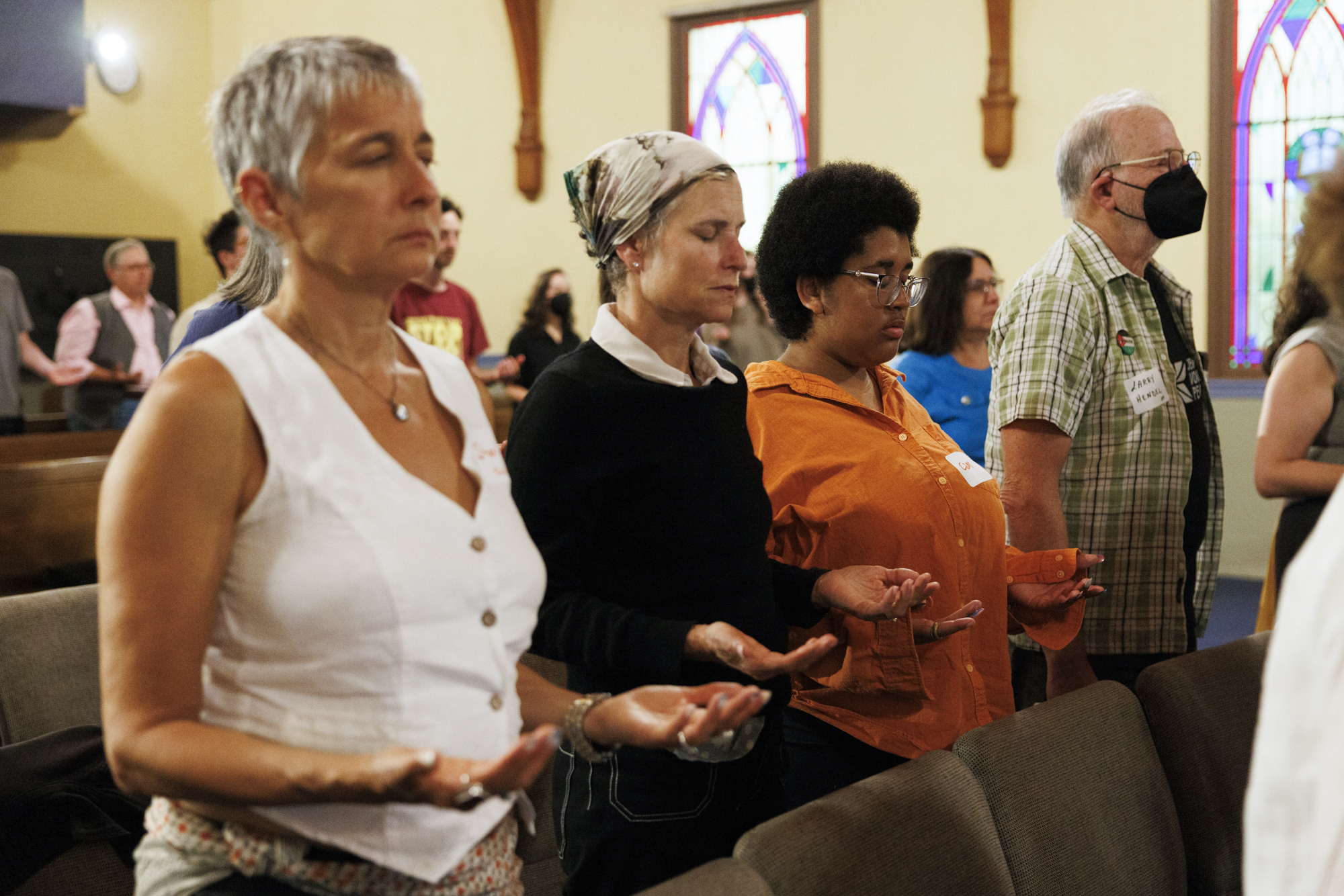
"caption": "Mourners are guided in prayer during a memorial for Palestinian activist, Awdah Al-Hathaleen, at Kehilla Community Synagogue on July 28, 2026, in Piedmont.",
"credit": "Miles Cull/KQED",
"altTag": null,
"description": null,
"imgSizes": {
"thumbnail": {
"file": "https://cdn.kqed.org/wp-content/uploads/sites/10/2026/07/072826-PALESTINEACTIVISTMEMORIAL-15-MC-KQED_1-160x107.jpg",
"width": 160,
"height": 107,
"mimeType": "image/jpeg"
},
"1536x1536": {
"file": "https://cdn.kqed.org/wp-content/uploads/sites/10/2026/07/072826-PALESTINEACTIVISTMEMORIAL-15-MC-KQED_1-1536x1025.jpg",
"width": 1536,
"height": 1025,
"mimeType": "image/jpeg"
},
"post-thumbnail": {
"file": "https://cdn.kqed.org/wp-content/uploads/sites/10/2026/07/072826-PALESTINEACTIVISTMEMORIAL-15-MC-KQED_1-672x372.jpg",
"width": 672,
"height": 372,
"mimeType": "image/jpeg"
},
"twentyfourteen-full-width": {
"file": "https://cdn.kqed.org/wp-content/uploads/sites/10/2026/07/072826-PALESTINEACTIVISTMEMORIAL-15-MC-KQED_1-1038x576.jpg",
"width": 1038,
"height": 576,
"mimeType": "image/jpeg"
},
"npr-cds-wide": {
"file": "https://cdn.kqed.org/wp-content/uploads/sites/10/2026/07/072826-PALESTINEACTIVISTMEMORIAL-15-MC-KQED_1-1200x675.jpg",
"width": 1200,
"height": 675,
"mimeType": "image/jpeg"
},
"npr-cds-square": {
"file": "https://cdn.kqed.org/wp-content/uploads/sites/10/2026/07/072826-PALESTINEACTIVISTMEMORIAL-15-MC-KQED_1-600x600.jpg",
"width": 600,
"height": 600,
"mimeType": "image/jpeg"
},
"kqedFullSize": {
"file": "https://cdn.kqed.org/wp-content/uploads/sites/10/2026/07/072826-PALESTINEACTIVISTMEMORIAL-15-MC-KQED_1.jpg",
"width": 2000,
"height": 1334
}
},
"isLoading": false,
"fetchFailed": false
},
"news_12089813": {
"type": "attachments",
"id": "news_12089813",
"meta": {
"index": "attachments_1716263798",
"site": "news",
"id": "12089813",
"found": true
},
"title": "260702-GGBVerdict-15-BL",
"publishDate": 1783022843,
"status": "inherit",
"parent": 0,
"modified": 1783023185,
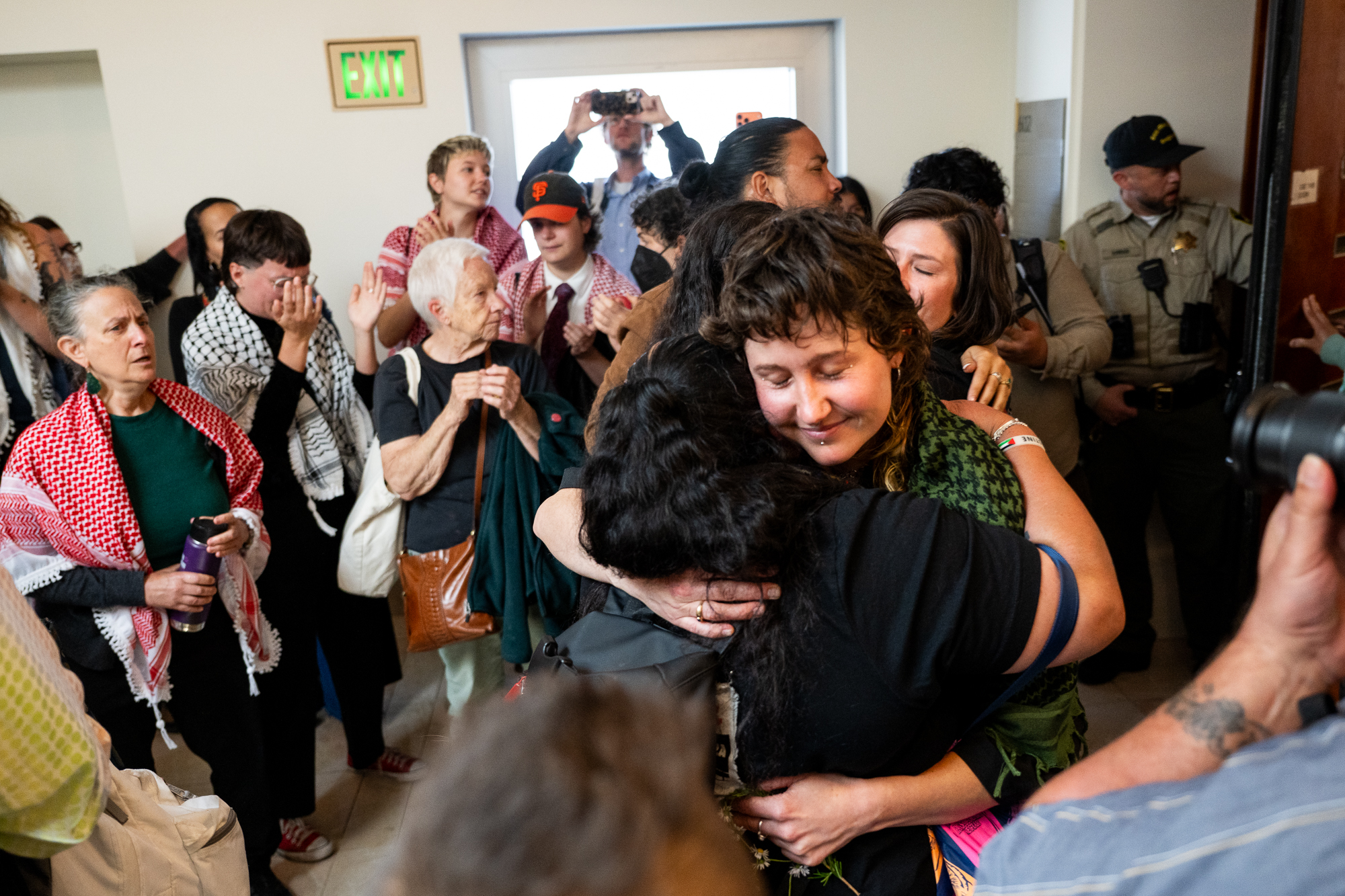
"caption": "River Allen greets supporters as they rally outside a courtroom at the Superior Court of California in San Francisco on July 2, 2026, after a jury deadlocked on a felony conspiracy charge against seven protesters accused of blocking the Golden Gate Bridge during a 2024 protest against the war in Gaza.",
"credit": "Beth LaBerge/KQED",
"altTag": null,
"description": null,
"imgSizes": {
"thumbnail": {
"file": "https://cdn.kqed.org/wp-content/uploads/sites/10/2026/07/260702-GGBVerdict-15-BL-160x107.jpg",
"width": 160,
"height": 107,
"mimeType": "image/jpeg"
},
"1536x1536": {
"file": "https://cdn.kqed.org/wp-content/uploads/sites/10/2026/07/260702-GGBVerdict-15-BL-1536x1024.jpg",
"width": 1536,
"height": 1024,
"mimeType": "image/jpeg"
},
"post-thumbnail": {
"file": "https://cdn.kqed.org/wp-content/uploads/sites/10/2026/07/260702-GGBVerdict-15-BL-672x372.jpg",
"width": 672,
"height": 372,
"mimeType": "image/jpeg"
},
"twentyfourteen-full-width": {
"file": "https://cdn.kqed.org/wp-content/uploads/sites/10/2026/07/260702-GGBVerdict-15-BL-1038x576.jpg",
"width": 1038,
"height": 576,
"mimeType": "image/jpeg"
},
"npr-cds-wide": {
"file": "https://cdn.kqed.org/wp-content/uploads/sites/10/2026/07/260702-GGBVerdict-15-BL-1200x675.jpg",
"width": 1200,
"height": 675,
"mimeType": "image/jpeg"
},
"npr-cds-square": {
"file": "https://cdn.kqed.org/wp-content/uploads/sites/10/2026/07/260702-GGBVerdict-15-BL-600x600.jpg",
"width": 600,
"height": 600,
"mimeType": "image/jpeg"
},
"kqedFullSize": {
"file": "https://cdn.kqed.org/wp-content/uploads/sites/10/2026/07/260702-GGBVerdict-15-BL.jpg",
"width": 2000,
"height": 1333
}
},
"isLoading": false,
"fetchFailed": false
},
"news_12086297": {
"type": "attachments",
"id": "news_12086297",
"meta": {
"index": "attachments_1716263798",
"site": "news",
"id": "12086297",
"found": true
},
"title": "260604-GGBTRIALCLOSING-01-BL-KQED",
"publishDate": 1780608288,
"status": "inherit",
"parent": 0,
"modified": 1780609475,
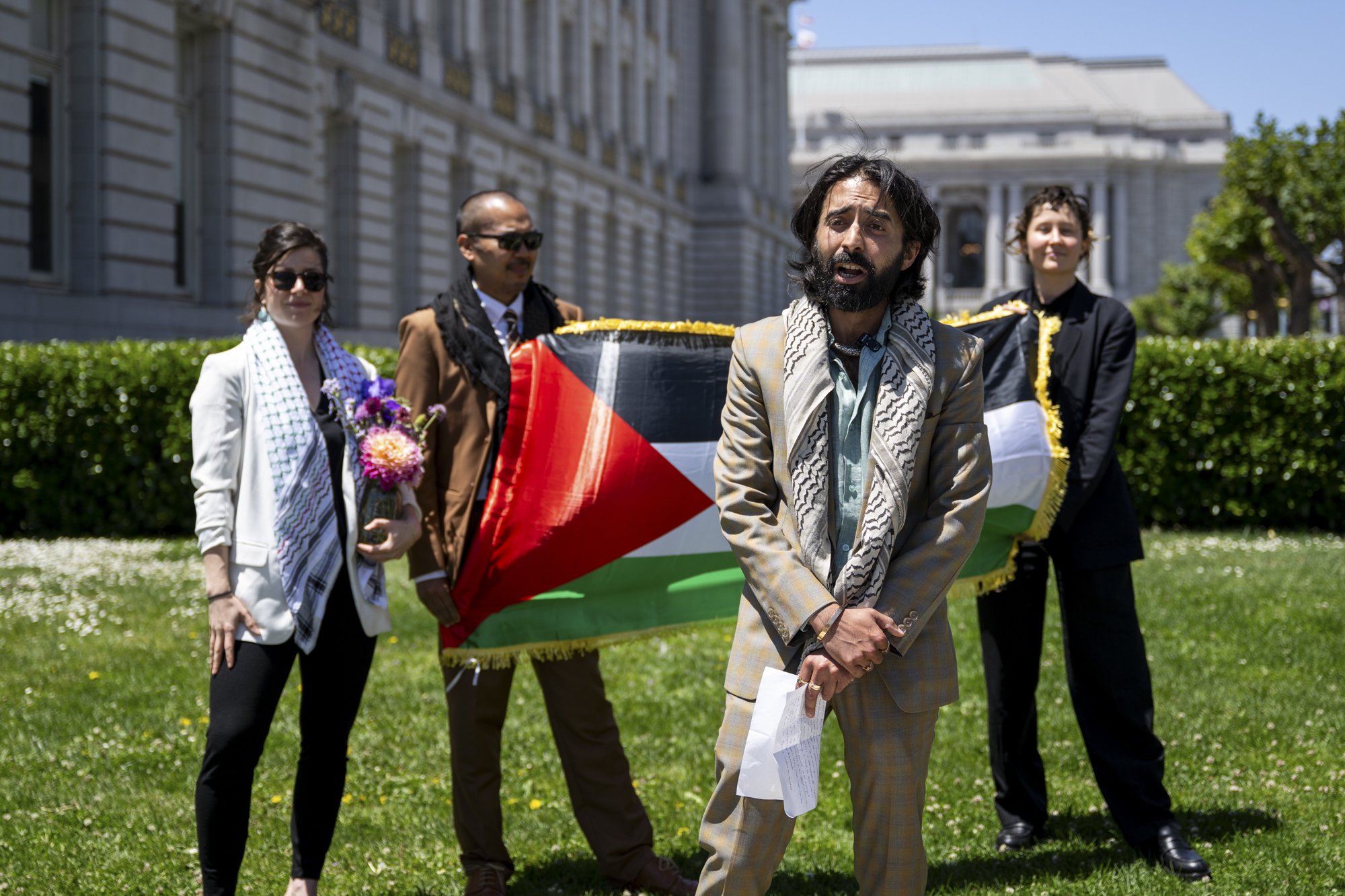
"caption": "Manan Kocher speaks during a rally across from the San Francisco Superior Courthouse on June 4, 2026, to support the \"Golden Gate 26\" ahead of closing arguments in their trial. The defendants are accused of blocking traffic on the Golden Gate Bridge during a 2024 protest against the war in Gaza.",
"credit": "Beth LaBerge/KQED",
"altTag": null,
"description": null,
"imgSizes": {
"thumbnail": {
"file": "https://cdn.kqed.org/wp-content/uploads/sites/10/2026/06/260604-GGBTRIALCLOSING-01-BL-KQED-160x107.jpg",
"width": 160,
"height": 107,
"mimeType": "image/jpeg"
},
"1536x1536": {
"file": "https://cdn.kqed.org/wp-content/uploads/sites/10/2026/06/260604-GGBTRIALCLOSING-01-BL-KQED-1536x1024.jpg",
"width": 1536,
"height": 1024,
"mimeType": "image/jpeg"
},
"post-thumbnail": {
"file": "https://cdn.kqed.org/wp-content/uploads/sites/10/2026/06/260604-GGBTRIALCLOSING-01-BL-KQED-672x372.jpg",
"width": 672,
"height": 372,
"mimeType": "image/jpeg"
},
"twentyfourteen-full-width": {
"file": "https://cdn.kqed.org/wp-content/uploads/sites/10/2026/06/260604-GGBTRIALCLOSING-01-BL-KQED-1038x576.jpg",
"width": 1038,
"height": 576,
"mimeType": "image/jpeg"
},
"npr-cds-wide": {
"file": "https://cdn.kqed.org/wp-content/uploads/sites/10/2026/06/260604-GGBTRIALCLOSING-01-BL-KQED-1200x675.jpg",
"width": 1200,
"height": 675,
"mimeType": "image/jpeg"
},
"npr-cds-square": {
"file": "https://cdn.kqed.org/wp-content/uploads/sites/10/2026/06/260604-GGBTRIALCLOSING-01-BL-KQED-600x600.jpg",
"width": 600,
"height": 600,
"mimeType": "image/jpeg"
},
"kqedFullSize": {
"file": "https://cdn.kqed.org/wp-content/uploads/sites/10/2026/06/260604-GGBTRIALCLOSING-01-BL-KQED.jpg",
"width": 2000,
"height": 1333
}
},
"isLoading": false,
"fetchFailed": false
},
"news_12085588": {
"type": "attachments",
"id": "news_12085588",
"meta": {
"index": "attachments_1716263798",
"site": "news",
"id": "12085588",
"found": true
},
"title": "260529-GGBTRIALTESTIMONY00089_TV-KQED",
"publishDate": 1780094766,
"status": "inherit",
"parent": 12089732,
"modified": 1783020771,
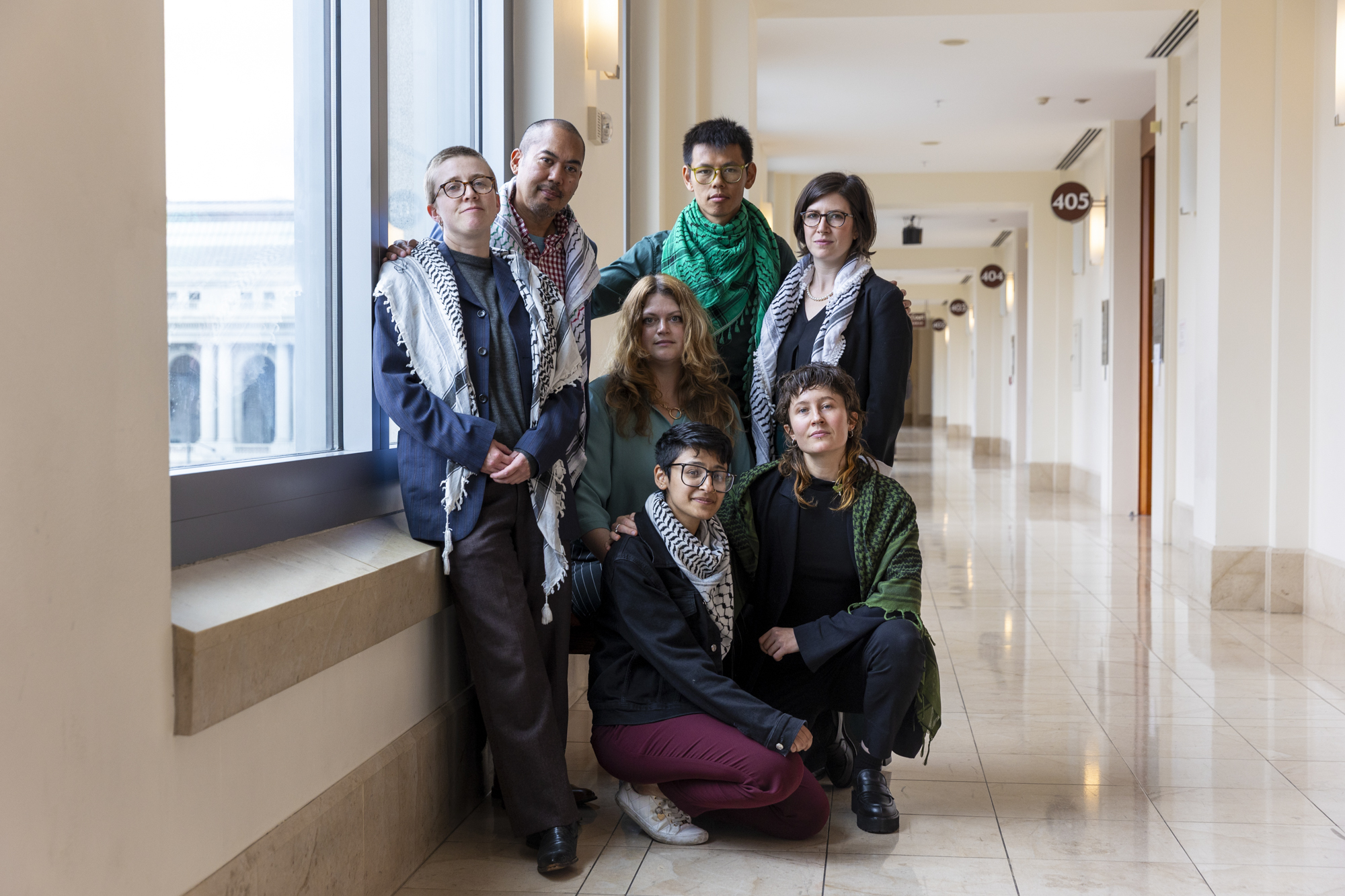
"caption": "From left, Em Tillotson, Conrad de Jesus, Sara Cantor, Rocky Chau, Sarah Ferrell, River Allen, and Bhavika Anandpura, the seven defendants on trial for blocking the Golden Gate Bridge for a pro-Palestinian protest, pose for a portrait at the San Francisco Superior Courthouse in San Francisco on May 29, 2026.",
"credit": "Tâm Vũ/KQED",
"altTag": null,
"description": null,
"imgSizes": {
"thumbnail": {
"file": "https://cdn.kqed.org/wp-content/uploads/sites/10/2026/05/260529-GGBTRIALTESTIMONY00089_TV-KQED-160x107.jpg",
"width": 160,
"height": 107,
"mimeType": "image/jpeg"
},
"1536x1536": {
"file": "https://cdn.kqed.org/wp-content/uploads/sites/10/2026/05/260529-GGBTRIALTESTIMONY00089_TV-KQED-1536x1024.jpg",
"width": 1536,
"height": 1024,
"mimeType": "image/jpeg"
},
"post-thumbnail": {
"file": "https://cdn.kqed.org/wp-content/uploads/sites/10/2026/05/260529-GGBTRIALTESTIMONY00089_TV-KQED-672x372.jpg",
"width": 672,
"height": 372,
"mimeType": "image/jpeg"
},
"twentyfourteen-full-width": {
"file": "https://cdn.kqed.org/wp-content/uploads/sites/10/2026/05/260529-GGBTRIALTESTIMONY00089_TV-KQED-1038x576.jpg",
"width": 1038,
"height": 576,
"mimeType": "image/jpeg"
},
"npr-cds-wide": {
"file": "https://cdn.kqed.org/wp-content/uploads/sites/10/2026/05/260529-GGBTRIALTESTIMONY00089_TV-KQED-1200x675.jpg",
"width": 1200,
"height": 675,
"mimeType": "image/jpeg"
},
"npr-cds-square": {
"file": "https://cdn.kqed.org/wp-content/uploads/sites/10/2026/05/260529-GGBTRIALTESTIMONY00089_TV-KQED-600x600.jpg",
"width": 600,
"height": 600,
"mimeType": "image/jpeg"
},
"kqedFullSize": {
"file": "https://cdn.kqed.org/wp-content/uploads/sites/10/2026/05/260529-GGBTRIALTESTIMONY00089_TV-KQED.jpg",
"width": 2000,
"height": 1333
}
},
"isLoading": false,
"fetchFailed": false
},
"news_12084463": {
"type": "attachments",
"id": "news_12084463",
"meta": {
"index": "attachments_1716263798",
"site": "news",
"id": "12084463",
"found": true
},
"title": "260520-GGB PROTEST-02-KQED",
"publishDate": 1779293024,
"status": "inherit",
"parent": 12084403,
"modified": 1779311452,
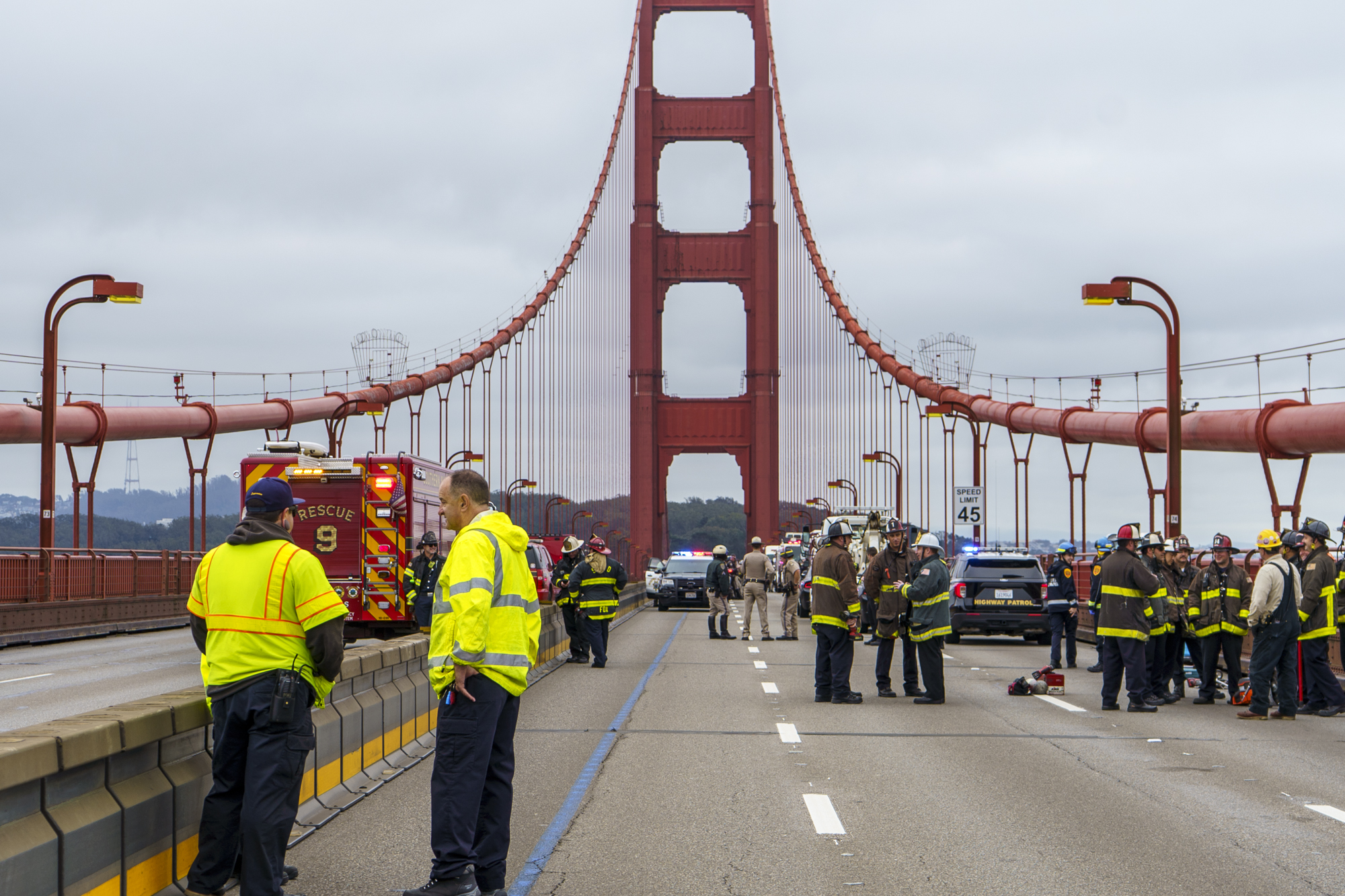
"caption": "First responders on The Golden Gate 26 on April 15, 2024. A group of Bay Area residents were arrested during a protest against the U.S. role in the war on Gaza on Tax Day.",
"credit": "Courtesy of Saman Qadir",
"altTag": null,
"description": null,
"imgSizes": {
"thumbnail": {
"file": "https://cdn.kqed.org/wp-content/uploads/sites/10/2026/05/260520-GGB-PROTEST-02-KQED-160x107.jpg",
"width": 160,
"height": 107,
"mimeType": "image/jpeg"
},
"1536x1536": {
"file": "https://cdn.kqed.org/wp-content/uploads/sites/10/2026/05/260520-GGB-PROTEST-02-KQED-1536x1024.jpg",
"width": 1536,
"height": 1024,
"mimeType": "image/jpeg"
},
"post-thumbnail": {
"file": "https://cdn.kqed.org/wp-content/uploads/sites/10/2026/05/260520-GGB-PROTEST-02-KQED-672x372.jpg",
"width": 672,
"height": 372,
"mimeType": "image/jpeg"
},
"twentyfourteen-full-width": {
"file": "https://cdn.kqed.org/wp-content/uploads/sites/10/2026/05/260520-GGB-PROTEST-02-KQED-1038x576.jpg",
"width": 1038,
"height": 576,
"mimeType": "image/jpeg"
},
"npr-cds-wide": {
"file": "https://cdn.kqed.org/wp-content/uploads/sites/10/2026/05/260520-GGB-PROTEST-02-KQED-1200x675.jpg",
"width": 1200,
"height": 675,
"mimeType": "image/jpeg"
},
"npr-cds-square": {
"file": "https://cdn.kqed.org/wp-content/uploads/sites/10/2026/05/260520-GGB-PROTEST-02-KQED-600x600.jpg",
"width": 600,
"height": 600,
"mimeType": "image/jpeg"
},
"kqedFullSize": {
"file": "https://cdn.kqed.org/wp-content/uploads/sites/10/2026/05/260520-GGB-PROTEST-02-KQED.jpg",
"width": 2000,
"height": 1333
}
},
"isLoading": false,
"fetchFailed": false
},
"news_12084649": {
"type": "attachments",
"id": "news_12084649",
"meta": {
"index": "attachments_1716263798",
"site": "news",
"id": "12084649",
"found": true
},
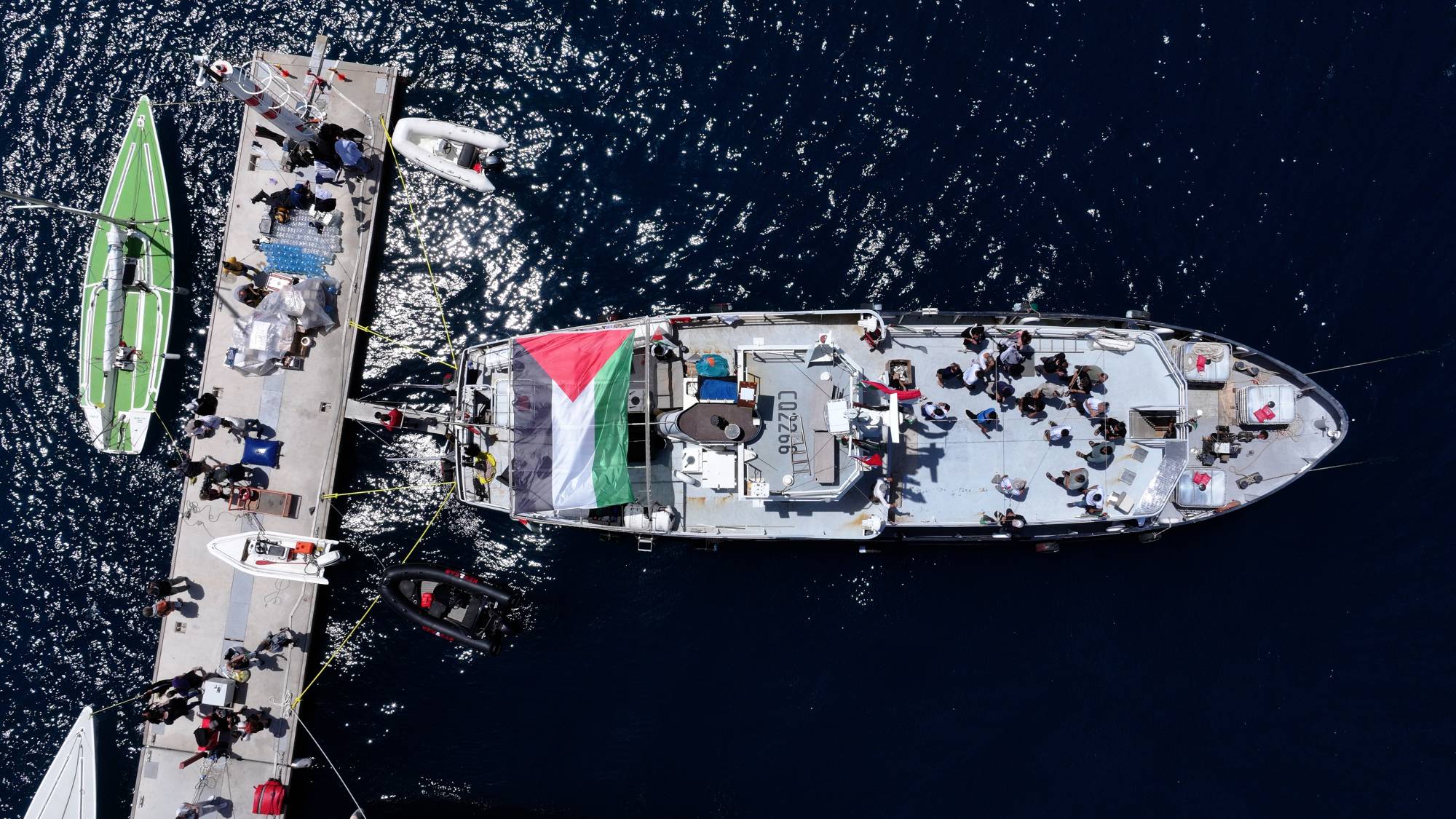
"title": "Global Sumud Flotilla is ready to set sail from Marmaris to Gaza with 54 boats",
"publishDate": 1779384243,
"status": "inherit",
"parent": 12084628,
"modified": 1779398589,
"caption": "Global Sumud Flotilla, formed to break the Israeli blockade, ready to set sail for Gaza into the Mediterranean from Marmaris with its 54 vessels in Mugla, Turkiye, on May 14, 2026. ",
"credit": "Orhan Cicek/Anadolu via Getty Images",
"altTag": null,
"description": null,
"imgSizes": {
"medium": {
"file": "https://cdn.kqed.org/wp-content/uploads/sites/10/2026/05/GlobalSumudFlotillaGetty-2000x1125.jpg",
"width": 2000,
"height": 1125,
"mimeType": "image/jpeg"
},
"large": {
"file": "https://cdn.kqed.org/wp-content/uploads/sites/10/2026/05/GlobalSumudFlotillaGetty-2000x1125.jpg",
"width": 2000,
"height": 1125,
"mimeType": "image/jpeg"
},
"thumbnail": {
"file": "https://cdn.kqed.org/wp-content/uploads/sites/10/2026/05/GlobalSumudFlotillaGetty-160x90.jpg",
"width": 160,
"height": 90,
"mimeType": "image/jpeg"
},
"1536x1536": {
"file": "https://cdn.kqed.org/wp-content/uploads/sites/10/2026/05/GlobalSumudFlotillaGetty-1536x864.jpg",
"width": 1536,
"height": 864,
"mimeType": "image/jpeg"
},
"2048x2048": {
"file": "https://cdn.kqed.org/wp-content/uploads/sites/10/2026/05/GlobalSumudFlotillaGetty-2048x1152.jpg",
"width": 2048,
"height": 1152,
"mimeType": "image/jpeg"
},
"post-thumbnail": {
"file": "https://cdn.kqed.org/wp-content/uploads/sites/10/2026/05/GlobalSumudFlotillaGetty-672x372.jpg",
"width": 672,
"height": 372,
"mimeType": "image/jpeg"
},
"twentyfourteen-full-width": {
"file": "https://cdn.kqed.org/wp-content/uploads/sites/10/2026/05/GlobalSumudFlotillaGetty-1038x576.jpg",
"width": 1038,
"height": 576,
"mimeType": "image/jpeg"
},
"full-width": {
"file": "https://cdn.kqed.org/wp-content/uploads/sites/10/2026/05/GlobalSumudFlotillaGetty-2000x1125.jpg",
"width": 2000,
"height": 1125,
"mimeType": "image/jpeg"
},
"npr-cds-wide": {
"file": "https://cdn.kqed.org/wp-content/uploads/sites/10/2026/05/GlobalSumudFlotillaGetty-1200x675.jpg",
"width": 1200,
"height": 675,
"mimeType": "image/jpeg"
},
"npr-cds-square": {
"file": "https://cdn.kqed.org/wp-content/uploads/sites/10/2026/05/GlobalSumudFlotillaGetty-600x600.jpg",
"width": 600,
"height": 600,
"mimeType": "image/jpeg"
},
"kqedFullSize": {
"file": "https://cdn.kqed.org/wp-content/uploads/sites/10/2026/05/GlobalSumudFlotillaGetty-scaled.jpg",
"width": 2560,
"height": 1440
}
},
"isLoading": false,
"fetchFailed": false
},
"news_12084462": {
"type": "attachments",
"id": "news_12084462",
"meta": {
"index": "attachments_1716263798",
"site": "news",
"id": "12084462",
"found": true
},
"title": "260520-GGB PROTEST-01-KQED",
"publishDate": 1779293019,
"status": "inherit",
"parent": 0,
"modified": 1779312078,
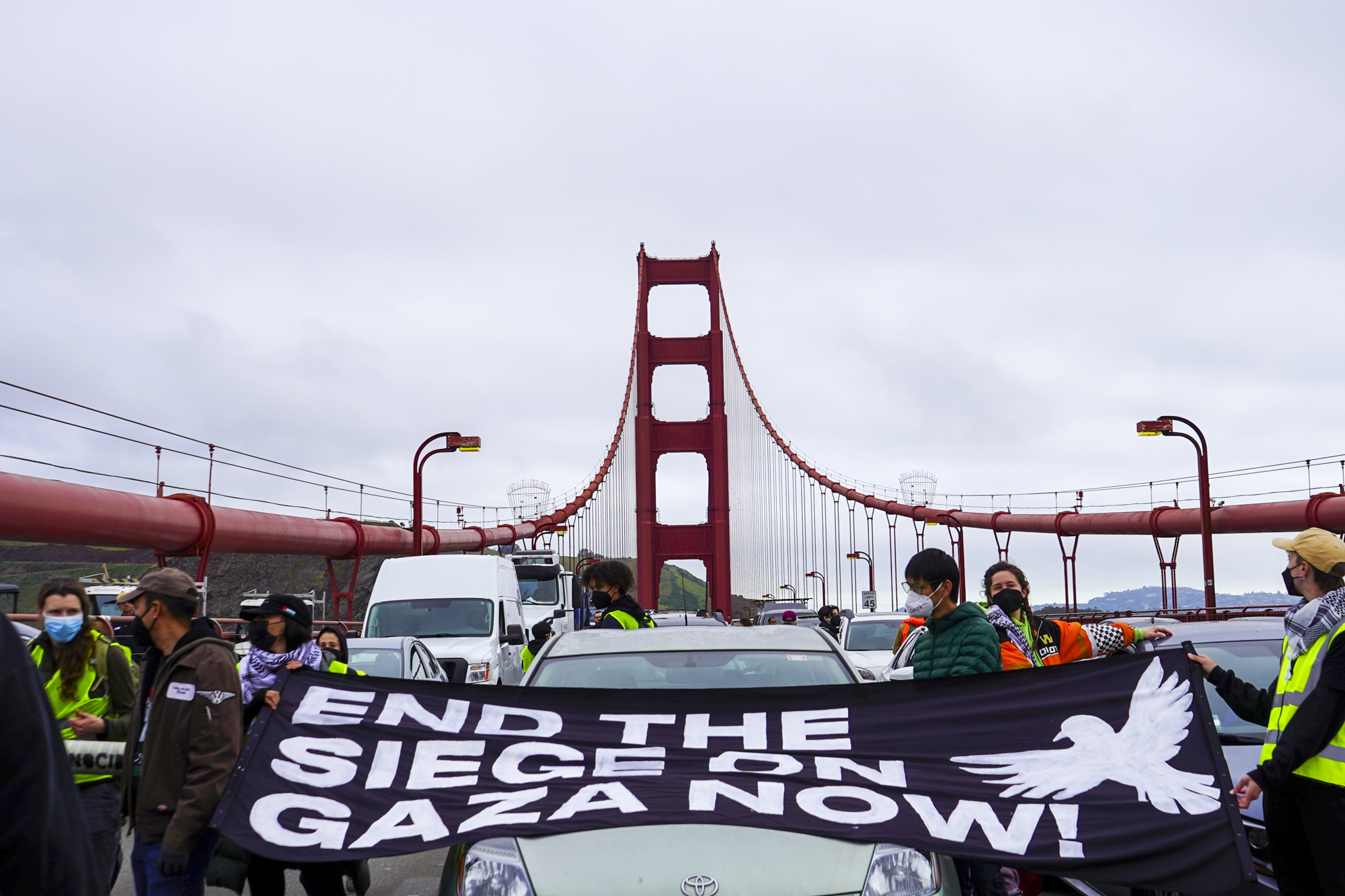
"caption": "Pro-Palestinian protesters on the bridge on April 15, 2024, demanded an end to U.S. aid, arms and technology to Israel to fund what they say is an ongoing genocide of Palestinians, supported by U.S. tax dollars. ",
"credit": "Courtesy of Saman Qadir",
"altTag": null,
"description": null,
"imgSizes": {
"thumbnail": {
"file": "https://cdn.kqed.org/wp-content/uploads/sites/10/2026/05/260520-GGB-PROTEST-01-KQED-160x107.jpg",
"width": 160,
"height": 107,
"mimeType": "image/jpeg"
},
"1536x1536": {
"file": "https://cdn.kqed.org/wp-content/uploads/sites/10/2026/05/260520-GGB-PROTEST-01-KQED-1536x1024.jpg",
"width": 1536,
"height": 1024,
"mimeType": "image/jpeg"
},
"post-thumbnail": {
"file": "https://cdn.kqed.org/wp-content/uploads/sites/10/2026/05/260520-GGB-PROTEST-01-KQED-672x372.jpg",
"width": 672,
"height": 372,
"mimeType": "image/jpeg"
},
"twentyfourteen-full-width": {
"file": "https://cdn.kqed.org/wp-content/uploads/sites/10/2026/05/260520-GGB-PROTEST-01-KQED-1038x576.jpg",
"width": 1038,
"height": 576,
"mimeType": "image/jpeg"
},
"npr-cds-wide": {
"file": "https://cdn.kqed.org/wp-content/uploads/sites/10/2026/05/260520-GGB-PROTEST-01-KQED-1200x675.jpg",
"width": 1200,
"height": 675,
"mimeType": "image/jpeg"
},
"npr-cds-square": {
"file": "https://cdn.kqed.org/wp-content/uploads/sites/10/2026/05/260520-GGB-PROTEST-01-KQED-600x600.jpg",
"width": 600,
"height": 600,
"mimeType": "image/jpeg"
},
"kqedFullSize": {
"file": "https://cdn.kqed.org/wp-content/uploads/sites/10/2026/05/260520-GGB-PROTEST-01-KQED.jpg",
"width": 2000,
"height": 1333
}
},
"isLoading": false,
"fetchFailed": false
},
"news_12082702": {
"type": "attachments",
"id": "news_12082702",
"meta": {
"index": "attachments_1716263798",
"site": "news",
"id": "12082702",
"found": true
},
"title": "ISRAEL-US-TECHNOLOGY-CELLEBRITE",
"publishDate": 1778176219,
"status": "inherit",
"parent": 12082693,
"modified": 1778176317,
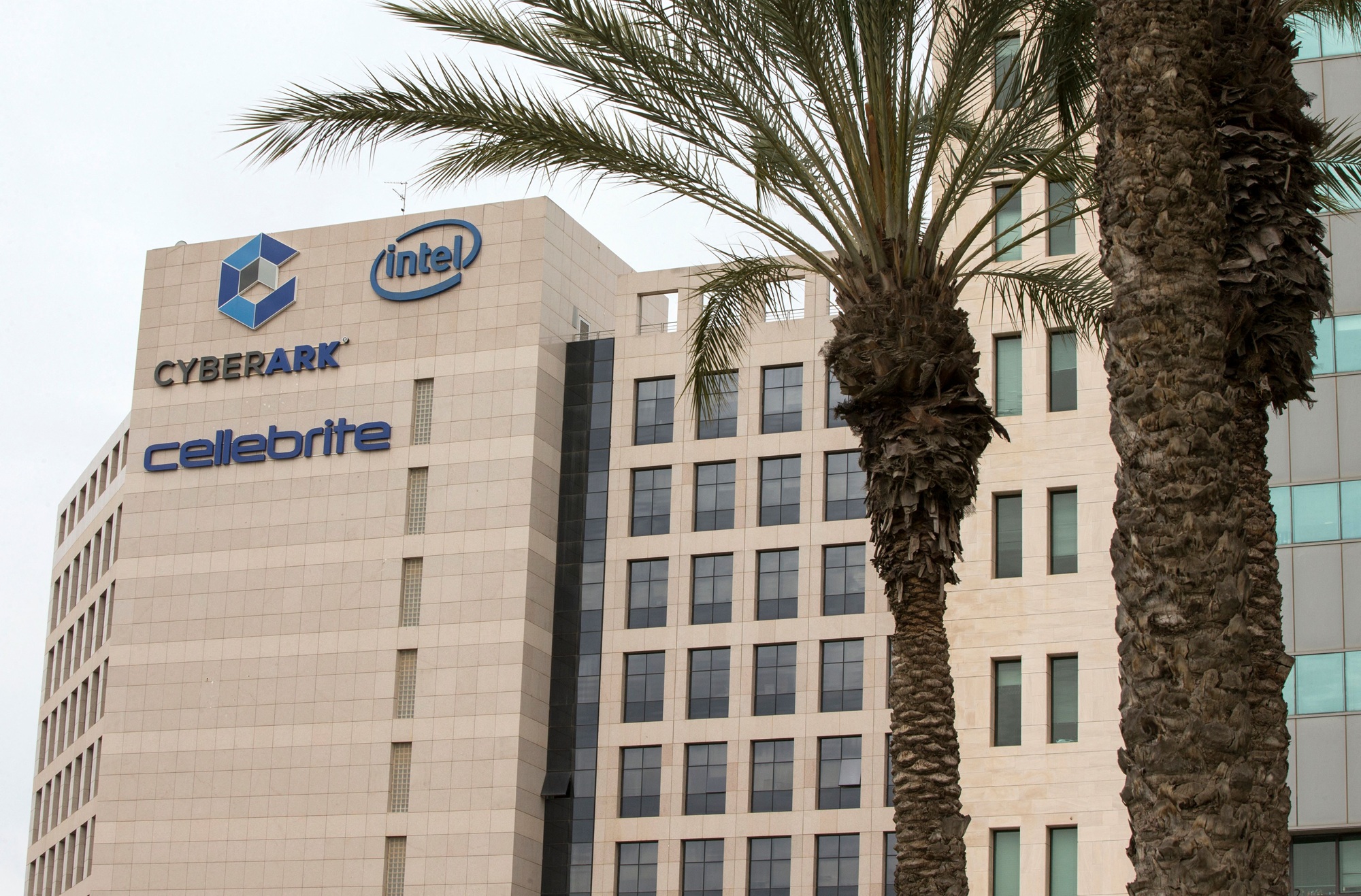
"caption": "The offices of Israeli company Cellebrite on March 24, 2016. Cellebrite is a provider of mobile forensic software that can extract and decode data from the Apple iPhone locked handsets. ",
"credit": "Jack Guez/AFP via Getty Images",
"altTag": null,
"description": null,
"imgSizes": {
"thumbnail": {
"file": "https://cdn.kqed.org/wp-content/uploads/sites/10/2026/05/CellebriteGetty-160x105.jpg",
"width": 160,
"height": 105,
"mimeType": "image/jpeg"
},
"1536x1536": {
"file": "https://cdn.kqed.org/wp-content/uploads/sites/10/2026/05/CellebriteGetty-1536x1011.jpg",
"width": 1536,
"height": 1011,
"mimeType": "image/jpeg"
},
"post-thumbnail": {
"file": "https://cdn.kqed.org/wp-content/uploads/sites/10/2026/05/CellebriteGetty-672x372.jpg",
"width": 672,
"height": 372,
"mimeType": "image/jpeg"
},
"twentyfourteen-full-width": {
"file": "https://cdn.kqed.org/wp-content/uploads/sites/10/2026/05/CellebriteGetty-1038x576.jpg",
"width": 1038,
"height": 576,
"mimeType": "image/jpeg"
},
"npr-cds-wide": {
"file": "https://cdn.kqed.org/wp-content/uploads/sites/10/2026/05/CellebriteGetty-1200x675.jpg",
"width": 1200,
"height": 675,
"mimeType": "image/jpeg"
},
"npr-cds-square": {
"file": "https://cdn.kqed.org/wp-content/uploads/sites/10/2026/05/CellebriteGetty-600x600.jpg",
"width": 600,
"height": 600,
"mimeType": "image/jpeg"
},
"kqedFullSize": {
"file": "https://cdn.kqed.org/wp-content/uploads/sites/10/2026/05/CellebriteGetty.jpg",
"width": 2000,
"height": 1317
}
},
"isLoading": false,
"fetchFailed": false
},
"news_12082162": {
"type": "attachments",
"id": "news_12082162",
"meta": {
"index": "attachments_1716263798",
"site": "news",
"id": "12082162",
"found": true
},
"title": "Vatican Pool Images 2025",
"publishDate": 1777672067,
"status": "inherit",
"parent": 12082072,
"modified": 1777680732,
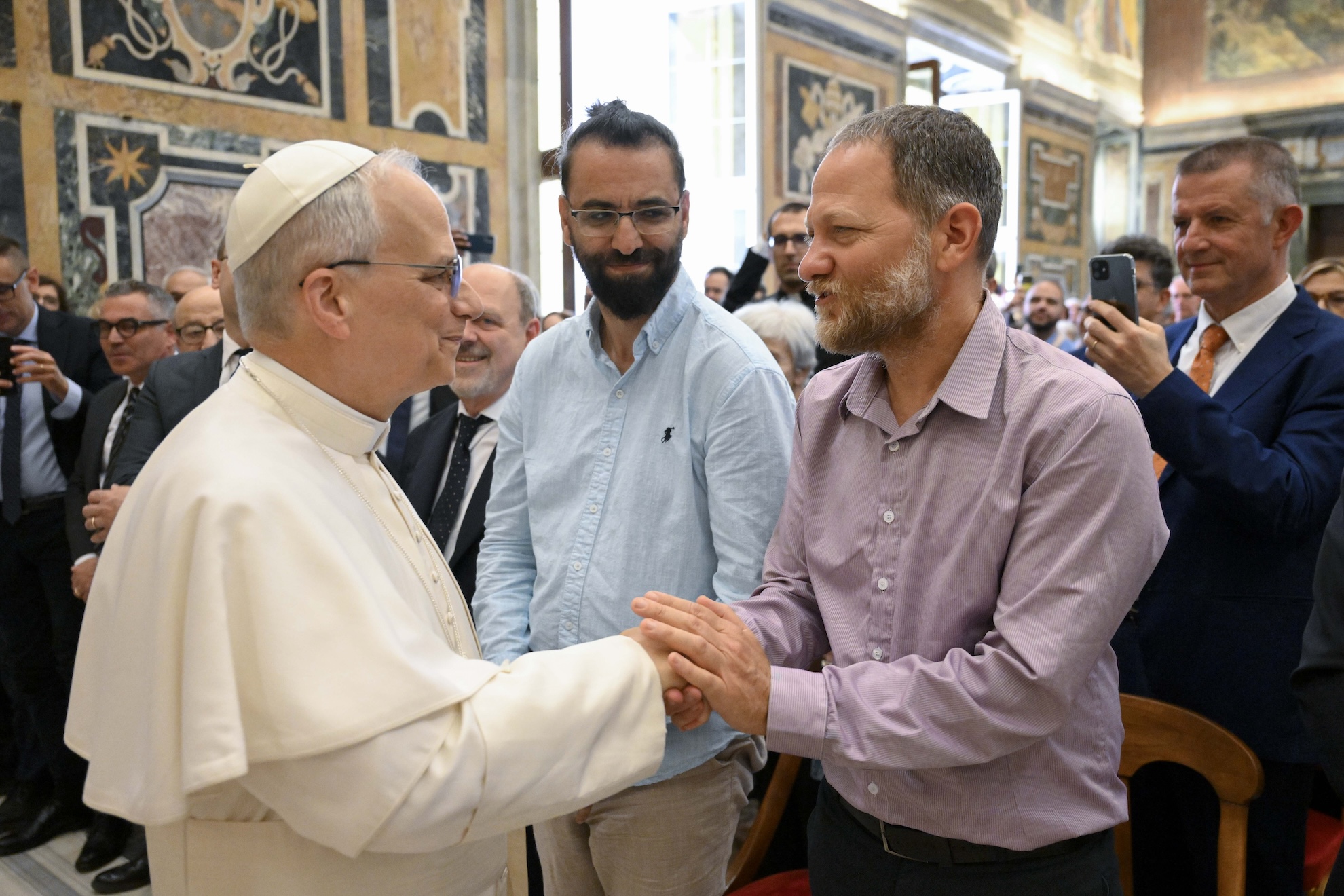
"caption": "Aziz Abu Sarah and Maoz Inon meet with Pope Leo XIV during a meeting at the Clementina Hall with representatives of associations and movements that took part in the 2024 “Arena of Peace” on May 30, 2025, in Vatican City, Vatican. ",
"credit": "Simone Risoluti via Vatican Pool/Getty Images",
"altTag": null,
"description": null,
"imgSizes": {
"thumbnail": {
"file": "https://cdn.kqed.org/wp-content/uploads/sites/10/2026/05/GettyImages-2217827653-160x107.jpg",
"width": 160,
"height": 107,
"mimeType": "image/jpeg"
},
"1536x1536": {
"file": "https://cdn.kqed.org/wp-content/uploads/sites/10/2026/05/GettyImages-2217827653-1536x1024.jpg",
"width": 1536,
"height": 1024,
"mimeType": "image/jpeg"
},
"post-thumbnail": {
"file": "https://cdn.kqed.org/wp-content/uploads/sites/10/2026/05/GettyImages-2217827653-672x372.jpg",
"width": 672,
"height": 372,
"mimeType": "image/jpeg"
},
"twentyfourteen-full-width": {
"file": "https://cdn.kqed.org/wp-content/uploads/sites/10/2026/05/GettyImages-2217827653-1038x576.jpg",
"width": 1038,
"height": 576,
"mimeType": "image/jpeg"
},
"npr-cds-wide": {
"file": "https://cdn.kqed.org/wp-content/uploads/sites/10/2026/05/GettyImages-2217827653-1200x675.jpg",
"width": 1200,
"height": 675,
"mimeType": "image/jpeg"
},
"npr-cds-square": {
"file": "https://cdn.kqed.org/wp-content/uploads/sites/10/2026/05/GettyImages-2217827653-600x600.jpg",
"width": 600,
"height": 600,
"mimeType": "image/jpeg"
},
"kqedFullSize": {
"file": "https://cdn.kqed.org/wp-content/uploads/sites/10/2026/05/GettyImages-2217827653.jpg",
"width": 1980,
"height": 1320
}
},
"isLoading": false,
"fetchFailed": false
},
"news_12010374": {
"type": "attachments",
"id": "news_12010374",
"meta": {
"index": "attachments_1716263798",
"site": "news",
"id": "12010374",
"found": true
},
"title": "US-PALESTINIANS-ISRAEL-CONFLICT",
"publishDate": 1729529558,
"status": "inherit",
"parent": 12010363,
"modified": 1777579705,
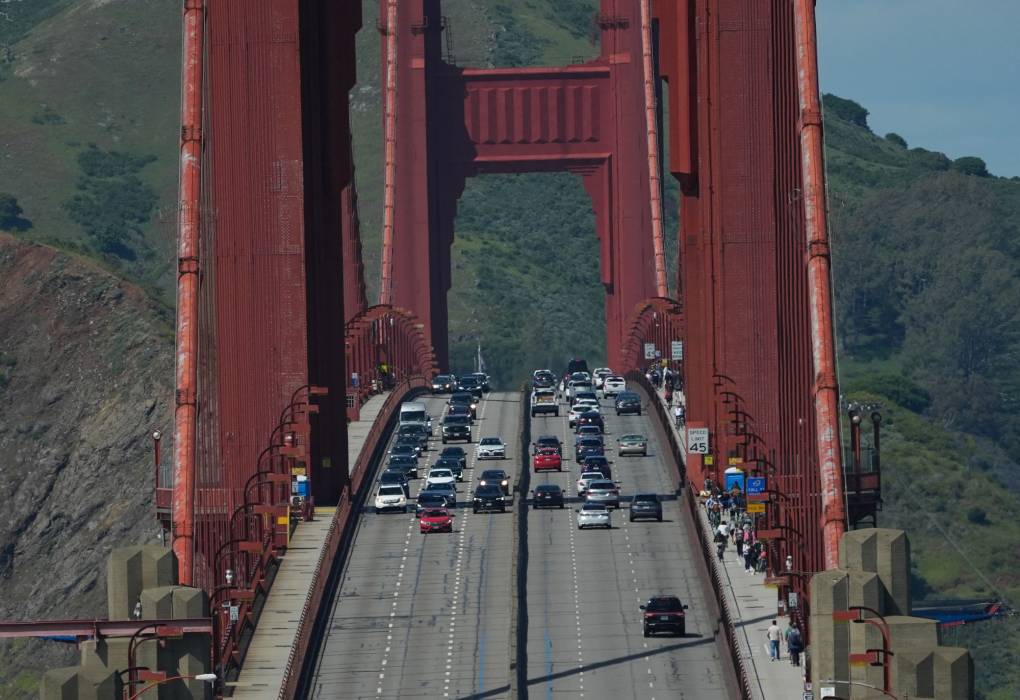
"caption": "Pro-Palestinian demonstrators blocked San Francisco's Golden Gate Bridge on April 15, 2024, completely halting traffic for hours as part of a coordinated day of action against Israel's war in Gaza.",
"credit": "Paul Kuroda/AFP via Getty Images",
"altTag": null,
"description": null,
"imgSizes": {
"medium": {
"file": "https://cdn.kqed.org/wp-content/uploads/sites/10/2024/10/GGBridgeProtestAprilGetty-800x549.jpg",
"width": 800,
"height": 549,
"mimeType": "image/jpeg"
},
"large": {
"file": "https://cdn.kqed.org/wp-content/uploads/sites/10/2024/10/GGBridgeProtestAprilGetty-1020x700.jpg",
"width": 1020,
"height": 700,
"mimeType": "image/jpeg"
},
"thumbnail": {
"file": "https://cdn.kqed.org/wp-content/uploads/sites/10/2024/10/GGBridgeProtestAprilGetty-160x110.jpg",
"width": 160,
"height": 110,
"mimeType": "image/jpeg"
},
"1536x1536": {
"file": "https://cdn.kqed.org/wp-content/uploads/sites/10/2024/10/GGBridgeProtestAprilGetty-1536x1054.jpg",
"width": 1536,
"height": 1054,
"mimeType": "image/jpeg"
},
"post-thumbnail": {
"file": "https://cdn.kqed.org/wp-content/uploads/sites/10/2024/10/GGBridgeProtestAprilGetty-672x372.jpg",
"width": 672,
"height": 372,
"mimeType": "image/jpeg"
},
"twentyfourteen-full-width": {
"file": "https://cdn.kqed.org/wp-content/uploads/sites/10/2024/10/GGBridgeProtestAprilGetty-1038x576.jpg",
"width": 1038,
"height": 576,
"mimeType": "image/jpeg"
},
"full-width": {
"file": "https://cdn.kqed.org/wp-content/uploads/sites/10/2024/10/GGBridgeProtestAprilGetty-1920x1317.jpg",
"width": 1920,
"height": 1317,
"mimeType": "image/jpeg"
},
"kqedFullSize": {
"file": "https://cdn.kqed.org/wp-content/uploads/sites/10/2024/10/GGBridgeProtestAprilGetty.jpg",
"width": 2000,
"height": 1372
}
},
"isLoading": false,
"fetchFailed": false
},
"news_12080314": {
"type": "attachments",
"id": "news_12080314",
"meta": {
"index": "attachments_1716263798",
"site": "news",
"id": "12080314",
"found": true
},
"title": "041526_CHADASHBY_9485-KQED",
"publishDate": 1776372204,
"status": "inherit",
"parent": 0,
"modified": 1776375714,
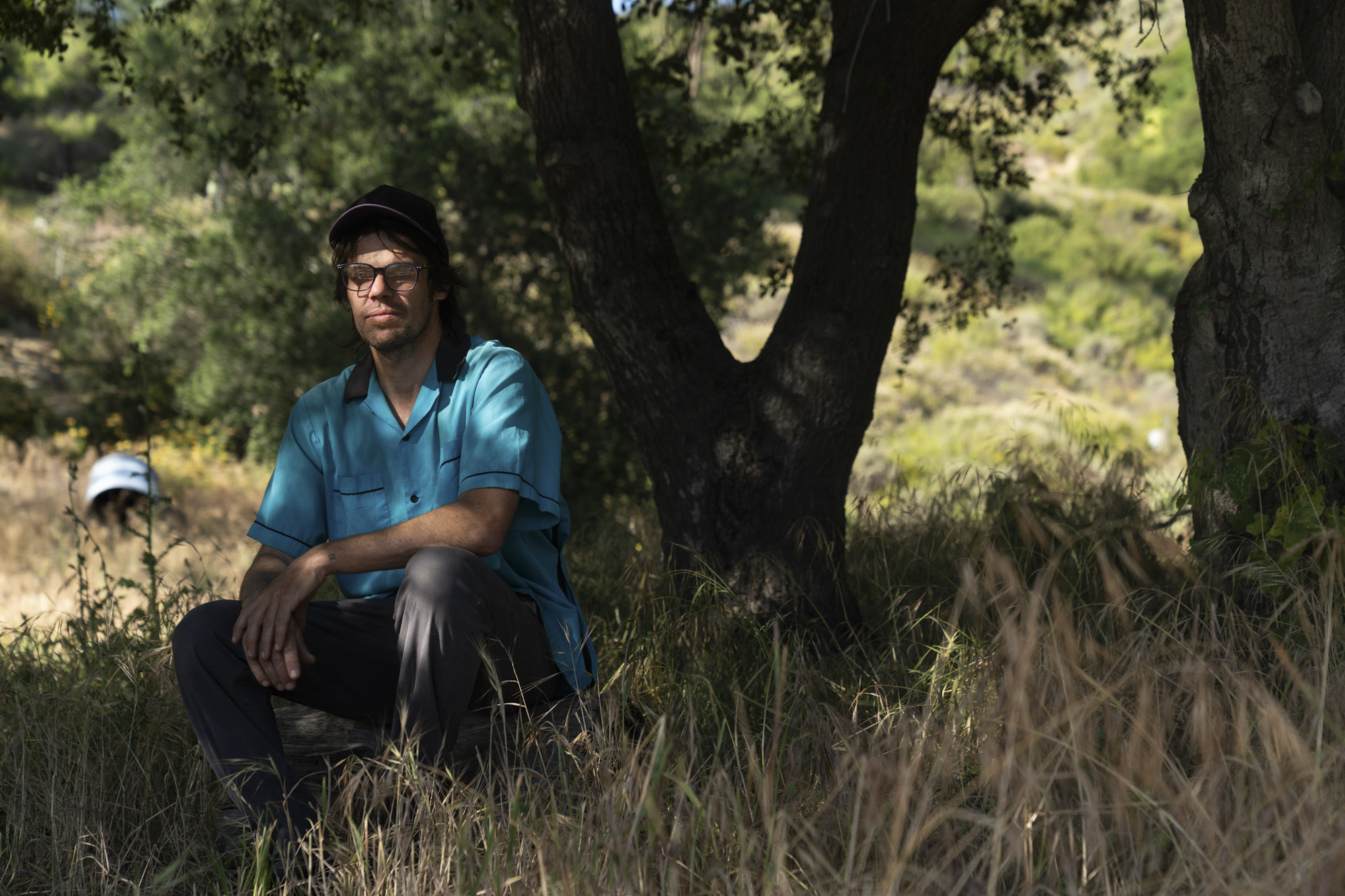
"caption": "Chad Ashby at his home in Topanga on April 15, 2026. Ashby will be working on a support boat as part of the Global Samud flotilla, an effort to deliver aid to Gaza. ",
"credit": "Lauren Justice for KQED",
"altTag": null,
"description": null,
"imgSizes": {
"thumbnail": {
"file": "https://cdn.kqed.org/wp-content/uploads/sites/10/2026/04/041526_CHADASHBY_9485-KQED-160x107.jpg",
"width": 160,
"height": 107,
"mimeType": "image/jpeg"
},
"1536x1536": {
"file": "https://cdn.kqed.org/wp-content/uploads/sites/10/2026/04/041526_CHADASHBY_9485-KQED-1536x1024.jpg",
"width": 1536,
"height": 1024,
"mimeType": "image/jpeg"
},
"post-thumbnail": {
"file": "https://cdn.kqed.org/wp-content/uploads/sites/10/2026/04/041526_CHADASHBY_9485-KQED-672x372.jpg",
"width": 672,
"height": 372,
"mimeType": "image/jpeg"
},
"twentyfourteen-full-width": {
"file": "https://cdn.kqed.org/wp-content/uploads/sites/10/2026/04/041526_CHADASHBY_9485-KQED-1038x576.jpg",
"width": 1038,
"height": 576,
"mimeType": "image/jpeg"
},
"npr-cds-wide": {
"file": "https://cdn.kqed.org/wp-content/uploads/sites/10/2026/04/041526_CHADASHBY_9485-KQED-1200x675.jpg",
"width": 1200,
"height": 675,
"mimeType": "image/jpeg"
},
"npr-cds-square": {
"file": "https://cdn.kqed.org/wp-content/uploads/sites/10/2026/04/041526_CHADASHBY_9485-KQED-600x600.jpg",
"width": 600,
"height": 600,
"mimeType": "image/jpeg"
},
"kqedFullSize": {
"file": "https://cdn.kqed.org/wp-content/uploads/sites/10/2026/04/041526_CHADASHBY_9485-KQED.jpg",
"width": 2000,
"height": 1333
}
},
"isLoading": false,
"fetchFailed": false
},
"news_12079195": {
"type": "attachments",
"id": "news_12079195",
"meta": {
"index": "attachments_1716263798",
"site": "news",
"id": "12079195",
"found": true
},
"title": "260408-SFSUNegotiations-21-BL_qed",
"publishDate": 1775691817,
"status": "inherit",
"parent": 0,
"modified": 1775691850,
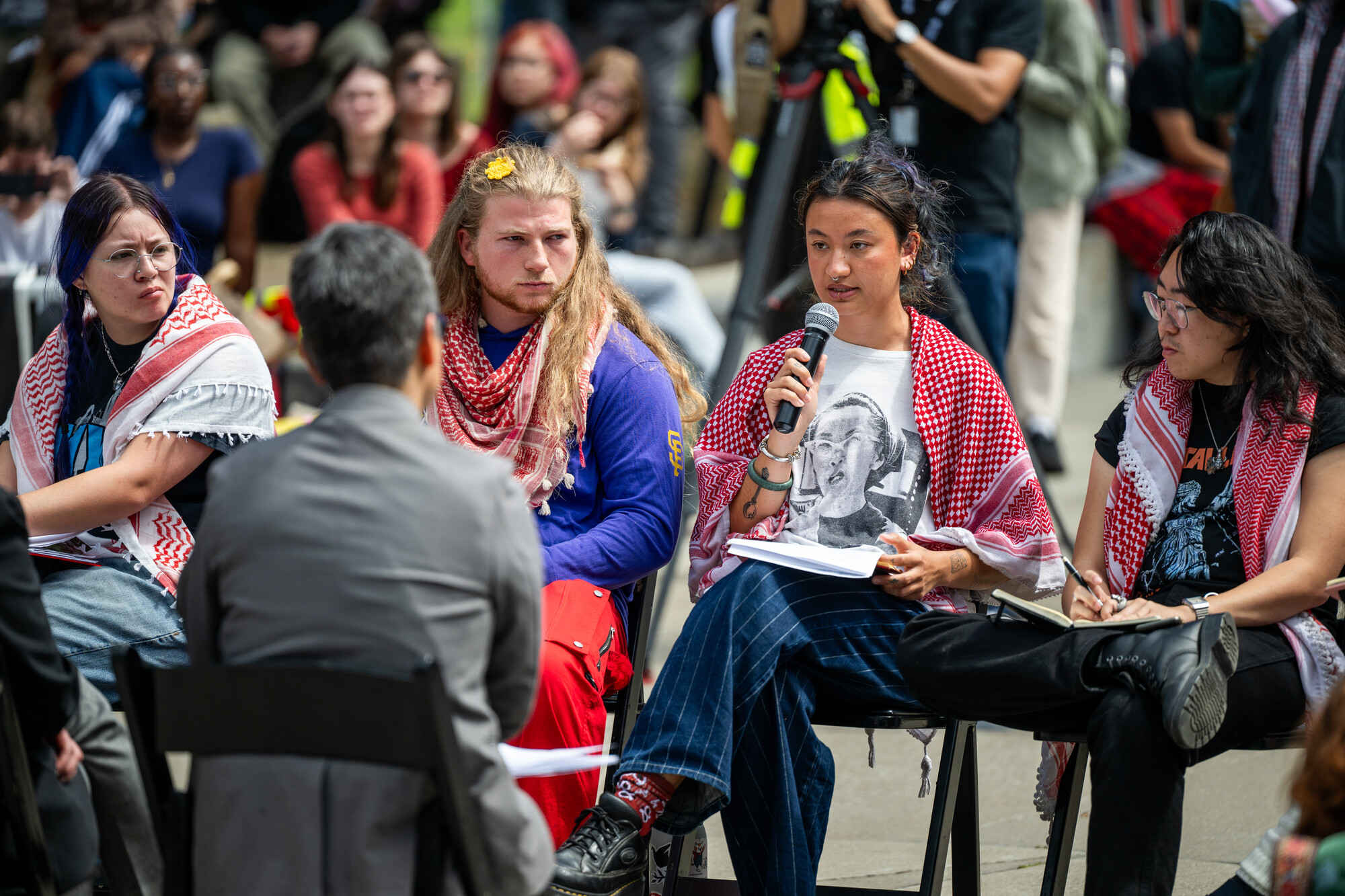
"caption": "Vi Lee, a member of the student negotiating team, asks a question to SFSU President Lynn Mahoney and Provost Amy Sueyoshi in Malcolm X Plaza at San Francisco State University on April 8, 2026. Students, faculty, and community members gathered for an open negotiation session with university leadership around demands related to funding, AI decision-making, free speech, campus protections, and student housing.",
"credit": "Beth LaBerge/KQED",
"altTag": null,
"description": null,
"imgSizes": {
"thumbnail": {
"file": "https://cdn.kqed.org/wp-content/uploads/sites/10/2026/04/260408-SFSUNegotiations-21-BL_qed-160x107.jpg",
"width": 160,
"height": 107,
"mimeType": "image/jpeg"
},
"1536x1536": {
"file": "https://cdn.kqed.org/wp-content/uploads/sites/10/2026/04/260408-SFSUNegotiations-21-BL_qed-1536x1024.jpg",
"width": 1536,
"height": 1024,
"mimeType": "image/jpeg"
},
"post-thumbnail": {
"file": "https://cdn.kqed.org/wp-content/uploads/sites/10/2026/04/260408-SFSUNegotiations-21-BL_qed-672x372.jpg",
"width": 672,
"height": 372,
"mimeType": "image/jpeg"
},
"twentyfourteen-full-width": {
"file": "https://cdn.kqed.org/wp-content/uploads/sites/10/2026/04/260408-SFSUNegotiations-21-BL_qed-1038x576.jpg",
"width": 1038,
"height": 576,
"mimeType": "image/jpeg"
},
"npr-cds-wide": {
"file": "https://cdn.kqed.org/wp-content/uploads/sites/10/2026/04/260408-SFSUNegotiations-21-BL_qed-1200x675.jpg",
"width": 1200,
"height": 675,
"mimeType": "image/jpeg"
},
"npr-cds-square": {
"file": "https://cdn.kqed.org/wp-content/uploads/sites/10/2026/04/260408-SFSUNegotiations-21-BL_qed-600x600.jpg",
"width": 600,
"height": 600,
"mimeType": "image/jpeg"
},
"kqedFullSize": {
"file": "https://cdn.kqed.org/wp-content/uploads/sites/10/2026/04/260408-SFSUNegotiations-21-BL_qed.jpg",
"width": 2000,
"height": 1333
}
},
"isLoading": false,
"fetchFailed": false
}
},
"audioPlayerReducer": {
"postId": "stream_live",
"isPaused": true,
"isPlaying": false,
"pfsActive": false,
"pledgeModalIsOpen": true,
"playerDrawerIsOpen": false,
"liveAudioPlayStartedAt": 0,
"liveAudioPlayContext": ""
},
"authorsReducer": {
"byline_news_12082072": {
"type": "authors",
"id": "byline_news_12082072",
"meta": {
"override": true
},
"slug": "byline_news_12082072",
"name": "Susan Britton",
"isLoading": false
},
"ecruzguevarra": {
"type": "authors",
"id": "8654",
"meta": {
"index": "authors_1716337520",
"id": "8654",
"found": true
},
"name": "Ericka Cruz Guevarra",
"firstName": "Ericka",
"lastName": "Cruz Guevarra",
"slug": "ecruzguevarra",
"email": "ecruzguevarra@kqed.org",
"display_author_email": true,
"staff_mastheads": [
"news"
],
"title": "Producer, The Bay Podcast",
"bio": "Ericka Cruz Guevarra is host of \u003ca href=\"https://www.kqed.org/podcasts/thebay\">\u003cem>The Bay\u003c/em>\u003c/a> podcast at KQED. Before host, she was the show’s producer. Her work in that capacity includes a three-part reported series on policing in Vallejo, which won a 2020 excellence in journalism award from the Society of Professional Journalists. Ericka has worked as a breaking news reporter at Oregon Public Broadcasting, helped produce the Code Switch podcast, and was KQED’s inaugural Raul Ramirez Diversity Fund intern. She’s also an alumna of NPR’s Next Generation Radio program. Send her an email if you have strong feelings about whether Fairfield and Suisun City are the Bay. Ericka is represented by SAG-AFTRA.",
"avatar": "https://secure.gravatar.com/avatar/accefc1de4bafc7e234b69bcb9b6f6536c130fd84709bc3069ef11a78787e1bb?s=600&d=blank&r=g",
"twitter": "NotoriousECG",
"bluesky": null,
"facebook": null,
"instagram": null,
"linkedin": null,
"sites": [
{
"site": "arts",
"roles": [
"subscriber"
]
},
{
"site": "news",
"roles": [
"editor",
"manage_categories"
]
},
{
"site": "futureofyou",
"roles": [
"subscriber"
]
},
{
"site": "stateofhealth",
"roles": [
"subscriber"
]
},
{
"site": "science",
"roles": [
"editor"
]
},
{
"site": "forum",
"roles": [
"subscriber"
]
}
],
"headData": {
"title": "Ericka Cruz Guevarra | KQED",
"description": "Producer, The Bay Podcast",
"ogImgSrc": "https://secure.gravatar.com/avatar/accefc1de4bafc7e234b69bcb9b6f6536c130fd84709bc3069ef11a78787e1bb?s=600&d=blank&r=g",
"twImgSrc": "https://secure.gravatar.com/avatar/accefc1de4bafc7e234b69bcb9b6f6536c130fd84709bc3069ef11a78787e1bb?s=600&d=blank&r=g"
},
"isLoading": false,
"link": "/author/ecruzguevarra"
},
"amontecillo": {
"type": "authors",
"id": "11649",
"meta": {
"index": "authors_1716337520",
"id": "11649",
"found": true
},
"name": "Alan Montecillo",
"firstName": "Alan",
"lastName": "Montecillo",
"slug": "amontecillo",
"email": "amontecillo@kqed.org",
"display_author_email": false,
"staff_mastheads": [
"news"
],
"title": "KQED Contributor",
"bio": "Alan Montecillo is the senior editor of \u003cem>\u003ca href=\"http://kqed.org/thebay\">The Bay\u003c/a>, \u003c/em> KQED's local news podcast. Before moving to the Bay Area, he worked as a senior talk show producer for WILL in Champaign-Urbana, Illinois and at Oregon Public Broadcasting in Portland, Oregon. He has won journalism awards from the Society of Professional Journalists Northern California, the Public Media Journalists Association, The Signal Awards, and has also received a regional Edward R. Murrow award. Alan is a Filipino American from Hong Kong and a graduate of Reed College.",
"avatar": "https://secure.gravatar.com/avatar/268f53a2066899ea9efdd8a5900218b17c822d9862cbc9326cccec53ef41d349?s=600&d=blank&r=g",
"twitter": "alanmontecillo",
"bluesky": null,
"facebook": null,
"instagram": null,
"linkedin": null,
"sites": [
{
"site": "",
"roles": [
"editor"
]
},
{
"site": "news",
"roles": [
"editor",
"manage_categories"
]
}
],
"headData": {
"title": "Alan Montecillo | KQED",
"description": "KQED Contributor",
"ogImgSrc": "https://secure.gravatar.com/avatar/268f53a2066899ea9efdd8a5900218b17c822d9862cbc9326cccec53ef41d349?s=600&d=blank&r=g",
"twImgSrc": "https://secure.gravatar.com/avatar/268f53a2066899ea9efdd8a5900218b17c822d9862cbc9326cccec53ef41d349?s=600&d=blank&r=g"
},
"isLoading": false,
"link": "/author/amontecillo"
},
"jlara": {
"type": "authors",
"id": "11761",
"meta": {
"index": "authors_1716337520",
"id": "11761",
"found": true
},
"name": "Juan Carlos Lara",
"firstName": "Juan Carlos",
"lastName": "Lara",
"slug": "jlara",
"email": "jlara@kqed.org",
"display_author_email": false,
"staff_mastheads": [],
"title": "KQED Contributor",
"bio": null,
"avatar": "https://secure.gravatar.com/avatar/19e2052b9b05657c5ff2af2121846e9c?s=600&d=blank&r=g",
"twitter": null,
"facebook": null,
"instagram": null,
"linkedin": null,
"sites": [
{
"site": "arts",
"roles": [
"editor"
]
},
{
"site": "news",
"roles": [
"editor"
]
},
{
"site": "forum",
"roles": [
"editor"
]
},
{
"site": "liveblog",
"roles": [
"contributor"
]
}
],
"headData": {
"title": "Juan Carlos Lara | KQED",
"description": "KQED Contributor",
"ogImgSrc": "https://secure.gravatar.com/avatar/19e2052b9b05657c5ff2af2121846e9c?s=600&d=blank&r=g",
"twImgSrc": "https://secure.gravatar.com/avatar/19e2052b9b05657c5ff2af2121846e9c?s=600&d=blank&r=g"
},
"isLoading": false,
"link": "/author/jlara"
},
"jessicakariisa": {
"type": "authors",
"id": "11831",
"meta": {
"index": "authors_1716337520",
"id": "11831",
"found": true
},
"name": "Jessica Kariisa",
"firstName": "Jessica",
"lastName": "Kariisa",
"slug": "jessicakariisa",
"email": "jkariisa@kqed.org",
"display_author_email": false,
"staff_mastheads": [],
"title": "Producer, The Bay",
"bio": "Jessica Kariisa is the producer of The Bay. She first joined KQED as an intern for The California Report Magazine, after which she became an on-call producer. She reported a Bay Curious episode on the use of rap lyrics in criminal trials which won a Society of Professional Journalists award in 2023 for Excellence in Features Journalism and the 2023 Signal Award for Best Conversation Starter. She’s worked on podcasts for Snap Judgment and American Public Media. Before embarking on her audio career, she was a music journalist.\r\n\r\nJessica Kariisa is represented by SAG-AFTRA.",
"avatar": "https://secure.gravatar.com/avatar/522e97b28ac0b3d411621c0fde8f3419c7b71ea2c5c262c57c4bb600963f328c?s=600&d=blank&r=g",
"twitter": null,
"bluesky": null,
"facebook": null,
"instagram": null,
"linkedin": null,
"sites": [
{
"site": "arts",
"roles": [
"author"
]
},
{
"site": "news",
"roles": [
"editor",
"manage_categories"
]
}
],
"headData": {
"title": "Jessica Kariisa | KQED",
"description": "Producer, The Bay",
"ogImgSrc": "https://secure.gravatar.com/avatar/522e97b28ac0b3d411621c0fde8f3419c7b71ea2c5c262c57c4bb600963f328c?s=600&d=blank&r=g",
"twImgSrc": "https://secure.gravatar.com/avatar/522e97b28ac0b3d411621c0fde8f3419c7b71ea2c5c262c57c4bb600963f328c?s=600&d=blank&r=g"
},
"isLoading": false,
"link": "/author/jessicakariisa"
},
"nkhan": {
"type": "authors",
"id": "11867",
"meta": {
"index": "authors_1716337520",
"id": "11867",
"found": true
},
"name": "Nisa Khan",
"firstName": "Nisa",
"lastName": "Khan",
"slug": "nkhan",
"email": "nkhan@kqed.org",
"display_author_email": false,
"staff_mastheads": [],
"title": "KQED Contributor",
"bio": "Nisa Khan is a reporter for KQED's Audience News Desk. She was formerly a data reporter at Michigan Radio. She earned a Bachelor of Science in Information from the University of Michigan and a Master of Arts in Communication from Stanford University.",
"avatar": "https://secure.gravatar.com/avatar/8720459eef081ff64582b3506b124d58523e80e120704a0cbd9892533c914991?s=600&d=blank&r=g",
"twitter": "mnisakhan",
"bluesky": null,
"facebook": null,
"instagram": null,
"linkedin": null,
"sites": [
{
"site": "arts",
"roles": [
"editor"
]
},
{
"site": "news",
"roles": [
"editor"
]
},
{
"site": "science",
"roles": [
"editor",
"author"
]
},
{
"site": "forum",
"roles": [
"editor"
]
},
{
"site": "liveblog",
"roles": [
"contributor"
]
}
],
"headData": {
"title": "Nisa Khan | KQED",
"description": "KQED Contributor",
"ogImgSrc": "https://secure.gravatar.com/avatar/8720459eef081ff64582b3506b124d58523e80e120704a0cbd9892533c914991?s=600&d=blank&r=g",
"twImgSrc": "https://secure.gravatar.com/avatar/8720459eef081ff64582b3506b124d58523e80e120704a0cbd9892533c914991?s=600&d=blank&r=g"
},
"isLoading": false,
"link": "/author/nkhan"
},
"kdebenedetti": {
"type": "authors",
"id": "11913",
"meta": {
"index": "authors_1716337520",
"id": "11913",
"found": true
},
"name": "Katie DeBenedetti",
"firstName": "Katie",
"lastName": "DeBenedetti",
"slug": "kdebenedetti",
"email": "kdebenedetti@kqed.org",
"display_author_email": false,
"staff_mastheads": [
"news",
"science"
],
"title": "KQED Contributor",
"bio": "Katie DeBenedetti is a digital reporter covering daily news for the Express Desk. Prior to joining KQED as a culture reporting intern in January 2024, she covered education and city government for the Napa Valley Register.",
"avatar": "https://secure.gravatar.com/avatar/6e31073cb8f7e4214ab03f42771d0f45?s=600&d=blank&r=g",
"twitter": null,
"facebook": null,
"instagram": null,
"linkedin": null,
"sites": [
{
"site": "news",
"roles": [
"author"
]
},
{
"site": "science",
"roles": [
"author"
]
},
{
"site": "liveblog",
"roles": [
"author"
]
}
],
"headData": {
"title": "Katie DeBenedetti | KQED",
"description": "KQED Contributor",
"ogImgSrc": "https://secure.gravatar.com/avatar/6e31073cb8f7e4214ab03f42771d0f45?s=600&d=blank&r=g",
"twImgSrc": "https://secure.gravatar.com/avatar/6e31073cb8f7e4214ab03f42771d0f45?s=600&d=blank&r=g"
},
"isLoading": false,
"link": "/author/kdebenedetti"
},
"emanoukian": {
"type": "authors",
"id": "11925",
"meta": {
"index": "authors_1716337520",
"id": "11925",
"found": true
},
"name": "Elize Manoukian",
"firstName": "Elize",
"lastName": "Manoukian",
"slug": "emanoukian",
"email": "emanoukian@KQED.org",
"display_author_email": false,
"staff_mastheads": [
"news"
],
"title": "Digital Producer",
"bio": null,
"avatar": "https://secure.gravatar.com/avatar/4525f1a8e46ccb30933b32653d9772064cfefe3fa655eb45b3b3a80341f6bdad?s=600&d=blank&r=g",
"twitter": null,
"bluesky": null,
"facebook": null,
"instagram": null,
"linkedin": null,
"sites": [
{
"site": "arts",
"roles": [
"editor"
]
},
{
"site": "news",
"roles": [
"editor"
]
},
{
"site": "science",
"roles": [
"editor"
]
}
],
"headData": {
"title": "Elize Manoukian | KQED",
"description": "Digital Producer",
"ogImgSrc": "https://secure.gravatar.com/avatar/4525f1a8e46ccb30933b32653d9772064cfefe3fa655eb45b3b3a80341f6bdad?s=600&d=blank&r=g",
"twImgSrc": "https://secure.gravatar.com/avatar/4525f1a8e46ccb30933b32653d9772064cfefe3fa655eb45b3b3a80341f6bdad?s=600&d=blank&r=g"
},
"isLoading": false,
"link": "/author/emanoukian"
}
},
"pagesReducer": {
"news_tag_gaza": {
"type": "terms",
"id": "news_6631",
"meta": {
"index": "terms_1716263798",
"site": "news",
"id": "6631",
"score": 9.302691
},
"featImg": null,
"name": "Gaza",
"description": null,
"taxonomy": "tag",
"headData": {
"twImgId": null,
"twTitle": null,
"ogTitle": null,
"ogImgId": null,
"twDescription": null,
"description": null,
"title": "Gaza Archives | KQED News",
"ogDescription": null
},
"ttid": 6655,
"slug": "gaza",
"isLoading": false,
"title": "Gaza",
"pageMeta": {
"site": "news",
"WpPageTemplate": "page-topic-editorial",
"currentPage": 1
},
"blocks": [
{
"blockName": "kqed/post-list",
"attrs": {
"layout": "cardArticle2",
"query": "posts/news?tag=gaza",
"seeMore": false,
"paginated": true,
"page": 1
}
},
{
"blockName": "kqed/ad"
}
]
}
},
"pfsSessionReducer": {},
"postsReducer": {
"stream_live": {
"type": "live",
"id": "stream_live",
"audioUrl": "https://streams.kqed.org/kqedradio",
"title": "Live Stream",
"excerpt": "Live Stream information currently unavailable.",
"link": "/radio",
"featImg": "",
"label": {
"name": "KQED Live",
"link": "/"
}
},
"stream_kqedNewscast": {
"type": "posts",
"id": "stream_kqedNewscast",
"audioUrl": "https://www.kqed.org/.stream/anon/radio/RDnews/newscast.mp3?_=1",
"title": "KQED Newscast",
"featImg": "",
"label": {
"name": "88.5 FM",
"link": "/"
}
},
"news_12092703": {
"type": "posts",
"id": "news_12092703",
"meta": {
"index": "posts_1716263798",
"site": "news",
"id": "12092703",
"score": null,
"sort": [
1785352984000
]
},
"guestAuthors": [],
"slug": "bay-area-allies-remember-palestinian-activist-1-year-after-his-death",
"title": "Bay Area Allies Remember Palestinian Activist, 1 Year After His Death",
"publishDate": 1785352984,
"format": "standard",
"headTitle": "Bay Area Allies Remember Palestinian Activist, 1 Year After His Death | KQED",
"labelTerm": {
"site": "news"
},
"content": "\u003cp>Activist Avital Raff stood in front of a crowd of mourners gathered at Kehilla Community Synagogue in the East Bay and described her time in the occupied Palestinian territories, with the family of the late \u003ca href=\"https://www.kqed.org/news/12050131/activists-mourn-palestinian-man-killed-in-west-bank-after-being-denied-entry-at-sfo\">Palestinian activist Awdah Al-Hathaleen\u003c/a>. \u003c/p>\n\n\n\n\u003cp>“Ramadan is normally greeted with excitement for the happiest and holiest time of year, but it was greeted this year with dread and despair,” she said Tuesday. \u003c/p>\n\n\n\n\u003cp>She recalled Al-Hathaleen’s wife, Hanady, telling her that she feared the idea of waking up early for the pre-fast meal alone. \u003c/p>\n\n\n\n\u003cp>“Awdah would normally prepare for Suhoor for her,” Raff said. \u003c/p>\n\n\n\n\u003cp>Raff said she also helped babysit Al-Hathaleen’s three sons. The youngest began to walk in February. \u003c/p>\n\n\n\n\u003cfigure class=\"wp-block-gallery has-nested-images columns-default is-cropped wp-block-gallery-3 is-layout-flex wp-block-gallery-is-layout-flex\">\n\u003cfigure class=\"wp-block-image size-large\">\u003cimg loading=\"lazy\" decoding=\"async\" width=\"2000\" height=\"1334\" data-id=\"12093065\" src=\"https://cdn.kqed.org/wp-content/uploads/sites/10/2026/07/072826-PALESTINEACTIVISTMEMORIAL-17-MC-KQED.jpg\" alt=\"\" class=\"wp-image-12093065\" srcset=\"https://cdn.kqed.org/wp-content/uploads/sites/10/2026/07/072826-PALESTINEACTIVISTMEMORIAL-17-MC-KQED.jpg 2000w, https://cdn.kqed.org/wp-content/uploads/sites/10/2026/07/072826-PALESTINEACTIVISTMEMORIAL-17-MC-KQED-160x107.jpg 160w, https://cdn.kqed.org/wp-content/uploads/sites/10/2026/07/072826-PALESTINEACTIVISTMEMORIAL-17-MC-KQED-1536x1025.jpg 1536w\" sizes=\"auto, (max-width: 2000px) 100vw, 2000px\">\u003cfigcaption class=\"wp-element-caption\">Rev. Michael Yoshii leads mourners in prayer during a memorial for Palestinian activist Awdah Al-Hathaleen at Kehilla Community Synagogue on July 28, 2026, in Piedmont. (Miles Cull/KQED)\u003c/figcaption>\u003c/figure>\n\n\n\n\u003cfigure class=\"wp-block-image size-large\">\u003cimg loading=\"lazy\" decoding=\"async\" width=\"2000\" height=\"1334\" data-id=\"12093062\" src=\"https://cdn.kqed.org/wp-content/uploads/sites/10/2026/07/072826-PALESTINEACTIVISTMEMORIAL-07-MC-KQED.jpg\" alt=\"\" class=\"wp-image-12093062\" srcset=\"https://cdn.kqed.org/wp-content/uploads/sites/10/2026/07/072826-PALESTINEACTIVISTMEMORIAL-07-MC-KQED.jpg 2000w, https://cdn.kqed.org/wp-content/uploads/sites/10/2026/07/072826-PALESTINEACTIVISTMEMORIAL-07-MC-KQED-160x107.jpg 160w, https://cdn.kqed.org/wp-content/uploads/sites/10/2026/07/072826-PALESTINEACTIVISTMEMORIAL-07-MC-KQED-1536x1025.jpg 1536w\" sizes=\"auto, (max-width: 2000px) 100vw, 2000px\">\u003cfigcaption class=\"wp-element-caption\">Community members offer condolences and watch a slideshow of photos under a Muharram mourning tent during a memorial for Palestinian activist Awdah Al-Hathaleen at Kehilla Community Synagogue on July 28, 2026, in Piedmont. (Miles Cull/KQED)\u003c/figcaption>\u003c/figure>\n\u003c/figure>\n\n\n\n\u003cp>“We cheered and clapped for him, but we did so with tears in our eyes, knowing that his father was not here for this milestone,” she said. \u003c/p>\n\n\n\n\u003cp>[ad fullwidth]\u003c/p>\n\u003cp>Raff was one of many who attended and spoke at a Tuesday night memorial in Piedmont, honoring the life of 31-year-old Awdah Al-Hathaleen, who had deep ties to the Bay Area. A year after his killing, attendees shared memories, photos and videos of the teacher and his loved ones, recited \u003ca href=\"https://www.vashtimedia.com/things-that-should-never-be-extinguished/\">a poem by his widow\u003c/a> and emphasized his mission: protecting his village, Umm al-Khair. \u003c/p>\n\n\n\n\u003cp>Another speaker, Shira Wolkenfeld, said she worked with Al-Hathaleen on a project called \u003ca href=\"https://www.instagram.com/humansofmasaferyatta/?hl=en\">Humans of Masafer Yatta \u003c/a>on social media, which documents Israeli demolitions of Palestinian homes. She said they would often talk about how to end a story. \u003c/p>\n\n\n\n\u003cp>“Do you leave people with a piece of hope to hold onto, a call to action, something to keep them going?” she said. “Awdah usually chose to end his stories and his presentations with a simple request to share his story: to tell people what’s happening, to help others understand, not to let this be ignored.” \u003c/p>\n\n\n\n\u003cfigure class=\"wp-block-image size-full\">\u003cimg loading=\"lazy\" decoding=\"async\" width=\"2000\" height=\"1333\" src=\"https://cdn.kqed.org/wp-content/uploads/sites/10/2026/07/072826-PALESTINEACTIVISTMEMORIAL-24-MC-KQED.jpg\" alt=\"\" class=\"wp-image-12093067\" srcset=\"https://cdn.kqed.org/wp-content/uploads/sites/10/2026/07/072826-PALESTINEACTIVISTMEMORIAL-24-MC-KQED.jpg 2000w, https://cdn.kqed.org/wp-content/uploads/sites/10/2026/07/072826-PALESTINEACTIVISTMEMORIAL-24-MC-KQED-160x107.jpg 160w, https://cdn.kqed.org/wp-content/uploads/sites/10/2026/07/072826-PALESTINEACTIVISTMEMORIAL-24-MC-KQED-1536x1024.jpg 1536w\" sizes=\"auto, (max-width: 2000px) 100vw, 2000px\">\u003cfigcaption class=\"wp-element-caption\">Friends of Awdah Al-Hathaleen listen to memories and prayers during his memorial, at Kehilla Community Synagogue on July 28, 2026, in Piedmont. (Miles Cull/KQED)\u003c/figcaption>\u003c/figure>\n\n\n\n\u003cp>During the memorial video, Al-Hathaleen is leaning down, translating a young Palestinian girl’s words into English. \u003c/p>\n\n\n\n\u003cp>“We love our land,” he said. “We will not leave.”\u003c/p>\n\n\n\n\u003cp>Among his activist work, Al-Hathaleen captured footage for the 2025 Oscar-winning documentary \u003ca href=\"https://www.kqed.org/arts/13971802/no-other-land-review-palestinian-israeli-documentary-west-bank\">\u003cem>No Other Land\u003c/em>\u003c/a>, which follows the Israeli government’s bulldozing of a Palestinian community. \u003c/p>\n\n\n\n\u003cp>Last June, Al-Hathaleen was slated to speak at a series of events at synagogues and other places of worship in the Bay Area as part of a humanitarian mission. However, Al-Hathaleen and his cousin, another speaker, were denied \u003ca href=\"https://www.kqed.org/news/12043918/feds-detain-2-palestinian-men-at-sfo-in-us-to-speak-at-interfaith-gathering\">entry at San Francisco International Airport\u003c/a>, detained overnight and then sent back home.\u003c/p>\n\n\n\n\n\n\u003cp>A few weeks later, Al-Hathaleen was \u003ca href=\"https://www.kqed.org/news/12050131/activists-mourn-palestinian-man-killed-in-west-bank-after-being-denied-entry-at-sfo\">shot and killed by an Israeli settler\u003c/a> whom witnesses identified as Yinon Levi, according to Phil Weintraub, an organizer with the Palestinian Solidarity Committee at the Kehilla Community Synagogue in Piedmont, which sponsored Al-Hathaleen’s visit. A memorial video shown during the service said that Al-Hathaleen was filming settlers when he was killed.\u003c/p>\n\n\n\n\u003cp>“When I arrived in Umm al-Khair for the first time this past September, Awdah’s blood still stained the ground of the community center,” said another speaker, Emily Axelrod.\u003c/p>\n\n\n\n\u003cp>Kehilla is the host of the Face-to-Face Jewish-Palestinian Reparations Alliance, an organization created \u003ca href=\"https://kehillasynagogue.org/act/face-to-face-a-jewish-palestinian-reparations-alliance/\">in 2021\u003c/a> that connects allies in the Bay Area with residents of Umm al-Khair. \u003c/p>\n\n\n\n\u003cp>Last October, Face-to-Face advocates sounded the alarm over the future of Umm al-Khair, following \u003ca href=\"https://www.kqed.org/news/12062258/a-village-with-close-ties-to-the-bay-area-facing-demolition-in-the-west-bank\">reports of Israel’s plan\u003c/a> to demolish the village. A recent investigation by \u003ca href=\"https://www.aljazeera.com/features/2026/7/17/they-took-toilet-settlement-squeezed-palestinian-village\">\u003cem>Al Jazeera\u003c/em>\u003c/a> reported several Palestinians’ fears of a new Israeli outpost established nearby that has prevented them from moving and working freely in the area. \u003c/p>\n\n\n\n\u003cp>“I want to stress that this gathering is not just a memorial to Awdah,” Kehilla Rabbi David Cooper said. “It is an active recommitment to Umm al-Khair and to Palestinian freedom.”\u003c/p>\n\n\n\n\u003cfigure class=\"wp-block-image size-full\">\u003cimg loading=\"lazy\" decoding=\"async\" width=\"2000\" height=\"1333\" src=\"https://cdn.kqed.org/wp-content/uploads/sites/10/2026/07/072826-PALESTINEACTIVISTMEMORIAL-22-MC-KQED.jpg\" alt=\"\" class=\"wp-image-12093066\" srcset=\"https://cdn.kqed.org/wp-content/uploads/sites/10/2026/07/072826-PALESTINEACTIVISTMEMORIAL-22-MC-KQED.jpg 2000w, https://cdn.kqed.org/wp-content/uploads/sites/10/2026/07/072826-PALESTINEACTIVISTMEMORIAL-22-MC-KQED-160x107.jpg 160w, https://cdn.kqed.org/wp-content/uploads/sites/10/2026/07/072826-PALESTINEACTIVISTMEMORIAL-22-MC-KQED-1536x1024.jpg 1536w\" sizes=\"auto, (max-width: 2000px) 100vw, 2000px\">\u003cfigcaption class=\"wp-element-caption\">Rabbi David speaks to mourners during a memorial for Palestinian activist Awdah Al-Hathaleen at Kehilla Community Synagogue on July 28, 2026, in Piedmont. (Miles Cull/KQED)\u003c/figcaption>\u003c/figure>\n\n\n\n\u003cp>South Bay Rep. Ro Khanna — who was among \u003ca href=\"https://www.kqed.org/news/12050131/activists-mourn-palestinian-man-killed-in-west-bank-after-being-denied-entry-at-sfo\">several Bay Area elected officials\u003c/a> who condemned Al-Hathaleen’s detention and deportation from SFO last year — recently visited the village during his three-day \u003ca href=\"https://www.kqed.org/news/12090641/bay-area-congressman-says-he-was-detained-by-the-israeli-military-and-settlers-in-the-west-bank\">visit to the West Bank\u003c/a> this summer, according to Israeli American peace activist Ben Linder who accompanied the politician during the trip. Khanna has also recently shared \u003ca href=\"https://www.facebook.com/RoKhannaUSA/videos/umm-al-khair-is-surrounded-on-all-sides-by-settlements-listen-to-them-share-thei/2491224254724033/\">a social media post\u003c/a> featuring residents of the village, writing “Umm al-Khair is surrounded on all sides by settlements.” \u003c/p>\n\n\n\n\u003cp>During the trip, in the town of Khirbet Zanuta, Khanna said settlers and the Israeli military detained him, and he was only able to leave after contacting the American Embassy in Jerusalem.\u003c/p>\n\n\n\n\u003cp>In a statement to \u003ca href=\"https://www.kqed.org/news/12090641/bay-area-congressman-says-he-was-detained-by-the-israeli-military-and-settlers-in-the-west-bank\">the \u003cem>Associated Press\u003c/em>\u003c/a>, the Israeli military said, “IDF troops were dispatched to the scene, quickly dispersed the Israeli civilians, and reopened the blocked road … The IDF soldiers operating in the area did not take part in blocking the road.” \u003c/p>\n\n\n\n\u003cp>Khanna pushed back on the explanation \u003ca href=\"https://www.npr.org/2026/07/14/nx-s1-5893386/rep-ro-khanna-on-being-detained-by-israeli-settlers-in-the-west-bank\">on NPR\u003c/a>, saying that the IDF is “now claiming that they were just waiting for orders from the police, and that’s why they had detained us. But it still does not change the facts that there were illegal settlers that detained us and that the IDF sided with the settlers, as the videotape shows.”\u003c/p>\n\n\n\n\u003cfigure class=\"wp-block-image size-full\">\u003cimg loading=\"lazy\" decoding=\"async\" width=\"2000\" height=\"1334\" src=\"https://cdn.kqed.org/wp-content/uploads/sites/10/2026/07/072826-PALESTINEACTIVISTMEMORIAL-14-MC-KQED.jpg\" alt=\"\" class=\"wp-image-12093063\" srcset=\"https://cdn.kqed.org/wp-content/uploads/sites/10/2026/07/072826-PALESTINEACTIVISTMEMORIAL-14-MC-KQED.jpg 2000w, https://cdn.kqed.org/wp-content/uploads/sites/10/2026/07/072826-PALESTINEACTIVISTMEMORIAL-14-MC-KQED-160x107.jpg 160w, https://cdn.kqed.org/wp-content/uploads/sites/10/2026/07/072826-PALESTINEACTIVISTMEMORIAL-14-MC-KQED-1536x1025.jpg 1536w\" sizes=\"auto, (max-width: 2000px) 100vw, 2000px\">\u003cfigcaption class=\"wp-element-caption\">Mourners gather at a memorial for Palestinian activist Awdah Al-Hathaleen at Kehilla Community Synagogue on July 28, 2026, in Piedmont. (Miles Cull/KQED)\u003c/figcaption>\u003c/figure>\n\n\n\n\u003cp>Al-Hathaleen’s ceremony ended with a Kaddish, a mourner’s prayer, recited by San Francisco Rabbi Faryn Borella.\u003c/p>\n\n\n\n\u003cp>“When we mourn a loved one, we get this opportunity to remember, to praise, to remember to look toward what is beautiful in the world and look through their eyes at what they saw,” she said. \u003c/p>\n\n\n\n\u003cp>Borella asked the crowd what the ways Al-Hathaleen praised the world he lived in “even in the midst of such suffering.”\u003c/p>\n\n\n\n\u003cfigure class=\"wp-block-image size-full\">\u003cimg loading=\"lazy\" decoding=\"async\" width=\"2000\" height=\"1333\" src=\"https://cdn.kqed.org/wp-content/uploads/sites/10/2026/07/072826-PALESTINEACTIVISTMEMORIAL-40-MC-KQED.jpg\" alt=\"\" class=\"wp-image-12093072\" srcset=\"https://cdn.kqed.org/wp-content/uploads/sites/10/2026/07/072826-PALESTINEACTIVISTMEMORIAL-40-MC-KQED.jpg 2000w, https://cdn.kqed.org/wp-content/uploads/sites/10/2026/07/072826-PALESTINEACTIVISTMEMORIAL-40-MC-KQED-160x107.jpg 160w, https://cdn.kqed.org/wp-content/uploads/sites/10/2026/07/072826-PALESTINEACTIVISTMEMORIAL-40-MC-KQED-1536x1024.jpg 1536w\" sizes=\"auto, (max-width: 2000px) 100vw, 2000px\">\u003cfigcaption class=\"wp-element-caption\">Shira Wolkenfeld speaks to mourners during a memorial for Palestinian activist Awdah Al-Hathaleen at Kehilla Community Synagogue on July 28, 2026, in Piedmont. (Miles Cull/KQED)\u003c/figcaption>\u003c/figure>\n\n\n\n\u003cp>People chimed in:\u003c/p>\n\n\n\n\u003cp>“Friendship.”\u003c/p>\n\n\n\n\u003cp>“Soccer.” \u003c/p>\n\n\n\n\u003cp>“Barbecue.”\u003c/p>\n\n\n\n\u003cp>“The children.”\u003c/p>\n\n\n\n\u003cp>Borella asked them to hold these praises during the prayer. \u003c/p>\n\n\n\n\u003cp>“We’re going to see the world through his eyes for a moment,” she said. \u003c/p>\n\n\n\n\u003cp>[ad floatright]\u003c/p>\n\u003cp>“May his memory be for a blessing, may his memory be for revolution … may his memory be for a positive peace, a just peace, a lasting peace, in which all are free.”\u003c/p>\n\n",
"blocks": [
{
"blockName": "core/paragraph",
"attrs": [],
"innerHTML": "\n\u003cp>Activist Avital Raff stood in front of a crowd of mourners gathered at Kehilla Community Synagogue in the East Bay and described her time in the occupied Palestinian territories, with the family of the late \u003ca href=\"https://www.kqed.org/news/12050131/activists-mourn-palestinian-man-killed-in-west-bank-after-being-denied-entry-at-sfo\">Palestinian activist Awdah Al-Hathaleen\u003c/a>. \u003c/p>\n",
"innerContent": [
"\n\u003cp>Activist Avital Raff stood in front of a crowd of mourners gathered at Kehilla Community Synagogue in the East Bay and described her time in the occupied Palestinian territories, with the family of the late \u003ca href=\"https://www.kqed.org/news/12050131/activists-mourn-palestinian-man-killed-in-west-bank-after-being-denied-entry-at-sfo\">Palestinian activist Awdah Al-Hathaleen\u003c/a>. \u003c/p>\n"
],
"innerBlocks": []
},
{
"blockName": "core/paragraph",
"attrs": [],
"innerHTML": "\n\u003cp>“Ramadan is normally greeted with excitement for the happiest and holiest time of year, but it was greeted this year with dread and despair,” she said Tuesday. \u003c/p>\n",
"innerContent": [
"\n\u003cp>“Ramadan is normally greeted with excitement for the happiest and holiest time of year, but it was greeted this year with dread and despair,” she said Tuesday. \u003c/p>\n"
],
"innerBlocks": []
},
{
"blockName": "core/paragraph",
"attrs": [],
"innerHTML": "\n\u003cp>She recalled Al-Hathaleen’s wife, Hanady, telling her that she feared the idea of waking up early for the pre-fast meal alone. \u003c/p>\n",
"innerContent": [
"\n\u003cp>She recalled Al-Hathaleen’s wife, Hanady, telling her that she feared the idea of waking up early for the pre-fast meal alone. \u003c/p>\n"
],
"innerBlocks": []
},
{
"blockName": "core/paragraph",
"attrs": [],
"innerHTML": "\n\u003cp>“Awdah would normally prepare for Suhoor for her,” Raff said. \u003c/p>\n",
"innerContent": [
"\n\u003cp>“Awdah would normally prepare for Suhoor for her,” Raff said. \u003c/p>\n"
],
"innerBlocks": []
},
{
"blockName": "core/paragraph",
"attrs": [],
"innerHTML": "\n\u003cp>Raff said she also helped babysit Al-Hathaleen’s three sons. The youngest began to walk in February. \u003c/p>\n",
"innerContent": [
"\n\u003cp>Raff said she also helped babysit Al-Hathaleen’s three sons. The youngest began to walk in February. \u003c/p>\n"
],
"innerBlocks": []
},
{
"blockName": "core/gallery",
"attrs": {
"linkTo": "none"
},
"innerHTML": "\n\u003cfigure class=\"wp-block-gallery has-nested-images columns-default is-cropped\">\n\n\u003c/figure>\n",
"innerContent": [
"\n\u003cfigure class=\"wp-block-gallery has-nested-images columns-default is-cropped\">",
null,
"\n\n",
null,
"\u003c/figure>\n"
],
"innerBlocks": [
{
"blockName": "core/image",
"attrs": {
"id": 12093065,
"sizeSlug": "large",
"linkDestination": "none"
},
"innerBlocks": [],
"innerHTML": "\n\u003cfigure class=\"wp-block-image size-large\">\u003cimg src=\"https://cdn.kqed.org/wp-content/uploads/sites/10/2026/07/072826-PALESTINEACTIVISTMEMORIAL-17-MC-KQED.jpg\" alt=\"\" class=\"wp-image-12093065\" />\u003cfigcaption class=\"wp-element-caption\">Rev. Michael Yoshii leads mourners in prayer during a memorial for Palestinian activist Awdah Al-Hathaleen at Kehilla Community Synagogue on July 28, 2026, in Piedmont.\u003c/figcaption>\u003c/figure>\n",
"innerContent": [
"\n\u003cfigure class=\"wp-block-image size-large\">\u003cimg src=\"https://cdn.kqed.org/wp-content/uploads/sites/10/2026/07/072826-PALESTINEACTIVISTMEMORIAL-17-MC-KQED.jpg\" alt=\"\" class=\"wp-image-12093065\" />\u003cfigcaption class=\"wp-element-caption\">Rev. Michael Yoshii leads mourners in prayer during a memorial for Palestinian activist Awdah Al-Hathaleen at Kehilla Community Synagogue on July 28, 2026, in Piedmont.\u003c/figcaption>\u003c/figure>\n"
]
},
{
"blockName": "core/image",
"attrs": {
"id": 12093062,
"sizeSlug": "large",
"linkDestination": "none"
},
"innerBlocks": [],
"innerHTML": "\n\u003cfigure class=\"wp-block-image size-large\">\u003cimg src=\"https://cdn.kqed.org/wp-content/uploads/sites/10/2026/07/072826-PALESTINEACTIVISTMEMORIAL-07-MC-KQED.jpg\" alt=\"\" class=\"wp-image-12093062\" />\u003cfigcaption class=\"wp-element-caption\">Community members offer condolences and watch a slideshow of photos under a Muharram mourning tent during a memorial for Palestinian activist Awdah Al-Hathaleen at Kehilla Community Synagogue on July 28, 2026, in Piedmont.\u003c/figcaption>\u003c/figure>\n",
"innerContent": [
"\n\u003cfigure class=\"wp-block-image size-large\">\u003cimg src=\"https://cdn.kqed.org/wp-content/uploads/sites/10/2026/07/072826-PALESTINEACTIVISTMEMORIAL-07-MC-KQED.jpg\" alt=\"\" class=\"wp-image-12093062\" />\u003cfigcaption class=\"wp-element-caption\">Community members offer condolences and watch a slideshow of photos under a Muharram mourning tent during a memorial for Palestinian activist Awdah Al-Hathaleen at Kehilla Community Synagogue on July 28, 2026, in Piedmont.\u003c/figcaption>\u003c/figure>\n"
]
}
]
},
{
"blockName": "core/paragraph",
"attrs": [],
"innerHTML": "\n\u003cp>“We cheered and clapped for him, but we did so with tears in our eyes, knowing that his father was not here for this milestone,” she said. \u003c/p>\n",
"innerContent": [
"\n\u003cp>“We cheered and clapped for him, but we did so with tears in our eyes, knowing that his father was not here for this milestone,” she said. \u003c/p>\n"
],
"innerBlocks": []
},
{
"blockName": "kqed/ad",
"attrs": {
"format": "fullwidth"
},
"innerBlocks": [],
"innerHTML": "",
"innerContent": []
},
{
"blockName": "core/paragraph",
"attrs": [],
"innerHTML": "\n\u003cp>Raff was one of many who attended and spoke at a Tuesday night memorial in Piedmont, honoring the life of 31-year-old Awdah Al-Hathaleen, who had deep ties to the Bay Area. A year after his killing, attendees shared memories, photos and videos of the teacher and his loved ones, recited \u003ca href=\"https://www.vashtimedia.com/things-that-should-never-be-extinguished/\">a poem by his widow\u003c/a> and emphasized his mission: protecting his village, Umm al-Khair. \u003c/p>\n",
"innerContent": [
"\n\u003cp>Raff was one of many who attended and spoke at a Tuesday night memorial in Piedmont, honoring the life of 31-year-old Awdah Al-Hathaleen, who had deep ties to the Bay Area. A year after his killing, attendees shared memories, photos and videos of the teacher and his loved ones, recited \u003ca href=\"https://www.vashtimedia.com/things-that-should-never-be-extinguished/\">a poem by his widow\u003c/a> and emphasized his mission: protecting his village, Umm al-Khair. \u003c/p>\n"
],
"innerBlocks": []
},
{
"blockName": "core/paragraph",
"attrs": [],
"innerHTML": "\n\u003cp>Another speaker, Shira Wolkenfeld, said she worked with Al-Hathaleen on a project called \u003ca href=\"https://www.instagram.com/humansofmasaferyatta/?hl=en\">Humans of Masafer Yatta \u003c/a>on social media, which documents Israeli demolitions of Palestinian homes. She said they would often talk about how to end a story. \u003c/p>\n",
"innerContent": [
"\n\u003cp>Another speaker, Shira Wolkenfeld, said she worked with Al-Hathaleen on a project called \u003ca href=\"https://www.instagram.com/humansofmasaferyatta/?hl=en\">Humans of Masafer Yatta \u003c/a>on social media, which documents Israeli demolitions of Palestinian homes. She said they would often talk about how to end a story. \u003c/p>\n"
],
"innerBlocks": []
},
{
"blockName": "core/paragraph",
"attrs": [],
"innerHTML": "\n\u003cp>“Do you leave people with a piece of hope to hold onto, a call to action, something to keep them going?” she said. “Awdah usually chose to end his stories and his presentations with a simple request to share his story: to tell people what’s happening, to help others understand, not to let this be ignored.” \u003c/p>\n",
"innerContent": [
"\n\u003cp>“Do you leave people with a piece of hope to hold onto, a call to action, something to keep them going?” she said. “Awdah usually chose to end his stories and his presentations with a simple request to share his story: to tell people what’s happening, to help others understand, not to let this be ignored.” \u003c/p>\n"
],
"innerBlocks": []
},
{
"blockName": "core/image",
"attrs": {
"id": 12093067,
"sizeSlug": "full",
"linkDestination": "none",
"imageCredit": "Miles Cull/KQED",
"srcset": "https://cdn.kqed.org/wp-content/uploads/sites/10/2026/07/072826-PALESTINEACTIVISTMEMORIAL-24-MC-KQED.jpg 2000w, https://cdn.kqed.org/wp-content/uploads/sites/10/2026/07/072826-PALESTINEACTIVISTMEMORIAL-24-MC-KQED-160x107.jpg 160w, https://cdn.kqed.org/wp-content/uploads/sites/10/2026/07/072826-PALESTINEACTIVISTMEMORIAL-24-MC-KQED-1536x1024.jpg 1536w",
"sizes": "(min-width: 992px) min(100vw, 1536px), (min-width: 768px) min(100vw, 1280px), min(100vw, 1020px)"
},
"innerHTML": "\n\u003cfigure class=\"wp-block-image size-full\">\u003cimg src=\"https://cdn.kqed.org/wp-content/uploads/sites/10/2026/07/072826-PALESTINEACTIVISTMEMORIAL-24-MC-KQED.jpg\" alt=\"\" class=\"wp-image-12093067\" srcset=\"https://cdn.kqed.org/wp-content/uploads/sites/10/2026/07/072826-PALESTINEACTIVISTMEMORIAL-24-MC-KQED.jpg 2000w, https://cdn.kqed.org/wp-content/uploads/sites/10/2026/07/072826-PALESTINEACTIVISTMEMORIAL-24-MC-KQED-160x107.jpg 160w, https://cdn.kqed.org/wp-content/uploads/sites/10/2026/07/072826-PALESTINEACTIVISTMEMORIAL-24-MC-KQED-1536x1024.jpg 1536w\" sizes=\"(min-width: 992px) min(100vw, 1536px), (min-width: 768px) min(100vw, 1280px), min(100vw, 1020px)\" />\u003cfigcaption class=\"wp-element-caption\">Friends of Awdah Al-Hathaleen listen to memories and prayers during his memorial, at Kehilla Community Synagogue on July 28, 2026, in Piedmont.\u003c/figcaption>\u003c/figure>\n",
"innerContent": [
"\n\u003cfigure class=\"wp-block-image size-full\">\u003cimg src=\"https://cdn.kqed.org/wp-content/uploads/sites/10/2026/07/072826-PALESTINEACTIVISTMEMORIAL-24-MC-KQED.jpg\" alt=\"\" class=\"wp-image-12093067\" />\u003cfigcaption class=\"wp-element-caption\">Friends of Awdah Al-Hathaleen listen to memories and prayers during his memorial, at Kehilla Community Synagogue on July 28, 2026, in Piedmont.\u003c/figcaption>\u003c/figure>\n"
],
"innerBlocks": []
},
{
"blockName": "core/paragraph",
"attrs": [],
"innerHTML": "\n\u003cp>During the memorial video, Al-Hathaleen is leaning down, translating a young Palestinian girl’s words into English. \u003c/p>\n",
"innerContent": [
"\n\u003cp>During the memorial video, Al-Hathaleen is leaning down, translating a young Palestinian girl’s words into English. \u003c/p>\n"
],
"innerBlocks": []
},
{
"blockName": "core/paragraph",
"attrs": [],
"innerHTML": "\n\u003cp>“We love our land,” he said. “We will not leave.”\u003c/p>\n",
"innerContent": [
"\n\u003cp>“We love our land,” he said. “We will not leave.”\u003c/p>\n"
],
"innerBlocks": []
},
{
"blockName": "core/paragraph",
"attrs": [],
"innerHTML": "\n\u003cp>Among his activist work, Al-Hathaleen captured footage for the 2025 Oscar-winning documentary \u003ca href=\"https://www.kqed.org/arts/13971802/no-other-land-review-palestinian-israeli-documentary-west-bank\">\u003cem>No Other Land\u003c/em>\u003c/a>, which follows the Israeli government’s bulldozing of a Palestinian community. \u003c/p>\n",
"innerContent": [
"\n\u003cp>Among his activist work, Al-Hathaleen captured footage for the 2025 Oscar-winning documentary \u003ca href=\"https://www.kqed.org/arts/13971802/no-other-land-review-palestinian-israeli-documentary-west-bank\">\u003cem>No Other Land\u003c/em>\u003c/a>, which follows the Israeli government’s bulldozing of a Palestinian community. \u003c/p>\n"
],
"innerBlocks": []
},
{
"blockName": "core/paragraph",
"attrs": [],
"innerHTML": "\n\u003cp>Last June, Al-Hathaleen was slated to speak at a series of events at synagogues and other places of worship in the Bay Area as part of a humanitarian mission. However, Al-Hathaleen and his cousin, another speaker, were denied \u003ca href=\"https://www.kqed.org/news/12043918/feds-detain-2-palestinian-men-at-sfo-in-us-to-speak-at-interfaith-gathering\">entry at San Francisco International Airport\u003c/a>, detained overnight and then sent back home.\u003c/p>\n",
"innerContent": [
"\n\u003cp>Last June, Al-Hathaleen was slated to speak at a series of events at synagogues and other places of worship in the Bay Area as part of a humanitarian mission. However, Al-Hathaleen and his cousin, another speaker, were denied \u003ca href=\"https://www.kqed.org/news/12043918/feds-detain-2-palestinian-men-at-sfo-in-us-to-speak-at-interfaith-gathering\">entry at San Francisco International Airport\u003c/a>, detained overnight and then sent back home.\u003c/p>\n"
],
"innerBlocks": []
},
{
"blockName": "kqed-v2/related-articles",
"attrs": {
"postIds": [
"news_12092491"
],
"label": "Related Articles",
"maxPosts": 1,
"showImages": false,
"heroImage": "https://cdn.kqed.org/wp-content/uploads/sites/10/2026/07/260724-SFO-ICE-01-KQED.jpeg"
},
"innerHTML": "",
"innerContent": [],
"innerBlocks": []
},
{
"blockName": "core/paragraph",
"attrs": [],
"innerHTML": "\n\u003cp>A few weeks later, Al-Hathaleen was \u003ca href=\"https://www.kqed.org/news/12050131/activists-mourn-palestinian-man-killed-in-west-bank-after-being-denied-entry-at-sfo\">shot and killed by an Israeli settler\u003c/a> whom witnesses identified as Yinon Levi, according to Phil Weintraub, an organizer with the Palestinian Solidarity Committee at the Kehilla Community Synagogue in Piedmont, which sponsored Al-Hathaleen’s visit. A memorial video shown during the service said that Al-Hathaleen was filming settlers when he was killed.\u003c/p>\n",
"innerContent": [
"\n\u003cp>A few weeks later, Al-Hathaleen was \u003ca href=\"https://www.kqed.org/news/12050131/activists-mourn-palestinian-man-killed-in-west-bank-after-being-denied-entry-at-sfo\">shot and killed by an Israeli settler\u003c/a> whom witnesses identified as Yinon Levi, according to Phil Weintraub, an organizer with the Palestinian Solidarity Committee at the Kehilla Community Synagogue in Piedmont, which sponsored Al-Hathaleen’s visit. A memorial video shown during the service said that Al-Hathaleen was filming settlers when he was killed.\u003c/p>\n"
],
"innerBlocks": []
},
{
"blockName": "core/paragraph",
"attrs": [],
"innerHTML": "\n\u003cp>“When I arrived in Umm al-Khair for the first time this past September, Awdah’s blood still stained the ground of the community center,” said another speaker, Emily Axelrod.\u003c/p>\n",
"innerContent": [
"\n\u003cp>“When I arrived in Umm al-Khair for the first time this past September, Awdah’s blood still stained the ground of the community center,” said another speaker, Emily Axelrod.\u003c/p>\n"
],
"innerBlocks": []
},
{
"blockName": "core/paragraph",
"attrs": [],
"innerHTML": "\n\u003cp>Kehilla is the host of the Face-to-Face Jewish-Palestinian Reparations Alliance, an organization created \u003ca href=\"https://kehillasynagogue.org/act/face-to-face-a-jewish-palestinian-reparations-alliance/\">in 2021\u003c/a> that connects allies in the Bay Area with residents of Umm al-Khair. \u003c/p>\n",
"innerContent": [
"\n\u003cp>Kehilla is the host of the Face-to-Face Jewish-Palestinian Reparations Alliance, an organization created \u003ca href=\"https://kehillasynagogue.org/act/face-to-face-a-jewish-palestinian-reparations-alliance/\">in 2021\u003c/a> that connects allies in the Bay Area with residents of Umm al-Khair. \u003c/p>\n"
],
"innerBlocks": []
},
{
"blockName": "core/paragraph",
"attrs": [],
"innerHTML": "\n\u003cp>Last October, Face-to-Face advocates sounded the alarm over the future of Umm al-Khair, following \u003ca href=\"https://www.kqed.org/news/12062258/a-village-with-close-ties-to-the-bay-area-facing-demolition-in-the-west-bank\">reports of Israel’s plan\u003c/a> to demolish the village. A recent investigation by \u003ca href=\"https://www.aljazeera.com/features/2026/7/17/they-took-toilet-settlement-squeezed-palestinian-village\">\u003cem>Al Jazeera\u003c/em>\u003c/a> reported several Palestinians’ fears of a new Israeli outpost established nearby that has prevented them from moving and working freely in the area. \u003c/p>\n",
"innerContent": [
"\n\u003cp>Last October, Face-to-Face advocates sounded the alarm over the future of Umm al-Khair, following \u003ca href=\"https://www.kqed.org/news/12062258/a-village-with-close-ties-to-the-bay-area-facing-demolition-in-the-west-bank\">reports of Israel’s plan\u003c/a> to demolish the village. A recent investigation by \u003ca href=\"https://www.aljazeera.com/features/2026/7/17/they-took-toilet-settlement-squeezed-palestinian-village\">\u003cem>Al Jazeera\u003c/em>\u003c/a> reported several Palestinians’ fears of a new Israeli outpost established nearby that has prevented them from moving and working freely in the area. \u003c/p>\n"
],
"innerBlocks": []
},
{
"blockName": "core/paragraph",
"attrs": [],
"innerHTML": "\n\u003cp>“I want to stress that this gathering is not just a memorial to Awdah,” Kehilla Rabbi David Cooper said. “It is an active recommitment to Umm al-Khair and to Palestinian freedom.”\u003c/p>\n",
"innerContent": [
"\n\u003cp>“I want to stress that this gathering is not just a memorial to Awdah,” Kehilla Rabbi David Cooper said. “It is an active recommitment to Umm al-Khair and to Palestinian freedom.”\u003c/p>\n"
],
"innerBlocks": []
},
{
"blockName": "core/image",
"attrs": {
"id": 12093066,
"sizeSlug": "full",
"linkDestination": "none",
"imageCredit": "Miles Cull/KQED",
"srcset": "https://cdn.kqed.org/wp-content/uploads/sites/10/2026/07/072826-PALESTINEACTIVISTMEMORIAL-22-MC-KQED.jpg 2000w, https://cdn.kqed.org/wp-content/uploads/sites/10/2026/07/072826-PALESTINEACTIVISTMEMORIAL-22-MC-KQED-160x107.jpg 160w, https://cdn.kqed.org/wp-content/uploads/sites/10/2026/07/072826-PALESTINEACTIVISTMEMORIAL-22-MC-KQED-1536x1024.jpg 1536w",
"sizes": "(min-width: 992px) min(100vw, 1536px), (min-width: 768px) min(100vw, 1280px), min(100vw, 1020px)"
},
"innerHTML": "\n\u003cfigure class=\"wp-block-image size-full\">\u003cimg src=\"https://cdn.kqed.org/wp-content/uploads/sites/10/2026/07/072826-PALESTINEACTIVISTMEMORIAL-22-MC-KQED.jpg\" alt=\"\" class=\"wp-image-12093066\" srcset=\"https://cdn.kqed.org/wp-content/uploads/sites/10/2026/07/072826-PALESTINEACTIVISTMEMORIAL-22-MC-KQED.jpg 2000w, https://cdn.kqed.org/wp-content/uploads/sites/10/2026/07/072826-PALESTINEACTIVISTMEMORIAL-22-MC-KQED-160x107.jpg 160w, https://cdn.kqed.org/wp-content/uploads/sites/10/2026/07/072826-PALESTINEACTIVISTMEMORIAL-22-MC-KQED-1536x1024.jpg 1536w\" sizes=\"(min-width: 992px) min(100vw, 1536px), (min-width: 768px) min(100vw, 1280px), min(100vw, 1020px)\" />\u003cfigcaption class=\"wp-element-caption\">Rabbi David speaks to mourners during a memorial for Palestinian activist Awdah Al-Hathaleen at Kehilla Community Synagogue on July 28, 2026, in Piedmont.\u003c/figcaption>\u003c/figure>\n",
"innerContent": [
"\n\u003cfigure class=\"wp-block-image size-full\">\u003cimg src=\"https://cdn.kqed.org/wp-content/uploads/sites/10/2026/07/072826-PALESTINEACTIVISTMEMORIAL-22-MC-KQED.jpg\" alt=\"\" class=\"wp-image-12093066\" />\u003cfigcaption class=\"wp-element-caption\">Rabbi David speaks to mourners during a memorial for Palestinian activist Awdah Al-Hathaleen at Kehilla Community Synagogue on July 28, 2026, in Piedmont.\u003c/figcaption>\u003c/figure>\n"
],
"innerBlocks": []
},
{
"blockName": "core/paragraph",
"attrs": [],
"innerHTML": "\n\u003cp>South Bay Rep. Ro Khanna — who was among \u003ca href=\"https://www.kqed.org/news/12050131/activists-mourn-palestinian-man-killed-in-west-bank-after-being-denied-entry-at-sfo\">several Bay Area elected officials\u003c/a> who condemned Al-Hathaleen’s detention and deportation from SFO last year — recently visited the village during his three-day \u003ca href=\"https://www.kqed.org/news/12090641/bay-area-congressman-says-he-was-detained-by-the-israeli-military-and-settlers-in-the-west-bank\">visit to the West Bank\u003c/a> this summer, according to Israeli American peace activist Ben Linder who accompanied the politician during the trip. Khanna has also recently shared \u003ca href=\"https://www.facebook.com/RoKhannaUSA/videos/umm-al-khair-is-surrounded-on-all-sides-by-settlements-listen-to-them-share-thei/2491224254724033/\">a social media post\u003c/a> featuring residents of the village, writing “Umm al-Khair is surrounded on all sides by settlements.” \u003c/p>\n",
"innerContent": [
"\n\u003cp>South Bay Rep. Ro Khanna — who was among \u003ca href=\"https://www.kqed.org/news/12050131/activists-mourn-palestinian-man-killed-in-west-bank-after-being-denied-entry-at-sfo\">several Bay Area elected officials\u003c/a> who condemned Al-Hathaleen’s detention and deportation from SFO last year — recently visited the village during his three-day \u003ca href=\"https://www.kqed.org/news/12090641/bay-area-congressman-says-he-was-detained-by-the-israeli-military-and-settlers-in-the-west-bank\">visit to the West Bank\u003c/a> this summer, according to Israeli American peace activist Ben Linder who accompanied the politician during the trip. Khanna has also recently shared \u003ca href=\"https://www.facebook.com/RoKhannaUSA/videos/umm-al-khair-is-surrounded-on-all-sides-by-settlements-listen-to-them-share-thei/2491224254724033/\">a social media post\u003c/a> featuring residents of the village, writing “Umm al-Khair is surrounded on all sides by settlements.” \u003c/p>\n"
],
"innerBlocks": []
},
{
"blockName": "core/paragraph",
"attrs": [],
"innerHTML": "\n\u003cp>During the trip, in the town of Khirbet Zanuta, Khanna said settlers and the Israeli military detained him, and he was only able to leave after contacting the American Embassy in Jerusalem.\u003c/p>\n",
"innerContent": [
"\n\u003cp>During the trip, in the town of Khirbet Zanuta, Khanna said settlers and the Israeli military detained him, and he was only able to leave after contacting the American Embassy in Jerusalem.\u003c/p>\n"
],
"innerBlocks": []
},
{
"blockName": "core/paragraph",
"attrs": [],
"innerHTML": "\n\u003cp>In a statement to \u003ca href=\"https://www.kqed.org/news/12090641/bay-area-congressman-says-he-was-detained-by-the-israeli-military-and-settlers-in-the-west-bank\">the \u003cem>Associated Press\u003c/em>\u003c/a>, the Israeli military said, “IDF troops were dispatched to the scene, quickly dispersed the Israeli civilians, and reopened the blocked road … The IDF soldiers operating in the area did not take part in blocking the road.” \u003c/p>\n",
"innerContent": [
"\n\u003cp>In a statement to \u003ca href=\"https://www.kqed.org/news/12090641/bay-area-congressman-says-he-was-detained-by-the-israeli-military-and-settlers-in-the-west-bank\">the \u003cem>Associated Press\u003c/em>\u003c/a>, the Israeli military said, “IDF troops were dispatched to the scene, quickly dispersed the Israeli civilians, and reopened the blocked road … The IDF soldiers operating in the area did not take part in blocking the road.” \u003c/p>\n"
],
"innerBlocks": []
},
{
"blockName": "core/paragraph",
"attrs": [],
"innerHTML": "\n\u003cp>Khanna pushed back on the explanation \u003ca href=\"https://www.npr.org/2026/07/14/nx-s1-5893386/rep-ro-khanna-on-being-detained-by-israeli-settlers-in-the-west-bank\">on NPR\u003c/a>, saying that the IDF is “now claiming that they were just waiting for orders from the police, and that’s why they had detained us. But it still does not change the facts that there were illegal settlers that detained us and that the IDF sided with the settlers, as the videotape shows.”\u003c/p>\n",
"innerContent": [
"\n\u003cp>Khanna pushed back on the explanation \u003ca href=\"https://www.npr.org/2026/07/14/nx-s1-5893386/rep-ro-khanna-on-being-detained-by-israeli-settlers-in-the-west-bank\">on NPR\u003c/a>, saying that the IDF is “now claiming that they were just waiting for orders from the police, and that’s why they had detained us. But it still does not change the facts that there were illegal settlers that detained us and that the IDF sided with the settlers, as the videotape shows.”\u003c/p>\n"
],
"innerBlocks": []
},
{
"blockName": "core/image",
"attrs": {
"id": 12093063,
"sizeSlug": "full",
"linkDestination": "none",
"imageCredit": "Miles Cull/KQED",
"srcset": "https://cdn.kqed.org/wp-content/uploads/sites/10/2026/07/072826-PALESTINEACTIVISTMEMORIAL-14-MC-KQED.jpg 2000w, https://cdn.kqed.org/wp-content/uploads/sites/10/2026/07/072826-PALESTINEACTIVISTMEMORIAL-14-MC-KQED-160x107.jpg 160w, https://cdn.kqed.org/wp-content/uploads/sites/10/2026/07/072826-PALESTINEACTIVISTMEMORIAL-14-MC-KQED-1536x1025.jpg 1536w",
"sizes": "(min-width: 992px) min(100vw, 1536px), (min-width: 768px) min(100vw, 1280px), min(100vw, 1020px)"
},
"innerHTML": "\n\u003cfigure class=\"wp-block-image size-full\">\u003cimg src=\"https://cdn.kqed.org/wp-content/uploads/sites/10/2026/07/072826-PALESTINEACTIVISTMEMORIAL-14-MC-KQED.jpg\" alt=\"\" class=\"wp-image-12093063\" srcset=\"https://cdn.kqed.org/wp-content/uploads/sites/10/2026/07/072826-PALESTINEACTIVISTMEMORIAL-14-MC-KQED.jpg 2000w, https://cdn.kqed.org/wp-content/uploads/sites/10/2026/07/072826-PALESTINEACTIVISTMEMORIAL-14-MC-KQED-160x107.jpg 160w, https://cdn.kqed.org/wp-content/uploads/sites/10/2026/07/072826-PALESTINEACTIVISTMEMORIAL-14-MC-KQED-1536x1025.jpg 1536w\" sizes=\"(min-width: 992px) min(100vw, 1536px), (min-width: 768px) min(100vw, 1280px), min(100vw, 1020px)\" />\u003cfigcaption class=\"wp-element-caption\">Mourners gather at a memorial for Palestinian activist Awdah Al-Hathaleen at Kehilla Community Synagogue on July 28, 2026, in Piedmont.\u003c/figcaption>\u003c/figure>\n",
"innerContent": [
"\n\u003cfigure class=\"wp-block-image size-full\">\u003cimg src=\"https://cdn.kqed.org/wp-content/uploads/sites/10/2026/07/072826-PALESTINEACTIVISTMEMORIAL-14-MC-KQED.jpg\" alt=\"\" class=\"wp-image-12093063\" />\u003cfigcaption class=\"wp-element-caption\">Mourners gather at a memorial for Palestinian activist Awdah Al-Hathaleen at Kehilla Community Synagogue on July 28, 2026, in Piedmont.\u003c/figcaption>\u003c/figure>\n"
],
"innerBlocks": []
},
{
"blockName": "core/paragraph",
"attrs": [],
"innerHTML": "\n\u003cp>Al-Hathaleen’s ceremony ended with a Kaddish, a mourner’s prayer, recited by San Francisco Rabbi Faryn Borella.\u003c/p>\n",
"innerContent": [
"\n\u003cp>Al-Hathaleen’s ceremony ended with a Kaddish, a mourner’s prayer, recited by San Francisco Rabbi Faryn Borella.\u003c/p>\n"
],
"innerBlocks": []
},
{
"blockName": "core/paragraph",
"attrs": [],
"innerHTML": "\n\u003cp>“When we mourn a loved one, we get this opportunity to remember, to praise, to remember to look toward what is beautiful in the world and look through their eyes at what they saw,” she said. \u003c/p>\n",
"innerContent": [
"\n\u003cp>“When we mourn a loved one, we get this opportunity to remember, to praise, to remember to look toward what is beautiful in the world and look through their eyes at what they saw,” she said. \u003c/p>\n"
],
"innerBlocks": []
},
{
"blockName": "core/paragraph",
"attrs": [],
"innerHTML": "\n\u003cp>Borella asked the crowd what the ways Al-Hathaleen praised the world he lived in “even in the midst of such suffering.”\u003c/p>\n",
"innerContent": [
"\n\u003cp>Borella asked the crowd what the ways Al-Hathaleen praised the world he lived in “even in the midst of such suffering.”\u003c/p>\n"
],
"innerBlocks": []
},
{
"blockName": "core/image",
"attrs": {
"id": 12093072,
"sizeSlug": "full",
"linkDestination": "none",
"imageCredit": "Miles Cull/KQED",
"srcset": "https://cdn.kqed.org/wp-content/uploads/sites/10/2026/07/072826-PALESTINEACTIVISTMEMORIAL-40-MC-KQED.jpg 2000w, https://cdn.kqed.org/wp-content/uploads/sites/10/2026/07/072826-PALESTINEACTIVISTMEMORIAL-40-MC-KQED-160x107.jpg 160w, https://cdn.kqed.org/wp-content/uploads/sites/10/2026/07/072826-PALESTINEACTIVISTMEMORIAL-40-MC-KQED-1536x1024.jpg 1536w",
"sizes": "(min-width: 992px) min(100vw, 1536px), (min-width: 768px) min(100vw, 1280px), min(100vw, 1020px)"
},
"innerHTML": "\n\u003cfigure class=\"wp-block-image size-full\">\u003cimg src=\"https://cdn.kqed.org/wp-content/uploads/sites/10/2026/07/072826-PALESTINEACTIVISTMEMORIAL-40-MC-KQED.jpg\" alt=\"\" class=\"wp-image-12093072\" srcset=\"https://cdn.kqed.org/wp-content/uploads/sites/10/2026/07/072826-PALESTINEACTIVISTMEMORIAL-40-MC-KQED.jpg 2000w, https://cdn.kqed.org/wp-content/uploads/sites/10/2026/07/072826-PALESTINEACTIVISTMEMORIAL-40-MC-KQED-160x107.jpg 160w, https://cdn.kqed.org/wp-content/uploads/sites/10/2026/07/072826-PALESTINEACTIVISTMEMORIAL-40-MC-KQED-1536x1024.jpg 1536w\" sizes=\"(min-width: 992px) min(100vw, 1536px), (min-width: 768px) min(100vw, 1280px), min(100vw, 1020px)\" />\u003cfigcaption class=\"wp-element-caption\">Shira Wolkenfeld speaks to mourners during a memorial for Palestinian activist Awdah Al-Hathaleen at Kehilla Community Synagogue on July 28, 2026, in Piedmont.\u003c/figcaption>\u003c/figure>\n",
"innerContent": [
"\n\u003cfigure class=\"wp-block-image size-full\">\u003cimg src=\"https://cdn.kqed.org/wp-content/uploads/sites/10/2026/07/072826-PALESTINEACTIVISTMEMORIAL-40-MC-KQED.jpg\" alt=\"\" class=\"wp-image-12093072\" />\u003cfigcaption class=\"wp-element-caption\">Shira Wolkenfeld speaks to mourners during a memorial for Palestinian activist Awdah Al-Hathaleen at Kehilla Community Synagogue on July 28, 2026, in Piedmont.\u003c/figcaption>\u003c/figure>\n"
],
"innerBlocks": []
},
{
"blockName": "core/paragraph",
"attrs": [],
"innerHTML": "\n\u003cp>People chimed in:\u003c/p>\n",
"innerContent": [
"\n\u003cp>People chimed in:\u003c/p>\n"
],
"innerBlocks": []
},
{
"blockName": "core/paragraph",
"attrs": [],
"innerHTML": "\n\u003cp>“Friendship.”\u003c/p>\n",
"innerContent": [
"\n\u003cp>“Friendship.”\u003c/p>\n"
],
"innerBlocks": []
},
{
"blockName": "core/paragraph",
"attrs": [],
"innerHTML": "\n\u003cp>“Soccer.” \u003c/p>\n",
"innerContent": [
"\n\u003cp>“Soccer.” \u003c/p>\n"
],
"innerBlocks": []
},
{
"blockName": "core/paragraph",
"attrs": [],
"innerHTML": "\n\u003cp>“Barbecue.”\u003c/p>\n",
"innerContent": [
"\n\u003cp>“Barbecue.”\u003c/p>\n"
],
"innerBlocks": []
},
{
"blockName": "core/paragraph",
"attrs": [],
"innerHTML": "\n\u003cp>“The children.”\u003c/p>\n",
"innerContent": [
"\n\u003cp>“The children.”\u003c/p>\n"
],
"innerBlocks": []
},
{
"blockName": "core/paragraph",
"attrs": [],
"innerHTML": "\n\u003cp>Borella asked them to hold these praises during the prayer. \u003c/p>\n",
"innerContent": [
"\n\u003cp>Borella asked them to hold these praises during the prayer. \u003c/p>\n"
],
"innerBlocks": []
},
{
"blockName": "core/paragraph",
"attrs": [],
"innerHTML": "\n\u003cp>“We’re going to see the world through his eyes for a moment,” she said. \u003c/p>\n",
"innerContent": [
"\n\u003cp>“We’re going to see the world through his eyes for a moment,” she said. \u003c/p>\n"
],
"innerBlocks": []
},
{
"blockName": "kqed/ad",
"attrs": {
"format": "floatright"
},
"innerBlocks": [],
"innerHTML": "",
"innerContent": []
},
{
"blockName": "core/paragraph",
"attrs": [],
"innerHTML": "\n\u003cp>“May his memory be for a blessing, may his memory be for revolution … may his memory be for a positive peace, a just peace, a lasting peace, in which all are free.”\u003c/p>\n",
"innerContent": [
"\n\u003cp>“May his memory be for a blessing, may his memory be for revolution … may his memory be for a positive peace, a just peace, a lasting peace, in which all are free.”\u003c/p>\n"
],
"innerBlocks": []
}
],
"excerpt": "Awdah Al-Hathaleen, a 31-year-old teacher with close ties to an East Bay synagogue, made headlines last summer after he was detained and deported from SFO. An Israeli settler killed him, witnesses said, weeks later.",
"status": "publish",
"parent": 0,
"modified": 1785357724,
"stats": {
"hasAudio": false,
"hasVideo": false,
"hasChartOrMap": false,
"iframeSrcs": [],
"hasGoogleForm": false,
"hasGallery": false,
"hasHearkenModule": false,
"hasPolis": false,
"paragraphCount": 35,
"wordCount": 1241
},
"headData": {
"title": "Bay Area Allies Remember Palestinian Activist, 1 Year After His Death | KQED",
"description": "Awdah Al-Hathaleen, a 31-year-old teacher with close ties to an East Bay synagogue, made headlines last summer after he was detained and deported from SFO. An Israeli settler killed him, witnesses said, weeks later.",
"ogTitle": "",
"ogDescription": "",
"ogImgId": "",
"twTitle": "",
"twDescription": "",
"twImgId": "",
"schema": {
"@context": "https://schema.org",
"@type": "NewsArticle",
"headline": "Bay Area Allies Remember Palestinian Activist, 1 Year After His Death",
"datePublished": "2026-07-29T12:23:04-07:00",
"dateModified": "2026-07-29T13:42:04-07:00",
"image": "https://cdn.kqed.org/wp-content/uploads/2020/02/KQED-OG-Image@1x.png",
"isAccessibleForFree": "True",
"publisher": {
"@type": "NewsMediaOrganization",
"@id": "https://www.kqed.org/#organization",
"name": "KQED",
"logo": "https://cdn.kqed.org/wp-content/uploads/2020/02/KQED-OG-Image@1x.png",
"url": "https://www.kqed.org",
"sameAs": [
"https://www.facebook.com/KQED",
"https://twitter.com/KQED",
"https://www.instagram.com/kqed/",
"https://www.tiktok.com/@kqedofficial",
"https://www.linkedin.com/company/kqed",
"https://www.youtube.com/channel/UCeC0IOo7i1P_61zVUWbJ4nw"
]
}
}
},
"primaryCategory": {
"termId": 1169,
"slug": "immigration",
"name": "Immigration"
},
"sticky": false,
"nprStoryId": "kqed-12092703",
"templateType": "standard",
"featuredImageType": "standard",
"excludeFromSiteSearch": "Include",
"articleAge": "0",
"path": "/news/12092703/bay-area-allies-remember-palestinian-activist-1-year-after-his-death",
"audioTrackLength": null,
"parsedContent": [
{
"type": "contentString",
"content": "\u003cdiv class=\"post-body\">\u003cp>\u003cp>Activist Avital Raff stood in front of a crowd of mourners gathered at Kehilla Community Synagogue in the East Bay and described her time in the occupied Palestinian territories, with the family of the late \u003ca href=\"https://www.kqed.org/news/12050131/activists-mourn-palestinian-man-killed-in-west-bank-after-being-denied-entry-at-sfo\">Palestinian activist Awdah Al-Hathaleen\u003c/a>. \u003c/p>\n\n\n\n\u003cp>“Ramadan is normally greeted with excitement for the happiest and holiest time of year, but it was greeted this year with dread and despair,” she said Tuesday. \u003c/p>\n\n\n\n\u003cp>She recalled Al-Hathaleen’s wife, Hanady, telling her that she feared the idea of waking up early for the pre-fast meal alone. \u003c/p>\n\n\n\n\u003cp>“Awdah would normally prepare for Suhoor for her,” Raff said. \u003c/p>\n\n\n\n\u003cp>Raff said she also helped babysit Al-Hathaleen’s three sons. The youngest began to walk in February. \u003c/p>\n\n\n\n\u003cfigure class=\"wp-block-gallery has-nested-images columns-default is-cropped wp-block-gallery-3 is-layout-flex wp-block-gallery-is-layout-flex\">\n\u003cfigure class=\"wp-block-image size-large\">\u003cimg loading=\"lazy\" decoding=\"async\" width=\"2000\" height=\"1334\" data-id=\"12093065\" src=\"https://cdn.kqed.org/wp-content/uploads/sites/10/2026/07/072826-PALESTINEACTIVISTMEMORIAL-17-MC-KQED.jpg\" alt=\"\" class=\"wp-image-12093065\" srcset=\"https://cdn.kqed.org/wp-content/uploads/sites/10/2026/07/072826-PALESTINEACTIVISTMEMORIAL-17-MC-KQED.jpg 2000w, https://cdn.kqed.org/wp-content/uploads/sites/10/2026/07/072826-PALESTINEACTIVISTMEMORIAL-17-MC-KQED-160x107.jpg 160w, https://cdn.kqed.org/wp-content/uploads/sites/10/2026/07/072826-PALESTINEACTIVISTMEMORIAL-17-MC-KQED-1536x1025.jpg 1536w\" sizes=\"auto, (max-width: 2000px) 100vw, 2000px\">\u003cfigcaption class=\"wp-element-caption\">Rev. Michael Yoshii leads mourners in prayer during a memorial for Palestinian activist Awdah Al-Hathaleen at Kehilla Community Synagogue on July 28, 2026, in Piedmont. (Miles Cull/KQED)\u003c/figcaption>\u003c/figure>\n\n\n\n\u003cfigure class=\"wp-block-image size-large\">\u003cimg loading=\"lazy\" decoding=\"async\" width=\"2000\" height=\"1334\" data-id=\"12093062\" src=\"https://cdn.kqed.org/wp-content/uploads/sites/10/2026/07/072826-PALESTINEACTIVISTMEMORIAL-07-MC-KQED.jpg\" alt=\"\" class=\"wp-image-12093062\" srcset=\"https://cdn.kqed.org/wp-content/uploads/sites/10/2026/07/072826-PALESTINEACTIVISTMEMORIAL-07-MC-KQED.jpg 2000w, https://cdn.kqed.org/wp-content/uploads/sites/10/2026/07/072826-PALESTINEACTIVISTMEMORIAL-07-MC-KQED-160x107.jpg 160w, https://cdn.kqed.org/wp-content/uploads/sites/10/2026/07/072826-PALESTINEACTIVISTMEMORIAL-07-MC-KQED-1536x1025.jpg 1536w\" sizes=\"auto, (max-width: 2000px) 100vw, 2000px\">\u003cfigcaption class=\"wp-element-caption\">Community members offer condolences and watch a slideshow of photos under a Muharram mourning tent during a memorial for Palestinian activist Awdah Al-Hathaleen at Kehilla Community Synagogue on July 28, 2026, in Piedmont. (Miles Cull/KQED)\u003c/figcaption>\u003c/figure>\n\u003c/figure>\n\n\n\n\u003cp>“We cheered and clapped for him, but we did so with tears in our eyes, knowing that his father was not here for this milestone,” she said. \u003c/p>\n\n\n\n\u003cp>\u003c/p>\u003c/div>",
"attributes": {
"named": {},
"numeric": []
}
},
{
"type": "component",
"content": "",
"name": "ad",
"attributes": {
"named": {
"label": "fullwidth"
},
"numeric": [
"fullwidth"
]
}
},
{
"type": "contentString",
"content": "\u003cdiv class=\"post-body\">\u003cp>\u003c/p>\n\u003cp>Raff was one of many who attended and spoke at a Tuesday night memorial in Piedmont, honoring the life of 31-year-old Awdah Al-Hathaleen, who had deep ties to the Bay Area. A year after his killing, attendees shared memories, photos and videos of the teacher and his loved ones, recited \u003ca href=\"https://www.vashtimedia.com/things-that-should-never-be-extinguished/\">a poem by his widow\u003c/a> and emphasized his mission: protecting his village, Umm al-Khair. \u003c/p>\n\n\n\n\u003cp>Another speaker, Shira Wolkenfeld, said she worked with Al-Hathaleen on a project called \u003ca href=\"https://www.instagram.com/humansofmasaferyatta/?hl=en\">Humans of Masafer Yatta \u003c/a>on social media, which documents Israeli demolitions of Palestinian homes. She said they would often talk about how to end a story. \u003c/p>\n\n\n\n\u003cp>“Do you leave people with a piece of hope to hold onto, a call to action, something to keep them going?” she said. “Awdah usually chose to end his stories and his presentations with a simple request to share his story: to tell people what’s happening, to help others understand, not to let this be ignored.” \u003c/p>\n\n\n\n\u003cfigure class=\"wp-block-image size-full\">\u003cimg loading=\"lazy\" decoding=\"async\" width=\"2000\" height=\"1333\" src=\"https://cdn.kqed.org/wp-content/uploads/sites/10/2026/07/072826-PALESTINEACTIVISTMEMORIAL-24-MC-KQED.jpg\" alt=\"\" class=\"wp-image-12093067\" srcset=\"https://cdn.kqed.org/wp-content/uploads/sites/10/2026/07/072826-PALESTINEACTIVISTMEMORIAL-24-MC-KQED.jpg 2000w, https://cdn.kqed.org/wp-content/uploads/sites/10/2026/07/072826-PALESTINEACTIVISTMEMORIAL-24-MC-KQED-160x107.jpg 160w, https://cdn.kqed.org/wp-content/uploads/sites/10/2026/07/072826-PALESTINEACTIVISTMEMORIAL-24-MC-KQED-1536x1024.jpg 1536w\" sizes=\"auto, (max-width: 2000px) 100vw, 2000px\">\u003cfigcaption class=\"wp-element-caption\">Friends of Awdah Al-Hathaleen listen to memories and prayers during his memorial, at Kehilla Community Synagogue on July 28, 2026, in Piedmont. (Miles Cull/KQED)\u003c/figcaption>\u003c/figure>\n\n\n\n\u003cp>During the memorial video, Al-Hathaleen is leaning down, translating a young Palestinian girl’s words into English. \u003c/p>\n\n\n\n\u003cp>“We love our land,” he said. “We will not leave.”\u003c/p>\n\n\n\n\u003cp>Among his activist work, Al-Hathaleen captured footage for the 2025 Oscar-winning documentary \u003ca href=\"https://www.kqed.org/arts/13971802/no-other-land-review-palestinian-israeli-documentary-west-bank\">\u003cem>No Other Land\u003c/em>\u003c/a>, which follows the Israeli government’s bulldozing of a Palestinian community. \u003c/p>\n\n\n\n\u003cp>Last June, Al-Hathaleen was slated to speak at a series of events at synagogues and other places of worship in the Bay Area as part of a humanitarian mission. However, Al-Hathaleen and his cousin, another speaker, were denied \u003ca href=\"https://www.kqed.org/news/12043918/feds-detain-2-palestinian-men-at-sfo-in-us-to-speak-at-interfaith-gathering\">entry at San Francisco International Airport\u003c/a>, detained overnight and then sent back home.\u003c/p>\n\n\n\n\n\n\u003cp>A few weeks later, Al-Hathaleen was \u003ca href=\"https://www.kqed.org/news/12050131/activists-mourn-palestinian-man-killed-in-west-bank-after-being-denied-entry-at-sfo\">shot and killed by an Israeli settler\u003c/a> whom witnesses identified as Yinon Levi, according to Phil Weintraub, an organizer with the Palestinian Solidarity Committee at the Kehilla Community Synagogue in Piedmont, which sponsored Al-Hathaleen’s visit. A memorial video shown during the service said that Al-Hathaleen was filming settlers when he was killed.\u003c/p>\n\n\n\n\u003cp>“When I arrived in Umm al-Khair for the first time this past September, Awdah’s blood still stained the ground of the community center,” said another speaker, Emily Axelrod.\u003c/p>\n\n\n\n\u003cp>Kehilla is the host of the Face-to-Face Jewish-Palestinian Reparations Alliance, an organization created \u003ca href=\"https://kehillasynagogue.org/act/face-to-face-a-jewish-palestinian-reparations-alliance/\">in 2021\u003c/a> that connects allies in the Bay Area with residents of Umm al-Khair. \u003c/p>\n\n\n\n\u003cp>Last October, Face-to-Face advocates sounded the alarm over the future of Umm al-Khair, following \u003ca href=\"https://www.kqed.org/news/12062258/a-village-with-close-ties-to-the-bay-area-facing-demolition-in-the-west-bank\">reports of Israel’s plan\u003c/a> to demolish the village. A recent investigation by \u003ca href=\"https://www.aljazeera.com/features/2026/7/17/they-took-toilet-settlement-squeezed-palestinian-village\">\u003cem>Al Jazeera\u003c/em>\u003c/a> reported several Palestinians’ fears of a new Israeli outpost established nearby that has prevented them from moving and working freely in the area. \u003c/p>\n\n\n\n\u003cp>“I want to stress that this gathering is not just a memorial to Awdah,” Kehilla Rabbi David Cooper said. “It is an active recommitment to Umm al-Khair and to Palestinian freedom.”\u003c/p>\n\n\n\n\u003cfigure class=\"wp-block-image size-full\">\u003cimg loading=\"lazy\" decoding=\"async\" width=\"2000\" height=\"1333\" src=\"https://cdn.kqed.org/wp-content/uploads/sites/10/2026/07/072826-PALESTINEACTIVISTMEMORIAL-22-MC-KQED.jpg\" alt=\"\" class=\"wp-image-12093066\" srcset=\"https://cdn.kqed.org/wp-content/uploads/sites/10/2026/07/072826-PALESTINEACTIVISTMEMORIAL-22-MC-KQED.jpg 2000w, https://cdn.kqed.org/wp-content/uploads/sites/10/2026/07/072826-PALESTINEACTIVISTMEMORIAL-22-MC-KQED-160x107.jpg 160w, https://cdn.kqed.org/wp-content/uploads/sites/10/2026/07/072826-PALESTINEACTIVISTMEMORIAL-22-MC-KQED-1536x1024.jpg 1536w\" sizes=\"auto, (max-width: 2000px) 100vw, 2000px\">\u003cfigcaption class=\"wp-element-caption\">Rabbi David speaks to mourners during a memorial for Palestinian activist Awdah Al-Hathaleen at Kehilla Community Synagogue on July 28, 2026, in Piedmont. (Miles Cull/KQED)\u003c/figcaption>\u003c/figure>\n\n\n\n\u003cp>South Bay Rep. Ro Khanna — who was among \u003ca href=\"https://www.kqed.org/news/12050131/activists-mourn-palestinian-man-killed-in-west-bank-after-being-denied-entry-at-sfo\">several Bay Area elected officials\u003c/a> who condemned Al-Hathaleen’s detention and deportation from SFO last year — recently visited the village during his three-day \u003ca href=\"https://www.kqed.org/news/12090641/bay-area-congressman-says-he-was-detained-by-the-israeli-military-and-settlers-in-the-west-bank\">visit to the West Bank\u003c/a> this summer, according to Israeli American peace activist Ben Linder who accompanied the politician during the trip. Khanna has also recently shared \u003ca href=\"https://www.facebook.com/RoKhannaUSA/videos/umm-al-khair-is-surrounded-on-all-sides-by-settlements-listen-to-them-share-thei/2491224254724033/\">a social media post\u003c/a> featuring residents of the village, writing “Umm al-Khair is surrounded on all sides by settlements.” \u003c/p>\n\n\n\n\u003cp>During the trip, in the town of Khirbet Zanuta, Khanna said settlers and the Israeli military detained him, and he was only able to leave after contacting the American Embassy in Jerusalem.\u003c/p>\n\n\n\n\u003cp>In a statement to \u003ca href=\"https://www.kqed.org/news/12090641/bay-area-congressman-says-he-was-detained-by-the-israeli-military-and-settlers-in-the-west-bank\">the \u003cem>Associated Press\u003c/em>\u003c/a>, the Israeli military said, “IDF troops were dispatched to the scene, quickly dispersed the Israeli civilians, and reopened the blocked road … The IDF soldiers operating in the area did not take part in blocking the road.” \u003c/p>\n\n\n\n\u003cp>Khanna pushed back on the explanation \u003ca href=\"https://www.npr.org/2026/07/14/nx-s1-5893386/rep-ro-khanna-on-being-detained-by-israeli-settlers-in-the-west-bank\">on NPR\u003c/a>, saying that the IDF is “now claiming that they were just waiting for orders from the police, and that’s why they had detained us. But it still does not change the facts that there were illegal settlers that detained us and that the IDF sided with the settlers, as the videotape shows.”\u003c/p>\n\n\n\n\u003cfigure class=\"wp-block-image size-full\">\u003cimg loading=\"lazy\" decoding=\"async\" width=\"2000\" height=\"1334\" src=\"https://cdn.kqed.org/wp-content/uploads/sites/10/2026/07/072826-PALESTINEACTIVISTMEMORIAL-14-MC-KQED.jpg\" alt=\"\" class=\"wp-image-12093063\" srcset=\"https://cdn.kqed.org/wp-content/uploads/sites/10/2026/07/072826-PALESTINEACTIVISTMEMORIAL-14-MC-KQED.jpg 2000w, https://cdn.kqed.org/wp-content/uploads/sites/10/2026/07/072826-PALESTINEACTIVISTMEMORIAL-14-MC-KQED-160x107.jpg 160w, https://cdn.kqed.org/wp-content/uploads/sites/10/2026/07/072826-PALESTINEACTIVISTMEMORIAL-14-MC-KQED-1536x1025.jpg 1536w\" sizes=\"auto, (max-width: 2000px) 100vw, 2000px\">\u003cfigcaption class=\"wp-element-caption\">Mourners gather at a memorial for Palestinian activist Awdah Al-Hathaleen at Kehilla Community Synagogue on July 28, 2026, in Piedmont. (Miles Cull/KQED)\u003c/figcaption>\u003c/figure>\n\n\n\n\u003cp>Al-Hathaleen’s ceremony ended with a Kaddish, a mourner’s prayer, recited by San Francisco Rabbi Faryn Borella.\u003c/p>\n\n\n\n\u003cp>“When we mourn a loved one, we get this opportunity to remember, to praise, to remember to look toward what is beautiful in the world and look through their eyes at what they saw,” she said. \u003c/p>\n\n\n\n\u003cp>Borella asked the crowd what the ways Al-Hathaleen praised the world he lived in “even in the midst of such suffering.”\u003c/p>\n\n\n\n\u003cfigure class=\"wp-block-image size-full\">\u003cimg loading=\"lazy\" decoding=\"async\" width=\"2000\" height=\"1333\" src=\"https://cdn.kqed.org/wp-content/uploads/sites/10/2026/07/072826-PALESTINEACTIVISTMEMORIAL-40-MC-KQED.jpg\" alt=\"\" class=\"wp-image-12093072\" srcset=\"https://cdn.kqed.org/wp-content/uploads/sites/10/2026/07/072826-PALESTINEACTIVISTMEMORIAL-40-MC-KQED.jpg 2000w, https://cdn.kqed.org/wp-content/uploads/sites/10/2026/07/072826-PALESTINEACTIVISTMEMORIAL-40-MC-KQED-160x107.jpg 160w, https://cdn.kqed.org/wp-content/uploads/sites/10/2026/07/072826-PALESTINEACTIVISTMEMORIAL-40-MC-KQED-1536x1024.jpg 1536w\" sizes=\"auto, (max-width: 2000px) 100vw, 2000px\">\u003cfigcaption class=\"wp-element-caption\">Shira Wolkenfeld speaks to mourners during a memorial for Palestinian activist Awdah Al-Hathaleen at Kehilla Community Synagogue on July 28, 2026, in Piedmont. (Miles Cull/KQED)\u003c/figcaption>\u003c/figure>\n\n\n\n\u003cp>People chimed in:\u003c/p>\n\n\n\n\u003cp>“Friendship.”\u003c/p>\n\n\n\n\u003cp>“Soccer.” \u003c/p>\n\n\n\n\u003cp>“Barbecue.”\u003c/p>\n\n\n\n\u003cp>“The children.”\u003c/p>\n\n\n\n\u003cp>Borella asked them to hold these praises during the prayer. \u003c/p>\n\n\n\n\u003cp>“We’re going to see the world through his eyes for a moment,” she said. \u003c/p>\n\n\n\n\u003cp>\u003c/p>\u003c/div>",
"attributes": {
"named": {},
"numeric": []
}
},
{
"type": "component",
"content": "",
"name": "ad",
"attributes": {
"named": {
"label": "floatright"
},
"numeric": [
"floatright"
]
}
},
{
"type": "contentString",
"content": "\u003cdiv class=\"post-body\">\u003cp>\u003c/p>\n\u003cp>“May his memory be for a blessing, may his memory be for revolution … may his memory be for a positive peace, a just peace, a lasting peace, in which all are free.”\u003c/p>\n\n\u003c/div>\u003c/p>",
"attributes": {
"named": {},
"numeric": []
}
}
],
"link": "/news/12092703/bay-area-allies-remember-palestinian-activist-1-year-after-his-death",
"authors": [
"11867"
],
"categories": [
"news_1169",
"news_8",
"news_1397"
],
"tags": [
"news_20281",
"news_27626",
"news_6631",
"news_20202",
"news_33333",
"news_33440",
"news_38",
"news_2767",
"news_20517"
],
"featImg": "news_12093064",
"label": "news"
},
"news_12089732": {
"type": "posts",
"id": "news_12089732",
"meta": {
"index": "posts_1716263798",
"site": "news",
"id": "12089732",
"score": null,
"sort": [
1783021318000
]
},
"guestAuthors": [],
"slug": "golden-gate-bridge-gaza-protesters-deadlocked-on-felony-conspiracy-charges",
"title": "Golden Gate Bridge Gaza Protesters: Jury Deadlocked on Felony Conspiracy Charges",
"publishDate": 1783021318,
"format": "standard",
"headTitle": "Golden Gate Bridge Gaza Protesters: Jury Deadlocked on Felony Conspiracy Charges | KQED",
"labelTerm": {
"site": "news"
},
"content": "\u003cp>A San Francisco jury \u003ca href=\"https://www.kqed.org/news/12086262/san-franciscos-case-against-pro-palestinian-activists-who-blocked-bridge-heads-to-jury\">failed to reach a unanimous decision\u003c/a> on whether protesters who blocked traffic on the \u003ca href=\"https://www.kqed.org/news/tag/golden-gate-bridge\">Golden Gate Bridge\u003c/a> in 2024 are guilty of felony conspiracy, charges that could have resulted in more than a decade-long prison sentence.\u003c/p>\n\u003cp>The jury found the seven Bay Area activists — Bhavika Anandpura, River Allen, Sara Cantor, Rocky Chau, Conrad de Jesus, Sarah Ferrell and Em Tillotson — guilty of multiple misdemeanors, including four counts of false imprisonment, obstructing a thoroughfare and unlawful assembly.\u003c/p>\n\u003cp>Cantor, who acted as a liaison between police and protesters on the day of the incident, was also found guilty of refusal to disperse at a riot.\u003c/p>\n\u003cp>[ad fullwidth]\u003c/p>\n\u003cp>After the verdict was read, supporters, including some who were crying, flooded out of the packed courthouse, chanting “Free Palestine” and “No justice, no peace.”\u003c/p>\n\u003cp>Attorneys for the protesters had not disputed that their clients brought Golden Gate Bridge traffic to a standstill for hours on Tax Day in 2024, but argued that they believed their actions were legally protected because they were “necessary” to save the lives of Palestinians in Gaza.\u003c/p>\n\u003cp>“Today remains a victory,” public defender Nuha Abusamra said, following the verdict. “We do not fight solely to win. We fight for the resistance.”\u003c/p>\n\u003cfigure id=\"attachment_12089809\" class=\"wp-caption aligncenter\" style=\"max-width: 2000px\">\u003cimg loading=\"lazy\" decoding=\"async\" class=\"size-full wp-image-12089809\" src=\"https://cdn.kqed.org/wp-content/uploads/sites/10/2026/07/260702-GGBVerdict-05-BL.jpg\" alt=\"\" width=\"2000\" height=\"1333\" srcset=\"https://cdn.kqed.org/wp-content/uploads/sites/10/2026/07/260702-GGBVerdict-05-BL.jpg 2000w, https://cdn.kqed.org/wp-content/uploads/sites/10/2026/07/260702-GGBVerdict-05-BL-160x107.jpg 160w, https://cdn.kqed.org/wp-content/uploads/sites/10/2026/07/260702-GGBVerdict-05-BL-1536x1024.jpg 1536w\" sizes=\"auto, (max-width: 2000px) 100vw, 2000px\">\u003cfigcaption class=\"wp-caption-text\">Manan Kocher gathers with supporters during a rally outside a courtroom at the Superior Court of California in San Francisco on July 2, 2026, after a jury deadlocked on a felony conspiracy charge against seven protesters accused of blocking the Golden Gate Bridge during a 2024 protest against the war in Gaza. \u003ccite>(Beth LaBerge/KQED)\u003c/cite>\u003c/figcaption>\u003c/figure>\n\u003cp>Taking a bridge and blocking traffic for a few hours years ago is the bare minimum that we should be doing as American citizens while our tax dollars continue to fund the mass genocide of Palestinians,” she continued. “We will all go home and sleep safely in our homes. But Palestinians in Gaza and the West Bank and the occupied territories, they will not … And that is why we will keep fighting.”\u003c/p>\n\u003cp>The demonstration was part of an international movement protesting the U.S.’s involvement in Israel’s recent military incursion in the region.[aside postID=news_12089634 hero='https://cdn.kqed.org/wp-content/uploads/sites/10/2026/07/GlockBanCaliforniaGetty.jpg']Activists also shut down traffic on Interstate-880 in Oakland, and staged similar protests in San Diego, Seattle, Philadelphia, San Antonio, Chicago and across Mexico, Vietnam and Australia.\u003c/p>\n\u003cp>The group of protesters, part of a larger cohort nicknamed the “Golden Gate 26,” chained themselves to parked cars and each other in the southbound lanes of the bridge beginning at 7:30 a.m. on April 15, causing a significant traffic backup as commuters tried to travel into San Francisco from the North Bay.\u003c/p>\n\u003cp>Others, who participated in the demonstration by holding banners and blocking traffic but did not link themselves together, had charges against them dropped or reduced after many agreed to a diversion program, which included paying restitution.\u003c/p>\n\u003cp>Defense attorneys said the protesters had tried expressing their concern through less disruptive means, like calling their local representatives and participating in marches.\u003c/p>\n\u003cp>At the time, as Israel was weighing whether to invade Rafah, a city along Gaza’s southern border where 1 million displaced Palestinians were seeking refuge, they believed the escalation was necessary to save lives.\u003c/p>\n\u003cfigure id=\"attachment_12089844\" class=\"wp-caption aligncenter\" style=\"max-width: 2000px\">\u003cimg loading=\"lazy\" decoding=\"async\" class=\"size-full wp-image-12089844\" src=\"https://cdn.kqed.org/wp-content/uploads/sites/10/2026/07/260702-GGBVERDICTPRESSCONF-09-BL-KQED.jpg\" alt=\"\" width=\"2000\" height=\"1333\" srcset=\"https://cdn.kqed.org/wp-content/uploads/sites/10/2026/07/260702-GGBVERDICTPRESSCONF-09-BL-KQED.jpg 2000w, https://cdn.kqed.org/wp-content/uploads/sites/10/2026/07/260702-GGBVERDICTPRESSCONF-09-BL-KQED-160x107.jpg 160w, https://cdn.kqed.org/wp-content/uploads/sites/10/2026/07/260702-GGBVERDICTPRESSCONF-09-BL-KQED-1536x1024.jpg 1536w\" sizes=\"auto, (max-width: 2000px) 100vw, 2000px\">\u003cfigcaption class=\"wp-caption-text\">River Allen speaks during a press conference on the steps of City Hall in San Francisco on July 2, 2026, after a jury deadlocked on a felony conspiracy charge against seven protesters accused of blocking the Golden Gate Bridge during a 2024 protest against the war in Gaza. \u003ccite>(Beth LaBerge/KQED)\u003c/cite>\u003c/figcaption>\u003c/figure>\n\u003cp>After weeks of deliberation, the jury said it could not come to unanimous decisions on the most serious conspiracy charge or misdemeanor trespassing with the intent to interfere with business.\u003c/p>\n\u003cp>The foreperson of the jury told the court Thursday that they took at least six votes on the conspiracy charge, which usually ended in a 10-to-2 vote split, with the majority of jurors finding the protesters guilty.\u003c/p>\n\u003cp>On a misdemeanor trespassing charge, all but one of the jurors leaned toward finding the group not guilty.\u003c/p>\n\u003cp>Protester River Allen said the jury guarded against overprosecution by not delivering a guilty verdict on the conspiracy charge\u003c/p>\n\u003cp>“We cannot allow that precedent to be set in San Francisco, and the jury did not allow that,” they told a crowd gathered outside of the courthouse.\u003c/p>\n\u003cfigure id=\"attachment_12089841\" class=\"wp-caption aligncenter\" style=\"max-width: 2000px\">\u003cimg loading=\"lazy\" decoding=\"async\" class=\"size-full wp-image-12089841\" src=\"https://cdn.kqed.org/wp-content/uploads/sites/10/2026/07/260702-GGBVERDICT-02-BL-KQED.jpg\" alt=\"\" width=\"2000\" height=\"1333\" srcset=\"https://cdn.kqed.org/wp-content/uploads/sites/10/2026/07/260702-GGBVERDICT-02-BL-KQED.jpg 2000w, https://cdn.kqed.org/wp-content/uploads/sites/10/2026/07/260702-GGBVERDICT-02-BL-KQED-160x107.jpg 160w, https://cdn.kqed.org/wp-content/uploads/sites/10/2026/07/260702-GGBVERDICT-02-BL-KQED-1536x1024.jpg 1536w\" sizes=\"auto, (max-width: 2000px) 100vw, 2000px\">\u003cfigcaption class=\"wp-caption-text\">Supporters rally outside a courtroom at the Superior Court of California in San Francisco on July 2, 2026, after a jury deadlocked on a felony conspiracy charge against seven protesters accused of blocking the Golden Gate Bridge during a 2024 protest against the war in Gaza. \u003ccite>(Beth LaBerge/KQED)\u003c/cite>\u003c/figcaption>\u003c/figure>\n\u003cp>Throughout the weekslong trial, the DAs office argued that the protesters’ actions had significant consequences for other Bay Area residents — some of whom missed doctors’ appointments or shifts at work while stuck on the bridge — and cost the bridge thousands of dollars in uncollected fares.\u003c/p>\n\u003cp>Superior Court Judge Teresa Caffese declined to give the jury special instructions to consider a necessity defense, but at least some members of the jury appeared swayed by protesters’ attorneys’ closing argument.\u003c/p>\n\u003cp>The district attorney’s office said it would “evaluate our options and consider next steps,” which could include retrying the undecided charges.\u003c/p>\n\u003cp>“The jury plays a key role in our criminal justice system, and I would like to thank them for their service in this trial,” District Attorney Brooke Jenkins said in a statement.\u003c/p>\n\u003cp>Defense attorneys said they expected to return to court next week.\u003c/p>\n\u003cp>\u003c/p>\n",
"blocks": [],
"excerpt": "The seven pro-Palestinian protesters were found guilty of multiple lesser charges after a Tax Day protest in 2024 that blocked Bay Area traffic on the bridge for hours.",
"status": "publish",
"parent": 0,
"modified": 1783033538,
"stats": {
"hasAudio": false,
"hasVideo": false,
"hasChartOrMap": false,
"iframeSrcs": [],
"hasGoogleForm": false,
"hasGallery": false,
"hasHearkenModule": false,
"hasPolis": false,
"paragraphCount": 24,
"wordCount": 961
},
"headData": {
"title": "Golden Gate Bridge Gaza Protesters: Jury Deadlocked on Felony Conspiracy Charges | KQED",
"description": "The seven pro-Palestinian protesters were found guilty of multiple lesser charges after a Tax Day protest in 2024 that blocked Bay Area traffic on the bridge for hours.",
"ogTitle": "",
"ogDescription": "",
"ogImgId": "",
"twTitle": "",
"twDescription": "",
"twImgId": "",
"schema": {
"@context": "https://schema.org",
"@type": "NewsArticle",
"headline": "Golden Gate Bridge Gaza Protesters: Jury Deadlocked on Felony Conspiracy Charges",
"datePublished": "2026-07-02T12:41:58-07:00",
"dateModified": "2026-07-02T16:05:38-07:00",
"image": "https://cdn.kqed.org/wp-content/uploads/2020/02/KQED-OG-Image@1x.png",
"isAccessibleForFree": "True",
"publisher": {
"@type": "NewsMediaOrganization",
"@id": "https://www.kqed.org/#organization",
"name": "KQED",
"logo": "https://cdn.kqed.org/wp-content/uploads/2020/02/KQED-OG-Image@1x.png",
"url": "https://www.kqed.org",
"sameAs": [
"https://www.facebook.com/KQED",
"https://twitter.com/KQED",
"https://www.instagram.com/kqed/",
"https://www.tiktok.com/@kqedofficial",
"https://www.linkedin.com/company/kqed",
"https://www.youtube.com/channel/UCeC0IOo7i1P_61zVUWbJ4nw"
]
}
}
},
"primaryCategory": {
"termId": 28250,
"slug": "local",
"name": "Local"
},
"sticky": false,
"nprStoryId": "kqed-12089732",
"templateType": "standard",
"featuredImageType": "standard",
"excludeFromSiteSearch": "Include",
"articleAge": "0",
"path": "/news/12089732/golden-gate-bridge-gaza-protesters-deadlocked-on-felony-conspiracy-charges",
"audioTrackLength": null,
"parsedContent": [
{
"type": "contentString",
"content": "\u003cdiv class=\"post-body\">\u003cp>\u003cp>A San Francisco jury \u003ca href=\"https://www.kqed.org/news/12086262/san-franciscos-case-against-pro-palestinian-activists-who-blocked-bridge-heads-to-jury\">failed to reach a unanimous decision\u003c/a> on whether protesters who blocked traffic on the \u003ca href=\"https://www.kqed.org/news/tag/golden-gate-bridge\">Golden Gate Bridge\u003c/a> in 2024 are guilty of felony conspiracy, charges that could have resulted in more than a decade-long prison sentence.\u003c/p>\n\u003cp>The jury found the seven Bay Area activists — Bhavika Anandpura, River Allen, Sara Cantor, Rocky Chau, Conrad de Jesus, Sarah Ferrell and Em Tillotson — guilty of multiple misdemeanors, including four counts of false imprisonment, obstructing a thoroughfare and unlawful assembly.\u003c/p>\n\u003cp>Cantor, who acted as a liaison between police and protesters on the day of the incident, was also found guilty of refusal to disperse at a riot.\u003c/p>\n\u003cp>\u003c/p>\u003c/div>",
"attributes": {
"named": {},
"numeric": []
}
},
{
"type": "component",
"content": "",
"name": "ad",
"attributes": {
"named": {
"label": "fullwidth"
},
"numeric": [
"fullwidth"
]
}
},
{
"type": "contentString",
"content": "\u003cdiv class=\"post-body\">\u003cp>\u003c/p>\n\u003cp>After the verdict was read, supporters, including some who were crying, flooded out of the packed courthouse, chanting “Free Palestine” and “No justice, no peace.”\u003c/p>\n\u003cp>Attorneys for the protesters had not disputed that their clients brought Golden Gate Bridge traffic to a standstill for hours on Tax Day in 2024, but argued that they believed their actions were legally protected because they were “necessary” to save the lives of Palestinians in Gaza.\u003c/p>\n\u003cp>“Today remains a victory,” public defender Nuha Abusamra said, following the verdict. “We do not fight solely to win. We fight for the resistance.”\u003c/p>\n\u003cfigure id=\"attachment_12089809\" class=\"wp-caption aligncenter\" style=\"max-width: 2000px\">\u003cimg loading=\"lazy\" decoding=\"async\" class=\"size-full wp-image-12089809\" src=\"https://cdn.kqed.org/wp-content/uploads/sites/10/2026/07/260702-GGBVerdict-05-BL.jpg\" alt=\"\" width=\"2000\" height=\"1333\" srcset=\"https://cdn.kqed.org/wp-content/uploads/sites/10/2026/07/260702-GGBVerdict-05-BL.jpg 2000w, https://cdn.kqed.org/wp-content/uploads/sites/10/2026/07/260702-GGBVerdict-05-BL-160x107.jpg 160w, https://cdn.kqed.org/wp-content/uploads/sites/10/2026/07/260702-GGBVerdict-05-BL-1536x1024.jpg 1536w\" sizes=\"auto, (max-width: 2000px) 100vw, 2000px\">\u003cfigcaption class=\"wp-caption-text\">Manan Kocher gathers with supporters during a rally outside a courtroom at the Superior Court of California in San Francisco on July 2, 2026, after a jury deadlocked on a felony conspiracy charge against seven protesters accused of blocking the Golden Gate Bridge during a 2024 protest against the war in Gaza. \u003ccite>(Beth LaBerge/KQED)\u003c/cite>\u003c/figcaption>\u003c/figure>\n\u003cp>Taking a bridge and blocking traffic for a few hours years ago is the bare minimum that we should be doing as American citizens while our tax dollars continue to fund the mass genocide of Palestinians,” she continued. “We will all go home and sleep safely in our homes. But Palestinians in Gaza and the West Bank and the occupied territories, they will not … And that is why we will keep fighting.”\u003c/p>\n\u003cp>The demonstration was part of an international movement protesting the U.S.’s involvement in Israel’s recent military incursion in the region.\u003c/p>\u003c/div>",
"attributes": {
"named": {},
"numeric": []
}
},
{
"type": "component",
"content": "",
"name": "aside",
"attributes": {
"named": {
"postid": "news_12089634",
"hero": "https://cdn.kqed.org/wp-content/uploads/sites/10/2026/07/GlockBanCaliforniaGetty.jpg",
"label": ""
},
"numeric": []
}
},
{
"type": "contentString",
"content": "\u003cdiv class=\"post-body\">\u003cp>Activists also shut down traffic on Interstate-880 in Oakland, and staged similar protests in San Diego, Seattle, Philadelphia, San Antonio, Chicago and across Mexico, Vietnam and Australia.\u003c/p>\n\u003cp>The group of protesters, part of a larger cohort nicknamed the “Golden Gate 26,” chained themselves to parked cars and each other in the southbound lanes of the bridge beginning at 7:30 a.m. on April 15, causing a significant traffic backup as commuters tried to travel into San Francisco from the North Bay.\u003c/p>\n\u003cp>Others, who participated in the demonstration by holding banners and blocking traffic but did not link themselves together, had charges against them dropped or reduced after many agreed to a diversion program, which included paying restitution.\u003c/p>\n\u003cp>Defense attorneys said the protesters had tried expressing their concern through less disruptive means, like calling their local representatives and participating in marches.\u003c/p>\n\u003cp>At the time, as Israel was weighing whether to invade Rafah, a city along Gaza’s southern border where 1 million displaced Palestinians were seeking refuge, they believed the escalation was necessary to save lives.\u003c/p>\n\u003cfigure id=\"attachment_12089844\" class=\"wp-caption aligncenter\" style=\"max-width: 2000px\">\u003cimg loading=\"lazy\" decoding=\"async\" class=\"size-full wp-image-12089844\" src=\"https://cdn.kqed.org/wp-content/uploads/sites/10/2026/07/260702-GGBVERDICTPRESSCONF-09-BL-KQED.jpg\" alt=\"\" width=\"2000\" height=\"1333\" srcset=\"https://cdn.kqed.org/wp-content/uploads/sites/10/2026/07/260702-GGBVERDICTPRESSCONF-09-BL-KQED.jpg 2000w, https://cdn.kqed.org/wp-content/uploads/sites/10/2026/07/260702-GGBVERDICTPRESSCONF-09-BL-KQED-160x107.jpg 160w, https://cdn.kqed.org/wp-content/uploads/sites/10/2026/07/260702-GGBVERDICTPRESSCONF-09-BL-KQED-1536x1024.jpg 1536w\" sizes=\"auto, (max-width: 2000px) 100vw, 2000px\">\u003cfigcaption class=\"wp-caption-text\">River Allen speaks during a press conference on the steps of City Hall in San Francisco on July 2, 2026, after a jury deadlocked on a felony conspiracy charge against seven protesters accused of blocking the Golden Gate Bridge during a 2024 protest against the war in Gaza. \u003ccite>(Beth LaBerge/KQED)\u003c/cite>\u003c/figcaption>\u003c/figure>\n\u003cp>After weeks of deliberation, the jury said it could not come to unanimous decisions on the most serious conspiracy charge or misdemeanor trespassing with the intent to interfere with business.\u003c/p>\n\u003cp>The foreperson of the jury told the court Thursday that they took at least six votes on the conspiracy charge, which usually ended in a 10-to-2 vote split, with the majority of jurors finding the protesters guilty.\u003c/p>\n\u003cp>On a misdemeanor trespassing charge, all but one of the jurors leaned toward finding the group not guilty.\u003c/p>\n\u003cp>Protester River Allen said the jury guarded against overprosecution by not delivering a guilty verdict on the conspiracy charge\u003c/p>\n\u003cp>“We cannot allow that precedent to be set in San Francisco, and the jury did not allow that,” they told a crowd gathered outside of the courthouse.\u003c/p>\n\u003cfigure id=\"attachment_12089841\" class=\"wp-caption aligncenter\" style=\"max-width: 2000px\">\u003cimg loading=\"lazy\" decoding=\"async\" class=\"size-full wp-image-12089841\" src=\"https://cdn.kqed.org/wp-content/uploads/sites/10/2026/07/260702-GGBVERDICT-02-BL-KQED.jpg\" alt=\"\" width=\"2000\" height=\"1333\" srcset=\"https://cdn.kqed.org/wp-content/uploads/sites/10/2026/07/260702-GGBVERDICT-02-BL-KQED.jpg 2000w, https://cdn.kqed.org/wp-content/uploads/sites/10/2026/07/260702-GGBVERDICT-02-BL-KQED-160x107.jpg 160w, https://cdn.kqed.org/wp-content/uploads/sites/10/2026/07/260702-GGBVERDICT-02-BL-KQED-1536x1024.jpg 1536w\" sizes=\"auto, (max-width: 2000px) 100vw, 2000px\">\u003cfigcaption class=\"wp-caption-text\">Supporters rally outside a courtroom at the Superior Court of California in San Francisco on July 2, 2026, after a jury deadlocked on a felony conspiracy charge against seven protesters accused of blocking the Golden Gate Bridge during a 2024 protest against the war in Gaza. \u003ccite>(Beth LaBerge/KQED)\u003c/cite>\u003c/figcaption>\u003c/figure>\n\u003cp>Throughout the weekslong trial, the DAs office argued that the protesters’ actions had significant consequences for other Bay Area residents — some of whom missed doctors’ appointments or shifts at work while stuck on the bridge — and cost the bridge thousands of dollars in uncollected fares.\u003c/p>\n\u003cp>Superior Court Judge Teresa Caffese declined to give the jury special instructions to consider a necessity defense, but at least some members of the jury appeared swayed by protesters’ attorneys’ closing argument.\u003c/p>\n\u003cp>The district attorney’s office said it would “evaluate our options and consider next steps,” which could include retrying the undecided charges.\u003c/p>\n\u003cp>“The jury plays a key role in our criminal justice system, and I would like to thank them for their service in this trial,” District Attorney Brooke Jenkins said in a statement.\u003c/p>\n\u003cp>Defense attorneys said they expected to return to court next week.\u003c/p>\n\u003cp>\u003c/p>\n\u003c/div>\u003c/p>",
"attributes": {
"named": {},
"numeric": []
}
}
],
"link": "/news/12089732/golden-gate-bridge-gaza-protesters-deadlocked-on-felony-conspiracy-charges",
"authors": [
"11913",
"11761"
],
"categories": [
"news_6188",
"news_28250",
"news_8"
],
"tags": [
"news_17725",
"news_6631",
"news_1276",
"news_33333",
"news_19954",
"news_29475",
"news_33647",
"news_745",
"news_38"
],
"featImg": "news_12089813",
"label": "news"
},
"news_12086262": {
"type": "posts",
"id": "news_12086262",
"meta": {
"index": "posts_1716263798",
"site": "news",
"id": "12086262",
"score": null,
"sort": [
1780678653000
]
},
"guestAuthors": [],
"slug": "san-franciscos-case-against-pro-palestinian-activists-who-blocked-bridge-heads-to-jury",
"title": "San Francisco’s Case Against Pro-Palestinian Activists Who Blocked Bridge Heads to Jury",
"publishDate": 1780678653,
"format": "standard",
"headTitle": "San Francisco’s Case Against Pro-Palestinian Activists Who Blocked Bridge Heads to Jury | KQED",
"labelTerm": {
"site": "news"
},
"content": "\u003cp>A \u003ca href=\"https://www.kqed.org/news/tag/san-francisco\">San Francisco\u003c/a> jury will decide whether seven pro-Palestinian protesters who halted traffic on the Golden Gate Bridge for hours in 2024 should each spend more than a decade in jail.\u003c/p>\n\u003cp>Attorneys for the activists began closing arguments on Thursday, arguing that their clients believed their actions were necessary \u003ca href=\"https://www.kqed.org/news/12082743/activists-defend-golden-gate-bridge-shutdown-in-gaza-war-protest-trial\">to save the lives of Palestinians\u003c/a> amid Israel’s military strikes on Gaza.\u003c/p>\n\u003cp>“Necessary, urgent, lifesaving,” defense attorney Shaffy Moeel said during the trial. “Bhavika Anandpura showed up on the Golden Gate Bridge because she believed it was necessary. She showed up on that bridge because she believed it was urgent. She showed up on that bridge because she believed that it would help save lives.”\u003c/p>\n\u003cp>[ad fullwidth]\u003c/p>\n\u003cp>The seven Bay Area residents — Anandpura, River Allen, Sara Cantor, Rocky Chau, Conrad de Jesus, Sarah Ferrell and Em Tillotson — are charged with felony conspiracy and a slew of misdemeanors, including false imprisonment, for blocking the span of the bridge by chaining themselves to parked cars and each other in its southbound lanes on April 15, 2024.\u003c/p>\n\u003cp>The Tax Day demonstration was part of an international movement — activists also shut down traffic on Interstate-880 in Oakland, and staged similar protests in San Diego, Seattle, Philadelphia, San Antonio, Chicago and across Mexico, Vietnam and Australia.\u003c/p>\n\u003cfigure id=\"attachment_12086298\" class=\"wp-caption aligncenter\" style=\"max-width: 2000px\">\u003cimg loading=\"lazy\" decoding=\"async\" class=\"size-full wp-image-12086298\" src=\"https://cdn.kqed.org/wp-content/uploads/sites/10/2026/06/260604-GGBTRIALCLOSING-06-BL-KQED.jpg\" alt=\"\" width=\"2000\" height=\"1333\" srcset=\"https://cdn.kqed.org/wp-content/uploads/sites/10/2026/06/260604-GGBTRIALCLOSING-06-BL-KQED.jpg 2000w, https://cdn.kqed.org/wp-content/uploads/sites/10/2026/06/260604-GGBTRIALCLOSING-06-BL-KQED-160x107.jpg 160w, https://cdn.kqed.org/wp-content/uploads/sites/10/2026/06/260604-GGBTRIALCLOSING-06-BL-KQED-1536x1024.jpg 1536w\" sizes=\"auto, (max-width: 2000px) 100vw, 2000px\">\u003cfigcaption class=\"wp-caption-text\">River Allen holds a Palestinian flag during a rally across from the San Francisco Superior Courthouse on June 4, 2026, to support the “Golden Gate 26” ahead of closing arguments in their trial. The defendants are accused of blocking traffic on the Golden Gate Bridge during a 2024 protest against the war in Gaza. \u003ccite>(Beth LaBerge/KQED)\u003c/cite>\u003c/figcaption>\u003c/figure>\n\u003cp>In her final statement, Assistant District Attorney Angela Roze quoted a person who was stuck on the Golden Gate Bridge that day: “We all have a right to protest, but I should have had a right to leave,” she said. “In this case, the defendants unilaterally decided to take that right away from everyone on the road.”\u003c/p>\n\u003cp>She said between 8 a.m. and noon, no cars passed through the bridge’s toll plaza, which usually records 5,000 vehicles in that time.\u003c/p>\n\u003cp>“The evidence in this case is clear. These seven individuals broke the law, regardless of their message or beliefs,” she said.\u003c/p>\n\u003cp>Roze spent much of her closing focused on proving conspiracy — the most serious of the charges that carries the longest sentence.[aside postID=news_12082743 hero='https://cdn.kqed.org/wp-content/uploads/sites/10/2026/05/260529-GGBTRIALTESTIMONY00089_TV-KQED.jpg']She said that the night before the protest, six of the defendants met in Berkeley and devised the plan to block a thoroughfare.\u003c/p>\n\u003cp>“That’s when they became guilty of conspiracy to commit false imprisonment,” Roze said, adding that the seventh defendant received a call the same night telling him to meet at a BART station for the protest.\u003c/p>\n\u003cp>The defendants’ lawyers have focused throughout the trial on setting up a so called “necessity defense” — which requires attorneys to show that the protesters believed they were facing a real, specific and immediate threat to themselves or others; had no reasonable alternative to the action they took; did not create greater danger than the danger they avoided; and did not contribute to or cause the threat.\u003c/p>\n\u003cp>The attorneys said the protesters had tried expressing their concern through less disruptive means, like calling their local representatives and participating in marches. At the time, as Israel was weighing whether to invade Rafah, a city along Gaza’s southern border where 1 million displaced Palestinians were seeking refuge, they believed the escalation was necessary to save lives.\u003c/p>\n\u003cp>“When their words were ignored, they had to get louder. And when the invasion of Rafah was imminent, they had to get loudest of all,” defense attorney John Viola said. “They weren’t there to break the law; they were there to enforce the law.”\u003c/p>\n\u003cp>But ahead of closing arguments, Judge Teresa Caffese declined to give jurors special instructions to consider necessity in their deliberation.\u003c/p>\n\u003cfigure id=\"attachment_12086300\" class=\"wp-caption aligncenter\" style=\"max-width: 2000px\">\u003cimg loading=\"lazy\" decoding=\"async\" class=\"size-full wp-image-12086300\" src=\"https://cdn.kqed.org/wp-content/uploads/sites/10/2026/06/260604-GGBTRIALCLOSING-14-BL-KQED.jpg\" alt=\"\" width=\"2000\" height=\"1333\" srcset=\"https://cdn.kqed.org/wp-content/uploads/sites/10/2026/06/260604-GGBTRIALCLOSING-14-BL-KQED.jpg 2000w, https://cdn.kqed.org/wp-content/uploads/sites/10/2026/06/260604-GGBTRIALCLOSING-14-BL-KQED-160x107.jpg 160w, https://cdn.kqed.org/wp-content/uploads/sites/10/2026/06/260604-GGBTRIALCLOSING-14-BL-KQED-1536x1024.jpg 1536w\" sizes=\"auto, (max-width: 2000px) 100vw, 2000px\">\u003cfigcaption class=\"wp-caption-text\">Violette Mansour, with Palestinian Youth Movement, speaks during a rally across from the San Francisco Superior Courthouse on June 4, 2026, to support the “Golden Gate 26” ahead of closing arguments in their trial. The defendants are accused of blocking traffic on the Golden Gate Bridge during a 2024 protest against the war in Gaza. \u003ccite>(Beth LaBerge/KQED)\u003c/cite>\u003c/figcaption>\u003c/figure>\n\u003cp>Still, attorneys told the jury that because their clients believed they were protected by the legal justification — which has been used in the past to fight charges against animal activists involved in “open rescues” of animals from factory farms — and therefore should not be found guilty of conspiracy, which requires willfully breaking the law.\u003c/p>\n\u003cp>The felony conspiracy carries the longest sentence and is one of the harshest filed against activists in comparable cases. Six of the protesters could face 14 years in prison. Cantor could face 15.\u003c/p>\n\u003cp>“A reasonable doubt does not need to be substantial; it just needs to be reasonable, and if it exists, it means Ms. Tillotson and the rest are not guilty,” public defender Anthony Gedeon said during his closing statement on Thursday.\u003c/p>\n\u003cp>Closing arguments in the case are expected to wrap up Friday, and the jury could decide on the case as soon as the afternoon.\u003c/p>\n\u003cp>\u003c/p>\n",
"blocks": [],
"excerpt": "The seven Bay Area residents who shut down the Golden Gate Bridge on Tax Day in 2024 could each face 14 or more years behind bars for their role in the protest. ",
"status": "publish",
"parent": 0,
"modified": 1780680827,
"stats": {
"hasAudio": false,
"hasVideo": false,
"hasChartOrMap": false,
"iframeSrcs": [],
"hasGoogleForm": false,
"hasGallery": false,
"hasHearkenModule": false,
"hasPolis": false,
"paragraphCount": 20,
"wordCount": 910
},
"headData": {
"title": "San Francisco’s Case Against Pro-Palestinian Activists Who Blocked Bridge Heads to Jury | KQED",
"description": "The seven Bay Area residents who shut down the Golden Gate Bridge on Tax Day in 2024 could each face 14 or more years behind bars for their role in the protest. ",
"ogTitle": "",
"ogDescription": "",
"ogImgId": "",
"twTitle": "",
"twDescription": "",
"twImgId": "",
"schema": {
"@context": "https://schema.org",
"@type": "NewsArticle",
"headline": "San Francisco’s Case Against Pro-Palestinian Activists Who Blocked Bridge Heads to Jury",
"datePublished": "2026-06-05T09:57:33-07:00",
"dateModified": "2026-06-05T10:33:47-07:00",
"image": "https://cdn.kqed.org/wp-content/uploads/2020/02/KQED-OG-Image@1x.png",
"isAccessibleForFree": "True",
"publisher": {
"@type": "NewsMediaOrganization",
"@id": "https://www.kqed.org/#organization",
"name": "KQED",
"logo": "https://cdn.kqed.org/wp-content/uploads/2020/02/KQED-OG-Image@1x.png",
"url": "https://www.kqed.org",
"sameAs": [
"https://www.facebook.com/KQED",
"https://twitter.com/KQED",
"https://www.instagram.com/kqed/",
"https://www.tiktok.com/@kqedofficial",
"https://www.linkedin.com/company/kqed",
"https://www.youtube.com/channel/UCeC0IOo7i1P_61zVUWbJ4nw"
]
}
}
},
"primaryCategory": {
"termId": 28250,
"slug": "local",
"name": "Local"
},
"sticky": false,
"nprStoryId": "kqed-12086262",
"templateType": "standard",
"featuredImageType": "standard",
"excludeFromSiteSearch": "Include",
"articleAge": "0",
"path": "/news/12086262/san-franciscos-case-against-pro-palestinian-activists-who-blocked-bridge-heads-to-jury",
"audioTrackLength": null,
"parsedContent": [
{
"type": "contentString",
"content": "\u003cdiv class=\"post-body\">\u003cp>\u003cp>A \u003ca href=\"https://www.kqed.org/news/tag/san-francisco\">San Francisco\u003c/a> jury will decide whether seven pro-Palestinian protesters who halted traffic on the Golden Gate Bridge for hours in 2024 should each spend more than a decade in jail.\u003c/p>\n\u003cp>Attorneys for the activists began closing arguments on Thursday, arguing that their clients believed their actions were necessary \u003ca href=\"https://www.kqed.org/news/12082743/activists-defend-golden-gate-bridge-shutdown-in-gaza-war-protest-trial\">to save the lives of Palestinians\u003c/a> amid Israel’s military strikes on Gaza.\u003c/p>\n\u003cp>“Necessary, urgent, lifesaving,” defense attorney Shaffy Moeel said during the trial. “Bhavika Anandpura showed up on the Golden Gate Bridge because she believed it was necessary. She showed up on that bridge because she believed it was urgent. She showed up on that bridge because she believed that it would help save lives.”\u003c/p>\n\u003cp>\u003c/p>\u003c/div>",
"attributes": {
"named": {},
"numeric": []
}
},
{
"type": "component",
"content": "",
"name": "ad",
"attributes": {
"named": {
"label": "fullwidth"
},
"numeric": [
"fullwidth"
]
}
},
{
"type": "contentString",
"content": "\u003cdiv class=\"post-body\">\u003cp>\u003c/p>\n\u003cp>The seven Bay Area residents — Anandpura, River Allen, Sara Cantor, Rocky Chau, Conrad de Jesus, Sarah Ferrell and Em Tillotson — are charged with felony conspiracy and a slew of misdemeanors, including false imprisonment, for blocking the span of the bridge by chaining themselves to parked cars and each other in its southbound lanes on April 15, 2024.\u003c/p>\n\u003cp>The Tax Day demonstration was part of an international movement — activists also shut down traffic on Interstate-880 in Oakland, and staged similar protests in San Diego, Seattle, Philadelphia, San Antonio, Chicago and across Mexico, Vietnam and Australia.\u003c/p>\n\u003cfigure id=\"attachment_12086298\" class=\"wp-caption aligncenter\" style=\"max-width: 2000px\">\u003cimg loading=\"lazy\" decoding=\"async\" class=\"size-full wp-image-12086298\" src=\"https://cdn.kqed.org/wp-content/uploads/sites/10/2026/06/260604-GGBTRIALCLOSING-06-BL-KQED.jpg\" alt=\"\" width=\"2000\" height=\"1333\" srcset=\"https://cdn.kqed.org/wp-content/uploads/sites/10/2026/06/260604-GGBTRIALCLOSING-06-BL-KQED.jpg 2000w, https://cdn.kqed.org/wp-content/uploads/sites/10/2026/06/260604-GGBTRIALCLOSING-06-BL-KQED-160x107.jpg 160w, https://cdn.kqed.org/wp-content/uploads/sites/10/2026/06/260604-GGBTRIALCLOSING-06-BL-KQED-1536x1024.jpg 1536w\" sizes=\"auto, (max-width: 2000px) 100vw, 2000px\">\u003cfigcaption class=\"wp-caption-text\">River Allen holds a Palestinian flag during a rally across from the San Francisco Superior Courthouse on June 4, 2026, to support the “Golden Gate 26” ahead of closing arguments in their trial. The defendants are accused of blocking traffic on the Golden Gate Bridge during a 2024 protest against the war in Gaza. \u003ccite>(Beth LaBerge/KQED)\u003c/cite>\u003c/figcaption>\u003c/figure>\n\u003cp>In her final statement, Assistant District Attorney Angela Roze quoted a person who was stuck on the Golden Gate Bridge that day: “We all have a right to protest, but I should have had a right to leave,” she said. “In this case, the defendants unilaterally decided to take that right away from everyone on the road.”\u003c/p>\n\u003cp>She said between 8 a.m. and noon, no cars passed through the bridge’s toll plaza, which usually records 5,000 vehicles in that time.\u003c/p>\n\u003cp>“The evidence in this case is clear. These seven individuals broke the law, regardless of their message or beliefs,” she said.\u003c/p>\n\u003cp>Roze spent much of her closing focused on proving conspiracy — the most serious of the charges that carries the longest sentence.\u003c/p>\u003c/div>",
"attributes": {
"named": {},
"numeric": []
}
},
{
"type": "component",
"content": "",
"name": "aside",
"attributes": {
"named": {
"postid": "news_12082743",
"hero": "https://cdn.kqed.org/wp-content/uploads/sites/10/2026/05/260529-GGBTRIALTESTIMONY00089_TV-KQED.jpg",
"label": ""
},
"numeric": []
}
},
{
"type": "contentString",
"content": "\u003cdiv class=\"post-body\">\u003cp>She said that the night before the protest, six of the defendants met in Berkeley and devised the plan to block a thoroughfare.\u003c/p>\n\u003cp>“That’s when they became guilty of conspiracy to commit false imprisonment,” Roze said, adding that the seventh defendant received a call the same night telling him to meet at a BART station for the protest.\u003c/p>\n\u003cp>The defendants’ lawyers have focused throughout the trial on setting up a so called “necessity defense” — which requires attorneys to show that the protesters believed they were facing a real, specific and immediate threat to themselves or others; had no reasonable alternative to the action they took; did not create greater danger than the danger they avoided; and did not contribute to or cause the threat.\u003c/p>\n\u003cp>The attorneys said the protesters had tried expressing their concern through less disruptive means, like calling their local representatives and participating in marches. At the time, as Israel was weighing whether to invade Rafah, a city along Gaza’s southern border where 1 million displaced Palestinians were seeking refuge, they believed the escalation was necessary to save lives.\u003c/p>\n\u003cp>“When their words were ignored, they had to get louder. And when the invasion of Rafah was imminent, they had to get loudest of all,” defense attorney John Viola said. “They weren’t there to break the law; they were there to enforce the law.”\u003c/p>\n\u003cp>But ahead of closing arguments, Judge Teresa Caffese declined to give jurors special instructions to consider necessity in their deliberation.\u003c/p>\n\u003cfigure id=\"attachment_12086300\" class=\"wp-caption aligncenter\" style=\"max-width: 2000px\">\u003cimg loading=\"lazy\" decoding=\"async\" class=\"size-full wp-image-12086300\" src=\"https://cdn.kqed.org/wp-content/uploads/sites/10/2026/06/260604-GGBTRIALCLOSING-14-BL-KQED.jpg\" alt=\"\" width=\"2000\" height=\"1333\" srcset=\"https://cdn.kqed.org/wp-content/uploads/sites/10/2026/06/260604-GGBTRIALCLOSING-14-BL-KQED.jpg 2000w, https://cdn.kqed.org/wp-content/uploads/sites/10/2026/06/260604-GGBTRIALCLOSING-14-BL-KQED-160x107.jpg 160w, https://cdn.kqed.org/wp-content/uploads/sites/10/2026/06/260604-GGBTRIALCLOSING-14-BL-KQED-1536x1024.jpg 1536w\" sizes=\"auto, (max-width: 2000px) 100vw, 2000px\">\u003cfigcaption class=\"wp-caption-text\">Violette Mansour, with Palestinian Youth Movement, speaks during a rally across from the San Francisco Superior Courthouse on June 4, 2026, to support the “Golden Gate 26” ahead of closing arguments in their trial. The defendants are accused of blocking traffic on the Golden Gate Bridge during a 2024 protest against the war in Gaza. \u003ccite>(Beth LaBerge/KQED)\u003c/cite>\u003c/figcaption>\u003c/figure>\n\u003cp>Still, attorneys told the jury that because their clients believed they were protected by the legal justification — which has been used in the past to fight charges against animal activists involved in “open rescues” of animals from factory farms — and therefore should not be found guilty of conspiracy, which requires willfully breaking the law.\u003c/p>\n\u003cp>The felony conspiracy carries the longest sentence and is one of the harshest filed against activists in comparable cases. Six of the protesters could face 14 years in prison. Cantor could face 15.\u003c/p>\n\u003cp>“A reasonable doubt does not need to be substantial; it just needs to be reasonable, and if it exists, it means Ms. Tillotson and the rest are not guilty,” public defender Anthony Gedeon said during his closing statement on Thursday.\u003c/p>\n\u003cp>Closing arguments in the case are expected to wrap up Friday, and the jury could decide on the case as soon as the afternoon.\u003c/p>\n\u003cp>\u003c/p>\n\u003c/div>\u003c/p>",
"attributes": {
"named": {},
"numeric": []
}
}
],
"link": "/news/12086262/san-franciscos-case-against-pro-palestinian-activists-who-blocked-bridge-heads-to-jury",
"authors": [
"11913",
"11761"
],
"categories": [
"news_34167",
"news_6188",
"news_28250",
"news_8",
"news_13"
],
"tags": [
"news_1386",
"news_17725",
"news_27626",
"news_6631",
"news_1276",
"news_1741",
"news_33333",
"news_19954",
"news_29475",
"news_33440",
"news_17968",
"news_33647",
"news_745",
"news_38"
],
"featImg": "news_12086297",
"label": "news"
},
"news_12082743": {
"type": "posts",
"id": "news_12082743",
"meta": {
"index": "posts_1716263798",
"site": "news",
"id": "12082743",
"score": null,
"sort": [
1780096381000
]
},
"guestAuthors": [],
"slug": "activists-defend-golden-gate-bridge-shutdown-in-gaza-war-protest-trial",
"title": "Activists Defend Golden Gate Bridge Shutdown in Gaza War Protest Trial",
"publishDate": 1780096381,
"format": "standard",
"headTitle": "Activists Defend Golden Gate Bridge Shutdown in Gaza War Protest Trial | KQED",
"labelTerm": {
"site": "news"
},
"content": "\u003cp>Pro-Palestinian protesters who \u003ca href=\"https://www.kqed.org/news/12084403/golden-gate-bridge-protest-trial-opens-in-san-francisco\">halted traffic across the Golden Gate Bridge\u003c/a> in 2024 say they believed their actions were necessary to save lives amid Israel’s military strikes on Gaza.\u003c/p>\n\u003cp>Activists facing more than a decade in prison told a San Francisco court on Friday that they felt they had exhausted other options to oppose the U.S.’s involvement in the war.\u003c/p>\n\u003cp>“I believed that it was an emergency; we needed to act very quickly,” said Conrad de Jesus, one of the seven defendants charged in connection with an April 15, 2024, protest that shut down travel across the Golden Gate Bridge.\u003c/p>\n\u003cp>[ad fullwidth]\u003c/p>\n\u003cp>The defendants face felony conspiracy and several misdemeanors, including unlawful assembly, willful restriction of free movement and multiple counts of false imprisonment.\u003c/p>\n\u003cp>De Jesus’ testimony marked the first time he has spoken publicly about his involvement in the protest more than two years ago.\u003c/p>\n\u003cp>The San Francisco District Attorney’s Office argues that the defendants’ actions “clearly” broke the law: they planned to block traffic and trapped commuters when they chained themselves to parked vehicles and each other across the southbound lanes of the bridge.\u003c/p>\n\u003cfigure id=\"attachment_12085595\" class=\"wp-caption aligncenter\" style=\"max-width: 2000px\">\u003cimg loading=\"lazy\" decoding=\"async\" class=\"size-full wp-image-12085595\" src=\"https://cdn.kqed.org/wp-content/uploads/sites/10/2026/05/260529-GGBTRIALTESTIMONY00445_TV-KQED.jpg\" alt=\"\" width=\"2000\" height=\"1333\" srcset=\"https://cdn.kqed.org/wp-content/uploads/sites/10/2026/05/260529-GGBTRIALTESTIMONY00445_TV-KQED.jpg 2000w, https://cdn.kqed.org/wp-content/uploads/sites/10/2026/05/260529-GGBTRIALTESTIMONY00445_TV-KQED-160x107.jpg 160w, https://cdn.kqed.org/wp-content/uploads/sites/10/2026/05/260529-GGBTRIALTESTIMONY00445_TV-KQED-1536x1024.jpg 1536w\" sizes=\"auto, (max-width: 2000px) 100vw, 2000px\">\u003cfigcaption class=\"wp-caption-text\">The San Francisco Superior Courthouse in San Francisco on May 29, 2026. \u003ccite>(Tâm Vũ/KQED)\u003c/cite>\u003c/figcaption>\u003c/figure>\n\u003cp>The demonstration was part of a multi-city effort to disrupt local and global economies and put pressure on the U.S. government to halt support for Israel’s war in Gaza. Protesters \u003ca href=\"https://www.kqed.org/news/11982940/protesters-shut-down-880-freeway-in-oakland-as-part-of-economic-blockade-for-gaza\">shut down traffic on Interstate 880 in Oakland\u003c/a> and staged similar actions in San Diego, Seattle, Philadelphia, San Antonio, Chicago and Tallahassee, Florida.\u003c/p>\n\u003cp>Witnesses who took the stand earlier this week said that they were stalled in traffic trying to cross the Golden Gate Bridge, they missed shifts at work and went hours without access to bathrooms and water.\u003c/p>\n\u003cp>Regina Schneider said she was taking U.S. Interstate 101 from Marin into San Francisco for a doctor’s appointment. Sitting in her car, she was anxious and short of breath, she said.[aside postID=news_12084628 hero='https://cdn.kqed.org/wp-content/uploads/sites/10/2026/05/GlobalSumudFlotillaGetty-scaled.jpg']But attorneys for the protesters are trying to prove that their clients believed their actions were justified under a necessity defense.\u003c/p>\n\u003cp>They’ll need to show that the activists believed they were facing a real, specific and imminent threat to themselves or others; had no reasonable alternative to the action they took; did not create a greater danger than the danger they avoided; and did not contribute to or cause the threat.\u003c/p>\n\u003cp>De Jesus said that, at the time of the protest, he’d already been involved with pro-Palestinian activism and had “exhausted” other means of trying to get the attention of political forces, including attending marches and writing to his local U.S. representative.\u003c/p>\n\u003cp>He said at the time Israel was weighing whether to invade Rafah, a city along Gaza’s southern border where 1 million displaced Palestinians were seeking refuge.\u003c/p>\n\u003cp>“We knew there were talks in the Israeli government to attack Rafah, and we knew it was a good time to take action,” he said on the stand on Friday.\u003c/p>\n\u003cp>He said he understands people’s anger and that the protest was inconvenient, but believed his actions were justified “because it was to prevent a greater evil.\u003c/p>\n\u003cfigure id=\"attachment_12085589\" class=\"wp-caption aligncenter\" style=\"max-width: 2000px\">\u003cimg loading=\"lazy\" decoding=\"async\" class=\"size-full wp-image-12085589\" src=\"https://cdn.kqed.org/wp-content/uploads/sites/10/2026/05/260529-GGBTRIALTESTIMONY00210_TV-KQED.jpg\" alt=\"\" width=\"2000\" height=\"1333\" srcset=\"https://cdn.kqed.org/wp-content/uploads/sites/10/2026/05/260529-GGBTRIALTESTIMONY00210_TV-KQED.jpg 2000w, https://cdn.kqed.org/wp-content/uploads/sites/10/2026/05/260529-GGBTRIALTESTIMONY00210_TV-KQED-160x107.jpg 160w, https://cdn.kqed.org/wp-content/uploads/sites/10/2026/05/260529-GGBTRIALTESTIMONY00210_TV-KQED-1536x1024.jpg 1536w\" sizes=\"auto, (max-width: 2000px) 100vw, 2000px\">\u003cfigcaption class=\"wp-caption-text\">Manan Kocher, one of dozens of people who blocked the Golden Gate Bridge for a pro-Palestinian protest, poses for a portrait at the San Francisco Superior Courthouse in San Francisco on May 29, 2026. \u003ccite>(Tâm Vũ/KQED)\u003c/cite>\u003c/figcaption>\u003c/figure>\n\u003cp>“I believed that, in doing so, we would be saving lives,” he testified.\u003c/p>\n\u003cp>Sara Cantor, who faces the steepest sentence of the protesters for her role as their “police liaison,” testified that she believed her actions “would save at least one life, for at least one day.”\u003c/p>\n\u003cp>She said she believed the coordinated day of action had the possibility to be more impactful than any individual protest, and that she saw herself as a “lightning rod” in the operation.\u003c/p>\n\u003cp>“It felt important for me to try to keep people safe, and I knew as a white woman, I am typically treated with respect by the police,” she said.\u003c/p>\n\u003cp>The prosecution focused much of its cross-examination of the protesters, trying to clarify the timeline of events that led up to the protest on April 15, angling to develop a record of conspiracy by the defendants.\u003c/p>\n\u003cp>Assistant District Attorney Angela Roze asked de Jesus about a call he’d gotten from a friend the day prior to the protest, telling him where to meet in the morning. She asked if de Jesus knew where he would be going and what the action was going to be.\u003c/p>\n\u003cp>He testified that he didn’t recall and said the first time he knew he was going to the Golden Gate Bridge was that day, at the meeting location.\u003c/p>\n\u003cp>Cantor testified that protesters decided to target the bridge during a planning meeting in West Berkeley the night before the demonstration, attended by roughly 50 people, including all of the other defendants except de Jesus, where participants volunteered for specific roles.\u003c/p>\n\u003cfigure id=\"attachment_12085592\" class=\"wp-caption aligncenter\" style=\"max-width: 2000px\">\u003cimg loading=\"lazy\" decoding=\"async\" class=\"size-full wp-image-12085592\" src=\"https://cdn.kqed.org/wp-content/uploads/sites/10/2026/05/260529-GGBTRIALTESTIMONY00301_TV-KQED.jpg\" alt=\"\" width=\"2000\" height=\"1333\" srcset=\"https://cdn.kqed.org/wp-content/uploads/sites/10/2026/05/260529-GGBTRIALTESTIMONY00301_TV-KQED.jpg 2000w, https://cdn.kqed.org/wp-content/uploads/sites/10/2026/05/260529-GGBTRIALTESTIMONY00301_TV-KQED-160x107.jpg 160w, https://cdn.kqed.org/wp-content/uploads/sites/10/2026/05/260529-GGBTRIALTESTIMONY00301_TV-KQED-1536x1024.jpg 1536w\" sizes=\"auto, (max-width: 2000px) 100vw, 2000px\">\u003cfigcaption class=\"wp-caption-text\">People wait at the San Francisco Superior Courthouse in San Francisco on May 29, 2026. \u003ccite>(Tâm Vũ/KQED)\u003c/cite>\u003c/figcaption>\u003c/figure>\n\u003cp>The \u003ca href=\"https://www.kqed.org/news/12011165/felony-charges-against-golden-gate-bridge-protesters-can-go-to-trial-judge-rules\">felony conspiracy\u003c/a> carries the longest sentence and is one of the harshest brought against activists involved in similar actions in the past. Six of the protesters could face 14 years in prison. Cantor could face 15.\u003c/p>\n\u003cp>Dozens of pro-Palestinian protesters who shut down westbound travel on the Bay Bridge in November 2023 were charged with misdemeanors and reached a deal with the San Francisco DA’s office to avoid jail time.\u003c/p>\n\u003cp>Attorneys asked a judge last year to downgrade the felonies to misdemeanors, arguing that the protesters had been overcharged and targeted for their political beliefs, but the judge allowed the charges to stand.\u003c/p>\n\u003cp>Charges against another 19 protesters, who rounded out the group that refers to itself as the “Golden Gate 26,” have been dropped or thrown out over the last year and a half. Sixteen defendants’ cases were dismissed after they agreed to a diversion program, which included paying restitution.\u003c/p>\n\u003cp>\u003c/p>\n",
"blocks": [],
"excerpt": "Pro-Palestinian protesters charged in the 2024 Golden Gate Bridge shutdown testified in a San Francisco court that they believed blocking traffic was necessary to save lives during Israel’s military campaign in Gaza.",
"status": "publish",
"parent": 0,
"modified": 1780352865,
"stats": {
"hasAudio": false,
"hasVideo": false,
"hasChartOrMap": false,
"iframeSrcs": [],
"hasGoogleForm": false,
"hasGallery": false,
"hasHearkenModule": false,
"hasPolis": false,
"paragraphCount": 28,
"wordCount": 1069
},
"headData": {
"title": "Activists Defend Golden Gate Bridge Shutdown in Gaza War Protest Trial | KQED",
"description": "Pro-Palestinian protesters charged in the 2024 Golden Gate Bridge shutdown testified in a San Francisco court that they believed blocking traffic was necessary to save lives during Israel’s military campaign in Gaza.",
"ogTitle": "",
"ogDescription": "",
"ogImgId": "",
"twTitle": "",
"twDescription": "",
"twImgId": "",
"schema": {
"@context": "https://schema.org",
"@type": "NewsArticle",
"headline": "Activists Defend Golden Gate Bridge Shutdown in Gaza War Protest Trial",
"datePublished": "2026-05-29T16:13:01-07:00",
"dateModified": "2026-06-01T15:27:45-07:00",
"image": "https://cdn.kqed.org/wp-content/uploads/2020/02/KQED-OG-Image@1x.png",
"isAccessibleForFree": "True",
"publisher": {
"@type": "NewsMediaOrganization",
"@id": "https://www.kqed.org/#organization",
"name": "KQED",
"logo": "https://cdn.kqed.org/wp-content/uploads/2020/02/KQED-OG-Image@1x.png",
"url": "https://www.kqed.org",
"sameAs": [
"https://www.facebook.com/KQED",
"https://twitter.com/KQED",
"https://www.instagram.com/kqed/",
"https://www.tiktok.com/@kqedofficial",
"https://www.linkedin.com/company/kqed",
"https://www.youtube.com/channel/UCeC0IOo7i1P_61zVUWbJ4nw"
]
}
}
},
"primaryCategory": {
"termId": 28250,
"slug": "local",
"name": "Local"
},
"sticky": false,
"nprStoryId": "kqed-12082743",
"templateType": "standard",
"featuredImageType": "standard",
"excludeFromSiteSearch": "Include",
"articleAge": "0",
"path": "/news/12082743/activists-defend-golden-gate-bridge-shutdown-in-gaza-war-protest-trial",
"audioTrackLength": null,
"parsedContent": [
{
"type": "contentString",
"content": "\u003cdiv class=\"post-body\">\u003cp>\u003cp>Pro-Palestinian protesters who \u003ca href=\"https://www.kqed.org/news/12084403/golden-gate-bridge-protest-trial-opens-in-san-francisco\">halted traffic across the Golden Gate Bridge\u003c/a> in 2024 say they believed their actions were necessary to save lives amid Israel’s military strikes on Gaza.\u003c/p>\n\u003cp>Activists facing more than a decade in prison told a San Francisco court on Friday that they felt they had exhausted other options to oppose the U.S.’s involvement in the war.\u003c/p>\n\u003cp>“I believed that it was an emergency; we needed to act very quickly,” said Conrad de Jesus, one of the seven defendants charged in connection with an April 15, 2024, protest that shut down travel across the Golden Gate Bridge.\u003c/p>\n\u003cp>\u003c/p>\u003c/div>",
"attributes": {
"named": {},
"numeric": []
}
},
{
"type": "component",
"content": "",
"name": "ad",
"attributes": {
"named": {
"label": "fullwidth"
},
"numeric": [
"fullwidth"
]
}
},
{
"type": "contentString",
"content": "\u003cdiv class=\"post-body\">\u003cp>\u003c/p>\n\u003cp>The defendants face felony conspiracy and several misdemeanors, including unlawful assembly, willful restriction of free movement and multiple counts of false imprisonment.\u003c/p>\n\u003cp>De Jesus’ testimony marked the first time he has spoken publicly about his involvement in the protest more than two years ago.\u003c/p>\n\u003cp>The San Francisco District Attorney’s Office argues that the defendants’ actions “clearly” broke the law: they planned to block traffic and trapped commuters when they chained themselves to parked vehicles and each other across the southbound lanes of the bridge.\u003c/p>\n\u003cfigure id=\"attachment_12085595\" class=\"wp-caption aligncenter\" style=\"max-width: 2000px\">\u003cimg loading=\"lazy\" decoding=\"async\" class=\"size-full wp-image-12085595\" src=\"https://cdn.kqed.org/wp-content/uploads/sites/10/2026/05/260529-GGBTRIALTESTIMONY00445_TV-KQED.jpg\" alt=\"\" width=\"2000\" height=\"1333\" srcset=\"https://cdn.kqed.org/wp-content/uploads/sites/10/2026/05/260529-GGBTRIALTESTIMONY00445_TV-KQED.jpg 2000w, https://cdn.kqed.org/wp-content/uploads/sites/10/2026/05/260529-GGBTRIALTESTIMONY00445_TV-KQED-160x107.jpg 160w, https://cdn.kqed.org/wp-content/uploads/sites/10/2026/05/260529-GGBTRIALTESTIMONY00445_TV-KQED-1536x1024.jpg 1536w\" sizes=\"auto, (max-width: 2000px) 100vw, 2000px\">\u003cfigcaption class=\"wp-caption-text\">The San Francisco Superior Courthouse in San Francisco on May 29, 2026. \u003ccite>(Tâm Vũ/KQED)\u003c/cite>\u003c/figcaption>\u003c/figure>\n\u003cp>The demonstration was part of a multi-city effort to disrupt local and global economies and put pressure on the U.S. government to halt support for Israel’s war in Gaza. Protesters \u003ca href=\"https://www.kqed.org/news/11982940/protesters-shut-down-880-freeway-in-oakland-as-part-of-economic-blockade-for-gaza\">shut down traffic on Interstate 880 in Oakland\u003c/a> and staged similar actions in San Diego, Seattle, Philadelphia, San Antonio, Chicago and Tallahassee, Florida.\u003c/p>\n\u003cp>Witnesses who took the stand earlier this week said that they were stalled in traffic trying to cross the Golden Gate Bridge, they missed shifts at work and went hours without access to bathrooms and water.\u003c/p>\n\u003cp>Regina Schneider said she was taking U.S. Interstate 101 from Marin into San Francisco for a doctor’s appointment. Sitting in her car, she was anxious and short of breath, she said.\u003c/p>\u003c/div>",
"attributes": {
"named": {},
"numeric": []
}
},
{
"type": "component",
"content": "",
"name": "aside",
"attributes": {
"named": {
"postid": "news_12084628",
"hero": "https://cdn.kqed.org/wp-content/uploads/sites/10/2026/05/GlobalSumudFlotillaGetty-scaled.jpg",
"label": ""
},
"numeric": []
}
},
{
"type": "contentString",
"content": "\u003cdiv class=\"post-body\">\u003cp>But attorneys for the protesters are trying to prove that their clients believed their actions were justified under a necessity defense.\u003c/p>\n\u003cp>They’ll need to show that the activists believed they were facing a real, specific and imminent threat to themselves or others; had no reasonable alternative to the action they took; did not create a greater danger than the danger they avoided; and did not contribute to or cause the threat.\u003c/p>\n\u003cp>De Jesus said that, at the time of the protest, he’d already been involved with pro-Palestinian activism and had “exhausted” other means of trying to get the attention of political forces, including attending marches and writing to his local U.S. representative.\u003c/p>\n\u003cp>He said at the time Israel was weighing whether to invade Rafah, a city along Gaza’s southern border where 1 million displaced Palestinians were seeking refuge.\u003c/p>\n\u003cp>“We knew there were talks in the Israeli government to attack Rafah, and we knew it was a good time to take action,” he said on the stand on Friday.\u003c/p>\n\u003cp>He said he understands people’s anger and that the protest was inconvenient, but believed his actions were justified “because it was to prevent a greater evil.\u003c/p>\n\u003cfigure id=\"attachment_12085589\" class=\"wp-caption aligncenter\" style=\"max-width: 2000px\">\u003cimg loading=\"lazy\" decoding=\"async\" class=\"size-full wp-image-12085589\" src=\"https://cdn.kqed.org/wp-content/uploads/sites/10/2026/05/260529-GGBTRIALTESTIMONY00210_TV-KQED.jpg\" alt=\"\" width=\"2000\" height=\"1333\" srcset=\"https://cdn.kqed.org/wp-content/uploads/sites/10/2026/05/260529-GGBTRIALTESTIMONY00210_TV-KQED.jpg 2000w, https://cdn.kqed.org/wp-content/uploads/sites/10/2026/05/260529-GGBTRIALTESTIMONY00210_TV-KQED-160x107.jpg 160w, https://cdn.kqed.org/wp-content/uploads/sites/10/2026/05/260529-GGBTRIALTESTIMONY00210_TV-KQED-1536x1024.jpg 1536w\" sizes=\"auto, (max-width: 2000px) 100vw, 2000px\">\u003cfigcaption class=\"wp-caption-text\">Manan Kocher, one of dozens of people who blocked the Golden Gate Bridge for a pro-Palestinian protest, poses for a portrait at the San Francisco Superior Courthouse in San Francisco on May 29, 2026. \u003ccite>(Tâm Vũ/KQED)\u003c/cite>\u003c/figcaption>\u003c/figure>\n\u003cp>“I believed that, in doing so, we would be saving lives,” he testified.\u003c/p>\n\u003cp>Sara Cantor, who faces the steepest sentence of the protesters for her role as their “police liaison,” testified that she believed her actions “would save at least one life, for at least one day.”\u003c/p>\n\u003cp>She said she believed the coordinated day of action had the possibility to be more impactful than any individual protest, and that she saw herself as a “lightning rod” in the operation.\u003c/p>\n\u003cp>“It felt important for me to try to keep people safe, and I knew as a white woman, I am typically treated with respect by the police,” she said.\u003c/p>\n\u003cp>The prosecution focused much of its cross-examination of the protesters, trying to clarify the timeline of events that led up to the protest on April 15, angling to develop a record of conspiracy by the defendants.\u003c/p>\n\u003cp>Assistant District Attorney Angela Roze asked de Jesus about a call he’d gotten from a friend the day prior to the protest, telling him where to meet in the morning. She asked if de Jesus knew where he would be going and what the action was going to be.\u003c/p>\n\u003cp>He testified that he didn’t recall and said the first time he knew he was going to the Golden Gate Bridge was that day, at the meeting location.\u003c/p>\n\u003cp>Cantor testified that protesters decided to target the bridge during a planning meeting in West Berkeley the night before the demonstration, attended by roughly 50 people, including all of the other defendants except de Jesus, where participants volunteered for specific roles.\u003c/p>\n\u003cfigure id=\"attachment_12085592\" class=\"wp-caption aligncenter\" style=\"max-width: 2000px\">\u003cimg loading=\"lazy\" decoding=\"async\" class=\"size-full wp-image-12085592\" src=\"https://cdn.kqed.org/wp-content/uploads/sites/10/2026/05/260529-GGBTRIALTESTIMONY00301_TV-KQED.jpg\" alt=\"\" width=\"2000\" height=\"1333\" srcset=\"https://cdn.kqed.org/wp-content/uploads/sites/10/2026/05/260529-GGBTRIALTESTIMONY00301_TV-KQED.jpg 2000w, https://cdn.kqed.org/wp-content/uploads/sites/10/2026/05/260529-GGBTRIALTESTIMONY00301_TV-KQED-160x107.jpg 160w, https://cdn.kqed.org/wp-content/uploads/sites/10/2026/05/260529-GGBTRIALTESTIMONY00301_TV-KQED-1536x1024.jpg 1536w\" sizes=\"auto, (max-width: 2000px) 100vw, 2000px\">\u003cfigcaption class=\"wp-caption-text\">People wait at the San Francisco Superior Courthouse in San Francisco on May 29, 2026. \u003ccite>(Tâm Vũ/KQED)\u003c/cite>\u003c/figcaption>\u003c/figure>\n\u003cp>The \u003ca href=\"https://www.kqed.org/news/12011165/felony-charges-against-golden-gate-bridge-protesters-can-go-to-trial-judge-rules\">felony conspiracy\u003c/a> carries the longest sentence and is one of the harshest brought against activists involved in similar actions in the past. Six of the protesters could face 14 years in prison. Cantor could face 15.\u003c/p>\n\u003cp>Dozens of pro-Palestinian protesters who shut down westbound travel on the Bay Bridge in November 2023 were charged with misdemeanors and reached a deal with the San Francisco DA’s office to avoid jail time.\u003c/p>\n\u003cp>Attorneys asked a judge last year to downgrade the felonies to misdemeanors, arguing that the protesters had been overcharged and targeted for their political beliefs, but the judge allowed the charges to stand.\u003c/p>\n\u003cp>Charges against another 19 protesters, who rounded out the group that refers to itself as the “Golden Gate 26,” have been dropped or thrown out over the last year and a half. Sixteen defendants’ cases were dismissed after they agreed to a diversion program, which included paying restitution.\u003c/p>\n\u003cp>\u003c/p>\n\u003c/div>\u003c/p>",
"attributes": {
"named": {},
"numeric": []
}
}
],
"link": "/news/12082743/activists-defend-golden-gate-bridge-shutdown-in-gaza-war-protest-trial",
"authors": [
"11913",
"11761"
],
"categories": [
"news_34167",
"news_6188",
"news_28250",
"news_8",
"news_13"
],
"tags": [
"news_17725",
"news_36810",
"news_6631",
"news_1276",
"news_1741",
"news_33333",
"news_19954",
"news_29475",
"news_33440",
"news_17968",
"news_33647",
"news_38"
],
"featImg": "news_12085588",
"label": "news"
},
"news_12085224": {
"type": "posts",
"id": "news_12085224",
"meta": {
"index": "posts_1716263798",
"site": "news",
"id": "12085224",
"score": null,
"sort": [
1779876007000
]
},
"guestAuthors": [],
"slug": "these-protesters-could-go-to-prison-for-blocking-the-golden-gate-bridge",
"title": "These Protesters Could Go to Prison for Blocking the Golden Gate Bridge",
"publishDate": 1779876007,
"format": "audio",
"headTitle": "These Protesters Could Go to Prison for Blocking the Golden Gate Bridge | KQED",
"labelTerm": {},
"content": "\u003cp>On April 15, 2024, dozens of pro-Palestinian protesters blocked the Golden Gate Bridge, in an attempt to pressure the U.S. government into ending military aid for Israel’s bombing and invasion of Gaza.\u003c/p>\n\u003cp>Now, seven of those protesters are on trial facing felony charges in San Francisco. If convicted, they could face a maximum sentence of 15 years in prison.\u003c/p>\n\u003cp>\u003c!-- iframe plugin v.4.3 wordpress.org/plugins/iframe/ -->\u003cbr>\n\u003ciframe loading=\"lazy\" frameborder=\"0\" height=\"200\" scrolling=\"no\" src=\"https://playlist.megaphone.fm?e=KQINC4975303124&light=true\" width=\"100%\" class=\"iframe-class\">\u003c/iframe>\u003c/p>\n\u003ch3>\u003cstrong>Episode Transcript\u003c/strong>\u003c/h3>\n\u003cp>\u003cem>This is a computer-generated transcript. While our team has reviewed it, there may be errors.\u003c/em>\u003c/p>\n\u003cp>\u003cb>Ericka Cruz Guevarra: \u003c/b>\u003cem>[00:00:00] \u003c/em>I’m Ericka Cruz Guevarra and welcome to The Bay, local news to keep you rooted. Sara Cantor grew up learning a lot about the Holocaust. Being Jewish, she learned about how much of German life just went on, as Jewish people were displaced, put in camps, and murdered.\u003c/p>\n\u003cp>[ad fullwidth]\u003c/p>\n\u003cp>\u003cb>Sara Cantor: \u003c/b>\u003cem>[00:00:24] \u003c/em>As a child I was really obsessed with and disturbed by the question of who would I have been during that time period, how would I had acted?\u003cem> \u003c/em>\u003c/p>\n\u003cp>\u003cb>Ericka Cruz Guevarra: \u003c/b>\u003cem>[00:00:37] \u003c/em>On April 15th, 2024, Cantor was among 26 protesters who stopped traffic on the Golden Gate Bridge to highlight Israel’s siege of Gaza. Now she, along with six others, are on trial in San Francisco, facing felony conspiracy charges for their actions on the bridge that day. If convicted, they could face up to 15 years in prison.\u003c/p>\n\u003cp>\u003cb>Sara Cantor: \u003c/b>\u003cem>[00:01:09] \u003c/em>I resolved that if I had been in that situation, or if I were to ever be in a similar situation, that I would resist, that I wouldn’t turn away, that I make sure to fight for the humanity of all people.\u003c/p>\n\u003cp>\u003cb>Ericka Cruz Guevarra: \u003c/b>\u003cem>[00:01:30] \u003c/em>Today, the Golden Gate Bridge protesters on trial in San Francisco.\u003c/p>\n\u003cp>\u003cb>Ericka Cruz Guevarra: \u003c/b>\u003cem>[00:01:41] \u003c/em>Let’s start back in April of 2024. What happened on the Golden Gate Bridge?\u003c/p>\n\u003cp>\u003cb>Juan Carlos Lara: \u003c/b>\u003cem>[00:01:53] \u003c/em>Just before 8am, basically a group of cars drove southbound through Marin onto the Golden Gate Bridge and then stopped about halfway through. At that point some protestors got out of those cars and stopped up all southbound traffic.\u003c/p>\n\u003cp>\u003cb>Ericka Cruz Guevarra: \u003c/b>\u003cem>[00:02:12] \u003c/em>Juan Carlos Lara is a reporter for KQED.\u003c/p>\n\u003cp>\u003cb>Juan Carlos Lara: \u003c/b>\u003cem>[00:02:16] \u003c/em>A few of those people kind of connected themselves into these devices, essentially chaining themselves to their cars and to each other, and then others unfurled a big banner that read Stop the World for Gaza.\u003c/p>\n\u003cp>\u003cb>Protester: \u003c/b>\u003cem>[00:02:28] \u003c/em>Stop funneling U.S. Tax dollars to the Israeli occupation forces to continue the atrocities and genocide of the Palestinian people!\u003c/p>\n\u003cp>\u003cb>Juan Carlos Lara: \u003c/b>\u003cem>[00:02:44] \u003c/em>From before this point, they’d been describing Israel’s actions in Gaza as a genocide, and this was part of an international kind of day of action.\u003c/p>\n\u003cp>\u003cb>Ericka Cruz Guevarra: \u003c/b>\u003cem>[00:02:56] \u003c/em>Tax day. Is that right?\u003c/p>\n\u003cp>\u003cb>Juan Carlos Lara: \u003c/b>\u003cem>[00:02:57] \u003c/em>Yeah, so this specifically happened on the tax filing deadline in the US. Protesters were hoping to apply economic pressure on the US to get US leaders to end military aid to Israel and, in effect, pressure Israel to stop its bombings of Gaza.\u003c/p>\n\u003cp>\u003cb>Ericka Cruz Guevarra: \u003c/b>\u003cem>[00:03:17] \u003c/em>And how did this protest eventually end?\u003c/p>\n\u003cp>\u003cb>Juan Carlos Lara: \u003c/b>\u003cem>[00:03:21] \u003c/em>There were dozens of people out there. 26 were charged, and they ended up blocking traffic for about four hours. 18 of them were charged with misdemeanors. There was one who initially was faced with felony charges, but whose charges were dismissed. And then there were seven who were charged with felonies. These are six who allegedly chained themselves to their cars and to each other using these things called. Lockboxes or sleeping dragon devices that makes it really hard to remove protestors and then there was a seventh who was allegedly the police liaison going back and forth between uh the police and those protesters and these seven are the ones going through trial facing a series of charges chief among them there’s felony conspiracy there’s also a series of misdemeanors including false imprisonment and refusal to disperse\u003c/p>\n\u003cp>\u003cb>Ericka Cruz Guevarra: \u003c/b>\u003cem>[00:04:10] \u003c/em>And I actually remember that day and in particular, I remember social media just being sort of a big mess. A lot of people being really upset about the traffic in the Bay Area on that particular day. Again, it was one of many actions, but it’s not an unprecedented thing to see a protest on the Golden Gate Bridge, right?\u003c/p>\n\u003cp>\u003cb>Juan Carlos Lara: \u003c/b>\u003cem>[00:04:35] \u003c/em>Yeah, that’s right. The bridge has been a frequent site of protest. There was actually another bridge shut down just two months prior to this in February, but that one only lasted for like 45 minutes and dispersed very quickly, so it didn’t make as big headlines. There was a Black Lives Matter march that crossed the bridge in 2020. There was an anti-war protest that happened there in 2002. Two other really big ones in 1996. Woody Harrelson and a bunch of other people engaged in this like Save the Redwoods protest and they climbed the cables and hung a huge banner. And there was also a protest over the US’s response to the AIDS crisis in the 80s. It’s an iconic structure, obviously, and people hoping to… Bring a lot of attention to what they feel is an urgent cause often see it as a great place to stage these demonstrations.\u003c/p>\n\u003cp>\u003cb>Ericka Cruz Guevarra: \u003c/b>\u003cem>[00:05:28] \u003c/em>This happened more than two years ago now. What was the response at the time and how did we get to this point where there are now seven people facing these felony charges?\u003c/p>\n\u003cp>\u003cb>Juan Carlos Lara: \u003c/b>\u003cem>[00:05:41] \u003c/em>I’d say the response at the time was pretty divided. This has been a contentious issue, not just in the Bay Area, but kind of internationally. This was kind of at the fever pitch of pro-Palestinian protests in the bay area. Like I said, this was just two months after a smaller bridge shut down. At this time, the student encampments across college campuses were starting to wind down, but we’re still present on at least a few campuses.\u003c/p>\n\u003cp>\u003cb>Brooke Jenkins: \u003c/b>\u003cem>[00:06:09] \u003c/em>I want to make clear that San Francisco, as well as myself as the district attorney, support free speech. But where we must draw the line is when acts of free speech endanger public safety.\u003c/p>\n\u003cp>\u003cb>Juan Carlos Lara: \u003c/b>\u003cem>[00:06:23] \u003c/em>In terms of local officials, San Francisco’s District Attorney Brooke Jenkins came out with very strong statements about this. She said that, you know, she encouraged people’s right to protest and to freedom of speech, but that this threatened the safety of people on the bridge.\u003c/p>\n\u003cp>\u003cb>Brooke Jenkins: \u003c/b>\u003cem>[00:06:38] \u003c/em>And we must make sure that public safety is observed in San Francisco. And that is what we are committed to doing.\u003c/p>\n\u003cp>\u003cb>Juan Carlos Lara: \u003c/b>\u003cem>[00:06:46] \u003c/em>So the district attorney ended up filing, like I said, felony conspiracy charges against seven and then a slew of misdemeanors against the other 18 involved.\u003c/p>\n\u003cp>\u003cb>Ericka Cruz Guevarra: \u003c/b>\u003cem>[00:06:57] \u003c/em>And as I understand it, some of these protesters also had to pay the Golden Gate Bridge district for some of the interruptions that happened in terms of traffic that day, is that right?\u003c/p>\n\u003cp>\u003cb>Juan Carlos Lara: \u003c/b>\u003cem>[00:07:12] \u003c/em>Yeah, so after the bridge shut down, San Francisco District Attorney Brooke Jenkins and the California Highway Patrol both put out messages essentially soliciting people to come forward if they feel like they were victims and that they may be entitled to restitution. The Golden Gate Bridge Highway and Transportation District filed a restitution claim for just over $160,000, arguing that that was the lost toll revenue that they had suffered for the shutdown. That was seen as a somewhat unprecedented move. As far as we can tell, the Bridge District has never filed a restitution claim against other protesters who have shut down the bridge. Ultimately, the bridge district and the protesters settled for an unspecified amount. And then the group of protesters who did not ultimately face felony charges, who were just facing a series of misdemeanors, settled with private individuals who said they suffered losses, mostly the day’s lost wages, and they ended up paying out a group of those claimants for just over five grand.\u003c/p>\n\u003cp>\u003cb>Ericka Cruz Guevarra: \u003c/b>\u003cem>[00:08:22] \u003c/em>Coming up, inside the courtroom for the Golden Gate Bridge protesters’ trial. By the way, if you appreciate these deep dives into local news in the Bay Area, consider becoming a KQED member. We can’t do this work without our listener donations, so consider joining the hundreds of thousands of your Bay Area neighbors today. KQed.org slash donate is the place to do it. We’ll be right back.\u003c/p>\n\u003cp>\u003cb>Ericka Cruz Guevarra: \u003c/b>\u003cem>[00:08:57] \u003c/em>So let’s talk about this trial. What is the district attorney’s office arguing in court? And have they said anything in the media about how they’re approaching this?\u003c/p>\n\u003cp>\u003cb>Juan Carlos Lara: \u003c/b>\u003cem>[00:09:06] \u003c/em>So in court, the prosecution’s main argument is they’ve been asking jurors to set aside how they feel about Gaza or how they feel about Israel’s war in Gaza and to just focus specifically on the actions and the consequences of those actions. In its opening statement, the prosecution argued that people were pretty significantly impacted, that they were trapped on the bridge for hours that people were late to work, including nurses at local hospitals, that people missed doctor’s appointments. And so they argue that these people really were kind of trapped on there. And so false imprisonment is a fitting charge for that reason. The DA’s office has been pretty tight-lipped outside of court. While the district attorney did make a public statement on this initially, not long after the first protest and did put out a statement explaining some of the charges. Uh, in recent months, the DA’s office has declined to comment. They said they’re not really going to litigate this in the media and they’re just going to focus on court.\u003c/p>\n\u003cp>\u003cb>Ericka Cruz Guevarra: \u003c/b>\u003cem>[00:10:06] \u003c/em>Walk me through the defense argument here, Juan Carlos. It sounds like they do feel like the consequences are perhaps unfair, and that these protesters were just exercising their First Amendment right, just as has been done on the bridge for many years before. Who’s defending these protesters, and what are they saying in court?\u003c/p>\n\u003cp>\u003cb>Juan Carlos Lara: \u003c/b>\u003cem>[00:10:27] \u003c/em>There are seven defendants and each one of them has their own attorney, which does make for a bit of a circus act in court because there are seven kind of all clamoring to object around the same time. And we heard seven opening statements kind of each tailored to each individual defendant. The protesters and their attorneys have definitely argued that these charges are unprecedented, that charges like false imprisonment or felony conspiracy should be reserved for very serious crimes, not people engaging in acts of civil disobedience. A good example of kind of the defense that they’ve been putting on so far came from Shafi Mouil, who’s the attorney for one of the defendants, and she went first during opening statements. The first words that she spoke when addressing the jury were, necessary, urgent, and life-saving. And essentially, the argument that she made was that her client and all of the other clients there had really made an earnest effort to try to engage with the government and try to facilitate some kind of change that they had, you know, written letters to their member of Congress and that they have participated in kind of permitted sit-ins and other kinds of acceptable protest and that nothing that they’d done had created the change that they thought was needed. And that they sincerely thought that by engaging in this act of protest that they could apply pressure to the government and successfully create some change.\u003c/p>\n\u003cp>\u003cb>Manan Kocher: \u003c/b>\u003cem>[00:11:56] \u003c/em>My seven co-defendants are amongst the bravest, most beautiful and brilliant people that I know and they are in unwavering solidarity of Palestine always.\u003c/p>\n\u003cp>\u003cb>Juan Carlos Lara: \u003c/b>\u003cem>[00:12:10] \u003c/em>Manan Kocher was one of the misdemeanor defendants whose case was ultimately diverted and they are serving as sort of a communications person for the group.\u003c/p>\n\u003cp>\u003cb>Manan Kocher: \u003c/b>\u003cem>[00:12:20] \u003c/em>We’re here to remind everyone that we are more in solidarity, we are stronger together than we were two years ago.\u003c/p>\n\u003cp>\u003cb>Juan Carlos Lara: \u003c/b>\u003cem>[00:12:28] \u003c/em>They, you know, like the defense have argued that the protesters had good intentions that they were hoping to create a positive change and that their intention was not to break the law.\u003c/p>\n\u003cp>\u003cb>Manan Kocher: \u003c/b>\u003cem>[00:12:39] \u003c/em>What the overprosecution in this case is intended to do is stifle dissent and prevent people from standing up against the U.S. War machine.\u003c/p>\n\u003cp>\u003cb>Ericka Cruz Guevarra: \u003c/b>\u003cem>[00:12:53] \u003c/em>And Juan Carlos, you’ve been in the courtroom the past few days. You were there for opening statements. I mean, what was it, what’s it like in there?\u003c/p>\n\u003cp>\u003cb>Juan Carlos Lara: \u003c/b>\u003cem>[00:13:02] \u003c/em>Yeah, things in the courtroom have been, for the most part, pretty standard. The first day of trial before the jury, a large group of supporters for the protesters came out and sat in trial for most of the morning. And this was a group of people that I had recognized from many other demonstrations that I’ve covered in the last three years, including protests calling on local universities that I’ve asked from weapons manufacturers. There is this kind of undercurrent of tension because the judge, it seems, would prefer to focus on the specific acts of the case. But the defense is hoping to talk about the broader crisis in Gaza in order to justify the actions of their defendants. The judge at one point even said while talking to both sides, we’re not going to decide in this courtroom whether the U.S. Is violating international law. And so it seems like there is an effort to try to avoid the trial from being. Sucked up into this broader debate about the legality of the U.S. And Israel’s actions in Gaza.\u003c/p>\n\u003cp>\u003cb>Ericka Cruz Guevarra: \u003c/b>\u003cem>[00:14:08] \u003c/em>What happens if they’re found guilty?\u003c/p>\n\u003cp>\u003cb>Juan Carlos Lara: \u003c/b>\u003cem>[00:14:11] \u003c/em>If they’re found guilty the group of seven face up to 14 or 15 years in prison. Wow. We don’t know for sure whether the prosecution will seek such a steep sentence but their charge is taken together that is the that is the maximum that they’re facing.\u003c/p>\n\u003cp>\u003cb>Ericka Cruz Guevarra: \u003c/b>\u003cem>[00:14:30] \u003c/em>You’re going back to the courtroom today, Juan Carlos. What are you gonna be watching for?\u003c/p>\n\u003cp>\u003cb>Juan Carlos Lara: \u003c/b>\u003cem>[00:14:35] \u003c/em>This week the prosecution is expected to wrap up the witnesses that they’re gonna be calling. My understanding is that the remaining witnesses are going to be a few more law enforcement who can speak to kind of just asserting the basic facts of the case. But more significantly, the prosecution is expected to call people who were trapped on the bridge who were stuck in their cars To speak to the way that this impacted them And so really this is going to be a question of how much the that testimony impacts the jury\u003c/p>\n\u003cp>\u003cb>Ericka Cruz Guevarra: \u003c/b>\u003cem>[00:15:08] \u003c/em>I mean, what are the potential implications of this trial if these protesters are in fact found guilty of felony charges?\u003c/p>\n\u003cp>\u003cb>Juan Carlos Lara: \u003c/b>\u003cem>[00:15:17] \u003c/em>What some activists and lawyers for the defendants have argued is that this presents an effort by the district attorney’s office to create a chilling effect on similar demonstrations to essentially make an example out of these protesters and deter other protesters from engaging in similarly disruptive acts in the future. But protesters and Manan Kutcher argue that if that is the intention that it’s not going to work and that they won’t allow something like this to deter them from continuing to advocate.\u003c/p>\n\u003cp>\u003cb>Ericka Cruz Guevarra: \u003c/b>\u003cem>[00:15:51] \u003c/em>I have to say I’m talking to you now about this trial, Juan Carlos, but it reminds me a lot of the trial that happened for protesters in Stanford and this feeling that Gaza seems to be the exception, that the hand is sort of coming down heavy when it comes to protesters on this particular political issue.\u003c/p>\n\u003cp>\u003cb>Juan Carlos Lara: \u003c/b>\u003cem>[00:16:12] \u003c/em>That’s definitely something that some of the protesters involved in these demonstrations have also pointed out and argued, that they feel like the reactions to these demonstrations are disproportional and that it’s partially because of what they believe is a disagreement on, you know, perspectives regarding Gaza.\u003c/p>\n\u003cp>\u003cb>Ericka Cruz Guevarra: \u003c/b>\u003cem>[00:16:36] \u003c/em>Well Juan Carlos, thank you so much for joining us on the show, I appreciate it.\u003c/p>\n\u003cp>\u003cb>Juan Carlos Lara: \u003c/b>\u003cem>[00:16:40] \u003c/em>Thank you for having me.\u003c/p>\n\u003cp>[ad floatright]\u003c/p>\n\u003cp>\u003cspan class=\"\" title=\"\">\u003ci>Some members of the KQED podcast team are represented by The Screen Actors Guild, American Federation of Television and Radio Artists, San Francisco-Northern California Local.\u003c/i>\u003c/span>\u003c/p>\n\n",
"blocks": [],
"excerpt": "If convicted, they could face a maximum sentence of 15 years in prison.",
"status": "publish",
"parent": 0,
"modified": 1779919840,
"stats": {
"hasAudio": true,
"hasVideo": false,
"hasChartOrMap": false,
"iframeSrcs": [],
"hasGoogleForm": false,
"hasGallery": false,
"hasHearkenModule": false,
"hasPolis": false,
"paragraphCount": 54,
"wordCount": 2998
},
"headData": {
"title": "These Protesters Could Go to Prison for Blocking the Golden Gate Bridge | KQED",
"description": "If convicted, they could face a maximum sentence of 15 years in prison.",
"ogTitle": "",
"ogDescription": "",
"ogImgId": "",
"twTitle": "",
"twDescription": "",
"twImgId": "",
"schema": {
"@context": "https://schema.org",
"@type": "NewsArticle",
"headline": "These Protesters Could Go to Prison for Blocking the Golden Gate Bridge",
"datePublished": "2026-05-27T03:00:07-07:00",
"dateModified": "2026-05-27T15:10:40-07:00",
"image": "https://cdn.kqed.org/wp-content/uploads/2020/02/KQED-OG-Image@1x.png",
"isAccessibleForFree": "True",
"publisher": {
"@type": "NewsMediaOrganization",
"@id": "https://www.kqed.org/#organization",
"name": "KQED",
"logo": "https://cdn.kqed.org/wp-content/uploads/2020/02/KQED-OG-Image@1x.png",
"url": "https://www.kqed.org",
"sameAs": [
"https://www.facebook.com/KQED",
"https://twitter.com/KQED",
"https://www.instagram.com/kqed/",
"https://www.tiktok.com/@kqedofficial",
"https://www.linkedin.com/company/kqed",
"https://www.youtube.com/channel/UCeC0IOo7i1P_61zVUWbJ4nw"
]
}
}
},
"primaryCategory": {
"termId": 8,
"slug": "news",
"name": "News"
},
"source": "The Bay",
"sourceUrl": "https://www.kqed.org/podcasts/thebay",
"audioUrl": "https://www.podtrac.com/pts/redirect.mp3/traffic.megaphone.fm/KQINC4975303124.mp3",
"sticky": false,
"nprStoryId": "kqed-12085224",
"templateType": "standard",
"featuredImageType": "standard",
"excludeFromSiteSearch": "Include",
"articleAge": "0",
"path": "/news/12085224/these-protesters-could-go-to-prison-for-blocking-the-golden-gate-bridge",
"audioTrackLength": null,
"parsedContent": [
{
"type": "contentString",
"content": "\u003cdiv class=\"post-body\">\u003cp>\u003cp>On April 15, 2024, dozens of pro-Palestinian protesters blocked the Golden Gate Bridge, in an attempt to pressure the U.S. government into ending military aid for Israel’s bombing and invasion of Gaza.\u003c/p>\n\u003cp>Now, seven of those protesters are on trial facing felony charges in San Francisco. If convicted, they could face a maximum sentence of 15 years in prison.\u003c/p>\n\u003cp>\u003c!-- iframe plugin v.4.3 wordpress.org/plugins/iframe/ -->\u003cbr>\n\u003ciframe loading=\"lazy\" frameborder=\"0\" height=\"200\" scrolling=\"no\" src=\"https://playlist.megaphone.fm?e=KQINC4975303124&light=true\" width=\"100%\" class=\"iframe-class\">\u003c/iframe>\u003c/p>\n\u003ch3>\u003cstrong>Episode Transcript\u003c/strong>\u003c/h3>\n\u003cp>\u003cem>This is a computer-generated transcript. While our team has reviewed it, there may be errors.\u003c/em>\u003c/p>\n\u003cp>\u003cb>Ericka Cruz Guevarra: \u003c/b>\u003cem>[00:00:00] \u003c/em>I’m Ericka Cruz Guevarra and welcome to The Bay, local news to keep you rooted. Sara Cantor grew up learning a lot about the Holocaust. Being Jewish, she learned about how much of German life just went on, as Jewish people were displaced, put in camps, and murdered.\u003c/p>\n\u003cp>\u003c/p>\u003c/div>",
"attributes": {
"named": {},
"numeric": []
}
},
{
"type": "component",
"content": "",
"name": "ad",
"attributes": {
"named": {
"label": "fullwidth"
},
"numeric": [
"fullwidth"
]
}
},
{
"type": "contentString",
"content": "\u003cdiv class=\"post-body\">\u003cp>\u003c/p>\n\u003cp>\u003cb>Sara Cantor: \u003c/b>\u003cem>[00:00:24] \u003c/em>As a child I was really obsessed with and disturbed by the question of who would I have been during that time period, how would I had acted?\u003cem> \u003c/em>\u003c/p>\n\u003cp>\u003cb>Ericka Cruz Guevarra: \u003c/b>\u003cem>[00:00:37] \u003c/em>On April 15th, 2024, Cantor was among 26 protesters who stopped traffic on the Golden Gate Bridge to highlight Israel’s siege of Gaza. Now she, along with six others, are on trial in San Francisco, facing felony conspiracy charges for their actions on the bridge that day. If convicted, they could face up to 15 years in prison.\u003c/p>\n\u003cp>\u003cb>Sara Cantor: \u003c/b>\u003cem>[00:01:09] \u003c/em>I resolved that if I had been in that situation, or if I were to ever be in a similar situation, that I would resist, that I wouldn’t turn away, that I make sure to fight for the humanity of all people.\u003c/p>\n\u003cp>\u003cb>Ericka Cruz Guevarra: \u003c/b>\u003cem>[00:01:30] \u003c/em>Today, the Golden Gate Bridge protesters on trial in San Francisco.\u003c/p>\n\u003cp>\u003cb>Ericka Cruz Guevarra: \u003c/b>\u003cem>[00:01:41] \u003c/em>Let’s start back in April of 2024. What happened on the Golden Gate Bridge?\u003c/p>\n\u003cp>\u003cb>Juan Carlos Lara: \u003c/b>\u003cem>[00:01:53] \u003c/em>Just before 8am, basically a group of cars drove southbound through Marin onto the Golden Gate Bridge and then stopped about halfway through. At that point some protestors got out of those cars and stopped up all southbound traffic.\u003c/p>\n\u003cp>\u003cb>Ericka Cruz Guevarra: \u003c/b>\u003cem>[00:02:12] \u003c/em>Juan Carlos Lara is a reporter for KQED.\u003c/p>\n\u003cp>\u003cb>Juan Carlos Lara: \u003c/b>\u003cem>[00:02:16] \u003c/em>A few of those people kind of connected themselves into these devices, essentially chaining themselves to their cars and to each other, and then others unfurled a big banner that read Stop the World for Gaza.\u003c/p>\n\u003cp>\u003cb>Protester: \u003c/b>\u003cem>[00:02:28] \u003c/em>Stop funneling U.S. Tax dollars to the Israeli occupation forces to continue the atrocities and genocide of the Palestinian people!\u003c/p>\n\u003cp>\u003cb>Juan Carlos Lara: \u003c/b>\u003cem>[00:02:44] \u003c/em>From before this point, they’d been describing Israel’s actions in Gaza as a genocide, and this was part of an international kind of day of action.\u003c/p>\n\u003cp>\u003cb>Ericka Cruz Guevarra: \u003c/b>\u003cem>[00:02:56] \u003c/em>Tax day. Is that right?\u003c/p>\n\u003cp>\u003cb>Juan Carlos Lara: \u003c/b>\u003cem>[00:02:57] \u003c/em>Yeah, so this specifically happened on the tax filing deadline in the US. Protesters were hoping to apply economic pressure on the US to get US leaders to end military aid to Israel and, in effect, pressure Israel to stop its bombings of Gaza.\u003c/p>\n\u003cp>\u003cb>Ericka Cruz Guevarra: \u003c/b>\u003cem>[00:03:17] \u003c/em>And how did this protest eventually end?\u003c/p>\n\u003cp>\u003cb>Juan Carlos Lara: \u003c/b>\u003cem>[00:03:21] \u003c/em>There were dozens of people out there. 26 were charged, and they ended up blocking traffic for about four hours. 18 of them were charged with misdemeanors. There was one who initially was faced with felony charges, but whose charges were dismissed. And then there were seven who were charged with felonies. These are six who allegedly chained themselves to their cars and to each other using these things called. Lockboxes or sleeping dragon devices that makes it really hard to remove protestors and then there was a seventh who was allegedly the police liaison going back and forth between uh the police and those protesters and these seven are the ones going through trial facing a series of charges chief among them there’s felony conspiracy there’s also a series of misdemeanors including false imprisonment and refusal to disperse\u003c/p>\n\u003cp>\u003cb>Ericka Cruz Guevarra: \u003c/b>\u003cem>[00:04:10] \u003c/em>And I actually remember that day and in particular, I remember social media just being sort of a big mess. A lot of people being really upset about the traffic in the Bay Area on that particular day. Again, it was one of many actions, but it’s not an unprecedented thing to see a protest on the Golden Gate Bridge, right?\u003c/p>\n\u003cp>\u003cb>Juan Carlos Lara: \u003c/b>\u003cem>[00:04:35] \u003c/em>Yeah, that’s right. The bridge has been a frequent site of protest. There was actually another bridge shut down just two months prior to this in February, but that one only lasted for like 45 minutes and dispersed very quickly, so it didn’t make as big headlines. There was a Black Lives Matter march that crossed the bridge in 2020. There was an anti-war protest that happened there in 2002. Two other really big ones in 1996. Woody Harrelson and a bunch of other people engaged in this like Save the Redwoods protest and they climbed the cables and hung a huge banner. And there was also a protest over the US’s response to the AIDS crisis in the 80s. It’s an iconic structure, obviously, and people hoping to… Bring a lot of attention to what they feel is an urgent cause often see it as a great place to stage these demonstrations.\u003c/p>\n\u003cp>\u003cb>Ericka Cruz Guevarra: \u003c/b>\u003cem>[00:05:28] \u003c/em>This happened more than two years ago now. What was the response at the time and how did we get to this point where there are now seven people facing these felony charges?\u003c/p>\n\u003cp>\u003cb>Juan Carlos Lara: \u003c/b>\u003cem>[00:05:41] \u003c/em>I’d say the response at the time was pretty divided. This has been a contentious issue, not just in the Bay Area, but kind of internationally. This was kind of at the fever pitch of pro-Palestinian protests in the bay area. Like I said, this was just two months after a smaller bridge shut down. At this time, the student encampments across college campuses were starting to wind down, but we’re still present on at least a few campuses.\u003c/p>\n\u003cp>\u003cb>Brooke Jenkins: \u003c/b>\u003cem>[00:06:09] \u003c/em>I want to make clear that San Francisco, as well as myself as the district attorney, support free speech. But where we must draw the line is when acts of free speech endanger public safety.\u003c/p>\n\u003cp>\u003cb>Juan Carlos Lara: \u003c/b>\u003cem>[00:06:23] \u003c/em>In terms of local officials, San Francisco’s District Attorney Brooke Jenkins came out with very strong statements about this. She said that, you know, she encouraged people’s right to protest and to freedom of speech, but that this threatened the safety of people on the bridge.\u003c/p>\n\u003cp>\u003cb>Brooke Jenkins: \u003c/b>\u003cem>[00:06:38] \u003c/em>And we must make sure that public safety is observed in San Francisco. And that is what we are committed to doing.\u003c/p>\n\u003cp>\u003cb>Juan Carlos Lara: \u003c/b>\u003cem>[00:06:46] \u003c/em>So the district attorney ended up filing, like I said, felony conspiracy charges against seven and then a slew of misdemeanors against the other 18 involved.\u003c/p>\n\u003cp>\u003cb>Ericka Cruz Guevarra: \u003c/b>\u003cem>[00:06:57] \u003c/em>And as I understand it, some of these protesters also had to pay the Golden Gate Bridge district for some of the interruptions that happened in terms of traffic that day, is that right?\u003c/p>\n\u003cp>\u003cb>Juan Carlos Lara: \u003c/b>\u003cem>[00:07:12] \u003c/em>Yeah, so after the bridge shut down, San Francisco District Attorney Brooke Jenkins and the California Highway Patrol both put out messages essentially soliciting people to come forward if they feel like they were victims and that they may be entitled to restitution. The Golden Gate Bridge Highway and Transportation District filed a restitution claim for just over $160,000, arguing that that was the lost toll revenue that they had suffered for the shutdown. That was seen as a somewhat unprecedented move. As far as we can tell, the Bridge District has never filed a restitution claim against other protesters who have shut down the bridge. Ultimately, the bridge district and the protesters settled for an unspecified amount. And then the group of protesters who did not ultimately face felony charges, who were just facing a series of misdemeanors, settled with private individuals who said they suffered losses, mostly the day’s lost wages, and they ended up paying out a group of those claimants for just over five grand.\u003c/p>\n\u003cp>\u003cb>Ericka Cruz Guevarra: \u003c/b>\u003cem>[00:08:22] \u003c/em>Coming up, inside the courtroom for the Golden Gate Bridge protesters’ trial. By the way, if you appreciate these deep dives into local news in the Bay Area, consider becoming a KQED member. We can’t do this work without our listener donations, so consider joining the hundreds of thousands of your Bay Area neighbors today. KQed.org slash donate is the place to do it. We’ll be right back.\u003c/p>\n\u003cp>\u003cb>Ericka Cruz Guevarra: \u003c/b>\u003cem>[00:08:57] \u003c/em>So let’s talk about this trial. What is the district attorney’s office arguing in court? And have they said anything in the media about how they’re approaching this?\u003c/p>\n\u003cp>\u003cb>Juan Carlos Lara: \u003c/b>\u003cem>[00:09:06] \u003c/em>So in court, the prosecution’s main argument is they’ve been asking jurors to set aside how they feel about Gaza or how they feel about Israel’s war in Gaza and to just focus specifically on the actions and the consequences of those actions. In its opening statement, the prosecution argued that people were pretty significantly impacted, that they were trapped on the bridge for hours that people were late to work, including nurses at local hospitals, that people missed doctor’s appointments. And so they argue that these people really were kind of trapped on there. And so false imprisonment is a fitting charge for that reason. The DA’s office has been pretty tight-lipped outside of court. While the district attorney did make a public statement on this initially, not long after the first protest and did put out a statement explaining some of the charges. Uh, in recent months, the DA’s office has declined to comment. They said they’re not really going to litigate this in the media and they’re just going to focus on court.\u003c/p>\n\u003cp>\u003cb>Ericka Cruz Guevarra: \u003c/b>\u003cem>[00:10:06] \u003c/em>Walk me through the defense argument here, Juan Carlos. It sounds like they do feel like the consequences are perhaps unfair, and that these protesters were just exercising their First Amendment right, just as has been done on the bridge for many years before. Who’s defending these protesters, and what are they saying in court?\u003c/p>\n\u003cp>\u003cb>Juan Carlos Lara: \u003c/b>\u003cem>[00:10:27] \u003c/em>There are seven defendants and each one of them has their own attorney, which does make for a bit of a circus act in court because there are seven kind of all clamoring to object around the same time. And we heard seven opening statements kind of each tailored to each individual defendant. The protesters and their attorneys have definitely argued that these charges are unprecedented, that charges like false imprisonment or felony conspiracy should be reserved for very serious crimes, not people engaging in acts of civil disobedience. A good example of kind of the defense that they’ve been putting on so far came from Shafi Mouil, who’s the attorney for one of the defendants, and she went first during opening statements. The first words that she spoke when addressing the jury were, necessary, urgent, and life-saving. And essentially, the argument that she made was that her client and all of the other clients there had really made an earnest effort to try to engage with the government and try to facilitate some kind of change that they had, you know, written letters to their member of Congress and that they have participated in kind of permitted sit-ins and other kinds of acceptable protest and that nothing that they’d done had created the change that they thought was needed. And that they sincerely thought that by engaging in this act of protest that they could apply pressure to the government and successfully create some change.\u003c/p>\n\u003cp>\u003cb>Manan Kocher: \u003c/b>\u003cem>[00:11:56] \u003c/em>My seven co-defendants are amongst the bravest, most beautiful and brilliant people that I know and they are in unwavering solidarity of Palestine always.\u003c/p>\n\u003cp>\u003cb>Juan Carlos Lara: \u003c/b>\u003cem>[00:12:10] \u003c/em>Manan Kocher was one of the misdemeanor defendants whose case was ultimately diverted and they are serving as sort of a communications person for the group.\u003c/p>\n\u003cp>\u003cb>Manan Kocher: \u003c/b>\u003cem>[00:12:20] \u003c/em>We’re here to remind everyone that we are more in solidarity, we are stronger together than we were two years ago.\u003c/p>\n\u003cp>\u003cb>Juan Carlos Lara: \u003c/b>\u003cem>[00:12:28] \u003c/em>They, you know, like the defense have argued that the protesters had good intentions that they were hoping to create a positive change and that their intention was not to break the law.\u003c/p>\n\u003cp>\u003cb>Manan Kocher: \u003c/b>\u003cem>[00:12:39] \u003c/em>What the overprosecution in this case is intended to do is stifle dissent and prevent people from standing up against the U.S. War machine.\u003c/p>\n\u003cp>\u003cb>Ericka Cruz Guevarra: \u003c/b>\u003cem>[00:12:53] \u003c/em>And Juan Carlos, you’ve been in the courtroom the past few days. You were there for opening statements. I mean, what was it, what’s it like in there?\u003c/p>\n\u003cp>\u003cb>Juan Carlos Lara: \u003c/b>\u003cem>[00:13:02] \u003c/em>Yeah, things in the courtroom have been, for the most part, pretty standard. The first day of trial before the jury, a large group of supporters for the protesters came out and sat in trial for most of the morning. And this was a group of people that I had recognized from many other demonstrations that I’ve covered in the last three years, including protests calling on local universities that I’ve asked from weapons manufacturers. There is this kind of undercurrent of tension because the judge, it seems, would prefer to focus on the specific acts of the case. But the defense is hoping to talk about the broader crisis in Gaza in order to justify the actions of their defendants. The judge at one point even said while talking to both sides, we’re not going to decide in this courtroom whether the U.S. Is violating international law. And so it seems like there is an effort to try to avoid the trial from being. Sucked up into this broader debate about the legality of the U.S. And Israel’s actions in Gaza.\u003c/p>\n\u003cp>\u003cb>Ericka Cruz Guevarra: \u003c/b>\u003cem>[00:14:08] \u003c/em>What happens if they’re found guilty?\u003c/p>\n\u003cp>\u003cb>Juan Carlos Lara: \u003c/b>\u003cem>[00:14:11] \u003c/em>If they’re found guilty the group of seven face up to 14 or 15 years in prison. Wow. We don’t know for sure whether the prosecution will seek such a steep sentence but their charge is taken together that is the that is the maximum that they’re facing.\u003c/p>\n\u003cp>\u003cb>Ericka Cruz Guevarra: \u003c/b>\u003cem>[00:14:30] \u003c/em>You’re going back to the courtroom today, Juan Carlos. What are you gonna be watching for?\u003c/p>\n\u003cp>\u003cb>Juan Carlos Lara: \u003c/b>\u003cem>[00:14:35] \u003c/em>This week the prosecution is expected to wrap up the witnesses that they’re gonna be calling. My understanding is that the remaining witnesses are going to be a few more law enforcement who can speak to kind of just asserting the basic facts of the case. But more significantly, the prosecution is expected to call people who were trapped on the bridge who were stuck in their cars To speak to the way that this impacted them And so really this is going to be a question of how much the that testimony impacts the jury\u003c/p>\n\u003cp>\u003cb>Ericka Cruz Guevarra: \u003c/b>\u003cem>[00:15:08] \u003c/em>I mean, what are the potential implications of this trial if these protesters are in fact found guilty of felony charges?\u003c/p>\n\u003cp>\u003cb>Juan Carlos Lara: \u003c/b>\u003cem>[00:15:17] \u003c/em>What some activists and lawyers for the defendants have argued is that this presents an effort by the district attorney’s office to create a chilling effect on similar demonstrations to essentially make an example out of these protesters and deter other protesters from engaging in similarly disruptive acts in the future. But protesters and Manan Kutcher argue that if that is the intention that it’s not going to work and that they won’t allow something like this to deter them from continuing to advocate.\u003c/p>\n\u003cp>\u003cb>Ericka Cruz Guevarra: \u003c/b>\u003cem>[00:15:51] \u003c/em>I have to say I’m talking to you now about this trial, Juan Carlos, but it reminds me a lot of the trial that happened for protesters in Stanford and this feeling that Gaza seems to be the exception, that the hand is sort of coming down heavy when it comes to protesters on this particular political issue.\u003c/p>\n\u003cp>\u003cb>Juan Carlos Lara: \u003c/b>\u003cem>[00:16:12] \u003c/em>That’s definitely something that some of the protesters involved in these demonstrations have also pointed out and argued, that they feel like the reactions to these demonstrations are disproportional and that it’s partially because of what they believe is a disagreement on, you know, perspectives regarding Gaza.\u003c/p>\n\u003cp>\u003cb>Ericka Cruz Guevarra: \u003c/b>\u003cem>[00:16:36] \u003c/em>Well Juan Carlos, thank you so much for joining us on the show, I appreciate it.\u003c/p>\n\u003cp>\u003cb>Juan Carlos Lara: \u003c/b>\u003cem>[00:16:40] \u003c/em>Thank you for having me.\u003c/p>\n\u003cp>\u003c/p>\u003c/div>",
"attributes": {
"named": {},
"numeric": []
}
},
{
"type": "component",
"content": "",
"name": "ad",
"attributes": {
"named": {
"label": "floatright"
},
"numeric": [
"floatright"
]
}
},
{
"type": "contentString",
"content": "\u003cdiv class=\"post-body\">\u003cp>\u003c/p>\n\u003cp>\u003cspan class=\"\" title=\"\">\u003ci>Some members of the KQED podcast team are represented by The Screen Actors Guild, American Federation of Television and Radio Artists, San Francisco-Northern California Local.\u003c/i>\u003c/span>\u003c/p>\n\n\u003c/div>\u003c/p>",
"attributes": {
"named": {},
"numeric": []
}
}
],
"link": "/news/12085224/these-protesters-could-go-to-prison-for-blocking-the-golden-gate-bridge",
"authors": [
"8654",
"11761",
"11831",
"11649"
],
"categories": [
"news_8"
],
"tags": [
"news_31298",
"news_6631",
"news_1276",
"news_33812",
"news_33673",
"news_29475",
"news_745",
"news_38",
"news_22598"
],
"featImg": "news_12084463",
"label": "source_news_12085224"
},
"news_12084628": {
"type": "posts",
"id": "news_12084628",
"meta": {
"index": "posts_1716263798",
"site": "news",
"id": "12084628",
"score": null,
"sort": [
1779396353000
]
},
"guestAuthors": [],
"slug": "bay-area-residents-among-the-hundreds-detained-on-flotilla-deported-to-istanbul",
"title": "Bay Area Residents Among the Hundreds Detained on Flotilla, Deported to Istanbul",
"publishDate": 1779396353,
"format": "standard",
"headTitle": "Bay Area Residents Among the Hundreds Detained on Flotilla, Deported to Istanbul | KQED",
"labelTerm": {
"site": "news"
},
"content": "\u003cp>Multiple \u003ca href=\"https://www.kqed.org/news/tag/bay-area\">Bay Area\u003c/a> residents detained by the Israeli military aboard an aid flotilla to Gaza have been deported to Istanbul, according to family members.\u003c/p>\n\u003cp>At least three North Bay residents and a San Francisco native who now resides in Arizona were among more than 400 people who were detained early this week in international waters, more than 100 miles from Gaza’s coastline.\u003c/p>\n\u003cp>The detainees were part of a Global Sumud Flotilla that first departed from Barcelona on April 12, carrying humanitarian aid workers, food and supplies. Israeli forces intercepted about half of the original fleet of ships at the end of April, and those activists were taken to Greece.\u003c/p>\n\u003cp>[ad fullwidth]\u003c/p>\n\u003cp>Last week, another 20 or so ships joined the fleet for the final leg of the journey in Turkey. But Israeli forces on Monday intercepted all of the remaining ships in international waters off Cyprus, according to the global flotilla.\u003c/p>\n\u003cp>The activists were deported Thursday morning amid international outrage after the office of Israel’s National Security Minister Itamar Ben-Gvir released \u003ca href=\"https://x.com/itamarbengvir/status/2057046925417824697\">video footage\u003c/a> on social media showing the far-right leader taunting detained activists.\u003c/p>\n\u003cp>One video featured a woman who yelled “Free Palestine” being pushed to the ground as Ben-Gvir walked past, while another showed dozens of activists with their hands tied behind their backs and their faces pressed to the ground in what appears to be a makeshift detention space.\u003c/p>\n\u003cfigure id=\"attachment_12080621\" class=\"wp-caption aligncenter\" style=\"max-width: 2000px\">\u003cimg loading=\"lazy\" decoding=\"async\" class=\"wp-image-12080621 size-full\" src=\"https://cdn.kqed.org/wp-content/uploads/sites/10/2026/04/260420-GAZA-FLOTILLA-04-KQED.jpg\" alt=\"\" width=\"2000\" height=\"1333\" srcset=\"https://cdn.kqed.org/wp-content/uploads/sites/10/2026/04/260420-GAZA-FLOTILLA-04-KQED.jpg 2000w, https://cdn.kqed.org/wp-content/uploads/sites/10/2026/04/260420-GAZA-FLOTILLA-04-KQED-160x107.jpg 160w, https://cdn.kqed.org/wp-content/uploads/sites/10/2026/04/260420-GAZA-FLOTILLA-04-KQED-1536x1024.jpg 1536w\" sizes=\"auto, (max-width: 2000px) 100vw, 2000px\">\u003cfigcaption class=\"wp-caption-text\">The Shireen and other boats docked in Augusta, Sicily, on April 18, 2026, as part of the Global Sumud Flotilla. The mission included around 70 vessels and nearly 1,000 participants from 70 countries, making it significantly larger than a previous mission in September 2025, with 42 boats and 462 participants. \u003ccite>(Courtesy of Chad Ashby)\u003c/cite>\u003c/figcaption>\u003c/figure>\n\u003cp>In the footage, Ben-Gvir said, “Welcome to Israel, we are the landlords,” while waving an Israeli flag. He also said he told Prime Minister Benjamin Netanyahu to “give them a long, long time, give them to us for the terrorist prisons.”\u003c/p>\n\u003cp>Logan Hollarsmith, one of the flotilla participants, grew up in San Francisco’s Noe Valley neighborhood.\u003c/p>\n\u003cp>“The Israelis kidnapped these people in international waters,” his mother, Sidney Hollar, told KQED.\u003c/p>\n\u003cp>At least six of the more than a thousand flotilla participants had ties to California, and at least four with Bay Area connections — Hollarsmith, 34, and North Bay residents Kelly Riggle, Gregory Elias Terry and Silas Beaver, were among the most recent detainees.[aside postID=news_12080402 hero='https://cdn.kqed.org/wp-content/uploads/sites/10/2026/04/041526_CHADASHBY_9485-KQED.jpg']“I’m calling on Secretary Rubio and the State Department to ensure their safety and fair treatment,” North Bay Rep. Jared Huffman said in a statement on Thursday. “The U.S. has an obligation to protect Americans abroad, and my team and I are working to safely get them home.”\u003c/p>\n\u003cp>U.S. ambassador to Israel Mike Huckabee said Ben-Gvir’s treatment of the activists “betrayed dignity of his nation,” while globally, the prime ministers of Spain and Italy, along with the president of the European Council, condemned the behavior.\u003c/p>\n\u003cp>Netanyahu also made a rare condemnation of Ben-Gvir’s behavior, releasing a statement that it was “not in line with Israel’s values and norms” and demanding that the participants be deported as soon as possible.\u003c/p>\n\u003cp>Hollar said that the detainees were initially held in a makeshift detention area on a military cargo ship, before they were taken through the city of Ashdod, to the maximum security prison Ktzi’ot, where they were held briefly before being deported to Istanbul.\u003c/p>\n\u003cp>She said that upon their arrival in Turkey, many detainees were taken to receive medical care via stretchers, and others appeared barely able to walk.\u003c/p>\n\u003cp>“It was really, really disconcerting, the torture that these people experienced,” Hollar said. She added that she had spoken to Hollarsmith, who said he was not tortured.\u003c/p>\n\u003cfigure id=\"attachment_12080620\" class=\"wp-caption aligncenter\" style=\"max-width: 2000px\">\u003cimg loading=\"lazy\" decoding=\"async\" class=\"size-full wp-image-12080620\" src=\"https://cdn.kqed.org/wp-content/uploads/sites/10/2026/04/260420-GAZA-FLOTILLA-03-KQED.jpg\" alt=\"\" width=\"2000\" height=\"1333\" srcset=\"https://cdn.kqed.org/wp-content/uploads/sites/10/2026/04/260420-GAZA-FLOTILLA-03-KQED.jpg 2000w, https://cdn.kqed.org/wp-content/uploads/sites/10/2026/04/260420-GAZA-FLOTILLA-03-KQED-160x107.jpg 160w, https://cdn.kqed.org/wp-content/uploads/sites/10/2026/04/260420-GAZA-FLOTILLA-03-KQED-1536x1024.jpg 1536w\" sizes=\"auto, (max-width: 2000px) 100vw, 2000px\">\u003cfigcaption class=\"wp-caption-text\">Members of the crew of the Shireen, a legal support boat, look out from the port of Augusta, Sicily, on April 18, 2026. The Global Sumud Flotilla includes around 70 vessels and nearly 1,000 participants from 70 countries, making it significantly larger than a previous mission in September 2025, which included 42 boats and 462 participants.\u003c/figcaption>\u003c/figure>\n\u003cp>Hollar said that while her son was detained in Ashdod, she and others tried calling the U.S. Embassy in Jerusalem to ask for welfare checks on him, but were either hung up on or “cross-examined” when they mentioned the flotilla.\u003c/p>\n\u003cp>Hollar said she was told that the flotilla was a “terrorist organization connected with Hamas.”\u003c/p>\n\u003cp>The activists will likely remain in Turkey for a few days to receive medical care and meet with a legal team before flying home.\u003c/p>\n\u003cp>“While I’m super glad he’s coming home, the focus should remain on the need to stop the genocide,” Hollar told KQED. “That’s where the focus of everything should be, the point of what their mission was.”\u003c/p>\n\u003cp>\u003c/p>\n",
"blocks": [],
"excerpt": "The deportation and treatment of the flotilla participants surfaced in social media videos posted by the office of Israel’s National Security Minister, sparking global outrage.",
"status": "publish",
"parent": 0,
"modified": 1779405730,
"stats": {
"hasAudio": false,
"hasVideo": false,
"hasChartOrMap": false,
"iframeSrcs": [],
"hasGoogleForm": false,
"hasGallery": false,
"hasHearkenModule": false,
"hasPolis": false,
"paragraphCount": 21,
"wordCount": 861
},
"headData": {
"title": "Bay Area Residents Among the Hundreds Detained on Flotilla, Deported to Istanbul | KQED",
"description": "The deportation and treatment of the flotilla participants surfaced in social media videos posted by the office of Israel’s National Security Minister, sparking global outrage.",
"ogTitle": "",
"ogDescription": "",
"ogImgId": "",
"twTitle": "",
"twDescription": "",
"twImgId": "",
"schema": {
"@context": "https://schema.org",
"@type": "NewsArticle",
"headline": "Bay Area Residents Among the Hundreds Detained on Flotilla, Deported to Istanbul",
"datePublished": "2026-05-21T13:45:53-07:00",
"dateModified": "2026-05-21T16:22:10-07:00",
"image": "https://cdn.kqed.org/wp-content/uploads/2020/02/KQED-OG-Image@1x.png",
"isAccessibleForFree": "True",
"publisher": {
"@type": "NewsMediaOrganization",
"@id": "https://www.kqed.org/#organization",
"name": "KQED",
"logo": "https://cdn.kqed.org/wp-content/uploads/2020/02/KQED-OG-Image@1x.png",
"url": "https://www.kqed.org",
"sameAs": [
"https://www.facebook.com/KQED",
"https://twitter.com/KQED",
"https://www.instagram.com/kqed/",
"https://www.tiktok.com/@kqedofficial",
"https://www.linkedin.com/company/kqed",
"https://www.youtube.com/channel/UCeC0IOo7i1P_61zVUWbJ4nw"
]
}
}
},
"primaryCategory": {
"termId": 13,
"slug": "politics",
"name": "Politics"
},
"sticky": false,
"nprStoryId": "kqed-12084628",
"templateType": "standard",
"featuredImageType": "standard",
"excludeFromSiteSearch": "Include",
"articleAge": "0",
"path": "/news/12084628/bay-area-residents-among-the-hundreds-detained-on-flotilla-deported-to-istanbul",
"audioTrackLength": null,
"parsedContent": [
{
"type": "contentString",
"content": "\u003cdiv class=\"post-body\">\u003cp>\u003cp>Multiple \u003ca href=\"https://www.kqed.org/news/tag/bay-area\">Bay Area\u003c/a> residents detained by the Israeli military aboard an aid flotilla to Gaza have been deported to Istanbul, according to family members.\u003c/p>\n\u003cp>At least three North Bay residents and a San Francisco native who now resides in Arizona were among more than 400 people who were detained early this week in international waters, more than 100 miles from Gaza’s coastline.\u003c/p>\n\u003cp>The detainees were part of a Global Sumud Flotilla that first departed from Barcelona on April 12, carrying humanitarian aid workers, food and supplies. Israeli forces intercepted about half of the original fleet of ships at the end of April, and those activists were taken to Greece.\u003c/p>\n\u003cp>\u003c/p>\u003c/div>",
"attributes": {
"named": {},
"numeric": []
}
},
{
"type": "component",
"content": "",
"name": "ad",
"attributes": {
"named": {
"label": "fullwidth"
},
"numeric": [
"fullwidth"
]
}
},
{
"type": "contentString",
"content": "\u003cdiv class=\"post-body\">\u003cp>\u003c/p>\n\u003cp>Last week, another 20 or so ships joined the fleet for the final leg of the journey in Turkey. But Israeli forces on Monday intercepted all of the remaining ships in international waters off Cyprus, according to the global flotilla.\u003c/p>\n\u003cp>The activists were deported Thursday morning amid international outrage after the office of Israel’s National Security Minister Itamar Ben-Gvir released \u003ca href=\"https://x.com/itamarbengvir/status/2057046925417824697\">video footage\u003c/a> on social media showing the far-right leader taunting detained activists.\u003c/p>\n\u003cp>One video featured a woman who yelled “Free Palestine” being pushed to the ground as Ben-Gvir walked past, while another showed dozens of activists with their hands tied behind their backs and their faces pressed to the ground in what appears to be a makeshift detention space.\u003c/p>\n\u003cfigure id=\"attachment_12080621\" class=\"wp-caption aligncenter\" style=\"max-width: 2000px\">\u003cimg loading=\"lazy\" decoding=\"async\" class=\"wp-image-12080621 size-full\" src=\"https://cdn.kqed.org/wp-content/uploads/sites/10/2026/04/260420-GAZA-FLOTILLA-04-KQED.jpg\" alt=\"\" width=\"2000\" height=\"1333\" srcset=\"https://cdn.kqed.org/wp-content/uploads/sites/10/2026/04/260420-GAZA-FLOTILLA-04-KQED.jpg 2000w, https://cdn.kqed.org/wp-content/uploads/sites/10/2026/04/260420-GAZA-FLOTILLA-04-KQED-160x107.jpg 160w, https://cdn.kqed.org/wp-content/uploads/sites/10/2026/04/260420-GAZA-FLOTILLA-04-KQED-1536x1024.jpg 1536w\" sizes=\"auto, (max-width: 2000px) 100vw, 2000px\">\u003cfigcaption class=\"wp-caption-text\">The Shireen and other boats docked in Augusta, Sicily, on April 18, 2026, as part of the Global Sumud Flotilla. The mission included around 70 vessels and nearly 1,000 participants from 70 countries, making it significantly larger than a previous mission in September 2025, with 42 boats and 462 participants. \u003ccite>(Courtesy of Chad Ashby)\u003c/cite>\u003c/figcaption>\u003c/figure>\n\u003cp>In the footage, Ben-Gvir said, “Welcome to Israel, we are the landlords,” while waving an Israeli flag. He also said he told Prime Minister Benjamin Netanyahu to “give them a long, long time, give them to us for the terrorist prisons.”\u003c/p>\n\u003cp>Logan Hollarsmith, one of the flotilla participants, grew up in San Francisco’s Noe Valley neighborhood.\u003c/p>\n\u003cp>“The Israelis kidnapped these people in international waters,” his mother, Sidney Hollar, told KQED.\u003c/p>\n\u003cp>At least six of the more than a thousand flotilla participants had ties to California, and at least four with Bay Area connections — Hollarsmith, 34, and North Bay residents Kelly Riggle, Gregory Elias Terry and Silas Beaver, were among the most recent detainees.\u003c/p>\u003c/div>",
"attributes": {
"named": {},
"numeric": []
}
},
{
"type": "component",
"content": "",
"name": "aside",
"attributes": {
"named": {
"postid": "news_12080402",
"hero": "https://cdn.kqed.org/wp-content/uploads/sites/10/2026/04/041526_CHADASHBY_9485-KQED.jpg",
"label": ""
},
"numeric": []
}
},
{
"type": "contentString",
"content": "\u003cdiv class=\"post-body\">\u003cp>“I’m calling on Secretary Rubio and the State Department to ensure their safety and fair treatment,” North Bay Rep. Jared Huffman said in a statement on Thursday. “The U.S. has an obligation to protect Americans abroad, and my team and I are working to safely get them home.”\u003c/p>\n\u003cp>U.S. ambassador to Israel Mike Huckabee said Ben-Gvir’s treatment of the activists “betrayed dignity of his nation,” while globally, the prime ministers of Spain and Italy, along with the president of the European Council, condemned the behavior.\u003c/p>\n\u003cp>Netanyahu also made a rare condemnation of Ben-Gvir’s behavior, releasing a statement that it was “not in line with Israel’s values and norms” and demanding that the participants be deported as soon as possible.\u003c/p>\n\u003cp>Hollar said that the detainees were initially held in a makeshift detention area on a military cargo ship, before they were taken through the city of Ashdod, to the maximum security prison Ktzi’ot, where they were held briefly before being deported to Istanbul.\u003c/p>\n\u003cp>She said that upon their arrival in Turkey, many detainees were taken to receive medical care via stretchers, and others appeared barely able to walk.\u003c/p>\n\u003cp>“It was really, really disconcerting, the torture that these people experienced,” Hollar said. She added that she had spoken to Hollarsmith, who said he was not tortured.\u003c/p>\n\u003cfigure id=\"attachment_12080620\" class=\"wp-caption aligncenter\" style=\"max-width: 2000px\">\u003cimg loading=\"lazy\" decoding=\"async\" class=\"size-full wp-image-12080620\" src=\"https://cdn.kqed.org/wp-content/uploads/sites/10/2026/04/260420-GAZA-FLOTILLA-03-KQED.jpg\" alt=\"\" width=\"2000\" height=\"1333\" srcset=\"https://cdn.kqed.org/wp-content/uploads/sites/10/2026/04/260420-GAZA-FLOTILLA-03-KQED.jpg 2000w, https://cdn.kqed.org/wp-content/uploads/sites/10/2026/04/260420-GAZA-FLOTILLA-03-KQED-160x107.jpg 160w, https://cdn.kqed.org/wp-content/uploads/sites/10/2026/04/260420-GAZA-FLOTILLA-03-KQED-1536x1024.jpg 1536w\" sizes=\"auto, (max-width: 2000px) 100vw, 2000px\">\u003cfigcaption class=\"wp-caption-text\">Members of the crew of the Shireen, a legal support boat, look out from the port of Augusta, Sicily, on April 18, 2026. The Global Sumud Flotilla includes around 70 vessels and nearly 1,000 participants from 70 countries, making it significantly larger than a previous mission in September 2025, which included 42 boats and 462 participants.\u003c/figcaption>\u003c/figure>\n\u003cp>Hollar said that while her son was detained in Ashdod, she and others tried calling the U.S. Embassy in Jerusalem to ask for welfare checks on him, but were either hung up on or “cross-examined” when they mentioned the flotilla.\u003c/p>\n\u003cp>Hollar said she was told that the flotilla was a “terrorist organization connected with Hamas.”\u003c/p>\n\u003cp>The activists will likely remain in Turkey for a few days to receive medical care and meet with a legal team before flying home.\u003c/p>\n\u003cp>“While I’m super glad he’s coming home, the focus should remain on the need to stop the genocide,” Hollar told KQED. “That’s where the focus of everything should be, the point of what their mission was.”\u003c/p>\n\u003cp>\u003c/p>\n\u003c/div>\u003c/p>",
"attributes": {
"named": {},
"numeric": []
}
}
],
"link": "/news/12084628/bay-area-residents-among-the-hundreds-detained-on-flotilla-deported-to-istanbul",
"authors": [
"11913"
],
"categories": [
"news_28250",
"news_8",
"news_13"
],
"tags": [
"news_1386",
"news_18538",
"news_4750",
"news_27626",
"news_6631",
"news_1741",
"news_33333",
"news_33440",
"news_17968",
"news_33647"
],
"featImg": "news_12084649",
"label": "news"
},
"news_12084403": {
"type": "posts",
"id": "news_12084403",
"meta": {
"index": "posts_1716263798",
"site": "news",
"id": "12084403",
"score": null,
"sort": [
1779311847000
]
},
"guestAuthors": [],
"slug": "golden-gate-bridge-protest-trial-opens-in-san-francisco",
"title": "Golden Gate Bridge Protest Trial Opens in San Francisco",
"publishDate": 1779311847,
"format": "standard",
"headTitle": "Golden Gate Bridge Protest Trial Opens in San Francisco | KQED",
"labelTerm": {
"site": "news"
},
"content": "\u003cp>The felony trial for seven pro-Palestinian protesters who blocked \u003ca href=\"https://www.kqed.org/news/12011165/felony-charges-against-golden-gate-bridge-protesters-can-go-to-trial-judge-rules\">traffic on the Golden Gate Bridge\u003c/a> in 2024 opened in San Francisco on Wednesday.\u003c/p>\n\u003cp>The District Attorney’s office has alleged that the activists conspired to and restricted commuters’ freedom of movement, trapping them suspended over a body of water. If found guilty, they could each face 14- or 15-year prison sentences.\u003c/p>\n\u003cp>Attorneys for the activists said they plan to make the case that their clients believed their actions were necessary to save the lives of Palestinians amid Israel’s military strikes on Gaza.\u003c/p>\n\u003cp>[ad fullwidth]\u003c/p>\n\u003cp>Attorney Shaffy Moeel said her client, Bhavika Anandpura, felt it was “immediate, urgent [and] necessary” to join the protesters, who chained themselves to parked vehicles and each other across the southbound lanes of the bridge, shutting down traffic in both directions for about four hours in the early morning of April 15, 2024.\u003c/p>\n\u003cp>“She posted on social media, she called Congress, she wrote letters, she joined protests … but nothing changes. The bombings continued, hunger spread,” Moeel said during her opening statement. “By April, this does not feel theoretical anymore.\u003c/p>\n\u003cp>“She thought an economic boycott could create real economic consequences that people in power can’t ignore,” Moeel told the courtroom packed with supporters donning keffiyehs. Some of the attendees have also participated in protests calling on \u003ca href=\"https://www.kqed.org/news/11984203/pro-palestinian-protests-sweep-california-college-campuses-amid-israel-hamas-war\">local colleges to divest\u003c/a> from Israeli companies and weapons manufacturers and on the Port of Oakland to \u003ca href=\"https://www.kqed.org/news/12056544/bay-area-groups-call-for-end-of-military-shipments-to-israel-from-oakland-airport\">end military cargo shipping\u003c/a> through the city’s airport.\u003c/p>\n\u003cfigure id=\"attachment_12084463\" class=\"wp-caption aligncenter\" style=\"max-width: 2000px\">\u003cimg loading=\"lazy\" decoding=\"async\" class=\"wp-image-12084463 size-full\" src=\"https://cdn.kqed.org/wp-content/uploads/sites/10/2026/05/260520-GGB-PROTEST-02-KQED.jpg\" alt=\"\" width=\"2000\" height=\"1333\" srcset=\"https://cdn.kqed.org/wp-content/uploads/sites/10/2026/05/260520-GGB-PROTEST-02-KQED.jpg 2000w, https://cdn.kqed.org/wp-content/uploads/sites/10/2026/05/260520-GGB-PROTEST-02-KQED-160x107.jpg 160w, https://cdn.kqed.org/wp-content/uploads/sites/10/2026/05/260520-GGB-PROTEST-02-KQED-1536x1024.jpg 1536w\" sizes=\"auto, (max-width: 2000px) 100vw, 2000px\">\u003cfigcaption class=\"wp-caption-text\">First responders on The Golden Gate 26 on April 15, 2024. A group of Bay Area residents was arrested during a protest against the U.S. role in the war in Gaza on Tax Day. \u003ccite>(Courtesy of Saman Qadir)\u003c/cite>\u003c/figcaption>\u003c/figure>\n\u003cp>The seven are part of a larger group that participated in a multi-city effort to disrupt local and global economies and put pressure on the U.S. government to halt support for Israel’s war in Gaza on Tax Day 2024. Demonstrators also \u003ca href=\"https://www.kqed.org/news/11982940/protesters-shut-down-880-freeway-in-oakland-as-part-of-economic-blockade-for-gaza\">shut down traffic on Interstate-880 in Oakland\u003c/a>, and staged similar protests in San Diego, Seattle, Philadelphia, San Antonio, Chicago and Tallahassee, Florida. Demonstrations were also held internationally, across Mexico, Vietnam and Australia, among others.\u003c/p>\n\u003cp>Months later, San Francisco District Attorney Brooke Jenkins charged 26 Bay Area protesters, self-identified as the “Golden Gate 26,” in connection with the action.\u003c/p>\n\u003cp>Cases against 18 of the defendants, who faced misdemeanor charges, have been dropped since, and an eighth person who initially faced felony charges had their case thrown out by a judge in 2024 due to lack of evidence.\u003c/p>\n\u003cp>In the past, San Francisco has seen \u003ca href=\"https://www.kqed.org/news/12081802/search-of-golden-gate-bridge-protesters-social-media-was-illegal-attorneys-argue\">Golden Gate Bridge protests\u003c/a> related to environmental justice and the handling of the AIDS crisis. More recently, dozens of pro-Palestinian protesters who shut down westbound travel on the Bay Bridge in November 2023 were charged with misdemeanors and reached a deal with the \u003ca href=\"https://www.kqed.org/news/11970376/demonstrators-pack-the-court-to-support-activists-arrested-for-blocking-bay-bridge-last-month\">San Francisco DA’s office\u003c/a> to avoid jail time.[aside postID=news_12080402 hero='https://cdn.kqed.org/wp-content/uploads/sites/10/2026/04/041526_CHADASHBY_9485-KQED.jpg']Compared to those, the charges against the remaining Golden Gate Bridge 26 defendants represent some of the harshest. Each is charged with felony conspiracy, along with a slew of misdemeanors, including unlawful assembly, willful restriction of free movement and multiple counts of false imprisonment.\u003c/p>\n\u003cp>Attorneys for the defendants asked a judge last year to downgrade the felonies to misdemeanors, arguing their clients had been overcharged and targeted for their political beliefs. But the judge declined, saying his decision was influenced in part by a significant restitution claim from the Golden Gate Bridge, Highway and Transportation District.\u003c/p>\n\u003cp>The bridge operators initially sought \u003ca href=\"https://www.kqed.org/news/12063531/golden-gate-bridge-agency-drops-163k-restitution-claim-against-pro-palestinian-protesters\">more than $160,000 from the protesters\u003c/a> for lost toll revenue, though they reached a confidential deal last year and dropped their claim. Several individuals who were stuck on the bridge also filed restitution claims, mostly for the day’s lost wages. In a separate deal, 16 of the defendants, not including those facing felony charges, agreed to pay nine claimants a collective $5,300.\u003c/p>\n\u003cp>The protesters’ attorneys are not disputing that their clients blocked bridge travel, but plan to make the case that they felt their actions were necessary to stop a genocide in Gaza.\u003c/p>\n\u003cp>To prove a \u003ca href=\"https://www.justia.com/criminal/defenses/necessity/\">necessity defense\u003c/a>, they’ll need to show that the protesters believed they were facing a real, specific and immediate threat to themselves or others; had no reasonable alternative to the action they took; did not create greater danger than the danger they avoided; and did not contribute to or cause the threat.\u003c/p>\n\u003cp>During opening statements, attorneys laid out each protester’s individual circumstances leading up to the action — from one who traveled to Palestine herself, to another who heard a trauma surgeon’s account of treating patients in Gaza, and multiple who said their clients had attended protests, sit-ins and called their representatives without response.\u003c/p>\n\u003cfigure id=\"attachment_12011174\" class=\"wp-caption aligncenter\" style=\"max-width: 2000px\">\u003cimg loading=\"lazy\" decoding=\"async\" class=\"size-full wp-image-12011174\" src=\"https://cdn.kqed.org/wp-content/uploads/sites/10/2024/10/GGBridgeProtestAprilGetty2.jpg\" alt=\"\" width=\"2000\" height=\"1333\" srcset=\"https://cdn.kqed.org/wp-content/uploads/sites/10/2024/10/GGBridgeProtestAprilGetty2.jpg 2000w, https://cdn.kqed.org/wp-content/uploads/sites/10/2024/10/GGBridgeProtestAprilGetty2-800x533.jpg 800w, https://cdn.kqed.org/wp-content/uploads/sites/10/2024/10/GGBridgeProtestAprilGetty2-1020x680.jpg 1020w, https://cdn.kqed.org/wp-content/uploads/sites/10/2024/10/GGBridgeProtestAprilGetty2-160x107.jpg 160w, https://cdn.kqed.org/wp-content/uploads/sites/10/2024/10/GGBridgeProtestAprilGetty2-1536x1024.jpg 1536w, https://cdn.kqed.org/wp-content/uploads/sites/10/2024/10/GGBridgeProtestAprilGetty2-1920x1280.jpg 1920w\" sizes=\"auto, (max-width: 2000px) 100vw, 2000px\">\u003cfigcaption class=\"wp-caption-text\">Pro-Palestinian demonstrators blocked San Francisco’s Golden Gate Bridge on April 15, 2024, completely halting traffic for hours as part of a coordinated day of action against Israel’s war in Gaza. \u003ccite>(Paul Kuroda / AFP via Getty Images)\u003c/cite>\u003c/figcaption>\u003c/figure>\n\u003cp>Attorney Nuha Abusamra said her client “believed this was the only way to get U.S. officials to stop sending arms to Israel.”\u003c/p>\n\u003cp>But Assistant District Attorney Angela Roze cited significant inconveniences the action caused for those trying to travel across the Golden Gate Bridge that morning.\u003c/p>\n\u003cp>“People missed doctors’ appointments, nurses were missing from their jobs, children were forced to defecate in bags, people had little to no water,” Roze said. “Because these seven individuals decided that their cause, their message, was more important.”\u003c/p>\n\u003cp>Roze said it is against the law to block traffic, restrict others’ movement and make a plan to do so.\u003c/p>\n\u003cp>“The evidence is clear: these individuals broke the law,” Roze told the jury. “And while you may agree with their message, their cause, and it may be an important one, it does not justify breaking the law.”\u003c/p>\n\u003cp>\u003cem>Correction: A previous version of this story incorrectly stated that defendants paid Golden Gate Bridge operators $5,300 to settle a restitution claim. That total was paid to settle restitution claims from private individuals.\u003c/em>\u003c/p>\n\u003cp>\u003c/p>\n",
"blocks": [],
"excerpt": "Attorneys for seven activists facing felony conspiracy charges for blocking the Golden Gate Bridge in 2024 will argue their clients believed their actions were necessary to save the lives of Palestinians amid Israel’s military strikes on Gaza.",
"status": "publish",
"parent": 0,
"modified": 1779725911,
"stats": {
"hasAudio": false,
"hasVideo": false,
"hasChartOrMap": false,
"iframeSrcs": [],
"hasGoogleForm": false,
"hasGallery": false,
"hasHearkenModule": false,
"hasPolis": false,
"paragraphCount": 23,
"wordCount": 1066
},
"headData": {
"title": "Golden Gate Bridge Protest Trial Opens in San Francisco | KQED",
"description": "Attorneys for seven activists facing felony conspiracy charges for blocking the Golden Gate Bridge in 2024 will argue their clients believed their actions were necessary to save the lives of Palestinians amid Israel’s military strikes on Gaza.",
"ogTitle": "",
"ogDescription": "",
"ogImgId": "",
"twTitle": "",
"twDescription": "",
"twImgId": "",
"schema": {
"@context": "https://schema.org",
"@type": "NewsArticle",
"headline": "Golden Gate Bridge Protest Trial Opens in San Francisco",
"datePublished": "2026-05-20T14:17:27-07:00",
"dateModified": "2026-05-25T09:18:31-07:00",
"image": "https://cdn.kqed.org/wp-content/uploads/2020/02/KQED-OG-Image@1x.png",
"isAccessibleForFree": "True",
"publisher": {
"@type": "NewsMediaOrganization",
"@id": "https://www.kqed.org/#organization",
"name": "KQED",
"logo": "https://cdn.kqed.org/wp-content/uploads/2020/02/KQED-OG-Image@1x.png",
"url": "https://www.kqed.org",
"sameAs": [
"https://www.facebook.com/KQED",
"https://twitter.com/KQED",
"https://www.instagram.com/kqed/",
"https://www.tiktok.com/@kqedofficial",
"https://www.linkedin.com/company/kqed",
"https://www.youtube.com/channel/UCeC0IOo7i1P_61zVUWbJ4nw"
]
}
}
},
"primaryCategory": {
"termId": 28250,
"slug": "local",
"name": "Local"
},
"sticky": false,
"nprStoryId": "kqed-12084403",
"templateType": "standard",
"featuredImageType": "standard",
"excludeFromSiteSearch": "Include",
"articleAge": "0",
"path": "/news/12084403/golden-gate-bridge-protest-trial-opens-in-san-francisco",
"audioTrackLength": null,
"parsedContent": [
{
"type": "contentString",
"content": "\u003cdiv class=\"post-body\">\u003cp>\u003cp>The felony trial for seven pro-Palestinian protesters who blocked \u003ca href=\"https://www.kqed.org/news/12011165/felony-charges-against-golden-gate-bridge-protesters-can-go-to-trial-judge-rules\">traffic on the Golden Gate Bridge\u003c/a> in 2024 opened in San Francisco on Wednesday.\u003c/p>\n\u003cp>The District Attorney’s office has alleged that the activists conspired to and restricted commuters’ freedom of movement, trapping them suspended over a body of water. If found guilty, they could each face 14- or 15-year prison sentences.\u003c/p>\n\u003cp>Attorneys for the activists said they plan to make the case that their clients believed their actions were necessary to save the lives of Palestinians amid Israel’s military strikes on Gaza.\u003c/p>\n\u003cp>\u003c/p>\u003c/div>",
"attributes": {
"named": {},
"numeric": []
}
},
{
"type": "component",
"content": "",
"name": "ad",
"attributes": {
"named": {
"label": "fullwidth"
},
"numeric": [
"fullwidth"
]
}
},
{
"type": "contentString",
"content": "\u003cdiv class=\"post-body\">\u003cp>\u003c/p>\n\u003cp>Attorney Shaffy Moeel said her client, Bhavika Anandpura, felt it was “immediate, urgent [and] necessary” to join the protesters, who chained themselves to parked vehicles and each other across the southbound lanes of the bridge, shutting down traffic in both directions for about four hours in the early morning of April 15, 2024.\u003c/p>\n\u003cp>“She posted on social media, she called Congress, she wrote letters, she joined protests … but nothing changes. The bombings continued, hunger spread,” Moeel said during her opening statement. “By April, this does not feel theoretical anymore.\u003c/p>\n\u003cp>“She thought an economic boycott could create real economic consequences that people in power can’t ignore,” Moeel told the courtroom packed with supporters donning keffiyehs. Some of the attendees have also participated in protests calling on \u003ca href=\"https://www.kqed.org/news/11984203/pro-palestinian-protests-sweep-california-college-campuses-amid-israel-hamas-war\">local colleges to divest\u003c/a> from Israeli companies and weapons manufacturers and on the Port of Oakland to \u003ca href=\"https://www.kqed.org/news/12056544/bay-area-groups-call-for-end-of-military-shipments-to-israel-from-oakland-airport\">end military cargo shipping\u003c/a> through the city’s airport.\u003c/p>\n\u003cfigure id=\"attachment_12084463\" class=\"wp-caption aligncenter\" style=\"max-width: 2000px\">\u003cimg loading=\"lazy\" decoding=\"async\" class=\"wp-image-12084463 size-full\" src=\"https://cdn.kqed.org/wp-content/uploads/sites/10/2026/05/260520-GGB-PROTEST-02-KQED.jpg\" alt=\"\" width=\"2000\" height=\"1333\" srcset=\"https://cdn.kqed.org/wp-content/uploads/sites/10/2026/05/260520-GGB-PROTEST-02-KQED.jpg 2000w, https://cdn.kqed.org/wp-content/uploads/sites/10/2026/05/260520-GGB-PROTEST-02-KQED-160x107.jpg 160w, https://cdn.kqed.org/wp-content/uploads/sites/10/2026/05/260520-GGB-PROTEST-02-KQED-1536x1024.jpg 1536w\" sizes=\"auto, (max-width: 2000px) 100vw, 2000px\">\u003cfigcaption class=\"wp-caption-text\">First responders on The Golden Gate 26 on April 15, 2024. A group of Bay Area residents was arrested during a protest against the U.S. role in the war in Gaza on Tax Day. \u003ccite>(Courtesy of Saman Qadir)\u003c/cite>\u003c/figcaption>\u003c/figure>\n\u003cp>The seven are part of a larger group that participated in a multi-city effort to disrupt local and global economies and put pressure on the U.S. government to halt support for Israel’s war in Gaza on Tax Day 2024. Demonstrators also \u003ca href=\"https://www.kqed.org/news/11982940/protesters-shut-down-880-freeway-in-oakland-as-part-of-economic-blockade-for-gaza\">shut down traffic on Interstate-880 in Oakland\u003c/a>, and staged similar protests in San Diego, Seattle, Philadelphia, San Antonio, Chicago and Tallahassee, Florida. Demonstrations were also held internationally, across Mexico, Vietnam and Australia, among others.\u003c/p>\n\u003cp>Months later, San Francisco District Attorney Brooke Jenkins charged 26 Bay Area protesters, self-identified as the “Golden Gate 26,” in connection with the action.\u003c/p>\n\u003cp>Cases against 18 of the defendants, who faced misdemeanor charges, have been dropped since, and an eighth person who initially faced felony charges had their case thrown out by a judge in 2024 due to lack of evidence.\u003c/p>\n\u003cp>In the past, San Francisco has seen \u003ca href=\"https://www.kqed.org/news/12081802/search-of-golden-gate-bridge-protesters-social-media-was-illegal-attorneys-argue\">Golden Gate Bridge protests\u003c/a> related to environmental justice and the handling of the AIDS crisis. More recently, dozens of pro-Palestinian protesters who shut down westbound travel on the Bay Bridge in November 2023 were charged with misdemeanors and reached a deal with the \u003ca href=\"https://www.kqed.org/news/11970376/demonstrators-pack-the-court-to-support-activists-arrested-for-blocking-bay-bridge-last-month\">San Francisco DA’s office\u003c/a> to avoid jail time.\u003c/p>\u003c/div>",
"attributes": {
"named": {},
"numeric": []
}
},
{
"type": "component",
"content": "",
"name": "aside",
"attributes": {
"named": {
"postid": "news_12080402",
"hero": "https://cdn.kqed.org/wp-content/uploads/sites/10/2026/04/041526_CHADASHBY_9485-KQED.jpg",
"label": ""
},
"numeric": []
}
},
{
"type": "contentString",
"content": "\u003cdiv class=\"post-body\">\u003cp>Compared to those, the charges against the remaining Golden Gate Bridge 26 defendants represent some of the harshest. Each is charged with felony conspiracy, along with a slew of misdemeanors, including unlawful assembly, willful restriction of free movement and multiple counts of false imprisonment.\u003c/p>\n\u003cp>Attorneys for the defendants asked a judge last year to downgrade the felonies to misdemeanors, arguing their clients had been overcharged and targeted for their political beliefs. But the judge declined, saying his decision was influenced in part by a significant restitution claim from the Golden Gate Bridge, Highway and Transportation District.\u003c/p>\n\u003cp>The bridge operators initially sought \u003ca href=\"https://www.kqed.org/news/12063531/golden-gate-bridge-agency-drops-163k-restitution-claim-against-pro-palestinian-protesters\">more than $160,000 from the protesters\u003c/a> for lost toll revenue, though they reached a confidential deal last year and dropped their claim. Several individuals who were stuck on the bridge also filed restitution claims, mostly for the day’s lost wages. In a separate deal, 16 of the defendants, not including those facing felony charges, agreed to pay nine claimants a collective $5,300.\u003c/p>\n\u003cp>The protesters’ attorneys are not disputing that their clients blocked bridge travel, but plan to make the case that they felt their actions were necessary to stop a genocide in Gaza.\u003c/p>\n\u003cp>To prove a \u003ca href=\"https://www.justia.com/criminal/defenses/necessity/\">necessity defense\u003c/a>, they’ll need to show that the protesters believed they were facing a real, specific and immediate threat to themselves or others; had no reasonable alternative to the action they took; did not create greater danger than the danger they avoided; and did not contribute to or cause the threat.\u003c/p>\n\u003cp>During opening statements, attorneys laid out each protester’s individual circumstances leading up to the action — from one who traveled to Palestine herself, to another who heard a trauma surgeon’s account of treating patients in Gaza, and multiple who said their clients had attended protests, sit-ins and called their representatives without response.\u003c/p>\n\u003cfigure id=\"attachment_12011174\" class=\"wp-caption aligncenter\" style=\"max-width: 2000px\">\u003cimg loading=\"lazy\" decoding=\"async\" class=\"size-full wp-image-12011174\" src=\"https://cdn.kqed.org/wp-content/uploads/sites/10/2024/10/GGBridgeProtestAprilGetty2.jpg\" alt=\"\" width=\"2000\" height=\"1333\" srcset=\"https://cdn.kqed.org/wp-content/uploads/sites/10/2024/10/GGBridgeProtestAprilGetty2.jpg 2000w, https://cdn.kqed.org/wp-content/uploads/sites/10/2024/10/GGBridgeProtestAprilGetty2-800x533.jpg 800w, https://cdn.kqed.org/wp-content/uploads/sites/10/2024/10/GGBridgeProtestAprilGetty2-1020x680.jpg 1020w, https://cdn.kqed.org/wp-content/uploads/sites/10/2024/10/GGBridgeProtestAprilGetty2-160x107.jpg 160w, https://cdn.kqed.org/wp-content/uploads/sites/10/2024/10/GGBridgeProtestAprilGetty2-1536x1024.jpg 1536w, https://cdn.kqed.org/wp-content/uploads/sites/10/2024/10/GGBridgeProtestAprilGetty2-1920x1280.jpg 1920w\" sizes=\"auto, (max-width: 2000px) 100vw, 2000px\">\u003cfigcaption class=\"wp-caption-text\">Pro-Palestinian demonstrators blocked San Francisco’s Golden Gate Bridge on April 15, 2024, completely halting traffic for hours as part of a coordinated day of action against Israel’s war in Gaza. \u003ccite>(Paul Kuroda / AFP via Getty Images)\u003c/cite>\u003c/figcaption>\u003c/figure>\n\u003cp>Attorney Nuha Abusamra said her client “believed this was the only way to get U.S. officials to stop sending arms to Israel.”\u003c/p>\n\u003cp>But Assistant District Attorney Angela Roze cited significant inconveniences the action caused for those trying to travel across the Golden Gate Bridge that morning.\u003c/p>\n\u003cp>“People missed doctors’ appointments, nurses were missing from their jobs, children were forced to defecate in bags, people had little to no water,” Roze said. “Because these seven individuals decided that their cause, their message, was more important.”\u003c/p>\n\u003cp>Roze said it is against the law to block traffic, restrict others’ movement and make a plan to do so.\u003c/p>\n\u003cp>“The evidence is clear: these individuals broke the law,” Roze told the jury. “And while you may agree with their message, their cause, and it may be an important one, it does not justify breaking the law.”\u003c/p>\n\u003cp>\u003cem>Correction: A previous version of this story incorrectly stated that defendants paid Golden Gate Bridge operators $5,300 to settle a restitution claim. That total was paid to settle restitution claims from private individuals.\u003c/em>\u003c/p>\n\u003cp>\u003c/p>\n\u003c/div>\u003c/p>",
"attributes": {
"named": {},
"numeric": []
}
}
],
"link": "/news/12084403/golden-gate-bridge-protest-trial-opens-in-san-francisco",
"authors": [
"11913",
"11761"
],
"categories": [
"news_28250",
"news_8",
"news_13"
],
"tags": [
"news_17725",
"news_27626",
"news_6631",
"news_1276",
"news_1741",
"news_33333",
"news_19954",
"news_33440",
"news_17968",
"news_33647",
"news_38"
],
"featImg": "news_12084462",
"label": "news"
},
"news_12082693": {
"type": "posts",
"id": "news_12082693",
"meta": {
"index": "posts_1716263798",
"site": "news",
"id": "12082693",
"score": null,
"sort": [
1778189784000
]
},
"guestAuthors": [],
"slug": "oakland-approves-police-contract-with-cellebrite-to-search-phones",
"title": "Oakland Approves Police Contract With Israeli Intelligence Firm for Phone Searches",
"publishDate": 1778189784,
"format": "standard",
"headTitle": "Oakland Approves Police Contract With Israeli Intelligence Firm for Phone Searches | KQED",
"labelTerm": {
"site": "news"
},
"content": "\u003cp>Activists opposed \u003ca href=\"https://www.kqed.org/news/tag/oakland\">Oakland\u003c/a>’s contract this week with an Israeli cellphone data extraction company, which they say has been used in Israeli military operations in Gaza and to surveil journalists and activists across the world.\u003c/p>\n\u003cp>While the Oakland Police Department has contracted with digital intelligence company Cellebrite since 2014, the City Council voted Wednesday to extend the contract through June 2027.\u003c/p>\n\u003cp>“By approving this contract, Oakland has chosen to bring in technology tied directly to Israeli occupation forces, the surveillance of Palestinians, and immigration enforcement here in the U.S.,” said Zahra Billoo, the executive director of the Bay Area’s office of the Council of American-Islamic Relations. “That decision should never have been made without meaningful engagement with the communities most likely to be impacted by expanded surveillance and discriminatory policing.”\u003c/p>\n\u003cp>[ad fullwidth]\u003c/p>\n\u003cp>OPD has used some version of Cellebrite’s technology to download cellphone data, but the most updated version, which the department has used since about 2024, allows it to access data from cellphones without a passcode, according to Sgt. Yun Zhou. According to city records, the technology is used in both internal audits of OPD members’ work phones and to aid in criminal investigations.\u003c/p>\n\u003cp>Last year, Zhou said, the department used Cellebrite to search more than 200 devices obtained through search warrants and thought to be involved in robberies, homicides and other crimes.\u003c/p>\n\u003cfigure id=\"attachment_11524304\" class=\"wp-caption aligncenter\" style=\"max-width: 1920px\">\u003cimg loading=\"lazy\" decoding=\"async\" class=\"size-full wp-image-11524304\" src=\"https://cdn.kqed.org/wp-content/uploads/sites/10/2017/06/OPDbldg.jpg\" alt=\"Oakland police headquarters on Nov. 12, 2016.\" width=\"1920\" height=\"1305\" srcset=\"https://cdn.kqed.org/wp-content/uploads/sites/10/2017/06/OPDbldg.jpg 1920w, https://cdn.kqed.org/wp-content/uploads/sites/10/2017/06/OPDbldg-160x109.jpg 160w, https://cdn.kqed.org/wp-content/uploads/sites/10/2017/06/OPDbldg-800x544.jpg 800w, https://cdn.kqed.org/wp-content/uploads/sites/10/2017/06/OPDbldg-1020x693.jpg 1020w, https://cdn.kqed.org/wp-content/uploads/sites/10/2017/06/OPDbldg-1180x802.jpg 1180w, https://cdn.kqed.org/wp-content/uploads/sites/10/2017/06/OPDbldg-960x653.jpg 960w, https://cdn.kqed.org/wp-content/uploads/sites/10/2017/06/OPDbldg-240x163.jpg 240w, https://cdn.kqed.org/wp-content/uploads/sites/10/2017/06/OPDbldg-375x255.jpg 375w, https://cdn.kqed.org/wp-content/uploads/sites/10/2017/06/OPDbldg-520x353.jpg 520w\" sizes=\"auto, (max-width: 1920px) 100vw, 1920px\">\u003cfigcaption class=\"wp-caption-text\">Oakland police headquarters on Nov. 12, 2016. \u003ccite>(Alex Emslie/KQED)\u003c/cite>\u003c/figcaption>\u003c/figure>\n\u003cp>The City Council’s vote to extend the contract, for a price of $140,000, was 6 to 2, with Councilmembers Janani Ramachandran and Carroll Fife opposed.\u003c/p>\n\u003cp>According to Fife, Cellebrite’s technology has been used against journalists in Myanmar and Botswana, and activists in Serbia, whose phones were “secretly” unlocked. CAIR also said the technology has been used to collect data from Palestinians who have been detained in Gaza.[aside postID=news_12081173 hero='https://cdn.kqed.org/wp-content/uploads/sites/10/2025/10/GettyImages-2216992312-2000x1334.jpg']And last year, U.S. Immigration and Customs Enforcement signed a contract to obtain Cellebrite’s tools.\u003c/p>\n\u003cp>“I just don’t want Oakland to be part of that list of bad actors who continuously violate human rights,” Fife said.\u003c/p>\n\u003cp>Zhou said that Oakland’s data is stored locally through \u003ca href=\"http://evidence.com\">evidence.com\u003c/a> and that Cellebrite does not touch it. According to the Police Department’s 2024 annual report, “OPD has not shared any Cellebrite extraction data with U.S. Immigration and Customs Enforcement, the Department of Homeland Security or U.S. Customs and Border Protection.”\u003c/p>\n\u003cp>During Wednesday’s meeting, more than 20 people spoke in opposition to the contract, many echoing Fife’s and CAIR’s concerns about human rights violations.\u003c/p>\n\u003cp>“The tools provide access to phones, messages, location data, photos, deleted files and obviously that’s immensely intrusive,” said Musa Tariq, CAIR Bay Area’s policy coordinator. “This company is kind of part of a broader ecosystem of surveillance where these tools that are developed in militarized or occupation contexts are being exported globally. That’s raising concerns about the normalization of these practices, both abroad and then over here at home.”\u003c/p>\n\u003cfigure id=\"attachment_12052245\" class=\"wp-caption aligncenter\" style=\"max-width: 2000px\">\u003cimg loading=\"lazy\" decoding=\"async\" class=\"size-full wp-image-12052245\" src=\"https://cdn.kqed.org/wp-content/uploads/sites/10/2025/08/250814-OAKLANDPUSHBACK-17-KQED.jpg\" alt=\"\" width=\"2000\" height=\"1333\" srcset=\"https://cdn.kqed.org/wp-content/uploads/sites/10/2025/08/250814-OAKLANDPUSHBACK-17-KQED.jpg 2000w, https://cdn.kqed.org/wp-content/uploads/sites/10/2025/08/250814-OAKLANDPUSHBACK-17-KQED-160x107.jpg 160w, https://cdn.kqed.org/wp-content/uploads/sites/10/2025/08/250814-OAKLANDPUSHBACK-17-KQED-1536x1024.jpg 1536w\" sizes=\"auto, (max-width: 2000px) 100vw, 2000px\">\u003cfigcaption class=\"wp-caption-text\">Councilmember Carroll Fife speaks during a press conference at Oakland City Hall in Oakland on Aug. 14, 2025, condemning President Trump’s recent remarks about Oakland. \u003ccite>(Beth LaBerge/KQED)\u003c/cite>\u003c/figcaption>\u003c/figure>\n\u003cp>Zhou said the department “does understand the optics of this company,” but hasn’t been able to identify a comparable alternative for extracting data from Android devices.\u003c/p>\n\u003cp>“We are tied to it because of necessity,” he told the councilmembers. “If there is a viable replacement, just because of cost alone, I think most of us would switch over.” He said the department has tested alternative technologies, including one in the midst of a 30-day trial.\u003c/p>\n\u003cp>So far, Zhou told the council, the alternative tool has been used to try to unlock eight phones and failed each test. By contrast, he said, Cellebrite has worked to access seven of the eight.\u003c/p>\n\u003cp>Councilmember Charlene Wang, who chairs the Public Safety Committee, said it was “undeniable” that Cellebrite had been used by authoritarian governments to surveil people without consent, but added that it’s also used in democratic nations to investigate violent organized crime and human trafficking.\u003c/p>\n\u003cp>She said not approving the contract would hurt OPD’s ability to solve violent crimes.\u003c/p>\n\u003cp>“We do have trade-offs to make,” she said. “We have an obligation to protect our citizens, and to use this technology wisely here in the city of Oakland.”\u003c/p>\n\u003cfigure id=\"attachment_12082805\" class=\"wp-caption aligncenter\" style=\"max-width: 1980px\">\u003cimg loading=\"lazy\" decoding=\"async\" class=\"wp-image-12082805 size-full\" src=\"https://cdn.kqed.org/wp-content/uploads/sites/10/2026/05/GettyImages-2215577954.jpg\" alt=\"\" width=\"1980\" height=\"1320\" srcset=\"https://cdn.kqed.org/wp-content/uploads/sites/10/2026/05/GettyImages-2215577954.jpg 1980w, https://cdn.kqed.org/wp-content/uploads/sites/10/2026/05/GettyImages-2215577954-160x107.jpg 160w, https://cdn.kqed.org/wp-content/uploads/sites/10/2026/05/GettyImages-2215577954-1536x1024.jpg 1536w\" sizes=\"auto, (max-width: 1980px) 100vw, 1980px\">\u003cfigcaption class=\"wp-caption-text\">Charlene Wang speaks after being sworn in as a city council member for District 2 at City Hall in Oakland, California, on May 20, 2025. \u003ccite>(Brontë Wittpenn/San Francisco Chronicle via Getty Images)\u003c/cite>\u003c/figcaption>\u003c/figure>\n\u003cp>Wang said next year, she would like to see a competitive bidding process for the phone-extraction contract — a usual process for city contracts that was waived in this case.\u003c/p>\n\u003cp>Fife asked the department to conduct a review of other vendors that might be available to offer similar technology, as well as an independent legal analysis assessing Cellebrite’s access to the city’s data.\u003c/p>\n\u003cp>She also asked that the department publicly report concrete statistics of how the data extraction technology is leading to a decrease in crimes.\u003c/p>\n\u003cp>“We keep having to approve contracts that have been shown around the world to have proven violations of people’s human rights,” Fife said. “I don’t support the use of this vendor. Israel is a genocide state. They are utilizing their power and their control and their monopolies in the public safety sector to monopolize law enforcement agencies around the world.”\u003c/p>\n\u003cp>\u003c/p>\n",
"blocks": [],
"excerpt": "Bay Area civil rights groups criticized the move, citing privacy concerns and use of the technology in military operations in Gaza and in immigration enforcement in the U.S.\r\n",
"status": "publish",
"parent": 0,
"modified": 1778200168,
"stats": {
"hasAudio": false,
"hasVideo": false,
"hasChartOrMap": false,
"iframeSrcs": [],
"hasGoogleForm": false,
"hasGallery": false,
"hasHearkenModule": false,
"hasPolis": false,
"paragraphCount": 23,
"wordCount": 987
},
"headData": {
"title": "Oakland Approves Police Contract With Israeli Intelligence Firm for Phone Searches | KQED",
"description": "Bay Area civil rights groups criticized the move, citing privacy concerns and use of the technology in military operations in Gaza and in immigration enforcement in the U.S.\r\n",
"ogTitle": "",
"ogDescription": "",
"ogImgId": "",
"twTitle": "",
"twDescription": "",
"twImgId": "",
"schema": {
"@context": "https://schema.org",
"@type": "NewsArticle",
"headline": "Oakland Approves Police Contract With Israeli Intelligence Firm for Phone Searches",
"datePublished": "2026-05-07T14:36:24-07:00",
"dateModified": "2026-05-07T17:29:28-07:00",
"image": "https://cdn.kqed.org/wp-content/uploads/2020/02/KQED-OG-Image@1x.png",
"isAccessibleForFree": "True",
"publisher": {
"@type": "NewsMediaOrganization",
"@id": "https://www.kqed.org/#organization",
"name": "KQED",
"logo": "https://cdn.kqed.org/wp-content/uploads/2020/02/KQED-OG-Image@1x.png",
"url": "https://www.kqed.org",
"sameAs": [
"https://www.facebook.com/KQED",
"https://twitter.com/KQED",
"https://www.instagram.com/kqed/",
"https://www.tiktok.com/@kqedofficial",
"https://www.linkedin.com/company/kqed",
"https://www.youtube.com/channel/UCeC0IOo7i1P_61zVUWbJ4nw"
]
}
}
},
"primaryCategory": {
"termId": 28250,
"slug": "local",
"name": "Local"
},
"sticky": false,
"nprStoryId": "kqed-12082693",
"templateType": "standard",
"featuredImageType": "standard",
"excludeFromSiteSearch": "Include",
"articleAge": "0",
"path": "/news/12082693/oakland-approves-police-contract-with-cellebrite-to-search-phones",
"audioTrackLength": null,
"parsedContent": [
{
"type": "contentString",
"content": "\u003cdiv class=\"post-body\">\u003cp>\u003cp>Activists opposed \u003ca href=\"https://www.kqed.org/news/tag/oakland\">Oakland\u003c/a>’s contract this week with an Israeli cellphone data extraction company, which they say has been used in Israeli military operations in Gaza and to surveil journalists and activists across the world.\u003c/p>\n\u003cp>While the Oakland Police Department has contracted with digital intelligence company Cellebrite since 2014, the City Council voted Wednesday to extend the contract through June 2027.\u003c/p>\n\u003cp>“By approving this contract, Oakland has chosen to bring in technology tied directly to Israeli occupation forces, the surveillance of Palestinians, and immigration enforcement here in the U.S.,” said Zahra Billoo, the executive director of the Bay Area’s office of the Council of American-Islamic Relations. “That decision should never have been made without meaningful engagement with the communities most likely to be impacted by expanded surveillance and discriminatory policing.”\u003c/p>\n\u003cp>\u003c/p>\u003c/div>",
"attributes": {
"named": {},
"numeric": []
}
},
{
"type": "component",
"content": "",
"name": "ad",
"attributes": {
"named": {
"label": "fullwidth"
},
"numeric": [
"fullwidth"
]
}
},
{
"type": "contentString",
"content": "\u003cdiv class=\"post-body\">\u003cp>\u003c/p>\n\u003cp>OPD has used some version of Cellebrite’s technology to download cellphone data, but the most updated version, which the department has used since about 2024, allows it to access data from cellphones without a passcode, according to Sgt. Yun Zhou. According to city records, the technology is used in both internal audits of OPD members’ work phones and to aid in criminal investigations.\u003c/p>\n\u003cp>Last year, Zhou said, the department used Cellebrite to search more than 200 devices obtained through search warrants and thought to be involved in robberies, homicides and other crimes.\u003c/p>\n\u003cfigure id=\"attachment_11524304\" class=\"wp-caption aligncenter\" style=\"max-width: 1920px\">\u003cimg loading=\"lazy\" decoding=\"async\" class=\"size-full wp-image-11524304\" src=\"https://cdn.kqed.org/wp-content/uploads/sites/10/2017/06/OPDbldg.jpg\" alt=\"Oakland police headquarters on Nov. 12, 2016.\" width=\"1920\" height=\"1305\" srcset=\"https://cdn.kqed.org/wp-content/uploads/sites/10/2017/06/OPDbldg.jpg 1920w, https://cdn.kqed.org/wp-content/uploads/sites/10/2017/06/OPDbldg-160x109.jpg 160w, https://cdn.kqed.org/wp-content/uploads/sites/10/2017/06/OPDbldg-800x544.jpg 800w, https://cdn.kqed.org/wp-content/uploads/sites/10/2017/06/OPDbldg-1020x693.jpg 1020w, https://cdn.kqed.org/wp-content/uploads/sites/10/2017/06/OPDbldg-1180x802.jpg 1180w, https://cdn.kqed.org/wp-content/uploads/sites/10/2017/06/OPDbldg-960x653.jpg 960w, https://cdn.kqed.org/wp-content/uploads/sites/10/2017/06/OPDbldg-240x163.jpg 240w, https://cdn.kqed.org/wp-content/uploads/sites/10/2017/06/OPDbldg-375x255.jpg 375w, https://cdn.kqed.org/wp-content/uploads/sites/10/2017/06/OPDbldg-520x353.jpg 520w\" sizes=\"auto, (max-width: 1920px) 100vw, 1920px\">\u003cfigcaption class=\"wp-caption-text\">Oakland police headquarters on Nov. 12, 2016. \u003ccite>(Alex Emslie/KQED)\u003c/cite>\u003c/figcaption>\u003c/figure>\n\u003cp>The City Council’s vote to extend the contract, for a price of $140,000, was 6 to 2, with Councilmembers Janani Ramachandran and Carroll Fife opposed.\u003c/p>\n\u003cp>According to Fife, Cellebrite’s technology has been used against journalists in Myanmar and Botswana, and activists in Serbia, whose phones were “secretly” unlocked. CAIR also said the technology has been used to collect data from Palestinians who have been detained in Gaza.\u003c/p>\u003c/div>",
"attributes": {
"named": {},
"numeric": []
}
},
{
"type": "component",
"content": "",
"name": "aside",
"attributes": {
"named": {
"postid": "news_12081173",
"hero": "https://cdn.kqed.org/wp-content/uploads/sites/10/2025/10/GettyImages-2216992312-2000x1334.jpg",
"label": ""
},
"numeric": []
}
},
{
"type": "contentString",
"content": "\u003cdiv class=\"post-body\">\u003cp>And last year, U.S. Immigration and Customs Enforcement signed a contract to obtain Cellebrite’s tools.\u003c/p>\n\u003cp>“I just don’t want Oakland to be part of that list of bad actors who continuously violate human rights,” Fife said.\u003c/p>\n\u003cp>Zhou said that Oakland’s data is stored locally through \u003ca href=\"http://evidence.com\">evidence.com\u003c/a> and that Cellebrite does not touch it. According to the Police Department’s 2024 annual report, “OPD has not shared any Cellebrite extraction data with U.S. Immigration and Customs Enforcement, the Department of Homeland Security or U.S. Customs and Border Protection.”\u003c/p>\n\u003cp>During Wednesday’s meeting, more than 20 people spoke in opposition to the contract, many echoing Fife’s and CAIR’s concerns about human rights violations.\u003c/p>\n\u003cp>“The tools provide access to phones, messages, location data, photos, deleted files and obviously that’s immensely intrusive,” said Musa Tariq, CAIR Bay Area’s policy coordinator. “This company is kind of part of a broader ecosystem of surveillance where these tools that are developed in militarized or occupation contexts are being exported globally. That’s raising concerns about the normalization of these practices, both abroad and then over here at home.”\u003c/p>\n\u003cfigure id=\"attachment_12052245\" class=\"wp-caption aligncenter\" style=\"max-width: 2000px\">\u003cimg loading=\"lazy\" decoding=\"async\" class=\"size-full wp-image-12052245\" src=\"https://cdn.kqed.org/wp-content/uploads/sites/10/2025/08/250814-OAKLANDPUSHBACK-17-KQED.jpg\" alt=\"\" width=\"2000\" height=\"1333\" srcset=\"https://cdn.kqed.org/wp-content/uploads/sites/10/2025/08/250814-OAKLANDPUSHBACK-17-KQED.jpg 2000w, https://cdn.kqed.org/wp-content/uploads/sites/10/2025/08/250814-OAKLANDPUSHBACK-17-KQED-160x107.jpg 160w, https://cdn.kqed.org/wp-content/uploads/sites/10/2025/08/250814-OAKLANDPUSHBACK-17-KQED-1536x1024.jpg 1536w\" sizes=\"auto, (max-width: 2000px) 100vw, 2000px\">\u003cfigcaption class=\"wp-caption-text\">Councilmember Carroll Fife speaks during a press conference at Oakland City Hall in Oakland on Aug. 14, 2025, condemning President Trump’s recent remarks about Oakland. \u003ccite>(Beth LaBerge/KQED)\u003c/cite>\u003c/figcaption>\u003c/figure>\n\u003cp>Zhou said the department “does understand the optics of this company,” but hasn’t been able to identify a comparable alternative for extracting data from Android devices.\u003c/p>\n\u003cp>“We are tied to it because of necessity,” he told the councilmembers. “If there is a viable replacement, just because of cost alone, I think most of us would switch over.” He said the department has tested alternative technologies, including one in the midst of a 30-day trial.\u003c/p>\n\u003cp>So far, Zhou told the council, the alternative tool has been used to try to unlock eight phones and failed each test. By contrast, he said, Cellebrite has worked to access seven of the eight.\u003c/p>\n\u003cp>Councilmember Charlene Wang, who chairs the Public Safety Committee, said it was “undeniable” that Cellebrite had been used by authoritarian governments to surveil people without consent, but added that it’s also used in democratic nations to investigate violent organized crime and human trafficking.\u003c/p>\n\u003cp>She said not approving the contract would hurt OPD’s ability to solve violent crimes.\u003c/p>\n\u003cp>“We do have trade-offs to make,” she said. “We have an obligation to protect our citizens, and to use this technology wisely here in the city of Oakland.”\u003c/p>\n\u003cfigure id=\"attachment_12082805\" class=\"wp-caption aligncenter\" style=\"max-width: 1980px\">\u003cimg loading=\"lazy\" decoding=\"async\" class=\"wp-image-12082805 size-full\" src=\"https://cdn.kqed.org/wp-content/uploads/sites/10/2026/05/GettyImages-2215577954.jpg\" alt=\"\" width=\"1980\" height=\"1320\" srcset=\"https://cdn.kqed.org/wp-content/uploads/sites/10/2026/05/GettyImages-2215577954.jpg 1980w, https://cdn.kqed.org/wp-content/uploads/sites/10/2026/05/GettyImages-2215577954-160x107.jpg 160w, https://cdn.kqed.org/wp-content/uploads/sites/10/2026/05/GettyImages-2215577954-1536x1024.jpg 1536w\" sizes=\"auto, (max-width: 1980px) 100vw, 1980px\">\u003cfigcaption class=\"wp-caption-text\">Charlene Wang speaks after being sworn in as a city council member for District 2 at City Hall in Oakland, California, on May 20, 2025. \u003ccite>(Brontë Wittpenn/San Francisco Chronicle via Getty Images)\u003c/cite>\u003c/figcaption>\u003c/figure>\n\u003cp>Wang said next year, she would like to see a competitive bidding process for the phone-extraction contract — a usual process for city contracts that was waived in this case.\u003c/p>\n\u003cp>Fife asked the department to conduct a review of other vendors that might be available to offer similar technology, as well as an independent legal analysis assessing Cellebrite’s access to the city’s data.\u003c/p>\n\u003cp>She also asked that the department publicly report concrete statistics of how the data extraction technology is leading to a decrease in crimes.\u003c/p>\n\u003cp>“We keep having to approve contracts that have been shown around the world to have proven violations of people’s human rights,” Fife said. “I don’t support the use of this vendor. Israel is a genocide state. They are utilizing their power and their control and their monopolies in the public safety sector to monopolize law enforcement agencies around the world.”\u003c/p>\n\u003cp>\u003c/p>\n\u003c/div>\u003c/p>",
"attributes": {
"named": {},
"numeric": []
}
}
],
"link": "/news/12082693/oakland-approves-police-contract-with-cellebrite-to-search-phones",
"authors": [
"11913"
],
"categories": [
"news_28250",
"news_8",
"news_13",
"news_248"
],
"tags": [
"news_1386",
"news_22844",
"news_36742",
"news_27626",
"news_6631",
"news_1741",
"news_33333",
"news_1373",
"news_34054",
"news_643",
"news_412",
"news_416",
"news_1526",
"news_17968",
"news_6501",
"news_1631"
],
"featImg": "news_12082702",
"label": "news"
},
"news_12082072": {
"type": "posts",
"id": "news_12082072",
"meta": {
"index": "posts_1716263798",
"site": "news",
"id": "12082072",
"score": null,
"sort": [
1777824037000
]
},
"guestAuthors": [],
"slug": "palestinian-and-israeli-peacebuilders-find-brotherhood-through-grief",
"title": "Palestinian and Israeli Peacebuilders Find Brotherhood Through Grief",
"publishDate": 1777824037,
"format": "standard",
"headTitle": "Palestinian and Israeli Peacebuilders Find Brotherhood Through Grief | KQED",
"labelTerm": {
"site": "news"
},
"content": "\u003cp>Aziz Abu Sarah, who is Palestinian, hesitated before sending a condolence message to his Israeli acquaintance, Maoz Inon. \u003ca href=\"https://www.kqed.org/news/11974526/bay-area-jewish-community-heartbroken-by-harrowing-stories-from-oct-7-survivors\">It was Oct. 8, 2023\u003c/a>.\u003c/p>\n\u003cp>One day earlier, Hamas militants had fatally shot Inon’s parents, Yakovi and Bilha, and set fire to their home near the Gaza border. Abu Sarah wondered whether hearing a Palestinian voice would only magnify Inon’s pain.\u003c/p>\n\u003cp>But he sent it because he knew from experience it was the right thing to do.\u003c/p>\n\u003cp>[ad fullwidth]\u003c/p>\n\u003cp>Inon replied within a few hours. His heart was broken, he said, but his grief did not stop with his parents. He was also crying for the “children being killed in Gaza.”\u003c/p>\n\u003cp>Both men had lost family members to violence tied to the \u003ca href=\"https://www.kqed.org/news/tag/israel-hamas-war\">Israel-Hamas war\u003c/a>. Instead of retreating further into grief and anger, they built an unlikely friendship grounded in dialogue, shared loss and a belief that coexistence remains possible even amid war.\u003c/p>\n\u003cfigure id=\"attachment_12082165\" class=\"wp-caption aligncenter\" style=\"max-width: 1980px\">\u003cimg loading=\"lazy\" decoding=\"async\" class=\"size-full wp-image-12082165\" src=\"https://cdn.kqed.org/wp-content/uploads/sites/10/2026/05/GettyImages-1757397061.jpg\" alt=\"\" width=\"1980\" height=\"1320\" srcset=\"https://cdn.kqed.org/wp-content/uploads/sites/10/2026/05/GettyImages-1757397061.jpg 1980w, https://cdn.kqed.org/wp-content/uploads/sites/10/2026/05/GettyImages-1757397061-160x107.jpg 160w, https://cdn.kqed.org/wp-content/uploads/sites/10/2026/05/GettyImages-1757397061-1536x1024.jpg 1536w\" sizes=\"auto, (max-width: 1980px) 100vw, 1980px\">\u003cfigcaption class=\"wp-caption-text\">Maoz Inon, a peace activist who lost both his parents when they were killed in an assault by Hamas on Israeli communities near Gaza. \u003ccite>(Marcus Yam/Los Angeles Times)\u003c/cite>\u003c/figcaption>\u003c/figure>\n\u003cp>That exchange became the beginning of a friendship neither man expected. Today, they describe it as something closer to brotherhood.\u003c/p>\n\u003cp>“I lost so many,” \u003ca href=\"https://www.kqed.org/forum/2010101913639/when-the-world-expects-hate-a-palestinian-and-an-israeli-choose-peace\">Inon said recently on KQED’s Forum\u003c/a>. “But I won Aziz. I won Aziz as a brother.”\u003c/p>\n\u003cp>Abu Sarah grew up in occupied Jerusalem. One Ramadan morning, Israeli soldiers with machine guns stormed his home and took his 18-year-old brother, Tayseer, who was accused of throwing rocks. Tayseer refused to confess.\u003c/p>\n\u003cp>He was tortured, imprisoned and released with grave internal injuries. He died soon after.\u003c/p>\n\u003cp>Abu Sarah was 10.\u003c/p>\n\u003cp>“I was very angry. I was very bitter,” he said. “I think it felt more like if I don’t avenge his death, then I’m a terrible brother.”\u003c/p>\n\u003cfigure id=\"attachment_12082172\" class=\"wp-caption aligncenter\" style=\"max-width: 1980px\">\u003cimg loading=\"lazy\" decoding=\"async\" class=\"size-full wp-image-12082172\" src=\"https://cdn.kqed.org/wp-content/uploads/sites/10/2026/05/GettyImages-2153510497.jpg\" alt=\"\" width=\"1980\" height=\"1321\" srcset=\"https://cdn.kqed.org/wp-content/uploads/sites/10/2026/05/GettyImages-2153510497.jpg 1980w, https://cdn.kqed.org/wp-content/uploads/sites/10/2026/05/GettyImages-2153510497-160x107.jpg 160w, https://cdn.kqed.org/wp-content/uploads/sites/10/2026/05/GettyImages-2153510497-1536x1025.jpg 1536w\" sizes=\"auto, (max-width: 1980px) 100vw, 1980px\">\u003cfigcaption class=\"wp-caption-text\">Pope Francis greets Maoz Inon and Aziz Sarah, two entrepreneurs from Israel and Palestine, respectively, from whom the war has torn away their family members, during the meeting ‘Arena of Peace’ at the Verona Arena on May 18, 2024, in Verona, Italy. \u003ccite>(Vatican Media via Vatican Pool/Getty Images)\u003c/cite>\u003c/figcaption>\u003c/figure>\n\u003cp>Eventually, though, something changed in Abu Sarah. He’d refused to learn Hebrew in high school because it was the “language of the enemy.”\u003c/p>\n\u003cp>But then, realizing he couldn’t go to college or get a job without it, he began his studies. “That,” he said, “was my first introduction to Israelis who treated me like a human being.”\u003c/p>\n\u003cp>A teacher greeted him in Arabic. Classmates spoke to him as an equal. It did not erase his loss, but it disrupted the story he had been telling about himself.\u003c/p>\n\u003cp>“It’s not Israelis versus Palestinians anymore,” he said. “It’s those of us who believe in justice… and those who don’t yet.”\u003c/p>\n\u003ch2>Shared travel\u003c/h2>\n\u003cp>Inon and Abu Sarah’s friendship grew not just through conversation, but through shared travel.\u003c/p>\n\u003cp>Both men have backgrounds in tourism. When they began working together, they built “dual narrative” tours, led by both an Israeli and a Palestinian. People told them it would fail. Instead, their company, MEJDI Tours, became a model for citizen diplomacy.\u003c/p>\n\u003cfigure id=\"attachment_12082173\" class=\"wp-caption aligncenter\" style=\"max-width: 1959px\">\u003cimg loading=\"lazy\" decoding=\"async\" class=\"size-full wp-image-12082173\" src=\"https://cdn.kqed.org/wp-content/uploads/sites/10/2026/05/GettyImages-2269561567.jpg\" alt=\"\" width=\"1959\" height=\"1306\" srcset=\"https://cdn.kqed.org/wp-content/uploads/sites/10/2026/05/GettyImages-2269561567.jpg 1959w, https://cdn.kqed.org/wp-content/uploads/sites/10/2026/05/GettyImages-2269561567-160x107.jpg 160w, https://cdn.kqed.org/wp-content/uploads/sites/10/2026/05/GettyImages-2269561567-1536x1024.jpg 1536w\" sizes=\"auto, (max-width: 1959px) 100vw, 1959px\">\u003cfigcaption class=\"wp-caption-text\">Israeli forces conduct identity checks and close a road to traffic during a raid on Ain Sara Street in Hebron, southern West Bank, Palestine, on April 6, 2026. \u003ccite>(Amer Shallodi/Anadolu via Getty Images)\u003c/cite>\u003c/figcaption>\u003c/figure>\n\u003cp>For their new book, “The Future Is Peace,” the men took an eight-day journey across Israel and the \u003ca href=\"https://www.kqed.org/news/12062258/a-village-with-close-ties-to-the-bay-area-facing-demolition-in-the-west-bank\">West Bank\u003c/a>.\u003c/p>\n\u003cp>For Abu Sarah, returning to his hometown of Bethany meant painful memories.\u003c/p>\n\u003cp>At 16, he was denied an ID card because his home fell outside newly drawn municipal boundaries. To get to school, he ran around checkpoints, risking beatings or worse.\u003c/p>\n\u003cp>“If soldiers see you, you get shot at,” he said.[aside postID=forum_2010101913639 hero='https://cdn.kqed.org/wp-content/uploads/sites/43/2026/04/future-is-peace-credit-uri-levi.png']For Inon, the journey revealed something equally unsettling: He had once been stationed just miles from that same town during his military service. At the time, he had little understanding of what life looked like on the other side of the checkpoint.\u003c/p>\n\u003cp>“It was my friends… my unit members,” he said, referring to soldiers enforcing the occupation.\u003c/p>\n\u003cp>Admitting that to Abu Sarah was difficult. Their lives had run parallel, close in geography but separated by structural inequities. It was a separation that they said extended beyond individuals.\u003c/p>\n\u003cp>“Sometimes I’m wondering, am I in the same location?” Abu Sarah said, describing how differently the same events are reported in Hebrew and Arabic media.\u003c/p>\n\u003ch2>Listeners respond\u003c/h2>\n\u003cp>As their story unfolded, Forum listeners responded. Caller Radhika wondered whether their approach managed to convince people on either side.\u003c/p>\n\u003cp>Inon responded that those who believe that war will bring safety are naive. “The only way to achieve security… is through dialogue.” He pointed to a growing movement of Israelis and Palestinians working together, even as political leaders remain entrenched.\u003c/p>\n\u003cp>A rabbi from Sonoma County described taking one of the guests’ dual-narrative tours, finding it “challenging and eye-opening,” and said Inon and Abu Sarah’s work has shown how we can “rehumanize each other.”\u003c/p>\n\u003cp>Another listener, Maureen, expressed despair. “It seems like peaceful coexistence is impossible, at least in my lifetime,” she said.\u003c/p>\n\u003cfigure id=\"attachment_12051787\" class=\"wp-caption aligncenter\" style=\"max-width: 2000px\">\u003cimg loading=\"lazy\" decoding=\"async\" class=\"size-full wp-image-12051787\" src=\"https://cdn.kqed.org/wp-content/uploads/sites/10/2025/08/250811-ISRAELICONSULATE_00956_TV-KQED.jpg\" alt=\"\" width=\"2000\" height=\"1333\" srcset=\"https://cdn.kqed.org/wp-content/uploads/sites/10/2025/08/250811-ISRAELICONSULATE_00956_TV-KQED.jpg 2000w, https://cdn.kqed.org/wp-content/uploads/sites/10/2025/08/250811-ISRAELICONSULATE_00956_TV-KQED-160x107.jpg 160w, https://cdn.kqed.org/wp-content/uploads/sites/10/2025/08/250811-ISRAELICONSULATE_00956_TV-KQED-1536x1024.jpg 1536w\" sizes=\"auto, (max-width: 2000px) 100vw, 2000px\">\u003cfigcaption class=\"wp-caption-text\">Protesters block Montgomery Street outside the Consulate General of Israel to the Pacific Northwest in San Francisco on Aug. 11, 2025. Jewish community members are calling on the Israeli government to let food aid into Palestine as starvation progressively gets worse. \u003ccite>(Tâm Vũ/KQED)\u003c/cite>\u003c/figcaption>\u003c/figure>\n\u003cp>Abu Sarah did not dismiss that feeling, but he pushed back on its conclusion.\u003c/p>\n\u003cp>“We cannot allow ourselves to put this responsibility… on the next generation,” he said.\u003c/p>\n\u003cp>Then came sharper critique.\u003c/p>\n\u003cp>One listener wrote that efforts like this risk “equalizing” histories that are not equal. “If this was Nazi Germany,” the listener asked, “and they were offering German and Jewish tours to share stories, would it be OK?”\u003c/p>\n\u003cp>Working with Israelis, Abu Sarah said, is not about ignoring injustice. It is about working with people who share values, including equality, dignity and a future where neither side dominates the other.\u003c/p>\n\u003cp>“The fact he’s Israeli doesn’t make him my enemy,” he said of Inon.\u003c/p>\n\u003cp>He also acknowledged the criticism from within his own community, including accusations of betrayal and “normalization.” But if people only “sit and cry and do nothing,” the situation will not change.\u003c/p>\n\u003ch2>Friendship\u003c/h2>\n\u003cp>If their friendship has a philosophy, it is not rooted in agreement about the past but a shared commitment to a better future.\u003c/p>\n\u003cp>“We will not agree on everything in history,” Abu Sarah said. “But… we can definitely agree on everything in the future.”\u003c/p>\n\u003cp>That idea surfaced again and again: listening without forcing consensus, allowing different narratives to exist and recognizing that empathy is not betrayal.\u003c/p>\n\u003cfigure id=\"attachment_12051789\" class=\"wp-caption aligncenter\" style=\"max-width: 2000px\">\u003cimg loading=\"lazy\" decoding=\"async\" class=\"size-full wp-image-12051789\" src=\"https://cdn.kqed.org/wp-content/uploads/sites/10/2025/08/250811-ISRAELICONSULATE_00998_TV-KQED.jpg\" alt=\"\" width=\"2000\" height=\"1333\" srcset=\"https://cdn.kqed.org/wp-content/uploads/sites/10/2025/08/250811-ISRAELICONSULATE_00998_TV-KQED.jpg 2000w, https://cdn.kqed.org/wp-content/uploads/sites/10/2025/08/250811-ISRAELICONSULATE_00998_TV-KQED-160x107.jpg 160w, https://cdn.kqed.org/wp-content/uploads/sites/10/2025/08/250811-ISRAELICONSULATE_00998_TV-KQED-1536x1024.jpg 1536w\" sizes=\"auto, (max-width: 2000px) 100vw, 2000px\">\u003cfigcaption class=\"wp-caption-text\">Protesters hold one another on Montgomery Street outside the Consulate General of Israel to the Pacific Northwest in San Francisco on Aug. 11, 2025. \u003ccite>(Tâm Vũ/KQED)\u003c/cite>\u003c/figcaption>\u003c/figure>\n\u003cp>For Inon, that recognition includes confronting his own upbringing. He was raised on a narrative of a land largely empty before Jewish settlement. Only later did he learn the scale of Palestinian presence and displacement. That realization did not erase his identity but rather complicated it.\u003c/p>\n\u003cp>“Without doubting my own narrative,” he said, “I would never… recognize that there is another people.”\u003c/p>\n\u003cp>Near the end of the program, a listener named Joyce wrote that she was “still in tears,” but felt something else, too: hope.\u003c/p>\n\u003cp>“I wish their voices could be heard all over the world,” she said.\u003c/p>\n\u003cp>[ad floatright]\u003c/p>\n",
"blocks": [],
"excerpt": "Palestinian peacebuilder Aziz Abu Sarah and Israeli activist Maoz Inon discussed grief, reconciliation, dialogue and coexistence on KQED’s Forum after both lost family members to violence in the Israeli-Palestinian conflict.",
"status": "publish",
"parent": 0,
"modified": 1777681810,
"stats": {
"hasAudio": false,
"hasVideo": false,
"hasChartOrMap": false,
"iframeSrcs": [],
"hasGoogleForm": false,
"hasGallery": false,
"hasHearkenModule": false,
"hasPolis": false,
"paragraphCount": 44,
"wordCount": 1363
},
"headData": {
"title": "Palestinian and Israeli Peacebuilders Find Brotherhood Through Grief | KQED",
"description": "Palestinian peacebuilder Aziz Abu Sarah and Israeli activist Maoz Inon discussed grief, reconciliation, dialogue and coexistence on KQED’s Forum after both lost family members to violence in the Israeli-Palestinian conflict.",
"ogTitle": "",
"ogDescription": "",
"ogImgId": "",
"twTitle": "",
"twDescription": "",
"twImgId": "",
"schema": {
"@context": "https://schema.org",
"@type": "NewsArticle",
"headline": "Palestinian and Israeli Peacebuilders Find Brotherhood Through Grief",
"datePublished": "2026-05-03T09:00:37-07:00",
"dateModified": "2026-05-01T17:30:10-07:00",
"image": "https://cdn.kqed.org/wp-content/uploads/2020/02/KQED-OG-Image@1x.png",
"isAccessibleForFree": "True",
"publisher": {
"@type": "NewsMediaOrganization",
"@id": "https://www.kqed.org/#organization",
"name": "KQED",
"logo": "https://cdn.kqed.org/wp-content/uploads/2020/02/KQED-OG-Image@1x.png",
"url": "https://www.kqed.org",
"sameAs": [
"https://www.facebook.com/KQED",
"https://twitter.com/KQED",
"https://www.instagram.com/kqed/",
"https://www.tiktok.com/@kqedofficial",
"https://www.linkedin.com/company/kqed",
"https://www.youtube.com/channel/UCeC0IOo7i1P_61zVUWbJ4nw"
]
}
}
},
"primaryCategory": {
"termId": 13,
"slug": "politics",
"name": "Politics"
},
"sticky": false,
"nprByline": "Susan Britton",
"templateType": "standard",
"featuredImageType": "standard",
"excludeFromSiteSearch": "Include",
"showOnAuthorArchivePages": "No",
"articleAge": "0",
"path": "/news/12082072/palestinian-and-israeli-peacebuilders-find-brotherhood-through-grief",
"audioTrackLength": null,
"parsedContent": [
{
"type": "contentString",
"content": "\u003cdiv class=\"post-body\">\u003cp>\u003cp>Aziz Abu Sarah, who is Palestinian, hesitated before sending a condolence message to his Israeli acquaintance, Maoz Inon. \u003ca href=\"https://www.kqed.org/news/11974526/bay-area-jewish-community-heartbroken-by-harrowing-stories-from-oct-7-survivors\">It was Oct. 8, 2023\u003c/a>.\u003c/p>\n\u003cp>One day earlier, Hamas militants had fatally shot Inon’s parents, Yakovi and Bilha, and set fire to their home near the Gaza border. Abu Sarah wondered whether hearing a Palestinian voice would only magnify Inon’s pain.\u003c/p>\n\u003cp>But he sent it because he knew from experience it was the right thing to do.\u003c/p>\n\u003cp>\u003c/p>\u003c/div>",
"attributes": {
"named": {},
"numeric": []
}
},
{
"type": "component",
"content": "",
"name": "ad",
"attributes": {
"named": {
"label": "fullwidth"
},
"numeric": [
"fullwidth"
]
}
},
{
"type": "contentString",
"content": "\u003cdiv class=\"post-body\">\u003cp>\u003c/p>\n\u003cp>Inon replied within a few hours. His heart was broken, he said, but his grief did not stop with his parents. He was also crying for the “children being killed in Gaza.”\u003c/p>\n\u003cp>Both men had lost family members to violence tied to the \u003ca href=\"https://www.kqed.org/news/tag/israel-hamas-war\">Israel-Hamas war\u003c/a>. Instead of retreating further into grief and anger, they built an unlikely friendship grounded in dialogue, shared loss and a belief that coexistence remains possible even amid war.\u003c/p>\n\u003cfigure id=\"attachment_12082165\" class=\"wp-caption aligncenter\" style=\"max-width: 1980px\">\u003cimg loading=\"lazy\" decoding=\"async\" class=\"size-full wp-image-12082165\" src=\"https://cdn.kqed.org/wp-content/uploads/sites/10/2026/05/GettyImages-1757397061.jpg\" alt=\"\" width=\"1980\" height=\"1320\" srcset=\"https://cdn.kqed.org/wp-content/uploads/sites/10/2026/05/GettyImages-1757397061.jpg 1980w, https://cdn.kqed.org/wp-content/uploads/sites/10/2026/05/GettyImages-1757397061-160x107.jpg 160w, https://cdn.kqed.org/wp-content/uploads/sites/10/2026/05/GettyImages-1757397061-1536x1024.jpg 1536w\" sizes=\"auto, (max-width: 1980px) 100vw, 1980px\">\u003cfigcaption class=\"wp-caption-text\">Maoz Inon, a peace activist who lost both his parents when they were killed in an assault by Hamas on Israeli communities near Gaza. \u003ccite>(Marcus Yam/Los Angeles Times)\u003c/cite>\u003c/figcaption>\u003c/figure>\n\u003cp>That exchange became the beginning of a friendship neither man expected. Today, they describe it as something closer to brotherhood.\u003c/p>\n\u003cp>“I lost so many,” \u003ca href=\"https://www.kqed.org/forum/2010101913639/when-the-world-expects-hate-a-palestinian-and-an-israeli-choose-peace\">Inon said recently on KQED’s Forum\u003c/a>. “But I won Aziz. I won Aziz as a brother.”\u003c/p>\n\u003cp>Abu Sarah grew up in occupied Jerusalem. One Ramadan morning, Israeli soldiers with machine guns stormed his home and took his 18-year-old brother, Tayseer, who was accused of throwing rocks. Tayseer refused to confess.\u003c/p>\n\u003cp>He was tortured, imprisoned and released with grave internal injuries. He died soon after.\u003c/p>\n\u003cp>Abu Sarah was 10.\u003c/p>\n\u003cp>“I was very angry. I was very bitter,” he said. “I think it felt more like if I don’t avenge his death, then I’m a terrible brother.”\u003c/p>\n\u003cfigure id=\"attachment_12082172\" class=\"wp-caption aligncenter\" style=\"max-width: 1980px\">\u003cimg loading=\"lazy\" decoding=\"async\" class=\"size-full wp-image-12082172\" src=\"https://cdn.kqed.org/wp-content/uploads/sites/10/2026/05/GettyImages-2153510497.jpg\" alt=\"\" width=\"1980\" height=\"1321\" srcset=\"https://cdn.kqed.org/wp-content/uploads/sites/10/2026/05/GettyImages-2153510497.jpg 1980w, https://cdn.kqed.org/wp-content/uploads/sites/10/2026/05/GettyImages-2153510497-160x107.jpg 160w, https://cdn.kqed.org/wp-content/uploads/sites/10/2026/05/GettyImages-2153510497-1536x1025.jpg 1536w\" sizes=\"auto, (max-width: 1980px) 100vw, 1980px\">\u003cfigcaption class=\"wp-caption-text\">Pope Francis greets Maoz Inon and Aziz Sarah, two entrepreneurs from Israel and Palestine, respectively, from whom the war has torn away their family members, during the meeting ‘Arena of Peace’ at the Verona Arena on May 18, 2024, in Verona, Italy. \u003ccite>(Vatican Media via Vatican Pool/Getty Images)\u003c/cite>\u003c/figcaption>\u003c/figure>\n\u003cp>Eventually, though, something changed in Abu Sarah. He’d refused to learn Hebrew in high school because it was the “language of the enemy.”\u003c/p>\n\u003cp>But then, realizing he couldn’t go to college or get a job without it, he began his studies. “That,” he said, “was my first introduction to Israelis who treated me like a human being.”\u003c/p>\n\u003cp>A teacher greeted him in Arabic. Classmates spoke to him as an equal. It did not erase his loss, but it disrupted the story he had been telling about himself.\u003c/p>\n\u003cp>“It’s not Israelis versus Palestinians anymore,” he said. “It’s those of us who believe in justice… and those who don’t yet.”\u003c/p>\n\u003ch2>Shared travel\u003c/h2>\n\u003cp>Inon and Abu Sarah’s friendship grew not just through conversation, but through shared travel.\u003c/p>\n\u003cp>Both men have backgrounds in tourism. When they began working together, they built “dual narrative” tours, led by both an Israeli and a Palestinian. People told them it would fail. Instead, their company, MEJDI Tours, became a model for citizen diplomacy.\u003c/p>\n\u003cfigure id=\"attachment_12082173\" class=\"wp-caption aligncenter\" style=\"max-width: 1959px\">\u003cimg loading=\"lazy\" decoding=\"async\" class=\"size-full wp-image-12082173\" src=\"https://cdn.kqed.org/wp-content/uploads/sites/10/2026/05/GettyImages-2269561567.jpg\" alt=\"\" width=\"1959\" height=\"1306\" srcset=\"https://cdn.kqed.org/wp-content/uploads/sites/10/2026/05/GettyImages-2269561567.jpg 1959w, https://cdn.kqed.org/wp-content/uploads/sites/10/2026/05/GettyImages-2269561567-160x107.jpg 160w, https://cdn.kqed.org/wp-content/uploads/sites/10/2026/05/GettyImages-2269561567-1536x1024.jpg 1536w\" sizes=\"auto, (max-width: 1959px) 100vw, 1959px\">\u003cfigcaption class=\"wp-caption-text\">Israeli forces conduct identity checks and close a road to traffic during a raid on Ain Sara Street in Hebron, southern West Bank, Palestine, on April 6, 2026. \u003ccite>(Amer Shallodi/Anadolu via Getty Images)\u003c/cite>\u003c/figcaption>\u003c/figure>\n\u003cp>For their new book, “The Future Is Peace,” the men took an eight-day journey across Israel and the \u003ca href=\"https://www.kqed.org/news/12062258/a-village-with-close-ties-to-the-bay-area-facing-demolition-in-the-west-bank\">West Bank\u003c/a>.\u003c/p>\n\u003cp>For Abu Sarah, returning to his hometown of Bethany meant painful memories.\u003c/p>\n\u003cp>At 16, he was denied an ID card because his home fell outside newly drawn municipal boundaries. To get to school, he ran around checkpoints, risking beatings or worse.\u003c/p>\n\u003cp>“If soldiers see you, you get shot at,” he said.\u003c/p>\u003c/div>",
"attributes": {
"named": {},
"numeric": []
}
},
{
"type": "component",
"content": "",
"name": "aside",
"attributes": {
"named": {
"postid": "forum_2010101913639",
"hero": "https://cdn.kqed.org/wp-content/uploads/sites/43/2026/04/future-is-peace-credit-uri-levi.png",
"label": ""
},
"numeric": []
}
},
{
"type": "contentString",
"content": "\u003cdiv class=\"post-body\">\u003cp>For Inon, the journey revealed something equally unsettling: He had once been stationed just miles from that same town during his military service. At the time, he had little understanding of what life looked like on the other side of the checkpoint.\u003c/p>\n\u003cp>“It was my friends… my unit members,” he said, referring to soldiers enforcing the occupation.\u003c/p>\n\u003cp>Admitting that to Abu Sarah was difficult. Their lives had run parallel, close in geography but separated by structural inequities. It was a separation that they said extended beyond individuals.\u003c/p>\n\u003cp>“Sometimes I’m wondering, am I in the same location?” Abu Sarah said, describing how differently the same events are reported in Hebrew and Arabic media.\u003c/p>\n\u003ch2>Listeners respond\u003c/h2>\n\u003cp>As their story unfolded, Forum listeners responded. Caller Radhika wondered whether their approach managed to convince people on either side.\u003c/p>\n\u003cp>Inon responded that those who believe that war will bring safety are naive. “The only way to achieve security… is through dialogue.” He pointed to a growing movement of Israelis and Palestinians working together, even as political leaders remain entrenched.\u003c/p>\n\u003cp>A rabbi from Sonoma County described taking one of the guests’ dual-narrative tours, finding it “challenging and eye-opening,” and said Inon and Abu Sarah’s work has shown how we can “rehumanize each other.”\u003c/p>\n\u003cp>Another listener, Maureen, expressed despair. “It seems like peaceful coexistence is impossible, at least in my lifetime,” she said.\u003c/p>\n\u003cfigure id=\"attachment_12051787\" class=\"wp-caption aligncenter\" style=\"max-width: 2000px\">\u003cimg loading=\"lazy\" decoding=\"async\" class=\"size-full wp-image-12051787\" src=\"https://cdn.kqed.org/wp-content/uploads/sites/10/2025/08/250811-ISRAELICONSULATE_00956_TV-KQED.jpg\" alt=\"\" width=\"2000\" height=\"1333\" srcset=\"https://cdn.kqed.org/wp-content/uploads/sites/10/2025/08/250811-ISRAELICONSULATE_00956_TV-KQED.jpg 2000w, https://cdn.kqed.org/wp-content/uploads/sites/10/2025/08/250811-ISRAELICONSULATE_00956_TV-KQED-160x107.jpg 160w, https://cdn.kqed.org/wp-content/uploads/sites/10/2025/08/250811-ISRAELICONSULATE_00956_TV-KQED-1536x1024.jpg 1536w\" sizes=\"auto, (max-width: 2000px) 100vw, 2000px\">\u003cfigcaption class=\"wp-caption-text\">Protesters block Montgomery Street outside the Consulate General of Israel to the Pacific Northwest in San Francisco on Aug. 11, 2025. Jewish community members are calling on the Israeli government to let food aid into Palestine as starvation progressively gets worse. \u003ccite>(Tâm Vũ/KQED)\u003c/cite>\u003c/figcaption>\u003c/figure>\n\u003cp>Abu Sarah did not dismiss that feeling, but he pushed back on its conclusion.\u003c/p>\n\u003cp>“We cannot allow ourselves to put this responsibility… on the next generation,” he said.\u003c/p>\n\u003cp>Then came sharper critique.\u003c/p>\n\u003cp>One listener wrote that efforts like this risk “equalizing” histories that are not equal. “If this was Nazi Germany,” the listener asked, “and they were offering German and Jewish tours to share stories, would it be OK?”\u003c/p>\n\u003cp>Working with Israelis, Abu Sarah said, is not about ignoring injustice. It is about working with people who share values, including equality, dignity and a future where neither side dominates the other.\u003c/p>\n\u003cp>“The fact he’s Israeli doesn’t make him my enemy,” he said of Inon.\u003c/p>\n\u003cp>He also acknowledged the criticism from within his own community, including accusations of betrayal and “normalization.” But if people only “sit and cry and do nothing,” the situation will not change.\u003c/p>\n\u003ch2>Friendship\u003c/h2>\n\u003cp>If their friendship has a philosophy, it is not rooted in agreement about the past but a shared commitment to a better future.\u003c/p>\n\u003cp>“We will not agree on everything in history,” Abu Sarah said. “But… we can definitely agree on everything in the future.”\u003c/p>\n\u003cp>That idea surfaced again and again: listening without forcing consensus, allowing different narratives to exist and recognizing that empathy is not betrayal.\u003c/p>\n\u003cfigure id=\"attachment_12051789\" class=\"wp-caption aligncenter\" style=\"max-width: 2000px\">\u003cimg loading=\"lazy\" decoding=\"async\" class=\"size-full wp-image-12051789\" src=\"https://cdn.kqed.org/wp-content/uploads/sites/10/2025/08/250811-ISRAELICONSULATE_00998_TV-KQED.jpg\" alt=\"\" width=\"2000\" height=\"1333\" srcset=\"https://cdn.kqed.org/wp-content/uploads/sites/10/2025/08/250811-ISRAELICONSULATE_00998_TV-KQED.jpg 2000w, https://cdn.kqed.org/wp-content/uploads/sites/10/2025/08/250811-ISRAELICONSULATE_00998_TV-KQED-160x107.jpg 160w, https://cdn.kqed.org/wp-content/uploads/sites/10/2025/08/250811-ISRAELICONSULATE_00998_TV-KQED-1536x1024.jpg 1536w\" sizes=\"auto, (max-width: 2000px) 100vw, 2000px\">\u003cfigcaption class=\"wp-caption-text\">Protesters hold one another on Montgomery Street outside the Consulate General of Israel to the Pacific Northwest in San Francisco on Aug. 11, 2025. \u003ccite>(Tâm Vũ/KQED)\u003c/cite>\u003c/figcaption>\u003c/figure>\n\u003cp>For Inon, that recognition includes confronting his own upbringing. He was raised on a narrative of a land largely empty before Jewish settlement. Only later did he learn the scale of Palestinian presence and displacement. That realization did not erase his identity but rather complicated it.\u003c/p>\n\u003cp>“Without doubting my own narrative,” he said, “I would never… recognize that there is another people.”\u003c/p>\n\u003cp>Near the end of the program, a listener named Joyce wrote that she was “still in tears,” but felt something else, too: hope.\u003c/p>\n\u003cp>“I wish their voices could be heard all over the world,” she said.\u003c/p>\n\u003cp>\u003c/p>\u003c/div>",
"attributes": {
"named": {},
"numeric": []
}
},
{
"type": "component",
"content": "",
"name": "ad",
"attributes": {
"named": {
"label": "floatright"
},
"numeric": [
"floatright"
]
}
},
{
"type": "contentString",
"content": "\u003cdiv class=\"post-body\">\u003cp>\u003c/p>\n\u003c/div>\u003c/p>",
"attributes": {
"named": {},
"numeric": []
}
}
],
"link": "/news/12082072/palestinian-and-israeli-peacebuilders-find-brotherhood-through-grief",
"authors": [
"byline_news_12082072"
],
"categories": [
"news_8",
"news_13"
],
"tags": [
"news_27626",
"news_6631",
"news_1741",
"news_33333",
"news_33440",
"news_17968"
],
"featImg": "news_12082162",
"label": "news"
},
"news_12081802": {
"type": "posts",
"id": "news_12081802",
"meta": {
"index": "posts_1716263798",
"site": "news",
"id": "12081802",
"score": null,
"sort": [
1777572444000
]
},
"guestAuthors": [],
"slug": "search-of-golden-gate-bridge-protesters-social-media-was-illegal-attorneys-argue",
"title": "Search of Golden Gate Bridge Protesters’ Social Media Was Illegal, Attorneys Argue",
"publishDate": 1777572444,
"format": "standard",
"headTitle": "Search of Golden Gate Bridge Protesters’ Social Media Was Illegal, Attorneys Argue | KQED",
"labelTerm": {
"site": "news"
},
"content": "\u003cp>As seven pro-Palestinian activists who blocked the \u003ca href=\"https://www.kqed.org/news/tag/golden-gate-bridge\">Golden Gate Bridge\u003c/a> two years ago prepare for felony trial, their attorneys are raising First Amendment concerns about a wide-ranging search of their social media activity.\u003c/p>\n\u003cp>The California Highway Patrol’s search warrant identified Facebook and Instagram accounts they believe belong to the defendants and sought three months of records from parent company Meta, including private messages, contact lists, liked posts, passwords and financial information. Defense attorneys aiming to block the data that was handed over from being used in court argue that the warrant was unconstitutionally broad.\u003c/p>\n\u003cp>“You can’t just say, ‘I’m looking for evidence of any crime,’” attorney Shaffy Moeel said. “You have to actually have a very particularized, specified thing that you’re looking for if you’re going to ask a judge to sign off on a warrant like this. And so what they got from Meta is hundreds of gigs of data related to what we think is absolutely First Amendment-protected activity.”\u003c/p>\n\u003cp>[ad fullwidth]\u003c/p>\n\u003cp>Moeel filed a motion to suppress that evidence in court \u003ca href=\"https://www.kqed.org/news/12011165/felony-charges-against-golden-gate-bridge-protesters-can-go-to-trial-judge-rules\">ahead of trial\u003c/a>, where defendants face maximum sentences of 14 or 15 years in prison for charges including felony conspiracy, false imprisonment and trespassing to interfere with a business.\u003c/p>\n\u003cp>Some of the requested information, such as content from accounts the defendants allegedly interacted with, has no relevance to the question of whether the protesters conspired to block traffic, Moeel argued in the motion. Instead, she told KQED, authorities were looking to build “a map of political association.”\u003c/p>\n\u003cp>“You have the district attorney using law enforcement and the court to get data from people, Americans, regarding their political association, what accounts they’re liking, what accounts they’re reposting, what comments they’re posting related to accounts that might have a political message on it,” Moeel said.\u003c/p>\n\u003cfigure id=\"attachment_12031870\" class=\"wp-caption aligncenter\" style=\"max-width: 2000px\">\u003cimg loading=\"lazy\" decoding=\"async\" class=\"size-full wp-image-12031870\" src=\"https://cdn.kqed.org/wp-content/uploads/sites/10/2025/03/GettyImages-1246387515-scaled-e1742325160899.jpg\" alt=\"\" width=\"2000\" height=\"1334\">\u003cfigcaption class=\"wp-caption-text\">The exterior of the Phillip Burton Federal Building and U.S. Courthouse in San Francisco, California, on Jan. 20, 2019. \u003ccite>(Patrick T. Fallon/AFP via Getty Images)\u003c/cite>\u003c/figcaption>\u003c/figure>\n\u003cp>The San Francisco district attorney’s office declined to comment.\u003c/p>\n\u003cp>A CHP analyst looked into Instagram accounts that “supported one another with spreading knowledge of events” as part of the agency’s assessment of protests, according to a CHP officer’s affidavit for the warrant.\u003c/p>\n\u003cp>Among the list were accounts for some of the groups most consistently responsible for planning pro-Palestinian protests in the Bay Area in recent years, including local chapters for the Palestinian Youth Movement, Jewish Voice for Peace and the Arab Resource and Organizing Center.\u003c/p>\n\u003cp>The CHP declined to comment, citing the pending case.\u003c/p>\n\u003cp>Meta said in a statement that the company pushes back or refuses requests that are illegal. It did not do so in this case.\u003c/p>\n\u003cp>The trial comes more than two years after protesters\u003ca href=\"https://www.kqed.org/news/11975859/golden-gate-bridge-blocked-by-activists-calling-for-cease-fire-in-gaza\"> blocked vehicle lanes\u003c/a> for hours on the Golden Gate Bridge as part of a broader day of demonstrations against U.S. economic support for Israel amid its war in Gaza. In Oakland, protesters also blocked lanes on Interstate 880.\u003c/p>\n\u003cp>Jury selection and opening statements are expected in the coming weeks, Moeel said.[aside postID=news_12080402 hero='https://cdn.kqed.org/wp-content/uploads/sites/10/2026/04/041526_CHADASHBY_9485-KQED.jpg']The defendants had previously hoped to avoid trial altogether and convince a judge to downgrade the felony charges to misdemeanors, but two judges ruled against them, most recently in March.\u003c/p>\n\u003cp>“Historically, San Francisco has had other protests where they’ve blocked bridges for environmental justice or to raise awareness regarding \u003ca href=\"https://www.youtube.com/watch?v=hvKAIPOBWlY\">disparities in providing AIDS treatment\u003c/a>,” Moeel said. “And so, I think this is a part of San Francisco history, and the district attorney here in this case took the unprecedented step of charging felony conspiracy to commit misdemeanor crimes.”\u003c/p>\n\u003cp>Along with those two demonstrations, which occurred in 1996 and 1989 respectively, protesters have also flocked to the Golden Gate Bridge more recently. The environmental justice protest, which involved actor Woody Harrelson, is \u003ca href=\"https://www.goldengate.org/bridge/history-research/moments-events/key-dates/#1990s\">listed among key dates \u003c/a>on the Golden Gate Bridge, Highway and Transportation District’s website.\u003c/p>\n\u003cp>Anti-war protesters were also arrested on the bridge in 2002, though only one was charged with a felony for assaulting an officer, according to \u003ca href=\"https://www.sfgate.com/bayarea/article/Anti-war-rally-ties-up-bridge-Cops-stop-traffic-2818029.php\">SFGate.\u003c/a> In 2020, \u003ca href=\"https://www.kqed.org/news/11823356/day-8-of-protests-around-the-bay-taking-a-knee-for-change-and-a-march-across-the-golden-gate-bridge\">thousands marched\u003c/a> across the bridge as part of the wave of Black Lives Matter protests without incident.\u003c/p>\n\u003cp>The defendants in this case note that their action two years ago was seemingly the first time the bridge district filed a restitution claim against protesters, originally set at $163,000 in lost toll revenue.\u003c/p>\n\u003cp>When lawyers for the defendants first argued that the felony charges should be reduced, Judge Brendan P. Conroy said he would have considered the motion more seriously because the defendants seemed well-intentioned, but\u003ca href=\"https://www.kqed.org/news/12011165/felony-charges-against-golden-gate-bridge-protesters-can-go-to-trial-judge-rules\"> the considerable restitution\u003c/a> amount stopped him.\u003c/p>\n\u003cp>After the bridge district \u003ca href=\"https://www.kqed.org/news/12063531/golden-gate-bridge-agency-drops-163k-restitution-claim-against-pro-palestinian-protesters\">withdrew its restitution claim\u003c/a> last year, attorneys tried again, but again a separate judge denied the motion, which defense attorneys called disappointing.\u003c/p>\n\u003cp>\u003c/p>\n",
"blocks": [],
"excerpt": "As seven pro-Palestinian protesters who blocked the bridge two years ago prepare for felony trial, their attorneys are raising First Amendment concerns about the CHP search warrant.",
"status": "publish",
"parent": 0,
"modified": 1777580042,
"stats": {
"hasAudio": false,
"hasVideo": false,
"hasChartOrMap": false,
"iframeSrcs": [],
"hasGoogleForm": false,
"hasGallery": false,
"hasHearkenModule": false,
"hasPolis": false,
"paragraphCount": 21,
"wordCount": 847
},
"headData": {
"title": "Search of Golden Gate Bridge Protesters’ Social Media Was Illegal, Attorneys Argue | KQED",
"description": "As seven pro-Palestinian protesters who blocked the bridge two years ago prepare for felony trial, their attorneys are raising First Amendment concerns about the CHP search warrant.",
"ogTitle": "",
"ogDescription": "",
"ogImgId": "",
"twTitle": "",
"twDescription": "",
"twImgId": "",
"schema": {
"@context": "https://schema.org",
"@type": "NewsArticle",
"headline": "Search of Golden Gate Bridge Protesters’ Social Media Was Illegal, Attorneys Argue",
"datePublished": "2026-04-30T11:07:24-07:00",
"dateModified": "2026-04-30T13:14:02-07:00",
"image": "https://cdn.kqed.org/wp-content/uploads/2020/02/KQED-OG-Image@1x.png",
"isAccessibleForFree": "True",
"publisher": {
"@type": "NewsMediaOrganization",
"@id": "https://www.kqed.org/#organization",
"name": "KQED",
"logo": "https://cdn.kqed.org/wp-content/uploads/2020/02/KQED-OG-Image@1x.png",
"url": "https://www.kqed.org",
"sameAs": [
"https://www.facebook.com/KQED",
"https://twitter.com/KQED",
"https://www.instagram.com/kqed/",
"https://www.tiktok.com/@kqedofficial",
"https://www.linkedin.com/company/kqed",
"https://www.youtube.com/channel/UCeC0IOo7i1P_61zVUWbJ4nw"
]
}
}
},
"primaryCategory": {
"termId": 13,
"slug": "politics",
"name": "Politics"
},
"sticky": false,
"nprStoryId": "kqed-12081802",
"templateType": "standard",
"featuredImageType": "standard",
"excludeFromSiteSearch": "Include",
"articleAge": "0",
"path": "/news/12081802/search-of-golden-gate-bridge-protesters-social-media-was-illegal-attorneys-argue",
"audioTrackLength": null,
"parsedContent": [
{
"type": "contentString",
"content": "\u003cdiv class=\"post-body\">\u003cp>\u003cp>As seven pro-Palestinian activists who blocked the \u003ca href=\"https://www.kqed.org/news/tag/golden-gate-bridge\">Golden Gate Bridge\u003c/a> two years ago prepare for felony trial, their attorneys are raising First Amendment concerns about a wide-ranging search of their social media activity.\u003c/p>\n\u003cp>The California Highway Patrol’s search warrant identified Facebook and Instagram accounts they believe belong to the defendants and sought three months of records from parent company Meta, including private messages, contact lists, liked posts, passwords and financial information. Defense attorneys aiming to block the data that was handed over from being used in court argue that the warrant was unconstitutionally broad.\u003c/p>\n\u003cp>“You can’t just say, ‘I’m looking for evidence of any crime,’” attorney Shaffy Moeel said. “You have to actually have a very particularized, specified thing that you’re looking for if you’re going to ask a judge to sign off on a warrant like this. And so what they got from Meta is hundreds of gigs of data related to what we think is absolutely First Amendment-protected activity.”\u003c/p>\n\u003cp>\u003c/p>\u003c/div>",
"attributes": {
"named": {},
"numeric": []
}
},
{
"type": "component",
"content": "",
"name": "ad",
"attributes": {
"named": {
"label": "fullwidth"
},
"numeric": [
"fullwidth"
]
}
},
{
"type": "contentString",
"content": "\u003cdiv class=\"post-body\">\u003cp>\u003c/p>\n\u003cp>Moeel filed a motion to suppress that evidence in court \u003ca href=\"https://www.kqed.org/news/12011165/felony-charges-against-golden-gate-bridge-protesters-can-go-to-trial-judge-rules\">ahead of trial\u003c/a>, where defendants face maximum sentences of 14 or 15 years in prison for charges including felony conspiracy, false imprisonment and trespassing to interfere with a business.\u003c/p>\n\u003cp>Some of the requested information, such as content from accounts the defendants allegedly interacted with, has no relevance to the question of whether the protesters conspired to block traffic, Moeel argued in the motion. Instead, she told KQED, authorities were looking to build “a map of political association.”\u003c/p>\n\u003cp>“You have the district attorney using law enforcement and the court to get data from people, Americans, regarding their political association, what accounts they’re liking, what accounts they’re reposting, what comments they’re posting related to accounts that might have a political message on it,” Moeel said.\u003c/p>\n\u003cfigure id=\"attachment_12031870\" class=\"wp-caption aligncenter\" style=\"max-width: 2000px\">\u003cimg loading=\"lazy\" decoding=\"async\" class=\"size-full wp-image-12031870\" src=\"https://cdn.kqed.org/wp-content/uploads/sites/10/2025/03/GettyImages-1246387515-scaled-e1742325160899.jpg\" alt=\"\" width=\"2000\" height=\"1334\">\u003cfigcaption class=\"wp-caption-text\">The exterior of the Phillip Burton Federal Building and U.S. Courthouse in San Francisco, California, on Jan. 20, 2019. \u003ccite>(Patrick T. Fallon/AFP via Getty Images)\u003c/cite>\u003c/figcaption>\u003c/figure>\n\u003cp>The San Francisco district attorney’s office declined to comment.\u003c/p>\n\u003cp>A CHP analyst looked into Instagram accounts that “supported one another with spreading knowledge of events” as part of the agency’s assessment of protests, according to a CHP officer’s affidavit for the warrant.\u003c/p>\n\u003cp>Among the list were accounts for some of the groups most consistently responsible for planning pro-Palestinian protests in the Bay Area in recent years, including local chapters for the Palestinian Youth Movement, Jewish Voice for Peace and the Arab Resource and Organizing Center.\u003c/p>\n\u003cp>The CHP declined to comment, citing the pending case.\u003c/p>\n\u003cp>Meta said in a statement that the company pushes back or refuses requests that are illegal. It did not do so in this case.\u003c/p>\n\u003cp>The trial comes more than two years after protesters\u003ca href=\"https://www.kqed.org/news/11975859/golden-gate-bridge-blocked-by-activists-calling-for-cease-fire-in-gaza\"> blocked vehicle lanes\u003c/a> for hours on the Golden Gate Bridge as part of a broader day of demonstrations against U.S. economic support for Israel amid its war in Gaza. In Oakland, protesters also blocked lanes on Interstate 880.\u003c/p>\n\u003cp>Jury selection and opening statements are expected in the coming weeks, Moeel said.\u003c/p>\u003c/div>",
"attributes": {
"named": {},
"numeric": []
}
},
{
"type": "component",
"content": "",
"name": "aside",
"attributes": {
"named": {
"postid": "news_12080402",
"hero": "https://cdn.kqed.org/wp-content/uploads/sites/10/2026/04/041526_CHADASHBY_9485-KQED.jpg",
"label": ""
},
"numeric": []
}
},
{
"type": "contentString",
"content": "\u003cdiv class=\"post-body\">\u003cp>The defendants had previously hoped to avoid trial altogether and convince a judge to downgrade the felony charges to misdemeanors, but two judges ruled against them, most recently in March.\u003c/p>\n\u003cp>“Historically, San Francisco has had other protests where they’ve blocked bridges for environmental justice or to raise awareness regarding \u003ca href=\"https://www.youtube.com/watch?v=hvKAIPOBWlY\">disparities in providing AIDS treatment\u003c/a>,” Moeel said. “And so, I think this is a part of San Francisco history, and the district attorney here in this case took the unprecedented step of charging felony conspiracy to commit misdemeanor crimes.”\u003c/p>\n\u003cp>Along with those two demonstrations, which occurred in 1996 and 1989 respectively, protesters have also flocked to the Golden Gate Bridge more recently. The environmental justice protest, which involved actor Woody Harrelson, is \u003ca href=\"https://www.goldengate.org/bridge/history-research/moments-events/key-dates/#1990s\">listed among key dates \u003c/a>on the Golden Gate Bridge, Highway and Transportation District’s website.\u003c/p>\n\u003cp>Anti-war protesters were also arrested on the bridge in 2002, though only one was charged with a felony for assaulting an officer, according to \u003ca href=\"https://www.sfgate.com/bayarea/article/Anti-war-rally-ties-up-bridge-Cops-stop-traffic-2818029.php\">SFGate.\u003c/a> In 2020, \u003ca href=\"https://www.kqed.org/news/11823356/day-8-of-protests-around-the-bay-taking-a-knee-for-change-and-a-march-across-the-golden-gate-bridge\">thousands marched\u003c/a> across the bridge as part of the wave of Black Lives Matter protests without incident.\u003c/p>\n\u003cp>The defendants in this case note that their action two years ago was seemingly the first time the bridge district filed a restitution claim against protesters, originally set at $163,000 in lost toll revenue.\u003c/p>\n\u003cp>When lawyers for the defendants first argued that the felony charges should be reduced, Judge Brendan P. Conroy said he would have considered the motion more seriously because the defendants seemed well-intentioned, but\u003ca href=\"https://www.kqed.org/news/12011165/felony-charges-against-golden-gate-bridge-protesters-can-go-to-trial-judge-rules\"> the considerable restitution\u003c/a> amount stopped him.\u003c/p>\n\u003cp>After the bridge district \u003ca href=\"https://www.kqed.org/news/12063531/golden-gate-bridge-agency-drops-163k-restitution-claim-against-pro-palestinian-protesters\">withdrew its restitution claim\u003c/a> last year, attorneys tried again, but again a separate judge denied the motion, which defense attorneys called disappointing.\u003c/p>\n\u003cp>\u003c/p>\n\u003c/div>\u003c/p>",
"attributes": {
"named": {},
"numeric": []
}
}
],
"link": "/news/12081802/search-of-golden-gate-bridge-protesters-social-media-was-illegal-attorneys-argue",
"authors": [
"11761"
],
"categories": [
"news_34167",
"news_6188",
"news_8",
"news_13"
],
"tags": [
"news_17725",
"news_6631",
"news_1276",
"news_33333",
"news_33440",
"news_17968",
"news_33647"
],
"featImg": "news_12010374",
"label": "news"
},
"news_12080402": {
"type": "posts",
"id": "news_12080402",
"meta": {
"index": "posts_1716263798",
"site": "news",
"id": "12080402",
"score": null,
"sort": [
1776862827000
]
},
"guestAuthors": [],
"slug": "these-californians-are-setting-sail-for-gaza-to-show-theyre-anything-but-powerless",
"title": "These Californians Are Setting Sail for Gaza to Show They’re Anything but Powerless",
"publishDate": 1776862827,
"format": "standard",
"headTitle": "These Californians Are Setting Sail for Gaza to Show They’re Anything but Powerless | KQED",
"labelTerm": {
"site": "news"
},
"content": "\u003cp>Early last Wednesday, it was Gabriel Korty’s turn to take watch while \u003ca href=\"https://www.kqed.org/news/12059265/california-journalist-others-on-2nd-gaza-aid-flotilla-released-from-israeli-captivity\">sailing\u003c/a> across the Balearic Sea.\u003c/p>\n\u003cp>He rose at dawn to look out from the deck of an eight-person wooden \u003ca href=\"https://www.vesselfinder.com/?mmsi=224114520\">sailboat\u003c/a> named Al Quds, an Arabic name for Jerusalem, as part of the Global Sumud Flotilla, a civilian aid fleet destined for Gaza.\u003c/p>\n\u003cp>Back home,\u003ca href=\"https://www.instagram.com/gabekorty/\"> the Point Reyes artist\u003c/a> said he often struggled to discuss the \u003ca href=\"https://www.kqed.org/news/12051743/bay-area-rabbis-jewish-leaders-demand-israel-let-aid-into-gaza-as-crisis-persists\">humanitarian crisis in Gaza\u003c/a> with those around him.\u003c/p>\n\u003cp>“Some people just don’t have the capacity to talk about it,” Korty, 36, said of his community in the foggy, rural beach town an hour north of San Francisco. “I think maybe because they feel that they can’t do anything about it.”\u003c/p>\n\u003cp>[ad fullwidth]\u003c/p>\n\u003cp>So, he set out to prove that regular people can do something. Today, he’s cruising around the coast of Sicily along with a fleet carrying over 1,000 people from more than 100 countries, and at least six people with ties to California.\u003c/p>\n\u003cp>It’s significantly larger than a previous mission in September 2025, which included 42 boats and 462 participants, but has the same aim: to deliver humanitarian aid to Palestinians in Gaza and remind the world of the enclave’s plight, Korty said.\u003c/p>\n\u003cp>“It really feels like people were forgetting that this genocide was still happening,” Korty said. “I wanted to be here so people in my community had some sort of connection to this flotilla and maybe would pay Gaza the attention it deserves.”\u003c/p>\n\u003cfigure id=\"attachment_12080589\" class=\"wp-caption alignleft\" style=\"max-width: 960px\">\u003cimg loading=\"lazy\" decoding=\"async\" class=\"size-full wp-image-12080589\" src=\"https://cdn.kqed.org/wp-content/uploads/sites/10/2026/04/260420-GAZA-FOLITTLA-02-KQED.jpg\" alt=\"\" width=\"960\" height=\"1280\" srcset=\"https://cdn.kqed.org/wp-content/uploads/sites/10/2026/04/260420-GAZA-FOLITTLA-02-KQED.jpg 960w, https://cdn.kqed.org/wp-content/uploads/sites/10/2026/04/260420-GAZA-FOLITTLA-02-KQED-160x213.jpg 160w\" sizes=\"auto, (max-width: 960px) 100vw, 960px\">\u003cfigcaption class=\"wp-caption-text\">A portrait of Gabriel Korty, an artist, woodworker and event producer from Point Reyes. Korty is crewing on Al Quds, a sailboat with Spanish flags, headed to Gaza as part of the Global Sumud Flotilla. \u003ccite>(Courtesy of Gabriel Korty)\u003c/cite>\u003c/figcaption>\u003c/figure>\n\u003cp>The Gaza Strip is one of the most densely populated places on Earth. It is around two-thirds the size of San José, with twice the population. More than half of its residents are children.\u003c/p>\n\u003cp>In 2007, after Hamas took control of Gaza’s governance from the Palestinian Authority, Israel began a blockade of the strip by air, land and sea, effectively caging in its 2 million Palestinians. Following Hamas’ Oct. 7, 2023, attacks on Israel and the start of an Israeli military campaign that leveled entire cities and killed, by some estimates, around \u003ca href=\"https://www.thelancet.com/journals/langlo/article/PIIS2214-109X(25)00522-4/fulltext\">75,000 \u003c/a>Palestinians, the stranglehold on humanitarian food, medicine and aid intensified. By April 2025, the blockade pushed \u003ca href=\"https://www.ohchr.org/en/press-releases/2025/09/gaza-un-experts-urge-general-assembly-respond-famine-and-genocide\">parts of Gaza into famine\u003c/a>, according to the United Nations.\u003c/p>\n\u003cp>As part of a ceasefire declared Oct. 10, 2025, Israel promised to freely allow aid to pass into Gaza. However, \u003ca href=\"https://www.aljazeera.com/news/2025/11/11/how-many-times-has-israel-violated-the-gaza-ceasefire-here-are-the-numbers#:~:text=Israel%20still%20choking%20aid,%2C%20crisps%2C%20and%20soft%20drinks.\">analysis by Al Jazeera\u003c/a> found that aid deliveries in the weeks that followed faced major delays, if allowed in at all. Israel’s military and Hamas, meanwhile, have continued to trade attacks.\u003c/p>\n\u003cp>“Israel controls all inflow and outflow of personnel and aid on the borders of Gaza,” said Dr. Mohammad Subeh, an emergency room physician based in Saratoga. “Anything that is going to enter, whether it be on trucks or otherwise, has to be vetted.”\u003c/p>\n\u003cp>Subeh, who is assisting the flotilla as part of the medical coordination team before heading to Lebanon for an aid mission, has \u003ca href=\"https://www.kqed.org/news/11981941/hopeandlossingaza\">traveled to Gaza multiple times\u003c/a>, mainly to set up American-style field hospitals to evaluate and treat civilians.\u003c/p>\n\u003cp>There, he experienced firsthand the challenges of providing lifesaving medical care under siege.\u003c/p>\n\u003cp>Medications that contain ingredients like glycerin, which can be found in Children’s Tylenol, are rejected by the Israeli authorities as “dual-use” because they could be used for military purposes, Subeh said. Physicians have also \u003ca href=\"https://www.cbc.ca/news/canada/kitchener-waterloo/guelph-doctor-denied-gaza-entry-9.7080727\">reported\u003c/a> that Israel has limited the bringing in of \u003ca href=\"https://peaceandjustice.org/to-get-a-stethoscope-into-gaza-you-needed-to-buy-a-tv/\">stethoscopes\u003c/a>, a tool that is practically synonymous with the practice of medicine.\u003c/p>\n\u003cp>“You’re going through this constant struggle to try to justify all the things that you are bringing in to treat patients,” said Subeh, 41.\u003c/p>\n\u003cfigure id=\"attachment_12007717\" class=\"wp-caption aligncenter\" style=\"max-width: 2000px\">\u003cimg loading=\"lazy\" decoding=\"async\" class=\"size-full wp-image-12007717\" src=\"https://cdn.kqed.org/wp-content/uploads/sites/10/2024/10/240403-DRSUBEH-005-BL-KQED.jpg\" alt=\"\" width=\"2000\" height=\"1333\" srcset=\"https://cdn.kqed.org/wp-content/uploads/sites/10/2024/10/240403-DRSUBEH-005-BL-KQED.jpg 2000w, https://cdn.kqed.org/wp-content/uploads/sites/10/2024/10/240403-DRSUBEH-005-BL-KQED-800x533.jpg 800w, https://cdn.kqed.org/wp-content/uploads/sites/10/2024/10/240403-DRSUBEH-005-BL-KQED-1020x680.jpg 1020w, https://cdn.kqed.org/wp-content/uploads/sites/10/2024/10/240403-DRSUBEH-005-BL-KQED-160x107.jpg 160w, https://cdn.kqed.org/wp-content/uploads/sites/10/2024/10/240403-DRSUBEH-005-BL-KQED-1536x1024.jpg 1536w, https://cdn.kqed.org/wp-content/uploads/sites/10/2024/10/240403-DRSUBEH-005-BL-KQED-1920x1280.jpg 1920w\" sizes=\"auto, (max-width: 2000px) 100vw, 2000px\">\u003cfigcaption class=\"wp-caption-text\">Dr. Mohammad Subeh poses for a portrait in San Francisco on April 3, 2024, after a medical mission in Gaza. \u003ccite>(Beth LaBerge/KQED)\u003c/cite>\u003c/figcaption>\u003c/figure>\n\u003cp>Subeh traveled to Sicily to help train boat medics before another round of ships departs Saturday for the journey across the Mediterranean. Medics will also train in how to provide care in detention, in case the fleet is intercepted.\u003c/p>\n\u003cp>International activists \u003ca href=\"https://www.kqed.org/news/11983361/bay-area-residents-to-join-gaza-aid-flotilla\">have tried to reach Gaza’s shores\u003c/a> multiple times since Israel’s blockade started. None of the attempts has made it past the naval blockade, which has \u003ca href=\"https://casebook.icrc.org/case-study/israel-blockade-gaza-and-flotilla-incident\">closed\u003c/a> Gaza’s coast to maritime traffic.\u003c/p>\n\u003cp>While no international law prohibits civilian vessels from reaching Gaza by boat, Israel said its naval blockade is legal and necessary for self-defense, as an attempt to stop the illegal transport of weapons.\u003c/p>\n\u003cp>Many flotilla participants, deemed a security threat, are banned for life from entering Palestinian territories. But Subeh said that’s a risk faced by anyone who provides aid. After being denied entry to Gaza twice, Subeh said he took his \u003ca href=\"https://www.washingtonpost.com/world/2025/12/08/israel-gaza-doctors-denied-entry/\">case\u003c/a> to an Israeli high court.[aside postID=news_12079164 hero='https://cdn.kqed.org/wp-content/uploads/sites/10/2026/04/260408-SFSUNegotiations-21-BL_qed.jpg']“The question we should be asking is, what right does the state of Israel have of banning folks from going to Palestine?” said Subeh, who is Palestinian and grew up in Kuwait and Los Angeles as a refugee. “Everybody’s silence plays a huge role.”\u003c/p>\n\u003cp>Chad Ashby, a ship electrician from Los Angeles, considered joining the Freedom Flotilla, a precursor to the Global Sumud Flotilla, last year and interviewed with organizers at the time. A longtime activist who lived on boats in Bay Area marinas for a decade, Ashby said he’s made more than a dozen humanitarian trips to the Mediterranean with Sea-Watch, a German organization that rescues refugees off the Libyan coast and ferries them to boats bound for Europe.\u003c/p>\n\u003cp>With Sea-Watch, Ashby, 41, has come face to face with Libyan Coast Guard vessels, with machine guns mounted on their bows, as his crew worked to rescue people from sinking rubber boats and life rafts. He said he still remembers how his heart pounded for hours after his first encounter with Libya’s fleet, which is known for firing on migrants and activists.\u003c/p>\n\u003cp>“Doing this type of work, your comfort level starts to change, and you just start to become more comfortable with doing things that seem a bit more risky,” Ashby said.\u003c/p>\n\u003cp>Last year, though, Ashby backed out of joining the Freedom Flotilla. In his research, he learned about an Israeli \u003ca href=\"https://www.pbs.org/newshour/world/activist-flotilla-seeking-to-break-the-israeli-blockade-of-gaza-says-drones-attacked-its-boats\">raid\u003c/a> on the Mavi Marmara, a passenger ferry headed to Gaza in 2010, that killed nine Turkish activists, including one Turkish American. The attack was condemned globally, and Israel eventually agreed to pay Turkey $20 million in compensation.\u003c/p>\n\u003cp>“Hearing that story gave me great hesitation,” Ashby said. “It made me [think] I’m not sure if I’m really willing to die for this right now.”\u003c/p>\n\u003cfigure id=\"attachment_12080620\" class=\"wp-caption aligncenter\" style=\"max-width: 2000px\">\u003cimg loading=\"lazy\" decoding=\"async\" class=\"size-full wp-image-12080620\" src=\"https://cdn.kqed.org/wp-content/uploads/sites/10/2026/04/260420-GAZA-FLOTILLA-03-KQED.jpg\" alt=\"\" width=\"2000\" height=\"1333\" srcset=\"https://cdn.kqed.org/wp-content/uploads/sites/10/2026/04/260420-GAZA-FLOTILLA-03-KQED.jpg 2000w, https://cdn.kqed.org/wp-content/uploads/sites/10/2026/04/260420-GAZA-FLOTILLA-03-KQED-160x107.jpg 160w, https://cdn.kqed.org/wp-content/uploads/sites/10/2026/04/260420-GAZA-FLOTILLA-03-KQED-1536x1024.jpg 1536w\" sizes=\"auto, (max-width: 2000px) 100vw, 2000px\">\u003cfigcaption class=\"wp-caption-text\">Members of the crew of the Shireen, a legal support boat, look out from the port of Augusta, Sicily, on April 18, 2026. The Global Sumud Flotilla includes around 70 vessels and nearly 1,000 participants from 70 countries, making it significantly larger than a previous mission in September 2025, which included 42 boats and 462 participants.\u003c/figcaption>\u003c/figure>\n\u003cp>Some of Ashby’s friends from the Sea-Watch community were on a Freedom Flotilla ship called the \u003ca href=\"https://www.thenation.com/article/activism/conscience-drone-strike-gaza-flotilla-aftermath/\">Conscience\u003c/a> that was anchored off the coast of Malta last May when it was hit twice by drones in the middle of the night, ripping open the ship’s hull. No one claimed responsibility for the attack.\u003c/p>\n\u003cp>In the months after, \u003ca href=\"https://www.kqed.org/news/12058820/ca-families-officials-call-for-release-of-us-citizens-detained-with-gaza-aid-flotilla\">more ships embarked for Gaza\u003c/a>, carrying activists including Greta Thunberg and Amazon labor organizer Chris Smalls. That voyage made international news when Israel detained more than \u003ca href=\"https://www.bbc.com/news/articles/c0lk292jww4o\">400\u003c/a> participants 70 nautical miles off Gaza’s coast. \u003ca href=\"https://www.kqed.org/news/12058820/ca-families-officials-call-for-release-of-us-citizens-detained-with-gaza-aid-flotilla\">California lawmakers and people around the world\u003c/a> called for the immediate release of the detained activists.\u003c/p>\n\u003cp>“Hearing about that mission changed a lot of minds for activists, because people before that thought that this is like a death sentence,” Ashby said. “Even though they were not able to deliver the aid, they were able to get the message out.”\u003c/p>\n\u003cp>Last week, Ashby packed a small bag, including his electrical equipment and his documents. He also brought his violin, he said, not only to keep up his daily practice but also as a form of meditation.\u003c/p>\n\u003cfigure id=\"attachment_12080315\" class=\"wp-caption aligncenter\" style=\"max-width: 2000px\">\u003cimg loading=\"lazy\" decoding=\"async\" class=\"size-full wp-image-12080315\" src=\"https://cdn.kqed.org/wp-content/uploads/sites/10/2026/04/041526_CHADASHBY_9530-KQED.jpg\" alt=\"\" width=\"2000\" height=\"1333\" srcset=\"https://cdn.kqed.org/wp-content/uploads/sites/10/2026/04/041526_CHADASHBY_9530-KQED.jpg 2000w, https://cdn.kqed.org/wp-content/uploads/sites/10/2026/04/041526_CHADASHBY_9530-KQED-160x107.jpg 160w, https://cdn.kqed.org/wp-content/uploads/sites/10/2026/04/041526_CHADASHBY_9530-KQED-1536x1024.jpg 1536w\" sizes=\"auto, (max-width: 2000px) 100vw, 2000px\">\u003cfigcaption class=\"wp-caption-text\">Chad Ashby plays violin at his home in Topanga on April 15, 2026. \u003ccite>(Lauren Justice for KQED)\u003c/cite>\u003c/figcaption>\u003c/figure>\n\u003cp>Then, he traveled to Sicily’s eastern coast to join the crew of the Shireen, a sailboat named for Palestinian American journalist Shireen Abu Akleh, who was killed by Israeli forces in the occupied West Bank while reporting in 2022.\u003c/p>\n\u003cp>Immediately, the crew got to work on a list of maintenance tasks needed before the boat could leave port. In the evenings, after working, the crew and others in the marina joined together to play music and \u003ca href=\"https://wavezero.world/?podcast=1f13347d-8921-68d2-8710-b31fe50b6f8e\">livestreamed\u003c/a> it as a radio show.\u003c/p>\n\u003cp>“It’s impressive how many people have come together to try to make an effort to put a stop to the genocide,” Ashby said. “I love to see all of the organization and the passion.”\u003c/p>\n\u003cp>The Shireen doesn’t plan to reach Gaza and will stay in international waters for the duration of the voyage. As a legal support boat, it carries a handful of legal observers as well as a small group of people with the skills to fix other ships’ broken navigational systems, lights and whatever else they need to make it across the sea.\u003c/p>\n\u003cp>“We’re just inundated with this horrible information and feeling so bad for what was happening and feeling very powerless,” Ashby said. “And it seemed like a way that I could use my skill to be able to help out.”\u003c/p>\n\u003cp>[ad floatright]\u003c/p>\n",
"blocks": [],
"excerpt": "A handful of activists from the Bay Area and Los Angeles have joined a fleet of over 1,000 volunteers on another civilian flotilla that aims to deliver lifesaving aid to Palestinians.",
"status": "publish",
"parent": 0,
"modified": 1777395891,
"stats": {
"hasAudio": false,
"hasVideo": false,
"hasChartOrMap": false,
"iframeSrcs": [],
"hasGoogleForm": false,
"hasGallery": false,
"hasHearkenModule": false,
"hasPolis": false,
"paragraphCount": 35,
"wordCount": 1694
},
"headData": {
"title": "These Californians Are Setting Sail for Gaza to Show They’re Anything but Powerless | KQED",
"description": "A handful of activists from the Bay Area and Los Angeles have joined a fleet of over 1,000 volunteers on another civilian flotilla that aims to deliver lifesaving aid to Palestinians.",
"ogTitle": "",
"ogDescription": "",
"ogImgId": "",
"twTitle": "",
"twDescription": "",
"twImgId": "",
"schema": {
"@context": "https://schema.org",
"@type": "NewsArticle",
"headline": "These Californians Are Setting Sail for Gaza to Show They’re Anything but Powerless",
"datePublished": "2026-04-22T06:00:27-07:00",
"dateModified": "2026-04-28T10:04:51-07:00",
"image": "https://cdn.kqed.org/wp-content/uploads/2020/02/KQED-OG-Image@1x.png",
"isAccessibleForFree": "True",
"publisher": {
"@type": "NewsMediaOrganization",
"@id": "https://www.kqed.org/#organization",
"name": "KQED",
"logo": "https://cdn.kqed.org/wp-content/uploads/2020/02/KQED-OG-Image@1x.png",
"url": "https://www.kqed.org",
"sameAs": [
"https://www.facebook.com/KQED",
"https://twitter.com/KQED",
"https://www.instagram.com/kqed/",
"https://www.tiktok.com/@kqedofficial",
"https://www.linkedin.com/company/kqed",
"https://www.youtube.com/channel/UCeC0IOo7i1P_61zVUWbJ4nw"
]
}
}
},
"primaryCategory": {
"termId": 13,
"slug": "politics",
"name": "Politics"
},
"audioUrl": "https://traffic.omny.fm/d/clips/0af137ef-751e-4b19-a055-aaef00d2d578/ffca7e9f-6831-41c5-bcaf-aaef00f5a073/ee06921e-38c4-4293-98e5-b43a010fea35/audio.mp3",
"sticky": false,
"nprStoryId": "kqed-12080402",
"templateType": "standard",
"featuredImageType": "standard",
"excludeFromSiteSearch": "Include",
"articleAge": "0",
"path": "/news/12080402/these-californians-are-setting-sail-for-gaza-to-show-theyre-anything-but-powerless",
"audioTrackLength": null,
"parsedContent": [
{
"type": "contentString",
"content": "\u003cdiv class=\"post-body\">\u003cp>\u003cp>Early last Wednesday, it was Gabriel Korty’s turn to take watch while \u003ca href=\"https://www.kqed.org/news/12059265/california-journalist-others-on-2nd-gaza-aid-flotilla-released-from-israeli-captivity\">sailing\u003c/a> across the Balearic Sea.\u003c/p>\n\u003cp>He rose at dawn to look out from the deck of an eight-person wooden \u003ca href=\"https://www.vesselfinder.com/?mmsi=224114520\">sailboat\u003c/a> named Al Quds, an Arabic name for Jerusalem, as part of the Global Sumud Flotilla, a civilian aid fleet destined for Gaza.\u003c/p>\n\u003cp>Back home,\u003ca href=\"https://www.instagram.com/gabekorty/\"> the Point Reyes artist\u003c/a> said he often struggled to discuss the \u003ca href=\"https://www.kqed.org/news/12051743/bay-area-rabbis-jewish-leaders-demand-israel-let-aid-into-gaza-as-crisis-persists\">humanitarian crisis in Gaza\u003c/a> with those around him.\u003c/p>\n\u003cp>“Some people just don’t have the capacity to talk about it,” Korty, 36, said of his community in the foggy, rural beach town an hour north of San Francisco. “I think maybe because they feel that they can’t do anything about it.”\u003c/p>\n\u003cp>\u003c/p>\u003c/div>",
"attributes": {
"named": {},
"numeric": []
}
},
{
"type": "component",
"content": "",
"name": "ad",
"attributes": {
"named": {
"label": "fullwidth"
},
"numeric": [
"fullwidth"
]
}
},
{
"type": "contentString",
"content": "\u003cdiv class=\"post-body\">\u003cp>\u003c/p>\n\u003cp>So, he set out to prove that regular people can do something. Today, he’s cruising around the coast of Sicily along with a fleet carrying over 1,000 people from more than 100 countries, and at least six people with ties to California.\u003c/p>\n\u003cp>It’s significantly larger than a previous mission in September 2025, which included 42 boats and 462 participants, but has the same aim: to deliver humanitarian aid to Palestinians in Gaza and remind the world of the enclave’s plight, Korty said.\u003c/p>\n\u003cp>“It really feels like people were forgetting that this genocide was still happening,” Korty said. “I wanted to be here so people in my community had some sort of connection to this flotilla and maybe would pay Gaza the attention it deserves.”\u003c/p>\n\u003cfigure id=\"attachment_12080589\" class=\"wp-caption alignleft\" style=\"max-width: 960px\">\u003cimg loading=\"lazy\" decoding=\"async\" class=\"size-full wp-image-12080589\" src=\"https://cdn.kqed.org/wp-content/uploads/sites/10/2026/04/260420-GAZA-FOLITTLA-02-KQED.jpg\" alt=\"\" width=\"960\" height=\"1280\" srcset=\"https://cdn.kqed.org/wp-content/uploads/sites/10/2026/04/260420-GAZA-FOLITTLA-02-KQED.jpg 960w, https://cdn.kqed.org/wp-content/uploads/sites/10/2026/04/260420-GAZA-FOLITTLA-02-KQED-160x213.jpg 160w\" sizes=\"auto, (max-width: 960px) 100vw, 960px\">\u003cfigcaption class=\"wp-caption-text\">A portrait of Gabriel Korty, an artist, woodworker and event producer from Point Reyes. Korty is crewing on Al Quds, a sailboat with Spanish flags, headed to Gaza as part of the Global Sumud Flotilla. \u003ccite>(Courtesy of Gabriel Korty)\u003c/cite>\u003c/figcaption>\u003c/figure>\n\u003cp>The Gaza Strip is one of the most densely populated places on Earth. It is around two-thirds the size of San José, with twice the population. More than half of its residents are children.\u003c/p>\n\u003cp>In 2007, after Hamas took control of Gaza’s governance from the Palestinian Authority, Israel began a blockade of the strip by air, land and sea, effectively caging in its 2 million Palestinians. Following Hamas’ Oct. 7, 2023, attacks on Israel and the start of an Israeli military campaign that leveled entire cities and killed, by some estimates, around \u003ca href=\"https://www.thelancet.com/journals/langlo/article/PIIS2214-109X(25)00522-4/fulltext\">75,000 \u003c/a>Palestinians, the stranglehold on humanitarian food, medicine and aid intensified. By April 2025, the blockade pushed \u003ca href=\"https://www.ohchr.org/en/press-releases/2025/09/gaza-un-experts-urge-general-assembly-respond-famine-and-genocide\">parts of Gaza into famine\u003c/a>, according to the United Nations.\u003c/p>\n\u003cp>As part of a ceasefire declared Oct. 10, 2025, Israel promised to freely allow aid to pass into Gaza. However, \u003ca href=\"https://www.aljazeera.com/news/2025/11/11/how-many-times-has-israel-violated-the-gaza-ceasefire-here-are-the-numbers#:~:text=Israel%20still%20choking%20aid,%2C%20crisps%2C%20and%20soft%20drinks.\">analysis by Al Jazeera\u003c/a> found that aid deliveries in the weeks that followed faced major delays, if allowed in at all. Israel’s military and Hamas, meanwhile, have continued to trade attacks.\u003c/p>\n\u003cp>“Israel controls all inflow and outflow of personnel and aid on the borders of Gaza,” said Dr. Mohammad Subeh, an emergency room physician based in Saratoga. “Anything that is going to enter, whether it be on trucks or otherwise, has to be vetted.”\u003c/p>\n\u003cp>Subeh, who is assisting the flotilla as part of the medical coordination team before heading to Lebanon for an aid mission, has \u003ca href=\"https://www.kqed.org/news/11981941/hopeandlossingaza\">traveled to Gaza multiple times\u003c/a>, mainly to set up American-style field hospitals to evaluate and treat civilians.\u003c/p>\n\u003cp>There, he experienced firsthand the challenges of providing lifesaving medical care under siege.\u003c/p>\n\u003cp>Medications that contain ingredients like glycerin, which can be found in Children’s Tylenol, are rejected by the Israeli authorities as “dual-use” because they could be used for military purposes, Subeh said. Physicians have also \u003ca href=\"https://www.cbc.ca/news/canada/kitchener-waterloo/guelph-doctor-denied-gaza-entry-9.7080727\">reported\u003c/a> that Israel has limited the bringing in of \u003ca href=\"https://peaceandjustice.org/to-get-a-stethoscope-into-gaza-you-needed-to-buy-a-tv/\">stethoscopes\u003c/a>, a tool that is practically synonymous with the practice of medicine.\u003c/p>\n\u003cp>“You’re going through this constant struggle to try to justify all the things that you are bringing in to treat patients,” said Subeh, 41.\u003c/p>\n\u003cfigure id=\"attachment_12007717\" class=\"wp-caption aligncenter\" style=\"max-width: 2000px\">\u003cimg loading=\"lazy\" decoding=\"async\" class=\"size-full wp-image-12007717\" src=\"https://cdn.kqed.org/wp-content/uploads/sites/10/2024/10/240403-DRSUBEH-005-BL-KQED.jpg\" alt=\"\" width=\"2000\" height=\"1333\" srcset=\"https://cdn.kqed.org/wp-content/uploads/sites/10/2024/10/240403-DRSUBEH-005-BL-KQED.jpg 2000w, https://cdn.kqed.org/wp-content/uploads/sites/10/2024/10/240403-DRSUBEH-005-BL-KQED-800x533.jpg 800w, https://cdn.kqed.org/wp-content/uploads/sites/10/2024/10/240403-DRSUBEH-005-BL-KQED-1020x680.jpg 1020w, https://cdn.kqed.org/wp-content/uploads/sites/10/2024/10/240403-DRSUBEH-005-BL-KQED-160x107.jpg 160w, https://cdn.kqed.org/wp-content/uploads/sites/10/2024/10/240403-DRSUBEH-005-BL-KQED-1536x1024.jpg 1536w, https://cdn.kqed.org/wp-content/uploads/sites/10/2024/10/240403-DRSUBEH-005-BL-KQED-1920x1280.jpg 1920w\" sizes=\"auto, (max-width: 2000px) 100vw, 2000px\">\u003cfigcaption class=\"wp-caption-text\">Dr. Mohammad Subeh poses for a portrait in San Francisco on April 3, 2024, after a medical mission in Gaza. \u003ccite>(Beth LaBerge/KQED)\u003c/cite>\u003c/figcaption>\u003c/figure>\n\u003cp>Subeh traveled to Sicily to help train boat medics before another round of ships departs Saturday for the journey across the Mediterranean. Medics will also train in how to provide care in detention, in case the fleet is intercepted.\u003c/p>\n\u003cp>International activists \u003ca href=\"https://www.kqed.org/news/11983361/bay-area-residents-to-join-gaza-aid-flotilla\">have tried to reach Gaza’s shores\u003c/a> multiple times since Israel’s blockade started. None of the attempts has made it past the naval blockade, which has \u003ca href=\"https://casebook.icrc.org/case-study/israel-blockade-gaza-and-flotilla-incident\">closed\u003c/a> Gaza’s coast to maritime traffic.\u003c/p>\n\u003cp>While no international law prohibits civilian vessels from reaching Gaza by boat, Israel said its naval blockade is legal and necessary for self-defense, as an attempt to stop the illegal transport of weapons.\u003c/p>\n\u003cp>Many flotilla participants, deemed a security threat, are banned for life from entering Palestinian territories. But Subeh said that’s a risk faced by anyone who provides aid. After being denied entry to Gaza twice, Subeh said he took his \u003ca href=\"https://www.washingtonpost.com/world/2025/12/08/israel-gaza-doctors-denied-entry/\">case\u003c/a> to an Israeli high court.\u003c/p>\u003c/div>",
"attributes": {
"named": {},
"numeric": []
}
},
{
"type": "component",
"content": "",
"name": "aside",
"attributes": {
"named": {
"postid": "news_12079164",
"hero": "https://cdn.kqed.org/wp-content/uploads/sites/10/2026/04/260408-SFSUNegotiations-21-BL_qed.jpg",
"label": ""
},
"numeric": []
}
},
{
"type": "contentString",
"content": "\u003cdiv class=\"post-body\">\u003cp>“The question we should be asking is, what right does the state of Israel have of banning folks from going to Palestine?” said Subeh, who is Palestinian and grew up in Kuwait and Los Angeles as a refugee. “Everybody’s silence plays a huge role.”\u003c/p>\n\u003cp>Chad Ashby, a ship electrician from Los Angeles, considered joining the Freedom Flotilla, a precursor to the Global Sumud Flotilla, last year and interviewed with organizers at the time. A longtime activist who lived on boats in Bay Area marinas for a decade, Ashby said he’s made more than a dozen humanitarian trips to the Mediterranean with Sea-Watch, a German organization that rescues refugees off the Libyan coast and ferries them to boats bound for Europe.\u003c/p>\n\u003cp>With Sea-Watch, Ashby, 41, has come face to face with Libyan Coast Guard vessels, with machine guns mounted on their bows, as his crew worked to rescue people from sinking rubber boats and life rafts. He said he still remembers how his heart pounded for hours after his first encounter with Libya’s fleet, which is known for firing on migrants and activists.\u003c/p>\n\u003cp>“Doing this type of work, your comfort level starts to change, and you just start to become more comfortable with doing things that seem a bit more risky,” Ashby said.\u003c/p>\n\u003cp>Last year, though, Ashby backed out of joining the Freedom Flotilla. In his research, he learned about an Israeli \u003ca href=\"https://www.pbs.org/newshour/world/activist-flotilla-seeking-to-break-the-israeli-blockade-of-gaza-says-drones-attacked-its-boats\">raid\u003c/a> on the Mavi Marmara, a passenger ferry headed to Gaza in 2010, that killed nine Turkish activists, including one Turkish American. The attack was condemned globally, and Israel eventually agreed to pay Turkey $20 million in compensation.\u003c/p>\n\u003cp>“Hearing that story gave me great hesitation,” Ashby said. “It made me [think] I’m not sure if I’m really willing to die for this right now.”\u003c/p>\n\u003cfigure id=\"attachment_12080620\" class=\"wp-caption aligncenter\" style=\"max-width: 2000px\">\u003cimg loading=\"lazy\" decoding=\"async\" class=\"size-full wp-image-12080620\" src=\"https://cdn.kqed.org/wp-content/uploads/sites/10/2026/04/260420-GAZA-FLOTILLA-03-KQED.jpg\" alt=\"\" width=\"2000\" height=\"1333\" srcset=\"https://cdn.kqed.org/wp-content/uploads/sites/10/2026/04/260420-GAZA-FLOTILLA-03-KQED.jpg 2000w, https://cdn.kqed.org/wp-content/uploads/sites/10/2026/04/260420-GAZA-FLOTILLA-03-KQED-160x107.jpg 160w, https://cdn.kqed.org/wp-content/uploads/sites/10/2026/04/260420-GAZA-FLOTILLA-03-KQED-1536x1024.jpg 1536w\" sizes=\"auto, (max-width: 2000px) 100vw, 2000px\">\u003cfigcaption class=\"wp-caption-text\">Members of the crew of the Shireen, a legal support boat, look out from the port of Augusta, Sicily, on April 18, 2026. The Global Sumud Flotilla includes around 70 vessels and nearly 1,000 participants from 70 countries, making it significantly larger than a previous mission in September 2025, which included 42 boats and 462 participants.\u003c/figcaption>\u003c/figure>\n\u003cp>Some of Ashby’s friends from the Sea-Watch community were on a Freedom Flotilla ship called the \u003ca href=\"https://www.thenation.com/article/activism/conscience-drone-strike-gaza-flotilla-aftermath/\">Conscience\u003c/a> that was anchored off the coast of Malta last May when it was hit twice by drones in the middle of the night, ripping open the ship’s hull. No one claimed responsibility for the attack.\u003c/p>\n\u003cp>In the months after, \u003ca href=\"https://www.kqed.org/news/12058820/ca-families-officials-call-for-release-of-us-citizens-detained-with-gaza-aid-flotilla\">more ships embarked for Gaza\u003c/a>, carrying activists including Greta Thunberg and Amazon labor organizer Chris Smalls. That voyage made international news when Israel detained more than \u003ca href=\"https://www.bbc.com/news/articles/c0lk292jww4o\">400\u003c/a> participants 70 nautical miles off Gaza’s coast. \u003ca href=\"https://www.kqed.org/news/12058820/ca-families-officials-call-for-release-of-us-citizens-detained-with-gaza-aid-flotilla\">California lawmakers and people around the world\u003c/a> called for the immediate release of the detained activists.\u003c/p>\n\u003cp>“Hearing about that mission changed a lot of minds for activists, because people before that thought that this is like a death sentence,” Ashby said. “Even though they were not able to deliver the aid, they were able to get the message out.”\u003c/p>\n\u003cp>Last week, Ashby packed a small bag, including his electrical equipment and his documents. He also brought his violin, he said, not only to keep up his daily practice but also as a form of meditation.\u003c/p>\n\u003cfigure id=\"attachment_12080315\" class=\"wp-caption aligncenter\" style=\"max-width: 2000px\">\u003cimg loading=\"lazy\" decoding=\"async\" class=\"size-full wp-image-12080315\" src=\"https://cdn.kqed.org/wp-content/uploads/sites/10/2026/04/041526_CHADASHBY_9530-KQED.jpg\" alt=\"\" width=\"2000\" height=\"1333\" srcset=\"https://cdn.kqed.org/wp-content/uploads/sites/10/2026/04/041526_CHADASHBY_9530-KQED.jpg 2000w, https://cdn.kqed.org/wp-content/uploads/sites/10/2026/04/041526_CHADASHBY_9530-KQED-160x107.jpg 160w, https://cdn.kqed.org/wp-content/uploads/sites/10/2026/04/041526_CHADASHBY_9530-KQED-1536x1024.jpg 1536w\" sizes=\"auto, (max-width: 2000px) 100vw, 2000px\">\u003cfigcaption class=\"wp-caption-text\">Chad Ashby plays violin at his home in Topanga on April 15, 2026. \u003ccite>(Lauren Justice for KQED)\u003c/cite>\u003c/figcaption>\u003c/figure>\n\u003cp>Then, he traveled to Sicily’s eastern coast to join the crew of the Shireen, a sailboat named for Palestinian American journalist Shireen Abu Akleh, who was killed by Israeli forces in the occupied West Bank while reporting in 2022.\u003c/p>\n\u003cp>Immediately, the crew got to work on a list of maintenance tasks needed before the boat could leave port. In the evenings, after working, the crew and others in the marina joined together to play music and \u003ca href=\"https://wavezero.world/?podcast=1f13347d-8921-68d2-8710-b31fe50b6f8e\">livestreamed\u003c/a> it as a radio show.\u003c/p>\n\u003cp>“It’s impressive how many people have come together to try to make an effort to put a stop to the genocide,” Ashby said. “I love to see all of the organization and the passion.”\u003c/p>\n\u003cp>The Shireen doesn’t plan to reach Gaza and will stay in international waters for the duration of the voyage. As a legal support boat, it carries a handful of legal observers as well as a small group of people with the skills to fix other ships’ broken navigational systems, lights and whatever else they need to make it across the sea.\u003c/p>\n\u003cp>“We’re just inundated with this horrible information and feeling so bad for what was happening and feeling very powerless,” Ashby said. “And it seemed like a way that I could use my skill to be able to help out.”\u003c/p>\n\u003cp>\u003c/p>\u003c/div>",
"attributes": {
"named": {},
"numeric": []
}
},
{
"type": "component",
"content": "",
"name": "ad",
"attributes": {
"named": {
"label": "floatright"
},
"numeric": [
"floatright"
]
}
},
{
"type": "contentString",
"content": "\u003cdiv class=\"post-body\">\u003cp>\u003c/p>\n\u003c/div>\u003c/p>",
"attributes": {
"named": {},
"numeric": []
}
}
],
"link": "/news/12080402/these-californians-are-setting-sail-for-gaza-to-show-theyre-anything-but-powerless",
"authors": [
"11925"
],
"categories": [
"news_28250",
"news_8",
"news_13"
],
"tags": [
"news_1386",
"news_27626",
"news_6631",
"news_32406",
"news_1741",
"news_33333",
"news_29475",
"news_33440",
"news_33647"
],
"featImg": "news_12080314",
"label": "news"
},
"news_12079164": {
"type": "posts",
"id": "news_12079164",
"meta": {
"index": "posts_1716263798",
"site": "news",
"id": "12079164",
"score": null,
"sort": [
1775923259000
]
},
"guestAuthors": [],
"slug": "at-sf-state-a-campus-protest-movement-gives-birth-to-an-emboldened-student-union",
"title": "At SF State, a Campus Protest Movement Gives Birth to an Emboldened Student Union",
"publishDate": 1775923259,
"format": "standard",
"headTitle": "At SF State, a Campus Protest Movement Gives Birth to an Emboldened Student Union | KQED",
"labelTerm": {
"site": "news"
},
"content": "\u003cp>When pro-Palestinian student protests swept college campuses across the country two years ago, the movement at \u003ca href=\"https://www.kqed.org/news/tag/san-francisco-state-university\">San Francisco State University\u003c/a> was an outlier.\u003c/p>\n\u003cp>Elsewhere, many of the \u003ca href=\"https://www.kqed.org/news/11984203/pro-palestinian-protests-sweep-california-college-campuses-amid-israel-hamas-war\">campus encampments and demonstrations\u003c/a> against Israel’s war on Gaza had led to clashes with administrators or violent crackdowns by law enforcement. Meanwhile, at SF State, President Lynn Mahoney sat down in front of hundreds on Malcolm X Plaza for what was believed to have been a \u003ca href=\"https://www.kqed.org/news/11985130/sfsu-president-begins-negotiations-with-campus-gaza-protesters\">first-of-its-kind public negotiation session\u003c/a> between school leaders and students, which led to a change to the school’s endowment investment policy.\u003c/p>\n\u003cp>“We are one of the only schools in the entire nation that got divestment,” said Sam Silva, a graduate student in SF State’s communication studies department. “That is a pretty huge deal.”\u003c/p>\n\u003cp>[ad fullwidth]\u003c/p>\n\u003cp>This week, Mahoney again sat across from a panel of five students to negotiate on a package of broader demands, including protections for undocumented students, transparency around campus funding cuts and improvements to dorm conditions.\u003c/p>\n\u003cp>The SFSU Student Union won the session, one of the advocacy groups that led the university’s pro-Palestinian protest movement in 2024. Since the organization has evolved, applying the lessons learned two years ago to their continued push to represent students before campus administrators.\u003c/p>\n\u003cp>“Many of us have learned from the encampment, and learned how to win,” said Brian Yan, a media liaison for the Student Union. Last semester, he said, more than 180 students, graduate students and workers gathered for a Student Union “general assembly” to begin discussing the demands they negotiated this week.\u003c/p>\n\u003cfigure id=\"attachment_12079189\" class=\"wp-caption aligncenter\" style=\"max-width: 1999px\">\u003cimg loading=\"lazy\" decoding=\"async\" class=\"wp-image-12079189 size-full\" src=\"https://cdn.kqed.org/wp-content/uploads/sites/10/2026/04/260408-SFSUNegotiations-07-BL_qed.jpg\" alt=\"\" width=\"1999\" height=\"1333\" srcset=\"https://cdn.kqed.org/wp-content/uploads/sites/10/2026/04/260408-SFSUNegotiations-07-BL_qed.jpg 1999w, https://cdn.kqed.org/wp-content/uploads/sites/10/2026/04/260408-SFSUNegotiations-07-BL_qed-160x107.jpg 160w, https://cdn.kqed.org/wp-content/uploads/sites/10/2026/04/260408-SFSUNegotiations-07-BL_qed-1536x1024.jpg 1536w\" sizes=\"auto, (max-width: 1999px) 100vw, 1999px\">\u003cfigcaption class=\"wp-caption-text\">SFSU President Lynn Mahoney speaks with a student negotiating team in Malcolm X Plaza at San Francisco State University on April 8, 2026. \u003ccite>(Beth LaBerge/KQED)\u003c/cite>\u003c/figcaption>\u003c/figure>\n\u003cp>“We know that we need as many students as we can possibly get,” he said. “When you see almost 200 people sitting right outside your building, saying, ‘If we don’t get [a negotiating session] we will escalate,’ I think that compels administrators to come out and bargain.”\u003c/p>\n\u003cp>Over the last two years, the group has focused on broadening campus support.\u003c/p>\n\u003cp>At weekly general meetings, leaders share updates, host trainings and discuss relevant news and articles. Throughout the 2025-26 school year, the organization has also built up at least nine smaller department unions, which aim to engage a wider swath of students.\u003c/p>\n\u003cp>A group of students in the Department of Broadcast and Electronic Communication Arts launched a \u003ca href=\"https://open.spotify.com/show/4ncPsxmp99mU4e7SOPGnyq\">podcast\u003c/a> that ran six episodes last year, amplifying the Student Union and its departments’ platforms. Students also chat and share updates on a Substack page and Slack channel.[aside postID=news_12002307 hero='https://cdn.kqed.org/wp-content/uploads/sites/10/2024/08/20240829-SFSUGazarally-JY-011-1020x680.jpg']“We have our student government, and I think that functions kind of like the government. Our job is to really try to talk to the students on campus and figure out what issues they’re actually facing and how we can address them in a way that a union might, with a mass movement,” said Kenna Klop-Packel, a member of the Student Union’s leadership team.\u003c/p>\n\u003cp>Klop-Packel said she was already part of a student group called Mathematistas, which focused on community-building and gender equity in the math department. In the fall, the organization added the broader interests of the Student Union to its focus.\u003c/p>\n\u003cp>“I saw, and I think the people around me also saw that this is one way that we could support equity in mathematics,” Klop-Packel said, adding that many of the organizations’ goals aligned.\u003c/p>\n\u003cp>In the math department, Klop-Packel said calculus class sizes have tripled in recent years. Other courses have more limited availability.\u003c/p>\n\u003cp>“The people that are going to first fall through the cracks are the people who already didn’t feel at home in the math department,” she said.\u003c/p>\n\u003cp>The math union meets weekly, and in addition to the Mathematistas’ former community building and department-specific events, it now also “practices classroom conversations, how to explain to our classmates about these issues, and what the Student Union is doing, how we’re fighting back,” Klop-Packel told KQED.\u003c/p>\n\u003cfigure id=\"attachment_12079196\" class=\"wp-caption aligncenter\" style=\"max-width: 2000px\">\u003cimg loading=\"lazy\" decoding=\"async\" class=\"wp-image-12079196 size-full\" src=\"https://cdn.kqed.org/wp-content/uploads/sites/10/2026/04/260408-SFSUNegotiations-23-BL_qed.jpg\" alt=\"\" width=\"2000\" height=\"1333\" srcset=\"https://cdn.kqed.org/wp-content/uploads/sites/10/2026/04/260408-SFSUNegotiations-23-BL_qed.jpg 2000w, https://cdn.kqed.org/wp-content/uploads/sites/10/2026/04/260408-SFSUNegotiations-23-BL_qed-160x107.jpg 160w, https://cdn.kqed.org/wp-content/uploads/sites/10/2026/04/260408-SFSUNegotiations-23-BL_qed-1536x1024.jpg 1536w\" sizes=\"auto, (max-width: 2000px) 100vw, 2000px\">\u003cfigcaption class=\"wp-caption-text\">Student demands are displayed on a banner while a student negotiating team speaks with SFSU President Lynn Mahoney and Provost Amy Sueyoshi in Malcolm X Plaza at San Francisco State University on April 8, 2026. \u003ccite>(Beth LaBerge/KQED)\u003c/cite>\u003c/figcaption>\u003c/figure>\n\u003cp>At the first public negotiation session in 2024, representatives of the SFSU Students for Palestine Encampment urged changes to the university’s endowment investment policy and asked administrators to declare a genocide in Gaza.\u003c/p>\n\u003cp>That August, the campus announced it \u003ca href=\"https://www.kqed.org/news/12002307/san-francisco-state-divests-from-weapons-makers-after-working-with-student-activists\">would divest from four companies\u003c/a>: weapons manufacturers Lockheed Martin and Leonardo, data analysis company and military contractor Palantir, and construction equipment maker Caterpillar. In December, it adopted a new investment policy with limitations on companies that profit from weapons manufacturing.\u003c/p>\n\u003cp>Last fall, the Student Union launched its second major negotiating campaign with a series of general assemblies. That led to the list of five demands, including increased budget transparency, that students sent to administrators in March and discussed with Mahoney and Provost Amy Sueyoshi on Wednesday.\u003c/p>\n\u003cp>Vi Lee, another member of the Student Union’s leadership team, said the focus on campus finances was a “logical next step” for the group, which formed the year before the pro-Palestinian protest movement in response to tuition hikes across the California State University system.\u003c/p>\n\u003cfigure id=\"attachment_12079190\" class=\"wp-caption aligncenter\" style=\"max-width: 1999px\">\u003cimg loading=\"lazy\" decoding=\"async\" class=\"wp-image-12079190 size-full\" src=\"https://cdn.kqed.org/wp-content/uploads/sites/10/2026/04/260408-SFSUNegotiations-10-BL_qed.jpg\" alt=\"\" width=\"1999\" height=\"1333\" srcset=\"https://cdn.kqed.org/wp-content/uploads/sites/10/2026/04/260408-SFSUNegotiations-10-BL_qed.jpg 1999w, https://cdn.kqed.org/wp-content/uploads/sites/10/2026/04/260408-SFSUNegotiations-10-BL_qed-160x107.jpg 160w, https://cdn.kqed.org/wp-content/uploads/sites/10/2026/04/260408-SFSUNegotiations-10-BL_qed-1536x1024.jpg 1536w\" sizes=\"auto, (max-width: 1999px) 100vw, 1999px\">\u003cfigcaption class=\"wp-caption-text\">SFSU Provost Amy Sueyoshi speaks with a student negotiating team in Malcolm X Plaza at San Francisco State University on April 8, 2026. \u003ccite>(Beth LaBerge/KQED)\u003c/cite>\u003c/figcaption>\u003c/figure>\n\u003cp>“Those issues had not gone away, they’d only gotten worse,” Lee said.\u003c/p>\n\u003cp>Between 2019 and 2024, the campus \u003ca href=\"https://www.kqed.org/news/12018149/san-francisco-state-students-faculty-mourn-job-cuts-funeral-march\">cut more than 1,000 course sections\u003c/a> and let go of 155 lecturers whose positions rely on those classes. In December, it offered buyouts to tenured and tenure-track faculty who have worked at the school for at least five years in the face of a $20 million budget deficit, \u003ca href=\"https://goldengatexpress.org/114511/news/campus/sfsu-offers-buyouts-to-all-tenure-track-and-tenured-faculty/\">according to the \u003cem>Golden Gate Xpress\u003c/em>\u003c/a>, a student news outlet.\u003c/p>\n\u003cp>In spring 2027, SF State plans to discontinue or suspend a dozen undergraduate degree programs as well as a handful of master’s programs and minors. University spokesperson Bobby King said those cuts are meant to realign resources with enrollment demand and aren’t related to the budget. A decade ago, enrollment hovered just under 30,000 students, down to just over 20,700 this year, according to campus data.\u003c/p>\n\u003cfigure id=\"attachment_12079193\" class=\"wp-caption aligncenter\" style=\"max-width: 2000px\">\u003cimg loading=\"lazy\" decoding=\"async\" class=\"size-full wp-image-12079193\" src=\"https://cdn.kqed.org/wp-content/uploads/sites/10/2026/04/260408-SFSUNegotiations-19-BL_qed.jpg\" alt=\"\" width=\"2000\" height=\"1333\" srcset=\"https://cdn.kqed.org/wp-content/uploads/sites/10/2026/04/260408-SFSUNegotiations-19-BL_qed.jpg 2000w, https://cdn.kqed.org/wp-content/uploads/sites/10/2026/04/260408-SFSUNegotiations-19-BL_qed-160x107.jpg 160w, https://cdn.kqed.org/wp-content/uploads/sites/10/2026/04/260408-SFSUNegotiations-19-BL_qed-1536x1024.jpg 1536w\" sizes=\"auto, (max-width: 2000px) 100vw, 2000px\">\u003cfigcaption class=\"wp-caption-text\">Students walk through the San Francisco State University campus on April 8, 2026. \u003ccite>(Beth LaBerge/KQED)\u003c/cite>\u003c/figcaption>\u003c/figure>\n\u003cp>The students have asked for the university to halt future class and program cuts and provide transparency around the budget shortfall.\u003c/p>\n\u003cp>They also brought forward four other wide-ranging demands: changes to the school’s policies surrounding AI, a public statement affirming that the school won’t hand over to the federal government the names of students and faculty who participate in political actions, new protections for students against Immigration and Customs Enforcement and improved conditions in dorms.\u003c/p>\n\u003cp>The group said the list represents students’ “collective working and educational issues on campus.”\u003c/p>\n\u003cp>During Wednesday’s hourlong session, no campus policy changes were made. Afterward, however, Mahoney said she believed some of the students’ demands would bring about changes.\u003c/p>\n\u003cfigure id=\"attachment_12079187\" class=\"wp-caption aligncenter\" style=\"max-width: 1999px\">\u003cimg loading=\"lazy\" decoding=\"async\" class=\"wp-image-12079187 size-full\" src=\"https://cdn.kqed.org/wp-content/uploads/sites/10/2026/04/260408-SFSUNegotiations-03-BL_qed.jpg\" alt=\"\" width=\"1999\" height=\"1333\" srcset=\"https://cdn.kqed.org/wp-content/uploads/sites/10/2026/04/260408-SFSUNegotiations-03-BL_qed.jpg 1999w, https://cdn.kqed.org/wp-content/uploads/sites/10/2026/04/260408-SFSUNegotiations-03-BL_qed-160x107.jpg 160w, https://cdn.kqed.org/wp-content/uploads/sites/10/2026/04/260408-SFSUNegotiations-03-BL_qed-1536x1024.jpg 1536w\" sizes=\"auto, (max-width: 1999px) 100vw, 1999px\">\u003cfigcaption class=\"wp-caption-text\">A student negotiating team speaks with SFSU President Lynn Mahoney and Provost Amy Sueyoshi in Malcolm X Plaza at San Francisco State University on April 8, 2026. \u003ccite>(Beth LaBerge/KQED)\u003c/cite>\u003c/figcaption>\u003c/figure>\n\u003cp>“I think we do need to set rules for AI, and I think students and faculty and staff have to participate in those rules. I also think we need to continue to work really closely with our undocumented students and their allies to do the best we can for them at a hard moment,” she told KQED. “I think that there’s a lot of agreement. There will not be full agreement, but hopefully enough that the students continue what they’ve always done here, which is work really hard to leave San Francisco State better than they found it.”\u003c/p>\n\u003cp>The Student Union plans to hold another general assembly to debrief the negotiations and determine next steps next week. But, Yan said, the Wednesday session had already accomplished at least one of the group’s goals.\u003c/p>\n\u003cp>“Every single student can see what administrators say, and hold them to account when they do make proposals … when they lie, when they make up excuses, and see when they’re not providing enough for their students,” he told KQED.\u003c/p>\n\u003cp>[ad floatright]\u003c/p>\n",
"blocks": [],
"excerpt": "Amid pro-Palestinian protests two years ago, students met with university administrators for a first-of-its-kind public negotiation. Now, they’re back with a broader set of demands.",
"status": "publish",
"parent": 0,
"modified": 1776103829,
"stats": {
"hasAudio": false,
"hasVideo": false,
"hasChartOrMap": false,
"iframeSrcs": [],
"hasGoogleForm": false,
"hasGallery": false,
"hasHearkenModule": false,
"hasPolis": false,
"paragraphCount": 31,
"wordCount": 1485
},
"headData": {
"title": "At SF State, a Campus Protest Movement Gives Birth to an Emboldened Student Union | KQED",
"description": "Amid pro-Palestinian protests two years ago, students met with university administrators for a first-of-its-kind public negotiation. Now, they’re back with a broader set of demands.",
"ogTitle": "",
"ogDescription": "",
"ogImgId": "",
"twTitle": "",
"twDescription": "",
"twImgId": "",
"schema": {
"@context": "https://schema.org",
"@type": "NewsArticle",
"headline": "At SF State, a Campus Protest Movement Gives Birth to an Emboldened Student Union",
"datePublished": "2026-04-11T09:00:59-07:00",
"dateModified": "2026-04-13T11:10:29-07:00",
"image": "https://cdn.kqed.org/wp-content/uploads/2020/02/KQED-OG-Image@1x.png",
"isAccessibleForFree": "True",
"publisher": {
"@type": "NewsMediaOrganization",
"@id": "https://www.kqed.org/#organization",
"name": "KQED",
"logo": "https://cdn.kqed.org/wp-content/uploads/2020/02/KQED-OG-Image@1x.png",
"url": "https://www.kqed.org",
"sameAs": [
"https://www.facebook.com/KQED",
"https://twitter.com/KQED",
"https://www.instagram.com/kqed/",
"https://www.tiktok.com/@kqedofficial",
"https://www.linkedin.com/company/kqed",
"https://www.youtube.com/channel/UCeC0IOo7i1P_61zVUWbJ4nw"
]
}
}
},
"primaryCategory": {
"termId": 18540,
"slug": "education",
"name": "Education"
},
"sticky": false,
"nprStoryId": "kqed-12079164",
"templateType": "standard",
"featuredImageType": "standard",
"excludeFromSiteSearch": "Include",
"articleAge": "0",
"path": "/news/12079164/at-sf-state-a-campus-protest-movement-gives-birth-to-an-emboldened-student-union",
"audioTrackLength": null,
"parsedContent": [
{
"type": "contentString",
"content": "\u003cdiv class=\"post-body\">\u003cp>\u003cp>When pro-Palestinian student protests swept college campuses across the country two years ago, the movement at \u003ca href=\"https://www.kqed.org/news/tag/san-francisco-state-university\">San Francisco State University\u003c/a> was an outlier.\u003c/p>\n\u003cp>Elsewhere, many of the \u003ca href=\"https://www.kqed.org/news/11984203/pro-palestinian-protests-sweep-california-college-campuses-amid-israel-hamas-war\">campus encampments and demonstrations\u003c/a> against Israel’s war on Gaza had led to clashes with administrators or violent crackdowns by law enforcement. Meanwhile, at SF State, President Lynn Mahoney sat down in front of hundreds on Malcolm X Plaza for what was believed to have been a \u003ca href=\"https://www.kqed.org/news/11985130/sfsu-president-begins-negotiations-with-campus-gaza-protesters\">first-of-its-kind public negotiation session\u003c/a> between school leaders and students, which led to a change to the school’s endowment investment policy.\u003c/p>\n\u003cp>“We are one of the only schools in the entire nation that got divestment,” said Sam Silva, a graduate student in SF State’s communication studies department. “That is a pretty huge deal.”\u003c/p>\n\u003cp>\u003c/p>\u003c/div>",
"attributes": {
"named": {},
"numeric": []
}
},
{
"type": "component",
"content": "",
"name": "ad",
"attributes": {
"named": {
"label": "fullwidth"
},
"numeric": [
"fullwidth"
]
}
},
{
"type": "contentString",
"content": "\u003cdiv class=\"post-body\">\u003cp>\u003c/p>\n\u003cp>This week, Mahoney again sat across from a panel of five students to negotiate on a package of broader demands, including protections for undocumented students, transparency around campus funding cuts and improvements to dorm conditions.\u003c/p>\n\u003cp>The SFSU Student Union won the session, one of the advocacy groups that led the university’s pro-Palestinian protest movement in 2024. Since the organization has evolved, applying the lessons learned two years ago to their continued push to represent students before campus administrators.\u003c/p>\n\u003cp>“Many of us have learned from the encampment, and learned how to win,” said Brian Yan, a media liaison for the Student Union. Last semester, he said, more than 180 students, graduate students and workers gathered for a Student Union “general assembly” to begin discussing the demands they negotiated this week.\u003c/p>\n\u003cfigure id=\"attachment_12079189\" class=\"wp-caption aligncenter\" style=\"max-width: 1999px\">\u003cimg loading=\"lazy\" decoding=\"async\" class=\"wp-image-12079189 size-full\" src=\"https://cdn.kqed.org/wp-content/uploads/sites/10/2026/04/260408-SFSUNegotiations-07-BL_qed.jpg\" alt=\"\" width=\"1999\" height=\"1333\" srcset=\"https://cdn.kqed.org/wp-content/uploads/sites/10/2026/04/260408-SFSUNegotiations-07-BL_qed.jpg 1999w, https://cdn.kqed.org/wp-content/uploads/sites/10/2026/04/260408-SFSUNegotiations-07-BL_qed-160x107.jpg 160w, https://cdn.kqed.org/wp-content/uploads/sites/10/2026/04/260408-SFSUNegotiations-07-BL_qed-1536x1024.jpg 1536w\" sizes=\"auto, (max-width: 1999px) 100vw, 1999px\">\u003cfigcaption class=\"wp-caption-text\">SFSU President Lynn Mahoney speaks with a student negotiating team in Malcolm X Plaza at San Francisco State University on April 8, 2026. \u003ccite>(Beth LaBerge/KQED)\u003c/cite>\u003c/figcaption>\u003c/figure>\n\u003cp>“We know that we need as many students as we can possibly get,” he said. “When you see almost 200 people sitting right outside your building, saying, ‘If we don’t get [a negotiating session] we will escalate,’ I think that compels administrators to come out and bargain.”\u003c/p>\n\u003cp>Over the last two years, the group has focused on broadening campus support.\u003c/p>\n\u003cp>At weekly general meetings, leaders share updates, host trainings and discuss relevant news and articles. Throughout the 2025-26 school year, the organization has also built up at least nine smaller department unions, which aim to engage a wider swath of students.\u003c/p>\n\u003cp>A group of students in the Department of Broadcast and Electronic Communication Arts launched a \u003ca href=\"https://open.spotify.com/show/4ncPsxmp99mU4e7SOPGnyq\">podcast\u003c/a> that ran six episodes last year, amplifying the Student Union and its departments’ platforms. Students also chat and share updates on a Substack page and Slack channel.\u003c/p>\u003c/div>",
"attributes": {
"named": {},
"numeric": []
}
},
{
"type": "component",
"content": "",
"name": "aside",
"attributes": {
"named": {
"postid": "news_12002307",
"hero": "https://cdn.kqed.org/wp-content/uploads/sites/10/2024/08/20240829-SFSUGazarally-JY-011-1020x680.jpg",
"label": ""
},
"numeric": []
}
},
{
"type": "contentString",
"content": "\u003cdiv class=\"post-body\">\u003cp>“We have our student government, and I think that functions kind of like the government. Our job is to really try to talk to the students on campus and figure out what issues they’re actually facing and how we can address them in a way that a union might, with a mass movement,” said Kenna Klop-Packel, a member of the Student Union’s leadership team.\u003c/p>\n\u003cp>Klop-Packel said she was already part of a student group called Mathematistas, which focused on community-building and gender equity in the math department. In the fall, the organization added the broader interests of the Student Union to its focus.\u003c/p>\n\u003cp>“I saw, and I think the people around me also saw that this is one way that we could support equity in mathematics,” Klop-Packel said, adding that many of the organizations’ goals aligned.\u003c/p>\n\u003cp>In the math department, Klop-Packel said calculus class sizes have tripled in recent years. Other courses have more limited availability.\u003c/p>\n\u003cp>“The people that are going to first fall through the cracks are the people who already didn’t feel at home in the math department,” she said.\u003c/p>\n\u003cp>The math union meets weekly, and in addition to the Mathematistas’ former community building and department-specific events, it now also “practices classroom conversations, how to explain to our classmates about these issues, and what the Student Union is doing, how we’re fighting back,” Klop-Packel told KQED.\u003c/p>\n\u003cfigure id=\"attachment_12079196\" class=\"wp-caption aligncenter\" style=\"max-width: 2000px\">\u003cimg loading=\"lazy\" decoding=\"async\" class=\"wp-image-12079196 size-full\" src=\"https://cdn.kqed.org/wp-content/uploads/sites/10/2026/04/260408-SFSUNegotiations-23-BL_qed.jpg\" alt=\"\" width=\"2000\" height=\"1333\" srcset=\"https://cdn.kqed.org/wp-content/uploads/sites/10/2026/04/260408-SFSUNegotiations-23-BL_qed.jpg 2000w, https://cdn.kqed.org/wp-content/uploads/sites/10/2026/04/260408-SFSUNegotiations-23-BL_qed-160x107.jpg 160w, https://cdn.kqed.org/wp-content/uploads/sites/10/2026/04/260408-SFSUNegotiations-23-BL_qed-1536x1024.jpg 1536w\" sizes=\"auto, (max-width: 2000px) 100vw, 2000px\">\u003cfigcaption class=\"wp-caption-text\">Student demands are displayed on a banner while a student negotiating team speaks with SFSU President Lynn Mahoney and Provost Amy Sueyoshi in Malcolm X Plaza at San Francisco State University on April 8, 2026. \u003ccite>(Beth LaBerge/KQED)\u003c/cite>\u003c/figcaption>\u003c/figure>\n\u003cp>At the first public negotiation session in 2024, representatives of the SFSU Students for Palestine Encampment urged changes to the university’s endowment investment policy and asked administrators to declare a genocide in Gaza.\u003c/p>\n\u003cp>That August, the campus announced it \u003ca href=\"https://www.kqed.org/news/12002307/san-francisco-state-divests-from-weapons-makers-after-working-with-student-activists\">would divest from four companies\u003c/a>: weapons manufacturers Lockheed Martin and Leonardo, data analysis company and military contractor Palantir, and construction equipment maker Caterpillar. In December, it adopted a new investment policy with limitations on companies that profit from weapons manufacturing.\u003c/p>\n\u003cp>Last fall, the Student Union launched its second major negotiating campaign with a series of general assemblies. That led to the list of five demands, including increased budget transparency, that students sent to administrators in March and discussed with Mahoney and Provost Amy Sueyoshi on Wednesday.\u003c/p>\n\u003cp>Vi Lee, another member of the Student Union’s leadership team, said the focus on campus finances was a “logical next step” for the group, which formed the year before the pro-Palestinian protest movement in response to tuition hikes across the California State University system.\u003c/p>\n\u003cfigure id=\"attachment_12079190\" class=\"wp-caption aligncenter\" style=\"max-width: 1999px\">\u003cimg loading=\"lazy\" decoding=\"async\" class=\"wp-image-12079190 size-full\" src=\"https://cdn.kqed.org/wp-content/uploads/sites/10/2026/04/260408-SFSUNegotiations-10-BL_qed.jpg\" alt=\"\" width=\"1999\" height=\"1333\" srcset=\"https://cdn.kqed.org/wp-content/uploads/sites/10/2026/04/260408-SFSUNegotiations-10-BL_qed.jpg 1999w, https://cdn.kqed.org/wp-content/uploads/sites/10/2026/04/260408-SFSUNegotiations-10-BL_qed-160x107.jpg 160w, https://cdn.kqed.org/wp-content/uploads/sites/10/2026/04/260408-SFSUNegotiations-10-BL_qed-1536x1024.jpg 1536w\" sizes=\"auto, (max-width: 1999px) 100vw, 1999px\">\u003cfigcaption class=\"wp-caption-text\">SFSU Provost Amy Sueyoshi speaks with a student negotiating team in Malcolm X Plaza at San Francisco State University on April 8, 2026. \u003ccite>(Beth LaBerge/KQED)\u003c/cite>\u003c/figcaption>\u003c/figure>\n\u003cp>“Those issues had not gone away, they’d only gotten worse,” Lee said.\u003c/p>\n\u003cp>Between 2019 and 2024, the campus \u003ca href=\"https://www.kqed.org/news/12018149/san-francisco-state-students-faculty-mourn-job-cuts-funeral-march\">cut more than 1,000 course sections\u003c/a> and let go of 155 lecturers whose positions rely on those classes. In December, it offered buyouts to tenured and tenure-track faculty who have worked at the school for at least five years in the face of a $20 million budget deficit, \u003ca href=\"https://goldengatexpress.org/114511/news/campus/sfsu-offers-buyouts-to-all-tenure-track-and-tenured-faculty/\">according to the \u003cem>Golden Gate Xpress\u003c/em>\u003c/a>, a student news outlet.\u003c/p>\n\u003cp>In spring 2027, SF State plans to discontinue or suspend a dozen undergraduate degree programs as well as a handful of master’s programs and minors. University spokesperson Bobby King said those cuts are meant to realign resources with enrollment demand and aren’t related to the budget. A decade ago, enrollment hovered just under 30,000 students, down to just over 20,700 this year, according to campus data.\u003c/p>\n\u003cfigure id=\"attachment_12079193\" class=\"wp-caption aligncenter\" style=\"max-width: 2000px\">\u003cimg loading=\"lazy\" decoding=\"async\" class=\"size-full wp-image-12079193\" src=\"https://cdn.kqed.org/wp-content/uploads/sites/10/2026/04/260408-SFSUNegotiations-19-BL_qed.jpg\" alt=\"\" width=\"2000\" height=\"1333\" srcset=\"https://cdn.kqed.org/wp-content/uploads/sites/10/2026/04/260408-SFSUNegotiations-19-BL_qed.jpg 2000w, https://cdn.kqed.org/wp-content/uploads/sites/10/2026/04/260408-SFSUNegotiations-19-BL_qed-160x107.jpg 160w, https://cdn.kqed.org/wp-content/uploads/sites/10/2026/04/260408-SFSUNegotiations-19-BL_qed-1536x1024.jpg 1536w\" sizes=\"auto, (max-width: 2000px) 100vw, 2000px\">\u003cfigcaption class=\"wp-caption-text\">Students walk through the San Francisco State University campus on April 8, 2026. \u003ccite>(Beth LaBerge/KQED)\u003c/cite>\u003c/figcaption>\u003c/figure>\n\u003cp>The students have asked for the university to halt future class and program cuts and provide transparency around the budget shortfall.\u003c/p>\n\u003cp>They also brought forward four other wide-ranging demands: changes to the school’s policies surrounding AI, a public statement affirming that the school won’t hand over to the federal government the names of students and faculty who participate in political actions, new protections for students against Immigration and Customs Enforcement and improved conditions in dorms.\u003c/p>\n\u003cp>The group said the list represents students’ “collective working and educational issues on campus.”\u003c/p>\n\u003cp>During Wednesday’s hourlong session, no campus policy changes were made. Afterward, however, Mahoney said she believed some of the students’ demands would bring about changes.\u003c/p>\n\u003cfigure id=\"attachment_12079187\" class=\"wp-caption aligncenter\" style=\"max-width: 1999px\">\u003cimg loading=\"lazy\" decoding=\"async\" class=\"wp-image-12079187 size-full\" src=\"https://cdn.kqed.org/wp-content/uploads/sites/10/2026/04/260408-SFSUNegotiations-03-BL_qed.jpg\" alt=\"\" width=\"1999\" height=\"1333\" srcset=\"https://cdn.kqed.org/wp-content/uploads/sites/10/2026/04/260408-SFSUNegotiations-03-BL_qed.jpg 1999w, https://cdn.kqed.org/wp-content/uploads/sites/10/2026/04/260408-SFSUNegotiations-03-BL_qed-160x107.jpg 160w, https://cdn.kqed.org/wp-content/uploads/sites/10/2026/04/260408-SFSUNegotiations-03-BL_qed-1536x1024.jpg 1536w\" sizes=\"auto, (max-width: 1999px) 100vw, 1999px\">\u003cfigcaption class=\"wp-caption-text\">A student negotiating team speaks with SFSU President Lynn Mahoney and Provost Amy Sueyoshi in Malcolm X Plaza at San Francisco State University on April 8, 2026. \u003ccite>(Beth LaBerge/KQED)\u003c/cite>\u003c/figcaption>\u003c/figure>\n\u003cp>“I think we do need to set rules for AI, and I think students and faculty and staff have to participate in those rules. I also think we need to continue to work really closely with our undocumented students and their allies to do the best we can for them at a hard moment,” she told KQED. “I think that there’s a lot of agreement. There will not be full agreement, but hopefully enough that the students continue what they’ve always done here, which is work really hard to leave San Francisco State better than they found it.”\u003c/p>\n\u003cp>The Student Union plans to hold another general assembly to debrief the negotiations and determine next steps next week. But, Yan said, the Wednesday session had already accomplished at least one of the group’s goals.\u003c/p>\n\u003cp>“Every single student can see what administrators say, and hold them to account when they do make proposals … when they lie, when they make up excuses, and see when they’re not providing enough for their students,” he told KQED.\u003c/p>\n\u003cp>\u003c/p>\u003c/div>",
"attributes": {
"named": {},
"numeric": []
}
},
{
"type": "component",
"content": "",
"name": "ad",
"attributes": {
"named": {
"label": "floatright"
},
"numeric": [
"floatright"
]
}
},
{
"type": "contentString",
"content": "\u003cdiv class=\"post-body\">\u003cp>\u003c/p>\n\u003c/div>\u003c/p>",
"attributes": {
"named": {},
"numeric": []
}
}
],
"link": "/news/12079164/at-sf-state-a-campus-protest-movement-gives-birth-to-an-emboldened-student-union",
"authors": [
"11913"
],
"categories": [
"news_18540",
"news_28250",
"news_8",
"news_13"
],
"tags": [
"news_25184",
"news_32664",
"news_34755",
"news_34008",
"news_34017",
"news_20013",
"news_27626",
"news_6631",
"news_33542",
"news_17968",
"news_745",
"news_38",
"news_1260",
"news_2200"
],
"featImg": "news_12079195",
"label": "news"
}
},
"podcastsReducer": {
"isFetching": false,
"fetchFailed": false,
"hasFetched": false,
"podcasts": {}
},
"radioProgramsReducer": {
"isFetching": false,
"fetchFailed": false,
"hasFetched": false,
"radioPrograms": {}
},
"radioSearchSegmentsReducer": {},
"programsReducer": {
"all-things-considered": {
"id": "all-things-considered",
"title": "All Things Considered",
"info": "Every weekday, \u003cem>All Things Considered\u003c/em> hosts Robert Siegel, Audie Cornish, Ari Shapiro, and Kelly McEvers present the program's trademark mix of news, interviews, commentaries, reviews, and offbeat features. Michel Martin hosts on the weekends.",
"airtime": "MON-FRI 1pm-2pm, 4:30pm-6:30pm\u003cbr />SAT-SUN 5pm-6pm",
"imageSrc": "https://cdn.kqed.org/wp-content/uploads/2024/04/All-Things-Considered-Podcast-Tile-360x360-1.jpg",
"officialWebsiteLink": "https://www.npr.org/programs/all-things-considered/",
"meta": {
"site": "news",
"source": "npr"
},
"link": "/radio/program/all-things-considered"
},
"american-suburb-podcast": {
"id": "american-suburb-podcast",
"title": "American Suburb: The Podcast",
"tagline": "The flip side of gentrification, told through one town",
"info": "Gentrification is changing cities across America, forcing people from neighborhoods they have long called home. Call them the displaced. Now those priced out of the Bay Area are looking for a better life in an unlikely place. American Suburb follows this migration to one California town along the Delta, 45 miles from San Francisco. But is this once sleepy suburb ready for them?",
"imageSrc": "https://cdn.kqed.org/wp-content/uploads/2024/04/American-Suburb-Podcast-Tile-703x703-1.jpg",
"officialWebsiteLink": "/news/series/american-suburb-podcast",
"meta": {
"site": "news",
"source": "kqed",
"order": 19
},
"link": "/news/series/american-suburb-podcast/",
"subscribe": {
"npr": "https://rpb3r.app.goo.gl/RBrW",
"apple": "https://itunes.apple.com/WebObjects/MZStore.woa/wa/viewPodcast?mt=2&id=1287748328",
"tuneIn": "https://tunein.com/radio/American-Suburb-p1086805/",
"rss": "https://ww2.kqed.org/news/series/american-suburb-podcast/feed/podcast",
"google": "https://podcasts.google.com/feed/aHR0cHM6Ly9mZWVkcy5tZWdhcGhvbmUuZm0vS1FJTkMzMDExODgxNjA5"
}
},
"baycurious": {
"id": "baycurious",
"title": "Bay Curious",
"tagline": "Exploring the Bay Area, one question at a time",
"info": "KQED’s new podcast, Bay Curious, gets to the bottom of the mysteries — both profound and peculiar — that give the Bay Area its unique identity. And we’ll do it with your help! You ask the questions. You decide what Bay Curious investigates. And you join us on the journey to find the answers.",
"imageSrc": "https://cdn.kqed.org/wp-content/uploads/2024/04/Bay-Curious-Podcast-Tile-703x703-1.jpg",
"imageAlt": "KQED Bay Curious",
"officialWebsiteLink": "/news/series/baycurious",
"meta": {
"site": "news",
"source": "kqed",
"order": 3
},
"link": "/podcasts/baycurious",
"subscribe": {
"apple": "https://podcasts.apple.com/us/podcast/bay-curious/id1172473406",
"npr": "https://www.npr.org/podcasts/500557090/bay-curious",
"rss": "https://ww2.kqed.org/news/category/bay-curious-podcast/feed/podcast",
"amazon": "https://music.amazon.com/podcasts/9a90d476-aa04-455d-9a4c-0871ed6216d4/bay-curious",
"stitcher": "https://www.stitcher.com/podcast/kqed/bay-curious",
"spotify": "https://open.spotify.com/show/6O76IdmhixfijmhTZLIJ8k"
}
},
"bbc-world-service": {
"id": "bbc-world-service",
"title": "BBC World Service",
"info": "The day's top stories from BBC News compiled twice daily in the week, once at weekends.",
"airtime": "MON-FRI 9pm-10pm, TUE-FRI 1am-2am",
"imageSrc": "https://cdn.kqed.org/wp-content/uploads/2024/04/BBC-World-Service-Podcast-Tile-360x360-1.jpg",
"officialWebsiteLink": "https://www.bbc.co.uk/sounds/play/live:bbc_world_service",
"meta": {
"site": "news",
"source": "BBC World Service"
},
"link": "/radio/program/bbc-world-service",
"subscribe": {
"apple": "https://itunes.apple.com/us/podcast/global-news-podcast/id135067274?mt=2",
"tuneIn": "https://tunein.com/radio/BBC-World-Service-p455581/",
"rss": "https://podcasts.files.bbci.co.uk/p02nq0gn.rss"
}
},
"californiareport": {
"id": "californiareport",
"title": "The California Report",
"tagline": "California, day by day",
"info": "KQED’s statewide radio news program providing daily coverage of issues, trends and public policy decisions.",
"imageSrc": "https://cdn.kqed.org/wp-content/uploads/2024/04/The-California-Report-Podcast-Tile-703x703-1.jpg",
"imageAlt": "KQED The California Report",
"officialWebsiteLink": "/californiareport",
"meta": {
"site": "news",
"source": "kqed",
"order": 8
},
"link": "/californiareport",
"subscribe": {
"apple": "https://podcasts.apple.com/us/podcast/kqeds-the-california-report/id79681292",
"amazon": "https://music.amazon.com/podcasts/26099305-72af-4542-9dde-ac1807fe36d5/kqed-s-the-california-report",
"npr": "https://www.npr.org/podcasts/432285393/the-california-report",
"stitcher": "https://www.stitcher.com/podcast/kqedfm-kqeds-the-california-report-podcast-8838",
"rss": "https://ww2.kqed.org/news/tag/tcram/feed/podcast"
}
},
"californiareportmagazine": {
"id": "californiareportmagazine",
"title": "The California Report Magazine",
"tagline": "Your state, your stories",
"info": "Every week, The California Report Magazine takes you on a road trip for the ears: to visit the places and meet the people who make California unique. The in-depth storytelling podcast from the California Report.",
"airtime": "FRI 4:30pm-5pm, 6:30pm-7pm, 11pm-11:30pm",
"imageSrc": "https://cdn.kqed.org/wp-content/uploads/2024/04/The-California-Report-Magazine-Podcast-Tile-703x703-1.jpg",
"imageAlt": "KQED The California Report Magazine",
"officialWebsiteLink": "/californiareportmagazine",
"meta": {
"site": "news",
"source": "kqed",
"order": 10
},
"link": "/californiareportmagazine",
"subscribe": {
"apple": "https://podcasts.apple.com/us/podcast/the-california-report-magazine/id1314750545",
"google": "https://podcasts.google.com/feed/aHR0cHM6Ly9mZWVkcy5tZWdhcGhvbmUuZm0vS1FJTkM3NjkwNjk1OTAz",
"npr": "https://www.npr.org/podcasts/564733126/the-california-report-magazine",
"stitcher": "https://www.stitcher.com/podcast/kqed/the-california-report-magazine",
"rss": "https://ww2.kqed.org/news/tag/tcrmag/feed/podcast"
}
},
"city-arts": {
"id": "city-arts",
"title": "City Arts & Lectures",
"info": "A one-hour radio program to hear celebrated writers, artists and thinkers address contemporary ideas and values, often discussing the creative process. Please note: tapes or transcripts are not available",
"imageSrc": "https://ww2.kqed.org/radio/wp-content/uploads/sites/50/2018/05/cityartsandlecture-300x300.jpg",
"officialWebsiteLink": "https://www.cityarts.net/",
"airtime": "SUN 1pm-2pm, TUE 10pm, WED 1am",
"meta": {
"site": "news",
"source": "City Arts & Lectures"
},
"link": "https://www.cityarts.net",
"subscribe": {
"tuneIn": "https://tunein.com/radio/City-Arts-and-Lectures-p692/",
"rss": "https://www.cityarts.net/feed/"
}
},
"closealltabs": {
"id": "closealltabs",
"title": "Close All Tabs",
"tagline": "Your irreverent guide to the trends redefining our world",
"info": "Close All Tabs breaks down how digital culture shapes our world through thoughtful insights and irreverent humor.",
"imageSrc": "https://cdn.kqed.org/wp-content/uploads/2025/02/CAT_2_Tile-scaled.jpg",
"imageAlt": "KQED Close All Tabs",
"officialWebsiteLink": "/podcasts/closealltabs",
"meta": {
"site": "news",
"source": "kqed",
"order": 1
},
"link": "/podcasts/closealltabs",
"subscribe": {
"apple": "https://podcasts.apple.com/us/podcast/close-all-tabs/id214663465",
"rss": "https://feeds.megaphone.fm/KQINC6993880386",
"amazon": "https://music.amazon.com/podcasts/92d9d4ac-67a3-4eed-b10a-fb45d45b1ef2/close-all-tabs",
"spotify": "https://open.spotify.com/show/6LAJFHnGK1pYXYzv6SIol6?si=deb0cae19813417c"
}
},
"code-switch-life-kit": {
"id": "code-switch-life-kit",
"title": "Code Switch / Life Kit",
"info": "\u003cem>Code Switch\u003c/em>, which listeners will hear in the first part of the hour, has fearless and much-needed conversations about race. Hosted by journalists of color, the show tackles the subject of race head-on, exploring how it impacts every part of society — from politics and pop culture to history, sports and more.\u003cbr />\u003cbr />\u003cem>Life Kit\u003c/em>, which will be in the second part of the hour, guides you through spaces and feelings no one prepares you for — from finances to mental health, from workplace microaggressions to imposter syndrome, from relationships to parenting. The show features experts with real world experience and shares their knowledge. Because everyone needs a little help being human.\u003cbr />\u003cbr />\u003ca href=\"https://www.npr.org/podcasts/510312/codeswitch\">\u003cem>Code Switch\u003c/em> offical site and podcast\u003c/a>\u003cbr />\u003ca href=\"https://www.npr.org/lifekit\">\u003cem>Life Kit\u003c/em> offical site and podcast\u003c/a>\u003cbr />",
"airtime": "SUN 9pm-10pm",
"imageSrc": "https://cdn.kqed.org/wp-content/uploads/2024/04/Code-Switch-Life-Kit-Podcast-Tile-360x360-1.jpg",
"meta": {
"site": "radio",
"source": "npr"
},
"link": "/radio/program/code-switch-life-kit",
"subscribe": {
"apple": "https://podcasts.apple.com/podcast/1112190608?mt=2&at=11l79Y&ct=nprdirectory",
"google": "https://podcasts.google.com/feed/aHR0cHM6Ly93d3cubnByLm9yZy9yc3MvcG9kY2FzdC5waHA_aWQ9NTEwMzEy",
"spotify": "https://open.spotify.com/show/3bExJ9JQpkwNhoHvaIIuyV",
"rss": "https://feeds.npr.org/510312/podcast.xml"
}
},
"commonwealth-club": {
"id": "commonwealth-club",
"title": "Commonwealth Club of California Podcast",
"info": "The Commonwealth Club of California is the nation's oldest and largest public affairs forum. As a non-partisan forum, The Club brings to the public airwaves diverse viewpoints on important topics. The Club's weekly radio broadcast - the oldest in the U.S., dating back to 1924 - is carried across the nation on public radio stations and is now podcasting. Our website archive features audio of our recent programs, as well as selected speeches from our long and distinguished history. This podcast feed is usually updated twice a week and is always un-edited.",
"airtime": "THU 10pm, FRI 1am",
"imageSrc": "https://cdn.kqed.org/wp-content/uploads/2024/04/Commonwealth-Club-Podcast-Tile-360x360-1.jpg",
"officialWebsiteLink": "https://www.commonwealthclub.org/podcasts",
"meta": {
"site": "news",
"source": "Commonwealth Club of California"
},
"link": "/radio/program/commonwealth-club",
"subscribe": {
"apple": "https://itunes.apple.com/us/podcast/commonwealth-club-of-california-podcast/id976334034?mt=2",
"google": "https://podcasts.google.com/feed/aHR0cDovL3d3dy5jb21tb253ZWFsdGhjbHViLm9yZy9hdWRpby9wb2RjYXN0L3dlZWtseS54bWw",
"tuneIn": "https://tunein.com/radio/Commonwealth-Club-of-California-p1060/"
}
},
"forum": {
"id": "forum",
"title": "Forum",
"tagline": "The conversation starts here",
"info": "KQED’s live call-in program discussing local, state, national and international issues, as well as in-depth interviews.",
"airtime": "MON-FRI 9am-11am, 10pm-11pm",
"imageSrc": "https://cdn.kqed.org/wp-content/uploads/2024/04/Forum-Podcast-Tile-703x703-1.jpg",
"imageAlt": "KQED Forum with Mina Kim and Alexis Madrigal",
"officialWebsiteLink": "/forum",
"meta": {
"site": "news",
"source": "kqed",
"order": 9
},
"link": "/forum",
"subscribe": {
"apple": "https://podcasts.apple.com/us/podcast/kqeds-forum/id73329719",
"google": "https://podcasts.google.com/feed/aHR0cHM6Ly9mZWVkcy5tZWdhcGhvbmUuZm0vS1FJTkM5NTU3MzgxNjMz",
"npr": "https://www.npr.org/podcasts/432307980/forum",
"stitcher": "https://www.stitcher.com/podcast/kqedfm-kqeds-forum-podcast",
"rss": "https://feeds.megaphone.fm/KQINC9557381633"
}
},
"freakonomics-radio": {
"id": "freakonomics-radio",
"title": "Freakonomics Radio",
"info": "Freakonomics Radio is a one-hour award-winning podcast and public-radio project hosted by Stephen Dubner, with co-author Steve Levitt as a regular guest. It is produced in partnership with WNYC.",
"imageSrc": "https://ww2.kqed.org/news/wp-content/uploads/sites/10/2018/05/freakonomicsRadio.png",
"officialWebsiteLink": "http://freakonomics.com/",
"airtime": "SUN 1am-2am, SAT 3pm-4pm",
"meta": {
"site": "radio",
"source": "WNYC"
},
"link": "/radio/program/freakonomics-radio",
"subscribe": {
"npr": "https://rpb3r.app.goo.gl/4s8b",
"apple": "https://itunes.apple.com/us/podcast/freakonomics-radio/id354668519",
"tuneIn": "https://tunein.com/podcasts/WNYC-Podcasts/Freakonomics-Radio-p272293/",
"rss": "https://feeds.feedburner.com/freakonomicsradio"
}
},
"fresh-air": {
"id": "fresh-air",
"title": "Fresh Air",
"info": "Hosted by Terry Gross, \u003cem>Fresh Air from WHYY\u003c/em> is the Peabody Award-winning weekday magazine of contemporary arts and issues. One of public radio's most popular programs, Fresh Air features intimate conversations with today's biggest luminaries.",
"airtime": "MON-FRI 7pm-8pm",
"imageSrc": "https://cdn.kqed.org/wp-content/uploads/2024/04/Fresh-Air-Podcast-Tile-360x360-1.jpg",
"officialWebsiteLink": "https://www.npr.org/programs/fresh-air/",
"meta": {
"site": "radio",
"source": "npr"
},
"link": "/radio/program/fresh-air",
"subscribe": {
"npr": "https://rpb3r.app.goo.gl/4s8b",
"apple": "https://itunes.apple.com/WebObjects/MZStore.woa/wa/viewPodcast?s=143441&mt=2&id=214089682&at=11l79Y&ct=nprdirectory",
"tuneIn": "https://tunein.com/radio/Fresh-Air-p17/",
"rss": "https://feeds.npr.org/381444908/podcast.xml"
}
},
"here-and-now": {
"id": "here-and-now",
"title": "Here & Now",
"info": "A live production of NPR and WBUR Boston, in collaboration with stations across the country, Here & Now reflects the fluid world of news as it's happening in the middle of the day, with timely, in-depth news, interviews and conversation. Hosted by Robin Young, Jeremy Hobson and Tonya Mosley.",
"airtime": "MON-THU 11am-12pm",
"imageSrc": "https://cdn.kqed.org/wp-content/uploads/2024/04/Here-And-Now-Podcast-Tile-360x360-1.jpg",
"officialWebsiteLink": "http://www.wbur.org/hereandnow",
"meta": {
"site": "news",
"source": "npr"
},
"link": "/radio/program/here-and-now",
"subsdcribe": {
"apple": "https://itunes.apple.com/WebObjects/MZStore.woa/wa/viewPodcast?mt=2&id=426698661",
"tuneIn": "https://tunein.com/radio/Here--Now-p211/",
"rss": "https://feeds.npr.org/510051/podcast.xml"
}
},
"hidden-brain": {
"id": "hidden-brain",
"title": "Hidden Brain",
"info": "Shankar Vedantam uses science and storytelling to reveal the unconscious patterns that drive human behavior, shape our choices and direct our relationships.",
"imageSrc": "https://ww2.kqed.org/radio/wp-content/uploads/sites/50/2018/05/hiddenbrain.jpg",
"officialWebsiteLink": "https://www.npr.org/series/423302056/hidden-brain",
"airtime": "SUN 7pm-8pm",
"meta": {
"site": "news",
"source": "NPR"
},
"link": "/radio/program/hidden-brain",
"subscribe": {
"apple": "https://itunes.apple.com/us/podcast/hidden-brain/id1028908750?mt=2",
"tuneIn": "https://tunein.com/podcasts/Science-Podcasts/Hidden-Brain-p787503/",
"rss": "https://feeds.npr.org/510308/podcast.xml"
}
},
"how-i-built-this": {
"id": "how-i-built-this",
"title": "How I Built This with Guy Raz",
"info": "Guy Raz dives into the stories behind some of the world's best known companies. How I Built This weaves a narrative journey about innovators, entrepreneurs and idealists—and the movements they built.",
"imageSrc": "https://ww2.kqed.org/news/wp-content/uploads/sites/10/2018/05/howIBuiltThis.png",
"officialWebsiteLink": "https://www.npr.org/podcasts/510313/how-i-built-this",
"airtime": "SUN 7:30pm-8pm",
"meta": {
"site": "news",
"source": "npr"
},
"link": "/radio/program/how-i-built-this",
"subscribe": {
"npr": "https://rpb3r.app.goo.gl/3zxy",
"apple": "https://itunes.apple.com/us/podcast/how-i-built-this-with-guy-raz/id1150510297?mt=2",
"tuneIn": "https://tunein.com/podcasts/Arts--Culture-Podcasts/How-I-Built-This-p910896/",
"rss": "https://feeds.npr.org/510313/podcast.xml"
}
},
"hyphenacion": {
"id": "hyphenacion",
"title": "Hyphenación",
"tagline": "Where conversation and cultura meet",
"info": "What kind of no sabo word is Hyphenación? For us, it’s about living within a hyphenation. Like being a third-gen Mexican-American from the Texas border now living that Bay Area Chicano life. Like Xorje! Each week we bring together a couple of hyphenated Latinos to talk all about personal life choices: family, careers, relationships, belonging … everything is on the table. ",
"imageSrc": "https://cdn.kqed.org/wp-content/uploads/2025/03/Hyphenacion_FinalAssets_PodcastTile.png",
"imageAlt": "KQED Hyphenación",
"officialWebsiteLink": "/podcasts/hyphenacion",
"meta": {
"site": "news",
"source": "kqed",
"order": 15
},
"link": "/podcasts/hyphenacion",
"subscribe": {
"apple": "https://podcasts.apple.com/us/podcast/hyphenaci%C3%B3n/id1191591838",
"spotify": "https://open.spotify.com/show/2p3Fifq96nw9BPcmFdIq0o?si=39209f7b25774f38",
"youtube": "https://www.youtube.com/c/kqedarts",
"amazon": "https://music.amazon.com/podcasts/6c3dd23c-93fb-4aab-97ba-1725fa6315f1/hyphenaci%C3%B3n",
"rss": "https://feeds.megaphone.fm/KQINC2275451163"
}
},
"jerrybrown": {
"id": "jerrybrown",
"title": "The Political Mind of Jerry Brown",
"tagline": "Lessons from a lifetime in politics",
"info": "The Political Mind of Jerry Brown brings listeners the wisdom of the former Governor, Mayor, and presidential candidate. Scott Shafer interviewed Brown for more than 40 hours, covering the former governor's life and half-century in the political game – and Brown has some lessons he'd like to share. ",
"imageSrc": "https://cdn.kqed.org/wp-content/uploads/2024/04/The-Political-Mind-of-Jerry-Brown-Podcast-Tile-703x703-1.jpg",
"imageAlt": "KQED The Political Mind of Jerry Brown",
"officialWebsiteLink": "/podcasts/jerrybrown",
"meta": {
"site": "news",
"source": "kqed",
"order": 18
},
"link": "/podcasts/jerrybrown",
"subscribe": {
"npr": "https://www.npr.org/podcasts/790253322/the-political-mind-of-jerry-brown",
"apple": "https://itunes.apple.com/us/podcast/id1492194549",
"rss": "https://ww2.kqed.org/news/series/jerrybrown/feed/podcast/",
"tuneIn": "http://tun.in/pjGcK",
"stitcher": "https://www.stitcher.com/podcast/kqed/the-political-mind-of-jerry-brown",
"spotify": "https://open.spotify.com/show/54C1dmuyFyKMFttY6X2j6r?si=K8SgRCoISNK6ZbjpXrX5-w",
"amazon": "https://music.amazon.com/podcasts/44420f75-3b0e-4301-ab3b-16da6b09e543/the-political-mind-of-jerry-brown"
}
},
"latino-usa": {
"id": "latino-usa",
"title": "Latino USA",
"airtime": "MON 1am-2am, SUN 6pm-7pm",
"info": "Latino USA, the radio journal of news and culture, is the only national, English-language radio program produced from a Latino perspective.",
"imageSrc": "https://ww2.kqed.org/radio/wp-content/uploads/sites/50/2018/04/latinoUsa.jpg",
"officialWebsiteLink": "http://latinousa.org/",
"meta": {
"site": "news",
"source": "npr"
},
"link": "/radio/program/latino-usa",
"subscribe": {
"npr": "https://rpb3r.app.goo.gl/xtTd",
"apple": "https://itunes.apple.com/WebObjects/MZStore.woa/wa/viewPodcast?s=143441&mt=2&id=79681317&at=11l79Y&ct=nprdirectory",
"tuneIn": "https://tunein.com/radio/Latino-USA-p621/",
"rss": "https://feeds.npr.org/510016/podcast.xml"
}
},
"marketplace": {
"id": "marketplace",
"title": "Marketplace",
"info": "Our flagship program, helmed by Kai Ryssdal, examines what the day in money delivered, through stories, conversations, newsworthy numbers and more. Updated Monday through Friday at about 3:30 p.m. PT.",
"airtime": "MON-FRI 4pm-4:30pm, MON-WED 6:30pm-7pm",
"imageSrc": "https://cdn.kqed.org/wp-content/uploads/2024/04/Marketplace-Podcast-Tile-360x360-1.jpg",
"officialWebsiteLink": "https://www.marketplace.org/",
"meta": {
"site": "news",
"source": "American Public Media"
},
"link": "/radio/program/marketplace",
"subscribe": {
"apple": "https://itunes.apple.com/WebObjects/MZStore.woa/wa/viewPodcast?s=143441&mt=2&id=201853034&at=11l79Y&ct=nprdirectory",
"tuneIn": "https://tunein.com/radio/APM-Marketplace-p88/",
"rss": "https://feeds.publicradio.org/public_feeds/marketplace-pm/rss/rss"
}
},
"masters-of-scale": {
"id": "masters-of-scale",
"title": "Masters of Scale",
"info": "Masters of Scale is an original podcast in which LinkedIn co-founder and Greylock Partner Reid Hoffman sets out to describe and prove theories that explain how great entrepreneurs take their companies from zero to a gazillion in ingenious fashion.",
"airtime": "Every other Wednesday June 12 through October 16 at 8pm (repeats Thursdays at 2am)",
"imageSrc": "https://cdn.kqed.org/wp-content/uploads/2024/04/Masters-of-Scale-Podcast-Tile-360x360-1.jpg",
"officialWebsiteLink": "https://mastersofscale.com/",
"meta": {
"site": "radio",
"source": "WaitWhat"
},
"link": "/radio/program/masters-of-scale",
"subscribe": {
"apple": "http://mastersofscale.app.link/",
"rss": "https://rss.art19.com/masters-of-scale"
}
},
"mindshift": {
"id": "mindshift",
"title": "MindShift",
"tagline": "A podcast about the future of learning and how we raise our kids",
"info": "The MindShift podcast explores the innovations in education that are shaping how kids learn. Hosts Ki Sung and Katrina Schwartz introduce listeners to educators, researchers, parents and students who are developing effective ways to improve how kids learn. We cover topics like how fed-up administrators are developing surprising tactics to deal with classroom disruptions; how listening to podcasts are helping kids develop reading skills; the consequences of overparenting; and why interdisciplinary learning can engage students on all ends of the traditional achievement spectrum. This podcast is part of the MindShift education site, a division of KQED News. KQED is an NPR/PBS member station based in San Francisco. You can also visit the MindShift website for episodes and supplemental blog posts or tweet us \u003ca href=\"https://twitter.com/MindShiftKQED\">@MindShiftKQED\u003c/a> or visit us at \u003ca href=\"/mindshift\">MindShift.KQED.org\u003c/a>",
"imageSrc": "https://cdn.kqed.org/wp-content/uploads/2024/04/Mindshift-Podcast-Tile-703x703-1.jpg",
"imageAlt": "KQED MindShift: How We Will Learn",
"officialWebsiteLink": "/mindshift/",
"meta": {
"site": "news",
"source": "kqed",
"order": 12
},
"link": "/podcasts/mindshift",
"subscribe": {
"apple": "https://podcasts.apple.com/us/podcast/mindshift-podcast/id1078765985",
"google": "https://podcasts.google.com/feed/aHR0cHM6Ly9mZWVkcy5tZWdhcGhvbmUuZm0vS1FJTkM1NzY0NjAwNDI5",
"npr": "https://www.npr.org/podcasts/464615685/mind-shift-podcast",
"stitcher": "https://www.stitcher.com/podcast/kqed/stories-teachers-share",
"spotify": "https://open.spotify.com/show/0MxSpNYZKNprFLCl7eEtyx"
}
},
"morning-edition": {
"id": "morning-edition",
"title": "Morning Edition",
"info": "\u003cem>Morning Edition\u003c/em> takes listeners around the country and the world with multi-faceted stories and commentaries every weekday. Hosts Steve Inskeep, David Greene and Rachel Martin bring you the latest breaking news and features to prepare you for the day.",
"airtime": "MON-FRI 3am-9am",
"imageSrc": "https://cdn.kqed.org/wp-content/uploads/2024/04/Morning-Edition-Podcast-Tile-360x360-1.jpg",
"officialWebsiteLink": "https://www.npr.org/programs/morning-edition/",
"meta": {
"site": "news",
"source": "npr"
},
"link": "/radio/program/morning-edition"
},
"onourwatch": {
"id": "onourwatch",
"title": "On Our Watch",
"tagline": "Deeply-reported investigative journalism",
"info": "For decades, the process for how police police themselves has been inconsistent – if not opaque. In some states, like California, these proceedings were completely hidden. After a new police transparency law unsealed scores of internal affairs files, our reporters set out to examine these cases and the shadow world of police discipline. On Our Watch brings listeners into the rooms where officers are questioned and witnesses are interrogated to find out who this system is really protecting. Is it the officers, or the public they've sworn to serve?",
"imageSrc": "https://cdn.kqed.org/wp-content/uploads/2024/04/On-Our-Watch-Podcast-Tile-703x703-1.jpg",
"imageAlt": "On Our Watch from NPR and KQED",
"officialWebsiteLink": "/podcasts/onourwatch",
"meta": {
"site": "news",
"source": "kqed",
"order": 11
},
"link": "/podcasts/onourwatch",
"subscribe": {
"apple": "https://podcasts.apple.com/podcast/id1567098962",
"google": "https://podcasts.google.com/feed/aHR0cHM6Ly9mZWVkcy5ucHIub3JnLzUxMDM2MC9wb2RjYXN0LnhtbD9zYz1nb29nbGVwb2RjYXN0cw",
"npr": "https://rpb3r.app.goo.gl/onourwatch",
"spotify": "https://open.spotify.com/show/0OLWoyizopu6tY1XiuX70x",
"tuneIn": "https://tunein.com/radio/On-Our-Watch-p1436229/",
"stitcher": "https://www.stitcher.com/show/on-our-watch",
"rss": "https://feeds.npr.org/510360/podcast.xml"
}
},
"on-the-media": {
"id": "on-the-media",
"title": "On The Media",
"info": "Our weekly podcast explores how the media 'sausage' is made, casts an incisive eye on fluctuations in the marketplace of ideas, and examines threats to the freedom of information and expression in America and abroad. For one hour a week, the show tries to lift the veil from the process of \"making media,\" especially news media, because it's through that lens that we see the world and the world sees us",
"airtime": "SUN 2pm-3pm, MON 12am-1am",
"imageSrc": "https://ww2.kqed.org/radio/wp-content/uploads/sites/50/2018/04/onTheMedia.png",
"officialWebsiteLink": "https://www.wnycstudios.org/shows/otm",
"meta": {
"site": "news",
"source": "wnyc"
},
"link": "/radio/program/on-the-media",
"subscribe": {
"apple": "https://itunes.apple.com/us/podcast/on-the-media/id73330715?mt=2",
"tuneIn": "https://tunein.com/radio/On-the-Media-p69/",
"rss": "http://feeds.wnyc.org/onthemedia"
}
},
"pbs-newshour": {
"id": "pbs-newshour",
"title": "PBS NewsHour",
"info": "Analysis, background reports and updates from the PBS NewsHour putting today's news in context.",
"airtime": "MON-FRI 3pm-4pm",
"imageSrc": "https://cdn.kqed.org/wp-content/uploads/2024/04/PBS-News-Hour-Podcast-Tile-360x360-1.jpg",
"officialWebsiteLink": "https://www.pbs.org/newshour/",
"meta": {
"site": "news",
"source": "pbs"
},
"link": "/radio/program/pbs-newshour",
"subscribe": {
"apple": "https://itunes.apple.com/us/podcast/pbs-newshour-full-show/id394432287?mt=2",
"tuneIn": "https://tunein.com/radio/PBS-NewsHour---Full-Show-p425698/",
"rss": "https://www.pbs.org/newshour/feeds/rss/podcasts/show"
}
},
"perspectives": {
"id": "perspectives",
"title": "Perspectives",
"tagline": "KQED's series of daily listener commentaries since 1991",
"info": "KQED's series of daily listener commentaries since 1991.",
"imageSrc": "https://cdn.kqed.org/wp-content/uploads/2025/01/Perspectives_Tile_Final.jpg",
"imageAlt": "KQED Perspectives",
"officialWebsiteLink": "/perspectives/",
"meta": {
"site": "radio",
"source": "kqed",
"order": 14
},
"link": "/perspectives",
"subscribe": {
"apple": "https://podcasts.apple.com/us/podcast/id73801135",
"npr": "https://www.npr.org/podcasts/432309616/perspectives",
"rss": "https://ww2.kqed.org/perspectives/category/perspectives/feed/",
"google": "https://podcasts.google.com/feed/aHR0cHM6Ly93dzIua3FlZC5vcmcvcGVyc3BlY3RpdmVzL2NhdGVnb3J5L3BlcnNwZWN0aXZlcy9mZWVkLw"
}
},
"planet-money": {
"id": "planet-money",
"title": "Planet Money",
"info": "The economy explained. Imagine you could call up a friend and say, Meet me at the bar and tell me what's going on with the economy. Now imagine that's actually a fun evening.",
"airtime": "SUN 3pm-4pm",
"imageSrc": "https://ww2.kqed.org/radio/wp-content/uploads/sites/50/2018/04/planetmoney.jpg",
"officialWebsiteLink": "https://www.npr.org/sections/money/",
"meta": {
"site": "news",
"source": "npr"
},
"link": "/radio/program/planet-money",
"subscribe": {
"npr": "https://rpb3r.app.goo.gl/M4f5",
"apple": "https://itunes.apple.com/us/podcast/planet-money/id290783428?mt=2",
"tuneIn": "https://tunein.com/podcasts/Business--Economics-Podcasts/Planet-Money-p164680/",
"rss": "https://feeds.npr.org/510289/podcast.xml"
}
},
"politicalbreakdown": {
"id": "politicalbreakdown",
"title": "Political Breakdown",
"tagline": "Politics from a personal perspective",
"info": "Political Breakdown is a new series that explores the political intersection of California and the nation. Each week hosts Scott Shafer and Marisa Lagos are joined with a new special guest to unpack politics -- with personality — and offer an insider’s glimpse at how politics happens.",
"airtime": "THU 6:30pm-7pm",
"imageSrc": "https://cdn.kqed.org/wp-content/uploads/2024/04/Political-Breakdown-2024-Podcast-Tile-703x703-1.jpg",
"imageAlt": "KQED Political Breakdown",
"officialWebsiteLink": "/podcasts/politicalbreakdown",
"meta": {
"site": "radio",
"source": "kqed",
"order": 5
},
"link": "/podcasts/politicalbreakdown",
"subscribe": {
"apple": "https://podcasts.apple.com/us/podcast/political-breakdown/id1327641087",
"amazon": "https://music.amazon.com/podcasts/e0c2d153-ad36-4c8d-901d-f1da6a724824/political-breakdown",
"npr": "https://www.npr.org/podcasts/572155894/political-breakdown",
"stitcher": "https://www.stitcher.com/podcast/kqed/political-breakdown",
"spotify": "https://open.spotify.com/show/07RVyIjIdk2WDuVehvBMoN",
"rss": "https://ww2.kqed.org/news/tag/political-breakdown/feed/podcast"
}
},
"possible": {
"id": "possible",
"title": "Possible",
"info": "Possible is hosted by entrepreneur Reid Hoffman and writer Aria Finger. Together in Possible, Hoffman and Finger lead enlightening discussions about building a brighter collective future. The show features interviews with visionary guests like Trevor Noah, Sam Altman and Janette Sadik-Khan. Possible paints an optimistic portrait of the world we can create through science, policy, business, art and our shared humanity. It asks: What if everything goes right for once? How can we get there? Each episode also includes a short fiction story generated by advanced AI GPT-4, serving as a thought-provoking springboard to speculate how humanity could leverage technology for good.",
"airtime": "SUN 2pm",
"imageSrc": "https://cdn.kqed.org/wp-content/uploads/2024/04/Possible-Podcast-Tile-360x360-1.jpg",
"officialWebsiteLink": "https://www.possible.fm/",
"meta": {
"site": "news",
"source": "Possible"
},
"link": "/radio/program/possible",
"subscribe": {
"apple": "https://podcasts.apple.com/us/podcast/possible/id1677184070",
"spotify": "https://open.spotify.com/show/730YpdUSNlMyPQwNnyjp4k"
}
},
"pri-the-world": {
"id": "pri-the-world",
"title": "PRI's The World: Latest Edition",
"info": "Each weekday, host Marco Werman and his team of producers bring you the world's most interesting stories in an hour of radio that reminds us just how small our planet really is.",
"airtime": "MON-FRI 2pm-3pm",
"imageSrc": "https://cdn.kqed.org/wp-content/uploads/2024/04/The-World-Podcast-Tile-360x360-1.jpg",
"officialWebsiteLink": "https://www.pri.org/programs/the-world",
"meta": {
"site": "news",
"source": "PRI"
},
"link": "/radio/program/pri-the-world",
"subscribe": {
"apple": "https://itunes.apple.com/us/podcast/pris-the-world-latest-edition/id278196007?mt=2",
"tuneIn": "https://tunein.com/podcasts/News--Politics-Podcasts/PRIs-The-World-p24/",
"rss": "http://feeds.feedburner.com/pri/theworld"
}
},
"radiolab": {
"id": "radiolab",
"title": "Radiolab",
"info": "A two-time Peabody Award-winner, Radiolab is an investigation told through sounds and stories, and centered around one big idea. In the Radiolab world, information sounds like music and science and culture collide. Hosted by Jad Abumrad and Robert Krulwich, the show is designed for listeners who demand skepticism, but appreciate wonder. WNYC Studios is the producer of other leading podcasts including Freakonomics Radio, Death, Sex & Money, On the Media and many more.",
"airtime": "SUN 12am-1am, SAT 2pm-3pm",
"imageSrc": "https://ww2.kqed.org/radio/wp-content/uploads/sites/50/2018/04/radiolab1400.png",
"officialWebsiteLink": "https://www.wnycstudios.org/shows/radiolab/",
"meta": {
"site": "science",
"source": "WNYC"
},
"link": "/radio/program/radiolab",
"subscribe": {
"apple": "https://itunes.apple.com/us/podcast/radiolab/id152249110?mt=2",
"tuneIn": "https://tunein.com/radio/RadioLab-p68032/",
"rss": "https://feeds.wnyc.org/radiolab"
}
},
"reveal": {
"id": "reveal",
"title": "Reveal",
"info": "Created by The Center for Investigative Reporting and PRX, Reveal is public radios first one-hour weekly radio show and podcast dedicated to investigative reporting. Credible, fact based and without a partisan agenda, Reveal combines the power and artistry of driveway moment storytelling with data-rich reporting on critically important issues. The result is stories that inform and inspire, arming our listeners with information to right injustices, hold the powerful accountable and improve lives.Reveal is hosted by Al Letson and showcases the award-winning work of CIR and newsrooms large and small across the nation. In a radio and podcast market crowded with choices, Reveal focuses on important and often surprising stories that illuminate the world for our listeners.",
"airtime": "SAT 4pm-5pm",
"imageSrc": "https://ww2.kqed.org/radio/wp-content/uploads/sites/50/2018/04/reveal300px.png",
"officialWebsiteLink": "https://www.revealnews.org/episodes/",
"meta": {
"site": "news",
"source": "npr"
},
"link": "/radio/program/reveal",
"subscribe": {
"apple": "https://itunes.apple.com/us/podcast/reveal/id886009669",
"tuneIn": "https://tunein.com/radio/Reveal-p679597/",
"rss": "http://feeds.revealradio.org/revealpodcast"
}
},
"rightnowish": {
"id": "rightnowish",
"title": "Rightnowish",
"tagline": "Art is where you find it",
"info": "Rightnowish digs into life in the Bay Area right now… ish. Journalist Pendarvis Harshaw takes us to galleries painted on the sides of liquor stores in West Oakland. We'll dance in warehouses in the Bayview, make smoothies with kids in South Berkeley, and listen to classical music in a 1984 Cutlass Supreme in Richmond. Every week, Pen talks to movers and shakers about how the Bay Area shapes what they create, and how they shape the place we call home.",
"imageSrc": "https://cdn.kqed.org/wp-content/uploads/2024/04/Rightnowish-Podcast-Tile-500x500-1.jpg",
"imageAlt": "KQED Rightnowish with Pendarvis Harshaw",
"officialWebsiteLink": "/podcasts/rightnowish",
"meta": {
"site": "arts",
"source": "kqed",
"order": 16
},
"link": "/podcasts/rightnowish",
"subscribe": {
"npr": "https://www.npr.org/podcasts/721590300/rightnowish",
"rss": "https://ww2.kqed.org/arts/programs/rightnowish/feed/podcast",
"apple": "https://podcasts.apple.com/us/podcast/rightnowish/id1482187648",
"stitcher": "https://www.stitcher.com/podcast/kqed/rightnowish",
"google": "https://podcasts.google.com/feed/aHR0cHM6Ly9mZWVkcy5tZWdhcGhvbmUuZm0vS1FJTkMxMjU5MTY3NDc4",
"spotify": "https://open.spotify.com/show/7kEJuafTzTVan7B78ttz1I"
}
},
"science-friday": {
"id": "science-friday",
"title": "Science Friday",
"info": "Science Friday is a weekly science talk show, broadcast live over public radio stations nationwide. Each week, the show focuses on science topics that are in the news and tries to bring an educated, balanced discussion to bear on the scientific issues at hand. Panels of expert guests join host Ira Flatow, a veteran science journalist, to discuss science and to take questions from listeners during the call-in portion of the program.",
"airtime": "FRI 11am-1pm",
"imageSrc": "https://cdn.kqed.org/wp-content/uploads/2024/04/Science-Friday-Podcast-Tile-360x360-1.jpg",
"officialWebsiteLink": "https://www.wnycstudios.org/shows/science-friday",
"meta": {
"site": "news",
"source": "npr"
},
"link": "/radio/program/science-friday",
"subscribe": {
"apple": "https://itunes.apple.com/WebObjects/MZStore.woa/wa/viewPodcast?s=143441&mt=2&id=73329284&at=11l79Y&ct=nprdirectory",
"tuneIn": "https://tunein.com/radio/Science-Friday-p394/",
"rss": "http://feeds.wnyc.org/science-friday"
}
},
"snap-judgment": {
"id": "snap-judgment",
"title": "Snap Judgment",
"tagline": "Real stories with killer beats",
"info": "The Snap Judgment radio show and podcast mixes real stories with killer beats to produce cinematic, dramatic radio. Snap's musical brand of storytelling dares listeners to see the world through the eyes of another. This is storytelling... with a BEAT!! Snap first aired on public radio stations nationwide in July 2010. Today, Snap Judgment airs on over 450 public radio stations and is brought to the airwaves by KQED & PRX.",
"airtime": "SAT 1pm-2pm, 9pm-10pm",
"imageSrc": "https://cdn.kqed.org/wp-content/uploads/2024/05/Snap-Judgment-Podcast-Tile-703x703-1.jpg",
"imageAlt": "KQED Snap Judgment",
"officialWebsiteLink": "https://snapjudgment.org",
"meta": {
"site": "arts",
"source": "kqed",
"order": 4
},
"link": "https://snapjudgment.org",
"subscribe": {
"apple": "https://podcasts.apple.com/us/podcast/snap-judgment/id283657561",
"npr": "https://www.npr.org/podcasts/449018144/snap-judgment",
"stitcher": "https://www.pandora.com/podcast/snap-judgment/PC:241?source=stitcher-sunset",
"spotify": "https://open.spotify.com/show/3Cct7ZWmxHNAtLgBTqjC5v",
"rss": "https://snap.feed.snapjudgment.org/"
}
},
"soldout": {
"id": "soldout",
"title": "SOLD OUT: Rethinking Housing in America",
"tagline": "A new future for housing",
"info": "Sold Out: Rethinking Housing in America",
"imageSrc": "https://cdn.kqed.org/wp-content/uploads/2024/04/Sold-Out-Podcast-Tile-703x703-1.jpg",
"imageAlt": "KQED Sold Out: Rethinking Housing in America",
"officialWebsiteLink": "/podcasts/soldout",
"meta": {
"site": "news",
"source": "kqed",
"order": 13
},
"link": "/podcasts/soldout",
"subscribe": {
"npr": "https://www.npr.org/podcasts/911586047/s-o-l-d-o-u-t-a-new-future-for-housing",
"apple": "https://podcasts.apple.com/us/podcast/introducing-sold-out-rethinking-housing-in-america/id1531354937",
"rss": "https://feeds.megaphone.fm/soldout",
"spotify": "https://open.spotify.com/show/38dTBSk2ISFoPiyYNoKn1X",
"stitcher": "https://www.stitcher.com/podcast/kqed/sold-out-rethinking-housing-in-america",
"tunein": "https://tunein.com/radio/SOLD-OUT-Rethinking-Housing-in-America-p1365871/"
}
},
"spooked": {
"id": "spooked",
"title": "Spooked",
"tagline": "True-life supernatural stories",
"info": "",
"imageSrc": "https://cdn.kqed.org/wp-content/uploads/2024/10/Spooked-Podcast-Tile-703x703-1.jpg",
"imageAlt": "KQED Spooked",
"officialWebsiteLink": "https://spookedpodcast.org/",
"meta": {
"site": "news",
"source": "kqed",
"order": 7
},
"link": "https://spookedpodcast.org/",
"subscribe": {
"apple": "https://podcasts.apple.com/us/podcast/spooked/id1279361017",
"npr": "https://www.npr.org/podcasts/549547848/snap-judgment-presents-spooked",
"spotify": "https://open.spotify.com/show/76571Rfl3m7PLJQZKQIGCT",
"rss": "https://feeds.simplecast.com/TBotaapn"
}
},
"tech-nation": {
"id": "tech-nation",
"title": "Tech Nation Radio Podcast",
"info": "Tech Nation is a weekly public radio program, hosted by Dr. Moira Gunn. Founded in 1993, it has grown from a simple interview show to a multi-faceted production, featuring conversations with noted technology and science leaders, and a weekly science and technology-related commentary.",
"airtime": "FRI 10pm",
"imageSrc": "https://cdn.kqed.org/wp-content/uploads/2024/04/Tech-Nation-Radio-Podcast-Tile-360x360-1.jpg",
"officialWebsiteLink": "http://technation.podomatic.com/",
"meta": {
"site": "science",
"source": "Tech Nation Media"
},
"link": "/radio/program/tech-nation",
"subscribe": {
"rss": "https://technation.podomatic.com/rss2.xml"
}
},
"ted-radio-hour": {
"id": "ted-radio-hour",
"title": "TED Radio Hour",
"info": "The TED Radio Hour is a journey through fascinating ideas, astonishing inventions, fresh approaches to old problems, and new ways to think and create.",
"airtime": "SUN 3pm-4pm, SAT 10pm-11pm",
"imageSrc": "https://ww2.kqed.org/radio/wp-content/uploads/sites/50/2018/04/tedRadioHour.jpg",
"officialWebsiteLink": "https://www.npr.org/programs/ted-radio-hour/?showDate=2018-06-22",
"meta": {
"site": "news",
"source": "npr"
},
"link": "/radio/program/ted-radio-hour",
"subscribe": {
"npr": "https://rpb3r.app.goo.gl/8vsS",
"apple": "https://itunes.apple.com/WebObjects/MZStore.woa/wa/viewPodcast?s=143441&mt=2&id=523121474&at=11l79Y&ct=nprdirectory",
"tuneIn": "https://tunein.com/radio/TED-Radio-Hour-p418021/",
"rss": "https://feeds.npr.org/510298/podcast.xml"
}
},
"thebay": {
"id": "thebay",
"title": "The Bay",
"tagline": "Local news to keep you rooted",
"info": "Host Devin Katayama walks you through the biggest story of the day with reporters and newsmakers.",
"imageSrc": "https://cdn.kqed.org/wp-content/uploads/2024/04/The-Bay-Podcast-Tile-703x703-1.jpg",
"imageAlt": "KQED The Bay",
"officialWebsiteLink": "/podcasts/thebay",
"meta": {
"site": "radio",
"source": "kqed",
"order": 2
},
"link": "/podcasts/thebay",
"subscribe": {
"apple": "https://podcasts.apple.com/us/podcast/the-bay/id1350043452",
"amazon": "https://music.amazon.com/podcasts/d800ea4c-7a2c-42f2-b861-edaf78a5db0b/the-bay",
"npr": "https://www.npr.org/podcasts/586725995/the-bay",
"stitcher": "https://www.stitcher.com/podcast/kqed/the-bay",
"spotify": "https://open.spotify.com/show/4BIKBKIujizLHlIlBNaAqQ",
"rss": "https://feeds.megaphone.fm/KQINC8259786327"
}
},
"thelatest": {
"id": "thelatest",
"title": "The Latest",
"tagline": "Trusted local news in real time",
"info": "",
"imageSrc": "https://cdn.kqed.org/wp-content/uploads/2025/05/The-Latest-2025-Podcast-Tile-703x703-1.jpg",
"imageAlt": "KQED The Latest",
"officialWebsiteLink": "/thelatest",
"meta": {
"site": "news",
"source": "kqed",
"order": 6
},
"link": "/thelatest",
"subscribe": {
"apple": "https://podcasts.apple.com/us/podcast/the-latest-from-kqed/id1197721799",
"npr": "https://www.npr.org/podcasts/1257949365/the-latest-from-k-q-e-d",
"spotify": "https://open.spotify.com/show/5KIIXMgM9GTi5AepwOYvIZ?si=bd3053fec7244dba",
"rss": "https://feeds.megaphone.fm/KQINC9137121918"
}
},
"theleap": {
"id": "theleap",
"title": "The Leap",
"tagline": "What if you closed your eyes, and jumped?",
"info": "Stories about people making dramatic, risky changes, told by award-winning public radio reporter Judy Campbell.",
"imageSrc": "https://cdn.kqed.org/wp-content/uploads/2024/04/The-Leap-Podcast-Tile-703x703-1.jpg",
"imageAlt": "KQED The Leap",
"officialWebsiteLink": "/podcasts/theleap",
"meta": {
"site": "news",
"source": "kqed",
"order": 17
},
"link": "/podcasts/theleap",
"subscribe": {
"apple": "https://podcasts.apple.com/us/podcast/the-leap/id1046668171",
"npr": "https://www.npr.org/podcasts/447248267/the-leap",
"stitcher": "https://www.stitcher.com/podcast/kqed/the-leap",
"spotify": "https://open.spotify.com/show/3sSlVHHzU0ytLwuGs1SD1U",
"rss": "https://ww2.kqed.org/news/programs/the-leap/feed/podcast"
}
},
"the-moth-radio-hour": {
"id": "the-moth-radio-hour",
"title": "The Moth Radio Hour",
"info": "Since its launch in 1997, The Moth has presented thousands of true stories, told live and without notes, to standing-room-only crowds worldwide. Moth storytellers stand alone, under a spotlight, with only a microphone and a roomful of strangers. The storyteller and the audience embark on a high-wire act of shared experience which is both terrifying and exhilarating. Since 2008, The Moth podcast has featured many of our favorite stories told live on Moth stages around the country. For information on all of our programs and live events, visit themoth.org.",
"airtime": "SAT 8pm-9pm and SUN 11am-12pm",
"imageSrc": "https://ww2.kqed.org/radio/wp-content/uploads/sites/50/2018/04/theMoth.jpg",
"officialWebsiteLink": "https://themoth.org/",
"meta": {
"site": "arts",
"source": "prx"
},
"link": "/radio/program/the-moth-radio-hour",
"subscribe": {
"apple": "https://itunes.apple.com/us/podcast/the-moth-podcast/id275699983?mt=2",
"tuneIn": "https://tunein.com/radio/The-Moth-p273888/",
"rss": "http://feeds.themoth.org/themothpodcast"
}
},
"the-new-yorker-radio-hour": {
"id": "the-new-yorker-radio-hour",
"title": "The New Yorker Radio Hour",
"info": "The New Yorker Radio Hour is a weekly program presented by the magazine's editor, David Remnick, and produced by WNYC Studios and The New Yorker. Each episode features a diverse mix of interviews, profiles, storytelling, and an occasional burst of humor inspired by the magazine, and shaped by its writers, artists, and editors. This isn't a radio version of a magazine, but something all its own, reflecting the rich possibilities of audio storytelling and conversation. Theme music for the show was composed and performed by Merrill Garbus of tUnE-YArDs.",
"airtime": "SAT 10am-11am",
"imageSrc": "https://cdn.kqed.org/wp-content/uploads/2024/04/The-New-Yorker-Podcast-Tile-360x360-1.jpg",
"officialWebsiteLink": "https://www.wnycstudios.org/shows/tnyradiohour",
"meta": {
"site": "arts",
"source": "WNYC"
},
"link": "/radio/program/the-new-yorker-radio-hour",
"subscribe": {
"apple": "https://itunes.apple.com/us/podcast/id1050430296",
"tuneIn": "https://tunein.com/podcasts/WNYC-Podcasts/New-Yorker-Radio-Hour-p803804/",
"rss": "https://feeds.feedburner.com/newyorkerradiohour"
}
},
"the-sam-sanders-show": {
"id": "the-sam-sanders-show",
"title": "The Sam Sanders Show",
"info": "One of public radio's most dynamic voices, Sam Sanders helped launch The NPR Politics Podcast and hosted NPR's hit show It's Been A Minute. Now, the award-winning host returns with something brand new, The Sam Sanders Show. Every week, Sam Sanders and friends dig into the culture that shapes our lives: what's driving the biggest trends, how artists really think, and even the memes you can't stop scrolling past. Sam is beloved for his way of unpacking the world and bringing you up close to fresh currents and engaging conversations. The Sam Sanders Show is smart, funny and always a good time.",
"airtime": "FRI 12-1pm AND SAT 11am-12pm",
"imageSrc": "https://cdn.kqed.org/wp-content/uploads/2025/11/The-Sam-Sanders-Show-Podcast-Tile-400x400-1.jpg",
"officialWebsiteLink": "https://www.kcrw.com/shows/the-sam-sanders-show/latest",
"meta": {
"site": "arts",
"source": "KCRW"
},
"link": "https://www.kcrw.com/shows/the-sam-sanders-show/latest",
"subscribe": {
"rss": "https://feed.cdnstream1.com/zjb/feed/download/ac/28/59/ac28594c-e1d0-4231-8728-61865cdc80e8.xml"
}
},
"the-splendid-table": {
"id": "the-splendid-table",
"title": "The Splendid Table",
"info": "\u003cem>The Splendid Table\u003c/em> hosts our nation's conversations about cooking, sustainability and food culture.",
"imageSrc": "https://cdn.kqed.org/wp-content/uploads/2024/04/The-Splendid-Table-Podcast-Tile-360x360-1.jpg",
"officialWebsiteLink": "https://www.splendidtable.org/",
"airtime": "SUN 10-11 pm",
"meta": {
"site": "radio",
"source": "npr"
},
"link": "/radio/program/the-splendid-table"
},
"this-american-life": {
"id": "this-american-life",
"title": "This American Life",
"info": "This American Life is a weekly public radio show, heard by 2.2 million people on more than 500 stations. Another 2.5 million people download the weekly podcast. It is hosted by Ira Glass, produced in collaboration with Chicago Public Media, delivered to stations by PRX The Public Radio Exchange, and has won all of the major broadcasting awards.",
"airtime": "SAT 12pm-1pm, 7pm-8pm",
"imageSrc": "https://ww2.kqed.org/radio/wp-content/uploads/sites/50/2018/04/thisAmericanLife.png",
"officialWebsiteLink": "https://www.thisamericanlife.org/",
"meta": {
"site": "news",
"source": "wbez"
},
"link": "/radio/program/this-american-life",
"subscribe": {
"apple": "https://itunes.apple.com/WebObjects/MZStore.woa/wa/viewPodcast?s=143441&mt=2&id=201671138&at=11l79Y&ct=nprdirectory",
"rss": "https://www.thisamericanlife.org/podcast/rss.xml"
}
},
"tinydeskradio": {
"id": "tinydeskradio",
"title": "Tiny Desk Radio",
"info": "We're bringing the best of Tiny Desk to the airwaves, only on public radio.",
"airtime": "SUN 8pm and SAT 9pm",
"imageSrc": "https://cdn.kqed.org/wp-content/uploads/2025/04/300x300-For-Member-Station-Logo-Tiny-Desk-Radio-@2x.png",
"officialWebsiteLink": "https://www.npr.org/series/g-s1-52030/tiny-desk-radio",
"meta": {
"site": "news",
"source": "npr"
},
"link": "/radio/program/tinydeskradio",
"subscribe": {
"rss": "https://feeds.npr.org/g-s1-52030/rss.xml"
}
},
"wait-wait-dont-tell-me": {
"id": "wait-wait-dont-tell-me",
"title": "Wait Wait... Don't Tell Me!",
"info": "Peter Sagal and Bill Kurtis host the weekly NPR News quiz show alongside some of the best and brightest news and entertainment personalities.",
"airtime": "SUN 10am-11am, SAT 11am-12pm, SAT 6pm-7pm",
"imageSrc": "https://cdn.kqed.org/wp-content/uploads/2024/04/Wait-Wait-Podcast-Tile-300x300-1.jpg",
"officialWebsiteLink": "https://www.npr.org/programs/wait-wait-dont-tell-me/",
"meta": {
"site": "news",
"source": "npr"
},
"link": "/radio/program/wait-wait-dont-tell-me",
"subscribe": {
"npr": "https://rpb3r.app.goo.gl/Xogv",
"apple": "https://itunes.apple.com/WebObjects/MZStore.woa/wa/viewPodcast?s=143441&mt=2&id=121493804&at=11l79Y&ct=nprdirectory",
"tuneIn": "https://tunein.com/radio/Wait-Wait-Dont-Tell-Me-p46/",
"rss": "https://feeds.npr.org/344098539/podcast.xml"
}
},
"weekend-edition-saturday": {
"id": "weekend-edition-saturday",
"title": "Weekend Edition Saturday",
"info": "Weekend Edition Saturday wraps up the week's news and offers a mix of analysis and features on a wide range of topics, including arts, sports, entertainment, and human interest stories. The two-hour program is hosted by NPR's Peabody Award-winning Scott Simon.",
"airtime": "SAT 5am-10am",
"imageSrc": "https://cdn.kqed.org/wp-content/uploads/2024/04/Weekend-Edition-Podcast-Tile-360x360-1.jpg",
"officialWebsiteLink": "https://www.npr.org/programs/weekend-edition-saturday/",
"meta": {
"site": "news",
"source": "npr"
},
"link": "/radio/program/weekend-edition-saturday"
},
"weekend-edition-sunday": {
"id": "weekend-edition-sunday",
"title": "Weekend Edition Sunday",
"info": "Weekend Edition Sunday features interviews with newsmakers, artists, scientists, politicians, musicians, writers, theologians and historians. The program has covered news events from Nelson Mandela's 1990 release from a South African prison to the capture of Saddam Hussein.",
"airtime": "SUN 5am-10am",
"imageSrc": "https://cdn.kqed.org/wp-content/uploads/2024/04/Weekend-Edition-Podcast-Tile-360x360-1.jpg",
"officialWebsiteLink": "https://www.npr.org/programs/weekend-edition-sunday/",
"meta": {
"site": "news",
"source": "npr"
},
"link": "/radio/program/weekend-edition-sunday"
}
},
"racesReducer": {},
"racesGenElectionReducer": {},
"racesGenElection2026Reducer": {},
"radioSchedulesReducer": {},
"listsReducer": {
"posts/news?tag=gaza": {
"isFetching": false,
"latestQuery": {
"from": 0,
"size": 12
},
"vitalsOnly": false,
"totalRequested": 12,
"isLoading": false,
"isLoadingMore": true,
"total": {
"value": 187,
"relation": "eq"
},
"items": [
"news_12092703",
"news_12089732",
"news_12086262",
"news_12082743",
"news_12085224",
"news_12084628",
"news_12084403",
"news_12082693",
"news_12082072",
"news_12081802",
"news_12080402",
"news_12079164"
],
"complete": true
}
},
"recallGuideReducer": {
"intros": {},
"policy": {},
"candidates": {}
},
"savedArticleReducer": {
"articles": [],
"status": {}
},
"newslettersReducer": {
"isFetching": false,
"fetchFailed": false,
"hasFetched": false,
"newsletters": {},
"isSubscribing": false,
"isUnsubscribing": false,
"subscribedNewsletters": {}
},
"termsReducer": {
"about": {
"name": "About",
"type": "terms",
"id": "about",
"slug": "about",
"link": "/about",
"taxonomy": "site"
},
"arts": {
"name": "Arts & Culture",
"grouping": [
"arts",
"pop",
"trulyca"
],
"description": "KQED Arts provides daily in-depth coverage of the Bay Area's music, art, film, performing arts, literature and arts news, as well as cultural commentary and criticism.",
"type": "terms",
"id": "arts",
"slug": "arts",
"link": "/arts",
"taxonomy": "site"
},
"artschool": {
"name": "Art School",
"parent": "arts",
"type": "terms",
"id": "artschool",
"slug": "artschool",
"link": "/artschool",
"taxonomy": "site"
},
"bayareabites": {
"name": "KQED food",
"grouping": [
"food",
"bayareabites",
"checkplease"
],
"parent": "food",
"type": "terms",
"id": "bayareabites",
"slug": "bayareabites",
"link": "/food",
"taxonomy": "site"
},
"bayareahiphop": {
"name": "Bay Area Hiphop",
"type": "terms",
"id": "bayareahiphop",
"slug": "bayareahiphop",
"link": "/bayareahiphop",
"taxonomy": "site"
},
"campaign21": {
"name": "Campaign 21",
"type": "terms",
"id": "campaign21",
"slug": "campaign21",
"link": "/campaign21",
"taxonomy": "site"
},
"careers": {
"name": "Careers",
"type": "terms",
"id": "careers",
"slug": "careers",
"link": "/careers",
"taxonomy": "site"
},
"checkplease": {
"name": "KQED food",
"grouping": [
"food",
"bayareabites",
"checkplease"
],
"parent": "food",
"type": "terms",
"id": "checkplease",
"slug": "checkplease",
"link": "/food",
"taxonomy": "site"
},
"education": {
"name": "Education",
"grouping": [
"education"
],
"type": "terms",
"id": "education",
"slug": "education",
"link": "/education",
"taxonomy": "site"
},
"elections": {
"name": "Elections",
"type": "terms",
"id": "elections",
"slug": "elections",
"link": "/elections",
"taxonomy": "site"
},
"events": {
"name": "Events",
"type": "terms",
"id": "events",
"slug": "events",
"link": "/events",
"taxonomy": "site"
},
"event": {
"name": "Event",
"alias": "events",
"type": "terms",
"id": "event",
"slug": "event",
"link": "/event",
"taxonomy": "site"
},
"filmschoolshorts": {
"name": "Film School Shorts",
"type": "terms",
"id": "filmschoolshorts",
"slug": "filmschoolshorts",
"link": "/filmschoolshorts",
"taxonomy": "site"
},
"food": {
"name": "KQED food",
"grouping": [
"food",
"bayareabites",
"checkplease"
],
"type": "terms",
"id": "food",
"slug": "food",
"link": "/food",
"taxonomy": "site"
},
"forum": {
"name": "Forum",
"relatedContentQuery": "posts/forum?",
"parent": "news",
"type": "terms",
"id": "forum",
"slug": "forum",
"link": "/forum",
"taxonomy": "site"
},
"futureofyou": {
"name": "Future of You",
"grouping": [
"science",
"futureofyou"
],
"parent": "science",
"type": "terms",
"id": "futureofyou",
"slug": "futureofyou",
"link": "/futureofyou",
"taxonomy": "site"
},
"jpepinheart": {
"name": "KQED food",
"relatedContentQuery": "posts/food,bayareabites,checkplease",
"parent": "food",
"type": "terms",
"id": "jpepinheart",
"slug": "jpepinheart",
"link": "/food",
"taxonomy": "site"
},
"liveblog": {
"name": "Live Blog",
"type": "terms",
"id": "liveblog",
"slug": "liveblog",
"link": "/liveblog",
"taxonomy": "site"
},
"livetv": {
"name": "Live TV",
"parent": "tv",
"type": "terms",
"id": "livetv",
"slug": "livetv",
"link": "/livetv",
"taxonomy": "site"
},
"lowdown": {
"name": "The Lowdown",
"relatedContentQuery": "posts/lowdown?",
"parent": "news",
"type": "terms",
"id": "lowdown",
"slug": "lowdown",
"link": "/lowdown",
"taxonomy": "site"
},
"mindshift": {
"name": "Mindshift",
"parent": "news",
"description": "MindShift explores the future of education by highlighting the innovative – and sometimes counterintuitive – ways educators and parents are helping all children succeed.",
"type": "terms",
"id": "mindshift",
"slug": "mindshift",
"link": "/mindshift",
"taxonomy": "site"
},
"news": {
"name": "News",
"grouping": [
"news",
"forum"
],
"type": "terms",
"id": "news",
"slug": "news",
"link": "/news",
"taxonomy": "site"
},
"newsletters": {
"name": "newsletters",
"type": "terms",
"id": "newsletters",
"slug": "newsletters",
"link": "/newsletters",
"taxonomy": "site"
},
"perspectives": {
"name": "Perspectives",
"parent": "radio",
"type": "terms",
"id": "perspectives",
"slug": "perspectives",
"link": "/perspectives",
"taxonomy": "site"
},
"podcasts": {
"name": "Podcasts",
"type": "terms",
"id": "podcasts",
"slug": "podcasts",
"link": "/podcasts",
"taxonomy": "site"
},
"pop": {
"name": "Pop",
"parent": "arts",
"type": "terms",
"id": "pop",
"slug": "pop",
"link": "/pop",
"taxonomy": "site"
},
"pressroom": {
"name": "Pressroom",
"type": "terms",
"id": "pressroom",
"slug": "pressroom",
"link": "/pressroom",
"taxonomy": "site"
},
"quest": {
"name": "Quest",
"parent": "science",
"type": "terms",
"id": "quest",
"slug": "quest",
"link": "/quest",
"taxonomy": "site"
},
"radio": {
"name": "Radio",
"grouping": [
"forum",
"perspectives"
],
"description": "Listen to KQED Public Radio – home of Forum and The California Report – on 88.5 FM in San Francisco, 89.3 FM in Sacramento, 88.3 FM in Santa Rosa and 88.1 FM in Martinez.",
"type": "terms",
"id": "radio",
"slug": "radio",
"link": "/radio",
"taxonomy": "site"
},
"root": {
"name": "KQED",
"image": "https://ww2.kqed.org/app/uploads/2020/02/KQED-OG-Image@1x.png",
"imageWidth": 1200,
"imageHeight": 630,
"headData": {
"title": "KQED | News, Radio, Podcasts, TV | Public Media for Northern California",
"description": "KQED provides public radio, television, and independent reporting on issues that matter to the Bay Area. We’re the NPR and PBS member station for Northern California."
},
"type": "terms",
"id": "root",
"slug": "root",
"link": "/root",
"taxonomy": "site"
},
"science": {
"name": "Science",
"grouping": [
"science",
"futureofyou"
],
"description": "KQED Science brings you award-winning science and environment coverage from the Bay Area and beyond.",
"type": "terms",
"id": "science",
"slug": "science",
"link": "/science",
"taxonomy": "site"
},
"stateofhealth": {
"name": "State of Health",
"parent": "science",
"type": "terms",
"id": "stateofhealth",
"slug": "stateofhealth",
"link": "/stateofhealth",
"taxonomy": "site"
},
"support": {
"name": "Support",
"type": "terms",
"id": "support",
"slug": "support",
"link": "/support",
"taxonomy": "site"
},
"thedolist": {
"name": "The Do List",
"parent": "arts",
"type": "terms",
"id": "thedolist",
"slug": "thedolist",
"link": "/thedolist",
"taxonomy": "site"
},
"trulyca": {
"name": "Truly CA",
"grouping": [
"arts",
"pop",
"trulyca"
],
"parent": "arts",
"type": "terms",
"id": "trulyca",
"slug": "trulyca",
"link": "/trulyca",
"taxonomy": "site"
},
"tv": {
"name": "TV",
"type": "terms",
"id": "tv",
"slug": "tv",
"link": "/tv",
"taxonomy": "site"
},
"voterguide": {
"name": "Voter Guide",
"parent": "elections",
"alias": "elections",
"type": "terms",
"id": "voterguide",
"slug": "voterguide",
"link": "/voterguide",
"taxonomy": "site"
},
"guiaelectoral": {
"name": "Guia Electoral",
"parent": "elections",
"alias": "elections",
"type": "terms",
"id": "guiaelectoral",
"slug": "guiaelectoral",
"link": "/guiaelectoral",
"taxonomy": "site"
},
"news_tag_gaza": {
"isLoading": true
},
"news_6631": {
"type": "terms",
"id": "news_6631",
"meta": {
"index": "terms_1716263798",
"site": "news",
"id": "6631",
"found": true
},
"relationships": {},
"featImg": null,
"name": "Gaza",
"description": null,
"taxonomy": "tag",
"headData": {
"twImgId": null,
"twTitle": null,
"ogTitle": null,
"ogImgId": null,
"twDescription": null,
"description": null,
"title": "Gaza Archives | KQED News",
"ogDescription": null
},
"ttid": 6655,
"slug": "gaza",
"isLoading": false,
"link": "/news/tag/gaza"
},
"source_news_12085224": {
"type": "terms",
"id": "source_news_12085224",
"meta": {
"override": true
},
"name": "The Bay",
"link": "https://www.kqed.org/podcasts/thebay",
"isLoading": false
},
"news_1169": {
"type": "terms",
"id": "news_1169",
"meta": {
"index": "terms_1716263798",
"site": "news",
"id": "1169",
"found": true
},
"relationships": {},
"featImg": null,
"name": "Immigration",
"description": null,
"taxonomy": "category",
"headData": {
"twImgId": null,
"twTitle": null,
"ogTitle": null,
"ogImgId": null,
"twDescription": null,
"description": null,
"title": "Immigration Archives | KQED News",
"ogDescription": null
},
"ttid": 1180,
"slug": "immigration",
"isLoading": false,
"link": "/news/category/immigration"
},
"news_8": {
"type": "terms",
"id": "news_8",
"meta": {
"index": "terms_1716263798",
"site": "news",
"id": "8",
"found": true
},
"relationships": {},
"featImg": null,
"name": "News",
"description": null,
"taxonomy": "category",
"headData": {
"twImgId": null,
"twTitle": null,
"ogTitle": null,
"ogImgId": null,
"twDescription": null,
"description": null,
"title": "News Archives | KQED News",
"ogDescription": null
},
"ttid": 8,
"slug": "news",
"isLoading": false,
"link": "/news/category/news"
},
"news_1397": {
"type": "terms",
"id": "news_1397",
"meta": {
"index": "terms_1716263798",
"site": "news",
"id": "1397",
"found": true
},
"relationships": {},
"featImg": null,
"name": "Transportation",
"description": null,
"taxonomy": "category",
"headData": {
"twImgId": null,
"twTitle": null,
"ogTitle": null,
"ogImgId": null,
"twDescription": null,
"description": null,
"title": "Transportation Archives | KQED News",
"ogDescription": null
},
"ttid": 1409,
"slug": "transportation",
"isLoading": false,
"link": "/news/category/transportation"
},
"news_20281": {
"type": "terms",
"id": "news_20281",
"meta": {
"index": "terms_1716263798",
"site": "news",
"id": "20281",
"found": true
},
"relationships": {},
"featImg": null,
"name": "air travel",
"description": null,
"taxonomy": "tag",
"headData": {
"twImgId": null,
"twTitle": null,
"ogTitle": null,
"ogImgId": null,
"twDescription": null,
"description": null,
"title": "air travel Archives | KQED News",
"ogDescription": null
},
"ttid": 20298,
"slug": "air-travel",
"isLoading": false,
"link": "/news/tag/air-travel"
},
"news_27626": {
"type": "terms",
"id": "news_27626",
"meta": {
"index": "terms_1716263798",
"site": "news",
"id": "27626",
"found": true
},
"relationships": {},
"featImg": null,
"name": "featured-news",
"description": null,
"taxonomy": "tag",
"headData": {
"twImgId": null,
"twTitle": null,
"ogTitle": null,
"ogImgId": null,
"twDescription": null,
"description": null,
"title": "featured-news Archives | KQED News",
"ogDescription": null
},
"ttid": 27643,
"slug": "featured-news",
"isLoading": false,
"link": "/news/tag/featured-news"
},
"news_20202": {
"type": "terms",
"id": "news_20202",
"meta": {
"index": "terms_1716263798",
"site": "news",
"id": "20202",
"found": true
},
"relationships": {},
"featImg": null,
"name": "immigration",
"description": null,
"taxonomy": "tag",
"headData": {
"twImgId": null,
"twTitle": null,
"ogTitle": null,
"ogImgId": null,
"twDescription": null,
"description": null,
"title": "immigration Archives | KQED News",
"ogDescription": null
},
"ttid": 20219,
"slug": "immigration",
"isLoading": false,
"link": "/news/tag/immigration"
},
"news_33333": {
"type": "terms",
"id": "news_33333",
"meta": {
"index": "terms_1716263798",
"site": "news",
"id": "33333",
"found": true
},
"relationships": {},
"featImg": null,
"name": "Israel-Hamas War",
"description": null,
"taxonomy": "tag",
"headData": {
"twImgId": null,
"twTitle": null,
"ogTitle": null,
"ogImgId": null,
"twDescription": null,
"description": null,
"title": "Israel-Hamas War Archives | KQED News",
"ogDescription": null
},
"ttid": 33350,
"slug": "israel-hamas-war",
"isLoading": false,
"link": "/news/tag/israel-hamas-war"
},
"news_33440": {
"type": "terms",
"id": "news_33440",
"meta": {
"index": "terms_1716263798",
"site": "news",
"id": "33440",
"found": true
},
"relationships": {},
"featImg": null,
"name": "Palestinians",
"description": null,
"taxonomy": "tag",
"headData": {
"twImgId": null,
"twTitle": null,
"ogTitle": null,
"ogImgId": null,
"twDescription": null,
"description": null,
"title": "Palestinians Archives | KQED News",
"ogDescription": null
},
"ttid": 33457,
"slug": "palestinians",
"isLoading": false,
"link": "/news/tag/palestinians"
},
"news_38": {
"type": "terms",
"id": "news_38",
"meta": {
"index": "terms_1716263798",
"site": "news",
"id": "38",
"found": true
},
"relationships": {},
"featImg": null,
"name": "San Francisco",
"description": null,
"taxonomy": "tag",
"headData": {
"twImgId": null,
"twTitle": null,
"ogTitle": null,
"ogImgId": null,
"twDescription": null,
"description": null,
"title": "San Francisco Archives | KQED News",
"ogDescription": null
},
"ttid": 58,
"slug": "san-francisco",
"isLoading": false,
"link": "/news/tag/san-francisco"
},
"news_2767": {
"type": "terms",
"id": "news_2767",
"meta": {
"index": "terms_1716263798",
"site": "news",
"id": "2767",
"found": true
},
"relationships": {},
"featImg": null,
"name": "San Francisco international Airport",
"description": null,
"taxonomy": "tag",
"headData": {
"twImgId": null,
"twTitle": null,
"ogTitle": null,
"ogImgId": null,
"twDescription": null,
"description": null,
"title": "San Francisco international Airport Archives | KQED News",
"ogDescription": null
},
"ttid": 2785,
"slug": "san-francisco-international-airport",
"isLoading": false,
"link": "/news/tag/san-francisco-international-airport"
},
"news_20517": {
"type": "terms",
"id": "news_20517",
"meta": {
"index": "terms_1716263798",
"site": "news",
"id": "20517",
"found": true
},
"relationships": {},
"featImg": null,
"name": "transportation",
"description": null,
"taxonomy": "tag",
"headData": {
"twImgId": null,
"twTitle": null,
"ogTitle": null,
"ogImgId": null,
"twDescription": null,
"description": null,
"title": "transportation Archives | KQED News",
"ogDescription": null
},
"ttid": 20534,
"slug": "transportation",
"isLoading": false,
"link": "/news/tag/transportation"
},
"news_33748": {
"type": "terms",
"id": "news_33748",
"meta": {
"index": "terms_1716263798",
"site": "news",
"id": "33748",
"found": true
},
"relationships": {},
"featImg": null,
"name": "Immigration",
"description": null,
"taxonomy": "interest",
"headData": {
"twImgId": null,
"twTitle": null,
"ogTitle": null,
"ogImgId": null,
"twDescription": null,
"description": null,
"title": "Immigration Archives | KQED News",
"ogDescription": null
},
"ttid": 33765,
"slug": "immigration",
"isLoading": false,
"link": "/news/interest/immigration"
},
"news_33733": {
"type": "terms",
"id": "news_33733",
"meta": {
"index": "terms_1716263798",
"site": "news",
"id": "33733",
"found": true
},
"relationships": {},
"featImg": null,
"name": "News",
"description": null,
"taxonomy": "interest",
"headData": {
"twImgId": null,
"twTitle": null,
"ogTitle": null,
"ogImgId": null,
"twDescription": null,
"description": null,
"title": "News Archives | KQED News",
"ogDescription": null
},
"ttid": 33750,
"slug": "news",
"isLoading": false,
"link": "/news/interest/news"
},
"news_33729": {
"type": "terms",
"id": "news_33729",
"meta": {
"index": "terms_1716263798",
"site": "news",
"id": "33729",
"found": true
},
"relationships": {},
"featImg": null,
"name": "San Francisco",
"description": null,
"taxonomy": "interest",
"headData": {
"twImgId": null,
"twTitle": null,
"ogTitle": null,
"ogImgId": null,
"twDescription": null,
"description": null,
"title": "San Francisco Archives | KQED News",
"ogDescription": null
},
"ttid": 33746,
"slug": "san-francisco",
"isLoading": false,
"link": "/news/interest/san-francisco"
},
"news_6188": {
"type": "terms",
"id": "news_6188",
"meta": {
"index": "terms_1716263798",
"site": "news",
"id": "6188",
"found": true
},
"relationships": {},
"featImg": null,
"name": "Law and Justice",
"description": null,
"taxonomy": "category",
"headData": {
"twImgId": null,
"twTitle": null,
"ogTitle": null,
"ogImgId": null,
"twDescription": null,
"description": null,
"title": "Law and Justice Archives | KQED News",
"ogDescription": null
},
"ttid": 6212,
"slug": "law-and-justice",
"isLoading": false,
"link": "/news/category/law-and-justice"
},
"news_28250": {
"type": "terms",
"id": "news_28250",
"meta": {
"index": "terms_1716263798",
"site": "news",
"id": "28250",
"found": true
},
"relationships": {},
"featImg": null,
"name": "Local",
"description": null,
"taxonomy": "category",
"headData": {
"twImgId": null,
"twTitle": null,
"ogTitle": null,
"ogImgId": null,
"twDescription": null,
"description": null,
"title": "Local Archives | KQED News",
"ogDescription": null
},
"ttid": 28267,
"slug": "local",
"isLoading": false,
"link": "/news/category/local"
},
"news_17725": {
"type": "terms",
"id": "news_17725",
"meta": {
"index": "terms_1716263798",
"site": "news",
"id": "17725",
"found": true
},
"relationships": {},
"featImg": null,
"name": "criminal justice",
"description": null,
"taxonomy": "tag",
"headData": {
"twImgId": null,
"twTitle": null,
"ogTitle": null,
"ogImgId": null,
"twDescription": null,
"description": null,
"title": "criminal justice Archives | KQED News",
"ogDescription": null
},
"ttid": 17759,
"slug": "criminal-justice",
"isLoading": false,
"link": "/news/tag/criminal-justice"
},
"news_1276": {
"type": "terms",
"id": "news_1276",
"meta": {
"index": "terms_1716263798",
"site": "news",
"id": "1276",
"found": true
},
"relationships": {},
"featImg": null,
"name": "Golden Gate Bridge",
"description": null,
"taxonomy": "tag",
"headData": {
"twImgId": null,
"twTitle": null,
"ogTitle": null,
"ogImgId": null,
"twDescription": null,
"description": null,
"title": "Golden Gate Bridge Archives | KQED News",
"ogDescription": null
},
"ttid": 1288,
"slug": "golden-gate-bridge",
"isLoading": false,
"link": "/news/tag/golden-gate-bridge"
},
"news_19954": {
"type": "terms",
"id": "news_19954",
"meta": {
"index": "terms_1716263798",
"site": "news",
"id": "19954",
"found": true
},
"relationships": {},
"featImg": null,
"name": "Law and Justice",
"description": null,
"taxonomy": "tag",
"headData": {
"twImgId": null,
"twTitle": null,
"ogTitle": null,
"ogImgId": null,
"twDescription": null,
"description": null,
"title": "Law and Justice Archives | KQED News",
"ogDescription": null
},
"ttid": 19971,
"slug": "law-and-justice",
"isLoading": false,
"link": "/news/tag/law-and-justice"
},
"news_29475": {
"type": "terms",
"id": "news_29475",
"meta": {
"index": "terms_1716263798",
"site": "news",
"id": "29475",
"found": true
},
"relationships": {},
"featImg": null,
"name": "palestine",
"description": null,
"taxonomy": "tag",
"headData": {
"twImgId": null,
"twTitle": null,
"ogTitle": null,
"ogImgId": null,
"twDescription": null,
"description": null,
"title": "palestine Archives | KQED News",
"ogDescription": null
},
"ttid": 29492,
"slug": "palestine",
"isLoading": false,
"link": "/news/tag/palestine"
},
"news_33647": {
"type": "terms",
"id": "news_33647",
"meta": {
"index": "terms_1716263798",
"site": "news",
"id": "33647",
"found": true
},
"relationships": {},
"featImg": null,
"name": "pro-palestinian protest",
"description": null,
"taxonomy": "tag",
"headData": {
"twImgId": null,
"twTitle": null,
"ogTitle": null,
"ogImgId": null,
"twDescription": null,
"description": null,
"title": "pro-palestinian protest Archives | KQED News",
"ogDescription": null
},
"ttid": 33664,
"slug": "pro-palestinian-protest",
"isLoading": false,
"link": "/news/tag/pro-palestinian-protest"
},
"news_745": {
"type": "terms",
"id": "news_745",
"meta": {
"index": "terms_1716263798",
"site": "news",
"id": "745",
"found": true
},
"relationships": {},
"featImg": null,
"name": "protests",
"description": null,
"taxonomy": "tag",
"headData": {
"twImgId": null,
"twTitle": null,
"ogTitle": null,
"ogImgId": null,
"twDescription": null,
"description": null,
"title": "protests Archives | KQED News",
"ogDescription": null
},
"ttid": 754,
"slug": "protests",
"isLoading": false,
"link": "/news/tag/protests"
},
"news_33734": {
"type": "terms",
"id": "news_33734",
"meta": {
"index": "terms_1716263798",
"site": "news",
"id": "33734",
"found": true
},
"relationships": {},
"featImg": null,
"name": "Local Politics",
"description": null,
"taxonomy": "interest",
"headData": {
"twImgId": null,
"twTitle": null,
"ogTitle": null,
"ogImgId": null,
"twDescription": null,
"description": null,
"title": "Local Politics Archives | KQED News",
"ogDescription": null
},
"ttid": 33751,
"slug": "local-politics",
"isLoading": false,
"link": "/news/interest/local-politics"
},
"news_34167": {
"type": "terms",
"id": "news_34167",
"meta": {
"index": "terms_1716263798",
"site": "news",
"id": "34167",
"found": true
},
"relationships": {},
"name": "Criminal Justice",
"slug": "criminal-justice",
"taxonomy": "category",
"description": null,
"featImg": null,
"headData": {
"title": "Criminal Justice Archives | KQED News",
"description": null,
"ogTitle": null,
"ogDescription": null,
"ogImgId": null,
"twTitle": null,
"twDescription": null,
"twImgId": null
},
"ttid": 34184,
"isLoading": false,
"link": "/news/category/criminal-justice"
},
"news_13": {
"type": "terms",
"id": "news_13",
"meta": {
"index": "terms_1716263798",
"site": "news",
"id": "13",
"found": true
},
"relationships": {},
"name": "Politics",
"slug": "politics",
"taxonomy": "category",
"description": null,
"featImg": null,
"headData": {
"title": "Politics | KQED News",
"description": null,
"ogTitle": null,
"ogDescription": null,
"ogImgId": null,
"twTitle": null,
"twDescription": null,
"twImgId": null
},
"ttid": 13,
"isLoading": false,
"link": "/news/category/politics"
},
"news_1386": {
"type": "terms",
"id": "news_1386",
"meta": {
"index": "terms_1716263798",
"site": "news",
"id": "1386",
"found": true
},
"relationships": {},
"featImg": null,
"name": "Bay Area",
"description": null,
"taxonomy": "tag",
"headData": {
"twImgId": null,
"twTitle": null,
"ogTitle": null,
"ogImgId": null,
"twDescription": null,
"description": null,
"title": "Bay Area Archives | KQED News",
"ogDescription": null
},
"ttid": 1398,
"slug": "bay-area",
"isLoading": false,
"link": "/news/tag/bay-area"
},
"news_1741": {
"type": "terms",
"id": "news_1741",
"meta": {
"index": "terms_1716263798",
"site": "news",
"id": "1741",
"found": true
},
"relationships": {},
"featImg": null,
"name": "Israel",
"description": null,
"taxonomy": "tag",
"headData": {
"twImgId": null,
"twTitle": null,
"ogTitle": null,
"ogImgId": null,
"twDescription": null,
"description": null,
"title": "Israel Archives | KQED News",
"ogDescription": null
},
"ttid": 1753,
"slug": "israel",
"isLoading": false,
"link": "/news/tag/israel"
},
"news_17968": {
"type": "terms",
"id": "news_17968",
"meta": {
"index": "terms_1716263798",
"site": "news",
"id": "17968",
"found": true
},
"relationships": {},
"name": "Politics",
"slug": "politics",
"taxonomy": "tag",
"description": null,
"featImg": null,
"headData": {
"title": "Politics | KQED News",
"description": null,
"ogTitle": null,
"ogDescription": null,
"ogImgId": null,
"twTitle": null,
"twDescription": null,
"twImgId": null
},
"ttid": 18002,
"isLoading": false,
"link": "/news/tag/politics"
},
"news_36810": {
"type": "terms",
"id": "news_36810",
"meta": {
"index": "terms_1716263798",
"site": "news",
"id": "36810",
"found": true
},
"relationships": {},
"name": "federal trial",
"slug": "federal-trial",
"taxonomy": "tag",
"description": null,
"featImg": null,
"headData": {
"title": "federal trial | KQED News",
"description": null,
"ogTitle": null,
"ogDescription": null,
"ogImgId": null,
"twTitle": null,
"twDescription": null,
"twImgId": null
},
"ttid": 36827,
"isLoading": false,
"link": "/news/tag/federal-trial"
},
"news_31298": {
"type": "terms",
"id": "news_31298",
"meta": {
"index": "terms_1716263798",
"site": "news",
"id": "31298",
"found": true
},
"relationships": {},
"name": "Brooke Jenkins",
"slug": "brooke-jenkins",
"taxonomy": "tag",
"description": null,
"featImg": null,
"headData": {
"title": "Brooke Jenkins | KQED News",
"description": null,
"ogTitle": null,
"ogDescription": null,
"ogImgId": null,
"twTitle": null,
"twDescription": null,
"twImgId": null,
"metaRobotsNoIndex": "index"
},
"ttid": 31315,
"isLoading": false,
"link": "/news/tag/brooke-jenkins"
},
"news_33812": {
"type": "terms",
"id": "news_33812",
"meta": {
"index": "terms_1716263798",
"site": "news",
"id": "33812",
"found": true
},
"relationships": {},
"featImg": null,
"name": "Interests",
"description": null,
"taxonomy": "tag",
"headData": {
"twImgId": null,
"twTitle": null,
"ogTitle": null,
"ogImgId": null,
"twDescription": null,
"description": null,
"title": "Interests Archives | KQED News",
"ogDescription": null
},
"ttid": 33829,
"slug": "interests",
"isLoading": false,
"link": "/news/tag/interests"
},
"news_33673": {
"type": "terms",
"id": "news_33673",
"meta": {
"index": "terms_1716263798",
"site": "news",
"id": "33673",
"found": true
},
"relationships": {},
"featImg": null,
"name": "israel-gaza war",
"description": null,
"taxonomy": "tag",
"headData": {
"twImgId": null,
"twTitle": null,
"ogTitle": null,
"ogImgId": null,
"twDescription": null,
"description": null,
"title": "israel-gaza war Archives | KQED News",
"ogDescription": null
},
"ttid": 33690,
"slug": "israel-gaza-war",
"isLoading": false,
"link": "/news/tag/israel-gaza-war"
},
"news_22598": {
"type": "terms",
"id": "news_22598",
"meta": {
"index": "terms_1716263798",
"site": "news",
"id": "22598",
"found": true
},
"relationships": {},
"featImg": null,
"name": "The Bay",
"description": "\u003cimg class=\"alignnone size-medium wp-image-11638190\" src=\"https://ww2.kqed.org/news/wp-content/uploads/sites/10/2018/02/TheBay_1200x6301.png\" alt=\"\" />\r\n\u003cbr/>\r\n\r\nEvery good story starts local. So that’s where we start. \u003ci>The Bay\u003c/i> is storytelling for daily news. KQED host Devin Katayama talks with reporters to help us make sense of what’s happening in the Bay Area. One story. One conversation. One idea.\r\n\r\n\u003cstrong>Subscribe to The Bay:\u003c/strong>\r\n\r\n\u003ca href=\"https://itunes.apple.com/us/podcast/the-bay/id1350043452?mt=2\">\u003cimg src=\"https://ww2.kqed.org/news/wp-content/uploads/sites/10/2018/01/Listen_on_Apple_Podcasts_sRGB_US-e1515635079510.png\" />\u003c/a>",
"taxonomy": "tag",
"headData": {
"twImgId": null,
"twTitle": null,
"ogTitle": null,
"ogImgId": null,
"twDescription": null,
"description": "Every good story starts local. So that’s where we start. The Bay is storytelling for daily news. KQED host Devin Katayama talks with reporters to help us make sense of what’s happening in the Bay Area. One story. One conversation. One idea. Subscribe to The Bay:",
"title": "The Bay Archives | KQED News",
"ogDescription": null
},
"ttid": 22615,
"slug": "the-bay",
"isLoading": false,
"link": "/news/tag/the-bay"
},
"news_18538": {
"type": "terms",
"id": "news_18538",
"meta": {
"index": "terms_1716263798",
"site": "news",
"id": "18538",
"found": true
},
"relationships": {},
"featImg": null,
"name": "California",
"description": null,
"taxonomy": "tag",
"headData": {
"twImgId": null,
"twTitle": null,
"ogTitle": null,
"ogImgId": null,
"twDescription": null,
"description": null,
"title": "California Archives | KQED News",
"ogDescription": null
},
"ttid": 31,
"slug": "california",
"isLoading": false,
"link": "/news/tag/california"
},
"news_4750": {
"type": "terms",
"id": "news_4750",
"meta": {
"index": "terms_1716263798",
"site": "news",
"id": "4750",
"found": true
},
"relationships": {},
"featImg": null,
"name": "civil rights",
"description": null,
"taxonomy": "tag",
"headData": {
"twImgId": null,
"twTitle": null,
"ogTitle": null,
"ogImgId": null,
"twDescription": null,
"description": null,
"title": "civil rights Archives | KQED News",
"ogDescription": null
},
"ttid": 4769,
"slug": "civil-rights",
"isLoading": false,
"link": "/news/tag/civil-rights"
},
"news_248": {
"type": "terms",
"id": "news_248",
"meta": {
"index": "terms_1716263798",
"site": "news",
"id": "248",
"found": true
},
"relationships": {},
"featImg": null,
"name": "Technology",
"description": null,
"taxonomy": "category",
"headData": {
"twImgId": null,
"twTitle": null,
"ogTitle": null,
"ogImgId": null,
"twDescription": null,
"description": null,
"title": "Technology Archives | KQED News",
"ogDescription": null
},
"ttid": 256,
"slug": "technology",
"isLoading": false,
"link": "/news/category/technology"
},
"news_22844": {
"type": "terms",
"id": "news_22844",
"meta": {
"index": "terms_1716263798",
"site": "news",
"id": "22844",
"found": true
},
"relationships": {},
"featImg": null,
"name": "Data Privacy",
"description": null,
"taxonomy": "tag",
"headData": {
"twImgId": null,
"twTitle": null,
"ogTitle": null,
"ogImgId": null,
"twDescription": null,
"description": null,
"title": "Data Privacy Archives | KQED News",
"ogDescription": null
},
"ttid": 22861,
"slug": "data-privacy",
"isLoading": false,
"link": "/news/tag/data-privacy"
},
"news_36742": {
"type": "terms",
"id": "news_36742",
"meta": {
"index": "terms_1716263798",
"site": "news",
"id": "36742",
"found": true
},
"relationships": {},
"name": "data sharing",
"slug": "data-sharing",
"taxonomy": "tag",
"description": null,
"featImg": null,
"headData": {
"title": "data sharing | KQED News",
"description": null,
"ogTitle": null,
"ogDescription": null,
"ogImgId": null,
"twTitle": null,
"twDescription": null,
"twImgId": null
},
"ttid": 36759,
"isLoading": false,
"link": "/news/tag/data-sharing"
},
"news_1373": {
"type": "terms",
"id": "news_1373",
"meta": {
"index": "terms_1716263798",
"site": "news",
"id": "1373",
"found": true
},
"relationships": {},
"name": "Location Tracking",
"slug": "location-tracking",
"taxonomy": "tag",
"description": null,
"featImg": null,
"headData": {
"title": "Location Tracking | KQED News",
"description": null,
"ogTitle": null,
"ogDescription": null,
"ogImgId": null,
"twTitle": null,
"twDescription": null,
"twImgId": null,
"metaRobotsNoIndex": "noindex"
},
"ttid": 1385,
"isLoading": false,
"link": "/news/tag/location-tracking"
},
"news_34054": {
"type": "terms",
"id": "news_34054",
"meta": {
"index": "terms_1716263798",
"site": "news",
"id": "34054",
"found": true
},
"relationships": {},
"featImg": null,
"name": "oakland",
"description": null,
"taxonomy": "tag",
"headData": {
"twImgId": null,
"twTitle": null,
"ogTitle": null,
"ogImgId": null,
"twDescription": null,
"description": null,
"title": "oakland Archives | KQED News",
"ogDescription": null
},
"ttid": 34071,
"slug": "oakland",
"isLoading": false,
"link": "/news/tag/oakland"
},
"news_643": {
"type": "terms",
"id": "news_643",
"meta": {
"index": "terms_1716263798",
"site": "news",
"id": "643",
"found": true
},
"relationships": {},
"featImg": null,
"name": "Oakland City Council",
"description": null,
"taxonomy": "tag",
"headData": {
"twImgId": null,
"twTitle": null,
"ogTitle": null,
"ogImgId": null,
"twDescription": null,
"description": null,
"title": "Oakland City Council Archives | KQED News",
"ogDescription": null
},
"ttid": 652,
"slug": "oakland-city-council",
"isLoading": false,
"link": "/news/tag/oakland-city-council"
},
"news_412": {
"type": "terms",
"id": "news_412",
"meta": {
"index": "terms_1716263798",
"site": "news",
"id": "412",
"found": true
},
"relationships": {},
"featImg": null,
"name": "Oakland police",
"description": null,
"taxonomy": "tag",
"headData": {
"twImgId": null,
"twTitle": null,
"ogTitle": null,
"ogImgId": null,
"twDescription": null,
"description": null,
"title": "Oakland police Archives | KQED News",
"ogDescription": null
},
"ttid": 421,
"slug": "oakland-police",
"isLoading": false,
"link": "/news/tag/oakland-police"
},
"news_416": {
"type": "terms",
"id": "news_416",
"meta": {
"index": "terms_1716263798",
"site": "news",
"id": "416",
"found": true
},
"relationships": {},
"featImg": null,
"name": "Oakland Police Department",
"description": null,
"taxonomy": "tag",
"headData": {
"twImgId": null,
"twTitle": null,
"ogTitle": null,
"ogImgId": null,
"twDescription": null,
"description": null,
"title": "Oakland Police Department Archives | KQED News",
"ogDescription": null
},
"ttid": 425,
"slug": "oakland-police-department",
"isLoading": false,
"link": "/news/tag/oakland-police-department"
},
"news_1526": {
"type": "terms",
"id": "news_1526",
"meta": {
"index": "terms_1716263798",
"site": "news",
"id": "1526",
"found": true
},
"relationships": {},
"featImg": null,
"name": "OPD",
"description": null,
"taxonomy": "tag",
"headData": {
"twImgId": null,
"twTitle": null,
"ogTitle": null,
"ogImgId": null,
"twDescription": null,
"description": null,
"title": "OPD Archives | KQED News",
"ogDescription": null
},
"ttid": 1538,
"slug": "opd",
"isLoading": false,
"link": "/news/tag/opd"
},
"news_6501": {
"type": "terms",
"id": "news_6501",
"meta": {
"index": "terms_1716263798",
"site": "news",
"id": "6501",
"found": true
},
"relationships": {},
"featImg": null,
"name": "racial profiling",
"description": null,
"taxonomy": "tag",
"headData": {
"twImgId": null,
"twTitle": null,
"ogTitle": null,
"ogImgId": null,
"twDescription": null,
"description": null,
"title": "racial profiling Archives | KQED News",
"ogDescription": null
},
"ttid": 6525,
"slug": "racial-profiling",
"isLoading": false,
"link": "/news/tag/racial-profiling"
},
"news_1631": {
"type": "terms",
"id": "news_1631",
"meta": {
"index": "terms_1716263798",
"site": "news",
"id": "1631",
"found": true
},
"relationships": {},
"name": "Technology",
"slug": "technology",
"taxonomy": "tag",
"description": null,
"featImg": null,
"headData": {
"title": "Technology | KQED News",
"description": null,
"ogTitle": null,
"ogDescription": null,
"ogImgId": null,
"twTitle": null,
"twDescription": null,
"twImgId": null
},
"ttid": 1643,
"isLoading": false,
"link": "/news/tag/technology"
},
"news_33730": {
"type": "terms",
"id": "news_33730",
"meta": {
"index": "terms_1716263798",
"site": "news",
"id": "33730",
"found": true
},
"relationships": {},
"featImg": null,
"name": "Oakland",
"description": null,
"taxonomy": "interest",
"headData": {
"twImgId": null,
"twTitle": null,
"ogTitle": null,
"ogImgId": null,
"twDescription": null,
"description": null,
"title": "Oakland Archives | KQED News",
"ogDescription": null
},
"ttid": 33747,
"slug": "oakland",
"isLoading": false,
"link": "/news/interest/oakland"
},
"news_33745": {
"type": "terms",
"id": "news_33745",
"meta": {
"index": "terms_1716263798",
"site": "news",
"id": "33745",
"found": true
},
"relationships": {},
"featImg": null,
"name": "Criminal Justice",
"description": null,
"taxonomy": "interest",
"headData": {
"twImgId": null,
"twTitle": null,
"ogTitle": null,
"ogImgId": null,
"twDescription": null,
"description": null,
"title": "Criminal Justice Archives | KQED News",
"ogDescription": null
},
"ttid": 33762,
"slug": "criminal-justice",
"isLoading": false,
"link": "/news/interest/criminal-justice"
},
"news_32406": {
"type": "terms",
"id": "news_32406",
"meta": {
"index": "terms_1716263798",
"site": "news",
"id": "32406",
"found": true
},
"relationships": {},
"featImg": null,
"name": "humanitarian aid",
"description": null,
"taxonomy": "tag",
"headData": {
"twImgId": null,
"twTitle": null,
"ogTitle": null,
"ogImgId": null,
"twDescription": null,
"description": null,
"title": "humanitarian aid Archives | KQED News",
"ogDescription": null
},
"ttid": 32423,
"slug": "humanitarian-aid",
"isLoading": false,
"link": "/news/tag/humanitarian-aid"
},
"news_18540": {
"type": "terms",
"id": "news_18540",
"meta": {
"index": "terms_1716263798",
"site": "news",
"id": "18540",
"found": true
},
"relationships": {},
"featImg": null,
"name": "Education",
"description": null,
"taxonomy": "category",
"headData": {
"twImgId": null,
"twTitle": null,
"ogTitle": null,
"ogImgId": null,
"twDescription": null,
"description": null,
"title": "Education Archives | KQED News",
"ogDescription": null
},
"ttid": 2595,
"slug": "education",
"isLoading": false,
"link": "/news/category/education"
},
"news_25184": {
"type": "terms",
"id": "news_25184",
"meta": {
"index": "terms_1716263798",
"site": "news",
"id": "25184",
"found": true
},
"relationships": {},
"featImg": null,
"name": "AI",
"description": null,
"taxonomy": "tag",
"headData": {
"twImgId": null,
"twTitle": null,
"ogTitle": null,
"ogImgId": null,
"twDescription": null,
"description": null,
"title": "AI Archives | KQED News",
"ogDescription": null
},
"ttid": 25201,
"slug": "ai",
"isLoading": false,
"link": "/news/tag/ai"
},
"news_32664": {
"type": "terms",
"id": "news_32664",
"meta": {
"index": "terms_1716263798",
"site": "news",
"id": "32664",
"found": true
},
"relationships": {},
"name": "AI software",
"slug": "ai-software",
"taxonomy": "tag",
"description": null,
"featImg": null,
"headData": {
"title": "AI software | KQED News",
"description": null,
"ogTitle": null,
"ogDescription": null,
"ogImgId": null,
"twTitle": null,
"twDescription": null,
"twImgId": null
},
"ttid": 32681,
"isLoading": false,
"link": "/news/tag/ai-software"
},
"news_34755": {
"type": "terms",
"id": "news_34755",
"meta": {
"index": "terms_1716263798",
"site": "news",
"id": "34755",
"found": true
},
"relationships": {},
"name": "artificial intelligence",
"slug": "artificial-intelligence",
"taxonomy": "tag",
"description": null,
"featImg": null,
"headData": {
"title": "artificial intelligence | KQED News",
"description": null,
"ogTitle": null,
"ogDescription": null,
"ogImgId": null,
"twTitle": null,
"twDescription": null,
"twImgId": null
},
"ttid": 34772,
"isLoading": false,
"link": "/news/tag/artificial-intelligence"
},
"news_34008": {
"type": "terms",
"id": "news_34008",
"meta": {
"index": "terms_1716263798",
"site": "news",
"id": "34008",
"found": true
},
"relationships": {},
"featImg": null,
"name": "campus protests",
"description": null,
"taxonomy": "tag",
"headData": {
"twImgId": null,
"twTitle": null,
"ogTitle": null,
"ogImgId": null,
"twDescription": null,
"description": null,
"title": "campus protests Archives | KQED News",
"ogDescription": null
},
"ttid": 34025,
"slug": "campus-protests",
"isLoading": false,
"link": "/news/tag/campus-protests"
},
"news_34017": {
"type": "terms",
"id": "news_34017",
"meta": {
"index": "terms_1716263798",
"site": "news",
"id": "34017",
"found": true
},
"relationships": {},
"featImg": null,
"name": "college protests",
"description": null,
"taxonomy": "tag",
"headData": {
"twImgId": null,
"twTitle": null,
"ogTitle": null,
"ogImgId": null,
"twDescription": null,
"description": null,
"title": "college protests Archives | KQED News",
"ogDescription": null
},
"ttid": 34034,
"slug": "college-protests",
"isLoading": false,
"link": "/news/tag/college-protests"
},
"news_20013": {
"type": "terms",
"id": "news_20013",
"meta": {
"index": "terms_1716263798",
"site": "news",
"id": "20013",
"found": true
},
"relationships": {},
"featImg": null,
"name": "education",
"description": null,
"taxonomy": "tag",
"headData": {
"twImgId": null,
"twTitle": null,
"ogTitle": null,
"ogImgId": null,
"twDescription": null,
"description": null,
"title": "education Archives | KQED News",
"ogDescription": null
},
"ttid": 20030,
"slug": "education",
"isLoading": false,
"link": "/news/tag/education"
},
"news_33542": {
"type": "terms",
"id": "news_33542",
"meta": {
"index": "terms_1716263798",
"site": "news",
"id": "33542",
"found": true
},
"relationships": {},
"featImg": null,
"name": "OpenAI",
"description": null,
"taxonomy": "tag",
"headData": {
"twImgId": null,
"twTitle": null,
"ogTitle": null,
"ogImgId": null,
"twDescription": null,
"description": null,
"title": "OpenAI Archives | KQED News",
"ogDescription": null
},
"ttid": 33559,
"slug": "openai",
"isLoading": false,
"link": "/news/tag/openai"
},
"news_1260": {
"type": "terms",
"id": "news_1260",
"meta": {
"index": "terms_1716263798",
"site": "news",
"id": "1260",
"found": true
},
"relationships": {},
"featImg": null,
"name": "San Francisco State",
"description": null,
"taxonomy": "tag",
"headData": {
"twImgId": null,
"twTitle": null,
"ogTitle": null,
"ogImgId": null,
"twDescription": null,
"description": null,
"title": "San Francisco State Archives | KQED News",
"ogDescription": null
},
"ttid": 1272,
"slug": "san-francisco-state",
"isLoading": false,
"link": "/news/tag/san-francisco-state"
},
"news_2200": {
"type": "terms",
"id": "news_2200",
"meta": {
"index": "terms_1716263798",
"site": "news",
"id": "2200",
"found": true
},
"relationships": {},
"featImg": null,
"name": "San Francisco State University",
"description": null,
"taxonomy": "tag",
"headData": {
"twImgId": null,
"twTitle": null,
"ogTitle": null,
"ogImgId": null,
"twDescription": null,
"description": null,
"title": "San Francisco State University Archives | KQED News",
"ogDescription": null
},
"ttid": 2215,
"slug": "san-francisco-state-university",
"isLoading": false,
"link": "/news/tag/san-francisco-state-university"
},
"news_33746": {
"type": "terms",
"id": "news_33746",
"meta": {
"index": "terms_1716263798",
"site": "news",
"id": "33746",
"found": true
},
"relationships": {},
"featImg": null,
"name": "Education",
"description": null,
"taxonomy": "interest",
"headData": {
"twImgId": null,
"twTitle": null,
"ogTitle": null,
"ogImgId": null,
"twDescription": null,
"description": null,
"title": "Education Archives | KQED News",
"ogDescription": null
},
"ttid": 33763,
"slug": "education",
"isLoading": false,
"link": "/news/interest/education"
}
},
"userPermissionsReducer": {
"wpLoggedIn": false
},
"eventsReducer": {},
"fssReducer": {},
"tvDailyScheduleReducer": {},
"tvWeeklyScheduleReducer": {},
"tvPrimetimeScheduleReducer": {},
"tvMonthlyScheduleReducer": {},
"userAccountReducer": {
"user": {
"email": null,
"emailStatus": "EMAIL_UNVALIDATED",
"loggedStatus": "LOGGED_OUT",
"loggingChecked": false,
"articles": [],
"firstName": null,
"lastName": null,
"phoneNumber": null,
"fetchingMembership": false,
"membershipError": false,
"memberships": [
{
"id": null,
"startDate": null,
"firstName": null,
"lastName": null,
"familyNumber": null,
"memberNumber": null,
"memberSince": null,
"expirationDate": null,
"pfsEligible": false,
"isSustaining": false,
"membershipLevel": "Prospect",
"membershipStatus": "Non Member",
"lastGiftDate": null,
"renewalDate": null,
"lastDonationAmount": null
}
]
},
"authModal": {
"isOpen": false,
"view": "LANDING_VIEW"
},
"error": null
},
"youthMediaReducer": {},
"checkPleaseReducer": {
"filterData": {
"region": {
"key": "Restaurant Region",
"filters": [
"Any Region"
]
},
"cuisine": {
"key": "Restaurant Cuisine",
"filters": [
"Any Cuisine"
]
}
},
"restaurantDataById": {},
"restaurantIdsSorted": [],
"error": null
},
"userAgentReducer": {
"userAgent": "Mozilla/5.0 AppleWebKit/537.36 (KHTML, like Gecko; compatible; ClaudeBot/1.0; +claudebot@anthropic.com)",
"isBot": true
}
}