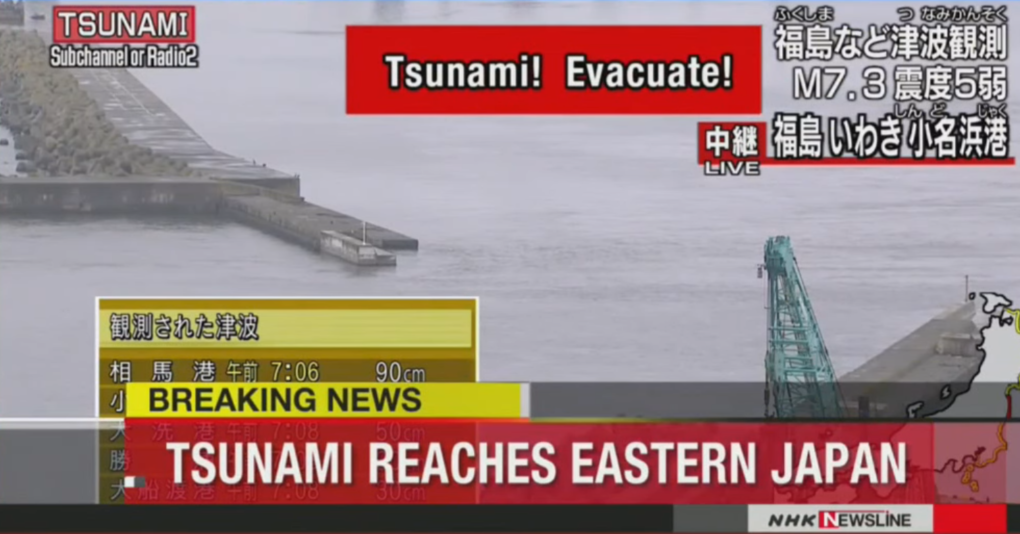
7.4 Quake Stirs Tsunami Fears Near Japan's Fukushima Nuclear Plant
Fukushima Radiation: None Detected Yet on California Coast
Fukushima Radiation on its Way to California, Scientists Say it Poses No Threat
A Bay Area Beach Video Stirs Fukushima Radiation Fears -- But Shouldn't
Japan's Nukes: What and Where They Are
Japan's New Crisis: Fighting to Avert a Nuclear Disaster
Japan Quake-Tsunami Aftermath: Fears About Nuclear Plants
Sponsored
Player sponsored by
window.__IS_SSR__=true
window.__INITIAL_STATE__={
"attachmentsReducer": {
"audio_0": {
"type": "attachments",
"id": "audio_0",
"imgSizes": {
"kqedFullSize": {
"file": "https://ww2.kqed.org/news/wp-content/themes/KQED-unified/img/audio_bgs/background0.jpg"
}
}
},
"audio_1": {
"type": "attachments",
"id": "audio_1",
"imgSizes": {
"kqedFullSize": {
"file": "https://ww2.kqed.org/news/wp-content/themes/KQED-unified/img/audio_bgs/background1.jpg"
}
}
},
"audio_2": {
"type": "attachments",
"id": "audio_2",
"imgSizes": {
"kqedFullSize": {
"file": "https://ww2.kqed.org/news/wp-content/themes/KQED-unified/img/audio_bgs/background2.jpg"
}
}
},
"audio_3": {
"type": "attachments",
"id": "audio_3",
"imgSizes": {
"kqedFullSize": {
"file": "https://ww2.kqed.org/news/wp-content/themes/KQED-unified/img/audio_bgs/background3.jpg"
}
}
},
"audio_4": {
"type": "attachments",
"id": "audio_4",
"imgSizes": {
"kqedFullSize": {
"file": "https://ww2.kqed.org/news/wp-content/themes/KQED-unified/img/audio_bgs/background4.jpg"
}
}
},
"placeholder": {
"type": "attachments",
"id": "placeholder",
"imgSizes": {
"thumbnail": {
"file": "https://cdn.kqed.org/wp-content/uploads/2024/12/KQED-Default-Image-816638274-2000x1333-1-160x107.jpg",
"width": 160,
"height": 107,
"mimeType": "image/jpeg"
},
"medium": {
"file": "https://cdn.kqed.org/wp-content/uploads/2024/12/KQED-Default-Image-816638274-2000x1333-1-800x533.jpg",
"width": 800,
"height": 533,
"mimeType": "image/jpeg"
},
"medium_large": {
"file": "https://cdn.kqed.org/wp-content/uploads/2024/12/KQED-Default-Image-816638274-2000x1333-1-768x512.jpg",
"width": 768,
"height": 512,
"mimeType": "image/jpeg"
},
"large": {
"file": "https://cdn.kqed.org/wp-content/uploads/2024/12/KQED-Default-Image-816638274-2000x1333-1-1020x680.jpg",
"width": 1020,
"height": 680,
"mimeType": "image/jpeg"
},
"1536x1536": {
"file": "https://cdn.kqed.org/wp-content/uploads/2024/12/KQED-Default-Image-816638274-2000x1333-1-1536x1024.jpg",
"width": 1536,
"height": 1024,
"mimeType": "image/jpeg"
},
"fd-lrg": {
"file": "https://cdn.kqed.org/wp-content/uploads/2024/12/KQED-Default-Image-816638274-2000x1333-1-1536x1024.jpg",
"width": 1536,
"height": 1024,
"mimeType": "image/jpeg"
},
"fd-med": {
"file": "https://cdn.kqed.org/wp-content/uploads/2024/12/KQED-Default-Image-816638274-2000x1333-1-1020x680.jpg",
"width": 1020,
"height": 680,
"mimeType": "image/jpeg"
},
"fd-sm": {
"file": "https://cdn.kqed.org/wp-content/uploads/2024/12/KQED-Default-Image-816638274-2000x1333-1-800x533.jpg",
"width": 800,
"height": 533,
"mimeType": "image/jpeg"
},
"post-thumbnail": {
"file": "https://cdn.kqed.org/wp-content/uploads/2024/12/KQED-Default-Image-816638274-2000x1333-1-672x372.jpg",
"width": 672,
"height": 372,
"mimeType": "image/jpeg"
},
"twentyfourteen-full-width": {
"file": "https://cdn.kqed.org/wp-content/uploads/2024/12/KQED-Default-Image-816638274-2000x1333-1-1038x576.jpg",
"width": 1038,
"height": 576,
"mimeType": "image/jpeg"
},
"xxsmall": {
"file": "https://cdn.kqed.org/wp-content/uploads/2024/12/KQED-Default-Image-816638274-2000x1333-1-160x107.jpg",
"width": 160,
"height": 107,
"mimeType": "image/jpeg"
},
"xsmall": {
"file": "https://cdn.kqed.org/wp-content/uploads/2024/12/KQED-Default-Image-816638274-2000x1333-1-672x372.jpg",
"width": 672,
"height": 372,
"mimeType": "image/jpeg"
},
"small": {
"file": "https://cdn.kqed.org/wp-content/uploads/2024/12/KQED-Default-Image-816638274-2000x1333-1-672x372.jpg",
"width": 672,
"height": 372,
"mimeType": "image/jpeg"
},
"xlarge": {
"file": "https://cdn.kqed.org/wp-content/uploads/2024/12/KQED-Default-Image-816638274-2000x1333-1-1020x680.jpg",
"width": 1020,
"height": 680,
"mimeType": "image/jpeg"
},
"full-width": {
"file": "https://cdn.kqed.org/wp-content/uploads/2024/12/KQED-Default-Image-816638274-2000x1333-1-1920x1280.jpg",
"width": 1920,
"height": 1280,
"mimeType": "image/jpeg"
},
"guest-author-32": {
"file": "https://cdn.kqed.org/wp-content/uploads/2025/01/KQED-Default-Image-816638274-1333x1333-1-160x160.jpg",
"width": 32,
"height": 32,
"mimeType": "image/jpeg"
},
"guest-author-50": {
"file": "https://cdn.kqed.org/wp-content/uploads/2025/01/KQED-Default-Image-816638274-1333x1333-1-160x160.jpg",
"width": 50,
"height": 50,
"mimeType": "image/jpeg"
},
"guest-author-64": {
"file": "https://cdn.kqed.org/wp-content/uploads/2025/01/KQED-Default-Image-816638274-1333x1333-1-160x160.jpg",
"width": 64,
"height": 64,
"mimeType": "image/jpeg"
},
"guest-author-96": {
"file": "https://cdn.kqed.org/wp-content/uploads/2025/01/KQED-Default-Image-816638274-1333x1333-1-160x160.jpg",
"width": 96,
"height": 96,
"mimeType": "image/jpeg"
},
"guest-author-128": {
"file": "https://cdn.kqed.org/wp-content/uploads/2025/01/KQED-Default-Image-816638274-1333x1333-1-160x160.jpg",
"width": 128,
"height": 128,
"mimeType": "image/jpeg"
},
"detail": {
"file": "https://cdn.kqed.org/wp-content/uploads/2025/01/KQED-Default-Image-816638274-1333x1333-1-160x160.jpg",
"width": 160,
"height": 160,
"mimeType": "image/jpeg"
},
"kqedFullSize": {
"file": "https://cdn.kqed.org/wp-content/uploads/2024/12/KQED-Default-Image-816638274-2000x1333-1.jpg",
"width": 2000,
"height": 1333
}
}
},
"news_11184480": {
"type": "attachments",
"id": "news_11184480",
"meta": {
"index": "attachments_1716263798",
"site": "news",
"id": "11184480",
"found": true
},
"parent": 11184471,
"imgSizes": {
"small": {
"file": "https://ww2.kqed.org/app/uploads/sites/10/2016/11/tsunami-520x272.png",
"width": 520,
"mimeType": "image/png",
"height": 272
},
"twentyfourteen-full-width": {
"file": "https://ww2.kqed.org/app/uploads/sites/10/2016/11/tsunami-1038x576.png",
"width": 1038,
"mimeType": "image/png",
"height": 576
},
"thumbnail": {
"file": "https://ww2.kqed.org/app/uploads/sites/10/2016/11/tsunami-160x84.png",
"width": 160,
"mimeType": "image/png",
"height": 84
},
"fd-sm": {
"file": "https://ww2.kqed.org/app/uploads/sites/10/2016/11/tsunami-960x503.png",
"width": 960,
"mimeType": "image/png",
"height": 503
},
"post-thumbnail": {
"file": "https://ww2.kqed.org/app/uploads/sites/10/2016/11/tsunami-672x372.png",
"width": 672,
"mimeType": "image/png",
"height": 372
},
"xsmall": {
"file": "https://ww2.kqed.org/app/uploads/sites/10/2016/11/tsunami-375x196.png",
"width": 375,
"mimeType": "image/png",
"height": 196
},
"kqedFullSize": {
"file": "https://ww2.kqed.org/app/uploads/sites/10/2016/11/tsunami.png",
"width": 1471,
"height": 770
},
"large": {
"file": "https://ww2.kqed.org/app/uploads/sites/10/2016/11/tsunami-1020x534.png",
"width": 1020,
"mimeType": "image/png",
"height": 534
},
"xlarge": {
"file": "https://ww2.kqed.org/app/uploads/sites/10/2016/11/tsunami-1180x618.png",
"width": 1180,
"mimeType": "image/png",
"height": 618
},
"guest-author-50": {
"file": "https://ww2.kqed.org/app/uploads/sites/10/2016/11/tsunami-50x50.png",
"width": 50,
"mimeType": "image/png",
"height": 50
},
"guest-author-96": {
"file": "https://ww2.kqed.org/app/uploads/sites/10/2016/11/tsunami-96x96.png",
"width": 96,
"mimeType": "image/png",
"height": 96
},
"medium": {
"file": "https://ww2.kqed.org/app/uploads/sites/10/2016/11/tsunami-800x419.png",
"width": 800,
"mimeType": "image/png",
"height": 419
},
"guest-author-64": {
"file": "https://ww2.kqed.org/app/uploads/sites/10/2016/11/tsunami-64x64.png",
"width": 64,
"mimeType": "image/png",
"height": 64
},
"guest-author-32": {
"file": "https://ww2.kqed.org/app/uploads/sites/10/2016/11/tsunami-32x32.png",
"width": 32,
"mimeType": "image/png",
"height": 32
},
"jmtc-small-thumb": {
"file": "https://ww2.kqed.org/app/uploads/sites/10/2016/11/tsunami-280x150.png",
"width": 280,
"mimeType": "image/png",
"height": 150
},
"fd-med": {
"file": "https://ww2.kqed.org/app/uploads/sites/10/2016/11/tsunami-1180x618.png",
"width": 1180,
"mimeType": "image/png",
"height": 618
},
"detail": {
"file": "https://ww2.kqed.org/app/uploads/sites/10/2016/11/tsunami-150x150.png",
"width": 150,
"mimeType": "image/png",
"height": 150
},
"guest-author-128": {
"file": "https://ww2.kqed.org/app/uploads/sites/10/2016/11/tsunami-128x128.png",
"width": 128,
"mimeType": "image/png",
"height": 128
},
"xxsmall": {
"file": "https://ww2.kqed.org/app/uploads/sites/10/2016/11/tsunami-240x126.png",
"width": 240,
"mimeType": "image/png",
"height": 126
}
},
"publishDate": 1479767958,
"modified": 1479776967,
"caption": "A screen grab of Japanese TV network NHK's live coverage of Monday's earthquake and tsunami in northeastern Japan.",
"description": null,
"title": "Japan Tsunami-NHK",
"credit": "NHK via YouTube",
"status": "inherit",
"fetchFailed": false,
"isLoading": false
},
"science_13101": {
"type": "attachments",
"id": "science_13101",
"meta": {
"index": "attachments_1716263798",
"site": "science",
"id": "13101",
"found": true
},
"parent": 13080,
"imgSizes": {
"kqedFullSize": {
"file": "https://ww2.kqed.org/app/uploads/sites/35/2014/01/ER_undercanopy.jpg",
"width": 640,
"height": 334
}
},
"publishDate": 1389750484,
"modified": 1389750484,
"caption": "A kelp forest near Catalina Island. (Thomas Farrugia)",
"description": "A kelp forest near Catalina Island. (Thomas Farrugia)",
"title": "ER_undercanopy",
"credit": null,
"status": "inherit",
"fetchFailed": false,
"isLoading": false
},
"science_14590": {
"type": "attachments",
"id": "science_14590",
"meta": {
"index": "attachments_1716263798",
"site": "science",
"id": "14590",
"found": true
},
"parent": 14583,
"imgSizes": {
"kqedFullSize": {
"file": "https://ww2.kqed.org/app/uploads/sites/35/2014/02/beach-e1393293321141.jpg",
"width": 640,
"height": 360
}
},
"publishDate": 1393293309,
"modified": 1393293309,
"caption": "The California coast is -- so far -- free of Cesium-134, the radioactive isotope traveling across the ocean from the Fukushima nuclear power plant. ",
"description": "The California coast is -- so far -- free of Cesium-134, the radioactive isotope traveling across the ocean from the Fukushima nuclear power plant. ",
"title": "beach",
"credit": null,
"status": "inherit",
"fetchFailed": false,
"isLoading": false
},
"news_123104": {
"type": "attachments",
"id": "news_123104",
"meta": {
"index": "attachments_1716263798",
"site": "news",
"id": "123104",
"found": true
},
"parent": 123090,
"imgSizes": {
"kqedFullSize": {
"file": "https://ww2.kqed.org/app/uploads/sites/10/2014/01/RS6220_175721355-scr.jpg",
"width": 850,
"height": 566
}
},
"publishDate": 1389310502,
"modified": 1389310502,
"caption": "Japanese government officials and nuclear experts inspect work at the badly damaged Fukushima nuclear plant. (AFP-Getty Images)",
"description": "Japanese government officials and nuclear experts inspect work at the badly damaged Fukushima nuclear plant. (AFP-Getty Images)",
"title": "Fukushima",
"credit": null,
"status": "inherit",
"fetchFailed": false,
"isLoading": false
}
},
"audioPlayerReducer": {
"postId": "stream_live",
"isPaused": true,
"isPlaying": false,
"pfsActive": false,
"pledgeModalIsOpen": true,
"playerDrawerIsOpen": false
},
"authorsReducer": {
"jbrooks": {
"type": "authors",
"id": "80",
"meta": {
"index": "authors_1716337520",
"id": "80",
"found": true
},
"name": "Jon Brooks",
"firstName": "Jon",
"lastName": "Brooks",
"slug": "jbrooks",
"email": "jbrooks@kqed.org",
"display_author_email": true,
"staff_mastheads": [
"science"
],
"title": "Digital Editor",
"bio": "Jon Brooks is a former Digital Editor for KQED Science. He is the former editor of KQED’s daily news blog, News Fix. In 2014, he won a California Journalism Award for his coverage of ride services like Uber and Lyft and the taxi industry. A veteran blogger, he previously worked for Yahoo! in various news writing and editing roles. Jon is also a playwright whose work has been produced in San Francisco, New York, Italy, and around the U.S. He has written about film for his own blog and studied film at Boston University.",
"avatar": "https://secure.gravatar.com/avatar/98887f7ed1c876ed414d4c915e969584?s=600&d=blank&r=g",
"twitter": "jbrooksfoy",
"facebook": null,
"instagram": null,
"linkedin": null,
"sites": [
{
"site": "arts",
"roles": [
"Contributor",
"editor"
]
},
{
"site": "news",
"roles": [
"author"
]
},
{
"site": "futureofyou",
"roles": [
"administrator"
]
},
{
"site": "mindshift",
"roles": [
"editor"
]
},
{
"site": "stateofhealth",
"roles": [
"editor"
]
},
{
"site": "science",
"roles": [
"administrator"
]
},
{
"site": "quest",
"roles": [
"editor"
]
}
],
"headData": {
"title": "Jon Brooks | KQED",
"description": "Digital Editor",
"ogImgSrc": "https://secure.gravatar.com/avatar/98887f7ed1c876ed414d4c915e969584?s=600&d=blank&r=g",
"twImgSrc": "https://secure.gravatar.com/avatar/98887f7ed1c876ed414d4c915e969584?s=600&d=blank&r=g"
},
"isLoading": false,
"link": "/author/jbrooks"
},
"mollysamuel": {
"type": "authors",
"id": "200",
"meta": {
"index": "authors_1716337520",
"id": "200",
"found": true
},
"name": "Molly Samuel",
"firstName": "Molly",
"lastName": "Samuel",
"slug": "mollysamuel",
"email": "msamuel@kqed.org",
"display_author_email": false,
"staff_mastheads": [],
"title": null,
"bio": "Molly Samuel joined KQED as an intern in 2007, and since then has worked here as a reporter, producer, director and blogger. Before becoming KQED Science’s Multimedia Producer, she was a producer for Climate Watch. Molly has also reported for NPR, KALW and High Country News, and has produced audio stories for The Encyclopedia of Life and the Oakland Museum of California. She was a fellow with the Middlebury Fellowships in Environmental Journalism and a journalist-in-residence at the National Evolutionary Synthesis Center. Molly has a degree in Ancient Greek from Oberlin College and is a co-founder of the record label True Panther Sounds.",
"avatar": "https://secure.gravatar.com/avatar/a6abd3b949a89fe5109fa9917631d0b6?s=600&d=blank&r=g",
"twitter": null,
"facebook": null,
"instagram": null,
"linkedin": null,
"sites": [
{
"site": "news",
"roles": [
"subscriber"
]
},
{
"site": "stateofhealth",
"roles": [
"subscriber"
]
},
{
"site": "science",
"roles": [
"subscriber"
]
},
{
"site": "quest",
"roles": [
"edit_users",
"subscriber"
]
}
],
"headData": {
"title": "Molly Samuel | KQED",
"description": null,
"ogImgSrc": "https://secure.gravatar.com/avatar/a6abd3b949a89fe5109fa9917631d0b6?s=600&d=blank&r=g",
"twImgSrc": "https://secure.gravatar.com/avatar/a6abd3b949a89fe5109fa9917631d0b6?s=600&d=blank&r=g"
},
"isLoading": false,
"link": "/author/mollysamuel"
},
"danbrekke": {
"type": "authors",
"id": "222",
"meta": {
"index": "authors_1716337520",
"id": "222",
"found": true
},
"name": "Dan Brekke",
"firstName": "Dan",
"lastName": "Brekke",
"slug": "danbrekke",
"email": "dbrekke@kqed.org",
"display_author_email": true,
"staff_mastheads": [
"news",
"science"
],
"title": "KQED Editor and Reporter",
"bio": "Dan Brekke is a reporter and editor for KQED News, responsible for coverage of topics ranging from California water issues to the Bay Area's transportation challenges. In a newsroom career that began in Chicago in 1972, Dan has worked for \u003cem>The San Francisco Examiner,\u003c/em> Wired and TechTV and has been published in The New York Times, The New York Times Magazine, Business 2.0, Salon and elsewhere.\r\n\r\nSince joining KQED in 2007, Dan has reported, edited and produced both radio and online features and breaking news pieces. He has shared as both editor and reporter in four Society of Professional Journalists Norcal Excellence in Journalism awards and one Edward R. Murrow regional award. He was chosen for a spring 2017 residency at the Mesa Refuge to advance his research on California salmon.\r\n\r\nEmail Dan at: \u003ca href=\"mailto:dbrekke@kqed.org\">dbrekke@kqed.org\u003c/a>\r\n\r\n\u003cstrong>Twitter:\u003c/strong> \u003ca href=\"https://twitter.com/danbrekke\" rel=\"noopener noreferrer\">twitter.com/danbrekke\u003c/a>\r\n\u003cstrong>Facebook:\u003c/strong> \u003ca href=\"https://www.facebook.com/danbrekke\" rel=\"noopener noreferrer\">www.facebook.com/danbrekke\u003c/a>\r\n\u003cstrong>LinkedIn:\u003c/strong> \u003ca href=\"https://www.linkedin.com/in/danbrekke\" rel=\"noopener noreferrer\">www.linkedin.com/in/danbrekke\u003c/a>",
"avatar": "https://secure.gravatar.com/avatar/c8126230345efca3f7aa89b1a402be45?s=600&d=mm&r=g",
"twitter": "danbrekke",
"facebook": null,
"instagram": "https://www.instagram.com/dan.brekke/",
"linkedin": "https://www.linkedin.com/in/danbrekke/",
"sites": [
{
"site": "news",
"roles": [
"administrator",
"create_posts"
]
},
{
"site": "stateofhealth",
"roles": [
"editor"
]
},
{
"site": "science",
"roles": [
"editor"
]
},
{
"site": "quest",
"roles": [
"contributor"
]
},
{
"site": "food",
"roles": [
"contributor"
]
},
{
"site": "forum",
"roles": [
"contributor"
]
},
{
"site": "liveblog",
"roles": [
"editor"
]
}
],
"headData": {
"title": "Dan Brekke | KQED",
"description": "KQED Editor and Reporter",
"ogImgSrc": "https://secure.gravatar.com/avatar/c8126230345efca3f7aa89b1a402be45?s=600&d=mm&r=g",
"twImgSrc": "https://secure.gravatar.com/avatar/c8126230345efca3f7aa89b1a402be45?s=600&d=mm&r=g"
},
"isLoading": false,
"link": "/author/danbrekke"
}
},
"breakingNewsReducer": {},
"pagesReducer": {},
"postsReducer": {
"stream_live": {
"type": "live",
"id": "stream_live",
"audioUrl": "https://streams.kqed.org/kqedradio",
"title": "Live Stream",
"excerpt": "Live Stream information currently unavailable.",
"link": "/radio",
"featImg": "",
"label": {
"name": "KQED Live",
"link": "/"
}
},
"stream_kqedNewscast": {
"type": "posts",
"id": "stream_kqedNewscast",
"audioUrl": "https://www.kqed.org/.stream/anon/radio/RDnews/newscast.mp3?_=1",
"title": "KQED Newscast",
"featImg": "",
"label": {
"name": "88.5 FM",
"link": "/"
}
},
"news_11184471": {
"type": "posts",
"id": "news_11184471",
"meta": {
"index": "posts_1716263798",
"site": "news",
"id": "11184471",
"score": null,
"sort": [
1479768259000
]
},
"parent": 0,
"labelTerm": {
"site": "news",
"term": 6944
},
"blocks": [],
"publishDate": 1479768259,
"format": "aside",
"disqusTitle": "7.4 Quake Stirs Tsunami Fears Near Japan's Fukushima Nuclear Plant",
"title": "7.4 Quake Stirs Tsunami Fears Near Japan's Fukushima Nuclear Plant",
"headTitle": "News Fix | KQED News",
"content": "\u003cp>[http_redir]\u003c/p>\n\u003cp>\u003c!-- iframe plugin v.4.3 wordpress.org/plugins/iframe/ -->\u003cbr>\n\u003ciframe width=\"800\" height=\"450\" src=\"https://www.youtube.com/embed/aR3Q9PtGUgU\" frameborder=\"0\" scrolling=\"yes\" class=\"iframe-class\">\u003c/iframe>\u003c/p>\n\u003cp>\u003cem>This post contains \u003ca href=\"#correction\">a correction\u003c/a>.\u003c/em>\u003c/p>\n\u003cp>\u003cstrong>Update, 5:35 p.m. Monday:\u003c/strong> Japanese authorities have lifted a tsunami warning issued after a 7.4 earthquake struck just off the coast of northeastern Japan. A tsunami advisory remained in place in two prefectures near the epicenter, Fukushima and Miyagi. The advisory cautions seaside residents to stay out of local water because of the possibility of strong currents. \u003c/p>\n\u003cp>In its continuing live coverage, the TV network NHK showed small surges traveling up coastal rivers. \u003c/p>\n\u003cp>[ad fullwidth]\u003c/p>\n\u003cp>\u003cstrong>Update, 3:50 p.m. Monday:\u003c/strong> A major earthquake in the Pacific Ocean off of northeastern Japan triggered tsunamis throughout a coastal region that includes the nuclear plant that suffered a meltdown after the devastating temblor of March 2011.\u003c/p>\n\u003cp>The quake, measured at \u003ca href=\"http://www.jma.go.jp/en/tsunami/\" target=\"_blank\">magnitude 7.4\u003c/a> by the Japan Meteorological Agency and \u003ca href=\"http://earthquake.usgs.gov/earthquakes/eventpage/us10007b88#executive\" target=\"_blank\">6.9\u003c/a> by the U.S. Geological Survey, struck at 5:59 a.m. Tuesday Japan Standard Time, or 12:59 p.m. Monday PST.\u003c/p>\n\u003cp>The Japan Meteorological Agency has reported tsunami waves as high as 1.4 meters -- about 4 feet -- so far. The agency warned that surges as high as 3 meters -- about 10 feet -- were possible.\u003c/p>\n\u003cp>Residents of coastal areas were urged to leave for higher ground immediately and not return until an all-clear was sounded. So far, only minor injuries have been reported in the quake zone.\u003c/p>\n\u003cp>Japanese TV network NHK is offering an English-language version of its live coverage -- above -- featuring simultaneous translation.\u003c/p>\n\u003cp>[http_redir]\u003c/p>\n\u003cp>\u003c!-- iframe plugin v.4.3 wordpress.org/plugins/iframe/ -->\u003cbr>\n\u003ciframe src=\"http://earthquake.usgs.gov/earthquakes/eventpage/us10007b88#map\" width=\"800\" height=\"500\" scrolling=\"yes\" class=\"iframe-class\" frameborder=\"0\">\u003c/iframe>\u003c/p>\n\u003cp>One of the earliest reports the network aired said that pumps in the cooling system at the Fukushima Daini nuclear power plant shut down after today's quake. Fukushima Daini is about 6 miles from the Fukushima Daiichi nuke that suffered core meltdowns after the 2011 earthquake and tsunami.\u003c/p>\n\u003cp>Officials with the Tokyo Electric Power Co., which owns both plants, said that there was no immediate danger that fuel rods at Daini would overheat. The utility later said the cooling-system pumps were restarted about 90 minutes after the earthquake struck.\u003c/p>\n\u003cp>The power company said the quake caused no new damage at Fukushima Daiichi, a heavily contaminated site that is in the process of being decommissioned.\u003c/p>\n\u003cp>About 16,000 people died in 2011's 9.1-magnitude offshore quake, and another 2,500 are still listed as missing. Most of those killed perished from tsunami waves 100 feet or more over normal sea level.\u003c/p>\n\u003cp>The 2011 earthquake unleashed tsunami waves all along the U.S. West Coast, causing serious damage at several California locations, including Crescent City and Santa Cruz.\u003c/p>\n\u003cp>The federal \u003ca href=\"http://ptwc.weather.gov/\" target=\"_blank\">Pacific Tsunami Warning Center\u003c/a> says there is no tsunami danger to the West Coast from today's quake.\u003c/p>\n\u003cp>Here's the latest from The Associated Press:\u003c/p>\n\u003cp>TOKYO — A powerful earthquake off the northeast Japanese shore Tuesday sent residents fleeing to higher ground and prompted worries about the Fukushima nuclear power plant destroyed by a tsunami five year ago.\u003c/p>\n\u003cp>Lines of cars were seen snaking away from the coast in the predawn hours after authorities issued a tsunami warning and urged residents to seek higher ground immediately. The warning was lifted nearly four hours later.\u003c/p>\n\u003cp>The magnitude 7.4 earthquake struck in the same region that was devastated by a tsunami in 2011, killing some 18,000 people.\u003c/p>\n\u003cp>There were reports of minor injuries and damage, Japanese broadcaster NHK said. The earthquake shook buildings in Tokyo, 240 kilometers (150 miles) southwest of the epicenter.\u003c/p>\n\u003cp>NHK also showed one person's video of water rushing up a river or canal, but well within the height of the embankment. It was eerily reminiscent of the 2011 disaster, when much larger tsunamis rushed up rivers and overflowed, wiping away entire neighborhoods.\u003c/p>\n\u003cp>On Tuesday, tsunami waves were recorded along the coast. The highest one was 1.4 meters (4.6 feet) in Sendai Bay. A tsunami advisory for waves of up to 1 meter (3 feet) remained in effect along the coast.\u003c/p>\n\u003cp>The operator of the Fukushima Dai-ichi plant said there were no abnormalities observed at the plant, though a swelling of the tide of up to 1 meter was detected offshore.\u003c/p>\n\u003cp>The plant was swamped by the 2011 tsunami, sending three reactors into meltdown and leaking radiation into the surrounding area. The plant is being decommissioned but the situation remains serious as the utility figures out how to remove still-radioactive fuel rods and debris and what to do with the melted reactor cores.\u003c/p>\n\u003cp>Plant operator TEPCO said a pump that supplies cooling water to a spent fuel pool at the nearby Fukushima Dai-ni plant stopped working, but that a backup pump had been launched to restore cooling water to the pool. Both plants are run by Tokyo-based TEPCO.\u003c/p>\n\u003cp>Naohiro Masuda, head of TEPCO's decommissioning unit, said he believes that the pump was shut off automatically by a safety system as the water in the pool shook.\u003c/p>\n\u003cp>He said decommissioning work at the destroyed Dai-ichi plant had been temporarily suspended because of the earthquake.\u003c/p>\n\u003cp>The U.S. Geological Survey measured the magnitude at 6.9.\u003c/p>\n\u003cp>\u003c/p>\n\u003cp>\u003cem>\u003ca id=\"correction\">\u003c/a>Correction: This post incorrectly reported the nuclear power plant that experienced a pump shutdown after the Nov. 22, 2016, (Japan time) earthquake. The plant involved was Fukushima Daini.\u003c/em>\u003c/p>\n\n",
"disqusIdentifier": "11184471 http://ww2.kqed.org/news/?p=11184471",
"disqusUrl": "https://ww2.kqed.org/news/2016/11/21/watch-live-nhk-coverage-of-quake-tsunami-near-fukushima-nuclear-plant/",
"stats": {
"hasVideo": true,
"hasChartOrMap": false,
"hasAudio": false,
"hasPolis": false,
"wordCount": 874,
"hasGoogleForm": false,
"hasGallery": false,
"hasHearkenModule": false,
"iframeSrcs": [],
"paragraphCount": 34
},
"modified": 1479779598,
"excerpt": "Major quake shakes Japan's northeastern coast and unleashes tsunamis along coast where nuclear power plant was partially destroyed in 2011. ",
"headData": {
"twImgId": "",
"twTitle": "",
"ogTitle": "",
"ogImgId": "",
"twDescription": "",
"description": "Major quake shakes Japan's northeastern coast and unleashes tsunamis along coast where nuclear power plant was partially destroyed in 2011. ",
"title": "7.4 Quake Stirs Tsunami Fears Near Japan's Fukushima Nuclear Plant | KQED",
"ogDescription": "",
"schema": {
"@context": "https://schema.org",
"@type": "NewsArticle",
"headline": "7.4 Quake Stirs Tsunami Fears Near Japan's Fukushima Nuclear Plant",
"datePublished": "2016-11-21T14:44:19-08:00",
"dateModified": "2016-11-21T17:53:18-08:00",
"image": "https://cdn.kqed.org/wp-content/uploads/2020/02/KQED-OG-Image@1x.png",
"isAccessibleForFree": "True",
"publisher": {
"@type": "NewsMediaOrganization",
"@id": "https://www.kqed.org/#organization",
"name": "KQED",
"logo": "https://cdn.kqed.org/wp-content/uploads/2020/02/KQED-OG-Image@1x.png",
"url": "https://www.kqed.org",
"sameAs": [
"https://www.facebook.com/KQED",
"https://twitter.com/KQED",
"https://www.instagram.com/kqed/",
"https://www.tiktok.com/@kqedofficial",
"https://www.linkedin.com/company/kqed",
"https://www.youtube.com/channel/UCeC0IOo7i1P_61zVUWbJ4nw"
]
}
}
},
"guestAuthors": [],
"slug": "watch-live-nhk-coverage-of-quake-tsunami-near-fukushima-nuclear-plant",
"status": "publish",
"path": "/news/11184471/watch-live-nhk-coverage-of-quake-tsunami-near-fukushima-nuclear-plant",
"audioTrackLength": null,
"parsedContent": [
{
"type": "contentString",
"content": "\u003cdiv class=\"post-body\">\u003cp>\u003cp>[http_redir]\u003c/p>\n\u003cp>\u003c!-- iframe plugin v.4.3 wordpress.org/plugins/iframe/ -->\u003cbr>\n\u003ciframe width=\"800\" height=\"450\" src=\"https://www.youtube.com/embed/aR3Q9PtGUgU\" frameborder=\"0\" scrolling=\"yes\" class=\"iframe-class\">\u003c/iframe>\u003c/p>\n\u003cp>\u003cem>This post contains \u003ca href=\"#correction\">a correction\u003c/a>.\u003c/em>\u003c/p>\n\u003cp>\u003cstrong>Update, 5:35 p.m. Monday:\u003c/strong> Japanese authorities have lifted a tsunami warning issued after a 7.4 earthquake struck just off the coast of northeastern Japan. A tsunami advisory remained in place in two prefectures near the epicenter, Fukushima and Miyagi. The advisory cautions seaside residents to stay out of local water because of the possibility of strong currents. \u003c/p>\n\u003cp>In its continuing live coverage, the TV network NHK showed small surges traveling up coastal rivers. \u003c/p>\n\u003cp>\u003c/p>\u003c/div>",
"attributes": {
"named": {},
"numeric": []
}
},
{
"type": "component",
"content": "",
"name": "ad",
"attributes": {
"named": {
"label": "fullwidth"
},
"numeric": [
"fullwidth"
]
}
},
{
"type": "contentString",
"content": "\u003cdiv class=\"post-body\">\u003cp>\u003c/p>\n\u003cp>\u003cstrong>Update, 3:50 p.m. Monday:\u003c/strong> A major earthquake in the Pacific Ocean off of northeastern Japan triggered tsunamis throughout a coastal region that includes the nuclear plant that suffered a meltdown after the devastating temblor of March 2011.\u003c/p>\n\u003cp>The quake, measured at \u003ca href=\"http://www.jma.go.jp/en/tsunami/\" target=\"_blank\">magnitude 7.4\u003c/a> by the Japan Meteorological Agency and \u003ca href=\"http://earthquake.usgs.gov/earthquakes/eventpage/us10007b88#executive\" target=\"_blank\">6.9\u003c/a> by the U.S. Geological Survey, struck at 5:59 a.m. Tuesday Japan Standard Time, or 12:59 p.m. Monday PST.\u003c/p>\n\u003cp>The Japan Meteorological Agency has reported tsunami waves as high as 1.4 meters -- about 4 feet -- so far. The agency warned that surges as high as 3 meters -- about 10 feet -- were possible.\u003c/p>\n\u003cp>Residents of coastal areas were urged to leave for higher ground immediately and not return until an all-clear was sounded. So far, only minor injuries have been reported in the quake zone.\u003c/p>\n\u003cp>Japanese TV network NHK is offering an English-language version of its live coverage -- above -- featuring simultaneous translation.\u003c/p>\n\u003cp>[http_redir]\u003c/p>\n\u003cp>\u003c!-- iframe plugin v.4.3 wordpress.org/plugins/iframe/ -->\u003cbr>\n\u003ciframe src=\"http://earthquake.usgs.gov/earthquakes/eventpage/us10007b88#map\" width=\"800\" height=\"500\" scrolling=\"yes\" class=\"iframe-class\" frameborder=\"0\">\u003c/iframe>\u003c/p>\n\u003cp>One of the earliest reports the network aired said that pumps in the cooling system at the Fukushima Daini nuclear power plant shut down after today's quake. Fukushima Daini is about 6 miles from the Fukushima Daiichi nuke that suffered core meltdowns after the 2011 earthquake and tsunami.\u003c/p>\n\u003cp>Officials with the Tokyo Electric Power Co., which owns both plants, said that there was no immediate danger that fuel rods at Daini would overheat. The utility later said the cooling-system pumps were restarted about 90 minutes after the earthquake struck.\u003c/p>\n\u003cp>The power company said the quake caused no new damage at Fukushima Daiichi, a heavily contaminated site that is in the process of being decommissioned.\u003c/p>\n\u003cp>About 16,000 people died in 2011's 9.1-magnitude offshore quake, and another 2,500 are still listed as missing. Most of those killed perished from tsunami waves 100 feet or more over normal sea level.\u003c/p>\n\u003cp>The 2011 earthquake unleashed tsunami waves all along the U.S. West Coast, causing serious damage at several California locations, including Crescent City and Santa Cruz.\u003c/p>\n\u003cp>The federal \u003ca href=\"http://ptwc.weather.gov/\" target=\"_blank\">Pacific Tsunami Warning Center\u003c/a> says there is no tsunami danger to the West Coast from today's quake.\u003c/p>\n\u003cp>Here's the latest from The Associated Press:\u003c/p>\n\u003cp>TOKYO — A powerful earthquake off the northeast Japanese shore Tuesday sent residents fleeing to higher ground and prompted worries about the Fukushima nuclear power plant destroyed by a tsunami five year ago.\u003c/p>\n\u003cp>Lines of cars were seen snaking away from the coast in the predawn hours after authorities issued a tsunami warning and urged residents to seek higher ground immediately. The warning was lifted nearly four hours later.\u003c/p>\n\u003cp>The magnitude 7.4 earthquake struck in the same region that was devastated by a tsunami in 2011, killing some 18,000 people.\u003c/p>\n\u003cp>There were reports of minor injuries and damage, Japanese broadcaster NHK said. The earthquake shook buildings in Tokyo, 240 kilometers (150 miles) southwest of the epicenter.\u003c/p>\n\u003cp>NHK also showed one person's video of water rushing up a river or canal, but well within the height of the embankment. It was eerily reminiscent of the 2011 disaster, when much larger tsunamis rushed up rivers and overflowed, wiping away entire neighborhoods.\u003c/p>\n\u003cp>On Tuesday, tsunami waves were recorded along the coast. The highest one was 1.4 meters (4.6 feet) in Sendai Bay. A tsunami advisory for waves of up to 1 meter (3 feet) remained in effect along the coast.\u003c/p>\n\u003cp>The operator of the Fukushima Dai-ichi plant said there were no abnormalities observed at the plant, though a swelling of the tide of up to 1 meter was detected offshore.\u003c/p>\n\u003cp>The plant was swamped by the 2011 tsunami, sending three reactors into meltdown and leaking radiation into the surrounding area. The plant is being decommissioned but the situation remains serious as the utility figures out how to remove still-radioactive fuel rods and debris and what to do with the melted reactor cores.\u003c/p>\n\u003cp>Plant operator TEPCO said a pump that supplies cooling water to a spent fuel pool at the nearby Fukushima Dai-ni plant stopped working, but that a backup pump had been launched to restore cooling water to the pool. Both plants are run by Tokyo-based TEPCO.\u003c/p>\n\u003cp>Naohiro Masuda, head of TEPCO's decommissioning unit, said he believes that the pump was shut off automatically by a safety system as the water in the pool shook.\u003c/p>\n\u003cp>He said decommissioning work at the destroyed Dai-ichi plant had been temporarily suspended because of the earthquake.\u003c/p>\n\u003cp>The U.S. Geological Survey measured the magnitude at 6.9.\u003c/p>\n\u003cp>\u003c/p>\n\u003cp>\u003cem>\u003ca id=\"correction\">\u003c/a>Correction: This post incorrectly reported the nuclear power plant that experienced a pump shutdown after the Nov. 22, 2016, (Japan time) earthquake. The plant involved was Fukushima Daini.\u003c/em>\u003c/p>\n\n\u003c/div>\u003c/p>",
"attributes": {
"named": {},
"numeric": []
}
}
],
"link": "/news/11184471/watch-live-nhk-coverage-of-quake-tsunami-near-fukushima-nuclear-plant",
"authors": [
"222"
],
"programs": [
"news_6944"
],
"categories": [
"news_356"
],
"tags": [
"news_1012",
"news_19542",
"news_1028",
"news_1011",
"news_1013"
],
"featImg": "news_11184480",
"label": "news_6944"
},
"science_17316": {
"type": "posts",
"id": "science_17316",
"meta": {
"index": "posts_1716263798",
"site": "science",
"id": "17316",
"score": null,
"sort": [
1399512033000
]
},
"parent": 0,
"labelTerm": {
"site": "science"
},
"blocks": [],
"publishDate": 1399512033,
"format": "aside",
"title": "Fukushima Radiation: None Detected Yet on California Coast",
"headTitle": "Fukushima Radiation: None Detected Yet on California Coast | KQED",
"content": "\u003cfigure id=\"attachment_17318\" class=\"wp-caption aligncenter\" style=\"max-width: 640px\">\u003ca href=\"http://ww2.kqed.org/science/wp-content/uploads/sites/35/2014/05/kelp.jpg\">\u003cimg loading=\"lazy\" decoding=\"async\" class=\"size-full wp-image-17318\" src=\"http://ww2.kqed.org/science/wp-content/uploads/sites/35/2014/05/kelp.jpg\" alt=\"Steven Manley a marine biology professor at California State University, Long Beach, is one of the founders of Kelp Watch 2014. \" width=\"640\" height=\"427\">\u003c/a>\u003cfigcaption class=\"wp-caption-text\">Steven Manley, a marine biology professor at California State University, Long Beach, is one of the founders of Kelp Watch 2014. (CSU Long Beach)\u003c/figcaption>\u003c/figure>\n\u003cp>Radiation from the Fukushima nuclear power plant in Japan has not reached the California coastline, according to new results from tests on kelp. Scientists monitoring kelp forests on the West Coast announced the results on Wednesday.\u003c/p>\n\u003cp>Kelp forests in the ocean are like sponges. They suck up what’s in the water around them. So scientists with a project called \u003ca href=\"http://kelpwatch.berkeley.edu/\">Kelp Watch 2014\u003c/a> are testing kelp from Baja California up to Alaska for cesium-134, one of the radioactive isotopes from Fukushima.\u003c/p>\n\u003cp>And so far, says Kai Vetter, a nuclear scientist at the University of California, Berkeley and Lawrence Berkeley National Laboratory, there’s no cesium-134. He just got the results back from kelp collected in February and March.\u003c/p>\n\u003cp>“But the expectation is even if we find cesium or other isotopes that we can associate to Fukushima, the concentration we expect, again, will be extremely small,” he said.\u003c/p>\n\u003cp>In his tests, Vetter did find cesium-137, another radioactive isotope. That, he says, was left behind after atmospheric weapons tests. Scientists expect to eventually see cesium-137 from Fukushima, too, but that Cs-137 wouldn’t be here without the Cs-134, Vetter explained.\u003c/p>\n\u003cp>[ad fullwidth]\u003c/p>\n\u003cp>The Kelp Watch 2014 team will continue gathering kelp to test for radiation. In addition to being a public service, Vetter said, the study presents the possibility of learning more about ocean currents.\u003c/p>\n\u003cp>Vetter said once the radiation does get here, it will not pose a threat to people, plants or animals.\u003ca href=\"http://ww2.kqed.org/science/2014/02/24/fukushima-radiation-in-the-ocean-hasnt-drifted-to-california-yet/\"> Scientists expect\u003c/a> the radiation to arrive sometime this spring or summer.\u003c/p>\n\u003cp>\u003c/p>\n\u003cp>Vetter also posts \u003ca href=\"http://radwatch.berkeley.edu/airsampling\">air monitoring information\u003c/a> on radiation from sensors in Berkeley. And the Woods Hole Oceanographic Institute has a program to \u003ca href=\"http://www.ourradioactiveocean.org/\">test ocean water\u003c/a> for Fukushima radiation.\u003c/p>\n\n",
"stats": {
"hasVideo": false,
"hasChartOrMap": false,
"hasAudio": false,
"hasPolis": false,
"wordCount": 319,
"hasGoogleForm": false,
"hasGallery": false,
"hasHearkenModule": false,
"iframeSrcs": [],
"paragraphCount": 10
},
"modified": 1704933708,
"excerpt": "Radiation from the Fukushima nuclear power plant in Japan has not reached the California coastline. Scientists monitoring kelp forests on the West Coast announced their results on Wednesday.",
"headData": {
"twImgId": "",
"twTitle": "",
"ogTitle": "",
"ogImgId": "",
"twDescription": "",
"description": "Radiation from the Fukushima nuclear power plant in Japan has not reached the California coastline. Scientists monitoring kelp forests on the West Coast announced their results on Wednesday.",
"title": "Fukushima Radiation: None Detected Yet on California Coast | KQED",
"ogDescription": "",
"schema": {
"@context": "https://schema.org",
"@type": "Article",
"headline": "Fukushima Radiation: None Detected Yet on California Coast",
"datePublished": "2014-05-07T18:20:33-07:00",
"dateModified": "2024-01-10T16:41:48-08:00",
"image": "https://cdn.kqed.org/wp-content/uploads/2020/02/KQED-OG-Image@1x.png"
}
},
"guestAuthors": [],
"slug": "fukushima-radiation-none-detected-yet-on-california-coast",
"status": "publish",
"sticky": false,
"path": "/science/17316/fukushima-radiation-none-detected-yet-on-california-coast",
"audioTrackLength": null,
"parsedContent": [
{
"type": "contentString",
"content": "\u003cdiv class=\"post-body\">\u003cp>\u003cfigure id=\"attachment_17318\" class=\"wp-caption aligncenter\" style=\"max-width: 640px\">\u003ca href=\"http://ww2.kqed.org/science/wp-content/uploads/sites/35/2014/05/kelp.jpg\">\u003cimg loading=\"lazy\" decoding=\"async\" class=\"size-full wp-image-17318\" src=\"http://ww2.kqed.org/science/wp-content/uploads/sites/35/2014/05/kelp.jpg\" alt=\"Steven Manley a marine biology professor at California State University, Long Beach, is one of the founders of Kelp Watch 2014. \" width=\"640\" height=\"427\">\u003c/a>\u003cfigcaption class=\"wp-caption-text\">Steven Manley, a marine biology professor at California State University, Long Beach, is one of the founders of Kelp Watch 2014. (CSU Long Beach)\u003c/figcaption>\u003c/figure>\n\u003cp>Radiation from the Fukushima nuclear power plant in Japan has not reached the California coastline, according to new results from tests on kelp. Scientists monitoring kelp forests on the West Coast announced the results on Wednesday.\u003c/p>\n\u003cp>Kelp forests in the ocean are like sponges. They suck up what’s in the water around them. So scientists with a project called \u003ca href=\"http://kelpwatch.berkeley.edu/\">Kelp Watch 2014\u003c/a> are testing kelp from Baja California up to Alaska for cesium-134, one of the radioactive isotopes from Fukushima.\u003c/p>\n\u003cp>And so far, says Kai Vetter, a nuclear scientist at the University of California, Berkeley and Lawrence Berkeley National Laboratory, there’s no cesium-134. He just got the results back from kelp collected in February and March.\u003c/p>\n\u003cp>“But the expectation is even if we find cesium or other isotopes that we can associate to Fukushima, the concentration we expect, again, will be extremely small,” he said.\u003c/p>\n\u003cp>In his tests, Vetter did find cesium-137, another radioactive isotope. That, he says, was left behind after atmospheric weapons tests. Scientists expect to eventually see cesium-137 from Fukushima, too, but that Cs-137 wouldn’t be here without the Cs-134, Vetter explained.\u003c/p>\n\u003cp>\u003c/p>\u003c/div>",
"attributes": {
"named": {},
"numeric": []
}
},
{
"type": "component",
"content": "",
"name": "ad",
"attributes": {
"named": {
"label": "fullwidth"
},
"numeric": [
"fullwidth"
]
}
},
{
"type": "contentString",
"content": "\u003cdiv class=\"post-body\">\u003cp>\u003c/p>\n\u003cp>The Kelp Watch 2014 team will continue gathering kelp to test for radiation. In addition to being a public service, Vetter said, the study presents the possibility of learning more about ocean currents.\u003c/p>\n\u003cp>Vetter said once the radiation does get here, it will not pose a threat to people, plants or animals.\u003ca href=\"http://ww2.kqed.org/science/2014/02/24/fukushima-radiation-in-the-ocean-hasnt-drifted-to-california-yet/\"> Scientists expect\u003c/a> the radiation to arrive sometime this spring or summer.\u003c/p>\n\u003cp>\u003c/p>\n\u003cp>Vetter also posts \u003ca href=\"http://radwatch.berkeley.edu/airsampling\">air monitoring information\u003c/a> on radiation from sensors in Berkeley. And the Woods Hole Oceanographic Institute has a program to \u003ca href=\"http://www.ourradioactiveocean.org/\">test ocean water\u003c/a> for Fukushima radiation.\u003c/p>\n\n\u003c/div>\u003c/p>",
"attributes": {
"named": {},
"numeric": []
}
}
],
"link": "/science/17316/fukushima-radiation-none-detected-yet-on-california-coast",
"authors": [
"200"
],
"categories": [
"science_35",
"science_40",
"science_42"
],
"featImg": "science_13101",
"label": "science"
},
"science_14583": {
"type": "posts",
"id": "science_14583",
"meta": {
"index": "posts_1716263798",
"site": "science",
"id": "14583",
"score": null,
"sort": [
1393294355000
]
},
"parent": 0,
"labelTerm": {
"site": "science"
},
"blocks": [],
"publishDate": 1393294355,
"format": "aside",
"title": "Fukushima Radiation on its Way to California, Scientists Say it Poses No Threat",
"headTitle": "Fukushima Radiation on its Way to California, Scientists Say it Poses No Threat | KQED",
"content": "\u003cfigure id=\"attachment_14590\" class=\"wp-caption aligncenter\" style=\"max-width: 640px\">\u003cimg loading=\"lazy\" decoding=\"async\" class=\"size-full wp-image-14590 \" src=\"http://ww2.kqed.org/science/wp-content/uploads/sites/35/2014/02/beach-e1393293321141.jpg\" alt=\"The California coast is -- so far -- free of Cesium-134, the radioactive isotope traveling across the ocean from the Fukushima nuclear power plant. (Damian Gadal/Flickr) http://www.flickr.com/photos/23024164@N06/11975479114/\" width=\"640\" height=\"360\">\u003cfigcaption class=\"wp-caption-text\">The California coast is — so far — free of Cesium-134, the radioactive isotope traveling across the Pacific from the Fukushima nuclear power plant. (\u003ca href=\"http://www.flickr.com/photos/23024164@N06/11975479114/\">Damian Gadal/Flickr\u003c/a>)\u003c/figcaption>\u003c/figure>\n\u003cp>Radiation in the ocean from the Fukushima nuclear power plant accident in 2011 in Japan has yet to reach the California coast, scientists said Monday.\u003c/p>\n\u003cp>Researchers have detected miniscule amounts of the radioactive isotope \u003ca href=\"http://www.epa.gov/radiation/radionuclides/cesium.html\">cesium-134\u003c/a> in the ocean off Vancouver, Canada, as John Norton Smith, a senior research scientist at Canada’s Bedford Institute of Oceanography, said at a meeting of the American Geophysical Union in Hawaii. It’s at levels lower than naturally occurring radiation, like \u003ca href=\"http://www.iaea.org/Publications/Factsheets/English/polonium210.html\">polonium-210\u003c/a>, which is already in the ocean, he said.\u003cdel datetime=\"2014-02-24T17:33\">\u003c/del>\u003c/p>\n\u003cp>Scientists are testing samples and using models to try to zero in on when it will reach the California coast — they say they expect it this spring — and how much there will be when it does, said Ken Buesseler, a scientist at the Woods Hole Oceanographic Institution in Massachusetts.\u003c/p>\n\u003cp>Researchers have also detected radioactive cesium-137 in the ocean. This is not a surprise, said Buesseler. It’s been around since the nuclear weapons tests in the 1950s and 1960s. With a half-life of 30 years, it’s going away, but still around in trace amounts.\u003c/p>\n\u003caside class=\"pullquote alignleft\">‘It’s clearly not an environmental or human health radiological threat.’\u003c/aside>\n\u003cp>One of the outstanding questions now is, how much cesium-134 — the stuff from Fukushima — will eventually make it to our coast?\u003c/p>\n\u003cp>[ad fullwidth]\u003c/p>\n\u003cp>The data collected by scientists at the Bedford Institute fits into two different models — one predicting that it could reach levels comparable to the levels of cesium-137 when weapons testing was still going on, the other that it would be closer to cesium-137 levels in the 1990s.\u003c/p>\n\u003cp>“It’s really a little hard to predict at this moment which model is correct, said Smith. Either outcome, he emphasizes, is not dangerous to humans because the levels are so low.\u003cins cite=\"mailto:LENOVO%20USER\" datetime=\"2014-02-24T17:18\">\u003c/ins>\u003c/p>\n\u003cp>“It’s clearly not an environmental or human health radiological threat,” he said Monday.\u003c/p>\n\u003cp>[contextly_sidebar id=”06629c71697c48c363c830394a2736cc”]\u003c/p>\n\u003cp>Once it does start arriving researchers will know, said Buesseler. He’s organizing a \u003ca href=\"http://ourradioactiveocean.org/\">citizen science project\u003c/a>, in which volunteers all over the West Coast collect ocean water samples to test for radioactivity. Collection points in California include Point Reyes, Pacifica and Santa Cruz.\u003c/p>\n\u003cp>“It’s not here yet,” Buesseler said. “When we’re talking about the arrival of the plume — and, you know, I’m the first person to say radioactivity can be quite dangerous, we should be concerned — but maybe not at the levels we’re going to expect coming across from Japan.”\u003c/p>\n\u003cp>\u003c/p>\n\u003cp>Another radiation-detecting project underway in California is Kelp Watch 2014, a \u003ca href=\"http://ww2.kqed.org/science/2014/01/15/new-fukushima-radiation-study-will-focus-on-west-coast-kelp-forests/\">program to monitor kelp forests\u003c/a> on the coast for cesium-134.\u003cins cite=\"mailto:LENOVO%20USER\" datetime=\"2014-02-24T17:19\">\u003c/ins>\u003c/p>\n\n",
"stats": {
"hasVideo": false,
"hasChartOrMap": false,
"hasAudio": false,
"hasPolis": false,
"wordCount": 495,
"hasGoogleForm": false,
"hasGallery": false,
"hasHearkenModule": false,
"iframeSrcs": [],
"paragraphCount": 14
},
"modified": 1704934122,
"excerpt": "Scientists are testing samples and using models to try to zero in on when it will reach the California coast and how much there will be when it does.",
"headData": {
"twImgId": "",
"twTitle": "",
"ogTitle": "",
"ogImgId": "",
"twDescription": "",
"description": "Scientists are testing samples and using models to try to zero in on when it will reach the California coast and how much there will be when it does.",
"title": "Fukushima Radiation on its Way to California, Scientists Say it Poses No Threat | KQED",
"ogDescription": "",
"schema": {
"@context": "https://schema.org",
"@type": "Article",
"headline": "Fukushima Radiation on its Way to California, Scientists Say it Poses No Threat",
"datePublished": "2014-02-24T18:12:35-08:00",
"dateModified": "2024-01-10T16:48:42-08:00",
"image": "https://cdn.kqed.org/wp-content/uploads/2020/02/KQED-OG-Image@1x.png"
}
},
"guestAuthors": [],
"slug": "fukushima-radiation-in-the-ocean-hasnt-drifted-to-california-yet",
"status": "publish",
"sticky": false,
"path": "/science/14583/fukushima-radiation-in-the-ocean-hasnt-drifted-to-california-yet",
"audioTrackLength": null,
"parsedContent": [
{
"type": "contentString",
"content": "\u003cdiv class=\"post-body\">\u003cp>\u003cfigure id=\"attachment_14590\" class=\"wp-caption aligncenter\" style=\"max-width: 640px\">\u003cimg loading=\"lazy\" decoding=\"async\" class=\"size-full wp-image-14590 \" src=\"http://ww2.kqed.org/science/wp-content/uploads/sites/35/2014/02/beach-e1393293321141.jpg\" alt=\"The California coast is -- so far -- free of Cesium-134, the radioactive isotope traveling across the ocean from the Fukushima nuclear power plant. (Damian Gadal/Flickr) http://www.flickr.com/photos/23024164@N06/11975479114/\" width=\"640\" height=\"360\">\u003cfigcaption class=\"wp-caption-text\">The California coast is — so far — free of Cesium-134, the radioactive isotope traveling across the Pacific from the Fukushima nuclear power plant. (\u003ca href=\"http://www.flickr.com/photos/23024164@N06/11975479114/\">Damian Gadal/Flickr\u003c/a>)\u003c/figcaption>\u003c/figure>\n\u003cp>Radiation in the ocean from the Fukushima nuclear power plant accident in 2011 in Japan has yet to reach the California coast, scientists said Monday.\u003c/p>\n\u003cp>Researchers have detected miniscule amounts of the radioactive isotope \u003ca href=\"http://www.epa.gov/radiation/radionuclides/cesium.html\">cesium-134\u003c/a> in the ocean off Vancouver, Canada, as John Norton Smith, a senior research scientist at Canada’s Bedford Institute of Oceanography, said at a meeting of the American Geophysical Union in Hawaii. It’s at levels lower than naturally occurring radiation, like \u003ca href=\"http://www.iaea.org/Publications/Factsheets/English/polonium210.html\">polonium-210\u003c/a>, which is already in the ocean, he said.\u003cdel datetime=\"2014-02-24T17:33\">\u003c/del>\u003c/p>\n\u003cp>Scientists are testing samples and using models to try to zero in on when it will reach the California coast — they say they expect it this spring — and how much there will be when it does, said Ken Buesseler, a scientist at the Woods Hole Oceanographic Institution in Massachusetts.\u003c/p>\n\u003cp>Researchers have also detected radioactive cesium-137 in the ocean. This is not a surprise, said Buesseler. It’s been around since the nuclear weapons tests in the 1950s and 1960s. With a half-life of 30 years, it’s going away, but still around in trace amounts.\u003c/p>\n\u003caside class=\"pullquote alignleft\">‘It’s clearly not an environmental or human health radiological threat.’\u003c/aside>\n\u003cp>One of the outstanding questions now is, how much cesium-134 — the stuff from Fukushima — will eventually make it to our coast?\u003c/p>\n\u003cp>\u003c/p>\u003c/div>",
"attributes": {
"named": {},
"numeric": []
}
},
{
"type": "component",
"content": "",
"name": "ad",
"attributes": {
"named": {
"label": "fullwidth"
},
"numeric": [
"fullwidth"
]
}
},
{
"type": "contentString",
"content": "\u003cdiv class=\"post-body\">\u003cp>\u003c/p>\n\u003cp>The data collected by scientists at the Bedford Institute fits into two different models — one predicting that it could reach levels comparable to the levels of cesium-137 when weapons testing was still going on, the other that it would be closer to cesium-137 levels in the 1990s.\u003c/p>\n\u003cp>“It’s really a little hard to predict at this moment which model is correct, said Smith. Either outcome, he emphasizes, is not dangerous to humans because the levels are so low.\u003cins cite=\"mailto:LENOVO%20USER\" datetime=\"2014-02-24T17:18\">\u003c/ins>\u003c/p>\n\u003cp>“It’s clearly not an environmental or human health radiological threat,” he said Monday.\u003c/p>\n\u003cp>\u003c/p>\u003cp>\u003c/p>\u003cp>\u003c/p>\n\u003cp>Once it does start arriving researchers will know, said Buesseler. He’s organizing a \u003ca href=\"http://ourradioactiveocean.org/\">citizen science project\u003c/a>, in which volunteers all over the West Coast collect ocean water samples to test for radioactivity. Collection points in California include Point Reyes, Pacifica and Santa Cruz.\u003c/p>\n\u003cp>“It’s not here yet,” Buesseler said. “When we’re talking about the arrival of the plume — and, you know, I’m the first person to say radioactivity can be quite dangerous, we should be concerned — but maybe not at the levels we’re going to expect coming across from Japan.”\u003c/p>\n\u003cp>\u003c/p>\n\u003cp>Another radiation-detecting project underway in California is Kelp Watch 2014, a \u003ca href=\"http://ww2.kqed.org/science/2014/01/15/new-fukushima-radiation-study-will-focus-on-west-coast-kelp-forests/\">program to monitor kelp forests\u003c/a> on the coast for cesium-134.\u003cins cite=\"mailto:LENOVO%20USER\" datetime=\"2014-02-24T17:19\">\u003c/ins>\u003c/p>\n\n\u003c/div>\u003c/p>",
"attributes": {
"named": {},
"numeric": []
}
}
],
"link": "/science/14583/fukushima-radiation-in-the-ocean-hasnt-drifted-to-california-yet",
"authors": [
"200"
],
"categories": [
"science_29",
"science_35",
"science_40"
],
"featImg": "science_14590",
"label": "science"
},
"news_123090": {
"type": "posts",
"id": "news_123090",
"meta": {
"index": "posts_1716263798",
"site": "news",
"id": "123090",
"score": null,
"sort": [
1389374709000
]
},
"parent": 0,
"labelTerm": {
"site": "news",
"term": 6944
},
"blocks": [],
"publishDate": 1389374709,
"format": "aside",
"disqusTitle": "A Bay Area Beach Video Stirs Fukushima Radiation Fears -- But Shouldn't",
"title": "A Bay Area Beach Video Stirs Fukushima Radiation Fears -- But Shouldn't",
"headTitle": "News Fix | KQED News",
"content": "\u003cfigure id=\"attachment_123104\" class=\"wp-caption aligncenter\" style=\"max-width: 640px\">\u003ca href=\"http://ww2.kqed.org/news/2014/01/09/a-dose-of-straight-talk-on-fukushima-radiation-rumors/rs6220_175721355-scr/\" rel=\"attachment wp-att-123104\">\u003cimg class=\"size-medium wp-image-123104\" src=\"http://ww2.kqed.org/news/wp-content/uploads/sites/10/2014/01/RS6220_175721355-scr-640x426.jpg\" alt=\"Japanese government officials and nuclear experts inspect work at the badly damaged Fukushima nuclear plant. (AFP-Getty Images)\" width=\"640\" height=\"426\">\u003c/a>\u003cfigcaption class=\"wp-caption-text\">Japanese government officials and nuclear experts inspect work at the badly damaged Fukushima nuclear plant. (AFP-Getty Images)\u003c/figcaption>\u003c/figure>\n\u003cp>The other morning on KQED's \"\u003ca href=\"http://www.kqed.org/radio/programs/forum/\" target=\"_blank\">Forum\u003c/a>\" program, we invited listeners to call and write with ideas about \u003ca href=\"http://ww2.kqed.org/news/2014/01/07/listeners-weigh-in-what-stories-should-kqed-cover-in-2014/\" target=\"_blank\">what we ought to be covering\u003c/a> in the coming year. We got lots of ideas for coverage on health, technology, arts and culture, politics and the economics of living in this region. We also heard requests for coverage on science and environmental subjects, including this one from a caller named David:\u003c/p>\n\u003cblockquote>\u003cp>I would love to see some coverage of the radiation spread from Fukushima Daiichi. I feel woefully uninformed, and I've heard reports that the radiation releases could affect the whole West Coast, which seems extreme except I've been hearing things. Hearing what its impact is, both short term and long term, would be great.\u003c/p>\u003c/blockquote>\n\u003cp>In fact, KQED has been getting questions for months about the West Coast impact from the Fukushima nuclear plant disaster that followed \u003ca href=\"http://www.pbs.org/newshour/rundown/2011/03/japans-earthquake-and-tsunami-how-they-happened.html\" target=\"_blank\">Japan's 2011 earthquake and tsunami\u003c/a>. The questions often appear to be prompted by claims made in blog posts like this: \u003ca href=\"http://www.activistpost.com/2013/10/28-signs-that-west-coast-is-being.html\" target=\"_blank\">28 Signs That the West Coast Is Being Absolutely Fried by Radiation from Fukushima\u003c/a> -- posts that appear to be long on hyperbole, alarmism and cherry-picked facts and short on data and reasoning. In response, one of our science editors came up with a letter (see the end of this post) that points to what we believe to give well informed and well researched sources of information on the local impact of Fukushima radiation.\u003c/p>\n\u003caside class=\"pullquote alignleft\">It’s pretty clear there’s nothing to the almost daily claims that the West Coast is being blasted, flooded, roasted and fried by Fukushima radiation.\u003c/aside>\n\u003cp>The questions are still coming, stirred partly by concern over the impact of one of the world's most serious nuclear disasters and partly by the continuing stream of Internet \"evidence\" suggesting radiation from Fukushima is poisoning us and wreaking havoc on the environment. Just this week, for instance, there's this: Fishermen in Mexico discovered \u003ca href=\"http://www.bbc.co.uk/news/world-latin-america-25663557\" target=\"_blank\">conjoined gray whale calves\u003c/a> off the Baja coast. That much is true, and from what early stories say, it could be the first time conjoined gray whales have ever been seen. But you don't have to go far to find reports like this, on a site called The Voice of Russia: \u003ca href=\"http://voiceofrussia.com/news/2014_01_09/Two-headed-whale-found-in-Mexico-is-Fukushima-radiation-to-be-blamed-8583/\" target=\"_blank\">Two-headed whale found in Mexico. Is Fukushima radiation responsible?\u003c/a>\u003c/p>\n\u003cp>Huh? Who said anything about a two-headed whale? Or Fukushima? The question in the headline is sensational and leading, and the answer the piece gives is of the \"no one knows — but it \u003cem>could\u003c/em> be!\" variety. (For a more sober take, check Slate: \u003ca href=\"http://bcove.me/3rf9c6jt\" target=\"-blank\">No, That Conjoined Whale Calf Was Not Caused by Fukushima\u003c/a>.)\u003c/p>\n\u003cp>\u003cstrong>The Video From Surfer's Beach\u003c/strong>\u003c/p>\n\u003cp>[ad fullwidth]\u003c/p>\n\u003cp>The biggest recent Net-enabled Fukushima shocker originated in our own backyard. It came by way of a YouTube video shot near Half Moon Bay and posted just before Christmas. From there it has gone viral. (Here's one version, possibly the original judging from the traffic it's gotten, though it misidentifies the location as Pacifica State Beach: \u003ca href=\"http://www.youtube.com/watch?v=LcQLxT49ZP0\" target=\"_blank\">Fukushima Radiation Hits San Francisco\u003c/a>?)\u003c/p>\n\u003cp>What exactly does the 7½-minute video show?\u003c/p>\n\u003cp>It features a man visiting the beach with a Geiger counter, a device that detects the presence of radioactive material (here's \u003ca href=\"http://www-cs-faculty.stanford.edu/~nick/geiger/\" target=\"_blank\">one simple description\u003c/a> of a counter and what it measures). Typically, a Geiger counter emits a clicking sound when it counts a radioactive particle and gives a readout of \"counts per minute\" (CPM), the rate of radioactive particles it's detecting. The higher the CPM, the higher the radiation.\u003c/p>\n\u003cp>The Surfer's Beach video begins in a parking lot, and the Geiger counter shows what's considered to be \u003ca href=\"http://www.epa.gov/radiation/understand/perspective.html\" target=\"_blank\">a normal background level of radiation\u003c/a>, about 30 CPM. But when the man holding the counter walks down to the sand, the level jumps and tops out at 156. The man, identified \u003ca href=\"http://www.rense.com/general96/radiationoncabch.html\" target=\"_blank\">elsewhere\u003c/a> as \"Dave,\" says: \"And so the width of the sand pretty much the length of this particular beach it looks like is contaminated at least three times over (background radiation levels).\"\u003c/p>\n\u003cp>\u003cstrong>There's Radiation — But Not From Fukushima\u003c/strong>\u003c/p>\n\u003cp>The video has prompted public health officials to look at what's going on at Surfer's Beach. As several local media outlets have reported, both county and state health officials are saying the radiation probably has a natural, local origin. Here's David Perlman \u003ca href=\"http://www.sfgate.com/health/article/Coast-getting-little-radiation-from-Fukushima-5125645.php\" target=\"_blank\">in the San Francisco Chronicle\u003c/a>, who wrote that tests of sand from the beach \"show that the radiation has come from natural sources — most probably from ancient rocks eroded in the bluffs above.\" The story continues:\u003c/p>\n\u003cblockquote>\u003cp>\"There is no public health risk at California beaches due to radioactivity related to events at Fukushima,\" the California Department of Public Health said Tuesday.\u003c/p>\n\u003cp>\"Recent tests by the San Mateo County Public Health Department show that elevated levels of radiation at Half Moon Bay are due to naturally occurring materials and not radioactivity associated with the Fukushima incident,\" it said.\u003c/p>\u003c/blockquote>\n\u003cp>Mark Noack of the Half Moon Bay Review \u003ca href=\"http://www.hmbreview.com/news/experts-say-beach-radiation-unrelated-to-fukushima/article_d3bb5b14-77ea-11e3-a37b-001a4bcf887a.html\" target=\"_blank\">has also been reporting\u003c/a> on the video and on what's causing the radiation readings on Surfer's Beach. One of the people he's talked to is Steve Weiss, a Geiger counter designer who lives near the beach:\u003c/p>\n\u003cblockquote>\u003cp>On Monday, Weiss carried a Geiger counter in each hand for a second survey of Surfer's Beach. As he descended to the waterline, the readings on his gadgets climbed. He tested various spots: the side of the bluffs and the white sand closest to the waterline, both registering levels that were high but not suspiciously so as far as he was concerned. But when he placed the sensors down near a line of black silt along the back of the beach, the meters on both his gadgets spiked. The counters registered about 415 counts per minute. A cpm of 30 is considered the baseline for radioactivity typically found in the air.\u003c/p>\n\u003cp>“It's not normal. I've never seen 400 cpm when I just wave my Geiger around.” he said. “There has to be something radioactive for it to do that.”\u003c/p>\n\u003cp>Weiss is no amateur; for 40 years he has made a living designing Geiger counters, most recently for International Medcom Inc. After he verified the hots pot, he took a sample of the dark sediment and sent it to his company's main offices in Sebastopol for analysis.\u003c/p>\u003c/blockquote>\n\u003cp>The company's CEO, Dan Sythe, analyzed the samples. He reported on his own blog, \u003ca href=\"http://geigercounter.com/california-beach-radiation-fukushima/\" target=\"_blank\">Geiger Counter Bulletin,\u003c/a> that the radiation in the sand emanated from radium and thorium — \"naturally occurring radioactive materials\" — not from the cesium isotope that would show it to have come from Fukushima. Sythe characterized the radiation level as \"elevated, but roughly equivalent to some granite counter top material from Brazil.\" And he said the actual source of the Surfer's Beach material still merits investigation.\u003c/p>\n\u003caside class=\"pullquote alignleft\">For the 10,000th time: Always be skeptical and questioning of what you read on the Net.\u003c/aside>\n\u003cp>So, what's the takeaway?\u003c/p>\n\u003cp>Concern over the \u003cem>long-term\u003c/em> impact of Fukushima is understandable. The disaster is akin to an ongoing experiment that will be teaching us about radiation's impacts for many years to come. At the same time, it's pretty clear there's nothing to the almost daily claims that the West Coast is being blasted, flooded, roasted or fried by Fukushima radiation. For the 10,000th time: Always be skeptical and questioning of what you read on the Net, and look for context and confirmation for any and all claims. We don't exempt our own offerings from that advice either.\u003c/p>\n\u003cp>* * *\u003c/p>\n\u003cp>[ad floatright]\u003c/p>\n\u003cp>\u003cem>Here's the letter we've sent to listeners and readers who have asked for information about the impact of Fukushima radiation on the West Coast:\u003c/em>\u003c/p>\n\u003cblockquote>\u003cp>Thank you for being a KQED listener and for your email regarding Internet buzz about ocean contamination from the Fukushima nuclear disaster.\u003c/p>\n\u003cp>Information on the Internet that claims that the tsunami debris near the West Coast is radioactive, or that huge plumes of nuclear water are heading for the West Coast, or that fish here are carrying dangerously high levels of radiation, is false. These claims are unsubstantiated and not supported by scientists who have studied the issue.\u003c/p>\n\u003cp>We’d recommend reading this information — \u003ca href=\"http://www.whoi.edu/page.do?pid=83397&tid=3622&cid=94989\" target=\"_blank\">Fukushima Radiation \u003c/a>— from the Woods Hole Oceanographic Institute, one of the world’s leading marine science organizations. The writer, Ken Buesseler, organized the first comprehensive study of the spread of radionuclides from Fukushima into the Pacific Ocean. He gained expertise on the topic when he studied the spread of radionuclides from Chernobyl into the Black Sea.\u003c/p>\n\u003cp>Similarly, here is a post on a website run by marine scientists that addresses each of the concerns that have arisen on several sensationalistic and misleading websites and explains why they are inaccurate: \u003ca href=\"http://www.southernfriedscience.com/?p=15903\" target=\"_blank\">28 fallacies about the Fukushima nuclear disaster’s effect on the U.S. West Coast\u003c/a>.\u003c/p>\n\u003cp>Finally, here is the Natural Resources Defense Council on the topic: \u003ca href=\"http://switchboard.nrdc.org/blogs/mmckinzie/fukushima_radiation_risks_from.html\" target=\"_blank\">Fukushima Radiation Risks from Eating Fish\u003c/a>.\u003c/p>\n\u003cp>We hope this explains why the KQED Science team hasn’t covered this topic. We do cover a range of topics concerning the ocean ecosystems and marine life off the coasts of Northern California, and would not ignore credible information concerning radiation poisoning in these waters.\u003c/p>\u003c/blockquote>\n\n",
"disqusIdentifier": "123090 http://ww2.kqed.org/news/?p=123090",
"disqusUrl": "https://ww2.kqed.org/news/2014/01/10/radiation-from-fukushima-whats-really-happening-out-there/",
"stats": {
"hasVideo": false,
"hasChartOrMap": false,
"hasAudio": false,
"hasPolis": false,
"wordCount": 1581,
"hasGoogleForm": false,
"hasGallery": false,
"hasHearkenModule": false,
"iframeSrcs": [],
"paragraphCount": 31
},
"modified": 1389395976,
"excerpt": "Officials say there's no link between nuclear disaster and radiation on a Half Moon Bay beach.",
"headData": {
"twImgId": "",
"twTitle": "",
"ogTitle": "",
"ogImgId": "",
"twDescription": "",
"description": "Officials say there's no link between nuclear disaster and radiation on a Half Moon Bay beach.",
"title": "A Bay Area Beach Video Stirs Fukushima Radiation Fears -- But Shouldn't | KQED",
"ogDescription": "",
"schema": {
"@context": "https://schema.org",
"@type": "NewsArticle",
"headline": "A Bay Area Beach Video Stirs Fukushima Radiation Fears -- But Shouldn't",
"datePublished": "2014-01-10T09:25:09-08:00",
"dateModified": "2014-01-10T15:19:36-08:00",
"image": "https://cdn.kqed.org/wp-content/uploads/2020/02/KQED-OG-Image@1x.png",
"isAccessibleForFree": "True",
"publisher": {
"@type": "NewsMediaOrganization",
"@id": "https://www.kqed.org/#organization",
"name": "KQED",
"logo": "https://cdn.kqed.org/wp-content/uploads/2020/02/KQED-OG-Image@1x.png",
"url": "https://www.kqed.org",
"sameAs": [
"https://www.facebook.com/KQED",
"https://twitter.com/KQED",
"https://www.instagram.com/kqed/",
"https://www.tiktok.com/@kqedofficial",
"https://www.linkedin.com/company/kqed",
"https://www.youtube.com/channel/UCeC0IOo7i1P_61zVUWbJ4nw"
]
}
}
},
"guestAuthors": [],
"slug": "radiation-from-fukushima-whats-really-happening-out-there",
"status": "publish",
"customPermalink": "2014/01/09/a-dose-of-straight-talk-on-fukushima-radiation-rumors/",
"path": "/news/123090/radiation-from-fukushima-whats-really-happening-out-there",
"audioTrackLength": null,
"parsedContent": [
{
"type": "contentString",
"content": "\u003cdiv class=\"post-body\">\u003cp>\u003cfigure id=\"attachment_123104\" class=\"wp-caption aligncenter\" style=\"max-width: 640px\">\u003ca href=\"http://ww2.kqed.org/news/2014/01/09/a-dose-of-straight-talk-on-fukushima-radiation-rumors/rs6220_175721355-scr/\" rel=\"attachment wp-att-123104\">\u003cimg class=\"size-medium wp-image-123104\" src=\"http://ww2.kqed.org/news/wp-content/uploads/sites/10/2014/01/RS6220_175721355-scr-640x426.jpg\" alt=\"Japanese government officials and nuclear experts inspect work at the badly damaged Fukushima nuclear plant. (AFP-Getty Images)\" width=\"640\" height=\"426\">\u003c/a>\u003cfigcaption class=\"wp-caption-text\">Japanese government officials and nuclear experts inspect work at the badly damaged Fukushima nuclear plant. (AFP-Getty Images)\u003c/figcaption>\u003c/figure>\n\u003cp>The other morning on KQED's \"\u003ca href=\"http://www.kqed.org/radio/programs/forum/\" target=\"_blank\">Forum\u003c/a>\" program, we invited listeners to call and write with ideas about \u003ca href=\"http://ww2.kqed.org/news/2014/01/07/listeners-weigh-in-what-stories-should-kqed-cover-in-2014/\" target=\"_blank\">what we ought to be covering\u003c/a> in the coming year. We got lots of ideas for coverage on health, technology, arts and culture, politics and the economics of living in this region. We also heard requests for coverage on science and environmental subjects, including this one from a caller named David:\u003c/p>\n\u003cblockquote>\u003cp>I would love to see some coverage of the radiation spread from Fukushima Daiichi. I feel woefully uninformed, and I've heard reports that the radiation releases could affect the whole West Coast, which seems extreme except I've been hearing things. Hearing what its impact is, both short term and long term, would be great.\u003c/p>\u003c/blockquote>\n\u003cp>In fact, KQED has been getting questions for months about the West Coast impact from the Fukushima nuclear plant disaster that followed \u003ca href=\"http://www.pbs.org/newshour/rundown/2011/03/japans-earthquake-and-tsunami-how-they-happened.html\" target=\"_blank\">Japan's 2011 earthquake and tsunami\u003c/a>. The questions often appear to be prompted by claims made in blog posts like this: \u003ca href=\"http://www.activistpost.com/2013/10/28-signs-that-west-coast-is-being.html\" target=\"_blank\">28 Signs That the West Coast Is Being Absolutely Fried by Radiation from Fukushima\u003c/a> -- posts that appear to be long on hyperbole, alarmism and cherry-picked facts and short on data and reasoning. In response, one of our science editors came up with a letter (see the end of this post) that points to what we believe to give well informed and well researched sources of information on the local impact of Fukushima radiation.\u003c/p>\n\u003caside class=\"pullquote alignleft\">It’s pretty clear there’s nothing to the almost daily claims that the West Coast is being blasted, flooded, roasted and fried by Fukushima radiation.\u003c/aside>\n\u003cp>The questions are still coming, stirred partly by concern over the impact of one of the world's most serious nuclear disasters and partly by the continuing stream of Internet \"evidence\" suggesting radiation from Fukushima is poisoning us and wreaking havoc on the environment. Just this week, for instance, there's this: Fishermen in Mexico discovered \u003ca href=\"http://www.bbc.co.uk/news/world-latin-america-25663557\" target=\"_blank\">conjoined gray whale calves\u003c/a> off the Baja coast. That much is true, and from what early stories say, it could be the first time conjoined gray whales have ever been seen. But you don't have to go far to find reports like this, on a site called The Voice of Russia: \u003ca href=\"http://voiceofrussia.com/news/2014_01_09/Two-headed-whale-found-in-Mexico-is-Fukushima-radiation-to-be-blamed-8583/\" target=\"_blank\">Two-headed whale found in Mexico. Is Fukushima radiation responsible?\u003c/a>\u003c/p>\n\u003cp>Huh? Who said anything about a two-headed whale? Or Fukushima? The question in the headline is sensational and leading, and the answer the piece gives is of the \"no one knows — but it \u003cem>could\u003c/em> be!\" variety. (For a more sober take, check Slate: \u003ca href=\"http://bcove.me/3rf9c6jt\" target=\"-blank\">No, That Conjoined Whale Calf Was Not Caused by Fukushima\u003c/a>.)\u003c/p>\n\u003cp>\u003cstrong>The Video From Surfer's Beach\u003c/strong>\u003c/p>\n\u003cp>\u003c/p>\u003c/div>",
"attributes": {
"named": {},
"numeric": []
}
},
{
"type": "component",
"content": "",
"name": "ad",
"attributes": {
"named": {
"label": "fullwidth"
},
"numeric": [
"fullwidth"
]
}
},
{
"type": "contentString",
"content": "\u003cdiv class=\"post-body\">\u003cp>\u003c/p>\n\u003cp>The biggest recent Net-enabled Fukushima shocker originated in our own backyard. It came by way of a YouTube video shot near Half Moon Bay and posted just before Christmas. From there it has gone viral. (Here's one version, possibly the original judging from the traffic it's gotten, though it misidentifies the location as Pacifica State Beach: \u003ca href=\"http://www.youtube.com/watch?v=LcQLxT49ZP0\" target=\"_blank\">Fukushima Radiation Hits San Francisco\u003c/a>?)\u003c/p>\n\u003cp>What exactly does the 7½-minute video show?\u003c/p>\n\u003cp>It features a man visiting the beach with a Geiger counter, a device that detects the presence of radioactive material (here's \u003ca href=\"http://www-cs-faculty.stanford.edu/~nick/geiger/\" target=\"_blank\">one simple description\u003c/a> of a counter and what it measures). Typically, a Geiger counter emits a clicking sound when it counts a radioactive particle and gives a readout of \"counts per minute\" (CPM), the rate of radioactive particles it's detecting. The higher the CPM, the higher the radiation.\u003c/p>\n\u003cp>The Surfer's Beach video begins in a parking lot, and the Geiger counter shows what's considered to be \u003ca href=\"http://www.epa.gov/radiation/understand/perspective.html\" target=\"_blank\">a normal background level of radiation\u003c/a>, about 30 CPM. But when the man holding the counter walks down to the sand, the level jumps and tops out at 156. The man, identified \u003ca href=\"http://www.rense.com/general96/radiationoncabch.html\" target=\"_blank\">elsewhere\u003c/a> as \"Dave,\" says: \"And so the width of the sand pretty much the length of this particular beach it looks like is contaminated at least three times over (background radiation levels).\"\u003c/p>\n\u003cp>\u003cstrong>There's Radiation — But Not From Fukushima\u003c/strong>\u003c/p>\n\u003cp>The video has prompted public health officials to look at what's going on at Surfer's Beach. As several local media outlets have reported, both county and state health officials are saying the radiation probably has a natural, local origin. Here's David Perlman \u003ca href=\"http://www.sfgate.com/health/article/Coast-getting-little-radiation-from-Fukushima-5125645.php\" target=\"_blank\">in the San Francisco Chronicle\u003c/a>, who wrote that tests of sand from the beach \"show that the radiation has come from natural sources — most probably from ancient rocks eroded in the bluffs above.\" The story continues:\u003c/p>\n\u003cblockquote>\u003cp>\"There is no public health risk at California beaches due to radioactivity related to events at Fukushima,\" the California Department of Public Health said Tuesday.\u003c/p>\n\u003cp>\"Recent tests by the San Mateo County Public Health Department show that elevated levels of radiation at Half Moon Bay are due to naturally occurring materials and not radioactivity associated with the Fukushima incident,\" it said.\u003c/p>\u003c/blockquote>\n\u003cp>Mark Noack of the Half Moon Bay Review \u003ca href=\"http://www.hmbreview.com/news/experts-say-beach-radiation-unrelated-to-fukushima/article_d3bb5b14-77ea-11e3-a37b-001a4bcf887a.html\" target=\"_blank\">has also been reporting\u003c/a> on the video and on what's causing the radiation readings on Surfer's Beach. One of the people he's talked to is Steve Weiss, a Geiger counter designer who lives near the beach:\u003c/p>\n\u003cblockquote>\u003cp>On Monday, Weiss carried a Geiger counter in each hand for a second survey of Surfer's Beach. As he descended to the waterline, the readings on his gadgets climbed. He tested various spots: the side of the bluffs and the white sand closest to the waterline, both registering levels that were high but not suspiciously so as far as he was concerned. But when he placed the sensors down near a line of black silt along the back of the beach, the meters on both his gadgets spiked. The counters registered about 415 counts per minute. A cpm of 30 is considered the baseline for radioactivity typically found in the air.\u003c/p>\n\u003cp>“It's not normal. I've never seen 400 cpm when I just wave my Geiger around.” he said. “There has to be something radioactive for it to do that.”\u003c/p>\n\u003cp>Weiss is no amateur; for 40 years he has made a living designing Geiger counters, most recently for International Medcom Inc. After he verified the hots pot, he took a sample of the dark sediment and sent it to his company's main offices in Sebastopol for analysis.\u003c/p>\u003c/blockquote>\n\u003cp>The company's CEO, Dan Sythe, analyzed the samples. He reported on his own blog, \u003ca href=\"http://geigercounter.com/california-beach-radiation-fukushima/\" target=\"_blank\">Geiger Counter Bulletin,\u003c/a> that the radiation in the sand emanated from radium and thorium — \"naturally occurring radioactive materials\" — not from the cesium isotope that would show it to have come from Fukushima. Sythe characterized the radiation level as \"elevated, but roughly equivalent to some granite counter top material from Brazil.\" And he said the actual source of the Surfer's Beach material still merits investigation.\u003c/p>\n\u003caside class=\"pullquote alignleft\">For the 10,000th time: Always be skeptical and questioning of what you read on the Net.\u003c/aside>\n\u003cp>So, what's the takeaway?\u003c/p>\n\u003cp>Concern over the \u003cem>long-term\u003c/em> impact of Fukushima is understandable. The disaster is akin to an ongoing experiment that will be teaching us about radiation's impacts for many years to come. At the same time, it's pretty clear there's nothing to the almost daily claims that the West Coast is being blasted, flooded, roasted or fried by Fukushima radiation. For the 10,000th time: Always be skeptical and questioning of what you read on the Net, and look for context and confirmation for any and all claims. We don't exempt our own offerings from that advice either.\u003c/p>\n\u003cp>* * *\u003c/p>\n\u003cp>\u003c/p>\u003c/div>",
"attributes": {
"named": {},
"numeric": []
}
},
{
"type": "component",
"content": "",
"name": "ad",
"attributes": {
"named": {
"label": "floatright"
},
"numeric": [
"floatright"
]
}
},
{
"type": "contentString",
"content": "\u003cdiv class=\"post-body\">\u003cp>\u003c/p>\n\u003cp>\u003cem>Here's the letter we've sent to listeners and readers who have asked for information about the impact of Fukushima radiation on the West Coast:\u003c/em>\u003c/p>\n\u003cblockquote>\u003cp>Thank you for being a KQED listener and for your email regarding Internet buzz about ocean contamination from the Fukushima nuclear disaster.\u003c/p>\n\u003cp>Information on the Internet that claims that the tsunami debris near the West Coast is radioactive, or that huge plumes of nuclear water are heading for the West Coast, or that fish here are carrying dangerously high levels of radiation, is false. These claims are unsubstantiated and not supported by scientists who have studied the issue.\u003c/p>\n\u003cp>We’d recommend reading this information — \u003ca href=\"http://www.whoi.edu/page.do?pid=83397&tid=3622&cid=94989\" target=\"_blank\">Fukushima Radiation \u003c/a>— from the Woods Hole Oceanographic Institute, one of the world’s leading marine science organizations. The writer, Ken Buesseler, organized the first comprehensive study of the spread of radionuclides from Fukushima into the Pacific Ocean. He gained expertise on the topic when he studied the spread of radionuclides from Chernobyl into the Black Sea.\u003c/p>\n\u003cp>Similarly, here is a post on a website run by marine scientists that addresses each of the concerns that have arisen on several sensationalistic and misleading websites and explains why they are inaccurate: \u003ca href=\"http://www.southernfriedscience.com/?p=15903\" target=\"_blank\">28 fallacies about the Fukushima nuclear disaster’s effect on the U.S. West Coast\u003c/a>.\u003c/p>\n\u003cp>Finally, here is the Natural Resources Defense Council on the topic: \u003ca href=\"http://switchboard.nrdc.org/blogs/mmckinzie/fukushima_radiation_risks_from.html\" target=\"_blank\">Fukushima Radiation Risks from Eating Fish\u003c/a>.\u003c/p>\n\u003cp>We hope this explains why the KQED Science team hasn’t covered this topic. We do cover a range of topics concerning the ocean ecosystems and marine life off the coasts of Northern California, and would not ignore credible information concerning radiation poisoning in these waters.\u003c/p>\u003c/blockquote>\n\n\u003c/div>\u003c/p>",
"attributes": {
"named": {},
"numeric": []
}
}
],
"link": "/news/123090/radiation-from-fukushima-whats-really-happening-out-there",
"authors": [
"222"
],
"programs": [
"news_6944"
],
"categories": [
"news_19906",
"news_356"
],
"tags": [
"news_1028",
"news_5484",
"news_1164",
"news_5485"
],
"featImg": "news_123104",
"label": "news_6944"
},
"news_20063": {
"type": "posts",
"id": "news_20063",
"meta": {
"index": "posts_1716263798",
"site": "news",
"id": "20063",
"score": null,
"sort": [
1300169437000
]
},
"parent": 0,
"labelTerm": {
"site": "news",
"term": 6944
},
"blocks": [],
"publishDate": 1300169437,
"format": "aside",
"disqusTitle": "Japan's Nukes: What and Where They Are",
"title": "Japan's Nukes: What and Where They Are",
"headTitle": "News Fix | KQED News",
"content": "\u003cp>\u003ca href=\"http://ww2.kqed.org/news/wp-content/uploads/sites/10/2011/03/japan-nukes.png\">\u003cimg src=\"http://ww2.kqed.org/news/wp-content/uploads/sites/10/2011/03/japan-nukes-259x300.png\" alt=\"\" title=\"Japan's Nuclear Power Plants \" width=\"259\" height=\"300\" class=\"alignright size-medium wp-image-20064\">\u003c/a>Japan, a country roughly the size of California (but with a population more than three times ours), runs 55 nuclear power reactors at 17 sites. Here's a \u003ca href=\"http://www.japannuclear.com/nuclearpower/program/location.html\" target=\"_blank\">list of plants \u003c/a>from the Japanese power industry. Note that the Fukushima Daiichi site that's the scene of the current nuclear crisis has six reactors on site, with two more scheduled to be built in the next few years. \u003c/p>\n\u003cp>Where are all those reactors? The International Nuclear Safety Center at the Argonne National Laboratory in suburban Chicago offers \u003ca href=\"http://www.insc.anl.gov/pwrmaps/map/japan.php\" target=\"_blank\">this map\u003c/a>, complete with data on each nuclear site. \u003c/p>\n\u003cp>And here's \u003ca href=\"http://www.world-nuclear.org/info/inf79.html\" target=\"_blank\">a breakdown\u003c/a> of Japan's nukes from another industry group, the World Nuclear Association. \u003c/p>\n\u003cp>And a little critical perspective in view of current events. Wall Street Journal: \u003ca href=\"http://online.wsj.com/article/SB10001424052748703363904576200533746195522.html\" target=\"_blank\">Crisis Revives Doubts on Regulation\u003c/a>\u003c/p>\n\u003cp>[ad fullwidth]\u003c/p>\u003cp>\u003c/p>\n",
"disqusIdentifier": "20063 http://ww2.kqed.org/news/?p=20063",
"disqusUrl": "https://ww2.kqed.org/news/2011/03/14/japans-nukes-what-and-where-they-are/",
"stats": {
"hasVideo": false,
"hasChartOrMap": false,
"hasAudio": false,
"hasPolis": false,
"wordCount": 133,
"hasGoogleForm": false,
"hasGallery": false,
"hasHearkenModule": false,
"iframeSrcs": [],
"paragraphCount": 6
},
"modified": 1300169813,
"excerpt": null,
"headData": {
"twImgId": "",
"twTitle": "",
"ogTitle": "",
"ogImgId": "",
"twDescription": "",
"description": "Japan, a country roughly the size of California (but with a population more than three times ours), runs 55 nuclear power reactors at 17 sites. Here's a list of plants from the Japanese power industry. Note that the Fukushima Daiichi site that's the scene of the current nuclear crisis has six reactors on site, with",
"title": "Japan's Nukes: What and Where They Are | KQED",
"ogDescription": "",
"schema": {
"@context": "https://schema.org",
"@type": "NewsArticle",
"headline": "Japan's Nukes: What and Where They Are",
"datePublished": "2011-03-14T23:10:37-07:00",
"dateModified": "2011-03-14T23:16:53-07:00",
"image": "https://cdn.kqed.org/wp-content/uploads/2020/02/KQED-OG-Image@1x.png",
"isAccessibleForFree": "True",
"publisher": {
"@type": "NewsMediaOrganization",
"@id": "https://www.kqed.org/#organization",
"name": "KQED",
"logo": "https://cdn.kqed.org/wp-content/uploads/2020/02/KQED-OG-Image@1x.png",
"url": "https://www.kqed.org",
"sameAs": [
"https://www.facebook.com/KQED",
"https://twitter.com/KQED",
"https://www.instagram.com/kqed/",
"https://www.tiktok.com/@kqedofficial",
"https://www.linkedin.com/company/kqed",
"https://www.youtube.com/channel/UCeC0IOo7i1P_61zVUWbJ4nw"
]
}
}
},
"guestAuthors": [],
"slug": "japans-nukes-what-and-where-they-are",
"status": "publish",
"path": "/news/20063/japans-nukes-what-and-where-they-are",
"audioTrackLength": null,
"parsedContent": [
{
"type": "contentString",
"content": "\u003cdiv class=\"post-body\">\u003cp>\u003cp>\u003ca href=\"http://ww2.kqed.org/news/wp-content/uploads/sites/10/2011/03/japan-nukes.png\">\u003cimg src=\"http://ww2.kqed.org/news/wp-content/uploads/sites/10/2011/03/japan-nukes-259x300.png\" alt=\"\" title=\"Japan's Nuclear Power Plants \" width=\"259\" height=\"300\" class=\"alignright size-medium wp-image-20064\">\u003c/a>Japan, a country roughly the size of California (but with a population more than three times ours), runs 55 nuclear power reactors at 17 sites. Here's a \u003ca href=\"http://www.japannuclear.com/nuclearpower/program/location.html\" target=\"_blank\">list of plants \u003c/a>from the Japanese power industry. Note that the Fukushima Daiichi site that's the scene of the current nuclear crisis has six reactors on site, with two more scheduled to be built in the next few years. \u003c/p>\n\u003cp>Where are all those reactors? The International Nuclear Safety Center at the Argonne National Laboratory in suburban Chicago offers \u003ca href=\"http://www.insc.anl.gov/pwrmaps/map/japan.php\" target=\"_blank\">this map\u003c/a>, complete with data on each nuclear site. \u003c/p>\n\u003cp>And here's \u003ca href=\"http://www.world-nuclear.org/info/inf79.html\" target=\"_blank\">a breakdown\u003c/a> of Japan's nukes from another industry group, the World Nuclear Association. \u003c/p>\n\u003cp>And a little critical perspective in view of current events. Wall Street Journal: \u003ca href=\"http://online.wsj.com/article/SB10001424052748703363904576200533746195522.html\" target=\"_blank\">Crisis Revives Doubts on Regulation\u003c/a>\u003c/p>\n\u003cp>\u003c/p>\u003c/div>",
"attributes": {
"named": {},
"numeric": []
}
},
{
"type": "component",
"content": "",
"name": "ad",
"attributes": {
"named": {
"label": "fullwidth"
},
"numeric": [
"fullwidth"
]
}
},
{
"type": "contentString",
"content": "\u003cdiv class=\"post-body\">\u003cp>\u003c/p>\u003cp>\u003c/p>\n\u003c/div>\u003c/p>",
"attributes": {
"named": {},
"numeric": []
}
}
],
"link": "/news/20063/japans-nukes-what-and-where-they-are",
"authors": [
"222"
],
"programs": [
"news_6944"
],
"categories": [
"news_19906",
"news_8"
],
"tags": [
"news_1028",
"news_740",
"news_1011",
"news_881",
"news_1029"
],
"label": "news_6944"
},
"news_19922": {
"type": "posts",
"id": "news_19922",
"meta": {
"index": "posts_1716263798",
"site": "news",
"id": "19922",
"score": null,
"sort": [
1300168206000
]
},
"guestAuthors": [],
"slug": "japan-nuclear-meltdown-threat",
"title": "Japan's New Crisis: Fighting to Avert a Nuclear Disaster",
"publishDate": 1300168206,
"format": "aside",
"headTitle": "Japan’s New Crisis: Fighting to Avert a Nuclear Disaster | KQED",
"labelTerm": {
"term": 6944,
"site": "news"
},
"content": "\u003cfigure id=\"attachment_19961\" class=\"wp-caption alignright\" style=\"max-width: 223px\">\u003ca href=\"http://ww2.kqed.org/news/wp-content/uploads/sites/10/2011/03/JapanNuclearSM2.jpg\">\u003cimg loading=\"lazy\" decoding=\"async\" src=\"http://ww2.kqed.org/news/wp-content/uploads/sites/10/2011/03/JapanNuclearSM2.jpg\" alt=\"\" title=\"JapanNuclearSM\" width=\"223\" height=\"150\" class=\"size-full wp-image-19961\">\u003c/a>\u003cfigcaption class=\"wp-caption-text\">Fukushima Dai-ichi Nuclear plant after earthquake and tsunami. (Photo: DigitalGlobe via Getty)\u003c/figcaption>\u003c/figure>\n\u003cp>Japan has barely begun responding to Friday’s earthquake and tsunami, and already the government has been forced to focus on a potential new catastrophe at the Fukushima Daiichi nuclear power plant (Daiichi can be translated, by the way, as “first” or “number one”). An explosion ripped through a reactor building Monday afternoon (Tuesday morning Japan time)—the third blast since Saturday as workers struggled to deal with pressure buildups in three of the six reactor buildings at the plant. Later, a fire broke out in a fourth reactor building. The new explosion and fire were apparently responsible for a spike in radiation levels around the plant. People living within 20 kilometers (12.5 miles) of the plant complex were ordered to evacuate; those within 30 kilometers (10 miles) were told to stay indoors to avoid radiation exposure. Japanese Prime Minister Naoto Kan addressed the nation after Tuesday morning’s blast. “Radiation levels around the compound have risen to fairly high levels,” Kan said. “There is a danger of even higher radiation levels.”\u003c/p>\n\u003cp>So: How bad is the Fukushima situation? And will it affect us in California? To the second question, we’ll just say: We’d like to know, too, and we’re working to find out. (Here’s someone who was working even harder: Paul Rogers of the \u003cstrong>San Jose Mercury News\u003c/strong>. See his story: \u003ca href=\"http://www.mercurynews.com/science/ci_17614609\" target=\"_blank\" rel=\"noopener\">So far, very low risk of West Coast contamination from Japanese nuclear accident, experts say\u003c/a>.) To the first question: Judging from the coverage it’s getting from careful, measured sources, we’re led to believe, as most of you are, that it’s pretty bad. Here’s a selection of headlines:\u003c/p>\n\u003cp>\u003cstrong>The Washington Post:\u003c/strong> \u003ca href=\"http://www.washingtonpost.com/business/economy/nuclear-crisis-deepens-as-third-reactor-loses-cooling-capacity/2011/03/14/ABk6rQV_story.html\" target=\"_blank\" rel=\"noopener\">JAPAN STEPS CLOSER TO FULL-BLOWN NUCLEAR CATASTROPHE AFTER 3RD BLAST\u003c/a>\u003cbr>\nYes, the headline is in all caps on the Post’s front page. From the story: \u003c/p>\n\u003cblockquote>\u003cp>The new setbacks came on the heels of a difficult Monday at Fukushima Daiichi unit 2, one of six reactors at the site. Utility officials there reported that four out of five water pumps being used to flood the reactor had failed and that the other pump had briefly stopped working. As a result, the company said, the fuel rods, normally covered by water, were completely exposed for 140 minutes.\u003c/p>\n\u003cp>That could have grave consequences, worsening the partial meltdown that most experts think is underway. By comparison, in the 1979 Three Mile Island, Pa., nuclear plant accident, it took just two hours for half the plant’s nuclear fuel to melt.\u003c/p>\n\u003cp>According to a report by the Kyodo news agency, the fifth pump was later restarted, and seawater mixed with boron was again injected in a desperate bid to cool the reactor, but the fuel rods remained partially exposed and ultra-hot. On Tuesday morning, Tokyo Electric said that 2.7 meters, or less than half, of the rods were still exposed. \u003c/p>\u003c/blockquote>\n\u003cp>\u003cstrong>The New York Times:\u003c/strong> \u003ca href=\"http://www.nytimes.com/2011/03/15/world/asia/15nuclear.html?hp\" target=\"_blank\" rel=\"noopener\">Japan Faces Potential Nuclear Disaster as Radiation Levels Rise\u003c/a>\u003c/p>\n\u003cblockquote>\u003cp>Japan’s nuclear crisis verged toward catastrophe on Tuesday after an explosion damaged the vessel containing the nuclear core at one reactor and a fire at another spewed large amounts of radioactive material into the air, according to the statements of Japanese government and industry officials. \u003c/p>\u003c/blockquote>\n\u003cp>\u003cstrong>Los Angeles Times:\u003c/strong> \u003ca href=\"http://www.latimes.com/news/nationworld/world/la-fg-japan-quake-20110315,0,2212206.story\" target=\"_blank\" rel=\"noopener\">Reactor breach feared as radiation rises\u003c/a>\u003c/p>\n\u003cblockquote>\u003cp>In the best-case scenario, the situation at the damaged reactors will take weeks, if not months, to stabilize, U.S. nuclear experts said. “They do not have the situation under control,” said Robert Alvarez, a nuclear expert at the Institute for Policy Studies and a former Energy Department deputy. \u003c/p>\u003c/blockquote>\n\u003cp>\u003cstrong>The Wall Street Journal\u003c/strong> assesses the dangers posed by the crisis at the power plant: \u003ca href=\"http://online.wsj.com/article/SB10001424052748704893604576199022182617758.html\" target=\"_blank\" rel=\"noopener\">Damaged Nuclear Power Plants Could Spew Range of Emissions\u003c/a>\u003c/p>\n\u003cp>[ad fullwidth]\u003c/p>\n\u003cp> For the latest on the crisis from AP, you can click on this \u003ca href=\"http://news.yahoo.com/s/ap/as_japan_earthquake_nuclear_crisis\">Yahoo! News slug\u003c/a>, \u003c/p>\n\u003cp>\u003c/p>\n\u003cp>\u003c/p>\n\n",
"blocks": [],
"excerpt": null,
"status": "publish",
"parent": 0,
"modified": 1721147281,
"stats": {
"hasAudio": false,
"hasVideo": false,
"hasChartOrMap": false,
"iframeSrcs": [],
"hasGoogleForm": false,
"hasGallery": false,
"hasHearkenModule": false,
"hasPolis": false,
"paragraphCount": 15,
"wordCount": 677
},
"headData": {
"title": "Japan's New Crisis: Fighting to Avert a Nuclear Disaster | KQED",
"description": "Japan has barely begun responding to Friday’s earthquake and tsunami, and already the government has been forced to focus on a potential new catastrophe at the Fukushima Daiichi nuclear power plant (Daiichi can be translated, by the way, as “first” or “number one”). An explosion ripped through a reactor building Monday afternoon (Tuesday morning Japan",
"ogTitle": "",
"ogDescription": "",
"ogImgId": "",
"twTitle": "",
"twDescription": "",
"twImgId": "",
"schema": {
"@context": "https://schema.org",
"@type": "NewsArticle",
"headline": "Japan's New Crisis: Fighting to Avert a Nuclear Disaster",
"datePublished": "2011-03-14T22:50:06-07:00",
"dateModified": "2024-07-16T09:28:01-07:00",
"image": "https://cdn.kqed.org/wp-content/uploads/2020/02/KQED-OG-Image@1x.png",
"isAccessibleForFree": "True",
"publisher": {
"@type": "NewsMediaOrganization",
"@id": "https://www.kqed.org/#organization",
"name": "KQED",
"logo": "https://cdn.kqed.org/wp-content/uploads/2020/02/KQED-OG-Image@1x.png",
"url": "https://www.kqed.org",
"sameAs": [
"https://www.facebook.com/KQED",
"https://twitter.com/KQED",
"https://www.instagram.com/kqed/",
"https://www.tiktok.com/@kqedofficial",
"https://www.linkedin.com/company/kqed",
"https://www.youtube.com/channel/UCeC0IOo7i1P_61zVUWbJ4nw"
]
}
}
},
"sticky": false,
"path": "/news/19922/japan-nuclear-meltdown-threat",
"audioTrackLength": null,
"parsedContent": [
{
"type": "contentString",
"content": "\u003cdiv class=\"post-body\">\u003cp>\u003cfigure id=\"attachment_19961\" class=\"wp-caption alignright\" style=\"max-width: 223px\">\u003ca href=\"http://ww2.kqed.org/news/wp-content/uploads/sites/10/2011/03/JapanNuclearSM2.jpg\">\u003cimg loading=\"lazy\" decoding=\"async\" src=\"http://ww2.kqed.org/news/wp-content/uploads/sites/10/2011/03/JapanNuclearSM2.jpg\" alt=\"\" title=\"JapanNuclearSM\" width=\"223\" height=\"150\" class=\"size-full wp-image-19961\">\u003c/a>\u003cfigcaption class=\"wp-caption-text\">Fukushima Dai-ichi Nuclear plant after earthquake and tsunami. (Photo: DigitalGlobe via Getty)\u003c/figcaption>\u003c/figure>\n\u003cp>Japan has barely begun responding to Friday’s earthquake and tsunami, and already the government has been forced to focus on a potential new catastrophe at the Fukushima Daiichi nuclear power plant (Daiichi can be translated, by the way, as “first” or “number one”). An explosion ripped through a reactor building Monday afternoon (Tuesday morning Japan time)—the third blast since Saturday as workers struggled to deal with pressure buildups in three of the six reactor buildings at the plant. Later, a fire broke out in a fourth reactor building. The new explosion and fire were apparently responsible for a spike in radiation levels around the plant. People living within 20 kilometers (12.5 miles) of the plant complex were ordered to evacuate; those within 30 kilometers (10 miles) were told to stay indoors to avoid radiation exposure. Japanese Prime Minister Naoto Kan addressed the nation after Tuesday morning’s blast. “Radiation levels around the compound have risen to fairly high levels,” Kan said. “There is a danger of even higher radiation levels.”\u003c/p>\n\u003cp>So: How bad is the Fukushima situation? And will it affect us in California? To the second question, we’ll just say: We’d like to know, too, and we’re working to find out. (Here’s someone who was working even harder: Paul Rogers of the \u003cstrong>San Jose Mercury News\u003c/strong>. See his story: \u003ca href=\"http://www.mercurynews.com/science/ci_17614609\" target=\"_blank\" rel=\"noopener\">So far, very low risk of West Coast contamination from Japanese nuclear accident, experts say\u003c/a>.) To the first question: Judging from the coverage it’s getting from careful, measured sources, we’re led to believe, as most of you are, that it’s pretty bad. Here’s a selection of headlines:\u003c/p>\n\u003cp>\u003cstrong>The Washington Post:\u003c/strong> \u003ca href=\"http://www.washingtonpost.com/business/economy/nuclear-crisis-deepens-as-third-reactor-loses-cooling-capacity/2011/03/14/ABk6rQV_story.html\" target=\"_blank\" rel=\"noopener\">JAPAN STEPS CLOSER TO FULL-BLOWN NUCLEAR CATASTROPHE AFTER 3RD BLAST\u003c/a>\u003cbr>\nYes, the headline is in all caps on the Post’s front page. From the story: \u003c/p>\n\u003cblockquote>\u003cp>The new setbacks came on the heels of a difficult Monday at Fukushima Daiichi unit 2, one of six reactors at the site. Utility officials there reported that four out of five water pumps being used to flood the reactor had failed and that the other pump had briefly stopped working. As a result, the company said, the fuel rods, normally covered by water, were completely exposed for 140 minutes.\u003c/p>\n\u003cp>That could have grave consequences, worsening the partial meltdown that most experts think is underway. By comparison, in the 1979 Three Mile Island, Pa., nuclear plant accident, it took just two hours for half the plant’s nuclear fuel to melt.\u003c/p>\n\u003cp>According to a report by the Kyodo news agency, the fifth pump was later restarted, and seawater mixed with boron was again injected in a desperate bid to cool the reactor, but the fuel rods remained partially exposed and ultra-hot. On Tuesday morning, Tokyo Electric said that 2.7 meters, or less than half, of the rods were still exposed. \u003c/p>\u003c/blockquote>\n\u003cp>\u003cstrong>The New York Times:\u003c/strong> \u003ca href=\"http://www.nytimes.com/2011/03/15/world/asia/15nuclear.html?hp\" target=\"_blank\" rel=\"noopener\">Japan Faces Potential Nuclear Disaster as Radiation Levels Rise\u003c/a>\u003c/p>\n\u003cblockquote>\u003cp>Japan’s nuclear crisis verged toward catastrophe on Tuesday after an explosion damaged the vessel containing the nuclear core at one reactor and a fire at another spewed large amounts of radioactive material into the air, according to the statements of Japanese government and industry officials. \u003c/p>\u003c/blockquote>\n\u003cp>\u003cstrong>Los Angeles Times:\u003c/strong> \u003ca href=\"http://www.latimes.com/news/nationworld/world/la-fg-japan-quake-20110315,0,2212206.story\" target=\"_blank\" rel=\"noopener\">Reactor breach feared as radiation rises\u003c/a>\u003c/p>\n\u003cblockquote>\u003cp>In the best-case scenario, the situation at the damaged reactors will take weeks, if not months, to stabilize, U.S. nuclear experts said. “They do not have the situation under control,” said Robert Alvarez, a nuclear expert at the Institute for Policy Studies and a former Energy Department deputy. \u003c/p>\u003c/blockquote>\n\u003cp>\u003cstrong>The Wall Street Journal\u003c/strong> assesses the dangers posed by the crisis at the power plant: \u003ca href=\"http://online.wsj.com/article/SB10001424052748704893604576199022182617758.html\" target=\"_blank\" rel=\"noopener\">Damaged Nuclear Power Plants Could Spew Range of Emissions\u003c/a>\u003c/p>\n\u003cp>\u003c/p>\u003c/div>",
"attributes": {
"named": {},
"numeric": []
}
},
{
"type": "component",
"content": "",
"name": "ad",
"attributes": {
"named": {
"label": "fullwidth"
},
"numeric": [
"fullwidth"
]
}
},
{
"type": "contentString",
"content": "\u003cdiv class=\"post-body\">\u003cp>\u003c/p>\n\u003cp> For the latest on the crisis from AP, you can click on this \u003ca href=\"http://news.yahoo.com/s/ap/as_japan_earthquake_nuclear_crisis\">Yahoo! News slug\u003c/a>, \u003c/p>\n\u003cp>\u003c/p>\n\u003cp>\u003c/p>\n\n\u003c/div>\u003c/p>",
"attributes": {
"named": {},
"numeric": []
}
}
],
"link": "/news/19922/japan-nuclear-meltdown-threat",
"authors": [
"80"
],
"programs": [
"news_6944"
],
"categories": [
"news_19906",
"news_8"
],
"tags": [
"news_1012",
"news_1028",
"news_740",
"news_1025",
"news_1013"
],
"label": "news_6944"
},
"news_19806": {
"type": "posts",
"id": "news_19806",
"meta": {
"index": "posts_1716263798",
"site": "news",
"id": "19806",
"score": null,
"sort": [
1299924143000
]
},
"parent": 0,
"labelTerm": {
"site": "news",
"term": 6944
},
"blocks": [],
"publishDate": 1299924143,
"format": "aside",
"disqusTitle": "Japan Quake-Tsunami Aftermath: Fears About Nuclear Plants",
"title": "Japan Quake-Tsunami Aftermath: Fears About Nuclear Plants",
"headTitle": "News Fix | KQED News",
"content": "\u003cp>In Japan, attention is focusing in two places: First, search and rescue operations and the massive recovery ahead in the large sections of the northeastern coast devastated by Friday's earthquake and tsunamis. The other increasingly critical concern: the condition of damaged nuclear power plants in Fukushima Prefecture.\u003c/p>\n\u003cp>Saturday afternoon, an explosion was seen at the No. 1 Reactor of Fukushima No. 1 power plant. The links:\u003c/p>\n\u003cul>\n\u003cli>Daily Yomiuri Online: \u003ca href=\"http://www.yomiuri.co.jp/dy/national/20110312dy01.htm\" target=\"_blank\">Reactor Meltdown Feared\u003c/a>\u003c/li>\n\u003cli>New York Times: \u003ca href=\"http://www.nytimes.com/2011/03/13/world/asia/13nuclear.html?hp\" target=\"_blank\">Explosion Heard at Damaged Japan Nuclear Plant\u003c/a>\u003c/li>\n\u003cli>NPR: \u003ca href=\"http://www.npr.org/blogs/thetwo-way/2011/03/12/134486565/at-crippled-japanese-nuclear-plant-last-ditch-effort-to-prevent-meltdown\">'Last-Ditch Effort' To Prevent Meltdown\u003c/a>\u003c/li>\n\u003cli>Los Angeles Times: \u003ca href=\"http://www.latimes.com/news/nationworld/world/la-fgw-japan-quake-20110313,0,2572097.story\" target=\"_blank\">Japan's fears mount with nuclear plant blast\u003c/a>\u003c/li>\n\u003c/ul>\n\u003cp>Yomiuri includes this ominous description of the incident:\u003c/p>\n\u003cblockquote>\u003cp>An explosion was heard from the No. 1 plant at about 3:36 p.m. [10:36 p.m. Friday night PST] and white smoke was witnessed about 10 minutes later, Tokyo Electric Power Co officials said, adding that four workers were injured. However, the cause of the blast remained unknown.\u003c/p>\n\u003cp>TV footage showed that the No. 1 reactor appeared to have been destroyed, with its outer walls seemingly collapsed.\u003c/p>\u003c/blockquote>\n\u003cp>Click the image below for video from Nippon TV's News 24 service, which shows the blast.\u003c/p>\n\u003cdiv>\u003ca href=\"http://www.news24.jp/articles/2011/03/12/06178055.html\" target=\"_blank\">\u003cimg src=\"http://www.news24.jp/pictures/2011/03/12/20110312_0110_188x106.jpg\" alt=\"\" width=\"188\">\u003c/a>\u003ca href=\"http://www.news24.jp/articles/2011/03/12/06178055.html\">福島第1原発で爆発と白煙 4人ケガ\u003c/a>\n\u003cp style=\"text-align: right\">\u003ca href=\"http://www.news24.jp/\" target=\"_blank\">日テレNEWS24\u003c/a>\u003c/p>\n\u003c/div>\n\u003cp>[ad fullwidth]\u003c/p>\u003cp>\u003c/p>\n",
"disqusIdentifier": "19806 http://ww2.kqed.org/news/?p=19806",
"disqusUrl": "https://ww2.kqed.org/news/2011/03/12/japan-quake-tsunami-aftermath-fears-about-nuclear-plants/",
"stats": {
"hasVideo": false,
"hasChartOrMap": false,
"hasAudio": false,
"hasPolis": false,
"wordCount": 219,
"hasGoogleForm": false,
"hasGallery": false,
"hasHearkenModule": false,
"iframeSrcs": [],
"paragraphCount": 8
},
"modified": 1299963418,
"excerpt": null,
"headData": {
"twImgId": "",
"twTitle": "",
"ogTitle": "",
"ogImgId": "",
"twDescription": "",
"description": "In Japan, attention is focusing in two places: First, search and rescue operations and the massive recovery ahead in the large sections of the northeastern coast devastated by Friday's earthquake and tsunamis. The other increasingly critical concern: the condition of damaged nuclear power plants in Fukushima Prefecture. Saturday afternoon, an explosion was seen at the",
"title": "Japan Quake-Tsunami Aftermath: Fears About Nuclear Plants | KQED",
"ogDescription": "",
"schema": {
"@context": "https://schema.org",
"@type": "NewsArticle",
"headline": "Japan Quake-Tsunami Aftermath: Fears About Nuclear Plants",
"datePublished": "2011-03-12T02:02:23-08:00",
"dateModified": "2011-03-12T12:56:58-08:00",
"image": "https://cdn.kqed.org/wp-content/uploads/2020/02/KQED-OG-Image@1x.png",
"isAccessibleForFree": "True",
"publisher": {
"@type": "NewsMediaOrganization",
"@id": "https://www.kqed.org/#organization",
"name": "KQED",
"logo": "https://cdn.kqed.org/wp-content/uploads/2020/02/KQED-OG-Image@1x.png",
"url": "https://www.kqed.org",
"sameAs": [
"https://www.facebook.com/KQED",
"https://twitter.com/KQED",
"https://www.instagram.com/kqed/",
"https://www.tiktok.com/@kqedofficial",
"https://www.linkedin.com/company/kqed",
"https://www.youtube.com/channel/UCeC0IOo7i1P_61zVUWbJ4nw"
]
}
}
},
"guestAuthors": [],
"slug": "japan-quake-tsunami-aftermath-fears-about-nuclear-plants",
"status": "publish",
"path": "/news/19806/japan-quake-tsunami-aftermath-fears-about-nuclear-plants",
"audioTrackLength": null,
"parsedContent": [
{
"type": "contentString",
"content": "\u003cdiv class=\"post-body\">\u003cp>\u003cp>In Japan, attention is focusing in two places: First, search and rescue operations and the massive recovery ahead in the large sections of the northeastern coast devastated by Friday's earthquake and tsunamis. The other increasingly critical concern: the condition of damaged nuclear power plants in Fukushima Prefecture.\u003c/p>\n\u003cp>Saturday afternoon, an explosion was seen at the No. 1 Reactor of Fukushima No. 1 power plant. The links:\u003c/p>\n\u003cul>\n\u003cli>Daily Yomiuri Online: \u003ca href=\"http://www.yomiuri.co.jp/dy/national/20110312dy01.htm\" target=\"_blank\">Reactor Meltdown Feared\u003c/a>\u003c/li>\n\u003cli>New York Times: \u003ca href=\"http://www.nytimes.com/2011/03/13/world/asia/13nuclear.html?hp\" target=\"_blank\">Explosion Heard at Damaged Japan Nuclear Plant\u003c/a>\u003c/li>\n\u003cli>NPR: \u003ca href=\"http://www.npr.org/blogs/thetwo-way/2011/03/12/134486565/at-crippled-japanese-nuclear-plant-last-ditch-effort-to-prevent-meltdown\">'Last-Ditch Effort' To Prevent Meltdown\u003c/a>\u003c/li>\n\u003cli>Los Angeles Times: \u003ca href=\"http://www.latimes.com/news/nationworld/world/la-fgw-japan-quake-20110313,0,2572097.story\" target=\"_blank\">Japan's fears mount with nuclear plant blast\u003c/a>\u003c/li>\n\u003c/ul>\n\u003cp>Yomiuri includes this ominous description of the incident:\u003c/p>\n\u003cblockquote>\u003cp>An explosion was heard from the No. 1 plant at about 3:36 p.m. [10:36 p.m. Friday night PST] and white smoke was witnessed about 10 minutes later, Tokyo Electric Power Co officials said, adding that four workers were injured. However, the cause of the blast remained unknown.\u003c/p>\n\u003cp>TV footage showed that the No. 1 reactor appeared to have been destroyed, with its outer walls seemingly collapsed.\u003c/p>\u003c/blockquote>\n\u003cp>Click the image below for video from Nippon TV's News 24 service, which shows the blast.\u003c/p>\n\u003cdiv>\u003ca href=\"http://www.news24.jp/articles/2011/03/12/06178055.html\" target=\"_blank\">\u003cimg src=\"http://www.news24.jp/pictures/2011/03/12/20110312_0110_188x106.jpg\" alt=\"\" width=\"188\">\u003c/a>\u003ca href=\"http://www.news24.jp/articles/2011/03/12/06178055.html\">福島第1原発で爆発と白煙 4人ケガ\u003c/a>\n\u003cp style=\"text-align: right\">\u003ca href=\"http://www.news24.jp/\" target=\"_blank\">日テレNEWS24\u003c/a>\u003c/p>\n\u003c/div>\n\u003cp>\u003c/p>\u003c/div>",
"attributes": {
"named": {},
"numeric": []
}
},
{
"type": "component",
"content": "",
"name": "ad",
"attributes": {
"named": {
"label": "fullwidth"
},
"numeric": [
"fullwidth"
]
}
},
{
"type": "contentString",
"content": "\u003cdiv class=\"post-body\">\u003cp>\u003c/p>\u003cp>\u003c/p>\n\u003c/div>\u003c/p>",
"attributes": {
"named": {},
"numeric": []
}
}
],
"link": "/news/19806/japan-quake-tsunami-aftermath-fears-about-nuclear-plants",
"authors": [
"222"
],
"programs": [
"news_6944"
],
"tags": [
"news_18538",
"news_1012",
"news_1028",
"news_1011",
"news_881",
"news_1029",
"news_1030",
"news_1013"
],
"label": "news_6944"
}
},
"programsReducer": {
"all-things-considered": {
"id": "all-things-considered",
"title": "All Things Considered",
"info": "Every weekday, \u003cem>All Things Considered\u003c/em> hosts Robert Siegel, Audie Cornish, Ari Shapiro, and Kelly McEvers present the program's trademark mix of news, interviews, commentaries, reviews, and offbeat features. Michel Martin hosts on the weekends.",
"airtime": "MON-FRI 1pm-2pm, 4:30pm-6:30pm\u003cbr />SAT-SUN 5pm-6pm",
"imageSrc": "https://cdn.kqed.org/wp-content/uploads/2024/04/All-Things-Considered-Podcast-Tile-360x360-1.jpg",
"officialWebsiteLink": "https://www.npr.org/programs/all-things-considered/",
"meta": {
"site": "news",
"source": "npr"
},
"link": "/radio/program/all-things-considered"
},
"american-suburb-podcast": {
"id": "american-suburb-podcast",
"title": "American Suburb: The Podcast",
"tagline": "The flip side of gentrification, told through one town",
"info": "Gentrification is changing cities across America, forcing people from neighborhoods they have long called home. Call them the displaced. Now those priced out of the Bay Area are looking for a better life in an unlikely place. American Suburb follows this migration to one California town along the Delta, 45 miles from San Francisco. But is this once sleepy suburb ready for them?",
"imageSrc": "https://cdn.kqed.org/wp-content/uploads/2024/04/American-Suburb-Podcast-Tile-703x703-1.jpg",
"officialWebsiteLink": "/news/series/american-suburb-podcast",
"meta": {
"site": "news",
"source": "kqed",
"order": 19
},
"link": "/news/series/american-suburb-podcast/",
"subscribe": {
"npr": "https://rpb3r.app.goo.gl/RBrW",
"apple": "https://itunes.apple.com/WebObjects/MZStore.woa/wa/viewPodcast?mt=2&id=1287748328",
"tuneIn": "https://tunein.com/radio/American-Suburb-p1086805/",
"rss": "https://ww2.kqed.org/news/series/american-suburb-podcast/feed/podcast",
"google": "https://podcasts.google.com/feed/aHR0cHM6Ly9mZWVkcy5tZWdhcGhvbmUuZm0vS1FJTkMzMDExODgxNjA5"
}
},
"baycurious": {
"id": "baycurious",
"title": "Bay Curious",
"tagline": "Exploring the Bay Area, one question at a time",
"info": "KQED’s new podcast, Bay Curious, gets to the bottom of the mysteries — both profound and peculiar — that give the Bay Area its unique identity. And we’ll do it with your help! You ask the questions. You decide what Bay Curious investigates. And you join us on the journey to find the answers.",
"imageSrc": "https://cdn.kqed.org/wp-content/uploads/2024/04/Bay-Curious-Podcast-Tile-703x703-1.jpg",
"imageAlt": "\"KQED Bay Curious",
"officialWebsiteLink": "/news/series/baycurious",
"meta": {
"site": "news",
"source": "kqed",
"order": 3
},
"link": "/podcasts/baycurious",
"subscribe": {
"apple": "https://podcasts.apple.com/us/podcast/bay-curious/id1172473406",
"npr": "https://www.npr.org/podcasts/500557090/bay-curious",
"rss": "https://ww2.kqed.org/news/category/bay-curious-podcast/feed/podcast",
"google": "https://podcasts.google.com/feed/aHR0cHM6Ly93dzIua3FlZC5vcmcvbmV3cy9jYXRlZ29yeS9iYXktY3VyaW91cy1wb2RjYXN0L2ZlZWQvcG9kY2FzdA",
"stitcher": "https://www.stitcher.com/podcast/kqed/bay-curious",
"spotify": "https://open.spotify.com/show/6O76IdmhixfijmhTZLIJ8k"
}
},
"bbc-world-service": {
"id": "bbc-world-service",
"title": "BBC World Service",
"info": "The day's top stories from BBC News compiled twice daily in the week, once at weekends.",
"airtime": "MON-FRI 9pm-10pm, TUE-FRI 1am-2am",
"imageSrc": "https://cdn.kqed.org/wp-content/uploads/2024/04/BBC-World-Service-Podcast-Tile-360x360-1.jpg",
"officialWebsiteLink": "https://www.bbc.co.uk/sounds/play/live:bbc_world_service",
"meta": {
"site": "news",
"source": "BBC World Service"
},
"link": "/radio/program/bbc-world-service",
"subscribe": {
"apple": "https://itunes.apple.com/us/podcast/global-news-podcast/id135067274?mt=2",
"tuneIn": "https://tunein.com/radio/BBC-World-Service-p455581/",
"rss": "https://podcasts.files.bbci.co.uk/p02nq0gn.rss"
}
},
"californiareport": {
"id": "californiareport",
"title": "The California Report",
"tagline": "California, day by day",
"info": "KQED’s statewide radio news program providing daily coverage of issues, trends and public policy decisions.",
"imageSrc": "https://cdn.kqed.org/wp-content/uploads/2024/04/The-California-Report-Podcast-Tile-703x703-1.jpg",
"imageAlt": "KQED The California Report",
"officialWebsiteLink": "/californiareport",
"meta": {
"site": "news",
"source": "kqed",
"order": 8
},
"link": "/californiareport",
"subscribe": {
"apple": "https://podcasts.apple.com/us/podcast/kqeds-the-california-report/id79681292",
"google": "https://podcasts.google.com/feed/aHR0cHM6Ly9mZWVkcy5tZWdhcGhvbmUuZm0vS1FJTkM1MDAyODE4NTgz",
"npr": "https://www.npr.org/podcasts/432285393/the-california-report",
"stitcher": "https://www.stitcher.com/podcast/kqedfm-kqeds-the-california-report-podcast-8838",
"rss": "https://ww2.kqed.org/news/tag/tcram/feed/podcast"
}
},
"californiareportmagazine": {
"id": "californiareportmagazine",
"title": "The California Report Magazine",
"tagline": "Your state, your stories",
"info": "Every week, The California Report Magazine takes you on a road trip for the ears: to visit the places and meet the people who make California unique. The in-depth storytelling podcast from the California Report.",
"airtime": "FRI 4:30pm-5pm, 6:30pm-7pm, 11pm-11:30pm",
"imageSrc": "https://cdn.kqed.org/wp-content/uploads/2024/04/The-California-Report-Magazine-Podcast-Tile-703x703-1.jpg",
"imageAlt": "KQED The California Report Magazine",
"officialWebsiteLink": "/californiareportmagazine",
"meta": {
"site": "news",
"source": "kqed",
"order": 10
},
"link": "/californiareportmagazine",
"subscribe": {
"apple": "https://podcasts.apple.com/us/podcast/the-california-report-magazine/id1314750545",
"google": "https://podcasts.google.com/feed/aHR0cHM6Ly9mZWVkcy5tZWdhcGhvbmUuZm0vS1FJTkM3NjkwNjk1OTAz",
"npr": "https://www.npr.org/podcasts/564733126/the-california-report-magazine",
"stitcher": "https://www.stitcher.com/podcast/kqed/the-california-report-magazine",
"rss": "https://ww2.kqed.org/news/tag/tcrmag/feed/podcast"
}
},
"city-arts": {
"id": "city-arts",
"title": "City Arts & Lectures",
"info": "A one-hour radio program to hear celebrated writers, artists and thinkers address contemporary ideas and values, often discussing the creative process. Please note: tapes or transcripts are not available",
"imageSrc": "https://ww2.kqed.org/radio/wp-content/uploads/sites/50/2018/05/cityartsandlecture-300x300.jpg",
"officialWebsiteLink": "https://www.cityarts.net/",
"airtime": "SUN 1pm-2pm, TUE 10pm, WED 1am",
"meta": {
"site": "news",
"source": "City Arts & Lectures"
},
"link": "https://www.cityarts.net",
"subscribe": {
"tuneIn": "https://tunein.com/radio/City-Arts-and-Lectures-p692/",
"rss": "https://www.cityarts.net/feed/"
}
},
"closealltabs": {
"id": "closealltabs",
"title": "Close All Tabs",
"tagline": "Your irreverent guide to the trends redefining our world",
"info": "Close All Tabs breaks down how digital culture shapes our world through thoughtful insights and irreverent humor.",
"imageSrc": "https://cdn.kqed.org/wp-content/uploads/2025/02/CAT_2_Tile-scaled.jpg",
"imageAlt": "\"KQED Close All Tabs",
"officialWebsiteLink": "/podcasts/closealltabs",
"meta": {
"site": "news",
"source": "kqed",
"order": 1
},
"link": "/podcasts/closealltabs",
"subscribe": {
"apple": "https://podcasts.apple.com/us/podcast/close-all-tabs/id214663465",
"rss": "https://feeds.megaphone.fm/KQINC6993880386",
"amazon": "https://music.amazon.com/podcasts/92d9d4ac-67a3-4eed-b10a-fb45d45b1ef2/close-all-tabs",
"spotify": "https://open.spotify.com/show/6LAJFHnGK1pYXYzv6SIol6?si=deb0cae19813417c"
}
},
"code-switch-life-kit": {
"id": "code-switch-life-kit",
"title": "Code Switch / Life Kit",
"info": "\u003cem>Code Switch\u003c/em>, which listeners will hear in the first part of the hour, has fearless and much-needed conversations about race. Hosted by journalists of color, the show tackles the subject of race head-on, exploring how it impacts every part of society — from politics and pop culture to history, sports and more.\u003cbr />\u003cbr />\u003cem>Life Kit\u003c/em>, which will be in the second part of the hour, guides you through spaces and feelings no one prepares you for — from finances to mental health, from workplace microaggressions to imposter syndrome, from relationships to parenting. The show features experts with real world experience and shares their knowledge. Because everyone needs a little help being human.\u003cbr />\u003cbr />\u003ca href=\"https://www.npr.org/podcasts/510312/codeswitch\">\u003cem>Code Switch\u003c/em> offical site and podcast\u003c/a>\u003cbr />\u003ca href=\"https://www.npr.org/lifekit\">\u003cem>Life Kit\u003c/em> offical site and podcast\u003c/a>\u003cbr />",
"airtime": "SUN 9pm-10pm",
"imageSrc": "https://cdn.kqed.org/wp-content/uploads/2024/04/Code-Switch-Life-Kit-Podcast-Tile-360x360-1.jpg",
"meta": {
"site": "radio",
"source": "npr"
},
"link": "/radio/program/code-switch-life-kit",
"subscribe": {
"apple": "https://podcasts.apple.com/podcast/1112190608?mt=2&at=11l79Y&ct=nprdirectory",
"google": "https://podcasts.google.com/feed/aHR0cHM6Ly93d3cubnByLm9yZy9yc3MvcG9kY2FzdC5waHA_aWQ9NTEwMzEy",
"spotify": "https://open.spotify.com/show/3bExJ9JQpkwNhoHvaIIuyV",
"rss": "https://feeds.npr.org/510312/podcast.xml"
}
},
"commonwealth-club": {
"id": "commonwealth-club",
"title": "Commonwealth Club of California Podcast",
"info": "The Commonwealth Club of California is the nation's oldest and largest public affairs forum. As a non-partisan forum, The Club brings to the public airwaves diverse viewpoints on important topics. The Club's weekly radio broadcast - the oldest in the U.S., dating back to 1924 - is carried across the nation on public radio stations and is now podcasting. Our website archive features audio of our recent programs, as well as selected speeches from our long and distinguished history. This podcast feed is usually updated twice a week and is always un-edited.",
"airtime": "THU 10pm, FRI 1am",
"imageSrc": "https://cdn.kqed.org/wp-content/uploads/2024/04/Commonwealth-Club-Podcast-Tile-360x360-1.jpg",
"officialWebsiteLink": "https://www.commonwealthclub.org/podcasts",
"meta": {
"site": "news",
"source": "Commonwealth Club of California"
},
"link": "/radio/program/commonwealth-club",
"subscribe": {
"apple": "https://itunes.apple.com/us/podcast/commonwealth-club-of-california-podcast/id976334034?mt=2",
"google": "https://podcasts.google.com/feed/aHR0cDovL3d3dy5jb21tb253ZWFsdGhjbHViLm9yZy9hdWRpby9wb2RjYXN0L3dlZWtseS54bWw",
"tuneIn": "https://tunein.com/radio/Commonwealth-Club-of-California-p1060/"
}
},
"forum": {
"id": "forum",
"title": "Forum",
"tagline": "The conversation starts here",
"info": "KQED’s live call-in program discussing local, state, national and international issues, as well as in-depth interviews.",
"airtime": "MON-FRI 9am-11am, 10pm-11pm",
"imageSrc": "https://cdn.kqed.org/wp-content/uploads/2024/04/Forum-Podcast-Tile-703x703-1.jpg",
"imageAlt": "KQED Forum with Mina Kim and Alexis Madrigal",
"officialWebsiteLink": "/forum",
"meta": {
"site": "news",
"source": "kqed",
"order": 9
},
"link": "/forum",
"subscribe": {
"apple": "https://podcasts.apple.com/us/podcast/kqeds-forum/id73329719",
"google": "https://podcasts.google.com/feed/aHR0cHM6Ly9mZWVkcy5tZWdhcGhvbmUuZm0vS1FJTkM5NTU3MzgxNjMz",
"npr": "https://www.npr.org/podcasts/432307980/forum",
"stitcher": "https://www.stitcher.com/podcast/kqedfm-kqeds-forum-podcast",
"rss": "https://feeds.megaphone.fm/KQINC9557381633"
}
},
"freakonomics-radio": {
"id": "freakonomics-radio",
"title": "Freakonomics Radio",
"info": "Freakonomics Radio is a one-hour award-winning podcast and public-radio project hosted by Stephen Dubner, with co-author Steve Levitt as a regular guest. It is produced in partnership with WNYC.",
"imageSrc": "https://ww2.kqed.org/news/wp-content/uploads/sites/10/2018/05/freakonomicsRadio.png",
"officialWebsiteLink": "http://freakonomics.com/",
"airtime": "SUN 1am-2am, SAT 3pm-4pm",
"meta": {
"site": "radio",
"source": "WNYC"
},
"link": "/radio/program/freakonomics-radio",
"subscribe": {
"npr": "https://rpb3r.app.goo.gl/4s8b",
"apple": "https://itunes.apple.com/us/podcast/freakonomics-radio/id354668519",
"tuneIn": "https://tunein.com/podcasts/WNYC-Podcasts/Freakonomics-Radio-p272293/",
"rss": "https://feeds.feedburner.com/freakonomicsradio"
}
},
"fresh-air": {
"id": "fresh-air",
"title": "Fresh Air",
"info": "Hosted by Terry Gross, \u003cem>Fresh Air from WHYY\u003c/em> is the Peabody Award-winning weekday magazine of contemporary arts and issues. One of public radio's most popular programs, Fresh Air features intimate conversations with today's biggest luminaries.",
"airtime": "MON-FRI 7pm-8pm",
"imageSrc": "https://cdn.kqed.org/wp-content/uploads/2024/04/Fresh-Air-Podcast-Tile-360x360-1.jpg",
"officialWebsiteLink": "https://www.npr.org/programs/fresh-air/",
"meta": {
"site": "radio",
"source": "npr"
},
"link": "/radio/program/fresh-air",
"subscribe": {
"npr": "https://rpb3r.app.goo.gl/4s8b",
"apple": "https://itunes.apple.com/WebObjects/MZStore.woa/wa/viewPodcast?s=143441&mt=2&id=214089682&at=11l79Y&ct=nprdirectory",
"tuneIn": "https://tunein.com/radio/Fresh-Air-p17/",
"rss": "https://feeds.npr.org/381444908/podcast.xml"
}
},
"here-and-now": {
"id": "here-and-now",
"title": "Here & Now",
"info": "A live production of NPR and WBUR Boston, in collaboration with stations across the country, Here & Now reflects the fluid world of news as it's happening in the middle of the day, with timely, in-depth news, interviews and conversation. Hosted by Robin Young, Jeremy Hobson and Tonya Mosley.",
"airtime": "MON-THU 11am-12pm",
"imageSrc": "https://cdn.kqed.org/wp-content/uploads/2024/04/Here-And-Now-Podcast-Tile-360x360-1.jpg",
"officialWebsiteLink": "http://www.wbur.org/hereandnow",
"meta": {
"site": "news",
"source": "npr"
},
"link": "/radio/program/here-and-now",
"subsdcribe": {
"apple": "https://itunes.apple.com/WebObjects/MZStore.woa/wa/viewPodcast?mt=2&id=426698661",
"tuneIn": "https://tunein.com/radio/Here--Now-p211/",
"rss": "https://feeds.npr.org/510051/podcast.xml"
}
},
"hidden-brain": {
"id": "hidden-brain",
"title": "Hidden Brain",
"info": "Shankar Vedantam uses science and storytelling to reveal the unconscious patterns that drive human behavior, shape our choices and direct our relationships.",
"imageSrc": "https://ww2.kqed.org/radio/wp-content/uploads/sites/50/2018/05/hiddenbrain.jpg",
"officialWebsiteLink": "https://www.npr.org/series/423302056/hidden-brain",
"airtime": "SUN 7pm-8pm",
"meta": {
"site": "news",
"source": "NPR"
},
"link": "/radio/program/hidden-brain",
"subscribe": {
"apple": "https://itunes.apple.com/us/podcast/hidden-brain/id1028908750?mt=2",
"tuneIn": "https://tunein.com/podcasts/Science-Podcasts/Hidden-Brain-p787503/",
"rss": "https://feeds.npr.org/510308/podcast.xml"
}
},
"how-i-built-this": {
"id": "how-i-built-this",
"title": "How I Built This with Guy Raz",
"info": "Guy Raz dives into the stories behind some of the world's best known companies. How I Built This weaves a narrative journey about innovators, entrepreneurs and idealists—and the movements they built.",
"imageSrc": "https://ww2.kqed.org/news/wp-content/uploads/sites/10/2018/05/howIBuiltThis.png",
"officialWebsiteLink": "https://www.npr.org/podcasts/510313/how-i-built-this",
"airtime": "SUN 7:30pm-8pm",
"meta": {
"site": "news",
"source": "npr"
},
"link": "/radio/program/how-i-built-this",
"subscribe": {
"npr": "https://rpb3r.app.goo.gl/3zxy",
"apple": "https://itunes.apple.com/us/podcast/how-i-built-this-with-guy-raz/id1150510297?mt=2",
"tuneIn": "https://tunein.com/podcasts/Arts--Culture-Podcasts/How-I-Built-This-p910896/",
"rss": "https://feeds.npr.org/510313/podcast.xml"
}
},
"hyphenacion": {
"id": "hyphenacion",
"title": "Hyphenación",
"tagline": "Where conversation and cultura meet",
"info": "What kind of no sabo word is Hyphenación? For us, it’s about living within a hyphenation. Like being a third-gen Mexican-American from the Texas border now living that Bay Area Chicano life. Like Xorje! Each week we bring together a couple of hyphenated Latinos to talk all about personal life choices: family, careers, relationships, belonging … everything is on the table. ",
"imageSrc": "https://cdn.kqed.org/wp-content/uploads/2025/03/Hyphenacion_FinalAssets_PodcastTile.png",
"imageAlt": "KQED Hyphenación",
"officialWebsiteLink": "/podcasts/hyphenacion",
"meta": {
"site": "news",
"source": "kqed",
"order": 15
},
"link": "/podcasts/hyphenacion",
"subscribe": {
"apple": "https://podcasts.apple.com/us/podcast/hyphenaci%C3%B3n/id1191591838",
"spotify": "https://open.spotify.com/show/2p3Fifq96nw9BPcmFdIq0o?si=39209f7b25774f38",
"youtube": "https://www.youtube.com/c/kqedarts",
"amazon": "https://music.amazon.com/podcasts/6c3dd23c-93fb-4aab-97ba-1725fa6315f1/hyphenaci%C3%B3n",
"rss": "https://feeds.megaphone.fm/KQINC2275451163"
}
},
"jerrybrown": {
"id": "jerrybrown",
"title": "The Political Mind of Jerry Brown",
"tagline": "Lessons from a lifetime in politics",
"info": "The Political Mind of Jerry Brown brings listeners the wisdom of the former Governor, Mayor, and presidential candidate. Scott Shafer interviewed Brown for more than 40 hours, covering the former governor's life and half-century in the political game – and Brown has some lessons he'd like to share. ",
"imageSrc": "https://cdn.kqed.org/wp-content/uploads/2024/04/The-Political-Mind-of-Jerry-Brown-Podcast-Tile-703x703-1.jpg",
"imageAlt": "KQED The Political Mind of Jerry Brown",
"officialWebsiteLink": "/podcasts/jerrybrown",
"meta": {
"site": "news",
"source": "kqed",
"order": 18
},
"link": "/podcasts/jerrybrown",
"subscribe": {
"npr": "https://www.npr.org/podcasts/790253322/the-political-mind-of-jerry-brown",
"apple": "https://itunes.apple.com/us/podcast/id1492194549",
"rss": "https://ww2.kqed.org/news/series/jerrybrown/feed/podcast/",
"tuneIn": "http://tun.in/pjGcK",
"stitcher": "https://www.stitcher.com/podcast/kqed/the-political-mind-of-jerry-brown",
"spotify": "https://open.spotify.com/show/54C1dmuyFyKMFttY6X2j6r?si=K8SgRCoISNK6ZbjpXrX5-w",
"google": "https://podcasts.google.com/feed/aHR0cHM6Ly93dzIua3FlZC5vcmcvbmV3cy9zZXJpZXMvamVycnlicm93bi9mZWVkL3BvZGNhc3Qv"
}
},
"latino-usa": {
"id": "latino-usa",
"title": "Latino USA",
"airtime": "MON 1am-2am, SUN 6pm-7pm",
"info": "Latino USA, the radio journal of news and culture, is the only national, English-language radio program produced from a Latino perspective.",
"imageSrc": "https://ww2.kqed.org/radio/wp-content/uploads/sites/50/2018/04/latinoUsa.jpg",
"officialWebsiteLink": "http://latinousa.org/",
"meta": {
"site": "news",
"source": "npr"
},
"link": "/radio/program/latino-usa",
"subscribe": {
"npr": "https://rpb3r.app.goo.gl/xtTd",
"apple": "https://itunes.apple.com/WebObjects/MZStore.woa/wa/viewPodcast?s=143441&mt=2&id=79681317&at=11l79Y&ct=nprdirectory",
"tuneIn": "https://tunein.com/radio/Latino-USA-p621/",
"rss": "https://feeds.npr.org/510016/podcast.xml"
}
},
"marketplace": {
"id": "marketplace",
"title": "Marketplace",
"info": "Our flagship program, helmed by Kai Ryssdal, examines what the day in money delivered, through stories, conversations, newsworthy numbers and more. Updated Monday through Friday at about 3:30 p.m. PT.",
"airtime": "MON-FRI 4pm-4:30pm, MON-WED 6:30pm-7pm",
"imageSrc": "https://cdn.kqed.org/wp-content/uploads/2024/04/Marketplace-Podcast-Tile-360x360-1.jpg",
"officialWebsiteLink": "https://www.marketplace.org/",
"meta": {
"site": "news",
"source": "American Public Media"
},
"link": "/radio/program/marketplace",
"subscribe": {
"apple": "https://itunes.apple.com/WebObjects/MZStore.woa/wa/viewPodcast?s=143441&mt=2&id=201853034&at=11l79Y&ct=nprdirectory",
"tuneIn": "https://tunein.com/radio/APM-Marketplace-p88/",
"rss": "https://feeds.publicradio.org/public_feeds/marketplace-pm/rss/rss"
}
},
"masters-of-scale": {
"id": "masters-of-scale",
"title": "Masters of Scale",
"info": "Masters of Scale is an original podcast in which LinkedIn co-founder and Greylock Partner Reid Hoffman sets out to describe and prove theories that explain how great entrepreneurs take their companies from zero to a gazillion in ingenious fashion.",
"airtime": "Every other Wednesday June 12 through October 16 at 8pm (repeats Thursdays at 2am)",
"imageSrc": "https://cdn.kqed.org/wp-content/uploads/2024/04/Masters-of-Scale-Podcast-Tile-360x360-1.jpg",
"officialWebsiteLink": "https://mastersofscale.com/",
"meta": {
"site": "radio",
"source": "WaitWhat"
},
"link": "/radio/program/masters-of-scale",
"subscribe": {
"apple": "http://mastersofscale.app.link/",
"rss": "https://rss.art19.com/masters-of-scale"
}
},
"mindshift": {
"id": "mindshift",
"title": "MindShift",
"tagline": "A podcast about the future of learning and how we raise our kids",
"info": "The MindShift podcast explores the innovations in education that are shaping how kids learn. Hosts Ki Sung and Katrina Schwartz introduce listeners to educators, researchers, parents and students who are developing effective ways to improve how kids learn. We cover topics like how fed-up administrators are developing surprising tactics to deal with classroom disruptions; how listening to podcasts are helping kids develop reading skills; the consequences of overparenting; and why interdisciplinary learning can engage students on all ends of the traditional achievement spectrum. This podcast is part of the MindShift education site, a division of KQED News. KQED is an NPR/PBS member station based in San Francisco. You can also visit the MindShift website for episodes and supplemental blog posts or tweet us \u003ca href=\"https://twitter.com/MindShiftKQED\">@MindShiftKQED\u003c/a> or visit us at \u003ca href=\"/mindshift\">MindShift.KQED.org\u003c/a>",
"imageSrc": "https://cdn.kqed.org/wp-content/uploads/2024/04/Mindshift-Podcast-Tile-703x703-1.jpg",
"imageAlt": "KQED MindShift: How We Will Learn",
"officialWebsiteLink": "/mindshift/",
"meta": {
"site": "news",
"source": "kqed",
"order": 12
},
"link": "/podcasts/mindshift",
"subscribe": {
"apple": "https://podcasts.apple.com/us/podcast/mindshift-podcast/id1078765985",
"google": "https://podcasts.google.com/feed/aHR0cHM6Ly9mZWVkcy5tZWdhcGhvbmUuZm0vS1FJTkM1NzY0NjAwNDI5",
"npr": "https://www.npr.org/podcasts/464615685/mind-shift-podcast",
"stitcher": "https://www.stitcher.com/podcast/kqed/stories-teachers-share",
"spotify": "https://open.spotify.com/show/0MxSpNYZKNprFLCl7eEtyx"
}
},
"morning-edition": {
"id": "morning-edition",
"title": "Morning Edition",
"info": "\u003cem>Morning Edition\u003c/em> takes listeners around the country and the world with multi-faceted stories and commentaries every weekday. Hosts Steve Inskeep, David Greene and Rachel Martin bring you the latest breaking news and features to prepare you for the day.",
"airtime": "MON-FRI 3am-9am",
"imageSrc": "https://cdn.kqed.org/wp-content/uploads/2024/04/Morning-Edition-Podcast-Tile-360x360-1.jpg",
"officialWebsiteLink": "https://www.npr.org/programs/morning-edition/",
"meta": {
"site": "news",
"source": "npr"
},
"link": "/radio/program/morning-edition"
},
"onourwatch": {
"id": "onourwatch",
"title": "On Our Watch",
"tagline": "Deeply-reported investigative journalism",
"info": "For decades, the process for how police police themselves has been inconsistent – if not opaque. In some states, like California, these proceedings were completely hidden. After a new police transparency law unsealed scores of internal affairs files, our reporters set out to examine these cases and the shadow world of police discipline. On Our Watch brings listeners into the rooms where officers are questioned and witnesses are interrogated to find out who this system is really protecting. Is it the officers, or the public they've sworn to serve?",
"imageSrc": "https://cdn.kqed.org/wp-content/uploads/2024/04/On-Our-Watch-Podcast-Tile-703x703-1.jpg",
"imageAlt": "On Our Watch from NPR and KQED",
"officialWebsiteLink": "/podcasts/onourwatch",
"meta": {
"site": "news",
"source": "kqed",
"order": 11
},
"link": "/podcasts/onourwatch",
"subscribe": {
"apple": "https://podcasts.apple.com/podcast/id1567098962",
"google": "https://podcasts.google.com/feed/aHR0cHM6Ly9mZWVkcy5ucHIub3JnLzUxMDM2MC9wb2RjYXN0LnhtbD9zYz1nb29nbGVwb2RjYXN0cw",
"npr": "https://rpb3r.app.goo.gl/onourwatch",
"spotify": "https://open.spotify.com/show/0OLWoyizopu6tY1XiuX70x",
"tuneIn": "https://tunein.com/radio/On-Our-Watch-p1436229/",
"stitcher": "https://www.stitcher.com/show/on-our-watch",
"rss": "https://feeds.npr.org/510360/podcast.xml"
}
},
"on-the-media": {
"id": "on-the-media",
"title": "On The Media",
"info": "Our weekly podcast explores how the media 'sausage' is made, casts an incisive eye on fluctuations in the marketplace of ideas, and examines threats to the freedom of information and expression in America and abroad. For one hour a week, the show tries to lift the veil from the process of \"making media,\" especially news media, because it's through that lens that we see the world and the world sees us",
"airtime": "SUN 2pm-3pm, MON 12am-1am",
"imageSrc": "https://ww2.kqed.org/radio/wp-content/uploads/sites/50/2018/04/onTheMedia.png",
"officialWebsiteLink": "https://www.wnycstudios.org/shows/otm",
"meta": {
"site": "news",
"source": "wnyc"
},
"link": "/radio/program/on-the-media",
"subscribe": {
"apple": "https://itunes.apple.com/us/podcast/on-the-media/id73330715?mt=2",
"tuneIn": "https://tunein.com/radio/On-the-Media-p69/",
"rss": "http://feeds.wnyc.org/onthemedia"
}
},
"pbs-newshour": {
"id": "pbs-newshour",
"title": "PBS NewsHour",
"info": "Analysis, background reports and updates from the PBS NewsHour putting today's news in context.",
"airtime": "MON-FRI 3pm-4pm",
"imageSrc": "https://cdn.kqed.org/wp-content/uploads/2024/04/PBS-News-Hour-Podcast-Tile-360x360-1.jpg",
"officialWebsiteLink": "https://www.pbs.org/newshour/",
"meta": {
"site": "news",
"source": "pbs"
},
"link": "/radio/program/pbs-newshour",
"subscribe": {
"apple": "https://itunes.apple.com/us/podcast/pbs-newshour-full-show/id394432287?mt=2",
"tuneIn": "https://tunein.com/radio/PBS-NewsHour---Full-Show-p425698/",
"rss": "https://www.pbs.org/newshour/feeds/rss/podcasts/show"
}
},
"perspectives": {
"id": "perspectives",
"title": "Perspectives",
"tagline": "KQED's series of daily listener commentaries since 1991",
"info": "KQED's series of daily listener commentaries since 1991.",
"imageSrc": "https://cdn.kqed.org/wp-content/uploads/2025/01/Perspectives_Tile_Final.jpg",
"officialWebsiteLink": "/perspectives/",
"meta": {
"site": "radio",
"source": "kqed",
"order": 14
},
"link": "/perspectives",
"subscribe": {
"apple": "https://podcasts.apple.com/us/podcast/id73801135",
"npr": "https://www.npr.org/podcasts/432309616/perspectives",
"rss": "https://ww2.kqed.org/perspectives/category/perspectives/feed/",
"google": "https://podcasts.google.com/feed/aHR0cHM6Ly93dzIua3FlZC5vcmcvcGVyc3BlY3RpdmVzL2NhdGVnb3J5L3BlcnNwZWN0aXZlcy9mZWVkLw"
}
},
"planet-money": {
"id": "planet-money",
"title": "Planet Money",
"info": "The economy explained. Imagine you could call up a friend and say, Meet me at the bar and tell me what's going on with the economy. Now imagine that's actually a fun evening.",
"airtime": "SUN 3pm-4pm",
"imageSrc": "https://ww2.kqed.org/radio/wp-content/uploads/sites/50/2018/04/planetmoney.jpg",
"officialWebsiteLink": "https://www.npr.org/sections/money/",
"meta": {
"site": "news",
"source": "npr"
},
"link": "/radio/program/planet-money",
"subscribe": {
"npr": "https://rpb3r.app.goo.gl/M4f5",
"apple": "https://itunes.apple.com/us/podcast/planet-money/id290783428?mt=2",
"tuneIn": "https://tunein.com/podcasts/Business--Economics-Podcasts/Planet-Money-p164680/",
"rss": "https://feeds.npr.org/510289/podcast.xml"
}
},
"politicalbreakdown": {
"id": "politicalbreakdown",
"title": "Political Breakdown",
"tagline": "Politics from a personal perspective",
"info": "Political Breakdown is a new series that explores the political intersection of California and the nation. Each week hosts Scott Shafer and Marisa Lagos are joined with a new special guest to unpack politics -- with personality — and offer an insider’s glimpse at how politics happens.",
"airtime": "THU 6:30pm-7pm",
"imageSrc": "https://cdn.kqed.org/wp-content/uploads/2024/04/Political-Breakdown-2024-Podcast-Tile-703x703-1.jpg",
"imageAlt": "KQED Political Breakdown",
"officialWebsiteLink": "/podcasts/politicalbreakdown",
"meta": {
"site": "radio",
"source": "kqed",
"order": 5
},
"link": "/podcasts/politicalbreakdown",
"subscribe": {
"apple": "https://podcasts.apple.com/us/podcast/political-breakdown/id1327641087",
"google": "https://podcasts.google.com/feed/aHR0cHM6Ly9mZWVkcy5tZWdhcGhvbmUuZm0vS1FJTkM5Nzk2MzI2MTEx",
"npr": "https://www.npr.org/podcasts/572155894/political-breakdown",
"stitcher": "https://www.stitcher.com/podcast/kqed/political-breakdown",
"spotify": "https://open.spotify.com/show/07RVyIjIdk2WDuVehvBMoN",
"rss": "https://ww2.kqed.org/news/tag/political-breakdown/feed/podcast"
}
},
"possible": {
"id": "possible",
"title": "Possible",
"info": "Possible is hosted by entrepreneur Reid Hoffman and writer Aria Finger. Together in Possible, Hoffman and Finger lead enlightening discussions about building a brighter collective future. The show features interviews with visionary guests like Trevor Noah, Sam Altman and Janette Sadik-Khan. Possible paints an optimistic portrait of the world we can create through science, policy, business, art and our shared humanity. It asks: What if everything goes right for once? How can we get there? Each episode also includes a short fiction story generated by advanced AI GPT-4, serving as a thought-provoking springboard to speculate how humanity could leverage technology for good.",
"airtime": "SUN 2pm",
"imageSrc": "https://cdn.kqed.org/wp-content/uploads/2024/04/Possible-Podcast-Tile-360x360-1.jpg",
"officialWebsiteLink": "https://www.possible.fm/",
"meta": {
"site": "news",
"source": "Possible"
},
"link": "/radio/program/possible",
"subscribe": {
"apple": "https://podcasts.apple.com/us/podcast/possible/id1677184070",
"spotify": "https://open.spotify.com/show/730YpdUSNlMyPQwNnyjp4k"
}
},
"pri-the-world": {
"id": "pri-the-world",
"title": "PRI's The World: Latest Edition",
"info": "Each weekday, host Marco Werman and his team of producers bring you the world's most interesting stories in an hour of radio that reminds us just how small our planet really is.",
"airtime": "MON-FRI 2pm-3pm",
"imageSrc": "https://cdn.kqed.org/wp-content/uploads/2024/04/The-World-Podcast-Tile-360x360-1.jpg",
"officialWebsiteLink": "https://www.pri.org/programs/the-world",
"meta": {
"site": "news",
"source": "PRI"
},
"link": "/radio/program/pri-the-world",
"subscribe": {
"apple": "https://itunes.apple.com/us/podcast/pris-the-world-latest-edition/id278196007?mt=2",
"tuneIn": "https://tunein.com/podcasts/News--Politics-Podcasts/PRIs-The-World-p24/",
"rss": "http://feeds.feedburner.com/pri/theworld"
}
},
"radiolab": {
"id": "radiolab",
"title": "Radiolab",
"info": "A two-time Peabody Award-winner, Radiolab is an investigation told through sounds and stories, and centered around one big idea. In the Radiolab world, information sounds like music and science and culture collide. Hosted by Jad Abumrad and Robert Krulwich, the show is designed for listeners who demand skepticism, but appreciate wonder. WNYC Studios is the producer of other leading podcasts including Freakonomics Radio, Death, Sex & Money, On the Media and many more.",
"airtime": "SUN 12am-1am, SAT 2pm-3pm",
"imageSrc": "https://ww2.kqed.org/radio/wp-content/uploads/sites/50/2018/04/radiolab1400.png",
"officialWebsiteLink": "https://www.wnycstudios.org/shows/radiolab/",
"meta": {
"site": "science",
"source": "WNYC"
},
"link": "/radio/program/radiolab",
"subscribe": {
"apple": "https://itunes.apple.com/us/podcast/radiolab/id152249110?mt=2",
"tuneIn": "https://tunein.com/radio/RadioLab-p68032/",
"rss": "https://feeds.wnyc.org/radiolab"
}
},
"reveal": {
"id": "reveal",
"title": "Reveal",
"info": "Created by The Center for Investigative Reporting and PRX, Reveal is public radios first one-hour weekly radio show and podcast dedicated to investigative reporting. Credible, fact based and without a partisan agenda, Reveal combines the power and artistry of driveway moment storytelling with data-rich reporting on critically important issues. The result is stories that inform and inspire, arming our listeners with information to right injustices, hold the powerful accountable and improve lives.Reveal is hosted by Al Letson and showcases the award-winning work of CIR and newsrooms large and small across the nation. In a radio and podcast market crowded with choices, Reveal focuses on important and often surprising stories that illuminate the world for our listeners.",
"airtime": "SAT 4pm-5pm",
"imageSrc": "https://ww2.kqed.org/radio/wp-content/uploads/sites/50/2018/04/reveal300px.png",
"officialWebsiteLink": "https://www.revealnews.org/episodes/",
"meta": {
"site": "news",
"source": "npr"
},
"link": "/radio/program/reveal",
"subscribe": {
"apple": "https://itunes.apple.com/us/podcast/reveal/id886009669",
"tuneIn": "https://tunein.com/radio/Reveal-p679597/",
"rss": "http://feeds.revealradio.org/revealpodcast"
}
},
"rightnowish": {
"id": "rightnowish",
"title": "Rightnowish",
"tagline": "Art is where you find it",
"info": "Rightnowish digs into life in the Bay Area right now… ish. Journalist Pendarvis Harshaw takes us to galleries painted on the sides of liquor stores in West Oakland. We'll dance in warehouses in the Bayview, make smoothies with kids in South Berkeley, and listen to classical music in a 1984 Cutlass Supreme in Richmond. Every week, Pen talks to movers and shakers about how the Bay Area shapes what they create, and how they shape the place we call home.",
"imageSrc": "https://cdn.kqed.org/wp-content/uploads/2024/04/Rightnowish-Podcast-Tile-500x500-1.jpg",
"imageAlt": "KQED Rightnowish with Pendarvis Harshaw",
"officialWebsiteLink": "/podcasts/rightnowish",
"meta": {
"site": "arts",
"source": "kqed",
"order": 16
},
"link": "/podcasts/rightnowish",
"subscribe": {
"npr": "https://www.npr.org/podcasts/721590300/rightnowish",
"rss": "https://ww2.kqed.org/arts/programs/rightnowish/feed/podcast",
"apple": "https://podcasts.apple.com/us/podcast/rightnowish/id1482187648",
"stitcher": "https://www.stitcher.com/podcast/kqed/rightnowish",
"google": "https://podcasts.google.com/feed/aHR0cHM6Ly9mZWVkcy5tZWdhcGhvbmUuZm0vS1FJTkMxMjU5MTY3NDc4",
"spotify": "https://open.spotify.com/show/7kEJuafTzTVan7B78ttz1I"
}
},
"science-friday": {
"id": "science-friday",
"title": "Science Friday",
"info": "Science Friday is a weekly science talk show, broadcast live over public radio stations nationwide. Each week, the show focuses on science topics that are in the news and tries to bring an educated, balanced discussion to bear on the scientific issues at hand. Panels of expert guests join host Ira Flatow, a veteran science journalist, to discuss science and to take questions from listeners during the call-in portion of the program.",
"airtime": "FRI 11am-1pm",
"imageSrc": "https://cdn.kqed.org/wp-content/uploads/2024/04/Science-Friday-Podcast-Tile-360x360-1.jpg",
"officialWebsiteLink": "https://www.wnycstudios.org/shows/science-friday",
"meta": {
"site": "news",
"source": "npr"
},
"link": "/radio/program/science-friday",
"subscribe": {
"apple": "https://itunes.apple.com/WebObjects/MZStore.woa/wa/viewPodcast?s=143441&mt=2&id=73329284&at=11l79Y&ct=nprdirectory",
"tuneIn": "https://tunein.com/radio/Science-Friday-p394/",
"rss": "http://feeds.wnyc.org/science-friday"
}
},
"snap-judgment": {
"id": "snap-judgment",
"title": "Snap Judgment",
"tagline": "Real stories with killer beats",
"info": "The Snap Judgment radio show and podcast mixes real stories with killer beats to produce cinematic, dramatic radio. Snap's musical brand of storytelling dares listeners to see the world through the eyes of another. This is storytelling... with a BEAT!! Snap first aired on public radio stations nationwide in July 2010. Today, Snap Judgment airs on over 450 public radio stations and is brought to the airwaves by KQED & PRX.",
"airtime": "SAT 1pm-2pm, 9pm-10pm",
"imageSrc": "https://cdn.kqed.org/wp-content/uploads/2024/05/Snap-Judgment-Podcast-Tile-703x703-1.jpg",
"officialWebsiteLink": "https://snapjudgment.org",
"meta": {
"site": "arts",
"source": "kqed",
"order": 4
},
"link": "https://snapjudgment.org",
"subscribe": {
"apple": "https://podcasts.apple.com/us/podcast/snap-judgment/id283657561",
"npr": "https://www.npr.org/podcasts/449018144/snap-judgment",
"stitcher": "https://www.pandora.com/podcast/snap-judgment/PC:241?source=stitcher-sunset",
"spotify": "https://open.spotify.com/show/3Cct7ZWmxHNAtLgBTqjC5v",
"rss": "https://snap.feed.snapjudgment.org/"
}
},
"soldout": {
"id": "soldout",
"title": "SOLD OUT: Rethinking Housing in America",
"tagline": "A new future for housing",
"info": "Sold Out: Rethinking Housing in America",
"imageSrc": "https://cdn.kqed.org/wp-content/uploads/2024/04/Sold-Out-Podcast-Tile-703x703-1.jpg",
"imageAlt": "KQED Sold Out: Rethinking Housing in America",
"officialWebsiteLink": "/podcasts/soldout",
"meta": {
"site": "news",
"source": "kqed",
"order": 13
},
"link": "/podcasts/soldout",
"subscribe": {
"npr": "https://www.npr.org/podcasts/911586047/s-o-l-d-o-u-t-a-new-future-for-housing",
"apple": "https://podcasts.apple.com/us/podcast/introducing-sold-out-rethinking-housing-in-america/id1531354937",
"rss": "https://feeds.megaphone.fm/soldout",
"spotify": "https://open.spotify.com/show/38dTBSk2ISFoPiyYNoKn1X",
"stitcher": "https://www.stitcher.com/podcast/kqed/sold-out-rethinking-housing-in-america",
"tunein": "https://tunein.com/radio/SOLD-OUT-Rethinking-Housing-in-America-p1365871/",
"google": "https://podcasts.google.com/feed/aHR0cHM6Ly9mZWVkcy5tZWdhcGhvbmUuZm0vc29sZG91dA"
}
},
"spooked": {
"id": "spooked",
"title": "Spooked",
"tagline": "True-life supernatural stories",
"info": "",
"imageSrc": "https://cdn.kqed.org/wp-content/uploads/2024/10/Spooked-Podcast-Tile-703x703-1.jpg",
"imageAlt": "",
"officialWebsiteLink": "https://spookedpodcast.org/",
"meta": {
"site": "news",
"source": "kqed",
"order": 7
},
"link": "https://spookedpodcast.org/",
"subscribe": {
"apple": "https://podcasts.apple.com/us/podcast/spooked/id1279361017",
"npr": "https://www.npr.org/podcasts/549547848/snap-judgment-presents-spooked",
"spotify": "https://open.spotify.com/show/76571Rfl3m7PLJQZKQIGCT",
"rss": "https://feeds.simplecast.com/TBotaapn"
}
},
"tech-nation": {
"id": "tech-nation",
"title": "Tech Nation Radio Podcast",
"info": "Tech Nation is a weekly public radio program, hosted by Dr. Moira Gunn. Founded in 1993, it has grown from a simple interview show to a multi-faceted production, featuring conversations with noted technology and science leaders, and a weekly science and technology-related commentary.",
"airtime": "FRI 10pm",
"imageSrc": "https://cdn.kqed.org/wp-content/uploads/2024/04/Tech-Nation-Radio-Podcast-Tile-360x360-1.jpg",
"officialWebsiteLink": "http://technation.podomatic.com/",
"meta": {
"site": "science",
"source": "Tech Nation Media"
},
"link": "/radio/program/tech-nation",
"subscribe": {
"rss": "https://technation.podomatic.com/rss2.xml"
}
},
"ted-radio-hour": {
"id": "ted-radio-hour",
"title": "TED Radio Hour",
"info": "The TED Radio Hour is a journey through fascinating ideas, astonishing inventions, fresh approaches to old problems, and new ways to think and create.",
"airtime": "SUN 3pm-4pm, SAT 10pm-11pm",
"imageSrc": "https://ww2.kqed.org/radio/wp-content/uploads/sites/50/2018/04/tedRadioHour.jpg",
"officialWebsiteLink": "https://www.npr.org/programs/ted-radio-hour/?showDate=2018-06-22",
"meta": {
"site": "news",
"source": "npr"
},
"link": "/radio/program/ted-radio-hour",
"subscribe": {
"npr": "https://rpb3r.app.goo.gl/8vsS",
"apple": "https://itunes.apple.com/WebObjects/MZStore.woa/wa/viewPodcast?s=143441&mt=2&id=523121474&at=11l79Y&ct=nprdirectory",
"tuneIn": "https://tunein.com/radio/TED-Radio-Hour-p418021/",
"rss": "https://feeds.npr.org/510298/podcast.xml"
}
},
"thebay": {
"id": "thebay",
"title": "The Bay",
"tagline": "Local news to keep you rooted",
"info": "Host Devin Katayama walks you through the biggest story of the day with reporters and newsmakers.",
"imageSrc": "https://cdn.kqed.org/wp-content/uploads/2024/04/The-Bay-Podcast-Tile-703x703-1.jpg",
"imageAlt": "KQED The Bay",
"officialWebsiteLink": "/podcasts/thebay",
"meta": {
"site": "radio",
"source": "kqed",
"order": 2
},
"link": "/podcasts/thebay",
"subscribe": {
"apple": "https://podcasts.apple.com/us/podcast/the-bay/id1350043452",
"google": "https://podcasts.google.com/feed/aHR0cHM6Ly9mZWVkcy5tZWdhcGhvbmUuZm0vS1FJTkM4MjU5Nzg2MzI3",
"npr": "https://www.npr.org/podcasts/586725995/the-bay",
"stitcher": "https://www.stitcher.com/podcast/kqed/the-bay",
"spotify": "https://open.spotify.com/show/4BIKBKIujizLHlIlBNaAqQ",
"rss": "https://feeds.megaphone.fm/KQINC8259786327"
}
},
"thelatest": {
"id": "thelatest",
"title": "The Latest",
"tagline": "Trusted local news in real time",
"info": "",
"imageSrc": "https://cdn.kqed.org/wp-content/uploads/2025/05/The-Latest-2025-Podcast-Tile-703x703-1.jpg",
"imageAlt": "KQED The Latest",
"officialWebsiteLink": "/thelatest",
"meta": {
"site": "news",
"source": "kqed",
"order": 6
},
"link": "/thelatest",
"subscribe": {
"apple": "https://podcasts.apple.com/us/podcast/the-latest-from-kqed/id1197721799",
"npr": "https://www.npr.org/podcasts/1257949365/the-latest-from-k-q-e-d",
"spotify": "https://open.spotify.com/show/5KIIXMgM9GTi5AepwOYvIZ?si=bd3053fec7244dba",
"rss": "https://feeds.megaphone.fm/KQINC9137121918"
}
},
"theleap": {
"id": "theleap",
"title": "The Leap",
"tagline": "What if you closed your eyes, and jumped?",
"info": "Stories about people making dramatic, risky changes, told by award-winning public radio reporter Judy Campbell.",
"imageSrc": "https://cdn.kqed.org/wp-content/uploads/2024/04/The-Leap-Podcast-Tile-703x703-1.jpg",
"imageAlt": "KQED The Leap",
"officialWebsiteLink": "/podcasts/theleap",
"meta": {
"site": "news",
"source": "kqed",
"order": 17
},
"link": "/podcasts/theleap",
"subscribe": {
"apple": "https://podcasts.apple.com/us/podcast/the-leap/id1046668171",
"google": "https://podcasts.google.com/feed/aHR0cHM6Ly9mZWVkcy5tZWdhcGhvbmUuZm0vS1FJTkM0NTcwODQ2MjY2",
"npr": "https://www.npr.org/podcasts/447248267/the-leap",
"stitcher": "https://www.stitcher.com/podcast/kqed/the-leap",
"spotify": "https://open.spotify.com/show/3sSlVHHzU0ytLwuGs1SD1U",
"rss": "https://ww2.kqed.org/news/programs/the-leap/feed/podcast"
}
},
"the-moth-radio-hour": {
"id": "the-moth-radio-hour",
"title": "The Moth Radio Hour",
"info": "Since its launch in 1997, The Moth has presented thousands of true stories, told live and without notes, to standing-room-only crowds worldwide. Moth storytellers stand alone, under a spotlight, with only a microphone and a roomful of strangers. The storyteller and the audience embark on a high-wire act of shared experience which is both terrifying and exhilarating. Since 2008, The Moth podcast has featured many of our favorite stories told live on Moth stages around the country. For information on all of our programs and live events, visit themoth.org.",
"airtime": "SAT 8pm-9pm and SUN 11am-12pm",
"imageSrc": "https://ww2.kqed.org/radio/wp-content/uploads/sites/50/2018/04/theMoth.jpg",
"officialWebsiteLink": "https://themoth.org/",
"meta": {
"site": "arts",
"source": "prx"
},
"link": "/radio/program/the-moth-radio-hour",
"subscribe": {
"apple": "https://itunes.apple.com/us/podcast/the-moth-podcast/id275699983?mt=2",
"tuneIn": "https://tunein.com/radio/The-Moth-p273888/",
"rss": "http://feeds.themoth.org/themothpodcast"
}
},
"the-new-yorker-radio-hour": {
"id": "the-new-yorker-radio-hour",
"title": "The New Yorker Radio Hour",
"info": "The New Yorker Radio Hour is a weekly program presented by the magazine's editor, David Remnick, and produced by WNYC Studios and The New Yorker. Each episode features a diverse mix of interviews, profiles, storytelling, and an occasional burst of humor inspired by the magazine, and shaped by its writers, artists, and editors. This isn't a radio version of a magazine, but something all its own, reflecting the rich possibilities of audio storytelling and conversation. Theme music for the show was composed and performed by Merrill Garbus of tUnE-YArDs.",
"airtime": "SAT 10am-11am",
"imageSrc": "https://cdn.kqed.org/wp-content/uploads/2024/04/The-New-Yorker-Podcast-Tile-360x360-1.jpg",
"officialWebsiteLink": "https://www.wnycstudios.org/shows/tnyradiohour",
"meta": {
"site": "arts",
"source": "WNYC"
},
"link": "/radio/program/the-new-yorker-radio-hour",
"subscribe": {
"apple": "https://itunes.apple.com/us/podcast/id1050430296",
"tuneIn": "https://tunein.com/podcasts/WNYC-Podcasts/New-Yorker-Radio-Hour-p803804/",
"rss": "https://feeds.feedburner.com/newyorkerradiohour"
}
},
"the-sam-sanders-show": {
"id": "the-sam-sanders-show",
"title": "The Sam Sanders Show",
"info": "One of public radio's most dynamic voices, Sam Sanders helped launch The NPR Politics Podcast and hosted NPR's hit show It's Been A Minute. Now, the award-winning host returns with something brand new, The Sam Sanders Show. Every week, Sam Sanders and friends dig into the culture that shapes our lives: what's driving the biggest trends, how artists really think, and even the memes you can't stop scrolling past. Sam is beloved for his way of unpacking the world and bringing you up close to fresh currents and engaging conversations. The Sam Sanders Show is smart, funny and always a good time.",
"airtime": "FRI 12-1pm AND SAT 11am-12pm",
"imageSrc": "https://cdn.kqed.org/wp-content/uploads/2025/11/The-Sam-Sanders-Show-Podcast-Tile-400x400-1.jpg",
"officialWebsiteLink": "https://www.kcrw.com/shows/the-sam-sanders-show/latest",
"meta": {
"site": "arts",
"source": "KCRW"
},
"link": "https://www.kcrw.com/shows/the-sam-sanders-show/latest",
"subscribe": {
"rss": "https://feed.cdnstream1.com/zjb/feed/download/ac/28/59/ac28594c-e1d0-4231-8728-61865cdc80e8.xml"
}
},
"the-splendid-table": {
"id": "the-splendid-table",
"title": "The Splendid Table",
"info": "\u003cem>The Splendid Table\u003c/em> hosts our nation's conversations about cooking, sustainability and food culture.",
"imageSrc": "https://cdn.kqed.org/wp-content/uploads/2024/04/The-Splendid-Table-Podcast-Tile-360x360-1.jpg",
"officialWebsiteLink": "https://www.splendidtable.org/",
"airtime": "SUN 10-11 pm",
"meta": {
"site": "radio",
"source": "npr"
},
"link": "/radio/program/the-splendid-table"
},
"this-american-life": {
"id": "this-american-life",
"title": "This American Life",
"info": "This American Life is a weekly public radio show, heard by 2.2 million people on more than 500 stations. Another 2.5 million people download the weekly podcast. It is hosted by Ira Glass, produced in collaboration with Chicago Public Media, delivered to stations by PRX The Public Radio Exchange, and has won all of the major broadcasting awards.",
"airtime": "SAT 12pm-1pm, 7pm-8pm",
"imageSrc": "https://ww2.kqed.org/radio/wp-content/uploads/sites/50/2018/04/thisAmericanLife.png",
"officialWebsiteLink": "https://www.thisamericanlife.org/",
"meta": {
"site": "news",
"source": "wbez"
},
"link": "/radio/program/this-american-life",
"subscribe": {
"apple": "https://itunes.apple.com/WebObjects/MZStore.woa/wa/viewPodcast?s=143441&mt=2&id=201671138&at=11l79Y&ct=nprdirectory",
"rss": "https://www.thisamericanlife.org/podcast/rss.xml"
}
},
"tinydeskradio": {
"id": "tinydeskradio",
"title": "Tiny Desk Radio",
"info": "We're bringing the best of Tiny Desk to the airwaves, only on public radio.",
"airtime": "SUN 8pm and SAT 9pm",
"imageSrc": "https://cdn.kqed.org/wp-content/uploads/2025/04/300x300-For-Member-Station-Logo-Tiny-Desk-Radio-@2x.png",
"officialWebsiteLink": "https://www.npr.org/series/g-s1-52030/tiny-desk-radio",
"meta": {
"site": "news",
"source": "npr"
},
"link": "/radio/program/tinydeskradio",
"subscribe": {
"rss": "https://feeds.npr.org/g-s1-52030/rss.xml"
}
},
"wait-wait-dont-tell-me": {
"id": "wait-wait-dont-tell-me",
"title": "Wait Wait... Don't Tell Me!",
"info": "Peter Sagal and Bill Kurtis host the weekly NPR News quiz show alongside some of the best and brightest news and entertainment personalities.",
"airtime": "SUN 10am-11am, SAT 11am-12pm, SAT 6pm-7pm",
"imageSrc": "https://cdn.kqed.org/wp-content/uploads/2024/04/Wait-Wait-Podcast-Tile-300x300-1.jpg",
"officialWebsiteLink": "https://www.npr.org/programs/wait-wait-dont-tell-me/",
"meta": {
"site": "news",
"source": "npr"
},
"link": "/radio/program/wait-wait-dont-tell-me",
"subscribe": {
"npr": "https://rpb3r.app.goo.gl/Xogv",
"apple": "https://itunes.apple.com/WebObjects/MZStore.woa/wa/viewPodcast?s=143441&mt=2&id=121493804&at=11l79Y&ct=nprdirectory",
"tuneIn": "https://tunein.com/radio/Wait-Wait-Dont-Tell-Me-p46/",
"rss": "https://feeds.npr.org/344098539/podcast.xml"
}
},
"weekend-edition-saturday": {
"id": "weekend-edition-saturday",
"title": "Weekend Edition Saturday",
"info": "Weekend Edition Saturday wraps up the week's news and offers a mix of analysis and features on a wide range of topics, including arts, sports, entertainment, and human interest stories. The two-hour program is hosted by NPR's Peabody Award-winning Scott Simon.",
"airtime": "SAT 5am-10am",
"imageSrc": "https://cdn.kqed.org/wp-content/uploads/2024/04/Weekend-Edition-Podcast-Tile-360x360-1.jpg",
"officialWebsiteLink": "https://www.npr.org/programs/weekend-edition-saturday/",
"meta": {
"site": "news",
"source": "npr"
},
"link": "/radio/program/weekend-edition-saturday"
},
"weekend-edition-sunday": {
"id": "weekend-edition-sunday",
"title": "Weekend Edition Sunday",
"info": "Weekend Edition Sunday features interviews with newsmakers, artists, scientists, politicians, musicians, writers, theologians and historians. The program has covered news events from Nelson Mandela's 1990 release from a South African prison to the capture of Saddam Hussein.",
"airtime": "SUN 5am-10am",
"imageSrc": "https://cdn.kqed.org/wp-content/uploads/2024/04/Weekend-Edition-Podcast-Tile-360x360-1.jpg",
"officialWebsiteLink": "https://www.npr.org/programs/weekend-edition-sunday/",
"meta": {
"site": "news",
"source": "npr"
},
"link": "/radio/program/weekend-edition-sunday"
}
},
"racesReducer": {},
"racesGenElectionReducer": {},
"radioSchedulesReducer": {},
"listsReducer": {
"posts/news?tag=fukushima": {
"isFetching": false,
"latestQuery": {
"from": 0,
"postsToRender": 9
},
"tag": null,
"vitalsOnly": true,
"totalRequested": 7,
"isLoading": false,
"isLoadingMore": true,
"total": {
"value": 7,
"relation": "eq"
},
"items": [
"news_11184471",
"science_17316",
"science_14583",
"news_123090",
"news_20063",
"news_19922",
"news_19806"
]
}
},
"recallGuideReducer": {
"intros": {},
"policy": {},
"candidates": {}
},
"savedArticleReducer": {
"articles": [],
"status": {}
},
"pfsSessionReducer": {},
"subscriptionsReducer": {},
"termsReducer": {
"about": {
"name": "About",
"type": "terms",
"id": "about",
"slug": "about",
"link": "/about",
"taxonomy": "site"
},
"arts": {
"name": "Arts & Culture",
"grouping": [
"arts",
"pop",
"trulyca"
],
"description": "KQED Arts provides daily in-depth coverage of the Bay Area's music, art, film, performing arts, literature and arts news, as well as cultural commentary and criticism.",
"type": "terms",
"id": "arts",
"slug": "arts",
"link": "/arts",
"taxonomy": "site"
},
"artschool": {
"name": "Art School",
"parent": "arts",
"type": "terms",
"id": "artschool",
"slug": "artschool",
"link": "/artschool",
"taxonomy": "site"
},
"bayareabites": {
"name": "KQED food",
"grouping": [
"food",
"bayareabites",
"checkplease"
],
"parent": "food",
"type": "terms",
"id": "bayareabites",
"slug": "bayareabites",
"link": "/food",
"taxonomy": "site"
},
"bayareahiphop": {
"name": "Bay Area Hiphop",
"type": "terms",
"id": "bayareahiphop",
"slug": "bayareahiphop",
"link": "/bayareahiphop",
"taxonomy": "site"
},
"campaign21": {
"name": "Campaign 21",
"type": "terms",
"id": "campaign21",
"slug": "campaign21",
"link": "/campaign21",
"taxonomy": "site"
},
"checkplease": {
"name": "KQED food",
"grouping": [
"food",
"bayareabites",
"checkplease"
],
"parent": "food",
"type": "terms",
"id": "checkplease",
"slug": "checkplease",
"link": "/food",
"taxonomy": "site"
},
"education": {
"name": "Education",
"grouping": [
"education"
],
"type": "terms",
"id": "education",
"slug": "education",
"link": "/education",
"taxonomy": "site"
},
"elections": {
"name": "Elections",
"type": "terms",
"id": "elections",
"slug": "elections",
"link": "/elections",
"taxonomy": "site"
},
"events": {
"name": "Events",
"type": "terms",
"id": "events",
"slug": "events",
"link": "/events",
"taxonomy": "site"
},
"event": {
"name": "Event",
"alias": "events",
"type": "terms",
"id": "event",
"slug": "event",
"link": "/event",
"taxonomy": "site"
},
"filmschoolshorts": {
"name": "Film School Shorts",
"type": "terms",
"id": "filmschoolshorts",
"slug": "filmschoolshorts",
"link": "/filmschoolshorts",
"taxonomy": "site"
},
"food": {
"name": "KQED food",
"grouping": [
"food",
"bayareabites",
"checkplease"
],
"type": "terms",
"id": "food",
"slug": "food",
"link": "/food",
"taxonomy": "site"
},
"forum": {
"name": "Forum",
"relatedContentQuery": "posts/forum?",
"parent": "news",
"type": "terms",
"id": "forum",
"slug": "forum",
"link": "/forum",
"taxonomy": "site"
},
"futureofyou": {
"name": "Future of You",
"grouping": [
"science",
"futureofyou"
],
"parent": "science",
"type": "terms",
"id": "futureofyou",
"slug": "futureofyou",
"link": "/futureofyou",
"taxonomy": "site"
},
"jpepinheart": {
"name": "KQED food",
"relatedContentQuery": "posts/food,bayareabites,checkplease",
"parent": "food",
"type": "terms",
"id": "jpepinheart",
"slug": "jpepinheart",
"link": "/food",
"taxonomy": "site"
},
"liveblog": {
"name": "Live Blog",
"type": "terms",
"id": "liveblog",
"slug": "liveblog",
"link": "/liveblog",
"taxonomy": "site"
},
"livetv": {
"name": "Live TV",
"parent": "tv",
"type": "terms",
"id": "livetv",
"slug": "livetv",
"link": "/livetv",
"taxonomy": "site"
},
"lowdown": {
"name": "The Lowdown",
"relatedContentQuery": "posts/lowdown?",
"parent": "news",
"type": "terms",
"id": "lowdown",
"slug": "lowdown",
"link": "/lowdown",
"taxonomy": "site"
},
"mindshift": {
"name": "Mindshift",
"parent": "news",
"description": "MindShift explores the future of education by highlighting the innovative – and sometimes counterintuitive – ways educators and parents are helping all children succeed.",
"type": "terms",
"id": "mindshift",
"slug": "mindshift",
"link": "/mindshift",
"taxonomy": "site"
},
"news": {
"name": "News",
"grouping": [
"news",
"forum"
],
"type": "terms",
"id": "news",
"slug": "news",
"link": "/news",
"taxonomy": "site"
},
"perspectives": {
"name": "Perspectives",
"parent": "radio",
"type": "terms",
"id": "perspectives",
"slug": "perspectives",
"link": "/perspectives",
"taxonomy": "site"
},
"podcasts": {
"name": "Podcasts",
"type": "terms",
"id": "podcasts",
"slug": "podcasts",
"link": "/podcasts",
"taxonomy": "site"
},
"pop": {
"name": "Pop",
"parent": "arts",
"type": "terms",
"id": "pop",
"slug": "pop",
"link": "/pop",
"taxonomy": "site"
},
"pressroom": {
"name": "Pressroom",
"type": "terms",
"id": "pressroom",
"slug": "pressroom",
"link": "/pressroom",
"taxonomy": "site"
},
"quest": {
"name": "Quest",
"parent": "science",
"type": "terms",
"id": "quest",
"slug": "quest",
"link": "/quest",
"taxonomy": "site"
},
"radio": {
"name": "Radio",
"grouping": [
"forum",
"perspectives"
],
"description": "Listen to KQED Public Radio – home of Forum and The California Report – on 88.5 FM in San Francisco, 89.3 FM in Sacramento, 88.3 FM in Santa Rosa and 88.1 FM in Martinez.",
"type": "terms",
"id": "radio",
"slug": "radio",
"link": "/radio",
"taxonomy": "site"
},
"root": {
"name": "KQED",
"image": "https://ww2.kqed.org/app/uploads/2020/02/KQED-OG-Image@1x.png",
"imageWidth": 1200,
"imageHeight": 630,
"headData": {
"title": "KQED | News, Radio, Podcasts, TV | Public Media for Northern California",
"description": "KQED provides public radio, television, and independent reporting on issues that matter to the Bay Area. We’re the NPR and PBS member station for Northern California."
},
"type": "terms",
"id": "root",
"slug": "root",
"link": "/root",
"taxonomy": "site"
},
"science": {
"name": "Science",
"grouping": [
"science",
"futureofyou"
],
"description": "KQED Science brings you award-winning science and environment coverage from the Bay Area and beyond.",
"type": "terms",
"id": "science",
"slug": "science",
"link": "/science",
"taxonomy": "site"
},
"stateofhealth": {
"name": "State of Health",
"parent": "science",
"type": "terms",
"id": "stateofhealth",
"slug": "stateofhealth",
"link": "/stateofhealth",
"taxonomy": "site"
},
"support": {
"name": "Support",
"type": "terms",
"id": "support",
"slug": "support",
"link": "/support",
"taxonomy": "site"
},
"thedolist": {
"name": "The Do List",
"parent": "arts",
"type": "terms",
"id": "thedolist",
"slug": "thedolist",
"link": "/thedolist",
"taxonomy": "site"
},
"trulyca": {
"name": "Truly CA",
"grouping": [
"arts",
"pop",
"trulyca"
],
"parent": "arts",
"type": "terms",
"id": "trulyca",
"slug": "trulyca",
"link": "/trulyca",
"taxonomy": "site"
},
"tv": {
"name": "TV",
"type": "terms",
"id": "tv",
"slug": "tv",
"link": "/tv",
"taxonomy": "site"
},
"voterguide": {
"name": "Voter Guide",
"parent": "elections",
"alias": "elections",
"type": "terms",
"id": "voterguide",
"slug": "voterguide",
"link": "/voterguide",
"taxonomy": "site"
},
"guiaelectoral": {
"name": "Guia Electoral",
"parent": "elections",
"alias": "elections",
"type": "terms",
"id": "guiaelectoral",
"slug": "guiaelectoral",
"link": "/guiaelectoral",
"taxonomy": "site"
},
"news_1028": {
"type": "terms",
"id": "news_1028",
"meta": {
"index": "terms_1716263798",
"site": "news",
"id": "1028",
"found": true
},
"relationships": {},
"featImg": null,
"name": "fukushima",
"description": null,
"taxonomy": "tag",
"headData": {
"twImgId": null,
"twTitle": null,
"ogTitle": null,
"ogImgId": null,
"twDescription": null,
"description": null,
"title": "fukushima Archives | KQED News",
"ogDescription": null,
"imageData": {
"ogImageSize": {
"file": "https://cdn.kqed.org/wp-content/uploads/2020/02/KQED-OG-Image@1x.png",
"width": 1200,
"height": 630
},
"twImageSize": {
"file": "https://cdn.kqed.org/wp-content/uploads/2020/02/KQED-OG-Image@1x.png"
},
"twitterCard": "summary_large_image"
}
},
"ttid": 1038,
"slug": "fukushima",
"isLoading": false,
"link": "/news/tag/fukushima"
},
"news_6944": {
"type": "terms",
"id": "news_6944",
"meta": {
"index": "terms_1716263798",
"site": "news",
"id": "6944",
"found": true
},
"relationships": {},
"featImg": "https://ww2.kqed.org/app/uploads/sites/10/2014/10/News-Fix-Logo-Web-Banners-04.png",
"name": "News Fix",
"description": null,
"taxonomy": "program",
"headData": {
"twImgId": null,
"twTitle": null,
"ogTitle": null,
"ogImgId": null,
"twDescription": null,
"description": "The News Fix is a daily news podcast from KQED that breaks down the latest headlines and provides in-depth analysis of the stories that matter to the Bay Area.",
"title": "News Fix - Daily Dose of Bay Area News | KQED",
"ogDescription": null
},
"ttid": 6968,
"slug": "news-fix",
"isLoading": false,
"link": "/news/program/news-fix"
},
"news_356": {
"type": "terms",
"id": "news_356",
"meta": {
"index": "terms_1716263798",
"site": "news",
"id": "356",
"found": true
},
"relationships": {},
"featImg": null,
"name": "Science",
"description": null,
"taxonomy": "category",
"headData": {
"twImgId": null,
"twTitle": null,
"ogTitle": null,
"ogImgId": null,
"twDescription": null,
"description": null,
"title": "Science Archives | KQED News",
"ogDescription": null
},
"ttid": 364,
"slug": "science",
"isLoading": false,
"link": "/news/category/science"
},
"news_1012": {
"type": "terms",
"id": "news_1012",
"meta": {
"index": "terms_1716263798",
"site": "news",
"id": "1012",
"found": true
},
"relationships": {},
"featImg": null,
"name": "earthquake",
"description": null,
"taxonomy": "tag",
"headData": {
"twImgId": null,
"twTitle": null,
"ogTitle": null,
"ogImgId": null,
"twDescription": null,
"description": null,
"title": "earthquake Archives | KQED News",
"ogDescription": null
},
"ttid": 1022,
"slug": "earthquake",
"isLoading": false,
"link": "/news/tag/earthquake"
},
"news_19542": {
"type": "terms",
"id": "news_19542",
"meta": {
"index": "terms_1716263798",
"site": "news",
"id": "19542",
"found": true
},
"relationships": {},
"featImg": null,
"name": "featured",
"description": null,
"taxonomy": "tag",
"headData": {
"twImgId": null,
"twTitle": null,
"ogTitle": null,
"ogImgId": null,
"twDescription": null,
"description": null,
"title": "featured Archives | KQED News",
"ogDescription": null
},
"ttid": 19559,
"slug": "featured",
"isLoading": false,
"link": "/news/tag/featured"
},
"news_1011": {
"type": "terms",
"id": "news_1011",
"meta": {
"index": "terms_1716263798",
"site": "news",
"id": "1011",
"found": true
},
"relationships": {},
"featImg": null,
"name": "japan",
"description": null,
"taxonomy": "tag",
"headData": {
"twImgId": null,
"twTitle": null,
"ogTitle": null,
"ogImgId": null,
"twDescription": null,
"description": null,
"title": "japan Archives | KQED News",
"ogDescription": null
},
"ttid": 1021,
"slug": "japan",
"isLoading": false,
"link": "/news/tag/japan"
},
"news_1013": {
"type": "terms",
"id": "news_1013",
"meta": {
"index": "terms_1716263798",
"site": "news",
"id": "1013",
"found": true
},
"relationships": {},
"featImg": null,
"name": "tsunami",
"description": null,
"taxonomy": "tag",
"headData": {
"twImgId": null,
"twTitle": null,
"ogTitle": null,
"ogImgId": null,
"twDescription": null,
"description": null,
"title": "tsunami Archives | KQED News",
"ogDescription": null
},
"ttid": 1023,
"slug": "tsunami",
"isLoading": false,
"link": "/news/tag/tsunami"
},
"science_35": {
"type": "terms",
"id": "science_35",
"meta": {
"index": "terms_1716263798",
"site": "science",
"id": "35",
"found": true
},
"relationships": {},
"featImg": null,
"name": "Environment",
"description": null,
"taxonomy": "category",
"headData": {
"twImgId": null,
"twTitle": null,
"ogTitle": null,
"ogImgId": null,
"twDescription": null,
"description": null,
"title": "Environment Archives | KQED Science",
"ogDescription": null
},
"ttid": 37,
"slug": "environment",
"isLoading": false,
"link": "/science/category/environment"
},
"science_40": {
"type": "terms",
"id": "science_40",
"meta": {
"index": "terms_1716263798",
"site": "science",
"id": "40",
"found": true
},
"relationships": {},
"featImg": null,
"name": "News",
"description": null,
"taxonomy": "category",
"headData": {
"twImgId": null,
"twTitle": null,
"ogTitle": null,
"ogImgId": null,
"twDescription": null,
"description": null,
"title": "News Archives | KQED Science",
"ogDescription": null
},
"ttid": 42,
"slug": "news",
"isLoading": false,
"link": "/science/category/news"
},
"science_42": {
"type": "terms",
"id": "science_42",
"meta": {
"index": "terms_1716263798",
"site": "science",
"id": "42",
"found": true
},
"relationships": {},
"featImg": null,
"name": "Physics",
"description": null,
"taxonomy": "category",
"headData": {
"twImgId": null,
"twTitle": null,
"ogTitle": null,
"ogImgId": null,
"twDescription": null,
"description": null,
"title": "Physics Archives | KQED Science",
"ogDescription": null
},
"ttid": 44,
"slug": "physics",
"isLoading": false,
"link": "/science/category/physics"
},
"science_29": {
"type": "terms",
"id": "science_29",
"meta": {
"index": "terms_1716263798",
"site": "science",
"id": "29",
"found": true
},
"relationships": {},
"featImg": null,
"name": "Chemistry",
"description": null,
"taxonomy": "category",
"headData": {
"twImgId": null,
"twTitle": null,
"ogTitle": null,
"ogImgId": null,
"twDescription": null,
"description": null,
"title": "Chemistry Archives | KQED Science",
"ogDescription": null
},
"ttid": 31,
"slug": "chemistry",
"isLoading": false,
"link": "/science/category/chemistry"
},
"news_19906": {
"type": "terms",
"id": "news_19906",
"meta": {
"index": "terms_1716263798",
"site": "news",
"id": "19906",
"found": true
},
"relationships": {},
"featImg": null,
"name": "Environment",
"description": null,
"taxonomy": "category",
"headData": {
"twImgId": null,
"twTitle": null,
"ogTitle": null,
"ogImgId": null,
"twDescription": null,
"description": null,
"title": "Environment Archives | KQED News",
"ogDescription": null
},
"ttid": 19923,
"slug": "environment",
"isLoading": false,
"link": "/news/category/environment"
},
"news_5484": {
"type": "terms",
"id": "news_5484",
"meta": {
"index": "terms_1716263798",
"site": "news",
"id": "5484",
"found": true
},
"relationships": {},
"featImg": null,
"name": "Fukushima video",
"description": null,
"taxonomy": "tag",
"headData": {
"twImgId": null,
"twTitle": null,
"ogTitle": null,
"ogImgId": null,
"twDescription": null,
"description": null,
"title": "Fukushima video Archives | KQED News",
"ogDescription": null
},
"ttid": 5507,
"slug": "fukushima-video",
"isLoading": false,
"link": "/news/tag/fukushima-video"
},
"news_1164": {
"type": "terms",
"id": "news_1164",
"meta": {
"index": "terms_1716263798",
"site": "news",
"id": "1164",
"found": true
},
"relationships": {},
"featImg": null,
"name": "Half Moon Bay",
"description": null,
"taxonomy": "tag",
"headData": {
"twImgId": null,
"twTitle": null,
"ogTitle": null,
"ogImgId": null,
"twDescription": null,
"description": null,
"title": "Half Moon Bay Archives | KQED News",
"ogDescription": null
},
"ttid": 1175,
"slug": "half-moon-bay",
"isLoading": false,
"link": "/news/tag/half-moon-bay"
},
"news_5485": {
"type": "terms",
"id": "news_5485",
"meta": {
"index": "terms_1716263798",
"site": "news",
"id": "5485",
"found": true
},
"relationships": {},
"featImg": null,
"name": "Surfers Beach",
"description": null,
"taxonomy": "tag",
"headData": {
"twImgId": null,
"twTitle": null,
"ogTitle": null,
"ogImgId": null,
"twDescription": null,
"description": null,
"title": "Surfers Beach Archives | KQED News",
"ogDescription": null
},
"ttid": 5508,
"slug": "surfers-beach",
"isLoading": false,
"link": "/news/tag/surfers-beach"
},
"news_8": {
"type": "terms",
"id": "news_8",
"meta": {
"index": "terms_1716263798",
"site": "news",
"id": "8",
"found": true
},
"relationships": {},
"featImg": null,
"name": "News",
"description": null,
"taxonomy": "category",
"headData": {
"twImgId": null,
"twTitle": null,
"ogTitle": null,
"ogImgId": null,
"twDescription": null,
"description": null,
"title": "News Archives | KQED News",
"ogDescription": null
},
"ttid": 8,
"slug": "news",
"isLoading": false,
"link": "/news/category/news"
},
"news_740": {
"type": "terms",
"id": "news_740",
"meta": {
"index": "terms_1716263798",
"site": "news",
"id": "740",
"found": true
},
"relationships": {},
"featImg": null,
"name": "International",
"description": null,
"taxonomy": "tag",
"headData": {
"twImgId": null,
"twTitle": null,
"ogTitle": null,
"ogImgId": null,
"twDescription": null,
"description": null,
"title": "International Archives | KQED News",
"ogDescription": null
},
"ttid": 749,
"slug": "international",
"isLoading": false,
"link": "/news/tag/international"
},
"news_881": {
"type": "terms",
"id": "news_881",
"meta": {
"index": "terms_1716263798",
"site": "news",
"id": "881",
"found": true
},
"relationships": {},
"featImg": null,
"name": "Natural Disasters",
"description": null,
"taxonomy": "tag",
"headData": {
"twImgId": null,
"twTitle": null,
"ogTitle": null,
"ogImgId": null,
"twDescription": null,
"description": null,
"title": "Natural Disasters Archives | KQED News",
"ogDescription": null
},
"ttid": 891,
"slug": "natural-disasters",
"isLoading": false,
"link": "/news/tag/natural-disasters"
},
"news_1029": {
"type": "terms",
"id": "news_1029",
"meta": {
"index": "terms_1716263798",
"site": "news",
"id": "1029",
"found": true
},
"relationships": {},
"featImg": null,
"name": "nuclear plants",
"description": null,
"taxonomy": "tag",
"headData": {
"twImgId": null,
"twTitle": null,
"ogTitle": null,
"ogImgId": null,
"twDescription": null,
"description": null,
"title": "nuclear plants Archives | KQED News",
"ogDescription": null
},
"ttid": 1039,
"slug": "nuclear-plants",
"isLoading": false,
"link": "/news/tag/nuclear-plants"
},
"news_1025": {
"type": "terms",
"id": "news_1025",
"meta": {
"index": "terms_1716263798",
"site": "news",
"id": "1025",
"found": true
},
"relationships": {},
"featImg": null,
"name": "japan earthquake",
"description": null,
"taxonomy": "tag",
"headData": {
"twImgId": null,
"twTitle": null,
"ogTitle": null,
"ogImgId": null,
"twDescription": null,
"description": null,
"title": "japan earthquake Archives | KQED News",
"ogDescription": null
},
"ttid": 1035,
"slug": "japan-earthquake",
"isLoading": false,
"link": "/news/tag/japan-earthquake"
},
"news_18538": {
"type": "terms",
"id": "news_18538",
"meta": {
"index": "terms_1716263798",
"site": "news",
"id": "18538",
"found": true
},
"relationships": {},
"featImg": null,
"name": "California",
"description": null,
"taxonomy": "tag",
"headData": {
"twImgId": null,
"twTitle": null,
"ogTitle": null,
"ogImgId": null,
"twDescription": null,
"description": null,
"title": "California Archives | KQED News",
"ogDescription": null
},
"ttid": 31,
"slug": "california",
"isLoading": false,
"link": "/news/tag/california"
},
"news_1030": {
"type": "terms",
"id": "news_1030",
"meta": {
"index": "terms_1716263798",
"site": "news",
"id": "1030",
"found": true
},
"relationships": {},
"featImg": null,
"name": "reactor",
"description": null,
"taxonomy": "tag",
"headData": {
"twImgId": null,
"twTitle": null,
"ogTitle": null,
"ogImgId": null,
"twDescription": null,
"description": null,
"title": "reactor Archives | KQED News",
"ogDescription": null
},
"ttid": 1040,
"slug": "reactor",
"isLoading": false,
"link": "/news/tag/reactor"
}
},
"userAgentReducer": {
"userAgent": "Mozilla/5.0 AppleWebKit/537.36 (KHTML, like Gecko; compatible; ClaudeBot/1.0; +claudebot@anthropic.com)",
"isBot": true
},
"userPermissionsReducer": {
"wpLoggedIn": false
},
"localStorageReducer": {},
"browserHistoryReducer": [],
"eventsReducer": {},
"fssReducer": {},
"tvDailyScheduleReducer": {},
"tvWeeklyScheduleReducer": {},
"tvPrimetimeScheduleReducer": {},
"tvMonthlyScheduleReducer": {},
"userAccountReducer": {
"user": {
"email": null,
"emailStatus": "EMAIL_UNVALIDATED",
"loggedStatus": "LOGGED_OUT",
"loggingChecked": false,
"articles": [],
"firstName": null,
"lastName": null,
"phoneNumber": null,
"fetchingMembership": false,
"membershipError": false,
"memberships": [
{
"id": null,
"startDate": null,
"firstName": null,
"lastName": null,
"familyNumber": null,
"memberNumber": null,
"memberSince": null,
"expirationDate": null,
"pfsEligible": false,
"isSustaining": false,
"membershipLevel": "Prospect",
"membershipStatus": "Non Member",
"lastGiftDate": null,
"renewalDate": null,
"lastDonationAmount": null
}
]
},
"authModal": {
"isOpen": false,
"view": "LANDING_VIEW"
},
"error": null
},
"youthMediaReducer": {},
"checkPleaseReducer": {
"filterData": {},
"restaurantData": []
},
"location": {
"pathname": "/news/tag/fukushima",
"previousPathname": "/"
}
}