window.__IS_SSR__=true
window.__INITIAL_STATE__={
"attachmentsReducer": {
"audio_0": {
"type": "attachments",
"id": "audio_0",
"imgSizes": {
"kqedFullSize": {
"file": "https://ww2.kqed.org/news/wp-content/themes/KQED-unified/img/audio_bgs/background0.jpg"
}
}
},
"audio_1": {
"type": "attachments",
"id": "audio_1",
"imgSizes": {
"kqedFullSize": {
"file": "https://ww2.kqed.org/news/wp-content/themes/KQED-unified/img/audio_bgs/background1.jpg"
}
}
},
"audio_2": {
"type": "attachments",
"id": "audio_2",
"imgSizes": {
"kqedFullSize": {
"file": "https://ww2.kqed.org/news/wp-content/themes/KQED-unified/img/audio_bgs/background2.jpg"
}
}
},
"audio_3": {
"type": "attachments",
"id": "audio_3",
"imgSizes": {
"kqedFullSize": {
"file": "https://ww2.kqed.org/news/wp-content/themes/KQED-unified/img/audio_bgs/background3.jpg"
}
}
},
"audio_4": {
"type": "attachments",
"id": "audio_4",
"imgSizes": {
"kqedFullSize": {
"file": "https://ww2.kqed.org/news/wp-content/themes/KQED-unified/img/audio_bgs/background4.jpg"
}
}
},
"placeholder": {
"type": "attachments",
"id": "placeholder",
"imgSizes": {
"thumbnail": {
"file": "https://cdn.kqed.org/wp-content/uploads/2024/12/KQED-Default-Image-816638274-2000x1333-1-160x107.jpg",
"width": 160,
"height": 107,
"mimeType": "image/jpeg"
},
"medium": {
"file": "https://cdn.kqed.org/wp-content/uploads/2024/12/KQED-Default-Image-816638274-2000x1333-1-800x533.jpg",
"width": 800,
"height": 533,
"mimeType": "image/jpeg"
},
"medium_large": {
"file": "https://cdn.kqed.org/wp-content/uploads/2024/12/KQED-Default-Image-816638274-2000x1333-1-768x512.jpg",
"width": 768,
"height": 512,
"mimeType": "image/jpeg"
},
"large": {
"file": "https://cdn.kqed.org/wp-content/uploads/2024/12/KQED-Default-Image-816638274-2000x1333-1-1020x680.jpg",
"width": 1020,
"height": 680,
"mimeType": "image/jpeg"
},
"1536x1536": {
"file": "https://cdn.kqed.org/wp-content/uploads/2024/12/KQED-Default-Image-816638274-2000x1333-1-1536x1024.jpg",
"width": 1536,
"height": 1024,
"mimeType": "image/jpeg"
},
"fd-lrg": {
"file": "https://cdn.kqed.org/wp-content/uploads/2024/12/KQED-Default-Image-816638274-2000x1333-1-1536x1024.jpg",
"width": 1536,
"height": 1024,
"mimeType": "image/jpeg"
},
"fd-med": {
"file": "https://cdn.kqed.org/wp-content/uploads/2024/12/KQED-Default-Image-816638274-2000x1333-1-1020x680.jpg",
"width": 1020,
"height": 680,
"mimeType": "image/jpeg"
},
"fd-sm": {
"file": "https://cdn.kqed.org/wp-content/uploads/2024/12/KQED-Default-Image-816638274-2000x1333-1-800x533.jpg",
"width": 800,
"height": 533,
"mimeType": "image/jpeg"
},
"post-thumbnail": {
"file": "https://cdn.kqed.org/wp-content/uploads/2024/12/KQED-Default-Image-816638274-2000x1333-1-672x372.jpg",
"width": 672,
"height": 372,
"mimeType": "image/jpeg"
},
"twentyfourteen-full-width": {
"file": "https://cdn.kqed.org/wp-content/uploads/2024/12/KQED-Default-Image-816638274-2000x1333-1-1038x576.jpg",
"width": 1038,
"height": 576,
"mimeType": "image/jpeg"
},
"xxsmall": {
"file": "https://cdn.kqed.org/wp-content/uploads/2024/12/KQED-Default-Image-816638274-2000x1333-1-160x107.jpg",
"width": 160,
"height": 107,
"mimeType": "image/jpeg"
},
"xsmall": {
"file": "https://cdn.kqed.org/wp-content/uploads/2024/12/KQED-Default-Image-816638274-2000x1333-1-672x372.jpg",
"width": 672,
"height": 372,
"mimeType": "image/jpeg"
},
"small": {
"file": "https://cdn.kqed.org/wp-content/uploads/2024/12/KQED-Default-Image-816638274-2000x1333-1-672x372.jpg",
"width": 672,
"height": 372,
"mimeType": "image/jpeg"
},
"xlarge": {
"file": "https://cdn.kqed.org/wp-content/uploads/2024/12/KQED-Default-Image-816638274-2000x1333-1-1020x680.jpg",
"width": 1020,
"height": 680,
"mimeType": "image/jpeg"
},
"full-width": {
"file": "https://cdn.kqed.org/wp-content/uploads/2024/12/KQED-Default-Image-816638274-2000x1333-1-1920x1280.jpg",
"width": 1920,
"height": 1280,
"mimeType": "image/jpeg"
},
"guest-author-32": {
"file": "https://cdn.kqed.org/wp-content/uploads/2025/01/KQED-Default-Image-816638274-1333x1333-1-160x160.jpg",
"width": 32,
"height": 32,
"mimeType": "image/jpeg"
},
"guest-author-50": {
"file": "https://cdn.kqed.org/wp-content/uploads/2025/01/KQED-Default-Image-816638274-1333x1333-1-160x160.jpg",
"width": 50,
"height": 50,
"mimeType": "image/jpeg"
},
"guest-author-64": {
"file": "https://cdn.kqed.org/wp-content/uploads/2025/01/KQED-Default-Image-816638274-1333x1333-1-160x160.jpg",
"width": 64,
"height": 64,
"mimeType": "image/jpeg"
},
"guest-author-96": {
"file": "https://cdn.kqed.org/wp-content/uploads/2025/01/KQED-Default-Image-816638274-1333x1333-1-160x160.jpg",
"width": 96,
"height": 96,
"mimeType": "image/jpeg"
},
"guest-author-128": {
"file": "https://cdn.kqed.org/wp-content/uploads/2025/01/KQED-Default-Image-816638274-1333x1333-1-160x160.jpg",
"width": 128,
"height": 128,
"mimeType": "image/jpeg"
},
"detail": {
"file": "https://cdn.kqed.org/wp-content/uploads/2025/01/KQED-Default-Image-816638274-1333x1333-1-160x160.jpg",
"width": 160,
"height": 160,
"mimeType": "image/jpeg"
},
"kqedFullSize": {
"file": "https://cdn.kqed.org/wp-content/uploads/2024/12/KQED-Default-Image-816638274-2000x1333-1.jpg",
"width": 2000,
"height": 1333
}
}
},
"news_12098459": {
"type": "attachments",
"id": "news_12098459",
"meta": {
"index": "attachments_1716263798",
"site": "news",
"id": "12098459",
"found": true
},
"title": "ICE Arrests CA Getty2",
"publishDate": 1788544869,
"status": "inherit",
"parent": 12098424,
"modified": 1788544918,
"caption": "Immigration and Customs Enforcement agents walk a detainee out of the Ventura County Government Center in Ventura, California, on July 27, 2026. ",
"credit": "Blake Fagan/AFP via Getty Images",
"altTag": null,
"description": null,
"imgSizes": {
"thumbnail": {
"file": "https://cdn.kqed.org/wp-content/uploads/sites/10/2026/09/ICE-Arrests-CA-Getty2-160x107.jpg",
"width": 160,
"height": 107,
"mimeType": "image/jpeg"
},
"1536x1536": {
"file": "https://cdn.kqed.org/wp-content/uploads/sites/10/2026/09/ICE-Arrests-CA-Getty2-1536x1024.jpg",
"width": 1536,
"height": 1024,
"mimeType": "image/jpeg"
},
"post-thumbnail": {
"file": "https://cdn.kqed.org/wp-content/uploads/sites/10/2026/09/ICE-Arrests-CA-Getty2-672x372.jpg",
"width": 672,
"height": 372,
"mimeType": "image/jpeg"
},
"twentyfourteen-full-width": {
"file": "https://cdn.kqed.org/wp-content/uploads/sites/10/2026/09/ICE-Arrests-CA-Getty2-1038x576.jpg",
"width": 1038,
"height": 576,
"mimeType": "image/jpeg"
},
"npr-cds-wide": {
"file": "https://cdn.kqed.org/wp-content/uploads/sites/10/2026/09/ICE-Arrests-CA-Getty2-1200x675.jpg",
"width": 1200,
"height": 675,
"mimeType": "image/jpeg"
},
"npr-cds-square": {
"file": "https://cdn.kqed.org/wp-content/uploads/sites/10/2026/09/ICE-Arrests-CA-Getty2-600x600.jpg",
"width": 600,
"height": 600,
"mimeType": "image/jpeg"
},
"kqedFullSize": {
"file": "https://cdn.kqed.org/wp-content/uploads/sites/10/2026/09/ICE-Arrests-CA-Getty2.jpg",
"width": 2000,
"height": 1333
}
},
"isLoading": false,
"fetchFailed": false
},
"news_11932691": {
"type": "attachments",
"id": "news_11932691",
"meta": {
"index": "attachments_1716263798",
"site": "news",
"id": "11932691",
"found": true
},
"title": "Bay Area Transportation Workers Strike Looms Ahead Of Monday Deadline",
"publishDate": 1668795937,
"status": "inherit",
"parent": 11932690,
"modified": 1760377212,
"caption": "A Bay Area Rapid Transit (BART) train pulls away from the Rockridge station on Aug. 2, 2013, in Oakland, California. ",
"credit": "Justin Sullivan/Getty Images",
"altTag": "A BART train stops at an above ground station with San Francisco looming in the background",
"description": null,
"imgSizes": {
"medium": {
"file": "https://cdn.kqed.org/wp-content/uploads/sites/10/2022/11/BART-train-san-francisco-background-800x600.jpg",
"width": 800,
"height": 600,
"mimeType": "image/jpeg"
},
"large": {
"file": "https://cdn.kqed.org/wp-content/uploads/sites/10/2022/11/BART-train-san-francisco-background-1020x765.jpg",
"width": 1020,
"height": 765,
"mimeType": "image/jpeg"
},
"thumbnail": {
"file": "https://cdn.kqed.org/wp-content/uploads/sites/10/2022/11/BART-train-san-francisco-background-160x120.jpg",
"width": 160,
"height": 120,
"mimeType": "image/jpeg"
},
"1536x1536": {
"file": "https://cdn.kqed.org/wp-content/uploads/sites/10/2022/11/BART-train-san-francisco-background-1536x1152.jpg",
"width": 1536,
"height": 1152,
"mimeType": "image/jpeg"
},
"post-thumbnail": {
"file": "https://cdn.kqed.org/wp-content/uploads/sites/10/2022/11/BART-train-san-francisco-background-672x372.jpg",
"width": 672,
"height": 372,
"mimeType": "image/jpeg"
},
"twentyfourteen-full-width": {
"file": "https://cdn.kqed.org/wp-content/uploads/sites/10/2022/11/BART-train-san-francisco-background-1038x576.jpg",
"width": 1038,
"height": 576,
"mimeType": "image/jpeg"
},
"kqedFullSize": {
"file": "https://cdn.kqed.org/wp-content/uploads/sites/10/2022/11/BART-train-san-francisco-background.jpg",
"width": 1920,
"height": 1440
}
},
"isLoading": false,
"fetchFailed": false
},
"news_12089605": {
"type": "attachments",
"id": "news_12089605",
"meta": {
"index": "attachments_1716263798",
"site": "news",
"id": "12089605",
"found": true
},
"title": "240215-PreschoolSuspension-32-BL_qed",
"publishDate": 1782935716,
"status": "inherit",
"parent": 12089580,
"modified": 1782935726,
"caption": "Teacher intern Melanie Sandoval works with students in a garden during a preschool class at Los Medanos College Child Study Center in Pittsburg on Feb. 15, 2024.",
"credit": "Beth LaBerge/KQED",
"altTag": null,
"description": null,
"imgSizes": {
"thumbnail": {
"file": "https://cdn.kqed.org/wp-content/uploads/sites/10/2026/07/240215-PreschoolSuspension-32-BL_qed-160x107.jpg",
"width": 160,
"height": 107,
"mimeType": "image/jpeg"
},
"1536x1536": {
"file": "https://cdn.kqed.org/wp-content/uploads/sites/10/2026/07/240215-PreschoolSuspension-32-BL_qed-1536x1024.jpg",
"width": 1536,
"height": 1024,
"mimeType": "image/jpeg"
},
"post-thumbnail": {
"file": "https://cdn.kqed.org/wp-content/uploads/sites/10/2026/07/240215-PreschoolSuspension-32-BL_qed-672x372.jpg",
"width": 672,
"height": 372,
"mimeType": "image/jpeg"
},
"twentyfourteen-full-width": {
"file": "https://cdn.kqed.org/wp-content/uploads/sites/10/2026/07/240215-PreschoolSuspension-32-BL_qed-1038x576.jpg",
"width": 1038,
"height": 576,
"mimeType": "image/jpeg"
},
"npr-cds-wide": {
"file": "https://cdn.kqed.org/wp-content/uploads/sites/10/2026/07/240215-PreschoolSuspension-32-BL_qed-1200x675.jpg",
"width": 1200,
"height": 675,
"mimeType": "image/jpeg"
},
"npr-cds-square": {
"file": "https://cdn.kqed.org/wp-content/uploads/sites/10/2026/07/240215-PreschoolSuspension-32-BL_qed-600x600.jpg",
"width": 600,
"height": 600,
"mimeType": "image/jpeg"
},
"kqedFullSize": {
"file": "https://cdn.kqed.org/wp-content/uploads/sites/10/2026/07/240215-PreschoolSuspension-32-BL_qed.jpg",
"width": 1999,
"height": 1333
}
},
"isLoading": false,
"fetchFailed": false
},
"news_12015756": {
"type": "attachments",
"id": "news_12015756",
"meta": {
"index": "attachments_1716263798",
"site": "news",
"id": "12015756",
"found": true
},
"title": "US-POLITICS-government-Trump",
"publishDate": 1732560501,
"status": "inherit",
"parent": 12015752,
"modified": 1781741530,
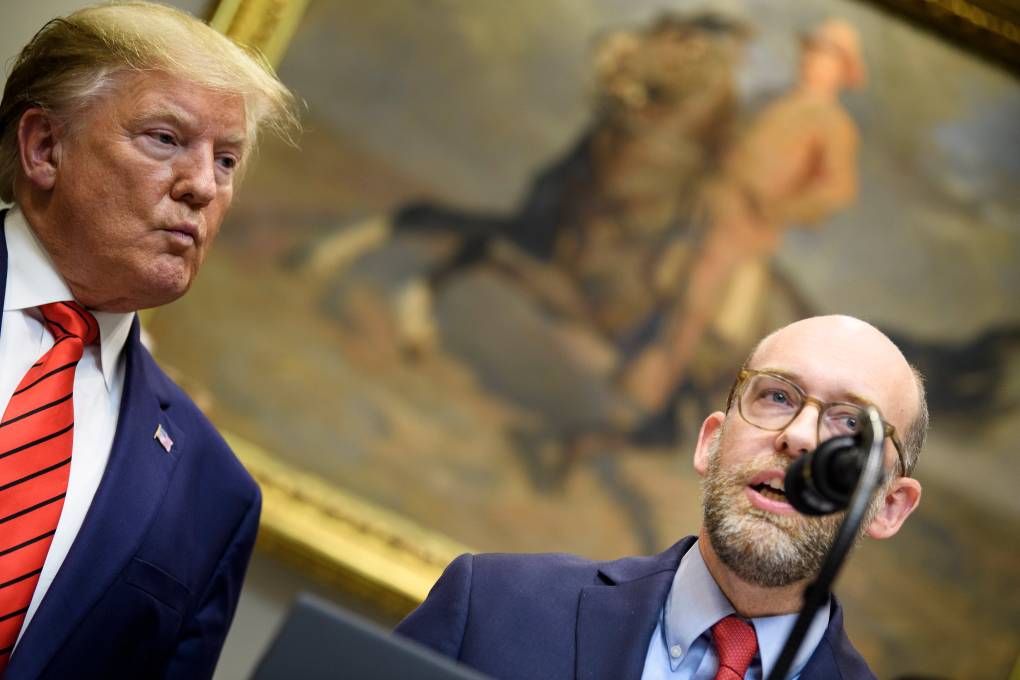
"caption": "U.S. President Donald Trump listens while acting OMB Director Russell Vought speaks during an executive order signing regarding federal regulations in the Roosevelt Room of the White House on Oct. 9, 2019, in Washington, D.C. ",
"credit": "Brendan Smialowski/AFP via Getty Images",
"altTag": null,
"description": null,
"imgSizes": {
"medium": {
"file": "https://cdn.kqed.org/wp-content/uploads/sites/10/2024/11/GettyImages-1174750205-800x533.jpg",
"width": 800,
"height": 533,
"mimeType": "image/jpeg"
},
"large": {
"file": "https://cdn.kqed.org/wp-content/uploads/sites/10/2024/11/GettyImages-1174750205-1020x680.jpg",
"width": 1020,
"height": 680,
"mimeType": "image/jpeg"
},
"thumbnail": {
"file": "https://cdn.kqed.org/wp-content/uploads/sites/10/2024/11/GettyImages-1174750205-160x107.jpg",
"width": 160,
"height": 107,
"mimeType": "image/jpeg"
},
"1536x1536": {
"file": "https://cdn.kqed.org/wp-content/uploads/sites/10/2024/11/GettyImages-1174750205-1536x1024.jpg",
"width": 1536,
"height": 1024,
"mimeType": "image/jpeg"
},
"2048x2048": {
"file": "https://cdn.kqed.org/wp-content/uploads/sites/10/2024/11/GettyImages-1174750205-2048x1365.jpg",
"width": 2048,
"height": 1365,
"mimeType": "image/jpeg"
},
"post-thumbnail": {
"file": "https://cdn.kqed.org/wp-content/uploads/sites/10/2024/11/GettyImages-1174750205-672x372.jpg",
"width": 672,
"height": 372,
"mimeType": "image/jpeg"
},
"twentyfourteen-full-width": {
"file": "https://cdn.kqed.org/wp-content/uploads/sites/10/2024/11/GettyImages-1174750205-1038x576.jpg",
"width": 1038,
"height": 576,
"mimeType": "image/jpeg"
},
"full-width": {
"file": "https://cdn.kqed.org/wp-content/uploads/sites/10/2024/11/GettyImages-1174750205-1920x1280.jpg",
"width": 1920,
"height": 1280,
"mimeType": "image/jpeg"
},
"kqedFullSize": {
"file": "https://cdn.kqed.org/wp-content/uploads/sites/10/2024/11/GettyImages-1174750205-scaled-e1781739384219.jpg",
"width": 2000,
"height": 1334
}
},
"isLoading": false,
"fetchFailed": false
},
"news_12074513": {
"type": "attachments",
"id": "news_12074513",
"meta": {
"index": "attachments_1716263798",
"site": "news",
"id": "12074513",
"found": true
},
"title": "Crowds Flock To California's Yosemite National Park Around Labor Day Weekend",
"publishDate": 1771978582,
"status": "inherit",
"parent": 12074364,
"modified": 1771978619,
"caption": "Visitors hike the Mist Trail toward Vernal Falls on Aug. 31, 2025, in Yosemite National Park, California. ",
"credit": "Apu Gomes/Getty Images",
"altTag": null,
"description": null,
"imgSizes": {
"thumbnail": {
"file": "https://cdn.kqed.org/wp-content/uploads/sites/10/2026/02/YosemiteGetty-160x107.jpg",
"width": 160,
"height": 107,
"mimeType": "image/jpeg"
},
"1536x1536": {
"file": "https://cdn.kqed.org/wp-content/uploads/sites/10/2026/02/YosemiteGetty-1536x1024.jpg",
"width": 1536,
"height": 1024,
"mimeType": "image/jpeg"
},
"post-thumbnail": {
"file": "https://cdn.kqed.org/wp-content/uploads/sites/10/2026/02/YosemiteGetty-672x372.jpg",
"width": 672,
"height": 372,
"mimeType": "image/jpeg"
},
"twentyfourteen-full-width": {
"file": "https://cdn.kqed.org/wp-content/uploads/sites/10/2026/02/YosemiteGetty-1038x576.jpg",
"width": 1038,
"height": 576,
"mimeType": "image/jpeg"
},
"npr-cds-wide": {
"file": "https://cdn.kqed.org/wp-content/uploads/sites/10/2026/02/YosemiteGetty-1200x675.jpg",
"width": 1200,
"height": 675,
"mimeType": "image/jpeg"
},
"kqedFullSize": {
"file": "https://cdn.kqed.org/wp-content/uploads/sites/10/2026/02/YosemiteGetty.jpg",
"width": 2000,
"height": 1333
}
},
"isLoading": false,
"fetchFailed": false
},
"news_12068971": {
"type": "attachments",
"id": "news_12068971",
"meta": {
"index": "attachments_1716263798",
"site": "news",
"id": "12068971",
"found": true
},
"title": "250820-ICEActivity-05_qed",
"publishDate": 1767820146,
"status": "inherit",
"parent": 12068969,
"modified": 1767829411,
"caption": "100 Montgomery St., the location of the San Francisco Immigration Court, on Aug. 20, 2025.",
"credit": "Beth LaBerge/KQED",
"altTag": null,
"description": null,
"imgSizes": {
"thumbnail": {
"file": "https://cdn.kqed.org/wp-content/uploads/sites/10/2026/01/250820-ICEActivity-05_qed-160x107.jpg",
"width": 160,
"height": 107,
"mimeType": "image/jpeg"
},
"1536x1536": {
"file": "https://cdn.kqed.org/wp-content/uploads/sites/10/2026/01/250820-ICEActivity-05_qed-1536x1024.jpg",
"width": 1536,
"height": 1024,
"mimeType": "image/jpeg"
},
"post-thumbnail": {
"file": "https://cdn.kqed.org/wp-content/uploads/sites/10/2026/01/250820-ICEActivity-05_qed-672x372.jpg",
"width": 672,
"height": 372,
"mimeType": "image/jpeg"
},
"twentyfourteen-full-width": {
"file": "https://cdn.kqed.org/wp-content/uploads/sites/10/2026/01/250820-ICEActivity-05_qed-1038x576.jpg",
"width": 1038,
"height": 576,
"mimeType": "image/jpeg"
},
"npr-cds-wide": {
"file": "https://cdn.kqed.org/wp-content/uploads/sites/10/2026/01/250820-ICEActivity-05_qed-1200x675.jpg",
"width": 1200,
"height": 675,
"mimeType": "image/jpeg"
},
"kqedFullSize": {
"file": "https://cdn.kqed.org/wp-content/uploads/sites/10/2026/01/250820-ICEActivity-05_qed.jpg",
"width": 1999,
"height": 1333
}
},
"isLoading": false,
"fetchFailed": false
},
"news_12049852": {
"type": "attachments",
"id": "news_12049852",
"meta": {
"index": "attachments_1716263798",
"site": "news",
"id": "12049852",
"found": true
},
"title": "250725-Planned Parenthood Closures-MD-01-KQED",
"publishDate": 1753480948,
"status": "inherit",
"parent": 12049790,
"modified": 1775743017,
"caption": "Planned Parenthood Mar Monte ",
"credit": "Martin do Nascimento/KQED",
"altTag": null,
"description": null,
"imgSizes": {
"thumbnail": {
"file": "https://cdn.kqed.org/wp-content/uploads/sites/10/2025/07/250725-Planned-Parenthood-Closures-MD-01-KQED-160x107.jpg",
"width": 160,
"height": 107,
"mimeType": "image/jpeg"
},
"1536x1536": {
"file": "https://cdn.kqed.org/wp-content/uploads/sites/10/2025/07/250725-Planned-Parenthood-Closures-MD-01-KQED-1536x1025.jpg",
"width": 1536,
"height": 1025,
"mimeType": "image/jpeg"
},
"post-thumbnail": {
"file": "https://cdn.kqed.org/wp-content/uploads/sites/10/2025/07/250725-Planned-Parenthood-Closures-MD-01-KQED-672x372.jpg",
"width": 672,
"height": 372,
"mimeType": "image/jpeg"
},
"twentyfourteen-full-width": {
"file": "https://cdn.kqed.org/wp-content/uploads/sites/10/2025/07/250725-Planned-Parenthood-Closures-MD-01-KQED-1038x576.jpg",
"width": 1038,
"height": 576,
"mimeType": "image/jpeg"
},
"kqedFullSize": {
"file": "https://cdn.kqed.org/wp-content/uploads/sites/10/2025/07/250725-Planned-Parenthood-Closures-MD-01-KQED.jpg",
"width": 2000,
"height": 1334
}
},
"isLoading": false,
"fetchFailed": false
},
"news_12075038": {
"type": "attachments",
"id": "news_12075038",
"meta": {
"index": "attachments_1716263798",
"site": "news",
"id": "12075038",
"found": true
},
"title": "housing-69a5a8ba392ae",
"publishDate": 1772464364,
"status": "inherit",
"parent": 12075037,
"modified": 1772464409,
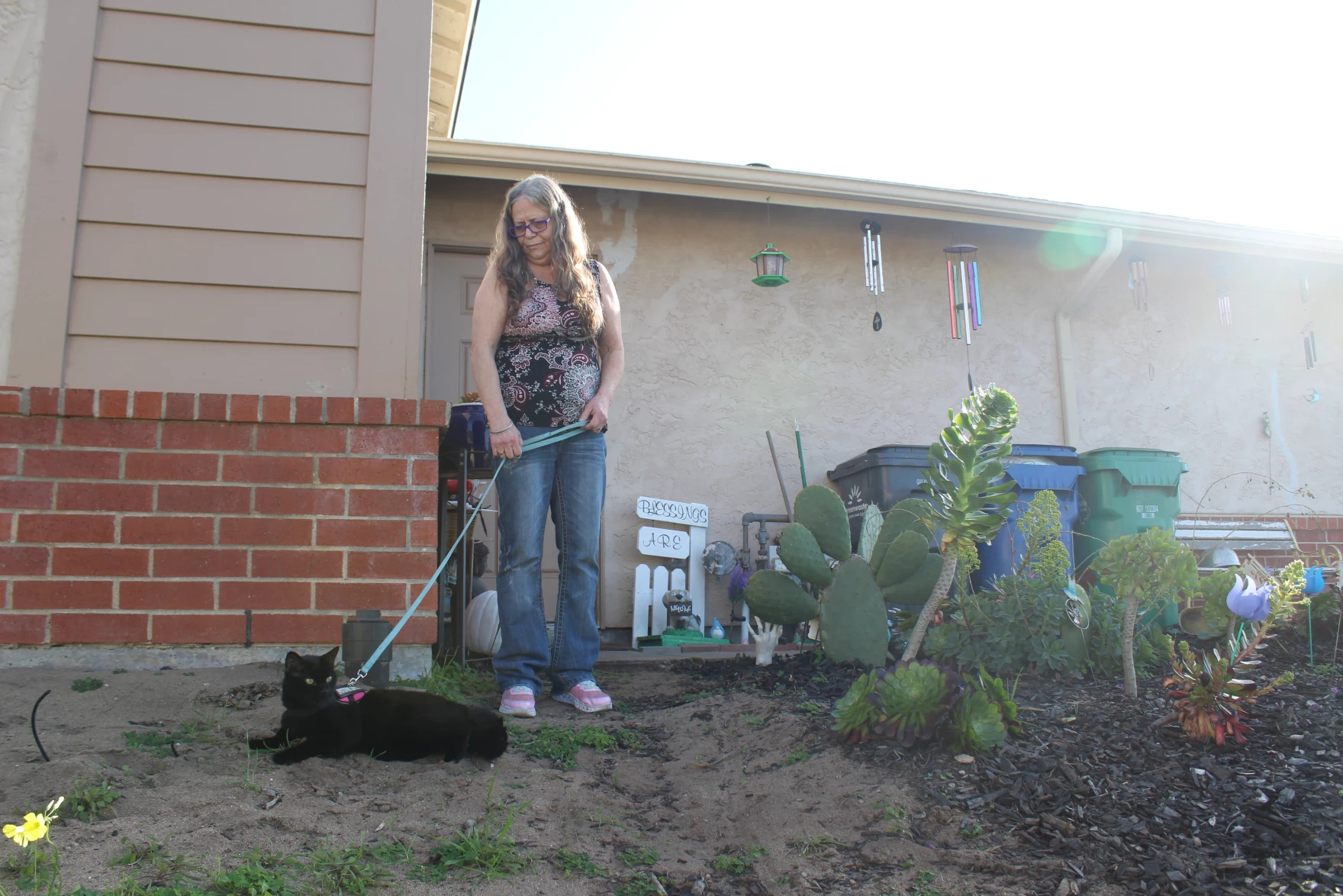
"caption": "After spending about a decade living out of an RV, Bella Maddox, 68, obtained housing in 2023 thanks to federally-funded permanent housing programs.",
"credit": "Elena Neale-Sacks/KAZU News",
"altTag": null,
"description": null,
"imgSizes": {
"thumbnail": {
"file": "https://cdn.kqed.org/wp-content/uploads/sites/10/2026/03/housing-69a5a8ba392ae-160x107.jpg",
"width": 160,
"height": 107,
"mimeType": "image/jpeg"
},
"1536x1536": {
"file": "https://cdn.kqed.org/wp-content/uploads/sites/10/2026/03/housing-69a5a8ba392ae-1536x1025.jpg",
"width": 1536,
"height": 1025,
"mimeType": "image/jpeg"
},
"post-thumbnail": {
"file": "https://cdn.kqed.org/wp-content/uploads/sites/10/2026/03/housing-69a5a8ba392ae-672x372.jpg",
"width": 672,
"height": 372,
"mimeType": "image/jpeg"
},
"twentyfourteen-full-width": {
"file": "https://cdn.kqed.org/wp-content/uploads/sites/10/2026/03/housing-69a5a8ba392ae-1038x576.jpg",
"width": 1038,
"height": 576,
"mimeType": "image/jpeg"
},
"npr-cds-wide": {
"file": "https://cdn.kqed.org/wp-content/uploads/sites/10/2026/03/housing-69a5a8ba392ae-1200x675.jpg",
"width": 1200,
"height": 675,
"mimeType": "image/jpeg"
},
"kqedFullSize": {
"file": "https://cdn.kqed.org/wp-content/uploads/sites/10/2026/03/housing-69a5a8ba392ae.jpg",
"width": 1760,
"height": 1174
}
},
"isLoading": false,
"fetchFailed": false
},
"news_12070142": {
"type": "attachments",
"id": "news_12070142",
"meta": {
"index": "attachments_1716263798",
"site": "news",
"id": "12070142",
"found": true
},
"title": "Emma's room 2",
"publishDate": 1768584118,
"status": "inherit",
"parent": 12070141,
"modified": 1768607308,
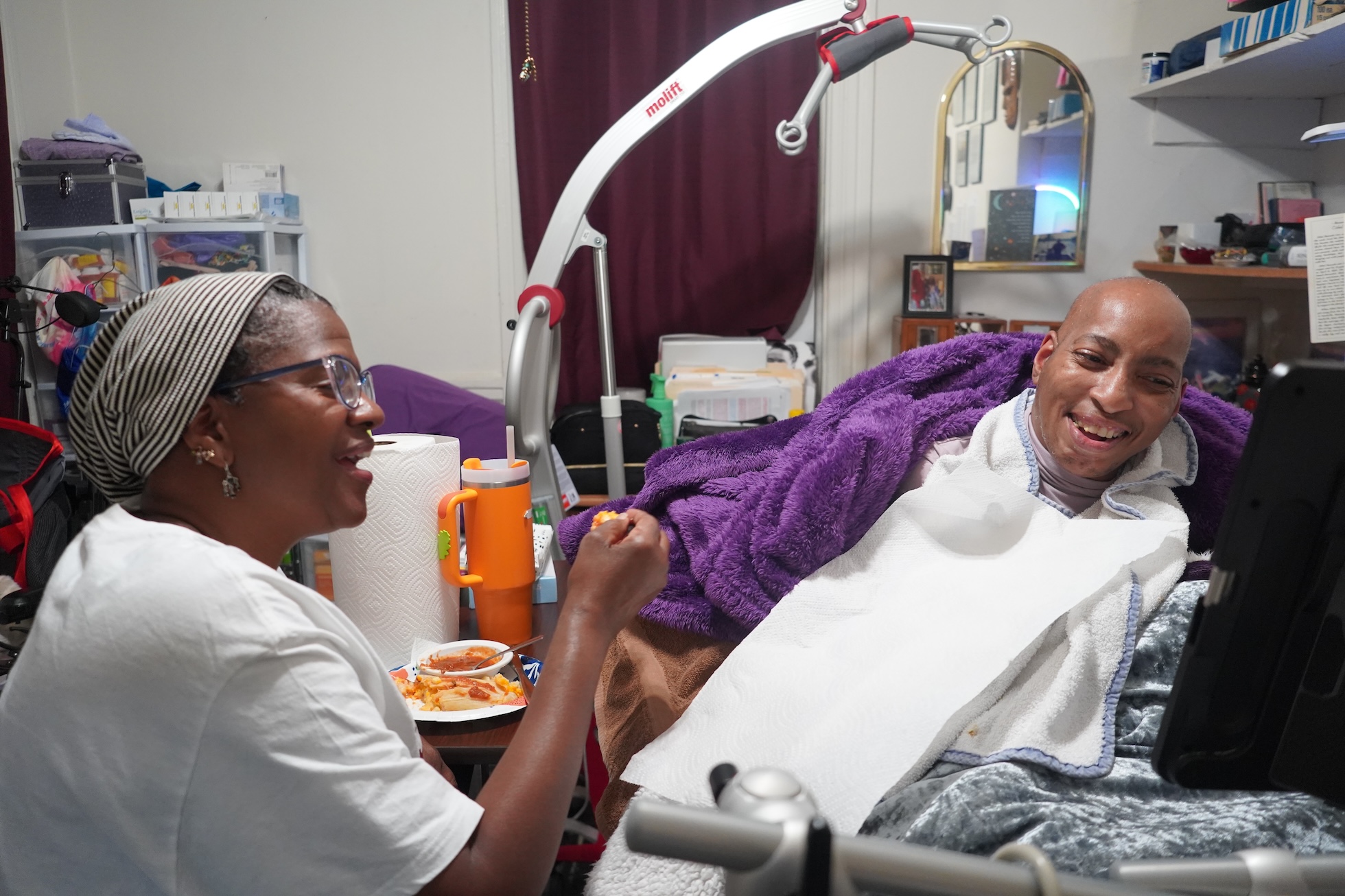
"caption": "Emma Denice Milligan and her caregiver, Wanda Kincy, laugh in her Oakland home on Dec. 12, 2025. ",
"credit": "Courtesy of Hyeyoon Cho",
"altTag": null,
"description": null,
"imgSizes": {
"thumbnail": {
"file": "https://cdn.kqed.org/wp-content/uploads/sites/10/2026/01/Emmas-room-2-160x107.jpg",
"width": 160,
"height": 107,
"mimeType": "image/jpeg"
},
"1536x1536": {
"file": "https://cdn.kqed.org/wp-content/uploads/sites/10/2026/01/Emmas-room-2-1536x1023.jpg",
"width": 1536,
"height": 1023,
"mimeType": "image/jpeg"
},
"post-thumbnail": {
"file": "https://cdn.kqed.org/wp-content/uploads/sites/10/2026/01/Emmas-room-2-672x372.jpg",
"width": 672,
"height": 372,
"mimeType": "image/jpeg"
},
"twentyfourteen-full-width": {
"file": "https://cdn.kqed.org/wp-content/uploads/sites/10/2026/01/Emmas-room-2-1038x576.jpg",
"width": 1038,
"height": 576,
"mimeType": "image/jpeg"
},
"npr-cds-wide": {
"file": "https://cdn.kqed.org/wp-content/uploads/sites/10/2026/01/Emmas-room-2-1200x675.jpg",
"width": 1200,
"height": 675,
"mimeType": "image/jpeg"
},
"kqedFullSize": {
"file": "https://cdn.kqed.org/wp-content/uploads/sites/10/2026/01/Emmas-room-2.jpg",
"width": 1960,
"height": 1306
}
},
"isLoading": false,
"fetchFailed": false
},
"news_12037387": {
"type": "attachments",
"id": "news_12037387",
"meta": {
"index": "attachments_1716263798",
"site": "news",
"id": "12037387",
"found": true
},
"title": "May Day Protests",
"publishDate": 1745447079,
"status": "inherit",
"parent": 12037376,
"modified": 1765486756,
"caption": "Protesters walk during a march in San Francisco on May 1, 2017. ",
"credit": "Jeff Chiu/AP Photo",
"altTag": null,
"description": "Protesters walk during a march in San Francisco on May 1, 2017. Immigrant groups and their allies have joined forces to carry out marches, rallies and protests in cities nationwide to mark May Day, saying there's renewed momentum to fight back against Trump administration policies. ",
"imgSizes": {
"medium": {
"file": "https://cdn.kqed.org/wp-content/uploads/sites/10/2025/04/SanctuaryCitySFTrumpAP-800x569.jpg",
"width": 800,
"height": 569,
"mimeType": "image/jpeg"
},
"large": {
"file": "https://cdn.kqed.org/wp-content/uploads/sites/10/2025/04/SanctuaryCitySFTrumpAP-1020x725.jpg",
"width": 1020,
"height": 725,
"mimeType": "image/jpeg"
},
"thumbnail": {
"file": "https://cdn.kqed.org/wp-content/uploads/sites/10/2025/04/SanctuaryCitySFTrumpAP-160x114.jpg",
"width": 160,
"height": 114,
"mimeType": "image/jpeg"
},
"1536x1536": {
"file": "https://cdn.kqed.org/wp-content/uploads/sites/10/2025/04/SanctuaryCitySFTrumpAP-1536x1092.jpg",
"width": 1536,
"height": 1092,
"mimeType": "image/jpeg"
},
"post-thumbnail": {
"file": "https://cdn.kqed.org/wp-content/uploads/sites/10/2025/04/SanctuaryCitySFTrumpAP-672x372.jpg",
"width": 672,
"height": 372,
"mimeType": "image/jpeg"
},
"twentyfourteen-full-width": {
"file": "https://cdn.kqed.org/wp-content/uploads/sites/10/2025/04/SanctuaryCitySFTrumpAP-1038x576.jpg",
"width": 1038,
"height": 576,
"mimeType": "image/jpeg"
},
"full-width": {
"file": "https://cdn.kqed.org/wp-content/uploads/sites/10/2025/04/SanctuaryCitySFTrumpAP-1920x1365.jpg",
"width": 1920,
"height": 1365,
"mimeType": "image/jpeg"
},
"kqedFullSize": {
"file": "https://cdn.kqed.org/wp-content/uploads/sites/10/2025/04/SanctuaryCitySFTrumpAP.jpg",
"width": 2000,
"height": 1422
}
},
"isLoading": false,
"fetchFailed": false
},
"news_12069351": {
"type": "attachments",
"id": "news_12069351",
"meta": {
"index": "attachments_1716263798",
"site": "news",
"id": "12069351",
"found": true
},
"title": "021_SanLeandro_KidConnectPreschool_10222021_qed",
"publishDate": 1768008471,
"status": "inherit",
"parent": 12069350,
"modified": 1768008675,
"caption": "A teacher works with students on an art project at Kids Connect Infant Care and Preschool in San Leandro on Oct. 22, 2021. ",
"credit": null,
"altTag": null,
"description": null,
"imgSizes": {
"thumbnail": {
"file": "https://cdn.kqed.org/wp-content/uploads/sites/10/2026/01/021_SanLeandro_KidConnectPreschool_10222021_qed-160x107.jpg",
"width": 160,
"height": 107,
"mimeType": "image/jpeg"
},
"1536x1536": {
"file": "https://cdn.kqed.org/wp-content/uploads/sites/10/2026/01/021_SanLeandro_KidConnectPreschool_10222021_qed-1536x1024.jpg",
"width": 1536,
"height": 1024,
"mimeType": "image/jpeg"
},
"post-thumbnail": {
"file": "https://cdn.kqed.org/wp-content/uploads/sites/10/2026/01/021_SanLeandro_KidConnectPreschool_10222021_qed-672x372.jpg",
"width": 672,
"height": 372,
"mimeType": "image/jpeg"
},
"twentyfourteen-full-width": {
"file": "https://cdn.kqed.org/wp-content/uploads/sites/10/2026/01/021_SanLeandro_KidConnectPreschool_10222021_qed-1038x576.jpg",
"width": 1038,
"height": 576,
"mimeType": "image/jpeg"
},
"npr-cds-wide": {
"file": "https://cdn.kqed.org/wp-content/uploads/sites/10/2026/01/021_SanLeandro_KidConnectPreschool_10222021_qed-1200x675.jpg",
"width": 1200,
"height": 675,
"mimeType": "image/jpeg"
},
"kqedFullSize": {
"file": "https://cdn.kqed.org/wp-content/uploads/sites/10/2026/01/021_SanLeandro_KidConnectPreschool_10222021_qed.jpg",
"width": 2000,
"height": 1333
}
},
"isLoading": false,
"fetchFailed": false
},
"news_12069241": {
"type": "attachments",
"id": "news_12069241",
"meta": {
"index": "attachments_1716263798",
"site": "news",
"id": "12069241",
"found": true
},
"title": "Extreme Weather California",
"publishDate": 1767983520,
"status": "inherit",
"parent": 12069236,
"modified": 1767983555,
"caption": "Southern California Edison vehicles sit along damaged roads and power lines on Highway 138 after a series of storms on Thursday, Dec. 25, 2025, near Phelan, California.",
"credit": "William Liang/AP Photo",
"altTag": null,
"description": null,
"imgSizes": {
"thumbnail": {
"file": "https://cdn.kqed.org/wp-content/uploads/sites/10/2026/01/SoCalHwyAP-160x107.jpg",
"width": 160,
"height": 107,
"mimeType": "image/jpeg"
},
"1536x1536": {
"file": "https://cdn.kqed.org/wp-content/uploads/sites/10/2026/01/SoCalHwyAP-1536x1024.jpg",
"width": 1536,
"height": 1024,
"mimeType": "image/jpeg"
},
"post-thumbnail": {
"file": "https://cdn.kqed.org/wp-content/uploads/sites/10/2026/01/SoCalHwyAP-672x372.jpg",
"width": 672,
"height": 372,
"mimeType": "image/jpeg"
},
"twentyfourteen-full-width": {
"file": "https://cdn.kqed.org/wp-content/uploads/sites/10/2026/01/SoCalHwyAP-1038x576.jpg",
"width": 1038,
"height": 576,
"mimeType": "image/jpeg"
},
"npr-cds-wide": {
"file": "https://cdn.kqed.org/wp-content/uploads/sites/10/2026/01/SoCalHwyAP-1200x675.jpg",
"width": 1200,
"height": 675,
"mimeType": "image/jpeg"
},
"kqedFullSize": {
"file": "https://cdn.kqed.org/wp-content/uploads/sites/10/2026/01/SoCalHwyAP.jpg",
"width": 2000,
"height": 1333
}
},
"isLoading": false,
"fetchFailed": false
}
},
"audioPlayerReducer": {
"postId": "stream_live",
"isPaused": true,
"isPlaying": false,
"pfsActive": false,
"pledgeModalIsOpen": true,
"playerDrawerIsOpen": false,
"liveAudioPlayStartedAt": 0,
"liveAudioPlayContext": ""
},
"authorsReducer": {
"byline_news_12070141": {
"type": "authors",
"id": "byline_news_12070141",
"meta": {
"override": true
},
"slug": "byline_news_12070141",
"name": "Hyeyoon Cho",
"isLoading": false
},
"tychehendricks": {
"type": "authors",
"id": "259",
"meta": {
"index": "authors_1716337520",
"id": "259",
"found": true
},
"name": "Tyche Hendricks",
"firstName": "Tyche",
"lastName": "Hendricks",
"slug": "tychehendricks",
"email": "thendricks@kqed.org",
"display_author_email": true,
"staff_mastheads": [
"news"
],
"title": "KQED Senior Editor, Immigration",
"bio": "\u003cspan style=\"font-weight: 400;\">Tyche Hendricks is KQED’s senior editor for immigration, leading coverage of the policy and politics that affect California’s immigrant communities. Her work for KQED’s radio and online audiences is also carried on NPR and other national outlets. She has been recognized with awards from the Radio and Television News Directors Association, the Society for Professional Journalists; the Education Writers Association; the Best of the West and the National Federation of Community Broadcasters. Before joining KQED in 2010, Tyche spent more than a dozen years as a newspaper reporter, notably at the \u003c/span>\u003ci>\u003cspan style=\"font-weight: 400;\">San Francisco Chronicle\u003c/span>\u003c/i>\u003cspan style=\"font-weight: 400;\">. At different times she has covered criminal justice, government and politics and urban planning. Tyche has taught in the MFA Creative Writing program at the University of San Francisco and at UC Berkeley’s Graduate School of Journalism, where she was co-director of a national immigration symposium for professional journalists. She is the author of \u003c/span>\u003ci>\u003cspan style=\"font-weight: 400;\">The Wind Doesn't Need a Passport: Stories from the U.S.-Mexico Borderlands\u003c/span>\u003c/i>\u003cspan style=\"font-weight: 400;\"> (University of California Press). \u003c/span>",
"avatar": "https://secure.gravatar.com/avatar/b8ee458e2731c2d43df86882ce17267e?s=600&d=blank&r=g",
"twitter": "tychehendricks",
"facebook": null,
"instagram": null,
"linkedin": null,
"sites": [
{
"site": "news",
"roles": [
"editor"
]
},
{
"site": "stateofhealth",
"roles": [
"editor"
]
}
],
"headData": {
"title": "Tyche Hendricks | KQED",
"description": "KQED Senior Editor, Immigration",
"ogImgSrc": "https://secure.gravatar.com/avatar/b8ee458e2731c2d43df86882ce17267e?s=600&d=blank&r=g",
"twImgSrc": "https://secure.gravatar.com/avatar/b8ee458e2731c2d43df86882ce17267e?s=600&d=blank&r=g"
},
"isLoading": false,
"link": "/author/tychehendricks"
},
"fjhabvala": {
"type": "authors",
"id": "8659",
"meta": {
"index": "authors_1716337520",
"id": "8659",
"found": true
},
"name": "Farida Jhabvala Romero",
"firstName": "Farida",
"lastName": "Jhabvala Romero",
"slug": "fjhabvala",
"email": "fjhabvala@kqed.org",
"display_author_email": true,
"staff_mastheads": [
"news"
],
"title": "KQED Contributor",
"bio": "Farida Jhabvala Romero is a Labor Correspondent for KQED. She previously covered immigration. Farida was \u003ca href=\"https://www.ccnma.org/2022-most-influential-latina-journalists\">named\u003c/a> one of the 10 Most Influential Latina Journalists in California in 2022 by the California Chicano News Media Association. Her work has won awards from the Society of Professional Journalists (Northern California), as well as a national and regional Edward M. Murrow Award for the collaborative reporting projects “Dangerous Air” and “Graying California.” Before joining KQED, Farida worked as a producer at Radio Bilingüe, a national public radio network. Farida earned her master’s degree in journalism from Stanford University.",
"avatar": "https://secure.gravatar.com/avatar/f9f022d4e2609741874222a1e9d41f48fea74011aa7c615eef91d9a50c944ebe?s=600&d=blank&r=g",
"twitter": "FaridaJhabvala",
"bluesky": null,
"facebook": null,
"instagram": null,
"linkedin": "https://www.linkedin.com/in/faridajhabvala/",
"sites": [
{
"site": "news",
"roles": [
"editor"
]
},
{
"site": "stateofhealth",
"roles": [
"author"
]
},
{
"site": "liveblog",
"roles": [
"author"
]
}
],
"headData": {
"title": "Farida Jhabvala Romero | KQED",
"description": "KQED Contributor",
"ogImgSrc": "https://secure.gravatar.com/avatar/f9f022d4e2609741874222a1e9d41f48fea74011aa7c615eef91d9a50c944ebe?s=600&d=blank&r=g",
"twImgSrc": "https://secure.gravatar.com/avatar/f9f022d4e2609741874222a1e9d41f48fea74011aa7c615eef91d9a50c944ebe?s=600&d=blank&r=g"
},
"isLoading": false,
"link": "/author/fjhabvala"
},
"kmizuguchi": {
"type": "authors",
"id": "11739",
"meta": {
"index": "authors_1716337520",
"id": "11739",
"found": true
},
"name": "Keith Mizuguchi",
"firstName": "Keith",
"lastName": "Mizuguchi",
"slug": "kmizuguchi",
"email": "kmizuguchi@kqed.org",
"display_author_email": false,
"staff_mastheads": [],
"title": "KQED Contributor",
"bio": null,
"avatar": "https://secure.gravatar.com/avatar/64d8a7de0723d4099b9fe4e915136103febcc20809abce228ee4415bcb237023?s=600&d=blank&r=g",
"twitter": null,
"bluesky": null,
"facebook": null,
"instagram": null,
"linkedin": null,
"sites": [
{
"site": "news",
"roles": [
"editor"
]
},
{
"site": "science",
"roles": [
"editor"
]
}
],
"headData": {
"title": "Keith Mizuguchi | KQED",
"description": "KQED Contributor",
"ogImgSrc": "https://secure.gravatar.com/avatar/64d8a7de0723d4099b9fe4e915136103febcc20809abce228ee4415bcb237023?s=600&d=blank&r=g",
"twImgSrc": "https://secure.gravatar.com/avatar/64d8a7de0723d4099b9fe4e915136103febcc20809abce228ee4415bcb237023?s=600&d=blank&r=g"
},
"isLoading": false,
"link": "/author/kmizuguchi"
},
"daisynguyen": {
"type": "authors",
"id": "11829",
"meta": {
"index": "authors_1716337520",
"id": "11829",
"found": true
},
"name": "Daisy Nguyen",
"firstName": "Daisy",
"lastName": "Nguyen",
"slug": "daisynguyen",
"email": "daisynguyen@kqed.org",
"display_author_email": true,
"staff_mastheads": [
"news"
],
"title": "KQED Contributor",
"bio": "I have covered early childhood education and child care for KQED since 2022. I focus on policies aimed at increasing access to early care and education and how they shape individual lives. I've been a journalist for more than two decades, with most of that time devoted to covering breaking news throughout California for The Associated Press. I grew up in San Francisco and studied at UC Davis and Columbia University's Graduate School of Journalism. I live in Oakland with my husband and two kids.",
"avatar": "https://secure.gravatar.com/avatar/2da2127c27f7143b53ebd419800fd55f?s=600&d=blank&r=g",
"twitter": null,
"facebook": null,
"instagram": null,
"linkedin": "https://www.linkedin.com/in/daisynguyen/",
"sites": [
{
"site": "news",
"roles": [
"author"
]
},
{
"site": "liveblog",
"roles": [
"author"
]
}
],
"headData": {
"title": "Daisy Nguyen | KQED",
"description": "KQED Contributor",
"ogImgSrc": "https://secure.gravatar.com/avatar/2da2127c27f7143b53ebd419800fd55f?s=600&d=blank&r=g",
"twImgSrc": "https://secure.gravatar.com/avatar/2da2127c27f7143b53ebd419800fd55f?s=600&d=blank&r=g"
},
"isLoading": false,
"link": "/author/daisynguyen"
},
"kdebenedetti": {
"type": "authors",
"id": "11913",
"meta": {
"index": "authors_1716337520",
"id": "11913",
"found": true
},
"name": "Katie DeBenedetti",
"firstName": "Katie",
"lastName": "DeBenedetti",
"slug": "kdebenedetti",
"email": "kdebenedetti@kqed.org",
"display_author_email": false,
"staff_mastheads": [
"news",
"science"
],
"title": "KQED Contributor",
"bio": "Katie DeBenedetti is a digital reporter covering daily news for the Express Desk. Prior to joining KQED as a culture reporting intern in January 2024, she covered education and city government for the Napa Valley Register.",
"avatar": "https://secure.gravatar.com/avatar/6e31073cb8f7e4214ab03f42771d0f45?s=600&d=blank&r=g",
"twitter": null,
"facebook": null,
"instagram": null,
"linkedin": null,
"sites": [
{
"site": "news",
"roles": [
"author"
]
},
{
"site": "science",
"roles": [
"author"
]
},
{
"site": "liveblog",
"roles": [
"author"
]
}
],
"headData": {
"title": "Katie DeBenedetti | KQED",
"description": "KQED Contributor",
"ogImgSrc": "https://secure.gravatar.com/avatar/6e31073cb8f7e4214ab03f42771d0f45?s=600&d=blank&r=g",
"twImgSrc": "https://secure.gravatar.com/avatar/6e31073cb8f7e4214ab03f42771d0f45?s=600&d=blank&r=g"
},
"isLoading": false,
"link": "/author/kdebenedetti"
},
"sarahwright": {
"type": "authors",
"id": "11956",
"meta": {
"index": "authors_1716337520",
"id": "11956",
"found": true
},
"name": "Sarah Wright",
"firstName": "Sarah",
"lastName": "Wright",
"slug": "sarahwright",
"email": "swright@kqed.org",
"display_author_email": true,
"staff_mastheads": [],
"title": "Outdoors Engagement Reporter",
"bio": "Sarah Wright is KQED's Outdoors Engagement Reporter. Originally from Lake Tahoe, she completed a thru-hike of the Pacific Crest Trail in 2019 and was a U.S. Fulbright Program grantee to Argentina in 2023. Her journalism has appeared in The Guardian, The San Francisco Standard, The Palo Alto Weekly and the Half Moon Bay Review.",
"avatar": "https://secure.gravatar.com/avatar/c161a3d6441865cba25e6db4fa561099ad665799e9432e34da2b84d7e371524c?s=600&d=blank&r=g",
"twitter": null,
"bluesky": null,
"facebook": null,
"instagram": null,
"linkedin": null,
"sites": [
{
"site": "arts",
"roles": [
"editor"
]
},
{
"site": "news",
"roles": [
"editor"
]
},
{
"site": "science",
"roles": [
"contributor",
"author"
]
},
{
"site": "forum",
"roles": [
"editor"
]
}
],
"headData": {
"title": "Sarah Wright | KQED",
"description": "Outdoors Engagement Reporter",
"ogImgSrc": "https://secure.gravatar.com/avatar/c161a3d6441865cba25e6db4fa561099ad665799e9432e34da2b84d7e371524c?s=600&d=blank&r=g",
"twImgSrc": "https://secure.gravatar.com/avatar/c161a3d6441865cba25e6db4fa561099ad665799e9432e34da2b84d7e371524c?s=600&d=blank&r=g"
},
"isLoading": false,
"link": "/author/sarahwright"
},
"barbaraleonard": {
"type": "authors",
"id": "12015",
"meta": {
"index": "authors_1716337520",
"id": "12015",
"found": true
},
"name": "Barbara Leonard",
"firstName": "Barbara",
"lastName": "Leonard",
"slug": "barbaraleonard",
"email": "bleonard@kqed.org",
"display_author_email": false,
"staff_mastheads": [
"news",
"science"
],
"title": "Digital Producer",
"bio": "Barbara Leonard is a Digital Producer on KQED's Express Desk.",
"avatar": "https://secure.gravatar.com/avatar/3ff8735665f58d15fa9da84c4d8d3098581e033ae84fe912784b7611f00ef0a4?s=600&d=blank&r=g",
"twitter": null,
"bluesky": null,
"facebook": null,
"instagram": null,
"linkedin": null,
"sites": [
{
"site": "arts",
"roles": [
"editor"
]
},
{
"site": "news",
"roles": [
"editor",
"author"
]
},
{
"site": "science",
"roles": [
"editor"
]
}
],
"headData": {
"title": "Barbara Leonard | KQED",
"description": "Digital Producer",
"ogImgSrc": "https://secure.gravatar.com/avatar/3ff8735665f58d15fa9da84c4d8d3098581e033ae84fe912784b7611f00ef0a4?s=600&d=blank&r=g",
"twImgSrc": "https://secure.gravatar.com/avatar/3ff8735665f58d15fa9da84c4d8d3098581e033ae84fe912784b7611f00ef0a4?s=600&d=blank&r=g"
},
"isLoading": false,
"link": "/author/barbaraleonard"
}
},
"pagesReducer": {
"news_tag_federal-funding": {
"type": "terms",
"id": "news_35063",
"meta": {
"index": "terms_1716263798",
"site": "news",
"id": "35063",
"score": 10.404627
},
"name": "federal funding",
"slug": "federal-funding",
"taxonomy": "tag",
"description": null,
"featImg": null,
"headData": {
"title": "federal funding | KQED News",
"description": null,
"ogTitle": null,
"ogDescription": null,
"ogImgId": null,
"twTitle": null,
"twDescription": null,
"twImgId": null
},
"ttid": 35080,
"isLoading": false,
"title": "federal funding",
"pageMeta": {
"site": "news",
"WpPageTemplate": "page-topic-editorial",
"currentPage": 1
},
"blocks": [
{
"blockName": "kqed/post-list",
"attrs": {
"layout": "cardArticle2",
"query": "posts/news?tag=federal-funding",
"seeMore": false,
"paginated": true,
"page": 1
}
},
{
"blockName": "kqed/ad"
}
]
}
},
"pfsSessionReducer": {},
"postsReducer": {
"stream_live": {
"type": "live",
"id": "stream_live",
"audioUrl": "https://streams.kqed.org/kqedradio",
"title": "Live Stream",
"excerpt": "Live Stream information currently unavailable.",
"link": "/radio",
"featImg": "",
"label": {
"name": "KQED Live",
"link": "/"
}
},
"stream_kqedNewscast": {
"type": "posts",
"id": "stream_kqedNewscast",
"audioUrl": "https://www.kqed.org/.stream/anon/radio/RDnews/newscast.mp3?_=1",
"title": "KQED Newscast",
"featImg": "",
"label": {
"name": "88.5 FM",
"link": "/"
}
},
"news_12098424": {
"type": "posts",
"id": "news_12098424",
"meta": {
"index": "posts_1716263798",
"site": "news",
"id": "12098424",
"score": null,
"sort": [
1788883200000
]
},
"guestAuthors": [],
"slug": "trump-administration-threatens-billions-in-state-welfare-funding",
"title": "Trump Administration Threatens Billions in State Welfare Funding",
"publishDate": 1788883200,
"format": "standard",
"headTitle": "Trump Administration Threatens Billions in State Welfare Funding | KQED",
"labelTerm": {
"site": "news"
},
"content": "\n\u003cp>\u003ca href=\"https://www.kqed.org/news/tag/california\">California\u003c/a> is at risk of losing nearly $12 billion in federal funding for public assistance programs after the Trump administration threatened to cut off grants to states unless they report every known unauthorized immigrant to immigration authorities.\u003c/p>\n\n\n\n\u003cp>The threat came in the form of a new legal \u003ca href=\"https://www.justice.gov/opa/pr/justice-department-clarifies-duty-states-report-known-illegal-aliens-under-welfare-reform\">opinion\u003c/a> this month reinterpreting a 1990s welfare-reform law to mean that all agencies in states receiving welfare funding — which is every state in the nation — must report all “individuals known to be not lawfully present” to the federal government or risk losing grants that aid low-income people.\u003c/p>\n\n\n\n\u003cp>That’s a dramatic reversal from the Clinton-era interpretation of the 1996 Personal Responsibility and Work Opportunity Reconciliation Act, which said that only state agencies administering the Temporary Assistance for Needy Families (TANF) and Supplemental Security Income (SSI) programs needed to provide information to federal immigration authorities. \u003c/p>\n\n\n\n\u003cp>Gov. Gavin Newsom’s office was defiant in its opposition to the threat.\u003c/p>\n\n\n\n\u003cfigure class=\"wp-block-image size-full\">\u003cimg loading=\"lazy\" decoding=\"async\" width=\"2000\" height=\"1333\" src=\"https://cdn.kqed.org/wp-content/uploads/sites/10/2026/01/260116-NewsomLuriePresser-32-BL_qed.jpg\" alt=\"\" class=\"wp-image-12070630\" srcset=\"https://cdn.kqed.org/wp-content/uploads/sites/10/2026/01/260116-NewsomLuriePresser-32-BL_qed.jpg 2000w, https://cdn.kqed.org/wp-content/uploads/sites/10/2026/01/260116-NewsomLuriePresser-32-BL_qed-160x107.jpg 160w, https://cdn.kqed.org/wp-content/uploads/sites/10/2026/01/260116-NewsomLuriePresser-32-BL_qed-1536x1024.jpg 1536w\" sizes=\"auto, (max-width: 2000px) 100vw, 2000px\" />\u003cfigcaption class=\"wp-element-caption\">Gov. Gavin Newsom speaks during a press conference at the Friendship House Association of American Indians in San Francisco on Jan. 16, 2026. (Beth LaBerge/KQED)\u003c/figcaption>\u003c/figure>\n\n\n\n\u003cp>“This is nothing new — Trump has always tried to play cruel games with states that protect working families,” Newsom spokesperson Diana Crofts-Pelayo said. “The courts have repeatedly rejected the Trump administration’s politically motivated attacks on blue states — should the Trump administration move forward, we expect the same here.”\u003c/p>\n\n\n\n\u003cp>TANF — known in California as CalWORKS — is short-term cash assistance for people in poverty, including \u003ca href=\"https://lao.ca.gov/Publications/Report/5057\">nearly 900,000 Californians\u003c/a> as of 2024. SSI provides cash benefits to elderly, blind or disabled people with low incomes, including \u003ca href=\"https://www.ssa.gov/policy/docs/statcomps/ssi_sc/2025/ca.pdf\">1.1 million Californians\u003c/a> as of 2025. That’s roughly 2 million Californians benefitted from the two programs. \u003c/p>\n\n\n\n\u003cp>California receives a $3.7 billion annual block grant for TANF and roughly $8 billion a year in SSI funding, according to Ryan Woolsey, a policy analyst at the state Legislative Analyst’s Office. \u003c/p>\n\n\n\n\n\n\u003cp>The Trump administration said it believes Congress intended for every state agency to report unauthorized immigrants to the U.S. Department of Homeland Security. And officials suggested that those immigrants were benefiting from the welfare programs.\u003c/p>\n\n\n\n\u003cp>“When a state chooses to participate in TANF, it accepts the obligation to report illegal aliens in the United States,” Assistant Attorney General T. Elliot Gaiser of the Justice Department’s Office of Legal Counsel said in a statement. “Tax dollars intended to help vulnerable Americans should not perversely encourage illegal entry into the United States, but rather should reinforce our laws and our borders.”\u003c/p>\n\n\n\n\u003cp>In fact, people who are not lawfully present in the U.S. are \u003ca href=\"https://acf.gov/ofa/policy-guidance/acf-ofa-im-25-01\">not eligible\u003c/a> for \u003ca href=\"https://www.ssa.gov/ssi/spotlights/spot-non-citizens.htm\">either program\u003c/a>.\u003c/p>\n\n\n\n\u003cp>If California were to comply with the new federal requirements, however, it would spotlight for federal immigration enforcement many of the \u003ca href=\"https://data.cmsny.org\">estimated 2.6 million people\u003c/a> in the state without legal status, including those who have lived in the U.S. for years and have U.S. citizen children.\u003c/p>\n\n\n\n\u003cp>California has information on a lot of residents without legal immigration status because, over the past two decades, lawmakers have made them eligible for public resources, including driver’s licenses, emergency health care and in-state tuition, UC Davis law professor Kevin Johnson said.\u003c/p>\n\n\n\n\u003cp>“The risk is bigger in California because California has been willing, in exercising its legislative judgment, to provide more services and benefits to undocumented immigrants than many other states,” Johnson said. “It’s done so legally, and it’s done so without the knowledge that it might be required to share information with the federal government.”\u003c/p>\n\n\n\n\u003cfigure class=\"wp-block-image size-full\">\u003cimg loading=\"lazy\" decoding=\"async\" width=\"2000\" height=\"1333\" src=\"https://cdn.kqed.org/wp-content/uploads/sites/10/2026/01/AP26020827442794-KQED.jpg\" alt=\"\" class=\"wp-image-12070624\" srcset=\"https://cdn.kqed.org/wp-content/uploads/sites/10/2026/01/AP26020827442794-KQED.jpg 2000w, https://cdn.kqed.org/wp-content/uploads/sites/10/2026/01/AP26020827442794-KQED-160x107.jpg 160w, https://cdn.kqed.org/wp-content/uploads/sites/10/2026/01/AP26020827442794-KQED-1536x1024.jpg 1536w\" sizes=\"auto, (max-width: 2000px) 100vw, 2000px\" />\u003cfigcaption class=\"wp-element-caption\">Sen. Adam Schiff, right, walks with Sen. Alex Padilla, during a visit to an immigration detention center on Jan. 20, 2026, in California City, California. (Marcio Jose Sanchez/AP Photo)\u003c/figcaption>\u003c/figure>\n\n\n\n\u003cp>\u003ca href=\"https://calmatters.org/economy/technology/2026/04/california-dmv-shares-immigrant-driver-data/\">More than a million\u003c/a> unauthorized immigrants have California driver’s licenses, thanks to a 2013 law known as \u003ca href=\"https://www.dmv.ca.gov/portal/driver-licenses-identification-cards/assembly-bill-ab-60-driver-licenses/\">AB 60\u003c/a> that allows residents to obtain a license regardless of their immigration status. And more than \u003ca href=\"https://www.higheredimmigrationportal.org/state/california/\">100,000 students\u003c/a> without status are enrolled in California public universities, where they qualify for in-state tuition and some state financial aid \u003ca href=\"https://www.csac.ca.gov/post/california-nonresident-tuition-exemption\">under AB 540\u003c/a>, passed by the Legislature in 2001.\u003c/p>\n\n\n\n\u003cp>Sen. Alex Padilla, who helped spearhead AB 60 when he was a state lawmaker, called the administration’s move an effort to vilify immigrants by holding hostage aid to seniors, people with disabilities and struggling families.\u003c/p>\n\n\n\n\n\n\u003cp>“Instead of doing anything to make life more affordable, this administration is choosing to distract from their disastrous policies by sowing chaos and fear,” Padilla told KQED in a statement. “Kids and working families will pay an even greater price because of their cruelty, and I won’t stop fighting for the justice they deserve.”\u003c/p>\n\n\n\n\u003cp>Johnson called the Department of Justice’s new opinion unusual from a legal standpoint, and he said he expects it to be challenged in court by states such as California on the grounds that it is arbitrary and capricious and doesn’t consider the interests of those who’ve relied on the Clinton-era understanding of the law. \u003c/p>\n\n\n\n\u003cp>“It’s very rare to reinterpret an interpretation that was put into place a quarter-century ago and has never been questioned or undermined by legislation or a court decision in any way,” he said. \u003c/p>\n\n\n\n\u003cp>But Johnson cautioned that the opinion was carefully written and could be challenging to overturn.\u003c/p>\n\n\n\n\u003cp>A spokesperson for California Attorney General Rob Bonta said the office is reviewing it.\u003c/p>\n\n\n\n\u003cp>“The Trump administration is continuing to try to coerce states into its hateful agenda, this time by attempting to rewrite decades-old law,” spokesperson Nina Sheridan said. “We’re evaluating the Office of Legal Counsel’s opinion.”\u003c/p>\n",
"blocks": [
{
"blockName": "core/paragraph",
"attrs": {
"dropCap": false
},
"innerHTML": "\n\u003cp>\u003ca href=\"https://www.kqed.org/news/tag/california\">California\u003c/a> is at risk of losing nearly $12 billion in federal funding for public assistance programs after the Trump administration threatened to cut off grants to states unless they report every known unauthorized immigrant to immigration authorities.\u003c/p>\n",
"innerContent": [
"\n\u003cp>\u003ca href=\"https://www.kqed.org/news/tag/california\">California\u003c/a> is at risk of losing nearly $12 billion in federal funding for public assistance programs after the Trump administration threatened to cut off grants to states unless they report every known unauthorized immigrant to immigration authorities.\u003c/p>\n"
],
"innerBlocks": []
},
{
"blockName": "core/paragraph",
"attrs": {
"dropCap": false
},
"innerHTML": "\n\u003cp>The threat came in the form of a new legal \u003ca href=\"https://www.justice.gov/opa/pr/justice-department-clarifies-duty-states-report-known-illegal-aliens-under-welfare-reform\">opinion\u003c/a> this month reinterpreting a 1990s welfare-reform law to mean that all agencies in states receiving welfare funding — which is every state in the nation — must report all “individuals known to be not lawfully present” to the federal government or risk losing grants that aid low-income people.\u003c/p>\n",
"innerContent": [
"\n\u003cp>The threat came in the form of a new legal \u003ca href=\"https://www.justice.gov/opa/pr/justice-department-clarifies-duty-states-report-known-illegal-aliens-under-welfare-reform\">opinion\u003c/a> this month reinterpreting a 1990s welfare-reform law to mean that all agencies in states receiving welfare funding — which is every state in the nation — must report all “individuals known to be not lawfully present” to the federal government or risk losing grants that aid low-income people.\u003c/p>\n"
],
"innerBlocks": []
},
{
"blockName": "core/paragraph",
"attrs": {
"dropCap": false
},
"innerHTML": "\n\u003cp>That’s a dramatic reversal from the Clinton-era interpretation of the 1996 Personal Responsibility and Work Opportunity Reconciliation Act, which said that only state agencies administering the Temporary Assistance for Needy Families (TANF) and Supplemental Security Income (SSI) programs needed to provide information to federal immigration authorities. \u003c/p>\n",
"innerContent": [
"\n\u003cp>That’s a dramatic reversal from the Clinton-era interpretation of the 1996 Personal Responsibility and Work Opportunity Reconciliation Act, which said that only state agencies administering the Temporary Assistance for Needy Families (TANF) and Supplemental Security Income (SSI) programs needed to provide information to federal immigration authorities. \u003c/p>\n"
],
"innerBlocks": []
},
{
"blockName": "core/paragraph",
"attrs": {
"dropCap": false
},
"innerHTML": "\n\u003cp>Gov. Gavin Newsom’s office was defiant in its opposition to the threat.\u003c/p>\n",
"innerContent": [
"\n\u003cp>Gov. Gavin Newsom’s office was defiant in its opposition to the threat.\u003c/p>\n"
],
"innerBlocks": []
},
{
"blockName": "core/image",
"attrs": {
"id": 12070630,
"sizeSlug": "full",
"linkDestination": "none",
"alt": "",
"srcset": "https://cdn.kqed.org/wp-content/uploads/sites/10/2026/01/260116-NewsomLuriePresser-32-BL_qed.jpg 2000w, https://cdn.kqed.org/wp-content/uploads/sites/10/2026/01/260116-NewsomLuriePresser-32-BL_qed-160x107.jpg 160w, https://cdn.kqed.org/wp-content/uploads/sites/10/2026/01/260116-NewsomLuriePresser-32-BL_qed-1536x1024.jpg 1536w",
"sizes": "(min-width: 992px) min(100vw, 1536px), (min-width: 768px) min(100vw, 1280px), min(100vw, 1020px)"
},
"innerHTML": "\n\u003cfigure class=\"wp-block-image size-full\">\u003cimg src=\"https://cdn.kqed.org/wp-content/uploads/sites/10/2026/01/260116-NewsomLuriePresser-32-BL_qed.jpg\" alt=\"\" class=\"wp-image-12070630\" srcset=\"https://cdn.kqed.org/wp-content/uploads/sites/10/2026/01/260116-NewsomLuriePresser-32-BL_qed.jpg 2000w, https://cdn.kqed.org/wp-content/uploads/sites/10/2026/01/260116-NewsomLuriePresser-32-BL_qed-160x107.jpg 160w, https://cdn.kqed.org/wp-content/uploads/sites/10/2026/01/260116-NewsomLuriePresser-32-BL_qed-1536x1024.jpg 1536w\" sizes=\"(min-width: 992px) min(100vw, 1536px), (min-width: 768px) min(100vw, 1280px), min(100vw, 1020px)\" />\u003cfigcaption class=\"wp-element-caption\">Gov. Gavin Newsom speaks during a press conference at the Friendship House Association of American Indians in San Francisco on Jan. 16, 2026.\u003ccite class=\"wp-inline-image-credit\"> (Beth LaBerge/KQED)\u003c/cite>\u003c/figcaption>\u003c/figure>\n",
"innerContent": [
"\n\u003cfigure class=\"wp-block-image size-full\">\u003cimg src=\"https://cdn.kqed.org/wp-content/uploads/sites/10/2026/01/260116-NewsomLuriePresser-32-BL_qed.jpg\" alt=\"\" class=\"wp-image-12070630\" />\u003cfigcaption class=\"wp-element-caption\">Gov. Gavin Newsom speaks during a press conference at the Friendship House Association of American Indians in San Francisco on Jan. 16, 2026.\u003ccite class=\"wp-inline-image-credit\"> (Beth LaBerge/KQED)\u003c/cite>\u003c/figcaption>\u003c/figure>\n"
],
"innerBlocks": []
},
{
"blockName": "core/paragraph",
"attrs": {
"dropCap": false
},
"innerHTML": "\n\u003cp>“This is nothing new — Trump has always tried to play cruel games with states that protect working families,” Newsom spokesperson Diana Crofts-Pelayo said. “The courts have repeatedly rejected the Trump administration’s politically motivated attacks on blue states — should the Trump administration move forward, we expect the same here.”\u003c/p>\n",
"innerContent": [
"\n\u003cp>“This is nothing new — Trump has always tried to play cruel games with states that protect working families,” Newsom spokesperson Diana Crofts-Pelayo said. “The courts have repeatedly rejected the Trump administration’s politically motivated attacks on blue states — should the Trump administration move forward, we expect the same here.”\u003c/p>\n"
],
"innerBlocks": []
},
{
"blockName": "core/paragraph",
"attrs": {
"dropCap": false
},
"innerHTML": "\n\u003cp>TANF — known in California as CalWORKS — is short-term cash assistance for people in poverty, including \u003ca href=\"https://lao.ca.gov/Publications/Report/5057\">nearly 900,000 Californians\u003c/a> as of 2024. SSI provides cash benefits to elderly, blind or disabled people with low incomes, including \u003ca href=\"https://www.ssa.gov/policy/docs/statcomps/ssi_sc/2025/ca.pdf\">1.1 million Californians\u003c/a> as of 2025. That’s roughly 2 million Californians benefitted from the two programs. \u003c/p>\n",
"innerContent": [
"\n\u003cp>TANF — known in California as CalWORKS — is short-term cash assistance for people in poverty, including \u003ca href=\"https://lao.ca.gov/Publications/Report/5057\">nearly 900,000 Californians\u003c/a> as of 2024. SSI provides cash benefits to elderly, blind or disabled people with low incomes, including \u003ca href=\"https://www.ssa.gov/policy/docs/statcomps/ssi_sc/2025/ca.pdf\">1.1 million Californians\u003c/a> as of 2025. That’s roughly 2 million Californians benefitted from the two programs. \u003c/p>\n"
],
"innerBlocks": []
},
{
"blockName": "core/paragraph",
"attrs": {
"dropCap": false
},
"innerHTML": "\n\u003cp>California receives a $3.7 billion annual block grant for TANF and roughly $8 billion a year in SSI funding, according to Ryan Woolsey, a policy analyst at the state Legislative Analyst’s Office. \u003c/p>\n",
"innerContent": [
"\n\u003cp>California receives a $3.7 billion annual block grant for TANF and roughly $8 billion a year in SSI funding, according to Ryan Woolsey, a policy analyst at the state Legislative Analyst’s Office. \u003c/p>\n"
],
"innerBlocks": []
},
{
"blockName": "kqed-v2/related-articles",
"attrs": {
"postIds": [
"news_12097637"
],
"label": "Related Articles",
"maxPosts": 1,
"showImages": false,
"heroImage": "https://cdn.kqed.org/wp-content/uploads/sites/10/2025/09/KernCountyICEDetentionGetty.jpg",
"query": "",
"labelWasCleared": false,
"heroImageAlt": "",
"heroImageLink": "",
"labelLink": "",
"alignment": "right",
"target": "_self",
"manualLinks": [],
"posts": []
},
"innerHTML": "",
"innerContent": [],
"innerBlocks": []
},
{
"blockName": "core/paragraph",
"attrs": {
"dropCap": false
},
"innerHTML": "\n\u003cp>The Trump administration said it believes Congress intended for every state agency to report unauthorized immigrants to the U.S. Department of Homeland Security. And officials suggested that those immigrants were benefiting from the welfare programs.\u003c/p>\n",
"innerContent": [
"\n\u003cp>The Trump administration said it believes Congress intended for every state agency to report unauthorized immigrants to the U.S. Department of Homeland Security. And officials suggested that those immigrants were benefiting from the welfare programs.\u003c/p>\n"
],
"innerBlocks": []
},
{
"blockName": "core/paragraph",
"attrs": {
"dropCap": false
},
"innerHTML": "\n\u003cp>“When a state chooses to participate in TANF, it accepts the obligation to report illegal aliens in the United States,” Assistant Attorney General T. Elliot Gaiser of the Justice Department’s Office of Legal Counsel said in a statement. “Tax dollars intended to help vulnerable Americans should not perversely encourage illegal entry into the United States, but rather should reinforce our laws and our borders.”\u003c/p>\n",
"innerContent": [
"\n\u003cp>“When a state chooses to participate in TANF, it accepts the obligation to report illegal aliens in the United States,” Assistant Attorney General T. Elliot Gaiser of the Justice Department’s Office of Legal Counsel said in a statement. “Tax dollars intended to help vulnerable Americans should not perversely encourage illegal entry into the United States, but rather should reinforce our laws and our borders.”\u003c/p>\n"
],
"innerBlocks": []
},
{
"blockName": "core/paragraph",
"attrs": {
"dropCap": false
},
"innerHTML": "\n\u003cp>In fact, people who are not lawfully present in the U.S. are \u003ca href=\"https://acf.gov/ofa/policy-guidance/acf-ofa-im-25-01\">not eligible\u003c/a> for \u003ca href=\"https://www.ssa.gov/ssi/spotlights/spot-non-citizens.htm\">either program\u003c/a>.\u003c/p>\n",
"innerContent": [
"\n\u003cp>In fact, people who are not lawfully present in the U.S. are \u003ca href=\"https://acf.gov/ofa/policy-guidance/acf-ofa-im-25-01\">not eligible\u003c/a> for \u003ca href=\"https://www.ssa.gov/ssi/spotlights/spot-non-citizens.htm\">either program\u003c/a>.\u003c/p>\n"
],
"innerBlocks": []
},
{
"blockName": "core/paragraph",
"attrs": {
"dropCap": false
},
"innerHTML": "\n\u003cp>If California were to comply with the new federal requirements, however, it would spotlight for federal immigration enforcement many of the \u003ca href=\"https://data.cmsny.org\">estimated 2.6 million people\u003c/a> in the state without legal status, including those who have lived in the U.S. for years and have U.S. citizen children.\u003c/p>\n",
"innerContent": [
"\n\u003cp>If California were to comply with the new federal requirements, however, it would spotlight for federal immigration enforcement many of the \u003ca href=\"https://data.cmsny.org\">estimated 2.6 million people\u003c/a> in the state without legal status, including those who have lived in the U.S. for years and have U.S. citizen children.\u003c/p>\n"
],
"innerBlocks": []
},
{
"blockName": "core/paragraph",
"attrs": {
"dropCap": false
},
"innerHTML": "\n\u003cp>California has information on a lot of residents without legal immigration status because, over the past two decades, lawmakers have made them eligible for public resources, including driver’s licenses, emergency health care and in-state tuition, UC Davis law professor Kevin Johnson said.\u003c/p>\n",
"innerContent": [
"\n\u003cp>California has information on a lot of residents without legal immigration status because, over the past two decades, lawmakers have made them eligible for public resources, including driver’s licenses, emergency health care and in-state tuition, UC Davis law professor Kevin Johnson said.\u003c/p>\n"
],
"innerBlocks": []
},
{
"blockName": "core/paragraph",
"attrs": {
"dropCap": false
},
"innerHTML": "\n\u003cp>“The risk is bigger in California because California has been willing, in exercising its legislative judgment, to provide more services and benefits to undocumented immigrants than many other states,” Johnson said. “It’s done so legally, and it’s done so without the knowledge that it might be required to share information with the federal government.”\u003c/p>\n",
"innerContent": [
"\n\u003cp>“The risk is bigger in California because California has been willing, in exercising its legislative judgment, to provide more services and benefits to undocumented immigrants than many other states,” Johnson said. “It’s done so legally, and it’s done so without the knowledge that it might be required to share information with the federal government.”\u003c/p>\n"
],
"innerBlocks": []
},
{
"blockName": "core/image",
"attrs": {
"id": 12070624,
"sizeSlug": "full",
"linkDestination": "none",
"alt": "",
"srcset": "https://cdn.kqed.org/wp-content/uploads/sites/10/2026/01/AP26020827442794-KQED.jpg 2000w, https://cdn.kqed.org/wp-content/uploads/sites/10/2026/01/AP26020827442794-KQED-160x107.jpg 160w, https://cdn.kqed.org/wp-content/uploads/sites/10/2026/01/AP26020827442794-KQED-1536x1024.jpg 1536w",
"sizes": "(min-width: 992px) min(100vw, 1536px), (min-width: 768px) min(100vw, 1280px), min(100vw, 1020px)"
},
"innerHTML": "\n\u003cfigure class=\"wp-block-image size-full\">\u003cimg src=\"https://cdn.kqed.org/wp-content/uploads/sites/10/2026/01/AP26020827442794-KQED.jpg\" alt=\"\" class=\"wp-image-12070624\" srcset=\"https://cdn.kqed.org/wp-content/uploads/sites/10/2026/01/AP26020827442794-KQED.jpg 2000w, https://cdn.kqed.org/wp-content/uploads/sites/10/2026/01/AP26020827442794-KQED-160x107.jpg 160w, https://cdn.kqed.org/wp-content/uploads/sites/10/2026/01/AP26020827442794-KQED-1536x1024.jpg 1536w\" sizes=\"(min-width: 992px) min(100vw, 1536px), (min-width: 768px) min(100vw, 1280px), min(100vw, 1020px)\" />\u003cfigcaption class=\"wp-element-caption\">Sen. Adam Schiff, right, walks with Sen. Alex Padilla, during a visit to an immigration detention center on Jan. 20, 2026, in California City, California. \u003ccite class=\"wp-inline-image-credit\"> (Marcio Jose Sanchez/AP Photo)\u003c/cite>\u003c/figcaption>\u003c/figure>\n",
"innerContent": [
"\n\u003cfigure class=\"wp-block-image size-full\">\u003cimg src=\"https://cdn.kqed.org/wp-content/uploads/sites/10/2026/01/AP26020827442794-KQED.jpg\" alt=\"\" class=\"wp-image-12070624\" />\u003cfigcaption class=\"wp-element-caption\">Sen. Adam Schiff, right, walks with Sen. Alex Padilla, during a visit to an immigration detention center on Jan. 20, 2026, in California City, California. \u003ccite class=\"wp-inline-image-credit\"> (Marcio Jose Sanchez/AP Photo)\u003c/cite>\u003c/figcaption>\u003c/figure>\n"
],
"innerBlocks": []
},
{
"blockName": "core/paragraph",
"attrs": {
"dropCap": false
},
"innerHTML": "\n\u003cp>\u003ca href=\"https://calmatters.org/economy/technology/2026/04/california-dmv-shares-immigrant-driver-data/\">More than a million\u003c/a> unauthorized immigrants have California driver’s licenses, thanks to a 2013 law known as \u003ca href=\"https://www.dmv.ca.gov/portal/driver-licenses-identification-cards/assembly-bill-ab-60-driver-licenses/\">AB 60\u003c/a> that allows residents to obtain a license regardless of their immigration status. And more than \u003ca href=\"https://www.higheredimmigrationportal.org/state/california/\">100,000 students\u003c/a> without status are enrolled in California public universities, where they qualify for in-state tuition and some state financial aid \u003ca href=\"https://www.csac.ca.gov/post/california-nonresident-tuition-exemption\">under AB 540\u003c/a>, passed by the Legislature in 2001.\u003c/p>\n",
"innerContent": [
"\n\u003cp>\u003ca href=\"https://calmatters.org/economy/technology/2026/04/california-dmv-shares-immigrant-driver-data/\">More than a million\u003c/a> unauthorized immigrants have California driver’s licenses, thanks to a 2013 law known as \u003ca href=\"https://www.dmv.ca.gov/portal/driver-licenses-identification-cards/assembly-bill-ab-60-driver-licenses/\">AB 60\u003c/a> that allows residents to obtain a license regardless of their immigration status. And more than \u003ca href=\"https://www.higheredimmigrationportal.org/state/california/\">100,000 students\u003c/a> without status are enrolled in California public universities, where they qualify for in-state tuition and some state financial aid \u003ca href=\"https://www.csac.ca.gov/post/california-nonresident-tuition-exemption\">under AB 540\u003c/a>, passed by the Legislature in 2001.\u003c/p>\n"
],
"innerBlocks": []
},
{
"blockName": "core/paragraph",
"attrs": {
"dropCap": false
},
"innerHTML": "\n\u003cp>Sen. Alex Padilla, who helped spearhead AB 60 when he was a state lawmaker, called the administration’s move an effort to vilify immigrants by holding hostage aid to seniors, people with disabilities and struggling families.\u003c/p>\n",
"innerContent": [
"\n\u003cp>Sen. Alex Padilla, who helped spearhead AB 60 when he was a state lawmaker, called the administration’s move an effort to vilify immigrants by holding hostage aid to seniors, people with disabilities and struggling families.\u003c/p>\n"
],
"innerBlocks": []
},
{
"blockName": "kqed-v2/related-articles",
"attrs": {
"postIds": [
"news_12098143"
],
"label": "Related Articles",
"maxPosts": 1,
"showImages": false,
"heroImage": "https://cdn.kqed.org/wp-content/uploads/sites/10/2026/09/260902-SJ-ICE-04.jpg",
"query": "",
"labelWasCleared": false,
"heroImageAlt": "",
"heroImageLink": "",
"labelLink": "",
"alignment": "right",
"target": "_self",
"manualLinks": [],
"posts": []
},
"innerHTML": "",
"innerContent": [],
"innerBlocks": []
},
{
"blockName": "core/paragraph",
"attrs": {
"dropCap": false
},
"innerHTML": "\n\u003cp>“Instead of doing anything to make life more affordable, this administration is choosing to distract from their disastrous policies by sowing chaos and fear,” Padilla told KQED in a statement. “Kids and working families will pay an even greater price because of their cruelty, and I won’t stop fighting for the justice they deserve.”\u003c/p>\n",
"innerContent": [
"\n\u003cp>“Instead of doing anything to make life more affordable, this administration is choosing to distract from their disastrous policies by sowing chaos and fear,” Padilla told KQED in a statement. “Kids and working families will pay an even greater price because of their cruelty, and I won’t stop fighting for the justice they deserve.”\u003c/p>\n"
],
"innerBlocks": []
},
{
"blockName": "core/paragraph",
"attrs": {
"dropCap": false
},
"innerHTML": "\n\u003cp>Johnson called the Department of Justice’s new opinion unusual from a legal standpoint, and he said he expects it to be challenged in court by states such as California on the grounds that it is arbitrary and capricious and doesn’t consider the interests of those who’ve relied on the Clinton-era understanding of the law. \u003c/p>\n",
"innerContent": [
"\n\u003cp>Johnson called the Department of Justice’s new opinion unusual from a legal standpoint, and he said he expects it to be challenged in court by states such as California on the grounds that it is arbitrary and capricious and doesn’t consider the interests of those who’ve relied on the Clinton-era understanding of the law. \u003c/p>\n"
],
"innerBlocks": []
},
{
"blockName": "core/paragraph",
"attrs": {
"dropCap": false
},
"innerHTML": "\n\u003cp>“It’s very rare to reinterpret an interpretation that was put into place a quarter-century ago and has never been questioned or undermined by legislation or a court decision in any way,” he said. \u003c/p>\n",
"innerContent": [
"\n\u003cp>“It’s very rare to reinterpret an interpretation that was put into place a quarter-century ago and has never been questioned or undermined by legislation or a court decision in any way,” he said. \u003c/p>\n"
],
"innerBlocks": []
},
{
"blockName": "core/paragraph",
"attrs": {
"dropCap": false
},
"innerHTML": "\n\u003cp>But Johnson cautioned that the opinion was carefully written and could be challenging to overturn.\u003c/p>\n",
"innerContent": [
"\n\u003cp>But Johnson cautioned that the opinion was carefully written and could be challenging to overturn.\u003c/p>\n"
],
"innerBlocks": []
},
{
"blockName": "core/paragraph",
"attrs": {
"dropCap": false
},
"innerHTML": "\n\u003cp>A spokesperson for California Attorney General Rob Bonta said the office is reviewing it.\u003c/p>\n",
"innerContent": [
"\n\u003cp>A spokesperson for California Attorney General Rob Bonta said the office is reviewing it.\u003c/p>\n"
],
"innerBlocks": []
},
{
"blockName": "core/paragraph",
"attrs": {
"dropCap": false
},
"innerHTML": "\n\u003cp>“The Trump administration is continuing to try to coerce states into its hateful agenda, this time by attempting to rewrite decades-old law,” spokesperson Nina Sheridan said. “We’re evaluating the Office of Legal Counsel’s opinion.”\u003c/p>\n",
"innerContent": [
"\n\u003cp>“The Trump administration is continuing to try to coerce states into its hateful agenda, this time by attempting to rewrite decades-old law,” spokesperson Nina Sheridan said. “We’re evaluating the Office of Legal Counsel’s opinion.”\u003c/p>\n"
],
"innerBlocks": []
}
],
"excerpt": "The administration says states won't get funding unless they report known unauthorized immigrants to federal authorities, a move that could affect more than a million California residents. ",
"status": "publish",
"parent": 0,
"modified": 1788899489,
"stats": {
"hasAudio": false,
"hasVideo": false,
"hasChartOrMap": false,
"iframeSrcs": [],
"hasGoogleForm": false,
"hasGallery": false,
"hasHearkenModule": false,
"hasPolis": false,
"paragraphCount": 21,
"wordCount": 945
},
"headData": {
"title": "Trump Administration Threatens Billions in State Welfare Funding | KQED",
"description": "The administration says states won't get funding unless they report known unauthorized immigrants to federal authorities, a move that could affect more than a million California residents. ",
"ogTitle": "",
"ogDescription": "",
"ogImgId": "",
"twTitle": "",
"twDescription": "",
"twImgId": "",
"schema": {
"@context": "https://schema.org",
"@type": "NewsArticle",
"headline": "Trump Administration Threatens Billions in State Welfare Funding",
"datePublished": "2026-09-08T09:00:00-07:00",
"dateModified": "2026-09-08T13:31:29-07:00",
"image": "https://cdn.kqed.org/wp-content/uploads/2020/02/KQED-OG-Image@1x.png",
"isAccessibleForFree": "True",
"publisher": {
"@type": "NewsMediaOrganization",
"@id": "https://www.kqed.org/#organization",
"name": "KQED",
"logo": "https://cdn.kqed.org/wp-content/uploads/2020/02/KQED-OG-Image@1x.png",
"url": "https://www.kqed.org",
"sameAs": [
"https://www.facebook.com/KQED",
"https://twitter.com/KQED",
"https://www.instagram.com/kqed/",
"https://www.tiktok.com/@kqedofficial",
"https://www.linkedin.com/company/kqed",
"https://www.youtube.com/channel/UCeC0IOo7i1P_61zVUWbJ4nw"
]
}
}
},
"primaryCategory": {
"termId": 1169,
"slug": "immigration",
"name": "Immigration"
},
"audioUrl": "https://traffic.omny.fm/d/clips/0af137ef-751e-4b19-a055-aaef00d2d578/ffca7e9f-6831-41c5-bcaf-aaef00f5a073/e928f729-b77b-4ee3-b6e1-b4bf014cc0af/audio.mp3",
"sticky": false,
"nprStoryId": "kqed-12098424",
"templateType": "standard",
"featuredImageType": "standard",
"excludeFromSiteSearch": "Include",
"articleAge": "0",
"path": "/news/12098424/trump-administration-threatens-billions-in-state-welfare-funding",
"audioTrackLength": null,
"parsedContent": [
{
"type": "contentString",
"content": "\u003cdiv class=\"post-body\">\u003cp>\n\u003cp>\u003ca href=\"https://www.kqed.org/news/tag/california\">California\u003c/a> is at risk of losing nearly $12 billion in federal funding for public assistance programs after the Trump administration threatened to cut off grants to states unless they report every known unauthorized immigrant to immigration authorities.\u003c/p>\n\n\n\n\u003cp>The threat came in the form of a new legal \u003ca href=\"https://www.justice.gov/opa/pr/justice-department-clarifies-duty-states-report-known-illegal-aliens-under-welfare-reform\">opinion\u003c/a> this month reinterpreting a 1990s welfare-reform law to mean that all agencies in states receiving welfare funding — which is every state in the nation — must report all “individuals known to be not lawfully present” to the federal government or risk losing grants that aid low-income people.\u003c/p>\n\n\n\n\u003cp>That’s a dramatic reversal from the Clinton-era interpretation of the 1996 Personal Responsibility and Work Opportunity Reconciliation Act, which said that only state agencies administering the Temporary Assistance for Needy Families (TANF) and Supplemental Security Income (SSI) programs needed to provide information to federal immigration authorities. \u003c/p>\n\n\n\n\u003cp>Gov. Gavin Newsom’s office was defiant in its opposition to the threat.\u003c/p>\n\n\n\n\u003cfigure class=\"wp-block-image size-full\">\u003cimg loading=\"lazy\" decoding=\"async\" width=\"2000\" height=\"1333\" src=\"https://cdn.kqed.org/wp-content/uploads/sites/10/2026/01/260116-NewsomLuriePresser-32-BL_qed.jpg\" alt=\"\" class=\"wp-image-12070630\" srcset=\"https://cdn.kqed.org/wp-content/uploads/sites/10/2026/01/260116-NewsomLuriePresser-32-BL_qed.jpg 2000w, https://cdn.kqed.org/wp-content/uploads/sites/10/2026/01/260116-NewsomLuriePresser-32-BL_qed-160x107.jpg 160w, https://cdn.kqed.org/wp-content/uploads/sites/10/2026/01/260116-NewsomLuriePresser-32-BL_qed-1536x1024.jpg 1536w\" sizes=\"auto, (max-width: 2000px) 100vw, 2000px\" />\u003cfigcaption class=\"wp-element-caption\">Gov. Gavin Newsom speaks during a press conference at the Friendship House Association of American Indians in San Francisco on Jan. 16, 2026. (Beth LaBerge/KQED)\u003c/figcaption>\u003c/figure>\n\n\n\n\u003cp>“This is nothing new — Trump has always tried to play cruel games with states that protect working families,” Newsom spokesperson Diana Crofts-Pelayo said. “The courts have repeatedly rejected the Trump administration’s politically motivated attacks on blue states — should the Trump administration move forward, we expect the same here.”\u003c/p>\n\n\n\n\u003cp>TANF — known in California as CalWORKS — is short-term cash assistance for people in poverty, including \u003ca href=\"https://lao.ca.gov/Publications/Report/5057\">nearly 900,000 Californians\u003c/a> as of 2024. SSI provides cash benefits to elderly, blind or disabled people with low incomes, including \u003ca href=\"https://www.ssa.gov/policy/docs/statcomps/ssi_sc/2025/ca.pdf\">1.1 million Californians\u003c/a> as of 2025. That’s roughly 2 million Californians benefitted from the two programs. \u003c/p>\n\n\n\n\u003cp>California receives a $3.7 billion annual block grant for TANF and roughly $8 billion a year in SSI funding, according to Ryan Woolsey, a policy analyst at the state Legislative Analyst’s Office. \u003c/p>\n\n\n\n\n\n\u003cp>The Trump administration said it believes Congress intended for every state agency to report unauthorized immigrants to the U.S. Department of Homeland Security. And officials suggested that those immigrants were benefiting from the welfare programs.\u003c/p>\n\n\n\n\u003cp>“When a state chooses to participate in TANF, it accepts the obligation to report illegal aliens in the United States,” Assistant Attorney General T. Elliot Gaiser of the Justice Department’s Office of Legal Counsel said in a statement. “Tax dollars intended to help vulnerable Americans should not perversely encourage illegal entry into the United States, but rather should reinforce our laws and our borders.”\u003c/p>\n\n\n\n\u003cp>In fact, people who are not lawfully present in the U.S. are \u003ca href=\"https://acf.gov/ofa/policy-guidance/acf-ofa-im-25-01\">not eligible\u003c/a> for \u003ca href=\"https://www.ssa.gov/ssi/spotlights/spot-non-citizens.htm\">either program\u003c/a>.\u003c/p>\n\n\n\n\u003cp>If California were to comply with the new federal requirements, however, it would spotlight for federal immigration enforcement many of the \u003ca href=\"https://data.cmsny.org\">estimated 2.6 million people\u003c/a> in the state without legal status, including those who have lived in the U.S. for years and have U.S. citizen children.\u003c/p>\n\n\n\n\u003cp>California has information on a lot of residents without legal immigration status because, over the past two decades, lawmakers have made them eligible for public resources, including driver’s licenses, emergency health care and in-state tuition, UC Davis law professor Kevin Johnson said.\u003c/p>\n\n\n\n\u003cp>“The risk is bigger in California because California has been willing, in exercising its legislative judgment, to provide more services and benefits to undocumented immigrants than many other states,” Johnson said. “It’s done so legally, and it’s done so without the knowledge that it might be required to share information with the federal government.”\u003c/p>\n\n\n\n\u003cfigure class=\"wp-block-image size-full\">\u003cimg loading=\"lazy\" decoding=\"async\" width=\"2000\" height=\"1333\" src=\"https://cdn.kqed.org/wp-content/uploads/sites/10/2026/01/AP26020827442794-KQED.jpg\" alt=\"\" class=\"wp-image-12070624\" srcset=\"https://cdn.kqed.org/wp-content/uploads/sites/10/2026/01/AP26020827442794-KQED.jpg 2000w, https://cdn.kqed.org/wp-content/uploads/sites/10/2026/01/AP26020827442794-KQED-160x107.jpg 160w, https://cdn.kqed.org/wp-content/uploads/sites/10/2026/01/AP26020827442794-KQED-1536x1024.jpg 1536w\" sizes=\"auto, (max-width: 2000px) 100vw, 2000px\" />\u003cfigcaption class=\"wp-element-caption\">Sen. Adam Schiff, right, walks with Sen. Alex Padilla, during a visit to an immigration detention center on Jan. 20, 2026, in California City, California. (Marcio Jose Sanchez/AP Photo)\u003c/figcaption>\u003c/figure>\n\n\n\n\u003cp>\u003ca href=\"https://calmatters.org/economy/technology/2026/04/california-dmv-shares-immigrant-driver-data/\">More than a million\u003c/a> unauthorized immigrants have California driver’s licenses, thanks to a 2013 law known as \u003ca href=\"https://www.dmv.ca.gov/portal/driver-licenses-identification-cards/assembly-bill-ab-60-driver-licenses/\">AB 60\u003c/a> that allows residents to obtain a license regardless of their immigration status. And more than \u003ca href=\"https://www.higheredimmigrationportal.org/state/california/\">100,000 students\u003c/a> without status are enrolled in California public universities, where they qualify for in-state tuition and some state financial aid \u003ca href=\"https://www.csac.ca.gov/post/california-nonresident-tuition-exemption\">under AB 540\u003c/a>, passed by the Legislature in 2001.\u003c/p>\n\n\n\n\u003cp>Sen. Alex Padilla, who helped spearhead AB 60 when he was a state lawmaker, called the administration’s move an effort to vilify immigrants by holding hostage aid to seniors, people with disabilities and struggling families.\u003c/p>\n\n\n\n\n\n\u003cp>“Instead of doing anything to make life more affordable, this administration is choosing to distract from their disastrous policies by sowing chaos and fear,” Padilla told KQED in a statement. “Kids and working families will pay an even greater price because of their cruelty, and I won’t stop fighting for the justice they deserve.”\u003c/p>\n\n\n\n\u003cp>Johnson called the Department of Justice’s new opinion unusual from a legal standpoint, and he said he expects it to be challenged in court by states such as California on the grounds that it is arbitrary and capricious and doesn’t consider the interests of those who’ve relied on the Clinton-era understanding of the law. \u003c/p>\n\n\n\n\u003cp>“It’s very rare to reinterpret an interpretation that was put into place a quarter-century ago and has never been questioned or undermined by legislation or a court decision in any way,” he said. \u003c/p>\n\n\n\n\u003cp>But Johnson cautioned that the opinion was carefully written and could be challenging to overturn.\u003c/p>\n\n\n\n\u003cp>A spokesperson for California Attorney General Rob Bonta said the office is reviewing it.\u003c/p>\n\n\n\n\u003cp>“The Trump administration is continuing to try to coerce states into its hateful agenda, this time by attempting to rewrite decades-old law,” spokesperson Nina Sheridan said. “We’re evaluating the Office of Legal Counsel’s opinion.”\u003c/p>\n\u003c/div>\u003c/p>",
"attributes": {
"named": {},
"numeric": []
}
}
],
"link": "/news/12098424/trump-administration-threatens-billions-in-state-welfare-funding",
"authors": [
"259"
],
"categories": [
"news_31795",
"news_1169",
"news_8",
"news_13"
],
"tags": [
"news_18538",
"news_1323",
"news_27626",
"news_35063",
"news_35760",
"news_18543",
"news_20202",
"news_17968",
"news_18176"
],
"featImg": "news_12098459",
"label": "news"
},
"news_12096869": {
"type": "posts",
"id": "news_12096869",
"meta": {
"index": "posts_1716263798",
"site": "news",
"id": "12096869",
"score": null,
"sort": [
1787779298000
]
},
"guestAuthors": [],
"slug": "trump-grant-conditions-for-gender-abortion-and-immigration-suffer-9th-circuit-defeat",
"title": "Trump Grant Conditions for Gender, Abortion and Immigration Suffer 9th Circuit Defeat",
"publishDate": 1787779298,
"format": "standard",
"headTitle": "Trump Grant Conditions for Gender, Abortion and Immigration Suffer 9th Circuit Defeat | KQED",
"labelTerm": {
"site": "news"
},
"content": "\u003cp>Citing real and imminent harm to “vulnerable populations, critical programs, and ongoing services,” a federal appeals court refused Tuesday to let the Trump administration withhold billions of dollars in previously awarded \u003ca href=\"https://www.kqed.org/news/tag/federal-funding\">federal funds\u003c/a> from Bay Area cities and counties over compliance with new rules on “gender ideology,” “elective abortions” and immigration.\u003c/p>\n\n\n\n\u003cp>President Donald Trump had instituted the changes in early 2025, issuing what the court described as “sweeping executive orders” targeting the recipients of grant money from the Departments of Transportation and Housing and Urban Development.\u003c/p>\n\n\n\n\u003cp>The new conditions also require local governments to verify the immigration status of any individual grant recipient.\u003c/p>\n\n\n\n\u003cp>San Francisco and Washington state’s King County were among the raft of local governments that \u003ca href=\"https://www.kqed.org/news/12041080/two-california-counties-battle-trump-administration-over-homelessness-funding\">challenged the new conditions\u003c/a> that May, quickly securing an injunction from a federal judge.\u003c/p>\n\n\n\n\u003cfigure class=\"wp-block-image size-full\">\u003cimg loading=\"lazy\" decoding=\"async\" width=\"2000\" height=\"1333\" src=\"https://cdn.kqed.org/wp-content/uploads/sites/10/2025/11/251124-SJHUDCUTS-JG-07-KQED.jpg\" alt=\"\" class=\"wp-image-12065389\" srcset=\"https://cdn.kqed.org/wp-content/uploads/sites/10/2025/11/251124-SJHUDCUTS-JG-07-KQED.jpg 2000w, https://cdn.kqed.org/wp-content/uploads/sites/10/2025/11/251124-SJHUDCUTS-JG-07-KQED-160x107.jpg 160w, https://cdn.kqed.org/wp-content/uploads/sites/10/2025/11/251124-SJHUDCUTS-JG-07-KQED-1536x1024.jpg 1536w\" sizes=\"auto, (max-width: 2000px) 100vw, 2000px\">\u003cfigcaption class=\"wp-element-caption\">Rep. Sam Liccardo speaks during a press conference in San José about changes to a federal housing program’s funding by the Trump administration on Nov. 24, 2025. (Joseph Geha/KQED)\u003c/figcaption>\u003c/figure>\n\n\n\n\u003cp>A divided panel of the 9th Circuit Court of Appeals \u003ca href=\"https://cdn.ca9.uscourts.gov/datastore/opinions/2026/08/25/25-3664.pdf\">affirmed\u003c/a> that decision on Tuesday in Seattle, siding with Sonoma and Santa Clara counties, among other municipalities across the country. \u003c/p>\n\n\n\n\u003cp>[ad fullwidth]\u003c/p>\n\u003cp>“The majority of the conditions far exceed the limited authority set out by Congress and superimpose onerous requirements well after the government already awarded grant funds,” Judge M. Margaret McKeown wrote for the majority.\u003c/p>\n\n\n\n\u003cp>She noted that some of the governments involved in the lawsuit “have already expended millions of dollars in reliance on their conditional awards.”\u003c/p>\n\n\n\n\u003cp>McKeown said federal housing funds are designed “to meet the critically urgent needs of the homeless of the Nation” and “to assist the homeless, with special emphasis on elderly persons, handicapped persons, families with children, Native Americans, and veterans.”\u003c/p>\n\n\n\n\u003cp>Joined by fellow Clinton appointee Judge Richard Paez, McKeown agreed with the lower court’s finding that the “loss of grant funds would be devastating and irreparable.” \u003c/p>\n\n\n\n\u003cp>“It further concluded that ‘these likely harms are not … merely monetary in nature,’ and noted the potential harm to ‘shelter-unstable families’ and the ‘incalculable effects of forcing unforeseen reductions in transportation spending,’” McKeown wrote. \u003c/p>\n\n\n\n\u003cfigure class=\"wp-block-image size-full\">\u003cimg loading=\"lazy\" decoding=\"async\" width=\"1600\" height=\"1067\" src=\"https://cdn.kqed.org/wp-content/uploads/sites/10/2025/05/npr.brightspotcdn-copy.jpg\" alt=\"\" class=\"wp-image-12038484\" srcset=\"https://cdn.kqed.org/wp-content/uploads/sites/10/2025/05/npr.brightspotcdn-copy.jpg 1600w, https://cdn.kqed.org/wp-content/uploads/sites/10/2025/05/npr.brightspotcdn-copy-800x534.jpg 800w, https://cdn.kqed.org/wp-content/uploads/sites/10/2025/05/npr.brightspotcdn-copy-1020x680.jpg 1020w, https://cdn.kqed.org/wp-content/uploads/sites/10/2025/05/npr.brightspotcdn-copy-160x107.jpg 160w, https://cdn.kqed.org/wp-content/uploads/sites/10/2025/05/npr.brightspotcdn-copy-1536x1024.jpg 1536w\" sizes=\"auto, (max-width: 1600px) 100vw, 1600px\">\u003cfigcaption class=\"wp-element-caption\">In his first 100 days in office, President Donald Trump has signed just five bills into law while issuing over 100 executive actions, a pattern that fits with his vision of a more powerful executive. (Kayla Bartkowski/Getty Images)\u003c/figcaption>\u003c/figure>\n\n\n\n\u003cp>McKeown and Paez hinged their ruling on Title VI of the Civil Rights Act, saying “the Local Governments are likely to succeed on the merits” of their claim. \u003c/p>\n\n\n\n\u003cp>Pacifica Law Group attorney Paul J. Lawrence, who represented the local governments at oral arguments in February, called the decision “a major victory for the rule of law and a setback for the Trump Administration’s effort to force its policy objectives on local governments.”\u003c/p>\n\n\n\n\u003cp>“Only Congress, not the Executive, has the power to set conditions for the award of federal grants,” Lawrence said in an email. “Local governments depend on Congressionally approved grants to provide critical services to their communities. The ruling preserves access to billions of dollars in federal grants for 75 communities across the nation.”\u003c/p>\n\n\n\n\u003cp>Emily Langlie, a spokesperson for the U.S. Attorney’s Office in Seattle, declined to comment.\u003c/p>\n\n\n\n\n\n\u003cp>In a 20-page dissent, Trump-appointed Judge Patrick Bumatay called the ruling “yet another instance of courts confronting a question of ‘who decides’ and choosing wrong.”\u003c/p>\n\n\n\n\u003cp>“Too often it’s forgotten that the federal judiciary is the ‘weakest’ branch,” said Bumatay, quoting Alexander Hamilton in \u003cem>The Federalist Papers\u003c/em>. “That’s because the judiciary ‘has no influence over either the sword or the purse.’ In other words, the federal ‘purse’ belongs to the political branches — not the courts. Unfortunately, those principles are forgotten here.”\u003c/p>\n\n\n\n\u003cp>A former federal prosecutor who received his judgeship in 2019, Bumatay cautioned that “dislike for the President’s policies is no substitute for following the law.” \u003c/p>\n\n\n\n\u003cp>\u003c/p>\n\u003cp>“Rather than deferring to the Executive’s discretion to make these choices, we once again step into the political arena and decide what we think is best for the country,” he said. “By enjoining these funding conditions, we overstep our bounds and intrude on the policymaking left to the elected branches.” \u003c/p>\n\n",
"blocks": [
{
"blockName": "core/paragraph",
"attrs": {
"dropCap": false
},
"innerHTML": "\n\u003cp>Citing real and imminent harm to “vulnerable populations, critical programs, and ongoing services,” a federal appeals court refused Tuesday to let the Trump administration withhold billions of dollars in previously awarded \u003ca href=\"https://www.kqed.org/news/tag/federal-funding\">federal funds\u003c/a> from Bay Area cities and counties over compliance with new rules on “gender ideology,” “elective abortions” and immigration.\u003c/p>\n",
"innerContent": [
"\n\u003cp>Citing real and imminent harm to “vulnerable populations, critical programs, and ongoing services,” a federal appeals court refused Tuesday to let the Trump administration withhold billions of dollars in previously awarded \u003ca href=\"https://www.kqed.org/news/tag/federal-funding\">federal funds\u003c/a> from Bay Area cities and counties over compliance with new rules on “gender ideology,” “elective abortions” and immigration.\u003c/p>\n"
],
"innerBlocks": []
},
{
"blockName": "core/paragraph",
"attrs": {
"dropCap": false
},
"innerHTML": "\n\u003cp>President Donald Trump had instituted the changes in early 2025, issuing what the court described as “sweeping executive orders” targeting the recipients of grant money from the Departments of Transportation and Housing and Urban Development.\u003c/p>\n",
"innerContent": [
"\n\u003cp>President Donald Trump had instituted the changes in early 2025, issuing what the court described as “sweeping executive orders” targeting the recipients of grant money from the Departments of Transportation and Housing and Urban Development.\u003c/p>\n"
],
"innerBlocks": []
},
{
"blockName": "core/paragraph",
"attrs": {
"dropCap": false
},
"innerHTML": "\n\u003cp>The new conditions also require local governments to verify the immigration status of any individual grant recipient.\u003c/p>\n",
"innerContent": [
"\n\u003cp>The new conditions also require local governments to verify the immigration status of any individual grant recipient.\u003c/p>\n"
],
"innerBlocks": []
},
{
"blockName": "core/paragraph",
"attrs": {
"dropCap": false
},
"innerHTML": "\n\u003cp>San Francisco and Washington state’s King County were among the raft of local governments that \u003ca href=\"https://www.kqed.org/news/12041080/two-california-counties-battle-trump-administration-over-homelessness-funding\">challenged the new conditions\u003c/a> that May, quickly securing an injunction from a federal judge.\u003c/p>\n",
"innerContent": [
"\n\u003cp>San Francisco and Washington state’s King County were among the raft of local governments that \u003ca href=\"https://www.kqed.org/news/12041080/two-california-counties-battle-trump-administration-over-homelessness-funding\">challenged the new conditions\u003c/a> that May, quickly securing an injunction from a federal judge.\u003c/p>\n"
],
"innerBlocks": []
},
{
"blockName": "core/image",
"attrs": {
"id": 12065389,
"sizeSlug": "full",
"linkDestination": "none",
"imageCredit": "Joseph Geha/KQED",
"srcset": "https://cdn.kqed.org/wp-content/uploads/sites/10/2025/11/251124-SJHUDCUTS-JG-07-KQED.jpg 2000w, https://cdn.kqed.org/wp-content/uploads/sites/10/2025/11/251124-SJHUDCUTS-JG-07-KQED-160x107.jpg 160w, https://cdn.kqed.org/wp-content/uploads/sites/10/2025/11/251124-SJHUDCUTS-JG-07-KQED-1536x1024.jpg 1536w",
"sizes": "(min-width: 992px) min(100vw, 1536px), (min-width: 768px) min(100vw, 1280px), min(100vw, 1020px)",
"alt": ""
},
"innerHTML": "\n\u003cfigure class=\"wp-block-image size-full\">\u003cimg src=\"https://cdn.kqed.org/wp-content/uploads/sites/10/2025/11/251124-SJHUDCUTS-JG-07-KQED.jpg\" alt=\"\" class=\"wp-image-12065389\" srcset=\"https://cdn.kqed.org/wp-content/uploads/sites/10/2025/11/251124-SJHUDCUTS-JG-07-KQED.jpg 2000w, https://cdn.kqed.org/wp-content/uploads/sites/10/2025/11/251124-SJHUDCUTS-JG-07-KQED-160x107.jpg 160w, https://cdn.kqed.org/wp-content/uploads/sites/10/2025/11/251124-SJHUDCUTS-JG-07-KQED-1536x1024.jpg 1536w\" sizes=\"(min-width: 992px) min(100vw, 1536px), (min-width: 768px) min(100vw, 1280px), min(100vw, 1020px)\" />\u003cfigcaption class=\"wp-element-caption\">Rep. Sam Liccardo speaks during a press conference in San José about changes to a federal housing program’s funding by the Trump administration on Nov. 24, 2025.\u003c/figcaption>\u003c/figure>\n",
"innerContent": [
"\n\u003cfigure class=\"wp-block-image size-full\">\u003cimg src=\"https://cdn.kqed.org/wp-content/uploads/sites/10/2025/11/251124-SJHUDCUTS-JG-07-KQED.jpg\" alt=\"\" class=\"wp-image-12065389\" />\u003cfigcaption class=\"wp-element-caption\">Rep. Sam Liccardo speaks during a press conference in San José about changes to a federal housing program’s funding by the Trump administration on Nov. 24, 2025.\u003c/figcaption>\u003c/figure>\n"
],
"innerBlocks": []
},
{
"blockName": "core/paragraph",
"attrs": {
"dropCap": false
},
"innerHTML": "\n\u003cp>A divided panel of the 9th Circuit Court of Appeals \u003ca href=\"https://cdn.ca9.uscourts.gov/datastore/opinions/2026/08/25/25-3664.pdf\">affirmed\u003c/a> that decision on Tuesday in Seattle, siding with Sonoma and Santa Clara counties, among other municipalities across the country. \u003c/p>\n",
"innerContent": [
"\n\u003cp>A divided panel of the 9th Circuit Court of Appeals \u003ca href=\"https://cdn.ca9.uscourts.gov/datastore/opinions/2026/08/25/25-3664.pdf\">affirmed\u003c/a> that decision on Tuesday in Seattle, siding with Sonoma and Santa Clara counties, among other municipalities across the country. \u003c/p>\n"
],
"innerBlocks": []
},
{
"blockName": "kqed/ad",
"attrs": {
"format": "fullwidth"
},
"innerBlocks": [],
"innerHTML": "",
"innerContent": []
},
{
"blockName": "core/paragraph",
"attrs": {
"dropCap": false
},
"innerHTML": "\n\u003cp>“The majority of the conditions far exceed the limited authority set out by Congress and superimpose onerous requirements well after the government already awarded grant funds,” Judge M. Margaret McKeown wrote for the majority.\u003c/p>\n",
"innerContent": [
"\n\u003cp>“The majority of the conditions far exceed the limited authority set out by Congress and superimpose onerous requirements well after the government already awarded grant funds,” Judge M. Margaret McKeown wrote for the majority.\u003c/p>\n"
],
"innerBlocks": []
},
{
"blockName": "core/paragraph",
"attrs": {
"dropCap": false
},
"innerHTML": "\n\u003cp>She noted that some of the governments involved in the lawsuit “have already expended millions of dollars in reliance on their conditional awards.”\u003c/p>\n",
"innerContent": [
"\n\u003cp>She noted that some of the governments involved in the lawsuit “have already expended millions of dollars in reliance on their conditional awards.”\u003c/p>\n"
],
"innerBlocks": []
},
{
"blockName": "core/paragraph",
"attrs": {
"dropCap": false
},
"innerHTML": "\n\u003cp>McKeown said federal housing funds are designed “to meet the critically urgent needs of the homeless of the Nation” and “to assist the homeless, with special emphasis on elderly persons, handicapped persons, families with children, Native Americans, and veterans.”\u003c/p>\n",
"innerContent": [
"\n\u003cp>McKeown said federal housing funds are designed “to meet the critically urgent needs of the homeless of the Nation” and “to assist the homeless, with special emphasis on elderly persons, handicapped persons, families with children, Native Americans, and veterans.”\u003c/p>\n"
],
"innerBlocks": []
},
{
"blockName": "core/paragraph",
"attrs": {
"dropCap": false
},
"innerHTML": "\n\u003cp>Joined by fellow Clinton appointee Judge Richard Paez, McKeown agreed with the lower court’s finding that the “loss of grant funds would be devastating and irreparable.” \u003c/p>\n",
"innerContent": [
"\n\u003cp>Joined by fellow Clinton appointee Judge Richard Paez, McKeown agreed with the lower court’s finding that the “loss of grant funds would be devastating and irreparable.” \u003c/p>\n"
],
"innerBlocks": []
},
{
"blockName": "core/paragraph",
"attrs": {
"dropCap": false
},
"innerHTML": "\n\u003cp>“It further concluded that ‘these likely harms are not … merely monetary in nature,’ and noted the potential harm to ‘shelter-unstable families’ and the ‘incalculable effects of forcing unforeseen reductions in transportation spending,’” McKeown wrote. \u003c/p>\n",
"innerContent": [
"\n\u003cp>“It further concluded that ‘these likely harms are not … merely monetary in nature,’ and noted the potential harm to ‘shelter-unstable families’ and the ‘incalculable effects of forcing unforeseen reductions in transportation spending,’” McKeown wrote. \u003c/p>\n"
],
"innerBlocks": []
},
{
"blockName": "core/image",
"attrs": {
"id": 12038484,
"sizeSlug": "full",
"linkDestination": "none",
"imageCredit": "Kayla Bartkowski/Getty Images",
"srcset": "https://cdn.kqed.org/wp-content/uploads/sites/10/2025/05/npr.brightspotcdn-copy.jpg 1600w, https://cdn.kqed.org/wp-content/uploads/sites/10/2025/05/npr.brightspotcdn-copy-800x534.jpg 800w, https://cdn.kqed.org/wp-content/uploads/sites/10/2025/05/npr.brightspotcdn-copy-1020x680.jpg 1020w, https://cdn.kqed.org/wp-content/uploads/sites/10/2025/05/npr.brightspotcdn-copy-160x107.jpg 160w, https://cdn.kqed.org/wp-content/uploads/sites/10/2025/05/npr.brightspotcdn-copy-1536x1024.jpg 1536w",
"sizes": "(min-width: 992px) min(100vw, 1536px), (min-width: 768px) min(100vw, 1280px), min(100vw, 1020px)",
"alt": ""
},
"innerHTML": "\n\u003cfigure class=\"wp-block-image size-full\">\u003cimg src=\"https://cdn.kqed.org/wp-content/uploads/sites/10/2025/05/npr.brightspotcdn-copy.jpg\" alt=\"\" class=\"wp-image-12038484\" srcset=\"https://cdn.kqed.org/wp-content/uploads/sites/10/2025/05/npr.brightspotcdn-copy.jpg 1600w, https://cdn.kqed.org/wp-content/uploads/sites/10/2025/05/npr.brightspotcdn-copy-800x534.jpg 800w, https://cdn.kqed.org/wp-content/uploads/sites/10/2025/05/npr.brightspotcdn-copy-1020x680.jpg 1020w, https://cdn.kqed.org/wp-content/uploads/sites/10/2025/05/npr.brightspotcdn-copy-160x107.jpg 160w, https://cdn.kqed.org/wp-content/uploads/sites/10/2025/05/npr.brightspotcdn-copy-1536x1024.jpg 1536w\" sizes=\"(min-width: 992px) min(100vw, 1536px), (min-width: 768px) min(100vw, 1280px), min(100vw, 1020px)\" />\u003cfigcaption class=\"wp-element-caption\">In his first 100 days in office, President Donald Trump has signed just five bills into law while issuing over 100 executive actions, a pattern that fits with his vision of a more powerful executive.\u003c/figcaption>\u003c/figure>\n",
"innerContent": [
"\n\u003cfigure class=\"wp-block-image size-full\">\u003cimg src=\"https://cdn.kqed.org/wp-content/uploads/sites/10/2025/05/npr.brightspotcdn-copy.jpg\" alt=\"\" class=\"wp-image-12038484\" />\u003cfigcaption class=\"wp-element-caption\">In his first 100 days in office, President Donald Trump has signed just five bills into law while issuing over 100 executive actions, a pattern that fits with his vision of a more powerful executive.\u003c/figcaption>\u003c/figure>\n"
],
"innerBlocks": []
},
{
"blockName": "core/paragraph",
"attrs": {
"dropCap": false
},
"innerHTML": "\n\u003cp>McKeown and Paez hinged their ruling on Title VI of the Civil Rights Act, saying “the Local Governments are likely to succeed on the merits” of their claim. \u003c/p>\n",
"innerContent": [
"\n\u003cp>McKeown and Paez hinged their ruling on Title VI of the Civil Rights Act, saying “the Local Governments are likely to succeed on the merits” of their claim. \u003c/p>\n"
],
"innerBlocks": []
},
{
"blockName": "core/paragraph",
"attrs": {
"dropCap": false
},
"innerHTML": "\n\u003cp>Pacifica Law Group attorney Paul J. Lawrence, who represented the local governments at oral arguments in February, called the decision “a major victory for the rule of law and a setback for the Trump Administration’s effort to force its policy objectives on local governments.”\u003c/p>\n",
"innerContent": [
"\n\u003cp>Pacifica Law Group attorney Paul J. Lawrence, who represented the local governments at oral arguments in February, called the decision “a major victory for the rule of law and a setback for the Trump Administration’s effort to force its policy objectives on local governments.”\u003c/p>\n"
],
"innerBlocks": []
},
{
"blockName": "core/paragraph",
"attrs": {
"dropCap": false
},
"innerHTML": "\n\u003cp>“Only Congress, not the Executive, has the power to set conditions for the award of federal grants,” Lawrence said in an email. “Local governments depend on Congressionally approved grants to provide critical services to their communities. The ruling preserves access to billions of dollars in federal grants for 75 communities across the nation.”\u003c/p>\n",
"innerContent": [
"\n\u003cp>“Only Congress, not the Executive, has the power to set conditions for the award of federal grants,” Lawrence said in an email. “Local governments depend on Congressionally approved grants to provide critical services to their communities. The ruling preserves access to billions of dollars in federal grants for 75 communities across the nation.”\u003c/p>\n"
],
"innerBlocks": []
},
{
"blockName": "core/paragraph",
"attrs": {
"dropCap": false
},
"innerHTML": "\n\u003cp>Emily Langlie, a spokesperson for the U.S. Attorney’s Office in Seattle, declined to comment.\u003c/p>\n",
"innerContent": [
"\n\u003cp>Emily Langlie, a spokesperson for the U.S. Attorney’s Office in Seattle, declined to comment.\u003c/p>\n"
],
"innerBlocks": []
},
{
"blockName": "kqed-v2/related-articles",
"attrs": {
"postIds": [
"news_12087915"
],
"label": "Related Articles",
"maxPosts": 1,
"showImages": false,
"heroImage": "https://cdn.kqed.org/wp-content/uploads/sites/10/2024/11/GettyImages-1174750205-scaled-e1781739384219.jpg",
"query": "",
"labelWasCleared": false,
"heroImageAlt": "",
"heroImageLink": "",
"labelLink": "",
"alignment": "right",
"target": "_self",
"manualLinks": [],
"posts": []
},
"innerHTML": "",
"innerContent": [],
"innerBlocks": []
},
{
"blockName": "core/paragraph",
"attrs": {
"dropCap": false
},
"innerHTML": "\n\u003cp>In a 20-page dissent, Trump-appointed Judge Patrick Bumatay called the ruling “yet another instance of courts confronting a question of ‘who decides’ and choosing wrong.”\u003c/p>\n",
"innerContent": [
"\n\u003cp>In a 20-page dissent, Trump-appointed Judge Patrick Bumatay called the ruling “yet another instance of courts confronting a question of ‘who decides’ and choosing wrong.”\u003c/p>\n"
],
"innerBlocks": []
},
{
"blockName": "core/paragraph",
"attrs": {
"dropCap": false
},
"innerHTML": "\n\u003cp>“Too often it’s forgotten that the federal judiciary is the ‘weakest’ branch,” said Bumatay, quoting Alexander Hamilton in \u003cem>The Federalist Papers\u003c/em>. “That’s because the judiciary ‘has no influence over either the sword or the purse.’ In other words, the federal ‘purse’ belongs to the political branches — not the courts. Unfortunately, those principles are forgotten here.”\u003c/p>\n",
"innerContent": [
"\n\u003cp>“Too often it’s forgotten that the federal judiciary is the ‘weakest’ branch,” said Bumatay, quoting Alexander Hamilton in \u003cem>The Federalist Papers\u003c/em>. “That’s because the judiciary ‘has no influence over either the sword or the purse.’ In other words, the federal ‘purse’ belongs to the political branches — not the courts. Unfortunately, those principles are forgotten here.”\u003c/p>\n"
],
"innerBlocks": []
},
{
"blockName": "core/paragraph",
"attrs": {
"dropCap": false
},
"innerHTML": "\n\u003cp>A former federal prosecutor who received his judgeship in 2019, Bumatay cautioned that “dislike for the President’s policies is no substitute for following the law.” \u003c/p>\n",
"innerContent": [
"\n\u003cp>A former federal prosecutor who received his judgeship in 2019, Bumatay cautioned that “dislike for the President’s policies is no substitute for following the law.” \u003c/p>\n"
],
"innerBlocks": []
},
{
"blockName": "kqed/ad",
"attrs": {
"format": "floatright"
},
"innerBlocks": [],
"innerHTML": "",
"innerContent": []
},
{
"blockName": "core/paragraph",
"attrs": {
"dropCap": false
},
"innerHTML": "\n\u003cp>“Rather than deferring to the Executive’s discretion to make these choices, we once again step into the political arena and decide what we think is best for the country,” he said. “By enjoining these funding conditions, we overstep our bounds and intrude on the policymaking left to the elected branches.” \u003c/p>\n",
"innerContent": [
"\n\u003cp>“Rather than deferring to the Executive’s discretion to make these choices, we once again step into the political arena and decide what we think is best for the country,” he said. “By enjoining these funding conditions, we overstep our bounds and intrude on the policymaking left to the elected branches.” \u003c/p>\n"
],
"innerBlocks": []
}
],
"excerpt": "A divided appeals court panel said Bay Area cities’ compliance with the new federal funding rules would be “devastating and irreparable” for vulnerable families. ",
"status": "publish",
"parent": 0,
"modified": 1787781130,
"stats": {
"hasAudio": false,
"hasVideo": false,
"hasChartOrMap": false,
"iframeSrcs": [],
"hasGoogleForm": false,
"hasGallery": false,
"hasHearkenModule": false,
"hasPolis": false,
"paragraphCount": 20,
"wordCount": 770
},
"headData": {
"title": "Trump Grant Conditions for Gender, Abortion and Immigration Suffer 9th Circuit Defeat | KQED",
"description": "A divided appeals court panel said Bay Area cities’ compliance with the new federal funding rules would be “devastating and irreparable” for vulnerable families. ",
"ogTitle": "",
"ogDescription": "",
"ogImgId": "",
"twTitle": "",
"twDescription": "",
"twImgId": "",
"schema": {
"@context": "https://schema.org",
"@type": "NewsArticle",
"headline": "Trump Grant Conditions for Gender, Abortion and Immigration Suffer 9th Circuit Defeat",
"datePublished": "2026-08-26T14:21:38-07:00",
"dateModified": "2026-08-26T14:52:10-07:00",
"image": "https://cdn.kqed.org/wp-content/uploads/2020/02/KQED-OG-Image@1x.png",
"isAccessibleForFree": "True",
"publisher": {
"@type": "NewsMediaOrganization",
"@id": "https://www.kqed.org/#organization",
"name": "KQED",
"logo": "https://cdn.kqed.org/wp-content/uploads/2020/02/KQED-OG-Image@1x.png",
"url": "https://www.kqed.org",
"sameAs": [
"https://www.facebook.com/KQED",
"https://twitter.com/KQED",
"https://www.instagram.com/kqed/",
"https://www.tiktok.com/@kqedofficial",
"https://www.linkedin.com/company/kqed",
"https://www.youtube.com/channel/UCeC0IOo7i1P_61zVUWbJ4nw"
]
}
}
},
"primaryCategory": {
"termId": 31795,
"slug": "california",
"name": "California"
},
"sticky": false,
"nprStoryId": "kqed-12096869",
"templateType": "standard",
"featuredImageType": "standard",
"excludeFromSiteSearch": "Include",
"articleAge": "0",
"path": "/news/12096869/trump-grant-conditions-for-gender-abortion-and-immigration-suffer-9th-circuit-defeat",
"audioTrackLength": null,
"parsedContent": [
{
"type": "contentString",
"content": "\u003cdiv class=\"post-body\">\u003cp>\u003cp>Citing real and imminent harm to “vulnerable populations, critical programs, and ongoing services,” a federal appeals court refused Tuesday to let the Trump administration withhold billions of dollars in previously awarded \u003ca href=\"https://www.kqed.org/news/tag/federal-funding\">federal funds\u003c/a> from Bay Area cities and counties over compliance with new rules on “gender ideology,” “elective abortions” and immigration.\u003c/p>\n\n\n\n\u003cp>President Donald Trump had instituted the changes in early 2025, issuing what the court described as “sweeping executive orders” targeting the recipients of grant money from the Departments of Transportation and Housing and Urban Development.\u003c/p>\n\n\n\n\u003cp>The new conditions also require local governments to verify the immigration status of any individual grant recipient.\u003c/p>\n\n\n\n\u003cp>San Francisco and Washington state’s King County were among the raft of local governments that \u003ca href=\"https://www.kqed.org/news/12041080/two-california-counties-battle-trump-administration-over-homelessness-funding\">challenged the new conditions\u003c/a> that May, quickly securing an injunction from a federal judge.\u003c/p>\n\n\n\n\u003cfigure class=\"wp-block-image size-full\">\u003cimg loading=\"lazy\" decoding=\"async\" width=\"2000\" height=\"1333\" src=\"https://cdn.kqed.org/wp-content/uploads/sites/10/2025/11/251124-SJHUDCUTS-JG-07-KQED.jpg\" alt=\"\" class=\"wp-image-12065389\" srcset=\"https://cdn.kqed.org/wp-content/uploads/sites/10/2025/11/251124-SJHUDCUTS-JG-07-KQED.jpg 2000w, https://cdn.kqed.org/wp-content/uploads/sites/10/2025/11/251124-SJHUDCUTS-JG-07-KQED-160x107.jpg 160w, https://cdn.kqed.org/wp-content/uploads/sites/10/2025/11/251124-SJHUDCUTS-JG-07-KQED-1536x1024.jpg 1536w\" sizes=\"auto, (max-width: 2000px) 100vw, 2000px\">\u003cfigcaption class=\"wp-element-caption\">Rep. Sam Liccardo speaks during a press conference in San José about changes to a federal housing program’s funding by the Trump administration on Nov. 24, 2025. (Joseph Geha/KQED)\u003c/figcaption>\u003c/figure>\n\n\n\n\u003cp>A divided panel of the 9th Circuit Court of Appeals \u003ca href=\"https://cdn.ca9.uscourts.gov/datastore/opinions/2026/08/25/25-3664.pdf\">affirmed\u003c/a> that decision on Tuesday in Seattle, siding with Sonoma and Santa Clara counties, among other municipalities across the country. \u003c/p>\n\n\n\n\u003cp>\u003c/p>\u003c/div>",
"attributes": {
"named": {},
"numeric": []
}
},
{
"type": "component",
"content": "",
"name": "ad",
"attributes": {
"named": {
"label": "fullwidth"
},
"numeric": [
"fullwidth"
]
}
},
{
"type": "contentString",
"content": "\u003cdiv class=\"post-body\">\u003cp>\u003c/p>\n\u003cp>“The majority of the conditions far exceed the limited authority set out by Congress and superimpose onerous requirements well after the government already awarded grant funds,” Judge M. Margaret McKeown wrote for the majority.\u003c/p>\n\n\n\n\u003cp>She noted that some of the governments involved in the lawsuit “have already expended millions of dollars in reliance on their conditional awards.”\u003c/p>\n\n\n\n\u003cp>McKeown said federal housing funds are designed “to meet the critically urgent needs of the homeless of the Nation” and “to assist the homeless, with special emphasis on elderly persons, handicapped persons, families with children, Native Americans, and veterans.”\u003c/p>\n\n\n\n\u003cp>Joined by fellow Clinton appointee Judge Richard Paez, McKeown agreed with the lower court’s finding that the “loss of grant funds would be devastating and irreparable.” \u003c/p>\n\n\n\n\u003cp>“It further concluded that ‘these likely harms are not … merely monetary in nature,’ and noted the potential harm to ‘shelter-unstable families’ and the ‘incalculable effects of forcing unforeseen reductions in transportation spending,’” McKeown wrote. \u003c/p>\n\n\n\n\u003cfigure class=\"wp-block-image size-full\">\u003cimg loading=\"lazy\" decoding=\"async\" width=\"1600\" height=\"1067\" src=\"https://cdn.kqed.org/wp-content/uploads/sites/10/2025/05/npr.brightspotcdn-copy.jpg\" alt=\"\" class=\"wp-image-12038484\" srcset=\"https://cdn.kqed.org/wp-content/uploads/sites/10/2025/05/npr.brightspotcdn-copy.jpg 1600w, https://cdn.kqed.org/wp-content/uploads/sites/10/2025/05/npr.brightspotcdn-copy-800x534.jpg 800w, https://cdn.kqed.org/wp-content/uploads/sites/10/2025/05/npr.brightspotcdn-copy-1020x680.jpg 1020w, https://cdn.kqed.org/wp-content/uploads/sites/10/2025/05/npr.brightspotcdn-copy-160x107.jpg 160w, https://cdn.kqed.org/wp-content/uploads/sites/10/2025/05/npr.brightspotcdn-copy-1536x1024.jpg 1536w\" sizes=\"auto, (max-width: 1600px) 100vw, 1600px\">\u003cfigcaption class=\"wp-element-caption\">In his first 100 days in office, President Donald Trump has signed just five bills into law while issuing over 100 executive actions, a pattern that fits with his vision of a more powerful executive. (Kayla Bartkowski/Getty Images)\u003c/figcaption>\u003c/figure>\n\n\n\n\u003cp>McKeown and Paez hinged their ruling on Title VI of the Civil Rights Act, saying “the Local Governments are likely to succeed on the merits” of their claim. \u003c/p>\n\n\n\n\u003cp>Pacifica Law Group attorney Paul J. Lawrence, who represented the local governments at oral arguments in February, called the decision “a major victory for the rule of law and a setback for the Trump Administration’s effort to force its policy objectives on local governments.”\u003c/p>\n\n\n\n\u003cp>“Only Congress, not the Executive, has the power to set conditions for the award of federal grants,” Lawrence said in an email. “Local governments depend on Congressionally approved grants to provide critical services to their communities. The ruling preserves access to billions of dollars in federal grants for 75 communities across the nation.”\u003c/p>\n\n\n\n\u003cp>Emily Langlie, a spokesperson for the U.S. Attorney’s Office in Seattle, declined to comment.\u003c/p>\n\n\n\n\n\n\u003cp>In a 20-page dissent, Trump-appointed Judge Patrick Bumatay called the ruling “yet another instance of courts confronting a question of ‘who decides’ and choosing wrong.”\u003c/p>\n\n\n\n\u003cp>“Too often it’s forgotten that the federal judiciary is the ‘weakest’ branch,” said Bumatay, quoting Alexander Hamilton in \u003cem>The Federalist Papers\u003c/em>. “That’s because the judiciary ‘has no influence over either the sword or the purse.’ In other words, the federal ‘purse’ belongs to the political branches — not the courts. Unfortunately, those principles are forgotten here.”\u003c/p>\n\n\n\n\u003cp>A former federal prosecutor who received his judgeship in 2019, Bumatay cautioned that “dislike for the President’s policies is no substitute for following the law.” \u003c/p>\n\n\n\n\u003cp>\u003c/p>\n\u003cp>“Rather than deferring to the Executive’s discretion to make these choices, we once again step into the political arena and decide what we think is best for the country,” he said. “By enjoining these funding conditions, we overstep our bounds and intrude on the policymaking left to the elected branches.” \u003c/p>\n\n\u003c/div>\u003c/p>",
"attributes": {
"named": {},
"numeric": []
}
}
],
"link": "/news/12096869/trump-grant-conditions-for-gender-abortion-and-immigration-suffer-9th-circuit-defeat",
"authors": [
"12015"
],
"categories": [
"news_31795",
"news_6188",
"news_28250",
"news_8",
"news_13"
],
"tags": [
"news_4863",
"news_866",
"news_1386",
"news_18538",
"news_20228",
"news_1323",
"news_35063",
"news_34948",
"news_35572",
"news_1775",
"news_20202",
"news_20517"
],
"featImg": "news_11932691",
"label": "news"
},
"news_12089580": {
"type": "posts",
"id": "news_12089580",
"meta": {
"index": "posts_1716263798",
"site": "news",
"id": "12089580",
"score": null,
"sort": [
1782936435000
]
},
"guestAuthors": [],
"slug": "california-budget-expands-subsidized-childcare-preschool-for-school-employees",
"title": "California Budget Expands Subsidized Childcare, Preschool for School Employees",
"publishDate": 1782936435,
"format": "standard",
"headTitle": "California Budget Expands Subsidized Childcare, Preschool for School Employees | KQED",
"labelTerm": {
"site": "news"
},
"content": "\u003cp>\u003ca href=\"https://www.kqed.org/news/tag/california\">California\u003c/a> will continue expanding subsidized childcare and make public school employees automatically eligible for state-funded preschools under a $352-billion budget signed by Gov. Gavin Newsom this week.\u003c/p>\n\u003cp>The budget for the 2026-27 fiscal year, which begins Wednesday, includes nearly $1.9 billion in funding to relieve the high cost of childcare for low-income families. Most of that funding will be allocated for childcare vouchers, and the state determined there’s enough existing funds to offer school employees access to the California State Preschool Program, which provides free early education in a variety of settings for families who earn \u003ca href=\"https://www.cde.ca.gov/sp/cd/ci/mb2603.asp\">up to the state median income\u003c/a>.\u003c/p>\n\u003cp>Providers were disappointed by some elements of the budget that they said don’t reflect the actual cost of providing care, but parents who \u003ca href=\"https://www.kqed.org/news/12086244/california-parents-on-waitlist-for-subsidized-childcare-anxious-over-proposed-budget-cuts\">have been waiting for a subsidy to help with childcare\u003c/a> were encouraged by the news.\u003c/p>\n\u003cp>[ad fullwidth]\u003c/p>\n\u003cp>“I can see a light in the tunnel,” said Carmen Perez, a Novato mom who has been waiting more than 18 months for an open slot for her toddler son. “I hope we can get off the waiting list. That would be awesome.”\u003c/p>\n\u003cp>The final budget marks a recent reversal for Newsom, who had vowed in 2021 to dramatically increase access to childcare and fund more than 200,000 slots. But after an early push of adding almost 130,000 placements, the state paused the expansion for three years.\u003c/p>\n\u003cp>The state was supposed to resume the rollout this fiscal year, but in May, Newsom instead proposed cutting 6,800 slots as part of his push to eliminate the state deficit. The Democratic-led legislature countered with a proposal to add 44,000 more before settling on the nearly 23,000 spaces.\u003c/p>\n\u003cfigure id=\"attachment_12089607\" class=\"wp-caption aligncenter\" style=\"max-width: 2000px\">\u003cimg loading=\"lazy\" decoding=\"async\" class=\"size-full wp-image-12089607\" src=\"https://cdn.kqed.org/wp-content/uploads/sites/10/2026/07/240215-PreschoolSuspension-37-BL_qed.jpg\" alt=\"\" width=\"2000\" height=\"1333\" srcset=\"https://cdn.kqed.org/wp-content/uploads/sites/10/2026/07/240215-PreschoolSuspension-37-BL_qed.jpg 2000w, https://cdn.kqed.org/wp-content/uploads/sites/10/2026/07/240215-PreschoolSuspension-37-BL_qed-160x107.jpg 160w, https://cdn.kqed.org/wp-content/uploads/sites/10/2026/07/240215-PreschoolSuspension-37-BL_qed-1536x1024.jpg 1536w\" sizes=\"auto, (max-width: 2000px) 100vw, 2000px\">\u003cfigcaption class=\"wp-caption-text\">Danielle Jorgenson, known to students as Teacher Dani, cheers for students as they jump during a preschool class at Los Medanos College Child Study Center in Pittsburg on Feb. 15, 2024. \u003ccite>(Beth LaBerge/KQED)\u003c/cite>\u003c/figcaption>\u003c/figure>\n\u003cp>Most of that funding will be allocated for vouchers, which families typically use to pay for home-based childcare, with a smaller portion for spaces at childcare centers for children under the age of 3.\u003c/p>\n\u003cp>“Democratic lawmakers reminded the governor of his commitment to young children and families, and the governor somewhat reluctantly did agree to continue his own momentum to lift young kids,” said Bruce Fuller, an education policy professor at UC Berkeley.\u003c/p>\n\u003cp>Fuller and his colleagues at the university’s Equity and Excellence in Early Childhood alliance found that during the period California expanded access to transitional kindergarten for all 4-year-old children, \u003ca href=\"https://www.kqed.org/news/12082904/as-transitional-kindergarten-grows-hundreds-of-child-care-centers-close\">nearly 10% of community-based childcare programs and preschools shut their doors\u003c/a>. These private nonprofits struggled to maintain enrollment as 4-year-olds left for TK at public and charter schools.\u003c/p>\n\u003cp>Some of the shuttered programs relied on state funding to provide the California State Preschool Program. Money for their programs came from the general fund, which can fluctuate depending on the state’s fiscal outlook.[aside postID=news_12086244 hero='https://cdn.kqed.org/wp-content/uploads/sites/10/2026/06/260531-CALIFORNIABUDGETCHILDCARE00510_TV-KQED.jpg']To help stabilize these programs, this year’s budget shifts all funding for the state’s preschool program into Proposition 98, a 1988 ballot measure that guarantees minimum spending on education from the state’s general fund.\u003c/p>\n\u003cp>The California School Board Association and the California Teachers Association opposed the move, saying it would weaken funding for TK-12 graders. Requests for comment from both groups about the final budget have not been returned.\u003c/p>\n\u003cp>Fuller called the compromise to make all public school employees, including those who work for county offices of education and community colleges, eligible for the California State Preschool Program “a pretty good deal.”\u003c/p>\n\u003cp>A single parent earning $100,000 per year or a family of four earning $136,000 per year qualifies for the program. It prioritizes the lowest-income families, as well as children in child protective services or who have exceptional needs. The new rule means that school districts and community college employees could benefit from free early care and education. The budget also extends paid pregnancy leave for them.\u003c/p>\n\u003cp>“Democratic lawmakers were able to put in place a sound policy to protect Pre-K dollars from downstream economic troubles,” Fuller said, adding that the compromise with the teachers’ union benefited both their own children and children around the state.\u003c/p>\n\u003cp>Newsom and lawmakers also agreed to simplify a couple of eligibility rules: Families who live within a high-poverty school district are eligible for the state-funded programs and children can stay enrolled even if their parents earn more money after meeting income requirements.\u003c/p>\n\u003cfigure id=\"attachment_12089615\" class=\"wp-caption aligncenter\" style=\"max-width: 1777px\">\u003cimg loading=\"lazy\" decoding=\"async\" class=\"size-full wp-image-12089615\" src=\"https://cdn.kqed.org/wp-content/uploads/sites/10/2026/07/IMG_6623_qed.jpg\" alt=\"\" width=\"1777\" height=\"1333\" srcset=\"https://cdn.kqed.org/wp-content/uploads/sites/10/2026/07/IMG_6623_qed.jpg 1777w, https://cdn.kqed.org/wp-content/uploads/sites/10/2026/07/IMG_6623_qed-160x120.jpg 160w, https://cdn.kqed.org/wp-content/uploads/sites/10/2026/07/IMG_6623_qed-1536x1152.jpg 1536w\" sizes=\"auto, (max-width: 1777px) 100vw, 1777px\">\u003cfigcaption class=\"wp-caption-text\">The majority of students enrolled in the transitional kindergarten program at Kingsley Elementary School come from Spanish-speaking families. Teacher Ana Quintanilla helps them learn basic letters and words. \u003ccite>(Ana Tintocalis/KQED)\u003c/cite>\u003c/figcaption>\u003c/figure>\n\u003cp>Childcare providers applauded additional funding for the slots but were frustrated that Newsom and lawmakers only offered a 2% cost-of-living adjustment for state-subsidized childcare and preschool workers — less than half of what TK-12th grader teachers will get in the new budget.\u003c/p>\n\u003cp>“We are disappointed that the increase in rates doesn’t match the documented need for providers or the cost-of-living increase offered to our peer educators,” said Max Arias, chief negotiator for Child Care Providers United, a union representing home-based childcare providers.\u003c/p>\n\u003cp>He also criticized the state for imposing more mandates for his members — to undergo emergency and disaster preparedness and response training — without accounting for their cost.\u003c/p>\n\u003cp>“Adding slots alone doesn’t stabilize the childcare system,” said Heather Cleary, CEO of Peninsula Family Service, which runs subsidized childcare programs in San Mateo County. “The bigger challenge is that providers are being asked to do more with funding that doesn’t match the cost of operating high-quality programs, and the budget doesn’t necessarily address this.”\u003c/p>\n\u003cp>\u003c/p>\n",
"blocks": [],
"excerpt": "California’s new budget funds nearly 23,000 subsidized childcare spaces for low-income families and makes school district and community college employees eligible for state-funded preschool programs. ",
"status": "publish",
"parent": 0,
"modified": 1783463242,
"stats": {
"hasAudio": false,
"hasVideo": false,
"hasChartOrMap": false,
"iframeSrcs": [],
"hasGoogleForm": false,
"hasGallery": false,
"hasHearkenModule": false,
"hasPolis": false,
"paragraphCount": 21,
"wordCount": 1011
},
"headData": {
"title": "California Budget Expands Subsidized Childcare, Preschool for School Employees | KQED",
"description": "California’s new budget funds nearly 23,000 subsidized childcare spaces for low-income families and makes school district and community college employees eligible for state-funded preschool programs. ",
"ogTitle": "",
"ogDescription": "",
"ogImgId": "",
"twTitle": "",
"twDescription": "",
"twImgId": "",
"schema": {
"@context": "https://schema.org",
"@type": "NewsArticle",
"headline": "California Budget Expands Subsidized Childcare, Preschool for School Employees",
"datePublished": "2026-07-01T13:07:15-07:00",
"dateModified": "2026-07-07T15:27:22-07:00",
"image": "https://cdn.kqed.org/wp-content/uploads/2020/02/KQED-OG-Image@1x.png",
"isAccessibleForFree": "True",
"publisher": {
"@type": "NewsMediaOrganization",
"@id": "https://www.kqed.org/#organization",
"name": "KQED",
"logo": "https://cdn.kqed.org/wp-content/uploads/2020/02/KQED-OG-Image@1x.png",
"url": "https://www.kqed.org",
"sameAs": [
"https://www.facebook.com/KQED",
"https://twitter.com/KQED",
"https://www.instagram.com/kqed/",
"https://www.tiktok.com/@kqedofficial",
"https://www.linkedin.com/company/kqed",
"https://www.youtube.com/channel/UCeC0IOo7i1P_61zVUWbJ4nw"
]
}
}
},
"primaryCategory": {
"termId": 31795,
"slug": "california",
"name": "California"
},
"sticky": false,
"nprStoryId": "kqed-12089580",
"templateType": "standard",
"featuredImageType": "standard",
"excludeFromSiteSearch": "Include",
"articleAge": "0",
"path": "/news/12089580/california-budget-expands-subsidized-childcare-preschool-for-school-employees",
"audioTrackLength": null,
"parsedContent": [
{
"type": "contentString",
"content": "\u003cdiv class=\"post-body\">\u003cp>\u003cp>\u003ca href=\"https://www.kqed.org/news/tag/california\">California\u003c/a> will continue expanding subsidized childcare and make public school employees automatically eligible for state-funded preschools under a $352-billion budget signed by Gov. Gavin Newsom this week.\u003c/p>\n\u003cp>The budget for the 2026-27 fiscal year, which begins Wednesday, includes nearly $1.9 billion in funding to relieve the high cost of childcare for low-income families. Most of that funding will be allocated for childcare vouchers, and the state determined there’s enough existing funds to offer school employees access to the California State Preschool Program, which provides free early education in a variety of settings for families who earn \u003ca href=\"https://www.cde.ca.gov/sp/cd/ci/mb2603.asp\">up to the state median income\u003c/a>.\u003c/p>\n\u003cp>Providers were disappointed by some elements of the budget that they said don’t reflect the actual cost of providing care, but parents who \u003ca href=\"https://www.kqed.org/news/12086244/california-parents-on-waitlist-for-subsidized-childcare-anxious-over-proposed-budget-cuts\">have been waiting for a subsidy to help with childcare\u003c/a> were encouraged by the news.\u003c/p>\n\u003cp>\u003c/p>\u003c/div>",
"attributes": {
"named": {},
"numeric": []
}
},
{
"type": "component",
"content": "",
"name": "ad",
"attributes": {
"named": {
"label": "fullwidth"
},
"numeric": [
"fullwidth"
]
}
},
{
"type": "contentString",
"content": "\u003cdiv class=\"post-body\">\u003cp>\u003c/p>\n\u003cp>“I can see a light in the tunnel,” said Carmen Perez, a Novato mom who has been waiting more than 18 months for an open slot for her toddler son. “I hope we can get off the waiting list. That would be awesome.”\u003c/p>\n\u003cp>The final budget marks a recent reversal for Newsom, who had vowed in 2021 to dramatically increase access to childcare and fund more than 200,000 slots. But after an early push of adding almost 130,000 placements, the state paused the expansion for three years.\u003c/p>\n\u003cp>The state was supposed to resume the rollout this fiscal year, but in May, Newsom instead proposed cutting 6,800 slots as part of his push to eliminate the state deficit. The Democratic-led legislature countered with a proposal to add 44,000 more before settling on the nearly 23,000 spaces.\u003c/p>\n\u003cfigure id=\"attachment_12089607\" class=\"wp-caption aligncenter\" style=\"max-width: 2000px\">\u003cimg loading=\"lazy\" decoding=\"async\" class=\"size-full wp-image-12089607\" src=\"https://cdn.kqed.org/wp-content/uploads/sites/10/2026/07/240215-PreschoolSuspension-37-BL_qed.jpg\" alt=\"\" width=\"2000\" height=\"1333\" srcset=\"https://cdn.kqed.org/wp-content/uploads/sites/10/2026/07/240215-PreschoolSuspension-37-BL_qed.jpg 2000w, https://cdn.kqed.org/wp-content/uploads/sites/10/2026/07/240215-PreschoolSuspension-37-BL_qed-160x107.jpg 160w, https://cdn.kqed.org/wp-content/uploads/sites/10/2026/07/240215-PreschoolSuspension-37-BL_qed-1536x1024.jpg 1536w\" sizes=\"auto, (max-width: 2000px) 100vw, 2000px\">\u003cfigcaption class=\"wp-caption-text\">Danielle Jorgenson, known to students as Teacher Dani, cheers for students as they jump during a preschool class at Los Medanos College Child Study Center in Pittsburg on Feb. 15, 2024. \u003ccite>(Beth LaBerge/KQED)\u003c/cite>\u003c/figcaption>\u003c/figure>\n\u003cp>Most of that funding will be allocated for vouchers, which families typically use to pay for home-based childcare, with a smaller portion for spaces at childcare centers for children under the age of 3.\u003c/p>\n\u003cp>“Democratic lawmakers reminded the governor of his commitment to young children and families, and the governor somewhat reluctantly did agree to continue his own momentum to lift young kids,” said Bruce Fuller, an education policy professor at UC Berkeley.\u003c/p>\n\u003cp>Fuller and his colleagues at the university’s Equity and Excellence in Early Childhood alliance found that during the period California expanded access to transitional kindergarten for all 4-year-old children, \u003ca href=\"https://www.kqed.org/news/12082904/as-transitional-kindergarten-grows-hundreds-of-child-care-centers-close\">nearly 10% of community-based childcare programs and preschools shut their doors\u003c/a>. These private nonprofits struggled to maintain enrollment as 4-year-olds left for TK at public and charter schools.\u003c/p>\n\u003cp>Some of the shuttered programs relied on state funding to provide the California State Preschool Program. Money for their programs came from the general fund, which can fluctuate depending on the state’s fiscal outlook.\u003c/p>\u003c/div>",
"attributes": {
"named": {},
"numeric": []
}
},
{
"type": "component",
"content": "",
"name": "aside",
"attributes": {
"named": {
"postid": "news_12086244",
"hero": "https://cdn.kqed.org/wp-content/uploads/sites/10/2026/06/260531-CALIFORNIABUDGETCHILDCARE00510_TV-KQED.jpg",
"label": ""
},
"numeric": []
}
},
{
"type": "contentString",
"content": "\u003cdiv class=\"post-body\">\u003cp>To help stabilize these programs, this year’s budget shifts all funding for the state’s preschool program into Proposition 98, a 1988 ballot measure that guarantees minimum spending on education from the state’s general fund.\u003c/p>\n\u003cp>The California School Board Association and the California Teachers Association opposed the move, saying it would weaken funding for TK-12 graders. Requests for comment from both groups about the final budget have not been returned.\u003c/p>\n\u003cp>Fuller called the compromise to make all public school employees, including those who work for county offices of education and community colleges, eligible for the California State Preschool Program “a pretty good deal.”\u003c/p>\n\u003cp>A single parent earning $100,000 per year or a family of four earning $136,000 per year qualifies for the program. It prioritizes the lowest-income families, as well as children in child protective services or who have exceptional needs. The new rule means that school districts and community college employees could benefit from free early care and education. The budget also extends paid pregnancy leave for them.\u003c/p>\n\u003cp>“Democratic lawmakers were able to put in place a sound policy to protect Pre-K dollars from downstream economic troubles,” Fuller said, adding that the compromise with the teachers’ union benefited both their own children and children around the state.\u003c/p>\n\u003cp>Newsom and lawmakers also agreed to simplify a couple of eligibility rules: Families who live within a high-poverty school district are eligible for the state-funded programs and children can stay enrolled even if their parents earn more money after meeting income requirements.\u003c/p>\n\u003cfigure id=\"attachment_12089615\" class=\"wp-caption aligncenter\" style=\"max-width: 1777px\">\u003cimg loading=\"lazy\" decoding=\"async\" class=\"size-full wp-image-12089615\" src=\"https://cdn.kqed.org/wp-content/uploads/sites/10/2026/07/IMG_6623_qed.jpg\" alt=\"\" width=\"1777\" height=\"1333\" srcset=\"https://cdn.kqed.org/wp-content/uploads/sites/10/2026/07/IMG_6623_qed.jpg 1777w, https://cdn.kqed.org/wp-content/uploads/sites/10/2026/07/IMG_6623_qed-160x120.jpg 160w, https://cdn.kqed.org/wp-content/uploads/sites/10/2026/07/IMG_6623_qed-1536x1152.jpg 1536w\" sizes=\"auto, (max-width: 1777px) 100vw, 1777px\">\u003cfigcaption class=\"wp-caption-text\">The majority of students enrolled in the transitional kindergarten program at Kingsley Elementary School come from Spanish-speaking families. Teacher Ana Quintanilla helps them learn basic letters and words. \u003ccite>(Ana Tintocalis/KQED)\u003c/cite>\u003c/figcaption>\u003c/figure>\n\u003cp>Childcare providers applauded additional funding for the slots but were frustrated that Newsom and lawmakers only offered a 2% cost-of-living adjustment for state-subsidized childcare and preschool workers — less than half of what TK-12th grader teachers will get in the new budget.\u003c/p>\n\u003cp>“We are disappointed that the increase in rates doesn’t match the documented need for providers or the cost-of-living increase offered to our peer educators,” said Max Arias, chief negotiator for Child Care Providers United, a union representing home-based childcare providers.\u003c/p>\n\u003cp>He also criticized the state for imposing more mandates for his members — to undergo emergency and disaster preparedness and response training — without accounting for their cost.\u003c/p>\n\u003cp>“Adding slots alone doesn’t stabilize the childcare system,” said Heather Cleary, CEO of Peninsula Family Service, which runs subsidized childcare programs in San Mateo County. “The bigger challenge is that providers are being asked to do more with funding that doesn’t match the cost of operating high-quality programs, and the budget doesn’t necessarily address this.”\u003c/p>\n\u003cp>\u003c/p>\n\u003c/div>\u003c/p>",
"attributes": {
"named": {},
"numeric": []
}
}
],
"link": "/news/12089580/california-budget-expands-subsidized-childcare-preschool-for-school-employees",
"authors": [
"11829"
],
"categories": [
"news_31795",
"news_18540",
"news_8"
],
"tags": [
"news_25647",
"news_18538",
"news_20754",
"news_32102",
"news_32928",
"news_20013",
"news_23333",
"news_35063",
"news_16",
"news_20516",
"news_32709"
],
"featImg": "news_12089605",
"label": "news"
},
"news_12087915": {
"type": "posts",
"id": "news_12087915",
"meta": {
"index": "posts_1716263798",
"site": "news",
"id": "12087915",
"score": null,
"sort": [
1781740221000
]
},
"guestAuthors": [],
"slug": "bay-area-cities-ask-us-judge-to-block-trump-from-cutting-funds-over-dei-immigration",
"title": "Bay Area Cities Ask US Judge to Block Trump From Cutting Funds Over DEI, Immigration",
"publishDate": 1781740221,
"format": "standard",
"headTitle": "Bay Area Cities Ask US Judge to Block Trump From Cutting Funds Over DEI, Immigration | KQED",
"labelTerm": {
"site": "news"
},
"content": "\u003cp>As their budget deadline approaches, \u003ca href=\"https://www.kqed.org/news/tag/bay-area\">Bay Area \u003c/a>cities asked a federal judge in San Francisco on Wednesday to temporarily block the Trump administration from denying funding over local policies linked to gender, diversity, equity and inclusion and immigration.\u003c/p>\n\u003cp>Santa Clara, Santa Cruz and Redwood City are among 11 California and Oregon jurisdictions suing a slew of federal departments over conditions they say are unconstitutional and designed to coerce them into adhering to the president’s policy agenda.\u003c/p>\n\u003cp>The plaintiffs’ attorneys argue that the president’s executive orders and grant program conditions put municipalities in an “untenable” position, forced to choose between “acquiescing in unlawful conditions or forfeiting critical federal funding necessary to carry out essential public safety, public health, and environmental programs.”\u003c/p>\n\u003cp>[ad fullwidth]\u003c/p>\n\u003cp>U.S. District Judge William Orrick did not issue a ruling during Wednesday’s hearing, but he appeared poised to grant the municipalities’ request for a preliminary injunction — under a narrow scope. He said if the cities and counties had applied for a specific grant that had a condition related to one of the policy issues in the suit, there is a threat of harm that gives the city or county the right to bring the motion.\u003c/p>\n\u003cp>He raised questions about whether the municipalities had standing to bring a case regarding grants that they hadn’t yet applied for, signaling that he might instead plan to expand his injunction to applicable grants whenever the cities or counties do apply in the future.\u003c/p>\n\u003cp>“If I was a municipality, I wouldn’t be all that concerned about what I am going to do,” he said during the brief hearing.\u003c/p>\n\u003cfigure id=\"attachment_12088034\" class=\"wp-caption aligncenter\" style=\"max-width: 1997px\">\u003cimg loading=\"lazy\" decoding=\"async\" class=\"size-full wp-image-12088034\" src=\"https://cdn.kqed.org/wp-content/uploads/sites/10/2026/06/COURTHOUSE_007_qed.jpg\" alt=\"\" width=\"1997\" height=\"1333\" srcset=\"https://cdn.kqed.org/wp-content/uploads/sites/10/2026/06/COURTHOUSE_007_qed.jpg 1997w, https://cdn.kqed.org/wp-content/uploads/sites/10/2026/06/COURTHOUSE_007_qed-160x107.jpg 160w, https://cdn.kqed.org/wp-content/uploads/sites/10/2026/06/COURTHOUSE_007_qed-1536x1025.jpg 1536w\" sizes=\"auto, (max-width: 1997px) 100vw, 1997px\">\u003cfigcaption class=\"wp-caption-text\">The Phillip Burton Federal Building and United States Courthouse in San Francisco, California, on March 6, 2018. \u003ccite>(Lauren Hanussak/KQED)\u003c/cite>\u003c/figcaption>\u003c/figure>\n\u003cp>Orrick said he would issue a written order “as soon as possible,” after prosecuting attorney Jim Ross noted that cities and counties have to finalize their budgets for the coming fiscal year before July.\u003c/p>\n\u003cp>The suit is one of many filed across the U.S. stemming from President Donald Trump’s threats to withhold federal funding from local governments that don’t comply with the administration’s policy views on diversity, equity and inclusion, gender and immigration enforcement.\u003c/p>\n\u003cp>The directives — which include the “Ending Taxpayer Subsidization of Open Borders” and “Ending Illegal Discrimination and Restoring Merit-Based Opportunity” orders issued last year — call for the heads of federal agencies, including the Department of Homeland Security, Department of Justice and Department of Interior, to include terms in their grants and contracts that prohibit recipients from operating DEI programs and “promot[ing] gender ideology,” and require that they comply with federal immigration officials.[aside postID=news_12087600 hero='https://cdn.kqed.org/wp-content/uploads/sites/10/2026/06/CoalOaklandGetty.jpg']The suit alleges that the orders’ vague and ambiguous language violates the Constitution’s Due Process and Spending clauses, and allows the administration to condition funding as a “mechanism of retaliation” against municipalities that have viewpoints or policies that don’t align with the administration’s. They also say that DHS’s updated “standard terms and conditions” require entities to violate their sanctuary policies, and other departments’ new grant and contract terms similarly restrict funding for entities that support DEI initiatives or transgender people in violation of antidiscrimination laws.\u003c/p>\n\u003cp>The plaintiffs have asked the court to establish that the funding conditions are unlawful and unconstitutional, and prohibit the administration from conditioning congressionally authorized funds on those requirements.\u003c/p>\n\u003cp>“The Constitution vests Congress — not the Executive — with the authority to make laws and\u003c/p>\n\u003cp>appropriate federal funds,” the suit said. “While the Executive Branch is charged with faithfully executing the laws enacted by Congress, that duty does not include the power to unilaterally rewrite or expand the statutory terms under which federal funds are awarded.\u003c/p>\n\u003cp>“These actions exceed Defendants’ constitutional and statutory authority, erode the separation of powers, and disregard core constitutional and statutory protections,” it continues.\u003c/p>\n\u003cp>\u003c/p>\n",
"blocks": [],
"excerpt": "Santa Clara, Redwood City and Santa Cruz have sued for a preliminary injunction blocking the administration from cutting off or conditioning the use of federal funds over local policies linked to gender and sanctuary status.",
"status": "publish",
"parent": 0,
"modified": 1781743073,
"stats": {
"hasAudio": false,
"hasVideo": false,
"hasChartOrMap": false,
"iframeSrcs": [],
"hasGoogleForm": false,
"hasGallery": false,
"hasHearkenModule": false,
"hasPolis": false,
"paragraphCount": 15,
"wordCount": 698
},
"headData": {
"title": "Bay Area Cities Ask US Judge to Block Trump From Cutting Funds Over DEI, Immigration | KQED",
"description": "Santa Clara, Redwood City and Santa Cruz have sued for a preliminary injunction blocking the administration from cutting off or conditioning the use of federal funds over local policies linked to gender and sanctuary status.",
"ogTitle": "",
"ogDescription": "",
"ogImgId": "",
"twTitle": "",
"twDescription": "",
"twImgId": "",
"schema": {
"@context": "https://schema.org",
"@type": "NewsArticle",
"headline": "Bay Area Cities Ask US Judge to Block Trump From Cutting Funds Over DEI, Immigration",
"datePublished": "2026-06-17T16:50:21-07:00",
"dateModified": "2026-06-17T17:37:53-07:00",
"image": "https://cdn.kqed.org/wp-content/uploads/2020/02/KQED-OG-Image@1x.png",
"isAccessibleForFree": "True",
"publisher": {
"@type": "NewsMediaOrganization",
"@id": "https://www.kqed.org/#organization",
"name": "KQED",
"logo": "https://cdn.kqed.org/wp-content/uploads/2020/02/KQED-OG-Image@1x.png",
"url": "https://www.kqed.org",
"sameAs": [
"https://www.facebook.com/KQED",
"https://twitter.com/KQED",
"https://www.instagram.com/kqed/",
"https://www.tiktok.com/@kqedofficial",
"https://www.linkedin.com/company/kqed",
"https://www.youtube.com/channel/UCeC0IOo7i1P_61zVUWbJ4nw"
]
}
}
},
"primaryCategory": {
"termId": 6188,
"slug": "law-and-justice",
"name": "Law and Justice"
},
"sticky": false,
"nprStoryId": "kqed-12087915",
"templateType": "standard",
"featuredImageType": "standard",
"excludeFromSiteSearch": "Include",
"articleAge": "0",
"path": "/news/12087915/bay-area-cities-ask-us-judge-to-block-trump-from-cutting-funds-over-dei-immigration",
"audioTrackLength": null,
"parsedContent": [
{
"type": "contentString",
"content": "\u003cdiv class=\"post-body\">\u003cp>\u003cp>As their budget deadline approaches, \u003ca href=\"https://www.kqed.org/news/tag/bay-area\">Bay Area \u003c/a>cities asked a federal judge in San Francisco on Wednesday to temporarily block the Trump administration from denying funding over local policies linked to gender, diversity, equity and inclusion and immigration.\u003c/p>\n\u003cp>Santa Clara, Santa Cruz and Redwood City are among 11 California and Oregon jurisdictions suing a slew of federal departments over conditions they say are unconstitutional and designed to coerce them into adhering to the president’s policy agenda.\u003c/p>\n\u003cp>The plaintiffs’ attorneys argue that the president’s executive orders and grant program conditions put municipalities in an “untenable” position, forced to choose between “acquiescing in unlawful conditions or forfeiting critical federal funding necessary to carry out essential public safety, public health, and environmental programs.”\u003c/p>\n\u003cp>\u003c/p>\u003c/div>",
"attributes": {
"named": {},
"numeric": []
}
},
{
"type": "component",
"content": "",
"name": "ad",
"attributes": {
"named": {
"label": "fullwidth"
},
"numeric": [
"fullwidth"
]
}
},
{
"type": "contentString",
"content": "\u003cdiv class=\"post-body\">\u003cp>\u003c/p>\n\u003cp>U.S. District Judge William Orrick did not issue a ruling during Wednesday’s hearing, but he appeared poised to grant the municipalities’ request for a preliminary injunction — under a narrow scope. He said if the cities and counties had applied for a specific grant that had a condition related to one of the policy issues in the suit, there is a threat of harm that gives the city or county the right to bring the motion.\u003c/p>\n\u003cp>He raised questions about whether the municipalities had standing to bring a case regarding grants that they hadn’t yet applied for, signaling that he might instead plan to expand his injunction to applicable grants whenever the cities or counties do apply in the future.\u003c/p>\n\u003cp>“If I was a municipality, I wouldn’t be all that concerned about what I am going to do,” he said during the brief hearing.\u003c/p>\n\u003cfigure id=\"attachment_12088034\" class=\"wp-caption aligncenter\" style=\"max-width: 1997px\">\u003cimg loading=\"lazy\" decoding=\"async\" class=\"size-full wp-image-12088034\" src=\"https://cdn.kqed.org/wp-content/uploads/sites/10/2026/06/COURTHOUSE_007_qed.jpg\" alt=\"\" width=\"1997\" height=\"1333\" srcset=\"https://cdn.kqed.org/wp-content/uploads/sites/10/2026/06/COURTHOUSE_007_qed.jpg 1997w, https://cdn.kqed.org/wp-content/uploads/sites/10/2026/06/COURTHOUSE_007_qed-160x107.jpg 160w, https://cdn.kqed.org/wp-content/uploads/sites/10/2026/06/COURTHOUSE_007_qed-1536x1025.jpg 1536w\" sizes=\"auto, (max-width: 1997px) 100vw, 1997px\">\u003cfigcaption class=\"wp-caption-text\">The Phillip Burton Federal Building and United States Courthouse in San Francisco, California, on March 6, 2018. \u003ccite>(Lauren Hanussak/KQED)\u003c/cite>\u003c/figcaption>\u003c/figure>\n\u003cp>Orrick said he would issue a written order “as soon as possible,” after prosecuting attorney Jim Ross noted that cities and counties have to finalize their budgets for the coming fiscal year before July.\u003c/p>\n\u003cp>The suit is one of many filed across the U.S. stemming from President Donald Trump’s threats to withhold federal funding from local governments that don’t comply with the administration’s policy views on diversity, equity and inclusion, gender and immigration enforcement.\u003c/p>\n\u003cp>The directives — which include the “Ending Taxpayer Subsidization of Open Borders” and “Ending Illegal Discrimination and Restoring Merit-Based Opportunity” orders issued last year — call for the heads of federal agencies, including the Department of Homeland Security, Department of Justice and Department of Interior, to include terms in their grants and contracts that prohibit recipients from operating DEI programs and “promot[ing] gender ideology,” and require that they comply with federal immigration officials.\u003c/p>\u003c/div>",
"attributes": {
"named": {},
"numeric": []
}
},
{
"type": "component",
"content": "",
"name": "aside",
"attributes": {
"named": {
"postid": "news_12087600",
"hero": "https://cdn.kqed.org/wp-content/uploads/sites/10/2026/06/CoalOaklandGetty.jpg",
"label": ""
},
"numeric": []
}
},
{
"type": "contentString",
"content": "\u003cdiv class=\"post-body\">\u003cp>The suit alleges that the orders’ vague and ambiguous language violates the Constitution’s Due Process and Spending clauses, and allows the administration to condition funding as a “mechanism of retaliation” against municipalities that have viewpoints or policies that don’t align with the administration’s. They also say that DHS’s updated “standard terms and conditions” require entities to violate their sanctuary policies, and other departments’ new grant and contract terms similarly restrict funding for entities that support DEI initiatives or transgender people in violation of antidiscrimination laws.\u003c/p>\n\u003cp>The plaintiffs have asked the court to establish that the funding conditions are unlawful and unconstitutional, and prohibit the administration from conditioning congressionally authorized funds on those requirements.\u003c/p>\n\u003cp>“The Constitution vests Congress — not the Executive — with the authority to make laws and\u003c/p>\n\u003cp>appropriate federal funds,” the suit said. “While the Executive Branch is charged with faithfully executing the laws enacted by Congress, that duty does not include the power to unilaterally rewrite or expand the statutory terms under which federal funds are awarded.\u003c/p>\n\u003cp>“These actions exceed Defendants’ constitutional and statutory authority, erode the separation of powers, and disregard core constitutional and statutory protections,” it continues.\u003c/p>\n\u003cp>\u003c/p>\n\u003c/div>\u003c/p>",
"attributes": {
"named": {},
"numeric": []
}
}
],
"link": "/news/12087915/bay-area-cities-ask-us-judge-to-block-trump-from-cutting-funds-over-dei-immigration",
"authors": [
"11913"
],
"categories": [
"news_31795",
"news_6188",
"news_28250",
"news_8",
"news_13"
],
"tags": [
"news_18538",
"news_32395",
"news_1323",
"news_27626",
"news_35063",
"news_34927",
"news_17968",
"news_17867",
"news_1749"
],
"featImg": "news_12015756",
"label": "news"
},
"news_12086267": {
"type": "posts",
"id": "news_12086267",
"meta": {
"index": "posts_1716263798",
"site": "news",
"id": "12086267",
"score": null,
"sort": [
1780668010000
]
},
"guestAuthors": [],
"slug": "proposed-trump-rule-targets-woke-federal-grants-for-public-lands-health-science",
"title": "Proposed Trump Rule Targets ‘Woke’ Federal Grants for Public Lands, Health, Science",
"publishDate": 1780668010,
"format": "standard",
"headTitle": "Proposed Trump Rule Targets ‘Woke’ Federal Grants for Public Lands, Health, Science | KQED",
"labelTerm": {
"site": "news"
},
"content": "\u003cp>A rule proposed by the \u003ca href=\"https://www.kqed.org/news/tag/trump-administration\">Trump administration \u003c/a>aimed at terminating federal grants that don’t align with White House values has sparked widespread concern among public lands, science and health advocates.\u003c/p>\n\u003cp>The policy, which the Office of Management and Budget \u003ca href=\"https://www.nytimes.com/2026/06/02/us/politics/trump-budget-grants-omb-vought.html\">announced\u003c/a> late last week, is framed as an attempt to improve transparency, efficiency and renew the “Federal Government’s commitment to basic \u003ca href=\"https://www.federalregister.gov/documents/2026/05/29/2026-10817/regulation-for-federal-financial-assistance#addresses\">American values\u003c/a>.”\u003c/p>\n\u003cp>If finalized, the proposal would place final sign-off power with political appointees rather than nonpartisan staff, requiring all grants to be aligned with the president’s executive orders and policies.\u003c/p>\n\u003cp>[ad fullwidth]\u003c/p>\n\u003cp>The roughly 400-page document is framed as a backlash to “a ‘woke’ policy agenda,” which it claims guided the Biden administration’s federal funding initiatives. Grants designed to advance “unlawful identity-based ‘Diversity, Equity, and Inclusion’” policies are called out, alongside “anti-American ideologies in education,” “labs engaged in gain-of-function research” — a broad term referring to scientific studies of virology — and “wasteful spending” by the U.S. President’s Emergency Plan for AIDS Relief, or PEPFAR.\u003c/p>\n\u003cp>The Office of Management and Budget declined to respond on the record to KQED’s questions about the proposed rule.\u003c/p>\n\u003cp>The affected departments, as listed in the draft rule, are wide-ranging, from Health and Human Services to Interior to Education, Labor and Homeland Security.\u003c/p>\n\u003cfigure id=\"attachment_12055667\" class=\"wp-caption aligncenter\" style=\"max-width: 2000px\">\u003cimg loading=\"lazy\" decoding=\"async\" class=\"size-full wp-image-12055667\" src=\"https://cdn.kqed.org/wp-content/uploads/sites/10/2025/09/TrumpCaliforniaNatlParksGetty.jpg\" alt=\"\" width=\"2000\" height=\"1307\" srcset=\"https://cdn.kqed.org/wp-content/uploads/sites/10/2025/09/TrumpCaliforniaNatlParksGetty.jpg 2000w, https://cdn.kqed.org/wp-content/uploads/sites/10/2025/09/TrumpCaliforniaNatlParksGetty-160x105.jpg 160w, https://cdn.kqed.org/wp-content/uploads/sites/10/2025/09/TrumpCaliforniaNatlParksGetty-1536x1004.jpg 1536w\" sizes=\"auto, (max-width: 2000px) 100vw, 2000px\">\u003cfigcaption class=\"wp-caption-text\">Visitors leave Muir Woods National Monument on July 24, 2025, in Muir Woods National Monument, California. Under a directive from Interior Secretary Doug Burgum and the Trump administration, the National Park Service has removed an exhibit at Muir Woods National Monument that aimed to tell a more comprehensive history of the site. The exhibit was installed in 2021 and amended to highlight previously untold narratives of the Coast Miwok and Southern Pomo peoples who stewarded the land for hundreds of years, and the efforts by the California Club, a women’s organization, to save the forest in the early 20th century. \u003ccite>(Justin Sullivan/Getty Images)\u003c/cite>\u003c/figcaption>\u003c/figure>\n\u003cp>So far, members of the scientific community have \u003ca href=\"https://www.cnn.com/2026/06/04/climate/trump-omb-funding-rule-climate-science\">raised alarm\u003c/a> at the proposal and its potential to hollow out the peer review process for federal grants.\u003c/p>\n\u003cp>That could have a major effect on the nation’s public lands, said Jesse Chakrin, executive director of the San Francisco-based Fund for People in Parks. Typically, he said, nonpolitical subject matter experts from a range of departments would all chime in on a proposal to ensure it is rigorous — and any termination decisions would be made based on performance metrics, agreed to when a contract is signed.\u003c/p>\n\u003cp>“That is being replaced with political review,” he said. “This is a dangerous arena to get into, where the forever business of NASA, NOAA or NPS are all now on the whims of political appointees and the shifting political tides. This is not how things were intended to be done.”\u003c/p>\n\u003cp>Chakrin said he’s also worried about the effect of more stringent workforce restrictions proposed for groups that work on public lands, including nonprofit “friends of” organizations that ally with local and national parks to fill funding gaps, conservation groups, scientific research institutes and trails associations and crews “that work in a good faith effort to increase the capacity to meet the visitor experience requirements, demands, needs of the public, and they did so through federal grants and contracts,” he said. “This is really, really concerning.”[aside postID=news_12047124 hero='https://cdn.kqed.org/wp-content/uploads/sites/10/2025/07/Sonora-Pass-3-1-scaled.jpg']Jordan Marbury, a spokesperson for \u003ca href=\"https://friendsoftheinyo.org/\">Friends of the Inyo\u003c/a>, an advocacy group for public lands in the Eastern Sierra, told KQED by email they work directly with federal agencies on conservation, wildfire and watershed work — all of which could be vetoed under this proposed rule.\u003c/p>\n\u003cp>“Our stewardship work, and the resilience of the public lands millions of people depend on, would be on the chopping block,” he wrote.\u003c/p>\n\u003cp>Some agencies have already seen the consequences of defunding due to similar policy from the Trump administration. Redgie Collins, vice president of legal and government affairs for \u003ca href=\"https://caltrout.org/\">CalTrout\u003c/a>, a San Francisco-based conservation nonprofit, said that as part of early 2025 Department of Government Efficiency \u003ca href=\"https://www.americanprogress.org/article/doge-cuts-by-city-state-and-congressional-district/\">cutbacks\u003c/a>, the organization \u003ca href=\"https://www.eenews.net/articles/interior-grant-recipients-report-an-abrupt-loss-of-funding/\">lost $4.2 million\u003c/a> in federal grant money — likely due to its work on biodiversity and with local tribes. Nearly a third of the organization’s general budget comes from federal grants, he said, to fund restoration projects that not only further their ecological mission, but also provide jobs and assistance to farmers and ranchers.\u003c/p>\n\u003cp>“The concern here is that even agencies that do want to support rural economies, that do want to see construction jobs in rural areas throughout the country — they could get flagged based on buzzwords that don’t actually implement even what this OMB order wants,” he said. “So, there’s just more confusion and concern for really anyone that touches federal funding in the conservation space, especially.”\u003c/p>\n\u003cp>Collins said he’s not just worried about conservation groups like his: “Everyone who gets funding from the federal government should be concerned,” he said.\u003c/p>\n\u003cp>\u003ca href=\"https://www.federalregister.gov/documents/2026/05/29/2026-10817/regulation-for-federal-financial-assistance#addresses\">Public comment\u003c/a> on the rule change is open until July 13. More than 5,000 people have already commented on the rule, as of Thursday.\u003c/p>\n\u003cfigure id=\"attachment_12060933\" class=\"wp-caption aligncenter\" style=\"max-width: 2000px\">\u003cimg loading=\"lazy\" decoding=\"async\" class=\"wp-image-12060933 size-full\" src=\"https://cdn.kqed.org/wp-content/uploads/sites/10/2025/10/NationalParkServiceGetty.jpg\" alt=\"\" width=\"2000\" height=\"1335\" srcset=\"https://cdn.kqed.org/wp-content/uploads/sites/10/2025/10/NationalParkServiceGetty.jpg 2000w, https://cdn.kqed.org/wp-content/uploads/sites/10/2025/10/NationalParkServiceGetty-160x107.jpg 160w, https://cdn.kqed.org/wp-content/uploads/sites/10/2025/10/NationalParkServiceGetty-1536x1025.jpg 1536w\" sizes=\"auto, (max-width: 2000px) 100vw, 2000px\">\u003cfigcaption class=\"wp-caption-text\">A National Park Service employee at Yosemite National Park, California, on March 1, 2025. Aimed at “responsible stewardship of taxpayer dollars,” the White House wants political appointees to have final say on grant review. \u003ccite>(Laure Andrillon/AFP via Getty Images)\u003c/cite>\u003c/figcaption>\u003c/figure>\n\u003cp>Many in the comments decried the proposed rule for its sweeping nature. One, from a wildfire expert and volunteer firefighter, raises concerns about the effects of the rule on international collaboration and the potential that long-term studies, funded by grants, may be canceled due to the rule.\u003c/p>\n\u003cp>“Terminating grants mid-project would waste taxpayer investments, disrupt data collection, eliminate employment opportunities for researchers and technicians, and reduce the reliability of scientific findings that inform land management decisions,” they wrote.\u003c/p>\n\u003cp>Another commenter stated, simply: “NO to politicians deciding what is best for the American public. Let the public decide.”\u003c/p>\n\u003cp>Chakrin said he hopes the public shows up to comment and protest the rule.\u003c/p>\n\u003cp>“I hope that they are not okay with this,” he said. “It’s un-American to decide that some Americans are American enough and some Americans are not. I hope people are disturbed, and I hope they make their voice known.”\u003c/p>\n\u003cp>[ad floatright]\u003c/p>\n",
"blocks": [],
"excerpt": "Aimed at “responsible stewardship of taxpayer dollars,” the White House wants political appointees to have final say on grant review.",
"status": "publish",
"parent": 0,
"modified": 1780673824,
"stats": {
"hasAudio": false,
"hasVideo": false,
"hasChartOrMap": false,
"iframeSrcs": [],
"hasGoogleForm": false,
"hasGallery": false,
"hasHearkenModule": false,
"hasPolis": false,
"paragraphCount": 22,
"wordCount": 1126
},
"headData": {
"title": "Proposed Trump Rule Targets ‘Woke’ Federal Grants for Public Lands, Health, Science | KQED",
"description": "Aimed at “responsible stewardship of taxpayer dollars,” the White House wants political appointees to have final say on grant review.",
"ogTitle": "",
"ogDescription": "",
"ogImgId": "",
"twTitle": "",
"twDescription": "",
"twImgId": "",
"schema": {
"@context": "https://schema.org",
"@type": "NewsArticle",
"headline": "Proposed Trump Rule Targets ‘Woke’ Federal Grants for Public Lands, Health, Science",
"datePublished": "2026-06-05T07:00:10-07:00",
"dateModified": "2026-06-05T08:37:04-07:00",
"image": "https://cdn.kqed.org/wp-content/uploads/2020/02/KQED-OG-Image@1x.png",
"isAccessibleForFree": "True",
"publisher": {
"@type": "NewsMediaOrganization",
"@id": "https://www.kqed.org/#organization",
"name": "KQED",
"logo": "https://cdn.kqed.org/wp-content/uploads/2020/02/KQED-OG-Image@1x.png",
"url": "https://www.kqed.org",
"sameAs": [
"https://www.facebook.com/KQED",
"https://twitter.com/KQED",
"https://www.instagram.com/kqed/",
"https://www.tiktok.com/@kqedofficial",
"https://www.linkedin.com/company/kqed",
"https://www.youtube.com/channel/UCeC0IOo7i1P_61zVUWbJ4nw"
]
}
}
},
"primaryCategory": {
"termId": 13,
"slug": "politics",
"name": "Politics"
},
"sticky": false,
"nprStoryId": "kqed-12086267",
"templateType": "standard",
"featuredImageType": "standard",
"excludeFromSiteSearch": "Include",
"articleAge": "0",
"path": "/news/12086267/proposed-trump-rule-targets-woke-federal-grants-for-public-lands-health-science",
"audioTrackLength": null,
"parsedContent": [
{
"type": "contentString",
"content": "\u003cdiv class=\"post-body\">\u003cp>\u003cp>A rule proposed by the \u003ca href=\"https://www.kqed.org/news/tag/trump-administration\">Trump administration \u003c/a>aimed at terminating federal grants that don’t align with White House values has sparked widespread concern among public lands, science and health advocates.\u003c/p>\n\u003cp>The policy, which the Office of Management and Budget \u003ca href=\"https://www.nytimes.com/2026/06/02/us/politics/trump-budget-grants-omb-vought.html\">announced\u003c/a> late last week, is framed as an attempt to improve transparency, efficiency and renew the “Federal Government’s commitment to basic \u003ca href=\"https://www.federalregister.gov/documents/2026/05/29/2026-10817/regulation-for-federal-financial-assistance#addresses\">American values\u003c/a>.”\u003c/p>\n\u003cp>If finalized, the proposal would place final sign-off power with political appointees rather than nonpartisan staff, requiring all grants to be aligned with the president’s executive orders and policies.\u003c/p>\n\u003cp>\u003c/p>\u003c/div>",
"attributes": {
"named": {},
"numeric": []
}
},
{
"type": "component",
"content": "",
"name": "ad",
"attributes": {
"named": {
"label": "fullwidth"
},
"numeric": [
"fullwidth"
]
}
},
{
"type": "contentString",
"content": "\u003cdiv class=\"post-body\">\u003cp>\u003c/p>\n\u003cp>The roughly 400-page document is framed as a backlash to “a ‘woke’ policy agenda,” which it claims guided the Biden administration’s federal funding initiatives. Grants designed to advance “unlawful identity-based ‘Diversity, Equity, and Inclusion’” policies are called out, alongside “anti-American ideologies in education,” “labs engaged in gain-of-function research” — a broad term referring to scientific studies of virology — and “wasteful spending” by the U.S. President’s Emergency Plan for AIDS Relief, or PEPFAR.\u003c/p>\n\u003cp>The Office of Management and Budget declined to respond on the record to KQED’s questions about the proposed rule.\u003c/p>\n\u003cp>The affected departments, as listed in the draft rule, are wide-ranging, from Health and Human Services to Interior to Education, Labor and Homeland Security.\u003c/p>\n\u003cfigure id=\"attachment_12055667\" class=\"wp-caption aligncenter\" style=\"max-width: 2000px\">\u003cimg loading=\"lazy\" decoding=\"async\" class=\"size-full wp-image-12055667\" src=\"https://cdn.kqed.org/wp-content/uploads/sites/10/2025/09/TrumpCaliforniaNatlParksGetty.jpg\" alt=\"\" width=\"2000\" height=\"1307\" srcset=\"https://cdn.kqed.org/wp-content/uploads/sites/10/2025/09/TrumpCaliforniaNatlParksGetty.jpg 2000w, https://cdn.kqed.org/wp-content/uploads/sites/10/2025/09/TrumpCaliforniaNatlParksGetty-160x105.jpg 160w, https://cdn.kqed.org/wp-content/uploads/sites/10/2025/09/TrumpCaliforniaNatlParksGetty-1536x1004.jpg 1536w\" sizes=\"auto, (max-width: 2000px) 100vw, 2000px\">\u003cfigcaption class=\"wp-caption-text\">Visitors leave Muir Woods National Monument on July 24, 2025, in Muir Woods National Monument, California. Under a directive from Interior Secretary Doug Burgum and the Trump administration, the National Park Service has removed an exhibit at Muir Woods National Monument that aimed to tell a more comprehensive history of the site. The exhibit was installed in 2021 and amended to highlight previously untold narratives of the Coast Miwok and Southern Pomo peoples who stewarded the land for hundreds of years, and the efforts by the California Club, a women’s organization, to save the forest in the early 20th century. \u003ccite>(Justin Sullivan/Getty Images)\u003c/cite>\u003c/figcaption>\u003c/figure>\n\u003cp>So far, members of the scientific community have \u003ca href=\"https://www.cnn.com/2026/06/04/climate/trump-omb-funding-rule-climate-science\">raised alarm\u003c/a> at the proposal and its potential to hollow out the peer review process for federal grants.\u003c/p>\n\u003cp>That could have a major effect on the nation’s public lands, said Jesse Chakrin, executive director of the San Francisco-based Fund for People in Parks. Typically, he said, nonpolitical subject matter experts from a range of departments would all chime in on a proposal to ensure it is rigorous — and any termination decisions would be made based on performance metrics, agreed to when a contract is signed.\u003c/p>\n\u003cp>“That is being replaced with political review,” he said. “This is a dangerous arena to get into, where the forever business of NASA, NOAA or NPS are all now on the whims of political appointees and the shifting political tides. This is not how things were intended to be done.”\u003c/p>\n\u003cp>Chakrin said he’s also worried about the effect of more stringent workforce restrictions proposed for groups that work on public lands, including nonprofit “friends of” organizations that ally with local and national parks to fill funding gaps, conservation groups, scientific research institutes and trails associations and crews “that work in a good faith effort to increase the capacity to meet the visitor experience requirements, demands, needs of the public, and they did so through federal grants and contracts,” he said. “This is really, really concerning.”\u003c/p>\u003c/div>",
"attributes": {
"named": {},
"numeric": []
}
},
{
"type": "component",
"content": "",
"name": "aside",
"attributes": {
"named": {
"postid": "news_12047124",
"hero": "https://cdn.kqed.org/wp-content/uploads/sites/10/2025/07/Sonora-Pass-3-1-scaled.jpg",
"label": ""
},
"numeric": []
}
},
{
"type": "contentString",
"content": "\u003cdiv class=\"post-body\">\u003cp>Jordan Marbury, a spokesperson for \u003ca href=\"https://friendsoftheinyo.org/\">Friends of the Inyo\u003c/a>, an advocacy group for public lands in the Eastern Sierra, told KQED by email they work directly with federal agencies on conservation, wildfire and watershed work — all of which could be vetoed under this proposed rule.\u003c/p>\n\u003cp>“Our stewardship work, and the resilience of the public lands millions of people depend on, would be on the chopping block,” he wrote.\u003c/p>\n\u003cp>Some agencies have already seen the consequences of defunding due to similar policy from the Trump administration. Redgie Collins, vice president of legal and government affairs for \u003ca href=\"https://caltrout.org/\">CalTrout\u003c/a>, a San Francisco-based conservation nonprofit, said that as part of early 2025 Department of Government Efficiency \u003ca href=\"https://www.americanprogress.org/article/doge-cuts-by-city-state-and-congressional-district/\">cutbacks\u003c/a>, the organization \u003ca href=\"https://www.eenews.net/articles/interior-grant-recipients-report-an-abrupt-loss-of-funding/\">lost $4.2 million\u003c/a> in federal grant money — likely due to its work on biodiversity and with local tribes. Nearly a third of the organization’s general budget comes from federal grants, he said, to fund restoration projects that not only further their ecological mission, but also provide jobs and assistance to farmers and ranchers.\u003c/p>\n\u003cp>“The concern here is that even agencies that do want to support rural economies, that do want to see construction jobs in rural areas throughout the country — they could get flagged based on buzzwords that don’t actually implement even what this OMB order wants,” he said. “So, there’s just more confusion and concern for really anyone that touches federal funding in the conservation space, especially.”\u003c/p>\n\u003cp>Collins said he’s not just worried about conservation groups like his: “Everyone who gets funding from the federal government should be concerned,” he said.\u003c/p>\n\u003cp>\u003ca href=\"https://www.federalregister.gov/documents/2026/05/29/2026-10817/regulation-for-federal-financial-assistance#addresses\">Public comment\u003c/a> on the rule change is open until July 13. More than 5,000 people have already commented on the rule, as of Thursday.\u003c/p>\n\u003cfigure id=\"attachment_12060933\" class=\"wp-caption aligncenter\" style=\"max-width: 2000px\">\u003cimg loading=\"lazy\" decoding=\"async\" class=\"wp-image-12060933 size-full\" src=\"https://cdn.kqed.org/wp-content/uploads/sites/10/2025/10/NationalParkServiceGetty.jpg\" alt=\"\" width=\"2000\" height=\"1335\" srcset=\"https://cdn.kqed.org/wp-content/uploads/sites/10/2025/10/NationalParkServiceGetty.jpg 2000w, https://cdn.kqed.org/wp-content/uploads/sites/10/2025/10/NationalParkServiceGetty-160x107.jpg 160w, https://cdn.kqed.org/wp-content/uploads/sites/10/2025/10/NationalParkServiceGetty-1536x1025.jpg 1536w\" sizes=\"auto, (max-width: 2000px) 100vw, 2000px\">\u003cfigcaption class=\"wp-caption-text\">A National Park Service employee at Yosemite National Park, California, on March 1, 2025. Aimed at “responsible stewardship of taxpayer dollars,” the White House wants political appointees to have final say on grant review. \u003ccite>(Laure Andrillon/AFP via Getty Images)\u003c/cite>\u003c/figcaption>\u003c/figure>\n\u003cp>Many in the comments decried the proposed rule for its sweeping nature. One, from a wildfire expert and volunteer firefighter, raises concerns about the effects of the rule on international collaboration and the potential that long-term studies, funded by grants, may be canceled due to the rule.\u003c/p>\n\u003cp>“Terminating grants mid-project would waste taxpayer investments, disrupt data collection, eliminate employment opportunities for researchers and technicians, and reduce the reliability of scientific findings that inform land management decisions,” they wrote.\u003c/p>\n\u003cp>Another commenter stated, simply: “NO to politicians deciding what is best for the American public. Let the public decide.”\u003c/p>\n\u003cp>Chakrin said he hopes the public shows up to comment and protest the rule.\u003c/p>\n\u003cp>“I hope that they are not okay with this,” he said. “It’s un-American to decide that some Americans are American enough and some Americans are not. I hope people are disturbed, and I hope they make their voice known.”\u003c/p>\n\u003cp>\u003c/p>\u003c/div>",
"attributes": {
"named": {},
"numeric": []
}
},
{
"type": "component",
"content": "",
"name": "ad",
"attributes": {
"named": {
"label": "floatright"
},
"numeric": [
"floatright"
]
}
},
{
"type": "contentString",
"content": "\u003cdiv class=\"post-body\">\u003cp>\u003c/p>\n\u003c/div>\u003c/p>",
"attributes": {
"named": {},
"numeric": []
}
}
],
"link": "/news/12086267/proposed-trump-rule-targets-woke-federal-grants-for-public-lands-health-science",
"authors": [
"11956"
],
"categories": [
"news_31795",
"news_457",
"news_8",
"news_13",
"news_356"
],
"tags": [
"news_32707",
"news_18538",
"news_1323",
"news_35888",
"news_27626",
"news_35063",
"news_34927",
"news_18543",
"news_2715",
"news_35725",
"news_36379",
"news_17968",
"news_3187"
],
"featImg": "news_12074513",
"label": "news"
},
"news_12082287": {
"type": "posts",
"id": "news_12082287",
"meta": {
"index": "posts_1716263798",
"site": "news",
"id": "12082287",
"score": null,
"sort": [
1777931077000
]
},
"guestAuthors": [],
"slug": "trump-closes-san-franciscos-immigration-court-for-good",
"title": "Trump Closes San Francisco’s Immigration Court for Good",
"publishDate": 1777931077,
"format": "standard",
"headTitle": "Trump Closes San Francisco’s Immigration Court for Good | KQED",
"labelTerm": {
"site": "news"
},
"content": "\u003cp>San Francisco’s \u003ca href=\"https://www.kqed.org/news/12068969/sf-immigration-courts-looming-closure-raises-concerns-about-path-to-asylum\">immigration court stopped hearing cases \u003c/a>last week, threatening to leave a major hole in California’s immigration judicial system.\u003c/p>\n\u003cp>Once one of the busiest courts in the country, the closure of the 100 Montgomery Street courthouse comes after more than a year of firings and retirements have whittled down its bench and worsened a massive case backlog.\u003c/p>\n\u003cp>“This was a court that actually had a reputation for really strong legal reasoning,” said former Judge Shira Levine, who was fired from the \u003ca href=\"https://www.kqed.org/news/12054620/despite-a-growing-case-backlog-trump-fires-6th-san-francisco-immigration-judge\">court by the Trump administration\u003c/a> last year. “The judges did not all have the same perspectives. People sometimes lost their cases, people sometimes won their cases, but it was a place that upheld due process. You really see a targeting of a court that … stood for full and fair hearings in the immigration system.”\u003c/p>\n\u003cp>[ad fullwidth]\u003c/p>\n\u003cp>The courthouse, which serves immigrant cases spanning from Bakersfield to the Oregon border, was expected to shutter after its lease ends in January 2027, but in April, it announced it would cease hearing cases months earlier.\u003c/p>\n\u003cp>In a statement, the Executive Office of Immigration Review — the branch of the U.S. Department of Justice that handles removals and appeals — said that it was more cost-effective to move court operations to Concord.\u003c/p>\n\u003cfigure id=\"attachment_12003275\" class=\"wp-caption aligncenter\" style=\"max-width: 2000px\">\u003cimg loading=\"lazy\" decoding=\"async\" class=\"size-full wp-image-12003275\" src=\"https://cdn.kqed.org/wp-content/uploads/sites/10/2024/09/USDeptofJusticeGetty.jpg\" alt=\"\" width=\"2000\" height=\"1333\" srcset=\"https://cdn.kqed.org/wp-content/uploads/sites/10/2024/09/USDeptofJusticeGetty.jpg 2000w, https://cdn.kqed.org/wp-content/uploads/sites/10/2024/09/USDeptofJusticeGetty-800x533.jpg 800w, https://cdn.kqed.org/wp-content/uploads/sites/10/2024/09/USDeptofJusticeGetty-1020x680.jpg 1020w, https://cdn.kqed.org/wp-content/uploads/sites/10/2024/09/USDeptofJusticeGetty-160x107.jpg 160w, https://cdn.kqed.org/wp-content/uploads/sites/10/2024/09/USDeptofJusticeGetty-1536x1024.jpg 1536w, https://cdn.kqed.org/wp-content/uploads/sites/10/2024/09/USDeptofJusticeGetty-1920x1280.jpg 1920w\" sizes=\"auto, (max-width: 2000px) 100vw, 2000px\">\u003cfigcaption class=\"wp-caption-text\">The U.S. Department of Justice headquarters, pictured on Sept. 5, 2024. \u003ccite>(J. David Ake/Getty Images)\u003c/cite>\u003c/figcaption>\u003c/figure>\n\u003cp>Milli Atkinson, director of the Immigrant Legal Defense Program at the San Francisco Bar Association, said the timeline isn’t necessarily out of line with the EOIR’s schedule.\u003c/p>\n\u003cp>The court remains open for case filing as staff prepares to move thousands of cases to a smaller court in Concord over the summer.\u003c/p>\n\u003cp>Atkinson said she hopes that by the end of the year, most people with pending cases at Montgomery Street will be notified that their next hearings will be in Concord.\u003c/p>\n\u003cp>Last year, the court’s bench shrank from more than 20 judges down to two, many through unprecedented firings.[aside postID=news_12081173 hero='https://cdn.kqed.org/wp-content/uploads/sites/10/2025/10/GettyImages-2216992312-2000x1334.jpg']Four former judges also retired at the end of the year, some under pressure, attorneys told KQED at the time. The court currently has a backlog of more than 117,000 cases.\u003c/p>\n\u003cp>The majority of those cases will be transferred to the Contra Costa County site, which opened in 2024 to help handle overflow from San Francisco. Concord’s bench has also lost several judges since last year, Atkinson said.\u003c/p>\n\u003cp>Some cases will continue in San Francisco at a second federally owned immigration building on Sansome Street, under two judges. Both previously worked primarily at Montgomery Street, but relocated in January.\u003c/p>\n\u003cp>Both Atkinson and Levine said that reshuffling and significantly fewer judges hearing cases across the Bay Area could increase the case backlog. But, Levine said, there’s also an increasing number of cases being dismissed pre-trial — either through an increase of “in absentia” hearings, preterminations and deportations.\u003c/p>\n\u003cp>“Those all will reduce the backlog,” she said. “But will they reduce the backlog in a way that complies with our laws and with our constitutional requirements? I would say no.”\u003c/p>\n\u003cfigure id=\"attachment_12042200\" class=\"wp-caption aligncenter\" style=\"max-width: 1999px\">\u003cimg loading=\"lazy\" decoding=\"async\" class=\"size-full wp-image-12042200\" src=\"https://cdn.kqed.org/wp-content/uploads/sites/10/2025/05/008_KQED_630Sansome_02052020_1470_qed.jpg\" alt=\"\" width=\"1999\" height=\"1333\" srcset=\"https://cdn.kqed.org/wp-content/uploads/sites/10/2025/05/008_KQED_630Sansome_02052020_1470_qed.jpg 1999w, https://cdn.kqed.org/wp-content/uploads/sites/10/2025/05/008_KQED_630Sansome_02052020_1470_qed-800x533.jpg 800w, https://cdn.kqed.org/wp-content/uploads/sites/10/2025/05/008_KQED_630Sansome_02052020_1470_qed-1020x680.jpg 1020w, https://cdn.kqed.org/wp-content/uploads/sites/10/2025/05/008_KQED_630Sansome_02052020_1470_qed-160x107.jpg 160w, https://cdn.kqed.org/wp-content/uploads/sites/10/2025/05/008_KQED_630Sansome_02052020_1470_qed-1536x1024.jpg 1536w, https://cdn.kqed.org/wp-content/uploads/sites/10/2025/05/008_KQED_630Sansome_02052020_1470_qed-1920x1280.jpg 1920w\" sizes=\"auto, (max-width: 1999px) 100vw, 1999px\">\u003cfigcaption class=\"wp-caption-text\">The U.S. Immigration & Customs Enforcement building at 630 Sansome St. in San Francisco, California, on Feb. 5, 2020. \u003ccite>(Beth LaBerge/KQED)\u003c/cite>\u003c/figcaption>\u003c/figure>\n\u003cp>In recent months, there’ve been many cases where people didn’t realize their hearing was rescheduled or moved, usually because their original judge was fired or let go, she said. Still, if a person does not appear at their appointment, they can automatically lose their case and be ordered removed “in absentia.”\u003c/p>\n\u003cp>In March, the San Francisco court \u003ca href=\"https://www.kqed.org/news/12077372/san-francisco-immigration-courts-order-800-removals-in-absentia-in-1-week\">issued 800 removal notices\u003c/a> in just one week, after chaos from the firings and retirements led to the rescheduling of many appointments.\u003c/p>\n\u003cp>“They will order you removed, and you’re at very, very high risk of being detained and removed from the United States,” Atkinson told KQED.\u003c/p>\n\u003cp>Atkinson said in the short term, the Immigrant Legal Defense Program’s goal will be to ensure people know where their next hearing is and when.\u003c/p>\n\u003cp>While some cases have been moved up, others are also being rescheduled years into the future, in 2028 or 2029. Atkinson said those delays are stressful and difficult for people preparing to give testimony in their cases.\u003c/p>\n\u003cp>The move to Concord also means a vast network of legal service and resource providers that’s been built up over decades will have to shift from San Francisco to the East Bay.\u003c/p>\n\u003cfigure id=\"attachment_11975030\" class=\"wp-caption aligncenter\" style=\"max-width: 2000px\">\u003cimg loading=\"lazy\" decoding=\"async\" class=\"size-full wp-image-11975030\" src=\"https://cdn.kqed.org/wp-content/uploads/sites/10/2024/02/240206-IMMIGRATIONCOURT-26-BL-KQED.jpg\" alt=\"A view looking up at a building.\" width=\"2000\" height=\"1333\" srcset=\"https://cdn.kqed.org/wp-content/uploads/sites/10/2024/02/240206-IMMIGRATIONCOURT-26-BL-KQED.jpg 2000w, https://cdn.kqed.org/wp-content/uploads/sites/10/2024/02/240206-IMMIGRATIONCOURT-26-BL-KQED-800x533.jpg 800w, https://cdn.kqed.org/wp-content/uploads/sites/10/2024/02/240206-IMMIGRATIONCOURT-26-BL-KQED-1020x680.jpg 1020w, https://cdn.kqed.org/wp-content/uploads/sites/10/2024/02/240206-IMMIGRATIONCOURT-26-BL-KQED-160x107.jpg 160w, https://cdn.kqed.org/wp-content/uploads/sites/10/2024/02/240206-IMMIGRATIONCOURT-26-BL-KQED-1536x1024.jpg 1536w, https://cdn.kqed.org/wp-content/uploads/sites/10/2024/02/240206-IMMIGRATIONCOURT-26-BL-KQED-1920x1280.jpg 1920w\" sizes=\"auto, (max-width: 2000px) 100vw, 2000px\">\u003cfigcaption class=\"wp-caption-text\">The site of a new immigration court at 1855 Concord Gateway in Concord on Feb. 6, 2024. \u003ccite>(Beth LaBerge/KQED)\u003c/cite>\u003c/figcaption>\u003c/figure>\n\u003cp>“They just don’t have as many organizations, as many lawyers, as many resources dedicated to people going to court in Concord,” Atkinson said.\u003c/p>\n\u003cp>The end result, both Atkinson and Levine warned, means it will be harder for asylum seekers to receive due process.\u003c/p>\n\u003cp>“The bigger strain is on the ability to have cases heard by judges who are not under pressure to make decisions a certain way or dismiss cases because they have too many cases pending,” Atkinson said. “Not giving people the opportunity for their asylum case to be adjudicated in a way that’s fair.”\u003c/p>\n\u003cp>\u003c/p>\n",
"blocks": [],
"excerpt": "The closure of the courthouse at 100 Montgomery St. comes after more than a year of Trump administration cuts that whittled down the bench and left a massive case backlog.",
"status": "publish",
"parent": 0,
"modified": 1778108467,
"stats": {
"hasAudio": false,
"hasVideo": false,
"hasChartOrMap": false,
"iframeSrcs": [],
"hasGoogleForm": false,
"hasGallery": false,
"hasHearkenModule": false,
"hasPolis": false,
"paragraphCount": 24,
"wordCount": 911
},
"headData": {
"title": "Trump Closes San Francisco’s Immigration Court for Good | KQED",
"description": "The closure of the courthouse at 100 Montgomery St. comes after more than a year of Trump administration cuts that whittled down the bench and left a massive case backlog.",
"ogTitle": "",
"ogDescription": "",
"ogImgId": "",
"twTitle": "",
"twDescription": "",
"twImgId": "",
"schema": {
"@context": "https://schema.org",
"@type": "NewsArticle",
"headline": "Trump Closes San Francisco’s Immigration Court for Good",
"datePublished": "2026-05-04T14:44:37-07:00",
"dateModified": "2026-05-06T16:01:07-07:00",
"image": "https://cdn.kqed.org/wp-content/uploads/2020/02/KQED-OG-Image@1x.png",
"isAccessibleForFree": "True",
"publisher": {
"@type": "NewsMediaOrganization",
"@id": "https://www.kqed.org/#organization",
"name": "KQED",
"logo": "https://cdn.kqed.org/wp-content/uploads/2020/02/KQED-OG-Image@1x.png",
"url": "https://www.kqed.org",
"sameAs": [
"https://www.facebook.com/KQED",
"https://twitter.com/KQED",
"https://www.instagram.com/kqed/",
"https://www.tiktok.com/@kqedofficial",
"https://www.linkedin.com/company/kqed",
"https://www.youtube.com/channel/UCeC0IOo7i1P_61zVUWbJ4nw"
]
}
}
},
"primaryCategory": {
"termId": 1169,
"slug": "immigration",
"name": "Immigration"
},
"audioUrl": "https://traffic.omny.fm/d/clips/0af137ef-751e-4b19-a055-aaef00d2d578/87fdd794-f90e-4280-920f-ab89016e8062/fc5a84f3-4457-4740-b051-b4410170e35f/audio.mp3",
"sticky": false,
"nprStoryId": "kqed-12082287",
"templateType": "standard",
"featuredImageType": "standard",
"excludeFromSiteSearch": "Include",
"articleAge": "0",
"path": "/news/12082287/trump-closes-san-franciscos-immigration-court-for-good",
"audioTrackLength": null,
"parsedContent": [
{
"type": "contentString",
"content": "\u003cdiv class=\"post-body\">\u003cp>\u003cp>San Francisco’s \u003ca href=\"https://www.kqed.org/news/12068969/sf-immigration-courts-looming-closure-raises-concerns-about-path-to-asylum\">immigration court stopped hearing cases \u003c/a>last week, threatening to leave a major hole in California’s immigration judicial system.\u003c/p>\n\u003cp>Once one of the busiest courts in the country, the closure of the 100 Montgomery Street courthouse comes after more than a year of firings and retirements have whittled down its bench and worsened a massive case backlog.\u003c/p>\n\u003cp>“This was a court that actually had a reputation for really strong legal reasoning,” said former Judge Shira Levine, who was fired from the \u003ca href=\"https://www.kqed.org/news/12054620/despite-a-growing-case-backlog-trump-fires-6th-san-francisco-immigration-judge\">court by the Trump administration\u003c/a> last year. “The judges did not all have the same perspectives. People sometimes lost their cases, people sometimes won their cases, but it was a place that upheld due process. You really see a targeting of a court that … stood for full and fair hearings in the immigration system.”\u003c/p>\n\u003cp>\u003c/p>\u003c/div>",
"attributes": {
"named": {},
"numeric": []
}
},
{
"type": "component",
"content": "",
"name": "ad",
"attributes": {
"named": {
"label": "fullwidth"
},
"numeric": [
"fullwidth"
]
}
},
{
"type": "contentString",
"content": "\u003cdiv class=\"post-body\">\u003cp>\u003c/p>\n\u003cp>The courthouse, which serves immigrant cases spanning from Bakersfield to the Oregon border, was expected to shutter after its lease ends in January 2027, but in April, it announced it would cease hearing cases months earlier.\u003c/p>\n\u003cp>In a statement, the Executive Office of Immigration Review — the branch of the U.S. Department of Justice that handles removals and appeals — said that it was more cost-effective to move court operations to Concord.\u003c/p>\n\u003cfigure id=\"attachment_12003275\" class=\"wp-caption aligncenter\" style=\"max-width: 2000px\">\u003cimg loading=\"lazy\" decoding=\"async\" class=\"size-full wp-image-12003275\" src=\"https://cdn.kqed.org/wp-content/uploads/sites/10/2024/09/USDeptofJusticeGetty.jpg\" alt=\"\" width=\"2000\" height=\"1333\" srcset=\"https://cdn.kqed.org/wp-content/uploads/sites/10/2024/09/USDeptofJusticeGetty.jpg 2000w, https://cdn.kqed.org/wp-content/uploads/sites/10/2024/09/USDeptofJusticeGetty-800x533.jpg 800w, https://cdn.kqed.org/wp-content/uploads/sites/10/2024/09/USDeptofJusticeGetty-1020x680.jpg 1020w, https://cdn.kqed.org/wp-content/uploads/sites/10/2024/09/USDeptofJusticeGetty-160x107.jpg 160w, https://cdn.kqed.org/wp-content/uploads/sites/10/2024/09/USDeptofJusticeGetty-1536x1024.jpg 1536w, https://cdn.kqed.org/wp-content/uploads/sites/10/2024/09/USDeptofJusticeGetty-1920x1280.jpg 1920w\" sizes=\"auto, (max-width: 2000px) 100vw, 2000px\">\u003cfigcaption class=\"wp-caption-text\">The U.S. Department of Justice headquarters, pictured on Sept. 5, 2024. \u003ccite>(J. David Ake/Getty Images)\u003c/cite>\u003c/figcaption>\u003c/figure>\n\u003cp>Milli Atkinson, director of the Immigrant Legal Defense Program at the San Francisco Bar Association, said the timeline isn’t necessarily out of line with the EOIR’s schedule.\u003c/p>\n\u003cp>The court remains open for case filing as staff prepares to move thousands of cases to a smaller court in Concord over the summer.\u003c/p>\n\u003cp>Atkinson said she hopes that by the end of the year, most people with pending cases at Montgomery Street will be notified that their next hearings will be in Concord.\u003c/p>\n\u003cp>Last year, the court’s bench shrank from more than 20 judges down to two, many through unprecedented firings.\u003c/p>\u003c/div>",
"attributes": {
"named": {},
"numeric": []
}
},
{
"type": "component",
"content": "",
"name": "aside",
"attributes": {
"named": {
"postid": "news_12081173",
"hero": "https://cdn.kqed.org/wp-content/uploads/sites/10/2025/10/GettyImages-2216992312-2000x1334.jpg",
"label": ""
},
"numeric": []
}
},
{
"type": "contentString",
"content": "\u003cdiv class=\"post-body\">\u003cp>Four former judges also retired at the end of the year, some under pressure, attorneys told KQED at the time. The court currently has a backlog of more than 117,000 cases.\u003c/p>\n\u003cp>The majority of those cases will be transferred to the Contra Costa County site, which opened in 2024 to help handle overflow from San Francisco. Concord’s bench has also lost several judges since last year, Atkinson said.\u003c/p>\n\u003cp>Some cases will continue in San Francisco at a second federally owned immigration building on Sansome Street, under two judges. Both previously worked primarily at Montgomery Street, but relocated in January.\u003c/p>\n\u003cp>Both Atkinson and Levine said that reshuffling and significantly fewer judges hearing cases across the Bay Area could increase the case backlog. But, Levine said, there’s also an increasing number of cases being dismissed pre-trial — either through an increase of “in absentia” hearings, preterminations and deportations.\u003c/p>\n\u003cp>“Those all will reduce the backlog,” she said. “But will they reduce the backlog in a way that complies with our laws and with our constitutional requirements? I would say no.”\u003c/p>\n\u003cfigure id=\"attachment_12042200\" class=\"wp-caption aligncenter\" style=\"max-width: 1999px\">\u003cimg loading=\"lazy\" decoding=\"async\" class=\"size-full wp-image-12042200\" src=\"https://cdn.kqed.org/wp-content/uploads/sites/10/2025/05/008_KQED_630Sansome_02052020_1470_qed.jpg\" alt=\"\" width=\"1999\" height=\"1333\" srcset=\"https://cdn.kqed.org/wp-content/uploads/sites/10/2025/05/008_KQED_630Sansome_02052020_1470_qed.jpg 1999w, https://cdn.kqed.org/wp-content/uploads/sites/10/2025/05/008_KQED_630Sansome_02052020_1470_qed-800x533.jpg 800w, https://cdn.kqed.org/wp-content/uploads/sites/10/2025/05/008_KQED_630Sansome_02052020_1470_qed-1020x680.jpg 1020w, https://cdn.kqed.org/wp-content/uploads/sites/10/2025/05/008_KQED_630Sansome_02052020_1470_qed-160x107.jpg 160w, https://cdn.kqed.org/wp-content/uploads/sites/10/2025/05/008_KQED_630Sansome_02052020_1470_qed-1536x1024.jpg 1536w, https://cdn.kqed.org/wp-content/uploads/sites/10/2025/05/008_KQED_630Sansome_02052020_1470_qed-1920x1280.jpg 1920w\" sizes=\"auto, (max-width: 1999px) 100vw, 1999px\">\u003cfigcaption class=\"wp-caption-text\">The U.S. Immigration & Customs Enforcement building at 630 Sansome St. in San Francisco, California, on Feb. 5, 2020. \u003ccite>(Beth LaBerge/KQED)\u003c/cite>\u003c/figcaption>\u003c/figure>\n\u003cp>In recent months, there’ve been many cases where people didn’t realize their hearing was rescheduled or moved, usually because their original judge was fired or let go, she said. Still, if a person does not appear at their appointment, they can automatically lose their case and be ordered removed “in absentia.”\u003c/p>\n\u003cp>In March, the San Francisco court \u003ca href=\"https://www.kqed.org/news/12077372/san-francisco-immigration-courts-order-800-removals-in-absentia-in-1-week\">issued 800 removal notices\u003c/a> in just one week, after chaos from the firings and retirements led to the rescheduling of many appointments.\u003c/p>\n\u003cp>“They will order you removed, and you’re at very, very high risk of being detained and removed from the United States,” Atkinson told KQED.\u003c/p>\n\u003cp>Atkinson said in the short term, the Immigrant Legal Defense Program’s goal will be to ensure people know where their next hearing is and when.\u003c/p>\n\u003cp>While some cases have been moved up, others are also being rescheduled years into the future, in 2028 or 2029. Atkinson said those delays are stressful and difficult for people preparing to give testimony in their cases.\u003c/p>\n\u003cp>The move to Concord also means a vast network of legal service and resource providers that’s been built up over decades will have to shift from San Francisco to the East Bay.\u003c/p>\n\u003cfigure id=\"attachment_11975030\" class=\"wp-caption aligncenter\" style=\"max-width: 2000px\">\u003cimg loading=\"lazy\" decoding=\"async\" class=\"size-full wp-image-11975030\" src=\"https://cdn.kqed.org/wp-content/uploads/sites/10/2024/02/240206-IMMIGRATIONCOURT-26-BL-KQED.jpg\" alt=\"A view looking up at a building.\" width=\"2000\" height=\"1333\" srcset=\"https://cdn.kqed.org/wp-content/uploads/sites/10/2024/02/240206-IMMIGRATIONCOURT-26-BL-KQED.jpg 2000w, https://cdn.kqed.org/wp-content/uploads/sites/10/2024/02/240206-IMMIGRATIONCOURT-26-BL-KQED-800x533.jpg 800w, https://cdn.kqed.org/wp-content/uploads/sites/10/2024/02/240206-IMMIGRATIONCOURT-26-BL-KQED-1020x680.jpg 1020w, https://cdn.kqed.org/wp-content/uploads/sites/10/2024/02/240206-IMMIGRATIONCOURT-26-BL-KQED-160x107.jpg 160w, https://cdn.kqed.org/wp-content/uploads/sites/10/2024/02/240206-IMMIGRATIONCOURT-26-BL-KQED-1536x1024.jpg 1536w, https://cdn.kqed.org/wp-content/uploads/sites/10/2024/02/240206-IMMIGRATIONCOURT-26-BL-KQED-1920x1280.jpg 1920w\" sizes=\"auto, (max-width: 2000px) 100vw, 2000px\">\u003cfigcaption class=\"wp-caption-text\">The site of a new immigration court at 1855 Concord Gateway in Concord on Feb. 6, 2024. \u003ccite>(Beth LaBerge/KQED)\u003c/cite>\u003c/figcaption>\u003c/figure>\n\u003cp>“They just don’t have as many organizations, as many lawyers, as many resources dedicated to people going to court in Concord,” Atkinson said.\u003c/p>\n\u003cp>The end result, both Atkinson and Levine warned, means it will be harder for asylum seekers to receive due process.\u003c/p>\n\u003cp>“The bigger strain is on the ability to have cases heard by judges who are not under pressure to make decisions a certain way or dismiss cases because they have too many cases pending,” Atkinson said. “Not giving people the opportunity for their asylum case to be adjudicated in a way that’s fair.”\u003c/p>\n\u003cp>\u003c/p>\n\u003c/div>\u003c/p>",
"attributes": {
"named": {},
"numeric": []
}
}
],
"link": "/news/12082287/trump-closes-san-franciscos-immigration-court-for-good",
"authors": [
"11913"
],
"categories": [
"news_1169",
"news_28250",
"news_8"
],
"tags": [
"news_3854",
"news_1323",
"news_27626",
"news_35723",
"news_35063",
"news_35760",
"news_20202",
"news_6883",
"news_38"
],
"featImg": "news_12068971",
"label": "news"
},
"news_12079220": {
"type": "posts",
"id": "news_12079220",
"meta": {
"index": "posts_1716263798",
"site": "news",
"id": "12079220",
"score": null,
"sort": [
1775765043000
]
},
"guestAuthors": [],
"slug": "planned-parenthood-clinic-turns-to-cosmetic-care-amid-loss-of-federal-funding",
"title": "Planned Parenthood Clinic Turns to Cosmetic Care Amid Loss of Federal Funding",
"publishDate": 1775765043,
"format": "standard",
"headTitle": "Planned Parenthood Clinic Turns to Cosmetic Care Amid Loss of Federal Funding | KQED",
"labelTerm": {},
"content": "\u003cp>\u003cb>Here are the morning’s top stories on Thursday, April 9, 2026\u003c/b>\u003c/p>\n\u003cul>\n\u003cli style=\"font-weight: 400\">\u003cspan style=\"font-weight: 400\">1 in 3 Planned Parenthood patients in the United States receive care at clinics in California. But as the abortion-rights organization tries to manage after Congress cut its federal funding last year, one Planned Parenthood affiliate in California is diving into a new kind of service – cosmetics. \u003c/span>\u003c/li>\n\u003cli style=\"font-weight: 400\">\u003cspan style=\"font-weight: 400\">California’s Supreme Court has ordered Riverside County Sheriff Chad Bianco — a Republican candidate for governor — to halt his investigation into the 2025 election. \u003c/span>\u003c/li>\n\u003cli style=\"font-weight: 400\">\u003cspan style=\"font-weight: 400\">An attorney for the man shot by Immigration and Customs Enforcement officers in Stanislaus County this week is disputing ICE’s characterization of his client. \u003c/span>\u003c/li>\n\u003c/ul>\n\u003ch2>\u003ca href=\"https://www.kalw.org/bay-area-news/2026-04-06/california-planned-parenthood-clinics-turn-to-cosmetic-care-amid-federal-funding-loss\">\u003cstrong>Planned Parenthood affiliate looks beyond reproductive care\u003c/strong>\u003c/a>\u003c/h2>\n\u003cp>Planned Parenthood Mar Monte is the nation’s largest Planned Parenthood affiliate. It’s starting to offer a new set of aesthetic services, ranging from Botox to IV hydration after a night of drinking.\u003c/p>\n\u003cp>The shift comes as it faces financial uncertainty after the Trump administration stripped funding for the abortion-rights organization. “There’s uncertainty with HR1,” explains Dr. Laura Dalton. “There’s uncertainty about what other actions will be taken that will limit our ability for reimbursement. So there’s that revenue gap that needs to be addressed.”\u003c/p>\n\u003cp>Dr. Dalton is Chief Medical Operating Officer for the affiliate. She says patients pay for the new aesthetic offerings with cash, which will help the provider fill the funding gap as it navigates this new financial future. The affiliate’s had to close five clinics since the cuts and can’t collect Medicaid reimbursements anymore. Around 75% of their patients are on Medicaid.\u003c/p>\n\u003cp>California lawmakers allocated $90 million in state funding for the organization in this year’s budget, but it isn’t clear if that will cover costs for core services in the long run. “And then the second part is really about relevance and listening to our patients,” says Dalton. “And thinking about what are our patients saying they need, what do they want and it’s different than 10, 20, 30 years ago.”\u003c/p>\n\u003cp>[ad fullwidth]\u003c/p>\n\u003cp>Dalton said they’re seeing more patients interested in aesthetic services, for cosmetic reasons sure, but also for things like migraines and gender affirming care.\u003c/p>\n\u003ch2 class=\"post__title\">\u003ca href=\"https://www.pbs.org/newshour/politics/california-supreme-court-orders-gop-sheriff-to-pause-election-probe-and-preserve-seized-ballots\">\u003cstrong>California Supreme Court orders GOP sheriff to pause election probe and preserve seized ballots\u003c/strong>\u003c/a>\u003c/h2>\n\u003cp>The California Supreme Court on Wednesday ordered Riverside County’s Sheriff, who seized more than half a million 2025 election ballots, to pause his probe into election fraud allegations while the judges review the legal challenge against it.\u003c/p>\n\u003cp>The order came after California Attorney General Rob Bonta, a Democrat, last month asked the court to step in, arguing Sheriff Chad Bianco has no authority over election materials. A voting rights group is also challenging the ballot seizure.\u003c/p>\n\u003cp>The dispute started earlier this year and escalated last month when Bianco, who is also running for governor, seized 1,000 boxes of election materials to investigate a complaint from a local citizens group about the ballot count from a November 2025 special election on redistricting. Local election officials told the county Board of Supervisors that the complaint was unfounded. After Bonta ordered Bianco to halt his probe, the sheriff seized another 426 boxes of ballots.\u003c/p>\n\u003cp>Bonta said the Wednesday order is essential to stop the sheriff’s probe. “What the Sheriff says and what he does are often two different things,” Bonta said in a statement. “Today’s decision by the California Supreme Court reins in the destabilizing actions of a rogue Sheriff, prohibiting him from continuing this investigation while our litigation continues.”\u003c/p>\n\u003ch2 class=\"Page-headline\">\u003ca href=\"https://apnews.com/article/california-ice-shooting-immigration-349cf088c3305ab25b4e5f111981b5ff\">\u003cstrong>Attorney for man shot by ICE in California says his client did not try to run officers over\u003c/strong>\u003c/a>\u003c/h2>\n\u003cp>An attorney for a man shot by U.S. Immigration and Customs Enforcement agents during an arrest in central California said Wednesday that his client did not try to run over officers with his car and disputed claims that he has a warrant out for his arrest in El Salvador.\u003c/p>\n\u003cp>The Department of Homeland Security said ICE agents fired defensive shots at Carlos Ivan Mendoza Hernandez after he tried to drive into them on Tuesday. DHS said they were conducting an enforcement stop targeting Mendoza, 36, in Patterson. Officials described him as a suspected gang member wanted in El Salvador for questioning in connection to a murder.\u003c/p>\n\u003cp>Attorney Patrick Kolasinski, who is representing Mendoza and his family, said during a news conference that his client has been stopped for minor traffic infractions but has no criminal record in the U.S. and is not the subject of an arrest warrant in El Salvador, where he was acquitted of murder. Kolasinski said he has found no evidence his client was part of any street gang but he added he has not had the chance to talk to him to confirm that. “If he was released after being acquitted, with no other holds on him, he cannot have a warrant,” Kolasinski said. “So that information must be either erroneous or completely made up. And only DHS knows what they’re looking at.”\u003c/p>\n\u003cp>\u003c/p>\n\u003cp>According to a Oct. 25, 2019 court document from a judge in El Salvador, Mendoza, who was 29 at the time, was acquitted after being accused of murder and ordered immediately released. The document lists 10 others who were convicted of various crimes from aggravated robbery to murder, and mentions at least one of them was a member of the 18th Street Gang. But there is no mention of Mendoza belonging to a gang or being accused of carrying out gang activity in the document.\u003c/p>\n\n",
"blocks": [],
"excerpt": "Planned Parenthood Mar Monte is starting to offer a new set of aesthetic services, ranging from Botox to IV hydration.",
"status": "publish",
"parent": 0,
"modified": 1775765043,
"stats": {
"hasAudio": false,
"hasVideo": false,
"hasChartOrMap": false,
"iframeSrcs": [],
"hasGoogleForm": false,
"hasGallery": false,
"hasHearkenModule": false,
"hasPolis": false,
"paragraphCount": 16,
"wordCount": 972
},
"headData": {
"title": "Planned Parenthood Clinic Turns to Cosmetic Care Amid Loss of Federal Funding | KQED",
"description": "Planned Parenthood Mar Monte is starting to offer a new set of aesthetic services, ranging from Botox to IV hydration.",
"ogTitle": "",
"ogDescription": "",
"ogImgId": "",
"twTitle": "",
"twDescription": "",
"twImgId": "",
"schema": {
"@context": "https://schema.org",
"@type": "NewsArticle",
"headline": "Planned Parenthood Clinic Turns to Cosmetic Care Amid Loss of Federal Funding",
"datePublished": "2026-04-09T13:04:03-07:00",
"dateModified": "2026-04-09T13:04:03-07:00",
"image": "https://cdn.kqed.org/wp-content/uploads/2020/02/KQED-OG-Image@1x.png",
"isAccessibleForFree": "True",
"publisher": {
"@type": "NewsMediaOrganization",
"@id": "https://www.kqed.org/#organization",
"name": "KQED",
"logo": "https://cdn.kqed.org/wp-content/uploads/2020/02/KQED-OG-Image@1x.png",
"url": "https://www.kqed.org",
"sameAs": [
"https://www.facebook.com/KQED",
"https://twitter.com/KQED",
"https://www.instagram.com/kqed/",
"https://www.tiktok.com/@kqedofficial",
"https://www.linkedin.com/company/kqed",
"https://www.youtube.com/channel/UCeC0IOo7i1P_61zVUWbJ4nw"
]
}
}
},
"primaryCategory": {
"termId": 33520,
"slug": "podcast",
"name": "Podcast"
},
"source": "The California Report",
"sourceUrl": "https://www.kqed.org/news/tag/tcrarchive/",
"audioUrl": "https://www.podtrac.com/pts/redirect.mp3/traffic.megaphone.fm/KQINC3899134993.mp3?updated=1775743665",
"sticky": false,
"nprStoryId": "kqed-12079220",
"templateType": "standard",
"featuredImageType": "standard",
"excludeFromSiteSearch": "Include",
"articleAge": "0",
"path": "/news/12079220/planned-parenthood-clinic-turns-to-cosmetic-care-amid-loss-of-federal-funding",
"audioTrackLength": null,
"parsedContent": [
{
"type": "contentString",
"content": "\u003cdiv class=\"post-body\">\u003cp>\u003cp>\u003cb>Here are the morning’s top stories on Thursday, April 9, 2026\u003c/b>\u003c/p>\n\u003cul>\n\u003cli style=\"font-weight: 400\">\u003cspan style=\"font-weight: 400\">1 in 3 Planned Parenthood patients in the United States receive care at clinics in California. But as the abortion-rights organization tries to manage after Congress cut its federal funding last year, one Planned Parenthood affiliate in California is diving into a new kind of service – cosmetics. \u003c/span>\u003c/li>\n\u003cli style=\"font-weight: 400\">\u003cspan style=\"font-weight: 400\">California’s Supreme Court has ordered Riverside County Sheriff Chad Bianco — a Republican candidate for governor — to halt his investigation into the 2025 election. \u003c/span>\u003c/li>\n\u003cli style=\"font-weight: 400\">\u003cspan style=\"font-weight: 400\">An attorney for the man shot by Immigration and Customs Enforcement officers in Stanislaus County this week is disputing ICE’s characterization of his client. \u003c/span>\u003c/li>\n\u003c/ul>\n\u003ch2>\u003ca href=\"https://www.kalw.org/bay-area-news/2026-04-06/california-planned-parenthood-clinics-turn-to-cosmetic-care-amid-federal-funding-loss\">\u003cstrong>Planned Parenthood affiliate looks beyond reproductive care\u003c/strong>\u003c/a>\u003c/h2>\n\u003cp>Planned Parenthood Mar Monte is the nation’s largest Planned Parenthood affiliate. It’s starting to offer a new set of aesthetic services, ranging from Botox to IV hydration after a night of drinking.\u003c/p>\n\u003cp>The shift comes as it faces financial uncertainty after the Trump administration stripped funding for the abortion-rights organization. “There’s uncertainty with HR1,” explains Dr. Laura Dalton. “There’s uncertainty about what other actions will be taken that will limit our ability for reimbursement. So there’s that revenue gap that needs to be addressed.”\u003c/p>\n\u003cp>Dr. Dalton is Chief Medical Operating Officer for the affiliate. She says patients pay for the new aesthetic offerings with cash, which will help the provider fill the funding gap as it navigates this new financial future. The affiliate’s had to close five clinics since the cuts and can’t collect Medicaid reimbursements anymore. Around 75% of their patients are on Medicaid.\u003c/p>\n\u003cp>California lawmakers allocated $90 million in state funding for the organization in this year’s budget, but it isn’t clear if that will cover costs for core services in the long run. “And then the second part is really about relevance and listening to our patients,” says Dalton. “And thinking about what are our patients saying they need, what do they want and it’s different than 10, 20, 30 years ago.”\u003c/p>\n\u003cp>\u003c/p>\u003c/div>",
"attributes": {
"named": {},
"numeric": []
}
},
{
"type": "component",
"content": "",
"name": "ad",
"attributes": {
"named": {
"label": "fullwidth"
},
"numeric": [
"fullwidth"
]
}
},
{
"type": "contentString",
"content": "\u003cdiv class=\"post-body\">\u003cp>\u003c/p>\n\u003cp>Dalton said they’re seeing more patients interested in aesthetic services, for cosmetic reasons sure, but also for things like migraines and gender affirming care.\u003c/p>\n\u003ch2 class=\"post__title\">\u003ca href=\"https://www.pbs.org/newshour/politics/california-supreme-court-orders-gop-sheriff-to-pause-election-probe-and-preserve-seized-ballots\">\u003cstrong>California Supreme Court orders GOP sheriff to pause election probe and preserve seized ballots\u003c/strong>\u003c/a>\u003c/h2>\n\u003cp>The California Supreme Court on Wednesday ordered Riverside County’s Sheriff, who seized more than half a million 2025 election ballots, to pause his probe into election fraud allegations while the judges review the legal challenge against it.\u003c/p>\n\u003cp>The order came after California Attorney General Rob Bonta, a Democrat, last month asked the court to step in, arguing Sheriff Chad Bianco has no authority over election materials. A voting rights group is also challenging the ballot seizure.\u003c/p>\n\u003cp>The dispute started earlier this year and escalated last month when Bianco, who is also running for governor, seized 1,000 boxes of election materials to investigate a complaint from a local citizens group about the ballot count from a November 2025 special election on redistricting. Local election officials told the county Board of Supervisors that the complaint was unfounded. After Bonta ordered Bianco to halt his probe, the sheriff seized another 426 boxes of ballots.\u003c/p>\n\u003cp>Bonta said the Wednesday order is essential to stop the sheriff’s probe. “What the Sheriff says and what he does are often two different things,” Bonta said in a statement. “Today’s decision by the California Supreme Court reins in the destabilizing actions of a rogue Sheriff, prohibiting him from continuing this investigation while our litigation continues.”\u003c/p>\n\u003ch2 class=\"Page-headline\">\u003ca href=\"https://apnews.com/article/california-ice-shooting-immigration-349cf088c3305ab25b4e5f111981b5ff\">\u003cstrong>Attorney for man shot by ICE in California says his client did not try to run officers over\u003c/strong>\u003c/a>\u003c/h2>\n\u003cp>An attorney for a man shot by U.S. Immigration and Customs Enforcement agents during an arrest in central California said Wednesday that his client did not try to run over officers with his car and disputed claims that he has a warrant out for his arrest in El Salvador.\u003c/p>\n\u003cp>The Department of Homeland Security said ICE agents fired defensive shots at Carlos Ivan Mendoza Hernandez after he tried to drive into them on Tuesday. DHS said they were conducting an enforcement stop targeting Mendoza, 36, in Patterson. Officials described him as a suspected gang member wanted in El Salvador for questioning in connection to a murder.\u003c/p>\n\u003cp>Attorney Patrick Kolasinski, who is representing Mendoza and his family, said during a news conference that his client has been stopped for minor traffic infractions but has no criminal record in the U.S. and is not the subject of an arrest warrant in El Salvador, where he was acquitted of murder. Kolasinski said he has found no evidence his client was part of any street gang but he added he has not had the chance to talk to him to confirm that. “If he was released after being acquitted, with no other holds on him, he cannot have a warrant,” Kolasinski said. “So that information must be either erroneous or completely made up. And only DHS knows what they’re looking at.”\u003c/p>\n\u003cp>\u003c/p>\n\u003cp>According to a Oct. 25, 2019 court document from a judge in El Salvador, Mendoza, who was 29 at the time, was acquitted after being accused of murder and ordered immediately released. The document lists 10 others who were convicted of various crimes from aggravated robbery to murder, and mentions at least one of them was a member of the 18th Street Gang. But there is no mention of Mendoza belonging to a gang or being accused of carrying out gang activity in the document.\u003c/p>\n\n\u003c/div>\u003c/p>",
"attributes": {
"named": {},
"numeric": []
}
}
],
"link": "/news/12079220/planned-parenthood-clinic-turns-to-cosmetic-care-amid-loss-of-federal-funding",
"authors": [
"11739"
],
"programs": [
"news_72"
],
"categories": [
"news_33520",
"news_34018"
],
"tags": [
"news_36663",
"news_35040",
"news_36722",
"news_3716",
"news_22334",
"news_36046",
"news_35063",
"news_21027",
"news_36719",
"news_20296",
"news_36723",
"news_1102",
"news_21998",
"news_21268"
],
"featImg": "news_12049852",
"label": "source_news_12079220"
},
"news_12075037": {
"type": "posts",
"id": "news_12075037",
"meta": {
"index": "posts_1716263798",
"site": "news",
"id": "12075037",
"score": null,
"sort": [
1772480677000
]
},
"guestAuthors": [],
"slug": "how-federal-homelessness-funding-changes-could-impact-those-in-need",
"title": "How Federal Homelessness Funding Changes Could Impact Those in Need",
"publishDate": 1772480677,
"format": "standard",
"headTitle": "How Federal Homelessness Funding Changes Could Impact Those in Need | KQED",
"labelTerm": {},
"content": "\u003cp>\u003cb>Here are the morning’s top stories on Monday, March 2, 2026\u003c/b>\u003c/p>\n\u003cul>\n\u003cli style=\"font-weight: 400\">\u003cspan style=\"font-weight: 400\">The Trump administration tried last fall to drastically reduce the amount of federal grant money counties could use for permanent supportive housing programs. The effort was struck down in court for the current funding cycle. But if next year’s requirements are similar, there could be \u003ca href=\"https://www.kazu.org/kazu-news/2026-02-27/dozens-would-lose-housing-in-monterey-and-san-benito-counties-if-federal-homelessness-funding-changes-take-shape\">huge ramifications\u003c/a> across California. \u003c/span>\u003c/li>\n\u003cli style=\"font-weight: 400\">\u003cspan style=\"font-weight: 400\">Rallies were held \u003ca href=\"https://www.npr.org/2026/03/01/nx-s1-5731430/iranians-in-los-angeles-react-to-the-strikes-on-iran\">across the state this weekend\u003c/a> following the US-Israeli airstrikes in Iran.\u003c/span>\u003c/li>\n\u003cli style=\"font-weight: 400\">\u003cspan style=\"font-weight: 400\">The LAUSD board \u003ca href=\"https://laist.com/news/education/lausd-board-places-superintendent-alberto-carvalho-on-leave-fbi-search\">has voted unanimously\u003c/a> to place Superintendent Alberto Carvalho on paid administrative leave. The decision comes days after FBI agents searched Carvalho’s home in San Pedro.\u003c/span>\u003c/li>\n\u003c/ul>\n\u003ch2 class=\"ArtP-headline\">\u003ca href=\"https://www.kazu.org/kazu-news/2026-02-27/dozens-would-lose-housing-in-monterey-and-san-benito-counties-if-federal-homelessness-funding-changes-take-shape\">\u003cstrong>Dozens would lose housing on Central Coast if federal homelessness funding changes take shape\u003c/strong>\u003c/a>\u003c/h2>\n\u003cp>Last fall, the Trump administration tried to drastically reduce the amount of federal grant money counties could use for permanent supportive housing. These programs integrate long-term housing with voluntary, flexible support services like addiction treatment and case management to provide people with stability.\u003c/p>\n\u003cp>The administration’s efforts for the current funding cycle were struck down in court. But if this year’s requirements are similar, about 50 people in Monterey and San Benito counties would likely lose their housing.\u003c/p>\n\u003cp>On a Sunday evening in late January, Tim Heavin is on the mic at KHDC, a small radio station in Salinas. Heeding a listener’s request, he plays a Charlie Puth song. Then he queues up an original, “Heir to Everything.” “This one’s hot right now, so I’ll play this one,” he says. Heavin is a musician and DJ by night, but he also has a rare perspective on homelessness. He experienced it, then got out of it, and now spends most of his time as a community health worker and advocate for unhoused people. But he says that never would have happened if it weren’t for the Helping Hands Program in Hollister. “If I didn’t get in that program, and if I would’ve stayed homeless, who knows where I’d be?” he said while sitting on a bench at a park near KHDC.\u003c/p>\n\u003cp>In November 2025, the U.S. Department of Housing and Urban Development (HUD) published a Notice of Funding Opportunity—known as a NOFO in the grant writing sphere. The NOFO was for a program called Continuum of Care, the single biggest source of federal homelessness prevention funding. But this NOFO required counties to use less than 30% of the grant for permanent housing programs—like the one that helped lift Heavin out of homelessness. “We were shocked by the 30% cap on permanent housing,” said Katrina McKenzie, the Executive Director of the Coalition of Homeless Services Providers for Monterey and San Benito counties. “That was really a gut punch to our Continuum of Care.” In 2024, CHSP spent about two-thirds of its HUD grant on permanent housing.\u003c/p>\n\u003cp>[ad fullwidth]\u003c/p>\n\u003cp>A judge forced HUD to reinstate the previous grant criteria for the 2025 NOFO. But McKenzie with CHSP is bracing for a similar effort this year. “That 2025 NOFO that dropped in November was the precursor of what the future’s gonna look like,” she said. “I strongly believe that, for the majority of wild and crazy things in that NOFO, that is what’s going to drop in July of 2026.” If that happens, dozens of people in the region could fall back into homelessness.\u003c/p>\n\u003ch2>\u003cstrong>Protests, celebrations held following military strikes in Iran\u003c/strong>\u003c/h2>\n\u003cp>Many Iranian Americans across California celebrated this weekend following the US-Israeli military strikes in Iran that killed the country’s supreme leader, Ayatollah Ali Khamenei.\u003c/p>\n\u003cp>In Los Angeles, thousands of people took to the streets downtown and in Westwood. \u003ca href=\"https://www.npr.org/2026/03/01/nx-s1-5731430/iranians-in-los-angeles-react-to-the-strikes-on-iran\">People waved American flags and Israeli flags\u003c/a> and carried signs that said, thank you, Trump. But some Iranian Americans had mixed feelings about the attack. Mehdi Yahyanejad is a pro-democracy activist in LA. He says since the mass protests in January in Iran and the brutal crackdown that followed, when the Iranian regime killed thousands, maybe tens of thousands of people, Iranians have been wanting something to happen, some retaliation for the killing. But then came news reports that a girls’ school in Iran was hit during the attack, killing more than 100 people. Yahyanejad says if that keeps happening, we might not see so many celebrations. “What’s important next is to make sure the collateral damage is minimal,” he said. “Otherwise, the people’s attitude can change.”\u003c/p>\n\u003cp>Amir Parstabar runs a marketing agency in Los Angeles. He left Iran when he was 15. Like so many Iranians, since the January protests, he’s constantly on his phone trying to get news from Iran. His wife’s good friend from high school lost a son in the protests. He was 18. The family says he was shot in the chest by security forces. And Parstabar says Iranians became hopeless after the crackdown. “They just don’t see a future. They say, we have nothing to lose,” he said.\u003c/p>\n\u003cp>The greater Los Angeles area is home to one of the largest, if not the largest Iranian populations outside of Iran itself.\u003c/p>\n\u003cp>In other parts of the state, there were celebrations, but also protests against the latest US military action. That includes in San Francisco. Yasmine Mortazavi, an Iranian American and member of the Party for Socialism and Liberation, said she learned of the strikes after waking up Saturday morning. “I’m still in a bit of shock,” she told KQED. “I’m not surprised. This is what I would expect from a U.S.-Israeli action like this.” Mortazavi said her immediate family members were recently in Iran and that she has extended family there as well. She has not heard from her immediate family since the strikes but said friends are evacuating. She acknowledged that Iranian Americans hold a range of political views, including some who support U.S. intervention, but said she believes the future of Iran should be determined by its people.\u003c/p>\n\u003ch2 class=\"ArticlePage-headline\">\u003ca href=\"https://laist.com/news/education/lausd-board-places-superintendent-alberto-carvalho-on-leave-fbi-search\">\u003cstrong>LAUSD board places superintendent on leave following federal searches\u003c/strong>\u003c/a>\u003c/h2>\n\u003cp>The Los Angeles Unified School Board voted unanimously Friday to place Superintendent Alberto Carvalho on paid administrative leave pending the outcome of an investigation.\u003c/p>\n\u003cp>The FBI searched Carvalho’s home and district offices Wednesday. A DOJ spokesperson said the agency had a court-authorized warrant but declined to provide additional details. The FBI \u003ca class=\"Link\" href=\"https://www.cbsnews.com/losangeles/news/lausd-superintendent-search-warrant/?_gl=1*jxukcv*_gcl_au*MTE0MTk3MjUxNS4xNzY1MjE5NDEz\" target=\"_blank\" rel=\"noopener\" data-cms-ai=\"0\">\u003cu>told LAist media partner CBS LA\u003c/u>\u003c/a> that the underlying affidavit remained under court-ordered seal.\u003c/p>\n\u003cp>The board also appointed current Chief of School Operations Andres Chait as acting superintendent after the seven-hour closed meeting Thursday and Friday. “I know that this is a very challenging time,” said Board President Scott Schmerelson in a brief public statement after the decision was announced. “I want you to know that the board believes in you, supports you and knows that you will continue to do your very best to support the students and families of the district.” Schmerelson clarified in an email to LAist that he was referring to Chait. The seven-member board exited the meeting room without taking questions. Carvalho was not present and has not made a public statement since the searches Wednesday.\u003c/p>\n\u003cp>[ad floatright]\u003c/p>\n\u003cp>The board’s decision provided clarity about district leadership but did not shed light on the reason for the searches, which have been the subject of widespread speculation. “While we understand the need for information, we cannot discuss the specifics of this matter pending investigation,” read a district statement.\u003c/p>\n\n",
"blocks": [],
"excerpt": "Efforts to limit federal grant money for permanent supportive housing could lead to people losing their homes.",
"status": "publish",
"parent": 0,
"modified": 1772480677,
"stats": {
"hasAudio": false,
"hasVideo": false,
"hasChartOrMap": false,
"iframeSrcs": [],
"hasGoogleForm": false,
"hasGallery": false,
"hasHearkenModule": false,
"hasPolis": false,
"paragraphCount": 17,
"wordCount": 1315
},
"headData": {
"title": "How Federal Homelessness Funding Changes Could Impact Those in Need | KQED",
"description": "Efforts to limit federal grant money for permanent supportive housing could lead to people losing their homes.",
"ogTitle": "",
"ogDescription": "",
"ogImgId": "",
"twTitle": "",
"twDescription": "",
"twImgId": "",
"schema": {
"@context": "https://schema.org",
"@type": "NewsArticle",
"headline": "How Federal Homelessness Funding Changes Could Impact Those in Need",
"datePublished": "2026-03-02T11:44:37-08:00",
"dateModified": "2026-03-02T11:44:37-08:00",
"image": "https://cdn.kqed.org/wp-content/uploads/2020/02/KQED-OG-Image@1x.png",
"isAccessibleForFree": "True",
"publisher": {
"@type": "NewsMediaOrganization",
"@id": "https://www.kqed.org/#organization",
"name": "KQED",
"logo": "https://cdn.kqed.org/wp-content/uploads/2020/02/KQED-OG-Image@1x.png",
"url": "https://www.kqed.org",
"sameAs": [
"https://www.facebook.com/KQED",
"https://twitter.com/KQED",
"https://www.instagram.com/kqed/",
"https://www.tiktok.com/@kqedofficial",
"https://www.linkedin.com/company/kqed",
"https://www.youtube.com/channel/UCeC0IOo7i1P_61zVUWbJ4nw"
]
}
}
},
"primaryCategory": {
"termId": 33520,
"slug": "podcast",
"name": "Podcast"
},
"source": "The California Report",
"sourceUrl": "https://www.kqed.org/news/tag/tcrarchive/",
"audioUrl": "https://www.podtrac.com/pts/redirect.mp3/traffic.megaphone.fm/KQINC7994727223.mp3?updated=1772466228",
"sticky": false,
"nprStoryId": "kqed-12075037",
"templateType": "standard",
"featuredImageType": "standard",
"excludeFromSiteSearch": "Include",
"articleAge": "0",
"path": "/news/12075037/how-federal-homelessness-funding-changes-could-impact-those-in-need",
"audioTrackLength": null,
"parsedContent": [
{
"type": "contentString",
"content": "\u003cdiv class=\"post-body\">\u003cp>\u003cp>\u003cb>Here are the morning’s top stories on Monday, March 2, 2026\u003c/b>\u003c/p>\n\u003cul>\n\u003cli style=\"font-weight: 400\">\u003cspan style=\"font-weight: 400\">The Trump administration tried last fall to drastically reduce the amount of federal grant money counties could use for permanent supportive housing programs. The effort was struck down in court for the current funding cycle. But if next year’s requirements are similar, there could be \u003ca href=\"https://www.kazu.org/kazu-news/2026-02-27/dozens-would-lose-housing-in-monterey-and-san-benito-counties-if-federal-homelessness-funding-changes-take-shape\">huge ramifications\u003c/a> across California. \u003c/span>\u003c/li>\n\u003cli style=\"font-weight: 400\">\u003cspan style=\"font-weight: 400\">Rallies were held \u003ca href=\"https://www.npr.org/2026/03/01/nx-s1-5731430/iranians-in-los-angeles-react-to-the-strikes-on-iran\">across the state this weekend\u003c/a> following the US-Israeli airstrikes in Iran.\u003c/span>\u003c/li>\n\u003cli style=\"font-weight: 400\">\u003cspan style=\"font-weight: 400\">The LAUSD board \u003ca href=\"https://laist.com/news/education/lausd-board-places-superintendent-alberto-carvalho-on-leave-fbi-search\">has voted unanimously\u003c/a> to place Superintendent Alberto Carvalho on paid administrative leave. The decision comes days after FBI agents searched Carvalho’s home in San Pedro.\u003c/span>\u003c/li>\n\u003c/ul>\n\u003ch2 class=\"ArtP-headline\">\u003ca href=\"https://www.kazu.org/kazu-news/2026-02-27/dozens-would-lose-housing-in-monterey-and-san-benito-counties-if-federal-homelessness-funding-changes-take-shape\">\u003cstrong>Dozens would lose housing on Central Coast if federal homelessness funding changes take shape\u003c/strong>\u003c/a>\u003c/h2>\n\u003cp>Last fall, the Trump administration tried to drastically reduce the amount of federal grant money counties could use for permanent supportive housing. These programs integrate long-term housing with voluntary, flexible support services like addiction treatment and case management to provide people with stability.\u003c/p>\n\u003cp>The administration’s efforts for the current funding cycle were struck down in court. But if this year’s requirements are similar, about 50 people in Monterey and San Benito counties would likely lose their housing.\u003c/p>\n\u003cp>On a Sunday evening in late January, Tim Heavin is on the mic at KHDC, a small radio station in Salinas. Heeding a listener’s request, he plays a Charlie Puth song. Then he queues up an original, “Heir to Everything.” “This one’s hot right now, so I’ll play this one,” he says. Heavin is a musician and DJ by night, but he also has a rare perspective on homelessness. He experienced it, then got out of it, and now spends most of his time as a community health worker and advocate for unhoused people. But he says that never would have happened if it weren’t for the Helping Hands Program in Hollister. “If I didn’t get in that program, and if I would’ve stayed homeless, who knows where I’d be?” he said while sitting on a bench at a park near KHDC.\u003c/p>\n\u003cp>In November 2025, the U.S. Department of Housing and Urban Development (HUD) published a Notice of Funding Opportunity—known as a NOFO in the grant writing sphere. The NOFO was for a program called Continuum of Care, the single biggest source of federal homelessness prevention funding. But this NOFO required counties to use less than 30% of the grant for permanent housing programs—like the one that helped lift Heavin out of homelessness. “We were shocked by the 30% cap on permanent housing,” said Katrina McKenzie, the Executive Director of the Coalition of Homeless Services Providers for Monterey and San Benito counties. “That was really a gut punch to our Continuum of Care.” In 2024, CHSP spent about two-thirds of its HUD grant on permanent housing.\u003c/p>\n\u003cp>\u003c/p>\u003c/div>",
"attributes": {
"named": {},
"numeric": []
}
},
{
"type": "component",
"content": "",
"name": "ad",
"attributes": {
"named": {
"label": "fullwidth"
},
"numeric": [
"fullwidth"
]
}
},
{
"type": "contentString",
"content": "\u003cdiv class=\"post-body\">\u003cp>\u003c/p>\n\u003cp>A judge forced HUD to reinstate the previous grant criteria for the 2025 NOFO. But McKenzie with CHSP is bracing for a similar effort this year. “That 2025 NOFO that dropped in November was the precursor of what the future’s gonna look like,” she said. “I strongly believe that, for the majority of wild and crazy things in that NOFO, that is what’s going to drop in July of 2026.” If that happens, dozens of people in the region could fall back into homelessness.\u003c/p>\n\u003ch2>\u003cstrong>Protests, celebrations held following military strikes in Iran\u003c/strong>\u003c/h2>\n\u003cp>Many Iranian Americans across California celebrated this weekend following the US-Israeli military strikes in Iran that killed the country’s supreme leader, Ayatollah Ali Khamenei.\u003c/p>\n\u003cp>In Los Angeles, thousands of people took to the streets downtown and in Westwood. \u003ca href=\"https://www.npr.org/2026/03/01/nx-s1-5731430/iranians-in-los-angeles-react-to-the-strikes-on-iran\">People waved American flags and Israeli flags\u003c/a> and carried signs that said, thank you, Trump. But some Iranian Americans had mixed feelings about the attack. Mehdi Yahyanejad is a pro-democracy activist in LA. He says since the mass protests in January in Iran and the brutal crackdown that followed, when the Iranian regime killed thousands, maybe tens of thousands of people, Iranians have been wanting something to happen, some retaliation for the killing. But then came news reports that a girls’ school in Iran was hit during the attack, killing more than 100 people. Yahyanejad says if that keeps happening, we might not see so many celebrations. “What’s important next is to make sure the collateral damage is minimal,” he said. “Otherwise, the people’s attitude can change.”\u003c/p>\n\u003cp>Amir Parstabar runs a marketing agency in Los Angeles. He left Iran when he was 15. Like so many Iranians, since the January protests, he’s constantly on his phone trying to get news from Iran. His wife’s good friend from high school lost a son in the protests. He was 18. The family says he was shot in the chest by security forces. And Parstabar says Iranians became hopeless after the crackdown. “They just don’t see a future. They say, we have nothing to lose,” he said.\u003c/p>\n\u003cp>The greater Los Angeles area is home to one of the largest, if not the largest Iranian populations outside of Iran itself.\u003c/p>\n\u003cp>In other parts of the state, there were celebrations, but also protests against the latest US military action. That includes in San Francisco. Yasmine Mortazavi, an Iranian American and member of the Party for Socialism and Liberation, said she learned of the strikes after waking up Saturday morning. “I’m still in a bit of shock,” she told KQED. “I’m not surprised. This is what I would expect from a U.S.-Israeli action like this.” Mortazavi said her immediate family members were recently in Iran and that she has extended family there as well. She has not heard from her immediate family since the strikes but said friends are evacuating. She acknowledged that Iranian Americans hold a range of political views, including some who support U.S. intervention, but said she believes the future of Iran should be determined by its people.\u003c/p>\n\u003ch2 class=\"ArticlePage-headline\">\u003ca href=\"https://laist.com/news/education/lausd-board-places-superintendent-alberto-carvalho-on-leave-fbi-search\">\u003cstrong>LAUSD board places superintendent on leave following federal searches\u003c/strong>\u003c/a>\u003c/h2>\n\u003cp>The Los Angeles Unified School Board voted unanimously Friday to place Superintendent Alberto Carvalho on paid administrative leave pending the outcome of an investigation.\u003c/p>\n\u003cp>The FBI searched Carvalho’s home and district offices Wednesday. A DOJ spokesperson said the agency had a court-authorized warrant but declined to provide additional details. The FBI \u003ca class=\"Link\" href=\"https://www.cbsnews.com/losangeles/news/lausd-superintendent-search-warrant/?_gl=1*jxukcv*_gcl_au*MTE0MTk3MjUxNS4xNzY1MjE5NDEz\" target=\"_blank\" rel=\"noopener\" data-cms-ai=\"0\">\u003cu>told LAist media partner CBS LA\u003c/u>\u003c/a> that the underlying affidavit remained under court-ordered seal.\u003c/p>\n\u003cp>The board also appointed current Chief of School Operations Andres Chait as acting superintendent after the seven-hour closed meeting Thursday and Friday. “I know that this is a very challenging time,” said Board President Scott Schmerelson in a brief public statement after the decision was announced. “I want you to know that the board believes in you, supports you and knows that you will continue to do your very best to support the students and families of the district.” Schmerelson clarified in an email to LAist that he was referring to Chait. The seven-member board exited the meeting room without taking questions. Carvalho was not present and has not made a public statement since the searches Wednesday.\u003c/p>\n\u003cp>\u003c/p>\u003c/div>",
"attributes": {
"named": {},
"numeric": []
}
},
{
"type": "component",
"content": "",
"name": "ad",
"attributes": {
"named": {
"label": "floatright"
},
"numeric": [
"floatright"
]
}
},
{
"type": "contentString",
"content": "\u003cdiv class=\"post-body\">\u003cp>\u003c/p>\n\u003cp>The board’s decision provided clarity about district leadership but did not shed light on the reason for the searches, which have been the subject of widespread speculation. “While we understand the need for information, we cannot discuss the specifics of this matter pending investigation,” read a district statement.\u003c/p>\n\n\u003c/div>\u003c/p>",
"attributes": {
"named": {},
"numeric": []
}
}
],
"link": "/news/12075037/how-federal-homelessness-funding-changes-could-impact-those-in-need",
"authors": [
"11739"
],
"programs": [
"news_72"
],
"categories": [
"news_33520",
"news_34018"
],
"tags": [
"news_36569",
"news_35063",
"news_36580",
"news_829",
"news_339",
"news_26833",
"news_36581",
"news_36579",
"news_21998",
"news_21268"
],
"featImg": "news_12075038",
"label": "source_news_12075037"
},
"news_12070141": {
"type": "posts",
"id": "news_12070141",
"meta": {
"index": "posts_1716263798",
"site": "news",
"id": "12070141",
"score": null,
"sort": [
1768744841000
]
},
"guestAuthors": [],
"slug": "id-be-left-alone-medicaid-cuts-put-disabled-patients-in-home-care-at-risk",
"title": "‘I’d Be Left Alone’: Medicaid Cuts Put Disabled Patients’ In-Home Care at Risk",
"publishDate": 1768744841,
"format": "standard",
"headTitle": "‘I’d Be Left Alone’: Medicaid Cuts Put Disabled Patients’ In-Home Care at Risk | KQED",
"labelTerm": {
"site": "news"
},
"content": "\u003cp>Emma Denice Milligan can be a prankster. Her warm eyes, big smile and wheelchair can be misleading, said her caregiver, Wanda Kincy. But Emma once crashed a wedding and helped herself to the food. Another time, she put herself on a plane from \u003ca href=\"https://www.kqed.org/news/tag/oakland\">Oakland\u003c/a> to Chicago to meet her high school sweetheart without telling her caregivers.\u003c/p>\n\u003cp>Kincy points two fingers at her own eyes and then at Milligan’s. “I know you,” she said with a grin.\u003c/p>\n\u003cp>Kincy arrives at the Oakland home Milligan shares with her aunt and uncle at 8 a.m., five days a week, staying until at least 10 p.m. and overnight on Thursdays and Fridays. She helps Milligan, 57, get dressed, bathed and ready for her adult day program. Kincy books Milligan’s paratransit rides, times medication reminders and keeps track of the small details that make her independence possible.\u003c/p>\n\u003cp>[ad fullwidth]\u003c/p>\n\u003cp>The care Kincy provides is covered through California’s Medicaid program, also known as Medi-Cal. Federal cuts have many advocates worried about the future of such care.\u003c/p>\n\u003cp>Under federal law, most home- and community-based services are optional benefits, meaning states can choose whether to include services like personal care in their Medicaid plans and how broadly to offer them.\u003c/p>\n\u003cp>In California, Medicaid covers in-home supportive services to Californians who are elderly, blind or disabled and would otherwise be at risk of nursing home placement. The federal government reimburses California for about half of the cost of IHSS.\u003c/p>\n\u003cfigure id=\"attachment_12070295\" class=\"wp-caption aligncenter\" style=\"max-width: 2000px\">\u003cimg loading=\"lazy\" decoding=\"async\" class=\"size-full wp-image-12070295\" src=\"https://cdn.kqed.org/wp-content/uploads/sites/10/2026/01/InHomeCare2.jpg\" alt=\"\" width=\"2000\" height=\"1333\" srcset=\"https://cdn.kqed.org/wp-content/uploads/sites/10/2026/01/InHomeCare2.jpg 2000w, https://cdn.kqed.org/wp-content/uploads/sites/10/2026/01/InHomeCare2-160x107.jpg 160w, https://cdn.kqed.org/wp-content/uploads/sites/10/2026/01/InHomeCare2-1536x1024.jpg 1536w\" sizes=\"auto, (max-width: 2000px) 100vw, 2000px\">\u003cfigcaption class=\"wp-caption-text\">In her Oakland home on Dec. 12, 2025, Emma Denice Milligan smiles at her caregiver, Wanda Kincy, as Kincy recounts how Milligan has coped with the death of her mother, Carolyn Milligan, a human rights activist who worked on housing rights in Chicago and served Black communities in Oakland, in 2023. \u003ccite>(Courtesy of Hyeyoon Cho)\u003c/cite>\u003c/figcaption>\u003c/figure>\n\u003cp>In-home services enable Milligan’s family to hire Kincy to assist with daily personal care and household tasks so Milligan can remain safely in her family home.\u003c/p>\n\u003cp>“If I lose Wanda, then I would probably have to go to a facility,” she said. “People at the facility don’t care. I would be calling them for help, and they wouldn’t come. I’d be left alone and be wet all night, because I can’t go to the bathroom.”\u003c/p>\n\u003cp>Milligan has received IHSS on and off while living in both California and Chicago. In 2011, she moved to Oakland and has relied on the program continuously since. But there is a growing concern about how long the services can last.[aside postID=news_12068383 hero='https://ww2.kqed.org/app/uploads/sites/10/2020/04/001_KQED_Oakland_HighlandHospital_041152020-1020x680.jpg']In July, Congress approved roughly $1 trillion in Medicaid cuts over the next decade, beginning in 2026. Because the federal government pays roughly 54% of California’s total home- and community-based services costs, the impending cuts immediately raised alarm.\u003c/p>\n\u003cp>The \u003ca href=\"https://www.whitehouse.gov/articles/2025/06/myth-vs-fact-the-one-big-beautiful-bill/\">White House\u003c/a> has said the budget package would not affect Medicaid coverage for people with disabilities. Advocates warn the changes will nonetheless fall heavily on home- and community-based services, which aren’t protected like nursing home services. They say optional services are often the first to be reduced.\u003c/p>\n\u003cp>Hagar Dickman, a senior attorney at Justice in Aging, said the risk to in-home services is not theoretical. During last year’s state budget negotiations, she said, Gov. Gavin Newsom’s administration initially looked to IHSS as one of the first areas to cut when facing a projected shortfall.\u003c/p>\n\u003cp>“In the May budget revision, home- and community-based services were immediately on the table,” Dickman said.\u003c/p>\n\u003cp>The budget proposed \u003ca href=\"https://calbudgetcenter.org/resources/first-look-understanding-the-governors-2025-26-may-revision/#h-revised-budget-fails-to-invest-in-older-adults-and-californians-with-disabilities\">over $1 billion\u003c/a> in mostly ongoing cuts to in-home supportive services, including limits on provider pay and hours and the elimination of benefits for certain groups. Although this was not adopted in the final budget, a plan for freezing new Medi-Cal enrollments from undocumented adults, including IHSS eligibility, was adopted and is set to begin in 2026, while existing enrollees retain coverage. \u003c/p>\n\u003cfigure id=\"attachment_12070297\" class=\"wp-caption aligncenter\" style=\"max-width: 2000px\">\u003cimg loading=\"lazy\" decoding=\"async\" class=\"size-full wp-image-12070297\" src=\"https://cdn.kqed.org/wp-content/uploads/sites/10/2026/01/InHomeCare3.jpg\" alt=\"\" width=\"2000\" height=\"1333\" srcset=\"https://cdn.kqed.org/wp-content/uploads/sites/10/2026/01/InHomeCare3.jpg 2000w, https://cdn.kqed.org/wp-content/uploads/sites/10/2026/01/InHomeCare3-160x107.jpg 160w, https://cdn.kqed.org/wp-content/uploads/sites/10/2026/01/InHomeCare3-1536x1024.jpg 1536w\" sizes=\"auto, (max-width: 2000px) 100vw, 2000px\">\u003cfigcaption class=\"wp-caption-text\">Emma Denice Milligan jokes with Wanda Kincy in Ability Now, an Oakland-based adult day center for people with disabilities, on Nov. 20, 2025. \u003ccite>(Courtesy of Hyeyoon Cho)\u003c/cite>\u003c/figcaption>\u003c/figure>\n\u003cp>Dickman said this episode underscored how quickly optional services can be targeted.\u003c/p>\n\u003cp>“When states are under pressure, they go after HCBS [home- and community-based services] first because they’re optional under federal law,” she said.\u003c/p>\n\u003cp>Congress has agreed to restructure \u003ca href=\"https://calbudgetcenter.org/resources/how-federal-funding-cuts-threaten-the-health-of-californians/\">Medicaid\u003c/a> by reducing the federal government’s share of reimbursements, restricting how states raise Medicaid revenue and imposing new eligibility checks, work requirements and exclusions for certain immigrant groups.\u003c/p>\n\u003cp>A recent analysis by the \u003ca href=\"https://www.chcf.org/wp-content/uploads/2025/10/HowCutsMediCalHomeCommunityBasedServicesImpactCA.pdf\">California Health Care Foundation \u003c/a>suggests the consequences could be costly. If the state reduces HCBS by 10% in response to federal cuts, California could face roughly $1 billion in added Medicaid expenses as more residents are moved into institutional settings.[aside postID=news_12068555 hero='https://ww2.kqed.org/app/uploads/sites/10/2022/07/GettyImages-1197447255-1020x680.jpg']“The federal Medicaid cuts are an absolute disaster for HCBS,” said Sabrina Epstein, a policy analyst at Disability Rights California. She said the cuts will push many people off Medicaid, leaving them without access to the only program that funds round-the-clock in-home support.\u003c/p>\n\u003cp>“People will be forced into nursing homes or left to rely on unpaid family care,” Epstein said.\u003c/p>\n\u003cp>During the Great Recession, the federal government gave states more money for Medicaid. Researchers at UCSF and the Disability Rights Education and Defense Fund \u003ca href=\"https://geigergibson.publichealth.gwu.edu/sites/g/files/zaxdzs4421/files/2025-04/Kaye%20HCBS%20Cuts%202010-2012%20%282%29%20%281%29.pdf\">examined what happened\u003c/a> when Congress ended enhanced federal Medicaid funding to states between 2010 and 2012.\u003c/p>\n\u003cp>Every state responded by cutting home- and community-based services in some way — reducing benefits, the number of people covered, or both. Waiting lists for home care grew across the country.\u003c/p>\n\u003cp>California will not be able to absorb the loss if federal Medicaid cuts take effect in 2026, said Mike Pereira, executive director of Ala Costa Centers in Berkeley, which offers adult day services to people with developmental disabilities.\u003c/p>\n\u003cp>“We’re all bracing,” he said. “We’re watching the sand run out of the hourglass.”\u003c/p>\n\u003ch2>Round-the-clock care\u003c/h2>\n\u003cp>Milligan’s bedroom is crowded but intentional. A metal lift helps get her out of bed. A tray table holds adaptive cups and utensils. Framed photographs line the walls: Emma smiling at family gatherings, dressed up for celebrations, captured at different points in her life. One large portrait shows her late mother smiling for the camera.\u003c/p>\n\u003cp>Milligan’s uncle, Austin Long-Scott, is in his 80s and has Parkinson’s disease, which has increasingly limited what he can physically do. His wife, Ethel, is also in her 80s and not able to do as much as she used to do for Milligan.\u003c/p>\n\u003cp>“We used to stay with her 24/7,” Austin Long-Scott said. “We can’t do that anymore.”\u003c/p>\n\u003cfigure id=\"attachment_12070294\" class=\"wp-caption aligncenter\" style=\"max-width: 2000px\">\u003cimg loading=\"lazy\" decoding=\"async\" class=\"size-full wp-image-12070294\" src=\"https://cdn.kqed.org/wp-content/uploads/sites/10/2026/01/InHomeCare1.jpg\" alt=\"\" width=\"2000\" height=\"1333\" srcset=\"https://cdn.kqed.org/wp-content/uploads/sites/10/2026/01/InHomeCare1.jpg 2000w, https://cdn.kqed.org/wp-content/uploads/sites/10/2026/01/InHomeCare1-160x107.jpg 160w, https://cdn.kqed.org/wp-content/uploads/sites/10/2026/01/InHomeCare1-1536x1024.jpg 1536w\" sizes=\"auto, (max-width: 2000px) 100vw, 2000px\">\u003cfigcaption class=\"wp-caption-text\">Photos of Emma Denice Milligan with friends and pastors sit in the corner of her room in Oakland on Dec. 12, 2025. \u003ccite>(Courtesy of Hyeyoon Cho)\u003c/cite>\u003c/figcaption>\u003c/figure>\n\u003cp>In October, Milligan had a setback, spending weeks in the hospital as doctors struggled to manage severe chest and stomach pain. Kincy often stayed with her, helping communicate with nurses and doctors, monitoring pain levels and watching for changes.\u003c/p>\n\u003cp>Without IHSS, Long-Scott said, their options would be grim. Paying out of pocket to retain Kincy would be financially overwhelming.\u003c/p>\n\u003cp>Without a caregiver, Milligan would not be able to speak at churches and community organizations about disability justice or connect domestic violence survivors with resources, advocacy that she’s been committed to for more than a decade.[aside postID=news_12069772 hero='https://cdn.kqed.org/wp-content/uploads/sites/10/2026/01/011426_SF-VA-CUTS-_GH_013-KQED.jpg']Kincy reads the statements Milligan writes and facilitates questions from the audience. Their coordination allows Milligan to remain active in her community.\u003c/p>\n\u003cp>“The two of them just bonded,” Long-Scott said. “It was almost instant.”\u003c/p>\n\u003cp>In the afternoons, Milligan attends Ability Now Bay Area, a center for people with disabilities. There, she is developing a business idea on adaptive clothing, which grew out of her daily care needs. She wants to design garments secured with snaps, magnets or velcro — clothing that can be put on and taken off with minimal movement.\u003c/p>\n\u003cp>Fridays leave small joys for Milligan: browsing with Kincy at Macy’s Backstage in Pleasanton or getting dumplings in Alameda. Recently, at an outlet store in Berkeley, Kincy used her charms to talk a cashier into reducing the price of a new jacket for Milligan by 15%. They were thrilled about the bargain.\u003c/p>\n\u003cp>Milligan appreciates Kincy and the programs that enable her to remain vibrant in her community. “People I meet at Ability Now and the community around me understand me. They can relate,” she said. “Wanda and I always crack up when we’re there. They bring a lot of joy.”\u003c/p>\n\u003cp>\u003cem>This story is part of \u003c/em>\u003ca href=\"https://archive.is/o/DQQxE/https:/hub.journalism.berkeley.edu/thestakes/\">\u003cem>“The Stakes,”\u003c/em>\u003c/a>\u003cem> a UC Berkeley Journalism project on executive orders and actions affecting Californians and their communities.\u003c/em>\u003c/p>\n\u003cp>[ad floatright]\u003c/p>\n",
"blocks": [],
"excerpt": "After Congress approved roughly $1 trillion in Medicaid cuts over the next decade, California advocates are worried about the future of home-based care covered by Medi-Cal.\r\n",
"status": "publish",
"parent": 0,
"modified": 1769115366,
"stats": {
"hasAudio": false,
"hasVideo": false,
"hasChartOrMap": false,
"iframeSrcs": [],
"hasGoogleForm": false,
"hasGallery": false,
"hasHearkenModule": false,
"hasPolis": false,
"paragraphCount": 35,
"wordCount": 1557
},
"headData": {
"title": "‘I’d Be Left Alone’: Medicaid Cuts Put Disabled Patients’ In-Home Care at Risk | KQED",
"description": "After Congress approved roughly $1 trillion in Medicaid cuts over the next decade, California advocates are worried about the future of home-based care covered by Medi-Cal.\r\n",
"ogTitle": "",
"ogDescription": "",
"ogImgId": "",
"twTitle": "",
"twDescription": "",
"twImgId": "",
"schema": {
"@context": "https://schema.org",
"@type": "NewsArticle",
"headline": "‘I’d Be Left Alone’: Medicaid Cuts Put Disabled Patients’ In-Home Care at Risk",
"datePublished": "2026-01-18T06:00:41-08:00",
"dateModified": "2026-01-22T12:56:06-08:00",
"image": "https://cdn.kqed.org/wp-content/uploads/2020/02/KQED-OG-Image@1x.png",
"isAccessibleForFree": "True",
"publisher": {
"@type": "NewsMediaOrganization",
"@id": "https://www.kqed.org/#organization",
"name": "KQED",
"logo": "https://cdn.kqed.org/wp-content/uploads/2020/02/KQED-OG-Image@1x.png",
"url": "https://www.kqed.org",
"sameAs": [
"https://www.facebook.com/KQED",
"https://twitter.com/KQED",
"https://www.instagram.com/kqed/",
"https://www.tiktok.com/@kqedofficial",
"https://www.linkedin.com/company/kqed",
"https://www.youtube.com/channel/UCeC0IOo7i1P_61zVUWbJ4nw"
]
}
}
},
"primaryCategory": {
"termId": 457,
"slug": "health",
"name": "Health"
},
"sticky": false,
"nprByline": "Hyeyoon Cho",
"nprStoryId": "kqed-12070141",
"templateType": "standard",
"featuredImageType": "standard",
"excludeFromSiteSearch": "Include",
"showOnAuthorArchivePages": "No",
"articleAge": "0",
"path": "/news/12070141/id-be-left-alone-medicaid-cuts-put-disabled-patients-in-home-care-at-risk",
"audioTrackLength": null,
"parsedContent": [
{
"type": "contentString",
"content": "\u003cdiv class=\"post-body\">\u003cp>\u003cp>Emma Denice Milligan can be a prankster. Her warm eyes, big smile and wheelchair can be misleading, said her caregiver, Wanda Kincy. But Emma once crashed a wedding and helped herself to the food. Another time, she put herself on a plane from \u003ca href=\"https://www.kqed.org/news/tag/oakland\">Oakland\u003c/a> to Chicago to meet her high school sweetheart without telling her caregivers.\u003c/p>\n\u003cp>Kincy points two fingers at her own eyes and then at Milligan’s. “I know you,” she said with a grin.\u003c/p>\n\u003cp>Kincy arrives at the Oakland home Milligan shares with her aunt and uncle at 8 a.m., five days a week, staying until at least 10 p.m. and overnight on Thursdays and Fridays. She helps Milligan, 57, get dressed, bathed and ready for her adult day program. Kincy books Milligan’s paratransit rides, times medication reminders and keeps track of the small details that make her independence possible.\u003c/p>\n\u003cp>\u003c/p>\u003c/div>",
"attributes": {
"named": {},
"numeric": []
}
},
{
"type": "component",
"content": "",
"name": "ad",
"attributes": {
"named": {
"label": "fullwidth"
},
"numeric": [
"fullwidth"
]
}
},
{
"type": "contentString",
"content": "\u003cdiv class=\"post-body\">\u003cp>\u003c/p>\n\u003cp>The care Kincy provides is covered through California’s Medicaid program, also known as Medi-Cal. Federal cuts have many advocates worried about the future of such care.\u003c/p>\n\u003cp>Under federal law, most home- and community-based services are optional benefits, meaning states can choose whether to include services like personal care in their Medicaid plans and how broadly to offer them.\u003c/p>\n\u003cp>In California, Medicaid covers in-home supportive services to Californians who are elderly, blind or disabled and would otherwise be at risk of nursing home placement. The federal government reimburses California for about half of the cost of IHSS.\u003c/p>\n\u003cfigure id=\"attachment_12070295\" class=\"wp-caption aligncenter\" style=\"max-width: 2000px\">\u003cimg loading=\"lazy\" decoding=\"async\" class=\"size-full wp-image-12070295\" src=\"https://cdn.kqed.org/wp-content/uploads/sites/10/2026/01/InHomeCare2.jpg\" alt=\"\" width=\"2000\" height=\"1333\" srcset=\"https://cdn.kqed.org/wp-content/uploads/sites/10/2026/01/InHomeCare2.jpg 2000w, https://cdn.kqed.org/wp-content/uploads/sites/10/2026/01/InHomeCare2-160x107.jpg 160w, https://cdn.kqed.org/wp-content/uploads/sites/10/2026/01/InHomeCare2-1536x1024.jpg 1536w\" sizes=\"auto, (max-width: 2000px) 100vw, 2000px\">\u003cfigcaption class=\"wp-caption-text\">In her Oakland home on Dec. 12, 2025, Emma Denice Milligan smiles at her caregiver, Wanda Kincy, as Kincy recounts how Milligan has coped with the death of her mother, Carolyn Milligan, a human rights activist who worked on housing rights in Chicago and served Black communities in Oakland, in 2023. \u003ccite>(Courtesy of Hyeyoon Cho)\u003c/cite>\u003c/figcaption>\u003c/figure>\n\u003cp>In-home services enable Milligan’s family to hire Kincy to assist with daily personal care and household tasks so Milligan can remain safely in her family home.\u003c/p>\n\u003cp>“If I lose Wanda, then I would probably have to go to a facility,” she said. “People at the facility don’t care. I would be calling them for help, and they wouldn’t come. I’d be left alone and be wet all night, because I can’t go to the bathroom.”\u003c/p>\n\u003cp>Milligan has received IHSS on and off while living in both California and Chicago. In 2011, she moved to Oakland and has relied on the program continuously since. But there is a growing concern about how long the services can last.\u003c/p>\u003c/div>",
"attributes": {
"named": {},
"numeric": []
}
},
{
"type": "component",
"content": "",
"name": "aside",
"attributes": {
"named": {
"postid": "news_12068383",
"hero": "https://ww2.kqed.org/app/uploads/sites/10/2020/04/001_KQED_Oakland_HighlandHospital_041152020-1020x680.jpg",
"label": ""
},
"numeric": []
}
},
{
"type": "contentString",
"content": "\u003cdiv class=\"post-body\">\u003cp>In July, Congress approved roughly $1 trillion in Medicaid cuts over the next decade, beginning in 2026. Because the federal government pays roughly 54% of California’s total home- and community-based services costs, the impending cuts immediately raised alarm.\u003c/p>\n\u003cp>The \u003ca href=\"https://www.whitehouse.gov/articles/2025/06/myth-vs-fact-the-one-big-beautiful-bill/\">White House\u003c/a> has said the budget package would not affect Medicaid coverage for people with disabilities. Advocates warn the changes will nonetheless fall heavily on home- and community-based services, which aren’t protected like nursing home services. They say optional services are often the first to be reduced.\u003c/p>\n\u003cp>Hagar Dickman, a senior attorney at Justice in Aging, said the risk to in-home services is not theoretical. During last year’s state budget negotiations, she said, Gov. Gavin Newsom’s administration initially looked to IHSS as one of the first areas to cut when facing a projected shortfall.\u003c/p>\n\u003cp>“In the May budget revision, home- and community-based services were immediately on the table,” Dickman said.\u003c/p>\n\u003cp>The budget proposed \u003ca href=\"https://calbudgetcenter.org/resources/first-look-understanding-the-governors-2025-26-may-revision/#h-revised-budget-fails-to-invest-in-older-adults-and-californians-with-disabilities\">over $1 billion\u003c/a> in mostly ongoing cuts to in-home supportive services, including limits on provider pay and hours and the elimination of benefits for certain groups. Although this was not adopted in the final budget, a plan for freezing new Medi-Cal enrollments from undocumented adults, including IHSS eligibility, was adopted and is set to begin in 2026, while existing enrollees retain coverage. \u003c/p>\n\u003cfigure id=\"attachment_12070297\" class=\"wp-caption aligncenter\" style=\"max-width: 2000px\">\u003cimg loading=\"lazy\" decoding=\"async\" class=\"size-full wp-image-12070297\" src=\"https://cdn.kqed.org/wp-content/uploads/sites/10/2026/01/InHomeCare3.jpg\" alt=\"\" width=\"2000\" height=\"1333\" srcset=\"https://cdn.kqed.org/wp-content/uploads/sites/10/2026/01/InHomeCare3.jpg 2000w, https://cdn.kqed.org/wp-content/uploads/sites/10/2026/01/InHomeCare3-160x107.jpg 160w, https://cdn.kqed.org/wp-content/uploads/sites/10/2026/01/InHomeCare3-1536x1024.jpg 1536w\" sizes=\"auto, (max-width: 2000px) 100vw, 2000px\">\u003cfigcaption class=\"wp-caption-text\">Emma Denice Milligan jokes with Wanda Kincy in Ability Now, an Oakland-based adult day center for people with disabilities, on Nov. 20, 2025. \u003ccite>(Courtesy of Hyeyoon Cho)\u003c/cite>\u003c/figcaption>\u003c/figure>\n\u003cp>Dickman said this episode underscored how quickly optional services can be targeted.\u003c/p>\n\u003cp>“When states are under pressure, they go after HCBS [home- and community-based services] first because they’re optional under federal law,” she said.\u003c/p>\n\u003cp>Congress has agreed to restructure \u003ca href=\"https://calbudgetcenter.org/resources/how-federal-funding-cuts-threaten-the-health-of-californians/\">Medicaid\u003c/a> by reducing the federal government’s share of reimbursements, restricting how states raise Medicaid revenue and imposing new eligibility checks, work requirements and exclusions for certain immigrant groups.\u003c/p>\n\u003cp>A recent analysis by the \u003ca href=\"https://www.chcf.org/wp-content/uploads/2025/10/HowCutsMediCalHomeCommunityBasedServicesImpactCA.pdf\">California Health Care Foundation \u003c/a>suggests the consequences could be costly. If the state reduces HCBS by 10% in response to federal cuts, California could face roughly $1 billion in added Medicaid expenses as more residents are moved into institutional settings.\u003c/p>\u003c/div>",
"attributes": {
"named": {},
"numeric": []
}
},
{
"type": "component",
"content": "",
"name": "aside",
"attributes": {
"named": {
"postid": "news_12068555",
"hero": "https://ww2.kqed.org/app/uploads/sites/10/2022/07/GettyImages-1197447255-1020x680.jpg",
"label": ""
},
"numeric": []
}
},
{
"type": "contentString",
"content": "\u003cdiv class=\"post-body\">\u003cp>“The federal Medicaid cuts are an absolute disaster for HCBS,” said Sabrina Epstein, a policy analyst at Disability Rights California. She said the cuts will push many people off Medicaid, leaving them without access to the only program that funds round-the-clock in-home support.\u003c/p>\n\u003cp>“People will be forced into nursing homes or left to rely on unpaid family care,” Epstein said.\u003c/p>\n\u003cp>During the Great Recession, the federal government gave states more money for Medicaid. Researchers at UCSF and the Disability Rights Education and Defense Fund \u003ca href=\"https://geigergibson.publichealth.gwu.edu/sites/g/files/zaxdzs4421/files/2025-04/Kaye%20HCBS%20Cuts%202010-2012%20%282%29%20%281%29.pdf\">examined what happened\u003c/a> when Congress ended enhanced federal Medicaid funding to states between 2010 and 2012.\u003c/p>\n\u003cp>Every state responded by cutting home- and community-based services in some way — reducing benefits, the number of people covered, or both. Waiting lists for home care grew across the country.\u003c/p>\n\u003cp>California will not be able to absorb the loss if federal Medicaid cuts take effect in 2026, said Mike Pereira, executive director of Ala Costa Centers in Berkeley, which offers adult day services to people with developmental disabilities.\u003c/p>\n\u003cp>“We’re all bracing,” he said. “We’re watching the sand run out of the hourglass.”\u003c/p>\n\u003ch2>Round-the-clock care\u003c/h2>\n\u003cp>Milligan’s bedroom is crowded but intentional. A metal lift helps get her out of bed. A tray table holds adaptive cups and utensils. Framed photographs line the walls: Emma smiling at family gatherings, dressed up for celebrations, captured at different points in her life. One large portrait shows her late mother smiling for the camera.\u003c/p>\n\u003cp>Milligan’s uncle, Austin Long-Scott, is in his 80s and has Parkinson’s disease, which has increasingly limited what he can physically do. His wife, Ethel, is also in her 80s and not able to do as much as she used to do for Milligan.\u003c/p>\n\u003cp>“We used to stay with her 24/7,” Austin Long-Scott said. “We can’t do that anymore.”\u003c/p>\n\u003cfigure id=\"attachment_12070294\" class=\"wp-caption aligncenter\" style=\"max-width: 2000px\">\u003cimg loading=\"lazy\" decoding=\"async\" class=\"size-full wp-image-12070294\" src=\"https://cdn.kqed.org/wp-content/uploads/sites/10/2026/01/InHomeCare1.jpg\" alt=\"\" width=\"2000\" height=\"1333\" srcset=\"https://cdn.kqed.org/wp-content/uploads/sites/10/2026/01/InHomeCare1.jpg 2000w, https://cdn.kqed.org/wp-content/uploads/sites/10/2026/01/InHomeCare1-160x107.jpg 160w, https://cdn.kqed.org/wp-content/uploads/sites/10/2026/01/InHomeCare1-1536x1024.jpg 1536w\" sizes=\"auto, (max-width: 2000px) 100vw, 2000px\">\u003cfigcaption class=\"wp-caption-text\">Photos of Emma Denice Milligan with friends and pastors sit in the corner of her room in Oakland on Dec. 12, 2025. \u003ccite>(Courtesy of Hyeyoon Cho)\u003c/cite>\u003c/figcaption>\u003c/figure>\n\u003cp>In October, Milligan had a setback, spending weeks in the hospital as doctors struggled to manage severe chest and stomach pain. Kincy often stayed with her, helping communicate with nurses and doctors, monitoring pain levels and watching for changes.\u003c/p>\n\u003cp>Without IHSS, Long-Scott said, their options would be grim. Paying out of pocket to retain Kincy would be financially overwhelming.\u003c/p>\n\u003cp>Without a caregiver, Milligan would not be able to speak at churches and community organizations about disability justice or connect domestic violence survivors with resources, advocacy that she’s been committed to for more than a decade.\u003c/p>\u003c/div>",
"attributes": {
"named": {},
"numeric": []
}
},
{
"type": "component",
"content": "",
"name": "aside",
"attributes": {
"named": {
"postid": "news_12069772",
"hero": "https://cdn.kqed.org/wp-content/uploads/sites/10/2026/01/011426_SF-VA-CUTS-_GH_013-KQED.jpg",
"label": ""
},
"numeric": []
}
},
{
"type": "contentString",
"content": "\u003cdiv class=\"post-body\">\u003cp>Kincy reads the statements Milligan writes and facilitates questions from the audience. Their coordination allows Milligan to remain active in her community.\u003c/p>\n\u003cp>“The two of them just bonded,” Long-Scott said. “It was almost instant.”\u003c/p>\n\u003cp>In the afternoons, Milligan attends Ability Now Bay Area, a center for people with disabilities. There, she is developing a business idea on adaptive clothing, which grew out of her daily care needs. She wants to design garments secured with snaps, magnets or velcro — clothing that can be put on and taken off with minimal movement.\u003c/p>\n\u003cp>Fridays leave small joys for Milligan: browsing with Kincy at Macy’s Backstage in Pleasanton or getting dumplings in Alameda. Recently, at an outlet store in Berkeley, Kincy used her charms to talk a cashier into reducing the price of a new jacket for Milligan by 15%. They were thrilled about the bargain.\u003c/p>\n\u003cp>Milligan appreciates Kincy and the programs that enable her to remain vibrant in her community. “People I meet at Ability Now and the community around me understand me. They can relate,” she said. “Wanda and I always crack up when we’re there. They bring a lot of joy.”\u003c/p>\n\u003cp>\u003cem>This story is part of \u003c/em>\u003ca href=\"https://archive.is/o/DQQxE/https:/hub.journalism.berkeley.edu/thestakes/\">\u003cem>“The Stakes,”\u003c/em>\u003c/a>\u003cem> a UC Berkeley Journalism project on executive orders and actions affecting Californians and their communities.\u003c/em>\u003c/p>\n\u003cp>\u003c/p>\u003c/div>",
"attributes": {
"named": {},
"numeric": []
}
},
{
"type": "component",
"content": "",
"name": "ad",
"attributes": {
"named": {
"label": "floatright"
},
"numeric": [
"floatright"
]
}
},
{
"type": "contentString",
"content": "\u003cdiv class=\"post-body\">\u003cp>\u003c/p>\n\u003c/div>\u003c/p>",
"attributes": {
"named": {},
"numeric": []
}
}
],
"link": "/news/12070141/id-be-left-alone-medicaid-cuts-put-disabled-patients-in-home-care-at-risk",
"authors": [
"byline_news_12070141"
],
"categories": [
"news_31795",
"news_1758",
"news_457",
"news_8",
"news_13"
],
"tags": [
"news_18538",
"news_20149",
"news_1323",
"news_27626",
"news_35063",
"news_34927",
"news_18543",
"news_35118",
"news_2605",
"news_20666",
"news_17996",
"news_34054",
"news_17968"
],
"featImg": "news_12070142",
"label": "news"
},
"news_12069724": {
"type": "posts",
"id": "news_12069724",
"meta": {
"index": "posts_1716263798",
"site": "news",
"id": "12069724",
"score": null,
"sort": [
1768433334000
]
},
"guestAuthors": [],
"slug": "attorney-general-rob-bonta-says-if-trump-ends-sanctuary-city-funding-he-will-lose",
"title": "Attorney General Rob Bonta Says if Trump Ends Sanctuary City Funding, He Will Lose",
"publishDate": 1768433334,
"format": "standard",
"headTitle": "Attorney General Rob Bonta Says if Trump Ends Sanctuary City Funding, He Will Lose | KQED",
"labelTerm": {
"site": "news"
},
"content": "\u003cp>After \u003ca href=\"https://www.kqed.org/news/tag/donald-trump\">President Donald Trump\u003c/a> announced this week that he plans to withhold funding from cities and states that have “sanctuary” immigration policies beginning next month, Attorney General \u003ca href=\"https://www.kqed.org/news/tag/rob-bonta\">Rob Bonta\u003c/a> and Bay Area cities are promising to take legal action should payments stop.\u003c/p>\n\u003cp>Bonta and Bay Area prosecutors said Wednesday that California has repeatedly won legal battles to block similar threats by the president during both of his administrations, and would do so again.\u003c/p>\n\u003cp>“This is a lawless repeat offender president who has lost on this issue multiple times already and will lose again,” he told KQED.\u003c/p>\n\u003cp>[ad fullwidth]\u003c/p>\n\u003cp>Trump made the threat on Tuesday amid escalating immigration crackdowns in Democrat-led cities, where three people have been shot by federal officials this month. In an address to the Detroit Economic Club, he said that beginning Feb. 1, his administration would withhold all payments to sanctuary cities and their states, which he said “protect criminals.”\u003c/p>\n\u003cp>“No more payments will be made by the federal government to states for their corrupt criminal protection centers known as sanctuary cities,” he reiterated in a post on social media on Wednesday. “All they do is breed crime and violence.”\u003c/p>\n\u003cfigure id=\"attachment_12045683\" class=\"wp-caption aligncenter\" style=\"max-width: 2560px\">\u003cimg loading=\"lazy\" decoding=\"async\" class=\"size-full wp-image-12045683\" src=\"https://cdn.kqed.org/wp-content/uploads/sites/10/2025/06/GettyImages-2220642625-scaled.jpg\" alt=\"\" width=\"2560\" height=\"1707\" srcset=\"https://cdn.kqed.org/wp-content/uploads/sites/10/2025/06/GettyImages-2220642625-scaled.jpg 2560w, https://cdn.kqed.org/wp-content/uploads/sites/10/2025/06/GettyImages-2220642625-2000x1333.jpg 2000w, https://cdn.kqed.org/wp-content/uploads/sites/10/2025/06/GettyImages-2220642625-160x107.jpg 160w, https://cdn.kqed.org/wp-content/uploads/sites/10/2025/06/GettyImages-2220642625-1536x1024.jpg 1536w, https://cdn.kqed.org/wp-content/uploads/sites/10/2025/06/GettyImages-2220642625-2048x1365.jpg 2048w\" sizes=\"auto, (max-width: 2560px) 100vw, 2560px\">\u003cfigcaption class=\"wp-caption-text\">President Donald Trump addresses the nation, alongside Vice President JD Vance (left), Secretary of State Marco Rubio (second, right) and Secretary of Defense Pete Hegseth (right), from the White House in Washington, D.C. on June 21, 2025. \u003ccite>(Carlos Barria/Pool/AFP via Getty Images )\u003c/cite>\u003c/figcaption>\u003c/figure>\n\u003cp>The announcement echoes a pair of executive orders from last January, which said that the administration would take action to ensure that jurisdictions with sanctuary policies do not receive federal funding. A memorandum by Attorney General Pam Bondi in February reiterated that sentiment.\u003c/p>\n\u003cp>A San Francisco federal judge in April \u003ca href=\"https://www.kqed.org/news/12037376/sf-santa-clara-counties-ask-us-court-halt-trumps-sanctuary-city-funding-freeze\">granted a preliminary injunction \u003c/a>halting those orders, which was \u003ca href=\"https://www.kqed.org/news/12053486/judge-blocks-trump-from-cutting-money-to-la-chicago-and-bay-area-cities-over-sanctuary-policies\">extended in August\u003c/a> and expanded to more than 30 cities and counties.\u003c/p>\n\u003cp>The same judge in 2017 ruled that a similar Trump executive order was “\u003ca href=\"https://www.npr.org/sections/thetwo-way/2017/11/21/565678707/enter-title#:~:text=Sullivan/Getty%20Images-,Protesters%20stand%20arm%2Din%2Darm%20as%20they%20block%20an%20entrance,cooperate%20with%20federal%20immigration%20authorities.&text=The%20Trump%20administration%20cannot%20withhold,the%20previous%20ones%2C%20is%20permanent.\">unduly coercive\u003c/a>” and violated the separation of powers, and permanently blocked him from withholding funds over cities’ sanctuary policies.[aside postID=news_12069540 hero='https://cdn.kqed.org/wp-content/uploads/sites/10/2026/01/260113-BROOKE-JENKINS-ON-PB-MD-04-KQED-1.jpg']“Federal courts have held a number of times that our sanctuary policies are lawful,” said San Francisco City Attorney David Chiu, whose office is party to the suit filed earlier this year. “This administration has repeatedly tried to withhold funding or impose illegal funding conditions on our city and many others. We’ve already taken legal action to protect our federal funding, and we’re going to continue to do so.”\u003c/p>\n\u003cp>Chiu said the move feels like an attempt by the president to distract from “horrific actions” in Minneapolis, where 37-year-old Renee Good was shot and killed by an ICE agent earlier this month while acting as a \u003ca href=\"https://www.kqed.org/news/12069104/bay-area-immigrant-defense-groups-report-surge-in-support-after-minneapolis-ice-killing\">legal observer for immigrants\u003c/a> in the city, according to Minnesota’s Attorney General.\u003c/p>\n\u003cp>Attorney General Kristi Noem, meanwhile, has said Good was carrying out actions that amounted to an “act of domestic terrorism” before she was shot, and Trump has made false claims about the events that led up to the incident.\u003c/p>\n\u003cp>Two others were shot by Border Patrol agents in Portland, Oregon, the following day, on Jan. 8, during an attempt to pull over their vehicle.\u003c/p>\n\u003cfigure id=\"attachment_12024429\" class=\"wp-caption aligncenter\" style=\"max-width: 2000px\">\u003cimg loading=\"lazy\" decoding=\"async\" class=\"size-full wp-image-12024429\" src=\"https://cdn.kqed.org/wp-content/uploads/sites/10/2025/01/250128-SFImmigration-05-BL.jpg\" alt=\"\" width=\"2000\" height=\"1333\" srcset=\"https://cdn.kqed.org/wp-content/uploads/sites/10/2025/01/250128-SFImmigration-05-BL.jpg 2000w, https://cdn.kqed.org/wp-content/uploads/sites/10/2025/01/250128-SFImmigration-05-BL-800x533.jpg 800w, https://cdn.kqed.org/wp-content/uploads/sites/10/2025/01/250128-SFImmigration-05-BL-1020x680.jpg 1020w, https://cdn.kqed.org/wp-content/uploads/sites/10/2025/01/250128-SFImmigration-05-BL-160x107.jpg 160w, https://cdn.kqed.org/wp-content/uploads/sites/10/2025/01/250128-SFImmigration-05-BL-1536x1024.jpg 1536w, https://cdn.kqed.org/wp-content/uploads/sites/10/2025/01/250128-SFImmigration-05-BL-1920x1280.jpg 1920w\" sizes=\"auto, (max-width: 2000px) 100vw, 2000px\">\u003cfigcaption class=\"wp-caption-text\">San Francisco City Attorney David Chiu speaks during a press conference with elected and public safety officials and labor leaders in front of City Hall in San Francisco on Jan. 28, 2025, to reaffirm San Francisco’s commitment to being a Sanctuary City. \u003ccite>(Beth LaBerge/KQED)\u003c/cite>\u003c/figcaption>\u003c/figure>\n\u003cp>Chiu and Tony LoPresti, county counsel for Santa Clara County, both said that whether the cities launch further legal action will depend on whether Trump follows through on this week’s threats, and in what form.\u003c/p>\n\u003cp>While Santa Clara County doesn’t use “sanctuary” language specifically, it also has policies that assert its right not to use local resources to aid federal immigration enforcement.\u003c/p>\n\u003cp>“We are certainly going to ensure that we’re enforcing the injunctions that we have in place, and that we will continue as a county … to litigate our constitutional rights not to cooperate with the federal government and their immigration enforcement campaign,” LoPresti said.\u003c/p>\n\u003cp>Oakland Mayor Barbara Lee called Trump’s announcement an attempt to “bully” sanctuary cities, and said that threats from Washington would not be effective.\u003c/p>\n\u003cp>Should the Trump administration begin withholding funds next month, Bonta said, the state is prepared to take legal action “within minutes.”\u003c/p>\n\u003cp>“We’ve got the arguments, we have the briefs, we have a legal strategy,” he said. “We just need to see how his general statements manifest into a specific action — what funding to what city for what issue.”\u003c/p>\n\u003cp>“Maybe it’ll be nothing, but we’re not counting on that. We believe he’s gonna do something, and whatever it is, we’ll be ready,” he continued.\u003c/p>\n\u003cp>\u003cem>KQED’s \u003c/em>\u003ca href=\"https://www.kqed.org/author/tychehendricks\">\u003cem>Tyche Hendricks\u003c/em>\u003c/a>\u003cem> contributed to this report. \u003c/em>\u003c/p>\n\u003cp>\u003c/p>\n",
"blocks": [],
"excerpt": "California has repeatedly won legal battles to block similar threats by the president, Bay Area prosecutors added, and the state would win again.",
"status": "publish",
"parent": 0,
"modified": 1768437024,
"stats": {
"hasAudio": false,
"hasVideo": false,
"hasChartOrMap": false,
"iframeSrcs": [],
"hasGoogleForm": false,
"hasGallery": false,
"hasHearkenModule": false,
"hasPolis": false,
"paragraphCount": 21,
"wordCount": 880
},
"headData": {
"title": "Attorney General Rob Bonta Says if Trump Ends Sanctuary City Funding, He Will Lose | KQED",
"description": "California has repeatedly won legal battles to block similar threats by the president, Bay Area prosecutors added, and the state would win again.",
"ogTitle": "",
"ogDescription": "",
"ogImgId": "",
"twTitle": "",
"twDescription": "",
"twImgId": "",
"schema": {
"@context": "https://schema.org",
"@type": "NewsArticle",
"headline": "Attorney General Rob Bonta Says if Trump Ends Sanctuary City Funding, He Will Lose",
"datePublished": "2026-01-14T15:28:54-08:00",
"dateModified": "2026-01-14T16:30:24-08:00",
"image": "https://cdn.kqed.org/wp-content/uploads/2020/02/KQED-OG-Image@1x.png",
"isAccessibleForFree": "True",
"publisher": {
"@type": "NewsMediaOrganization",
"@id": "https://www.kqed.org/#organization",
"name": "KQED",
"logo": "https://cdn.kqed.org/wp-content/uploads/2020/02/KQED-OG-Image@1x.png",
"url": "https://www.kqed.org",
"sameAs": [
"https://www.facebook.com/KQED",
"https://twitter.com/KQED",
"https://www.instagram.com/kqed/",
"https://www.tiktok.com/@kqedofficial",
"https://www.linkedin.com/company/kqed",
"https://www.youtube.com/channel/UCeC0IOo7i1P_61zVUWbJ4nw"
]
}
}
},
"primaryCategory": {
"termId": 13,
"slug": "politics",
"name": "Politics"
},
"sticky": false,
"nprStoryId": "kqed-12069724",
"templateType": "standard",
"featuredImageType": "standard",
"excludeFromSiteSearch": "Include",
"articleAge": "0",
"path": "/news/12069724/attorney-general-rob-bonta-says-if-trump-ends-sanctuary-city-funding-he-will-lose",
"audioTrackLength": null,
"parsedContent": [
{
"type": "contentString",
"content": "\u003cdiv class=\"post-body\">\u003cp>\u003cp>After \u003ca href=\"https://www.kqed.org/news/tag/donald-trump\">President Donald Trump\u003c/a> announced this week that he plans to withhold funding from cities and states that have “sanctuary” immigration policies beginning next month, Attorney General \u003ca href=\"https://www.kqed.org/news/tag/rob-bonta\">Rob Bonta\u003c/a> and Bay Area cities are promising to take legal action should payments stop.\u003c/p>\n\u003cp>Bonta and Bay Area prosecutors said Wednesday that California has repeatedly won legal battles to block similar threats by the president during both of his administrations, and would do so again.\u003c/p>\n\u003cp>“This is a lawless repeat offender president who has lost on this issue multiple times already and will lose again,” he told KQED.\u003c/p>\n\u003cp>\u003c/p>\u003c/div>",
"attributes": {
"named": {},
"numeric": []
}
},
{
"type": "component",
"content": "",
"name": "ad",
"attributes": {
"named": {
"label": "fullwidth"
},
"numeric": [
"fullwidth"
]
}
},
{
"type": "contentString",
"content": "\u003cdiv class=\"post-body\">\u003cp>\u003c/p>\n\u003cp>Trump made the threat on Tuesday amid escalating immigration crackdowns in Democrat-led cities, where three people have been shot by federal officials this month. In an address to the Detroit Economic Club, he said that beginning Feb. 1, his administration would withhold all payments to sanctuary cities and their states, which he said “protect criminals.”\u003c/p>\n\u003cp>“No more payments will be made by the federal government to states for their corrupt criminal protection centers known as sanctuary cities,” he reiterated in a post on social media on Wednesday. “All they do is breed crime and violence.”\u003c/p>\n\u003cfigure id=\"attachment_12045683\" class=\"wp-caption aligncenter\" style=\"max-width: 2560px\">\u003cimg loading=\"lazy\" decoding=\"async\" class=\"size-full wp-image-12045683\" src=\"https://cdn.kqed.org/wp-content/uploads/sites/10/2025/06/GettyImages-2220642625-scaled.jpg\" alt=\"\" width=\"2560\" height=\"1707\" srcset=\"https://cdn.kqed.org/wp-content/uploads/sites/10/2025/06/GettyImages-2220642625-scaled.jpg 2560w, https://cdn.kqed.org/wp-content/uploads/sites/10/2025/06/GettyImages-2220642625-2000x1333.jpg 2000w, https://cdn.kqed.org/wp-content/uploads/sites/10/2025/06/GettyImages-2220642625-160x107.jpg 160w, https://cdn.kqed.org/wp-content/uploads/sites/10/2025/06/GettyImages-2220642625-1536x1024.jpg 1536w, https://cdn.kqed.org/wp-content/uploads/sites/10/2025/06/GettyImages-2220642625-2048x1365.jpg 2048w\" sizes=\"auto, (max-width: 2560px) 100vw, 2560px\">\u003cfigcaption class=\"wp-caption-text\">President Donald Trump addresses the nation, alongside Vice President JD Vance (left), Secretary of State Marco Rubio (second, right) and Secretary of Defense Pete Hegseth (right), from the White House in Washington, D.C. on June 21, 2025. \u003ccite>(Carlos Barria/Pool/AFP via Getty Images )\u003c/cite>\u003c/figcaption>\u003c/figure>\n\u003cp>The announcement echoes a pair of executive orders from last January, which said that the administration would take action to ensure that jurisdictions with sanctuary policies do not receive federal funding. A memorandum by Attorney General Pam Bondi in February reiterated that sentiment.\u003c/p>\n\u003cp>A San Francisco federal judge in April \u003ca href=\"https://www.kqed.org/news/12037376/sf-santa-clara-counties-ask-us-court-halt-trumps-sanctuary-city-funding-freeze\">granted a preliminary injunction \u003c/a>halting those orders, which was \u003ca href=\"https://www.kqed.org/news/12053486/judge-blocks-trump-from-cutting-money-to-la-chicago-and-bay-area-cities-over-sanctuary-policies\">extended in August\u003c/a> and expanded to more than 30 cities and counties.\u003c/p>\n\u003cp>The same judge in 2017 ruled that a similar Trump executive order was “\u003ca href=\"https://www.npr.org/sections/thetwo-way/2017/11/21/565678707/enter-title#:~:text=Sullivan/Getty%20Images-,Protesters%20stand%20arm%2Din%2Darm%20as%20they%20block%20an%20entrance,cooperate%20with%20federal%20immigration%20authorities.&text=The%20Trump%20administration%20cannot%20withhold,the%20previous%20ones%2C%20is%20permanent.\">unduly coercive\u003c/a>” and violated the separation of powers, and permanently blocked him from withholding funds over cities’ sanctuary policies.\u003c/p>\u003c/div>",
"attributes": {
"named": {},
"numeric": []
}
},
{
"type": "component",
"content": "",
"name": "aside",
"attributes": {
"named": {
"postid": "news_12069540",
"hero": "https://cdn.kqed.org/wp-content/uploads/sites/10/2026/01/260113-BROOKE-JENKINS-ON-PB-MD-04-KQED-1.jpg",
"label": ""
},
"numeric": []
}
},
{
"type": "contentString",
"content": "\u003cdiv class=\"post-body\">\u003cp>“Federal courts have held a number of times that our sanctuary policies are lawful,” said San Francisco City Attorney David Chiu, whose office is party to the suit filed earlier this year. “This administration has repeatedly tried to withhold funding or impose illegal funding conditions on our city and many others. We’ve already taken legal action to protect our federal funding, and we’re going to continue to do so.”\u003c/p>\n\u003cp>Chiu said the move feels like an attempt by the president to distract from “horrific actions” in Minneapolis, where 37-year-old Renee Good was shot and killed by an ICE agent earlier this month while acting as a \u003ca href=\"https://www.kqed.org/news/12069104/bay-area-immigrant-defense-groups-report-surge-in-support-after-minneapolis-ice-killing\">legal observer for immigrants\u003c/a> in the city, according to Minnesota’s Attorney General.\u003c/p>\n\u003cp>Attorney General Kristi Noem, meanwhile, has said Good was carrying out actions that amounted to an “act of domestic terrorism” before she was shot, and Trump has made false claims about the events that led up to the incident.\u003c/p>\n\u003cp>Two others were shot by Border Patrol agents in Portland, Oregon, the following day, on Jan. 8, during an attempt to pull over their vehicle.\u003c/p>\n\u003cfigure id=\"attachment_12024429\" class=\"wp-caption aligncenter\" style=\"max-width: 2000px\">\u003cimg loading=\"lazy\" decoding=\"async\" class=\"size-full wp-image-12024429\" src=\"https://cdn.kqed.org/wp-content/uploads/sites/10/2025/01/250128-SFImmigration-05-BL.jpg\" alt=\"\" width=\"2000\" height=\"1333\" srcset=\"https://cdn.kqed.org/wp-content/uploads/sites/10/2025/01/250128-SFImmigration-05-BL.jpg 2000w, https://cdn.kqed.org/wp-content/uploads/sites/10/2025/01/250128-SFImmigration-05-BL-800x533.jpg 800w, https://cdn.kqed.org/wp-content/uploads/sites/10/2025/01/250128-SFImmigration-05-BL-1020x680.jpg 1020w, https://cdn.kqed.org/wp-content/uploads/sites/10/2025/01/250128-SFImmigration-05-BL-160x107.jpg 160w, https://cdn.kqed.org/wp-content/uploads/sites/10/2025/01/250128-SFImmigration-05-BL-1536x1024.jpg 1536w, https://cdn.kqed.org/wp-content/uploads/sites/10/2025/01/250128-SFImmigration-05-BL-1920x1280.jpg 1920w\" sizes=\"auto, (max-width: 2000px) 100vw, 2000px\">\u003cfigcaption class=\"wp-caption-text\">San Francisco City Attorney David Chiu speaks during a press conference with elected and public safety officials and labor leaders in front of City Hall in San Francisco on Jan. 28, 2025, to reaffirm San Francisco’s commitment to being a Sanctuary City. \u003ccite>(Beth LaBerge/KQED)\u003c/cite>\u003c/figcaption>\u003c/figure>\n\u003cp>Chiu and Tony LoPresti, county counsel for Santa Clara County, both said that whether the cities launch further legal action will depend on whether Trump follows through on this week’s threats, and in what form.\u003c/p>\n\u003cp>While Santa Clara County doesn’t use “sanctuary” language specifically, it also has policies that assert its right not to use local resources to aid federal immigration enforcement.\u003c/p>\n\u003cp>“We are certainly going to ensure that we’re enforcing the injunctions that we have in place, and that we will continue as a county … to litigate our constitutional rights not to cooperate with the federal government and their immigration enforcement campaign,” LoPresti said.\u003c/p>\n\u003cp>Oakland Mayor Barbara Lee called Trump’s announcement an attempt to “bully” sanctuary cities, and said that threats from Washington would not be effective.\u003c/p>\n\u003cp>Should the Trump administration begin withholding funds next month, Bonta said, the state is prepared to take legal action “within minutes.”\u003c/p>\n\u003cp>“We’ve got the arguments, we have the briefs, we have a legal strategy,” he said. “We just need to see how his general statements manifest into a specific action — what funding to what city for what issue.”\u003c/p>\n\u003cp>“Maybe it’ll be nothing, but we’re not counting on that. We believe he’s gonna do something, and whatever it is, we’ll be ready,” he continued.\u003c/p>\n\u003cp>\u003cem>KQED’s \u003c/em>\u003ca href=\"https://www.kqed.org/author/tychehendricks\">\u003cem>Tyche Hendricks\u003c/em>\u003c/a>\u003cem> contributed to this report. \u003c/em>\u003c/p>\n\u003cp>\u003c/p>\n\u003c/div>\u003c/p>",
"attributes": {
"named": {},
"numeric": []
}
}
],
"link": "/news/12069724/attorney-general-rob-bonta-says-if-trump-ends-sanctuary-city-funding-he-will-lose",
"authors": [
"11913"
],
"categories": [
"news_31795",
"news_1169",
"news_28250",
"news_8",
"news_13"
],
"tags": [
"news_1386",
"news_129",
"news_18538",
"news_1323",
"news_34377",
"news_35063",
"news_34927",
"news_16",
"news_21891",
"news_17968",
"news_3674",
"news_38",
"news_20445",
"news_18775"
],
"featImg": "news_12037387",
"label": "news"
},
"news_12069350": {
"type": "posts",
"id": "news_12069350",
"meta": {
"index": "posts_1716263798",
"site": "news",
"id": "12069350",
"score": null,
"sort": [
1768008970000
]
},
"guestAuthors": [],
"slug": "judge-temporarily-blocks-trumps-5b-child-care-funding-freeze-to-california",
"title": "Judge Temporarily Blocks Trump’s $5B Child Care Funding Freeze to California",
"publishDate": 1768008970,
"format": "standard",
"headTitle": "Judge Temporarily Blocks Trump’s $5B Child Care Funding Freeze to California | KQED",
"labelTerm": {
"site": "news"
},
"content": "\u003cp>\u003cspan style=\"font-weight: 400;\">A judge on Friday temporarily blocked the Trump administration from \u003c/span>\u003ca href=\"https://www.kqed.org/news/12068953/trump-pauses-funding-to-child-care-calworks-in-california-over-alleged-fraud\">\u003cspan style=\"font-weight: 400;\">freezing more than $10 billion\u003c/span>\u003c/a>\u003cspan style=\"font-weight: 400;\"> in child care and welfare funding for California and four other states led by Democratic governors.\u003c/span>\u003c/p>\n\u003cp>\u003cspan style=\"font-weight: 400;\">The decision came a day after the states sued to stop the administration’s decision to \u003ca href=\"https://www.hhs.gov/press-room/hhs-freezes-child-care-family-assistance-grants-five-states-fraud-concerns.html\">freeze three funds\u003c/a> — \u003c/span>\u003cspan style=\"font-weight: 400;\">the Child Care and Development Fund, Temporary Assistance for Needy Families and the Social Services Block Grant \u003c/span>\u003cspan style=\"font-weight: 400;\">—\u003c/span>\u003cspan style=\"font-weight: 400;\"> which provide cash assistance, child care subsidies and other social services to lower-income households. About $5 billion of those funds go to California.\u003c/span>\u003c/p>\n\u003cp>\u003cspan style=\"font-weight: 400;\">Attorney General Rob Bonta, along with the top lawyers for New York, Minnesota, Illinois and Colorado argued that freezing the money would jeopardize some of their states’ most critical anti-poverty programs and that they were already experiencing delays in accessing it.\u003c/span>\u003c/p>\n\u003cp>[ad fullwidth]\u003c/p>\n\u003cp>\u003cspan style=\"font-weight: 400;\">The federal Administration for Children and Families told the states on Tuesday it would restrict access to these funds because it “has reason to believe” the money was fraudulently going to noncitizens. The department gave the states two weeks to submit documentation, like attendance records at child care programs, to justify their spending before they can access the money. \u003c/span>\u003c/p>\n\u003cp>\u003cspan style=\"font-weight: 400;\">The funding freeze stems from a \u003c/span>\u003ca href=\"https://www.npr.org/2026/01/01/nx-s1-5661705/trump-administration-freezes-child-care-funds-in-minnesota-after-claims-of-fraud\">\u003cspan style=\"font-weight: 400;\">video from a conservative influencer \u003c/span>\u003c/a>\u003cspan style=\"font-weight: 400;\">claiming without evidence that child care centers operated by Somali residents in Minnesota committed fraud. The allegation prompted the ACF to suggest \u003c/span>\u003ca href=\"https://acf.gov/media/press/2026/hhs-close-biden-era-loophole-child-care\">\u003cspan style=\"font-weight: 400;\">tightening rules around how federal child care funds get distributed\u003c/span>\u003c/a>\u003cspan style=\"font-weight: 400;\">, like paying child care programs based on attendance instead of enrollment. \u003c/span>\u003c/p>\n\u003cp>\u003cspan style=\"font-weight: 400;\">“This is about nothing more than a president seeking to punish democratic-led states that have taken a stand against his bluster, his bullying, and his blatant and brazen lawlessness,” Bonta said Friday. “This is about a president and administration crying fraud without even attempting to provide any proof to back up the claims.”\u003c/span>\u003c/p>\n\u003cp>\u003cspan style=\"font-weight: 400;\">The temporary restraining order also blocks the Trump administration’s request for documents. \u003c/span>\u003c/p>\n\u003cp>\u003cspan style=\"font-weight: 400;\">California uses the funds to provide temporary cash assistance to families in need, and to support foster care and child welfare services. The state also uses the Child Care and Development fund to provide subsidized child care for lower-income families.\u003c/span>\u003c/p>\n\u003cp>\u003c/p>\n",
"blocks": [],
"excerpt": "In a lawsuit, California and four other states argued that freezing the money would jeopardize critical anti-poverty programs and said they were already experiencing delays in accessing it.",
"status": "publish",
"parent": 0,
"modified": 1768237532,
"stats": {
"hasAudio": false,
"hasVideo": false,
"hasChartOrMap": false,
"iframeSrcs": [],
"hasGoogleForm": false,
"hasGallery": false,
"hasHearkenModule": false,
"hasPolis": false,
"paragraphCount": 10,
"wordCount": 375
},
"headData": {
"title": "Judge Temporarily Blocks Trump’s $5B Child Care Funding Freeze to California | KQED",
"description": "In a lawsuit, California and four other states argued that freezing the money would jeopardize critical anti-poverty programs and said they were already experiencing delays in accessing it.",
"ogTitle": "",
"ogDescription": "",
"ogImgId": "",
"twTitle": "",
"twDescription": "",
"twImgId": "",
"schema": {
"@context": "https://schema.org",
"@type": "NewsArticle",
"headline": "Judge Temporarily Blocks Trump’s $5B Child Care Funding Freeze to California",
"datePublished": "2026-01-09T17:36:10-08:00",
"dateModified": "2026-01-12T09:05:32-08:00",
"image": "https://cdn.kqed.org/wp-content/uploads/2020/02/KQED-OG-Image@1x.png",
"isAccessibleForFree": "True",
"publisher": {
"@type": "NewsMediaOrganization",
"@id": "https://www.kqed.org/#organization",
"name": "KQED",
"logo": "https://cdn.kqed.org/wp-content/uploads/2020/02/KQED-OG-Image@1x.png",
"url": "https://www.kqed.org",
"sameAs": [
"https://www.facebook.com/KQED",
"https://twitter.com/KQED",
"https://www.instagram.com/kqed/",
"https://www.tiktok.com/@kqedofficial",
"https://www.linkedin.com/company/kqed",
"https://www.youtube.com/channel/UCeC0IOo7i1P_61zVUWbJ4nw"
]
}
}
},
"primaryCategory": {
"termId": 31795,
"slug": "california",
"name": "California"
},
"audioUrl": "https://traffic.omny.fm/d/clips/0af137ef-751e-4b19-a055-aaef00d2d578/ffca7e9f-6831-41c5-bcaf-aaef00f5a073/6ec35d9f-7abe-4831-83b3-b3cd011c371c/audio.mp3",
"sticky": false,
"nprStoryId": "kqed-12069350",
"templateType": "standard",
"featuredImageType": "standard",
"excludeFromSiteSearch": "Include",
"articleAge": "0",
"path": "/news/12069350/judge-temporarily-blocks-trumps-5b-child-care-funding-freeze-to-california",
"audioTrackLength": null,
"parsedContent": [
{
"type": "contentString",
"content": "\u003cdiv class=\"post-body\">\u003cp>\u003cp>\u003cspan style=\"font-weight: 400;\">A judge on Friday temporarily blocked the Trump administration from \u003c/span>\u003ca href=\"https://www.kqed.org/news/12068953/trump-pauses-funding-to-child-care-calworks-in-california-over-alleged-fraud\">\u003cspan style=\"font-weight: 400;\">freezing more than $10 billion\u003c/span>\u003c/a>\u003cspan style=\"font-weight: 400;\"> in child care and welfare funding for California and four other states led by Democratic governors.\u003c/span>\u003c/p>\n\u003cp>\u003cspan style=\"font-weight: 400;\">The decision came a day after the states sued to stop the administration’s decision to \u003ca href=\"https://www.hhs.gov/press-room/hhs-freezes-child-care-family-assistance-grants-five-states-fraud-concerns.html\">freeze three funds\u003c/a> — \u003c/span>\u003cspan style=\"font-weight: 400;\">the Child Care and Development Fund, Temporary Assistance for Needy Families and the Social Services Block Grant \u003c/span>\u003cspan style=\"font-weight: 400;\">—\u003c/span>\u003cspan style=\"font-weight: 400;\"> which provide cash assistance, child care subsidies and other social services to lower-income households. About $5 billion of those funds go to California.\u003c/span>\u003c/p>\n\u003cp>\u003cspan style=\"font-weight: 400;\">Attorney General Rob Bonta, along with the top lawyers for New York, Minnesota, Illinois and Colorado argued that freezing the money would jeopardize some of their states’ most critical anti-poverty programs and that they were already experiencing delays in accessing it.\u003c/span>\u003c/p>\n\u003cp>\u003c/p>\u003c/div>",
"attributes": {
"named": {},
"numeric": []
}
},
{
"type": "component",
"content": "",
"name": "ad",
"attributes": {
"named": {
"label": "fullwidth"
},
"numeric": [
"fullwidth"
]
}
},
{
"type": "contentString",
"content": "\u003cdiv class=\"post-body\">\u003cp>\u003c/p>\n\u003cp>\u003cspan style=\"font-weight: 400;\">The federal Administration for Children and Families told the states on Tuesday it would restrict access to these funds because it “has reason to believe” the money was fraudulently going to noncitizens. The department gave the states two weeks to submit documentation, like attendance records at child care programs, to justify their spending before they can access the money. \u003c/span>\u003c/p>\n\u003cp>\u003cspan style=\"font-weight: 400;\">The funding freeze stems from a \u003c/span>\u003ca href=\"https://www.npr.org/2026/01/01/nx-s1-5661705/trump-administration-freezes-child-care-funds-in-minnesota-after-claims-of-fraud\">\u003cspan style=\"font-weight: 400;\">video from a conservative influencer \u003c/span>\u003c/a>\u003cspan style=\"font-weight: 400;\">claiming without evidence that child care centers operated by Somali residents in Minnesota committed fraud. The allegation prompted the ACF to suggest \u003c/span>\u003ca href=\"https://acf.gov/media/press/2026/hhs-close-biden-era-loophole-child-care\">\u003cspan style=\"font-weight: 400;\">tightening rules around how federal child care funds get distributed\u003c/span>\u003c/a>\u003cspan style=\"font-weight: 400;\">, like paying child care programs based on attendance instead of enrollment. \u003c/span>\u003c/p>\n\u003cp>\u003cspan style=\"font-weight: 400;\">“This is about nothing more than a president seeking to punish democratic-led states that have taken a stand against his bluster, his bullying, and his blatant and brazen lawlessness,” Bonta said Friday. “This is about a president and administration crying fraud without even attempting to provide any proof to back up the claims.”\u003c/span>\u003c/p>\n\u003cp>\u003cspan style=\"font-weight: 400;\">The temporary restraining order also blocks the Trump administration’s request for documents. \u003c/span>\u003c/p>\n\u003cp>\u003cspan style=\"font-weight: 400;\">California uses the funds to provide temporary cash assistance to families in need, and to support foster care and child welfare services. The state also uses the Child Care and Development fund to provide subsidized child care for lower-income families.\u003c/span>\u003c/p>\n\u003cp>\u003c/p>\n\u003c/div>\u003c/p>",
"attributes": {
"named": {},
"numeric": []
}
}
],
"link": "/news/12069350/judge-temporarily-blocks-trumps-5b-child-care-funding-freeze-to-california",
"authors": [
"11829"
],
"categories": [
"news_31795",
"news_18540",
"news_28250",
"news_8",
"news_13"
],
"tags": [
"news_25647",
"news_18538",
"news_20754",
"news_32768",
"news_1323",
"news_32102",
"news_32928",
"news_20013",
"news_35063",
"news_17968"
],
"featImg": "news_12069351",
"label": "news"
},
"news_12069236": {
"type": "posts",
"id": "news_12069236",
"meta": {
"index": "posts_1716263798",
"site": "news",
"id": "12069236",
"score": null,
"sort": [
1767987966000
]
},
"guestAuthors": [],
"slug": "retribution-bay-area-lawmakers-slam-160-million-loss-in-federal-highway-funds",
"title": "‘Retribution’: Bay Area Lawmakers Slam $160 Million Loss in Federal Highway Funds",
"publishDate": 1767987966,
"format": "standard",
"headTitle": "‘Retribution’: Bay Area Lawmakers Slam $160 Million Loss in Federal Highway Funds | KQED",
"labelTerm": {
"site": "news"
},
"content": "\u003cp>\u003ca href=\"https://www.kqed.org/news/tag/bay-area\">Bay Area \u003c/a>members of the U.S. House Transportation Committee decried the Trump administration’s decision to withhold about $160 million for California highway safety as political retribution, and said the state must push back.\u003c/p>\n\u003cp>The U.S. Department of Transportation \u003ca href=\"https://www.transportation.gov/briefing-room/trumps-transportation-secretary-sean-p-duffy-gavin-newsom-illegal-trucking-licenses\">announced\u003c/a> Wednesday it is denying the funds after a months-long dispute involving a clerical error in roughly \u003ca href=\"https://www.kqed.org/news/12068027/california-delays-plan-to-reissue-commercial-licenses-drivers-mired-in-uncertainty\">20,000 commercial driver’s licenses\u003c/a> California issued to immigrants. The move represents the Trump administration’s latest financial penalty against the state.\u003c/p>\n\u003cp>On Thursday, the attorneys general of California and four other Democratic states \u003ca href=\"https://oag.ca.gov/news/press-releases/attorney-general-bonta-sues-trump-administration-block-unlawful-freeze-10\">sued\u003c/a> to block another agency, the U.S. Department of Health and Human Services, from \u003ca href=\"https://www.kqed.org/news/12068953/trump-pauses-funding-to-child-care-calworks-in-california-over-alleged-fraud\">freezing billions of dollars\u003c/a> for childcare and family assistance programs. HHS said the action was justified due to serious concerns of widespread fraud and misuse of taxpayer dollars, but the states countered that the agency has not provided enough evidence to support those claims.\u003c/p>\n\u003cp>[ad fullwidth]\u003c/p>\n\u003cp>“The Trump administration is using its power to harm states that stand up and say ‘No, we don’t like your policies,’” said Rep. John Garamendi, whose district represents parts of Contra Costa and Solano counties. “Clearly, it’s retribution — clearly, it’s political.”\u003c/p>\n\u003cp>States issue “non-domiciled” commercial licenses to noncitizens who are authorized to work but lack permanent residency. Applicants must also pass knowledge and skills tests to operate large vehicles such as semi-trailers and city buses. The Federal Motor Carrier Safety Administration regularly reviews the state-administered program.\u003c/p>\n\u003cfigure id=\"attachment_11804662\" class=\"wp-caption aligncenter\" style=\"max-width: 1920px\">\u003cimg loading=\"lazy\" decoding=\"async\" class=\"size-full wp-image-11804662\" src=\"https://cdn.kqed.org/wp-content/uploads/sites/10/2020/03/John-Garamendi.jpg\" alt=\"North Bay Rep. John Garamendi (right), pictured in 2011. Garamendi and two other California congressmen want clarity from federal health officials in the wake of a whistleblower complaint.\" width=\"1920\" height=\"1128\" srcset=\"https://cdn.kqed.org/wp-content/uploads/sites/10/2020/03/John-Garamendi.jpg 1920w, https://cdn.kqed.org/wp-content/uploads/sites/10/2020/03/John-Garamendi-160x94.jpg 160w, https://cdn.kqed.org/wp-content/uploads/sites/10/2020/03/John-Garamendi-800x470.jpg 800w, https://cdn.kqed.org/wp-content/uploads/sites/10/2020/03/John-Garamendi-1020x599.jpg 1020w\" sizes=\"auto, (max-width: 1920px) 100vw, 1920px\">\u003cfigcaption class=\"wp-caption-text\">North Bay Rep. John Garamendi (right), pictured in 2011. \u003ccite>(Chip Somodevilla/Getty Images)\u003c/cite>\u003c/figcaption>\u003c/figure>\n\u003cp>California Department of Motor Vehicles officials said they’ve been working with the FMCSA to correct the clerical error, which \u003ca href=\"https://www.kqed.org/news/12067557/california-plans-to-reissue-contested-drivers-licenses-to-thousands-of-immigrants\">produced licenses that expire\u003c/a> at a different date than the driver’s work authorization records. The issue was first flagged by the federal agency last year.\u003c/p>\n\u003cp>But U.S. Transportation Secretary Sean Duffy said the highway safety funds are being pulled because California delayed revoking the disputed licenses at a previously agreed-upon date, while working on a fix.\u003c/p>\n\u003cp>The state had planned to cancel about 17,000 non-domiciled licenses on Jan. 5 under federal pressure, and an additional 2,700 in mid-February, without offering recourse for drivers to reapply. After truckers who faced losing their livelihoods\u003ca href=\"https://www.asianlawcaucus.org/news-resources/news/cdl-class-action-ca-dmv-cancellation-2\"> sued\u003c/a> the DMV last month, it announced a 60-day extension.\u003c/p>\n\u003cp>“Our demands were simple: follow the rules, revoke the unlawfully-issued licenses to dangerous foreign drivers, and fix the system so this never happens again,” Duffy said in a statement. “Gavin Newsom has failed to do so — putting the needs of illegal immigrants over the safety of the American people.”[aside postID=news_12068981 hero='https://cdn.kqed.org/wp-content/uploads/sites/10/2026/01/Hwy116Getty.jpg']Transportation experts doubt there is reliable evidence linking safety behind the wheel to immigration status. Commercial drivers with California licenses are involved in fatal crashes at a much lower rate than the national average, according to the DMV.\u003c/p>\n\u003cp>The expiration date errors involve around 3% of the approximately 700,000 total commercial driver’s licenses in the state.\u003c/p>\n\u003cp>“We strongly disagree with the federal government’s decision to withhold vital transportation funding from California,” Eva Spiegel, a DMV spokesperson, said in a statement. “Their action jeopardizes public safety because these funds are critical for maintaining and improving the roadways we all rely on every day.”\u003c/p>\n\u003cp>Duffy’s transportation department has sought to exclude an estimated 200,000 asylum seekers, refugees and other noncitizens working as commercial drivers nationwide from holding these licenses, arguing it would improve safety on the roads after high-profile truck crashes involving immigrant drivers. A court put that interim emergency rule on hold.\u003c/p>\n\u003cp>Many of the impacted drivers in California are Punjabi Sikh truckers, asylum seekers from India, who said they have valid work permits and clean driving records. The back and forth between the federal government and the state has left drivers and their families anxious and confused.\u003c/p>\n\u003cp>“The Sikh community should be outraged over being used as pawns in this petty score-settling exercise,” Rep. Jared Huffman, a North Bay Democrat, said in a statement. “California was fixing the clerical error, and the administration is using bogus legal authority to justify taking the whole state hostage.”\u003c/p>\n\u003cfigure id=\"attachment_12035708\" class=\"wp-caption aligncenter\" style=\"max-width: 2000px\">\u003cimg loading=\"lazy\" decoding=\"async\" class=\"size-full wp-image-12035708\" src=\"https://cdn.kqed.org/wp-content/uploads/sites/10/2025/04/20240426_DeptofLaborAnnouncement-11_qed.jpg\" alt=\"\" width=\"2000\" height=\"1333\" srcset=\"https://cdn.kqed.org/wp-content/uploads/sites/10/2025/04/20240426_DeptofLaborAnnouncement-11_qed.jpg 2000w, https://cdn.kqed.org/wp-content/uploads/sites/10/2025/04/20240426_DeptofLaborAnnouncement-11_qed-800x533.jpg 800w, https://cdn.kqed.org/wp-content/uploads/sites/10/2025/04/20240426_DeptofLaborAnnouncement-11_qed-1020x680.jpg 1020w, https://cdn.kqed.org/wp-content/uploads/sites/10/2025/04/20240426_DeptofLaborAnnouncement-11_qed-160x107.jpg 160w, https://cdn.kqed.org/wp-content/uploads/sites/10/2025/04/20240426_DeptofLaborAnnouncement-11_qed-1536x1024.jpg 1536w, https://cdn.kqed.org/wp-content/uploads/sites/10/2025/04/20240426_DeptofLaborAnnouncement-11_qed-1920x1280.jpg 1920w\" sizes=\"auto, (max-width: 2000px) 100vw, 2000px\">\u003cfigcaption class=\"wp-caption-text\">U.S. Congressman Jared Huffman speaks during a press conference in Santa Rosa on April 26, 2024. \u003ccite>(Gina Castro/KQED)\u003c/cite>\u003c/figcaption>\u003c/figure>\n\u003cp>Last month, the DMV tried to start reissuing the contested licenses to eligible drivers, saying it had met all conditions to fix earlier problems, but paused after the plan was halted by the FMCSA, the state agency said. According to the DMV, federal officials agreed during a Dec. 18 meeting that it was reasonable to allow for more time to resolve their concerns.\u003c/p>\n\u003cp>Rep. Mark DeSaulnier, an East Bay Democrat, believes the latest rescission of federal transportation dollars is unlawful, partly because Congress had approved those grants. California is already behind in highway maintenance, he said, and losing safety funds could lead to more accidents and hurt the state’s economy.\u003c/p>\n\u003cp>“You can’t just remove a block grant that’s gone through a statutory process arbitrarily and without cause,” DeSaulnier said, adding that the state would fight the clawback, potentially in court. “But it’s such a waste of energy, and it hurts people.”\u003c/p>\n\u003cp>Other California members of the U.S. House Committee on Transportation & Infrastructure, such as Republican Reps. Vince Fong, of Bakersfield, and Kevin Kiley, whose district stretches along the California-Nevada border, declined to comment or did not immediately respond to a request for comment.\u003c/p>\n\u003cp>\u003c/p>\n",
"blocks": [],
"excerpt": "The Trump administration says it’s withholding money intended for California highway safety after a months-long dispute over commercial driver’s licenses issued to immigrants. ",
"status": "publish",
"parent": 0,
"modified": 1767990917,
"stats": {
"hasAudio": false,
"hasVideo": false,
"hasChartOrMap": false,
"iframeSrcs": [],
"hasGoogleForm": false,
"hasGallery": false,
"hasHearkenModule": false,
"hasPolis": false,
"paragraphCount": 20,
"wordCount": 970
},
"headData": {
"title": "‘Retribution’: Bay Area Lawmakers Slam $160 Million Loss in Federal Highway Funds | KQED",
"description": "The Trump administration says it’s withholding money intended for California highway safety after a months-long dispute over commercial driver’s licenses issued to immigrants. ",
"ogTitle": "",
"ogDescription": "",
"ogImgId": "",
"twTitle": "",
"twDescription": "",
"twImgId": "",
"schema": {
"@context": "https://schema.org",
"@type": "NewsArticle",
"headline": "‘Retribution’: Bay Area Lawmakers Slam $160 Million Loss in Federal Highway Funds",
"datePublished": "2026-01-09T11:46:06-08:00",
"dateModified": "2026-01-09T12:35:17-08:00",
"image": "https://cdn.kqed.org/wp-content/uploads/2020/02/KQED-OG-Image@1x.png",
"isAccessibleForFree": "True",
"publisher": {
"@type": "NewsMediaOrganization",
"@id": "https://www.kqed.org/#organization",
"name": "KQED",
"logo": "https://cdn.kqed.org/wp-content/uploads/2020/02/KQED-OG-Image@1x.png",
"url": "https://www.kqed.org",
"sameAs": [
"https://www.facebook.com/KQED",
"https://twitter.com/KQED",
"https://www.instagram.com/kqed/",
"https://www.tiktok.com/@kqedofficial",
"https://www.linkedin.com/company/kqed",
"https://www.youtube.com/channel/UCeC0IOo7i1P_61zVUWbJ4nw"
]
}
}
},
"primaryCategory": {
"termId": 31795,
"slug": "california",
"name": "California"
},
"audioUrl": "https://traffic.omny.fm/d/clips/0af137ef-751e-4b19-a055-aaef00d2d578/ffca7e9f-6831-41c5-bcaf-aaef00f5a073/4f570c8d-b74c-44e1-859d-b3cd011e91ec/audio.mp3",
"sticky": false,
"nprStoryId": "kqed-12069236",
"templateType": "standard",
"featuredImageType": "standard",
"excludeFromSiteSearch": "Include",
"articleAge": "0",
"path": "/news/12069236/retribution-bay-area-lawmakers-slam-160-million-loss-in-federal-highway-funds",
"audioTrackLength": null,
"parsedContent": [
{
"type": "contentString",
"content": "\u003cdiv class=\"post-body\">\u003cp>\u003cp>\u003ca href=\"https://www.kqed.org/news/tag/bay-area\">Bay Area \u003c/a>members of the U.S. House Transportation Committee decried the Trump administration’s decision to withhold about $160 million for California highway safety as political retribution, and said the state must push back.\u003c/p>\n\u003cp>The U.S. Department of Transportation \u003ca href=\"https://www.transportation.gov/briefing-room/trumps-transportation-secretary-sean-p-duffy-gavin-newsom-illegal-trucking-licenses\">announced\u003c/a> Wednesday it is denying the funds after a months-long dispute involving a clerical error in roughly \u003ca href=\"https://www.kqed.org/news/12068027/california-delays-plan-to-reissue-commercial-licenses-drivers-mired-in-uncertainty\">20,000 commercial driver’s licenses\u003c/a> California issued to immigrants. The move represents the Trump administration’s latest financial penalty against the state.\u003c/p>\n\u003cp>On Thursday, the attorneys general of California and four other Democratic states \u003ca href=\"https://oag.ca.gov/news/press-releases/attorney-general-bonta-sues-trump-administration-block-unlawful-freeze-10\">sued\u003c/a> to block another agency, the U.S. Department of Health and Human Services, from \u003ca href=\"https://www.kqed.org/news/12068953/trump-pauses-funding-to-child-care-calworks-in-california-over-alleged-fraud\">freezing billions of dollars\u003c/a> for childcare and family assistance programs. HHS said the action was justified due to serious concerns of widespread fraud and misuse of taxpayer dollars, but the states countered that the agency has not provided enough evidence to support those claims.\u003c/p>\n\u003cp>\u003c/p>\u003c/div>",
"attributes": {
"named": {},
"numeric": []
}
},
{
"type": "component",
"content": "",
"name": "ad",
"attributes": {
"named": {
"label": "fullwidth"
},
"numeric": [
"fullwidth"
]
}
},
{
"type": "contentString",
"content": "\u003cdiv class=\"post-body\">\u003cp>\u003c/p>\n\u003cp>“The Trump administration is using its power to harm states that stand up and say ‘No, we don’t like your policies,’” said Rep. John Garamendi, whose district represents parts of Contra Costa and Solano counties. “Clearly, it’s retribution — clearly, it’s political.”\u003c/p>\n\u003cp>States issue “non-domiciled” commercial licenses to noncitizens who are authorized to work but lack permanent residency. Applicants must also pass knowledge and skills tests to operate large vehicles such as semi-trailers and city buses. The Federal Motor Carrier Safety Administration regularly reviews the state-administered program.\u003c/p>\n\u003cfigure id=\"attachment_11804662\" class=\"wp-caption aligncenter\" style=\"max-width: 1920px\">\u003cimg loading=\"lazy\" decoding=\"async\" class=\"size-full wp-image-11804662\" src=\"https://cdn.kqed.org/wp-content/uploads/sites/10/2020/03/John-Garamendi.jpg\" alt=\"North Bay Rep. John Garamendi (right), pictured in 2011. Garamendi and two other California congressmen want clarity from federal health officials in the wake of a whistleblower complaint.\" width=\"1920\" height=\"1128\" srcset=\"https://cdn.kqed.org/wp-content/uploads/sites/10/2020/03/John-Garamendi.jpg 1920w, https://cdn.kqed.org/wp-content/uploads/sites/10/2020/03/John-Garamendi-160x94.jpg 160w, https://cdn.kqed.org/wp-content/uploads/sites/10/2020/03/John-Garamendi-800x470.jpg 800w, https://cdn.kqed.org/wp-content/uploads/sites/10/2020/03/John-Garamendi-1020x599.jpg 1020w\" sizes=\"auto, (max-width: 1920px) 100vw, 1920px\">\u003cfigcaption class=\"wp-caption-text\">North Bay Rep. John Garamendi (right), pictured in 2011. \u003ccite>(Chip Somodevilla/Getty Images)\u003c/cite>\u003c/figcaption>\u003c/figure>\n\u003cp>California Department of Motor Vehicles officials said they’ve been working with the FMCSA to correct the clerical error, which \u003ca href=\"https://www.kqed.org/news/12067557/california-plans-to-reissue-contested-drivers-licenses-to-thousands-of-immigrants\">produced licenses that expire\u003c/a> at a different date than the driver’s work authorization records. The issue was first flagged by the federal agency last year.\u003c/p>\n\u003cp>But U.S. Transportation Secretary Sean Duffy said the highway safety funds are being pulled because California delayed revoking the disputed licenses at a previously agreed-upon date, while working on a fix.\u003c/p>\n\u003cp>The state had planned to cancel about 17,000 non-domiciled licenses on Jan. 5 under federal pressure, and an additional 2,700 in mid-February, without offering recourse for drivers to reapply. After truckers who faced losing their livelihoods\u003ca href=\"https://www.asianlawcaucus.org/news-resources/news/cdl-class-action-ca-dmv-cancellation-2\"> sued\u003c/a> the DMV last month, it announced a 60-day extension.\u003c/p>\n\u003cp>“Our demands were simple: follow the rules, revoke the unlawfully-issued licenses to dangerous foreign drivers, and fix the system so this never happens again,” Duffy said in a statement. “Gavin Newsom has failed to do so — putting the needs of illegal immigrants over the safety of the American people.”\u003c/p>\u003c/div>",
"attributes": {
"named": {},
"numeric": []
}
},
{
"type": "component",
"content": "",
"name": "aside",
"attributes": {
"named": {
"postid": "news_12068981",
"hero": "https://cdn.kqed.org/wp-content/uploads/sites/10/2026/01/Hwy116Getty.jpg",
"label": ""
},
"numeric": []
}
},
{
"type": "contentString",
"content": "\u003cdiv class=\"post-body\">\u003cp>Transportation experts doubt there is reliable evidence linking safety behind the wheel to immigration status. Commercial drivers with California licenses are involved in fatal crashes at a much lower rate than the national average, according to the DMV.\u003c/p>\n\u003cp>The expiration date errors involve around 3% of the approximately 700,000 total commercial driver’s licenses in the state.\u003c/p>\n\u003cp>“We strongly disagree with the federal government’s decision to withhold vital transportation funding from California,” Eva Spiegel, a DMV spokesperson, said in a statement. “Their action jeopardizes public safety because these funds are critical for maintaining and improving the roadways we all rely on every day.”\u003c/p>\n\u003cp>Duffy’s transportation department has sought to exclude an estimated 200,000 asylum seekers, refugees and other noncitizens working as commercial drivers nationwide from holding these licenses, arguing it would improve safety on the roads after high-profile truck crashes involving immigrant drivers. A court put that interim emergency rule on hold.\u003c/p>\n\u003cp>Many of the impacted drivers in California are Punjabi Sikh truckers, asylum seekers from India, who said they have valid work permits and clean driving records. The back and forth between the federal government and the state has left drivers and their families anxious and confused.\u003c/p>\n\u003cp>“The Sikh community should be outraged over being used as pawns in this petty score-settling exercise,” Rep. Jared Huffman, a North Bay Democrat, said in a statement. “California was fixing the clerical error, and the administration is using bogus legal authority to justify taking the whole state hostage.”\u003c/p>\n\u003cfigure id=\"attachment_12035708\" class=\"wp-caption aligncenter\" style=\"max-width: 2000px\">\u003cimg loading=\"lazy\" decoding=\"async\" class=\"size-full wp-image-12035708\" src=\"https://cdn.kqed.org/wp-content/uploads/sites/10/2025/04/20240426_DeptofLaborAnnouncement-11_qed.jpg\" alt=\"\" width=\"2000\" height=\"1333\" srcset=\"https://cdn.kqed.org/wp-content/uploads/sites/10/2025/04/20240426_DeptofLaborAnnouncement-11_qed.jpg 2000w, https://cdn.kqed.org/wp-content/uploads/sites/10/2025/04/20240426_DeptofLaborAnnouncement-11_qed-800x533.jpg 800w, https://cdn.kqed.org/wp-content/uploads/sites/10/2025/04/20240426_DeptofLaborAnnouncement-11_qed-1020x680.jpg 1020w, https://cdn.kqed.org/wp-content/uploads/sites/10/2025/04/20240426_DeptofLaborAnnouncement-11_qed-160x107.jpg 160w, https://cdn.kqed.org/wp-content/uploads/sites/10/2025/04/20240426_DeptofLaborAnnouncement-11_qed-1536x1024.jpg 1536w, https://cdn.kqed.org/wp-content/uploads/sites/10/2025/04/20240426_DeptofLaborAnnouncement-11_qed-1920x1280.jpg 1920w\" sizes=\"auto, (max-width: 2000px) 100vw, 2000px\">\u003cfigcaption class=\"wp-caption-text\">U.S. Congressman Jared Huffman speaks during a press conference in Santa Rosa on April 26, 2024. \u003ccite>(Gina Castro/KQED)\u003c/cite>\u003c/figcaption>\u003c/figure>\n\u003cp>Last month, the DMV tried to start reissuing the contested licenses to eligible drivers, saying it had met all conditions to fix earlier problems, but paused after the plan was halted by the FMCSA, the state agency said. According to the DMV, federal officials agreed during a Dec. 18 meeting that it was reasonable to allow for more time to resolve their concerns.\u003c/p>\n\u003cp>Rep. Mark DeSaulnier, an East Bay Democrat, believes the latest rescission of federal transportation dollars is unlawful, partly because Congress had approved those grants. California is already behind in highway maintenance, he said, and losing safety funds could lead to more accidents and hurt the state’s economy.\u003c/p>\n\u003cp>“You can’t just remove a block grant that’s gone through a statutory process arbitrarily and without cause,” DeSaulnier said, adding that the state would fight the clawback, potentially in court. “But it’s such a waste of energy, and it hurts people.”\u003c/p>\n\u003cp>Other California members of the U.S. House Committee on Transportation & Infrastructure, such as Republican Reps. Vince Fong, of Bakersfield, and Kevin Kiley, whose district stretches along the California-Nevada border, declined to comment or did not immediately respond to a request for comment.\u003c/p>\n\u003cp>\u003c/p>\n\u003c/div>\u003c/p>",
"attributes": {
"named": {},
"numeric": []
}
}
],
"link": "/news/12069236/retribution-bay-area-lawmakers-slam-160-million-loss-in-federal-highway-funds",
"authors": [
"8659"
],
"categories": [
"news_31795",
"news_8",
"news_13",
"news_1397"
],
"tags": [
"news_18538",
"news_1323",
"news_35063",
"news_34927",
"news_1537",
"news_17968",
"news_22456",
"news_20517"
],
"featImg": "news_12069241",
"label": "news"
}
},
"podcastsReducer": {
"isFetching": false,
"fetchFailed": false,
"hasFetched": false,
"podcasts": {}
},
"radioProgramsReducer": {
"isFetching": false,
"fetchFailed": false,
"hasFetched": false,
"radioPrograms": {}
},
"radioSearchSegmentsReducer": {},
"programsReducer": {
"all-things-considered": {
"id": "all-things-considered",
"title": "All Things Considered",
"info": "Every weekday, \u003cem>All Things Considered\u003c/em> hosts Robert Siegel, Audie Cornish, Ari Shapiro, and Kelly McEvers present the program's trademark mix of news, interviews, commentaries, reviews, and offbeat features. Michel Martin hosts on the weekends.",
"airtime": "MON-FRI 1pm-2pm, 4:30pm-6:30pm\u003cbr />SAT-SUN 5pm-6pm",
"imageSrc": "https://cdn.kqed.org/wp-content/uploads/2024/04/All-Things-Considered-Podcast-Tile-360x360-1.jpg",
"officialWebsiteLink": "https://www.npr.org/programs/all-things-considered/",
"meta": {
"site": "news",
"source": "npr"
},
"link": "/radio/program/all-things-considered"
},
"american-suburb-podcast": {
"id": "american-suburb-podcast",
"title": "American Suburb: The Podcast",
"tagline": "The flip side of gentrification, told through one town",
"info": "Gentrification is changing cities across America, forcing people from neighborhoods they have long called home. Call them the displaced. Now those priced out of the Bay Area are looking for a better life in an unlikely place. American Suburb follows this migration to one California town along the Delta, 45 miles from San Francisco. But is this once sleepy suburb ready for them?",
"imageSrc": "https://cdn.kqed.org/wp-content/uploads/2024/04/American-Suburb-Podcast-Tile-703x703-1.jpg",
"officialWebsiteLink": "/news/series/american-suburb-podcast",
"meta": {
"site": "news",
"source": "kqed",
"order": 19
},
"link": "/news/series/american-suburb-podcast/",
"subscribe": {
"npr": "https://rpb3r.app.goo.gl/RBrW",
"apple": "https://itunes.apple.com/WebObjects/MZStore.woa/wa/viewPodcast?mt=2&id=1287748328",
"tuneIn": "https://tunein.com/radio/American-Suburb-p1086805/",
"rss": "https://ww2.kqed.org/news/series/american-suburb-podcast/feed/podcast",
"google": "https://podcasts.google.com/feed/aHR0cHM6Ly9mZWVkcy5tZWdhcGhvbmUuZm0vS1FJTkMzMDExODgxNjA5"
}
},
"baycurious": {
"id": "baycurious",
"title": "Bay Curious",
"tagline": "Exploring the Bay Area, one question at a time",
"info": "KQED’s new podcast, Bay Curious, gets to the bottom of the mysteries — both profound and peculiar — that give the Bay Area its unique identity. And we’ll do it with your help! You ask the questions. You decide what Bay Curious investigates. And you join us on the journey to find the answers.",
"imageSrc": "https://cdn.kqed.org/wp-content/uploads/2024/04/Bay-Curious-Podcast-Tile-703x703-1.jpg",
"imageAlt": "KQED Bay Curious",
"officialWebsiteLink": "/news/series/baycurious",
"meta": {
"site": "news",
"source": "kqed",
"order": 3
},
"link": "/podcasts/baycurious",
"subscribe": {
"apple": "https://podcasts.apple.com/us/podcast/bay-curious/id1172473406",
"npr": "https://www.npr.org/podcasts/500557090/bay-curious",
"rss": "https://ww2.kqed.org/news/category/bay-curious-podcast/feed/podcast",
"amazon": "https://music.amazon.com/podcasts/9a90d476-aa04-455d-9a4c-0871ed6216d4/bay-curious",
"stitcher": "https://www.stitcher.com/podcast/kqed/bay-curious",
"spotify": "https://open.spotify.com/show/6O76IdmhixfijmhTZLIJ8k"
}
},
"bbc-world-service": {
"id": "bbc-world-service",
"title": "BBC World Service",
"info": "The day's top stories from BBC News compiled twice daily in the week, once at weekends.",
"airtime": "MON-FRI 9pm-10pm, TUE-FRI 1am-2am",
"imageSrc": "https://cdn.kqed.org/wp-content/uploads/2024/04/BBC-World-Service-Podcast-Tile-360x360-1.jpg",
"officialWebsiteLink": "https://www.bbc.co.uk/sounds/play/live:bbc_world_service",
"meta": {
"site": "news",
"source": "BBC World Service"
},
"link": "/radio/program/bbc-world-service",
"subscribe": {
"apple": "https://itunes.apple.com/us/podcast/global-news-podcast/id135067274?mt=2",
"tuneIn": "https://tunein.com/radio/BBC-World-Service-p455581/",
"rss": "https://podcasts.files.bbci.co.uk/p02nq0gn.rss"
}
},
"californiareport": {
"id": "californiareport",
"title": "The California Report",
"tagline": "California, day by day",
"info": "KQED’s statewide radio news program providing daily coverage of issues, trends and public policy decisions.",
"imageSrc": "https://cdn.kqed.org/wp-content/uploads/2024/04/The-California-Report-Podcast-Tile-703x703-1.jpg",
"imageAlt": "KQED The California Report",
"officialWebsiteLink": "/californiareport",
"meta": {
"site": "news",
"source": "kqed",
"order": 8
},
"link": "/californiareport",
"subscribe": {
"apple": "https://podcasts.apple.com/us/podcast/kqeds-the-california-report/id79681292",
"amazon": "https://music.amazon.com/podcasts/26099305-72af-4542-9dde-ac1807fe36d5/kqed-s-the-california-report",
"npr": "https://www.npr.org/podcasts/432285393/the-california-report",
"stitcher": "https://www.stitcher.com/podcast/kqedfm-kqeds-the-california-report-podcast-8838",
"rss": "https://ww2.kqed.org/news/tag/tcram/feed/podcast"
}
},
"californiareportmagazine": {
"id": "californiareportmagazine",
"title": "The California Report Magazine",
"tagline": "Your state, your stories",
"info": "Every week, The California Report Magazine takes you on a road trip for the ears: to visit the places and meet the people who make California unique. The in-depth storytelling podcast from the California Report.",
"airtime": "FRI 4:30pm-5pm, 6:30pm-7pm, 11pm-11:30pm",
"imageSrc": "https://cdn.kqed.org/wp-content/uploads/2024/04/The-California-Report-Magazine-Podcast-Tile-703x703-1.jpg",
"imageAlt": "KQED The California Report Magazine",
"officialWebsiteLink": "/californiareportmagazine",
"meta": {
"site": "news",
"source": "kqed",
"order": 10
},
"link": "/californiareportmagazine",
"subscribe": {
"apple": "https://podcasts.apple.com/us/podcast/the-california-report-magazine/id1314750545",
"google": "https://podcasts.google.com/feed/aHR0cHM6Ly9mZWVkcy5tZWdhcGhvbmUuZm0vS1FJTkM3NjkwNjk1OTAz",
"npr": "https://www.npr.org/podcasts/564733126/the-california-report-magazine",
"stitcher": "https://www.stitcher.com/podcast/kqed/the-california-report-magazine",
"rss": "https://ww2.kqed.org/news/tag/tcrmag/feed/podcast"
}
},
"city-arts": {
"id": "city-arts",
"title": "City Arts & Lectures",
"info": "A one-hour radio program to hear celebrated writers, artists and thinkers address contemporary ideas and values, often discussing the creative process. Please note: tapes or transcripts are not available",
"imageSrc": "https://ww2.kqed.org/radio/wp-content/uploads/sites/50/2018/05/cityartsandlecture-300x300.jpg",
"officialWebsiteLink": "https://www.cityarts.net/",
"airtime": "SUN 1pm-2pm, TUE 10pm, WED 1am",
"meta": {
"site": "news",
"source": "City Arts & Lectures"
},
"link": "https://www.cityarts.net",
"subscribe": {
"tuneIn": "https://tunein.com/radio/City-Arts-and-Lectures-p692/",
"rss": "https://www.cityarts.net/feed/"
}
},
"closealltabs": {
"id": "closealltabs",
"title": "Close All Tabs",
"tagline": "Your irreverent guide to the trends redefining our world",
"info": "Close All Tabs breaks down how digital culture shapes our world through thoughtful insights and irreverent humor.",
"imageSrc": "https://cdn.kqed.org/wp-content/uploads/2025/02/CAT_2_Tile-scaled.jpg",
"imageAlt": "KQED Close All Tabs",
"officialWebsiteLink": "/podcasts/closealltabs",
"meta": {
"site": "news",
"source": "kqed",
"order": 1
},
"link": "/podcasts/closealltabs",
"subscribe": {
"apple": "https://podcasts.apple.com/us/podcast/close-all-tabs/id214663465",
"rss": "https://feeds.megaphone.fm/KQINC6993880386",
"amazon": "https://music.amazon.com/podcasts/92d9d4ac-67a3-4eed-b10a-fb45d45b1ef2/close-all-tabs",
"spotify": "https://open.spotify.com/show/6LAJFHnGK1pYXYzv6SIol6?si=deb0cae19813417c"
}
},
"code-switch-life-kit": {
"id": "code-switch-life-kit",
"title": "Code Switch / Life Kit",
"info": "\u003cem>Code Switch\u003c/em>, which listeners will hear in the first part of the hour, has fearless and much-needed conversations about race. Hosted by journalists of color, the show tackles the subject of race head-on, exploring how it impacts every part of society — from politics and pop culture to history, sports and more.\u003cbr />\u003cbr />\u003cem>Life Kit\u003c/em>, which will be in the second part of the hour, guides you through spaces and feelings no one prepares you for — from finances to mental health, from workplace microaggressions to imposter syndrome, from relationships to parenting. The show features experts with real world experience and shares their knowledge. Because everyone needs a little help being human.\u003cbr />\u003cbr />\u003ca href=\"https://www.npr.org/podcasts/510312/codeswitch\">\u003cem>Code Switch\u003c/em> offical site and podcast\u003c/a>\u003cbr />\u003ca href=\"https://www.npr.org/lifekit\">\u003cem>Life Kit\u003c/em> offical site and podcast\u003c/a>\u003cbr />",
"airtime": "SUN 9pm-10pm",
"imageSrc": "https://cdn.kqed.org/wp-content/uploads/2024/04/Code-Switch-Life-Kit-Podcast-Tile-360x360-1.jpg",
"meta": {
"site": "radio",
"source": "npr"
},
"link": "/radio/program/code-switch-life-kit",
"subscribe": {
"apple": "https://podcasts.apple.com/podcast/1112190608?mt=2&at=11l79Y&ct=nprdirectory",
"google": "https://podcasts.google.com/feed/aHR0cHM6Ly93d3cubnByLm9yZy9yc3MvcG9kY2FzdC5waHA_aWQ9NTEwMzEy",
"spotify": "https://open.spotify.com/show/3bExJ9JQpkwNhoHvaIIuyV",
"rss": "https://feeds.npr.org/510312/podcast.xml"
}
},
"commonwealth-club": {
"id": "commonwealth-club",
"title": "Commonwealth Club of California Podcast",
"info": "The Commonwealth Club of California is the nation's oldest and largest public affairs forum. As a non-partisan forum, The Club brings to the public airwaves diverse viewpoints on important topics. The Club's weekly radio broadcast - the oldest in the U.S., dating back to 1924 - is carried across the nation on public radio stations and is now podcasting. Our website archive features audio of our recent programs, as well as selected speeches from our long and distinguished history. This podcast feed is usually updated twice a week and is always un-edited.",
"airtime": "THU 10pm, FRI 1am",
"imageSrc": "https://cdn.kqed.org/wp-content/uploads/2024/04/Commonwealth-Club-Podcast-Tile-360x360-1.jpg",
"officialWebsiteLink": "https://www.commonwealthclub.org/podcasts",
"meta": {
"site": "news",
"source": "Commonwealth Club of California"
},
"link": "/radio/program/commonwealth-club",
"subscribe": {
"apple": "https://itunes.apple.com/us/podcast/commonwealth-club-of-california-podcast/id976334034?mt=2",
"google": "https://podcasts.google.com/feed/aHR0cDovL3d3dy5jb21tb253ZWFsdGhjbHViLm9yZy9hdWRpby9wb2RjYXN0L3dlZWtseS54bWw",
"tuneIn": "https://tunein.com/radio/Commonwealth-Club-of-California-p1060/"
}
},
"forum": {
"id": "forum",
"title": "Forum",
"tagline": "The conversation starts here",
"info": "KQED’s live call-in program discussing local, state, national and international issues, as well as in-depth interviews.",
"airtime": "MON-FRI 9am-11am, 10pm-11pm",
"imageSrc": "https://cdn.kqed.org/wp-content/uploads/2024/04/Forum-Podcast-Tile-703x703-1.jpg",
"imageAlt": "KQED Forum with Mina Kim and Alexis Madrigal",
"officialWebsiteLink": "/forum",
"meta": {
"site": "news",
"source": "kqed",
"order": 9
},
"link": "/forum",
"subscribe": {
"apple": "https://podcasts.apple.com/us/podcast/kqeds-forum/id73329719",
"google": "https://podcasts.google.com/feed/aHR0cHM6Ly9mZWVkcy5tZWdhcGhvbmUuZm0vS1FJTkM5NTU3MzgxNjMz",
"npr": "https://www.npr.org/podcasts/432307980/forum",
"stitcher": "https://www.stitcher.com/podcast/kqedfm-kqeds-forum-podcast",
"rss": "https://feeds.megaphone.fm/KQINC9557381633"
}
},
"freakonomics-radio": {
"id": "freakonomics-radio",
"title": "Freakonomics Radio",
"info": "Freakonomics Radio is a one-hour award-winning podcast and public-radio project hosted by Stephen Dubner, with co-author Steve Levitt as a regular guest. It is produced in partnership with WNYC.",
"imageSrc": "https://ww2.kqed.org/news/wp-content/uploads/sites/10/2018/05/freakonomicsRadio.png",
"officialWebsiteLink": "http://freakonomics.com/",
"airtime": "SUN 1am-2am, SAT 3pm-4pm",
"meta": {
"site": "radio",
"source": "WNYC"
},
"link": "/radio/program/freakonomics-radio",
"subscribe": {
"npr": "https://rpb3r.app.goo.gl/4s8b",
"apple": "https://itunes.apple.com/us/podcast/freakonomics-radio/id354668519",
"tuneIn": "https://tunein.com/podcasts/WNYC-Podcasts/Freakonomics-Radio-p272293/",
"rss": "https://feeds.feedburner.com/freakonomicsradio"
}
},
"fresh-air": {
"id": "fresh-air",
"title": "Fresh Air",
"info": "Hosted by Terry Gross, \u003cem>Fresh Air from WHYY\u003c/em> is the Peabody Award-winning weekday magazine of contemporary arts and issues. One of public radio's most popular programs, Fresh Air features intimate conversations with today's biggest luminaries.",
"airtime": "MON-FRI 7pm-8pm",
"imageSrc": "https://cdn.kqed.org/wp-content/uploads/2024/04/Fresh-Air-Podcast-Tile-360x360-1.jpg",
"officialWebsiteLink": "https://www.npr.org/programs/fresh-air/",
"meta": {
"site": "radio",
"source": "npr"
},
"link": "/radio/program/fresh-air",
"subscribe": {
"npr": "https://rpb3r.app.goo.gl/4s8b",
"apple": "https://itunes.apple.com/WebObjects/MZStore.woa/wa/viewPodcast?s=143441&mt=2&id=214089682&at=11l79Y&ct=nprdirectory",
"tuneIn": "https://tunein.com/radio/Fresh-Air-p17/",
"rss": "https://feeds.npr.org/381444908/podcast.xml"
}
},
"here-and-now": {
"id": "here-and-now",
"title": "Here & Now",
"info": "A live production of NPR and WBUR Boston, in collaboration with stations across the country, Here & Now reflects the fluid world of news as it's happening in the middle of the day, with timely, in-depth news, interviews and conversation. Hosted by Robin Young, Jeremy Hobson and Tonya Mosley.",
"airtime": "MON-THU 11am-12pm",
"imageSrc": "https://cdn.kqed.org/wp-content/uploads/2024/04/Here-And-Now-Podcast-Tile-360x360-1.jpg",
"officialWebsiteLink": "http://www.wbur.org/hereandnow",
"meta": {
"site": "news",
"source": "npr"
},
"link": "/radio/program/here-and-now",
"subsdcribe": {
"apple": "https://itunes.apple.com/WebObjects/MZStore.woa/wa/viewPodcast?mt=2&id=426698661",
"tuneIn": "https://tunein.com/radio/Here--Now-p211/",
"rss": "https://feeds.npr.org/510051/podcast.xml"
}
},
"hidden-brain": {
"id": "hidden-brain",
"title": "Hidden Brain",
"info": "Shankar Vedantam uses science and storytelling to reveal the unconscious patterns that drive human behavior, shape our choices and direct our relationships.",
"imageSrc": "https://ww2.kqed.org/radio/wp-content/uploads/sites/50/2018/05/hiddenbrain.jpg",
"officialWebsiteLink": "https://www.npr.org/series/423302056/hidden-brain",
"airtime": "SUN 7pm-8pm",
"meta": {
"site": "news",
"source": "NPR"
},
"link": "/radio/program/hidden-brain",
"subscribe": {
"apple": "https://itunes.apple.com/us/podcast/hidden-brain/id1028908750?mt=2",
"tuneIn": "https://tunein.com/podcasts/Science-Podcasts/Hidden-Brain-p787503/",
"rss": "https://feeds.npr.org/510308/podcast.xml"
}
},
"how-i-built-this": {
"id": "how-i-built-this",
"title": "How I Built This with Guy Raz",
"info": "Guy Raz dives into the stories behind some of the world's best known companies. How I Built This weaves a narrative journey about innovators, entrepreneurs and idealists—and the movements they built.",
"imageSrc": "https://ww2.kqed.org/news/wp-content/uploads/sites/10/2018/05/howIBuiltThis.png",
"officialWebsiteLink": "https://www.npr.org/podcasts/510313/how-i-built-this",
"airtime": "SUN 7:30pm-8pm",
"meta": {
"site": "news",
"source": "npr"
},
"link": "/radio/program/how-i-built-this",
"subscribe": {
"npr": "https://rpb3r.app.goo.gl/3zxy",
"apple": "https://itunes.apple.com/us/podcast/how-i-built-this-with-guy-raz/id1150510297?mt=2",
"tuneIn": "https://tunein.com/podcasts/Arts--Culture-Podcasts/How-I-Built-This-p910896/",
"rss": "https://feeds.npr.org/510313/podcast.xml"
}
},
"hyphenacion": {
"id": "hyphenacion",
"title": "Hyphenación",
"tagline": "Where conversation and cultura meet",
"info": "What kind of no sabo word is Hyphenación? For us, it’s about living within a hyphenation. Like being a third-gen Mexican-American from the Texas border now living that Bay Area Chicano life. Like Xorje! Each week we bring together a couple of hyphenated Latinos to talk all about personal life choices: family, careers, relationships, belonging … everything is on the table. ",
"imageSrc": "https://cdn.kqed.org/wp-content/uploads/2025/03/Hyphenacion_FinalAssets_PodcastTile.png",
"imageAlt": "KQED Hyphenación",
"officialWebsiteLink": "/podcasts/hyphenacion",
"meta": {
"site": "news",
"source": "kqed",
"order": 15
},
"link": "/podcasts/hyphenacion",
"subscribe": {
"apple": "https://podcasts.apple.com/us/podcast/hyphenaci%C3%B3n/id1191591838",
"spotify": "https://open.spotify.com/show/2p3Fifq96nw9BPcmFdIq0o?si=39209f7b25774f38",
"youtube": "https://www.youtube.com/c/kqedarts",
"amazon": "https://music.amazon.com/podcasts/6c3dd23c-93fb-4aab-97ba-1725fa6315f1/hyphenaci%C3%B3n",
"rss": "https://feeds.megaphone.fm/KQINC2275451163"
}
},
"jerrybrown": {
"id": "jerrybrown",
"title": "The Political Mind of Jerry Brown",
"tagline": "Lessons from a lifetime in politics",
"info": "The Political Mind of Jerry Brown brings listeners the wisdom of the former Governor, Mayor, and presidential candidate. Scott Shafer interviewed Brown for more than 40 hours, covering the former governor's life and half-century in the political game – and Brown has some lessons he'd like to share. ",
"imageSrc": "https://cdn.kqed.org/wp-content/uploads/2024/04/The-Political-Mind-of-Jerry-Brown-Podcast-Tile-703x703-1.jpg",
"imageAlt": "KQED The Political Mind of Jerry Brown",
"officialWebsiteLink": "/podcasts/jerrybrown",
"meta": {
"site": "news",
"source": "kqed",
"order": 18
},
"link": "/podcasts/jerrybrown",
"subscribe": {
"npr": "https://www.npr.org/podcasts/790253322/the-political-mind-of-jerry-brown",
"apple": "https://itunes.apple.com/us/podcast/id1492194549",
"rss": "https://ww2.kqed.org/news/series/jerrybrown/feed/podcast/",
"tuneIn": "http://tun.in/pjGcK",
"stitcher": "https://www.stitcher.com/podcast/kqed/the-political-mind-of-jerry-brown",
"spotify": "https://open.spotify.com/show/54C1dmuyFyKMFttY6X2j6r?si=K8SgRCoISNK6ZbjpXrX5-w",
"amazon": "https://music.amazon.com/podcasts/44420f75-3b0e-4301-ab3b-16da6b09e543/the-political-mind-of-jerry-brown"
}
},
"latino-usa": {
"id": "latino-usa",
"title": "Latino USA",
"airtime": "MON 1am-2am, SUN 6pm-7pm",
"info": "Latino USA, the radio journal of news and culture, is the only national, English-language radio program produced from a Latino perspective.",
"imageSrc": "https://ww2.kqed.org/radio/wp-content/uploads/sites/50/2018/04/latinoUsa.jpg",
"officialWebsiteLink": "http://latinousa.org/",
"meta": {
"site": "news",
"source": "npr"
},
"link": "/radio/program/latino-usa",
"subscribe": {
"npr": "https://rpb3r.app.goo.gl/xtTd",
"apple": "https://itunes.apple.com/WebObjects/MZStore.woa/wa/viewPodcast?s=143441&mt=2&id=79681317&at=11l79Y&ct=nprdirectory",
"tuneIn": "https://tunein.com/radio/Latino-USA-p621/",
"rss": "https://feeds.npr.org/510016/podcast.xml"
}
},
"marketplace": {
"id": "marketplace",
"title": "Marketplace",
"info": "Our flagship program, helmed by Kai Ryssdal, examines what the day in money delivered, through stories, conversations, newsworthy numbers and more. Updated Monday through Friday at about 3:30 p.m. PT.",
"airtime": "MON-FRI 4pm-4:30pm, MON-WED 6:30pm-7pm",
"imageSrc": "https://cdn.kqed.org/wp-content/uploads/2024/04/Marketplace-Podcast-Tile-360x360-1.jpg",
"officialWebsiteLink": "https://www.marketplace.org/",
"meta": {
"site": "news",
"source": "American Public Media"
},
"link": "/radio/program/marketplace",
"subscribe": {
"apple": "https://itunes.apple.com/WebObjects/MZStore.woa/wa/viewPodcast?s=143441&mt=2&id=201853034&at=11l79Y&ct=nprdirectory",
"tuneIn": "https://tunein.com/radio/APM-Marketplace-p88/",
"rss": "https://feeds.publicradio.org/public_feeds/marketplace-pm/rss/rss"
}
},
"masters-of-scale": {
"id": "masters-of-scale",
"title": "Masters of Scale",
"info": "Masters of Scale is an original podcast in which LinkedIn co-founder and Greylock Partner Reid Hoffman sets out to describe and prove theories that explain how great entrepreneurs take their companies from zero to a gazillion in ingenious fashion.",
"airtime": "Every other Wednesday June 12 through October 16 at 8pm (repeats Thursdays at 2am)",
"imageSrc": "https://cdn.kqed.org/wp-content/uploads/2024/04/Masters-of-Scale-Podcast-Tile-360x360-1.jpg",
"officialWebsiteLink": "https://mastersofscale.com/",
"meta": {
"site": "radio",
"source": "WaitWhat"
},
"link": "/radio/program/masters-of-scale",
"subscribe": {
"apple": "http://mastersofscale.app.link/",
"rss": "https://rss.art19.com/masters-of-scale"
}
},
"mindshift": {
"id": "mindshift",
"title": "MindShift",
"tagline": "A podcast about the future of learning and how we raise our kids",
"info": "The MindShift podcast explores the innovations in education that are shaping how kids learn. Hosts Ki Sung and Katrina Schwartz introduce listeners to educators, researchers, parents and students who are developing effective ways to improve how kids learn. We cover topics like how fed-up administrators are developing surprising tactics to deal with classroom disruptions; how listening to podcasts are helping kids develop reading skills; the consequences of overparenting; and why interdisciplinary learning can engage students on all ends of the traditional achievement spectrum. This podcast is part of the MindShift education site, a division of KQED News. KQED is an NPR/PBS member station based in San Francisco. You can also visit the MindShift website for episodes and supplemental blog posts or tweet us \u003ca href=\"https://twitter.com/MindShiftKQED\">@MindShiftKQED\u003c/a> or visit us at \u003ca href=\"/mindshift\">MindShift.KQED.org\u003c/a>",
"imageSrc": "https://cdn.kqed.org/wp-content/uploads/2024/04/Mindshift-Podcast-Tile-703x703-1.jpg",
"imageAlt": "KQED MindShift: How We Will Learn",
"officialWebsiteLink": "/mindshift/",
"meta": {
"site": "news",
"source": "kqed",
"order": 12
},
"link": "/podcasts/mindshift",
"subscribe": {
"apple": "https://podcasts.apple.com/us/podcast/mindshift-podcast/id1078765985",
"google": "https://podcasts.google.com/feed/aHR0cHM6Ly9mZWVkcy5tZWdhcGhvbmUuZm0vS1FJTkM1NzY0NjAwNDI5",
"npr": "https://www.npr.org/podcasts/464615685/mind-shift-podcast",
"stitcher": "https://www.stitcher.com/podcast/kqed/stories-teachers-share",
"spotify": "https://open.spotify.com/show/0MxSpNYZKNprFLCl7eEtyx"
}
},
"morning-edition": {
"id": "morning-edition",
"title": "Morning Edition",
"info": "\u003cem>Morning Edition\u003c/em> takes listeners around the country and the world with multi-faceted stories and commentaries every weekday. Hosts Steve Inskeep, David Greene and Rachel Martin bring you the latest breaking news and features to prepare you for the day.",
"airtime": "MON-FRI 3am-9am",
"imageSrc": "https://cdn.kqed.org/wp-content/uploads/2024/04/Morning-Edition-Podcast-Tile-360x360-1.jpg",
"officialWebsiteLink": "https://www.npr.org/programs/morning-edition/",
"meta": {
"site": "news",
"source": "npr"
},
"link": "/radio/program/morning-edition"
},
"onourwatch": {
"id": "onourwatch",
"title": "On Our Watch",
"tagline": "Deeply-reported investigative journalism",
"info": "For decades, the process for how police police themselves has been inconsistent – if not opaque. In some states, like California, these proceedings were completely hidden. After a new police transparency law unsealed scores of internal affairs files, our reporters set out to examine these cases and the shadow world of police discipline. On Our Watch brings listeners into the rooms where officers are questioned and witnesses are interrogated to find out who this system is really protecting. Is it the officers, or the public they've sworn to serve?",
"imageSrc": "https://cdn.kqed.org/wp-content/uploads/2024/04/On-Our-Watch-Podcast-Tile-703x703-1.jpg",
"imageAlt": "On Our Watch from NPR and KQED",
"officialWebsiteLink": "/podcasts/onourwatch",
"meta": {
"site": "news",
"source": "kqed",
"order": 11
},
"link": "/podcasts/onourwatch",
"subscribe": {
"apple": "https://podcasts.apple.com/podcast/id1567098962",
"google": "https://podcasts.google.com/feed/aHR0cHM6Ly9mZWVkcy5ucHIub3JnLzUxMDM2MC9wb2RjYXN0LnhtbD9zYz1nb29nbGVwb2RjYXN0cw",
"npr": "https://rpb3r.app.goo.gl/onourwatch",
"spotify": "https://open.spotify.com/show/0OLWoyizopu6tY1XiuX70x",
"tuneIn": "https://tunein.com/radio/On-Our-Watch-p1436229/",
"stitcher": "https://www.stitcher.com/show/on-our-watch",
"rss": "https://feeds.npr.org/510360/podcast.xml"
}
},
"on-the-media": {
"id": "on-the-media",
"title": "On The Media",
"info": "Our weekly podcast explores how the media 'sausage' is made, casts an incisive eye on fluctuations in the marketplace of ideas, and examines threats to the freedom of information and expression in America and abroad. For one hour a week, the show tries to lift the veil from the process of \"making media,\" especially news media, because it's through that lens that we see the world and the world sees us",
"airtime": "SUN 2pm-3pm, MON 12am-1am",
"imageSrc": "https://ww2.kqed.org/radio/wp-content/uploads/sites/50/2018/04/onTheMedia.png",
"officialWebsiteLink": "https://www.wnycstudios.org/shows/otm",
"meta": {
"site": "news",
"source": "wnyc"
},
"link": "/radio/program/on-the-media",
"subscribe": {
"apple": "https://itunes.apple.com/us/podcast/on-the-media/id73330715?mt=2",
"tuneIn": "https://tunein.com/radio/On-the-Media-p69/",
"rss": "http://feeds.wnyc.org/onthemedia"
}
},
"pbs-newshour": {
"id": "pbs-newshour",
"title": "PBS NewsHour",
"info": "Analysis, background reports and updates from the PBS NewsHour putting today's news in context.",
"airtime": "MON-FRI 3pm-4pm",
"imageSrc": "https://cdn.kqed.org/wp-content/uploads/2024/04/PBS-News-Hour-Podcast-Tile-360x360-1.jpg",
"officialWebsiteLink": "https://www.pbs.org/newshour/",
"meta": {
"site": "news",
"source": "pbs"
},
"link": "/radio/program/pbs-newshour",
"subscribe": {
"apple": "https://itunes.apple.com/us/podcast/pbs-newshour-full-show/id394432287?mt=2",
"tuneIn": "https://tunein.com/radio/PBS-NewsHour---Full-Show-p425698/",
"rss": "https://www.pbs.org/newshour/feeds/rss/podcasts/show"
}
},
"perspectives": {
"id": "perspectives",
"title": "Perspectives",
"tagline": "KQED's series of daily listener commentaries since 1991",
"info": "KQED's series of daily listener commentaries since 1991.",
"imageSrc": "https://cdn.kqed.org/wp-content/uploads/2025/01/Perspectives_Tile_Final.jpg",
"imageAlt": "KQED Perspectives",
"officialWebsiteLink": "/perspectives/",
"meta": {
"site": "radio",
"source": "kqed",
"order": 14
},
"link": "/perspectives",
"subscribe": {
"apple": "https://podcasts.apple.com/us/podcast/id73801135",
"npr": "https://www.npr.org/podcasts/432309616/perspectives",
"rss": "https://ww2.kqed.org/perspectives/category/perspectives/feed/",
"google": "https://podcasts.google.com/feed/aHR0cHM6Ly93dzIua3FlZC5vcmcvcGVyc3BlY3RpdmVzL2NhdGVnb3J5L3BlcnNwZWN0aXZlcy9mZWVkLw"
}
},
"planet-money": {
"id": "planet-money",
"title": "Planet Money",
"info": "The economy explained. Imagine you could call up a friend and say, Meet me at the bar and tell me what's going on with the economy. Now imagine that's actually a fun evening.",
"airtime": "SUN 3pm-4pm",
"imageSrc": "https://ww2.kqed.org/radio/wp-content/uploads/sites/50/2018/04/planetmoney.jpg",
"officialWebsiteLink": "https://www.npr.org/sections/money/",
"meta": {
"site": "news",
"source": "npr"
},
"link": "/radio/program/planet-money",
"subscribe": {
"npr": "https://rpb3r.app.goo.gl/M4f5",
"apple": "https://itunes.apple.com/us/podcast/planet-money/id290783428?mt=2",
"tuneIn": "https://tunein.com/podcasts/Business--Economics-Podcasts/Planet-Money-p164680/",
"rss": "https://feeds.npr.org/510289/podcast.xml"
}
},
"politicalbreakdown": {
"id": "politicalbreakdown",
"title": "Political Breakdown",
"tagline": "Politics from a personal perspective",
"info": "Political Breakdown is a new series that explores the political intersection of California and the nation. Each week hosts Scott Shafer and Marisa Lagos are joined with a new special guest to unpack politics -- with personality — and offer an insider’s glimpse at how politics happens.",
"airtime": "THU 6:30pm-7pm",
"imageSrc": "https://cdn.kqed.org/wp-content/uploads/2024/04/Political-Breakdown-2024-Podcast-Tile-703x703-1.jpg",
"imageAlt": "KQED Political Breakdown",
"officialWebsiteLink": "/podcasts/politicalbreakdown",
"meta": {
"site": "radio",
"source": "kqed",
"order": 5
},
"link": "/podcasts/politicalbreakdown",
"subscribe": {
"apple": "https://podcasts.apple.com/us/podcast/political-breakdown/id1327641087",
"amazon": "https://music.amazon.com/podcasts/e0c2d153-ad36-4c8d-901d-f1da6a724824/political-breakdown",
"npr": "https://www.npr.org/podcasts/572155894/political-breakdown",
"stitcher": "https://www.stitcher.com/podcast/kqed/political-breakdown",
"spotify": "https://open.spotify.com/show/07RVyIjIdk2WDuVehvBMoN",
"rss": "https://ww2.kqed.org/news/tag/political-breakdown/feed/podcast"
}
},
"possible": {
"id": "possible",
"title": "Possible",
"info": "Possible is hosted by entrepreneur Reid Hoffman and writer Aria Finger. Together in Possible, Hoffman and Finger lead enlightening discussions about building a brighter collective future. The show features interviews with visionary guests like Trevor Noah, Sam Altman and Janette Sadik-Khan. Possible paints an optimistic portrait of the world we can create through science, policy, business, art and our shared humanity. It asks: What if everything goes right for once? How can we get there? Each episode also includes a short fiction story generated by advanced AI GPT-4, serving as a thought-provoking springboard to speculate how humanity could leverage technology for good.",
"airtime": "SUN 2pm",
"imageSrc": "https://cdn.kqed.org/wp-content/uploads/2024/04/Possible-Podcast-Tile-360x360-1.jpg",
"officialWebsiteLink": "https://www.possible.fm/",
"meta": {
"site": "news",
"source": "Possible"
},
"link": "/radio/program/possible",
"subscribe": {
"apple": "https://podcasts.apple.com/us/podcast/possible/id1677184070",
"spotify": "https://open.spotify.com/show/730YpdUSNlMyPQwNnyjp4k"
}
},
"pri-the-world": {
"id": "pri-the-world",
"title": "PRI's The World: Latest Edition",
"info": "Each weekday, host Marco Werman and his team of producers bring you the world's most interesting stories in an hour of radio that reminds us just how small our planet really is.",
"airtime": "MON-FRI 2pm-3pm",
"imageSrc": "https://cdn.kqed.org/wp-content/uploads/2024/04/The-World-Podcast-Tile-360x360-1.jpg",
"officialWebsiteLink": "https://www.pri.org/programs/the-world",
"meta": {
"site": "news",
"source": "PRI"
},
"link": "/radio/program/pri-the-world",
"subscribe": {
"apple": "https://itunes.apple.com/us/podcast/pris-the-world-latest-edition/id278196007?mt=2",
"tuneIn": "https://tunein.com/podcasts/News--Politics-Podcasts/PRIs-The-World-p24/",
"rss": "http://feeds.feedburner.com/pri/theworld"
}
},
"radiolab": {
"id": "radiolab",
"title": "Radiolab",
"info": "A two-time Peabody Award-winner, Radiolab is an investigation told through sounds and stories, and centered around one big idea. In the Radiolab world, information sounds like music and science and culture collide. Hosted by Jad Abumrad and Robert Krulwich, the show is designed for listeners who demand skepticism, but appreciate wonder. WNYC Studios is the producer of other leading podcasts including Freakonomics Radio, Death, Sex & Money, On the Media and many more.",
"airtime": "SUN 12am-1am, SAT 2pm-3pm",
"imageSrc": "https://ww2.kqed.org/radio/wp-content/uploads/sites/50/2018/04/radiolab1400.png",
"officialWebsiteLink": "https://www.wnycstudios.org/shows/radiolab/",
"meta": {
"site": "science",
"source": "WNYC"
},
"link": "/radio/program/radiolab",
"subscribe": {
"apple": "https://itunes.apple.com/us/podcast/radiolab/id152249110?mt=2",
"tuneIn": "https://tunein.com/radio/RadioLab-p68032/",
"rss": "https://feeds.wnyc.org/radiolab"
}
},
"reveal": {
"id": "reveal",
"title": "Reveal",
"info": "Created by The Center for Investigative Reporting and PRX, Reveal is public radios first one-hour weekly radio show and podcast dedicated to investigative reporting. Credible, fact based and without a partisan agenda, Reveal combines the power and artistry of driveway moment storytelling with data-rich reporting on critically important issues. The result is stories that inform and inspire, arming our listeners with information to right injustices, hold the powerful accountable and improve lives.Reveal is hosted by Al Letson and showcases the award-winning work of CIR and newsrooms large and small across the nation. In a radio and podcast market crowded with choices, Reveal focuses on important and often surprising stories that illuminate the world for our listeners.",
"airtime": "SAT 4pm-5pm",
"imageSrc": "https://ww2.kqed.org/radio/wp-content/uploads/sites/50/2018/04/reveal300px.png",
"officialWebsiteLink": "https://www.revealnews.org/episodes/",
"meta": {
"site": "news",
"source": "npr"
},
"link": "/radio/program/reveal",
"subscribe": {
"apple": "https://itunes.apple.com/us/podcast/reveal/id886009669",
"tuneIn": "https://tunein.com/radio/Reveal-p679597/",
"rss": "http://feeds.revealradio.org/revealpodcast"
}
},
"rightnowish": {
"id": "rightnowish",
"title": "Rightnowish",
"tagline": "Art is where you find it",
"info": "Rightnowish digs into life in the Bay Area right now… ish. Journalist Pendarvis Harshaw takes us to galleries painted on the sides of liquor stores in West Oakland. We'll dance in warehouses in the Bayview, make smoothies with kids in South Berkeley, and listen to classical music in a 1984 Cutlass Supreme in Richmond. Every week, Pen talks to movers and shakers about how the Bay Area shapes what they create, and how they shape the place we call home.",
"imageSrc": "https://cdn.kqed.org/wp-content/uploads/2024/04/Rightnowish-Podcast-Tile-500x500-1.jpg",
"imageAlt": "KQED Rightnowish with Pendarvis Harshaw",
"officialWebsiteLink": "/podcasts/rightnowish",
"meta": {
"site": "arts",
"source": "kqed",
"order": 16
},
"link": "/podcasts/rightnowish",
"subscribe": {
"npr": "https://www.npr.org/podcasts/721590300/rightnowish",
"rss": "https://ww2.kqed.org/arts/programs/rightnowish/feed/podcast",
"apple": "https://podcasts.apple.com/us/podcast/rightnowish/id1482187648",
"stitcher": "https://www.stitcher.com/podcast/kqed/rightnowish",
"google": "https://podcasts.google.com/feed/aHR0cHM6Ly9mZWVkcy5tZWdhcGhvbmUuZm0vS1FJTkMxMjU5MTY3NDc4",
"spotify": "https://open.spotify.com/show/7kEJuafTzTVan7B78ttz1I"
}
},
"science-friday": {
"id": "science-friday",
"title": "Science Friday",
"info": "Science Friday is a weekly science talk show, broadcast live over public radio stations nationwide. Each week, the show focuses on science topics that are in the news and tries to bring an educated, balanced discussion to bear on the scientific issues at hand. Panels of expert guests join host Ira Flatow, a veteran science journalist, to discuss science and to take questions from listeners during the call-in portion of the program.",
"airtime": "FRI 11am-1pm",
"imageSrc": "https://cdn.kqed.org/wp-content/uploads/2024/04/Science-Friday-Podcast-Tile-360x360-1.jpg",
"officialWebsiteLink": "https://www.wnycstudios.org/shows/science-friday",
"meta": {
"site": "news",
"source": "npr"
},
"link": "/radio/program/science-friday",
"subscribe": {
"apple": "https://itunes.apple.com/WebObjects/MZStore.woa/wa/viewPodcast?s=143441&mt=2&id=73329284&at=11l79Y&ct=nprdirectory",
"tuneIn": "https://tunein.com/radio/Science-Friday-p394/",
"rss": "http://feeds.wnyc.org/science-friday"
}
},
"snap-judgment": {
"id": "snap-judgment",
"title": "Snap Judgment",
"tagline": "Real stories with killer beats",
"info": "The Snap Judgment radio show and podcast mixes real stories with killer beats to produce cinematic, dramatic radio. Snap's musical brand of storytelling dares listeners to see the world through the eyes of another. This is storytelling... with a BEAT!! Snap first aired on public radio stations nationwide in July 2010. Today, Snap Judgment airs on over 450 public radio stations and is brought to the airwaves by KQED & PRX.",
"airtime": "SAT 1pm-2pm, 9pm-10pm",
"imageSrc": "https://cdn.kqed.org/wp-content/uploads/2024/05/Snap-Judgment-Podcast-Tile-703x703-1.jpg",
"imageAlt": "KQED Snap Judgment",
"officialWebsiteLink": "https://snapjudgment.org",
"meta": {
"site": "arts",
"source": "kqed",
"order": 4
},
"link": "https://snapjudgment.org",
"subscribe": {
"apple": "https://podcasts.apple.com/us/podcast/snap-judgment/id283657561",
"npr": "https://www.npr.org/podcasts/449018144/snap-judgment",
"stitcher": "https://www.pandora.com/podcast/snap-judgment/PC:241?source=stitcher-sunset",
"spotify": "https://open.spotify.com/show/3Cct7ZWmxHNAtLgBTqjC5v",
"rss": "https://snap.feed.snapjudgment.org/"
}
},
"soldout": {
"id": "soldout",
"title": "SOLD OUT: Rethinking Housing in America",
"tagline": "A new future for housing",
"info": "Sold Out: Rethinking Housing in America",
"imageSrc": "https://cdn.kqed.org/wp-content/uploads/2024/04/Sold-Out-Podcast-Tile-703x703-1.jpg",
"imageAlt": "KQED Sold Out: Rethinking Housing in America",
"officialWebsiteLink": "/podcasts/soldout",
"meta": {
"site": "news",
"source": "kqed",
"order": 13
},
"link": "/podcasts/soldout",
"subscribe": {
"npr": "https://www.npr.org/podcasts/911586047/s-o-l-d-o-u-t-a-new-future-for-housing",
"apple": "https://podcasts.apple.com/us/podcast/introducing-sold-out-rethinking-housing-in-america/id1531354937",
"rss": "https://feeds.megaphone.fm/soldout",
"spotify": "https://open.spotify.com/show/38dTBSk2ISFoPiyYNoKn1X",
"stitcher": "https://www.stitcher.com/podcast/kqed/sold-out-rethinking-housing-in-america",
"tunein": "https://tunein.com/radio/SOLD-OUT-Rethinking-Housing-in-America-p1365871/"
}
},
"spooked": {
"id": "spooked",
"title": "Spooked",
"tagline": "True-life supernatural stories",
"info": "",
"imageSrc": "https://cdn.kqed.org/wp-content/uploads/2024/10/Spooked-Podcast-Tile-703x703-1.jpg",
"imageAlt": "KQED Spooked",
"officialWebsiteLink": "https://spookedpodcast.org/",
"meta": {
"site": "news",
"source": "kqed",
"order": 7
},
"link": "https://spookedpodcast.org/",
"subscribe": {
"apple": "https://podcasts.apple.com/us/podcast/spooked/id1279361017",
"npr": "https://www.npr.org/podcasts/549547848/snap-judgment-presents-spooked",
"spotify": "https://open.spotify.com/show/76571Rfl3m7PLJQZKQIGCT",
"rss": "https://feeds.simplecast.com/TBotaapn"
}
},
"tech-nation": {
"id": "tech-nation",
"title": "Tech Nation Radio Podcast",
"info": "Tech Nation is a weekly public radio program, hosted by Dr. Moira Gunn. Founded in 1993, it has grown from a simple interview show to a multi-faceted production, featuring conversations with noted technology and science leaders, and a weekly science and technology-related commentary.",
"airtime": "FRI 10pm",
"imageSrc": "https://cdn.kqed.org/wp-content/uploads/2024/04/Tech-Nation-Radio-Podcast-Tile-360x360-1.jpg",
"officialWebsiteLink": "http://technation.podomatic.com/",
"meta": {
"site": "science",
"source": "Tech Nation Media"
},
"link": "/radio/program/tech-nation",
"subscribe": {
"rss": "https://technation.podomatic.com/rss2.xml"
}
},
"ted-radio-hour": {
"id": "ted-radio-hour",
"title": "TED Radio Hour",
"info": "The TED Radio Hour is a journey through fascinating ideas, astonishing inventions, fresh approaches to old problems, and new ways to think and create.",
"airtime": "SUN 3pm-4pm, SAT 10pm-11pm",
"imageSrc": "https://ww2.kqed.org/radio/wp-content/uploads/sites/50/2018/04/tedRadioHour.jpg",
"officialWebsiteLink": "https://www.npr.org/programs/ted-radio-hour/?showDate=2018-06-22",
"meta": {
"site": "news",
"source": "npr"
},
"link": "/radio/program/ted-radio-hour",
"subscribe": {
"npr": "https://rpb3r.app.goo.gl/8vsS",
"apple": "https://itunes.apple.com/WebObjects/MZStore.woa/wa/viewPodcast?s=143441&mt=2&id=523121474&at=11l79Y&ct=nprdirectory",
"tuneIn": "https://tunein.com/radio/TED-Radio-Hour-p418021/",
"rss": "https://feeds.npr.org/510298/podcast.xml"
}
},
"thebay": {
"id": "thebay",
"title": "The Bay",
"tagline": "Local news to keep you rooted",
"info": "Host Devin Katayama walks you through the biggest story of the day with reporters and newsmakers.",
"imageSrc": "https://cdn.kqed.org/wp-content/uploads/2024/04/The-Bay-Podcast-Tile-703x703-1.jpg",
"imageAlt": "KQED The Bay",
"officialWebsiteLink": "/podcasts/thebay",
"meta": {
"site": "radio",
"source": "kqed",
"order": 2
},
"link": "/podcasts/thebay",
"subscribe": {
"apple": "https://podcasts.apple.com/us/podcast/the-bay/id1350043452",
"amazon": "https://music.amazon.com/podcasts/d800ea4c-7a2c-42f2-b861-edaf78a5db0b/the-bay",
"npr": "https://www.npr.org/podcasts/586725995/the-bay",
"stitcher": "https://www.stitcher.com/podcast/kqed/the-bay",
"spotify": "https://open.spotify.com/show/4BIKBKIujizLHlIlBNaAqQ",
"rss": "https://feeds.megaphone.fm/KQINC8259786327"
}
},
"thelatest": {
"id": "thelatest",
"title": "The Latest",
"tagline": "Trusted local news in real time",
"info": "",
"imageSrc": "https://cdn.kqed.org/wp-content/uploads/2025/05/The-Latest-2025-Podcast-Tile-703x703-1.jpg",
"imageAlt": "KQED The Latest",
"officialWebsiteLink": "/thelatest",
"meta": {
"site": "news",
"source": "kqed",
"order": 6
},
"link": "/thelatest",
"subscribe": {
"apple": "https://podcasts.apple.com/us/podcast/the-latest-from-kqed/id1197721799",
"npr": "https://www.npr.org/podcasts/1257949365/the-latest-from-k-q-e-d",
"spotify": "https://open.spotify.com/show/5KIIXMgM9GTi5AepwOYvIZ?si=bd3053fec7244dba",
"rss": "https://feeds.megaphone.fm/KQINC9137121918"
}
},
"theleap": {
"id": "theleap",
"title": "The Leap",
"tagline": "What if you closed your eyes, and jumped?",
"info": "Stories about people making dramatic, risky changes, told by award-winning public radio reporter Judy Campbell.",
"imageSrc": "https://cdn.kqed.org/wp-content/uploads/2024/04/The-Leap-Podcast-Tile-703x703-1.jpg",
"imageAlt": "KQED The Leap",
"officialWebsiteLink": "/podcasts/theleap",
"meta": {
"site": "news",
"source": "kqed",
"order": 17
},
"link": "/podcasts/theleap",
"subscribe": {
"apple": "https://podcasts.apple.com/us/podcast/the-leap/id1046668171",
"npr": "https://www.npr.org/podcasts/447248267/the-leap",
"stitcher": "https://www.stitcher.com/podcast/kqed/the-leap",
"spotify": "https://open.spotify.com/show/3sSlVHHzU0ytLwuGs1SD1U",
"rss": "https://ww2.kqed.org/news/programs/the-leap/feed/podcast"
}
},
"the-moth-radio-hour": {
"id": "the-moth-radio-hour",
"title": "The Moth Radio Hour",
"info": "Since its launch in 1997, The Moth has presented thousands of true stories, told live and without notes, to standing-room-only crowds worldwide. Moth storytellers stand alone, under a spotlight, with only a microphone and a roomful of strangers. The storyteller and the audience embark on a high-wire act of shared experience which is both terrifying and exhilarating. Since 2008, The Moth podcast has featured many of our favorite stories told live on Moth stages around the country. For information on all of our programs and live events, visit themoth.org.",
"airtime": "SAT 8pm-9pm and SUN 11am-12pm",
"imageSrc": "https://ww2.kqed.org/radio/wp-content/uploads/sites/50/2018/04/theMoth.jpg",
"officialWebsiteLink": "https://themoth.org/",
"meta": {
"site": "arts",
"source": "prx"
},
"link": "/radio/program/the-moth-radio-hour",
"subscribe": {
"apple": "https://itunes.apple.com/us/podcast/the-moth-podcast/id275699983?mt=2",
"tuneIn": "https://tunein.com/radio/The-Moth-p273888/",
"rss": "http://feeds.themoth.org/themothpodcast"
}
},
"the-new-yorker-radio-hour": {
"id": "the-new-yorker-radio-hour",
"title": "The New Yorker Radio Hour",
"info": "The New Yorker Radio Hour is a weekly program presented by the magazine's editor, David Remnick, and produced by WNYC Studios and The New Yorker. Each episode features a diverse mix of interviews, profiles, storytelling, and an occasional burst of humor inspired by the magazine, and shaped by its writers, artists, and editors. This isn't a radio version of a magazine, but something all its own, reflecting the rich possibilities of audio storytelling and conversation. Theme music for the show was composed and performed by Merrill Garbus of tUnE-YArDs.",
"airtime": "SAT 10am-11am",
"imageSrc": "https://cdn.kqed.org/wp-content/uploads/2024/04/The-New-Yorker-Podcast-Tile-360x360-1.jpg",
"officialWebsiteLink": "https://www.wnycstudios.org/shows/tnyradiohour",
"meta": {
"site": "arts",
"source": "WNYC"
},
"link": "/radio/program/the-new-yorker-radio-hour",
"subscribe": {
"apple": "https://itunes.apple.com/us/podcast/id1050430296",
"tuneIn": "https://tunein.com/podcasts/WNYC-Podcasts/New-Yorker-Radio-Hour-p803804/",
"rss": "https://feeds.feedburner.com/newyorkerradiohour"
}
},
"the-sam-sanders-show": {
"id": "the-sam-sanders-show",
"title": "The Sam Sanders Show",
"info": "One of public radio's most dynamic voices, Sam Sanders helped launch The NPR Politics Podcast and hosted NPR's hit show It's Been A Minute. Now, the award-winning host returns with something brand new, The Sam Sanders Show. Every week, Sam Sanders and friends dig into the culture that shapes our lives: what's driving the biggest trends, how artists really think, and even the memes you can't stop scrolling past. Sam is beloved for his way of unpacking the world and bringing you up close to fresh currents and engaging conversations. The Sam Sanders Show is smart, funny and always a good time.",
"airtime": "FRI 12-1pm AND SAT 11am-12pm",
"imageSrc": "https://cdn.kqed.org/wp-content/uploads/2025/11/The-Sam-Sanders-Show-Podcast-Tile-400x400-1.jpg",
"officialWebsiteLink": "https://www.kcrw.com/shows/the-sam-sanders-show/latest",
"meta": {
"site": "arts",
"source": "KCRW"
},
"link": "https://www.kcrw.com/shows/the-sam-sanders-show/latest",
"subscribe": {
"rss": "https://feed.cdnstream1.com/zjb/feed/download/ac/28/59/ac28594c-e1d0-4231-8728-61865cdc80e8.xml"
}
},
"the-splendid-table": {
"id": "the-splendid-table",
"title": "The Splendid Table",
"info": "\u003cem>The Splendid Table\u003c/em> hosts our nation's conversations about cooking, sustainability and food culture.",
"imageSrc": "https://cdn.kqed.org/wp-content/uploads/2024/04/The-Splendid-Table-Podcast-Tile-360x360-1.jpg",
"officialWebsiteLink": "https://www.splendidtable.org/",
"airtime": "SUN 10-11 pm",
"meta": {
"site": "radio",
"source": "npr"
},
"link": "/radio/program/the-splendid-table"
},
"this-american-life": {
"id": "this-american-life",
"title": "This American Life",
"info": "This American Life is a weekly public radio show, heard by 2.2 million people on more than 500 stations. Another 2.5 million people download the weekly podcast. It is hosted by Ira Glass, produced in collaboration with Chicago Public Media, delivered to stations by PRX The Public Radio Exchange, and has won all of the major broadcasting awards.",
"airtime": "SAT 12pm-1pm, 7pm-8pm",
"imageSrc": "https://ww2.kqed.org/radio/wp-content/uploads/sites/50/2018/04/thisAmericanLife.png",
"officialWebsiteLink": "https://www.thisamericanlife.org/",
"meta": {
"site": "news",
"source": "wbez"
},
"link": "/radio/program/this-american-life",
"subscribe": {
"apple": "https://itunes.apple.com/WebObjects/MZStore.woa/wa/viewPodcast?s=143441&mt=2&id=201671138&at=11l79Y&ct=nprdirectory",
"rss": "https://www.thisamericanlife.org/podcast/rss.xml"
}
},
"tinydeskradio": {
"id": "tinydeskradio",
"title": "Tiny Desk Radio",
"info": "We're bringing the best of Tiny Desk to the airwaves, only on public radio.",
"airtime": "SUN 8pm and SAT 9pm",
"imageSrc": "https://cdn.kqed.org/wp-content/uploads/2025/04/300x300-For-Member-Station-Logo-Tiny-Desk-Radio-@2x.png",
"officialWebsiteLink": "https://www.npr.org/series/g-s1-52030/tiny-desk-radio",
"meta": {
"site": "news",
"source": "npr"
},
"link": "/radio/program/tinydeskradio",
"subscribe": {
"rss": "https://feeds.npr.org/g-s1-52030/rss.xml"
}
},
"wait-wait-dont-tell-me": {
"id": "wait-wait-dont-tell-me",
"title": "Wait Wait... Don't Tell Me!",
"info": "Peter Sagal and Bill Kurtis host the weekly NPR News quiz show alongside some of the best and brightest news and entertainment personalities.",
"airtime": "SUN 10am-11am, SAT 11am-12pm, SAT 6pm-7pm",
"imageSrc": "https://cdn.kqed.org/wp-content/uploads/2024/04/Wait-Wait-Podcast-Tile-300x300-1.jpg",
"officialWebsiteLink": "https://www.npr.org/programs/wait-wait-dont-tell-me/",
"meta": {
"site": "news",
"source": "npr"
},
"link": "/radio/program/wait-wait-dont-tell-me",
"subscribe": {
"npr": "https://rpb3r.app.goo.gl/Xogv",
"apple": "https://itunes.apple.com/WebObjects/MZStore.woa/wa/viewPodcast?s=143441&mt=2&id=121493804&at=11l79Y&ct=nprdirectory",
"tuneIn": "https://tunein.com/radio/Wait-Wait-Dont-Tell-Me-p46/",
"rss": "https://feeds.npr.org/344098539/podcast.xml"
}
},
"weekend-edition-saturday": {
"id": "weekend-edition-saturday",
"title": "Weekend Edition Saturday",
"info": "Weekend Edition Saturday wraps up the week's news and offers a mix of analysis and features on a wide range of topics, including arts, sports, entertainment, and human interest stories. The two-hour program is hosted by NPR's Peabody Award-winning Scott Simon.",
"airtime": "SAT 5am-10am",
"imageSrc": "https://cdn.kqed.org/wp-content/uploads/2024/04/Weekend-Edition-Podcast-Tile-360x360-1.jpg",
"officialWebsiteLink": "https://www.npr.org/programs/weekend-edition-saturday/",
"meta": {
"site": "news",
"source": "npr"
},
"link": "/radio/program/weekend-edition-saturday"
},
"weekend-edition-sunday": {
"id": "weekend-edition-sunday",
"title": "Weekend Edition Sunday",
"info": "Weekend Edition Sunday features interviews with newsmakers, artists, scientists, politicians, musicians, writers, theologians and historians. The program has covered news events from Nelson Mandela's 1990 release from a South African prison to the capture of Saddam Hussein.",
"airtime": "SUN 5am-10am",
"imageSrc": "https://cdn.kqed.org/wp-content/uploads/2024/04/Weekend-Edition-Podcast-Tile-360x360-1.jpg",
"officialWebsiteLink": "https://www.npr.org/programs/weekend-edition-sunday/",
"meta": {
"site": "news",
"source": "npr"
},
"link": "/radio/program/weekend-edition-sunday"
}
},
"racesReducer": {},
"racesGenElectionReducer": {},
"racesGenElection2026Reducer": {},
"racesGenElection2026PresidentialReducer": {},
"radioSchedulesReducer": {},
"listsReducer": {
"posts/news?tag=federal-funding": {
"isFetching": false,
"latestQuery": {
"from": 0,
"size": 12
},
"vitalsOnly": false,
"totalRequested": 12,
"isLoading": false,
"isLoadingMore": true,
"total": {
"value": 62,
"relation": "eq"
},
"items": [
"news_12098424",
"news_12096869",
"news_12089580",
"news_12087915",
"news_12086267",
"news_12082287",
"news_12079220",
"news_12075037",
"news_12070141",
"news_12069724",
"news_12069350",
"news_12069236"
],
"complete": true
}
},
"recallGuideReducer": {
"intros": {},
"policy": {},
"candidates": {}
},
"savedArticleReducer": {
"articles": [],
"status": {}
},
"newslettersReducer": {
"isFetching": false,
"fetchFailed": false,
"hasFetched": false,
"newsletters": {},
"isSubscribing": false,
"isUnsubscribing": false,
"subscribedNewsletters": {}
},
"termsReducer": {
"about": {
"name": "About",
"type": "terms",
"id": "about",
"slug": "about",
"link": "/about",
"taxonomy": "site"
},
"arts": {
"name": "Arts & Culture",
"grouping": [
"arts",
"pop",
"trulyca"
],
"description": "KQED Arts provides daily in-depth coverage of the Bay Area's music, art, film, performing arts, literature and arts news, as well as cultural commentary and criticism.",
"type": "terms",
"id": "arts",
"slug": "arts",
"link": "/arts",
"taxonomy": "site"
},
"artschool": {
"name": "Art School",
"parent": "arts",
"type": "terms",
"id": "artschool",
"slug": "artschool",
"link": "/artschool",
"taxonomy": "site"
},
"bayareabites": {
"name": "KQED food",
"grouping": [
"food",
"bayareabites",
"checkplease"
],
"parent": "food",
"type": "terms",
"id": "bayareabites",
"slug": "bayareabites",
"link": "/food",
"taxonomy": "site"
},
"bayareahiphop": {
"name": "Bay Area Hiphop",
"type": "terms",
"id": "bayareahiphop",
"slug": "bayareahiphop",
"link": "/bayareahiphop",
"taxonomy": "site"
},
"campaign21": {
"name": "Campaign 21",
"type": "terms",
"id": "campaign21",
"slug": "campaign21",
"link": "/campaign21",
"taxonomy": "site"
},
"careers": {
"name": "Careers",
"type": "terms",
"id": "careers",
"slug": "careers",
"link": "/careers",
"taxonomy": "site"
},
"checkplease": {
"name": "KQED food",
"grouping": [
"food",
"bayareabites",
"checkplease"
],
"parent": "food",
"type": "terms",
"id": "checkplease",
"slug": "checkplease",
"link": "/food",
"taxonomy": "site"
},
"education": {
"name": "Education",
"grouping": [
"education"
],
"type": "terms",
"id": "education",
"slug": "education",
"link": "/education",
"taxonomy": "site"
},
"elections": {
"name": "Elections",
"type": "terms",
"id": "elections",
"slug": "elections",
"link": "/elections",
"taxonomy": "site"
},
"events": {
"name": "Events",
"type": "terms",
"id": "events",
"slug": "events",
"link": "/events",
"taxonomy": "site"
},
"event": {
"name": "Event",
"alias": "events",
"type": "terms",
"id": "event",
"slug": "event",
"link": "/event",
"taxonomy": "site"
},
"filmschoolshorts": {
"name": "Film School Shorts",
"type": "terms",
"id": "filmschoolshorts",
"slug": "filmschoolshorts",
"link": "/filmschoolshorts",
"taxonomy": "site"
},
"food": {
"name": "KQED food",
"grouping": [
"food",
"bayareabites",
"checkplease"
],
"type": "terms",
"id": "food",
"slug": "food",
"link": "/food",
"taxonomy": "site"
},
"forum": {
"name": "Forum",
"relatedContentQuery": "posts/forum?",
"parent": "news",
"type": "terms",
"id": "forum",
"slug": "forum",
"link": "/forum",
"taxonomy": "site"
},
"futureofyou": {
"name": "Future of You",
"grouping": [
"science",
"futureofyou"
],
"parent": "science",
"type": "terms",
"id": "futureofyou",
"slug": "futureofyou",
"link": "/futureofyou",
"taxonomy": "site"
},
"jpepinheart": {
"name": "KQED food",
"relatedContentQuery": "posts/food,bayareabites,checkplease",
"parent": "food",
"type": "terms",
"id": "jpepinheart",
"slug": "jpepinheart",
"link": "/food",
"taxonomy": "site"
},
"liveblog": {
"name": "Live Blog",
"type": "terms",
"id": "liveblog",
"slug": "liveblog",
"link": "/liveblog",
"taxonomy": "site"
},
"livetv": {
"name": "Live TV",
"parent": "tv",
"type": "terms",
"id": "livetv",
"slug": "livetv",
"link": "/livetv",
"taxonomy": "site"
},
"lowdown": {
"name": "The Lowdown",
"relatedContentQuery": "posts/lowdown?",
"parent": "news",
"type": "terms",
"id": "lowdown",
"slug": "lowdown",
"link": "/lowdown",
"taxonomy": "site"
},
"mindshift": {
"name": "Mindshift",
"parent": "news",
"description": "MindShift explores the future of education by highlighting the innovative – and sometimes counterintuitive – ways educators and parents are helping all children succeed.",
"type": "terms",
"id": "mindshift",
"slug": "mindshift",
"link": "/mindshift",
"taxonomy": "site"
},
"news": {
"name": "News",
"grouping": [
"news",
"forum"
],
"type": "terms",
"id": "news",
"slug": "news",
"link": "/news",
"taxonomy": "site"
},
"newsletters": {
"name": "newsletters",
"type": "terms",
"id": "newsletters",
"slug": "newsletters",
"link": "/newsletters",
"taxonomy": "site"
},
"perspectives": {
"name": "Perspectives",
"parent": "radio",
"type": "terms",
"id": "perspectives",
"slug": "perspectives",
"link": "/perspectives",
"taxonomy": "site"
},
"podcasts": {
"name": "Podcasts",
"type": "terms",
"id": "podcasts",
"slug": "podcasts",
"link": "/podcasts",
"taxonomy": "site"
},
"pop": {
"name": "Pop",
"parent": "arts",
"type": "terms",
"id": "pop",
"slug": "pop",
"link": "/pop",
"taxonomy": "site"
},
"pressroom": {
"name": "Pressroom",
"type": "terms",
"id": "pressroom",
"slug": "pressroom",
"link": "/pressroom",
"taxonomy": "site"
},
"quest": {
"name": "Quest",
"parent": "science",
"type": "terms",
"id": "quest",
"slug": "quest",
"link": "/quest",
"taxonomy": "site"
},
"radio": {
"name": "Radio",
"grouping": [
"forum",
"perspectives"
],
"description": "Listen to KQED Public Radio – home of Forum and The California Report – on 88.5 FM in San Francisco, 89.3 FM in Sacramento, 88.3 FM in Santa Rosa and 88.1 FM in Martinez.",
"type": "terms",
"id": "radio",
"slug": "radio",
"link": "/radio",
"taxonomy": "site"
},
"root": {
"name": "KQED",
"image": "https://ww2.kqed.org/app/uploads/2020/02/KQED-OG-Image@1x.png",
"imageWidth": 1200,
"imageHeight": 630,
"headData": {
"title": "KQED | News, Radio, Podcasts, TV | Public Media for Northern California",
"description": "KQED provides public radio, television, and independent reporting on issues that matter to the Bay Area. We’re the NPR and PBS member station for Northern California."
},
"type": "terms",
"id": "root",
"slug": "root",
"link": "/root",
"taxonomy": "site"
},
"science": {
"name": "Science",
"grouping": [
"science",
"futureofyou"
],
"description": "KQED Science brings you award-winning science and environment coverage from the Bay Area and beyond.",
"type": "terms",
"id": "science",
"slug": "science",
"link": "/science",
"taxonomy": "site"
},
"stateofhealth": {
"name": "State of Health",
"parent": "science",
"type": "terms",
"id": "stateofhealth",
"slug": "stateofhealth",
"link": "/stateofhealth",
"taxonomy": "site"
},
"support": {
"name": "Support",
"type": "terms",
"id": "support",
"slug": "support",
"link": "/support",
"taxonomy": "site"
},
"thedolist": {
"name": "The Do List",
"parent": "arts",
"type": "terms",
"id": "thedolist",
"slug": "thedolist",
"link": "/thedolist",
"taxonomy": "site"
},
"trulyca": {
"name": "Truly CA",
"grouping": [
"arts",
"pop",
"trulyca"
],
"parent": "arts",
"type": "terms",
"id": "trulyca",
"slug": "trulyca",
"link": "/trulyca",
"taxonomy": "site"
},
"tv": {
"name": "TV",
"type": "terms",
"id": "tv",
"slug": "tv",
"link": "/tv",
"taxonomy": "site"
},
"voterguide": {
"name": "Voter Guide",
"parent": "elections",
"alias": "elections",
"type": "terms",
"id": "voterguide",
"slug": "voterguide",
"link": "/voterguide",
"taxonomy": "site"
},
"guiaelectoral": {
"name": "Guia Electoral",
"parent": "elections",
"alias": "elections",
"type": "terms",
"id": "guiaelectoral",
"slug": "guiaelectoral",
"link": "/guiaelectoral",
"taxonomy": "site"
},
"news_tag_federal-funding": {
"isLoading": true
},
"news_35063": {
"type": "terms",
"id": "news_35063",
"meta": {
"index": "terms_1716263798",
"site": "news",
"id": "35063",
"found": true
},
"relationships": {},
"name": "federal funding",
"slug": "federal-funding",
"taxonomy": "tag",
"description": null,
"featImg": null,
"headData": {
"title": "federal funding | KQED News",
"description": null,
"ogTitle": null,
"ogDescription": null,
"ogImgId": null,
"twTitle": null,
"twDescription": null,
"twImgId": null
},
"ttid": 35080,
"isLoading": false,
"link": "/news/tag/federal-funding"
},
"source_news_12079220": {
"type": "terms",
"id": "source_news_12079220",
"meta": {
"override": true
},
"name": "The California Report",
"link": "https://www.kqed.org/news/tag/tcrarchive/",
"isLoading": false
},
"source_news_12075037": {
"type": "terms",
"id": "source_news_12075037",
"meta": {
"override": true
},
"name": "The California Report",
"link": "https://www.kqed.org/news/tag/tcrarchive/",
"isLoading": false
},
"news_31795": {
"type": "terms",
"id": "news_31795",
"meta": {
"index": "terms_1716263798",
"site": "news",
"id": "31795",
"found": true
},
"relationships": {},
"featImg": null,
"name": "California",
"description": null,
"taxonomy": "category",
"headData": {
"twImgId": null,
"twTitle": null,
"ogTitle": null,
"ogImgId": null,
"twDescription": null,
"description": null,
"title": "California Archives | KQED News",
"ogDescription": null
},
"ttid": 31812,
"slug": "california",
"isLoading": false,
"link": "/news/category/california"
},
"news_1169": {
"type": "terms",
"id": "news_1169",
"meta": {
"index": "terms_1716263798",
"site": "news",
"id": "1169",
"found": true
},
"relationships": {},
"featImg": null,
"name": "Immigration",
"description": null,
"taxonomy": "category",
"headData": {
"twImgId": null,
"twTitle": null,
"ogTitle": null,
"ogImgId": null,
"twDescription": null,
"description": null,
"title": "Immigration Archives | KQED News",
"ogDescription": null
},
"ttid": 1180,
"slug": "immigration",
"isLoading": false,
"link": "/news/category/immigration"
},
"news_8": {
"type": "terms",
"id": "news_8",
"meta": {
"index": "terms_1716263798",
"site": "news",
"id": "8",
"found": true
},
"relationships": {},
"featImg": null,
"name": "News",
"description": null,
"taxonomy": "category",
"headData": {
"twImgId": null,
"twTitle": null,
"ogTitle": null,
"ogImgId": null,
"twDescription": null,
"description": null,
"title": "News Archives | KQED News",
"ogDescription": null
},
"ttid": 8,
"slug": "news",
"isLoading": false,
"link": "/news/category/news"
},
"news_13": {
"type": "terms",
"id": "news_13",
"meta": {
"index": "terms_1716263798",
"site": "news",
"id": "13",
"found": true
},
"relationships": {},
"name": "Politics",
"slug": "politics",
"taxonomy": "category",
"description": null,
"featImg": null,
"headData": {
"title": "Politics | KQED News",
"description": null,
"ogTitle": null,
"ogDescription": null,
"ogImgId": null,
"twTitle": null,
"twDescription": null,
"twImgId": null
},
"ttid": 13,
"isLoading": false,
"link": "/news/category/politics"
},
"news_18538": {
"type": "terms",
"id": "news_18538",
"meta": {
"index": "terms_1716263798",
"site": "news",
"id": "18538",
"found": true
},
"relationships": {},
"featImg": null,
"name": "California",
"description": null,
"taxonomy": "tag",
"headData": {
"twImgId": null,
"twTitle": null,
"ogTitle": null,
"ogImgId": null,
"twDescription": null,
"description": null,
"title": "California Archives | KQED News",
"ogDescription": null
},
"ttid": 31,
"slug": "california",
"isLoading": false,
"link": "/news/tag/california"
},
"news_1323": {
"type": "terms",
"id": "news_1323",
"meta": {
"index": "terms_1716263798",
"site": "news",
"id": "1323",
"found": true
},
"relationships": {},
"featImg": null,
"name": "Donald Trump",
"description": null,
"taxonomy": "tag",
"headData": {
"twImgId": null,
"twTitle": null,
"ogTitle": null,
"ogImgId": null,
"twDescription": null,
"description": null,
"title": "Donald Trump Archives | KQED News",
"ogDescription": null
},
"ttid": 1335,
"slug": "donald-trump",
"isLoading": false,
"link": "/news/tag/donald-trump"
},
"news_27626": {
"type": "terms",
"id": "news_27626",
"meta": {
"index": "terms_1716263798",
"site": "news",
"id": "27626",
"found": true
},
"relationships": {},
"featImg": null,
"name": "featured-news",
"description": null,
"taxonomy": "tag",
"headData": {
"twImgId": null,
"twTitle": null,
"ogTitle": null,
"ogImgId": null,
"twDescription": null,
"description": null,
"title": "featured-news Archives | KQED News",
"ogDescription": null
},
"ttid": 27643,
"slug": "featured-news",
"isLoading": false,
"link": "/news/tag/featured-news"
},
"news_35760": {
"type": "terms",
"id": "news_35760",
"meta": {
"index": "terms_1716263798",
"site": "news",
"id": "35760",
"found": true
},
"relationships": {},
"name": "funding cuts",
"slug": "funding-cuts",
"taxonomy": "tag",
"description": null,
"featImg": null,
"headData": {
"title": "funding cuts | KQED News",
"description": null,
"ogTitle": null,
"ogDescription": null,
"ogImgId": null,
"twTitle": null,
"twDescription": null,
"twImgId": null
},
"ttid": 35777,
"isLoading": false,
"link": "/news/tag/funding-cuts"
},
"news_18543": {
"type": "terms",
"id": "news_18543",
"meta": {
"index": "terms_1716263798",
"site": "news",
"id": "18543",
"found": true
},
"relationships": {},
"featImg": null,
"name": "Health",
"description": null,
"taxonomy": "tag",
"headData": {
"twImgId": null,
"twTitle": null,
"ogTitle": null,
"ogImgId": null,
"twDescription": null,
"description": null,
"title": "Health Archives | KQED News",
"ogDescription": null
},
"ttid": 466,
"slug": "health",
"isLoading": false,
"link": "/news/tag/health"
},
"news_20202": {
"type": "terms",
"id": "news_20202",
"meta": {
"index": "terms_1716263798",
"site": "news",
"id": "20202",
"found": true
},
"relationships": {},
"featImg": null,
"name": "immigration",
"description": null,
"taxonomy": "tag",
"headData": {
"twImgId": null,
"twTitle": null,
"ogTitle": null,
"ogImgId": null,
"twDescription": null,
"description": null,
"title": "immigration Archives | KQED News",
"ogDescription": null
},
"ttid": 20219,
"slug": "immigration",
"isLoading": false,
"link": "/news/tag/immigration"
},
"news_17968": {
"type": "terms",
"id": "news_17968",
"meta": {
"index": "terms_1716263798",
"site": "news",
"id": "17968",
"found": true
},
"relationships": {},
"name": "Politics",
"slug": "politics",
"taxonomy": "tag",
"description": null,
"featImg": null,
"headData": {
"title": "Politics | KQED News",
"description": null,
"ogTitle": null,
"ogDescription": null,
"ogImgId": null,
"twTitle": null,
"twDescription": null,
"twImgId": null
},
"ttid": 18002,
"isLoading": false,
"link": "/news/tag/politics"
},
"news_18176": {
"type": "terms",
"id": "news_18176",
"meta": {
"index": "terms_1716263798",
"site": "news",
"id": "18176",
"found": true
},
"relationships": {},
"featImg": null,
"name": "welfare",
"description": null,
"taxonomy": "tag",
"headData": {
"twImgId": null,
"twTitle": null,
"ogTitle": null,
"ogImgId": null,
"twDescription": null,
"description": null,
"title": "welfare Archives | KQED News",
"ogDescription": null
},
"ttid": 18210,
"slug": "welfare",
"isLoading": false,
"link": "/news/tag/welfare"
},
"news_33748": {
"type": "terms",
"id": "news_33748",
"meta": {
"index": "terms_1716263798",
"site": "news",
"id": "33748",
"found": true
},
"relationships": {},
"featImg": null,
"name": "Immigration",
"description": null,
"taxonomy": "interest",
"headData": {
"twImgId": null,
"twTitle": null,
"ogTitle": null,
"ogImgId": null,
"twDescription": null,
"description": null,
"title": "Immigration Archives | KQED News",
"ogDescription": null
},
"ttid": 33765,
"slug": "immigration",
"isLoading": false,
"link": "/news/interest/immigration"
},
"news_33734": {
"type": "terms",
"id": "news_33734",
"meta": {
"index": "terms_1716263798",
"site": "news",
"id": "33734",
"found": true
},
"relationships": {},
"featImg": null,
"name": "Local Politics",
"description": null,
"taxonomy": "interest",
"headData": {
"twImgId": null,
"twTitle": null,
"ogTitle": null,
"ogImgId": null,
"twDescription": null,
"description": null,
"title": "Local Politics Archives | KQED News",
"ogDescription": null
},
"ttid": 33751,
"slug": "local-politics",
"isLoading": false,
"link": "/news/interest/local-politics"
},
"news_33733": {
"type": "terms",
"id": "news_33733",
"meta": {
"index": "terms_1716263798",
"site": "news",
"id": "33733",
"found": true
},
"relationships": {},
"featImg": null,
"name": "News",
"description": null,
"taxonomy": "interest",
"headData": {
"twImgId": null,
"twTitle": null,
"ogTitle": null,
"ogImgId": null,
"twDescription": null,
"description": null,
"title": "News Archives | KQED News",
"ogDescription": null
},
"ttid": 33750,
"slug": "news",
"isLoading": false,
"link": "/news/interest/news"
},
"news_6188": {
"type": "terms",
"id": "news_6188",
"meta": {
"index": "terms_1716263798",
"site": "news",
"id": "6188",
"found": true
},
"relationships": {},
"featImg": null,
"name": "Law and Justice",
"description": null,
"taxonomy": "category",
"headData": {
"twImgId": null,
"twTitle": null,
"ogTitle": null,
"ogImgId": null,
"twDescription": null,
"description": null,
"title": "Law and Justice Archives | KQED News",
"ogDescription": null
},
"ttid": 6212,
"slug": "law-and-justice",
"isLoading": false,
"link": "/news/category/law-and-justice"
},
"news_28250": {
"type": "terms",
"id": "news_28250",
"meta": {
"index": "terms_1716263798",
"site": "news",
"id": "28250",
"found": true
},
"relationships": {},
"featImg": null,
"name": "Local",
"description": null,
"taxonomy": "category",
"headData": {
"twImgId": null,
"twTitle": null,
"ogTitle": null,
"ogImgId": null,
"twDescription": null,
"description": null,
"title": "Local Archives | KQED News",
"ogDescription": null
},
"ttid": 28267,
"slug": "local",
"isLoading": false,
"link": "/news/category/local"
},
"news_4863": {
"type": "terms",
"id": "news_4863",
"meta": {
"index": "terms_1716263798",
"site": "news",
"id": "4863",
"found": true
},
"relationships": {},
"name": "9th U.S. Circuit Court of Appeals",
"slug": "9th-u-s-circuit-court-of-appeals",
"taxonomy": "tag",
"description": null,
"featImg": null,
"headData": {
"title": "9th U.S. Circuit Court of Appeals | KQED News",
"description": null,
"ogTitle": null,
"ogDescription": null,
"ogImgId": null,
"twTitle": null,
"twDescription": null,
"twImgId": null,
"metaRobotsNoIndex": "noindex"
},
"ttid": 4882,
"isLoading": false,
"link": "/news/tag/9th-u-s-circuit-court-of-appeals"
},
"news_866": {
"type": "terms",
"id": "news_866",
"meta": {
"index": "terms_1716263798",
"site": "news",
"id": "866",
"found": true
},
"relationships": {},
"featImg": null,
"name": "abortion",
"description": null,
"taxonomy": "tag",
"headData": {
"twImgId": null,
"twTitle": null,
"ogTitle": null,
"ogImgId": null,
"twDescription": null,
"description": null,
"title": "abortion Archives | KQED News",
"ogDescription": null
},
"ttid": 876,
"slug": "abortion",
"isLoading": false,
"link": "/news/tag/abortion"
},
"news_1386": {
"type": "terms",
"id": "news_1386",
"meta": {
"index": "terms_1716263798",
"site": "news",
"id": "1386",
"found": true
},
"relationships": {},
"featImg": null,
"name": "Bay Area",
"description": null,
"taxonomy": "tag",
"headData": {
"twImgId": null,
"twTitle": null,
"ogTitle": null,
"ogImgId": null,
"twDescription": null,
"description": null,
"title": "Bay Area Archives | KQED News",
"ogDescription": null
},
"ttid": 1398,
"slug": "bay-area",
"isLoading": false,
"link": "/news/tag/bay-area"
},
"news_20228": {
"type": "terms",
"id": "news_20228",
"meta": {
"index": "terms_1716263798",
"site": "news",
"id": "20228",
"found": true
},
"relationships": {},
"featImg": null,
"name": "discrimination",
"description": null,
"taxonomy": "tag",
"headData": {
"twImgId": null,
"twTitle": null,
"ogTitle": null,
"ogImgId": null,
"twDescription": null,
"description": null,
"title": "discrimination Archives | KQED News",
"ogDescription": null
},
"ttid": 20245,
"slug": "discrimination",
"isLoading": false,
"link": "/news/tag/discrimination"
},
"news_34948": {
"type": "terms",
"id": "news_34948",
"meta": {
"index": "terms_1716263798",
"site": "news",
"id": "34948",
"found": true
},
"relationships": {},
"name": "gender",
"slug": "gender",
"taxonomy": "tag",
"description": null,
"featImg": null,
"headData": {
"title": "gender | KQED News",
"description": null,
"ogTitle": null,
"ogDescription": null,
"ogImgId": null,
"twTitle": null,
"twDescription": null,
"twImgId": null
},
"ttid": 34965,
"isLoading": false,
"link": "/news/tag/gender"
},
"news_35572": {
"type": "terms",
"id": "news_35572",
"meta": {
"index": "terms_1716263798",
"site": "news",
"id": "35572",
"found": true
},
"relationships": {},
"name": "grants",
"slug": "grants",
"taxonomy": "tag",
"description": null,
"featImg": null,
"headData": {
"title": "grants | KQED News",
"description": null,
"ogTitle": null,
"ogDescription": null,
"ogImgId": null,
"twTitle": null,
"twDescription": null,
"twImgId": null
},
"ttid": 35589,
"isLoading": false,
"link": "/news/tag/grants"
},
"news_1775": {
"type": "terms",
"id": "news_1775",
"meta": {
"index": "terms_1716263798",
"site": "news",
"id": "1775",
"found": true
},
"relationships": {},
"featImg": null,
"name": "housing",
"description": null,
"taxonomy": "tag",
"headData": {
"twImgId": null,
"twTitle": null,
"ogTitle": null,
"ogImgId": null,
"twDescription": null,
"description": null,
"title": "housing Archives | KQED News",
"ogDescription": null
},
"ttid": 1790,
"slug": "housing",
"isLoading": false,
"link": "/news/tag/housing"
},
"news_20517": {
"type": "terms",
"id": "news_20517",
"meta": {
"index": "terms_1716263798",
"site": "news",
"id": "20517",
"found": true
},
"relationships": {},
"featImg": null,
"name": "transportation",
"description": null,
"taxonomy": "tag",
"headData": {
"twImgId": null,
"twTitle": null,
"ogTitle": null,
"ogImgId": null,
"twDescription": null,
"description": null,
"title": "transportation Archives | KQED News",
"ogDescription": null
},
"ttid": 20534,
"slug": "transportation",
"isLoading": false,
"link": "/news/tag/transportation"
},
"news_33738": {
"type": "terms",
"id": "news_33738",
"meta": {
"index": "terms_1716263798",
"site": "news",
"id": "33738",
"found": true
},
"relationships": {},
"featImg": null,
"name": "California",
"description": null,
"taxonomy": "interest",
"headData": {
"twImgId": null,
"twTitle": null,
"ogTitle": null,
"ogImgId": null,
"twDescription": null,
"description": null,
"title": "California Archives | KQED News",
"ogDescription": null
},
"ttid": 33755,
"slug": "california",
"isLoading": false,
"link": "/news/interest/california"
},
"news_18540": {
"type": "terms",
"id": "news_18540",
"meta": {
"index": "terms_1716263798",
"site": "news",
"id": "18540",
"found": true
},
"relationships": {},
"featImg": null,
"name": "Education",
"description": null,
"taxonomy": "category",
"headData": {
"twImgId": null,
"twTitle": null,
"ogTitle": null,
"ogImgId": null,
"twDescription": null,
"description": null,
"title": "Education Archives | KQED News",
"ogDescription": null
},
"ttid": 2595,
"slug": "education",
"isLoading": false,
"link": "/news/category/education"
},
"news_25647": {
"type": "terms",
"id": "news_25647",
"meta": {
"index": "terms_1716263798",
"site": "news",
"id": "25647",
"found": true
},
"relationships": {},
"name": "affordable child care",
"slug": "affordable-child-care",
"taxonomy": "tag",
"description": null,
"featImg": null,
"headData": {
"title": "affordable child care | KQED News",
"description": null,
"ogTitle": null,
"ogDescription": null,
"ogImgId": null,
"twTitle": null,
"twDescription": null,
"twImgId": null,
"metaRobotsNoIndex": "noindex"
},
"ttid": 25664,
"isLoading": false,
"link": "/news/tag/affordable-child-care"
},
"news_20754": {
"type": "terms",
"id": "news_20754",
"meta": {
"index": "terms_1716263798",
"site": "news",
"id": "20754",
"found": true
},
"relationships": {},
"featImg": null,
"name": "child care",
"description": null,
"taxonomy": "tag",
"headData": {
"twImgId": null,
"twTitle": null,
"ogTitle": null,
"ogImgId": null,
"twDescription": null,
"description": null,
"title": "child care Archives | KQED News",
"ogDescription": null
},
"ttid": 20771,
"slug": "child-care",
"isLoading": false,
"link": "/news/tag/child-care"
},
"news_32102": {
"type": "terms",
"id": "news_32102",
"meta": {
"index": "terms_1716263798",
"site": "news",
"id": "32102",
"found": true
},
"relationships": {},
"featImg": null,
"name": "early childhood education and care",
"description": null,
"taxonomy": "tag",
"headData": {
"twImgId": null,
"twTitle": null,
"ogTitle": null,
"ogImgId": null,
"twDescription": null,
"description": null,
"title": "early childhood education and care Archives | KQED News",
"ogDescription": null
},
"ttid": 32119,
"slug": "early-childhood-education-and-care",
"isLoading": false,
"link": "/news/tag/early-childhood-education-and-care"
},
"news_32928": {
"type": "terms",
"id": "news_32928",
"meta": {
"index": "terms_1716263798",
"site": "news",
"id": "32928",
"found": true
},
"relationships": {},
"featImg": null,
"name": "early childhood services",
"description": null,
"taxonomy": "tag",
"headData": {
"twImgId": null,
"twTitle": null,
"ogTitle": null,
"ogImgId": null,
"twDescription": null,
"description": null,
"title": "early childhood services Archives | KQED News",
"ogDescription": null
},
"ttid": 32945,
"slug": "early-childhood-services",
"isLoading": false,
"link": "/news/tag/early-childhood-services"
},
"news_20013": {
"type": "terms",
"id": "news_20013",
"meta": {
"index": "terms_1716263798",
"site": "news",
"id": "20013",
"found": true
},
"relationships": {},
"featImg": null,
"name": "education",
"description": null,
"taxonomy": "tag",
"headData": {
"twImgId": null,
"twTitle": null,
"ogTitle": null,
"ogImgId": null,
"twDescription": null,
"description": null,
"title": "education Archives | KQED News",
"ogDescription": null
},
"ttid": 20030,
"slug": "education",
"isLoading": false,
"link": "/news/tag/education"
},
"news_23333": {
"type": "terms",
"id": "news_23333",
"meta": {
"index": "terms_1716263798",
"site": "news",
"id": "23333",
"found": true
},
"relationships": {},
"featImg": null,
"name": "families",
"description": null,
"taxonomy": "tag",
"headData": {
"twImgId": null,
"twTitle": null,
"ogTitle": null,
"ogImgId": null,
"twDescription": null,
"description": null,
"title": "families Archives | KQED News",
"ogDescription": null
},
"ttid": 23350,
"slug": "families",
"isLoading": false,
"link": "/news/tag/families"
},
"news_16": {
"type": "terms",
"id": "news_16",
"meta": {
"index": "terms_1716263798",
"site": "news",
"id": "16",
"found": true
},
"relationships": {},
"featImg": null,
"name": "Gavin Newsom",
"description": null,
"taxonomy": "tag",
"headData": {
"twImgId": null,
"twTitle": null,
"ogTitle": null,
"ogImgId": null,
"twDescription": null,
"description": null,
"title": "Gavin Newsom Archives | KQED News",
"ogDescription": null
},
"ttid": 16,
"slug": "gavin-newsom",
"isLoading": false,
"link": "/news/tag/gavin-newsom"
},
"news_20516": {
"type": "terms",
"id": "news_20516",
"meta": {
"index": "terms_1716263798",
"site": "news",
"id": "20516",
"found": true
},
"relationships": {},
"featImg": null,
"name": "public schools",
"description": null,
"taxonomy": "tag",
"headData": {
"twImgId": null,
"twTitle": null,
"ogTitle": null,
"ogImgId": null,
"twDescription": null,
"description": null,
"title": "public schools Archives | KQED News",
"ogDescription": null
},
"ttid": 20533,
"slug": "public-schools",
"isLoading": false,
"link": "/news/tag/public-schools"
},
"news_32709": {
"type": "terms",
"id": "news_32709",
"meta": {
"index": "terms_1716263798",
"site": "news",
"id": "32709",
"found": true
},
"relationships": {},
"name": "subsidies",
"slug": "subsidies",
"taxonomy": "tag",
"description": null,
"featImg": null,
"headData": {
"title": "subsidies | KQED News",
"description": null,
"ogTitle": null,
"ogDescription": null,
"ogImgId": null,
"twTitle": null,
"twDescription": null,
"twImgId": null,
"metaRobotsNoIndex": "noindex"
},
"ttid": 32726,
"isLoading": false,
"link": "/news/tag/subsidies"
},
"news_33746": {
"type": "terms",
"id": "news_33746",
"meta": {
"index": "terms_1716263798",
"site": "news",
"id": "33746",
"found": true
},
"relationships": {},
"featImg": null,
"name": "Education",
"description": null,
"taxonomy": "interest",
"headData": {
"twImgId": null,
"twTitle": null,
"ogTitle": null,
"ogImgId": null,
"twDescription": null,
"description": null,
"title": "Education Archives | KQED News",
"ogDescription": null
},
"ttid": 33763,
"slug": "education",
"isLoading": false,
"link": "/news/interest/education"
},
"news_32395": {
"type": "terms",
"id": "news_32395",
"meta": {
"index": "terms_1716263798",
"site": "news",
"id": "32395",
"found": true
},
"relationships": {},
"featImg": null,
"name": "DEI",
"description": null,
"taxonomy": "tag",
"headData": {
"twImgId": null,
"twTitle": null,
"ogTitle": null,
"ogImgId": null,
"twDescription": null,
"description": null,
"title": "DEI Archives | KQED News",
"ogDescription": null
},
"ttid": 32412,
"slug": "dei",
"isLoading": false,
"link": "/news/tag/dei"
},
"news_34927": {
"type": "terms",
"id": "news_34927",
"meta": {
"index": "terms_1716263798",
"site": "news",
"id": "34927",
"found": true
},
"relationships": {},
"name": "federal funds",
"slug": "federal-funds",
"taxonomy": "tag",
"description": null,
"featImg": null,
"headData": {
"title": "federal funds | KQED News",
"description": null,
"ogTitle": null,
"ogDescription": null,
"ogImgId": null,
"twTitle": null,
"twDescription": null,
"twImgId": null
},
"ttid": 34944,
"isLoading": false,
"link": "/news/tag/federal-funds"
},
"news_17867": {
"type": "terms",
"id": "news_17867",
"meta": {
"index": "terms_1716263798",
"site": "news",
"id": "17867",
"found": true
},
"relationships": {},
"featImg": null,
"name": "Redwood City",
"description": null,
"taxonomy": "tag",
"headData": {
"twImgId": null,
"twTitle": null,
"ogTitle": null,
"ogImgId": null,
"twDescription": null,
"description": null,
"title": "Redwood City Archives | KQED News",
"ogDescription": null
},
"ttid": 17901,
"slug": "redwood-city",
"isLoading": false,
"link": "/news/tag/redwood-city"
},
"news_1749": {
"type": "terms",
"id": "news_1749",
"meta": {
"index": "terms_1716263798",
"site": "news",
"id": "1749",
"found": true
},
"relationships": {},
"featImg": null,
"name": "Santa Clara",
"description": null,
"taxonomy": "tag",
"headData": {
"twImgId": null,
"twTitle": null,
"ogTitle": null,
"ogImgId": null,
"twDescription": null,
"description": null,
"title": "Santa Clara Archives | KQED News",
"ogDescription": null
},
"ttid": 1761,
"slug": "santa-clara",
"isLoading": false,
"link": "/news/tag/santa-clara"
},
"news_457": {
"type": "terms",
"id": "news_457",
"meta": {
"index": "terms_1716263798",
"site": "news",
"id": "457",
"found": true
},
"relationships": {},
"featImg": null,
"name": "Health",
"description": null,
"taxonomy": "category",
"headData": {
"twImgId": null,
"twTitle": null,
"ogTitle": null,
"ogImgId": null,
"twDescription": null,
"description": null,
"title": "Health Archives | KQED News",
"ogDescription": null
},
"ttid": 16998,
"slug": "health",
"isLoading": false,
"link": "/news/category/health"
},
"news_356": {
"type": "terms",
"id": "news_356",
"meta": {
"index": "terms_1716263798",
"site": "news",
"id": "356",
"found": true
},
"relationships": {},
"featImg": null,
"name": "Science",
"description": null,
"taxonomy": "category",
"headData": {
"twImgId": null,
"twTitle": null,
"ogTitle": null,
"ogImgId": null,
"twDescription": null,
"description": null,
"title": "Science Archives | KQED News",
"ogDescription": null
},
"ttid": 364,
"slug": "science",
"isLoading": false,
"link": "/news/category/science"
},
"news_32707": {
"type": "terms",
"id": "news_32707",
"meta": {
"index": "terms_1716263798",
"site": "news",
"id": "32707",
"found": true
},
"relationships": {},
"featImg": null,
"name": "audience-news",
"description": null,
"taxonomy": "tag",
"headData": {
"twImgId": null,
"twTitle": null,
"ogTitle": null,
"ogImgId": null,
"twDescription": null,
"description": null,
"title": "audience-news Archives | KQED News",
"ogDescription": null
},
"ttid": 32724,
"slug": "audience-news",
"isLoading": false,
"link": "/news/tag/audience-news"
},
"news_35888": {
"type": "terms",
"id": "news_35888",
"meta": {
"index": "terms_1716263798",
"site": "news",
"id": "35888",
"found": true
},
"relationships": {},
"name": "featured-audience-news",
"slug": "featured-audience-news",
"taxonomy": "tag",
"description": null,
"featImg": null,
"headData": {
"title": "featured-audience-news | KQED News",
"description": null,
"ogTitle": null,
"ogDescription": null,
"ogImgId": null,
"twTitle": null,
"twDescription": null,
"twImgId": null
},
"ttid": 35905,
"isLoading": false,
"link": "/news/tag/featured-audience-news"
},
"news_2715": {
"type": "terms",
"id": "news_2715",
"meta": {
"index": "terms_1716263798",
"site": "news",
"id": "2715",
"found": true
},
"relationships": {},
"featImg": null,
"name": "national parks",
"description": null,
"taxonomy": "tag",
"headData": {
"twImgId": null,
"twTitle": null,
"ogTitle": null,
"ogImgId": null,
"twDescription": null,
"description": null,
"title": "national parks Archives | KQED News",
"ogDescription": null
},
"ttid": 2733,
"slug": "national-parks",
"isLoading": false,
"link": "/news/tag/national-parks"
},
"news_35725": {
"type": "terms",
"id": "news_35725",
"meta": {
"index": "terms_1716263798",
"site": "news",
"id": "35725",
"found": true
},
"relationships": {},
"name": "National Parks Service",
"slug": "national-parks-service",
"taxonomy": "tag",
"description": null,
"featImg": null,
"headData": {
"title": "National Parks Service | KQED News",
"description": null,
"ogTitle": null,
"ogDescription": null,
"ogImgId": null,
"twTitle": null,
"twDescription": null,
"twImgId": null
},
"ttid": 35742,
"isLoading": false,
"link": "/news/tag/national-parks-service"
},
"news_36379": {
"type": "terms",
"id": "news_36379",
"meta": {
"index": "terms_1716263798",
"site": "news",
"id": "36379",
"found": true
},
"relationships": {},
"name": "outdoors",
"slug": "outdoors",
"taxonomy": "tag",
"description": null,
"featImg": null,
"headData": {
"title": "outdoors | KQED News",
"description": null,
"ogTitle": null,
"ogDescription": null,
"ogImgId": null,
"twTitle": null,
"twDescription": null,
"twImgId": null
},
"ttid": 36396,
"isLoading": false,
"link": "/news/tag/outdoors"
},
"news_3187": {
"type": "terms",
"id": "news_3187",
"meta": {
"index": "terms_1716263798",
"site": "news",
"id": "3187",
"found": true
},
"relationships": {},
"featImg": null,
"name": "science",
"description": null,
"taxonomy": "tag",
"headData": {
"twImgId": null,
"twTitle": null,
"ogTitle": null,
"ogImgId": null,
"twDescription": null,
"description": null,
"title": "science Archives | KQED News",
"ogDescription": null
},
"ttid": 3205,
"slug": "science-2",
"isLoading": false,
"link": "/news/tag/science-2"
},
"news_3854": {
"type": "terms",
"id": "news_3854",
"meta": {
"index": "terms_1716263798",
"site": "news",
"id": "3854",
"found": true
},
"relationships": {},
"featImg": null,
"name": "budget cuts",
"description": null,
"taxonomy": "tag",
"headData": {
"twImgId": null,
"twTitle": null,
"ogTitle": null,
"ogImgId": null,
"twDescription": null,
"description": null,
"title": "budget cuts Archives | KQED News",
"ogDescription": null
},
"ttid": 3873,
"slug": "budget-cuts",
"isLoading": false,
"link": "/news/tag/budget-cuts"
},
"news_35723": {
"type": "terms",
"id": "news_35723",
"meta": {
"index": "terms_1716263798",
"site": "news",
"id": "35723",
"found": true
},
"relationships": {},
"name": "Federal Cuts",
"slug": "federal-cuts",
"taxonomy": "tag",
"description": null,
"featImg": null,
"headData": {
"title": "Federal Cuts | KQED News",
"description": null,
"ogTitle": null,
"ogDescription": null,
"ogImgId": null,
"twTitle": null,
"twDescription": null,
"twImgId": null
},
"ttid": 35740,
"isLoading": false,
"link": "/news/tag/federal-cuts"
},
"news_6883": {
"type": "terms",
"id": "news_6883",
"meta": {
"index": "terms_1716263798",
"site": "news",
"id": "6883",
"found": true
},
"relationships": {},
"featImg": null,
"name": "immigration courts",
"description": null,
"taxonomy": "tag",
"headData": {
"twImgId": null,
"twTitle": null,
"ogTitle": null,
"ogImgId": null,
"twDescription": null,
"description": null,
"title": "immigration courts Archives | KQED News",
"ogDescription": null
},
"ttid": 6907,
"slug": "immigration-courts",
"isLoading": false,
"link": "/news/tag/immigration-courts"
},
"news_38": {
"type": "terms",
"id": "news_38",
"meta": {
"index": "terms_1716263798",
"site": "news",
"id": "38",
"found": true
},
"relationships": {},
"featImg": null,
"name": "San Francisco",
"description": null,
"taxonomy": "tag",
"headData": {
"twImgId": null,
"twTitle": null,
"ogTitle": null,
"ogImgId": null,
"twDescription": null,
"description": null,
"title": "San Francisco Archives | KQED News",
"ogDescription": null
},
"ttid": 58,
"slug": "san-francisco",
"isLoading": false,
"link": "/news/tag/san-francisco"
},
"news_33729": {
"type": "terms",
"id": "news_33729",
"meta": {
"index": "terms_1716263798",
"site": "news",
"id": "33729",
"found": true
},
"relationships": {},
"featImg": null,
"name": "San Francisco",
"description": null,
"taxonomy": "interest",
"headData": {
"twImgId": null,
"twTitle": null,
"ogTitle": null,
"ogImgId": null,
"twDescription": null,
"description": null,
"title": "San Francisco Archives | KQED News",
"ogDescription": null
},
"ttid": 33746,
"slug": "san-francisco",
"isLoading": false,
"link": "/news/interest/san-francisco"
},
"news_72": {
"type": "terms",
"id": "news_72",
"meta": {
"index": "terms_1716263798",
"site": "news",
"id": "72",
"found": true
},
"relationships": {},
"featImg": "https://ww2.kqed.org/app/uploads/sites/10/2014/10/TCR-2-Logo-Web-Banners-03.png",
"name": "The California Report",
"description": null,
"taxonomy": "program",
"headData": {
"twImgId": null,
"twTitle": null,
"ogTitle": null,
"ogImgId": null,
"twDescription": null,
"description": null,
"title": "The California Report Archives | KQED News",
"ogDescription": null
},
"ttid": 6969,
"slug": "the-california-report",
"isLoading": false,
"link": "/news/program/the-california-report"
},
"news_33520": {
"type": "terms",
"id": "news_33520",
"meta": {
"index": "terms_1716263798",
"site": "news",
"id": "33520",
"found": true
},
"relationships": {},
"featImg": null,
"name": "Podcast",
"description": null,
"taxonomy": "category",
"headData": {
"twImgId": null,
"twTitle": null,
"ogTitle": null,
"ogImgId": null,
"twDescription": null,
"description": null,
"title": "Podcast Archives | KQED News",
"ogDescription": null
},
"ttid": 33537,
"slug": "podcast",
"isLoading": false,
"link": "/news/category/podcast"
},
"news_34018": {
"type": "terms",
"id": "news_34018",
"meta": {
"index": "terms_1716263798",
"site": "news",
"id": "34018",
"found": true
},
"relationships": {},
"featImg": null,
"name": "tcr",
"description": null,
"taxonomy": "category",
"headData": {
"twImgId": null,
"twTitle": null,
"ogTitle": null,
"ogImgId": null,
"twDescription": null,
"description": null,
"title": "tcr Archives | KQED News",
"ogDescription": null
},
"ttid": 34035,
"slug": "tcr",
"isLoading": false,
"link": "/news/category/tcr"
},
"news_36663": {
"type": "terms",
"id": "news_36663",
"meta": {
"index": "terms_1716263798",
"site": "news",
"id": "36663",
"found": true
},
"relationships": {},
"name": "ballots",
"slug": "ballots",
"taxonomy": "tag",
"description": null,
"featImg": null,
"headData": {
"title": "ballots | KQED News",
"description": null,
"ogTitle": null,
"ogDescription": null,
"ogImgId": null,
"twTitle": null,
"twDescription": null,
"twImgId": null
},
"ttid": 36680,
"isLoading": false,
"link": "/news/tag/ballots"
},
"news_35040": {
"type": "terms",
"id": "news_35040",
"meta": {
"index": "terms_1716263798",
"site": "news",
"id": "35040",
"found": true
},
"relationships": {},
"name": "chad bianco",
"slug": "chad-bianco",
"taxonomy": "tag",
"description": null,
"featImg": null,
"headData": {
"title": "chad bianco | KQED News",
"description": null,
"ogTitle": null,
"ogDescription": null,
"ogImgId": null,
"twTitle": null,
"twDescription": null,
"twImgId": null
},
"ttid": 35057,
"isLoading": false,
"link": "/news/tag/chad-bianco"
},
"news_36722": {
"type": "terms",
"id": "news_36722",
"meta": {
"index": "terms_1716263798",
"site": "news",
"id": "36722",
"found": true
},
"relationships": {},
"name": "cosmetic care",
"slug": "cosmetic-care",
"taxonomy": "tag",
"description": null,
"featImg": null,
"headData": {
"title": "cosmetic care | KQED News",
"description": null,
"ogTitle": null,
"ogDescription": null,
"ogImgId": null,
"twTitle": null,
"twDescription": null,
"twImgId": null
},
"ttid": 36739,
"isLoading": false,
"link": "/news/tag/cosmetic-care"
},
"news_3716": {
"type": "terms",
"id": "news_3716",
"meta": {
"index": "terms_1716263798",
"site": "news",
"id": "3716",
"found": true
},
"relationships": {},
"featImg": null,
"name": "Department of Homeland Security",
"description": null,
"taxonomy": "tag",
"headData": {
"twImgId": null,
"twTitle": null,
"ogTitle": null,
"ogImgId": null,
"twDescription": null,
"description": null,
"title": "Department of Homeland Security Archives | KQED News",
"ogDescription": null
},
"ttid": 3734,
"slug": "department-of-homeland-security",
"isLoading": false,
"link": "/news/tag/department-of-homeland-security"
},
"news_22334": {
"type": "terms",
"id": "news_22334",
"meta": {
"index": "terms_1716263798",
"site": "news",
"id": "22334",
"found": true
},
"relationships": {},
"featImg": null,
"name": "El Salvador",
"description": null,
"taxonomy": "tag",
"headData": {
"twImgId": null,
"twTitle": null,
"ogTitle": null,
"ogImgId": null,
"twDescription": null,
"description": null,
"title": "El Salvador Archives | KQED News",
"ogDescription": null
},
"ttid": 22351,
"slug": "el-salvador",
"isLoading": false,
"link": "/news/tag/el-salvador"
},
"news_36046": {
"type": "terms",
"id": "news_36046",
"meta": {
"index": "terms_1716263798",
"site": "news",
"id": "36046",
"found": true
},
"relationships": {},
"name": "election",
"slug": "election",
"taxonomy": "tag",
"description": null,
"featImg": null,
"headData": {
"title": "election | KQED News",
"description": null,
"ogTitle": null,
"ogDescription": null,
"ogImgId": null,
"twTitle": null,
"twDescription": null,
"twImgId": null
},
"ttid": 36063,
"isLoading": false,
"link": "/news/tag/election"
},
"news_21027": {
"type": "terms",
"id": "news_21027",
"meta": {
"index": "terms_1716263798",
"site": "news",
"id": "21027",
"found": true
},
"relationships": {},
"featImg": null,
"name": "ICE",
"description": null,
"taxonomy": "tag",
"headData": {
"twImgId": null,
"twTitle": null,
"ogTitle": null,
"ogImgId": null,
"twDescription": null,
"description": null,
"title": "ICE Archives | KQED News",
"ogDescription": null
},
"ttid": 21044,
"slug": "ice",
"isLoading": false,
"link": "/news/tag/ice"
},
"news_36719": {
"type": "terms",
"id": "news_36719",
"meta": {
"index": "terms_1716263798",
"site": "news",
"id": "36719",
"found": true
},
"relationships": {},
"name": "Patterson",
"slug": "patterson",
"taxonomy": "tag",
"description": null,
"featImg": null,
"headData": {
"title": "Patterson | KQED News",
"description": null,
"ogTitle": null,
"ogDescription": null,
"ogImgId": null,
"twTitle": null,
"twDescription": null,
"twImgId": null
},
"ttid": 36736,
"isLoading": false,
"link": "/news/tag/patterson"
},
"news_20296": {
"type": "terms",
"id": "news_20296",
"meta": {
"index": "terms_1716263798",
"site": "news",
"id": "20296",
"found": true
},
"relationships": {},
"featImg": null,
"name": "planned parenthood",
"description": null,
"taxonomy": "tag",
"headData": {
"twImgId": null,
"twTitle": null,
"ogTitle": null,
"ogImgId": null,
"twDescription": null,
"description": null,
"title": "planned parenthood Archives | KQED News",
"ogDescription": null
},
"ttid": 20313,
"slug": "planned-parenthood",
"isLoading": false,
"link": "/news/tag/planned-parenthood"
},
"news_36723": {
"type": "terms",
"id": "news_36723",
"meta": {
"index": "terms_1716263798",
"site": "news",
"id": "36723",
"found": true
},
"relationships": {},
"name": "reproductive care",
"slug": "reproductive-care",
"taxonomy": "tag",
"description": null,
"featImg": null,
"headData": {
"title": "reproductive care | KQED News",
"description": null,
"ogTitle": null,
"ogDescription": null,
"ogImgId": null,
"twTitle": null,
"twDescription": null,
"twImgId": null
},
"ttid": 36740,
"isLoading": false,
"link": "/news/tag/reproductive-care"
},
"news_1102": {
"type": "terms",
"id": "news_1102",
"meta": {
"index": "terms_1716263798",
"site": "news",
"id": "1102",
"found": true
},
"relationships": {},
"featImg": null,
"name": "shooting",
"description": null,
"taxonomy": "tag",
"headData": {
"twImgId": null,
"twTitle": null,
"ogTitle": null,
"ogImgId": null,
"twDescription": null,
"description": null,
"title": "shooting Archives | KQED News",
"ogDescription": null
},
"ttid": 1113,
"slug": "shooting",
"isLoading": false,
"link": "/news/tag/shooting"
},
"news_21998": {
"type": "terms",
"id": "news_21998",
"meta": {
"index": "terms_1716263798",
"site": "news",
"id": "21998",
"found": true
},
"relationships": {},
"featImg": null,
"name": "TCRAM",
"description": null,
"taxonomy": "tag",
"headData": {
"twImgId": null,
"twTitle": null,
"ogTitle": null,
"ogImgId": null,
"twDescription": null,
"description": null,
"title": "TCRAM Archives | KQED News",
"ogDescription": null
},
"ttid": 22015,
"slug": "tcram",
"isLoading": false,
"link": "/news/tag/tcram"
},
"news_21268": {
"type": "terms",
"id": "news_21268",
"meta": {
"index": "terms_1716263798",
"site": "news",
"id": "21268",
"found": true
},
"relationships": {},
"featImg": null,
"name": "tcrarchive",
"description": null,
"taxonomy": "tag",
"headData": {
"twImgId": null,
"twTitle": null,
"ogTitle": null,
"ogImgId": null,
"twDescription": null,
"description": null,
"title": "tcrarchive Archives | KQED News",
"ogDescription": null
},
"ttid": 21285,
"slug": "tcrarchive",
"isLoading": false,
"link": "/news/tag/tcrarchive"
},
"news_36569": {
"type": "terms",
"id": "news_36569",
"meta": {
"index": "terms_1716263798",
"site": "news",
"id": "36569",
"found": true
},
"relationships": {},
"name": "Alberto Carvalho",
"slug": "alberto-carvalho",
"taxonomy": "tag",
"description": null,
"featImg": null,
"headData": {
"title": "Alberto Carvalho | KQED News",
"description": null,
"ogTitle": null,
"ogDescription": null,
"ogImgId": null,
"twTitle": null,
"twDescription": null,
"twImgId": null
},
"ttid": 36586,
"isLoading": false,
"link": "/news/tag/alberto-carvalho"
},
"news_36580": {
"type": "terms",
"id": "news_36580",
"meta": {
"index": "terms_1716263798",
"site": "news",
"id": "36580",
"found": true
},
"relationships": {},
"name": "homelessness prevention",
"slug": "homelessness-prevention",
"taxonomy": "tag",
"description": null,
"featImg": null,
"headData": {
"title": "homelessness prevention | KQED News",
"description": null,
"ogTitle": null,
"ogDescription": null,
"ogImgId": null,
"twTitle": null,
"twDescription": null,
"twImgId": null
},
"ttid": 36597,
"isLoading": false,
"link": "/news/tag/homelessness-prevention"
},
"news_829": {
"type": "terms",
"id": "news_829",
"meta": {
"index": "terms_1716263798",
"site": "news",
"id": "829",
"found": true
},
"relationships": {},
"featImg": null,
"name": "hud",
"description": null,
"taxonomy": "tag",
"headData": {
"twImgId": null,
"twTitle": null,
"ogTitle": null,
"ogImgId": null,
"twDescription": null,
"description": null,
"title": "hud Archives | KQED News",
"ogDescription": null
},
"ttid": 839,
"slug": "hud",
"isLoading": false,
"link": "/news/tag/hud"
},
"news_339": {
"type": "terms",
"id": "news_339",
"meta": {
"index": "terms_1716263798",
"site": "news",
"id": "339",
"found": true
},
"relationships": {},
"featImg": null,
"name": "Iran",
"description": null,
"taxonomy": "tag",
"headData": {
"twImgId": null,
"twTitle": null,
"ogTitle": null,
"ogImgId": null,
"twDescription": null,
"description": null,
"title": "Iran Archives | KQED News",
"ogDescription": null
},
"ttid": 347,
"slug": "iran",
"isLoading": false,
"link": "/news/tag/iran"
},
"news_26833": {
"type": "terms",
"id": "news_26833",
"meta": {
"index": "terms_1716263798",
"site": "news",
"id": "26833",
"found": true
},
"relationships": {},
"featImg": null,
"name": "Iranian Americans",
"description": null,
"taxonomy": "tag",
"headData": {
"twImgId": null,
"twTitle": null,
"ogTitle": null,
"ogImgId": null,
"twDescription": null,
"description": null,
"title": "Iranian Americans Archives | KQED News",
"ogDescription": null
},
"ttid": 26850,
"slug": "iranian-americans",
"isLoading": false,
"link": "/news/tag/iranian-americans"
},
"news_36581": {
"type": "terms",
"id": "news_36581",
"meta": {
"index": "terms_1716263798",
"site": "news",
"id": "36581",
"found": true
},
"relationships": {},
"name": "LA Unified School District",
"slug": "la-unified-school-district",
"taxonomy": "tag",
"description": null,
"featImg": null,
"headData": {
"title": "LA Unified School District | KQED News",
"description": null,
"ogTitle": null,
"ogDescription": null,
"ogImgId": null,
"twTitle": null,
"twDescription": null,
"twImgId": null
},
"ttid": 36598,
"isLoading": false,
"link": "/news/tag/la-unified-school-district"
},
"news_36579": {
"type": "terms",
"id": "news_36579",
"meta": {
"index": "terms_1716263798",
"site": "news",
"id": "36579",
"found": true
},
"relationships": {},
"name": "supportive housing",
"slug": "supportive-housing",
"taxonomy": "tag",
"description": null,
"featImg": null,
"headData": {
"title": "supportive housing | KQED News",
"description": null,
"ogTitle": null,
"ogDescription": null,
"ogImgId": null,
"twTitle": null,
"twDescription": null,
"twImgId": null
},
"ttid": 36596,
"isLoading": false,
"link": "/news/tag/supportive-housing"
},
"news_1758": {
"type": "terms",
"id": "news_1758",
"meta": {
"index": "terms_1716263798",
"site": "news",
"id": "1758",
"found": true
},
"relationships": {},
"featImg": null,
"name": "Economy",
"description": null,
"taxonomy": "category",
"headData": {
"twImgId": null,
"twTitle": null,
"ogTitle": null,
"ogImgId": null,
"twDescription": null,
"description": "Full coverage of the economy",
"title": "Economy Archives | KQED News",
"ogDescription": null
},
"ttid": 2648,
"slug": "economy",
"isLoading": false,
"link": "/news/category/economy"
},
"news_20149": {
"type": "terms",
"id": "news_20149",
"meta": {
"index": "terms_1716263798",
"site": "news",
"id": "20149",
"found": true
},
"relationships": {},
"featImg": null,
"name": "Congress",
"description": null,
"taxonomy": "tag",
"headData": {
"twImgId": null,
"twTitle": null,
"ogTitle": null,
"ogImgId": null,
"twDescription": null,
"description": null,
"title": "Congress Archives | KQED News",
"ogDescription": null
},
"ttid": 20166,
"slug": "congress",
"isLoading": false,
"link": "/news/tag/congress"
},
"news_35118": {
"type": "terms",
"id": "news_35118",
"meta": {
"index": "terms_1716263798",
"site": "news",
"id": "35118",
"found": true
},
"relationships": {},
"name": "health care",
"slug": "health-care",
"taxonomy": "tag",
"description": null,
"featImg": null,
"headData": {
"title": "health care | KQED News",
"description": null,
"ogTitle": null,
"ogDescription": null,
"ogImgId": null,
"twTitle": null,
"twDescription": null,
"twImgId": null
},
"ttid": 35135,
"isLoading": false,
"link": "/news/tag/health-care"
},
"news_2605": {
"type": "terms",
"id": "news_2605",
"meta": {
"index": "terms_1716263798",
"site": "news",
"id": "2605",
"found": true
},
"relationships": {},
"featImg": null,
"name": "Medi-Cal",
"description": null,
"taxonomy": "tag",
"headData": {
"twImgId": null,
"twTitle": null,
"ogTitle": null,
"ogImgId": null,
"twDescription": null,
"description": null,
"title": "Medi-Cal Archives | KQED News",
"ogDescription": null
},
"ttid": 2621,
"slug": "medi-cal",
"isLoading": false,
"link": "/news/tag/medi-cal"
},
"news_20666": {
"type": "terms",
"id": "news_20666",
"meta": {
"index": "terms_1716263798",
"site": "news",
"id": "20666",
"found": true
},
"relationships": {},
"featImg": null,
"name": "Medicaid",
"description": null,
"taxonomy": "tag",
"headData": {
"twImgId": null,
"twTitle": null,
"ogTitle": null,
"ogImgId": null,
"twDescription": null,
"description": null,
"title": "Medicaid Archives | KQED News",
"ogDescription": null
},
"ttid": 20683,
"slug": "medicaid",
"isLoading": false,
"link": "/news/tag/medicaid"
},
"news_17996": {
"type": "terms",
"id": "news_17996",
"meta": {
"index": "terms_1716263798",
"site": "news",
"id": "17996",
"found": true
},
"relationships": {},
"featImg": null,
"name": "News",
"description": null,
"taxonomy": "tag",
"headData": {
"twImgId": null,
"twTitle": null,
"ogTitle": null,
"ogImgId": null,
"twDescription": null,
"description": null,
"title": "News Archives | KQED News",
"ogDescription": null
},
"ttid": 18030,
"slug": "news",
"isLoading": false,
"link": "/news/tag/news"
},
"news_34054": {
"type": "terms",
"id": "news_34054",
"meta": {
"index": "terms_1716263798",
"site": "news",
"id": "34054",
"found": true
},
"relationships": {},
"featImg": null,
"name": "oakland",
"description": null,
"taxonomy": "tag",
"headData": {
"twImgId": null,
"twTitle": null,
"ogTitle": null,
"ogImgId": null,
"twDescription": null,
"description": null,
"title": "oakland Archives | KQED News",
"ogDescription": null
},
"ttid": 34071,
"slug": "oakland",
"isLoading": false,
"link": "/news/tag/oakland"
},
"news_33747": {
"type": "terms",
"id": "news_33747",
"meta": {
"index": "terms_1716263798",
"site": "news",
"id": "33747",
"found": true
},
"relationships": {},
"featImg": null,
"name": "Health",
"description": null,
"taxonomy": "interest",
"headData": {
"twImgId": null,
"twTitle": null,
"ogTitle": null,
"ogImgId": null,
"twDescription": null,
"description": null,
"title": "Health Archives | KQED News",
"ogDescription": null
},
"ttid": 33764,
"slug": "health",
"isLoading": false,
"link": "/news/interest/health"
},
"news_33730": {
"type": "terms",
"id": "news_33730",
"meta": {
"index": "terms_1716263798",
"site": "news",
"id": "33730",
"found": true
},
"relationships": {},
"featImg": null,
"name": "Oakland",
"description": null,
"taxonomy": "interest",
"headData": {
"twImgId": null,
"twTitle": null,
"ogTitle": null,
"ogImgId": null,
"twDescription": null,
"description": null,
"title": "Oakland Archives | KQED News",
"ogDescription": null
},
"ttid": 33747,
"slug": "oakland",
"isLoading": false,
"link": "/news/interest/oakland"
},
"news_129": {
"type": "terms",
"id": "news_129",
"meta": {
"index": "terms_1716263798",
"site": "news",
"id": "129",
"found": true
},
"relationships": {},
"featImg": null,
"name": "Berkeley",
"description": null,
"taxonomy": "tag",
"headData": {
"twImgId": null,
"twTitle": null,
"ogTitle": null,
"ogImgId": null,
"twDescription": null,
"description": null,
"title": "Berkeley Archives | KQED News",
"ogDescription": null
},
"ttid": 133,
"slug": "berkeley",
"isLoading": false,
"link": "/news/tag/berkeley"
},
"news_34377": {
"type": "terms",
"id": "news_34377",
"meta": {
"index": "terms_1716263798",
"site": "news",
"id": "34377",
"found": true
},
"relationships": {},
"name": "featured-politics",
"slug": "featured-politics",
"taxonomy": "tag",
"description": null,
"featImg": null,
"headData": {
"title": "featured-politics Archives | KQED News",
"description": null,
"ogTitle": null,
"ogDescription": null,
"ogImgId": null,
"twTitle": null,
"twDescription": null,
"twImgId": null
},
"ttid": 34394,
"isLoading": false,
"link": "/news/tag/featured-politics"
},
"news_21891": {
"type": "terms",
"id": "news_21891",
"meta": {
"index": "terms_1716263798",
"site": "news",
"id": "21891",
"found": true
},
"relationships": {},
"featImg": null,
"name": "lawsuits",
"description": null,
"taxonomy": "tag",
"headData": {
"twImgId": null,
"twTitle": null,
"ogTitle": null,
"ogImgId": null,
"twDescription": null,
"description": null,
"title": "lawsuits Archives | KQED News",
"ogDescription": null
},
"ttid": 21908,
"slug": "lawsuits",
"isLoading": false,
"link": "/news/tag/lawsuits"
},
"news_3674": {
"type": "terms",
"id": "news_3674",
"meta": {
"index": "terms_1716263798",
"site": "news",
"id": "3674",
"found": true
},
"relationships": {},
"featImg": null,
"name": "Rob Bonta",
"description": null,
"taxonomy": "tag",
"headData": {
"twImgId": null,
"twTitle": null,
"ogTitle": null,
"ogImgId": null,
"twDescription": null,
"description": null,
"title": "Rob Bonta Archives | KQED News",
"ogDescription": null
},
"ttid": 3692,
"slug": "rob-bonta",
"isLoading": false,
"link": "/news/tag/rob-bonta"
},
"news_20445": {
"type": "terms",
"id": "news_20445",
"meta": {
"index": "terms_1716263798",
"site": "news",
"id": "20445",
"found": true
},
"relationships": {},
"featImg": null,
"name": "Sanctuary Cities",
"description": null,
"taxonomy": "tag",
"headData": {
"twImgId": null,
"twTitle": null,
"ogTitle": null,
"ogImgId": null,
"twDescription": null,
"description": null,
"title": "Sanctuary Cities Archives | KQED News",
"ogDescription": null
},
"ttid": 20462,
"slug": "sanctuary-cities",
"isLoading": false,
"link": "/news/tag/sanctuary-cities"
},
"news_18775": {
"type": "terms",
"id": "news_18775",
"meta": {
"index": "terms_1716263798",
"site": "news",
"id": "18775",
"found": true
},
"relationships": {},
"featImg": null,
"name": "sanctuary city",
"description": null,
"taxonomy": "tag",
"headData": {
"twImgId": null,
"twTitle": null,
"ogTitle": null,
"ogImgId": null,
"twDescription": null,
"description": null,
"title": "sanctuary city Archives | KQED News",
"ogDescription": null
},
"ttid": 18792,
"slug": "sanctuary-city",
"isLoading": false,
"link": "/news/tag/sanctuary-city"
},
"news_32768": {
"type": "terms",
"id": "news_32768",
"meta": {
"index": "terms_1716263798",
"site": "news",
"id": "32768",
"found": true
},
"relationships": {},
"featImg": null,
"name": "child care centers",
"description": null,
"taxonomy": "tag",
"headData": {
"twImgId": null,
"twTitle": null,
"ogTitle": null,
"ogImgId": null,
"twDescription": null,
"description": null,
"title": "child care centers Archives | KQED News",
"ogDescription": null
},
"ttid": 32785,
"slug": "child-care-centers",
"isLoading": false,
"link": "/news/tag/child-care-centers"
},
"news_1397": {
"type": "terms",
"id": "news_1397",
"meta": {
"index": "terms_1716263798",
"site": "news",
"id": "1397",
"found": true
},
"relationships": {},
"featImg": null,
"name": "Transportation",
"description": null,
"taxonomy": "category",
"headData": {
"twImgId": null,
"twTitle": null,
"ogTitle": null,
"ogImgId": null,
"twDescription": null,
"description": null,
"title": "Transportation Archives | KQED News",
"ogDescription": null
},
"ttid": 1409,
"slug": "transportation",
"isLoading": false,
"link": "/news/category/transportation"
},
"news_1537": {
"type": "terms",
"id": "news_1537",
"meta": {
"index": "terms_1716263798",
"site": "news",
"id": "1537",
"found": true
},
"relationships": {},
"featImg": null,
"name": "John Garamendi",
"description": null,
"taxonomy": "tag",
"headData": {
"twImgId": null,
"twTitle": null,
"ogTitle": null,
"ogImgId": null,
"twDescription": null,
"description": null,
"title": "John Garamendi Archives | KQED News",
"ogDescription": null
},
"ttid": 1549,
"slug": "john-garamendi",
"isLoading": false,
"link": "/news/tag/john-garamendi"
},
"news_22456": {
"type": "terms",
"id": "news_22456",
"meta": {
"index": "terms_1716263798",
"site": "news",
"id": "22456",
"found": true
},
"relationships": {},
"featImg": null,
"name": "public safety",
"description": null,
"taxonomy": "tag",
"headData": {
"twImgId": null,
"twTitle": null,
"ogTitle": null,
"ogImgId": null,
"twDescription": null,
"description": null,
"title": "public safety Archives | KQED News",
"ogDescription": null
},
"ttid": 22473,
"slug": "public-safety",
"isLoading": false,
"link": "/news/tag/public-safety"
}
},
"userPermissionsReducer": {
"wpLoggedIn": false
},
"eventsReducer": {},
"fssReducer": {},
"tvDailyScheduleReducer": {},
"tvWeeklyScheduleReducer": {},
"tvPrimetimeScheduleReducer": {},
"tvMonthlyScheduleReducer": {},
"userAccountReducer": {
"user": {
"email": null,
"emailStatus": "EMAIL_UNVALIDATED",
"loggedStatus": "LOGGED_OUT",
"loggingChecked": false,
"articles": [],
"firstName": null,
"lastName": null,
"phoneNumber": null,
"fetchingMembership": false,
"membershipError": false,
"memberships": [
{
"id": null,
"startDate": null,
"firstName": null,
"lastName": null,
"familyNumber": null,
"memberNumber": null,
"memberSince": null,
"expirationDate": null,
"pfsEligible": false,
"isSustaining": false,
"membershipLevel": "Prospect",
"membershipStatus": "Non Member",
"lastGiftDate": null,
"renewalDate": null,
"lastDonationAmount": null
}
]
},
"authModal": {
"isOpen": false,
"view": "LANDING_VIEW"
},
"error": null
},
"youthMediaReducer": {},
"checkPleaseReducer": {
"filterData": {
"region": {
"key": "Restaurant Region",
"filters": [
"Any Region"
]
},
"cuisine": {
"key": "Restaurant Cuisine",
"filters": [
"Any Cuisine"
]
}
},
"restaurantDataById": {},
"restaurantIdsSorted": [],
"error": null
},
"userAgentReducer": {
"userAgent": "Mozilla/5.0 AppleWebKit/537.36 (KHTML, like Gecko; compatible; ClaudeBot/1.0; +claudebot@anthropic.com)",
"isBot": true
},
"requestOutcomesReducer": {
"notFound": []
}
}