window.__IS_SSR__=true
window.__INITIAL_STATE__={
"attachmentsReducer": {
"audio_0": {
"type": "attachments",
"id": "audio_0",
"imgSizes": {
"kqedFullSize": {
"file": "https://ww2.kqed.org/news/wp-content/themes/KQED-unified/img/audio_bgs/background0.jpg"
}
}
},
"audio_1": {
"type": "attachments",
"id": "audio_1",
"imgSizes": {
"kqedFullSize": {
"file": "https://ww2.kqed.org/news/wp-content/themes/KQED-unified/img/audio_bgs/background1.jpg"
}
}
},
"audio_2": {
"type": "attachments",
"id": "audio_2",
"imgSizes": {
"kqedFullSize": {
"file": "https://ww2.kqed.org/news/wp-content/themes/KQED-unified/img/audio_bgs/background2.jpg"
}
}
},
"audio_3": {
"type": "attachments",
"id": "audio_3",
"imgSizes": {
"kqedFullSize": {
"file": "https://ww2.kqed.org/news/wp-content/themes/KQED-unified/img/audio_bgs/background3.jpg"
}
}
},
"audio_4": {
"type": "attachments",
"id": "audio_4",
"imgSizes": {
"kqedFullSize": {
"file": "https://ww2.kqed.org/news/wp-content/themes/KQED-unified/img/audio_bgs/background4.jpg"
}
}
},
"placeholder": {
"type": "attachments",
"id": "placeholder",
"imgSizes": {
"thumbnail": {
"file": "https://cdn.kqed.org/wp-content/uploads/2024/12/KQED-Default-Image-816638274-2000x1333-1-160x107.jpg",
"width": 160,
"height": 107,
"mimeType": "image/jpeg"
},
"medium": {
"file": "https://cdn.kqed.org/wp-content/uploads/2024/12/KQED-Default-Image-816638274-2000x1333-1-800x533.jpg",
"width": 800,
"height": 533,
"mimeType": "image/jpeg"
},
"medium_large": {
"file": "https://cdn.kqed.org/wp-content/uploads/2024/12/KQED-Default-Image-816638274-2000x1333-1-768x512.jpg",
"width": 768,
"height": 512,
"mimeType": "image/jpeg"
},
"large": {
"file": "https://cdn.kqed.org/wp-content/uploads/2024/12/KQED-Default-Image-816638274-2000x1333-1-1020x680.jpg",
"width": 1020,
"height": 680,
"mimeType": "image/jpeg"
},
"1536x1536": {
"file": "https://cdn.kqed.org/wp-content/uploads/2024/12/KQED-Default-Image-816638274-2000x1333-1-1536x1024.jpg",
"width": 1536,
"height": 1024,
"mimeType": "image/jpeg"
},
"fd-lrg": {
"file": "https://cdn.kqed.org/wp-content/uploads/2024/12/KQED-Default-Image-816638274-2000x1333-1-1536x1024.jpg",
"width": 1536,
"height": 1024,
"mimeType": "image/jpeg"
},
"fd-med": {
"file": "https://cdn.kqed.org/wp-content/uploads/2024/12/KQED-Default-Image-816638274-2000x1333-1-1020x680.jpg",
"width": 1020,
"height": 680,
"mimeType": "image/jpeg"
},
"fd-sm": {
"file": "https://cdn.kqed.org/wp-content/uploads/2024/12/KQED-Default-Image-816638274-2000x1333-1-800x533.jpg",
"width": 800,
"height": 533,
"mimeType": "image/jpeg"
},
"post-thumbnail": {
"file": "https://cdn.kqed.org/wp-content/uploads/2024/12/KQED-Default-Image-816638274-2000x1333-1-672x372.jpg",
"width": 672,
"height": 372,
"mimeType": "image/jpeg"
},
"twentyfourteen-full-width": {
"file": "https://cdn.kqed.org/wp-content/uploads/2024/12/KQED-Default-Image-816638274-2000x1333-1-1038x576.jpg",
"width": 1038,
"height": 576,
"mimeType": "image/jpeg"
},
"xxsmall": {
"file": "https://cdn.kqed.org/wp-content/uploads/2024/12/KQED-Default-Image-816638274-2000x1333-1-160x107.jpg",
"width": 160,
"height": 107,
"mimeType": "image/jpeg"
},
"xsmall": {
"file": "https://cdn.kqed.org/wp-content/uploads/2024/12/KQED-Default-Image-816638274-2000x1333-1-672x372.jpg",
"width": 672,
"height": 372,
"mimeType": "image/jpeg"
},
"small": {
"file": "https://cdn.kqed.org/wp-content/uploads/2024/12/KQED-Default-Image-816638274-2000x1333-1-672x372.jpg",
"width": 672,
"height": 372,
"mimeType": "image/jpeg"
},
"xlarge": {
"file": "https://cdn.kqed.org/wp-content/uploads/2024/12/KQED-Default-Image-816638274-2000x1333-1-1020x680.jpg",
"width": 1020,
"height": 680,
"mimeType": "image/jpeg"
},
"full-width": {
"file": "https://cdn.kqed.org/wp-content/uploads/2024/12/KQED-Default-Image-816638274-2000x1333-1-1920x1280.jpg",
"width": 1920,
"height": 1280,
"mimeType": "image/jpeg"
},
"guest-author-32": {
"file": "https://cdn.kqed.org/wp-content/uploads/2025/01/KQED-Default-Image-816638274-1333x1333-1-160x160.jpg",
"width": 32,
"height": 32,
"mimeType": "image/jpeg"
},
"guest-author-50": {
"file": "https://cdn.kqed.org/wp-content/uploads/2025/01/KQED-Default-Image-816638274-1333x1333-1-160x160.jpg",
"width": 50,
"height": 50,
"mimeType": "image/jpeg"
},
"guest-author-64": {
"file": "https://cdn.kqed.org/wp-content/uploads/2025/01/KQED-Default-Image-816638274-1333x1333-1-160x160.jpg",
"width": 64,
"height": 64,
"mimeType": "image/jpeg"
},
"guest-author-96": {
"file": "https://cdn.kqed.org/wp-content/uploads/2025/01/KQED-Default-Image-816638274-1333x1333-1-160x160.jpg",
"width": 96,
"height": 96,
"mimeType": "image/jpeg"
},
"guest-author-128": {
"file": "https://cdn.kqed.org/wp-content/uploads/2025/01/KQED-Default-Image-816638274-1333x1333-1-160x160.jpg",
"width": 128,
"height": 128,
"mimeType": "image/jpeg"
},
"detail": {
"file": "https://cdn.kqed.org/wp-content/uploads/2025/01/KQED-Default-Image-816638274-1333x1333-1-160x160.jpg",
"width": 160,
"height": 160,
"mimeType": "image/jpeg"
},
"kqedFullSize": {
"file": "https://cdn.kqed.org/wp-content/uploads/2024/12/KQED-Default-Image-816638274-2000x1333-1.jpg",
"width": 2000,
"height": 1333
}
}
},
"news_11840460": {
"type": "attachments",
"id": "news_11840460",
"meta": {
"index": "attachments_1716263798",
"site": "news",
"id": "11840460",
"found": true
},
"parent": 11840453,
"imgSizes": {
"apple_news_ca_landscape_5_5": {
"file": "https://ww2.kqed.org/app/uploads/sites/10/2020/09/runningmates_093020_final-1044x783.png",
"width": 1044,
"mimeType": "image/png",
"height": 783
},
"apple_news_ca_square_4_0": {
"file": "https://ww2.kqed.org/app/uploads/sites/10/2020/09/runningmates_093020_final-470x470.png",
"width": 470,
"mimeType": "image/png",
"height": 470
},
"twentyfourteen-full-width": {
"file": "https://ww2.kqed.org/app/uploads/sites/10/2020/09/runningmates_093020_final-1038x576.png",
"width": 1038,
"mimeType": "image/png",
"height": 576
},
"thumbnail": {
"file": "https://ww2.kqed.org/app/uploads/sites/10/2020/09/runningmates_093020_final-160x113.png",
"width": 160,
"mimeType": "image/png",
"height": 113
},
"post-thumbnail": {
"file": "https://ww2.kqed.org/app/uploads/sites/10/2020/09/runningmates_093020_final-672x372.png",
"width": 672,
"mimeType": "image/png",
"height": 372
},
"kqedFullSize": {
"file": "https://ww2.kqed.org/app/uploads/sites/10/2020/09/runningmates_093020_final.png",
"width": 1920,
"height": 1355
},
"apple_news_ca_landscape_4_7": {
"file": "https://ww2.kqed.org/app/uploads/sites/10/2020/09/runningmates_093020_final-632x474.png",
"width": 632,
"mimeType": "image/png",
"height": 474
},
"large": {
"file": "https://ww2.kqed.org/app/uploads/sites/10/2020/09/runningmates_093020_final-1020x720.png",
"width": 1020,
"mimeType": "image/png",
"height": 720
},
"apple_news_ca_landscape_4_0": {
"file": "https://ww2.kqed.org/app/uploads/sites/10/2020/09/runningmates_093020_final-536x402.png",
"width": 536,
"mimeType": "image/png",
"height": 402
},
"apple_news_ca_portrait_12_9": {
"file": "https://ww2.kqed.org/app/uploads/sites/10/2020/09/runningmates_093020_final-1122x1355.png",
"width": 1122,
"mimeType": "image/png",
"height": 1355
},
"medium": {
"file": "https://ww2.kqed.org/app/uploads/sites/10/2020/09/runningmates_093020_final-800x565.png",
"width": 800,
"mimeType": "image/png",
"height": 565
},
"apple_news_ca_portrait_4_0": {
"file": "https://ww2.kqed.org/app/uploads/sites/10/2020/09/runningmates_093020_final-354x472.png",
"width": 354,
"mimeType": "image/png",
"height": 472
},
"apple_news_ca_portrait_9_7": {
"file": "https://ww2.kqed.org/app/uploads/sites/10/2020/09/runningmates_093020_final-840x1120.png",
"width": 840,
"mimeType": "image/png",
"height": 1120
},
"apple_news_ca_landscape_12_9": {
"file": "https://ww2.kqed.org/app/uploads/sites/10/2020/09/runningmates_093020_final-1832x1355.png",
"width": 1832,
"mimeType": "image/png",
"height": 1355
},
"apple_news_ca_square_9_7": {
"file": "https://ww2.kqed.org/app/uploads/sites/10/2020/09/runningmates_093020_final-1104x1104.png",
"width": 1104,
"mimeType": "image/png",
"height": 1104
},
"1536x1536": {
"file": "https://ww2.kqed.org/app/uploads/sites/10/2020/09/runningmates_093020_final-1536x1084.png",
"width": 1536,
"mimeType": "image/png",
"height": 1084
},
"apple_news_ca_portrait_4_7": {
"file": "https://ww2.kqed.org/app/uploads/sites/10/2020/09/runningmates_093020_final-414x552.png",
"width": 414,
"mimeType": "image/png",
"height": 552
},
"apple_news_ca_square_12_9": {
"file": "https://ww2.kqed.org/app/uploads/sites/10/2020/09/runningmates_093020_final-1472x1355.png",
"width": 1472,
"mimeType": "image/png",
"height": 1355
},
"apple_news_ca_portrait_5_5": {
"file": "https://ww2.kqed.org/app/uploads/sites/10/2020/09/runningmates_093020_final-687x916.png",
"width": 687,
"mimeType": "image/png",
"height": 916
},
"apple_news_ca_square_4_7": {
"file": "https://ww2.kqed.org/app/uploads/sites/10/2020/09/runningmates_093020_final-550x550.png",
"width": 550,
"mimeType": "image/png",
"height": 550
},
"apple_news_ca_landscape_9_7": {
"file": "https://ww2.kqed.org/app/uploads/sites/10/2020/09/runningmates_093020_final-1376x1032.png",
"width": 1376,
"mimeType": "image/png",
"height": 1032
},
"apple_news_ca_square_5_5": {
"file": "https://ww2.kqed.org/app/uploads/sites/10/2020/09/runningmates_093020_final-912x912.png",
"width": 912,
"mimeType": "image/png",
"height": 912
}
},
"publishDate": 1601509028,
"modified": 1601509058,
"caption": null,
"description": null,
"title": "runningmates_093020_final",
"credit": null,
"status": "inherit",
"isLoading": false,
"fetchFailed": false
},
"news_11840345": {
"type": "attachments",
"id": "news_11840345",
"meta": {
"index": "attachments_1716263798",
"site": "news",
"id": "11840345",
"found": true
},
"parent": 11840318,
"imgSizes": {
"apple_news_ca_square_4_0": {
"file": "https://ww2.kqed.org/app/uploads/sites/10/2020/09/GettyImages-1228795594-1-470x470.jpg",
"width": 470,
"mimeType": "image/jpeg",
"height": 470
},
"twentyfourteen-full-width": {
"file": "https://ww2.kqed.org/app/uploads/sites/10/2020/09/GettyImages-1228795594-1-1024x576.jpg",
"width": 1024,
"mimeType": "image/jpeg",
"height": 576
},
"thumbnail": {
"file": "https://ww2.kqed.org/app/uploads/sites/10/2020/09/GettyImages-1228795594-1-160x107.jpg",
"width": 160,
"mimeType": "image/jpeg",
"height": 107
},
"post-thumbnail": {
"file": "https://ww2.kqed.org/app/uploads/sites/10/2020/09/GettyImages-1228795594-1-672x372.jpg",
"width": 672,
"mimeType": "image/jpeg",
"height": 372
},
"kqedFullSize": {
"file": "https://ww2.kqed.org/app/uploads/sites/10/2020/09/GettyImages-1228795594-1.jpg",
"width": 1024,
"height": 683
},
"apple_news_ca_landscape_4_7": {
"file": "https://ww2.kqed.org/app/uploads/sites/10/2020/09/GettyImages-1228795594-1-632x474.jpg",
"width": 632,
"mimeType": "image/jpeg",
"height": 474
},
"large": {
"file": "https://ww2.kqed.org/app/uploads/sites/10/2020/09/GettyImages-1228795594-1-1020x680.jpg",
"width": 1020,
"mimeType": "image/jpeg",
"height": 680
},
"apple_news_ca_landscape_4_0": {
"file": "https://ww2.kqed.org/app/uploads/sites/10/2020/09/GettyImages-1228795594-1-536x402.jpg",
"width": 536,
"mimeType": "image/jpeg",
"height": 402
},
"medium": {
"file": "https://ww2.kqed.org/app/uploads/sites/10/2020/09/GettyImages-1228795594-1-800x534.jpg",
"width": 800,
"mimeType": "image/jpeg",
"height": 534
},
"apple_news_ca_portrait_4_0": {
"file": "https://ww2.kqed.org/app/uploads/sites/10/2020/09/GettyImages-1228795594-1-354x472.jpg",
"width": 354,
"mimeType": "image/jpeg",
"height": 472
},
"apple_news_ca_portrait_9_7": {
"file": "https://ww2.kqed.org/app/uploads/sites/10/2020/09/GettyImages-1228795594-1-840x683.jpg",
"width": 840,
"mimeType": "image/jpeg",
"height": 683
},
"apple_news_ca_portrait_4_7": {
"file": "https://ww2.kqed.org/app/uploads/sites/10/2020/09/GettyImages-1228795594-1-414x552.jpg",
"width": 414,
"mimeType": "image/jpeg",
"height": 552
},
"apple_news_ca_portrait_5_5": {
"file": "https://ww2.kqed.org/app/uploads/sites/10/2020/09/GettyImages-1228795594-1-687x683.jpg",
"width": 687,
"mimeType": "image/jpeg",
"height": 683
},
"apple_news_ca_square_4_7": {
"file": "https://ww2.kqed.org/app/uploads/sites/10/2020/09/GettyImages-1228795594-1-550x550.jpg",
"width": 550,
"mimeType": "image/jpeg",
"height": 550
},
"apple_news_ca_square_5_5": {
"file": "https://ww2.kqed.org/app/uploads/sites/10/2020/09/GettyImages-1228795594-1-912x683.jpg",
"width": 912,
"mimeType": "image/jpeg",
"height": 683
}
},
"publishDate": 1601486962,
"modified": 1601487304,
"caption": "President Trump speaks during the first presidential debate against former Vice President and Democratic presidential nominee Joe Biden at the Health Education Campus of Case Western Reserve University in Cleveland on September 29, 2020.",
"description": null,
"title": "Donald Trump And Joe Biden Participate In First Presidential Debate",
"credit": "Morry Gash-Pool/Getty Images",
"status": "inherit",
"isLoading": false,
"fetchFailed": false
},
"news_11839906": {
"type": "attachments",
"id": "news_11839906",
"meta": {
"index": "attachments_1716263798",
"site": "news",
"id": "11839906",
"found": true
},
"parent": 11839905,
"imgSizes": {
"apple_news_ca_landscape_5_5": {
"file": "https://ww2.kqed.org/app/uploads/sites/10/2020/09/GettyImages-1276846524WEB-1044x783.jpg",
"width": 1044,
"mimeType": "image/jpeg",
"height": 783
},
"apple_news_ca_square_4_0": {
"file": "https://ww2.kqed.org/app/uploads/sites/10/2020/09/GettyImages-1276846524WEB-470x470.jpg",
"width": 470,
"mimeType": "image/jpeg",
"height": 470
},
"twentyfourteen-full-width": {
"file": "https://ww2.kqed.org/app/uploads/sites/10/2020/09/GettyImages-1276846524WEB-1038x576.jpg",
"width": 1038,
"mimeType": "image/jpeg",
"height": 576
},
"thumbnail": {
"file": "https://ww2.kqed.org/app/uploads/sites/10/2020/09/GettyImages-1276846524WEB-160x119.jpg",
"width": 160,
"mimeType": "image/jpeg",
"height": 119
},
"post-thumbnail": {
"file": "https://ww2.kqed.org/app/uploads/sites/10/2020/09/GettyImages-1276846524WEB-672x372.jpg",
"width": 672,
"mimeType": "image/jpeg",
"height": 372
},
"kqedFullSize": {
"file": "https://ww2.kqed.org/app/uploads/sites/10/2020/09/GettyImages-1276846524WEB.jpg",
"width": 1500,
"height": 1114
},
"apple_news_ca_landscape_4_7": {
"file": "https://ww2.kqed.org/app/uploads/sites/10/2020/09/GettyImages-1276846524WEB-632x474.jpg",
"width": 632,
"mimeType": "image/jpeg",
"height": 474
},
"large": {
"file": "https://ww2.kqed.org/app/uploads/sites/10/2020/09/GettyImages-1276846524WEB-1020x758.jpg",
"width": 1020,
"mimeType": "image/jpeg",
"height": 758
},
"apple_news_ca_landscape_4_0": {
"file": "https://ww2.kqed.org/app/uploads/sites/10/2020/09/GettyImages-1276846524WEB-536x402.jpg",
"width": 536,
"mimeType": "image/jpeg",
"height": 402
},
"apple_news_ca_portrait_12_9": {
"file": "https://ww2.kqed.org/app/uploads/sites/10/2020/09/GettyImages-1276846524WEB-1122x1114.jpg",
"width": 1122,
"mimeType": "image/jpeg",
"height": 1114
},
"medium": {
"file": "https://ww2.kqed.org/app/uploads/sites/10/2020/09/GettyImages-1276846524WEB-800x594.jpg",
"width": 800,
"mimeType": "image/jpeg",
"height": 594
},
"apple_news_ca_portrait_4_0": {
"file": "https://ww2.kqed.org/app/uploads/sites/10/2020/09/GettyImages-1276846524WEB-354x472.jpg",
"width": 354,
"mimeType": "image/jpeg",
"height": 472
},
"apple_news_ca_portrait_9_7": {
"file": "https://ww2.kqed.org/app/uploads/sites/10/2020/09/GettyImages-1276846524WEB-840x1114.jpg",
"width": 840,
"mimeType": "image/jpeg",
"height": 1114
},
"apple_news_ca_square_9_7": {
"file": "https://ww2.kqed.org/app/uploads/sites/10/2020/09/GettyImages-1276846524WEB-1104x1104.jpg",
"width": 1104,
"mimeType": "image/jpeg",
"height": 1104
},
"apple_news_ca_portrait_4_7": {
"file": "https://ww2.kqed.org/app/uploads/sites/10/2020/09/GettyImages-1276846524WEB-414x552.jpg",
"width": 414,
"mimeType": "image/jpeg",
"height": 552
},
"apple_news_ca_square_12_9": {
"file": "https://ww2.kqed.org/app/uploads/sites/10/2020/09/GettyImages-1276846524WEB-1472x1114.jpg",
"width": 1472,
"mimeType": "image/jpeg",
"height": 1114
},
"apple_news_ca_portrait_5_5": {
"file": "https://ww2.kqed.org/app/uploads/sites/10/2020/09/GettyImages-1276846524WEB-687x916.jpg",
"width": 687,
"mimeType": "image/jpeg",
"height": 916
},
"apple_news_ca_square_4_7": {
"file": "https://ww2.kqed.org/app/uploads/sites/10/2020/09/GettyImages-1276846524WEB-550x550.jpg",
"width": 550,
"mimeType": "image/jpeg",
"height": 550
},
"apple_news_ca_landscape_9_7": {
"file": "https://ww2.kqed.org/app/uploads/sites/10/2020/09/GettyImages-1276846524WEB-1376x1032.jpg",
"width": 1376,
"mimeType": "image/jpeg",
"height": 1032
},
"apple_news_ca_square_5_5": {
"file": "https://ww2.kqed.org/app/uploads/sites/10/2020/09/GettyImages-1276846524WEB-912x912.jpg",
"width": 912,
"mimeType": "image/jpeg",
"height": 912
}
},
"publishDate": 1601160773,
"modified": 1601160798,
"caption": "U.S. President Donald Trump (L) introduces 7th U.S. Circuit Court Judge Amy Coney Barrett as his nominee to the Supreme Court in the Rose Garden at the White House September 26, 2020 in Washington, DC. With 38 days until the election, Trump tapped Barrett to be his third Supreme Court nominee in just four years and to replace the late Associate Justice Ruth Bader Ginsburg, who will be buried at Arlington National Cemetery on Tuesday. ",
"description": "U.S. President Donald Trump (L) introduces 7th U.S. Circuit Court Judge Amy Coney Barrett as his nominee to the Supreme Court in the Rose Garden at the White House September 26, 2020 in Washington, DC. With 38 days until the election, Trump tapped Barrett to be his third Supreme Court nominee in just four years and to replace the late Associate Justice Ruth Bader Ginsburg, who will be buried at Arlington National Cemetery on Tuesday. ",
"title": "GettyImages-1276846524(WEB)",
"credit": "Chip Somodevilla/Getty Images",
"status": "inherit",
"isLoading": false,
"fetchFailed": false
},
"news_11839830": {
"type": "attachments",
"id": "news_11839830",
"meta": {
"index": "attachments_1716263798",
"site": "news",
"id": "11839830",
"found": true
},
"parent": 11839763,
"imgSizes": {
"apple_news_ca_landscape_5_5": {
"file": "https://ww2.kqed.org/app/uploads/sites/10/2020/09/MARQUEE745-1044x783.jpg",
"width": 1044,
"mimeType": "image/jpeg",
"height": 783
},
"apple_news_ca_square_4_0": {
"file": "https://ww2.kqed.org/app/uploads/sites/10/2020/09/MARQUEE745-470x470.jpg",
"width": 470,
"mimeType": "image/jpeg",
"height": 470
},
"twentyfourteen-full-width": {
"file": "https://ww2.kqed.org/app/uploads/sites/10/2020/09/MARQUEE745-1038x576.jpg",
"width": 1038,
"mimeType": "image/jpeg",
"height": 576
},
"thumbnail": {
"file": "https://ww2.kqed.org/app/uploads/sites/10/2020/09/MARQUEE745-160x114.jpg",
"width": 160,
"mimeType": "image/jpeg",
"height": 114
},
"post-thumbnail": {
"file": "https://ww2.kqed.org/app/uploads/sites/10/2020/09/MARQUEE745-672x372.jpg",
"width": 672,
"mimeType": "image/jpeg",
"height": 372
},
"kqedFullSize": {
"file": "https://ww2.kqed.org/app/uploads/sites/10/2020/09/MARQUEE745.jpg",
"width": 1521,
"height": 1079
},
"apple_news_ca_landscape_4_7": {
"file": "https://ww2.kqed.org/app/uploads/sites/10/2020/09/MARQUEE745-632x474.jpg",
"width": 632,
"mimeType": "image/jpeg",
"height": 474
},
"large": {
"file": "https://ww2.kqed.org/app/uploads/sites/10/2020/09/MARQUEE745-1020x724.jpg",
"width": 1020,
"mimeType": "image/jpeg",
"height": 724
},
"apple_news_ca_landscape_4_0": {
"file": "https://ww2.kqed.org/app/uploads/sites/10/2020/09/MARQUEE745-536x402.jpg",
"width": 536,
"mimeType": "image/jpeg",
"height": 402
},
"apple_news_ca_portrait_12_9": {
"file": "https://ww2.kqed.org/app/uploads/sites/10/2020/09/MARQUEE745-1122x1079.jpg",
"width": 1122,
"mimeType": "image/jpeg",
"height": 1079
},
"medium": {
"file": "https://ww2.kqed.org/app/uploads/sites/10/2020/09/MARQUEE745-800x568.jpg",
"width": 800,
"mimeType": "image/jpeg",
"height": 568
},
"apple_news_ca_portrait_4_0": {
"file": "https://ww2.kqed.org/app/uploads/sites/10/2020/09/MARQUEE745-354x472.jpg",
"width": 354,
"mimeType": "image/jpeg",
"height": 472
},
"apple_news_ca_portrait_9_7": {
"file": "https://ww2.kqed.org/app/uploads/sites/10/2020/09/MARQUEE745-840x1079.jpg",
"width": 840,
"mimeType": "image/jpeg",
"height": 1079
},
"apple_news_ca_square_9_7": {
"file": "https://ww2.kqed.org/app/uploads/sites/10/2020/09/MARQUEE745-1104x1079.jpg",
"width": 1104,
"mimeType": "image/jpeg",
"height": 1079
},
"apple_news_ca_portrait_4_7": {
"file": "https://ww2.kqed.org/app/uploads/sites/10/2020/09/MARQUEE745-414x552.jpg",
"width": 414,
"mimeType": "image/jpeg",
"height": 552
},
"apple_news_ca_square_12_9": {
"file": "https://ww2.kqed.org/app/uploads/sites/10/2020/09/MARQUEE745-1472x1079.jpg",
"width": 1472,
"mimeType": "image/jpeg",
"height": 1079
},
"apple_news_ca_portrait_5_5": {
"file": "https://ww2.kqed.org/app/uploads/sites/10/2020/09/MARQUEE745-687x916.jpg",
"width": 687,
"mimeType": "image/jpeg",
"height": 916
},
"apple_news_ca_square_4_7": {
"file": "https://ww2.kqed.org/app/uploads/sites/10/2020/09/MARQUEE745-550x550.jpg",
"width": 550,
"mimeType": "image/jpeg",
"height": 550
},
"apple_news_ca_landscape_9_7": {
"file": "https://ww2.kqed.org/app/uploads/sites/10/2020/09/MARQUEE745-1376x1032.jpg",
"width": 1376,
"mimeType": "image/jpeg",
"height": 1032
},
"apple_news_ca_square_5_5": {
"file": "https://ww2.kqed.org/app/uploads/sites/10/2020/09/MARQUEE745-912x912.jpg",
"width": 912,
"mimeType": "image/jpeg",
"height": 912
}
},
"publishDate": 1601079482,
"modified": 1601079482,
"caption": null,
"description": null,
"title": "MARQUEE745",
"credit": null,
"status": "inherit",
"isLoading": false,
"fetchFailed": false
},
"news_11839648": {
"type": "attachments",
"id": "news_11839648",
"meta": {
"index": "attachments_1716263798",
"site": "news",
"id": "11839648",
"found": true
},
"parent": 11839647,
"imgSizes": {
"apple_news_ca_landscape_5_5": {
"file": "https://ww2.kqed.org/app/uploads/sites/10/2020/09/ap_20247667446176_wide-d78302f354a953b403921a2106c0fc49e7d657e9-1044x783.jpg",
"width": 1044,
"mimeType": "image/jpeg",
"height": 783
},
"apple_news_ca_square_4_0": {
"file": "https://ww2.kqed.org/app/uploads/sites/10/2020/09/ap_20247667446176_wide-d78302f354a953b403921a2106c0fc49e7d657e9-470x470.jpg",
"width": 470,
"mimeType": "image/jpeg",
"height": 470
},
"twentyfourteen-full-width": {
"file": "https://ww2.kqed.org/app/uploads/sites/10/2020/09/ap_20247667446176_wide-d78302f354a953b403921a2106c0fc49e7d657e9-1038x576.jpg",
"width": 1038,
"mimeType": "image/jpeg",
"height": 576
},
"thumbnail": {
"file": "https://ww2.kqed.org/app/uploads/sites/10/2020/09/ap_20247667446176_wide-d78302f354a953b403921a2106c0fc49e7d657e9-160x90.jpg",
"width": 160,
"mimeType": "image/jpeg",
"height": 90
},
"post-thumbnail": {
"file": "https://ww2.kqed.org/app/uploads/sites/10/2020/09/ap_20247667446176_wide-d78302f354a953b403921a2106c0fc49e7d657e9-672x372.jpg",
"width": 672,
"mimeType": "image/jpeg",
"height": 372
},
"kqedFullSize": {
"file": "https://ww2.kqed.org/app/uploads/sites/10/2020/09/ap_20247667446176_wide-d78302f354a953b403921a2106c0fc49e7d657e9-scaled.jpg",
"width": 2560,
"height": 1440
},
"2048x2048": {
"file": "https://ww2.kqed.org/app/uploads/sites/10/2020/09/ap_20247667446176_wide-d78302f354a953b403921a2106c0fc49e7d657e9-2048x1152.jpg",
"width": 2048,
"mimeType": "image/jpeg",
"height": 1152
},
"apple_news_ca_landscape_4_7": {
"file": "https://ww2.kqed.org/app/uploads/sites/10/2020/09/ap_20247667446176_wide-d78302f354a953b403921a2106c0fc49e7d657e9-632x474.jpg",
"width": 632,
"mimeType": "image/jpeg",
"height": 474
},
"large": {
"file": "https://ww2.kqed.org/app/uploads/sites/10/2020/09/ap_20247667446176_wide-d78302f354a953b403921a2106c0fc49e7d657e9-1020x574.jpg",
"width": 1020,
"mimeType": "image/jpeg",
"height": 574
},
"apple_news_ca_landscape_4_0": {
"file": "https://ww2.kqed.org/app/uploads/sites/10/2020/09/ap_20247667446176_wide-d78302f354a953b403921a2106c0fc49e7d657e9-536x402.jpg",
"width": 536,
"mimeType": "image/jpeg",
"height": 402
},
"apple_news_ca_portrait_12_9": {
"file": "https://ww2.kqed.org/app/uploads/sites/10/2020/09/ap_20247667446176_wide-d78302f354a953b403921a2106c0fc49e7d657e9-1122x1496.jpg",
"width": 1122,
"mimeType": "image/jpeg",
"height": 1496
},
"medium": {
"file": "https://ww2.kqed.org/app/uploads/sites/10/2020/09/ap_20247667446176_wide-d78302f354a953b403921a2106c0fc49e7d657e9-800x450.jpg",
"width": 800,
"mimeType": "image/jpeg",
"height": 450
},
"apple_news_ca_portrait_4_0": {
"file": "https://ww2.kqed.org/app/uploads/sites/10/2020/09/ap_20247667446176_wide-d78302f354a953b403921a2106c0fc49e7d657e9-354x472.jpg",
"width": 354,
"mimeType": "image/jpeg",
"height": 472
},
"apple_news_ca_portrait_9_7": {
"file": "https://ww2.kqed.org/app/uploads/sites/10/2020/09/ap_20247667446176_wide-d78302f354a953b403921a2106c0fc49e7d657e9-840x1120.jpg",
"width": 840,
"mimeType": "image/jpeg",
"height": 1120
},
"apple_news_ca_landscape_12_9": {
"file": "https://ww2.kqed.org/app/uploads/sites/10/2020/09/ap_20247667446176_wide-d78302f354a953b403921a2106c0fc49e7d657e9-1832x1374.jpg",
"width": 1832,
"mimeType": "image/jpeg",
"height": 1374
},
"apple_news_ca_square_9_7": {
"file": "https://ww2.kqed.org/app/uploads/sites/10/2020/09/ap_20247667446176_wide-d78302f354a953b403921a2106c0fc49e7d657e9-1104x1104.jpg",
"width": 1104,
"mimeType": "image/jpeg",
"height": 1104
},
"1536x1536": {
"file": "https://ww2.kqed.org/app/uploads/sites/10/2020/09/ap_20247667446176_wide-d78302f354a953b403921a2106c0fc49e7d657e9-1536x864.jpg",
"width": 1536,
"mimeType": "image/jpeg",
"height": 864
},
"apple_news_ca_portrait_4_7": {
"file": "https://ww2.kqed.org/app/uploads/sites/10/2020/09/ap_20247667446176_wide-d78302f354a953b403921a2106c0fc49e7d657e9-414x552.jpg",
"width": 414,
"mimeType": "image/jpeg",
"height": 552
},
"apple_news_ca_square_12_9": {
"file": "https://ww2.kqed.org/app/uploads/sites/10/2020/09/ap_20247667446176_wide-d78302f354a953b403921a2106c0fc49e7d657e9-1472x1472.jpg",
"width": 1472,
"mimeType": "image/jpeg",
"height": 1472
},
"apple_news_ca_portrait_5_5": {
"file": "https://ww2.kqed.org/app/uploads/sites/10/2020/09/ap_20247667446176_wide-d78302f354a953b403921a2106c0fc49e7d657e9-687x916.jpg",
"width": 687,
"mimeType": "image/jpeg",
"height": 916
},
"full-width": {
"file": "https://ww2.kqed.org/app/uploads/sites/10/2020/09/ap_20247667446176_wide-d78302f354a953b403921a2106c0fc49e7d657e9-1920x1080.jpg",
"width": 1920,
"mimeType": "image/jpeg",
"height": 1080
},
"apple_news_ca_square_4_7": {
"file": "https://ww2.kqed.org/app/uploads/sites/10/2020/09/ap_20247667446176_wide-d78302f354a953b403921a2106c0fc49e7d657e9-550x550.jpg",
"width": 550,
"mimeType": "image/jpeg",
"height": 550
},
"apple_news_ca_landscape_9_7": {
"file": "https://ww2.kqed.org/app/uploads/sites/10/2020/09/ap_20247667446176_wide-d78302f354a953b403921a2106c0fc49e7d657e9-1376x1032.jpg",
"width": 1376,
"mimeType": "image/jpeg",
"height": 1032
},
"apple_news_ca_square_5_5": {
"file": "https://ww2.kqed.org/app/uploads/sites/10/2020/09/ap_20247667446176_wide-d78302f354a953b403921a2106c0fc49e7d657e9-912x912.jpg",
"width": 912,
"mimeType": "image/jpeg",
"height": 912
}
},
"publishDate": 1601052000,
"modified": 1601052069,
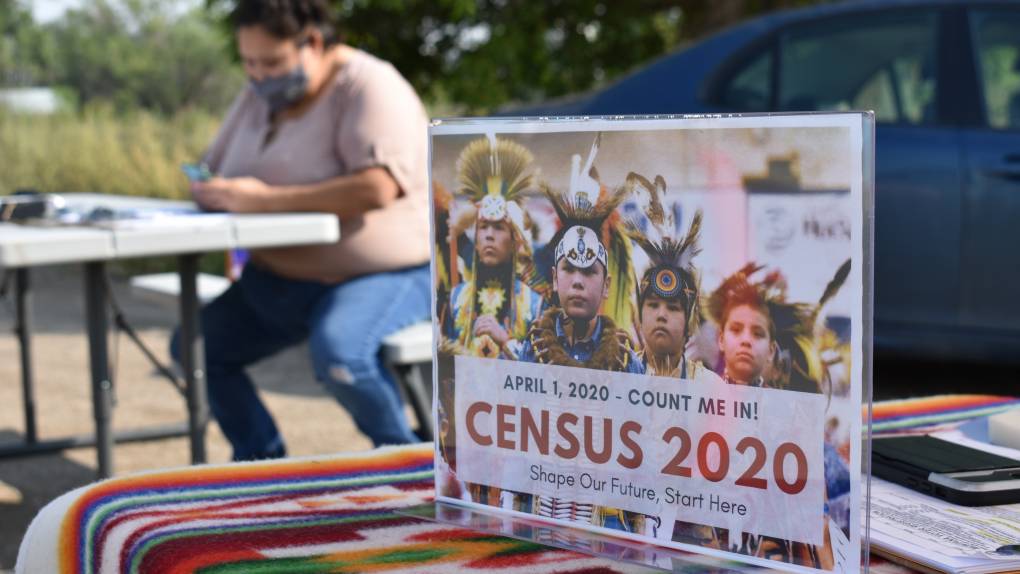
"caption": "A sign promoting Native American participation in the U.S. census is displayed as Selena Rides Horse enters information into her phone on behalf of a member of the Crow Indian Tribe in Lodge Grass, Mont. on Wednesday, Aug. 26, 2020. There are more than 300 Native American reservations across the country, and almost all lag the rest of the country in participation in the census.",
"description": null,
"title": "A sign promoting participation in the 2020 census is displayed as Selena Rides Horse enters information into a phone for a member of the Crow Indian Tribe in Lodge Grass, Mont., in August.",
"credit": "Matthew Brown/AP",
"status": "inherit",
"isLoading": false,
"fetchFailed": false
},
"news_11839628": {
"type": "attachments",
"id": "news_11839628",
"meta": {
"index": "attachments_1716263798",
"site": "news",
"id": "11839628",
"found": true
},
"parent": 11839535,
"imgSizes": {
"apple_news_ca_landscape_5_5": {
"file": "https://ww2.kqed.org/app/uploads/sites/10/2020/09/1920GettyImages-1267511667-1044x783.jpg",
"width": 1044,
"mimeType": "image/jpeg",
"height": 783
},
"apple_news_ca_square_4_0": {
"file": "https://ww2.kqed.org/app/uploads/sites/10/2020/09/1920GettyImages-1267511667-470x470.jpg",
"width": 470,
"mimeType": "image/jpeg",
"height": 470
},
"twentyfourteen-full-width": {
"file": "https://ww2.kqed.org/app/uploads/sites/10/2020/09/1920GettyImages-1267511667-1038x576.jpg",
"width": 1038,
"mimeType": "image/jpeg",
"height": 576
},
"thumbnail": {
"file": "https://ww2.kqed.org/app/uploads/sites/10/2020/09/1920GettyImages-1267511667-160x90.jpg",
"width": 160,
"mimeType": "image/jpeg",
"height": 90
},
"post-thumbnail": {
"file": "https://ww2.kqed.org/app/uploads/sites/10/2020/09/1920GettyImages-1267511667-672x372.jpg",
"width": 672,
"mimeType": "image/jpeg",
"height": 372
},
"kqedFullSize": {
"file": "https://ww2.kqed.org/app/uploads/sites/10/2020/09/1920GettyImages-1267511667-scaled.jpg",
"width": 2560,
"height": 1440
},
"2048x2048": {
"file": "https://ww2.kqed.org/app/uploads/sites/10/2020/09/1920GettyImages-1267511667-2048x1152.jpg",
"width": 2048,
"mimeType": "image/jpeg",
"height": 1152
},
"apple_news_ca_landscape_4_7": {
"file": "https://ww2.kqed.org/app/uploads/sites/10/2020/09/1920GettyImages-1267511667-632x474.jpg",
"width": 632,
"mimeType": "image/jpeg",
"height": 474
},
"large": {
"file": "https://ww2.kqed.org/app/uploads/sites/10/2020/09/1920GettyImages-1267511667-1020x574.jpg",
"width": 1020,
"mimeType": "image/jpeg",
"height": 574
},
"apple_news_ca_landscape_4_0": {
"file": "https://ww2.kqed.org/app/uploads/sites/10/2020/09/1920GettyImages-1267511667-536x402.jpg",
"width": 536,
"mimeType": "image/jpeg",
"height": 402
},
"apple_news_ca_portrait_12_9": {
"file": "https://ww2.kqed.org/app/uploads/sites/10/2020/09/1920GettyImages-1267511667-1122x1496.jpg",
"width": 1122,
"mimeType": "image/jpeg",
"height": 1496
},
"medium": {
"file": "https://ww2.kqed.org/app/uploads/sites/10/2020/09/1920GettyImages-1267511667-800x450.jpg",
"width": 800,
"mimeType": "image/jpeg",
"height": 450
},
"apple_news_ca_portrait_4_0": {
"file": "https://ww2.kqed.org/app/uploads/sites/10/2020/09/1920GettyImages-1267511667-354x472.jpg",
"width": 354,
"mimeType": "image/jpeg",
"height": 472
},
"apple_news_ca_portrait_9_7": {
"file": "https://ww2.kqed.org/app/uploads/sites/10/2020/09/1920GettyImages-1267511667-840x1120.jpg",
"width": 840,
"mimeType": "image/jpeg",
"height": 1120
},
"apple_news_ca_landscape_12_9": {
"file": "https://ww2.kqed.org/app/uploads/sites/10/2020/09/1920GettyImages-1267511667-1832x1374.jpg",
"width": 1832,
"mimeType": "image/jpeg",
"height": 1374
},
"apple_news_ca_square_9_7": {
"file": "https://ww2.kqed.org/app/uploads/sites/10/2020/09/1920GettyImages-1267511667-1104x1104.jpg",
"width": 1104,
"mimeType": "image/jpeg",
"height": 1104
},
"1536x1536": {
"file": "https://ww2.kqed.org/app/uploads/sites/10/2020/09/1920GettyImages-1267511667-1536x864.jpg",
"width": 1536,
"mimeType": "image/jpeg",
"height": 864
},
"apple_news_ca_portrait_4_7": {
"file": "https://ww2.kqed.org/app/uploads/sites/10/2020/09/1920GettyImages-1267511667-414x552.jpg",
"width": 414,
"mimeType": "image/jpeg",
"height": 552
},
"apple_news_ca_square_12_9": {
"file": "https://ww2.kqed.org/app/uploads/sites/10/2020/09/1920GettyImages-1267511667-1472x1472.jpg",
"width": 1472,
"mimeType": "image/jpeg",
"height": 1472
},
"apple_news_ca_portrait_5_5": {
"file": "https://ww2.kqed.org/app/uploads/sites/10/2020/09/1920GettyImages-1267511667-687x916.jpg",
"width": 687,
"mimeType": "image/jpeg",
"height": 916
},
"full-width": {
"file": "https://ww2.kqed.org/app/uploads/sites/10/2020/09/1920GettyImages-1267511667-1920x1080.jpg",
"width": 1920,
"mimeType": "image/jpeg",
"height": 1080
},
"apple_news_ca_square_4_7": {
"file": "https://ww2.kqed.org/app/uploads/sites/10/2020/09/1920GettyImages-1267511667-550x550.jpg",
"width": 550,
"mimeType": "image/jpeg",
"height": 550
},
"apple_news_ca_landscape_9_7": {
"file": "https://ww2.kqed.org/app/uploads/sites/10/2020/09/1920GettyImages-1267511667-1376x1032.jpg",
"width": 1376,
"mimeType": "image/jpeg",
"height": 1032
},
"apple_news_ca_square_5_5": {
"file": "https://ww2.kqed.org/app/uploads/sites/10/2020/09/1920GettyImages-1267511667-912x912.jpg",
"width": 912,
"mimeType": "image/jpeg",
"height": 912
}
},
"publishDate": 1601002540,
"modified": 1601002723,
"caption": "Democratic presidential nominee Joe Biden and Democratic Vice Presidential nominee Kamala Harris confer on stage outside the Chase Center after Biden delivered his acceptance speech on August 20, 2020 in Wilmington, Delaware. ",
"description": null,
"title": "Joe Biden Accepts Party's Nomination For President In Delaware During Virtual DNC",
"credit": "Win McNamee/Getty Images",
"status": "inherit",
"isLoading": false,
"fetchFailed": false
},
"news_11834929": {
"type": "attachments",
"id": "news_11834929",
"meta": {
"index": "attachments_1716263798",
"site": "news",
"id": "11834929",
"found": true
},
"parent": 11834806,
"imgSizes": {
"apple_news_ca_landscape_5_5": {
"file": "https://ww2.kqed.org/app/uploads/sites/10/2020/08/TenantsTogether-1-1044x783.jpg",
"width": 1044,
"mimeType": "image/jpeg",
"height": 783
},
"apple_news_ca_square_4_0": {
"file": "https://ww2.kqed.org/app/uploads/sites/10/2020/08/TenantsTogether-1-470x470.jpg",
"width": 470,
"mimeType": "image/jpeg",
"height": 470
},
"twentyfourteen-full-width": {
"file": "https://ww2.kqed.org/app/uploads/sites/10/2020/08/TenantsTogether-1-1038x576.jpg",
"width": 1038,
"mimeType": "image/jpeg",
"height": 576
},
"thumbnail": {
"file": "https://ww2.kqed.org/app/uploads/sites/10/2020/08/TenantsTogether-1-160x111.jpg",
"width": 160,
"mimeType": "image/jpeg",
"height": 111
},
"post-thumbnail": {
"file": "https://ww2.kqed.org/app/uploads/sites/10/2020/08/TenantsTogether-1-672x372.jpg",
"width": 672,
"mimeType": "image/jpeg",
"height": 372
},
"kqedFullSize": {
"file": "https://ww2.kqed.org/app/uploads/sites/10/2020/08/TenantsTogether-1.jpg",
"width": 1536,
"height": 1070
},
"apple_news_ca_landscape_4_7": {
"file": "https://ww2.kqed.org/app/uploads/sites/10/2020/08/TenantsTogether-1-632x474.jpg",
"width": 632,
"mimeType": "image/jpeg",
"height": 474
},
"large": {
"file": "https://ww2.kqed.org/app/uploads/sites/10/2020/08/TenantsTogether-1-1020x711.jpg",
"width": 1020,
"mimeType": "image/jpeg",
"height": 711
},
"apple_news_ca_landscape_4_0": {
"file": "https://ww2.kqed.org/app/uploads/sites/10/2020/08/TenantsTogether-1-536x402.jpg",
"width": 536,
"mimeType": "image/jpeg",
"height": 402
},
"apple_news_ca_portrait_12_9": {
"file": "https://ww2.kqed.org/app/uploads/sites/10/2020/08/TenantsTogether-1-1122x1070.jpg",
"width": 1122,
"mimeType": "image/jpeg",
"height": 1070
},
"medium": {
"file": "https://ww2.kqed.org/app/uploads/sites/10/2020/08/TenantsTogether-1-800x557.jpg",
"width": 800,
"mimeType": "image/jpeg",
"height": 557
},
"apple_news_ca_portrait_4_0": {
"file": "https://ww2.kqed.org/app/uploads/sites/10/2020/08/TenantsTogether-1-354x472.jpg",
"width": 354,
"mimeType": "image/jpeg",
"height": 472
},
"apple_news_ca_portrait_9_7": {
"file": "https://ww2.kqed.org/app/uploads/sites/10/2020/08/TenantsTogether-1-840x1070.jpg",
"width": 840,
"mimeType": "image/jpeg",
"height": 1070
},
"apple_news_ca_square_9_7": {
"file": "https://ww2.kqed.org/app/uploads/sites/10/2020/08/TenantsTogether-1-1104x1070.jpg",
"width": 1104,
"mimeType": "image/jpeg",
"height": 1070
},
"apple_news_ca_portrait_4_7": {
"file": "https://ww2.kqed.org/app/uploads/sites/10/2020/08/TenantsTogether-1-414x552.jpg",
"width": 414,
"mimeType": "image/jpeg",
"height": 552
},
"apple_news_ca_square_12_9": {
"file": "https://ww2.kqed.org/app/uploads/sites/10/2020/08/TenantsTogether-1-1472x1070.jpg",
"width": 1472,
"mimeType": "image/jpeg",
"height": 1070
},
"apple_news_ca_portrait_5_5": {
"file": "https://ww2.kqed.org/app/uploads/sites/10/2020/08/TenantsTogether-1-687x916.jpg",
"width": 687,
"mimeType": "image/jpeg",
"height": 916
},
"apple_news_ca_square_4_7": {
"file": "https://ww2.kqed.org/app/uploads/sites/10/2020/08/TenantsTogether-1-550x550.jpg",
"width": 550,
"mimeType": "image/jpeg",
"height": 550
},
"apple_news_ca_landscape_9_7": {
"file": "https://ww2.kqed.org/app/uploads/sites/10/2020/08/TenantsTogether-1-1376x1032.jpg",
"width": 1376,
"mimeType": "image/jpeg",
"height": 1032
},
"apple_news_ca_square_5_5": {
"file": "https://ww2.kqed.org/app/uploads/sites/10/2020/08/TenantsTogether-1-912x912.jpg",
"width": 912,
"mimeType": "image/jpeg",
"height": 912
}
},
"publishDate": 1598305539,
"modified": 1618430909,
"caption": "Protesters in San Francisco rallied against Veritas, a property management company, as part of a 2019 demonstration organized on WeChat.",
"description": "Protesters in San Francisco rallied against Veritas, a property management company, as part of a 2019 demonstration organized on WeChat.",
"title": "TenantsTogether (1)",
"credit": "Courtesy of Tenants Together",
"status": "inherit",
"altTag": null,
"isLoading": false,
"fetchFailed": false
},
"news_11838849": {
"type": "attachments",
"id": "news_11838849",
"meta": {
"index": "attachments_1716263798",
"site": "news",
"id": "11838849",
"found": true
},
"parent": 11838665,
"imgSizes": {
"apple_news_ca_landscape_5_5": {
"file": "https://ww2.kqed.org/app/uploads/sites/10/2020/09/744-MARQUEE-1044x720.jpg",
"width": 1044,
"mimeType": "image/jpeg",
"height": 720
},
"apple_news_ca_square_4_0": {
"file": "https://ww2.kqed.org/app/uploads/sites/10/2020/09/744-MARQUEE-470x470.jpg",
"width": 470,
"mimeType": "image/jpeg",
"height": 470
},
"twentyfourteen-full-width": {
"file": "https://ww2.kqed.org/app/uploads/sites/10/2020/09/744-MARQUEE-1038x576.jpg",
"width": 1038,
"mimeType": "image/jpeg",
"height": 576
},
"thumbnail": {
"file": "https://ww2.kqed.org/app/uploads/sites/10/2020/09/744-MARQUEE-160x90.jpg",
"width": 160,
"mimeType": "image/jpeg",
"height": 90
},
"post-thumbnail": {
"file": "https://ww2.kqed.org/app/uploads/sites/10/2020/09/744-MARQUEE-672x372.jpg",
"width": 672,
"mimeType": "image/jpeg",
"height": 372
},
"kqedFullSize": {
"file": "https://ww2.kqed.org/app/uploads/sites/10/2020/09/744-MARQUEE.jpg",
"width": 1280,
"height": 720
},
"apple_news_ca_landscape_4_7": {
"file": "https://ww2.kqed.org/app/uploads/sites/10/2020/09/744-MARQUEE-632x474.jpg",
"width": 632,
"mimeType": "image/jpeg",
"height": 474
},
"large": {
"file": "https://ww2.kqed.org/app/uploads/sites/10/2020/09/744-MARQUEE-1020x574.jpg",
"width": 1020,
"mimeType": "image/jpeg",
"height": 574
},
"apple_news_ca_landscape_4_0": {
"file": "https://ww2.kqed.org/app/uploads/sites/10/2020/09/744-MARQUEE-536x402.jpg",
"width": 536,
"mimeType": "image/jpeg",
"height": 402
},
"apple_news_ca_portrait_12_9": {
"file": "https://ww2.kqed.org/app/uploads/sites/10/2020/09/744-MARQUEE-1122x720.jpg",
"width": 1122,
"mimeType": "image/jpeg",
"height": 720
},
"medium": {
"file": "https://ww2.kqed.org/app/uploads/sites/10/2020/09/744-MARQUEE-800x450.jpg",
"width": 800,
"mimeType": "image/jpeg",
"height": 450
},
"apple_news_ca_portrait_4_0": {
"file": "https://ww2.kqed.org/app/uploads/sites/10/2020/09/744-MARQUEE-354x472.jpg",
"width": 354,
"mimeType": "image/jpeg",
"height": 472
},
"apple_news_ca_portrait_9_7": {
"file": "https://ww2.kqed.org/app/uploads/sites/10/2020/09/744-MARQUEE-840x720.jpg",
"width": 840,
"mimeType": "image/jpeg",
"height": 720
},
"apple_news_ca_square_9_7": {
"file": "https://ww2.kqed.org/app/uploads/sites/10/2020/09/744-MARQUEE-1104x720.jpg",
"width": 1104,
"mimeType": "image/jpeg",
"height": 720
},
"apple_news_ca_portrait_4_7": {
"file": "https://ww2.kqed.org/app/uploads/sites/10/2020/09/744-MARQUEE-414x552.jpg",
"width": 414,
"mimeType": "image/jpeg",
"height": 552
},
"apple_news_ca_portrait_5_5": {
"file": "https://ww2.kqed.org/app/uploads/sites/10/2020/09/744-MARQUEE-687x720.jpg",
"width": 687,
"mimeType": "image/jpeg",
"height": 720
},
"apple_news_ca_square_4_7": {
"file": "https://ww2.kqed.org/app/uploads/sites/10/2020/09/744-MARQUEE-550x550.jpg",
"width": 550,
"mimeType": "image/jpeg",
"height": 550
},
"apple_news_ca_square_5_5": {
"file": "https://ww2.kqed.org/app/uploads/sites/10/2020/09/744-MARQUEE-912x720.jpg",
"width": 912,
"mimeType": "image/jpeg",
"height": 720
}
},
"publishDate": 1600477499,
"modified": 1600477499,
"caption": null,
"description": null,
"title": "744 MARQUEE",
"credit": null,
"status": "inherit",
"isLoading": false,
"fetchFailed": false
},
"news_11838243": {
"type": "attachments",
"id": "news_11838243",
"meta": {
"index": "attachments_1716263798",
"site": "news",
"id": "11838243",
"found": true
},
"parent": 11838218,
"imgSizes": {
"apple_news_ca_square_4_0": {
"file": "https://ww2.kqed.org/app/uploads/sites/10/2020/09/RS43869_001_KQED_Richmond_TPS_07072020-qut-1020x680-1-470x470.jpg",
"width": 470,
"mimeType": "image/jpeg",
"height": 470
},
"twentyfourteen-full-width": {
"file": "https://ww2.kqed.org/app/uploads/sites/10/2020/09/RS43869_001_KQED_Richmond_TPS_07072020-qut-1020x680-1-1020x576.jpg",
"width": 1020,
"mimeType": "image/jpeg",
"height": 576
},
"thumbnail": {
"file": "https://ww2.kqed.org/app/uploads/sites/10/2020/09/RS43869_001_KQED_Richmond_TPS_07072020-qut-1020x680-1-160x107.jpg",
"width": 160,
"mimeType": "image/jpeg",
"height": 107
},
"post-thumbnail": {
"file": "https://ww2.kqed.org/app/uploads/sites/10/2020/09/RS43869_001_KQED_Richmond_TPS_07072020-qut-1020x680-1-672x372.jpg",
"width": 672,
"mimeType": "image/jpeg",
"height": 372
},
"kqedFullSize": {
"file": "https://ww2.kqed.org/app/uploads/sites/10/2020/09/RS43869_001_KQED_Richmond_TPS_07072020-qut-1020x680-1.jpg",
"width": 1020,
"height": 680
},
"apple_news_ca_landscape_4_7": {
"file": "https://ww2.kqed.org/app/uploads/sites/10/2020/09/RS43869_001_KQED_Richmond_TPS_07072020-qut-1020x680-1-632x474.jpg",
"width": 632,
"mimeType": "image/jpeg",
"height": 474
},
"apple_news_ca_landscape_4_0": {
"file": "https://ww2.kqed.org/app/uploads/sites/10/2020/09/RS43869_001_KQED_Richmond_TPS_07072020-qut-1020x680-1-536x402.jpg",
"width": 536,
"mimeType": "image/jpeg",
"height": 402
},
"medium": {
"file": "https://ww2.kqed.org/app/uploads/sites/10/2020/09/RS43869_001_KQED_Richmond_TPS_07072020-qut-1020x680-1-800x533.jpg",
"width": 800,
"mimeType": "image/jpeg",
"height": 533
},
"apple_news_ca_portrait_4_0": {
"file": "https://ww2.kqed.org/app/uploads/sites/10/2020/09/RS43869_001_KQED_Richmond_TPS_07072020-qut-1020x680-1-354x472.jpg",
"width": 354,
"mimeType": "image/jpeg",
"height": 472
},
"apple_news_ca_portrait_9_7": {
"file": "https://ww2.kqed.org/app/uploads/sites/10/2020/09/RS43869_001_KQED_Richmond_TPS_07072020-qut-1020x680-1-840x680.jpg",
"width": 840,
"mimeType": "image/jpeg",
"height": 680
},
"apple_news_ca_portrait_4_7": {
"file": "https://ww2.kqed.org/app/uploads/sites/10/2020/09/RS43869_001_KQED_Richmond_TPS_07072020-qut-1020x680-1-414x552.jpg",
"width": 414,
"mimeType": "image/jpeg",
"height": 552
},
"apple_news_ca_portrait_5_5": {
"file": "https://ww2.kqed.org/app/uploads/sites/10/2020/09/RS43869_001_KQED_Richmond_TPS_07072020-qut-1020x680-1-687x680.jpg",
"width": 687,
"mimeType": "image/jpeg",
"height": 680
},
"apple_news_ca_square_4_7": {
"file": "https://ww2.kqed.org/app/uploads/sites/10/2020/09/RS43869_001_KQED_Richmond_TPS_07072020-qut-1020x680-1-550x550.jpg",
"width": 550,
"mimeType": "image/jpeg",
"height": 550
},
"apple_news_ca_square_5_5": {
"file": "https://ww2.kqed.org/app/uploads/sites/10/2020/09/RS43869_001_KQED_Richmond_TPS_07072020-qut-1020x680-1-912x680.jpg",
"width": 912,
"mimeType": "image/jpeg",
"height": 680
}
},
"publishDate": 1600287285,
"modified": 1600288225,
"caption": " Cristina Morales (a la izquierda) camina por Richmond, California con sus hijos Diego y Crista, quienes son ciudadanos estadounidenses el pasado, 7 de julio del 2020. Morales es una de los 400 mil inmigrantes que podría perder su estatus migratorio y permiso para trabajar en EE.UU. luego del fallo de una corte de apelaciones. ",
"description": " Cristina Morales (a la izquierda) camina por Richmond, California con sus hijos Diego y Crista, quienes son ciudadanos estadounidenses el pasado, 7 de julio del 2020. Morales es una de los 400 mil inmigrantes que podría perder su estatus migratorio y permiso para trabajar en EE.UU. luego del fallo de una corte de apelaciones. ",
"title": "RS43869_001_KQED_Richmond_TPS_07072020-qut-1020x680",
"credit": "Beth LaBerge/KQED",
"status": "inherit",
"isLoading": false,
"fetchFailed": false
},
"news_11838125": {
"type": "attachments",
"id": "news_11838125",
"meta": {
"index": "attachments_1716263798",
"site": "news",
"id": "11838125",
"found": true
},
"parent": 11838020,
"imgSizes": {
"apple_news_ca_landscape_5_5": {
"file": "https://ww2.kqed.org/app/uploads/sites/10/2020/09/IMG_0305-1044x783.jpg",
"width": 1044,
"mimeType": "image/jpeg",
"height": 783
},
"apple_news_ca_square_4_0": {
"file": "https://ww2.kqed.org/app/uploads/sites/10/2020/09/IMG_0305-470x470.jpg",
"width": 470,
"mimeType": "image/jpeg",
"height": 470
},
"twentyfourteen-full-width": {
"file": "https://ww2.kqed.org/app/uploads/sites/10/2020/09/IMG_0305-1038x576.jpg",
"width": 1038,
"mimeType": "image/jpeg",
"height": 576
},
"thumbnail": {
"file": "https://ww2.kqed.org/app/uploads/sites/10/2020/09/IMG_0305-160x120.jpg",
"width": 160,
"mimeType": "image/jpeg",
"height": 120
},
"post-thumbnail": {
"file": "https://ww2.kqed.org/app/uploads/sites/10/2020/09/IMG_0305-672x372.jpg",
"width": 672,
"mimeType": "image/jpeg",
"height": 372
},
"kqedFullSize": {
"file": "https://ww2.kqed.org/app/uploads/sites/10/2020/09/IMG_0305-scaled-e1600216201404.jpg",
"width": 1920,
"height": 1440
},
"2048x2048": {
"file": "https://ww2.kqed.org/app/uploads/sites/10/2020/09/IMG_0305-2048x1536.jpg",
"width": 2048,
"mimeType": "image/jpeg",
"height": 1536
},
"apple_news_ca_landscape_4_7": {
"file": "https://ww2.kqed.org/app/uploads/sites/10/2020/09/IMG_0305-632x474.jpg",
"width": 632,
"mimeType": "image/jpeg",
"height": 474
},
"large": {
"file": "https://ww2.kqed.org/app/uploads/sites/10/2020/09/IMG_0305-1020x765.jpg",
"width": 1020,
"mimeType": "image/jpeg",
"height": 765
},
"apple_news_ca_landscape_4_0": {
"file": "https://ww2.kqed.org/app/uploads/sites/10/2020/09/IMG_0305-536x402.jpg",
"width": 536,
"mimeType": "image/jpeg",
"height": 402
},
"apple_news_ca_portrait_12_9": {
"file": "https://ww2.kqed.org/app/uploads/sites/10/2020/09/IMG_0305-1122x1496.jpg",
"width": 1122,
"mimeType": "image/jpeg",
"height": 1496
},
"medium": {
"file": "https://ww2.kqed.org/app/uploads/sites/10/2020/09/IMG_0305-800x600.jpg",
"width": 800,
"mimeType": "image/jpeg",
"height": 600
},
"apple_news_ca_portrait_4_0": {
"file": "https://ww2.kqed.org/app/uploads/sites/10/2020/09/IMG_0305-354x472.jpg",
"width": 354,
"mimeType": "image/jpeg",
"height": 472
},
"apple_news_ca_portrait_9_7": {
"file": "https://ww2.kqed.org/app/uploads/sites/10/2020/09/IMG_0305-840x1120.jpg",
"width": 840,
"mimeType": "image/jpeg",
"height": 1120
},
"apple_news_ca_landscape_12_9": {
"file": "https://ww2.kqed.org/app/uploads/sites/10/2020/09/IMG_0305-1832x1374.jpg",
"width": 1832,
"mimeType": "image/jpeg",
"height": 1374
},
"apple_news_ca_square_9_7": {
"file": "https://ww2.kqed.org/app/uploads/sites/10/2020/09/IMG_0305-1104x1104.jpg",
"width": 1104,
"mimeType": "image/jpeg",
"height": 1104
},
"1536x1536": {
"file": "https://ww2.kqed.org/app/uploads/sites/10/2020/09/IMG_0305-1536x1152.jpg",
"width": 1536,
"mimeType": "image/jpeg",
"height": 1152
},
"apple_news_ca_portrait_4_7": {
"file": "https://ww2.kqed.org/app/uploads/sites/10/2020/09/IMG_0305-414x552.jpg",
"width": 414,
"mimeType": "image/jpeg",
"height": 552
},
"apple_news_ca_square_12_9": {
"file": "https://ww2.kqed.org/app/uploads/sites/10/2020/09/IMG_0305-1472x1472.jpg",
"width": 1472,
"mimeType": "image/jpeg",
"height": 1472
},
"apple_news_ca_portrait_5_5": {
"file": "https://ww2.kqed.org/app/uploads/sites/10/2020/09/IMG_0305-687x916.jpg",
"width": 687,
"mimeType": "image/jpeg",
"height": 916
},
"full-width": {
"file": "https://ww2.kqed.org/app/uploads/sites/10/2020/09/IMG_0305-1920x1440.jpg",
"width": 1920,
"mimeType": "image/jpeg",
"height": 1440
},
"apple_news_ca_square_4_7": {
"file": "https://ww2.kqed.org/app/uploads/sites/10/2020/09/IMG_0305-550x550.jpg",
"width": 550,
"mimeType": "image/jpeg",
"height": 550
},
"apple_news_ca_landscape_9_7": {
"file": "https://ww2.kqed.org/app/uploads/sites/10/2020/09/IMG_0305-1376x1032.jpg",
"width": 1376,
"mimeType": "image/jpeg",
"height": 1032
},
"apple_news_ca_square_5_5": {
"file": "https://ww2.kqed.org/app/uploads/sites/10/2020/09/IMG_0305-912x912.jpg",
"width": 912,
"mimeType": "image/jpeg",
"height": 912
}
},
"publishDate": 1600212648,
"modified": 1600218073,
"caption": "Vice presidential nominee Kamala Harris talks with Gov. Gavin Newsom near the Creek Fire burning outside Fresno on Sept. 15, 2020.",
"description": null,
"title": "Harris at the Creek Fire",
"credit": "Alex Hall/KQED",
"status": "inherit",
"isLoading": false,
"fetchFailed": false
},
"news_11838010": {
"type": "attachments",
"id": "news_11838010",
"meta": {
"index": "attachments_1716263798",
"site": "news",
"id": "11838010",
"found": true
},
"parent": 11838007,
"imgSizes": {
"apple_news_ca_landscape_5_5": {
"file": "https://ww2.kqed.org/app/uploads/sites/10/2020/09/RS43869_001_KQED_Richmond_TPS_07072020-qut-1044x783.jpg",
"width": 1044,
"mimeType": "image/jpeg",
"height": 783
},
"apple_news_ca_square_4_0": {
"file": "https://ww2.kqed.org/app/uploads/sites/10/2020/09/RS43869_001_KQED_Richmond_TPS_07072020-qut-470x470.jpg",
"width": 470,
"mimeType": "image/jpeg",
"height": 470
},
"twentyfourteen-full-width": {
"file": "https://ww2.kqed.org/app/uploads/sites/10/2020/09/RS43869_001_KQED_Richmond_TPS_07072020-qut-1038x576.jpg",
"width": 1038,
"mimeType": "image/jpeg",
"height": 576
},
"thumbnail": {
"file": "https://ww2.kqed.org/app/uploads/sites/10/2020/09/RS43869_001_KQED_Richmond_TPS_07072020-qut-160x107.jpg",
"width": 160,
"mimeType": "image/jpeg",
"height": 107
},
"post-thumbnail": {
"file": "https://ww2.kqed.org/app/uploads/sites/10/2020/09/RS43869_001_KQED_Richmond_TPS_07072020-qut-672x372.jpg",
"width": 672,
"mimeType": "image/jpeg",
"height": 372
},
"kqedFullSize": {
"file": "https://ww2.kqed.org/app/uploads/sites/10/2020/09/RS43869_001_KQED_Richmond_TPS_07072020-qut.jpg",
"width": 1920,
"height": 1280
},
"apple_news_ca_landscape_4_7": {
"file": "https://ww2.kqed.org/app/uploads/sites/10/2020/09/RS43869_001_KQED_Richmond_TPS_07072020-qut-632x474.jpg",
"width": 632,
"mimeType": "image/jpeg",
"height": 474
},
"large": {
"file": "https://ww2.kqed.org/app/uploads/sites/10/2020/09/RS43869_001_KQED_Richmond_TPS_07072020-qut-1020x680.jpg",
"width": 1020,
"mimeType": "image/jpeg",
"height": 680
},
"apple_news_ca_landscape_4_0": {
"file": "https://ww2.kqed.org/app/uploads/sites/10/2020/09/RS43869_001_KQED_Richmond_TPS_07072020-qut-536x402.jpg",
"width": 536,
"mimeType": "image/jpeg",
"height": 402
},
"apple_news_ca_portrait_12_9": {
"file": "https://ww2.kqed.org/app/uploads/sites/10/2020/09/RS43869_001_KQED_Richmond_TPS_07072020-qut-1122x1280.jpg",
"width": 1122,
"mimeType": "image/jpeg",
"height": 1280
},
"medium": {
"file": "https://ww2.kqed.org/app/uploads/sites/10/2020/09/RS43869_001_KQED_Richmond_TPS_07072020-qut-800x533.jpg",
"width": 800,
"mimeType": "image/jpeg",
"height": 533
},
"apple_news_ca_portrait_4_0": {
"file": "https://ww2.kqed.org/app/uploads/sites/10/2020/09/RS43869_001_KQED_Richmond_TPS_07072020-qut-354x472.jpg",
"width": 354,
"mimeType": "image/jpeg",
"height": 472
},
"apple_news_ca_portrait_9_7": {
"file": "https://ww2.kqed.org/app/uploads/sites/10/2020/09/RS43869_001_KQED_Richmond_TPS_07072020-qut-840x1120.jpg",
"width": 840,
"mimeType": "image/jpeg",
"height": 1120
},
"apple_news_ca_landscape_12_9": {
"file": "https://ww2.kqed.org/app/uploads/sites/10/2020/09/RS43869_001_KQED_Richmond_TPS_07072020-qut-1832x1280.jpg",
"width": 1832,
"mimeType": "image/jpeg",
"height": 1280
},
"apple_news_ca_square_9_7": {
"file": "https://ww2.kqed.org/app/uploads/sites/10/2020/09/RS43869_001_KQED_Richmond_TPS_07072020-qut-1104x1104.jpg",
"width": 1104,
"mimeType": "image/jpeg",
"height": 1104
},
"1536x1536": {
"file": "https://ww2.kqed.org/app/uploads/sites/10/2020/09/RS43869_001_KQED_Richmond_TPS_07072020-qut-1536x1024.jpg",
"width": 1536,
"mimeType": "image/jpeg",
"height": 1024
},
"apple_news_ca_portrait_4_7": {
"file": "https://ww2.kqed.org/app/uploads/sites/10/2020/09/RS43869_001_KQED_Richmond_TPS_07072020-qut-414x552.jpg",
"width": 414,
"mimeType": "image/jpeg",
"height": 552
},
"apple_news_ca_square_12_9": {
"file": "https://ww2.kqed.org/app/uploads/sites/10/2020/09/RS43869_001_KQED_Richmond_TPS_07072020-qut-1472x1280.jpg",
"width": 1472,
"mimeType": "image/jpeg",
"height": 1280
},
"apple_news_ca_portrait_5_5": {
"file": "https://ww2.kqed.org/app/uploads/sites/10/2020/09/RS43869_001_KQED_Richmond_TPS_07072020-qut-687x916.jpg",
"width": 687,
"mimeType": "image/jpeg",
"height": 916
},
"apple_news_ca_square_4_7": {
"file": "https://ww2.kqed.org/app/uploads/sites/10/2020/09/RS43869_001_KQED_Richmond_TPS_07072020-qut-550x550.jpg",
"width": 550,
"mimeType": "image/jpeg",
"height": 550
},
"apple_news_ca_landscape_9_7": {
"file": "https://ww2.kqed.org/app/uploads/sites/10/2020/09/RS43869_001_KQED_Richmond_TPS_07072020-qut-1376x1032.jpg",
"width": 1376,
"mimeType": "image/jpeg",
"height": 1032
},
"apple_news_ca_square_5_5": {
"file": "https://ww2.kqed.org/app/uploads/sites/10/2020/09/RS43869_001_KQED_Richmond_TPS_07072020-qut-912x912.jpg",
"width": 912,
"mimeType": "image/jpeg",
"height": 912
}
},
"publishDate": 1600195704,
"modified": 1600286950,
"caption": "Cristina Morales (left) walks in Richmond, California with her children Diego and Crista, who are U.S. citizens, on July 7, 2020. Morales is one of more than 400,000 immigrants who would lose their permits to live and work in the U.S. after an appeals court ruling this week.",
"description": "Cristina Morales (left) walks in Richmond, California with her children Diego and Crista, who are U.S. citizens, on July 7, 2020. Morales is one of more than 400,000 immigrants who would lose their permits to live and work in the U.S. after an appeals court ruling this week.",
"title": "RS43869_001_KQED_Richmond_TPS_07072020-qut",
"credit": "Beth LaBerge/KQED",
"status": "inherit",
"isLoading": false,
"fetchFailed": false
},
"news_11637256": {
"type": "attachments",
"id": "news_11637256",
"meta": {
"index": "attachments_1716263798",
"site": "news",
"id": "11637256",
"found": true
},
"title": "ScottWiener",
"publishDate": 1513305232,
"status": "inherit",
"parent": 11637200,
"modified": 1721158462,
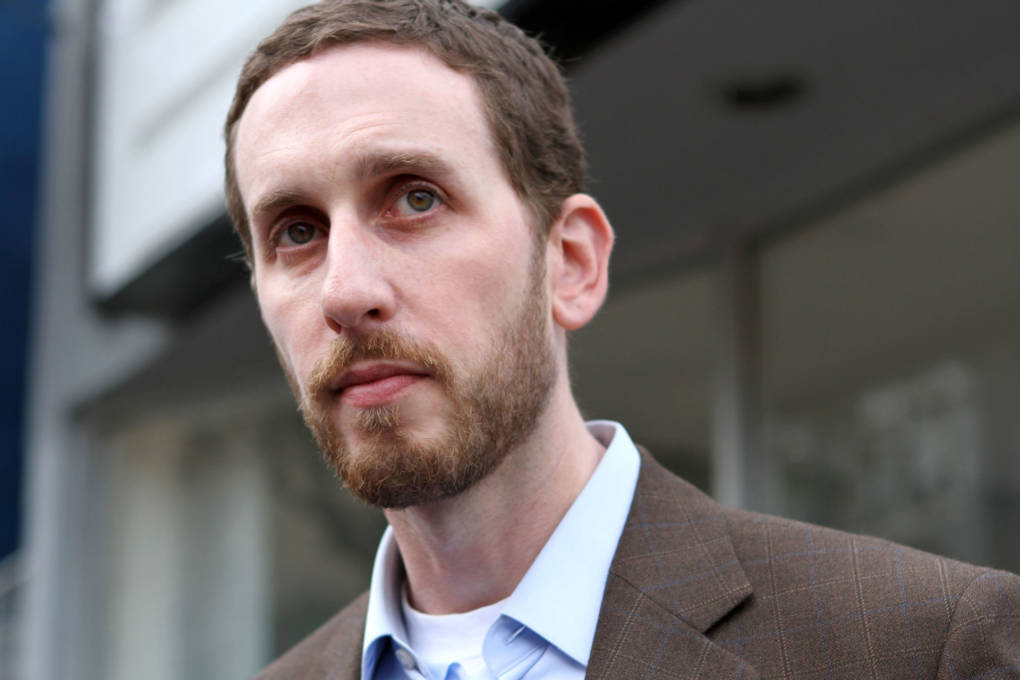
"caption": "Senate Bill 145, signed into law by Gov. Gavin Newsom in early September, is intended to reform the state’s sex offender registry to be fairer to young LGBT adults. The bill's author, state Sen. Scott Wiener, has received hundreds of death threats from people who believe the bill legalizes pedophilia in California.",
"credit": "Michelle Gachet/KQED",
"altTag": "Senate Bill 145, signed into law by Gov. Gavin Newsom in early September, is intended to reform the state’s sex offender registry to be fairer to young LGBT adults. The bill's author, state Sen. Scott Wiener, has received hundreds of death threats from people who believe the bill legalizes pedophilia in California.",
"description": "Senate Bill 145, signed into law by Gov. Gavin Newsom in early September, is intended to reform the state’s sex offender registry to be fairer to young LGBTQ adults. The bill's author, state Sen. Scott Wiener, has received hundreds of death threats from people who believe the bill legalizes pedophilia in California.",
"imgSizes": {
"thumbnail": {
"file": "https://cdn.kqed.org/wp-content/uploads/sites/10/2017/12/ScottWiener-160x107.jpg",
"width": 160,
"height": 107,
"mimeType": "image/jpeg"
},
"medium": {
"file": "https://cdn.kqed.org/wp-content/uploads/sites/10/2017/12/ScottWiener-800x533.jpg",
"width": 800,
"height": 533,
"mimeType": "image/jpeg"
},
"large": {
"file": "https://cdn.kqed.org/wp-content/uploads/sites/10/2017/12/ScottWiener-1020x680.jpg",
"width": 1020,
"height": 680,
"mimeType": "image/jpeg"
},
"fd-lrg": {
"file": "https://cdn.kqed.org/wp-content/uploads/sites/10/2017/12/ScottWiener-1920x1280.jpg",
"width": 1920,
"height": 1280,
"mimeType": "image/jpeg"
},
"fd-med": {
"file": "https://cdn.kqed.org/wp-content/uploads/sites/10/2017/12/ScottWiener-1180x787.jpg",
"width": 1180,
"height": 787,
"mimeType": "image/jpeg"
},
"fd-sm": {
"file": "https://cdn.kqed.org/wp-content/uploads/sites/10/2017/12/ScottWiener-960x640.jpg",
"width": 960,
"height": 640,
"mimeType": "image/jpeg"
},
"post-thumbnail": {
"file": "https://cdn.kqed.org/wp-content/uploads/sites/10/2017/12/ScottWiener-672x372.jpg",
"width": 672,
"height": 372,
"mimeType": "image/jpeg"
},
"twentyfourteen-full-width": {
"file": "https://cdn.kqed.org/wp-content/uploads/sites/10/2017/12/ScottWiener-1038x576.jpg",
"width": 1038,
"height": 576,
"mimeType": "image/jpeg"
},
"xxsmall": {
"file": "https://cdn.kqed.org/wp-content/uploads/sites/10/2017/12/ScottWiener-240x160.jpg",
"width": 240,
"height": 160,
"mimeType": "image/jpeg"
},
"xsmall": {
"file": "https://cdn.kqed.org/wp-content/uploads/sites/10/2017/12/ScottWiener-375x250.jpg",
"width": 375,
"height": 250,
"mimeType": "image/jpeg"
},
"small": {
"file": "https://cdn.kqed.org/wp-content/uploads/sites/10/2017/12/ScottWiener-520x347.jpg",
"width": 520,
"height": 347,
"mimeType": "image/jpeg"
},
"xlarge": {
"file": "https://cdn.kqed.org/wp-content/uploads/sites/10/2017/12/ScottWiener-1180x787.jpg",
"width": 1180,
"height": 787,
"mimeType": "image/jpeg"
},
"full-width": {
"file": "https://cdn.kqed.org/wp-content/uploads/sites/10/2017/12/ScottWiener-1920x1280.jpg",
"width": 1920,
"height": 1280,
"mimeType": "image/jpeg"
},
"guest-author-32": {
"file": "https://cdn.kqed.org/wp-content/uploads/sites/10/2017/12/ScottWiener-32x32.jpg",
"width": 32,
"height": 32,
"mimeType": "image/jpeg"
},
"guest-author-50": {
"file": "https://cdn.kqed.org/wp-content/uploads/sites/10/2017/12/ScottWiener-50x50.jpg",
"width": 50,
"height": 50,
"mimeType": "image/jpeg"
},
"guest-author-64": {
"file": "https://cdn.kqed.org/wp-content/uploads/sites/10/2017/12/ScottWiener-64x64.jpg",
"width": 64,
"height": 64,
"mimeType": "image/jpeg"
},
"guest-author-96": {
"file": "https://cdn.kqed.org/wp-content/uploads/sites/10/2017/12/ScottWiener-96x96.jpg",
"width": 96,
"height": 96,
"mimeType": "image/jpeg"
},
"guest-author-128": {
"file": "https://cdn.kqed.org/wp-content/uploads/sites/10/2017/12/ScottWiener-128x128.jpg",
"width": 128,
"height": 128,
"mimeType": "image/jpeg"
},
"detail": {
"file": "https://cdn.kqed.org/wp-content/uploads/sites/10/2017/12/ScottWiener-150x150.jpg",
"width": 150,
"height": 150,
"mimeType": "image/jpeg"
},
"kqedFullSize": {
"file": "https://cdn.kqed.org/wp-content/uploads/sites/10/2017/12/ScottWiener.jpg",
"width": 1920,
"height": 1280
}
},
"isLoading": false,
"fetchFailed": false
}
},
"audioPlayerReducer": {
"postId": "stream_live",
"isPaused": true,
"isPlaying": false,
"pfsActive": false,
"pledgeModalIsOpen": true,
"playerDrawerIsOpen": false,
"liveAudioPlayStartedAt": 0,
"liveAudioPlayContext": ""
},
"authorsReducer": {
"byline_news_11839905": {
"type": "authors",
"id": "byline_news_11839905",
"meta": {
"override": true
},
"slug": "byline_news_11839905",
"name": "Sam Gringlas",
"isLoading": false
},
"byline_news_11839647": {
"type": "authors",
"id": "byline_news_11839647",
"meta": {
"override": true
},
"slug": "byline_news_11839647",
"name": "Hansi Lo Wang",
"isLoading": false
},
"byline_news_11838909": {
"type": "authors",
"id": "byline_news_11838909",
"meta": {
"override": true
},
"slug": "byline_news_11838909",
"name": "Joe Dworetzky, KQED",
"isLoading": false
},
"kqed": {
"type": "authors",
"id": "236",
"meta": {
"index": "authors_1716337520",
"id": "236",
"found": true
},
"name": "KQED News Staff",
"firstName": "KQED News Staff",
"lastName": null,
"slug": "kqed",
"email": "faq@kqed.org",
"display_author_email": false,
"staff_mastheads": [],
"title": null,
"bio": null,
"avatar": "https://secure.gravatar.com/avatar/ef0e801a68c4c54afa9180db14084167?s=600&d=blank&r=g",
"twitter": null,
"facebook": null,
"instagram": null,
"linkedin": null,
"sites": [
{
"site": "arts",
"roles": [
"contributor"
]
},
{
"site": "news",
"roles": [
"editor"
]
},
{
"site": "futureofyou",
"roles": [
"author"
]
}
],
"headData": {
"title": "KQED News Staff | KQED",
"description": null,
"ogImgSrc": "https://secure.gravatar.com/avatar/ef0e801a68c4c54afa9180db14084167?s=600&d=blank&r=g",
"twImgSrc": "https://secure.gravatar.com/avatar/ef0e801a68c4c54afa9180db14084167?s=600&d=blank&r=g"
},
"isLoading": false,
"link": "/author/kqed"
},
"rachael-myrow": {
"type": "authors",
"id": "251",
"meta": {
"index": "authors_1716337520",
"id": "251",
"found": true
},
"name": "Rachael Myrow",
"firstName": "Rachael",
"lastName": "Myrow",
"slug": "rachael-myrow",
"email": "rmyrow@kqed.org",
"display_author_email": true,
"staff_mastheads": [
"news"
],
"title": "Senior Editor of KQED's Silicon Valley News Desk",
"bio": "• I write and edit stories about how Silicon Valley power and policies shape everyday life in California. I’m also passionate about making Bay Area history and culture more accessible to a broad public. • I’ve been a journalist for most of my life, starting in high school with The Franklin Press in Los Angeles, where I grew up. While earning my first degree in English at UC Berkeley, I got my start in public radio at KALX-FM. After completing a second degree in journalism at Cal, I landed my first professional job at Marketplace, then moved on to KPCC (now LAist), and then KQED, where I hosted The California Report for more than seven years. • My reporting has appeared on NPR, The World, WBUR’s \u003ci>Here & Now\u003c/i>, and the BBC. I also guest host for KQED’s \u003ci>Forum\u003c/i>, as well as the Commonwealth Club in San Francisco. • I speak periodically on media, democracy and technology issues, and do voiceover work for documentaries and educational video projects. • Outside of the studio, you'll find me hiking Bay Area trails and whipping up Insta-ready meals in my kitchen. • I do not accept gifts, money, or favors from anyone connected to my reporting, I don't pay people for information, and I do not support or donate to political causes. • I strive to treat the people I report on with fairness, honesty, and respect. I also recognize there are often multiple sides to a story and work to verify information through multiple sources and documentation. If I get something wrong, I correct it.",
"avatar": "https://secure.gravatar.com/avatar/87bf8cb5874e045cdff430523a6d48b1?s=600&d=blank&r=g",
"twitter": "rachaelmyrow",
"facebook": null,
"instagram": null,
"linkedin": "https://www.linkedin.com/in/rachaelmyrow/",
"sites": [
{
"site": "arts",
"roles": [
"administrator"
]
},
{
"site": "news",
"roles": [
"edit_others_posts",
"editor"
]
},
{
"site": "futureofyou",
"roles": [
"editor"
]
},
{
"site": "bayareabites",
"roles": [
"editor"
]
},
{
"site": "stateofhealth",
"roles": [
"editor"
]
},
{
"site": "science",
"roles": [
"editor"
]
},
{
"site": "food",
"roles": [
"editor"
]
},
{
"site": "forum",
"roles": [
"editor"
]
},
{
"site": "liveblog",
"roles": [
"author"
]
}
],
"headData": {
"title": "Rachael Myrow | KQED",
"description": "Senior Editor of KQED's Silicon Valley News Desk",
"ogImgSrc": "https://secure.gravatar.com/avatar/87bf8cb5874e045cdff430523a6d48b1?s=600&d=blank&r=g",
"twImgSrc": "https://secure.gravatar.com/avatar/87bf8cb5874e045cdff430523a6d48b1?s=600&d=blank&r=g"
},
"isLoading": false,
"link": "/author/rachael-myrow"
},
"scottshafer": {
"type": "authors",
"id": "255",
"meta": {
"index": "authors_1716337520",
"id": "255",
"found": true
},
"name": "Scott Shafer",
"firstName": "Scott",
"lastName": "Shafer",
"slug": "scottshafer",
"email": "sshafer@kqed.org",
"display_author_email": false,
"staff_mastheads": [
"news"
],
"title": "KQED Contributor",
"bio": "Scott Shafer is a senior editor with the KQED Politics and Government desk. He is co-host of Political Breakdown, the award-winning radio show and podcast with a personal take on the world of politics. Scott came to KQED in 1998 to host the statewide\u003cem> California Report\u003c/em>. Prior to that he had extended stints in politics and government\u003cem>.\u003c/em> He uses that inside experience at KQED in his, reporting, hosting and analysis for the politics desk. Scott collaborated \u003cem>Political Breakdown a\u003c/em>nd on \u003cem>The Political Mind of Jerry Brown, \u003c/em>an eight-part series about the life and extraordinary political career of the former governor. For fun, he plays water polo with the San Francisco Tsunami.",
"avatar": "https://secure.gravatar.com/avatar/a62ebae45b79d7aed1a39a0e3bf68104?s=600&d=blank&r=g",
"twitter": "scottshafer",
"bluesky": null,
"facebook": null,
"instagram": null,
"linkedin": null,
"sites": [
{
"site": "news",
"roles": [
"editor"
]
},
{
"site": "stateofhealth",
"roles": [
"author"
]
},
{
"site": "science",
"roles": [
"author"
]
},
{
"site": "forum",
"roles": [
"subscriber"
]
},
{
"site": "liveblog",
"roles": [
"author"
]
}
],
"headData": {
"title": "Scott Shafer | KQED",
"description": "KQED Contributor",
"ogImgSrc": "https://secure.gravatar.com/avatar/a62ebae45b79d7aed1a39a0e3bf68104?s=600&d=blank&r=g",
"twImgSrc": "https://secure.gravatar.com/avatar/a62ebae45b79d7aed1a39a0e3bf68104?s=600&d=blank&r=g"
},
"isLoading": false,
"link": "/author/scottshafer"
},
"markfiore": {
"type": "authors",
"id": "3236",
"meta": {
"index": "authors_1716337520",
"id": "3236",
"found": true
},
"name": "Mark Fiore",
"firstName": "Mark",
"lastName": "Fiore",
"slug": "markfiore",
"email": "mark@markfiore.com",
"display_author_email": false,
"staff_mastheads": [
"news"
],
"title": "KQED News Cartoonist",
"bio": "\u003ca href=\"http://www.MarkFiore.com\">MarkFiore.com\u003c/a> | \u003ca href=\"https://twitter.com/markfiore\">Follow on Twitter\u003c/a> | \u003ca href=\"https://www.facebook.com/pages/Mark-Fiore-Animated-Political-Cartoons/94451707396?ref=bookmarks\">Facebook\u003c/a> | \u003ca href=\"mailto:mark@markfiore.com\">email\u003c/a>\r\n\r\nPulitzer Prize-winner, Mark Fiore, who the Wall Street Journal has called “the undisputed guru of the form,” creates animated political cartoons in San Francisco, where his work has been featured regularly on the San Francisco Chronicle’s web site, SFGate.com. His work has appeared on Newsweek.com, Slate.com, CBSNews.com, MotherJones.com, DailyKos.com and NPR’s web site. Fiore’s political animation has appeared on CNN, Frontline, Bill Moyers Journal, Salon.com and cable and broadcast outlets across the globe.\r\n\r\nBeginning his professional life by drawing traditional political cartoons for newspapers, Fiore’s work appeared in publications ranging from the Washington Post to the Los Angeles Times. In the late 1990s, he began to experiment with animating political cartoons and, after a short stint at the San Jose Mercury News as their staff cartoonist, Fiore devoted all his energies to animation.\r\nGrowing up in California, Fiore also spent a good portion of his life in the backwoods of Idaho. It was this combination that shaped him politically. Mark majored in political science at Colorado College, where, in a perfect send-off for a cartoonist, he received his diploma in 1991 as commencement speaker Dick Cheney smiled approvingly.\r\nMark Fiore was awarded the Pulitzer Prize for political cartooning in 2010, a Robert F. Kennedy Journalism Award in 2004 and has twice received an Online Journalism Award for commentary from the Online News Association (2002, 2008). Fiore has received two awards for his work in new media from the National Cartoonists Society (2001, 2002), and in 2006 received The James Madison Freedom of Information Award from The Society of Professional Journalists.",
"avatar": "https://secure.gravatar.com/avatar/fc4e2a612b15b67bad0c6f0e1db4ca9b?s=600&d=blank&r=g",
"twitter": "MarkFiore",
"facebook": null,
"instagram": "https://www.instagram.com/markfiore/?hl=en",
"linkedin": null,
"sites": [
{
"site": "arts",
"roles": [
"contributor"
]
},
{
"site": "news",
"roles": [
"editor"
]
},
{
"site": "futureofyou",
"roles": [
"editor"
]
},
{
"site": "science",
"roles": [
"editor"
]
}
],
"headData": {
"title": "Mark Fiore | KQED",
"description": "KQED News Cartoonist",
"ogImgSrc": "https://secure.gravatar.com/avatar/fc4e2a612b15b67bad0c6f0e1db4ca9b?s=600&d=blank&r=g",
"twImgSrc": "https://secure.gravatar.com/avatar/fc4e2a612b15b67bad0c6f0e1db4ca9b?s=600&d=blank&r=g"
},
"isLoading": false,
"link": "/author/markfiore"
},
"fjhabvala": {
"type": "authors",
"id": "8659",
"meta": {
"index": "authors_1716337520",
"id": "8659",
"found": true
},
"name": "Farida Jhabvala Romero",
"firstName": "Farida",
"lastName": "Jhabvala Romero",
"slug": "fjhabvala",
"email": "fjhabvala@kqed.org",
"display_author_email": true,
"staff_mastheads": [
"news"
],
"title": "KQED Contributor",
"bio": "Farida Jhabvala Romero is a Labor Correspondent for KQED. She previously covered immigration. Farida was \u003ca href=\"https://www.ccnma.org/2022-most-influential-latina-journalists\">named\u003c/a> one of the 10 Most Influential Latina Journalists in California in 2022 by the California Chicano News Media Association. Her work has won awards from the Society of Professional Journalists (Northern California), as well as a national and regional Edward M. Murrow Award for the collaborative reporting projects “Dangerous Air” and “Graying California.” Before joining KQED, Farida worked as a producer at Radio Bilingüe, a national public radio network. Farida earned her master’s degree in journalism from Stanford University.",
"avatar": "https://secure.gravatar.com/avatar/f9f022d4e2609741874222a1e9d41f48fea74011aa7c615eef91d9a50c944ebe?s=600&d=blank&r=g",
"twitter": "FaridaJhabvala",
"bluesky": null,
"facebook": null,
"instagram": null,
"linkedin": "https://www.linkedin.com/in/faridajhabvala/",
"sites": [
{
"site": "news",
"roles": [
"editor"
]
},
{
"site": "stateofhealth",
"roles": [
"author"
]
},
{
"site": "liveblog",
"roles": [
"author"
]
}
],
"headData": {
"title": "Farida Jhabvala Romero | KQED",
"description": "KQED Contributor",
"ogImgSrc": "https://secure.gravatar.com/avatar/f9f022d4e2609741874222a1e9d41f48fea74011aa7c615eef91d9a50c944ebe?s=600&d=blank&r=g",
"twImgSrc": "https://secure.gravatar.com/avatar/f9f022d4e2609741874222a1e9d41f48fea74011aa7c615eef91d9a50c944ebe?s=600&d=blank&r=g"
},
"isLoading": false,
"link": "/author/fjhabvala"
}
},
"pagesReducer": {
"news_tag_donald-trump": {
"type": "terms",
"id": "news_1323",
"meta": {
"index": "terms_1716263798",
"site": "news",
"id": "1323",
"score": 8.555232
},
"featImg": null,
"name": "Donald Trump",
"description": null,
"taxonomy": "tag",
"headData": {
"twImgId": null,
"twTitle": null,
"ogTitle": null,
"ogImgId": null,
"twDescription": null,
"description": null,
"title": "Donald Trump Archives | KQED News",
"ogDescription": null
},
"ttid": 1335,
"slug": "donald-trump",
"isLoading": false,
"title": "Donald Trump",
"pageMeta": {
"site": "news",
"WpPageTemplate": "page-topic-editorial",
"currentPage": 81
},
"blocks": [
{
"blockName": "kqed/post-list",
"attrs": {
"layout": "cardArticle2",
"query": "posts/news?tag=donald-trump",
"seeMore": false,
"paginated": true,
"page": 81
}
},
{
"blockName": "kqed/ad"
}
]
}
},
"pfsSessionReducer": {},
"postsReducer": {
"stream_live": {
"type": "live",
"id": "stream_live",
"audioUrl": "https://streams.kqed.org/kqedradio",
"title": "Live Stream",
"excerpt": "Live Stream information currently unavailable.",
"link": "/radio",
"featImg": "",
"label": {
"name": "KQED Live",
"link": "/"
}
},
"stream_kqedNewscast": {
"type": "posts",
"id": "stream_kqedNewscast",
"audioUrl": "https://www.kqed.org/.stream/anon/radio/RDnews/newscast.mp3?_=1",
"title": "KQED Newscast",
"featImg": "",
"label": {
"name": "88.5 FM",
"link": "/"
}
},
"news_11840453": {
"type": "posts",
"id": "news_11840453",
"meta": {
"index": "posts_1716263798",
"site": "news",
"id": "11840453",
"score": null,
"sort": [
1601510010000
]
},
"guestAuthors": [],
"slug": "running-mates",
"title": "Running Mates",
"publishDate": 1601510010,
"format": "standard",
"headTitle": "Running Mates | KQED",
"labelTerm": {
"term": 18515,
"site": "news"
},
"content": "\u003cp>President Trump was \u003ca href=\"http://bit.ly/fioretrumpproudboys\">clear in his support for the Proud Boys\u003c/a> white supremacist militia group during the first presidential debate on Tuesday night.\u003c/p>\n\u003cp>The Southern Poverty Law Center has designated the Proud Boys a hate group that spouts white supremacy.\u003c/p>\n\u003cp>https://twitter.com/splcenter/status/1311136885159460867\u003c/p>\n\u003cp>The militia group has \u003ca href=\"https://sanfrancisco.cbslocal.com/2017/04/15/proudboys-berkeley-violence-trump/\">made its presence known in the Bay Area before\u003c/a>, and unfortunately, after Trump’s comments elevating them to the national stage, they may play a role in the November election.\u003c/p>\n\u003cp>[ad fullwidth]\u003c/p>\n\u003cp>\u003c/p>\n",
"blocks": [],
"excerpt": "President Trump was clear in his support for the Proud Boys white supremacist militia group during the first presidential debate on Tuesday night.",
"status": "publish",
"parent": 0,
"modified": 1722892218,
"stats": {
"hasAudio": false,
"hasVideo": false,
"hasChartOrMap": false,
"iframeSrcs": [],
"hasGoogleForm": false,
"hasGallery": false,
"hasHearkenModule": false,
"hasPolis": false,
"paragraphCount": 5,
"wordCount": 83
},
"headData": {
"title": "Running Mates | KQED",
"description": "President Trump was clear in his support for the Proud Boys white supremacist militia group during the first presidential debate on Tuesday night.",
"ogTitle": "",
"ogDescription": "",
"ogImgId": "",
"twTitle": "",
"twDescription": "",
"twImgId": "",
"schema": {
"@context": "https://schema.org",
"@type": "NewsArticle",
"headline": "Running Mates",
"datePublished": "2020-09-30T16:53:30-07:00",
"dateModified": "2024-08-05T14:10:18-07:00",
"image": "https://cdn.kqed.org/wp-content/uploads/2020/02/KQED-OG-Image@1x.png",
"isAccessibleForFree": "True",
"publisher": {
"@type": "NewsMediaOrganization",
"@id": "https://www.kqed.org/#organization",
"name": "KQED",
"logo": "https://cdn.kqed.org/wp-content/uploads/2020/02/KQED-OG-Image@1x.png",
"url": "https://www.kqed.org",
"sameAs": [
"https://www.facebook.com/KQED",
"https://twitter.com/KQED",
"https://www.instagram.com/kqed/",
"https://www.tiktok.com/@kqedofficial",
"https://www.linkedin.com/company/kqed",
"https://www.youtube.com/channel/UCeC0IOo7i1P_61zVUWbJ4nw"
]
}
}
},
"sticky": false,
"path": "/news/11840453/running-mates",
"audioTrackLength": null,
"parsedContent": [
{
"type": "contentString",
"content": "\u003cdiv class=\"post-body\">\u003cp>\u003cp>President Trump was \u003ca href=\"http://bit.ly/fioretrumpproudboys\">clear in his support for the Proud Boys\u003c/a> white supremacist militia group during the first presidential debate on Tuesday night.\u003c/p>\n\u003cp>The Southern Poverty Law Center has designated the Proud Boys a hate group that spouts white supremacy.\u003c/p>\u003c/p>\u003c/div>",
"attributes": {
"named": {},
"numeric": []
}
},
{
"type": "component",
"content": "",
"name": "singleTwitterStatus",
"attributes": {
"named": {
"id": "1311136885159460867"
},
"numeric": []
}
},
{
"type": "contentString",
"content": "\u003cdiv class=\"post-body\">\u003cp>\n\u003cp>The militia group has \u003ca href=\"https://sanfrancisco.cbslocal.com/2017/04/15/proudboys-berkeley-violence-trump/\">made its presence known in the Bay Area before\u003c/a>, and unfortunately, after Trump’s comments elevating them to the national stage, they may play a role in the November election.\u003c/p>\n\u003cp>\u003c/p>\u003c/div>",
"attributes": {
"named": {},
"numeric": []
}
},
{
"type": "component",
"content": "",
"name": "ad",
"attributes": {
"named": {
"label": "fullwidth"
},
"numeric": [
"fullwidth"
]
}
},
{
"type": "contentString",
"content": "\u003cdiv class=\"post-body\">\u003cp>\u003c/p>\n\u003cp>\u003c/p>\n\u003c/div>\u003c/p>",
"attributes": {
"named": {},
"numeric": []
}
}
],
"link": "/news/11840453/running-mates",
"authors": [
"3236"
],
"series": [
"news_18515"
],
"categories": [
"news_6188",
"news_13"
],
"tags": [
"news_23095",
"news_1323",
"news_28756",
"news_29026",
"news_717",
"news_20949",
"news_28616",
"news_19216",
"news_21025"
],
"featImg": "news_11840460",
"label": "news_18515"
},
"news_11840318": {
"type": "posts",
"id": "news_11840318",
"meta": {
"index": "posts_1716263798",
"site": "news",
"id": "11840318",
"score": null,
"sort": [
1601474635000
]
},
"guestAuthors": [],
"slug": "trump-contradicts-scientific-experts-and-his-own-policies-on-climate-change",
"title": "Trump Contradicts Climate Change Experts in First Debate With Biden",
"publishDate": 1601474635,
"format": "standard",
"headTitle": "Trump Contradicts Climate Change Experts in First Debate With Biden | KQED",
"labelTerm": {
"site": "news"
},
"content": "\u003cp>About an hour and 12 minutes into Tuesday night’s chaotic, disturbing and ultimately unsatisfying presidential debate, moderator Chris Wallace departed from his list of previously announced debate topics to acknowledge the environmental crisis facing California and other Western states.\u003c/p>\n\u003cp>“I’d like to talk about climate change,” Wallace said.\u003c/p>\n\u003cp>“So would I,” said former Vice President Joe Biden, who was no doubt grateful to move on after Trump interrupted his comments about his son, Beau, who died of brain cancer, to ruthlessly attack his other son, Hunter.\u003c/p>\n\u003cp>“The forest fires in the West are raging now. They have displaced hundreds of thousands of people,” Wallace said.\u003c/p>\n\u003cp>The Fox News anchor then referred to Trump’s recent visit to Sacramento.\u003c/p>\n\u003cp>[ad fullwidth]\u003c/p>\n\u003cp>“When state officials there blamed the fires on climate change, Mr. President, you said, ‘I don’t think the science knows.’ What do you believe about the science of climate change, and what will you do in the next four years to confront it?”\u003c/p>\n\u003cp>Trump initially deflected the question.\u003c/p>\n\u003cp>“I want crystal clean water and air. I want beautiful clean air. We have now the lowest carbon. If you look at our numbers right now, we are doing phenomenally,” Trump said, without citing any evidence.\u003c/p>\n\u003cp>Wallace pressed for an actual answer.\u003c/p>\n\u003cp>“What do you believe about the science of climate change, sir, and what will you do in the next four years to confront it?” he asked.\u003c/p>\n\u003cp>[pullquote align=\"right\" size=\"medium\" citation=\"President Trump\"]‘Every year I get the call: ‘California is burning! California is burning!’ If that was cleaned … if you had forest management, good forest management, you wouldn’t be getting those calls.’[/pullquote]\u003c/p>\n\u003cp>I believe that we have to do everything we can to have immaculate air, immaculate water and do whatever else we can. You know, we’re planting a billion trees,” Trump said.\u003c/p>\n\u003cp>When asked if he believes human-produced greenhouse gases contribute to the warming of planet, Trump gave a brief nod before pivoting to his favorite culprit, forest management.\u003c/p>\n\u003cp>“I think a lot of things do, but I think to an extent, yes. But I also think we have to do better management of our forests every year,” Trump said.\u003c/p>\n\u003cp>“Every year I get the call. ‘California is burning! California is burning!’ ” he said. “If that was cleaned … if you had forest management, good forest management, you wouldn’t be getting those calls.”\u003c/p>\n\u003cp>But as Gov. Gavin Newsom noted \u003ca href=\"https://calmatters.org/politics/2020/09/newsom-trump-california-meeting/\">when he met with Trump\u003c/a> earlier this month, 57% of the forests in California are under federal, not state, control — a point that surprisingly, no one brought up during the debate.\u003c/p>\n\u003cp>“In addition to everything else, the forest floors are loaded up with trees, dead trees that are years old and they’re like tinder and leaves and everything else. You drop a cigarette there, the whole forest burns down,” Trump said.\u003c/p>\n\u003cp>Newsom contradicted that notion in a \u003ca href=\"https://twitter.com/PolitiFact/status/1311128938744340480\" target=\"_blank\" rel=\"noopener noreferrer\">tweet\u003c/a> posted moments after Trump’s comments during the debate.\u003c/p>\n\u003cp>https://twitter.com/GavinNewsom/status/1311135283157454848\u003c/p>\n\u003cp>Trump also bragged about his pledge to remove the U.S. from the historic 2015 Paris climate agreement — signed by nearly every nation in the world — defying the overwhelming consensus of environmental scientists and climate change experts who consider the accord an important step to lowering global carbon emissions.\u003c/p>\n\u003cp>“If you look at the Paris accord, it was a disaster from our standpoint,” Trump said. “And people are actually very happy about what’s going on because our businesses are doing well.”\u003c/p>\n\u003cp>Wallace also reminded the president that he had rolled back Obama-era environmental regulations and initiatives aimed at reducing carbon emissions.\u003c/p>\n\u003cp>Trump also made a point during the debate of dismissing Newsom’s recent executive order requiring that all vehicles sold in California be emission free by 2035.\u003c/p>\n\u003cp>[aside label=\"related coverage\" tag=\"2020-election\"]“I’m okay with electric cars, too. I think I’m all for electric cars. I’ve given big incentives for electric cars. But what they’ve done in California is just crazy,” he said.\u003c/p>\n\u003cp>For his part, Biden promised to rejoin the Paris agreement if elected and stressed the need to move away from fossil fuels.\u003c/p>\n\u003cp>“Nobody is going to build another coal-fired plant in America. No one’s going to build another oil-fired plant in America. They’re going to move to renewable energy,” Biden said.\u003c/p>\n\u003cp>“We’re going to make sure that we are able to take the federal fleet and turn it into a fleet that’s run on, they’re electric vehicles, making sure we can do that,” he added. “We’re going to put 500,000 charging stations on all of the highways that we’re going to be building in the future.”\u003c/p>\n\u003cp>Biden also pledged to improve energy efficiency in buildings and new homes.\u003c/p>\n\u003cp>Although Biden’s response on climate issues was not his most coherent moment of the night — he stumbled over his position on the so-called Green New Deal, among other things — his statements underscored the stark differences between the two men on environmental policy.\u003c/p>\n\u003cp>“We are going to be in a position where we can create hard, hard, good jobs by making sure the environment is clean and we all are in better shape,” Biden said. “We spend billions of dollars now, billions of dollars on floods, hurricanes, rising seas. We’re in real trouble.\u003c/p>\n\u003cp>“Look what’s happened just in the Midwest with these storms that come through and wipe out entire sections and counties in Iowa. They didn’t happen before. They’re because of global warming. That’s why we have to get back into the Paris accord.”\u003c/p>\n\u003cp>\u003c/p>\n\u003cp>And with that, moderator Chris Wallace moved on to the important final topic of “election integrity,” ushering in another round of misinformation from the president regarding the security of mail-in ballots.\u003c/p>\n\n",
"blocks": [],
"excerpt": "It took more than an hour, but the issue of climate change and wildfires — one that's top of mind for many Californians — finally came up during the first, chaotic presidential debate between President Trump and former Vice President Joe Biden.",
"status": "publish",
"parent": 0,
"modified": 1726001101,
"stats": {
"hasAudio": false,
"hasVideo": false,
"hasChartOrMap": false,
"iframeSrcs": [],
"hasGoogleForm": false,
"hasGallery": false,
"hasHearkenModule": false,
"hasPolis": false,
"paragraphCount": 33,
"wordCount": 1059
},
"headData": {
"title": "Trump Contradicts Climate Change Experts in First Debate With Biden | KQED",
"description": "It took more than an hour, but the issue of climate change and wildfires — one that's top of mind for many Californians — finally came up during the first, chaotic presidential debate between President Trump and former Vice President Joe Biden.",
"ogTitle": "",
"ogDescription": "",
"ogImgId": "",
"twTitle": "",
"twDescription": "",
"twImgId": "",
"schema": {
"@context": "https://schema.org",
"@type": "NewsArticle",
"headline": "Trump Contradicts Climate Change Experts in First Debate With Biden",
"datePublished": "2020-09-30T07:03:55-07:00",
"dateModified": "2024-09-10T13:45:01-07:00",
"image": "https://cdn.kqed.org/wp-content/uploads/2020/02/KQED-OG-Image@1x.png",
"isAccessibleForFree": "True",
"publisher": {
"@type": "NewsMediaOrganization",
"@id": "https://www.kqed.org/#organization",
"name": "KQED",
"logo": "https://cdn.kqed.org/wp-content/uploads/2020/02/KQED-OG-Image@1x.png",
"url": "https://www.kqed.org",
"sameAs": [
"https://www.facebook.com/KQED",
"https://twitter.com/KQED",
"https://www.instagram.com/kqed/",
"https://www.tiktok.com/@kqedofficial",
"https://www.linkedin.com/company/kqed",
"https://www.youtube.com/channel/UCeC0IOo7i1P_61zVUWbJ4nw"
]
}
}
},
"sticky": false,
"subhead": "Trump says human behavior contributes \"to an extent\" to climate change.",
"path": "/news/11840318/trump-contradicts-scientific-experts-and-his-own-policies-on-climate-change",
"audioTrackLength": null,
"parsedContent": [
{
"type": "contentString",
"content": "\u003cdiv class=\"post-body\">\u003cp>\u003cp>About an hour and 12 minutes into Tuesday night’s chaotic, disturbing and ultimately unsatisfying presidential debate, moderator Chris Wallace departed from his list of previously announced debate topics to acknowledge the environmental crisis facing California and other Western states.\u003c/p>\n\u003cp>“I’d like to talk about climate change,” Wallace said.\u003c/p>\n\u003cp>“So would I,” said former Vice President Joe Biden, who was no doubt grateful to move on after Trump interrupted his comments about his son, Beau, who died of brain cancer, to ruthlessly attack his other son, Hunter.\u003c/p>\n\u003cp>“The forest fires in the West are raging now. They have displaced hundreds of thousands of people,” Wallace said.\u003c/p>\n\u003cp>The Fox News anchor then referred to Trump’s recent visit to Sacramento.\u003c/p>\n\u003cp>\u003c/p>\u003c/div>",
"attributes": {
"named": {},
"numeric": []
}
},
{
"type": "component",
"content": "",
"name": "ad",
"attributes": {
"named": {
"label": "fullwidth"
},
"numeric": [
"fullwidth"
]
}
},
{
"type": "contentString",
"content": "\u003cdiv class=\"post-body\">\u003cp>\u003c/p>\n\u003cp>“When state officials there blamed the fires on climate change, Mr. President, you said, ‘I don’t think the science knows.’ What do you believe about the science of climate change, and what will you do in the next four years to confront it?”\u003c/p>\n\u003cp>Trump initially deflected the question.\u003c/p>\n\u003cp>“I want crystal clean water and air. I want beautiful clean air. We have now the lowest carbon. If you look at our numbers right now, we are doing phenomenally,” Trump said, without citing any evidence.\u003c/p>\n\u003cp>Wallace pressed for an actual answer.\u003c/p>\n\u003cp>“What do you believe about the science of climate change, sir, and what will you do in the next four years to confront it?” he asked.\u003c/p>\n\u003cp>\u003c/p>\u003c/div>",
"attributes": {
"named": {},
"numeric": []
}
},
{
"type": "component",
"content": "‘Every year I get the call: ‘California is burning! California is burning!’ If that was cleaned … if you had forest management, good forest management, you wouldn’t be getting those calls.’",
"name": "pullquote",
"attributes": {
"named": {
"align": "right",
"size": "medium",
"citation": "President Trump",
"label": ""
},
"numeric": []
}
},
{
"type": "contentString",
"content": "\u003cdiv class=\"post-body\">\u003cp>\u003c/p>\n\u003cp>I believe that we have to do everything we can to have immaculate air, immaculate water and do whatever else we can. You know, we’re planting a billion trees,” Trump said.\u003c/p>\n\u003cp>When asked if he believes human-produced greenhouse gases contribute to the warming of planet, Trump gave a brief nod before pivoting to his favorite culprit, forest management.\u003c/p>\n\u003cp>“I think a lot of things do, but I think to an extent, yes. But I also think we have to do better management of our forests every year,” Trump said.\u003c/p>\n\u003cp>“Every year I get the call. ‘California is burning! California is burning!’ ” he said. “If that was cleaned … if you had forest management, good forest management, you wouldn’t be getting those calls.”\u003c/p>\n\u003cp>But as Gov. Gavin Newsom noted \u003ca href=\"https://calmatters.org/politics/2020/09/newsom-trump-california-meeting/\">when he met with Trump\u003c/a> earlier this month, 57% of the forests in California are under federal, not state, control — a point that surprisingly, no one brought up during the debate.\u003c/p>\n\u003cp>“In addition to everything else, the forest floors are loaded up with trees, dead trees that are years old and they’re like tinder and leaves and everything else. You drop a cigarette there, the whole forest burns down,” Trump said.\u003c/p>\n\u003cp>Newsom contradicted that notion in a \u003ca href=\"https://twitter.com/PolitiFact/status/1311128938744340480\" target=\"_blank\" rel=\"noopener noreferrer\">tweet\u003c/a> posted moments after Trump’s comments during the debate.\u003c/p>\u003c/p>\u003c/div>",
"attributes": {
"named": {},
"numeric": []
}
},
{
"type": "component",
"content": "",
"name": "singleTwitterStatus",
"attributes": {
"named": {
"id": "1311135283157454848"
},
"numeric": []
}
},
{
"type": "contentString",
"content": "\u003cdiv class=\"post-body\">\u003cp>\n\u003cp>Trump also bragged about his pledge to remove the U.S. from the historic 2015 Paris climate agreement — signed by nearly every nation in the world — defying the overwhelming consensus of environmental scientists and climate change experts who consider the accord an important step to lowering global carbon emissions.\u003c/p>\n\u003cp>“If you look at the Paris accord, it was a disaster from our standpoint,” Trump said. “And people are actually very happy about what’s going on because our businesses are doing well.”\u003c/p>\n\u003cp>Wallace also reminded the president that he had rolled back Obama-era environmental regulations and initiatives aimed at reducing carbon emissions.\u003c/p>\n\u003cp>Trump also made a point during the debate of dismissing Newsom’s recent executive order requiring that all vehicles sold in California be emission free by 2035.\u003c/p>\n\u003cp>\u003c/p>\u003c/div>",
"attributes": {
"named": {},
"numeric": []
}
},
{
"type": "component",
"content": "",
"name": "aside",
"attributes": {
"named": {
"label": "related coverage ",
"tag": "2020-election"
},
"numeric": []
}
},
{
"type": "contentString",
"content": "\u003cdiv class=\"post-body\">\u003cp>“I’m okay with electric cars, too. I think I’m all for electric cars. I’ve given big incentives for electric cars. But what they’ve done in California is just crazy,” he said.\u003c/p>\n\u003cp>For his part, Biden promised to rejoin the Paris agreement if elected and stressed the need to move away from fossil fuels.\u003c/p>\n\u003cp>“Nobody is going to build another coal-fired plant in America. No one’s going to build another oil-fired plant in America. They’re going to move to renewable energy,” Biden said.\u003c/p>\n\u003cp>“We’re going to make sure that we are able to take the federal fleet and turn it into a fleet that’s run on, they’re electric vehicles, making sure we can do that,” he added. “We’re going to put 500,000 charging stations on all of the highways that we’re going to be building in the future.”\u003c/p>\n\u003cp>Biden also pledged to improve energy efficiency in buildings and new homes.\u003c/p>\n\u003cp>Although Biden’s response on climate issues was not his most coherent moment of the night — he stumbled over his position on the so-called Green New Deal, among other things — his statements underscored the stark differences between the two men on environmental policy.\u003c/p>\n\u003cp>“We are going to be in a position where we can create hard, hard, good jobs by making sure the environment is clean and we all are in better shape,” Biden said. “We spend billions of dollars now, billions of dollars on floods, hurricanes, rising seas. We’re in real trouble.\u003c/p>\n\u003cp>“Look what’s happened just in the Midwest with these storms that come through and wipe out entire sections and counties in Iowa. They didn’t happen before. They’re because of global warming. That’s why we have to get back into the Paris accord.”\u003c/p>\n\u003cp>\u003c/p>\n\u003cp>And with that, moderator Chris Wallace moved on to the important final topic of “election integrity,” ushering in another round of misinformation from the president regarding the security of mail-in ballots.\u003c/p>\n\n\u003c/div>\u003c/p>",
"attributes": {
"named": {},
"numeric": []
}
}
],
"link": "/news/11840318/trump-contradicts-scientific-experts-and-his-own-policies-on-climate-change",
"authors": [
"255"
],
"categories": [
"news_34165",
"news_19906",
"news_8",
"news_13"
],
"tags": [
"news_255",
"news_23095",
"news_1323",
"news_28756",
"news_27626",
"news_717",
"news_17968",
"news_4463"
],
"featImg": "news_11840345",
"label": "news"
},
"news_11839905": {
"type": "posts",
"id": "news_11839905",
"meta": {
"index": "posts_1716263798",
"site": "news",
"id": "11839905",
"score": null,
"sort": [
1601160993000
]
},
"guestAuthors": [],
"slug": "trump-announces-amy-coney-barrett-as-his-supreme-court-nominee",
"title": "Trump Announces Amy Coney Barrett As His Supreme Court Nominee",
"publishDate": 1601160993,
"format": "standard",
"headTitle": "Trump Announces Amy Coney Barrett As His Supreme Court Nominee | KQED",
"labelTerm": {},
"content": "\u003cp>President Trump says he will nominate Judge Amy Coney Barrett to succeed the late Justice Ruth Bader Ginsburg on the U.S. Supreme Court, spurring what’s likely to be a bitter confirmation fight just weeks before the presidential election.\u003c/p>\n\u003cp>If confirmed by the Senate, the 48-year-old judge will solidify the court’s conservative majority, shaping the trajectory of health care law, abortion rights and many corners of American life for generations to come.\u003c/p>\n\u003cp>From a White House Rose Garden draped with flags, Trump called nominating a Supreme Court justice one of the most important duties of his office and praised Barrett as a “one of our nation’s most brilliant legal minds.”\u003c/p>\n\u003cp>Cheers rippled through the crowd of about 200 people when Trump finally said Barrett’s name.\u003c/p>\n\u003cp>“This should be a straightforward and prompt confirmation,” Trump said. “Should be very easy. Good luck. It’s going to be very quick. I’m sure it will be extremely non-controversial. We said that the last time, didn’t we?”\u003c/p>\n\u003cp>[ad fullwidth]\u003c/p>\n\u003cp>https://twitter.com/SpeakerPelosi/status/1309979552358248448\u003c/p>\n\u003cp>Barrett began her speech acknowledging the shoes she is being asked to fill, calling Ginsburg a “woman of enormous talent and consequence” who not only cracked, but “smashed” glass ceilings and won the admiration of women around the world.\u003c/p>\n\u003cp>The judge said she has been inspired by Ginsburg’s close relationship with Antonin Scalia, the late conservative justice for whom Barrett once clerked.\u003c/p>\n\u003cp>“His judicial philosophy is mine, too,” Barrett said as Scalia’s wife and son looked on from the audience. “A judge must apply the law as written. Judges are not policymakers and they must be resolute in setting aside any policy views they might hold.”\u003c/p>\n\u003cp>In introducing his nominee, Trump linked the weight of a Supreme Court appointment with a message he touts on the campaign trail, calling “law and order” the foundation of the U.S. justice system.\u003c/p>\n\u003cp>“The stakes for our country are incredibly high,” Trump said. “Rulings that the Supreme Court will issue in the coming years will decide the survival of our Second Amendment, our religious liberty, our public safety and so much more. To maintain security, liberty and prosperity, we must maintain our priceless heritage of a nation of laws and there is no one better to do that than Amy Coney Barrett.”\u003c/p>\n\u003cp>Barrett also introduced her husband and seven children, who were seated in the audience, joking that it makes sense that Trump is nominating her to join a bench of nine justices.\u003c/p>\n\u003cp>“As it happens, I’m used to being in a group of nine: my family,” Barrett said, telling the audience that in addition to federal judge, she wears other hats: carpool driver, birthday party planner, and recently, teacher, as her children attend school remotely due to the pandemic.\u003c/p>\n\u003cp>https://twitter.com/KamalaHarris/status/1309967708126052352\u003c/p>\n\u003cp>Barrett also seemed to acknowledge the charged political moment she’s stepping into, saying she has “no illusions that the road ahead for me will be easy.”\u003c/p>\n\u003cp>“The president has nominated me to serve on the United States Supreme Court, and that institution belongs to all of us. If confirmed, I would not assume that role for the sake of those in my own circle and certainly not for my own sake. I would assume this role to serve you. I would discharge the judicial oath, which requires me to administer justice without respect to persons, do equal right to the poor and rich, and faithfully and impartially discharge my duties under the United States Constitution.”\u003c/p>\n\u003cp>Trump appointed Barrett to the 7th U.S. Circuit Court of Appeals in Chicago just three years ago. Before that, she taught law at the University of Notre Dame for 15 years and clerked for Justice Antonin Scalia, widely seen by conservatives as a legal legend.\u003c/p>\n\u003cp>Barrett is admired by conservatives for her positions on abortion rights and the Affordable Care Act. A devout Catholic, she is also a favorite of religious conservatives. At 48, Barrett would be the youngest justice on the Supreme Court if confirmed, allowing her to potentially shape American law and society for generations.\u003c/p>\n\u003cp>Within hours of Ginsburg’s death last Friday, Senate Majority Leader Mitch McConnell, R-Ky., pledged to bring Trump’s nominee for a vote on the Senate floor. The president has made clear he wants his nominee approved by Election Day, predicting that the results of the presidential election may end up in front of the Supreme Court.\u003c/p>\n\u003cp>Democrats, including Democratic presidential nominee Joe Biden, say whoever wins in November should pick the next justice, citing McConnell’s successful effort in 2016 to block President Barack Obama’s nominee for the Supreme Court, Merrick Garland, about eight months before the election. Now, Trump is setting up a Supreme Court fight just over a month before the 2020 election.\u003c/p>\n\u003cp>While Republican Sens. Susan Collins of Maine and Lisa Murkowski of Alaska have said they do not support a vote on a nominee before the election, other Republican senators considered to be potential swing votes, including Sen. Mitt Romney of Utah, announced they would support moving forward with a Supreme Court confirmation.\u003c/p>\n\u003cp>https://twitter.com/GavinNewsom/status/1309969668480708608\u003c/p>\n\u003cp>Ginsburg Vigil Draws Tears, Protests Against McConnell\u003cbr>\nThat support likely gives Trump the votes he will need to get his nominee on the bench. Still, Capitol Hill is bracing for a high-stakes political battle in the weeks and even days leading up to the election, spilling onto the campaign trail both in the presidential contest and for several tight Senate races.\u003c/p>\n\u003cp>A Senate Republican aide told NPR on Saturday that confirmation hearings are set to begin on Oct. 12 and last four days.\u003c/p>\n\u003cp>The Democrats have already been framing the nomination as a battle to preserve health care — with a major challenge to the Affordable Care Act on the court’s schedule this fall — while Republicans see abortion as a salient issue to bolster support for Trump’s filling the seat as soon as possible.\u003c/p>\n\u003cp>Trump began promoting his forthcoming nomination the day after the court announced Ginsburg had died. During a rally in North Carolina last Saturday night, Trump promised to pick a woman for the seat, a nod to Ginsburg’s lifelong efforts to promote the equality of women under the law.\u003c/p>\n\u003cp>This week, thousands of mourners lined up outside the Supreme Court where Ginsburg’s casket lay in repose at the top of the court’s marble steps. On Friday, Ginsburg lay in state inside the U.S. Capitol’s Statuary Hall, the first woman and the first Jewish American to receive such an honor.\u003c/p>\n\u003cp>[ad floatright]\u003c/p>\n\u003cp>Ginsburg will be buried at Arlington Cemetery on Tuesday, following the Jewish holiday Yom Kippur.\u003c/p>\n\n",
"blocks": [],
"excerpt": "President Trump says he will nominate Judge Amy Coney Barrett to succeed the late Justice Ruth Bader Ginsburg on the U.S. Supreme Court, spurring what's likely to be a bitter confirmation fight just weeks before the presidential election.",
"status": "publish",
"parent": 0,
"modified": 1727475622,
"stats": {
"hasAudio": false,
"hasVideo": false,
"hasChartOrMap": false,
"iframeSrcs": [],
"hasGoogleForm": false,
"hasGallery": false,
"hasHearkenModule": false,
"hasPolis": false,
"paragraphCount": 27,
"wordCount": 1171
},
"headData": {
"title": "Trump Announces Amy Coney Barrett As His Supreme Court Nominee | KQED",
"description": "President Trump says he will nominate Judge Amy Coney Barrett to succeed the late Justice Ruth Bader Ginsburg on the U.S. Supreme Court, spurring what's likely to be a bitter confirmation fight just weeks before the presidential election.",
"ogTitle": "",
"ogDescription": "",
"ogImgId": "",
"twTitle": "",
"twDescription": "",
"twImgId": "",
"schema": {
"@context": "https://schema.org",
"@type": "NewsArticle",
"headline": "Trump Announces Amy Coney Barrett As His Supreme Court Nominee",
"datePublished": "2020-09-26T15:56:33-07:00",
"dateModified": "2024-09-27T15:20:22-07:00",
"image": "https://cdn.kqed.org/wp-content/uploads/2020/02/KQED-OG-Image@1x.png",
"isAccessibleForFree": "True",
"publisher": {
"@type": "NewsMediaOrganization",
"@id": "https://www.kqed.org/#organization",
"name": "KQED",
"logo": "https://cdn.kqed.org/wp-content/uploads/2020/02/KQED-OG-Image@1x.png",
"url": "https://www.kqed.org",
"sameAs": [
"https://www.facebook.com/KQED",
"https://twitter.com/KQED",
"https://www.instagram.com/kqed/",
"https://www.tiktok.com/@kqedofficial",
"https://www.linkedin.com/company/kqed",
"https://www.youtube.com/channel/UCeC0IOo7i1P_61zVUWbJ4nw"
]
}
}
},
"source": "NPR",
"sticky": false,
"nprByline": "Sam Gringlas",
"path": "/news/11839905/trump-announces-amy-coney-barrett-as-his-supreme-court-nominee",
"audioTrackLength": null,
"parsedContent": [
{
"type": "contentString",
"content": "\u003cdiv class=\"post-body\">\u003cp>\u003cp>President Trump says he will nominate Judge Amy Coney Barrett to succeed the late Justice Ruth Bader Ginsburg on the U.S. Supreme Court, spurring what’s likely to be a bitter confirmation fight just weeks before the presidential election.\u003c/p>\n\u003cp>If confirmed by the Senate, the 48-year-old judge will solidify the court’s conservative majority, shaping the trajectory of health care law, abortion rights and many corners of American life for generations to come.\u003c/p>\n\u003cp>From a White House Rose Garden draped with flags, Trump called nominating a Supreme Court justice one of the most important duties of his office and praised Barrett as a “one of our nation’s most brilliant legal minds.”\u003c/p>\n\u003cp>Cheers rippled through the crowd of about 200 people when Trump finally said Barrett’s name.\u003c/p>\n\u003cp>“This should be a straightforward and prompt confirmation,” Trump said. “Should be very easy. Good luck. It’s going to be very quick. I’m sure it will be extremely non-controversial. We said that the last time, didn’t we?”\u003c/p>\n\u003cp>\u003c/p>\u003c/div>",
"attributes": {
"named": {},
"numeric": []
}
},
{
"type": "component",
"content": "",
"name": "ad",
"attributes": {
"named": {
"label": "fullwidth"
},
"numeric": [
"fullwidth"
]
}
},
{
"type": "contentString",
"content": "\u003cdiv class=\"post-body\">\u003cp>\u003c/p>\u003c/p>\u003c/div>",
"attributes": {
"named": {},
"numeric": []
}
},
{
"type": "component",
"content": "",
"name": "singleTwitterStatus",
"attributes": {
"named": {
"id": "1309979552358248448"
},
"numeric": []
}
},
{
"type": "contentString",
"content": "\u003cdiv class=\"post-body\">\u003cp>\n\u003cp>Barrett began her speech acknowledging the shoes she is being asked to fill, calling Ginsburg a “woman of enormous talent and consequence” who not only cracked, but “smashed” glass ceilings and won the admiration of women around the world.\u003c/p>\n\u003cp>The judge said she has been inspired by Ginsburg’s close relationship with Antonin Scalia, the late conservative justice for whom Barrett once clerked.\u003c/p>\n\u003cp>“His judicial philosophy is mine, too,” Barrett said as Scalia’s wife and son looked on from the audience. “A judge must apply the law as written. Judges are not policymakers and they must be resolute in setting aside any policy views they might hold.”\u003c/p>\n\u003cp>In introducing his nominee, Trump linked the weight of a Supreme Court appointment with a message he touts on the campaign trail, calling “law and order” the foundation of the U.S. justice system.\u003c/p>\n\u003cp>“The stakes for our country are incredibly high,” Trump said. “Rulings that the Supreme Court will issue in the coming years will decide the survival of our Second Amendment, our religious liberty, our public safety and so much more. To maintain security, liberty and prosperity, we must maintain our priceless heritage of a nation of laws and there is no one better to do that than Amy Coney Barrett.”\u003c/p>\n\u003cp>Barrett also introduced her husband and seven children, who were seated in the audience, joking that it makes sense that Trump is nominating her to join a bench of nine justices.\u003c/p>\n\u003cp>“As it happens, I’m used to being in a group of nine: my family,” Barrett said, telling the audience that in addition to federal judge, she wears other hats: carpool driver, birthday party planner, and recently, teacher, as her children attend school remotely due to the pandemic.\u003c/p>\u003c/p>\u003c/div>",
"attributes": {
"named": {},
"numeric": []
}
},
{
"type": "component",
"content": "",
"name": "singleTwitterStatus",
"attributes": {
"named": {
"id": "1309967708126052352"
},
"numeric": []
}
},
{
"type": "contentString",
"content": "\u003cdiv class=\"post-body\">\u003cp>\n\u003cp>Barrett also seemed to acknowledge the charged political moment she’s stepping into, saying she has “no illusions that the road ahead for me will be easy.”\u003c/p>\n\u003cp>“The president has nominated me to serve on the United States Supreme Court, and that institution belongs to all of us. If confirmed, I would not assume that role for the sake of those in my own circle and certainly not for my own sake. I would assume this role to serve you. I would discharge the judicial oath, which requires me to administer justice without respect to persons, do equal right to the poor and rich, and faithfully and impartially discharge my duties under the United States Constitution.”\u003c/p>\n\u003cp>Trump appointed Barrett to the 7th U.S. Circuit Court of Appeals in Chicago just three years ago. Before that, she taught law at the University of Notre Dame for 15 years and clerked for Justice Antonin Scalia, widely seen by conservatives as a legal legend.\u003c/p>\n\u003cp>Barrett is admired by conservatives for her positions on abortion rights and the Affordable Care Act. A devout Catholic, she is also a favorite of religious conservatives. At 48, Barrett would be the youngest justice on the Supreme Court if confirmed, allowing her to potentially shape American law and society for generations.\u003c/p>\n\u003cp>Within hours of Ginsburg’s death last Friday, Senate Majority Leader Mitch McConnell, R-Ky., pledged to bring Trump’s nominee for a vote on the Senate floor. The president has made clear he wants his nominee approved by Election Day, predicting that the results of the presidential election may end up in front of the Supreme Court.\u003c/p>\n\u003cp>Democrats, including Democratic presidential nominee Joe Biden, say whoever wins in November should pick the next justice, citing McConnell’s successful effort in 2016 to block President Barack Obama’s nominee for the Supreme Court, Merrick Garland, about eight months before the election. Now, Trump is setting up a Supreme Court fight just over a month before the 2020 election.\u003c/p>\n\u003cp>While Republican Sens. Susan Collins of Maine and Lisa Murkowski of Alaska have said they do not support a vote on a nominee before the election, other Republican senators considered to be potential swing votes, including Sen. Mitt Romney of Utah, announced they would support moving forward with a Supreme Court confirmation.\u003c/p>\u003c/p>\u003c/div>",
"attributes": {
"named": {},
"numeric": []
}
},
{
"type": "component",
"content": "",
"name": "singleTwitterStatus",
"attributes": {
"named": {
"id": "1309969668480708608"
},
"numeric": []
}
},
{
"type": "contentString",
"content": "\u003cdiv class=\"post-body\">\u003cp>\n\u003cp>Ginsburg Vigil Draws Tears, Protests Against McConnell\u003cbr>\nThat support likely gives Trump the votes he will need to get his nominee on the bench. Still, Capitol Hill is bracing for a high-stakes political battle in the weeks and even days leading up to the election, spilling onto the campaign trail both in the presidential contest and for several tight Senate races.\u003c/p>\n\u003cp>A Senate Republican aide told NPR on Saturday that confirmation hearings are set to begin on Oct. 12 and last four days.\u003c/p>\n\u003cp>The Democrats have already been framing the nomination as a battle to preserve health care — with a major challenge to the Affordable Care Act on the court’s schedule this fall — while Republicans see abortion as a salient issue to bolster support for Trump’s filling the seat as soon as possible.\u003c/p>\n\u003cp>Trump began promoting his forthcoming nomination the day after the court announced Ginsburg had died. During a rally in North Carolina last Saturday night, Trump promised to pick a woman for the seat, a nod to Ginsburg’s lifelong efforts to promote the equality of women under the law.\u003c/p>\n\u003cp>This week, thousands of mourners lined up outside the Supreme Court where Ginsburg’s casket lay in repose at the top of the court’s marble steps. On Friday, Ginsburg lay in state inside the U.S. Capitol’s Statuary Hall, the first woman and the first Jewish American to receive such an honor.\u003c/p>\n\u003cp>\u003c/p>\u003c/div>",
"attributes": {
"named": {},
"numeric": []
}
},
{
"type": "component",
"content": "",
"name": "ad",
"attributes": {
"named": {
"label": "floatright"
},
"numeric": [
"floatright"
]
}
},
{
"type": "contentString",
"content": "\u003cdiv class=\"post-body\">\u003cp>\u003c/p>\n\u003cp>Ginsburg will be buried at Arlington Cemetery on Tuesday, following the Jewish holiday Yom Kippur.\u003c/p>\n\n\u003c/div>\u003c/p>",
"attributes": {
"named": {},
"numeric": []
}
}
],
"link": "/news/11839905/trump-announces-amy-coney-barrett-as-his-supreme-court-nominee",
"authors": [
"byline_news_11839905"
],
"categories": [
"news_8"
],
"tags": [
"news_1323",
"news_27626",
"news_22467",
"news_201",
"news_1172"
],
"featImg": "news_11839906",
"label": "source_news_11839905"
},
"news_11839763": {
"type": "posts",
"id": "news_11839763",
"meta": {
"index": "posts_1716263798",
"site": "news",
"id": "11839763",
"score": null,
"sort": [
1601079566000
]
},
"guestAuthors": [],
"slug": "supreme-court-fight-and-schools-check-in",
"title": "Supreme Court Fight and Schools Check-in",
"publishDate": 1601079566,
"format": "video",
"headTitle": "Supreme Court Fight and Schools Check-in | KQED",
"labelTerm": {
"term": 7052,
"site": "news"
},
"content": "\u003cp>\u003cb>Nation Mourns Justice Ginsburg as Successor Fight Heats up\u003cbr>\n\u003c/b>\u003cspan style=\"font-weight: 400\">On Wednesday, U.S.\u003c/span> \u003cspan style=\"font-weight: 400\">Supreme Court Chief Justice John Roberts eulogized his colleague, Justice Ruth Bader Ginsburg, who died from pancreatic cancer last week. Chief Justice Roberts said that the nearly 500 opinions and dissents she wrote in her 27 years on the bench will “steer the court for decades.” Encountering gender discrimination herself in academia and in the workforce, Justice Ginsburg was an ardent champion of women’s rights. As an attorney, she argued six gender discrimination cases before the Supreme Court in the 1970s, winning five of them. Meanwhile, a political fight is heating up on Capitol Hill over her successor. President Trump and top Republicans are aiming to nominate and confirm a new justice in the coming weeks, despite objections from Democrats. Late on Friday, media outlets began reporting that President Trump will nominate U.S. Appeals Court judge Amy Coney Barrett to fill the Supreme Court vacancy. \u003c/span>\u003c/p>\n\u003cp>\u003cspan style=\"font-weight: 400\"> \u003c/span>\u003cb>Guests:\u003c/b>\u003c/p>\n\u003cul>\n\u003cli style=\"font-weight: 400\">\u003cspan style=\"font-weight: 400\">Tomiko Brown-Nagin, Dean, Radcliffe Institute for Advanced Study and professor, Harvard Law School\u003c/span>\u003c/li>\n\u003cli style=\"font-weight: 400\">\u003cspan style=\"font-weight: 400\">Lanhee Chen, fellow, Hoover Institution \u003c/span>\u003c/li>\n\u003c/ul>\n\u003cp>\u003cb>Education: A Month in, Lessons Learned and Reopening Challenges\u003cbr>\n\u003c/b>\u003cspan style=\"font-weight: 400\">For millions of public school students in California, the fall semester kicked off roughly a month ago virtually to keep kids and teachers safe during the pandemic. Online lesson plans and digital assignments are the new normal. But now, more schools can apply to reopen for in-person instruction. Under a statewide, color-coded monitoring system, schools can apply to reopen if they’re in a county in the red tier which indicates substantial transmission — as opposed to “widespread transmission” — of COVID-19, for at least two weeks. Most Bay Area counties are in the red-tier, including San Francisco which launched an online dashboard to track which schools have applied to and received permission to reopen. Meanwhile, a school district in Marin county has already been holding in-person classes for nearly two weeks, with students wearing masks, staggering arrival and departure times and social distancing on campus. \u003c/span>\u003c/p>\n\u003cp>\u003cb>Guests:\u003c/b>\u003c/p>\n\u003cul>\n\u003cli style=\"font-weight: 400\">\u003cspan style=\"font-weight: 400\">Julia McEvoy, KQED senior editor of education and equity \u003c/span>\u003c/li>\n\u003cli style=\"font-weight: 400\">\u003cspan style=\"font-weight: 400\">Itoco Garcia, Ed.D., superintendent, Sausalito Marin City School District \u003c/span>\u003c/li>\n\u003c/ul>\n\u003cp>\u003cb>“Something Beautiful: fnnch”\u003cbr>\n\u003c/b>\u003cspan style=\"font-weight: 400\">This week, we end the show by sharing the work of fnnch, a San Francisco muralist and street artist. You may have spotted his recent, pandemic-inspired artwork featuring honey bears wearing surgical masks looking out from windows or painted on the sides of shuttered businesses. \u003c/span>\u003cspan style=\"font-weight: 400\">Although he first started painting them years ago, he sees them as a way to put a smile on people’s faces during the pandemic. This spring, fnnch raised nearly $130,000 for Bay Area charities through online sales of his artwork, a reminder of the power of art to unite and uplift, especially during a time of shared struggle. \u003c/span>\u003c/p>\n\u003cp>[ad fullwidth]\u003c/p>\u003cp>\u003c/p>\n",
"blocks": [],
"excerpt": null,
"status": "publish",
"parent": 0,
"modified": 1738109349,
"stats": {
"hasAudio": false,
"hasVideo": false,
"hasChartOrMap": false,
"iframeSrcs": [],
"hasGoogleForm": false,
"hasGallery": false,
"hasHearkenModule": false,
"hasPolis": false,
"paragraphCount": 6,
"wordCount": 488
},
"headData": {
"title": "Supreme Court Fight and Schools Check-in | KQED",
"description": "Nation Mourns Justice Ginsburg as Successor Fight Heats up On Wednesday, U.S. Supreme Court Chief Justice John Roberts eulogized his colleague, Justice Ruth Bader Ginsburg, who died from pancreatic cancer last week. Chief Justice Roberts said that the nearly 500 opinions and dissents she wrote in her 27 years on the bench will “steer the court for decades.” Encountering gender discrimination herself in academia and in the workforce, Justice Ginsburg was an ardent champion of women’s rights. As an attorney, she argued six gender discrimination cases before the Supreme Court in the 1970s, winning five of them. Meanwhile, a political",
"ogTitle": "",
"ogDescription": "",
"ogImgId": "",
"twTitle": "",
"twDescription": "",
"twImgId": "",
"schema": {
"@context": "https://schema.org",
"@type": "NewsArticle",
"headline": "Supreme Court Fight and Schools Check-in",
"datePublished": "2020-09-25T17:19:26-07:00",
"dateModified": "2025-01-28T16:09:09-08:00",
"image": "https://cdn.kqed.org/wp-content/uploads/2020/02/KQED-OG-Image@1x.png",
"isAccessibleForFree": "True",
"publisher": {
"@type": "NewsMediaOrganization",
"@id": "https://www.kqed.org/#organization",
"name": "KQED",
"logo": "https://cdn.kqed.org/wp-content/uploads/2020/02/KQED-OG-Image@1x.png",
"url": "https://www.kqed.org",
"sameAs": [
"https://www.facebook.com/KQED",
"https://twitter.com/KQED",
"https://www.instagram.com/kqed/",
"https://www.tiktok.com/@kqedofficial",
"https://www.linkedin.com/company/kqed",
"https://www.youtube.com/channel/UCeC0IOo7i1P_61zVUWbJ4nw"
]
}
}
},
"videoEmbed": "https://youtu.be/VtUa90LkdvM ",
"sticky": false,
"path": "/news/11839763/supreme-court-fight-and-schools-check-in",
"audioTrackLength": null,
"parsedContent": [
{
"type": "contentString",
"content": "\u003cdiv class=\"post-body\">\u003cp>\u003cp>\u003cb>Nation Mourns Justice Ginsburg as Successor Fight Heats up\u003cbr>\n\u003c/b>\u003cspan style=\"font-weight: 400\">On Wednesday, U.S.\u003c/span> \u003cspan style=\"font-weight: 400\">Supreme Court Chief Justice John Roberts eulogized his colleague, Justice Ruth Bader Ginsburg, who died from pancreatic cancer last week. Chief Justice Roberts said that the nearly 500 opinions and dissents she wrote in her 27 years on the bench will “steer the court for decades.” Encountering gender discrimination herself in academia and in the workforce, Justice Ginsburg was an ardent champion of women’s rights. As an attorney, she argued six gender discrimination cases before the Supreme Court in the 1970s, winning five of them. Meanwhile, a political fight is heating up on Capitol Hill over her successor. President Trump and top Republicans are aiming to nominate and confirm a new justice in the coming weeks, despite objections from Democrats. Late on Friday, media outlets began reporting that President Trump will nominate U.S. Appeals Court judge Amy Coney Barrett to fill the Supreme Court vacancy. \u003c/span>\u003c/p>\n\u003cp>\u003cspan style=\"font-weight: 400\"> \u003c/span>\u003cb>Guests:\u003c/b>\u003c/p>\n\u003cul>\n\u003cli style=\"font-weight: 400\">\u003cspan style=\"font-weight: 400\">Tomiko Brown-Nagin, Dean, Radcliffe Institute for Advanced Study and professor, Harvard Law School\u003c/span>\u003c/li>\n\u003cli style=\"font-weight: 400\">\u003cspan style=\"font-weight: 400\">Lanhee Chen, fellow, Hoover Institution \u003c/span>\u003c/li>\n\u003c/ul>\n\u003cp>\u003cb>Education: A Month in, Lessons Learned and Reopening Challenges\u003cbr>\n\u003c/b>\u003cspan style=\"font-weight: 400\">For millions of public school students in California, the fall semester kicked off roughly a month ago virtually to keep kids and teachers safe during the pandemic. Online lesson plans and digital assignments are the new normal. But now, more schools can apply to reopen for in-person instruction. Under a statewide, color-coded monitoring system, schools can apply to reopen if they’re in a county in the red tier which indicates substantial transmission — as opposed to “widespread transmission” — of COVID-19, for at least two weeks. Most Bay Area counties are in the red-tier, including San Francisco which launched an online dashboard to track which schools have applied to and received permission to reopen. Meanwhile, a school district in Marin county has already been holding in-person classes for nearly two weeks, with students wearing masks, staggering arrival and departure times and social distancing on campus. \u003c/span>\u003c/p>\n\u003cp>\u003cb>Guests:\u003c/b>\u003c/p>\n\u003cul>\n\u003cli style=\"font-weight: 400\">\u003cspan style=\"font-weight: 400\">Julia McEvoy, KQED senior editor of education and equity \u003c/span>\u003c/li>\n\u003cli style=\"font-weight: 400\">\u003cspan style=\"font-weight: 400\">Itoco Garcia, Ed.D., superintendent, Sausalito Marin City School District \u003c/span>\u003c/li>\n\u003c/ul>\n\u003cp>\u003cb>“Something Beautiful: fnnch”\u003cbr>\n\u003c/b>\u003cspan style=\"font-weight: 400\">This week, we end the show by sharing the work of fnnch, a San Francisco muralist and street artist. You may have spotted his recent, pandemic-inspired artwork featuring honey bears wearing surgical masks looking out from windows or painted on the sides of shuttered businesses. \u003c/span>\u003cspan style=\"font-weight: 400\">Although he first started painting them years ago, he sees them as a way to put a smile on people’s faces during the pandemic. This spring, fnnch raised nearly $130,000 for Bay Area charities through online sales of his artwork, a reminder of the power of art to unite and uplift, especially during a time of shared struggle. \u003c/span>\u003c/p>\n\u003cp>\u003c/p>\u003c/div>",
"attributes": {
"named": {},
"numeric": []
}
},
{
"type": "component",
"content": "",
"name": "ad",
"attributes": {
"named": {
"label": "fullwidth"
},
"numeric": [
"fullwidth"
]
}
},
{
"type": "contentString",
"content": "\u003cdiv class=\"post-body\">\u003cp>\u003c/p>\u003cp>\u003c/p>\n\u003c/div>\u003c/p>",
"attributes": {
"named": {},
"numeric": []
}
}
],
"link": "/news/11839763/supreme-court-fight-and-schools-check-in",
"authors": [
"236"
],
"programs": [
"news_7052"
],
"categories": [
"news_223",
"news_18540",
"news_8",
"news_13"
],
"tags": [
"news_27504",
"news_1323",
"news_20013",
"news_24539",
"news_20297",
"news_19177",
"news_21899",
"news_22467",
"news_28267",
"news_201"
],
"featImg": "news_11839830",
"label": "news_7052"
},
"news_11839647": {
"type": "posts",
"id": "news_11839647",
"meta": {
"index": "posts_1716263798",
"site": "news",
"id": "11839647",
"score": null,
"sort": [
1601052201000
]
},
"guestAuthors": [],
"slug": "court-orders-census-counting-to-continue-through-oct-31-appeal-expected",
"title": "Court Orders Census Counting To Continue Through Oct. 31; Appeal Expected",
"publishDate": 1601052201,
"format": "standard",
"headTitle": "Court Orders Census Counting To Continue Through Oct. 31; Appeal Expected | KQED",
"labelTerm": {},
"content": "\u003cp>\u003cstrong>Updated Friday at 2:41 a.m. ET\u003c/strong>\u003c/p>\n\u003cp>A federal court has ordered the Trump administration to abandon last-minute changes to the 2020 census schedule and extend the time for counting for an additional month.\u003c/p>\n\u003cp>\u003ca href=\"https://www.documentcloud.org/documents/7217559-National-Urban-League-Sept-24-2020-Order.html\">The preliminary injunction\u003c/a> issued Thursday by U.S. District Judge Lucy Koh in the Northern District of California requires the Census Bureau to keep trying to tally the country’s residents through Oct. 31.\u003c/p>\n\u003cp>The ruling is the latest development in a federal lawsuit over the administration’s decision to shorten the timeline for the national head count. The Justice Department, which did not immediately respond to a request for comment, is \u003ca href=\"https://twitter.com/hansilowang/status/1308440689894715392?s=20\">expected to appeal\u003c/a> the order, further complicating what could be the final days of counting for this year’s census.\u003c/p>\n\u003cp>Koh found that the administration’s truncated census schedule is likely to produce inaccurate numbers about historically undercounted groups, including people of color and immigrants. That, in turn, would harm the constitutional purpose of the count — to redistribute the seats in the House of Representatives among the states based on their latest populations.\u003c/p>\n\u003cp>[ad fullwidth]\u003c/p>\n\u003cp>The judge also found that the challengers in the lawsuit — a coalition of groups led by the National Urban League — are ultimately likely to succeed in the lawsuit by arguing that the administration’s decision was arbitrary and capricious.\u003c/p>\n\u003cp>In response to disruptions caused by the coronavirus pandemic, the administration had previously called for more time for the once-a-decade census and asked Congress to pass four-month extensions to the legal deadlines for reporting results.\u003c/p>\n\u003cp>But in July, the administration \u003ca href=\"https://www.npr.org/2020/07/30/896656747/when-does-census-counting-end-bureau-sends-alarming-mixed-signals\">changed its position\u003c/a> with no public explanation. The Census Bureau’s director, Steven Dillingham, \u003ca href=\"https://www.npr.org/2020/08/03/898548910/census-cut-short-a-month-rushes-to-finish-all-counting-efforts-by-sept-30\">later confirmed\u003c/a> that Commerce Secretary Wilbur Ross, who oversees the bureau, had directed it to speed up all counting efforts to end by Sept. 30 — a month earlier than the bureau had planned — in order to deliver the first set of results to President Trump, as federal law requires, by the end of this year.\u003c/p>\n\u003cp>Congress has yet to pass any laws to extend the census reporting deadlines, although a bipartisan group of senators recently \u003ca href=\"https://www.npr.org/2020/09/15/913163016/bipartisan-senate-push-to-extend-census-begins-weeks-before-count-is-set-to-end\">introduced a bill with extensions\u003c/a>.\u003c/p>\n\u003cp>[aside label=\"related coverage\" tag=\"2020-census\"]Justice Department attorneys have attempted to present speeding up the count as a way for the Census Bureau to meet the Dec. 31 legal deadline for reporting results in light of Congress not giving the bureau more time.\u003c/p>\n\u003cp>Koh noted, however, that explanation “runs counter to the facts.”\u003c/p>\n\u003cp>“Those facts show not only that the Bureau could not meet the statutory deadline, but also that the Bureau had received pressure from the Commerce Department to cease seeking an extension of the deadline,” the judge wrote in the order, which cites multiple internal emails and other documents the administration was required to release for the lawsuit.\u003c/p>\n\u003cp>Top career officials at the bureau \u003ca href=\"https://www.youtube.com/watch?v=F6IyJMtDDgY&feature=youtu.be&t=4688\">warned as early as May\u003c/a> that because of COVID-19, the bureau could no longer meet the Dec. 31 reporting deadline for the latest state population counts.\u003c/p>\n\u003cp>According to \u003ca href=\"https://www.npr.org/2020/09/02/908852878/leak-reveals-warnings-inside-census-that-shortened-schedule-risks-serious-errors\">the bureau’s own internal analysis\u003c/a>, truncating the time for the census increases the risk of serious errors in the results, which are also used to guide the distribution of \u003ca href=\"https://gwipp.gwu.edu/counting-dollars-2020-role-decennial-census-geographic-distribution-federal-funds\">an estimated $1.5 trillion a year\u003c/a> in federal money to local communities for Medicare, Medicaid and other public services.\u003c/p>\n\u003cp>\u003ca href=\"https://www.npr.org/2020/09/20/914692254/census-could-look-manipulated-if-cut-short-by-trump-officials-bureau-warned\">Recently released internal documents\u003c/a> show that officials tried to warn the administration in July that shortening the schedule would lead to “fatal data quality flaws that are unacceptable for a Constitutionally-mandated national activity” and risked the perception of “politically-manipulated results.”\u003c/p>\n\u003cp>“As the Court recognized, the Census Bureau has itself repeatedly recognized that a full, fair, and accurate count takes time, especially when faced with a historic pandemic,” said Melissa Arbus Sherry, a partner at the law firm Latham & Watkins who helped represent the challengers.\u003c/p>\n\u003cp>While the case continues playing out in court, plaintiffs are hoping the extra time for counting will improve the accuracy of the count.\u003c/p>\n\u003cp>“The coronavirus pandemic has set all of us back and created many challenges to get people counted, especially for rural areas such as the Navajo Nation,” Navajo Nation President Jonathan Nez said in a statement. “Today’s ruling should be respected to allow the census count to continue without disruption.”\u003c/p>\n\u003cp>“For the Black community, this decision means we have extra time to claim the governmental resources and representation that we’ve been denied,” said Nana Gyamfi, executive director of the Black Alliance for Just Immigration, another plaintiff in the lawsuit.\u003c/p>\n\u003cp>In Maryland, the bureau is facing a similar legal challenge over the shortened timeline. The federal court there is expected to issue a ruling soon on a separate request to extend the census schedule.\u003c/p>\n\u003cp>Before ending a virtual hearing on Tuesday, Koh noted that the administration \u003ca href=\"https://twitter.com/hansilowang/status/1308440689894715392?s=20\">had already signaled\u003c/a> it was preparing to appeal even before the judge issued her latest ruling. When DOJ attorney Aleks Sverdlov attempted to push back in the hearing’s last minutes, the judge had heard enough.\u003c/p>\n\u003cp>\u003c/p>\n\u003cp>“Go ahead and appeal me,” Koh said.\u003c/p>\n\u003cdiv class=\"fullattribution\">Copyright 2020 NPR. To see more, visit https://www.npr.org.\u003cimg decoding=\"async\" src=\"https://www.google-analytics.com/__utm.gif?utmac=UA-5828686-4&utmdt=Court+Orders+Census+Counting+To+Continue+Through+Oct.+31%3B+Appeal+Expected&utme=8(APIKey)9(MDAxOTAwOTE4MDEyMTkxMDAzNjczZDljZA004)\">\u003c/div>\n\n",
"blocks": [],
"excerpt": "After the Trump administration made last-minute changes that shortened the 2020 census schedule, a federal judge in California has ordered it to extend counting for another month. ",
"status": "publish",
"parent": 0,
"modified": 1738180012,
"stats": {
"hasAudio": false,
"hasVideo": false,
"hasChartOrMap": false,
"iframeSrcs": [],
"hasGoogleForm": false,
"hasGallery": false,
"hasHearkenModule": false,
"hasPolis": false,
"paragraphCount": 24,
"wordCount": 889
},
"headData": {
"title": "Court Orders Census Counting To Continue Through Oct. 31; Appeal Expected | KQED",
"description": "After the Trump administration made last-minute changes that shortened the 2020 census schedule, a federal judge in California has ordered it to extend counting for another month. ",
"ogTitle": "",
"ogDescription": "",
"ogImgId": "",
"twTitle": "",
"twDescription": "",
"twImgId": "",
"schema": {
"@context": "https://schema.org",
"@type": "NewsArticle",
"headline": "Court Orders Census Counting To Continue Through Oct. 31; Appeal Expected",
"datePublished": "2020-09-25T09:43:21-07:00",
"dateModified": "2025-01-29T11:46:52-08:00",
"image": "https://cdn.kqed.org/wp-content/uploads/2020/02/KQED-OG-Image@1x.png",
"isAccessibleForFree": "True",
"publisher": {
"@type": "NewsMediaOrganization",
"@id": "https://www.kqed.org/#organization",
"name": "KQED",
"logo": "https://cdn.kqed.org/wp-content/uploads/2020/02/KQED-OG-Image@1x.png",
"url": "https://www.kqed.org",
"sameAs": [
"https://www.facebook.com/KQED",
"https://twitter.com/KQED",
"https://www.instagram.com/kqed/",
"https://www.tiktok.com/@kqedofficial",
"https://www.linkedin.com/company/kqed",
"https://www.youtube.com/channel/UCeC0IOo7i1P_61zVUWbJ4nw"
]
}
}
},
"source": "NPR",
"sourceUrl": "https://www.npr.org/",
"sticky": false,
"nprImageCredit": "Matthew Brown",
"nprByline": "Hansi Lo Wang",
"nprImageAgency": "AP",
"nprStoryId": "912071784",
"nprApiLink": "http://api.npr.org/query?id=912071784&apiKey=MDAxOTAwOTE4MDEyMTkxMDAzNjczZDljZA004",
"nprHtmlLink": "https://www.npr.org/2020/09/24/912071784/court-orders-census-counting-to-continue-through-oct-31-appeal-expected?ft=nprml&f=912071784",
"nprRetrievedStory": "1",
"nprPubDate": "Fri, 25 Sep 2020 11:55:00 -0400",
"nprStoryDate": "Thu, 24 Sep 2020 23:58:00 -0400",
"nprLastModifiedDate": "Fri, 25 Sep 2020 11:04:38 -0400",
"nprAudio": "https://ondemand.npr.org/anon.npr-mp3/npr/me/2020/09/20200925_me_court_orders_census_counting_to_continue_through_oct_31_appeal_expected.mp3?orgId=1&topicId=1003&d=232&p=3&story=912071784&ft=nprml&f=912071784",
"nprAudioM3u": "http://api.npr.org/m3u/1916807348-265783.m3u?orgId=1&topicId=1003&d=232&p=3&story=912071784&ft=nprml&f=912071784",
"path": "/news/11839647/court-orders-census-counting-to-continue-through-oct-31-appeal-expected",
"audioUrl": "https://ondemand.npr.org/anon.npr-mp3/npr/me/2020/09/20200925_me_court_orders_census_counting_to_continue_through_oct_31_appeal_expected.mp3?orgId=1&topicId=1003&d=232&p=3&story=912071784&ft=nprml&f=912071784",
"audioTrackLength": null,
"parsedContent": [
{
"type": "contentString",
"content": "\u003cdiv class=\"post-body\">\u003cp>\u003cp>\u003cstrong>Updated Friday at 2:41 a.m. ET\u003c/strong>\u003c/p>\n\u003cp>A federal court has ordered the Trump administration to abandon last-minute changes to the 2020 census schedule and extend the time for counting for an additional month.\u003c/p>\n\u003cp>\u003ca href=\"https://www.documentcloud.org/documents/7217559-National-Urban-League-Sept-24-2020-Order.html\">The preliminary injunction\u003c/a> issued Thursday by U.S. District Judge Lucy Koh in the Northern District of California requires the Census Bureau to keep trying to tally the country’s residents through Oct. 31.\u003c/p>\n\u003cp>The ruling is the latest development in a federal lawsuit over the administration’s decision to shorten the timeline for the national head count. The Justice Department, which did not immediately respond to a request for comment, is \u003ca href=\"https://twitter.com/hansilowang/status/1308440689894715392?s=20\">expected to appeal\u003c/a> the order, further complicating what could be the final days of counting for this year’s census.\u003c/p>\n\u003cp>Koh found that the administration’s truncated census schedule is likely to produce inaccurate numbers about historically undercounted groups, including people of color and immigrants. That, in turn, would harm the constitutional purpose of the count — to redistribute the seats in the House of Representatives among the states based on their latest populations.\u003c/p>\n\u003cp>\u003c/p>\u003c/div>",
"attributes": {
"named": {},
"numeric": []
}
},
{
"type": "component",
"content": "",
"name": "ad",
"attributes": {
"named": {
"label": "fullwidth"
},
"numeric": [
"fullwidth"
]
}
},
{
"type": "contentString",
"content": "\u003cdiv class=\"post-body\">\u003cp>\u003c/p>\n\u003cp>The judge also found that the challengers in the lawsuit — a coalition of groups led by the National Urban League — are ultimately likely to succeed in the lawsuit by arguing that the administration’s decision was arbitrary and capricious.\u003c/p>\n\u003cp>In response to disruptions caused by the coronavirus pandemic, the administration had previously called for more time for the once-a-decade census and asked Congress to pass four-month extensions to the legal deadlines for reporting results.\u003c/p>\n\u003cp>But in July, the administration \u003ca href=\"https://www.npr.org/2020/07/30/896656747/when-does-census-counting-end-bureau-sends-alarming-mixed-signals\">changed its position\u003c/a> with no public explanation. The Census Bureau’s director, Steven Dillingham, \u003ca href=\"https://www.npr.org/2020/08/03/898548910/census-cut-short-a-month-rushes-to-finish-all-counting-efforts-by-sept-30\">later confirmed\u003c/a> that Commerce Secretary Wilbur Ross, who oversees the bureau, had directed it to speed up all counting efforts to end by Sept. 30 — a month earlier than the bureau had planned — in order to deliver the first set of results to President Trump, as federal law requires, by the end of this year.\u003c/p>\n\u003cp>Congress has yet to pass any laws to extend the census reporting deadlines, although a bipartisan group of senators recently \u003ca href=\"https://www.npr.org/2020/09/15/913163016/bipartisan-senate-push-to-extend-census-begins-weeks-before-count-is-set-to-end\">introduced a bill with extensions\u003c/a>.\u003c/p>\n\u003cp>\u003c/p>\u003c/div>",
"attributes": {
"named": {},
"numeric": []
}
},
{
"type": "component",
"content": "",
"name": "aside",
"attributes": {
"named": {
"label": "related coverage ",
"tag": "2020-census"
},
"numeric": []
}
},
{
"type": "contentString",
"content": "\u003cdiv class=\"post-body\">\u003cp>Justice Department attorneys have attempted to present speeding up the count as a way for the Census Bureau to meet the Dec. 31 legal deadline for reporting results in light of Congress not giving the bureau more time.\u003c/p>\n\u003cp>Koh noted, however, that explanation “runs counter to the facts.”\u003c/p>\n\u003cp>“Those facts show not only that the Bureau could not meet the statutory deadline, but also that the Bureau had received pressure from the Commerce Department to cease seeking an extension of the deadline,” the judge wrote in the order, which cites multiple internal emails and other documents the administration was required to release for the lawsuit.\u003c/p>\n\u003cp>Top career officials at the bureau \u003ca href=\"https://www.youtube.com/watch?v=F6IyJMtDDgY&feature=youtu.be&t=4688\">warned as early as May\u003c/a> that because of COVID-19, the bureau could no longer meet the Dec. 31 reporting deadline for the latest state population counts.\u003c/p>\n\u003cp>According to \u003ca href=\"https://www.npr.org/2020/09/02/908852878/leak-reveals-warnings-inside-census-that-shortened-schedule-risks-serious-errors\">the bureau’s own internal analysis\u003c/a>, truncating the time for the census increases the risk of serious errors in the results, which are also used to guide the distribution of \u003ca href=\"https://gwipp.gwu.edu/counting-dollars-2020-role-decennial-census-geographic-distribution-federal-funds\">an estimated $1.5 trillion a year\u003c/a> in federal money to local communities for Medicare, Medicaid and other public services.\u003c/p>\n\u003cp>\u003ca href=\"https://www.npr.org/2020/09/20/914692254/census-could-look-manipulated-if-cut-short-by-trump-officials-bureau-warned\">Recently released internal documents\u003c/a> show that officials tried to warn the administration in July that shortening the schedule would lead to “fatal data quality flaws that are unacceptable for a Constitutionally-mandated national activity” and risked the perception of “politically-manipulated results.”\u003c/p>\n\u003cp>“As the Court recognized, the Census Bureau has itself repeatedly recognized that a full, fair, and accurate count takes time, especially when faced with a historic pandemic,” said Melissa Arbus Sherry, a partner at the law firm Latham & Watkins who helped represent the challengers.\u003c/p>\n\u003cp>While the case continues playing out in court, plaintiffs are hoping the extra time for counting will improve the accuracy of the count.\u003c/p>\n\u003cp>“The coronavirus pandemic has set all of us back and created many challenges to get people counted, especially for rural areas such as the Navajo Nation,” Navajo Nation President Jonathan Nez said in a statement. “Today’s ruling should be respected to allow the census count to continue without disruption.”\u003c/p>\n\u003cp>“For the Black community, this decision means we have extra time to claim the governmental resources and representation that we’ve been denied,” said Nana Gyamfi, executive director of the Black Alliance for Just Immigration, another plaintiff in the lawsuit.\u003c/p>\n\u003cp>In Maryland, the bureau is facing a similar legal challenge over the shortened timeline. The federal court there is expected to issue a ruling soon on a separate request to extend the census schedule.\u003c/p>\n\u003cp>Before ending a virtual hearing on Tuesday, Koh noted that the administration \u003ca href=\"https://twitter.com/hansilowang/status/1308440689894715392?s=20\">had already signaled\u003c/a> it was preparing to appeal even before the judge issued her latest ruling. When DOJ attorney Aleks Sverdlov attempted to push back in the hearing’s last minutes, the judge had heard enough.\u003c/p>\n\u003cp>\u003c/p>\n\u003cp>“Go ahead and appeal me,” Koh said.\u003c/p>\n\u003cdiv class=\"fullattribution\">Copyright 2020 NPR. To see more, visit https://www.npr.org.\u003cimg decoding=\"async\" src=\"https://www.google-analytics.com/__utm.gif?utmac=UA-5828686-4&utmdt=Court+Orders+Census+Counting+To+Continue+Through+Oct.+31%3B+Appeal+Expected&utme=8(APIKey)9(MDAxOTAwOTE4MDEyMTkxMDAzNjczZDljZA004)\">\u003c/div>\n\n\u003c/div>\u003c/p>",
"attributes": {
"named": {},
"numeric": []
}
}
],
"link": "/news/11839647/court-orders-census-counting-to-continue-through-oct-31-appeal-expected",
"authors": [
"byline_news_11839647"
],
"categories": [
"news_8",
"news_13"
],
"tags": [
"news_26244",
"news_25535",
"news_1323"
],
"featImg": "news_11839648",
"label": "source_news_11839647"
},
"news_11839535": {
"type": "posts",
"id": "news_11839535",
"meta": {
"index": "posts_1716263798",
"site": "news",
"id": "11839535",
"score": null,
"sort": [
1601035258000
]
},
"guestAuthors": [],
"slug": "poll-biden-leads-trump-by-39-points-in-california-ahead-in-every-region",
"title": "Poll: Biden Leads Trump by 39 Points in California; Ahead in Every Region",
"publishDate": 1601035258,
"format": "standard",
"headTitle": "Poll: Biden Leads Trump by 39 Points in California; Ahead in Every Region | KQED",
"labelTerm": {
"site": "news"
},
"content": "\u003cp>As President Donald Trump and former Vice President Joe Biden prepare to square off in their first debate next week, a new poll from the UC Berkeley Institute of Governmental Studies shows Biden leading Trump in California by 39 points, 67% to 28% with just 5% of voters saying they’re undecided.\u003c/p>\n\u003cp>That’s even more than the 62% to 32% margin Hillary Clinton beat Trump in California by four years ago.\u003c/p>\n\u003cp>Biden’s lead hasn’t changed much since July, before the presidential conventions and Biden’s selection of Sen. Kamala Harris to be his running mate. He currently leads the president in every region of the state, including the more conservative Central Valley where he’s ahead with likely voters by 55% to 40% and in the Inland Empire he’s winning by 59% to 37%.\u003c/p>\n\u003cfigure id=\"attachment_11839704\" class=\"wp-caption aligncenter\" style=\"max-width: 800px\">\u003ca href=\"https://ww2.kqed.org/app/uploads/sites/10/2020/09/Prefbyage_final.png\">\u003cimg loading=\"lazy\" decoding=\"async\" class=\"wp-image-11839704 size-medium\" src=\"https://ww2.kqed.org/app/uploads/sites/10/2020/09/Prefbyage_final-800x578.png\" alt=\"\" width=\"800\" height=\"578\" srcset=\"https://cdn.kqed.org/wp-content/uploads/sites/10/2020/09/Prefbyage_final-800x578.png 800w, https://cdn.kqed.org/wp-content/uploads/sites/10/2020/09/Prefbyage_final-1020x737.png 1020w, https://cdn.kqed.org/wp-content/uploads/sites/10/2020/09/Prefbyage_final-160x116.png 160w, https://cdn.kqed.org/wp-content/uploads/sites/10/2020/09/Prefbyage_final-1536x1110.png 1536w, https://cdn.kqed.org/wp-content/uploads/sites/10/2020/09/Prefbyage_final.png 1636w\" sizes=\"auto, (max-width: 800px) 100vw, 800px\">\u003c/a>\u003cfigcaption class=\"wp-caption-text\">Source: UC Berkeley Institute of Governmental Studies, September poll \u003ccite>(Matthew Green/KQED)\u003c/cite>\u003c/figcaption>\u003c/figure>\n\u003cp>While Democrats and Republicans overwhelmingly support their party’s nominee, nonpartisan or independent voters also prefer Biden over Trump by a wide margin, 76% to 18%.\u003c/p>\n\u003cp>Biden is preferred by all racial groups, including white, non-Hispanic voters who support him over Trump by two to one. Latino voters, with whom Biden has struggled in some parts of the nation, choose Biden over the president by 73% to 21% with 6% saying they’re undecided.\u003c/p>\n\u003cp>No matter who they’re supporting, likely voters say Trump is the main motivation for their preference: 63% of Trump supporters say they’re voting for the president because they like him, while just 15% of Biden’s supporters give that as their main reason. Just over half of the former vice president’s backers say their primary reason for preferring Biden is that they don’t like Trump.\u003c/p>\n\u003cfigure id=\"attachment_11839705\" class=\"wp-caption aligncenter\" style=\"max-width: 800px\">\u003ca href=\"https://ww2.kqed.org/app/uploads/sites/10/2020/09/PrefbyRace_final.png\">\u003cimg loading=\"lazy\" decoding=\"async\" class=\"wp-image-11839705 size-medium\" src=\"https://ww2.kqed.org/app/uploads/sites/10/2020/09/PrefbyRace_final-800x475.png\" alt=\"\" width=\"800\" height=\"475\" srcset=\"https://cdn.kqed.org/wp-content/uploads/sites/10/2020/09/PrefbyRace_final-800x475.png 800w, https://cdn.kqed.org/wp-content/uploads/sites/10/2020/09/PrefbyRace_final-1020x606.png 1020w, https://cdn.kqed.org/wp-content/uploads/sites/10/2020/09/PrefbyRace_final-160x95.png 160w, https://cdn.kqed.org/wp-content/uploads/sites/10/2020/09/PrefbyRace_final-1536x912.png 1536w, https://cdn.kqed.org/wp-content/uploads/sites/10/2020/09/PrefbyRace_final.png 1635w\" sizes=\"auto, (max-width: 800px) 100vw, 800px\">\u003c/a>\u003cfigcaption class=\"wp-caption-text\">Source: UC Berkeley Institute of Governmental Studies, September poll \u003ccite>(Matthew Green/KQED)\u003c/cite>\u003c/figcaption>\u003c/figure>\n\u003cp>Likely voters who support the Democratic nominee say the most important issue to them is that Biden will “bring the country together,” while large segments of his supporters also cite the economy, the coronavirus, climate change and Supreme Court nominations (the survey was taken before Justice Ruth Bader Ginsburg died) as reasons for choosing Biden.\u003c/p>\n\u003cp>The top issue for Trump voters by far was the economy, with 67% saying it was important to them followed by 28% who named “policing and criminal justice.”\u003cbr>\n[ad fullwidth]\u003c/p>\n\u003cp>In a sign of how emotionally charged the election is, 67% of Biden supporters say they’d feel angry — rather than just disappointed — if Trump were to win, while 38% of Trump supporters said they’d feel similarly if Biden were to win\u003c/p>\n\u003cfigure id=\"attachment_11839703\" class=\"wp-caption alignright\" style=\"max-width: 800px\">\u003ca href=\"https://ww2.kqed.org/app/uploads/sites/10/2020/09/Pref.byRegion_Final-1.png\">\u003cimg loading=\"lazy\" decoding=\"async\" class=\"size-medium wp-image-11839703\" src=\"https://ww2.kqed.org/app/uploads/sites/10/2020/09/Pref.byRegion_Final-1-800x888.png\" alt=\"\" width=\"800\" height=\"888\" srcset=\"https://cdn.kqed.org/wp-content/uploads/sites/10/2020/09/Pref.byRegion_Final-1-800x888.png 800w, https://cdn.kqed.org/wp-content/uploads/sites/10/2020/09/Pref.byRegion_Final-1-1020x1133.png 1020w, https://cdn.kqed.org/wp-content/uploads/sites/10/2020/09/Pref.byRegion_Final-1-160x178.png 160w, https://cdn.kqed.org/wp-content/uploads/sites/10/2020/09/Pref.byRegion_Final-1-1383x1536.png 1383w, https://cdn.kqed.org/wp-content/uploads/sites/10/2020/09/Pref.byRegion_Final-1.png 1640w\" sizes=\"auto, (max-width: 800px) 100vw, 800px\">\u003c/a>\u003cfigcaption class=\"wp-caption-text\">Source: UC Berkeley Institute of Governmental Studies, September poll \u003ccite>(Matthew Green/KQED)\u003c/cite>\u003c/figcaption>\u003c/figure>\n\u003cp>“The findings indicate the emotional toll that the November election is having on Californians,” said Cristina Mora, co-director of the Institute of Governmental Studies (IGS).\u003c/p>\n\u003cp>“That Biden supporters would be angry if he lost, but more relieved than excited if he won indicates that Democrats are thinking about the election as more than simply about their preferred candidate,” she said. “Biden supporters may well be thinking that the future of their democratic institutions is now on the line in this election.”\u003c/p>\n\u003cp>With Kamala Harris on the ballot as Vice President, this is the first time a California Democrat is on a presidential ticket, and 63% percent of Democrats say they’re “excited” by the pick, while another 31% say they’re “satisfied, but not excited.” Just 6% say they’re dissatisfied with Biden’s choice.\u003c/p>\n\u003cp>Overall, 57% of all likely voters say having a Californian as Vice President would be a positive thing for the state, while 24% say it would be very or somewhat negative.\u003c/p>\n\u003cp>The survey was completed between September 9 to 15, 2020 among 7,198 California registered voters, 5,942 of whom were considered likely to vote in the November presidential election.\u003c/p>\n\u003cp>\u003c/p>\n",
"blocks": [],
"excerpt": "Biden leads Trump in every part of California and among every subgroup except Evangelicals.",
"status": "publish",
"parent": 0,
"modified": 1738178913,
"stats": {
"hasAudio": false,
"hasVideo": false,
"hasChartOrMap": false,
"iframeSrcs": [],
"hasGoogleForm": false,
"hasGallery": false,
"hasHearkenModule": false,
"hasPolis": false,
"paragraphCount": 15,
"wordCount": 679
},
"headData": {
"title": "Poll: Biden Leads Trump by 39 Points in California; Ahead in Every Region | KQED",
"description": "Biden leads Trump in every part of California and among every subgroup except Evangelicals.",
"ogTitle": "",
"ogDescription": "",
"ogImgId": "",
"twTitle": "",
"twDescription": "",
"twImgId": "",
"schema": {
"@context": "https://schema.org",
"@type": "NewsArticle",
"headline": "Poll: Biden Leads Trump by 39 Points in California; Ahead in Every Region",
"datePublished": "2020-09-25T05:00:58-07:00",
"dateModified": "2025-01-29T11:28:33-08:00",
"image": "https://cdn.kqed.org/wp-content/uploads/2020/02/KQED-OG-Image@1x.png",
"isAccessibleForFree": "True",
"publisher": {
"@type": "NewsMediaOrganization",
"@id": "https://www.kqed.org/#organization",
"name": "KQED",
"logo": "https://cdn.kqed.org/wp-content/uploads/2020/02/KQED-OG-Image@1x.png",
"url": "https://www.kqed.org",
"sameAs": [
"https://www.facebook.com/KQED",
"https://twitter.com/KQED",
"https://www.instagram.com/kqed/",
"https://www.tiktok.com/@kqedofficial",
"https://www.linkedin.com/company/kqed",
"https://www.youtube.com/channel/UCeC0IOo7i1P_61zVUWbJ4nw"
]
}
}
},
"sticky": false,
"path": "/news/11839535/poll-biden-leads-trump-by-39-points-in-california-ahead-in-every-region",
"audioTrackLength": null,
"parsedContent": [
{
"type": "contentString",
"content": "\u003cdiv class=\"post-body\">\u003cp>\u003cp>As President Donald Trump and former Vice President Joe Biden prepare to square off in their first debate next week, a new poll from the UC Berkeley Institute of Governmental Studies shows Biden leading Trump in California by 39 points, 67% to 28% with just 5% of voters saying they’re undecided.\u003c/p>\n\u003cp>That’s even more than the 62% to 32% margin Hillary Clinton beat Trump in California by four years ago.\u003c/p>\n\u003cp>Biden’s lead hasn’t changed much since July, before the presidential conventions and Biden’s selection of Sen. Kamala Harris to be his running mate. He currently leads the president in every region of the state, including the more conservative Central Valley where he’s ahead with likely voters by 55% to 40% and in the Inland Empire he’s winning by 59% to 37%.\u003c/p>\n\u003cfigure id=\"attachment_11839704\" class=\"wp-caption aligncenter\" style=\"max-width: 800px\">\u003ca href=\"https://ww2.kqed.org/app/uploads/sites/10/2020/09/Prefbyage_final.png\">\u003cimg loading=\"lazy\" decoding=\"async\" class=\"wp-image-11839704 size-medium\" src=\"https://ww2.kqed.org/app/uploads/sites/10/2020/09/Prefbyage_final-800x578.png\" alt=\"\" width=\"800\" height=\"578\" srcset=\"https://cdn.kqed.org/wp-content/uploads/sites/10/2020/09/Prefbyage_final-800x578.png 800w, https://cdn.kqed.org/wp-content/uploads/sites/10/2020/09/Prefbyage_final-1020x737.png 1020w, https://cdn.kqed.org/wp-content/uploads/sites/10/2020/09/Prefbyage_final-160x116.png 160w, https://cdn.kqed.org/wp-content/uploads/sites/10/2020/09/Prefbyage_final-1536x1110.png 1536w, https://cdn.kqed.org/wp-content/uploads/sites/10/2020/09/Prefbyage_final.png 1636w\" sizes=\"auto, (max-width: 800px) 100vw, 800px\">\u003c/a>\u003cfigcaption class=\"wp-caption-text\">Source: UC Berkeley Institute of Governmental Studies, September poll \u003ccite>(Matthew Green/KQED)\u003c/cite>\u003c/figcaption>\u003c/figure>\n\u003cp>While Democrats and Republicans overwhelmingly support their party’s nominee, nonpartisan or independent voters also prefer Biden over Trump by a wide margin, 76% to 18%.\u003c/p>\n\u003cp>Biden is preferred by all racial groups, including white, non-Hispanic voters who support him over Trump by two to one. Latino voters, with whom Biden has struggled in some parts of the nation, choose Biden over the president by 73% to 21% with 6% saying they’re undecided.\u003c/p>\n\u003cp>No matter who they’re supporting, likely voters say Trump is the main motivation for their preference: 63% of Trump supporters say they’re voting for the president because they like him, while just 15% of Biden’s supporters give that as their main reason. Just over half of the former vice president’s backers say their primary reason for preferring Biden is that they don’t like Trump.\u003c/p>\n\u003cfigure id=\"attachment_11839705\" class=\"wp-caption aligncenter\" style=\"max-width: 800px\">\u003ca href=\"https://ww2.kqed.org/app/uploads/sites/10/2020/09/PrefbyRace_final.png\">\u003cimg loading=\"lazy\" decoding=\"async\" class=\"wp-image-11839705 size-medium\" src=\"https://ww2.kqed.org/app/uploads/sites/10/2020/09/PrefbyRace_final-800x475.png\" alt=\"\" width=\"800\" height=\"475\" srcset=\"https://cdn.kqed.org/wp-content/uploads/sites/10/2020/09/PrefbyRace_final-800x475.png 800w, https://cdn.kqed.org/wp-content/uploads/sites/10/2020/09/PrefbyRace_final-1020x606.png 1020w, https://cdn.kqed.org/wp-content/uploads/sites/10/2020/09/PrefbyRace_final-160x95.png 160w, https://cdn.kqed.org/wp-content/uploads/sites/10/2020/09/PrefbyRace_final-1536x912.png 1536w, https://cdn.kqed.org/wp-content/uploads/sites/10/2020/09/PrefbyRace_final.png 1635w\" sizes=\"auto, (max-width: 800px) 100vw, 800px\">\u003c/a>\u003cfigcaption class=\"wp-caption-text\">Source: UC Berkeley Institute of Governmental Studies, September poll \u003ccite>(Matthew Green/KQED)\u003c/cite>\u003c/figcaption>\u003c/figure>\n\u003cp>Likely voters who support the Democratic nominee say the most important issue to them is that Biden will “bring the country together,” while large segments of his supporters also cite the economy, the coronavirus, climate change and Supreme Court nominations (the survey was taken before Justice Ruth Bader Ginsburg died) as reasons for choosing Biden.\u003c/p>\n\u003cp>The top issue for Trump voters by far was the economy, with 67% saying it was important to them followed by 28% who named “policing and criminal justice.”\u003cbr>\n\u003c/p>\u003c/div>",
"attributes": {
"named": {},
"numeric": []
}
},
{
"type": "component",
"content": "",
"name": "ad",
"attributes": {
"named": {
"label": "fullwidth"
},
"numeric": [
"fullwidth"
]
}
},
{
"type": "contentString",
"content": "\u003cdiv class=\"post-body\">\u003cp>\u003c/p>\n\u003cp>In a sign of how emotionally charged the election is, 67% of Biden supporters say they’d feel angry — rather than just disappointed — if Trump were to win, while 38% of Trump supporters said they’d feel similarly if Biden were to win\u003c/p>\n\u003cfigure id=\"attachment_11839703\" class=\"wp-caption alignright\" style=\"max-width: 800px\">\u003ca href=\"https://ww2.kqed.org/app/uploads/sites/10/2020/09/Pref.byRegion_Final-1.png\">\u003cimg loading=\"lazy\" decoding=\"async\" class=\"size-medium wp-image-11839703\" src=\"https://ww2.kqed.org/app/uploads/sites/10/2020/09/Pref.byRegion_Final-1-800x888.png\" alt=\"\" width=\"800\" height=\"888\" srcset=\"https://cdn.kqed.org/wp-content/uploads/sites/10/2020/09/Pref.byRegion_Final-1-800x888.png 800w, https://cdn.kqed.org/wp-content/uploads/sites/10/2020/09/Pref.byRegion_Final-1-1020x1133.png 1020w, https://cdn.kqed.org/wp-content/uploads/sites/10/2020/09/Pref.byRegion_Final-1-160x178.png 160w, https://cdn.kqed.org/wp-content/uploads/sites/10/2020/09/Pref.byRegion_Final-1-1383x1536.png 1383w, https://cdn.kqed.org/wp-content/uploads/sites/10/2020/09/Pref.byRegion_Final-1.png 1640w\" sizes=\"auto, (max-width: 800px) 100vw, 800px\">\u003c/a>\u003cfigcaption class=\"wp-caption-text\">Source: UC Berkeley Institute of Governmental Studies, September poll \u003ccite>(Matthew Green/KQED)\u003c/cite>\u003c/figcaption>\u003c/figure>\n\u003cp>“The findings indicate the emotional toll that the November election is having on Californians,” said Cristina Mora, co-director of the Institute of Governmental Studies (IGS).\u003c/p>\n\u003cp>“That Biden supporters would be angry if he lost, but more relieved than excited if he won indicates that Democrats are thinking about the election as more than simply about their preferred candidate,” she said. “Biden supporters may well be thinking that the future of their democratic institutions is now on the line in this election.”\u003c/p>\n\u003cp>With Kamala Harris on the ballot as Vice President, this is the first time a California Democrat is on a presidential ticket, and 63% percent of Democrats say they’re “excited” by the pick, while another 31% say they’re “satisfied, but not excited.” Just 6% say they’re dissatisfied with Biden’s choice.\u003c/p>\n\u003cp>Overall, 57% of all likely voters say having a Californian as Vice President would be a positive thing for the state, while 24% say it would be very or somewhat negative.\u003c/p>\n\u003cp>The survey was completed between September 9 to 15, 2020 among 7,198 California registered voters, 5,942 of whom were considered likely to vote in the November presidential election.\u003c/p>\n\u003cp>\u003c/p>\n\u003c/div>\u003c/p>",
"attributes": {
"named": {},
"numeric": []
}
}
],
"link": "/news/11839535/poll-biden-leads-trump-by-39-points-in-california-ahead-in-every-region",
"authors": [
"255"
],
"categories": [
"news_8",
"news_13"
],
"tags": [
"news_1323",
"news_28756",
"news_717",
"news_17968"
],
"featImg": "news_11839628",
"label": "news"
},
"news_11838909": {
"type": "posts",
"id": "news_11838909",
"meta": {
"index": "posts_1716263798",
"site": "news",
"id": "11838909",
"score": null,
"sort": [
1600624676000
]
},
"guestAuthors": [],
"slug": "judge-blocks-trumps-wechat-ban",
"title": "Judge Blocks Trump's WeChat Ban",
"publishDate": 1600624676,
"format": "standard",
"headTitle": "Judge Blocks Trump’s WeChat Ban | KQED",
"labelTerm": {
"site": "news"
},
"content": "\u003cp>Late Saturday, a federal judge in San Francisco issued a preliminary injunction blocking President Trump’s executive order limiting access to the WeChat messaging app in the United States.\u003c/p>\n\u003cp>The order had been scheduled to take effect at 11:59 p.m. Sunday.\u003c/p>\n\u003cp>Magistrate Judge Laurel Beeler ruled, based on the evidence presented in part at a Saturday hearing, that the order was a burden on protected speech of U.S. WeChat users.\u003c/p>\n\u003cp>She found that although the government had identified significant national security interests for its action, the order was not “narrowly tailored” to protecting those interests.\u003c/p>\n\u003cp>The preliminary injunction will preserve the status quo, pending trial on the merits of the plaintiffs’ claims.\u003c/p>\n\u003cp>[ad fullwidth]\u003c/p>\n\u003cp>WeChat began in China as a messaging app and over the years added additional functionality, including voice calling, video conferencing, and in-app payments. Because of the many functions integrated within the app, plaintiffs described it as a “super-app”.\u003c/p>\n\u003cp>WeChat is estimated to have more than a billion users worldwide, including 19 million in the United States, according to the plaintiffs’ complaint.\u003c/p>\n\u003cp>In San Francisco, the Chinese Progressive Association, grassroots organizers and politicians agree that a ban on WeChat would reduce access to a major communication tool within the city’s monolingual Chinese community, particularly in Chinatown.\u003c/p>\n\u003cp>KQED \u003ca href=\"https://www.kqed.org/news/11834806/wechat-ban-and-sfs-chinatown-how-trumps-plan-could-hurt-housing-rights-campaigns\">previously reported that Chinese tenants \u003c/a>often depend on WeChat as a Chinese-language organizing tool to rally against big landlords like Veritas.\u003c/p>\n\u003cp>The plaintiffs, a nonprofit called the WeChat Users Alliance, cited KQED’s reporting, among other news stories, in their arguments against Trump’s WeChat ban.\u003c/p>\n\u003cp>The reprieve for WeChat comes a day after TikTok, an app owned by ByteDance, a company based in China, was rescued in a \u003ca href=\"https://www.npr.org/2020/09/20/914032065/tiktok-ban-averted-trump-gives-oracle-walmart-deal-his-blessing\">last-minute deal\u003c/a> approved by Trump in which software company Oracle will serve as a custodian of U.S. user data, with a major investment from Walmart.\u003c/p>\n\u003cp>In its arguments against the WeChat Users Alliance, the U.S. Attorney’s Office contended that the app is used by the Chinese government for surveillance and data collection within the U.S. and that the order was a justified exercise of the president’s national security powers against a “foreign adversary whose hostile acts are undisputed, and whose aspirations for global dominance are undisputed.”\u003c/p>\n\u003cp>https://twitter.com/KQED/status/1298052480702521344\u003c/p>\n\u003cp>The order, as subsequently interpreted by the U.S. Commerce Department, imposed a number of limitations and prohibitions on WeChat and third parties, including prohibiting new downloads of the WeChat app, stopping the transfer of funds out of the U.S. and forbidding the provision of technical services to WeChat by third parties.\u003c/p>\n\u003cp>The department’s interpretation limited the order to\u003cbr>\nbusiness-to-business transactions, not to “WeChat users who use the app for personal communications.”\u003c/p>\n\u003cp>The plaintiffs contended that by prohibiting third-party services such as web hosting and internet transit services, WeChat would be effectively shut down, depriving millions of Chinese-speaking Americans of the primary platform they use to communicate and interact with friends and family in China.\u003c/p>\n\u003cp>They also pointed to the Trump’s numerous anti-China statements made before he issued the order against WeChat, including his reference to the coronavirus as the “China virus” and the “kung-flu.”\u003c/p>\n\u003cp>The government disputed that the order amounted to a shutdown, but conceded that the order would likely, over time, lead to a “deterioration of functionality.”\u003c/p>\n\u003cp>The judge found that as a result of the order “the app, while perhaps technically available to existing U.S. users, likely will be useless to them.” Beeler determined that a preliminary injunction was needed to protect plaintiffs from “irreparable harm.”\u003c/p>\n\u003cp>The Trump administration has not said whether it intends to appeal the order.\u003c/p>\n\u003cp>\u003c/p>\n\u003cp>\u003cem>This article contains additional reporting from NPR.\u003c/em>\u003c/p>\n\n",
"blocks": [],
"excerpt": "The last-minute injunction blocks President Trump's executive order limiting access to the messaging app in the United States.",
"status": "publish",
"parent": 0,
"modified": 1729028094,
"stats": {
"hasAudio": false,
"hasVideo": false,
"hasChartOrMap": false,
"iframeSrcs": [],
"hasGoogleForm": false,
"hasGallery": false,
"hasHearkenModule": false,
"hasPolis": false,
"paragraphCount": 22,
"wordCount": 654
},
"headData": {
"title": "Judge Blocks Trump's WeChat Ban | KQED",
"description": "The last-minute injunction blocks President Trump's executive order limiting access to the messaging app in the United States.",
"ogTitle": "",
"ogDescription": "",
"ogImgId": "",
"twTitle": "",
"twDescription": "",
"twImgId": "",
"schema": {
"@context": "https://schema.org",
"@type": "NewsArticle",
"headline": "Judge Blocks Trump's WeChat Ban",
"datePublished": "2020-09-20T10:57:56-07:00",
"dateModified": "2024-10-15T14:34:54-07:00",
"image": "https://cdn.kqed.org/wp-content/uploads/2020/02/KQED-OG-Image@1x.png",
"isAccessibleForFree": "True",
"publisher": {
"@type": "NewsMediaOrganization",
"@id": "https://www.kqed.org/#organization",
"name": "KQED",
"logo": "https://cdn.kqed.org/wp-content/uploads/2020/02/KQED-OG-Image@1x.png",
"url": "https://www.kqed.org",
"sameAs": [
"https://www.facebook.com/KQED",
"https://twitter.com/KQED",
"https://www.instagram.com/kqed/",
"https://www.tiktok.com/@kqedofficial",
"https://www.linkedin.com/company/kqed",
"https://www.youtube.com/channel/UCeC0IOo7i1P_61zVUWbJ4nw"
]
}
}
},
"sticky": false,
"nprByline": "Joe Dworetzky, KQED",
"subhead": "San Francisco Chinese community depends on WeChat for organizing, communicating with family",
"path": "/news/11838909/judge-blocks-trumps-wechat-ban",
"audioTrackLength": null,
"parsedContent": [
{
"type": "contentString",
"content": "\u003cdiv class=\"post-body\">\u003cp>\u003cp>Late Saturday, a federal judge in San Francisco issued a preliminary injunction blocking President Trump’s executive order limiting access to the WeChat messaging app in the United States.\u003c/p>\n\u003cp>The order had been scheduled to take effect at 11:59 p.m. Sunday.\u003c/p>\n\u003cp>Magistrate Judge Laurel Beeler ruled, based on the evidence presented in part at a Saturday hearing, that the order was a burden on protected speech of U.S. WeChat users.\u003c/p>\n\u003cp>She found that although the government had identified significant national security interests for its action, the order was not “narrowly tailored” to protecting those interests.\u003c/p>\n\u003cp>The preliminary injunction will preserve the status quo, pending trial on the merits of the plaintiffs’ claims.\u003c/p>\n\u003cp>\u003c/p>\u003c/div>",
"attributes": {
"named": {},
"numeric": []
}
},
{
"type": "component",
"content": "",
"name": "ad",
"attributes": {
"named": {
"label": "fullwidth"
},
"numeric": [
"fullwidth"
]
}
},
{
"type": "contentString",
"content": "\u003cdiv class=\"post-body\">\u003cp>\u003c/p>\n\u003cp>WeChat began in China as a messaging app and over the years added additional functionality, including voice calling, video conferencing, and in-app payments. Because of the many functions integrated within the app, plaintiffs described it as a “super-app”.\u003c/p>\n\u003cp>WeChat is estimated to have more than a billion users worldwide, including 19 million in the United States, according to the plaintiffs’ complaint.\u003c/p>\n\u003cp>In San Francisco, the Chinese Progressive Association, grassroots organizers and politicians agree that a ban on WeChat would reduce access to a major communication tool within the city’s monolingual Chinese community, particularly in Chinatown.\u003c/p>\n\u003cp>KQED \u003ca href=\"https://www.kqed.org/news/11834806/wechat-ban-and-sfs-chinatown-how-trumps-plan-could-hurt-housing-rights-campaigns\">previously reported that Chinese tenants \u003c/a>often depend on WeChat as a Chinese-language organizing tool to rally against big landlords like Veritas.\u003c/p>\n\u003cp>The plaintiffs, a nonprofit called the WeChat Users Alliance, cited KQED’s reporting, among other news stories, in their arguments against Trump’s WeChat ban.\u003c/p>\n\u003cp>The reprieve for WeChat comes a day after TikTok, an app owned by ByteDance, a company based in China, was rescued in a \u003ca href=\"https://www.npr.org/2020/09/20/914032065/tiktok-ban-averted-trump-gives-oracle-walmart-deal-his-blessing\">last-minute deal\u003c/a> approved by Trump in which software company Oracle will serve as a custodian of U.S. user data, with a major investment from Walmart.\u003c/p>\n\u003cp>In its arguments against the WeChat Users Alliance, the U.S. Attorney’s Office contended that the app is used by the Chinese government for surveillance and data collection within the U.S. and that the order was a justified exercise of the president’s national security powers against a “foreign adversary whose hostile acts are undisputed, and whose aspirations for global dominance are undisputed.”\u003c/p>\u003c/p>\u003c/div>",
"attributes": {
"named": {},
"numeric": []
}
},
{
"type": "component",
"content": "",
"name": "singleTwitterStatus",
"attributes": {
"named": {
"id": "1298052480702521344"
},
"numeric": []
}
},
{
"type": "contentString",
"content": "\u003cdiv class=\"post-body\">\u003cp>\n\u003cp>The order, as subsequently interpreted by the U.S. Commerce Department, imposed a number of limitations and prohibitions on WeChat and third parties, including prohibiting new downloads of the WeChat app, stopping the transfer of funds out of the U.S. and forbidding the provision of technical services to WeChat by third parties.\u003c/p>\n\u003cp>The department’s interpretation limited the order to\u003cbr>\nbusiness-to-business transactions, not to “WeChat users who use the app for personal communications.”\u003c/p>\n\u003cp>The plaintiffs contended that by prohibiting third-party services such as web hosting and internet transit services, WeChat would be effectively shut down, depriving millions of Chinese-speaking Americans of the primary platform they use to communicate and interact with friends and family in China.\u003c/p>\n\u003cp>They also pointed to the Trump’s numerous anti-China statements made before he issued the order against WeChat, including his reference to the coronavirus as the “China virus” and the “kung-flu.”\u003c/p>\n\u003cp>The government disputed that the order amounted to a shutdown, but conceded that the order would likely, over time, lead to a “deterioration of functionality.”\u003c/p>\n\u003cp>The judge found that as a result of the order “the app, while perhaps technically available to existing U.S. users, likely will be useless to them.” Beeler determined that a preliminary injunction was needed to protect plaintiffs from “irreparable harm.”\u003c/p>\n\u003cp>The Trump administration has not said whether it intends to appeal the order.\u003c/p>\n\u003cp>\u003c/p>\n\u003cp>\u003cem>This article contains additional reporting from NPR.\u003c/em>\u003c/p>\n\n\u003c/div>\u003c/p>",
"attributes": {
"named": {},
"numeric": []
}
}
],
"link": "/news/11838909/judge-blocks-trumps-wechat-ban",
"authors": [
"byline_news_11838909"
],
"categories": [
"news_8",
"news_248"
],
"tags": [
"news_393",
"news_1323",
"news_38",
"news_1631"
],
"featImg": "news_11834929",
"label": "news"
},
"news_11838665": {
"type": "posts",
"id": "news_11838665",
"meta": {
"index": "posts_1716263798",
"site": "news",
"id": "11838665",
"score": null,
"sort": [
1600477637000
]
},
"guestAuthors": [],
"slug": "climate-change-and-economic-outlook",
"title": "Climate Change and Economic Outlook",
"publishDate": 1600477637,
"format": "video",
"headTitle": "Climate Change and Economic Outlook | KQED",
"labelTerm": {
"term": 7052,
"site": "news"
},
"content": "\u003cp>\u003cb>Fighting Climate Change Amid Wildfires, Extreme Weather and Presidential Denial\u003cbr>\n\u003c/b>\u003cspan style=\"font-weight: 400\">On Monday, during a trip to California, President Trump refused to acknowledge the role climate change has played in generating wildfires that have burned more than 3 million acres and killed at least 26 people, including one firefighter battling the El Dorado Fire east of Los Angeles. Trump asserted that poor forest management was to blame and that the weather would get cooler. But Trump’s denial of climate change is at odds with public opinion. According to the Yale Program on Climate Change Communication, more than 70% of Americans believe that climate change is happening, and nearly 60% believe that it is mostly due to human activities. Meanwhile, California remains a leader on fighting greenhouse gas emissions, with more than 30% of its energy coming from renewables like solar and wind, a figure that is mandated to double in a decade. Last week, Gov. Gavin Newsom said the state would accelerate its climate change strategies, including a goal to get to 100% carbon-free electricity by 2045.\u003c/span>\u003c/p>\n\u003cp>\u003cspan style=\"font-weight: 400\"> \u003c/span>\u003cb>Guests:\u003c/b>\u003c/p>\n\u003cul>\n\u003cli style=\"font-weight: 400\">\u003cspan style=\"font-weight: 400\">Daniel Kammen, professor of energy and director, Renewable and Appropriate Energy Laboratory, UC Berkeley\u003c/span>\u003c/li>\n\u003cli style=\"font-weight: 400\">\u003cspan style=\"font-weight: 400\">Jennifer Marlon, professor and research scientist, Yale Program on Climate Change Communication\u003c/span>\u003c/li>\n\u003c/ul>\n\u003cp>\u003cb>Economic Outlook and the Struggles of a Small Business Owner\u003cbr>\n\u003c/b>\u003cspan style=\"font-weight: 400\">Some Bay Area businesses are eagerly opening their doors and rolling out the welcome mat to customers — although on a limited basis. San Franciscans enjoyed exercising and getting their nails done indoors once again. Marin, Napa, Santa Clara and San Francisco counties have all moved one step up from the heaviest restrictions —\u003c/span>\u003cspan style=\"font-weight: 400\">shifting from the purple tier to the red tier in the state’s color-coded system that assesses the level of COVID-19 risk in each county.\u003c/span>\u003cspan style=\"font-weight: 400\"> But even so, many small business owners worry if they can survive while complying with protocols and measures to keep customers and workers safe. Meanwhile, the Department of Labor announced there were 860,000 first-time unemployment insurance claims filed last week, continuing a downward trend from a peak of nearly 7 million in late March. But concerns abound for the pace of economic recovery, which could be hampered by a wave of new coronavirus infections and the continuing drag on restaurants, tourism and other service sector jobs. \u003c/span>\u003c/p>\n\u003cp>\u003cb>Guests:\u003c/b>\u003c/p>\n\u003cul>\n\u003cli style=\"font-weight: 400\">\u003cspan style=\"font-weight: 400\">Joe Talmadge, owner, World Gym San Francisco\u003c/span>\u003c/li>\n\u003cli style=\"font-weight: 400\">\u003cspan style=\"font-weight: 400\">Christopher Thornberg, founding partner, Beacon Economics and director, UC Riverside Center for Economic Forecasting and Development \u003c/span>\u003c/li>\n\u003c/ul>\n\u003cp>\u003cb>‘Something Beautiful: Painted Hearts in Parks’\u003cbr>\n\u003c/b>\u003cspan style=\"font-weight: 400\">This week, KQED Newsroom is launching a new recurring segment called “Something Beautiful,” which highlights beauty in our communities during a time of anxiety, stress and multiple challenges our society is grappling with, from the coronavirus pandemic to the national reckoning over racial justice to deadly wildfires that have filled the sky with smoke and ash. In this edition of “Something Beautiful,” we spotlight hearts that have been painted in chalk in several San Francisco parks by the San Francisco Parks Alliance to help visitors socially distance and raise awareness and money for urban parks. \u003c/span>\u003c/p>\n\u003cp>[ad fullwidth]\u003c/p>\u003cp>\u003c/p>\n",
"blocks": [],
"excerpt": null,
"status": "publish",
"parent": 0,
"modified": 1726001104,
"stats": {
"hasAudio": false,
"hasVideo": false,
"hasChartOrMap": false,
"iframeSrcs": [],
"hasGoogleForm": false,
"hasGallery": false,
"hasHearkenModule": false,
"hasPolis": false,
"paragraphCount": 6,
"wordCount": 523
},
"headData": {
"title": "Climate Change and Economic Outlook | KQED",
"description": "Fighting Climate Change Amid Wildfires, Extreme Weather and Presidential Denial On Monday, during a trip to California, President Trump refused to acknowledge the role climate change has played in generating wildfires that have burned more than 3 million acres and killed at least 26 people, including one firefighter battling the El Dorado Fire east of Los Angeles. Trump asserted that poor forest management was to blame and that the weather would get cooler. But Trump’s denial of climate change is at odds with public opinion. According to the Yale Program on Climate Change Communication, more than 70% of Americans believe",
"ogTitle": "",
"ogDescription": "",
"ogImgId": "",
"twTitle": "",
"twDescription": "",
"twImgId": "",
"schema": {
"@context": "https://schema.org",
"@type": "NewsArticle",
"headline": "Climate Change and Economic Outlook",
"datePublished": "2020-09-18T18:07:17-07:00",
"dateModified": "2024-09-10T13:45:04-07:00",
"image": "https://cdn.kqed.org/wp-content/uploads/2020/02/KQED-OG-Image@1x.png",
"isAccessibleForFree": "True",
"publisher": {
"@type": "NewsMediaOrganization",
"@id": "https://www.kqed.org/#organization",
"name": "KQED",
"logo": "https://cdn.kqed.org/wp-content/uploads/2020/02/KQED-OG-Image@1x.png",
"url": "https://www.kqed.org",
"sameAs": [
"https://www.facebook.com/KQED",
"https://twitter.com/KQED",
"https://www.instagram.com/kqed/",
"https://www.tiktok.com/@kqedofficial",
"https://www.linkedin.com/company/kqed",
"https://www.youtube.com/channel/UCeC0IOo7i1P_61zVUWbJ4nw"
]
}
}
},
"videoEmbed": "https://youtu.be/CK_iwJwwZD0 ",
"sticky": false,
"path": "/news/11838665/climate-change-and-economic-outlook",
"audioTrackLength": null,
"parsedContent": [
{
"type": "contentString",
"content": "\u003cdiv class=\"post-body\">\u003cp>\u003cp>\u003cb>Fighting Climate Change Amid Wildfires, Extreme Weather and Presidential Denial\u003cbr>\n\u003c/b>\u003cspan style=\"font-weight: 400\">On Monday, during a trip to California, President Trump refused to acknowledge the role climate change has played in generating wildfires that have burned more than 3 million acres and killed at least 26 people, including one firefighter battling the El Dorado Fire east of Los Angeles. Trump asserted that poor forest management was to blame and that the weather would get cooler. But Trump’s denial of climate change is at odds with public opinion. According to the Yale Program on Climate Change Communication, more than 70% of Americans believe that climate change is happening, and nearly 60% believe that it is mostly due to human activities. Meanwhile, California remains a leader on fighting greenhouse gas emissions, with more than 30% of its energy coming from renewables like solar and wind, a figure that is mandated to double in a decade. Last week, Gov. Gavin Newsom said the state would accelerate its climate change strategies, including a goal to get to 100% carbon-free electricity by 2045.\u003c/span>\u003c/p>\n\u003cp>\u003cspan style=\"font-weight: 400\"> \u003c/span>\u003cb>Guests:\u003c/b>\u003c/p>\n\u003cul>\n\u003cli style=\"font-weight: 400\">\u003cspan style=\"font-weight: 400\">Daniel Kammen, professor of energy and director, Renewable and Appropriate Energy Laboratory, UC Berkeley\u003c/span>\u003c/li>\n\u003cli style=\"font-weight: 400\">\u003cspan style=\"font-weight: 400\">Jennifer Marlon, professor and research scientist, Yale Program on Climate Change Communication\u003c/span>\u003c/li>\n\u003c/ul>\n\u003cp>\u003cb>Economic Outlook and the Struggles of a Small Business Owner\u003cbr>\n\u003c/b>\u003cspan style=\"font-weight: 400\">Some Bay Area businesses are eagerly opening their doors and rolling out the welcome mat to customers — although on a limited basis. San Franciscans enjoyed exercising and getting their nails done indoors once again. Marin, Napa, Santa Clara and San Francisco counties have all moved one step up from the heaviest restrictions —\u003c/span>\u003cspan style=\"font-weight: 400\">shifting from the purple tier to the red tier in the state’s color-coded system that assesses the level of COVID-19 risk in each county.\u003c/span>\u003cspan style=\"font-weight: 400\"> But even so, many small business owners worry if they can survive while complying with protocols and measures to keep customers and workers safe. Meanwhile, the Department of Labor announced there were 860,000 first-time unemployment insurance claims filed last week, continuing a downward trend from a peak of nearly 7 million in late March. But concerns abound for the pace of economic recovery, which could be hampered by a wave of new coronavirus infections and the continuing drag on restaurants, tourism and other service sector jobs. \u003c/span>\u003c/p>\n\u003cp>\u003cb>Guests:\u003c/b>\u003c/p>\n\u003cul>\n\u003cli style=\"font-weight: 400\">\u003cspan style=\"font-weight: 400\">Joe Talmadge, owner, World Gym San Francisco\u003c/span>\u003c/li>\n\u003cli style=\"font-weight: 400\">\u003cspan style=\"font-weight: 400\">Christopher Thornberg, founding partner, Beacon Economics and director, UC Riverside Center for Economic Forecasting and Development \u003c/span>\u003c/li>\n\u003c/ul>\n\u003cp>\u003cb>‘Something Beautiful: Painted Hearts in Parks’\u003cbr>\n\u003c/b>\u003cspan style=\"font-weight: 400\">This week, KQED Newsroom is launching a new recurring segment called “Something Beautiful,” which highlights beauty in our communities during a time of anxiety, stress and multiple challenges our society is grappling with, from the coronavirus pandemic to the national reckoning over racial justice to deadly wildfires that have filled the sky with smoke and ash. In this edition of “Something Beautiful,” we spotlight hearts that have been painted in chalk in several San Francisco parks by the San Francisco Parks Alliance to help visitors socially distance and raise awareness and money for urban parks. \u003c/span>\u003c/p>\n\u003cp>\u003c/p>\u003c/div>",
"attributes": {
"named": {},
"numeric": []
}
},
{
"type": "component",
"content": "",
"name": "ad",
"attributes": {
"named": {
"label": "fullwidth"
},
"numeric": [
"fullwidth"
]
}
},
{
"type": "contentString",
"content": "\u003cdiv class=\"post-body\">\u003cp>\u003c/p>\u003cp>\u003c/p>\n\u003c/div>\u003c/p>",
"attributes": {
"named": {},
"numeric": []
}
}
],
"link": "/news/11838665/climate-change-and-economic-outlook",
"authors": [
"236"
],
"programs": [
"news_7052"
],
"categories": [
"news_34165",
"news_1758",
"news_457",
"news_8",
"news_13",
"news_356"
],
"tags": [
"news_2863",
"news_255",
"news_27504",
"news_1323",
"news_20297",
"news_19177",
"news_6505",
"news_2520",
"news_27881",
"news_26943",
"news_1749"
],
"featImg": "news_11838849",
"label": "news_7052"
},
"news_11838218": {
"type": "posts",
"id": "news_11838218",
"meta": {
"index": "posts_1716263798",
"site": "news",
"id": "11838218",
"score": null,
"sort": [
1600288337000
]
},
"guestAuthors": [],
"slug": "tan-doloroso-400-mil-inmigrantes-podrian-ser-deportados-luego-del-fallo-a-favor-de-trump",
"title": "'Tan doloroso': 400 mil inmigrantes podrían ser deportados luego del fallo a favor de Trump",
"publishDate": 1600288337,
"format": "standard",
"headTitle": "‘Tan doloroso’: 400 mil inmigrantes podrían ser deportados luego del fallo a favor de Trump | KQED",
"labelTerm": {
"site": "news"
},
"content": "\u003cp>\u003cem>\u003ca href=\"https://www.kqed.org/news/11838007/so-painful-400000-could-face-deportation-after-appeals-court-ruling\">Read in English\u003c/a>\u003c/em>\u003cbr>\n\u003cem>\u003ca href=\"https://www.kqed.org/about/newsletters/\">Suscríbase al boletín semanal de KQED en Español. \u003c/a>\u003c/em>\u003c/p>\n\u003cp>Más de 400 mil inmigrantes, la mayoría de los cuales han vivido por mucho tiempo en los Estados Unidos, podrían perder sus amparos humanitarios y ser deportados a partir del próximo año, luego de que una corte de apelaciones fallará en favor del gobierno de Trump.\u003c/p>\n\u003cp>Con una decisión de 2-1, el panel de jueces de la Corte de Apelaciones del 9º Circuito en Pasadena revocó el fallo de un tribunal inferior el cual le había prohibido a las autoridades migratorias terminar el programa llamado Estatus de Protección Temporal (mejor conocido como TPS por sus siglas en inglés) para personas provenientes de El Salvador, Haití, Honduras, Nepal, Nicaragua y Sudán.\u003c/p>\n\u003cp>La demandante Cristina Morales es una beneficiara del TPS y es proveniente de El Salvador. Ella ha vivido casi toda su vida en los Estados Unidos. Sus dos hijos nacieron en ese país, \u003ca href=\"https://www.kqed.org/news/11828006/bay-area-teen-awaits-ruling-on-humanitarian-protections-for-mom-and-other-immigrants\">incluyendo Crista Ramos de 16 años\u003c/a>, quien es la demandante principal en el caso judicial Ramos v. Wolf.\u003c/p>\n\u003cp>[pullquote size=\"medium\" align=\"right\" citation=\"Demandante Cristina Morales, beneficiara del TPS y originaria de El Salvador\"]‘Me siento enojada, me siento frustrada…el miedo de ser separada de mi familia es tan real, es tan doloroso.’[/pullquote]\u003c/p>\n\u003cp>Morales, quien es una asistente de enseñanza en San Pablo dice que le llegó por mensaje de texto la noticia de que el tribunal le había dado la razón al gobierno de Trump, esto mientras le leía un libro a sus alumnos de segundo grado a través de Zoom.\u003c/p>\n\u003cp>“Tenía que tragar mis sentimientos y seguir con la lección”, dice Morales de 39 años. “Me siento enojada, me siento frustrada…el miedo de ser separada de mi familia es tan real, es tan doloroso”.\u003c/p>\n\u003cp>Alrededor de 270 mil niños estadounidenses tienen padres con TPS, lo que permite que los beneficiarios se queden y trabajen en EE.UU., pero sin un camino a la ciudadanía.\u003c/p>\n\u003cp>Autoridades migratorias podrían anular los permisos de trabajos para quienes son originarios de El Salvador a partir del 5 de noviembre del 2021, según Ahilan Arulanantham, abogado de la Unión Estadounidense por las Libertades Civiles (o ACLU por sus siglas en inglés). Agrega que inmigrantes de otros países afectados podrían perder su estatus a partir del 5 de marzo.\u003c/p>\n\u003cfigure id=\"attachment_11838038\" class=\"wp-caption alignnone\" style=\"max-width: 800px\">\u003cimg loading=\"lazy\" decoding=\"async\" class=\"size-medium wp-image-11838038\" src=\"https://ww2.kqed.org/app/uploads/sites/10/2020/09/RS43877_010_KQED_Richmond_TPS_07072020-qut-800x533.jpg\" alt=\"\" width=\"800\" height=\"533\" srcset=\"https://cdn.kqed.org/wp-content/uploads/sites/10/2020/09/RS43877_010_KQED_Richmond_TPS_07072020-qut-800x533.jpg 800w, https://cdn.kqed.org/wp-content/uploads/sites/10/2020/09/RS43877_010_KQED_Richmond_TPS_07072020-qut-1020x680.jpg 1020w, https://cdn.kqed.org/wp-content/uploads/sites/10/2020/09/RS43877_010_KQED_Richmond_TPS_07072020-qut-160x107.jpg 160w, https://cdn.kqed.org/wp-content/uploads/sites/10/2020/09/RS43877_010_KQED_Richmond_TPS_07072020-qut-1536x1024.jpg 1536w, https://cdn.kqed.org/wp-content/uploads/sites/10/2020/09/RS43877_010_KQED_Richmond_TPS_07072020-qut.jpg 1920w\" sizes=\"auto, (max-width: 800px) 100vw, 800px\">\u003cfigcaption class=\"wp-caption-text\">\u003ci>\u003cspan style=\"font-weight: 400\">Crista Ramos se sienta en el parque Marina en Richmond con su madre Cristina Morales, su padre Edgar Ramos y hermano Diego el 7 de julio del 2020. (Beth LaBerge/KQED)\u003c/span>\u003c/i> \u003ccite>(Beth LaBerge/KQED)\u003c/cite>\u003c/figcaption>\u003c/figure>\n\u003ch3>Estados Unidos ha ofrecido alivio durante tres décadas\u003c/h3>\n\u003cp>El Congreso creó el TPS en 1990 para proveer alivio humanitario a inmigrantes indocumentados en los Estados Unidos que no podían regresar a sus países de origen debido a que estos habían sido devastados por guerras o desastres naturales.\u003c/p>\n\u003cp>El secretario del Departamento de seguridad nacional elige cuáles países son elegibles para este amparo y puede extender este permiso luego de una revisión regular cada 6 a 18 meses.\u003c/p>\n\u003cp>Inmigrantes de El Salvador, país cuya tasa de homicidios se perfila como una de las más altas del mundo, han sido elegibles por casi 20 años.\u003c/p>\n\u003cp>Desde el 2017, el gobierno de Trump ha anunciado una serie de anulaciones para el TPS insistiendo que este tipo de protección migratoria ya no era necesaria. Debido a que las condiciones originales y terremotos que produjeron la necesidad para este amparo habían sido resueltos.\u003c/p>\n\u003cp>Funcionarios de la administración de Trump ya extendieron el amparo para quienes provienen de Somalia, Sudán del Sur, Siria y Yemen. Estos grupos representan alrededor del 2% de los beneficiarios actuales del TPS.\u003cbr>\n[ad fullwidth]\u003c/p>\n\u003ch3>Corte de apelaciones le da la razón al gobierno de Trump\u003c/h3>\n\u003cp>Un grupo de beneficiarios del TPS afectados y sus hijos ciudadanos estadounidenses presentaron una demanda en contra el gobierno federal en el 2018 para asegurar que sus familias pudieran seguir juntas en este país.\u003c/p>\n\u003cp>Los demandantes insisten que funcionarios federales cambiaron sin proveer una explicación su método para determinar si personas con TPS podrían regresar a su país de origen de una manera segura, lo que iría en contra de leyes nacionales. También afirman que la decisión para anular este amparo ha sido motivada por el racismo de Trump en contra inmigrantes que no son de la raza blanca.\u003c/p>\n\u003cp>Este lunes, los jueces de circuito Consuelo Callahan y Ryan Nelson revelaron que no estaban de acuerdo con ese argumento. Apuntaron al hecho que administraciones anteriores designaron y \u003ca href=\"https://www.everycrsreport.com/files/20200401_RS20844_91460572a0f416f013d508c6afb7a68f60a29b80.pdf\">luego terminaron\u003c/a> este estatus a 12 otros países, entre ellos Bosnia y Herzegovina, Kuwait y Ruanda.\u003c/p>\n\u003cp>[pullquote size=\"medium\" align=\"right\" citation=\"Wilna Destin, beneficiara del TPS y originaria de Haití\"]‘No vamos a parar. Vamos a seguir luchando hasta que nos den lo que merecemos para nuestras familias, para nuestros hijos.’[/pullquote]\u003c/p>\n\u003cp>Callahan, nombrada a este tribunal por el entonces presidente George W. Bush y Nelson nombrado por Trump, concluyeron que la corte no tiene la autoridad para examinar la decisión del Departamento de seguridad nacional con respecto al TPS. Y además que los demandantes no tienen suficiente evidencia para ligar la anulación de este amparo para ciertos grupos nacionales con la supuesta intención discriminatoria de Trump.\u003c/p>\n\u003cp>[aside tag='kqedenespanol' label='Leer KQED en Español']\u003c/p>\n\u003cp>“Pese a que hay una cantidad sustancial de evidencia que demuestra cómo funcionarios de la Casa Blanca intentaron influir las decisiones de los Secretarios de seguridad nacional con relación al TPS, y que los Secretarios intentaron y actuaron de una manera para que sus decisiones del TPS conformarán a las políticas migratorias del presidente, no hallamos a estos hechos como inusuales o inapropiados”, Callahan escribió en el dictamen de la mayoría.\u003c/p>\n\u003cp>Por su parte, la jueza Morgan Christen quien no estuvo de acuerdo escribió un disentimiento de 40 páginas, en el cual afirma que la corte sí tiene la autoridad detomar una decisión sobre el tema y que los demandantes lograron demostrar cómo funcionarios del Departamento de seguridad nacional interpretaron el decreto de TPS de una manera bastante diferente que gobiernos pasados.\u003c/p>\n\u003cp>“Las consecuencias del dictamen de la mayoría son monumentales pero el razonamiento de la mayoría tiene varios puntos débiles”, escribió Christen, quien fue nombrada por el entonces presidente Barack Obama.\u003c/p>\n\u003cp>En una llamada con reporteros, Arulanantham, quien ha sido el abogado principal para los beneficiarios del TPS en este caso, dijo que pediría una segunda examinación de un panel más grande de jueces del 9º Circuito y que también podría solicitar la intervención de la Corte Suprema.\u003c/p>\n\u003cp>Un portavoz del Departamento de Seguridad Nacional dijo que su dependencia está muy satisfecha con el fallo del tribunal.\u003c/p>\n\u003cp>“Las circunstancias que resultaron en este estatus temporal para cada país en cuestión…han cambiado de una manera fundamental y el Departamento removió sus designaciones del TPS” dijo el portavoz. “Estos cambios son un punto de referencia para el Departamento durante la administración Trump”.\u003c/p>\n\u003cp>El fallo del tribunal de apelaciones oficialmente aplica a beneficiarios del TPS de El Salvador, Haití, Nicaragua y Sudán. Pero inmigrantes de Honduras y Nepal que habían presentado una demanda separada también serán impactados debido a un acuerdo legal con funcionarios federales, dice Arulanantham.\u003c/p>\n\u003cfigure id=\"attachment_11838037\" class=\"wp-caption alignnone\" style=\"max-width: 800px\">\u003cimg loading=\"lazy\" decoding=\"async\" class=\"size-medium wp-image-11838037\" src=\"https://ww2.kqed.org/app/uploads/sites/10/2020/09/RS43880_012_KQED_Richmond_TPS_07072020-qut-800x533.jpg\" alt=\"\" width=\"800\" height=\"533\" srcset=\"https://cdn.kqed.org/wp-content/uploads/sites/10/2020/09/RS43880_012_KQED_Richmond_TPS_07072020-qut-800x533.jpg 800w, https://cdn.kqed.org/wp-content/uploads/sites/10/2020/09/RS43880_012_KQED_Richmond_TPS_07072020-qut-1020x680.jpg 1020w, https://cdn.kqed.org/wp-content/uploads/sites/10/2020/09/RS43880_012_KQED_Richmond_TPS_07072020-qut-160x107.jpg 160w, https://cdn.kqed.org/wp-content/uploads/sites/10/2020/09/RS43880_012_KQED_Richmond_TPS_07072020-qut-1536x1024.jpg 1536w, https://cdn.kqed.org/wp-content/uploads/sites/10/2020/09/RS43880_012_KQED_Richmond_TPS_07072020-qut.jpg 1920w\" sizes=\"auto, (max-width: 800px) 100vw, 800px\">\u003cfigcaption class=\"wp-caption-text\">Crista Ramos camina por el parque Marina en Richmond con su madre Cristina Morales, padre Edgar Ramos y hermano Diego el 7 de julio del 2020. (Beth LaBerge/KQED) \u003ccite>(Beth LaBerge/KQED)\u003c/cite>\u003c/figcaption>\u003c/figure>\n\u003ch3>Otro desastre\u003c/h3>\n\u003cp>Wilna Destin, una demandante originaria de Haití quien vive en Florida dice que la decisión de la corte la dejó en shock. Ella y su esposo se recuperaron recientemente de covid-19 y ahora se preparan para la temporada inminente de huracanes, dice ella.\u003c/p>\n\u003cp>“Tenemos el coronavirus. Tenemos huracanes. Cómo yo lo veo, esto es otro desastre para la comunidad que recibe el TPS”, dice Destin, madre de dos niños ciudadanos de Estados Unidos, uno de los cuales es un demandante en el caso. “No es justo para nosotros y es muy triste”.\u003c/p>\n\u003cp>Destin y otros beneficiarios del TPS juran que seguirán presionando al Congreso y a la siguiente administración para conservar estas protecciones.\u003c/p>\n\u003cp>“No vamos a parar. Vamos a seguir luchando hasta que nos den lo que merecemos para nuestras familias, para nuestros hijos”, dice Destin.\u003c/p>\n\u003cp>El año pasado, la Cámara de Representantes aprobó el proyecto de ley ‘American Dream and Promise Act’ (o la Ley del Sueño y Promesa Americana) presentada por la congresista Lucille Roybal-Allard (D-CA). Esta propuesta le ofrecería un camino a la ciudadanía a los beneficiarios del TPS y DACA. El Senado aún no ha empezado a revisar esta propuesta.\u003c/p>\n\u003cp>Un autobús con 20 beneficiarios del TPS viajará a 54 ciudades, en ruta a Washington, D.C., y hará una parada en San Francisco a finales de este mes. Según \u003ca href=\"https://www.facebook.com/NorCalTPS/\">la organización ‘NorCal TPS Coalition’\u003c/a>, todo esto se hará para exigirle al Congreso que proteja a este amparo migratorio.\u003c/p>\n\u003cp>\u003cem>Este artículo fue traducido por el periodista, \u003ca>Carlos Cabrera-Lomelí\u003c/a>.\u003c/em>\u003c/p>\n\u003cp>\u003cem>\u003ca href=\"https://www.kqed.org/kqedenespanol\" target=\"_blank\" rel=\"noopener noreferrer\">Leer más reportajes de KQED en Español. \u003c/a>\u003c/em>\u003cbr>\n[ad fullwidth]\u003c/p>\n\u003cp>[ad floatright]\u003c/p>\n",
"blocks": [],
"excerpt": "Más de 400 mil inmigrantes podrían perder sus amparos humanitarios y ser deportados a partir del próximo año, luego de que una corte de apelaciones fallará en favor del gobierno de Donald Trump.",
"status": "publish",
"parent": 0,
"modified": 1738178919,
"stats": {
"hasAudio": false,
"hasVideo": false,
"hasChartOrMap": false,
"iframeSrcs": [],
"hasGoogleForm": false,
"hasGallery": false,
"hasHearkenModule": false,
"hasPolis": false,
"paragraphCount": 36,
"wordCount": 1736
},
"headData": {
"title": "'Tan doloroso': 400 mil inmigrantes podrían ser deportados luego del fallo a favor de Trump | KQED",
"description": "Más de 400 mil inmigrantes podrían perder sus amparos humanitarios y ser deportados a partir del próximo año, luego de que una corte de apelaciones fallará en favor del gobierno de Donald Trump.",
"ogTitle": "",
"ogDescription": "",
"ogImgId": "",
"twTitle": "",
"twDescription": "",
"twImgId": "",
"schema": {
"@context": "https://schema.org",
"@type": "NewsArticle",
"headline": "'Tan doloroso': 400 mil inmigrantes podrían ser deportados luego del fallo a favor de Trump",
"datePublished": "2020-09-16T13:32:17-07:00",
"dateModified": "2025-01-29T11:28:39-08:00",
"image": "https://cdn.kqed.org/wp-content/uploads/2020/02/KQED-OG-Image@1x.png",
"isAccessibleForFree": "True",
"publisher": {
"@type": "NewsMediaOrganization",
"@id": "https://www.kqed.org/#organization",
"name": "KQED",
"logo": "https://cdn.kqed.org/wp-content/uploads/2020/02/KQED-OG-Image@1x.png",
"url": "https://www.kqed.org",
"sameAs": [
"https://www.facebook.com/KQED",
"https://twitter.com/KQED",
"https://www.instagram.com/kqed/",
"https://www.tiktok.com/@kqedofficial",
"https://www.linkedin.com/company/kqed",
"https://www.youtube.com/channel/UCeC0IOo7i1P_61zVUWbJ4nw"
]
}
}
},
"sticky": false,
"path": "/news/11838218/tan-doloroso-400-mil-inmigrantes-podrian-ser-deportados-luego-del-fallo-a-favor-de-trump",
"audioTrackLength": null,
"parsedContent": [
{
"type": "contentString",
"content": "\u003cdiv class=\"post-body\">\u003cp>\u003cp>\u003cem>\u003ca href=\"https://www.kqed.org/news/11838007/so-painful-400000-could-face-deportation-after-appeals-court-ruling\">Read in English\u003c/a>\u003c/em>\u003cbr>\n\u003cem>\u003ca href=\"https://www.kqed.org/about/newsletters/\">Suscríbase al boletín semanal de KQED en Español. \u003c/a>\u003c/em>\u003c/p>\n\u003cp>Más de 400 mil inmigrantes, la mayoría de los cuales han vivido por mucho tiempo en los Estados Unidos, podrían perder sus amparos humanitarios y ser deportados a partir del próximo año, luego de que una corte de apelaciones fallará en favor del gobierno de Trump.\u003c/p>\n\u003cp>Con una decisión de 2-1, el panel de jueces de la Corte de Apelaciones del 9º Circuito en Pasadena revocó el fallo de un tribunal inferior el cual le había prohibido a las autoridades migratorias terminar el programa llamado Estatus de Protección Temporal (mejor conocido como TPS por sus siglas en inglés) para personas provenientes de El Salvador, Haití, Honduras, Nepal, Nicaragua y Sudán.\u003c/p>\n\u003cp>La demandante Cristina Morales es una beneficiara del TPS y es proveniente de El Salvador. Ella ha vivido casi toda su vida en los Estados Unidos. Sus dos hijos nacieron en ese país, \u003ca href=\"https://www.kqed.org/news/11828006/bay-area-teen-awaits-ruling-on-humanitarian-protections-for-mom-and-other-immigrants\">incluyendo Crista Ramos de 16 años\u003c/a>, quien es la demandante principal en el caso judicial Ramos v. Wolf.\u003c/p>\n\u003cp>\u003c/p>\u003c/div>",
"attributes": {
"named": {},
"numeric": []
}
},
{
"type": "component",
"content": "‘Me siento enojada, me siento frustrada…el miedo de ser separada de mi familia es tan real, es tan doloroso.’",
"name": "pullquote",
"attributes": {
"named": {
"size": "medium",
"align": "right",
"citation": "Demandante Cristina Morales, beneficiara del TPS y originaria de El Salvador",
"label": ""
},
"numeric": []
}
},
{
"type": "contentString",
"content": "\u003cdiv class=\"post-body\">\u003cp>\u003c/p>\n\u003cp>Morales, quien es una asistente de enseñanza en San Pablo dice que le llegó por mensaje de texto la noticia de que el tribunal le había dado la razón al gobierno de Trump, esto mientras le leía un libro a sus alumnos de segundo grado a través de Zoom.\u003c/p>\n\u003cp>“Tenía que tragar mis sentimientos y seguir con la lección”, dice Morales de 39 años. “Me siento enojada, me siento frustrada…el miedo de ser separada de mi familia es tan real, es tan doloroso”.\u003c/p>\n\u003cp>Alrededor de 270 mil niños estadounidenses tienen padres con TPS, lo que permite que los beneficiarios se queden y trabajen en EE.UU., pero sin un camino a la ciudadanía.\u003c/p>\n\u003cp>Autoridades migratorias podrían anular los permisos de trabajos para quienes son originarios de El Salvador a partir del 5 de noviembre del 2021, según Ahilan Arulanantham, abogado de la Unión Estadounidense por las Libertades Civiles (o ACLU por sus siglas en inglés). Agrega que inmigrantes de otros países afectados podrían perder su estatus a partir del 5 de marzo.\u003c/p>\n\u003cfigure id=\"attachment_11838038\" class=\"wp-caption alignnone\" style=\"max-width: 800px\">\u003cimg loading=\"lazy\" decoding=\"async\" class=\"size-medium wp-image-11838038\" src=\"https://ww2.kqed.org/app/uploads/sites/10/2020/09/RS43877_010_KQED_Richmond_TPS_07072020-qut-800x533.jpg\" alt=\"\" width=\"800\" height=\"533\" srcset=\"https://cdn.kqed.org/wp-content/uploads/sites/10/2020/09/RS43877_010_KQED_Richmond_TPS_07072020-qut-800x533.jpg 800w, https://cdn.kqed.org/wp-content/uploads/sites/10/2020/09/RS43877_010_KQED_Richmond_TPS_07072020-qut-1020x680.jpg 1020w, https://cdn.kqed.org/wp-content/uploads/sites/10/2020/09/RS43877_010_KQED_Richmond_TPS_07072020-qut-160x107.jpg 160w, https://cdn.kqed.org/wp-content/uploads/sites/10/2020/09/RS43877_010_KQED_Richmond_TPS_07072020-qut-1536x1024.jpg 1536w, https://cdn.kqed.org/wp-content/uploads/sites/10/2020/09/RS43877_010_KQED_Richmond_TPS_07072020-qut.jpg 1920w\" sizes=\"auto, (max-width: 800px) 100vw, 800px\">\u003cfigcaption class=\"wp-caption-text\">\u003ci>\u003cspan style=\"font-weight: 400\">Crista Ramos se sienta en el parque Marina en Richmond con su madre Cristina Morales, su padre Edgar Ramos y hermano Diego el 7 de julio del 2020. (Beth LaBerge/KQED)\u003c/span>\u003c/i> \u003ccite>(Beth LaBerge/KQED)\u003c/cite>\u003c/figcaption>\u003c/figure>\n\u003ch3>Estados Unidos ha ofrecido alivio durante tres décadas\u003c/h3>\n\u003cp>El Congreso creó el TPS en 1990 para proveer alivio humanitario a inmigrantes indocumentados en los Estados Unidos que no podían regresar a sus países de origen debido a que estos habían sido devastados por guerras o desastres naturales.\u003c/p>\n\u003cp>El secretario del Departamento de seguridad nacional elige cuáles países son elegibles para este amparo y puede extender este permiso luego de una revisión regular cada 6 a 18 meses.\u003c/p>\n\u003cp>Inmigrantes de El Salvador, país cuya tasa de homicidios se perfila como una de las más altas del mundo, han sido elegibles por casi 20 años.\u003c/p>\n\u003cp>Desde el 2017, el gobierno de Trump ha anunciado una serie de anulaciones para el TPS insistiendo que este tipo de protección migratoria ya no era necesaria. Debido a que las condiciones originales y terremotos que produjeron la necesidad para este amparo habían sido resueltos.\u003c/p>\n\u003cp>Funcionarios de la administración de Trump ya extendieron el amparo para quienes provienen de Somalia, Sudán del Sur, Siria y Yemen. Estos grupos representan alrededor del 2% de los beneficiarios actuales del TPS.\u003cbr>\n\u003c/p>\u003c/div>",
"attributes": {
"named": {},
"numeric": []
}
},
{
"type": "component",
"content": "",
"name": "ad",
"attributes": {
"named": {
"label": "fullwidth"
},
"numeric": [
"fullwidth"
]
}
},
{
"type": "contentString",
"content": "\u003cdiv class=\"post-body\">\u003cp>\u003c/p>\n\u003ch3>Corte de apelaciones le da la razón al gobierno de Trump\u003c/h3>\n\u003cp>Un grupo de beneficiarios del TPS afectados y sus hijos ciudadanos estadounidenses presentaron una demanda en contra el gobierno federal en el 2018 para asegurar que sus familias pudieran seguir juntas en este país.\u003c/p>\n\u003cp>Los demandantes insisten que funcionarios federales cambiaron sin proveer una explicación su método para determinar si personas con TPS podrían regresar a su país de origen de una manera segura, lo que iría en contra de leyes nacionales. También afirman que la decisión para anular este amparo ha sido motivada por el racismo de Trump en contra inmigrantes que no son de la raza blanca.\u003c/p>\n\u003cp>Este lunes, los jueces de circuito Consuelo Callahan y Ryan Nelson revelaron que no estaban de acuerdo con ese argumento. Apuntaron al hecho que administraciones anteriores designaron y \u003ca href=\"https://www.everycrsreport.com/files/20200401_RS20844_91460572a0f416f013d508c6afb7a68f60a29b80.pdf\">luego terminaron\u003c/a> este estatus a 12 otros países, entre ellos Bosnia y Herzegovina, Kuwait y Ruanda.\u003c/p>\n\u003cp>\u003c/p>\u003c/div>",
"attributes": {
"named": {},
"numeric": []
}
},
{
"type": "component",
"content": "‘No vamos a parar. Vamos a seguir luchando hasta que nos den lo que merecemos para nuestras familias, para nuestros hijos.’",
"name": "pullquote",
"attributes": {
"named": {
"size": "medium",
"align": "right",
"citation": "Wilna Destin, beneficiara del TPS y originaria de Haití",
"label": ""
},
"numeric": []
}
},
{
"type": "contentString",
"content": "\u003cdiv class=\"post-body\">\u003cp>\u003c/p>\n\u003cp>Callahan, nombrada a este tribunal por el entonces presidente George W. Bush y Nelson nombrado por Trump, concluyeron que la corte no tiene la autoridad para examinar la decisión del Departamento de seguridad nacional con respecto al TPS. Y además que los demandantes no tienen suficiente evidencia para ligar la anulación de este amparo para ciertos grupos nacionales con la supuesta intención discriminatoria de Trump.\u003c/p>\n\u003cp>\u003c/p>\u003c/div>",
"attributes": {
"named": {},
"numeric": []
}
},
{
"type": "component",
"content": "",
"name": "aside",
"attributes": {
"named": {
"tag": "kqedenespanol",
"label": "Leer KQED en Español "
},
"numeric": []
}
},
{
"type": "contentString",
"content": "\u003cdiv class=\"post-body\">\u003cp>\u003c/p>\n\u003cp>“Pese a que hay una cantidad sustancial de evidencia que demuestra cómo funcionarios de la Casa Blanca intentaron influir las decisiones de los Secretarios de seguridad nacional con relación al TPS, y que los Secretarios intentaron y actuaron de una manera para que sus decisiones del TPS conformarán a las políticas migratorias del presidente, no hallamos a estos hechos como inusuales o inapropiados”, Callahan escribió en el dictamen de la mayoría.\u003c/p>\n\u003cp>Por su parte, la jueza Morgan Christen quien no estuvo de acuerdo escribió un disentimiento de 40 páginas, en el cual afirma que la corte sí tiene la autoridad detomar una decisión sobre el tema y que los demandantes lograron demostrar cómo funcionarios del Departamento de seguridad nacional interpretaron el decreto de TPS de una manera bastante diferente que gobiernos pasados.\u003c/p>\n\u003cp>“Las consecuencias del dictamen de la mayoría son monumentales pero el razonamiento de la mayoría tiene varios puntos débiles”, escribió Christen, quien fue nombrada por el entonces presidente Barack Obama.\u003c/p>\n\u003cp>En una llamada con reporteros, Arulanantham, quien ha sido el abogado principal para los beneficiarios del TPS en este caso, dijo que pediría una segunda examinación de un panel más grande de jueces del 9º Circuito y que también podría solicitar la intervención de la Corte Suprema.\u003c/p>\n\u003cp>Un portavoz del Departamento de Seguridad Nacional dijo que su dependencia está muy satisfecha con el fallo del tribunal.\u003c/p>\n\u003cp>“Las circunstancias que resultaron en este estatus temporal para cada país en cuestión…han cambiado de una manera fundamental y el Departamento removió sus designaciones del TPS” dijo el portavoz. “Estos cambios son un punto de referencia para el Departamento durante la administración Trump”.\u003c/p>\n\u003cp>El fallo del tribunal de apelaciones oficialmente aplica a beneficiarios del TPS de El Salvador, Haití, Nicaragua y Sudán. Pero inmigrantes de Honduras y Nepal que habían presentado una demanda separada también serán impactados debido a un acuerdo legal con funcionarios federales, dice Arulanantham.\u003c/p>\n\u003cfigure id=\"attachment_11838037\" class=\"wp-caption alignnone\" style=\"max-width: 800px\">\u003cimg loading=\"lazy\" decoding=\"async\" class=\"size-medium wp-image-11838037\" src=\"https://ww2.kqed.org/app/uploads/sites/10/2020/09/RS43880_012_KQED_Richmond_TPS_07072020-qut-800x533.jpg\" alt=\"\" width=\"800\" height=\"533\" srcset=\"https://cdn.kqed.org/wp-content/uploads/sites/10/2020/09/RS43880_012_KQED_Richmond_TPS_07072020-qut-800x533.jpg 800w, https://cdn.kqed.org/wp-content/uploads/sites/10/2020/09/RS43880_012_KQED_Richmond_TPS_07072020-qut-1020x680.jpg 1020w, https://cdn.kqed.org/wp-content/uploads/sites/10/2020/09/RS43880_012_KQED_Richmond_TPS_07072020-qut-160x107.jpg 160w, https://cdn.kqed.org/wp-content/uploads/sites/10/2020/09/RS43880_012_KQED_Richmond_TPS_07072020-qut-1536x1024.jpg 1536w, https://cdn.kqed.org/wp-content/uploads/sites/10/2020/09/RS43880_012_KQED_Richmond_TPS_07072020-qut.jpg 1920w\" sizes=\"auto, (max-width: 800px) 100vw, 800px\">\u003cfigcaption class=\"wp-caption-text\">Crista Ramos camina por el parque Marina en Richmond con su madre Cristina Morales, padre Edgar Ramos y hermano Diego el 7 de julio del 2020. (Beth LaBerge/KQED) \u003ccite>(Beth LaBerge/KQED)\u003c/cite>\u003c/figcaption>\u003c/figure>\n\u003ch3>Otro desastre\u003c/h3>\n\u003cp>Wilna Destin, una demandante originaria de Haití quien vive en Florida dice que la decisión de la corte la dejó en shock. Ella y su esposo se recuperaron recientemente de covid-19 y ahora se preparan para la temporada inminente de huracanes, dice ella.\u003c/p>\n\u003cp>“Tenemos el coronavirus. Tenemos huracanes. Cómo yo lo veo, esto es otro desastre para la comunidad que recibe el TPS”, dice Destin, madre de dos niños ciudadanos de Estados Unidos, uno de los cuales es un demandante en el caso. “No es justo para nosotros y es muy triste”.\u003c/p>\n\u003cp>Destin y otros beneficiarios del TPS juran que seguirán presionando al Congreso y a la siguiente administración para conservar estas protecciones.\u003c/p>\n\u003cp>“No vamos a parar. Vamos a seguir luchando hasta que nos den lo que merecemos para nuestras familias, para nuestros hijos”, dice Destin.\u003c/p>\n\u003cp>El año pasado, la Cámara de Representantes aprobó el proyecto de ley ‘American Dream and Promise Act’ (o la Ley del Sueño y Promesa Americana) presentada por la congresista Lucille Roybal-Allard (D-CA). Esta propuesta le ofrecería un camino a la ciudadanía a los beneficiarios del TPS y DACA. El Senado aún no ha empezado a revisar esta propuesta.\u003c/p>\n\u003cp>Un autobús con 20 beneficiarios del TPS viajará a 54 ciudades, en ruta a Washington, D.C., y hará una parada en San Francisco a finales de este mes. Según \u003ca href=\"https://www.facebook.com/NorCalTPS/\">la organización ‘NorCal TPS Coalition’\u003c/a>, todo esto se hará para exigirle al Congreso que proteja a este amparo migratorio.\u003c/p>\n\u003cp>\u003cem>Este artículo fue traducido por el periodista, \u003ca>Carlos Cabrera-Lomelí\u003c/a>.\u003c/em>\u003c/p>\n\u003cp>\u003cem>\u003ca href=\"https://www.kqed.org/kqedenespanol\" target=\"_blank\" rel=\"noopener noreferrer\">Leer más reportajes de KQED en Español. \u003c/a>\u003c/em>\u003cbr>\n\u003c/p>\u003c/div>",
"attributes": {
"named": {},
"numeric": []
}
},
{
"type": "component",
"content": "",
"name": "ad",
"attributes": {
"named": {
"label": "fullwidth"
},
"numeric": [
"fullwidth"
]
}
},
{
"type": "contentString",
"content": "\u003cdiv class=\"post-body\">\u003cp>\u003c/p>\n\u003cp>\u003c/p>\u003c/div>",
"attributes": {
"named": {},
"numeric": []
}
},
{
"type": "component",
"content": "",
"name": "ad",
"attributes": {
"named": {
"label": "floatright"
},
"numeric": [
"floatright"
]
}
},
{
"type": "contentString",
"content": "\u003cdiv class=\"post-body\">\u003cp>\u003c/p>\n\u003c/div>\u003c/p>",
"attributes": {
"named": {},
"numeric": []
}
}
],
"link": "/news/11838218/tan-doloroso-400-mil-inmigrantes-podrian-ser-deportados-luego-del-fallo-a-favor-de-trump",
"authors": [
"8659"
],
"categories": [
"news_28523"
],
"tags": [
"news_1323",
"news_27735",
"news_28535",
"news_27775",
"news_28444",
"news_24242"
],
"featImg": "news_11838243",
"label": "news"
},
"news_11838020": {
"type": "posts",
"id": "news_11838020",
"meta": {
"index": "posts_1716263798",
"site": "news",
"id": "11838020",
"score": null,
"sort": [
1600257621000
]
},
"parent": 0,
"labelTerm": {
"site": "news"
},
"blocks": [],
"publishDate": 1600257621,
"format": "standard",
"disqusTitle": "'Won't Stand for It': Women of Color Prepare for Biased Attacks on Kamala Harris",
"title": "'Won't Stand for It': Women of Color Prepare for Biased Attacks on Kamala Harris",
"headTitle": "KQED News",
"content": "\u003cp>Days before Kamala Harris was announced as Joe Biden's running mate, a group called We Have Her Back sent a \u003ca href=\"https://assets.documentcloud.org/documents/7030967/Letter-to-Media-Final.pdf?utm_source=newsletter&utm_medium=email&utm_campaign=newsletter_axiosam&stream=top\">memo\u003c/a> to news directors, editors, reporters and others putting them on notice about their coverage of the vice presidential nominee.\u003c/p>\n\u003cp>\"Women have been subject to stereotypes and tropes about qualifications, leadership, looks, relationships and experience,\" they wrote. \"Those stereotypes are often amplified and weaponized for Black and Brown women.\"\u003c/p>\n\u003cp>Among the leaders of the group is Fatima Goss Graves, president and CEO of the \u003ca href=\"https://nwlc.org/\">National Women’s Law Center Action Fund\u003c/a>. She says their goal is to watchdog media coverage that relies on racial or gender stereotypes.\u003c/p>\n\u003cp>\"Every single day in this campaign, journalists and opinion editors should be reminded that they actually have a role to actively ensure that their reporting and their content commentary is not sexist, is not racist,\" Graves said.\u003c/p>\n\u003cp>She said unless gender and race-based stereotypes used by the media against Harris are called out, \"Then it becomes OK for a lot of other people. And that's why we had to name it for what it is and continue to say we have her back.\"\u003c/p>\n\u003cp>[pullquote size=\"medium\" align=\"right\" citation=\"Aimee Allison, founder of She the People\"]'When there's an attack on Kamala Harris, there's an attack on 38 million of us women of color, and we're not gonna stand for it.'[/pullquote]\u003c/p>\n\u003cp>Shortly after Biden announced Harris was his pick, President Trump portrayed her as an extreme liberal who would support what he called socialized medicine and huge tax increases, neither of which Harris has endorsed. And on Harris’ role questioning Supreme Court nominee Brett Kavanaugh as a member of the Senate Judiciary Committee, Trump said, \"She was nasty to a level that was just a horrible thing.\"\u003c/p>\n\u003cp>'Nasty' is a word Trump often uses to describe politicians and journalists, especially women of color.\u003c/p>\n\u003cp>Another offender, according to Graves, is conservative Fox News talk show host Tucker Carlson. In his commentary one night, Carlson said, \"America is indeed ready for a Black president. We elected one twice. But is America ready for a shallow and hectoring rich lady whose only real fans work at hedge funds and MSNBC?\"\u003c/p>\n\u003cp>In an interview with a Democratic campaign operative, Carlson also seemed to deliberately mispronounced Harris’ first name and argued that saying it correctly didn't matter. Graves notes that the deliberate mangling of \"Kamala\" — which Trump also does — is quite intentional.\u003c/p>\n\u003cp>\"I think that sort of mispronunciation is designed to 'other' her. It is designed to show that she is different,\" Graves said. \"And it is designed to disrespect her. It is for sure racist and sexist.\"\u003c/p>\n\u003cp>[ad fullwidth]\u003c/p>\n\u003cp>Graves said not correcting the mispronunciation would be a mistake.\u003c/p>\n\u003cp>\"It sends a message to other women who may run for office, it sends a message frankly, to young women of color,\" Graves said.\u003c/p>\n\u003cp>Aimee Allison, who founded \u003ca href=\"https://www.shethepeople.org\">She the People\u003c/a> to encourage women of color to enter politics, says the women who formed We Have Her Back realized those kinds of attacks are aimed at discouraging women from participating in politics.\u003c/p>\n\u003cp>\"When there's an attack on Kamala Harris, there's an attack on 38 million of us women of color, and we're not gonna stand for it,\" Allison said.\u003c/p>\n\u003cp>In any case, Allison said the purpose of We Have Her Back isn’t to change the minds of voters who doubt Harris' qualifications — it’s to boost turnout of Democrats. And defending Harris is also a way of encouraging other candidates like her, Allison added.\u003c/p>\n\u003cfigure id=\"attachment_11838132\" class=\"wp-caption alignnone\" style=\"max-width: 800px\">\u003cimg class=\"wp-image-11838132 size-medium\" src=\"https://ww2.kqed.org/app/uploads/sites/10/2020/09/IMG_0293-800x600.jpg\" alt=\"\" width=\"800\" height=\"600\">\u003cfigcaption class=\"wp-caption-text\">A group called We Have Her Back is warning against the media using gender and race-based stereotypes toward vice presidential nominee Kamala Harris. \u003ccite>(Alex Hall/KQED)\u003c/cite>\u003c/figcaption>\u003c/figure>\n\u003cp>That sentiment is shared by Alida Garcia, an activist in the Latina community who worked on Harris' 2010 campaign for attorney general.\u003c/p>\n\u003cp>Garcia notes that the Latinx community are often told to work hard, keep their head down and not be too ambitious. That charge of being \"too ambitious\" was leveled at Harris by some who didn't want Biden to choose her.\u003c/p>\n\u003cp>\"It feels like it's an opportunity for all of us, not just for her. It's an opportunity for generations of Americans to see what leadership looks like in a way that is new and is different,\" Garcia said.\u003c/p>\n\u003cp>None of this is to say all criticism of Harris is racist or sexist. Fairly critiquing or attacking her policy positions, her record as district attorney or attorney general are all fair game. In fact, Graves welcomes that kind of scrutiny and says her group is just asking for Harris and other women to be treated the way men are.\u003c/p>\n\u003cp>[aside tag=\"kamala-harris\" label=\"related coverage\"]\u003c/p>\n\u003cp>\"It’s actually not that big of an ask when covering women candidates, deal with the substance, don't deal with the assorted stereotypes and tropes about their looks or likability,\" Graves said.\u003c/p>\n\u003cp>There is a lot on the line in the November election and voter turnout is everything — who votes and who doesn’t, Allison said. After the 2016 election, she and her allies aren’t taking anything for granted.\u003c/p>\n\u003cp>\"In just over 50 days, women of color are going to turn out. And we're focused on having a conversation among each other about what that's going to take,\" Allison said. \"It's not going to be Election Day. It's election season.\"\u003c/p>\n\u003cp>She says the goal of groups like hers is to get women in their networks to vote by mid-October and spend the final two weeks making sure their friends and family do, too.\u003c/p>\n\u003cp>\u003c/p>\n",
"disqusIdentifier": "11838020 https://ww2.kqed.org/news/?p=11838020",
"disqusUrl": "https://ww2.kqed.org/news/2020/09/16/wont-stand-for-it-women-of-color-prepare-for-biased-attacks-on-kamala-harris/",
"stats": {
"hasVideo": false,
"hasChartOrMap": false,
"hasAudio": false,
"hasPolis": false,
"wordCount": 957,
"hasGoogleForm": false,
"hasGallery": false,
"hasHearkenModule": false,
"iframeSrcs": [],
"paragraphCount": 27
},
"modified": 1600440253,
"excerpt": "A group of women of color are putting the media on notice and promising to defend Kamala Harris from racist and sexist criticism. ",
"headData": {
"twImgId": "",
"twTitle": "",
"ogTitle": "",
"ogImgId": "",
"twDescription": "",
"description": "A group of women of color are putting the media on notice and promising to defend Kamala Harris from racist and sexist criticism. ",
"title": "'Won't Stand for It': Women of Color Prepare for Biased Attacks on Kamala Harris | KQED",
"ogDescription": "",
"schema": {
"@context": "https://schema.org",
"@type": "NewsArticle",
"headline": "'Won't Stand for It': Women of Color Prepare for Biased Attacks on Kamala Harris",
"datePublished": "2020-09-16T05:00:21-07:00",
"dateModified": "2020-09-18T07:44:13-07:00",
"image": "https://cdn.kqed.org/wp-content/uploads/2020/02/KQED-OG-Image@1x.png",
"isAccessibleForFree": "True",
"publisher": {
"@type": "NewsMediaOrganization",
"@id": "https://www.kqed.org/#organization",
"name": "KQED",
"logo": "https://cdn.kqed.org/wp-content/uploads/2020/02/KQED-OG-Image@1x.png",
"url": "https://www.kqed.org",
"sameAs": [
"https://www.facebook.com/KQED",
"https://twitter.com/KQED",
"https://www.instagram.com/kqed/",
"https://www.tiktok.com/@kqedofficial",
"https://www.linkedin.com/company/kqed",
"https://www.youtube.com/channel/UCeC0IOo7i1P_61zVUWbJ4nw"
]
}
}
},
"guestAuthors": [],
"slug": "wont-stand-for-it-women-of-color-prepare-for-biased-attacks-on-kamala-harris",
"status": "publish",
"path": "/news/11838020/wont-stand-for-it-women-of-color-prepare-for-biased-attacks-on-kamala-harris",
"audioTrackLength": null,
"parsedContent": [
{
"type": "contentString",
"content": "\u003cdiv class=\"post-body\">\u003cp>\u003cp>Days before Kamala Harris was announced as Joe Biden's running mate, a group called We Have Her Back sent a \u003ca href=\"https://assets.documentcloud.org/documents/7030967/Letter-to-Media-Final.pdf?utm_source=newsletter&utm_medium=email&utm_campaign=newsletter_axiosam&stream=top\">memo\u003c/a> to news directors, editors, reporters and others putting them on notice about their coverage of the vice presidential nominee.\u003c/p>\n\u003cp>\"Women have been subject to stereotypes and tropes about qualifications, leadership, looks, relationships and experience,\" they wrote. \"Those stereotypes are often amplified and weaponized for Black and Brown women.\"\u003c/p>\n\u003cp>Among the leaders of the group is Fatima Goss Graves, president and CEO of the \u003ca href=\"https://nwlc.org/\">National Women’s Law Center Action Fund\u003c/a>. She says their goal is to watchdog media coverage that relies on racial or gender stereotypes.\u003c/p>\n\u003cp>\"Every single day in this campaign, journalists and opinion editors should be reminded that they actually have a role to actively ensure that their reporting and their content commentary is not sexist, is not racist,\" Graves said.\u003c/p>\n\u003cp>She said unless gender and race-based stereotypes used by the media against Harris are called out, \"Then it becomes OK for a lot of other people. And that's why we had to name it for what it is and continue to say we have her back.\"\u003c/p>\n\u003cp>\u003c/p>\u003c/div>",
"attributes": {
"named": {},
"numeric": []
}
},
{
"type": "component",
"content": "'When there's an attack on Kamala Harris, there's an attack on 38 million of us women of color, and we're not gonna stand for it.'",
"name": "pullquote",
"attributes": {
"named": {
"size": "medium",
"align": "right",
"citation": "Aimee Allison, founder of She the People",
"label": ""
},
"numeric": []
}
},
{
"type": "contentString",
"content": "\u003cdiv class=\"post-body\">\u003cp>\u003c/p>\n\u003cp>Shortly after Biden announced Harris was his pick, President Trump portrayed her as an extreme liberal who would support what he called socialized medicine and huge tax increases, neither of which Harris has endorsed. And on Harris’ role questioning Supreme Court nominee Brett Kavanaugh as a member of the Senate Judiciary Committee, Trump said, \"She was nasty to a level that was just a horrible thing.\"\u003c/p>\n\u003cp>'Nasty' is a word Trump often uses to describe politicians and journalists, especially women of color.\u003c/p>\n\u003cp>Another offender, according to Graves, is conservative Fox News talk show host Tucker Carlson. In his commentary one night, Carlson said, \"America is indeed ready for a Black president. We elected one twice. But is America ready for a shallow and hectoring rich lady whose only real fans work at hedge funds and MSNBC?\"\u003c/p>\n\u003cp>In an interview with a Democratic campaign operative, Carlson also seemed to deliberately mispronounced Harris’ first name and argued that saying it correctly didn't matter. Graves notes that the deliberate mangling of \"Kamala\" — which Trump also does — is quite intentional.\u003c/p>\n\u003cp>\"I think that sort of mispronunciation is designed to 'other' her. It is designed to show that she is different,\" Graves said. \"And it is designed to disrespect her. It is for sure racist and sexist.\"\u003c/p>\n\u003cp>\u003c/p>\u003c/div>",
"attributes": {
"named": {},
"numeric": []
}
},
{
"type": "component",
"content": "",
"name": "ad",
"attributes": {
"named": {
"label": "fullwidth"
},
"numeric": [
"fullwidth"
]
}
},
{
"type": "contentString",
"content": "\u003cdiv class=\"post-body\">\u003cp>\u003c/p>\n\u003cp>Graves said not correcting the mispronunciation would be a mistake.\u003c/p>\n\u003cp>\"It sends a message to other women who may run for office, it sends a message frankly, to young women of color,\" Graves said.\u003c/p>\n\u003cp>Aimee Allison, who founded \u003ca href=\"https://www.shethepeople.org\">She the People\u003c/a> to encourage women of color to enter politics, says the women who formed We Have Her Back realized those kinds of attacks are aimed at discouraging women from participating in politics.\u003c/p>\n\u003cp>\"When there's an attack on Kamala Harris, there's an attack on 38 million of us women of color, and we're not gonna stand for it,\" Allison said.\u003c/p>\n\u003cp>In any case, Allison said the purpose of We Have Her Back isn’t to change the minds of voters who doubt Harris' qualifications — it’s to boost turnout of Democrats. And defending Harris is also a way of encouraging other candidates like her, Allison added.\u003c/p>\n\u003cfigure id=\"attachment_11838132\" class=\"wp-caption alignnone\" style=\"max-width: 800px\">\u003cimg class=\"wp-image-11838132 size-medium\" src=\"https://ww2.kqed.org/app/uploads/sites/10/2020/09/IMG_0293-800x600.jpg\" alt=\"\" width=\"800\" height=\"600\">\u003cfigcaption class=\"wp-caption-text\">A group called We Have Her Back is warning against the media using gender and race-based stereotypes toward vice presidential nominee Kamala Harris. \u003ccite>(Alex Hall/KQED)\u003c/cite>\u003c/figcaption>\u003c/figure>\n\u003cp>That sentiment is shared by Alida Garcia, an activist in the Latina community who worked on Harris' 2010 campaign for attorney general.\u003c/p>\n\u003cp>Garcia notes that the Latinx community are often told to work hard, keep their head down and not be too ambitious. That charge of being \"too ambitious\" was leveled at Harris by some who didn't want Biden to choose her.\u003c/p>\n\u003cp>\"It feels like it's an opportunity for all of us, not just for her. It's an opportunity for generations of Americans to see what leadership looks like in a way that is new and is different,\" Garcia said.\u003c/p>\n\u003cp>None of this is to say all criticism of Harris is racist or sexist. Fairly critiquing or attacking her policy positions, her record as district attorney or attorney general are all fair game. In fact, Graves welcomes that kind of scrutiny and says her group is just asking for Harris and other women to be treated the way men are.\u003c/p>\n\u003cp>\u003c/p>\u003c/div>",
"attributes": {
"named": {},
"numeric": []
}
},
{
"type": "component",
"content": "",
"name": "aside",
"attributes": {
"named": {
"tag": "kamala-harris",
"label": "related coverage "
},
"numeric": []
}
},
{
"type": "contentString",
"content": "\u003cdiv class=\"post-body\">\u003cp>\u003c/p>\n\u003cp>\"It’s actually not that big of an ask when covering women candidates, deal with the substance, don't deal with the assorted stereotypes and tropes about their looks or likability,\" Graves said.\u003c/p>\n\u003cp>There is a lot on the line in the November election and voter turnout is everything — who votes and who doesn’t, Allison said. After the 2016 election, she and her allies aren’t taking anything for granted.\u003c/p>\n\u003cp>\"In just over 50 days, women of color are going to turn out. And we're focused on having a conversation among each other about what that's going to take,\" Allison said. \"It's not going to be Election Day. It's election season.\"\u003c/p>\n\u003cp>She says the goal of groups like hers is to get women in their networks to vote by mid-October and spend the final two weeks making sure their friends and family do, too.\u003c/p>\n\u003cp>\u003c/p>\n\u003c/div>\u003c/p>",
"attributes": {
"named": {},
"numeric": []
}
}
],
"link": "/news/11838020/wont-stand-for-it-women-of-color-prepare-for-biased-attacks-on-kamala-harris",
"authors": [
"255"
],
"categories": [
"news_8",
"news_13"
],
"tags": [
"news_1323",
"news_61",
"news_17968",
"news_19216",
"news_20088"
],
"featImg": "news_11838125",
"label": "news"
},
"news_11838007": {
"type": "posts",
"id": "news_11838007",
"meta": {
"index": "posts_1716263798",
"site": "news",
"id": "11838007",
"score": null,
"sort": [
1600203434000
]
},
"parent": 0,
"labelTerm": {
"site": "news"
},
"blocks": [],
"publishDate": 1600203434,
"format": "audio",
"disqusTitle": "'So Painful': 400,000 Could Face Deportation After Appeals Court Ruling",
"title": "'So Painful': 400,000 Could Face Deportation After Appeals Court Ruling",
"headTitle": "KQED News",
"content": "\u003cp>\u003cem>\u003ca href=\"https://www.kqed.org/news/11838218/tan-doloroso-400-mil-inmigrantes-podrian-ser-deportados-luego-del-fallo-a-favor-de-trump\">Leer en español\u003c/a>\u003c/em>\u003c/p>\n\u003cp>More than 400,000 immigrants, most of whom have long lived in the United States, could lose humanitarian protections and be deported as early as next year after an appeals court ruled Monday in favor of the Trump administration.\u003c/p>\n\u003cp>In a 2-1 ruling, a panel of judges at the 9th U.S. Circuit Court of Appeals in Pasadena dissolved a lower court’s order that had blocked immigration officials from ending a program called Temporary Protected Status for nationals of six countries: El Salvador, Haiti, Honduras, Nepal, Nicaragua and Sudan.\u003c/p>\n\u003cp>Plaintiff Cristina Morales, a TPS holder originally from El Salvador, has lived most of her life in the U.S. Both of her children were born in this country, \u003ca href=\"https://www.kqed.org/news/11828006/bay-area-teen-awaits-ruling-on-humanitarian-protections-for-mom-and-other-immigrants\" target=\"_blank\" rel=\"noopener noreferrer\">including 16-year-old Crista Ramos\u003c/a>, the lead plaintiff in the case, Ramos v. Wolf.\u003c/p>\n\u003cp>[pullquote size=\"medium\" align=\"right\" citation=\"Plaintiff Cristina Morales, a TPS holder originally from El Salvador\"]'I feel angry, I feel frustrated. ... The fear of being separated from my family is so real, it’s so painful.'[/pullquote]\u003c/p>\n\u003cp>Morales, a teaching assistant from the Bay Area city of San Pablo, said she received the news that the court had sided with the Trump administration via text, while reading a book to a class of second graders over Zoom.\u003c/p>\n\u003cp>“I had to swallow my feelings and go on with the lesson,” said Morales, 39. “I feel angry, I feel frustrated. ... The fear of being separated from my family is so real, it’s so painful.”\u003c/p>\n\u003cp>An estimated 270,000 American children have parents with TPS, which allows people to legally live and work in the U.S. but does not offer a path to citizenship.\u003c/p>\n\u003cp>The earliest that immigration officials could rescind work permits for nationals of El Salvador is Nov. 5, 2021, said ACLU attorney Ahilan Arulanantham. Immigrants from the other impacted countries would see their protections expire as soon as March 5, he added.\u003c/p>\n\u003cfigure id=\"attachment_11838038\" class=\"wp-caption alignnone\" style=\"max-width: 800px\">\u003cimg class=\"size-medium wp-image-11838038\" src=\"https://ww2.kqed.org/app/uploads/sites/10/2020/09/RS43877_010_KQED_Richmond_TPS_07072020-qut-800x533.jpg\" alt=\"\" width=\"800\" height=\"533\" srcset=\"https://ww2.kqed.org/app/uploads/sites/10/2020/09/RS43877_010_KQED_Richmond_TPS_07072020-qut-800x533.jpg 800w, https://ww2.kqed.org/app/uploads/sites/10/2020/09/RS43877_010_KQED_Richmond_TPS_07072020-qut-1020x680.jpg 1020w, https://ww2.kqed.org/app/uploads/sites/10/2020/09/RS43877_010_KQED_Richmond_TPS_07072020-qut-160x107.jpg 160w, https://ww2.kqed.org/app/uploads/sites/10/2020/09/RS43877_010_KQED_Richmond_TPS_07072020-qut-1536x1024.jpg 1536w, https://ww2.kqed.org/app/uploads/sites/10/2020/09/RS43877_010_KQED_Richmond_TPS_07072020-qut.jpg 1920w\" sizes=\"(max-width: 800px) 100vw, 800px\">\u003cfigcaption class=\"wp-caption-text\">Crista Ramos sits at Marina Park in Richmond with her mother Cristina Morales, father Edgar Ramos and brother Diego on July 7, 2020. \u003ccite>(Beth LaBerge/KQED)\u003c/cite>\u003c/figcaption>\u003c/figure>\n\u003ch3>U.S. Has Offered Relief for Three Decades\u003c/h3>\n\u003cp>Congress created TPS in 1990 to provide humanitarian relief to noncitizens residing in the U.S. who couldn’t return safely to home countries that were ravaged by war or natural disasters.\u003c/p>\n\u003cp>The secretary of the Department of Homeland Security designates the countries that are eligible for the protections, and can extend them after periodic review every six to 18 months.\u003c/p>\n\u003cp>Immigrants from El Salvador, a country with one of the world’s highest murder rates, have been eligible for the relief for nearly 20 years.\u003c/p>\n\u003cp>Starting in 2017, the Trump administration announced a series of TPS terminations, arguing the protections were no longer needed because the original earthquakes and other conditions that led to the designations had been resolved.\u003c/p>\n\u003cp>Trump officials have extended the relief for those from Somalia, South Sudan, Syria and Yemen, who represent about 2% of current TPS holders.\u003c/p>\n\u003cp>[ad fullwidth]\u003c/p>\n\u003ch3>Appeals Court Sides With Trump Administration\u003c/h3>\n\u003cp>A group of impacted TPS holders and their U.S. citizen children sued in 2018 to keep their families together in this country.\u003c/p>\n\u003cp>The plaintiffs argued in court that Trump officials had made an unexplained change to their approach for determining whether people with TPS could safely return to their home countries, in violation of federal rule-making laws. They also claimed the decisions to end the relief were motivated by Trump’s racism against non-white immigrants.\u003c/p>\n\u003cp>On Monday, Circuit Judges Consuelo Callahan and Ryan Nelson disagreed with those arguments. They noted that past administrations designated and \u003ca href=\"https://www.everycrsreport.com/files/20200401_RS20844_91460572a0f416f013d508c6afb7a68f60a29b80.pdf\" target=\"_blank\" rel=\"noopener noreferrer\">subsequently ended\u003c/a> the relief for nationals of 12 countries, including Bosnia-Herzegovina, Kuwait and Rwanda.\u003c/p>\n\u003cp>[pullquote size=\"medium\" align=\"right\" citation=\"Wilna Destin, TPS holder originally from Haiti\"]'We are not going to stop, we are going to keep fighting until we get what we deserve for our families, for our children.'[/pullquote]\u003c/p>\n\u003cp>Callahan, an appointee of President George W. Bush, and Nelson, an appointee of President Trump, found the court didn’t have the authority to review the Department of Homeland Security conclusions on TPS, and that the plaintiffs lacked evidence linking Trump’s alleged discriminatory intent to the specific terminations.\u003c/p>\n\u003cp>“While the record contains substantial evidence that White House officials sought to influence the Secretaries’ TPS decisions, and that the Secretaries sought and acted to conform their TPS decisions to the President’s immigration policy, we find these facts neither unusual nor improper,” wrote Callahan in the majority’s opinion.\u003c/p>\n\u003cp>In a 40-page dissent, Judge Morgan Christen wrote that the court could decide on the issue and that plaintiffs had shown that DHS officials interpreted the TPS statute in a way that starkly differed from previous administrations.\u003c/p>\n\u003cp>“The consequences of the majority’s decision are monumental, but the majority’s reasoning is deeply flawed,” wrote Christen, an Obama appointee.\u003c/p>\n\u003cp>In a call with reporters, the ACLU’s Arulanantham, the top counsel for TPS holders in the case, said they would seek a review from a larger panel at the 9th Circuit and could also ask the U.S. Supreme Court to intervene.\u003c/p>\n\u003cp>A spokesperson with DHS said the agency is “very pleased” with the court’s ruling.\u003c/p>\n\u003cp>“The circumstances that led to the temporary designation in each of the countries in question ... fundamentally changed, and DHS withdrew their TPS designations,” said the spokesperson. “These changes have been a landmark of DHS during the Trump administration.”\u003c/p>\n\u003cp>The appeals court decision officially covers TPS holders from El Salvador, Haiti, Nicaragua and Sudan. But immigrants from Honduras and Nepal, who sued separately, are also included, after a legal agreement with government officials, said Arulanantham.\u003c/p>\n\u003cfigure id=\"attachment_11838037\" class=\"wp-caption alignnone\" style=\"max-width: 800px\">\u003cimg class=\"size-medium wp-image-11838037\" src=\"https://ww2.kqed.org/app/uploads/sites/10/2020/09/RS43880_012_KQED_Richmond_TPS_07072020-qut-800x533.jpg\" alt=\"\" width=\"800\" height=\"533\" srcset=\"https://ww2.kqed.org/app/uploads/sites/10/2020/09/RS43880_012_KQED_Richmond_TPS_07072020-qut-800x533.jpg 800w, https://ww2.kqed.org/app/uploads/sites/10/2020/09/RS43880_012_KQED_Richmond_TPS_07072020-qut-1020x680.jpg 1020w, https://ww2.kqed.org/app/uploads/sites/10/2020/09/RS43880_012_KQED_Richmond_TPS_07072020-qut-160x107.jpg 160w, https://ww2.kqed.org/app/uploads/sites/10/2020/09/RS43880_012_KQED_Richmond_TPS_07072020-qut-1536x1024.jpg 1536w, https://ww2.kqed.org/app/uploads/sites/10/2020/09/RS43880_012_KQED_Richmond_TPS_07072020-qut.jpg 1920w\" sizes=\"(max-width: 800px) 100vw, 800px\">\u003cfigcaption class=\"wp-caption-text\">Crista Ramos walks through Marina Park in Richmond with her mother Cristina Morales, father Edgar Ramos and brother Diego on July 7, 2020. \u003ccite>(Beth LaBerge/KQED)\u003c/cite>\u003c/figcaption>\u003c/figure>\n\u003ch3>‘Another Disaster’\u003c/h3>\n\u003cp>Wilna Destin, a plaintiff from Haiti who lives in Florida, said the court’s order came as a shock. She and her husband recently recovered from COVID-19, and now they are getting ready for several approaching hurricanes, she said.\u003c/p>\n\u003cp>[aside tag=\"immigration\" label=\"related coverage\"]\u003c/p>\n\u003cp>“We have coronavirus, we have hurricanes. Now for me this is another disaster for the TPS [community],” said Destin, the mother of two U.S. citizen children, one of whom is also a plaintiff. “It’s not fair for us and it’s very sad.”\u003c/p>\n\u003cp>Destin and other TPS holders vowed to continue to pressure Congress and an upcoming administration to keep the protections in place.\u003c/p>\n\u003cp>“We are not going to stop, we are going to keep fighting until we get what we deserve for our families, for our children,” Destin said.\u003c/p>\n\u003cp>Last year, the House of Representatives passed the American Dream and Promise Act, introduced by Congresswoman Lucille Roybal-Allard, D-California, which would offer a path to U.S. citizenship to beneficiaries of TPS and Deferred Action for Childhood Arrivals, or DACA. The U.S. Senate has not taken up the bill.\u003c/p>\n\u003cp>A bus with 20 TPS holders will travel to 54 cities, en route to Washington, D.C., stopping in San Francisco later this month, to call on Congress to save the protections, according to the \u003ca href=\"https://www.facebook.com/NorCalTPS/\">NorCal TPS Coalition\u003c/a>.\u003c/p>\n\u003cp>[ad floatright]\u003c/p>\n",
"disqusIdentifier": "11838007 https://ww2.kqed.org/news/?p=11838007",
"disqusUrl": "https://ww2.kqed.org/news/2020/09/15/so-painful-400000-could-face-deportation-after-appeals-court-ruling/",
"stats": {
"hasVideo": false,
"hasChartOrMap": false,
"hasAudio": false,
"hasPolis": false,
"wordCount": 1250,
"hasGoogleForm": false,
"hasGallery": false,
"hasHearkenModule": false,
"iframeSrcs": [],
"paragraphCount": 35
},
"modified": 1600288645,
"excerpt": "Judges allow the Trump administration to end Temporary Protected Status for most holders as early as next year.",
"headData": {
"twImgId": "",
"twTitle": "",
"ogTitle": "",
"ogImgId": "",
"twDescription": "",
"description": "Judges allow the Trump administration to end Temporary Protected Status for most holders as early as next year.",
"title": "'So Painful': 400,000 Could Face Deportation After Appeals Court Ruling | KQED",
"ogDescription": "",
"schema": {
"@context": "https://schema.org",
"@type": "NewsArticle",
"headline": "'So Painful': 400,000 Could Face Deportation After Appeals Court Ruling",
"datePublished": "2020-09-15T13:57:14-07:00",
"dateModified": "2020-09-16T13:37:25-07:00",
"image": "https://cdn.kqed.org/wp-content/uploads/2020/02/KQED-OG-Image@1x.png",
"isAccessibleForFree": "True",
"publisher": {
"@type": "NewsMediaOrganization",
"@id": "https://www.kqed.org/#organization",
"name": "KQED",
"logo": "https://cdn.kqed.org/wp-content/uploads/2020/02/KQED-OG-Image@1x.png",
"url": "https://www.kqed.org",
"sameAs": [
"https://www.facebook.com/KQED",
"https://twitter.com/KQED",
"https://www.instagram.com/kqed/",
"https://www.tiktok.com/@kqedofficial",
"https://www.linkedin.com/company/kqed",
"https://www.youtube.com/channel/UCeC0IOo7i1P_61zVUWbJ4nw"
]
}
}
},
"guestAuthors": [],
"slug": "so-painful-400000-could-face-deportation-after-appeals-court-ruling",
"status": "publish",
"audioUrl": "https://traffic.omny.fm/d/clips/0af137ef-751e-4b19-a055-aaef00d2d578/ffca7e9f-6831-41c5-bcaf-aaef00f5a073/5f9d0495-338a-4e56-bc80-ac3701102a9e/audio.mp3",
"path": "/news/11838007/so-painful-400000-could-face-deportation-after-appeals-court-ruling",
"audioDuration": 97000,
"audioTrackLength": null,
"parsedContent": [
{
"type": "contentString",
"content": "\u003cdiv class=\"post-body\">\u003cp>\u003cp>\u003cem>\u003ca href=\"https://www.kqed.org/news/11838218/tan-doloroso-400-mil-inmigrantes-podrian-ser-deportados-luego-del-fallo-a-favor-de-trump\">Leer en español\u003c/a>\u003c/em>\u003c/p>\n\u003cp>More than 400,000 immigrants, most of whom have long lived in the United States, could lose humanitarian protections and be deported as early as next year after an appeals court ruled Monday in favor of the Trump administration.\u003c/p>\n\u003cp>In a 2-1 ruling, a panel of judges at the 9th U.S. Circuit Court of Appeals in Pasadena dissolved a lower court’s order that had blocked immigration officials from ending a program called Temporary Protected Status for nationals of six countries: El Salvador, Haiti, Honduras, Nepal, Nicaragua and Sudan.\u003c/p>\n\u003cp>Plaintiff Cristina Morales, a TPS holder originally from El Salvador, has lived most of her life in the U.S. Both of her children were born in this country, \u003ca href=\"https://www.kqed.org/news/11828006/bay-area-teen-awaits-ruling-on-humanitarian-protections-for-mom-and-other-immigrants\" target=\"_blank\" rel=\"noopener noreferrer\">including 16-year-old Crista Ramos\u003c/a>, the lead plaintiff in the case, Ramos v. Wolf.\u003c/p>\n\u003cp>\u003c/p>\u003c/div>",
"attributes": {
"named": {},
"numeric": []
}
},
{
"type": "component",
"content": "'I feel angry, I feel frustrated. ... The fear of being separated from my family is so real, it’s so painful.'",
"name": "pullquote",
"attributes": {
"named": {
"size": "medium",
"align": "right",
"citation": "Plaintiff Cristina Morales, a TPS holder originally from El Salvador",
"label": ""
},
"numeric": []
}
},
{
"type": "contentString",
"content": "\u003cdiv class=\"post-body\">\u003cp>\u003c/p>\n\u003cp>Morales, a teaching assistant from the Bay Area city of San Pablo, said she received the news that the court had sided with the Trump administration via text, while reading a book to a class of second graders over Zoom.\u003c/p>\n\u003cp>“I had to swallow my feelings and go on with the lesson,” said Morales, 39. “I feel angry, I feel frustrated. ... The fear of being separated from my family is so real, it’s so painful.”\u003c/p>\n\u003cp>An estimated 270,000 American children have parents with TPS, which allows people to legally live and work in the U.S. but does not offer a path to citizenship.\u003c/p>\n\u003cp>The earliest that immigration officials could rescind work permits for nationals of El Salvador is Nov. 5, 2021, said ACLU attorney Ahilan Arulanantham. Immigrants from the other impacted countries would see their protections expire as soon as March 5, he added.\u003c/p>\n\u003cfigure id=\"attachment_11838038\" class=\"wp-caption alignnone\" style=\"max-width: 800px\">\u003cimg class=\"size-medium wp-image-11838038\" src=\"https://ww2.kqed.org/app/uploads/sites/10/2020/09/RS43877_010_KQED_Richmond_TPS_07072020-qut-800x533.jpg\" alt=\"\" width=\"800\" height=\"533\" srcset=\"https://ww2.kqed.org/app/uploads/sites/10/2020/09/RS43877_010_KQED_Richmond_TPS_07072020-qut-800x533.jpg 800w, https://ww2.kqed.org/app/uploads/sites/10/2020/09/RS43877_010_KQED_Richmond_TPS_07072020-qut-1020x680.jpg 1020w, https://ww2.kqed.org/app/uploads/sites/10/2020/09/RS43877_010_KQED_Richmond_TPS_07072020-qut-160x107.jpg 160w, https://ww2.kqed.org/app/uploads/sites/10/2020/09/RS43877_010_KQED_Richmond_TPS_07072020-qut-1536x1024.jpg 1536w, https://ww2.kqed.org/app/uploads/sites/10/2020/09/RS43877_010_KQED_Richmond_TPS_07072020-qut.jpg 1920w\" sizes=\"(max-width: 800px) 100vw, 800px\">\u003cfigcaption class=\"wp-caption-text\">Crista Ramos sits at Marina Park in Richmond with her mother Cristina Morales, father Edgar Ramos and brother Diego on July 7, 2020. \u003ccite>(Beth LaBerge/KQED)\u003c/cite>\u003c/figcaption>\u003c/figure>\n\u003ch3>U.S. Has Offered Relief for Three Decades\u003c/h3>\n\u003cp>Congress created TPS in 1990 to provide humanitarian relief to noncitizens residing in the U.S. who couldn’t return safely to home countries that were ravaged by war or natural disasters.\u003c/p>\n\u003cp>The secretary of the Department of Homeland Security designates the countries that are eligible for the protections, and can extend them after periodic review every six to 18 months.\u003c/p>\n\u003cp>Immigrants from El Salvador, a country with one of the world’s highest murder rates, have been eligible for the relief for nearly 20 years.\u003c/p>\n\u003cp>Starting in 2017, the Trump administration announced a series of TPS terminations, arguing the protections were no longer needed because the original earthquakes and other conditions that led to the designations had been resolved.\u003c/p>\n\u003cp>Trump officials have extended the relief for those from Somalia, South Sudan, Syria and Yemen, who represent about 2% of current TPS holders.\u003c/p>\n\u003cp>\u003c/p>\u003c/div>",
"attributes": {
"named": {},
"numeric": []
}
},
{
"type": "component",
"content": "",
"name": "ad",
"attributes": {
"named": {
"label": "fullwidth"
},
"numeric": [
"fullwidth"
]
}
},
{
"type": "contentString",
"content": "\u003cdiv class=\"post-body\">\u003cp>\u003c/p>\n\u003ch3>Appeals Court Sides With Trump Administration\u003c/h3>\n\u003cp>A group of impacted TPS holders and their U.S. citizen children sued in 2018 to keep their families together in this country.\u003c/p>\n\u003cp>The plaintiffs argued in court that Trump officials had made an unexplained change to their approach for determining whether people with TPS could safely return to their home countries, in violation of federal rule-making laws. They also claimed the decisions to end the relief were motivated by Trump’s racism against non-white immigrants.\u003c/p>\n\u003cp>On Monday, Circuit Judges Consuelo Callahan and Ryan Nelson disagreed with those arguments. They noted that past administrations designated and \u003ca href=\"https://www.everycrsreport.com/files/20200401_RS20844_91460572a0f416f013d508c6afb7a68f60a29b80.pdf\" target=\"_blank\" rel=\"noopener noreferrer\">subsequently ended\u003c/a> the relief for nationals of 12 countries, including Bosnia-Herzegovina, Kuwait and Rwanda.\u003c/p>\n\u003cp>\u003c/p>\u003c/div>",
"attributes": {
"named": {},
"numeric": []
}
},
{
"type": "component",
"content": "'We are not going to stop, we are going to keep fighting until we get what we deserve for our families, for our children.'",
"name": "pullquote",
"attributes": {
"named": {
"size": "medium",
"align": "right",
"citation": "Wilna Destin, TPS holder originally from Haiti",
"label": ""
},
"numeric": []
}
},
{
"type": "contentString",
"content": "\u003cdiv class=\"post-body\">\u003cp>\u003c/p>\n\u003cp>Callahan, an appointee of President George W. Bush, and Nelson, an appointee of President Trump, found the court didn’t have the authority to review the Department of Homeland Security conclusions on TPS, and that the plaintiffs lacked evidence linking Trump’s alleged discriminatory intent to the specific terminations.\u003c/p>\n\u003cp>“While the record contains substantial evidence that White House officials sought to influence the Secretaries’ TPS decisions, and that the Secretaries sought and acted to conform their TPS decisions to the President’s immigration policy, we find these facts neither unusual nor improper,” wrote Callahan in the majority’s opinion.\u003c/p>\n\u003cp>In a 40-page dissent, Judge Morgan Christen wrote that the court could decide on the issue and that plaintiffs had shown that DHS officials interpreted the TPS statute in a way that starkly differed from previous administrations.\u003c/p>\n\u003cp>“The consequences of the majority’s decision are monumental, but the majority’s reasoning is deeply flawed,” wrote Christen, an Obama appointee.\u003c/p>\n\u003cp>In a call with reporters, the ACLU’s Arulanantham, the top counsel for TPS holders in the case, said they would seek a review from a larger panel at the 9th Circuit and could also ask the U.S. Supreme Court to intervene.\u003c/p>\n\u003cp>A spokesperson with DHS said the agency is “very pleased” with the court’s ruling.\u003c/p>\n\u003cp>“The circumstances that led to the temporary designation in each of the countries in question ... fundamentally changed, and DHS withdrew their TPS designations,” said the spokesperson. “These changes have been a landmark of DHS during the Trump administration.”\u003c/p>\n\u003cp>The appeals court decision officially covers TPS holders from El Salvador, Haiti, Nicaragua and Sudan. But immigrants from Honduras and Nepal, who sued separately, are also included, after a legal agreement with government officials, said Arulanantham.\u003c/p>\n\u003cfigure id=\"attachment_11838037\" class=\"wp-caption alignnone\" style=\"max-width: 800px\">\u003cimg class=\"size-medium wp-image-11838037\" src=\"https://ww2.kqed.org/app/uploads/sites/10/2020/09/RS43880_012_KQED_Richmond_TPS_07072020-qut-800x533.jpg\" alt=\"\" width=\"800\" height=\"533\" srcset=\"https://ww2.kqed.org/app/uploads/sites/10/2020/09/RS43880_012_KQED_Richmond_TPS_07072020-qut-800x533.jpg 800w, https://ww2.kqed.org/app/uploads/sites/10/2020/09/RS43880_012_KQED_Richmond_TPS_07072020-qut-1020x680.jpg 1020w, https://ww2.kqed.org/app/uploads/sites/10/2020/09/RS43880_012_KQED_Richmond_TPS_07072020-qut-160x107.jpg 160w, https://ww2.kqed.org/app/uploads/sites/10/2020/09/RS43880_012_KQED_Richmond_TPS_07072020-qut-1536x1024.jpg 1536w, https://ww2.kqed.org/app/uploads/sites/10/2020/09/RS43880_012_KQED_Richmond_TPS_07072020-qut.jpg 1920w\" sizes=\"(max-width: 800px) 100vw, 800px\">\u003cfigcaption class=\"wp-caption-text\">Crista Ramos walks through Marina Park in Richmond with her mother Cristina Morales, father Edgar Ramos and brother Diego on July 7, 2020. \u003ccite>(Beth LaBerge/KQED)\u003c/cite>\u003c/figcaption>\u003c/figure>\n\u003ch3>‘Another Disaster’\u003c/h3>\n\u003cp>Wilna Destin, a plaintiff from Haiti who lives in Florida, said the court’s order came as a shock. She and her husband recently recovered from COVID-19, and now they are getting ready for several approaching hurricanes, she said.\u003c/p>\n\u003cp>\u003c/p>\u003c/div>",
"attributes": {
"named": {},
"numeric": []
}
},
{
"type": "component",
"content": "",
"name": "aside",
"attributes": {
"named": {
"tag": "immigration",
"label": "related coverage "
},
"numeric": []
}
},
{
"type": "contentString",
"content": "\u003cdiv class=\"post-body\">\u003cp>\u003c/p>\n\u003cp>“We have coronavirus, we have hurricanes. Now for me this is another disaster for the TPS [community],” said Destin, the mother of two U.S. citizen children, one of whom is also a plaintiff. “It’s not fair for us and it’s very sad.”\u003c/p>\n\u003cp>Destin and other TPS holders vowed to continue to pressure Congress and an upcoming administration to keep the protections in place.\u003c/p>\n\u003cp>“We are not going to stop, we are going to keep fighting until we get what we deserve for our families, for our children,” Destin said.\u003c/p>\n\u003cp>Last year, the House of Representatives passed the American Dream and Promise Act, introduced by Congresswoman Lucille Roybal-Allard, D-California, which would offer a path to U.S. citizenship to beneficiaries of TPS and Deferred Action for Childhood Arrivals, or DACA. The U.S. Senate has not taken up the bill.\u003c/p>\n\u003cp>A bus with 20 TPS holders will travel to 54 cities, en route to Washington, D.C., stopping in San Francisco later this month, to call on Congress to save the protections, according to the \u003ca href=\"https://www.facebook.com/NorCalTPS/\">NorCal TPS Coalition\u003c/a>.\u003c/p>\n\u003cp>\u003c/p>\u003c/div>",
"attributes": {
"named": {},
"numeric": []
}
},
{
"type": "component",
"content": "",
"name": "ad",
"attributes": {
"named": {
"label": "floatright"
},
"numeric": [
"floatright"
]
}
},
{
"type": "contentString",
"content": "\u003cdiv class=\"post-body\">\u003cp>\u003c/p>\n\u003c/div>\u003c/p>",
"attributes": {
"named": {},
"numeric": []
}
}
],
"link": "/news/11838007/so-painful-400000-could-face-deportation-after-appeals-court-ruling",
"authors": [
"8659"
],
"categories": [
"news_1169",
"news_8"
],
"tags": [
"news_18538",
"news_1323",
"news_20202",
"news_22335"
],
"featImg": "news_11838010",
"label": "news"
},
"news_11837862": {
"type": "posts",
"id": "news_11837862",
"meta": {
"index": "posts_1716263798",
"site": "news",
"id": "11837862",
"score": null,
"sort": [
1600174842000
]
},
"guestAuthors": [],
"slug": "qanon-followers-attack-sfs-scott-wiener-over-sex-offender-law",
"title": "QAnon Followers Attack SF's Scott Wiener Over Sex Offender Law",
"publishDate": 1600174842,
"format": "audio",
"headTitle": "QAnon Followers Attack SF’s Scott Wiener Over Sex Offender Law | KQED",
"labelTerm": {
"site": "news"
},
"content": "\u003cp>You might think the claim that California has legalized pedophilia wouldn’t pass the smell test with most people. Not in 2020, when certain Republican politicians have seized on the passage of a law regarding sex offenders as an opportunity to rally QAnon believers, a growing and active group of conspiracy theorists.\u003c/p>\n\u003cp>First, a little back story.\u003c/p>\n\u003cp>Think about high school: Not all teen sex is pedophilia. Today, the average American loses their virginity around the age of 17. So California law provides for judicial review of certain cases as a backstop to overzealous prosecutors keen to put someone on a sex offender registry who possibly shouldn’t be there — like an 18 year old caught having consensual sex with a 16 year old.\u003c/p>\n\u003cp>But the penal code, which dates back to 1944, included only vaginal sex. \u003ca href=\"https://leginfo.legislature.ca.gov/faces/billNavClient.xhtml?bill_id=201920200SB145\">Senate Bill 145\u003c/a>, signed into law last week, extends the backstop to other forms of sex, including that which could happen between homosexual or transgender individuals.\u003c/p>\n\u003cp>The new law does not legalize statutory rape. It also does not give judges discretion to keep adults off the registry who victimized a child under the age of 14 or adults who engaged in sex with a teenager more than 10 years their junior.\u003c/p>\n\u003cp>[ad fullwidth]\u003c/p>\n\u003cp>“It is a righteous bill,” said its author, state Sen. Scott Wiener, a Democrat from San Francisco. “It is supported by civil rights organizations and law enforcement and sexual assault survivor organizations. And it’s a bill that will address an inequity that is destroying the lives of LGBTQ people.”\u003c/p>\n\u003cp>The bill was \u003cem>sponsored\u003c/em> by the Los Angeles County District Attorney’s Office. Nonetheless, state lawmakers on both sides of the aisle expressed concern the bill could make it easier for someone committing statutory rape to get away with it or face fewer consequences.\u003c/p>\n\u003cp>State Senate Minority Leader Shannon Grove, who represents parts of the Central Valley and High Desert, posted a series of tweets earlier this month that both politicized the bill and digitally winked at QAnon believers with the hashtag #SaveOurChildren.\u003c/p>\n\u003cp>https://twitter.com/ShannonGroveCA/status/1300956261454757888\u003c/p>\n\u003cp>Pedophilia is a triggering concept to most people, but for those who believe in QAnon, it lies at the heart of a loose collection of conspiracy theories clustered around the basic premise that President Trump is trying to save the nation from an elite ring of satanic pedophiles, many of whom are in positions of power, like in government.\u003c/p>\n\u003cp>Tag any post with #SaveTheChildren or #Pedo, and you blow a dog whistle to QAnon followers who are likely to be so appalled by the charge that they fail to investigate the credibility of the assertion. Given that a larger percentage of \u003ca href=\"https://civiqs.com/reports/2020/9/2/report-americans-pessimistic-on-time-frame-for-coronavirus-recovery\">QAnon believers identify as Republican\u003c/a>, tagging a Democrat as a pedophile can prove fruitful for right-leaning politicians and pundits. Grove was hardly the only Republican to take advantage of this fact.\u003c/p>\n\u003cp>https://twitter.com/DonaldJTrumpJr/status/1305488429745139713\u003c/p>\n\u003cp>Wiener quickly found himself on the receiving end of a wave of angry tweets, Instagram messages, death threats, doxxing (digital publication of his home address and similar information) and insulting memes.\u003c/p>\n\u003cp>“Democrats, liberals, anyone who disagrees with them, they proclaim a pedophile,” said Wiener, who along with his communications director has been posting some of the worst attacks he’s received on Twitter to publicize the fact he’s being targeted. These include \u003ca href=\"https://twitter.com/catrionastew/status/1301977918000701440\">luridly anti-Semitic memes (warning: this content may be upsetting)\u003c/a> designed to stoke a variety of prejudices, along with rage over pedophilia.\u003c/p>\n\u003cp>“The people who are spreading misinformation, people who are obsessed with fake conspiracy theories, they’re the ones with no boundaries. They don’t care. They’ll say anything about anyone,” said Wiener, who estimates he’s received more than 500 death threats since he introduced SB 145.\u003c/p>\n\u003cp>Wiener said one person threatened to decapitate him and send his head to his mother. Wiener said he informed law enforcement and contacted Instagram and Facebook to take down offending posts and accounts, but to little effect. \u003ca href=\"https://www.kqed.org/news/11702239/why-its-so-hard-to-scrub-hate-speech-off-social-media\">Hate speech policing\u003c/a> is a game of whack-a-mole, and in recent weeks, the threats have moved to Reddit.\u003c/p>\n\u003cp>https://twitter.com/Scott_Wiener/status/1291406903684157441\u003c/p>\n\u003cp>For that matter, fact-checking misinformation is also a game of whack-a-mole. Those likely to read a correction of the public discourse in \u003ca href=\"https://www.reuters.com/article/uk-factcheck-sb-145-does-not-legalize-pe/fact-check-california-bill-does-not-legalize-pedophilia-idUSKBN25V222\" target=\"_blank\" rel=\"noopener noreferrer\">Reuters\u003c/a> are unlikely to be the same people sharing or otherwise reacting to vitriolic attacks on social media platforms.\u003c/p>\n\u003cp>“An elected official — it’s sort of part and parcel of the job to be subjected to some form of critique. But severe harassment, threats of violence, death threats — in American society, that’s not something that we should learn to tolerate and accept,” said Seth Brysk, a regional director for the \u003ca href=\"https://www.adl.org\" target=\"_blank\" rel=\"noopener noreferrer\">Anti-Defamation League\u003c/a>, which closely follows all types of hate speech.\u003c/p>\n\u003cp>Brysk said Wiener would be a target of QAnon even if he weren’t a gay, Jewish Democrat running for reelection in San Francisco, although it does figure in to the heinous language and imagery aimed at Wiener online.\u003c/p>\n\u003cp>The larger problem, Brysk said, is the normalization of violence in political discourse.\u003c/p>\n\u003cp>\u003c/p>\n\u003cp>Wiener isn’t the first California lawmaker to find himself the target of weaponized misinformation. State Sen. Richard Pan of Sacramento was \u003ca href=\"https://www.kqed.org/news/11768991/anti-vaccine-activist-assaults-state-sen-richard-pan-posts-video-to-facebook\" target=\"_blank\" rel=\"noopener noreferrer\">attacked by anti-vaxxers\u003c/a> who resent his efforts to tighten vaccination mandates in recent years. Pan didn’t back down, and Wiener said he won’t either.\u003c/p>\n\n",
"blocks": [],
"excerpt": "State Sen. Scott Wiener’s bill doesn't legalize pedophilia, but conspiracy theorists are mischaracterizing it as such.",
"status": "publish",
"parent": 0,
"modified": 1729028096,
"stats": {
"hasAudio": false,
"hasVideo": false,
"hasChartOrMap": false,
"iframeSrcs": [],
"hasGoogleForm": false,
"hasGallery": false,
"hasHearkenModule": false,
"hasPolis": false,
"paragraphCount": 21,
"wordCount": 932
},
"headData": {
"title": "QAnon Followers Attack SF's Scott Wiener Over Sex Offender Law | KQED",
"description": "State Sen. Scott Wiener’s bill doesn't legalize pedophilia, but conspiracy theorists are mischaracterizing it as such.",
"ogTitle": "",
"ogDescription": "",
"ogImgId": "",
"twTitle": "",
"twDescription": "",
"twImgId": "",
"schema": {
"@context": "https://schema.org",
"@type": "NewsArticle",
"headline": "QAnon Followers Attack SF's Scott Wiener Over Sex Offender Law",
"datePublished": "2020-09-15T06:00:42-07:00",
"dateModified": "2024-10-15T14:34:56-07:00",
"image": "https://cdn.kqed.org/wp-content/uploads/2020/02/KQED-OG-Image@1x.png",
"isAccessibleForFree": "True",
"publisher": {
"@type": "NewsMediaOrganization",
"@id": "https://www.kqed.org/#organization",
"name": "KQED",
"logo": "https://cdn.kqed.org/wp-content/uploads/2020/02/KQED-OG-Image@1x.png",
"url": "https://www.kqed.org",
"sameAs": [
"https://www.facebook.com/KQED",
"https://twitter.com/KQED",
"https://www.instagram.com/kqed/",
"https://www.tiktok.com/@kqedofficial",
"https://www.linkedin.com/company/kqed",
"https://www.youtube.com/channel/UCeC0IOo7i1P_61zVUWbJ4nw"
]
}
}
},
"audioUrl": "https://traffic.omny.fm/d/clips/0af137ef-751e-4b19-a055-aaef00d2d578/ffca7e9f-6831-41c5-bcaf-aaef00f5a073/fed76214-28e2-4763-a4bd-ac3701102a9e/audio.mp3",
"sticky": false,
"path": "/news/11837862/qanon-followers-attack-sfs-scott-wiener-over-sex-offender-law",
"audioTrackLength": null,
"parsedContent": [
{
"type": "contentString",
"content": "\u003cdiv class=\"post-body\">\u003cp>\u003cp>You might think the claim that California has legalized pedophilia wouldn’t pass the smell test with most people. Not in 2020, when certain Republican politicians have seized on the passage of a law regarding sex offenders as an opportunity to rally QAnon believers, a growing and active group of conspiracy theorists.\u003c/p>\n\u003cp>First, a little back story.\u003c/p>\n\u003cp>Think about high school: Not all teen sex is pedophilia. Today, the average American loses their virginity around the age of 17. So California law provides for judicial review of certain cases as a backstop to overzealous prosecutors keen to put someone on a sex offender registry who possibly shouldn’t be there — like an 18 year old caught having consensual sex with a 16 year old.\u003c/p>\n\u003cp>But the penal code, which dates back to 1944, included only vaginal sex. \u003ca href=\"https://leginfo.legislature.ca.gov/faces/billNavClient.xhtml?bill_id=201920200SB145\">Senate Bill 145\u003c/a>, signed into law last week, extends the backstop to other forms of sex, including that which could happen between homosexual or transgender individuals.\u003c/p>\n\u003cp>The new law does not legalize statutory rape. It also does not give judges discretion to keep adults off the registry who victimized a child under the age of 14 or adults who engaged in sex with a teenager more than 10 years their junior.\u003c/p>\n\u003cp>\u003c/p>\u003c/div>",
"attributes": {
"named": {},
"numeric": []
}
},
{
"type": "component",
"content": "",
"name": "ad",
"attributes": {
"named": {
"label": "fullwidth"
},
"numeric": [
"fullwidth"
]
}
},
{
"type": "contentString",
"content": "\u003cdiv class=\"post-body\">\u003cp>\u003c/p>\n\u003cp>“It is a righteous bill,” said its author, state Sen. Scott Wiener, a Democrat from San Francisco. “It is supported by civil rights organizations and law enforcement and sexual assault survivor organizations. And it’s a bill that will address an inequity that is destroying the lives of LGBTQ people.”\u003c/p>\n\u003cp>The bill was \u003cem>sponsored\u003c/em> by the Los Angeles County District Attorney’s Office. Nonetheless, state lawmakers on both sides of the aisle expressed concern the bill could make it easier for someone committing statutory rape to get away with it or face fewer consequences.\u003c/p>\n\u003cp>State Senate Minority Leader Shannon Grove, who represents parts of the Central Valley and High Desert, posted a series of tweets earlier this month that both politicized the bill and digitally winked at QAnon believers with the hashtag #SaveOurChildren.\u003c/p>\u003c/p>\u003c/div>",
"attributes": {
"named": {},
"numeric": []
}
},
{
"type": "component",
"content": "",
"name": "singleTwitterStatus",
"attributes": {
"named": {
"id": "1300956261454757888"
},
"numeric": []
}
},
{
"type": "contentString",
"content": "\u003cdiv class=\"post-body\">\u003cp>\n\u003cp>Pedophilia is a triggering concept to most people, but for those who believe in QAnon, it lies at the heart of a loose collection of conspiracy theories clustered around the basic premise that President Trump is trying to save the nation from an elite ring of satanic pedophiles, many of whom are in positions of power, like in government.\u003c/p>\n\u003cp>Tag any post with #SaveTheChildren or #Pedo, and you blow a dog whistle to QAnon followers who are likely to be so appalled by the charge that they fail to investigate the credibility of the assertion. Given that a larger percentage of \u003ca href=\"https://civiqs.com/reports/2020/9/2/report-americans-pessimistic-on-time-frame-for-coronavirus-recovery\">QAnon believers identify as Republican\u003c/a>, tagging a Democrat as a pedophile can prove fruitful for right-leaning politicians and pundits. Grove was hardly the only Republican to take advantage of this fact.\u003c/p>\u003c/p>\u003c/div>",
"attributes": {
"named": {},
"numeric": []
}
},
{
"type": "component",
"content": "",
"name": "singleTwitterStatus",
"attributes": {
"named": {
"id": "1305488429745139713"
},
"numeric": []
}
},
{
"type": "contentString",
"content": "\u003cdiv class=\"post-body\">\u003cp>\n\u003cp>Wiener quickly found himself on the receiving end of a wave of angry tweets, Instagram messages, death threats, doxxing (digital publication of his home address and similar information) and insulting memes.\u003c/p>\n\u003cp>“Democrats, liberals, anyone who disagrees with them, they proclaim a pedophile,” said Wiener, who along with his communications director has been posting some of the worst attacks he’s received on Twitter to publicize the fact he’s being targeted. These include \u003ca href=\"https://twitter.com/catrionastew/status/1301977918000701440\">luridly anti-Semitic memes (warning: this content may be upsetting)\u003c/a> designed to stoke a variety of prejudices, along with rage over pedophilia.\u003c/p>\n\u003cp>“The people who are spreading misinformation, people who are obsessed with fake conspiracy theories, they’re the ones with no boundaries. They don’t care. They’ll say anything about anyone,” said Wiener, who estimates he’s received more than 500 death threats since he introduced SB 145.\u003c/p>\n\u003cp>Wiener said one person threatened to decapitate him and send his head to his mother. Wiener said he informed law enforcement and contacted Instagram and Facebook to take down offending posts and accounts, but to little effect. \u003ca href=\"https://www.kqed.org/news/11702239/why-its-so-hard-to-scrub-hate-speech-off-social-media\">Hate speech policing\u003c/a> is a game of whack-a-mole, and in recent weeks, the threats have moved to Reddit.\u003c/p>\u003c/p>\u003c/div>",
"attributes": {
"named": {},
"numeric": []
}
},
{
"type": "component",
"content": "",
"name": "singleTwitterStatus",
"attributes": {
"named": {
"id": "1291406903684157441"
},
"numeric": []
}
},
{
"type": "contentString",
"content": "\u003cdiv class=\"post-body\">\u003cp>\n\u003cp>For that matter, fact-checking misinformation is also a game of whack-a-mole. Those likely to read a correction of the public discourse in \u003ca href=\"https://www.reuters.com/article/uk-factcheck-sb-145-does-not-legalize-pe/fact-check-california-bill-does-not-legalize-pedophilia-idUSKBN25V222\" target=\"_blank\" rel=\"noopener noreferrer\">Reuters\u003c/a> are unlikely to be the same people sharing or otherwise reacting to vitriolic attacks on social media platforms.\u003c/p>\n\u003cp>“An elected official — it’s sort of part and parcel of the job to be subjected to some form of critique. But severe harassment, threats of violence, death threats — in American society, that’s not something that we should learn to tolerate and accept,” said Seth Brysk, a regional director for the \u003ca href=\"https://www.adl.org\" target=\"_blank\" rel=\"noopener noreferrer\">Anti-Defamation League\u003c/a>, which closely follows all types of hate speech.\u003c/p>\n\u003cp>Brysk said Wiener would be a target of QAnon even if he weren’t a gay, Jewish Democrat running for reelection in San Francisco, although it does figure in to the heinous language and imagery aimed at Wiener online.\u003c/p>\n\u003cp>The larger problem, Brysk said, is the normalization of violence in political discourse.\u003c/p>\n\u003cp>\u003c/p>\n\u003cp>Wiener isn’t the first California lawmaker to find himself the target of weaponized misinformation. State Sen. Richard Pan of Sacramento was \u003ca href=\"https://www.kqed.org/news/11768991/anti-vaccine-activist-assaults-state-sen-richard-pan-posts-video-to-facebook\" target=\"_blank\" rel=\"noopener noreferrer\">attacked by anti-vaxxers\u003c/a> who resent his efforts to tighten vaccination mandates in recent years. Pan didn’t back down, and Wiener said he won’t either.\u003c/p>\n\n\u003c/div>\u003c/p>",
"attributes": {
"named": {},
"numeric": []
}
}
],
"link": "/news/11837862/qanon-followers-attack-sfs-scott-wiener-over-sex-offender-law",
"authors": [
"251"
],
"categories": [
"news_8",
"news_13",
"news_248"
],
"tags": [
"news_24414",
"news_24276",
"news_1323",
"news_249",
"news_21319",
"news_2451",
"news_26264",
"news_17968",
"news_2011",
"news_3301",
"news_5831",
"news_38",
"news_1217",
"news_1631"
],
"featImg": "news_11637256",
"label": "news"
}
},
"podcastsReducer": {
"isFetching": false,
"fetchFailed": false,
"hasFetched": false,
"podcasts": {}
},
"radioProgramsReducer": {
"isFetching": false,
"fetchFailed": false,
"hasFetched": false,
"radioPrograms": {}
},
"programsReducer": {
"all-things-considered": {
"id": "all-things-considered",
"title": "All Things Considered",
"info": "Every weekday, \u003cem>All Things Considered\u003c/em> hosts Robert Siegel, Audie Cornish, Ari Shapiro, and Kelly McEvers present the program's trademark mix of news, interviews, commentaries, reviews, and offbeat features. Michel Martin hosts on the weekends.",
"airtime": "MON-FRI 1pm-2pm, 4:30pm-6:30pm\u003cbr />SAT-SUN 5pm-6pm",
"imageSrc": "https://cdn.kqed.org/wp-content/uploads/2024/04/All-Things-Considered-Podcast-Tile-360x360-1.jpg",
"officialWebsiteLink": "https://www.npr.org/programs/all-things-considered/",
"meta": {
"site": "news",
"source": "npr"
},
"link": "/radio/program/all-things-considered"
},
"american-suburb-podcast": {
"id": "american-suburb-podcast",
"title": "American Suburb: The Podcast",
"tagline": "The flip side of gentrification, told through one town",
"info": "Gentrification is changing cities across America, forcing people from neighborhoods they have long called home. Call them the displaced. Now those priced out of the Bay Area are looking for a better life in an unlikely place. American Suburb follows this migration to one California town along the Delta, 45 miles from San Francisco. But is this once sleepy suburb ready for them?",
"imageSrc": "https://cdn.kqed.org/wp-content/uploads/2024/04/American-Suburb-Podcast-Tile-703x703-1.jpg",
"officialWebsiteLink": "/news/series/american-suburb-podcast",
"meta": {
"site": "news",
"source": "kqed",
"order": 19
},
"link": "/news/series/american-suburb-podcast/",
"subscribe": {
"npr": "https://rpb3r.app.goo.gl/RBrW",
"apple": "https://itunes.apple.com/WebObjects/MZStore.woa/wa/viewPodcast?mt=2&id=1287748328",
"tuneIn": "https://tunein.com/radio/American-Suburb-p1086805/",
"rss": "https://ww2.kqed.org/news/series/american-suburb-podcast/feed/podcast",
"google": "https://podcasts.google.com/feed/aHR0cHM6Ly9mZWVkcy5tZWdhcGhvbmUuZm0vS1FJTkMzMDExODgxNjA5"
}
},
"baycurious": {
"id": "baycurious",
"title": "Bay Curious",
"tagline": "Exploring the Bay Area, one question at a time",
"info": "KQED’s new podcast, Bay Curious, gets to the bottom of the mysteries — both profound and peculiar — that give the Bay Area its unique identity. And we’ll do it with your help! You ask the questions. You decide what Bay Curious investigates. And you join us on the journey to find the answers.",
"imageSrc": "https://cdn.kqed.org/wp-content/uploads/2024/04/Bay-Curious-Podcast-Tile-703x703-1.jpg",
"imageAlt": "KQED Bay Curious",
"officialWebsiteLink": "/news/series/baycurious",
"meta": {
"site": "news",
"source": "kqed",
"order": 3
},
"link": "/podcasts/baycurious",
"subscribe": {
"apple": "https://podcasts.apple.com/us/podcast/bay-curious/id1172473406",
"npr": "https://www.npr.org/podcasts/500557090/bay-curious",
"rss": "https://ww2.kqed.org/news/category/bay-curious-podcast/feed/podcast",
"amazon": "https://music.amazon.com/podcasts/9a90d476-aa04-455d-9a4c-0871ed6216d4/bay-curious",
"stitcher": "https://www.stitcher.com/podcast/kqed/bay-curious",
"spotify": "https://open.spotify.com/show/6O76IdmhixfijmhTZLIJ8k"
}
},
"bbc-world-service": {
"id": "bbc-world-service",
"title": "BBC World Service",
"info": "The day's top stories from BBC News compiled twice daily in the week, once at weekends.",
"airtime": "MON-FRI 9pm-10pm, TUE-FRI 1am-2am",
"imageSrc": "https://cdn.kqed.org/wp-content/uploads/2024/04/BBC-World-Service-Podcast-Tile-360x360-1.jpg",
"officialWebsiteLink": "https://www.bbc.co.uk/sounds/play/live:bbc_world_service",
"meta": {
"site": "news",
"source": "BBC World Service"
},
"link": "/radio/program/bbc-world-service",
"subscribe": {
"apple": "https://itunes.apple.com/us/podcast/global-news-podcast/id135067274?mt=2",
"tuneIn": "https://tunein.com/radio/BBC-World-Service-p455581/",
"rss": "https://podcasts.files.bbci.co.uk/p02nq0gn.rss"
}
},
"californiareport": {
"id": "californiareport",
"title": "The California Report",
"tagline": "California, day by day",
"info": "KQED’s statewide radio news program providing daily coverage of issues, trends and public policy decisions.",
"imageSrc": "https://cdn.kqed.org/wp-content/uploads/2024/04/The-California-Report-Podcast-Tile-703x703-1.jpg",
"imageAlt": "KQED The California Report",
"officialWebsiteLink": "/californiareport",
"meta": {
"site": "news",
"source": "kqed",
"order": 8
},
"link": "/californiareport",
"subscribe": {
"apple": "https://podcasts.apple.com/us/podcast/kqeds-the-california-report/id79681292",
"amazon": "https://music.amazon.com/podcasts/26099305-72af-4542-9dde-ac1807fe36d5/kqed-s-the-california-report",
"npr": "https://www.npr.org/podcasts/432285393/the-california-report",
"stitcher": "https://www.stitcher.com/podcast/kqedfm-kqeds-the-california-report-podcast-8838",
"rss": "https://ww2.kqed.org/news/tag/tcram/feed/podcast"
}
},
"californiareportmagazine": {
"id": "californiareportmagazine",
"title": "The California Report Magazine",
"tagline": "Your state, your stories",
"info": "Every week, The California Report Magazine takes you on a road trip for the ears: to visit the places and meet the people who make California unique. The in-depth storytelling podcast from the California Report.",
"airtime": "FRI 4:30pm-5pm, 6:30pm-7pm, 11pm-11:30pm",
"imageSrc": "https://cdn.kqed.org/wp-content/uploads/2024/04/The-California-Report-Magazine-Podcast-Tile-703x703-1.jpg",
"imageAlt": "KQED The California Report Magazine",
"officialWebsiteLink": "/californiareportmagazine",
"meta": {
"site": "news",
"source": "kqed",
"order": 10
},
"link": "/californiareportmagazine",
"subscribe": {
"apple": "https://podcasts.apple.com/us/podcast/the-california-report-magazine/id1314750545",
"google": "https://podcasts.google.com/feed/aHR0cHM6Ly9mZWVkcy5tZWdhcGhvbmUuZm0vS1FJTkM3NjkwNjk1OTAz",
"npr": "https://www.npr.org/podcasts/564733126/the-california-report-magazine",
"stitcher": "https://www.stitcher.com/podcast/kqed/the-california-report-magazine",
"rss": "https://ww2.kqed.org/news/tag/tcrmag/feed/podcast"
}
},
"city-arts": {
"id": "city-arts",
"title": "City Arts & Lectures",
"info": "A one-hour radio program to hear celebrated writers, artists and thinkers address contemporary ideas and values, often discussing the creative process. Please note: tapes or transcripts are not available",
"imageSrc": "https://ww2.kqed.org/radio/wp-content/uploads/sites/50/2018/05/cityartsandlecture-300x300.jpg",
"officialWebsiteLink": "https://www.cityarts.net/",
"airtime": "SUN 1pm-2pm, TUE 10pm, WED 1am",
"meta": {
"site": "news",
"source": "City Arts & Lectures"
},
"link": "https://www.cityarts.net",
"subscribe": {
"tuneIn": "https://tunein.com/radio/City-Arts-and-Lectures-p692/",
"rss": "https://www.cityarts.net/feed/"
}
},
"closealltabs": {
"id": "closealltabs",
"title": "Close All Tabs",
"tagline": "Your irreverent guide to the trends redefining our world",
"info": "Close All Tabs breaks down how digital culture shapes our world through thoughtful insights and irreverent humor.",
"imageSrc": "https://cdn.kqed.org/wp-content/uploads/2025/02/CAT_2_Tile-scaled.jpg",
"imageAlt": "KQED Close All Tabs",
"officialWebsiteLink": "/podcasts/closealltabs",
"meta": {
"site": "news",
"source": "kqed",
"order": 1
},
"link": "/podcasts/closealltabs",
"subscribe": {
"apple": "https://podcasts.apple.com/us/podcast/close-all-tabs/id214663465",
"rss": "https://feeds.megaphone.fm/KQINC6993880386",
"amazon": "https://music.amazon.com/podcasts/92d9d4ac-67a3-4eed-b10a-fb45d45b1ef2/close-all-tabs",
"spotify": "https://open.spotify.com/show/6LAJFHnGK1pYXYzv6SIol6?si=deb0cae19813417c"
}
},
"code-switch-life-kit": {
"id": "code-switch-life-kit",
"title": "Code Switch / Life Kit",
"info": "\u003cem>Code Switch\u003c/em>, which listeners will hear in the first part of the hour, has fearless and much-needed conversations about race. Hosted by journalists of color, the show tackles the subject of race head-on, exploring how it impacts every part of society — from politics and pop culture to history, sports and more.\u003cbr />\u003cbr />\u003cem>Life Kit\u003c/em>, which will be in the second part of the hour, guides you through spaces and feelings no one prepares you for — from finances to mental health, from workplace microaggressions to imposter syndrome, from relationships to parenting. The show features experts with real world experience and shares their knowledge. Because everyone needs a little help being human.\u003cbr />\u003cbr />\u003ca href=\"https://www.npr.org/podcasts/510312/codeswitch\">\u003cem>Code Switch\u003c/em> offical site and podcast\u003c/a>\u003cbr />\u003ca href=\"https://www.npr.org/lifekit\">\u003cem>Life Kit\u003c/em> offical site and podcast\u003c/a>\u003cbr />",
"airtime": "SUN 9pm-10pm",
"imageSrc": "https://cdn.kqed.org/wp-content/uploads/2024/04/Code-Switch-Life-Kit-Podcast-Tile-360x360-1.jpg",
"meta": {
"site": "radio",
"source": "npr"
},
"link": "/radio/program/code-switch-life-kit",
"subscribe": {
"apple": "https://podcasts.apple.com/podcast/1112190608?mt=2&at=11l79Y&ct=nprdirectory",
"google": "https://podcasts.google.com/feed/aHR0cHM6Ly93d3cubnByLm9yZy9yc3MvcG9kY2FzdC5waHA_aWQ9NTEwMzEy",
"spotify": "https://open.spotify.com/show/3bExJ9JQpkwNhoHvaIIuyV",
"rss": "https://feeds.npr.org/510312/podcast.xml"
}
},
"commonwealth-club": {
"id": "commonwealth-club",
"title": "Commonwealth Club of California Podcast",
"info": "The Commonwealth Club of California is the nation's oldest and largest public affairs forum. As a non-partisan forum, The Club brings to the public airwaves diverse viewpoints on important topics. The Club's weekly radio broadcast - the oldest in the U.S., dating back to 1924 - is carried across the nation on public radio stations and is now podcasting. Our website archive features audio of our recent programs, as well as selected speeches from our long and distinguished history. This podcast feed is usually updated twice a week and is always un-edited.",
"airtime": "THU 10pm, FRI 1am",
"imageSrc": "https://cdn.kqed.org/wp-content/uploads/2024/04/Commonwealth-Club-Podcast-Tile-360x360-1.jpg",
"officialWebsiteLink": "https://www.commonwealthclub.org/podcasts",
"meta": {
"site": "news",
"source": "Commonwealth Club of California"
},
"link": "/radio/program/commonwealth-club",
"subscribe": {
"apple": "https://itunes.apple.com/us/podcast/commonwealth-club-of-california-podcast/id976334034?mt=2",
"google": "https://podcasts.google.com/feed/aHR0cDovL3d3dy5jb21tb253ZWFsdGhjbHViLm9yZy9hdWRpby9wb2RjYXN0L3dlZWtseS54bWw",
"tuneIn": "https://tunein.com/radio/Commonwealth-Club-of-California-p1060/"
}
},
"forum": {
"id": "forum",
"title": "Forum",
"tagline": "The conversation starts here",
"info": "KQED’s live call-in program discussing local, state, national and international issues, as well as in-depth interviews.",
"airtime": "MON-FRI 9am-11am, 10pm-11pm",
"imageSrc": "https://cdn.kqed.org/wp-content/uploads/2024/04/Forum-Podcast-Tile-703x703-1.jpg",
"imageAlt": "KQED Forum with Mina Kim and Alexis Madrigal",
"officialWebsiteLink": "/forum",
"meta": {
"site": "news",
"source": "kqed",
"order": 9
},
"link": "/forum",
"subscribe": {
"apple": "https://podcasts.apple.com/us/podcast/kqeds-forum/id73329719",
"google": "https://podcasts.google.com/feed/aHR0cHM6Ly9mZWVkcy5tZWdhcGhvbmUuZm0vS1FJTkM5NTU3MzgxNjMz",
"npr": "https://www.npr.org/podcasts/432307980/forum",
"stitcher": "https://www.stitcher.com/podcast/kqedfm-kqeds-forum-podcast",
"rss": "https://feeds.megaphone.fm/KQINC9557381633"
}
},
"freakonomics-radio": {
"id": "freakonomics-radio",
"title": "Freakonomics Radio",
"info": "Freakonomics Radio is a one-hour award-winning podcast and public-radio project hosted by Stephen Dubner, with co-author Steve Levitt as a regular guest. It is produced in partnership with WNYC.",
"imageSrc": "https://ww2.kqed.org/news/wp-content/uploads/sites/10/2018/05/freakonomicsRadio.png",
"officialWebsiteLink": "http://freakonomics.com/",
"airtime": "SUN 1am-2am, SAT 3pm-4pm",
"meta": {
"site": "radio",
"source": "WNYC"
},
"link": "/radio/program/freakonomics-radio",
"subscribe": {
"npr": "https://rpb3r.app.goo.gl/4s8b",
"apple": "https://itunes.apple.com/us/podcast/freakonomics-radio/id354668519",
"tuneIn": "https://tunein.com/podcasts/WNYC-Podcasts/Freakonomics-Radio-p272293/",
"rss": "https://feeds.feedburner.com/freakonomicsradio"
}
},
"fresh-air": {
"id": "fresh-air",
"title": "Fresh Air",
"info": "Hosted by Terry Gross, \u003cem>Fresh Air from WHYY\u003c/em> is the Peabody Award-winning weekday magazine of contemporary arts and issues. One of public radio's most popular programs, Fresh Air features intimate conversations with today's biggest luminaries.",
"airtime": "MON-FRI 7pm-8pm",
"imageSrc": "https://cdn.kqed.org/wp-content/uploads/2024/04/Fresh-Air-Podcast-Tile-360x360-1.jpg",
"officialWebsiteLink": "https://www.npr.org/programs/fresh-air/",
"meta": {
"site": "radio",
"source": "npr"
},
"link": "/radio/program/fresh-air",
"subscribe": {
"npr": "https://rpb3r.app.goo.gl/4s8b",
"apple": "https://itunes.apple.com/WebObjects/MZStore.woa/wa/viewPodcast?s=143441&mt=2&id=214089682&at=11l79Y&ct=nprdirectory",
"tuneIn": "https://tunein.com/radio/Fresh-Air-p17/",
"rss": "https://feeds.npr.org/381444908/podcast.xml"
}
},
"here-and-now": {
"id": "here-and-now",
"title": "Here & Now",
"info": "A live production of NPR and WBUR Boston, in collaboration with stations across the country, Here & Now reflects the fluid world of news as it's happening in the middle of the day, with timely, in-depth news, interviews and conversation. Hosted by Robin Young, Jeremy Hobson and Tonya Mosley.",
"airtime": "MON-THU 11am-12pm",
"imageSrc": "https://cdn.kqed.org/wp-content/uploads/2024/04/Here-And-Now-Podcast-Tile-360x360-1.jpg",
"officialWebsiteLink": "http://www.wbur.org/hereandnow",
"meta": {
"site": "news",
"source": "npr"
},
"link": "/radio/program/here-and-now",
"subsdcribe": {
"apple": "https://itunes.apple.com/WebObjects/MZStore.woa/wa/viewPodcast?mt=2&id=426698661",
"tuneIn": "https://tunein.com/radio/Here--Now-p211/",
"rss": "https://feeds.npr.org/510051/podcast.xml"
}
},
"hidden-brain": {
"id": "hidden-brain",
"title": "Hidden Brain",
"info": "Shankar Vedantam uses science and storytelling to reveal the unconscious patterns that drive human behavior, shape our choices and direct our relationships.",
"imageSrc": "https://ww2.kqed.org/radio/wp-content/uploads/sites/50/2018/05/hiddenbrain.jpg",
"officialWebsiteLink": "https://www.npr.org/series/423302056/hidden-brain",
"airtime": "SUN 7pm-8pm",
"meta": {
"site": "news",
"source": "NPR"
},
"link": "/radio/program/hidden-brain",
"subscribe": {
"apple": "https://itunes.apple.com/us/podcast/hidden-brain/id1028908750?mt=2",
"tuneIn": "https://tunein.com/podcasts/Science-Podcasts/Hidden-Brain-p787503/",
"rss": "https://feeds.npr.org/510308/podcast.xml"
}
},
"how-i-built-this": {
"id": "how-i-built-this",
"title": "How I Built This with Guy Raz",
"info": "Guy Raz dives into the stories behind some of the world's best known companies. How I Built This weaves a narrative journey about innovators, entrepreneurs and idealists—and the movements they built.",
"imageSrc": "https://ww2.kqed.org/news/wp-content/uploads/sites/10/2018/05/howIBuiltThis.png",
"officialWebsiteLink": "https://www.npr.org/podcasts/510313/how-i-built-this",
"airtime": "SUN 7:30pm-8pm",
"meta": {
"site": "news",
"source": "npr"
},
"link": "/radio/program/how-i-built-this",
"subscribe": {
"npr": "https://rpb3r.app.goo.gl/3zxy",
"apple": "https://itunes.apple.com/us/podcast/how-i-built-this-with-guy-raz/id1150510297?mt=2",
"tuneIn": "https://tunein.com/podcasts/Arts--Culture-Podcasts/How-I-Built-This-p910896/",
"rss": "https://feeds.npr.org/510313/podcast.xml"
}
},
"hyphenacion": {
"id": "hyphenacion",
"title": "Hyphenación",
"tagline": "Where conversation and cultura meet",
"info": "What kind of no sabo word is Hyphenación? For us, it’s about living within a hyphenation. Like being a third-gen Mexican-American from the Texas border now living that Bay Area Chicano life. Like Xorje! Each week we bring together a couple of hyphenated Latinos to talk all about personal life choices: family, careers, relationships, belonging … everything is on the table. ",
"imageSrc": "https://cdn.kqed.org/wp-content/uploads/2025/03/Hyphenacion_FinalAssets_PodcastTile.png",
"imageAlt": "KQED Hyphenación",
"officialWebsiteLink": "/podcasts/hyphenacion",
"meta": {
"site": "news",
"source": "kqed",
"order": 15
},
"link": "/podcasts/hyphenacion",
"subscribe": {
"apple": "https://podcasts.apple.com/us/podcast/hyphenaci%C3%B3n/id1191591838",
"spotify": "https://open.spotify.com/show/2p3Fifq96nw9BPcmFdIq0o?si=39209f7b25774f38",
"youtube": "https://www.youtube.com/c/kqedarts",
"amazon": "https://music.amazon.com/podcasts/6c3dd23c-93fb-4aab-97ba-1725fa6315f1/hyphenaci%C3%B3n",
"rss": "https://feeds.megaphone.fm/KQINC2275451163"
}
},
"jerrybrown": {
"id": "jerrybrown",
"title": "The Political Mind of Jerry Brown",
"tagline": "Lessons from a lifetime in politics",
"info": "The Political Mind of Jerry Brown brings listeners the wisdom of the former Governor, Mayor, and presidential candidate. Scott Shafer interviewed Brown for more than 40 hours, covering the former governor's life and half-century in the political game – and Brown has some lessons he'd like to share. ",
"imageSrc": "https://cdn.kqed.org/wp-content/uploads/2024/04/The-Political-Mind-of-Jerry-Brown-Podcast-Tile-703x703-1.jpg",
"imageAlt": "KQED The Political Mind of Jerry Brown",
"officialWebsiteLink": "/podcasts/jerrybrown",
"meta": {
"site": "news",
"source": "kqed",
"order": 18
},
"link": "/podcasts/jerrybrown",
"subscribe": {
"npr": "https://www.npr.org/podcasts/790253322/the-political-mind-of-jerry-brown",
"apple": "https://itunes.apple.com/us/podcast/id1492194549",
"rss": "https://ww2.kqed.org/news/series/jerrybrown/feed/podcast/",
"tuneIn": "http://tun.in/pjGcK",
"stitcher": "https://www.stitcher.com/podcast/kqed/the-political-mind-of-jerry-brown",
"spotify": "https://open.spotify.com/show/54C1dmuyFyKMFttY6X2j6r?si=K8SgRCoISNK6ZbjpXrX5-w",
"amazon": "https://music.amazon.com/podcasts/44420f75-3b0e-4301-ab3b-16da6b09e543/the-political-mind-of-jerry-brown"
}
},
"latino-usa": {
"id": "latino-usa",
"title": "Latino USA",
"airtime": "MON 1am-2am, SUN 6pm-7pm",
"info": "Latino USA, the radio journal of news and culture, is the only national, English-language radio program produced from a Latino perspective.",
"imageSrc": "https://ww2.kqed.org/radio/wp-content/uploads/sites/50/2018/04/latinoUsa.jpg",
"officialWebsiteLink": "http://latinousa.org/",
"meta": {
"site": "news",
"source": "npr"
},
"link": "/radio/program/latino-usa",
"subscribe": {
"npr": "https://rpb3r.app.goo.gl/xtTd",
"apple": "https://itunes.apple.com/WebObjects/MZStore.woa/wa/viewPodcast?s=143441&mt=2&id=79681317&at=11l79Y&ct=nprdirectory",
"tuneIn": "https://tunein.com/radio/Latino-USA-p621/",
"rss": "https://feeds.npr.org/510016/podcast.xml"
}
},
"marketplace": {
"id": "marketplace",
"title": "Marketplace",
"info": "Our flagship program, helmed by Kai Ryssdal, examines what the day in money delivered, through stories, conversations, newsworthy numbers and more. Updated Monday through Friday at about 3:30 p.m. PT.",
"airtime": "MON-FRI 4pm-4:30pm, MON-WED 6:30pm-7pm",
"imageSrc": "https://cdn.kqed.org/wp-content/uploads/2024/04/Marketplace-Podcast-Tile-360x360-1.jpg",
"officialWebsiteLink": "https://www.marketplace.org/",
"meta": {
"site": "news",
"source": "American Public Media"
},
"link": "/radio/program/marketplace",
"subscribe": {
"apple": "https://itunes.apple.com/WebObjects/MZStore.woa/wa/viewPodcast?s=143441&mt=2&id=201853034&at=11l79Y&ct=nprdirectory",
"tuneIn": "https://tunein.com/radio/APM-Marketplace-p88/",
"rss": "https://feeds.publicradio.org/public_feeds/marketplace-pm/rss/rss"
}
},
"masters-of-scale": {
"id": "masters-of-scale",
"title": "Masters of Scale",
"info": "Masters of Scale is an original podcast in which LinkedIn co-founder and Greylock Partner Reid Hoffman sets out to describe and prove theories that explain how great entrepreneurs take their companies from zero to a gazillion in ingenious fashion.",
"airtime": "Every other Wednesday June 12 through October 16 at 8pm (repeats Thursdays at 2am)",
"imageSrc": "https://cdn.kqed.org/wp-content/uploads/2024/04/Masters-of-Scale-Podcast-Tile-360x360-1.jpg",
"officialWebsiteLink": "https://mastersofscale.com/",
"meta": {
"site": "radio",
"source": "WaitWhat"
},
"link": "/radio/program/masters-of-scale",
"subscribe": {
"apple": "http://mastersofscale.app.link/",
"rss": "https://rss.art19.com/masters-of-scale"
}
},
"mindshift": {
"id": "mindshift",
"title": "MindShift",
"tagline": "A podcast about the future of learning and how we raise our kids",
"info": "The MindShift podcast explores the innovations in education that are shaping how kids learn. Hosts Ki Sung and Katrina Schwartz introduce listeners to educators, researchers, parents and students who are developing effective ways to improve how kids learn. We cover topics like how fed-up administrators are developing surprising tactics to deal with classroom disruptions; how listening to podcasts are helping kids develop reading skills; the consequences of overparenting; and why interdisciplinary learning can engage students on all ends of the traditional achievement spectrum. This podcast is part of the MindShift education site, a division of KQED News. KQED is an NPR/PBS member station based in San Francisco. You can also visit the MindShift website for episodes and supplemental blog posts or tweet us \u003ca href=\"https://twitter.com/MindShiftKQED\">@MindShiftKQED\u003c/a> or visit us at \u003ca href=\"/mindshift\">MindShift.KQED.org\u003c/a>",
"imageSrc": "https://cdn.kqed.org/wp-content/uploads/2024/04/Mindshift-Podcast-Tile-703x703-1.jpg",
"imageAlt": "KQED MindShift: How We Will Learn",
"officialWebsiteLink": "/mindshift/",
"meta": {
"site": "news",
"source": "kqed",
"order": 12
},
"link": "/podcasts/mindshift",
"subscribe": {
"apple": "https://podcasts.apple.com/us/podcast/mindshift-podcast/id1078765985",
"google": "https://podcasts.google.com/feed/aHR0cHM6Ly9mZWVkcy5tZWdhcGhvbmUuZm0vS1FJTkM1NzY0NjAwNDI5",
"npr": "https://www.npr.org/podcasts/464615685/mind-shift-podcast",
"stitcher": "https://www.stitcher.com/podcast/kqed/stories-teachers-share",
"spotify": "https://open.spotify.com/show/0MxSpNYZKNprFLCl7eEtyx"
}
},
"morning-edition": {
"id": "morning-edition",
"title": "Morning Edition",
"info": "\u003cem>Morning Edition\u003c/em> takes listeners around the country and the world with multi-faceted stories and commentaries every weekday. Hosts Steve Inskeep, David Greene and Rachel Martin bring you the latest breaking news and features to prepare you for the day.",
"airtime": "MON-FRI 3am-9am",
"imageSrc": "https://cdn.kqed.org/wp-content/uploads/2024/04/Morning-Edition-Podcast-Tile-360x360-1.jpg",
"officialWebsiteLink": "https://www.npr.org/programs/morning-edition/",
"meta": {
"site": "news",
"source": "npr"
},
"link": "/radio/program/morning-edition"
},
"onourwatch": {
"id": "onourwatch",
"title": "On Our Watch",
"tagline": "Deeply-reported investigative journalism",
"info": "For decades, the process for how police police themselves has been inconsistent – if not opaque. In some states, like California, these proceedings were completely hidden. After a new police transparency law unsealed scores of internal affairs files, our reporters set out to examine these cases and the shadow world of police discipline. On Our Watch brings listeners into the rooms where officers are questioned and witnesses are interrogated to find out who this system is really protecting. Is it the officers, or the public they've sworn to serve?",
"imageSrc": "https://cdn.kqed.org/wp-content/uploads/2024/04/On-Our-Watch-Podcast-Tile-703x703-1.jpg",
"imageAlt": "On Our Watch from NPR and KQED",
"officialWebsiteLink": "/podcasts/onourwatch",
"meta": {
"site": "news",
"source": "kqed",
"order": 11
},
"link": "/podcasts/onourwatch",
"subscribe": {
"apple": "https://podcasts.apple.com/podcast/id1567098962",
"google": "https://podcasts.google.com/feed/aHR0cHM6Ly9mZWVkcy5ucHIub3JnLzUxMDM2MC9wb2RjYXN0LnhtbD9zYz1nb29nbGVwb2RjYXN0cw",
"npr": "https://rpb3r.app.goo.gl/onourwatch",
"spotify": "https://open.spotify.com/show/0OLWoyizopu6tY1XiuX70x",
"tuneIn": "https://tunein.com/radio/On-Our-Watch-p1436229/",
"stitcher": "https://www.stitcher.com/show/on-our-watch",
"rss": "https://feeds.npr.org/510360/podcast.xml"
}
},
"on-the-media": {
"id": "on-the-media",
"title": "On The Media",
"info": "Our weekly podcast explores how the media 'sausage' is made, casts an incisive eye on fluctuations in the marketplace of ideas, and examines threats to the freedom of information and expression in America and abroad. For one hour a week, the show tries to lift the veil from the process of \"making media,\" especially news media, because it's through that lens that we see the world and the world sees us",
"airtime": "SUN 2pm-3pm, MON 12am-1am",
"imageSrc": "https://ww2.kqed.org/radio/wp-content/uploads/sites/50/2018/04/onTheMedia.png",
"officialWebsiteLink": "https://www.wnycstudios.org/shows/otm",
"meta": {
"site": "news",
"source": "wnyc"
},
"link": "/radio/program/on-the-media",
"subscribe": {
"apple": "https://itunes.apple.com/us/podcast/on-the-media/id73330715?mt=2",
"tuneIn": "https://tunein.com/radio/On-the-Media-p69/",
"rss": "http://feeds.wnyc.org/onthemedia"
}
},
"pbs-newshour": {
"id": "pbs-newshour",
"title": "PBS NewsHour",
"info": "Analysis, background reports and updates from the PBS NewsHour putting today's news in context.",
"airtime": "MON-FRI 3pm-4pm",
"imageSrc": "https://cdn.kqed.org/wp-content/uploads/2024/04/PBS-News-Hour-Podcast-Tile-360x360-1.jpg",
"officialWebsiteLink": "https://www.pbs.org/newshour/",
"meta": {
"site": "news",
"source": "pbs"
},
"link": "/radio/program/pbs-newshour",
"subscribe": {
"apple": "https://itunes.apple.com/us/podcast/pbs-newshour-full-show/id394432287?mt=2",
"tuneIn": "https://tunein.com/radio/PBS-NewsHour---Full-Show-p425698/",
"rss": "https://www.pbs.org/newshour/feeds/rss/podcasts/show"
}
},
"perspectives": {
"id": "perspectives",
"title": "Perspectives",
"tagline": "KQED's series of daily listener commentaries since 1991",
"info": "KQED's series of daily listener commentaries since 1991.",
"imageSrc": "https://cdn.kqed.org/wp-content/uploads/2025/01/Perspectives_Tile_Final.jpg",
"imageAlt": "KQED Perspectives",
"officialWebsiteLink": "/perspectives/",
"meta": {
"site": "radio",
"source": "kqed",
"order": 14
},
"link": "/perspectives",
"subscribe": {
"apple": "https://podcasts.apple.com/us/podcast/id73801135",
"npr": "https://www.npr.org/podcasts/432309616/perspectives",
"rss": "https://ww2.kqed.org/perspectives/category/perspectives/feed/",
"google": "https://podcasts.google.com/feed/aHR0cHM6Ly93dzIua3FlZC5vcmcvcGVyc3BlY3RpdmVzL2NhdGVnb3J5L3BlcnNwZWN0aXZlcy9mZWVkLw"
}
},
"planet-money": {
"id": "planet-money",
"title": "Planet Money",
"info": "The economy explained. Imagine you could call up a friend and say, Meet me at the bar and tell me what's going on with the economy. Now imagine that's actually a fun evening.",
"airtime": "SUN 3pm-4pm",
"imageSrc": "https://ww2.kqed.org/radio/wp-content/uploads/sites/50/2018/04/planetmoney.jpg",
"officialWebsiteLink": "https://www.npr.org/sections/money/",
"meta": {
"site": "news",
"source": "npr"
},
"link": "/radio/program/planet-money",
"subscribe": {
"npr": "https://rpb3r.app.goo.gl/M4f5",
"apple": "https://itunes.apple.com/us/podcast/planet-money/id290783428?mt=2",
"tuneIn": "https://tunein.com/podcasts/Business--Economics-Podcasts/Planet-Money-p164680/",
"rss": "https://feeds.npr.org/510289/podcast.xml"
}
},
"politicalbreakdown": {
"id": "politicalbreakdown",
"title": "Political Breakdown",
"tagline": "Politics from a personal perspective",
"info": "Political Breakdown is a new series that explores the political intersection of California and the nation. Each week hosts Scott Shafer and Marisa Lagos are joined with a new special guest to unpack politics -- with personality — and offer an insider’s glimpse at how politics happens.",
"airtime": "THU 6:30pm-7pm",
"imageSrc": "https://cdn.kqed.org/wp-content/uploads/2024/04/Political-Breakdown-2024-Podcast-Tile-703x703-1.jpg",
"imageAlt": "KQED Political Breakdown",
"officialWebsiteLink": "/podcasts/politicalbreakdown",
"meta": {
"site": "radio",
"source": "kqed",
"order": 5
},
"link": "/podcasts/politicalbreakdown",
"subscribe": {
"apple": "https://podcasts.apple.com/us/podcast/political-breakdown/id1327641087",
"amazon": "https://music.amazon.com/podcasts/e0c2d153-ad36-4c8d-901d-f1da6a724824/political-breakdown",
"npr": "https://www.npr.org/podcasts/572155894/political-breakdown",
"stitcher": "https://www.stitcher.com/podcast/kqed/political-breakdown",
"spotify": "https://open.spotify.com/show/07RVyIjIdk2WDuVehvBMoN",
"rss": "https://ww2.kqed.org/news/tag/political-breakdown/feed/podcast"
}
},
"possible": {
"id": "possible",
"title": "Possible",
"info": "Possible is hosted by entrepreneur Reid Hoffman and writer Aria Finger. Together in Possible, Hoffman and Finger lead enlightening discussions about building a brighter collective future. The show features interviews with visionary guests like Trevor Noah, Sam Altman and Janette Sadik-Khan. Possible paints an optimistic portrait of the world we can create through science, policy, business, art and our shared humanity. It asks: What if everything goes right for once? How can we get there? Each episode also includes a short fiction story generated by advanced AI GPT-4, serving as a thought-provoking springboard to speculate how humanity could leverage technology for good.",
"airtime": "SUN 2pm",
"imageSrc": "https://cdn.kqed.org/wp-content/uploads/2024/04/Possible-Podcast-Tile-360x360-1.jpg",
"officialWebsiteLink": "https://www.possible.fm/",
"meta": {
"site": "news",
"source": "Possible"
},
"link": "/radio/program/possible",
"subscribe": {
"apple": "https://podcasts.apple.com/us/podcast/possible/id1677184070",
"spotify": "https://open.spotify.com/show/730YpdUSNlMyPQwNnyjp4k"
}
},
"pri-the-world": {
"id": "pri-the-world",
"title": "PRI's The World: Latest Edition",
"info": "Each weekday, host Marco Werman and his team of producers bring you the world's most interesting stories in an hour of radio that reminds us just how small our planet really is.",
"airtime": "MON-FRI 2pm-3pm",
"imageSrc": "https://cdn.kqed.org/wp-content/uploads/2024/04/The-World-Podcast-Tile-360x360-1.jpg",
"officialWebsiteLink": "https://www.pri.org/programs/the-world",
"meta": {
"site": "news",
"source": "PRI"
},
"link": "/radio/program/pri-the-world",
"subscribe": {
"apple": "https://itunes.apple.com/us/podcast/pris-the-world-latest-edition/id278196007?mt=2",
"tuneIn": "https://tunein.com/podcasts/News--Politics-Podcasts/PRIs-The-World-p24/",
"rss": "http://feeds.feedburner.com/pri/theworld"
}
},
"radiolab": {
"id": "radiolab",
"title": "Radiolab",
"info": "A two-time Peabody Award-winner, Radiolab is an investigation told through sounds and stories, and centered around one big idea. In the Radiolab world, information sounds like music and science and culture collide. Hosted by Jad Abumrad and Robert Krulwich, the show is designed for listeners who demand skepticism, but appreciate wonder. WNYC Studios is the producer of other leading podcasts including Freakonomics Radio, Death, Sex & Money, On the Media and many more.",
"airtime": "SUN 12am-1am, SAT 2pm-3pm",
"imageSrc": "https://ww2.kqed.org/radio/wp-content/uploads/sites/50/2018/04/radiolab1400.png",
"officialWebsiteLink": "https://www.wnycstudios.org/shows/radiolab/",
"meta": {
"site": "science",
"source": "WNYC"
},
"link": "/radio/program/radiolab",
"subscribe": {
"apple": "https://itunes.apple.com/us/podcast/radiolab/id152249110?mt=2",
"tuneIn": "https://tunein.com/radio/RadioLab-p68032/",
"rss": "https://feeds.wnyc.org/radiolab"
}
},
"reveal": {
"id": "reveal",
"title": "Reveal",
"info": "Created by The Center for Investigative Reporting and PRX, Reveal is public radios first one-hour weekly radio show and podcast dedicated to investigative reporting. Credible, fact based and without a partisan agenda, Reveal combines the power and artistry of driveway moment storytelling with data-rich reporting on critically important issues. The result is stories that inform and inspire, arming our listeners with information to right injustices, hold the powerful accountable and improve lives.Reveal is hosted by Al Letson and showcases the award-winning work of CIR and newsrooms large and small across the nation. In a radio and podcast market crowded with choices, Reveal focuses on important and often surprising stories that illuminate the world for our listeners.",
"airtime": "SAT 4pm-5pm",
"imageSrc": "https://ww2.kqed.org/radio/wp-content/uploads/sites/50/2018/04/reveal300px.png",
"officialWebsiteLink": "https://www.revealnews.org/episodes/",
"meta": {
"site": "news",
"source": "npr"
},
"link": "/radio/program/reveal",
"subscribe": {
"apple": "https://itunes.apple.com/us/podcast/reveal/id886009669",
"tuneIn": "https://tunein.com/radio/Reveal-p679597/",
"rss": "http://feeds.revealradio.org/revealpodcast"
}
},
"rightnowish": {
"id": "rightnowish",
"title": "Rightnowish",
"tagline": "Art is where you find it",
"info": "Rightnowish digs into life in the Bay Area right now… ish. Journalist Pendarvis Harshaw takes us to galleries painted on the sides of liquor stores in West Oakland. We'll dance in warehouses in the Bayview, make smoothies with kids in South Berkeley, and listen to classical music in a 1984 Cutlass Supreme in Richmond. Every week, Pen talks to movers and shakers about how the Bay Area shapes what they create, and how they shape the place we call home.",
"imageSrc": "https://cdn.kqed.org/wp-content/uploads/2024/04/Rightnowish-Podcast-Tile-500x500-1.jpg",
"imageAlt": "KQED Rightnowish with Pendarvis Harshaw",
"officialWebsiteLink": "/podcasts/rightnowish",
"meta": {
"site": "arts",
"source": "kqed",
"order": 16
},
"link": "/podcasts/rightnowish",
"subscribe": {
"npr": "https://www.npr.org/podcasts/721590300/rightnowish",
"rss": "https://ww2.kqed.org/arts/programs/rightnowish/feed/podcast",
"apple": "https://podcasts.apple.com/us/podcast/rightnowish/id1482187648",
"stitcher": "https://www.stitcher.com/podcast/kqed/rightnowish",
"google": "https://podcasts.google.com/feed/aHR0cHM6Ly9mZWVkcy5tZWdhcGhvbmUuZm0vS1FJTkMxMjU5MTY3NDc4",
"spotify": "https://open.spotify.com/show/7kEJuafTzTVan7B78ttz1I"
}
},
"science-friday": {
"id": "science-friday",
"title": "Science Friday",
"info": "Science Friday is a weekly science talk show, broadcast live over public radio stations nationwide. Each week, the show focuses on science topics that are in the news and tries to bring an educated, balanced discussion to bear on the scientific issues at hand. Panels of expert guests join host Ira Flatow, a veteran science journalist, to discuss science and to take questions from listeners during the call-in portion of the program.",
"airtime": "FRI 11am-1pm",
"imageSrc": "https://cdn.kqed.org/wp-content/uploads/2024/04/Science-Friday-Podcast-Tile-360x360-1.jpg",
"officialWebsiteLink": "https://www.wnycstudios.org/shows/science-friday",
"meta": {
"site": "news",
"source": "npr"
},
"link": "/radio/program/science-friday",
"subscribe": {
"apple": "https://itunes.apple.com/WebObjects/MZStore.woa/wa/viewPodcast?s=143441&mt=2&id=73329284&at=11l79Y&ct=nprdirectory",
"tuneIn": "https://tunein.com/radio/Science-Friday-p394/",
"rss": "http://feeds.wnyc.org/science-friday"
}
},
"snap-judgment": {
"id": "snap-judgment",
"title": "Snap Judgment",
"tagline": "Real stories with killer beats",
"info": "The Snap Judgment radio show and podcast mixes real stories with killer beats to produce cinematic, dramatic radio. Snap's musical brand of storytelling dares listeners to see the world through the eyes of another. This is storytelling... with a BEAT!! Snap first aired on public radio stations nationwide in July 2010. Today, Snap Judgment airs on over 450 public radio stations and is brought to the airwaves by KQED & PRX.",
"airtime": "SAT 1pm-2pm, 9pm-10pm",
"imageSrc": "https://cdn.kqed.org/wp-content/uploads/2024/05/Snap-Judgment-Podcast-Tile-703x703-1.jpg",
"imageAlt": "KQED Snap Judgment",
"officialWebsiteLink": "https://snapjudgment.org",
"meta": {
"site": "arts",
"source": "kqed",
"order": 4
},
"link": "https://snapjudgment.org",
"subscribe": {
"apple": "https://podcasts.apple.com/us/podcast/snap-judgment/id283657561",
"npr": "https://www.npr.org/podcasts/449018144/snap-judgment",
"stitcher": "https://www.pandora.com/podcast/snap-judgment/PC:241?source=stitcher-sunset",
"spotify": "https://open.spotify.com/show/3Cct7ZWmxHNAtLgBTqjC5v",
"rss": "https://snap.feed.snapjudgment.org/"
}
},
"soldout": {
"id": "soldout",
"title": "SOLD OUT: Rethinking Housing in America",
"tagline": "A new future for housing",
"info": "Sold Out: Rethinking Housing in America",
"imageSrc": "https://cdn.kqed.org/wp-content/uploads/2024/04/Sold-Out-Podcast-Tile-703x703-1.jpg",
"imageAlt": "KQED Sold Out: Rethinking Housing in America",
"officialWebsiteLink": "/podcasts/soldout",
"meta": {
"site": "news",
"source": "kqed",
"order": 13
},
"link": "/podcasts/soldout",
"subscribe": {
"npr": "https://www.npr.org/podcasts/911586047/s-o-l-d-o-u-t-a-new-future-for-housing",
"apple": "https://podcasts.apple.com/us/podcast/introducing-sold-out-rethinking-housing-in-america/id1531354937",
"rss": "https://feeds.megaphone.fm/soldout",
"spotify": "https://open.spotify.com/show/38dTBSk2ISFoPiyYNoKn1X",
"stitcher": "https://www.stitcher.com/podcast/kqed/sold-out-rethinking-housing-in-america",
"tunein": "https://tunein.com/radio/SOLD-OUT-Rethinking-Housing-in-America-p1365871/"
}
},
"spooked": {
"id": "spooked",
"title": "Spooked",
"tagline": "True-life supernatural stories",
"info": "",
"imageSrc": "https://cdn.kqed.org/wp-content/uploads/2024/10/Spooked-Podcast-Tile-703x703-1.jpg",
"imageAlt": "KQED Spooked",
"officialWebsiteLink": "https://spookedpodcast.org/",
"meta": {
"site": "news",
"source": "kqed",
"order": 7
},
"link": "https://spookedpodcast.org/",
"subscribe": {
"apple": "https://podcasts.apple.com/us/podcast/spooked/id1279361017",
"npr": "https://www.npr.org/podcasts/549547848/snap-judgment-presents-spooked",
"spotify": "https://open.spotify.com/show/76571Rfl3m7PLJQZKQIGCT",
"rss": "https://feeds.simplecast.com/TBotaapn"
}
},
"tech-nation": {
"id": "tech-nation",
"title": "Tech Nation Radio Podcast",
"info": "Tech Nation is a weekly public radio program, hosted by Dr. Moira Gunn. Founded in 1993, it has grown from a simple interview show to a multi-faceted production, featuring conversations with noted technology and science leaders, and a weekly science and technology-related commentary.",
"airtime": "FRI 10pm",
"imageSrc": "https://cdn.kqed.org/wp-content/uploads/2024/04/Tech-Nation-Radio-Podcast-Tile-360x360-1.jpg",
"officialWebsiteLink": "http://technation.podomatic.com/",
"meta": {
"site": "science",
"source": "Tech Nation Media"
},
"link": "/radio/program/tech-nation",
"subscribe": {
"rss": "https://technation.podomatic.com/rss2.xml"
}
},
"ted-radio-hour": {
"id": "ted-radio-hour",
"title": "TED Radio Hour",
"info": "The TED Radio Hour is a journey through fascinating ideas, astonishing inventions, fresh approaches to old problems, and new ways to think and create.",
"airtime": "SUN 3pm-4pm, SAT 10pm-11pm",
"imageSrc": "https://ww2.kqed.org/radio/wp-content/uploads/sites/50/2018/04/tedRadioHour.jpg",
"officialWebsiteLink": "https://www.npr.org/programs/ted-radio-hour/?showDate=2018-06-22",
"meta": {
"site": "news",
"source": "npr"
},
"link": "/radio/program/ted-radio-hour",
"subscribe": {
"npr": "https://rpb3r.app.goo.gl/8vsS",
"apple": "https://itunes.apple.com/WebObjects/MZStore.woa/wa/viewPodcast?s=143441&mt=2&id=523121474&at=11l79Y&ct=nprdirectory",
"tuneIn": "https://tunein.com/radio/TED-Radio-Hour-p418021/",
"rss": "https://feeds.npr.org/510298/podcast.xml"
}
},
"thebay": {
"id": "thebay",
"title": "The Bay",
"tagline": "Local news to keep you rooted",
"info": "Host Devin Katayama walks you through the biggest story of the day with reporters and newsmakers.",
"imageSrc": "https://cdn.kqed.org/wp-content/uploads/2024/04/The-Bay-Podcast-Tile-703x703-1.jpg",
"imageAlt": "KQED The Bay",
"officialWebsiteLink": "/podcasts/thebay",
"meta": {
"site": "radio",
"source": "kqed",
"order": 2
},
"link": "/podcasts/thebay",
"subscribe": {
"apple": "https://podcasts.apple.com/us/podcast/the-bay/id1350043452",
"amazon": "https://music.amazon.com/podcasts/d800ea4c-7a2c-42f2-b861-edaf78a5db0b/the-bay",
"npr": "https://www.npr.org/podcasts/586725995/the-bay",
"stitcher": "https://www.stitcher.com/podcast/kqed/the-bay",
"spotify": "https://open.spotify.com/show/4BIKBKIujizLHlIlBNaAqQ",
"rss": "https://feeds.megaphone.fm/KQINC8259786327"
}
},
"thelatest": {
"id": "thelatest",
"title": "The Latest",
"tagline": "Trusted local news in real time",
"info": "",
"imageSrc": "https://cdn.kqed.org/wp-content/uploads/2025/05/The-Latest-2025-Podcast-Tile-703x703-1.jpg",
"imageAlt": "KQED The Latest",
"officialWebsiteLink": "/thelatest",
"meta": {
"site": "news",
"source": "kqed",
"order": 6
},
"link": "/thelatest",
"subscribe": {
"apple": "https://podcasts.apple.com/us/podcast/the-latest-from-kqed/id1197721799",
"npr": "https://www.npr.org/podcasts/1257949365/the-latest-from-k-q-e-d",
"spotify": "https://open.spotify.com/show/5KIIXMgM9GTi5AepwOYvIZ?si=bd3053fec7244dba",
"rss": "https://feeds.megaphone.fm/KQINC9137121918"
}
},
"theleap": {
"id": "theleap",
"title": "The Leap",
"tagline": "What if you closed your eyes, and jumped?",
"info": "Stories about people making dramatic, risky changes, told by award-winning public radio reporter Judy Campbell.",
"imageSrc": "https://cdn.kqed.org/wp-content/uploads/2024/04/The-Leap-Podcast-Tile-703x703-1.jpg",
"imageAlt": "KQED The Leap",
"officialWebsiteLink": "/podcasts/theleap",
"meta": {
"site": "news",
"source": "kqed",
"order": 17
},
"link": "/podcasts/theleap",
"subscribe": {
"apple": "https://podcasts.apple.com/us/podcast/the-leap/id1046668171",
"npr": "https://www.npr.org/podcasts/447248267/the-leap",
"stitcher": "https://www.stitcher.com/podcast/kqed/the-leap",
"spotify": "https://open.spotify.com/show/3sSlVHHzU0ytLwuGs1SD1U",
"rss": "https://ww2.kqed.org/news/programs/the-leap/feed/podcast"
}
},
"the-moth-radio-hour": {
"id": "the-moth-radio-hour",
"title": "The Moth Radio Hour",
"info": "Since its launch in 1997, The Moth has presented thousands of true stories, told live and without notes, to standing-room-only crowds worldwide. Moth storytellers stand alone, under a spotlight, with only a microphone and a roomful of strangers. The storyteller and the audience embark on a high-wire act of shared experience which is both terrifying and exhilarating. Since 2008, The Moth podcast has featured many of our favorite stories told live on Moth stages around the country. For information on all of our programs and live events, visit themoth.org.",
"airtime": "SAT 8pm-9pm and SUN 11am-12pm",
"imageSrc": "https://ww2.kqed.org/radio/wp-content/uploads/sites/50/2018/04/theMoth.jpg",
"officialWebsiteLink": "https://themoth.org/",
"meta": {
"site": "arts",
"source": "prx"
},
"link": "/radio/program/the-moth-radio-hour",
"subscribe": {
"apple": "https://itunes.apple.com/us/podcast/the-moth-podcast/id275699983?mt=2",
"tuneIn": "https://tunein.com/radio/The-Moth-p273888/",
"rss": "http://feeds.themoth.org/themothpodcast"
}
},
"the-new-yorker-radio-hour": {
"id": "the-new-yorker-radio-hour",
"title": "The New Yorker Radio Hour",
"info": "The New Yorker Radio Hour is a weekly program presented by the magazine's editor, David Remnick, and produced by WNYC Studios and The New Yorker. Each episode features a diverse mix of interviews, profiles, storytelling, and an occasional burst of humor inspired by the magazine, and shaped by its writers, artists, and editors. This isn't a radio version of a magazine, but something all its own, reflecting the rich possibilities of audio storytelling and conversation. Theme music for the show was composed and performed by Merrill Garbus of tUnE-YArDs.",
"airtime": "SAT 10am-11am",
"imageSrc": "https://cdn.kqed.org/wp-content/uploads/2024/04/The-New-Yorker-Podcast-Tile-360x360-1.jpg",
"officialWebsiteLink": "https://www.wnycstudios.org/shows/tnyradiohour",
"meta": {
"site": "arts",
"source": "WNYC"
},
"link": "/radio/program/the-new-yorker-radio-hour",
"subscribe": {
"apple": "https://itunes.apple.com/us/podcast/id1050430296",
"tuneIn": "https://tunein.com/podcasts/WNYC-Podcasts/New-Yorker-Radio-Hour-p803804/",
"rss": "https://feeds.feedburner.com/newyorkerradiohour"
}
},
"the-sam-sanders-show": {
"id": "the-sam-sanders-show",
"title": "The Sam Sanders Show",
"info": "One of public radio's most dynamic voices, Sam Sanders helped launch The NPR Politics Podcast and hosted NPR's hit show It's Been A Minute. Now, the award-winning host returns with something brand new, The Sam Sanders Show. Every week, Sam Sanders and friends dig into the culture that shapes our lives: what's driving the biggest trends, how artists really think, and even the memes you can't stop scrolling past. Sam is beloved for his way of unpacking the world and bringing you up close to fresh currents and engaging conversations. The Sam Sanders Show is smart, funny and always a good time.",
"airtime": "FRI 12-1pm AND SAT 11am-12pm",
"imageSrc": "https://cdn.kqed.org/wp-content/uploads/2025/11/The-Sam-Sanders-Show-Podcast-Tile-400x400-1.jpg",
"officialWebsiteLink": "https://www.kcrw.com/shows/the-sam-sanders-show/latest",
"meta": {
"site": "arts",
"source": "KCRW"
},
"link": "https://www.kcrw.com/shows/the-sam-sanders-show/latest",
"subscribe": {
"rss": "https://feed.cdnstream1.com/zjb/feed/download/ac/28/59/ac28594c-e1d0-4231-8728-61865cdc80e8.xml"
}
},
"the-splendid-table": {
"id": "the-splendid-table",
"title": "The Splendid Table",
"info": "\u003cem>The Splendid Table\u003c/em> hosts our nation's conversations about cooking, sustainability and food culture.",
"imageSrc": "https://cdn.kqed.org/wp-content/uploads/2024/04/The-Splendid-Table-Podcast-Tile-360x360-1.jpg",
"officialWebsiteLink": "https://www.splendidtable.org/",
"airtime": "SUN 10-11 pm",
"meta": {
"site": "radio",
"source": "npr"
},
"link": "/radio/program/the-splendid-table"
},
"this-american-life": {
"id": "this-american-life",
"title": "This American Life",
"info": "This American Life is a weekly public radio show, heard by 2.2 million people on more than 500 stations. Another 2.5 million people download the weekly podcast. It is hosted by Ira Glass, produced in collaboration with Chicago Public Media, delivered to stations by PRX The Public Radio Exchange, and has won all of the major broadcasting awards.",
"airtime": "SAT 12pm-1pm, 7pm-8pm",
"imageSrc": "https://ww2.kqed.org/radio/wp-content/uploads/sites/50/2018/04/thisAmericanLife.png",
"officialWebsiteLink": "https://www.thisamericanlife.org/",
"meta": {
"site": "news",
"source": "wbez"
},
"link": "/radio/program/this-american-life",
"subscribe": {
"apple": "https://itunes.apple.com/WebObjects/MZStore.woa/wa/viewPodcast?s=143441&mt=2&id=201671138&at=11l79Y&ct=nprdirectory",
"rss": "https://www.thisamericanlife.org/podcast/rss.xml"
}
},
"tinydeskradio": {
"id": "tinydeskradio",
"title": "Tiny Desk Radio",
"info": "We're bringing the best of Tiny Desk to the airwaves, only on public radio.",
"airtime": "SUN 8pm and SAT 9pm",
"imageSrc": "https://cdn.kqed.org/wp-content/uploads/2025/04/300x300-For-Member-Station-Logo-Tiny-Desk-Radio-@2x.png",
"officialWebsiteLink": "https://www.npr.org/series/g-s1-52030/tiny-desk-radio",
"meta": {
"site": "news",
"source": "npr"
},
"link": "/radio/program/tinydeskradio",
"subscribe": {
"rss": "https://feeds.npr.org/g-s1-52030/rss.xml"
}
},
"wait-wait-dont-tell-me": {
"id": "wait-wait-dont-tell-me",
"title": "Wait Wait... Don't Tell Me!",
"info": "Peter Sagal and Bill Kurtis host the weekly NPR News quiz show alongside some of the best and brightest news and entertainment personalities.",
"airtime": "SUN 10am-11am, SAT 11am-12pm, SAT 6pm-7pm",
"imageSrc": "https://cdn.kqed.org/wp-content/uploads/2024/04/Wait-Wait-Podcast-Tile-300x300-1.jpg",
"officialWebsiteLink": "https://www.npr.org/programs/wait-wait-dont-tell-me/",
"meta": {
"site": "news",
"source": "npr"
},
"link": "/radio/program/wait-wait-dont-tell-me",
"subscribe": {
"npr": "https://rpb3r.app.goo.gl/Xogv",
"apple": "https://itunes.apple.com/WebObjects/MZStore.woa/wa/viewPodcast?s=143441&mt=2&id=121493804&at=11l79Y&ct=nprdirectory",
"tuneIn": "https://tunein.com/radio/Wait-Wait-Dont-Tell-Me-p46/",
"rss": "https://feeds.npr.org/344098539/podcast.xml"
}
},
"weekend-edition-saturday": {
"id": "weekend-edition-saturday",
"title": "Weekend Edition Saturday",
"info": "Weekend Edition Saturday wraps up the week's news and offers a mix of analysis and features on a wide range of topics, including arts, sports, entertainment, and human interest stories. The two-hour program is hosted by NPR's Peabody Award-winning Scott Simon.",
"airtime": "SAT 5am-10am",
"imageSrc": "https://cdn.kqed.org/wp-content/uploads/2024/04/Weekend-Edition-Podcast-Tile-360x360-1.jpg",
"officialWebsiteLink": "https://www.npr.org/programs/weekend-edition-saturday/",
"meta": {
"site": "news",
"source": "npr"
},
"link": "/radio/program/weekend-edition-saturday"
},
"weekend-edition-sunday": {
"id": "weekend-edition-sunday",
"title": "Weekend Edition Sunday",
"info": "Weekend Edition Sunday features interviews with newsmakers, artists, scientists, politicians, musicians, writers, theologians and historians. The program has covered news events from Nelson Mandela's 1990 release from a South African prison to the capture of Saddam Hussein.",
"airtime": "SUN 5am-10am",
"imageSrc": "https://cdn.kqed.org/wp-content/uploads/2024/04/Weekend-Edition-Podcast-Tile-360x360-1.jpg",
"officialWebsiteLink": "https://www.npr.org/programs/weekend-edition-sunday/",
"meta": {
"site": "news",
"source": "npr"
},
"link": "/radio/program/weekend-edition-sunday"
}
},
"racesReducer": {},
"racesGenElectionReducer": {},
"racesGenElection2026Reducer": {},
"radioSchedulesReducer": {},
"listsReducer": {
"posts/news?tag=donald-trump": {
"isFetching": false,
"latestQuery": {
"from": 960,
"size": 12
},
"vitalsOnly": false,
"totalRequested": 12,
"isLoading": false,
"isLoadingMore": true,
"total": {
"value": 2273,
"relation": "eq"
},
"items": [
"news_11840453",
"news_11840318",
"news_11839905",
"news_11839763",
"news_11839647",
"news_11839535",
"news_11838909",
"news_11838665",
"news_11838218",
"news_11838020",
"news_11838007",
"news_11837862"
],
"complete": true
}
},
"recallGuideReducer": {
"intros": {},
"policy": {},
"candidates": {}
},
"savedArticleReducer": {
"articles": [],
"status": {}
},
"newslettersReducer": {
"isFetching": false,
"fetchFailed": false,
"hasFetched": false,
"newsletters": {},
"isSubscribing": false,
"isUnsubscribing": false,
"subscribedNewsletters": {}
},
"termsReducer": {
"about": {
"name": "About",
"type": "terms",
"id": "about",
"slug": "about",
"link": "/about",
"taxonomy": "site"
},
"arts": {
"name": "Arts & Culture",
"grouping": [
"arts",
"pop",
"trulyca"
],
"description": "KQED Arts provides daily in-depth coverage of the Bay Area's music, art, film, performing arts, literature and arts news, as well as cultural commentary and criticism.",
"type": "terms",
"id": "arts",
"slug": "arts",
"link": "/arts",
"taxonomy": "site"
},
"artschool": {
"name": "Art School",
"parent": "arts",
"type": "terms",
"id": "artschool",
"slug": "artschool",
"link": "/artschool",
"taxonomy": "site"
},
"bayareabites": {
"name": "KQED food",
"grouping": [
"food",
"bayareabites",
"checkplease"
],
"parent": "food",
"type": "terms",
"id": "bayareabites",
"slug": "bayareabites",
"link": "/food",
"taxonomy": "site"
},
"bayareahiphop": {
"name": "Bay Area Hiphop",
"type": "terms",
"id": "bayareahiphop",
"slug": "bayareahiphop",
"link": "/bayareahiphop",
"taxonomy": "site"
},
"campaign21": {
"name": "Campaign 21",
"type": "terms",
"id": "campaign21",
"slug": "campaign21",
"link": "/campaign21",
"taxonomy": "site"
},
"careers": {
"name": "Careers",
"type": "terms",
"id": "careers",
"slug": "careers",
"link": "/careers",
"taxonomy": "site"
},
"checkplease": {
"name": "KQED food",
"grouping": [
"food",
"bayareabites",
"checkplease"
],
"parent": "food",
"type": "terms",
"id": "checkplease",
"slug": "checkplease",
"link": "/food",
"taxonomy": "site"
},
"education": {
"name": "Education",
"grouping": [
"education"
],
"type": "terms",
"id": "education",
"slug": "education",
"link": "/education",
"taxonomy": "site"
},
"elections": {
"name": "Elections",
"type": "terms",
"id": "elections",
"slug": "elections",
"link": "/elections",
"taxonomy": "site"
},
"events": {
"name": "Events",
"type": "terms",
"id": "events",
"slug": "events",
"link": "/events",
"taxonomy": "site"
},
"event": {
"name": "Event",
"alias": "events",
"type": "terms",
"id": "event",
"slug": "event",
"link": "/event",
"taxonomy": "site"
},
"filmschoolshorts": {
"name": "Film School Shorts",
"type": "terms",
"id": "filmschoolshorts",
"slug": "filmschoolshorts",
"link": "/filmschoolshorts",
"taxonomy": "site"
},
"food": {
"name": "KQED food",
"grouping": [
"food",
"bayareabites",
"checkplease"
],
"type": "terms",
"id": "food",
"slug": "food",
"link": "/food",
"taxonomy": "site"
},
"forum": {
"name": "Forum",
"relatedContentQuery": "posts/forum?",
"parent": "news",
"type": "terms",
"id": "forum",
"slug": "forum",
"link": "/forum",
"taxonomy": "site"
},
"futureofyou": {
"name": "Future of You",
"grouping": [
"science",
"futureofyou"
],
"parent": "science",
"type": "terms",
"id": "futureofyou",
"slug": "futureofyou",
"link": "/futureofyou",
"taxonomy": "site"
},
"jpepinheart": {
"name": "KQED food",
"relatedContentQuery": "posts/food,bayareabites,checkplease",
"parent": "food",
"type": "terms",
"id": "jpepinheart",
"slug": "jpepinheart",
"link": "/food",
"taxonomy": "site"
},
"liveblog": {
"name": "Live Blog",
"type": "terms",
"id": "liveblog",
"slug": "liveblog",
"link": "/liveblog",
"taxonomy": "site"
},
"livetv": {
"name": "Live TV",
"parent": "tv",
"type": "terms",
"id": "livetv",
"slug": "livetv",
"link": "/livetv",
"taxonomy": "site"
},
"lowdown": {
"name": "The Lowdown",
"relatedContentQuery": "posts/lowdown?",
"parent": "news",
"type": "terms",
"id": "lowdown",
"slug": "lowdown",
"link": "/lowdown",
"taxonomy": "site"
},
"mindshift": {
"name": "Mindshift",
"parent": "news",
"description": "MindShift explores the future of education by highlighting the innovative – and sometimes counterintuitive – ways educators and parents are helping all children succeed.",
"type": "terms",
"id": "mindshift",
"slug": "mindshift",
"link": "/mindshift",
"taxonomy": "site"
},
"news": {
"name": "News",
"grouping": [
"news",
"forum"
],
"type": "terms",
"id": "news",
"slug": "news",
"link": "/news",
"taxonomy": "site"
},
"newsletters": {
"name": "newsletters",
"type": "terms",
"id": "newsletters",
"slug": "newsletters",
"link": "/newsletters",
"taxonomy": "site"
},
"perspectives": {
"name": "Perspectives",
"parent": "radio",
"type": "terms",
"id": "perspectives",
"slug": "perspectives",
"link": "/perspectives",
"taxonomy": "site"
},
"podcasts": {
"name": "Podcasts",
"type": "terms",
"id": "podcasts",
"slug": "podcasts",
"link": "/podcasts",
"taxonomy": "site"
},
"pop": {
"name": "Pop",
"parent": "arts",
"type": "terms",
"id": "pop",
"slug": "pop",
"link": "/pop",
"taxonomy": "site"
},
"pressroom": {
"name": "Pressroom",
"type": "terms",
"id": "pressroom",
"slug": "pressroom",
"link": "/pressroom",
"taxonomy": "site"
},
"quest": {
"name": "Quest",
"parent": "science",
"type": "terms",
"id": "quest",
"slug": "quest",
"link": "/quest",
"taxonomy": "site"
},
"radio": {
"name": "Radio",
"grouping": [
"forum",
"perspectives"
],
"description": "Listen to KQED Public Radio – home of Forum and The California Report – on 88.5 FM in San Francisco, 89.3 FM in Sacramento, 88.3 FM in Santa Rosa and 88.1 FM in Martinez.",
"type": "terms",
"id": "radio",
"slug": "radio",
"link": "/radio",
"taxonomy": "site"
},
"root": {
"name": "KQED",
"image": "https://ww2.kqed.org/app/uploads/2020/02/KQED-OG-Image@1x.png",
"imageWidth": 1200,
"imageHeight": 630,
"headData": {
"title": "KQED | News, Radio, Podcasts, TV | Public Media for Northern California",
"description": "KQED provides public radio, television, and independent reporting on issues that matter to the Bay Area. We’re the NPR and PBS member station for Northern California."
},
"type": "terms",
"id": "root",
"slug": "root",
"link": "/root",
"taxonomy": "site"
},
"science": {
"name": "Science",
"grouping": [
"science",
"futureofyou"
],
"description": "KQED Science brings you award-winning science and environment coverage from the Bay Area and beyond.",
"type": "terms",
"id": "science",
"slug": "science",
"link": "/science",
"taxonomy": "site"
},
"stateofhealth": {
"name": "State of Health",
"parent": "science",
"type": "terms",
"id": "stateofhealth",
"slug": "stateofhealth",
"link": "/stateofhealth",
"taxonomy": "site"
},
"support": {
"name": "Support",
"type": "terms",
"id": "support",
"slug": "support",
"link": "/support",
"taxonomy": "site"
},
"thedolist": {
"name": "The Do List",
"parent": "arts",
"type": "terms",
"id": "thedolist",
"slug": "thedolist",
"link": "/thedolist",
"taxonomy": "site"
},
"trulyca": {
"name": "Truly CA",
"grouping": [
"arts",
"pop",
"trulyca"
],
"parent": "arts",
"type": "terms",
"id": "trulyca",
"slug": "trulyca",
"link": "/trulyca",
"taxonomy": "site"
},
"tv": {
"name": "TV",
"type": "terms",
"id": "tv",
"slug": "tv",
"link": "/tv",
"taxonomy": "site"
},
"voterguide": {
"name": "Voter Guide",
"parent": "elections",
"alias": "elections",
"type": "terms",
"id": "voterguide",
"slug": "voterguide",
"link": "/voterguide",
"taxonomy": "site"
},
"guiaelectoral": {
"name": "Guia Electoral",
"parent": "elections",
"alias": "elections",
"type": "terms",
"id": "guiaelectoral",
"slug": "guiaelectoral",
"link": "/guiaelectoral",
"taxonomy": "site"
},
"news_tag_donald-trump": {
"isLoading": true
},
"news_1323": {
"type": "terms",
"id": "news_1323",
"meta": {
"index": "terms_1716263798",
"site": "news",
"id": "1323",
"found": true
},
"relationships": {},
"featImg": null,
"name": "Donald Trump",
"description": null,
"taxonomy": "tag",
"headData": {
"twImgId": null,
"twTitle": null,
"ogTitle": null,
"ogImgId": null,
"twDescription": null,
"description": null,
"title": "Donald Trump Archives | KQED News",
"ogDescription": null
},
"ttid": 1335,
"slug": "donald-trump",
"isLoading": false,
"link": "/news/tag/donald-trump"
},
"source_news_11839905": {
"type": "terms",
"id": "source_news_11839905",
"meta": {
"override": true
},
"name": "NPR",
"isLoading": false
},
"source_news_11839647": {
"type": "terms",
"id": "source_news_11839647",
"meta": {
"override": true
},
"name": "NPR",
"link": "https://www.npr.org/",
"isLoading": false
},
"news_18515": {
"type": "terms",
"id": "news_18515",
"meta": {
"index": "terms_1716263798",
"site": "news",
"id": "18515",
"found": true
},
"relationships": {},
"featImg": "https://ww2.kqed.org/app/uploads/sites/10/2015/09/DrawnBayHeader.jpg",
"name": "Mark Fiore: Drawn to the Bay",
"description": "\"Mark Fiore: Drawn to the Bay\" is a look at the Bay Area through the eyes of a longtime local cartoonist. Sometimes current, sometimes quirky, always interesting and engaging, you can find Drawn to the Bay here and on KQED’s Facebook, Twitter and Instagram feeds Monday through Friday. Mark Fiore is a Pulitzer Prize-winning political animator and cartoonist who hatched in California before the Intertubes were even invented.\r\n",
"taxonomy": "series",
"headData": {
"twImgId": null,
"twTitle": null,
"ogTitle": null,
"ogImgId": null,
"twDescription": null,
"description": "\"Mark Fiore: Drawn to the Bay\" is a look at the Bay Area through the eyes of a longtime local cartoonist. Sometimes current, sometimes quirky, always interesting and engaging, you can find Drawn to the Bay here and on KQED’s Facebook, Twitter and Instagram feeds Monday through Friday. Mark Fiore is a Pulitzer Prize-winning political animator and cartoonist who hatched in California before the Intertubes were even invented.",
"title": "Mark Fiore: Drawn to the Bay Archives | KQED News",
"ogDescription": null
},
"ttid": 18549,
"slug": "mark-fiore-drawn-to-the-bay",
"isLoading": false,
"link": "/news/series/mark-fiore-drawn-to-the-bay"
},
"news_6188": {
"type": "terms",
"id": "news_6188",
"meta": {
"index": "terms_1716263798",
"site": "news",
"id": "6188",
"found": true
},
"relationships": {},
"featImg": null,
"name": "Law and Justice",
"description": null,
"taxonomy": "category",
"headData": {
"twImgId": null,
"twTitle": null,
"ogTitle": null,
"ogImgId": null,
"twDescription": null,
"description": null,
"title": "Law and Justice Archives | KQED News",
"ogDescription": null
},
"ttid": 6212,
"slug": "law-and-justice",
"isLoading": false,
"link": "/news/category/law-and-justice"
},
"news_13": {
"type": "terms",
"id": "news_13",
"meta": {
"index": "terms_1716263798",
"site": "news",
"id": "13",
"found": true
},
"relationships": {},
"name": "Politics",
"slug": "politics",
"taxonomy": "category",
"description": null,
"featImg": null,
"headData": {
"title": "Politics | KQED News",
"description": null,
"ogTitle": null,
"ogDescription": null,
"ogImgId": null,
"twTitle": null,
"twDescription": null,
"twImgId": null
},
"ttid": 13,
"isLoading": false,
"link": "/news/category/politics"
},
"news_23095": {
"type": "terms",
"id": "news_23095",
"meta": {
"index": "terms_1716263798",
"site": "news",
"id": "23095",
"found": true
},
"relationships": {},
"featImg": null,
"name": "debate",
"description": null,
"taxonomy": "tag",
"headData": {
"twImgId": null,
"twTitle": null,
"ogTitle": null,
"ogImgId": null,
"twDescription": null,
"description": null,
"title": "debate Archives | KQED News",
"ogDescription": null
},
"ttid": 23112,
"slug": "debate",
"isLoading": false,
"link": "/news/tag/debate"
},
"news_28756": {
"type": "terms",
"id": "news_28756",
"meta": {
"index": "terms_1716263798",
"site": "news",
"id": "28756",
"found": true
},
"relationships": {},
"name": "Election 2020",
"slug": "election-2020",
"taxonomy": "tag",
"description": null,
"featImg": null,
"headData": {
"title": "Election 2020 | KQED News",
"description": null,
"ogTitle": null,
"ogDescription": null,
"ogImgId": null,
"twTitle": null,
"twDescription": null,
"twImgId": null
},
"ttid": 28773,
"isLoading": false,
"link": "/news/tag/election-2020"
},
"news_29026": {
"type": "terms",
"id": "news_29026",
"meta": {
"index": "terms_1716263798",
"site": "news",
"id": "29026",
"found": true
},
"relationships": {},
"featImg": null,
"name": "extremism",
"description": null,
"taxonomy": "tag",
"headData": {
"twImgId": null,
"twTitle": null,
"ogTitle": null,
"ogImgId": null,
"twDescription": null,
"description": null,
"title": "extremism Archives | KQED News",
"ogDescription": null
},
"ttid": 29043,
"slug": "extremism",
"isLoading": false,
"link": "/news/tag/extremism"
},
"news_717": {
"type": "terms",
"id": "news_717",
"meta": {
"index": "terms_1716263798",
"site": "news",
"id": "717",
"found": true
},
"relationships": {},
"featImg": null,
"name": "Joe Biden",
"description": null,
"taxonomy": "tag",
"headData": {
"twImgId": null,
"twTitle": null,
"ogTitle": null,
"ogImgId": null,
"twDescription": null,
"description": null,
"title": "Joe Biden Archives | KQED News",
"ogDescription": null
},
"ttid": 726,
"slug": "joe-biden",
"isLoading": false,
"link": "/news/tag/joe-biden"
},
"news_20949": {
"type": "terms",
"id": "news_20949",
"meta": {
"index": "terms_1716263798",
"site": "news",
"id": "20949",
"found": true
},
"relationships": {},
"featImg": null,
"name": "mark-fiore-drawn-to-the-bay-featured",
"description": null,
"taxonomy": "tag",
"headData": {
"twImgId": null,
"twTitle": null,
"ogTitle": null,
"ogImgId": null,
"twDescription": null,
"description": null,
"title": "mark-fiore-drawn-to-the-bay-featured Archives | KQED News",
"ogDescription": null
},
"ttid": 20966,
"slug": "mark-fiore-drawn-to-the-bay-featured",
"isLoading": false,
"link": "/news/tag/mark-fiore-drawn-to-the-bay-featured"
},
"news_28616": {
"type": "terms",
"id": "news_28616",
"meta": {
"index": "terms_1716263798",
"site": "news",
"id": "28616",
"found": true
},
"relationships": {},
"featImg": null,
"name": "Proud Boys",
"description": null,
"taxonomy": "tag",
"headData": {
"twImgId": null,
"twTitle": null,
"ogTitle": null,
"ogImgId": null,
"twDescription": null,
"description": null,
"title": "Proud Boys Archives | KQED News",
"ogDescription": null
},
"ttid": 28633,
"slug": "proud-boys",
"isLoading": false,
"link": "/news/tag/proud-boys"
},
"news_19216": {
"type": "terms",
"id": "news_19216",
"meta": {
"index": "terms_1716263798",
"site": "news",
"id": "19216",
"found": true
},
"relationships": {},
"featImg": null,
"name": "racism",
"description": null,
"taxonomy": "tag",
"headData": {
"twImgId": null,
"twTitle": null,
"ogTitle": null,
"ogImgId": null,
"twDescription": null,
"description": null,
"title": "racism Archives | KQED News",
"ogDescription": null
},
"ttid": 19233,
"slug": "racism",
"isLoading": false,
"link": "/news/tag/racism"
},
"news_21025": {
"type": "terms",
"id": "news_21025",
"meta": {
"index": "terms_1716263798",
"site": "news",
"id": "21025",
"found": true
},
"relationships": {},
"featImg": null,
"name": "white supremacy",
"description": null,
"taxonomy": "tag",
"headData": {
"twImgId": null,
"twTitle": null,
"ogTitle": null,
"ogImgId": null,
"twDescription": null,
"description": null,
"title": "white supremacy Archives | KQED News",
"ogDescription": null
},
"ttid": 21042,
"slug": "white-supremacy",
"isLoading": false,
"link": "/news/tag/white-supremacy"
},
"news_34165": {
"type": "terms",
"id": "news_34165",
"meta": {
"index": "terms_1716263798",
"site": "news",
"id": "34165",
"found": true
},
"relationships": {},
"name": "Climate",
"slug": "climate",
"taxonomy": "category",
"description": null,
"featImg": null,
"headData": {
"title": "Climate Archives | KQED News",
"description": null,
"ogTitle": null,
"ogDescription": null,
"ogImgId": null,
"twTitle": null,
"twDescription": null,
"twImgId": null
},
"ttid": 34182,
"isLoading": false,
"link": "/news/category/climate"
},
"news_19906": {
"type": "terms",
"id": "news_19906",
"meta": {
"index": "terms_1716263798",
"site": "news",
"id": "19906",
"found": true
},
"relationships": {},
"featImg": null,
"name": "Environment",
"description": null,
"taxonomy": "category",
"headData": {
"twImgId": null,
"twTitle": null,
"ogTitle": null,
"ogImgId": null,
"twDescription": null,
"description": null,
"title": "Environment Archives | KQED News",
"ogDescription": null
},
"ttid": 19923,
"slug": "environment",
"isLoading": false,
"link": "/news/category/environment"
},
"news_8": {
"type": "terms",
"id": "news_8",
"meta": {
"index": "terms_1716263798",
"site": "news",
"id": "8",
"found": true
},
"relationships": {},
"featImg": null,
"name": "News",
"description": null,
"taxonomy": "category",
"headData": {
"twImgId": null,
"twTitle": null,
"ogTitle": null,
"ogImgId": null,
"twDescription": null,
"description": null,
"title": "News Archives | KQED News",
"ogDescription": null
},
"ttid": 8,
"slug": "news",
"isLoading": false,
"link": "/news/category/news"
},
"news_255": {
"type": "terms",
"id": "news_255",
"meta": {
"index": "terms_1716263798",
"site": "news",
"id": "255",
"found": true
},
"relationships": {},
"featImg": null,
"name": "climate change",
"description": null,
"taxonomy": "tag",
"headData": {
"twImgId": null,
"twTitle": null,
"ogTitle": null,
"ogImgId": null,
"twDescription": null,
"description": null,
"title": "climate change Archives | KQED News",
"ogDescription": null
},
"ttid": 263,
"slug": "climate-change",
"isLoading": false,
"link": "/news/tag/climate-change"
},
"news_27626": {
"type": "terms",
"id": "news_27626",
"meta": {
"index": "terms_1716263798",
"site": "news",
"id": "27626",
"found": true
},
"relationships": {},
"featImg": null,
"name": "featured-news",
"description": null,
"taxonomy": "tag",
"headData": {
"twImgId": null,
"twTitle": null,
"ogTitle": null,
"ogImgId": null,
"twDescription": null,
"description": null,
"title": "featured-news Archives | KQED News",
"ogDescription": null
},
"ttid": 27643,
"slug": "featured-news",
"isLoading": false,
"link": "/news/tag/featured-news"
},
"news_17968": {
"type": "terms",
"id": "news_17968",
"meta": {
"index": "terms_1716263798",
"site": "news",
"id": "17968",
"found": true
},
"relationships": {},
"name": "Politics",
"slug": "politics",
"taxonomy": "tag",
"description": null,
"featImg": null,
"headData": {
"title": "Politics | KQED News",
"description": null,
"ogTitle": null,
"ogDescription": null,
"ogImgId": null,
"twTitle": null,
"twDescription": null,
"twImgId": null
},
"ttid": 18002,
"isLoading": false,
"link": "/news/tag/politics"
},
"news_4463": {
"type": "terms",
"id": "news_4463",
"meta": {
"index": "terms_1716263798",
"site": "news",
"id": "4463",
"found": true
},
"relationships": {},
"featImg": null,
"name": "wildfires",
"description": null,
"taxonomy": "tag",
"headData": {
"twImgId": null,
"twTitle": null,
"ogTitle": null,
"ogImgId": null,
"twDescription": null,
"description": null,
"title": "wildfires Archives | KQED News",
"ogDescription": null
},
"ttid": 4482,
"slug": "wildfires",
"isLoading": false,
"link": "/news/tag/wildfires"
},
"news_22467": {
"type": "terms",
"id": "news_22467",
"meta": {
"index": "terms_1716263798",
"site": "news",
"id": "22467",
"found": true
},
"relationships": {},
"featImg": null,
"name": "Ruth Bader Ginsburg",
"description": null,
"taxonomy": "tag",
"headData": {
"twImgId": null,
"twTitle": null,
"ogTitle": null,
"ogImgId": null,
"twDescription": null,
"description": null,
"title": "Ruth Bader Ginsburg Archives | KQED News",
"ogDescription": null
},
"ttid": 22484,
"slug": "ruth-bader-ginsburg",
"isLoading": false,
"link": "/news/tag/ruth-bader-ginsburg"
},
"news_201": {
"type": "terms",
"id": "news_201",
"meta": {
"index": "terms_1716263798",
"site": "news",
"id": "201",
"found": true
},
"relationships": {},
"featImg": null,
"name": "SCOTUS",
"description": null,
"taxonomy": "tag",
"headData": {
"twImgId": null,
"twTitle": null,
"ogTitle": null,
"ogImgId": null,
"twDescription": null,
"description": null,
"title": "SCOTUS Archives | KQED News",
"ogDescription": null
},
"ttid": 209,
"slug": "scotus",
"isLoading": false,
"link": "/news/tag/scotus"
},
"news_1172": {
"type": "terms",
"id": "news_1172",
"meta": {
"index": "terms_1716263798",
"site": "news",
"id": "1172",
"found": true
},
"relationships": {},
"featImg": null,
"name": "U.S. Supreme Court",
"description": null,
"taxonomy": "tag",
"headData": {
"twImgId": null,
"twTitle": null,
"ogTitle": null,
"ogImgId": null,
"twDescription": null,
"description": null,
"title": "U.S. Supreme Court Archives | KQED News",
"ogDescription": null
},
"ttid": 1183,
"slug": "u-s-supreme-court",
"isLoading": false,
"link": "/news/tag/u-s-supreme-court"
},
"news_7052": {
"type": "terms",
"id": "news_7052",
"meta": {
"index": "terms_1716263798",
"site": "news",
"id": "7052",
"found": true
},
"relationships": {
"ogImgId": {
"data": {
"type": "attachments",
"id": "news_117396"
}
}
},
"featImg": "https://ww2.kqed.org/app/uploads/sites/10/2014/10/KQED-Newsroom-Logo-Web-Banners-051.png",
"name": "KQED Newsroom",
"description": null,
"taxonomy": "program",
"headData": {
"twImgId": null,
"twTitle": null,
"ogTitle": "KQED Newsroom",
"ogImgId": "news_117396",
"twDescription": null,
"description": "KQED Newsroom airs every Friday on KQED-9",
"title": "KQED Newsroom | KQED Arts",
"ogDescription": "KQED Newsroom is our weekly show highlighting the issues that matter most to the people of Northern California."
},
"ttid": 7078,
"slug": "kqed-newsroom",
"isLoading": false,
"link": "/news/program/kqed-newsroom"
},
"news_223": {
"type": "terms",
"id": "news_223",
"meta": {
"index": "terms_1716263798",
"site": "news",
"id": "223",
"found": true
},
"relationships": {},
"featImg": null,
"name": "Arts and Culture",
"description": null,
"taxonomy": "category",
"headData": {
"twImgId": null,
"twTitle": null,
"ogTitle": null,
"ogImgId": null,
"twDescription": null,
"description": null,
"title": "Arts and Culture Archives | KQED News",
"ogDescription": null
},
"ttid": 231,
"slug": "arts-and-culture",
"isLoading": false,
"link": "/news/category/arts-and-culture"
},
"news_18540": {
"type": "terms",
"id": "news_18540",
"meta": {
"index": "terms_1716263798",
"site": "news",
"id": "18540",
"found": true
},
"relationships": {},
"featImg": null,
"name": "Education",
"description": null,
"taxonomy": "category",
"headData": {
"twImgId": null,
"twTitle": null,
"ogTitle": null,
"ogImgId": null,
"twDescription": null,
"description": null,
"title": "Education Archives | KQED News",
"ogDescription": null
},
"ttid": 2595,
"slug": "education",
"isLoading": false,
"link": "/news/category/education"
},
"news_27504": {
"type": "terms",
"id": "news_27504",
"meta": {
"index": "terms_1716263798",
"site": "news",
"id": "27504",
"found": true
},
"relationships": {},
"featImg": null,
"name": "covid-19",
"description": null,
"taxonomy": "tag",
"headData": {
"twImgId": null,
"twTitle": null,
"ogTitle": null,
"ogImgId": null,
"twDescription": null,
"description": null,
"title": "covid-19 Archives | KQED News",
"ogDescription": null
},
"ttid": 27521,
"slug": "covid-19",
"isLoading": false,
"link": "/news/tag/covid-19"
},
"news_20013": {
"type": "terms",
"id": "news_20013",
"meta": {
"index": "terms_1716263798",
"site": "news",
"id": "20013",
"found": true
},
"relationships": {},
"featImg": null,
"name": "education",
"description": null,
"taxonomy": "tag",
"headData": {
"twImgId": null,
"twTitle": null,
"ogTitle": null,
"ogImgId": null,
"twDescription": null,
"description": null,
"title": "education Archives | KQED News",
"ogDescription": null
},
"ttid": 20030,
"slug": "education",
"isLoading": false,
"link": "/news/tag/education"
},
"news_24539": {
"type": "terms",
"id": "news_24539",
"meta": {
"index": "terms_1716263798",
"site": "news",
"id": "24539",
"found": true
},
"relationships": {},
"featImg": null,
"name": "Julia McEvoy",
"description": null,
"taxonomy": "tag",
"headData": {
"twImgId": null,
"twTitle": null,
"ogTitle": null,
"ogImgId": null,
"twDescription": null,
"description": null,
"title": "Julia McEvoy Archives | KQED News",
"ogDescription": null
},
"ttid": 24556,
"slug": "julia-mcevoy",
"isLoading": false,
"link": "/news/tag/julia-mcevoy"
},
"news_20297": {
"type": "terms",
"id": "news_20297",
"meta": {
"index": "terms_1716263798",
"site": "news",
"id": "20297",
"found": true
},
"relationships": {},
"featImg": "https://ww2.kqed.org/app/uploads/sites/10/2014/10/KQED-Newsroom-Logo-Web-Banners-051.png",
"name": "KQED Newsroom Full Episodes",
"description": null,
"taxonomy": "tag",
"headData": {
"twImgId": null,
"twTitle": null,
"ogTitle": null,
"ogImgId": null,
"twDescription": null,
"description": null,
"title": "KQED Newsroom Full Episodes Archives | KQED News",
"ogDescription": null
},
"ttid": 20314,
"slug": "kqed-newsroom-episode",
"isLoading": false,
"link": "/news/tag/kqed-newsroom-episode"
},
"news_19177": {
"type": "terms",
"id": "news_19177",
"meta": {
"index": "terms_1716263798",
"site": "news",
"id": "19177",
"found": true
},
"relationships": {},
"featImg": null,
"name": "kqed-newsroom-featured",
"description": null,
"taxonomy": "tag",
"headData": {
"twImgId": null,
"twTitle": null,
"ogTitle": null,
"ogImgId": null,
"twDescription": null,
"description": null,
"title": "kqed-newsroom-featured Archives | KQED News",
"ogDescription": null
},
"ttid": 19194,
"slug": "kqed-newsroom-featured",
"isLoading": false,
"link": "/news/tag/kqed-newsroom-featured"
},
"news_21899": {
"type": "terms",
"id": "news_21899",
"meta": {
"index": "terms_1716263798",
"site": "news",
"id": "21899",
"found": true
},
"relationships": {},
"featImg": null,
"name": "Lanhee Chen",
"description": null,
"taxonomy": "tag",
"headData": {
"twImgId": null,
"twTitle": null,
"ogTitle": null,
"ogImgId": null,
"twDescription": null,
"description": null,
"title": "Lanhee Chen Archives | KQED News",
"ogDescription": null
},
"ttid": 21916,
"slug": "lanhee-chen",
"isLoading": false,
"link": "/news/tag/lanhee-chen"
},
"news_28267": {
"type": "terms",
"id": "news_28267",
"meta": {
"index": "terms_1716263798",
"site": "news",
"id": "28267",
"found": true
},
"relationships": {},
"featImg": null,
"name": "school reopening",
"description": null,
"taxonomy": "tag",
"headData": {
"twImgId": null,
"twTitle": null,
"ogTitle": null,
"ogImgId": null,
"twDescription": null,
"description": null,
"title": "school reopening Archives | KQED News",
"ogDescription": null
},
"ttid": 28284,
"slug": "school-reopening",
"isLoading": false,
"link": "/news/tag/school-reopening"
},
"news_26244": {
"type": "terms",
"id": "news_26244",
"meta": {
"index": "terms_1716263798",
"site": "news",
"id": "26244",
"found": true
},
"relationships": {},
"name": "2020 census",
"slug": "2020-census",
"taxonomy": "tag",
"description": null,
"featImg": null,
"headData": {
"title": "2020 census | KQED News",
"description": null,
"ogTitle": null,
"ogDescription": null,
"ogImgId": null,
"twTitle": null,
"twDescription": null,
"twImgId": null,
"metaRobotsNoIndex": "noindex"
},
"ttid": 26261,
"isLoading": false,
"link": "/news/tag/2020-census"
},
"news_25535": {
"type": "terms",
"id": "news_25535",
"meta": {
"index": "terms_1716263798",
"site": "news",
"id": "25535",
"found": true
},
"relationships": {},
"featImg": null,
"name": "Census 2020",
"description": null,
"taxonomy": "tag",
"headData": {
"twImgId": null,
"twTitle": null,
"ogTitle": null,
"ogImgId": null,
"twDescription": null,
"description": null,
"title": "Census 2020 Archives | KQED News",
"ogDescription": null
},
"ttid": 25552,
"slug": "census-2020",
"isLoading": false,
"link": "/news/tag/census-2020"
},
"news_248": {
"type": "terms",
"id": "news_248",
"meta": {
"index": "terms_1716263798",
"site": "news",
"id": "248",
"found": true
},
"relationships": {},
"featImg": null,
"name": "Technology",
"description": null,
"taxonomy": "category",
"headData": {
"twImgId": null,
"twTitle": null,
"ogTitle": null,
"ogImgId": null,
"twDescription": null,
"description": null,
"title": "Technology Archives | KQED News",
"ogDescription": null
},
"ttid": 256,
"slug": "technology",
"isLoading": false,
"link": "/news/category/technology"
},
"news_393": {
"type": "terms",
"id": "news_393",
"meta": {
"index": "terms_1716263798",
"site": "news",
"id": "393",
"found": true
},
"relationships": {},
"featImg": null,
"name": "Chinatown",
"description": null,
"taxonomy": "tag",
"headData": {
"twImgId": null,
"twTitle": null,
"ogTitle": null,
"ogImgId": null,
"twDescription": null,
"description": null,
"title": "Chinatown Archives | KQED News",
"ogDescription": null
},
"ttid": 401,
"slug": "chinatown",
"isLoading": false,
"link": "/news/tag/chinatown"
},
"news_38": {
"type": "terms",
"id": "news_38",
"meta": {
"index": "terms_1716263798",
"site": "news",
"id": "38",
"found": true
},
"relationships": {},
"featImg": null,
"name": "San Francisco",
"description": null,
"taxonomy": "tag",
"headData": {
"twImgId": null,
"twTitle": null,
"ogTitle": null,
"ogImgId": null,
"twDescription": null,
"description": null,
"title": "San Francisco Archives | KQED News",
"ogDescription": null
},
"ttid": 58,
"slug": "san-francisco",
"isLoading": false,
"link": "/news/tag/san-francisco"
},
"news_1631": {
"type": "terms",
"id": "news_1631",
"meta": {
"index": "terms_1716263798",
"site": "news",
"id": "1631",
"found": true
},
"relationships": {},
"name": "Technology",
"slug": "technology",
"taxonomy": "tag",
"description": null,
"featImg": null,
"headData": {
"title": "Technology | KQED News",
"description": null,
"ogTitle": null,
"ogDescription": null,
"ogImgId": null,
"twTitle": null,
"twDescription": null,
"twImgId": null
},
"ttid": 1643,
"isLoading": false,
"link": "/news/tag/technology"
},
"news_1758": {
"type": "terms",
"id": "news_1758",
"meta": {
"index": "terms_1716263798",
"site": "news",
"id": "1758",
"found": true
},
"relationships": {},
"featImg": null,
"name": "Economy",
"description": null,
"taxonomy": "category",
"headData": {
"twImgId": null,
"twTitle": null,
"ogTitle": null,
"ogImgId": null,
"twDescription": null,
"description": "Full coverage of the economy",
"title": "Economy Archives | KQED News",
"ogDescription": null
},
"ttid": 2648,
"slug": "economy",
"isLoading": false,
"link": "/news/category/economy"
},
"news_457": {
"type": "terms",
"id": "news_457",
"meta": {
"index": "terms_1716263798",
"site": "news",
"id": "457",
"found": true
},
"relationships": {},
"featImg": null,
"name": "Health",
"description": null,
"taxonomy": "category",
"headData": {
"twImgId": null,
"twTitle": null,
"ogTitle": null,
"ogImgId": null,
"twDescription": null,
"description": null,
"title": "Health Archives | KQED News",
"ogDescription": null
},
"ttid": 16998,
"slug": "health",
"isLoading": false,
"link": "/news/category/health"
},
"news_356": {
"type": "terms",
"id": "news_356",
"meta": {
"index": "terms_1716263798",
"site": "news",
"id": "356",
"found": true
},
"relationships": {},
"featImg": null,
"name": "Science",
"description": null,
"taxonomy": "category",
"headData": {
"twImgId": null,
"twTitle": null,
"ogTitle": null,
"ogImgId": null,
"twDescription": null,
"description": null,
"title": "Science Archives | KQED News",
"ogDescription": null
},
"ttid": 364,
"slug": "science",
"isLoading": false,
"link": "/news/category/science"
},
"news_2863": {
"type": "terms",
"id": "news_2863",
"meta": {
"index": "terms_1716263798",
"site": "news",
"id": "2863",
"found": true
},
"relationships": {},
"featImg": null,
"name": "City College of San Francisco",
"description": null,
"taxonomy": "tag",
"headData": {
"twImgId": null,
"twTitle": null,
"ogTitle": null,
"ogImgId": null,
"twDescription": null,
"description": null,
"title": "City College of San Francisco Archives | KQED News",
"ogDescription": null
},
"ttid": 2881,
"slug": "city-college-of-san-francisco",
"isLoading": false,
"link": "/news/tag/city-college-of-san-francisco"
},
"news_6505": {
"type": "terms",
"id": "news_6505",
"meta": {
"index": "terms_1716263798",
"site": "news",
"id": "6505",
"found": true
},
"relationships": {},
"featImg": null,
"name": "Marin",
"description": null,
"taxonomy": "tag",
"headData": {
"twImgId": null,
"twTitle": null,
"ogTitle": null,
"ogImgId": null,
"twDescription": null,
"description": null,
"title": "Marin Archives | KQED News",
"ogDescription": null
},
"ttid": 6529,
"slug": "marin",
"isLoading": false,
"link": "/news/tag/marin"
},
"news_2520": {
"type": "terms",
"id": "news_2520",
"meta": {
"index": "terms_1716263798",
"site": "news",
"id": "2520",
"found": true
},
"relationships": {},
"featImg": null,
"name": "Napa",
"description": null,
"taxonomy": "tag",
"headData": {
"twImgId": null,
"twTitle": null,
"ogTitle": null,
"ogImgId": null,
"twDescription": null,
"description": null,
"title": "Napa Archives | KQED News",
"ogDescription": null
},
"ttid": 2535,
"slug": "napa",
"isLoading": false,
"link": "/news/tag/napa"
},
"news_27881": {
"type": "terms",
"id": "news_27881",
"meta": {
"index": "terms_1716263798",
"site": "news",
"id": "27881",
"found": true
},
"relationships": {},
"featImg": null,
"name": "reopening",
"description": null,
"taxonomy": "tag",
"headData": {
"twImgId": null,
"twTitle": null,
"ogTitle": null,
"ogImgId": null,
"twDescription": null,
"description": null,
"title": "reopening Archives | KQED News",
"ogDescription": null
},
"ttid": 27898,
"slug": "reopening",
"isLoading": false,
"link": "/news/tag/reopening"
},
"news_26943": {
"type": "terms",
"id": "news_26943",
"meta": {
"index": "terms_1716263798",
"site": "news",
"id": "26943",
"found": true
},
"relationships": {},
"featImg": null,
"name": "restaurant",
"description": null,
"taxonomy": "tag",
"headData": {
"twImgId": null,
"twTitle": null,
"ogTitle": null,
"ogImgId": null,
"twDescription": null,
"description": null,
"title": "restaurant Archives | KQED News",
"ogDescription": null
},
"ttid": 26960,
"slug": "restaurant",
"isLoading": false,
"link": "/news/tag/restaurant"
},
"news_1749": {
"type": "terms",
"id": "news_1749",
"meta": {
"index": "terms_1716263798",
"site": "news",
"id": "1749",
"found": true
},
"relationships": {},
"featImg": null,
"name": "Santa Clara",
"description": null,
"taxonomy": "tag",
"headData": {
"twImgId": null,
"twTitle": null,
"ogTitle": null,
"ogImgId": null,
"twDescription": null,
"description": null,
"title": "Santa Clara Archives | KQED News",
"ogDescription": null
},
"ttid": 1761,
"slug": "santa-clara",
"isLoading": false,
"link": "/news/tag/santa-clara"
},
"news_28523": {
"type": "terms",
"id": "news_28523",
"meta": {
"index": "terms_1716263798",
"site": "news",
"id": "28523",
"found": true
},
"relationships": {},
"featImg": null,
"name": "KQED en Español",
"description": null,
"taxonomy": "category",
"headData": {
"twImgId": null,
"twTitle": null,
"ogTitle": null,
"ogImgId": null,
"twDescription": null,
"description": null,
"title": "KQED en Español Archives | KQED News",
"ogDescription": null
},
"ttid": 28540,
"slug": "kqed-en-espanol",
"isLoading": false,
"link": "/news/category/kqed-en-espanol"
},
"news_27735": {
"type": "terms",
"id": "news_27735",
"meta": {
"index": "terms_1716263798",
"site": "news",
"id": "27735",
"found": true
},
"relationships": {},
"featImg": null,
"name": "elcoronavirus",
"description": null,
"taxonomy": "tag",
"headData": {
"twImgId": null,
"twTitle": null,
"ogTitle": null,
"ogImgId": null,
"twDescription": null,
"description": null,
"title": "elcoronavirus Archives | KQED News",
"ogDescription": null
},
"ttid": 27752,
"slug": "elcoronavirus",
"isLoading": false,
"link": "/news/tag/elcoronavirus"
},
"news_28535": {
"type": "terms",
"id": "news_28535",
"meta": {
"index": "terms_1716263798",
"site": "news",
"id": "28535",
"found": true
},
"relationships": {},
"featImg": null,
"name": "inmigración",
"description": null,
"taxonomy": "tag",
"headData": {
"twImgId": null,
"twTitle": null,
"ogTitle": null,
"ogImgId": null,
"twDescription": null,
"description": null,
"title": "inmigración Archives | KQED News",
"ogDescription": null
},
"ttid": 28552,
"slug": "inmigracion",
"isLoading": false,
"link": "/news/tag/inmigracion"
},
"news_27775": {
"type": "terms",
"id": "news_27775",
"meta": {
"index": "terms_1716263798",
"site": "news",
"id": "27775",
"found": true
},
"relationships": {},
"featImg": null,
"name": "kqed en español",
"description": null,
"taxonomy": "tag",
"headData": {
"twImgId": null,
"twTitle": null,
"ogTitle": null,
"ogImgId": null,
"twDescription": null,
"description": null,
"title": "kqed en español Archives | KQED News",
"ogDescription": null
},
"ttid": 27792,
"slug": "kqed-en-espanol",
"isLoading": false,
"link": "/news/tag/kqed-en-espanol"
},
"news_28444": {
"type": "terms",
"id": "news_28444",
"meta": {
"index": "terms_1716263798",
"site": "news",
"id": "28444",
"found": true
},
"relationships": {},
"featImg": null,
"name": "kqedenespanol",
"description": null,
"taxonomy": "tag",
"headData": {
"twImgId": null,
"twTitle": null,
"ogTitle": null,
"ogImgId": null,
"twDescription": null,
"description": null,
"title": "kqedenespanol Archives | KQED News",
"ogDescription": null
},
"ttid": 28461,
"slug": "kqedenespanol",
"isLoading": false,
"link": "/news/tag/kqedenespanol"
},
"news_24242": {
"type": "terms",
"id": "news_24242",
"meta": {
"index": "terms_1716263798",
"site": "news",
"id": "24242",
"found": true
},
"relationships": {},
"featImg": null,
"name": "tps",
"description": null,
"taxonomy": "tag",
"headData": {
"twImgId": null,
"twTitle": null,
"ogTitle": null,
"ogImgId": null,
"twDescription": null,
"description": null,
"title": "tps Archives | KQED News",
"ogDescription": null
},
"ttid": 24259,
"slug": "tps",
"isLoading": false,
"link": "/news/tag/tps"
},
"news_61": {
"type": "terms",
"id": "news_61",
"meta": {
"index": "terms_1716263798",
"site": "news",
"id": "61",
"found": true
},
"relationships": {},
"name": "Kamala Harris",
"slug": "kamala-harris",
"taxonomy": "tag",
"description": "Browse all our stories on Vice President Kamala Harris, including archive coverage of her accomplishments — and controversies — during her time in Bay Area and California politics before 2020.\r\n\r\nThe Oakland-born, Berkeley-raised Harris was San Francisco district attorney from 2004–10, California attorney general from 2011–17 and United States senator for California from 2017–21. In 2020, she became the first woman, the first Black woman and the first South Asian woman to be elected to vice president.",
"featImg": null,
"headData": {
"title": "Kamala Harris Archives | KQED News",
"description": "Browse all our stories on Vice President Kamala Harris, including archive coverage of her accomplishments — and controversies — during her time in Bay Area and California politics before 2020. The Oakland-born, Berkeley-raised Harris was San Francisco district attorney from 2004–10, California attorney general from 2011–17 and United States senator for California from 2017–21. In 2020, she became the first woman, the first Black woman and the first South Asian woman to be elected to vice president.",
"ogTitle": null,
"ogDescription": null,
"ogImgId": null,
"twTitle": null,
"twDescription": null,
"twImgId": null
},
"ttid": 62,
"isLoading": false,
"link": "/news/tag/kamala-harris"
},
"news_20088": {
"type": "terms",
"id": "news_20088",
"meta": {
"index": "terms_1716263798",
"site": "news",
"id": "20088",
"found": true
},
"relationships": {},
"featImg": null,
"name": "sexism",
"description": null,
"taxonomy": "tag",
"headData": {
"twImgId": null,
"twTitle": null,
"ogTitle": null,
"ogImgId": null,
"twDescription": null,
"description": null,
"title": "sexism Archives | KQED News",
"ogDescription": null
},
"ttid": 20105,
"slug": "sexism",
"isLoading": false,
"link": "/news/tag/sexism"
},
"news_1169": {
"type": "terms",
"id": "news_1169",
"meta": {
"index": "terms_1716263798",
"site": "news",
"id": "1169",
"found": true
},
"relationships": {},
"featImg": null,
"name": "Immigration",
"description": null,
"taxonomy": "category",
"headData": {
"twImgId": null,
"twTitle": null,
"ogTitle": null,
"ogImgId": null,
"twDescription": null,
"description": null,
"title": "Immigration Archives | KQED News",
"ogDescription": null
},
"ttid": 1180,
"slug": "immigration",
"isLoading": false,
"link": "/news/category/immigration"
},
"news_18538": {
"type": "terms",
"id": "news_18538",
"meta": {
"index": "terms_1716263798",
"site": "news",
"id": "18538",
"found": true
},
"relationships": {},
"featImg": null,
"name": "California",
"description": null,
"taxonomy": "tag",
"headData": {
"twImgId": null,
"twTitle": null,
"ogTitle": null,
"ogImgId": null,
"twDescription": null,
"description": null,
"title": "California Archives | KQED News",
"ogDescription": null
},
"ttid": 31,
"slug": "california",
"isLoading": false,
"link": "/news/tag/california"
},
"news_20202": {
"type": "terms",
"id": "news_20202",
"meta": {
"index": "terms_1716263798",
"site": "news",
"id": "20202",
"found": true
},
"relationships": {},
"featImg": null,
"name": "immigration",
"description": null,
"taxonomy": "tag",
"headData": {
"twImgId": null,
"twTitle": null,
"ogTitle": null,
"ogImgId": null,
"twDescription": null,
"description": null,
"title": "immigration Archives | KQED News",
"ogDescription": null
},
"ttid": 20219,
"slug": "immigration",
"isLoading": false,
"link": "/news/tag/immigration"
},
"news_22335": {
"type": "terms",
"id": "news_22335",
"meta": {
"index": "terms_1716263798",
"site": "news",
"id": "22335",
"found": true
},
"relationships": {},
"featImg": null,
"name": "Temporary Protected Status",
"description": null,
"taxonomy": "tag",
"headData": {
"twImgId": null,
"twTitle": null,
"ogTitle": null,
"ogImgId": null,
"twDescription": null,
"description": null,
"title": "Temporary Protected Status Archives | KQED News",
"ogDescription": null
},
"ttid": 22352,
"slug": "temporary-protected-status",
"isLoading": false,
"link": "/news/tag/temporary-protected-status"
},
"news_24414": {
"type": "terms",
"id": "news_24414",
"meta": {
"index": "terms_1716263798",
"site": "news",
"id": "24414",
"found": true
},
"relationships": {},
"featImg": null,
"name": "Anti-Defamation League",
"description": null,
"taxonomy": "tag",
"headData": {
"twImgId": null,
"twTitle": null,
"ogTitle": null,
"ogImgId": null,
"twDescription": null,
"description": null,
"title": "Anti-Defamation League Archives | KQED News",
"ogDescription": null
},
"ttid": 24431,
"slug": "anti-defamation-league",
"isLoading": false,
"link": "/news/tag/anti-defamation-league"
},
"news_24276": {
"type": "terms",
"id": "news_24276",
"meta": {
"index": "terms_1716263798",
"site": "news",
"id": "24276",
"found": true
},
"relationships": {},
"featImg": null,
"name": "Anti-Semitism",
"description": null,
"taxonomy": "tag",
"headData": {
"twImgId": null,
"twTitle": null,
"ogTitle": null,
"ogImgId": null,
"twDescription": null,
"description": null,
"title": "Anti-Semitism Archives | KQED News",
"ogDescription": null
},
"ttid": 24293,
"slug": "anti-semitism",
"isLoading": false,
"link": "/news/tag/anti-semitism"
},
"news_249": {
"type": "terms",
"id": "news_249",
"meta": {
"index": "terms_1716263798",
"site": "news",
"id": "249",
"found": true
},
"relationships": {},
"featImg": null,
"name": "Facebook",
"description": null,
"taxonomy": "tag",
"headData": {
"twImgId": null,
"twTitle": null,
"ogTitle": null,
"ogImgId": null,
"twDescription": null,
"description": null,
"title": "Facebook Archives | KQED News",
"ogDescription": null
},
"ttid": 257,
"slug": "facebook",
"isLoading": false,
"link": "/news/tag/facebook"
},
"news_21319": {
"type": "terms",
"id": "news_21319",
"meta": {
"index": "terms_1716263798",
"site": "news",
"id": "21319",
"found": true
},
"relationships": {},
"featImg": null,
"name": "hate speech",
"description": null,
"taxonomy": "tag",
"headData": {
"twImgId": null,
"twTitle": null,
"ogTitle": null,
"ogImgId": null,
"twDescription": null,
"description": null,
"title": "hate speech Archives | KQED News",
"ogDescription": null
},
"ttid": 21336,
"slug": "hate-speech",
"isLoading": false,
"link": "/news/tag/hate-speech"
},
"news_2451": {
"type": "terms",
"id": "news_2451",
"meta": {
"index": "terms_1716263798",
"site": "news",
"id": "2451",
"found": true
},
"relationships": {},
"featImg": null,
"name": "Instagram",
"description": null,
"taxonomy": "tag",
"headData": {
"twImgId": null,
"twTitle": null,
"ogTitle": null,
"ogImgId": null,
"twDescription": null,
"description": null,
"title": "Instagram Archives | KQED News",
"ogDescription": null
},
"ttid": 2466,
"slug": "instagram",
"isLoading": false,
"link": "/news/tag/instagram"
},
"news_26264": {
"type": "terms",
"id": "news_26264",
"meta": {
"index": "terms_1716263798",
"site": "news",
"id": "26264",
"found": true
},
"relationships": {},
"featImg": null,
"name": "misinformation",
"description": null,
"taxonomy": "tag",
"headData": {
"twImgId": null,
"twTitle": null,
"ogTitle": null,
"ogImgId": null,
"twDescription": null,
"description": null,
"title": "misinformation Archives | KQED News",
"ogDescription": null
},
"ttid": 26281,
"slug": "misinformation",
"isLoading": false,
"link": "/news/tag/misinformation"
},
"news_2011": {
"type": "terms",
"id": "news_2011",
"meta": {
"index": "terms_1716263798",
"site": "news",
"id": "2011",
"found": true
},
"relationships": {},
"featImg": null,
"name": "Rachael Myrow",
"description": null,
"taxonomy": "tag",
"headData": {
"twImgId": null,
"twTitle": null,
"ogTitle": null,
"ogImgId": null,
"twDescription": null,
"description": null,
"title": "Rachael Myrow Archives | KQED News",
"ogDescription": null
},
"ttid": 2026,
"slug": "rachael-myrow-2",
"isLoading": false,
"link": "/news/tag/rachael-myrow-2"
},
"news_3301": {
"type": "terms",
"id": "news_3301",
"meta": {
"index": "terms_1716263798",
"site": "news",
"id": "3301",
"found": true
},
"relationships": {},
"featImg": null,
"name": "Reddit",
"description": null,
"taxonomy": "tag",
"headData": {
"twImgId": null,
"twTitle": null,
"ogTitle": null,
"ogImgId": null,
"twDescription": null,
"description": null,
"title": "Reddit Archives | KQED News",
"ogDescription": null
},
"ttid": 3319,
"slug": "reddit",
"isLoading": false,
"link": "/news/tag/reddit"
},
"news_5831": {
"type": "terms",
"id": "news_5831",
"meta": {
"index": "terms_1716263798",
"site": "news",
"id": "5831",
"found": true
},
"relationships": {},
"featImg": null,
"name": "Richard Pan",
"description": null,
"taxonomy": "tag",
"headData": {
"twImgId": null,
"twTitle": null,
"ogTitle": null,
"ogImgId": null,
"twDescription": null,
"description": null,
"title": "Richard Pan Archives | KQED News",
"ogDescription": null
},
"ttid": 5855,
"slug": "richard-pan",
"isLoading": false,
"link": "/news/tag/richard-pan"
},
"news_1217": {
"type": "terms",
"id": "news_1217",
"meta": {
"index": "terms_1716263798",
"site": "news",
"id": "1217",
"found": true
},
"relationships": {},
"featImg": null,
"name": "Scott Wiener",
"description": null,
"taxonomy": "tag",
"headData": {
"twImgId": null,
"twTitle": null,
"ogTitle": null,
"ogImgId": null,
"twDescription": null,
"description": null,
"title": "Scott Wiener Archives | KQED News",
"ogDescription": null
},
"ttid": 1229,
"slug": "scott-wiener",
"isLoading": false,
"link": "/news/tag/scott-wiener"
}
},
"userPermissionsReducer": {
"wpLoggedIn": false
},
"eventsReducer": {},
"fssReducer": {},
"tvDailyScheduleReducer": {},
"tvWeeklyScheduleReducer": {},
"tvPrimetimeScheduleReducer": {},
"tvMonthlyScheduleReducer": {},
"userAccountReducer": {
"user": {
"email": null,
"emailStatus": "EMAIL_UNVALIDATED",
"loggedStatus": "LOGGED_OUT",
"loggingChecked": false,
"articles": [],
"firstName": null,
"lastName": null,
"phoneNumber": null,
"fetchingMembership": false,
"membershipError": false,
"memberships": [
{
"id": null,
"startDate": null,
"firstName": null,
"lastName": null,
"familyNumber": null,
"memberNumber": null,
"memberSince": null,
"expirationDate": null,
"pfsEligible": false,
"isSustaining": false,
"membershipLevel": "Prospect",
"membershipStatus": "Non Member",
"lastGiftDate": null,
"renewalDate": null,
"lastDonationAmount": null
}
]
},
"authModal": {
"isOpen": false,
"view": "LANDING_VIEW"
},
"error": null
},
"youthMediaReducer": {},
"checkPleaseReducer": {
"filterData": {
"region": {
"key": "Restaurant Region",
"filters": [
"Any Region"
]
},
"cuisine": {
"key": "Restaurant Cuisine",
"filters": [
"Any Cuisine"
]
}
},
"restaurantDataById": {},
"restaurantIdsSorted": [],
"error": null
},
"userAgentReducer": {
"userAgent": "Mozilla/5.0 AppleWebKit/537.36 (KHTML, like Gecko; compatible; ClaudeBot/1.0; +claudebot@anthropic.com)",
"isBot": true
}
}