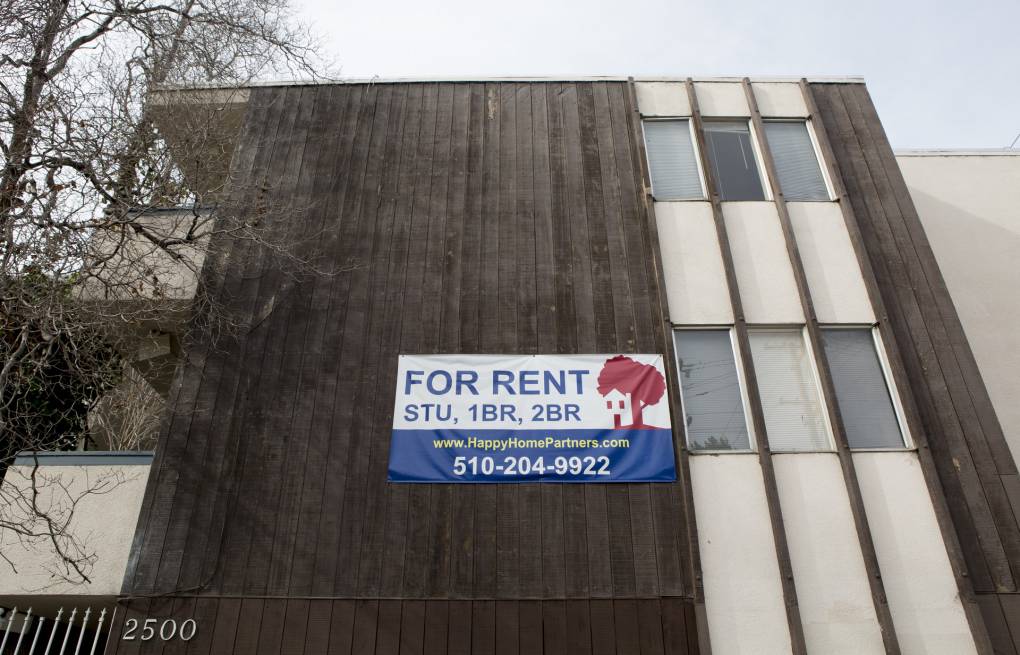
Californians Reject Rent Control — Again — in Defeat of Prop. 21
Racially Charged Ad Puts L.A. AIDS Group Back in Middle of Housing Debates
Should Californians Allow Rent Control to Expand? Proposition 10, Explained
Rent Control Fuels Costliest Fight on California 2018 Ballot
Rent Control: A Bay Curious Q&A
Is Rent Control Working and Should We Have More or Less of It?
Exploring the Promise — and Unintended Consequences — of Rent Control
Sponsored
Player sponsored by
window.__IS_SSR__=true
window.__INITIAL_STATE__={
"attachmentsReducer": {
"audio_0": {
"type": "attachments",
"id": "audio_0",
"imgSizes": {
"kqedFullSize": {
"file": "https://ww2.kqed.org/news/wp-content/themes/KQED-unified/img/audio_bgs/background0.jpg"
}
}
},
"audio_1": {
"type": "attachments",
"id": "audio_1",
"imgSizes": {
"kqedFullSize": {
"file": "https://ww2.kqed.org/news/wp-content/themes/KQED-unified/img/audio_bgs/background1.jpg"
}
}
},
"audio_2": {
"type": "attachments",
"id": "audio_2",
"imgSizes": {
"kqedFullSize": {
"file": "https://ww2.kqed.org/news/wp-content/themes/KQED-unified/img/audio_bgs/background2.jpg"
}
}
},
"audio_3": {
"type": "attachments",
"id": "audio_3",
"imgSizes": {
"kqedFullSize": {
"file": "https://ww2.kqed.org/news/wp-content/themes/KQED-unified/img/audio_bgs/background3.jpg"
}
}
},
"audio_4": {
"type": "attachments",
"id": "audio_4",
"imgSizes": {
"kqedFullSize": {
"file": "https://ww2.kqed.org/news/wp-content/themes/KQED-unified/img/audio_bgs/background4.jpg"
}
}
},
"placeholder": {
"type": "attachments",
"id": "placeholder",
"imgSizes": {
"thumbnail": {
"file": "https://cdn.kqed.org/wp-content/uploads/2024/12/KQED-Default-Image-816638274-2000x1333-1-160x107.jpg",
"width": 160,
"height": 107,
"mimeType": "image/jpeg"
},
"medium": {
"file": "https://cdn.kqed.org/wp-content/uploads/2024/12/KQED-Default-Image-816638274-2000x1333-1-800x533.jpg",
"width": 800,
"height": 533,
"mimeType": "image/jpeg"
},
"medium_large": {
"file": "https://cdn.kqed.org/wp-content/uploads/2024/12/KQED-Default-Image-816638274-2000x1333-1-768x512.jpg",
"width": 768,
"height": 512,
"mimeType": "image/jpeg"
},
"large": {
"file": "https://cdn.kqed.org/wp-content/uploads/2024/12/KQED-Default-Image-816638274-2000x1333-1-1020x680.jpg",
"width": 1020,
"height": 680,
"mimeType": "image/jpeg"
},
"1536x1536": {
"file": "https://cdn.kqed.org/wp-content/uploads/2024/12/KQED-Default-Image-816638274-2000x1333-1-1536x1024.jpg",
"width": 1536,
"height": 1024,
"mimeType": "image/jpeg"
},
"fd-lrg": {
"file": "https://cdn.kqed.org/wp-content/uploads/2024/12/KQED-Default-Image-816638274-2000x1333-1-1536x1024.jpg",
"width": 1536,
"height": 1024,
"mimeType": "image/jpeg"
},
"fd-med": {
"file": "https://cdn.kqed.org/wp-content/uploads/2024/12/KQED-Default-Image-816638274-2000x1333-1-1020x680.jpg",
"width": 1020,
"height": 680,
"mimeType": "image/jpeg"
},
"fd-sm": {
"file": "https://cdn.kqed.org/wp-content/uploads/2024/12/KQED-Default-Image-816638274-2000x1333-1-800x533.jpg",
"width": 800,
"height": 533,
"mimeType": "image/jpeg"
},
"post-thumbnail": {
"file": "https://cdn.kqed.org/wp-content/uploads/2024/12/KQED-Default-Image-816638274-2000x1333-1-672x372.jpg",
"width": 672,
"height": 372,
"mimeType": "image/jpeg"
},
"twentyfourteen-full-width": {
"file": "https://cdn.kqed.org/wp-content/uploads/2024/12/KQED-Default-Image-816638274-2000x1333-1-1038x576.jpg",
"width": 1038,
"height": 576,
"mimeType": "image/jpeg"
},
"xxsmall": {
"file": "https://cdn.kqed.org/wp-content/uploads/2024/12/KQED-Default-Image-816638274-2000x1333-1-160x107.jpg",
"width": 160,
"height": 107,
"mimeType": "image/jpeg"
},
"xsmall": {
"file": "https://cdn.kqed.org/wp-content/uploads/2024/12/KQED-Default-Image-816638274-2000x1333-1-672x372.jpg",
"width": 672,
"height": 372,
"mimeType": "image/jpeg"
},
"small": {
"file": "https://cdn.kqed.org/wp-content/uploads/2024/12/KQED-Default-Image-816638274-2000x1333-1-672x372.jpg",
"width": 672,
"height": 372,
"mimeType": "image/jpeg"
},
"xlarge": {
"file": "https://cdn.kqed.org/wp-content/uploads/2024/12/KQED-Default-Image-816638274-2000x1333-1-1020x680.jpg",
"width": 1020,
"height": 680,
"mimeType": "image/jpeg"
},
"full-width": {
"file": "https://cdn.kqed.org/wp-content/uploads/2024/12/KQED-Default-Image-816638274-2000x1333-1-1920x1280.jpg",
"width": 1920,
"height": 1280,
"mimeType": "image/jpeg"
},
"guest-author-32": {
"file": "https://cdn.kqed.org/wp-content/uploads/2025/01/KQED-Default-Image-816638274-1333x1333-1-160x160.jpg",
"width": 32,
"height": 32,
"mimeType": "image/jpeg"
},
"guest-author-50": {
"file": "https://cdn.kqed.org/wp-content/uploads/2025/01/KQED-Default-Image-816638274-1333x1333-1-160x160.jpg",
"width": 50,
"height": 50,
"mimeType": "image/jpeg"
},
"guest-author-64": {
"file": "https://cdn.kqed.org/wp-content/uploads/2025/01/KQED-Default-Image-816638274-1333x1333-1-160x160.jpg",
"width": 64,
"height": 64,
"mimeType": "image/jpeg"
},
"guest-author-96": {
"file": "https://cdn.kqed.org/wp-content/uploads/2025/01/KQED-Default-Image-816638274-1333x1333-1-160x160.jpg",
"width": 96,
"height": 96,
"mimeType": "image/jpeg"
},
"guest-author-128": {
"file": "https://cdn.kqed.org/wp-content/uploads/2025/01/KQED-Default-Image-816638274-1333x1333-1-160x160.jpg",
"width": 128,
"height": 128,
"mimeType": "image/jpeg"
},
"detail": {
"file": "https://cdn.kqed.org/wp-content/uploads/2025/01/KQED-Default-Image-816638274-1333x1333-1-160x160.jpg",
"width": 160,
"height": 160,
"mimeType": "image/jpeg"
},
"kqedFullSize": {
"file": "https://cdn.kqed.org/wp-content/uploads/2024/12/KQED-Default-Image-816638274-2000x1333-1.jpg",
"width": 2000,
"height": 1333
}
}
},
"news_11844439": {
"type": "attachments",
"id": "news_11844439",
"meta": {
"index": "attachments_1716263798",
"site": "news",
"id": "11844439",
"found": true
},
"parent": 11844438,
"imgSizes": {
"apple_news_ca_landscape_5_5": {
"file": "https://ww2.kqed.org/app/uploads/sites/10/2020/10/RS33559_AW_ForRent_03-qut-1044x783.jpg",
"width": 1044,
"mimeType": "image/jpeg",
"height": 783
},
"apple_news_ca_square_4_0": {
"file": "https://ww2.kqed.org/app/uploads/sites/10/2020/10/RS33559_AW_ForRent_03-qut-470x470.jpg",
"width": 470,
"mimeType": "image/jpeg",
"height": 470
},
"twentyfourteen-full-width": {
"file": "https://ww2.kqed.org/app/uploads/sites/10/2020/10/RS33559_AW_ForRent_03-qut-1038x576.jpg",
"width": 1038,
"mimeType": "image/jpeg",
"height": 576
},
"thumbnail": {
"file": "https://ww2.kqed.org/app/uploads/sites/10/2020/10/RS33559_AW_ForRent_03-qut-160x103.jpg",
"width": 160,
"mimeType": "image/jpeg",
"height": 103
},
"post-thumbnail": {
"file": "https://ww2.kqed.org/app/uploads/sites/10/2020/10/RS33559_AW_ForRent_03-qut-672x372.jpg",
"width": 672,
"mimeType": "image/jpeg",
"height": 372
},
"kqedFullSize": {
"file": "https://ww2.kqed.org/app/uploads/sites/10/2020/10/RS33559_AW_ForRent_03-qut.jpg",
"width": 1920,
"height": 1233
},
"apple_news_ca_landscape_4_7": {
"file": "https://ww2.kqed.org/app/uploads/sites/10/2020/10/RS33559_AW_ForRent_03-qut-632x474.jpg",
"width": 632,
"mimeType": "image/jpeg",
"height": 474
},
"large": {
"file": "https://ww2.kqed.org/app/uploads/sites/10/2020/10/RS33559_AW_ForRent_03-qut-1020x655.jpg",
"width": 1020,
"mimeType": "image/jpeg",
"height": 655
},
"apple_news_ca_landscape_4_0": {
"file": "https://ww2.kqed.org/app/uploads/sites/10/2020/10/RS33559_AW_ForRent_03-qut-536x402.jpg",
"width": 536,
"mimeType": "image/jpeg",
"height": 402
},
"apple_news_ca_portrait_12_9": {
"file": "https://ww2.kqed.org/app/uploads/sites/10/2020/10/RS33559_AW_ForRent_03-qut-1122x1233.jpg",
"width": 1122,
"mimeType": "image/jpeg",
"height": 1233
},
"medium": {
"file": "https://ww2.kqed.org/app/uploads/sites/10/2020/10/RS33559_AW_ForRent_03-qut-800x514.jpg",
"width": 800,
"mimeType": "image/jpeg",
"height": 514
},
"apple_news_ca_portrait_4_0": {
"file": "https://ww2.kqed.org/app/uploads/sites/10/2020/10/RS33559_AW_ForRent_03-qut-354x472.jpg",
"width": 354,
"mimeType": "image/jpeg",
"height": 472
},
"apple_news_ca_portrait_9_7": {
"file": "https://ww2.kqed.org/app/uploads/sites/10/2020/10/RS33559_AW_ForRent_03-qut-840x1120.jpg",
"width": 840,
"mimeType": "image/jpeg",
"height": 1120
},
"apple_news_ca_landscape_12_9": {
"file": "https://ww2.kqed.org/app/uploads/sites/10/2020/10/RS33559_AW_ForRent_03-qut-1832x1233.jpg",
"width": 1832,
"mimeType": "image/jpeg",
"height": 1233
},
"apple_news_ca_square_9_7": {
"file": "https://ww2.kqed.org/app/uploads/sites/10/2020/10/RS33559_AW_ForRent_03-qut-1104x1104.jpg",
"width": 1104,
"mimeType": "image/jpeg",
"height": 1104
},
"1536x1536": {
"file": "https://ww2.kqed.org/app/uploads/sites/10/2020/10/RS33559_AW_ForRent_03-qut-1536x986.jpg",
"width": 1536,
"mimeType": "image/jpeg",
"height": 986
},
"apple_news_ca_portrait_4_7": {
"file": "https://ww2.kqed.org/app/uploads/sites/10/2020/10/RS33559_AW_ForRent_03-qut-414x552.jpg",
"width": 414,
"mimeType": "image/jpeg",
"height": 552
},
"apple_news_ca_square_12_9": {
"file": "https://ww2.kqed.org/app/uploads/sites/10/2020/10/RS33559_AW_ForRent_03-qut-1472x1233.jpg",
"width": 1472,
"mimeType": "image/jpeg",
"height": 1233
},
"apple_news_ca_portrait_5_5": {
"file": "https://ww2.kqed.org/app/uploads/sites/10/2020/10/RS33559_AW_ForRent_03-qut-687x916.jpg",
"width": 687,
"mimeType": "image/jpeg",
"height": 916
},
"apple_news_ca_square_4_7": {
"file": "https://ww2.kqed.org/app/uploads/sites/10/2020/10/RS33559_AW_ForRent_03-qut-550x550.jpg",
"width": 550,
"mimeType": "image/jpeg",
"height": 550
},
"apple_news_ca_landscape_9_7": {
"file": "https://ww2.kqed.org/app/uploads/sites/10/2020/10/RS33559_AW_ForRent_03-qut-1376x1032.jpg",
"width": 1376,
"mimeType": "image/jpeg",
"height": 1032
},
"apple_news_ca_square_5_5": {
"file": "https://ww2.kqed.org/app/uploads/sites/10/2020/10/RS33559_AW_ForRent_03-qut-912x912.jpg",
"width": 912,
"mimeType": "image/jpeg",
"height": 912
}
},
"publishDate": 1604016457,
"modified": 1604368132,
"caption": "A 'For Rent' sign hangs above on the side of a building in Berkeley on October 29, 2018. Proposition 21 would allow cities to adopt stricter forms of rent control than are currently allowed. ",
"description": "A 'For Rent' sign hangs above on the side of a building in Berkeley on October 29, 2018. Proposition 21 would allow cities to adopt stricter forms of rent control than are currently allowed. ",
"title": "RS33559_AW_ForRent_03-qut",
"credit": "Anne Wernikoff/KQED",
"status": "inherit",
"fetchFailed": false,
"isLoading": false
},
"news_11741997": {
"type": "attachments",
"id": "news_11741997",
"meta": {
"index": "attachments_1716263798",
"site": "news",
"id": "11741997",
"found": true
},
"parent": 11741896,
"imgSizes": {
"twentyfourteen-full-width": {
"file": "https://ww2.kqed.org/app/uploads/sites/10/2019/04/RS21759_IMG_1973-qut-1038x576.jpg",
"width": 1038,
"mimeType": "image/jpeg",
"height": 576
},
"thumbnail": {
"file": "https://ww2.kqed.org/app/uploads/sites/10/2019/04/RS21759_IMG_1973-qut-160x120.jpg",
"width": 160,
"mimeType": "image/jpeg",
"height": 120
},
"post-thumbnail": {
"file": "https://ww2.kqed.org/app/uploads/sites/10/2019/04/RS21759_IMG_1973-qut-672x372.jpg",
"width": 672,
"mimeType": "image/jpeg",
"height": 372
},
"kqedFullSize": {
"file": "https://ww2.kqed.org/app/uploads/sites/10/2019/04/RS21759_IMG_1973-qut.jpg",
"width": 1920,
"height": 1440
},
"large": {
"file": "https://ww2.kqed.org/app/uploads/sites/10/2019/04/RS21759_IMG_1973-qut-1020x765.jpg",
"width": 1020,
"mimeType": "image/jpeg",
"height": 765
},
"complete_open_graph": {
"file": "https://ww2.kqed.org/app/uploads/sites/10/2019/04/RS21759_IMG_1973-qut-1200x900.jpg",
"width": 1200,
"mimeType": "image/jpeg",
"height": 900
},
"full-width": {
"file": "https://ww2.kqed.org/app/uploads/sites/10/2019/04/RS21759_IMG_1973-qut-1920x1440.jpg",
"width": 1920,
"mimeType": "image/jpeg",
"height": 1440
},
"medium": {
"file": "https://ww2.kqed.org/app/uploads/sites/10/2019/04/RS21759_IMG_1973-qut-800x600.jpg",
"width": 800,
"mimeType": "image/jpeg",
"height": 600
}
},
"publishDate": 1555973341,
"modified": 1555973368,
"caption": "Michael Weinstein, CEO of the AIDS Healthcare Foundation.",
"description": null,
"title": "RS21759_IMG_1973-qut",
"credit": "April Dembosky/KQED",
"status": "inherit",
"fetchFailed": false,
"isLoading": false
},
"news_11696041": {
"type": "attachments",
"id": "news_11696041",
"meta": {
"index": "attachments_1716263798",
"site": "news",
"id": "11696041",
"found": true
},
"parent": 11695998,
"imgSizes": {
"small": {
"file": "https://ww2.kqed.org/app/uploads/sites/10/2018/10/GettyImages-453561243-520x347.jpg",
"width": 520,
"mimeType": "image/jpeg",
"height": 347
},
"twentyfourteen-full-width": {
"file": "https://ww2.kqed.org/app/uploads/sites/10/2018/10/GettyImages-453561243-1038x576.jpg",
"width": 1038,
"mimeType": "image/jpeg",
"height": 576
},
"thumbnail": {
"file": "https://ww2.kqed.org/app/uploads/sites/10/2018/10/GettyImages-453561243-160x107.jpg",
"width": 160,
"mimeType": "image/jpeg",
"height": 107
},
"fd-sm": {
"file": "https://ww2.kqed.org/app/uploads/sites/10/2018/10/GettyImages-453561243-960x640.jpg",
"width": 960,
"mimeType": "image/jpeg",
"height": 640
},
"post-thumbnail": {
"file": "https://ww2.kqed.org/app/uploads/sites/10/2018/10/GettyImages-453561243-672x372.jpg",
"width": 672,
"mimeType": "image/jpeg",
"height": 372
},
"xsmall": {
"file": "https://ww2.kqed.org/app/uploads/sites/10/2018/10/GettyImages-453561243-375x250.jpg",
"width": 375,
"mimeType": "image/jpeg",
"height": 250
},
"kqedFullSize": {
"file": "https://ww2.kqed.org/app/uploads/sites/10/2018/10/GettyImages-453561243-e1578690419580.jpg",
"width": 1920,
"height": 1281
},
"large": {
"file": "https://ww2.kqed.org/app/uploads/sites/10/2018/10/GettyImages-453561243-1020x680.jpg",
"width": 1020,
"mimeType": "image/jpeg",
"height": 680
},
"xlarge": {
"file": "https://ww2.kqed.org/app/uploads/sites/10/2018/10/GettyImages-453561243-1180x787.jpg",
"width": 1180,
"mimeType": "image/jpeg",
"height": 787
},
"complete_open_graph": {
"file": "https://ww2.kqed.org/app/uploads/sites/10/2018/10/GettyImages-453561243-1200x800.jpg",
"width": 1200,
"mimeType": "image/jpeg",
"height": 800
},
"guest-author-50": {
"file": "https://ww2.kqed.org/app/uploads/sites/10/2018/10/GettyImages-453561243-50x50.jpg",
"width": 50,
"mimeType": "image/jpeg",
"height": 50
},
"guest-author-96": {
"file": "https://ww2.kqed.org/app/uploads/sites/10/2018/10/GettyImages-453561243-96x96.jpg",
"width": 96,
"mimeType": "image/jpeg",
"height": 96
},
"medium": {
"file": "https://ww2.kqed.org/app/uploads/sites/10/2018/10/GettyImages-453561243-800x534.jpg",
"width": 800,
"mimeType": "image/jpeg",
"height": 534
},
"guest-author-64": {
"file": "https://ww2.kqed.org/app/uploads/sites/10/2018/10/GettyImages-453561243-64x64.jpg",
"width": 64,
"mimeType": "image/jpeg",
"height": 64
},
"guest-author-32": {
"file": "https://ww2.kqed.org/app/uploads/sites/10/2018/10/GettyImages-453561243-32x32.jpg",
"width": 32,
"mimeType": "image/jpeg",
"height": 32
},
"fd-lrg": {
"file": "https://ww2.kqed.org/app/uploads/sites/10/2018/10/GettyImages-453561243-1920x1281.jpg",
"width": 1920,
"mimeType": "image/jpeg",
"height": 1281
},
"fd-med": {
"file": "https://ww2.kqed.org/app/uploads/sites/10/2018/10/GettyImages-453561243-1180x787.jpg",
"width": 1180,
"mimeType": "image/jpeg",
"height": 787
},
"full-width": {
"file": "https://ww2.kqed.org/app/uploads/sites/10/2018/10/GettyImages-453561243-1920x1281.jpg",
"width": 1920,
"mimeType": "image/jpeg",
"height": 1281
},
"detail": {
"file": "https://ww2.kqed.org/app/uploads/sites/10/2018/10/GettyImages-453561243-150x150.jpg",
"width": 150,
"mimeType": "image/jpeg",
"height": 150
},
"guest-author-128": {
"file": "https://ww2.kqed.org/app/uploads/sites/10/2018/10/GettyImages-453561243-128x128.jpg",
"width": 128,
"mimeType": "image/jpeg",
"height": 128
},
"xxsmall": {
"file": "https://ww2.kqed.org/app/uploads/sites/10/2018/10/GettyImages-453561243-240x160.jpg",
"width": 240,
"mimeType": "image/jpeg",
"height": 160
}
},
"publishDate": 1538508157,
"modified": 1578690410,
"caption": "Rows of homes line a street in a housing development in Oakland.",
"description": "Rows of homes line a street in a housing development in Oakland, California. Across California, homes constructed after 1995 and most single family homes are barred from having rent control. But if prop 10 passes, local cities could decide to allow these units to be covered by rent control. ",
"title": "Rows of homes line a street in a housing development in Oakland, California. Across California, homes constructed after 1995 and most single family homes are barred from having rent control. But if prop 10 passes, local cities could decide to allow these units to be covered by rent control.",
"credit": "Justin Sullivan/Getty Images",
"status": "inherit",
"fetchFailed": false,
"isLoading": false
},
"news_11666429": {
"type": "attachments",
"id": "news_11666429",
"meta": {
"index": "attachments_1716263798",
"site": "news",
"id": "11666429",
"found": true
},
"parent": 11666426,
"imgSizes": {
"small": {
"file": "https://ww2.kqed.org/app/uploads/sites/10/2018/05/Screen-Shot-2018-05-04-at-10.00.30-AM-520x311.png",
"width": 520,
"mimeType": "image/png",
"height": 311
},
"twentyfourteen-full-width": {
"file": "https://ww2.kqed.org/app/uploads/sites/10/2018/05/Screen-Shot-2018-05-04-at-10.00.30-AM-1038x576.png",
"width": 1038,
"mimeType": "image/png",
"height": 576
},
"thumbnail": {
"file": "https://ww2.kqed.org/app/uploads/sites/10/2018/05/Screen-Shot-2018-05-04-at-10.00.30-AM-160x96.png",
"width": 160,
"mimeType": "image/png",
"height": 96
},
"fd-sm": {
"file": "https://ww2.kqed.org/app/uploads/sites/10/2018/05/Screen-Shot-2018-05-04-at-10.00.30-AM-960x575.png",
"width": 960,
"mimeType": "image/png",
"height": 575
},
"post-thumbnail": {
"file": "https://ww2.kqed.org/app/uploads/sites/10/2018/05/Screen-Shot-2018-05-04-at-10.00.30-AM-672x372.png",
"width": 672,
"mimeType": "image/png",
"height": 372
},
"xsmall": {
"file": "https://ww2.kqed.org/app/uploads/sites/10/2018/05/Screen-Shot-2018-05-04-at-10.00.30-AM-375x225.png",
"width": 375,
"mimeType": "image/png",
"height": 225
},
"kqedFullSize": {
"file": "https://ww2.kqed.org/app/uploads/sites/10/2018/05/Screen-Shot-2018-05-04-at-10.00.30-AM-e1525453493135.png",
"width": 1920,
"height": 1150
},
"large": {
"file": "https://ww2.kqed.org/app/uploads/sites/10/2018/05/Screen-Shot-2018-05-04-at-10.00.30-AM-1020x611.png",
"width": 1020,
"mimeType": "image/png",
"height": 611
},
"xlarge": {
"file": "https://ww2.kqed.org/app/uploads/sites/10/2018/05/Screen-Shot-2018-05-04-at-10.00.30-AM-1180x707.png",
"width": 1180,
"mimeType": "image/png",
"height": 707
},
"complete_open_graph": {
"file": "https://ww2.kqed.org/app/uploads/sites/10/2018/05/Screen-Shot-2018-05-04-at-10.00.30-AM-1200x719.png",
"width": 1200,
"mimeType": "image/png",
"height": 719
},
"guest-author-50": {
"file": "https://ww2.kqed.org/app/uploads/sites/10/2018/05/Screen-Shot-2018-05-04-at-10.00.30-AM-50x50.png",
"width": 50,
"mimeType": "image/png",
"height": 50
},
"guest-author-96": {
"file": "https://ww2.kqed.org/app/uploads/sites/10/2018/05/Screen-Shot-2018-05-04-at-10.00.30-AM-96x96.png",
"width": 96,
"mimeType": "image/png",
"height": 96
},
"medium": {
"file": "https://ww2.kqed.org/app/uploads/sites/10/2018/05/Screen-Shot-2018-05-04-at-10.00.30-AM-800x479.png",
"width": 800,
"mimeType": "image/png",
"height": 479
},
"guest-author-64": {
"file": "https://ww2.kqed.org/app/uploads/sites/10/2018/05/Screen-Shot-2018-05-04-at-10.00.30-AM-64x64.png",
"width": 64,
"mimeType": "image/png",
"height": 64
},
"guest-author-32": {
"file": "https://ww2.kqed.org/app/uploads/sites/10/2018/05/Screen-Shot-2018-05-04-at-10.00.30-AM-32x32.png",
"width": 32,
"mimeType": "image/png",
"height": 32
},
"fd-lrg": {
"file": "https://ww2.kqed.org/app/uploads/sites/10/2018/05/Screen-Shot-2018-05-04-at-10.00.30-AM-1920x1150.png",
"width": 1920,
"mimeType": "image/png",
"height": 1150
},
"fd-med": {
"file": "https://ww2.kqed.org/app/uploads/sites/10/2018/05/Screen-Shot-2018-05-04-at-10.00.30-AM-1180x707.png",
"width": 1180,
"mimeType": "image/png",
"height": 707
},
"full-width": {
"file": "https://ww2.kqed.org/app/uploads/sites/10/2018/05/Screen-Shot-2018-05-04-at-10.00.30-AM-1920x1150.png",
"width": 1920,
"mimeType": "image/png",
"height": 1150
},
"detail": {
"file": "https://ww2.kqed.org/app/uploads/sites/10/2018/05/Screen-Shot-2018-05-04-at-10.00.30-AM-150x150.png",
"width": 150,
"mimeType": "image/png",
"height": 150
},
"guest-author-128": {
"file": "https://ww2.kqed.org/app/uploads/sites/10/2018/05/Screen-Shot-2018-05-04-at-10.00.30-AM-128x128.png",
"width": 128,
"mimeType": "image/png",
"height": 128
},
"xxsmall": {
"file": "https://ww2.kqed.org/app/uploads/sites/10/2018/05/Screen-Shot-2018-05-04-at-10.00.30-AM-240x144.png",
"width": 240,
"mimeType": "image/png",
"height": 144
}
},
"publishDate": 1525453263,
"modified": 1525453835,
"caption": "Many California cities passed their rent control laws in the 1970s and ’80s, but soaring housing costs have sparked a new rent control movement. In Los Angeles County alone, tenant activists are trying to put rent control measures on the ballot in Pasadena, Long Beach, Inglewood and Glendale. ",
"description": "Many California cities passed their rent control laws in the 1970s and ’80s, but soaring housing costs have sparked a new rent control movement. In Los Angeles County alone, tenant activists are trying to put rent control measures on the ballot in Pasadena, Long Beach, Inglewood and Glendale. ",
"title": "Screen Shot 2018-05-04 at 10.00.30 AM",
"credit": null,
"status": "inherit",
"fetchFailed": false,
"isLoading": false
},
"news_11684243": {
"type": "attachments",
"id": "news_11684243",
"meta": {
"index": "attachments_1716263798",
"site": "news",
"id": "11684243",
"found": true
},
"parent": 11684225,
"imgSizes": {
"small": {
"file": "https://ww2.kqed.org/app/uploads/sites/10/2018/08/RS10555_470165429-520x347.jpg",
"width": 520,
"mimeType": "image/jpeg",
"height": 347
},
"twentyfourteen-full-width": {
"file": "https://ww2.kqed.org/app/uploads/sites/10/2018/08/RS10555_470165429-1038x576.jpg",
"width": 1038,
"mimeType": "image/jpeg",
"height": 576
},
"thumbnail": {
"file": "https://ww2.kqed.org/app/uploads/sites/10/2018/08/RS10555_470165429-160x107.jpg",
"width": 160,
"mimeType": "image/jpeg",
"height": 107
},
"fd-sm": {
"file": "https://ww2.kqed.org/app/uploads/sites/10/2018/08/RS10555_470165429-960x640.jpg",
"width": 960,
"mimeType": "image/jpeg",
"height": 640
},
"post-thumbnail": {
"file": "https://ww2.kqed.org/app/uploads/sites/10/2018/08/RS10555_470165429-672x372.jpg",
"width": 672,
"mimeType": "image/jpeg",
"height": 372
},
"xsmall": {
"file": "https://ww2.kqed.org/app/uploads/sites/10/2018/08/RS10555_470165429-375x250.jpg",
"width": 375,
"mimeType": "image/jpeg",
"height": 250
},
"kqedFullSize": {
"file": "https://ww2.kqed.org/app/uploads/sites/10/2018/08/RS10555_470165429.jpg",
"width": 3000,
"height": 2001
},
"large": {
"file": "https://ww2.kqed.org/app/uploads/sites/10/2018/08/RS10555_470165429-1020x680.jpg",
"width": 1020,
"mimeType": "image/jpeg",
"height": 680
},
"xlarge": {
"file": "https://ww2.kqed.org/app/uploads/sites/10/2018/08/RS10555_470165429-1180x787.jpg",
"width": 1180,
"mimeType": "image/jpeg",
"height": 787
},
"complete_open_graph": {
"file": "https://ww2.kqed.org/app/uploads/sites/10/2018/08/RS10555_470165429-1200x800.jpg",
"width": 1200,
"mimeType": "image/jpeg",
"height": 800
},
"guest-author-50": {
"file": "https://ww2.kqed.org/app/uploads/sites/10/2018/08/RS10555_470165429-50x50.jpg",
"width": 50,
"mimeType": "image/jpeg",
"height": 50
},
"guest-author-96": {
"file": "https://ww2.kqed.org/app/uploads/sites/10/2018/08/RS10555_470165429-96x96.jpg",
"width": 96,
"mimeType": "image/jpeg",
"height": 96
},
"medium": {
"file": "https://ww2.kqed.org/app/uploads/sites/10/2018/08/RS10555_470165429-800x534.jpg",
"width": 800,
"mimeType": "image/jpeg",
"height": 534
},
"guest-author-64": {
"file": "https://ww2.kqed.org/app/uploads/sites/10/2018/08/RS10555_470165429-64x64.jpg",
"width": 64,
"mimeType": "image/jpeg",
"height": 64
},
"guest-author-32": {
"file": "https://ww2.kqed.org/app/uploads/sites/10/2018/08/RS10555_470165429-32x32.jpg",
"width": 32,
"mimeType": "image/jpeg",
"height": 32
},
"fd-lrg": {
"file": "https://ww2.kqed.org/app/uploads/sites/10/2018/08/RS10555_470165429-1920x1281.jpg",
"width": 1920,
"mimeType": "image/jpeg",
"height": 1281
},
"fd-med": {
"file": "https://ww2.kqed.org/app/uploads/sites/10/2018/08/RS10555_470165429-1180x787.jpg",
"width": 1180,
"mimeType": "image/jpeg",
"height": 787
},
"full-width": {
"file": "https://ww2.kqed.org/app/uploads/sites/10/2018/08/RS10555_470165429-1920x1281.jpg",
"width": 1920,
"mimeType": "image/jpeg",
"height": 1281
},
"detail": {
"file": "https://ww2.kqed.org/app/uploads/sites/10/2018/08/RS10555_470165429-150x150.jpg",
"width": 150,
"mimeType": "image/jpeg",
"height": 150
},
"guest-author-128": {
"file": "https://ww2.kqed.org/app/uploads/sites/10/2018/08/RS10555_470165429-128x128.jpg",
"width": 128,
"mimeType": "image/jpeg",
"height": 128
},
"xxsmall": {
"file": "https://ww2.kqed.org/app/uploads/sites/10/2018/08/RS10555_470165429-240x160.jpg",
"width": 240,
"mimeType": "image/jpeg",
"height": 160
}
},
"publishDate": 1533152123,
"modified": 1533152151,
"caption": null,
"description": null,
"title": null,
"credit": "Justin Sullivan / Getty",
"status": "inherit",
"fetchFailed": false,
"isLoading": false
},
"news_11677399": {
"type": "attachments",
"id": "news_11677399",
"meta": {
"index": "attachments_1716263798",
"site": "news",
"id": "11677399",
"found": true
},
"parent": 11677380,
"imgSizes": {
"small": {
"file": "https://ww2.kqed.org/app/uploads/sites/10/2018/06/25267941258_635ff7d26e_k-520x347.jpg",
"width": 520,
"mimeType": "image/jpeg",
"height": 347
},
"twentyfourteen-full-width": {
"file": "https://ww2.kqed.org/app/uploads/sites/10/2018/06/25267941258_635ff7d26e_k-1038x576.jpg",
"width": 1038,
"mimeType": "image/jpeg",
"height": 576
},
"thumbnail": {
"file": "https://ww2.kqed.org/app/uploads/sites/10/2018/06/25267941258_635ff7d26e_k-160x107.jpg",
"width": 160,
"mimeType": "image/jpeg",
"height": 107
},
"fd-sm": {
"file": "https://ww2.kqed.org/app/uploads/sites/10/2018/06/25267941258_635ff7d26e_k-960x640.jpg",
"width": 960,
"mimeType": "image/jpeg",
"height": 640
},
"post-thumbnail": {
"file": "https://ww2.kqed.org/app/uploads/sites/10/2018/06/25267941258_635ff7d26e_k-672x372.jpg",
"width": 672,
"mimeType": "image/jpeg",
"height": 372
},
"xsmall": {
"file": "https://ww2.kqed.org/app/uploads/sites/10/2018/06/25267941258_635ff7d26e_k-375x250.jpg",
"width": 375,
"mimeType": "image/jpeg",
"height": 250
},
"kqedFullSize": {
"file": "https://ww2.kqed.org/app/uploads/sites/10/2018/06/25267941258_635ff7d26e_k.jpg",
"width": 2048,
"height": 1365
},
"large": {
"file": "https://ww2.kqed.org/app/uploads/sites/10/2018/06/25267941258_635ff7d26e_k-1020x680.jpg",
"width": 1020,
"mimeType": "image/jpeg",
"height": 680
},
"xlarge": {
"file": "https://ww2.kqed.org/app/uploads/sites/10/2018/06/25267941258_635ff7d26e_k-1180x786.jpg",
"width": 1180,
"mimeType": "image/jpeg",
"height": 786
},
"complete_open_graph": {
"file": "https://ww2.kqed.org/app/uploads/sites/10/2018/06/25267941258_635ff7d26e_k-1200x800.jpg",
"width": 1200,
"mimeType": "image/jpeg",
"height": 800
},
"guest-author-50": {
"file": "https://ww2.kqed.org/app/uploads/sites/10/2018/06/25267941258_635ff7d26e_k-50x50.jpg",
"width": 50,
"mimeType": "image/jpeg",
"height": 50
},
"guest-author-96": {
"file": "https://ww2.kqed.org/app/uploads/sites/10/2018/06/25267941258_635ff7d26e_k-96x96.jpg",
"width": 96,
"mimeType": "image/jpeg",
"height": 96
},
"medium": {
"file": "https://ww2.kqed.org/app/uploads/sites/10/2018/06/25267941258_635ff7d26e_k-800x533.jpg",
"width": 800,
"mimeType": "image/jpeg",
"height": 533
},
"guest-author-64": {
"file": "https://ww2.kqed.org/app/uploads/sites/10/2018/06/25267941258_635ff7d26e_k-64x64.jpg",
"width": 64,
"mimeType": "image/jpeg",
"height": 64
},
"guest-author-32": {
"file": "https://ww2.kqed.org/app/uploads/sites/10/2018/06/25267941258_635ff7d26e_k-32x32.jpg",
"width": 32,
"mimeType": "image/jpeg",
"height": 32
},
"fd-lrg": {
"file": "https://ww2.kqed.org/app/uploads/sites/10/2018/06/25267941258_635ff7d26e_k-1920x1280.jpg",
"width": 1920,
"mimeType": "image/jpeg",
"height": 1280
},
"fd-med": {
"file": "https://ww2.kqed.org/app/uploads/sites/10/2018/06/25267941258_635ff7d26e_k-1180x786.jpg",
"width": 1180,
"mimeType": "image/jpeg",
"height": 786
},
"full-width": {
"file": "https://ww2.kqed.org/app/uploads/sites/10/2018/06/25267941258_635ff7d26e_k-1920x1280.jpg",
"width": 1920,
"mimeType": "image/jpeg",
"height": 1280
},
"detail": {
"file": "https://ww2.kqed.org/app/uploads/sites/10/2018/06/25267941258_635ff7d26e_k-150x150.jpg",
"width": 150,
"mimeType": "image/jpeg",
"height": 150
},
"guest-author-128": {
"file": "https://ww2.kqed.org/app/uploads/sites/10/2018/06/25267941258_635ff7d26e_k-128x128.jpg",
"width": 128,
"mimeType": "image/jpeg",
"height": 128
},
"xxsmall": {
"file": "https://ww2.kqed.org/app/uploads/sites/10/2018/06/25267941258_635ff7d26e_k-240x160.jpg",
"width": 240,
"mimeType": "image/jpeg",
"height": 160
}
},
"publishDate": 1530043643,
"modified": 1530423616,
"caption": "The Painted Ladies in San Francisco.",
"description": "The Painted Ladies in San Francisco.",
"title": "The Painted Ladies in San Francisco",
"credit": "soomness/flickr",
"status": "inherit",
"fetchFailed": false,
"isLoading": false
},
"news_11676602": {
"type": "attachments",
"id": "news_11676602",
"meta": {
"index": "attachments_1716263798",
"site": "news",
"id": "11676602",
"found": true
},
"parent": 11676163,
"imgSizes": {
"small": {
"file": "https://ww2.kqed.org/app/uploads/sites/10/2018/06/RENT8-520x347.jpg",
"width": 520,
"mimeType": "image/jpeg",
"height": 347
},
"twentyfourteen-full-width": {
"file": "https://ww2.kqed.org/app/uploads/sites/10/2018/06/RENT8-1038x576.jpg",
"width": 1038,
"mimeType": "image/jpeg",
"height": 576
},
"thumbnail": {
"file": "https://ww2.kqed.org/app/uploads/sites/10/2018/06/RENT8-160x107.jpg",
"width": 160,
"mimeType": "image/jpeg",
"height": 107
},
"fd-sm": {
"file": "https://ww2.kqed.org/app/uploads/sites/10/2018/06/RENT8-960x640.jpg",
"width": 960,
"mimeType": "image/jpeg",
"height": 640
},
"post-thumbnail": {
"file": "https://ww2.kqed.org/app/uploads/sites/10/2018/06/RENT8-672x372.jpg",
"width": 672,
"mimeType": "image/jpeg",
"height": 372
},
"xsmall": {
"file": "https://ww2.kqed.org/app/uploads/sites/10/2018/06/RENT8-375x250.jpg",
"width": 375,
"mimeType": "image/jpeg",
"height": 250
},
"kqedFullSize": {
"file": "https://ww2.kqed.org/app/uploads/sites/10/2018/06/RENT8-e1529703038687.jpg",
"width": 1920,
"height": 1280
},
"large": {
"file": "https://ww2.kqed.org/app/uploads/sites/10/2018/06/RENT8-1020x680.jpg",
"width": 1020,
"mimeType": "image/jpeg",
"height": 680
},
"xlarge": {
"file": "https://ww2.kqed.org/app/uploads/sites/10/2018/06/RENT8-1180x787.jpg",
"width": 1180,
"mimeType": "image/jpeg",
"height": 787
},
"complete_open_graph": {
"file": "https://ww2.kqed.org/app/uploads/sites/10/2018/06/RENT8-1200x800.jpg",
"width": 1200,
"mimeType": "image/jpeg",
"height": 800
},
"guest-author-50": {
"file": "https://ww2.kqed.org/app/uploads/sites/10/2018/06/RENT8-50x50.jpg",
"width": 50,
"mimeType": "image/jpeg",
"height": 50
},
"guest-author-96": {
"file": "https://ww2.kqed.org/app/uploads/sites/10/2018/06/RENT8-96x96.jpg",
"width": 96,
"mimeType": "image/jpeg",
"height": 96
},
"medium": {
"file": "https://ww2.kqed.org/app/uploads/sites/10/2018/06/RENT8-800x533.jpg",
"width": 800,
"mimeType": "image/jpeg",
"height": 533
},
"guest-author-64": {
"file": "https://ww2.kqed.org/app/uploads/sites/10/2018/06/RENT8-64x64.jpg",
"width": 64,
"mimeType": "image/jpeg",
"height": 64
},
"guest-author-32": {
"file": "https://ww2.kqed.org/app/uploads/sites/10/2018/06/RENT8-32x32.jpg",
"width": 32,
"mimeType": "image/jpeg",
"height": 32
},
"fd-lrg": {
"file": "https://ww2.kqed.org/app/uploads/sites/10/2018/06/RENT8-1920x1280.jpg",
"width": 1920,
"mimeType": "image/jpeg",
"height": 1280
},
"fd-med": {
"file": "https://ww2.kqed.org/app/uploads/sites/10/2018/06/RENT8-1180x787.jpg",
"width": 1180,
"mimeType": "image/jpeg",
"height": 787
},
"full-width": {
"file": "https://ww2.kqed.org/app/uploads/sites/10/2018/06/RENT8-1920x1280.jpg",
"width": 1920,
"mimeType": "image/jpeg",
"height": 1280
},
"detail": {
"file": "https://ww2.kqed.org/app/uploads/sites/10/2018/06/RENT8-150x150.jpg",
"width": 150,
"mimeType": "image/jpeg",
"height": 150
},
"guest-author-128": {
"file": "https://ww2.kqed.org/app/uploads/sites/10/2018/06/RENT8-128x128.jpg",
"width": 128,
"mimeType": "image/jpeg",
"height": 128
},
"xxsmall": {
"file": "https://ww2.kqed.org/app/uploads/sites/10/2018/06/RENT8-240x160.jpg",
"width": 240,
"mimeType": "image/jpeg",
"height": 160
}
},
"publishDate": 1529703014,
"modified": 1529703058,
"caption": "Marie Camacho’s California dream is to raise her son, Julian, in a safe, affordable home. She faces uncertainty ahead with her rent rising and a possible eviction later this year.",
"description": "Marie Camacho’s California dream is to raise her son, Julian, in a safe, affordable home. She faces uncertainty ahead with her rent rising and a possible eviction later this year.",
"title": "RENT8",
"credit": "Andrew Nixon / Capital Public Radio",
"status": "inherit",
"fetchFailed": false,
"isLoading": false
}
},
"audioPlayerReducer": {
"postId": "stream_live",
"isPaused": true,
"isPlaying": false,
"pfsActive": false,
"pledgeModalIsOpen": true,
"playerDrawerIsOpen": false
},
"authorsReducer": {
"byline_news_11686755": {
"type": "authors",
"id": "byline_news_11686755",
"meta": {
"override": true
},
"slug": "byline_news_11686755",
"name": "\u003cstrong>Sophia Bollag\u003cbr/>The Associated Press\u003c/strong>",
"isLoading": false
},
"byline_news_11676163": {
"type": "authors",
"id": "byline_news_11676163",
"meta": {
"override": true
},
"slug": "byline_news_11676163",
"name": "\u003cstrong>Chris Nichols\u003cbr />Capital Public Radio\u003c/strong>",
"isLoading": false
},
"ohubertallen": {
"type": "authors",
"id": "102",
"meta": {
"index": "authors_1716337520",
"id": "102",
"found": true
},
"name": "Olivia Allen-Price",
"firstName": "Olivia",
"lastName": "Allen-Price",
"slug": "ohubertallen",
"email": "oallenprice@kqed.org",
"display_author_email": false,
"staff_mastheads": [
"news"
],
"title": "Senior Editor",
"bio": "Olivia Allen-Price is senior editor and host of the award-winning Bay Curious podcast. Prior to joining KQED in 2013, Olivia worked at The Baltimore Sun and The Virginian-Pilot in Norfolk, Va. She holds degrees in journalism and political science from Elon University. Her work has earned awards from the Society of Professional Journalists, the Hearst Foundation and Hearken. She loves to talk about running and curly hair.\r\n\r\nFollow: \u003ca href=\"https://twitter.com/oallenprice\">@oallenprice\u003c/a>\r\nEmail: \u003ca href=\"mailto:oallenprice@kqed.org\">oallenprice@kqed.org\u003c/a>",
"avatar": "https://secure.gravatar.com/avatar/fdd38db811fcf449bd7d7db84a39eea1?s=600&d=blank&r=g",
"twitter": "oallenprice",
"facebook": null,
"instagram": null,
"linkedin": null,
"sites": [
{
"site": "",
"roles": [
"editor"
]
},
{
"site": "arts",
"roles": [
"subscriber"
]
},
{
"site": "styleguide",
"roles": [
"administrator"
]
},
{
"site": "news",
"roles": [
"administrator"
]
},
{
"site": "pop",
"roles": [
"administrator"
]
},
{
"site": "bayareabites",
"roles": [
"contributor"
]
},
{
"site": "stateofhealth",
"roles": [
"administrator"
]
},
{
"site": "science",
"roles": [
"editor"
]
},
{
"site": "breakingnews",
"roles": [
"administrator"
]
}
],
"headData": {
"title": "Olivia Allen-Price | KQED",
"description": "Senior Editor",
"ogImgSrc": "https://secure.gravatar.com/avatar/fdd38db811fcf449bd7d7db84a39eea1?s=600&d=blank&r=g",
"twImgSrc": "https://secure.gravatar.com/avatar/fdd38db811fcf449bd7d7db84a39eea1?s=600&d=blank&r=g"
},
"isLoading": false,
"link": "/author/ohubertallen"
},
"gmarzorati": {
"type": "authors",
"id": "227",
"meta": {
"index": "authors_1716337520",
"id": "227",
"found": true
},
"name": "Guy Marzorati",
"firstName": "Guy",
"lastName": "Marzorati",
"slug": "gmarzorati",
"email": "gmarzorati@KQED.org",
"display_author_email": true,
"staff_mastheads": [
"news"
],
"title": "Correspondent",
"bio": "Guy Marzorati is a correspondent on KQED's California Politics and Government Desk, based in San Jose. A graduate of Santa Clara University, Guy joined KQED in 2013. He reports on state and local politics and produces KQED's digital voter guide.",
"avatar": "https://secure.gravatar.com/avatar/e7038b8dbfd55b104369b76b1cd0b9de?s=600&d=blank&r=g",
"twitter": "guymarzorati",
"facebook": null,
"instagram": null,
"linkedin": null,
"sites": [
{
"site": "",
"roles": [
"editor"
]
},
{
"site": "news",
"roles": [
"editor"
]
},
{
"site": "science",
"roles": [
"editor"
]
},
{
"site": "forum",
"roles": [
"editor"
]
},
{
"site": "elections",
"roles": [
"editor"
]
},
{
"site": "liveblog",
"roles": [
"editor"
]
}
],
"headData": {
"title": "Guy Marzorati | KQED",
"description": "Correspondent",
"ogImgSrc": "https://secure.gravatar.com/avatar/e7038b8dbfd55b104369b76b1cd0b9de?s=600&d=blank&r=g",
"twImgSrc": "https://secure.gravatar.com/avatar/e7038b8dbfd55b104369b76b1cd0b9de?s=600&d=blank&r=g"
},
"isLoading": false,
"link": "/author/gmarzorati"
},
"jplaczek": {
"type": "authors",
"id": "8606",
"meta": {
"index": "authors_1716337520",
"id": "8606",
"found": true
},
"name": "Jessica Placzek",
"firstName": "Jessica",
"lastName": "Placzek",
"slug": "jplaczek",
"email": "jessicalplaczek@gmail.com",
"display_author_email": false,
"staff_mastheads": [
"news"
],
"title": "KQED Contributor",
"bio": "\u003cspan style=\"font-weight: 400;\">Jessica Placzek is a former senior editor of podcasts at KQED where she served as the editorial lead of the podcast department. She worked with shows like MindShift, Rightnowish, Consider This, SOLD OUT, Bay Curious and The Bay. She’s also been a reporter and audio producer at KQED, KPFA, and KALW. She taught audio production to men incarcerated at California State Prison Solano and edited pieces they produced for the Uncuffed podcast through KALW. In 2018 she co-hosted and produced the third season of Raw Material for SFMOMA. In New Orleans she wrote for the Nola Defender. Her work has also appeared on Marketplace, All Things Considered, The California Report, and Vice. You can find more at jessicaplaczek.com\u003c/span>",
"avatar": "https://secure.gravatar.com/avatar/4505f7be77b50826a2a1b8bd3a120685?s=600&d=blank&r=g",
"twitter": null,
"facebook": null,
"instagram": null,
"linkedin": null,
"sites": [
{
"site": "arts",
"roles": [
"editor"
]
},
{
"site": "news",
"roles": [
"subscriber"
]
},
{
"site": "stateofhealth",
"roles": [
"editor"
]
},
{
"site": "forum",
"roles": [
"editor"
]
}
],
"headData": {
"title": "Jessica Placzek | KQED",
"description": "KQED Contributor",
"ogImgSrc": "https://secure.gravatar.com/avatar/4505f7be77b50826a2a1b8bd3a120685?s=600&d=blank&r=g",
"twImgSrc": "https://secure.gravatar.com/avatar/4505f7be77b50826a2a1b8bd3a120685?s=600&d=blank&r=g"
},
"isLoading": false,
"link": "/author/jplaczek"
},
"ebaldassari": {
"type": "authors",
"id": "11652",
"meta": {
"index": "authors_1716337520",
"id": "11652",
"found": true
},
"name": "Erin Baldassari",
"firstName": "Erin",
"lastName": "Baldassari",
"slug": "ebaldassari",
"email": "ebaldassari@KQED.org",
"display_author_email": true,
"staff_mastheads": [
"news"
],
"title": "Staff Writer",
"bio": "Erin Baldassari covers housing for KQED. She's a former print journalist and most recently worked as the transportation reporter for the \u003cem>Mercury News\u003c/em> and \u003cem>East Bay Times. \u003c/em>There, she focused on how the Bay Area’s housing shortage has changed the way people move around the region. She also served on the \u003cem>East Bay Times\u003c/em>’ 2017 Pulitzer Prize-winning team for coverage of the Ghost Ship Fire in Oakland. Prior to that, Erin worked as a breaking news and general assignment reporter for a variety of outlets in the Bay Area and the greater Boston area. A Tufts University alumna, Erin grew up in the foothills of the Sierra Nevada mountains and in Sonoma County. She is a life-long KQED listener.",
"avatar": "https://secure.gravatar.com/avatar/660ce35d088ca54ad606d7e941abc652?s=600&d=mm&r=g",
"twitter": "e_baldi",
"facebook": null,
"instagram": null,
"linkedin": null,
"sites": [
{
"site": "news",
"roles": [
"edit_others_posts",
"editor"
]
},
{
"site": "science",
"roles": [
"editor"
]
},
{
"site": "liveblog",
"roles": [
"editor"
]
}
],
"headData": {
"title": "Erin Baldassari | KQED",
"description": "Staff Writer",
"ogImgSrc": "https://secure.gravatar.com/avatar/660ce35d088ca54ad606d7e941abc652?s=600&d=mm&r=g",
"twImgSrc": "https://secure.gravatar.com/avatar/660ce35d088ca54ad606d7e941abc652?s=600&d=mm&r=g"
},
"isLoading": false,
"link": "/author/ebaldassari"
}
},
"breakingNewsReducer": {},
"pagesReducer": {},
"postsReducer": {
"stream_live": {
"type": "live",
"id": "stream_live",
"audioUrl": "https://streams.kqed.org/kqedradio",
"title": "Live Stream",
"excerpt": "Live Stream information currently unavailable.",
"link": "/radio",
"featImg": "",
"label": {
"name": "KQED Live",
"link": "/"
}
},
"stream_kqedNewscast": {
"type": "posts",
"id": "stream_kqedNewscast",
"audioUrl": "https://www.kqed.org/.stream/anon/radio/RDnews/newscast.mp3?_=1",
"title": "KQED Newscast",
"featImg": "",
"label": {
"name": "88.5 FM",
"link": "/"
}
},
"news_11844438": {
"type": "posts",
"id": "news_11844438",
"meta": {
"index": "posts_1716263798",
"site": "news",
"id": "11844438",
"score": null,
"sort": [
1604473214000
]
},
"guestAuthors": [],
"slug": "californians-reject-rent-control-again-in-defeat-of-proposition-21",
"title": "Californians Reject Rent Control — Again — in Defeat of Prop. 21",
"publishDate": 1604473214,
"format": "standard",
"headTitle": "Californians Reject Rent Control — Again — in Defeat of Prop. 21 | KQED",
"labelTerm": {
"site": "news"
},
"content": "\u003cp>California voters on Tuesday rejected Proposition 21, which would have allowed cities to enact more restrictive forms of rent control.\u003c/p>\n\u003cp>It was the second time in two years that voters weighed in on the issue. In returns Tuesday night, at around 11 p.m., Prop. 21 was called after trailing by a nearly \u003ca href=\"https://electionresults.sos.ca.gov/returns/ballot-measures\" target=\"_blank\" rel=\"noopener noreferrer\">20-point margin\u003c/a>, with 59.4% votes opposed compared to 40.6% in support.\u003c/p>\n\u003cp>Proposition 10, which would have repealed the \u003ca href=\"https://leginfo.legislature.ca.gov/faces/codes_displayText.xhtml?lawCode=CIV&division=3.&title=5.&part=4.&chapter=2.7.&article\" target=\"_blank\" rel=\"noopener noreferrer\">Costa-Hawkins Rental Housing Act\u003c/a>, was also soundly defeated in 2018 by a \u003ca href=\"https://ballotpedia.org/California_Proposition_10,_Local_Rent_Control_Initiative_(2018)\" target=\"_blank\" rel=\"noopener noreferrer\">similar margin\u003c/a>.\u003c/p>\n\u003cp>“This is a really sad day for the state of California,” said Ged \u003cspan style=\"font-weight: 400;\">Kenslea, the communications director for the Yes on 21 campaign, as well as for the AIDS Healthcare Foundation, the proposition’s sponsor and main funder. “We’ll continue on with the fight.”\u003c/span>\u003c/p>\n\u003cp>Prop. 21 would have allowed cities to impose rent control on buildings 15 years or older, including some single-family homes and condos owned by people who have more than two houses or condos. And it would have brought back vacancy control, which limits how much a landlord can raise the rent when a tenant leaves their unit.\u003cbr>\n[aside label=\"More on Proposition 21\" link1='https://www.kqed.org/voterguide/proposition-21-rent-control,Proposition 21: Should California cities be allowed to enact new rent control restrictions on almost all rental housing?' link2='https://www.kqed.org/elections/results#californiapropositions,Proposition 21: Live Election Results' hero=https://ww2.kqed.org/app/uploads/2020/10/KQED-Election-2020-Aside-Prop-21.png]\u003c/p>\n\u003cp>“This just would have made it impossible to grow the housing stock in California,” said Sid Lakireddy, the president of the California Rental Housing Association, which opposed the measure. “\u003cspan style=\"font-weight: 400;\">It feels (like) a huge weight off the shoulders.” \u003c/span>\u003c/p>\n\u003cp>Opponents vastly \u003ca href=\"https://www.sos.ca.gov/campaign-lobbying/cal-access-resources/measure-contributions/2020-ballot-measure-contribution-totals/proposition-21-expands-local-governments-authority-enact-rent-control-residential-property-initiative-statute\" target=\"_blank\" rel=\"noopener noreferrer\">outraised supporters \u003c/a>of the measure. As of Oct. 14, \u003ca href=\"http://www.fppc.ca.gov/transparency/top-contributors/nov-20-gen.html\" target=\"_blank\" rel=\"noopener noreferrer\">five political action committees\u003c/a> had raised $59.4 million to defeat Prop. 21. They were backed by the California Apartment Association, the California Association of Realtors, the California Rental Housing Association, Essex Property Trust, Mosser Companies and other real estate developers or trusts.\u003c/p>\n\u003cp>The AIDS Healthcare Foundation, a Los Angeles-based nonprofit dedicated to providing medical care for people living with AIDS, contributed $35.3 million of the Yes on 21 campaign’s \u003ca href=\"http://www.fppc.ca.gov/transparency/top-contributors/nov-20-gen.html\" target=\"_blank\" rel=\"noopener noreferrer\">$40.2 million war chest\u003c/a>.\u003c/p>\n\u003cp>Opponents of Prop. 21 argued that rent control does not make cities more affordable on the whole. They pointed to a \u003ca href=\"https://web.stanford.edu/~diamondr/DMQ.pdf\" target=\"_blank\" rel=\"noopener noreferrer\">2019 Stanford study\u003c/a> of rent control in San Francisco, which found the policy decreased the available rental stock in the city by 15% and increased rents in non rent-controlled units.\u003c/p>\n\u003cp>Supporters said expanding rent control could have helped keep rents predictable and stable, so that fewer people would face unexpected dramatic rent increases. They pointed to the same Stanford study that found people who lived in rent-controlled apartments in San Francisco were 20% less likely to leave the city as a result of rising rents.\u003c/p>\n\u003cp>A recent state law has already put some limits on rent increases. \u003ca href=\"https://sfrb.org/article/summary-ab-1482-california-tenant-protection-act-2019#:~:text=Summary%20of%20AB%201482%20(the%20California%20Tenant%20Protection%20Act%20of%202019),-Monday%2C%20December%2023&text=General%20info%3A%20What%20does%20AB,order%20to%20terminate%20a%20tenancy.\" target=\"_blank\" rel=\"noopener noreferrer\">Assembly Bill 1482 by Assemblymember David Chiu, D-San Francisco\u003c/a>, went into effect in 2019 and prevents rents on any building 15 years or older from increasing more than 5% each year, plus the rate of inflation. The law includes rentals of single-family homes that are owned by corporations, and it provides renters in those buildings with protections against certain types of evictions.\u003c/p>\n\u003cp>[ad fullwidth]\u003c/p>\n\u003cp>The earliest rent control policies in California were adopted in the late 1970s and early 1980s. They typically capped rent increases at or close to the rate of inflation, with allowances for landlords who needed to make repairs. The policies also typically included protections against certain types of evictions.\u003c/p>\n\u003cp>Only five cities — Berkeley, Santa Monica, Cotati, East Palo Alto and West Hollywood — have adopted vacancy control.\u003c/p>\n\u003cp>In 1995, lawmakers passed the Costa-Hawkins Rental Housing Act, which outlawed vacancy control. That gave landlords the freedom to reset rent to market rate when a tenant moves out. It also froze the existing rent control ordinances in place so that no new buildings could be added. That means if a city adopted rent control in 1980, buildings built after 1980 could not be included. And any new city that adopted rent control — such as Richmond, which went into effect in 2017 — couldn’t impose rent control on any buildings in the city built after 1995.\u003c/p>\n\u003cp>\u003c/p>\n",
"blocks": [],
"excerpt": "Passage of Proposition 21 would have allowed cities to approve more restrictive forms of rent control.",
"status": "publish",
"parent": 0,
"modified": 1721127416,
"stats": {
"hasAudio": false,
"hasVideo": false,
"hasChartOrMap": false,
"iframeSrcs": [],
"hasGoogleForm": false,
"hasGallery": false,
"hasHearkenModule": false,
"hasPolis": false,
"paragraphCount": 16,
"wordCount": 749
},
"headData": {
"title": "Californians Reject Rent Control — Again — in Defeat of Prop. 21 | KQED",
"description": "Passage of Proposition 21 would have allowed cities to approve more restrictive forms of rent control.",
"ogTitle": "",
"ogDescription": "",
"ogImgId": "",
"twTitle": "",
"twDescription": "",
"twImgId": "",
"schema": {
"@context": "https://schema.org",
"@type": "NewsArticle",
"headline": "Californians Reject Rent Control — Again — in Defeat of Prop. 21",
"datePublished": "2020-11-03T23:00:14-08:00",
"dateModified": "2024-07-16T03:56:56-07:00",
"image": "https://cdn.kqed.org/wp-content/uploads/2020/02/KQED-OG-Image@1x.png",
"isAccessibleForFree": "True",
"publisher": {
"@type": "NewsMediaOrganization",
"@id": "https://www.kqed.org/#organization",
"name": "KQED",
"logo": "https://cdn.kqed.org/wp-content/uploads/2020/02/KQED-OG-Image@1x.png",
"url": "https://www.kqed.org",
"sameAs": [
"https://www.facebook.com/KQED",
"https://twitter.com/KQED",
"https://www.instagram.com/kqed/",
"https://www.tiktok.com/@kqedofficial",
"https://www.linkedin.com/company/kqed",
"https://www.youtube.com/channel/UCeC0IOo7i1P_61zVUWbJ4nw"
]
}
}
},
"sticky": false,
"templateType": "standard",
"featuredImageType": "standard",
"subhead": "In a repeat of 2018, voters again rejected a proposal to expand rent control",
"path": "/news/11844438/californians-reject-rent-control-again-in-defeat-of-proposition-21",
"audioTrackLength": null,
"parsedContent": [
{
"type": "contentString",
"content": "\u003cdiv class=\"post-body\">\u003cp>\u003cp>California voters on Tuesday rejected Proposition 21, which would have allowed cities to enact more restrictive forms of rent control.\u003c/p>\n\u003cp>It was the second time in two years that voters weighed in on the issue. In returns Tuesday night, at around 11 p.m., Prop. 21 was called after trailing by a nearly \u003ca href=\"https://electionresults.sos.ca.gov/returns/ballot-measures\" target=\"_blank\" rel=\"noopener noreferrer\">20-point margin\u003c/a>, with 59.4% votes opposed compared to 40.6% in support.\u003c/p>\n\u003cp>Proposition 10, which would have repealed the \u003ca href=\"https://leginfo.legislature.ca.gov/faces/codes_displayText.xhtml?lawCode=CIV&division=3.&title=5.&part=4.&chapter=2.7.&article\" target=\"_blank\" rel=\"noopener noreferrer\">Costa-Hawkins Rental Housing Act\u003c/a>, was also soundly defeated in 2018 by a \u003ca href=\"https://ballotpedia.org/California_Proposition_10,_Local_Rent_Control_Initiative_(2018)\" target=\"_blank\" rel=\"noopener noreferrer\">similar margin\u003c/a>.\u003c/p>\n\u003cp>“This is a really sad day for the state of California,” said Ged \u003cspan style=\"font-weight: 400;\">Kenslea, the communications director for the Yes on 21 campaign, as well as for the AIDS Healthcare Foundation, the proposition’s sponsor and main funder. “We’ll continue on with the fight.”\u003c/span>\u003c/p>\n\u003cp>Prop. 21 would have allowed cities to impose rent control on buildings 15 years or older, including some single-family homes and condos owned by people who have more than two houses or condos. And it would have brought back vacancy control, which limits how much a landlord can raise the rent when a tenant leaves their unit.\u003cbr>\n\u003c/p>\u003c/div>",
"attributes": {
"named": {},
"numeric": []
}
},
{
"type": "component",
"content": "",
"name": "aside",
"attributes": {
"named": {
"label": "More on Proposition 21 ",
"link1": "https://www.kqed.org/voterguide/proposition-21-rent-control,Proposition 21: Should California cities be allowed to enact new rent control restrictions on almost all rental housing?",
"link2": "https://www.kqed.org/elections/results#californiapropositions,Proposition 21: Live Election Results",
"hero": "https://ww2.kqed.org/app/uploads/2020/10/KQED-Election-2020-Aside-Prop-21.png"
},
"numeric": []
}
},
{
"type": "contentString",
"content": "\u003cdiv class=\"post-body\">\u003cp>\u003c/p>\n\u003cp>“This just would have made it impossible to grow the housing stock in California,” said Sid Lakireddy, the president of the California Rental Housing Association, which opposed the measure. “\u003cspan style=\"font-weight: 400;\">It feels (like) a huge weight off the shoulders.” \u003c/span>\u003c/p>\n\u003cp>Opponents vastly \u003ca href=\"https://www.sos.ca.gov/campaign-lobbying/cal-access-resources/measure-contributions/2020-ballot-measure-contribution-totals/proposition-21-expands-local-governments-authority-enact-rent-control-residential-property-initiative-statute\" target=\"_blank\" rel=\"noopener noreferrer\">outraised supporters \u003c/a>of the measure. As of Oct. 14, \u003ca href=\"http://www.fppc.ca.gov/transparency/top-contributors/nov-20-gen.html\" target=\"_blank\" rel=\"noopener noreferrer\">five political action committees\u003c/a> had raised $59.4 million to defeat Prop. 21. They were backed by the California Apartment Association, the California Association of Realtors, the California Rental Housing Association, Essex Property Trust, Mosser Companies and other real estate developers or trusts.\u003c/p>\n\u003cp>The AIDS Healthcare Foundation, a Los Angeles-based nonprofit dedicated to providing medical care for people living with AIDS, contributed $35.3 million of the Yes on 21 campaign’s \u003ca href=\"http://www.fppc.ca.gov/transparency/top-contributors/nov-20-gen.html\" target=\"_blank\" rel=\"noopener noreferrer\">$40.2 million war chest\u003c/a>.\u003c/p>\n\u003cp>Opponents of Prop. 21 argued that rent control does not make cities more affordable on the whole. They pointed to a \u003ca href=\"https://web.stanford.edu/~diamondr/DMQ.pdf\" target=\"_blank\" rel=\"noopener noreferrer\">2019 Stanford study\u003c/a> of rent control in San Francisco, which found the policy decreased the available rental stock in the city by 15% and increased rents in non rent-controlled units.\u003c/p>\n\u003cp>Supporters said expanding rent control could have helped keep rents predictable and stable, so that fewer people would face unexpected dramatic rent increases. They pointed to the same Stanford study that found people who lived in rent-controlled apartments in San Francisco were 20% less likely to leave the city as a result of rising rents.\u003c/p>\n\u003cp>A recent state law has already put some limits on rent increases. \u003ca href=\"https://sfrb.org/article/summary-ab-1482-california-tenant-protection-act-2019#:~:text=Summary%20of%20AB%201482%20(the%20California%20Tenant%20Protection%20Act%20of%202019),-Monday%2C%20December%2023&text=General%20info%3A%20What%20does%20AB,order%20to%20terminate%20a%20tenancy.\" target=\"_blank\" rel=\"noopener noreferrer\">Assembly Bill 1482 by Assemblymember David Chiu, D-San Francisco\u003c/a>, went into effect in 2019 and prevents rents on any building 15 years or older from increasing more than 5% each year, plus the rate of inflation. The law includes rentals of single-family homes that are owned by corporations, and it provides renters in those buildings with protections against certain types of evictions.\u003c/p>\n\u003cp>\u003c/p>\u003c/div>",
"attributes": {
"named": {},
"numeric": []
}
},
{
"type": "component",
"content": "",
"name": "ad",
"attributes": {
"named": {
"label": "fullwidth"
},
"numeric": [
"fullwidth"
]
}
},
{
"type": "contentString",
"content": "\u003cdiv class=\"post-body\">\u003cp>\u003c/p>\n\u003cp>The earliest rent control policies in California were adopted in the late 1970s and early 1980s. They typically capped rent increases at or close to the rate of inflation, with allowances for landlords who needed to make repairs. The policies also typically included protections against certain types of evictions.\u003c/p>\n\u003cp>Only five cities — Berkeley, Santa Monica, Cotati, East Palo Alto and West Hollywood — have adopted vacancy control.\u003c/p>\n\u003cp>In 1995, lawmakers passed the Costa-Hawkins Rental Housing Act, which outlawed vacancy control. That gave landlords the freedom to reset rent to market rate when a tenant moves out. It also froze the existing rent control ordinances in place so that no new buildings could be added. That means if a city adopted rent control in 1980, buildings built after 1980 could not be included. And any new city that adopted rent control — such as Richmond, which went into effect in 2017 — couldn’t impose rent control on any buildings in the city built after 1995.\u003c/p>\n\u003cp>\u003c/p>\n\u003c/div>\u003c/p>",
"attributes": {
"named": {},
"numeric": []
}
}
],
"link": "/news/11844438/californians-reject-rent-control-again-in-defeat-of-proposition-21",
"authors": [
"11652"
],
"categories": [
"news_6266",
"news_8",
"news_13"
],
"tags": [
"news_23547",
"news_28756",
"news_1775",
"news_17968",
"news_3924"
],
"featImg": "news_11844439",
"label": "news"
},
"news_11741896": {
"type": "posts",
"id": "news_11741896",
"meta": {
"index": "posts_1716263798",
"site": "news",
"id": "11741896",
"score": null,
"sort": [
1555980305000
]
},
"parent": 0,
"labelTerm": {
"site": "news",
"term": 72
},
"blocks": [],
"publishDate": 1555980305,
"format": "audio",
"disqusTitle": "Racially Charged Ad Puts L.A. AIDS Group Back in Middle of Housing Debates",
"title": "Racially Charged Ad Puts L.A. AIDS Group Back in Middle of Housing Debates",
"headTitle": "The California Report | KQED News",
"content": "\u003cp>The Los Angeles-based AIDS Healthcare Foundation, one of the biggest players in California ballot politics over the last few years, has taken center stage in the state's most controversial housing policy debates.\u003c/p>\n\u003cp>The organization is reviving a push to expand rent control in California and is also leading the attack against a bill to increase housing density in the state. In the process, the foundation and its controversial president, Michael Weinstein, have been met with renewed criticism over its goals and tactics — including accusations that they're stoking racial divisions in their advocacy.\u003c/p>\n\u003cp>[pullquote size='small' align='right' citation='State Sen. Scott Wiener']'For someone to take advantage of a very real lingering anger and fear about what happened is just unconscionable.'[/pullquote]\u003c/p>\n\u003cp>Weinstein's \u003ca href=\"https://www.kqed.org/news/11148362/from-maverick-aids-activist-to-porn-police-the-man-behind-proposition-60\" target=\"_blank\" rel=\"noopener\">organization\u003c/a> bills itself as the largest provider of AIDS medical care in the country, through pharmacies and clinics in 15 states, while also owning and operating hundreds of rental units. In recent years, it has invested millions into local and state ballot measures, impacting everything from rental prices to condoms in adult films.\u003c/p>\n\u003cp>On Monday, the foundation said it will be pursuing a ballot measure to allow cities and counties to expand rent control, months after a similar measure it backed was soundly defeated on the ballot.\u003c/p>\n\u003cp>[ad fullwidth]\u003c/p>\n\u003cp>\"Among the 17 million renters in California, the suffering is unabated,\" said Weinstein.\u003c/p>\n\u003cp>Last year, the foundation spent $23 million in support of Proposition 10, the measure it sponsored to repeal the Costa-Hawkins Rental Housing Act. The initiative was \u003ca href=\"https://www.kqed.org/news/11702293/early-results-show-rent-control-measure-trailing-at-polls\" target=\"_blank\" rel=\"noopener\">rejected by 59% of the voters\u003c/a>.\u003c/p>\n\u003cp>Costa-Hawkins largely blocks California cities from expanding rent control to newer buildings, and bans rent caps on single-family homes and condominiums. It also allows landlords to boost the rent to market rate once a tenant moves out, known as vacancy decontrol.\u003c/p>\n\u003cp>The new initiative would allow cities and counties to pursue a more constrained expansion of rent caps. New buildings would be exempt from rent control for 15 years, and landlords could still raise rents up to 15% when a tenant leaves a unit. Landlords who own two or fewer units would be exempt from any local expansion of rent control.\u003c/p>\n\u003cp>Critics of rent control expansion argue the initiative will discourage developers from building more units of housing.\u003c/p>\n\u003cp>\"Weinstein certainly remains obsessed with bankrolling these policies that eat away at affordable housing for working families,\" said Debra Carlton, spokeswoman at the California Apartment Association. \"We argue that like Prop. 10, Weinstein’s new initiative would destroy middle class housing.\"\u003c/p>\n\u003cp>The announcement of the rent control ballot measure comes days before \u003ca href=\"https://www.kqed.org/news/11732880/state-lawmakers-renew-push-for-rent-control-expansion\" target=\"_blank\" rel=\"noopener\">similar legislation\u003c/a> faces its first hearing at the state capitol.\u003c/p>\n\u003cp>“We’re concerned about legislative inaction,\" Weinstein said. \"The odds are against the legislature passing the limited rent control bill that is coming up shortly.”\u003c/p>\n\u003cp>Minutes after Weinstein presented his ballot measure proposal, State Sen. Scott Wiener (D-San Francisco) held a press conference in San Francisco denouncing attacks that the AIDS Healthcare Foundation made against his proposal to increase housing density in California.\u003c/p>\n\u003cp>Senate Bill 50 \u003ca href=\"https://www.kqed.org/news/11737353/bill-pushing-construction-of-higher-density-housing-moves-forward-in-state-legislature\" target=\"_blank\" rel=\"noopener\">would require that cities\u003c/a> allow four- or five-story apartment buildings near transit stops and job hubs.\u003c/p>\n\u003cp>[pullquote size='small' align='right' citation='Michael Weinstein, AIDS Healthcare Foundation president']'Among the 17 million renters in California, the suffering is unabated.'[/pullquote]\u003c/p>\n\u003cp>According to Federal Communications Commission records, the AIDS Healthcare Foundation spent nearly $90,000 on a local ad buy to oppose the bill, with a commercial airing on San Francisco cable stations that uses comments made by African-American writer and activist James Baldwin from a 1963 interview.\u003c/p>\n\u003cp>\"San Francisco is engaging in something called urban renewal, which means moving the Negroes out, it means Negro removal,\" Baldwin says in the ad, which is also being distributed in a mailer.\u003c/p>\n\u003cfigure id=\"attachment_11742048\" class=\"wp-caption alignnone\" style=\"max-width: 298px\">\u003cimg class=\"wp-image-11742048 \" src=\"https://ww2.kqed.org/news/wp-content/uploads/sites/10/2019/04/baldwin-mailer-e1555981048238-800x1067.jpg\" alt=\"\" width=\"298\" height=\"397\" srcset=\"https://ww2.kqed.org/app/uploads/sites/10/2019/04/baldwin-mailer-e1555981048238-800x1067.jpg 800w, https://ww2.kqed.org/app/uploads/sites/10/2019/04/baldwin-mailer-e1555981048238-160x213.jpg 160w, https://ww2.kqed.org/app/uploads/sites/10/2019/04/baldwin-mailer-e1555981048238-1020x1360.jpg 1020w, https://ww2.kqed.org/app/uploads/sites/10/2019/04/baldwin-mailer-e1555981048238-900x1200.jpg 900w, https://ww2.kqed.org/app/uploads/sites/10/2019/04/baldwin-mailer-e1555981048238.jpg 1536w\" sizes=\"(max-width: 298px) 100vw, 298px\">\u003cfigcaption class=\"wp-caption-text\">A mailer from the AIDS Healthcare Foundation, opposing Senate Bill 50. \u003ccite>(Guy Marzorati/KQED)\u003c/cite>\u003c/figcaption>\u003c/figure>\n\u003cp>Baldwin's quote is referencing redevelopment in San Francisco's Fillmore district, which displaced thousands of residents of the historically African-American neighborhood in the 1960s and 70s.\u003c/p>\n\u003cp>Weinstein said Senate Bill 50 should require developers to include more affordable housing in their taller developments and that his organization \"stands by the mailer 100%.\"\u003c/p>\n\u003cp>[aside tag='affordable-housing' label='The Affordable Housing Crisis in California']\u003c/p>\n\u003cp>Wiener said his legislation would keep in place San Francisco's existing requirement for the inclusion of affordable housing, while restricting development on any site occupied by renters in the previous seven years. It would also exempt certain Bay Area neighborhoods at risk of gentrification from the bill's requirements for five years.\u003c/p>\n\u003cp>\"For someone to take advantage of a very real lingering anger and fear about what happened is just unconscionable,\" Wiener said.\u003c/p>\n\u003cp>A \u003ca href=\"http://www.urbandisplacement.org/sites/default/files/images/sb50_udp_mapcraft_policybrief.pdf\" target=\"_blank\" rel=\"noopener\">recent study\u003c/a> by the Urban Displacement Project at UC Berkeley found that the legislation has the potential to drastically increase the amount of affordable housing built in the Bay Area, but also that many areas at risk of gentrification do not qualify for delayed implementation under the bill.\u003c/p>\n\u003cp>Wiener has promised amendments to the legislation before its next hearing on Wednesday in the Senate Governance and Finance committee, and his office said they expect to further define the \"sensitive communities\" in the bill.\u003c/p>\n\u003cp>The controversial nature of the Baldwin ad reignited a long-simmering feud between Wiener and Weinstein. In 2014, the AIDS Healthcare Foundation filed a lawsuit against Wiener over a failed bid to open a pharmacy in San Francisco's Castro neighborhood. In the years since, the two have sparred over condoms in adult films and PrEP, an anti-HIV medication that Weinstein opposes.\u003c/p>\n\u003cp>On Monday, Weinstein defended his confrontational tactics, saying his opponents are trying to \"whip up emotions\" and change the subject from arguments over policy.\u003c/p>\n\u003cp>Weinstein's critics, however, said his controversial tactics get in the way of the work he is trying to do.\u003c/p>\n\u003cp>\"You wonder if it would have been more beneficial for the patients he wants to help by spending money on providing affordable housing instead of all of these games that he plays,\" said Carlson, of the apartment association.\u003c/p>\n\u003cp>\u003c/p>\n\u003cp>\u003cem>KQED's Sara Hossaini contributed to this report. \u003c/em>\u003c/p>\n\n",
"disqusIdentifier": "11741896 https://ww2.kqed.org/news/?p=11741896",
"disqusUrl": "https://ww2.kqed.org/news/2019/04/22/racially-charged-ad-puts-l-a-aids-group-back-in-middle-of-housing-debates/",
"stats": {
"hasVideo": false,
"hasChartOrMap": false,
"hasAudio": false,
"hasPolis": false,
"wordCount": 1035,
"hasGoogleForm": false,
"hasGallery": false,
"hasHearkenModule": false,
"iframeSrcs": [],
"paragraphCount": 32
},
"modified": 1556052015,
"excerpt": "The AIDS Healthcare Foundation is trying to expand rent control in California, while also leading the attack against a bill to increase housing density. In the process, the group and its controversial leader have been met with renewed criticism over its goals and tactics.",
"headData": {
"twImgId": "",
"twTitle": "",
"ogTitle": "",
"ogImgId": "",
"twDescription": "",
"description": "The AIDS Healthcare Foundation is trying to expand rent control in California, while also leading the attack against a bill to increase housing density. In the process, the group and its controversial leader have been met with renewed criticism over its goals and tactics.",
"title": "Racially Charged Ad Puts L.A. AIDS Group Back in Middle of Housing Debates | KQED",
"ogDescription": "",
"schema": {
"@context": "https://schema.org",
"@type": "NewsArticle",
"headline": "Racially Charged Ad Puts L.A. AIDS Group Back in Middle of Housing Debates",
"datePublished": "2019-04-22T17:45:05-07:00",
"dateModified": "2019-04-23T13:40:15-07:00",
"image": "https://cdn.kqed.org/wp-content/uploads/2020/02/KQED-OG-Image@1x.png",
"isAccessibleForFree": "True",
"publisher": {
"@type": "NewsMediaOrganization",
"@id": "https://www.kqed.org/#organization",
"name": "KQED",
"logo": "https://cdn.kqed.org/wp-content/uploads/2020/02/KQED-OG-Image@1x.png",
"url": "https://www.kqed.org",
"sameAs": [
"https://www.facebook.com/KQED",
"https://twitter.com/KQED",
"https://www.instagram.com/kqed/",
"https://www.tiktok.com/@kqedofficial",
"https://www.linkedin.com/company/kqed",
"https://www.youtube.com/channel/UCeC0IOo7i1P_61zVUWbJ4nw"
]
}
}
},
"guestAuthors": [],
"slug": "racially-charged-ad-puts-l-a-aids-group-back-in-middle-of-housing-debates",
"status": "publish",
"audioUrl": "https://www.kqed.org/.stream/anon/radio/tcr/2019/04/MarzoratiRaciallyChargedAdTCRAM190423.mp3",
"audioTrackLength": 231,
"path": "/news/11741896/racially-charged-ad-puts-l-a-aids-group-back-in-middle-of-housing-debates",
"audioDuration": 86000,
"parsedContent": [
{
"type": "contentString",
"content": "\u003cdiv class=\"post-body\">\u003cp>\u003cp>The Los Angeles-based AIDS Healthcare Foundation, one of the biggest players in California ballot politics over the last few years, has taken center stage in the state's most controversial housing policy debates.\u003c/p>\n\u003cp>The organization is reviving a push to expand rent control in California and is also leading the attack against a bill to increase housing density in the state. In the process, the foundation and its controversial president, Michael Weinstein, have been met with renewed criticism over its goals and tactics — including accusations that they're stoking racial divisions in their advocacy.\u003c/p>\n\u003cp>\u003c/p>\u003c/div>",
"attributes": {
"named": {},
"numeric": []
}
},
{
"type": "component",
"content": "'For someone to take advantage of a very real lingering anger and fear about what happened is just unconscionable.'",
"name": "pullquote",
"attributes": {
"named": {
"size": "small",
"align": "right",
"citation": "State Sen. Scott Wiener",
"label": ""
},
"numeric": []
}
},
{
"type": "contentString",
"content": "\u003cdiv class=\"post-body\">\u003cp>\u003c/p>\n\u003cp>Weinstein's \u003ca href=\"https://www.kqed.org/news/11148362/from-maverick-aids-activist-to-porn-police-the-man-behind-proposition-60\" target=\"_blank\" rel=\"noopener\">organization\u003c/a> bills itself as the largest provider of AIDS medical care in the country, through pharmacies and clinics in 15 states, while also owning and operating hundreds of rental units. In recent years, it has invested millions into local and state ballot measures, impacting everything from rental prices to condoms in adult films.\u003c/p>\n\u003cp>On Monday, the foundation said it will be pursuing a ballot measure to allow cities and counties to expand rent control, months after a similar measure it backed was soundly defeated on the ballot.\u003c/p>\n\u003cp>\u003c/p>\u003c/div>",
"attributes": {
"named": {},
"numeric": []
}
},
{
"type": "component",
"content": "",
"name": "ad",
"attributes": {
"named": {
"label": "fullwidth"
},
"numeric": [
"fullwidth"
]
}
},
{
"type": "contentString",
"content": "\u003cdiv class=\"post-body\">\u003cp>\u003c/p>\n\u003cp>\"Among the 17 million renters in California, the suffering is unabated,\" said Weinstein.\u003c/p>\n\u003cp>Last year, the foundation spent $23 million in support of Proposition 10, the measure it sponsored to repeal the Costa-Hawkins Rental Housing Act. The initiative was \u003ca href=\"https://www.kqed.org/news/11702293/early-results-show-rent-control-measure-trailing-at-polls\" target=\"_blank\" rel=\"noopener\">rejected by 59% of the voters\u003c/a>.\u003c/p>\n\u003cp>Costa-Hawkins largely blocks California cities from expanding rent control to newer buildings, and bans rent caps on single-family homes and condominiums. It also allows landlords to boost the rent to market rate once a tenant moves out, known as vacancy decontrol.\u003c/p>\n\u003cp>The new initiative would allow cities and counties to pursue a more constrained expansion of rent caps. New buildings would be exempt from rent control for 15 years, and landlords could still raise rents up to 15% when a tenant leaves a unit. Landlords who own two or fewer units would be exempt from any local expansion of rent control.\u003c/p>\n\u003cp>Critics of rent control expansion argue the initiative will discourage developers from building more units of housing.\u003c/p>\n\u003cp>\"Weinstein certainly remains obsessed with bankrolling these policies that eat away at affordable housing for working families,\" said Debra Carlton, spokeswoman at the California Apartment Association. \"We argue that like Prop. 10, Weinstein’s new initiative would destroy middle class housing.\"\u003c/p>\n\u003cp>The announcement of the rent control ballot measure comes days before \u003ca href=\"https://www.kqed.org/news/11732880/state-lawmakers-renew-push-for-rent-control-expansion\" target=\"_blank\" rel=\"noopener\">similar legislation\u003c/a> faces its first hearing at the state capitol.\u003c/p>\n\u003cp>“We’re concerned about legislative inaction,\" Weinstein said. \"The odds are against the legislature passing the limited rent control bill that is coming up shortly.”\u003c/p>\n\u003cp>Minutes after Weinstein presented his ballot measure proposal, State Sen. Scott Wiener (D-San Francisco) held a press conference in San Francisco denouncing attacks that the AIDS Healthcare Foundation made against his proposal to increase housing density in California.\u003c/p>\n\u003cp>Senate Bill 50 \u003ca href=\"https://www.kqed.org/news/11737353/bill-pushing-construction-of-higher-density-housing-moves-forward-in-state-legislature\" target=\"_blank\" rel=\"noopener\">would require that cities\u003c/a> allow four- or five-story apartment buildings near transit stops and job hubs.\u003c/p>\n\u003cp>\u003c/p>\u003c/div>",
"attributes": {
"named": {},
"numeric": []
}
},
{
"type": "component",
"content": "'Among the 17 million renters in California, the suffering is unabated.'",
"name": "pullquote",
"attributes": {
"named": {
"size": "small",
"align": "right",
"citation": "Michael Weinstein, AIDS Healthcare Foundation president",
"label": ""
},
"numeric": []
}
},
{
"type": "contentString",
"content": "\u003cdiv class=\"post-body\">\u003cp>\u003c/p>\n\u003cp>According to Federal Communications Commission records, the AIDS Healthcare Foundation spent nearly $90,000 on a local ad buy to oppose the bill, with a commercial airing on San Francisco cable stations that uses comments made by African-American writer and activist James Baldwin from a 1963 interview.\u003c/p>\n\u003cp>\"San Francisco is engaging in something called urban renewal, which means moving the Negroes out, it means Negro removal,\" Baldwin says in the ad, which is also being distributed in a mailer.\u003c/p>\n\u003cfigure id=\"attachment_11742048\" class=\"wp-caption alignnone\" style=\"max-width: 298px\">\u003cimg class=\"wp-image-11742048 \" src=\"https://ww2.kqed.org/news/wp-content/uploads/sites/10/2019/04/baldwin-mailer-e1555981048238-800x1067.jpg\" alt=\"\" width=\"298\" height=\"397\" srcset=\"https://ww2.kqed.org/app/uploads/sites/10/2019/04/baldwin-mailer-e1555981048238-800x1067.jpg 800w, https://ww2.kqed.org/app/uploads/sites/10/2019/04/baldwin-mailer-e1555981048238-160x213.jpg 160w, https://ww2.kqed.org/app/uploads/sites/10/2019/04/baldwin-mailer-e1555981048238-1020x1360.jpg 1020w, https://ww2.kqed.org/app/uploads/sites/10/2019/04/baldwin-mailer-e1555981048238-900x1200.jpg 900w, https://ww2.kqed.org/app/uploads/sites/10/2019/04/baldwin-mailer-e1555981048238.jpg 1536w\" sizes=\"(max-width: 298px) 100vw, 298px\">\u003cfigcaption class=\"wp-caption-text\">A mailer from the AIDS Healthcare Foundation, opposing Senate Bill 50. \u003ccite>(Guy Marzorati/KQED)\u003c/cite>\u003c/figcaption>\u003c/figure>\n\u003cp>Baldwin's quote is referencing redevelopment in San Francisco's Fillmore district, which displaced thousands of residents of the historically African-American neighborhood in the 1960s and 70s.\u003c/p>\n\u003cp>Weinstein said Senate Bill 50 should require developers to include more affordable housing in their taller developments and that his organization \"stands by the mailer 100%.\"\u003c/p>\n\u003cp>\u003c/p>\u003c/div>",
"attributes": {
"named": {},
"numeric": []
}
},
{
"type": "component",
"content": "",
"name": "aside",
"attributes": {
"named": {
"tag": "affordable-housing",
"label": "The Affordable Housing Crisis in California "
},
"numeric": []
}
},
{
"type": "contentString",
"content": "\u003cdiv class=\"post-body\">\u003cp>\u003c/p>\n\u003cp>Wiener said his legislation would keep in place San Francisco's existing requirement for the inclusion of affordable housing, while restricting development on any site occupied by renters in the previous seven years. It would also exempt certain Bay Area neighborhoods at risk of gentrification from the bill's requirements for five years.\u003c/p>\n\u003cp>\"For someone to take advantage of a very real lingering anger and fear about what happened is just unconscionable,\" Wiener said.\u003c/p>\n\u003cp>A \u003ca href=\"http://www.urbandisplacement.org/sites/default/files/images/sb50_udp_mapcraft_policybrief.pdf\" target=\"_blank\" rel=\"noopener\">recent study\u003c/a> by the Urban Displacement Project at UC Berkeley found that the legislation has the potential to drastically increase the amount of affordable housing built in the Bay Area, but also that many areas at risk of gentrification do not qualify for delayed implementation under the bill.\u003c/p>\n\u003cp>Wiener has promised amendments to the legislation before its next hearing on Wednesday in the Senate Governance and Finance committee, and his office said they expect to further define the \"sensitive communities\" in the bill.\u003c/p>\n\u003cp>The controversial nature of the Baldwin ad reignited a long-simmering feud between Wiener and Weinstein. In 2014, the AIDS Healthcare Foundation filed a lawsuit against Wiener over a failed bid to open a pharmacy in San Francisco's Castro neighborhood. In the years since, the two have sparred over condoms in adult films and PrEP, an anti-HIV medication that Weinstein opposes.\u003c/p>\n\u003cp>On Monday, Weinstein defended his confrontational tactics, saying his opponents are trying to \"whip up emotions\" and change the subject from arguments over policy.\u003c/p>\n\u003cp>Weinstein's critics, however, said his controversial tactics get in the way of the work he is trying to do.\u003c/p>\n\u003cp>\"You wonder if it would have been more beneficial for the patients he wants to help by spending money on providing affordable housing instead of all of these games that he plays,\" said Carlson, of the apartment association.\u003c/p>\n\u003cp>\u003c/p>\n\u003cp>\u003cem>KQED's Sara Hossaini contributed to this report. \u003c/em>\u003c/p>\n\n\u003c/div>\u003c/p>",
"attributes": {
"named": {},
"numeric": []
}
}
],
"link": "/news/11741896/racially-charged-ad-puts-l-a-aids-group-back-in-middle-of-housing-debates",
"authors": [
"227"
],
"programs": [
"news_72"
],
"categories": [
"news_6266",
"news_8",
"news_13"
],
"tags": [
"news_3921",
"news_23547",
"news_1775",
"news_17968",
"news_24601"
],
"featImg": "news_11741997",
"label": "news_72"
},
"news_11695998": {
"type": "posts",
"id": "news_11695998",
"meta": {
"index": "posts_1716263798",
"site": "news",
"id": "11695998",
"score": null,
"sort": [
1539338411000
]
},
"guestAuthors": [],
"slug": "should-californians-allow-rent-control-to-expand-prop-10-explained",
"title": "Should Californians Allow Rent Control to Expand? Proposition 10, Explained",
"publishDate": 1539338411,
"format": "audio",
"headTitle": "Should Californians Allow Rent Control to Expand? Proposition 10, Explained | KQED",
"labelTerm": {},
"content": "\u003cp>\u003cem>This whole week, Bay Curious is exploring the 11 statewide propositions on the California ballot for a mini-series we’re calling “Bay Curious Prop Week.” Each day, we’re dropping episodes looking at what the propositions are and how they came to be on the ballot in the first place. If you want to learn more about what’s on your California ballot, check out KQED’s \u003ca href=\"http://kqed.org/elections\" target=\"_blank\" rel=\"noopener\">2018 Voter Guide\u003c/a>.\u003c/em>\u003c/p>\n\u003cp>We’ll also be hosting a series of Facebook Live Q&As.\u003cbr />\n\u003ca href=\"https://www.facebook.com/events/146244569661530/\">Prop 5, Property Tax Transfer – 12 p.m., Oct. 17\u003c/a>\u003cbr />\n\u003ca href=\"https://www.facebook.com/events/1889420071352971/\">Prop 10, Rent Control – 12 p.m., Oct. 24\u003c/a>\u003c/p>\n\u003cp>You can replay our Q&A on \u003ca href=\"https://www.facebook.com/events/331161234107297/\"> Proposition 6, the gas tax repeal.\u003c/a>\u003c/p>\n\u003cp>Below is a lightly edited transcript of our episode on Proposition 10. If passed, it would repeal the Costa-Hawkins Rental Housing Act, which limits rent control across California.\u003c/p>\n\u003chr />\n\u003cp>OLIVIA ALLEN-PRICE: It might be the single biggest issue facing Californians…\u003c/p>\n\u003cp>\u003cem>Montage of news on cost of housing\u003c/em>\u003c/p>\n\u003cp>ALLEN-PRICE: I’m Olivia Allen-Price. In this episode for the Bay Curious Prop Week, we’re going to be hearing about rent control, the Costa-Hawkins Rental Housing Act and Prop 10. Here’s reporter Jessica Placzek\u003c/p>\n\u003cp>JESSICA PLACZEK: Prop 10 wants to overturn Costa-Hawkins. But what is Costa-Hawkins? To understand that, we need to go back to 1995. It was the year that Brad Pitt won sexiest man alive, Amazon sold its first book and one of my favorite Mariah Carey songs topped the charts…\u003c/p>\n\u003cp>\u003cem>“Fantasy” by Mariah Carey plays\u003c/em>\u003c/p>\n\u003cp>PLACZEK: But we’re here to talk about housing.\u003c/p>\n\u003cp>PLACZEK: At the time, the state was recovering from a housing slump and construction of new housing had slowed down. That’s when two politicians decided to try to curb rent control. The politicians were Democratic Senator Jim Costa and Republican Assembly Member Phil Hawkins. Together they drafted the Costa-Hawkins Rental Housing Act.\u003c/p>\n\u003cp>[baycuriouspodcastinfo]\u003c/p>\n\u003cp>MATT LEVIN: And it passed by one vote. That shapes rent control policy across California.\u003c/p>\n\u003cp>PLACZEK: This is Matt Levin, a data reporter for CalMatters and co-host of the housing podcast, “Gimme Shelter.”\u003c/p>\n\u003cp>PLACZEK: Now, Costa-Hawkins limits rent control in a few big ways. For example, it barred rent control on most single family homes and condos. So most of the suburbs can’t have rent control. It also barred rent control on new buildings. So if a building was constructed after the law took effect, that building cannot have rent control on it.\u003c/p>\n\u003cp>LEVIN: You can’t impose rent control on properties that were built after 1995.\u003c/p>\n\u003cp>PLACZEK: The thing is, before Costa-Hawkins was passed, about a dozen cities already had rent control laws. And some had their own cutoff dates that had been established earlier. Those dates were frozen by Costa-Hawkins. So in Oakland, the cutoff is in 1983. Berkeley in 1980. While in San Jose and San Francisco, nothing built after 1979 can have rent control.\u003c/p>\n\u003cp>LEVIN: And so anything new and nice looking in San Francisco is not going to have rent control on it.\u003c/p>\n\u003cp>PLACZEK: Another thing Costa-Hawkins changed: it eliminated vacancy control, which ties rent control to the apartment instead of the tenant. With Costa-Hawkins, we have vacancy decontrol, which means if a tenant moves out of a rent controlled apartment, landlords can raise the rent as high as they please.\u003c/p>\n\u003cp>LEVIN: I see old apartments all the time. They’re total pieces of crap, and they’re charging like a bazillion dollars, right? But once you get into that apartment, they’re limited in how much more they can raise it.\u003c/p>\n\u003cp>PLACZEK: Today, only 15 cities have rent control in California.\u003c/p>\n\u003cp>LEVIN: It’s really the bigger cities, so L.A., San Francisco, Oakland, San Jose…\u003c/p>\n\u003cp>PLACZEK: But because of Costa-Hawkins, many units in those cities are barred from having rent control.\u003c/p>\n\u003cp>PLACZEK: In California, more than one in five households pays over half its income on housing. People are looking for ways to ease housing costs and some are looking toward rent control. This actually won’t be the first attempt to overturn Costa-Hawkins. Earlier this year, a bill went before state legislators.\u003c/p>\n\u003cp>ASSEMBLYMAN DAVID CHIU: This bill required 4 votes to get out of this committee, at this time there are 3, so AB 1506 fails passage today.\u003c/p>\n\u003cp>PLACZEK: It didn’t get too far.\u003c/p>\n\u003cp>\u003cem>Audience boos\u003c/em>\u003c/p>\n\u003cp>[2018-prop prop=10]\u003c/p>\n\u003cp>ALLEN-PRICE: Ok, so now that you understand Costa-Hawkins, we can talk about Prop 10, which would upend that legislation. Here to talk about it with me is Guy Marzorati of the KQED Politics and Government Desk. Hey, Guy.\u003c/p>\n\u003cp>GUY MARZORATI: Hey!\u003c/p>\n\u003cp>ALLEN-PRICE: So walk us through Prop 10, what are we voting on?\u003c/p>\n\u003cp>MARZORATI: I think it’s easy to look at this as a measure all about rent control. I think it’s largely about local control. This is taking something, rent control, that’s been dominated by state laws over the last couple of decades, and it would turn it over to individual cities and counties in California and say, “if Proposition 10 passes, what do you want to do about rent control? How would you like to govern the prices of rent within your city or within your county?”\u003c/p>\n\u003cp>ALLEN-PRICE: So what does the prop actually say?\u003c/p>\n\u003cp>MARZORATI: It’s repealing Costa-Hawkins and taking us back to the time before that law when cities could implement their own rent control laws on an individual basis. And so you had some places like San Francisco, Berkeley, Oakland that already had rent control on the books before Costa-Hawkins. But you had the vast majority of California cities without any rent control laws.\u003c/p>\n\u003cp>ALLEN-PRICE: So if this passes and Costa-Hawkins is overturned, what does it actually mean? Like what happens the next day? Do we suddenly have rent control everywhere?\u003c/p>\n\u003cp>MARZORATI: No, you don’t. There would be some cities that had certain pieces of their rent control that were explicitly outlawed by Costa-Hawkins. If Costa-Hawkins goes away, they can have vacancy control once again. But for the vast majority of cities nothing would change the day after the election or once the elections are certified.\u003c/p>\n\u003cp>ALLEN-PRICE: So it’s not like we’re going to have a flood of rent control laws suddenly coming.\u003c/p>\n\u003cp>MARZORATI: Absolutely not. I think here in the Bay Area there’s really just been one city, Berkeley, that’s put forward a measure saying if Proposition 10 passes here’s exactly how we would change or how we would expand our rent control laws. They want to introduce rent control on a rolling basis for buildings. So as buildings hit their 20th birthday, they age into rent control. But for most cities they haven’t figured that out. And I think what you’re going to see is a lot of long public comment lines at local supervisor committees, city council committees, as cities possibly take rent control up after a possible post-Prop 10 future.\u003c/p>\n\u003cp>ALLEN-PRICE: And, in a nutshell, what would this mean for renters in California and what would this mean for landlords?\u003c/p>\n\u003cp>MARZORATI: So I think there’s limited actual research on what rent control does. And like every housing thing, it doesn’t happen in a vacuum. You have all of these other housing laws intersecting with it. I think broadly speaking, the research has shown that if you are a current renter, rent control helps you stay in your unit.\u003c/p>\n\u003cp>ALLEN-PRICE: If you have rent control.\u003c/p>\n\u003cp>MARZORATI: If you have rent control. And that’s particularly true if you’re a senior citizen and you may be on a fixed income. Rent control can help stabilize the amount that you’re paying out for rent and it can help you remain in a unit. On the flip side, the evidence shows that it is a disincentive to actually build housing. If a developer is limited in the amount that they can make off of a rental unit, well, maybe they’re not going to build rental units, maybe they’ll just build condominiums or apartments for sale. And as we know, California has a huge shortage of actual housing units. So that’s the fear. If you take away this incentive for development then we’re going to worsen our shortage of units.\u003c/p>\n\u003cp>ALLEN-PRICE: There have been a lot of rent control measures that have been on the ballots, on local ballots around the Bay Area, and I think predominantly those have not passed. Why is that and do you think that trend will hold for this statewide prop?\u003c/p>\n\u003cp>MARZORATI: Well I think the political reality is that landlords are well organized in the state. The Apartment Association has well funded campaigns. They’re very politically active. And so in the past you’ve seen some mixed success on local ballots in terms of rent control. Although there have also been recent rent control victories in Mountain View and other places.\u003c/p>\n\u003cp>MARZORATI: So it’s hard to say local measures haven’t done as well and predicate failure for this measure. I think there’s just a groundswell of energy around this idea of rent control because it’s really easy to sell, to just say “the rent is too darn high.”\u003c/p>\n\u003cp>ALLEN-PRICE: You can say damn, it’s a podcast.\u003c/p>\n\u003cp>[baycuriousbug]\u003c/p>\n\u003cp>MARZORATI: Too damn high! We need some kind of solution. All that said, the political reality is California is at an all time low of home-ownership rates. We know homeowners are usually more politically active, and renters by nature are more transient. So I think that’s a harder demographic to capture politically.\u003c/p>\n\u003cp>ALLEN-PRICE: So you mentioned who is supporting this prop. Who is against it?\u003c/p>\n\u003cp>MARZORATI: As you’d expect, developers are against it. They see this as a huge cut into their business. If local jurisdictions start to limit the amount that they can charge on rents, well then how are they going to finance these rental buildings? And maybe they’re just going to go and build market rate units and condos. Developers also fear that this would create a patchwork of different rules. I think one thing they like about Costa-Hawkins is that it’s a state mandate. It governs this huge market that they develop in. If all of a sudden every individual city has their own rent control laws, that can make business harder for them. So developers have been financially the biggest opponents of Prop 10.\u003c/p>\n\u003cp>ALLEN-PRICE: All right, well it’s going to be interesting to see how voters respond to this one.\u003c/p>\n\u003cp>MARZORATI: Yes, will be interesting to see.\u003c/p>\n\u003cp>ALLEN-PRICE: Guy Mazorati with the KQED Politics and Government Desk. Thank you.\u003c/p>\n\u003cp>MARZORATI: Thank you.\u003c/p>\n\u003cp>\u003cem>Theme music\u003c/em>\u003c/p>\n\u003cp>ALLEN-PRICE: If you want to know more about the Costa-Hawkins Rental Housing Act, or Proposition 10, Guy will be taking your questions in a Facebook Live on Oct. 24. You can go ahead and RSVP ahead of time so you’ll get a handy reminder when it rolls around. Get all the details at BayCurious.org.\u003c/p>\n\u003cp>ALLEN-PRICE: This episode was produced by Jessica Placzek.\u003c/p>\n\u003cp>ALLEN-PRICE: That’s it for Bay Curious Prop Week! Thanks so much for listening along. We hope this has been helpful and that you’ve learned a lot — I know I have. If you want to dig deeper into any of these propositions, you should check out KQED’s Voter Guide at kqed.org/elections. Next week we’ll be back to our regular schedule — dropping a new episode every Thursday. Prop Week was produced by Paul Lancour, Ryan Levi, Jessica Placzek, Vinnee Tong, Devin Katayama, Erika Aguliar and me, Olivia Allen-Price. Special thanks to Julie Caine and Guy Marzorati for their support. Bay Curious is made in San Francisco at KQED.\u003c/p>\n\u003cp>[baycuriousquestion]\u003c/p>\n",
"blocks": [],
"excerpt": "Proposition 10 aims to overturn the Costa-Hawkins Rental Housing act, which limits rent control throughout the state.",
"status": "publish",
"parent": 0,
"modified": 1721118409,
"stats": {
"hasAudio": false,
"hasVideo": false,
"hasChartOrMap": false,
"iframeSrcs": [],
"hasGoogleForm": false,
"hasGallery": false,
"hasHearkenModule": true,
"hasPolis": false,
"paragraphCount": 59,
"wordCount": 2060
},
"headData": {
"title": "Should Californians Allow Rent Control to Expand? Proposition 10, Explained | KQED",
"description": "Proposition 10 aims to overturn the Costa-Hawkins Rental Housing act, which limits rent control throughout the state.",
"ogTitle": "",
"ogDescription": "",
"ogImgId": "",
"twTitle": "",
"twDescription": "",
"twImgId": "",
"schema": {
"@context": "https://schema.org",
"@type": "NewsArticle",
"headline": "Should Californians Allow Rent Control to Expand? Proposition 10, Explained",
"datePublished": "2018-10-12T03:00:11-07:00",
"dateModified": "2024-07-16T01:26:49-07:00",
"image": "https://cdn.kqed.org/wp-content/uploads/2020/02/KQED-OG-Image@1x.png",
"isAccessibleForFree": "True",
"publisher": {
"@type": "NewsMediaOrganization",
"@id": "https://www.kqed.org/#organization",
"name": "KQED",
"logo": "https://cdn.kqed.org/wp-content/uploads/2020/02/KQED-OG-Image@1x.png",
"url": "https://www.kqed.org",
"sameAs": [
"https://www.facebook.com/KQED",
"https://twitter.com/KQED",
"https://www.instagram.com/kqed/",
"https://www.tiktok.com/@kqedofficial",
"https://www.linkedin.com/company/kqed",
"https://www.youtube.com/channel/UCeC0IOo7i1P_61zVUWbJ4nw"
]
}
}
},
"source": "Food",
"sourceUrl": "/food/",
"audioUrl": "https://www.kqed.org/.stream/anon/radio/new-bay-curious/2018/10/Prop10.mp3",
"sticky": false,
"audioTrackLength": 638,
"path": "/news/11695998/should-californians-allow-rent-control-to-expand-prop-10-explained",
"audioDuration": 655000,
"parsedContent": [
{
"type": "contentString",
"content": "\u003cdiv class=\"post-body\">\u003cp>\u003cp>\u003cem>This whole week, Bay Curious is exploring the 11 statewide propositions on the California ballot for a mini-series we’re calling “Bay Curious Prop Week.” Each day, we’re dropping episodes looking at what the propositions are and how they came to be on the ballot in the first place. If you want to learn more about what’s on your California ballot, check out KQED’s \u003ca href=\"http://kqed.org/elections\" target=\"_blank\" rel=\"noopener\">2018 Voter Guide\u003c/a>.\u003c/em>\u003c/p>\n\u003cp>We’ll also be hosting a series of Facebook Live Q&As.\u003cbr />\n\u003ca href=\"https://www.facebook.com/events/146244569661530/\">Prop 5, Property Tax Transfer – 12 p.m., Oct. 17\u003c/a>\u003cbr />\n\u003ca href=\"https://www.facebook.com/events/1889420071352971/\">Prop 10, Rent Control – 12 p.m., Oct. 24\u003c/a>\u003c/p>\n\u003cp>You can replay our Q&A on \u003ca href=\"https://www.facebook.com/events/331161234107297/\"> Proposition 6, the gas tax repeal.\u003c/a>\u003c/p>\n\u003cp>Below is a lightly edited transcript of our episode on Proposition 10. If passed, it would repeal the Costa-Hawkins Rental Housing Act, which limits rent control across California.\u003c/p>\n\u003chr />\n\u003cp>OLIVIA ALLEN-PRICE: It might be the single biggest issue facing Californians…\u003c/p>\n\u003cp>\u003cem>Montage of news on cost of housing\u003c/em>\u003c/p>\n\u003cp>ALLEN-PRICE: I’m Olivia Allen-Price. In this episode for the Bay Curious Prop Week, we’re going to be hearing about rent control, the Costa-Hawkins Rental Housing Act and Prop 10. Here’s reporter Jessica Placzek\u003c/p>\n\u003cp>JESSICA PLACZEK: Prop 10 wants to overturn Costa-Hawkins. But what is Costa-Hawkins? To understand that, we need to go back to 1995. It was the year that Brad Pitt won sexiest man alive, Amazon sold its first book and one of my favorite Mariah Carey songs topped the charts…\u003c/p>\n\u003cp>\u003cem>“Fantasy” by Mariah Carey plays\u003c/em>\u003c/p>\n\u003cp>PLACZEK: But we’re here to talk about housing.\u003c/p>\n\u003cp>PLACZEK: At the time, the state was recovering from a housing slump and construction of new housing had slowed down. That’s when two politicians decided to try to curb rent control. The politicians were Democratic Senator Jim Costa and Republican Assembly Member Phil Hawkins. Together they drafted the Costa-Hawkins Rental Housing Act.\u003c/p>\n\u003cp>\u003c/p>\u003cp>\u003caside class=\"alignleft utils-parseShortcode-shortcodes-__bayCuriousPodcastShortcode__bayCurious\">\u003cimg src=https://cdn.kqed.org/wp-content/uploads/2023/02/bayCuriousLogo.png alt=\"Bay Curious Podcast\" loading=\"lazy\" />\n \u003ca href=\"/news/series/baycurious\">Bay Curious\u003c/a> is a podcast that answers your questions about the Bay Area.\n Subscribe on \u003ca href=\"https://itunes.apple.com/us/podcast/bay-curious/id1172473406\" target=\"_blank\" rel=\"noopener noreferrer\">Apple Podcasts\u003c/a>,\n \u003ca href=\"http://www.npr.org/podcasts/500557090/bay-curious\" target=\"_blank\" rel=\"noopener noreferrer\">NPR One\u003c/a> or your favorite podcast platform.\u003c/aside>\u003c/p>\u003cp>\u003c/p>\n\u003cp>MATT LEVIN: And it passed by one vote. That shapes rent control policy across California.\u003c/p>\n\u003cp>PLACZEK: This is Matt Levin, a data reporter for CalMatters and co-host of the housing podcast, “Gimme Shelter.”\u003c/p>\n\u003cp>PLACZEK: Now, Costa-Hawkins limits rent control in a few big ways. For example, it barred rent control on most single family homes and condos. So most of the suburbs can’t have rent control. It also barred rent control on new buildings. So if a building was constructed after the law took effect, that building cannot have rent control on it.\u003c/p>\n\u003cp>LEVIN: You can’t impose rent control on properties that were built after 1995.\u003c/p>\n\u003cp>PLACZEK: The thing is, before Costa-Hawkins was passed, about a dozen cities already had rent control laws. And some had their own cutoff dates that had been established earlier. Those dates were frozen by Costa-Hawkins. So in Oakland, the cutoff is in 1983. Berkeley in 1980. While in San Jose and San Francisco, nothing built after 1979 can have rent control.\u003c/p>\n\u003cp>LEVIN: And so anything new and nice looking in San Francisco is not going to have rent control on it.\u003c/p>\n\u003cp>PLACZEK: Another thing Costa-Hawkins changed: it eliminated vacancy control, which ties rent control to the apartment instead of the tenant. With Costa-Hawkins, we have vacancy decontrol, which means if a tenant moves out of a rent controlled apartment, landlords can raise the rent as high as they please.\u003c/p>\n\u003cp>LEVIN: I see old apartments all the time. They’re total pieces of crap, and they’re charging like a bazillion dollars, right? But once you get into that apartment, they’re limited in how much more they can raise it.\u003c/p>\n\u003cp>PLACZEK: Today, only 15 cities have rent control in California.\u003c/p>\n\u003cp>LEVIN: It’s really the bigger cities, so L.A., San Francisco, Oakland, San Jose…\u003c/p>\n\u003cp>PLACZEK: But because of Costa-Hawkins, many units in those cities are barred from having rent control.\u003c/p>\n\u003cp>PLACZEK: In California, more than one in five households pays over half its income on housing. People are looking for ways to ease housing costs and some are looking toward rent control. This actually won’t be the first attempt to overturn Costa-Hawkins. Earlier this year, a bill went before state legislators.\u003c/p>\n\u003cp>ASSEMBLYMAN DAVID CHIU: This bill required 4 votes to get out of this committee, at this time there are 3, so AB 1506 fails passage today.\u003c/p>\n\u003cp>PLACZEK: It didn’t get too far.\u003c/p>\n\u003cp>\u003cem>Audience boos\u003c/em>\u003c/p>\n\u003cp>\u003c/p>\u003cp>\u003c/p>\u003cp>\u003c/p>\n\u003cp>ALLEN-PRICE: Ok, so now that you understand Costa-Hawkins, we can talk about Prop 10, which would upend that legislation. Here to talk about it with me is Guy Marzorati of the KQED Politics and Government Desk. Hey, Guy.\u003c/p>\n\u003cp>GUY MARZORATI: Hey!\u003c/p>\n\u003cp>ALLEN-PRICE: So walk us through Prop 10, what are we voting on?\u003c/p>\n\u003cp>MARZORATI: I think it’s easy to look at this as a measure all about rent control. I think it’s largely about local control. This is taking something, rent control, that’s been dominated by state laws over the last couple of decades, and it would turn it over to individual cities and counties in California and say, “if Proposition 10 passes, what do you want to do about rent control? How would you like to govern the prices of rent within your city or within your county?”\u003c/p>\n\u003cp>ALLEN-PRICE: So what does the prop actually say?\u003c/p>\n\u003cp>MARZORATI: It’s repealing Costa-Hawkins and taking us back to the time before that law when cities could implement their own rent control laws on an individual basis. And so you had some places like San Francisco, Berkeley, Oakland that already had rent control on the books before Costa-Hawkins. But you had the vast majority of California cities without any rent control laws.\u003c/p>\n\u003cp>ALLEN-PRICE: So if this passes and Costa-Hawkins is overturned, what does it actually mean? Like what happens the next day? Do we suddenly have rent control everywhere?\u003c/p>\n\u003cp>MARZORATI: No, you don’t. There would be some cities that had certain pieces of their rent control that were explicitly outlawed by Costa-Hawkins. If Costa-Hawkins goes away, they can have vacancy control once again. But for the vast majority of cities nothing would change the day after the election or once the elections are certified.\u003c/p>\n\u003cp>ALLEN-PRICE: So it’s not like we’re going to have a flood of rent control laws suddenly coming.\u003c/p>\n\u003cp>MARZORATI: Absolutely not. I think here in the Bay Area there’s really just been one city, Berkeley, that’s put forward a measure saying if Proposition 10 passes here’s exactly how we would change or how we would expand our rent control laws. They want to introduce rent control on a rolling basis for buildings. So as buildings hit their 20th birthday, they age into rent control. But for most cities they haven’t figured that out. And I think what you’re going to see is a lot of long public comment lines at local supervisor committees, city council committees, as cities possibly take rent control up after a possible post-Prop 10 future.\u003c/p>\n\u003cp>ALLEN-PRICE: And, in a nutshell, what would this mean for renters in California and what would this mean for landlords?\u003c/p>\n\u003cp>MARZORATI: So I think there’s limited actual research on what rent control does. And like every housing thing, it doesn’t happen in a vacuum. You have all of these other housing laws intersecting with it. I think broadly speaking, the research has shown that if you are a current renter, rent control helps you stay in your unit.\u003c/p>\n\u003cp>ALLEN-PRICE: If you have rent control.\u003c/p>\n\u003cp>MARZORATI: If you have rent control. And that’s particularly true if you’re a senior citizen and you may be on a fixed income. Rent control can help stabilize the amount that you’re paying out for rent and it can help you remain in a unit. On the flip side, the evidence shows that it is a disincentive to actually build housing. If a developer is limited in the amount that they can make off of a rental unit, well, maybe they’re not going to build rental units, maybe they’ll just build condominiums or apartments for sale. And as we know, California has a huge shortage of actual housing units. So that’s the fear. If you take away this incentive for development then we’re going to worsen our shortage of units.\u003c/p>\n\u003cp>ALLEN-PRICE: There have been a lot of rent control measures that have been on the ballots, on local ballots around the Bay Area, and I think predominantly those have not passed. Why is that and do you think that trend will hold for this statewide prop?\u003c/p>\n\u003cp>MARZORATI: Well I think the political reality is that landlords are well organized in the state. The Apartment Association has well funded campaigns. They’re very politically active. And so in the past you’ve seen some mixed success on local ballots in terms of rent control. Although there have also been recent rent control victories in Mountain View and other places.\u003c/p>\n\u003cp>MARZORATI: So it’s hard to say local measures haven’t done as well and predicate failure for this measure. I think there’s just a groundswell of energy around this idea of rent control because it’s really easy to sell, to just say “the rent is too darn high.”\u003c/p>\n\u003cp>ALLEN-PRICE: You can say damn, it’s a podcast.\u003c/p>\n\u003cp>\u003c/p>\u003cp>\u003caside class=\"alignleft utils-parseShortcode-shortcodes-__bayCuriousPodcastShortcode__bayCurious\">\u003cimg src=https://cdn.kqed.org/wp-content/uploads/2023/02/bayCuriousLogo.png alt=\"Bay Curious Podcast\" loading=\"lazy\" />\n What do you wonder about the Bay Area, its culture or people that you want KQED to investigate?\n \u003ca href=\"/news/series/baycurious\">Ask Bay Curious.\u003c/a>\u003c/aside>\u003c/p>\u003cp>\u003c/p>\n\u003cp>MARZORATI: Too damn high! We need some kind of solution. All that said, the political reality is California is at an all time low of home-ownership rates. We know homeowners are usually more politically active, and renters by nature are more transient. So I think that’s a harder demographic to capture politically.\u003c/p>\n\u003cp>ALLEN-PRICE: So you mentioned who is supporting this prop. Who is against it?\u003c/p>\n\u003cp>MARZORATI: As you’d expect, developers are against it. They see this as a huge cut into their business. If local jurisdictions start to limit the amount that they can charge on rents, well then how are they going to finance these rental buildings? And maybe they’re just going to go and build market rate units and condos. Developers also fear that this would create a patchwork of different rules. I think one thing they like about Costa-Hawkins is that it’s a state mandate. It governs this huge market that they develop in. If all of a sudden every individual city has their own rent control laws, that can make business harder for them. So developers have been financially the biggest opponents of Prop 10.\u003c/p>\n\u003cp>ALLEN-PRICE: All right, well it’s going to be interesting to see how voters respond to this one.\u003c/p>\n\u003cp>MARZORATI: Yes, will be interesting to see.\u003c/p>\n\u003cp>ALLEN-PRICE: Guy Mazorati with the KQED Politics and Government Desk. Thank you.\u003c/p>\n\u003cp>MARZORATI: Thank you.\u003c/p>\n\u003cp>\u003cem>Theme music\u003c/em>\u003c/p>\n\u003cp>ALLEN-PRICE: If you want to know more about the Costa-Hawkins Rental Housing Act, or Proposition 10, Guy will be taking your questions in a Facebook Live on Oct. 24. You can go ahead and RSVP ahead of time so you’ll get a handy reminder when it rolls around. Get all the details at BayCurious.org.\u003c/p>\n\u003cp>ALLEN-PRICE: This episode was produced by Jessica Placzek.\u003c/p>\n\u003cp>ALLEN-PRICE: That’s it for Bay Curious Prop Week! Thanks so much for listening along. We hope this has been helpful and that you’ve learned a lot — I know I have. If you want to dig deeper into any of these propositions, you should check out KQED’s Voter Guide at kqed.org/elections. Next week we’ll be back to our regular schedule — dropping a new episode every Thursday. Prop Week was produced by Paul Lancour, Ryan Levi, Jessica Placzek, Vinnee Tong, Devin Katayama, Erika Aguliar and me, Olivia Allen-Price. Special thanks to Julie Caine and Guy Marzorati for their support. Bay Curious is made in San Francisco at KQED.\u003c/p>\n\u003cp>\u003c/p>\u003c/div>",
"attributes": {
"named": {},
"numeric": []
}
},
{
"type": "component",
"content": "",
"name": "baycuriousquestion",
"attributes": {
"named": {
"label": ""
},
"numeric": []
}
},
{
"type": "contentString",
"content": "\u003cdiv class=\"post-body\">\u003cp>\u003c/p>\n\u003c/div>\u003c/p>",
"attributes": {
"named": {},
"numeric": []
}
}
],
"link": "/news/11695998/should-californians-allow-rent-control-to-expand-prop-10-explained",
"authors": [
"8606",
"102",
"227"
],
"programs": [
"news_33523"
],
"series": [
"news_17986"
],
"categories": [
"news_8",
"news_33520",
"news_13"
],
"tags": [
"news_18426",
"news_28606",
"news_23068",
"news_23547",
"news_20191",
"news_23394",
"news_17968",
"news_24455",
"news_23724",
"news_3924"
],
"featImg": "news_11696041",
"label": "source_news_11695998"
},
"news_11686755": {
"type": "posts",
"id": "news_11686755",
"meta": {
"index": "posts_1716263798",
"site": "news",
"id": "11686755",
"score": null,
"sort": [
1534204843000
]
},
"parent": 0,
"labelTerm": {},
"blocks": [],
"publishDate": 1534204843,
"format": "standard",
"disqusTitle": "Rent Control Fuels Costliest Fight on California 2018 Ballot",
"title": "Rent Control Fuels Costliest Fight on California 2018 Ballot",
"headTitle": "The California Report | KQED News",
"content": "\u003cp>A Los Angeles-based health care nonprofit known for funding controversial ballot measures is waging an expensive battle with the real estate industry over rent control in California.\u003c/p>\n\u003cp>The AIDS Healthcare Foundation has poured more than $12 million into a November initiative it's spearheading to let cities and counties regulate rental fees in buildings that state law currently shields from such control. A $10 million contribution the foundation reported Wednesday made the initiative the most expensive on the 2018 ballot so far.\u003c/p>\n\u003cp>Started in 1987 to provide hospice care to AIDS patients, the AIDS Healthcare Foundation has grown into a global health care organization similar in size to Planned Parenthood. The group also has waded into politics, bankrolling measures ranging from prescription drug pricing to housing policy, as well as lobbying at the state and federal level.\u003c/p>\n\u003cp>Supporters say the rent control measure will protect low-income people from being priced out of their homes, while opponents argue it will decrease housing supply in a state facing a severe shortage.\u003cbr>\nOpponents have raised $22 million, mostly from rental companies and the California Association of Realtors.\u003c/p>\n\u003cp>The measure would repeal the Costa Hawkins Rental Housing Act, a law that banned rent control on single-family homes and all housing built after Feb. 1, 1995. Costa-Hawkins also prohibits cities and counties from telling landlords what they can charge new renters. Legislative efforts since to expand rent control, including one this legislative session, have failed.\u003c/p>\n\u003cp>[ad fullwidth]\u003c/p>\n\u003cp>Real estate industry groups and other rent control opponents spent more than $10 million lobbying California officials last year on a Costa-Hawkins repeal bill and other issues. Tenant groups can't afford to challenge the industry alone, so they teamed up with the AIDS Healthcare Foundation to put the rent control measure, Proposition 10, on the ballot, said Christina Livingston, executive director of the Alliance of Californians for Community Empowerment Action.\u003c/p>\n\u003cp>\"No matter how much we are able to raise, we are going to be outspent,\" Livingston said. \"We know that without significant funding that we don't have much of a fighting chance.\"\u003c/p>\n\u003cp>AIDS Healthcare, which reported nearly $270 million in net assets at the end of 2016, operates clinics and pharmacies around the world. It also brings in money from thrift stores it runs. Nonprofits like the foundation can spend money on political causes related to their mission.\u003c/p>\n\u003cp>The housing shortage in the nation's most populous state directly affects people's health, said Michael Weinstein, the foundation's president. A lack of shelter can make people sick and prevent them from accessing care.\u003c/p>\n\u003cp>\"We're in an emergency crisis situation,\" Weinstein said. \"We have to do something to stop the displacement.\"\u003c/p>\n\u003cp>The rent control campaign is part of a larger move by the nonprofit health care provider into housing issues.\u003c/p>\n\u003cp>Last year, it spearheaded an unsuccessful Los Angeles ballot measure to restrict large developments. Weinstein said the goal was to kneecap efforts to build only luxury high-rises.\u003cbr>\nOpponents said the measure would have decreased LA's housing supply.\u003c/p>\n\u003cp>They also point to the foundation's attempts to block a high-rise development that will overshadow the organization's downtown headquarters, suggesting a personal motivation. Weinstein said the organization's effort was prompted in part by development in the foundation's Hollywood neighborhood where they could see gentrification firsthand. But he said he has nothing to gain personally from the housing policies the foundation supports.\u003c/p>\n\u003cp>The foundation was also a driving force behind Proposition 61, the most expensive initiative on the California 2016 ballot. It spent $19 million on the unsuccessful bid to lower prescription drug prices, which drew fierce opposition from pharmaceutical companies and others. The foundation also mounted a similar unsuccessful initiative in Ohio in 2017.\u003c/p>\n\u003cp>The foundation operates three Los Angeles buildings that house more than 400 low-income people. Most of the units are rented for less than $400 per person per month, Weinstein said. The foundation also plans to expand its affordable housing efforts to other states.\u003c/p>\n\u003cp>California has a disproportionately high rate of homelessness, and nearly a third of California renters spend more than half their income on rent, according to the state's housing agency. In recent years, California has produced fewer than half the new units it needs to house its growing population.\u003c/p>\n\u003cp>\"It's a problem that everybody should be attempting to resolve,\" said Tom Bannon, CEO of the California Apartment Association, which represents rental housing owners and managers and is leading the opposition to Proposition 10. \"Instead we have a focus on a policy that we believe does nothing to address the affordable housing shortage that exists in California and is actually counterproductive to building new affordable housing.\"\u003c/p>\n\u003cp>The nonpartisan Legislative Analyst's Office says Proposition 10 will lower the value of rental properties.\u003c/p>\n\u003cp>\u003c/p>\n\u003cp>This will discourage developers from building new homes the state desperately needs and drive small landlords out of business, Bannon said. Reducing developers' profits would slow the building of already scarce affordable housing for low-income people, he said.\u003c/p>\n\n",
"disqusIdentifier": "11686755 https://ww2.kqed.org/news/?p=11686755",
"disqusUrl": "https://ww2.kqed.org/news/2018/08/13/rent-control-fuels-costliest-fight-on-california-2018-ballot/",
"stats": {
"hasVideo": false,
"hasChartOrMap": false,
"hasAudio": false,
"hasPolis": false,
"wordCount": 843,
"hasGoogleForm": false,
"hasGallery": false,
"hasHearkenModule": false,
"iframeSrcs": [],
"paragraphCount": 21
},
"modified": 1534204824,
"excerpt": "A Los Angeles-based health care nonprofit known for funding controversial ballot measures is waging an expensive battle with the real estate industry over rent control in California.\r\n",
"headData": {
"twImgId": "",
"twTitle": "",
"ogTitle": "",
"ogImgId": "",
"twDescription": "",
"description": "A Los Angeles-based health care nonprofit known for funding controversial ballot measures is waging an expensive battle with the real estate industry over rent control in California.\r\n",
"title": "Rent Control Fuels Costliest Fight on California 2018 Ballot | KQED",
"ogDescription": "",
"schema": {
"@context": "https://schema.org",
"@type": "NewsArticle",
"headline": "Rent Control Fuels Costliest Fight on California 2018 Ballot",
"datePublished": "2018-08-13T17:00:43-07:00",
"dateModified": "2018-08-13T17:00:24-07:00",
"image": "https://cdn.kqed.org/wp-content/uploads/2020/02/KQED-OG-Image@1x.png",
"isAccessibleForFree": "True",
"publisher": {
"@type": "NewsMediaOrganization",
"@id": "https://www.kqed.org/#organization",
"name": "KQED",
"logo": "https://cdn.kqed.org/wp-content/uploads/2020/02/KQED-OG-Image@1x.png",
"url": "https://www.kqed.org",
"sameAs": [
"https://www.facebook.com/KQED",
"https://twitter.com/KQED",
"https://www.instagram.com/kqed/",
"https://www.tiktok.com/@kqedofficial",
"https://www.linkedin.com/company/kqed",
"https://www.youtube.com/channel/UCeC0IOo7i1P_61zVUWbJ4nw"
]
}
}
},
"guestAuthors": [],
"slug": "rent-control-fuels-costliest-fight-on-california-2018-ballot",
"status": "publish",
"sourceUrl": "https://www.apnews.com/6da005ad443d49fb8a4db6cdae53b485/Rent-control-fuels-costliest-fight-on-California-2018-ballot",
"nprByline": "\u003cstrong>Sophia Bollag\u003cbr/>The Associated Press\u003c/strong>",
"source": "The Associated Press",
"path": "/news/11686755/rent-control-fuels-costliest-fight-on-california-2018-ballot",
"audioTrackLength": null,
"parsedContent": [
{
"type": "contentString",
"content": "\u003cdiv class=\"post-body\">\u003cp>\u003cp>A Los Angeles-based health care nonprofit known for funding controversial ballot measures is waging an expensive battle with the real estate industry over rent control in California.\u003c/p>\n\u003cp>The AIDS Healthcare Foundation has poured more than $12 million into a November initiative it's spearheading to let cities and counties regulate rental fees in buildings that state law currently shields from such control. A $10 million contribution the foundation reported Wednesday made the initiative the most expensive on the 2018 ballot so far.\u003c/p>\n\u003cp>Started in 1987 to provide hospice care to AIDS patients, the AIDS Healthcare Foundation has grown into a global health care organization similar in size to Planned Parenthood. The group also has waded into politics, bankrolling measures ranging from prescription drug pricing to housing policy, as well as lobbying at the state and federal level.\u003c/p>\n\u003cp>Supporters say the rent control measure will protect low-income people from being priced out of their homes, while opponents argue it will decrease housing supply in a state facing a severe shortage.\u003cbr>\nOpponents have raised $22 million, mostly from rental companies and the California Association of Realtors.\u003c/p>\n\u003cp>The measure would repeal the Costa Hawkins Rental Housing Act, a law that banned rent control on single-family homes and all housing built after Feb. 1, 1995. Costa-Hawkins also prohibits cities and counties from telling landlords what they can charge new renters. Legislative efforts since to expand rent control, including one this legislative session, have failed.\u003c/p>\n\u003cp>\u003c/p>\u003c/div>",
"attributes": {
"named": {},
"numeric": []
}
},
{
"type": "component",
"content": "",
"name": "ad",
"attributes": {
"named": {
"label": "fullwidth"
},
"numeric": [
"fullwidth"
]
}
},
{
"type": "contentString",
"content": "\u003cdiv class=\"post-body\">\u003cp>\u003c/p>\n\u003cp>Real estate industry groups and other rent control opponents spent more than $10 million lobbying California officials last year on a Costa-Hawkins repeal bill and other issues. Tenant groups can't afford to challenge the industry alone, so they teamed up with the AIDS Healthcare Foundation to put the rent control measure, Proposition 10, on the ballot, said Christina Livingston, executive director of the Alliance of Californians for Community Empowerment Action.\u003c/p>\n\u003cp>\"No matter how much we are able to raise, we are going to be outspent,\" Livingston said. \"We know that without significant funding that we don't have much of a fighting chance.\"\u003c/p>\n\u003cp>AIDS Healthcare, which reported nearly $270 million in net assets at the end of 2016, operates clinics and pharmacies around the world. It also brings in money from thrift stores it runs. Nonprofits like the foundation can spend money on political causes related to their mission.\u003c/p>\n\u003cp>The housing shortage in the nation's most populous state directly affects people's health, said Michael Weinstein, the foundation's president. A lack of shelter can make people sick and prevent them from accessing care.\u003c/p>\n\u003cp>\"We're in an emergency crisis situation,\" Weinstein said. \"We have to do something to stop the displacement.\"\u003c/p>\n\u003cp>The rent control campaign is part of a larger move by the nonprofit health care provider into housing issues.\u003c/p>\n\u003cp>Last year, it spearheaded an unsuccessful Los Angeles ballot measure to restrict large developments. Weinstein said the goal was to kneecap efforts to build only luxury high-rises.\u003cbr>\nOpponents said the measure would have decreased LA's housing supply.\u003c/p>\n\u003cp>They also point to the foundation's attempts to block a high-rise development that will overshadow the organization's downtown headquarters, suggesting a personal motivation. Weinstein said the organization's effort was prompted in part by development in the foundation's Hollywood neighborhood where they could see gentrification firsthand. But he said he has nothing to gain personally from the housing policies the foundation supports.\u003c/p>\n\u003cp>The foundation was also a driving force behind Proposition 61, the most expensive initiative on the California 2016 ballot. It spent $19 million on the unsuccessful bid to lower prescription drug prices, which drew fierce opposition from pharmaceutical companies and others. The foundation also mounted a similar unsuccessful initiative in Ohio in 2017.\u003c/p>\n\u003cp>The foundation operates three Los Angeles buildings that house more than 400 low-income people. Most of the units are rented for less than $400 per person per month, Weinstein said. The foundation also plans to expand its affordable housing efforts to other states.\u003c/p>\n\u003cp>California has a disproportionately high rate of homelessness, and nearly a third of California renters spend more than half their income on rent, according to the state's housing agency. In recent years, California has produced fewer than half the new units it needs to house its growing population.\u003c/p>\n\u003cp>\"It's a problem that everybody should be attempting to resolve,\" said Tom Bannon, CEO of the California Apartment Association, which represents rental housing owners and managers and is leading the opposition to Proposition 10. \"Instead we have a focus on a policy that we believe does nothing to address the affordable housing shortage that exists in California and is actually counterproductive to building new affordable housing.\"\u003c/p>\n\u003cp>The nonpartisan Legislative Analyst's Office says Proposition 10 will lower the value of rental properties.\u003c/p>\n\u003cp>\u003c/p>\n\u003cp>This will discourage developers from building new homes the state desperately needs and drive small landlords out of business, Bannon said. Reducing developers' profits would slow the building of already scarce affordable housing for low-income people, he said.\u003c/p>\n\n\u003c/div>\u003c/p>",
"attributes": {
"named": {},
"numeric": []
}
}
],
"link": "/news/11686755/rent-control-fuels-costliest-fight-on-california-2018-ballot",
"authors": [
"byline_news_11686755"
],
"programs": [
"news_72"
],
"categories": [
"news_8"
],
"tags": [
"news_23547",
"news_3924"
],
"featImg": "news_11666429",
"label": "source_news_11686755"
},
"news_11684225": {
"type": "posts",
"id": "news_11684225",
"meta": {
"index": "posts_1716263798",
"site": "news",
"id": "11684225",
"score": null,
"sort": [
1533156950000
]
},
"guestAuthors": [],
"slug": "rent-control-a-bay-curious-qa",
"title": "Rent Control: A Bay Curious Q&A",
"publishDate": 1533156950,
"format": "image",
"headTitle": "Rent Control: A Bay Curious Q&A | KQED",
"labelTerm": {},
"content": "\u003cp>Rent control: It’s one of the \u003ca href=\"https://www.kqed.org/news/11677380/is-rent-control-working-and-should-we-have-more-or-less-of-it\">most polarizing topics around\u003c/a>, especially in a housing market like the Bay Area.\u003c/p>\n\u003cp>Some call it the “golden handcuffs” that keep them living in an increasingly expensive place. Others see it as unsuccessfully meddling in the free market. But how does it work, and who does it \u003cem>actually\u003c/em> help? And which cities have rent control? \u003ca href=\"https://www.kqed.org/news/series/baycurious\">Bay Curious\u003c/a>‘s Jessica Placzek and \u003ca href=\"https://calmatters.org/\">CALmatters\u003c/a>‘s Matt Levin explored common questions and myths, and answered audience questions in \u003ca href=\"https://www.facebook.com/KQED/videos/10155332005456191/\">this recent conversation on Facebook Live\u003c/a>. Watch below:\u003c/p>\n\u003cp>\u003c!-- iframe plugin v.4.3 wordpress.org/plugins/iframe/ -->\u003cbr>\n\u003ciframe loading=\"lazy\" src=\"https://www.facebook.com/plugins/video.php?href=https%3A%2F%2Fwww.facebook.com%2FKQED%2Fvideos%2F10155332005456191%2F&show_text=0&width=560\" width=\"560\" height=\"315\" style=\"border:none;overflow:hidden\" scrolling=\"no\" frameborder=\"0\" allowtransparency=\"true\" allowfullscreen=\"true\" class=\"iframe-class\">\u003c/iframe>\u003c/p>\n\u003cp>Want more on rent control, including the ballot measure you can vote on in November? \u003ca href=\"https://itunes.apple.com/us/podcast/bay-curious/id1172473406?mt=2&i=1000414837063\">Hear\u003c/a> the Bay Curious podcast: \u003ca href=\"https://itunes.apple.com/us/podcast/bay-curious/id1172473406?mt=2&i=1000414837063\">“Is Rent Control Working and Should We Have More or Less of It” \u003c/a>— or read more \u003ca href=\"https://www.kqed.org/news/11677380/is-rent-control-working-and-should-we-have-more-or-less-of-it\">here\u003c/a>.\u003c/p>\n\u003cp>\u003cem>Facebook Live production by Carly Severn, Vivian Morales, Lina Blanco and Janelle Hessig. \u003c/em>\u003c/p>\n\u003cp>[ad fullwidth]\u003c/p>\u003cp>\u003c/p>\n",
"blocks": [],
"excerpt": "Rent control: It's one of the most polarizing topics around -- so Bay Curious hosted a live Q&A on Facebook to answer your burning questions.",
"status": "publish",
"parent": 0,
"modified": 1725927696,
"stats": {
"hasAudio": false,
"hasVideo": false,
"hasChartOrMap": false,
"iframeSrcs": [],
"hasGoogleForm": false,
"hasGallery": false,
"hasHearkenModule": false,
"hasPolis": false,
"paragraphCount": 7,
"wordCount": 153
},
"headData": {
"title": "Rent Control: A Bay Curious Q&A | KQED",
"description": "Rent control: It's one of the most polarizing topics around -- so Bay Curious hosted a live Q&A on Facebook to answer your burning questions.",
"ogTitle": "",
"ogDescription": "",
"ogImgId": "",
"twTitle": "",
"twDescription": "",
"twImgId": "",
"schema": {
"@context": "https://schema.org",
"@type": "NewsArticle",
"headline": "Rent Control: A Bay Curious Q&A",
"datePublished": "2018-08-01T13:55:50-07:00",
"dateModified": "2024-09-09T17:21:36-07:00",
"image": "https://cdn.kqed.org/wp-content/uploads/2020/02/KQED-OG-Image@1x.png",
"isAccessibleForFree": "True",
"publisher": {
"@type": "NewsMediaOrganization",
"@id": "https://www.kqed.org/#organization",
"name": "KQED",
"logo": "https://cdn.kqed.org/wp-content/uploads/2020/02/KQED-OG-Image@1x.png",
"url": "https://www.kqed.org",
"sameAs": [
"https://www.facebook.com/KQED",
"https://twitter.com/KQED",
"https://www.instagram.com/kqed/",
"https://www.tiktok.com/@kqedofficial",
"https://www.linkedin.com/company/kqed",
"https://www.youtube.com/channel/UCeC0IOo7i1P_61zVUWbJ4nw"
]
}
}
},
"source": "Bay Curious",
"sourceUrl": "https://www.kqed.org/news/series/baycurious",
"sticky": false,
"path": "/news/11684225/rent-control-a-bay-curious-qa",
"audioTrackLength": null,
"parsedContent": [
{
"type": "contentString",
"content": "\u003cdiv class=\"post-body\">\u003cp>\u003cp>Rent control: It’s one of the \u003ca href=\"https://www.kqed.org/news/11677380/is-rent-control-working-and-should-we-have-more-or-less-of-it\">most polarizing topics around\u003c/a>, especially in a housing market like the Bay Area.\u003c/p>\n\u003cp>Some call it the “golden handcuffs” that keep them living in an increasingly expensive place. Others see it as unsuccessfully meddling in the free market. But how does it work, and who does it \u003cem>actually\u003c/em> help? And which cities have rent control? \u003ca href=\"https://www.kqed.org/news/series/baycurious\">Bay Curious\u003c/a>‘s Jessica Placzek and \u003ca href=\"https://calmatters.org/\">CALmatters\u003c/a>‘s Matt Levin explored common questions and myths, and answered audience questions in \u003ca href=\"https://www.facebook.com/KQED/videos/10155332005456191/\">this recent conversation on Facebook Live\u003c/a>. Watch below:\u003c/p>\n\u003cp>\u003c!-- iframe plugin v.4.3 wordpress.org/plugins/iframe/ -->\u003cbr>\n\u003ciframe loading=\"lazy\" src=\"https://www.facebook.com/plugins/video.php?href=https%3A%2F%2Fwww.facebook.com%2FKQED%2Fvideos%2F10155332005456191%2F&show_text=0&width=560\" width=\"560\" height=\"315\" style=\"border:none;overflow:hidden\" scrolling=\"no\" frameborder=\"0\" allowtransparency=\"true\" allowfullscreen=\"true\" class=\"iframe-class\">\u003c/iframe>\u003c/p>\n\u003cp>Want more on rent control, including the ballot measure you can vote on in November? \u003ca href=\"https://itunes.apple.com/us/podcast/bay-curious/id1172473406?mt=2&i=1000414837063\">Hear\u003c/a> the Bay Curious podcast: \u003ca href=\"https://itunes.apple.com/us/podcast/bay-curious/id1172473406?mt=2&i=1000414837063\">“Is Rent Control Working and Should We Have More or Less of It” \u003c/a>— or read more \u003ca href=\"https://www.kqed.org/news/11677380/is-rent-control-working-and-should-we-have-more-or-less-of-it\">here\u003c/a>.\u003c/p>\n\u003cp>\u003cem>Facebook Live production by Carly Severn, Vivian Morales, Lina Blanco and Janelle Hessig. \u003c/em>\u003c/p>\n\u003cp>\u003c/p>\u003c/div>",
"attributes": {
"named": {},
"numeric": []
}
},
{
"type": "component",
"content": "",
"name": "ad",
"attributes": {
"named": {
"label": "fullwidth"
},
"numeric": [
"fullwidth"
]
}
},
{
"type": "contentString",
"content": "\u003cdiv class=\"post-body\">\u003cp>\u003c/p>\u003cp>\u003c/p>\n\u003c/div>\u003c/p>",
"attributes": {
"named": {},
"numeric": []
}
}
],
"link": "/news/11684225/rent-control-a-bay-curious-qa",
"authors": [
"102"
],
"series": [
"news_17986"
],
"categories": [
"news_6266",
"news_8"
],
"tags": [
"news_3921",
"news_23068",
"news_23547",
"news_23724",
"news_3924"
],
"featImg": "news_11684243",
"label": "source_news_11684225"
},
"news_11677380": {
"type": "posts",
"id": "news_11677380",
"meta": {
"index": "posts_1716263798",
"site": "news",
"id": "11677380",
"score": null,
"sort": [
1530180006000
]
},
"parent": 0,
"labelTerm": {},
"blocks": [],
"publishDate": 1530180006,
"format": "audio",
"title": "Is Rent Control Working and Should We Have More or Less of It?",
"headTitle": "Is Rent Control Working and Should We Have More or Less of It? | KQED",
"content": "\u003cp>We all know the refrain: “The rent is too damn high.”\u003c/p>\n\u003cp>[baycuriouspodcastinfo]\u003c/p>\n\u003cp>In San Francisco, the average rent for a one-bedroom apartment is more than $3,000.\u003c/p>\n\u003cp>But some living in rent-controlled apartments pay \u003cem>way less\u003c/em> than that. That’s because their landlords are limited in how much they can raise rental prices each year.\u003c/p>\n\u003cp>As California’s housing crisis continues to roar on, some wonder if expanding rent control could help.\u003c/p>\n\u003cp>[ad fullwidth]\u003c/p>\n\u003cp>But how exactly does it work? And is it effective?\u003c/p>\n\u003ch3>Where You Can Find Rent Control\u003c/h3>\n\u003cp>Right now at least 15 cities in California have some form of rent control. Most of them also have rent control laws that limit when landlords can force tenants to leave.\u003c/p>\n\u003cp>In the Bay Area, San Francisco, San Jose, Oakland and Berkeley have had rent control for decades. But even in those cities, not every home is under rent control because there is this law that limits the reach of rent control.\u003c/p>\n\u003ch3>The Costa-Hawkins Rental Housing Act\u003c/h3>\n\u003cp>In the mid-’90s, California was going through an affordable housing crisis. To encourage more housing development, two politicians, Democratic Sen. Jim Costa of Fresno and Republican Assemblyman Phil Hawkins of Bellflower, wanted to curb rent control.\u003c/p>\n\u003caside class=\"alignright\">\n\u003ch4 style=\"text-align: center\">\u003ca href=\"https://www.kqed.org/news/series/sf-homeless-project\" target=\"_blank\" rel=\"noopener\">\u003cspan style=\"color: #000000\">Read More of KQED’s Coverage for the SF Homeless Project\u003c/span>\u003c/a>\u003c/h4>\n\u003cfigure>\u003ca href=\"https://www.kqed.org/news/series/sf-homeless-project\" target=\"_blank\" rel=\"noopener\">\u003cimg decoding=\"async\" src=\"https://ww2.kqed.org/news/wp-content/uploads/sites/10/2016/06/SFHomeless_long_Horizontal-02-e1467163328567.png\" alt=\"\">\u003c/a>\u003c/figure>\n\u003c/aside>\n\u003cp>They drafted\u003ca href=\"https://leginfo.legislature.ca.gov/faces/codes_displayText.xhtml?lawCode=CIV&division=3.&title=5.&part=4.&chapter=2.7.&article\"> the Costa-Hawkins Rental Housing Act\u003c/a>, and in 1995 it passed by one vote.\u003c/p>\n\u003cp>Costa-Hawkins shaped rent control across the state in two big ways.\u003c/p>\n\u003cp>First, it allowed landlords to raise the rent to whatever they want after a tenant moves out of a rent-controlled apartment. This is called vacancy decontrol.\u003c/p>\n\u003cp>“I see apartments all the time, they’re total pieces of crap. And they’re charging like a bazillion dollars, right? But once you get into that apartment, they’re limited in how much more they can raise it. Every time a person moves out they can reset it,” says Matt Levin, a data reporter for \u003ca href=\"https://calmatters.org/\">CALmatters\u003c/a> and co-host of the housing podcast “\u003ca href=\"https://calmatters.org/articles/category/podcasts/gimme-shelter/\">Gimme Shelter\u003c/a>.”\u003c/p>\n\u003cfigure id=\"attachment_11677412\" class=\"wp-caption alignleft\" style=\"max-width: 640px\">\u003cimg decoding=\"async\" loading=\"lazy\" class=\"wp-image-11677412 size-large\" src=\"https://ww2.kqed.org/news/wp-content/uploads/sites/10/2018/06/FioreBeardoRents-1920x1920-1020x1020.jpg\" alt=\"\" width=\"640\" height=\"640\" srcset=\"https://ww2.kqed.org/app/uploads/sites/10/2018/06/FioreBeardoRents-1920x1920-1020x1020.jpg 1020w, https://ww2.kqed.org/app/uploads/sites/10/2018/06/FioreBeardoRents-1920x1920-160x160.jpg 160w, https://ww2.kqed.org/app/uploads/sites/10/2018/06/FioreBeardoRents-1920x1920-800x800.jpg 800w, https://ww2.kqed.org/app/uploads/sites/10/2018/06/FioreBeardoRents-1920x1920-1200x1200.jpg 1200w, https://ww2.kqed.org/app/uploads/sites/10/2018/06/FioreBeardoRents-1920x1920.jpg 1920w, https://ww2.kqed.org/app/uploads/sites/10/2018/06/FioreBeardoRents-1920x1920-1180x1180.jpg 1180w, https://ww2.kqed.org/app/uploads/sites/10/2018/06/FioreBeardoRents-1920x1920-960x960.jpg 960w, https://ww2.kqed.org/app/uploads/sites/10/2018/06/FioreBeardoRents-1920x1920-240x240.jpg 240w, https://ww2.kqed.org/app/uploads/sites/10/2018/06/FioreBeardoRents-1920x1920-375x375.jpg 375w, https://ww2.kqed.org/app/uploads/sites/10/2018/06/FioreBeardoRents-1920x1920-520x520.jpg 520w, https://ww2.kqed.org/app/uploads/sites/10/2018/06/FioreBeardoRents-1920x1920-32x32.jpg 32w, https://ww2.kqed.org/app/uploads/sites/10/2018/06/FioreBeardoRents-1920x1920-50x50.jpg 50w, https://ww2.kqed.org/app/uploads/sites/10/2018/06/FioreBeardoRents-1920x1920-64x64.jpg 64w, https://ww2.kqed.org/app/uploads/sites/10/2018/06/FioreBeardoRents-1920x1920-96x96.jpg 96w, https://ww2.kqed.org/app/uploads/sites/10/2018/06/FioreBeardoRents-1920x1920-128x128.jpg 128w, https://ww2.kqed.org/app/uploads/sites/10/2018/06/FioreBeardoRents-1920x1920-150x150.jpg 150w\" sizes=\"(max-width: 640px) 100vw, 640px\">\u003cfigcaption class=\"wp-caption-text\">March 25, 2016\u003c/figcaption>\u003c/figure>\n\u003cp>Before Costa-Hawkins was adopted, some cities had vacancy control, which caps the rent on a unit even after a tenant moves out.\u003c/p>\n\u003cp>Second, Costa-Hawkins barred certain kinds of housing, like most single-family homes and condos, from being rent-controlled. It also doesn’t allow rent control on buildings built after Feb. 1, 1995.\u003c/p>\n\u003cp>For the cities that already had rent control on the books, Costa-Hawkins froze their construction cutoff dates where they stood. In Oakland nothing built after 1983 can have rent control, Berkeley is 1980, and in San Jose and San Francisco it’s 1979.\u003c/p>\n\u003cp>“So anything new and nice-looking in San Francisco is not going to have rent control on it,” says Levin.\u003c/p>\n\u003cfigure id=\"attachment_11677426\" class=\"wp-caption aligncenter\" style=\"max-width: 800px\">\u003cimg decoding=\"async\" loading=\"lazy\" class=\"wp-image-11677426 size-medium\" src=\"https://ww2.kqed.org/news/wp-content/uploads/sites/10/2018/06/AptForRent-1020x647-800x507.jpg\" alt=\"\" width=\"800\" height=\"507\" srcset=\"https://ww2.kqed.org/app/uploads/sites/10/2018/06/AptForRent-1020x647-800x507.jpg 800w, https://ww2.kqed.org/app/uploads/sites/10/2018/06/AptForRent-1020x647-160x101.jpg 160w, https://ww2.kqed.org/app/uploads/sites/10/2018/06/AptForRent-1020x647.jpg 1020w, https://ww2.kqed.org/app/uploads/sites/10/2018/06/AptForRent-1020x647-960x609.jpg 960w, https://ww2.kqed.org/app/uploads/sites/10/2018/06/AptForRent-1020x647-240x152.jpg 240w, https://ww2.kqed.org/app/uploads/sites/10/2018/06/AptForRent-1020x647-375x238.jpg 375w, https://ww2.kqed.org/app/uploads/sites/10/2018/06/AptForRent-1020x647-520x330.jpg 520w\" sizes=\"(max-width: 800px) 100vw, 800px\">\u003cfigcaption class=\"wp-caption-text\">Justin Sullivan/Getty Images\u003c/figcaption>\u003c/figure>\n\u003ch3>Studying Rent Control\u003c/h3>\n\u003cp>“There is not as much really great research on the effects of rent control as you might think,” Levin says. “One of the best studies that has been done in my opinion, and in the opinion of a lot of people who research this topic, is a \u003ca href=\"http://conference.nber.org/confer//2017/PEf17/Diamond_McQuade_Qian.pdf\">Stanford University study.”\u003c/a>\u003c/p>\n\u003cp>The study is by Rebecca Diamond, Tim McQuade and Franklin Qian.\u003c/p>\n\u003cp>Diamond says that many arguments for or against rent control are theoretical, but reality doesn’t always match the theory. Diamond, McQuade and Qian got data showing the address changes of San Franciscans over about 18 years, starting in 1994 when rent control expanded to small multifamily housing.\u003c/p>\n\u003ch3>Who Benefits?\u003c/h3>\n\u003cp>“We find for the tenants that were living in San Francisco at the time of the law change, [that became covered by rent control,] they benefit dramatically,” says Diamond.\u003c/p>\n\u003cp>People who ended up in rent-controlled apartments at the time of the law change saved $7 billion over 18 years.\u003c/p>\n\u003cp>People over 40 saved the most, and saw three times the benefit of younger people — probably because young people can’t stay put in the same way. They need to leave those rent-controlled apartments because of new jobs, marriages and growing families.\u003c/p>\n\u003cp>“[Rent control] can create big distortions of forcing people to stay in the ‘wrong’ apartment. You can imagine an old lady living in a four- bedroom apartment because it’s so much cheaper than a one bedroom, and on the flip side you can imagine a young person who has kids staying in a studio because they can’t pay super expensive rent elsewhere,” says Diamond.\u003c/p>\n\u003ch3>Who Does Not Benefit\u003c/h3>\n\u003cp>“Landlords really, really dislike rent control,” says Diamond. “This is a very costly policy for them. It forces them to provide these subsidies.”\u003c/p>\n\u003caside class=\"alignright\">\n\u003ch5>While the price ceiling of rent control limits earnings, rent control cannot impede landlords’ ability to get a “fair market return” on their property. If landlords who own rent controlled properties want to charge tenants more, they need to present reasoning. For example, if the landlord adds a pool and sauna to an apartment building in Berkeley, that landlord could petition the rent board to increase the rent ceiling.\u003c/h5>\n\u003c/aside>\n\u003cp>With their earnings capped, some landlords decided to leave the rental business altogether by selling or converting their apartments. In 18 years of the study, Diamond found that 15 percent of those newly rent-controlled apartments had been taken off the rental market entirely.\u003c/p>\n\u003cp>“That decreases the supply of rental housing,” Diamond says, creating a new group of people who don’t benefit — other renters. “If supply goes down, prices have to go up for supply to equal demand.”\u003c/p>\n\u003cp>With more people trying to get into fewer apartments, landlords can charge more for those apartments. Diamond’s study found that across the city rent went up by 7 percent and cost $5 billion.\u003c/p>\n\u003cp>Meaning newcomers and renters without rent control end up paying more.\u003c/p>\n\u003ch3>Should We Get Rid of Rent Control?\u003c/h3>\n\u003cp>Because our form of rent control can create market distortions and drive costs up for many people, Diamond and her colleagues think it needs to change. They propose that the state find another way to provide cost stability to renters without placing the burden on landlords.\u003c/p>\n\u003cp>Many economists believe rent control should be eliminated, because developers would build more and that new housing would reduce demand and lower prices.\u003c/p>\n\u003cp>\u003cspan style=\"font-weight: 400\">While rent control may worsen affordability in the long term, some say we are in a crisis and low-income renters need these kinds of protections. \u003c/span>\u003c/p>\n\u003cp>[baycuriouspodcastinfo]\u003c/p>\n\u003cp>“The Bay Area Economic Institute — which is not a bastion of socialism but it is more aligned with the business interests of the Bay Area — did a simulation of all these different types of housing policies and what it would do to San Franciscans,” says Levin. “They found if you did away with rent control, that is the worst thing you could do if you wanted to preserve the affordability of the people currently in the city.”\u003c/p>\n\u003cp>The simulation found that getting rid of rent control would mean more than \u003ca href=\"http://www.bayareaeconomy.org/report/solving-the-housing-affordability-crisis-san-francisco/\">16,000 households\u003c/a> would find themselves in unaffordable housing overnight.\u003c/p>\n\u003cp>Tenant advocates say that rent control is important for preserving diversity in cities by protecting vulnerable populations.\u003c/p>\n\u003cp>Tony Samara of the advocacy group Urban Habitat says this is a civil rights issue and that rent control is a frontline defense against resegregation in the Bay Area. “When you look at where the impact [of displacement] is most heavy, it’s disproportionately on black and brown communities,” says Samara.\u003c/p>\n\u003cp>“Renters are generally lower-income than homeowners, so rent control targets the appropriate demographic,” says Leslie Gordon of Urban Habitat. “That said, all renters regardless of income are deserving of stable rents.”\u003c/p>\n\u003ch3>Should We Expand Rent Control?\u003c/h3>\n\u003cp>Samara argues that the problem with rent control causing market rate rents to get more expensive isn’t the result of too much rent control, but not enough.\u003c/p>\n\u003cp>“If you have a city that passes controls on pollution and then the polluting industries pick up and move to the next city, do you blame the regulation against pollution or do you blame the polluter who’s trying to get around the regulation?” Samara asks.\u003c/p>\n\u003cfigure id=\"attachment_11159628\" class=\"wp-caption aligncenter\" style=\"max-width: 640px\">\u003cimg decoding=\"async\" loading=\"lazy\" class=\"size-large wp-image-11159628\" src=\"https://ww2.kqed.org/news/wp-content/uploads/sites/10/2016/11/rent-control-1920a-1020x680.jpg\" alt=\"Giselle Penuela, 10, and Alexander Penuela, 6 attend an October 2015 vigil in Redwood City outside the City Council chamber calling for rent control and other renter protections.\" width=\"640\" height=\"427\" srcset=\"https://ww2.kqed.org/app/uploads/sites/10/2016/11/rent-control-1920a-1020x680.jpg 1020w, https://ww2.kqed.org/app/uploads/sites/10/2016/11/rent-control-1920a-160x107.jpg 160w, https://ww2.kqed.org/app/uploads/sites/10/2016/11/rent-control-1920a-800x533.jpg 800w, https://ww2.kqed.org/app/uploads/sites/10/2016/11/rent-control-1920a.jpg 1920w, https://ww2.kqed.org/app/uploads/sites/10/2016/11/rent-control-1920a-1180x787.jpg 1180w, https://ww2.kqed.org/app/uploads/sites/10/2016/11/rent-control-1920a-960x640.jpg 960w, https://ww2.kqed.org/app/uploads/sites/10/2016/11/rent-control-1920a-240x160.jpg 240w, https://ww2.kqed.org/app/uploads/sites/10/2016/11/rent-control-1920a-375x250.jpg 375w, https://ww2.kqed.org/app/uploads/sites/10/2016/11/rent-control-1920a-520x347.jpg 520w\" sizes=\"(max-width: 640px) 100vw, 640px\">\u003cfigcaption class=\"wp-caption-text\">Giselle Penuela, 10, and Alexander Penuela, 6, attend an October 2015 vigil in Redwood City outside the City Council chamber calling for rent control and other renter protections. \u003ccite>(Farida Jhabvala Romero/KQED)\u003c/cite>\u003c/figcaption>\u003c/figure>\n\u003cp>While landlords of rent controlled apartments don’t earn the maximum possible profit, Gordon believes they are making enough.\u003c/p>\n\u003cp>“In a scarcity rent situation landlords can make tons of money simply because they own a property. It’s not because they’re investing in it or providing a better good to their tenants, it’s because they own property in a period where urban land values are rising rapidly,” says Gordon.\u003c/p>\n\u003cp>Some groups are working to expand rent control. A measure to overturn Costa-Hawkins will be on the November ballot in 2018. If passed, it opens the door for cities to expand rent control to every single unit, if they elect to do so.\u003c/p>\n\u003ch3>Potential Consequences of Expansion\u003c/h3>\n\u003cp>Landlords, developers and their representatives are deeply opposed to the expansion of rent control.\u003c/p>\n\u003cp>“Developers already face a number of hurdles when building, like nimbyism, environmental restrictions and the soaring costs of land and labor,” says Tom Bannon, CEO of the California Apartment Association.\u003c/p>\n\u003caside class=\"pullquote alignright\">\n\u003ch5>Tenant advocates say just building isn’t enough. New luxury housing depreciates too slowly to adequately alleviate the housing burden of low-income people. Some say cities should focus on building low-income housing while preserving and protecting affordable housing that already exists.\u003c/h5>\n\u003c/aside>\n\u003cp>California’s high costs of building disincentivize developers, and Bannon worries that if rent control expands to new construction, investors might leave the state entirely.\u003c/p>\n\u003cp>“You would have a serious reduction in the construction of any new apartments because builders and banks and individuals would not be willing to take the risk,” he says.\u003c/p>\n\u003cp>That’s housing we really need.\u003c/p>\n\u003cp>Just to keep up with population growth California needs 180,000 new homes each year. And California has been averaging less than 80,000 new homes.\u003c/p>\n\u003cfigure id=\"attachment_11677409\" class=\"wp-caption aligncenter\" style=\"max-width: 640px\">\u003cimg decoding=\"async\" loading=\"lazy\" class=\"size-large wp-image-11677409\" src=\"https://ww2.kqed.org/news/wp-content/uploads/sites/10/2018/06/HousingConstruction-1020x642-1020x642.jpg\" alt=\"A construction worker builds a home in Petaluma in March, 2017.\" width=\"640\" height=\"403\" srcset=\"https://ww2.kqed.org/app/uploads/sites/10/2018/06/HousingConstruction-1020x642.jpg 1020w, https://ww2.kqed.org/app/uploads/sites/10/2018/06/HousingConstruction-1020x642-160x101.jpg 160w, https://ww2.kqed.org/app/uploads/sites/10/2018/06/HousingConstruction-1020x642-800x504.jpg 800w, https://ww2.kqed.org/app/uploads/sites/10/2018/06/HousingConstruction-1020x642-960x604.jpg 960w, https://ww2.kqed.org/app/uploads/sites/10/2018/06/HousingConstruction-1020x642-240x151.jpg 240w, https://ww2.kqed.org/app/uploads/sites/10/2018/06/HousingConstruction-1020x642-375x236.jpg 375w, https://ww2.kqed.org/app/uploads/sites/10/2018/06/HousingConstruction-1020x642-520x327.jpg 520w\" sizes=\"(max-width: 640px) 100vw, 640px\">\u003cfigcaption class=\"wp-caption-text\">A construction worker builds a home in Petaluma in March, 2017. \u003ccite>(Justin Sullivan/Getty Images)\u003c/cite>\u003c/figcaption>\u003c/figure>\n\u003cp>[ad floatright]\u003c/p>\n\u003cp>\u003c!-- iframe plugin v.4.3 wordpress.org/plugins/iframe/ -->\u003cbr>\n\u003ciframe loading=\"lazy\" id=\"mv-widget-dFk0bqki2Z8cQ8A86QZvW2Mv7ma\" style=\"width:100%; min-width:280px; height:750px;\" frameborder=\"0\" border=\"none\" src=\"https://api.qzzr.com/widget/poll/dFk0bqki2Z8cQ8A86QZvW2Mv7ma\" width=\"100%\" height=\"500\" scrolling=\"yes\" class=\"iframe-class\">\u003c/iframe>\u003c/p>\n\n",
"stats": {
"hasVideo": false,
"hasChartOrMap": true,
"hasAudio": false,
"hasPolis": false,
"wordCount": 1760,
"hasGoogleForm": false,
"hasGallery": false,
"hasHearkenModule": false,
"iframeSrcs": [
"https://api.qzzr.com/widget/poll/dFk0bqki2Z8cQ8A86QZvW2Mv7ma"
],
"paragraphCount": 52
},
"modified": 1700596795,
"excerpt": "Rent control is in at least 15 California cities, but even in those cities there are many limits on what can be rent controlled. A proposition on the November ballot could get rid of those limits, but should it?",
"headData": {
"twImgId": "",
"twTitle": "",
"ogTitle": "",
"ogImgId": "",
"twDescription": "",
"description": "Rent control is in at least 15 California cities, but even in those cities there are many limits on what can be rent controlled. A proposition on the November ballot could get rid of those limits, but should it?",
"title": "Is Rent Control Working and Should We Have More or Less of It? | KQED",
"ogDescription": "",
"schema": {
"@context": "https://schema.org",
"@type": "NewsArticle",
"headline": "Is Rent Control Working and Should We Have More or Less of It?",
"datePublished": "2018-06-28T03:00:06-07:00",
"dateModified": "2023-11-21T11:59:55-08:00",
"image": "https://cdn.kqed.org/wp-content/uploads/2020/02/KQED-OG-Image@1x.png",
"isAccessibleForFree": "True",
"publisher": {
"@type": "NewsMediaOrganization",
"@id": "https://www.kqed.org/#organization",
"name": "KQED",
"logo": "https://cdn.kqed.org/wp-content/uploads/2020/02/KQED-OG-Image@1x.png",
"url": "https://www.kqed.org",
"sameAs": [
"https://www.facebook.com/KQED",
"https://twitter.com/KQED",
"https://www.instagram.com/kqed/",
"https://www.tiktok.com/@kqedofficial",
"https://www.linkedin.com/company/kqed",
"https://www.youtube.com/channel/UCeC0IOo7i1P_61zVUWbJ4nw"
]
}
}
},
"guestAuthors": [],
"slug": "is-rent-control-working-and-should-we-have-more-or-less-of-it",
"status": "publish",
"sourceUrl": "https://www.kqed.org/news/series/baycurious",
"audioTrackLength": 589,
"source": "Bay Curious",
"path": "/news/11677380/is-rent-control-working-and-should-we-have-more-or-less-of-it",
"audioUrl": "https://www.kqed.org/.stream/anon/radio/new-bay-curious/2018/06/RentControl.mp3",
"audioDuration": 591000,
"parsedContent": [
{
"type": "contentString",
"content": "\u003cdiv class=\"post-body\">\u003cp>\u003cp>We all know the refrain: “The rent is too damn high.”\u003c/p>\n\u003cp>\u003c/p>\u003cp>\u003caside class=\"alignleft utils-parseShortcode-shortcodes-__bayCuriousPodcastShortcode__bayCurious\">\u003cimg src=https://cdn.kqed.org/wp-content/uploads/2023/02/bayCuriousLogo.png alt=\"Bay Curious Podcast\" loading=\"lazy\" />\n \u003ca href=\"/news/series/baycurious\">Bay Curious\u003c/a> is a podcast that answers your questions about the Bay Area.\n Subscribe on \u003ca href=\"https://itunes.apple.com/us/podcast/bay-curious/id1172473406\" target=\"_blank\" rel=\"noopener noreferrer\">Apple Podcasts\u003c/a>,\n \u003ca href=\"http://www.npr.org/podcasts/500557090/bay-curious\" target=\"_blank\" rel=\"noopener noreferrer\">NPR One\u003c/a> or your favorite podcast platform.\u003c/aside>\u003c/p>\u003cp>\u003c/p>\n\u003cp>In San Francisco, the average rent for a one-bedroom apartment is more than $3,000.\u003c/p>\n\u003cp>But some living in rent-controlled apartments pay \u003cem>way less\u003c/em> than that. That’s because their landlords are limited in how much they can raise rental prices each year.\u003c/p>\n\u003cp>As California’s housing crisis continues to roar on, some wonder if expanding rent control could help.\u003c/p>\n\u003cp>\u003c/p>\u003c/div>",
"attributes": {
"named": {},
"numeric": []
}
},
{
"type": "component",
"content": "",
"name": "ad",
"attributes": {
"named": {
"label": "fullwidth"
},
"numeric": [
"fullwidth"
]
}
},
{
"type": "contentString",
"content": "\u003cdiv class=\"post-body\">\u003cp>\u003c/p>\n\u003cp>But how exactly does it work? And is it effective?\u003c/p>\n\u003ch3>Where You Can Find Rent Control\u003c/h3>\n\u003cp>Right now at least 15 cities in California have some form of rent control. Most of them also have rent control laws that limit when landlords can force tenants to leave.\u003c/p>\n\u003cp>In the Bay Area, San Francisco, San Jose, Oakland and Berkeley have had rent control for decades. But even in those cities, not every home is under rent control because there is this law that limits the reach of rent control.\u003c/p>\n\u003ch3>The Costa-Hawkins Rental Housing Act\u003c/h3>\n\u003cp>In the mid-’90s, California was going through an affordable housing crisis. To encourage more housing development, two politicians, Democratic Sen. Jim Costa of Fresno and Republican Assemblyman Phil Hawkins of Bellflower, wanted to curb rent control.\u003c/p>\n\u003caside class=\"alignright\">\n\u003ch4 style=\"text-align: center\">\u003ca href=\"https://www.kqed.org/news/series/sf-homeless-project\" target=\"_blank\" rel=\"noopener\">\u003cspan style=\"color: #000000\">Read More of KQED’s Coverage for the SF Homeless Project\u003c/span>\u003c/a>\u003c/h4>\n\u003cfigure>\u003ca href=\"https://www.kqed.org/news/series/sf-homeless-project\" target=\"_blank\" rel=\"noopener\">\u003cimg decoding=\"async\" src=\"https://ww2.kqed.org/news/wp-content/uploads/sites/10/2016/06/SFHomeless_long_Horizontal-02-e1467163328567.png\" alt=\"\">\u003c/a>\u003c/figure>\n\u003c/aside>\n\u003cp>They drafted\u003ca href=\"https://leginfo.legislature.ca.gov/faces/codes_displayText.xhtml?lawCode=CIV&division=3.&title=5.&part=4.&chapter=2.7.&article\"> the Costa-Hawkins Rental Housing Act\u003c/a>, and in 1995 it passed by one vote.\u003c/p>\n\u003cp>Costa-Hawkins shaped rent control across the state in two big ways.\u003c/p>\n\u003cp>First, it allowed landlords to raise the rent to whatever they want after a tenant moves out of a rent-controlled apartment. This is called vacancy decontrol.\u003c/p>\n\u003cp>“I see apartments all the time, they’re total pieces of crap. And they’re charging like a bazillion dollars, right? But once you get into that apartment, they’re limited in how much more they can raise it. Every time a person moves out they can reset it,” says Matt Levin, a data reporter for \u003ca href=\"https://calmatters.org/\">CALmatters\u003c/a> and co-host of the housing podcast “\u003ca href=\"https://calmatters.org/articles/category/podcasts/gimme-shelter/\">Gimme Shelter\u003c/a>.”\u003c/p>\n\u003cfigure id=\"attachment_11677412\" class=\"wp-caption alignleft\" style=\"max-width: 640px\">\u003cimg decoding=\"async\" loading=\"lazy\" class=\"wp-image-11677412 size-large\" src=\"https://ww2.kqed.org/news/wp-content/uploads/sites/10/2018/06/FioreBeardoRents-1920x1920-1020x1020.jpg\" alt=\"\" width=\"640\" height=\"640\" srcset=\"https://ww2.kqed.org/app/uploads/sites/10/2018/06/FioreBeardoRents-1920x1920-1020x1020.jpg 1020w, https://ww2.kqed.org/app/uploads/sites/10/2018/06/FioreBeardoRents-1920x1920-160x160.jpg 160w, https://ww2.kqed.org/app/uploads/sites/10/2018/06/FioreBeardoRents-1920x1920-800x800.jpg 800w, https://ww2.kqed.org/app/uploads/sites/10/2018/06/FioreBeardoRents-1920x1920-1200x1200.jpg 1200w, https://ww2.kqed.org/app/uploads/sites/10/2018/06/FioreBeardoRents-1920x1920.jpg 1920w, https://ww2.kqed.org/app/uploads/sites/10/2018/06/FioreBeardoRents-1920x1920-1180x1180.jpg 1180w, https://ww2.kqed.org/app/uploads/sites/10/2018/06/FioreBeardoRents-1920x1920-960x960.jpg 960w, https://ww2.kqed.org/app/uploads/sites/10/2018/06/FioreBeardoRents-1920x1920-240x240.jpg 240w, https://ww2.kqed.org/app/uploads/sites/10/2018/06/FioreBeardoRents-1920x1920-375x375.jpg 375w, https://ww2.kqed.org/app/uploads/sites/10/2018/06/FioreBeardoRents-1920x1920-520x520.jpg 520w, https://ww2.kqed.org/app/uploads/sites/10/2018/06/FioreBeardoRents-1920x1920-32x32.jpg 32w, https://ww2.kqed.org/app/uploads/sites/10/2018/06/FioreBeardoRents-1920x1920-50x50.jpg 50w, https://ww2.kqed.org/app/uploads/sites/10/2018/06/FioreBeardoRents-1920x1920-64x64.jpg 64w, https://ww2.kqed.org/app/uploads/sites/10/2018/06/FioreBeardoRents-1920x1920-96x96.jpg 96w, https://ww2.kqed.org/app/uploads/sites/10/2018/06/FioreBeardoRents-1920x1920-128x128.jpg 128w, https://ww2.kqed.org/app/uploads/sites/10/2018/06/FioreBeardoRents-1920x1920-150x150.jpg 150w\" sizes=\"(max-width: 640px) 100vw, 640px\">\u003cfigcaption class=\"wp-caption-text\">March 25, 2016\u003c/figcaption>\u003c/figure>\n\u003cp>Before Costa-Hawkins was adopted, some cities had vacancy control, which caps the rent on a unit even after a tenant moves out.\u003c/p>\n\u003cp>Second, Costa-Hawkins barred certain kinds of housing, like most single-family homes and condos, from being rent-controlled. It also doesn’t allow rent control on buildings built after Feb. 1, 1995.\u003c/p>\n\u003cp>For the cities that already had rent control on the books, Costa-Hawkins froze their construction cutoff dates where they stood. In Oakland nothing built after 1983 can have rent control, Berkeley is 1980, and in San Jose and San Francisco it’s 1979.\u003c/p>\n\u003cp>“So anything new and nice-looking in San Francisco is not going to have rent control on it,” says Levin.\u003c/p>\n\u003cfigure id=\"attachment_11677426\" class=\"wp-caption aligncenter\" style=\"max-width: 800px\">\u003cimg decoding=\"async\" loading=\"lazy\" class=\"wp-image-11677426 size-medium\" src=\"https://ww2.kqed.org/news/wp-content/uploads/sites/10/2018/06/AptForRent-1020x647-800x507.jpg\" alt=\"\" width=\"800\" height=\"507\" srcset=\"https://ww2.kqed.org/app/uploads/sites/10/2018/06/AptForRent-1020x647-800x507.jpg 800w, https://ww2.kqed.org/app/uploads/sites/10/2018/06/AptForRent-1020x647-160x101.jpg 160w, https://ww2.kqed.org/app/uploads/sites/10/2018/06/AptForRent-1020x647.jpg 1020w, https://ww2.kqed.org/app/uploads/sites/10/2018/06/AptForRent-1020x647-960x609.jpg 960w, https://ww2.kqed.org/app/uploads/sites/10/2018/06/AptForRent-1020x647-240x152.jpg 240w, https://ww2.kqed.org/app/uploads/sites/10/2018/06/AptForRent-1020x647-375x238.jpg 375w, https://ww2.kqed.org/app/uploads/sites/10/2018/06/AptForRent-1020x647-520x330.jpg 520w\" sizes=\"(max-width: 800px) 100vw, 800px\">\u003cfigcaption class=\"wp-caption-text\">Justin Sullivan/Getty Images\u003c/figcaption>\u003c/figure>\n\u003ch3>Studying Rent Control\u003c/h3>\n\u003cp>“There is not as much really great research on the effects of rent control as you might think,” Levin says. “One of the best studies that has been done in my opinion, and in the opinion of a lot of people who research this topic, is a \u003ca href=\"http://conference.nber.org/confer//2017/PEf17/Diamond_McQuade_Qian.pdf\">Stanford University study.”\u003c/a>\u003c/p>\n\u003cp>The study is by Rebecca Diamond, Tim McQuade and Franklin Qian.\u003c/p>\n\u003cp>Diamond says that many arguments for or against rent control are theoretical, but reality doesn’t always match the theory. Diamond, McQuade and Qian got data showing the address changes of San Franciscans over about 18 years, starting in 1994 when rent control expanded to small multifamily housing.\u003c/p>\n\u003ch3>Who Benefits?\u003c/h3>\n\u003cp>“We find for the tenants that were living in San Francisco at the time of the law change, [that became covered by rent control,] they benefit dramatically,” says Diamond.\u003c/p>\n\u003cp>People who ended up in rent-controlled apartments at the time of the law change saved $7 billion over 18 years.\u003c/p>\n\u003cp>People over 40 saved the most, and saw three times the benefit of younger people — probably because young people can’t stay put in the same way. They need to leave those rent-controlled apartments because of new jobs, marriages and growing families.\u003c/p>\n\u003cp>“[Rent control] can create big distortions of forcing people to stay in the ‘wrong’ apartment. You can imagine an old lady living in a four- bedroom apartment because it’s so much cheaper than a one bedroom, and on the flip side you can imagine a young person who has kids staying in a studio because they can’t pay super expensive rent elsewhere,” says Diamond.\u003c/p>\n\u003ch3>Who Does Not Benefit\u003c/h3>\n\u003cp>“Landlords really, really dislike rent control,” says Diamond. “This is a very costly policy for them. It forces them to provide these subsidies.”\u003c/p>\n\u003caside class=\"alignright\">\n\u003ch5>While the price ceiling of rent control limits earnings, rent control cannot impede landlords’ ability to get a “fair market return” on their property. If landlords who own rent controlled properties want to charge tenants more, they need to present reasoning. For example, if the landlord adds a pool and sauna to an apartment building in Berkeley, that landlord could petition the rent board to increase the rent ceiling.\u003c/h5>\n\u003c/aside>\n\u003cp>With their earnings capped, some landlords decided to leave the rental business altogether by selling or converting their apartments. In 18 years of the study, Diamond found that 15 percent of those newly rent-controlled apartments had been taken off the rental market entirely.\u003c/p>\n\u003cp>“That decreases the supply of rental housing,” Diamond says, creating a new group of people who don’t benefit — other renters. “If supply goes down, prices have to go up for supply to equal demand.”\u003c/p>\n\u003cp>With more people trying to get into fewer apartments, landlords can charge more for those apartments. Diamond’s study found that across the city rent went up by 7 percent and cost $5 billion.\u003c/p>\n\u003cp>Meaning newcomers and renters without rent control end up paying more.\u003c/p>\n\u003ch3>Should We Get Rid of Rent Control?\u003c/h3>\n\u003cp>Because our form of rent control can create market distortions and drive costs up for many people, Diamond and her colleagues think it needs to change. They propose that the state find another way to provide cost stability to renters without placing the burden on landlords.\u003c/p>\n\u003cp>Many economists believe rent control should be eliminated, because developers would build more and that new housing would reduce demand and lower prices.\u003c/p>\n\u003cp>\u003cspan style=\"font-weight: 400\">While rent control may worsen affordability in the long term, some say we are in a crisis and low-income renters need these kinds of protections. \u003c/span>\u003c/p>\n\u003cp>\u003c/p>\u003cp>\u003caside class=\"alignleft utils-parseShortcode-shortcodes-__bayCuriousPodcastShortcode__bayCurious\">\u003cimg src=https://cdn.kqed.org/wp-content/uploads/2023/02/bayCuriousLogo.png alt=\"Bay Curious Podcast\" loading=\"lazy\" />\n \u003ca href=\"/news/series/baycurious\">Bay Curious\u003c/a> is a podcast that answers your questions about the Bay Area.\n Subscribe on \u003ca href=\"https://itunes.apple.com/us/podcast/bay-curious/id1172473406\" target=\"_blank\" rel=\"noopener noreferrer\">Apple Podcasts\u003c/a>,\n \u003ca href=\"http://www.npr.org/podcasts/500557090/bay-curious\" target=\"_blank\" rel=\"noopener noreferrer\">NPR One\u003c/a> or your favorite podcast platform.\u003c/aside>\u003c/p>\u003cp>\u003c/p>\n\u003cp>“The Bay Area Economic Institute — which is not a bastion of socialism but it is more aligned with the business interests of the Bay Area — did a simulation of all these different types of housing policies and what it would do to San Franciscans,” says Levin. “They found if you did away with rent control, that is the worst thing you could do if you wanted to preserve the affordability of the people currently in the city.”\u003c/p>\n\u003cp>The simulation found that getting rid of rent control would mean more than \u003ca href=\"http://www.bayareaeconomy.org/report/solving-the-housing-affordability-crisis-san-francisco/\">16,000 households\u003c/a> would find themselves in unaffordable housing overnight.\u003c/p>\n\u003cp>Tenant advocates say that rent control is important for preserving diversity in cities by protecting vulnerable populations.\u003c/p>\n\u003cp>Tony Samara of the advocacy group Urban Habitat says this is a civil rights issue and that rent control is a frontline defense against resegregation in the Bay Area. “When you look at where the impact [of displacement] is most heavy, it’s disproportionately on black and brown communities,” says Samara.\u003c/p>\n\u003cp>“Renters are generally lower-income than homeowners, so rent control targets the appropriate demographic,” says Leslie Gordon of Urban Habitat. “That said, all renters regardless of income are deserving of stable rents.”\u003c/p>\n\u003ch3>Should We Expand Rent Control?\u003c/h3>\n\u003cp>Samara argues that the problem with rent control causing market rate rents to get more expensive isn’t the result of too much rent control, but not enough.\u003c/p>\n\u003cp>“If you have a city that passes controls on pollution and then the polluting industries pick up and move to the next city, do you blame the regulation against pollution or do you blame the polluter who’s trying to get around the regulation?” Samara asks.\u003c/p>\n\u003cfigure id=\"attachment_11159628\" class=\"wp-caption aligncenter\" style=\"max-width: 640px\">\u003cimg decoding=\"async\" loading=\"lazy\" class=\"size-large wp-image-11159628\" src=\"https://ww2.kqed.org/news/wp-content/uploads/sites/10/2016/11/rent-control-1920a-1020x680.jpg\" alt=\"Giselle Penuela, 10, and Alexander Penuela, 6 attend an October 2015 vigil in Redwood City outside the City Council chamber calling for rent control and other renter protections.\" width=\"640\" height=\"427\" srcset=\"https://ww2.kqed.org/app/uploads/sites/10/2016/11/rent-control-1920a-1020x680.jpg 1020w, https://ww2.kqed.org/app/uploads/sites/10/2016/11/rent-control-1920a-160x107.jpg 160w, https://ww2.kqed.org/app/uploads/sites/10/2016/11/rent-control-1920a-800x533.jpg 800w, https://ww2.kqed.org/app/uploads/sites/10/2016/11/rent-control-1920a.jpg 1920w, https://ww2.kqed.org/app/uploads/sites/10/2016/11/rent-control-1920a-1180x787.jpg 1180w, https://ww2.kqed.org/app/uploads/sites/10/2016/11/rent-control-1920a-960x640.jpg 960w, https://ww2.kqed.org/app/uploads/sites/10/2016/11/rent-control-1920a-240x160.jpg 240w, https://ww2.kqed.org/app/uploads/sites/10/2016/11/rent-control-1920a-375x250.jpg 375w, https://ww2.kqed.org/app/uploads/sites/10/2016/11/rent-control-1920a-520x347.jpg 520w\" sizes=\"(max-width: 640px) 100vw, 640px\">\u003cfigcaption class=\"wp-caption-text\">Giselle Penuela, 10, and Alexander Penuela, 6, attend an October 2015 vigil in Redwood City outside the City Council chamber calling for rent control and other renter protections. \u003ccite>(Farida Jhabvala Romero/KQED)\u003c/cite>\u003c/figcaption>\u003c/figure>\n\u003cp>While landlords of rent controlled apartments don’t earn the maximum possible profit, Gordon believes they are making enough.\u003c/p>\n\u003cp>“In a scarcity rent situation landlords can make tons of money simply because they own a property. It’s not because they’re investing in it or providing a better good to their tenants, it’s because they own property in a period where urban land values are rising rapidly,” says Gordon.\u003c/p>\n\u003cp>Some groups are working to expand rent control. A measure to overturn Costa-Hawkins will be on the November ballot in 2018. If passed, it opens the door for cities to expand rent control to every single unit, if they elect to do so.\u003c/p>\n\u003ch3>Potential Consequences of Expansion\u003c/h3>\n\u003cp>Landlords, developers and their representatives are deeply opposed to the expansion of rent control.\u003c/p>\n\u003cp>“Developers already face a number of hurdles when building, like nimbyism, environmental restrictions and the soaring costs of land and labor,” says Tom Bannon, CEO of the California Apartment Association.\u003c/p>\n\u003caside class=\"pullquote alignright\">\n\u003ch5>Tenant advocates say just building isn’t enough. New luxury housing depreciates too slowly to adequately alleviate the housing burden of low-income people. Some say cities should focus on building low-income housing while preserving and protecting affordable housing that already exists.\u003c/h5>\n\u003c/aside>\n\u003cp>California’s high costs of building disincentivize developers, and Bannon worries that if rent control expands to new construction, investors might leave the state entirely.\u003c/p>\n\u003cp>“You would have a serious reduction in the construction of any new apartments because builders and banks and individuals would not be willing to take the risk,” he says.\u003c/p>\n\u003cp>That’s housing we really need.\u003c/p>\n\u003cp>Just to keep up with population growth California needs 180,000 new homes each year. And California has been averaging less than 80,000 new homes.\u003c/p>\n\u003cfigure id=\"attachment_11677409\" class=\"wp-caption aligncenter\" style=\"max-width: 640px\">\u003cimg decoding=\"async\" loading=\"lazy\" class=\"size-large wp-image-11677409\" src=\"https://ww2.kqed.org/news/wp-content/uploads/sites/10/2018/06/HousingConstruction-1020x642-1020x642.jpg\" alt=\"A construction worker builds a home in Petaluma in March, 2017.\" width=\"640\" height=\"403\" srcset=\"https://ww2.kqed.org/app/uploads/sites/10/2018/06/HousingConstruction-1020x642.jpg 1020w, https://ww2.kqed.org/app/uploads/sites/10/2018/06/HousingConstruction-1020x642-160x101.jpg 160w, https://ww2.kqed.org/app/uploads/sites/10/2018/06/HousingConstruction-1020x642-800x504.jpg 800w, https://ww2.kqed.org/app/uploads/sites/10/2018/06/HousingConstruction-1020x642-960x604.jpg 960w, https://ww2.kqed.org/app/uploads/sites/10/2018/06/HousingConstruction-1020x642-240x151.jpg 240w, https://ww2.kqed.org/app/uploads/sites/10/2018/06/HousingConstruction-1020x642-375x236.jpg 375w, https://ww2.kqed.org/app/uploads/sites/10/2018/06/HousingConstruction-1020x642-520x327.jpg 520w\" sizes=\"(max-width: 640px) 100vw, 640px\">\u003cfigcaption class=\"wp-caption-text\">A construction worker builds a home in Petaluma in March, 2017. \u003ccite>(Justin Sullivan/Getty Images)\u003c/cite>\u003c/figcaption>\u003c/figure>\n\u003cp>\u003c/p>\u003c/div>",
"attributes": {
"named": {},
"numeric": []
}
},
{
"type": "component",
"content": "",
"name": "ad",
"attributes": {
"named": {
"label": "floatright"
},
"numeric": [
"floatright"
]
}
},
{
"type": "contentString",
"content": "\u003cdiv class=\"post-body\">\u003cp>\u003c/p>\n\u003cp>\u003c!-- iframe plugin v.4.3 wordpress.org/plugins/iframe/ -->\u003cbr>\n\u003ciframe loading=\"lazy\" id=\"mv-widget-dFk0bqki2Z8cQ8A86QZvW2Mv7ma\" style=\"width:100%; min-width:280px; height:750px;\" frameborder=\"0\" border=\"none\" src=\"https://api.qzzr.com/widget/poll/dFk0bqki2Z8cQ8A86QZvW2Mv7ma\" width=\"100%\" height=\"500\" scrolling=\"yes\" class=\"iframe-class\">\u003c/iframe>\u003c/p>\n\n\u003c/div>\u003c/p>",
"attributes": {
"named": {},
"numeric": []
}
}
],
"link": "/news/11677380/is-rent-control-working-and-should-we-have-more-or-less-of-it",
"authors": [
"8606"
],
"programs": [
"news_72",
"news_33523"
],
"series": [
"news_17986",
"news_19491"
],
"categories": [
"news_6266",
"news_8",
"news_33520"
],
"tags": [
"news_18426",
"news_23068",
"news_23547",
"news_19542",
"news_1775",
"news_3924",
"news_17041"
],
"featImg": "news_11677399",
"label": "source_news_11677380"
},
"news_11676163": {
"type": "posts",
"id": "news_11676163",
"meta": {
"index": "posts_1716263798",
"site": "news",
"id": "11676163",
"score": null,
"sort": [
1529768534000
]
},
"parent": 0,
"labelTerm": {},
"blocks": [],
"publishDate": 1529768534,
"format": "standard",
"disqusTitle": "Exploring the Promise — and Unintended Consequences — of Rent Control",
"title": "Exploring the Promise — and Unintended Consequences — of Rent Control",
"headTitle": "The California Dream | The California Report | KQED News",
"content": "\u003cp>Toy cars are scattered across the floor in Marie Camacho’s small one-bedroom apartment in Sacramento. Photos of her 4-year-old boy, Julian, line the walls. \u003c/p>\n\u003cp>The 32-year-old single mom juggles two part-time jobs, but she can’t stand to be away from her son. \u003c/p>\n\u003cp>“He likes being around his mom,” said Camacho. “And I’m the only one. ... I’m mom and dad. So, it makes it even worse.” \u003c/p>\n\u003cp>Camacho’s California dream — of raising Julian in a safe, affordable home with family, school and her church nearby — is getting tougher.\u003c/p>\n\u003cp>Her rent is going up — way up — from about $600 a month to more than $1,000 a month. She can’t afford that jump. And her landlord is not giving her the chance. Instead, she received a 60-day eviction notice, filling her with fear about the future.\u003c/p>\n\u003cp>[ad fullwidth]\u003c/p>\n\u003cp>Exploding rents like Camacho’s affect millions in California, where renters make up nearly half of all households. They make it tougher to sock away money to someday realize the dream of homeownership. And they displace those without the income to keep up. \u003c/p>\n\u003cp>As rents have increased, so have calls to strengthen rent control laws across the state. Voters this fall will have the chance to weigh in on a potential first step.\u003c/p>\n\u003cp>A rent control measure backed by tenant advocates qualified last week for the statewide November ballot. If approved, it would repeal the state’s Costa-Hawkins Rental Housing Act, which blocks rent controls on units built after 1995. The law also stops cities from placing rent caps on condominiums and single family homes. \u003c/p>\n\u003cp>Repealing the law would allow cities to craft their own, potentially stronger rent control rules. \u003c/p>\n\u003cp>\u003c!-- iframe plugin v.4.3 wordpress.org/plugins/iframe/ -->\u003cbr>\n\u003ciframe width=\"100%\" height=\"520\" frameborder=\"0\" src=\"https://capradio.carto.com/builder/6ea83fc1-9b29-4be9-8e5b-c5e865e919a3/embed\" scrolling=\"yes\" class=\"iframe-class\">\u003c/iframe>\u003c/p>\n\u003cp>\u003cstrong>Unintended consequences\u003c/strong>\u003c/p>\n\u003cp>But while expanding rent control might be good for people like Camacho, it’s not necessarily good for the majority of renters. \u003c/p>\n\u003cp>Or for future renters.\u003c/p>\n\u003cp>That’s the argument made by landlords and most economists. They argue that rent control creates the perverse, unintended consequence of making rental housing scarcer and increasing rents for all but a select few. \u003c/p>\n\u003cp>“It is a boon to the people that get it,” said Christopher Palmer, a finance professor at the Massachusetts Institute of Technology, who has studied rent control. “That comes at the cost of landlords and potentially at the cost of other tenants in the city that are paying higher rents or that are having scarcer housing. Or even future tenants that are going to get into a unit someday at some very high rent.”\u003c/p>\n\u003cp>That’s exactly what happened in San Francisco, according to an \u003ca href=\"http://conference.nber.org/confer/2017/PEf17/Diamond_McQuade_Qian.pdf\" rel=\"noopener\" target=\"_blank\">October 2017 study\u003c/a> by economists at the Stanford Graduate School of Business. The report found landlords in that city converted rent-controlled apartments to condominiums and even knocked down and rebuilt entire buildings to escape restrictions after San Francisco expanded its rent control in 1994. \u003c/p>\n\u003cp>The actions taken in San Francisco are “particularly worrisome from an affordability point of view,” said Rebecca Diamond, one of the study’s authors. “Because not only does this decrease the supply of rentals as a whole in the city, which we find it does; but it replaces it with high-end condos and high-end new construction, which really caters to high-income households’ tastes and likely fueled gentrification in this city.”\u003c/p>\n\u003cp>According to Diamond’s research, tenants with a rent-controlled apartment saved anywhere from about $2,300 to $6,600 every year. \u003c/p>\n\u003cp>\u003c!-- iframe plugin v.4.3 wordpress.org/plugins/iframe/ -->\u003cbr>\n\u003ciframe width=\"100%\" height=\"600\" frameborder=\"0\" src=\"https://s3-us-west-1.amazonaws.com/capradio.dailygraphics.production/dailygraphics/graphics/rent-control-20180615/child.html\" scrolling=\"yes\" class=\"iframe-class\">\u003c/iframe>\u003c/p>\n\u003cp>That savings can make a huge difference in a state where rent has climbed steadily as a share of income. From 1960 to 2013, the percentage of family income needed for rent in California nearly doubled from about 20 percent to 37 percent, according to the Legislative Analyst’s Office. The cost was even higher for young renters, age 18 to 30, who paid 44 percent of their income.\u003c/p>\n\u003cp>Still, the savings experienced by some also comes at a cost. In San Francisco, the city lost 5 percent of its rental housing after rent control expanded. Overall rents ticked up 5 percent, according to the Stanford study. \u003c/p>\n\u003cp>“Rent control is government regulation,” said Jim Lofgren, a senior vice president with the California Apartment Association, which represents thousands of apartment owners statewide and is a leading opponent of the November ballot measure. “It interferes with the market, and it results in shortages of housing.” \u003c/p>\n\u003cp>\u003cstrong>‘A political choice’ \u003c/strong>\u003c/p>\n\u003cp>Dean Preston is executive director of Tenants Together, a statewide advocacy organization, which supports the ballot measure. \u003c/p>\n\u003cp>He believes the Stanford study is wrong to place the blame on rent control, particularly when city leaders could have outlawed condo conversions.\u003c/p>\n\u003cp>“That’s a political choice, not an intellectual or academic one,” said Preston. “And that’s one of the biggest flaws of that study.”\u003c/p>\n\u003cp>Other experts have a more nuanced view. \u003c/p>\n\u003cp>Miriam Zuk, a housing researcher at UC Berkeley, said moderate forms of rent control — such as the existing law in California, which does not apply to new apartments — do not slow down new construction, contrary to claims by some landlords and developers. \u003c/p>\n\u003cfigure id=\"attachment_11676604\" class=\"wp-caption aligncenter\" style=\"max-width: 800px\">\u003cimg src=\"https://ww2.kqed.org/news/wp-content/uploads/sites/10/2018/06/RENT4.jpg-800x533.jpg\" alt=\"New condos are a common sight in Sacramento, where rents grew faster than anywhere in the country in 2017, according to the real estate site Apartment List. Rents also went up rapidly in cities across the state.\" width=\"800\" height=\"533\" class=\"size-medium wp-image-11676604\">\u003cfigcaption class=\"wp-caption-text\">New condos are a common sight in Sacramento, where rents grew faster than anywhere in the country in 2017, according to the real estate site Apartment List. Rents also went up rapidly in cities across the state. \u003ccite>(Andrew Nixon / Capital Public Radio)\u003c/cite>\u003c/figcaption>\u003c/figure>\n\u003cp>Looking at overall housing production from 2007 to 2013, Zuk wrote in a \u003ca href=\"http://www.urbandisplacement.org/blog/rent-control-key-neighborhood-stabilization\" rel=\"noopener\" target=\"_blank\">blog\u003c/a> that the six cities with rent controls in the San Francisco Bay Area actually produced \u003ca href=\"http://www.urbandisplacement.org/blog/rent-control-key-neighborhood-stabilization\" rel=\"noopener\" target=\"_blank\">more housing units\u003c/a> per capita than cities in the region without rent control. \u003c/p>\n\u003cp>In an interview, Zuk said those findings are not the result of a rigorous study and did not control for other factors that influence housing production. \u003c/p>\n\u003cp>More comprehensive studies, however, found no evidence that moderate forms of rent control slow new construction, she said.\u003c/p>\n\u003cp>Carol Galante, a UC Berkeley professor of affordable housing, said it’s difficult to assess whether rent control slows growth because there aren’t many cities where the policy applies to new housing. \u003c/p>\n\u003cp>“But if that were to change,” Galante added, “and rent control were to apply to new construction, I certainly could see that without any limitations, that would cause a serious concern for investors and developers. Investors can invest anywhere. It’s a global pool of money. And so they’re not going to invest in places where they don’t feel they can get an adequate return on their investment.”\u003c/p>\n\u003cp>\u003cstrong>‘What am I going to do?’\u003c/strong>\u003c/p>\n\u003cp>Back in Sacramento, Marie Camacho received an extension this spring to stay at her apartment with her son until she addresses several medical ailments. After that period, she’ll receive another 60-day notice asking her to leave, fueling more uncertainty, she said.\u003c/p>\n\u003cp>“It’s always in the back of my mind: What am I going to do?” Marie added. “I don’t want to be homeless.” \u003c/p>\n\u003cp>She doesn’t think she can afford another apartment, and instead plans to search for a room to rent in a house. \u003c/p>\n\u003cp>In the meantime, Marie said she’s participated in protests at the state Capitol calling for more renter protections. She hopes her city passes rent control in time to help her family.\u003c/p>\n\u003cp>“Right now,” she said, “if you’re poor, you’re stuck in a horrible situation.”\u003c/p>\n\u003cp>\u003cem>Chris Nichols is the PolitiFact California reporter for Capital Public Radio in Sacramento. The California Dream series is a statewide media collaboration of CALmatters, KPBS, KPCC, KQED and Capital Public Radio with support from the Corporation for Public Broadcasting and the James Irvine Foundation.\u003c/em>\u003c/p>\n\u003cp>[ad floatright]\u003c/p>\n\u003cp>\u003cem>Join the conversation on our \u003ca href=\"https://www.facebook.com/groups/cadream/\" rel=\"noopener\" target=\"_blank\">CA Dream Facebook group\u003c/a>.\u003c/em>\u003c/p>\n\n",
"disqusIdentifier": "11676163 https://ww2.kqed.org/news/?p=11676163",
"disqusUrl": "https://ww2.kqed.org/news/2018/06/23/exploring-the-promise-and-unintended-consequences-of-rent-control/",
"stats": {
"hasVideo": false,
"hasChartOrMap": false,
"hasAudio": false,
"hasPolis": false,
"wordCount": 1344,
"hasGoogleForm": false,
"hasGallery": false,
"hasHearkenModule": false,
"iframeSrcs": [],
"paragraphCount": 43
},
"modified": 1529703754,
"excerpt": "As California rents have increased, so have calls to strengthen rent control laws across the state. Voters this fall will have the chance to weigh in on a potential first step.",
"headData": {
"twImgId": "",
"twTitle": "",
"ogTitle": "",
"ogImgId": "",
"twDescription": "",
"description": "As California rents have increased, so have calls to strengthen rent control laws across the state. Voters this fall will have the chance to weigh in on a potential first step.",
"title": "Exploring the Promise — and Unintended Consequences — of Rent Control | KQED",
"ogDescription": "",
"schema": {
"@context": "https://schema.org",
"@type": "NewsArticle",
"headline": "Exploring the Promise — and Unintended Consequences — of Rent Control",
"datePublished": "2018-06-23T08:42:14-07:00",
"dateModified": "2018-06-22T14:42:34-07:00",
"image": "https://cdn.kqed.org/wp-content/uploads/2020/02/KQED-OG-Image@1x.png",
"isAccessibleForFree": "True",
"publisher": {
"@type": "NewsMediaOrganization",
"@id": "https://www.kqed.org/#organization",
"name": "KQED",
"logo": "https://cdn.kqed.org/wp-content/uploads/2020/02/KQED-OG-Image@1x.png",
"url": "https://www.kqed.org",
"sameAs": [
"https://www.facebook.com/KQED",
"https://twitter.com/KQED",
"https://www.instagram.com/kqed/",
"https://www.tiktok.com/@kqedofficial",
"https://www.linkedin.com/company/kqed",
"https://www.youtube.com/channel/UCeC0IOo7i1P_61zVUWbJ4nw"
]
}
}
},
"guestAuthors": [],
"slug": "exploring-the-promise-and-unintended-consequences-of-rent-control",
"status": "publish",
"sourceUrl": "http://www.capradio.org/",
"nprByline": "\u003cstrong>Chris Nichols\u003cbr />Capital Public Radio\u003c/strong>",
"source": "Capital Public Radio",
"path": "/news/11676163/exploring-the-promise-and-unintended-consequences-of-rent-control",
"audioTrackLength": null,
"parsedContent": [
{
"type": "contentString",
"content": "\u003cdiv class=\"post-body\">\u003cp>\u003cp>Toy cars are scattered across the floor in Marie Camacho’s small one-bedroom apartment in Sacramento. Photos of her 4-year-old boy, Julian, line the walls. \u003c/p>\n\u003cp>The 32-year-old single mom juggles two part-time jobs, but she can’t stand to be away from her son. \u003c/p>\n\u003cp>“He likes being around his mom,” said Camacho. “And I’m the only one. ... I’m mom and dad. So, it makes it even worse.” \u003c/p>\n\u003cp>Camacho’s California dream — of raising Julian in a safe, affordable home with family, school and her church nearby — is getting tougher.\u003c/p>\n\u003cp>Her rent is going up — way up — from about $600 a month to more than $1,000 a month. She can’t afford that jump. And her landlord is not giving her the chance. Instead, she received a 60-day eviction notice, filling her with fear about the future.\u003c/p>\n\u003cp>\u003c/p>\u003c/div>",
"attributes": {
"named": {},
"numeric": []
}
},
{
"type": "component",
"content": "",
"name": "ad",
"attributes": {
"named": {
"label": "fullwidth"
},
"numeric": [
"fullwidth"
]
}
},
{
"type": "contentString",
"content": "\u003cdiv class=\"post-body\">\u003cp>\u003c/p>\n\u003cp>Exploding rents like Camacho’s affect millions in California, where renters make up nearly half of all households. They make it tougher to sock away money to someday realize the dream of homeownership. And they displace those without the income to keep up. \u003c/p>\n\u003cp>As rents have increased, so have calls to strengthen rent control laws across the state. Voters this fall will have the chance to weigh in on a potential first step.\u003c/p>\n\u003cp>A rent control measure backed by tenant advocates qualified last week for the statewide November ballot. If approved, it would repeal the state’s Costa-Hawkins Rental Housing Act, which blocks rent controls on units built after 1995. The law also stops cities from placing rent caps on condominiums and single family homes. \u003c/p>\n\u003cp>Repealing the law would allow cities to craft their own, potentially stronger rent control rules. \u003c/p>\n\u003cp>\u003c!-- iframe plugin v.4.3 wordpress.org/plugins/iframe/ -->\u003cbr>\n\u003ciframe width=\"100%\" height=\"520\" frameborder=\"0\" src=\"https://capradio.carto.com/builder/6ea83fc1-9b29-4be9-8e5b-c5e865e919a3/embed\" scrolling=\"yes\" class=\"iframe-class\">\u003c/iframe>\u003c/p>\n\u003cp>\u003cstrong>Unintended consequences\u003c/strong>\u003c/p>\n\u003cp>But while expanding rent control might be good for people like Camacho, it’s not necessarily good for the majority of renters. \u003c/p>\n\u003cp>Or for future renters.\u003c/p>\n\u003cp>That’s the argument made by landlords and most economists. They argue that rent control creates the perverse, unintended consequence of making rental housing scarcer and increasing rents for all but a select few. \u003c/p>\n\u003cp>“It is a boon to the people that get it,” said Christopher Palmer, a finance professor at the Massachusetts Institute of Technology, who has studied rent control. “That comes at the cost of landlords and potentially at the cost of other tenants in the city that are paying higher rents or that are having scarcer housing. Or even future tenants that are going to get into a unit someday at some very high rent.”\u003c/p>\n\u003cp>That’s exactly what happened in San Francisco, according to an \u003ca href=\"http://conference.nber.org/confer/2017/PEf17/Diamond_McQuade_Qian.pdf\" rel=\"noopener\" target=\"_blank\">October 2017 study\u003c/a> by economists at the Stanford Graduate School of Business. The report found landlords in that city converted rent-controlled apartments to condominiums and even knocked down and rebuilt entire buildings to escape restrictions after San Francisco expanded its rent control in 1994. \u003c/p>\n\u003cp>The actions taken in San Francisco are “particularly worrisome from an affordability point of view,” said Rebecca Diamond, one of the study’s authors. “Because not only does this decrease the supply of rentals as a whole in the city, which we find it does; but it replaces it with high-end condos and high-end new construction, which really caters to high-income households’ tastes and likely fueled gentrification in this city.”\u003c/p>\n\u003cp>According to Diamond’s research, tenants with a rent-controlled apartment saved anywhere from about $2,300 to $6,600 every year. \u003c/p>\n\u003cp>\u003c!-- iframe plugin v.4.3 wordpress.org/plugins/iframe/ -->\u003cbr>\n\u003ciframe width=\"100%\" height=\"600\" frameborder=\"0\" src=\"https://s3-us-west-1.amazonaws.com/capradio.dailygraphics.production/dailygraphics/graphics/rent-control-20180615/child.html\" scrolling=\"yes\" class=\"iframe-class\">\u003c/iframe>\u003c/p>\n\u003cp>That savings can make a huge difference in a state where rent has climbed steadily as a share of income. From 1960 to 2013, the percentage of family income needed for rent in California nearly doubled from about 20 percent to 37 percent, according to the Legislative Analyst’s Office. The cost was even higher for young renters, age 18 to 30, who paid 44 percent of their income.\u003c/p>\n\u003cp>Still, the savings experienced by some also comes at a cost. In San Francisco, the city lost 5 percent of its rental housing after rent control expanded. Overall rents ticked up 5 percent, according to the Stanford study. \u003c/p>\n\u003cp>“Rent control is government regulation,” said Jim Lofgren, a senior vice president with the California Apartment Association, which represents thousands of apartment owners statewide and is a leading opponent of the November ballot measure. “It interferes with the market, and it results in shortages of housing.” \u003c/p>\n\u003cp>\u003cstrong>‘A political choice’ \u003c/strong>\u003c/p>\n\u003cp>Dean Preston is executive director of Tenants Together, a statewide advocacy organization, which supports the ballot measure. \u003c/p>\n\u003cp>He believes the Stanford study is wrong to place the blame on rent control, particularly when city leaders could have outlawed condo conversions.\u003c/p>\n\u003cp>“That’s a political choice, not an intellectual or academic one,” said Preston. “And that’s one of the biggest flaws of that study.”\u003c/p>\n\u003cp>Other experts have a more nuanced view. \u003c/p>\n\u003cp>Miriam Zuk, a housing researcher at UC Berkeley, said moderate forms of rent control — such as the existing law in California, which does not apply to new apartments — do not slow down new construction, contrary to claims by some landlords and developers. \u003c/p>\n\u003cfigure id=\"attachment_11676604\" class=\"wp-caption aligncenter\" style=\"max-width: 800px\">\u003cimg src=\"https://ww2.kqed.org/news/wp-content/uploads/sites/10/2018/06/RENT4.jpg-800x533.jpg\" alt=\"New condos are a common sight in Sacramento, where rents grew faster than anywhere in the country in 2017, according to the real estate site Apartment List. Rents also went up rapidly in cities across the state.\" width=\"800\" height=\"533\" class=\"size-medium wp-image-11676604\">\u003cfigcaption class=\"wp-caption-text\">New condos are a common sight in Sacramento, where rents grew faster than anywhere in the country in 2017, according to the real estate site Apartment List. Rents also went up rapidly in cities across the state. \u003ccite>(Andrew Nixon / Capital Public Radio)\u003c/cite>\u003c/figcaption>\u003c/figure>\n\u003cp>Looking at overall housing production from 2007 to 2013, Zuk wrote in a \u003ca href=\"http://www.urbandisplacement.org/blog/rent-control-key-neighborhood-stabilization\" rel=\"noopener\" target=\"_blank\">blog\u003c/a> that the six cities with rent controls in the San Francisco Bay Area actually produced \u003ca href=\"http://www.urbandisplacement.org/blog/rent-control-key-neighborhood-stabilization\" rel=\"noopener\" target=\"_blank\">more housing units\u003c/a> per capita than cities in the region without rent control. \u003c/p>\n\u003cp>In an interview, Zuk said those findings are not the result of a rigorous study and did not control for other factors that influence housing production. \u003c/p>\n\u003cp>More comprehensive studies, however, found no evidence that moderate forms of rent control slow new construction, she said.\u003c/p>\n\u003cp>Carol Galante, a UC Berkeley professor of affordable housing, said it’s difficult to assess whether rent control slows growth because there aren’t many cities where the policy applies to new housing. \u003c/p>\n\u003cp>“But if that were to change,” Galante added, “and rent control were to apply to new construction, I certainly could see that without any limitations, that would cause a serious concern for investors and developers. Investors can invest anywhere. It’s a global pool of money. And so they’re not going to invest in places where they don’t feel they can get an adequate return on their investment.”\u003c/p>\n\u003cp>\u003cstrong>‘What am I going to do?’\u003c/strong>\u003c/p>\n\u003cp>Back in Sacramento, Marie Camacho received an extension this spring to stay at her apartment with her son until she addresses several medical ailments. After that period, she’ll receive another 60-day notice asking her to leave, fueling more uncertainty, she said.\u003c/p>\n\u003cp>“It’s always in the back of my mind: What am I going to do?” Marie added. “I don’t want to be homeless.” \u003c/p>\n\u003cp>She doesn’t think she can afford another apartment, and instead plans to search for a room to rent in a house. \u003c/p>\n\u003cp>In the meantime, Marie said she’s participated in protests at the state Capitol calling for more renter protections. She hopes her city passes rent control in time to help her family.\u003c/p>\n\u003cp>“Right now,” she said, “if you’re poor, you’re stuck in a horrible situation.”\u003c/p>\n\u003cp>\u003cem>Chris Nichols is the PolitiFact California reporter for Capital Public Radio in Sacramento. The California Dream series is a statewide media collaboration of CALmatters, KPBS, KPCC, KQED and Capital Public Radio with support from the Corporation for Public Broadcasting and the James Irvine Foundation.\u003c/em>\u003c/p>\n\u003cp>\u003c/p>\u003c/div>",
"attributes": {
"named": {},
"numeric": []
}
},
{
"type": "component",
"content": "",
"name": "ad",
"attributes": {
"named": {
"label": "floatright"
},
"numeric": [
"floatright"
]
}
},
{
"type": "contentString",
"content": "\u003cdiv class=\"post-body\">\u003cp>\u003c/p>\n\u003cp>\u003cem>Join the conversation on our \u003ca href=\"https://www.facebook.com/groups/cadream/\" rel=\"noopener\" target=\"_blank\">CA Dream Facebook group\u003c/a>.\u003c/em>\u003c/p>\n\n\u003c/div>\u003c/p>",
"attributes": {
"named": {},
"numeric": []
}
}
],
"link": "/news/11676163/exploring-the-promise-and-unintended-consequences-of-rent-control",
"authors": [
"byline_news_11676163"
],
"programs": [
"news_72"
],
"series": [
"news_21879"
],
"categories": [
"news_1758",
"news_6266",
"news_8"
],
"tags": [
"news_23547",
"news_3924"
],
"affiliates": [
"news_22688"
],
"featImg": "news_11676602",
"label": "source_news_11676163"
}
},
"programsReducer": {
"all-things-considered": {
"id": "all-things-considered",
"title": "All Things Considered",
"info": "Every weekday, \u003cem>All Things Considered\u003c/em> hosts Robert Siegel, Audie Cornish, Ari Shapiro, and Kelly McEvers present the program's trademark mix of news, interviews, commentaries, reviews, and offbeat features. Michel Martin hosts on the weekends.",
"airtime": "MON-FRI 1pm-2pm, 4:30pm-6:30pm\u003cbr />SAT-SUN 5pm-6pm",
"imageSrc": "https://cdn.kqed.org/wp-content/uploads/2024/04/All-Things-Considered-Podcast-Tile-360x360-1.jpg",
"officialWebsiteLink": "https://www.npr.org/programs/all-things-considered/",
"meta": {
"site": "news",
"source": "npr"
},
"link": "/radio/program/all-things-considered"
},
"american-suburb-podcast": {
"id": "american-suburb-podcast",
"title": "American Suburb: The Podcast",
"tagline": "The flip side of gentrification, told through one town",
"info": "Gentrification is changing cities across America, forcing people from neighborhoods they have long called home. Call them the displaced. Now those priced out of the Bay Area are looking for a better life in an unlikely place. American Suburb follows this migration to one California town along the Delta, 45 miles from San Francisco. But is this once sleepy suburb ready for them?",
"imageSrc": "https://cdn.kqed.org/wp-content/uploads/2024/04/American-Suburb-Podcast-Tile-703x703-1.jpg",
"officialWebsiteLink": "/news/series/american-suburb-podcast",
"meta": {
"site": "news",
"source": "kqed",
"order": 19
},
"link": "/news/series/american-suburb-podcast/",
"subscribe": {
"npr": "https://rpb3r.app.goo.gl/RBrW",
"apple": "https://itunes.apple.com/WebObjects/MZStore.woa/wa/viewPodcast?mt=2&id=1287748328",
"tuneIn": "https://tunein.com/radio/American-Suburb-p1086805/",
"rss": "https://ww2.kqed.org/news/series/american-suburb-podcast/feed/podcast",
"google": "https://podcasts.google.com/feed/aHR0cHM6Ly9mZWVkcy5tZWdhcGhvbmUuZm0vS1FJTkMzMDExODgxNjA5"
}
},
"baycurious": {
"id": "baycurious",
"title": "Bay Curious",
"tagline": "Exploring the Bay Area, one question at a time",
"info": "KQED’s new podcast, Bay Curious, gets to the bottom of the mysteries — both profound and peculiar — that give the Bay Area its unique identity. And we’ll do it with your help! You ask the questions. You decide what Bay Curious investigates. And you join us on the journey to find the answers.",
"imageSrc": "https://cdn.kqed.org/wp-content/uploads/2024/04/Bay-Curious-Podcast-Tile-703x703-1.jpg",
"imageAlt": "\"KQED Bay Curious",
"officialWebsiteLink": "/news/series/baycurious",
"meta": {
"site": "news",
"source": "kqed",
"order": 3
},
"link": "/podcasts/baycurious",
"subscribe": {
"apple": "https://podcasts.apple.com/us/podcast/bay-curious/id1172473406",
"npr": "https://www.npr.org/podcasts/500557090/bay-curious",
"rss": "https://ww2.kqed.org/news/category/bay-curious-podcast/feed/podcast",
"google": "https://podcasts.google.com/feed/aHR0cHM6Ly93dzIua3FlZC5vcmcvbmV3cy9jYXRlZ29yeS9iYXktY3VyaW91cy1wb2RjYXN0L2ZlZWQvcG9kY2FzdA",
"stitcher": "https://www.stitcher.com/podcast/kqed/bay-curious",
"spotify": "https://open.spotify.com/show/6O76IdmhixfijmhTZLIJ8k"
}
},
"bbc-world-service": {
"id": "bbc-world-service",
"title": "BBC World Service",
"info": "The day's top stories from BBC News compiled twice daily in the week, once at weekends.",
"airtime": "MON-FRI 9pm-10pm, TUE-FRI 1am-2am",
"imageSrc": "https://cdn.kqed.org/wp-content/uploads/2024/04/BBC-World-Service-Podcast-Tile-360x360-1.jpg",
"officialWebsiteLink": "https://www.bbc.co.uk/sounds/play/live:bbc_world_service",
"meta": {
"site": "news",
"source": "BBC World Service"
},
"link": "/radio/program/bbc-world-service",
"subscribe": {
"apple": "https://itunes.apple.com/us/podcast/global-news-podcast/id135067274?mt=2",
"tuneIn": "https://tunein.com/radio/BBC-World-Service-p455581/",
"rss": "https://podcasts.files.bbci.co.uk/p02nq0gn.rss"
}
},
"californiareport": {
"id": "californiareport",
"title": "The California Report",
"tagline": "California, day by day",
"info": "KQED’s statewide radio news program providing daily coverage of issues, trends and public policy decisions.",
"imageSrc": "https://cdn.kqed.org/wp-content/uploads/2024/04/The-California-Report-Podcast-Tile-703x703-1.jpg",
"imageAlt": "KQED The California Report",
"officialWebsiteLink": "/californiareport",
"meta": {
"site": "news",
"source": "kqed",
"order": 8
},
"link": "/californiareport",
"subscribe": {
"apple": "https://podcasts.apple.com/us/podcast/kqeds-the-california-report/id79681292",
"google": "https://podcasts.google.com/feed/aHR0cHM6Ly9mZWVkcy5tZWdhcGhvbmUuZm0vS1FJTkM1MDAyODE4NTgz",
"npr": "https://www.npr.org/podcasts/432285393/the-california-report",
"stitcher": "https://www.stitcher.com/podcast/kqedfm-kqeds-the-california-report-podcast-8838",
"rss": "https://ww2.kqed.org/news/tag/tcram/feed/podcast"
}
},
"californiareportmagazine": {
"id": "californiareportmagazine",
"title": "The California Report Magazine",
"tagline": "Your state, your stories",
"info": "Every week, The California Report Magazine takes you on a road trip for the ears: to visit the places and meet the people who make California unique. The in-depth storytelling podcast from the California Report.",
"airtime": "FRI 4:30pm-5pm, 6:30pm-7pm, 11pm-11:30pm",
"imageSrc": "https://cdn.kqed.org/wp-content/uploads/2024/04/The-California-Report-Magazine-Podcast-Tile-703x703-1.jpg",
"imageAlt": "KQED The California Report Magazine",
"officialWebsiteLink": "/californiareportmagazine",
"meta": {
"site": "news",
"source": "kqed",
"order": 10
},
"link": "/californiareportmagazine",
"subscribe": {
"apple": "https://podcasts.apple.com/us/podcast/the-california-report-magazine/id1314750545",
"google": "https://podcasts.google.com/feed/aHR0cHM6Ly9mZWVkcy5tZWdhcGhvbmUuZm0vS1FJTkM3NjkwNjk1OTAz",
"npr": "https://www.npr.org/podcasts/564733126/the-california-report-magazine",
"stitcher": "https://www.stitcher.com/podcast/kqed/the-california-report-magazine",
"rss": "https://ww2.kqed.org/news/tag/tcrmag/feed/podcast"
}
},
"city-arts": {
"id": "city-arts",
"title": "City Arts & Lectures",
"info": "A one-hour radio program to hear celebrated writers, artists and thinkers address contemporary ideas and values, often discussing the creative process. Please note: tapes or transcripts are not available",
"imageSrc": "https://ww2.kqed.org/radio/wp-content/uploads/sites/50/2018/05/cityartsandlecture-300x300.jpg",
"officialWebsiteLink": "https://www.cityarts.net/",
"airtime": "SUN 1pm-2pm, TUE 10pm, WED 1am",
"meta": {
"site": "news",
"source": "City Arts & Lectures"
},
"link": "https://www.cityarts.net",
"subscribe": {
"tuneIn": "https://tunein.com/radio/City-Arts-and-Lectures-p692/",
"rss": "https://www.cityarts.net/feed/"
}
},
"closealltabs": {
"id": "closealltabs",
"title": "Close All Tabs",
"tagline": "Your irreverent guide to the trends redefining our world",
"info": "Close All Tabs breaks down how digital culture shapes our world through thoughtful insights and irreverent humor.",
"imageSrc": "https://cdn.kqed.org/wp-content/uploads/2025/02/CAT_2_Tile-scaled.jpg",
"imageAlt": "\"KQED Close All Tabs",
"officialWebsiteLink": "/podcasts/closealltabs",
"meta": {
"site": "news",
"source": "kqed",
"order": 1
},
"link": "/podcasts/closealltabs",
"subscribe": {
"apple": "https://podcasts.apple.com/us/podcast/close-all-tabs/id214663465",
"rss": "https://feeds.megaphone.fm/KQINC6993880386",
"amazon": "https://music.amazon.com/podcasts/92d9d4ac-67a3-4eed-b10a-fb45d45b1ef2/close-all-tabs",
"spotify": "https://open.spotify.com/show/6LAJFHnGK1pYXYzv6SIol6?si=deb0cae19813417c"
}
},
"code-switch-life-kit": {
"id": "code-switch-life-kit",
"title": "Code Switch / Life Kit",
"info": "\u003cem>Code Switch\u003c/em>, which listeners will hear in the first part of the hour, has fearless and much-needed conversations about race. Hosted by journalists of color, the show tackles the subject of race head-on, exploring how it impacts every part of society — from politics and pop culture to history, sports and more.\u003cbr />\u003cbr />\u003cem>Life Kit\u003c/em>, which will be in the second part of the hour, guides you through spaces and feelings no one prepares you for — from finances to mental health, from workplace microaggressions to imposter syndrome, from relationships to parenting. The show features experts with real world experience and shares their knowledge. Because everyone needs a little help being human.\u003cbr />\u003cbr />\u003ca href=\"https://www.npr.org/podcasts/510312/codeswitch\">\u003cem>Code Switch\u003c/em> offical site and podcast\u003c/a>\u003cbr />\u003ca href=\"https://www.npr.org/lifekit\">\u003cem>Life Kit\u003c/em> offical site and podcast\u003c/a>\u003cbr />",
"airtime": "SUN 9pm-10pm",
"imageSrc": "https://cdn.kqed.org/wp-content/uploads/2024/04/Code-Switch-Life-Kit-Podcast-Tile-360x360-1.jpg",
"meta": {
"site": "radio",
"source": "npr"
},
"link": "/radio/program/code-switch-life-kit",
"subscribe": {
"apple": "https://podcasts.apple.com/podcast/1112190608?mt=2&at=11l79Y&ct=nprdirectory",
"google": "https://podcasts.google.com/feed/aHR0cHM6Ly93d3cubnByLm9yZy9yc3MvcG9kY2FzdC5waHA_aWQ9NTEwMzEy",
"spotify": "https://open.spotify.com/show/3bExJ9JQpkwNhoHvaIIuyV",
"rss": "https://feeds.npr.org/510312/podcast.xml"
}
},
"commonwealth-club": {
"id": "commonwealth-club",
"title": "Commonwealth Club of California Podcast",
"info": "The Commonwealth Club of California is the nation's oldest and largest public affairs forum. As a non-partisan forum, The Club brings to the public airwaves diverse viewpoints on important topics. The Club's weekly radio broadcast - the oldest in the U.S., dating back to 1924 - is carried across the nation on public radio stations and is now podcasting. Our website archive features audio of our recent programs, as well as selected speeches from our long and distinguished history. This podcast feed is usually updated twice a week and is always un-edited.",
"airtime": "THU 10pm, FRI 1am",
"imageSrc": "https://cdn.kqed.org/wp-content/uploads/2024/04/Commonwealth-Club-Podcast-Tile-360x360-1.jpg",
"officialWebsiteLink": "https://www.commonwealthclub.org/podcasts",
"meta": {
"site": "news",
"source": "Commonwealth Club of California"
},
"link": "/radio/program/commonwealth-club",
"subscribe": {
"apple": "https://itunes.apple.com/us/podcast/commonwealth-club-of-california-podcast/id976334034?mt=2",
"google": "https://podcasts.google.com/feed/aHR0cDovL3d3dy5jb21tb253ZWFsdGhjbHViLm9yZy9hdWRpby9wb2RjYXN0L3dlZWtseS54bWw",
"tuneIn": "https://tunein.com/radio/Commonwealth-Club-of-California-p1060/"
}
},
"forum": {
"id": "forum",
"title": "Forum",
"tagline": "The conversation starts here",
"info": "KQED’s live call-in program discussing local, state, national and international issues, as well as in-depth interviews.",
"airtime": "MON-FRI 9am-11am, 10pm-11pm",
"imageSrc": "https://cdn.kqed.org/wp-content/uploads/2024/04/Forum-Podcast-Tile-703x703-1.jpg",
"imageAlt": "KQED Forum with Mina Kim and Alexis Madrigal",
"officialWebsiteLink": "/forum",
"meta": {
"site": "news",
"source": "kqed",
"order": 9
},
"link": "/forum",
"subscribe": {
"apple": "https://podcasts.apple.com/us/podcast/kqeds-forum/id73329719",
"google": "https://podcasts.google.com/feed/aHR0cHM6Ly9mZWVkcy5tZWdhcGhvbmUuZm0vS1FJTkM5NTU3MzgxNjMz",
"npr": "https://www.npr.org/podcasts/432307980/forum",
"stitcher": "https://www.stitcher.com/podcast/kqedfm-kqeds-forum-podcast",
"rss": "https://feeds.megaphone.fm/KQINC9557381633"
}
},
"freakonomics-radio": {
"id": "freakonomics-radio",
"title": "Freakonomics Radio",
"info": "Freakonomics Radio is a one-hour award-winning podcast and public-radio project hosted by Stephen Dubner, with co-author Steve Levitt as a regular guest. It is produced in partnership with WNYC.",
"imageSrc": "https://ww2.kqed.org/news/wp-content/uploads/sites/10/2018/05/freakonomicsRadio.png",
"officialWebsiteLink": "http://freakonomics.com/",
"airtime": "SUN 1am-2am, SAT 3pm-4pm",
"meta": {
"site": "radio",
"source": "WNYC"
},
"link": "/radio/program/freakonomics-radio",
"subscribe": {
"npr": "https://rpb3r.app.goo.gl/4s8b",
"apple": "https://itunes.apple.com/us/podcast/freakonomics-radio/id354668519",
"tuneIn": "https://tunein.com/podcasts/WNYC-Podcasts/Freakonomics-Radio-p272293/",
"rss": "https://feeds.feedburner.com/freakonomicsradio"
}
},
"fresh-air": {
"id": "fresh-air",
"title": "Fresh Air",
"info": "Hosted by Terry Gross, \u003cem>Fresh Air from WHYY\u003c/em> is the Peabody Award-winning weekday magazine of contemporary arts and issues. One of public radio's most popular programs, Fresh Air features intimate conversations with today's biggest luminaries.",
"airtime": "MON-FRI 7pm-8pm",
"imageSrc": "https://cdn.kqed.org/wp-content/uploads/2024/04/Fresh-Air-Podcast-Tile-360x360-1.jpg",
"officialWebsiteLink": "https://www.npr.org/programs/fresh-air/",
"meta": {
"site": "radio",
"source": "npr"
},
"link": "/radio/program/fresh-air",
"subscribe": {
"npr": "https://rpb3r.app.goo.gl/4s8b",
"apple": "https://itunes.apple.com/WebObjects/MZStore.woa/wa/viewPodcast?s=143441&mt=2&id=214089682&at=11l79Y&ct=nprdirectory",
"tuneIn": "https://tunein.com/radio/Fresh-Air-p17/",
"rss": "https://feeds.npr.org/381444908/podcast.xml"
}
},
"here-and-now": {
"id": "here-and-now",
"title": "Here & Now",
"info": "A live production of NPR and WBUR Boston, in collaboration with stations across the country, Here & Now reflects the fluid world of news as it's happening in the middle of the day, with timely, in-depth news, interviews and conversation. Hosted by Robin Young, Jeremy Hobson and Tonya Mosley.",
"airtime": "MON-THU 11am-12pm",
"imageSrc": "https://cdn.kqed.org/wp-content/uploads/2024/04/Here-And-Now-Podcast-Tile-360x360-1.jpg",
"officialWebsiteLink": "http://www.wbur.org/hereandnow",
"meta": {
"site": "news",
"source": "npr"
},
"link": "/radio/program/here-and-now",
"subsdcribe": {
"apple": "https://itunes.apple.com/WebObjects/MZStore.woa/wa/viewPodcast?mt=2&id=426698661",
"tuneIn": "https://tunein.com/radio/Here--Now-p211/",
"rss": "https://feeds.npr.org/510051/podcast.xml"
}
},
"hidden-brain": {
"id": "hidden-brain",
"title": "Hidden Brain",
"info": "Shankar Vedantam uses science and storytelling to reveal the unconscious patterns that drive human behavior, shape our choices and direct our relationships.",
"imageSrc": "https://ww2.kqed.org/radio/wp-content/uploads/sites/50/2018/05/hiddenbrain.jpg",
"officialWebsiteLink": "https://www.npr.org/series/423302056/hidden-brain",
"airtime": "SUN 7pm-8pm",
"meta": {
"site": "news",
"source": "NPR"
},
"link": "/radio/program/hidden-brain",
"subscribe": {
"apple": "https://itunes.apple.com/us/podcast/hidden-brain/id1028908750?mt=2",
"tuneIn": "https://tunein.com/podcasts/Science-Podcasts/Hidden-Brain-p787503/",
"rss": "https://feeds.npr.org/510308/podcast.xml"
}
},
"how-i-built-this": {
"id": "how-i-built-this",
"title": "How I Built This with Guy Raz",
"info": "Guy Raz dives into the stories behind some of the world's best known companies. How I Built This weaves a narrative journey about innovators, entrepreneurs and idealists—and the movements they built.",
"imageSrc": "https://ww2.kqed.org/news/wp-content/uploads/sites/10/2018/05/howIBuiltThis.png",
"officialWebsiteLink": "https://www.npr.org/podcasts/510313/how-i-built-this",
"airtime": "SUN 7:30pm-8pm",
"meta": {
"site": "news",
"source": "npr"
},
"link": "/radio/program/how-i-built-this",
"subscribe": {
"npr": "https://rpb3r.app.goo.gl/3zxy",
"apple": "https://itunes.apple.com/us/podcast/how-i-built-this-with-guy-raz/id1150510297?mt=2",
"tuneIn": "https://tunein.com/podcasts/Arts--Culture-Podcasts/How-I-Built-This-p910896/",
"rss": "https://feeds.npr.org/510313/podcast.xml"
}
},
"hyphenacion": {
"id": "hyphenacion",
"title": "Hyphenación",
"tagline": "Where conversation and cultura meet",
"info": "What kind of no sabo word is Hyphenación? For us, it’s about living within a hyphenation. Like being a third-gen Mexican-American from the Texas border now living that Bay Area Chicano life. Like Xorje! Each week we bring together a couple of hyphenated Latinos to talk all about personal life choices: family, careers, relationships, belonging … everything is on the table. ",
"imageSrc": "https://cdn.kqed.org/wp-content/uploads/2025/03/Hyphenacion_FinalAssets_PodcastTile.png",
"imageAlt": "KQED Hyphenación",
"officialWebsiteLink": "/podcasts/hyphenacion",
"meta": {
"site": "news",
"source": "kqed",
"order": 15
},
"link": "/podcasts/hyphenacion",
"subscribe": {
"apple": "https://podcasts.apple.com/us/podcast/hyphenaci%C3%B3n/id1191591838",
"spotify": "https://open.spotify.com/show/2p3Fifq96nw9BPcmFdIq0o?si=39209f7b25774f38",
"youtube": "https://www.youtube.com/c/kqedarts",
"amazon": "https://music.amazon.com/podcasts/6c3dd23c-93fb-4aab-97ba-1725fa6315f1/hyphenaci%C3%B3n",
"rss": "https://feeds.megaphone.fm/KQINC2275451163"
}
},
"jerrybrown": {
"id": "jerrybrown",
"title": "The Political Mind of Jerry Brown",
"tagline": "Lessons from a lifetime in politics",
"info": "The Political Mind of Jerry Brown brings listeners the wisdom of the former Governor, Mayor, and presidential candidate. Scott Shafer interviewed Brown for more than 40 hours, covering the former governor's life and half-century in the political game – and Brown has some lessons he'd like to share. ",
"imageSrc": "https://cdn.kqed.org/wp-content/uploads/2024/04/The-Political-Mind-of-Jerry-Brown-Podcast-Tile-703x703-1.jpg",
"imageAlt": "KQED The Political Mind of Jerry Brown",
"officialWebsiteLink": "/podcasts/jerrybrown",
"meta": {
"site": "news",
"source": "kqed",
"order": 18
},
"link": "/podcasts/jerrybrown",
"subscribe": {
"npr": "https://www.npr.org/podcasts/790253322/the-political-mind-of-jerry-brown",
"apple": "https://itunes.apple.com/us/podcast/id1492194549",
"rss": "https://ww2.kqed.org/news/series/jerrybrown/feed/podcast/",
"tuneIn": "http://tun.in/pjGcK",
"stitcher": "https://www.stitcher.com/podcast/kqed/the-political-mind-of-jerry-brown",
"spotify": "https://open.spotify.com/show/54C1dmuyFyKMFttY6X2j6r?si=K8SgRCoISNK6ZbjpXrX5-w",
"google": "https://podcasts.google.com/feed/aHR0cHM6Ly93dzIua3FlZC5vcmcvbmV3cy9zZXJpZXMvamVycnlicm93bi9mZWVkL3BvZGNhc3Qv"
}
},
"latino-usa": {
"id": "latino-usa",
"title": "Latino USA",
"airtime": "MON 1am-2am, SUN 6pm-7pm",
"info": "Latino USA, the radio journal of news and culture, is the only national, English-language radio program produced from a Latino perspective.",
"imageSrc": "https://ww2.kqed.org/radio/wp-content/uploads/sites/50/2018/04/latinoUsa.jpg",
"officialWebsiteLink": "http://latinousa.org/",
"meta": {
"site": "news",
"source": "npr"
},
"link": "/radio/program/latino-usa",
"subscribe": {
"npr": "https://rpb3r.app.goo.gl/xtTd",
"apple": "https://itunes.apple.com/WebObjects/MZStore.woa/wa/viewPodcast?s=143441&mt=2&id=79681317&at=11l79Y&ct=nprdirectory",
"tuneIn": "https://tunein.com/radio/Latino-USA-p621/",
"rss": "https://feeds.npr.org/510016/podcast.xml"
}
},
"marketplace": {
"id": "marketplace",
"title": "Marketplace",
"info": "Our flagship program, helmed by Kai Ryssdal, examines what the day in money delivered, through stories, conversations, newsworthy numbers and more. Updated Monday through Friday at about 3:30 p.m. PT.",
"airtime": "MON-FRI 4pm-4:30pm, MON-WED 6:30pm-7pm",
"imageSrc": "https://cdn.kqed.org/wp-content/uploads/2024/04/Marketplace-Podcast-Tile-360x360-1.jpg",
"officialWebsiteLink": "https://www.marketplace.org/",
"meta": {
"site": "news",
"source": "American Public Media"
},
"link": "/radio/program/marketplace",
"subscribe": {
"apple": "https://itunes.apple.com/WebObjects/MZStore.woa/wa/viewPodcast?s=143441&mt=2&id=201853034&at=11l79Y&ct=nprdirectory",
"tuneIn": "https://tunein.com/radio/APM-Marketplace-p88/",
"rss": "https://feeds.publicradio.org/public_feeds/marketplace-pm/rss/rss"
}
},
"masters-of-scale": {
"id": "masters-of-scale",
"title": "Masters of Scale",
"info": "Masters of Scale is an original podcast in which LinkedIn co-founder and Greylock Partner Reid Hoffman sets out to describe and prove theories that explain how great entrepreneurs take their companies from zero to a gazillion in ingenious fashion.",
"airtime": "Every other Wednesday June 12 through October 16 at 8pm (repeats Thursdays at 2am)",
"imageSrc": "https://cdn.kqed.org/wp-content/uploads/2024/04/Masters-of-Scale-Podcast-Tile-360x360-1.jpg",
"officialWebsiteLink": "https://mastersofscale.com/",
"meta": {
"site": "radio",
"source": "WaitWhat"
},
"link": "/radio/program/masters-of-scale",
"subscribe": {
"apple": "http://mastersofscale.app.link/",
"rss": "https://rss.art19.com/masters-of-scale"
}
},
"mindshift": {
"id": "mindshift",
"title": "MindShift",
"tagline": "A podcast about the future of learning and how we raise our kids",
"info": "The MindShift podcast explores the innovations in education that are shaping how kids learn. Hosts Ki Sung and Katrina Schwartz introduce listeners to educators, researchers, parents and students who are developing effective ways to improve how kids learn. We cover topics like how fed-up administrators are developing surprising tactics to deal with classroom disruptions; how listening to podcasts are helping kids develop reading skills; the consequences of overparenting; and why interdisciplinary learning can engage students on all ends of the traditional achievement spectrum. This podcast is part of the MindShift education site, a division of KQED News. KQED is an NPR/PBS member station based in San Francisco. You can also visit the MindShift website for episodes and supplemental blog posts or tweet us \u003ca href=\"https://twitter.com/MindShiftKQED\">@MindShiftKQED\u003c/a> or visit us at \u003ca href=\"/mindshift\">MindShift.KQED.org\u003c/a>",
"imageSrc": "https://cdn.kqed.org/wp-content/uploads/2024/04/Mindshift-Podcast-Tile-703x703-1.jpg",
"imageAlt": "KQED MindShift: How We Will Learn",
"officialWebsiteLink": "/mindshift/",
"meta": {
"site": "news",
"source": "kqed",
"order": 12
},
"link": "/podcasts/mindshift",
"subscribe": {
"apple": "https://podcasts.apple.com/us/podcast/mindshift-podcast/id1078765985",
"google": "https://podcasts.google.com/feed/aHR0cHM6Ly9mZWVkcy5tZWdhcGhvbmUuZm0vS1FJTkM1NzY0NjAwNDI5",
"npr": "https://www.npr.org/podcasts/464615685/mind-shift-podcast",
"stitcher": "https://www.stitcher.com/podcast/kqed/stories-teachers-share",
"spotify": "https://open.spotify.com/show/0MxSpNYZKNprFLCl7eEtyx"
}
},
"morning-edition": {
"id": "morning-edition",
"title": "Morning Edition",
"info": "\u003cem>Morning Edition\u003c/em> takes listeners around the country and the world with multi-faceted stories and commentaries every weekday. Hosts Steve Inskeep, David Greene and Rachel Martin bring you the latest breaking news and features to prepare you for the day.",
"airtime": "MON-FRI 3am-9am",
"imageSrc": "https://cdn.kqed.org/wp-content/uploads/2024/04/Morning-Edition-Podcast-Tile-360x360-1.jpg",
"officialWebsiteLink": "https://www.npr.org/programs/morning-edition/",
"meta": {
"site": "news",
"source": "npr"
},
"link": "/radio/program/morning-edition"
},
"onourwatch": {
"id": "onourwatch",
"title": "On Our Watch",
"tagline": "Deeply-reported investigative journalism",
"info": "For decades, the process for how police police themselves has been inconsistent – if not opaque. In some states, like California, these proceedings were completely hidden. After a new police transparency law unsealed scores of internal affairs files, our reporters set out to examine these cases and the shadow world of police discipline. On Our Watch brings listeners into the rooms where officers are questioned and witnesses are interrogated to find out who this system is really protecting. Is it the officers, or the public they've sworn to serve?",
"imageSrc": "https://cdn.kqed.org/wp-content/uploads/2024/04/On-Our-Watch-Podcast-Tile-703x703-1.jpg",
"imageAlt": "On Our Watch from NPR and KQED",
"officialWebsiteLink": "/podcasts/onourwatch",
"meta": {
"site": "news",
"source": "kqed",
"order": 11
},
"link": "/podcasts/onourwatch",
"subscribe": {
"apple": "https://podcasts.apple.com/podcast/id1567098962",
"google": "https://podcasts.google.com/feed/aHR0cHM6Ly9mZWVkcy5ucHIub3JnLzUxMDM2MC9wb2RjYXN0LnhtbD9zYz1nb29nbGVwb2RjYXN0cw",
"npr": "https://rpb3r.app.goo.gl/onourwatch",
"spotify": "https://open.spotify.com/show/0OLWoyizopu6tY1XiuX70x",
"tuneIn": "https://tunein.com/radio/On-Our-Watch-p1436229/",
"stitcher": "https://www.stitcher.com/show/on-our-watch",
"rss": "https://feeds.npr.org/510360/podcast.xml"
}
},
"on-the-media": {
"id": "on-the-media",
"title": "On The Media",
"info": "Our weekly podcast explores how the media 'sausage' is made, casts an incisive eye on fluctuations in the marketplace of ideas, and examines threats to the freedom of information and expression in America and abroad. For one hour a week, the show tries to lift the veil from the process of \"making media,\" especially news media, because it's through that lens that we see the world and the world sees us",
"airtime": "SUN 2pm-3pm, MON 12am-1am",
"imageSrc": "https://ww2.kqed.org/radio/wp-content/uploads/sites/50/2018/04/onTheMedia.png",
"officialWebsiteLink": "https://www.wnycstudios.org/shows/otm",
"meta": {
"site": "news",
"source": "wnyc"
},
"link": "/radio/program/on-the-media",
"subscribe": {
"apple": "https://itunes.apple.com/us/podcast/on-the-media/id73330715?mt=2",
"tuneIn": "https://tunein.com/radio/On-the-Media-p69/",
"rss": "http://feeds.wnyc.org/onthemedia"
}
},
"pbs-newshour": {
"id": "pbs-newshour",
"title": "PBS NewsHour",
"info": "Analysis, background reports and updates from the PBS NewsHour putting today's news in context.",
"airtime": "MON-FRI 3pm-4pm",
"imageSrc": "https://cdn.kqed.org/wp-content/uploads/2024/04/PBS-News-Hour-Podcast-Tile-360x360-1.jpg",
"officialWebsiteLink": "https://www.pbs.org/newshour/",
"meta": {
"site": "news",
"source": "pbs"
},
"link": "/radio/program/pbs-newshour",
"subscribe": {
"apple": "https://itunes.apple.com/us/podcast/pbs-newshour-full-show/id394432287?mt=2",
"tuneIn": "https://tunein.com/radio/PBS-NewsHour---Full-Show-p425698/",
"rss": "https://www.pbs.org/newshour/feeds/rss/podcasts/show"
}
},
"perspectives": {
"id": "perspectives",
"title": "Perspectives",
"tagline": "KQED's series of daily listener commentaries since 1991",
"info": "KQED's series of daily listener commentaries since 1991.",
"imageSrc": "https://cdn.kqed.org/wp-content/uploads/2025/01/Perspectives_Tile_Final.jpg",
"officialWebsiteLink": "/perspectives/",
"meta": {
"site": "radio",
"source": "kqed",
"order": 14
},
"link": "/perspectives",
"subscribe": {
"apple": "https://podcasts.apple.com/us/podcast/id73801135",
"npr": "https://www.npr.org/podcasts/432309616/perspectives",
"rss": "https://ww2.kqed.org/perspectives/category/perspectives/feed/",
"google": "https://podcasts.google.com/feed/aHR0cHM6Ly93dzIua3FlZC5vcmcvcGVyc3BlY3RpdmVzL2NhdGVnb3J5L3BlcnNwZWN0aXZlcy9mZWVkLw"
}
},
"planet-money": {
"id": "planet-money",
"title": "Planet Money",
"info": "The economy explained. Imagine you could call up a friend and say, Meet me at the bar and tell me what's going on with the economy. Now imagine that's actually a fun evening.",
"airtime": "SUN 3pm-4pm",
"imageSrc": "https://ww2.kqed.org/radio/wp-content/uploads/sites/50/2018/04/planetmoney.jpg",
"officialWebsiteLink": "https://www.npr.org/sections/money/",
"meta": {
"site": "news",
"source": "npr"
},
"link": "/radio/program/planet-money",
"subscribe": {
"npr": "https://rpb3r.app.goo.gl/M4f5",
"apple": "https://itunes.apple.com/us/podcast/planet-money/id290783428?mt=2",
"tuneIn": "https://tunein.com/podcasts/Business--Economics-Podcasts/Planet-Money-p164680/",
"rss": "https://feeds.npr.org/510289/podcast.xml"
}
},
"politicalbreakdown": {
"id": "politicalbreakdown",
"title": "Political Breakdown",
"tagline": "Politics from a personal perspective",
"info": "Political Breakdown is a new series that explores the political intersection of California and the nation. Each week hosts Scott Shafer and Marisa Lagos are joined with a new special guest to unpack politics -- with personality — and offer an insider’s glimpse at how politics happens.",
"airtime": "THU 6:30pm-7pm",
"imageSrc": "https://cdn.kqed.org/wp-content/uploads/2024/04/Political-Breakdown-2024-Podcast-Tile-703x703-1.jpg",
"imageAlt": "KQED Political Breakdown",
"officialWebsiteLink": "/podcasts/politicalbreakdown",
"meta": {
"site": "radio",
"source": "kqed",
"order": 5
},
"link": "/podcasts/politicalbreakdown",
"subscribe": {
"apple": "https://podcasts.apple.com/us/podcast/political-breakdown/id1327641087",
"google": "https://podcasts.google.com/feed/aHR0cHM6Ly9mZWVkcy5tZWdhcGhvbmUuZm0vS1FJTkM5Nzk2MzI2MTEx",
"npr": "https://www.npr.org/podcasts/572155894/political-breakdown",
"stitcher": "https://www.stitcher.com/podcast/kqed/political-breakdown",
"spotify": "https://open.spotify.com/show/07RVyIjIdk2WDuVehvBMoN",
"rss": "https://ww2.kqed.org/news/tag/political-breakdown/feed/podcast"
}
},
"possible": {
"id": "possible",
"title": "Possible",
"info": "Possible is hosted by entrepreneur Reid Hoffman and writer Aria Finger. Together in Possible, Hoffman and Finger lead enlightening discussions about building a brighter collective future. The show features interviews with visionary guests like Trevor Noah, Sam Altman and Janette Sadik-Khan. Possible paints an optimistic portrait of the world we can create through science, policy, business, art and our shared humanity. It asks: What if everything goes right for once? How can we get there? Each episode also includes a short fiction story generated by advanced AI GPT-4, serving as a thought-provoking springboard to speculate how humanity could leverage technology for good.",
"airtime": "SUN 2pm",
"imageSrc": "https://cdn.kqed.org/wp-content/uploads/2024/04/Possible-Podcast-Tile-360x360-1.jpg",
"officialWebsiteLink": "https://www.possible.fm/",
"meta": {
"site": "news",
"source": "Possible"
},
"link": "/radio/program/possible",
"subscribe": {
"apple": "https://podcasts.apple.com/us/podcast/possible/id1677184070",
"spotify": "https://open.spotify.com/show/730YpdUSNlMyPQwNnyjp4k"
}
},
"pri-the-world": {
"id": "pri-the-world",
"title": "PRI's The World: Latest Edition",
"info": "Each weekday, host Marco Werman and his team of producers bring you the world's most interesting stories in an hour of radio that reminds us just how small our planet really is.",
"airtime": "MON-FRI 2pm-3pm",
"imageSrc": "https://cdn.kqed.org/wp-content/uploads/2024/04/The-World-Podcast-Tile-360x360-1.jpg",
"officialWebsiteLink": "https://www.pri.org/programs/the-world",
"meta": {
"site": "news",
"source": "PRI"
},
"link": "/radio/program/pri-the-world",
"subscribe": {
"apple": "https://itunes.apple.com/us/podcast/pris-the-world-latest-edition/id278196007?mt=2",
"tuneIn": "https://tunein.com/podcasts/News--Politics-Podcasts/PRIs-The-World-p24/",
"rss": "http://feeds.feedburner.com/pri/theworld"
}
},
"radiolab": {
"id": "radiolab",
"title": "Radiolab",
"info": "A two-time Peabody Award-winner, Radiolab is an investigation told through sounds and stories, and centered around one big idea. In the Radiolab world, information sounds like music and science and culture collide. Hosted by Jad Abumrad and Robert Krulwich, the show is designed for listeners who demand skepticism, but appreciate wonder. WNYC Studios is the producer of other leading podcasts including Freakonomics Radio, Death, Sex & Money, On the Media and many more.",
"airtime": "SUN 12am-1am, SAT 2pm-3pm",
"imageSrc": "https://ww2.kqed.org/radio/wp-content/uploads/sites/50/2018/04/radiolab1400.png",
"officialWebsiteLink": "https://www.wnycstudios.org/shows/radiolab/",
"meta": {
"site": "science",
"source": "WNYC"
},
"link": "/radio/program/radiolab",
"subscribe": {
"apple": "https://itunes.apple.com/us/podcast/radiolab/id152249110?mt=2",
"tuneIn": "https://tunein.com/radio/RadioLab-p68032/",
"rss": "https://feeds.wnyc.org/radiolab"
}
},
"reveal": {
"id": "reveal",
"title": "Reveal",
"info": "Created by The Center for Investigative Reporting and PRX, Reveal is public radios first one-hour weekly radio show and podcast dedicated to investigative reporting. Credible, fact based and without a partisan agenda, Reveal combines the power and artistry of driveway moment storytelling with data-rich reporting on critically important issues. The result is stories that inform and inspire, arming our listeners with information to right injustices, hold the powerful accountable and improve lives.Reveal is hosted by Al Letson and showcases the award-winning work of CIR and newsrooms large and small across the nation. In a radio and podcast market crowded with choices, Reveal focuses on important and often surprising stories that illuminate the world for our listeners.",
"airtime": "SAT 4pm-5pm",
"imageSrc": "https://ww2.kqed.org/radio/wp-content/uploads/sites/50/2018/04/reveal300px.png",
"officialWebsiteLink": "https://www.revealnews.org/episodes/",
"meta": {
"site": "news",
"source": "npr"
},
"link": "/radio/program/reveal",
"subscribe": {
"apple": "https://itunes.apple.com/us/podcast/reveal/id886009669",
"tuneIn": "https://tunein.com/radio/Reveal-p679597/",
"rss": "http://feeds.revealradio.org/revealpodcast"
}
},
"rightnowish": {
"id": "rightnowish",
"title": "Rightnowish",
"tagline": "Art is where you find it",
"info": "Rightnowish digs into life in the Bay Area right now… ish. Journalist Pendarvis Harshaw takes us to galleries painted on the sides of liquor stores in West Oakland. We'll dance in warehouses in the Bayview, make smoothies with kids in South Berkeley, and listen to classical music in a 1984 Cutlass Supreme in Richmond. Every week, Pen talks to movers and shakers about how the Bay Area shapes what they create, and how they shape the place we call home.",
"imageSrc": "https://cdn.kqed.org/wp-content/uploads/2024/04/Rightnowish-Podcast-Tile-500x500-1.jpg",
"imageAlt": "KQED Rightnowish with Pendarvis Harshaw",
"officialWebsiteLink": "/podcasts/rightnowish",
"meta": {
"site": "arts",
"source": "kqed",
"order": 16
},
"link": "/podcasts/rightnowish",
"subscribe": {
"npr": "https://www.npr.org/podcasts/721590300/rightnowish",
"rss": "https://ww2.kqed.org/arts/programs/rightnowish/feed/podcast",
"apple": "https://podcasts.apple.com/us/podcast/rightnowish/id1482187648",
"stitcher": "https://www.stitcher.com/podcast/kqed/rightnowish",
"google": "https://podcasts.google.com/feed/aHR0cHM6Ly9mZWVkcy5tZWdhcGhvbmUuZm0vS1FJTkMxMjU5MTY3NDc4",
"spotify": "https://open.spotify.com/show/7kEJuafTzTVan7B78ttz1I"
}
},
"science-friday": {
"id": "science-friday",
"title": "Science Friday",
"info": "Science Friday is a weekly science talk show, broadcast live over public radio stations nationwide. Each week, the show focuses on science topics that are in the news and tries to bring an educated, balanced discussion to bear on the scientific issues at hand. Panels of expert guests join host Ira Flatow, a veteran science journalist, to discuss science and to take questions from listeners during the call-in portion of the program.",
"airtime": "FRI 11am-1pm",
"imageSrc": "https://cdn.kqed.org/wp-content/uploads/2024/04/Science-Friday-Podcast-Tile-360x360-1.jpg",
"officialWebsiteLink": "https://www.wnycstudios.org/shows/science-friday",
"meta": {
"site": "news",
"source": "npr"
},
"link": "/radio/program/science-friday",
"subscribe": {
"apple": "https://itunes.apple.com/WebObjects/MZStore.woa/wa/viewPodcast?s=143441&mt=2&id=73329284&at=11l79Y&ct=nprdirectory",
"tuneIn": "https://tunein.com/radio/Science-Friday-p394/",
"rss": "http://feeds.wnyc.org/science-friday"
}
},
"snap-judgment": {
"id": "snap-judgment",
"title": "Snap Judgment",
"tagline": "Real stories with killer beats",
"info": "The Snap Judgment radio show and podcast mixes real stories with killer beats to produce cinematic, dramatic radio. Snap's musical brand of storytelling dares listeners to see the world through the eyes of another. This is storytelling... with a BEAT!! Snap first aired on public radio stations nationwide in July 2010. Today, Snap Judgment airs on over 450 public radio stations and is brought to the airwaves by KQED & PRX.",
"airtime": "SAT 1pm-2pm, 9pm-10pm",
"imageSrc": "https://cdn.kqed.org/wp-content/uploads/2024/05/Snap-Judgment-Podcast-Tile-703x703-1.jpg",
"officialWebsiteLink": "https://snapjudgment.org",
"meta": {
"site": "arts",
"source": "kqed",
"order": 4
},
"link": "https://snapjudgment.org",
"subscribe": {
"apple": "https://podcasts.apple.com/us/podcast/snap-judgment/id283657561",
"npr": "https://www.npr.org/podcasts/449018144/snap-judgment",
"stitcher": "https://www.pandora.com/podcast/snap-judgment/PC:241?source=stitcher-sunset",
"spotify": "https://open.spotify.com/show/3Cct7ZWmxHNAtLgBTqjC5v",
"rss": "https://snap.feed.snapjudgment.org/"
}
},
"soldout": {
"id": "soldout",
"title": "SOLD OUT: Rethinking Housing in America",
"tagline": "A new future for housing",
"info": "Sold Out: Rethinking Housing in America",
"imageSrc": "https://cdn.kqed.org/wp-content/uploads/2024/04/Sold-Out-Podcast-Tile-703x703-1.jpg",
"imageAlt": "KQED Sold Out: Rethinking Housing in America",
"officialWebsiteLink": "/podcasts/soldout",
"meta": {
"site": "news",
"source": "kqed",
"order": 13
},
"link": "/podcasts/soldout",
"subscribe": {
"npr": "https://www.npr.org/podcasts/911586047/s-o-l-d-o-u-t-a-new-future-for-housing",
"apple": "https://podcasts.apple.com/us/podcast/introducing-sold-out-rethinking-housing-in-america/id1531354937",
"rss": "https://feeds.megaphone.fm/soldout",
"spotify": "https://open.spotify.com/show/38dTBSk2ISFoPiyYNoKn1X",
"stitcher": "https://www.stitcher.com/podcast/kqed/sold-out-rethinking-housing-in-america",
"tunein": "https://tunein.com/radio/SOLD-OUT-Rethinking-Housing-in-America-p1365871/",
"google": "https://podcasts.google.com/feed/aHR0cHM6Ly9mZWVkcy5tZWdhcGhvbmUuZm0vc29sZG91dA"
}
},
"spooked": {
"id": "spooked",
"title": "Spooked",
"tagline": "True-life supernatural stories",
"info": "",
"imageSrc": "https://cdn.kqed.org/wp-content/uploads/2024/10/Spooked-Podcast-Tile-703x703-1.jpg",
"imageAlt": "",
"officialWebsiteLink": "https://spookedpodcast.org/",
"meta": {
"site": "news",
"source": "kqed",
"order": 7
},
"link": "https://spookedpodcast.org/",
"subscribe": {
"apple": "https://podcasts.apple.com/us/podcast/spooked/id1279361017",
"npr": "https://www.npr.org/podcasts/549547848/snap-judgment-presents-spooked",
"spotify": "https://open.spotify.com/show/76571Rfl3m7PLJQZKQIGCT",
"rss": "https://feeds.simplecast.com/TBotaapn"
}
},
"tech-nation": {
"id": "tech-nation",
"title": "Tech Nation Radio Podcast",
"info": "Tech Nation is a weekly public radio program, hosted by Dr. Moira Gunn. Founded in 1993, it has grown from a simple interview show to a multi-faceted production, featuring conversations with noted technology and science leaders, and a weekly science and technology-related commentary.",
"airtime": "FRI 10pm",
"imageSrc": "https://cdn.kqed.org/wp-content/uploads/2024/04/Tech-Nation-Radio-Podcast-Tile-360x360-1.jpg",
"officialWebsiteLink": "http://technation.podomatic.com/",
"meta": {
"site": "science",
"source": "Tech Nation Media"
},
"link": "/radio/program/tech-nation",
"subscribe": {
"rss": "https://technation.podomatic.com/rss2.xml"
}
},
"ted-radio-hour": {
"id": "ted-radio-hour",
"title": "TED Radio Hour",
"info": "The TED Radio Hour is a journey through fascinating ideas, astonishing inventions, fresh approaches to old problems, and new ways to think and create.",
"airtime": "SUN 3pm-4pm, SAT 10pm-11pm",
"imageSrc": "https://ww2.kqed.org/radio/wp-content/uploads/sites/50/2018/04/tedRadioHour.jpg",
"officialWebsiteLink": "https://www.npr.org/programs/ted-radio-hour/?showDate=2018-06-22",
"meta": {
"site": "news",
"source": "npr"
},
"link": "/radio/program/ted-radio-hour",
"subscribe": {
"npr": "https://rpb3r.app.goo.gl/8vsS",
"apple": "https://itunes.apple.com/WebObjects/MZStore.woa/wa/viewPodcast?s=143441&mt=2&id=523121474&at=11l79Y&ct=nprdirectory",
"tuneIn": "https://tunein.com/radio/TED-Radio-Hour-p418021/",
"rss": "https://feeds.npr.org/510298/podcast.xml"
}
},
"thebay": {
"id": "thebay",
"title": "The Bay",
"tagline": "Local news to keep you rooted",
"info": "Host Devin Katayama walks you through the biggest story of the day with reporters and newsmakers.",
"imageSrc": "https://cdn.kqed.org/wp-content/uploads/2024/04/The-Bay-Podcast-Tile-703x703-1.jpg",
"imageAlt": "KQED The Bay",
"officialWebsiteLink": "/podcasts/thebay",
"meta": {
"site": "radio",
"source": "kqed",
"order": 2
},
"link": "/podcasts/thebay",
"subscribe": {
"apple": "https://podcasts.apple.com/us/podcast/the-bay/id1350043452",
"google": "https://podcasts.google.com/feed/aHR0cHM6Ly9mZWVkcy5tZWdhcGhvbmUuZm0vS1FJTkM4MjU5Nzg2MzI3",
"npr": "https://www.npr.org/podcasts/586725995/the-bay",
"stitcher": "https://www.stitcher.com/podcast/kqed/the-bay",
"spotify": "https://open.spotify.com/show/4BIKBKIujizLHlIlBNaAqQ",
"rss": "https://feeds.megaphone.fm/KQINC8259786327"
}
},
"thelatest": {
"id": "thelatest",
"title": "The Latest",
"tagline": "Trusted local news in real time",
"info": "",
"imageSrc": "https://cdn.kqed.org/wp-content/uploads/2025/05/The-Latest-2025-Podcast-Tile-703x703-1.jpg",
"imageAlt": "KQED The Latest",
"officialWebsiteLink": "/thelatest",
"meta": {
"site": "news",
"source": "kqed",
"order": 6
},
"link": "/thelatest",
"subscribe": {
"apple": "https://podcasts.apple.com/us/podcast/the-latest-from-kqed/id1197721799",
"npr": "https://www.npr.org/podcasts/1257949365/the-latest-from-k-q-e-d",
"spotify": "https://open.spotify.com/show/5KIIXMgM9GTi5AepwOYvIZ?si=bd3053fec7244dba",
"rss": "https://feeds.megaphone.fm/KQINC9137121918"
}
},
"theleap": {
"id": "theleap",
"title": "The Leap",
"tagline": "What if you closed your eyes, and jumped?",
"info": "Stories about people making dramatic, risky changes, told by award-winning public radio reporter Judy Campbell.",
"imageSrc": "https://cdn.kqed.org/wp-content/uploads/2024/04/The-Leap-Podcast-Tile-703x703-1.jpg",
"imageAlt": "KQED The Leap",
"officialWebsiteLink": "/podcasts/theleap",
"meta": {
"site": "news",
"source": "kqed",
"order": 17
},
"link": "/podcasts/theleap",
"subscribe": {
"apple": "https://podcasts.apple.com/us/podcast/the-leap/id1046668171",
"google": "https://podcasts.google.com/feed/aHR0cHM6Ly9mZWVkcy5tZWdhcGhvbmUuZm0vS1FJTkM0NTcwODQ2MjY2",
"npr": "https://www.npr.org/podcasts/447248267/the-leap",
"stitcher": "https://www.stitcher.com/podcast/kqed/the-leap",
"spotify": "https://open.spotify.com/show/3sSlVHHzU0ytLwuGs1SD1U",
"rss": "https://ww2.kqed.org/news/programs/the-leap/feed/podcast"
}
},
"the-moth-radio-hour": {
"id": "the-moth-radio-hour",
"title": "The Moth Radio Hour",
"info": "Since its launch in 1997, The Moth has presented thousands of true stories, told live and without notes, to standing-room-only crowds worldwide. Moth storytellers stand alone, under a spotlight, with only a microphone and a roomful of strangers. The storyteller and the audience embark on a high-wire act of shared experience which is both terrifying and exhilarating. Since 2008, The Moth podcast has featured many of our favorite stories told live on Moth stages around the country. For information on all of our programs and live events, visit themoth.org.",
"airtime": "SAT 8pm-9pm and SUN 11am-12pm",
"imageSrc": "https://ww2.kqed.org/radio/wp-content/uploads/sites/50/2018/04/theMoth.jpg",
"officialWebsiteLink": "https://themoth.org/",
"meta": {
"site": "arts",
"source": "prx"
},
"link": "/radio/program/the-moth-radio-hour",
"subscribe": {
"apple": "https://itunes.apple.com/us/podcast/the-moth-podcast/id275699983?mt=2",
"tuneIn": "https://tunein.com/radio/The-Moth-p273888/",
"rss": "http://feeds.themoth.org/themothpodcast"
}
},
"the-new-yorker-radio-hour": {
"id": "the-new-yorker-radio-hour",
"title": "The New Yorker Radio Hour",
"info": "The New Yorker Radio Hour is a weekly program presented by the magazine's editor, David Remnick, and produced by WNYC Studios and The New Yorker. Each episode features a diverse mix of interviews, profiles, storytelling, and an occasional burst of humor inspired by the magazine, and shaped by its writers, artists, and editors. This isn't a radio version of a magazine, but something all its own, reflecting the rich possibilities of audio storytelling and conversation. Theme music for the show was composed and performed by Merrill Garbus of tUnE-YArDs.",
"airtime": "SAT 10am-11am",
"imageSrc": "https://cdn.kqed.org/wp-content/uploads/2024/04/The-New-Yorker-Podcast-Tile-360x360-1.jpg",
"officialWebsiteLink": "https://www.wnycstudios.org/shows/tnyradiohour",
"meta": {
"site": "arts",
"source": "WNYC"
},
"link": "/radio/program/the-new-yorker-radio-hour",
"subscribe": {
"apple": "https://itunes.apple.com/us/podcast/id1050430296",
"tuneIn": "https://tunein.com/podcasts/WNYC-Podcasts/New-Yorker-Radio-Hour-p803804/",
"rss": "https://feeds.feedburner.com/newyorkerradiohour"
}
},
"the-sam-sanders-show": {
"id": "the-sam-sanders-show",
"title": "The Sam Sanders Show",
"info": "One of public radio's most dynamic voices, Sam Sanders helped launch The NPR Politics Podcast and hosted NPR's hit show It's Been A Minute. Now, the award-winning host returns with something brand new, The Sam Sanders Show. Every week, Sam Sanders and friends dig into the culture that shapes our lives: what's driving the biggest trends, how artists really think, and even the memes you can't stop scrolling past. Sam is beloved for his way of unpacking the world and bringing you up close to fresh currents and engaging conversations. The Sam Sanders Show is smart, funny and always a good time.",
"airtime": "FRI 12-1pm AND SAT 11am-12pm",
"imageSrc": "https://cdn.kqed.org/wp-content/uploads/2025/11/The-Sam-Sanders-Show-Podcast-Tile-400x400-1.jpg",
"officialWebsiteLink": "https://www.kcrw.com/shows/the-sam-sanders-show/latest",
"meta": {
"site": "arts",
"source": "KCRW"
},
"link": "https://www.kcrw.com/shows/the-sam-sanders-show/latest",
"subscribe": {
"rss": "https://feed.cdnstream1.com/zjb/feed/download/ac/28/59/ac28594c-e1d0-4231-8728-61865cdc80e8.xml"
}
},
"the-splendid-table": {
"id": "the-splendid-table",
"title": "The Splendid Table",
"info": "\u003cem>The Splendid Table\u003c/em> hosts our nation's conversations about cooking, sustainability and food culture.",
"imageSrc": "https://cdn.kqed.org/wp-content/uploads/2024/04/The-Splendid-Table-Podcast-Tile-360x360-1.jpg",
"officialWebsiteLink": "https://www.splendidtable.org/",
"airtime": "SUN 10-11 pm",
"meta": {
"site": "radio",
"source": "npr"
},
"link": "/radio/program/the-splendid-table"
},
"this-american-life": {
"id": "this-american-life",
"title": "This American Life",
"info": "This American Life is a weekly public radio show, heard by 2.2 million people on more than 500 stations. Another 2.5 million people download the weekly podcast. It is hosted by Ira Glass, produced in collaboration with Chicago Public Media, delivered to stations by PRX The Public Radio Exchange, and has won all of the major broadcasting awards.",
"airtime": "SAT 12pm-1pm, 7pm-8pm",
"imageSrc": "https://ww2.kqed.org/radio/wp-content/uploads/sites/50/2018/04/thisAmericanLife.png",
"officialWebsiteLink": "https://www.thisamericanlife.org/",
"meta": {
"site": "news",
"source": "wbez"
},
"link": "/radio/program/this-american-life",
"subscribe": {
"apple": "https://itunes.apple.com/WebObjects/MZStore.woa/wa/viewPodcast?s=143441&mt=2&id=201671138&at=11l79Y&ct=nprdirectory",
"rss": "https://www.thisamericanlife.org/podcast/rss.xml"
}
},
"tinydeskradio": {
"id": "tinydeskradio",
"title": "Tiny Desk Radio",
"info": "We're bringing the best of Tiny Desk to the airwaves, only on public radio.",
"airtime": "SUN 8pm and SAT 9pm",
"imageSrc": "https://cdn.kqed.org/wp-content/uploads/2025/04/300x300-For-Member-Station-Logo-Tiny-Desk-Radio-@2x.png",
"officialWebsiteLink": "https://www.npr.org/series/g-s1-52030/tiny-desk-radio",
"meta": {
"site": "news",
"source": "npr"
},
"link": "/radio/program/tinydeskradio",
"subscribe": {
"rss": "https://feeds.npr.org/g-s1-52030/rss.xml"
}
},
"wait-wait-dont-tell-me": {
"id": "wait-wait-dont-tell-me",
"title": "Wait Wait... Don't Tell Me!",
"info": "Peter Sagal and Bill Kurtis host the weekly NPR News quiz show alongside some of the best and brightest news and entertainment personalities.",
"airtime": "SUN 10am-11am, SAT 11am-12pm, SAT 6pm-7pm",
"imageSrc": "https://cdn.kqed.org/wp-content/uploads/2024/04/Wait-Wait-Podcast-Tile-300x300-1.jpg",
"officialWebsiteLink": "https://www.npr.org/programs/wait-wait-dont-tell-me/",
"meta": {
"site": "news",
"source": "npr"
},
"link": "/radio/program/wait-wait-dont-tell-me",
"subscribe": {
"npr": "https://rpb3r.app.goo.gl/Xogv",
"apple": "https://itunes.apple.com/WebObjects/MZStore.woa/wa/viewPodcast?s=143441&mt=2&id=121493804&at=11l79Y&ct=nprdirectory",
"tuneIn": "https://tunein.com/radio/Wait-Wait-Dont-Tell-Me-p46/",
"rss": "https://feeds.npr.org/344098539/podcast.xml"
}
},
"weekend-edition-saturday": {
"id": "weekend-edition-saturday",
"title": "Weekend Edition Saturday",
"info": "Weekend Edition Saturday wraps up the week's news and offers a mix of analysis and features on a wide range of topics, including arts, sports, entertainment, and human interest stories. The two-hour program is hosted by NPR's Peabody Award-winning Scott Simon.",
"airtime": "SAT 5am-10am",
"imageSrc": "https://cdn.kqed.org/wp-content/uploads/2024/04/Weekend-Edition-Podcast-Tile-360x360-1.jpg",
"officialWebsiteLink": "https://www.npr.org/programs/weekend-edition-saturday/",
"meta": {
"site": "news",
"source": "npr"
},
"link": "/radio/program/weekend-edition-saturday"
},
"weekend-edition-sunday": {
"id": "weekend-edition-sunday",
"title": "Weekend Edition Sunday",
"info": "Weekend Edition Sunday features interviews with newsmakers, artists, scientists, politicians, musicians, writers, theologians and historians. The program has covered news events from Nelson Mandela's 1990 release from a South African prison to the capture of Saddam Hussein.",
"airtime": "SUN 5am-10am",
"imageSrc": "https://cdn.kqed.org/wp-content/uploads/2024/04/Weekend-Edition-Podcast-Tile-360x360-1.jpg",
"officialWebsiteLink": "https://www.npr.org/programs/weekend-edition-sunday/",
"meta": {
"site": "news",
"source": "npr"
},
"link": "/radio/program/weekend-edition-sunday"
}
},
"racesReducer": {},
"racesGenElectionReducer": {},
"radioSchedulesReducer": {},
"listsReducer": {
"posts/news?tag=costa-hawkins-rental-housing-act": {
"isFetching": false,
"latestQuery": {
"from": 0,
"postsToRender": 9
},
"tag": null,
"vitalsOnly": true,
"totalRequested": 7,
"isLoading": false,
"isLoadingMore": true,
"total": {
"value": 7,
"relation": "eq"
},
"items": [
"news_11844438",
"news_11741896",
"news_11695998",
"news_11686755",
"news_11684225",
"news_11677380",
"news_11676163"
]
}
},
"recallGuideReducer": {
"intros": {},
"policy": {},
"candidates": {}
},
"savedArticleReducer": {
"articles": [],
"status": {}
},
"pfsSessionReducer": {},
"subscriptionsReducer": {},
"termsReducer": {
"about": {
"name": "About",
"type": "terms",
"id": "about",
"slug": "about",
"link": "/about",
"taxonomy": "site"
},
"arts": {
"name": "Arts & Culture",
"grouping": [
"arts",
"pop",
"trulyca"
],
"description": "KQED Arts provides daily in-depth coverage of the Bay Area's music, art, film, performing arts, literature and arts news, as well as cultural commentary and criticism.",
"type": "terms",
"id": "arts",
"slug": "arts",
"link": "/arts",
"taxonomy": "site"
},
"artschool": {
"name": "Art School",
"parent": "arts",
"type": "terms",
"id": "artschool",
"slug": "artschool",
"link": "/artschool",
"taxonomy": "site"
},
"bayareabites": {
"name": "KQED food",
"grouping": [
"food",
"bayareabites",
"checkplease"
],
"parent": "food",
"type": "terms",
"id": "bayareabites",
"slug": "bayareabites",
"link": "/food",
"taxonomy": "site"
},
"bayareahiphop": {
"name": "Bay Area Hiphop",
"type": "terms",
"id": "bayareahiphop",
"slug": "bayareahiphop",
"link": "/bayareahiphop",
"taxonomy": "site"
},
"campaign21": {
"name": "Campaign 21",
"type": "terms",
"id": "campaign21",
"slug": "campaign21",
"link": "/campaign21",
"taxonomy": "site"
},
"checkplease": {
"name": "KQED food",
"grouping": [
"food",
"bayareabites",
"checkplease"
],
"parent": "food",
"type": "terms",
"id": "checkplease",
"slug": "checkplease",
"link": "/food",
"taxonomy": "site"
},
"education": {
"name": "Education",
"grouping": [
"education"
],
"type": "terms",
"id": "education",
"slug": "education",
"link": "/education",
"taxonomy": "site"
},
"elections": {
"name": "Elections",
"type": "terms",
"id": "elections",
"slug": "elections",
"link": "/elections",
"taxonomy": "site"
},
"events": {
"name": "Events",
"type": "terms",
"id": "events",
"slug": "events",
"link": "/events",
"taxonomy": "site"
},
"event": {
"name": "Event",
"alias": "events",
"type": "terms",
"id": "event",
"slug": "event",
"link": "/event",
"taxonomy": "site"
},
"filmschoolshorts": {
"name": "Film School Shorts",
"type": "terms",
"id": "filmschoolshorts",
"slug": "filmschoolshorts",
"link": "/filmschoolshorts",
"taxonomy": "site"
},
"food": {
"name": "KQED food",
"grouping": [
"food",
"bayareabites",
"checkplease"
],
"type": "terms",
"id": "food",
"slug": "food",
"link": "/food",
"taxonomy": "site"
},
"forum": {
"name": "Forum",
"relatedContentQuery": "posts/forum?",
"parent": "news",
"type": "terms",
"id": "forum",
"slug": "forum",
"link": "/forum",
"taxonomy": "site"
},
"futureofyou": {
"name": "Future of You",
"grouping": [
"science",
"futureofyou"
],
"parent": "science",
"type": "terms",
"id": "futureofyou",
"slug": "futureofyou",
"link": "/futureofyou",
"taxonomy": "site"
},
"jpepinheart": {
"name": "KQED food",
"relatedContentQuery": "posts/food,bayareabites,checkplease",
"parent": "food",
"type": "terms",
"id": "jpepinheart",
"slug": "jpepinheart",
"link": "/food",
"taxonomy": "site"
},
"liveblog": {
"name": "Live Blog",
"type": "terms",
"id": "liveblog",
"slug": "liveblog",
"link": "/liveblog",
"taxonomy": "site"
},
"livetv": {
"name": "Live TV",
"parent": "tv",
"type": "terms",
"id": "livetv",
"slug": "livetv",
"link": "/livetv",
"taxonomy": "site"
},
"lowdown": {
"name": "The Lowdown",
"relatedContentQuery": "posts/lowdown?",
"parent": "news",
"type": "terms",
"id": "lowdown",
"slug": "lowdown",
"link": "/lowdown",
"taxonomy": "site"
},
"mindshift": {
"name": "Mindshift",
"parent": "news",
"description": "MindShift explores the future of education by highlighting the innovative – and sometimes counterintuitive – ways educators and parents are helping all children succeed.",
"type": "terms",
"id": "mindshift",
"slug": "mindshift",
"link": "/mindshift",
"taxonomy": "site"
},
"news": {
"name": "News",
"grouping": [
"news",
"forum"
],
"type": "terms",
"id": "news",
"slug": "news",
"link": "/news",
"taxonomy": "site"
},
"perspectives": {
"name": "Perspectives",
"parent": "radio",
"type": "terms",
"id": "perspectives",
"slug": "perspectives",
"link": "/perspectives",
"taxonomy": "site"
},
"podcasts": {
"name": "Podcasts",
"type": "terms",
"id": "podcasts",
"slug": "podcasts",
"link": "/podcasts",
"taxonomy": "site"
},
"pop": {
"name": "Pop",
"parent": "arts",
"type": "terms",
"id": "pop",
"slug": "pop",
"link": "/pop",
"taxonomy": "site"
},
"pressroom": {
"name": "Pressroom",
"type": "terms",
"id": "pressroom",
"slug": "pressroom",
"link": "/pressroom",
"taxonomy": "site"
},
"quest": {
"name": "Quest",
"parent": "science",
"type": "terms",
"id": "quest",
"slug": "quest",
"link": "/quest",
"taxonomy": "site"
},
"radio": {
"name": "Radio",
"grouping": [
"forum",
"perspectives"
],
"description": "Listen to KQED Public Radio – home of Forum and The California Report – on 88.5 FM in San Francisco, 89.3 FM in Sacramento, 88.3 FM in Santa Rosa and 88.1 FM in Martinez.",
"type": "terms",
"id": "radio",
"slug": "radio",
"link": "/radio",
"taxonomy": "site"
},
"root": {
"name": "KQED",
"image": "https://ww2.kqed.org/app/uploads/2020/02/KQED-OG-Image@1x.png",
"imageWidth": 1200,
"imageHeight": 630,
"headData": {
"title": "KQED | News, Radio, Podcasts, TV | Public Media for Northern California",
"description": "KQED provides public radio, television, and independent reporting on issues that matter to the Bay Area. We’re the NPR and PBS member station for Northern California."
},
"type": "terms",
"id": "root",
"slug": "root",
"link": "/root",
"taxonomy": "site"
},
"science": {
"name": "Science",
"grouping": [
"science",
"futureofyou"
],
"description": "KQED Science brings you award-winning science and environment coverage from the Bay Area and beyond.",
"type": "terms",
"id": "science",
"slug": "science",
"link": "/science",
"taxonomy": "site"
},
"stateofhealth": {
"name": "State of Health",
"parent": "science",
"type": "terms",
"id": "stateofhealth",
"slug": "stateofhealth",
"link": "/stateofhealth",
"taxonomy": "site"
},
"support": {
"name": "Support",
"type": "terms",
"id": "support",
"slug": "support",
"link": "/support",
"taxonomy": "site"
},
"thedolist": {
"name": "The Do List",
"parent": "arts",
"type": "terms",
"id": "thedolist",
"slug": "thedolist",
"link": "/thedolist",
"taxonomy": "site"
},
"trulyca": {
"name": "Truly CA",
"grouping": [
"arts",
"pop",
"trulyca"
],
"parent": "arts",
"type": "terms",
"id": "trulyca",
"slug": "trulyca",
"link": "/trulyca",
"taxonomy": "site"
},
"tv": {
"name": "TV",
"type": "terms",
"id": "tv",
"slug": "tv",
"link": "/tv",
"taxonomy": "site"
},
"voterguide": {
"name": "Voter Guide",
"parent": "elections",
"alias": "elections",
"type": "terms",
"id": "voterguide",
"slug": "voterguide",
"link": "/voterguide",
"taxonomy": "site"
},
"guiaelectoral": {
"name": "Guia Electoral",
"parent": "elections",
"alias": "elections",
"type": "terms",
"id": "guiaelectoral",
"slug": "guiaelectoral",
"link": "/guiaelectoral",
"taxonomy": "site"
},
"news_23547": {
"type": "terms",
"id": "news_23547",
"meta": {
"index": "terms_1716263798",
"site": "news",
"id": "23547",
"found": true
},
"relationships": {},
"featImg": null,
"name": "Costa-Hawkins Rental Housing Act",
"description": null,
"taxonomy": "tag",
"headData": {
"twImgId": null,
"twTitle": null,
"ogTitle": null,
"ogImgId": null,
"twDescription": null,
"description": null,
"title": "Costa-Hawkins Rental Housing Act Archives | KQED News",
"ogDescription": null,
"imageData": {
"ogImageSize": {
"file": "https://cdn.kqed.org/wp-content/uploads/2020/02/KQED-OG-Image@1x.png",
"width": 1200,
"height": 630
},
"twImageSize": {
"file": "https://cdn.kqed.org/wp-content/uploads/2020/02/KQED-OG-Image@1x.png"
},
"twitterCard": "summary_large_image"
}
},
"ttid": 23564,
"slug": "costa-hawkins-rental-housing-act",
"isLoading": false,
"link": "/news/tag/costa-hawkins-rental-housing-act"
},
"source_news_11695998": {
"type": "terms",
"id": "source_news_11695998",
"meta": {
"override": true
},
"name": "Food",
"link": "/food/",
"isLoading": false
},
"source_news_11686755": {
"type": "terms",
"id": "source_news_11686755",
"meta": {
"override": true
},
"name": "The Associated Press",
"link": "https://www.apnews.com/6da005ad443d49fb8a4db6cdae53b485/Rent-control-fuels-costliest-fight-on-California-2018-ballot",
"isLoading": false
},
"source_news_11684225": {
"type": "terms",
"id": "source_news_11684225",
"meta": {
"override": true
},
"name": "Bay Curious",
"link": "https://www.kqed.org/news/series/baycurious",
"isLoading": false
},
"source_news_11677380": {
"type": "terms",
"id": "source_news_11677380",
"meta": {
"override": true
},
"name": "Bay Curious",
"link": "https://www.kqed.org/news/series/baycurious",
"isLoading": false
},
"source_news_11676163": {
"type": "terms",
"id": "source_news_11676163",
"meta": {
"override": true
},
"name": "Capital Public Radio",
"link": "http://www.capradio.org/",
"isLoading": false
},
"news_6266": {
"type": "terms",
"id": "news_6266",
"meta": {
"index": "terms_1716263798",
"site": "news",
"id": "6266",
"found": true
},
"relationships": {},
"featImg": null,
"name": "Housing",
"description": null,
"taxonomy": "category",
"headData": {
"twImgId": null,
"twTitle": null,
"ogTitle": null,
"ogImgId": null,
"twDescription": null,
"description": null,
"title": "Housing Archives | KQED News",
"ogDescription": null
},
"ttid": 6290,
"slug": "housing",
"isLoading": false,
"link": "/news/category/housing"
},
"news_8": {
"type": "terms",
"id": "news_8",
"meta": {
"index": "terms_1716263798",
"site": "news",
"id": "8",
"found": true
},
"relationships": {},
"featImg": null,
"name": "News",
"description": null,
"taxonomy": "category",
"headData": {
"twImgId": null,
"twTitle": null,
"ogTitle": null,
"ogImgId": null,
"twDescription": null,
"description": null,
"title": "News Archives | KQED News",
"ogDescription": null
},
"ttid": 8,
"slug": "news",
"isLoading": false,
"link": "/news/category/news"
},
"news_13": {
"type": "terms",
"id": "news_13",
"meta": {
"index": "terms_1716263798",
"site": "news",
"id": "13",
"found": true
},
"relationships": {},
"name": "Politics",
"slug": "politics",
"taxonomy": "category",
"description": null,
"featImg": null,
"headData": {
"title": "Politics | KQED News",
"description": null,
"ogTitle": null,
"ogDescription": null,
"ogImgId": null,
"twTitle": null,
"twDescription": null,
"twImgId": null
},
"ttid": 13,
"isLoading": false,
"link": "/news/category/politics"
},
"news_28756": {
"type": "terms",
"id": "news_28756",
"meta": {
"index": "terms_1716263798",
"site": "news",
"id": "28756",
"found": true
},
"relationships": {},
"name": "Election 2020",
"slug": "election-2020",
"taxonomy": "tag",
"description": null,
"featImg": null,
"headData": {
"title": "Election 2020 | KQED News",
"description": null,
"ogTitle": null,
"ogDescription": null,
"ogImgId": null,
"twTitle": null,
"twDescription": null,
"twImgId": null
},
"ttid": 28773,
"isLoading": false,
"link": "/news/tag/election-2020"
},
"news_1775": {
"type": "terms",
"id": "news_1775",
"meta": {
"index": "terms_1716263798",
"site": "news",
"id": "1775",
"found": true
},
"relationships": {},
"featImg": null,
"name": "housing",
"description": null,
"taxonomy": "tag",
"headData": {
"twImgId": null,
"twTitle": null,
"ogTitle": null,
"ogImgId": null,
"twDescription": null,
"description": null,
"title": "housing Archives | KQED News",
"ogDescription": null
},
"ttid": 1790,
"slug": "housing",
"isLoading": false,
"link": "/news/tag/housing"
},
"news_17968": {
"type": "terms",
"id": "news_17968",
"meta": {
"index": "terms_1716263798",
"site": "news",
"id": "17968",
"found": true
},
"relationships": {},
"name": "Politics",
"slug": "politics",
"taxonomy": "tag",
"description": null,
"featImg": null,
"headData": {
"title": "Politics | KQED News",
"description": null,
"ogTitle": null,
"ogDescription": null,
"ogImgId": null,
"twTitle": null,
"twDescription": null,
"twImgId": null
},
"ttid": 18002,
"isLoading": false,
"link": "/news/tag/politics"
},
"news_3924": {
"type": "terms",
"id": "news_3924",
"meta": {
"index": "terms_1716263798",
"site": "news",
"id": "3924",
"found": true
},
"relationships": {},
"name": "Rent Control",
"slug": "rent-control",
"taxonomy": "tag",
"description": null,
"featImg": null,
"headData": {
"title": "Rent Control | KQED News",
"description": null,
"ogTitle": null,
"ogDescription": null,
"ogImgId": null,
"twTitle": null,
"twDescription": null,
"twImgId": null
},
"ttid": 3943,
"isLoading": false,
"link": "/news/tag/rent-control"
},
"news_72": {
"type": "terms",
"id": "news_72",
"meta": {
"index": "terms_1716263798",
"site": "news",
"id": "72",
"found": true
},
"relationships": {},
"featImg": "https://ww2.kqed.org/app/uploads/sites/10/2014/10/TCR-2-Logo-Web-Banners-03.png",
"name": "The California Report",
"description": null,
"taxonomy": "program",
"headData": {
"twImgId": null,
"twTitle": null,
"ogTitle": null,
"ogImgId": null,
"twDescription": null,
"description": null,
"title": "The California Report Archives | KQED News",
"ogDescription": null
},
"ttid": 6969,
"slug": "the-california-report",
"isLoading": false,
"link": "/news/program/the-california-report"
},
"news_3921": {
"type": "terms",
"id": "news_3921",
"meta": {
"index": "terms_1716263798",
"site": "news",
"id": "3921",
"found": true
},
"relationships": {},
"featImg": null,
"name": "affordable housing",
"description": null,
"taxonomy": "tag",
"headData": {
"twImgId": null,
"twTitle": null,
"ogTitle": null,
"ogImgId": null,
"twDescription": null,
"description": null,
"title": "affordable housing Archives | KQED News",
"ogDescription": null
},
"ttid": 3940,
"slug": "affordable-housing",
"isLoading": false,
"link": "/news/tag/affordable-housing"
},
"news_24601": {
"type": "terms",
"id": "news_24601",
"meta": {
"index": "terms_1716263798",
"site": "news",
"id": "24601",
"found": true
},
"relationships": {},
"featImg": null,
"name": "SB 50",
"description": null,
"taxonomy": "tag",
"headData": {
"twImgId": null,
"twTitle": null,
"ogTitle": null,
"ogImgId": null,
"twDescription": null,
"description": null,
"title": "SB 50 Archives | KQED News",
"ogDescription": null
},
"ttid": 24618,
"slug": "sb-50",
"isLoading": false,
"link": "/news/tag/sb-50"
},
"news_33523": {
"type": "terms",
"id": "news_33523",
"meta": {
"index": "terms_1716263798",
"site": "news",
"id": "33523",
"found": true
},
"relationships": {},
"featImg": null,
"name": "Bay Curious",
"description": null,
"taxonomy": "program",
"headData": {
"twImgId": null,
"twTitle": null,
"ogTitle": null,
"ogImgId": null,
"twDescription": null,
"description": null,
"title": "Bay Curious Archives | KQED News",
"ogDescription": null
},
"ttid": 33540,
"slug": "bay-curious",
"isLoading": false,
"link": "/news/program/bay-curious"
},
"news_17986": {
"type": "terms",
"id": "news_17986",
"meta": {
"index": "terms_1716263798",
"site": "news",
"id": "17986",
"found": true
},
"relationships": {},
"featImg": "https://ww2.kqed.org/app/uploads/sites/10/2016/11/BayCuriousLogoFinal01-e1493662037229.png",
"name": "Bay Curious",
"description": "\u003ch2>A podcast exploring the Bay Area one question at a time\u003c/h2>\r\n\r\n\u003caside>\r\n\u003cdiv style=\"width: 100%; padding-right: 20px;\">\r\n\r\nKQED’s \u003cstrong>Bay Curious\u003c/strong> gets to the bottom of the mysteries — both profound and peculiar — that give the Bay Area its unique identity. And we’ll do it with your help! You ask the questions. You decide what Bay Curious investigates. And you join us on the journey to find the answers.\r\n\u003cbr />\r\n\u003cspan class=\"alignleft\">\u003ca href=\"https://itunes.apple.com/us/podcast/id1172473406\">\u003cimg width=\"75px\" src=\"https://ww2.kqed.org/news/wp-content/uploads/sites/10/2016/11/DownloadOniTunes_100x100.png\">\u003c/a> \u003ca href=\"https://goo.gl/app/playmusic?ibi=com.google.PlayMusic&isi=691797987&ius=googleplaymusic&link=https://play.google.com/music/m/Ipi2mc5aqfen4nr2daayiziiyuy?t%3DBay_Curious\">\u003cimg width=\"75px\" src=\"https://ww2.kqed.org/news/wp-content/uploads/sites/10/2016/11/Google_Play_100x100.png\">\u003c/a>\u003c/span>\u003c/div>\r\n\u003c/aside> \r\n\u003ch2>What's your question?\u003c/h2>\r\n\u003cdiv id=\"huxq6\" class=\"curiosity-module\" data-pym-src=\"//modules.wearehearken.com/kqed/curiosity_modules/133\">\u003c/div>\r\n\u003cscript src=\"//assets.wearehearken.com/production/thirdparty/p.m.js\">\u003c/script>\r\n\u003ch2>Bay Curious monthly newsletter\u003c/h2>\r\nWe're launching it soon! \u003ca href=\"https://docs.google.com/forms/d/e/1FAIpQLSdEtzbyNbSQkRHCCAkKhoGiAl3Bd0zWxhk0ZseJ1KH_o_ZDjQ/viewform\" target=\"_blank\">Sign up\u003c/a> so you don't miss it when it drops.\r\n",
"taxonomy": "series",
"headData": {
"twImgId": null,
"twTitle": null,
"ogTitle": null,
"ogImgId": null,
"twDescription": null,
"description": "A podcast exploring the Bay Area one question at a time KQED’s Bay Curious gets to the bottom of the mysteries — both profound and peculiar — that give the Bay Area its unique identity. And we’ll do it with your help! You ask the questions. You decide what Bay Curious investigates. And you join us on the journey to find the answers. What's your question? Bay Curious monthly newsletter We're launching it soon! Sign up so you don't miss it when it drops.",
"title": "Bay Curious Archives | KQED News",
"ogDescription": null
},
"ttid": 18020,
"slug": "baycurious",
"isLoading": false,
"link": "/news/series/baycurious"
},
"news_33520": {
"type": "terms",
"id": "news_33520",
"meta": {
"index": "terms_1716263798",
"site": "news",
"id": "33520",
"found": true
},
"relationships": {},
"featImg": null,
"name": "Podcast",
"description": null,
"taxonomy": "category",
"headData": {
"twImgId": null,
"twTitle": null,
"ogTitle": null,
"ogImgId": null,
"twDescription": null,
"description": null,
"title": "Podcast Archives | KQED News",
"ogDescription": null
},
"ttid": 33537,
"slug": "podcast",
"isLoading": false,
"link": "/news/category/podcast"
},
"news_18426": {
"type": "terms",
"id": "news_18426",
"meta": {
"index": "terms_1716263798",
"site": "news",
"id": "18426",
"found": true
},
"relationships": {},
"featImg": null,
"name": "Bay Curious",
"description": null,
"taxonomy": "tag",
"headData": {
"twImgId": null,
"twTitle": null,
"ogTitle": null,
"ogImgId": null,
"twDescription": null,
"description": null,
"title": "Bay Curious Archives | KQED News",
"ogDescription": null
},
"ttid": 18460,
"slug": "bay-curious",
"isLoading": false,
"link": "/news/tag/bay-curious"
},
"news_28606": {
"type": "terms",
"id": "news_28606",
"meta": {
"index": "terms_1716263798",
"site": "news",
"id": "28606",
"found": true
},
"relationships": {},
"featImg": null,
"name": "Bay Curious Prop Fest",
"description": null,
"taxonomy": "tag",
"headData": {
"twImgId": null,
"twTitle": null,
"ogTitle": null,
"ogImgId": null,
"twDescription": null,
"description": null,
"title": "Bay Curious Prop Fest Archives | KQED News",
"ogDescription": null
},
"ttid": 28623,
"slug": "bay-curious-prop-fest",
"isLoading": false,
"link": "/news/tag/bay-curious-prop-fest"
},
"news_23068": {
"type": "terms",
"id": "news_23068",
"meta": {
"index": "terms_1716263798",
"site": "news",
"id": "23068",
"found": true
},
"relationships": {},
"featImg": null,
"name": "Costa-Hawkins",
"description": null,
"taxonomy": "tag",
"headData": {
"twImgId": null,
"twTitle": null,
"ogTitle": null,
"ogImgId": null,
"twDescription": null,
"description": null,
"title": "Costa-Hawkins Archives | KQED News",
"ogDescription": null
},
"ttid": 23085,
"slug": "costa-hawkins",
"isLoading": false,
"link": "/news/tag/costa-hawkins"
},
"news_20191": {
"type": "terms",
"id": "news_20191",
"meta": {
"index": "terms_1716263798",
"site": "news",
"id": "20191",
"found": true
},
"relationships": {},
"featImg": null,
"name": "election 2018",
"description": null,
"taxonomy": "tag",
"headData": {
"twImgId": null,
"twTitle": null,
"ogTitle": null,
"ogImgId": null,
"twDescription": null,
"description": null,
"title": "election 2018 Archives | KQED News",
"ogDescription": null
},
"ttid": 20208,
"slug": "election-2018",
"isLoading": false,
"link": "/news/tag/election-2018"
},
"news_23394": {
"type": "terms",
"id": "news_23394",
"meta": {
"index": "terms_1716263798",
"site": "news",
"id": "23394",
"found": true
},
"relationships": {},
"featImg": null,
"name": "elections",
"description": null,
"taxonomy": "tag",
"headData": {
"twImgId": null,
"twTitle": null,
"ogTitle": null,
"ogImgId": null,
"twDescription": null,
"description": null,
"title": "elections Archives | KQED News",
"ogDescription": null
},
"ttid": 23411,
"slug": "elections",
"isLoading": false,
"link": "/news/tag/elections"
},
"news_24455": {
"type": "terms",
"id": "news_24455",
"meta": {
"index": "terms_1716263798",
"site": "news",
"id": "24455",
"found": true
},
"relationships": {},
"featImg": null,
"name": "prop 2018",
"description": null,
"taxonomy": "tag",
"headData": {
"twImgId": null,
"twTitle": null,
"ogTitle": null,
"ogImgId": null,
"twDescription": null,
"description": null,
"title": "prop 2018 Archives | KQED News",
"ogDescription": null
},
"ttid": 24472,
"slug": "prop-2018",
"isLoading": false,
"link": "/news/tag/prop-2018"
},
"news_23724": {
"type": "terms",
"id": "news_23724",
"meta": {
"index": "terms_1716263798",
"site": "news",
"id": "23724",
"found": true
},
"relationships": {},
"featImg": null,
"name": "proposition 10",
"description": null,
"taxonomy": "tag",
"headData": {
"twImgId": null,
"twTitle": null,
"ogTitle": null,
"ogImgId": null,
"twDescription": null,
"description": null,
"title": "proposition 10 Archives | KQED News",
"ogDescription": null
},
"ttid": 23741,
"slug": "proposition-10",
"isLoading": false,
"link": "/news/tag/proposition-10"
},
"news_19491": {
"type": "terms",
"id": "news_19491",
"meta": {
"index": "terms_1716263798",
"site": "news",
"id": "19491",
"found": true
},
"relationships": {},
"featImg": "https://ww2.kqed.org/app/uploads/sites/10/2016/06/SFHomeless_long_Horizontal-02-e1467163328567.png",
"name": "SF Homeless Project",
"description": "Thousands of people are homeless in San Francisco, and even more throughout the Bay Area. Despite years of concern and millions of dollars of investment, the problem persists.\r\n\r\nWho are the people who live on the streets and on the edge of homelessness? Why have we failed to create lasting change? And are there solutions that offer hope for the future? \u003cstrong>As part of a collaboration with dozens of Bay Area news organizations, KQED is exploring these questions, and more.\u003c/strong>",
"taxonomy": "series",
"headData": {
"twImgId": null,
"twTitle": null,
"ogTitle": null,
"ogImgId": null,
"twDescription": null,
"description": "KQED's SF Homeless Project is an in-depth look at homelessness in SF. We explore the causes, the challenges, and the efforts being made to address this crisis.",
"title": "SF Homeless Project: Diving into Homelessness in SF | KQED",
"ogDescription": null
},
"ttid": 19508,
"slug": "sf-homeless-project",
"isLoading": false,
"link": "/news/series/sf-homeless-project"
},
"news_19542": {
"type": "terms",
"id": "news_19542",
"meta": {
"index": "terms_1716263798",
"site": "news",
"id": "19542",
"found": true
},
"relationships": {},
"featImg": null,
"name": "featured",
"description": null,
"taxonomy": "tag",
"headData": {
"twImgId": null,
"twTitle": null,
"ogTitle": null,
"ogImgId": null,
"twDescription": null,
"description": null,
"title": "featured Archives | KQED News",
"ogDescription": null
},
"ttid": 19559,
"slug": "featured",
"isLoading": false,
"link": "/news/tag/featured"
},
"news_17041": {
"type": "terms",
"id": "news_17041",
"meta": {
"index": "terms_1716263798",
"site": "news",
"id": "17041",
"found": true
},
"relationships": {},
"featImg": null,
"name": "the-california-report-featured",
"description": null,
"taxonomy": "tag",
"headData": {
"twImgId": null,
"twTitle": null,
"ogTitle": null,
"ogImgId": null,
"twDescription": null,
"description": null,
"title": "the-california-report-featured Archives | KQED News",
"ogDescription": null
},
"ttid": 17067,
"slug": "the-california-report-featured",
"isLoading": false,
"link": "/news/tag/the-california-report-featured"
},
"news_21879": {
"type": "terms",
"id": "news_21879",
"meta": {
"index": "terms_1716263798",
"site": "news",
"id": "21879",
"found": true
},
"relationships": {},
"featImg": "https://ww2.kqed.org/app/uploads/sites/10/2017/10/interstate-1920x1080-tight-crop.jpg",
"name": "The California Dream",
"description": "\u003ch1>The California Dream\u003c/h1>\r\nYou became a Californian because someone in your family believed in a dream. A strong public education. The promise of a job. The weather. (Ahhh, the weather.) In its long history, the California Dream has meant different things to different people. Today, the state’s identity is in marked contrast to the rest of the country. The dream may still be alive, but it’s challenged at every corner.\r\n\r\nWhat does it mean today?\r\n\r\nKQED and mission-driven media organizations around the state will explore the California Dream starting this year. Reporters and producers will tell the personal stories and discuss the ideas that make up the history, future and current state of the California Dream.\r\n\r\nIs the dream still attainable for most people who live here? \u003ca href=\"https://www.kqed.org/news/11671006/what-was-your-familys-california-dream\">\u003cstrong>Tell us your California Dream story\u003c/strong>\u003c/a>.\r\n\r\n\u003ca href=\"https://www.kqed.org/news/11671006/what-was-your-familys-california-dream\">\u003cimg class=\"aligncenter size-medium wp-image-11660152\" src=\"https://ww2.kqed.org/news/wp-content/uploads/sites/10/2018/04/CADreamBanner-1-800x219.jpg\" alt=\"\" width=\"800\" height=\"219\" />\u003c/a>",
"taxonomy": "series",
"headData": {
"twImgId": null,
"twTitle": null,
"ogTitle": null,
"ogImgId": null,
"twDescription": null,
"description": "The California Dream You became a Californian because someone in your family believed in a dream. A strong public education. The promise of a job. The weather. (Ahhh, the weather.) In its long history, the California Dream has meant different things to different people. Today, the state’s identity is in marked contrast to the rest of the country. The dream may still be alive, but it’s challenged at every corner. What does it mean today? KQED and mission-driven media organizations around the state will explore the California Dream starting this year. Reporters and producers will tell the personal stories and discuss the ideas that make up the history, future and current state of the California Dream. Is the dream still attainable for most people who live here? Tell us your California Dream story.",
"title": "The California Dream Archives | KQED News",
"ogDescription": null
},
"ttid": 21896,
"slug": "californiadream",
"isLoading": false,
"link": "/news/series/californiadream"
},
"news_1758": {
"type": "terms",
"id": "news_1758",
"meta": {
"index": "terms_1716263798",
"site": "news",
"id": "1758",
"found": true
},
"relationships": {},
"featImg": null,
"name": "Economy",
"description": null,
"taxonomy": "category",
"headData": {
"twImgId": null,
"twTitle": null,
"ogTitle": null,
"ogImgId": null,
"twDescription": null,
"description": "Full coverage of the economy",
"title": "Economy Archives | KQED News",
"ogDescription": null
},
"ttid": 2648,
"slug": "economy",
"isLoading": false,
"link": "/news/category/economy"
},
"news_22688": {
"type": "terms",
"id": "news_22688",
"meta": {
"index": "terms_1716263798",
"site": "news",
"id": "22688",
"found": true
},
"relationships": {},
"featImg": null,
"name": "Capital Public Radio",
"description": null,
"taxonomy": "affiliate",
"headData": {
"twImgId": null,
"twTitle": null,
"ogTitle": null,
"ogImgId": null,
"twDescription": null,
"description": null,
"title": "Capital Public Radio Archives | KQED Arts",
"ogDescription": null
},
"ttid": 22705,
"slug": "capital-public-radio",
"isLoading": false,
"link": "/news/affiliate/capital-public-radio"
}
},
"userAgentReducer": {
"userAgent": "Mozilla/5.0 AppleWebKit/537.36 (KHTML, like Gecko; compatible; ClaudeBot/1.0; +claudebot@anthropic.com)",
"isBot": true
},
"userPermissionsReducer": {
"wpLoggedIn": false
},
"localStorageReducer": {},
"browserHistoryReducer": [],
"eventsReducer": {},
"fssReducer": {},
"tvDailyScheduleReducer": {},
"tvWeeklyScheduleReducer": {},
"tvPrimetimeScheduleReducer": {},
"tvMonthlyScheduleReducer": {},
"userAccountReducer": {
"user": {
"email": null,
"emailStatus": "EMAIL_UNVALIDATED",
"loggedStatus": "LOGGED_OUT",
"loggingChecked": false,
"articles": [],
"firstName": null,
"lastName": null,
"phoneNumber": null,
"fetchingMembership": false,
"membershipError": false,
"memberships": [
{
"id": null,
"startDate": null,
"firstName": null,
"lastName": null,
"familyNumber": null,
"memberNumber": null,
"memberSince": null,
"expirationDate": null,
"pfsEligible": false,
"isSustaining": false,
"membershipLevel": "Prospect",
"membershipStatus": "Non Member",
"lastGiftDate": null,
"renewalDate": null,
"lastDonationAmount": null
}
]
},
"authModal": {
"isOpen": false,
"view": "LANDING_VIEW"
},
"error": null
},
"youthMediaReducer": {},
"checkPleaseReducer": {
"filterData": {},
"restaurantData": []
},
"location": {
"pathname": "/news/tag/costa-hawkins-rental-housing-act",
"previousPathname": "/"
}
}